window.__IS_SSR__=true
window.__INITIAL_STATE__={
"attachmentsReducer": {
"audio_0": {
"type": "attachments",
"id": "audio_0",
"imgSizes": {
"kqedFullSize": {
"file": "https://ww2.kqed.org/news/wp-content/themes/KQED-unified/img/audio_bgs/background0.jpg"
}
}
},
"audio_1": {
"type": "attachments",
"id": "audio_1",
"imgSizes": {
"kqedFullSize": {
"file": "https://ww2.kqed.org/news/wp-content/themes/KQED-unified/img/audio_bgs/background1.jpg"
}
}
},
"audio_2": {
"type": "attachments",
"id": "audio_2",
"imgSizes": {
"kqedFullSize": {
"file": "https://ww2.kqed.org/news/wp-content/themes/KQED-unified/img/audio_bgs/background2.jpg"
}
}
},
"audio_3": {
"type": "attachments",
"id": "audio_3",
"imgSizes": {
"kqedFullSize": {
"file": "https://ww2.kqed.org/news/wp-content/themes/KQED-unified/img/audio_bgs/background3.jpg"
}
}
},
"audio_4": {
"type": "attachments",
"id": "audio_4",
"imgSizes": {
"kqedFullSize": {
"file": "https://ww2.kqed.org/news/wp-content/themes/KQED-unified/img/audio_bgs/background4.jpg"
}
}
},
"placeholder": {
"type": "attachments",
"id": "placeholder",
"imgSizes": {
"thumbnail": {
"file": "https://cdn.kqed.org/wp-content/uploads/2024/12/KQED-Default-Image-816638274-2000x1333-1-160x107.jpg",
"width": 160,
"height": 107,
"mimeType": "image/jpeg"
},
"medium": {
"file": "https://cdn.kqed.org/wp-content/uploads/2024/12/KQED-Default-Image-816638274-2000x1333-1-800x533.jpg",
"width": 800,
"height": 533,
"mimeType": "image/jpeg"
},
"medium_large": {
"file": "https://cdn.kqed.org/wp-content/uploads/2024/12/KQED-Default-Image-816638274-2000x1333-1-768x512.jpg",
"width": 768,
"height": 512,
"mimeType": "image/jpeg"
},
"large": {
"file": "https://cdn.kqed.org/wp-content/uploads/2024/12/KQED-Default-Image-816638274-2000x1333-1-1020x680.jpg",
"width": 1020,
"height": 680,
"mimeType": "image/jpeg"
},
"1536x1536": {
"file": "https://cdn.kqed.org/wp-content/uploads/2024/12/KQED-Default-Image-816638274-2000x1333-1-1536x1024.jpg",
"width": 1536,
"height": 1024,
"mimeType": "image/jpeg"
},
"fd-lrg": {
"file": "https://cdn.kqed.org/wp-content/uploads/2024/12/KQED-Default-Image-816638274-2000x1333-1-1536x1024.jpg",
"width": 1536,
"height": 1024,
"mimeType": "image/jpeg"
},
"fd-med": {
"file": "https://cdn.kqed.org/wp-content/uploads/2024/12/KQED-Default-Image-816638274-2000x1333-1-1020x680.jpg",
"width": 1020,
"height": 680,
"mimeType": "image/jpeg"
},
"fd-sm": {
"file": "https://cdn.kqed.org/wp-content/uploads/2024/12/KQED-Default-Image-816638274-2000x1333-1-800x533.jpg",
"width": 800,
"height": 533,
"mimeType": "image/jpeg"
},
"post-thumbnail": {
"file": "https://cdn.kqed.org/wp-content/uploads/2024/12/KQED-Default-Image-816638274-2000x1333-1-672x372.jpg",
"width": 672,
"height": 372,
"mimeType": "image/jpeg"
},
"twentyfourteen-full-width": {
"file": "https://cdn.kqed.org/wp-content/uploads/2024/12/KQED-Default-Image-816638274-2000x1333-1-1038x576.jpg",
"width": 1038,
"height": 576,
"mimeType": "image/jpeg"
},
"xxsmall": {
"file": "https://cdn.kqed.org/wp-content/uploads/2024/12/KQED-Default-Image-816638274-2000x1333-1-160x107.jpg",
"width": 160,
"height": 107,
"mimeType": "image/jpeg"
},
"xsmall": {
"file": "https://cdn.kqed.org/wp-content/uploads/2024/12/KQED-Default-Image-816638274-2000x1333-1-672x372.jpg",
"width": 672,
"height": 372,
"mimeType": "image/jpeg"
},
"small": {
"file": "https://cdn.kqed.org/wp-content/uploads/2024/12/KQED-Default-Image-816638274-2000x1333-1-672x372.jpg",
"width": 672,
"height": 372,
"mimeType": "image/jpeg"
},
"xlarge": {
"file": "https://cdn.kqed.org/wp-content/uploads/2024/12/KQED-Default-Image-816638274-2000x1333-1-1020x680.jpg",
"width": 1020,
"height": 680,
"mimeType": "image/jpeg"
},
"full-width": {
"file": "https://cdn.kqed.org/wp-content/uploads/2024/12/KQED-Default-Image-816638274-2000x1333-1-1920x1280.jpg",
"width": 1920,
"height": 1280,
"mimeType": "image/jpeg"
},
"guest-author-32": {
"file": "https://cdn.kqed.org/wp-content/uploads/2025/01/KQED-Default-Image-816638274-1333x1333-1-160x160.jpg",
"width": 32,
"height": 32,
"mimeType": "image/jpeg"
},
"guest-author-50": {
"file": "https://cdn.kqed.org/wp-content/uploads/2025/01/KQED-Default-Image-816638274-1333x1333-1-160x160.jpg",
"width": 50,
"height": 50,
"mimeType": "image/jpeg"
},
"guest-author-64": {
"file": "https://cdn.kqed.org/wp-content/uploads/2025/01/KQED-Default-Image-816638274-1333x1333-1-160x160.jpg",
"width": 64,
"height": 64,
"mimeType": "image/jpeg"
},
"guest-author-96": {
"file": "https://cdn.kqed.org/wp-content/uploads/2025/01/KQED-Default-Image-816638274-1333x1333-1-160x160.jpg",
"width": 96,
"height": 96,
"mimeType": "image/jpeg"
},
"guest-author-128": {
"file": "https://cdn.kqed.org/wp-content/uploads/2025/01/KQED-Default-Image-816638274-1333x1333-1-160x160.jpg",
"width": 128,
"height": 128,
"mimeType": "image/jpeg"
},
"detail": {
"file": "https://cdn.kqed.org/wp-content/uploads/2025/01/KQED-Default-Image-816638274-1333x1333-1-160x160.jpg",
"width": 160,
"height": 160,
"mimeType": "image/jpeg"
},
"kqedFullSize": {
"file": "https://cdn.kqed.org/wp-content/uploads/2024/12/KQED-Default-Image-816638274-2000x1333-1.jpg",
"width": 2000,
"height": 1333
}
}
},
"mindshift_53802": {
"type": "attachments",
"id": "mindshift_53802",
"meta": {
"index": "attachments_1716263798",
"site": "mindshift",
"id": "53802",
"found": true
},
"parent": 53767,
"imgSizes": {
"twentyfourteen-full-width": {
"file": "https://ww2.kqed.org/app/uploads/sites/23/2019/06/20190504_152912-e1560230380949-1038x576.jpg",
"width": 1038,
"mimeType": "image/jpeg",
"height": 576
},
"thumbnail": {
"file": "https://ww2.kqed.org/app/uploads/sites/23/2019/06/20190504_152912-e1560230380949-160x100.jpg",
"width": 160,
"mimeType": "image/jpeg",
"height": 100
},
"post-thumbnail": {
"file": "https://ww2.kqed.org/app/uploads/sites/23/2019/06/20190504_152912-e1560230380949-672x372.jpg",
"width": 672,
"mimeType": "image/jpeg",
"height": 372
},
"kqedFullSize": {
"file": "https://ww2.kqed.org/app/uploads/sites/23/2019/06/20190504_152912-e1560230406639.jpg",
"width": 1920,
"height": 1204
},
"large": {
"file": "https://ww2.kqed.org/app/uploads/sites/23/2019/06/20190504_152912-e1560230380949-1020x640.jpg",
"width": 1020,
"mimeType": "image/jpeg",
"height": 640
},
"complete_open_graph": {
"file": "https://ww2.kqed.org/app/uploads/sites/23/2019/06/20190504_152912-e1560230380949-1200x753.jpg",
"width": 1200,
"mimeType": "image/jpeg",
"height": 753
},
"full-width": {
"file": "https://ww2.kqed.org/app/uploads/sites/23/2019/06/20190504_152912-e1560230380949-1920x1204.jpg",
"width": 1920,
"mimeType": "image/jpeg",
"height": 1204
},
"medium": {
"file": "https://ww2.kqed.org/app/uploads/sites/23/2019/06/20190504_152912-e1560230380949-800x502.jpg",
"width": 800,
"mimeType": "image/jpeg",
"height": 502
},
"medium_large": {
"file": "https://ww2.kqed.org/app/uploads/sites/23/2019/06/20190504_152912-e1560230380949-768x482.jpg",
"width": 768,
"mimeType": "image/jpeg",
"height": 482
}
},
"publishDate": 1560229928,
"modified": 1560270880,
"caption": "A student competes in the 2019 National Flagway Tournament in Washington, DC.",
"description": null,
"title": "20190504_152912",
"credit": "Kara Newhouse for MindShift",
"status": "inherit",
"isLoading": false,
"fetchFailed": false
},
"mindshift_53792": {
"type": "attachments",
"id": "mindshift_53792",
"meta": {
"index": "attachments_1716263798",
"site": "mindshift",
"id": "53792",
"found": true
},
"parent": 53791,
"imgSizes": {
"twentyfourteen-full-width": {
"file": "https://ww2.kqed.org/app/uploads/sites/23/2019/06/spc-fun-promo_custom-9aa4f5440c5fbe26354e629389561a4ee20f2689-1038x576.jpg",
"width": 1038,
"mimeType": "image/jpeg",
"height": 576
},
"thumbnail": {
"file": "https://ww2.kqed.org/app/uploads/sites/23/2019/06/spc-fun-promo_custom-9aa4f5440c5fbe26354e629389561a4ee20f2689-160x100.jpg",
"width": 160,
"mimeType": "image/jpeg",
"height": 100
},
"post-thumbnail": {
"file": "https://ww2.kqed.org/app/uploads/sites/23/2019/06/spc-fun-promo_custom-9aa4f5440c5fbe26354e629389561a4ee20f2689-672x372.jpg",
"width": 672,
"mimeType": "image/jpeg",
"height": 372
},
"kqedFullSize": {
"file": "https://ww2.kqed.org/app/uploads/sites/23/2019/06/spc-fun-promo_custom-9aa4f5440c5fbe26354e629389561a4ee20f2689-e1560146445461.jpg",
"width": 1920,
"height": 1198
},
"large": {
"file": "https://ww2.kqed.org/app/uploads/sites/23/2019/06/spc-fun-promo_custom-9aa4f5440c5fbe26354e629389561a4ee20f2689-1020x637.jpg",
"width": 1020,
"mimeType": "image/jpeg",
"height": 637
},
"complete_open_graph": {
"file": "https://ww2.kqed.org/app/uploads/sites/23/2019/06/spc-fun-promo_custom-9aa4f5440c5fbe26354e629389561a4ee20f2689-1200x749.jpg",
"width": 1200,
"mimeType": "image/jpeg",
"height": 749
},
"full-width": {
"file": "https://ww2.kqed.org/app/uploads/sites/23/2019/06/spc-fun-promo_custom-9aa4f5440c5fbe26354e629389561a4ee20f2689-1920x1198.jpg",
"width": 1920,
"mimeType": "image/jpeg",
"height": 1198
},
"medium": {
"file": "https://ww2.kqed.org/app/uploads/sites/23/2019/06/spc-fun-promo_custom-9aa4f5440c5fbe26354e629389561a4ee20f2689-800x499.jpg",
"width": 800,
"mimeType": "image/jpeg",
"height": 499
},
"medium_large": {
"file": "https://ww2.kqed.org/app/uploads/sites/23/2019/06/spc-fun-promo_custom-9aa4f5440c5fbe26354e629389561a4ee20f2689-768x479.jpg",
"width": 768,
"mimeType": "image/jpeg",
"height": 479
}
},
"publishDate": 1560145936,
"modified": 1560146473,
"caption": "Student Podcast Challenge entries that made us smile.",
"description": "Student Podcast Challenge entries that made us smile.",
"title": "Student Podcast Challenge entries that made us smile.",
"credit": "LA Johnson/NPR",
"status": "inherit",
"isLoading": false,
"fetchFailed": false
},
"mindshift_53784": {
"type": "attachments",
"id": "mindshift_53784",
"meta": {
"index": "attachments_1716263798",
"site": "mindshift",
"id": "53784",
"found": true
},
"parent": 53780,
"imgSizes": {
"twentyfourteen-full-width": {
"file": "https://ww2.kqed.org/app/uploads/sites/23/2019/06/iStock-1076193752-1038x576.jpg",
"width": 1038,
"mimeType": "image/jpeg",
"height": 576
},
"thumbnail": {
"file": "https://ww2.kqed.org/app/uploads/sites/23/2019/06/iStock-1076193752-160x107.jpg",
"width": 160,
"mimeType": "image/jpeg",
"height": 107
},
"post-thumbnail": {
"file": "https://ww2.kqed.org/app/uploads/sites/23/2019/06/iStock-1076193752-672x372.jpg",
"width": 672,
"mimeType": "image/jpeg",
"height": 372
},
"kqedFullSize": {
"file": "https://ww2.kqed.org/app/uploads/sites/23/2019/06/iStock-1076193752-e1559802651628.jpg",
"width": 1920,
"height": 1280
},
"large": {
"file": "https://ww2.kqed.org/app/uploads/sites/23/2019/06/iStock-1076193752-1020x680.jpg",
"width": 1020,
"mimeType": "image/jpeg",
"height": 680
},
"complete_open_graph": {
"file": "https://ww2.kqed.org/app/uploads/sites/23/2019/06/iStock-1076193752-1200x800.jpg",
"width": 1200,
"mimeType": "image/jpeg",
"height": 800
},
"full-width": {
"file": "https://ww2.kqed.org/app/uploads/sites/23/2019/06/iStock-1076193752-1920x1280.jpg",
"width": 1920,
"mimeType": "image/jpeg",
"height": 1280
},
"medium": {
"file": "https://ww2.kqed.org/app/uploads/sites/23/2019/06/iStock-1076193752-800x533.jpg",
"width": 800,
"mimeType": "image/jpeg",
"height": 533
},
"medium_large": {
"file": "https://ww2.kqed.org/app/uploads/sites/23/2019/06/iStock-1076193752-768x512.jpg",
"width": 768,
"mimeType": "image/jpeg",
"height": 512
}
},
"publishDate": 1559802616,
"modified": 1559802643,
"caption": null,
"description": null,
"title": null,
"credit": "Sudowoodo/iStock",
"status": "inherit",
"isLoading": false,
"fetchFailed": false
},
"mindshift_53760": {
"type": "attachments",
"id": "mindshift_53760",
"meta": {
"index": "attachments_1716263798",
"site": "mindshift",
"id": "53760",
"found": true
},
"parent": 53092,
"imgSizes": {
"twentyfourteen-full-width": {
"file": "https://ww2.kqed.org/app/uploads/sites/23/2019/02/Edutopia-1-1038x576.png",
"width": 1038,
"mimeType": "image/png",
"height": 576
},
"thumbnail": {
"file": "https://ww2.kqed.org/app/uploads/sites/23/2019/02/Edutopia-1-160x108.png",
"width": 160,
"mimeType": "image/png",
"height": 108
},
"post-thumbnail": {
"file": "https://ww2.kqed.org/app/uploads/sites/23/2019/02/Edutopia-1-672x372.png",
"width": 672,
"mimeType": "image/png",
"height": 372
},
"kqedFullSize": {
"file": "https://ww2.kqed.org/app/uploads/sites/23/2019/02/Edutopia-1.png",
"width": 1920,
"height": 1301
},
"large": {
"file": "https://ww2.kqed.org/app/uploads/sites/23/2019/02/Edutopia-1-1020x691.png",
"width": 1020,
"mimeType": "image/png",
"height": 691
},
"complete_open_graph": {
"file": "https://ww2.kqed.org/app/uploads/sites/23/2019/02/Edutopia-1-1200x813.png",
"width": 1200,
"mimeType": "image/png",
"height": 813
},
"full-width": {
"file": "https://ww2.kqed.org/app/uploads/sites/23/2019/02/Edutopia-1-1920x1301.png",
"width": 1920,
"mimeType": "image/png",
"height": 1301
},
"medium": {
"file": "https://ww2.kqed.org/app/uploads/sites/23/2019/02/Edutopia-1-800x542.png",
"width": 800,
"mimeType": "image/png",
"height": 542
},
"medium_large": {
"file": "https://ww2.kqed.org/app/uploads/sites/23/2019/02/Edutopia-1-768x520.png",
"width": 768,
"mimeType": "image/png",
"height": 520
}
},
"publishDate": 1559539261,
"modified": 1559539423,
"caption": null,
"description": null,
"title": "Edutopia",
"credit": "\u003ca href=\"https://www.edutopia.org/video/getting-started-trauma-informed-practices\">Edutopia\u003c/a> ",
"status": "inherit",
"isLoading": false,
"fetchFailed": false
},
"mindshift_53754": {
"type": "attachments",
"id": "mindshift_53754",
"meta": {
"index": "attachments_1716263798",
"site": "mindshift",
"id": "53754",
"found": true
},
"parent": 53753,
"imgSizes": {
"twentyfourteen-full-width": {
"file": "https://ww2.kqed.org/app/uploads/sites/23/2019/05/gettyimages-176426057_wide-3037cfb10504f402b872760fbf2e2cd955b9a4fa-1038x576.jpg",
"width": 1038,
"mimeType": "image/jpeg",
"height": 576
},
"thumbnail": {
"file": "https://ww2.kqed.org/app/uploads/sites/23/2019/05/gettyimages-176426057_wide-3037cfb10504f402b872760fbf2e2cd955b9a4fa-160x90.jpg",
"width": 160,
"mimeType": "image/jpeg",
"height": 90
},
"post-thumbnail": {
"file": "https://ww2.kqed.org/app/uploads/sites/23/2019/05/gettyimages-176426057_wide-3037cfb10504f402b872760fbf2e2cd955b9a4fa-672x372.jpg",
"width": 672,
"mimeType": "image/jpeg",
"height": 372
},
"kqedFullSize": {
"file": "https://ww2.kqed.org/app/uploads/sites/23/2019/05/gettyimages-176426057_wide-3037cfb10504f402b872760fbf2e2cd955b9a4fa.jpg",
"width": 1999,
"height": 1124
},
"large": {
"file": "https://ww2.kqed.org/app/uploads/sites/23/2019/05/gettyimages-176426057_wide-3037cfb10504f402b872760fbf2e2cd955b9a4fa-1020x574.jpg",
"width": 1020,
"mimeType": "image/jpeg",
"height": 574
},
"complete_open_graph": {
"file": "https://ww2.kqed.org/app/uploads/sites/23/2019/05/gettyimages-176426057_wide-3037cfb10504f402b872760fbf2e2cd955b9a4fa-1200x675.jpg",
"width": 1200,
"mimeType": "image/jpeg",
"height": 675
},
"full-width": {
"file": "https://ww2.kqed.org/app/uploads/sites/23/2019/05/gettyimages-176426057_wide-3037cfb10504f402b872760fbf2e2cd955b9a4fa-1920x1080.jpg",
"width": 1920,
"mimeType": "image/jpeg",
"height": 1080
},
"medium": {
"file": "https://ww2.kqed.org/app/uploads/sites/23/2019/05/gettyimages-176426057_wide-3037cfb10504f402b872760fbf2e2cd955b9a4fa-800x450.jpg",
"width": 800,
"mimeType": "image/jpeg",
"height": 450
},
"medium_large": {
"file": "https://ww2.kqed.org/app/uploads/sites/23/2019/05/gettyimages-176426057_wide-3037cfb10504f402b872760fbf2e2cd955b9a4fa-768x432.jpg",
"width": 768,
"mimeType": "image/jpeg",
"height": 432
}
},
"publishDate": 1559285476,
"modified": 1559285611,
"caption": "Scientists are still trying to figure out how playing video games affects the brain.",
"description": "Scientists are still trying to figure out how playing video games affects the brain.",
"title": "Scientists are still trying to figure out how playing video games affects the brain.",
"credit": "Mustafa Hacalaki/Getty Images",
"status": "inherit",
"isLoading": false,
"fetchFailed": false
},
"mindshift_53740": {
"type": "attachments",
"id": "mindshift_53740",
"meta": {
"index": "attachments_1716263798",
"site": "mindshift",
"id": "53740",
"found": true
},
"parent": 53739,
"imgSizes": {
"twentyfourteen-full-width": {
"file": "https://ww2.kqed.org/app/uploads/sites/23/2019/05/youth-team-sports-67d14087dfce7cdb1b0f4037323407eb5314f05d-1038x576.jpg",
"width": 1038,
"mimeType": "image/jpeg",
"height": 576
},
"thumbnail": {
"file": "https://ww2.kqed.org/app/uploads/sites/23/2019/05/youth-team-sports-67d14087dfce7cdb1b0f4037323407eb5314f05d-160x120.jpg",
"width": 160,
"mimeType": "image/jpeg",
"height": 120
},
"post-thumbnail": {
"file": "https://ww2.kqed.org/app/uploads/sites/23/2019/05/youth-team-sports-67d14087dfce7cdb1b0f4037323407eb5314f05d-672x372.jpg",
"width": 672,
"mimeType": "image/jpeg",
"height": 372
},
"kqedFullSize": {
"file": "https://ww2.kqed.org/app/uploads/sites/23/2019/05/youth-team-sports-67d14087dfce7cdb1b0f4037323407eb5314f05d.jpg",
"width": 1881,
"height": 1410
},
"large": {
"file": "https://ww2.kqed.org/app/uploads/sites/23/2019/05/youth-team-sports-67d14087dfce7cdb1b0f4037323407eb5314f05d-1020x765.jpg",
"width": 1020,
"mimeType": "image/jpeg",
"height": 765
},
"complete_open_graph": {
"file": "https://ww2.kqed.org/app/uploads/sites/23/2019/05/youth-team-sports-67d14087dfce7cdb1b0f4037323407eb5314f05d-1200x900.jpg",
"width": 1200,
"mimeType": "image/jpeg",
"height": 900
},
"medium": {
"file": "https://ww2.kqed.org/app/uploads/sites/23/2019/05/youth-team-sports-67d14087dfce7cdb1b0f4037323407eb5314f05d-800x600.jpg",
"width": 800,
"mimeType": "image/jpeg",
"height": 600
},
"medium_large": {
"file": "https://ww2.kqed.org/app/uploads/sites/23/2019/05/youth-team-sports-67d14087dfce7cdb1b0f4037323407eb5314f05d-768x576.jpg",
"width": 768,
"mimeType": "image/jpeg",
"height": 576
}
},
"publishDate": 1559108617,
"modified": 1559108644,
"caption": "Participation in team sports as a teen may help protect against the long-term mental health effects of childhood trauma",
"description": "Participation in team sports as a teen may help protect against the long-term mental health effects of childhood trauma",
"title": "Participation in team sports as a teen may help protect against the long-term mental health effects of childhood trauma.",
"credit": "Hero Images/Getty Images/Hero Images",
"status": "inherit",
"isLoading": false,
"fetchFailed": false
},
"mindshift_53730": {
"type": "attachments",
"id": "mindshift_53730",
"meta": {
"index": "attachments_1716263798",
"site": "mindshift",
"id": "53730",
"found": true
},
"parent": 53684,
"imgSizes": {
"twentyfourteen-full-width": {
"file": "https://ww2.kqed.org/app/uploads/sites/23/2019/05/iStock-976329678-1038x576.jpg",
"width": 1038,
"mimeType": "image/jpeg",
"height": 576
},
"thumbnail": {
"file": "https://ww2.kqed.org/app/uploads/sites/23/2019/05/iStock-976329678-160x107.jpg",
"width": 160,
"mimeType": "image/jpeg",
"height": 107
},
"post-thumbnail": {
"file": "https://ww2.kqed.org/app/uploads/sites/23/2019/05/iStock-976329678-672x372.jpg",
"width": 672,
"mimeType": "image/jpeg",
"height": 372
},
"kqedFullSize": {
"file": "https://ww2.kqed.org/app/uploads/sites/23/2019/05/iStock-976329678-e1559022355644.jpg",
"width": 1920,
"height": 1280
},
"large": {
"file": "https://ww2.kqed.org/app/uploads/sites/23/2019/05/iStock-976329678-1020x680.jpg",
"width": 1020,
"mimeType": "image/jpeg",
"height": 680
},
"complete_open_graph": {
"file": "https://ww2.kqed.org/app/uploads/sites/23/2019/05/iStock-976329678-1200x800.jpg",
"width": 1200,
"mimeType": "image/jpeg",
"height": 800
},
"full-width": {
"file": "https://ww2.kqed.org/app/uploads/sites/23/2019/05/iStock-976329678-1920x1280.jpg",
"width": 1920,
"mimeType": "image/jpeg",
"height": 1280
},
"medium": {
"file": "https://ww2.kqed.org/app/uploads/sites/23/2019/05/iStock-976329678-800x533.jpg",
"width": 800,
"mimeType": "image/jpeg",
"height": 533
},
"medium_large": {
"file": "https://ww2.kqed.org/app/uploads/sites/23/2019/05/iStock-976329678-768x512.jpg",
"width": 768,
"mimeType": "image/jpeg",
"height": 512
}
},
"publishDate": 1559022312,
"modified": 1559022349,
"caption": null,
"description": null,
"title": "High School Tutor Sitting At Desk With Male Student In Biology Class",
"credit": "monkeybusinessimages/iStock",
"status": "inherit",
"isLoading": false,
"fetchFailed": false
},
"mindshift_53717": {
"type": "attachments",
"id": "mindshift_53717",
"meta": {
"index": "attachments_1716263798",
"site": "mindshift",
"id": "53717",
"found": true
},
"parent": 53701,
"imgSizes": {
"twentyfourteen-full-width": {
"file": "https://ww2.kqed.org/app/uploads/sites/23/2019/05/iStock-1043032870-1038x576.jpg",
"width": 1038,
"mimeType": "image/jpeg",
"height": 576
},
"thumbnail": {
"file": "https://ww2.kqed.org/app/uploads/sites/23/2019/05/iStock-1043032870-160x103.jpg",
"width": 160,
"mimeType": "image/jpeg",
"height": 103
},
"post-thumbnail": {
"file": "https://ww2.kqed.org/app/uploads/sites/23/2019/05/iStock-1043032870-672x372.jpg",
"width": 672,
"mimeType": "image/jpeg",
"height": 372
},
"kqedFullSize": {
"file": "https://ww2.kqed.org/app/uploads/sites/23/2019/05/iStock-1043032870-e1558685047921.jpg",
"width": 1920,
"height": 1240
},
"large": {
"file": "https://ww2.kqed.org/app/uploads/sites/23/2019/05/iStock-1043032870-1020x659.jpg",
"width": 1020,
"mimeType": "image/jpeg",
"height": 659
},
"complete_open_graph": {
"file": "https://ww2.kqed.org/app/uploads/sites/23/2019/05/iStock-1043032870-1200x775.jpg",
"width": 1200,
"mimeType": "image/jpeg",
"height": 775
},
"full-width": {
"file": "https://ww2.kqed.org/app/uploads/sites/23/2019/05/iStock-1043032870-1920x1240.jpg",
"width": 1920,
"mimeType": "image/jpeg",
"height": 1240
},
"medium": {
"file": "https://ww2.kqed.org/app/uploads/sites/23/2019/05/iStock-1043032870-800x517.jpg",
"width": 800,
"mimeType": "image/jpeg",
"height": 517
},
"medium_large": {
"file": "https://ww2.kqed.org/app/uploads/sites/23/2019/05/iStock-1043032870-768x496.jpg",
"width": 768,
"mimeType": "image/jpeg",
"height": 496
}
},
"publishDate": 1558685027,
"modified": 1558685065,
"caption": null,
"description": null,
"title": "iStock-1043032870",
"credit": "Trifonov_Evgeniy/iStock",
"status": "inherit",
"isLoading": false,
"fetchFailed": false
},
"mindshift_53698": {
"type": "attachments",
"id": "mindshift_53698",
"meta": {
"index": "attachments_1716263798",
"site": "mindshift",
"id": "53698",
"found": true
},
"parent": 53681,
"imgSizes": {
"twentyfourteen-full-width": {
"file": "https://ww2.kqed.org/app/uploads/sites/23/2019/05/iStock-914552130-e1558506008317-1038x576.jpg",
"width": 1038,
"mimeType": "image/jpeg",
"height": 576
},
"thumbnail": {
"file": "https://ww2.kqed.org/app/uploads/sites/23/2019/05/iStock-914552130-e1558506008317-160x93.jpg",
"width": 160,
"mimeType": "image/jpeg",
"height": 93
},
"post-thumbnail": {
"file": "https://ww2.kqed.org/app/uploads/sites/23/2019/05/iStock-914552130-e1558506008317-672x372.jpg",
"width": 672,
"mimeType": "image/jpeg",
"height": 372
},
"kqedFullSize": {
"file": "https://ww2.kqed.org/app/uploads/sites/23/2019/05/iStock-914552130-e1558506008317.jpg",
"width": 2014,
"height": 1176
},
"large": {
"file": "https://ww2.kqed.org/app/uploads/sites/23/2019/05/iStock-914552130-e1558506008317-1020x596.jpg",
"width": 1020,
"mimeType": "image/jpeg",
"height": 596
},
"complete_open_graph": {
"file": "https://ww2.kqed.org/app/uploads/sites/23/2019/05/iStock-914552130-e1558506008317-1200x701.jpg",
"width": 1200,
"mimeType": "image/jpeg",
"height": 701
},
"full-width": {
"file": "https://ww2.kqed.org/app/uploads/sites/23/2019/05/iStock-914552130-e1558506008317-1920x1121.jpg",
"width": 1920,
"mimeType": "image/jpeg",
"height": 1121
},
"medium": {
"file": "https://ww2.kqed.org/app/uploads/sites/23/2019/05/iStock-914552130-e1558506008317-800x467.jpg",
"width": 800,
"mimeType": "image/jpeg",
"height": 467
},
"medium_large": {
"file": "https://ww2.kqed.org/app/uploads/sites/23/2019/05/iStock-914552130-e1558506008317-768x448.jpg",
"width": 768,
"mimeType": "image/jpeg",
"height": 448
}
},
"publishDate": 1558505971,
"modified": 1558506031,
"caption": null,
"description": null,
"title": "little girl playing outdoor",
"credit": "undefined undefined/iStock",
"status": "inherit",
"isLoading": false,
"fetchFailed": false
},
"mindshift_53677": {
"type": "attachments",
"id": "mindshift_53677",
"meta": {
"index": "attachments_1716263798",
"site": "mindshift",
"id": "53677",
"found": true
},
"parent": 53426,
"imgSizes": {
"twentyfourteen-full-width": {
"file": "https://ww2.kqed.org/app/uploads/sites/23/2019/04/iStock-619270182-1038x576.jpg",
"width": 1038,
"mimeType": "image/jpeg",
"height": 576
},
"thumbnail": {
"file": "https://ww2.kqed.org/app/uploads/sites/23/2019/04/iStock-619270182-160x160.jpg",
"width": 160,
"mimeType": "image/jpeg",
"height": 160
},
"post-thumbnail": {
"file": "https://ww2.kqed.org/app/uploads/sites/23/2019/04/iStock-619270182-672x372.jpg",
"width": 672,
"mimeType": "image/jpeg",
"height": 372
},
"kqedFullSize": {
"file": "https://ww2.kqed.org/app/uploads/sites/23/2019/04/iStock-619270182.jpg",
"width": 1953,
"height": 1953
},
"large": {
"file": "https://ww2.kqed.org/app/uploads/sites/23/2019/04/iStock-619270182-1020x1020.jpg",
"width": 1020,
"mimeType": "image/jpeg",
"height": 1020
},
"complete_open_graph": {
"file": "https://ww2.kqed.org/app/uploads/sites/23/2019/04/iStock-619270182-1200x1200.jpg",
"width": 1200,
"mimeType": "image/jpeg",
"height": 1200
},
"full-width": {
"file": "https://ww2.kqed.org/app/uploads/sites/23/2019/04/iStock-619270182-1920x1920.jpg",
"width": 1920,
"mimeType": "image/jpeg",
"height": 1920
},
"medium": {
"file": "https://ww2.kqed.org/app/uploads/sites/23/2019/04/iStock-619270182-800x800.jpg",
"width": 800,
"mimeType": "image/jpeg",
"height": 800
},
"medium_large": {
"file": "https://ww2.kqed.org/app/uploads/sites/23/2019/04/iStock-619270182-768x768.jpg",
"width": 768,
"mimeType": "image/jpeg",
"height": 768
}
},
"publishDate": 1558336445,
"modified": 1558336469,
"caption": null,
"description": null,
"title": "Girl Connects Lightbulb",
"credit": "yvonnestewarthenderson/iStock",
"status": "inherit",
"isLoading": false,
"fetchFailed": false
},
"mindshift_53673": {
"type": "attachments",
"id": "mindshift_53673",
"meta": {
"index": "attachments_1716263798",
"site": "mindshift",
"id": "53673",
"found": true
},
"parent": 53672,
"imgSizes": {
"twentyfourteen-full-width": {
"file": "https://ww2.kqed.org/app/uploads/sites/23/2019/05/early-puberty_enl-bc04feaa4c1d74ac1ed05584c0327b7f6202a7f2-1038x576.jpe",
"width": 1038,
"mimeType": "image/jpeg",
"height": 576
},
"thumbnail": {
"file": "https://ww2.kqed.org/app/uploads/sites/23/2019/05/early-puberty_enl-bc04feaa4c1d74ac1ed05584c0327b7f6202a7f2-160x100.jpe",
"width": 160,
"mimeType": "image/jpeg",
"height": 100
},
"post-thumbnail": {
"file": "https://ww2.kqed.org/app/uploads/sites/23/2019/05/early-puberty_enl-bc04feaa4c1d74ac1ed05584c0327b7f6202a7f2-672x372.jpe",
"width": 672,
"mimeType": "image/jpeg",
"height": 372
},
"kqedFullSize": {
"file": "https://ww2.kqed.org/app/uploads/sites/23/2019/05/early-puberty_enl-bc04feaa4c1d74ac1ed05584c0327b7f6202a7f2-e1558015238993.jpe",
"width": 1920,
"height": 1200
},
"large": {
"file": "https://ww2.kqed.org/app/uploads/sites/23/2019/05/early-puberty_enl-bc04feaa4c1d74ac1ed05584c0327b7f6202a7f2-1020x638.jpe",
"width": 1020,
"mimeType": "image/jpeg",
"height": 638
},
"complete_open_graph": {
"file": "https://ww2.kqed.org/app/uploads/sites/23/2019/05/early-puberty_enl-bc04feaa4c1d74ac1ed05584c0327b7f6202a7f2-1200x750.jpe",
"width": 1200,
"mimeType": "image/jpeg",
"height": 750
},
"full-width": {
"file": "https://ww2.kqed.org/app/uploads/sites/23/2019/05/early-puberty_enl-bc04feaa4c1d74ac1ed05584c0327b7f6202a7f2-1920x1200.jpe",
"width": 1920,
"mimeType": "image/jpeg",
"height": 1200
},
"medium": {
"file": "https://ww2.kqed.org/app/uploads/sites/23/2019/05/early-puberty_enl-bc04feaa4c1d74ac1ed05584c0327b7f6202a7f2-800x500.jpe",
"width": 800,
"mimeType": "image/jpeg",
"height": 500
},
"medium_large": {
"file": "https://ww2.kqed.org/app/uploads/sites/23/2019/05/early-puberty_enl-bc04feaa4c1d74ac1ed05584c0327b7f6202a7f2-768x480.jpe",
"width": 768,
"mimeType": "image/jpeg",
"height": 480
}
},
"publishDate": 1558015212,
"modified": 1558015278,
"caption": "Hitting puberty at age 7 or 8 — a couple years earlier than average — can cause long-lasting anxiety for kids. But the right kind of parental support can help.",
"description": null,
"title": "Hitting puberty at age 7 or 8 — a couple years earlier than average — can cause long-lasting anxiety for kids. But the right kind of parental support can help.",
"credit": "Paige Vickers for NPR",
"status": "inherit",
"isLoading": false,
"fetchFailed": false
},
"mindshift_53550": {
"type": "attachments",
"id": "mindshift_53550",
"meta": {
"index": "attachments_1716263798",
"site": "mindshift",
"id": "53550",
"found": true
},
"parent": 53544,
"imgSizes": {
"twentyfourteen-full-width": {
"file": "https://ww2.kqed.org/app/uploads/sites/23/2019/05/iStock-1140580191-1038x576.png",
"width": 1038,
"mimeType": "image/png",
"height": 576
},
"thumbnail": {
"file": "https://ww2.kqed.org/app/uploads/sites/23/2019/05/iStock-1140580191-160x127.png",
"width": 160,
"mimeType": "image/png",
"height": 127
},
"post-thumbnail": {
"file": "https://ww2.kqed.org/app/uploads/sites/23/2019/05/iStock-1140580191-672x372.png",
"width": 672,
"mimeType": "image/png",
"height": 372
},
"kqedFullSize": {
"file": "https://ww2.kqed.org/app/uploads/sites/23/2019/05/iStock-1140580191.png",
"width": 1211,
"height": 958
},
"large": {
"file": "https://ww2.kqed.org/app/uploads/sites/23/2019/05/iStock-1140580191-1020x807.png",
"width": 1020,
"mimeType": "image/png",
"height": 807
},
"complete_open_graph": {
"file": "https://ww2.kqed.org/app/uploads/sites/23/2019/05/iStock-1140580191-1200x949.png",
"width": 1200,
"mimeType": "image/png",
"height": 949
},
"medium": {
"file": "https://ww2.kqed.org/app/uploads/sites/23/2019/05/iStock-1140580191-800x633.png",
"width": 800,
"mimeType": "image/png",
"height": 633
},
"medium_large": {
"file": "https://ww2.kqed.org/app/uploads/sites/23/2019/05/iStock-1140580191-768x608.png",
"width": 768,
"mimeType": "image/png",
"height": 608
}
},
"publishDate": 1556740862,
"modified": 1556740890,
"caption": null,
"description": null,
"title": "iStock-1140580191",
"credit": "bananajazz/iStock",
"status": "inherit",
"isLoading": false,
"fetchFailed": false
}
},
"audioPlayerReducer": {
"postId": "stream_live",
"isPaused": true,
"isPlaying": false,
"pfsActive": false,
"pledgeModalIsOpen": true,
"playerDrawerIsOpen": false,
"liveAudioPlayStartedAt": 0,
"liveAudioPlayContext": ""
},
"authorsReducer": {
"byline_mindshift_53791": {
"type": "authors",
"id": "byline_mindshift_53791",
"meta": {
"override": true
},
"slug": "byline_mindshift_53791",
"name": "Clare Lombardo",
"isLoading": false
},
"byline_mindshift_53780": {
"type": "authors",
"id": "byline_mindshift_53780",
"meta": {
"override": true
},
"slug": "byline_mindshift_53780",
"name": "\u003ca href=\"https://chalkbeat.org/author/ann-schimke/\">Ann Schimke, Chalkbeat\u003c/a>",
"isLoading": false
},
"byline_mindshift_53753": {
"type": "authors",
"id": "byline_mindshift_53753",
"meta": {
"override": true
},
"slug": "byline_mindshift_53753",
"name": "Anya Kamenetz",
"isLoading": false
},
"byline_mindshift_53739": {
"type": "authors",
"id": "byline_mindshift_53739",
"meta": {
"override": true
},
"slug": "byline_mindshift_53739",
"name": "Susie Neilson",
"isLoading": false
},
"byline_mindshift_53672": {
"type": "authors",
"id": "byline_mindshift_53672",
"meta": {
"override": true
},
"slug": "byline_mindshift_53672",
"name": "Juli Fraga",
"isLoading": false
},
"katrinaschwartz": {
"type": "authors",
"id": "234",
"meta": {
"index": "authors_1716337520",
"id": "234",
"found": true
},
"name": "Katrina Schwartz",
"firstName": "Katrina",
"lastName": "Schwartz",
"slug": "katrinaschwartz",
"email": "kschwartz@kqed.org",
"display_author_email": false,
"staff_mastheads": [
"news"
],
"title": "Producer",
"bio": "Katrina Schwartz is a journalist based in San Francisco. She's worked at KPCC public radio in LA and has reported on air and online for KQED since 2010. She covered how teaching and learning is changing for MindShift between 2012 and 2020. She is the co-host of the MindShift podcast and now produces KQED's Bay Curious podcast.",
"avatar": "https://secure.gravatar.com/avatar/edb4ee79070447a018538c9aae6eeecf28786515b8a0c30e43b6b7dce5aa44c8?s=600&d=blank&r=g",
"twitter": "kschwart",
"bluesky": null,
"facebook": null,
"instagram": null,
"linkedin": null,
"sites": [
{
"site": "",
"roles": [
"editor"
]
},
{
"site": "news",
"roles": [
"editor"
]
},
{
"site": "mindshift",
"roles": [
"administrator"
]
},
{
"site": "stateofhealth",
"roles": [
"author"
]
},
{
"site": "science",
"roles": [
"editor"
]
}
],
"headData": {
"title": "Katrina Schwartz | KQED",
"description": "Producer",
"ogImgSrc": "https://secure.gravatar.com/avatar/edb4ee79070447a018538c9aae6eeecf28786515b8a0c30e43b6b7dce5aa44c8?s=600&d=blank&r=g",
"twImgSrc": "https://secure.gravatar.com/avatar/edb4ee79070447a018538c9aae6eeecf28786515b8a0c30e43b6b7dce5aa44c8?s=600&d=blank&r=g"
},
"isLoading": false,
"link": "/author/katrinaschwartz"
},
"lindaflan": {
"type": "authors",
"id": "4613",
"meta": {
"index": "authors_1716337520",
"id": "4613",
"found": true
},
"name": "Linda Flanagan",
"firstName": "Linda",
"lastName": "Flanagan",
"slug": "lindaflan",
"email": "lindaflan@comcast.net",
"display_author_email": false,
"staff_mastheads": [],
"title": null,
"bio": "Linda Flanagan is a freelance writer, researcher, and editor. Her work has appeared in The Atlantic, The Wall St. Journal, Newsweek, Running Times, and Mind/Shift, and she blogs regularly for the Huffington Post. Linda writes about education, culture, athletics, youth sports, mental health, politics, college admissions, and other curiosities. She also reviews books and conducts interviews.",
"avatar": "https://secure.gravatar.com/avatar/6bca04c0736bf5eaea80654019de688f?s=600&d=blank&r=g",
"twitter": "LindaFlanagan2",
"facebook": null,
"instagram": null,
"linkedin": null,
"sites": [
{
"site": "mindshift",
"roles": [
"contributor"
]
}
],
"headData": {
"title": "Linda Flanagan | KQED",
"description": null,
"ogImgSrc": "https://secure.gravatar.com/avatar/6bca04c0736bf5eaea80654019de688f?s=600&d=blank&r=g",
"twImgSrc": "https://secure.gravatar.com/avatar/6bca04c0736bf5eaea80654019de688f?s=600&d=blank&r=g"
},
"isLoading": false,
"link": "/author/lindaflan"
},
"dfkris": {
"type": "authors",
"id": "11087",
"meta": {
"index": "authors_1716337520",
"id": "11087",
"found": true
},
"name": "Deborah Farmer Kris",
"firstName": "Deborah Farmer",
"lastName": "Kris",
"slug": "dfkris",
"email": "dfkris@gmail.com",
"display_author_email": false,
"staff_mastheads": [],
"title": null,
"bio": "\u003cem>\u003ca href=\"https://twitter.com/@dfkris\">Deborah Farmer Kris\u003c/a> has taught elementary, middle and high school and served as a charter school administrator. She spent a decade as an associate at Boston University’s \u003c/em>\u003cem>\u003ca href=\"http://www.bu.edu/ccsr/about-us/\">Center for Character and Social Responsibility\u003c/a>, \u003c/em>\u003cem>researching, writing, and consulting with schools. She is the mother of two young children. You can follower her on Twitter \u003ca href=\"https://twitter.com/@dfkris\">@dfkris\u003c/a>.\u003c/em>",
"avatar": "https://secure.gravatar.com/avatar/48efe6f17031ed31222b74af9605fe5a?s=600&d=blank&r=g",
"twitter": "dfkris",
"facebook": null,
"instagram": null,
"linkedin": null,
"sites": [
{
"site": "mindshift",
"roles": [
"author"
]
}
],
"headData": {
"title": "Deborah Farmer Kris | KQED",
"description": null,
"ogImgSrc": "https://secure.gravatar.com/avatar/48efe6f17031ed31222b74af9605fe5a?s=600&d=blank&r=g",
"twImgSrc": "https://secure.gravatar.com/avatar/48efe6f17031ed31222b74af9605fe5a?s=600&d=blank&r=g"
},
"isLoading": false,
"link": "/author/dfkris"
},
"lshaffer": {
"type": "authors",
"id": "11330",
"meta": {
"index": "authors_1716337520",
"id": "11330",
"found": true
},
"name": "Leah Shaffer",
"firstName": "Leah",
"lastName": "Shaffer",
"slug": "lshaffer",
"email": "leahabshaffer@gmail.com",
"display_author_email": false,
"staff_mastheads": [],
"title": null,
"bio": null,
"avatar": "https://secure.gravatar.com/avatar/ee7b4bb631d0c035e426aba5e260f9ce?s=600&d=blank&r=g",
"twitter": null,
"facebook": null,
"instagram": null,
"linkedin": null,
"sites": [
{
"site": "mindshift",
"roles": [
"author"
]
}
],
"headData": {
"title": "Leah Shaffer | KQED",
"description": null,
"ogImgSrc": "https://secure.gravatar.com/avatar/ee7b4bb631d0c035e426aba5e260f9ce?s=600&d=blank&r=g",
"twImgSrc": "https://secure.gravatar.com/avatar/ee7b4bb631d0c035e426aba5e260f9ce?s=600&d=blank&r=g"
},
"isLoading": false,
"link": "/author/lshaffer"
},
"kdnewhouse": {
"type": "authors",
"id": "11487",
"meta": {
"index": "authors_1716337520",
"id": "11487",
"found": true
},
"name": "Kara Newhouse",
"firstName": "Kara",
"lastName": "Newhouse",
"slug": "kdnewhouse",
"email": "knewhouse@kqed.org",
"display_author_email": false,
"staff_mastheads": [],
"title": "MindShift Editor",
"bio": null,
"avatar": "https://secure.gravatar.com/avatar/3dceed6fb271527113abfa9a8e9df34e?s=600&d=blank&r=g",
"twitter": null,
"facebook": null,
"instagram": null,
"linkedin": null,
"sites": [
{
"site": "",
"roles": [
"editor"
]
},
{
"site": "mindshift",
"roles": []
}
],
"headData": {
"title": "Kara Newhouse | KQED",
"description": "MindShift Editor",
"ogImgSrc": "https://secure.gravatar.com/avatar/3dceed6fb271527113abfa9a8e9df34e?s=600&d=blank&r=g",
"twImgSrc": "https://secure.gravatar.com/avatar/3dceed6fb271527113abfa9a8e9df34e?s=600&d=blank&r=g"
},
"isLoading": false,
"link": "/author/kdnewhouse"
}
},
"pagesReducer": {
"mindshift_tag_featured": {
"type": "terms",
"id": "mindshift_20784",
"meta": {
"index": "terms_1716263798",
"site": "mindshift",
"id": "20784",
"score": 7.6562667
},
"featImg": null,
"name": "featured",
"description": null,
"taxonomy": "tag",
"headData": {
"twImgId": null,
"twTitle": null,
"ogTitle": null,
"ogImgId": null,
"twDescription": null,
"description": null,
"title": "featured Archives | KQED Mindshift",
"ogDescription": null
},
"ttid": 20061,
"slug": "featured",
"isLoading": false,
"title": "featured",
"pageMeta": {
"site": "mindshift",
"WpPageTemplate": "page-topic-editorial",
"currentPage": 16
},
"blocks": [
{
"blockName": "kqed/post-list",
"attrs": {
"layout": "cardArticle2",
"query": "posts/mindshift?tag=featured",
"seeMore": false,
"paginated": true,
"page": 16
}
},
{
"blockName": "kqed/ad"
}
]
}
},
"pfsSessionReducer": {},
"postsReducer": {
"stream_live": {
"type": "live",
"id": "stream_live",
"audioUrl": "https://hls.kqed.org/hls/kqed_app/playlist.m3u8",
"title": "Live Stream",
"excerpt": "Live Stream information currently unavailable.",
"link": "/radio",
"featImg": "",
"label": {
"name": "KQED Live",
"link": "/"
}
},
"stream_kqedNewscast": {
"type": "posts",
"id": "stream_kqedNewscast",
"audioUrl": "https://www.kqed.org/.stream/anon/radio/RDnews/newscast.mp3?_=1",
"title": "KQED Newscast",
"featImg": "",
"label": {
"name": "88.5 FM",
"link": "/"
}
},
"mindshift_53767": {
"type": "posts",
"id": "mindshift_53767",
"meta": {
"index": "posts_1716263798",
"site": "mindshift",
"id": "53767",
"score": null,
"sort": [
1560234308000
]
},
"parent": 0,
"labelTerm": {
"site": "mindshift"
},
"blocks": [],
"publishDate": 1560234308,
"format": "standard",
"disqusTitle": "Getting Physical: How the Flagway Game Sparks Learning and Love of Math",
"title": "Getting Physical: How the Flagway Game Sparks Learning and Love of Math",
"headTitle": "MindShift | KQED News",
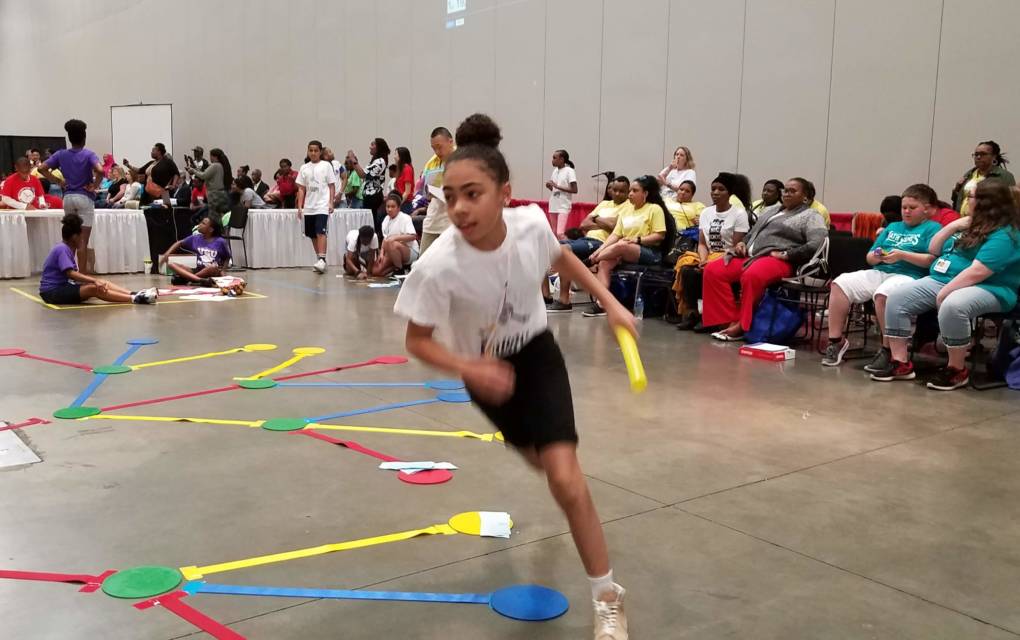
"content": "\u003cp>\u003cspan style=\"font-weight: 400\">Seventh-grader Ellie Snyder always hated math. Nevertheless, when she heard about a game that combined math and athletics, she thought, “Why not? I’ll try it.” Her best friend, Olyvia Marshall, already loved math. Both girls signed up for the new \u003c/span>\u003ca href=\"http://www.typp.org/flagway\">\u003cspan style=\"font-weight: 400\">Flagway\u003c/span>\u003c/a>\u003cspan style=\"font-weight: 400\"> team at Mansfield City Schools in Ohio.\u003c/span>\u003c/p>\n\u003cp>\u003cspan style=\"font-weight: 400\">“We were totally unprepared,” Ellie said of their first practice. “We wore jeans and hoodies.”\u003c/span>\u003c/p>\n\u003cp>\u003cspan style=\"font-weight: 400\">Flagway is a game that involves factoring numbers and categorizing them based on the \u003c/span>\u003ca href=\"https://www.encyclopediaofmath.org/index.php/M%C3%B6bius_function\">\u003cspan style=\"font-weight: 400\">Möbius function\u003c/span>\u003c/a>\u003cspan style=\"font-weight: 400\">. Players use their solutions to navigate a color-coded course and place flags on the correct spot. Teams try to solve as many problems as possible in each round to score the most points.\u003c/span>\u003c/p>\n\u003cp>\u003cspan style=\"font-weight: 400\">Last month Ellie and Olyvia’s team competed in the National Flagway Tournament as part of the National Math Festival in Washington, D.C. This time the girls wore sneakers and gym clothes, making it easier to crouch on the floor to solve problems and then jump up to race through the course of radial paths.\u003c/span>\u003c/p>\n\u003cfigure id=\"attachment_53800\" class=\"wp-caption alignnone\" style=\"max-width: 1920px\">\u003cimg class=\"wp-image-53800 size-full\" src=\"https://ww2.kqed.org/mindshift/wp-content/uploads/sites/23/2019/06/20190504_152817-e1560229964647.jpg\" alt=\"2019 National Flagway Tournament in Washington, DC\" width=\"1920\" height=\"1080\">\u003cfigcaption class=\"wp-caption-text\">Flagway course at the 2019 National Flagway Tournament in Washington, DC. \u003ccite>(Kara Newhouse for MindShift)\u003c/cite>\u003c/figcaption>\u003c/figure>\n\u003cp>\u003cspan style=\"font-weight: 400\">Flagway was created by Bob Moses, a 1960s civil rights organizer who has devoted several decades to \u003c/span>\u003ca href=\"https://www.npr.org/sections/codeswitch/2013/08/02/206813091/to-60s-civil-rights-hero-math-is-kids-formula-for-success\">\u003cspan style=\"font-weight: 400\">increasing math literacy among low-income students and students of color\u003c/span>\u003c/a>\u003cspan style=\"font-weight: 400\">. Since the 1990s, children and teens have played Flagway in after-school programs started by Moses and his colleagues. In the past three years, however, \u003c/span>\u003ca href=\"http://www.typp.org/history\">\u003cspan style=\"font-weight: 400\">The Young People’s Project\u003c/span>\u003c/a>\u003cspan style=\"font-weight: 400\"> (YPP) has encouraged the development of more formal teams and leagues across seven cities. According to the p\u003c/span>\u003cspan style=\"font-weight: 400\">layers, coaches and parents in those leagues, the game has improved students’ math literacy, engagement and teamwork.\u003c/span>\u003c/p>\n\u003cp>[ad fullwidth]\u003c/p>\n\u003cp>\u003cb>Comprehension and engagement\u003c/b>\u003c/p>\n\u003cp>\u003cspan style=\"font-weight: 400\">“Seven! Six! Five!”\u003c/span>\u003c/p>\n\u003cp>\u003cspan style=\"font-weight: 400\">An announcer counted down the final seconds of the latest round of the National Flagway Tournament. Parents in Hall D of the Washington Convention Center hollered and cheered from the sidelines. At the center of a Flagway course, a girl with a messy bun checked the numbers on her paper, then stutter-stepped from red to blue to yellow paths and dropped the flag on a circle. Close behind her, a boy in gym shorts took single-stride hops along a yellow-yellow-blue path. \u003c/span>\u003c/p>\n\u003cp>\u003cspan style=\"font-weight: 400\">Both players dashed around the perimeter of the course and returned to their teams just as the timer buzzed. Officials collected the flags, and teams and spectators crowded together to await updated scores and rankings.\u003c/span>\u003c/p>\n\u003cfigure id=\"attachment_53804\" class=\"wp-caption alignnone\" style=\"max-width: 1920px\">\u003cimg class=\"size-full wp-image-53804\" src=\"https://ww2.kqed.org/mindshift/wp-content/uploads/sites/23/2019/06/20190504_143406.png\" alt=\"\" width=\"1920\" height=\"1080\" srcset=\"https://ww2.kqed.org/app/uploads/sites/23/2019/06/20190504_143406.png 1920w, https://ww2.kqed.org/app/uploads/sites/23/2019/06/20190504_143406-160x90.png 160w, https://ww2.kqed.org/app/uploads/sites/23/2019/06/20190504_143406-800x450.png 800w, https://ww2.kqed.org/app/uploads/sites/23/2019/06/20190504_143406-768x432.png 768w, https://ww2.kqed.org/app/uploads/sites/23/2019/06/20190504_143406-1020x574.png 1020w, https://ww2.kqed.org/app/uploads/sites/23/2019/06/20190504_143406-1200x675.png 1200w\" sizes=\"(max-width: 1920px) 100vw, 1920px\">\u003cfigcaption class=\"wp-caption-text\">Olyvia Marshall and two teammates from Mansfield, Ohio factoring numbers during a round of Flagway. \u003ccite>(Kara Newhouse for MindShift)\u003c/cite>\u003c/figcaption>\u003c/figure>\n\u003cp>\u003cspan style=\"font-weight: 400\">In Flagway, teams of four students categorize numbers based on whether they have an even number of distinct prime factors, an odd number of distinct prime factors or prime factors that repeat. Each category corresponds to a color, and those colors tell the running player which path to follow. Here’s what would happen, for example, if a team got the numbers 30, 4 and 10:\u003c/span>\u003c/p>\n\u003cp>\u003cspan style=\"font-weight: 400\">-30 has an odd number of prime factors (2x3x5). Odd matches red, so the player starts with a red path.\u003c/span>\u003c/p>\n\u003cp>\u003cspan style=\"font-weight: 400\">-The number 4 has repeating prime factors (2x2), so the player follows a yellow path next.\u003c/span>\u003c/p>\n\u003cp>\u003cspan style=\"font-weight: 400\">-Finally, the player follows a blue path, because 10 has an even number of prime factors (2x5).\u003c/span>\u003c/p>\n\u003cp>\u003cspan style=\"font-weight: 400\">Players take turns as the runner, and their teammates must write accurate factorization and express the problem in algebraic form on the flags.\u003c/span>\u003c/p>\n\u003cp>\u003cspan style=\"font-weight: 400\">“Not only do they have to have all the math correct, they have to get the running correct. It’s a lot of work,” said Courtney Vahle, a graduate student in math education and athletic director for a Flagway league in Alton, Illinois.\u003c/span>\u003c/p>\n\u003cp>\u003cspan style=\"font-weight: 400\">Vahle’s program brought two teams to the national tournament, and one of those teams won. Teams from Alton won in the previous two years, making them the undefeated champions for the tournament’s three-year history. That’s not because their teams are stacked with math prodigies, though.\u003c/span>\u003c/p>\n\u003cp>\u003cspan style=\"font-weight: 400\">“A lot of these kids were chosen because they expressed, on a survey we did, math anxiety,” said math professor \u003c/span>\u003ca href=\"https://www.siue.edu/artsandsciences/about/index.shtml\">\u003cspan style=\"font-weight: 400\">Greg Budzban\u003c/span>\u003c/a>\u003cspan style=\"font-weight: 400\">, who started the Alton league. The survey included questions like: \u003c/span>\u003c/p>\n\u003cul>\n\u003cli style=\"font-weight: 400\">If you can't solve a math problem quickly, do you give up?\u003c/li>\n\u003cli style=\"font-weight: 400\">Do you enjoy playing games where you can be active (tag, basketball, etc.)?\u003c/li>\n\u003cli style=\"font-weight: 400\">Would you be interested in trying something other than a traditional math class?\u003c/li>\n\u003c/ul>\n\u003cp>\u003cspan style=\"font-weight: 400\">“We’re looking for students that the physical engagement piece is something that attracted them,” said \u003c/span>\u003cspan style=\"font-weight: 400\">Budzban, who is dean of the College of Arts and Sciences at Southern Illinois University Edwardsville. All of the students who applied were accepted. \u003c/span>\u003cspan style=\"font-weight: 400\">He said that on pre-tests, almost none of the Alton students knew the math skills involved in Flagway, such as finding least common multiples or greatest common factors. On post-tests three months later, many students earned perfect scores.\u003c/span>\u003c/p>\n\u003cp>\u003cspan style=\"font-weight: 400\">In \u003c/span>\u003ca href=\"https://getd.libs.uga.edu/pdfs/brewley-corbin_denise_n_200912_phd.pdf\">\u003cspan style=\"font-weight: 400\">a 2009 case study in Chicago\u003c/span>\u003c/a>\u003cspan style=\"font-weight: 400\">, the high school and college students who served as Flagway coaches also reported having increased flexibility with numbers as a result of the game. In Alton, a semester-long training for those coaches plays a role in the younger students’ success, according to Budzban. But he also attributes the positive effects of Flagway to the game itself. \u003c/span>\u003c/p>\n\u003cp>\u003cspan style=\"font-weight: 400\">“Translating the abstract mathematics into competition and movement helps (students) sort of embody the learning,” he said. “You’ve got more neural pathways that are involved.”\u003c/span>\u003c/p>\n\u003cp>\u003cspan style=\"font-weight: 400\">Indeed, researchers studying “embodied cognition” have found that when \u003ca href=\"https://www.kqed.org/mindshift/39684/why-kids-need-to-move-touch-and-experience-to-learn\">physical movement\u003c/a> is incorporated into the learning process, it can have \u003c/span>\u003ca href=\"https://www.kqed.org/mindshift/49541/how-seeing-and-using-gestures-make-ideas-more-memorable\">\u003cspan style=\"font-weight: 400\">positive effects on math and reading comprehension\u003c/span>\u003c/a>\u003cspan style=\"font-weight: 400\">. In the case of Flagway, those effects may come not only from physiology, but also the excitement of the competition. \u003c/span>\u003c/p>\n\u003cp>\u003cspan style=\"font-weight: 400\">“If I had a bunch of kids sitting after school, and I gave them worksheets of prime factoring integers for two hours, they would check out in the first five minutes,” said Budzban. “There would be literally zero engagement in that activity. But these kids have been doing this for months. That kind of ability to keep them engaged, to keep them motivated, and actually doing mathematics — there’s nothing quite like that.”\u003c/span>\u003c/p>\n\u003cfigure id=\"attachment_53803\" class=\"wp-caption alignnone\" style=\"max-width: 1920px\">\u003cimg class=\"wp-image-53803 size-full\" src=\"https://ww2.kqed.org/mindshift/wp-content/uploads/sites/23/2019/06/20190504_152549-e1560230872379.jpg\" alt=\"2019 National Flagway Tournament in Washington, DC\" width=\"1920\" height=\"1080\">\u003cfigcaption class=\"wp-caption-text\">Students in a team solve math problems during the tournament. \u003ccite>(Kara Newhouse for MindShift)\u003c/cite>\u003c/figcaption>\u003c/figure>\n\u003cp>\u003cb>Teamwork\u003c/b>\u003c/p>\n\u003cp>\u003cspan style=\"font-weight: 400\">Parents at the national tournament echoed Budzban’s words about Flagway.\u003c/span>\u003c/p>\n\u003cp>\u003cspan style=\"font-weight: 400\">“It gets our kids (looking) forward to doing math problems,” said Jillian Hughes, whose daughter, Jenayah Rose, competed with a team from the Mandela Residents Cooperative Association Youth Center in Boston.\u003c/span>\u003c/p>\n\u003cp>\u003cspan style=\"font-weight: 400\">Hughes said that playing Flagway also reduced the amount of arguing that happens among kids at the youth center. According to Maisha Moses, executive director for the Young People’s Project, teamwork is a critical component of Flagway. While activities like math olympiads offer high-performing math students the chance to compete in teams, such opportunities are rare for students who struggle with math.\u003c/span>\u003c/p>\n\u003cp>\u003cspan style=\"font-weight: 400\">“The typical remediation model is you work one-on-one with a tutor, you’re off by yourself,” said Moses. “Through Flagway, you can come together and build community and build a team around doing math together.”\u003c/span>\u003c/p>\n\u003cp>\u003cspan style=\"font-weight: 400\">Christian Greene, one of Ellie Snyder’s teammates from Mansfield, put it this way when describing Flagway: “It’s a family thing.”\u003c/span>\u003c/p>\n\u003cp>\u003cspan style=\"font-weight: 400\">And how does Ellie feel about math just four months after joining the Flagway team?\u003c/span>\u003c/p>\n\u003cp>\u003cspan style=\"font-weight: 400\">“It’s my favorite subject,” she said.\u003c/span>\u003c/p>\n\u003cp>[ad floatright]\u003c/p>\n\u003cp>https://www.youtube.com/watch?v=IFVIU0tuFqk\u003c/p>\n\n",
"disqusIdentifier": "53767 https://ww2.kqed.org/mindshift/?p=53767",
"disqusUrl": "https://ww2.kqed.org/mindshift/2019/06/10/getting-physical-how-the-flagway-game-sparks-learning-and-love-of-math/",
"stats": {
"hasVideo": true,
"hasChartOrMap": false,
"hasAudio": false,
"hasPolis": false,
"wordCount": 1291,
"hasGoogleForm": false,
"hasGallery": false,
"hasHearkenModule": false,
"iframeSrcs": [],
"paragraphCount": 32
},
"modified": 1560529918,
"excerpt": "Flagway is a game designed for kids who have self-doubt about their math skills, enjoy being physical and are in need of something way different than worksheets. ",
"headData": {
"twImgId": "",
"twTitle": "",
"ogTitle": "",
"ogImgId": "",
"twDescription": "",
"description": "Flagway is a game designed for kids who have self-doubt about their math skills, enjoy being physical and are in need of something way different than worksheets. ",
"title": "Getting Physical: How the Flagway Game Sparks Learning and Love of Math | KQED",
"ogDescription": "",
"schema": {
"@context": "https://schema.org",
"@type": "Article",
"headline": "Getting Physical: How the Flagway Game Sparks Learning and Love of Math",
"datePublished": "2019-06-10T23:25:08-07:00",
"dateModified": "2019-06-14T09:31:58-07:00",
"image": "https://cdn.kqed.org/wp-content/uploads/2020/02/KQED-OG-Image@1x.png"
}
},
"guestAuthors": [],
"slug": "getting-physical-how-the-flagway-game-sparks-learning-and-love-of-math",
"status": "publish",
"path": "/mindshift/53767/getting-physical-how-the-flagway-game-sparks-learning-and-love-of-math",
"audioTrackLength": null,
"parsedContent": [
{
"type": "contentString",
"content": "\u003cdiv class=\"post-body\">\u003cp>\u003cp>\u003cspan style=\"font-weight: 400\">Seventh-grader Ellie Snyder always hated math. Nevertheless, when she heard about a game that combined math and athletics, she thought, “Why not? I’ll try it.” Her best friend, Olyvia Marshall, already loved math. Both girls signed up for the new \u003c/span>\u003ca href=\"http://www.typp.org/flagway\">\u003cspan style=\"font-weight: 400\">Flagway\u003c/span>\u003c/a>\u003cspan style=\"font-weight: 400\"> team at Mansfield City Schools in Ohio.\u003c/span>\u003c/p>\n\u003cp>\u003cspan style=\"font-weight: 400\">“We were totally unprepared,” Ellie said of their first practice. “We wore jeans and hoodies.”\u003c/span>\u003c/p>\n\u003cp>\u003cspan style=\"font-weight: 400\">Flagway is a game that involves factoring numbers and categorizing them based on the \u003c/span>\u003ca href=\"https://www.encyclopediaofmath.org/index.php/M%C3%B6bius_function\">\u003cspan style=\"font-weight: 400\">Möbius function\u003c/span>\u003c/a>\u003cspan style=\"font-weight: 400\">. Players use their solutions to navigate a color-coded course and place flags on the correct spot. Teams try to solve as many problems as possible in each round to score the most points.\u003c/span>\u003c/p>\n\u003cp>\u003cspan style=\"font-weight: 400\">Last month Ellie and Olyvia’s team competed in the National Flagway Tournament as part of the National Math Festival in Washington, D.C. This time the girls wore sneakers and gym clothes, making it easier to crouch on the floor to solve problems and then jump up to race through the course of radial paths.\u003c/span>\u003c/p>\n\u003cfigure id=\"attachment_53800\" class=\"wp-caption alignnone\" style=\"max-width: 1920px\">\u003cimg class=\"wp-image-53800 size-full\" src=\"https://ww2.kqed.org/mindshift/wp-content/uploads/sites/23/2019/06/20190504_152817-e1560229964647.jpg\" alt=\"2019 National Flagway Tournament in Washington, DC\" width=\"1920\" height=\"1080\">\u003cfigcaption class=\"wp-caption-text\">Flagway course at the 2019 National Flagway Tournament in Washington, DC. \u003ccite>(Kara Newhouse for MindShift)\u003c/cite>\u003c/figcaption>\u003c/figure>\n\u003cp>\u003cspan style=\"font-weight: 400\">Flagway was created by Bob Moses, a 1960s civil rights organizer who has devoted several decades to \u003c/span>\u003ca href=\"https://www.npr.org/sections/codeswitch/2013/08/02/206813091/to-60s-civil-rights-hero-math-is-kids-formula-for-success\">\u003cspan style=\"font-weight: 400\">increasing math literacy among low-income students and students of color\u003c/span>\u003c/a>\u003cspan style=\"font-weight: 400\">. Since the 1990s, children and teens have played Flagway in after-school programs started by Moses and his colleagues. In the past three years, however, \u003c/span>\u003ca href=\"http://www.typp.org/history\">\u003cspan style=\"font-weight: 400\">The Young People’s Project\u003c/span>\u003c/a>\u003cspan style=\"font-weight: 400\"> (YPP) has encouraged the development of more formal teams and leagues across seven cities. According to the p\u003c/span>\u003cspan style=\"font-weight: 400\">layers, coaches and parents in those leagues, the game has improved students’ math literacy, engagement and teamwork.\u003c/span>\u003c/p>\n\u003cp>\u003c/p>\u003c/div>",
"attributes": {
"named": {},
"numeric": []
}
},
{
"type": "component",
"content": "",
"name": "ad",
"attributes": {
"named": {
"label": "fullwidth"
},
"numeric": [
"fullwidth"
]
}
},
{
"type": "contentString",
"content": "\u003cdiv class=\"post-body\">\u003cp>\u003c/p>\n\u003cp>\u003cb>Comprehension and engagement\u003c/b>\u003c/p>\n\u003cp>\u003cspan style=\"font-weight: 400\">“Seven! Six! Five!”\u003c/span>\u003c/p>\n\u003cp>\u003cspan style=\"font-weight: 400\">An announcer counted down the final seconds of the latest round of the National Flagway Tournament. Parents in Hall D of the Washington Convention Center hollered and cheered from the sidelines. At the center of a Flagway course, a girl with a messy bun checked the numbers on her paper, then stutter-stepped from red to blue to yellow paths and dropped the flag on a circle. Close behind her, a boy in gym shorts took single-stride hops along a yellow-yellow-blue path. \u003c/span>\u003c/p>\n\u003cp>\u003cspan style=\"font-weight: 400\">Both players dashed around the perimeter of the course and returned to their teams just as the timer buzzed. Officials collected the flags, and teams and spectators crowded together to await updated scores and rankings.\u003c/span>\u003c/p>\n\u003cfigure id=\"attachment_53804\" class=\"wp-caption alignnone\" style=\"max-width: 1920px\">\u003cimg class=\"size-full wp-image-53804\" src=\"https://ww2.kqed.org/mindshift/wp-content/uploads/sites/23/2019/06/20190504_143406.png\" alt=\"\" width=\"1920\" height=\"1080\" srcset=\"https://ww2.kqed.org/app/uploads/sites/23/2019/06/20190504_143406.png 1920w, https://ww2.kqed.org/app/uploads/sites/23/2019/06/20190504_143406-160x90.png 160w, https://ww2.kqed.org/app/uploads/sites/23/2019/06/20190504_143406-800x450.png 800w, https://ww2.kqed.org/app/uploads/sites/23/2019/06/20190504_143406-768x432.png 768w, https://ww2.kqed.org/app/uploads/sites/23/2019/06/20190504_143406-1020x574.png 1020w, https://ww2.kqed.org/app/uploads/sites/23/2019/06/20190504_143406-1200x675.png 1200w\" sizes=\"(max-width: 1920px) 100vw, 1920px\">\u003cfigcaption class=\"wp-caption-text\">Olyvia Marshall and two teammates from Mansfield, Ohio factoring numbers during a round of Flagway. \u003ccite>(Kara Newhouse for MindShift)\u003c/cite>\u003c/figcaption>\u003c/figure>\n\u003cp>\u003cspan style=\"font-weight: 400\">In Flagway, teams of four students categorize numbers based on whether they have an even number of distinct prime factors, an odd number of distinct prime factors or prime factors that repeat. Each category corresponds to a color, and those colors tell the running player which path to follow. Here’s what would happen, for example, if a team got the numbers 30, 4 and 10:\u003c/span>\u003c/p>\n\u003cp>\u003cspan style=\"font-weight: 400\">-30 has an odd number of prime factors (2x3x5). Odd matches red, so the player starts with a red path.\u003c/span>\u003c/p>\n\u003cp>\u003cspan style=\"font-weight: 400\">-The number 4 has repeating prime factors (2x2), so the player follows a yellow path next.\u003c/span>\u003c/p>\n\u003cp>\u003cspan style=\"font-weight: 400\">-Finally, the player follows a blue path, because 10 has an even number of prime factors (2x5).\u003c/span>\u003c/p>\n\u003cp>\u003cspan style=\"font-weight: 400\">Players take turns as the runner, and their teammates must write accurate factorization and express the problem in algebraic form on the flags.\u003c/span>\u003c/p>\n\u003cp>\u003cspan style=\"font-weight: 400\">“Not only do they have to have all the math correct, they have to get the running correct. It’s a lot of work,” said Courtney Vahle, a graduate student in math education and athletic director for a Flagway league in Alton, Illinois.\u003c/span>\u003c/p>\n\u003cp>\u003cspan style=\"font-weight: 400\">Vahle’s program brought two teams to the national tournament, and one of those teams won. Teams from Alton won in the previous two years, making them the undefeated champions for the tournament’s three-year history. That’s not because their teams are stacked with math prodigies, though.\u003c/span>\u003c/p>\n\u003cp>\u003cspan style=\"font-weight: 400\">“A lot of these kids were chosen because they expressed, on a survey we did, math anxiety,” said math professor \u003c/span>\u003ca href=\"https://www.siue.edu/artsandsciences/about/index.shtml\">\u003cspan style=\"font-weight: 400\">Greg Budzban\u003c/span>\u003c/a>\u003cspan style=\"font-weight: 400\">, who started the Alton league. The survey included questions like: \u003c/span>\u003c/p>\n\u003cul>\n\u003cli style=\"font-weight: 400\">If you can't solve a math problem quickly, do you give up?\u003c/li>\n\u003cli style=\"font-weight: 400\">Do you enjoy playing games where you can be active (tag, basketball, etc.)?\u003c/li>\n\u003cli style=\"font-weight: 400\">Would you be interested in trying something other than a traditional math class?\u003c/li>\n\u003c/ul>\n\u003cp>\u003cspan style=\"font-weight: 400\">“We’re looking for students that the physical engagement piece is something that attracted them,” said \u003c/span>\u003cspan style=\"font-weight: 400\">Budzban, who is dean of the College of Arts and Sciences at Southern Illinois University Edwardsville. All of the students who applied were accepted. \u003c/span>\u003cspan style=\"font-weight: 400\">He said that on pre-tests, almost none of the Alton students knew the math skills involved in Flagway, such as finding least common multiples or greatest common factors. On post-tests three months later, many students earned perfect scores.\u003c/span>\u003c/p>\n\u003cp>\u003cspan style=\"font-weight: 400\">In \u003c/span>\u003ca href=\"https://getd.libs.uga.edu/pdfs/brewley-corbin_denise_n_200912_phd.pdf\">\u003cspan style=\"font-weight: 400\">a 2009 case study in Chicago\u003c/span>\u003c/a>\u003cspan style=\"font-weight: 400\">, the high school and college students who served as Flagway coaches also reported having increased flexibility with numbers as a result of the game. In Alton, a semester-long training for those coaches plays a role in the younger students’ success, according to Budzban. But he also attributes the positive effects of Flagway to the game itself. \u003c/span>\u003c/p>\n\u003cp>\u003cspan style=\"font-weight: 400\">“Translating the abstract mathematics into competition and movement helps (students) sort of embody the learning,” he said. “You’ve got more neural pathways that are involved.”\u003c/span>\u003c/p>\n\u003cp>\u003cspan style=\"font-weight: 400\">Indeed, researchers studying “embodied cognition” have found that when \u003ca href=\"https://www.kqed.org/mindshift/39684/why-kids-need-to-move-touch-and-experience-to-learn\">physical movement\u003c/a> is incorporated into the learning process, it can have \u003c/span>\u003ca href=\"https://www.kqed.org/mindshift/49541/how-seeing-and-using-gestures-make-ideas-more-memorable\">\u003cspan style=\"font-weight: 400\">positive effects on math and reading comprehension\u003c/span>\u003c/a>\u003cspan style=\"font-weight: 400\">. In the case of Flagway, those effects may come not only from physiology, but also the excitement of the competition. \u003c/span>\u003c/p>\n\u003cp>\u003cspan style=\"font-weight: 400\">“If I had a bunch of kids sitting after school, and I gave them worksheets of prime factoring integers for two hours, they would check out in the first five minutes,” said Budzban. “There would be literally zero engagement in that activity. But these kids have been doing this for months. That kind of ability to keep them engaged, to keep them motivated, and actually doing mathematics — there’s nothing quite like that.”\u003c/span>\u003c/p>\n\u003cfigure id=\"attachment_53803\" class=\"wp-caption alignnone\" style=\"max-width: 1920px\">\u003cimg class=\"wp-image-53803 size-full\" src=\"https://ww2.kqed.org/mindshift/wp-content/uploads/sites/23/2019/06/20190504_152549-e1560230872379.jpg\" alt=\"2019 National Flagway Tournament in Washington, DC\" width=\"1920\" height=\"1080\">\u003cfigcaption class=\"wp-caption-text\">Students in a team solve math problems during the tournament. \u003ccite>(Kara Newhouse for MindShift)\u003c/cite>\u003c/figcaption>\u003c/figure>\n\u003cp>\u003cb>Teamwork\u003c/b>\u003c/p>\n\u003cp>\u003cspan style=\"font-weight: 400\">Parents at the national tournament echoed Budzban’s words about Flagway.\u003c/span>\u003c/p>\n\u003cp>\u003cspan style=\"font-weight: 400\">“It gets our kids (looking) forward to doing math problems,” said Jillian Hughes, whose daughter, Jenayah Rose, competed with a team from the Mandela Residents Cooperative Association Youth Center in Boston.\u003c/span>\u003c/p>\n\u003cp>\u003cspan style=\"font-weight: 400\">Hughes said that playing Flagway also reduced the amount of arguing that happens among kids at the youth center. According to Maisha Moses, executive director for the Young People’s Project, teamwork is a critical component of Flagway. While activities like math olympiads offer high-performing math students the chance to compete in teams, such opportunities are rare for students who struggle with math.\u003c/span>\u003c/p>\n\u003cp>\u003cspan style=\"font-weight: 400\">“The typical remediation model is you work one-on-one with a tutor, you’re off by yourself,” said Moses. “Through Flagway, you can come together and build community and build a team around doing math together.”\u003c/span>\u003c/p>\n\u003cp>\u003cspan style=\"font-weight: 400\">Christian Greene, one of Ellie Snyder’s teammates from Mansfield, put it this way when describing Flagway: “It’s a family thing.”\u003c/span>\u003c/p>\n\u003cp>\u003cspan style=\"font-weight: 400\">And how does Ellie feel about math just four months after joining the Flagway team?\u003c/span>\u003c/p>\n\u003cp>\u003cspan style=\"font-weight: 400\">“It’s my favorite subject,” she said.\u003c/span>\u003c/p>\n\u003cp>\u003c/p>\u003c/div>",
"attributes": {
"named": {},
"numeric": []
}
},
{
"type": "component",
"content": "",
"name": "ad",
"attributes": {
"named": {
"label": "floatright"
},
"numeric": [
"floatright"
]
}
},
{
"type": "contentString",
"content": "\u003cdiv class=\"post-body\">\u003cp>\u003c/p>\u003c/p>\u003cp>\u003cspan class='utils-parseShortcode-shortcodes-__youtubeShortcode__embedYoutube'>\n \u003cspan class='utils-parseShortcode-shortcodes-__youtubeShortcode__embedYoutubeInside'>\n \u003ciframe\n loading='lazy'\n class='utils-parseShortcode-shortcodes-__youtubeShortcode__youtubePlayer'\n type='text/html'\n src='//www.youtube.com/embed/IFVIU0tuFqk'\n title='//www.youtube.com/embed/IFVIU0tuFqk'\n allowfullscreen='true'\n style='border:0;'>\u003c/iframe>\n \u003c/span>\n \u003c/span>\u003c/p>\u003cp>\n\u003c/div>\u003c/p>",
"attributes": {
"named": {},
"numeric": []
}
}
],
"link": "/mindshift/53767/getting-physical-how-the-flagway-game-sparks-learning-and-love-of-math",
"authors": [
"11487"
],
"categories": [
"mindshift_192"
],
"tags": [
"mindshift_276",
"mindshift_20784",
"mindshift_21273",
"mindshift_1040",
"mindshift_20893",
"mindshift_21173"
],
"featImg": "mindshift_53802",
"label": "mindshift"
},
"mindshift_53791": {
"type": "posts",
"id": "mindshift_53791",
"meta": {
"index": "posts_1716263798",
"site": "mindshift",
"id": "53791",
"score": null,
"sort": [
1560147602000
]
},
"parent": 0,
"labelTerm": {
"site": "mindshift"
},
"blocks": [],
"publishDate": 1560147602,
"format": "standard",
"disqusTitle": "8 Student-Made Podcasts That Made Us Smile",
"title": "8 Student-Made Podcasts That Made Us Smile",
"headTitle": "MindShift | KQED News",
"content": "\u003cp>This year, NPR held its first \u003ca href=\"https://www.npr.org/2018/11/15/650500116/npr-student-podcast-challenge-home\">Student Podcast Challenge\u003c/a> — a podcast contest for students in grades 5 through 12. As we \u003ca href=\"https://www.npr.org/2019/04/06/708804022/student-podcasts-for-our-contest-we-got-thousands-of-them\">listened to the almost 6,000 entries\u003c/a>, we smiled, laughed, and even cried. Students opened their lives to us with stories about their families, their schools and communities and their hopes for the future.\u003c/p>\n\u003cp>We named our winners last month — the \u003ca href=\"https://www.npr.org/2019/05/15/721729850/periods-why-these-eighth-graders-arent-afraid-to-talk-about-them\">eighth graders of Bronx Prep Middle School\u003c/a> in New York, and the \u003ca href=\"https://www.npr.org/2019/05/15/722236763/the-town-that-hanged-an-elephant-is-now-working-to-save-them\">eleventh graders of Elizabethton High School\u003c/a> in Tennessee.\u003c/p>\n\u003cp>But lots of other students blew us away. Here, for your listening pleasure, are just some of the many podcast entries that made us smile — and reminded us what it's like to be in middle and high school.\u003c/p>\n\u003cfigure id=\"attachment_53793\" class=\"wp-caption alignright\" style=\"max-width: 300px\">\u003cimg class=\"size-full wp-image-53793\" src=\"https://ww2.kqed.org/mindshift/wp-content/uploads/sites/23/2019/06/spc-spot-illos-tots_slide-0d070430217448c3711e3a41c16105c0a2b46010-e1560146511537.jpg\" alt=\"\" width=\"300\" height=\"200\">\u003cfigcaption class=\"wp-caption-text\">How did tater tots come to rule the lunchroom? \u003ccite>(LA Johnson/NPR)\u003c/cite>\u003c/figcaption>\u003c/figure>\n\u003cp>\u003cstrong>A divisive subject: Tater tots \u003c/strong>\u003c/p>\n\u003cp>The title of this finalist was enough to get our judges' attention. In \"Tater Tots and their Lasting Impact on Society,\" fifth-graders Jack Lazzarone and Kalvin Martinez interviewed their classmates in teacher Ryan Brock's class at Jessie Beck Elementary School in Reno, N.V., about their thoughts about tots. (Not everyone loves the texture, apparently.) They even talked to a spokesperson from Ore-Ida, who told them all about the history of the deep-fried dish.\u003c/p>\n\u003cdiv id=\"res730097813\" class=\"bucketwrap statichtml\">\n\u003cp>[soundcloud url=\"https://api.soundcloud.com/tracks/579514731\" params=\"color=#ff5500&auto_play=false&hide_related=false&show_comments=true&show_user=true&show_reposts=false&show_teaser=true\" width=\"100%\" height=\"166\" iframe=\"true\" /]\u003c/p>\n\u003c/div>\n\u003cfigure id=\"attachment_53794\" class=\"wp-caption alignright\" style=\"max-width: 300px\">\u003cimg class=\"size-full wp-image-53794\" src=\"https://ww2.kqed.org/mindshift/wp-content/uploads/sites/23/2019/06/spc-spot-illos-pokee-4cd675017f6c10a2ec3038dde30dc056607c0c23-e1560146638602.jpg\" alt=\"\" width=\"300\" height=\"225\">\u003cfigcaption class=\"wp-caption-text\">A hedgehog. \u003ccite>(LA Johnson/NPR)\u003c/cite>\u003c/figcaption>\u003c/figure>\n\u003cp>\u003cstrong>Another great debate: Which exotic house pet is for you?\u003c/strong>\u003c/p>\n\u003cp>[ad fullwidth]\u003c/p>\n\u003cp>The sixth graders in Zehra Lakhani's class at Clearwater Fundamental Middle School, in Clearwater, Fla., took on yet another hard-hitting assignment: \"Which is a better exotic house pet: skunks or hedgehogs?\" Audrey Morgan, Sophia Reese and Isabella Baltazar asked. They first gathered the data by interviewing 11 of their classmates about \u003cem>their \u003c/em>thoughts on the subject. Then they dove into the facts. A pet skunk might be useful, they say, if a thief tries to rob your house. But hedgehogs are known to be great companions.\u003c/p>\n\u003cdiv id=\"res730098444\" class=\"bucketwrap statichtml\">\n\u003cp>[soundcloud url=\"https://api.soundcloud.com/tracks/593536011\" params=\"color=#ff5500&auto_play=false&hide_related=false&show_comments=true&show_user=true&show_reposts=false&show_teaser=true\" width=\"100%\" height=\"166\" iframe=\"true\" /]\u003c/p>\n\u003c/div>\n\u003cp> \u003c/p>\n\u003cp>\u003cstrong>Growing up in Crow Agency, Montana\u003c/strong>\u003c/p>\n\u003cp>We heard from student podcasters from all 50 states, and one of our judges' favorites came from Connie Michael's students at Crow Agency Public School in Montana. \"We're here to debunk myths about Native Americans,\" they told us. \"People think we still live in tepees and still hunt for food.\"\u003c/p>\n\u003cp>In reality, the fifth-graders report, they love video games like Fortnite and Call of Duty, like other kids their age. But they also honor their heritage: They can speak Crow, and proudly celebrate their rich culture and history.\u003c/p>\n\u003cdiv id=\"res730352206\" class=\"bucketwrap statichtml\">\n\u003cp>[soundcloud url=\"https://api.soundcloud.com/tracks/594196146\" params=\"color=#ff5500&auto_play=false&hide_related=false&show_comments=true&show_user=true&show_reposts=false&show_teaser=true\" width=\"100%\" height=\"166\" iframe=\"true\" /]\u003c/p>\n\u003c/div>\n\u003cp> \u003c/p>\n\u003cp>\u003cstrong>A podcast about friendship and being a teenager\u003c/strong>\u003c/p>\n\u003cp>We got a window into growing up in Morehead, Ky. from a group of 11th-graders at Rowan County Senior High School. In their podcast, we learn of the brotherhood that has formed among a group of young men as they spend hours and hours every week hanging out — with their friends, and their trucks — in the parking lot of the town's Walmart.\u003c/p>\n\u003cp>In \"Tales From The Walmart Parking Lot,\" the students said they'll always remember this time of their lives: \"We might not be blood, but we'll treat each other like family until the end.\"\u003c/p>\n\u003cp>Listen to the \"Walmart crew\" below. Their submission came to us from teacher Lindsay Johnson.\u003c/p>\n\u003cdiv id=\"res730096850\" class=\"bucketwrap statichtml\">\n\u003cp>[soundcloud url=\"https://api.soundcloud.com/tracks/599020908\" params=\"color=#ff5500&auto_play=false&hide_related=false&show_comments=true&show_user=true&show_reposts=false&show_teaser=true\" width=\"100%\" height=\"166\" iframe=\"true\" /]\u003c/p>\n\u003c/div>\n\u003cp> \u003c/p>\n\u003cp>\u003cstrong>Complaints from fifth grade: bathroom passes \u003c/strong>\u003c/p>\n\u003cp>You've been there, right? Raising your hand in front of the whole class, and asking for a pass to go to the bathroom? Teacher Kathleen Isberg's fifth-graders at Park Hill Elementary School in Denver confronted this issue head-on.\u003c/p>\n\u003cp>\"At our school, every teacher comes up with an object that you have to carry to and from class,\" Caitlyn Whitehead, Nico Sexton and Ramona Young told us in their podcast. \"I wonder if the bathroom passes ever get cleaned?\"\u003c/p>\n\u003cp>The students conclude that hall passes are gross and demeaning for students — but they understand that teachers have good reasons for using them.\u003c/p>\n\u003cdiv id=\"res730095785\" class=\"bucketwrap statichtml\">\n\u003cp>[soundcloud url=\"https://api.soundcloud.com/tracks/594171855\" params=\"color=#ff5500&auto_play=false&hide_related=false&show_comments=true&show_user=true&show_reposts=false&show_teaser=true\" width=\"100%\" height=\"166\" iframe=\"true\" /]\u003c/p>\n\u003c/div>\n\u003cp> \u003c/p>\n\u003cp>\u003cstrong>\u003cimg class=\"alignright size-full wp-image-53795\" src=\"https://ww2.kqed.org/mindshift/wp-content/uploads/sites/23/2019/06/spc-spot-illos-pickles-6d30eee8fb4191ef94d5d8583ecc1b337abeca69-e1560146573196.jpg\" alt=\"\" width=\"300\" height=\"225\">Pickles! \u003c/strong>\u003c/p>\n\u003cp>\"Do you ever get home, tired and hungry, and just want a pickle? That's literally me every day.\"\u003c/p>\n\u003cp>That's how sixth-grader Amy Walsh began her podcast. Amy loves pickles, and created her podcast to share the history of the food — and the practice of pickling — with the world.\u003c/p>\n\u003cp>She made the project in Nathan Garvin's class at Swanson Middle School in Arlington, Va.\u003c/p>\n\u003cp>Grab a pickle, take a seat, and listen below.\u003c/p>\n\u003cdiv id=\"res730094940\" class=\"bucketwrap statichtml\">\n\u003cp>[soundcloud url=\"https://api.soundcloud.com/tracks/595835124\" params=\"color=#ff5500&auto_play=false&hide_related=false&show_comments=true&show_user=true&show_reposts=false&show_teaser=true\" width=\"100%\" height=\"166\" iframe=\"true\" /]\u003c/p>\n\u003c/div>\n\u003cp>\u003cstrong>Taking fifth grade \"One Word At a Time\" \u003c/strong>\u003c/p>\n\u003cp>Many student podcasters taught us about the subjects they were learning in class. The fifth-graders at Cambridge Elementary School in Cambridge, Wis., broke into groups and made their podcasts about one word each.\u003c/p>\n\u003cp>\"Were you in the cafeteria today? There was a huge kerfuffle!\" Hannah Johnson, Makenna Angerhofer, Casey Granger, and Jacob Olson said \u003ca href=\"https://soundcloud.com/user-880430511/kerfuffle-podcast-2\">to teach us about the word kerfuffle\u003c/a>.\u003c/p>\n\u003cp>Teacher Mary Beth Steven's students created podcasts about a list of words including eureka, hippopotamus and lexical. \u003ca href=\"https://soundcloud.com/user-880430511\">Listen to all the entries from Steven's students here\u003c/a>.\u003c/p>\n\u003cdiv id=\"res730101541\" class=\"bucketwrap statichtml\">\n\u003cp>[soundcloud url=\"https://api.soundcloud.com/tracks/590074959\" params=\"color=#ff5500&auto_play=false&hide_related=false&show_comments=true&show_user=true&show_reposts=false&show_teaser=true\" width=\"100%\" height=\"166\" iframe=\"true\" /]\u003c/p>\n\u003c/div>\n\u003cp>\u003cstrong>A father and daughter talk Pokemon Go \u003c/strong>\u003c/p>\n\u003cp>We heard interviews with siblings, parents and grandparents in the many podcasts that students created for the contest.\u003c/p>\n\u003cp>Skyler Perry made it to our list of finalists by interviewing her father about an activity he spends a \u003cem>lot \u003c/em>of time on: playing Pokemon Go. Skyler, a senior at The Wellington School in Columbus, Ohio, told us how she introduced her dad, Jim, to the game. By the time they recorded the podcast, Jim had caught 23,053 Pokemon.\u003c/p>\n\u003cp>[ad floatright]\u003c/p>\n\u003cp>For her entry, submitted by her teacher Keith Leonard, Skyler talked with other Pokemon Go fans — and she even interviewed an expert who studies how the game affects its players. Knowing her dad will have Pokemon Go to keep him busy, Skyler said in the podcast, makes her feel just a little bit better about heading off to college in the fall.\u003c/p>\n\u003cdiv id=\"res730102806\" class=\"bucketwrap statichtml\">\n\u003cp>[soundcloud url=\"https://api.soundcloud.com/tracks/598427499\" params=\"color=#ff5500&auto_play=false&hide_related=false&show_comments=true&show_user=true&show_reposts=false&show_teaser=true\" width=\"100%\" height=\"166\" iframe=\"true\" /]\u003c/p>\n\u003c/div>\n\u003cdiv class=\"fullattribution\">Copyright 2019 NPR. To see more, visit https://www.npr.org.\u003cimg src=\"https://www.google-analytics.com/__utm.gif?utmac=UA-5828686-4&utmdt=8+Student-Made+Podcasts+That+Made+Us+Smile&utme=8(APIKey)9(MDAxOTAwOTE4MDEyMTkxMDAzNjczZDljZA004)\">\u003c/div>\n\n",
"disqusIdentifier": "53791 https://ww2.kqed.org/mindshift/?p=53791",
"disqusUrl": "https://ww2.kqed.org/mindshift/2019/06/09/8-student-made-podcasts-that-made-us-smile/",
"stats": {
"hasVideo": false,
"hasChartOrMap": false,
"hasAudio": false,
"hasPolis": false,
"wordCount": 1279,
"hasGoogleForm": false,
"hasGallery": false,
"hasHearkenModule": false,
"iframeSrcs": [],
"paragraphCount": 41
},
"modified": 1560147633,
"excerpt": "NPR received thousands of entries to its Student Podcast Challenge. These standout podcasts reminded us what it's like to be in middle and high school.",
"headData": {
"twImgId": "",
"twTitle": "",
"ogTitle": "",
"ogImgId": "",
"twDescription": "",
"description": "NPR received thousands of entries to its Student Podcast Challenge. These standout podcasts reminded us what it's like to be in middle and high school.",
"title": "8 Student-Made Podcasts That Made Us Smile | KQED",
"ogDescription": "",
"schema": {
"@context": "https://schema.org",
"@type": "Article",
"headline": "8 Student-Made Podcasts That Made Us Smile",
"datePublished": "2019-06-09T23:20:02-07:00",
"dateModified": "2019-06-09T23:20:33-07:00",
"image": "https://cdn.kqed.org/wp-content/uploads/2020/02/KQED-OG-Image@1x.png"
}
},
"guestAuthors": [],
"slug": "8-student-made-podcasts-that-made-us-smile",
"status": "publish",
"nprApiLink": "http://api.npr.org/query?id=729605772&apiKey=MDAxOTAwOTE4MDEyMTkxMDAzNjczZDljZA004",
"nprByline": "Clare Lombardo",
"nprStoryDate": "Sat, 08 Jun 2019 06:00:44 -0400",
"nprLastModifiedDate": "Sat, 08 Jun 2019 09:57:51 -0400",
"nprHtmlLink": "https://www.npr.org/2019/06/08/729605772/eight-student-made-podcasts-that-made-us-smile?ft=nprml&f=729605772",
"nprImageAgency": "NPR",
"nprImageCredit": "LA Johnson",
"nprStoryId": "729605772",
"nprRetrievedStory": "1",
"nprPubDate": "Sat, 08 Jun 2019 09:57:00 -0400",
"path": "/mindshift/53791/8-student-made-podcasts-that-made-us-smile",
"audioTrackLength": null,
"parsedContent": [
{
"type": "contentString",
"content": "\u003cdiv class=\"post-body\">\u003cp>\u003cp>This year, NPR held its first \u003ca href=\"https://www.npr.org/2018/11/15/650500116/npr-student-podcast-challenge-home\">Student Podcast Challenge\u003c/a> — a podcast contest for students in grades 5 through 12. As we \u003ca href=\"https://www.npr.org/2019/04/06/708804022/student-podcasts-for-our-contest-we-got-thousands-of-them\">listened to the almost 6,000 entries\u003c/a>, we smiled, laughed, and even cried. Students opened their lives to us with stories about their families, their schools and communities and their hopes for the future.\u003c/p>\n\u003cp>We named our winners last month — the \u003ca href=\"https://www.npr.org/2019/05/15/721729850/periods-why-these-eighth-graders-arent-afraid-to-talk-about-them\">eighth graders of Bronx Prep Middle School\u003c/a> in New York, and the \u003ca href=\"https://www.npr.org/2019/05/15/722236763/the-town-that-hanged-an-elephant-is-now-working-to-save-them\">eleventh graders of Elizabethton High School\u003c/a> in Tennessee.\u003c/p>\n\u003cp>But lots of other students blew us away. Here, for your listening pleasure, are just some of the many podcast entries that made us smile — and reminded us what it's like to be in middle and high school.\u003c/p>\n\u003cfigure id=\"attachment_53793\" class=\"wp-caption alignright\" style=\"max-width: 300px\">\u003cimg class=\"size-full wp-image-53793\" src=\"https://ww2.kqed.org/mindshift/wp-content/uploads/sites/23/2019/06/spc-spot-illos-tots_slide-0d070430217448c3711e3a41c16105c0a2b46010-e1560146511537.jpg\" alt=\"\" width=\"300\" height=\"200\">\u003cfigcaption class=\"wp-caption-text\">How did tater tots come to rule the lunchroom? \u003ccite>(LA Johnson/NPR)\u003c/cite>\u003c/figcaption>\u003c/figure>\n\u003cp>\u003cstrong>A divisive subject: Tater tots \u003c/strong>\u003c/p>\n\u003cp>The title of this finalist was enough to get our judges' attention. In \"Tater Tots and their Lasting Impact on Society,\" fifth-graders Jack Lazzarone and Kalvin Martinez interviewed their classmates in teacher Ryan Brock's class at Jessie Beck Elementary School in Reno, N.V., about their thoughts about tots. (Not everyone loves the texture, apparently.) They even talked to a spokesperson from Ore-Ida, who told them all about the history of the deep-fried dish.\u003c/p>\n\u003cdiv id=\"res730097813\" class=\"bucketwrap statichtml\">\n\u003cp>\u003c/p>\u003cp>\u003cdiv class='utils-parseShortcode-shortcodes-__shortcodes__shortcodeWrapper'>\n \u003ciframe width='100%' height='166'\n scrolling='no' frameborder='no'\n src='https://w.soundcloud.com/player/?url=https://api.soundcloud.com/tracks/579514731&visual=true&color=#ff5500&auto_play=false&hide_related=false&show_comments=true&show_user=true&show_reposts=false&show_teaser=true'\n title='https://api.soundcloud.com/tracks/579514731'>\n \u003c/iframe>\n \u003c/div>\u003c/p>\u003cp>\u003c/p>\n\u003c/div>\n\u003cfigure id=\"attachment_53794\" class=\"wp-caption alignright\" style=\"max-width: 300px\">\u003cimg class=\"size-full wp-image-53794\" src=\"https://ww2.kqed.org/mindshift/wp-content/uploads/sites/23/2019/06/spc-spot-illos-pokee-4cd675017f6c10a2ec3038dde30dc056607c0c23-e1560146638602.jpg\" alt=\"\" width=\"300\" height=\"225\">\u003cfigcaption class=\"wp-caption-text\">A hedgehog. \u003ccite>(LA Johnson/NPR)\u003c/cite>\u003c/figcaption>\u003c/figure>\n\u003cp>\u003cstrong>Another great debate: Which exotic house pet is for you?\u003c/strong>\u003c/p>\n\u003cp>\u003c/p>\u003c/div>",
"attributes": {
"named": {},
"numeric": []
}
},
{
"type": "component",
"content": "",
"name": "ad",
"attributes": {
"named": {
"label": "fullwidth"
},
"numeric": [
"fullwidth"
]
}
},
{
"type": "contentString",
"content": "\u003cdiv class=\"post-body\">\u003cp>\u003c/p>\n\u003cp>The sixth graders in Zehra Lakhani's class at Clearwater Fundamental Middle School, in Clearwater, Fla., took on yet another hard-hitting assignment: \"Which is a better exotic house pet: skunks or hedgehogs?\" Audrey Morgan, Sophia Reese and Isabella Baltazar asked. They first gathered the data by interviewing 11 of their classmates about \u003cem>their \u003c/em>thoughts on the subject. Then they dove into the facts. A pet skunk might be useful, they say, if a thief tries to rob your house. But hedgehogs are known to be great companions.\u003c/p>\n\u003cdiv id=\"res730098444\" class=\"bucketwrap statichtml\">\n\u003cp>\u003c/p>\u003cp>\u003cdiv class='utils-parseShortcode-shortcodes-__shortcodes__shortcodeWrapper'>\n \u003ciframe width='100%' height='166'\n scrolling='no' frameborder='no'\n src='https://w.soundcloud.com/player/?url=https://api.soundcloud.com/tracks/593536011&visual=true&color=#ff5500&auto_play=false&hide_related=false&show_comments=true&show_user=true&show_reposts=false&show_teaser=true'\n title='https://api.soundcloud.com/tracks/593536011'>\n \u003c/iframe>\n \u003c/div>\u003c/p>\u003cp>\u003c/p>\n\u003c/div>\n\u003cp> \u003c/p>\n\u003cp>\u003cstrong>Growing up in Crow Agency, Montana\u003c/strong>\u003c/p>\n\u003cp>We heard from student podcasters from all 50 states, and one of our judges' favorites came from Connie Michael's students at Crow Agency Public School in Montana. \"We're here to debunk myths about Native Americans,\" they told us. \"People think we still live in tepees and still hunt for food.\"\u003c/p>\n\u003cp>In reality, the fifth-graders report, they love video games like Fortnite and Call of Duty, like other kids their age. But they also honor their heritage: They can speak Crow, and proudly celebrate their rich culture and history.\u003c/p>\n\u003cdiv id=\"res730352206\" class=\"bucketwrap statichtml\">\n\u003cp>\u003c/p>\u003cp>\u003cdiv class='utils-parseShortcode-shortcodes-__shortcodes__shortcodeWrapper'>\n \u003ciframe width='100%' height='166'\n scrolling='no' frameborder='no'\n src='https://w.soundcloud.com/player/?url=https://api.soundcloud.com/tracks/594196146&visual=true&color=#ff5500&auto_play=false&hide_related=false&show_comments=true&show_user=true&show_reposts=false&show_teaser=true'\n title='https://api.soundcloud.com/tracks/594196146'>\n \u003c/iframe>\n \u003c/div>\u003c/p>\u003cp>\u003c/p>\n\u003c/div>\n\u003cp> \u003c/p>\n\u003cp>\u003cstrong>A podcast about friendship and being a teenager\u003c/strong>\u003c/p>\n\u003cp>We got a window into growing up in Morehead, Ky. from a group of 11th-graders at Rowan County Senior High School. In their podcast, we learn of the brotherhood that has formed among a group of young men as they spend hours and hours every week hanging out — with their friends, and their trucks — in the parking lot of the town's Walmart.\u003c/p>\n\u003cp>In \"Tales From The Walmart Parking Lot,\" the students said they'll always remember this time of their lives: \"We might not be blood, but we'll treat each other like family until the end.\"\u003c/p>\n\u003cp>Listen to the \"Walmart crew\" below. Their submission came to us from teacher Lindsay Johnson.\u003c/p>\n\u003cdiv id=\"res730096850\" class=\"bucketwrap statichtml\">\n\u003cp>\u003c/p>\u003cp>\u003cdiv class='utils-parseShortcode-shortcodes-__shortcodes__shortcodeWrapper'>\n \u003ciframe width='100%' height='166'\n scrolling='no' frameborder='no'\n src='https://w.soundcloud.com/player/?url=https://api.soundcloud.com/tracks/599020908&visual=true&color=#ff5500&auto_play=false&hide_related=false&show_comments=true&show_user=true&show_reposts=false&show_teaser=true'\n title='https://api.soundcloud.com/tracks/599020908'>\n \u003c/iframe>\n \u003c/div>\u003c/p>\u003cp>\u003c/p>\n\u003c/div>\n\u003cp> \u003c/p>\n\u003cp>\u003cstrong>Complaints from fifth grade: bathroom passes \u003c/strong>\u003c/p>\n\u003cp>You've been there, right? Raising your hand in front of the whole class, and asking for a pass to go to the bathroom? Teacher Kathleen Isberg's fifth-graders at Park Hill Elementary School in Denver confronted this issue head-on.\u003c/p>\n\u003cp>\"At our school, every teacher comes up with an object that you have to carry to and from class,\" Caitlyn Whitehead, Nico Sexton and Ramona Young told us in their podcast. \"I wonder if the bathroom passes ever get cleaned?\"\u003c/p>\n\u003cp>The students conclude that hall passes are gross and demeaning for students — but they understand that teachers have good reasons for using them.\u003c/p>\n\u003cdiv id=\"res730095785\" class=\"bucketwrap statichtml\">\n\u003cp>\u003c/p>\u003cp>\u003cdiv class='utils-parseShortcode-shortcodes-__shortcodes__shortcodeWrapper'>\n \u003ciframe width='100%' height='166'\n scrolling='no' frameborder='no'\n src='https://w.soundcloud.com/player/?url=https://api.soundcloud.com/tracks/594171855&visual=true&color=#ff5500&auto_play=false&hide_related=false&show_comments=true&show_user=true&show_reposts=false&show_teaser=true'\n title='https://api.soundcloud.com/tracks/594171855'>\n \u003c/iframe>\n \u003c/div>\u003c/p>\u003cp>\u003c/p>\n\u003c/div>\n\u003cp> \u003c/p>\n\u003cp>\u003cstrong>\u003cimg class=\"alignright size-full wp-image-53795\" src=\"https://ww2.kqed.org/mindshift/wp-content/uploads/sites/23/2019/06/spc-spot-illos-pickles-6d30eee8fb4191ef94d5d8583ecc1b337abeca69-e1560146573196.jpg\" alt=\"\" width=\"300\" height=\"225\">Pickles! \u003c/strong>\u003c/p>\n\u003cp>\"Do you ever get home, tired and hungry, and just want a pickle? That's literally me every day.\"\u003c/p>\n\u003cp>That's how sixth-grader Amy Walsh began her podcast. Amy loves pickles, and created her podcast to share the history of the food — and the practice of pickling — with the world.\u003c/p>\n\u003cp>She made the project in Nathan Garvin's class at Swanson Middle School in Arlington, Va.\u003c/p>\n\u003cp>Grab a pickle, take a seat, and listen below.\u003c/p>\n\u003cdiv id=\"res730094940\" class=\"bucketwrap statichtml\">\n\u003cp>\u003c/p>\u003cp>\u003cdiv class='utils-parseShortcode-shortcodes-__shortcodes__shortcodeWrapper'>\n \u003ciframe width='100%' height='166'\n scrolling='no' frameborder='no'\n src='https://w.soundcloud.com/player/?url=https://api.soundcloud.com/tracks/595835124&visual=true&color=#ff5500&auto_play=false&hide_related=false&show_comments=true&show_user=true&show_reposts=false&show_teaser=true'\n title='https://api.soundcloud.com/tracks/595835124'>\n \u003c/iframe>\n \u003c/div>\u003c/p>\u003cp>\u003c/p>\n\u003c/div>\n\u003cp>\u003cstrong>Taking fifth grade \"One Word At a Time\" \u003c/strong>\u003c/p>\n\u003cp>Many student podcasters taught us about the subjects they were learning in class. The fifth-graders at Cambridge Elementary School in Cambridge, Wis., broke into groups and made their podcasts about one word each.\u003c/p>\n\u003cp>\"Were you in the cafeteria today? There was a huge kerfuffle!\" Hannah Johnson, Makenna Angerhofer, Casey Granger, and Jacob Olson said \u003ca href=\"https://soundcloud.com/user-880430511/kerfuffle-podcast-2\">to teach us about the word kerfuffle\u003c/a>.\u003c/p>\n\u003cp>Teacher Mary Beth Steven's students created podcasts about a list of words including eureka, hippopotamus and lexical. \u003ca href=\"https://soundcloud.com/user-880430511\">Listen to all the entries from Steven's students here\u003c/a>.\u003c/p>\n\u003cdiv id=\"res730101541\" class=\"bucketwrap statichtml\">\n\u003cp>\u003c/p>\u003cp>\u003cdiv class='utils-parseShortcode-shortcodes-__shortcodes__shortcodeWrapper'>\n \u003ciframe width='100%' height='166'\n scrolling='no' frameborder='no'\n src='https://w.soundcloud.com/player/?url=https://api.soundcloud.com/tracks/590074959&visual=true&color=#ff5500&auto_play=false&hide_related=false&show_comments=true&show_user=true&show_reposts=false&show_teaser=true'\n title='https://api.soundcloud.com/tracks/590074959'>\n \u003c/iframe>\n \u003c/div>\u003c/p>\u003cp>\u003c/p>\n\u003c/div>\n\u003cp>\u003cstrong>A father and daughter talk Pokemon Go \u003c/strong>\u003c/p>\n\u003cp>We heard interviews with siblings, parents and grandparents in the many podcasts that students created for the contest.\u003c/p>\n\u003cp>Skyler Perry made it to our list of finalists by interviewing her father about an activity he spends a \u003cem>lot \u003c/em>of time on: playing Pokemon Go. Skyler, a senior at The Wellington School in Columbus, Ohio, told us how she introduced her dad, Jim, to the game. By the time they recorded the podcast, Jim had caught 23,053 Pokemon.\u003c/p>\n\u003cp>\u003c/p>\u003c/div>",
"attributes": {
"named": {},
"numeric": []
}
},
{
"type": "component",
"content": "",
"name": "ad",
"attributes": {
"named": {
"label": "floatright"
},
"numeric": [
"floatright"
]
}
},
{
"type": "contentString",
"content": "\u003cdiv class=\"post-body\">\u003cp>\u003c/p>\n\u003cp>For her entry, submitted by her teacher Keith Leonard, Skyler talked with other Pokemon Go fans — and she even interviewed an expert who studies how the game affects its players. Knowing her dad will have Pokemon Go to keep him busy, Skyler said in the podcast, makes her feel just a little bit better about heading off to college in the fall.\u003c/p>\n\u003cdiv id=\"res730102806\" class=\"bucketwrap statichtml\">\n\u003cp>\u003c/p>\u003cp>\u003cdiv class='utils-parseShortcode-shortcodes-__shortcodes__shortcodeWrapper'>\n \u003ciframe width='100%' height='166'\n scrolling='no' frameborder='no'\n src='https://w.soundcloud.com/player/?url=https://api.soundcloud.com/tracks/598427499&visual=true&color=#ff5500&auto_play=false&hide_related=false&show_comments=true&show_user=true&show_reposts=false&show_teaser=true'\n title='https://api.soundcloud.com/tracks/598427499'>\n \u003c/iframe>\n \u003c/div>\u003c/p>\u003cp>\u003c/p>\n\u003c/div>\n\u003cdiv class=\"fullattribution\">Copyright 2019 NPR. To see more, visit https://www.npr.org.\u003cimg src=\"https://www.google-analytics.com/__utm.gif?utmac=UA-5828686-4&utmdt=8+Student-Made+Podcasts+That+Made+Us+Smile&utme=8(APIKey)9(MDAxOTAwOTE4MDEyMTkxMDAzNjczZDljZA004)\">\u003c/div>\n\n\u003c/div>\u003c/p>",
"attributes": {
"named": {},
"numeric": []
}
}
],
"link": "/mindshift/53791/8-student-made-podcasts-that-made-us-smile",
"authors": [
"byline_mindshift_53791"
],
"categories": [
"mindshift_192"
],
"tags": [
"mindshift_21052",
"mindshift_20784",
"mindshift_1040",
"mindshift_74"
],
"featImg": "mindshift_53792",
"label": "mindshift"
},
"mindshift_53780": {
"type": "posts",
"id": "mindshift_53780",
"meta": {
"index": "posts_1716263798",
"site": "mindshift",
"id": "53780",
"score": null,
"sort": [
1559802698000
]
},
"parent": 0,
"labelTerm": {
"site": "mindshift"
},
"blocks": [],
"publishDate": 1559802698,
"format": "standard",
"disqusTitle": "‘It’s OK to not be OK:’ How One High School Saved Lives with a 34-Question Survey",
"title": "‘It’s OK to not be OK:’ How One High School Saved Lives with a 34-Question Survey",
"headTitle": "MindShift | KQED News",
"content": "\u003cp>It was 10:30 a.m. on a Monday in April. Nine counselors, psychologists, and therapists sat around a table in a conference room at Cañon City High School in southern Colorado.\u003c/p>\n\u003cp>In classrooms around the building, the school’s ninth-graders whizzed through an online mental health survey that would soon deliver real-time data to the group in the conference room. They were a triage team of sorts — particularly interested in the answers to question 24, which asked how often students had had thoughts of hurting themselves within the past week.\u003c/p>\n\u003cp>By 10:35 a.m., most of the results were in. Over the next few hours, team members pulled students who had responded “very often” or “often” out of class for private one-on-one conversations.\u003c/p>\n\u003cp>The overarching message to students, said Jamie Murray, a district psychologist who helped coordinate the effort, was “It’s OK to not be OK.”\u003c/p>\n\u003cp>While many Colorado school districts have beefed up mental health supports in recent years, Cañon City’s decision to administer a mental health screening to high school students is rare. Many district leaders are wary of soliciting such sensitive information, fearing they won’t have the tools to help students in crisis or that they’ll be liable if tragedy strikes and they weren’t able to intervene.\u003c/p>\n\u003cp>[ad fullwidth]\u003c/p>\n\u003cp>“When they let me know they had been working on rolling out this universal screener in the high school, that was amazing to me,” said Brian Turner, CEO of Solvista Health, a community mental health center that embeds some staff members in Cañon City schools.\u003c/p>\n\u003cp>“We were hearing that no district would touch it because it felt so risky,” he said. “To hear that they weren’t fazed by that … was really refreshing.”\u003c/p>\n\u003cp>Colorado has one of the highest suicide rates in the country for both youth and adults. In \u003ca href=\"https://www.coloradohealthinstitute.org/research/suicides-colorado-reach-all-time-high\" target=\"_blank\" rel=\"noopener noreferrer\">Fremont County\u003c/a>, which houses 13 prisons and where Cañon City is the county seat, suicide rates are well above the state average.\u003c/p>\n\u003cp>Leaders in the Cañon City district say instead of getting caught up in liability worries over the mental health screening, they focus on their responsibility to students.\u003c/p>\n\u003cp>“We were totally well aware when we started the [screening] process that we would open a can of worms,” said Brian VanIwarden, the district’s wellness coordinator. “Our job is to help these kids.”\u003c/p>\n\u003cp>A statewide student health survey given every two years reveals just how prevalent thoughts of suicide are among Colorado youth. The 2017 version found that 17% of Colorado middle and high school students reported considering suicide and 7% reported making one or more attempts.\u003c/p>\n\u003cp>In the 3,500-student Cañon City district, the new mental health screening is part of a broader effort to better address students’ social-emotional and mental health needs. Over the last two years, the district has also adopted new curriculum, partnered more closely with local mental health centers, and conducted teacher training on mental health topics.\u003c/p>\n\u003cp>Soon after VanIwarden took the wellness coordinator job in the fall of 2017, Murray proposed the idea of a universal mental health screening. He and other district officials learned more at a school mental health conference that October and spent subsequent months planning for a local roll-out.\u003c/p>\n\u003cp>The district chose a 34-question screening survey called the \u003ca href=\"http://www.edumetrisis.com/products/282-bimas-2\" target=\"_blank\" rel=\"noopener noreferrer\">BIMAS-2\u003c/a>. It was co-created by a \u003ca href=\"https://www.unco.edu/news-archive/releases.aspx?id=10425\" target=\"_blank\" rel=\"noopener noreferrer\">University of Northern Colorado psychology professor\u003c/a> and has been used in Boston Public Schools since 2012-13.\u003c/p>\n\u003cp>Cañon City high-schoolers took the survey for the first time last October. In April, it was administered again — in one grade each day for four consecutive days. Both times, more than 800 of the school’s 1,000 students opted to take the voluntary survey.\u003c/p>\n\u003cp>The two BIMAS screenings last year cost the district about $2,000. Next year, district leaders plan to use the tool with seventh- and eighth-graders as well.\u003c/p>\n\u003cp>The screening survey asks students a range of questions about their thoughts and behavior during the previous week — for instance, whether they felt angry, maintained friendships, had trouble paying attention, or missed school.\u003c/p>\n\u003cp>And, of course, whether they had thoughts of hurting themselves.\u003c/p>\n\u003cp>“Research indicates that self-injury is often viewed as a coping mechanism and can be an indicator of depression and anxiety,” Murray said.\u003c/p>\n\u003cp>Self-harm can take many forms, including cutting skin with a blade, intentionally causing bruises, or not eating. Thinking about self-harm doesn’t always mean teens will act on it or that they’re considering suicide.\u003c/p>\n\u003cp>“We don’t want to just immediately leap to a place of, ‘Oh my gosh you’re self-injuring or you’re having suicidal ideation,’” she said.\u003c/p>\n\u003cp>That’s where the triage team comes in. Their job is to probe more deeply after kids report thoughts of self-harm on the survey — reaching out the same day in the most urgent cases.\u003c/p>\n\u003cp>At Cañon City High School last year, the team learned that some students had misunderstood the directions and weren’t in dire need of help. Staff members talked to others about counseling services and helped them make phone calls to their parents.\u003c/p>\n\u003cp>In about a dozen cases — over the course of the fall and spring screenings — district staff identified students as high-risk and immediately referred them to community-based mental health crisis teams for formal evaluations. Some of those students, Murray said, had concrete plans to kill themselves.\u003c/p>\n\u003cp>“Without a doubt,” she said, the screener saved lives.\u003c/p>\n\u003cp>Although being pulled out of class in the middle of a school day might make some students uncomfortable or defensive, Murray said the teens were more often relieved.\u003c/p>\n\u003cp>Some of the students said, “I was waiting for this. I was waiting for someone to know,” she recalled.\u003c/p>\n\u003cp>Murray said when the district launched the screening, there were 29 secondary students receiving counseling in their schools through providers like Solvista. Now, because of the BIMAS screening and the district’s growing partnership with community mental health organizations, there are 150 elementary and secondary students getting school-based counseling from those providers.\u003c/p>\n\u003cp>In addition, other Colorado districts have begun introducing the BIMAS after hearing about the work in Cañon City schools. The 2,400-student Woodland Park district administered the screening to middle school students earlier this spring and the 700-student Park County RE-2 district will begin using it in grades seven through 12 next school year.\u003c/p>\n\u003cp>VanIwarden said while the BIMAS screener helps identify students with urgent problems, it also serves as a barometer for overall student well-being and helps break down the stigma associated with mental health problems.\u003c/p>\n\u003cp>One of the biggest takeaways from the screening data was that many teens need more help coping with school and life. And not just kids who have obvious problems with grades, attendance, or behavior. The survey turned up plenty of high-achieving students with solid friendships and a raft of extracurricular activities who reported being unhappy.\u003c/p>\n\u003cp>“We weren’t really 100% aware of the internal stress and anxiety they were feeling,” Murray said.\u003c/p>\n\u003cp>Such findings point to the need to help students across all grade levels develop healthy ways to work through stress. And if the district can do that, its leaders hope they’ll see the pay-off not just in future BIMAS data, but in student achievement results, too.\u003c/p>\n\u003cp>“We‘ve got BIMAS giving us a moment-in-time study and we also have curriculum in place to address these issues,” said VanIwarden, who has three school-age children.\u003c/p>\n\u003cp>“I’m very grateful that stuff like this exists,” he said. “It’s as important as learning how to read.”\u003c/p>\n\u003chr>\n\u003ch2>\u003cspan style=\"font-weight: 400\">RESOURCES\u003c/span>\u003c/h2>\n\u003cp>\u003cstrong>Colorado Crisis Line\u003c/strong>: 1-844-493-8255, \u003ca href=\"https://coloradocrisisservices.org/\" target=\"_blank\" rel=\"noopener noreferrer\">coloradocrisisservices.org\u003c/a>. You can chat online or text TALK to 38255.\u003c/p>\n\u003cp>\u003cstrong>Crisis Text Line\u003c/strong>: \u003ca href=\"https://www.crisistextline.org/\" target=\"_blank\" rel=\"noopener noreferrer\">crisistextline.org.\u003c/a> Text 741741 from anywhere in the nation to reach a counselor.\u003c/p>\n\u003cp>\u003cstrong>Mental health \u003ca href=\"https://www.colorado.gov/pacific/cdhs/find-behavioral-health-help\" target=\"_blank\" rel=\"noopener noreferrer\">resources:\u003c/a>\u003c/strong> From the Colorado Department of Human Services, including a list of community mental health centers and a searchable directory of mental health providers statewide.\u003c/p>\n\u003cp>\u003cstrong>Mental Health First Aid Colorado\u003c/strong>: \u003ca href=\"http://www.mhfaco.org/\" target=\"_blank\" rel=\"noopener noreferrer\">http://www.mhfaco.org/\u003c/a>. Classes teach participants the signs and symptoms of mental health challenges or crisis, what to do in an emergency, and where to turn for help.\u003c/p>\n\u003cp>\u003cstrong>Mental Health Colorado\u003c/strong>: \u003ca href=\"https://www.mentalhealthcolorado.org/\" target=\"_blank\" rel=\"noopener noreferrer\">https://www.mentalhealthcolorado.org/\u003c/a> This statewide advocacy organization offers a free mental health toolkit for schools.\u003c/p>\n\u003cp>\u003cstrong>Suicide Prevention Coalition of Colorado\u003c/strong>: \u003ca href=\"https://www.suicidepreventioncolorado.org/\">www.suicidepreventioncolorado.org\u003c/a>. The coalition works to reduce suicide through education and advocacy.\u003c/p>\n\u003cp>\u003ca href=\"https://chalkbeat.org\">Chalkbeat\u003c/a> is a nonprofit news site covering educational change in public schools.\u003c/p>\n\u003cp>[ad floatright]\u003c/p>\n\u003cp> \u003c/p>\n\n",
"disqusIdentifier": "53780 https://ww2.kqed.org/mindshift/?p=53780",
"disqusUrl": "https://ww2.kqed.org/mindshift/2019/06/05/its-ok-to-not-be-ok-how-one-high-school-saved-lives-with-a-34-question-survey/",
"stats": {
"hasVideo": false,
"hasChartOrMap": false,
"hasAudio": false,
"hasPolis": false,
"wordCount": 1511,
"hasGoogleForm": false,
"hasGallery": false,
"hasHearkenModule": false,
"iframeSrcs": [],
"paragraphCount": 44
},
"modified": 1559802698,
"excerpt": "Schools can be hesitant to screen students for mental health issues if school resources aren't available for follow-up care. But one district found ways to work with community organizations and mental health providers to identify and help those in need. ",
"headData": {
"twImgId": "",
"twTitle": "",
"ogTitle": "",
"ogImgId": "",
"twDescription": "",
"description": "Schools can be hesitant to screen students for mental health issues if school resources aren't available for follow-up care. But one district found ways to work with community organizations and mental health providers to identify and help those in need. ",
"title": "‘It’s OK to not be OK:’ How One High School Saved Lives with a 34-Question Survey | KQED",
"ogDescription": "",
"schema": {
"@context": "https://schema.org",
"@type": "Article",
"headline": "‘It’s OK to not be OK:’ How One High School Saved Lives with a 34-Question Survey",
"datePublished": "2019-06-05T23:31:38-07:00",
"dateModified": "2019-06-05T23:31:38-07:00",
"image": "https://cdn.kqed.org/wp-content/uploads/2020/02/KQED-OG-Image@1x.png"
}
},
"guestAuthors": [],
"slug": "its-ok-to-not-be-ok-how-one-high-school-saved-lives-with-a-34-question-survey",
"status": "publish",
"nprByline": "\u003ca href=\"https://chalkbeat.org/author/ann-schimke/\">Ann Schimke, Chalkbeat\u003c/a>",
"path": "/mindshift/53780/its-ok-to-not-be-ok-how-one-high-school-saved-lives-with-a-34-question-survey",
"audioTrackLength": null,
"parsedContent": [
{
"type": "contentString",
"content": "\u003cdiv class=\"post-body\">\u003cp>\u003cp>It was 10:30 a.m. on a Monday in April. Nine counselors, psychologists, and therapists sat around a table in a conference room at Cañon City High School in southern Colorado.\u003c/p>\n\u003cp>In classrooms around the building, the school’s ninth-graders whizzed through an online mental health survey that would soon deliver real-time data to the group in the conference room. They were a triage team of sorts — particularly interested in the answers to question 24, which asked how often students had had thoughts of hurting themselves within the past week.\u003c/p>\n\u003cp>By 10:35 a.m., most of the results were in. Over the next few hours, team members pulled students who had responded “very often” or “often” out of class for private one-on-one conversations.\u003c/p>\n\u003cp>The overarching message to students, said Jamie Murray, a district psychologist who helped coordinate the effort, was “It’s OK to not be OK.”\u003c/p>\n\u003cp>While many Colorado school districts have beefed up mental health supports in recent years, Cañon City’s decision to administer a mental health screening to high school students is rare. Many district leaders are wary of soliciting such sensitive information, fearing they won’t have the tools to help students in crisis or that they’ll be liable if tragedy strikes and they weren’t able to intervene.\u003c/p>\n\u003cp>\u003c/p>\u003c/div>",
"attributes": {
"named": {},
"numeric": []
}
},
{
"type": "component",
"content": "",
"name": "ad",
"attributes": {
"named": {
"label": "fullwidth"
},
"numeric": [
"fullwidth"
]
}
},
{
"type": "contentString",
"content": "\u003cdiv class=\"post-body\">\u003cp>\u003c/p>\n\u003cp>“When they let me know they had been working on rolling out this universal screener in the high school, that was amazing to me,” said Brian Turner, CEO of Solvista Health, a community mental health center that embeds some staff members in Cañon City schools.\u003c/p>\n\u003cp>“We were hearing that no district would touch it because it felt so risky,” he said. “To hear that they weren’t fazed by that … was really refreshing.”\u003c/p>\n\u003cp>Colorado has one of the highest suicide rates in the country for both youth and adults. In \u003ca href=\"https://www.coloradohealthinstitute.org/research/suicides-colorado-reach-all-time-high\" target=\"_blank\" rel=\"noopener noreferrer\">Fremont County\u003c/a>, which houses 13 prisons and where Cañon City is the county seat, suicide rates are well above the state average.\u003c/p>\n\u003cp>Leaders in the Cañon City district say instead of getting caught up in liability worries over the mental health screening, they focus on their responsibility to students.\u003c/p>\n\u003cp>“We were totally well aware when we started the [screening] process that we would open a can of worms,” said Brian VanIwarden, the district’s wellness coordinator. “Our job is to help these kids.”\u003c/p>\n\u003cp>A statewide student health survey given every two years reveals just how prevalent thoughts of suicide are among Colorado youth. The 2017 version found that 17% of Colorado middle and high school students reported considering suicide and 7% reported making one or more attempts.\u003c/p>\n\u003cp>In the 3,500-student Cañon City district, the new mental health screening is part of a broader effort to better address students’ social-emotional and mental health needs. Over the last two years, the district has also adopted new curriculum, partnered more closely with local mental health centers, and conducted teacher training on mental health topics.\u003c/p>\n\u003cp>Soon after VanIwarden took the wellness coordinator job in the fall of 2017, Murray proposed the idea of a universal mental health screening. He and other district officials learned more at a school mental health conference that October and spent subsequent months planning for a local roll-out.\u003c/p>\n\u003cp>The district chose a 34-question screening survey called the \u003ca href=\"http://www.edumetrisis.com/products/282-bimas-2\" target=\"_blank\" rel=\"noopener noreferrer\">BIMAS-2\u003c/a>. It was co-created by a \u003ca href=\"https://www.unco.edu/news-archive/releases.aspx?id=10425\" target=\"_blank\" rel=\"noopener noreferrer\">University of Northern Colorado psychology professor\u003c/a> and has been used in Boston Public Schools since 2012-13.\u003c/p>\n\u003cp>Cañon City high-schoolers took the survey for the first time last October. In April, it was administered again — in one grade each day for four consecutive days. Both times, more than 800 of the school’s 1,000 students opted to take the voluntary survey.\u003c/p>\n\u003cp>The two BIMAS screenings last year cost the district about $2,000. Next year, district leaders plan to use the tool with seventh- and eighth-graders as well.\u003c/p>\n\u003cp>The screening survey asks students a range of questions about their thoughts and behavior during the previous week — for instance, whether they felt angry, maintained friendships, had trouble paying attention, or missed school.\u003c/p>\n\u003cp>And, of course, whether they had thoughts of hurting themselves.\u003c/p>\n\u003cp>“Research indicates that self-injury is often viewed as a coping mechanism and can be an indicator of depression and anxiety,” Murray said.\u003c/p>\n\u003cp>Self-harm can take many forms, including cutting skin with a blade, intentionally causing bruises, or not eating. Thinking about self-harm doesn’t always mean teens will act on it or that they’re considering suicide.\u003c/p>\n\u003cp>“We don’t want to just immediately leap to a place of, ‘Oh my gosh you’re self-injuring or you’re having suicidal ideation,’” she said.\u003c/p>\n\u003cp>That’s where the triage team comes in. Their job is to probe more deeply after kids report thoughts of self-harm on the survey — reaching out the same day in the most urgent cases.\u003c/p>\n\u003cp>At Cañon City High School last year, the team learned that some students had misunderstood the directions and weren’t in dire need of help. Staff members talked to others about counseling services and helped them make phone calls to their parents.\u003c/p>\n\u003cp>In about a dozen cases — over the course of the fall and spring screenings — district staff identified students as high-risk and immediately referred them to community-based mental health crisis teams for formal evaluations. Some of those students, Murray said, had concrete plans to kill themselves.\u003c/p>\n\u003cp>“Without a doubt,” she said, the screener saved lives.\u003c/p>\n\u003cp>Although being pulled out of class in the middle of a school day might make some students uncomfortable or defensive, Murray said the teens were more often relieved.\u003c/p>\n\u003cp>Some of the students said, “I was waiting for this. I was waiting for someone to know,” she recalled.\u003c/p>\n\u003cp>Murray said when the district launched the screening, there were 29 secondary students receiving counseling in their schools through providers like Solvista. Now, because of the BIMAS screening and the district’s growing partnership with community mental health organizations, there are 150 elementary and secondary students getting school-based counseling from those providers.\u003c/p>\n\u003cp>In addition, other Colorado districts have begun introducing the BIMAS after hearing about the work in Cañon City schools. The 2,400-student Woodland Park district administered the screening to middle school students earlier this spring and the 700-student Park County RE-2 district will begin using it in grades seven through 12 next school year.\u003c/p>\n\u003cp>VanIwarden said while the BIMAS screener helps identify students with urgent problems, it also serves as a barometer for overall student well-being and helps break down the stigma associated with mental health problems.\u003c/p>\n\u003cp>One of the biggest takeaways from the screening data was that many teens need more help coping with school and life. And not just kids who have obvious problems with grades, attendance, or behavior. The survey turned up plenty of high-achieving students with solid friendships and a raft of extracurricular activities who reported being unhappy.\u003c/p>\n\u003cp>“We weren’t really 100% aware of the internal stress and anxiety they were feeling,” Murray said.\u003c/p>\n\u003cp>Such findings point to the need to help students across all grade levels develop healthy ways to work through stress. And if the district can do that, its leaders hope they’ll see the pay-off not just in future BIMAS data, but in student achievement results, too.\u003c/p>\n\u003cp>“We‘ve got BIMAS giving us a moment-in-time study and we also have curriculum in place to address these issues,” said VanIwarden, who has three school-age children.\u003c/p>\n\u003cp>“I’m very grateful that stuff like this exists,” he said. “It’s as important as learning how to read.”\u003c/p>\n\u003chr>\n\u003ch2>\u003cspan style=\"font-weight: 400\">RESOURCES\u003c/span>\u003c/h2>\n\u003cp>\u003cstrong>Colorado Crisis Line\u003c/strong>: 1-844-493-8255, \u003ca href=\"https://coloradocrisisservices.org/\" target=\"_blank\" rel=\"noopener noreferrer\">coloradocrisisservices.org\u003c/a>. You can chat online or text TALK to 38255.\u003c/p>\n\u003cp>\u003cstrong>Crisis Text Line\u003c/strong>: \u003ca href=\"https://www.crisistextline.org/\" target=\"_blank\" rel=\"noopener noreferrer\">crisistextline.org.\u003c/a> Text 741741 from anywhere in the nation to reach a counselor.\u003c/p>\n\u003cp>\u003cstrong>Mental health \u003ca href=\"https://www.colorado.gov/pacific/cdhs/find-behavioral-health-help\" target=\"_blank\" rel=\"noopener noreferrer\">resources:\u003c/a>\u003c/strong> From the Colorado Department of Human Services, including a list of community mental health centers and a searchable directory of mental health providers statewide.\u003c/p>\n\u003cp>\u003cstrong>Mental Health First Aid Colorado\u003c/strong>: \u003ca href=\"http://www.mhfaco.org/\" target=\"_blank\" rel=\"noopener noreferrer\">http://www.mhfaco.org/\u003c/a>. Classes teach participants the signs and symptoms of mental health challenges or crisis, what to do in an emergency, and where to turn for help.\u003c/p>\n\u003cp>\u003cstrong>Mental Health Colorado\u003c/strong>: \u003ca href=\"https://www.mentalhealthcolorado.org/\" target=\"_blank\" rel=\"noopener noreferrer\">https://www.mentalhealthcolorado.org/\u003c/a> This statewide advocacy organization offers a free mental health toolkit for schools.\u003c/p>\n\u003cp>\u003cstrong>Suicide Prevention Coalition of Colorado\u003c/strong>: \u003ca href=\"https://www.suicidepreventioncolorado.org/\">www.suicidepreventioncolorado.org\u003c/a>. The coalition works to reduce suicide through education and advocacy.\u003c/p>\n\u003cp>\u003ca href=\"https://chalkbeat.org\">Chalkbeat\u003c/a> is a nonprofit news site covering educational change in public schools.\u003c/p>\n\u003cp>\u003c/p>\u003c/div>",
"attributes": {
"named": {},
"numeric": []
}
},
{
"type": "component",
"content": "",
"name": "ad",
"attributes": {
"named": {
"label": "floatright"
},
"numeric": [
"floatright"
]
}
},
{
"type": "contentString",
"content": "\u003cdiv class=\"post-body\">\u003cp>\u003c/p>\n\u003cp> \u003c/p>\n\n\u003c/div>\u003c/p>",
"attributes": {
"named": {},
"numeric": []
}
}
],
"link": "/mindshift/53780/its-ok-to-not-be-ok-how-one-high-school-saved-lives-with-a-34-question-survey",
"authors": [
"byline_mindshift_53780"
],
"categories": [
"mindshift_192"
],
"tags": [
"mindshift_20589",
"mindshift_20784",
"mindshift_1040",
"mindshift_20865"
],
"featImg": "mindshift_53784",
"label": "mindshift"
},
"mindshift_53092": {
"type": "posts",
"id": "mindshift_53092",
"meta": {
"index": "posts_1716263798",
"site": "mindshift",
"id": "53092",
"score": null,
"sort": [
1559539865000
]
},
"parent": 0,
"labelTerm": {
"site": "mindshift"
},
"blocks": [],
"publishDate": 1559539865,
"format": "standard",
"disqusTitle": "Strategies Schools Can Use To Become More Trauma-Informed",
"title": "Strategies Schools Can Use To Become More Trauma-Informed",
"headTitle": "MindShift | KQED News",
"content": "\u003cp>Many teachers are \u003ca href=\"https://www.kqed.org/mindshift/52566/how-to-build-a-trauma-sensitive-classroom-where-all-learners-feel-safe\" target=\"_blank\" rel=\"noopener\">working to modify their classrooms and schools\u003c/a> to offer a more supportive environment for students who have experienced trauma in their lives. They're taking heed of \u003ca href=\"https://www.kqed.org/mindshift/49894/how-trauma-abuse-and-neglect-in-childhood-connects-to-serious-diseases-in-adults\" target=\"_blank\" rel=\"noopener\">research showing\u003c/a> that adverse childhood experiences like poverty, neglect, and exposure to violence affect children's brains and may have a negative impact on learning and behavior.\u003c/p>\n\u003cp>\"For me being trauma-informed has so much to do with mindset, accepting that different people come into a school setting with incredibly varied life experiences,\" said Lindsey Minder, a second grade teacher profiled in an \u003ca href=\"https://www.edutopia.org/video/getting-started-trauma-informed-practices\" target=\"_blank\" rel=\"noopener\">Edutopia video \u003c/a>introducing trauma-informed practices. \"Some of those life experiences may be traumatic. And the way in which that plays out in my particular classroom could look a number of ways. And by me having that lens it makes it less about are they doing 'the right thing' or the 'wrong thing' and more about, 'where is that behavior coming from? Why is that happening?'\"\u003c/p>\n\u003cp>While dealing with all the issues kids bring to school can be overwhelming for teachers, the upside is that they are \u003ca href=\"https://www.kqed.org/mindshift/46613/how-to-develop-mindsets-for-compassion-and-caring-in-students\" target=\"_blank\" rel=\"noopener\">well positioned to make a big impact\u003c/a> on students' lives. Positive relationships with caring adults can help buffer students from the effects of trauma and chronic stress, making trauma-informed schools \"healing places.\"\u003c/p>\n\u003cp>\u003c!-- iframe plugin v.4.3 wordpress.org/plugins/iframe/ -->\u003cbr>\n\u003ciframe width=\"640\" height=\"360\" src=\"https://www.youtube.com/embed/eWIV3wWygS4\" frameborder=\"0\" allow=\"accelerometer; autoplay; encrypted-media; gyroscope; picture-in-picture\" scrolling=\"yes\" class=\"iframe-class\">\u003c/iframe>\u003c/p>\n\u003cp>\"If you're fearful, if you're anxious, if you're distracted about something that's happened to you, you literally can't learn. Your brain shuts down,\" said Dr. Linda Darling-Hammond, president and CEO of the \u003ca href=\"https://learningpolicyinstitute.org/\" target=\"_blank\" rel=\"noopener\">Learning Policy Institute\u003c/a>. \"So it's essential to give kids social and emotional tools that allow students to recover from the challenges that they have experienced. Take actual classroom time to work on the building blocks of how to perceive your emotions, how to talk about them, how to get along with other people, how to take a moment and become calm when you need to, how to express your needs so that others can meet them.\"\u003c/p>\n\u003cp>[ad fullwidth]\u003c/p>\n\u003cp>One strategy to intentionally support students who need a little extra in these areas is \u003ca href=\"https://www.edutopia.org/video/cultivating-trust-one-one-time\" target=\"_blank\" rel=\"noopener\">one-on-one time\u003c/a> with a staff mentor. Providing a regular, relaxed environment for the student to check in with the same adult helps them build trust and opens the door for more learning. The key is for these meetings to be consistent and to happen even if the student hasn't behaved well.\u003c/p>\n\u003cp>\u003c!-- iframe plugin v.4.3 wordpress.org/plugins/iframe/ -->\u003cbr>\n\u003ciframe width=\"560\" height=\"315\" src=\"https://www.youtube.com/embed/9kGBdjv8V3k\" frameborder=\"0\" allow=\"accelerometer; autoplay; encrypted-media; gyroscope; picture-in-picture\" scrolling=\"yes\" class=\"iframe-class\">\u003c/iframe>\u003c/p>\n\u003cp>\u003ca href=\"https://www.edutopia.org/video/knowing-every-child-through-index-card-rosters\" target=\"_blank\" rel=\"noopener\">Another strategy\u003c/a> schools use to make sure students aren't falling through the cracks is to \u003ca href=\"https://www.kqed.org/mindshift/52000/what-makes-the-barr-program-effective-in-helping-ninth-graders-in-virtually-every-type-of-school\" target=\"_blank\" rel=\"noopener\">meet in teams to discuss students\u003c/a>. These meetings offer a picture of students across learning environments and allow teachers to share where a student is struggling as well as where she shines. It's also a chance to recognize positive behavior and growth in students so they are pushed and recognized as well.\u003c/p>\n\u003cp>\"It's great when you can figure out that there's a link between their academics and maybe a behavior,\" said Bobby Shaddox, a social studies teacher at King Middle School in Portland, Maine.\u003c/p>\n\u003cp>\u003c!-- iframe plugin v.4.3 wordpress.org/plugins/iframe/ -->\u003cbr>\n\u003ciframe width=\"640\" height=\"360\" src=\"https://www.youtube.com/embed/OzZZewlt4AQ\" frameborder=\"0\" allow=\"accelerometer; autoplay; encrypted-media; gyroscope; picture-in-picture\" scrolling=\"yes\" class=\"iframe-class\">\u003c/iframe>\u003c/p>\n\u003cp>\"We don't only want to be talking about the kids that disrupt a class, which is very often the case,\" said Dr. Pamela Cantor, founder and senior science advisor for \u003ca href=\"https://www.turnaroundusa.org/\" target=\"_blank\" rel=\"noopener\">Turnaround For Children\u003c/a>. \"We want to talk about every child and be able to see what every child needs.\"\u003c/p>\n\u003cp>\u003c/p>\n\u003cp>A formalized teacher practice like this one, with norms that assume the best in students, help school staff work as a team to support students, no matter their needs. Everyone will experience adversity at some point in their life, so while these strategies may be particularly important for students struggling right now, they're also supporting children who will need these skills later in life.\u003c/p>\n\n",
"disqusIdentifier": "53092 https://ww2.kqed.org/mindshift/?p=53092",
"disqusUrl": "https://ww2.kqed.org/mindshift/2019/06/02/strategies-schools-can-use-to-become-more-trauma-informed/",
"stats": {
"hasVideo": true,
"hasChartOrMap": true,
"hasAudio": false,
"hasPolis": false,
"wordCount": 617,
"hasGoogleForm": false,
"hasGallery": false,
"hasHearkenModule": false,
"iframeSrcs": [
"https://www.youtube.com/embed/eWIV3wWygS4",
"https://www.youtube.com/embed/9kGBdjv8V3k",
"https://www.youtube.com/embed/OzZZewlt4AQ"
],
"paragraphCount": 14
},
"modified": 1559539865,
"excerpt": "Becoming a trauma-informed school means recognizing students come to school with a variety of experiences, some of which will negatively affect their learning and behavior. These strategies can help build relationships and trust with all students.",
"headData": {
"twImgId": "",
"twTitle": "",
"ogTitle": "",
"ogImgId": "",
"twDescription": "",
"description": "Becoming a trauma-informed school means recognizing students come to school with a variety of experiences, some of which will negatively affect their learning and behavior. These strategies can help build relationships and trust with all students.",
"title": "Strategies Schools Can Use To Become More Trauma-Informed | KQED",
"ogDescription": "",
"schema": {
"@context": "https://schema.org",
"@type": "Article",
"headline": "Strategies Schools Can Use To Become More Trauma-Informed",
"datePublished": "2019-06-02T22:31:05-07:00",
"dateModified": "2019-06-02T22:31:05-07:00",
"image": "https://cdn.kqed.org/wp-content/uploads/2020/02/KQED-OG-Image@1x.png"
}
},
"guestAuthors": [],
"slug": "strategies-schools-can-use-to-become-more-trauma-informed",
"status": "publish",
"path": "/mindshift/53092/strategies-schools-can-use-to-become-more-trauma-informed",
"audioTrackLength": null,
"parsedContent": [
{
"type": "contentString",
"content": "\u003cdiv class=\"post-body\">\u003cp>\u003cp>Many teachers are \u003ca href=\"https://www.kqed.org/mindshift/52566/how-to-build-a-trauma-sensitive-classroom-where-all-learners-feel-safe\" target=\"_blank\" rel=\"noopener\">working to modify their classrooms and schools\u003c/a> to offer a more supportive environment for students who have experienced trauma in their lives. They're taking heed of \u003ca href=\"https://www.kqed.org/mindshift/49894/how-trauma-abuse-and-neglect-in-childhood-connects-to-serious-diseases-in-adults\" target=\"_blank\" rel=\"noopener\">research showing\u003c/a> that adverse childhood experiences like poverty, neglect, and exposure to violence affect children's brains and may have a negative impact on learning and behavior.\u003c/p>\n\u003cp>\"For me being trauma-informed has so much to do with mindset, accepting that different people come into a school setting with incredibly varied life experiences,\" said Lindsey Minder, a second grade teacher profiled in an \u003ca href=\"https://www.edutopia.org/video/getting-started-trauma-informed-practices\" target=\"_blank\" rel=\"noopener\">Edutopia video \u003c/a>introducing trauma-informed practices. \"Some of those life experiences may be traumatic. And the way in which that plays out in my particular classroom could look a number of ways. And by me having that lens it makes it less about are they doing 'the right thing' or the 'wrong thing' and more about, 'where is that behavior coming from? Why is that happening?'\"\u003c/p>\n\u003cp>While dealing with all the issues kids bring to school can be overwhelming for teachers, the upside is that they are \u003ca href=\"https://www.kqed.org/mindshift/46613/how-to-develop-mindsets-for-compassion-and-caring-in-students\" target=\"_blank\" rel=\"noopener\">well positioned to make a big impact\u003c/a> on students' lives. Positive relationships with caring adults can help buffer students from the effects of trauma and chronic stress, making trauma-informed schools \"healing places.\"\u003c/p>\n\u003cp>\u003c!-- iframe plugin v.4.3 wordpress.org/plugins/iframe/ -->\u003cbr>\n\u003ciframe width=\"640\" height=\"360\" src=\"https://www.youtube.com/embed/eWIV3wWygS4\" frameborder=\"0\" allow=\"accelerometer; autoplay; encrypted-media; gyroscope; picture-in-picture\" scrolling=\"yes\" class=\"iframe-class\">\u003c/iframe>\u003c/p>\n\u003cp>\"If you're fearful, if you're anxious, if you're distracted about something that's happened to you, you literally can't learn. Your brain shuts down,\" said Dr. Linda Darling-Hammond, president and CEO of the \u003ca href=\"https://learningpolicyinstitute.org/\" target=\"_blank\" rel=\"noopener\">Learning Policy Institute\u003c/a>. \"So it's essential to give kids social and emotional tools that allow students to recover from the challenges that they have experienced. Take actual classroom time to work on the building blocks of how to perceive your emotions, how to talk about them, how to get along with other people, how to take a moment and become calm when you need to, how to express your needs so that others can meet them.\"\u003c/p>\n\u003cp>\u003c/p>\u003c/div>",
"attributes": {
"named": {},
"numeric": []
}
},
{
"type": "component",
"content": "",
"name": "ad",
"attributes": {
"named": {
"label": "fullwidth"
},
"numeric": [
"fullwidth"
]
}
},
{
"type": "contentString",
"content": "\u003cdiv class=\"post-body\">\u003cp>\u003c/p>\n\u003cp>One strategy to intentionally support students who need a little extra in these areas is \u003ca href=\"https://www.edutopia.org/video/cultivating-trust-one-one-time\" target=\"_blank\" rel=\"noopener\">one-on-one time\u003c/a> with a staff mentor. Providing a regular, relaxed environment for the student to check in with the same adult helps them build trust and opens the door for more learning. The key is for these meetings to be consistent and to happen even if the student hasn't behaved well.\u003c/p>\n\u003cp>\u003c!-- iframe plugin v.4.3 wordpress.org/plugins/iframe/ -->\u003cbr>\n\u003ciframe width=\"560\" height=\"315\" src=\"https://www.youtube.com/embed/9kGBdjv8V3k\" frameborder=\"0\" allow=\"accelerometer; autoplay; encrypted-media; gyroscope; picture-in-picture\" scrolling=\"yes\" class=\"iframe-class\">\u003c/iframe>\u003c/p>\n\u003cp>\u003ca href=\"https://www.edutopia.org/video/knowing-every-child-through-index-card-rosters\" target=\"_blank\" rel=\"noopener\">Another strategy\u003c/a> schools use to make sure students aren't falling through the cracks is to \u003ca href=\"https://www.kqed.org/mindshift/52000/what-makes-the-barr-program-effective-in-helping-ninth-graders-in-virtually-every-type-of-school\" target=\"_blank\" rel=\"noopener\">meet in teams to discuss students\u003c/a>. These meetings offer a picture of students across learning environments and allow teachers to share where a student is struggling as well as where she shines. It's also a chance to recognize positive behavior and growth in students so they are pushed and recognized as well.\u003c/p>\n\u003cp>\"It's great when you can figure out that there's a link between their academics and maybe a behavior,\" said Bobby Shaddox, a social studies teacher at King Middle School in Portland, Maine.\u003c/p>\n\u003cp>\u003c!-- iframe plugin v.4.3 wordpress.org/plugins/iframe/ -->\u003cbr>\n\u003ciframe width=\"640\" height=\"360\" src=\"https://www.youtube.com/embed/OzZZewlt4AQ\" frameborder=\"0\" allow=\"accelerometer; autoplay; encrypted-media; gyroscope; picture-in-picture\" scrolling=\"yes\" class=\"iframe-class\">\u003c/iframe>\u003c/p>\n\u003cp>\"We don't only want to be talking about the kids that disrupt a class, which is very often the case,\" said Dr. Pamela Cantor, founder and senior science advisor for \u003ca href=\"https://www.turnaroundusa.org/\" target=\"_blank\" rel=\"noopener\">Turnaround For Children\u003c/a>. \"We want to talk about every child and be able to see what every child needs.\"\u003c/p>\n\u003cp>\u003c/p>\n\u003cp>A formalized teacher practice like this one, with norms that assume the best in students, help school staff work as a team to support students, no matter their needs. Everyone will experience adversity at some point in their life, so while these strategies may be particularly important for students struggling right now, they're also supporting children who will need these skills later in life.\u003c/p>\n\n\u003c/div>\u003c/p>",
"attributes": {
"named": {},
"numeric": []
}
}
],
"link": "/mindshift/53092/strategies-schools-can-use-to-become-more-trauma-informed",
"authors": [
"234"
],
"categories": [
"mindshift_193"
],
"tags": [
"mindshift_21143",
"mindshift_21229",
"mindshift_20784",
"mindshift_1040",
"mindshift_21010",
"mindshift_21213",
"mindshift_20713",
"mindshift_20999"
],
"featImg": "mindshift_53760",
"label": "mindshift"
},
"mindshift_53753": {
"type": "posts",
"id": "mindshift_53753",
"meta": {
"index": "posts_1716263798",
"site": "mindshift",
"id": "53753",
"score": null,
"sort": [
1559199085000
]
},
"parent": 0,
"labelTerm": {
"site": "mindshift"
},
"blocks": [],
"publishDate": 1559199085,
"format": "standard",
"disqusTitle": "Is 'Gaming Disorder' An Illness? WHO Says Yes, Adding It To Its List Of Diseases",
"title": "Is 'Gaming Disorder' An Illness? WHO Says Yes, Adding It To Its List Of Diseases",
"headTitle": "MindShift | KQED News",
"content": "\u003cp>\u003cem>A version of this story was originally published in 2018 and has been updated.\u003c/em>\u003c/p>\n\u003cp>They are popular. They are controversial. And now, video games have just become an internationally recognized addiction.\u003c/p>\n\u003cp>On May 25, the World Health Organization officially voted to adopt the latest edition of its International Classification of Diseases, or ICD, to include an entry on \"gaming disorder\" as a behavioral addiction.\u003c/p>\n\u003cp>This is a move that could alarm parents all over the country. \u003ca href=\"https://www.pewresearch.org/fact-tank/2018/09/17/5-facts-about-americans-and-video-games/\">According to Pew\u003c/a>, 97 percent of teen boys and 83 percent of girls play games on some kind of device.\u003c/p>\n\u003cp>But in order to be classified as having a disease, being a video game fan isn't enough. According to WHO, the criteria doesn't include a certain amount of hours spent playing. Instead, the description is of someone with an inability to stop playing even though it interferes with other areas of one's life, such as family relationships, school, work, and sleep. And, these problems would typically continue for at least one year.\u003c/p>\n\u003cp>[ad fullwidth]\u003c/p>\n\u003cp>And although WHO's voice is powerful, it's not the last word in the world of science.\u003c/p>\n\u003cp>\"There is a fairly even split in the scientific community about whether 'tech addiction' is a real thing,\" says Dr. Michael Bishop, who runs Summerland, which he calls \"a summer camp for screen overuse\" for teens.\u003c/p>\n\u003cp>\u003cstrong>Dueling diagnoses\u003c/strong>\u003c/p>\n\u003cp>\"Technology addiction\" doesn't appear in the latest \u003cem>Diagnostic and Statistical Manual,\u003c/em> the \u003cem>DSM-V, \u003c/em>published in 2013. That's the bible of the psychiatric profession in the United States. The closest it comes is something called \"Internet Gaming Disorder,\" and that is listed as a condition for further study, not an official diagnosis.\u003c/p>\n\u003cp>This omission is important not only because it shapes therapists' and doctors' understanding of their patients but because without an official DSM code, it is harder to bill insurers for treatment of a specific issue.\u003c/p>\n\u003cp>Dr. Nicholas Kardaras is the author of the 2016 book \u003cem>Glow Kids: How Screen Addiction Is Hijacking Our Kids. \u003c/em>There are brain-imaging studies of the effects of screen time, he says. And he also has treated many teens who are so wrapped up in video games that they don't even get up to use the bathroom.\u003c/p>\n\u003cp>He says the evidence is clear, but we're not ready to face it.\u003c/p>\n\u003cp>\"We have, as a society, gone all-in on tech,\" he says. \"So we don't want some buzz-killing truth sayers telling us that the emperor has no clothes and that the devices that we've all so fallen in love with can be a problem\" — especially for kids and their developing brains, he adds.\u003c/p>\n\u003cp>Addiction may not be an official term in the U.S., at least not yet. But researchers and clinicians like Bishop, who avoid using it, are still concerned about some of the patterns of behavior they see.\u003c/p>\n\u003cp>\"I came to this issue out of a place of deep skepticism: addicted to video games? That can't be right,\" said Dr. Douglas Gentile at Iowa State University, who has been researching the effects of media on children for decades.\u003c/p>\n\u003cp>But \"I've been forced by data to accept that it's a problem,\" he told me when I interviewed him\u003ca href=\"https://www.npr.org/sections/ed/2018/01/29/579555277/what-kind-of-screen-time-parent-are-you-take-this-quiz-and-find-out\"> for my book\u003c/a> \u003cem>The Art of Screen Time\u003c/em>. \"Addiction to video games and Internet use, defined as 'serious dysfunction in multiple aspects of your life that achieves clinical significance,' does seem to exist.\"\u003c/p>\n\u003cp>\u003cstrong>Measuring problematic use\u003c/strong>\u003c/p>\n\u003cp>Gentile's definition doesn't address the questions of whether media can cause changes in your brain or create a true physical dependency.\u003c/p>\n\u003cp>It also doesn't address the question, raised by some of the clinicians I've spoken with, of whether media overuse is best thought of as a symptom of something else, such as depression, anxiety or ADHD. Gentile's definition simply asks whether someone's relationship to media is causing problems to the extent that the person would benefit from getting some help.\u003c/p>\n\u003cp>Gentile was one of the co-authors of a study published in November that tried to shed more light on that question. The study \u003ca href=\"http://psycnet.apa.org/record/2017-51599-001\">has the subtitle\u003c/a> \"A Parent Report Measure of Screen Media 'Addiction' in Children.\" Note that the term addiction is in quotes here. In the study, researchers asked parents of school-age children to complete a questionnaire based on the criteria for \"Internet Gaming Disorder.\"\u003c/p>\n\u003cp>For example, it asked: Is their preferred media activity the only thing that puts them in a good mood? Are they angry or otherwise unhappy when forced to unplug? Is their use increasing over time? Do they sneak around to use screens? Does it interfere with family activities, friendships or school?\u003c/p>\n\u003cp>The experts I've talked to say the question of whether an adult, or a child, has a problem with technology can't be answered simply by measuring screen time. What matters most, this study suggests, is your relationship to it, and that requires looking at the full context of life.\u003c/p>\n\u003cp>Sarah Domoff, the lead author on that study, runs the Problematic Media Assessment and Treatment clinic at the Center for Children, Families, and Communities at Central Michigan University. She works with young people directly, and also trains pediatricians to spot problems with screens and to offer help to families. She says that problems with video games often are found in children who also have a diagnosis such as ADHD or autism spectrum, while young people who have problems with social media are more likely to have a diagnosis such as depression or anxiety.\u003c/p>\n\u003cp>Rather than go \"cold turkey\" on technology, she focuses on helping families with \"harm reduction\" such as keeping devices out of the bedroom and making sure that young people go to school, spend time with friends and play outdoors. Addiction, she says, may be \"in the single digits\" --that is, less than 10 percent of all those who use media--but we need more research to know for sure.\u003c/p>\n\u003cp>\u003cstrong>Seeking treatment\u003c/strong>\u003c/p>\n\u003cp>Though tech addiction isn't officially recognized yet in the United States, there are in-patient treatment facilities for teens that try to address the problem.\u003c/p>\n\u003cp>For my book, I interviewed a teenage boy who attended a wilderness therapy program in Utah called Outback.\u003c/p>\n\u003cp>\"I started playing (video games) when I was around 9 years old,\" said Griffin, whose last name I didn't use to protect his privacy. He chose email over a phone interview. \"I played because I found it fun, but after a while I played mostly because I preferred it over socializing and confronting my problems.\"\u003c/p>\n\u003cp>After he spent weeks hiking through the wilderness, his mother saw a lot of improvement in his demeanor and focus. However, Griffin came home to a reality where he still needed a laptop for high school and still used a smartphone to connect with friends.\u003c/p>\n\u003cp>Bishop, who runs therapeutic Summerland camps in California and North Carolina, says the teens who come to him fall into two broad categories. There are the ones, overwhelmingly boys, who spend so much time playing video games that, in his words, they \"fall behind in their social skills.\" Often they are battling depression or anxiety, or they may be on the autism spectrum.\u003c/p>\n\u003cp>Then there is a group of mostly girls who misuse and overuse social media. They may be obsessed with taking selfies — Bishop calls them \"selfists\" — or they may have sent inappropriate pictures of themselves or bullied others online.\u003c/p>\n\u003cp>Regardless of the problem, \"We feel the issue is best conceptualized as a 'habit' over an 'addiction,' \" Bishop says. \"When teens think about their behavior as a habit, they are more empowered to change.\"\u003c/p>\n\u003cp>Labeling someone an addict, essentially saying he or she has a chronic disease, is a powerful move. And it may be especially dangerous for teens, who are in the process of forming their identities, says Maia Szalavitz.\u003c/p>\n\u003cp>Szalavitz is an addiction expert and the author of \u003cem>Unbroken Brain: A Revolutionary New Way Of Understanding Addiction. \u003c/em>Based on her experience with drug and alcohol addiction, she thinks grouping kids together who have problems with screens can be counterproductive. Young people with milder problems may learn from their more \"deviant peers,\" she says. For that reason, she would encourage families to start with individual or family counseling.\u003c/p>\n\u003cp>Different habits demand different approaches to treatment. People who have problematic relationships with alcohol, drugs or gambling can choose abstinence, though it's far from easy. Those who are binge eaters, however, cannot. They must rebuild their relationships with food while continuing to eat every day.\u003c/p>\n\u003cp>In today's world, technology may be more like food than it is like alcohol. Video games or social media may be avoidable, but most students need to use computers for school assignments, build tech skills for the workplace, and learn to combat distraction and procrastination as part of growing up.\u003c/p>\n\u003cp>[ad floatright]\u003c/p>\n\u003cp>The word \"addiction\" may currently be attracting controversy, but you don't need a doctor's official pronouncement to work on putting the devices down more often — or to encourage your kids to do so as well.\u003c/p>\n\u003cdiv class=\"fullattribution\">Copyright 2019 NPR. To see more, visit https://www.npr.org.\u003cimg src=\"https://www.google-analytics.com/__utm.gif?utmac=UA-5828686-4&utmdt=Is+%27Gaming+Disorder%27+An+Illness%3F+WHO+Says+Yes%2C+Adding+It+To+Its+List+Of+Diseases&utme=8(APIKey)9(MDAxOTAwOTE4MDEyMTkxMDAzNjczZDljZA004)\">\u003c/div>\n\n",
"disqusIdentifier": "53753 https://ww2.kqed.org/mindshift/?p=53753",
"disqusUrl": "https://ww2.kqed.org/mindshift/2019/05/29/is-gaming-disorder-an-illness-who-says-yes-adding-it-to-its-list-of-diseases/",
"stats": {
"hasVideo": false,
"hasChartOrMap": false,
"hasAudio": false,
"hasPolis": false,
"wordCount": 1537,
"hasGoogleForm": false,
"hasGallery": false,
"hasHearkenModule": false,
"iframeSrcs": [],
"paragraphCount": 39
},
"modified": 1559285714,
"excerpt": "For the first time, the World Health Organization will list \"gaming disorder\" as a behavioral addiction, a controversial move for some. ",
"headData": {
"twImgId": "",
"twTitle": "",
"ogTitle": "",
"ogImgId": "",
"twDescription": "",
"description": "For the first time, the World Health Organization will list "gaming disorder" as a behavioral addiction, a controversial move for some. ",
"title": "Is 'Gaming Disorder' An Illness? WHO Says Yes, Adding It To Its List Of Diseases | KQED",
"ogDescription": "",
"schema": {
"@context": "https://schema.org",
"@type": "Article",
"headline": "Is 'Gaming Disorder' An Illness? WHO Says Yes, Adding It To Its List Of Diseases",
"datePublished": "2019-05-29T23:51:25-07:00",
"dateModified": "2019-05-30T23:55:14-07:00",
"image": "https://cdn.kqed.org/wp-content/uploads/2020/02/KQED-OG-Image@1x.png"
}
},
"guestAuthors": [],
"slug": "is-gaming-disorder-an-illness-who-says-yes-adding-it-to-its-list-of-diseases",
"status": "publish",
"nprApiLink": "http://api.npr.org/query?id=727585904&apiKey=MDAxOTAwOTE4MDEyMTkxMDAzNjczZDljZA004",
"nprByline": "Anya Kamenetz",
"nprStoryDate": "Tue, 28 May 2019 17:48:09 -0400",
"nprLastModifiedDate": "Wed, 29 May 2019 10:02:51 -0400",
"nprHtmlLink": "https://www.npr.org/2019/05/28/727585904/is-gaming-disorder-an-illness-the-who-says-yes-adding-it-to-its-list-of-diseases?ft=nprml&f=727585904",
"nprImageAgency": "Mustafa Hacalaki/Getty Images",
"nprStoryId": "727585904",
"nprRetrievedStory": "1",
"nprPubDate": "Wed, 29 May 2019 10:02:00 -0400",
"path": "/mindshift/53753/is-gaming-disorder-an-illness-who-says-yes-adding-it-to-its-list-of-diseases",
"audioTrackLength": null,
"parsedContent": [
{
"type": "contentString",
"content": "\u003cdiv class=\"post-body\">\u003cp>\u003cp>\u003cem>A version of this story was originally published in 2018 and has been updated.\u003c/em>\u003c/p>\n\u003cp>They are popular. They are controversial. And now, video games have just become an internationally recognized addiction.\u003c/p>\n\u003cp>On May 25, the World Health Organization officially voted to adopt the latest edition of its International Classification of Diseases, or ICD, to include an entry on \"gaming disorder\" as a behavioral addiction.\u003c/p>\n\u003cp>This is a move that could alarm parents all over the country. \u003ca href=\"https://www.pewresearch.org/fact-tank/2018/09/17/5-facts-about-americans-and-video-games/\">According to Pew\u003c/a>, 97 percent of teen boys and 83 percent of girls play games on some kind of device.\u003c/p>\n\u003cp>But in order to be classified as having a disease, being a video game fan isn't enough. According to WHO, the criteria doesn't include a certain amount of hours spent playing. Instead, the description is of someone with an inability to stop playing even though it interferes with other areas of one's life, such as family relationships, school, work, and sleep. And, these problems would typically continue for at least one year.\u003c/p>\n\u003cp>\u003c/p>\u003c/div>",
"attributes": {
"named": {},
"numeric": []
}
},
{
"type": "component",
"content": "",
"name": "ad",
"attributes": {
"named": {
"label": "fullwidth"
},
"numeric": [
"fullwidth"
]
}
},
{
"type": "contentString",
"content": "\u003cdiv class=\"post-body\">\u003cp>\u003c/p>\n\u003cp>And although WHO's voice is powerful, it's not the last word in the world of science.\u003c/p>\n\u003cp>\"There is a fairly even split in the scientific community about whether 'tech addiction' is a real thing,\" says Dr. Michael Bishop, who runs Summerland, which he calls \"a summer camp for screen overuse\" for teens.\u003c/p>\n\u003cp>\u003cstrong>Dueling diagnoses\u003c/strong>\u003c/p>\n\u003cp>\"Technology addiction\" doesn't appear in the latest \u003cem>Diagnostic and Statistical Manual,\u003c/em> the \u003cem>DSM-V, \u003c/em>published in 2013. That's the bible of the psychiatric profession in the United States. The closest it comes is something called \"Internet Gaming Disorder,\" and that is listed as a condition for further study, not an official diagnosis.\u003c/p>\n\u003cp>This omission is important not only because it shapes therapists' and doctors' understanding of their patients but because without an official DSM code, it is harder to bill insurers for treatment of a specific issue.\u003c/p>\n\u003cp>Dr. Nicholas Kardaras is the author of the 2016 book \u003cem>Glow Kids: How Screen Addiction Is Hijacking Our Kids. \u003c/em>There are brain-imaging studies of the effects of screen time, he says. And he also has treated many teens who are so wrapped up in video games that they don't even get up to use the bathroom.\u003c/p>\n\u003cp>He says the evidence is clear, but we're not ready to face it.\u003c/p>\n\u003cp>\"We have, as a society, gone all-in on tech,\" he says. \"So we don't want some buzz-killing truth sayers telling us that the emperor has no clothes and that the devices that we've all so fallen in love with can be a problem\" — especially for kids and their developing brains, he adds.\u003c/p>\n\u003cp>Addiction may not be an official term in the U.S., at least not yet. But researchers and clinicians like Bishop, who avoid using it, are still concerned about some of the patterns of behavior they see.\u003c/p>\n\u003cp>\"I came to this issue out of a place of deep skepticism: addicted to video games? That can't be right,\" said Dr. Douglas Gentile at Iowa State University, who has been researching the effects of media on children for decades.\u003c/p>\n\u003cp>But \"I've been forced by data to accept that it's a problem,\" he told me when I interviewed him\u003ca href=\"https://www.npr.org/sections/ed/2018/01/29/579555277/what-kind-of-screen-time-parent-are-you-take-this-quiz-and-find-out\"> for my book\u003c/a> \u003cem>The Art of Screen Time\u003c/em>. \"Addiction to video games and Internet use, defined as 'serious dysfunction in multiple aspects of your life that achieves clinical significance,' does seem to exist.\"\u003c/p>\n\u003cp>\u003cstrong>Measuring problematic use\u003c/strong>\u003c/p>\n\u003cp>Gentile's definition doesn't address the questions of whether media can cause changes in your brain or create a true physical dependency.\u003c/p>\n\u003cp>It also doesn't address the question, raised by some of the clinicians I've spoken with, of whether media overuse is best thought of as a symptom of something else, such as depression, anxiety or ADHD. Gentile's definition simply asks whether someone's relationship to media is causing problems to the extent that the person would benefit from getting some help.\u003c/p>\n\u003cp>Gentile was one of the co-authors of a study published in November that tried to shed more light on that question. The study \u003ca href=\"http://psycnet.apa.org/record/2017-51599-001\">has the subtitle\u003c/a> \"A Parent Report Measure of Screen Media 'Addiction' in Children.\" Note that the term addiction is in quotes here. In the study, researchers asked parents of school-age children to complete a questionnaire based on the criteria for \"Internet Gaming Disorder.\"\u003c/p>\n\u003cp>For example, it asked: Is their preferred media activity the only thing that puts them in a good mood? Are they angry or otherwise unhappy when forced to unplug? Is their use increasing over time? Do they sneak around to use screens? Does it interfere with family activities, friendships or school?\u003c/p>\n\u003cp>The experts I've talked to say the question of whether an adult, or a child, has a problem with technology can't be answered simply by measuring screen time. What matters most, this study suggests, is your relationship to it, and that requires looking at the full context of life.\u003c/p>\n\u003cp>Sarah Domoff, the lead author on that study, runs the Problematic Media Assessment and Treatment clinic at the Center for Children, Families, and Communities at Central Michigan University. She works with young people directly, and also trains pediatricians to spot problems with screens and to offer help to families. She says that problems with video games often are found in children who also have a diagnosis such as ADHD or autism spectrum, while young people who have problems with social media are more likely to have a diagnosis such as depression or anxiety.\u003c/p>\n\u003cp>Rather than go \"cold turkey\" on technology, she focuses on helping families with \"harm reduction\" such as keeping devices out of the bedroom and making sure that young people go to school, spend time with friends and play outdoors. Addiction, she says, may be \"in the single digits\" --that is, less than 10 percent of all those who use media--but we need more research to know for sure.\u003c/p>\n\u003cp>\u003cstrong>Seeking treatment\u003c/strong>\u003c/p>\n\u003cp>Though tech addiction isn't officially recognized yet in the United States, there are in-patient treatment facilities for teens that try to address the problem.\u003c/p>\n\u003cp>For my book, I interviewed a teenage boy who attended a wilderness therapy program in Utah called Outback.\u003c/p>\n\u003cp>\"I started playing (video games) when I was around 9 years old,\" said Griffin, whose last name I didn't use to protect his privacy. He chose email over a phone interview. \"I played because I found it fun, but after a while I played mostly because I preferred it over socializing and confronting my problems.\"\u003c/p>\n\u003cp>After he spent weeks hiking through the wilderness, his mother saw a lot of improvement in his demeanor and focus. However, Griffin came home to a reality where he still needed a laptop for high school and still used a smartphone to connect with friends.\u003c/p>\n\u003cp>Bishop, who runs therapeutic Summerland camps in California and North Carolina, says the teens who come to him fall into two broad categories. There are the ones, overwhelmingly boys, who spend so much time playing video games that, in his words, they \"fall behind in their social skills.\" Often they are battling depression or anxiety, or they may be on the autism spectrum.\u003c/p>\n\u003cp>Then there is a group of mostly girls who misuse and overuse social media. They may be obsessed with taking selfies — Bishop calls them \"selfists\" — or they may have sent inappropriate pictures of themselves or bullied others online.\u003c/p>\n\u003cp>Regardless of the problem, \"We feel the issue is best conceptualized as a 'habit' over an 'addiction,' \" Bishop says. \"When teens think about their behavior as a habit, they are more empowered to change.\"\u003c/p>\n\u003cp>Labeling someone an addict, essentially saying he or she has a chronic disease, is a powerful move. And it may be especially dangerous for teens, who are in the process of forming their identities, says Maia Szalavitz.\u003c/p>\n\u003cp>Szalavitz is an addiction expert and the author of \u003cem>Unbroken Brain: A Revolutionary New Way Of Understanding Addiction. \u003c/em>Based on her experience with drug and alcohol addiction, she thinks grouping kids together who have problems with screens can be counterproductive. Young people with milder problems may learn from their more \"deviant peers,\" she says. For that reason, she would encourage families to start with individual or family counseling.\u003c/p>\n\u003cp>Different habits demand different approaches to treatment. People who have problematic relationships with alcohol, drugs or gambling can choose abstinence, though it's far from easy. Those who are binge eaters, however, cannot. They must rebuild their relationships with food while continuing to eat every day.\u003c/p>\n\u003cp>In today's world, technology may be more like food than it is like alcohol. Video games or social media may be avoidable, but most students need to use computers for school assignments, build tech skills for the workplace, and learn to combat distraction and procrastination as part of growing up.\u003c/p>\n\u003cp>\u003c/p>\u003c/div>",
"attributes": {
"named": {},
"numeric": []
}
},
{
"type": "component",
"content": "",
"name": "ad",
"attributes": {
"named": {
"label": "floatright"
},
"numeric": [
"floatright"
]
}
},
{
"type": "contentString",
"content": "\u003cdiv class=\"post-body\">\u003cp>\u003c/p>\n\u003cp>The word \"addiction\" may currently be attracting controversy, but you don't need a doctor's official pronouncement to work on putting the devices down more often — or to encourage your kids to do so as well.\u003c/p>\n\u003cdiv class=\"fullattribution\">Copyright 2019 NPR. To see more, visit https://www.npr.org.\u003cimg src=\"https://www.google-analytics.com/__utm.gif?utmac=UA-5828686-4&utmdt=Is+%27Gaming+Disorder%27+An+Illness%3F+WHO+Says+Yes%2C+Adding+It+To+Its+List+Of+Diseases&utme=8(APIKey)9(MDAxOTAwOTE4MDEyMTkxMDAzNjczZDljZA004)\">\u003c/div>\n\n\u003c/div>\u003c/p>",
"attributes": {
"named": {},
"numeric": []
}
}
],
"link": "/mindshift/53753/is-gaming-disorder-an-illness-who-says-yes-adding-it-to-its-list-of-diseases",
"authors": [
"byline_mindshift_53753"
],
"categories": [
"mindshift_192"
],
"tags": [
"mindshift_20784",
"mindshift_1040",
"mindshift_21116",
"mindshift_20816",
"mindshift_114"
],
"featImg": "mindshift_53754",
"label": "mindshift"
},
"mindshift_53739": {
"type": "posts",
"id": "mindshift_53739",
"meta": {
"index": "posts_1716263798",
"site": "mindshift",
"id": "53739",
"score": null,
"sort": [
1559108718000
]
},
"parent": 0,
"labelTerm": {
"site": "mindshift"
},
"blocks": [],
"publishDate": 1559108718,
"format": "standard",
"disqusTitle": "Playing Teen Sports May Protect From Some Damages Of Childhood Trauma",
"title": "Playing Teen Sports May Protect From Some Damages Of Childhood Trauma",
"headTitle": "MindShift | KQED News",
"content": "\u003cp>As a kid, \u003ca href=\"https://www.uclancsp.med.ucla.edu/people/fellows/\">Molly Easterlin\u003c/a> loved playing sports. She started soccer at age four, and then in high school, she played tennis and ran track. Sports, Easterlin believes, underlie most of her greatest successes. They taught her discipline and teamwork, helped her make friends and enabled her to navigate the many challenges of growing up.\u003c/p>\n\u003cp>When Easterlin became a pediatrician, she started seeing a lot of kids suffering from trauma, from physical abuse to emotional neglect. Many of these kids didn't respond fully to traditional treatment for trauma and depression. Frustrated and searching for answers, Easterlin turned to her own past. \"I suspected that sports might have a powerful impact [on kids],\" she says.\u003c/p>\n\u003cp>Easterlin wanted to know: Could sports improve the lives of people with trauma the way they'd improved hers?\u003c/p>\n\u003cp>Her \u003ca href=\"https://jamanetwork.com/journals/jamapediatrics/article-abstract/2734743?utm_campaign=articlePDF&utm_medium=articlePDFlink&utm_source=articlePDF&utm_content=jamapediatrics.2019.1212\">research\u003c/a>, published Tuesday in JAMA Pediatrics, finds that, in short, yes: Participation in team sports as a young person can significantly reduce the long-term likelihood of depression and anxiety for people with childhood trauma. But according to Easterlin and other experts, the growing cost of youth team sports means that they can be off-limits to those who may need them most, kids living in poverty.\u003c/p>\n\u003cp>In the \u003ca href=\"https://www.prnewswire.com/news-releases/global-youth-team-league-and-tournament-sports-market-2018-2024-a-15-5-billion-market-in-the-us-the-youth-sports-market-rivals-the-size-of-the-14-billion-nfl-300707069.html\">burgeoning\u003c/a> U.S. youth sports industry, many sports now require steep fees for participation, a factor that limits lower-income kids' ability to participate. This trend, known as \"pay to play\" sports programming, \u003ca href=\"http://physicalactivityplan.org/projects/PA/2018/2018_USReportCard_UPDATE_12062018.pdf?pdf=page-link\">is allowed in 49 states.\u003c/a>\u003c/p>\n\u003cp>[ad fullwidth]\u003c/p>\n\u003cp>Earlier research has shown that traumatic events in childhood, called adverse childhood experiences (\u003ca href=\"https://www.npr.org/sections/health-shots/2015/03/02/387007941/take-the-ace-quiz-and-learn-what-it-does-and-doesnt-mean\">ACEs\u003c/a>) by public health researchers, \u003ca href=\"https://www.npr.org/sections/health-shots/2018/09/17/648710859/childhood-trauma-and-its-lifelong-health-effects-more-prevalent-among-minorities\">contribute to\u003c/a> social and physical problems \u003ca href=\"https://www.npr.org/sections/health-shots/2018/11/09/666143092/should-childhood-trauma-be-treated-as-a-public-health-crisis\">throughout life\u003c/a>, from obesity to chronic depression. ACEs are also common: About 50% of people have had at least one, and the more you have the more likely you are to have long-term health effects.\u003c/p>\n\u003cp>To analyze how team sports impact the health of people who've experienced childhood adversity, Easterlin and her colleagues analyzed data from 9668 teens who participated in the National Longitudinal Study of Adolescent to Adult Health. They honed in on about 5,000 teens who had reported one or more ACEs.\u003c/p>\n\u003cp>The kids were assessed first in 1994-1995 when they were in 7th-12th grade, and asked whether they participated (or planned to participate) in team sports. Fourteen years later, in 2008, these same people, now adults, were asked whether they had ever received a diagnosis of depression or anxiety. They were also tested for depressive symptoms in case they just hadn't been diagnosed.\u003c/p>\n\u003cp>Easterlin found that kids who had participated in team sports were significantly less likely to receive a diagnosis of depression or anxiety, and less likely to test positive for depressive symptoms. The findings were stronger for boys than for girls, but Easterlin says this may be in part because at the time of the initial data collection — 1994 — girls' sports were less well-funded and supported than they are today.\u003c/p>\n\u003cp>Easterlin and her colleagues also looked at participation in non-athletic school clubs, like drama and orchestra. These groups did not protect kids with ACEs against depression and anxiety the way that sports did in her study. That doesn't mean these activities definitely aren't helping, she says, but they didn't capture an effect in their research.\u003c/p>\n\u003cp>The study also doesn't pinpoint exactly why sports may help, but Easterlin thinks teamwork may be a key.\u003c/p>\n\u003cp>\"There may be something powerful about that team environment [in sports], where you're in competition, being coached in a certain way and interacting with your teammates towards a common goal,\" she says.\u003c/p>\n\u003cp>\u003ca href=\"https://www.jhsph.edu/faculty/directory/profile/3038/christina-d-bethell\">Christina Bethell\u003c/a>, a professor at the Bloomberg School of Public Health at Johns Hopkins University with a focus on child well-being and adversity, says the study is a useful contribution to the study of ACEs. Bethell was not involved in the research. \"Protective factors [for kids with trauma] are important to identify,\" she says. \"Sports is one such factor.\"\u003c/p>\n\u003cp>But, she says, it's important to consider additional factors when examining resilience, like emotional connection with relatives and a sense of safety and support. These \"family factors\" may increase a person's overall well-being, in addition to their ability to participate in sports. So sports might not be the sole cause of the protective effect. However, exercise is healthy regardless and \"is clearly a priority\" for developing kids, so we should be encouraging it anyway, she says.\u003c/p>\n\u003cp>Bethell also notes that the study did not distinguish between kids with one ACE from kids with multiple ACEs: for kids with more ACEs, she thinks the effect of team sports likely would have been even more powerful.\u003c/p>\n\u003cp>\u003ca href=\"https://www.researchgate.net/profile/Amanda_Paluch\">Amanda Paluch\u003c/a>, a postdoctoral fellow at Northwestern University's Feinberg School of Medicine, highlights the study's novelty and potential impact. \"In terms of a longitudinal study, this [association] has not been looked at much at all,\" says Paluch, who wrote the \u003ca href=\"https://jamanetwork.com/journals/jamapediatrics/article-abstract/2734736\">study's associated editorial\u003c/a>\u003cem>.\u003c/em>\u003c/p>\n\u003cp>But, she says, \"It is frustrating to think that those who may need [sports] most are less likely to have access to [them].\"\u003c/p>\n\u003cp>Though ACEs occur across income levels, kids raised in low-income families are more likely to have \u003ca href=\"https://www.academicpedsjnl.net/article/S1876-2859(16)30497-1/fulltext#sec2\">more of them\u003c/a>. Additionally, adolescents who experienced childhood trauma were more likely to have parents with lower educational attainment and to live in single-parent households, both factors associated with low income.\u003c/p>\n\u003cp>Less money, increasingly, has meant \u003ca href=\"https://www.theatlantic.com/education/archive/2017/09/whats-lost-when-only-rich-kids-play-sports/541317/\">reduced access\u003c/a> to sports and physical activity in the U.S. According to a \u003ca href=\"https://assets.aspeninstitute.org/content/uploads/2018/10/StateofPlay2018_v4WEB_2-FINAL.pdf\">2018 report\u003c/a> by the Aspen Institute, kids from families with household incomes less than $50,000 a year have reduced their sports participation over the last decade, while \u003ca href=\"http://physicalactivityplan.org/projects/PA/2018/2018_USReportCard_UPDATE_12062018.pdf?pdf=page-link\">white\u003c/a> kids from wealthier households have increased participation. Kids from lower income brackets participate in team sports at half the rate of their wealthier peers.\u003c/p>\n\u003cp>To address this lack of access, Paluch and Easterlin say, policymakers and child health advocates should find ways to boost sports participation for kids, particularly those most at risk of childhood trauma. \u003ca href=\"https://www.childtrends.org/publications/prevalence-adverse-childhood-experiences-nationally-state-race-ethnicity\">About half\u003c/a> of American kids report some kind of ACE; conversely, depression is the \u003ca href=\"https://www.who.int/news-room/fact-sheets/detail/depression\">leading cause of disability\u003c/a> worldwide, often contributing to other diseases both physical and mental.\u003c/p>\n\u003cp>With so many potential benefactors, Paluch points out, why not increase access to a treatment that's fun, low-cost and ultimately far less painful than many other kinds of interventions?\u003c/p>\n\u003cp>\"[Team sports] could be a low-hanging fruit to address mental health outcomes,\" she says. \"Something that is so enjoyable...could be an important part of every kids' life.\"\u003c/p>\n\u003cp>[ad floatright]\u003c/p>\n\u003cp>\u003cem>Susie Neilson is an intern on NPR's Science Desk. Find her on Twitter at \u003c/em>\u003ca href=\"https://twitter.com/susieneilson\">\u003cem>@susieneilson\u003c/em>\u003c/a>\u003cem>. \u003c/em>\u003c/p>\n\u003cdiv class=\"fullattribution\">Copyright 2019 NPR. To see more, visit https://www.npr.org.\u003cimg src=\"https://www.google-analytics.com/__utm.gif?utmac=UA-5828686-4&utmdt=Playing+Teen+Sports+May+Protect+From+Some+Damages+Of+Childhood+Trauma&utme=8(APIKey)9(MDAxOTAwOTE4MDEyMTkxMDAzNjczZDljZA004)\">\u003c/div>\n\n",
"disqusIdentifier": "53739 https://ww2.kqed.org/mindshift/?p=53739",
"disqusUrl": "https://ww2.kqed.org/mindshift/2019/05/28/playing-teen-sports-may-protect-from-some-damages-of-childhood-trauma/",
"stats": {
"hasVideo": false,
"hasChartOrMap": false,
"hasAudio": false,
"hasPolis": false,
"wordCount": 1119,
"hasGoogleForm": false,
"hasGallery": false,
"hasHearkenModule": false,
"iframeSrcs": [],
"paragraphCount": 25
},
"modified": 1559155374,
"excerpt": "For teens who've experienced childhood trauma, playing team sports may help them avoid depression and anxiety later in life. But the cost of teen sports puts them out of reach for many could benefit.",
"headData": {
"twImgId": "",
"twTitle": "",
"ogTitle": "",
"ogImgId": "",
"twDescription": "",
"description": "For teens who've experienced childhood trauma, playing team sports may help them avoid depression and anxiety later in life. But the cost of teen sports puts them out of reach for many could benefit.",
"title": "Playing Teen Sports May Protect From Some Damages Of Childhood Trauma | KQED",
"ogDescription": "",
"schema": {
"@context": "https://schema.org",
"@type": "Article",
"headline": "Playing Teen Sports May Protect From Some Damages Of Childhood Trauma",
"datePublished": "2019-05-28T22:45:18-07:00",
"dateModified": "2019-05-29T11:42:54-07:00",
"image": "https://cdn.kqed.org/wp-content/uploads/2020/02/KQED-OG-Image@1x.png"
}
},
"guestAuthors": [],
"slug": "playing-teen-sports-may-protect-from-some-damages-of-childhood-trauma",
"status": "publish",
"nprApiLink": "http://api.npr.org/query?id=727661899&apiKey=MDAxOTAwOTE4MDEyMTkxMDAzNjczZDljZA004",
"nprByline": "Susie Neilson",
"nprStoryDate": "Tue, 28 May 2019 16:43:43 -0400",
"nprLastModifiedDate": "Tue, 28 May 2019 16:45:41 -0400",
"nprHtmlLink": "https://www.npr.org/sections/health-shots/2019/05/28/727661899/playing-teen-sports-may-protect-from-some-damages-of-childhood-trauma?ft=nprml&f=727661899",
"nprImageAgency": "Getty Images/Hero Images",
"nprImageCredit": "Hero Images",
"nprStoryId": "727661899",
"nprRetrievedStory": "1",
"nprPubDate": "Tue, 28 May 2019 16:43:00 -0400",
"path": "/mindshift/53739/playing-teen-sports-may-protect-from-some-damages-of-childhood-trauma",
"audioTrackLength": null,
"parsedContent": [
{
"type": "contentString",
"content": "\u003cdiv class=\"post-body\">\u003cp>\u003cp>As a kid, \u003ca href=\"https://www.uclancsp.med.ucla.edu/people/fellows/\">Molly Easterlin\u003c/a> loved playing sports. She started soccer at age four, and then in high school, she played tennis and ran track. Sports, Easterlin believes, underlie most of her greatest successes. They taught her discipline and teamwork, helped her make friends and enabled her to navigate the many challenges of growing up.\u003c/p>\n\u003cp>When Easterlin became a pediatrician, she started seeing a lot of kids suffering from trauma, from physical abuse to emotional neglect. Many of these kids didn't respond fully to traditional treatment for trauma and depression. Frustrated and searching for answers, Easterlin turned to her own past. \"I suspected that sports might have a powerful impact [on kids],\" she says.\u003c/p>\n\u003cp>Easterlin wanted to know: Could sports improve the lives of people with trauma the way they'd improved hers?\u003c/p>\n\u003cp>Her \u003ca href=\"https://jamanetwork.com/journals/jamapediatrics/article-abstract/2734743?utm_campaign=articlePDF&utm_medium=articlePDFlink&utm_source=articlePDF&utm_content=jamapediatrics.2019.1212\">research\u003c/a>, published Tuesday in JAMA Pediatrics, finds that, in short, yes: Participation in team sports as a young person can significantly reduce the long-term likelihood of depression and anxiety for people with childhood trauma. But according to Easterlin and other experts, the growing cost of youth team sports means that they can be off-limits to those who may need them most, kids living in poverty.\u003c/p>\n\u003cp>In the \u003ca href=\"https://www.prnewswire.com/news-releases/global-youth-team-league-and-tournament-sports-market-2018-2024-a-15-5-billion-market-in-the-us-the-youth-sports-market-rivals-the-size-of-the-14-billion-nfl-300707069.html\">burgeoning\u003c/a> U.S. youth sports industry, many sports now require steep fees for participation, a factor that limits lower-income kids' ability to participate. This trend, known as \"pay to play\" sports programming, \u003ca href=\"http://physicalactivityplan.org/projects/PA/2018/2018_USReportCard_UPDATE_12062018.pdf?pdf=page-link\">is allowed in 49 states.\u003c/a>\u003c/p>\n\u003cp>\u003c/p>\u003c/div>",
"attributes": {
"named": {},
"numeric": []
}
},
{
"type": "component",
"content": "",
"name": "ad",
"attributes": {
"named": {
"label": "fullwidth"
},
"numeric": [
"fullwidth"
]
}
},
{
"type": "contentString",
"content": "\u003cdiv class=\"post-body\">\u003cp>\u003c/p>\n\u003cp>Earlier research has shown that traumatic events in childhood, called adverse childhood experiences (\u003ca href=\"https://www.npr.org/sections/health-shots/2015/03/02/387007941/take-the-ace-quiz-and-learn-what-it-does-and-doesnt-mean\">ACEs\u003c/a>) by public health researchers, \u003ca href=\"https://www.npr.org/sections/health-shots/2018/09/17/648710859/childhood-trauma-and-its-lifelong-health-effects-more-prevalent-among-minorities\">contribute to\u003c/a> social and physical problems \u003ca href=\"https://www.npr.org/sections/health-shots/2018/11/09/666143092/should-childhood-trauma-be-treated-as-a-public-health-crisis\">throughout life\u003c/a>, from obesity to chronic depression. ACEs are also common: About 50% of people have had at least one, and the more you have the more likely you are to have long-term health effects.\u003c/p>\n\u003cp>To analyze how team sports impact the health of people who've experienced childhood adversity, Easterlin and her colleagues analyzed data from 9668 teens who participated in the National Longitudinal Study of Adolescent to Adult Health. They honed in on about 5,000 teens who had reported one or more ACEs.\u003c/p>\n\u003cp>The kids were assessed first in 1994-1995 when they were in 7th-12th grade, and asked whether they participated (or planned to participate) in team sports. Fourteen years later, in 2008, these same people, now adults, were asked whether they had ever received a diagnosis of depression or anxiety. They were also tested for depressive symptoms in case they just hadn't been diagnosed.\u003c/p>\n\u003cp>Easterlin found that kids who had participated in team sports were significantly less likely to receive a diagnosis of depression or anxiety, and less likely to test positive for depressive symptoms. The findings were stronger for boys than for girls, but Easterlin says this may be in part because at the time of the initial data collection — 1994 — girls' sports were less well-funded and supported than they are today.\u003c/p>\n\u003cp>Easterlin and her colleagues also looked at participation in non-athletic school clubs, like drama and orchestra. These groups did not protect kids with ACEs against depression and anxiety the way that sports did in her study. That doesn't mean these activities definitely aren't helping, she says, but they didn't capture an effect in their research.\u003c/p>\n\u003cp>The study also doesn't pinpoint exactly why sports may help, but Easterlin thinks teamwork may be a key.\u003c/p>\n\u003cp>\"There may be something powerful about that team environment [in sports], where you're in competition, being coached in a certain way and interacting with your teammates towards a common goal,\" she says.\u003c/p>\n\u003cp>\u003ca href=\"https://www.jhsph.edu/faculty/directory/profile/3038/christina-d-bethell\">Christina Bethell\u003c/a>, a professor at the Bloomberg School of Public Health at Johns Hopkins University with a focus on child well-being and adversity, says the study is a useful contribution to the study of ACEs. Bethell was not involved in the research. \"Protective factors [for kids with trauma] are important to identify,\" she says. \"Sports is one such factor.\"\u003c/p>\n\u003cp>But, she says, it's important to consider additional factors when examining resilience, like emotional connection with relatives and a sense of safety and support. These \"family factors\" may increase a person's overall well-being, in addition to their ability to participate in sports. So sports might not be the sole cause of the protective effect. However, exercise is healthy regardless and \"is clearly a priority\" for developing kids, so we should be encouraging it anyway, she says.\u003c/p>\n\u003cp>Bethell also notes that the study did not distinguish between kids with one ACE from kids with multiple ACEs: for kids with more ACEs, she thinks the effect of team sports likely would have been even more powerful.\u003c/p>\n\u003cp>\u003ca href=\"https://www.researchgate.net/profile/Amanda_Paluch\">Amanda Paluch\u003c/a>, a postdoctoral fellow at Northwestern University's Feinberg School of Medicine, highlights the study's novelty and potential impact. \"In terms of a longitudinal study, this [association] has not been looked at much at all,\" says Paluch, who wrote the \u003ca href=\"https://jamanetwork.com/journals/jamapediatrics/article-abstract/2734736\">study's associated editorial\u003c/a>\u003cem>.\u003c/em>\u003c/p>\n\u003cp>But, she says, \"It is frustrating to think that those who may need [sports] most are less likely to have access to [them].\"\u003c/p>\n\u003cp>Though ACEs occur across income levels, kids raised in low-income families are more likely to have \u003ca href=\"https://www.academicpedsjnl.net/article/S1876-2859(16)30497-1/fulltext#sec2\">more of them\u003c/a>. Additionally, adolescents who experienced childhood trauma were more likely to have parents with lower educational attainment and to live in single-parent households, both factors associated with low income.\u003c/p>\n\u003cp>Less money, increasingly, has meant \u003ca href=\"https://www.theatlantic.com/education/archive/2017/09/whats-lost-when-only-rich-kids-play-sports/541317/\">reduced access\u003c/a> to sports and physical activity in the U.S. According to a \u003ca href=\"https://assets.aspeninstitute.org/content/uploads/2018/10/StateofPlay2018_v4WEB_2-FINAL.pdf\">2018 report\u003c/a> by the Aspen Institute, kids from families with household incomes less than $50,000 a year have reduced their sports participation over the last decade, while \u003ca href=\"http://physicalactivityplan.org/projects/PA/2018/2018_USReportCard_UPDATE_12062018.pdf?pdf=page-link\">white\u003c/a> kids from wealthier households have increased participation. Kids from lower income brackets participate in team sports at half the rate of their wealthier peers.\u003c/p>\n\u003cp>To address this lack of access, Paluch and Easterlin say, policymakers and child health advocates should find ways to boost sports participation for kids, particularly those most at risk of childhood trauma. \u003ca href=\"https://www.childtrends.org/publications/prevalence-adverse-childhood-experiences-nationally-state-race-ethnicity\">About half\u003c/a> of American kids report some kind of ACE; conversely, depression is the \u003ca href=\"https://www.who.int/news-room/fact-sheets/detail/depression\">leading cause of disability\u003c/a> worldwide, often contributing to other diseases both physical and mental.\u003c/p>\n\u003cp>With so many potential benefactors, Paluch points out, why not increase access to a treatment that's fun, low-cost and ultimately far less painful than many other kinds of interventions?\u003c/p>\n\u003cp>\"[Team sports] could be a low-hanging fruit to address mental health outcomes,\" she says. \"Something that is so enjoyable...could be an important part of every kids' life.\"\u003c/p>\n\u003cp>\u003c/p>\u003c/div>",
"attributes": {
"named": {},
"numeric": []
}
},
{
"type": "component",
"content": "",
"name": "ad",
"attributes": {
"named": {
"label": "floatright"
},
"numeric": [
"floatright"
]
}
},
{
"type": "contentString",
"content": "\u003cdiv class=\"post-body\">\u003cp>\u003c/p>\n\u003cp>\u003cem>Susie Neilson is an intern on NPR's Science Desk. Find her on Twitter at \u003c/em>\u003ca href=\"https://twitter.com/susieneilson\">\u003cem>@susieneilson\u003c/em>\u003c/a>\u003cem>. \u003c/em>\u003c/p>\n\u003cdiv class=\"fullattribution\">Copyright 2019 NPR. To see more, visit https://www.npr.org.\u003cimg src=\"https://www.google-analytics.com/__utm.gif?utmac=UA-5828686-4&utmdt=Playing+Teen+Sports+May+Protect+From+Some+Damages+Of+Childhood+Trauma&utme=8(APIKey)9(MDAxOTAwOTE4MDEyMTkxMDAzNjczZDljZA004)\">\u003c/div>\n\n\u003c/div>\u003c/p>",
"attributes": {
"named": {},
"numeric": []
}
}
],
"link": "/mindshift/53739/playing-teen-sports-may-protect-from-some-damages-of-childhood-trauma",
"authors": [
"byline_mindshift_53739"
],
"categories": [
"mindshift_192"
],
"tags": [
"mindshift_21143",
"mindshift_21229",
"mindshift_20784",
"mindshift_1040",
"mindshift_20865",
"mindshift_21057",
"mindshift_21246",
"mindshift_21105"
],
"featImg": "mindshift_53740",
"label": "mindshift"
},
"mindshift_53684": {
"type": "posts",
"id": "mindshift_53684",
"meta": {
"index": "posts_1716263798",
"site": "mindshift",
"id": "53684",
"score": null,
"sort": [
1559023163000
]
},
"parent": 0,
"labelTerm": {
"site": "mindshift"
},
"blocks": [],
"publishDate": 1559023163,
"format": "standard",
"disqusTitle": "Going for Depth: How Schools and Teachers Can Foster Meaningful Learning Experiences",
"title": "Going for Depth: How Schools and Teachers Can Foster Meaningful Learning Experiences",
"headTitle": "MindShift | KQED News",
"content": "\u003cp>There are no magic solutions in education. But after visiting 30 schools, conducting 300 interviews and sitting in on classes for 750 hours, authors \u003ca href=\"https://twitter.com/jal_mehta\">Jal Mehta\u003c/a> and \u003ca href=\"https://twitter.com/sarahmfine\">Sarah Fine\u003c/a>, who wrote\u003ca href=\"http://www.hup.harvard.edu/catalog.php?isbn=9780674988392\"> \u003cem>In Search of Deeper Learning: The Quest to Remake the American High School\u003c/em>\u003c/a>, have much to say about how the best schools and teachers operate. What they noticed, in particular, was how these teachers and the administrations that support them invite students to engage deeply in their educations.\u003c/p>\n\u003cp>For Mehta and Fine, “\u003ca href=\"https://www.kqed.org/mindshift/37946/report-finds-deeper-learning-model-improves-outcomes-for-all-students\">deeper learning\u003c/a>” consists of three interrelated conditions: mastery, when students fathom a subject; identity, when they connect the knowledge of the subject to their own sense of self; and creativity, when they can apply that understanding to another endeavor in what Mehta calls “the next layer of learning.”\u003c/p>\n\u003cp>The best teachers Mehta and Fine observed all adopt a posture toward their vocation—and their purpose—that varies from the traditional classroom approach. These teachers see themselves not so much as purveyors of information but as champions of the subject; their purpose is to initiate students into the field. They dive deeply into a few domains rather than skim the surface of many. They consider failure a feature of learning rather than a shameful mistake. And they expect their students to build something from what they learn, not simply to behave like passive recipients of another’s wisdom.\u003c/p>\n\u003cp>One of their most surprising findings? Much of the richest learning occurs outside the conventional classroom, during electives, clubs and extracurricular activities like drama, music and sports. In these “peripheral” places, as the authors call them, students are free to explore what interests them and to \u003cem>do\u003c/em> what it is they’re learning; the activities are a form of apprenticeship for students. And often, those doing the teaching or coaching on the periphery are steeped in the subject themselves, and thus better able to model what they’re trying to convey. They also are more able to resist “the expectations of the external ecosystem”—testing, parental pressures, stress of college admissions—to build something enduring for their students.\u003c/p>\n\u003cp>Having discovered how the best environments promote deeper learning, Mehta and Fine suggest ways teachers and schools can apply some of these principles to their classrooms and hallways. \u003ca href=\"https://www.gse.harvard.edu/faculty/jal-mehta\">Mehta\u003c/a> is an associate professor at Harvard Graduate School of Education and \u003ca href=\"https://hthgse.edu/about/our-team/\">Fine\u003c/a> is program director of teaching apprenticeship at High Tech High Graduate School of Education.\u003c/p>\n\u003cp>[ad fullwidth]\u003c/p>\n\u003cp>\u003cem>Teachers\u003c/em>:\u003c/p>\n\u003cp>\u003cstrong>Slow down\u003c/strong>. “If kids are asking questions that are interesting, don’t tell them, ‘we have to get through chapter 5,’ ” Fine said. “Slow down as much as possible to get a richer, deeper, slower inquiry.” Consider what you’re trying to teach—the skills of historical inquiry, say—and address those skills in the context of the student’s question. Though deviating from the day’s plan, this approach can accomplish the same goals while addressing kids’ curiosity.\u003c/p>\n\u003cp>\u003cstrong>Yoke assignments to the real world\u003c/strong>. Students feel more connected to their work when it touches on their interests and life outside the classroom. At one school the authors studied, most student projects involved hands-on creative work that had some practical application. With a startup approach in mind, students identify real-world problems that trouble them and create prototype solutions, all under the guidance of a teacher. The authors call the school’s \u003cem>ethic of contribution, \u003c/em>which is manifest in student projects that address real-world concerns, one of the most distinctive and motivating features of the school.\u003c/p>\n\u003cp>\u003cstrong>Think open-ended.\u003c/strong> Teachers who approach their subjects as on-going endeavors that are full of mysteries inspire student learning. Viewing the subject as dead and done, on the other hand—here are the causes of the French Revolution, these are the lessons of \u003cem>A Separate Peace\u003c/em>—can stultify curiosity. Better to adopt a stance that welcomes new interpretations and views students as possible contributors to the field—or apprentices who are beginning to develop something under the supervision of their teacher and with input from peers.\u003c/p>\n\u003cp>\u003cstrong>Offer choice and agency\u003c/strong>. Students are free to choose their extracurricular activities, and this choice is motivating and reinforcing. Unlike required classes, where student interest is irrelevant, a club or sport that teenagers select out of curiosity builds a community of like-minded kids where each feels accountable to the others. As one teenager put it, “I’m happier to be at rehearsal than at school, because it is something I want to do, love to do, with people who want to do it.” To mimic what works in these looser extracurricular settings, those who teach required classes might add as much choice as possible to their course work. A chemistry teacher intent on teaching the scientific method, for instance, might allow students to choose the content of their experiment. In English, the teacher could invite students to select some of the books they’re analyzing. The more agency students have over their learning, the more apt they are to engage deeply in the content.\u003c/p>\n\u003cp>\u003cstrong>Ask yourself, “what will my students need in life?” \u003c/strong>The most compelling teachers they found were over 35 and experienced in the classroom. The perspective they’d picked up allowed them to see more clearly what students needed, broadly, to succeed every day. Usually, this boiled down to three abilities: to write, communicate and think critically. Regardless of the subject, these top teachers oriented their instruction around these skills.\u003c/p>\n\u003cp>\u003cstrong>Think about times when the learning was deepest and do more of it.\u003c/strong> “What made it better or different?” Fine asked. If the class was engaged during an elective, where choice was plentiful, find ways to introduce more options into top-down classes. Reflect on what worked best in one setting and apply it to others.\u003c/p>\n\u003cp>\u003cem>Schools\u003c/em>:\u003c/p>\n\u003cp>\u003cstrong>Develop a detailed and clear vision of sound teaching. \u003c/strong>The best schools Mehta and Fine observed possessed a crystalline vision of how students should be taught, which permeated the classrooms. This “north star,” as they call the shared vision, helped guide decision-making about how and what to teach, and minimized variation in quality among classrooms. School leaders striving to build a place where deeper learning can happen should start by defining that vision for high-quality instruction that is owned and shared by teachers.\u003c/p>\n\u003cp>\u003cstrong>Create “thick mechanisms” of learning for teachers and administrators\u003c/strong>. To enact that vision, all adults in the school need to be educated about how to get there. “Thick mechanisms” give adults the openings and the time to see clearly what they’re trying to do and allow them to work with other knowledgeable staff to figure out how. At an International Baccalaureate school the authors studied, for example, teachers went through several three-part feedback cycles: first, a conversation to identify a problem; then a class observation; and finally a post-class discussion between teacher and observer to hone the thinking and approach to the problem. Other thick mechanisms included giving new teachers an abbreviated course load to allow for more coaching and extending opportunities for new staff to work with mentors.\u003c/p>\n\u003cp>\u003cstrong>Guide teachers just as they guide students\u003c/strong>. Fine and Mehta call this “a quality of symmetry,” wherein schools apply the same stance to teachers and students. Thus, in schools that prize collaborative learning among students, teachers too are expected to work together to solve problems. In schools where students are expected to bring outside-the-classroom experiences to their work, so too are teachers invited to call on and use their practical knowledge with their students. In one project-based school the authors examined, for example, new teachers started their tenure with a two-day, collaborative project that reflected what students did. “Structuring the model so that teachers’ experiences mirror those of their students adds critical energy and coherence to the school’s work,” the authors write.\u003c/p>\n\u003cp>\u003cstrong>Be visible\u003c/strong>. In schools where learning runs deep, student and teacher work is public to all. This transparency invites accountability and allows teachers and students both to see and own the shared school vision. Greater visibility also gets away from the “egg crate” style of many schools, where each classroom seems to exist in its own veiled space and teachers are unable to learn from one another. When classroom practices are visible, teachers are motivated to keep up with their peers; “no one wants to be the one playing a fool,” as one teacher told the authors.\u003c/p>\n\u003cp>[ad floatright]\u003c/p>\n\u003cp>The one thing all teachers and schools should strive for? “Build a culture of rigor and joy,” Mehta said.\u003c/p>\n\n",
"disqusIdentifier": "53684 https://ww2.kqed.org/mindshift/?p=53684",
"disqusUrl": "https://ww2.kqed.org/mindshift/2019/05/27/going-for-depth-how-schools-and-teachers-can-foster-meaningful-learning-experiences/",
"stats": {
"hasVideo": false,
"hasChartOrMap": false,
"hasAudio": false,
"hasPolis": false,
"wordCount": 1485,
"hasGoogleForm": false,
"hasGallery": false,
"hasHearkenModule": false,
"iframeSrcs": [],
"paragraphCount": 20
},
"modified": 1559023163,
"excerpt": "After visiting 30 schools and interviewing 300 people, authors Jal Mehta and Sarah Fine have narrowed in on important qualities teachers and schools cultivate that engage students to learn. ",
"headData": {
"twImgId": "",
"twTitle": "",
"ogTitle": "",
"ogImgId": "",
"twDescription": "",
"description": "After visiting 30 schools and interviewing 300 people, authors Jal Mehta and Sarah Fine have narrowed in on important qualities teachers and schools cultivate that engage students to learn. ",
"title": "Going for Depth: How Schools and Teachers Can Foster Meaningful Learning Experiences | KQED",
"ogDescription": "",
"schema": {
"@context": "https://schema.org",
"@type": "Article",
"headline": "Going for Depth: How Schools and Teachers Can Foster Meaningful Learning Experiences",
"datePublished": "2019-05-27T22:59:23-07:00",
"dateModified": "2019-05-27T22:59:23-07:00",
"image": "https://cdn.kqed.org/wp-content/uploads/2020/02/KQED-OG-Image@1x.png"
}
},
"guestAuthors": [],
"slug": "going-for-depth-how-schools-and-teachers-can-foster-meaningful-learning-experiences",
"status": "publish",
"path": "/mindshift/53684/going-for-depth-how-schools-and-teachers-can-foster-meaningful-learning-experiences",
"audioTrackLength": null,
"parsedContent": [
{
"type": "contentString",
"content": "\u003cdiv class=\"post-body\">\u003cp>\u003cp>There are no magic solutions in education. But after visiting 30 schools, conducting 300 interviews and sitting in on classes for 750 hours, authors \u003ca href=\"https://twitter.com/jal_mehta\">Jal Mehta\u003c/a> and \u003ca href=\"https://twitter.com/sarahmfine\">Sarah Fine\u003c/a>, who wrote\u003ca href=\"http://www.hup.harvard.edu/catalog.php?isbn=9780674988392\"> \u003cem>In Search of Deeper Learning: The Quest to Remake the American High School\u003c/em>\u003c/a>, have much to say about how the best schools and teachers operate. What they noticed, in particular, was how these teachers and the administrations that support them invite students to engage deeply in their educations.\u003c/p>\n\u003cp>For Mehta and Fine, “\u003ca href=\"https://www.kqed.org/mindshift/37946/report-finds-deeper-learning-model-improves-outcomes-for-all-students\">deeper learning\u003c/a>” consists of three interrelated conditions: mastery, when students fathom a subject; identity, when they connect the knowledge of the subject to their own sense of self; and creativity, when they can apply that understanding to another endeavor in what Mehta calls “the next layer of learning.”\u003c/p>\n\u003cp>The best teachers Mehta and Fine observed all adopt a posture toward their vocation—and their purpose—that varies from the traditional classroom approach. These teachers see themselves not so much as purveyors of information but as champions of the subject; their purpose is to initiate students into the field. They dive deeply into a few domains rather than skim the surface of many. They consider failure a feature of learning rather than a shameful mistake. And they expect their students to build something from what they learn, not simply to behave like passive recipients of another’s wisdom.\u003c/p>\n\u003cp>One of their most surprising findings? Much of the richest learning occurs outside the conventional classroom, during electives, clubs and extracurricular activities like drama, music and sports. In these “peripheral” places, as the authors call them, students are free to explore what interests them and to \u003cem>do\u003c/em> what it is they’re learning; the activities are a form of apprenticeship for students. And often, those doing the teaching or coaching on the periphery are steeped in the subject themselves, and thus better able to model what they’re trying to convey. They also are more able to resist “the expectations of the external ecosystem”—testing, parental pressures, stress of college admissions—to build something enduring for their students.\u003c/p>\n\u003cp>Having discovered how the best environments promote deeper learning, Mehta and Fine suggest ways teachers and schools can apply some of these principles to their classrooms and hallways. \u003ca href=\"https://www.gse.harvard.edu/faculty/jal-mehta\">Mehta\u003c/a> is an associate professor at Harvard Graduate School of Education and \u003ca href=\"https://hthgse.edu/about/our-team/\">Fine\u003c/a> is program director of teaching apprenticeship at High Tech High Graduate School of Education.\u003c/p>\n\u003cp>\u003c/p>\u003c/div>",
"attributes": {
"named": {},
"numeric": []
}
},
{
"type": "component",
"content": "",
"name": "ad",
"attributes": {
"named": {
"label": "fullwidth"
},
"numeric": [
"fullwidth"
]
}
},
{
"type": "contentString",
"content": "\u003cdiv class=\"post-body\">\u003cp>\u003c/p>\n\u003cp>\u003cem>Teachers\u003c/em>:\u003c/p>\n\u003cp>\u003cstrong>Slow down\u003c/strong>. “If kids are asking questions that are interesting, don’t tell them, ‘we have to get through chapter 5,’ ” Fine said. “Slow down as much as possible to get a richer, deeper, slower inquiry.” Consider what you’re trying to teach—the skills of historical inquiry, say—and address those skills in the context of the student’s question. Though deviating from the day’s plan, this approach can accomplish the same goals while addressing kids’ curiosity.\u003c/p>\n\u003cp>\u003cstrong>Yoke assignments to the real world\u003c/strong>. Students feel more connected to their work when it touches on their interests and life outside the classroom. At one school the authors studied, most student projects involved hands-on creative work that had some practical application. With a startup approach in mind, students identify real-world problems that trouble them and create prototype solutions, all under the guidance of a teacher. The authors call the school’s \u003cem>ethic of contribution, \u003c/em>which is manifest in student projects that address real-world concerns, one of the most distinctive and motivating features of the school.\u003c/p>\n\u003cp>\u003cstrong>Think open-ended.\u003c/strong> Teachers who approach their subjects as on-going endeavors that are full of mysteries inspire student learning. Viewing the subject as dead and done, on the other hand—here are the causes of the French Revolution, these are the lessons of \u003cem>A Separate Peace\u003c/em>—can stultify curiosity. Better to adopt a stance that welcomes new interpretations and views students as possible contributors to the field—or apprentices who are beginning to develop something under the supervision of their teacher and with input from peers.\u003c/p>\n\u003cp>\u003cstrong>Offer choice and agency\u003c/strong>. Students are free to choose their extracurricular activities, and this choice is motivating and reinforcing. Unlike required classes, where student interest is irrelevant, a club or sport that teenagers select out of curiosity builds a community of like-minded kids where each feels accountable to the others. As one teenager put it, “I’m happier to be at rehearsal than at school, because it is something I want to do, love to do, with people who want to do it.” To mimic what works in these looser extracurricular settings, those who teach required classes might add as much choice as possible to their course work. A chemistry teacher intent on teaching the scientific method, for instance, might allow students to choose the content of their experiment. In English, the teacher could invite students to select some of the books they’re analyzing. The more agency students have over their learning, the more apt they are to engage deeply in the content.\u003c/p>\n\u003cp>\u003cstrong>Ask yourself, “what will my students need in life?” \u003c/strong>The most compelling teachers they found were over 35 and experienced in the classroom. The perspective they’d picked up allowed them to see more clearly what students needed, broadly, to succeed every day. Usually, this boiled down to three abilities: to write, communicate and think critically. Regardless of the subject, these top teachers oriented their instruction around these skills.\u003c/p>\n\u003cp>\u003cstrong>Think about times when the learning was deepest and do more of it.\u003c/strong> “What made it better or different?” Fine asked. If the class was engaged during an elective, where choice was plentiful, find ways to introduce more options into top-down classes. Reflect on what worked best in one setting and apply it to others.\u003c/p>\n\u003cp>\u003cem>Schools\u003c/em>:\u003c/p>\n\u003cp>\u003cstrong>Develop a detailed and clear vision of sound teaching. \u003c/strong>The best schools Mehta and Fine observed possessed a crystalline vision of how students should be taught, which permeated the classrooms. This “north star,” as they call the shared vision, helped guide decision-making about how and what to teach, and minimized variation in quality among classrooms. School leaders striving to build a place where deeper learning can happen should start by defining that vision for high-quality instruction that is owned and shared by teachers.\u003c/p>\n\u003cp>\u003cstrong>Create “thick mechanisms” of learning for teachers and administrators\u003c/strong>. To enact that vision, all adults in the school need to be educated about how to get there. “Thick mechanisms” give adults the openings and the time to see clearly what they’re trying to do and allow them to work with other knowledgeable staff to figure out how. At an International Baccalaureate school the authors studied, for example, teachers went through several three-part feedback cycles: first, a conversation to identify a problem; then a class observation; and finally a post-class discussion between teacher and observer to hone the thinking and approach to the problem. Other thick mechanisms included giving new teachers an abbreviated course load to allow for more coaching and extending opportunities for new staff to work with mentors.\u003c/p>\n\u003cp>\u003cstrong>Guide teachers just as they guide students\u003c/strong>. Fine and Mehta call this “a quality of symmetry,” wherein schools apply the same stance to teachers and students. Thus, in schools that prize collaborative learning among students, teachers too are expected to work together to solve problems. In schools where students are expected to bring outside-the-classroom experiences to their work, so too are teachers invited to call on and use their practical knowledge with their students. In one project-based school the authors examined, for example, new teachers started their tenure with a two-day, collaborative project that reflected what students did. “Structuring the model so that teachers’ experiences mirror those of their students adds critical energy and coherence to the school’s work,” the authors write.\u003c/p>\n\u003cp>\u003cstrong>Be visible\u003c/strong>. In schools where learning runs deep, student and teacher work is public to all. This transparency invites accountability and allows teachers and students both to see and own the shared school vision. Greater visibility also gets away from the “egg crate” style of many schools, where each classroom seems to exist in its own veiled space and teachers are unable to learn from one another. When classroom practices are visible, teachers are motivated to keep up with their peers; “no one wants to be the one playing a fool,” as one teacher told the authors.\u003c/p>\n\u003cp>\u003c/p>\u003c/div>",
"attributes": {
"named": {},
"numeric": []
}
},
{
"type": "component",
"content": "",
"name": "ad",
"attributes": {
"named": {
"label": "floatright"
},
"numeric": [
"floatright"
]
}
},
{
"type": "contentString",
"content": "\u003cdiv class=\"post-body\">\u003cp>\u003c/p>\n\u003cp>The one thing all teachers and schools should strive for? “Build a culture of rigor and joy,” Mehta said.\u003c/p>\n\n\u003c/div>\u003c/p>",
"attributes": {
"named": {},
"numeric": []
}
}
],
"link": "/mindshift/53684/going-for-depth-how-schools-and-teachers-can-foster-meaningful-learning-experiences",
"authors": [
"4613"
],
"categories": [
"mindshift_192"
],
"tags": [
"mindshift_939",
"mindshift_20784",
"mindshift_1040"
],
"featImg": "mindshift_53730",
"label": "mindshift"
},
"mindshift_53701": {
"type": "posts",
"id": "mindshift_53701",
"meta": {
"index": "posts_1716263798",
"site": "mindshift",
"id": "53701",
"score": null,
"sort": [
1558685450000
]
},
"parent": 0,
"labelTerm": {
"site": "mindshift"
},
"blocks": [],
"publishDate": 1558685450,
"format": "standard",
"disqusTitle": "What Students Gain From Learning Ethics in School",
"title": "What Students Gain From Learning Ethics in School",
"headTitle": "MindShift | KQED News",
"content": "\u003cp>When Sophie Huttner was 16 years old, she labored over an ethical dilemma. Her small class at Kent Place School in New Jersey was discussing a case study that concerned a woman who was thinking of leaving her disabled husband; caring for his injuries was devouring the woman’s every moment, and the couple’s affection for each other had fizzled. Was it ethically wrong for her to leave him?\u003c/p>\n\u003cp>“The case made me realize that the value I placed on individual autonomy would often conflict with other values that I also thought important, like loyalty and integrity,” Huttner said. At the time, she was involved in her first serious relationship, and the case and ensuing discussion touched on the very questions she was mulling in her personal life.\u003c/p>\n\u003cp>“When you give kids and teenagers the space to explore ethical dilemmas, this can be very powerful for students,” said Jana M. Lone, director of the \u003ca href=\"https://depts.washington.edu/nwcenter/\">Center for Philosophy for Children\u003c/a> at the University of Washington, which brings introductory philosophy to schoolkids in the Seattle area. Central to ethics education is teaching kids the skills to make sound decisions: to search for and evaluate their assumptions, to excavate the reasons behind those assumptions, to examine without prejudice another’s opinion and to make a thoughtful decision with confidence.\u003c/p>\n\u003cp>“There’s more hunger for this kind of training now,” Lone said. “The most recent political polarization, the shifting news cycle—which makes us less engaged with people who think differently—has made it more imperative,” she added. Kids, too, sense the ugly divisions in society. “Teenagers and kids recognize that they live in a fractured world, and it’s troubling to them,” Lone said.\u003c/p>\n\u003cp>Though sought after, ethics classes are largely absent from schools. Also, teachers’ freedom to migrate into wide-ranging conversations that might veer into ethics have been curbed by standardized testing and curriculum requirements. This is despite research that shows teenagers’ ability to make ethical decisions—to see problems from multiple view points, and to consider the potential harm to others that a decision can cause—is underdeveloped. In the most recent survey of teenage ethics done by the Josephson Institute, for example, just 49% percent of the 23,000 teenagers \u003ca href=\"https://charactercounts.org/wp-content/uploads/2014/02/ReportCard-2012-DataTables.pdf\">surveyed\u003c/a> reported never cheating on a test in school. A 2014 analysis by the Making Caring Common Project at Harvard University \u003ca href=\"https://static1.squarespace.com/static/5b7c56e255b02c683659fe43/t/5bae776da4222ffd8b7508a2/1538160493964/executive-summary-children-raise.pdf\">found\u003c/a> that a majority of teenagers value happiness and personal success more than concern for others.\u003c/p>\n\u003cp>[ad fullwidth]\u003c/p>\n\u003cp>https://vimeo.com/136588083\u003c/p>\n\u003cp>\u003cstrong>Teaching ethics to children and teenagers \u003c/strong>\u003c/p>\n\u003cp>The \u003ca href=\"https://www.kentplace.org/page/ethics-institute\">Ethics Institute*\u003c/a> at Kent Place School is devoted solely to teaching ethics to primary and secondary school students, said Karen Rezach, the institute’s director. “There are so many ethics institutes at the university level, but none at our level,” she said. Like Lone, Rezach thinks kids and teenagers long for ethical guidance. “We’re trying to teach them how to exist in this world,” she said.\u003c/p>\n\u003cp>Children at Kent Place are introduced to ethics in fifth grade, during what would otherwise be a health and wellness class. Rezach engages the students in simple case studies and invites them to consider the various points of view. She also acquaints them with the concept of right vs. right—the idea that ethical dilemmas often involve a contest between valid but conflicting values. “It’s really, really, really elementary,” she said.\u003c/p>\n\u003cp>In middle and upper school, the training is more structured and challenging. At the core of this education is a simple framework for ethical decision-making that Rezach underscores with all her classes, and which is captured on a poster board inside school. Paired with this framework is a collection of values that students are encouraged to study and explore. The values and framework for decision-making are the foundation of their ethics training.\u003c/p>\n\u003cp>\u003cimg class=\"alignnone size-full wp-image-53703\" src=\"https://ww2.kqed.org/mindshift/wp-content/uploads/sites/23/2019/05/Ethics-1.png\" alt=\"\" width=\"960\" height=\"540\" srcset=\"https://ww2.kqed.org/app/uploads/sites/23/2019/05/Ethics-1.png 960w, https://ww2.kqed.org/app/uploads/sites/23/2019/05/Ethics-1-160x90.png 160w, https://ww2.kqed.org/app/uploads/sites/23/2019/05/Ethics-1-800x450.png 800w, https://ww2.kqed.org/app/uploads/sites/23/2019/05/Ethics-1-768x432.png 768w\" sizes=\"(max-width: 960px) 100vw, 960px\">\u003c/p>\n\u003cp>Once a month, all middle school students grapple with an ethics case study during advisory that’s been written for their grade. Sixth-graders, for example, wrestled with a case about “Emma”, who wasn’t invited to Jane’s party but who saw pictures of the festivities on Instagram. The students then discussed various questions: How might Emma feel when she sees the Instagram photo? What is Jane’s responsibility in this case? What values influence the way you think about this scenario? Though the case studies reflect real-life problems the kids have encountered, the stories are told in the third person, which frees them to talk openly, Rezach said.\u003c/p>\n\u003cp>Two elective courses on ethics for seventh- and eighth-graders explore deeper quandaries while pressing students to understand the values reflected in those views. In one case study they discussed, “Allison” enters a coffee shop wearing a T-shirt with a swastika, which clearly offends other customers. What should the manager do? How does one balance the right to freedom of expression with the rights of the community? “In this situation, as in all ethical dilemmas, the students have to weigh the benefit and the harm,” Rezach said. She draws connections to books they’re reading in English class, brings up related news stories, and asks students to think of and share ethical quandaries they’ve encountered.\u003c/p>\n\u003cp>For homework, students study critical historical documents, like the Constitution and Bible, and identify the values that suffuse the work. In another assignment, they prepare a two-minute oral presentation on a principle that matters deeply to them. Some will read a poem, or sing a song, or produce a video that reflects that value. Once the presentations end, Rezach pairs up students with conflicting ideals—compassion versus justice, for example—and asks them to write a case study together.\u003c/p>\n\u003cp>\u003cimg class=\"alignnone wp-image-53704\" src=\"https://ww2.kqed.org/mindshift/wp-content/uploads/sites/23/2019/05/Ethics-2.png\" alt=\"\" width=\"960\" height=\"540\" srcset=\"https://ww2.kqed.org/app/uploads/sites/23/2019/05/Ethics-2.png 512w, https://ww2.kqed.org/app/uploads/sites/23/2019/05/Ethics-2-160x90.png 160w\" sizes=\"(max-width: 960px) 100vw, 960px\">\u003c/p>\n\u003cp>High school students interested in ethics have other ways to learn. Fourteen kids meet weekly after school on an ethics bowl team, which competes nationally against other schools. In bioethics class, an elective, students explore a particular ethical problem related to a single theme—such as “Environment and Health,” this year’s subject—then present and defend their position at a spring symposium. The ethics club is launching an Instagram account, \u003ca href=\"https://www.instagram.com/p/BxJQdHpn-YE/\">@ethicseverywhere\u003c/a>, which will pose an idea or dilemma for all student followers to reflect on. And during the summer, students can apply for shorter programs, one on the ethical issues surrounding science and technology and the other on ethics in business.\u003c/p>\n\u003cp>\u003cstrong>Impact on students \u003c/strong>\u003c/p>\n\u003cp>Research suggests that ethics training improves academic performance. Children in Scotland who had been taught to think about ethical decision-making and the responsibilities of citizenship \u003ca href=\"https://www.e-publicacoes.uerj.br/index.php/childhood/article/view/20690/15016\">showed\u003c/a> improved reasoning abilities. A study in Australia \u003ca href=\"http://www.ep.liu.se/ecp/021/vol1/005/ecp2107005.pdf\">showed\u003c/a> that young students who took part in a class on “dialogue-based ethical inquiry” were better able to evaluate and construct reasoned, ethical arguments. Standardized test scores for children who studied “collaborative philosophical enquiry”—a variant of ethics training—\u003ca href=\"https://www.ncbi.nlm.nih.gov/pubmed/17504547\">went up\u003c/a> in verbal, nonverbal, and quantitative reasoning. And a small study conducted by researchers at Penn State \u003ca href=\"https://drive.google.com/file/d/0B0q5bakTCCqVVnJxT0FhTm5BSEE/view\">revealed\u003c/a> that even preschoolers can engage with and learn from simple ethical instruction.\u003c/p>\n\u003cp>Academic benefits aside, students at Kent Place involved in ethics training relish the open-ended conversations with peers along with the chance to reflect on what matters to them. “I love discussing these things with other people, and hearing other points of view, especially on controversial topics,” said Alexandra Grushkin, an eighth-grader. The value she selected that’s most dear to her is integrity. “I believe you’re a good person if you have integrity,” she explained. In her class presentation, she shared a quote by author Lynne Namka that reflected this value. Alexandra was matched with a student who chose loyalty, and the two crafted a case study that captured the tension between these principles: What does a student do when she spots her close friend cheating in a school competition?\u003c/p>\n\u003cp>Encouraged at home to listen to others’ opinions, Alexandra said that she’s better able now to understand the ideals that undergird beliefs and to articulate her own positions. “It has changed the way I approach conflict—and most things, actually,” she said. “With ethics, I’ve learned that there are a lot of different sides to everything.” What Alexandra’s mother, Trisha, welcomes in this training is the open-mindedness it provokes, as well as the instruction it provides in how to converse calmly. “There’s a humility that comes with this ethical framework that will serve them well for the rest of their lives,” she said.\u003c/p>\n\u003cp>Rezach believes that students benefit from an ethics education in many ways. “For the first time in their lives, they’re allowed to think for themselves—without someone telling them what to think,” she said, adding “It’s like you’ve taken the lid off the top of their minds.” For teenagers who often struggle with confidence and identity, these debates on ethics free them to test their values in an abstract, unthreatening way. Exploring conflicts from different points of view—and striving to understand the value behind an opinion—also makes them more empathetic to others. “I see them grow in their ability to see somebody else’s perspective,” Rezach said. Having to identify and defend their decision is also critical, she added. Ordinarily, students she encounters avoid making decisions because they fear they’ll get it wrong. “Being able to make a decision and articulate why—that’s huge!” she said. “And being respectful to a person who doesn’t agree—that’s huge.”\u003c/p>\n\u003cp>Rezach writes the case studies, teaches the classes and overseas all the extracurricular ethics programs. She has also consulted with about 100 other middle- and high schools that want to bring this discipline back to their communities. “It can’t be a one and done,” Rezach said about how to build an ethical student body. “You have to infuse it into current programs—in classes and after school,” she added.\u003c/p>\n\u003cp>Now a college freshman, Sophie Huttner said she continues to apply the analytical frameworks she absorbed in her ethics training to her studies at Yale. “My ethics education, above all, has functioned as a mirror, allowing me to reflect on my own values and those held by my community,” she said. “Because I have had the chance to consider at length the ethical concepts most important to me, I have become a better judge of my own actions.”\u003c/p>\n\u003cp>https://www.youtube.com/watch?v=LDvYzxnwMGA&t=187s\u003c/p>\n\u003cp>[ad floatright]\u003c/p>\n\u003cp>\u003cem>*Linda Flanagan serves on the \u003ca href=\"https://www.kentplace.org/ethics-institute/about-ethics/eikps-governance\">advisory board\u003c/a> of the Ethics Institute, for which she receives no financial compensation. \u003c/em>\u003c/p>\n\n",
"disqusIdentifier": "53701 https://ww2.kqed.org/mindshift/?p=53701",
"disqusUrl": "https://ww2.kqed.org/mindshift/2019/05/24/what-students-gain-from-learning-ethics-in-school/",
"stats": {
"hasVideo": true,
"hasChartOrMap": false,
"hasAudio": false,
"hasPolis": false,
"wordCount": 1860,
"hasGoogleForm": false,
"hasGallery": false,
"hasHearkenModule": false,
"iframeSrcs": [],
"paragraphCount": 25
},
"modified": 1558685586,
"excerpt": "Kids have constant discussions about what's fair and right. Ethics education can help make youths have a framework for deepening one's understanding of the issues and developing empathy for other perspectives. \r\n",
"headData": {
"twImgId": "",
"twTitle": "",
"ogTitle": "",
"ogImgId": "",
"twDescription": "",
"description": "Kids have constant discussions about what's fair and right. Ethics education can help make youths have a framework for deepening one's understanding of the issues and developing empathy for other perspectives. \r\n",
"title": "What Students Gain From Learning Ethics in School | KQED",
"ogDescription": "",
"schema": {
"@context": "https://schema.org",
"@type": "Article",
"headline": "What Students Gain From Learning Ethics in School",
"datePublished": "2019-05-24T01:10:50-07:00",
"dateModified": "2019-05-24T01:13:06-07:00",
"image": "https://cdn.kqed.org/wp-content/uploads/2020/02/KQED-OG-Image@1x.png"
}
},
"guestAuthors": [],
"slug": "what-students-gain-from-learning-ethics-in-school",
"status": "publish",
"path": "/mindshift/53701/what-students-gain-from-learning-ethics-in-school",
"audioTrackLength": null,
"parsedContent": [
{
"type": "contentString",
"content": "\u003cdiv class=\"post-body\">\u003cp>\u003cp>When Sophie Huttner was 16 years old, she labored over an ethical dilemma. Her small class at Kent Place School in New Jersey was discussing a case study that concerned a woman who was thinking of leaving her disabled husband; caring for his injuries was devouring the woman’s every moment, and the couple’s affection for each other had fizzled. Was it ethically wrong for her to leave him?\u003c/p>\n\u003cp>“The case made me realize that the value I placed on individual autonomy would often conflict with other values that I also thought important, like loyalty and integrity,” Huttner said. At the time, she was involved in her first serious relationship, and the case and ensuing discussion touched on the very questions she was mulling in her personal life.\u003c/p>\n\u003cp>“When you give kids and teenagers the space to explore ethical dilemmas, this can be very powerful for students,” said Jana M. Lone, director of the \u003ca href=\"https://depts.washington.edu/nwcenter/\">Center for Philosophy for Children\u003c/a> at the University of Washington, which brings introductory philosophy to schoolkids in the Seattle area. Central to ethics education is teaching kids the skills to make sound decisions: to search for and evaluate their assumptions, to excavate the reasons behind those assumptions, to examine without prejudice another’s opinion and to make a thoughtful decision with confidence.\u003c/p>\n\u003cp>“There’s more hunger for this kind of training now,” Lone said. “The most recent political polarization, the shifting news cycle—which makes us less engaged with people who think differently—has made it more imperative,” she added. Kids, too, sense the ugly divisions in society. “Teenagers and kids recognize that they live in a fractured world, and it’s troubling to them,” Lone said.\u003c/p>\n\u003cp>Though sought after, ethics classes are largely absent from schools. Also, teachers’ freedom to migrate into wide-ranging conversations that might veer into ethics have been curbed by standardized testing and curriculum requirements. This is despite research that shows teenagers’ ability to make ethical decisions—to see problems from multiple view points, and to consider the potential harm to others that a decision can cause—is underdeveloped. In the most recent survey of teenage ethics done by the Josephson Institute, for example, just 49% percent of the 23,000 teenagers \u003ca href=\"https://charactercounts.org/wp-content/uploads/2014/02/ReportCard-2012-DataTables.pdf\">surveyed\u003c/a> reported never cheating on a test in school. A 2014 analysis by the Making Caring Common Project at Harvard University \u003ca href=\"https://static1.squarespace.com/static/5b7c56e255b02c683659fe43/t/5bae776da4222ffd8b7508a2/1538160493964/executive-summary-children-raise.pdf\">found\u003c/a> that a majority of teenagers value happiness and personal success more than concern for others.\u003c/p>\n\u003cp>\u003c/p>\u003c/div>",
"attributes": {
"named": {},
"numeric": []
}
},
{
"type": "component",
"content": "",
"name": "ad",
"attributes": {
"named": {
"label": "fullwidth"
},
"numeric": [
"fullwidth"
]
}
},
{
"type": "contentString",
"content": "\u003cdiv class=\"post-body\">\u003cp>\u003c/p>\u003c/p>\u003c/div>",
"attributes": {
"named": {},
"numeric": []
}
},
{
"type": "component",
"content": "",
"name": "vimeoLink",
"attributes": {
"named": {
"vimeoId": "136588083"
},
"numeric": []
}
},
{
"type": "contentString",
"content": "\u003cdiv class=\"post-body\">\u003cp>\u003cp>\u003cstrong>Teaching ethics to children and teenagers \u003c/strong>\u003c/p>\n\u003cp>The \u003ca href=\"https://www.kentplace.org/page/ethics-institute\">Ethics Institute*\u003c/a> at Kent Place School is devoted solely to teaching ethics to primary and secondary school students, said Karen Rezach, the institute’s director. “There are so many ethics institutes at the university level, but none at our level,” she said. Like Lone, Rezach thinks kids and teenagers long for ethical guidance. “We’re trying to teach them how to exist in this world,” she said.\u003c/p>\n\u003cp>Children at Kent Place are introduced to ethics in fifth grade, during what would otherwise be a health and wellness class. Rezach engages the students in simple case studies and invites them to consider the various points of view. She also acquaints them with the concept of right vs. right—the idea that ethical dilemmas often involve a contest between valid but conflicting values. “It’s really, really, really elementary,” she said.\u003c/p>\n\u003cp>In middle and upper school, the training is more structured and challenging. At the core of this education is a simple framework for ethical decision-making that Rezach underscores with all her classes, and which is captured on a poster board inside school. Paired with this framework is a collection of values that students are encouraged to study and explore. The values and framework for decision-making are the foundation of their ethics training.\u003c/p>\n\u003cp>\u003cimg class=\"alignnone size-full wp-image-53703\" src=\"https://ww2.kqed.org/mindshift/wp-content/uploads/sites/23/2019/05/Ethics-1.png\" alt=\"\" width=\"960\" height=\"540\" srcset=\"https://ww2.kqed.org/app/uploads/sites/23/2019/05/Ethics-1.png 960w, https://ww2.kqed.org/app/uploads/sites/23/2019/05/Ethics-1-160x90.png 160w, https://ww2.kqed.org/app/uploads/sites/23/2019/05/Ethics-1-800x450.png 800w, https://ww2.kqed.org/app/uploads/sites/23/2019/05/Ethics-1-768x432.png 768w\" sizes=\"(max-width: 960px) 100vw, 960px\">\u003c/p>\n\u003cp>Once a month, all middle school students grapple with an ethics case study during advisory that’s been written for their grade. Sixth-graders, for example, wrestled with a case about “Emma”, who wasn’t invited to Jane’s party but who saw pictures of the festivities on Instagram. The students then discussed various questions: How might Emma feel when she sees the Instagram photo? What is Jane’s responsibility in this case? What values influence the way you think about this scenario? Though the case studies reflect real-life problems the kids have encountered, the stories are told in the third person, which frees them to talk openly, Rezach said.\u003c/p>\n\u003cp>Two elective courses on ethics for seventh- and eighth-graders explore deeper quandaries while pressing students to understand the values reflected in those views. In one case study they discussed, “Allison” enters a coffee shop wearing a T-shirt with a swastika, which clearly offends other customers. What should the manager do? How does one balance the right to freedom of expression with the rights of the community? “In this situation, as in all ethical dilemmas, the students have to weigh the benefit and the harm,” Rezach said. She draws connections to books they’re reading in English class, brings up related news stories, and asks students to think of and share ethical quandaries they’ve encountered.\u003c/p>\n\u003cp>For homework, students study critical historical documents, like the Constitution and Bible, and identify the values that suffuse the work. In another assignment, they prepare a two-minute oral presentation on a principle that matters deeply to them. Some will read a poem, or sing a song, or produce a video that reflects that value. Once the presentations end, Rezach pairs up students with conflicting ideals—compassion versus justice, for example—and asks them to write a case study together.\u003c/p>\n\u003cp>\u003cimg class=\"alignnone wp-image-53704\" src=\"https://ww2.kqed.org/mindshift/wp-content/uploads/sites/23/2019/05/Ethics-2.png\" alt=\"\" width=\"960\" height=\"540\" srcset=\"https://ww2.kqed.org/app/uploads/sites/23/2019/05/Ethics-2.png 512w, https://ww2.kqed.org/app/uploads/sites/23/2019/05/Ethics-2-160x90.png 160w\" sizes=\"(max-width: 960px) 100vw, 960px\">\u003c/p>\n\u003cp>High school students interested in ethics have other ways to learn. Fourteen kids meet weekly after school on an ethics bowl team, which competes nationally against other schools. In bioethics class, an elective, students explore a particular ethical problem related to a single theme—such as “Environment and Health,” this year’s subject—then present and defend their position at a spring symposium. The ethics club is launching an Instagram account, \u003ca href=\"https://www.instagram.com/p/BxJQdHpn-YE/\">@ethicseverywhere\u003c/a>, which will pose an idea or dilemma for all student followers to reflect on. And during the summer, students can apply for shorter programs, one on the ethical issues surrounding science and technology and the other on ethics in business.\u003c/p>\n\u003cp>\u003cstrong>Impact on students \u003c/strong>\u003c/p>\n\u003cp>Research suggests that ethics training improves academic performance. Children in Scotland who had been taught to think about ethical decision-making and the responsibilities of citizenship \u003ca href=\"https://www.e-publicacoes.uerj.br/index.php/childhood/article/view/20690/15016\">showed\u003c/a> improved reasoning abilities. A study in Australia \u003ca href=\"http://www.ep.liu.se/ecp/021/vol1/005/ecp2107005.pdf\">showed\u003c/a> that young students who took part in a class on “dialogue-based ethical inquiry” were better able to evaluate and construct reasoned, ethical arguments. Standardized test scores for children who studied “collaborative philosophical enquiry”—a variant of ethics training—\u003ca href=\"https://www.ncbi.nlm.nih.gov/pubmed/17504547\">went up\u003c/a> in verbal, nonverbal, and quantitative reasoning. And a small study conducted by researchers at Penn State \u003ca href=\"https://drive.google.com/file/d/0B0q5bakTCCqVVnJxT0FhTm5BSEE/view\">revealed\u003c/a> that even preschoolers can engage with and learn from simple ethical instruction.\u003c/p>\n\u003cp>Academic benefits aside, students at Kent Place involved in ethics training relish the open-ended conversations with peers along with the chance to reflect on what matters to them. “I love discussing these things with other people, and hearing other points of view, especially on controversial topics,” said Alexandra Grushkin, an eighth-grader. The value she selected that’s most dear to her is integrity. “I believe you’re a good person if you have integrity,” she explained. In her class presentation, she shared a quote by author Lynne Namka that reflected this value. Alexandra was matched with a student who chose loyalty, and the two crafted a case study that captured the tension between these principles: What does a student do when she spots her close friend cheating in a school competition?\u003c/p>\n\u003cp>Encouraged at home to listen to others’ opinions, Alexandra said that she’s better able now to understand the ideals that undergird beliefs and to articulate her own positions. “It has changed the way I approach conflict—and most things, actually,” she said. “With ethics, I’ve learned that there are a lot of different sides to everything.” What Alexandra’s mother, Trisha, welcomes in this training is the open-mindedness it provokes, as well as the instruction it provides in how to converse calmly. “There’s a humility that comes with this ethical framework that will serve them well for the rest of their lives,” she said.\u003c/p>\n\u003cp>Rezach believes that students benefit from an ethics education in many ways. “For the first time in their lives, they’re allowed to think for themselves—without someone telling them what to think,” she said, adding “It’s like you’ve taken the lid off the top of their minds.” For teenagers who often struggle with confidence and identity, these debates on ethics free them to test their values in an abstract, unthreatening way. Exploring conflicts from different points of view—and striving to understand the value behind an opinion—also makes them more empathetic to others. “I see them grow in their ability to see somebody else’s perspective,” Rezach said. Having to identify and defend their decision is also critical, she added. Ordinarily, students she encounters avoid making decisions because they fear they’ll get it wrong. “Being able to make a decision and articulate why—that’s huge!” she said. “And being respectful to a person who doesn’t agree—that’s huge.”\u003c/p>\n\u003cp>Rezach writes the case studies, teaches the classes and overseas all the extracurricular ethics programs. She has also consulted with about 100 other middle- and high schools that want to bring this discipline back to their communities. “It can’t be a one and done,” Rezach said about how to build an ethical student body. “You have to infuse it into current programs—in classes and after school,” she added.\u003c/p>\n\u003cp>Now a college freshman, Sophie Huttner said she continues to apply the analytical frameworks she absorbed in her ethics training to her studies at Yale. “My ethics education, above all, has functioned as a mirror, allowing me to reflect on my own values and those held by my community,” she said. “Because I have had the chance to consider at length the ethical concepts most important to me, I have become a better judge of my own actions.”\u003c/p>\u003c/p>\u003cp>\u003cspan class='utils-parseShortcode-shortcodes-__youtubeShortcode__embedYoutube'>\n \u003cspan class='utils-parseShortcode-shortcodes-__youtubeShortcode__embedYoutubeInside'>\n \u003ciframe\n loading='lazy'\n class='utils-parseShortcode-shortcodes-__youtubeShortcode__youtubePlayer'\n type='text/html'\n src='//www.youtube.com/embed/LDvYzxnwMGA'\n title='//www.youtube.com/embed/LDvYzxnwMGA'\n allowfullscreen='true'\n style='border:0;'>\u003c/iframe>\n \u003c/span>\n \u003c/span>\u003c/p>\u003cp>\u003cp>\u003c/p>\u003c/div>",
"attributes": {
"named": {},
"numeric": []
}
},
{
"type": "component",
"content": "",
"name": "ad",
"attributes": {
"named": {
"label": "floatright"
},
"numeric": [
"floatright"
]
}
},
{
"type": "contentString",
"content": "\u003cdiv class=\"post-body\">\u003cp>\u003c/p>\n\u003cp>\u003cem>*Linda Flanagan serves on the \u003ca href=\"https://www.kentplace.org/ethics-institute/about-ethics/eikps-governance\">advisory board\u003c/a> of the Ethics Institute, for which she receives no financial compensation. \u003c/em>\u003c/p>\n\n\u003c/div>\u003c/p>",
"attributes": {
"named": {},
"numeric": []
}
}
],
"link": "/mindshift/53701/what-students-gain-from-learning-ethics-in-school",
"authors": [
"4613"
],
"categories": [
"mindshift_192",
"mindshift_193"
],
"tags": [
"mindshift_21268",
"mindshift_20784",
"mindshift_1040",
"mindshift_20790",
"mindshift_943"
],
"featImg": "mindshift_53717",
"label": "mindshift"
},
"mindshift_53681": {
"type": "posts",
"id": "mindshift_53681",
"meta": {
"index": "posts_1716263798",
"site": "mindshift",
"id": "53681",
"score": null,
"sort": [
1558506855000
]
},
"parent": 0,
"labelTerm": {
"site": "mindshift"
},
"blocks": [],
"publishDate": 1558506855,
"format": "standard",
"disqusTitle": "How Movement and Exercise Help Kids Learn",
"title": "How Movement and Exercise Help Kids Learn",
"headTitle": "MindShift | KQED News",
"content": "\u003cp>\u003cspan style=\"font-weight: 400\">Neuroscientist \u003c/span>\u003ca href=\"https://www.wendysuzuki.com/\">\u003cspan style=\"font-weight: 400\">Wendy Suzuki \u003c/span>\u003c/a>\u003cspan style=\"font-weight: 400\">was a rising star in the field of memory when she looked around and realized that her lifestyle wasn’t sustainable. \u003c/span>\u003c/p>\n\u003cp>\u003cspan style=\"font-weight: 400\">“I was trying to get tenure, and I was doing nothing but work,\" she says. \"I had no friends outside of my lab. I knew I needed to do something. I thought, at least I can go to the gym and try to feel stronger.”\u003c/span>\u003c/p>\n\u003cp>\u003cspan style=\"font-weight: 400\">She signed up for the classes that “looked the most fun.” As she expected, her mood and fitness level improved – but she began to notice something else at play. “About a year and a half into that regular exercise routine, I was sitting at my desk writing a grant and this thought went through my mind, ‘Writing is going well!’ I had never had that thought before. Then I realized that \u003c/span>\u003ci>\u003cspan style=\"font-weight: 400\">all\u003c/span>\u003c/i>\u003cspan style=\"font-weight: 400\"> of my work had been going better recently, and the only major change I had made to my life was regularly working out.”\u003c/span>\u003c/p>\n\u003cp>\u003cspan style=\"font-weight: 400\">That observation prompted her to explore what exercise was doing to her brain. “My hippocampal memory was clearly better at remembering details and retrieving information.\"\u003c/span>\u003c/p>\n\u003cp>\u003cspan style=\"font-weight: 400\">These days, Suzuki has switched her primary research focus to the cognitive benefits of exercise. She is the author of the book \u003ca href=\"https://www.amazon.com/Healthy-Brain-Happy-Life-Everything/dp/0062366785\">\u003ci>Healthy Brain, Happy Life: A Personal Program to Activate Your Brain and Do Everything Better,\u003c/i>\u003c/a> and gave a popular \u003ca href=\"https://www.youtube.com/watch?v=BHY0FxzoKZE\">TED Talk\u003c/a> on exercise and the brain. \u003c/span>\u003c/p>\n\u003cp>[ad fullwidth]\u003c/p>\n\u003cp>\u003cspan style=\"font-weight: 400\">She also teaches a class at NYU called \u003c/span>\u003cspan style=\"font-weight: 400\">\"\u003ca href=\"https://www.wendysuzuki.com/can-exercise-change-your-brain\">Can Exercise Change your Brain?\u003c/a>\" To tap into the brain-boosting effects of movement, she begins each class with an hourlong workout session, followed by a 90-minute lecture and discussion. She has been measuring outcomes of this hybrid teaching method in quantitative and qualitative ways. “One student told me, ‘In my other 9 a.m. classes, I am hugging my\u003c/span>\u003cspan style=\"font-weight: 400\"> Starbucks cup. In this class, I don’t even need to take notes because I remember what is said.'”\u003c/span>\u003c/p>\n\u003cp>\u003cspan style=\"font-weight: 400\">She says exercise is the most transformative thing that you can do for your brain, and she is on a mission to help her students and the public understand the “life-changing,” mood-boosting, cognitive-enhancing effects of physical activity.\u003c/span>\u003c/p>\n\u003cp>\u003cb>The Cognitive Benefits of Exercise\u003c/b>\u003c/p>\n\u003cp>\u003cspan style=\"font-weight: 400\">Suzuki encourages people to think about the brain like a muscle. Exercise strengthens both the prefrontal cortex (which is involved in executive functioning) and the hippocampus (which plays a key role in memory and learning). In this way, exercise supports our ability to think creatively, make decisions, focus and retrieve key information. In her research, Suzuki found a single workout can improve a student’s ability to focus on a task for up to two hours.\u003c/span>\u003c/p>\n\u003cp>\u003cspan style=\"font-weight: 400\">Exercise stimulates the growth of new neurons, Suzuki explains, in a process called \u003ca href=\"https://well.blogs.nytimes.com/2016/02/17/which-type-of-exercise-is-best-for-the-brain/\">neurogenesis\u003c/a>. In addition, it increases the neurochemical BDNF, which acts as a fertilizer, strengthening neurons and making them less susceptible to breaking down. Physical activity also increases levels of serotonin, norepinephrine, dopamine and endorphins that support emotional well-being, motivation and response to stress. As we age, exercise has a protective effect on the brain, says Suzuki, making it less susceptible to neurodegenerative diseases and normal cognitive decline. With exercise, “you are making synaptic connections, and you are making more synapses grow. Movement will help your brain today and protect you against neurological decay in the future.” \u003c/span>\u003c/p>\n\u003cp>\u003cb>The Case for Movement in School\u003c/b>\u003c/p>\n\u003cp>\u003cspan style=\"font-weight: 400\">Recess has cascading benefits for children, says Suzuki. “It really has to do with what we know about how the brain works and how we can rejuvenate brain activity – particularly focus, attention and mood. When you cut down recess, you are removing time that kids can run around. And when they run around, their brains are getting a bubble bath of good neurochemicals, neurotransmitters and endorphins. These help memory and mood. A simple burst of exercise helps students focus better — to filter out what they do and do not need to pay attention to in class.”\u003c/span>\u003c/p>\n\u003cp>\u003cspan style=\"font-weight: 400\">She argues that movement breaks in K-12 classrooms support the deep kind of learning that they should be striving for.\u003c/span>\u003c/p>\n\u003cp>\u003cspan style=\"font-weight: 400\">“Adults need this, too,” says Suzuki, including teachers. “Even though it takes time from your workday, it will give you back time. You will be more productive if you take that time off. Even if it’s just a walk up and down the stairs or a walk around the block. That is a surefire way to make your work more productive. It’s how humans were built. We were not built to sit in front of a screen all day long. Our bodies and brains work better with regular movement. It’s better than coffee.” \u003c/span>\u003c/p>\n\u003cp>\u003cspan style=\"font-weight: 400\">Adding more movement to the school day is an attainable goal, says Suzuki. She points to a program called \u003c/span>\u003ca href=\"https://thedailymile.co.uk/about/\">\u003cspan style=\"font-weight: 400\">The Daily Mile\u003c/span>\u003c/a>\u003cspan style=\"font-weight: 400\">, an initiative that started six years ago at an elementary school in Scotland. The head of school, Elaine Wyllie, “realized that students weren’t looking healthy,” says Suzuki, “so she asked teachers to take their students for a 15-minute walk or run every day.” More than 8,000 schools in 65 countries — including half of all schools in Scotland — have now adopted this program. The website includes \u003c/span>\u003ca href=\"https://thedailymile.co.uk/steps-to-success/\">\u003cspan style=\"font-weight: 400\">guidelines\u003c/span>\u003c/a>\u003cspan style=\"font-weight: 400\"> and tips for making the program accessible to all students with the aim of helping them become “fitter, healthier, and more able to concentrate in the classroom.”\u003c/span>\u003c/p>\n\u003cp>https://www.youtube.com/watch?v=V0RahcsF4aI\u003c/p>\n\u003cp>\u003cb>Reframing Exercise as Movement\u003c/b>\u003c/p>\n\u003cp>\u003cspan style=\"font-weight: 400\">Suzuki recognizes that “exercise can be a four-letter word” for some people — something that feels unpleasant or impractical, given the demands of life. So she has begun to talk about it as simply “movement” in her talks and workshops. One of her favorite “brain hacks” is taking a mundane task and making it more physical — such as “vacuuming like \u003ca href=\"https://www.youtube.com/watch?v=xuqYNx8zaXM\">Mrs. Doubtfire\u003c/a>.” \u003c/span>\u003c/p>\n\u003cp>\u003cspan style=\"font-weight: 400\">“The thing is, there are so many ways to move your body,” says Suzuki. “It’s hard to get someone who does not exercise to move regularly. Once you get over the hump, you can start to be much more mindful and see and feel the immediate effects of exercise – you are literally changing your brain.”\u003c/span>\u003c/p>\n\u003cp>[ad floatright]\u003c/p>\n\u003cp>https://www.youtube.com/watch?v=BHY0FxzoKZE\u003c/p>\n\n",
"disqusIdentifier": "53681 https://ww2.kqed.org/mindshift/?p=53681",
"disqusUrl": "https://ww2.kqed.org/mindshift/2019/05/21/how-movement-and-exercise-help-kids-learn/",
"stats": {
"hasVideo": true,
"hasChartOrMap": false,
"hasAudio": false,
"hasPolis": false,
"wordCount": 1100,
"hasGoogleForm": false,
"hasGallery": false,
"hasHearkenModule": false,
"iframeSrcs": [],
"paragraphCount": 20
},
"modified": 1558506855,
"excerpt": "Exercising not only helps the body but it helps the brain. Schools are incorporating movement into the school day with activities like \"The Daily Mile\" to get kids active and prepared to learn. ",
"headData": {
"twImgId": "",
"twTitle": "",
"ogTitle": "",
"ogImgId": "",
"twDescription": "",
"description": "Exercising not only helps the body but it helps the brain. Schools are incorporating movement into the school day with activities like "The Daily Mile" to get kids active and prepared to learn. ",
"title": "How Movement and Exercise Help Kids Learn | KQED",
"ogDescription": "",
"schema": {
"@context": "https://schema.org",
"@type": "Article",
"headline": "How Movement and Exercise Help Kids Learn",
"datePublished": "2019-05-21T23:34:15-07:00",
"dateModified": "2019-05-21T23:34:15-07:00",
"image": "https://cdn.kqed.org/wp-content/uploads/2020/02/KQED-OG-Image@1x.png"
}
},
"guestAuthors": [],
"slug": "how-movement-and-exercise-help-kids-learn",
"status": "publish",
"path": "/mindshift/53681/how-movement-and-exercise-help-kids-learn",
"audioTrackLength": null,
"parsedContent": [
{
"type": "contentString",
"content": "\u003cdiv class=\"post-body\">\u003cp>\u003cp>\u003cspan style=\"font-weight: 400\">Neuroscientist \u003c/span>\u003ca href=\"https://www.wendysuzuki.com/\">\u003cspan style=\"font-weight: 400\">Wendy Suzuki \u003c/span>\u003c/a>\u003cspan style=\"font-weight: 400\">was a rising star in the field of memory when she looked around and realized that her lifestyle wasn’t sustainable. \u003c/span>\u003c/p>\n\u003cp>\u003cspan style=\"font-weight: 400\">“I was trying to get tenure, and I was doing nothing but work,\" she says. \"I had no friends outside of my lab. I knew I needed to do something. I thought, at least I can go to the gym and try to feel stronger.”\u003c/span>\u003c/p>\n\u003cp>\u003cspan style=\"font-weight: 400\">She signed up for the classes that “looked the most fun.” As she expected, her mood and fitness level improved – but she began to notice something else at play. “About a year and a half into that regular exercise routine, I was sitting at my desk writing a grant and this thought went through my mind, ‘Writing is going well!’ I had never had that thought before. Then I realized that \u003c/span>\u003ci>\u003cspan style=\"font-weight: 400\">all\u003c/span>\u003c/i>\u003cspan style=\"font-weight: 400\"> of my work had been going better recently, and the only major change I had made to my life was regularly working out.”\u003c/span>\u003c/p>\n\u003cp>\u003cspan style=\"font-weight: 400\">That observation prompted her to explore what exercise was doing to her brain. “My hippocampal memory was clearly better at remembering details and retrieving information.\"\u003c/span>\u003c/p>\n\u003cp>\u003cspan style=\"font-weight: 400\">These days, Suzuki has switched her primary research focus to the cognitive benefits of exercise. She is the author of the book \u003ca href=\"https://www.amazon.com/Healthy-Brain-Happy-Life-Everything/dp/0062366785\">\u003ci>Healthy Brain, Happy Life: A Personal Program to Activate Your Brain and Do Everything Better,\u003c/i>\u003c/a> and gave a popular \u003ca href=\"https://www.youtube.com/watch?v=BHY0FxzoKZE\">TED Talk\u003c/a> on exercise and the brain. \u003c/span>\u003c/p>\n\u003cp>\u003c/p>\u003c/div>",
"attributes": {
"named": {},
"numeric": []
}
},
{
"type": "component",
"content": "",
"name": "ad",
"attributes": {
"named": {
"label": "fullwidth"
},
"numeric": [
"fullwidth"
]
}
},
{
"type": "contentString",
"content": "\u003cdiv class=\"post-body\">\u003cp>\u003c/p>\n\u003cp>\u003cspan style=\"font-weight: 400\">She also teaches a class at NYU called \u003c/span>\u003cspan style=\"font-weight: 400\">\"\u003ca href=\"https://www.wendysuzuki.com/can-exercise-change-your-brain\">Can Exercise Change your Brain?\u003c/a>\" To tap into the brain-boosting effects of movement, she begins each class with an hourlong workout session, followed by a 90-minute lecture and discussion. She has been measuring outcomes of this hybrid teaching method in quantitative and qualitative ways. “One student told me, ‘In my other 9 a.m. classes, I am hugging my\u003c/span>\u003cspan style=\"font-weight: 400\"> Starbucks cup. In this class, I don’t even need to take notes because I remember what is said.'”\u003c/span>\u003c/p>\n\u003cp>\u003cspan style=\"font-weight: 400\">She says exercise is the most transformative thing that you can do for your brain, and she is on a mission to help her students and the public understand the “life-changing,” mood-boosting, cognitive-enhancing effects of physical activity.\u003c/span>\u003c/p>\n\u003cp>\u003cb>The Cognitive Benefits of Exercise\u003c/b>\u003c/p>\n\u003cp>\u003cspan style=\"font-weight: 400\">Suzuki encourages people to think about the brain like a muscle. Exercise strengthens both the prefrontal cortex (which is involved in executive functioning) and the hippocampus (which plays a key role in memory and learning). In this way, exercise supports our ability to think creatively, make decisions, focus and retrieve key information. In her research, Suzuki found a single workout can improve a student’s ability to focus on a task for up to two hours.\u003c/span>\u003c/p>\n\u003cp>\u003cspan style=\"font-weight: 400\">Exercise stimulates the growth of new neurons, Suzuki explains, in a process called \u003ca href=\"https://well.blogs.nytimes.com/2016/02/17/which-type-of-exercise-is-best-for-the-brain/\">neurogenesis\u003c/a>. In addition, it increases the neurochemical BDNF, which acts as a fertilizer, strengthening neurons and making them less susceptible to breaking down. Physical activity also increases levels of serotonin, norepinephrine, dopamine and endorphins that support emotional well-being, motivation and response to stress. As we age, exercise has a protective effect on the brain, says Suzuki, making it less susceptible to neurodegenerative diseases and normal cognitive decline. With exercise, “you are making synaptic connections, and you are making more synapses grow. Movement will help your brain today and protect you against neurological decay in the future.” \u003c/span>\u003c/p>\n\u003cp>\u003cb>The Case for Movement in School\u003c/b>\u003c/p>\n\u003cp>\u003cspan style=\"font-weight: 400\">Recess has cascading benefits for children, says Suzuki. “It really has to do with what we know about how the brain works and how we can rejuvenate brain activity – particularly focus, attention and mood. When you cut down recess, you are removing time that kids can run around. And when they run around, their brains are getting a bubble bath of good neurochemicals, neurotransmitters and endorphins. These help memory and mood. A simple burst of exercise helps students focus better — to filter out what they do and do not need to pay attention to in class.”\u003c/span>\u003c/p>\n\u003cp>\u003cspan style=\"font-weight: 400\">She argues that movement breaks in K-12 classrooms support the deep kind of learning that they should be striving for.\u003c/span>\u003c/p>\n\u003cp>\u003cspan style=\"font-weight: 400\">“Adults need this, too,” says Suzuki, including teachers. “Even though it takes time from your workday, it will give you back time. You will be more productive if you take that time off. Even if it’s just a walk up and down the stairs or a walk around the block. That is a surefire way to make your work more productive. It’s how humans were built. We were not built to sit in front of a screen all day long. Our bodies and brains work better with regular movement. It’s better than coffee.” \u003c/span>\u003c/p>\n\u003cp>\u003cspan style=\"font-weight: 400\">Adding more movement to the school day is an attainable goal, says Suzuki. She points to a program called \u003c/span>\u003ca href=\"https://thedailymile.co.uk/about/\">\u003cspan style=\"font-weight: 400\">The Daily Mile\u003c/span>\u003c/a>\u003cspan style=\"font-weight: 400\">, an initiative that started six years ago at an elementary school in Scotland. The head of school, Elaine Wyllie, “realized that students weren’t looking healthy,” says Suzuki, “so she asked teachers to take their students for a 15-minute walk or run every day.” More than 8,000 schools in 65 countries — including half of all schools in Scotland — have now adopted this program. The website includes \u003c/span>\u003ca href=\"https://thedailymile.co.uk/steps-to-success/\">\u003cspan style=\"font-weight: 400\">guidelines\u003c/span>\u003c/a>\u003cspan style=\"font-weight: 400\"> and tips for making the program accessible to all students with the aim of helping them become “fitter, healthier, and more able to concentrate in the classroom.”\u003c/span>\u003c/p>\u003c/p>\u003cp>\u003cspan class='utils-parseShortcode-shortcodes-__youtubeShortcode__embedYoutube'>\n \u003cspan class='utils-parseShortcode-shortcodes-__youtubeShortcode__embedYoutubeInside'>\n \u003ciframe\n loading='lazy'\n class='utils-parseShortcode-shortcodes-__youtubeShortcode__youtubePlayer'\n type='text/html'\n src='//www.youtube.com/embed/V0RahcsF4aI'\n title='//www.youtube.com/embed/V0RahcsF4aI'\n allowfullscreen='true'\n style='border:0;'>\u003c/iframe>\n \u003c/span>\n \u003c/span>\u003c/p>\u003cp>\u003cp>\u003cb>Reframing Exercise as Movement\u003c/b>\u003c/p>\n\u003cp>\u003cspan style=\"font-weight: 400\">Suzuki recognizes that “exercise can be a four-letter word” for some people — something that feels unpleasant or impractical, given the demands of life. So she has begun to talk about it as simply “movement” in her talks and workshops. One of her favorite “brain hacks” is taking a mundane task and making it more physical — such as “vacuuming like \u003ca href=\"https://www.youtube.com/watch?v=xuqYNx8zaXM\">Mrs. Doubtfire\u003c/a>.” \u003c/span>\u003c/p>\n\u003cp>\u003cspan style=\"font-weight: 400\">“The thing is, there are so many ways to move your body,” says Suzuki. “It’s hard to get someone who does not exercise to move regularly. Once you get over the hump, you can start to be much more mindful and see and feel the immediate effects of exercise – you are literally changing your brain.”\u003c/span>\u003c/p>\n\u003cp>\u003c/p>\u003c/div>",
"attributes": {
"named": {},
"numeric": []
}
},
{
"type": "component",
"content": "",
"name": "ad",
"attributes": {
"named": {
"label": "floatright"
},
"numeric": [
"floatright"
]
}
},
{
"type": "contentString",
"content": "\u003cdiv class=\"post-body\">\u003cp>\u003c/p>\u003c/p>\u003cp>\u003cspan class='utils-parseShortcode-shortcodes-__youtubeShortcode__embedYoutube'>\n \u003cspan class='utils-parseShortcode-shortcodes-__youtubeShortcode__embedYoutubeInside'>\n \u003ciframe\n loading='lazy'\n class='utils-parseShortcode-shortcodes-__youtubeShortcode__youtubePlayer'\n type='text/html'\n src='//www.youtube.com/embed/BHY0FxzoKZE'\n title='//www.youtube.com/embed/BHY0FxzoKZE'\n allowfullscreen='true'\n style='border:0;'>\u003c/iframe>\n \u003c/span>\n \u003c/span>\u003c/p>\u003cp>\n\u003c/div>\u003c/p>",
"attributes": {
"named": {},
"numeric": []
}
}
],
"link": "/mindshift/53681/how-movement-and-exercise-help-kids-learn",
"authors": [
"11087"
],
"categories": [
"mindshift_192"
],
"tags": [
"mindshift_767",
"mindshift_20694",
"mindshift_20784",
"mindshift_1040",
"mindshift_296",
"mindshift_46",
"mindshift_21057",
"mindshift_20531",
"mindshift_21267"
],
"featImg": "mindshift_53698",
"label": "mindshift"
},
"mindshift_53426": {
"type": "posts",
"id": "mindshift_53426",
"meta": {
"index": "posts_1716263798",
"site": "mindshift",
"id": "53426",
"score": null,
"sort": [
1558337219000
]
},
"parent": 0,
"labelTerm": {
"site": "mindshift"
},
"blocks": [],
"publishDate": 1558337219,
"format": "standard",
"disqusTitle": "Four Research-Based Strategies To Ignite Intrinsic Motivation In Students",
"title": "Four Research-Based Strategies To Ignite Intrinsic Motivation In Students",
"headTitle": "MindShift | KQED News",
"content": "\u003cp>Kathy Digsby has been teaching elementary school for a long time. She taught kindergarten for many years, then transferred to first grade. And even though she’s approaching sixty and planned to retire soon, part of her doesn’t want to leave the classroom. Recently she’s been mixing it up, \u003ca href=\"https://www.kqed.org/mindshift/52424/why-choice-matters-to-student-learning\" target=\"_blank\" rel=\"noopener\">injecting choice\u003c/a> into as many areas of the classroom as she can to engage her young learners. And it’s exciting.\u003c/p>\n\u003cp>“I think as teachers we feel like we have to be in control of everything in order for the kids to be okay and for them to learn,” Digsby said. A classic example is the “daily five” stations students rotate through during English Language Arts time. At one table, Digsby usually works on guided reading with a small group. Every 20 minutes, kids rotate between stations where they read to themselves, work on writing, do word work, or practice a skill on the computer. When the timer goes off students rotate, whether they’re done with the task or not.\u003c/p>\n\u003cp>“It was frustrating for me, I can’t imagine how they felt,” Digsby said.\u003c/p>\n\u003cp>So she decided to inject some choice into the station-rotation. Instead of pulling text-leveled reading groups, which often caused havoc because all the lowest readers were together, she started using her reading station to focus on social studies comprehension. And she let students choose their starting station and trusted them to move onto the next station when they felt they’d finished. She also let them pick where in the room they would work and with whom.\u003c/p>\n\u003cp>She knew that adding this element of choice meant more students might have questions or get stuck, so she first talked with her class about what it means to coach someone. They talked about not giving away the answer because then their friend wouldn’t learn, and about how important it is to work well together.\u003c/p>\n\u003cp>[ad fullwidth]\u003c/p>\n\u003cp>“I saw a huge difference in the level of engagement, the voice level in the room and just the whole atmosphere in the room when we went to that choice,” Digsby said.\u003c/p>\n\u003cp>It was a professional development session led by her district’s language arts curriculum director, \u003ca href=\"https://twitter.com/MrChase?ref_src=twsrc%5Egoogle%7Ctwcamp%5Eserp%7Ctwgr%5Eauthor\" target=\"_blank\" rel=\"noopener\">Zac Chase\u003c/a>, that got Digsby thinking about how she could give students more choice in their work and thus \u003ca href=\"https://www.kqed.org/mindshift/53256/how-to-develop-a-greater-sense-of-motivation-in-students\" target=\"_blank\" rel=\"noopener\">boost their motivation\u003c/a> for learning. Digsby moved to St. Vrain School District specifically because she felt the professional development there would push her to become a better teacher.\u003c/p>\n\u003cp>Chase gave a similar presentation on motivation along with the Executive Director of \u003ca href=\"https://www.inquiryschools.org/\" target=\"_blank\" rel=\"noopener\">Inquiry Schools\u003c/a>, \u003ca href=\"https://twitter.com/dlaufenberg\" target=\"_blank\" rel=\"noopener\">Diana Laufenberg\u003c/a>, at the \u003ca href=\"http://2019.educon.org/\" target=\"_blank\" rel=\"noopener\">EduCon Conference\u003c/a> hosted by \u003ca href=\"https://scienceleadership.org/\" target=\"_blank\" rel=\"noopener\">Science Leadership Academy\u003c/a> in Philadelphia. They presented intuitive research on \u003ca href=\"https://selfdeterminationtheory.org/SDT/documents/2000_GuayVallerandBlanchard_MO.pdf\" target=\"_blank\" rel=\"noopener\">situational motivation\u003c/a> that can be surprisingly hard to follow in real classrooms.\u003c/p>\n\u003cp>“Research shows students who believe their school work is interesting and important are cognitively engaged in trying to understand the material,” Laufenberg told the educators gathered. That also means they have intrinsic motivation, a quality many teachers complain students lack. So why aren’t all teachers ensuring every lesson plan engages students’ interests? Educators at EduCon were quick with their responses: it’s hard to tailor instruction to a diverse set of learners; it’s hard to convince learners of the long term benefits of their work when short term needs are more present; and of course, many teachers feel bound by curriculum, standards, and testing.\u003c/p>\n\u003cp>Chase and Laufenberg think situated motivation theory could be an approachable way for teachers to find inroads into the kind of cognitive engagement that leads to academic motivation. In a nutshell, situations can be either motivational or not. This makes intuitive sense to anyone who has watched a student struggle in class, give up easily and lack confidence only to see them practice a sport diligently, take feedback from a coach, and remain positive after a loss. That student feels motivated by their sport, but not in the classroom.\u003c/p>\n\u003cp>There are four common elements to motivational situations: choice, challenge, collaboration, and control.\u003c/p>\n\u003cp>\u003cstrong>CHOICE\u003c/strong>\u003c/p>\n\u003cp>On principle, choice is intuitive. \u003ca href=\"https://www.kqed.org/mindshift/31615/how-to-help-students-develop-the-motivation-to-learn\" target=\"_blank\" rel=\"noopener\">People tend to be more interested in things they get to choose\u003c/a>. But choice can also be unwieldy with a large group of students. Still, it’s often the easiest place to dip a toe in the water.\u003c/p>\n\u003cp>High school English teacher Tiffany Greenberg was frustrated that whenever she assigned her students reading for homework they’d come in the next day unprepared to discuss. That forced her to shift much of the reading into the classroom, but even then students dragged their feet.\u003c/p>\n\u003cp>“One of my biggest struggles was getting them to read in class,” Greenberg said. So, during a memoir unit she decided to try giving them choice over what they read. She chose shorter pieces as mentor texts and let them read their chosen books during silent reading time.\u003c/p>\n\u003cp>“What I loved about it was some of my kids read a book for the first time,” she said. She also let them choose how to present what they’d read, rather than forcing them to write an essay.\u003c/p>\n\u003cp>“Zac [Chase] encouraged me as a teacher to do less work and make the students do more work and as a product of that they would learn more,” Greenberg said.\u003c/p>\n\u003cp>At the end of the year, she surveyed her students and almost everyone enjoyed having that choice.\u003c/p>\n\u003cp>“With student choice still comes expectation and guidance,” Greenberg said. “There will still be checks and balances within class.” For example, she’s experimenting with asking students to do initial research on a new topic and only lecturing to fill in details she thinks they’ve missed in their research. There’s an element of choice there, but she’s also leveraging student autonomy, while showing them she trusts them. She also uses this as an opportunity to teach what makes a valid source.\u003c/p>\n\u003cp>“I feel like they just grasp the concepts so much more,” she said. “And my students are vocal about being tired sitting here listening to a teacher speak all the time.”\u003c/p>\n\u003cp>Often teachers fear choice because they don’t trust students will choose wisely. Or they worry that it will lead to an out-of-control classroom. And while those fears may be valid, \u003ca href=\"https://www.kqed.org/mindshift/52421/what-giving-students-choice-looks-like-in-the-classroom\" target=\"_blank\" rel=\"noopener\">trying it comes with an upside too\u003c/a>.\u003c/p>\n\u003cp>“The more proscribed I come as far as choice, the less I know what a kid would do with choice, and the less I know about their actual ability level,” Chase said. And, if every kid makes the same thing, the kid who struggles will stick out to everyone in the class. But if every kid can choose to demonstrate their knowledge in different ways, it’s not only more engaging for them, but the differences aren’t so obvious. The teacher still knows how much thinking is on display, but classmates may not.\u003c/p>\n\u003cp>\u003cstrong>CHALLENGE\u003c/strong>\u003c/p>\n\u003cp>“We always try to take out the challenge,\" Laufenberg said. \"But when we do that we’re removing a major factor of what makes something interesting.\" It can be hard to judge when \u003ca href=\"https://www.kqed.org/mindshift/34690/whats-the-sweet-spot-of-difficulty-for-learning\" target=\"_blank\" rel=\"noopener\">the challenge is just right\u003c/a>, but Chase and Laufenberg advise teachers to assume kids are more competent than we think. It won’t help to let a child struggle too much, but entertain the idea that \u003ca href=\"https://www.kqed.org/mindshift/40232/the-key-to-boosting-english-learners-language-skills-challenging-content\" target=\"_blank\" rel=\"noopener\">they can handle more challenge than you might think\u003c/a>.\u003c/p>\n\u003cp>“And if you want that as a school leader, treat your teachers that way,” Chase said. “Assume competence.”\u003c/p>\n\u003cp>One way teachers can remind themselves of students’ capabilities is to visit the grade above the one they teach. Chances are some of the students will be familiar and seeing the growth they’ve made in one year can be inspiring.\u003c/p>\n\u003cp>Chase acknowledges that often teachers’ tendency to scaffold too much comes from a caring place, but whenever he hears a teacher say that a student “can’t do that,” he replies, “that’s why we’re here.”\u003c/p>\n\u003cp>\u003cstrong>COLLABORATION\u003c/strong>\u003c/p>\n\u003cp>In recent years there’s be a lot of discussion of \u003ca href=\"https://www.kqed.org/mindshift/28201/how-to-foster-collaboration-and-team-spirit\" target=\"_blank\" rel=\"noopener\">collaboration as a skill kids will need\u003c/a> for the future workforce. And while that may be true, collaboration is also motivating. Kids are social beings and \u003ca href=\"https://www.kqed.org/mindshift/46021/how-listening-and-sharing-help-shape-collaborative-learning-experiences\" target=\"_blank\" rel=\"noopener\">learn a lot about the world and academics from talking to one another\u003c/a>.\u003c/p>\n\u003cp>Kathy Digsby, the first grade teacher in St. Vrain School District, has been trying to work collaborative structures into more of her teaching. She often starts by asking students to discuss in pairs and then has two pairs team up and work together.\u003c/p>\n\u003cp>In one assignment, Digsby asked the groups to design a good or service to help teachers gain back their lunch hour. “To hear that discussion and that collaboration amongst them, even though they’re six or seven-years-old, about how they’re going to get it to stand and what the structure was going to look like, was so beneficial for them as well as for myself,” she said.\u003c/p>\n\u003cp>She’s also noticed how smaller moments of collaboration can lift up students. In her classroom, a gifted boy is close friends with another boy who struggles to access a lot of the content. But his friend often chatters about things he’s learning, helping to seed prior knowledge.\u003c/p>\n\u003cp>In the past when students worked together, Digsby was concerned about one telling the other the answers. “I just had that mindset,” she said. “But then I was like, 'wait a minute, if I teach them to coach each other they can learn so much more from their friends along with myself'.”\u003c/p>\n\u003cp>Chase and Laufenberg offered some other simple ways to work collaboration into the classroom. Teachers could require that two classmates sign off on any assignment before it can be turned into the teacher, for example.\u003c/p>\n\u003cp>“If you had two other students in your classroom activate their skills, in this case as readers and writers, to sign off on the thing before you looked at it, and then said both of you are wrong, go help this person fix it,” Chase said. That would hold friends accountable for their peers’ work. “That is what interdependence is.”\u003c/p>\n\u003cp>Another idea, require students to quote one another in their reflections after turning in an assignment. That promotes autonomy, interest, and gives students control over who they collaborate with and how.\u003c/p>\n\u003cp>\u003cstrong>CONTROL\u003c/strong>\u003c/p>\n\u003cp>One way middle school math and science teacher Keith Kennison empowers his students to take control over their learning is by \u003ca href=\"https://www.kqed.org/mindshift/51186/how-helping-students-to-ask-better-questions-can-transform-classrooms\" target=\"_blank\" rel=\"noopener\">teaching them to question\u003c/a>.\u003c/p>\n\u003cp>“If students are the ones generating questions that’s huge,” Kennison said. “If they’re exploring something I can help guide them.”\u003c/p>\n\u003cp>He finds that choice, challenge, collaboration and control are woven closely together in his classroom. He spends time at the beginning of the year talking about how \u003ca href=\"https://www.kqed.org/mindshift/44109/could-this-digital-math-tool-change-instruction-for-the-better\" target=\"_blank\" rel=\"noopener\">math is a social endeavor\u003c/a> and that “anything that’s worthwhile that we’re exploring is going to be challenging. And when you’re exploring those ideas you should expect roadblocks.”\u003c/p>\n\u003cp>Students don’t always believe him at first, but he helps them discover themselves as learners using thinking maps. They discuss how \u003ca href=\"https://www.kqed.org/mindshift/47385/how-playing-with-math-helps-teachers-better-empathize-with-students\" target=\"_blank\" rel=\"noopener\">mathematicians make connections\u003c/a> to things they already know, plan how they’ll attack a new concept, and evaluate their own work. Kennison asks his students to design their own thinking maps.\u003c/p>\n\u003cp>“I spend a lot of time helping kids think about what sort of thinking goes into tackling anything worthwhile,” he said. It’s a slow and gradual process, but over the course of the year he weans them off asking him to help the minute they reach a roadblock, and they learn to lean on their peers to help figure out what they don’t know.\u003c/p>\n\u003cp>[ad floatright]\u003c/p>\n\u003cp>“It’s an uncomfortable class,” Kennison said “No one wants to wrestle with not knowing. But my job is to give them just the right amount of uncomfortableness.\"\u003c/p>\n\n",
"disqusIdentifier": "53426 https://ww2.kqed.org/mindshift/?p=53426",
"disqusUrl": "https://ww2.kqed.org/mindshift/2019/05/20/four-research-based-strategies-to-ignite-intrinsic-motivation-in-students/",
"stats": {
"hasVideo": false,
"hasChartOrMap": false,
"hasAudio": false,
"hasPolis": false,
"wordCount": 2068,
"hasGoogleForm": false,
"hasGallery": false,
"hasHearkenModule": false,
"iframeSrcs": [],
"paragraphCount": 45
},
"modified": 1558337219,
"excerpt": "Four elements help students develop intrinsic motivation for learning: choice, challenge, autonomy and collaboration.",
"headData": {
"twImgId": "",
"twTitle": "",
"ogTitle": "",
"ogImgId": "",
"twDescription": "",
"description": "Four elements help students develop intrinsic motivation for learning: choice, challenge, autonomy and collaboration.",
"title": "Four Research-Based Strategies To Ignite Intrinsic Motivation In Students | KQED",
"ogDescription": "",
"schema": {
"@context": "https://schema.org",
"@type": "Article",
"headline": "Four Research-Based Strategies To Ignite Intrinsic Motivation In Students",
"datePublished": "2019-05-20T00:26:59-07:00",
"dateModified": "2019-05-20T00:26:59-07:00",
"image": "https://cdn.kqed.org/wp-content/uploads/2020/02/KQED-OG-Image@1x.png"
}
},
"guestAuthors": [],
"slug": "four-research-based-strategies-to-ignite-intrinsic-motivation-in-students",
"status": "publish",
"path": "/mindshift/53426/four-research-based-strategies-to-ignite-intrinsic-motivation-in-students",
"audioTrackLength": null,
"parsedContent": [
{
"type": "contentString",
"content": "\u003cdiv class=\"post-body\">\u003cp>\u003cp>Kathy Digsby has been teaching elementary school for a long time. She taught kindergarten for many years, then transferred to first grade. And even though she’s approaching sixty and planned to retire soon, part of her doesn’t want to leave the classroom. Recently she’s been mixing it up, \u003ca href=\"https://www.kqed.org/mindshift/52424/why-choice-matters-to-student-learning\" target=\"_blank\" rel=\"noopener\">injecting choice\u003c/a> into as many areas of the classroom as she can to engage her young learners. And it’s exciting.\u003c/p>\n\u003cp>“I think as teachers we feel like we have to be in control of everything in order for the kids to be okay and for them to learn,” Digsby said. A classic example is the “daily five” stations students rotate through during English Language Arts time. At one table, Digsby usually works on guided reading with a small group. Every 20 minutes, kids rotate between stations where they read to themselves, work on writing, do word work, or practice a skill on the computer. When the timer goes off students rotate, whether they’re done with the task or not.\u003c/p>\n\u003cp>“It was frustrating for me, I can’t imagine how they felt,” Digsby said.\u003c/p>\n\u003cp>So she decided to inject some choice into the station-rotation. Instead of pulling text-leveled reading groups, which often caused havoc because all the lowest readers were together, she started using her reading station to focus on social studies comprehension. And she let students choose their starting station and trusted them to move onto the next station when they felt they’d finished. She also let them pick where in the room they would work and with whom.\u003c/p>\n\u003cp>She knew that adding this element of choice meant more students might have questions or get stuck, so she first talked with her class about what it means to coach someone. They talked about not giving away the answer because then their friend wouldn’t learn, and about how important it is to work well together.\u003c/p>\n\u003cp>\u003c/p>\u003c/div>",
"attributes": {
"named": {},
"numeric": []
}
},
{
"type": "component",
"content": "",
"name": "ad",
"attributes": {
"named": {
"label": "fullwidth"
},
"numeric": [
"fullwidth"
]
}
},
{
"type": "contentString",
"content": "\u003cdiv class=\"post-body\">\u003cp>\u003c/p>\n\u003cp>“I saw a huge difference in the level of engagement, the voice level in the room and just the whole atmosphere in the room when we went to that choice,” Digsby said.\u003c/p>\n\u003cp>It was a professional development session led by her district’s language arts curriculum director, \u003ca href=\"https://twitter.com/MrChase?ref_src=twsrc%5Egoogle%7Ctwcamp%5Eserp%7Ctwgr%5Eauthor\" target=\"_blank\" rel=\"noopener\">Zac Chase\u003c/a>, that got Digsby thinking about how she could give students more choice in their work and thus \u003ca href=\"https://www.kqed.org/mindshift/53256/how-to-develop-a-greater-sense-of-motivation-in-students\" target=\"_blank\" rel=\"noopener\">boost their motivation\u003c/a> for learning. Digsby moved to St. Vrain School District specifically because she felt the professional development there would push her to become a better teacher.\u003c/p>\n\u003cp>Chase gave a similar presentation on motivation along with the Executive Director of \u003ca href=\"https://www.inquiryschools.org/\" target=\"_blank\" rel=\"noopener\">Inquiry Schools\u003c/a>, \u003ca href=\"https://twitter.com/dlaufenberg\" target=\"_blank\" rel=\"noopener\">Diana Laufenberg\u003c/a>, at the \u003ca href=\"http://2019.educon.org/\" target=\"_blank\" rel=\"noopener\">EduCon Conference\u003c/a> hosted by \u003ca href=\"https://scienceleadership.org/\" target=\"_blank\" rel=\"noopener\">Science Leadership Academy\u003c/a> in Philadelphia. They presented intuitive research on \u003ca href=\"https://selfdeterminationtheory.org/SDT/documents/2000_GuayVallerandBlanchard_MO.pdf\" target=\"_blank\" rel=\"noopener\">situational motivation\u003c/a> that can be surprisingly hard to follow in real classrooms.\u003c/p>\n\u003cp>“Research shows students who believe their school work is interesting and important are cognitively engaged in trying to understand the material,” Laufenberg told the educators gathered. That also means they have intrinsic motivation, a quality many teachers complain students lack. So why aren’t all teachers ensuring every lesson plan engages students’ interests? Educators at EduCon were quick with their responses: it’s hard to tailor instruction to a diverse set of learners; it’s hard to convince learners of the long term benefits of their work when short term needs are more present; and of course, many teachers feel bound by curriculum, standards, and testing.\u003c/p>\n\u003cp>Chase and Laufenberg think situated motivation theory could be an approachable way for teachers to find inroads into the kind of cognitive engagement that leads to academic motivation. In a nutshell, situations can be either motivational or not. This makes intuitive sense to anyone who has watched a student struggle in class, give up easily and lack confidence only to see them practice a sport diligently, take feedback from a coach, and remain positive after a loss. That student feels motivated by their sport, but not in the classroom.\u003c/p>\n\u003cp>There are four common elements to motivational situations: choice, challenge, collaboration, and control.\u003c/p>\n\u003cp>\u003cstrong>CHOICE\u003c/strong>\u003c/p>\n\u003cp>On principle, choice is intuitive. \u003ca href=\"https://www.kqed.org/mindshift/31615/how-to-help-students-develop-the-motivation-to-learn\" target=\"_blank\" rel=\"noopener\">People tend to be more interested in things they get to choose\u003c/a>. But choice can also be unwieldy with a large group of students. Still, it’s often the easiest place to dip a toe in the water.\u003c/p>\n\u003cp>High school English teacher Tiffany Greenberg was frustrated that whenever she assigned her students reading for homework they’d come in the next day unprepared to discuss. That forced her to shift much of the reading into the classroom, but even then students dragged their feet.\u003c/p>\n\u003cp>“One of my biggest struggles was getting them to read in class,” Greenberg said. So, during a memoir unit she decided to try giving them choice over what they read. She chose shorter pieces as mentor texts and let them read their chosen books during silent reading time.\u003c/p>\n\u003cp>“What I loved about it was some of my kids read a book for the first time,” she said. She also let them choose how to present what they’d read, rather than forcing them to write an essay.\u003c/p>\n\u003cp>“Zac [Chase] encouraged me as a teacher to do less work and make the students do more work and as a product of that they would learn more,” Greenberg said.\u003c/p>\n\u003cp>At the end of the year, she surveyed her students and almost everyone enjoyed having that choice.\u003c/p>\n\u003cp>“With student choice still comes expectation and guidance,” Greenberg said. “There will still be checks and balances within class.” For example, she’s experimenting with asking students to do initial research on a new topic and only lecturing to fill in details she thinks they’ve missed in their research. There’s an element of choice there, but she’s also leveraging student autonomy, while showing them she trusts them. She also uses this as an opportunity to teach what makes a valid source.\u003c/p>\n\u003cp>“I feel like they just grasp the concepts so much more,” she said. “And my students are vocal about being tired sitting here listening to a teacher speak all the time.”\u003c/p>\n\u003cp>Often teachers fear choice because they don’t trust students will choose wisely. Or they worry that it will lead to an out-of-control classroom. And while those fears may be valid, \u003ca href=\"https://www.kqed.org/mindshift/52421/what-giving-students-choice-looks-like-in-the-classroom\" target=\"_blank\" rel=\"noopener\">trying it comes with an upside too\u003c/a>.\u003c/p>\n\u003cp>“The more proscribed I come as far as choice, the less I know what a kid would do with choice, and the less I know about their actual ability level,” Chase said. And, if every kid makes the same thing, the kid who struggles will stick out to everyone in the class. But if every kid can choose to demonstrate their knowledge in different ways, it’s not only more engaging for them, but the differences aren’t so obvious. The teacher still knows how much thinking is on display, but classmates may not.\u003c/p>\n\u003cp>\u003cstrong>CHALLENGE\u003c/strong>\u003c/p>\n\u003cp>“We always try to take out the challenge,\" Laufenberg said. \"But when we do that we’re removing a major factor of what makes something interesting.\" It can be hard to judge when \u003ca href=\"https://www.kqed.org/mindshift/34690/whats-the-sweet-spot-of-difficulty-for-learning\" target=\"_blank\" rel=\"noopener\">the challenge is just right\u003c/a>, but Chase and Laufenberg advise teachers to assume kids are more competent than we think. It won’t help to let a child struggle too much, but entertain the idea that \u003ca href=\"https://www.kqed.org/mindshift/40232/the-key-to-boosting-english-learners-language-skills-challenging-content\" target=\"_blank\" rel=\"noopener\">they can handle more challenge than you might think\u003c/a>.\u003c/p>\n\u003cp>“And if you want that as a school leader, treat your teachers that way,” Chase said. “Assume competence.”\u003c/p>\n\u003cp>One way teachers can remind themselves of students’ capabilities is to visit the grade above the one they teach. Chances are some of the students will be familiar and seeing the growth they’ve made in one year can be inspiring.\u003c/p>\n\u003cp>Chase acknowledges that often teachers’ tendency to scaffold too much comes from a caring place, but whenever he hears a teacher say that a student “can’t do that,” he replies, “that’s why we’re here.”\u003c/p>\n\u003cp>\u003cstrong>COLLABORATION\u003c/strong>\u003c/p>\n\u003cp>In recent years there’s be a lot of discussion of \u003ca href=\"https://www.kqed.org/mindshift/28201/how-to-foster-collaboration-and-team-spirit\" target=\"_blank\" rel=\"noopener\">collaboration as a skill kids will need\u003c/a> for the future workforce. And while that may be true, collaboration is also motivating. Kids are social beings and \u003ca href=\"https://www.kqed.org/mindshift/46021/how-listening-and-sharing-help-shape-collaborative-learning-experiences\" target=\"_blank\" rel=\"noopener\">learn a lot about the world and academics from talking to one another\u003c/a>.\u003c/p>\n\u003cp>Kathy Digsby, the first grade teacher in St. Vrain School District, has been trying to work collaborative structures into more of her teaching. She often starts by asking students to discuss in pairs and then has two pairs team up and work together.\u003c/p>\n\u003cp>In one assignment, Digsby asked the groups to design a good or service to help teachers gain back their lunch hour. “To hear that discussion and that collaboration amongst them, even though they’re six or seven-years-old, about how they’re going to get it to stand and what the structure was going to look like, was so beneficial for them as well as for myself,” she said.\u003c/p>\n\u003cp>She’s also noticed how smaller moments of collaboration can lift up students. In her classroom, a gifted boy is close friends with another boy who struggles to access a lot of the content. But his friend often chatters about things he’s learning, helping to seed prior knowledge.\u003c/p>\n\u003cp>In the past when students worked together, Digsby was concerned about one telling the other the answers. “I just had that mindset,” she said. “But then I was like, 'wait a minute, if I teach them to coach each other they can learn so much more from their friends along with myself'.”\u003c/p>\n\u003cp>Chase and Laufenberg offered some other simple ways to work collaboration into the classroom. Teachers could require that two classmates sign off on any assignment before it can be turned into the teacher, for example.\u003c/p>\n\u003cp>“If you had two other students in your classroom activate their skills, in this case as readers and writers, to sign off on the thing before you looked at it, and then said both of you are wrong, go help this person fix it,” Chase said. That would hold friends accountable for their peers’ work. “That is what interdependence is.”\u003c/p>\n\u003cp>Another idea, require students to quote one another in their reflections after turning in an assignment. That promotes autonomy, interest, and gives students control over who they collaborate with and how.\u003c/p>\n\u003cp>\u003cstrong>CONTROL\u003c/strong>\u003c/p>\n\u003cp>One way middle school math and science teacher Keith Kennison empowers his students to take control over their learning is by \u003ca href=\"https://www.kqed.org/mindshift/51186/how-helping-students-to-ask-better-questions-can-transform-classrooms\" target=\"_blank\" rel=\"noopener\">teaching them to question\u003c/a>.\u003c/p>\n\u003cp>“If students are the ones generating questions that’s huge,” Kennison said. “If they’re exploring something I can help guide them.”\u003c/p>\n\u003cp>He finds that choice, challenge, collaboration and control are woven closely together in his classroom. He spends time at the beginning of the year talking about how \u003ca href=\"https://www.kqed.org/mindshift/44109/could-this-digital-math-tool-change-instruction-for-the-better\" target=\"_blank\" rel=\"noopener\">math is a social endeavor\u003c/a> and that “anything that’s worthwhile that we’re exploring is going to be challenging. And when you’re exploring those ideas you should expect roadblocks.”\u003c/p>\n\u003cp>Students don’t always believe him at first, but he helps them discover themselves as learners using thinking maps. They discuss how \u003ca href=\"https://www.kqed.org/mindshift/47385/how-playing-with-math-helps-teachers-better-empathize-with-students\" target=\"_blank\" rel=\"noopener\">mathematicians make connections\u003c/a> to things they already know, plan how they’ll attack a new concept, and evaluate their own work. Kennison asks his students to design their own thinking maps.\u003c/p>\n\u003cp>“I spend a lot of time helping kids think about what sort of thinking goes into tackling anything worthwhile,” he said. It’s a slow and gradual process, but over the course of the year he weans them off asking him to help the minute they reach a roadblock, and they learn to lean on their peers to help figure out what they don’t know.\u003c/p>\n\u003cp>\u003c/p>\u003c/div>",
"attributes": {
"named": {},
"numeric": []
}
},
{
"type": "component",
"content": "",
"name": "ad",
"attributes": {
"named": {
"label": "floatright"
},
"numeric": [
"floatright"
]
}
},
{
"type": "contentString",
"content": "\u003cdiv class=\"post-body\">\u003cp>\u003c/p>\n\u003cp>“It’s an uncomfortable class,” Kennison said “No one wants to wrestle with not knowing. But my job is to give them just the right amount of uncomfortableness.\"\u003c/p>\n\n\u003c/div>\u003c/p>",
"attributes": {
"named": {},
"numeric": []
}
}
],
"link": "/mindshift/53426/four-research-based-strategies-to-ignite-intrinsic-motivation-in-students",
"authors": [
"234"
],
"categories": [
"mindshift_193"
],
"tags": [
"mindshift_20892",
"mindshift_21260",
"mindshift_1028",
"mindshift_20784",
"mindshift_1040",
"mindshift_20985",
"mindshift_21266"
],
"featImg": "mindshift_53677",
"label": "mindshift"
},
"mindshift_53672": {
"type": "posts",
"id": "mindshift_53672",
"meta": {
"index": "posts_1716263798",
"site": "mindshift",
"id": "53672",
"score": null,
"sort": [
1558015362000
]
},
"parent": 0,
"labelTerm": {
"site": "mindshift"
},
"blocks": [],
"publishDate": 1558015362,
"format": "standard",
"disqusTitle": "How To Help Kids Manage Early Puberty",
"title": "How To Help Kids Manage Early Puberty",
"headTitle": "MindShift | KQED News",
"content": "\u003cp>From surging hormones and acne to body hair and body odor, puberty can be a rocky transition for any kid. But girls and boys who start physically developing sooner than their peers face particular social and emotional challenges, researchers find.\u003c/p>\n\u003cp>\"Puberty is a pivotal time in kids' lives, and early maturing boys and girls may be more likely to struggle psychologically,\" says \u003ca href=\"https://www.human.cornell.edu/people/jem482\">Jane Mendle\u003c/a>, a psychologist and associate professor at Cornell University.\u003c/p>\n\u003cp>A \u003ca href=\"https://pediatrics.aappublications.org/content/141/1/e20171703..info\">2018 study\u003c/a> conducted by Mendle and her team found that girls who entered puberty significantly earlier than their peers were at higher risk for mental health concerns. They're more likely to become depressed during adolescence, the study finds, and this distress can persist into adulthood.\u003c/p>\n\u003cp>\"For some girls, puberty can throw them off course, and the emotional stress can linger,\" Mendle says, \"even after the challenges of puberty wane.\"\u003c/p>\n\u003cp>While the age-range for puberty varies, says \u003ca href=\"https://www.texaschildrens.org/find-a-doctor/jennifer-e-dietrich-md\">Jennifer Dietrich\u003c/a>, a pediatric gynecologist at Texas Children's Hospital, the average age of menses is 12.3 years old. However, about \u003ca href=\"https://www.menstruationresearch.org/2015/09/24/what-happens-when-a-seven-year-old-gets-her-period/\">15%\u003c/a> of females start puberty much sooner — by the age of 7.\u003c/p>\n\u003cp>[ad fullwidth]\u003c/p>\n\u003cp>Research from the \u003ca href=\"https://www.aap.org/en-us/about-the-aap/aap-press-room/pages/AAP-Study-Documents-Early-Puberty-Onset-In-Boys.aspx\">American Academy of Pediatrics\u003c/a> suggests \u003ca href=\"https://www.npr.org/sections/health-shots/2012/12/24/167735056/like-girls-boys-are-entering-puberty-earlier\">boys are also developing earlier,\u003c/a> by age 10, which is six months to one year sooner than previous generations.\u003c/p>\n\u003cp>Pediatricians haven't identified a lone cause for this shift, but Louise Greenspan, a pediatric endocrinologist at Kaiser Permanente in San Francisco, says childhood obesity, environmental chemical-contributors, and the effects of chronic stress — a hormonal response to neglect or abuse in the family, for example — may all play a role.\u003c/p>\n\u003cp>At a crucial time when kids long to fit in, puberty can make them stand out. And when breast buds and body hair sprout during elementary school, children often feel exposed. Unable to hide their sexual development from others, they may feel ashamed or embarrassed.\u003c/p>\n\u003cp>Cosette Taillac, a psychotherapist at Kaiser Permanente in Oakland, Calif., recalls a particular client, a 9-year-old girl, who was started to feel self-conscious playing soccer because her body was developing.\u003c/p>\n\u003cp>When the little girl no longer wanted to participate in sports — something she had always loved — her parents sought Taillac's help.\u003c/p>\n\u003cp>\"She didn't want to dress in front of her teammates,\" says Taillac.\u003c/p>\n\u003cp>\u003ca href=\"https://journals.sagepub.com/doi/abs/10.1177/2167702616643008\">Studies\u003c/a> show girls who physically mature early, may be more likely than boys to ruminate about these uneasy feelings. According to \u003ca href=\"https://journals.sagepub.com/doi/abs/10.1177/2167702616643008\">researchers\u003c/a>, this can prolong the emotional distress, which may increase their risk of depression and anxiety.\u003c/p>\n\u003cp>Still, though girls are more likely to internalize the stress they feel, boys aren't unscathed, says Mendle.\u003c/p>\n\u003cp>In \u003ca href=\"https://psycnet.apa.org/record/2011-27122-001\">research\u003c/a> by Mendle and her colleagues, early maturing boys were more likely than others to feel socially isolated and to face conflict with friends and classmates. \"This may increase their risk of depression,\" she says,\"but we're uncertain if these effects last into adulthood.\"\u003c/p>\n\u003cp>Because information about early development tends to focus on girls, parents are often perplexed when their sons start puberty early, says Fran Walfish, a child and adolescent psychotherapist in Beverly Hills, Calif.\u003c/p>\n\u003cp>Their first clue, she says, may come when a tween boy refuses to shower or wear deodorant.\u003c/p>\n\u003cp>Helping kids navigate these new social and emotional hurdles can be tricky, especially since puberty spans several years. But don't be afraid to reach out — or to start the conversation early.\u003c/p>\n\u003cp>Greenspan suggests talking to children about sexual development by the age of 6 or 7. \"Starting the conversation when kids are young, and keeping lines of communication open can make the transition less scary,\" she says.\u003c/p>\n\u003cp>At times, parents may also need to advocate for their children. \"My client's parents worked with the soccer coach to create more privacy for her when dressing for team events,\" says Taillac. The simple adjustment helped the girl feel safe and more confident.\u003c/p>\n\u003cp>Of course, not all kids are eager for a parent's help; some shy away from even talking about their newfound struggles. That's sometimes a sign they're confused or overwhelmed, child psychologists say.\u003c/p>\n\u003cp>\"It's important for parents to realize that puberty triggers identity questions like 'Who am I?' and 'Where do I fit in?' for boys and girls,\" Walfish says.\u003c/p>\n\u003cp>Taillac says \u003ca href=\"https://www.npr.org/2019/02/18/695756015/from-friends-to-school-under-pressure-helps-teenage-girls-navigate-adolescence\">reading books together\u003c/a> can help. \"Books provide a common language to discuss what's going on, which can open up conversations between parents and children,\" she says.\u003c/p>\n\u003cp>For elementary school girls, \u003ca href=\"https://www.americangirl.com/shop/ag/the-care-keeping-of-you-f2032\">\"The Care and Keeping of You: The Body Book for Younger Girls,\" by Valorie Schaefer\u003c/a> can be a helpful book. Reading \u003ca href=\"https://www.apa.org/pubs/magination/441B168\">\"The Tween Book: A Growing Up Guide for the Changing You,\" by Wendy Moss and Donald Moses\u003c/a> can be informative for boys and girls, even as they reach the teen years.\u003c/p>\n\u003cp>Seeing your child mature early can also worry a parent. If you find yourself unsure of how to intervene, psychologists say, remember that distraught kids often want the same thing we all seek when we're upset — a generous dose of empathy.\u003c/p>\n\u003cp>Luckily, compassion doesn't require parents to have all the answers. Puberty calls for the same good parenting skills as any other age: being emotionally available to kids through their developmental milestones, witnessing their growing pains, and providing comfort when life throws them curveballs.\u003c/p>\n\u003cp>That advice is simple; the effects powerful. \u003ca href=\"https://journals.sagepub.com/doi/abs/10.1177/0192513X18755423\">Scientific evidence\u003c/a> shows this kind of parental support helps foster emotional resilience, and that bolsters kids' health and relationships for years to come.\u003c/p>\n\u003cp>\u003c/p>\n\u003cp>\u003cem>Juli Fraga is a psychologist and writer in San Francisco. You can find her on Twitter \u003ca href=\"https://twitter.com/dr_fraga\">@dr_fraga\u003c/a>.\u003c/em>\u003c/p>\n\u003cdiv class=\"fullattribution\">Copyright 2019 NPR. To see more, visit https://www.npr.org.\u003cimg src=\"https://www.google-analytics.com/__utm.gif?utmac=UA-5828686-4&utmdt=How+To+Help+A+Kid+Survive+Early+Puberty&utme=8(APIKey)9(MDAxOTAwOTE4MDEyMTkxMDAzNjczZDljZA004)\">\u003c/div>\n\n",
"disqusIdentifier": "53672 https://ww2.kqed.org/mindshift/?p=53672",
"disqusUrl": "https://ww2.kqed.org/mindshift/2019/05/16/how-to-help-kids-manage-early-puberty/",
"stats": {
"hasVideo": false,
"hasChartOrMap": false,
"hasAudio": false,
"hasPolis": false,
"wordCount": 939,
"hasGoogleForm": false,
"hasGallery": false,
"hasHearkenModule": false,
"iframeSrcs": [],
"paragraphCount": 29
},
"modified": 1558015402,
"excerpt": "Around 15% of girls begin menstruation by age 7. The challenges of puberty can rock anybody, but being the first of your friends to go through it can be especially stressful. Good parenting helps.",
"headData": {
"twImgId": "",
"twTitle": "",
"ogTitle": "",
"ogImgId": "",
"twDescription": "",
"description": "Around 15% of girls begin menstruation by age 7. The challenges of puberty can rock anybody, but being the first of your friends to go through it can be especially stressful. Good parenting helps.",
"title": "How To Help Kids Manage Early Puberty | KQED",
"ogDescription": "",
"schema": {
"@context": "https://schema.org",
"@type": "Article",
"headline": "How To Help Kids Manage Early Puberty",
"datePublished": "2019-05-16T07:02:42-07:00",
"dateModified": "2019-05-16T07:03:22-07:00",
"image": "https://cdn.kqed.org/wp-content/uploads/2020/02/KQED-OG-Image@1x.png"
}
},
"guestAuthors": [],
"slug": "how-to-help-kids-manage-early-puberty",
"status": "publish",
"nprApiLink": "http://api.npr.org/query?id=715291510&apiKey=MDAxOTAwOTE4MDEyMTkxMDAzNjczZDljZA004",
"nprByline": "Juli Fraga",
"nprStoryDate": "Thu, 16 May 2019 09:41:27 -0400",
"nprLastModifiedDate": "Thu, 16 May 2019 09:41:27 -0400",
"nprHtmlLink": "https://www.npr.org/sections/health-shots/2019/05/16/715291510/how-to-help-a-kid-survive-early-puberty?ft=nprml&f=715291510",
"nprImageAgency": "Paige Vickers for NPR",
"nprStoryId": "715291510",
"nprRetrievedStory": "1",
"nprPubDate": "Thu, 16 May 2019 09:41:00 -0400",
"path": "/mindshift/53672/how-to-help-kids-manage-early-puberty",
"audioTrackLength": null,
"parsedContent": [
{
"type": "contentString",
"content": "\u003cdiv class=\"post-body\">\u003cp>\u003cp>From surging hormones and acne to body hair and body odor, puberty can be a rocky transition for any kid. But girls and boys who start physically developing sooner than their peers face particular social and emotional challenges, researchers find.\u003c/p>\n\u003cp>\"Puberty is a pivotal time in kids' lives, and early maturing boys and girls may be more likely to struggle psychologically,\" says \u003ca href=\"https://www.human.cornell.edu/people/jem482\">Jane Mendle\u003c/a>, a psychologist and associate professor at Cornell University.\u003c/p>\n\u003cp>A \u003ca href=\"https://pediatrics.aappublications.org/content/141/1/e20171703..info\">2018 study\u003c/a> conducted by Mendle and her team found that girls who entered puberty significantly earlier than their peers were at higher risk for mental health concerns. They're more likely to become depressed during adolescence, the study finds, and this distress can persist into adulthood.\u003c/p>\n\u003cp>\"For some girls, puberty can throw them off course, and the emotional stress can linger,\" Mendle says, \"even after the challenges of puberty wane.\"\u003c/p>\n\u003cp>While the age-range for puberty varies, says \u003ca href=\"https://www.texaschildrens.org/find-a-doctor/jennifer-e-dietrich-md\">Jennifer Dietrich\u003c/a>, a pediatric gynecologist at Texas Children's Hospital, the average age of menses is 12.3 years old. However, about \u003ca href=\"https://www.menstruationresearch.org/2015/09/24/what-happens-when-a-seven-year-old-gets-her-period/\">15%\u003c/a> of females start puberty much sooner — by the age of 7.\u003c/p>\n\u003cp>\u003c/p>\u003c/div>",
"attributes": {
"named": {},
"numeric": []
}
},
{
"type": "component",
"content": "",
"name": "ad",
"attributes": {
"named": {
"label": "fullwidth"
},
"numeric": [
"fullwidth"
]
}
},
{
"type": "contentString",
"content": "\u003cdiv class=\"post-body\">\u003cp>\u003c/p>\n\u003cp>Research from the \u003ca href=\"https://www.aap.org/en-us/about-the-aap/aap-press-room/pages/AAP-Study-Documents-Early-Puberty-Onset-In-Boys.aspx\">American Academy of Pediatrics\u003c/a> suggests \u003ca href=\"https://www.npr.org/sections/health-shots/2012/12/24/167735056/like-girls-boys-are-entering-puberty-earlier\">boys are also developing earlier,\u003c/a> by age 10, which is six months to one year sooner than previous generations.\u003c/p>\n\u003cp>Pediatricians haven't identified a lone cause for this shift, but Louise Greenspan, a pediatric endocrinologist at Kaiser Permanente in San Francisco, says childhood obesity, environmental chemical-contributors, and the effects of chronic stress — a hormonal response to neglect or abuse in the family, for example — may all play a role.\u003c/p>\n\u003cp>At a crucial time when kids long to fit in, puberty can make them stand out. And when breast buds and body hair sprout during elementary school, children often feel exposed. Unable to hide their sexual development from others, they may feel ashamed or embarrassed.\u003c/p>\n\u003cp>Cosette Taillac, a psychotherapist at Kaiser Permanente in Oakland, Calif., recalls a particular client, a 9-year-old girl, who was started to feel self-conscious playing soccer because her body was developing.\u003c/p>\n\u003cp>When the little girl no longer wanted to participate in sports — something she had always loved — her parents sought Taillac's help.\u003c/p>\n\u003cp>\"She didn't want to dress in front of her teammates,\" says Taillac.\u003c/p>\n\u003cp>\u003ca href=\"https://journals.sagepub.com/doi/abs/10.1177/2167702616643008\">Studies\u003c/a> show girls who physically mature early, may be more likely than boys to ruminate about these uneasy feelings. According to \u003ca href=\"https://journals.sagepub.com/doi/abs/10.1177/2167702616643008\">researchers\u003c/a>, this can prolong the emotional distress, which may increase their risk of depression and anxiety.\u003c/p>\n\u003cp>Still, though girls are more likely to internalize the stress they feel, boys aren't unscathed, says Mendle.\u003c/p>\n\u003cp>In \u003ca href=\"https://psycnet.apa.org/record/2011-27122-001\">research\u003c/a> by Mendle and her colleagues, early maturing boys were more likely than others to feel socially isolated and to face conflict with friends and classmates. \"This may increase their risk of depression,\" she says,\"but we're uncertain if these effects last into adulthood.\"\u003c/p>\n\u003cp>Because information about early development tends to focus on girls, parents are often perplexed when their sons start puberty early, says Fran Walfish, a child and adolescent psychotherapist in Beverly Hills, Calif.\u003c/p>\n\u003cp>Their first clue, she says, may come when a tween boy refuses to shower or wear deodorant.\u003c/p>\n\u003cp>Helping kids navigate these new social and emotional hurdles can be tricky, especially since puberty spans several years. But don't be afraid to reach out — or to start the conversation early.\u003c/p>\n\u003cp>Greenspan suggests talking to children about sexual development by the age of 6 or 7. \"Starting the conversation when kids are young, and keeping lines of communication open can make the transition less scary,\" she says.\u003c/p>\n\u003cp>At times, parents may also need to advocate for their children. \"My client's parents worked with the soccer coach to create more privacy for her when dressing for team events,\" says Taillac. The simple adjustment helped the girl feel safe and more confident.\u003c/p>\n\u003cp>Of course, not all kids are eager for a parent's help; some shy away from even talking about their newfound struggles. That's sometimes a sign they're confused or overwhelmed, child psychologists say.\u003c/p>\n\u003cp>\"It's important for parents to realize that puberty triggers identity questions like 'Who am I?' and 'Where do I fit in?' for boys and girls,\" Walfish says.\u003c/p>\n\u003cp>Taillac says \u003ca href=\"https://www.npr.org/2019/02/18/695756015/from-friends-to-school-under-pressure-helps-teenage-girls-navigate-adolescence\">reading books together\u003c/a> can help. \"Books provide a common language to discuss what's going on, which can open up conversations between parents and children,\" she says.\u003c/p>\n\u003cp>For elementary school girls, \u003ca href=\"https://www.americangirl.com/shop/ag/the-care-keeping-of-you-f2032\">\"The Care and Keeping of You: The Body Book for Younger Girls,\" by Valorie Schaefer\u003c/a> can be a helpful book. Reading \u003ca href=\"https://www.apa.org/pubs/magination/441B168\">\"The Tween Book: A Growing Up Guide for the Changing You,\" by Wendy Moss and Donald Moses\u003c/a> can be informative for boys and girls, even as they reach the teen years.\u003c/p>\n\u003cp>Seeing your child mature early can also worry a parent. If you find yourself unsure of how to intervene, psychologists say, remember that distraught kids often want the same thing we all seek when we're upset — a generous dose of empathy.\u003c/p>\n\u003cp>Luckily, compassion doesn't require parents to have all the answers. Puberty calls for the same good parenting skills as any other age: being emotionally available to kids through their developmental milestones, witnessing their growing pains, and providing comfort when life throws them curveballs.\u003c/p>\n\u003cp>That advice is simple; the effects powerful. \u003ca href=\"https://journals.sagepub.com/doi/abs/10.1177/0192513X18755423\">Scientific evidence\u003c/a> shows this kind of parental support helps foster emotional resilience, and that bolsters kids' health and relationships for years to come.\u003c/p>\n\u003cp>\u003c/p>\n\u003cp>\u003cem>Juli Fraga is a psychologist and writer in San Francisco. You can find her on Twitter \u003ca href=\"https://twitter.com/dr_fraga\">@dr_fraga\u003c/a>.\u003c/em>\u003c/p>\n\u003cdiv class=\"fullattribution\">Copyright 2019 NPR. To see more, visit https://www.npr.org.\u003cimg src=\"https://www.google-analytics.com/__utm.gif?utmac=UA-5828686-4&utmdt=How+To+Help+A+Kid+Survive+Early+Puberty&utme=8(APIKey)9(MDAxOTAwOTE4MDEyMTkxMDAzNjczZDljZA004)\">\u003c/div>\n\n\u003c/div>\u003c/p>",
"attributes": {
"named": {},
"numeric": []
}
}
],
"link": "/mindshift/53672/how-to-help-kids-manage-early-puberty",
"authors": [
"byline_mindshift_53672"
],
"categories": [
"mindshift_20874"
],
"tags": [
"mindshift_21093",
"mindshift_20784",
"mindshift_1040",
"mindshift_21210"
],
"featImg": "mindshift_53673",
"label": "mindshift"
},
"mindshift_53544": {
"type": "posts",
"id": "mindshift_53544",
"meta": {
"index": "posts_1716263798",
"site": "mindshift",
"id": "53544",
"score": null,
"sort": [
1557907128000
]
},
"parent": 0,
"labelTerm": {
"site": "mindshift"
},
"blocks": [],
"publishDate": 1557907128,
"format": "standard",
"disqusTitle": "How Schools Can Bridge Mental Health Care Gaps with Cognitive Behavioral Therapy Tools",
"title": "How Schools Can Bridge Mental Health Care Gaps with Cognitive Behavioral Therapy Tools",
"headTitle": "MindShift | KQED News",
"content": "\u003cp>School counselors help guide students with academics, college applications and social matters with other students. Increasingly, however, they are also helping students deal with mental health issues, such as anxiety and depression. School counselors, along with school social workers, may be children’s only access to some form of mental health care, since it’s estimated that only 20 percent of children with mental or behavioral disorders receive help from a mental health care \u003ca href=\"https://www.cdc.gov/childrensmentalhealth/access.html\">provider\u003c/a>.\u003c/p>\n\u003cp>“The vast majority of mental health services are actually delivered in schools,\" said Sharon Hoover, co-director for the National Center for School Mental Health. \"Kids and families don’t make it consistently to community mental health settings.”\u003c/p>\n\u003cp>A challenge for schools is to efficiently incorporate the services that do exist, said Hoover. In most schools, you already have an established mental health care workforce, but they’re understaffed with caseloads of a few hundred students and may not partner well with community care providers.\u003c/p>\n\u003cp>However, a program through the University of Michigan is trying to address that challenge by partnering school staff with community counselors in a professional development program. The Transforming Research into Action to Improve the Lives of Students (\u003ca href=\"https://trailstowellness.org/about\">TRAILS\u003c/a>) program trains K-12 counselors and social workers to teach students how to manage their thoughts, feelings and actions with cognitive behavioral therapy.\u003c/p>\n\u003cp>CBT is a way to treat stress, anxiety and depression by identifying patterns in thinking that negatively affect emotion and behavior. One sample activity used by TRAILS is around a form of communication ubiquitous in a teen’s life: text messaging. Students are asked to imagine what they would think if a friend didn't text them back. What emotions would they feel and what actions might they take? The students are walked through the series of steps in order to identify and stop negative feedback at the thoughts stage, before that thinking can snowball into panic, depression or lashing out to others. Students would be encouraged to re-analyze their thoughts to not take the lack of communication as a personal slight or let those thoughts become negative feelings and behavior.\u003c/p>\n\u003cp>[ad fullwidth]\u003c/p>\n\u003cp>Greta Furlong, a social worker at Ypsilanti Community Schools in Ypsilanti, Michigan, has seen the positive impact of CBT. Furlong went through the TRAILS training last year and established a CBT group for students at Ypsilanti Community High School.\u003c/p>\n\u003cp>She recalled how one young man in a CBT group tended to hold in his feelings until he would explode in anger and frustration. But after learning some of the strategies in CBT, he learned how to take a step back, pause to take a moment and reflect on his negative thoughts.\u003c/p>\n\u003cp>“The CBT groups were teaching the students the connection between thoughts, feelings, behaviors and actions,” Furlong said. The student told Furlong that the CBT group “really helped him begin to manage his feelings better,” she said. Engaging in these group settings also helps people feel less alone in their struggles.\u003c/p>\n\u003cp>https://www.youtube.com/watch?v=9c_Bv_FBE-c\u003c/p>\n\u003cp>\u003cstrong>KIDS’ GROWING MENTAL HEALTH NEEDS\u003c/strong>\u003c/p>\n\u003cp>There is some evidence that more children are experiencing mental health problems, or at the very least awareness of it has increased. The percentage of children ages 6 to 17 who have been diagnosed with either anxiety or depression increased from 5.4 percent in 2003 to 8.4 percent in 2011–2012, according to the \u003ca href=\"https://www.cdc.gov/childrensmentalhealth/data.html\">Centers for Disease Control and Prevention\u003c/a>.\u003c/p>\n\u003cp>Christa Lindemer, a social worker at Chelsea High School in Chelsea, Michigan, sees the reality of students’ needs all day.\u003c/p>\n\u003cp>She had previously learned about CBT through her social work training, but TRAILS was more focused on methods and strategies to implement the program for students, she said. She is continuing CBT groups at her school.\u003c/p>\n\u003cp>“For some students, this is the only mental health support that they get,” said Lindemer.\u003c/p>\n\u003cp>The students she refers to the group meet up for an hourlong session once a week where they receive skills to cope with the anxiety and/or depression they experience.\u003c/p>\n\u003cp>One caution, noted Lindemer, is that staff need to be thoughtful in making sure the student personalities will blend well together when selecting students for a CBT group.\u003c/p>\n\u003cp>And, if a student needs intensive mental health support, the CBT group by itself may not be enough to address their needs, she added. The student would then be referred to the right provider of help.\u003c/p>\n\u003cp>\u003cstrong>MAKING CONNECTIONS\u003c/strong>\u003c/p>\n\u003cp>Through TRAILS, school staff (usually nurses, social workers, counselors) participate in a daylong training event through the \u003ca href=\"https://www.depressioncenter.org/\">University of Michigan Depression Center\u003c/a>. More importantly, participants are then connected to a counselor who serves as a coach in establishing CBT groups in schools.\u003c/p>\n\u003cp>All the materials for the course are available on the \u003ca href=\"https://trailstowellness.org/resources/mindfulness\">TRAILS\u003c/a> \u003ca href=\"https://trailstowellness.org/resources/mindfulness\">website\u003c/a>, so school staff can pick and choose different activities.\u003c/p>\n\u003cp>If they participate in the TRAILS training event, they are paired with a coach. TRAILS has a network of some 100 coaches throughout the state of Michigan. The coach visits the school once a week for the first semester of running a CBT group. In nine to 12 sessions, this coach helps model skills, provide feedback and demonstrate how to work with students.\u003c/p>\n\u003cp>Every school professional who participates is expected to run at least one CBT group with their students and coach. But afterward, they can run other groups on their own or just work with individual students as they need to, according to \u003cspan class=\"s1\">Elizabeth Koschmann, director of TRAILS\u003c/span>.\u003c/p>\n\u003cp>\u003cstrong>Expanding TRAILS\u003c/strong>\u003c/p>\n\u003cp>Schools in Michigan have taken to TRAILS since it first started as a pilot program in 2013. School staff from almost every county in the state have been trained through the program.\u003c/p>\n\u003cp>Koschmann says they have just started a collaboration with K-12 Detroit public schools and are meeting with a collaborator from Harvard who wants to bring the program to Boston public schools.\u003c/p>\n\u003cp>The project is funded through grants, but finding enough money for their fast expansion is a challenge, says Koschmann. They will need to adjust materials so that it fits with programming for K-8. They also want to develop materials so more classroom teachers can use a condensed version of the curriculum, with 20-minute lesson plans.\u003c/p>\n\u003cp>Koschmann’s hope is that every single student in a K-12 building could get a 20-minute lesson introducing them to the basics of CBT and mindfulness. Every class could start the day with a mindfulness exercise, “some way it can be woven into the fabric of the school.”\u003c/p>\n\u003cp>However, students need to be at a developmental level where they can understand the curriculum, and staff need to be cautious about selecting students who will respond well to the group dynamic, said Furlong.\u003c/p>\n\u003cp>She uses some TRAILS activities on an individual level with some students at her middle school. Those students have behavioral problems and are not at a point to be reflective in a group setting. But TRAILS activities that promote self-reflection can help the students be less reactive, she said.\u003c/p>\n\u003cp>But for students facing everyday stresses, the CBT groups can make a difference.\u003c/p>\n\u003cp>[ad floatright]\u003c/p>\n\u003cp>“The kids really looked forward to coming,” said Furlong.\u003c/p>\n\n",
"disqusIdentifier": "53544 https://ww2.kqed.org/mindshift/?p=53544",
"disqusUrl": "https://ww2.kqed.org/mindshift/2019/05/15/how-schools-can-bridge-mental-health-care-gaps-with-cognitive-behavioral-therapy-tools/",
"stats": {
"hasVideo": true,
"hasChartOrMap": false,
"hasAudio": false,
"hasPolis": false,
"wordCount": 1214,
"hasGoogleForm": false,
"hasGallery": false,
"hasHearkenModule": false,
"iframeSrcs": [],
"paragraphCount": 32
},
"modified": 1557907128,
"excerpt": "The Transforming Research into Action to Improve the Lives of Students (TRAILS) program trains K-12 counselors and social workers to teach students how to manage their thoughts, feelings and actions with cognitive behavioral therapy.",
"headData": {
"twImgId": "",
"twTitle": "",
"ogTitle": "",
"ogImgId": "",
"twDescription": "",
"description": "The Transforming Research into Action to Improve the Lives of Students (TRAILS) program trains K-12 counselors and social workers to teach students how to manage their thoughts, feelings and actions with cognitive behavioral therapy.",
"title": "How Schools Can Bridge Mental Health Care Gaps with Cognitive Behavioral Therapy Tools | KQED",
"ogDescription": "",
"schema": {
"@context": "https://schema.org",
"@type": "Article",
"headline": "How Schools Can Bridge Mental Health Care Gaps with Cognitive Behavioral Therapy Tools",
"datePublished": "2019-05-15T00:58:48-07:00",
"dateModified": "2019-05-15T00:58:48-07:00",
"image": "https://cdn.kqed.org/wp-content/uploads/2020/02/KQED-OG-Image@1x.png"
}
},
"guestAuthors": [],
"slug": "how-schools-can-bridge-mental-health-care-gaps-with-cognitive-behavioral-therapy-tools",
"status": "publish",
"path": "/mindshift/53544/how-schools-can-bridge-mental-health-care-gaps-with-cognitive-behavioral-therapy-tools",
"audioTrackLength": null,
"parsedContent": [
{
"type": "contentString",
"content": "\u003cdiv class=\"post-body\">\u003cp>\u003cp>School counselors help guide students with academics, college applications and social matters with other students. Increasingly, however, they are also helping students deal with mental health issues, such as anxiety and depression. School counselors, along with school social workers, may be children’s only access to some form of mental health care, since it’s estimated that only 20 percent of children with mental or behavioral disorders receive help from a mental health care \u003ca href=\"https://www.cdc.gov/childrensmentalhealth/access.html\">provider\u003c/a>.\u003c/p>\n\u003cp>“The vast majority of mental health services are actually delivered in schools,\" said Sharon Hoover, co-director for the National Center for School Mental Health. \"Kids and families don’t make it consistently to community mental health settings.”\u003c/p>\n\u003cp>A challenge for schools is to efficiently incorporate the services that do exist, said Hoover. In most schools, you already have an established mental health care workforce, but they’re understaffed with caseloads of a few hundred students and may not partner well with community care providers.\u003c/p>\n\u003cp>However, a program through the University of Michigan is trying to address that challenge by partnering school staff with community counselors in a professional development program. The Transforming Research into Action to Improve the Lives of Students (\u003ca href=\"https://trailstowellness.org/about\">TRAILS\u003c/a>) program trains K-12 counselors and social workers to teach students how to manage their thoughts, feelings and actions with cognitive behavioral therapy.\u003c/p>\n\u003cp>CBT is a way to treat stress, anxiety and depression by identifying patterns in thinking that negatively affect emotion and behavior. One sample activity used by TRAILS is around a form of communication ubiquitous in a teen’s life: text messaging. Students are asked to imagine what they would think if a friend didn't text them back. What emotions would they feel and what actions might they take? The students are walked through the series of steps in order to identify and stop negative feedback at the thoughts stage, before that thinking can snowball into panic, depression or lashing out to others. Students would be encouraged to re-analyze their thoughts to not take the lack of communication as a personal slight or let those thoughts become negative feelings and behavior.\u003c/p>\n\u003cp>\u003c/p>\u003c/div>",
"attributes": {
"named": {},
"numeric": []
}
},
{
"type": "component",
"content": "",
"name": "ad",
"attributes": {
"named": {
"label": "fullwidth"
},
"numeric": [
"fullwidth"
]
}
},
{
"type": "contentString",
"content": "\u003cdiv class=\"post-body\">\u003cp>\u003c/p>\n\u003cp>Greta Furlong, a social worker at Ypsilanti Community Schools in Ypsilanti, Michigan, has seen the positive impact of CBT. Furlong went through the TRAILS training last year and established a CBT group for students at Ypsilanti Community High School.\u003c/p>\n\u003cp>She recalled how one young man in a CBT group tended to hold in his feelings until he would explode in anger and frustration. But after learning some of the strategies in CBT, he learned how to take a step back, pause to take a moment and reflect on his negative thoughts.\u003c/p>\n\u003cp>“The CBT groups were teaching the students the connection between thoughts, feelings, behaviors and actions,” Furlong said. The student told Furlong that the CBT group “really helped him begin to manage his feelings better,” she said. Engaging in these group settings also helps people feel less alone in their struggles.\u003c/p>\u003c/p>\u003cp>\u003cspan class='utils-parseShortcode-shortcodes-__youtubeShortcode__embedYoutube'>\n \u003cspan class='utils-parseShortcode-shortcodes-__youtubeShortcode__embedYoutubeInside'>\n \u003ciframe\n loading='lazy'\n class='utils-parseShortcode-shortcodes-__youtubeShortcode__youtubePlayer'\n type='text/html'\n src='//www.youtube.com/embed/9c_Bv_FBE-c'\n title='//www.youtube.com/embed/9c_Bv_FBE-c'\n allowfullscreen='true'\n style='border:0;'>\u003c/iframe>\n \u003c/span>\n \u003c/span>\u003c/p>\u003cp>\u003cp>\u003cstrong>KIDS’ GROWING MENTAL HEALTH NEEDS\u003c/strong>\u003c/p>\n\u003cp>There is some evidence that more children are experiencing mental health problems, or at the very least awareness of it has increased. The percentage of children ages 6 to 17 who have been diagnosed with either anxiety or depression increased from 5.4 percent in 2003 to 8.4 percent in 2011–2012, according to the \u003ca href=\"https://www.cdc.gov/childrensmentalhealth/data.html\">Centers for Disease Control and Prevention\u003c/a>.\u003c/p>\n\u003cp>Christa Lindemer, a social worker at Chelsea High School in Chelsea, Michigan, sees the reality of students’ needs all day.\u003c/p>\n\u003cp>She had previously learned about CBT through her social work training, but TRAILS was more focused on methods and strategies to implement the program for students, she said. She is continuing CBT groups at her school.\u003c/p>\n\u003cp>“For some students, this is the only mental health support that they get,” said Lindemer.\u003c/p>\n\u003cp>The students she refers to the group meet up for an hourlong session once a week where they receive skills to cope with the anxiety and/or depression they experience.\u003c/p>\n\u003cp>One caution, noted Lindemer, is that staff need to be thoughtful in making sure the student personalities will blend well together when selecting students for a CBT group.\u003c/p>\n\u003cp>And, if a student needs intensive mental health support, the CBT group by itself may not be enough to address their needs, she added. The student would then be referred to the right provider of help.\u003c/p>\n\u003cp>\u003cstrong>MAKING CONNECTIONS\u003c/strong>\u003c/p>\n\u003cp>Through TRAILS, school staff (usually nurses, social workers, counselors) participate in a daylong training event through the \u003ca href=\"https://www.depressioncenter.org/\">University of Michigan Depression Center\u003c/a>. More importantly, participants are then connected to a counselor who serves as a coach in establishing CBT groups in schools.\u003c/p>\n\u003cp>All the materials for the course are available on the \u003ca href=\"https://trailstowellness.org/resources/mindfulness\">TRAILS\u003c/a> \u003ca href=\"https://trailstowellness.org/resources/mindfulness\">website\u003c/a>, so school staff can pick and choose different activities.\u003c/p>\n\u003cp>If they participate in the TRAILS training event, they are paired with a coach. TRAILS has a network of some 100 coaches throughout the state of Michigan. The coach visits the school once a week for the first semester of running a CBT group. In nine to 12 sessions, this coach helps model skills, provide feedback and demonstrate how to work with students.\u003c/p>\n\u003cp>Every school professional who participates is expected to run at least one CBT group with their students and coach. But afterward, they can run other groups on their own or just work with individual students as they need to, according to \u003cspan class=\"s1\">Elizabeth Koschmann, director of TRAILS\u003c/span>.\u003c/p>\n\u003cp>\u003cstrong>Expanding TRAILS\u003c/strong>\u003c/p>\n\u003cp>Schools in Michigan have taken to TRAILS since it first started as a pilot program in 2013. School staff from almost every county in the state have been trained through the program.\u003c/p>\n\u003cp>Koschmann says they have just started a collaboration with K-12 Detroit public schools and are meeting with a collaborator from Harvard who wants to bring the program to Boston public schools.\u003c/p>\n\u003cp>The project is funded through grants, but finding enough money for their fast expansion is a challenge, says Koschmann. They will need to adjust materials so that it fits with programming for K-8. They also want to develop materials so more classroom teachers can use a condensed version of the curriculum, with 20-minute lesson plans.\u003c/p>\n\u003cp>Koschmann’s hope is that every single student in a K-12 building could get a 20-minute lesson introducing them to the basics of CBT and mindfulness. Every class could start the day with a mindfulness exercise, “some way it can be woven into the fabric of the school.”\u003c/p>\n\u003cp>However, students need to be at a developmental level where they can understand the curriculum, and staff need to be cautious about selecting students who will respond well to the group dynamic, said Furlong.\u003c/p>\n\u003cp>She uses some TRAILS activities on an individual level with some students at her middle school. Those students have behavioral problems and are not at a point to be reflective in a group setting. But TRAILS activities that promote self-reflection can help the students be less reactive, she said.\u003c/p>\n\u003cp>But for students facing everyday stresses, the CBT groups can make a difference.\u003c/p>\n\u003cp>\u003c/p>\u003c/div>",
"attributes": {
"named": {},
"numeric": []
}
},
{
"type": "component",
"content": "",
"name": "ad",
"attributes": {
"named": {
"label": "floatright"
},
"numeric": [
"floatright"
]
}
},
{
"type": "contentString",
"content": "\u003cdiv class=\"post-body\">\u003cp>\u003c/p>\n\u003cp>“The kids really looked forward to coming,” said Furlong.\u003c/p>\n\n\u003c/div>\u003c/p>",
"attributes": {
"named": {},
"numeric": []
}
}
],
"link": "/mindshift/53544/how-schools-can-bridge-mental-health-care-gaps-with-cognitive-behavioral-therapy-tools",
"authors": [
"11330"
],
"categories": [
"mindshift_192"
],
"tags": [
"mindshift_21137",
"mindshift_20784",
"mindshift_1040",
"mindshift_20865",
"mindshift_943"
],
"featImg": "mindshift_53550",
"label": "mindshift"
}
},
"podcastsReducer": {
"isFetching": false,
"fetchFailed": false,
"hasFetched": false,
"podcasts": {}
},
"radioProgramsReducer": {
"isFetching": false,
"fetchFailed": false,
"hasFetched": false,
"radioPrograms": {}
},
"radioSearchSegmentsReducer": {},
"programsReducer": {
"all-things-considered": {
"id": "all-things-considered",
"title": "All Things Considered",
"info": "Every weekday, \u003cem>All Things Considered\u003c/em> hosts Robert Siegel, Audie Cornish, Ari Shapiro, and Kelly McEvers present the program's trademark mix of news, interviews, commentaries, reviews, and offbeat features. Michel Martin hosts on the weekends.",
"airtime": "MON-FRI 1pm-2pm, 4:30pm-6:30pm\u003cbr />SAT-SUN 5pm-6pm",
"imageSrc": "https://cdn.kqed.org/wp-content/uploads/2024/04/All-Things-Considered-Podcast-Tile-360x360-1.jpg",
"officialWebsiteLink": "https://www.npr.org/programs/all-things-considered/",
"meta": {
"site": "news",
"source": "npr"
},
"link": "/radio/program/all-things-considered"
},
"american-suburb-podcast": {
"id": "american-suburb-podcast",
"title": "American Suburb: The Podcast",
"tagline": "The flip side of gentrification, told through one town",
"info": "Gentrification is changing cities across America, forcing people from neighborhoods they have long called home. Call them the displaced. Now those priced out of the Bay Area are looking for a better life in an unlikely place. American Suburb follows this migration to one California town along the Delta, 45 miles from San Francisco. But is this once sleepy suburb ready for them?",
"imageSrc": "https://cdn.kqed.org/wp-content/uploads/2024/04/American-Suburb-Podcast-Tile-703x703-1.jpg",
"officialWebsiteLink": "/news/series/american-suburb-podcast",
"meta": {
"site": "news",
"source": "kqed",
"order": 19
},
"link": "/news/series/american-suburb-podcast/",
"subscribe": {
"npr": "https://rpb3r.app.goo.gl/RBrW",
"apple": "https://itunes.apple.com/WebObjects/MZStore.woa/wa/viewPodcast?mt=2&id=1287748328",
"tuneIn": "https://tunein.com/radio/American-Suburb-p1086805/",
"rss": "https://ww2.kqed.org/news/series/american-suburb-podcast/feed/podcast",
"google": "https://podcasts.google.com/feed/aHR0cHM6Ly9mZWVkcy5tZWdhcGhvbmUuZm0vS1FJTkMzMDExODgxNjA5"
}
},
"baycurious": {
"id": "baycurious",
"title": "Bay Curious",
"tagline": "Exploring the Bay Area, one question at a time",
"info": "KQED’s new podcast, Bay Curious, gets to the bottom of the mysteries — both profound and peculiar — that give the Bay Area its unique identity. And we’ll do it with your help! You ask the questions. You decide what Bay Curious investigates. And you join us on the journey to find the answers.",
"imageSrc": "https://cdn.kqed.org/wp-content/uploads/2024/04/Bay-Curious-Podcast-Tile-703x703-1.jpg",
"imageAlt": "KQED Bay Curious",
"officialWebsiteLink": "/news/series/baycurious",
"meta": {
"site": "news",
"source": "kqed",
"order": 3
},
"link": "/podcasts/baycurious",
"subscribe": {
"apple": "https://podcasts.apple.com/us/podcast/bay-curious/id1172473406",
"npr": "https://www.npr.org/podcasts/500557090/bay-curious",
"rss": "https://ww2.kqed.org/news/category/bay-curious-podcast/feed/podcast",
"amazon": "https://music.amazon.com/podcasts/9a90d476-aa04-455d-9a4c-0871ed6216d4/bay-curious",
"stitcher": "https://www.stitcher.com/podcast/kqed/bay-curious",
"spotify": "https://open.spotify.com/show/6O76IdmhixfijmhTZLIJ8k"
}
},
"bbc-world-service": {
"id": "bbc-world-service",
"title": "BBC World Service",
"info": "The day's top stories from BBC News compiled twice daily in the week, once at weekends.",
"airtime": "MON-FRI 9pm-10pm, TUE-FRI 1am-2am",
"imageSrc": "https://cdn.kqed.org/wp-content/uploads/2024/04/BBC-World-Service-Podcast-Tile-360x360-1.jpg",
"officialWebsiteLink": "https://www.bbc.co.uk/sounds/play/live:bbc_world_service",
"meta": {
"site": "news",
"source": "BBC World Service"
},
"link": "/radio/program/bbc-world-service",
"subscribe": {
"apple": "https://itunes.apple.com/us/podcast/global-news-podcast/id135067274?mt=2",
"tuneIn": "https://tunein.com/radio/BBC-World-Service-p455581/",
"rss": "https://podcasts.files.bbci.co.uk/p02nq0gn.rss"
}
},
"californiareport": {
"id": "californiareport",
"title": "The California Report",
"tagline": "California, day by day",
"info": "KQED’s statewide radio news program providing daily coverage of issues, trends and public policy decisions.",
"imageSrc": "https://cdn.kqed.org/wp-content/uploads/2024/04/The-California-Report-Podcast-Tile-703x703-1.jpg",
"imageAlt": "KQED The California Report",
"officialWebsiteLink": "/californiareport",
"meta": {
"site": "news",
"source": "kqed",
"order": 8
},
"link": "/californiareport",
"subscribe": {
"apple": "https://podcasts.apple.com/us/podcast/kqeds-the-california-report/id79681292",
"amazon": "https://music.amazon.com/podcasts/26099305-72af-4542-9dde-ac1807fe36d5/kqed-s-the-california-report",
"npr": "https://www.npr.org/podcasts/432285393/the-california-report",
"stitcher": "https://www.stitcher.com/podcast/kqedfm-kqeds-the-california-report-podcast-8838",
"rss": "https://ww2.kqed.org/news/tag/tcram/feed/podcast"
}
},
"californiareportmagazine": {
"id": "californiareportmagazine",
"title": "The California Report Magazine",
"tagline": "Your state, your stories",
"info": "Every week, The California Report Magazine takes you on a road trip for the ears: to visit the places and meet the people who make California unique. The in-depth storytelling podcast from the California Report.",
"airtime": "FRI 4:30pm-5pm, 6:30pm-7pm, 11pm-11:30pm",
"imageSrc": "https://cdn.kqed.org/wp-content/uploads/2024/04/The-California-Report-Magazine-Podcast-Tile-703x703-1.jpg",
"imageAlt": "KQED The California Report Magazine",
"officialWebsiteLink": "/californiareportmagazine",
"meta": {
"site": "news",
"source": "kqed",
"order": 10
},
"link": "/californiareportmagazine",
"subscribe": {
"apple": "https://podcasts.apple.com/us/podcast/the-california-report-magazine/id1314750545",
"google": "https://podcasts.google.com/feed/aHR0cHM6Ly9mZWVkcy5tZWdhcGhvbmUuZm0vS1FJTkM3NjkwNjk1OTAz",
"npr": "https://www.npr.org/podcasts/564733126/the-california-report-magazine",
"stitcher": "https://www.stitcher.com/podcast/kqed/the-california-report-magazine",
"rss": "https://ww2.kqed.org/news/tag/tcrmag/feed/podcast"
}
},
"city-arts": {
"id": "city-arts",
"title": "City Arts & Lectures",
"info": "A one-hour radio program to hear celebrated writers, artists and thinkers address contemporary ideas and values, often discussing the creative process. Please note: tapes or transcripts are not available",
"imageSrc": "https://ww2.kqed.org/radio/wp-content/uploads/sites/50/2018/05/cityartsandlecture-300x300.jpg",
"officialWebsiteLink": "https://www.cityarts.net/",
"airtime": "SUN 1pm-2pm, TUE 10pm, WED 1am",
"meta": {
"site": "news",
"source": "City Arts & Lectures"
},
"link": "https://www.cityarts.net",
"subscribe": {
"tuneIn": "https://tunein.com/radio/City-Arts-and-Lectures-p692/",
"rss": "https://www.cityarts.net/feed/"
}
},
"closealltabs": {
"id": "closealltabs",
"title": "Close All Tabs",
"tagline": "Your irreverent guide to the trends redefining our world",
"info": "Close All Tabs breaks down how digital culture shapes our world through thoughtful insights and irreverent humor.",
"imageSrc": "https://cdn.kqed.org/wp-content/uploads/2025/02/CAT_2_Tile-scaled.jpg",
"imageAlt": "KQED Close All Tabs",
"officialWebsiteLink": "/podcasts/closealltabs",
"meta": {
"site": "news",
"source": "kqed",
"order": 1
},
"link": "/podcasts/closealltabs",
"subscribe": {
"apple": "https://podcasts.apple.com/us/podcast/close-all-tabs/id214663465",
"rss": "https://feeds.megaphone.fm/KQINC6993880386",
"amazon": "https://music.amazon.com/podcasts/92d9d4ac-67a3-4eed-b10a-fb45d45b1ef2/close-all-tabs",
"spotify": "https://open.spotify.com/show/6LAJFHnGK1pYXYzv6SIol6?si=deb0cae19813417c"
}
},
"code-switch-life-kit": {
"id": "code-switch-life-kit",
"title": "Code Switch / Life Kit",
"info": "\u003cem>Code Switch\u003c/em>, which listeners will hear in the first part of the hour, has fearless and much-needed conversations about race. Hosted by journalists of color, the show tackles the subject of race head-on, exploring how it impacts every part of society — from politics and pop culture to history, sports and more.\u003cbr />\u003cbr />\u003cem>Life Kit\u003c/em>, which will be in the second part of the hour, guides you through spaces and feelings no one prepares you for — from finances to mental health, from workplace microaggressions to imposter syndrome, from relationships to parenting. The show features experts with real world experience and shares their knowledge. Because everyone needs a little help being human.\u003cbr />\u003cbr />\u003ca href=\"https://www.npr.org/podcasts/510312/codeswitch\">\u003cem>Code Switch\u003c/em> offical site and podcast\u003c/a>\u003cbr />\u003ca href=\"https://www.npr.org/lifekit\">\u003cem>Life Kit\u003c/em> offical site and podcast\u003c/a>\u003cbr />",
"airtime": "SUN 9pm-10pm",
"imageSrc": "https://cdn.kqed.org/wp-content/uploads/2024/04/Code-Switch-Life-Kit-Podcast-Tile-360x360-1.jpg",
"meta": {
"site": "radio",
"source": "npr"
},
"link": "/radio/program/code-switch-life-kit",
"subscribe": {
"apple": "https://podcasts.apple.com/podcast/1112190608?mt=2&at=11l79Y&ct=nprdirectory",
"google": "https://podcasts.google.com/feed/aHR0cHM6Ly93d3cubnByLm9yZy9yc3MvcG9kY2FzdC5waHA_aWQ9NTEwMzEy",
"spotify": "https://open.spotify.com/show/3bExJ9JQpkwNhoHvaIIuyV",
"rss": "https://feeds.npr.org/510312/podcast.xml"
}
},
"commonwealth-club": {
"id": "commonwealth-club",
"title": "Commonwealth Club of California Podcast",
"info": "The Commonwealth Club of California is the nation's oldest and largest public affairs forum. As a non-partisan forum, The Club brings to the public airwaves diverse viewpoints on important topics. The Club's weekly radio broadcast - the oldest in the U.S., dating back to 1924 - is carried across the nation on public radio stations and is now podcasting. Our website archive features audio of our recent programs, as well as selected speeches from our long and distinguished history. This podcast feed is usually updated twice a week and is always un-edited.",
"airtime": "THU 10pm, FRI 1am",
"imageSrc": "https://cdn.kqed.org/wp-content/uploads/2024/04/Commonwealth-Club-Podcast-Tile-360x360-1.jpg",
"officialWebsiteLink": "https://www.commonwealthclub.org/podcasts",
"meta": {
"site": "news",
"source": "Commonwealth Club of California"
},
"link": "/radio/program/commonwealth-club",
"subscribe": {
"apple": "https://itunes.apple.com/us/podcast/commonwealth-club-of-california-podcast/id976334034?mt=2",
"google": "https://podcasts.google.com/feed/aHR0cDovL3d3dy5jb21tb253ZWFsdGhjbHViLm9yZy9hdWRpby9wb2RjYXN0L3dlZWtseS54bWw",
"tuneIn": "https://tunein.com/radio/Commonwealth-Club-of-California-p1060/"
}
},
"forum": {
"id": "forum",
"title": "Forum",
"tagline": "The conversation starts here",
"info": "KQED’s live call-in program discussing local, state, national and international issues, as well as in-depth interviews.",
"airtime": "MON-FRI 9am-11am, 10pm-11pm",
"imageSrc": "https://cdn.kqed.org/wp-content/uploads/2024/04/Forum-Podcast-Tile-703x703-1.jpg",
"imageAlt": "KQED Forum with Mina Kim and Alexis Madrigal",
"officialWebsiteLink": "/forum",
"meta": {
"site": "news",
"source": "kqed",
"order": 9
},
"link": "/forum",
"subscribe": {
"apple": "https://podcasts.apple.com/us/podcast/kqeds-forum/id73329719",
"google": "https://podcasts.google.com/feed/aHR0cHM6Ly9mZWVkcy5tZWdhcGhvbmUuZm0vS1FJTkM5NTU3MzgxNjMz",
"npr": "https://www.npr.org/podcasts/432307980/forum",
"stitcher": "https://www.stitcher.com/podcast/kqedfm-kqeds-forum-podcast",
"rss": "https://feeds.megaphone.fm/KQINC9557381633"
}
},
"freakonomics-radio": {
"id": "freakonomics-radio",
"title": "Freakonomics Radio",
"info": "Freakonomics Radio is a one-hour award-winning podcast and public-radio project hosted by Stephen Dubner, with co-author Steve Levitt as a regular guest. It is produced in partnership with WNYC.",
"imageSrc": "https://ww2.kqed.org/news/wp-content/uploads/sites/10/2018/05/freakonomicsRadio.png",
"officialWebsiteLink": "http://freakonomics.com/",
"airtime": "SUN 1am-2am, SAT 3pm-4pm",
"meta": {
"site": "radio",
"source": "WNYC"
},
"link": "/radio/program/freakonomics-radio",
"subscribe": {
"npr": "https://rpb3r.app.goo.gl/4s8b",
"apple": "https://itunes.apple.com/us/podcast/freakonomics-radio/id354668519",
"tuneIn": "https://tunein.com/podcasts/WNYC-Podcasts/Freakonomics-Radio-p272293/",
"rss": "https://feeds.feedburner.com/freakonomicsradio"
}
},
"fresh-air": {
"id": "fresh-air",
"title": "Fresh Air",
"info": "Hosted by Terry Gross, \u003cem>Fresh Air from WHYY\u003c/em> is the Peabody Award-winning weekday magazine of contemporary arts and issues. One of public radio's most popular programs, Fresh Air features intimate conversations with today's biggest luminaries.",
"airtime": "MON-FRI 7pm-8pm",
"imageSrc": "https://cdn.kqed.org/wp-content/uploads/2024/04/Fresh-Air-Podcast-Tile-360x360-1.jpg",
"officialWebsiteLink": "https://www.npr.org/programs/fresh-air/",
"meta": {
"site": "radio",
"source": "npr"
},
"link": "/radio/program/fresh-air",
"subscribe": {
"npr": "https://rpb3r.app.goo.gl/4s8b",
"apple": "https://itunes.apple.com/WebObjects/MZStore.woa/wa/viewPodcast?s=143441&mt=2&id=214089682&at=11l79Y&ct=nprdirectory",
"tuneIn": "https://tunein.com/radio/Fresh-Air-p17/",
"rss": "https://feeds.npr.org/381444908/podcast.xml"
}
},
"here-and-now": {
"id": "here-and-now",
"title": "Here & Now",
"info": "A live production of NPR and WBUR Boston, in collaboration with stations across the country, Here & Now reflects the fluid world of news as it's happening in the middle of the day, with timely, in-depth news, interviews and conversation. Hosted by Robin Young, Jeremy Hobson and Tonya Mosley.",
"airtime": "MON-THU 11am-12pm",
"imageSrc": "https://cdn.kqed.org/wp-content/uploads/2024/04/Here-And-Now-Podcast-Tile-360x360-1.jpg",
"officialWebsiteLink": "http://www.wbur.org/hereandnow",
"meta": {
"site": "news",
"source": "npr"
},
"link": "/radio/program/here-and-now",
"subsdcribe": {
"apple": "https://itunes.apple.com/WebObjects/MZStore.woa/wa/viewPodcast?mt=2&id=426698661",
"tuneIn": "https://tunein.com/radio/Here--Now-p211/",
"rss": "https://feeds.npr.org/510051/podcast.xml"
}
},
"hidden-brain": {
"id": "hidden-brain",
"title": "Hidden Brain",
"info": "Shankar Vedantam uses science and storytelling to reveal the unconscious patterns that drive human behavior, shape our choices and direct our relationships.",
"imageSrc": "https://ww2.kqed.org/radio/wp-content/uploads/sites/50/2018/05/hiddenbrain.jpg",
"officialWebsiteLink": "https://www.npr.org/series/423302056/hidden-brain",
"airtime": "SUN 7pm-8pm",
"meta": {
"site": "news",
"source": "NPR"
},
"link": "/radio/program/hidden-brain",
"subscribe": {
"apple": "https://itunes.apple.com/us/podcast/hidden-brain/id1028908750?mt=2",
"tuneIn": "https://tunein.com/podcasts/Science-Podcasts/Hidden-Brain-p787503/",
"rss": "https://feeds.npr.org/510308/podcast.xml"
}
},
"how-i-built-this": {
"id": "how-i-built-this",
"title": "How I Built This with Guy Raz",
"info": "Guy Raz dives into the stories behind some of the world's best known companies. How I Built This weaves a narrative journey about innovators, entrepreneurs and idealists—and the movements they built.",
"imageSrc": "https://ww2.kqed.org/news/wp-content/uploads/sites/10/2018/05/howIBuiltThis.png",
"officialWebsiteLink": "https://www.npr.org/podcasts/510313/how-i-built-this",
"airtime": "SUN 7:30pm-8pm",
"meta": {
"site": "news",
"source": "npr"
},
"link": "/radio/program/how-i-built-this",
"subscribe": {
"npr": "https://rpb3r.app.goo.gl/3zxy",
"apple": "https://itunes.apple.com/us/podcast/how-i-built-this-with-guy-raz/id1150510297?mt=2",
"tuneIn": "https://tunein.com/podcasts/Arts--Culture-Podcasts/How-I-Built-This-p910896/",
"rss": "https://feeds.npr.org/510313/podcast.xml"
}
},
"hyphenacion": {
"id": "hyphenacion",
"title": "Hyphenación",
"tagline": "Where conversation and cultura meet",
"info": "What kind of no sabo word is Hyphenación? For us, it’s about living within a hyphenation. Like being a third-gen Mexican-American from the Texas border now living that Bay Area Chicano life. Like Xorje! Each week we bring together a couple of hyphenated Latinos to talk all about personal life choices: family, careers, relationships, belonging … everything is on the table. ",
"imageSrc": "https://cdn.kqed.org/wp-content/uploads/2025/03/Hyphenacion_FinalAssets_PodcastTile.png",
"imageAlt": "KQED Hyphenación",
"officialWebsiteLink": "/podcasts/hyphenacion",
"meta": {
"site": "news",
"source": "kqed",
"order": 15
},
"link": "/podcasts/hyphenacion",
"subscribe": {
"apple": "https://podcasts.apple.com/us/podcast/hyphenaci%C3%B3n/id1191591838",
"spotify": "https://open.spotify.com/show/2p3Fifq96nw9BPcmFdIq0o?si=39209f7b25774f38",
"youtube": "https://www.youtube.com/c/kqedarts",
"amazon": "https://music.amazon.com/podcasts/6c3dd23c-93fb-4aab-97ba-1725fa6315f1/hyphenaci%C3%B3n",
"rss": "https://feeds.megaphone.fm/KQINC2275451163"
}
},
"jerrybrown": {
"id": "jerrybrown",
"title": "The Political Mind of Jerry Brown",
"tagline": "Lessons from a lifetime in politics",
"info": "The Political Mind of Jerry Brown brings listeners the wisdom of the former Governor, Mayor, and presidential candidate. Scott Shafer interviewed Brown for more than 40 hours, covering the former governor's life and half-century in the political game – and Brown has some lessons he'd like to share. ",
"imageSrc": "https://cdn.kqed.org/wp-content/uploads/2024/04/The-Political-Mind-of-Jerry-Brown-Podcast-Tile-703x703-1.jpg",
"imageAlt": "KQED The Political Mind of Jerry Brown",
"officialWebsiteLink": "/podcasts/jerrybrown",
"meta": {
"site": "news",
"source": "kqed",
"order": 18
},
"link": "/podcasts/jerrybrown",
"subscribe": {
"npr": "https://www.npr.org/podcasts/790253322/the-political-mind-of-jerry-brown",
"apple": "https://itunes.apple.com/us/podcast/id1492194549",
"rss": "https://ww2.kqed.org/news/series/jerrybrown/feed/podcast/",
"tuneIn": "http://tun.in/pjGcK",
"stitcher": "https://www.stitcher.com/podcast/kqed/the-political-mind-of-jerry-brown",
"spotify": "https://open.spotify.com/show/54C1dmuyFyKMFttY6X2j6r?si=K8SgRCoISNK6ZbjpXrX5-w",
"amazon": "https://music.amazon.com/podcasts/44420f75-3b0e-4301-ab3b-16da6b09e543/the-political-mind-of-jerry-brown"
}
},
"latino-usa": {
"id": "latino-usa",
"title": "Latino USA",
"airtime": "MON 1am-2am, SUN 6pm-7pm",
"info": "Latino USA, the radio journal of news and culture, is the only national, English-language radio program produced from a Latino perspective.",
"imageSrc": "https://ww2.kqed.org/radio/wp-content/uploads/sites/50/2018/04/latinoUsa.jpg",
"officialWebsiteLink": "http://latinousa.org/",
"meta": {
"site": "news",
"source": "npr"
},
"link": "/radio/program/latino-usa",
"subscribe": {
"npr": "https://rpb3r.app.goo.gl/xtTd",
"apple": "https://itunes.apple.com/WebObjects/MZStore.woa/wa/viewPodcast?s=143441&mt=2&id=79681317&at=11l79Y&ct=nprdirectory",
"tuneIn": "https://tunein.com/radio/Latino-USA-p621/",
"rss": "https://feeds.npr.org/510016/podcast.xml"
}
},
"marketplace": {
"id": "marketplace",
"title": "Marketplace",
"info": "Our flagship program, helmed by Kai Ryssdal, examines what the day in money delivered, through stories, conversations, newsworthy numbers and more. Updated Monday through Friday at about 3:30 p.m. PT.",
"airtime": "MON-FRI 4pm-4:30pm, MON-WED 6:30pm-7pm",
"imageSrc": "https://cdn.kqed.org/wp-content/uploads/2024/04/Marketplace-Podcast-Tile-360x360-1.jpg",
"officialWebsiteLink": "https://www.marketplace.org/",
"meta": {
"site": "news",
"source": "American Public Media"
},
"link": "/radio/program/marketplace",
"subscribe": {
"apple": "https://itunes.apple.com/WebObjects/MZStore.woa/wa/viewPodcast?s=143441&mt=2&id=201853034&at=11l79Y&ct=nprdirectory",
"tuneIn": "https://tunein.com/radio/APM-Marketplace-p88/",
"rss": "https://feeds.publicradio.org/public_feeds/marketplace-pm/rss/rss"
}
},
"masters-of-scale": {
"id": "masters-of-scale",
"title": "Masters of Scale",
"info": "Masters of Scale is an original podcast in which LinkedIn co-founder and Greylock Partner Reid Hoffman sets out to describe and prove theories that explain how great entrepreneurs take their companies from zero to a gazillion in ingenious fashion.",
"airtime": "Every other Wednesday June 12 through October 16 at 8pm (repeats Thursdays at 2am)",
"imageSrc": "https://cdn.kqed.org/wp-content/uploads/2024/04/Masters-of-Scale-Podcast-Tile-360x360-1.jpg",
"officialWebsiteLink": "https://mastersofscale.com/",
"meta": {
"site": "radio",
"source": "WaitWhat"
},
"link": "/radio/program/masters-of-scale",
"subscribe": {
"apple": "http://mastersofscale.app.link/",
"rss": "https://rss.art19.com/masters-of-scale"
}
},
"mindshift": {
"id": "mindshift",
"title": "MindShift",
"tagline": "A podcast about the future of learning and how we raise our kids",
"info": "The MindShift podcast explores the innovations in education that are shaping how kids learn. Hosts Ki Sung and Katrina Schwartz introduce listeners to educators, researchers, parents and students who are developing effective ways to improve how kids learn. We cover topics like how fed-up administrators are developing surprising tactics to deal with classroom disruptions; how listening to podcasts are helping kids develop reading skills; the consequences of overparenting; and why interdisciplinary learning can engage students on all ends of the traditional achievement spectrum. This podcast is part of the MindShift education site, a division of KQED News. KQED is an NPR/PBS member station based in San Francisco. You can also visit the MindShift website for episodes and supplemental blog posts or tweet us \u003ca href=\"https://twitter.com/MindShiftKQED\">@MindShiftKQED\u003c/a> or visit us at \u003ca href=\"/mindshift\">MindShift.KQED.org\u003c/a>",
"imageSrc": "https://cdn.kqed.org/wp-content/uploads/2024/04/Mindshift-Podcast-Tile-703x703-1.jpg",
"imageAlt": "KQED MindShift: How We Will Learn",
"officialWebsiteLink": "/mindshift/",
"meta": {
"site": "news",
"source": "kqed",
"order": 12
},
"link": "/podcasts/mindshift",
"subscribe": {
"apple": "https://podcasts.apple.com/us/podcast/mindshift-podcast/id1078765985",
"google": "https://podcasts.google.com/feed/aHR0cHM6Ly9mZWVkcy5tZWdhcGhvbmUuZm0vS1FJTkM1NzY0NjAwNDI5",
"npr": "https://www.npr.org/podcasts/464615685/mind-shift-podcast",
"stitcher": "https://www.stitcher.com/podcast/kqed/stories-teachers-share",
"spotify": "https://open.spotify.com/show/0MxSpNYZKNprFLCl7eEtyx"
}
},
"morning-edition": {
"id": "morning-edition",
"title": "Morning Edition",
"info": "\u003cem>Morning Edition\u003c/em> takes listeners around the country and the world with multi-faceted stories and commentaries every weekday. Hosts Steve Inskeep, David Greene and Rachel Martin bring you the latest breaking news and features to prepare you for the day.",
"airtime": "MON-FRI 3am-9am",
"imageSrc": "https://cdn.kqed.org/wp-content/uploads/2024/04/Morning-Edition-Podcast-Tile-360x360-1.jpg",
"officialWebsiteLink": "https://www.npr.org/programs/morning-edition/",
"meta": {
"site": "news",
"source": "npr"
},
"link": "/radio/program/morning-edition"
},
"onourwatch": {
"id": "onourwatch",
"title": "On Our Watch",
"tagline": "Deeply-reported investigative journalism",
"info": "For decades, the process for how police police themselves has been inconsistent – if not opaque. In some states, like California, these proceedings were completely hidden. After a new police transparency law unsealed scores of internal affairs files, our reporters set out to examine these cases and the shadow world of police discipline. On Our Watch brings listeners into the rooms where officers are questioned and witnesses are interrogated to find out who this system is really protecting. Is it the officers, or the public they've sworn to serve?",
"imageSrc": "https://cdn.kqed.org/wp-content/uploads/2024/04/On-Our-Watch-Podcast-Tile-703x703-1.jpg",
"imageAlt": "On Our Watch from NPR and KQED",
"officialWebsiteLink": "/podcasts/onourwatch",
"meta": {
"site": "news",
"source": "kqed",
"order": 11
},
"link": "/podcasts/onourwatch",
"subscribe": {
"apple": "https://podcasts.apple.com/podcast/id1567098962",
"google": "https://podcasts.google.com/feed/aHR0cHM6Ly9mZWVkcy5ucHIub3JnLzUxMDM2MC9wb2RjYXN0LnhtbD9zYz1nb29nbGVwb2RjYXN0cw",
"npr": "https://rpb3r.app.goo.gl/onourwatch",
"spotify": "https://open.spotify.com/show/0OLWoyizopu6tY1XiuX70x",
"tuneIn": "https://tunein.com/radio/On-Our-Watch-p1436229/",
"stitcher": "https://www.stitcher.com/show/on-our-watch",
"rss": "https://feeds.npr.org/510360/podcast.xml"
}
},
"on-the-media": {
"id": "on-the-media",
"title": "On The Media",
"info": "Our weekly podcast explores how the media 'sausage' is made, casts an incisive eye on fluctuations in the marketplace of ideas, and examines threats to the freedom of information and expression in America and abroad. For one hour a week, the show tries to lift the veil from the process of \"making media,\" especially news media, because it's through that lens that we see the world and the world sees us",
"airtime": "SUN 2pm-3pm, MON 12am-1am",
"imageSrc": "https://ww2.kqed.org/radio/wp-content/uploads/sites/50/2018/04/onTheMedia.png",
"officialWebsiteLink": "https://www.wnycstudios.org/shows/otm",
"meta": {
"site": "news",
"source": "wnyc"
},
"link": "/radio/program/on-the-media",
"subscribe": {
"apple": "https://itunes.apple.com/us/podcast/on-the-media/id73330715?mt=2",
"tuneIn": "https://tunein.com/radio/On-the-Media-p69/",
"rss": "http://feeds.wnyc.org/onthemedia"
}
},
"pbs-newshour": {
"id": "pbs-newshour",
"title": "PBS NewsHour",
"info": "Analysis, background reports and updates from the PBS NewsHour putting today's news in context.",
"airtime": "MON-FRI 3pm-4pm",
"imageSrc": "https://cdn.kqed.org/wp-content/uploads/2024/04/PBS-News-Hour-Podcast-Tile-360x360-1.jpg",
"officialWebsiteLink": "https://www.pbs.org/newshour/",
"meta": {
"site": "news",
"source": "pbs"
},
"link": "/radio/program/pbs-newshour",
"subscribe": {
"apple": "https://itunes.apple.com/us/podcast/pbs-newshour-full-show/id394432287?mt=2",
"tuneIn": "https://tunein.com/radio/PBS-NewsHour---Full-Show-p425698/",
"rss": "https://www.pbs.org/newshour/feeds/rss/podcasts/show"
}
},
"perspectives": {
"id": "perspectives",
"title": "Perspectives",
"tagline": "KQED's series of daily listener commentaries since 1991",
"info": "KQED's series of daily listener commentaries since 1991.",
"imageSrc": "https://cdn.kqed.org/wp-content/uploads/2025/01/Perspectives_Tile_Final.jpg",
"imageAlt": "KQED Perspectives",
"officialWebsiteLink": "/perspectives/",
"meta": {
"site": "radio",
"source": "kqed",
"order": 14
},
"link": "/perspectives",
"subscribe": {
"apple": "https://podcasts.apple.com/us/podcast/id73801135",
"npr": "https://www.npr.org/podcasts/432309616/perspectives",
"rss": "https://ww2.kqed.org/perspectives/category/perspectives/feed/",
"google": "https://podcasts.google.com/feed/aHR0cHM6Ly93dzIua3FlZC5vcmcvcGVyc3BlY3RpdmVzL2NhdGVnb3J5L3BlcnNwZWN0aXZlcy9mZWVkLw"
}
},
"planet-money": {
"id": "planet-money",
"title": "Planet Money",
"info": "The economy explained. Imagine you could call up a friend and say, Meet me at the bar and tell me what's going on with the economy. Now imagine that's actually a fun evening.",
"airtime": "SUN 3pm-4pm",
"imageSrc": "https://ww2.kqed.org/radio/wp-content/uploads/sites/50/2018/04/planetmoney.jpg",
"officialWebsiteLink": "https://www.npr.org/sections/money/",
"meta": {
"site": "news",
"source": "npr"
},
"link": "/radio/program/planet-money",
"subscribe": {
"npr": "https://rpb3r.app.goo.gl/M4f5",
"apple": "https://itunes.apple.com/us/podcast/planet-money/id290783428?mt=2",
"tuneIn": "https://tunein.com/podcasts/Business--Economics-Podcasts/Planet-Money-p164680/",
"rss": "https://feeds.npr.org/510289/podcast.xml"
}
},
"politicalbreakdown": {
"id": "politicalbreakdown",
"title": "Political Breakdown",
"tagline": "Politics from a personal perspective",
"info": "Political Breakdown is a new series that explores the political intersection of California and the nation. Each week hosts Scott Shafer and Marisa Lagos are joined with a new special guest to unpack politics -- with personality — and offer an insider’s glimpse at how politics happens.",
"airtime": "THU 6:30pm-7pm",
"imageSrc": "https://cdn.kqed.org/wp-content/uploads/2024/04/Political-Breakdown-2024-Podcast-Tile-703x703-1.jpg",
"imageAlt": "KQED Political Breakdown",
"officialWebsiteLink": "/podcasts/politicalbreakdown",
"meta": {
"site": "radio",
"source": "kqed",
"order": 5
},
"link": "/podcasts/politicalbreakdown",
"subscribe": {
"apple": "https://podcasts.apple.com/us/podcast/political-breakdown/id1327641087",
"amazon": "https://music.amazon.com/podcasts/e0c2d153-ad36-4c8d-901d-f1da6a724824/political-breakdown",
"npr": "https://www.npr.org/podcasts/572155894/political-breakdown",
"stitcher": "https://www.stitcher.com/podcast/kqed/political-breakdown",
"spotify": "https://open.spotify.com/show/07RVyIjIdk2WDuVehvBMoN",
"rss": "https://ww2.kqed.org/news/tag/political-breakdown/feed/podcast"
}
},
"possible": {
"id": "possible",
"title": "Possible",
"info": "Possible is hosted by entrepreneur Reid Hoffman and writer Aria Finger. Together in Possible, Hoffman and Finger lead enlightening discussions about building a brighter collective future. The show features interviews with visionary guests like Trevor Noah, Sam Altman and Janette Sadik-Khan. Possible paints an optimistic portrait of the world we can create through science, policy, business, art and our shared humanity. It asks: What if everything goes right for once? How can we get there? Each episode also includes a short fiction story generated by advanced AI GPT-4, serving as a thought-provoking springboard to speculate how humanity could leverage technology for good.",
"airtime": "SUN 2pm",
"imageSrc": "https://cdn.kqed.org/wp-content/uploads/2024/04/Possible-Podcast-Tile-360x360-1.jpg",
"officialWebsiteLink": "https://www.possible.fm/",
"meta": {
"site": "news",
"source": "Possible"
},
"link": "/radio/program/possible",
"subscribe": {
"apple": "https://podcasts.apple.com/us/podcast/possible/id1677184070",
"spotify": "https://open.spotify.com/show/730YpdUSNlMyPQwNnyjp4k"
}
},
"pri-the-world": {
"id": "pri-the-world",
"title": "PRI's The World: Latest Edition",
"info": "Each weekday, host Marco Werman and his team of producers bring you the world's most interesting stories in an hour of radio that reminds us just how small our planet really is.",
"airtime": "MON-FRI 2pm-3pm",
"imageSrc": "https://cdn.kqed.org/wp-content/uploads/2024/04/The-World-Podcast-Tile-360x360-1.jpg",
"officialWebsiteLink": "https://www.pri.org/programs/the-world",
"meta": {
"site": "news",
"source": "PRI"
},
"link": "/radio/program/pri-the-world",
"subscribe": {
"apple": "https://itunes.apple.com/us/podcast/pris-the-world-latest-edition/id278196007?mt=2",
"tuneIn": "https://tunein.com/podcasts/News--Politics-Podcasts/PRIs-The-World-p24/",
"rss": "http://feeds.feedburner.com/pri/theworld"
}
},
"radiolab": {
"id": "radiolab",
"title": "Radiolab",
"info": "A two-time Peabody Award-winner, Radiolab is an investigation told through sounds and stories, and centered around one big idea. In the Radiolab world, information sounds like music and science and culture collide. Hosted by Jad Abumrad and Robert Krulwich, the show is designed for listeners who demand skepticism, but appreciate wonder. WNYC Studios is the producer of other leading podcasts including Freakonomics Radio, Death, Sex & Money, On the Media and many more.",
"airtime": "SUN 12am-1am, SAT 2pm-3pm",
"imageSrc": "https://ww2.kqed.org/radio/wp-content/uploads/sites/50/2018/04/radiolab1400.png",
"officialWebsiteLink": "https://www.wnycstudios.org/shows/radiolab/",
"meta": {
"site": "science",
"source": "WNYC"
},
"link": "/radio/program/radiolab",
"subscribe": {
"apple": "https://itunes.apple.com/us/podcast/radiolab/id152249110?mt=2",
"tuneIn": "https://tunein.com/radio/RadioLab-p68032/",
"rss": "https://feeds.wnyc.org/radiolab"
}
},
"reveal": {
"id": "reveal",
"title": "Reveal",
"info": "Created by The Center for Investigative Reporting and PRX, Reveal is public radios first one-hour weekly radio show and podcast dedicated to investigative reporting. Credible, fact based and without a partisan agenda, Reveal combines the power and artistry of driveway moment storytelling with data-rich reporting on critically important issues. The result is stories that inform and inspire, arming our listeners with information to right injustices, hold the powerful accountable and improve lives.Reveal is hosted by Al Letson and showcases the award-winning work of CIR and newsrooms large and small across the nation. In a radio and podcast market crowded with choices, Reveal focuses on important and often surprising stories that illuminate the world for our listeners.",
"airtime": "SAT 4pm-5pm",
"imageSrc": "https://ww2.kqed.org/radio/wp-content/uploads/sites/50/2018/04/reveal300px.png",
"officialWebsiteLink": "https://www.revealnews.org/episodes/",
"meta": {
"site": "news",
"source": "npr"
},
"link": "/radio/program/reveal",
"subscribe": {
"apple": "https://itunes.apple.com/us/podcast/reveal/id886009669",
"tuneIn": "https://tunein.com/radio/Reveal-p679597/",
"rss": "http://feeds.revealradio.org/revealpodcast"
}
},
"rightnowish": {
"id": "rightnowish",
"title": "Rightnowish",
"tagline": "Art is where you find it",
"info": "Rightnowish digs into life in the Bay Area right now… ish. Journalist Pendarvis Harshaw takes us to galleries painted on the sides of liquor stores in West Oakland. We'll dance in warehouses in the Bayview, make smoothies with kids in South Berkeley, and listen to classical music in a 1984 Cutlass Supreme in Richmond. Every week, Pen talks to movers and shakers about how the Bay Area shapes what they create, and how they shape the place we call home.",
"imageSrc": "https://cdn.kqed.org/wp-content/uploads/2024/04/Rightnowish-Podcast-Tile-500x500-1.jpg",
"imageAlt": "KQED Rightnowish with Pendarvis Harshaw",
"officialWebsiteLink": "/podcasts/rightnowish",
"meta": {
"site": "arts",
"source": "kqed",
"order": 16
},
"link": "/podcasts/rightnowish",
"subscribe": {
"npr": "https://www.npr.org/podcasts/721590300/rightnowish",
"rss": "https://ww2.kqed.org/arts/programs/rightnowish/feed/podcast",
"apple": "https://podcasts.apple.com/us/podcast/rightnowish/id1482187648",
"stitcher": "https://www.stitcher.com/podcast/kqed/rightnowish",
"google": "https://podcasts.google.com/feed/aHR0cHM6Ly9mZWVkcy5tZWdhcGhvbmUuZm0vS1FJTkMxMjU5MTY3NDc4",
"spotify": "https://open.spotify.com/show/7kEJuafTzTVan7B78ttz1I"
}
},
"science-friday": {
"id": "science-friday",
"title": "Science Friday",
"info": "Science Friday is a weekly science talk show, broadcast live over public radio stations nationwide. Each week, the show focuses on science topics that are in the news and tries to bring an educated, balanced discussion to bear on the scientific issues at hand. Panels of expert guests join host Ira Flatow, a veteran science journalist, to discuss science and to take questions from listeners during the call-in portion of the program.",
"airtime": "FRI 11am-1pm",
"imageSrc": "https://cdn.kqed.org/wp-content/uploads/2024/04/Science-Friday-Podcast-Tile-360x360-1.jpg",
"officialWebsiteLink": "https://www.wnycstudios.org/shows/science-friday",
"meta": {
"site": "news",
"source": "npr"
},
"link": "/radio/program/science-friday",
"subscribe": {
"apple": "https://itunes.apple.com/WebObjects/MZStore.woa/wa/viewPodcast?s=143441&mt=2&id=73329284&at=11l79Y&ct=nprdirectory",
"tuneIn": "https://tunein.com/radio/Science-Friday-p394/",
"rss": "http://feeds.wnyc.org/science-friday"
}
},
"snap-judgment": {
"id": "snap-judgment",
"title": "Snap Judgment",
"tagline": "Real stories with killer beats",
"info": "The Snap Judgment radio show and podcast mixes real stories with killer beats to produce cinematic, dramatic radio. Snap's musical brand of storytelling dares listeners to see the world through the eyes of another. This is storytelling... with a BEAT!! Snap first aired on public radio stations nationwide in July 2010. Today, Snap Judgment airs on over 450 public radio stations and is brought to the airwaves by KQED & PRX.",
"airtime": "SAT 1pm-2pm, 9pm-10pm",
"imageSrc": "https://cdn.kqed.org/wp-content/uploads/2024/05/Snap-Judgment-Podcast-Tile-703x703-1.jpg",
"imageAlt": "KQED Snap Judgment",
"officialWebsiteLink": "https://snapjudgment.org",
"meta": {
"site": "arts",
"source": "kqed",
"order": 4
},
"link": "https://snapjudgment.org",
"subscribe": {
"apple": "https://podcasts.apple.com/us/podcast/snap-judgment/id283657561",
"npr": "https://www.npr.org/podcasts/449018144/snap-judgment",
"stitcher": "https://www.pandora.com/podcast/snap-judgment/PC:241?source=stitcher-sunset",
"spotify": "https://open.spotify.com/show/3Cct7ZWmxHNAtLgBTqjC5v",
"rss": "https://snap.feed.snapjudgment.org/"
}
},
"soldout": {
"id": "soldout",
"title": "SOLD OUT: Rethinking Housing in America",
"tagline": "A new future for housing",
"info": "Sold Out: Rethinking Housing in America",
"imageSrc": "https://cdn.kqed.org/wp-content/uploads/2024/04/Sold-Out-Podcast-Tile-703x703-1.jpg",
"imageAlt": "KQED Sold Out: Rethinking Housing in America",
"officialWebsiteLink": "/podcasts/soldout",
"meta": {
"site": "news",
"source": "kqed",
"order": 13
},
"link": "/podcasts/soldout",
"subscribe": {
"npr": "https://www.npr.org/podcasts/911586047/s-o-l-d-o-u-t-a-new-future-for-housing",
"apple": "https://podcasts.apple.com/us/podcast/introducing-sold-out-rethinking-housing-in-america/id1531354937",
"rss": "https://feeds.megaphone.fm/soldout",
"spotify": "https://open.spotify.com/show/38dTBSk2ISFoPiyYNoKn1X",
"stitcher": "https://www.stitcher.com/podcast/kqed/sold-out-rethinking-housing-in-america",
"tunein": "https://tunein.com/radio/SOLD-OUT-Rethinking-Housing-in-America-p1365871/"
}
},
"spooked": {
"id": "spooked",
"title": "Spooked",
"tagline": "True-life supernatural stories",
"info": "",
"imageSrc": "https://cdn.kqed.org/wp-content/uploads/2024/10/Spooked-Podcast-Tile-703x703-1.jpg",
"imageAlt": "KQED Spooked",
"officialWebsiteLink": "https://spookedpodcast.org/",
"meta": {
"site": "news",
"source": "kqed",
"order": 7
},
"link": "https://spookedpodcast.org/",
"subscribe": {
"apple": "https://podcasts.apple.com/us/podcast/spooked/id1279361017",
"npr": "https://www.npr.org/podcasts/549547848/snap-judgment-presents-spooked",
"spotify": "https://open.spotify.com/show/76571Rfl3m7PLJQZKQIGCT",
"rss": "https://feeds.simplecast.com/TBotaapn"
}
},
"tech-nation": {
"id": "tech-nation",
"title": "Tech Nation Radio Podcast",
"info": "Tech Nation is a weekly public radio program, hosted by Dr. Moira Gunn. Founded in 1993, it has grown from a simple interview show to a multi-faceted production, featuring conversations with noted technology and science leaders, and a weekly science and technology-related commentary.",
"airtime": "FRI 10pm",
"imageSrc": "https://cdn.kqed.org/wp-content/uploads/2024/04/Tech-Nation-Radio-Podcast-Tile-360x360-1.jpg",
"officialWebsiteLink": "http://technation.podomatic.com/",
"meta": {
"site": "science",
"source": "Tech Nation Media"
},
"link": "/radio/program/tech-nation",
"subscribe": {
"rss": "https://technation.podomatic.com/rss2.xml"
}
},
"ted-radio-hour": {
"id": "ted-radio-hour",
"title": "TED Radio Hour",
"info": "The TED Radio Hour is a journey through fascinating ideas, astonishing inventions, fresh approaches to old problems, and new ways to think and create.",
"airtime": "SUN 3pm-4pm, SAT 10pm-11pm",
"imageSrc": "https://ww2.kqed.org/radio/wp-content/uploads/sites/50/2018/04/tedRadioHour.jpg",
"officialWebsiteLink": "https://www.npr.org/programs/ted-radio-hour/?showDate=2018-06-22",
"meta": {
"site": "news",
"source": "npr"
},
"link": "/radio/program/ted-radio-hour",
"subscribe": {
"npr": "https://rpb3r.app.goo.gl/8vsS",
"apple": "https://itunes.apple.com/WebObjects/MZStore.woa/wa/viewPodcast?s=143441&mt=2&id=523121474&at=11l79Y&ct=nprdirectory",
"tuneIn": "https://tunein.com/radio/TED-Radio-Hour-p418021/",
"rss": "https://feeds.npr.org/510298/podcast.xml"
}
},
"thebay": {
"id": "thebay",
"title": "The Bay",
"tagline": "Local news to keep you rooted",
"info": "Host Devin Katayama walks you through the biggest story of the day with reporters and newsmakers.",
"imageSrc": "https://cdn.kqed.org/wp-content/uploads/2024/04/The-Bay-Podcast-Tile-703x703-1.jpg",
"imageAlt": "KQED The Bay",
"officialWebsiteLink": "/podcasts/thebay",
"meta": {
"site": "radio",
"source": "kqed",
"order": 2
},
"link": "/podcasts/thebay",
"subscribe": {
"apple": "https://podcasts.apple.com/us/podcast/the-bay/id1350043452",
"amazon": "https://music.amazon.com/podcasts/d800ea4c-7a2c-42f2-b861-edaf78a5db0b/the-bay",
"npr": "https://www.npr.org/podcasts/586725995/the-bay",
"stitcher": "https://www.stitcher.com/podcast/kqed/the-bay",
"spotify": "https://open.spotify.com/show/4BIKBKIujizLHlIlBNaAqQ",
"rss": "https://feeds.megaphone.fm/KQINC8259786327"
}
},
"thelatest": {
"id": "thelatest",
"title": "The Latest",
"tagline": "Trusted local news in real time",
"info": "",
"imageSrc": "https://cdn.kqed.org/wp-content/uploads/2025/05/The-Latest-2025-Podcast-Tile-703x703-1.jpg",
"imageAlt": "KQED The Latest",
"officialWebsiteLink": "/thelatest",
"meta": {
"site": "news",
"source": "kqed",
"order": 6
},
"link": "/thelatest",
"subscribe": {
"apple": "https://podcasts.apple.com/us/podcast/the-latest-from-kqed/id1197721799",
"npr": "https://www.npr.org/podcasts/1257949365/the-latest-from-k-q-e-d",
"spotify": "https://open.spotify.com/show/5KIIXMgM9GTi5AepwOYvIZ?si=bd3053fec7244dba",
"rss": "https://feeds.megaphone.fm/KQINC9137121918"
}
},
"theleap": {
"id": "theleap",
"title": "The Leap",
"tagline": "What if you closed your eyes, and jumped?",
"info": "Stories about people making dramatic, risky changes, told by award-winning public radio reporter Judy Campbell.",
"imageSrc": "https://cdn.kqed.org/wp-content/uploads/2024/04/The-Leap-Podcast-Tile-703x703-1.jpg",
"imageAlt": "KQED The Leap",
"officialWebsiteLink": "/podcasts/theleap",
"meta": {
"site": "news",
"source": "kqed",
"order": 17
},
"link": "/podcasts/theleap",
"subscribe": {
"apple": "https://podcasts.apple.com/us/podcast/the-leap/id1046668171",
"npr": "https://www.npr.org/podcasts/447248267/the-leap",
"stitcher": "https://www.stitcher.com/podcast/kqed/the-leap",
"spotify": "https://open.spotify.com/show/3sSlVHHzU0ytLwuGs1SD1U",
"rss": "https://ww2.kqed.org/news/programs/the-leap/feed/podcast"
}
},
"the-moth-radio-hour": {
"id": "the-moth-radio-hour",
"title": "The Moth Radio Hour",
"info": "Since its launch in 1997, The Moth has presented thousands of true stories, told live and without notes, to standing-room-only crowds worldwide. Moth storytellers stand alone, under a spotlight, with only a microphone and a roomful of strangers. The storyteller and the audience embark on a high-wire act of shared experience which is both terrifying and exhilarating. Since 2008, The Moth podcast has featured many of our favorite stories told live on Moth stages around the country. For information on all of our programs and live events, visit themoth.org.",
"airtime": "SAT 8pm-9pm and SUN 11am-12pm",
"imageSrc": "https://ww2.kqed.org/radio/wp-content/uploads/sites/50/2018/04/theMoth.jpg",
"officialWebsiteLink": "https://themoth.org/",
"meta": {
"site": "arts",
"source": "prx"
},
"link": "/radio/program/the-moth-radio-hour",
"subscribe": {
"apple": "https://itunes.apple.com/us/podcast/the-moth-podcast/id275699983?mt=2",
"tuneIn": "https://tunein.com/radio/The-Moth-p273888/",
"rss": "http://feeds.themoth.org/themothpodcast"
}
},
"the-new-yorker-radio-hour": {
"id": "the-new-yorker-radio-hour",
"title": "The New Yorker Radio Hour",
"info": "The New Yorker Radio Hour is a weekly program presented by the magazine's editor, David Remnick, and produced by WNYC Studios and The New Yorker. Each episode features a diverse mix of interviews, profiles, storytelling, and an occasional burst of humor inspired by the magazine, and shaped by its writers, artists, and editors. This isn't a radio version of a magazine, but something all its own, reflecting the rich possibilities of audio storytelling and conversation. Theme music for the show was composed and performed by Merrill Garbus of tUnE-YArDs.",
"airtime": "SAT 10am-11am",
"imageSrc": "https://cdn.kqed.org/wp-content/uploads/2024/04/The-New-Yorker-Podcast-Tile-360x360-1.jpg",
"officialWebsiteLink": "https://www.wnycstudios.org/shows/tnyradiohour",
"meta": {
"site": "arts",
"source": "WNYC"
},
"link": "/radio/program/the-new-yorker-radio-hour",
"subscribe": {
"apple": "https://itunes.apple.com/us/podcast/id1050430296",
"tuneIn": "https://tunein.com/podcasts/WNYC-Podcasts/New-Yorker-Radio-Hour-p803804/",
"rss": "https://feeds.feedburner.com/newyorkerradiohour"
}
},
"the-sam-sanders-show": {
"id": "the-sam-sanders-show",
"title": "The Sam Sanders Show",
"info": "One of public radio's most dynamic voices, Sam Sanders helped launch The NPR Politics Podcast and hosted NPR's hit show It's Been A Minute. Now, the award-winning host returns with something brand new, The Sam Sanders Show. Every week, Sam Sanders and friends dig into the culture that shapes our lives: what's driving the biggest trends, how artists really think, and even the memes you can't stop scrolling past. Sam is beloved for his way of unpacking the world and bringing you up close to fresh currents and engaging conversations. The Sam Sanders Show is smart, funny and always a good time.",
"airtime": "FRI 12-1pm AND SAT 11am-12pm",
"imageSrc": "https://cdn.kqed.org/wp-content/uploads/2025/11/The-Sam-Sanders-Show-Podcast-Tile-400x400-1.jpg",
"officialWebsiteLink": "https://www.kcrw.com/shows/the-sam-sanders-show/latest",
"meta": {
"site": "arts",
"source": "KCRW"
},
"link": "https://www.kcrw.com/shows/the-sam-sanders-show/latest",
"subscribe": {
"rss": "https://feed.cdnstream1.com/zjb/feed/download/ac/28/59/ac28594c-e1d0-4231-8728-61865cdc80e8.xml"
}
},
"the-splendid-table": {
"id": "the-splendid-table",
"title": "The Splendid Table",
"info": "\u003cem>The Splendid Table\u003c/em> hosts our nation's conversations about cooking, sustainability and food culture.",
"imageSrc": "https://cdn.kqed.org/wp-content/uploads/2024/04/The-Splendid-Table-Podcast-Tile-360x360-1.jpg",
"officialWebsiteLink": "https://www.splendidtable.org/",
"airtime": "SUN 10-11 pm",
"meta": {
"site": "radio",
"source": "npr"
},
"link": "/radio/program/the-splendid-table"
},
"this-american-life": {
"id": "this-american-life",
"title": "This American Life",
"info": "This American Life is a weekly public radio show, heard by 2.2 million people on more than 500 stations. Another 2.5 million people download the weekly podcast. It is hosted by Ira Glass, produced in collaboration with Chicago Public Media, delivered to stations by PRX The Public Radio Exchange, and has won all of the major broadcasting awards.",
"airtime": "SAT 12pm-1pm, 7pm-8pm",
"imageSrc": "https://ww2.kqed.org/radio/wp-content/uploads/sites/50/2018/04/thisAmericanLife.png",
"officialWebsiteLink": "https://www.thisamericanlife.org/",
"meta": {
"site": "news",
"source": "wbez"
},
"link": "/radio/program/this-american-life",
"subscribe": {
"apple": "https://itunes.apple.com/WebObjects/MZStore.woa/wa/viewPodcast?s=143441&mt=2&id=201671138&at=11l79Y&ct=nprdirectory",
"rss": "https://www.thisamericanlife.org/podcast/rss.xml"
}
},
"tinydeskradio": {
"id": "tinydeskradio",
"title": "Tiny Desk Radio",
"info": "We're bringing the best of Tiny Desk to the airwaves, only on public radio.",
"airtime": "SUN 8pm and SAT 9pm",
"imageSrc": "https://cdn.kqed.org/wp-content/uploads/2025/04/300x300-For-Member-Station-Logo-Tiny-Desk-Radio-@2x.png",
"officialWebsiteLink": "https://www.npr.org/series/g-s1-52030/tiny-desk-radio",
"meta": {
"site": "news",
"source": "npr"
},
"link": "/radio/program/tinydeskradio",
"subscribe": {
"rss": "https://feeds.npr.org/g-s1-52030/rss.xml"
}
},
"wait-wait-dont-tell-me": {
"id": "wait-wait-dont-tell-me",
"title": "Wait Wait... Don't Tell Me!",
"info": "Peter Sagal and Bill Kurtis host the weekly NPR News quiz show alongside some of the best and brightest news and entertainment personalities.",
"airtime": "SUN 10am-11am, SAT 11am-12pm, SAT 6pm-7pm",
"imageSrc": "https://cdn.kqed.org/wp-content/uploads/2024/04/Wait-Wait-Podcast-Tile-300x300-1.jpg",
"officialWebsiteLink": "https://www.npr.org/programs/wait-wait-dont-tell-me/",
"meta": {
"site": "news",
"source": "npr"
},
"link": "/radio/program/wait-wait-dont-tell-me",
"subscribe": {
"npr": "https://rpb3r.app.goo.gl/Xogv",
"apple": "https://itunes.apple.com/WebObjects/MZStore.woa/wa/viewPodcast?s=143441&mt=2&id=121493804&at=11l79Y&ct=nprdirectory",
"tuneIn": "https://tunein.com/radio/Wait-Wait-Dont-Tell-Me-p46/",
"rss": "https://feeds.npr.org/344098539/podcast.xml"
}
},
"weekend-edition-saturday": {
"id": "weekend-edition-saturday",
"title": "Weekend Edition Saturday",
"info": "Weekend Edition Saturday wraps up the week's news and offers a mix of analysis and features on a wide range of topics, including arts, sports, entertainment, and human interest stories. The two-hour program is hosted by NPR's Peabody Award-winning Scott Simon.",
"airtime": "SAT 5am-10am",
"imageSrc": "https://cdn.kqed.org/wp-content/uploads/2024/04/Weekend-Edition-Podcast-Tile-360x360-1.jpg",
"officialWebsiteLink": "https://www.npr.org/programs/weekend-edition-saturday/",
"meta": {
"site": "news",
"source": "npr"
},
"link": "/radio/program/weekend-edition-saturday"
},
"weekend-edition-sunday": {
"id": "weekend-edition-sunday",
"title": "Weekend Edition Sunday",
"info": "Weekend Edition Sunday features interviews with newsmakers, artists, scientists, politicians, musicians, writers, theologians and historians. The program has covered news events from Nelson Mandela's 1990 release from a South African prison to the capture of Saddam Hussein.",
"airtime": "SUN 5am-10am",
"imageSrc": "https://cdn.kqed.org/wp-content/uploads/2024/04/Weekend-Edition-Podcast-Tile-360x360-1.jpg",
"officialWebsiteLink": "https://www.npr.org/programs/weekend-edition-sunday/",
"meta": {
"site": "news",
"source": "npr"
},
"link": "/radio/program/weekend-edition-sunday"
}
},
"racesReducer": {},
"racesGenElectionReducer": {},
"racesGenElection2026Reducer": {},
"racesGeneralEl2026Reducer": {},
"radioSchedulesReducer": {},
"listsReducer": {
"posts/mindshift?tag=featured": {
"isFetching": false,
"latestQuery": {
"from": 180,
"size": 12
},
"vitalsOnly": false,
"totalRequested": 12,
"isLoading": false,
"isLoadingMore": true,
"total": {
"value": 1082,
"relation": "eq"
},
"items": [
"mindshift_53767",
"mindshift_53791",
"mindshift_53780",
"mindshift_53092",
"mindshift_53753",
"mindshift_53739",
"mindshift_53684",
"mindshift_53701",
"mindshift_53681",
"mindshift_53426",
"mindshift_53672",
"mindshift_53544"
],
"complete": true
}
},
"recallGuideReducer": {
"intros": {},
"policy": {},
"candidates": {}
},
"savedArticleReducer": {
"articles": [],
"status": {}
},
"newslettersReducer": {
"isFetching": false,
"fetchFailed": false,
"hasFetched": false,
"newsletters": {},
"isSubscribing": false,
"isUnsubscribing": false,
"subscribedNewsletters": {}
},
"termsReducer": {
"about": {
"name": "About",
"type": "terms",
"id": "about",
"slug": "about",
"link": "/about",
"taxonomy": "site"
},
"arts": {
"name": "Arts & Culture",
"grouping": [
"arts",
"pop",
"trulyca"
],
"description": "KQED Arts provides daily in-depth coverage of the Bay Area's music, art, film, performing arts, literature and arts news, as well as cultural commentary and criticism.",
"type": "terms",
"id": "arts",
"slug": "arts",
"link": "/arts",
"taxonomy": "site"
},
"artschool": {
"name": "Art School",
"parent": "arts",
"type": "terms",
"id": "artschool",
"slug": "artschool",
"link": "/artschool",
"taxonomy": "site"
},
"bayareabites": {
"name": "KQED food",
"grouping": [
"food",
"bayareabites",
"checkplease"
],
"parent": "food",
"type": "terms",
"id": "bayareabites",
"slug": "bayareabites",
"link": "/food",
"taxonomy": "site"
},
"bayareahiphop": {
"name": "Bay Area Hiphop",
"type": "terms",
"id": "bayareahiphop",
"slug": "bayareahiphop",
"link": "/bayareahiphop",
"taxonomy": "site"
},
"campaign21": {
"name": "Campaign 21",
"type": "terms",
"id": "campaign21",
"slug": "campaign21",
"link": "/campaign21",
"taxonomy": "site"
},
"careers": {
"name": "Careers",
"type": "terms",
"id": "careers",
"slug": "careers",
"link": "/careers",
"taxonomy": "site"
},
"checkplease": {
"name": "KQED food",
"grouping": [
"food",
"bayareabites",
"checkplease"
],
"parent": "food",
"type": "terms",
"id": "checkplease",
"slug": "checkplease",
"link": "/food",
"taxonomy": "site"
},
"education": {
"name": "Education",
"grouping": [
"education"
],
"type": "terms",
"id": "education",
"slug": "education",
"link": "/education",
"taxonomy": "site"
},
"elections": {
"name": "Elections",
"type": "terms",
"id": "elections",
"slug": "elections",
"link": "/elections",
"taxonomy": "site"
},
"events": {
"name": "Events",
"type": "terms",
"id": "events",
"slug": "events",
"link": "/events",
"taxonomy": "site"
},
"event": {
"name": "Event",
"alias": "events",
"type": "terms",
"id": "event",
"slug": "event",
"link": "/event",
"taxonomy": "site"
},
"filmschoolshorts": {
"name": "Film School Shorts",
"type": "terms",
"id": "filmschoolshorts",
"slug": "filmschoolshorts",
"link": "/filmschoolshorts",
"taxonomy": "site"
},
"food": {
"name": "KQED food",
"grouping": [
"food",
"bayareabites",
"checkplease"
],
"type": "terms",
"id": "food",
"slug": "food",
"link": "/food",
"taxonomy": "site"
},
"forum": {
"name": "Forum",
"relatedContentQuery": "posts/forum?",
"parent": "news",
"type": "terms",
"id": "forum",
"slug": "forum",
"link": "/forum",
"taxonomy": "site"
},
"futureofyou": {
"name": "Future of You",
"grouping": [
"science",
"futureofyou"
],
"parent": "science",
"type": "terms",
"id": "futureofyou",
"slug": "futureofyou",
"link": "/futureofyou",
"taxonomy": "site"
},
"jpepinheart": {
"name": "KQED food",
"relatedContentQuery": "posts/food,bayareabites,checkplease",
"parent": "food",
"type": "terms",
"id": "jpepinheart",
"slug": "jpepinheart",
"link": "/food",
"taxonomy": "site"
},
"liveblog": {
"name": "Live Blog",
"type": "terms",
"id": "liveblog",
"slug": "liveblog",
"link": "/liveblog",
"taxonomy": "site"
},
"livetv": {
"name": "Live TV",
"parent": "tv",
"type": "terms",
"id": "livetv",
"slug": "livetv",
"link": "/livetv",
"taxonomy": "site"
},
"lowdown": {
"name": "The Lowdown",
"relatedContentQuery": "posts/lowdown?",
"parent": "news",
"type": "terms",
"id": "lowdown",
"slug": "lowdown",
"link": "/lowdown",
"taxonomy": "site"
},
"mindshift": {
"name": "Mindshift",
"parent": "news",
"description": "MindShift explores the future of education by highlighting the innovative – and sometimes counterintuitive – ways educators and parents are helping all children succeed.",
"type": "terms",
"id": "mindshift",
"slug": "mindshift",
"link": "/mindshift",
"taxonomy": "site"
},
"news": {
"name": "News",
"grouping": [
"news",
"forum"
],
"type": "terms",
"id": "news",
"slug": "news",
"link": "/news",
"taxonomy": "site"
},
"newsletters": {
"name": "newsletters",
"type": "terms",
"id": "newsletters",
"slug": "newsletters",
"link": "/newsletters",
"taxonomy": "site"
},
"perspectives": {
"name": "Perspectives",
"parent": "radio",
"type": "terms",
"id": "perspectives",
"slug": "perspectives",
"link": "/perspectives",
"taxonomy": "site"
},
"podcasts": {
"name": "Podcasts",
"type": "terms",
"id": "podcasts",
"slug": "podcasts",
"link": "/podcasts",
"taxonomy": "site"
},
"pop": {
"name": "Pop",
"parent": "arts",
"type": "terms",
"id": "pop",
"slug": "pop",
"link": "/pop",
"taxonomy": "site"
},
"pressroom": {
"name": "Pressroom",
"type": "terms",
"id": "pressroom",
"slug": "pressroom",
"link": "/pressroom",
"taxonomy": "site"
},
"quest": {
"name": "Quest",
"parent": "science",
"type": "terms",
"id": "quest",
"slug": "quest",
"link": "/quest",
"taxonomy": "site"
},
"radio": {
"name": "Radio",
"grouping": [
"forum",
"perspectives"
],
"description": "Listen to KQED Public Radio – home of Forum and The California Report – on 88.5 FM in San Francisco, 89.3 FM in Sacramento, 88.3 FM in Santa Rosa and 88.1 FM in Martinez.",
"type": "terms",
"id": "radio",
"slug": "radio",
"link": "/radio",
"taxonomy": "site"
},
"root": {
"name": "KQED",
"image": "https://ww2.kqed.org/app/uploads/2020/02/KQED-OG-Image@1x.png",
"imageWidth": 1200,
"imageHeight": 630,
"headData": {
"title": "KQED | News, Radio, Podcasts, TV | Public Media for Northern California",
"description": "KQED provides public radio, television, and independent reporting on issues that matter to the Bay Area. We’re the NPR and PBS member station for Northern California."
},
"type": "terms",
"id": "root",
"slug": "root",
"link": "/root",
"taxonomy": "site"
},
"science": {
"name": "Science",
"grouping": [
"science",
"futureofyou"
],
"description": "KQED Science brings you award-winning science and environment coverage from the Bay Area and beyond.",
"type": "terms",
"id": "science",
"slug": "science",
"link": "/science",
"taxonomy": "site"
},
"stateofhealth": {
"name": "State of Health",
"parent": "science",
"type": "terms",
"id": "stateofhealth",
"slug": "stateofhealth",
"link": "/stateofhealth",
"taxonomy": "site"
},
"support": {
"name": "Support",
"type": "terms",
"id": "support",
"slug": "support",
"link": "/support",
"taxonomy": "site"
},
"thedolist": {
"name": "The Do List",
"parent": "arts",
"type": "terms",
"id": "thedolist",
"slug": "thedolist",
"link": "/thedolist",
"taxonomy": "site"
},
"trulyca": {
"name": "Truly CA",
"grouping": [
"arts",
"pop",
"trulyca"
],
"parent": "arts",
"type": "terms",
"id": "trulyca",
"slug": "trulyca",
"link": "/trulyca",
"taxonomy": "site"
},
"tv": {
"name": "TV",
"type": "terms",
"id": "tv",
"slug": "tv",
"link": "/tv",
"taxonomy": "site"
},
"voterguide": {
"name": "Voter Guide",
"parent": "elections",
"alias": "elections",
"type": "terms",
"id": "voterguide",
"slug": "voterguide",
"link": "/voterguide",
"taxonomy": "site"
},
"guiaelectoral": {
"name": "Guia Electoral",
"parent": "elections",
"alias": "elections",
"type": "terms",
"id": "guiaelectoral",
"slug": "guiaelectoral",
"link": "/guiaelectoral",
"taxonomy": "site"
},
"mindshift_tag_featured": {
"isLoading": true
},
"mindshift_20784": {
"type": "terms",
"id": "mindshift_20784",
"meta": {
"index": "terms_1716263798",
"site": "mindshift",
"id": "20784",
"found": true
},
"relationships": {},
"featImg": null,
"name": "featured",
"description": null,
"taxonomy": "tag",
"headData": {
"twImgId": null,
"twTitle": null,
"ogTitle": null,
"ogImgId": null,
"twDescription": null,
"description": null,
"title": "featured Archives | KQED Mindshift",
"ogDescription": null
},
"ttid": 20061,
"slug": "featured",
"isLoading": false,
"link": "/mindshift/tag/featured"
},
"mindshift_192": {
"type": "terms",
"id": "mindshift_192",
"meta": {
"index": "terms_1716263798",
"site": "mindshift",
"id": "192",
"found": true
},
"relationships": {},
"featImg": null,
"name": "Big Ideas",
"description": "The latest findings from experts in the field related to the future of learning.",
"taxonomy": "category",
"headData": {
"twImgId": null,
"twTitle": null,
"ogTitle": null,
"ogImgId": null,
"twDescription": null,
"description": "The latest findings from experts in the field related to the future of learning.",
"title": "Big Ideas Archives | KQED Mindshift",
"ogDescription": null
},
"ttid": 192,
"slug": "big-ideas",
"isLoading": false,
"link": "/mindshift/category/big-ideas"
},
"mindshift_276": {
"type": "terms",
"id": "mindshift_276",
"meta": {
"index": "terms_1716263798",
"site": "mindshift",
"id": "276",
"found": true
},
"relationships": {},
"featImg": null,
"name": "algebra",
"description": null,
"taxonomy": "tag",
"headData": {
"twImgId": null,
"twTitle": null,
"ogTitle": null,
"ogImgId": null,
"twDescription": null,
"description": null,
"title": "algebra Archives | KQED Mindshift",
"ogDescription": null
},
"ttid": 277,
"slug": "algebra",
"isLoading": false,
"link": "/mindshift/tag/algebra"
},
"mindshift_21273": {
"type": "terms",
"id": "mindshift_21273",
"meta": {
"index": "terms_1716263798",
"site": "mindshift",
"id": "21273",
"found": true
},
"relationships": {},
"featImg": null,
"name": "Flagway",
"description": null,
"taxonomy": "tag",
"headData": {
"twImgId": null,
"twTitle": null,
"ogTitle": null,
"ogImgId": null,
"twDescription": null,
"description": null,
"title": "Flagway Archives | KQED Mindshift",
"ogDescription": null
},
"ttid": 20545,
"slug": "flagway",
"isLoading": false,
"link": "/mindshift/tag/flagway"
},
"mindshift_1040": {
"type": "terms",
"id": "mindshift_1040",
"meta": {
"index": "terms_1716263798",
"site": "mindshift",
"id": "1040",
"found": true
},
"relationships": {},
"featImg": null,
"name": "full-image",
"description": null,
"taxonomy": "tag",
"headData": {
"twImgId": null,
"twTitle": null,
"ogTitle": null,
"ogImgId": null,
"twDescription": null,
"description": null,
"title": "full-image Archives | KQED Mindshift",
"ogDescription": null
},
"ttid": 1045,
"slug": "full-image",
"isLoading": false,
"link": "/mindshift/tag/full-image"
},
"mindshift_20893": {
"type": "terms",
"id": "mindshift_20893",
"meta": {
"index": "terms_1716263798",
"site": "mindshift",
"id": "20893",
"found": true
},
"relationships": {},
"featImg": null,
"name": "math anxiety",
"description": null,
"taxonomy": "tag",
"headData": {
"twImgId": null,
"twTitle": null,
"ogTitle": null,
"ogImgId": null,
"twDescription": null,
"description": null,
"title": "math anxiety Archives | KQED Mindshift",
"ogDescription": null
},
"ttid": 20171,
"slug": "math-anxiety",
"isLoading": false,
"link": "/mindshift/tag/math-anxiety"
},
"mindshift_21173": {
"type": "terms",
"id": "mindshift_21173",
"meta": {
"index": "terms_1716263798",
"site": "mindshift",
"id": "21173",
"found": true
},
"relationships": {},
"featImg": null,
"name": "Mathematical Sciences Research Institute",
"description": null,
"taxonomy": "tag",
"headData": {
"twImgId": null,
"twTitle": null,
"ogTitle": null,
"ogImgId": null,
"twDescription": null,
"description": null,
"title": "Mathematical Sciences Research Institute Archives | KQED Mindshift",
"ogDescription": null
},
"ttid": 20445,
"slug": "mathematical-sciences-research-institute",
"isLoading": false,
"link": "/mindshift/tag/mathematical-sciences-research-institute"
},
"mindshift_21052": {
"type": "terms",
"id": "mindshift_21052",
"meta": {
"index": "terms_1716263798",
"site": "mindshift",
"id": "21052",
"found": true
},
"relationships": {},
"featImg": null,
"name": "auditory learning",
"description": null,
"taxonomy": "tag",
"headData": {
"twImgId": null,
"twTitle": null,
"ogTitle": null,
"ogImgId": null,
"twDescription": null,
"description": null,
"title": "auditory learning Archives | KQED Mindshift",
"ogDescription": null
},
"ttid": 20324,
"slug": "auditory-learning",
"isLoading": false,
"link": "/mindshift/tag/auditory-learning"
},
"mindshift_74": {
"type": "terms",
"id": "mindshift_74",
"meta": {
"index": "terms_1716263798",
"site": "mindshift",
"id": "74",
"found": true
},
"relationships": {},
"featImg": null,
"name": "Podcasts",
"description": null,
"taxonomy": "tag",
"headData": {
"twImgId": null,
"twTitle": null,
"ogTitle": null,
"ogImgId": null,
"twDescription": null,
"description": null,
"title": "Podcasts Archives | KQED Mindshift",
"ogDescription": null
},
"ttid": 74,
"slug": "podcasts",
"isLoading": false,
"link": "/mindshift/tag/podcasts"
},
"mindshift_20589": {
"type": "terms",
"id": "mindshift_20589",
"meta": {
"index": "terms_1716263798",
"site": "mindshift",
"id": "20589",
"found": true
},
"relationships": {},
"featImg": null,
"name": "anxiety",
"description": null,
"taxonomy": "tag",
"headData": {
"twImgId": null,
"twTitle": null,
"ogTitle": null,
"ogImgId": null,
"twDescription": null,
"description": null,
"title": "anxiety Archives | KQED Mindshift",
"ogDescription": null
},
"ttid": 19866,
"slug": "anxiety",
"isLoading": false,
"link": "/mindshift/tag/anxiety"
},
"mindshift_20865": {
"type": "terms",
"id": "mindshift_20865",
"meta": {
"index": "terms_1716263798",
"site": "mindshift",
"id": "20865",
"found": true
},
"relationships": {},
"featImg": null,
"name": "mental health",
"description": null,
"taxonomy": "tag",
"headData": {
"twImgId": null,
"twTitle": null,
"ogTitle": null,
"ogImgId": null,
"twDescription": null,
"description": null,
"title": "mental health Archives - KQED Mindshift",
"ogDescription": null
},
"ttid": 20143,
"slug": "mental-health",
"isLoading": false,
"link": "/mindshift/tag/mental-health"
},
"mindshift_193": {
"type": "terms",
"id": "mindshift_193",
"meta": {
"index": "terms_1716263798",
"site": "mindshift",
"id": "193",
"found": true
},
"relationships": {},
"featImg": null,
"name": "Teaching Strategies",
"description": "Innovative ideas - projects, processes, curricula, and more - that are transforming how we teach and learn.",
"taxonomy": "category",
"headData": {
"twImgId": null,
"twTitle": null,
"ogTitle": null,
"ogImgId": null,
"twDescription": null,
"description": "Innovative ideas - projects, processes, curricula, and more - that are transforming how we teach and learn.",
"title": "Teaching Strategies Archives | KQED Mindshift",
"ogDescription": null
},
"ttid": 193,
"slug": "teaching-strategies",
"isLoading": false,
"link": "/mindshift/category/teaching-strategies"
},
"mindshift_21143": {
"type": "terms",
"id": "mindshift_21143",
"meta": {
"index": "terms_1716263798",
"site": "mindshift",
"id": "21143",
"found": true
},
"relationships": {},
"featImg": null,
"name": "adverse childhood experiences",
"description": null,
"taxonomy": "tag",
"headData": {
"twImgId": null,
"twTitle": null,
"ogTitle": null,
"ogImgId": null,
"twDescription": null,
"description": null,
"title": "adverse childhood experiences Archives | KQED Mindshift",
"ogDescription": null
},
"ttid": 20415,
"slug": "adverse-childhood-experiences",
"isLoading": false,
"link": "/mindshift/tag/adverse-childhood-experiences"
},
"mindshift_21229": {
"type": "terms",
"id": "mindshift_21229",
"meta": {
"index": "terms_1716263798",
"site": "mindshift",
"id": "21229",
"found": true
},
"relationships": {},
"featImg": null,
"name": "adverse community experiences",
"description": null,
"taxonomy": "tag",
"headData": {
"twImgId": null,
"twTitle": null,
"ogTitle": null,
"ogImgId": null,
"twDescription": null,
"description": null,
"title": "adverse community experiences Archives | KQED Mindshift",
"ogDescription": null
},
"ttid": 20501,
"slug": "adverse-community-experiences",
"isLoading": false,
"link": "/mindshift/tag/adverse-community-experiences"
},
"mindshift_21010": {
"type": "terms",
"id": "mindshift_21010",
"meta": {
"index": "terms_1716263798",
"site": "mindshift",
"id": "21010",
"found": true
},
"relationships": {},
"featImg": null,
"name": "mentorship",
"description": null,
"taxonomy": "tag",
"headData": {
"twImgId": null,
"twTitle": null,
"ogTitle": null,
"ogImgId": null,
"twDescription": null,
"description": null,
"title": "mentorship Archives | KQED Mindshift",
"ogDescription": null
},
"ttid": 20282,
"slug": "mentorship",
"isLoading": false,
"link": "/mindshift/tag/mentorship"
},
"mindshift_21213": {
"type": "terms",
"id": "mindshift_21213",
"meta": {
"index": "terms_1716263798",
"site": "mindshift",
"id": "21213",
"found": true
},
"relationships": {},
"featImg": null,
"name": "relationships",
"description": null,
"taxonomy": "tag",
"headData": {
"twImgId": null,
"twTitle": null,
"ogTitle": null,
"ogImgId": null,
"twDescription": null,
"description": null,
"title": "relationships Archives - KQED Mindshift",
"ogDescription": null
},
"ttid": 20485,
"slug": "relationships",
"isLoading": false,
"link": "/mindshift/tag/relationships"
},
"mindshift_20713": {
"type": "terms",
"id": "mindshift_20713",
"meta": {
"index": "terms_1716263798",
"site": "mindshift",
"id": "20713",
"found": true
},
"relationships": {},
"featImg": null,
"name": "science of learning",
"description": null,
"taxonomy": "tag",
"headData": {
"twImgId": null,
"twTitle": null,
"ogTitle": null,
"ogImgId": null,
"twDescription": null,
"description": null,
"title": "science of learning Archives | KQED Mindshift",
"ogDescription": null
},
"ttid": 19990,
"slug": "science-of-learning",
"isLoading": false,
"link": "/mindshift/tag/science-of-learning"
},
"mindshift_20999": {
"type": "terms",
"id": "mindshift_20999",
"meta": {
"index": "terms_1716263798",
"site": "mindshift",
"id": "20999",
"found": true
},
"relationships": {},
"featImg": null,
"name": "trauma-informed teaching",
"description": null,
"taxonomy": "tag",
"headData": {
"twImgId": null,
"twTitle": null,
"ogTitle": null,
"ogImgId": null,
"twDescription": null,
"description": null,
"title": "trauma-informed teaching Archives | KQED Mindshift",
"ogDescription": null
},
"ttid": 20271,
"slug": "trauma-informed-teaching",
"isLoading": false,
"link": "/mindshift/tag/trauma-informed-teaching"
},
"mindshift_21116": {
"type": "terms",
"id": "mindshift_21116",
"meta": {
"index": "terms_1716263798",
"site": "mindshift",
"id": "21116",
"found": true
},
"relationships": {},
"featImg": null,
"name": "phone addiction",
"description": null,
"taxonomy": "tag",
"headData": {
"twImgId": null,
"twTitle": null,
"ogTitle": null,
"ogImgId": null,
"twDescription": null,
"description": null,
"title": "phone addiction Archives | KQED Mindshift",
"ogDescription": null
},
"ttid": 20388,
"slug": "phone-addiction",
"isLoading": false,
"link": "/mindshift/tag/phone-addiction"
},
"mindshift_20816": {
"type": "terms",
"id": "mindshift_20816",
"meta": {
"index": "terms_1716263798",
"site": "mindshift",
"id": "20816",
"found": true
},
"relationships": {},
"featImg": null,
"name": "screen time",
"description": null,
"taxonomy": "tag",
"headData": {
"twImgId": null,
"twTitle": null,
"ogTitle": null,
"ogImgId": null,
"twDescription": null,
"description": null,
"title": "screen time Archives | KQED Mindshift",
"ogDescription": null
},
"ttid": 20093,
"slug": "screen-time",
"isLoading": false,
"link": "/mindshift/tag/screen-time"
},
"mindshift_114": {
"type": "terms",
"id": "mindshift_114",
"meta": {
"index": "terms_1716263798",
"site": "mindshift",
"id": "114",
"found": true
},
"relationships": {},
"featImg": null,
"name": "video games",
"description": null,
"taxonomy": "tag",
"headData": {
"twImgId": null,
"twTitle": null,
"ogTitle": null,
"ogImgId": null,
"twDescription": null,
"description": null,
"title": "video games Archives | KQED Mindshift",
"ogDescription": null
},
"ttid": 114,
"slug": "video-games",
"isLoading": false,
"link": "/mindshift/tag/video-games"
},
"mindshift_21057": {
"type": "terms",
"id": "mindshift_21057",
"meta": {
"index": "terms_1716263798",
"site": "mindshift",
"id": "21057",
"found": true
},
"relationships": {},
"featImg": null,
"name": "physical education",
"description": null,
"taxonomy": "tag",
"headData": {
"twImgId": null,
"twTitle": null,
"ogTitle": null,
"ogImgId": null,
"twDescription": null,
"description": null,
"title": "physical education Archives | KQED Mindshift",
"ogDescription": null
},
"ttid": 20329,
"slug": "physical-education",
"isLoading": false,
"link": "/mindshift/tag/physical-education"
},
"mindshift_21246": {
"type": "terms",
"id": "mindshift_21246",
"meta": {
"index": "terms_1716263798",
"site": "mindshift",
"id": "21246",
"found": true
},
"relationships": {},
"featImg": null,
"name": "school sports",
"description": null,
"taxonomy": "tag",
"headData": {
"twImgId": null,
"twTitle": null,
"ogTitle": null,
"ogImgId": null,
"twDescription": null,
"description": null,
"title": "school sports Archives | KQED Mindshift",
"ogDescription": null
},
"ttid": 20518,
"slug": "school-sports",
"isLoading": false,
"link": "/mindshift/tag/school-sports"
},
"mindshift_21105": {
"type": "terms",
"id": "mindshift_21105",
"meta": {
"index": "terms_1716263798",
"site": "mindshift",
"id": "21105",
"found": true
},
"relationships": {},
"featImg": null,
"name": "trauma",
"description": null,
"taxonomy": "tag",
"headData": {
"twImgId": null,
"twTitle": null,
"ogTitle": null,
"ogImgId": null,
"twDescription": null,
"description": null,
"title": "trauma Archives | KQED Mindshift",
"ogDescription": null
},
"ttid": 20377,
"slug": "trauma",
"isLoading": false,
"link": "/mindshift/tag/trauma"
},
"mindshift_939": {
"type": "terms",
"id": "mindshift_939",
"meta": {
"index": "terms_1716263798",
"site": "mindshift",
"id": "939",
"found": true
},
"relationships": {},
"featImg": null,
"name": "deeper learning",
"description": null,
"taxonomy": "tag",
"headData": {
"twImgId": null,
"twTitle": null,
"ogTitle": null,
"ogImgId": null,
"twDescription": null,
"description": null,
"title": "deeper learning Archives | KQED Mindshift",
"ogDescription": null
},
"ttid": 944,
"slug": "deeper-learning",
"isLoading": false,
"link": "/mindshift/tag/deeper-learning"
},
"mindshift_21268": {
"type": "terms",
"id": "mindshift_21268",
"meta": {
"index": "terms_1716263798",
"site": "mindshift",
"id": "21268",
"found": true
},
"relationships": {},
"featImg": null,
"name": "ethics",
"description": null,
"taxonomy": "tag",
"headData": {
"twImgId": null,
"twTitle": null,
"ogTitle": null,
"ogImgId": null,
"twDescription": null,
"description": null,
"title": "ethics Archives | KQED Mindshift",
"ogDescription": null
},
"ttid": 20540,
"slug": "ethics",
"isLoading": false,
"link": "/mindshift/tag/ethics"
},
"mindshift_20790": {
"type": "terms",
"id": "mindshift_20790",
"meta": {
"index": "terms_1716263798",
"site": "mindshift",
"id": "20790",
"found": true
},
"relationships": {},
"featImg": null,
"name": "metacognition",
"description": null,
"taxonomy": "tag",
"headData": {
"twImgId": null,
"twTitle": null,
"ogTitle": null,
"ogImgId": null,
"twDescription": null,
"description": null,
"title": "metacognition Archives | KQED Mindshift",
"ogDescription": null
},
"ttid": 20067,
"slug": "metacognition",
"isLoading": false,
"link": "/mindshift/tag/metacognition"
},
"mindshift_943": {
"type": "terms",
"id": "mindshift_943",
"meta": {
"index": "terms_1716263798",
"site": "mindshift",
"id": "943",
"found": true
},
"relationships": {},
"featImg": null,
"name": "social emotional learning",
"description": null,
"taxonomy": "tag",
"headData": {
"twImgId": null,
"twTitle": null,
"ogTitle": null,
"ogImgId": null,
"twDescription": null,
"description": null,
"title": "social emotional learning Archives - KQED Mindshift",
"ogDescription": null
},
"ttid": 948,
"slug": "social-emotional-learning",
"isLoading": false,
"link": "/mindshift/tag/social-emotional-learning"
},
"mindshift_767": {
"type": "terms",
"id": "mindshift_767",
"meta": {
"index": "terms_1716263798",
"site": "mindshift",
"id": "767",
"found": true
},
"relationships": {},
"featImg": null,
"name": "brain research",
"description": null,
"taxonomy": "tag",
"headData": {
"twImgId": null,
"twTitle": null,
"ogTitle": null,
"ogImgId": null,
"twDescription": null,
"description": null,
"title": "brain research Archives | KQED Mindshift",
"ogDescription": null
},
"ttid": 770,
"slug": "brain-research",
"isLoading": false,
"link": "/mindshift/tag/brain-research"
},
"mindshift_20694": {
"type": "terms",
"id": "mindshift_20694",
"meta": {
"index": "terms_1716263798",
"site": "mindshift",
"id": "20694",
"found": true
},
"relationships": {},
"featImg": null,
"name": "exercise",
"description": null,
"taxonomy": "tag",
"headData": {
"twImgId": null,
"twTitle": null,
"ogTitle": null,
"ogImgId": null,
"twDescription": null,
"description": null,
"title": "exercise Archives | KQED Mindshift",
"ogDescription": null
},
"ttid": 19971,
"slug": "exercise",
"isLoading": false,
"link": "/mindshift/tag/exercise"
},
"mindshift_296": {
"type": "terms",
"id": "mindshift_296",
"meta": {
"index": "terms_1716263798",
"site": "mindshift",
"id": "296",
"found": true
},
"relationships": {},
"featImg": null,
"name": "HippoCampus",
"description": null,
"taxonomy": "tag",
"headData": {
"twImgId": null,
"twTitle": null,
"ogTitle": null,
"ogImgId": null,
"twDescription": null,
"description": null,
"title": "HippoCampus Archives | KQED Mindshift",
"ogDescription": null
},
"ttid": 297,
"slug": "hippocampus",
"isLoading": false,
"link": "/mindshift/tag/hippocampus"
},
"mindshift_46": {
"type": "terms",
"id": "mindshift_46",
"meta": {
"index": "terms_1716263798",
"site": "mindshift",
"id": "46",
"found": true
},
"relationships": {},
"featImg": null,
"name": "Neuroscience",
"description": null,
"taxonomy": "tag",
"headData": {
"twImgId": null,
"twTitle": null,
"ogTitle": null,
"ogImgId": null,
"twDescription": null,
"description": null,
"title": "Neuroscience Archives | KQED Mindshift",
"ogDescription": null
},
"ttid": 46,
"slug": "neuroscience",
"isLoading": false,
"link": "/mindshift/tag/neuroscience"
},
"mindshift_20531": {
"type": "terms",
"id": "mindshift_20531",
"meta": {
"index": "terms_1716263798",
"site": "mindshift",
"id": "20531",
"found": true
},
"relationships": {},
"featImg": null,
"name": "recess",
"description": null,
"taxonomy": "tag",
"headData": {
"twImgId": null,
"twTitle": null,
"ogTitle": null,
"ogImgId": null,
"twDescription": null,
"description": null,
"title": "recess Archives | KQED Mindshift",
"ogDescription": null
},
"ttid": 19808,
"slug": "recess",
"isLoading": false,
"link": "/mindshift/tag/recess"
},
"mindshift_21267": {
"type": "terms",
"id": "mindshift_21267",
"meta": {
"index": "terms_1716263798",
"site": "mindshift",
"id": "21267",
"found": true
},
"relationships": {},
"featImg": null,
"name": "The Daily Mile",
"description": null,
"taxonomy": "tag",
"headData": {
"twImgId": null,
"twTitle": null,
"ogTitle": null,
"ogImgId": null,
"twDescription": null,
"description": null,
"title": "The Daily Mile Archives | KQED Mindshift",
"ogDescription": null
},
"ttid": 20539,
"slug": "the-daily-mile",
"isLoading": false,
"link": "/mindshift/tag/the-daily-mile"
},
"mindshift_20892": {
"type": "terms",
"id": "mindshift_20892",
"meta": {
"index": "terms_1716263798",
"site": "mindshift",
"id": "20892",
"found": true
},
"relationships": {},
"featImg": null,
"name": "autonomy",
"description": null,
"taxonomy": "tag",
"headData": {
"twImgId": null,
"twTitle": null,
"ogTitle": null,
"ogImgId": null,
"twDescription": null,
"description": null,
"title": "autonomy Archives | KQED Mindshift",
"ogDescription": null
},
"ttid": 20170,
"slug": "autonomy",
"isLoading": false,
"link": "/mindshift/tag/autonomy"
},
"mindshift_21260": {
"type": "terms",
"id": "mindshift_21260",
"meta": {
"index": "terms_1716263798",
"site": "mindshift",
"id": "21260",
"found": true
},
"relationships": {},
"featImg": null,
"name": "choice",
"description": null,
"taxonomy": "tag",
"headData": {
"twImgId": null,
"twTitle": null,
"ogTitle": null,
"ogImgId": null,
"twDescription": null,
"description": null,
"title": "choice Archives | KQED Mindshift",
"ogDescription": null
},
"ttid": 20532,
"slug": "choice",
"isLoading": false,
"link": "/mindshift/tag/choice"
},
"mindshift_1028": {
"type": "terms",
"id": "mindshift_1028",
"meta": {
"index": "terms_1716263798",
"site": "mindshift",
"id": "1028",
"found": true
},
"relationships": {},
"featImg": null,
"name": "collaboration",
"description": null,
"taxonomy": "tag",
"headData": {
"twImgId": null,
"twTitle": null,
"ogTitle": null,
"ogImgId": null,
"twDescription": null,
"description": null,
"title": "collaboration Archives | KQED Mindshift",
"ogDescription": null
},
"ttid": 1033,
"slug": "collaboration",
"isLoading": false,
"link": "/mindshift/tag/collaboration"
},
"mindshift_20985": {
"type": "terms",
"id": "mindshift_20985",
"meta": {
"index": "terms_1716263798",
"site": "mindshift",
"id": "20985",
"found": true
},
"relationships": {},
"featImg": null,
"name": "motivation",
"description": null,
"taxonomy": "tag",
"headData": {
"twImgId": null,
"twTitle": null,
"ogTitle": null,
"ogImgId": null,
"twDescription": null,
"description": null,
"title": "motivation Archives | KQED Mindshift",
"ogDescription": null
},
"ttid": 20257,
"slug": "motivation",
"isLoading": false,
"link": "/mindshift/tag/motivation"
},
"mindshift_21266": {
"type": "terms",
"id": "mindshift_21266",
"meta": {
"index": "terms_1716263798",
"site": "mindshift",
"id": "21266",
"found": true
},
"relationships": {},
"featImg": null,
"name": "situational motivation",
"description": null,
"taxonomy": "tag",
"headData": {
"twImgId": null,
"twTitle": null,
"ogTitle": null,
"ogImgId": null,
"twDescription": null,
"description": null,
"title": "situational motivation Archives | KQED Mindshift",
"ogDescription": null
},
"ttid": 20538,
"slug": "situational-motivation",
"isLoading": false,
"link": "/mindshift/tag/situational-motivation"
},
"mindshift_20874": {
"type": "terms",
"id": "mindshift_20874",
"meta": {
"index": "terms_1716263798",
"site": "mindshift",
"id": "20874",
"found": true
},
"relationships": {},
"featImg": null,
"name": "Teenage Years",
"description": null,
"taxonomy": "category",
"headData": {
"twImgId": null,
"twTitle": null,
"ogTitle": null,
"ogImgId": null,
"twDescription": null,
"description": null,
"title": "Teenage Years Archives | KQED Mindshift",
"ogDescription": null
},
"ttid": 20152,
"slug": "teenage-years",
"isLoading": false,
"link": "/mindshift/category/teenage-years"
},
"mindshift_21093": {
"type": "terms",
"id": "mindshift_21093",
"meta": {
"index": "terms_1716263798",
"site": "mindshift",
"id": "21093",
"found": true
},
"relationships": {},
"featImg": null,
"name": "adolescence",
"description": null,
"taxonomy": "tag",
"headData": {
"twImgId": null,
"twTitle": null,
"ogTitle": null,
"ogImgId": null,
"twDescription": null,
"description": null,
"title": "adolescence Archives | KQED Mindshift",
"ogDescription": null
},
"ttid": 20365,
"slug": "adolescence",
"isLoading": false,
"link": "/mindshift/tag/adolescence"
},
"mindshift_21210": {
"type": "terms",
"id": "mindshift_21210",
"meta": {
"index": "terms_1716263798",
"site": "mindshift",
"id": "21210",
"found": true
},
"relationships": {},
"featImg": null,
"name": "puberty",
"description": null,
"taxonomy": "tag",
"headData": {
"twImgId": null,
"twTitle": null,
"ogTitle": null,
"ogImgId": null,
"twDescription": null,
"description": null,
"title": "puberty Archives | KQED Mindshift",
"ogDescription": null
},
"ttid": 20482,
"slug": "puberty",
"isLoading": false,
"link": "/mindshift/tag/puberty"
},
"mindshift_21137": {
"type": "terms",
"id": "mindshift_21137",
"meta": {
"index": "terms_1716263798",
"site": "mindshift",
"id": "21137",
"found": true
},
"relationships": {},
"featImg": null,
"name": "cognitive behavioral therapy",
"description": null,
"taxonomy": "tag",
"headData": {
"twImgId": null,
"twTitle": null,
"ogTitle": null,
"ogImgId": null,
"twDescription": null,
"description": null,
"title": "cognitive behavioral therapy Archives | KQED Mindshift",
"ogDescription": null
},
"ttid": 20409,
"slug": "cognitive-behavioral-therapy",
"isLoading": false,
"link": "/mindshift/tag/cognitive-behavioral-therapy"
}
},
"userPermissionsReducer": {
"wpLoggedIn": false
},
"eventsReducer": {},
"fssReducer": {},
"tvDailyScheduleReducer": {},
"tvWeeklyScheduleReducer": {},
"tvPrimetimeScheduleReducer": {},
"tvMonthlyScheduleReducer": {},
"userAccountReducer": {
"user": {
"email": null,
"emailStatus": "EMAIL_UNVALIDATED",
"loggedStatus": "LOGGED_OUT",
"loggingChecked": false,
"articles": [],
"firstName": null,
"lastName": null,
"phoneNumber": null,
"fetchingMembership": false,
"membershipError": false,
"memberships": [
{
"id": null,
"startDate": null,
"firstName": null,
"lastName": null,
"familyNumber": null,
"memberNumber": null,
"memberSince": null,
"expirationDate": null,
"pfsEligible": false,
"isSustaining": false,
"membershipLevel": "Prospect",
"membershipStatus": "Non Member",
"lastGiftDate": null,
"renewalDate": null,
"lastDonationAmount": null
}
]
},
"authModal": {
"isOpen": false,
"view": "LANDING_VIEW"
},
"error": null
},
"youthMediaReducer": {},
"checkPleaseReducer": {
"filterData": {
"region": {
"key": "Restaurant Region",
"filters": [
"Any Region"
]
},
"cuisine": {
"key": "Restaurant Cuisine",
"filters": [
"Any Cuisine"
]
}
},
"restaurantDataById": {},
"restaurantIdsSorted": [],
"error": null
},
"userAgentReducer": {
"userAgent": "Mozilla/5.0 AppleWebKit/537.36 (KHTML, like Gecko; compatible; ClaudeBot/1.0; +claudebot@anthropic.com)",
"isBot": true
},
"requestOutcomesReducer": {
"notFound": []
},
"navPromosReducer": {
"isFetching": false,
"fetchFailed": false,
"hasFetched": true,
"promos": {
"news": {},
"podcasts-radio": {},
"video-tv": {},
"events": {},
"support": {
"name": "Shop exclusive Bay Area offers",
"link": "https://shop.kqed.org/",
"imageURL": "https://cdn.kqed.org/wp-content/uploads/2026/11/Nav-Support-KQED-Marketplace@2x-e29b8111.png",
"description": "100% of net proceeds go to support KQED’s mission."
}
}
}
}