window.__IS_SSR__=true
window.__INITIAL_STATE__={
"attachmentsReducer": {
"audio_0": {
"type": "attachments",
"id": "audio_0",
"imgSizes": {
"kqedFullSize": {
"file": "https://ww2.kqed.org/news/wp-content/themes/KQED-unified/img/audio_bgs/background0.jpg"
}
}
},
"audio_1": {
"type": "attachments",
"id": "audio_1",
"imgSizes": {
"kqedFullSize": {
"file": "https://ww2.kqed.org/news/wp-content/themes/KQED-unified/img/audio_bgs/background1.jpg"
}
}
},
"audio_2": {
"type": "attachments",
"id": "audio_2",
"imgSizes": {
"kqedFullSize": {
"file": "https://ww2.kqed.org/news/wp-content/themes/KQED-unified/img/audio_bgs/background2.jpg"
}
}
},
"audio_3": {
"type": "attachments",
"id": "audio_3",
"imgSizes": {
"kqedFullSize": {
"file": "https://ww2.kqed.org/news/wp-content/themes/KQED-unified/img/audio_bgs/background3.jpg"
}
}
},
"audio_4": {
"type": "attachments",
"id": "audio_4",
"imgSizes": {
"kqedFullSize": {
"file": "https://ww2.kqed.org/news/wp-content/themes/KQED-unified/img/audio_bgs/background4.jpg"
}
}
},
"placeholder": {
"type": "attachments",
"id": "placeholder",
"imgSizes": {
"thumbnail": {
"file": "https://cdn.kqed.org/wp-content/uploads/2024/12/KQED-Default-Image-816638274-2000x1333-1-160x107.jpg",
"width": 160,
"height": 107,
"mimeType": "image/jpeg"
},
"medium": {
"file": "https://cdn.kqed.org/wp-content/uploads/2024/12/KQED-Default-Image-816638274-2000x1333-1-800x533.jpg",
"width": 800,
"height": 533,
"mimeType": "image/jpeg"
},
"medium_large": {
"file": "https://cdn.kqed.org/wp-content/uploads/2024/12/KQED-Default-Image-816638274-2000x1333-1-768x512.jpg",
"width": 768,
"height": 512,
"mimeType": "image/jpeg"
},
"large": {
"file": "https://cdn.kqed.org/wp-content/uploads/2024/12/KQED-Default-Image-816638274-2000x1333-1-1020x680.jpg",
"width": 1020,
"height": 680,
"mimeType": "image/jpeg"
},
"1536x1536": {
"file": "https://cdn.kqed.org/wp-content/uploads/2024/12/KQED-Default-Image-816638274-2000x1333-1-1536x1024.jpg",
"width": 1536,
"height": 1024,
"mimeType": "image/jpeg"
},
"fd-lrg": {
"file": "https://cdn.kqed.org/wp-content/uploads/2024/12/KQED-Default-Image-816638274-2000x1333-1-1536x1024.jpg",
"width": 1536,
"height": 1024,
"mimeType": "image/jpeg"
},
"fd-med": {
"file": "https://cdn.kqed.org/wp-content/uploads/2024/12/KQED-Default-Image-816638274-2000x1333-1-1020x680.jpg",
"width": 1020,
"height": 680,
"mimeType": "image/jpeg"
},
"fd-sm": {
"file": "https://cdn.kqed.org/wp-content/uploads/2024/12/KQED-Default-Image-816638274-2000x1333-1-800x533.jpg",
"width": 800,
"height": 533,
"mimeType": "image/jpeg"
},
"post-thumbnail": {
"file": "https://cdn.kqed.org/wp-content/uploads/2024/12/KQED-Default-Image-816638274-2000x1333-1-672x372.jpg",
"width": 672,
"height": 372,
"mimeType": "image/jpeg"
},
"twentyfourteen-full-width": {
"file": "https://cdn.kqed.org/wp-content/uploads/2024/12/KQED-Default-Image-816638274-2000x1333-1-1038x576.jpg",
"width": 1038,
"height": 576,
"mimeType": "image/jpeg"
},
"xxsmall": {
"file": "https://cdn.kqed.org/wp-content/uploads/2024/12/KQED-Default-Image-816638274-2000x1333-1-160x107.jpg",
"width": 160,
"height": 107,
"mimeType": "image/jpeg"
},
"xsmall": {
"file": "https://cdn.kqed.org/wp-content/uploads/2024/12/KQED-Default-Image-816638274-2000x1333-1-672x372.jpg",
"width": 672,
"height": 372,
"mimeType": "image/jpeg"
},
"small": {
"file": "https://cdn.kqed.org/wp-content/uploads/2024/12/KQED-Default-Image-816638274-2000x1333-1-672x372.jpg",
"width": 672,
"height": 372,
"mimeType": "image/jpeg"
},
"xlarge": {
"file": "https://cdn.kqed.org/wp-content/uploads/2024/12/KQED-Default-Image-816638274-2000x1333-1-1020x680.jpg",
"width": 1020,
"height": 680,
"mimeType": "image/jpeg"
},
"full-width": {
"file": "https://cdn.kqed.org/wp-content/uploads/2024/12/KQED-Default-Image-816638274-2000x1333-1-1920x1280.jpg",
"width": 1920,
"height": 1280,
"mimeType": "image/jpeg"
},
"guest-author-32": {
"file": "https://cdn.kqed.org/wp-content/uploads/2025/01/KQED-Default-Image-816638274-1333x1333-1-160x160.jpg",
"width": 32,
"height": 32,
"mimeType": "image/jpeg"
},
"guest-author-50": {
"file": "https://cdn.kqed.org/wp-content/uploads/2025/01/KQED-Default-Image-816638274-1333x1333-1-160x160.jpg",
"width": 50,
"height": 50,
"mimeType": "image/jpeg"
},
"guest-author-64": {
"file": "https://cdn.kqed.org/wp-content/uploads/2025/01/KQED-Default-Image-816638274-1333x1333-1-160x160.jpg",
"width": 64,
"height": 64,
"mimeType": "image/jpeg"
},
"guest-author-96": {
"file": "https://cdn.kqed.org/wp-content/uploads/2025/01/KQED-Default-Image-816638274-1333x1333-1-160x160.jpg",
"width": 96,
"height": 96,
"mimeType": "image/jpeg"
},
"guest-author-128": {
"file": "https://cdn.kqed.org/wp-content/uploads/2025/01/KQED-Default-Image-816638274-1333x1333-1-160x160.jpg",
"width": 128,
"height": 128,
"mimeType": "image/jpeg"
},
"detail": {
"file": "https://cdn.kqed.org/wp-content/uploads/2025/01/KQED-Default-Image-816638274-1333x1333-1-160x160.jpg",
"width": 160,
"height": 160,
"mimeType": "image/jpeg"
},
"kqedFullSize": {
"file": "https://cdn.kqed.org/wp-content/uploads/2024/12/KQED-Default-Image-816638274-2000x1333-1.jpg",
"width": 2000,
"height": 1333
}
}
},
"mindshift_54685": {
"type": "attachments",
"id": "mindshift_54685",
"meta": {
"index": "attachments_1716263798",
"site": "mindshift",
"id": "54685",
"found": true
},
"parent": 54684,
"imgSizes": {
"twentyfourteen-full-width": {
"file": "https://ww2.kqed.org/app/uploads/sites/23/2019/10/mentorship-ask1_web-site-copy-1-_wide-ef7b4604d31a1ac0a5aa483ecef2b6fbf9ba0781-1038x576.png",
"width": 1038,
"mimeType": "image/png",
"height": 576
},
"thumbnail": {
"file": "https://ww2.kqed.org/app/uploads/sites/23/2019/10/mentorship-ask1_web-site-copy-1-_wide-ef7b4604d31a1ac0a5aa483ecef2b6fbf9ba0781-160x90.png",
"width": 160,
"mimeType": "image/png",
"height": 90
},
"post-thumbnail": {
"file": "https://ww2.kqed.org/app/uploads/sites/23/2019/10/mentorship-ask1_web-site-copy-1-_wide-ef7b4604d31a1ac0a5aa483ecef2b6fbf9ba0781-672x372.png",
"width": 672,
"mimeType": "image/png",
"height": 372
},
"kqedFullSize": {
"file": "https://ww2.kqed.org/app/uploads/sites/23/2019/10/mentorship-ask1_web-site-copy-1-_wide-ef7b4604d31a1ac0a5aa483ecef2b6fbf9ba0781-e1572245939332.png",
"width": 1920,
"height": 1080
},
"large": {
"file": "https://ww2.kqed.org/app/uploads/sites/23/2019/10/mentorship-ask1_web-site-copy-1-_wide-ef7b4604d31a1ac0a5aa483ecef2b6fbf9ba0781-1020x574.png",
"width": 1020,
"mimeType": "image/png",
"height": 574
},
"complete_open_graph": {
"file": "https://ww2.kqed.org/app/uploads/sites/23/2019/10/mentorship-ask1_web-site-copy-1-_wide-ef7b4604d31a1ac0a5aa483ecef2b6fbf9ba0781-1200x675.png",
"width": 1200,
"mimeType": "image/png",
"height": 675
},
"full-width": {
"file": "https://ww2.kqed.org/app/uploads/sites/23/2019/10/mentorship-ask1_web-site-copy-1-_wide-ef7b4604d31a1ac0a5aa483ecef2b6fbf9ba0781-1920x1080.png",
"width": 1920,
"mimeType": "image/png",
"height": 1080
},
"medium": {
"file": "https://ww2.kqed.org/app/uploads/sites/23/2019/10/mentorship-ask1_web-site-copy-1-_wide-ef7b4604d31a1ac0a5aa483ecef2b6fbf9ba0781-800x450.png",
"width": 800,
"mimeType": "image/png",
"height": 450
},
"medium_large": {
"file": "https://ww2.kqed.org/app/uploads/sites/23/2019/10/mentorship-ask1_web-site-copy-1-_wide-ef7b4604d31a1ac0a5aa483ecef2b6fbf9ba0781-768x432.png",
"width": 768,
"mimeType": "image/png",
"height": 432
}
},
"publishDate": 1572245898,
"modified": 1572245960,
"caption": "The right mentoring relationship can be a powerful tool for professional growth — it can lead to a new job, a promotion or even a better work-life balance.",
"description": null,
"title": "The right mentoring relationship can be a powerful tool for professional growth — it can lead to a new job, a promotion or even a better work-life balance.",
"credit": "Rene Sanchez/NPR",
"status": "inherit",
"isLoading": false,
"fetchFailed": false
},
"mindshift_54673": {
"type": "attachments",
"id": "mindshift_54673",
"meta": {
"index": "attachments_1716263798",
"site": "mindshift",
"id": "54673",
"found": true
},
"parent": 54652,
"imgSizes": {
"twentyfourteen-full-width": {
"file": "https://ww2.kqed.org/app/uploads/sites/23/2019/10/fieldintellectual1-1-1038x576.jpg",
"width": 1038,
"mimeType": "image/jpeg",
"height": 576
},
"thumbnail": {
"file": "https://ww2.kqed.org/app/uploads/sites/23/2019/10/fieldintellectual1-1-160x109.jpg",
"width": 160,
"mimeType": "image/jpeg",
"height": 109
},
"post-thumbnail": {
"file": "https://ww2.kqed.org/app/uploads/sites/23/2019/10/fieldintellectual1-1-672x372.jpg",
"width": 672,
"mimeType": "image/jpeg",
"height": 372
},
"kqedFullSize": {
"file": "https://ww2.kqed.org/app/uploads/sites/23/2019/10/fieldintellectual1-1.jpg",
"width": 1920,
"height": 1307
},
"large": {
"file": "https://ww2.kqed.org/app/uploads/sites/23/2019/10/fieldintellectual1-1-1020x694.jpg",
"width": 1020,
"mimeType": "image/jpeg",
"height": 694
},
"complete_open_graph": {
"file": "https://ww2.kqed.org/app/uploads/sites/23/2019/10/fieldintellectual1-1-1200x817.jpg",
"width": 1200,
"mimeType": "image/jpeg",
"height": 817
},
"full-width": {
"file": "https://ww2.kqed.org/app/uploads/sites/23/2019/10/fieldintellectual1-1-1920x1307.jpg",
"width": 1920,
"mimeType": "image/jpeg",
"height": 1307
},
"medium": {
"file": "https://ww2.kqed.org/app/uploads/sites/23/2019/10/fieldintellectual1-1-800x545.jpg",
"width": 800,
"mimeType": "image/jpeg",
"height": 545
},
"medium_large": {
"file": "https://ww2.kqed.org/app/uploads/sites/23/2019/10/fieldintellectual1-1-768x523.jpg",
"width": 768,
"mimeType": "image/jpeg",
"height": 523
}
},
"publishDate": 1572067268,
"modified": 1572067360,
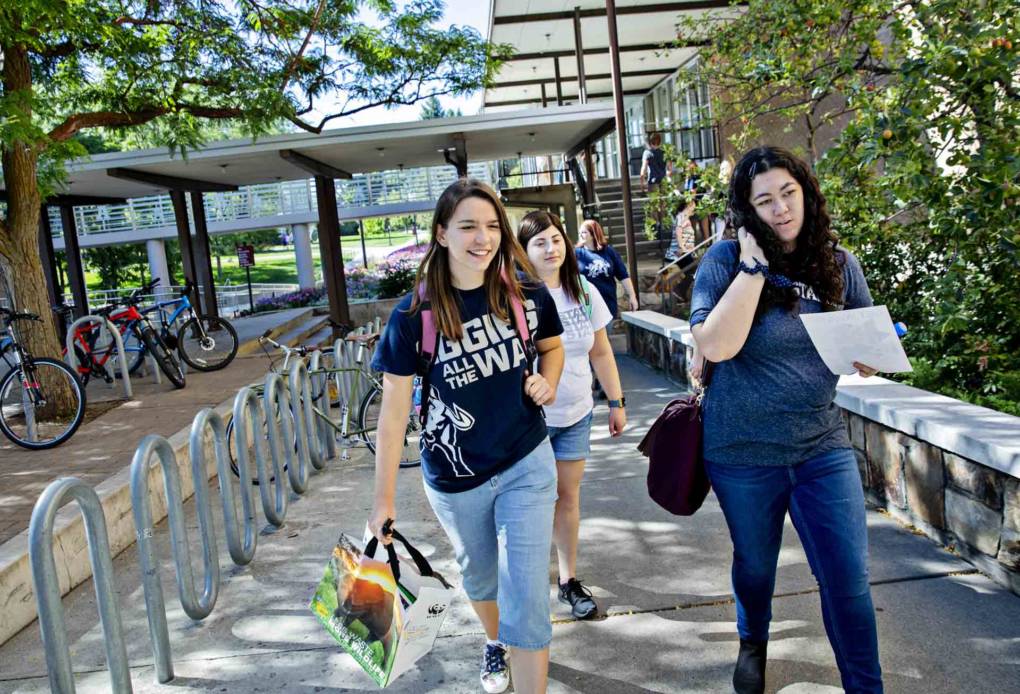
"caption": "Aggies Elevated students and roommates Courtney Jorgensen, left, and Jessica Otty, right, walk with their Base Camp cohort to learn how to catch the bus. Base Camp is a two-day orientation focused on helping students with special needs learn important class and lifestyle skills to transition into college. ",
"description": null,
"title": "_fieldintellectual1",
"credit": "Kim Raff for The Hechinger Report ",
"status": "inherit",
"isLoading": false,
"fetchFailed": false
},
"mindshift_54646": {
"type": "attachments",
"id": "mindshift_54646",
"meta": {
"index": "attachments_1716263798",
"site": "mindshift",
"id": "54646",
"found": true
},
"parent": 54644,
"imgSizes": {
"twentyfourteen-full-width": {
"file": "https://ww2.kqed.org/app/uploads/sites/23/2019/10/dsc_1801-22414e866a3c82d45545e6ffb69e98fd90aead80-1038x576.jpg",
"width": 1038,
"mimeType": "image/jpeg",
"height": 576
},
"thumbnail": {
"file": "https://ww2.kqed.org/app/uploads/sites/23/2019/10/dsc_1801-22414e866a3c82d45545e6ffb69e98fd90aead80-160x120.jpg",
"width": 160,
"mimeType": "image/jpeg",
"height": 120
},
"post-thumbnail": {
"file": "https://ww2.kqed.org/app/uploads/sites/23/2019/10/dsc_1801-22414e866a3c82d45545e6ffb69e98fd90aead80-672x372.jpg",
"width": 672,
"mimeType": "image/jpeg",
"height": 372
},
"kqedFullSize": {
"file": "https://ww2.kqed.org/app/uploads/sites/23/2019/10/dsc_1801-22414e866a3c82d45545e6ffb69e98fd90aead80-e1571898843506.jpg",
"width": 1920,
"height": 1440
},
"large": {
"file": "https://ww2.kqed.org/app/uploads/sites/23/2019/10/dsc_1801-22414e866a3c82d45545e6ffb69e98fd90aead80-1020x765.jpg",
"width": 1020,
"mimeType": "image/jpeg",
"height": 765
},
"complete_open_graph": {
"file": "https://ww2.kqed.org/app/uploads/sites/23/2019/10/dsc_1801-22414e866a3c82d45545e6ffb69e98fd90aead80-1200x900.jpg",
"width": 1200,
"mimeType": "image/jpeg",
"height": 900
},
"full-width": {
"file": "https://ww2.kqed.org/app/uploads/sites/23/2019/10/dsc_1801-22414e866a3c82d45545e6ffb69e98fd90aead80-1920x1440.jpg",
"width": 1920,
"mimeType": "image/jpeg",
"height": 1440
},
"medium": {
"file": "https://ww2.kqed.org/app/uploads/sites/23/2019/10/dsc_1801-22414e866a3c82d45545e6ffb69e98fd90aead80-800x600.jpg",
"width": 800,
"mimeType": "image/jpeg",
"height": 600
},
"medium_large": {
"file": "https://ww2.kqed.org/app/uploads/sites/23/2019/10/dsc_1801-22414e866a3c82d45545e6ffb69e98fd90aead80-768x576.jpg",
"width": 768,
"mimeType": "image/jpeg",
"height": 576
}
},
"publishDate": 1571898739,
"modified": 1571898859,
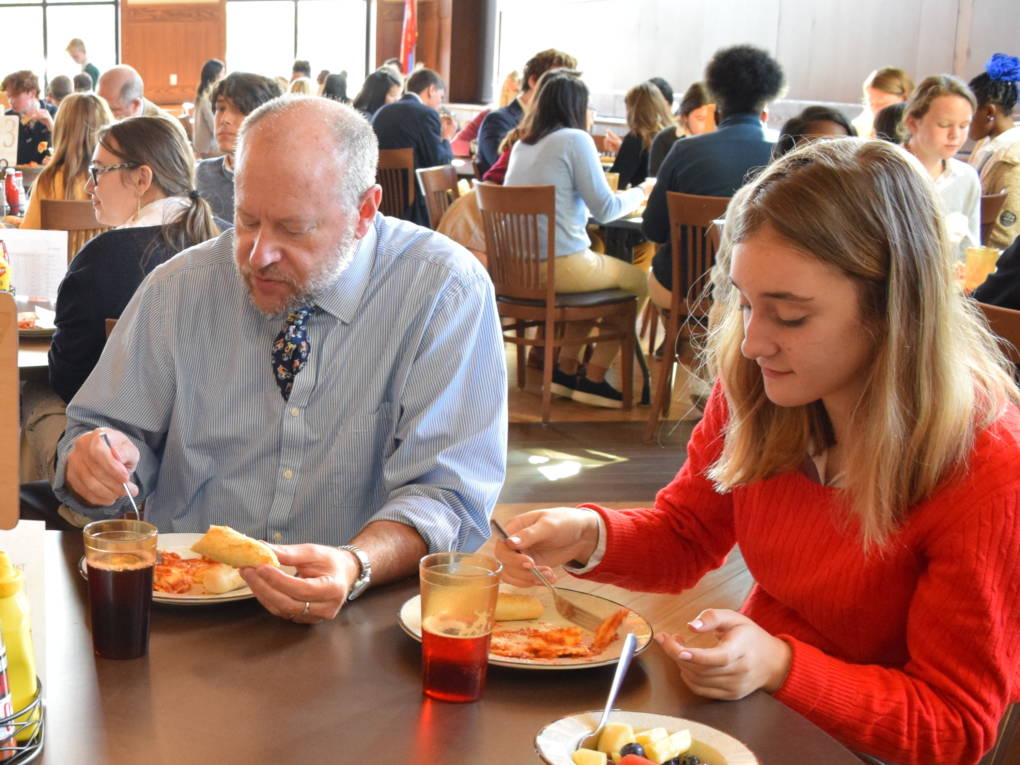
"caption": "Kylie Burger (right), a University School of Milwaukee student, eats lunch with band director Dain Shuler. The school has a long-standing tradition of assigned seating at lunch. A staff member is also required to sit at each table to help facilitate conversation.\n",
"description": "Kylie Burger (right), a University School of Milwaukee student, eats lunch with band director Dain Shuler. The school has a long-standing tradition of assigned seating at lunch. A staff member is also required to sit at each table to help facilitate conversation.",
"title": "Kylie Burger (right), a University School of Milwaukee student, eats lunch with band director Dain Shuler. The school has a long-standing tradition of assigned seating at lunch. A staff member is also required to sit at each table to help facilitate conversation.",
"credit": "Emily Files/WUWM",
"status": "inherit",
"isLoading": false,
"fetchFailed": false
},
"mindshift_54458": {
"type": "attachments",
"id": "mindshift_54458",
"meta": {
"index": "attachments_1716263798",
"site": "mindshift",
"id": "54458",
"found": true
},
"parent": 54452,
"imgSizes": {
"twentyfourteen-full-width": {
"file": "https://ww2.kqed.org/app/uploads/sites/23/2019/09/teach-reading-content-1038x576.jpg",
"width": 1038,
"mimeType": "image/jpeg",
"height": 576
},
"thumbnail": {
"file": "https://ww2.kqed.org/app/uploads/sites/23/2019/09/teach-reading-content-160x90.jpg",
"width": 160,
"mimeType": "image/jpeg",
"height": 90
},
"post-thumbnail": {
"file": "https://ww2.kqed.org/app/uploads/sites/23/2019/09/teach-reading-content-672x372.jpg",
"width": 672,
"mimeType": "image/jpeg",
"height": 372
},
"kqedFullSize": {
"file": "https://ww2.kqed.org/app/uploads/sites/23/2019/09/teach-reading-content.jpg",
"width": 1920,
"height": 1080
},
"large": {
"file": "https://ww2.kqed.org/app/uploads/sites/23/2019/09/teach-reading-content-1020x574.jpg",
"width": 1020,
"mimeType": "image/jpeg",
"height": 574
},
"complete_open_graph": {
"file": "https://ww2.kqed.org/app/uploads/sites/23/2019/09/teach-reading-content-1200x675.jpg",
"width": 1200,
"mimeType": "image/jpeg",
"height": 675
},
"full-width": {
"file": "https://ww2.kqed.org/app/uploads/sites/23/2019/09/teach-reading-content-1920x1080.jpg",
"width": 1920,
"mimeType": "image/jpeg",
"height": 1080
},
"medium": {
"file": "https://ww2.kqed.org/app/uploads/sites/23/2019/09/teach-reading-content-800x450.jpg",
"width": 800,
"mimeType": "image/jpeg",
"height": 450
},
"medium_large": {
"file": "https://ww2.kqed.org/app/uploads/sites/23/2019/09/teach-reading-content-768x432.jpg",
"width": 768,
"mimeType": "image/jpeg",
"height": 432
}
},
"publishDate": 1568847008,
"modified": 1568847122,
"caption": "A first-grade teacher leads a lesson about bee colonies with her students.",
"description": "A first-grade teacher leads a lesson about bee colonies with her students.",
"title": "teach-reading-content",
"credit": "Courtesy of Allison Shelley/\u003ca href=\"https://www.flickr.com/photos/all4ed/36456776906/in/album-72157687475899455/\">The Verbatim Agency for American Education: Images of Teachers and Students in Action\u003c/a>",
"status": "inherit",
"isLoading": false,
"fetchFailed": false
},
"mindshift_54530": {
"type": "attachments",
"id": "mindshift_54530",
"meta": {
"index": "attachments_1716263798",
"site": "mindshift",
"id": "54530",
"found": true
},
"parent": 54514,
"imgSizes": {
"twentyfourteen-full-width": {
"file": "https://ww2.kqed.org/app/uploads/sites/23/2019/09/Wacom-Olivia-Nick-sm-1038x576.jpg",
"width": 1038,
"mimeType": "image/jpeg",
"height": 576
},
"thumbnail": {
"file": "https://ww2.kqed.org/app/uploads/sites/23/2019/09/Wacom-Olivia-Nick-sm-160x107.jpg",
"width": 160,
"mimeType": "image/jpeg",
"height": 107
},
"post-thumbnail": {
"file": "https://ww2.kqed.org/app/uploads/sites/23/2019/09/Wacom-Olivia-Nick-sm-672x372.jpg",
"width": 672,
"mimeType": "image/jpeg",
"height": 372
},
"kqedFullSize": {
"file": "https://ww2.kqed.org/app/uploads/sites/23/2019/09/Wacom-Olivia-Nick-sm.jpg",
"width": 1920,
"height": 1280
},
"large": {
"file": "https://ww2.kqed.org/app/uploads/sites/23/2019/09/Wacom-Olivia-Nick-sm-1020x680.jpg",
"width": 1020,
"mimeType": "image/jpeg",
"height": 680
},
"complete_open_graph": {
"file": "https://ww2.kqed.org/app/uploads/sites/23/2019/09/Wacom-Olivia-Nick-sm-1200x800.jpg",
"width": 1200,
"mimeType": "image/jpeg",
"height": 800
},
"full-width": {
"file": "https://ww2.kqed.org/app/uploads/sites/23/2019/09/Wacom-Olivia-Nick-sm-1920x1280.jpg",
"width": 1920,
"mimeType": "image/jpeg",
"height": 1280
},
"medium": {
"file": "https://ww2.kqed.org/app/uploads/sites/23/2019/09/Wacom-Olivia-Nick-sm-800x533.jpg",
"width": 800,
"mimeType": "image/jpeg",
"height": 533
},
"medium_large": {
"file": "https://ww2.kqed.org/app/uploads/sites/23/2019/09/Wacom-Olivia-Nick-sm-768x512.jpg",
"width": 768,
"mimeType": "image/jpeg",
"height": 512
}
},
"publishDate": 1569611973,
"modified": 1569612032,
"caption": "Roshan's students work together to solve a math problem using Wacom tablets and Pear Deck.",
"description": "Roshan's students work together to solve a math problem using Wacom tablets and Pear Deck.",
"title": "Wacom---Olivia,-Nick-sm",
"credit": "Courtesy Stacey Roshan",
"status": "inherit",
"isLoading": false,
"fetchFailed": false
},
"mindshift_54627": {
"type": "attachments",
"id": "mindshift_54627",
"meta": {
"index": "attachments_1716263798",
"site": "mindshift",
"id": "54627",
"found": true
},
"parent": 54626,
"imgSizes": {
"twentyfourteen-full-width": {
"file": "https://ww2.kqed.org/app/uploads/sites/23/2019/10/twice-exceptional-leung_wide-471f7ce0665670558850441f18ef17efd8d23c58-1038x576.jpe",
"width": 1038,
"mimeType": "image/jpeg",
"height": 576
},
"thumbnail": {
"file": "https://ww2.kqed.org/app/uploads/sites/23/2019/10/twice-exceptional-leung_wide-471f7ce0665670558850441f18ef17efd8d23c58-160x90.jpe",
"width": 160,
"mimeType": "image/jpeg",
"height": 90
},
"post-thumbnail": {
"file": "https://ww2.kqed.org/app/uploads/sites/23/2019/10/twice-exceptional-leung_wide-471f7ce0665670558850441f18ef17efd8d23c58-672x372.jpe",
"width": 672,
"mimeType": "image/jpeg",
"height": 372
},
"kqedFullSize": {
"file": "https://ww2.kqed.org/app/uploads/sites/23/2019/10/twice-exceptional-leung_wide-471f7ce0665670558850441f18ef17efd8d23c58-e1571349936221.jpe",
"width": 1920,
"height": 1078
},
"large": {
"file": "https://ww2.kqed.org/app/uploads/sites/23/2019/10/twice-exceptional-leung_wide-471f7ce0665670558850441f18ef17efd8d23c58-1020x573.jpe",
"width": 1020,
"mimeType": "image/jpeg",
"height": 573
},
"complete_open_graph": {
"file": "https://ww2.kqed.org/app/uploads/sites/23/2019/10/twice-exceptional-leung_wide-471f7ce0665670558850441f18ef17efd8d23c58-1200x674.jpe",
"width": 1200,
"mimeType": "image/jpeg",
"height": 674
},
"full-width": {
"file": "https://ww2.kqed.org/app/uploads/sites/23/2019/10/twice-exceptional-leung_wide-471f7ce0665670558850441f18ef17efd8d23c58-1920x1078.jpe",
"width": 1920,
"mimeType": "image/jpeg",
"height": 1078
},
"medium": {
"file": "https://ww2.kqed.org/app/uploads/sites/23/2019/10/twice-exceptional-leung_wide-471f7ce0665670558850441f18ef17efd8d23c58-800x449.jpe",
"width": 800,
"mimeType": "image/jpeg",
"height": 449
},
"medium_large": {
"file": "https://ww2.kqed.org/app/uploads/sites/23/2019/10/twice-exceptional-leung_wide-471f7ce0665670558850441f18ef17efd8d23c58-768x431.jpe",
"width": 768,
"mimeType": "image/jpeg",
"height": 431
}
},
"publishDate": 1571349558,
"modified": 1571349952,
"caption": "The University of Iowa is working to include teens on the autism spectrum in its programs for gifted students.",
"description": "The University of Iowa is working to include teens on the autism spectrum in its programs for gifted students.",
"title": "The University of Iowa is working to include teens on the autism spectrum in its programs for gifted students.",
"credit": "Jeremy Leung for NPR",
"status": "inherit",
"isLoading": false,
"fetchFailed": false
},
"mindshift_54619": {
"type": "attachments",
"id": "mindshift_54619",
"meta": {
"index": "attachments_1716263798",
"site": "mindshift",
"id": "54619",
"found": true
},
"parent": 54370,
"imgSizes": {
"twentyfourteen-full-width": {
"file": "https://ww2.kqed.org/app/uploads/sites/23/2019/10/Maya-Lin-arts-integration-1038x576.jpg",
"width": 1038,
"mimeType": "image/jpeg",
"height": 576
},
"thumbnail": {
"file": "https://ww2.kqed.org/app/uploads/sites/23/2019/10/Maya-Lin-arts-integration-160x107.jpg",
"width": 160,
"mimeType": "image/jpeg",
"height": 107
},
"post-thumbnail": {
"file": "https://ww2.kqed.org/app/uploads/sites/23/2019/10/Maya-Lin-arts-integration-672x372.jpg",
"width": 672,
"mimeType": "image/jpeg",
"height": 372
},
"kqedFullSize": {
"file": "https://ww2.kqed.org/app/uploads/sites/23/2019/10/Maya-Lin-arts-integration.jpg",
"width": 1920,
"height": 1281
},
"large": {
"file": "https://ww2.kqed.org/app/uploads/sites/23/2019/10/Maya-Lin-arts-integration-1020x681.jpg",
"width": 1020,
"mimeType": "image/jpeg",
"height": 681
},
"complete_open_graph": {
"file": "https://ww2.kqed.org/app/uploads/sites/23/2019/10/Maya-Lin-arts-integration-1200x801.jpg",
"width": 1200,
"mimeType": "image/jpeg",
"height": 801
},
"full-width": {
"file": "https://ww2.kqed.org/app/uploads/sites/23/2019/10/Maya-Lin-arts-integration-1920x1281.jpg",
"width": 1920,
"mimeType": "image/jpeg",
"height": 1281
},
"medium": {
"file": "https://ww2.kqed.org/app/uploads/sites/23/2019/10/Maya-Lin-arts-integration-800x534.jpg",
"width": 800,
"mimeType": "image/jpeg",
"height": 534
},
"medium_large": {
"file": "https://ww2.kqed.org/app/uploads/sites/23/2019/10/Maya-Lin-arts-integration-768x512.jpg",
"width": 768,
"mimeType": "image/jpeg",
"height": 512
}
},
"publishDate": 1571170636,
"modified": 1571170680,
"caption": "A Maya Lin third grader works on her climate change project.",
"description": "A Maya Lin third grader works on her climate change project.",
"title": "Maya-Lin-arts-integration",
"credit": "Stephanie Lister/KQED",
"status": "inherit",
"isLoading": false,
"fetchFailed": false
},
"mindshift_54500": {
"type": "attachments",
"id": "mindshift_54500",
"meta": {
"index": "attachments_1716263798",
"site": "mindshift",
"id": "54500",
"found": true
},
"parent": 54497,
"imgSizes": {
"twentyfourteen-full-width": {
"file": "https://ww2.kqed.org/app/uploads/sites/23/2019/09/empathy-needed-1038x576.jpg",
"width": 1038,
"mimeType": "image/jpeg",
"height": 576
},
"thumbnail": {
"file": "https://ww2.kqed.org/app/uploads/sites/23/2019/09/empathy-needed-160x90.jpg",
"width": 160,
"mimeType": "image/jpeg",
"height": 90
},
"post-thumbnail": {
"file": "https://ww2.kqed.org/app/uploads/sites/23/2019/09/empathy-needed-672x372.jpg",
"width": 672,
"mimeType": "image/jpeg",
"height": 372
},
"kqedFullSize": {
"file": "https://ww2.kqed.org/app/uploads/sites/23/2019/09/empathy-needed.jpg",
"width": 1920,
"height": 1080
},
"large": {
"file": "https://ww2.kqed.org/app/uploads/sites/23/2019/09/empathy-needed-1020x574.jpg",
"width": 1020,
"mimeType": "image/jpeg",
"height": 574
},
"complete_open_graph": {
"file": "https://ww2.kqed.org/app/uploads/sites/23/2019/09/empathy-needed-1200x675.jpg",
"width": 1200,
"mimeType": "image/jpeg",
"height": 675
},
"full-width": {
"file": "https://ww2.kqed.org/app/uploads/sites/23/2019/09/empathy-needed-1920x1080.jpg",
"width": 1920,
"mimeType": "image/jpeg",
"height": 1080
},
"medium": {
"file": "https://ww2.kqed.org/app/uploads/sites/23/2019/09/empathy-needed-800x450.jpg",
"width": 800,
"mimeType": "image/jpeg",
"height": 450
},
"medium_large": {
"file": "https://ww2.kqed.org/app/uploads/sites/23/2019/09/empathy-needed-768x432.jpg",
"width": 768,
"mimeType": "image/jpeg",
"height": 432
}
},
"publishDate": 1569369170,
"modified": 1569369222,
"caption": null,
"description": null,
"title": "empathy-needed",
"credit": "Lordn/iStock",
"status": "inherit",
"isLoading": false,
"fetchFailed": false
},
"mindshift_54596": {
"type": "attachments",
"id": "mindshift_54596",
"meta": {
"index": "attachments_1716263798",
"site": "mindshift",
"id": "54596",
"found": true
},
"parent": 54536,
"imgSizes": {
"twentyfourteen-full-width": {
"file": "https://ww2.kqed.org/app/uploads/sites/23/2019/10/iStock-846511402-1038x576.jpg",
"width": 1038,
"mimeType": "image/jpeg",
"height": 576
},
"thumbnail": {
"file": "https://ww2.kqed.org/app/uploads/sites/23/2019/10/iStock-846511402-160x107.jpg",
"width": 160,
"mimeType": "image/jpeg",
"height": 107
},
"post-thumbnail": {
"file": "https://ww2.kqed.org/app/uploads/sites/23/2019/10/iStock-846511402-672x372.jpg",
"width": 672,
"mimeType": "image/jpeg",
"height": 372
},
"kqedFullSize": {
"file": "https://ww2.kqed.org/app/uploads/sites/23/2019/10/iStock-846511402-e1570220832324.jpg",
"width": 1920,
"height": 1280
},
"large": {
"file": "https://ww2.kqed.org/app/uploads/sites/23/2019/10/iStock-846511402-1020x680.jpg",
"width": 1020,
"mimeType": "image/jpeg",
"height": 680
},
"complete_open_graph": {
"file": "https://ww2.kqed.org/app/uploads/sites/23/2019/10/iStock-846511402-1200x800.jpg",
"width": 1200,
"mimeType": "image/jpeg",
"height": 800
},
"full-width": {
"file": "https://ww2.kqed.org/app/uploads/sites/23/2019/10/iStock-846511402-1920x1280.jpg",
"width": 1920,
"mimeType": "image/jpeg",
"height": 1280
},
"medium": {
"file": "https://ww2.kqed.org/app/uploads/sites/23/2019/10/iStock-846511402-800x533.jpg",
"width": 800,
"mimeType": "image/jpeg",
"height": 533
},
"medium_large": {
"file": "https://ww2.kqed.org/app/uploads/sites/23/2019/10/iStock-846511402-768x512.jpg",
"width": 768,
"mimeType": "image/jpeg",
"height": 512
}
},
"publishDate": 1570220805,
"modified": 1570220827,
"caption": null,
"description": null,
"title": "Young girl doing homework",
"credit": "ASIFE/iStock",
"status": "inherit",
"isLoading": false,
"fetchFailed": false
},
"mindshift_54598": {
"type": "attachments",
"id": "mindshift_54598",
"meta": {
"index": "attachments_1716263798",
"site": "mindshift",
"id": "54598",
"found": true
},
"parent": 54597,
"imgSizes": {
"twentyfourteen-full-width": {
"file": "https://ww2.kqed.org/app/uploads/sites/23/2019/10/talktoteen-1_custom-b5ea125bd11154238f0f464795c61cb5b3c933e9-1038x576.jpg",
"width": 1038,
"mimeType": "image/jpeg",
"height": 576
},
"thumbnail": {
"file": "https://ww2.kqed.org/app/uploads/sites/23/2019/10/talktoteen-1_custom-b5ea125bd11154238f0f464795c61cb5b3c933e9-160x106.jpg",
"width": 160,
"mimeType": "image/jpeg",
"height": 106
},
"post-thumbnail": {
"file": "https://ww2.kqed.org/app/uploads/sites/23/2019/10/talktoteen-1_custom-b5ea125bd11154238f0f464795c61cb5b3c933e9-672x372.jpg",
"width": 672,
"mimeType": "image/jpeg",
"height": 372
},
"kqedFullSize": {
"file": "https://ww2.kqed.org/app/uploads/sites/23/2019/10/talktoteen-1_custom-b5ea125bd11154238f0f464795c61cb5b3c933e9-e1570429298719.jpg",
"width": 1920,
"height": 1271
},
"large": {
"file": "https://ww2.kqed.org/app/uploads/sites/23/2019/10/talktoteen-1_custom-b5ea125bd11154238f0f464795c61cb5b3c933e9-1020x675.jpg",
"width": 1020,
"mimeType": "image/jpeg",
"height": 675
},
"complete_open_graph": {
"file": "https://ww2.kqed.org/app/uploads/sites/23/2019/10/talktoteen-1_custom-b5ea125bd11154238f0f464795c61cb5b3c933e9-1200x794.jpg",
"width": 1200,
"mimeType": "image/jpeg",
"height": 794
},
"full-width": {
"file": "https://ww2.kqed.org/app/uploads/sites/23/2019/10/talktoteen-1_custom-b5ea125bd11154238f0f464795c61cb5b3c933e9-1920x1271.jpg",
"width": 1920,
"mimeType": "image/jpeg",
"height": 1271
},
"medium": {
"file": "https://ww2.kqed.org/app/uploads/sites/23/2019/10/talktoteen-1_custom-b5ea125bd11154238f0f464795c61cb5b3c933e9-800x530.jpg",
"width": 800,
"mimeType": "image/jpeg",
"height": 530
},
"medium_large": {
"file": "https://ww2.kqed.org/app/uploads/sites/23/2019/10/talktoteen-1_custom-b5ea125bd11154238f0f464795c61cb5b3c933e9-768x508.jpg",
"width": 768,
"mimeType": "image/jpeg",
"height": 508
}
},
"publishDate": 1570429272,
"modified": 1570429320,
"caption": "Vaping has become ever-present among teens, but the health risks are real. How do you talk to your kids about vaping?\n",
"description": "Vaping has become ever-present among teens, but the health risks are real. How do you talk to your kids about vaping?",
"title": "Vaping has become ever-present among teens, but the health risks are real. How do you talk to your kids about vaping?",
"credit": "Meaghan Browning/Getty Images",
"status": "inherit",
"isLoading": false,
"fetchFailed": false
},
"mindshift_54584": {
"type": "attachments",
"id": "mindshift_54584",
"meta": {
"index": "attachments_1716263798",
"site": "mindshift",
"id": "54584",
"found": true
},
"parent": 54389,
"imgSizes": {
"thumbnail": {
"file": "https://ww2.kqed.org/app/uploads/sites/23/2019/10/Vakharia1-160x107.jpg",
"width": 160,
"mimeType": "image/jpeg",
"height": 107
},
"post-thumbnail": {
"file": "https://ww2.kqed.org/app/uploads/sites/23/2019/10/Vakharia1-672x372.jpg",
"width": 672,
"mimeType": "image/jpeg",
"height": 372
},
"kqedFullSize": {
"file": "https://ww2.kqed.org/app/uploads/sites/23/2019/10/Vakharia1.jpg",
"width": 800,
"height": 533
},
"medium": {
"file": "https://ww2.kqed.org/app/uploads/sites/23/2019/10/Vakharia1-800x533.jpg",
"width": 800,
"mimeType": "image/jpeg",
"height": 533
},
"medium_large": {
"file": "https://ww2.kqed.org/app/uploads/sites/23/2019/10/Vakharia1-768x512.jpg",
"width": 768,
"mimeType": "image/jpeg",
"height": 512
}
},
"publishDate": 1570083781,
"modified": 1570084143,
"caption": "Courtesy of Vanessa Vakharia.",
"description": null,
"title": "Vakharia1",
"credit": null,
"status": "inherit",
"isLoading": false,
"fetchFailed": false
},
"mindshift_54555": {
"type": "attachments",
"id": "mindshift_54555",
"meta": {
"index": "attachments_1716263798",
"site": "mindshift",
"id": "54555",
"found": true
},
"parent": 54548,
"imgSizes": {
"twentyfourteen-full-width": {
"file": "https://ww2.kqed.org/app/uploads/sites/23/2019/09/IMG_2684-1038x576.jpg",
"width": 1038,
"mimeType": "image/jpeg",
"height": 576
},
"thumbnail": {
"file": "https://ww2.kqed.org/app/uploads/sites/23/2019/09/IMG_2684-160x120.jpg",
"width": 160,
"mimeType": "image/jpeg",
"height": 120
},
"post-thumbnail": {
"file": "https://ww2.kqed.org/app/uploads/sites/23/2019/09/IMG_2684-672x372.jpg",
"width": 672,
"mimeType": "image/jpeg",
"height": 372
},
"kqedFullSize": {
"file": "https://ww2.kqed.org/app/uploads/sites/23/2019/09/IMG_2684-e1569869624136.jpg",
"width": 1920,
"height": 1440
},
"large": {
"file": "https://ww2.kqed.org/app/uploads/sites/23/2019/09/IMG_2684-1020x765.jpg",
"width": 1020,
"mimeType": "image/jpeg",
"height": 765
},
"complete_open_graph": {
"file": "https://ww2.kqed.org/app/uploads/sites/23/2019/09/IMG_2684-1200x900.jpg",
"width": 1200,
"mimeType": "image/jpeg",
"height": 900
},
"full-width": {
"file": "https://ww2.kqed.org/app/uploads/sites/23/2019/09/IMG_2684-1920x1440.jpg",
"width": 1920,
"mimeType": "image/jpeg",
"height": 1440
},
"medium": {
"file": "https://ww2.kqed.org/app/uploads/sites/23/2019/09/IMG_2684-800x600.jpg",
"width": 800,
"mimeType": "image/jpeg",
"height": 600
},
"medium_large": {
"file": "https://ww2.kqed.org/app/uploads/sites/23/2019/09/IMG_2684-768x576.jpg",
"width": 768,
"mimeType": "image/jpeg",
"height": 576
}
},
"publishDate": 1569867511,
"modified": 1569881122,
"caption": "Tice Creek students taste-test different varieties of rice. ",
"description": null,
"title": "IMG_2684",
"credit": "Ki Sung/KQED",
"status": "inherit",
"isLoading": false,
"fetchFailed": false
}
},
"audioPlayerReducer": {
"postId": "stream_live",
"isPaused": true,
"isPlaying": false,
"pfsActive": false,
"pledgeModalIsOpen": true,
"playerDrawerIsOpen": false,
"liveAudioPlayStartedAt": 0,
"liveAudioPlayContext": ""
},
"authorsReducer": {
"byline_mindshift_54684": {
"type": "authors",
"id": "byline_mindshift_54684",
"meta": {
"override": true
},
"slug": "byline_mindshift_54684",
"name": "Anjuli Sastry",
"isLoading": false
},
"byline_mindshift_54652": {
"type": "authors",
"id": "byline_mindshift_54652",
"meta": {
"override": true
},
"slug": "byline_mindshift_54652",
"name": "\u003ca href=\"https://hechingerreport.org/\">Kelly Field, The Hechinger Report\u003c/a>",
"isLoading": false
},
"byline_mindshift_54644": {
"type": "authors",
"id": "byline_mindshift_54644",
"meta": {
"override": true
},
"slug": "byline_mindshift_54644",
"name": "Emily Files",
"isLoading": false
},
"byline_mindshift_54626": {
"type": "authors",
"id": "byline_mindshift_54626",
"meta": {
"override": true
},
"slug": "byline_mindshift_54626",
"name": "Jon Hamilton",
"isLoading": false
},
"byline_mindshift_54597": {
"type": "authors",
"id": "byline_mindshift_54597",
"meta": {
"override": true
},
"slug": "byline_mindshift_54597",
"name": "Emily Vaughn",
"isLoading": false
},
"katrinaschwartz": {
"type": "authors",
"id": "234",
"meta": {
"index": "authors_1716337520",
"id": "234",
"found": true
},
"name": "Katrina Schwartz",
"firstName": "Katrina",
"lastName": "Schwartz",
"slug": "katrinaschwartz",
"email": "kschwartz@kqed.org",
"display_author_email": false,
"staff_mastheads": [
"news"
],
"title": "Producer",
"bio": "Katrina Schwartz is a journalist based in San Francisco. She's worked at KPCC public radio in LA and has reported on air and online for KQED since 2010. She covered how teaching and learning is changing for MindShift between 2012 and 2020. She is the co-host of the MindShift podcast and now produces KQED's Bay Curious podcast.",
"avatar": "https://secure.gravatar.com/avatar/edb4ee79070447a018538c9aae6eeecf28786515b8a0c30e43b6b7dce5aa44c8?s=600&d=blank&r=g",
"twitter": "kschwart",
"bluesky": null,
"facebook": null,
"instagram": null,
"linkedin": null,
"sites": [
{
"site": "",
"roles": [
"editor"
]
},
{
"site": "news",
"roles": [
"editor"
]
},
{
"site": "mindshift",
"roles": [
"administrator"
]
},
{
"site": "stateofhealth",
"roles": [
"author"
]
},
{
"site": "science",
"roles": [
"editor"
]
}
],
"headData": {
"title": "Katrina Schwartz | KQED",
"description": "Producer",
"ogImgSrc": "https://secure.gravatar.com/avatar/edb4ee79070447a018538c9aae6eeecf28786515b8a0c30e43b6b7dce5aa44c8?s=600&d=blank&r=g",
"twImgSrc": "https://secure.gravatar.com/avatar/edb4ee79070447a018538c9aae6eeecf28786515b8a0c30e43b6b7dce5aa44c8?s=600&d=blank&r=g"
},
"isLoading": false,
"link": "/author/katrinaschwartz"
},
"ksung": {
"type": "authors",
"id": "4596",
"meta": {
"index": "authors_1716337520",
"id": "4596",
"found": true
},
"name": "Ki Sung",
"firstName": "Ki",
"lastName": "Sung",
"slug": "ksung",
"email": "ksung@kqed.org",
"display_author_email": false,
"staff_mastheads": [
"news"
],
"title": "KQED Contributor",
"bio": "Ki Sung is Managing Editor of Digital News at KQED. She is former Senior Editor of MindShift and worked at NPR before joining KQED in 2014.",
"avatar": "https://secure.gravatar.com/avatar/64271e01dc95486c133be56937739045b7c00c990525bf9add12d3dd4f0433c9?s=600&d=blank&r=g",
"twitter": null,
"bluesky": null,
"facebook": null,
"instagram": null,
"linkedin": null,
"sites": [
{
"site": "arts",
"roles": [
"administrator"
]
},
{
"site": "news",
"roles": [
"administrator"
]
},
{
"site": "mindshift",
"roles": [
"administrator"
]
},
{
"site": "science",
"roles": [
"administrator"
]
},
{
"site": "forum",
"roles": [
"administrator"
]
},
{
"site": "perspectives",
"roles": [
"administrator"
]
},
{
"site": "elections",
"roles": [
"administrator"
]
}
],
"headData": {
"title": "Ki Sung | KQED",
"description": "KQED Contributor",
"ogImgSrc": "https://secure.gravatar.com/avatar/64271e01dc95486c133be56937739045b7c00c990525bf9add12d3dd4f0433c9?s=600&d=blank&r=g",
"twImgSrc": "https://secure.gravatar.com/avatar/64271e01dc95486c133be56937739045b7c00c990525bf9add12d3dd4f0433c9?s=600&d=blank&r=g"
},
"isLoading": false,
"link": "/author/ksung"
},
"kdnewhouse": {
"type": "authors",
"id": "11487",
"meta": {
"index": "authors_1716337520",
"id": "11487",
"found": true
},
"name": "Kara Newhouse",
"firstName": "Kara",
"lastName": "Newhouse",
"slug": "kdnewhouse",
"email": "knewhouse@kqed.org",
"display_author_email": false,
"staff_mastheads": [],
"title": "MindShift Editor",
"bio": null,
"avatar": "https://secure.gravatar.com/avatar/3dceed6fb271527113abfa9a8e9df34e?s=600&d=blank&r=g",
"twitter": null,
"facebook": null,
"instagram": null,
"linkedin": null,
"sites": [
{
"site": "",
"roles": [
"editor"
]
},
{
"site": "mindshift",
"roles": []
}
],
"headData": {
"title": "Kara Newhouse | KQED",
"description": "MindShift Editor",
"ogImgSrc": "https://secure.gravatar.com/avatar/3dceed6fb271527113abfa9a8e9df34e?s=600&d=blank&r=g",
"twImgSrc": "https://secure.gravatar.com/avatar/3dceed6fb271527113abfa9a8e9df34e?s=600&d=blank&r=g"
},
"isLoading": false,
"link": "/author/kdnewhouse"
}
},
"pagesReducer": {
"mindshift_tag_featured": {
"type": "terms",
"id": "mindshift_20784",
"meta": {
"index": "terms_1716263798",
"site": "mindshift",
"id": "20784",
"score": 7.6562667
},
"featImg": null,
"name": "featured",
"description": null,
"taxonomy": "tag",
"headData": {
"twImgId": null,
"twTitle": null,
"ogTitle": null,
"ogImgId": null,
"twDescription": null,
"description": null,
"title": "featured Archives | KQED Mindshift",
"ogDescription": null
},
"ttid": 20061,
"slug": "featured",
"isLoading": false,
"title": "featured",
"pageMeta": {
"site": "mindshift",
"WpPageTemplate": "page-topic-editorial",
"currentPage": 11
},
"blocks": [
{
"blockName": "kqed/post-list",
"attrs": {
"layout": "cardArticle2",
"query": "posts/mindshift?tag=featured",
"seeMore": false,
"paginated": true,
"page": 11
}
},
{
"blockName": "kqed/ad"
}
]
}
},
"pfsSessionReducer": {},
"postsReducer": {
"stream_live": {
"type": "live",
"id": "stream_live",
"audioUrl": "https://hls.kqed.org/hls/kqed_app/playlist.m3u8",
"title": "Live Stream",
"excerpt": "Live Stream information currently unavailable.",
"link": "/radio",
"featImg": "",
"label": {
"name": "KQED Live",
"link": "/"
}
},
"stream_kqedNewscast": {
"type": "posts",
"id": "stream_kqedNewscast",
"audioUrl": "https://www.kqed.org/.stream/anon/radio/RDnews/newscast.mp3?_=1",
"title": "KQED Newscast",
"featImg": "",
"label": {
"name": "88.5 FM",
"link": "/"
}
},
"mindshift_54684": {
"type": "posts",
"id": "mindshift_54684",
"meta": {
"index": "posts_1716263798",
"site": "mindshift",
"id": "54684",
"score": null,
"sort": [
1572159517000
]
},
"parent": 0,
"labelTerm": {
"site": "mindshift"
},
"blocks": [],
"publishDate": 1572159517,
"format": "standard",
"disqusTitle": "How To Find A Mentor And Make It Work",
"title": "How To Find A Mentor And Make It Work",
"headTitle": "MindShift | KQED News",
"content": "\u003cp>Imagine this: Someone you admire sets aside time to meet, sharing how they accomplished their goals, cheering you on and giving you feedback and advice. That is what we call a mentor.\u003c/p>\n\u003cp>The right mentoring relationship can be a powerful tool for professional growth — it can lead to a new job, a promotion or even a better work-life balance.\u003c/p>\n\u003cp>One of the trickiest things about mentoring though, is that it's often informal, and that can make it difficult to find an entry point. Since we know that women and people of color face discrimination \u003ca href=\"https://www.pewsocialtrends.org/2018/01/09/women-and-men-in-stem-often-at-odds-over-workplace-equity/\">at higher rates\u003c/a> than white men do in certain fields like STEM, it can be especially helpful for women and people of color to intentionally seek out mentors.\u003c/p>\n\u003cp>Here's how to find a good mentor, make the ask and make it work (formally).\u003c/p>\n\u003ch3>\u003cstrong>1. Finding the Right Mentor\u003c/strong>\u003c/h3>\n\u003cp>\u003cstrong>\u003cem>Know your goals (both short and long term). \u003c/em>\u003c/strong>What do you want to accomplish professionally in the next three months? Can you do it in your current role or will it require you to switch jobs? The more specific you are with your goals, the easier it will be to find the right mentor. One strategy to create effective, easily achievable goals is to work \u003ca href=\"https://www.npr.org/assets/news/2019/10/smart-goals.pdf\">SMART\u003c/a>: specific, measurable, achievable, relevant, and timebound. Envisioning your dreams this way allows you to break down lofty ideas into individual goals that are easier to accomplish through short-term steps.\u003c/p>\n\u003cp>[ad fullwidth]\u003c/p>\n\u003cp>\u003cstrong>\u003cem>Who do you look up to?\u003c/em>\u003c/strong> Whose job would you like to have in the next 5, 10 or 15 years? Is this person inside or outside your workplace? Who is your immediate role model where you work? Keep a running list of the jobs and people you are visualizing. Consider an identity-based mentor in your organization, especially if you need to talk about issues you're facing as an underrepresented person in your professional surroundings.\u003c/p>\n\u003cp>\u003cstrong>\u003cem>Do the research\u003c/em>\u003c/strong>\u003cstrong>. \u003c/strong>You may or may not be able to ask one of those people to be your mentor, but what are the stepping stones to get to someone in a similar position? Take notes on the path that person took to get to where they are today.\u003c/p>\n\u003cp>\u003cstrong>\u003cem>Be cognizant of your existing network.\u003c/em>\u003c/strong> The more aware someone already is of your work and abilities, the more effective they will be at mentoring you. Think about whether someone is already informally mentoring you — can you ask them to help you? If someone isn't aware of your work or you've never talked to them, look for a connection. Make sure the person you are thinking about also has the expertise you're looking for. (We'll talk more about this in the next section.)\u003c/p>\n\u003cp>\u003cstrong>\u003cem>Recognize the difference between a mentor and a sponsor.\u003c/em>\u003c/strong> For example, mentors give advice on but can't give you the new job, raise, or promotion. In contrast, sponsors can do that for you. They can be a boss, recruiter, or even employer in a new industry. Don't expect mentors to be sponsors, but they can put you in touch with sponsors. Mentors can also be in your life for the long-term, while sponsors are often more short-term.\u003c/p>\n\u003cp>\u003cimg class=\"alignright size-full wp-image-54686\" src=\"https://ww2.kqed.org/mindshift/wp-content/uploads/sites/23/2019/10/mentorship-ask2_web-site-copy-2_wide-3c1c1befbe5ce9d478855883d38d74d417632c94-e1572245994107.png\" alt=\"\" width=\"1920\" height=\"1080\">\u003c/p>\n\u003ch3>\u003cstrong>2. Making the Ask \u003c/strong>\u003c/h3>\n\u003cp>\u003cstrong>\u003cem>Have an elevator pitch ready.\u003c/em>\u003c/strong> Be clear of your goals and why you think this person is the right mentor for you. Be up front about your time-commitment, what you're willing to put into the relationship and what you expect from them. If you're clear about what you need from the start, communication will flow smoothly. You can even practice this elevator pitch to other people before asking the possible mentor.\u003c/p>\n\u003cp>\u003cstrong>\u003cem>Make sure it's the right fit before asking.\u003c/em>\u003c/strong> You can feel this out by having informal meetings where you discuss your goals and trajectory, before asking them to be your mentor.\u003c/p>\n\u003cp>\u003cstrong>\u003cem>Mention what you like about the person's work, especially if you've never met. \u003c/em>\u003c/strong>Say your boss introduced you to a possible mentor and neither of you know each other. Do the research about the possible mentor's work. Then open with what you like about their work. That will show that you have a thoughtful approach.\u003c/p>\n\u003cp>\u003cstrong>\u003cem>If it's a cold email, it's okay to start with the informational interview ask.\u003c/em>\u003c/strong> But again, be specific about what you like about the person's work and why you want to meet. Why is talking to you worth their time? If you've never met before, consider starting with a phone call and work with the person's schedule. Keep in mind that informational interview requests are common. The way you stand out, as we mentioned before, is showing you did the research about their career and being specific and honest about what you're asking of them.\u003c/p>\n\u003cp>\u003cstrong>\u003cem>Try to ask for formal mentorship in-person. \u003c/em>\u003c/strong>This isn't always possible, but when you feel someone is the right fit, do your best to meet in-person to make the ask. It shows that you will be open to feedback in the long term.\u003c/p>\n\u003cp>\u003cstrong>\u003cem>Whether it's in-person or via email, here are some things to mention:\u003c/em>\u003c/strong>\u003c/p>\n\u003cul>\n\u003cli>Tell them specifically what you've gotten out of past conversations with them. (This might be from that first informal meeting.)\u003c/li>\n\u003cli>Be clear about how often you want to meet for and how long, and make sure it works for them. (You can reassess this later in the relationship.)\u003c/li>\n\u003cli>Mention you'll put together agendas prior to each meeting that align with the goals discussed above.\u003c/li>\n\u003cli>Finally, make sure they are considering this mentorship as an option and not an obligation. We're all busy, and you should approach the ask fully aware they might say no. And that's okay! If they do say no, mention you admire their path and thank them for considering. That leaves the door open for a future relationship.\u003c/li>\n\u003c/ul>\n\u003ch3>\u003cstrong>3. Tips on Being a Good Mentee\u003c/strong>\u003c/h3>\n\u003cp>So you've found the right mentor. Now what?\u003c/p>\n\u003cp>\u003cstrong>\u003cem>Goals still matter.\u003c/em>\u003c/strong> If you mention your specific, achievable goals from the beginning of the relationship, your mentor can help you stay on track at each meeting.\u003c/p>\n\u003cp>\u003cstrong>\u003cem>Meet consistently.\u003c/em>\u003c/strong> Figure out how often (i.e. once a week or once a month over four to six months), how long (i.e. half hour or one hour) and how you want to meet and make it consistent. In-person or over video conference is a good start so that you can get to know each other better. Gradually progress to phone calls once you're comfortable. Decide whether you or your mentor want to send out calendar invites to protect the time you plan to meet. This might mean keeping your supervisor in the loop.\u003c/p>\n\u003cp>\u003cstrong>\u003cem>Set an agenda.\u003c/em>\u003c/strong> Before each meeting, send your mentor an agenda — a piece you may want to read with your mentor, a new project you've worked on and want feedback on or indicate that you're trying to ask for a promotion or raise.\u003c/p>\n\u003cp>\u003cstrong>\u003cem>Be open to feedback: positive or constructive.\u003c/em>\u003c/strong> Sometimes it can be hard to take a compliment or look back and appreciate your own work. In the same vein, be open to hearing tough feedback.\u003c/p>\n\u003cp>\u003cstrong>\u003cem>Take notes as you're meeting so that you can follow up via email\u003c/em>\u003c/strong>\u003cem>.\u003c/em> That will help a busy mentor stay on track and know what to focus on with you over the course of your relationship.\u003c/p>\n\u003cp>\u003cstrong>\u003cem>Decide on an end date.\u003c/em>\u003c/strong> Based on how long those short-term goals will take to achieve, decide how long you want the mentorship relationship to last. A good rule of thumb is usually four to six months, with the option to keep meeting informally.\u003c/p>\n\u003cp>\u003cstrong>\u003cem>This relationship is not a therapy session\u003c/em>\u003c/strong>\u003cstrong>.\u003c/strong> Remember to make and keep boundaries. We are human, and often personal issues will come into play during your sessions, especially if you have a pre-existing relationship or are talking about work-life balance. It's okay to vent. But make sure not to monopolize the session with personal issues or make it only about venting.\u003c/p>\n\u003cp>\u003cstrong>\u003cem>Finally, consider establishing a board of mentors.\u003c/em>\u003c/strong> No one mentor can help you achieve all of your goals. Maybe one mentor can help you consider a path to leadership because they are a supervisor. Maybe another can help with technical skills specific to making a job change. Another mentor may be aware of your skill set and could turn into a sponsor down the line. There is no right or wrong number of mentors as you progress through your professional career. Even if a formal mentorship period ends, keep these mentors in your life and updated of your achievements and pitfalls. They can be a guide when you're unsure and will feel appreciated that they helped you get to the place you're at in your career. Win-win!\u003c/p>\n\u003cp>Some mentorships will end, based on where each person is at in life. Don't feel guilty, but close the loop respectfully. And remember to take care of yourself, above all else. Good luck!\u003c/p>\n\u003cp>[ad floatright]\u003c/p>\n\u003cp>\u003cem>Anjuli Sastry is the co-founder of NPR's Women of Color mentorship program, which has paired up more than 100 NPR employees for mentoring. Sastry was also a member of the inaugural \u003c/em>\u003ca href=\"https://journalists.org/group/journalism-mentorship-collaborative-fellows/\">\u003cem>ONA Mentorship Collaborative\u003c/em>\u003c/a>\u003cem>. She spoke about mentorship at Werk It: A Women's Podcast Festival in Los Angeles in October 2019. Hear her talk \u003c/em>\u003ca href=\"https://youtu.be/K-mK5K-8E-o?t=3405\">\u003cem>here\u003c/em>\u003c/a>\u003cem>. \u003c/em>\u003c/p>\n\u003cdiv class=\"fullattribution\">Copyright 2019 NPR. To see more, visit https://www.npr.org.\u003cimg src=\"https://www.google-analytics.com/__utm.gif?utmac=UA-5828686-4&utmdt=How+To+Find+A+Mentor+And+Make+It+Work&utme=8(APIKey)9(MDAxOTAwOTE4MDEyMTkxMDAzNjczZDljZA004)\">\u003c/div>\n\n",
"disqusIdentifier": "54684 https://ww2.kqed.org/mindshift/?p=54684",
"disqusUrl": "https://ww2.kqed.org/mindshift/2019/10/26/how-to-find-a-mentor-and-make-it-work/",
"stats": {
"hasVideo": false,
"hasChartOrMap": false,
"hasAudio": false,
"hasPolis": false,
"wordCount": 1594,
"hasGoogleForm": false,
"hasGallery": false,
"hasHearkenModule": false,
"iframeSrcs": [],
"paragraphCount": 29
},
"modified": 1572246147,
"excerpt": "The right mentoring relationship can be a powerful tool for professional growth, but how do you find a mentor and how do you make the ask? ",
"headData": {
"twImgId": "",
"twTitle": "",
"ogTitle": "",
"ogImgId": "",
"twDescription": "",
"description": "The right mentoring relationship can be a powerful tool for professional growth, but how do you find a mentor and how do you make the ask? ",
"title": "How To Find A Mentor And Make It Work | KQED",
"ogDescription": "",
"schema": {
"@context": "https://schema.org",
"@type": "Article",
"headline": "How To Find A Mentor And Make It Work",
"datePublished": "2019-10-26T23:58:37-07:00",
"dateModified": "2019-10-28T00:02:27-07:00",
"image": "https://cdn.kqed.org/wp-content/uploads/2020/02/KQED-OG-Image@1x.png"
}
},
"guestAuthors": [],
"slug": "how-to-find-a-mentor-and-make-it-work",
"status": "publish",
"nprApiLink": "http://api.npr.org/query?id=773158390&apiKey=MDAxOTAwOTE4MDEyMTkxMDAzNjczZDljZA004",
"nprByline": "Anjuli Sastry",
"nprStoryDate": "Fri, 25 Oct 2019 12:25:06 -0400",
"nprLastModifiedDate": "Fri, 25 Oct 2019 12:32:16 -0400",
"nprHtmlLink": "https://www.npr.org/2019/10/25/773158390/how-to-find-a-mentor-and-make-it-work?ft=nprml&f=773158390",
"nprImageAgency": "Rene Sanchez/NPR",
"nprStoryId": "773158390",
"nprRetrievedStory": "1",
"nprPubDate": "Fri, 25 Oct 2019 12:32:00 -0400",
"path": "/mindshift/54684/how-to-find-a-mentor-and-make-it-work",
"audioTrackLength": null,
"parsedContent": [
{
"type": "contentString",
"content": "\u003cdiv class=\"post-body\">\u003cp>\u003cp>Imagine this: Someone you admire sets aside time to meet, sharing how they accomplished their goals, cheering you on and giving you feedback and advice. That is what we call a mentor.\u003c/p>\n\u003cp>The right mentoring relationship can be a powerful tool for professional growth — it can lead to a new job, a promotion or even a better work-life balance.\u003c/p>\n\u003cp>One of the trickiest things about mentoring though, is that it's often informal, and that can make it difficult to find an entry point. Since we know that women and people of color face discrimination \u003ca href=\"https://www.pewsocialtrends.org/2018/01/09/women-and-men-in-stem-often-at-odds-over-workplace-equity/\">at higher rates\u003c/a> than white men do in certain fields like STEM, it can be especially helpful for women and people of color to intentionally seek out mentors.\u003c/p>\n\u003cp>Here's how to find a good mentor, make the ask and make it work (formally).\u003c/p>\n\u003ch3>\u003cstrong>1. Finding the Right Mentor\u003c/strong>\u003c/h3>\n\u003cp>\u003cstrong>\u003cem>Know your goals (both short and long term). \u003c/em>\u003c/strong>What do you want to accomplish professionally in the next three months? Can you do it in your current role or will it require you to switch jobs? The more specific you are with your goals, the easier it will be to find the right mentor. One strategy to create effective, easily achievable goals is to work \u003ca href=\"https://www.npr.org/assets/news/2019/10/smart-goals.pdf\">SMART\u003c/a>: specific, measurable, achievable, relevant, and timebound. Envisioning your dreams this way allows you to break down lofty ideas into individual goals that are easier to accomplish through short-term steps.\u003c/p>\n\u003cp>\u003c/p>\u003c/div>",
"attributes": {
"named": {},
"numeric": []
}
},
{
"type": "component",
"content": "",
"name": "ad",
"attributes": {
"named": {
"label": "fullwidth"
},
"numeric": [
"fullwidth"
]
}
},
{
"type": "contentString",
"content": "\u003cdiv class=\"post-body\">\u003cp>\u003c/p>\n\u003cp>\u003cstrong>\u003cem>Who do you look up to?\u003c/em>\u003c/strong> Whose job would you like to have in the next 5, 10 or 15 years? Is this person inside or outside your workplace? Who is your immediate role model where you work? Keep a running list of the jobs and people you are visualizing. Consider an identity-based mentor in your organization, especially if you need to talk about issues you're facing as an underrepresented person in your professional surroundings.\u003c/p>\n\u003cp>\u003cstrong>\u003cem>Do the research\u003c/em>\u003c/strong>\u003cstrong>. \u003c/strong>You may or may not be able to ask one of those people to be your mentor, but what are the stepping stones to get to someone in a similar position? Take notes on the path that person took to get to where they are today.\u003c/p>\n\u003cp>\u003cstrong>\u003cem>Be cognizant of your existing network.\u003c/em>\u003c/strong> The more aware someone already is of your work and abilities, the more effective they will be at mentoring you. Think about whether someone is already informally mentoring you — can you ask them to help you? If someone isn't aware of your work or you've never talked to them, look for a connection. Make sure the person you are thinking about also has the expertise you're looking for. (We'll talk more about this in the next section.)\u003c/p>\n\u003cp>\u003cstrong>\u003cem>Recognize the difference between a mentor and a sponsor.\u003c/em>\u003c/strong> For example, mentors give advice on but can't give you the new job, raise, or promotion. In contrast, sponsors can do that for you. They can be a boss, recruiter, or even employer in a new industry. Don't expect mentors to be sponsors, but they can put you in touch with sponsors. Mentors can also be in your life for the long-term, while sponsors are often more short-term.\u003c/p>\n\u003cp>\u003cimg class=\"alignright size-full wp-image-54686\" src=\"https://ww2.kqed.org/mindshift/wp-content/uploads/sites/23/2019/10/mentorship-ask2_web-site-copy-2_wide-3c1c1befbe5ce9d478855883d38d74d417632c94-e1572245994107.png\" alt=\"\" width=\"1920\" height=\"1080\">\u003c/p>\n\u003ch3>\u003cstrong>2. Making the Ask \u003c/strong>\u003c/h3>\n\u003cp>\u003cstrong>\u003cem>Have an elevator pitch ready.\u003c/em>\u003c/strong> Be clear of your goals and why you think this person is the right mentor for you. Be up front about your time-commitment, what you're willing to put into the relationship and what you expect from them. If you're clear about what you need from the start, communication will flow smoothly. You can even practice this elevator pitch to other people before asking the possible mentor.\u003c/p>\n\u003cp>\u003cstrong>\u003cem>Make sure it's the right fit before asking.\u003c/em>\u003c/strong> You can feel this out by having informal meetings where you discuss your goals and trajectory, before asking them to be your mentor.\u003c/p>\n\u003cp>\u003cstrong>\u003cem>Mention what you like about the person's work, especially if you've never met. \u003c/em>\u003c/strong>Say your boss introduced you to a possible mentor and neither of you know each other. Do the research about the possible mentor's work. Then open with what you like about their work. That will show that you have a thoughtful approach.\u003c/p>\n\u003cp>\u003cstrong>\u003cem>If it's a cold email, it's okay to start with the informational interview ask.\u003c/em>\u003c/strong> But again, be specific about what you like about the person's work and why you want to meet. Why is talking to you worth their time? If you've never met before, consider starting with a phone call and work with the person's schedule. Keep in mind that informational interview requests are common. The way you stand out, as we mentioned before, is showing you did the research about their career and being specific and honest about what you're asking of them.\u003c/p>\n\u003cp>\u003cstrong>\u003cem>Try to ask for formal mentorship in-person. \u003c/em>\u003c/strong>This isn't always possible, but when you feel someone is the right fit, do your best to meet in-person to make the ask. It shows that you will be open to feedback in the long term.\u003c/p>\n\u003cp>\u003cstrong>\u003cem>Whether it's in-person or via email, here are some things to mention:\u003c/em>\u003c/strong>\u003c/p>\n\u003cul>\n\u003cli>Tell them specifically what you've gotten out of past conversations with them. (This might be from that first informal meeting.)\u003c/li>\n\u003cli>Be clear about how often you want to meet for and how long, and make sure it works for them. (You can reassess this later in the relationship.)\u003c/li>\n\u003cli>Mention you'll put together agendas prior to each meeting that align with the goals discussed above.\u003c/li>\n\u003cli>Finally, make sure they are considering this mentorship as an option and not an obligation. We're all busy, and you should approach the ask fully aware they might say no. And that's okay! If they do say no, mention you admire their path and thank them for considering. That leaves the door open for a future relationship.\u003c/li>\n\u003c/ul>\n\u003ch3>\u003cstrong>3. Tips on Being a Good Mentee\u003c/strong>\u003c/h3>\n\u003cp>So you've found the right mentor. Now what?\u003c/p>\n\u003cp>\u003cstrong>\u003cem>Goals still matter.\u003c/em>\u003c/strong> If you mention your specific, achievable goals from the beginning of the relationship, your mentor can help you stay on track at each meeting.\u003c/p>\n\u003cp>\u003cstrong>\u003cem>Meet consistently.\u003c/em>\u003c/strong> Figure out how often (i.e. once a week or once a month over four to six months), how long (i.e. half hour or one hour) and how you want to meet and make it consistent. In-person or over video conference is a good start so that you can get to know each other better. Gradually progress to phone calls once you're comfortable. Decide whether you or your mentor want to send out calendar invites to protect the time you plan to meet. This might mean keeping your supervisor in the loop.\u003c/p>\n\u003cp>\u003cstrong>\u003cem>Set an agenda.\u003c/em>\u003c/strong> Before each meeting, send your mentor an agenda — a piece you may want to read with your mentor, a new project you've worked on and want feedback on or indicate that you're trying to ask for a promotion or raise.\u003c/p>\n\u003cp>\u003cstrong>\u003cem>Be open to feedback: positive or constructive.\u003c/em>\u003c/strong> Sometimes it can be hard to take a compliment or look back and appreciate your own work. In the same vein, be open to hearing tough feedback.\u003c/p>\n\u003cp>\u003cstrong>\u003cem>Take notes as you're meeting so that you can follow up via email\u003c/em>\u003c/strong>\u003cem>.\u003c/em> That will help a busy mentor stay on track and know what to focus on with you over the course of your relationship.\u003c/p>\n\u003cp>\u003cstrong>\u003cem>Decide on an end date.\u003c/em>\u003c/strong> Based on how long those short-term goals will take to achieve, decide how long you want the mentorship relationship to last. A good rule of thumb is usually four to six months, with the option to keep meeting informally.\u003c/p>\n\u003cp>\u003cstrong>\u003cem>This relationship is not a therapy session\u003c/em>\u003c/strong>\u003cstrong>.\u003c/strong> Remember to make and keep boundaries. We are human, and often personal issues will come into play during your sessions, especially if you have a pre-existing relationship or are talking about work-life balance. It's okay to vent. But make sure not to monopolize the session with personal issues or make it only about venting.\u003c/p>\n\u003cp>\u003cstrong>\u003cem>Finally, consider establishing a board of mentors.\u003c/em>\u003c/strong> No one mentor can help you achieve all of your goals. Maybe one mentor can help you consider a path to leadership because they are a supervisor. Maybe another can help with technical skills specific to making a job change. Another mentor may be aware of your skill set and could turn into a sponsor down the line. There is no right or wrong number of mentors as you progress through your professional career. Even if a formal mentorship period ends, keep these mentors in your life and updated of your achievements and pitfalls. They can be a guide when you're unsure and will feel appreciated that they helped you get to the place you're at in your career. Win-win!\u003c/p>\n\u003cp>Some mentorships will end, based on where each person is at in life. Don't feel guilty, but close the loop respectfully. And remember to take care of yourself, above all else. Good luck!\u003c/p>\n\u003cp>\u003c/p>\u003c/div>",
"attributes": {
"named": {},
"numeric": []
}
},
{
"type": "component",
"content": "",
"name": "ad",
"attributes": {
"named": {
"label": "floatright"
},
"numeric": [
"floatright"
]
}
},
{
"type": "contentString",
"content": "\u003cdiv class=\"post-body\">\u003cp>\u003c/p>\n\u003cp>\u003cem>Anjuli Sastry is the co-founder of NPR's Women of Color mentorship program, which has paired up more than 100 NPR employees for mentoring. Sastry was also a member of the inaugural \u003c/em>\u003ca href=\"https://journalists.org/group/journalism-mentorship-collaborative-fellows/\">\u003cem>ONA Mentorship Collaborative\u003c/em>\u003c/a>\u003cem>. She spoke about mentorship at Werk It: A Women's Podcast Festival in Los Angeles in October 2019. Hear her talk \u003c/em>\u003ca href=\"https://youtu.be/K-mK5K-8E-o?t=3405\">\u003cem>here\u003c/em>\u003c/a>\u003cem>. \u003c/em>\u003c/p>\n\u003cdiv class=\"fullattribution\">Copyright 2019 NPR. To see more, visit https://www.npr.org.\u003cimg src=\"https://www.google-analytics.com/__utm.gif?utmac=UA-5828686-4&utmdt=How+To+Find+A+Mentor+And+Make+It+Work&utme=8(APIKey)9(MDAxOTAwOTE4MDEyMTkxMDAzNjczZDljZA004)\">\u003c/div>\n\n\u003c/div>\u003c/p>",
"attributes": {
"named": {},
"numeric": []
}
}
],
"link": "/mindshift/54684/how-to-find-a-mentor-and-make-it-work",
"authors": [
"byline_mindshift_54684"
],
"categories": [
"mindshift_192"
],
"tags": [
"mindshift_20784",
"mindshift_1040",
"mindshift_21010"
],
"featImg": "mindshift_54685",
"label": "mindshift"
},
"mindshift_54652": {
"type": "posts",
"id": "mindshift_54652",
"meta": {
"index": "posts_1716263798",
"site": "mindshift",
"id": "54652",
"score": null,
"sort": [
1572067875000
]
},
"parent": 0,
"labelTerm": {
"site": "mindshift"
},
"blocks": [],
"publishDate": 1572067875,
"format": "standard",
"disqusTitle": "Helping Students with Intellectual Disabilities Conquer College",
"title": "Helping Students with Intellectual Disabilities Conquer College",
"headTitle": "MindShift | KQED News",
"content": "\u003cp>\u003cem>This story about \u003c/em>\u003ca href=\"https://hechingerreport.org/helping-students-with-intellectual-disabilities-conquer-college/\">\u003cem>intellectual disabilities\u003c/em>\u003c/a>\u003cem> was produced by \u003c/em>\u003ca href=\"http://hechingerreport.org/\">\u003cem>The Hechinger Report\u003c/em>\u003c/a>\u003cem>, a nonprofit, independent news organization focused on inequality and innovation in education. Sign up for \u003c/em>\u003ca href=\"https://hechingerreport.org/newsletters/\">\u003cem>Hechinger’s newsletter\u003c/em>\u003c/a>\u003cem>.\u003c/em>\u003c/p>\n\u003cp>LOGAN, Utah — It was Day One of orientation for the 15 students in Utah State University’s program for students with intellectual disabilities, and the group was playing a game of Get-to-Know-You Bingo. Courtney Jorgensen, pen in hand, wandered the courtyard, searching for the unlikely individuals who didn’t use Facebook and didn’t like dessert.\u003c/p>\n\u003cp>“I know one we both have!” Jorgensen’s new roommate, Jessica, exclaimed, marking an X in a box in the left column. “We both love to dance.”\u003c/p>\n\u003cp>It was a bittersweet moment for Casey and Dean Jorgensen, Courtney’s parents, who live two hours away from the college, in Grantsville, Utah. They’d always hoped that their daughter might be able to attend college, but a college education was never a guarantee. They were excited for her, but like many parents of college freshmen, not quite ready when the time came to go.\u003c/p>\n\u003cp>“I’m probably going to cry all the way home,” said Casey.\u003c/p>\n\u003cp>[ad fullwidth]\u003c/p>\n\u003cp>Some students in the Aggies Elevated program, named for the university’s agricultural college origins, have Down Syndrome, some have autism and several have multiple diagnoses. All have IQs of 70 or less.\u003c/p>\n\u003cp>Without a program like Aggies Elevated, many of these students would be living at home, working menial, minimum-wage jobs. The employment rate for adults with cognitive disabilities is just \u003ca href=\"https://www.thinkwork.org/sites/default/files/files/statedata2018_web_F.pdf\">19 percent\u003c/a>, according to recent estimates. Those who do work make half of what adults without disabilities earn.\u003c/p>\n\u003cfigure id=\"attachment_54674\" class=\"wp-caption alignnone\" style=\"max-width: 1920px\">\u003cimg class=\"size-full wp-image-54674\" src=\"https://ww2.kqed.org/mindshift/wp-content/uploads/sites/23/2019/10/fieldintellectual2-1.jpg\" alt=\"\" width=\"1920\" height=\"1364\" srcset=\"https://ww2.kqed.org/app/uploads/sites/23/2019/10/fieldintellectual2-1.jpg 1920w, https://ww2.kqed.org/app/uploads/sites/23/2019/10/fieldintellectual2-1-160x114.jpg 160w, https://ww2.kqed.org/app/uploads/sites/23/2019/10/fieldintellectual2-1-800x568.jpg 800w, https://ww2.kqed.org/app/uploads/sites/23/2019/10/fieldintellectual2-1-768x546.jpg 768w, https://ww2.kqed.org/app/uploads/sites/23/2019/10/fieldintellectual2-1-1020x725.jpg 1020w, https://ww2.kqed.org/app/uploads/sites/23/2019/10/fieldintellectual2-1-1200x853.jpg 1200w\" sizes=\"(max-width: 1920px) 100vw, 1920px\">\u003cfigcaption class=\"wp-caption-text\">Aggies Elevated students and advisors wait for the bus. \u003ccite>(Kim Raff for The Hechinger Report)\u003c/cite>\u003c/figcaption>\u003c/figure>\n\u003cp>The goal of Aggies Elevated — and the 274 other postsecondary transition programs for students with cognitive disabilities scattered across the country — is to prepare students for meaningful work and independent living. By the end of the two-year program, these students should have not only a certificate, but also the connections and confidence they will need to become self-sufficient adults.\u003c/p>\n\u003cp>Results so far are encouraging. Close to two-thirds of students who completed one of 25 \u003ca href=\"https://thinkcollege.net/tpsid\">federally funded programs\u003c/a> between 2015 and 2017 found paid work within a year, according to a \u003ca href=\"https://thinkcollege.net/resource/program-evaluation/year-three-annual-report-of-the-tpsid-model-demonstration-projects-2017\">recent survey\u003c/a>. Ninety percent of Utah State’s 19 graduates are currently employed, and three-quarters are living on their own, according to program researchers.\u003c/p>\n\u003cp>But there still aren’t enough programs to meet demand, and federal funding for some of them expires next year. That’s left colleges like Utah State scrambling to find other sources of money.\u003c/p>\n\u003cp>Courtney’s dream is to become a florist and a mom. As a child, she’d make weed bouquets for her parents; as a teenager, she won three blue ribbons in the state fair for her floral arrangements. But she couldn’t find work, in part, her mom believes, because “employers see a person with a disability and aren’t willing to take a risk.” She hopes the internships her daughter will get through the program will help convince employers that she’s capable.\u003c/p>\n\u003cfigure id=\"attachment_54680\" class=\"wp-caption alignnone\" style=\"max-width: 1920px\">\u003cimg class=\"size-full wp-image-54680\" src=\"https://ww2.kqed.org/mindshift/wp-content/uploads/sites/23/2019/10/fieldintellectual3-2.jpg\" alt=\"\" width=\"1920\" height=\"1280\" srcset=\"https://ww2.kqed.org/app/uploads/sites/23/2019/10/fieldintellectual3-2.jpg 1920w, https://ww2.kqed.org/app/uploads/sites/23/2019/10/fieldintellectual3-2-160x107.jpg 160w, https://ww2.kqed.org/app/uploads/sites/23/2019/10/fieldintellectual3-2-800x533.jpg 800w, https://ww2.kqed.org/app/uploads/sites/23/2019/10/fieldintellectual3-2-768x512.jpg 768w, https://ww2.kqed.org/app/uploads/sites/23/2019/10/fieldintellectual3-2-1020x680.jpg 1020w, https://ww2.kqed.org/app/uploads/sites/23/2019/10/fieldintellectual3-2-1200x800.jpg 1200w\" sizes=\"(max-width: 1920px) 100vw, 1920px\">\u003cfigcaption class=\"wp-caption-text\">Courtney Jorgensen, right, rides the bus with other Aggies Elevated students. \u003ccite>(Kim Raff for The Hechinger Report)\u003c/cite>\u003c/figcaption>\u003c/figure>\n\u003cp>Courtney, meanwhile, said she’s excited to learn “life skills that will help me throughout my life.” She thinks the hardest thing about college will be having to advocate for herself. “I’m a little shy … well, a lot shy,” she said with a smile. “I struggle with reading and spelling. It’s hard to ask for help.”\u003c/p>\n\u003cp>Courtney’s disability is hard to pin down. When she was young, doctors thought she might be deaf, or have autism, her parents said. They tested other theories, but nothing fit. Eventually, her parents stopped looking for a label.\u003c/p>\n\u003cp>“When she was 8, we were riding in the car and she asked me ‘Mommy, what’s wrong with me?’ ” her mother recalled. “I said ‘Nothing,’ and we went and got ice cream.”\u003c/p>\n\u003cp>By high school, Courtney was a bundle of contradictions. She had trouble processing spoken language, but she sang beautifully; she stumbled over some words, mispronouncing or slurring them, but she could recite theatrical monologues by heart; she had severe clinical anxiety, but she loved socializing, and was active in swimming and theatre.\u003c/p>\n\u003cp>“She’s a mystery,” said Dean. “Doctors have done brain scans and EKGs, but they can’t figure her out.”\u003c/p>\n\u003cp>In school, Courtney had a reduced workload, a paraprofessional teacher assigned to help her in her classes and was allowed other accommodations, like permission to dictate answers and use a calculator. Her school district also provided support to help Courtney transition out of high school, which federal law requires for students who qualify for special education, but her mother says there was little mention of college as part of the program.\u003c/p>\n\u003cp>After graduation, Courtney took part in a life skills program for young adults with intellectual disabilities. But the other participants had more severe disabilities than she did, and Courtney got a little depressed, her dad said. He thinks she’ll fit in better in Aggies Elevated — and maybe even continue on to a four-year degree.\u003c/p>\n\u003cfigure id=\"attachment_54676\" class=\"wp-caption alignnone\" style=\"max-width: 5703px\">\u003cimg class=\"size-full wp-image-54676\" src=\"https://ww2.kqed.org/mindshift/wp-content/uploads/sites/23/2019/10/fieldintellectual4-1.jpg\" alt=\"\" width=\"5703\" height=\"4019\" srcset=\"https://ww2.kqed.org/app/uploads/sites/23/2019/10/fieldintellectual4-1.jpg 5703w, https://ww2.kqed.org/app/uploads/sites/23/2019/10/fieldintellectual4-1-160x113.jpg 160w, https://ww2.kqed.org/app/uploads/sites/23/2019/10/fieldintellectual4-1-800x564.jpg 800w, https://ww2.kqed.org/app/uploads/sites/23/2019/10/fieldintellectual4-1-768x541.jpg 768w, https://ww2.kqed.org/app/uploads/sites/23/2019/10/fieldintellectual4-1-1020x719.jpg 1020w, https://ww2.kqed.org/app/uploads/sites/23/2019/10/fieldintellectual4-1-1200x846.jpg 1200w\" sizes=\"(max-width: 5703px) 100vw, 5703px\">\u003cfigcaption class=\"wp-caption-text\">Aggies Elevated Program Director Sue Reeves helps students Jessica Otty, left, and Courtney Jorgensen, right, fill out an intake form at the local independent living center, Options for Independence. \u003ccite>(Kim Raff for The Hechinger Report)\u003c/cite>\u003c/figcaption>\u003c/figure>\n\u003cp>They found the program through a state resource center and chose it “almost by default,” said Dean. It was the only one in Utah.\u003c/p>\n\u003cp>“We want her to have the experience everyone else can have if she wants it,” he said. “I think this program will be life-changing.”\u003c/p>\n\u003cp>It was students and their parents who pushed for the first programs for students with intellectual disabilities, roughly 20 years ago. Some families even financed them, through donations to the colleges. “They’d been educated in inclusive school environments,” said Robert Morgan, a professor of special education and rehabilitation at Utah State. “Their peers went on to college, and they said ‘why not me?’ ”\u003c/p>\n\u003cp>But selling professors and administrators on the programs wasn’t always easy. Some worried about a dilution of standards, or a lessening of institutional prestige. Others had practical concerns about risk and liability.\u003c/p>\n\u003cp>Morgan encountered many of those objections when he proposed creating a program at Utah State around 2000-01 after hearing about similar efforts elsewhere. He managed to convince colleagues to create an employment preparation program for high school students with an Individualized Education Program (IEPs set forth goals for students with disabilities and specify the services, accommodations and modifications they will receive).\u003c/p>\n\u003cp>That program, which is still in existence, “broke down the resistance” to the creation of a college transition program, Morgan said. When three families approached the college a few years later with an offer to fund a program their children could attend, administrators said yes. The first cohort of eight students enrolled in 2014.\u003c/p>\n\u003cfigure id=\"attachment_54681\" class=\"wp-caption alignnone\" style=\"max-width: 1920px\">\u003cimg class=\"size-full wp-image-54681\" src=\"https://ww2.kqed.org/mindshift/wp-content/uploads/sites/23/2019/10/fieldintellectual5-2.jpg\" alt=\"\" width=\"1920\" height=\"1238\" srcset=\"https://ww2.kqed.org/app/uploads/sites/23/2019/10/fieldintellectual5-2.jpg 1920w, https://ww2.kqed.org/app/uploads/sites/23/2019/10/fieldintellectual5-2-160x103.jpg 160w, https://ww2.kqed.org/app/uploads/sites/23/2019/10/fieldintellectual5-2-800x516.jpg 800w, https://ww2.kqed.org/app/uploads/sites/23/2019/10/fieldintellectual5-2-768x495.jpg 768w, https://ww2.kqed.org/app/uploads/sites/23/2019/10/fieldintellectual5-2-1020x658.jpg 1020w, https://ww2.kqed.org/app/uploads/sites/23/2019/10/fieldintellectual5-2-1200x774.jpg 1200w\" sizes=\"(max-width: 1920px) 100vw, 1920px\">\u003cfigcaption class=\"wp-caption-text\">A board used to talk about healthy relationships with Aggies Elevated students during a presentation at Options for Independence. \u003ccite>(Kim Raff for The Hechinger Report)\u003c/cite>\u003c/figcaption>\u003c/figure>\n\u003cp>Nationally, over the past decade, the number of programs for students with disabilities has increased by 85 percent, according to Think College estimates. Much of that growth can be attributed to a 2008 reauthorization of the Higher Education Act that, among many other changes, allowed students without a high school diploma to receive federal financial aid to attend approved “comprehensive transition and postsecondary programs.” It also created a decade-long $110 million grant program that has financed programs at 44 two- and four-year institutions, including Utah State.\u003c/p>\n\u003cp>Before Congress made that change, students had to pay for programs out-of-pocket or use Medicaid or Vocational Rehabilitation funds, which are designed to help people with mental or physical disabilities become independent and find employment. But not every state allows adults with intellectual disabilities to use such funds for college, and some low-income students couldn’t afford to attend.\u003c/p>\n\u003cp>The law “lit a fire under the movement for sure,” said Cathryn Weir, program director for the Think College National Coordinating Center at the University of Massachusetts Boston.\u003c/p>\n\u003cp>The federally supported programs \u003ca href=\"https://thinkcollege.net/resource/program-evaluation/year-three-annual-report-of-the-tpsid-model-demonstration-projects-2017\">vary widely\u003c/a> in size, ranging from two to 80 students, and cost, ranging from free to $65,206. Some of the transition programs prepare students for a specific profession, while others offer a more general credential. Just under half offer student housing, and three-quarters are considered “academically inclusive,” meaning that at least half of course enrollments are in mainstream courses.\u003c/p>\n\u003cp>Aggies Elevated falls somewhere in the middle, offering some specialized courses, while permitting Aggies students to enroll in freshman- and sophomore-level courses. Students pay standard tuition, room and board, plus a $5,000 program fee.\u003c/p>\n\u003cfigure id=\"attachment_54678\" class=\"wp-caption alignnone\" style=\"max-width: 1920px\">\u003cimg class=\"size-full wp-image-54678\" src=\"https://ww2.kqed.org/mindshift/wp-content/uploads/sites/23/2019/10/fieldintellectual6-1.jpg\" alt=\"\" width=\"1920\" height=\"1276\" srcset=\"https://ww2.kqed.org/app/uploads/sites/23/2019/10/fieldintellectual6-1.jpg 1920w, https://ww2.kqed.org/app/uploads/sites/23/2019/10/fieldintellectual6-1-160x106.jpg 160w, https://ww2.kqed.org/app/uploads/sites/23/2019/10/fieldintellectual6-1-800x532.jpg 800w, https://ww2.kqed.org/app/uploads/sites/23/2019/10/fieldintellectual6-1-768x510.jpg 768w, https://ww2.kqed.org/app/uploads/sites/23/2019/10/fieldintellectual6-1-1020x678.jpg 1020w, https://ww2.kqed.org/app/uploads/sites/23/2019/10/fieldintellectual6-1-1200x798.jpg 1200w\" sizes=\"(max-width: 1920px) 100vw, 1920px\">\u003cfigcaption class=\"wp-caption-text\">Courtney Jorgensen and other Aggies Elevated students practice shopping for groceries. \u003ccite>(Kim Raff for The Hechinger Report)\u003c/cite>\u003c/figcaption>\u003c/figure>\n\u003cp>This year, 25 students applied for the 10 slots. They went through a lengthy application process that involves inventories, interviews and a campus visit, during which applicants interacted. Sue Reeves, the program director, said they’re looking for the student “who wants to go to college that would not otherwise be able to.”\u003c/p>\n\u003cp>“If it’s just their parents’ idea, they’re not going to do well,” she explained.\u003c/p>\n\u003cp>The morning after the Orientation Bingo game, after the chosen 10 said goodbye to their parents and spent the first night on their own in the dorms, they headed to a classroom for a crash course on college expectations. Reeves handed out Post-its and asked students to write down three ways college is the same as high school and three ways it’s different.\u003c/p>\n\u003cp>Courtney sat in the front row, and spoke her answers slowly into her phone. She then transcribed the recording. The device helps her spell words, she explained.\u003c/p>\n\u003cp>Reeves read the students’ responses aloud. Under the “same” category: “You have to be on time;” “You have to turn in your assignments” and “No swords allowed.” Under “different”: “No more 5-minute bells,” “More freedom” and “You have to be responsible for yourself.”\u003c/p>\n\u003cp>“Any Spiderman fans out there?” Reeves asked. “With great freedom ….”\u003c/p>\n\u003cp>“Comes great responsibility,” several students finished, in unison.\u003c/p>\n\u003cp>When Reeves lectured the students about using smartphones in class, Courtney quickly tucked hers into her pocket, worried about breaking the rules. During a break, she asked Reeves if it would be OK to use a phone for transcribing. Reeves reassured her: “If it’s a tool you use, it’s OK,” she said.\u003c/p>\n\u003cp>At the end of the day, Courtney was tired and a bit overwhelmed. When a graduate student mentor asked the students to rate their stress level for the day, on a scale of 1 to 5, she gave hers a 3 or 4.\u003c/p>\n\u003cp>“It’s a lot,” she said simply.\u003c/p>\n\u003cp>But Courtney was raised in the Mormon faith, and “has a firm belief that trials and challenges can make you stronger,” her mother said. One of her favorite religious songs is Laura Story’s “Blessings,” which asks, “What if your healing comes through tears?” Before she left for college, Casey bought two teardrop-shaped crystals — one for her, one for Courtney — to remind her daughter of that line. Courtney put hers on the desk of her dorm room. It reminds her that “you can do it — you’re not alone.”\u003c/p>\n\u003cp>Although the number of college programs for students like Courtney is growing, they’re hardly keeping up with demand, advocates say. In some states, there still isn’t a single program.\u003c/p>\n\u003cp>Even the most established programs face an uncertain future, with funding subject to the whims of changing college administrations, said Weir, of Think College. “The programs are still pioneers, and they constantly have to show their worth and prove themselves,” she said.\u003c/p>\n\u003cp>To help them in that process, Think College published a set of voluntary standards for inclusive higher education in 2012. It’s now working on standards for program accreditation.\u003c/p>\n\u003cp>Weir said that true educational equity for students with intellectual disabilities is still years off: “275 programs sounds like a lot, but there are over 4,000 institutions” in this country.\u003c/p>\n\u003cp>Federal support for the grantees expires next year, and many programs are scrambling to identify new sources of funding. Some are looking to nonprofits or foundations for support, while others are considering scaling back staffing or raising fees, Weir said.\u003c/p>\n\u003cp>At Utah State, the president has pledged to continue Reeves’ position through university funds. The program fee, added this year, and other funding sources will pay for mentors and staff.\u003c/p>\n\u003cp>Colleges got a bit of good news this September, when the Education Department issued guidance clarifying that states can use vocational rehabilitation funds to support students with intellectual disabilities attending college. In recent years, some states — Utah included — have denied funds to students on the grounds that the programs weren’t awarding “industry recognized credentials,” a narrowly defined category that excludes the two-year certificate in Integrated College and Community Studies that Aggies Elevated students earn.\u003c/p>\n\u003cp>Getting to graduation won’t be easy for any of the students in the Aggies Elevated program. Many of them struggle with time management and have trouble with irregular schedules. Several have difficulty navigating new places; some have never been required to turn in homework; some are used to being told where to be at all times, says Reeves.\u003c/p>\n\u003cp>But Weir said college is the “perfect incubator” for young adults with intellectual disabilities, providing a relatively safe space where they can take charge of their own lives. She said the “sense of self-determination and confidence” that students gain through college is key to their success in the labor market.\u003c/p>\n\u003cp>“The skills they learn related to employment are important, but part of it is that their view of themselves changes,” she said. “It’s hard to measure, but it’s quite obvious when you see it. They talk more, they look you in the eye more.”\u003c/p>\n\u003cp>By the second day of orientation, Courtney seemed more confident. During a group grocery-shopping trip, part of a lesson on meal-planning and preparation, she took charge, leading her team to the carrots and watermelons, and asking the questions that drove their decision-making — Small bag or large? One container or two?\u003c/p>\n\u003cp>The students rode the city bus to the store to learn how it works, and on the way home, the driver asked, “Are we having fun?”\u003c/p>\n\u003cp>“Yeah!” the students said.\u003c/p>\n\u003cp>“Got the bus system down?”\u003c/p>\n\u003cp>“No!” replied Courtney, laughing.\u003c/p>\n\u003cp>\u003cem>This story about \u003c/em>\u003ca href=\"https://hechingerreport.org/helping-students-with-intellectual-disabilities-conquer-college/\">\u003cem>intellectual disabilities\u003c/em>\u003c/a>\u003cem> was produced by \u003c/em>\u003ca href=\"http://hechingerreport.org/\">\u003cem>The Hechinger Report\u003c/em>\u003c/a>\u003cem>, a nonprofit, independent news organization focused on inequality and innovation in education. Sign up for \u003c/em>\u003ca href=\"https://hechingerreport.org/newsletters/\">\u003cem>Hechinger’s newsletter\u003c/em>\u003c/a>\u003cem>.\u003c/em>\u003c/p>\n\u003cp>[ad floatright]\u003c/p>\n\u003cp> \u003c/p>\n\n",
"disqusIdentifier": "54652 https://ww2.kqed.org/mindshift/?p=54652",
"disqusUrl": "https://ww2.kqed.org/mindshift/2019/10/25/helping-students-with-intellectual-disabilities-conquer-college/",
"stats": {
"hasVideo": false,
"hasChartOrMap": false,
"hasAudio": false,
"hasPolis": false,
"wordCount": 2633,
"hasGoogleForm": false,
"hasGallery": false,
"hasHearkenModule": false,
"iframeSrcs": [],
"paragraphCount": 58
},
"modified": 1572067875,
"excerpt": "At the 275 postsecondary transition programs for students with intellectual disabilities scattered across the country, students not only earn a certificate, but also the connections and confidence they will need to become self-sufficient adults. The number of such programs is growing, but it’s not keeping up with demand, and even established programs face an uncertain future.",
"headData": {
"twImgId": "",
"twTitle": "",
"ogTitle": "",
"ogImgId": "",
"twDescription": "",
"description": "At the 275 postsecondary transition programs for students with intellectual disabilities scattered across the country, students not only earn a certificate, but also the connections and confidence they will need to become self-sufficient adults. The number of such programs is growing, but it’s not keeping up with demand, and even established programs face an uncertain future.",
"title": "Helping Students with Intellectual Disabilities Conquer College | KQED",
"ogDescription": "",
"schema": {
"@context": "https://schema.org",
"@type": "Article",
"headline": "Helping Students with Intellectual Disabilities Conquer College",
"datePublished": "2019-10-25T22:31:15-07:00",
"dateModified": "2019-10-25T22:31:15-07:00",
"image": "https://cdn.kqed.org/wp-content/uploads/2020/02/KQED-OG-Image@1x.png"
}
},
"guestAuthors": [],
"slug": "helping-students-with-intellectual-disabilities-conquer-college",
"status": "publish",
"nprByline": "\u003ca href=\"https://hechingerreport.org/\">Kelly Field, The Hechinger Report\u003c/a>",
"path": "/mindshift/54652/helping-students-with-intellectual-disabilities-conquer-college",
"audioTrackLength": null,
"parsedContent": [
{
"type": "contentString",
"content": "\u003cdiv class=\"post-body\">\u003cp>\u003cp>\u003cem>This story about \u003c/em>\u003ca href=\"https://hechingerreport.org/helping-students-with-intellectual-disabilities-conquer-college/\">\u003cem>intellectual disabilities\u003c/em>\u003c/a>\u003cem> was produced by \u003c/em>\u003ca href=\"http://hechingerreport.org/\">\u003cem>The Hechinger Report\u003c/em>\u003c/a>\u003cem>, a nonprofit, independent news organization focused on inequality and innovation in education. Sign up for \u003c/em>\u003ca href=\"https://hechingerreport.org/newsletters/\">\u003cem>Hechinger’s newsletter\u003c/em>\u003c/a>\u003cem>.\u003c/em>\u003c/p>\n\u003cp>LOGAN, Utah — It was Day One of orientation for the 15 students in Utah State University’s program for students with intellectual disabilities, and the group was playing a game of Get-to-Know-You Bingo. Courtney Jorgensen, pen in hand, wandered the courtyard, searching for the unlikely individuals who didn’t use Facebook and didn’t like dessert.\u003c/p>\n\u003cp>“I know one we both have!” Jorgensen’s new roommate, Jessica, exclaimed, marking an X in a box in the left column. “We both love to dance.”\u003c/p>\n\u003cp>It was a bittersweet moment for Casey and Dean Jorgensen, Courtney’s parents, who live two hours away from the college, in Grantsville, Utah. They’d always hoped that their daughter might be able to attend college, but a college education was never a guarantee. They were excited for her, but like many parents of college freshmen, not quite ready when the time came to go.\u003c/p>\n\u003cp>“I’m probably going to cry all the way home,” said Casey.\u003c/p>\n\u003cp>\u003c/p>\u003c/div>",
"attributes": {
"named": {},
"numeric": []
}
},
{
"type": "component",
"content": "",
"name": "ad",
"attributes": {
"named": {
"label": "fullwidth"
},
"numeric": [
"fullwidth"
]
}
},
{
"type": "contentString",
"content": "\u003cdiv class=\"post-body\">\u003cp>\u003c/p>\n\u003cp>Some students in the Aggies Elevated program, named for the university’s agricultural college origins, have Down Syndrome, some have autism and several have multiple diagnoses. All have IQs of 70 or less.\u003c/p>\n\u003cp>Without a program like Aggies Elevated, many of these students would be living at home, working menial, minimum-wage jobs. The employment rate for adults with cognitive disabilities is just \u003ca href=\"https://www.thinkwork.org/sites/default/files/files/statedata2018_web_F.pdf\">19 percent\u003c/a>, according to recent estimates. Those who do work make half of what adults without disabilities earn.\u003c/p>\n\u003cfigure id=\"attachment_54674\" class=\"wp-caption alignnone\" style=\"max-width: 1920px\">\u003cimg class=\"size-full wp-image-54674\" src=\"https://ww2.kqed.org/mindshift/wp-content/uploads/sites/23/2019/10/fieldintellectual2-1.jpg\" alt=\"\" width=\"1920\" height=\"1364\" srcset=\"https://ww2.kqed.org/app/uploads/sites/23/2019/10/fieldintellectual2-1.jpg 1920w, https://ww2.kqed.org/app/uploads/sites/23/2019/10/fieldintellectual2-1-160x114.jpg 160w, https://ww2.kqed.org/app/uploads/sites/23/2019/10/fieldintellectual2-1-800x568.jpg 800w, https://ww2.kqed.org/app/uploads/sites/23/2019/10/fieldintellectual2-1-768x546.jpg 768w, https://ww2.kqed.org/app/uploads/sites/23/2019/10/fieldintellectual2-1-1020x725.jpg 1020w, https://ww2.kqed.org/app/uploads/sites/23/2019/10/fieldintellectual2-1-1200x853.jpg 1200w\" sizes=\"(max-width: 1920px) 100vw, 1920px\">\u003cfigcaption class=\"wp-caption-text\">Aggies Elevated students and advisors wait for the bus. \u003ccite>(Kim Raff for The Hechinger Report)\u003c/cite>\u003c/figcaption>\u003c/figure>\n\u003cp>The goal of Aggies Elevated — and the 274 other postsecondary transition programs for students with cognitive disabilities scattered across the country — is to prepare students for meaningful work and independent living. By the end of the two-year program, these students should have not only a certificate, but also the connections and confidence they will need to become self-sufficient adults.\u003c/p>\n\u003cp>Results so far are encouraging. Close to two-thirds of students who completed one of 25 \u003ca href=\"https://thinkcollege.net/tpsid\">federally funded programs\u003c/a> between 2015 and 2017 found paid work within a year, according to a \u003ca href=\"https://thinkcollege.net/resource/program-evaluation/year-three-annual-report-of-the-tpsid-model-demonstration-projects-2017\">recent survey\u003c/a>. Ninety percent of Utah State’s 19 graduates are currently employed, and three-quarters are living on their own, according to program researchers.\u003c/p>\n\u003cp>But there still aren’t enough programs to meet demand, and federal funding for some of them expires next year. That’s left colleges like Utah State scrambling to find other sources of money.\u003c/p>\n\u003cp>Courtney’s dream is to become a florist and a mom. As a child, she’d make weed bouquets for her parents; as a teenager, she won three blue ribbons in the state fair for her floral arrangements. But she couldn’t find work, in part, her mom believes, because “employers see a person with a disability and aren’t willing to take a risk.” She hopes the internships her daughter will get through the program will help convince employers that she’s capable.\u003c/p>\n\u003cfigure id=\"attachment_54680\" class=\"wp-caption alignnone\" style=\"max-width: 1920px\">\u003cimg class=\"size-full wp-image-54680\" src=\"https://ww2.kqed.org/mindshift/wp-content/uploads/sites/23/2019/10/fieldintellectual3-2.jpg\" alt=\"\" width=\"1920\" height=\"1280\" srcset=\"https://ww2.kqed.org/app/uploads/sites/23/2019/10/fieldintellectual3-2.jpg 1920w, https://ww2.kqed.org/app/uploads/sites/23/2019/10/fieldintellectual3-2-160x107.jpg 160w, https://ww2.kqed.org/app/uploads/sites/23/2019/10/fieldintellectual3-2-800x533.jpg 800w, https://ww2.kqed.org/app/uploads/sites/23/2019/10/fieldintellectual3-2-768x512.jpg 768w, https://ww2.kqed.org/app/uploads/sites/23/2019/10/fieldintellectual3-2-1020x680.jpg 1020w, https://ww2.kqed.org/app/uploads/sites/23/2019/10/fieldintellectual3-2-1200x800.jpg 1200w\" sizes=\"(max-width: 1920px) 100vw, 1920px\">\u003cfigcaption class=\"wp-caption-text\">Courtney Jorgensen, right, rides the bus with other Aggies Elevated students. \u003ccite>(Kim Raff for The Hechinger Report)\u003c/cite>\u003c/figcaption>\u003c/figure>\n\u003cp>Courtney, meanwhile, said she’s excited to learn “life skills that will help me throughout my life.” She thinks the hardest thing about college will be having to advocate for herself. “I’m a little shy … well, a lot shy,” she said with a smile. “I struggle with reading and spelling. It’s hard to ask for help.”\u003c/p>\n\u003cp>Courtney’s disability is hard to pin down. When she was young, doctors thought she might be deaf, or have autism, her parents said. They tested other theories, but nothing fit. Eventually, her parents stopped looking for a label.\u003c/p>\n\u003cp>“When she was 8, we were riding in the car and she asked me ‘Mommy, what’s wrong with me?’ ” her mother recalled. “I said ‘Nothing,’ and we went and got ice cream.”\u003c/p>\n\u003cp>By high school, Courtney was a bundle of contradictions. She had trouble processing spoken language, but she sang beautifully; she stumbled over some words, mispronouncing or slurring them, but she could recite theatrical monologues by heart; she had severe clinical anxiety, but she loved socializing, and was active in swimming and theatre.\u003c/p>\n\u003cp>“She’s a mystery,” said Dean. “Doctors have done brain scans and EKGs, but they can’t figure her out.”\u003c/p>\n\u003cp>In school, Courtney had a reduced workload, a paraprofessional teacher assigned to help her in her classes and was allowed other accommodations, like permission to dictate answers and use a calculator. Her school district also provided support to help Courtney transition out of high school, which federal law requires for students who qualify for special education, but her mother says there was little mention of college as part of the program.\u003c/p>\n\u003cp>After graduation, Courtney took part in a life skills program for young adults with intellectual disabilities. But the other participants had more severe disabilities than she did, and Courtney got a little depressed, her dad said. He thinks she’ll fit in better in Aggies Elevated — and maybe even continue on to a four-year degree.\u003c/p>\n\u003cfigure id=\"attachment_54676\" class=\"wp-caption alignnone\" style=\"max-width: 5703px\">\u003cimg class=\"size-full wp-image-54676\" src=\"https://ww2.kqed.org/mindshift/wp-content/uploads/sites/23/2019/10/fieldintellectual4-1.jpg\" alt=\"\" width=\"5703\" height=\"4019\" srcset=\"https://ww2.kqed.org/app/uploads/sites/23/2019/10/fieldintellectual4-1.jpg 5703w, https://ww2.kqed.org/app/uploads/sites/23/2019/10/fieldintellectual4-1-160x113.jpg 160w, https://ww2.kqed.org/app/uploads/sites/23/2019/10/fieldintellectual4-1-800x564.jpg 800w, https://ww2.kqed.org/app/uploads/sites/23/2019/10/fieldintellectual4-1-768x541.jpg 768w, https://ww2.kqed.org/app/uploads/sites/23/2019/10/fieldintellectual4-1-1020x719.jpg 1020w, https://ww2.kqed.org/app/uploads/sites/23/2019/10/fieldintellectual4-1-1200x846.jpg 1200w\" sizes=\"(max-width: 5703px) 100vw, 5703px\">\u003cfigcaption class=\"wp-caption-text\">Aggies Elevated Program Director Sue Reeves helps students Jessica Otty, left, and Courtney Jorgensen, right, fill out an intake form at the local independent living center, Options for Independence. \u003ccite>(Kim Raff for The Hechinger Report)\u003c/cite>\u003c/figcaption>\u003c/figure>\n\u003cp>They found the program through a state resource center and chose it “almost by default,” said Dean. It was the only one in Utah.\u003c/p>\n\u003cp>“We want her to have the experience everyone else can have if she wants it,” he said. “I think this program will be life-changing.”\u003c/p>\n\u003cp>It was students and their parents who pushed for the first programs for students with intellectual disabilities, roughly 20 years ago. Some families even financed them, through donations to the colleges. “They’d been educated in inclusive school environments,” said Robert Morgan, a professor of special education and rehabilitation at Utah State. “Their peers went on to college, and they said ‘why not me?’ ”\u003c/p>\n\u003cp>But selling professors and administrators on the programs wasn’t always easy. Some worried about a dilution of standards, or a lessening of institutional prestige. Others had practical concerns about risk and liability.\u003c/p>\n\u003cp>Morgan encountered many of those objections when he proposed creating a program at Utah State around 2000-01 after hearing about similar efforts elsewhere. He managed to convince colleagues to create an employment preparation program for high school students with an Individualized Education Program (IEPs set forth goals for students with disabilities and specify the services, accommodations and modifications they will receive).\u003c/p>\n\u003cp>That program, which is still in existence, “broke down the resistance” to the creation of a college transition program, Morgan said. When three families approached the college a few years later with an offer to fund a program their children could attend, administrators said yes. The first cohort of eight students enrolled in 2014.\u003c/p>\n\u003cfigure id=\"attachment_54681\" class=\"wp-caption alignnone\" style=\"max-width: 1920px\">\u003cimg class=\"size-full wp-image-54681\" src=\"https://ww2.kqed.org/mindshift/wp-content/uploads/sites/23/2019/10/fieldintellectual5-2.jpg\" alt=\"\" width=\"1920\" height=\"1238\" srcset=\"https://ww2.kqed.org/app/uploads/sites/23/2019/10/fieldintellectual5-2.jpg 1920w, https://ww2.kqed.org/app/uploads/sites/23/2019/10/fieldintellectual5-2-160x103.jpg 160w, https://ww2.kqed.org/app/uploads/sites/23/2019/10/fieldintellectual5-2-800x516.jpg 800w, https://ww2.kqed.org/app/uploads/sites/23/2019/10/fieldintellectual5-2-768x495.jpg 768w, https://ww2.kqed.org/app/uploads/sites/23/2019/10/fieldintellectual5-2-1020x658.jpg 1020w, https://ww2.kqed.org/app/uploads/sites/23/2019/10/fieldintellectual5-2-1200x774.jpg 1200w\" sizes=\"(max-width: 1920px) 100vw, 1920px\">\u003cfigcaption class=\"wp-caption-text\">A board used to talk about healthy relationships with Aggies Elevated students during a presentation at Options for Independence. \u003ccite>(Kim Raff for The Hechinger Report)\u003c/cite>\u003c/figcaption>\u003c/figure>\n\u003cp>Nationally, over the past decade, the number of programs for students with disabilities has increased by 85 percent, according to Think College estimates. Much of that growth can be attributed to a 2008 reauthorization of the Higher Education Act that, among many other changes, allowed students without a high school diploma to receive federal financial aid to attend approved “comprehensive transition and postsecondary programs.” It also created a decade-long $110 million grant program that has financed programs at 44 two- and four-year institutions, including Utah State.\u003c/p>\n\u003cp>Before Congress made that change, students had to pay for programs out-of-pocket or use Medicaid or Vocational Rehabilitation funds, which are designed to help people with mental or physical disabilities become independent and find employment. But not every state allows adults with intellectual disabilities to use such funds for college, and some low-income students couldn’t afford to attend.\u003c/p>\n\u003cp>The law “lit a fire under the movement for sure,” said Cathryn Weir, program director for the Think College National Coordinating Center at the University of Massachusetts Boston.\u003c/p>\n\u003cp>The federally supported programs \u003ca href=\"https://thinkcollege.net/resource/program-evaluation/year-three-annual-report-of-the-tpsid-model-demonstration-projects-2017\">vary widely\u003c/a> in size, ranging from two to 80 students, and cost, ranging from free to $65,206. Some of the transition programs prepare students for a specific profession, while others offer a more general credential. Just under half offer student housing, and three-quarters are considered “academically inclusive,” meaning that at least half of course enrollments are in mainstream courses.\u003c/p>\n\u003cp>Aggies Elevated falls somewhere in the middle, offering some specialized courses, while permitting Aggies students to enroll in freshman- and sophomore-level courses. Students pay standard tuition, room and board, plus a $5,000 program fee.\u003c/p>\n\u003cfigure id=\"attachment_54678\" class=\"wp-caption alignnone\" style=\"max-width: 1920px\">\u003cimg class=\"size-full wp-image-54678\" src=\"https://ww2.kqed.org/mindshift/wp-content/uploads/sites/23/2019/10/fieldintellectual6-1.jpg\" alt=\"\" width=\"1920\" height=\"1276\" srcset=\"https://ww2.kqed.org/app/uploads/sites/23/2019/10/fieldintellectual6-1.jpg 1920w, https://ww2.kqed.org/app/uploads/sites/23/2019/10/fieldintellectual6-1-160x106.jpg 160w, https://ww2.kqed.org/app/uploads/sites/23/2019/10/fieldintellectual6-1-800x532.jpg 800w, https://ww2.kqed.org/app/uploads/sites/23/2019/10/fieldintellectual6-1-768x510.jpg 768w, https://ww2.kqed.org/app/uploads/sites/23/2019/10/fieldintellectual6-1-1020x678.jpg 1020w, https://ww2.kqed.org/app/uploads/sites/23/2019/10/fieldintellectual6-1-1200x798.jpg 1200w\" sizes=\"(max-width: 1920px) 100vw, 1920px\">\u003cfigcaption class=\"wp-caption-text\">Courtney Jorgensen and other Aggies Elevated students practice shopping for groceries. \u003ccite>(Kim Raff for The Hechinger Report)\u003c/cite>\u003c/figcaption>\u003c/figure>\n\u003cp>This year, 25 students applied for the 10 slots. They went through a lengthy application process that involves inventories, interviews and a campus visit, during which applicants interacted. Sue Reeves, the program director, said they’re looking for the student “who wants to go to college that would not otherwise be able to.”\u003c/p>\n\u003cp>“If it’s just their parents’ idea, they’re not going to do well,” she explained.\u003c/p>\n\u003cp>The morning after the Orientation Bingo game, after the chosen 10 said goodbye to their parents and spent the first night on their own in the dorms, they headed to a classroom for a crash course on college expectations. Reeves handed out Post-its and asked students to write down three ways college is the same as high school and three ways it’s different.\u003c/p>\n\u003cp>Courtney sat in the front row, and spoke her answers slowly into her phone. She then transcribed the recording. The device helps her spell words, she explained.\u003c/p>\n\u003cp>Reeves read the students’ responses aloud. Under the “same” category: “You have to be on time;” “You have to turn in your assignments” and “No swords allowed.” Under “different”: “No more 5-minute bells,” “More freedom” and “You have to be responsible for yourself.”\u003c/p>\n\u003cp>“Any Spiderman fans out there?” Reeves asked. “With great freedom ….”\u003c/p>\n\u003cp>“Comes great responsibility,” several students finished, in unison.\u003c/p>\n\u003cp>When Reeves lectured the students about using smartphones in class, Courtney quickly tucked hers into her pocket, worried about breaking the rules. During a break, she asked Reeves if it would be OK to use a phone for transcribing. Reeves reassured her: “If it’s a tool you use, it’s OK,” she said.\u003c/p>\n\u003cp>At the end of the day, Courtney was tired and a bit overwhelmed. When a graduate student mentor asked the students to rate their stress level for the day, on a scale of 1 to 5, she gave hers a 3 or 4.\u003c/p>\n\u003cp>“It’s a lot,” she said simply.\u003c/p>\n\u003cp>But Courtney was raised in the Mormon faith, and “has a firm belief that trials and challenges can make you stronger,” her mother said. One of her favorite religious songs is Laura Story’s “Blessings,” which asks, “What if your healing comes through tears?” Before she left for college, Casey bought two teardrop-shaped crystals — one for her, one for Courtney — to remind her daughter of that line. Courtney put hers on the desk of her dorm room. It reminds her that “you can do it — you’re not alone.”\u003c/p>\n\u003cp>Although the number of college programs for students like Courtney is growing, they’re hardly keeping up with demand, advocates say. In some states, there still isn’t a single program.\u003c/p>\n\u003cp>Even the most established programs face an uncertain future, with funding subject to the whims of changing college administrations, said Weir, of Think College. “The programs are still pioneers, and they constantly have to show their worth and prove themselves,” she said.\u003c/p>\n\u003cp>To help them in that process, Think College published a set of voluntary standards for inclusive higher education in 2012. It’s now working on standards for program accreditation.\u003c/p>\n\u003cp>Weir said that true educational equity for students with intellectual disabilities is still years off: “275 programs sounds like a lot, but there are over 4,000 institutions” in this country.\u003c/p>\n\u003cp>Federal support for the grantees expires next year, and many programs are scrambling to identify new sources of funding. Some are looking to nonprofits or foundations for support, while others are considering scaling back staffing or raising fees, Weir said.\u003c/p>\n\u003cp>At Utah State, the president has pledged to continue Reeves’ position through university funds. The program fee, added this year, and other funding sources will pay for mentors and staff.\u003c/p>\n\u003cp>Colleges got a bit of good news this September, when the Education Department issued guidance clarifying that states can use vocational rehabilitation funds to support students with intellectual disabilities attending college. In recent years, some states — Utah included — have denied funds to students on the grounds that the programs weren’t awarding “industry recognized credentials,” a narrowly defined category that excludes the two-year certificate in Integrated College and Community Studies that Aggies Elevated students earn.\u003c/p>\n\u003cp>Getting to graduation won’t be easy for any of the students in the Aggies Elevated program. Many of them struggle with time management and have trouble with irregular schedules. Several have difficulty navigating new places; some have never been required to turn in homework; some are used to being told where to be at all times, says Reeves.\u003c/p>\n\u003cp>But Weir said college is the “perfect incubator” for young adults with intellectual disabilities, providing a relatively safe space where they can take charge of their own lives. She said the “sense of self-determination and confidence” that students gain through college is key to their success in the labor market.\u003c/p>\n\u003cp>“The skills they learn related to employment are important, but part of it is that their view of themselves changes,” she said. “It’s hard to measure, but it’s quite obvious when you see it. They talk more, they look you in the eye more.”\u003c/p>\n\u003cp>By the second day of orientation, Courtney seemed more confident. During a group grocery-shopping trip, part of a lesson on meal-planning and preparation, she took charge, leading her team to the carrots and watermelons, and asking the questions that drove their decision-making — Small bag or large? One container or two?\u003c/p>\n\u003cp>The students rode the city bus to the store to learn how it works, and on the way home, the driver asked, “Are we having fun?”\u003c/p>\n\u003cp>“Yeah!” the students said.\u003c/p>\n\u003cp>“Got the bus system down?”\u003c/p>\n\u003cp>“No!” replied Courtney, laughing.\u003c/p>\n\u003cp>\u003cem>This story about \u003c/em>\u003ca href=\"https://hechingerreport.org/helping-students-with-intellectual-disabilities-conquer-college/\">\u003cem>intellectual disabilities\u003c/em>\u003c/a>\u003cem> was produced by \u003c/em>\u003ca href=\"http://hechingerreport.org/\">\u003cem>The Hechinger Report\u003c/em>\u003c/a>\u003cem>, a nonprofit, independent news organization focused on inequality and innovation in education. Sign up for \u003c/em>\u003ca href=\"https://hechingerreport.org/newsletters/\">\u003cem>Hechinger’s newsletter\u003c/em>\u003c/a>\u003cem>.\u003c/em>\u003c/p>\n\u003cp>\u003c/p>\u003c/div>",
"attributes": {
"named": {},
"numeric": []
}
},
{
"type": "component",
"content": "",
"name": "ad",
"attributes": {
"named": {
"label": "floatright"
},
"numeric": [
"floatright"
]
}
},
{
"type": "contentString",
"content": "\u003cdiv class=\"post-body\">\u003cp>\u003c/p>\n\u003cp> \u003c/p>\n\n\u003c/div>\u003c/p>",
"attributes": {
"named": {},
"numeric": []
}
}
],
"link": "/mindshift/54652/helping-students-with-intellectual-disabilities-conquer-college",
"authors": [
"byline_mindshift_54652"
],
"categories": [
"mindshift_192"
],
"tags": [
"mindshift_21261",
"mindshift_20784",
"mindshift_1040",
"mindshift_20935",
"mindshift_163"
],
"featImg": "mindshift_54673",
"label": "mindshift"
},
"mindshift_54644": {
"type": "posts",
"id": "mindshift_54644",
"meta": {
"index": "posts_1716263798",
"site": "mindshift",
"id": "54644",
"score": null,
"sort": [
1571899014000
]
},
"parent": 0,
"labelTerm": {
"site": "mindshift"
},
"blocks": [],
"publishDate": 1571899014,
"format": "standard",
"disqusTitle": "How Assigned Seats During Lunchtime Can Foster a Positive School Culture",
"title": "How Assigned Seats During Lunchtime Can Foster a Positive School Culture",
"headTitle": "MindShift | KQED News",
"content": "\u003cp>There's a scene in the movie \u003cem>Mean Girls\u003c/em> where new student Cady Heron gets a lesson from her friend, Janice Ian, about the social hierarchy of the high school cafeteria.\u003c/p>\n\u003cp>\"Where you sit in the cafeteria is crucial,\" Janice says. She then maps out the cliques, including preps, jocks and, of course, the \"plastics.\"\u003c/p>\n\u003cp>The scene is an exaggeration of a common experience: the stress of finding your place in a school cafeteria. But Wisconsin resident Smitha Chintamaneni can't relate.\u003c/p>\n\u003cp>\"I've never had that experience,\" she said. \"I've never been at the cool kids' table or the nerd table. We never had that at my school.\"\u003c/p>\n\u003cp>Chintamaneni is an alum of the \u003ca href=\"https://www.usmk12.org/\">University School of Milwaukee\u003c/a>, a private K-12 school in the suburb of River Hills. One of the most unusual things about the University School is its long-standing tradition of assigned lunch seating.\u003c/p>\n\u003cp>[ad fullwidth]\u003c/p>\n\u003cp>For new students, the seating rules can be a welcome relief. Sophomore Kylie Burger went to public elementary and middle schools before coming to the University School her freshman year of high school.\u003c/p>\n\u003cp>\"At first I was really hyped,\" said Kylie, 15. \"I moved a lot with middle school, and usually I would sit alone. So I was excited to not sit alone at a table all year.\"\u003c/p>\n\u003cp>The students are randomly assigned to eight-person circular tables, which rotate depending on that day's schedule. Each has a mix of kids from different grades, with one teacher whose job is to get the table talking. Kylie says it doesn't always go as planned.\u003c/p>\n\u003cp>\"Sometimes it gets super awkward at tables,\" she explained. \"Like the conversation goes, 'OK, what did you just come out of?' 'Math.' 'OK.' And that was really kind of where it ends.\"\u003c/p>\n\u003cp>But administrators say a little awkwardness is worth the trouble. Dean of Students Charlie Housiaux says forcing students to get out of their social comfort zones builds relationships that improve the school culture.\u003c/p>\n\u003cp>\"It's a really valuable way for students to get to know each other, for students to meet new friends and keep the community as inclusive as possible,\" Housiaux said.\u003c/p>\n\u003cfigure id=\"attachment_54645\" class=\"wp-caption alignright\" style=\"max-width: 1920px\">\u003cimg class=\"size-full wp-image-54645\" src=\"https://ww2.kqed.org/mindshift/wp-content/uploads/sites/23/2019/10/dsc_1790-3bb38f2b81ef2151391b273c29742d3775f04096-e1571898904491.jpg\" alt=\"\" width=\"1920\" height=\"1440\">\u003cfigcaption class=\"wp-caption-text\">High school students at lunch in the University School of Milwaukee's cafeteria. Students are assigned seats, along with staff, to foster a positive school culture. \u003ccite>(Emily Files/WUWM)\u003c/cite>\u003c/figcaption>\u003c/figure>\n\u003cp>University of Kansas education professor Suzanne Rice \u003ca href=\"https://www.palgrave.com/gp/book/9783319725161\">edited a book\u003c/a> that explores the social dynamics of school lunch. She says the University School's assigned seating strategy is rare — but maybe it shouldn't be.\u003c/p>\n\u003cp>\"A meal is the venue over which adults get to know one another and develop their social skills. But we treat that utterly cavalierly in most schools,\" Rice said. \"I would urge schools to investigate what's going on in your own lunchroom. Think about how you could organize students' lunchroom experience to better reflect the values that you hope your students are acquiring.\"\u003c/p>\n\u003cp>One Wisconsin public school asked those questions a few years ago. Gibraltar Elementary in Fish Creek was having problems with bullying in the cafeteria, according to assistant principal Tim Mulrain. He says a school parent told them about the University School's assigned seating. They \u003ca href=\"https://www.greenbaypressgazette.com/story/news/local/door-co/news/2015/03/14/gibraltar-elementary-implements-new-seating-program/24754371/\">decided to try it\u003c/a>, although Gibraltar did not require teachers to participate. Mulrain says the strategy transformed the lunchroom into a more welcoming and less chaotic space.\u003c/p>\n\u003cp>\"We haven't had any major referrals, any major discipline problems since the inception of the program,\" Mulrain said. \"That was a major change. On top of that, we see students aren't rushing through the lunch line, they're not having anxiety about who they're going to sit with.\"\u003c/p>\n\u003cp>At the University School, Kylie said the assigned seating doesn't fix everything. Like any high school, there are still cliques.\u003c/p>\n\u003cp>\"The lunch system is more kind of a relief from [the cliques,]\" Burger said. \"It doesn't reduce it in any way, from my experience. But it definitely, like, gives you a break.\"\u003c/p>\n\u003cp>\u003c/p>\n\u003cp>Burger said there are times she would rather sit with her friends. But she thinks it's a good thing that at this school, no one sits alone.\u003c/p>\n\u003cdiv class=\"fullattribution\">Copyright 2019 WUWM 89.7 FM - Milwaukee's NPR. To see more, visit \u003ca href=\"https://www.wuwm.com/\">WUWM 89.7 FM - Milwaukee's NPR\u003c/a>.\u003cimg src=\"https://www.google-analytics.com/__utm.gif?utmac=UA-5828686-4&utmdt=Wisconsin+School+Breaks+Up+Lunchtime+Cliques+With+Assigned+Seating&utme=8(APIKey)9(MDAxOTAwOTE4MDEyMTkxMDAzNjczZDljZA004)\">\u003c/div>\n\n",
"disqusIdentifier": "54644 https://ww2.kqed.org/mindshift/?p=54644",
"disqusUrl": "https://ww2.kqed.org/mindshift/2019/10/23/how-assigned-seats-during-lunchtime-can-foster-a-positive-school-culture/",
"stats": {
"hasVideo": false,
"hasChartOrMap": false,
"hasAudio": false,
"hasPolis": false,
"wordCount": 716,
"hasGoogleForm": false,
"hasGallery": false,
"hasHearkenModule": false,
"iframeSrcs": [],
"paragraphCount": 20
},
"modified": 1571899014,
"excerpt": "The school is trying to take anxiety out of the lunchroom experience. It has assigned seating with a teacher at each table. Officials say it improves school culture. Others aren't so sure.",
"headData": {
"twImgId": "",
"twTitle": "",
"ogTitle": "",
"ogImgId": "",
"twDescription": "",
"description": "The school is trying to take anxiety out of the lunchroom experience. It has assigned seating with a teacher at each table. Officials say it improves school culture. Others aren't so sure.",
"title": "How Assigned Seats During Lunchtime Can Foster a Positive School Culture | KQED",
"ogDescription": "",
"schema": {
"@context": "https://schema.org",
"@type": "Article",
"headline": "How Assigned Seats During Lunchtime Can Foster a Positive School Culture",
"datePublished": "2019-10-23T23:36:54-07:00",
"dateModified": "2019-10-23T23:36:54-07:00",
"image": "https://cdn.kqed.org/wp-content/uploads/2020/02/KQED-OG-Image@1x.png"
}
},
"guestAuthors": [],
"slug": "how-assigned-seats-during-lunchtime-can-foster-a-positive-school-culture",
"status": "publish",
"nprApiLink": "http://api.npr.org/query?id=772560418&apiKey=MDAxOTAwOTE4MDEyMTkxMDAzNjczZDljZA004",
"nprStoryDate": "Wed, 23 Oct 2019 05:01:00 -0400",
"nprLastModifiedDate": "Wed, 23 Oct 2019 16:03:51 -0400",
"nprHtmlLink": "https://www.npr.org/2019/10/23/772560418/wisconsin-school-breaks-up-lunchtime-cliques-with-assigned-seating?ft=nprml&f=772560418",
"nprAudio": "https://ondemand.npr.org/anon.npr-mp3/npr/me/2019/10/20191023_me_wisconsin_school_breaks_up_lunchtime_cliques_with_assigned_seating.mp3?orgId=674&topicId=1003&d=218&p=3&story=772560418&ft=nprml&f=772560418",
"nprImageAgency": "WUWM",
"nprAudioM3u": "http://api.npr.org/m3u/1772560419-6ee7c1.m3u?orgId=674&topicId=1003&d=218&p=3&story=772560418&ft=nprml&f=772560418",
"nprStoryId": "772560418",
"nprByline": "Emily Files",
"audioTrackLength": 218,
"nprImageCredit": "Emily Files",
"nprRetrievedStory": "1",
"nprPubDate": "Wed, 23 Oct 2019 16:03:00 -0400",
"path": "/mindshift/54644/how-assigned-seats-during-lunchtime-can-foster-a-positive-school-culture",
"audioUrl": "https://ondemand.npr.org/anon.npr-mp3/npr/me/2019/10/20191023_me_wisconsin_school_breaks_up_lunchtime_cliques_with_assigned_seating.mp3?orgId=674&topicId=1003&d=218&p=3&story=772560418&ft=nprml&f=772560418",
"parsedContent": [
{
"type": "contentString",
"content": "\u003cdiv class=\"post-body\">\u003cp>\u003cp>There's a scene in the movie \u003cem>Mean Girls\u003c/em> where new student Cady Heron gets a lesson from her friend, Janice Ian, about the social hierarchy of the high school cafeteria.\u003c/p>\n\u003cp>\"Where you sit in the cafeteria is crucial,\" Janice says. She then maps out the cliques, including preps, jocks and, of course, the \"plastics.\"\u003c/p>\n\u003cp>The scene is an exaggeration of a common experience: the stress of finding your place in a school cafeteria. But Wisconsin resident Smitha Chintamaneni can't relate.\u003c/p>\n\u003cp>\"I've never had that experience,\" she said. \"I've never been at the cool kids' table or the nerd table. We never had that at my school.\"\u003c/p>\n\u003cp>Chintamaneni is an alum of the \u003ca href=\"https://www.usmk12.org/\">University School of Milwaukee\u003c/a>, a private K-12 school in the suburb of River Hills. One of the most unusual things about the University School is its long-standing tradition of assigned lunch seating.\u003c/p>\n\u003cp>\u003c/p>\u003c/div>",
"attributes": {
"named": {},
"numeric": []
}
},
{
"type": "component",
"content": "",
"name": "ad",
"attributes": {
"named": {
"label": "fullwidth"
},
"numeric": [
"fullwidth"
]
}
},
{
"type": "contentString",
"content": "\u003cdiv class=\"post-body\">\u003cp>\u003c/p>\n\u003cp>For new students, the seating rules can be a welcome relief. Sophomore Kylie Burger went to public elementary and middle schools before coming to the University School her freshman year of high school.\u003c/p>\n\u003cp>\"At first I was really hyped,\" said Kylie, 15. \"I moved a lot with middle school, and usually I would sit alone. So I was excited to not sit alone at a table all year.\"\u003c/p>\n\u003cp>The students are randomly assigned to eight-person circular tables, which rotate depending on that day's schedule. Each has a mix of kids from different grades, with one teacher whose job is to get the table talking. Kylie says it doesn't always go as planned.\u003c/p>\n\u003cp>\"Sometimes it gets super awkward at tables,\" she explained. \"Like the conversation goes, 'OK, what did you just come out of?' 'Math.' 'OK.' And that was really kind of where it ends.\"\u003c/p>\n\u003cp>But administrators say a little awkwardness is worth the trouble. Dean of Students Charlie Housiaux says forcing students to get out of their social comfort zones builds relationships that improve the school culture.\u003c/p>\n\u003cp>\"It's a really valuable way for students to get to know each other, for students to meet new friends and keep the community as inclusive as possible,\" Housiaux said.\u003c/p>\n\u003cfigure id=\"attachment_54645\" class=\"wp-caption alignright\" style=\"max-width: 1920px\">\u003cimg class=\"size-full wp-image-54645\" src=\"https://ww2.kqed.org/mindshift/wp-content/uploads/sites/23/2019/10/dsc_1790-3bb38f2b81ef2151391b273c29742d3775f04096-e1571898904491.jpg\" alt=\"\" width=\"1920\" height=\"1440\">\u003cfigcaption class=\"wp-caption-text\">High school students at lunch in the University School of Milwaukee's cafeteria. Students are assigned seats, along with staff, to foster a positive school culture. \u003ccite>(Emily Files/WUWM)\u003c/cite>\u003c/figcaption>\u003c/figure>\n\u003cp>University of Kansas education professor Suzanne Rice \u003ca href=\"https://www.palgrave.com/gp/book/9783319725161\">edited a book\u003c/a> that explores the social dynamics of school lunch. She says the University School's assigned seating strategy is rare — but maybe it shouldn't be.\u003c/p>\n\u003cp>\"A meal is the venue over which adults get to know one another and develop their social skills. But we treat that utterly cavalierly in most schools,\" Rice said. \"I would urge schools to investigate what's going on in your own lunchroom. Think about how you could organize students' lunchroom experience to better reflect the values that you hope your students are acquiring.\"\u003c/p>\n\u003cp>One Wisconsin public school asked those questions a few years ago. Gibraltar Elementary in Fish Creek was having problems with bullying in the cafeteria, according to assistant principal Tim Mulrain. He says a school parent told them about the University School's assigned seating. They \u003ca href=\"https://www.greenbaypressgazette.com/story/news/local/door-co/news/2015/03/14/gibraltar-elementary-implements-new-seating-program/24754371/\">decided to try it\u003c/a>, although Gibraltar did not require teachers to participate. Mulrain says the strategy transformed the lunchroom into a more welcoming and less chaotic space.\u003c/p>\n\u003cp>\"We haven't had any major referrals, any major discipline problems since the inception of the program,\" Mulrain said. \"That was a major change. On top of that, we see students aren't rushing through the lunch line, they're not having anxiety about who they're going to sit with.\"\u003c/p>\n\u003cp>At the University School, Kylie said the assigned seating doesn't fix everything. Like any high school, there are still cliques.\u003c/p>\n\u003cp>\"The lunch system is more kind of a relief from [the cliques,]\" Burger said. \"It doesn't reduce it in any way, from my experience. But it definitely, like, gives you a break.\"\u003c/p>\n\u003cp>\u003c/p>\n\u003cp>Burger said there are times she would rather sit with her friends. But she thinks it's a good thing that at this school, no one sits alone.\u003c/p>\n\u003cdiv class=\"fullattribution\">Copyright 2019 WUWM 89.7 FM - Milwaukee's NPR. To see more, visit \u003ca href=\"https://www.wuwm.com/\">WUWM 89.7 FM - Milwaukee's NPR\u003c/a>.\u003cimg src=\"https://www.google-analytics.com/__utm.gif?utmac=UA-5828686-4&utmdt=Wisconsin+School+Breaks+Up+Lunchtime+Cliques+With+Assigned+Seating&utme=8(APIKey)9(MDAxOTAwOTE4MDEyMTkxMDAzNjczZDljZA004)\">\u003c/div>\n\n\u003c/div>\u003c/p>",
"attributes": {
"named": {},
"numeric": []
}
}
],
"link": "/mindshift/54644/how-assigned-seats-during-lunchtime-can-foster-a-positive-school-culture",
"authors": [
"byline_mindshift_54644"
],
"categories": [
"mindshift_192"
],
"tags": [
"mindshift_20784",
"mindshift_1040",
"mindshift_21301",
"mindshift_486",
"mindshift_943"
],
"featImg": "mindshift_54646",
"label": "mindshift"
},
"mindshift_54452": {
"type": "posts",
"id": "mindshift_54452",
"meta": {
"index": "posts_1716263798",
"site": "mindshift",
"id": "54452",
"score": null,
"sort": [
1571810747000
]
},
"parent": 0,
"labelTerm": {
"site": "mindshift"
},
"blocks": [],
"publishDate": 1571810747,
"format": "standard",
"disqusTitle": "Why Deeply Diving Into Content Could Be the Key to Reading Comprehension",
"title": "Why Deeply Diving Into Content Could Be the Key to Reading Comprehension",
"headTitle": "MindShift | KQED News",
"content": "\u003cp>A lot of people are concerned that American kids aren't learning to read. And rightly so. The \u003ca href=\"https://www.nationsreportcard.gov/reading_2017/nation/achievement?grade=4\" target=\"_blank\" rel=\"noopener\">National Assessment of Educational Progress (NAEP) shows \u003c/a>only about a third of fourth-graders are proficient in reading. Much of the \u003ca href=\"https://www.apmreports.org/story/2019/08/22/whats-wrong-how-schools-teach-reading\" target=\"_blank\" rel=\"noopener\">recent debate\u003c/a> has been a return to an old battle between advocates of phonics instruction versus those who favor a whole-language approach to teaching the building blocks of reading. But that debate focuses on early learning and the mechanics of reading. Education journalist \u003ca href=\"https://nataliewexler.com/\" target=\"_blank\" rel=\"noopener\">Natalie Wexler\u003c/a> has a whole different argument to make that \u003ca href=\"https://www.kqed.org/mindshift/54054/how-testing-kids-for-skills-hurts-those-lacking-knowledge\" target=\"_blank\" rel=\"noopener\">focuses on why kids often don’t comprehend what they read\u003c/a>.\u003c/p>\n\u003cp>“There are really two different aspects to reading,” said Wexler on \u003ca href=\"https://www.kqed.org/forum/2010101872903/closing-the-knowledge-gap-through-content-rich-primary-education\" target=\"_blank\" rel=\"noopener\">KQED’s Forum program\u003c/a>. \"One is decoding, just matching sounds to letters. That really is a set of skills that you need to be taught directly. But reading comprehension skills are different.\"\u003c/p>\n\u003cp>[pullquote size='medium' align='right' citation='Natalie Wexler, author of \u003cem>The Knowledge Gap\u003c/em>']'If kids don't have the vocabulary and knowledge to read the passage in the first place, they're not going to be able to find the main idea.'[/pullquote]\u003c/p>\n\u003cp>Wexler contends that most elementary schools teach reading comprehension as free-floating skills, detached from the content a child is reading. The teacher is focused on teaching students how to make inferences or find the main idea, regardless of the topic. For her book, \"\u003ca href=\"https://www.penguinrandomhouse.com/books/547653/the-knowledge-gap-by-natalie-wexler/9780735213555\" target=\"_blank\" rel=\"noopener\">The Knowledge Gap: The Hidden Cause of America’s Broken Education System–and How to Fix It\u003c/a>,\" Wexler dove deeply into the \u003ca href=\"https://www.kqed.org/mindshift/54470/why-content-knowledge-is-crucial-to-effective-critical-thinking\">cognitive science of reading\u003c/a>. She found that\u003ca href=\"https://www.aft.org/periodical/american-educator/spring-2006/how-knowledge-helps\" target=\"_blank\" rel=\"noopener\"> cognitive scientists have agreed for decades\u003c/a> that the most important element of reading comprehension is knowledge and vocabulary about the topic.\u003c/p>\n\u003cp>There’s an iconic experiment researchers like to cite from the 1980s \u003ca href=\"https://www.literacyhow.org/wp-content/uploads/2016/03/Effect-of-Prior-Knowledge-on-Good-and-Poor-Readers-Memory-of-Text.pdf\" target=\"_blank\" rel=\"noopener\">about baseball\u003c/a>. Researchers chose baseball because it’s the type of topic that kids who might not be all-around good readers would know something about. The goal of the study was to figure out what was more important to reading comprehension: general reading skills or knowledge of the topic.\u003c/p>\n\u003cp>[ad fullwidth]\u003c/p>\n\u003cp>“What they found was the kids who knew about baseball did very well, regardless of whether they tested as good or poor readers,” Wexler said. And even more telling, the kids who knew more about baseball, but had been identified as “poor” readers, performed better on the baseball-focused reading comprehension task than children who were deemed “good” readers, but who didn’t know much about baseball. Wexler says that study has been replicated in many other contexts.\u003c/p>\n\u003cp>[youtube https://www.youtube.com/watch?v=RiP-ijdxqEc&w=640&h=360]\u003c/p>\n\u003cp>This “knowledge gap” that concerns Wexler also helps explain the achievement gap. Largely mirroring \u003ca href=\"https://www.brookings.edu/blog/social-mobility-memos/2018/01/11/raj-chetty-in-14-charts-big-findings-on-opportunity-and-mobility-we-should-know/\" target=\"_blank\" rel=\"noopener\">growing income inequality\u003c/a>, the achievement gap has remained stubbornly wide, despite concentrated efforts to close it. Wexler contends it’s not just about being rich or poor, \u003ca href=\"https://eric.ed.gov/?id=EJ1050199\" target=\"_blank\" rel=\"noopener\">it’s about the education level of parents\u003c/a>. And, generally speaking, wealthier parents are more highly educated.\u003c/p>\n\u003cp>“Children with highly educated parents are immersed in sophisticated knowledge and vocabulary from birth, so they start school with more of that type of knowledge,” Wexler said. And, when they get to school, they continue to build on all that they knew before, whereas less affluent children often start school with less exposure to knowledge, and the gap only widens.\u003c/p>\n\u003cp>“So if schools are not providing [content-rich curriculum] in a systematic way, they can get to high school with huge, really crippling gaps in their knowledge,” Wexler said.\u003c/p>\n\u003cp>The severity of this comprehension gap often doesn’t make itself \u003ca href=\"https://chalkbeat.org/posts/us/2019/09/16/knowledge-gap-author-natalie-wexler/\" target=\"_blank\" rel=\"noopener\">fully known until high school\u003c/a>, when teachers assume students have more knowledge, the content is more complicated, and the texts more complex. Worse, Wexler said, tests designed to measure reading play into the idea that reading comprehension skills are generalizable.\u003c/p>\n\u003cp>“I’m not against testing per se,” Wexler said. \"Testing has uncovered a lot of deficiencies that were hidden before. It has revealed these gaps and that’s important information to have. The problem with reading tests is they seem to be testing these general skills.”\u003c/p>\n\u003cp>When kids sit down to take their standardized reading test, most often \u003ca href=\"https://www.kqed.org/mindshift/49773/are-we-thinking-about-reading-comprehension-all-wrong\" target=\"_blank\" rel=\"noopener\">the passages aren’t about anything they’ve been learning\u003c/a> in class. In fact, they’re designed that way, to prevent any group from having an advantage. But Wexler contends most elementary schools aren’t teaching kids much content anyway. Instead, they read one-off articles about a topic that allow kids to practice the “skills” of reading comprehension.\u003c/p>\n\u003cp>“If kids don’t have the vocab and knowledge to read the passage in the first place, they’re not going to be able to find the main idea, or whatever,” Wexler said.\u003c/p>\n\u003cp>She also points out that the type of knowledge she’s talking about, the kind that leads to really good comprehension, is a long-term project. Each bit of knowledge builds on something that came before, so it can’t be measured in one or two year increments. It’s something that continues from year to year.\u003c/p>\n\u003cp>“If we want change to occur, we can’t just rely on teachers alone to do it,” Wexler said. “They do need to be on board, but building knowledge is a gradual, cumulative process and one teacher is not going to be able to do it.”\u003c/p>\n\u003cp>That’s why she’s excited to see some states dipping a toe into content-rich curriculum. Ironically it’s Louisiana, a state at the bottom of most measures of educational quality, that is pioneering \u003ca href=\"https://www.louisianabelieves.com/academics/louisiana-content-leaders\" target=\"_blank\" rel=\"noopener\">content-based curricula\u003c/a> and tests that align to it. The state is also experimenting with giving a reading test to students that covers topics they’ve covered in English and social studies.\u003c/p>\n\u003cp>“This both levels the playing field for kids, and it also gives teachers an incentive to focus on content and not these illusory skills,” Wexler said.\u003c/p>\n\u003cp>While the results of Louisiana’s experiment aren’t known yet, France inadvertently provided a massive case study on content-rich curriculum in 1989. \u003ca href=\"https://www.coreknowledge.org/about-us/e-d-hirsch-jr/articles-e-d-hirsch-jr/\" target=\"_blank\" rel=\"noopener\">E.D.Hirsch\u003c/a> details the change in his book, \"Why Knowledge Matters.\" French lawmakers passed legislation changing elementary school education in France to a skills-based approach to reading. Prior to 1989, the national curriculum had been focused on content. French children performed fairly well compared to their international peers, and wealthy kids performed at about the same level as poorer kids.\u003c/p>\n\u003cp>After the switch, however, things changed. In just a few decades, French children’s performance on international tests overall declined and the gap between wealthier and poorer students grew.\u003c/p>\n\u003cp>\u003cstrong>What Should Teaching Reading Look Like, Then?\u003c/strong>\u003c/p>\n\u003cp>For Wexler, it would be ideal for elementary school classrooms to dig into one topic for several weeks. Teachers could use read-alouds to expose children to complex texts, ones with more complicated syntax and vocabulary. In this way, kids learn about the topic and become familiar with the vocabulary. Together the class could discuss those ideas and connect them to the information they’ve already learned. Then, students might read simpler texts on their own about the same topic, but they will already be primed with some background knowledge and vocabulary.\u003c/p>\n\u003cp>[pullquote size='medium' align='left' citation='Natalie Wexler']'There's much more that even kids living in difficult situations could be learning in school. We're not even trying to teach them anything substantive. And not only is that unfair to them and damaging for their future chances, but it's really boring.'[/pullquote]\u003c/p>\n\u003cp>\u003ca href=\"https://www.kqed.org/mindshift/48112/how-do-you-know-when-a-teaching-strategy-is-most-effective-john-hattie-has-an-idea\" target=\"_blank\" rel=\"noopener\">After students have learned a fair amount of background knowledge\u003c/a> from the teacher, in discussion, and from their own reading, they might \u003ca href=\"https://www.kqed.org/mindshift/50620/how-to-ease-students-into-independent-inquiry-projects\" target=\"_blank\" rel=\"noopener\">dive into an inquiry project\u003c/a> to investigate an area of particular interest to them. Wexler is concerned that some progressively-minded educators throw students into project-based learning or an independent inquiry when they don’t yet have much background knowledge on the topic. In that case, it may favor kids from more affluent families.\u003c/p>\n\u003cp>“When kids or people generally don’t know much about a topic, it’s going to be very inefficient for them to learn by inquiry or discovery,” Wexler said. And, how would a child know if they’re interested in learning more about dinosaurs or space exploration if they haven’t been exposed to those topics before?\u003c/p>\n\u003cp>“There’s much more that even kids living in difficult situations could be learning in school,” Wexler said. “We’re not even trying to teach them anything substantive. And not only is that unfair to them and damaging for their future chances, but it’s really boring.”\u003c/p>\n\u003cp>For her research on “The Knowledge Gap,” Wexler spent time in two Washington, D.C., classrooms that primarily serve low-income children of color. The only real difference, she said, was that one class taught reading through the typical, skills-based curriculum approach, while the other used a content-rich curriculum.\u003c/p>\n\u003cp>“The kids in the content-focused classrooms were having these rich, interesting discussions,” Wexler said. “They were using vocabulary like revenge, opponent and labyrinth.” And many of these students didn’t speak English as their first language and were still mastering it.\u003c/p>\n\u003cp>Wexler \u003ca href=\"https://www.theatlantic.com/education/archive/2016/09/dont-blame-the-teachers/500552/\" target=\"_blank\" rel=\"noopener\">doesn’t blame teachers\u003c/a> for the gap between the research on reading comprehension and how it is taught. She points to an entire education system oriented toward curricula organized by skill, tests designed to measure those skills, and the slow pace at which learning science makes its way into real classrooms. She hopes informed parents can push for curriculum reform because it shouldn’t be the job of individual teachers to develop content-rich curriculum from scratch.\u003c/p>\n\u003cp>[ad floatright]\u003c/p>\n\u003cp>“Where they need to really devote their efforts is in adapting a curriculum,” Wexler said. The district should provide them with a high-quality curriculum, support in teaching it, and freedom to adapt it to their needs and students.\u003c/p>\n\n",
"disqusIdentifier": "54452 https://ww2.kqed.org/mindshift/?p=54452",
"disqusUrl": "https://ww2.kqed.org/mindshift/2019/10/22/why-deeply-diving-into-content-could-be-the-key-to-reading-comprehension/",
"stats": {
"hasVideo": true,
"hasChartOrMap": false,
"hasAudio": false,
"hasPolis": false,
"wordCount": 1728,
"hasGoogleForm": false,
"hasGallery": false,
"hasHearkenModule": false,
"iframeSrcs": [],
"paragraphCount": 32
},
"modified": 1571810747,
"excerpt": "Natalie Wexler contends that elementary schools have been teaching reading comprehension as a bundle of skills that can be applied to any text. In reality, cognitive scientists have known for years that knowledge and vocabulary play an outsized role.",
"headData": {
"twImgId": "",
"twTitle": "",
"ogTitle": "",
"ogImgId": "",
"twDescription": "",
"description": "Natalie Wexler contends that elementary schools have been teaching reading comprehension as a bundle of skills that can be applied to any text. In reality, cognitive scientists have known for years that knowledge and vocabulary play an outsized role.",
"title": "Why Deeply Diving Into Content Could Be the Key to Reading Comprehension | KQED",
"ogDescription": "",
"schema": {
"@context": "https://schema.org",
"@type": "Article",
"headline": "Why Deeply Diving Into Content Could Be the Key to Reading Comprehension",
"datePublished": "2019-10-22T23:05:47-07:00",
"dateModified": "2019-10-22T23:05:47-07:00",
"image": "https://cdn.kqed.org/wp-content/uploads/2020/02/KQED-OG-Image@1x.png"
}
},
"guestAuthors": [],
"slug": "why-deeply-diving-into-content-could-be-the-key-to-reading-comprehension",
"status": "publish",
"path": "/mindshift/54452/why-deeply-diving-into-content-could-be-the-key-to-reading-comprehension",
"audioTrackLength": null,
"parsedContent": [
{
"type": "contentString",
"content": "\u003cdiv class=\"post-body\">\u003cp>\u003cp>A lot of people are concerned that American kids aren't learning to read. And rightly so. The \u003ca href=\"https://www.nationsreportcard.gov/reading_2017/nation/achievement?grade=4\" target=\"_blank\" rel=\"noopener\">National Assessment of Educational Progress (NAEP) shows \u003c/a>only about a third of fourth-graders are proficient in reading. Much of the \u003ca href=\"https://www.apmreports.org/story/2019/08/22/whats-wrong-how-schools-teach-reading\" target=\"_blank\" rel=\"noopener\">recent debate\u003c/a> has been a return to an old battle between advocates of phonics instruction versus those who favor a whole-language approach to teaching the building blocks of reading. But that debate focuses on early learning and the mechanics of reading. Education journalist \u003ca href=\"https://nataliewexler.com/\" target=\"_blank\" rel=\"noopener\">Natalie Wexler\u003c/a> has a whole different argument to make that \u003ca href=\"https://www.kqed.org/mindshift/54054/how-testing-kids-for-skills-hurts-those-lacking-knowledge\" target=\"_blank\" rel=\"noopener\">focuses on why kids often don’t comprehend what they read\u003c/a>.\u003c/p>\n\u003cp>“There are really two different aspects to reading,” said Wexler on \u003ca href=\"https://www.kqed.org/forum/2010101872903/closing-the-knowledge-gap-through-content-rich-primary-education\" target=\"_blank\" rel=\"noopener\">KQED’s Forum program\u003c/a>. \"One is decoding, just matching sounds to letters. That really is a set of skills that you need to be taught directly. But reading comprehension skills are different.\"\u003c/p>\n\u003cp>\u003c/p>\u003c/div>",
"attributes": {
"named": {},
"numeric": []
}
},
{
"type": "component",
"content": "'If kids don't have the vocabulary and knowledge to read the passage in the first place, they're not going to be able to find the main idea.'",
"name": "pullquote",
"attributes": {
"named": {
"size": "medium",
"align": "right",
"citation": "Natalie Wexler, author of \u003cem>The Knowledge Gap\u003c/em>",
"label": ""
},
"numeric": []
}
},
{
"type": "contentString",
"content": "\u003cdiv class=\"post-body\">\u003cp>\u003c/p>\n\u003cp>Wexler contends that most elementary schools teach reading comprehension as free-floating skills, detached from the content a child is reading. The teacher is focused on teaching students how to make inferences or find the main idea, regardless of the topic. For her book, \"\u003ca href=\"https://www.penguinrandomhouse.com/books/547653/the-knowledge-gap-by-natalie-wexler/9780735213555\" target=\"_blank\" rel=\"noopener\">The Knowledge Gap: The Hidden Cause of America’s Broken Education System–and How to Fix It\u003c/a>,\" Wexler dove deeply into the \u003ca href=\"https://www.kqed.org/mindshift/54470/why-content-knowledge-is-crucial-to-effective-critical-thinking\">cognitive science of reading\u003c/a>. She found that\u003ca href=\"https://www.aft.org/periodical/american-educator/spring-2006/how-knowledge-helps\" target=\"_blank\" rel=\"noopener\"> cognitive scientists have agreed for decades\u003c/a> that the most important element of reading comprehension is knowledge and vocabulary about the topic.\u003c/p>\n\u003cp>There’s an iconic experiment researchers like to cite from the 1980s \u003ca href=\"https://www.literacyhow.org/wp-content/uploads/2016/03/Effect-of-Prior-Knowledge-on-Good-and-Poor-Readers-Memory-of-Text.pdf\" target=\"_blank\" rel=\"noopener\">about baseball\u003c/a>. Researchers chose baseball because it’s the type of topic that kids who might not be all-around good readers would know something about. The goal of the study was to figure out what was more important to reading comprehension: general reading skills or knowledge of the topic.\u003c/p>\n\u003cp>\u003c/p>\u003c/div>",
"attributes": {
"named": {},
"numeric": []
}
},
{
"type": "component",
"content": "",
"name": "ad",
"attributes": {
"named": {
"label": "fullwidth"
},
"numeric": [
"fullwidth"
]
}
},
{
"type": "contentString",
"content": "\u003cdiv class=\"post-body\">\u003cp>\u003c/p>\n\u003cp>“What they found was the kids who knew about baseball did very well, regardless of whether they tested as good or poor readers,” Wexler said. And even more telling, the kids who knew more about baseball, but had been identified as “poor” readers, performed better on the baseball-focused reading comprehension task than children who were deemed “good” readers, but who didn’t know much about baseball. Wexler says that study has been replicated in many other contexts.\u003c/p>\n\u003cp>\u003c/p>\u003cp>\u003cspan class='utils-parseShortcode-shortcodes-__youtubeShortcode__embedYoutube'>\n \u003cspan class='utils-parseShortcode-shortcodes-__youtubeShortcode__embedYoutubeInside'>\n \u003ciframe\n loading='lazy'\n class='utils-parseShortcode-shortcodes-__youtubeShortcode__youtubePlayer'\n type='text/html'\n src='//www.youtube.com/embed/RiP-ijdxqEc'\n title='//www.youtube.com/embed/RiP-ijdxqEc'\n allowfullscreen='true'\n style='border:0;'>\u003c/iframe>\n \u003c/span>\n \u003c/span>\u003c/p>\u003cp>\u003c/p>\n\u003cp>This “knowledge gap” that concerns Wexler also helps explain the achievement gap. Largely mirroring \u003ca href=\"https://www.brookings.edu/blog/social-mobility-memos/2018/01/11/raj-chetty-in-14-charts-big-findings-on-opportunity-and-mobility-we-should-know/\" target=\"_blank\" rel=\"noopener\">growing income inequality\u003c/a>, the achievement gap has remained stubbornly wide, despite concentrated efforts to close it. Wexler contends it’s not just about being rich or poor, \u003ca href=\"https://eric.ed.gov/?id=EJ1050199\" target=\"_blank\" rel=\"noopener\">it’s about the education level of parents\u003c/a>. And, generally speaking, wealthier parents are more highly educated.\u003c/p>\n\u003cp>“Children with highly educated parents are immersed in sophisticated knowledge and vocabulary from birth, so they start school with more of that type of knowledge,” Wexler said. And, when they get to school, they continue to build on all that they knew before, whereas less affluent children often start school with less exposure to knowledge, and the gap only widens.\u003c/p>\n\u003cp>“So if schools are not providing [content-rich curriculum] in a systematic way, they can get to high school with huge, really crippling gaps in their knowledge,” Wexler said.\u003c/p>\n\u003cp>The severity of this comprehension gap often doesn’t make itself \u003ca href=\"https://chalkbeat.org/posts/us/2019/09/16/knowledge-gap-author-natalie-wexler/\" target=\"_blank\" rel=\"noopener\">fully known until high school\u003c/a>, when teachers assume students have more knowledge, the content is more complicated, and the texts more complex. Worse, Wexler said, tests designed to measure reading play into the idea that reading comprehension skills are generalizable.\u003c/p>\n\u003cp>“I’m not against testing per se,” Wexler said. \"Testing has uncovered a lot of deficiencies that were hidden before. It has revealed these gaps and that’s important information to have. The problem with reading tests is they seem to be testing these general skills.”\u003c/p>\n\u003cp>When kids sit down to take their standardized reading test, most often \u003ca href=\"https://www.kqed.org/mindshift/49773/are-we-thinking-about-reading-comprehension-all-wrong\" target=\"_blank\" rel=\"noopener\">the passages aren’t about anything they’ve been learning\u003c/a> in class. In fact, they’re designed that way, to prevent any group from having an advantage. But Wexler contends most elementary schools aren’t teaching kids much content anyway. Instead, they read one-off articles about a topic that allow kids to practice the “skills” of reading comprehension.\u003c/p>\n\u003cp>“If kids don’t have the vocab and knowledge to read the passage in the first place, they’re not going to be able to find the main idea, or whatever,” Wexler said.\u003c/p>\n\u003cp>She also points out that the type of knowledge she’s talking about, the kind that leads to really good comprehension, is a long-term project. Each bit of knowledge builds on something that came before, so it can’t be measured in one or two year increments. It’s something that continues from year to year.\u003c/p>\n\u003cp>“If we want change to occur, we can’t just rely on teachers alone to do it,” Wexler said. “They do need to be on board, but building knowledge is a gradual, cumulative process and one teacher is not going to be able to do it.”\u003c/p>\n\u003cp>That’s why she’s excited to see some states dipping a toe into content-rich curriculum. Ironically it’s Louisiana, a state at the bottom of most measures of educational quality, that is pioneering \u003ca href=\"https://www.louisianabelieves.com/academics/louisiana-content-leaders\" target=\"_blank\" rel=\"noopener\">content-based curricula\u003c/a> and tests that align to it. The state is also experimenting with giving a reading test to students that covers topics they’ve covered in English and social studies.\u003c/p>\n\u003cp>“This both levels the playing field for kids, and it also gives teachers an incentive to focus on content and not these illusory skills,” Wexler said.\u003c/p>\n\u003cp>While the results of Louisiana’s experiment aren’t known yet, France inadvertently provided a massive case study on content-rich curriculum in 1989. \u003ca href=\"https://www.coreknowledge.org/about-us/e-d-hirsch-jr/articles-e-d-hirsch-jr/\" target=\"_blank\" rel=\"noopener\">E.D.Hirsch\u003c/a> details the change in his book, \"Why Knowledge Matters.\" French lawmakers passed legislation changing elementary school education in France to a skills-based approach to reading. Prior to 1989, the national curriculum had been focused on content. French children performed fairly well compared to their international peers, and wealthy kids performed at about the same level as poorer kids.\u003c/p>\n\u003cp>After the switch, however, things changed. In just a few decades, French children’s performance on international tests overall declined and the gap between wealthier and poorer students grew.\u003c/p>\n\u003cp>\u003cstrong>What Should Teaching Reading Look Like, Then?\u003c/strong>\u003c/p>\n\u003cp>For Wexler, it would be ideal for elementary school classrooms to dig into one topic for several weeks. Teachers could use read-alouds to expose children to complex texts, ones with more complicated syntax and vocabulary. In this way, kids learn about the topic and become familiar with the vocabulary. Together the class could discuss those ideas and connect them to the information they’ve already learned. Then, students might read simpler texts on their own about the same topic, but they will already be primed with some background knowledge and vocabulary.\u003c/p>\n\u003cp>\u003c/p>\u003c/div>",
"attributes": {
"named": {},
"numeric": []
}
},
{
"type": "component",
"content": "'There's much more that even kids living in difficult situations could be learning in school. We're not even trying to teach them anything substantive. And not only is that unfair to them and damaging for their future chances, but it's really boring.'",
"name": "pullquote",
"attributes": {
"named": {
"size": "medium",
"align": "left",
"citation": "Natalie Wexler",
"label": ""
},
"numeric": []
}
},
{
"type": "contentString",
"content": "\u003cdiv class=\"post-body\">\u003cp>\u003c/p>\n\u003cp>\u003ca href=\"https://www.kqed.org/mindshift/48112/how-do-you-know-when-a-teaching-strategy-is-most-effective-john-hattie-has-an-idea\" target=\"_blank\" rel=\"noopener\">After students have learned a fair amount of background knowledge\u003c/a> from the teacher, in discussion, and from their own reading, they might \u003ca href=\"https://www.kqed.org/mindshift/50620/how-to-ease-students-into-independent-inquiry-projects\" target=\"_blank\" rel=\"noopener\">dive into an inquiry project\u003c/a> to investigate an area of particular interest to them. Wexler is concerned that some progressively-minded educators throw students into project-based learning or an independent inquiry when they don’t yet have much background knowledge on the topic. In that case, it may favor kids from more affluent families.\u003c/p>\n\u003cp>“When kids or people generally don’t know much about a topic, it’s going to be very inefficient for them to learn by inquiry or discovery,” Wexler said. And, how would a child know if they’re interested in learning more about dinosaurs or space exploration if they haven’t been exposed to those topics before?\u003c/p>\n\u003cp>“There’s much more that even kids living in difficult situations could be learning in school,” Wexler said. “We’re not even trying to teach them anything substantive. And not only is that unfair to them and damaging for their future chances, but it’s really boring.”\u003c/p>\n\u003cp>For her research on “The Knowledge Gap,” Wexler spent time in two Washington, D.C., classrooms that primarily serve low-income children of color. The only real difference, she said, was that one class taught reading through the typical, skills-based curriculum approach, while the other used a content-rich curriculum.\u003c/p>\n\u003cp>“The kids in the content-focused classrooms were having these rich, interesting discussions,” Wexler said. “They were using vocabulary like revenge, opponent and labyrinth.” And many of these students didn’t speak English as their first language and were still mastering it.\u003c/p>\n\u003cp>Wexler \u003ca href=\"https://www.theatlantic.com/education/archive/2016/09/dont-blame-the-teachers/500552/\" target=\"_blank\" rel=\"noopener\">doesn’t blame teachers\u003c/a> for the gap between the research on reading comprehension and how it is taught. She points to an entire education system oriented toward curricula organized by skill, tests designed to measure those skills, and the slow pace at which learning science makes its way into real classrooms. She hopes informed parents can push for curriculum reform because it shouldn’t be the job of individual teachers to develop content-rich curriculum from scratch.\u003c/p>\n\u003cp>\u003c/p>\u003c/div>",
"attributes": {
"named": {},
"numeric": []
}
},
{
"type": "component",
"content": "",
"name": "ad",
"attributes": {
"named": {
"label": "floatright"
},
"numeric": [
"floatright"
]
}
},
{
"type": "contentString",
"content": "\u003cdiv class=\"post-body\">\u003cp>\u003c/p>\n\u003cp>“Where they need to really devote their efforts is in adapting a curriculum,” Wexler said. The district should provide them with a high-quality curriculum, support in teaching it, and freedom to adapt it to their needs and students.\u003c/p>\n\n\u003c/div>\u003c/p>",
"attributes": {
"named": {},
"numeric": []
}
}
],
"link": "/mindshift/54452/why-deeply-diving-into-content-could-be-the-key-to-reading-comprehension",
"authors": [
"234"
],
"categories": [
"mindshift_193"
],
"tags": [
"mindshift_21101",
"mindshift_20784",
"mindshift_1040",
"mindshift_444",
"mindshift_550",
"mindshift_21128"
],
"featImg": "mindshift_54458",
"label": "mindshift"
},
"mindshift_54514": {
"type": "posts",
"id": "mindshift_54514",
"meta": {
"index": "posts_1716263798",
"site": "mindshift",
"id": "54514",
"score": null,
"sort": [
1571642033000
]
},
"parent": 0,
"labelTerm": {
"site": "mindshift"
},
"blocks": [],
"publishDate": 1571642033,
"format": "standard",
"disqusTitle": "How Tech Tools Can Reduce Anxiety And Strengthen Relationships With Students",
"title": "How Tech Tools Can Reduce Anxiety And Strengthen Relationships With Students",
"headTitle": "MindShift | KQED News",
"content": "\u003cp>\u003cem>Excerpted from \u003ca href=\"https://www.daveburgessconsulting.com/books/tech-with-heart/\" target=\"_blank\" rel=\"noopener\">Tech With Heart\u003c/a> by Stacey Roshan, copyright 2019. Reprinted with permission by Dave Burgess Consulting, Inc.\u003c/em>\u003c/p>\n\u003cp>\u003cstrong>By Stacey Roshan\u003c/strong>\u003c/p>\n\u003cp>\u003cem>Pencils down, time's up.\u003cbr>\nCapture all multiples of five before the timer is up. Game over! \u003c/em>\u003c/p>\n\u003cp>In elementary school, I felt as if I was always being timed in math. And I could never finish in time. Tests made me panic, I had to count on my fingers and toes, and my friend was always faster than me when we practiced flashcards. My teachers told me that I didn't know the material well enough and my friend was smarter. And I believed them.\u003c/p>\n\u003cp>To top this all off, I was a perfectionist. I wanted to raise my hand and participate, but uncertainty, combined with the time-sensitive pressure to be the first to raise my hand and be called on, was oftentimes too much. And so, even though I was always eager to participate, it may not have always seemed this way to my teachers.\u003c/p>\n\u003cp>[ad fullwidth]\u003c/p>\n\u003cp>I decided early on in my teaching that I wanted to reduce the stress level in my classroom. It's why I flipped my classroom, after all. As I've looked to technology to help me reimagine how class runs, I have been very deliberate in my approach. I'm careful to dissect the problem and need before jumping to the tech. Thinking back to my own experiences in school and how I felt in the classroom has led me to focus on these driving questions:\u003c/p>\n\u003cul>\n\u003cli>How can we create safe learning environments for all students to find their voice and build their confidence?\u003c/li>\n\u003cli>How can we leverage technology to gain insight into student needs and provide them multiple ways of showcasing their understanding and expressing themselves?\u003c/li>\n\u003cli>How can we empower students with the resources they need to take ownership for their learning?\u003c/li>\n\u003c/ul>\n\u003cp>\u003cimg class=\"alignright wp-image-54527\" src=\"https://ww2.kqed.org/mindshift/wp-content/uploads/sites/23/2019/09/Tech-with-Heart-Book-Cover-1020x1020.png\" alt=\"\" width=\"250\" height=\"250\">\u003c/p>\n\u003cp>Let me take you through the process of choosing some of the key tools in my flipped classroom:\u003c/p>\n\u003cp>Because I flipped my class, students are able to watch a video for homework at a pace that best fits them. Students can pause and rewind the video based on how they are grasping the lesson. They can look back at old videos as they work to synthesize the material and make connections. In class, instead of standing at the board to deliver what I need to cover for the day, I can sit with individuals and customize class to their needs. Though this was a start, I realized that I could embrace tech tools to make the video watching experience a more active exercise for my students. And this is where I turned to Edpuzzle. Students now have the chance to self-assess as they watch, and I come to class equipped with the analytics from the video so I can pre-identify what needs to be done for the day. In class, \u003ca href=\"https://www.kqed.org/mindshift/54486/how-collaboration-unlocks-learning-and-lessens-student-isolation\" target=\"_blank\" rel=\"noopener\">students work on problems in groups\u003c/a>, collaboratively, at a pace that suits them. They have plenty of time in the classroom to get problems solved and questions answered and to chat about their process, reasoning, and thoughts. When I want to engage the class in a full discussion, I usually do this through Pear Deck so that no student can be a passive participant. Students have time to process and respond to the question on their own computer screen. They can contribute without needing to raise their hand, and we can discuss mistakes without singling any child out.\u003c/p>\n\u003cp>I'm always on a mission to find tools that help me get to know my students as individuals and build meaningful relationships with them. The information that both Edpuzzle and Pear Deck provide through the teacher dashboard gives me the ability to amplify student learning and give each student a voice in the classroom. These tools allow me to hear from each and every student in the room.\u003c/p>\n\u003cp>Technology provides a powerful way to engage students, inform individual and group instruction, differentiate lessons, document work, and empower students to direct their own learning. But if you want technology to be a transformative force in your classroom, school, or district, you have to start with \"why?\"\u003c/p>\n\u003cp>\u003c!-- iframe plugin v.4.3 wordpress.org/plugins/iframe/ -->\u003cbr>\n\u003ciframe width=\"640\" height=\"360\" src=\"https://www.youtube.com/embed/F4fgT0M4qao\" frameborder=\"0\" allow=\"accelerometer; autoplay; encrypted-media; gyroscope; picture-in-picture\" scrolling=\"yes\" class=\"iframe-class\">\u003c/iframe>\u003c/p>\n\u003cp>If you are interested in seeing how we have approached this question at my school, take a moment to watch this video I created to explain our philosophy at Bullis: \"Empathy in EdTech: How We Are Transforming Learning at Bullis\" ( this video can also be found on the resources page of \u003ca href=\"https://techiemusings.com/techwithheart/\" target=\"_blank\" rel=\"noopener\">my website\u003c/a>).\u003c/p>\n\u003cp>As both a teacher and technology integrationist, I know the importance of finding simple solutions that keep the focus on the learning. One way to ensure we start the conversation with the pedagogy is to identify a set of go-to tools we help our students feel comfortable with, then to set a routine where using these tools becomes natural. Maintaining a small suite of tools also helps our students become fluent with technology that will boost their learning and productivity and serve them well in the long run.\u003c/p>\n\u003cp>Here are the primary reasons Pear Deck, Flipgrid, and Edpuzzle are go-to tools in my classroom:\u003c/p>\n\u003cul>\n\u003cli>They provide each student in the classroom an equal voice. In a traditional classroom discussion, students are called on or raise their hands to respond. As a result, teachers often repeatedly hear from the same students. In contrast, Pear Deck, Flipgrid, and Edpuzzle provide each student an opportunity to respond individually.\u003c/li>\n\u003cli>They engage each student in the room. With these tools, each student is required to actively participate and respond to each question, form an opinion, and submit an answer.\u003c/li>\n\u003cli>They create a safe space for each student to honestly respond and make mistakes. Students have time to draft out and revise responses before posting them. And the teacher can make answers anonymous to the group so students don't have to worry about how their peers might perceive their answers or worry about answering incorrectly (in Flipgrid, the teacher can choose to turn on moderated posts to keep all videos private to just the teacher).\u003c/li>\n\u003cli>They allow educators to efficiently and effectively target class and individual student needs. The analytics provided show class trends and also provide indicators of who is struggling.\u003c/li>\n\u003cli>They differentiate how students can respond to questions. While some students are wonderful with oral discussion and on-the-spot responses, other students are best when they have time to process and collect their thoughts before recording or typing an answer.\u003c/li>\n\u003c/ul>\n\u003cp>[ad floatright]\u003c/p>\n\u003cp>\u003cem>\u003cimg class=\"alignleft wp-image-54529 size-full\" src=\"https://ww2.kqed.org/mindshift/wp-content/uploads/sites/23/2019/09/Roshan-e1569824553133.jpg\" alt=\"\" width=\"247\" height=\"300\" srcset=\"https://ww2.kqed.org/app/uploads/sites/23/2019/09/Roshan-e1569824553133.jpg 247w, https://ww2.kqed.org/app/uploads/sites/23/2019/09/Roshan-e1569824553133-160x194.jpg 160w\" sizes=\"(max-width: 247px) 100vw, 247px\">\u003ca href=\"https://twitter.com/buddyxo\">Stacey Roshan\u003c/a> is Director of Innovation & Educational Technology at Bullis School and author of \u003ca href=\"https://www.daveburgessconsulting.com/books/tech-with-heart/\" target=\"_blank\" rel=\"noopener\">Tech with Heart: Leveraging Technology to Empower Student Voice, Ease Anxiety, & Create Compassionate Classrooms\u003c/a>. In addition to teaching high school students to love and understand math, Stacey works closely with faculty to design tech-infused lessons aimed at providing the optimal learning environment for all students. \u003c/em>\u003c/p>\n\n",
"disqusIdentifier": "54514 https://ww2.kqed.org/mindshift/?p=54514",
"disqusUrl": "https://ww2.kqed.org/mindshift/2019/10/21/how-tech-tools-can-reduce-anxiety-and-strengthen-relationships-with-students/",
"stats": {
"hasVideo": true,
"hasChartOrMap": true,
"hasAudio": false,
"hasPolis": false,
"wordCount": 1158,
"hasGoogleForm": false,
"hasGallery": false,
"hasHearkenModule": false,
"iframeSrcs": [
"https://www.youtube.com/embed/F4fgT0M4qao"
],
"paragraphCount": 18
},
"modified": 1571642205,
"excerpt": "High school math teacher and tech integrationist Stacey Roshan has found she needs to deliberately explore the classroom problem she's trying to solve before choosing tech tools.",
"headData": {
"twImgId": "",
"twTitle": "",
"ogTitle": "",
"ogImgId": "",
"twDescription": "",
"description": "High school math teacher and tech integrationist Stacey Roshan has found she needs to deliberately explore the classroom problem she's trying to solve before choosing tech tools.",
"title": "How Tech Tools Can Reduce Anxiety And Strengthen Relationships With Students | KQED",
"ogDescription": "",
"schema": {
"@context": "https://schema.org",
"@type": "Article",
"headline": "How Tech Tools Can Reduce Anxiety And Strengthen Relationships With Students",
"datePublished": "2019-10-21T00:13:53-07:00",
"dateModified": "2019-10-21T00:16:45-07:00",
"image": "https://cdn.kqed.org/wp-content/uploads/2020/02/KQED-OG-Image@1x.png"
}
},
"guestAuthors": [],
"slug": "how-tech-tools-can-reduce-anxiety-and-strengthen-relationships-with-students",
"status": "publish",
"path": "/mindshift/54514/how-tech-tools-can-reduce-anxiety-and-strengthen-relationships-with-students",
"audioTrackLength": null,
"parsedContent": [
{
"type": "contentString",
"content": "\u003cdiv class=\"post-body\">\u003cp>\u003cp>\u003cem>Excerpted from \u003ca href=\"https://www.daveburgessconsulting.com/books/tech-with-heart/\" target=\"_blank\" rel=\"noopener\">Tech With Heart\u003c/a> by Stacey Roshan, copyright 2019. Reprinted with permission by Dave Burgess Consulting, Inc.\u003c/em>\u003c/p>\n\u003cp>\u003cstrong>By Stacey Roshan\u003c/strong>\u003c/p>\n\u003cp>\u003cem>Pencils down, time's up.\u003cbr>\nCapture all multiples of five before the timer is up. Game over! \u003c/em>\u003c/p>\n\u003cp>In elementary school, I felt as if I was always being timed in math. And I could never finish in time. Tests made me panic, I had to count on my fingers and toes, and my friend was always faster than me when we practiced flashcards. My teachers told me that I didn't know the material well enough and my friend was smarter. And I believed them.\u003c/p>\n\u003cp>To top this all off, I was a perfectionist. I wanted to raise my hand and participate, but uncertainty, combined with the time-sensitive pressure to be the first to raise my hand and be called on, was oftentimes too much. And so, even though I was always eager to participate, it may not have always seemed this way to my teachers.\u003c/p>\n\u003cp>\u003c/p>\u003c/div>",
"attributes": {
"named": {},
"numeric": []
}
},
{
"type": "component",
"content": "",
"name": "ad",
"attributes": {
"named": {
"label": "fullwidth"
},
"numeric": [
"fullwidth"
]
}
},
{
"type": "contentString",
"content": "\u003cdiv class=\"post-body\">\u003cp>\u003c/p>\n\u003cp>I decided early on in my teaching that I wanted to reduce the stress level in my classroom. It's why I flipped my classroom, after all. As I've looked to technology to help me reimagine how class runs, I have been very deliberate in my approach. I'm careful to dissect the problem and need before jumping to the tech. Thinking back to my own experiences in school and how I felt in the classroom has led me to focus on these driving questions:\u003c/p>\n\u003cul>\n\u003cli>How can we create safe learning environments for all students to find their voice and build their confidence?\u003c/li>\n\u003cli>How can we leverage technology to gain insight into student needs and provide them multiple ways of showcasing their understanding and expressing themselves?\u003c/li>\n\u003cli>How can we empower students with the resources they need to take ownership for their learning?\u003c/li>\n\u003c/ul>\n\u003cp>\u003cimg class=\"alignright wp-image-54527\" src=\"https://ww2.kqed.org/mindshift/wp-content/uploads/sites/23/2019/09/Tech-with-Heart-Book-Cover-1020x1020.png\" alt=\"\" width=\"250\" height=\"250\">\u003c/p>\n\u003cp>Let me take you through the process of choosing some of the key tools in my flipped classroom:\u003c/p>\n\u003cp>Because I flipped my class, students are able to watch a video for homework at a pace that best fits them. Students can pause and rewind the video based on how they are grasping the lesson. They can look back at old videos as they work to synthesize the material and make connections. In class, instead of standing at the board to deliver what I need to cover for the day, I can sit with individuals and customize class to their needs. Though this was a start, I realized that I could embrace tech tools to make the video watching experience a more active exercise for my students. And this is where I turned to Edpuzzle. Students now have the chance to self-assess as they watch, and I come to class equipped with the analytics from the video so I can pre-identify what needs to be done for the day. In class, \u003ca href=\"https://www.kqed.org/mindshift/54486/how-collaboration-unlocks-learning-and-lessens-student-isolation\" target=\"_blank\" rel=\"noopener\">students work on problems in groups\u003c/a>, collaboratively, at a pace that suits them. They have plenty of time in the classroom to get problems solved and questions answered and to chat about their process, reasoning, and thoughts. When I want to engage the class in a full discussion, I usually do this through Pear Deck so that no student can be a passive participant. Students have time to process and respond to the question on their own computer screen. They can contribute without needing to raise their hand, and we can discuss mistakes without singling any child out.\u003c/p>\n\u003cp>I'm always on a mission to find tools that help me get to know my students as individuals and build meaningful relationships with them. The information that both Edpuzzle and Pear Deck provide through the teacher dashboard gives me the ability to amplify student learning and give each student a voice in the classroom. These tools allow me to hear from each and every student in the room.\u003c/p>\n\u003cp>Technology provides a powerful way to engage students, inform individual and group instruction, differentiate lessons, document work, and empower students to direct their own learning. But if you want technology to be a transformative force in your classroom, school, or district, you have to start with \"why?\"\u003c/p>\n\u003cp>\u003c!-- iframe plugin v.4.3 wordpress.org/plugins/iframe/ -->\u003cbr>\n\u003ciframe width=\"640\" height=\"360\" src=\"https://www.youtube.com/embed/F4fgT0M4qao\" frameborder=\"0\" allow=\"accelerometer; autoplay; encrypted-media; gyroscope; picture-in-picture\" scrolling=\"yes\" class=\"iframe-class\">\u003c/iframe>\u003c/p>\n\u003cp>If you are interested in seeing how we have approached this question at my school, take a moment to watch this video I created to explain our philosophy at Bullis: \"Empathy in EdTech: How We Are Transforming Learning at Bullis\" ( this video can also be found on the resources page of \u003ca href=\"https://techiemusings.com/techwithheart/\" target=\"_blank\" rel=\"noopener\">my website\u003c/a>).\u003c/p>\n\u003cp>As both a teacher and technology integrationist, I know the importance of finding simple solutions that keep the focus on the learning. One way to ensure we start the conversation with the pedagogy is to identify a set of go-to tools we help our students feel comfortable with, then to set a routine where using these tools becomes natural. Maintaining a small suite of tools also helps our students become fluent with technology that will boost their learning and productivity and serve them well in the long run.\u003c/p>\n\u003cp>Here are the primary reasons Pear Deck, Flipgrid, and Edpuzzle are go-to tools in my classroom:\u003c/p>\n\u003cul>\n\u003cli>They provide each student in the classroom an equal voice. In a traditional classroom discussion, students are called on or raise their hands to respond. As a result, teachers often repeatedly hear from the same students. In contrast, Pear Deck, Flipgrid, and Edpuzzle provide each student an opportunity to respond individually.\u003c/li>\n\u003cli>They engage each student in the room. With these tools, each student is required to actively participate and respond to each question, form an opinion, and submit an answer.\u003c/li>\n\u003cli>They create a safe space for each student to honestly respond and make mistakes. Students have time to draft out and revise responses before posting them. And the teacher can make answers anonymous to the group so students don't have to worry about how their peers might perceive their answers or worry about answering incorrectly (in Flipgrid, the teacher can choose to turn on moderated posts to keep all videos private to just the teacher).\u003c/li>\n\u003cli>They allow educators to efficiently and effectively target class and individual student needs. The analytics provided show class trends and also provide indicators of who is struggling.\u003c/li>\n\u003cli>They differentiate how students can respond to questions. While some students are wonderful with oral discussion and on-the-spot responses, other students are best when they have time to process and collect their thoughts before recording or typing an answer.\u003c/li>\n\u003c/ul>\n\u003cp>\u003c/p>\u003c/div>",
"attributes": {
"named": {},
"numeric": []
}
},
{
"type": "component",
"content": "",
"name": "ad",
"attributes": {
"named": {
"label": "floatright"
},
"numeric": [
"floatright"
]
}
},
{
"type": "contentString",
"content": "\u003cdiv class=\"post-body\">\u003cp>\u003c/p>\n\u003cp>\u003cem>\u003cimg class=\"alignleft wp-image-54529 size-full\" src=\"https://ww2.kqed.org/mindshift/wp-content/uploads/sites/23/2019/09/Roshan-e1569824553133.jpg\" alt=\"\" width=\"247\" height=\"300\" srcset=\"https://ww2.kqed.org/app/uploads/sites/23/2019/09/Roshan-e1569824553133.jpg 247w, https://ww2.kqed.org/app/uploads/sites/23/2019/09/Roshan-e1569824553133-160x194.jpg 160w\" sizes=\"(max-width: 247px) 100vw, 247px\">\u003ca href=\"https://twitter.com/buddyxo\">Stacey Roshan\u003c/a> is Director of Innovation & Educational Technology at Bullis School and author of \u003ca href=\"https://www.daveburgessconsulting.com/books/tech-with-heart/\" target=\"_blank\" rel=\"noopener\">Tech with Heart: Leveraging Technology to Empower Student Voice, Ease Anxiety, & Create Compassionate Classrooms\u003c/a>. In addition to teaching high school students to love and understand math, Stacey works closely with faculty to design tech-infused lessons aimed at providing the optimal learning environment for all students. \u003c/em>\u003c/p>\n\n\u003c/div>\u003c/p>",
"attributes": {
"named": {},
"numeric": []
}
}
],
"link": "/mindshift/54514/how-tech-tools-can-reduce-anxiety-and-strengthen-relationships-with-students",
"authors": [
"4354"
],
"categories": [
"mindshift_193"
],
"tags": [
"mindshift_20678",
"mindshift_21300",
"mindshift_20784",
"mindshift_21299",
"mindshift_651",
"mindshift_1040",
"mindshift_146",
"mindshift_20973",
"mindshift_392",
"mindshift_21298",
"mindshift_125"
],
"featImg": "mindshift_54530",
"label": "mindshift"
},
"mindshift_54626": {
"type": "posts",
"id": "mindshift_54626",
"meta": {
"index": "posts_1716263798",
"site": "mindshift",
"id": "54626",
"score": null,
"sort": [
1571284762000
]
},
"parent": 0,
"labelTerm": {
"site": "mindshift"
},
"blocks": [],
"publishDate": 1571284762,
"format": "standard",
"disqusTitle": "Twice-Exceptional Students Find An Intellectual Oasis In Iowa",
"title": "Twice-Exceptional Students Find An Intellectual Oasis In Iowa",
"headTitle": "MindShift | KQED News",
"content": "\u003cp>Educators refer to teens like Alex as \"twice exceptional.\"\u003c/p>\n\u003cp>\"I have a large degree of skill in almost every subject of learning,\" says Alex, who is 16. \"But I also have autistic spectrum disorder.\"\u003c/p>\n\u003cp>For Alex, this dual identity has meant both opportunity and frustration.\u003c/p>\n\u003cp>He has skipped two grades so far, and began taking college math courses last year, when he was still 15. But when he was younger, Alex's underdeveloped social skills caused him a lot of grief.\u003c/p>\n\u003cp>\"I was constantly getting into fights and normally losing them,\" he says.\u003c/p>\n\u003cp>[ad fullwidth]\u003c/p>\n\u003cp>At the end of each school year, Alex didn't know what to do. \"I was always that one kid who was unhappy whenever summer vacation came around,\" he says.\u003c/p>\n\u003cp>That changed when Alex's parents learned about the the \u003ca href=\"https://belinblank.education.uiowa.edu/\">Belin-Blank Center\u003c/a> at the University of Iowa's College of Education.\u003c/p>\n\u003cp>Belin-Blank's mission is to identify and nurture young people who excel at math and science and the arts. And they have made a point of reaching out to, and accommodating, twice-exceptional kids.\u003c/p>\n\u003cp>The result, Alex says, are programs – many of which take place over the summer — where he has felt both challenged and comfortable.\u003c/p>\n\u003cp>\"Kids that go to the summer programs here tend to be more interested in sitting down and playing a game of chess or talking about the intricacies of a certain fantasy series,\" he says.\u003c/p>\n\u003cp>The term twice exceptional, or \"2e,\" applies to any student who is gifted and has some form of disability. Many, including the teens in this story, have autism. In order to protect their privacy, we're using only their first names.\u003c/p>\n\u003cp>Clark, who is 13, likes to write stories and computer code when he's not playing Minecraft or Fortnite.\u003c/p>\n\u003cp>But having autism makes talking to people a bit awkward, he says. It also affects how his mind works.\u003c/p>\n\u003cp>\"My thoughts are kind of like a disorganized bookshelf and maybe like books or thoughts that are scattered around the floor,\" he says.\u003c/p>\n\u003cp>But he can focus when he's writing or coding, which is what he did in a Belin-Blank class called robot theater. Clark spent a week writing a play and then programming robots to perform it.\u003c/p>\n\u003cp>\"It was about a young robot who wanted to be a gamer but couldn't because he didn't have any hands,\" Clark says.\u003c/p>\n\u003cp>Autism is just one of the challenges Clark has faced in life. He's also a cancer survivor.\u003c/p>\n\u003cp>But he doesn't mention either of those when I ask him to name a big obstacle he's overcome. Instead, he describes his difficulties programming the robot in his play to \"lift its arm and move at the same time.\"\u003c/p>\n\u003cp>Clark eventually figured that out. And his time at the university had an unexpected benefit.\u003c/p>\n\u003cp>\"My roommate, who stayed in the same room with me, he kind of became my friend a little,\" he says.\u003c/p>\n\u003cp>One reason the Belin-Blank sessions work for kids like Clark and Alex is professionals like \u003ca href=\"https://medicine.uiowa.edu/psychiatry/profile/hanna-stevens\">Dr. Hanna Stevens\u003c/a>, a child psychiatrist and developmental neuroscientist at the University of Iowa's Carver College of Medicine.\u003c/p>\n\u003cp>During the summer, Stevens mentors 10th and 11th graders selected by Belin-Blank in her lab, which studies the links between early brain development and disorders such as autism.\u003c/p>\n\u003cp>On the day I visit Stevens' lab, she's helping a 13-year-old student use a microscope to look for brain cell differences associated with autism.\u003c/p>\n\u003cp>Stevens is gentle but all business. \"Now fix your optimization of the histogram,\" she says. \"That'll get you closer.\"\u003c/p>\n\u003cp>This student is on the autism spectrum, though many others who've gone through the lab are not. And either way, Stevens say, the teens she works with spend six weeks doing hard-core science.\u003c/p>\n\u003cp>\"They've gathered some of the key pieces of data that we've used in some of our publications,\" she says. \"They've been authors on publications.\"\u003c/p>\n\u003cp>As a psychiatrist who sees children on the spectrum, Stevens is acutely aware of the challenges they face.\u003c/p>\n\u003cp>\"I see how disorders like autism spectrum disorder really can influence a person who has so many strengths,\" she says. \"But they also have a disability that keeps them from being able to tap into those strengths.\"\u003c/p>\n\u003cp>The programs run by Belin-Blank are designed to keep a disability from being a deal breaker.\u003c/p>\n\u003cp>Before a session, instructors and other staff get a packet filled with detailed advice on how to handle everything from bullying to personal space, to hygiene. Belin-Blank also offers counselors who can give advice or talk to a particular student.\u003c/p>\n\u003cp>But twice-exceptional students are never publicly identified, unless they do it themselves.\u003c/p>\n\u003cp>Even though the Belin-Blank center remains focused on the \"international gifted community\" as a whole, it has become something of a haven for people with autism spectrum disorder.\u003c/p>\n\u003cp>One reason for this is the center's director, \u003ca href=\"http://www2.education.uiowa.edu/html/iae/Pages/bio-assouline.html\">Susan Assouline\u003c/a>. She's a professor of school psychology at the university who has published a series of academic papers on giftedness and autism.\u003c/p>\n\u003cp>And people with autism who interact with Belin-Blank say Assouline works hard to ensure that they feel included and understood.\u003c/p>\n\u003cp>One of those people is Martika Theis. She's a double major in creative writing and computer science at the university who also works as a research assistant at the center's assessment and counseling clinic.\u003c/p>\n\u003cp>Theis was diagnosed with autism in high school, and spent years battling anxiety and depression related to the disorder.\u003c/p>\n\u003cp>She came to Iowa for its famed creative writing program. But a desire to do research on autism led her to Assouline, who eventually helped her get her research assistant job.\u003c/p>\n\u003cp>Soon after starting that job, Theis began reading the information packet given to staff and instructors who work with twice-exceptional students.\u003c/p>\n\u003cp>\"I felt as though I was going to cry,\" she says. \"It was just so insightful. All the things that I was sort of unconsciously desiring as a person on the spectrum, written out in front of me and promised to be provided to people like me.\"\u003c/p>\n\u003cp>[ad floatright]\u003c/p>\n\u003cp>Theis wishes she'd known about the center and its programs when she was in high school. Now, she says, \"I just want to help kids like me not have to go through the difficulties that I had.\"\u003c/p>\n\u003cdiv class=\"fullattribution\">Copyright 2019 NPR. To see more, visit https://www.npr.org.\u003cimg src=\"https://www.google-analytics.com/__utm.gif?utmac=UA-5828686-4&utmdt=Gifted+Students+With+Autism+Find+An+Intellectual+Oasis+In+Iowa&utme=8(APIKey)9(MDAxOTAwOTE4MDEyMTkxMDAzNjczZDljZA004)\">\u003c/div>\n\n",
"disqusIdentifier": "54626 https://ww2.kqed.org/mindshift/?p=54626",
"disqusUrl": "https://ww2.kqed.org/mindshift/2019/10/16/gifted-students-with-autism-find-an-intellectual-oasis-in-iowa/",
"stats": {
"hasVideo": false,
"hasChartOrMap": false,
"hasAudio": false,
"hasPolis": false,
"wordCount": 1085,
"hasGoogleForm": false,
"hasGallery": false,
"hasHearkenModule": false,
"iframeSrcs": [],
"paragraphCount": 42
},
"modified": 1571350126,
"excerpt": "A center at the University of Iowa is making sure that its programs for gifted teens include those with autism spectrum disorders. ",
"headData": {
"twImgId": "",
"twTitle": "",
"ogTitle": "",
"ogImgId": "",
"twDescription": "",
"description": "A center at the University of Iowa is making sure that its programs for gifted teens include those with autism spectrum disorders. ",
"title": "Twice-Exceptional Students Find An Intellectual Oasis In Iowa | KQED",
"ogDescription": "",
"schema": {
"@context": "https://schema.org",
"@type": "Article",
"headline": "Twice-Exceptional Students Find An Intellectual Oasis In Iowa",
"datePublished": "2019-10-16T20:59:22-07:00",
"dateModified": "2019-10-17T15:08:46-07:00",
"image": "https://cdn.kqed.org/wp-content/uploads/2020/02/KQED-OG-Image@1x.png"
}
},
"guestAuthors": [],
"slug": "gifted-students-with-autism-find-an-intellectual-oasis-in-iowa",
"status": "publish",
"nprApiLink": "http://api.npr.org/query?id=769397697&apiKey=MDAxOTAwOTE4MDEyMTkxMDAzNjczZDljZA004",
"nprByline": "Jon Hamilton",
"nprStoryDate": "Wed, 16 Oct 2019 16:26:00 -0400",
"nprLastModifiedDate": "Thu, 17 Oct 2019 10:30:16 -0400",
"nprHtmlLink": "https://www.npr.org/sections/health-shots/2019/10/16/769397697/gifted-students-with-autism-find-an-intellectual-oasis-in-iowa?ft=nprml&f=769397697",
"nprAudio": "https://ondemand.npr.org/anon.npr-mp3/npr/atc/2019/10/20191016_atc_gifted_students_with_autism_find_an_intellectual_oasis_in_iowa.mp3?orgId=1&topicId=1128&d=269&p=2&story=769397697&ft=nprml&f=769397697",
"audioTrackLength": 269,
"nprImageAgency": "Jeremy Leung for NPR",
"nprAudioM3u": "http://api.npr.org/m3u/1770712270-f7d12d.m3u?orgId=1&topicId=1128&d=269&p=2&story=769397697&ft=nprml&f=769397697",
"nprStoryId": "769397697",
"nprRetrievedStory": "1",
"nprPubDate": "Wed, 16 Oct 2019 21:03:00 -0400",
"path": "/mindshift/54626/gifted-students-with-autism-find-an-intellectual-oasis-in-iowa",
"audioUrl": "https://ondemand.npr.org/anon.npr-mp3/npr/atc/2019/10/20191016_atc_gifted_students_with_autism_find_an_intellectual_oasis_in_iowa.mp3?orgId=1&topicId=1128&d=269&p=2&story=769397697&ft=nprml&f=769397697",
"parsedContent": [
{
"type": "contentString",
"content": "\u003cdiv class=\"post-body\">\u003cp>\u003cp>Educators refer to teens like Alex as \"twice exceptional.\"\u003c/p>\n\u003cp>\"I have a large degree of skill in almost every subject of learning,\" says Alex, who is 16. \"But I also have autistic spectrum disorder.\"\u003c/p>\n\u003cp>For Alex, this dual identity has meant both opportunity and frustration.\u003c/p>\n\u003cp>He has skipped two grades so far, and began taking college math courses last year, when he was still 15. But when he was younger, Alex's underdeveloped social skills caused him a lot of grief.\u003c/p>\n\u003cp>\"I was constantly getting into fights and normally losing them,\" he says.\u003c/p>\n\u003cp>\u003c/p>\u003c/div>",
"attributes": {
"named": {},
"numeric": []
}
},
{
"type": "component",
"content": "",
"name": "ad",
"attributes": {
"named": {
"label": "fullwidth"
},
"numeric": [
"fullwidth"
]
}
},
{
"type": "contentString",
"content": "\u003cdiv class=\"post-body\">\u003cp>\u003c/p>\n\u003cp>At the end of each school year, Alex didn't know what to do. \"I was always that one kid who was unhappy whenever summer vacation came around,\" he says.\u003c/p>\n\u003cp>That changed when Alex's parents learned about the the \u003ca href=\"https://belinblank.education.uiowa.edu/\">Belin-Blank Center\u003c/a> at the University of Iowa's College of Education.\u003c/p>\n\u003cp>Belin-Blank's mission is to identify and nurture young people who excel at math and science and the arts. And they have made a point of reaching out to, and accommodating, twice-exceptional kids.\u003c/p>\n\u003cp>The result, Alex says, are programs – many of which take place over the summer — where he has felt both challenged and comfortable.\u003c/p>\n\u003cp>\"Kids that go to the summer programs here tend to be more interested in sitting down and playing a game of chess or talking about the intricacies of a certain fantasy series,\" he says.\u003c/p>\n\u003cp>The term twice exceptional, or \"2e,\" applies to any student who is gifted and has some form of disability. Many, including the teens in this story, have autism. In order to protect their privacy, we're using only their first names.\u003c/p>\n\u003cp>Clark, who is 13, likes to write stories and computer code when he's not playing Minecraft or Fortnite.\u003c/p>\n\u003cp>But having autism makes talking to people a bit awkward, he says. It also affects how his mind works.\u003c/p>\n\u003cp>\"My thoughts are kind of like a disorganized bookshelf and maybe like books or thoughts that are scattered around the floor,\" he says.\u003c/p>\n\u003cp>But he can focus when he's writing or coding, which is what he did in a Belin-Blank class called robot theater. Clark spent a week writing a play and then programming robots to perform it.\u003c/p>\n\u003cp>\"It was about a young robot who wanted to be a gamer but couldn't because he didn't have any hands,\" Clark says.\u003c/p>\n\u003cp>Autism is just one of the challenges Clark has faced in life. He's also a cancer survivor.\u003c/p>\n\u003cp>But he doesn't mention either of those when I ask him to name a big obstacle he's overcome. Instead, he describes his difficulties programming the robot in his play to \"lift its arm and move at the same time.\"\u003c/p>\n\u003cp>Clark eventually figured that out. And his time at the university had an unexpected benefit.\u003c/p>\n\u003cp>\"My roommate, who stayed in the same room with me, he kind of became my friend a little,\" he says.\u003c/p>\n\u003cp>One reason the Belin-Blank sessions work for kids like Clark and Alex is professionals like \u003ca href=\"https://medicine.uiowa.edu/psychiatry/profile/hanna-stevens\">Dr. Hanna Stevens\u003c/a>, a child psychiatrist and developmental neuroscientist at the University of Iowa's Carver College of Medicine.\u003c/p>\n\u003cp>During the summer, Stevens mentors 10th and 11th graders selected by Belin-Blank in her lab, which studies the links between early brain development and disorders such as autism.\u003c/p>\n\u003cp>On the day I visit Stevens' lab, she's helping a 13-year-old student use a microscope to look for brain cell differences associated with autism.\u003c/p>\n\u003cp>Stevens is gentle but all business. \"Now fix your optimization of the histogram,\" she says. \"That'll get you closer.\"\u003c/p>\n\u003cp>This student is on the autism spectrum, though many others who've gone through the lab are not. And either way, Stevens say, the teens she works with spend six weeks doing hard-core science.\u003c/p>\n\u003cp>\"They've gathered some of the key pieces of data that we've used in some of our publications,\" she says. \"They've been authors on publications.\"\u003c/p>\n\u003cp>As a psychiatrist who sees children on the spectrum, Stevens is acutely aware of the challenges they face.\u003c/p>\n\u003cp>\"I see how disorders like autism spectrum disorder really can influence a person who has so many strengths,\" she says. \"But they also have a disability that keeps them from being able to tap into those strengths.\"\u003c/p>\n\u003cp>The programs run by Belin-Blank are designed to keep a disability from being a deal breaker.\u003c/p>\n\u003cp>Before a session, instructors and other staff get a packet filled with detailed advice on how to handle everything from bullying to personal space, to hygiene. Belin-Blank also offers counselors who can give advice or talk to a particular student.\u003c/p>\n\u003cp>But twice-exceptional students are never publicly identified, unless they do it themselves.\u003c/p>\n\u003cp>Even though the Belin-Blank center remains focused on the \"international gifted community\" as a whole, it has become something of a haven for people with autism spectrum disorder.\u003c/p>\n\u003cp>One reason for this is the center's director, \u003ca href=\"http://www2.education.uiowa.edu/html/iae/Pages/bio-assouline.html\">Susan Assouline\u003c/a>. She's a professor of school psychology at the university who has published a series of academic papers on giftedness and autism.\u003c/p>\n\u003cp>And people with autism who interact with Belin-Blank say Assouline works hard to ensure that they feel included and understood.\u003c/p>\n\u003cp>One of those people is Martika Theis. She's a double major in creative writing and computer science at the university who also works as a research assistant at the center's assessment and counseling clinic.\u003c/p>\n\u003cp>Theis was diagnosed with autism in high school, and spent years battling anxiety and depression related to the disorder.\u003c/p>\n\u003cp>She came to Iowa for its famed creative writing program. But a desire to do research on autism led her to Assouline, who eventually helped her get her research assistant job.\u003c/p>\n\u003cp>Soon after starting that job, Theis began reading the information packet given to staff and instructors who work with twice-exceptional students.\u003c/p>\n\u003cp>\"I felt as though I was going to cry,\" she says. \"It was just so insightful. All the things that I was sort of unconsciously desiring as a person on the spectrum, written out in front of me and promised to be provided to people like me.\"\u003c/p>\n\u003cp>\u003c/p>\u003c/div>",
"attributes": {
"named": {},
"numeric": []
}
},
{
"type": "component",
"content": "",
"name": "ad",
"attributes": {
"named": {
"label": "floatright"
},
"numeric": [
"floatright"
]
}
},
{
"type": "contentString",
"content": "\u003cdiv class=\"post-body\">\u003cp>\u003c/p>\n\u003cp>Theis wishes she'd known about the center and its programs when she was in high school. Now, she says, \"I just want to help kids like me not have to go through the difficulties that I had.\"\u003c/p>\n\u003cdiv class=\"fullattribution\">Copyright 2019 NPR. To see more, visit https://www.npr.org.\u003cimg src=\"https://www.google-analytics.com/__utm.gif?utmac=UA-5828686-4&utmdt=Gifted+Students+With+Autism+Find+An+Intellectual+Oasis+In+Iowa&utme=8(APIKey)9(MDAxOTAwOTE4MDEyMTkxMDAzNjczZDljZA004)\">\u003c/div>\n\n\u003c/div>\u003c/p>",
"attributes": {
"named": {},
"numeric": []
}
}
],
"link": "/mindshift/54626/gifted-students-with-autism-find-an-intellectual-oasis-in-iowa",
"authors": [
"byline_mindshift_54626"
],
"categories": [
"mindshift_192"
],
"tags": [
"mindshift_21297",
"mindshift_20862",
"mindshift_184",
"mindshift_20784",
"mindshift_1040",
"mindshift_21192"
],
"featImg": "mindshift_54627",
"label": "mindshift"
},
"mindshift_54370": {
"type": "posts",
"id": "mindshift_54370",
"meta": {
"index": "posts_1716263798",
"site": "mindshift",
"id": "54370",
"score": null,
"sort": [
1571120616000
]
},
"guestAuthors": [],
"slug": "how-art-can-help-center-a-students-learning-experience",
"title": "How Art Can Help Center a Student’s Learning Experience",
"publishDate": 1571120616,
"format": "audio",
"headTitle": "How Art Can Help Center a Student’s Learning Experience | KQED",
"labelTerm": {
"term": 21942,
"site": "mindshift"
},
"content": "\u003ch4>Listen and subscribe to our podcast from your mobile device:\u003cbr>\n\u003ca href=\"https://podcasts.apple.com/us/podcast/how-art-can-help-center-a-students-learning-experience/id1078765985?i=1000453568194\">via Apple Podcasts \u003c/a> | \u003ca href=\"https://www.stitcher.com/s?eid=64602700&autoplay=1\">via Stitcher\u003c/a> | \u003ca href=\"https://one.npr.org/i/770243221:770243223\">via NPROne\u003c/a> | \u003ca href=\"https://open.spotify.com/episode/5D754Qtl5E9H6O6jVuqkCT\">via Spotify\u003c/a>\u003c/h4>\n\u003cp> \u003c/p>\n\u003cp>When I visited Maya Lin, an elementary school in Alameda, California where art is at the center of learning, third graders were in the middle of a multi-week project on climate change. Pairs of students had chosen climates around the world and researched them to learn about the weather, flora and fauna.\u003c/p>\n\u003cp>In art class, they created artistic representations of their climates using either a torn-paper collage technique or oil pastels. They also wrote books about how climate change will affect their climates and the animals that live there. In the process, they learned what fossil fuels are, where they come from, and how they’re extracted. They studied how the greenhouse gas effect works and made a visual model of it.\u003c/p>\n\u003cp>One boy, John, showed me his model and described the science behind it.\u003c/p>\n\u003cp>“I made a project with one of my friends about the greenhouse effect and how the sun’s heat rays go in, and the heat gets trapped inside the atmosphere and heats up the earth,” said John.\u003c/p>\n\u003cp>[ad fullwidth]\u003c/p>\n\u003cp>I asked him about the artistic techniques he used to create a blotchy effect on the sun.\u003c/p>\n\u003cp>“I saw a picture of the sun to try and draw it and there were spots where it was really really bright. So I drew those spots in and then I put tape over it and then I dabbed the paintbrush so it looked like spots, and then the spots where I put tape were still paper white,” he explained. He’d also used collage to create a translucent effect for the atmosphere.\u003c/p>\n\u003cfigure id=\"attachment_54419\" class=\"wp-caption alignnone\" style=\"max-width: 1920px\">\u003cimg loading=\"lazy\" decoding=\"async\" class=\"wp-image-54419 size-full\" src=\"https://ww2.kqed.org/mindshift/wp-content/uploads/sites/23/2019/09/RS37590__DSC9199-qut.jpg\" alt=\"John's artwork depicting the greenhouse gas effect.\" width=\"1920\" height=\"1282\" srcset=\"https://cdn.kqed.org/wp-content/uploads/sites/23/2019/09/RS37590__DSC9199-qut.jpg 1920w, https://cdn.kqed.org/wp-content/uploads/sites/23/2019/09/RS37590__DSC9199-qut-160x107.jpg 160w, https://cdn.kqed.org/wp-content/uploads/sites/23/2019/09/RS37590__DSC9199-qut-800x534.jpg 800w, https://cdn.kqed.org/wp-content/uploads/sites/23/2019/09/RS37590__DSC9199-qut-768x513.jpg 768w, https://cdn.kqed.org/wp-content/uploads/sites/23/2019/09/RS37590__DSC9199-qut-1020x681.jpg 1020w, https://cdn.kqed.org/wp-content/uploads/sites/23/2019/09/RS37590__DSC9199-qut-1200x801.jpg 1200w\" sizes=\"(max-width: 1920px) 100vw, 1920px\">\u003cfigcaption class=\"wp-caption-text\">John’s artwork depicting the greenhouse gas effect. \u003ccite>(Stephanie Lister/KQED)\u003c/cite>\u003c/figcaption>\u003c/figure>\n\u003cp>I was struck by how much John could tell me both about the iterative creative process he went through, and the science his work represented. He described several early attempts at creating effects that didn’t work – at first, he wanted his sun to be three-dimensional, but couldn’t get it to stay up. He says he was frustrated, but he pushed through those feelings and tried something different.\u003c/p>\n\u003cp>John’s persistence – and the sheer number of hours he was allotted for artwork during school hours – stood out to me. At a lot of schools I’ve visited, art is relegated to a separate class once a week. The fact that students were showing their knowledge of science through their artwork here struck me as unique.\u003c/p>\n\u003cp>Over the past two decades, policies focused on math and reading test scores, along with a global recession, have pushed many schools to cut what they considered to be “extras.” In many places, that has meant visual art, music, drama, and dance. These subjects became afterthoughts as school leaders put pressure on teachers to raise kids’ scores in the ‘focus’ subjects – math and reading.\u003c/p>\n\u003cp>Now, many educators are starting to realize the folly of these practices, backed up by an \u003ca href=\"https://www.artsed411.org/resources/research_reports\">increasingly robust body of research\u003c/a> about the power of art to improve learning.\u003c/p>\n\u003cp>Johns Hopkins University professor Mariale Hardiman published a 2019 paper in Trends in Neuroscience and Education describing the results of a \u003ca href=\"https://www.sciencedirect.com/science/article/pii/S2211949317300558?via%3Dihub\">randomized, controlled trial\u003c/a> she conducted in fifth grade science classrooms. She and her team found that arts integration instruction led to long-term retention of science concepts at least as successfully as conventional science teaching. Arts integration was particularly helpful for students with the lowest reading scores.\u003c/p>\n\u003cp>Studies like this one have led to a resurgence of interest in \u003ca href=\"https://www.kqed.org/mindshift/38576/how-integrating-arts-into-other-subjects-makes-learning-come-alive\">arts integration\u003c/a>, a pedagogy that uses art as a vehicle for learning about any subject. This isn’t a new idea – some educators have long believed in and used art as part of their practice – but now there’s more research to back it up, including work out of \u003ca href=\"http://www.pz.harvard.edu/who-we-are/about\">Harvard’s Project Zero\u003c/a>. Several schools have led this movement, going all in on art at a time when many schools around the country were slashing their arts budgets. Maya Lin is one of them.\u003c/p>\n\u003cp>For teachers at Maya Lin, integrating art throughout the curriculum and the school day is about making learning fun, multi-disciplinary, connected and creative. It gives students a way to think about the world differently, to make connections, and to contemplate their place within it. Thinking like an artist helps them develop habits that they’ll use no matter what they go on to do, and it has helped inculcate an ethic of perseverance, challenge, and craft to everything students do.\u003c/p>\n\u003cfigure id=\"attachment_54427\" class=\"wp-caption alignnone\" style=\"max-width: 1080px\">\u003cimg loading=\"lazy\" decoding=\"async\" class=\"size-full wp-image-54427\" src=\"https://ww2.kqed.org/mindshift/wp-content/uploads/sites/23/2019/09/arts-integration-maya-lin-student-work2.jpg\" alt=\"\" width=\"1080\" height=\"1440\" srcset=\"https://cdn.kqed.org/wp-content/uploads/sites/23/2019/09/arts-integration-maya-lin-student-work2.jpg 1080w, https://cdn.kqed.org/wp-content/uploads/sites/23/2019/09/arts-integration-maya-lin-student-work2-160x213.jpg 160w, https://cdn.kqed.org/wp-content/uploads/sites/23/2019/09/arts-integration-maya-lin-student-work2-800x1067.jpg 800w, https://cdn.kqed.org/wp-content/uploads/sites/23/2019/09/arts-integration-maya-lin-student-work2-768x1024.jpg 768w, https://cdn.kqed.org/wp-content/uploads/sites/23/2019/09/arts-integration-maya-lin-student-work2-1020x1360.jpg 1020w, https://cdn.kqed.org/wp-content/uploads/sites/23/2019/09/arts-integration-maya-lin-student-work2-900x1200.jpg 900w\" sizes=\"(max-width: 1080px) 100vw, 1080px\">\u003cfigcaption class=\"wp-caption-text\">Student work connected to reading Langston Hughes. \u003ccite>(Stephanie Lister/KQED)\u003c/cite>\u003c/figcaption>\u003c/figure>\n\u003cp>“At its core, arts integration is social justice,” Maya Lin art teacher Constance Moore told me. “It’s a way of creating equity, it’s a way of looking at the world and thinking about different perspectives, and centering ideas and people who have not been in the center. Art is such a great way to do that for kids because it makes it accessible to them.”\u003c/p>\n\u003cp>\u003cstrong>Maya Lin’s Journey to Arts Integration Was About Equity\u003c/strong>\u003c/p>\n\u003cp>Before it was called Maya Lin, this school was known as Washington Elementary. Back then, Washington served a mostly low-income population and over a third of its students were designated English language learners. And, like many schools, it was a mainstay of the local community with many committed teachers. But the school’s test scores weren’t great, and enrollment was low, so when Alameda Unified School District started feeling the pinch of the recession in 2009 and 2010, Washington was a prime candidate for closure.\u003c/p>\n\u003cp>A dedicated group of parents and teachers fought hard to stop the district’s closure plans and to keep a school in the community. They applied for an innovation grant from the district, emphasizing that if they won, they would build a school centered around art. Students would learn all the required standards, but art would be a critical way for teachers to evaluate what students understand. The district accepted the proposal. Washington Elementary closed in the spring of 2011, but reopened again as Maya Lin School in the fall of 2012 with a new focus on arts integration.\u003c/p>\n\u003cp>District officials told the principal, Judy Goodwin, that she could hire her own staff. She first invited the teachers at Washington to join the project. About half of them did, and the other half were transferred to other jobs in the district.\u003c/p>\n\u003cp>Maya Lin’s new teaching staff, both the former Washington staff and new hires, went through the \u003ca href=\"http://www.integratedlearningacoe.org/\">Integrated Learning Specialist Program \u003c/a>(ILSP) at the Alameda County Office of Education. They learned how to build arts-centered projects collaboratively with other teachers, how to assess learning through art, and they figured out ways to integrate state standards from disparate disciplines – like science and social studies – using art in everyday learning and the habits of successful artists to guide the way.\u003c/p>\n\u003cp>“The arts provide an access point for everyone,” said Caitlin Gordon, a third grade teacher at Maya Lin. She has found that when art is at the center of the learning experience, it evens the playing field for kids with learning disabilities, or those who are still learning English, or who have less background knowledge about a topic.\u003c/p>\n\u003cp>“I think it’s a way for kids to take some really meaty and intense concepts and process them. I think it allows children to learn about how the process of something is just as important, if not more important, than the product. I think it just really helps create more of that well-balanced, critical-thinking person that we want for our future.”\u003c/p>\n\u003cp>Gordon is always impressed by how thoughtfully her students approach their own work and that of their peers. They ask good questions and are willing to stretch when a concept doesn’t come easily.\u003c/p>\n\u003cfigure id=\"attachment_54423\" class=\"wp-caption alignnone\" style=\"max-width: 1920px\">\u003cimg loading=\"lazy\" decoding=\"async\" class=\"wp-image-54423 size-full\" src=\"https://ww2.kqed.org/mindshift/wp-content/uploads/sites/23/2019/09/maya-lin-teachers.jpg\" alt=\"The third grade teaching team greeted students with a fun photo.\" width=\"1920\" height=\"1440\" srcset=\"https://cdn.kqed.org/wp-content/uploads/sites/23/2019/09/maya-lin-teachers.jpg 1920w, https://cdn.kqed.org/wp-content/uploads/sites/23/2019/09/maya-lin-teachers-160x120.jpg 160w, https://cdn.kqed.org/wp-content/uploads/sites/23/2019/09/maya-lin-teachers-800x600.jpg 800w, https://cdn.kqed.org/wp-content/uploads/sites/23/2019/09/maya-lin-teachers-768x576.jpg 768w, https://cdn.kqed.org/wp-content/uploads/sites/23/2019/09/maya-lin-teachers-1020x765.jpg 1020w, https://cdn.kqed.org/wp-content/uploads/sites/23/2019/09/maya-lin-teachers-1200x900.jpg 1200w\" sizes=\"(max-width: 1920px) 100vw, 1920px\">\u003cfigcaption class=\"wp-caption-text\">The third grade teaching team greeted students with a fun photo. \u003ccite>(Katrina Schwartz/KQED)\u003c/cite>\u003c/figcaption>\u003c/figure>\n\u003cp>When Principal Judy Goodwin and her staff committed to this work seven years ago, they wanted to build a school that would highlight the strengths of the students in it, not just the areas of weakness that test scores showed. And, just as important, they wanted teaching to be a collaborative and creative experience for the adults too.\u003c/p>\n\u003cp>The art teacher, Constance Moore, is grateful for that collaborative spirit. She says usually the art teacher is relegated to an out-of-the-way classroom where no one bothers them. Teachers are grateful they can send their kids to her for awhile, but other than that, what happens in the art room is separate from other learning.\u003c/p>\n\u003cp>“But this is completely different. I’m just fully woven into the fabric of the school,” Moore said.\u003c/p>\n\u003cp>For example, Moore helped plan the climate change project. The three third grade teachers, Caitlin Gordon, Brian Dodson, and Sharon Jackson, developed this project together with Moore’s artistic knowledge guiding them. They discussed the learning goals, developed a thematic through line, and mapped out the science, social studies, and writing standards they’d be covering. And they talked through how students would demonstrate their understanding through art.\u003c/p>\n\u003cp>\u003cstrong>Tackling Climate Change Through Art\u003c/strong>\u003c/p>\n\u003cp>Some of the work takes place in their classrooms, but it often crosses over into the art studio, where Moore makes sure students are learning specific artistic techniques, the life and history of the artists themselves, and most importantly the \u003ca href=\"http://www.pz.harvard.edu/resources/eight-habits-of-mind\">Studio Habits of Mind\u003c/a>.\u003c/p>\n\u003cfigure id=\"attachment_54424\" class=\"wp-caption alignnone\" style=\"max-width: 640px\">\u003cimg loading=\"lazy\" decoding=\"async\" class=\"size-large wp-image-54424\" src=\"https://ww2.kqed.org/mindshift/wp-content/uploads/sites/23/2019/09/maya-lin-shom-1020x1360.jpg\" alt=\"Reminders of the Studio Habits of Mind are everywhere: on classroom doors, in charts, in the conversations students and teachers have with each other.\" width=\"640\" height=\"853\" srcset=\"https://cdn.kqed.org/wp-content/uploads/sites/23/2019/09/maya-lin-shom-1020x1360.jpg 1020w, https://cdn.kqed.org/wp-content/uploads/sites/23/2019/09/maya-lin-shom-160x213.jpg 160w, https://cdn.kqed.org/wp-content/uploads/sites/23/2019/09/maya-lin-shom-800x1067.jpg 800w, https://cdn.kqed.org/wp-content/uploads/sites/23/2019/09/maya-lin-shom-768x1024.jpg 768w, https://cdn.kqed.org/wp-content/uploads/sites/23/2019/09/maya-lin-shom-900x1200.jpg 900w, https://cdn.kqed.org/wp-content/uploads/sites/23/2019/09/maya-lin-shom.jpg 1440w\" sizes=\"(max-width: 640px) 100vw, 640px\">\u003cfigcaption class=\"wp-caption-text\">Reminders of the Studio Habits of Mind are everywhere: on classroom doors, in charts, in the conversations students and teachers have with each other. \u003ccite>(Katrina Schwartz/KQED)\u003c/cite>\u003c/figcaption>\u003c/figure>\n\u003cp>The habits are:\u003c/p>\n\u003cul>\n\u003cli>develop craft\u003c/li>\n\u003cli>engage and persist\u003c/li>\n\u003cli>envision\u003c/li>\n\u003cli>express\u003c/li>\n\u003cli>observe\u003c/li>\n\u003cli>reflect\u003c/li>\n\u003cli>stretch and explore\u003c/li>\n\u003cli>understand art worlds\u003c/li>\n\u003c/ul>\n\u003cp>These practices aren’t only used in the art studio at Maya Lin. They are the basis of all academic work in the school, providing a language students use to talk about their learning. One third grade girl explained that she has to “stretch and explore” in math class, especially when learning fractions, a concept that’s been confusing for her.\u003c/p>\n\u003cp>Or, when John spoke about the setbacks he encountered making his climate change project, he said even though he was frustrated, he “engaged and persisted,” and he did a lot of “envisioning” to come up with new ideas. Everyone at the school uses that language.\u003c/p>\n\u003cp>In teacher Brian Dodson’s classroom, students were in full-on creation mode when I visited. Some spread out into the hallway and others worked on the floor, while still more were huddled around desks pushed together into pods. Out in the hallway, two girls were working on a large painting inspired by \u003ca href=\"https://mymodernmet.com/sean-yoro-hula-interview/\">Sean Yoro\u003c/a>, a Hawaiian artist. Another girl, Clementine, was busily painting a trash can. One side featured pristine ocean, the other side had trash floating in it.\u003c/p>\n\u003cp>“I wanted to paint on a trash can because I wanted to show if we don’t fill up the trash can, it’s better for the ocean,” said Clementine. “My essential question is, why are the coral reefs dying?” she said. She went on to explain that trash in the ocean suffocates the coral, which is a problem because the coral reefs provide oxygen. “If we keep this up we could have a little bit less oxygen,” she said.\u003c/p>\n\u003cfigure id=\"attachment_54429\" class=\"wp-caption alignnone\" style=\"max-width: 1920px\">\u003cimg loading=\"lazy\" decoding=\"async\" class=\"wp-image-54429 size-full\" src=\"https://ww2.kqed.org/mindshift/wp-content/uploads/sites/23/2019/09/Arts-integration-maya-lin2.jpg\" alt=\"Student works on her final project for a unit on climate change.\" width=\"1920\" height=\"1281\" srcset=\"https://cdn.kqed.org/wp-content/uploads/sites/23/2019/09/Arts-integration-maya-lin2.jpg 1920w, https://cdn.kqed.org/wp-content/uploads/sites/23/2019/09/Arts-integration-maya-lin2-160x107.jpg 160w, https://cdn.kqed.org/wp-content/uploads/sites/23/2019/09/Arts-integration-maya-lin2-800x534.jpg 800w, https://cdn.kqed.org/wp-content/uploads/sites/23/2019/09/Arts-integration-maya-lin2-768x512.jpg 768w, https://cdn.kqed.org/wp-content/uploads/sites/23/2019/09/Arts-integration-maya-lin2-1020x681.jpg 1020w, https://cdn.kqed.org/wp-content/uploads/sites/23/2019/09/Arts-integration-maya-lin2-1200x801.jpg 1200w\" sizes=\"(max-width: 1920px) 100vw, 1920px\">\u003cfigcaption class=\"wp-caption-text\">Student works on her final project for a unit on climate change. \u003ccite>(Stephanie Lister/KQED)\u003c/cite>\u003c/figcaption>\u003c/figure>\n\u003cp>In teacher Caitlin Gordon’s classroom, students were critiquing one another’s work at a midpoint in the process, using what they call “the ladder of feedback.” The ladder helps partners take turns presenting their work, getting positive and negative feedback from a partner, and thinking through how they plan to incorporate the feedback. Students choose from several sentence starters to get the conversation going. I listened in as two girls gave one another feedback.\u003c/p>\n\u003cp>“When I started, I envisioned that there would be a factory and then there would be a tornado heading towards that,” one girl started, explaining her art piece. “But then I got a new idea when I was working on that to make all the natural disasters that climate change could create, like forest fires, tornados, and so much more.”\u003c/p>\n\u003cp>“I can tell you engaged and persisted because I can see a lot of scribbles, and if something wasn’t exactly as you imagined it, you just kept going,” her partner said, using one of the feedback frames. “Next time, maybe you could stretch and explore by making it in a box. How do you envision your next steps?”\u003c/p>\n\u003cp>“I envision my next steps by maybe redoing the tornado and making it a little bit better,” the first girls said. Then they switched roles. When they were finished reflecting on their own work, and giving feedback to their partner, the girls set off to implement some of the changes that came up during the discussion.\u003c/p>\n\u003cp>This is exactly the type of dialogue teachers at Maya Lin have worked so hard to produce. The girls stayed on task, gave each other real feedback, and pushed one another to produce better work. Those are the habits of artists and scholars.\u003c/p>\n\u003cp>“Human beings have been making art and expressing themselves, even if it’s not called art, since we were human beings,” art teacher Constance Moore said. “If you take that out, you’re taking out a part of being wholly human. So you cannot be getting a full education without art. Period.”\u003c/p>\n\u003cp>Over the past seven years, test scores at Maya Lin have improved, and when I visited, joyful learning was happening all around. The school has gone from almost closing because of low enrollment, to being at capacity with a waiting list. The district converted a nearby middle school, Wood Middle, to an arts integration approach and there are other schools in the district interested in learning more.\u003c/p>\n\u003cp>“I think we need to embrace art as not that add-on, that it can be the center of how students can demonstrate their understanding. And that needs to be very intentional work,” said Principal Judy Goodwin.\u003c/p>\n\u003ch4>Listen and subscribe to our podcast from your mobile device:\u003cbr>\n\u003ca href=\"https://podcasts.apple.com/us/podcast/how-art-can-help-center-a-students-learning-experience/id1078765985?i=1000453568194\">via Apple Podcasts \u003c/a> | \u003ca href=\"https://www.stitcher.com/s?eid=64602700&autoplay=1\">via Stitcher\u003c/a> | \u003ca href=\"https://one.npr.org/i/770243221:770243223\">via NPROne\u003c/a> | \u003ca href=\"https://open.spotify.com/episode/5D754Qtl5E9H6O6jVuqkCT\">via Spotify\u003c/a>\u003c/h4>\n\u003cp>[ad floatright]\u003c/p>\n\u003cp> \u003c/p>\n\n",
"blocks": [],
"excerpt": "Art has often been relegated as an additional activity in schools. But schools that put art at the center of a child's learning experience through arts integration are seeing kids thrive. ",
"status": "publish",
"parent": 0,
"modified": 1726872587,
"stats": {
"hasAudio": false,
"hasVideo": false,
"hasChartOrMap": false,
"iframeSrcs": [],
"hasGoogleForm": false,
"hasGallery": false,
"hasHearkenModule": false,
"hasPolis": false,
"paragraphCount": 43,
"wordCount": 2465
},
"headData": {
"title": "How Art Can Help Center a Student’s Learning Experience | KQED",
"description": "Art has often been relegated as an additional activity in schools. But schools that put art at the center of a child's learning experience through arts integration are seeing kids thrive. ",
"ogTitle": "",
"ogDescription": "",
"ogImgId": "",
"twTitle": "",
"twDescription": "",
"twImgId": "",
"schema": {
"@context": "https://schema.org",
"@type": "Article",
"headline": "How Art Can Help Center a Student’s Learning Experience",
"datePublished": "2019-10-14T23:23:36-07:00",
"dateModified": "2024-09-20T15:49:47-07:00",
"image": "https://cdn.kqed.org/wp-content/uploads/2020/02/KQED-OG-Image@1x.png"
}
},
"sticky": false,
"audioTrackLength": 1286,
"path": "/mindshift/54370/how-art-can-help-center-a-students-learning-experience",
"audioUrl": "https://www.kqed.org/.stream/anon/radio/storiesteachersshare/2019/10/ThirdGradersCanShowWhatTheyKnowThroughArtQC.mp3",
"audioDuration": 1286000,
"parsedContent": [
{
"type": "contentString",
"content": "\u003cdiv class=\"post-body\">\u003cp>\u003ch4>Listen and subscribe to our podcast from your mobile device:\u003cbr>\n\u003ca href=\"https://podcasts.apple.com/us/podcast/how-art-can-help-center-a-students-learning-experience/id1078765985?i=1000453568194\">via Apple Podcasts \u003c/a> | \u003ca href=\"https://www.stitcher.com/s?eid=64602700&autoplay=1\">via Stitcher\u003c/a> | \u003ca href=\"https://one.npr.org/i/770243221:770243223\">via NPROne\u003c/a> | \u003ca href=\"https://open.spotify.com/episode/5D754Qtl5E9H6O6jVuqkCT\">via Spotify\u003c/a>\u003c/h4>\n\u003cp> \u003c/p>\n\u003cp>When I visited Maya Lin, an elementary school in Alameda, California where art is at the center of learning, third graders were in the middle of a multi-week project on climate change. Pairs of students had chosen climates around the world and researched them to learn about the weather, flora and fauna.\u003c/p>\n\u003cp>In art class, they created artistic representations of their climates using either a torn-paper collage technique or oil pastels. They also wrote books about how climate change will affect their climates and the animals that live there. In the process, they learned what fossil fuels are, where they come from, and how they’re extracted. They studied how the greenhouse gas effect works and made a visual model of it.\u003c/p>\n\u003cp>One boy, John, showed me his model and described the science behind it.\u003c/p>\n\u003cp>“I made a project with one of my friends about the greenhouse effect and how the sun’s heat rays go in, and the heat gets trapped inside the atmosphere and heats up the earth,” said John.\u003c/p>\n\u003cp>\u003c/p>\u003c/div>",
"attributes": {
"named": {},
"numeric": []
}
},
{
"type": "component",
"content": "",
"name": "ad",
"attributes": {
"named": {
"label": "fullwidth"
},
"numeric": [
"fullwidth"
]
}
},
{
"type": "contentString",
"content": "\u003cdiv class=\"post-body\">\u003cp>\u003c/p>\n\u003cp>I asked him about the artistic techniques he used to create a blotchy effect on the sun.\u003c/p>\n\u003cp>“I saw a picture of the sun to try and draw it and there were spots where it was really really bright. So I drew those spots in and then I put tape over it and then I dabbed the paintbrush so it looked like spots, and then the spots where I put tape were still paper white,” he explained. He’d also used collage to create a translucent effect for the atmosphere.\u003c/p>\n\u003cfigure id=\"attachment_54419\" class=\"wp-caption alignnone\" style=\"max-width: 1920px\">\u003cimg loading=\"lazy\" decoding=\"async\" class=\"wp-image-54419 size-full\" src=\"https://ww2.kqed.org/mindshift/wp-content/uploads/sites/23/2019/09/RS37590__DSC9199-qut.jpg\" alt=\"John's artwork depicting the greenhouse gas effect.\" width=\"1920\" height=\"1282\" srcset=\"https://cdn.kqed.org/wp-content/uploads/sites/23/2019/09/RS37590__DSC9199-qut.jpg 1920w, https://cdn.kqed.org/wp-content/uploads/sites/23/2019/09/RS37590__DSC9199-qut-160x107.jpg 160w, https://cdn.kqed.org/wp-content/uploads/sites/23/2019/09/RS37590__DSC9199-qut-800x534.jpg 800w, https://cdn.kqed.org/wp-content/uploads/sites/23/2019/09/RS37590__DSC9199-qut-768x513.jpg 768w, https://cdn.kqed.org/wp-content/uploads/sites/23/2019/09/RS37590__DSC9199-qut-1020x681.jpg 1020w, https://cdn.kqed.org/wp-content/uploads/sites/23/2019/09/RS37590__DSC9199-qut-1200x801.jpg 1200w\" sizes=\"(max-width: 1920px) 100vw, 1920px\">\u003cfigcaption class=\"wp-caption-text\">John’s artwork depicting the greenhouse gas effect. \u003ccite>(Stephanie Lister/KQED)\u003c/cite>\u003c/figcaption>\u003c/figure>\n\u003cp>I was struck by how much John could tell me both about the iterative creative process he went through, and the science his work represented. He described several early attempts at creating effects that didn’t work – at first, he wanted his sun to be three-dimensional, but couldn’t get it to stay up. He says he was frustrated, but he pushed through those feelings and tried something different.\u003c/p>\n\u003cp>John’s persistence – and the sheer number of hours he was allotted for artwork during school hours – stood out to me. At a lot of schools I’ve visited, art is relegated to a separate class once a week. The fact that students were showing their knowledge of science through their artwork here struck me as unique.\u003c/p>\n\u003cp>Over the past two decades, policies focused on math and reading test scores, along with a global recession, have pushed many schools to cut what they considered to be “extras.” In many places, that has meant visual art, music, drama, and dance. These subjects became afterthoughts as school leaders put pressure on teachers to raise kids’ scores in the ‘focus’ subjects – math and reading.\u003c/p>\n\u003cp>Now, many educators are starting to realize the folly of these practices, backed up by an \u003ca href=\"https://www.artsed411.org/resources/research_reports\">increasingly robust body of research\u003c/a> about the power of art to improve learning.\u003c/p>\n\u003cp>Johns Hopkins University professor Mariale Hardiman published a 2019 paper in Trends in Neuroscience and Education describing the results of a \u003ca href=\"https://www.sciencedirect.com/science/article/pii/S2211949317300558?via%3Dihub\">randomized, controlled trial\u003c/a> she conducted in fifth grade science classrooms. She and her team found that arts integration instruction led to long-term retention of science concepts at least as successfully as conventional science teaching. Arts integration was particularly helpful for students with the lowest reading scores.\u003c/p>\n\u003cp>Studies like this one have led to a resurgence of interest in \u003ca href=\"https://www.kqed.org/mindshift/38576/how-integrating-arts-into-other-subjects-makes-learning-come-alive\">arts integration\u003c/a>, a pedagogy that uses art as a vehicle for learning about any subject. This isn’t a new idea – some educators have long believed in and used art as part of their practice – but now there’s more research to back it up, including work out of \u003ca href=\"http://www.pz.harvard.edu/who-we-are/about\">Harvard’s Project Zero\u003c/a>. Several schools have led this movement, going all in on art at a time when many schools around the country were slashing their arts budgets. Maya Lin is one of them.\u003c/p>\n\u003cp>For teachers at Maya Lin, integrating art throughout the curriculum and the school day is about making learning fun, multi-disciplinary, connected and creative. It gives students a way to think about the world differently, to make connections, and to contemplate their place within it. Thinking like an artist helps them develop habits that they’ll use no matter what they go on to do, and it has helped inculcate an ethic of perseverance, challenge, and craft to everything students do.\u003c/p>\n\u003cfigure id=\"attachment_54427\" class=\"wp-caption alignnone\" style=\"max-width: 1080px\">\u003cimg loading=\"lazy\" decoding=\"async\" class=\"size-full wp-image-54427\" src=\"https://ww2.kqed.org/mindshift/wp-content/uploads/sites/23/2019/09/arts-integration-maya-lin-student-work2.jpg\" alt=\"\" width=\"1080\" height=\"1440\" srcset=\"https://cdn.kqed.org/wp-content/uploads/sites/23/2019/09/arts-integration-maya-lin-student-work2.jpg 1080w, https://cdn.kqed.org/wp-content/uploads/sites/23/2019/09/arts-integration-maya-lin-student-work2-160x213.jpg 160w, https://cdn.kqed.org/wp-content/uploads/sites/23/2019/09/arts-integration-maya-lin-student-work2-800x1067.jpg 800w, https://cdn.kqed.org/wp-content/uploads/sites/23/2019/09/arts-integration-maya-lin-student-work2-768x1024.jpg 768w, https://cdn.kqed.org/wp-content/uploads/sites/23/2019/09/arts-integration-maya-lin-student-work2-1020x1360.jpg 1020w, https://cdn.kqed.org/wp-content/uploads/sites/23/2019/09/arts-integration-maya-lin-student-work2-900x1200.jpg 900w\" sizes=\"(max-width: 1080px) 100vw, 1080px\">\u003cfigcaption class=\"wp-caption-text\">Student work connected to reading Langston Hughes. \u003ccite>(Stephanie Lister/KQED)\u003c/cite>\u003c/figcaption>\u003c/figure>\n\u003cp>“At its core, arts integration is social justice,” Maya Lin art teacher Constance Moore told me. “It’s a way of creating equity, it’s a way of looking at the world and thinking about different perspectives, and centering ideas and people who have not been in the center. Art is such a great way to do that for kids because it makes it accessible to them.”\u003c/p>\n\u003cp>\u003cstrong>Maya Lin’s Journey to Arts Integration Was About Equity\u003c/strong>\u003c/p>\n\u003cp>Before it was called Maya Lin, this school was known as Washington Elementary. Back then, Washington served a mostly low-income population and over a third of its students were designated English language learners. And, like many schools, it was a mainstay of the local community with many committed teachers. But the school’s test scores weren’t great, and enrollment was low, so when Alameda Unified School District started feeling the pinch of the recession in 2009 and 2010, Washington was a prime candidate for closure.\u003c/p>\n\u003cp>A dedicated group of parents and teachers fought hard to stop the district’s closure plans and to keep a school in the community. They applied for an innovation grant from the district, emphasizing that if they won, they would build a school centered around art. Students would learn all the required standards, but art would be a critical way for teachers to evaluate what students understand. The district accepted the proposal. Washington Elementary closed in the spring of 2011, but reopened again as Maya Lin School in the fall of 2012 with a new focus on arts integration.\u003c/p>\n\u003cp>District officials told the principal, Judy Goodwin, that she could hire her own staff. She first invited the teachers at Washington to join the project. About half of them did, and the other half were transferred to other jobs in the district.\u003c/p>\n\u003cp>Maya Lin’s new teaching staff, both the former Washington staff and new hires, went through the \u003ca href=\"http://www.integratedlearningacoe.org/\">Integrated Learning Specialist Program \u003c/a>(ILSP) at the Alameda County Office of Education. They learned how to build arts-centered projects collaboratively with other teachers, how to assess learning through art, and they figured out ways to integrate state standards from disparate disciplines – like science and social studies – using art in everyday learning and the habits of successful artists to guide the way.\u003c/p>\n\u003cp>“The arts provide an access point for everyone,” said Caitlin Gordon, a third grade teacher at Maya Lin. She has found that when art is at the center of the learning experience, it evens the playing field for kids with learning disabilities, or those who are still learning English, or who have less background knowledge about a topic.\u003c/p>\n\u003cp>“I think it’s a way for kids to take some really meaty and intense concepts and process them. I think it allows children to learn about how the process of something is just as important, if not more important, than the product. I think it just really helps create more of that well-balanced, critical-thinking person that we want for our future.”\u003c/p>\n\u003cp>Gordon is always impressed by how thoughtfully her students approach their own work and that of their peers. They ask good questions and are willing to stretch when a concept doesn’t come easily.\u003c/p>\n\u003cfigure id=\"attachment_54423\" class=\"wp-caption alignnone\" style=\"max-width: 1920px\">\u003cimg loading=\"lazy\" decoding=\"async\" class=\"wp-image-54423 size-full\" src=\"https://ww2.kqed.org/mindshift/wp-content/uploads/sites/23/2019/09/maya-lin-teachers.jpg\" alt=\"The third grade teaching team greeted students with a fun photo.\" width=\"1920\" height=\"1440\" srcset=\"https://cdn.kqed.org/wp-content/uploads/sites/23/2019/09/maya-lin-teachers.jpg 1920w, https://cdn.kqed.org/wp-content/uploads/sites/23/2019/09/maya-lin-teachers-160x120.jpg 160w, https://cdn.kqed.org/wp-content/uploads/sites/23/2019/09/maya-lin-teachers-800x600.jpg 800w, https://cdn.kqed.org/wp-content/uploads/sites/23/2019/09/maya-lin-teachers-768x576.jpg 768w, https://cdn.kqed.org/wp-content/uploads/sites/23/2019/09/maya-lin-teachers-1020x765.jpg 1020w, https://cdn.kqed.org/wp-content/uploads/sites/23/2019/09/maya-lin-teachers-1200x900.jpg 1200w\" sizes=\"(max-width: 1920px) 100vw, 1920px\">\u003cfigcaption class=\"wp-caption-text\">The third grade teaching team greeted students with a fun photo. \u003ccite>(Katrina Schwartz/KQED)\u003c/cite>\u003c/figcaption>\u003c/figure>\n\u003cp>When Principal Judy Goodwin and her staff committed to this work seven years ago, they wanted to build a school that would highlight the strengths of the students in it, not just the areas of weakness that test scores showed. And, just as important, they wanted teaching to be a collaborative and creative experience for the adults too.\u003c/p>\n\u003cp>The art teacher, Constance Moore, is grateful for that collaborative spirit. She says usually the art teacher is relegated to an out-of-the-way classroom where no one bothers them. Teachers are grateful they can send their kids to her for awhile, but other than that, what happens in the art room is separate from other learning.\u003c/p>\n\u003cp>“But this is completely different. I’m just fully woven into the fabric of the school,” Moore said.\u003c/p>\n\u003cp>For example, Moore helped plan the climate change project. The three third grade teachers, Caitlin Gordon, Brian Dodson, and Sharon Jackson, developed this project together with Moore’s artistic knowledge guiding them. They discussed the learning goals, developed a thematic through line, and mapped out the science, social studies, and writing standards they’d be covering. And they talked through how students would demonstrate their understanding through art.\u003c/p>\n\u003cp>\u003cstrong>Tackling Climate Change Through Art\u003c/strong>\u003c/p>\n\u003cp>Some of the work takes place in their classrooms, but it often crosses over into the art studio, where Moore makes sure students are learning specific artistic techniques, the life and history of the artists themselves, and most importantly the \u003ca href=\"http://www.pz.harvard.edu/resources/eight-habits-of-mind\">Studio Habits of Mind\u003c/a>.\u003c/p>\n\u003cfigure id=\"attachment_54424\" class=\"wp-caption alignnone\" style=\"max-width: 640px\">\u003cimg loading=\"lazy\" decoding=\"async\" class=\"size-large wp-image-54424\" src=\"https://ww2.kqed.org/mindshift/wp-content/uploads/sites/23/2019/09/maya-lin-shom-1020x1360.jpg\" alt=\"Reminders of the Studio Habits of Mind are everywhere: on classroom doors, in charts, in the conversations students and teachers have with each other.\" width=\"640\" height=\"853\" srcset=\"https://cdn.kqed.org/wp-content/uploads/sites/23/2019/09/maya-lin-shom-1020x1360.jpg 1020w, https://cdn.kqed.org/wp-content/uploads/sites/23/2019/09/maya-lin-shom-160x213.jpg 160w, https://cdn.kqed.org/wp-content/uploads/sites/23/2019/09/maya-lin-shom-800x1067.jpg 800w, https://cdn.kqed.org/wp-content/uploads/sites/23/2019/09/maya-lin-shom-768x1024.jpg 768w, https://cdn.kqed.org/wp-content/uploads/sites/23/2019/09/maya-lin-shom-900x1200.jpg 900w, https://cdn.kqed.org/wp-content/uploads/sites/23/2019/09/maya-lin-shom.jpg 1440w\" sizes=\"(max-width: 640px) 100vw, 640px\">\u003cfigcaption class=\"wp-caption-text\">Reminders of the Studio Habits of Mind are everywhere: on classroom doors, in charts, in the conversations students and teachers have with each other. \u003ccite>(Katrina Schwartz/KQED)\u003c/cite>\u003c/figcaption>\u003c/figure>\n\u003cp>The habits are:\u003c/p>\n\u003cul>\n\u003cli>develop craft\u003c/li>\n\u003cli>engage and persist\u003c/li>\n\u003cli>envision\u003c/li>\n\u003cli>express\u003c/li>\n\u003cli>observe\u003c/li>\n\u003cli>reflect\u003c/li>\n\u003cli>stretch and explore\u003c/li>\n\u003cli>understand art worlds\u003c/li>\n\u003c/ul>\n\u003cp>These practices aren’t only used in the art studio at Maya Lin. They are the basis of all academic work in the school, providing a language students use to talk about their learning. One third grade girl explained that she has to “stretch and explore” in math class, especially when learning fractions, a concept that’s been confusing for her.\u003c/p>\n\u003cp>Or, when John spoke about the setbacks he encountered making his climate change project, he said even though he was frustrated, he “engaged and persisted,” and he did a lot of “envisioning” to come up with new ideas. Everyone at the school uses that language.\u003c/p>\n\u003cp>In teacher Brian Dodson’s classroom, students were in full-on creation mode when I visited. Some spread out into the hallway and others worked on the floor, while still more were huddled around desks pushed together into pods. Out in the hallway, two girls were working on a large painting inspired by \u003ca href=\"https://mymodernmet.com/sean-yoro-hula-interview/\">Sean Yoro\u003c/a>, a Hawaiian artist. Another girl, Clementine, was busily painting a trash can. One side featured pristine ocean, the other side had trash floating in it.\u003c/p>\n\u003cp>“I wanted to paint on a trash can because I wanted to show if we don’t fill up the trash can, it’s better for the ocean,” said Clementine. “My essential question is, why are the coral reefs dying?” she said. She went on to explain that trash in the ocean suffocates the coral, which is a problem because the coral reefs provide oxygen. “If we keep this up we could have a little bit less oxygen,” she said.\u003c/p>\n\u003cfigure id=\"attachment_54429\" class=\"wp-caption alignnone\" style=\"max-width: 1920px\">\u003cimg loading=\"lazy\" decoding=\"async\" class=\"wp-image-54429 size-full\" src=\"https://ww2.kqed.org/mindshift/wp-content/uploads/sites/23/2019/09/Arts-integration-maya-lin2.jpg\" alt=\"Student works on her final project for a unit on climate change.\" width=\"1920\" height=\"1281\" srcset=\"https://cdn.kqed.org/wp-content/uploads/sites/23/2019/09/Arts-integration-maya-lin2.jpg 1920w, https://cdn.kqed.org/wp-content/uploads/sites/23/2019/09/Arts-integration-maya-lin2-160x107.jpg 160w, https://cdn.kqed.org/wp-content/uploads/sites/23/2019/09/Arts-integration-maya-lin2-800x534.jpg 800w, https://cdn.kqed.org/wp-content/uploads/sites/23/2019/09/Arts-integration-maya-lin2-768x512.jpg 768w, https://cdn.kqed.org/wp-content/uploads/sites/23/2019/09/Arts-integration-maya-lin2-1020x681.jpg 1020w, https://cdn.kqed.org/wp-content/uploads/sites/23/2019/09/Arts-integration-maya-lin2-1200x801.jpg 1200w\" sizes=\"(max-width: 1920px) 100vw, 1920px\">\u003cfigcaption class=\"wp-caption-text\">Student works on her final project for a unit on climate change. \u003ccite>(Stephanie Lister/KQED)\u003c/cite>\u003c/figcaption>\u003c/figure>\n\u003cp>In teacher Caitlin Gordon’s classroom, students were critiquing one another’s work at a midpoint in the process, using what they call “the ladder of feedback.” The ladder helps partners take turns presenting their work, getting positive and negative feedback from a partner, and thinking through how they plan to incorporate the feedback. Students choose from several sentence starters to get the conversation going. I listened in as two girls gave one another feedback.\u003c/p>\n\u003cp>“When I started, I envisioned that there would be a factory and then there would be a tornado heading towards that,” one girl started, explaining her art piece. “But then I got a new idea when I was working on that to make all the natural disasters that climate change could create, like forest fires, tornados, and so much more.”\u003c/p>\n\u003cp>“I can tell you engaged and persisted because I can see a lot of scribbles, and if something wasn’t exactly as you imagined it, you just kept going,” her partner said, using one of the feedback frames. “Next time, maybe you could stretch and explore by making it in a box. How do you envision your next steps?”\u003c/p>\n\u003cp>“I envision my next steps by maybe redoing the tornado and making it a little bit better,” the first girls said. Then they switched roles. When they were finished reflecting on their own work, and giving feedback to their partner, the girls set off to implement some of the changes that came up during the discussion.\u003c/p>\n\u003cp>This is exactly the type of dialogue teachers at Maya Lin have worked so hard to produce. The girls stayed on task, gave each other real feedback, and pushed one another to produce better work. Those are the habits of artists and scholars.\u003c/p>\n\u003cp>“Human beings have been making art and expressing themselves, even if it’s not called art, since we were human beings,” art teacher Constance Moore said. “If you take that out, you’re taking out a part of being wholly human. So you cannot be getting a full education without art. Period.”\u003c/p>\n\u003cp>Over the past seven years, test scores at Maya Lin have improved, and when I visited, joyful learning was happening all around. The school has gone from almost closing because of low enrollment, to being at capacity with a waiting list. The district converted a nearby middle school, Wood Middle, to an arts integration approach and there are other schools in the district interested in learning more.\u003c/p>\n\u003cp>“I think we need to embrace art as not that add-on, that it can be the center of how students can demonstrate their understanding. And that needs to be very intentional work,” said Principal Judy Goodwin.\u003c/p>\n\u003ch4>Listen and subscribe to our podcast from your mobile device:\u003cbr>\n\u003ca href=\"https://podcasts.apple.com/us/podcast/how-art-can-help-center-a-students-learning-experience/id1078765985?i=1000453568194\">via Apple Podcasts \u003c/a> | \u003ca href=\"https://www.stitcher.com/s?eid=64602700&autoplay=1\">via Stitcher\u003c/a> | \u003ca href=\"https://one.npr.org/i/770243221:770243223\">via NPROne\u003c/a> | \u003ca href=\"https://open.spotify.com/episode/5D754Qtl5E9H6O6jVuqkCT\">via Spotify\u003c/a>\u003c/h4>\n\u003cp>\u003c/p>\u003c/div>",
"attributes": {
"named": {},
"numeric": []
}
},
{
"type": "component",
"content": "",
"name": "ad",
"attributes": {
"named": {
"label": "floatright"
},
"numeric": [
"floatright"
]
}
},
{
"type": "contentString",
"content": "\u003cdiv class=\"post-body\">\u003cp>\u003c/p>\n\u003cp> \u003c/p>\n\n\u003c/div>\u003c/p>",
"attributes": {
"named": {},
"numeric": []
}
}
],
"link": "/mindshift/54370/how-art-can-help-center-a-students-learning-experience",
"authors": [
"234"
],
"programs": [
"mindshift_21847",
"mindshift_21942"
],
"categories": [
"mindshift_21130",
"mindshift_21848"
],
"tags": [
"mindshift_1036",
"mindshift_20854",
"mindshift_21018",
"mindshift_20784",
"mindshift_1040",
"mindshift_20789",
"mindshift_21132"
],
"featImg": "mindshift_54619",
"label": "mindshift_21942"
},
"mindshift_54497": {
"type": "posts",
"id": "mindshift_54497",
"meta": {
"index": "posts_1716263798",
"site": "mindshift",
"id": "54497",
"score": null,
"sort": [
1570773656000
]
},
"parent": 0,
"labelTerm": {
"site": "mindshift"
},
"blocks": [],
"publishDate": 1570773656,
"format": "standard",
"disqusTitle": "Why Intentionally Building Empathy Is More Important Now Than Ever",
"title": "Why Intentionally Building Empathy Is More Important Now Than Ever",
"headTitle": "MindShift | KQED News",
"content": "\u003cp>Many people believe that life is a zero-sum game and that the most ruthless people get the furthest. But Jamil Zaki, a Stanford psychologist and author of \u003cem>\u003ca href=\"https://www.penguinrandomhouse.com/books/550616/the-war-for-kindness-by-jamil-zaki/9780451499240/\" target=\"_blank\" rel=\"noopener\">The War for Kindness: Building Empathy in a Fractured World\u003c/a>\u003c/em>, says there's a lot of evidence to the contrary.\u003c/p>\n\u003cp>“It turns out that nice guys finish first in lots of different ways,” Zaki said on \u003ca href=\"https://www.kqed.org/forum/2010101872598/empathy-as-a-radical-act\" target=\"_blank\" rel=\"noopener\">KQED’s Forum program\u003c/a>. And, when people are nice, they not only help others, but they help themselves as well. \u003ca href=\"https://www.kqed.org/mindshift/36448/why-its-imperative-to-teach-empathy-to-boys\" target=\"_blank\" rel=\"noopener\">Empathetic people are generally happier\u003c/a>, healthier and more effective at work. And, acting from a place of empathy, he argues, could be just what the world needs at this moment, when division has become the norm.\u003c/p>\n\u003cp>He points to the case of a former Canadian white supremacist, \u003ca href=\"https://www.theforgivenessproject.com/tony-mcaleer\" target=\"_blank\" rel=\"noopener\">Tony McAleer\u003c/a>, who turned to a mentor when he was trying to leave that lifestyle. He confessed his participation in groups like White Aryan Resistance (WAR) and his role as a recruiter for them. He didn’t realize that his mentor, \u003ca href=\"https://fullmontyleadership.com/\" target=\"_blank\" rel=\"noopener\">Dov Baron\u003c/a>, was Jewish. When McAleer learned this fact, he immediately felt shame and disconnection, but rather than judging him, Baron had compassion for his struggle. Zaki writes about this act of empathy in his book:\u003c/p>\n\u003cblockquote>\u003cp>\"‘Here was this man who loved me and wanted to heal me, and here was I, a person who had once advocated for the annihilation of his people.’ Tony felt he didn’t deserve a shred of compassion from Dov, but Dov extended it nonetheless. This cracked Tony open. He’d created a surface of hatred to cover his shame and loneliness. Once someone accepted him warts and all, he no longer needed it.”\u003c/p>\u003c/blockquote>\n\u003cp>Dov Baron's empathetic response to McAleer’s hate helped set him on a different path. When Baron showed compassion, it made a bigger impact than shunning McAleer. It opened up an opportunity for dialogue and growth. McAleer now runs an organization called \u003ca href=\"https://www.lifeafterhate.org/about-us-page\" target=\"_blank\" rel=\"noopener\">Life After Hate\u003c/a> to help other people leave hate groups.\u003c/p>\n\u003cp>\"I truly feel that the cultural forces that are pushing us apart are so vast and so prevalent that acting with empathy, and trying to connect despite them, is a radical act,\" Zaki said. “It takes pushing back against something in order to reclaim that common humanity.”\u003c/p>\n\u003cp>[ad fullwidth]\u003c/p>\n\u003cp>He points \u003ca href=\"https://faculty.chicagobooth.edu/eob/edobrien_empathyPSPR.pdf\" target=\"_blank\" rel=\"noopener\">to evidence\u003c/a> that empathy has been declining over the past 30 years. Psychologists measure empathy through self-reported surveys. Participants rate themselves on a scale of one to five on various questions like: “I often have tender, concerned feelings for people less fortunate than me” or “I try to think about everyone’s side of a disagreement before I make a decision.” The scores are averaged to get a total empathy score.\u003c/p>\n\u003cp>In 1979, the average American’s total empathy score was a four out of five, a “solid B.” In 2009, thirty years later, the average American scored a three out of five. In practical terms, Zaki says Americans in 2009 are 75-percent less empathetic than their counterparts thirty years ago. Studies like these stoke his concern about empathy erosion.\u003c/p>\n\u003cp>[pullquote size='medium' align='right' citation='Jamil Zaki, Stanford psychologist and author of \u003cem>The War For Kindness\u003c/em>']'I truly feel that the cultural forces that are pushing us apart are so vast and so prevalent that acting with empathy, and trying to connect despite them, is a radical act. It takes pushing back against something in order to reclaim that common humanity.'[/pullquote]\u003c/p>\n\u003cp>“I don’t argue that what we want is maximal empathy at all times,” Zaki said. “If you felt everyone’s pain at all times, you wouldn’t make it down one block in San Francisco without falling down in a heap.”\u003c/p>\n\u003cp>And, he recognizes that there are many professions that experience empathy fatigue, which is why he thinks empathy is a skill and a tool that needs to be cultivated and used at the right times. Part of functioning in this world is to know when to fall back and when to employ empathy.\u003c/p>\n\u003cp>Those in helping professions like teaching, social work, or medicine \u003ca href=\"https://tspace.library.utoronto.ca/bitstream/1807/80997/1/Regehr%20strategies%20for%20reducing%20secondary%20or%20vicarious%20trauma.pdf\" target=\"_blank\" rel=\"noopener\">can buffer themselves from burnout\u003c/a> and “compassion fatigue” with self-care strategies, including meditation and \u003ca href=\"https://www.ncbi.nlm.nih.gov/pubmed/19293416\" target=\"_blank\" rel=\"noopener\">social support\u003c/a>. A \u003ca href=\"https://www.ncbi.nlm.nih.gov/pubmed/15548253\" target=\"_blank\" rel=\"noopener\">study\u003c/a> of nurses in acute mental health settings found staff support groups helped buffer the nurses, but only if they were structured to minimize negative communication and focused on talking about challenges in constructive ways.\u003cbr>\n\u003cstrong>\u003cbr>\nConcerns About Simplistic Definitions of Empathy\u003c/strong>\u003c/p>\n\u003cp>English Professor Cris Beam also studies empathy and wrote a book called, \u003cem>\u003ca href=\"http://www.crisbeam.com/i-feel-you\" target=\"_blank\" rel=\"noopener\">I Feel You: The Surprising Power of Extreme Empathy\u003c/a>\u003c/em>. She notes that there are many definitions of empathy. Some of the earliest, and simplest ones, characterize empathy as the ability to “stand in another’s shoes.” \u003ca href=\"https://brenebrown.com/about/\" target=\"_blank\" rel=\"noopener\">Brené Brown\u003c/a>, who has recently popularized empathy, defines it as \"\u003ca href=\"https://www.kqed.org/mindshift/47502/empathy-is-tough-to-teach-but-is-one-of-the-most-important-life-lessons\" target=\"_blank\" rel=\"noopener\">feeling with people\u003c/a>,\" and notes that it's a \"vulnerable choice\" because it requires a person to tap into something personal that identifies with the struggle of another.\u003c/p>\n\u003cp>While researching South Africa, Beam came across another definition of empathy she finds powerful: Empathy is a disruption of power. She described the case of \u003ca href=\"https://www.theguardian.com/stage/2014/jun/09/eugene-de-kock-apartheid-a-human-being-died-that-night\" target=\"_blank\" rel=\"noopener\">Eugene de Kock\u003c/a>, an apartheid-era assassin responsible for the deaths of dozens of black activists. South African authorities \u003ca href=\"https://www.theguardian.com/world/2015/jan/30/south-africa-eugene-de-kock-released-prime-evil\" target=\"_blank\" rel=\"noopener\">released de Kock\u003c/a> from prison after he had served 20 years, in part because some families of his victims supported the move. They felt de Kock held too much power as the embodiment of evil, and that it kept other South Africans from reflecting on their own role in apartheid.\u003c/p>\n\u003cp>“We can think about empathy as a way to not only look at the other, but to look at ourselves,” Beam said.\u003c/p>\n\u003cp>Beam contends that empathy is a moral position, not a discrete set of skills, as it is sometimes taught. She says empathy can be strengthened, but before that a person must be grounded in an empathetic understanding that often comes from literature, art and theater. Yale professor \u003ca href=\"https://www.newyorker.com/magazine/2013/05/20/the-baby-in-the-well\" target=\"_blank\" rel=\"noopener\">Paul Bloom is also critical of the emphasis on empathy\u003c/a>, arguing that it's easier to empathetic towards individuals, leading society to make important policy decisions based on emotion instead of facts.\u003c/p>\n\u003cp>“I worry about [empathy] being taught as a skill because it should be something of a core identity and a way of moving through the world,” said Beam.\u003c/p>\n\u003cp>Some of her concern comes from the way that empathy has been co-opted by the business world. Terms like “empathetic design” and “empathetic marketing” repel her. She sees these as attempts to isolate the consumer, and provide them with exactly what they want, when they want it, as antithetical to a core part of deeper empathy – connection.\u003c/p>\n\u003cp>\u003cstrong>Could Empathy Change Systems? \u003c/strong>\u003c/p>\n\u003cp>Jamil Zaki agrees with Beam that deep empathy is about connection. But his research shows that empathy can be developed, like a muscle. And, he thinks that could affect the world positively not only at the individual level, but in things like police training.\u003c/p>\n\u003cp>In his book, Zaki describes how Washington State’s police trainer, Sue Rahr, used the \u003ca href=\"https://www.washingtonpost.com/sf/investigative/2015/12/10/new-style-of-police-training-aims-to-produce-guardians-not-warriors/?utm_term=.78d88f52ab07\" target=\"_blank\" rel=\"noopener\">power of social norms to reduce use-of-force \u003c/a>among police there. She recognized that many police saw themselves as “warriors,” a social norm that could push new recruits who signed up to police with altruistic motives into believing they need to show dominance at all times. Rahr pushed back against that norm, training police to work with the community instead of against them. Psychologists recently chose 300 police officers working in high-need areas of Seattle and ran them through Rahr’s program. They found those officers \u003ca href=\"https://www.ncjrs.gov/pdffiles1/nij/grants/249881.pdf\" target=\"_blank\" rel=\"noopener\">used force 30 percent less often\u003c/a> than their peers. And, \u003ca href=\"https://www.seattleu.edu/media/college-of-arts-and-sciences/departments/criminaljustice/crimeandjusticeresearchcenter/documents/Helfgott-and-Hickman-2019_Longitudinal-Continuation-The-Effect-of-Guardian-Focused-Training-for-LE.pdf\" target=\"_blank\" rel=\"noopener\">other studies\u003c/a> have shown police who went through the training have more knowledge about how to deal with someone in a behavioral crisis and more emotional intelligence.\u003c/p>\n\u003cp>Still, Zaki is quick to point out the empathy can’t solve everything. Many of the most pernicious problems are structural, not individual, and no amount of individual empathy can solve them. The policing story is a good example of that – while Rahr’s training takes steps in the right direction it doesn’t solve all the problems with policing, including racial bias. Citizens appreciated attempts to change policing, but were still upset that police officers who did use force were rarely prosecuted.\u003c/p>\n\u003cp>\u003cstrong>Stress Makes It Hard To Be Empathetic\u003c/strong>\u003c/p>\n\u003cp>Stress inhibits people’s ability to be empathetic. Zaki points out irony here. Many psychologists say human connection is one of the best ways to move past pain or trauma, the very things that keep people from opening up to empathy.\u003c/p>\n\u003cp>“Often times when we experience stress, we feel that we’re in a rush in order to survive for ourselves, we become untuned to the needs of others,” Zaki said.\u003c/p>\n\u003cp>A \u003ca href=\"https://www.psychologytoday.com/us/blog/creativity-the-art-and-science/201909/how-get-students-persist\" target=\"_blank\" rel=\"noopener\">famous study\u003c/a> conducted in the ‘70s by Princeton researchers John Darley and Daniel Batson asked seminary students to write a sermon about the parable of the good Samaritan. They were then told to go across campus to deliver the sermon. Unbeknownst to the study participants, an actor lurked along the route they would take, and acted as though he required help. Half the participants had been told to take their time getting to the location for the sermon and the other half had been told they were in a rush.\u003c/p>\n\u003cp>Sixty to 70-percent of the seminary students in the “non-rush” condition stopped to help. Only 10-percent of those in the “rush” condition did so.\u003c/p>\n\u003cp>“Sometimes one of the most important things is to cue ourselves in for one moment and recognize that there’s a full person on the other side of this interaction,” Zaki said.\u003c/p>\n\u003cp>He sees enormous potential in the internet to connect people, but is also aware that often communication through the internet has the effect of dehumanizing the person on the other side of the exchange. When we interact online, we can’t see the usual cues that indicate to us how the other person is reacting to what we’re saying. That makes it easier to be cruel and to not listen.\u003c/p>\n\u003cp>But it’s not all bad news. Empathy is contagious and establishing compassion and kindness as social norms can help spread it. Zaki and his graduate student, Erika Weisz, conducted a study with close to 1,000 seventh graders in the San Francisco Bay Area in which students wrote about why they think empathy is important and useful. Then students read one another’s responses, learning that their peers valued caring as much as they did. The data from this study is preliminary, but students told Weisz and her team that after learning about their peers’ empathy they were also more motivated to be empathetic.\u003c/p>\n\u003cp>Jason Okonofua has been experimenting with similar prosocial interventions with teachers. In a \u003ca href=\"https://mindsetscholarsnetwork.org/research_library/brief-intervention-encourage-empathic-discipline-cuts-suspension-rates-half-among-adolescents/\" target=\"_blank\" rel=\"noopener\">small study at five middle schools\u003c/a>, he taught teachers about “empathetic discipline.” They reflected on discipline strategies that would not only punish students, but help them grow. They heard stories of students who’d experienced empathetic discipline and how it helped them. And teachers wrote about strategies they could use in their classrooms. After the training, the empathetic attitudes teachers expressed in their writing seemed to show up in the classroom. Students reported feeling more respected, especially if they had previously been suspended.\u003c/p>\n\u003cp>While none of these examples are definitive, they hint at the possibility that systems can change as the people within them change their attitudes. Humans conform to social norms – the good ones and the bad ones – and shaping those norms can be a powerful force for promoting empathy.\u003c/p>\n\u003cp>[ad floatright]\u003c/p>\n\u003cp>https://www.youtube.com/watch?v=-DspKSYxYDM\u003c/p>\n\n",
"disqusIdentifier": "54497 https://ww2.kqed.org/mindshift/?p=54497",
"disqusUrl": "https://ww2.kqed.org/mindshift/2019/10/10/why-intentionally-building-empathy-is-more-important-now-than-ever/",
"stats": {
"hasVideo": true,
"hasChartOrMap": false,
"hasAudio": false,
"hasPolis": false,
"wordCount": 2013,
"hasGoogleForm": false,
"hasGallery": false,
"hasHearkenModule": false,
"iframeSrcs": [],
"paragraphCount": 34
},
"modified": 1570773656,
"excerpt": "Empathy is eroding, says Stanford psychologist Jamil Zaki. The average American in 2009 was 30 percent less empathetic than their counterpart thirty years before. But there are ways to strengthen our empathy despite deep divisions in the world today.",
"headData": {
"twImgId": "",
"twTitle": "",
"ogTitle": "",
"ogImgId": "",
"twDescription": "",
"description": "Empathy is eroding, says Stanford psychologist Jamil Zaki. The average American in 2009 was 30 percent less empathetic than their counterpart thirty years before. But there are ways to strengthen our empathy despite deep divisions in the world today.",
"title": "Why Intentionally Building Empathy Is More Important Now Than Ever | KQED",
"ogDescription": "",
"schema": {
"@context": "https://schema.org",
"@type": "Article",
"headline": "Why Intentionally Building Empathy Is More Important Now Than Ever",
"datePublished": "2019-10-10T23:00:56-07:00",
"dateModified": "2019-10-10T23:00:56-07:00",
"image": "https://cdn.kqed.org/wp-content/uploads/2020/02/KQED-OG-Image@1x.png"
}
},
"guestAuthors": [],
"slug": "why-intentionally-building-empathy-is-more-important-now-than-ever",
"status": "publish",
"path": "/mindshift/54497/why-intentionally-building-empathy-is-more-important-now-than-ever",
"audioTrackLength": null,
"parsedContent": [
{
"type": "contentString",
"content": "\u003cdiv class=\"post-body\">\u003cp>\u003cp>Many people believe that life is a zero-sum game and that the most ruthless people get the furthest. But Jamil Zaki, a Stanford psychologist and author of \u003cem>\u003ca href=\"https://www.penguinrandomhouse.com/books/550616/the-war-for-kindness-by-jamil-zaki/9780451499240/\" target=\"_blank\" rel=\"noopener\">The War for Kindness: Building Empathy in a Fractured World\u003c/a>\u003c/em>, says there's a lot of evidence to the contrary.\u003c/p>\n\u003cp>“It turns out that nice guys finish first in lots of different ways,” Zaki said on \u003ca href=\"https://www.kqed.org/forum/2010101872598/empathy-as-a-radical-act\" target=\"_blank\" rel=\"noopener\">KQED’s Forum program\u003c/a>. And, when people are nice, they not only help others, but they help themselves as well. \u003ca href=\"https://www.kqed.org/mindshift/36448/why-its-imperative-to-teach-empathy-to-boys\" target=\"_blank\" rel=\"noopener\">Empathetic people are generally happier\u003c/a>, healthier and more effective at work. And, acting from a place of empathy, he argues, could be just what the world needs at this moment, when division has become the norm.\u003c/p>\n\u003cp>He points to the case of a former Canadian white supremacist, \u003ca href=\"https://www.theforgivenessproject.com/tony-mcaleer\" target=\"_blank\" rel=\"noopener\">Tony McAleer\u003c/a>, who turned to a mentor when he was trying to leave that lifestyle. He confessed his participation in groups like White Aryan Resistance (WAR) and his role as a recruiter for them. He didn’t realize that his mentor, \u003ca href=\"https://fullmontyleadership.com/\" target=\"_blank\" rel=\"noopener\">Dov Baron\u003c/a>, was Jewish. When McAleer learned this fact, he immediately felt shame and disconnection, but rather than judging him, Baron had compassion for his struggle. Zaki writes about this act of empathy in his book:\u003c/p>\n\u003cblockquote>\u003cp>\"‘Here was this man who loved me and wanted to heal me, and here was I, a person who had once advocated for the annihilation of his people.’ Tony felt he didn’t deserve a shred of compassion from Dov, but Dov extended it nonetheless. This cracked Tony open. He’d created a surface of hatred to cover his shame and loneliness. Once someone accepted him warts and all, he no longer needed it.”\u003c/p>\u003c/blockquote>\n\u003cp>Dov Baron's empathetic response to McAleer’s hate helped set him on a different path. When Baron showed compassion, it made a bigger impact than shunning McAleer. It opened up an opportunity for dialogue and growth. McAleer now runs an organization called \u003ca href=\"https://www.lifeafterhate.org/about-us-page\" target=\"_blank\" rel=\"noopener\">Life After Hate\u003c/a> to help other people leave hate groups.\u003c/p>\n\u003cp>\"I truly feel that the cultural forces that are pushing us apart are so vast and so prevalent that acting with empathy, and trying to connect despite them, is a radical act,\" Zaki said. “It takes pushing back against something in order to reclaim that common humanity.”\u003c/p>\n\u003cp>\u003c/p>\u003c/div>",
"attributes": {
"named": {},
"numeric": []
}
},
{
"type": "component",
"content": "",
"name": "ad",
"attributes": {
"named": {
"label": "fullwidth"
},
"numeric": [
"fullwidth"
]
}
},
{
"type": "contentString",
"content": "\u003cdiv class=\"post-body\">\u003cp>\u003c/p>\n\u003cp>He points \u003ca href=\"https://faculty.chicagobooth.edu/eob/edobrien_empathyPSPR.pdf\" target=\"_blank\" rel=\"noopener\">to evidence\u003c/a> that empathy has been declining over the past 30 years. Psychologists measure empathy through self-reported surveys. Participants rate themselves on a scale of one to five on various questions like: “I often have tender, concerned feelings for people less fortunate than me” or “I try to think about everyone’s side of a disagreement before I make a decision.” The scores are averaged to get a total empathy score.\u003c/p>\n\u003cp>In 1979, the average American’s total empathy score was a four out of five, a “solid B.” In 2009, thirty years later, the average American scored a three out of five. In practical terms, Zaki says Americans in 2009 are 75-percent less empathetic than their counterparts thirty years ago. Studies like these stoke his concern about empathy erosion.\u003c/p>\n\u003cp>\u003c/p>\u003c/div>",
"attributes": {
"named": {},
"numeric": []
}
},
{
"type": "component",
"content": "'I truly feel that the cultural forces that are pushing us apart are so vast and so prevalent that acting with empathy, and trying to connect despite them, is a radical act. It takes pushing back against something in order to reclaim that common humanity.'",
"name": "pullquote",
"attributes": {
"named": {
"size": "medium",
"align": "right",
"citation": "Jamil Zaki, Stanford psychologist and author of \u003cem>The War For Kindness\u003c/em>",
"label": ""
},
"numeric": []
}
},
{
"type": "contentString",
"content": "\u003cdiv class=\"post-body\">\u003cp>\u003c/p>\n\u003cp>“I don’t argue that what we want is maximal empathy at all times,” Zaki said. “If you felt everyone’s pain at all times, you wouldn’t make it down one block in San Francisco without falling down in a heap.”\u003c/p>\n\u003cp>And, he recognizes that there are many professions that experience empathy fatigue, which is why he thinks empathy is a skill and a tool that needs to be cultivated and used at the right times. Part of functioning in this world is to know when to fall back and when to employ empathy.\u003c/p>\n\u003cp>Those in helping professions like teaching, social work, or medicine \u003ca href=\"https://tspace.library.utoronto.ca/bitstream/1807/80997/1/Regehr%20strategies%20for%20reducing%20secondary%20or%20vicarious%20trauma.pdf\" target=\"_blank\" rel=\"noopener\">can buffer themselves from burnout\u003c/a> and “compassion fatigue” with self-care strategies, including meditation and \u003ca href=\"https://www.ncbi.nlm.nih.gov/pubmed/19293416\" target=\"_blank\" rel=\"noopener\">social support\u003c/a>. A \u003ca href=\"https://www.ncbi.nlm.nih.gov/pubmed/15548253\" target=\"_blank\" rel=\"noopener\">study\u003c/a> of nurses in acute mental health settings found staff support groups helped buffer the nurses, but only if they were structured to minimize negative communication and focused on talking about challenges in constructive ways.\u003cbr>\n\u003cstrong>\u003cbr>\nConcerns About Simplistic Definitions of Empathy\u003c/strong>\u003c/p>\n\u003cp>English Professor Cris Beam also studies empathy and wrote a book called, \u003cem>\u003ca href=\"http://www.crisbeam.com/i-feel-you\" target=\"_blank\" rel=\"noopener\">I Feel You: The Surprising Power of Extreme Empathy\u003c/a>\u003c/em>. She notes that there are many definitions of empathy. Some of the earliest, and simplest ones, characterize empathy as the ability to “stand in another’s shoes.” \u003ca href=\"https://brenebrown.com/about/\" target=\"_blank\" rel=\"noopener\">Brené Brown\u003c/a>, who has recently popularized empathy, defines it as \"\u003ca href=\"https://www.kqed.org/mindshift/47502/empathy-is-tough-to-teach-but-is-one-of-the-most-important-life-lessons\" target=\"_blank\" rel=\"noopener\">feeling with people\u003c/a>,\" and notes that it's a \"vulnerable choice\" because it requires a person to tap into something personal that identifies with the struggle of another.\u003c/p>\n\u003cp>While researching South Africa, Beam came across another definition of empathy she finds powerful: Empathy is a disruption of power. She described the case of \u003ca href=\"https://www.theguardian.com/stage/2014/jun/09/eugene-de-kock-apartheid-a-human-being-died-that-night\" target=\"_blank\" rel=\"noopener\">Eugene de Kock\u003c/a>, an apartheid-era assassin responsible for the deaths of dozens of black activists. South African authorities \u003ca href=\"https://www.theguardian.com/world/2015/jan/30/south-africa-eugene-de-kock-released-prime-evil\" target=\"_blank\" rel=\"noopener\">released de Kock\u003c/a> from prison after he had served 20 years, in part because some families of his victims supported the move. They felt de Kock held too much power as the embodiment of evil, and that it kept other South Africans from reflecting on their own role in apartheid.\u003c/p>\n\u003cp>“We can think about empathy as a way to not only look at the other, but to look at ourselves,” Beam said.\u003c/p>\n\u003cp>Beam contends that empathy is a moral position, not a discrete set of skills, as it is sometimes taught. She says empathy can be strengthened, but before that a person must be grounded in an empathetic understanding that often comes from literature, art and theater. Yale professor \u003ca href=\"https://www.newyorker.com/magazine/2013/05/20/the-baby-in-the-well\" target=\"_blank\" rel=\"noopener\">Paul Bloom is also critical of the emphasis on empathy\u003c/a>, arguing that it's easier to empathetic towards individuals, leading society to make important policy decisions based on emotion instead of facts.\u003c/p>\n\u003cp>“I worry about [empathy] being taught as a skill because it should be something of a core identity and a way of moving through the world,” said Beam.\u003c/p>\n\u003cp>Some of her concern comes from the way that empathy has been co-opted by the business world. Terms like “empathetic design” and “empathetic marketing” repel her. She sees these as attempts to isolate the consumer, and provide them with exactly what they want, when they want it, as antithetical to a core part of deeper empathy – connection.\u003c/p>\n\u003cp>\u003cstrong>Could Empathy Change Systems? \u003c/strong>\u003c/p>\n\u003cp>Jamil Zaki agrees with Beam that deep empathy is about connection. But his research shows that empathy can be developed, like a muscle. And, he thinks that could affect the world positively not only at the individual level, but in things like police training.\u003c/p>\n\u003cp>In his book, Zaki describes how Washington State’s police trainer, Sue Rahr, used the \u003ca href=\"https://www.washingtonpost.com/sf/investigative/2015/12/10/new-style-of-police-training-aims-to-produce-guardians-not-warriors/?utm_term=.78d88f52ab07\" target=\"_blank\" rel=\"noopener\">power of social norms to reduce use-of-force \u003c/a>among police there. She recognized that many police saw themselves as “warriors,” a social norm that could push new recruits who signed up to police with altruistic motives into believing they need to show dominance at all times. Rahr pushed back against that norm, training police to work with the community instead of against them. Psychologists recently chose 300 police officers working in high-need areas of Seattle and ran them through Rahr’s program. They found those officers \u003ca href=\"https://www.ncjrs.gov/pdffiles1/nij/grants/249881.pdf\" target=\"_blank\" rel=\"noopener\">used force 30 percent less often\u003c/a> than their peers. And, \u003ca href=\"https://www.seattleu.edu/media/college-of-arts-and-sciences/departments/criminaljustice/crimeandjusticeresearchcenter/documents/Helfgott-and-Hickman-2019_Longitudinal-Continuation-The-Effect-of-Guardian-Focused-Training-for-LE.pdf\" target=\"_blank\" rel=\"noopener\">other studies\u003c/a> have shown police who went through the training have more knowledge about how to deal with someone in a behavioral crisis and more emotional intelligence.\u003c/p>\n\u003cp>Still, Zaki is quick to point out the empathy can’t solve everything. Many of the most pernicious problems are structural, not individual, and no amount of individual empathy can solve them. The policing story is a good example of that – while Rahr’s training takes steps in the right direction it doesn’t solve all the problems with policing, including racial bias. Citizens appreciated attempts to change policing, but were still upset that police officers who did use force were rarely prosecuted.\u003c/p>\n\u003cp>\u003cstrong>Stress Makes It Hard To Be Empathetic\u003c/strong>\u003c/p>\n\u003cp>Stress inhibits people’s ability to be empathetic. Zaki points out irony here. Many psychologists say human connection is one of the best ways to move past pain or trauma, the very things that keep people from opening up to empathy.\u003c/p>\n\u003cp>“Often times when we experience stress, we feel that we’re in a rush in order to survive for ourselves, we become untuned to the needs of others,” Zaki said.\u003c/p>\n\u003cp>A \u003ca href=\"https://www.psychologytoday.com/us/blog/creativity-the-art-and-science/201909/how-get-students-persist\" target=\"_blank\" rel=\"noopener\">famous study\u003c/a> conducted in the ‘70s by Princeton researchers John Darley and Daniel Batson asked seminary students to write a sermon about the parable of the good Samaritan. They were then told to go across campus to deliver the sermon. Unbeknownst to the study participants, an actor lurked along the route they would take, and acted as though he required help. Half the participants had been told to take their time getting to the location for the sermon and the other half had been told they were in a rush.\u003c/p>\n\u003cp>Sixty to 70-percent of the seminary students in the “non-rush” condition stopped to help. Only 10-percent of those in the “rush” condition did so.\u003c/p>\n\u003cp>“Sometimes one of the most important things is to cue ourselves in for one moment and recognize that there’s a full person on the other side of this interaction,” Zaki said.\u003c/p>\n\u003cp>He sees enormous potential in the internet to connect people, but is also aware that often communication through the internet has the effect of dehumanizing the person on the other side of the exchange. When we interact online, we can’t see the usual cues that indicate to us how the other person is reacting to what we’re saying. That makes it easier to be cruel and to not listen.\u003c/p>\n\u003cp>But it’s not all bad news. Empathy is contagious and establishing compassion and kindness as social norms can help spread it. Zaki and his graduate student, Erika Weisz, conducted a study with close to 1,000 seventh graders in the San Francisco Bay Area in which students wrote about why they think empathy is important and useful. Then students read one another’s responses, learning that their peers valued caring as much as they did. The data from this study is preliminary, but students told Weisz and her team that after learning about their peers’ empathy they were also more motivated to be empathetic.\u003c/p>\n\u003cp>Jason Okonofua has been experimenting with similar prosocial interventions with teachers. In a \u003ca href=\"https://mindsetscholarsnetwork.org/research_library/brief-intervention-encourage-empathic-discipline-cuts-suspension-rates-half-among-adolescents/\" target=\"_blank\" rel=\"noopener\">small study at five middle schools\u003c/a>, he taught teachers about “empathetic discipline.” They reflected on discipline strategies that would not only punish students, but help them grow. They heard stories of students who’d experienced empathetic discipline and how it helped them. And teachers wrote about strategies they could use in their classrooms. After the training, the empathetic attitudes teachers expressed in their writing seemed to show up in the classroom. Students reported feeling more respected, especially if they had previously been suspended.\u003c/p>\n\u003cp>While none of these examples are definitive, they hint at the possibility that systems can change as the people within them change their attitudes. Humans conform to social norms – the good ones and the bad ones – and shaping those norms can be a powerful force for promoting empathy.\u003c/p>\n\u003cp>\u003c/p>\u003c/div>",
"attributes": {
"named": {},
"numeric": []
}
},
{
"type": "component",
"content": "",
"name": "ad",
"attributes": {
"named": {
"label": "floatright"
},
"numeric": [
"floatright"
]
}
},
{
"type": "contentString",
"content": "\u003cdiv class=\"post-body\">\u003cp>\u003c/p>\u003c/p>\u003cp>\u003cspan class='utils-parseShortcode-shortcodes-__youtubeShortcode__embedYoutube'>\n \u003cspan class='utils-parseShortcode-shortcodes-__youtubeShortcode__embedYoutubeInside'>\n \u003ciframe\n loading='lazy'\n class='utils-parseShortcode-shortcodes-__youtubeShortcode__youtubePlayer'\n type='text/html'\n src='//www.youtube.com/embed/-DspKSYxYDM'\n title='//www.youtube.com/embed/-DspKSYxYDM'\n allowfullscreen='true'\n style='border:0;'>\u003c/iframe>\n \u003c/span>\n \u003c/span>\u003c/p>\u003cp>\n\u003c/div>\u003c/p>",
"attributes": {
"named": {},
"numeric": []
}
}
],
"link": "/mindshift/54497/why-intentionally-building-empathy-is-more-important-now-than-ever",
"authors": [
"234"
],
"categories": [
"mindshift_192"
],
"tags": [
"mindshift_21093",
"mindshift_20699",
"mindshift_20784",
"mindshift_1040",
"mindshift_20512",
"mindshift_943",
"mindshift_21159"
],
"featImg": "mindshift_54500",
"label": "mindshift"
},
"mindshift_54536": {
"type": "posts",
"id": "mindshift_54536",
"meta": {
"index": "posts_1716263798",
"site": "mindshift",
"id": "54536",
"score": null,
"sort": [
1570571368000
]
},
"parent": 0,
"labelTerm": {
"site": "mindshift"
},
"blocks": [],
"publishDate": 1570571368,
"format": "standard",
"disqusTitle": "Is Homework Valuable? Depends on the Grade. Teachers Share Their Approaches",
"title": "Is Homework Valuable? Depends on the Grade. Teachers Share Their Approaches",
"headTitle": "MindShift | KQED News",
"content": "\u003cp>Homework is a hot-button issue for both parents and teachers. When we asked the MindShift audience about it, we got a wide range of thoughtful answers. And the results of our poll were pretty evenly split, although the “No’s” have it by a small margin (it’s worth checking out the \u003ca href=\"https://twitter.com/MindShiftKQED/status/1176260575623385088\" target=\"_blank\" rel=\"noopener\">poll on Twitter\u003c/a> and \u003ca href=\"https://www.facebook.com/MindShift.KQED/posts/2389195157783056?__tn__=-R\" target=\"_blank\" rel=\"noopener\">Facebook\u003c/a> to read about teachers' experiences with homework). That’s probably because a lot of adults are concerned that students are tired, stressed and don’t have enough downtime at home after school.\u003c/p>\n\u003cp>\u003ca href=\"https://twitter.com/MindShiftKQED/status/1176260575623385088\">\u003cimg class=\"aligncenter size-full wp-image-54539\" src=\"https://ww2.kqed.org/mindshift/wp-content/uploads/sites/23/2019/09/homework-poll.png\" alt=\"\" width=\"648\" height=\"539\" srcset=\"https://ww2.kqed.org/app/uploads/sites/23/2019/09/homework-poll.png 648w, https://ww2.kqed.org/app/uploads/sites/23/2019/09/homework-poll-160x133.png 160w\" sizes=\"(max-width: 648px) 100vw, 648px\">\u003c/a>\u003c/p>\n\u003cp>There was a pretty clear consensus among educators and parents that homework is not appropriate in elementary school. And research supports this perspective -- homework in the \u003ca href=\"https://journals.sagepub.com/doi/10.3102/00346543076001001\">early years\u003c/a> doesn’t do a lot to improve achievement. However, some argue that the goal of giving students some light assignments is to start building a habit around responsibly doing work at home.\u003c/p>\n\u003cblockquote class=\"twitter-tweet\">\n\u003cp dir=\"ltr\" lang=\"en\">Not for children up to age 12, as there is no research to support an achievement correlation\u003c/p>\n\u003cp>— Ali Baran (@AlisonBaran1) \u003ca href=\"https://twitter.com/AlisonBaran1/status/1176619456132526080?ref_src=twsrc%5Etfw\">September 24, 2019\u003c/a>\u003c/p>\u003c/blockquote>\n\u003cp>Many elementary teachers responded that \u003ca href=\"https://www.kqed.org/mindshift/51571/raising-kids-who-want-to-read-even-during-the-summer\" target=\"_blank\" rel=\"noopener\">reading at home\u003c/a> should be the only homework. And research on reading supports this approach. When reading becomes a habit, kids are more likely to enjoy reading and that has all kinds of positive benefits.\u003c/p>\n\u003cblockquote class=\"twitter-tweet\">\n\u003cp dir=\"ltr\" lang=\"en\">I prefer to call it Learning at home rather than homework. Skill practice, reading for pleasure, finishing up a learning task, preparing for a test, conversations with family are all things that can happen at home and appropriate for kids in elementary school.\u003c/p>\n\u003cp>— Audrey McGregor (@AudreyMcGregor1) \u003ca href=\"https://twitter.com/AudreyMcGregor1/status/1176291491179827200?ref_src=twsrc%5Etfw\">September 24, 2019\u003c/a>\u003c/p>\u003c/blockquote>\n\u003cp>Many parents are frustrated that their kids’ teachers assign homework. They worry it is hurting their kids’ love of learning.\u003c/p>\n\u003cblockquote class=\"twitter-tweet\">\n\u003cp dir=\"ltr\" lang=\"en\">Yes but we have it in kindergarten. She’s five. She generally likes writing and reading and learning but as homework — nope. Kills the genuine curiosity and fun.\u003c/p>\n\u003cp>— Amanda Stupi (@Pemberly) \u003ca href=\"https://twitter.com/Pemberly/status/1176274501568364544?ref_src=twsrc%5Etfw\">September 23, 2019\u003c/a>\u003c/p>\u003c/blockquote>\n\u003cblockquote class=\"twitter-tweet\">\n\u003cp dir=\"ltr\" lang=\"en\">We are dealing with teachers that assign homework every night but tell us in conferences that they don't grade it. Instead they check for completion. My daughter gets A+ after A on homework and then gets a C in the test. Teachers tell me they have too many students to grade it\u003c/p>\n\u003cp>— JJ (@mzzstaj) \u003ca href=\"https://twitter.com/mzzstaj/status/1176276808431484928?ref_src=twsrc%5Etfw\">September 23, 2019\u003c/a>\u003c/p>\u003c/blockquote>\n\u003cp>A lot of teachers who responded to this poll said they don’t assign homework per se, but if students don’t finish their work in class, they are expected to finish it at home.\u003c/p>\n\u003cblockquote class=\"twitter-tweet\">\n\u003cp dir=\"ltr\" lang=\"en\">I try to give students time to work in class but sometimes they need to complete assignments at home. I don’t intentionally assign work for them to do exclusively at home.\u003c/p>\n\u003cp>— Dustin Potter (@mrpottercb) \u003ca href=\"https://twitter.com/mrpottercb/status/1176281865990410242?ref_src=twsrc%5Etfw\">September 23, 2019\u003c/a>\u003c/p>\u003c/blockquote>\n\u003cblockquote class=\"twitter-tweet\">\n\u003cp dir=\"ltr\" lang=\"en\">I voted other because I do believe in giving engaging tasks that Ss WANT to do for homework, but homework for the sake of practice can be done in class and represents an equity issue when taken for a grade and Ss don’t have support at home\u003c/p>\n\u003cp>— Jenny Peters (@jennypmathed) \u003ca href=\"https://twitter.com/jennypmathed/status/1176301464391704582?ref_src=twsrc%5Etfw\">September 24, 2019\u003c/a>\u003c/p>\u003c/blockquote>\n\u003cp>The research on homework and cognitive learning tells us that some kinds of homework are more useful than others, although\u003ca href=\"https://www.kqed.org/mindshift/24983/parents-wonder-why-so-much-homework\" target=\"_blank\" rel=\"noopener\"> parental frustration\u003c/a> about “poor quality” homework abounds. Many teachers responding to the poll said they don’t believe in \"busy work,\" but some definitely see value in practicing skills learned in class.\u003c/p>\n\u003cblockquote class=\"twitter-tweet\">\n\u003cp dir=\"ltr\" lang=\"en\">Students need to learn the discipline of sitting and working at home but I dislike homework that requires more than 10 repetitions of the same skill. And error correcting work is good homework too.\u003c/p>\n\u003cp>— Alicia Warnick-Ellis (@Alitig1) \u003ca href=\"https://twitter.com/Alitig1/status/1176261971995500544?ref_src=twsrc%5Etfw\">September 23, 2019\u003c/a>\u003c/p>\u003c/blockquote>\n\u003cp>Cognitive science tells us one way to make homework \u003ca href=\"https://www.kqed.org/mindshift/31391/how-can-we-make-homework-worthwhile\" target=\"_blank\" rel=\"noopener\">more effective is to space out practice\u003c/a>. The brain remembers things better when there are multiple opportunities to practice in small chunks over time. Designing homework that doesn’t leave topics in the past, but continues to resurface them over a semester, is powerful for retention.\u003c/p>\n\u003cblockquote class=\"twitter-tweet\">\n\u003cp dir=\"ltr\" lang=\"en\">Well-crafted homework for high school students (no busy-work) is essential for some courses. For elementary students - just no. If they just read at night, that would be great (but no reading logs).\u003c/p>\n\u003cp>— Amber Counts (@mrscounts) \u003ca href=\"https://twitter.com/mrscounts/status/1176266262487453696?ref_src=twsrc%5Etfw\">September 23, 2019\u003c/a>\u003c/p>\u003c/blockquote>\n\u003cp>Research tells us another way to make homework more meaningful is to force students to \u003ca href=\"https://www.kqed.org/mindshift/49750/a-better-way-to-study-through-self-testing-and-distributed-practice\" target=\"_blank\" rel=\"noopener\">retrieve information from their memory\u003c/a> with low-stakes quizzes. When we first learn something, the memory we’ve formed with the information is weak and easily forgotten. But every time we pull it up without looking at notes, it gets stronger.\u003c/p>\n\u003cblockquote class=\"twitter-tweet\">\n\u003cp dir=\"ltr\" lang=\"en\">I believe in suggestions for home reinforcement and acceleration. The WORK should be done at school!\u003c/p>\n\u003cp>— Brian Moore (@BMooreAP) \u003ca href=\"https://twitter.com/BMooreAP/status/1176261696547106816?ref_src=twsrc%5Etfw\">September 23, 2019\u003c/a>\u003c/p>\u003c/blockquote>\n\u003cp>Some research shows that in the older grades homework can be helpful. Some studies show \u003ca href=\"https://www.kqed.org/mindshift/42115/what-kinds-of-homework-seem-to-be-most-effective\" target=\"_blank\" rel=\"noopener\">a correlation between homework and improved unit test results\u003c/a>. But more is not always better. Research also shows that higher-income schools often assign more homework.\u003c/p>\n\u003cblockquote class=\"twitter-tweet\">\n\u003cp dir=\"ltr\" lang=\"en\">Written homework? No. But as a band teacher who sees her students only 2 or 3 times a week with no time for sectionals or pull-out lessons, I expect my students to practice at home.\u003c/p>\n\u003cp>— Ms. Tucker (@ExpatMusicEd) \u003ca href=\"https://twitter.com/ExpatMusicEd/status/1176262874810863616?ref_src=twsrc%5Etfw\">September 23, 2019\u003c/a>\u003c/p>\u003c/blockquote>\n\u003cp>Instead of giving students a lot of practice on the same set of skills, homework with a \u003ca href=\"https://www.kqed.org/mindshift/31391/how-can-we-make-homework-worthwhile\" target=\"_blank\" rel=\"noopener\">variety of questions that mix up the skills\u003c/a> required to solve them is more effective. Cognitive scientists call this “\u003ca href=\"https://www.kqed.org/mindshift/37765/how-relearning-old-concepts-alongside-new-ones-makes-it-all-stick\" target=\"_blank\" rel=\"noopener\">interleaving\u003c/a>.” When students can’t tell in advance what kind of knowledge or problem-solving strategy will be required to answer a question, their brains have to work harder to come up with the solution, and the result is that students learn the material more thoroughly.\u003c/p>\n\u003cblockquote class=\"twitter-tweet\">\n\u003cp dir=\"ltr\" lang=\"en\">It exists so it doesn’t matter whether I believe in it. Should it exist? Yes, but not as rote drills or to teach obedience. It ought to be expansion & exploration, and developed across subject areas, so that there’s just one assignment not one for each subject.\u003c/p>\n\u003cp>— 🧱House🏳️🌈 (@architek2ra) \u003ca href=\"https://twitter.com/architek2ra/status/1176279862803193856?ref_src=twsrc%5Etfw\">September 23, 2019\u003c/a>\u003c/p>\u003c/blockquote>\n\u003cp>[ad fullwidth]\u003c/p>\u003cp>\u003c/p>\n",
"disqusIdentifier": "54536 https://ww2.kqed.org/mindshift/?p=54536",
"disqusUrl": "https://ww2.kqed.org/mindshift/2019/10/08/is-homework-valuable-depends-on-the-grade-teachers-share-their-approaches/",
"stats": {
"hasVideo": false,
"hasChartOrMap": false,
"hasAudio": false,
"hasPolis": false,
"wordCount": 1029,
"hasGoogleForm": false,
"hasGallery": false,
"hasHearkenModule": false,
"iframeSrcs": [],
"paragraphCount": 24
},
"modified": 1570571369,
"excerpt": "Teachers and researchers agree that homework in elementary school doesn't correlate to better academic achievement. In the older grades, the research is mixed, but cognitive science offers ideas for how to make any homework you assign more effective.",
"headData": {
"twImgId": "",
"twTitle": "",
"ogTitle": "",
"ogImgId": "",
"twDescription": "",
"description": "Teachers and researchers agree that homework in elementary school doesn't correlate to better academic achievement. In the older grades, the research is mixed, but cognitive science offers ideas for how to make any homework you assign more effective.",
"title": "Is Homework Valuable? Depends on the Grade. Teachers Share Their Approaches | KQED",
"ogDescription": "",
"schema": {
"@context": "https://schema.org",
"@type": "Article",
"headline": "Is Homework Valuable? Depends on the Grade. Teachers Share Their Approaches",
"datePublished": "2019-10-08T14:49:28-07:00",
"dateModified": "2019-10-08T14:49:29-07:00",
"image": "https://cdn.kqed.org/wp-content/uploads/2020/02/KQED-OG-Image@1x.png"
}
},
"guestAuthors": [],
"slug": "is-homework-valuable-depends-on-the-grade-teachers-share-their-approaches",
"status": "publish",
"path": "/mindshift/54536/is-homework-valuable-depends-on-the-grade-teachers-share-their-approaches",
"audioTrackLength": null,
"parsedContent": [
{
"type": "contentString",
"content": "\u003cdiv class=\"post-body\">\u003cp>\u003cp>Homework is a hot-button issue for both parents and teachers. When we asked the MindShift audience about it, we got a wide range of thoughtful answers. And the results of our poll were pretty evenly split, although the “No’s” have it by a small margin (it’s worth checking out the \u003ca href=\"https://twitter.com/MindShiftKQED/status/1176260575623385088\" target=\"_blank\" rel=\"noopener\">poll on Twitter\u003c/a> and \u003ca href=\"https://www.facebook.com/MindShift.KQED/posts/2389195157783056?__tn__=-R\" target=\"_blank\" rel=\"noopener\">Facebook\u003c/a> to read about teachers' experiences with homework). That’s probably because a lot of adults are concerned that students are tired, stressed and don’t have enough downtime at home after school.\u003c/p>\n\u003cp>\u003ca href=\"https://twitter.com/MindShiftKQED/status/1176260575623385088\">\u003cimg class=\"aligncenter size-full wp-image-54539\" src=\"https://ww2.kqed.org/mindshift/wp-content/uploads/sites/23/2019/09/homework-poll.png\" alt=\"\" width=\"648\" height=\"539\" srcset=\"https://ww2.kqed.org/app/uploads/sites/23/2019/09/homework-poll.png 648w, https://ww2.kqed.org/app/uploads/sites/23/2019/09/homework-poll-160x133.png 160w\" sizes=\"(max-width: 648px) 100vw, 648px\">\u003c/a>\u003c/p>\n\u003cp>There was a pretty clear consensus among educators and parents that homework is not appropriate in elementary school. And research supports this perspective -- homework in the \u003ca href=\"https://journals.sagepub.com/doi/10.3102/00346543076001001\">early years\u003c/a> doesn’t do a lot to improve achievement. However, some argue that the goal of giving students some light assignments is to start building a habit around responsibly doing work at home.\u003c/p>\n\u003cblockquote class=\"twitter-tweet\">\n\u003cp dir=\"ltr\" lang=\"en\">Not for children up to age 12, as there is no research to support an achievement correlation\u003c/p>\n\u003cp>— Ali Baran (@AlisonBaran1) \u003ca href=\"https://twitter.com/AlisonBaran1/status/1176619456132526080?ref_src=twsrc%5Etfw\">September 24, 2019\u003c/a>\u003c/p>\u003c/blockquote>\n\u003cp>Many elementary teachers responded that \u003ca href=\"https://www.kqed.org/mindshift/51571/raising-kids-who-want-to-read-even-during-the-summer\" target=\"_blank\" rel=\"noopener\">reading at home\u003c/a> should be the only homework. And research on reading supports this approach. When reading becomes a habit, kids are more likely to enjoy reading and that has all kinds of positive benefits.\u003c/p>\n\u003cblockquote class=\"twitter-tweet\">\n\u003cp dir=\"ltr\" lang=\"en\">I prefer to call it Learning at home rather than homework. Skill practice, reading for pleasure, finishing up a learning task, preparing for a test, conversations with family are all things that can happen at home and appropriate for kids in elementary school.\u003c/p>\n\u003cp>— Audrey McGregor (@AudreyMcGregor1) \u003ca href=\"https://twitter.com/AudreyMcGregor1/status/1176291491179827200?ref_src=twsrc%5Etfw\">September 24, 2019\u003c/a>\u003c/p>\u003c/blockquote>\n\u003cp>Many parents are frustrated that their kids’ teachers assign homework. They worry it is hurting their kids’ love of learning.\u003c/p>\n\u003cblockquote class=\"twitter-tweet\">\n\u003cp dir=\"ltr\" lang=\"en\">Yes but we have it in kindergarten. She’s five. She generally likes writing and reading and learning but as homework — nope. Kills the genuine curiosity and fun.\u003c/p>\n\u003cp>— Amanda Stupi (@Pemberly) \u003ca href=\"https://twitter.com/Pemberly/status/1176274501568364544?ref_src=twsrc%5Etfw\">September 23, 2019\u003c/a>\u003c/p>\u003c/blockquote>\n\u003cblockquote class=\"twitter-tweet\">\n\u003cp dir=\"ltr\" lang=\"en\">We are dealing with teachers that assign homework every night but tell us in conferences that they don't grade it. Instead they check for completion. My daughter gets A+ after A on homework and then gets a C in the test. Teachers tell me they have too many students to grade it\u003c/p>\n\u003cp>— JJ (@mzzstaj) \u003ca href=\"https://twitter.com/mzzstaj/status/1176276808431484928?ref_src=twsrc%5Etfw\">September 23, 2019\u003c/a>\u003c/p>\u003c/blockquote>\n\u003cp>A lot of teachers who responded to this poll said they don’t assign homework per se, but if students don’t finish their work in class, they are expected to finish it at home.\u003c/p>\n\u003cblockquote class=\"twitter-tweet\">\n\u003cp dir=\"ltr\" lang=\"en\">I try to give students time to work in class but sometimes they need to complete assignments at home. I don’t intentionally assign work for them to do exclusively at home.\u003c/p>\n\u003cp>— Dustin Potter (@mrpottercb) \u003ca href=\"https://twitter.com/mrpottercb/status/1176281865990410242?ref_src=twsrc%5Etfw\">September 23, 2019\u003c/a>\u003c/p>\u003c/blockquote>\n\u003cblockquote class=\"twitter-tweet\">\n\u003cp dir=\"ltr\" lang=\"en\">I voted other because I do believe in giving engaging tasks that Ss WANT to do for homework, but homework for the sake of practice can be done in class and represents an equity issue when taken for a grade and Ss don’t have support at home\u003c/p>\n\u003cp>— Jenny Peters (@jennypmathed) \u003ca href=\"https://twitter.com/jennypmathed/status/1176301464391704582?ref_src=twsrc%5Etfw\">September 24, 2019\u003c/a>\u003c/p>\u003c/blockquote>\n\u003cp>The research on homework and cognitive learning tells us that some kinds of homework are more useful than others, although\u003ca href=\"https://www.kqed.org/mindshift/24983/parents-wonder-why-so-much-homework\" target=\"_blank\" rel=\"noopener\"> parental frustration\u003c/a> about “poor quality” homework abounds. Many teachers responding to the poll said they don’t believe in \"busy work,\" but some definitely see value in practicing skills learned in class.\u003c/p>\n\u003cblockquote class=\"twitter-tweet\">\n\u003cp dir=\"ltr\" lang=\"en\">Students need to learn the discipline of sitting and working at home but I dislike homework that requires more than 10 repetitions of the same skill. And error correcting work is good homework too.\u003c/p>\n\u003cp>— Alicia Warnick-Ellis (@Alitig1) \u003ca href=\"https://twitter.com/Alitig1/status/1176261971995500544?ref_src=twsrc%5Etfw\">September 23, 2019\u003c/a>\u003c/p>\u003c/blockquote>\n\u003cp>Cognitive science tells us one way to make homework \u003ca href=\"https://www.kqed.org/mindshift/31391/how-can-we-make-homework-worthwhile\" target=\"_blank\" rel=\"noopener\">more effective is to space out practice\u003c/a>. The brain remembers things better when there are multiple opportunities to practice in small chunks over time. Designing homework that doesn’t leave topics in the past, but continues to resurface them over a semester, is powerful for retention.\u003c/p>\n\u003cblockquote class=\"twitter-tweet\">\n\u003cp dir=\"ltr\" lang=\"en\">Well-crafted homework for high school students (no busy-work) is essential for some courses. For elementary students - just no. If they just read at night, that would be great (but no reading logs).\u003c/p>\n\u003cp>— Amber Counts (@mrscounts) \u003ca href=\"https://twitter.com/mrscounts/status/1176266262487453696?ref_src=twsrc%5Etfw\">September 23, 2019\u003c/a>\u003c/p>\u003c/blockquote>\n\u003cp>Research tells us another way to make homework more meaningful is to force students to \u003ca href=\"https://www.kqed.org/mindshift/49750/a-better-way-to-study-through-self-testing-and-distributed-practice\" target=\"_blank\" rel=\"noopener\">retrieve information from their memory\u003c/a> with low-stakes quizzes. When we first learn something, the memory we’ve formed with the information is weak and easily forgotten. But every time we pull it up without looking at notes, it gets stronger.\u003c/p>\n\u003cblockquote class=\"twitter-tweet\">\n\u003cp dir=\"ltr\" lang=\"en\">I believe in suggestions for home reinforcement and acceleration. The WORK should be done at school!\u003c/p>\n\u003cp>— Brian Moore (@BMooreAP) \u003ca href=\"https://twitter.com/BMooreAP/status/1176261696547106816?ref_src=twsrc%5Etfw\">September 23, 2019\u003c/a>\u003c/p>\u003c/blockquote>\n\u003cp>Some research shows that in the older grades homework can be helpful. Some studies show \u003ca href=\"https://www.kqed.org/mindshift/42115/what-kinds-of-homework-seem-to-be-most-effective\" target=\"_blank\" rel=\"noopener\">a correlation between homework and improved unit test results\u003c/a>. But more is not always better. Research also shows that higher-income schools often assign more homework.\u003c/p>\n\u003cblockquote class=\"twitter-tweet\">\n\u003cp dir=\"ltr\" lang=\"en\">Written homework? No. But as a band teacher who sees her students only 2 or 3 times a week with no time for sectionals or pull-out lessons, I expect my students to practice at home.\u003c/p>\n\u003cp>— Ms. Tucker (@ExpatMusicEd) \u003ca href=\"https://twitter.com/ExpatMusicEd/status/1176262874810863616?ref_src=twsrc%5Etfw\">September 23, 2019\u003c/a>\u003c/p>\u003c/blockquote>\n\u003cp>Instead of giving students a lot of practice on the same set of skills, homework with a \u003ca href=\"https://www.kqed.org/mindshift/31391/how-can-we-make-homework-worthwhile\" target=\"_blank\" rel=\"noopener\">variety of questions that mix up the skills\u003c/a> required to solve them is more effective. Cognitive scientists call this “\u003ca href=\"https://www.kqed.org/mindshift/37765/how-relearning-old-concepts-alongside-new-ones-makes-it-all-stick\" target=\"_blank\" rel=\"noopener\">interleaving\u003c/a>.” When students can’t tell in advance what kind of knowledge or problem-solving strategy will be required to answer a question, their brains have to work harder to come up with the solution, and the result is that students learn the material more thoroughly.\u003c/p>\n\u003cblockquote class=\"twitter-tweet\">\n\u003cp dir=\"ltr\" lang=\"en\">It exists so it doesn’t matter whether I believe in it. Should it exist? Yes, but not as rote drills or to teach obedience. It ought to be expansion & exploration, and developed across subject areas, so that there’s just one assignment not one for each subject.\u003c/p>\n\u003cp>— 🧱House🏳️🌈 (@architek2ra) \u003ca href=\"https://twitter.com/architek2ra/status/1176279862803193856?ref_src=twsrc%5Etfw\">September 23, 2019\u003c/a>\u003c/p>\u003c/blockquote>\n\u003cp>\u003c/p>\u003c/div>",
"attributes": {
"named": {},
"numeric": []
}
},
{
"type": "component",
"content": "",
"name": "ad",
"attributes": {
"named": {
"label": "fullwidth"
},
"numeric": [
"fullwidth"
]
}
},
{
"type": "contentString",
"content": "\u003cdiv class=\"post-body\">\u003cp>\u003c/p>\u003cp>\u003c/p>\n\u003c/div>\u003c/p>",
"attributes": {
"named": {},
"numeric": []
}
}
],
"link": "/mindshift/54536/is-homework-valuable-depends-on-the-grade-teachers-share-their-approaches",
"authors": [
"234"
],
"categories": [
"mindshift_193"
],
"tags": [
"mindshift_20784",
"mindshift_1040",
"mindshift_563",
"mindshift_20777",
"mindshift_550"
],
"featImg": "mindshift_54596",
"label": "mindshift"
},
"mindshift_54597": {
"type": "posts",
"id": "mindshift_54597",
"meta": {
"index": "posts_1716263798",
"site": "mindshift",
"id": "54597",
"score": null,
"sort": [
1570429442000
]
},
"parent": 0,
"labelTerm": {
"site": "mindshift"
},
"blocks": [],
"publishDate": 1570429442,
"format": "standard",
"disqusTitle": "How To Talk To Teens About Vaping",
"title": "How To Talk To Teens About Vaping",
"headTitle": "MindShift | KQED News",
"content": "\u003cp>Vape pens are easy to conceal, they're easy to confuse with other electronic gadgets like USB flash drives, and they generally don't leave lingering smells on clothes. All these things make them appealing to underage users, and confounding to parents. Gone are the days when sniffing a teenager's jacket or gym bag counted as passive drug screening. Now if parents want to know if their teens are vaping nicotine or cannabis, their best bet is a good old fashioned conversation.\u003c/p>\n\u003cp>And with news of an outbreak of life-threatening \u003ca href=\"https://www.npr.org/sections/health-shots/2019/09/18/760635457/the-vaping-illness-outbreak-what-we-know-so-far\">vaping illness\u003c/a> sweeping the country, and vape use \u003ca href=\"https://www.cdc.gov/vitalsigns/youth-tobacco-use/\">at an all-time high\u003c/a> among teens, the issue feels more urgent than ever. Here's what to say — and not to say — to help your child deal with peer pressure and misinformation, and stay safe.\u003c/p>\n\u003cp>\u003cstrong>Explain the health risks, because some kids really don't know\u003c/strong>\u003c/p>\n\u003cp>Surprisingly, there's a widespread the misconception among teens that vaping is safe. \"Two thirds of kids didn't realize Juul always has nicotine,\" says \u003ca href=\"https://truthinitiative.org/who-we-are/our-team/robin-koval\">Robin Koval\u003c/a>, CEO of Truth Initiative, a public health organization focused on ending tobacco use. \"Many of them started vaping thinking it was just great flavors and water vapor. They certainly didn't sign up to become addicted.\"\u003c/p>\n\u003cp>\u003ca href=\"https://medicine.yale.edu/profile/suchitra_krishnan-sarin/\">Dr. Suchitra Krishnan-Sarin\u003c/a>, a psychiatrist at Yale University, who specializes in teenage substance abuse, says when it comes to some ingredients, \"we don't really know the long term effect on your health.\" She says the advice she gives her own son is: \"Don't put something in your body if you don't know what's in it.\"\u003c/p>\n\u003cp>[ad fullwidth]\u003c/p>\n\u003cp>It may seem obvious, but make sure your kid understands that vaping comes with health risks. There's even more risk for vape products purchased informally, which could have been adulterated, and for THC-containing products — which the CDC warns people to \u003ca href=\"https://www.npr.org/sections/health-shots/2019/10/03/766997708/cdc-intensifies-warnings-about-vaping-illness-as-cases-top-1-000\">stay away from\u003c/a> altogether until it has a handle on the vaping lung disease outbreak.\u003c/p>\n\u003cp>\u003cstrong>Highlight vaping's ties to Big Tobacco\u003c/strong>\u003c/p>\n\u003cp>\u003ca href=\"https://www.bu.edu/sph/profile/elsa-pearson/\">Elsa Pearson\u003c/a>, a policy analyst at Boston University, says that among this generation, smoking is \"a complete faux pas\" but vaping is seen as benign — and cool. \"Kids don't see [vaping] as harmful — they see it as very different from smoking cigarettes,\" Pearson says.\u003c/p>\n\u003cp>She suggests parents flip the script, to portray vaping as a conformist behavior instead of a rebellious one, and explain to kids that vaping companies are \"in cahoots with the cigarette industry. We need to show [kids] that by being 'rebellious' and vaping, they're doing exactly what the industry wants them to do.\"\u003c/p>\n\u003cp>She notes that e-cigarette companies like Juul are now headed up by former cigarette industry executives, and even jointly owned by cigarette companies. \"We need to be telling kids, 'This is just a bunch of old tobacco executives trying to get you hooked,' \" she says.\u003c/p>\n\u003cp>\u003cstrong>Establish open dialogue \u003c/strong>\u003c/p>\n\u003cp>Instead of wagging the finger, invite your kids to ask questions — and ask them questions of your own, to find what what kind of pressure they're experiencing. Koval says this can be a jumping off point for a good conversation. \"Ask,don't tell. 'Is Juuling really popular in your school? How are you feeling about it?' Parents need to understand how much bullying is going on, how much peer pressure is going on.\"\u003c/p>\n\u003cp>\u003cstrong>Help your kid practice saying, \"No\"\u003c/strong>\u003c/p>\n\u003cp>The failures of the D.A.R.E. program are \u003ca href=\"http://content.time.com/time/nation/article/0,8599,99564,00.html\">well documented\u003c/a>, but if you help your kid \"just say no\" in their own words, that's actually a great prevention tactic, according to Jacobs. This means helping kids develop their own script for how they will deal with peer pressure when they inevitably encounter vaping in their peer group. \"You definitely need specific tools, and you need to practice specifically what you will say, if someone offers you a Juul and you don't want to do it,\" she says.\u003c/p>\n\u003cp>\u003cstrong>Teach, don't preach\u003c/strong>\u003c/p>\n\u003cp>If you do find out that your kid has tried vaping, resist the temptation to read them the riot act. \"You're not going to punish, yell, or shame your kid out of vaping,\" Koval says. \u003ca href=\"https://truthinitiative.org/who-we-are/our-team/megan-jacobs\">Megan Jacobs\u003c/a>, managing director of product innovation at Truth Initiative, agrees. \"It is impacting them in physiological ways,\" she says. \"Yelling or saying 'Just stop' isn't a productive way of dealing with an addiction.\"\u003c/p>\n\u003cp>Pearson agrees. \"Immediately going to the condescending side of 'How could you be doing this? This is so bad for you,' what that does is it automatically puts up a wall between the parent and the kid. Then kids are going to see vaping as even more rebellious, because Mom and Dad don't want me to do it.\"\u003c/p>\n\u003cp>Instead, arm teens with information and let them make their own decisions, says Krishnan-Sarin. She says education is a prevention strategy. \"Our approach is, 'Here is the information, and you decide if you want to be using these products.' \" Pearson says that among public health experts, there's a growing understanding that \"when you become very preachy, you automatically lose a big chunk of your audience.\"\u003c/p>\n\u003cp>\u003cstrong>Go easy on yourself: You're not a bad parent if your kid vapes\u003c/strong>\u003c/p>\n\u003cp>Jacobs has had many conversations with parents of teen vapers in the course of building Truth Initiative's programs, and they tell her: \"I really thought I had nicotine-proofed my kids, because I hammered home over and over again, 'Don't smoke, don't smoke, don't smoke.' And they're not smoking — but they're vaping.\"\u003c/p>\n\u003cp>She says she always emphasizes the same message at the end: \"You are not a bad parent if your kid is vaping. You haven't failed them, or yourself. There are ways out of this. People can quit vaping, and there are ways to help your child through it.\"\u003c/p>\n\u003cp>\u003cstrong>Get smart, and get help\u003c/strong>\u003c/p>\n\u003cp>Because vaping is relatively new, there are fewer cessation resources out there than for quitting other types of tobacco, but they do exist. \u003ca href=\"https://www.becomeanex.org/helping-a-child-quit-vaping/\">Become An Ex\u003c/a> is a Truth Initiative resource for parents looking to help their child quit vaping. The program sends customized text messages to help parents understand what their teen is going through emotionally and physiologically, and how they can be supportive. To join, text \"QUIT\" to 202-899-7550.\u003c/p>\n\u003cp>[ad floatright]\u003c/p>\n\u003cp>If your teen vapes, Krishnan-Sarin says to take it as seriously as any other addiction, and be aware of how hard it is to quit. \"Some kids may experience the physiological and psychological symptoms of withdrawal, and might need pharmacological support like nicotine replacement therapy.\" For teen-specific social support, Truth Initiative developed \u003ca href=\"https://truthinitiative.org/research-resources/quitting-smoking-vaping/quitting-e-cigarettes\">This Is Quitting\u003c/a> — a vaping cessation program for young people. To join, text \"DITCHJUUL\" to 88709.\u003c/p>\n\u003cdiv class=\"fullattribution\">Copyright 2019 NPR. To see more, visit https://www.npr.org.\u003cimg src=\"https://www.google-analytics.com/__utm.gif?utmac=UA-5828686-4&utmdt=How+To+Talk+To+Teens+About+Vaping&utme=8(APIKey)9(MDAxOTAwOTE4MDEyMTkxMDAzNjczZDljZA004)\">\u003c/div>\n\n",
"disqusIdentifier": "54597 https://ww2.kqed.org/mindshift/?p=54597",
"disqusUrl": "https://ww2.kqed.org/mindshift/2019/10/06/how-to-talk-to-teens-about-vaping/",
"stats": {
"hasVideo": false,
"hasChartOrMap": false,
"hasAudio": false,
"hasPolis": false,
"wordCount": 1147,
"hasGoogleForm": false,
"hasGallery": false,
"hasHearkenModule": false,
"iframeSrcs": [],
"paragraphCount": 26
},
"modified": 1570429442,
"excerpt": "Vaping has attracted a new generation to nicotine, and is fueling a dangerous outbreak of lung disease. If you're a parent of a teen you're probably worried. But what should you say to your kids? ",
"headData": {
"twImgId": "",
"twTitle": "",
"ogTitle": "",
"ogImgId": "",
"twDescription": "",
"description": "Vaping has attracted a new generation to nicotine, and is fueling a dangerous outbreak of lung disease. If you're a parent of a teen you're probably worried. But what should you say to your kids? ",
"title": "How To Talk To Teens About Vaping | KQED",
"ogDescription": "",
"schema": {
"@context": "https://schema.org",
"@type": "Article",
"headline": "How To Talk To Teens About Vaping",
"datePublished": "2019-10-06T23:24:02-07:00",
"dateModified": "2019-10-06T23:24:02-07:00",
"image": "https://cdn.kqed.org/wp-content/uploads/2020/02/KQED-OG-Image@1x.png"
}
},
"guestAuthors": [],
"slug": "how-to-talk-to-teens-about-vaping",
"status": "publish",
"nprApiLink": "http://api.npr.org/query?id=766971966&apiKey=MDAxOTAwOTE4MDEyMTkxMDAzNjczZDljZA004",
"nprByline": "Emily Vaughn",
"nprStoryDate": "Sun, 06 Oct 2019 07:01:07 -0400",
"nprLastModifiedDate": "Sun, 06 Oct 2019 07:01:07 -0400",
"nprHtmlLink": "https://www.npr.org/sections/health-shots/2019/10/06/766971966/how-to-talk-to-teens-about-vaping?ft=nprml&f=766971966",
"nprImageAgency": "Getty Images",
"nprImageCredit": "Meaghan Browning",
"nprStoryId": "766971966",
"nprRetrievedStory": "1",
"nprPubDate": "Sun, 06 Oct 2019 07:01:00 -0400",
"path": "/mindshift/54597/how-to-talk-to-teens-about-vaping",
"audioTrackLength": null,
"parsedContent": [
{
"type": "contentString",
"content": "\u003cdiv class=\"post-body\">\u003cp>\u003cp>Vape pens are easy to conceal, they're easy to confuse with other electronic gadgets like USB flash drives, and they generally don't leave lingering smells on clothes. All these things make them appealing to underage users, and confounding to parents. Gone are the days when sniffing a teenager's jacket or gym bag counted as passive drug screening. Now if parents want to know if their teens are vaping nicotine or cannabis, their best bet is a good old fashioned conversation.\u003c/p>\n\u003cp>And with news of an outbreak of life-threatening \u003ca href=\"https://www.npr.org/sections/health-shots/2019/09/18/760635457/the-vaping-illness-outbreak-what-we-know-so-far\">vaping illness\u003c/a> sweeping the country, and vape use \u003ca href=\"https://www.cdc.gov/vitalsigns/youth-tobacco-use/\">at an all-time high\u003c/a> among teens, the issue feels more urgent than ever. Here's what to say — and not to say — to help your child deal with peer pressure and misinformation, and stay safe.\u003c/p>\n\u003cp>\u003cstrong>Explain the health risks, because some kids really don't know\u003c/strong>\u003c/p>\n\u003cp>Surprisingly, there's a widespread the misconception among teens that vaping is safe. \"Two thirds of kids didn't realize Juul always has nicotine,\" says \u003ca href=\"https://truthinitiative.org/who-we-are/our-team/robin-koval\">Robin Koval\u003c/a>, CEO of Truth Initiative, a public health organization focused on ending tobacco use. \"Many of them started vaping thinking it was just great flavors and water vapor. They certainly didn't sign up to become addicted.\"\u003c/p>\n\u003cp>\u003ca href=\"https://medicine.yale.edu/profile/suchitra_krishnan-sarin/\">Dr. Suchitra Krishnan-Sarin\u003c/a>, a psychiatrist at Yale University, who specializes in teenage substance abuse, says when it comes to some ingredients, \"we don't really know the long term effect on your health.\" She says the advice she gives her own son is: \"Don't put something in your body if you don't know what's in it.\"\u003c/p>\n\u003cp>\u003c/p>\u003c/div>",
"attributes": {
"named": {},
"numeric": []
}
},
{
"type": "component",
"content": "",
"name": "ad",
"attributes": {
"named": {
"label": "fullwidth"
},
"numeric": [
"fullwidth"
]
}
},
{
"type": "contentString",
"content": "\u003cdiv class=\"post-body\">\u003cp>\u003c/p>\n\u003cp>It may seem obvious, but make sure your kid understands that vaping comes with health risks. There's even more risk for vape products purchased informally, which could have been adulterated, and for THC-containing products — which the CDC warns people to \u003ca href=\"https://www.npr.org/sections/health-shots/2019/10/03/766997708/cdc-intensifies-warnings-about-vaping-illness-as-cases-top-1-000\">stay away from\u003c/a> altogether until it has a handle on the vaping lung disease outbreak.\u003c/p>\n\u003cp>\u003cstrong>Highlight vaping's ties to Big Tobacco\u003c/strong>\u003c/p>\n\u003cp>\u003ca href=\"https://www.bu.edu/sph/profile/elsa-pearson/\">Elsa Pearson\u003c/a>, a policy analyst at Boston University, says that among this generation, smoking is \"a complete faux pas\" but vaping is seen as benign — and cool. \"Kids don't see [vaping] as harmful — they see it as very different from smoking cigarettes,\" Pearson says.\u003c/p>\n\u003cp>She suggests parents flip the script, to portray vaping as a conformist behavior instead of a rebellious one, and explain to kids that vaping companies are \"in cahoots with the cigarette industry. We need to show [kids] that by being 'rebellious' and vaping, they're doing exactly what the industry wants them to do.\"\u003c/p>\n\u003cp>She notes that e-cigarette companies like Juul are now headed up by former cigarette industry executives, and even jointly owned by cigarette companies. \"We need to be telling kids, 'This is just a bunch of old tobacco executives trying to get you hooked,' \" she says.\u003c/p>\n\u003cp>\u003cstrong>Establish open dialogue \u003c/strong>\u003c/p>\n\u003cp>Instead of wagging the finger, invite your kids to ask questions — and ask them questions of your own, to find what what kind of pressure they're experiencing. Koval says this can be a jumping off point for a good conversation. \"Ask,don't tell. 'Is Juuling really popular in your school? How are you feeling about it?' Parents need to understand how much bullying is going on, how much peer pressure is going on.\"\u003c/p>\n\u003cp>\u003cstrong>Help your kid practice saying, \"No\"\u003c/strong>\u003c/p>\n\u003cp>The failures of the D.A.R.E. program are \u003ca href=\"http://content.time.com/time/nation/article/0,8599,99564,00.html\">well documented\u003c/a>, but if you help your kid \"just say no\" in their own words, that's actually a great prevention tactic, according to Jacobs. This means helping kids develop their own script for how they will deal with peer pressure when they inevitably encounter vaping in their peer group. \"You definitely need specific tools, and you need to practice specifically what you will say, if someone offers you a Juul and you don't want to do it,\" she says.\u003c/p>\n\u003cp>\u003cstrong>Teach, don't preach\u003c/strong>\u003c/p>\n\u003cp>If you do find out that your kid has tried vaping, resist the temptation to read them the riot act. \"You're not going to punish, yell, or shame your kid out of vaping,\" Koval says. \u003ca href=\"https://truthinitiative.org/who-we-are/our-team/megan-jacobs\">Megan Jacobs\u003c/a>, managing director of product innovation at Truth Initiative, agrees. \"It is impacting them in physiological ways,\" she says. \"Yelling or saying 'Just stop' isn't a productive way of dealing with an addiction.\"\u003c/p>\n\u003cp>Pearson agrees. \"Immediately going to the condescending side of 'How could you be doing this? This is so bad for you,' what that does is it automatically puts up a wall between the parent and the kid. Then kids are going to see vaping as even more rebellious, because Mom and Dad don't want me to do it.\"\u003c/p>\n\u003cp>Instead, arm teens with information and let them make their own decisions, says Krishnan-Sarin. She says education is a prevention strategy. \"Our approach is, 'Here is the information, and you decide if you want to be using these products.' \" Pearson says that among public health experts, there's a growing understanding that \"when you become very preachy, you automatically lose a big chunk of your audience.\"\u003c/p>\n\u003cp>\u003cstrong>Go easy on yourself: You're not a bad parent if your kid vapes\u003c/strong>\u003c/p>\n\u003cp>Jacobs has had many conversations with parents of teen vapers in the course of building Truth Initiative's programs, and they tell her: \"I really thought I had nicotine-proofed my kids, because I hammered home over and over again, 'Don't smoke, don't smoke, don't smoke.' And they're not smoking — but they're vaping.\"\u003c/p>\n\u003cp>She says she always emphasizes the same message at the end: \"You are not a bad parent if your kid is vaping. You haven't failed them, or yourself. There are ways out of this. People can quit vaping, and there are ways to help your child through it.\"\u003c/p>\n\u003cp>\u003cstrong>Get smart, and get help\u003c/strong>\u003c/p>\n\u003cp>Because vaping is relatively new, there are fewer cessation resources out there than for quitting other types of tobacco, but they do exist. \u003ca href=\"https://www.becomeanex.org/helping-a-child-quit-vaping/\">Become An Ex\u003c/a> is a Truth Initiative resource for parents looking to help their child quit vaping. The program sends customized text messages to help parents understand what their teen is going through emotionally and physiologically, and how they can be supportive. To join, text \"QUIT\" to 202-899-7550.\u003c/p>\n\u003cp>\u003c/p>\u003c/div>",
"attributes": {
"named": {},
"numeric": []
}
},
{
"type": "component",
"content": "",
"name": "ad",
"attributes": {
"named": {
"label": "floatright"
},
"numeric": [
"floatright"
]
}
},
{
"type": "contentString",
"content": "\u003cdiv class=\"post-body\">\u003cp>\u003c/p>\n\u003cp>If your teen vapes, Krishnan-Sarin says to take it as seriously as any other addiction, and be aware of how hard it is to quit. \"Some kids may experience the physiological and psychological symptoms of withdrawal, and might need pharmacological support like nicotine replacement therapy.\" For teen-specific social support, Truth Initiative developed \u003ca href=\"https://truthinitiative.org/research-resources/quitting-smoking-vaping/quitting-e-cigarettes\">This Is Quitting\u003c/a> — a vaping cessation program for young people. To join, text \"DITCHJUUL\" to 88709.\u003c/p>\n\u003cdiv class=\"fullattribution\">Copyright 2019 NPR. To see more, visit https://www.npr.org.\u003cimg src=\"https://www.google-analytics.com/__utm.gif?utmac=UA-5828686-4&utmdt=How+To+Talk+To+Teens+About+Vaping&utme=8(APIKey)9(MDAxOTAwOTE4MDEyMTkxMDAzNjczZDljZA004)\">\u003c/div>\n\n\u003c/div>\u003c/p>",
"attributes": {
"named": {},
"numeric": []
}
}
],
"link": "/mindshift/54597/how-to-talk-to-teens-about-vaping",
"authors": [
"byline_mindshift_54597"
],
"categories": [
"mindshift_21280"
],
"tags": [
"mindshift_20784",
"mindshift_1040",
"mindshift_21159",
"mindshift_21296"
],
"featImg": "mindshift_54598",
"label": "mindshift"
},
"mindshift_54389": {
"type": "posts",
"id": "mindshift_54389",
"meta": {
"index": "posts_1716263798",
"site": "mindshift",
"id": "54389",
"score": null,
"sort": [
1570087359000
]
},
"parent": 0,
"labelTerm": {
"site": "mindshift"
},
"blocks": [],
"publishDate": 1570087359,
"format": "standard",
"disqusTitle": "3 Ways to Shape Math Into a Positive Experience",
"title": "3 Ways to Shape Math Into a Positive Experience",
"headTitle": "MindShift | KQED News",
"content": "\u003cp>\u003cspan style=\"font-weight: 400\">As a teenager, Vanessa Vakharia never expected math to factor into her future.\u003c/span>\u003c/p>\n\u003cp>\u003cspan style=\"font-weight: 400\">“I wanted to be a rock star and marry Keanu Reeves. Still do,”\u003c/span>\u003cspan style=\"font-weight: 400\"> Vakharia says in a phone interview as \u003c/span>\u003ca href=\"https://www.goodnightsunrise.com/\">\u003cspan style=\"font-weight: 400\">her band\u003c/span>\u003c/a>\u003cspan style=\"font-weight: 400\"> drives across Canada for a multi-week tour.\u003c/span>\u003c/p>\n\u003cp>\u003cspan style=\"font-weight: 400\">Aside from her Keanu fantasies, there were other signs that a career in numbers wasn’t in the cards — like the two times she failed 11th-grade math.\u003c/span>\u003c/p>\n\u003cp>\u003cspan style=\"font-weight: 400\">Because she was into art and music, Vakharia considered herself a “creative type.” When she enrolled in an alternative high school, she told her teacher that she was \u003c/span>\u003ca href=\"https://www.kqed.org/mindshift/42825/not-a-math-person-how-to-remove-obstacles-to-learning-math\">\u003cspan style=\"font-weight: 400\">not a math person\u003c/span>\u003c/a>\u003cspan style=\"font-weight: 400\">.\u003c/span>\u003c/p>\n\u003cp>\u003cspan style=\"font-weight: 400\">The educator rebuffed the notion. “She was like, ‘That’s not a thing,’ ” Vakharia recalls. \u003c/span>\u003c/p>\n\u003cp>[ad fullwidth]\u003c/p>\n\u003cp>\u003cspan style=\"font-weight: 400\">That’s when Vakharia’s math story began to shift. Fast forward two decades, and she is a certified math teacher who runs \u003c/span>\u003ca href=\"https://www.themathguru.ca/\">\u003cspan style=\"font-weight: 400\">a Toronto tutoring business\u003c/span>\u003c/a>\u003cspan style=\"font-weight: 400\"> with 40 employees. (She hasn’t given up hope on Keanu, though, pointing out that he’s still unmarried.) She is also the author of the book \"\u003c/span>\u003ca href=\"https://www.amazon.ca/Math-Hacks-Stress-Better-Marks/dp/1443163163\">\u003cspan id=\"productTitle\" class=\"a-size-large\">Math Hacks: Cool Tips + Less Stress = Better Marks.\" \u003c/span>\u003c/a>\u003cspan style=\"font-weight: 400\">After transforming her own math narrative, Vakharia now strives to abolish the widespread view that math is “this innate super power that people are born with.”\u003c/span>\u003c/p>\n\u003cfigure id=\"attachment_54582\" class=\"wp-caption alignnone\" style=\"max-width: 2000px\">\u003cimg class=\"wp-image-54582 size-full\" src=\"https://ww2.kqed.org/mindshift/wp-content/uploads/sites/23/2019/10/Vakharia2.jpg\" alt=\"\" width=\"2000\" height=\"1858\" srcset=\"https://ww2.kqed.org/app/uploads/sites/23/2019/10/Vakharia2.jpg 2000w, https://ww2.kqed.org/app/uploads/sites/23/2019/10/Vakharia2-160x149.jpg 160w, https://ww2.kqed.org/app/uploads/sites/23/2019/10/Vakharia2-800x743.jpg 800w, https://ww2.kqed.org/app/uploads/sites/23/2019/10/Vakharia2-768x713.jpg 768w, https://ww2.kqed.org/app/uploads/sites/23/2019/10/Vakharia2-1020x948.jpg 1020w, https://ww2.kqed.org/app/uploads/sites/23/2019/10/Vakharia2-1200x1115.jpg 1200w\" sizes=\"(max-width: 2000px) 100vw, 2000px\">\u003cfigcaption class=\"wp-caption-text\">Courtesy of Vanessa Vakharia.\u003c/figcaption>\u003c/figure>\n\u003cp>\u003cspan style=\"font-weight: 400\">Research supports her stance. As with other subjects, having a \u003c/span>\u003ca href=\"https://www.kqed.org/mindshift/41700/growth-mindset-how-to-normalize-mistake-making-and-struggle-in-class\">\u003cspan style=\"font-weight: 400\">growth mindset\u003c/span>\u003c/a>\u003cspan style=\"font-weight: 400\"> in math matters — and not just for kids. A range of parent and teacher beliefs and attitudes toward math have been linked with children’s beliefs and performance in the subject, especially among girls. In \u003c/span>\u003ca href=\"https://psycnet.apa.org/search/display?id=ad67cf96-e312-e79b-f972-5057555c5505&recordId=1&tab=PA&page=1&display=25&sort=PublicationYearMSSort%20desc,AuthorSort%20asc&sr=1\">\u003cspan style=\"font-weight: 400\">a recent study\u003c/span>\u003c/a>\u003cspan style=\"font-weight: 400\"> of Chilean kindergartners and their families, for example, mothers’ math self-concepts positively predicted girls’ math self-concepts, while fathers’ math self-concepts negatively predicted girls’ math self-concepts. (The latter effect was reduced in cases where fathers engaged in home math activities with their daughters.)\u003c/span>\u003c/p>\n\u003cp>\u003cspan style=\"font-weight: 400\">In the same study, parents’ math self-concepts did not predict kindergarten boys’ math self-concepts. Adults’ gender stereotypes and \u003c/span>\u003ca href=\"https://www.kqed.org/mindshift/32223/why-kids-take-on-adults-math-anxiety\">\u003cspan style=\"font-weight: 400\">math anxiety\u003c/span>\u003c/a>\u003cspan style=\"font-weight: 400\">, too, have been found to influence children’s math attitudes and performance. Jo Boaler, a Stanford University education professor and author of \"\u003c/span>\u003ca href=\"https://www.youcubed.org/resources/mathematical-mindsets/\">\u003cspan style=\"font-weight: 400\">Mathematical Mindsets\u003c/span>\u003c/a>\u003cspan style=\"font-weight: 400\">,\" says that when she talks to parents she tells them that “the most important thing whenever they approach maths is to be very positive about it with their kids.”\u003c/span>\u003c/p>\n\u003cp>\u003cspan style=\"font-weight: 400\">But many adults have to overcome their own negative histories with the subject first. At the end of a recent summer program that Boaler taught, 98 out of 100 undergraduates wrote about their past math traumas and how differently they felt about the subject after discovering that \u003c/span>\u003ca href=\"https://www.youcubed.org/resources/brain-science/\">\u003cspan style=\"font-weight: 400\">anyone can learn math\u003c/span>\u003c/a>\u003cspan style=\"font-weight: 400\">.\u003c/span>\u003c/p>\n\u003cp>\u003cspan style=\"font-weight: 400\">So how can adults who have long-held negative beliefs about math begin to \u003c/span>\u003ca href=\"https://www.kqed.org/mindshift/52749/how-to-make-sure-your-math-anxiety-doesnt-make-your-kids-hate-math\">\u003cspan style=\"font-weight: 400\">think and talk differently\u003c/span>\u003c/a>\u003cspan style=\"font-weight: 400\">? Based on her own myth-busting talks with parents and teachers, Vakharia recommends three steps.\u003c/span>\u003c/p>\n\u003cp>\u003cb>1. Unpack the cultural narrative\u003c/b>\u003c/p>\n\u003cp>\u003cspan style=\"font-weight: 400\">Shifting your math narrative requires recognition of the societal math narratives in which it is enmeshed. “As a society we have an obsession with categorizing...boy/girl, left-brained/right-brained,” says Vakharia. Those binaries get repeated in \u003c/span>\u003ca href=\"https://www.kqed.org/mindshift/46772/how-one-school-changed-its-math-culture-starting-with-teachers\">\u003cspan style=\"font-weight: 400\">schools\u003c/span>\u003c/a>\u003cspan style=\"font-weight: 400\">, families, workplaces, media and pop culture.\u003c/span>\u003c/p>\n\u003cp>\u003cspan style=\"font-weight: 400\">Vakharia likes to ask people if they have ever seen a cheerleader on TV or in a movie who is good at math. The answer, of course, is “no.” Not only does popular culture show math as being for certain types of people, it often portrays those people as geniuses and prodigies, like Matt Damon’s character in \u003c/span>\u003ci>\u003cspan style=\"font-weight: 400\">Good Will Hunting\u003c/span>\u003c/i>\u003cspan style=\"font-weight: 400\">. That’s harmful, Vakharia says, because it discourages a more productive, \u003c/span>\u003ca href=\"https://www.kqed.org/mindshift/53524/how-revising-math-exams-turns-students-into-learners-not-processors\">\u003cspan style=\"font-weight: 400\">growth-focused approach toward math\u003c/span>\u003c/a>\u003cspan style=\"font-weight: 400\">.\u003c/span>\u003c/p>\n\u003cp>\u003cspan style=\"font-weight: 400\">“We also have this narrative that if it takes work to do something, you’re not good at something,” she says. “You weren’t born knowing calculus. You work at it, and some people have to \u003c/span>\u003ca href=\"https://www.youcubed.org/resource/visual-mathematics/\">\u003cspan style=\"font-weight: 400\">work at it in different ways\u003c/span>\u003c/a>\u003cspan style=\"font-weight: 400\">.”\u003c/span>\u003c/p>\n\u003cfigure id=\"attachment_54583\" class=\"wp-caption alignnone\" style=\"max-width: 1920px\">\u003cimg class=\"wp-image-54583 size-full\" src=\"https://ww2.kqed.org/mindshift/wp-content/uploads/sites/23/2019/10/Vakharia_TheMathGuru.jpg\" alt=\"\" width=\"1920\" height=\"1080\" srcset=\"https://ww2.kqed.org/app/uploads/sites/23/2019/10/Vakharia_TheMathGuru.jpg 1920w, https://ww2.kqed.org/app/uploads/sites/23/2019/10/Vakharia_TheMathGuru-160x90.jpg 160w, https://ww2.kqed.org/app/uploads/sites/23/2019/10/Vakharia_TheMathGuru-800x450.jpg 800w, https://ww2.kqed.org/app/uploads/sites/23/2019/10/Vakharia_TheMathGuru-768x432.jpg 768w, https://ww2.kqed.org/app/uploads/sites/23/2019/10/Vakharia_TheMathGuru-1020x574.jpg 1020w, https://ww2.kqed.org/app/uploads/sites/23/2019/10/Vakharia_TheMathGuru-1200x675.jpg 1200w\" sizes=\"(max-width: 1920px) 100vw, 1920px\">\u003cfigcaption class=\"wp-caption-text\">Courtesy of Vanessa Vakharia.\u003c/figcaption>\u003c/figure>\n\u003cp>\u003cb>2. Drill down into your experience\u003c/b>\u003c/p>\n\u003cp>\u003cspan style=\"font-weight: 400\">Once you debunk the social messages surrounding math, it’s time to make it personal. If you say you’re not a math person, break that down. Why do you think that?\u003c/span>\u003c/p>\n\u003cp>\u003cspan style=\"font-weight: 400\">Most of the time, when Vakharia asks that question, she hears common themes: The person never did their homework, they had a demeaning teacher, their parents said it wasn’t in their genes, and so on. When Vakharia asks follow-up questions about how the person tried to improve, such as seeking extra resources or teacher support, the response is usually that they tried one type of remediation but gave up when it didn’t work.\u003c/span>\u003c/p>\n\u003cp>\u003cspan style=\"font-weight: 400\">“When you really peel it back, there’s nothing in any of these stories that someone was truly incapable of doing math,” Vakharia says.\u003c/span>\u003c/p>\n\u003cp>\u003cspan style=\"font-weight: 400\">At this point, analogies can help. Think about something you have learned as an adult. Maybe it’s watercolors or CrossFit. Before taking up that practice, did you consider yourself an artist or an athlete? Probably not, and maybe you still don’t, but you know that painting and weightlifting are skills that can be learned.\u003c/span>\u003c/p>\n\u003cp>\u003cspan style=\"font-weight: 400\">It’s the same with math.\u003c/span>\u003c/p>\n\u003cp>\u003cb>3. Try again\u003c/b>\u003c/p>\n\u003cp>\u003cspan style=\"font-weight: 400\">Once a person has re-examined their math history, Vakharia likes to ask whether they’re open to learning math now. If they say “yes,” she asks them to pick a topic they want to learn and recommends a tutor or other resources.\u003c/span>\u003c/p>\n\u003cp>\u003cspan style=\"font-weight: 400\">The key is to make it manageable. You don’t need to commit to learning an entire math course. If geometry confounded you, give the Pythagorean Theorem another shot. If your math problems began in elementary school, try something more fundamental, such as times tables or fractions.\u003c/span>\u003c/p>\n\u003cp>\u003cspan style=\"font-weight: 400\">\u003ca href=\"https://www.goodreads.com/book/show/42286436-math-hacks\">\u003cimg class=\"alignright wp-image-54585\" src=\"https://ww2.kqed.org/mindshift/wp-content/uploads/sites/23/2019/10/Math-Hacks.jpg\" alt=\"\" width=\"250\" height=\"299\" srcset=\"https://ww2.kqed.org/app/uploads/sites/23/2019/10/Math-Hacks.jpg 318w, https://ww2.kqed.org/app/uploads/sites/23/2019/10/Math-Hacks-160x191.jpg 160w\" sizes=\"(max-width: 250px) 100vw, 250px\">\u003c/a>In a June 2019 episode of the \"\u003c/span>\u003ca href=\"https://unladylike.co/episodes/052/math\">\u003cspan style=\"font-weight: 400\">Unladylike\" podcast\u003c/span>\u003c/a>\u003cspan style=\"font-weight: 400\">, co-host Caroline Ervin talked about her childhood math traumas with Vakharia and her lasting perception that she was incapable of doing math. At the end of the conversation, Vakharia asked Ervin to commit to learning one aspect of math that troubled her. Ervin assigned herself the task of revisiting SohCahToa, a mnemonic device used to understand how sine, cosine and tangent work in trigonometry.\u003c/span>\u003c/p>\n\u003cp>\u003cspan style=\"font-weight: 400\">Ervin followed through on her homework. In an interview with MindShift, she said that she set up a Skype session with one of the tutors from Vakharia’s tutoring center, The Math Guru. Though she felt some familiar math anxiety creep in at the start, ultimately, Ervin said, she “had a blast” and conquered SohCahToa.\u003c/span>\u003c/p>\n\u003cp>[ad floatright]\u003c/p>\n\u003cp>\u003cspan style=\"font-weight: 400\">“Approaching math as a set of skills that simply require learning and practice helps me chill out about it,” she said. “Math isn't mystical; it's practical, and it's something I now feel I can easily revisit if there's some sort of practical puzzle to solve.”\u003c/span>\u003c/p>\n\n",
"disqusIdentifier": "54389 https://ww2.kqed.org/mindshift/?p=54389",
"disqusUrl": "https://ww2.kqed.org/mindshift/2019/10/03/3-ways-to-shape-math-into-a-positive-experience/",
"stats": {
"hasVideo": false,
"hasChartOrMap": false,
"hasAudio": false,
"hasPolis": false,
"wordCount": 1177,
"hasGoogleForm": false,
"hasGallery": false,
"hasHearkenModule": false,
"iframeSrcs": [],
"paragraphCount": 28
},
"modified": 1589422682,
"excerpt": "It's not uncommon for kids and adults to have a negative experience learning math. Learning about how the brain works and unpacking some stereotypes can help learners reframe the narrative they tell themselves about math. ",
"headData": {
"twImgId": "",
"twTitle": "",
"ogTitle": "",
"ogImgId": "",
"twDescription": "",
"description": "It's not uncommon for kids and adults to have a negative experience learning math. Learning about how the brain works and unpacking some stereotypes can help learners reframe the narrative they tell themselves about math. ",
"title": "3 Ways to Shape Math Into a Positive Experience | KQED",
"ogDescription": "",
"schema": {
"@context": "https://schema.org",
"@type": "Article",
"headline": "3 Ways to Shape Math Into a Positive Experience",
"datePublished": "2019-10-03T00:22:39-07:00",
"dateModified": "2020-05-13T19:18:02-07:00",
"image": "https://cdn.kqed.org/wp-content/uploads/2020/02/KQED-OG-Image@1x.png"
}
},
"guestAuthors": [],
"slug": "3-ways-to-shape-math-into-a-positive-experience",
"status": "publish",
"path": "/mindshift/54389/3-ways-to-shape-math-into-a-positive-experience",
"audioTrackLength": null,
"parsedContent": [
{
"type": "contentString",
"content": "\u003cdiv class=\"post-body\">\u003cp>\u003cp>\u003cspan style=\"font-weight: 400\">As a teenager, Vanessa Vakharia never expected math to factor into her future.\u003c/span>\u003c/p>\n\u003cp>\u003cspan style=\"font-weight: 400\">“I wanted to be a rock star and marry Keanu Reeves. Still do,”\u003c/span>\u003cspan style=\"font-weight: 400\"> Vakharia says in a phone interview as \u003c/span>\u003ca href=\"https://www.goodnightsunrise.com/\">\u003cspan style=\"font-weight: 400\">her band\u003c/span>\u003c/a>\u003cspan style=\"font-weight: 400\"> drives across Canada for a multi-week tour.\u003c/span>\u003c/p>\n\u003cp>\u003cspan style=\"font-weight: 400\">Aside from her Keanu fantasies, there were other signs that a career in numbers wasn’t in the cards — like the two times she failed 11th-grade math.\u003c/span>\u003c/p>\n\u003cp>\u003cspan style=\"font-weight: 400\">Because she was into art and music, Vakharia considered herself a “creative type.” When she enrolled in an alternative high school, she told her teacher that she was \u003c/span>\u003ca href=\"https://www.kqed.org/mindshift/42825/not-a-math-person-how-to-remove-obstacles-to-learning-math\">\u003cspan style=\"font-weight: 400\">not a math person\u003c/span>\u003c/a>\u003cspan style=\"font-weight: 400\">.\u003c/span>\u003c/p>\n\u003cp>\u003cspan style=\"font-weight: 400\">The educator rebuffed the notion. “She was like, ‘That’s not a thing,’ ” Vakharia recalls. \u003c/span>\u003c/p>\n\u003cp>\u003c/p>\u003c/div>",
"attributes": {
"named": {},
"numeric": []
}
},
{
"type": "component",
"content": "",
"name": "ad",
"attributes": {
"named": {
"label": "fullwidth"
},
"numeric": [
"fullwidth"
]
}
},
{
"type": "contentString",
"content": "\u003cdiv class=\"post-body\">\u003cp>\u003c/p>\n\u003cp>\u003cspan style=\"font-weight: 400\">That’s when Vakharia’s math story began to shift. Fast forward two decades, and she is a certified math teacher who runs \u003c/span>\u003ca href=\"https://www.themathguru.ca/\">\u003cspan style=\"font-weight: 400\">a Toronto tutoring business\u003c/span>\u003c/a>\u003cspan style=\"font-weight: 400\"> with 40 employees. (She hasn’t given up hope on Keanu, though, pointing out that he’s still unmarried.) She is also the author of the book \"\u003c/span>\u003ca href=\"https://www.amazon.ca/Math-Hacks-Stress-Better-Marks/dp/1443163163\">\u003cspan id=\"productTitle\" class=\"a-size-large\">Math Hacks: Cool Tips + Less Stress = Better Marks.\" \u003c/span>\u003c/a>\u003cspan style=\"font-weight: 400\">After transforming her own math narrative, Vakharia now strives to abolish the widespread view that math is “this innate super power that people are born with.”\u003c/span>\u003c/p>\n\u003cfigure id=\"attachment_54582\" class=\"wp-caption alignnone\" style=\"max-width: 2000px\">\u003cimg class=\"wp-image-54582 size-full\" src=\"https://ww2.kqed.org/mindshift/wp-content/uploads/sites/23/2019/10/Vakharia2.jpg\" alt=\"\" width=\"2000\" height=\"1858\" srcset=\"https://ww2.kqed.org/app/uploads/sites/23/2019/10/Vakharia2.jpg 2000w, https://ww2.kqed.org/app/uploads/sites/23/2019/10/Vakharia2-160x149.jpg 160w, https://ww2.kqed.org/app/uploads/sites/23/2019/10/Vakharia2-800x743.jpg 800w, https://ww2.kqed.org/app/uploads/sites/23/2019/10/Vakharia2-768x713.jpg 768w, https://ww2.kqed.org/app/uploads/sites/23/2019/10/Vakharia2-1020x948.jpg 1020w, https://ww2.kqed.org/app/uploads/sites/23/2019/10/Vakharia2-1200x1115.jpg 1200w\" sizes=\"(max-width: 2000px) 100vw, 2000px\">\u003cfigcaption class=\"wp-caption-text\">Courtesy of Vanessa Vakharia.\u003c/figcaption>\u003c/figure>\n\u003cp>\u003cspan style=\"font-weight: 400\">Research supports her stance. As with other subjects, having a \u003c/span>\u003ca href=\"https://www.kqed.org/mindshift/41700/growth-mindset-how-to-normalize-mistake-making-and-struggle-in-class\">\u003cspan style=\"font-weight: 400\">growth mindset\u003c/span>\u003c/a>\u003cspan style=\"font-weight: 400\"> in math matters — and not just for kids. A range of parent and teacher beliefs and attitudes toward math have been linked with children’s beliefs and performance in the subject, especially among girls. In \u003c/span>\u003ca href=\"https://psycnet.apa.org/search/display?id=ad67cf96-e312-e79b-f972-5057555c5505&recordId=1&tab=PA&page=1&display=25&sort=PublicationYearMSSort%20desc,AuthorSort%20asc&sr=1\">\u003cspan style=\"font-weight: 400\">a recent study\u003c/span>\u003c/a>\u003cspan style=\"font-weight: 400\"> of Chilean kindergartners and their families, for example, mothers’ math self-concepts positively predicted girls’ math self-concepts, while fathers’ math self-concepts negatively predicted girls’ math self-concepts. (The latter effect was reduced in cases where fathers engaged in home math activities with their daughters.)\u003c/span>\u003c/p>\n\u003cp>\u003cspan style=\"font-weight: 400\">In the same study, parents’ math self-concepts did not predict kindergarten boys’ math self-concepts. Adults’ gender stereotypes and \u003c/span>\u003ca href=\"https://www.kqed.org/mindshift/32223/why-kids-take-on-adults-math-anxiety\">\u003cspan style=\"font-weight: 400\">math anxiety\u003c/span>\u003c/a>\u003cspan style=\"font-weight: 400\">, too, have been found to influence children’s math attitudes and performance. Jo Boaler, a Stanford University education professor and author of \"\u003c/span>\u003ca href=\"https://www.youcubed.org/resources/mathematical-mindsets/\">\u003cspan style=\"font-weight: 400\">Mathematical Mindsets\u003c/span>\u003c/a>\u003cspan style=\"font-weight: 400\">,\" says that when she talks to parents she tells them that “the most important thing whenever they approach maths is to be very positive about it with their kids.”\u003c/span>\u003c/p>\n\u003cp>\u003cspan style=\"font-weight: 400\">But many adults have to overcome their own negative histories with the subject first. At the end of a recent summer program that Boaler taught, 98 out of 100 undergraduates wrote about their past math traumas and how differently they felt about the subject after discovering that \u003c/span>\u003ca href=\"https://www.youcubed.org/resources/brain-science/\">\u003cspan style=\"font-weight: 400\">anyone can learn math\u003c/span>\u003c/a>\u003cspan style=\"font-weight: 400\">.\u003c/span>\u003c/p>\n\u003cp>\u003cspan style=\"font-weight: 400\">So how can adults who have long-held negative beliefs about math begin to \u003c/span>\u003ca href=\"https://www.kqed.org/mindshift/52749/how-to-make-sure-your-math-anxiety-doesnt-make-your-kids-hate-math\">\u003cspan style=\"font-weight: 400\">think and talk differently\u003c/span>\u003c/a>\u003cspan style=\"font-weight: 400\">? Based on her own myth-busting talks with parents and teachers, Vakharia recommends three steps.\u003c/span>\u003c/p>\n\u003cp>\u003cb>1. Unpack the cultural narrative\u003c/b>\u003c/p>\n\u003cp>\u003cspan style=\"font-weight: 400\">Shifting your math narrative requires recognition of the societal math narratives in which it is enmeshed. “As a society we have an obsession with categorizing...boy/girl, left-brained/right-brained,” says Vakharia. Those binaries get repeated in \u003c/span>\u003ca href=\"https://www.kqed.org/mindshift/46772/how-one-school-changed-its-math-culture-starting-with-teachers\">\u003cspan style=\"font-weight: 400\">schools\u003c/span>\u003c/a>\u003cspan style=\"font-weight: 400\">, families, workplaces, media and pop culture.\u003c/span>\u003c/p>\n\u003cp>\u003cspan style=\"font-weight: 400\">Vakharia likes to ask people if they have ever seen a cheerleader on TV or in a movie who is good at math. The answer, of course, is “no.” Not only does popular culture show math as being for certain types of people, it often portrays those people as geniuses and prodigies, like Matt Damon’s character in \u003c/span>\u003ci>\u003cspan style=\"font-weight: 400\">Good Will Hunting\u003c/span>\u003c/i>\u003cspan style=\"font-weight: 400\">. That’s harmful, Vakharia says, because it discourages a more productive, \u003c/span>\u003ca href=\"https://www.kqed.org/mindshift/53524/how-revising-math-exams-turns-students-into-learners-not-processors\">\u003cspan style=\"font-weight: 400\">growth-focused approach toward math\u003c/span>\u003c/a>\u003cspan style=\"font-weight: 400\">.\u003c/span>\u003c/p>\n\u003cp>\u003cspan style=\"font-weight: 400\">“We also have this narrative that if it takes work to do something, you’re not good at something,” she says. “You weren’t born knowing calculus. You work at it, and some people have to \u003c/span>\u003ca href=\"https://www.youcubed.org/resource/visual-mathematics/\">\u003cspan style=\"font-weight: 400\">work at it in different ways\u003c/span>\u003c/a>\u003cspan style=\"font-weight: 400\">.”\u003c/span>\u003c/p>\n\u003cfigure id=\"attachment_54583\" class=\"wp-caption alignnone\" style=\"max-width: 1920px\">\u003cimg class=\"wp-image-54583 size-full\" src=\"https://ww2.kqed.org/mindshift/wp-content/uploads/sites/23/2019/10/Vakharia_TheMathGuru.jpg\" alt=\"\" width=\"1920\" height=\"1080\" srcset=\"https://ww2.kqed.org/app/uploads/sites/23/2019/10/Vakharia_TheMathGuru.jpg 1920w, https://ww2.kqed.org/app/uploads/sites/23/2019/10/Vakharia_TheMathGuru-160x90.jpg 160w, https://ww2.kqed.org/app/uploads/sites/23/2019/10/Vakharia_TheMathGuru-800x450.jpg 800w, https://ww2.kqed.org/app/uploads/sites/23/2019/10/Vakharia_TheMathGuru-768x432.jpg 768w, https://ww2.kqed.org/app/uploads/sites/23/2019/10/Vakharia_TheMathGuru-1020x574.jpg 1020w, https://ww2.kqed.org/app/uploads/sites/23/2019/10/Vakharia_TheMathGuru-1200x675.jpg 1200w\" sizes=\"(max-width: 1920px) 100vw, 1920px\">\u003cfigcaption class=\"wp-caption-text\">Courtesy of Vanessa Vakharia.\u003c/figcaption>\u003c/figure>\n\u003cp>\u003cb>2. Drill down into your experience\u003c/b>\u003c/p>\n\u003cp>\u003cspan style=\"font-weight: 400\">Once you debunk the social messages surrounding math, it’s time to make it personal. If you say you’re not a math person, break that down. Why do you think that?\u003c/span>\u003c/p>\n\u003cp>\u003cspan style=\"font-weight: 400\">Most of the time, when Vakharia asks that question, she hears common themes: The person never did their homework, they had a demeaning teacher, their parents said it wasn’t in their genes, and so on. When Vakharia asks follow-up questions about how the person tried to improve, such as seeking extra resources or teacher support, the response is usually that they tried one type of remediation but gave up when it didn’t work.\u003c/span>\u003c/p>\n\u003cp>\u003cspan style=\"font-weight: 400\">“When you really peel it back, there’s nothing in any of these stories that someone was truly incapable of doing math,” Vakharia says.\u003c/span>\u003c/p>\n\u003cp>\u003cspan style=\"font-weight: 400\">At this point, analogies can help. Think about something you have learned as an adult. Maybe it’s watercolors or CrossFit. Before taking up that practice, did you consider yourself an artist or an athlete? Probably not, and maybe you still don’t, but you know that painting and weightlifting are skills that can be learned.\u003c/span>\u003c/p>\n\u003cp>\u003cspan style=\"font-weight: 400\">It’s the same with math.\u003c/span>\u003c/p>\n\u003cp>\u003cb>3. Try again\u003c/b>\u003c/p>\n\u003cp>\u003cspan style=\"font-weight: 400\">Once a person has re-examined their math history, Vakharia likes to ask whether they’re open to learning math now. If they say “yes,” she asks them to pick a topic they want to learn and recommends a tutor or other resources.\u003c/span>\u003c/p>\n\u003cp>\u003cspan style=\"font-weight: 400\">The key is to make it manageable. You don’t need to commit to learning an entire math course. If geometry confounded you, give the Pythagorean Theorem another shot. If your math problems began in elementary school, try something more fundamental, such as times tables or fractions.\u003c/span>\u003c/p>\n\u003cp>\u003cspan style=\"font-weight: 400\">\u003ca href=\"https://www.goodreads.com/book/show/42286436-math-hacks\">\u003cimg class=\"alignright wp-image-54585\" src=\"https://ww2.kqed.org/mindshift/wp-content/uploads/sites/23/2019/10/Math-Hacks.jpg\" alt=\"\" width=\"250\" height=\"299\" srcset=\"https://ww2.kqed.org/app/uploads/sites/23/2019/10/Math-Hacks.jpg 318w, https://ww2.kqed.org/app/uploads/sites/23/2019/10/Math-Hacks-160x191.jpg 160w\" sizes=\"(max-width: 250px) 100vw, 250px\">\u003c/a>In a June 2019 episode of the \"\u003c/span>\u003ca href=\"https://unladylike.co/episodes/052/math\">\u003cspan style=\"font-weight: 400\">Unladylike\" podcast\u003c/span>\u003c/a>\u003cspan style=\"font-weight: 400\">, co-host Caroline Ervin talked about her childhood math traumas with Vakharia and her lasting perception that she was incapable of doing math. At the end of the conversation, Vakharia asked Ervin to commit to learning one aspect of math that troubled her. Ervin assigned herself the task of revisiting SohCahToa, a mnemonic device used to understand how sine, cosine and tangent work in trigonometry.\u003c/span>\u003c/p>\n\u003cp>\u003cspan style=\"font-weight: 400\">Ervin followed through on her homework. In an interview with MindShift, she said that she set up a Skype session with one of the tutors from Vakharia’s tutoring center, The Math Guru. Though she felt some familiar math anxiety creep in at the start, ultimately, Ervin said, she “had a blast” and conquered SohCahToa.\u003c/span>\u003c/p>\n\u003cp>\u003c/p>\u003c/div>",
"attributes": {
"named": {},
"numeric": []
}
},
{
"type": "component",
"content": "",
"name": "ad",
"attributes": {
"named": {
"label": "floatright"
},
"numeric": [
"floatright"
]
}
},
{
"type": "contentString",
"content": "\u003cdiv class=\"post-body\">\u003cp>\u003c/p>\n\u003cp>\u003cspan style=\"font-weight: 400\">“Approaching math as a set of skills that simply require learning and practice helps me chill out about it,” she said. “Math isn't mystical; it's practical, and it's something I now feel I can easily revisit if there's some sort of practical puzzle to solve.”\u003c/span>\u003c/p>\n\n\u003c/div>\u003c/p>",
"attributes": {
"named": {},
"numeric": []
}
}
],
"link": "/mindshift/54389/3-ways-to-shape-math-into-a-positive-experience",
"authors": [
"11487"
],
"categories": [
"mindshift_192"
],
"tags": [
"mindshift_20784",
"mindshift_1040",
"mindshift_20825",
"mindshift_20512",
"mindshift_20943",
"mindshift_392",
"mindshift_20893",
"mindshift_391"
],
"featImg": "mindshift_54584",
"label": "mindshift"
},
"mindshift_54548": {
"type": "posts",
"id": "mindshift_54548",
"meta": {
"index": "posts_1716263798",
"site": "mindshift",
"id": "54548",
"score": null,
"sort": [
1569917663000
]
},
"guestAuthors": [],
"slug": "how-students-would-improve-their-school-lunch-experience",
"title": "How Students Would Improve Their School Lunch Experience ",
"publishDate": 1569917663,
"format": "audio",
"headTitle": "How Students Would Improve Their School Lunch Experience | KQED",
"labelTerm": {
"term": 21942,
"site": "mindshift"
},
"content": "\u003ch4>Listen and subscribe to our podcast from your mobile device:\u003cbr>\n\u003ca href=\"https://podcasts.apple.com/us/podcast/how-students-would-improve-their-school-lunch-experience/id1078765985?i=1000451885096\">via Apple Podcasts \u003c/a>| \u003ca href=\"https://www.stitcher.com/s?eid=64279369&autoplay=1\">via Stitcher\u003c/a> | \u003ca href=\"https://one.npr.org/i/766295024:766295026\">via NPROne\u003c/a> | \u003ca href=\"https://open.spotify.com/episode/5LYpEzZlF0875vEDAlT6PM\">via Spotify\u003c/a>\u003c/h4>\n\u003cp>School lunchtime is when kids can eat and recharge before getting back to learning. But at many schools across the country, kids don’t have much time for lunch. Some schools \u003ca href=\"https://brightthemag.com/school-lunches-are-too-short-and-thats-a-problem-1fa7d933c67d\">average\u003c/a> 25 minutes in the elementary years and 30 minutes for middle and high schools but time gets eaten up when kids have to wait in long lines for food. A \u003ca href=\"https://media.npr.org/documents/2013/dec/rwjf_npr_harvard_edpoll.pdf\">2013 survey\u003c/a> of parents found that 20 percent of their elementary-age kids had less than 15 minutes to eat.\u003c/p>\n\u003cp>And the amount of time kids have for lunch \u003ca href=\"https://www.ncbi.nlm.nih.gov/pubmed/26372337\">influences food choices\u003c/a>. Studies have shown that when kids have 20 minutes or less to eat, they will eat less food and skip the fruit. Even if fiber and vitamin-rich foods end up on a kid’s tray, that doesn’t mean the kids have time to eat them, and this food often ends up in the trash. Changing food without addressing the time and conditions needed to eat those foods can get in the way of healthy eating.\u003c/p>\n\u003cp>And then there are social issues. School administrators and lunch supervisors are often trying to maintain order so that kids are safe. But ask kids what concerns them during lunchtime and it’s all about their peers. They don’t want to be left out, especially in middle school, when socializing means so much to developing adolescents.\u003c/p>\n\u003cp>\u003cimg loading=\"lazy\" decoding=\"async\" class=\"alignright size-full wp-image-54554\" src=\"https://ww2.kqed.org/mindshift/wp-content/uploads/sites/23/2019/09/IMG_2682-e1569871902767.jpg\" alt=\"\" width=\"1920\" height=\"1440\">\u003c/p>\n\u003cp>“There might be some kind of joke they wouldn’t understand,” said Tice Creek student Alejandra Gonzalez about kids waiting in the cafeteria line. Being included in the conversation is so important, students spend time in the mornings to make lunch so they don’t have to wait in the cafeteria line.\u003c/p>\n\u003cp>[ad fullwidth]\u003c/p>\n\u003cp>And then there’s the matter of getting a good spot at a table inside the bustling cafeteria.\u003c/p>\n\u003cp>“Sometimes you might worry that you might not get a spot,” said Gonzalez. “You might get pushed to the edge or sit at a different table than you would like because of the fact that you have to wait in line, and then it takes a lot more time to get ready and sit down with your friends.”\u003c/p>\n\u003cp>It’s why so many kids at this Walnut Creek school bring their lunch to school. Nearly all middle school students I observed brought their lunch to school. And it’s often full of snacks.\u003c/p>\n\u003cfigure id=\"attachment_54560\" class=\"wp-caption alignnone\" style=\"max-width: 1920px\">\u003cimg loading=\"lazy\" decoding=\"async\" class=\"size-full wp-image-54560\" src=\"https://ww2.kqed.org/mindshift/wp-content/uploads/sites/23/2019/09/IMG_3111-e1569869561490.jpg\" alt=\"\" width=\"1920\" height=\"2560\">\u003cfigcaption class=\"wp-caption-text\">Lunch brought from home can consist of a lot of snacks. \u003ccite>(Ki Sung)\u003c/cite>\u003c/figcaption>\u003c/figure>\n\u003cp>\u003cb>DESIGN THINKING\u003c/b>\u003c/p>\n\u003cp>In order to improve the school lunch experience, \u003ca href=\"https://abettercourse.org/\">Zetta Reicker\u003c/a> and Melanie Brokdskiy, who both have kids enrolled at the school, approached the principal and the district superintendent to explore what a student-led school lunch redesign might look like. \u003ca href=\"https://abettercourse.org/\">Reicker\u003c/a> was the nutrition director of the San Francisco Unified School District, so she knows the challenges inherent to school lunch. She also worked with design firm \u003ca href=\"https://archive.sfusd.edu/en/assets/sfusd-staff/nutrition-and-meals/files/DiningExperience_final.pdf\">IDEO\u003c/a> when it worked with the district to launch a school lunch \u003ca href=\"https://www.theatlantic.com/magazine/archive/2015/03/happy-meals/384981/\">redesign process\u003c/a> in 2013.\u003c/p>\n\u003cp>As part of redesigning the lunch experience for Tice Creek students, Reicker and Brodskiy hosted a series of workshops to gather student input about food and how lunch could better serve students. The students learn about sourcing and sustainable farming. During a taste test of different varieties of rice and pizza, Brodskiy tells students to close their eyes so they can pay attention to their senses and notice the differences.\u003c/p>\n\u003cfigure id=\"attachment_54575\" class=\"wp-caption alignnone\" style=\"max-width: 1920px\">\u003cimg loading=\"lazy\" decoding=\"async\" class=\"size-full wp-image-54575\" src=\"https://ww2.kqed.org/mindshift/wp-content/uploads/sites/23/2019/09/IMG_2674-e1569911889299.jpg\" alt=\"\" width=\"1920\" height=\"1440\">\u003cfigcaption class=\"wp-caption-text\">Workshop students close and cover their eyes in order to taste the nuances of differently sourced food. \u003ccite>(Ki Sung/KQED)\u003c/cite>\u003c/figcaption>\u003c/figure>\n\u003cp>The kids enjoy tasting the food, but the subject they’re particularly skilled at has more to do with socializing.\u003c/p>\n\u003cp>Since students are ultimately the experts at what makes a good lunch experience, Reicker and Brodskiy are eager to hear their ideas. They use the design thinking process to brainstorm and iterate on ideas kids put forward.\u003c/p>\n\u003cfigure id=\"attachment_54552\" class=\"wp-caption alignnone\" style=\"max-width: 4032px\">\u003cimg loading=\"lazy\" decoding=\"async\" class=\"size-full wp-image-54552\" src=\"https://ww2.kqed.org/mindshift/wp-content/uploads/sites/23/2019/09/IMG_2693.jpg\" alt=\"\" width=\"4032\" height=\"3024\" srcset=\"https://cdn.kqed.org/wp-content/uploads/sites/23/2019/09/IMG_2693.jpg 4032w, https://cdn.kqed.org/wp-content/uploads/sites/23/2019/09/IMG_2693-160x120.jpg 160w, https://cdn.kqed.org/wp-content/uploads/sites/23/2019/09/IMG_2693-800x600.jpg 800w, https://cdn.kqed.org/wp-content/uploads/sites/23/2019/09/IMG_2693-768x576.jpg 768w, https://cdn.kqed.org/wp-content/uploads/sites/23/2019/09/IMG_2693-1020x765.jpg 1020w, https://cdn.kqed.org/wp-content/uploads/sites/23/2019/09/IMG_2693-1200x900.jpg 1200w, https://cdn.kqed.org/wp-content/uploads/sites/23/2019/09/IMG_2693-1920x1440.jpg 1920w\" sizes=\"(max-width: 4032px) 100vw, 4032px\">\u003cfigcaption class=\"wp-caption-text\">Tice Creek school lunch redesign workshop students turn their ideas for lunch improvement into prototypes. \u003ccite>(Ki Sung)\u003c/cite>\u003c/figcaption>\u003c/figure>\n\u003cp>The students in the workshop prototyped ideas to make lunch a better experience. For example, Soren Squire suggested an activity table for students who want to play games during lunch or do homework. Another student described kiosks where kids can grab their lunch quickly to avoid the cafeteria line. Another worked on an easier way to order lunch in the morning.\u003c/p>\n\u003cp>\u003cb>REAL-WORLD DESIGNS\u003c/b>\u003c/p>\n\u003cp>One place where a lot of these ideas have already been implemented is Dr. Martin Luther King Jr. Middle School in San Francisco. I visited several times during lunch, and had the chance to see students use their time differently. There were some long tables inside the cafeteria, but students were also spread out across campus.\u003c/p>\n\u003cfigure id=\"attachment_54567\" class=\"wp-caption alignnone\" style=\"max-width: 1920px\">\u003cimg loading=\"lazy\" decoding=\"async\" class=\"size-full wp-image-54567\" src=\"https://ww2.kqed.org/mindshift/wp-content/uploads/sites/23/2019/09/Vending-Machine-e1569869378702.jpg\" alt=\"\" width=\"1920\" height=\"1288\">\u003cfigcaption class=\"wp-caption-text\">Students can punch their code into a vending machine to grab full meals. Turkey sandwiches (left) were available at the start of the lunch period and mostly milk is what remained at the end. \u003ccite>(Ki Sung)\u003c/cite>\u003c/figcaption>\u003c/figure>\n\u003cp>Students waited in the cafeteria line, but they could also punch a code into the cafeteria vending machine, which serves full meals that are different from what kids can get in the main line. Kids can also get food from an outdoor kiosk that looks like something you’d see at a farmers market or a festival.\u003c/p>\n\u003cfigure id=\"attachment_54564\" class=\"wp-caption alignnone\" style=\"max-width: 1920px\">\u003cimg loading=\"lazy\" decoding=\"async\" class=\"size-full wp-image-54564\" src=\"https://ww2.kqed.org/mindshift/wp-content/uploads/sites/23/2019/09/IMG_3149-e1569867868262.jpg\" alt=\"\" width=\"1920\" height=\"1440\">\u003cfigcaption class=\"wp-caption-text\">School staff wait for students to be released for lunch. Kids will wait as long as five minutes to get food from this popular outdoor kiosk. \u003ccite>(Ki Sung)\u003c/cite>\u003c/figcaption>\u003c/figure>\n\u003cp>Students also engaged in all kinds of activities during lunch. School staff, including security guards, facilitated outdoor sports and games for students. They’re mindful that some students need to be invited to play, especially if they have difficulty being social.\u003c/p>\n\u003cp>“These are targeted activities to get kids involved in ways that are constructive, but also build relationships,” said Principal Michael Essien. “Instead of adults just being individuals that monitor kids and tell kids what not to do, what are some things we can engage with the kids and facilitate?”\u003c/p>\n\u003cp>Finding ways to improve the lunch experience for kids came directly from the IDEO/SFUSD redesign. Essien said 40 minutes can be a long time for lunch and recess, especially if kids have nothing to do, or if they’re at risk for bullying. Some school administrators restrict the amount of time kids have for lunch to reduce opportunities for bullying, but at MLK, Essien said activities across campus have worked well.\u003c/p>\n\u003cp>In addition to outdoor sports, those who want a quieter indoor experience can bring their lunch into the library to play games or do maker activities.\u003c/p>\n\u003cfigure id=\"attachment_54566\" class=\"wp-caption alignnone\" style=\"max-width: 1920px\">\u003cimg loading=\"lazy\" decoding=\"async\" class=\"size-full wp-image-54566\" src=\"https://ww2.kqed.org/mindshift/wp-content/uploads/sites/23/2019/09/Chess.jpg\" alt=\"\" width=\"1920\" height=\"1400\" srcset=\"https://cdn.kqed.org/wp-content/uploads/sites/23/2019/09/Chess.jpg 1920w, https://cdn.kqed.org/wp-content/uploads/sites/23/2019/09/Chess-160x117.jpg 160w, https://cdn.kqed.org/wp-content/uploads/sites/23/2019/09/Chess-800x583.jpg 800w, https://cdn.kqed.org/wp-content/uploads/sites/23/2019/09/Chess-768x560.jpg 768w, https://cdn.kqed.org/wp-content/uploads/sites/23/2019/09/Chess-1020x744.jpg 1020w, https://cdn.kqed.org/wp-content/uploads/sites/23/2019/09/Chess-1200x875.jpg 1200w\" sizes=\"(max-width: 1920px) 100vw, 1920px\">\u003cfigcaption class=\"wp-caption-text\">Students can come into the library with their lunch to play games, such as chess. \u003ccite>(Ki Sung)\u003c/cite>\u003c/figcaption>\u003c/figure>\n\u003cp>“It’s a lot easier to invite someone over to play Connect Four than it is to say, ‘Hey, I want to be your friend. Can I talk to you?’ ” said MLK teacher-librarian Emily McManus.\u003c/p>\n\u003cp>Unlike the libraries of my childhood, at MLK the space is bustling with activity. And it’s definitely not silent. There are quiet areas, but they are just one of several ways kids can recharge before getting back to class.\u003c/p>\n\u003cp>“It’s not just supposed to be a quiet tomb of books,” said McManus. “It’s supposed to be a living, breathing space that meets the needs of the students in all kinds of ways. And so students definitely bring their lunch in here.”\u003c/p>\n\u003cfigure id=\"attachment_54556\" class=\"wp-caption alignnone\" style=\"max-width: 1920px\">\u003cimg loading=\"lazy\" decoding=\"async\" class=\"size-full wp-image-54556\" src=\"https://ww2.kqed.org/mindshift/wp-content/uploads/sites/23/2019/09/IMG_3063-e1569909741422.jpg\" alt=\"\" width=\"1920\" height=\"1440\">\u003cfigcaption class=\"wp-caption-text\">Students enjoy a game of Scrabble in the library during lunch time. \u003ccite>(Ki Sung/KQED)\u003c/cite>\u003c/figcaption>\u003c/figure>\n\u003cp>Essien has seen school lunch participation increase since the redesign. More than 50 percent of students at MLK are eligible for free or reduced-price lunch, so all students can get a free lunch. But that doesn’t guarantee that kids will eat the food.\u003c/p>\n\u003cp>For example, the school also has a Breakfast in the Classroom program that gives all students free breakfast. For several years, breakfast was offered in the cafeteria before the start of school, but only about 20 students ate breakfast each day. Essien attributes the low participation to a variety of issues, like not having enough time before school started to eat, and the stigma of going to a separate space to receive free food.\u003c/p>\n\u003cfigure id=\"attachment_54562\" class=\"wp-caption alignnone\" style=\"max-width: 1920px\">\u003cimg loading=\"lazy\" decoding=\"async\" class=\"size-full wp-image-54562\" src=\"https://ww2.kqed.org/mindshift/wp-content/uploads/sites/23/2019/09/IMG_3142-e1569867893561.jpg\" alt=\"\" width=\"1920\" height=\"1440\">\u003cfigcaption class=\"wp-caption-text\">Food left over from the Breakfast in the Classroom program is consolidated for kids who are looking for a snack throughout the day. \u003ccite>(Ki Sung)\u003c/cite>\u003c/figcaption>\u003c/figure>\n\u003cp>In order to increase participation, the school started sending the food directly into the classroom and the number of students eating breakfast each day increased to \u003ca href=\"https://www.sfexaminer.com/features/sf-schools-make-it-easy-for-students-to-eat-a-healthy-breakfast/\">175\u003c/a>. Every morning, each class gets an insulated box filled with enough breakfast food for anyone who wants to eat. The leftovers are then spread throughout the campus for kids who need a snack throughout the day.\u003c/p>\n\u003cp>And when the kids had access to a more nutritious breakfast, Essien saw better behavior on campus. He said having nutritious food affected kids’ behavior and their ability to redirect negative behavior. He also said the food helped kids’ academics and studies have shown a correlation between \u003ca href=\"https://www.brookings.edu/blog/brown-center-chalkboard/2017/05/03/how-the-quality-of-school-lunch-affects-students-academic-performance/\">nutritious food and test scores\u003c/a>.\u003c/p>\n\u003cp>“We saw a change in all of that when we addressed the food issue,” said Essien.\u003c/p>\n\u003cp>By listening to student needs around food, and taking the bold step to change how schools have always done things, these schools and their districts are meeting student needs, while in the process, developing relationships and improving classroom behavior.\u003c/p>\n\u003ch4>Listen and subscribe to our podcast from your mobile device:\u003cbr>\n\u003ca href=\"https://podcasts.apple.com/us/podcast/how-students-would-improve-their-school-lunch-experience/id1078765985?i=1000451885096\">via Apple Podcasts \u003c/a>| \u003ca href=\"https://www.stitcher.com/s?eid=64279369&autoplay=1\">via Stitcher\u003c/a> | \u003ca href=\"https://one.npr.org/i/766295024:766295026\">via NPROne\u003c/a> | \u003ca href=\"https://open.spotify.com/episode/5LYpEzZlF0875vEDAlT6PM\">via Spotify\u003c/a>\u003c/h4>\n\u003cp>[ad floatright]\u003c/p>\n\u003cp> \u003c/p>\n\n",
"blocks": [],
"excerpt": "Lunch is such an important time of day for kids, but kids might not be getting the most out of their experience. That's where students can design a lunch break that helps kids eat well and feel connected to their peers.",
"status": "publish",
"parent": 0,
"modified": 1726872596,
"stats": {
"hasAudio": false,
"hasVideo": false,
"hasChartOrMap": false,
"iframeSrcs": [],
"hasGoogleForm": false,
"hasGallery": false,
"hasHearkenModule": false,
"hasPolis": false,
"paragraphCount": 32,
"wordCount": 1647
},
"headData": {
"title": "How Students Would Improve Their School Lunch Experience | KQED",
"description": "Lunch is such an important time of day for kids, but kids might not be getting the most out of their experience. That's where students can design a lunch break that helps kids eat well and feel connected to their peers.",
"ogTitle": "",
"ogDescription": "",
"ogImgId": "",
"twTitle": "",
"twDescription": "",
"twImgId": "",
"schema": {
"@context": "https://schema.org",
"@type": "Article",
"headline": "How Students Would Improve Their School Lunch Experience ",
"datePublished": "2019-10-01T01:14:23-07:00",
"dateModified": "2024-09-20T15:49:56-07:00",
"image": "https://cdn.kqed.org/wp-content/uploads/2020/02/KQED-OG-Image@1x.png"
}
},
"sticky": false,
"audioTrackLength": 1178,
"path": "/mindshift/54548/how-students-would-improve-their-school-lunch-experience",
"audioUrl": "https://www.kqed.org/.stream/anon/radio/storiesteachersshare/2019/09/RedesigningSchoolLunch.mp3",
"audioDuration": 1070000,
"parsedContent": [
{
"type": "contentString",
"content": "\u003cdiv class=\"post-body\">\u003cp>\u003ch4>Listen and subscribe to our podcast from your mobile device:\u003cbr>\n\u003ca href=\"https://podcasts.apple.com/us/podcast/how-students-would-improve-their-school-lunch-experience/id1078765985?i=1000451885096\">via Apple Podcasts \u003c/a>| \u003ca href=\"https://www.stitcher.com/s?eid=64279369&autoplay=1\">via Stitcher\u003c/a> | \u003ca href=\"https://one.npr.org/i/766295024:766295026\">via NPROne\u003c/a> | \u003ca href=\"https://open.spotify.com/episode/5LYpEzZlF0875vEDAlT6PM\">via Spotify\u003c/a>\u003c/h4>\n\u003cp>School lunchtime is when kids can eat and recharge before getting back to learning. But at many schools across the country, kids don’t have much time for lunch. Some schools \u003ca href=\"https://brightthemag.com/school-lunches-are-too-short-and-thats-a-problem-1fa7d933c67d\">average\u003c/a> 25 minutes in the elementary years and 30 minutes for middle and high schools but time gets eaten up when kids have to wait in long lines for food. A \u003ca href=\"https://media.npr.org/documents/2013/dec/rwjf_npr_harvard_edpoll.pdf\">2013 survey\u003c/a> of parents found that 20 percent of their elementary-age kids had less than 15 minutes to eat.\u003c/p>\n\u003cp>And the amount of time kids have for lunch \u003ca href=\"https://www.ncbi.nlm.nih.gov/pubmed/26372337\">influences food choices\u003c/a>. Studies have shown that when kids have 20 minutes or less to eat, they will eat less food and skip the fruit. Even if fiber and vitamin-rich foods end up on a kid’s tray, that doesn’t mean the kids have time to eat them, and this food often ends up in the trash. Changing food without addressing the time and conditions needed to eat those foods can get in the way of healthy eating.\u003c/p>\n\u003cp>And then there are social issues. School administrators and lunch supervisors are often trying to maintain order so that kids are safe. But ask kids what concerns them during lunchtime and it’s all about their peers. They don’t want to be left out, especially in middle school, when socializing means so much to developing adolescents.\u003c/p>\n\u003cp>\u003cimg loading=\"lazy\" decoding=\"async\" class=\"alignright size-full wp-image-54554\" src=\"https://ww2.kqed.org/mindshift/wp-content/uploads/sites/23/2019/09/IMG_2682-e1569871902767.jpg\" alt=\"\" width=\"1920\" height=\"1440\">\u003c/p>\n\u003cp>“There might be some kind of joke they wouldn’t understand,” said Tice Creek student Alejandra Gonzalez about kids waiting in the cafeteria line. Being included in the conversation is so important, students spend time in the mornings to make lunch so they don’t have to wait in the cafeteria line.\u003c/p>\n\u003cp>\u003c/p>\u003c/div>",
"attributes": {
"named": {},
"numeric": []
}
},
{
"type": "component",
"content": "",
"name": "ad",
"attributes": {
"named": {
"label": "fullwidth"
},
"numeric": [
"fullwidth"
]
}
},
{
"type": "contentString",
"content": "\u003cdiv class=\"post-body\">\u003cp>\u003c/p>\n\u003cp>And then there’s the matter of getting a good spot at a table inside the bustling cafeteria.\u003c/p>\n\u003cp>“Sometimes you might worry that you might not get a spot,” said Gonzalez. “You might get pushed to the edge or sit at a different table than you would like because of the fact that you have to wait in line, and then it takes a lot more time to get ready and sit down with your friends.”\u003c/p>\n\u003cp>It’s why so many kids at this Walnut Creek school bring their lunch to school. Nearly all middle school students I observed brought their lunch to school. And it’s often full of snacks.\u003c/p>\n\u003cfigure id=\"attachment_54560\" class=\"wp-caption alignnone\" style=\"max-width: 1920px\">\u003cimg loading=\"lazy\" decoding=\"async\" class=\"size-full wp-image-54560\" src=\"https://ww2.kqed.org/mindshift/wp-content/uploads/sites/23/2019/09/IMG_3111-e1569869561490.jpg\" alt=\"\" width=\"1920\" height=\"2560\">\u003cfigcaption class=\"wp-caption-text\">Lunch brought from home can consist of a lot of snacks. \u003ccite>(Ki Sung)\u003c/cite>\u003c/figcaption>\u003c/figure>\n\u003cp>\u003cb>DESIGN THINKING\u003c/b>\u003c/p>\n\u003cp>In order to improve the school lunch experience, \u003ca href=\"https://abettercourse.org/\">Zetta Reicker\u003c/a> and Melanie Brokdskiy, who both have kids enrolled at the school, approached the principal and the district superintendent to explore what a student-led school lunch redesign might look like. \u003ca href=\"https://abettercourse.org/\">Reicker\u003c/a> was the nutrition director of the San Francisco Unified School District, so she knows the challenges inherent to school lunch. She also worked with design firm \u003ca href=\"https://archive.sfusd.edu/en/assets/sfusd-staff/nutrition-and-meals/files/DiningExperience_final.pdf\">IDEO\u003c/a> when it worked with the district to launch a school lunch \u003ca href=\"https://www.theatlantic.com/magazine/archive/2015/03/happy-meals/384981/\">redesign process\u003c/a> in 2013.\u003c/p>\n\u003cp>As part of redesigning the lunch experience for Tice Creek students, Reicker and Brodskiy hosted a series of workshops to gather student input about food and how lunch could better serve students. The students learn about sourcing and sustainable farming. During a taste test of different varieties of rice and pizza, Brodskiy tells students to close their eyes so they can pay attention to their senses and notice the differences.\u003c/p>\n\u003cfigure id=\"attachment_54575\" class=\"wp-caption alignnone\" style=\"max-width: 1920px\">\u003cimg loading=\"lazy\" decoding=\"async\" class=\"size-full wp-image-54575\" src=\"https://ww2.kqed.org/mindshift/wp-content/uploads/sites/23/2019/09/IMG_2674-e1569911889299.jpg\" alt=\"\" width=\"1920\" height=\"1440\">\u003cfigcaption class=\"wp-caption-text\">Workshop students close and cover their eyes in order to taste the nuances of differently sourced food. \u003ccite>(Ki Sung/KQED)\u003c/cite>\u003c/figcaption>\u003c/figure>\n\u003cp>The kids enjoy tasting the food, but the subject they’re particularly skilled at has more to do with socializing.\u003c/p>\n\u003cp>Since students are ultimately the experts at what makes a good lunch experience, Reicker and Brodskiy are eager to hear their ideas. They use the design thinking process to brainstorm and iterate on ideas kids put forward.\u003c/p>\n\u003cfigure id=\"attachment_54552\" class=\"wp-caption alignnone\" style=\"max-width: 4032px\">\u003cimg loading=\"lazy\" decoding=\"async\" class=\"size-full wp-image-54552\" src=\"https://ww2.kqed.org/mindshift/wp-content/uploads/sites/23/2019/09/IMG_2693.jpg\" alt=\"\" width=\"4032\" height=\"3024\" srcset=\"https://cdn.kqed.org/wp-content/uploads/sites/23/2019/09/IMG_2693.jpg 4032w, https://cdn.kqed.org/wp-content/uploads/sites/23/2019/09/IMG_2693-160x120.jpg 160w, https://cdn.kqed.org/wp-content/uploads/sites/23/2019/09/IMG_2693-800x600.jpg 800w, https://cdn.kqed.org/wp-content/uploads/sites/23/2019/09/IMG_2693-768x576.jpg 768w, https://cdn.kqed.org/wp-content/uploads/sites/23/2019/09/IMG_2693-1020x765.jpg 1020w, https://cdn.kqed.org/wp-content/uploads/sites/23/2019/09/IMG_2693-1200x900.jpg 1200w, https://cdn.kqed.org/wp-content/uploads/sites/23/2019/09/IMG_2693-1920x1440.jpg 1920w\" sizes=\"(max-width: 4032px) 100vw, 4032px\">\u003cfigcaption class=\"wp-caption-text\">Tice Creek school lunch redesign workshop students turn their ideas for lunch improvement into prototypes. \u003ccite>(Ki Sung)\u003c/cite>\u003c/figcaption>\u003c/figure>\n\u003cp>The students in the workshop prototyped ideas to make lunch a better experience. For example, Soren Squire suggested an activity table for students who want to play games during lunch or do homework. Another student described kiosks where kids can grab their lunch quickly to avoid the cafeteria line. Another worked on an easier way to order lunch in the morning.\u003c/p>\n\u003cp>\u003cb>REAL-WORLD DESIGNS\u003c/b>\u003c/p>\n\u003cp>One place where a lot of these ideas have already been implemented is Dr. Martin Luther King Jr. Middle School in San Francisco. I visited several times during lunch, and had the chance to see students use their time differently. There were some long tables inside the cafeteria, but students were also spread out across campus.\u003c/p>\n\u003cfigure id=\"attachment_54567\" class=\"wp-caption alignnone\" style=\"max-width: 1920px\">\u003cimg loading=\"lazy\" decoding=\"async\" class=\"size-full wp-image-54567\" src=\"https://ww2.kqed.org/mindshift/wp-content/uploads/sites/23/2019/09/Vending-Machine-e1569869378702.jpg\" alt=\"\" width=\"1920\" height=\"1288\">\u003cfigcaption class=\"wp-caption-text\">Students can punch their code into a vending machine to grab full meals. Turkey sandwiches (left) were available at the start of the lunch period and mostly milk is what remained at the end. \u003ccite>(Ki Sung)\u003c/cite>\u003c/figcaption>\u003c/figure>\n\u003cp>Students waited in the cafeteria line, but they could also punch a code into the cafeteria vending machine, which serves full meals that are different from what kids can get in the main line. Kids can also get food from an outdoor kiosk that looks like something you’d see at a farmers market or a festival.\u003c/p>\n\u003cfigure id=\"attachment_54564\" class=\"wp-caption alignnone\" style=\"max-width: 1920px\">\u003cimg loading=\"lazy\" decoding=\"async\" class=\"size-full wp-image-54564\" src=\"https://ww2.kqed.org/mindshift/wp-content/uploads/sites/23/2019/09/IMG_3149-e1569867868262.jpg\" alt=\"\" width=\"1920\" height=\"1440\">\u003cfigcaption class=\"wp-caption-text\">School staff wait for students to be released for lunch. Kids will wait as long as five minutes to get food from this popular outdoor kiosk. \u003ccite>(Ki Sung)\u003c/cite>\u003c/figcaption>\u003c/figure>\n\u003cp>Students also engaged in all kinds of activities during lunch. School staff, including security guards, facilitated outdoor sports and games for students. They’re mindful that some students need to be invited to play, especially if they have difficulty being social.\u003c/p>\n\u003cp>“These are targeted activities to get kids involved in ways that are constructive, but also build relationships,” said Principal Michael Essien. “Instead of adults just being individuals that monitor kids and tell kids what not to do, what are some things we can engage with the kids and facilitate?”\u003c/p>\n\u003cp>Finding ways to improve the lunch experience for kids came directly from the IDEO/SFUSD redesign. Essien said 40 minutes can be a long time for lunch and recess, especially if kids have nothing to do, or if they’re at risk for bullying. Some school administrators restrict the amount of time kids have for lunch to reduce opportunities for bullying, but at MLK, Essien said activities across campus have worked well.\u003c/p>\n\u003cp>In addition to outdoor sports, those who want a quieter indoor experience can bring their lunch into the library to play games or do maker activities.\u003c/p>\n\u003cfigure id=\"attachment_54566\" class=\"wp-caption alignnone\" style=\"max-width: 1920px\">\u003cimg loading=\"lazy\" decoding=\"async\" class=\"size-full wp-image-54566\" src=\"https://ww2.kqed.org/mindshift/wp-content/uploads/sites/23/2019/09/Chess.jpg\" alt=\"\" width=\"1920\" height=\"1400\" srcset=\"https://cdn.kqed.org/wp-content/uploads/sites/23/2019/09/Chess.jpg 1920w, https://cdn.kqed.org/wp-content/uploads/sites/23/2019/09/Chess-160x117.jpg 160w, https://cdn.kqed.org/wp-content/uploads/sites/23/2019/09/Chess-800x583.jpg 800w, https://cdn.kqed.org/wp-content/uploads/sites/23/2019/09/Chess-768x560.jpg 768w, https://cdn.kqed.org/wp-content/uploads/sites/23/2019/09/Chess-1020x744.jpg 1020w, https://cdn.kqed.org/wp-content/uploads/sites/23/2019/09/Chess-1200x875.jpg 1200w\" sizes=\"(max-width: 1920px) 100vw, 1920px\">\u003cfigcaption class=\"wp-caption-text\">Students can come into the library with their lunch to play games, such as chess. \u003ccite>(Ki Sung)\u003c/cite>\u003c/figcaption>\u003c/figure>\n\u003cp>“It’s a lot easier to invite someone over to play Connect Four than it is to say, ‘Hey, I want to be your friend. Can I talk to you?’ ” said MLK teacher-librarian Emily McManus.\u003c/p>\n\u003cp>Unlike the libraries of my childhood, at MLK the space is bustling with activity. And it’s definitely not silent. There are quiet areas, but they are just one of several ways kids can recharge before getting back to class.\u003c/p>\n\u003cp>“It’s not just supposed to be a quiet tomb of books,” said McManus. “It’s supposed to be a living, breathing space that meets the needs of the students in all kinds of ways. And so students definitely bring their lunch in here.”\u003c/p>\n\u003cfigure id=\"attachment_54556\" class=\"wp-caption alignnone\" style=\"max-width: 1920px\">\u003cimg loading=\"lazy\" decoding=\"async\" class=\"size-full wp-image-54556\" src=\"https://ww2.kqed.org/mindshift/wp-content/uploads/sites/23/2019/09/IMG_3063-e1569909741422.jpg\" alt=\"\" width=\"1920\" height=\"1440\">\u003cfigcaption class=\"wp-caption-text\">Students enjoy a game of Scrabble in the library during lunch time. \u003ccite>(Ki Sung/KQED)\u003c/cite>\u003c/figcaption>\u003c/figure>\n\u003cp>Essien has seen school lunch participation increase since the redesign. More than 50 percent of students at MLK are eligible for free or reduced-price lunch, so all students can get a free lunch. But that doesn’t guarantee that kids will eat the food.\u003c/p>\n\u003cp>For example, the school also has a Breakfast in the Classroom program that gives all students free breakfast. For several years, breakfast was offered in the cafeteria before the start of school, but only about 20 students ate breakfast each day. Essien attributes the low participation to a variety of issues, like not having enough time before school started to eat, and the stigma of going to a separate space to receive free food.\u003c/p>\n\u003cfigure id=\"attachment_54562\" class=\"wp-caption alignnone\" style=\"max-width: 1920px\">\u003cimg loading=\"lazy\" decoding=\"async\" class=\"size-full wp-image-54562\" src=\"https://ww2.kqed.org/mindshift/wp-content/uploads/sites/23/2019/09/IMG_3142-e1569867893561.jpg\" alt=\"\" width=\"1920\" height=\"1440\">\u003cfigcaption class=\"wp-caption-text\">Food left over from the Breakfast in the Classroom program is consolidated for kids who are looking for a snack throughout the day. \u003ccite>(Ki Sung)\u003c/cite>\u003c/figcaption>\u003c/figure>\n\u003cp>In order to increase participation, the school started sending the food directly into the classroom and the number of students eating breakfast each day increased to \u003ca href=\"https://www.sfexaminer.com/features/sf-schools-make-it-easy-for-students-to-eat-a-healthy-breakfast/\">175\u003c/a>. Every morning, each class gets an insulated box filled with enough breakfast food for anyone who wants to eat. The leftovers are then spread throughout the campus for kids who need a snack throughout the day.\u003c/p>\n\u003cp>And when the kids had access to a more nutritious breakfast, Essien saw better behavior on campus. He said having nutritious food affected kids’ behavior and their ability to redirect negative behavior. He also said the food helped kids’ academics and studies have shown a correlation between \u003ca href=\"https://www.brookings.edu/blog/brown-center-chalkboard/2017/05/03/how-the-quality-of-school-lunch-affects-students-academic-performance/\">nutritious food and test scores\u003c/a>.\u003c/p>\n\u003cp>“We saw a change in all of that when we addressed the food issue,” said Essien.\u003c/p>\n\u003cp>By listening to student needs around food, and taking the bold step to change how schools have always done things, these schools and their districts are meeting student needs, while in the process, developing relationships and improving classroom behavior.\u003c/p>\n\u003ch4>Listen and subscribe to our podcast from your mobile device:\u003cbr>\n\u003ca href=\"https://podcasts.apple.com/us/podcast/how-students-would-improve-their-school-lunch-experience/id1078765985?i=1000451885096\">via Apple Podcasts \u003c/a>| \u003ca href=\"https://www.stitcher.com/s?eid=64279369&autoplay=1\">via Stitcher\u003c/a> | \u003ca href=\"https://one.npr.org/i/766295024:766295026\">via NPROne\u003c/a> | \u003ca href=\"https://open.spotify.com/episode/5LYpEzZlF0875vEDAlT6PM\">via Spotify\u003c/a>\u003c/h4>\n\u003cp>\u003c/p>\u003c/div>",
"attributes": {
"named": {},
"numeric": []
}
},
{
"type": "component",
"content": "",
"name": "ad",
"attributes": {
"named": {
"label": "floatright"
},
"numeric": [
"floatright"
]
}
},
{
"type": "contentString",
"content": "\u003cdiv class=\"post-body\">\u003cp>\u003c/p>\n\u003cp> \u003c/p>\n\n\u003c/div>\u003c/p>",
"attributes": {
"named": {},
"numeric": []
}
}
],
"link": "/mindshift/54548/how-students-would-improve-their-school-lunch-experience",
"authors": [
"4596"
],
"programs": [
"mindshift_21847",
"mindshift_21942"
],
"categories": [
"mindshift_21130",
"mindshift_21848"
],
"tags": [
"mindshift_167",
"mindshift_20784",
"mindshift_1040",
"mindshift_21132",
"mindshift_21069",
"mindshift_21295",
"mindshift_943"
],
"featImg": "mindshift_54555",
"label": "mindshift_21942"
}
},
"podcastsReducer": {
"isFetching": false,
"fetchFailed": false,
"hasFetched": false,
"podcasts": {}
},
"radioProgramsReducer": {
"isFetching": false,
"fetchFailed": false,
"hasFetched": false,
"radioPrograms": {}
},
"radioSearchSegmentsReducer": {},
"programsReducer": {
"all-things-considered": {
"id": "all-things-considered",
"title": "All Things Considered",
"info": "Every weekday, \u003cem>All Things Considered\u003c/em> hosts Robert Siegel, Audie Cornish, Ari Shapiro, and Kelly McEvers present the program's trademark mix of news, interviews, commentaries, reviews, and offbeat features. Michel Martin hosts on the weekends.",
"airtime": "MON-FRI 1pm-2pm, 4:30pm-6:30pm\u003cbr />SAT-SUN 5pm-6pm",
"imageSrc": "https://cdn.kqed.org/wp-content/uploads/2024/04/All-Things-Considered-Podcast-Tile-360x360-1.jpg",
"officialWebsiteLink": "https://www.npr.org/programs/all-things-considered/",
"meta": {
"site": "news",
"source": "npr"
},
"link": "/radio/program/all-things-considered"
},
"american-suburb-podcast": {
"id": "american-suburb-podcast",
"title": "American Suburb: The Podcast",
"tagline": "The flip side of gentrification, told through one town",
"info": "Gentrification is changing cities across America, forcing people from neighborhoods they have long called home. Call them the displaced. Now those priced out of the Bay Area are looking for a better life in an unlikely place. American Suburb follows this migration to one California town along the Delta, 45 miles from San Francisco. But is this once sleepy suburb ready for them?",
"imageSrc": "https://cdn.kqed.org/wp-content/uploads/2024/04/American-Suburb-Podcast-Tile-703x703-1.jpg",
"officialWebsiteLink": "/news/series/american-suburb-podcast",
"meta": {
"site": "news",
"source": "kqed",
"order": 19
},
"link": "/news/series/american-suburb-podcast/",
"subscribe": {
"npr": "https://rpb3r.app.goo.gl/RBrW",
"apple": "https://itunes.apple.com/WebObjects/MZStore.woa/wa/viewPodcast?mt=2&id=1287748328",
"tuneIn": "https://tunein.com/radio/American-Suburb-p1086805/",
"rss": "https://ww2.kqed.org/news/series/american-suburb-podcast/feed/podcast",
"google": "https://podcasts.google.com/feed/aHR0cHM6Ly9mZWVkcy5tZWdhcGhvbmUuZm0vS1FJTkMzMDExODgxNjA5"
}
},
"baycurious": {
"id": "baycurious",
"title": "Bay Curious",
"tagline": "Exploring the Bay Area, one question at a time",
"info": "KQED’s new podcast, Bay Curious, gets to the bottom of the mysteries — both profound and peculiar — that give the Bay Area its unique identity. And we’ll do it with your help! You ask the questions. You decide what Bay Curious investigates. And you join us on the journey to find the answers.",
"imageSrc": "https://cdn.kqed.org/wp-content/uploads/2024/04/Bay-Curious-Podcast-Tile-703x703-1.jpg",
"imageAlt": "KQED Bay Curious",
"officialWebsiteLink": "/news/series/baycurious",
"meta": {
"site": "news",
"source": "kqed",
"order": 3
},
"link": "/podcasts/baycurious",
"subscribe": {
"apple": "https://podcasts.apple.com/us/podcast/bay-curious/id1172473406",
"npr": "https://www.npr.org/podcasts/500557090/bay-curious",
"rss": "https://ww2.kqed.org/news/category/bay-curious-podcast/feed/podcast",
"amazon": "https://music.amazon.com/podcasts/9a90d476-aa04-455d-9a4c-0871ed6216d4/bay-curious",
"stitcher": "https://www.stitcher.com/podcast/kqed/bay-curious",
"spotify": "https://open.spotify.com/show/6O76IdmhixfijmhTZLIJ8k"
}
},
"bbc-world-service": {
"id": "bbc-world-service",
"title": "BBC World Service",
"info": "The day's top stories from BBC News compiled twice daily in the week, once at weekends.",
"airtime": "MON-FRI 9pm-10pm, TUE-FRI 1am-2am",
"imageSrc": "https://cdn.kqed.org/wp-content/uploads/2024/04/BBC-World-Service-Podcast-Tile-360x360-1.jpg",
"officialWebsiteLink": "https://www.bbc.co.uk/sounds/play/live:bbc_world_service",
"meta": {
"site": "news",
"source": "BBC World Service"
},
"link": "/radio/program/bbc-world-service",
"subscribe": {
"apple": "https://itunes.apple.com/us/podcast/global-news-podcast/id135067274?mt=2",
"tuneIn": "https://tunein.com/radio/BBC-World-Service-p455581/",
"rss": "https://podcasts.files.bbci.co.uk/p02nq0gn.rss"
}
},
"californiareport": {
"id": "californiareport",
"title": "The California Report",
"tagline": "California, day by day",
"info": "KQED’s statewide radio news program providing daily coverage of issues, trends and public policy decisions.",
"imageSrc": "https://cdn.kqed.org/wp-content/uploads/2024/04/The-California-Report-Podcast-Tile-703x703-1.jpg",
"imageAlt": "KQED The California Report",
"officialWebsiteLink": "/californiareport",
"meta": {
"site": "news",
"source": "kqed",
"order": 8
},
"link": "/californiareport",
"subscribe": {
"apple": "https://podcasts.apple.com/us/podcast/kqeds-the-california-report/id79681292",
"amazon": "https://music.amazon.com/podcasts/26099305-72af-4542-9dde-ac1807fe36d5/kqed-s-the-california-report",
"npr": "https://www.npr.org/podcasts/432285393/the-california-report",
"stitcher": "https://www.stitcher.com/podcast/kqedfm-kqeds-the-california-report-podcast-8838",
"rss": "https://ww2.kqed.org/news/tag/tcram/feed/podcast"
}
},
"californiareportmagazine": {
"id": "californiareportmagazine",
"title": "The California Report Magazine",
"tagline": "Your state, your stories",
"info": "Every week, The California Report Magazine takes you on a road trip for the ears: to visit the places and meet the people who make California unique. The in-depth storytelling podcast from the California Report.",
"airtime": "FRI 4:30pm-5pm, 6:30pm-7pm, 11pm-11:30pm",
"imageSrc": "https://cdn.kqed.org/wp-content/uploads/2024/04/The-California-Report-Magazine-Podcast-Tile-703x703-1.jpg",
"imageAlt": "KQED The California Report Magazine",
"officialWebsiteLink": "/californiareportmagazine",
"meta": {
"site": "news",
"source": "kqed",
"order": 10
},
"link": "/californiareportmagazine",
"subscribe": {
"apple": "https://podcasts.apple.com/us/podcast/the-california-report-magazine/id1314750545",
"google": "https://podcasts.google.com/feed/aHR0cHM6Ly9mZWVkcy5tZWdhcGhvbmUuZm0vS1FJTkM3NjkwNjk1OTAz",
"npr": "https://www.npr.org/podcasts/564733126/the-california-report-magazine",
"stitcher": "https://www.stitcher.com/podcast/kqed/the-california-report-magazine",
"rss": "https://ww2.kqed.org/news/tag/tcrmag/feed/podcast"
}
},
"city-arts": {
"id": "city-arts",
"title": "City Arts & Lectures",
"info": "A one-hour radio program to hear celebrated writers, artists and thinkers address contemporary ideas and values, often discussing the creative process. Please note: tapes or transcripts are not available",
"imageSrc": "https://ww2.kqed.org/radio/wp-content/uploads/sites/50/2018/05/cityartsandlecture-300x300.jpg",
"officialWebsiteLink": "https://www.cityarts.net/",
"airtime": "SUN 1pm-2pm, TUE 10pm, WED 1am",
"meta": {
"site": "news",
"source": "City Arts & Lectures"
},
"link": "https://www.cityarts.net",
"subscribe": {
"tuneIn": "https://tunein.com/radio/City-Arts-and-Lectures-p692/",
"rss": "https://www.cityarts.net/feed/"
}
},
"closealltabs": {
"id": "closealltabs",
"title": "Close All Tabs",
"tagline": "Your irreverent guide to the trends redefining our world",
"info": "Close All Tabs breaks down how digital culture shapes our world through thoughtful insights and irreverent humor.",
"imageSrc": "https://cdn.kqed.org/wp-content/uploads/2025/02/CAT_2_Tile-scaled.jpg",
"imageAlt": "KQED Close All Tabs",
"officialWebsiteLink": "/podcasts/closealltabs",
"meta": {
"site": "news",
"source": "kqed",
"order": 1
},
"link": "/podcasts/closealltabs",
"subscribe": {
"apple": "https://podcasts.apple.com/us/podcast/close-all-tabs/id214663465",
"rss": "https://feeds.megaphone.fm/KQINC6993880386",
"amazon": "https://music.amazon.com/podcasts/92d9d4ac-67a3-4eed-b10a-fb45d45b1ef2/close-all-tabs",
"spotify": "https://open.spotify.com/show/6LAJFHnGK1pYXYzv6SIol6?si=deb0cae19813417c"
}
},
"code-switch-life-kit": {
"id": "code-switch-life-kit",
"title": "Code Switch / Life Kit",
"info": "\u003cem>Code Switch\u003c/em>, which listeners will hear in the first part of the hour, has fearless and much-needed conversations about race. Hosted by journalists of color, the show tackles the subject of race head-on, exploring how it impacts every part of society — from politics and pop culture to history, sports and more.\u003cbr />\u003cbr />\u003cem>Life Kit\u003c/em>, which will be in the second part of the hour, guides you through spaces and feelings no one prepares you for — from finances to mental health, from workplace microaggressions to imposter syndrome, from relationships to parenting. The show features experts with real world experience and shares their knowledge. Because everyone needs a little help being human.\u003cbr />\u003cbr />\u003ca href=\"https://www.npr.org/podcasts/510312/codeswitch\">\u003cem>Code Switch\u003c/em> offical site and podcast\u003c/a>\u003cbr />\u003ca href=\"https://www.npr.org/lifekit\">\u003cem>Life Kit\u003c/em> offical site and podcast\u003c/a>\u003cbr />",
"airtime": "SUN 9pm-10pm",
"imageSrc": "https://cdn.kqed.org/wp-content/uploads/2024/04/Code-Switch-Life-Kit-Podcast-Tile-360x360-1.jpg",
"meta": {
"site": "radio",
"source": "npr"
},
"link": "/radio/program/code-switch-life-kit",
"subscribe": {
"apple": "https://podcasts.apple.com/podcast/1112190608?mt=2&at=11l79Y&ct=nprdirectory",
"google": "https://podcasts.google.com/feed/aHR0cHM6Ly93d3cubnByLm9yZy9yc3MvcG9kY2FzdC5waHA_aWQ9NTEwMzEy",
"spotify": "https://open.spotify.com/show/3bExJ9JQpkwNhoHvaIIuyV",
"rss": "https://feeds.npr.org/510312/podcast.xml"
}
},
"commonwealth-club": {
"id": "commonwealth-club",
"title": "Commonwealth Club of California Podcast",
"info": "The Commonwealth Club of California is the nation's oldest and largest public affairs forum. As a non-partisan forum, The Club brings to the public airwaves diverse viewpoints on important topics. The Club's weekly radio broadcast - the oldest in the U.S., dating back to 1924 - is carried across the nation on public radio stations and is now podcasting. Our website archive features audio of our recent programs, as well as selected speeches from our long and distinguished history. This podcast feed is usually updated twice a week and is always un-edited.",
"airtime": "THU 10pm, FRI 1am",
"imageSrc": "https://cdn.kqed.org/wp-content/uploads/2024/04/Commonwealth-Club-Podcast-Tile-360x360-1.jpg",
"officialWebsiteLink": "https://www.commonwealthclub.org/podcasts",
"meta": {
"site": "news",
"source": "Commonwealth Club of California"
},
"link": "/radio/program/commonwealth-club",
"subscribe": {
"apple": "https://itunes.apple.com/us/podcast/commonwealth-club-of-california-podcast/id976334034?mt=2",
"google": "https://podcasts.google.com/feed/aHR0cDovL3d3dy5jb21tb253ZWFsdGhjbHViLm9yZy9hdWRpby9wb2RjYXN0L3dlZWtseS54bWw",
"tuneIn": "https://tunein.com/radio/Commonwealth-Club-of-California-p1060/"
}
},
"forum": {
"id": "forum",
"title": "Forum",
"tagline": "The conversation starts here",
"info": "KQED’s live call-in program discussing local, state, national and international issues, as well as in-depth interviews.",
"airtime": "MON-FRI 9am-11am, 10pm-11pm",
"imageSrc": "https://cdn.kqed.org/wp-content/uploads/2024/04/Forum-Podcast-Tile-703x703-1.jpg",
"imageAlt": "KQED Forum with Mina Kim and Alexis Madrigal",
"officialWebsiteLink": "/forum",
"meta": {
"site": "news",
"source": "kqed",
"order": 9
},
"link": "/forum",
"subscribe": {
"apple": "https://podcasts.apple.com/us/podcast/kqeds-forum/id73329719",
"google": "https://podcasts.google.com/feed/aHR0cHM6Ly9mZWVkcy5tZWdhcGhvbmUuZm0vS1FJTkM5NTU3MzgxNjMz",
"npr": "https://www.npr.org/podcasts/432307980/forum",
"stitcher": "https://www.stitcher.com/podcast/kqedfm-kqeds-forum-podcast",
"rss": "https://feeds.megaphone.fm/KQINC9557381633"
}
},
"freakonomics-radio": {
"id": "freakonomics-radio",
"title": "Freakonomics Radio",
"info": "Freakonomics Radio is a one-hour award-winning podcast and public-radio project hosted by Stephen Dubner, with co-author Steve Levitt as a regular guest. It is produced in partnership with WNYC.",
"imageSrc": "https://ww2.kqed.org/news/wp-content/uploads/sites/10/2018/05/freakonomicsRadio.png",
"officialWebsiteLink": "http://freakonomics.com/",
"airtime": "SUN 1am-2am, SAT 3pm-4pm",
"meta": {
"site": "radio",
"source": "WNYC"
},
"link": "/radio/program/freakonomics-radio",
"subscribe": {
"npr": "https://rpb3r.app.goo.gl/4s8b",
"apple": "https://itunes.apple.com/us/podcast/freakonomics-radio/id354668519",
"tuneIn": "https://tunein.com/podcasts/WNYC-Podcasts/Freakonomics-Radio-p272293/",
"rss": "https://feeds.feedburner.com/freakonomicsradio"
}
},
"fresh-air": {
"id": "fresh-air",
"title": "Fresh Air",
"info": "Hosted by Terry Gross, \u003cem>Fresh Air from WHYY\u003c/em> is the Peabody Award-winning weekday magazine of contemporary arts and issues. One of public radio's most popular programs, Fresh Air features intimate conversations with today's biggest luminaries.",
"airtime": "MON-FRI 7pm-8pm",
"imageSrc": "https://cdn.kqed.org/wp-content/uploads/2024/04/Fresh-Air-Podcast-Tile-360x360-1.jpg",
"officialWebsiteLink": "https://www.npr.org/programs/fresh-air/",
"meta": {
"site": "radio",
"source": "npr"
},
"link": "/radio/program/fresh-air",
"subscribe": {
"npr": "https://rpb3r.app.goo.gl/4s8b",
"apple": "https://itunes.apple.com/WebObjects/MZStore.woa/wa/viewPodcast?s=143441&mt=2&id=214089682&at=11l79Y&ct=nprdirectory",
"tuneIn": "https://tunein.com/radio/Fresh-Air-p17/",
"rss": "https://feeds.npr.org/381444908/podcast.xml"
}
},
"here-and-now": {
"id": "here-and-now",
"title": "Here & Now",
"info": "A live production of NPR and WBUR Boston, in collaboration with stations across the country, Here & Now reflects the fluid world of news as it's happening in the middle of the day, with timely, in-depth news, interviews and conversation. Hosted by Robin Young, Jeremy Hobson and Tonya Mosley.",
"airtime": "MON-THU 11am-12pm",
"imageSrc": "https://cdn.kqed.org/wp-content/uploads/2024/04/Here-And-Now-Podcast-Tile-360x360-1.jpg",
"officialWebsiteLink": "http://www.wbur.org/hereandnow",
"meta": {
"site": "news",
"source": "npr"
},
"link": "/radio/program/here-and-now",
"subsdcribe": {
"apple": "https://itunes.apple.com/WebObjects/MZStore.woa/wa/viewPodcast?mt=2&id=426698661",
"tuneIn": "https://tunein.com/radio/Here--Now-p211/",
"rss": "https://feeds.npr.org/510051/podcast.xml"
}
},
"hidden-brain": {
"id": "hidden-brain",
"title": "Hidden Brain",
"info": "Shankar Vedantam uses science and storytelling to reveal the unconscious patterns that drive human behavior, shape our choices and direct our relationships.",
"imageSrc": "https://ww2.kqed.org/radio/wp-content/uploads/sites/50/2018/05/hiddenbrain.jpg",
"officialWebsiteLink": "https://www.npr.org/series/423302056/hidden-brain",
"airtime": "SUN 7pm-8pm",
"meta": {
"site": "news",
"source": "NPR"
},
"link": "/radio/program/hidden-brain",
"subscribe": {
"apple": "https://itunes.apple.com/us/podcast/hidden-brain/id1028908750?mt=2",
"tuneIn": "https://tunein.com/podcasts/Science-Podcasts/Hidden-Brain-p787503/",
"rss": "https://feeds.npr.org/510308/podcast.xml"
}
},
"how-i-built-this": {
"id": "how-i-built-this",
"title": "How I Built This with Guy Raz",
"info": "Guy Raz dives into the stories behind some of the world's best known companies. How I Built This weaves a narrative journey about innovators, entrepreneurs and idealists—and the movements they built.",
"imageSrc": "https://ww2.kqed.org/news/wp-content/uploads/sites/10/2018/05/howIBuiltThis.png",
"officialWebsiteLink": "https://www.npr.org/podcasts/510313/how-i-built-this",
"airtime": "SUN 7:30pm-8pm",
"meta": {
"site": "news",
"source": "npr"
},
"link": "/radio/program/how-i-built-this",
"subscribe": {
"npr": "https://rpb3r.app.goo.gl/3zxy",
"apple": "https://itunes.apple.com/us/podcast/how-i-built-this-with-guy-raz/id1150510297?mt=2",
"tuneIn": "https://tunein.com/podcasts/Arts--Culture-Podcasts/How-I-Built-This-p910896/",
"rss": "https://feeds.npr.org/510313/podcast.xml"
}
},
"hyphenacion": {
"id": "hyphenacion",
"title": "Hyphenación",
"tagline": "Where conversation and cultura meet",
"info": "What kind of no sabo word is Hyphenación? For us, it’s about living within a hyphenation. Like being a third-gen Mexican-American from the Texas border now living that Bay Area Chicano life. Like Xorje! Each week we bring together a couple of hyphenated Latinos to talk all about personal life choices: family, careers, relationships, belonging … everything is on the table. ",
"imageSrc": "https://cdn.kqed.org/wp-content/uploads/2025/03/Hyphenacion_FinalAssets_PodcastTile.png",
"imageAlt": "KQED Hyphenación",
"officialWebsiteLink": "/podcasts/hyphenacion",
"meta": {
"site": "news",
"source": "kqed",
"order": 15
},
"link": "/podcasts/hyphenacion",
"subscribe": {
"apple": "https://podcasts.apple.com/us/podcast/hyphenaci%C3%B3n/id1191591838",
"spotify": "https://open.spotify.com/show/2p3Fifq96nw9BPcmFdIq0o?si=39209f7b25774f38",
"youtube": "https://www.youtube.com/c/kqedarts",
"amazon": "https://music.amazon.com/podcasts/6c3dd23c-93fb-4aab-97ba-1725fa6315f1/hyphenaci%C3%B3n",
"rss": "https://feeds.megaphone.fm/KQINC2275451163"
}
},
"jerrybrown": {
"id": "jerrybrown",
"title": "The Political Mind of Jerry Brown",
"tagline": "Lessons from a lifetime in politics",
"info": "The Political Mind of Jerry Brown brings listeners the wisdom of the former Governor, Mayor, and presidential candidate. Scott Shafer interviewed Brown for more than 40 hours, covering the former governor's life and half-century in the political game – and Brown has some lessons he'd like to share. ",
"imageSrc": "https://cdn.kqed.org/wp-content/uploads/2024/04/The-Political-Mind-of-Jerry-Brown-Podcast-Tile-703x703-1.jpg",
"imageAlt": "KQED The Political Mind of Jerry Brown",
"officialWebsiteLink": "/podcasts/jerrybrown",
"meta": {
"site": "news",
"source": "kqed",
"order": 18
},
"link": "/podcasts/jerrybrown",
"subscribe": {
"npr": "https://www.npr.org/podcasts/790253322/the-political-mind-of-jerry-brown",
"apple": "https://itunes.apple.com/us/podcast/id1492194549",
"rss": "https://ww2.kqed.org/news/series/jerrybrown/feed/podcast/",
"tuneIn": "http://tun.in/pjGcK",
"stitcher": "https://www.stitcher.com/podcast/kqed/the-political-mind-of-jerry-brown",
"spotify": "https://open.spotify.com/show/54C1dmuyFyKMFttY6X2j6r?si=K8SgRCoISNK6ZbjpXrX5-w",
"amazon": "https://music.amazon.com/podcasts/44420f75-3b0e-4301-ab3b-16da6b09e543/the-political-mind-of-jerry-brown"
}
},
"latino-usa": {
"id": "latino-usa",
"title": "Latino USA",
"airtime": "MON 1am-2am, SUN 6pm-7pm",
"info": "Latino USA, the radio journal of news and culture, is the only national, English-language radio program produced from a Latino perspective.",
"imageSrc": "https://ww2.kqed.org/radio/wp-content/uploads/sites/50/2018/04/latinoUsa.jpg",
"officialWebsiteLink": "http://latinousa.org/",
"meta": {
"site": "news",
"source": "npr"
},
"link": "/radio/program/latino-usa",
"subscribe": {
"npr": "https://rpb3r.app.goo.gl/xtTd",
"apple": "https://itunes.apple.com/WebObjects/MZStore.woa/wa/viewPodcast?s=143441&mt=2&id=79681317&at=11l79Y&ct=nprdirectory",
"tuneIn": "https://tunein.com/radio/Latino-USA-p621/",
"rss": "https://feeds.npr.org/510016/podcast.xml"
}
},
"marketplace": {
"id": "marketplace",
"title": "Marketplace",
"info": "Our flagship program, helmed by Kai Ryssdal, examines what the day in money delivered, through stories, conversations, newsworthy numbers and more. Updated Monday through Friday at about 3:30 p.m. PT.",
"airtime": "MON-FRI 4pm-4:30pm, MON-WED 6:30pm-7pm",
"imageSrc": "https://cdn.kqed.org/wp-content/uploads/2024/04/Marketplace-Podcast-Tile-360x360-1.jpg",
"officialWebsiteLink": "https://www.marketplace.org/",
"meta": {
"site": "news",
"source": "American Public Media"
},
"link": "/radio/program/marketplace",
"subscribe": {
"apple": "https://itunes.apple.com/WebObjects/MZStore.woa/wa/viewPodcast?s=143441&mt=2&id=201853034&at=11l79Y&ct=nprdirectory",
"tuneIn": "https://tunein.com/radio/APM-Marketplace-p88/",
"rss": "https://feeds.publicradio.org/public_feeds/marketplace-pm/rss/rss"
}
},
"masters-of-scale": {
"id": "masters-of-scale",
"title": "Masters of Scale",
"info": "Masters of Scale is an original podcast in which LinkedIn co-founder and Greylock Partner Reid Hoffman sets out to describe and prove theories that explain how great entrepreneurs take their companies from zero to a gazillion in ingenious fashion.",
"airtime": "Every other Wednesday June 12 through October 16 at 8pm (repeats Thursdays at 2am)",
"imageSrc": "https://cdn.kqed.org/wp-content/uploads/2024/04/Masters-of-Scale-Podcast-Tile-360x360-1.jpg",
"officialWebsiteLink": "https://mastersofscale.com/",
"meta": {
"site": "radio",
"source": "WaitWhat"
},
"link": "/radio/program/masters-of-scale",
"subscribe": {
"apple": "http://mastersofscale.app.link/",
"rss": "https://rss.art19.com/masters-of-scale"
}
},
"mindshift": {
"id": "mindshift",
"title": "MindShift",
"tagline": "A podcast about the future of learning and how we raise our kids",
"info": "The MindShift podcast explores the innovations in education that are shaping how kids learn. Hosts Ki Sung and Katrina Schwartz introduce listeners to educators, researchers, parents and students who are developing effective ways to improve how kids learn. We cover topics like how fed-up administrators are developing surprising tactics to deal with classroom disruptions; how listening to podcasts are helping kids develop reading skills; the consequences of overparenting; and why interdisciplinary learning can engage students on all ends of the traditional achievement spectrum. This podcast is part of the MindShift education site, a division of KQED News. KQED is an NPR/PBS member station based in San Francisco. You can also visit the MindShift website for episodes and supplemental blog posts or tweet us \u003ca href=\"https://twitter.com/MindShiftKQED\">@MindShiftKQED\u003c/a> or visit us at \u003ca href=\"/mindshift\">MindShift.KQED.org\u003c/a>",
"imageSrc": "https://cdn.kqed.org/wp-content/uploads/2024/04/Mindshift-Podcast-Tile-703x703-1.jpg",
"imageAlt": "KQED MindShift: How We Will Learn",
"officialWebsiteLink": "/mindshift/",
"meta": {
"site": "news",
"source": "kqed",
"order": 12
},
"link": "/podcasts/mindshift",
"subscribe": {
"apple": "https://podcasts.apple.com/us/podcast/mindshift-podcast/id1078765985",
"google": "https://podcasts.google.com/feed/aHR0cHM6Ly9mZWVkcy5tZWdhcGhvbmUuZm0vS1FJTkM1NzY0NjAwNDI5",
"npr": "https://www.npr.org/podcasts/464615685/mind-shift-podcast",
"stitcher": "https://www.stitcher.com/podcast/kqed/stories-teachers-share",
"spotify": "https://open.spotify.com/show/0MxSpNYZKNprFLCl7eEtyx"
}
},
"morning-edition": {
"id": "morning-edition",
"title": "Morning Edition",
"info": "\u003cem>Morning Edition\u003c/em> takes listeners around the country and the world with multi-faceted stories and commentaries every weekday. Hosts Steve Inskeep, David Greene and Rachel Martin bring you the latest breaking news and features to prepare you for the day.",
"airtime": "MON-FRI 3am-9am",
"imageSrc": "https://cdn.kqed.org/wp-content/uploads/2024/04/Morning-Edition-Podcast-Tile-360x360-1.jpg",
"officialWebsiteLink": "https://www.npr.org/programs/morning-edition/",
"meta": {
"site": "news",
"source": "npr"
},
"link": "/radio/program/morning-edition"
},
"onourwatch": {
"id": "onourwatch",
"title": "On Our Watch",
"tagline": "Deeply-reported investigative journalism",
"info": "For decades, the process for how police police themselves has been inconsistent – if not opaque. In some states, like California, these proceedings were completely hidden. After a new police transparency law unsealed scores of internal affairs files, our reporters set out to examine these cases and the shadow world of police discipline. On Our Watch brings listeners into the rooms where officers are questioned and witnesses are interrogated to find out who this system is really protecting. Is it the officers, or the public they've sworn to serve?",
"imageSrc": "https://cdn.kqed.org/wp-content/uploads/2024/04/On-Our-Watch-Podcast-Tile-703x703-1.jpg",
"imageAlt": "On Our Watch from NPR and KQED",
"officialWebsiteLink": "/podcasts/onourwatch",
"meta": {
"site": "news",
"source": "kqed",
"order": 11
},
"link": "/podcasts/onourwatch",
"subscribe": {
"apple": "https://podcasts.apple.com/podcast/id1567098962",
"google": "https://podcasts.google.com/feed/aHR0cHM6Ly9mZWVkcy5ucHIub3JnLzUxMDM2MC9wb2RjYXN0LnhtbD9zYz1nb29nbGVwb2RjYXN0cw",
"npr": "https://rpb3r.app.goo.gl/onourwatch",
"spotify": "https://open.spotify.com/show/0OLWoyizopu6tY1XiuX70x",
"tuneIn": "https://tunein.com/radio/On-Our-Watch-p1436229/",
"stitcher": "https://www.stitcher.com/show/on-our-watch",
"rss": "https://feeds.npr.org/510360/podcast.xml"
}
},
"on-the-media": {
"id": "on-the-media",
"title": "On The Media",
"info": "Our weekly podcast explores how the media 'sausage' is made, casts an incisive eye on fluctuations in the marketplace of ideas, and examines threats to the freedom of information and expression in America and abroad. For one hour a week, the show tries to lift the veil from the process of \"making media,\" especially news media, because it's through that lens that we see the world and the world sees us",
"airtime": "SUN 2pm-3pm, MON 12am-1am",
"imageSrc": "https://ww2.kqed.org/radio/wp-content/uploads/sites/50/2018/04/onTheMedia.png",
"officialWebsiteLink": "https://www.wnycstudios.org/shows/otm",
"meta": {
"site": "news",
"source": "wnyc"
},
"link": "/radio/program/on-the-media",
"subscribe": {
"apple": "https://itunes.apple.com/us/podcast/on-the-media/id73330715?mt=2",
"tuneIn": "https://tunein.com/radio/On-the-Media-p69/",
"rss": "http://feeds.wnyc.org/onthemedia"
}
},
"pbs-newshour": {
"id": "pbs-newshour",
"title": "PBS NewsHour",
"info": "Analysis, background reports and updates from the PBS NewsHour putting today's news in context.",
"airtime": "MON-FRI 3pm-4pm",
"imageSrc": "https://cdn.kqed.org/wp-content/uploads/2024/04/PBS-News-Hour-Podcast-Tile-360x360-1.jpg",
"officialWebsiteLink": "https://www.pbs.org/newshour/",
"meta": {
"site": "news",
"source": "pbs"
},
"link": "/radio/program/pbs-newshour",
"subscribe": {
"apple": "https://itunes.apple.com/us/podcast/pbs-newshour-full-show/id394432287?mt=2",
"tuneIn": "https://tunein.com/radio/PBS-NewsHour---Full-Show-p425698/",
"rss": "https://www.pbs.org/newshour/feeds/rss/podcasts/show"
}
},
"perspectives": {
"id": "perspectives",
"title": "Perspectives",
"tagline": "KQED's series of daily listener commentaries since 1991",
"info": "KQED's series of daily listener commentaries since 1991.",
"imageSrc": "https://cdn.kqed.org/wp-content/uploads/2025/01/Perspectives_Tile_Final.jpg",
"imageAlt": "KQED Perspectives",
"officialWebsiteLink": "/perspectives/",
"meta": {
"site": "radio",
"source": "kqed",
"order": 14
},
"link": "/perspectives",
"subscribe": {
"apple": "https://podcasts.apple.com/us/podcast/id73801135",
"npr": "https://www.npr.org/podcasts/432309616/perspectives",
"rss": "https://ww2.kqed.org/perspectives/category/perspectives/feed/",
"google": "https://podcasts.google.com/feed/aHR0cHM6Ly93dzIua3FlZC5vcmcvcGVyc3BlY3RpdmVzL2NhdGVnb3J5L3BlcnNwZWN0aXZlcy9mZWVkLw"
}
},
"planet-money": {
"id": "planet-money",
"title": "Planet Money",
"info": "The economy explained. Imagine you could call up a friend and say, Meet me at the bar and tell me what's going on with the economy. Now imagine that's actually a fun evening.",
"airtime": "SUN 3pm-4pm",
"imageSrc": "https://ww2.kqed.org/radio/wp-content/uploads/sites/50/2018/04/planetmoney.jpg",
"officialWebsiteLink": "https://www.npr.org/sections/money/",
"meta": {
"site": "news",
"source": "npr"
},
"link": "/radio/program/planet-money",
"subscribe": {
"npr": "https://rpb3r.app.goo.gl/M4f5",
"apple": "https://itunes.apple.com/us/podcast/planet-money/id290783428?mt=2",
"tuneIn": "https://tunein.com/podcasts/Business--Economics-Podcasts/Planet-Money-p164680/",
"rss": "https://feeds.npr.org/510289/podcast.xml"
}
},
"politicalbreakdown": {
"id": "politicalbreakdown",
"title": "Political Breakdown",
"tagline": "Politics from a personal perspective",
"info": "Political Breakdown is a new series that explores the political intersection of California and the nation. Each week hosts Scott Shafer and Marisa Lagos are joined with a new special guest to unpack politics -- with personality — and offer an insider’s glimpse at how politics happens.",
"airtime": "THU 6:30pm-7pm",
"imageSrc": "https://cdn.kqed.org/wp-content/uploads/2024/04/Political-Breakdown-2024-Podcast-Tile-703x703-1.jpg",
"imageAlt": "KQED Political Breakdown",
"officialWebsiteLink": "/podcasts/politicalbreakdown",
"meta": {
"site": "radio",
"source": "kqed",
"order": 5
},
"link": "/podcasts/politicalbreakdown",
"subscribe": {
"apple": "https://podcasts.apple.com/us/podcast/political-breakdown/id1327641087",
"amazon": "https://music.amazon.com/podcasts/e0c2d153-ad36-4c8d-901d-f1da6a724824/political-breakdown",
"npr": "https://www.npr.org/podcasts/572155894/political-breakdown",
"stitcher": "https://www.stitcher.com/podcast/kqed/political-breakdown",
"spotify": "https://open.spotify.com/show/07RVyIjIdk2WDuVehvBMoN",
"rss": "https://ww2.kqed.org/news/tag/political-breakdown/feed/podcast"
}
},
"possible": {
"id": "possible",
"title": "Possible",
"info": "Possible is hosted by entrepreneur Reid Hoffman and writer Aria Finger. Together in Possible, Hoffman and Finger lead enlightening discussions about building a brighter collective future. The show features interviews with visionary guests like Trevor Noah, Sam Altman and Janette Sadik-Khan. Possible paints an optimistic portrait of the world we can create through science, policy, business, art and our shared humanity. It asks: What if everything goes right for once? How can we get there? Each episode also includes a short fiction story generated by advanced AI GPT-4, serving as a thought-provoking springboard to speculate how humanity could leverage technology for good.",
"airtime": "SUN 2pm",
"imageSrc": "https://cdn.kqed.org/wp-content/uploads/2024/04/Possible-Podcast-Tile-360x360-1.jpg",
"officialWebsiteLink": "https://www.possible.fm/",
"meta": {
"site": "news",
"source": "Possible"
},
"link": "/radio/program/possible",
"subscribe": {
"apple": "https://podcasts.apple.com/us/podcast/possible/id1677184070",
"spotify": "https://open.spotify.com/show/730YpdUSNlMyPQwNnyjp4k"
}
},
"pri-the-world": {
"id": "pri-the-world",
"title": "PRI's The World: Latest Edition",
"info": "Each weekday, host Marco Werman and his team of producers bring you the world's most interesting stories in an hour of radio that reminds us just how small our planet really is.",
"airtime": "MON-FRI 2pm-3pm",
"imageSrc": "https://cdn.kqed.org/wp-content/uploads/2024/04/The-World-Podcast-Tile-360x360-1.jpg",
"officialWebsiteLink": "https://www.pri.org/programs/the-world",
"meta": {
"site": "news",
"source": "PRI"
},
"link": "/radio/program/pri-the-world",
"subscribe": {
"apple": "https://itunes.apple.com/us/podcast/pris-the-world-latest-edition/id278196007?mt=2",
"tuneIn": "https://tunein.com/podcasts/News--Politics-Podcasts/PRIs-The-World-p24/",
"rss": "http://feeds.feedburner.com/pri/theworld"
}
},
"radiolab": {
"id": "radiolab",
"title": "Radiolab",
"info": "A two-time Peabody Award-winner, Radiolab is an investigation told through sounds and stories, and centered around one big idea. In the Radiolab world, information sounds like music and science and culture collide. Hosted by Jad Abumrad and Robert Krulwich, the show is designed for listeners who demand skepticism, but appreciate wonder. WNYC Studios is the producer of other leading podcasts including Freakonomics Radio, Death, Sex & Money, On the Media and many more.",
"airtime": "SUN 12am-1am, SAT 2pm-3pm",
"imageSrc": "https://ww2.kqed.org/radio/wp-content/uploads/sites/50/2018/04/radiolab1400.png",
"officialWebsiteLink": "https://www.wnycstudios.org/shows/radiolab/",
"meta": {
"site": "science",
"source": "WNYC"
},
"link": "/radio/program/radiolab",
"subscribe": {
"apple": "https://itunes.apple.com/us/podcast/radiolab/id152249110?mt=2",
"tuneIn": "https://tunein.com/radio/RadioLab-p68032/",
"rss": "https://feeds.wnyc.org/radiolab"
}
},
"reveal": {
"id": "reveal",
"title": "Reveal",
"info": "Created by The Center for Investigative Reporting and PRX, Reveal is public radios first one-hour weekly radio show and podcast dedicated to investigative reporting. Credible, fact based and without a partisan agenda, Reveal combines the power and artistry of driveway moment storytelling with data-rich reporting on critically important issues. The result is stories that inform and inspire, arming our listeners with information to right injustices, hold the powerful accountable and improve lives.Reveal is hosted by Al Letson and showcases the award-winning work of CIR and newsrooms large and small across the nation. In a radio and podcast market crowded with choices, Reveal focuses on important and often surprising stories that illuminate the world for our listeners.",
"airtime": "SAT 4pm-5pm",
"imageSrc": "https://ww2.kqed.org/radio/wp-content/uploads/sites/50/2018/04/reveal300px.png",
"officialWebsiteLink": "https://www.revealnews.org/episodes/",
"meta": {
"site": "news",
"source": "npr"
},
"link": "/radio/program/reveal",
"subscribe": {
"apple": "https://itunes.apple.com/us/podcast/reveal/id886009669",
"tuneIn": "https://tunein.com/radio/Reveal-p679597/",
"rss": "http://feeds.revealradio.org/revealpodcast"
}
},
"rightnowish": {
"id": "rightnowish",
"title": "Rightnowish",
"tagline": "Art is where you find it",
"info": "Rightnowish digs into life in the Bay Area right now… ish. Journalist Pendarvis Harshaw takes us to galleries painted on the sides of liquor stores in West Oakland. We'll dance in warehouses in the Bayview, make smoothies with kids in South Berkeley, and listen to classical music in a 1984 Cutlass Supreme in Richmond. Every week, Pen talks to movers and shakers about how the Bay Area shapes what they create, and how they shape the place we call home.",
"imageSrc": "https://cdn.kqed.org/wp-content/uploads/2024/04/Rightnowish-Podcast-Tile-500x500-1.jpg",
"imageAlt": "KQED Rightnowish with Pendarvis Harshaw",
"officialWebsiteLink": "/podcasts/rightnowish",
"meta": {
"site": "arts",
"source": "kqed",
"order": 16
},
"link": "/podcasts/rightnowish",
"subscribe": {
"npr": "https://www.npr.org/podcasts/721590300/rightnowish",
"rss": "https://ww2.kqed.org/arts/programs/rightnowish/feed/podcast",
"apple": "https://podcasts.apple.com/us/podcast/rightnowish/id1482187648",
"stitcher": "https://www.stitcher.com/podcast/kqed/rightnowish",
"google": "https://podcasts.google.com/feed/aHR0cHM6Ly9mZWVkcy5tZWdhcGhvbmUuZm0vS1FJTkMxMjU5MTY3NDc4",
"spotify": "https://open.spotify.com/show/7kEJuafTzTVan7B78ttz1I"
}
},
"science-friday": {
"id": "science-friday",
"title": "Science Friday",
"info": "Science Friday is a weekly science talk show, broadcast live over public radio stations nationwide. Each week, the show focuses on science topics that are in the news and tries to bring an educated, balanced discussion to bear on the scientific issues at hand. Panels of expert guests join host Ira Flatow, a veteran science journalist, to discuss science and to take questions from listeners during the call-in portion of the program.",
"airtime": "FRI 11am-1pm",
"imageSrc": "https://cdn.kqed.org/wp-content/uploads/2024/04/Science-Friday-Podcast-Tile-360x360-1.jpg",
"officialWebsiteLink": "https://www.wnycstudios.org/shows/science-friday",
"meta": {
"site": "news",
"source": "npr"
},
"link": "/radio/program/science-friday",
"subscribe": {
"apple": "https://itunes.apple.com/WebObjects/MZStore.woa/wa/viewPodcast?s=143441&mt=2&id=73329284&at=11l79Y&ct=nprdirectory",
"tuneIn": "https://tunein.com/radio/Science-Friday-p394/",
"rss": "http://feeds.wnyc.org/science-friday"
}
},
"snap-judgment": {
"id": "snap-judgment",
"title": "Snap Judgment",
"tagline": "Real stories with killer beats",
"info": "The Snap Judgment radio show and podcast mixes real stories with killer beats to produce cinematic, dramatic radio. Snap's musical brand of storytelling dares listeners to see the world through the eyes of another. This is storytelling... with a BEAT!! Snap first aired on public radio stations nationwide in July 2010. Today, Snap Judgment airs on over 450 public radio stations and is brought to the airwaves by KQED & PRX.",
"airtime": "SAT 1pm-2pm, 9pm-10pm",
"imageSrc": "https://cdn.kqed.org/wp-content/uploads/2024/05/Snap-Judgment-Podcast-Tile-703x703-1.jpg",
"imageAlt": "KQED Snap Judgment",
"officialWebsiteLink": "https://snapjudgment.org",
"meta": {
"site": "arts",
"source": "kqed",
"order": 4
},
"link": "https://snapjudgment.org",
"subscribe": {
"apple": "https://podcasts.apple.com/us/podcast/snap-judgment/id283657561",
"npr": "https://www.npr.org/podcasts/449018144/snap-judgment",
"stitcher": "https://www.pandora.com/podcast/snap-judgment/PC:241?source=stitcher-sunset",
"spotify": "https://open.spotify.com/show/3Cct7ZWmxHNAtLgBTqjC5v",
"rss": "https://snap.feed.snapjudgment.org/"
}
},
"soldout": {
"id": "soldout",
"title": "SOLD OUT: Rethinking Housing in America",
"tagline": "A new future for housing",
"info": "Sold Out: Rethinking Housing in America",
"imageSrc": "https://cdn.kqed.org/wp-content/uploads/2024/04/Sold-Out-Podcast-Tile-703x703-1.jpg",
"imageAlt": "KQED Sold Out: Rethinking Housing in America",
"officialWebsiteLink": "/podcasts/soldout",
"meta": {
"site": "news",
"source": "kqed",
"order": 13
},
"link": "/podcasts/soldout",
"subscribe": {
"npr": "https://www.npr.org/podcasts/911586047/s-o-l-d-o-u-t-a-new-future-for-housing",
"apple": "https://podcasts.apple.com/us/podcast/introducing-sold-out-rethinking-housing-in-america/id1531354937",
"rss": "https://feeds.megaphone.fm/soldout",
"spotify": "https://open.spotify.com/show/38dTBSk2ISFoPiyYNoKn1X",
"stitcher": "https://www.stitcher.com/podcast/kqed/sold-out-rethinking-housing-in-america",
"tunein": "https://tunein.com/radio/SOLD-OUT-Rethinking-Housing-in-America-p1365871/"
}
},
"spooked": {
"id": "spooked",
"title": "Spooked",
"tagline": "True-life supernatural stories",
"info": "",
"imageSrc": "https://cdn.kqed.org/wp-content/uploads/2024/10/Spooked-Podcast-Tile-703x703-1.jpg",
"imageAlt": "KQED Spooked",
"officialWebsiteLink": "https://spookedpodcast.org/",
"meta": {
"site": "news",
"source": "kqed",
"order": 7
},
"link": "https://spookedpodcast.org/",
"subscribe": {
"apple": "https://podcasts.apple.com/us/podcast/spooked/id1279361017",
"npr": "https://www.npr.org/podcasts/549547848/snap-judgment-presents-spooked",
"spotify": "https://open.spotify.com/show/76571Rfl3m7PLJQZKQIGCT",
"rss": "https://feeds.simplecast.com/TBotaapn"
}
},
"tech-nation": {
"id": "tech-nation",
"title": "Tech Nation Radio Podcast",
"info": "Tech Nation is a weekly public radio program, hosted by Dr. Moira Gunn. Founded in 1993, it has grown from a simple interview show to a multi-faceted production, featuring conversations with noted technology and science leaders, and a weekly science and technology-related commentary.",
"airtime": "FRI 10pm",
"imageSrc": "https://cdn.kqed.org/wp-content/uploads/2024/04/Tech-Nation-Radio-Podcast-Tile-360x360-1.jpg",
"officialWebsiteLink": "http://technation.podomatic.com/",
"meta": {
"site": "science",
"source": "Tech Nation Media"
},
"link": "/radio/program/tech-nation",
"subscribe": {
"rss": "https://technation.podomatic.com/rss2.xml"
}
},
"ted-radio-hour": {
"id": "ted-radio-hour",
"title": "TED Radio Hour",
"info": "The TED Radio Hour is a journey through fascinating ideas, astonishing inventions, fresh approaches to old problems, and new ways to think and create.",
"airtime": "SUN 3pm-4pm, SAT 10pm-11pm",
"imageSrc": "https://ww2.kqed.org/radio/wp-content/uploads/sites/50/2018/04/tedRadioHour.jpg",
"officialWebsiteLink": "https://www.npr.org/programs/ted-radio-hour/?showDate=2018-06-22",
"meta": {
"site": "news",
"source": "npr"
},
"link": "/radio/program/ted-radio-hour",
"subscribe": {
"npr": "https://rpb3r.app.goo.gl/8vsS",
"apple": "https://itunes.apple.com/WebObjects/MZStore.woa/wa/viewPodcast?s=143441&mt=2&id=523121474&at=11l79Y&ct=nprdirectory",
"tuneIn": "https://tunein.com/radio/TED-Radio-Hour-p418021/",
"rss": "https://feeds.npr.org/510298/podcast.xml"
}
},
"thebay": {
"id": "thebay",
"title": "The Bay",
"tagline": "Local news to keep you rooted",
"info": "Host Devin Katayama walks you through the biggest story of the day with reporters and newsmakers.",
"imageSrc": "https://cdn.kqed.org/wp-content/uploads/2024/04/The-Bay-Podcast-Tile-703x703-1.jpg",
"imageAlt": "KQED The Bay",
"officialWebsiteLink": "/podcasts/thebay",
"meta": {
"site": "radio",
"source": "kqed",
"order": 2
},
"link": "/podcasts/thebay",
"subscribe": {
"apple": "https://podcasts.apple.com/us/podcast/the-bay/id1350043452",
"amazon": "https://music.amazon.com/podcasts/d800ea4c-7a2c-42f2-b861-edaf78a5db0b/the-bay",
"npr": "https://www.npr.org/podcasts/586725995/the-bay",
"stitcher": "https://www.stitcher.com/podcast/kqed/the-bay",
"spotify": "https://open.spotify.com/show/4BIKBKIujizLHlIlBNaAqQ",
"rss": "https://feeds.megaphone.fm/KQINC8259786327"
}
},
"thelatest": {
"id": "thelatest",
"title": "The Latest",
"tagline": "Trusted local news in real time",
"info": "",
"imageSrc": "https://cdn.kqed.org/wp-content/uploads/2025/05/The-Latest-2025-Podcast-Tile-703x703-1.jpg",
"imageAlt": "KQED The Latest",
"officialWebsiteLink": "/thelatest",
"meta": {
"site": "news",
"source": "kqed",
"order": 6
},
"link": "/thelatest",
"subscribe": {
"apple": "https://podcasts.apple.com/us/podcast/the-latest-from-kqed/id1197721799",
"npr": "https://www.npr.org/podcasts/1257949365/the-latest-from-k-q-e-d",
"spotify": "https://open.spotify.com/show/5KIIXMgM9GTi5AepwOYvIZ?si=bd3053fec7244dba",
"rss": "https://feeds.megaphone.fm/KQINC9137121918"
}
},
"theleap": {
"id": "theleap",
"title": "The Leap",
"tagline": "What if you closed your eyes, and jumped?",
"info": "Stories about people making dramatic, risky changes, told by award-winning public radio reporter Judy Campbell.",
"imageSrc": "https://cdn.kqed.org/wp-content/uploads/2024/04/The-Leap-Podcast-Tile-703x703-1.jpg",
"imageAlt": "KQED The Leap",
"officialWebsiteLink": "/podcasts/theleap",
"meta": {
"site": "news",
"source": "kqed",
"order": 17
},
"link": "/podcasts/theleap",
"subscribe": {
"apple": "https://podcasts.apple.com/us/podcast/the-leap/id1046668171",
"npr": "https://www.npr.org/podcasts/447248267/the-leap",
"stitcher": "https://www.stitcher.com/podcast/kqed/the-leap",
"spotify": "https://open.spotify.com/show/3sSlVHHzU0ytLwuGs1SD1U",
"rss": "https://ww2.kqed.org/news/programs/the-leap/feed/podcast"
}
},
"the-moth-radio-hour": {
"id": "the-moth-radio-hour",
"title": "The Moth Radio Hour",
"info": "Since its launch in 1997, The Moth has presented thousands of true stories, told live and without notes, to standing-room-only crowds worldwide. Moth storytellers stand alone, under a spotlight, with only a microphone and a roomful of strangers. The storyteller and the audience embark on a high-wire act of shared experience which is both terrifying and exhilarating. Since 2008, The Moth podcast has featured many of our favorite stories told live on Moth stages around the country. For information on all of our programs and live events, visit themoth.org.",
"airtime": "SAT 8pm-9pm and SUN 11am-12pm",
"imageSrc": "https://ww2.kqed.org/radio/wp-content/uploads/sites/50/2018/04/theMoth.jpg",
"officialWebsiteLink": "https://themoth.org/",
"meta": {
"site": "arts",
"source": "prx"
},
"link": "/radio/program/the-moth-radio-hour",
"subscribe": {
"apple": "https://itunes.apple.com/us/podcast/the-moth-podcast/id275699983?mt=2",
"tuneIn": "https://tunein.com/radio/The-Moth-p273888/",
"rss": "http://feeds.themoth.org/themothpodcast"
}
},
"the-new-yorker-radio-hour": {
"id": "the-new-yorker-radio-hour",
"title": "The New Yorker Radio Hour",
"info": "The New Yorker Radio Hour is a weekly program presented by the magazine's editor, David Remnick, and produced by WNYC Studios and The New Yorker. Each episode features a diverse mix of interviews, profiles, storytelling, and an occasional burst of humor inspired by the magazine, and shaped by its writers, artists, and editors. This isn't a radio version of a magazine, but something all its own, reflecting the rich possibilities of audio storytelling and conversation. Theme music for the show was composed and performed by Merrill Garbus of tUnE-YArDs.",
"airtime": "SAT 10am-11am",
"imageSrc": "https://cdn.kqed.org/wp-content/uploads/2024/04/The-New-Yorker-Podcast-Tile-360x360-1.jpg",
"officialWebsiteLink": "https://www.wnycstudios.org/shows/tnyradiohour",
"meta": {
"site": "arts",
"source": "WNYC"
},
"link": "/radio/program/the-new-yorker-radio-hour",
"subscribe": {
"apple": "https://itunes.apple.com/us/podcast/id1050430296",
"tuneIn": "https://tunein.com/podcasts/WNYC-Podcasts/New-Yorker-Radio-Hour-p803804/",
"rss": "https://feeds.feedburner.com/newyorkerradiohour"
}
},
"the-sam-sanders-show": {
"id": "the-sam-sanders-show",
"title": "The Sam Sanders Show",
"info": "One of public radio's most dynamic voices, Sam Sanders helped launch The NPR Politics Podcast and hosted NPR's hit show It's Been A Minute. Now, the award-winning host returns with something brand new, The Sam Sanders Show. Every week, Sam Sanders and friends dig into the culture that shapes our lives: what's driving the biggest trends, how artists really think, and even the memes you can't stop scrolling past. Sam is beloved for his way of unpacking the world and bringing you up close to fresh currents and engaging conversations. The Sam Sanders Show is smart, funny and always a good time.",
"airtime": "FRI 12-1pm AND SAT 11am-12pm",
"imageSrc": "https://cdn.kqed.org/wp-content/uploads/2025/11/The-Sam-Sanders-Show-Podcast-Tile-400x400-1.jpg",
"officialWebsiteLink": "https://www.kcrw.com/shows/the-sam-sanders-show/latest",
"meta": {
"site": "arts",
"source": "KCRW"
},
"link": "https://www.kcrw.com/shows/the-sam-sanders-show/latest",
"subscribe": {
"rss": "https://feed.cdnstream1.com/zjb/feed/download/ac/28/59/ac28594c-e1d0-4231-8728-61865cdc80e8.xml"
}
},
"the-splendid-table": {
"id": "the-splendid-table",
"title": "The Splendid Table",
"info": "\u003cem>The Splendid Table\u003c/em> hosts our nation's conversations about cooking, sustainability and food culture.",
"imageSrc": "https://cdn.kqed.org/wp-content/uploads/2024/04/The-Splendid-Table-Podcast-Tile-360x360-1.jpg",
"officialWebsiteLink": "https://www.splendidtable.org/",
"airtime": "SUN 10-11 pm",
"meta": {
"site": "radio",
"source": "npr"
},
"link": "/radio/program/the-splendid-table"
},
"this-american-life": {
"id": "this-american-life",
"title": "This American Life",
"info": "This American Life is a weekly public radio show, heard by 2.2 million people on more than 500 stations. Another 2.5 million people download the weekly podcast. It is hosted by Ira Glass, produced in collaboration with Chicago Public Media, delivered to stations by PRX The Public Radio Exchange, and has won all of the major broadcasting awards.",
"airtime": "SAT 12pm-1pm, 7pm-8pm",
"imageSrc": "https://ww2.kqed.org/radio/wp-content/uploads/sites/50/2018/04/thisAmericanLife.png",
"officialWebsiteLink": "https://www.thisamericanlife.org/",
"meta": {
"site": "news",
"source": "wbez"
},
"link": "/radio/program/this-american-life",
"subscribe": {
"apple": "https://itunes.apple.com/WebObjects/MZStore.woa/wa/viewPodcast?s=143441&mt=2&id=201671138&at=11l79Y&ct=nprdirectory",
"rss": "https://www.thisamericanlife.org/podcast/rss.xml"
}
},
"tinydeskradio": {
"id": "tinydeskradio",
"title": "Tiny Desk Radio",
"info": "We're bringing the best of Tiny Desk to the airwaves, only on public radio.",
"airtime": "SUN 8pm and SAT 9pm",
"imageSrc": "https://cdn.kqed.org/wp-content/uploads/2025/04/300x300-For-Member-Station-Logo-Tiny-Desk-Radio-@2x.png",
"officialWebsiteLink": "https://www.npr.org/series/g-s1-52030/tiny-desk-radio",
"meta": {
"site": "news",
"source": "npr"
},
"link": "/radio/program/tinydeskradio",
"subscribe": {
"rss": "https://feeds.npr.org/g-s1-52030/rss.xml"
}
},
"wait-wait-dont-tell-me": {
"id": "wait-wait-dont-tell-me",
"title": "Wait Wait... Don't Tell Me!",
"info": "Peter Sagal and Bill Kurtis host the weekly NPR News quiz show alongside some of the best and brightest news and entertainment personalities.",
"airtime": "SUN 10am-11am, SAT 11am-12pm, SAT 6pm-7pm",
"imageSrc": "https://cdn.kqed.org/wp-content/uploads/2024/04/Wait-Wait-Podcast-Tile-300x300-1.jpg",
"officialWebsiteLink": "https://www.npr.org/programs/wait-wait-dont-tell-me/",
"meta": {
"site": "news",
"source": "npr"
},
"link": "/radio/program/wait-wait-dont-tell-me",
"subscribe": {
"npr": "https://rpb3r.app.goo.gl/Xogv",
"apple": "https://itunes.apple.com/WebObjects/MZStore.woa/wa/viewPodcast?s=143441&mt=2&id=121493804&at=11l79Y&ct=nprdirectory",
"tuneIn": "https://tunein.com/radio/Wait-Wait-Dont-Tell-Me-p46/",
"rss": "https://feeds.npr.org/344098539/podcast.xml"
}
},
"weekend-edition-saturday": {
"id": "weekend-edition-saturday",
"title": "Weekend Edition Saturday",
"info": "Weekend Edition Saturday wraps up the week's news and offers a mix of analysis and features on a wide range of topics, including arts, sports, entertainment, and human interest stories. The two-hour program is hosted by NPR's Peabody Award-winning Scott Simon.",
"airtime": "SAT 5am-10am",
"imageSrc": "https://cdn.kqed.org/wp-content/uploads/2024/04/Weekend-Edition-Podcast-Tile-360x360-1.jpg",
"officialWebsiteLink": "https://www.npr.org/programs/weekend-edition-saturday/",
"meta": {
"site": "news",
"source": "npr"
},
"link": "/radio/program/weekend-edition-saturday"
},
"weekend-edition-sunday": {
"id": "weekend-edition-sunday",
"title": "Weekend Edition Sunday",
"info": "Weekend Edition Sunday features interviews with newsmakers, artists, scientists, politicians, musicians, writers, theologians and historians. The program has covered news events from Nelson Mandela's 1990 release from a South African prison to the capture of Saddam Hussein.",
"airtime": "SUN 5am-10am",
"imageSrc": "https://cdn.kqed.org/wp-content/uploads/2024/04/Weekend-Edition-Podcast-Tile-360x360-1.jpg",
"officialWebsiteLink": "https://www.npr.org/programs/weekend-edition-sunday/",
"meta": {
"site": "news",
"source": "npr"
},
"link": "/radio/program/weekend-edition-sunday"
}
},
"racesReducer": {},
"racesGenElectionReducer": {},
"racesGenElection2026Reducer": {},
"racesGeneralEl2026Reducer": {},
"radioSchedulesReducer": {},
"listsReducer": {
"posts/mindshift?tag=featured": {
"isFetching": false,
"latestQuery": {
"from": 120,
"size": 12
},
"vitalsOnly": false,
"totalRequested": 12,
"isLoading": false,
"isLoadingMore": true,
"total": {
"value": 1082,
"relation": "eq"
},
"items": [
"mindshift_54684",
"mindshift_54652",
"mindshift_54644",
"mindshift_54452",
"mindshift_54514",
"mindshift_54626",
"mindshift_54370",
"mindshift_54497",
"mindshift_54536",
"mindshift_54597",
"mindshift_54389",
"mindshift_54548"
],
"complete": true
}
},
"recallGuideReducer": {
"intros": {},
"policy": {},
"candidates": {}
},
"savedArticleReducer": {
"articles": [],
"status": {}
},
"newslettersReducer": {
"isFetching": false,
"fetchFailed": false,
"hasFetched": false,
"newsletters": {},
"isSubscribing": false,
"isUnsubscribing": false,
"subscribedNewsletters": {}
},
"termsReducer": {
"about": {
"name": "About",
"type": "terms",
"id": "about",
"slug": "about",
"link": "/about",
"taxonomy": "site"
},
"arts": {
"name": "Arts & Culture",
"grouping": [
"arts",
"pop",
"trulyca"
],
"description": "KQED Arts provides daily in-depth coverage of the Bay Area's music, art, film, performing arts, literature and arts news, as well as cultural commentary and criticism.",
"type": "terms",
"id": "arts",
"slug": "arts",
"link": "/arts",
"taxonomy": "site"
},
"artschool": {
"name": "Art School",
"parent": "arts",
"type": "terms",
"id": "artschool",
"slug": "artschool",
"link": "/artschool",
"taxonomy": "site"
},
"bayareabites": {
"name": "KQED food",
"grouping": [
"food",
"bayareabites",
"checkplease"
],
"parent": "food",
"type": "terms",
"id": "bayareabites",
"slug": "bayareabites",
"link": "/food",
"taxonomy": "site"
},
"bayareahiphop": {
"name": "Bay Area Hiphop",
"type": "terms",
"id": "bayareahiphop",
"slug": "bayareahiphop",
"link": "/bayareahiphop",
"taxonomy": "site"
},
"campaign21": {
"name": "Campaign 21",
"type": "terms",
"id": "campaign21",
"slug": "campaign21",
"link": "/campaign21",
"taxonomy": "site"
},
"careers": {
"name": "Careers",
"type": "terms",
"id": "careers",
"slug": "careers",
"link": "/careers",
"taxonomy": "site"
},
"checkplease": {
"name": "KQED food",
"grouping": [
"food",
"bayareabites",
"checkplease"
],
"parent": "food",
"type": "terms",
"id": "checkplease",
"slug": "checkplease",
"link": "/food",
"taxonomy": "site"
},
"education": {
"name": "Education",
"grouping": [
"education"
],
"type": "terms",
"id": "education",
"slug": "education",
"link": "/education",
"taxonomy": "site"
},
"elections": {
"name": "Elections",
"type": "terms",
"id": "elections",
"slug": "elections",
"link": "/elections",
"taxonomy": "site"
},
"events": {
"name": "Events",
"type": "terms",
"id": "events",
"slug": "events",
"link": "/events",
"taxonomy": "site"
},
"event": {
"name": "Event",
"alias": "events",
"type": "terms",
"id": "event",
"slug": "event",
"link": "/event",
"taxonomy": "site"
},
"filmschoolshorts": {
"name": "Film School Shorts",
"type": "terms",
"id": "filmschoolshorts",
"slug": "filmschoolshorts",
"link": "/filmschoolshorts",
"taxonomy": "site"
},
"food": {
"name": "KQED food",
"grouping": [
"food",
"bayareabites",
"checkplease"
],
"type": "terms",
"id": "food",
"slug": "food",
"link": "/food",
"taxonomy": "site"
},
"forum": {
"name": "Forum",
"relatedContentQuery": "posts/forum?",
"parent": "news",
"type": "terms",
"id": "forum",
"slug": "forum",
"link": "/forum",
"taxonomy": "site"
},
"futureofyou": {
"name": "Future of You",
"grouping": [
"science",
"futureofyou"
],
"parent": "science",
"type": "terms",
"id": "futureofyou",
"slug": "futureofyou",
"link": "/futureofyou",
"taxonomy": "site"
},
"jpepinheart": {
"name": "KQED food",
"relatedContentQuery": "posts/food,bayareabites,checkplease",
"parent": "food",
"type": "terms",
"id": "jpepinheart",
"slug": "jpepinheart",
"link": "/food",
"taxonomy": "site"
},
"liveblog": {
"name": "Live Blog",
"type": "terms",
"id": "liveblog",
"slug": "liveblog",
"link": "/liveblog",
"taxonomy": "site"
},
"livetv": {
"name": "Live TV",
"parent": "tv",
"type": "terms",
"id": "livetv",
"slug": "livetv",
"link": "/livetv",
"taxonomy": "site"
},
"lowdown": {
"name": "The Lowdown",
"relatedContentQuery": "posts/lowdown?",
"parent": "news",
"type": "terms",
"id": "lowdown",
"slug": "lowdown",
"link": "/lowdown",
"taxonomy": "site"
},
"mindshift": {
"name": "Mindshift",
"parent": "news",
"description": "MindShift explores the future of education by highlighting the innovative – and sometimes counterintuitive – ways educators and parents are helping all children succeed.",
"type": "terms",
"id": "mindshift",
"slug": "mindshift",
"link": "/mindshift",
"taxonomy": "site"
},
"news": {
"name": "News",
"grouping": [
"news",
"forum"
],
"type": "terms",
"id": "news",
"slug": "news",
"link": "/news",
"taxonomy": "site"
},
"newsletters": {
"name": "newsletters",
"type": "terms",
"id": "newsletters",
"slug": "newsletters",
"link": "/newsletters",
"taxonomy": "site"
},
"perspectives": {
"name": "Perspectives",
"parent": "radio",
"type": "terms",
"id": "perspectives",
"slug": "perspectives",
"link": "/perspectives",
"taxonomy": "site"
},
"podcasts": {
"name": "Podcasts",
"type": "terms",
"id": "podcasts",
"slug": "podcasts",
"link": "/podcasts",
"taxonomy": "site"
},
"pop": {
"name": "Pop",
"parent": "arts",
"type": "terms",
"id": "pop",
"slug": "pop",
"link": "/pop",
"taxonomy": "site"
},
"pressroom": {
"name": "Pressroom",
"type": "terms",
"id": "pressroom",
"slug": "pressroom",
"link": "/pressroom",
"taxonomy": "site"
},
"quest": {
"name": "Quest",
"parent": "science",
"type": "terms",
"id": "quest",
"slug": "quest",
"link": "/quest",
"taxonomy": "site"
},
"radio": {
"name": "Radio",
"grouping": [
"forum",
"perspectives"
],
"description": "Listen to KQED Public Radio – home of Forum and The California Report – on 88.5 FM in San Francisco, 89.3 FM in Sacramento, 88.3 FM in Santa Rosa and 88.1 FM in Martinez.",
"type": "terms",
"id": "radio",
"slug": "radio",
"link": "/radio",
"taxonomy": "site"
},
"root": {
"name": "KQED",
"image": "https://ww2.kqed.org/app/uploads/2020/02/KQED-OG-Image@1x.png",
"imageWidth": 1200,
"imageHeight": 630,
"headData": {
"title": "KQED | News, Radio, Podcasts, TV | Public Media for Northern California",
"description": "KQED provides public radio, television, and independent reporting on issues that matter to the Bay Area. We’re the NPR and PBS member station for Northern California."
},
"type": "terms",
"id": "root",
"slug": "root",
"link": "/root",
"taxonomy": "site"
},
"science": {
"name": "Science",
"grouping": [
"science",
"futureofyou"
],
"description": "KQED Science brings you award-winning science and environment coverage from the Bay Area and beyond.",
"type": "terms",
"id": "science",
"slug": "science",
"link": "/science",
"taxonomy": "site"
},
"stateofhealth": {
"name": "State of Health",
"parent": "science",
"type": "terms",
"id": "stateofhealth",
"slug": "stateofhealth",
"link": "/stateofhealth",
"taxonomy": "site"
},
"support": {
"name": "Support",
"type": "terms",
"id": "support",
"slug": "support",
"link": "/support",
"taxonomy": "site"
},
"thedolist": {
"name": "The Do List",
"parent": "arts",
"type": "terms",
"id": "thedolist",
"slug": "thedolist",
"link": "/thedolist",
"taxonomy": "site"
},
"trulyca": {
"name": "Truly CA",
"grouping": [
"arts",
"pop",
"trulyca"
],
"parent": "arts",
"type": "terms",
"id": "trulyca",
"slug": "trulyca",
"link": "/trulyca",
"taxonomy": "site"
},
"tv": {
"name": "TV",
"type": "terms",
"id": "tv",
"slug": "tv",
"link": "/tv",
"taxonomy": "site"
},
"voterguide": {
"name": "Voter Guide",
"parent": "elections",
"alias": "elections",
"type": "terms",
"id": "voterguide",
"slug": "voterguide",
"link": "/voterguide",
"taxonomy": "site"
},
"guiaelectoral": {
"name": "Guia Electoral",
"parent": "elections",
"alias": "elections",
"type": "terms",
"id": "guiaelectoral",
"slug": "guiaelectoral",
"link": "/guiaelectoral",
"taxonomy": "site"
},
"mindshift_tag_featured": {
"isLoading": true
},
"mindshift_20784": {
"type": "terms",
"id": "mindshift_20784",
"meta": {
"index": "terms_1716263798",
"site": "mindshift",
"id": "20784",
"found": true
},
"relationships": {},
"featImg": null,
"name": "featured",
"description": null,
"taxonomy": "tag",
"headData": {
"twImgId": null,
"twTitle": null,
"ogTitle": null,
"ogImgId": null,
"twDescription": null,
"description": null,
"title": "featured Archives | KQED Mindshift",
"ogDescription": null
},
"ttid": 20061,
"slug": "featured",
"isLoading": false,
"link": "/mindshift/tag/featured"
},
"mindshift_192": {
"type": "terms",
"id": "mindshift_192",
"meta": {
"index": "terms_1716263798",
"site": "mindshift",
"id": "192",
"found": true
},
"relationships": {},
"featImg": null,
"name": "Big Ideas",
"description": "The latest findings from experts in the field related to the future of learning.",
"taxonomy": "category",
"headData": {
"twImgId": null,
"twTitle": null,
"ogTitle": null,
"ogImgId": null,
"twDescription": null,
"description": "The latest findings from experts in the field related to the future of learning.",
"title": "Big Ideas Archives | KQED Mindshift",
"ogDescription": null
},
"ttid": 192,
"slug": "big-ideas",
"isLoading": false,
"link": "/mindshift/category/big-ideas"
},
"mindshift_1040": {
"type": "terms",
"id": "mindshift_1040",
"meta": {
"index": "terms_1716263798",
"site": "mindshift",
"id": "1040",
"found": true
},
"relationships": {},
"featImg": null,
"name": "full-image",
"description": null,
"taxonomy": "tag",
"headData": {
"twImgId": null,
"twTitle": null,
"ogTitle": null,
"ogImgId": null,
"twDescription": null,
"description": null,
"title": "full-image Archives | KQED Mindshift",
"ogDescription": null
},
"ttid": 1045,
"slug": "full-image",
"isLoading": false,
"link": "/mindshift/tag/full-image"
},
"mindshift_21010": {
"type": "terms",
"id": "mindshift_21010",
"meta": {
"index": "terms_1716263798",
"site": "mindshift",
"id": "21010",
"found": true
},
"relationships": {},
"featImg": null,
"name": "mentorship",
"description": null,
"taxonomy": "tag",
"headData": {
"twImgId": null,
"twTitle": null,
"ogTitle": null,
"ogImgId": null,
"twDescription": null,
"description": null,
"title": "mentorship Archives | KQED Mindshift",
"ogDescription": null
},
"ttid": 20282,
"slug": "mentorship",
"isLoading": false,
"link": "/mindshift/tag/mentorship"
},
"mindshift_21261": {
"type": "terms",
"id": "mindshift_21261",
"meta": {
"index": "terms_1716263798",
"site": "mindshift",
"id": "21261",
"found": true
},
"relationships": {},
"featImg": null,
"name": "college",
"description": null,
"taxonomy": "tag",
"headData": {
"twImgId": null,
"twTitle": null,
"ogTitle": null,
"ogImgId": null,
"twDescription": null,
"description": null,
"title": "college Archives | KQED Mindshift",
"ogDescription": null
},
"ttid": 20533,
"slug": "college",
"isLoading": false,
"link": "/mindshift/tag/college"
},
"mindshift_20935": {
"type": "terms",
"id": "mindshift_20935",
"meta": {
"index": "terms_1716263798",
"site": "mindshift",
"id": "20935",
"found": true
},
"relationships": {},
"featImg": null,
"name": "individualized education program",
"description": null,
"taxonomy": "tag",
"headData": {
"twImgId": null,
"twTitle": null,
"ogTitle": null,
"ogImgId": null,
"twDescription": null,
"description": null,
"title": "individualized education program Archives | KQED Mindshift",
"ogDescription": null
},
"ttid": 20207,
"slug": "individualized-education-program",
"isLoading": false,
"link": "/mindshift/tag/individualized-education-program"
},
"mindshift_163": {
"type": "terms",
"id": "mindshift_163",
"meta": {
"index": "terms_1716263798",
"site": "mindshift",
"id": "163",
"found": true
},
"relationships": {},
"featImg": null,
"name": "learning disabilities",
"description": null,
"taxonomy": "tag",
"headData": {
"twImgId": null,
"twTitle": null,
"ogTitle": null,
"ogImgId": null,
"twDescription": null,
"description": null,
"title": "learning disabilities Archives | KQED Mindshift",
"ogDescription": null
},
"ttid": 163,
"slug": "learning-disabilities",
"isLoading": false,
"link": "/mindshift/tag/learning-disabilities"
},
"mindshift_21301": {
"type": "terms",
"id": "mindshift_21301",
"meta": {
"index": "terms_1716263798",
"site": "mindshift",
"id": "21301",
"found": true
},
"relationships": {},
"featImg": null,
"name": "lunch",
"description": null,
"taxonomy": "tag",
"headData": {
"twImgId": null,
"twTitle": null,
"ogTitle": null,
"ogImgId": null,
"twDescription": null,
"description": null,
"title": "lunch Archives | KQED Mindshift",
"ogDescription": null
},
"ttid": 20573,
"slug": "lunch",
"isLoading": false,
"link": "/mindshift/tag/lunch"
},
"mindshift_486": {
"type": "terms",
"id": "mindshift_486",
"meta": {
"index": "terms_1716263798",
"site": "mindshift",
"id": "486",
"found": true
},
"relationships": {},
"featImg": null,
"name": "school culture",
"description": null,
"taxonomy": "tag",
"headData": {
"twImgId": null,
"twTitle": null,
"ogTitle": null,
"ogImgId": null,
"twDescription": null,
"description": null,
"title": "school culture Archives | KQED Mindshift",
"ogDescription": null
},
"ttid": 489,
"slug": "school-culture",
"isLoading": false,
"link": "/mindshift/tag/school-culture"
},
"mindshift_943": {
"type": "terms",
"id": "mindshift_943",
"meta": {
"index": "terms_1716263798",
"site": "mindshift",
"id": "943",
"found": true
},
"relationships": {},
"featImg": null,
"name": "social emotional learning",
"description": null,
"taxonomy": "tag",
"headData": {
"twImgId": null,
"twTitle": null,
"ogTitle": null,
"ogImgId": null,
"twDescription": null,
"description": null,
"title": "social emotional learning Archives - KQED Mindshift",
"ogDescription": null
},
"ttid": 948,
"slug": "social-emotional-learning",
"isLoading": false,
"link": "/mindshift/tag/social-emotional-learning"
},
"mindshift_193": {
"type": "terms",
"id": "mindshift_193",
"meta": {
"index": "terms_1716263798",
"site": "mindshift",
"id": "193",
"found": true
},
"relationships": {},
"featImg": null,
"name": "Teaching Strategies",
"description": "Innovative ideas - projects, processes, curricula, and more - that are transforming how we teach and learn.",
"taxonomy": "category",
"headData": {
"twImgId": null,
"twTitle": null,
"ogTitle": null,
"ogImgId": null,
"twDescription": null,
"description": "Innovative ideas - projects, processes, curricula, and more - that are transforming how we teach and learn.",
"title": "Teaching Strategies Archives | KQED Mindshift",
"ogDescription": null
},
"ttid": 193,
"slug": "teaching-strategies",
"isLoading": false,
"link": "/mindshift/category/teaching-strategies"
},
"mindshift_21101": {
"type": "terms",
"id": "mindshift_21101",
"meta": {
"index": "terms_1716263798",
"site": "mindshift",
"id": "21101",
"found": true
},
"relationships": {},
"featImg": null,
"name": "elementary",
"description": null,
"taxonomy": "tag",
"headData": {
"twImgId": null,
"twTitle": null,
"ogTitle": null,
"ogImgId": null,
"twDescription": null,
"description": null,
"title": "elementary Archives | KQED Mindshift",
"ogDescription": null
},
"ttid": 20373,
"slug": "elementary",
"isLoading": false,
"link": "/mindshift/tag/elementary"
},
"mindshift_444": {
"type": "terms",
"id": "mindshift_444",
"meta": {
"index": "terms_1716263798",
"site": "mindshift",
"id": "444",
"found": true
},
"relationships": {},
"featImg": null,
"name": "literacy",
"description": null,
"taxonomy": "tag",
"headData": {
"twImgId": null,
"twTitle": null,
"ogTitle": null,
"ogImgId": null,
"twDescription": null,
"description": null,
"title": "literacy Archives | KQED Mindshift",
"ogDescription": null
},
"ttid": 446,
"slug": "literacy",
"isLoading": false,
"link": "/mindshift/tag/literacy"
},
"mindshift_550": {
"type": "terms",
"id": "mindshift_550",
"meta": {
"index": "terms_1716263798",
"site": "mindshift",
"id": "550",
"found": true
},
"relationships": {},
"featImg": null,
"name": "Reading",
"description": null,
"taxonomy": "tag",
"headData": {
"twImgId": null,
"twTitle": null,
"ogTitle": null,
"ogImgId": null,
"twDescription": null,
"description": null,
"title": "Reading Archives | KQED Mindshift",
"ogDescription": null
},
"ttid": 553,
"slug": "reading",
"isLoading": false,
"link": "/mindshift/tag/reading"
},
"mindshift_21128": {
"type": "terms",
"id": "mindshift_21128",
"meta": {
"index": "terms_1716263798",
"site": "mindshift",
"id": "21128",
"found": true
},
"relationships": {},
"featImg": null,
"name": "reading comprehension",
"description": null,
"taxonomy": "tag",
"headData": {
"twImgId": null,
"twTitle": null,
"ogTitle": null,
"ogImgId": null,
"twDescription": null,
"description": null,
"title": "reading comprehension Archives | KQED Mindshift",
"ogDescription": null
},
"ttid": 20400,
"slug": "reading-comprehension",
"isLoading": false,
"link": "/mindshift/tag/reading-comprehension"
},
"mindshift_20678": {
"type": "terms",
"id": "mindshift_20678",
"meta": {
"index": "terms_1716263798",
"site": "mindshift",
"id": "20678",
"found": true
},
"relationships": {},
"featImg": null,
"name": "education technology",
"description": null,
"taxonomy": "tag",
"headData": {
"twImgId": null,
"twTitle": null,
"ogTitle": null,
"ogImgId": null,
"twDescription": null,
"description": null,
"title": "education technology Archives | KQED Mindshift",
"ogDescription": null
},
"ttid": 19955,
"slug": "education-technology",
"isLoading": false,
"link": "/mindshift/tag/education-technology"
},
"mindshift_21300": {
"type": "terms",
"id": "mindshift_21300",
"meta": {
"index": "terms_1716263798",
"site": "mindshift",
"id": "21300",
"found": true
},
"relationships": {},
"featImg": null,
"name": "Edupuzzle",
"description": null,
"taxonomy": "tag",
"headData": {
"twImgId": null,
"twTitle": null,
"ogTitle": null,
"ogImgId": null,
"twDescription": null,
"description": null,
"title": "Edupuzzle Archives | KQED Mindshift",
"ogDescription": null
},
"ttid": 20572,
"slug": "edupuzzle",
"isLoading": false,
"link": "/mindshift/tag/edupuzzle"
},
"mindshift_21299": {
"type": "terms",
"id": "mindshift_21299",
"meta": {
"index": "terms_1716263798",
"site": "mindshift",
"id": "21299",
"found": true
},
"relationships": {},
"featImg": null,
"name": "Flipgrid",
"description": null,
"taxonomy": "tag",
"headData": {
"twImgId": null,
"twTitle": null,
"ogTitle": null,
"ogImgId": null,
"twDescription": null,
"description": null,
"title": "Flipgrid Archives | KQED Mindshift",
"ogDescription": null
},
"ttid": 20571,
"slug": "flipgrid",
"isLoading": false,
"link": "/mindshift/tag/flipgrid"
},
"mindshift_651": {
"type": "terms",
"id": "mindshift_651",
"meta": {
"index": "terms_1716263798",
"site": "mindshift",
"id": "651",
"found": true
},
"relationships": {},
"featImg": null,
"name": "Flipped classroom",
"description": null,
"taxonomy": "tag",
"headData": {
"twImgId": null,
"twTitle": null,
"ogTitle": null,
"ogImgId": null,
"twDescription": null,
"description": null,
"title": "Flipped classroom Archives | KQED Mindshift",
"ogDescription": null
},
"ttid": 654,
"slug": "flipped-classroom",
"isLoading": false,
"link": "/mindshift/tag/flipped-classroom"
},
"mindshift_146": {
"type": "terms",
"id": "mindshift_146",
"meta": {
"index": "terms_1716263798",
"site": "mindshift",
"id": "146",
"found": true
},
"relationships": {},
"featImg": null,
"name": "High School",
"description": null,
"taxonomy": "tag",
"headData": {
"twImgId": null,
"twTitle": null,
"ogTitle": null,
"ogImgId": null,
"twDescription": null,
"description": null,
"title": "High School Archives | KQED Mindshift",
"ogDescription": null
},
"ttid": 146,
"slug": "high-school",
"isLoading": false,
"link": "/mindshift/tag/high-school"
},
"mindshift_20973": {
"type": "terms",
"id": "mindshift_20973",
"meta": {
"index": "terms_1716263798",
"site": "mindshift",
"id": "20973",
"found": true
},
"relationships": {},
"featImg": null,
"name": "integration",
"description": null,
"taxonomy": "tag",
"headData": {
"twImgId": null,
"twTitle": null,
"ogTitle": null,
"ogImgId": null,
"twDescription": null,
"description": null,
"title": "integration Archives | KQED Mindshift",
"ogDescription": null
},
"ttid": 20245,
"slug": "integration",
"isLoading": false,
"link": "/mindshift/tag/integration"
},
"mindshift_392": {
"type": "terms",
"id": "mindshift_392",
"meta": {
"index": "terms_1716263798",
"site": "mindshift",
"id": "392",
"found": true
},
"relationships": {},
"featImg": null,
"name": "math",
"description": null,
"taxonomy": "tag",
"headData": {
"twImgId": null,
"twTitle": null,
"ogTitle": null,
"ogImgId": null,
"twDescription": null,
"description": null,
"title": "math Archives - KQED Mindshift",
"ogDescription": null
},
"ttid": 393,
"slug": "math",
"isLoading": false,
"link": "/mindshift/tag/math"
},
"mindshift_21298": {
"type": "terms",
"id": "mindshift_21298",
"meta": {
"index": "terms_1716263798",
"site": "mindshift",
"id": "21298",
"found": true
},
"relationships": {},
"featImg": null,
"name": "Pear Deck",
"description": null,
"taxonomy": "tag",
"headData": {
"twImgId": null,
"twTitle": null,
"ogTitle": null,
"ogImgId": null,
"twDescription": null,
"description": null,
"title": "Pear Deck Archives | KQED Mindshift",
"ogDescription": null
},
"ttid": 20570,
"slug": "pear-deck",
"isLoading": false,
"link": "/mindshift/tag/pear-deck"
},
"mindshift_125": {
"type": "terms",
"id": "mindshift_125",
"meta": {
"index": "terms_1716263798",
"site": "mindshift",
"id": "125",
"found": true
},
"relationships": {},
"featImg": null,
"name": "tech tools",
"description": null,
"taxonomy": "tag",
"headData": {
"twImgId": null,
"twTitle": null,
"ogTitle": null,
"ogImgId": null,
"twDescription": null,
"description": null,
"title": "tech tools Archives | KQED Mindshift",
"ogDescription": null
},
"ttid": 125,
"slug": "tech-tools",
"isLoading": false,
"link": "/mindshift/tag/tech-tools"
},
"mindshift_21297": {
"type": "terms",
"id": "mindshift_21297",
"meta": {
"index": "terms_1716263798",
"site": "mindshift",
"id": "21297",
"found": true
},
"relationships": {},
"featImg": null,
"name": "2e",
"description": null,
"taxonomy": "tag",
"headData": {
"twImgId": null,
"twTitle": null,
"ogTitle": null,
"ogImgId": null,
"twDescription": null,
"description": null,
"title": "2e Archives | KQED Mindshift",
"ogDescription": null
},
"ttid": 20569,
"slug": "2e",
"isLoading": false,
"link": "/mindshift/tag/2e"
},
"mindshift_20862": {
"type": "terms",
"id": "mindshift_20862",
"meta": {
"index": "terms_1716263798",
"site": "mindshift",
"id": "20862",
"found": true
},
"relationships": {},
"featImg": null,
"name": "ADHD",
"description": null,
"taxonomy": "tag",
"headData": {
"twImgId": null,
"twTitle": null,
"ogTitle": null,
"ogImgId": null,
"twDescription": null,
"description": null,
"title": "ADHD Archives | KQED Mindshift",
"ogDescription": null
},
"ttid": 20140,
"slug": "adhd",
"isLoading": false,
"link": "/mindshift/tag/adhd"
},
"mindshift_184": {
"type": "terms",
"id": "mindshift_184",
"meta": {
"index": "terms_1716263798",
"site": "mindshift",
"id": "184",
"found": true
},
"relationships": {},
"featImg": null,
"name": "autism",
"description": null,
"taxonomy": "tag",
"headData": {
"twImgId": null,
"twTitle": null,
"ogTitle": null,
"ogImgId": null,
"twDescription": null,
"description": null,
"title": "autism Archives | KQED Mindshift",
"ogDescription": null
},
"ttid": 184,
"slug": "autism",
"isLoading": false,
"link": "/mindshift/tag/autism"
},
"mindshift_21192": {
"type": "terms",
"id": "mindshift_21192",
"meta": {
"index": "terms_1716263798",
"site": "mindshift",
"id": "21192",
"found": true
},
"relationships": {},
"featImg": null,
"name": "twice exceptional",
"description": null,
"taxonomy": "tag",
"headData": {
"twImgId": null,
"twTitle": null,
"ogTitle": null,
"ogImgId": null,
"twDescription": null,
"description": null,
"title": "twice exceptional Archives | KQED Mindshift",
"ogDescription": null
},
"ttid": 20464,
"slug": "twice-exceptional",
"isLoading": false,
"link": "/mindshift/tag/twice-exceptional"
},
"mindshift_21847": {
"type": "terms",
"id": "mindshift_21847",
"meta": {
"index": "terms_1716263798",
"site": "mindshift",
"id": "21847",
"found": true
},
"relationships": {},
"featImg": null,
"name": "MindShift",
"description": null,
"taxonomy": "program",
"headData": {
"twImgId": null,
"twTitle": null,
"ogTitle": null,
"ogImgId": null,
"twDescription": null,
"description": null,
"title": "MindShift Archives - KQED Mindshift",
"ogDescription": null
},
"ttid": 21119,
"slug": "mindshift",
"isLoading": false,
"link": "/mindshift/program/mindshift"
},
"mindshift_21942": {
"type": "terms",
"id": "mindshift_21942",
"meta": {
"index": "terms_1716263798",
"site": "mindshift",
"id": "21942",
"found": true
},
"relationships": {},
"name": "Mindshift Podcast",
"slug": "mindshiftpodcast",
"taxonomy": "program",
"description": null,
"featImg": null,
"headData": {
"title": "Mindshift Podcast - KQED Mindshift",
"description": null,
"ogTitle": null,
"ogDescription": null,
"ogImgId": null,
"twTitle": null,
"twDescription": null,
"twImgId": null
},
"ttid": 21214,
"isLoading": false,
"link": "/mindshift/program/mindshiftpodcast"
},
"mindshift_21130": {
"type": "terms",
"id": "mindshift_21130",
"meta": {
"index": "terms_1716263798",
"site": "mindshift",
"id": "21130",
"found": true
},
"relationships": {},
"featImg": "https://ww2.kqed.org/app/uploads/sites/23/2017/08/Mindshift_KQEDorg_1440x1103_02-1.jpg",
"name": "MindShift Podcast",
"description": "It’s easy to see a child’s education as a path determined by grades, test scores and extra curricular activities. But genuine learning is about so much more than the points schools tally. MindShift explores the future of education by investigating innovations and issues that are shaping how kids learn.\r\nEmotional safety, trust, and relationships: this season, we investigate the intangible, and often overlooked, elements of academic success. You’ll hear how teacher home visits can help parents see themselves as a valued a partner in their child’s education; how far a public high school goes to develop an inclusive experience for the crucial transition to ninth grade; how parents and schools can address childhood trauma so it doesn’t become an obstacle to learning, and what parents and communities can do to help kids grow.\r\nThis podcast is part of the MindShift education site, a division of KQED News. KQED is an NPR/PBS member station based in San Francisco. You can also visit the MindShift website for episodes and supplemental blog posts or tweet us @MindShiftKQED or visit us at MindShift.KQED.org.",
"taxonomy": "category",
"headData": {
"twImgId": null,
"twTitle": null,
"ogTitle": null,
"ogImgId": null,
"twDescription": null,
"description": "It’s easy to see a child’s education as a path determined by grades, test scores and extra curricular activities. But genuine learning is about so much more than the points schools tally. MindShift explores the future of education by investigating innovations and issues that are shaping how kids learn. Emotional safety, trust, and relationships: this season, we investigate the intangible, and often overlooked, elements of academic success. You’ll hear how teacher home visits can help parents see themselves as a valued a partner in their child’s education; how far a public high school goes to develop an inclusive experience for the crucial transition to ninth grade; how parents and schools can address childhood trauma so it doesn’t become an obstacle to learning, and what parents and communities can do to help kids grow. This podcast is part of the MindShift education site, a division of KQED News. KQED is an NPR/PBS member station based in San Francisco. You can also visit the MindShift website for episodes and supplemental blog posts or tweet us @MindShiftKQED or visit us at MindShift.KQED.org.",
"title": "MindShift Podcast Archives | KQED Mindshift",
"ogDescription": null
},
"ttid": 20402,
"slug": "mindshiftpodcast",
"isLoading": false,
"link": "/mindshift/category/mindshiftpodcast"
},
"mindshift_21848": {
"type": "terms",
"id": "mindshift_21848",
"meta": {
"index": "terms_1716263798",
"site": "mindshift",
"id": "21848",
"found": true
},
"relationships": {},
"featImg": null,
"name": "Podcast",
"description": null,
"taxonomy": "category",
"headData": {
"twImgId": null,
"twTitle": null,
"ogTitle": null,
"ogImgId": null,
"twDescription": null,
"description": null,
"title": "Podcast Archives - KQED Mindshift",
"ogDescription": null
},
"ttid": 21120,
"slug": "podcast",
"isLoading": false,
"link": "/mindshift/category/podcast"
},
"mindshift_1036": {
"type": "terms",
"id": "mindshift_1036",
"meta": {
"index": "terms_1716263798",
"site": "mindshift",
"id": "1036",
"found": true
},
"relationships": {},
"featImg": null,
"name": "art",
"description": null,
"taxonomy": "tag",
"headData": {
"twImgId": null,
"twTitle": null,
"ogTitle": null,
"ogImgId": null,
"twDescription": null,
"description": null,
"title": "art Archives | KQED Mindshift",
"ogDescription": null
},
"ttid": 1041,
"slug": "art",
"isLoading": false,
"link": "/mindshift/tag/art"
},
"mindshift_20854": {
"type": "terms",
"id": "mindshift_20854",
"meta": {
"index": "terms_1716263798",
"site": "mindshift",
"id": "20854",
"found": true
},
"relationships": {},
"featImg": null,
"name": "art education",
"description": null,
"taxonomy": "tag",
"headData": {
"twImgId": null,
"twTitle": null,
"ogTitle": null,
"ogImgId": null,
"twDescription": null,
"description": null,
"title": "art education Archives | KQED Mindshift",
"ogDescription": null
},
"ttid": 20132,
"slug": "art-education",
"isLoading": false,
"link": "/mindshift/tag/art-education"
},
"mindshift_21018": {
"type": "terms",
"id": "mindshift_21018",
"meta": {
"index": "terms_1716263798",
"site": "mindshift",
"id": "21018",
"found": true
},
"relationships": {},
"featImg": null,
"name": "arts integration",
"description": null,
"taxonomy": "tag",
"headData": {
"twImgId": null,
"twTitle": null,
"ogTitle": null,
"ogImgId": null,
"twDescription": null,
"description": null,
"title": "arts integration Archives | KQED Mindshift",
"ogDescription": null
},
"ttid": 20290,
"slug": "arts-integration",
"isLoading": false,
"link": "/mindshift/tag/arts-integration"
},
"mindshift_20789": {
"type": "terms",
"id": "mindshift_20789",
"meta": {
"index": "terms_1716263798",
"site": "mindshift",
"id": "20789",
"found": true
},
"relationships": {},
"featImg": null,
"name": "integrated arts education",
"description": null,
"taxonomy": "tag",
"headData": {
"twImgId": null,
"twTitle": null,
"ogTitle": null,
"ogImgId": null,
"twDescription": null,
"description": null,
"title": "integrated arts education Archives | KQED Mindshift",
"ogDescription": null
},
"ttid": 20066,
"slug": "integrated-arts-education",
"isLoading": false,
"link": "/mindshift/tag/integrated-arts-education"
},
"mindshift_21132": {
"type": "terms",
"id": "mindshift_21132",
"meta": {
"index": "terms_1716263798",
"site": "mindshift",
"id": "21132",
"found": true
},
"relationships": {},
"featImg": null,
"name": "MindShift Podcast",
"description": null,
"taxonomy": "tag",
"headData": {
"twImgId": null,
"twTitle": null,
"ogTitle": null,
"ogImgId": null,
"twDescription": null,
"description": null,
"title": "MindShift Podcast Archives | KQED Mindshift",
"ogDescription": null
},
"ttid": 20404,
"slug": "mindshift-podcast",
"isLoading": false,
"link": "/mindshift/tag/mindshift-podcast"
},
"mindshift_21093": {
"type": "terms",
"id": "mindshift_21093",
"meta": {
"index": "terms_1716263798",
"site": "mindshift",
"id": "21093",
"found": true
},
"relationships": {},
"featImg": null,
"name": "adolescence",
"description": null,
"taxonomy": "tag",
"headData": {
"twImgId": null,
"twTitle": null,
"ogTitle": null,
"ogImgId": null,
"twDescription": null,
"description": null,
"title": "adolescence Archives | KQED Mindshift",
"ogDescription": null
},
"ttid": 20365,
"slug": "adolescence",
"isLoading": false,
"link": "/mindshift/tag/adolescence"
},
"mindshift_20699": {
"type": "terms",
"id": "mindshift_20699",
"meta": {
"index": "terms_1716263798",
"site": "mindshift",
"id": "20699",
"found": true
},
"relationships": {},
"featImg": null,
"name": "empathy",
"description": null,
"taxonomy": "tag",
"headData": {
"twImgId": null,
"twTitle": null,
"ogTitle": null,
"ogImgId": null,
"twDescription": null,
"description": null,
"title": "empathy Archives | KQED Mindshift",
"ogDescription": null
},
"ttid": 19976,
"slug": "empathy",
"isLoading": false,
"link": "/mindshift/tag/empathy"
},
"mindshift_20512": {
"type": "terms",
"id": "mindshift_20512",
"meta": {
"index": "terms_1716263798",
"site": "mindshift",
"id": "20512",
"found": true
},
"relationships": {},
"featImg": null,
"name": "growth mindset",
"description": null,
"taxonomy": "tag",
"headData": {
"twImgId": null,
"twTitle": null,
"ogTitle": null,
"ogImgId": null,
"twDescription": null,
"description": null,
"title": "growth mindset Archives - KQED Mindshift",
"ogDescription": null
},
"ttid": 19789,
"slug": "growth-mindset",
"isLoading": false,
"link": "/mindshift/tag/growth-mindset"
},
"mindshift_21159": {
"type": "terms",
"id": "mindshift_21159",
"meta": {
"index": "terms_1716263798",
"site": "mindshift",
"id": "21159",
"found": true
},
"relationships": {},
"featImg": null,
"name": "teenage brain",
"description": null,
"taxonomy": "tag",
"headData": {
"twImgId": null,
"twTitle": null,
"ogTitle": null,
"ogImgId": null,
"twDescription": null,
"description": null,
"title": "teenage brain Archives | KQED Mindshift",
"ogDescription": null
},
"ttid": 20431,
"slug": "teenage-brain",
"isLoading": false,
"link": "/mindshift/tag/teenage-brain"
},
"mindshift_563": {
"type": "terms",
"id": "mindshift_563",
"meta": {
"index": "terms_1716263798",
"site": "mindshift",
"id": "563",
"found": true
},
"relationships": {},
"featImg": null,
"name": "homework",
"description": null,
"taxonomy": "tag",
"headData": {
"twImgId": null,
"twTitle": null,
"ogTitle": null,
"ogImgId": null,
"twDescription": null,
"description": null,
"title": "homework Archives | KQED Mindshift",
"ogDescription": null
},
"ttid": 566,
"slug": "homework",
"isLoading": false,
"link": "/mindshift/tag/homework"
},
"mindshift_20777": {
"type": "terms",
"id": "mindshift_20777",
"meta": {
"index": "terms_1716263798",
"site": "mindshift",
"id": "20777",
"found": true
},
"relationships": {},
"featImg": null,
"name": "interleaved learning",
"description": null,
"taxonomy": "tag",
"headData": {
"twImgId": null,
"twTitle": null,
"ogTitle": null,
"ogImgId": null,
"twDescription": null,
"description": null,
"title": "interleaved learning Archives | KQED Mindshift",
"ogDescription": null
},
"ttid": 20054,
"slug": "interleaved-learning",
"isLoading": false,
"link": "/mindshift/tag/interleaved-learning"
},
"mindshift_21280": {
"type": "terms",
"id": "mindshift_21280",
"meta": {
"index": "terms_1716263798",
"site": "mindshift",
"id": "21280",
"found": true
},
"relationships": {},
"featImg": null,
"name": "Mental Health",
"description": null,
"taxonomy": "category",
"headData": {
"twImgId": null,
"twTitle": null,
"ogTitle": null,
"ogImgId": null,
"twDescription": null,
"description": null,
"title": "Mental Health Archives | KQED Mindshift",
"ogDescription": null
},
"ttid": 20552,
"slug": "mental-health",
"isLoading": false,
"link": "/mindshift/category/mental-health"
},
"mindshift_21296": {
"type": "terms",
"id": "mindshift_21296",
"meta": {
"index": "terms_1716263798",
"site": "mindshift",
"id": "21296",
"found": true
},
"relationships": {},
"featImg": null,
"name": "vaping",
"description": null,
"taxonomy": "tag",
"headData": {
"twImgId": null,
"twTitle": null,
"ogTitle": null,
"ogImgId": null,
"twDescription": null,
"description": null,
"title": "vaping Archives | KQED Mindshift",
"ogDescription": null
},
"ttid": 20568,
"slug": "vaping",
"isLoading": false,
"link": "/mindshift/tag/vaping"
},
"mindshift_20825": {
"type": "terms",
"id": "mindshift_20825",
"meta": {
"index": "terms_1716263798",
"site": "mindshift",
"id": "20825",
"found": true
},
"relationships": {},
"featImg": null,
"name": "girls",
"description": null,
"taxonomy": "tag",
"headData": {
"twImgId": null,
"twTitle": null,
"ogTitle": null,
"ogImgId": null,
"twDescription": null,
"description": null,
"title": "girls Archives | KQED Mindshift",
"ogDescription": null
},
"ttid": 20102,
"slug": "girls",
"isLoading": false,
"link": "/mindshift/tag/girls"
},
"mindshift_20943": {
"type": "terms",
"id": "mindshift_20943",
"meta": {
"index": "terms_1716263798",
"site": "mindshift",
"id": "20943",
"found": true
},
"relationships": {},
"featImg": null,
"name": "Jo Boaler",
"description": null,
"taxonomy": "tag",
"headData": {
"twImgId": null,
"twTitle": null,
"ogTitle": null,
"ogImgId": null,
"twDescription": null,
"description": null,
"title": "Jo Boaler Archives | KQED Mindshift",
"ogDescription": null
},
"ttid": 20215,
"slug": "jo-boaler",
"isLoading": false,
"link": "/mindshift/tag/jo-boaler"
},
"mindshift_20893": {
"type": "terms",
"id": "mindshift_20893",
"meta": {
"index": "terms_1716263798",
"site": "mindshift",
"id": "20893",
"found": true
},
"relationships": {},
"featImg": null,
"name": "math anxiety",
"description": null,
"taxonomy": "tag",
"headData": {
"twImgId": null,
"twTitle": null,
"ogTitle": null,
"ogImgId": null,
"twDescription": null,
"description": null,
"title": "math anxiety Archives | KQED Mindshift",
"ogDescription": null
},
"ttid": 20171,
"slug": "math-anxiety",
"isLoading": false,
"link": "/mindshift/tag/math-anxiety"
},
"mindshift_391": {
"type": "terms",
"id": "mindshift_391",
"meta": {
"index": "terms_1716263798",
"site": "mindshift",
"id": "391",
"found": true
},
"relationships": {},
"featImg": null,
"name": "STEM education",
"description": null,
"taxonomy": "tag",
"headData": {
"twImgId": null,
"twTitle": null,
"ogTitle": null,
"ogImgId": null,
"twDescription": null,
"description": null,
"title": "STEM education Archives | KQED Mindshift",
"ogDescription": null
},
"ttid": 392,
"slug": "stem-education",
"isLoading": false,
"link": "/mindshift/tag/stem-education"
},
"mindshift_167": {
"type": "terms",
"id": "mindshift_167",
"meta": {
"index": "terms_1716263798",
"site": "mindshift",
"id": "167",
"found": true
},
"relationships": {},
"featImg": null,
"name": "design thinking",
"description": null,
"taxonomy": "tag",
"headData": {
"twImgId": null,
"twTitle": null,
"ogTitle": null,
"ogImgId": null,
"twDescription": null,
"description": null,
"title": "design thinking Archives | KQED Mindshift",
"ogDescription": null
},
"ttid": 167,
"slug": "design-thinking",
"isLoading": false,
"link": "/mindshift/tag/design-thinking"
},
"mindshift_21069": {
"type": "terms",
"id": "mindshift_21069",
"meta": {
"index": "terms_1716263798",
"site": "mindshift",
"id": "21069",
"found": true
},
"relationships": {},
"featImg": null,
"name": "school design",
"description": null,
"taxonomy": "tag",
"headData": {
"twImgId": null,
"twTitle": null,
"ogTitle": null,
"ogImgId": null,
"twDescription": null,
"description": null,
"title": "school design Archives | KQED Mindshift",
"ogDescription": null
},
"ttid": 20341,
"slug": "school-design",
"isLoading": false,
"link": "/mindshift/tag/school-design"
},
"mindshift_21295": {
"type": "terms",
"id": "mindshift_21295",
"meta": {
"index": "terms_1716263798",
"site": "mindshift",
"id": "21295",
"found": true
},
"relationships": {},
"featImg": null,
"name": "School Lunch Redesign",
"description": null,
"taxonomy": "tag",
"headData": {
"twImgId": null,
"twTitle": null,
"ogTitle": null,
"ogImgId": null,
"twDescription": null,
"description": null,
"title": "School Lunch Redesign Archives | KQED Mindshift",
"ogDescription": null
},
"ttid": 20567,
"slug": "school-lunch-redesign",
"isLoading": false,
"link": "/mindshift/tag/school-lunch-redesign"
}
},
"userPermissionsReducer": {
"wpLoggedIn": false
},
"eventsReducer": {},
"fssReducer": {},
"tvDailyScheduleReducer": {},
"tvWeeklyScheduleReducer": {},
"tvPrimetimeScheduleReducer": {},
"tvMonthlyScheduleReducer": {},
"userAccountReducer": {
"user": {
"email": null,
"emailStatus": "EMAIL_UNVALIDATED",
"loggedStatus": "LOGGED_OUT",
"loggingChecked": false,
"articles": [],
"firstName": null,
"lastName": null,
"phoneNumber": null,
"fetchingMembership": false,
"membershipError": false,
"memberships": [
{
"id": null,
"startDate": null,
"firstName": null,
"lastName": null,
"familyNumber": null,
"memberNumber": null,
"memberSince": null,
"expirationDate": null,
"pfsEligible": false,
"isSustaining": false,
"membershipLevel": "Prospect",
"membershipStatus": "Non Member",
"lastGiftDate": null,
"renewalDate": null,
"lastDonationAmount": null
}
]
},
"authModal": {
"isOpen": false,
"view": "LANDING_VIEW"
},
"error": null
},
"youthMediaReducer": {},
"checkPleaseReducer": {
"filterData": {
"region": {
"key": "Restaurant Region",
"filters": [
"Any Region"
]
},
"cuisine": {
"key": "Restaurant Cuisine",
"filters": [
"Any Cuisine"
]
}
},
"restaurantDataById": {},
"restaurantIdsSorted": [],
"error": null
},
"userAgentReducer": {
"userAgent": "Mozilla/5.0 AppleWebKit/537.36 (KHTML, like Gecko; compatible; ClaudeBot/1.0; +claudebot@anthropic.com)",
"isBot": true
},
"requestOutcomesReducer": {
"notFound": []
},
"navPromosReducer": {
"isFetching": false,
"fetchFailed": false,
"hasFetched": true,
"promos": {
"news": {},
"podcasts-radio": {},
"video-tv": {},
"events": {},
"support": {
"name": "Shop exclusive Bay Area offers",
"link": "https://shop.kqed.org/",
"imageURL": "https://cdn.kqed.org/wp-content/uploads/2026/11/Nav-Support-KQED-Marketplace@2x-e29b8111.png",
"description": "100% of net proceeds go to support KQED’s mission."
}
}
}
}