window.__IS_SSR__=true
window.__INITIAL_STATE__={
"attachmentsReducer": {
"audio_0": {
"type": "attachments",
"id": "audio_0",
"imgSizes": {
"kqedFullSize": {
"file": "https://ww2.kqed.org/news/wp-content/themes/KQED-unified/img/audio_bgs/background0.jpg"
}
}
},
"audio_1": {
"type": "attachments",
"id": "audio_1",
"imgSizes": {
"kqedFullSize": {
"file": "https://ww2.kqed.org/news/wp-content/themes/KQED-unified/img/audio_bgs/background1.jpg"
}
}
},
"audio_2": {
"type": "attachments",
"id": "audio_2",
"imgSizes": {
"kqedFullSize": {
"file": "https://ww2.kqed.org/news/wp-content/themes/KQED-unified/img/audio_bgs/background2.jpg"
}
}
},
"audio_3": {
"type": "attachments",
"id": "audio_3",
"imgSizes": {
"kqedFullSize": {
"file": "https://ww2.kqed.org/news/wp-content/themes/KQED-unified/img/audio_bgs/background3.jpg"
}
}
},
"audio_4": {
"type": "attachments",
"id": "audio_4",
"imgSizes": {
"kqedFullSize": {
"file": "https://ww2.kqed.org/news/wp-content/themes/KQED-unified/img/audio_bgs/background4.jpg"
}
}
},
"placeholder": {
"type": "attachments",
"id": "placeholder",
"imgSizes": {
"thumbnail": {
"file": "https://cdn.kqed.org/wp-content/uploads/2024/12/KQED-Default-Image-816638274-2000x1333-1-160x107.jpg",
"width": 160,
"height": 107,
"mimeType": "image/jpeg"
},
"medium": {
"file": "https://cdn.kqed.org/wp-content/uploads/2024/12/KQED-Default-Image-816638274-2000x1333-1-800x533.jpg",
"width": 800,
"height": 533,
"mimeType": "image/jpeg"
},
"medium_large": {
"file": "https://cdn.kqed.org/wp-content/uploads/2024/12/KQED-Default-Image-816638274-2000x1333-1-768x512.jpg",
"width": 768,
"height": 512,
"mimeType": "image/jpeg"
},
"large": {
"file": "https://cdn.kqed.org/wp-content/uploads/2024/12/KQED-Default-Image-816638274-2000x1333-1-1020x680.jpg",
"width": 1020,
"height": 680,
"mimeType": "image/jpeg"
},
"1536x1536": {
"file": "https://cdn.kqed.org/wp-content/uploads/2024/12/KQED-Default-Image-816638274-2000x1333-1-1536x1024.jpg",
"width": 1536,
"height": 1024,
"mimeType": "image/jpeg"
},
"fd-lrg": {
"file": "https://cdn.kqed.org/wp-content/uploads/2024/12/KQED-Default-Image-816638274-2000x1333-1-1536x1024.jpg",
"width": 1536,
"height": 1024,
"mimeType": "image/jpeg"
},
"fd-med": {
"file": "https://cdn.kqed.org/wp-content/uploads/2024/12/KQED-Default-Image-816638274-2000x1333-1-1020x680.jpg",
"width": 1020,
"height": 680,
"mimeType": "image/jpeg"
},
"fd-sm": {
"file": "https://cdn.kqed.org/wp-content/uploads/2024/12/KQED-Default-Image-816638274-2000x1333-1-800x533.jpg",
"width": 800,
"height": 533,
"mimeType": "image/jpeg"
},
"post-thumbnail": {
"file": "https://cdn.kqed.org/wp-content/uploads/2024/12/KQED-Default-Image-816638274-2000x1333-1-672x372.jpg",
"width": 672,
"height": 372,
"mimeType": "image/jpeg"
},
"twentyfourteen-full-width": {
"file": "https://cdn.kqed.org/wp-content/uploads/2024/12/KQED-Default-Image-816638274-2000x1333-1-1038x576.jpg",
"width": 1038,
"height": 576,
"mimeType": "image/jpeg"
},
"xxsmall": {
"file": "https://cdn.kqed.org/wp-content/uploads/2024/12/KQED-Default-Image-816638274-2000x1333-1-160x107.jpg",
"width": 160,
"height": 107,
"mimeType": "image/jpeg"
},
"xsmall": {
"file": "https://cdn.kqed.org/wp-content/uploads/2024/12/KQED-Default-Image-816638274-2000x1333-1-672x372.jpg",
"width": 672,
"height": 372,
"mimeType": "image/jpeg"
},
"small": {
"file": "https://cdn.kqed.org/wp-content/uploads/2024/12/KQED-Default-Image-816638274-2000x1333-1-672x372.jpg",
"width": 672,
"height": 372,
"mimeType": "image/jpeg"
},
"xlarge": {
"file": "https://cdn.kqed.org/wp-content/uploads/2024/12/KQED-Default-Image-816638274-2000x1333-1-1020x680.jpg",
"width": 1020,
"height": 680,
"mimeType": "image/jpeg"
},
"full-width": {
"file": "https://cdn.kqed.org/wp-content/uploads/2024/12/KQED-Default-Image-816638274-2000x1333-1-1920x1280.jpg",
"width": 1920,
"height": 1280,
"mimeType": "image/jpeg"
},
"guest-author-32": {
"file": "https://cdn.kqed.org/wp-content/uploads/2025/01/KQED-Default-Image-816638274-1333x1333-1-160x160.jpg",
"width": 32,
"height": 32,
"mimeType": "image/jpeg"
},
"guest-author-50": {
"file": "https://cdn.kqed.org/wp-content/uploads/2025/01/KQED-Default-Image-816638274-1333x1333-1-160x160.jpg",
"width": 50,
"height": 50,
"mimeType": "image/jpeg"
},
"guest-author-64": {
"file": "https://cdn.kqed.org/wp-content/uploads/2025/01/KQED-Default-Image-816638274-1333x1333-1-160x160.jpg",
"width": 64,
"height": 64,
"mimeType": "image/jpeg"
},
"guest-author-96": {
"file": "https://cdn.kqed.org/wp-content/uploads/2025/01/KQED-Default-Image-816638274-1333x1333-1-160x160.jpg",
"width": 96,
"height": 96,
"mimeType": "image/jpeg"
},
"guest-author-128": {
"file": "https://cdn.kqed.org/wp-content/uploads/2025/01/KQED-Default-Image-816638274-1333x1333-1-160x160.jpg",
"width": 128,
"height": 128,
"mimeType": "image/jpeg"
},
"detail": {
"file": "https://cdn.kqed.org/wp-content/uploads/2025/01/KQED-Default-Image-816638274-1333x1333-1-160x160.jpg",
"width": 160,
"height": 160,
"mimeType": "image/jpeg"
},
"kqedFullSize": {
"file": "https://cdn.kqed.org/wp-content/uploads/2024/12/KQED-Default-Image-816638274-2000x1333-1.jpg",
"width": 2000,
"height": 1333
}
}
},
"mindshift_51174": {
"type": "attachments",
"id": "mindshift_51174",
"meta": {
"index": "attachments_1716263798",
"site": "mindshift",
"id": "51174",
"found": true
},
"parent": 50947,
"imgSizes": {
"small": {
"file": "https://ww2.kqed.org/app/uploads/sites/23/2018/05/iStock-641755684-520x347.jpg",
"width": 520,
"mimeType": "image/jpeg",
"height": 347
},
"twentyfourteen-full-width": {
"file": "https://ww2.kqed.org/app/uploads/sites/23/2018/05/iStock-641755684-1038x576.jpg",
"width": 1038,
"mimeType": "image/jpeg",
"height": 576
},
"thumbnail": {
"file": "https://ww2.kqed.org/app/uploads/sites/23/2018/05/iStock-641755684-160x107.jpg",
"width": 160,
"mimeType": "image/jpeg",
"height": 107
},
"fd-sm": {
"file": "https://ww2.kqed.org/app/uploads/sites/23/2018/05/iStock-641755684-960x640.jpg",
"width": 960,
"mimeType": "image/jpeg",
"height": 640
},
"post-thumbnail": {
"file": "https://ww2.kqed.org/app/uploads/sites/23/2018/05/iStock-641755684-672x372.jpg",
"width": 672,
"mimeType": "image/jpeg",
"height": 372
},
"xsmall": {
"file": "https://ww2.kqed.org/app/uploads/sites/23/2018/05/iStock-641755684-375x250.jpg",
"width": 375,
"mimeType": "image/jpeg",
"height": 250
},
"kqedFullSize": {
"file": "https://ww2.kqed.org/app/uploads/sites/23/2018/05/iStock-641755684-e1525716637191.jpg",
"width": 1920,
"height": 1280
},
"large": {
"file": "https://ww2.kqed.org/app/uploads/sites/23/2018/05/iStock-641755684-1020x680.jpg",
"width": 1020,
"mimeType": "image/jpeg",
"height": 680
},
"xlarge": {
"file": "https://ww2.kqed.org/app/uploads/sites/23/2018/05/iStock-641755684-1180x787.jpg",
"width": 1180,
"mimeType": "image/jpeg",
"height": 787
},
"complete_open_graph": {
"file": "https://ww2.kqed.org/app/uploads/sites/23/2018/05/iStock-641755684-1200x800.jpg",
"width": 1200,
"mimeType": "image/jpeg",
"height": 800
},
"guest-author-50": {
"file": "https://ww2.kqed.org/app/uploads/sites/23/2018/05/iStock-641755684-50x50.jpg",
"width": 50,
"mimeType": "image/jpeg",
"height": 50
},
"guest-author-96": {
"file": "https://ww2.kqed.org/app/uploads/sites/23/2018/05/iStock-641755684-96x96.jpg",
"width": 96,
"mimeType": "image/jpeg",
"height": 96
},
"medium": {
"file": "https://ww2.kqed.org/app/uploads/sites/23/2018/05/iStock-641755684-800x533.jpg",
"width": 800,
"mimeType": "image/jpeg",
"height": 533
},
"guest-author-64": {
"file": "https://ww2.kqed.org/app/uploads/sites/23/2018/05/iStock-641755684-64x64.jpg",
"width": 64,
"mimeType": "image/jpeg",
"height": 64
},
"guest-author-32": {
"file": "https://ww2.kqed.org/app/uploads/sites/23/2018/05/iStock-641755684-32x32.jpg",
"width": 32,
"mimeType": "image/jpeg",
"height": 32
},
"fd-lrg": {
"file": "https://ww2.kqed.org/app/uploads/sites/23/2018/05/iStock-641755684-1920x1280.jpg",
"width": 1920,
"mimeType": "image/jpeg",
"height": 1280
},
"fd-med": {
"file": "https://ww2.kqed.org/app/uploads/sites/23/2018/05/iStock-641755684-1180x787.jpg",
"width": 1180,
"mimeType": "image/jpeg",
"height": 787
},
"full-width": {
"file": "https://ww2.kqed.org/app/uploads/sites/23/2018/05/iStock-641755684-1920x1280.jpg",
"width": 1920,
"mimeType": "image/jpeg",
"height": 1280
},
"detail": {
"file": "https://ww2.kqed.org/app/uploads/sites/23/2018/05/iStock-641755684-150x150.jpg",
"width": 150,
"mimeType": "image/jpeg",
"height": 150
},
"medium_large": {
"file": "https://ww2.kqed.org/app/uploads/sites/23/2018/05/iStock-641755684-768x512.jpg",
"width": 768,
"mimeType": "image/jpeg",
"height": 512
},
"guest-author-128": {
"file": "https://ww2.kqed.org/app/uploads/sites/23/2018/05/iStock-641755684-128x128.jpg",
"width": 128,
"mimeType": "image/jpeg",
"height": 128
},
"xxsmall": {
"file": "https://ww2.kqed.org/app/uploads/sites/23/2018/05/iStock-641755684-240x160.jpg",
"width": 240,
"mimeType": "image/jpeg",
"height": 160
}
},
"publishDate": 1525716600,
"modified": 1525716642,
"caption": null,
"description": null,
"title": null,
"credit": "iStock/DGLimages",
"status": "inherit",
"isLoading": false,
"fetchFailed": false
},
"mindshift_48316": {
"type": "attachments",
"id": "mindshift_48316",
"meta": {
"index": "attachments_1716263798",
"site": "mindshift",
"id": "48316",
"found": true
},
"parent": 48315,
"imgSizes": {
"small": {
"file": "https://ww2.kqed.org/app/uploads/sites/23/2017/05/teen-brains-1_enl-b1239b204bab7c76ff9f0e9b1e62f7e7d9afeefd-520x337.jpg",
"width": 520,
"mimeType": "image/jpeg",
"height": 337
},
"twentyfourteen-full-width": {
"file": "https://ww2.kqed.org/app/uploads/sites/23/2017/05/teen-brains-1_enl-b1239b204bab7c76ff9f0e9b1e62f7e7d9afeefd-1038x576.jpg",
"width": 1038,
"mimeType": "image/jpeg",
"height": 576
},
"thumbnail": {
"file": "https://ww2.kqed.org/app/uploads/sites/23/2017/05/teen-brains-1_enl-b1239b204bab7c76ff9f0e9b1e62f7e7d9afeefd-160x104.jpg",
"width": 160,
"mimeType": "image/jpeg",
"height": 104
},
"fd-sm": {
"file": "https://ww2.kqed.org/app/uploads/sites/23/2017/05/teen-brains-1_enl-b1239b204bab7c76ff9f0e9b1e62f7e7d9afeefd-960x622.jpg",
"width": 960,
"mimeType": "image/jpeg",
"height": 622
},
"post-thumbnail": {
"file": "https://ww2.kqed.org/app/uploads/sites/23/2017/05/teen-brains-1_enl-b1239b204bab7c76ff9f0e9b1e62f7e7d9afeefd-672x372.jpg",
"width": 672,
"mimeType": "image/jpeg",
"height": 372
},
"xsmall": {
"file": "https://ww2.kqed.org/app/uploads/sites/23/2017/05/teen-brains-1_enl-b1239b204bab7c76ff9f0e9b1e62f7e7d9afeefd-375x243.jpg",
"width": 375,
"mimeType": "image/jpeg",
"height": 243
},
"kqedFullSize": {
"file": "https://ww2.kqed.org/app/uploads/sites/23/2017/05/teen-brains-1_enl-b1239b204bab7c76ff9f0e9b1e62f7e7d9afeefd.jpg",
"width": 1996,
"height": 1293
},
"large": {
"file": "https://ww2.kqed.org/app/uploads/sites/23/2017/05/teen-brains-1_enl-b1239b204bab7c76ff9f0e9b1e62f7e7d9afeefd-1020x661.jpg",
"width": 1020,
"mimeType": "image/jpeg",
"height": 661
},
"xlarge": {
"file": "https://ww2.kqed.org/app/uploads/sites/23/2017/05/teen-brains-1_enl-b1239b204bab7c76ff9f0e9b1e62f7e7d9afeefd-1180x764.jpg",
"width": 1180,
"mimeType": "image/jpeg",
"height": 764
},
"guest-author-50": {
"file": "https://ww2.kqed.org/app/uploads/sites/23/2017/05/teen-brains-1_enl-b1239b204bab7c76ff9f0e9b1e62f7e7d9afeefd-50x50.jpg",
"width": 50,
"mimeType": "image/jpeg",
"height": 50
},
"guest-author-96": {
"file": "https://ww2.kqed.org/app/uploads/sites/23/2017/05/teen-brains-1_enl-b1239b204bab7c76ff9f0e9b1e62f7e7d9afeefd-96x96.jpg",
"width": 96,
"mimeType": "image/jpeg",
"height": 96
},
"medium": {
"file": "https://ww2.kqed.org/app/uploads/sites/23/2017/05/teen-brains-1_enl-b1239b204bab7c76ff9f0e9b1e62f7e7d9afeefd-800x518.jpg",
"width": 800,
"mimeType": "image/jpeg",
"height": 518
},
"guest-author-64": {
"file": "https://ww2.kqed.org/app/uploads/sites/23/2017/05/teen-brains-1_enl-b1239b204bab7c76ff9f0e9b1e62f7e7d9afeefd-64x64.jpg",
"width": 64,
"mimeType": "image/jpeg",
"height": 64
},
"guest-author-32": {
"file": "https://ww2.kqed.org/app/uploads/sites/23/2017/05/teen-brains-1_enl-b1239b204bab7c76ff9f0e9b1e62f7e7d9afeefd-32x32.jpg",
"width": 32,
"mimeType": "image/jpeg",
"height": 32
},
"fd-lrg": {
"file": "https://ww2.kqed.org/app/uploads/sites/23/2017/05/teen-brains-1_enl-b1239b204bab7c76ff9f0e9b1e62f7e7d9afeefd-1920x1244.jpg",
"width": 1920,
"mimeType": "image/jpeg",
"height": 1244
},
"fd-med": {
"file": "https://ww2.kqed.org/app/uploads/sites/23/2017/05/teen-brains-1_enl-b1239b204bab7c76ff9f0e9b1e62f7e7d9afeefd-1180x764.jpg",
"width": 1180,
"mimeType": "image/jpeg",
"height": 764
},
"full-width": {
"file": "https://ww2.kqed.org/app/uploads/sites/23/2017/05/teen-brains-1_enl-b1239b204bab7c76ff9f0e9b1e62f7e7d9afeefd-1920x1244.jpg",
"width": 1920,
"mimeType": "image/jpeg",
"height": 1244
},
"detail": {
"file": "https://ww2.kqed.org/app/uploads/sites/23/2017/05/teen-brains-1_enl-b1239b204bab7c76ff9f0e9b1e62f7e7d9afeefd-150x150.jpg",
"width": 150,
"mimeType": "image/jpeg",
"height": 150
},
"medium_large": {
"file": "https://ww2.kqed.org/app/uploads/sites/23/2017/05/teen-brains-1_enl-b1239b204bab7c76ff9f0e9b1e62f7e7d9afeefd-768x498.jpg",
"width": 768,
"mimeType": "image/jpeg",
"height": 498
},
"guest-author-128": {
"file": "https://ww2.kqed.org/app/uploads/sites/23/2017/05/teen-brains-1_enl-b1239b204bab7c76ff9f0e9b1e62f7e7d9afeefd-128x128.jpg",
"width": 128,
"mimeType": "image/jpeg",
"height": 128
},
"xxsmall": {
"file": "https://ww2.kqed.org/app/uploads/sites/23/2017/05/teen-brains-1_enl-b1239b204bab7c76ff9f0e9b1e62f7e7d9afeefd-240x155.jpg",
"width": 240,
"mimeType": "image/jpeg",
"height": 155
}
},
"publishDate": 1496128234,
"modified": 1496128315,
"caption": "Sometime between grade school and grad school, the brain’s information highways get remapped in a way that dramatically boosts self-control.",
"description": "Sometime between grade school and grad school, the brain’s information highways get remapped in a way that dramatically boosts self-control.",
"title": "Sometime between grade school and grad school, the brain's information highways get remapped in a way that dramatically boosts self-control.",
"credit": "Thomas Trutschel/Photothek via Getty Images",
"status": "inherit",
"isLoading": false,
"fetchFailed": false
},
"mindshift_47758": {
"type": "attachments",
"id": "mindshift_47758",
"meta": {
"index": "attachments_1716263798",
"site": "mindshift",
"id": "47758",
"found": true
},
"parent": 47744,
"imgSizes": {
"small": {
"file": "https://ww2.kqed.org/app/uploads/sites/23/2017/03/Tulips-520x344.jpg",
"width": 520,
"mimeType": "image/jpeg",
"height": 344
},
"twentyfourteen-full-width": {
"file": "https://ww2.kqed.org/app/uploads/sites/23/2017/03/Tulips-1038x576.jpg",
"width": 1038,
"mimeType": "image/jpeg",
"height": 576
},
"thumbnail": {
"file": "https://ww2.kqed.org/app/uploads/sites/23/2017/03/Tulips-160x106.jpg",
"width": 160,
"mimeType": "image/jpeg",
"height": 106
},
"fd-sm": {
"file": "https://ww2.kqed.org/app/uploads/sites/23/2017/03/Tulips-960x636.jpg",
"width": 960,
"mimeType": "image/jpeg",
"height": 636
},
"post-thumbnail": {
"file": "https://ww2.kqed.org/app/uploads/sites/23/2017/03/Tulips-672x372.jpg",
"width": 672,
"mimeType": "image/jpeg",
"height": 372
},
"xsmall": {
"file": "https://ww2.kqed.org/app/uploads/sites/23/2017/03/Tulips-375x248.jpg",
"width": 375,
"mimeType": "image/jpeg",
"height": 248
},
"kqedFullSize": {
"file": "https://ww2.kqed.org/app/uploads/sites/23/2017/03/Tulips-e1489584795823.jpg",
"width": 1920,
"height": 1272
},
"large": {
"file": "https://ww2.kqed.org/app/uploads/sites/23/2017/03/Tulips-1020x676.jpg",
"width": 1020,
"mimeType": "image/jpeg",
"height": 676
},
"xlarge": {
"file": "https://ww2.kqed.org/app/uploads/sites/23/2017/03/Tulips-1180x782.jpg",
"width": 1180,
"mimeType": "image/jpeg",
"height": 782
},
"guest-author-50": {
"file": "https://ww2.kqed.org/app/uploads/sites/23/2017/03/Tulips-50x50.jpg",
"width": 50,
"mimeType": "image/jpeg",
"height": 50
},
"guest-author-96": {
"file": "https://ww2.kqed.org/app/uploads/sites/23/2017/03/Tulips-96x96.jpg",
"width": 96,
"mimeType": "image/jpeg",
"height": 96
},
"medium": {
"file": "https://ww2.kqed.org/app/uploads/sites/23/2017/03/Tulips-800x530.jpg",
"width": 800,
"mimeType": "image/jpeg",
"height": 530
},
"guest-author-64": {
"file": "https://ww2.kqed.org/app/uploads/sites/23/2017/03/Tulips-64x64.jpg",
"width": 64,
"mimeType": "image/jpeg",
"height": 64
},
"guest-author-32": {
"file": "https://ww2.kqed.org/app/uploads/sites/23/2017/03/Tulips-32x32.jpg",
"width": 32,
"mimeType": "image/jpeg",
"height": 32
},
"fd-lrg": {
"file": "https://ww2.kqed.org/app/uploads/sites/23/2017/03/Tulips-1920x1272.jpg",
"width": 1920,
"mimeType": "image/jpeg",
"height": 1272
},
"fd-med": {
"file": "https://ww2.kqed.org/app/uploads/sites/23/2017/03/Tulips-1180x782.jpg",
"width": 1180,
"mimeType": "image/jpeg",
"height": 782
},
"full-width": {
"file": "https://ww2.kqed.org/app/uploads/sites/23/2017/03/Tulips-1920x1272.jpg",
"width": 1920,
"mimeType": "image/jpeg",
"height": 1272
},
"detail": {
"file": "https://ww2.kqed.org/app/uploads/sites/23/2017/03/Tulips-150x150.jpg",
"width": 150,
"mimeType": "image/jpeg",
"height": 150
},
"medium_large": {
"file": "https://ww2.kqed.org/app/uploads/sites/23/2017/03/Tulips-768x509.jpg",
"width": 768,
"mimeType": "image/jpeg",
"height": 509
},
"guest-author-128": {
"file": "https://ww2.kqed.org/app/uploads/sites/23/2017/03/Tulips-128x128.jpg",
"width": 128,
"mimeType": "image/jpeg",
"height": 128
},
"xxsmall": {
"file": "https://ww2.kqed.org/app/uploads/sites/23/2017/03/Tulips-240x159.jpg",
"width": 240,
"mimeType": "image/jpeg",
"height": 159
}
},
"publishDate": 1489584762,
"modified": 1489584787,
"caption": null,
"description": null,
"title": null,
"credit": "iStock/David_Mohn ",
"status": "inherit",
"isLoading": false,
"fetchFailed": false
},
"mindshift_47134": {
"type": "attachments",
"id": "mindshift_47134",
"meta": {
"index": "attachments_1716263798",
"site": "mindshift",
"id": "47134",
"found": true
},
"parent": 46956,
"imgSizes": {
"small": {
"file": "https://ww2.kqed.org/app/uploads/sites/23/2016/12/Brain-520x286.jpg",
"width": 520,
"mimeType": "image/jpeg",
"height": 286
},
"twentyfourteen-full-width": {
"file": "https://ww2.kqed.org/app/uploads/sites/23/2016/12/Brain-1038x576.jpg",
"width": 1038,
"mimeType": "image/jpeg",
"height": 576
},
"thumbnail": {
"file": "https://ww2.kqed.org/app/uploads/sites/23/2016/12/Brain-160x88.jpg",
"width": 160,
"mimeType": "image/jpeg",
"height": 88
},
"fd-sm": {
"file": "https://ww2.kqed.org/app/uploads/sites/23/2016/12/Brain-960x528.jpg",
"width": 960,
"mimeType": "image/jpeg",
"height": 528
},
"post-thumbnail": {
"file": "https://ww2.kqed.org/app/uploads/sites/23/2016/12/Brain-672x372.jpg",
"width": 672,
"mimeType": "image/jpeg",
"height": 372
},
"xsmall": {
"file": "https://ww2.kqed.org/app/uploads/sites/23/2016/12/Brain-375x206.jpg",
"width": 375,
"mimeType": "image/jpeg",
"height": 206
},
"kqedFullSize": {
"file": "https://ww2.kqed.org/app/uploads/sites/23/2016/12/Brain-e1481700413761.jpg",
"width": 1920,
"height": 1057
},
"large": {
"file": "https://ww2.kqed.org/app/uploads/sites/23/2016/12/Brain-1020x561.jpg",
"width": 1020,
"mimeType": "image/jpeg",
"height": 561
},
"xlarge": {
"file": "https://ww2.kqed.org/app/uploads/sites/23/2016/12/Brain-1180x649.jpg",
"width": 1180,
"mimeType": "image/jpeg",
"height": 649
},
"guest-author-50": {
"file": "https://ww2.kqed.org/app/uploads/sites/23/2016/12/Brain-50x50.jpg",
"width": 50,
"mimeType": "image/jpeg",
"height": 50
},
"guest-author-96": {
"file": "https://ww2.kqed.org/app/uploads/sites/23/2016/12/Brain-96x96.jpg",
"width": 96,
"mimeType": "image/jpeg",
"height": 96
},
"medium": {
"file": "https://ww2.kqed.org/app/uploads/sites/23/2016/12/Brain-800x440.jpg",
"width": 800,
"mimeType": "image/jpeg",
"height": 440
},
"guest-author-64": {
"file": "https://ww2.kqed.org/app/uploads/sites/23/2016/12/Brain-64x64.jpg",
"width": 64,
"mimeType": "image/jpeg",
"height": 64
},
"guest-author-32": {
"file": "https://ww2.kqed.org/app/uploads/sites/23/2016/12/Brain-32x32.jpg",
"width": 32,
"mimeType": "image/jpeg",
"height": 32
},
"fd-lrg": {
"file": "https://ww2.kqed.org/app/uploads/sites/23/2016/12/Brain-1920x1057.jpg",
"width": 1920,
"mimeType": "image/jpeg",
"height": 1057
},
"fd-med": {
"file": "https://ww2.kqed.org/app/uploads/sites/23/2016/12/Brain-1180x649.jpg",
"width": 1180,
"mimeType": "image/jpeg",
"height": 649
},
"full-width": {
"file": "https://ww2.kqed.org/app/uploads/sites/23/2016/12/Brain-1920x1057.jpg",
"width": 1920,
"mimeType": "image/jpeg",
"height": 1057
},
"detail": {
"file": "https://ww2.kqed.org/app/uploads/sites/23/2016/12/Brain-150x150.jpg",
"width": 150,
"mimeType": "image/jpeg",
"height": 150
},
"medium_large": {
"file": "https://ww2.kqed.org/app/uploads/sites/23/2016/12/Brain-768x423.jpg",
"width": 768,
"mimeType": "image/jpeg",
"height": 423
},
"guest-author-128": {
"file": "https://ww2.kqed.org/app/uploads/sites/23/2016/12/Brain-128x128.jpg",
"width": 128,
"mimeType": "image/jpeg",
"height": 128
},
"xxsmall": {
"file": "https://ww2.kqed.org/app/uploads/sites/23/2016/12/Brain-240x132.jpg",
"width": 240,
"mimeType": "image/jpeg",
"height": 132
}
},
"publishDate": 1481700388,
"modified": 1481700408,
"caption": null,
"description": null,
"title": "brain",
"credit": "iStock/manopjk",
"status": "inherit",
"isLoading": false,
"fetchFailed": false
},
"mindshift_47055": {
"type": "attachments",
"id": "mindshift_47055",
"meta": {
"index": "attachments_1716263798",
"site": "mindshift",
"id": "47055",
"found": true
},
"parent": 47054,
"imgSizes": {
"small": {
"file": "https://ww2.kqed.org/app/uploads/sites/23/2016/11/bilingual_final-cbeck_slide-99aad73d58b960b7c2c8f93e0a028b94e145818b-520x347.jpg",
"width": 520,
"mimeType": "image/jpeg",
"height": 347
},
"twentyfourteen-full-width": {
"file": "https://ww2.kqed.org/app/uploads/sites/23/2016/11/bilingual_final-cbeck_slide-99aad73d58b960b7c2c8f93e0a028b94e145818b-1038x576.jpg",
"width": 1038,
"mimeType": "image/jpeg",
"height": 576
},
"thumbnail": {
"file": "https://ww2.kqed.org/app/uploads/sites/23/2016/11/bilingual_final-cbeck_slide-99aad73d58b960b7c2c8f93e0a028b94e145818b-160x107.jpg",
"width": 160,
"mimeType": "image/jpeg",
"height": 107
},
"fd-sm": {
"file": "https://ww2.kqed.org/app/uploads/sites/23/2016/11/bilingual_final-cbeck_slide-99aad73d58b960b7c2c8f93e0a028b94e145818b-960x640.jpg",
"width": 960,
"mimeType": "image/jpeg",
"height": 640
},
"post-thumbnail": {
"file": "https://ww2.kqed.org/app/uploads/sites/23/2016/11/bilingual_final-cbeck_slide-99aad73d58b960b7c2c8f93e0a028b94e145818b-672x372.jpg",
"width": 672,
"mimeType": "image/jpeg",
"height": 372
},
"xsmall": {
"file": "https://ww2.kqed.org/app/uploads/sites/23/2016/11/bilingual_final-cbeck_slide-99aad73d58b960b7c2c8f93e0a028b94e145818b-375x250.jpg",
"width": 375,
"mimeType": "image/jpeg",
"height": 250
},
"kqedFullSize": {
"file": "https://ww2.kqed.org/app/uploads/sites/23/2016/11/bilingual_final-cbeck_slide-99aad73d58b960b7c2c8f93e0a028b94e145818b-e1480490788312.jpg",
"width": 1920,
"height": 1280
},
"large": {
"file": "https://ww2.kqed.org/app/uploads/sites/23/2016/11/bilingual_final-cbeck_slide-99aad73d58b960b7c2c8f93e0a028b94e145818b-1020x680.jpg",
"width": 1020,
"mimeType": "image/jpeg",
"height": 680
},
"xlarge": {
"file": "https://ww2.kqed.org/app/uploads/sites/23/2016/11/bilingual_final-cbeck_slide-99aad73d58b960b7c2c8f93e0a028b94e145818b-1180x787.jpg",
"width": 1180,
"mimeType": "image/jpeg",
"height": 787
},
"guest-author-50": {
"file": "https://ww2.kqed.org/app/uploads/sites/23/2016/11/bilingual_final-cbeck_slide-99aad73d58b960b7c2c8f93e0a028b94e145818b-50x50.jpg",
"width": 50,
"mimeType": "image/jpeg",
"height": 50
},
"guest-author-96": {
"file": "https://ww2.kqed.org/app/uploads/sites/23/2016/11/bilingual_final-cbeck_slide-99aad73d58b960b7c2c8f93e0a028b94e145818b-96x96.jpg",
"width": 96,
"mimeType": "image/jpeg",
"height": 96
},
"medium": {
"file": "https://ww2.kqed.org/app/uploads/sites/23/2016/11/bilingual_final-cbeck_slide-99aad73d58b960b7c2c8f93e0a028b94e145818b-800x533.jpg",
"width": 800,
"mimeType": "image/jpeg",
"height": 533
},
"guest-author-64": {
"file": "https://ww2.kqed.org/app/uploads/sites/23/2016/11/bilingual_final-cbeck_slide-99aad73d58b960b7c2c8f93e0a028b94e145818b-64x64.jpg",
"width": 64,
"mimeType": "image/jpeg",
"height": 64
},
"guest-author-32": {
"file": "https://ww2.kqed.org/app/uploads/sites/23/2016/11/bilingual_final-cbeck_slide-99aad73d58b960b7c2c8f93e0a028b94e145818b-32x32.jpg",
"width": 32,
"mimeType": "image/jpeg",
"height": 32
},
"fd-lrg": {
"file": "https://ww2.kqed.org/app/uploads/sites/23/2016/11/bilingual_final-cbeck_slide-99aad73d58b960b7c2c8f93e0a028b94e145818b-1920x1280.jpg",
"width": 1920,
"mimeType": "image/jpeg",
"height": 1280
},
"fd-med": {
"file": "https://ww2.kqed.org/app/uploads/sites/23/2016/11/bilingual_final-cbeck_slide-99aad73d58b960b7c2c8f93e0a028b94e145818b-1180x787.jpg",
"width": 1180,
"mimeType": "image/jpeg",
"height": 787
},
"full-width": {
"file": "https://ww2.kqed.org/app/uploads/sites/23/2016/11/bilingual_final-cbeck_slide-99aad73d58b960b7c2c8f93e0a028b94e145818b-1920x1280.jpg",
"width": 1920,
"mimeType": "image/jpeg",
"height": 1280
},
"detail": {
"file": "https://ww2.kqed.org/app/uploads/sites/23/2016/11/bilingual_final-cbeck_slide-99aad73d58b960b7c2c8f93e0a028b94e145818b-150x150.jpg",
"width": 150,
"mimeType": "image/jpeg",
"height": 150
},
"medium_large": {
"file": "https://ww2.kqed.org/app/uploads/sites/23/2016/11/bilingual_final-cbeck_slide-99aad73d58b960b7c2c8f93e0a028b94e145818b-768x512.jpg",
"width": 768,
"mimeType": "image/jpeg",
"height": 512
},
"guest-author-128": {
"file": "https://ww2.kqed.org/app/uploads/sites/23/2016/11/bilingual_final-cbeck_slide-99aad73d58b960b7c2c8f93e0a028b94e145818b-128x128.jpg",
"width": 128,
"mimeType": "image/jpeg",
"height": 128
},
"xxsmall": {
"file": "https://ww2.kqed.org/app/uploads/sites/23/2016/11/bilingual_final-cbeck_slide-99aad73d58b960b7c2c8f93e0a028b94e145818b-240x160.jpg",
"width": 240,
"mimeType": "image/jpeg",
"height": 160
}
},
"publishDate": 1480490759,
"modified": 1480490804,
"caption": null,
"description": "Bilingual student",
"title": "Bilingual student",
"credit": "Chelsea Beck/NPR",
"status": "inherit",
"isLoading": false,
"fetchFailed": false
},
"mindshift_43566": {
"type": "attachments",
"id": "mindshift_43566",
"meta": {
"index": "attachments_1716263798",
"site": "mindshift",
"id": "43566",
"found": true
},
"parent": 43563,
"imgSizes": {
"thumbnail": {
"file": "https://ww2.kqed.org/app/uploads/sites/23/2016/01/parenting-400x225.jpg",
"width": 400,
"mimeType": "image/jpeg",
"height": 225
},
"fd-sm": {
"file": "https://ww2.kqed.org/app/uploads/sites/23/2016/01/parenting-960x540.jpg",
"width": 960,
"mimeType": "image/jpeg",
"height": 540
},
"post-thumbnail": {
"file": "https://ww2.kqed.org/app/uploads/sites/23/2016/01/parenting-672x372.jpg",
"width": 672,
"mimeType": "image/jpeg",
"height": 372
},
"kqedFullSize": {
"file": "https://ww2.kqed.org/app/uploads/sites/23/2016/01/parenting.jpg",
"width": 1000,
"height": 563
},
"cat_post_thumb_sizecategory-posts-2": {
"file": "https://ww2.kqed.org/app/uploads/sites/23/2016/01/parenting-50x50.jpg",
"width": 50,
"mimeType": "image/jpeg",
"height": 50
},
"guest-author-96": {
"file": "https://ww2.kqed.org/app/uploads/sites/23/2016/01/parenting-96x96.jpg",
"width": 96,
"mimeType": "image/jpeg",
"height": 96
},
"medium": {
"file": "https://ww2.kqed.org/app/uploads/sites/23/2016/01/parenting-800x450.jpg",
"width": 800,
"mimeType": "image/jpeg",
"height": 450
},
"guest-author-64": {
"file": "https://ww2.kqed.org/app/uploads/sites/23/2016/01/parenting-64x64.jpg",
"width": 64,
"mimeType": "image/jpeg",
"height": 64
},
"detail": {
"file": "https://ww2.kqed.org/app/uploads/sites/23/2016/01/parenting-75x75.jpg",
"width": 75,
"mimeType": "image/jpeg",
"height": 75
},
"guest-author-32": {
"file": "https://ww2.kqed.org/app/uploads/sites/23/2016/01/parenting-32x32.jpg",
"width": 32,
"mimeType": "image/jpeg",
"height": 32
},
"medium_large": {
"file": "https://ww2.kqed.org/app/uploads/sites/23/2016/01/parenting-768x432.jpg",
"width": 768,
"mimeType": "image/jpeg",
"height": 432
},
"guest-author-128": {
"file": "https://ww2.kqed.org/app/uploads/sites/23/2016/01/parenting-128x128.jpg",
"width": 128,
"mimeType": "image/jpeg",
"height": 128
}
},
"publishDate": 1453969283,
"modified": 1453969308,
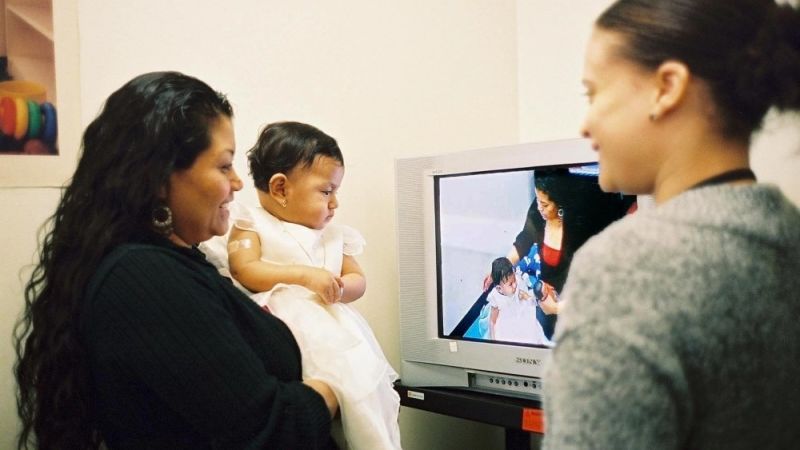
"caption": "A mother watches a video taken of herself playing with her daughter while at Bellevue Hospital in New York for a checkup. Brenda Woodford provides coaching on parenting skills.",
"description": null,
"title": "parenting",
"credit": "Courtesy of Children of Bellevue Archives",
"status": "inherit",
"isLoading": false,
"fetchFailed": false
},
"mindshift_43360": {
"type": "attachments",
"id": "mindshift_43360",
"meta": {
"index": "attachments_1716263798",
"site": "mindshift",
"id": "43360",
"found": true
},
"parent": 43326,
"imgSizes": {
"twentyfourteen-full-width": {
"file": "https://ww2.kqed.org/app/uploads/sites/23/2016/01/self-control-1038x576.jpg",
"width": 1038,
"mimeType": "image/jpeg",
"height": 576
},
"thumbnail": {
"file": "https://ww2.kqed.org/app/uploads/sites/23/2016/01/self-control-400x225.jpg",
"width": 400,
"mimeType": "image/jpeg",
"height": 225
},
"fd-sm": {
"file": "https://ww2.kqed.org/app/uploads/sites/23/2016/01/self-control-960x540.jpg",
"width": 960,
"mimeType": "image/jpeg",
"height": 540
},
"post-thumbnail": {
"file": "https://ww2.kqed.org/app/uploads/sites/23/2016/01/self-control-672x372.jpg",
"width": 672,
"mimeType": "image/jpeg",
"height": 372
},
"kqedFullSize": {
"file": "https://ww2.kqed.org/app/uploads/sites/23/2016/01/self-control.jpg",
"width": 1920,
"height": 1080
},
"large": {
"file": "https://ww2.kqed.org/app/uploads/sites/23/2016/01/self-control-1440x810.jpg",
"width": 1440,
"mimeType": "image/jpeg",
"height": 810
},
"guest-author-96": {
"file": "https://ww2.kqed.org/app/uploads/sites/23/2016/01/self-control-96x96.jpg",
"width": 96,
"mimeType": "image/jpeg",
"height": 96
},
"medium": {
"file": "https://ww2.kqed.org/app/uploads/sites/23/2016/01/self-control-800x450.jpg",
"width": 800,
"mimeType": "image/jpeg",
"height": 450
},
"guest-author-64": {
"file": "https://ww2.kqed.org/app/uploads/sites/23/2016/01/self-control-64x64.jpg",
"width": 64,
"mimeType": "image/jpeg",
"height": 64
},
"guest-author-32": {
"file": "https://ww2.kqed.org/app/uploads/sites/23/2016/01/self-control-32x32.jpg",
"width": 32,
"mimeType": "image/jpeg",
"height": 32
},
"cat_post_thumb_sizecategory-posts-2": {
"file": "https://ww2.kqed.org/app/uploads/sites/23/2016/01/self-control-50x50.jpg",
"width": 50,
"mimeType": "image/jpeg",
"height": 50
},
"fd-lrg": {
"file": "https://ww2.kqed.org/app/uploads/sites/23/2016/01/self-control-1920x1080.jpg",
"width": 1920,
"mimeType": "image/jpeg",
"height": 1080
},
"fd-med": {
"file": "https://ww2.kqed.org/app/uploads/sites/23/2016/01/self-control-1180x664.jpg",
"width": 1180,
"mimeType": "image/jpeg",
"height": 664
},
"detail": {
"file": "https://ww2.kqed.org/app/uploads/sites/23/2016/01/self-control-75x75.jpg",
"width": 75,
"mimeType": "image/jpeg",
"height": 75
},
"medium_large": {
"file": "https://ww2.kqed.org/app/uploads/sites/23/2016/01/self-control-768x432.jpg",
"width": 768,
"mimeType": "image/jpeg",
"height": 432
},
"guest-author-128": {
"file": "https://ww2.kqed.org/app/uploads/sites/23/2016/01/self-control-128x128.jpg",
"width": 128,
"mimeType": "image/jpeg",
"height": 128
}
},
"publishDate": 1452504586,
"modified": 1452504592,
"caption": null,
"description": null,
"title": "self-control",
"credit": "iStock",
"status": "inherit",
"isLoading": false,
"fetchFailed": false
}
},
"audioPlayerReducer": {
"postId": "stream_live",
"isPaused": true,
"isPlaying": false,
"pfsActive": false,
"pledgeModalIsOpen": true,
"playerDrawerIsOpen": false,
"liveAudioPlayStartedAt": 0,
"liveAudioPlayContext": ""
},
"authorsReducer": {
"byline_mindshift_48315": {
"type": "authors",
"id": "byline_mindshift_48315",
"meta": {
"override": true
},
"slug": "byline_mindshift_48315",
"name": "Jon Hamilton",
"isLoading": false
},
"byline_mindshift_47054": {
"type": "authors",
"id": "byline_mindshift_47054",
"meta": {
"override": true
},
"slug": "byline_mindshift_47054",
"name": "Anya Kamenetz",
"isLoading": false
},
"byline_mindshift_43563": {
"type": "authors",
"id": "byline_mindshift_43563",
"meta": {
"override": true
},
"slug": "byline_mindshift_43563",
"name": "Vanessa Rancaño",
"isLoading": false
},
"katrinaschwartz": {
"type": "authors",
"id": "234",
"meta": {
"index": "authors_1716337520",
"id": "234",
"found": true
},
"name": "Katrina Schwartz",
"firstName": "Katrina",
"lastName": "Schwartz",
"slug": "katrinaschwartz",
"email": "kschwartz@kqed.org",
"display_author_email": false,
"staff_mastheads": [
"news"
],
"title": "Producer",
"bio": "Katrina Schwartz is a journalist based in San Francisco. She's worked at KPCC public radio in LA and has reported on air and online for KQED since 2010. She covered how teaching and learning is changing for MindShift between 2012 and 2020. She is the co-host of the MindShift podcast and now produces KQED's Bay Curious podcast.",
"avatar": "https://secure.gravatar.com/avatar/edb4ee79070447a018538c9aae6eeecf28786515b8a0c30e43b6b7dce5aa44c8?s=600&d=blank&r=g",
"twitter": "kschwart",
"bluesky": null,
"facebook": null,
"instagram": null,
"linkedin": null,
"sites": [
{
"site": "",
"roles": [
"editor"
]
},
{
"site": "news",
"roles": [
"editor"
]
},
{
"site": "mindshift",
"roles": [
"administrator"
]
},
{
"site": "stateofhealth",
"roles": [
"author"
]
},
{
"site": "science",
"roles": [
"editor"
]
}
],
"headData": {
"title": "Katrina Schwartz | KQED",
"description": "Producer",
"ogImgSrc": "https://secure.gravatar.com/avatar/edb4ee79070447a018538c9aae6eeecf28786515b8a0c30e43b6b7dce5aa44c8?s=600&d=blank&r=g",
"twImgSrc": "https://secure.gravatar.com/avatar/edb4ee79070447a018538c9aae6eeecf28786515b8a0c30e43b6b7dce5aa44c8?s=600&d=blank&r=g"
},
"isLoading": false,
"link": "/author/katrinaschwartz"
},
"lindaflan": {
"type": "authors",
"id": "4613",
"meta": {
"index": "authors_1716337520",
"id": "4613",
"found": true
},
"name": "Linda Flanagan",
"firstName": "Linda",
"lastName": "Flanagan",
"slug": "lindaflan",
"email": "lindaflan@comcast.net",
"display_author_email": false,
"staff_mastheads": [],
"title": null,
"bio": "Linda Flanagan is a freelance writer, researcher, and editor. Her work has appeared in The Atlantic, The Wall St. Journal, Newsweek, Running Times, and Mind/Shift, and she blogs regularly for the Huffington Post. Linda writes about education, culture, athletics, youth sports, mental health, politics, college admissions, and other curiosities. She also reviews books and conducts interviews.",
"avatar": "https://secure.gravatar.com/avatar/6bca04c0736bf5eaea80654019de688f?s=600&d=blank&r=g",
"twitter": "LindaFlanagan2",
"facebook": null,
"instagram": null,
"linkedin": null,
"sites": [
{
"site": "mindshift",
"roles": [
"contributor"
]
}
],
"headData": {
"title": "Linda Flanagan | KQED",
"description": null,
"ogImgSrc": "https://secure.gravatar.com/avatar/6bca04c0736bf5eaea80654019de688f?s=600&d=blank&r=g",
"twImgSrc": "https://secure.gravatar.com/avatar/6bca04c0736bf5eaea80654019de688f?s=600&d=blank&r=g"
},
"isLoading": false,
"link": "/author/lindaflan"
},
"dfkris": {
"type": "authors",
"id": "11087",
"meta": {
"index": "authors_1716337520",
"id": "11087",
"found": true
},
"name": "Deborah Farmer Kris",
"firstName": "Deborah Farmer",
"lastName": "Kris",
"slug": "dfkris",
"email": "dfkris@gmail.com",
"display_author_email": false,
"staff_mastheads": [],
"title": null,
"bio": "\u003cem>\u003ca href=\"https://twitter.com/@dfkris\">Deborah Farmer Kris\u003c/a> has taught elementary, middle and high school and served as a charter school administrator. She spent a decade as an associate at Boston University’s \u003c/em>\u003cem>\u003ca href=\"http://www.bu.edu/ccsr/about-us/\">Center for Character and Social Responsibility\u003c/a>, \u003c/em>\u003cem>researching, writing, and consulting with schools. She is the mother of two young children. You can follower her on Twitter \u003ca href=\"https://twitter.com/@dfkris\">@dfkris\u003c/a>.\u003c/em>",
"avatar": "https://secure.gravatar.com/avatar/48efe6f17031ed31222b74af9605fe5a?s=600&d=blank&r=g",
"twitter": "dfkris",
"facebook": null,
"instagram": null,
"linkedin": null,
"sites": [
{
"site": "mindshift",
"roles": [
"author"
]
}
],
"headData": {
"title": "Deborah Farmer Kris | KQED",
"description": null,
"ogImgSrc": "https://secure.gravatar.com/avatar/48efe6f17031ed31222b74af9605fe5a?s=600&d=blank&r=g",
"twImgSrc": "https://secure.gravatar.com/avatar/48efe6f17031ed31222b74af9605fe5a?s=600&d=blank&r=g"
},
"isLoading": false,
"link": "/author/dfkris"
}
},
"pagesReducer": {
"mindshift_tag_executive-function": {
"type": "terms",
"id": "mindshift_20955",
"meta": {
"index": "terms_1716263798",
"site": "mindshift",
"id": "20955",
"score": 10.404039
},
"featImg": null,
"name": "executive function",
"description": null,
"taxonomy": "tag",
"headData": {
"twImgId": null,
"twTitle": null,
"ogTitle": null,
"ogImgId": null,
"twDescription": null,
"description": null,
"title": "executive function Archives | KQED Mindshift",
"ogDescription": null
},
"ttid": 20227,
"slug": "executive-function",
"isLoading": false,
"title": "executive function",
"pageMeta": {
"site": "mindshift",
"WpPageTemplate": "page-topic-editorial",
"currentPage": 2
},
"blocks": [
{
"blockName": "kqed/post-list",
"attrs": {
"layout": "cardArticle2",
"query": "posts/mindshift?tag=executive-function",
"seeMore": false,
"paginated": true,
"page": 2
}
},
{
"blockName": "kqed/ad"
}
]
}
},
"pfsSessionReducer": {},
"postsReducer": {
"stream_live": {
"type": "live",
"id": "stream_live",
"audioUrl": "https://streams.kqed.org/kqedradio",
"title": "Live Stream",
"excerpt": "Live Stream information currently unavailable.",
"link": "/radio",
"featImg": "",
"label": {
"name": "KQED Live",
"link": "/"
}
},
"stream_kqedNewscast": {
"type": "posts",
"id": "stream_kqedNewscast",
"audioUrl": "https://www.kqed.org/.stream/anon/radio/RDnews/newscast.mp3?_=1",
"title": "KQED Newscast",
"featImg": "",
"label": {
"name": "88.5 FM",
"link": "/"
}
},
"mindshift_50947": {
"type": "posts",
"id": "mindshift_50947",
"meta": {
"index": "posts_1716263798",
"site": "mindshift",
"id": "50947",
"score": null,
"sort": [
1525845636000
]
},
"parent": 0,
"labelTerm": {
"site": "mindshift"
},
"blocks": [],
"publishDate": 1525845636,
"format": "standard",
"disqusTitle": "How Reverse Planning for Goals Can Help Students Succeed in School",
"title": "How Reverse Planning for Goals Can Help Students Succeed in School",
"headTitle": "MindShift | KQED News",
"content": "\u003cp>When Mamie, a 12\u003csup>th\u003c/sup> grader, has a long-term project ahead of her, she starts by making a list of everything she needs to do to finish the assignment. At some point in the day, she takes out her calendar and writes out—by hand—what she needs to complete. “Every day I work on a different task or topic,” she said, crossing off the work when she’s through so she can see what’s remaining. She builds in extra time in case she’s underestimated how time-consuming a particular task might be and sets reminders to keep herself on schedule.\u003c/p>\n\u003cp>Like most successful students, she understands that she can’t float along and simply assume that she’ll get to the necessary work by accident. She recognizes that being purposeful about her assignments, by structuring her time and planning her schedule, is essential to tackling all her work—and allowing time for what she loves outside school. Decades of studies on planning support her instinctive approach: under the right circumstances, planning can \u003ca href=\"https://www.researchgate.net/publication/232516645_Effects_of_temptation-inhibiting_and_task-facilitating_plans_on_self-control\">enhance\u003c/a> self-control, \u003ca href=\"http://www.psych.nyu.edu/gollwitzer/97GollBrand_ImpIntGoalPurs.pdf\">contribute\u003c/a> to better school performance and help people \u003ca href=\"https://www.sciencedirect.com/science/article/pii/S0065260106380021\">achieve\u003c/a> goals.\u003c/p>\n\u003cp>But according to a team of scholars at the University of Iowa who analyzed these studies, little research has been done to evaluate the effect of \u003cem>how\u003c/em> people construct plans on the plan’s outcome—that is, how well the plan worked. The trio of investigators—Jooyoung Park, Fang-Chi Lu and William Hedgcock—conducted five separate studies with about 300 university students to find out.\u003c/p>\n\u003cp>They identified two principal methods of planning: the forward variety, where the planner pinpoints tasks closest chronologically to the present and moves forward toward the goal; and reverse planning, where the planner starts with the end goal and works backward from there. A reverse plan for a research paper, for example, would start with the due date, then determine when a first draft would have to be done, and before that when research would need to be completed, and so on, going backward to the present.\u003c/p>\n\u003cp>The researchers \u003ca href=\"https://www.ncbi.nlm.nih.gov/pubmed/28910234\">devised\u003c/a> various studies with students who had real-life goals to grapple with. As a way to find out if planning order affected motivation, one study involving 44 undergraduates enrolled in a university course were divided into two groups and instructed to plan for an upcoming exam. Half planned forward, and the other backward, but all had to incorporate 15 identical activities related to exam preparation into their plan. The kinds of activities that might be included in exam preparation were “read chapter 7,” “read chapter 8,” “review articles,” “make a summary of notes,” and “review key concepts.”\u003c/p>\n\u003cp>[ad fullwidth]\u003c/p>\n\u003cp>Forward planners typically began the process by identifying what they needed to do before they could achieve their goals, and then slotted in those prep activities that were closest to the present—i.e., “read chapter 7”—and moving forward. Reverse planners typically began their plan with the activity that was furthest from the present and closest to the exam—i.e., “review key concepts”—and moved chronologically backwards from there. In the end, both forward and backward planners came up with very similar looking plans, Hedgcock said.\u003c/p>\n\u003cp>Other studies included students in different settings to assess how planning order affects motivation and actual academic performance, and to evaluate the role of goal complexity in planning. In all the studies, students were responsible for coming up with their own plans.\u003c/p>\n\u003cp>To their surprise, researchers discovered a marked difference in success between forward and backward planning. “Backward planning could change the actual outcome, student’s grades on an exam, in addition to motivation and perceptions,” Park said about their findings. This held true only when the goal was complex, Park added—say, a comprehensive final exam that required reviewing and integrating a lot of information, or a long-term research project that involved a sequence of related steps.\u003c/p>\n\u003cp>Even among the collection of students whose 15 exam-prep activities were identical, and whose plans looked alike, the results were striking. “The effects don’t seem to be driven by the plan itself,” Hedgcock said. “They seem to be driven by how the plan was \u003cem>constructed\u003c/em>,” he added.\u003c/p>\n\u003cp>Reverse planning for challenging assignments is more effective than forward planning for a few reasons, the researchers noted. For one, it helps the planner consider critical steps and then identify likely obstacles—all from the point of view of having completed the goal, which sharpens clarity. “When visualizing the endpoint, things seem clearer and more positive,” said William Hedgcock. “If you start at the present, you could go this way or that way—it can be more negative,” he added, because of the multiple possible steps to be taken. Backward planning also kickstarts motivation at the time when inspiration lags most, during the middle of a goal pursuit. Finally, backward planning from an imaginary finished goal lessened the perception of time pressure.\u003c/p>\n\u003cp>These findings could have broad applications. Though the studies involved college kids, high school students would likely experience similar results, Hedgcock said. Also, while “complexity is in the eye of the beholder,” he said, a student who \u003cem>perceives\u003c/em> an assignment to be complex might be more successful if she constructs a plan that starts with the end goal. “I have a four-and seven-year old, and figuring out what to wear to school every day is complex for them,” he said. Reverse planning might also help kids whose motivation often wilts, or who have lost track of what they’re trying to achieve, or who frequently feel strapped for time while working on tough projects. Though the studies did not look at different cohorts of kids, the finding suggests that children who struggle with executive function might benefit from this type of preparation.\u003c/p>\n\u003cp>The researchers were quick to point out the limits to their work. They hadn’t accounted for individual differences among the college students, which could play a role in outcomes. Their work consisted of just five studies, and included only university students. For simple goals, backward planning has no effect. “It’s something that should be examined further,” Hedgcock said.\u003c/p>\n\u003cp>[ad floatright]\u003c/p>\n\u003cp>Nevertheless, the results suggest that students (and adults) could improve their ability to achieve certain goals by adjusting how they plan for them. “It’s a powerful finding,” he said.\u003c/p>\n\n",
"disqusIdentifier": "50947 https://ww2.kqed.org/mindshift/?p=50947",
"disqusUrl": "https://ww2.kqed.org/mindshift/2018/05/08/how-reverse-planning-for-goals-can-help-students-succeed-in-school/",
"stats": {
"hasVideo": false,
"hasChartOrMap": false,
"hasAudio": false,
"hasPolis": false,
"wordCount": 1116,
"hasGoogleForm": false,
"hasGallery": false,
"hasHearkenModule": false,
"iframeSrcs": [],
"paragraphCount": 15
},
"modified": 1525845636,
"excerpt": "Planning a project or creating a study schedule for an exam with the end goal in sight can help give students greater clarity and kickstart motivation when it might seem to lag the most. ",
"headData": {
"twImgId": "",
"twTitle": "",
"ogTitle": "",
"ogImgId": "",
"twDescription": "",
"description": "Planning a project or creating a study schedule for an exam with the end goal in sight can help give students greater clarity and kickstart motivation when it might seem to lag the most. ",
"title": "How Reverse Planning for Goals Can Help Students Succeed in School | KQED",
"ogDescription": "",
"schema": {
"@context": "https://schema.org",
"@type": "Article",
"headline": "How Reverse Planning for Goals Can Help Students Succeed in School",
"datePublished": "2018-05-08T23:00:36-07:00",
"dateModified": "2018-05-08T23:00:36-07:00",
"image": "https://cdn.kqed.org/wp-content/uploads/2020/02/KQED-OG-Image@1x.png"
}
},
"guestAuthors": [],
"slug": "how-reverse-planning-for-goals-can-help-students-succeed-in-school",
"status": "publish",
"path": "/mindshift/50947/how-reverse-planning-for-goals-can-help-students-succeed-in-school",
"audioTrackLength": null,
"parsedContent": [
{
"type": "contentString",
"content": "\u003cdiv class=\"post-body\">\u003cp>\u003cp>When Mamie, a 12\u003csup>th\u003c/sup> grader, has a long-term project ahead of her, she starts by making a list of everything she needs to do to finish the assignment. At some point in the day, she takes out her calendar and writes out—by hand—what she needs to complete. “Every day I work on a different task or topic,” she said, crossing off the work when she’s through so she can see what’s remaining. She builds in extra time in case she’s underestimated how time-consuming a particular task might be and sets reminders to keep herself on schedule.\u003c/p>\n\u003cp>Like most successful students, she understands that she can’t float along and simply assume that she’ll get to the necessary work by accident. She recognizes that being purposeful about her assignments, by structuring her time and planning her schedule, is essential to tackling all her work—and allowing time for what she loves outside school. Decades of studies on planning support her instinctive approach: under the right circumstances, planning can \u003ca href=\"https://www.researchgate.net/publication/232516645_Effects_of_temptation-inhibiting_and_task-facilitating_plans_on_self-control\">enhance\u003c/a> self-control, \u003ca href=\"http://www.psych.nyu.edu/gollwitzer/97GollBrand_ImpIntGoalPurs.pdf\">contribute\u003c/a> to better school performance and help people \u003ca href=\"https://www.sciencedirect.com/science/article/pii/S0065260106380021\">achieve\u003c/a> goals.\u003c/p>\n\u003cp>But according to a team of scholars at the University of Iowa who analyzed these studies, little research has been done to evaluate the effect of \u003cem>how\u003c/em> people construct plans on the plan’s outcome—that is, how well the plan worked. The trio of investigators—Jooyoung Park, Fang-Chi Lu and William Hedgcock—conducted five separate studies with about 300 university students to find out.\u003c/p>\n\u003cp>They identified two principal methods of planning: the forward variety, where the planner pinpoints tasks closest chronologically to the present and moves forward toward the goal; and reverse planning, where the planner starts with the end goal and works backward from there. A reverse plan for a research paper, for example, would start with the due date, then determine when a first draft would have to be done, and before that when research would need to be completed, and so on, going backward to the present.\u003c/p>\n\u003cp>The researchers \u003ca href=\"https://www.ncbi.nlm.nih.gov/pubmed/28910234\">devised\u003c/a> various studies with students who had real-life goals to grapple with. As a way to find out if planning order affected motivation, one study involving 44 undergraduates enrolled in a university course were divided into two groups and instructed to plan for an upcoming exam. Half planned forward, and the other backward, but all had to incorporate 15 identical activities related to exam preparation into their plan. The kinds of activities that might be included in exam preparation were “read chapter 7,” “read chapter 8,” “review articles,” “make a summary of notes,” and “review key concepts.”\u003c/p>\n\u003cp>\u003c/p>\u003c/div>",
"attributes": {
"named": {},
"numeric": []
}
},
{
"type": "component",
"content": "",
"name": "ad",
"attributes": {
"named": {
"label": "fullwidth"
},
"numeric": [
"fullwidth"
]
}
},
{
"type": "contentString",
"content": "\u003cdiv class=\"post-body\">\u003cp>\u003c/p>\n\u003cp>Forward planners typically began the process by identifying what they needed to do before they could achieve their goals, and then slotted in those prep activities that were closest to the present—i.e., “read chapter 7”—and moving forward. Reverse planners typically began their plan with the activity that was furthest from the present and closest to the exam—i.e., “review key concepts”—and moved chronologically backwards from there. In the end, both forward and backward planners came up with very similar looking plans, Hedgcock said.\u003c/p>\n\u003cp>Other studies included students in different settings to assess how planning order affects motivation and actual academic performance, and to evaluate the role of goal complexity in planning. In all the studies, students were responsible for coming up with their own plans.\u003c/p>\n\u003cp>To their surprise, researchers discovered a marked difference in success between forward and backward planning. “Backward planning could change the actual outcome, student’s grades on an exam, in addition to motivation and perceptions,” Park said about their findings. This held true only when the goal was complex, Park added—say, a comprehensive final exam that required reviewing and integrating a lot of information, or a long-term research project that involved a sequence of related steps.\u003c/p>\n\u003cp>Even among the collection of students whose 15 exam-prep activities were identical, and whose plans looked alike, the results were striking. “The effects don’t seem to be driven by the plan itself,” Hedgcock said. “They seem to be driven by how the plan was \u003cem>constructed\u003c/em>,” he added.\u003c/p>\n\u003cp>Reverse planning for challenging assignments is more effective than forward planning for a few reasons, the researchers noted. For one, it helps the planner consider critical steps and then identify likely obstacles—all from the point of view of having completed the goal, which sharpens clarity. “When visualizing the endpoint, things seem clearer and more positive,” said William Hedgcock. “If you start at the present, you could go this way or that way—it can be more negative,” he added, because of the multiple possible steps to be taken. Backward planning also kickstarts motivation at the time when inspiration lags most, during the middle of a goal pursuit. Finally, backward planning from an imaginary finished goal lessened the perception of time pressure.\u003c/p>\n\u003cp>These findings could have broad applications. Though the studies involved college kids, high school students would likely experience similar results, Hedgcock said. Also, while “complexity is in the eye of the beholder,” he said, a student who \u003cem>perceives\u003c/em> an assignment to be complex might be more successful if she constructs a plan that starts with the end goal. “I have a four-and seven-year old, and figuring out what to wear to school every day is complex for them,” he said. Reverse planning might also help kids whose motivation often wilts, or who have lost track of what they’re trying to achieve, or who frequently feel strapped for time while working on tough projects. Though the studies did not look at different cohorts of kids, the finding suggests that children who struggle with executive function might benefit from this type of preparation.\u003c/p>\n\u003cp>The researchers were quick to point out the limits to their work. They hadn’t accounted for individual differences among the college students, which could play a role in outcomes. Their work consisted of just five studies, and included only university students. For simple goals, backward planning has no effect. “It’s something that should be examined further,” Hedgcock said.\u003c/p>\n\u003cp>\u003c/p>\u003c/div>",
"attributes": {
"named": {},
"numeric": []
}
},
{
"type": "component",
"content": "",
"name": "ad",
"attributes": {
"named": {
"label": "floatright"
},
"numeric": [
"floatright"
]
}
},
{
"type": "contentString",
"content": "\u003cdiv class=\"post-body\">\u003cp>\u003c/p>\n\u003cp>Nevertheless, the results suggest that students (and adults) could improve their ability to achieve certain goals by adjusting how they plan for them. “It’s a powerful finding,” he said.\u003c/p>\n\n\u003c/div>\u003c/p>",
"attributes": {
"named": {},
"numeric": []
}
}
],
"link": "/mindshift/50947/how-reverse-planning-for-goals-can-help-students-succeed-in-school",
"authors": [
"4613"
],
"categories": [
"mindshift_192"
],
"tags": [
"mindshift_20955",
"mindshift_20784",
"mindshift_1040",
"mindshift_20867",
"mindshift_20557",
"mindshift_20823",
"mindshift_21190"
],
"featImg": "mindshift_51174",
"label": "mindshift"
},
"mindshift_48315": {
"type": "posts",
"id": "mindshift_48315",
"meta": {
"index": "posts_1716263798",
"site": "mindshift",
"id": "48315",
"score": null,
"sort": [
1495782640000
]
},
"parent": 0,
"labelTerm": {
"site": "mindshift"
},
"blocks": [],
"publishDate": 1495782640,
"format": "standard",
"disqusTitle": "Why Executive Function Skills Take So Long To Fully Develop",
"title": "Why Executive Function Skills Take So Long To Fully Develop",
"headTitle": "MindShift | KQED News",
"content": "\u003cp>Impulsive children become thoughtful adults only after years of improvements to the brain's information highways, a team \u003ca href=\"http://www.cell.com/current-biology/fulltext/S0960-9822(17)30496-7\">reports\u003c/a> in \u003cem>Current Biology.\u003c/em>\u003c/p>\n\u003cp>A study of nearly 900 young people ages 8 to 22 found that the ability to control impulses, stay on task and make good decisions increased steadily over that span as the brain remodeled its information pathways to become more efficient.\u003c/p>\n\u003cp>The finding helps explain why these abilities, known collectively as executive function, take so long to develop fully, says \u003ca href=\"https://www.seas.upenn.edu/directory/profile.php?ID=193\">Danielle Bassett\u003c/a>, an author of the study and an associate professor of bioengineering at the University of Pennsylvania.\u003c/p>\n\u003cp>\"A child's ability to run or to see is very well developed by the time they're 8,\" she says. \"However, their ability to inhibit inappropriate responses is not something that's well developed until well into the 20s.\"\u003c/p>\n\u003cp>The results also suggest it may be possible to identify adolescents at risk of problems related to poor executive function, says \u003ca href=\"https://www.nimh.nih.gov/about/director/index.shtml\">Joshua Gordon\u003c/a>, director of the National Institute of Mental Health, which helped fund the study. These include \"all kinds of disorders such as substance abuse, depression and schizophrenia,\" he says.\u003c/p>\n\u003cp>[ad fullwidth]\u003c/p>\n\u003cp>The study is part of an effort to understand the brain changes underlying the development of executive function. It used a technology called \u003ca href=\"http://www.diffusion-imaging.com/\">diffusion imaging\u003c/a> that reveals the fibers that make up the brain's information highways.\u003c/p>\n\u003cp>\"What we were interested in asking is whether that pattern of highway structure changes as children grow, and whether those changes are related to the emergence of executive function,\" Bassett says.\u003c/p>\n\u003cp>The team found two important changes. One was that the highways tend to cluster in \"modules\" of the brain that perform specialized functions, like impulse control. The effect is like building more roads to move traffic inside a city.\u003c/p>\n\u003cp>At the same time, though, the connections between these specialized modules get stronger, which is a bit like adding lanes to the interstates that let people get from one city to another.\u003c/p>\n\u003cp>The result of these changes is a brain network in which information flows more efficiently, both within specialized areas and also between areas. And this speedy network is really important when it comes to executive functions like impulse control, Bassett says.\u003c/p>\n\u003cp>\"Being able to inhibit inappropriate behavior requires you to quickly stop yourself from doing something that you might naturally do,\" she says.\u003c/p>\n\u003cp>The study had limitations, though, because it did not track the changes in each participant's brain over time. Other studies are underway that will allow scientists to study brain changes in individuals over many years.\u003c/p>\n\u003cp>Researchers suspect that they will see abnormal changes in the brain pathways involved in executive function in people who go on to develop psychiatric or substance abuse disorders. If so, \"this could help in terms of identifying individuals who are at high risk,\" Gordon says.\u003c/p>\n\u003cp>\u003c/p>\n\u003cp>Eventually, Gordon says, brain scans might be used to show whether a particular treatment for a psychiatric disorder is working.\u003c/p>\n\u003cdiv class=\"fullattribution\">Copyright 2017 NPR. To see more, visit http://www.npr.org/.\u003cimg src=\"https://www.google-analytics.com/__utm.gif?utmac=UA-5828686-4&utmdt=As+Brains+Mature%2C+More+Robust+Information+Networks+Boost+Self-Control&utme=8(APIKey)9(MDAxOTAwOTE4MDEyMTkxMDAzNjczZDljZA004)\">\u003c/div>\n\n",
"disqusIdentifier": "48315 https://ww2.kqed.org/mindshift/?p=48315",
"disqusUrl": "https://ww2.kqed.org/mindshift/2017/05/26/why-executive-function-skills-take-so-long-to-fully-develop/",
"stats": {
"hasVideo": false,
"hasChartOrMap": false,
"hasAudio": false,
"hasPolis": false,
"wordCount": 507,
"hasGoogleForm": false,
"hasGallery": false,
"hasHearkenModule": false,
"iframeSrcs": [],
"paragraphCount": 16
},
"modified": 1496128448,
"excerpt": "Sometime between grade school and grad school, the brain's information highways get remapped in a way that dramatically reins in impulsive behavior.",
"headData": {
"twImgId": "",
"twTitle": "",
"ogTitle": "",
"ogImgId": "",
"twDescription": "",
"description": "Sometime between grade school and grad school, the brain's information highways get remapped in a way that dramatically reins in impulsive behavior.",
"title": "Why Executive Function Skills Take So Long To Fully Develop | KQED",
"ogDescription": "",
"schema": {
"@context": "https://schema.org",
"@type": "Article",
"headline": "Why Executive Function Skills Take So Long To Fully Develop",
"datePublished": "2017-05-26T00:10:40-07:00",
"dateModified": "2017-05-30T00:14:08-07:00",
"image": "https://cdn.kqed.org/wp-content/uploads/2020/02/KQED-OG-Image@1x.png"
}
},
"guestAuthors": [],
"slug": "why-executive-function-skills-take-so-long-to-fully-develop",
"status": "publish",
"nprApiLink": "http://api.npr.org/query?id=529828305&apiKey=MDAxOTAwOTE4MDEyMTkxMDAzNjczZDljZA004",
"nprByline": "Jon Hamilton",
"nprStoryDate": "Fri, 26 May 2017 12:57:00 -0400",
"nprLastModifiedDate": "Fri, 26 May 2017 19:10:10 -0400",
"nprHtmlLink": "http://www.npr.org/sections/health-shots/2017/05/26/529828305/more-robust-information-networks-boost-self-control-as-brains-mature?ft=nprml&f=529828305",
"nprAudio": "https://ondemand.npr.org/anon.npr-mp3/npr/atc/2017/05/20170526_atc_as_brains_mature_more_robust_information_networks_boost_self-control.mp3?orgId=1&topicId=1128&d=176&p=2&story=529828305&t=progseg&e=530164049&seg=12&ft=nprml&f=529828305",
"nprImageAgency": "Photothek via Getty Images",
"nprImageCredit": "Thomas Trutschel",
"nprAudioM3u": "http://api.npr.org/m3u/1530257570-a499ab.m3u?orgId=1&topicId=1128&d=176&p=2&story=529828305&t=progseg&e=530164049&seg=12&ft=nprml&f=529828305",
"nprStoryId": "529828305",
"nprRetrievedStory": "1",
"nprPubDate": "Fri, 26 May 2017 21:31:00 -0400",
"path": "/mindshift/48315/why-executive-function-skills-take-so-long-to-fully-develop",
"audioUrl": "https://ondemand.npr.org/anon.npr-mp3/npr/atc/2017/05/20170526_atc_as_brains_mature_more_robust_information_networks_boost_self-control.mp3?orgId=1&topicId=1128&d=176&p=2&story=529828305&t=progseg&e=530164049&seg=12&ft=nprml&f=529828305",
"audioTrackLength": null,
"parsedContent": [
{
"type": "contentString",
"content": "\u003cdiv class=\"post-body\">\u003cp>\u003cp>Impulsive children become thoughtful adults only after years of improvements to the brain's information highways, a team \u003ca href=\"http://www.cell.com/current-biology/fulltext/S0960-9822(17)30496-7\">reports\u003c/a> in \u003cem>Current Biology.\u003c/em>\u003c/p>\n\u003cp>A study of nearly 900 young people ages 8 to 22 found that the ability to control impulses, stay on task and make good decisions increased steadily over that span as the brain remodeled its information pathways to become more efficient.\u003c/p>\n\u003cp>The finding helps explain why these abilities, known collectively as executive function, take so long to develop fully, says \u003ca href=\"https://www.seas.upenn.edu/directory/profile.php?ID=193\">Danielle Bassett\u003c/a>, an author of the study and an associate professor of bioengineering at the University of Pennsylvania.\u003c/p>\n\u003cp>\"A child's ability to run or to see is very well developed by the time they're 8,\" she says. \"However, their ability to inhibit inappropriate responses is not something that's well developed until well into the 20s.\"\u003c/p>\n\u003cp>The results also suggest it may be possible to identify adolescents at risk of problems related to poor executive function, says \u003ca href=\"https://www.nimh.nih.gov/about/director/index.shtml\">Joshua Gordon\u003c/a>, director of the National Institute of Mental Health, which helped fund the study. These include \"all kinds of disorders such as substance abuse, depression and schizophrenia,\" he says.\u003c/p>\n\u003cp>\u003c/p>\u003c/div>",
"attributes": {
"named": {},
"numeric": []
}
},
{
"type": "component",
"content": "",
"name": "ad",
"attributes": {
"named": {
"label": "fullwidth"
},
"numeric": [
"fullwidth"
]
}
},
{
"type": "contentString",
"content": "\u003cdiv class=\"post-body\">\u003cp>\u003c/p>\n\u003cp>The study is part of an effort to understand the brain changes underlying the development of executive function. It used a technology called \u003ca href=\"http://www.diffusion-imaging.com/\">diffusion imaging\u003c/a> that reveals the fibers that make up the brain's information highways.\u003c/p>\n\u003cp>\"What we were interested in asking is whether that pattern of highway structure changes as children grow, and whether those changes are related to the emergence of executive function,\" Bassett says.\u003c/p>\n\u003cp>The team found two important changes. One was that the highways tend to cluster in \"modules\" of the brain that perform specialized functions, like impulse control. The effect is like building more roads to move traffic inside a city.\u003c/p>\n\u003cp>At the same time, though, the connections between these specialized modules get stronger, which is a bit like adding lanes to the interstates that let people get from one city to another.\u003c/p>\n\u003cp>The result of these changes is a brain network in which information flows more efficiently, both within specialized areas and also between areas. And this speedy network is really important when it comes to executive functions like impulse control, Bassett says.\u003c/p>\n\u003cp>\"Being able to inhibit inappropriate behavior requires you to quickly stop yourself from doing something that you might naturally do,\" she says.\u003c/p>\n\u003cp>The study had limitations, though, because it did not track the changes in each participant's brain over time. Other studies are underway that will allow scientists to study brain changes in individuals over many years.\u003c/p>\n\u003cp>Researchers suspect that they will see abnormal changes in the brain pathways involved in executive function in people who go on to develop psychiatric or substance abuse disorders. If so, \"this could help in terms of identifying individuals who are at high risk,\" Gordon says.\u003c/p>\n\u003cp>\u003c/p>\n\u003cp>Eventually, Gordon says, brain scans might be used to show whether a particular treatment for a psychiatric disorder is working.\u003c/p>\n\u003cdiv class=\"fullattribution\">Copyright 2017 NPR. To see more, visit http://www.npr.org/.\u003cimg src=\"https://www.google-analytics.com/__utm.gif?utmac=UA-5828686-4&utmdt=As+Brains+Mature%2C+More+Robust+Information+Networks+Boost+Self-Control&utme=8(APIKey)9(MDAxOTAwOTE4MDEyMTkxMDAzNjczZDljZA004)\">\u003c/div>\n\n\u003c/div>\u003c/p>",
"attributes": {
"named": {},
"numeric": []
}
}
],
"link": "/mindshift/48315/why-executive-function-skills-take-so-long-to-fully-develop",
"authors": [
"byline_mindshift_48315"
],
"categories": [
"mindshift_192"
],
"tags": [
"mindshift_21093",
"mindshift_767",
"mindshift_20955",
"mindshift_20784",
"mindshift_1040"
],
"featImg": "mindshift_48316",
"label": "mindshift"
},
"mindshift_47744": {
"type": "posts",
"id": "mindshift_47744",
"meta": {
"index": "posts_1716263798",
"site": "mindshift",
"id": "47744",
"score": null,
"sort": [
1489597010000
]
},
"parent": 0,
"labelTerm": {
"site": "mindshift"
},
"blocks": [],
"publishDate": 1489597010,
"format": "standard",
"disqusTitle": "10 Ways To Help Kids With Learning Differences That Could Benefit All Students",
"title": "10 Ways To Help Kids With Learning Differences That Could Benefit All Students",
"headTitle": "MindShift | KQED News",
"content": "\u003cp class=\"p1\">Schools are typically designed to serve the average student, and those with learning differences -- such as dyslexia or trouble with executive functioning skills -- usually make up a smaller part of the population. Estimates find that \u003ca href=\"https://www.nichd.nih.gov/health/topics/learning/conditioninfo/pages/risk.aspx\">5 to 20 percent\u003c/a> of Americans have learning differences. If struggling students don't find the help they need in school, keeping up with the rest of the class can be an enormous challenge.\u003c/p>\n\u003cp class=\"p1\">\u003ca href=\"https://www.curreyingram.org/\">\u003cspan style=\"font-weight: 400\">Currey Ingram Academy\u003c/span>\u003c/a>\u003cspan style=\"font-weight: 400\"> is an independent school in Nashville developed specifically for kids with learning differences. As a way to spread the word about tactics that have worked at Currey Ingram Academy, head of school Jeffrey Mitchell shared 10 principles the school uses that are “realistic for every school in every context” as they seek to meet the needs of diverse learners. He presented his findings at the \u003ca href=\"http://schedule.sxswedu.com/events/event_PP60296\">SXSWedu\u003c/a> conference in Austin.\u003c/span>\u003c/p>\n\u003cp class=\"p1\">He said that educators might already be applying the following ideas, and some might not work at their school. \"But if you take home one or two or three of these things and tweak what you’re currently doing, I think that the outcome will be positive.”\u003c/p>\n\u003cp class=\"p1\">\u003cb>Be Intentional\u003c/b>\u003c/p>\n\u003cp>\u003cspan style=\"font-weight: 400\">Let the mission of the school -- and your own personal mission -- guide your work, said Mitchell. \u003c/span>\u003cspan style=\"font-weight: 400\">School mission statements should be “understandable, memorable, powerful and simple,” so that teachers and administrators can say with confidence, “I know that, I believe in that, I live that. That’s what we do as a school.” The \u003ca href=\"https://www.curreyingram.org/page/about/mission-history--milestones\">mission\u003c/a> at his school is to create an academy \"\u003c/span>that empowers students with learning differences to achieve their fullest potential.\"\u003c/p>\n\u003cp>[ad fullwidth]\u003c/p>\n\u003cp>\u003cspan style=\"font-weight: 400\">Teachers can also adopt personal mission statements to help guide their planning. For example, when Mitchell was a seventh-grade science teacher, he wanted his students to be able to “ask questions like scientists,” and he infused that idea into each of his units.\u003c/span>\u003c/p>\n\u003cp>\u003cb>Rely on Evidence\u003c/b>\u003c/p>\n\u003cp>\u003cspan style=\"font-weight: 400\">Whether the topic is reading instruction or classroom management, there is rich research available if you take the time to look for it. For example, recent advances in neuroimaging are changing intervention methods for students with dyslexia. Mitchell also pointed to \u003c/span>\u003ca href=\"https://visible-learning.org/2016/04/hattie-ranking-backup-of-138-effects/\">\u003cspan style=\"font-weight: 400\">John Hattie’s\u003c/span>\u003c/a>\u003cspan style=\"font-weight: 400\"> research on 1,200 meta-analyses in an effort to determine the variables that truly impact students' achievement.*\u003c/span>\u003c/p>\n\u003cp>“If something is not working, consult the evidence,” said Mitchell. “Because chances are somebody out there is doing research on it and there’s good evidence to support a practice that you might not know about.”\u003c/p>\n\u003cp>\u003cb>Break Down the Traditional Structure of School\u003c/b>\u003c/p>\n\u003cp>\u003cspan style=\"font-weight: 400\">“I love being an educator,” said Mitchell. “But most everything about the industrial-factory model of school is not ideal for learners.” However, there are ways teachers can work around this structure, such as focusing on the word “variety.”\u003c/span>\u003c/p>\n\u003cp>“When you, as an administrator or teacher, are constructing curriculum, think about variety,\" said Mitchell. He reminds educators that classes will have a variety of learners so it's important to have several offerings. \"Think about multiple-sensory inputs -- let them hear it, let them see it, let them feel it -- and think about multiple instructional forms.” He also said variety is important when assessing student understanding; one form of test or assessment will not adequately reveal every student’s knowledge and skills.\u003c/p>\n\u003cp>\u003cb>Provide Clear Instruction on How to Think \u003c/b>\u003c/p>\n\u003cp>\u003cspan style=\"font-weight: 400\">At Currey Ingram Academy, teachers explicitly teach executive functioning skills to their students. Executive function and self-regulation skills are, according to \u003c/span>\u003ca href=\"http://developingchild.harvard.edu/science/key-concepts/executive-function/\">\u003cspan style=\"font-weight: 400\">Harvard’s Center on the Developing Child\u003c/span>\u003c/a>\u003cspan style=\"font-weight: 400\">, “the mental processes that enable us to plan, focus attention, remember instructions, and juggle multiple tasks successfully.”\u003c/span>\u003c/p>\n\u003cp>\u003cspan style=\"font-weight: 400\">Mitchell shared a strategy used by a third-grade teacher who was giving a short unit test. Immediately prior to the test, she spent 10 minutes reviewing test-taking strategies with her students -- with the test right in front of them. “She reminded them of seemingly simple things like, ‘There are four blanks for question two, and that means four responses are needed.'” After students were done with the test, they engaged in one more learning exercise. “They went over the test again. Not the answers, but the test itself. Did you answer all the questions? Instead of a typically summative learning experience, she made it a formative learning experience.”\u003c/span>\u003c/p>\n\u003cp>\u003cb>Be Mindful of Working Memory Limitations \u003c/b>\u003c/p>\n\u003cp>\u003cspan style=\"font-weight: 400\">Working memory is a brain system that temporarily holds information while you process it. It’s where humans store data, step-by-step instructions, or a list until they don’t need it anymore.\u003c/span>\u003c/p>\n\u003cp>\u003cspan style=\"font-weight: 400\">“The fundamental friction between the human brain and the traditional learning structure of school resides with our relatively poor working memory,” said Mitchell. He believes that sometimes teachers misinterpret a working memory issue as “willful misbehavior.” For example, what an adult might call “difficulty paying attention” may simply be that “there might be too many things for that child [to hold in working memory], especially children with learning differences.” \u003c/span>\u003c/p>\n\u003cp>\u003cspan style=\"font-weight: 400\">Working memory also affects students’ ability to access information, remember instructions, get started on a task and copy information from the board. For some students, “three instructions may be too many. You may need to break it down to one or two.” \u003c/span>\u003c/p>\n\u003cp>\u003cb>Teach Reading Explicitly\u003c/b>\u003c/p>\n\u003cp>Evidence reveals that “explicit, direct instruction works,” said Mitchell, “especially for younger and struggling readers.” There are many evidence-based programs available, but they all contain five strains: phonemic awareness, phonics, fluency, vocabulary and comprehension. But even with a great program, a school must still schedule enough time for students to master these skills, said Mitchell. “You need an hour to an hour and a half every day to make the difference.”\u003c/p>\n\u003cp>\u003cb>Manage Behavior Through Prevention\u003c/b>\u003c/p>\n\u003cp>Mitchell believes that 90 percent of classroom management is prevention: rules, routines, engaging instruction and structure. Rules should be simple, generated by consensus and reviewed regularly. Routines should include regular brain breaks (Mitchell’s teachers use egg timers and take a one-minute “learning break” when it dings), and instruction should use a variety of activities to engage learners. “For the other 10 percent,” said Mitchell, “you need formal, systematic behavior plans and support.”\u003c/p>\n\u003cp>\u003cb>Use Communication to Your Advantage\u003c/b>\u003c/p>\n\u003cp>\u003cspan style=\"font-weight: 400\">Schools “teach families, not just students,” said Mitchell. “If you reach out to your students or parents before they reach out to you, you have built up immense capital.” He recommends that teachers and administrators conduct regular surveys to hear feedback about how things are going in the classroom and at the school. Mitchell has found that his constituents often respond to the surveys with “ ‘thanks for listening to me,’ and that’s probably the most important thing that happens.”\u003c/span>\u003c/p>\n\u003cp>\u003cb>Use Supporting Programs in a Targeted Way\u003c/b>\u003c/p>\n\u003cp>\u003cspan style=\"font-weight: 400\">Strong schools engage in “robust and targeted professional development,” said Mitchell. “By targeted I mean you’ve set a goal as a district, you’ve set a goal as a school, you’ve set a goal as an individual, and you target your professional development based on those goals.” Given the financial constraints every school faces, targeting professional development to goals is the \"most effective way to utilize your finite resources.” \u003c/span>\u003c/p>\n\u003cp>\u003cb>Celebrate and Empower Students \u003c/b>\u003c/p>\n\u003cp>“Systematically, identify and celebrate at least one strength in every student,” said Mitchell. Then, “give each student opportunities to showcase this strength.”\u003c/p>\n\u003cp>Students who enroll in Currey Ingram Academy after attending school in a more traditional environment “come in and they are fragile – they have had little success in the academic setting,” said Mitchell. He hopes that these 10 ideas his school employs can help schools that aren't specifically designed for kids with learning differences better meet the needs of all learners.\u003c/p>\n\u003cp>[ad floatright]\u003c/p>\n\u003cp class=\"p1\">\u003cem>\u003cspan class=\"s1\">*An earlier version of this post confused the number of meta-analyses as the number of studies. We regret this error. \u003c/span>\u003c/em>\u003c/p>\n\n",
"disqusIdentifier": "47744 https://ww2.kqed.org/mindshift/?p=47744",
"disqusUrl": "https://ww2.kqed.org/mindshift/2017/03/15/10-ways-to-help-kids-with-learning-differences-that-could-benefit-all-students/",
"stats": {
"hasVideo": false,
"hasChartOrMap": false,
"hasAudio": false,
"hasPolis": false,
"wordCount": 1389,
"hasGoogleForm": false,
"hasGallery": false,
"hasHearkenModule": false,
"iframeSrcs": [],
"paragraphCount": 28
},
"modified": 1489609197,
"excerpt": "Strategies developed at a school that specializes in learning differences may be helpful to all schools in order to help the variety of learners everywhere.",
"headData": {
"twImgId": "",
"twTitle": "",
"ogTitle": "",
"ogImgId": "",
"twDescription": "",
"description": "Strategies developed at a school that specializes in learning differences may be helpful to all schools in order to help the variety of learners everywhere.",
"title": "10 Ways To Help Kids With Learning Differences That Could Benefit All Students | KQED",
"ogDescription": "",
"schema": {
"@context": "https://schema.org",
"@type": "Article",
"headline": "10 Ways To Help Kids With Learning Differences That Could Benefit All Students",
"datePublished": "2017-03-15T09:56:50-07:00",
"dateModified": "2017-03-15T13:19:57-07:00",
"image": "https://cdn.kqed.org/wp-content/uploads/2020/02/KQED-OG-Image@1x.png"
}
},
"guestAuthors": [],
"slug": "10-ways-to-help-kids-with-learning-differences-that-could-benefit-all-students",
"status": "publish",
"path": "/mindshift/47744/10-ways-to-help-kids-with-learning-differences-that-could-benefit-all-students",
"audioTrackLength": null,
"parsedContent": [
{
"type": "contentString",
"content": "\u003cdiv class=\"post-body\">\u003cp>\u003cp class=\"p1\">Schools are typically designed to serve the average student, and those with learning differences -- such as dyslexia or trouble with executive functioning skills -- usually make up a smaller part of the population. Estimates find that \u003ca href=\"https://www.nichd.nih.gov/health/topics/learning/conditioninfo/pages/risk.aspx\">5 to 20 percent\u003c/a> of Americans have learning differences. If struggling students don't find the help they need in school, keeping up with the rest of the class can be an enormous challenge.\u003c/p>\n\u003cp class=\"p1\">\u003ca href=\"https://www.curreyingram.org/\">\u003cspan style=\"font-weight: 400\">Currey Ingram Academy\u003c/span>\u003c/a>\u003cspan style=\"font-weight: 400\"> is an independent school in Nashville developed specifically for kids with learning differences. As a way to spread the word about tactics that have worked at Currey Ingram Academy, head of school Jeffrey Mitchell shared 10 principles the school uses that are “realistic for every school in every context” as they seek to meet the needs of diverse learners. He presented his findings at the \u003ca href=\"http://schedule.sxswedu.com/events/event_PP60296\">SXSWedu\u003c/a> conference in Austin.\u003c/span>\u003c/p>\n\u003cp class=\"p1\">He said that educators might already be applying the following ideas, and some might not work at their school. \"But if you take home one or two or three of these things and tweak what you’re currently doing, I think that the outcome will be positive.”\u003c/p>\n\u003cp class=\"p1\">\u003cb>Be Intentional\u003c/b>\u003c/p>\n\u003cp>\u003cspan style=\"font-weight: 400\">Let the mission of the school -- and your own personal mission -- guide your work, said Mitchell. \u003c/span>\u003cspan style=\"font-weight: 400\">School mission statements should be “understandable, memorable, powerful and simple,” so that teachers and administrators can say with confidence, “I know that, I believe in that, I live that. That’s what we do as a school.” The \u003ca href=\"https://www.curreyingram.org/page/about/mission-history--milestones\">mission\u003c/a> at his school is to create an academy \"\u003c/span>that empowers students with learning differences to achieve their fullest potential.\"\u003c/p>\n\u003cp>\u003c/p>\u003c/div>",
"attributes": {
"named": {},
"numeric": []
}
},
{
"type": "component",
"content": "",
"name": "ad",
"attributes": {
"named": {
"label": "fullwidth"
},
"numeric": [
"fullwidth"
]
}
},
{
"type": "contentString",
"content": "\u003cdiv class=\"post-body\">\u003cp>\u003c/p>\n\u003cp>\u003cspan style=\"font-weight: 400\">Teachers can also adopt personal mission statements to help guide their planning. For example, when Mitchell was a seventh-grade science teacher, he wanted his students to be able to “ask questions like scientists,” and he infused that idea into each of his units.\u003c/span>\u003c/p>\n\u003cp>\u003cb>Rely on Evidence\u003c/b>\u003c/p>\n\u003cp>\u003cspan style=\"font-weight: 400\">Whether the topic is reading instruction or classroom management, there is rich research available if you take the time to look for it. For example, recent advances in neuroimaging are changing intervention methods for students with dyslexia. Mitchell also pointed to \u003c/span>\u003ca href=\"https://visible-learning.org/2016/04/hattie-ranking-backup-of-138-effects/\">\u003cspan style=\"font-weight: 400\">John Hattie’s\u003c/span>\u003c/a>\u003cspan style=\"font-weight: 400\"> research on 1,200 meta-analyses in an effort to determine the variables that truly impact students' achievement.*\u003c/span>\u003c/p>\n\u003cp>“If something is not working, consult the evidence,” said Mitchell. “Because chances are somebody out there is doing research on it and there’s good evidence to support a practice that you might not know about.”\u003c/p>\n\u003cp>\u003cb>Break Down the Traditional Structure of School\u003c/b>\u003c/p>\n\u003cp>\u003cspan style=\"font-weight: 400\">“I love being an educator,” said Mitchell. “But most everything about the industrial-factory model of school is not ideal for learners.” However, there are ways teachers can work around this structure, such as focusing on the word “variety.”\u003c/span>\u003c/p>\n\u003cp>“When you, as an administrator or teacher, are constructing curriculum, think about variety,\" said Mitchell. He reminds educators that classes will have a variety of learners so it's important to have several offerings. \"Think about multiple-sensory inputs -- let them hear it, let them see it, let them feel it -- and think about multiple instructional forms.” He also said variety is important when assessing student understanding; one form of test or assessment will not adequately reveal every student’s knowledge and skills.\u003c/p>\n\u003cp>\u003cb>Provide Clear Instruction on How to Think \u003c/b>\u003c/p>\n\u003cp>\u003cspan style=\"font-weight: 400\">At Currey Ingram Academy, teachers explicitly teach executive functioning skills to their students. Executive function and self-regulation skills are, according to \u003c/span>\u003ca href=\"http://developingchild.harvard.edu/science/key-concepts/executive-function/\">\u003cspan style=\"font-weight: 400\">Harvard’s Center on the Developing Child\u003c/span>\u003c/a>\u003cspan style=\"font-weight: 400\">, “the mental processes that enable us to plan, focus attention, remember instructions, and juggle multiple tasks successfully.”\u003c/span>\u003c/p>\n\u003cp>\u003cspan style=\"font-weight: 400\">Mitchell shared a strategy used by a third-grade teacher who was giving a short unit test. Immediately prior to the test, she spent 10 minutes reviewing test-taking strategies with her students -- with the test right in front of them. “She reminded them of seemingly simple things like, ‘There are four blanks for question two, and that means four responses are needed.'” After students were done with the test, they engaged in one more learning exercise. “They went over the test again. Not the answers, but the test itself. Did you answer all the questions? Instead of a typically summative learning experience, she made it a formative learning experience.”\u003c/span>\u003c/p>\n\u003cp>\u003cb>Be Mindful of Working Memory Limitations \u003c/b>\u003c/p>\n\u003cp>\u003cspan style=\"font-weight: 400\">Working memory is a brain system that temporarily holds information while you process it. It’s where humans store data, step-by-step instructions, or a list until they don’t need it anymore.\u003c/span>\u003c/p>\n\u003cp>\u003cspan style=\"font-weight: 400\">“The fundamental friction between the human brain and the traditional learning structure of school resides with our relatively poor working memory,” said Mitchell. He believes that sometimes teachers misinterpret a working memory issue as “willful misbehavior.” For example, what an adult might call “difficulty paying attention” may simply be that “there might be too many things for that child [to hold in working memory], especially children with learning differences.” \u003c/span>\u003c/p>\n\u003cp>\u003cspan style=\"font-weight: 400\">Working memory also affects students’ ability to access information, remember instructions, get started on a task and copy information from the board. For some students, “three instructions may be too many. You may need to break it down to one or two.” \u003c/span>\u003c/p>\n\u003cp>\u003cb>Teach Reading Explicitly\u003c/b>\u003c/p>\n\u003cp>Evidence reveals that “explicit, direct instruction works,” said Mitchell, “especially for younger and struggling readers.” There are many evidence-based programs available, but they all contain five strains: phonemic awareness, phonics, fluency, vocabulary and comprehension. But even with a great program, a school must still schedule enough time for students to master these skills, said Mitchell. “You need an hour to an hour and a half every day to make the difference.”\u003c/p>\n\u003cp>\u003cb>Manage Behavior Through Prevention\u003c/b>\u003c/p>\n\u003cp>Mitchell believes that 90 percent of classroom management is prevention: rules, routines, engaging instruction and structure. Rules should be simple, generated by consensus and reviewed regularly. Routines should include regular brain breaks (Mitchell’s teachers use egg timers and take a one-minute “learning break” when it dings), and instruction should use a variety of activities to engage learners. “For the other 10 percent,” said Mitchell, “you need formal, systematic behavior plans and support.”\u003c/p>\n\u003cp>\u003cb>Use Communication to Your Advantage\u003c/b>\u003c/p>\n\u003cp>\u003cspan style=\"font-weight: 400\">Schools “teach families, not just students,” said Mitchell. “If you reach out to your students or parents before they reach out to you, you have built up immense capital.” He recommends that teachers and administrators conduct regular surveys to hear feedback about how things are going in the classroom and at the school. Mitchell has found that his constituents often respond to the surveys with “ ‘thanks for listening to me,’ and that’s probably the most important thing that happens.”\u003c/span>\u003c/p>\n\u003cp>\u003cb>Use Supporting Programs in a Targeted Way\u003c/b>\u003c/p>\n\u003cp>\u003cspan style=\"font-weight: 400\">Strong schools engage in “robust and targeted professional development,” said Mitchell. “By targeted I mean you’ve set a goal as a district, you’ve set a goal as a school, you’ve set a goal as an individual, and you target your professional development based on those goals.” Given the financial constraints every school faces, targeting professional development to goals is the \"most effective way to utilize your finite resources.” \u003c/span>\u003c/p>\n\u003cp>\u003cb>Celebrate and Empower Students \u003c/b>\u003c/p>\n\u003cp>“Systematically, identify and celebrate at least one strength in every student,” said Mitchell. Then, “give each student opportunities to showcase this strength.”\u003c/p>\n\u003cp>Students who enroll in Currey Ingram Academy after attending school in a more traditional environment “come in and they are fragile – they have had little success in the academic setting,” said Mitchell. He hopes that these 10 ideas his school employs can help schools that aren't specifically designed for kids with learning differences better meet the needs of all learners.\u003c/p>\n\u003cp>\u003c/p>\u003c/div>",
"attributes": {
"named": {},
"numeric": []
}
},
{
"type": "component",
"content": "",
"name": "ad",
"attributes": {
"named": {
"label": "floatright"
},
"numeric": [
"floatright"
]
}
},
{
"type": "contentString",
"content": "\u003cdiv class=\"post-body\">\u003cp>\u003c/p>\n\u003cp class=\"p1\">\u003cem>\u003cspan class=\"s1\">*An earlier version of this post confused the number of meta-analyses as the number of studies. We regret this error. \u003c/span>\u003c/em>\u003c/p>\n\n\u003c/div>\u003c/p>",
"attributes": {
"named": {},
"numeric": []
}
}
],
"link": "/mindshift/47744/10-ways-to-help-kids-with-learning-differences-that-could-benefit-all-students",
"authors": [
"11087"
],
"categories": [
"mindshift_192"
],
"tags": [
"mindshift_20955",
"mindshift_20784",
"mindshift_1040",
"mindshift_21073",
"mindshift_163",
"mindshift_20790",
"mindshift_20954"
],
"featImg": "mindshift_47758",
"label": "mindshift"
},
"mindshift_46956": {
"type": "posts",
"id": "mindshift_46956",
"meta": {
"index": "posts_1716263798",
"site": "mindshift",
"id": "46956",
"score": null,
"sort": [
1481700881000
]
},
"parent": 0,
"labelTerm": {
"site": "mindshift"
},
"blocks": [],
"publishDate": 1481700881,
"format": "standard",
"disqusTitle": "Why Executive Function Is A Vital Stepping-Stone For Kids' Ability to Learn",
"title": "Why Executive Function Is A Vital Stepping-Stone For Kids' Ability to Learn",
"headTitle": "MindShift | KQED News",
"content": "\u003cp>Neuroscientists and educational psychologists are constantly learning more about how children learn and the various influences beyond IQ that affect cognition. Some research, like Carol Dweck’s on \u003ca href=\"https://ww2.kqed.org/mindshift/tag/growth-mindset/\" target=\"_blank\">growth mindset\u003c/a> or Angela Duckworth’s on \u003ca href=\"https://ww2.kqed.org/mindshift/2014/03/17/can-focus-on-grit-work-in-school-cultures-that-reward-grades/\" target=\"_blank\">grit\u003c/a>, quickly became catch phrases among educators. At the same time, \u003ca href=\"https://ww2.kqed.org/mindshift/2015/05/05/does-the-grit-narrative-blame-students-for-schools-shortcomings/\" target=\"_blank\">critics have pushed back\u003c/a> against the notion that students underperform only because of cognitive deficits, pointing to an equally pressing need for big changes to teaching practice. Many teachers are trying to combine the research about cognitive skills with more effective teaching practices. They are finding that whether students are working on self-directed projects or worksheets, executive functioning skills are important.\u003c/p>\n\u003cp>Bruce Wexler has been studying executive functioning -- a group of \u003ca href=\"http://www.c8sciences.com/about/8ccc/\" target=\"_blank\">cognitive abilities\u003c/a> crucial for managing oneself and information -- for the past 20 years. He first worked with adults, but he began to wonder if he could design interventions specifically for young children to get them started down a positive path before any of the negative secondary qualities associated with under-achievement -- like disengagement, low self-esteem and behavior problems -- began to manifest at school.\u003c/p>\n\u003cp>“The data just keeps coming in about the importance of focus, self-control and working memory for learning and life,” Wexler said in an \u003ca href=\"http://www.edweb.net/brain\" target=\"_blank\">edWeb\u003c/a> webinar. One meta-analysis of six studies found that a child’s executive functioning skills in kindergarten \u003ca href=\"http://eprints.ioe.ac.uk/5971/1/Duckworth2007SchoolReadiness1428.pdf\" target=\"_blank\">predicted reading and math achievement into middle school\u003c/a> and beyond. This research is particularly important because students who have poor executive functioning skills because of trauma, poverty, or diagnosed disorders are missing out on learning. Often these children haven’t had a chance to develop executive functioning skills required for school before arriving there.\u003c/p>\n\u003cp>\u003ca href=\"https://www.ncbi.nlm.nih.gov/pmc/articles/PMC4200392/\" target=\"_blank\">Many kinds of interventions can work\u003c/a> to improve executive functioning, another reason researchers feel confident that this cognitive ability is not innate, but rather taught. Martial arts, yoga and exercise, among others, help improve students’ ability to focus and control themselves. Wexler helped design his own intervention, called \u003ca href=\"http://www.c8sciences.com/\" target=\"_blank\">Activate\u003c/a>, which uses a mixture of online games and physical activities to target \u003ca href=\"http://www.c8sciences.com/about/8ccc/sustained-attention/\" target=\"_blank\">focus\u003c/a>, \u003ca href=\"http://www.c8sciences.com/about/8ccc/response-inhibition/\" target=\"_blank\">self-control\u003c/a> and \u003ca href=\"http://www.c8sciences.com/about/8ccc/working-memory/\" target=\"_blank\">working memory\u003c/a>, the skills most closely linked with academic achievement.\u003c/p>\n\u003cp>To test whether the program works Wexler’s company, C8Sciences, took \u003ca href=\"http://www.c8sciences.com/about/nih-toolbox-assessments/\" target=\"_blank\">executive function tests \u003c/a>designed by the National Institutes of Health and made them Web-based so teachers could use them in class. These tests helped Wexler’s team learn about the relative areas of cognitive weaknesses in students before using the Activate program.\u003c/p>\n\u003cp>[ad fullwidth]\u003c/p>\n\u003cp>“Soon it became evident that not only did we want that information, but that it was very valuable for teachers,” Wexler said. It’s often hard for a teacher to know when a student isn’t learning something because of a lack of executive functioning capacity, because it hasn’t been taught well enough, or because the student just needs more time with the content. The online diagnostic tests helped give them valuable insight to tailor their teaching.\u003c/p>\n\u003cp>After determining a baseline for students, Wexler’s team asked teachers to use the Activate program and then tested students after four months to see how it affected their cognitive abilities. Early tests showed the training \u003ca href=\"http://www.c8schools.com/bristol-kids-improve-test-scores/\" target=\"_blank\">improved working memory\u003c/a>, but Wexler was more interested in whether the training would carry over into \u003ca href=\"http://www.c8schools.com/academic-outcomes/\" target=\"_blank\">academic achievement\u003c/a>, so he tested third-graders from a low-income school on reading proficiency. In the test group that used Activate, 83 percent of students reached third-grade reading proficiency, compared to 58 percent districtwide. On a first-grade math proficiency test, 92 percent of students in the test group reached proficiency, compared to 63 percent districtwide. In another first-grade class at the same school that did not receive the training, only 53 percent of students reached proficiency.\u003c/p>\n\u003cp>“Training these executive functions leads to improvement in achievement schools,” Wexler concluded. And the effects seemed to last through the summer. Another test showed kindergartners who received the training showed better executive functioning skills when they started first grade than their peers.\u003c/p>\n\u003cp>When Wexler compared the effects he was seeing to other interventions -- like one-on-one tutoring, summer and after-school programming -- improving executive functioning skills had a much bigger effect. “Training a whole classroom in focus, self-control, and memory has a bigger effect on math achievement than providing one-on-one tutoring,” Wexler said. Tutoring had the next strongest effect.\u003c/p>\n\u003cp>Executive functioning training also seems to make a difference regardless of student IQ. “Its effect was four times as big as the differences in IQ,” Wexler said. “Of course IQ is important, but executive functioning is something we can do something about.”\u003c/p>\n\u003cp>\u003cstrong>SCHOOLS FOCUSING ON EXECUTIVE FUNCTIONING\u003c/strong>\u003c/p>\n\u003cp>\u003ca href=\"http://www.carlisleschools.org/\" target=\"_blank\">Carlisle Area School District\u003c/a> has taken the research on executive function and put it into practice, especially in K-5 schools where educators hope to improve these cognitive skills early so students don’t fall behind. District leaders started by educating teachers about different neural pathways and why problems with executive functioning could lead to problems with learning. In trainings they give teachers scenarios, and ask them to identify a student’s cognitive weakness based on behavior, and then design an intervention. They also ask teachers to reflect on their own cognitive weaknesses and where they might be able to identify with a disorganized student or one who has a hard time staying on task.\u003c/p>\n\u003cp>Carlisle teachers also have a long list of strategies they integrate into the day with the whole class that emphasize \u003ca href=\"https://ww2.kqed.org/mindshift/2016/03/03/20-strategies-for-motivating-reluctant-learners/\">brain breaks\u003c/a>, exercise and routines. Additionally, some children need more help developing executive functioning, and educators differentiate strategies for them as well. They often talk to students about how their brain works and emphasize that when their “amygdala is hijacked,” they need to stop and think about the next action rather than lashing out.\u003c/p>\n\u003cp>\u003cstrong>STRATEGIES\u003c/strong>\u003c/p>\n\u003cul>\n\u003cli>Breathing buddies: Students lie down on the floor with a favorite stuffed animal on their chests. They slowly breathe in and out, watching the animal rise and fall. This helps students calm down when they are upset and gives them a strategy to implement when they feel themselves getting worked up.\u003c/li>\n\u003cli>Teachers keep “meta boxes” in their classrooms full of fidget toys students can use to help them pay attention when they feel like they need to move.\u003c/li>\n\u003cli>When transitioning between subjects or recess, teachers often play calming music and let only five kids in at a time to limit the chaos.\u003c/li>\n\u003cli>Many elementary school teachers have had the experience of asking a question, seeing many hands in the air, but then calling on a student who says he forgot. That could be a working memory problem. Some Carlisle teachers are proactively addressing this by letting those kids record their thoughts on paper or a device so they can contribute when they’re called on.\u003c/li>\n\u003cli>Carlisle was an early adopter of Wexler’s Activate program, too. The iPad lessons focus on typical working memory games that require students to remember the order of things, progressively getting harder as the game develops. The physical games reinforce the online learning with social interactions that help embed the memories in movement. Mass ball is one game that requires students to throw a ball in a specific sequence. Students have to juggle paying attention to the order and catching the ball.\u003c/li>\n\u003cli>Carlisle teachers also have students do a lot of balancing games, which help with executive functioning. Teachers might ask students to walk on a line balancing bean bags on their heads or to do the same walk on tiptoe. Teachers also use relay races to get kids moving, since exercise alone helps with executive functioning.\u003c/li>\n\u003c/ul>\n\u003cp>Adults have an attention span of about 12 minutes with a fully developed executive functioning system, so it’s no wonder kids can’t focus without a break. “It cannot be overemphasized that all of us need to be thinking about taking information in smaller chunks,” said Malinda Mikesell, the reading supervisor for the Carlisle Area School District. She said kids need an opportunity to do something with the information on their own before having the chance to reset for the next chunk of information.\u003c/p>\n\u003cp>“We have mature executive function systems as adults, so we have to be careful that we’re not putting our perspective onto very immature executive functioning systems,” Mikesell said. She also emphasized that teachers in her district have successfully involved parents in their effort to improve executive functions, educating the adults about the brain and what cognitive weaknesses look like. Often parents have noticed the same lack of short-term memory, difficulty focusing, and disorganization affecting kids at school, and are happy to learn tips to help their child.\u003c/p>\n\u003cp>[ad floatright]\u003c/p>\n\u003cp>Mikesell said Carlisle is in the early stages of evaluating data on how well their approach is working. Early data showed that kids in the Activate program were outperforming peers not in the program on reading tests. Teachers are also reporting stories about disorganized students improving, who never had what they needed for the day or activity. Now those students are able to follow the classroom routines and are benefiting from checklists and visual organizers that teachers put together to help them with their working memory weaknesses.\u003c/p>\n\n",
"disqusIdentifier": "46956 http://ww2.kqed.org/mindshift/?p=46956",
"disqusUrl": "https://ww2.kqed.org/mindshift/2016/12/13/why-executive-function-is-a-vital-stepping-stone-for-kids-ability-to-learn/",
"stats": {
"hasVideo": false,
"hasChartOrMap": false,
"hasAudio": false,
"hasPolis": false,
"wordCount": 1563,
"hasGoogleForm": false,
"hasGallery": false,
"hasHearkenModule": false,
"iframeSrcs": [],
"paragraphCount": 19
},
"modified": 1481763422,
"excerpt": "Training teachers how identify executive functioning issues in kids is helping to create opportunities for teaching kids skills that lead to better lives. ",
"headData": {
"twImgId": "",
"twTitle": "",
"ogTitle": "",
"ogImgId": "",
"twDescription": "",
"description": "Training teachers how identify executive functioning issues in kids is helping to create opportunities for teaching kids skills that lead to better lives. ",
"title": "Why Executive Function Is A Vital Stepping-Stone For Kids' Ability to Learn | KQED",
"ogDescription": "",
"schema": {
"@context": "https://schema.org",
"@type": "Article",
"headline": "Why Executive Function Is A Vital Stepping-Stone For Kids' Ability to Learn",
"datePublished": "2016-12-13T23:34:41-08:00",
"dateModified": "2016-12-14T16:57:02-08:00",
"image": "https://cdn.kqed.org/wp-content/uploads/2020/02/KQED-OG-Image@1x.png"
}
},
"guestAuthors": [],
"slug": "why-executive-function-is-a-vital-stepping-stone-for-kids-ability-to-learn",
"status": "publish",
"path": "/mindshift/46956/why-executive-function-is-a-vital-stepping-stone-for-kids-ability-to-learn",
"audioTrackLength": null,
"parsedContent": [
{
"type": "contentString",
"content": "\u003cdiv class=\"post-body\">\u003cp>\u003cp>Neuroscientists and educational psychologists are constantly learning more about how children learn and the various influences beyond IQ that affect cognition. Some research, like Carol Dweck’s on \u003ca href=\"https://ww2.kqed.org/mindshift/tag/growth-mindset/\" target=\"_blank\">growth mindset\u003c/a> or Angela Duckworth’s on \u003ca href=\"https://ww2.kqed.org/mindshift/2014/03/17/can-focus-on-grit-work-in-school-cultures-that-reward-grades/\" target=\"_blank\">grit\u003c/a>, quickly became catch phrases among educators. At the same time, \u003ca href=\"https://ww2.kqed.org/mindshift/2015/05/05/does-the-grit-narrative-blame-students-for-schools-shortcomings/\" target=\"_blank\">critics have pushed back\u003c/a> against the notion that students underperform only because of cognitive deficits, pointing to an equally pressing need for big changes to teaching practice. Many teachers are trying to combine the research about cognitive skills with more effective teaching practices. They are finding that whether students are working on self-directed projects or worksheets, executive functioning skills are important.\u003c/p>\n\u003cp>Bruce Wexler has been studying executive functioning -- a group of \u003ca href=\"http://www.c8sciences.com/about/8ccc/\" target=\"_blank\">cognitive abilities\u003c/a> crucial for managing oneself and information -- for the past 20 years. He first worked with adults, but he began to wonder if he could design interventions specifically for young children to get them started down a positive path before any of the negative secondary qualities associated with under-achievement -- like disengagement, low self-esteem and behavior problems -- began to manifest at school.\u003c/p>\n\u003cp>“The data just keeps coming in about the importance of focus, self-control and working memory for learning and life,” Wexler said in an \u003ca href=\"http://www.edweb.net/brain\" target=\"_blank\">edWeb\u003c/a> webinar. One meta-analysis of six studies found that a child’s executive functioning skills in kindergarten \u003ca href=\"http://eprints.ioe.ac.uk/5971/1/Duckworth2007SchoolReadiness1428.pdf\" target=\"_blank\">predicted reading and math achievement into middle school\u003c/a> and beyond. This research is particularly important because students who have poor executive functioning skills because of trauma, poverty, or diagnosed disorders are missing out on learning. Often these children haven’t had a chance to develop executive functioning skills required for school before arriving there.\u003c/p>\n\u003cp>\u003ca href=\"https://www.ncbi.nlm.nih.gov/pmc/articles/PMC4200392/\" target=\"_blank\">Many kinds of interventions can work\u003c/a> to improve executive functioning, another reason researchers feel confident that this cognitive ability is not innate, but rather taught. Martial arts, yoga and exercise, among others, help improve students’ ability to focus and control themselves. Wexler helped design his own intervention, called \u003ca href=\"http://www.c8sciences.com/\" target=\"_blank\">Activate\u003c/a>, which uses a mixture of online games and physical activities to target \u003ca href=\"http://www.c8sciences.com/about/8ccc/sustained-attention/\" target=\"_blank\">focus\u003c/a>, \u003ca href=\"http://www.c8sciences.com/about/8ccc/response-inhibition/\" target=\"_blank\">self-control\u003c/a> and \u003ca href=\"http://www.c8sciences.com/about/8ccc/working-memory/\" target=\"_blank\">working memory\u003c/a>, the skills most closely linked with academic achievement.\u003c/p>\n\u003cp>To test whether the program works Wexler’s company, C8Sciences, took \u003ca href=\"http://www.c8sciences.com/about/nih-toolbox-assessments/\" target=\"_blank\">executive function tests \u003c/a>designed by the National Institutes of Health and made them Web-based so teachers could use them in class. These tests helped Wexler’s team learn about the relative areas of cognitive weaknesses in students before using the Activate program.\u003c/p>\n\u003cp>\u003c/p>\u003c/div>",
"attributes": {
"named": {},
"numeric": []
}
},
{
"type": "component",
"content": "",
"name": "ad",
"attributes": {
"named": {
"label": "fullwidth"
},
"numeric": [
"fullwidth"
]
}
},
{
"type": "contentString",
"content": "\u003cdiv class=\"post-body\">\u003cp>\u003c/p>\n\u003cp>“Soon it became evident that not only did we want that information, but that it was very valuable for teachers,” Wexler said. It’s often hard for a teacher to know when a student isn’t learning something because of a lack of executive functioning capacity, because it hasn’t been taught well enough, or because the student just needs more time with the content. The online diagnostic tests helped give them valuable insight to tailor their teaching.\u003c/p>\n\u003cp>After determining a baseline for students, Wexler’s team asked teachers to use the Activate program and then tested students after four months to see how it affected their cognitive abilities. Early tests showed the training \u003ca href=\"http://www.c8schools.com/bristol-kids-improve-test-scores/\" target=\"_blank\">improved working memory\u003c/a>, but Wexler was more interested in whether the training would carry over into \u003ca href=\"http://www.c8schools.com/academic-outcomes/\" target=\"_blank\">academic achievement\u003c/a>, so he tested third-graders from a low-income school on reading proficiency. In the test group that used Activate, 83 percent of students reached third-grade reading proficiency, compared to 58 percent districtwide. On a first-grade math proficiency test, 92 percent of students in the test group reached proficiency, compared to 63 percent districtwide. In another first-grade class at the same school that did not receive the training, only 53 percent of students reached proficiency.\u003c/p>\n\u003cp>“Training these executive functions leads to improvement in achievement schools,” Wexler concluded. And the effects seemed to last through the summer. Another test showed kindergartners who received the training showed better executive functioning skills when they started first grade than their peers.\u003c/p>\n\u003cp>When Wexler compared the effects he was seeing to other interventions -- like one-on-one tutoring, summer and after-school programming -- improving executive functioning skills had a much bigger effect. “Training a whole classroom in focus, self-control, and memory has a bigger effect on math achievement than providing one-on-one tutoring,” Wexler said. Tutoring had the next strongest effect.\u003c/p>\n\u003cp>Executive functioning training also seems to make a difference regardless of student IQ. “Its effect was four times as big as the differences in IQ,” Wexler said. “Of course IQ is important, but executive functioning is something we can do something about.”\u003c/p>\n\u003cp>\u003cstrong>SCHOOLS FOCUSING ON EXECUTIVE FUNCTIONING\u003c/strong>\u003c/p>\n\u003cp>\u003ca href=\"http://www.carlisleschools.org/\" target=\"_blank\">Carlisle Area School District\u003c/a> has taken the research on executive function and put it into practice, especially in K-5 schools where educators hope to improve these cognitive skills early so students don’t fall behind. District leaders started by educating teachers about different neural pathways and why problems with executive functioning could lead to problems with learning. In trainings they give teachers scenarios, and ask them to identify a student’s cognitive weakness based on behavior, and then design an intervention. They also ask teachers to reflect on their own cognitive weaknesses and where they might be able to identify with a disorganized student or one who has a hard time staying on task.\u003c/p>\n\u003cp>Carlisle teachers also have a long list of strategies they integrate into the day with the whole class that emphasize \u003ca href=\"https://ww2.kqed.org/mindshift/2016/03/03/20-strategies-for-motivating-reluctant-learners/\">brain breaks\u003c/a>, exercise and routines. Additionally, some children need more help developing executive functioning, and educators differentiate strategies for them as well. They often talk to students about how their brain works and emphasize that when their “amygdala is hijacked,” they need to stop and think about the next action rather than lashing out.\u003c/p>\n\u003cp>\u003cstrong>STRATEGIES\u003c/strong>\u003c/p>\n\u003cul>\n\u003cli>Breathing buddies: Students lie down on the floor with a favorite stuffed animal on their chests. They slowly breathe in and out, watching the animal rise and fall. This helps students calm down when they are upset and gives them a strategy to implement when they feel themselves getting worked up.\u003c/li>\n\u003cli>Teachers keep “meta boxes” in their classrooms full of fidget toys students can use to help them pay attention when they feel like they need to move.\u003c/li>\n\u003cli>When transitioning between subjects or recess, teachers often play calming music and let only five kids in at a time to limit the chaos.\u003c/li>\n\u003cli>Many elementary school teachers have had the experience of asking a question, seeing many hands in the air, but then calling on a student who says he forgot. That could be a working memory problem. Some Carlisle teachers are proactively addressing this by letting those kids record their thoughts on paper or a device so they can contribute when they’re called on.\u003c/li>\n\u003cli>Carlisle was an early adopter of Wexler’s Activate program, too. The iPad lessons focus on typical working memory games that require students to remember the order of things, progressively getting harder as the game develops. The physical games reinforce the online learning with social interactions that help embed the memories in movement. Mass ball is one game that requires students to throw a ball in a specific sequence. Students have to juggle paying attention to the order and catching the ball.\u003c/li>\n\u003cli>Carlisle teachers also have students do a lot of balancing games, which help with executive functioning. Teachers might ask students to walk on a line balancing bean bags on their heads or to do the same walk on tiptoe. Teachers also use relay races to get kids moving, since exercise alone helps with executive functioning.\u003c/li>\n\u003c/ul>\n\u003cp>Adults have an attention span of about 12 minutes with a fully developed executive functioning system, so it’s no wonder kids can’t focus without a break. “It cannot be overemphasized that all of us need to be thinking about taking information in smaller chunks,” said Malinda Mikesell, the reading supervisor for the Carlisle Area School District. She said kids need an opportunity to do something with the information on their own before having the chance to reset for the next chunk of information.\u003c/p>\n\u003cp>“We have mature executive function systems as adults, so we have to be careful that we’re not putting our perspective onto very immature executive functioning systems,” Mikesell said. She also emphasized that teachers in her district have successfully involved parents in their effort to improve executive functions, educating the adults about the brain and what cognitive weaknesses look like. Often parents have noticed the same lack of short-term memory, difficulty focusing, and disorganization affecting kids at school, and are happy to learn tips to help their child.\u003c/p>\n\u003cp>\u003c/p>\u003c/div>",
"attributes": {
"named": {},
"numeric": []
}
},
{
"type": "component",
"content": "",
"name": "ad",
"attributes": {
"named": {
"label": "floatright"
},
"numeric": [
"floatright"
]
}
},
{
"type": "contentString",
"content": "\u003cdiv class=\"post-body\">\u003cp>\u003c/p>\n\u003cp>Mikesell said Carlisle is in the early stages of evaluating data on how well their approach is working. Early data showed that kids in the Activate program were outperforming peers not in the program on reading tests. Teachers are also reporting stories about disorganized students improving, who never had what they needed for the day or activity. Now those students are able to follow the classroom routines and are benefiting from checklists and visual organizers that teachers put together to help them with their working memory weaknesses.\u003c/p>\n\n\u003c/div>\u003c/p>",
"attributes": {
"named": {},
"numeric": []
}
}
],
"link": "/mindshift/46956/why-executive-function-is-a-vital-stepping-stone-for-kids-ability-to-learn",
"authors": [
"234"
],
"categories": [
"mindshift_195",
"mindshift_193"
],
"tags": [
"mindshift_20955",
"mindshift_20784",
"mindshift_1040",
"mindshift_46",
"mindshift_20867"
],
"featImg": "mindshift_47134",
"label": "mindshift"
},
"mindshift_47054": {
"type": "posts",
"id": "mindshift_47054",
"meta": {
"index": "posts_1716263798",
"site": "mindshift",
"id": "47054",
"score": null,
"sort": [
1480492857000
]
},
"parent": 0,
"labelTerm": {
"site": "mindshift"
},
"blocks": [],
"publishDate": 1480492857,
"format": "standard",
"disqusTitle": "What's Going on Inside the Brain of a Bilingual Child?",
"title": "What's Going on Inside the Brain of a Bilingual Child?",
"headTitle": "MindShift | KQED News",
"content": "\u003cp>\u003cem>Part of our ongoing series exploring how the U.S. can educate the \u003ca href=\"http://www.npr.org/series/502207601/5-million-voices\">nearly 5 million\u003c/a> students who are learning English.\u003c/em>\u003c/p>\n\u003cp>Brains, brains, brains. One thing we've learned at NPR Ed is that people are fascinated by brain research. And yet it can be hard to point to places where our education system is really making use of the latest neuroscience findings.\u003c/p>\n\u003cp>But there is one happy nexus where research is meeting practice: bilingual education. \"In the last 20 years or so, there's been a virtual explosion of research on bilingualism,\" says Judith Kroll, a professor at the University of California, Riverside.\u003c/p>\n\u003cp>Again and again, researchers have found, \"bilingualism is an experience that shapes our brain for a lifetime,\" in the words of Gigi Luk, an associate professor at Harvard's Graduate School of Education.\u003c/p>\n\u003cp>At the same time, one of the hottest trends in public schooling is what's often called dual-language or two-way immersion programs.\u003c/p>\n\u003cp>[ad fullwidth]\u003c/p>\n\u003cp>Traditional programs for English-language learners, or ELLs, focus on assimilating students into English as quickly as possible. Dual-language classrooms, by contrast, provide instruction across subjects to both English natives and English learners, in both English and in a target language.\u003c/p>\n\u003cp>The goal is functional bilingualism and biliteracy for all students by middle school.\u003c/p>\n\u003cp>New York City, North Carolina, Delaware, Utah, Oregon and Washington state are among the places expanding dual-language classrooms.\u003c/p>\n\u003cp>The trend flies in the face of some of the culture wars of two decades ago, when advocates insisted on \"English first\" education. Most famously, California passed \u003ca href=\"https://ballotpedia.org/California_Proposition_227,_the_%22English_in_Public_Schools%22_Initiative_(1998)\">Proposition 227\u003c/a> in 1998. It was intended to sharply reduce the amount of time that English-language learners spent in bilingual settings.\u003c/p>\n\u003cp>\u003ca href=\"http://www.npr.org/sections/ed/2016/10/29/499867678/the-debate-over-bilingual-education-in-california\">Proposition 58\u003c/a>, passed by California voters on Nov. 8, largely reversed that decision, paving the way for a huge expansion of bilingual education in the state that has the largest population of English-language learners.\u003c/p>\n\u003cp>Some of the insistence on English-first was founded in research produced decades ago, in which bilingual students underperformed monolingual English speakers and had lower IQ scores.\u003c/p>\n\u003cp>Today's scholars, like Ellen Bialystok at York University in Toronto, now say that research was \"deeply flawed.\"\u003c/p>\n\u003cp>\"Earlier research looked at socially disadvantaged groups,\" agrees Antonella Sorace at the University of Edinburgh, in Scotland. \"This has been completely contradicted by recent research\" that compares more similar groups to each other.\u003c/p>\n\u003cp>So what does recent research say about the potential benefits of bilingual education? NPR Ed called up seven researchers in three countries — Sorace, Bialystok, Luk, Kroll, Jennifer Steele, and the team of Wayne Thomas and Virginia Collier — to find out.\u003c/p>\n\u003cp>\u003cstrong>Attention\u003c/strong>\u003c/p>\n\u003cp>It turns out that, in many ways, the real trick to speaking two languages consists in managing \u003cem>not\u003c/em> to speak one of those languages at a given moment — which is fundamentally a feat of paying attention.\u003c/p>\n\u003cp>Saying \"Goodbye\" to mom and then \"\u003cem>Guten tag\u003c/em>\" to your teacher, or managing to ask for a \u003cem>crayola\u003c/em>\u003cem> roja\u003c/em> instead of a red crayon, requires skills called \"inhibition\" and \"task switching.\" These skills are subsets of an ability called executive function.\u003c/p>\n\u003cp>People who speak two languages often outperform monolinguals on general measures of executive function. \"[Bilinguals] can pay focused attention without being distracted and also improve in the ability to switch from one task to another,\" says Sorace.\u003c/p>\n\u003cp>Do these same advantages accrue to a child who begins learning a second language in kindergarten instead of as a baby? We don't yet know. Patterns of language learning and language use are complex. But Gigi Luk at Harvard cites at least one brain-imaging study on adolescents that shows similar changes in brain \u003cem>structure\u003c/em> when compared with those who are bilingual from birth, even when they didn't begin practicing a second language in earnest before late childhood.\u003c/p>\n\u003cp>\u003cstrong>Empathy\u003c/strong>\u003c/p>\n\u003cp>Young children being raised bilingual have to follow social cues to figure out which language to use with which person and in what setting. As a result, says Sorace, bilingual children as young as age 3 \u003ca href=\"https://www.cambridge.org/core/journals/bilingualism-language-and-cognition/article/the-effects-of-bilingualism-on-theory-of-mind-development/5D9E2C458663A60A255268A839CA8D31\">have demonstrated\u003c/a> a head start on tests of perspective-taking and \u003ca href=\"http://www.krepublishers.com/02-Journals/JP/JP-01-0-000-10-Web/JP-01-1-000-10-PDF/JP-01-1-039-10-010-Farhadian-M/JP-01-1-039-10-010-Farhadian-M-Tt.pdf\">theory of mind\u003c/a> — both of which are fundamental social and emotional skills.\u003c/p>\n\u003cp>\u003cstrong>Reading (English)\u003c/strong>\u003c/p>\n\u003cp>About 10 percent of students in the Portland, Ore., public schools are assigned by lottery to dual-language classrooms that offer instruction in Spanish, Japanese or Mandarin, alongside English.\u003c/p>\n\u003cp>Jennifer Steele at American University conducted a \u003ca href=\"https://ies.ed.gov/funding/grantsearch/details.asp?ID=1294\">four-year, randomized trial\u003c/a> and found that these dual-language students outperformed their peers in English-reading skills by a full school year's worth of learning by the end of middle school.\u003c/p>\n\u003cp>Such a large effect in a study this size is unusual, and Steele is currently conducting a flurry of follow-up studies to tease out the causality: Is this about a special program that attracted families who were more engaged? Or about the dual-language instruction itself?\u003c/p>\n\u003cp>\"If it's just about moving the kids around,\" Steele says, \"that's not as exciting as if it's a way of teaching that makes you smarter.\"\u003c/p>\n\u003cp>Steele suspects the latter. Because the effects are found in reading, not in math or science where there were few differences, she suggests that learning two languages makes students more aware of how language works in general, aka \"metalinguistic awareness.\"\u003c/p>\n\u003cp>The research of Gigi Luk at Harvard offers a slightly different explanation. She has recently done a small study looking at a group of 100 fourth-graders in Massachusetts who had similar reading scores on a standard test, but very different language experiences.\u003c/p>\n\u003cp>Some were foreign-language dominant and others were English natives. Here's what's interesting. The students who were dominant in a foreign language weren't yet comfortably bilingual; they were just starting to learn English. Therefore, by definition, they had much weaker English vocabularies than the native speakers.\u003c/p>\n\u003cp>Yet they were just as good at decoding a text.\u003c/p>\n\u003cp>\"This is very surprising,\" Luk says. \"You would expect the reading comprehension performance to mirror vocabulary — it's a cornerstone of comprehension.\"\u003c/p>\n\u003cp>How did the foreign-language dominant speakers manage this feat? Well, Luk found, they also scored higher on tests of executive functioning. So, even though they didn't have huge mental dictionaries to draw on, they may have been great puzzle-solvers, taking into account higher-level concepts such as whether a single sentence made sense within an overall story line.\u003c/p>\n\u003cp>They got to the same results as the monolinguals, by a different path.\u003c/p>\n\u003cp>\u003cstrong>School performance and engagement. \u003c/strong>\u003c/p>\n\u003cp>Wayne Thomas and Virginia Collier, a husband and wife team of professors emeritus at George Mason University in Virginia, have spent the past 30 years collecting evidence on the benefits of bilingual education.\u003c/p>\n\u003cp>\"Wayne came to our research with skepticism, thinking students ought to get instruction all day in English,\" says Virginia Collier. \"Eight million student records later, we're convinced,\" Wayne Thomas chimes in.\u003c/p>\n\u003cp>In studies covering six states and 37 districts, they have found that, compared with students in English-only classrooms or in one-way immersion, dual-language students have somewhat higher test scores and also seem to be happier in school. Attendance is better, behavioral problems fewer, parent involvement higher.\u003c/p>\n\u003cp>\u003cstrong>Diversity and integration.\u003c/strong>\u003c/p>\n\u003cp>American public school classrooms as a whole are becoming more segregated by race and class. Dual-language programs can be an exception. Because they are composed of native English speakers deliberately placed together with recent immigrants, they tend to be more ethnically and socioeconomically balanced. And there is some evidence that this helps kids of all backgrounds gain comfort with diversity and different cultures.\u003c/p>\n\u003cp>Several of the researchers I talked with also pointed out that, in bilingual education, non-English-dominant students and their families tend to feel that their home language is heard and valued, compared with a classroom where the home language is left at the door in favor of English.\u003c/p>\n\u003cp>This can improve students' sense of belonging and increase parent involvement in their children's education, including behaviors like reading to children.\u003c/p>\n\u003cp>\"Many parents fear their language is an obstacle, a problem, and if they abandon it their child will integrate better,\" says Antonella Sorace of the University of Edinburgh. \"We tell them they're not doing their child a favor by giving up their language.\"\u003c/p>\n\u003cp>\u003cstrong>Protection against cognitive decline and dementia. \u003c/strong>\u003c/p>\n\u003cp>File this away as a very, very long-range payoff. Researchers have found that actively using two languages seems to have a protective effect against age-related dementia — perhaps relating to the changes in brain structure we talked about earlier.\u003c/p>\n\u003cp>Specifically, among patients with Alzheimer's in a Canadian study, a group of bilingual adults performed on par with a group of monolingual adults in terms of cognitive tests and daily functioning. But when researchers looked at the two groups' brains, they found evidence of brain atrophy that was five to seven years more advanced in the bilingual group. In other words, the adults who spoke two languages were carrying on longer at a higher level despite greater degrees of damage.\u003c/p>\n\u003cp>\u003cstrong>The coda, and a caution\u003c/strong>\u003c/p>\n\u003cp>One theme that was striking in speaking to all these researchers was just how strongly they advocated for dual-language classrooms.\u003c/p>\n\u003cp>Thomas and Collier have advised many school systems on how to expand their dual-language programs, and Sorace runs \"\u003ca href=\"http://www.bilingualism-matters.ppls.ed.ac.uk/\">Bilingualism Matters\u003c/a>,\" an international network of researchers who promote bilingual education projects.\u003c/p>\n\u003cp>This type of advocacy among scientists is unusual; even more so because the \"bilingual advantage hypothesis\" is being challenged once again. A review of studies published last year found that cognitive advantages \u003ca href=\"http://blogs.discovermagazine.com/neuroskeptic/2015/12/04/do-bilingual-people-have-a-cognitive-advantage/#.WADrsZMrJE4\">failed to appear \u003c/a>in 83 percent of published studies, though in a separate meta-analysis, the sum of effects was still significantly positive.\u003c/p>\n\u003cp>One potential explanation offered by the researchers I spoke with is that advantages that are measurable in the very young and very old tend to fade when testing young adults at the peak of their cognitive powers.\u003c/p>\n\u003cp>And, they countered that no negative effects of bilingual education have been found. So, they argue that even if the advantages are small, they are still worth it.\u003c/p>\n\u003cp>[ad floatright]\u003c/p>\n\u003cp>Not to mention one obvious, outstanding fact underlined by many of these researchers: \"Bilingual children can speak two languages! That's amazing,\" says Bialystok.\u003c/p>\n\u003cdiv class=\"fullattribution\">Copyright 2016 NPR. To see more, visit http://www.npr.org/.\u003cimg src=\"http://www.google-analytics.com/__utm.gif?utmac=UA-5828686-4&utmdt=6+Potential+Brain+Benefits+Of+Bilingual+Education&utme=8(APIKey)9(MDAxOTAwOTE4MDEyMTkxMDAzNjczZDljZA004)\">\u003c/div>\n\n",
"disqusIdentifier": "47054 http://ww2.kqed.org/mindshift/?p=47054",
"disqusUrl": "https://ww2.kqed.org/mindshift/2016/11/30/whats-going-on-inside-the-brain-of-a-bilingual-child/",
"stats": {
"hasVideo": false,
"hasChartOrMap": false,
"hasAudio": false,
"hasPolis": false,
"wordCount": 1725,
"hasGoogleForm": false,
"hasGallery": false,
"hasHearkenModule": false,
"iframeSrcs": [],
"paragraphCount": 54
},
"modified": 1480492857,
"excerpt": "Kids are showing reading gains in dual-language classrooms. There may be underlying brain advantages at work.",
"headData": {
"twImgId": "",
"twTitle": "",
"ogTitle": "",
"ogImgId": "",
"twDescription": "",
"description": "Kids are showing reading gains in dual-language classrooms. There may be underlying brain advantages at work.",
"title": "What's Going on Inside the Brain of a Bilingual Child? | KQED",
"ogDescription": "",
"schema": {
"@context": "https://schema.org",
"@type": "Article",
"headline": "What's Going on Inside the Brain of a Bilingual Child?",
"datePublished": "2016-11-30T00:00:57-08:00",
"dateModified": "2016-11-30T00:00:57-08:00",
"image": "https://cdn.kqed.org/wp-content/uploads/2020/02/KQED-OG-Image@1x.png"
}
},
"guestAuthors": [],
"slug": "whats-going-on-inside-the-brain-of-a-bilingual-child",
"status": "publish",
"nprApiLink": "http://api.npr.org/query?id=497943749&apiKey=MDAxOTAwOTE4MDEyMTkxMDAzNjczZDljZA004",
"nprByline": "Anya Kamenetz",
"nprStoryDate": "Tue, 29 Nov 2016 06:00:00 -0500",
"nprLastModifiedDate": "Tue, 29 Nov 2016 11:09:28 -0500",
"nprHtmlLink": "http://www.npr.org/sections/ed/2016/11/29/497943749/6-potential-brain-benefits-of-bilingual-education?ft=nprml&f=497943749",
"nprImageAgency": "NPR",
"nprImageCredit": "Chelsea Beck",
"nprStoryId": "497943749",
"nprRetrievedStory": "1",
"nprPubDate": "Tue, 29 Nov 2016 11:09:00 -0500",
"path": "/mindshift/47054/whats-going-on-inside-the-brain-of-a-bilingual-child",
"audioTrackLength": null,
"parsedContent": [
{
"type": "contentString",
"content": "\u003cdiv class=\"post-body\">\u003cp>\u003cp>\u003cem>Part of our ongoing series exploring how the U.S. can educate the \u003ca href=\"http://www.npr.org/series/502207601/5-million-voices\">nearly 5 million\u003c/a> students who are learning English.\u003c/em>\u003c/p>\n\u003cp>Brains, brains, brains. One thing we've learned at NPR Ed is that people are fascinated by brain research. And yet it can be hard to point to places where our education system is really making use of the latest neuroscience findings.\u003c/p>\n\u003cp>But there is one happy nexus where research is meeting practice: bilingual education. \"In the last 20 years or so, there's been a virtual explosion of research on bilingualism,\" says Judith Kroll, a professor at the University of California, Riverside.\u003c/p>\n\u003cp>Again and again, researchers have found, \"bilingualism is an experience that shapes our brain for a lifetime,\" in the words of Gigi Luk, an associate professor at Harvard's Graduate School of Education.\u003c/p>\n\u003cp>At the same time, one of the hottest trends in public schooling is what's often called dual-language or two-way immersion programs.\u003c/p>\n\u003cp>\u003c/p>\u003c/div>",
"attributes": {
"named": {},
"numeric": []
}
},
{
"type": "component",
"content": "",
"name": "ad",
"attributes": {
"named": {
"label": "fullwidth"
},
"numeric": [
"fullwidth"
]
}
},
{
"type": "contentString",
"content": "\u003cdiv class=\"post-body\">\u003cp>\u003c/p>\n\u003cp>Traditional programs for English-language learners, or ELLs, focus on assimilating students into English as quickly as possible. Dual-language classrooms, by contrast, provide instruction across subjects to both English natives and English learners, in both English and in a target language.\u003c/p>\n\u003cp>The goal is functional bilingualism and biliteracy for all students by middle school.\u003c/p>\n\u003cp>New York City, North Carolina, Delaware, Utah, Oregon and Washington state are among the places expanding dual-language classrooms.\u003c/p>\n\u003cp>The trend flies in the face of some of the culture wars of two decades ago, when advocates insisted on \"English first\" education. Most famously, California passed \u003ca href=\"https://ballotpedia.org/California_Proposition_227,_the_%22English_in_Public_Schools%22_Initiative_(1998)\">Proposition 227\u003c/a> in 1998. It was intended to sharply reduce the amount of time that English-language learners spent in bilingual settings.\u003c/p>\n\u003cp>\u003ca href=\"http://www.npr.org/sections/ed/2016/10/29/499867678/the-debate-over-bilingual-education-in-california\">Proposition 58\u003c/a>, passed by California voters on Nov. 8, largely reversed that decision, paving the way for a huge expansion of bilingual education in the state that has the largest population of English-language learners.\u003c/p>\n\u003cp>Some of the insistence on English-first was founded in research produced decades ago, in which bilingual students underperformed monolingual English speakers and had lower IQ scores.\u003c/p>\n\u003cp>Today's scholars, like Ellen Bialystok at York University in Toronto, now say that research was \"deeply flawed.\"\u003c/p>\n\u003cp>\"Earlier research looked at socially disadvantaged groups,\" agrees Antonella Sorace at the University of Edinburgh, in Scotland. \"This has been completely contradicted by recent research\" that compares more similar groups to each other.\u003c/p>\n\u003cp>So what does recent research say about the potential benefits of bilingual education? NPR Ed called up seven researchers in three countries — Sorace, Bialystok, Luk, Kroll, Jennifer Steele, and the team of Wayne Thomas and Virginia Collier — to find out.\u003c/p>\n\u003cp>\u003cstrong>Attention\u003c/strong>\u003c/p>\n\u003cp>It turns out that, in many ways, the real trick to speaking two languages consists in managing \u003cem>not\u003c/em> to speak one of those languages at a given moment — which is fundamentally a feat of paying attention.\u003c/p>\n\u003cp>Saying \"Goodbye\" to mom and then \"\u003cem>Guten tag\u003c/em>\" to your teacher, or managing to ask for a \u003cem>crayola\u003c/em>\u003cem> roja\u003c/em> instead of a red crayon, requires skills called \"inhibition\" and \"task switching.\" These skills are subsets of an ability called executive function.\u003c/p>\n\u003cp>People who speak two languages often outperform monolinguals on general measures of executive function. \"[Bilinguals] can pay focused attention without being distracted and also improve in the ability to switch from one task to another,\" says Sorace.\u003c/p>\n\u003cp>Do these same advantages accrue to a child who begins learning a second language in kindergarten instead of as a baby? We don't yet know. Patterns of language learning and language use are complex. But Gigi Luk at Harvard cites at least one brain-imaging study on adolescents that shows similar changes in brain \u003cem>structure\u003c/em> when compared with those who are bilingual from birth, even when they didn't begin practicing a second language in earnest before late childhood.\u003c/p>\n\u003cp>\u003cstrong>Empathy\u003c/strong>\u003c/p>\n\u003cp>Young children being raised bilingual have to follow social cues to figure out which language to use with which person and in what setting. As a result, says Sorace, bilingual children as young as age 3 \u003ca href=\"https://www.cambridge.org/core/journals/bilingualism-language-and-cognition/article/the-effects-of-bilingualism-on-theory-of-mind-development/5D9E2C458663A60A255268A839CA8D31\">have demonstrated\u003c/a> a head start on tests of perspective-taking and \u003ca href=\"http://www.krepublishers.com/02-Journals/JP/JP-01-0-000-10-Web/JP-01-1-000-10-PDF/JP-01-1-039-10-010-Farhadian-M/JP-01-1-039-10-010-Farhadian-M-Tt.pdf\">theory of mind\u003c/a> — both of which are fundamental social and emotional skills.\u003c/p>\n\u003cp>\u003cstrong>Reading (English)\u003c/strong>\u003c/p>\n\u003cp>About 10 percent of students in the Portland, Ore., public schools are assigned by lottery to dual-language classrooms that offer instruction in Spanish, Japanese or Mandarin, alongside English.\u003c/p>\n\u003cp>Jennifer Steele at American University conducted a \u003ca href=\"https://ies.ed.gov/funding/grantsearch/details.asp?ID=1294\">four-year, randomized trial\u003c/a> and found that these dual-language students outperformed their peers in English-reading skills by a full school year's worth of learning by the end of middle school.\u003c/p>\n\u003cp>Such a large effect in a study this size is unusual, and Steele is currently conducting a flurry of follow-up studies to tease out the causality: Is this about a special program that attracted families who were more engaged? Or about the dual-language instruction itself?\u003c/p>\n\u003cp>\"If it's just about moving the kids around,\" Steele says, \"that's not as exciting as if it's a way of teaching that makes you smarter.\"\u003c/p>\n\u003cp>Steele suspects the latter. Because the effects are found in reading, not in math or science where there were few differences, she suggests that learning two languages makes students more aware of how language works in general, aka \"metalinguistic awareness.\"\u003c/p>\n\u003cp>The research of Gigi Luk at Harvard offers a slightly different explanation. She has recently done a small study looking at a group of 100 fourth-graders in Massachusetts who had similar reading scores on a standard test, but very different language experiences.\u003c/p>\n\u003cp>Some were foreign-language dominant and others were English natives. Here's what's interesting. The students who were dominant in a foreign language weren't yet comfortably bilingual; they were just starting to learn English. Therefore, by definition, they had much weaker English vocabularies than the native speakers.\u003c/p>\n\u003cp>Yet they were just as good at decoding a text.\u003c/p>\n\u003cp>\"This is very surprising,\" Luk says. \"You would expect the reading comprehension performance to mirror vocabulary — it's a cornerstone of comprehension.\"\u003c/p>\n\u003cp>How did the foreign-language dominant speakers manage this feat? Well, Luk found, they also scored higher on tests of executive functioning. So, even though they didn't have huge mental dictionaries to draw on, they may have been great puzzle-solvers, taking into account higher-level concepts such as whether a single sentence made sense within an overall story line.\u003c/p>\n\u003cp>They got to the same results as the monolinguals, by a different path.\u003c/p>\n\u003cp>\u003cstrong>School performance and engagement. \u003c/strong>\u003c/p>\n\u003cp>Wayne Thomas and Virginia Collier, a husband and wife team of professors emeritus at George Mason University in Virginia, have spent the past 30 years collecting evidence on the benefits of bilingual education.\u003c/p>\n\u003cp>\"Wayne came to our research with skepticism, thinking students ought to get instruction all day in English,\" says Virginia Collier. \"Eight million student records later, we're convinced,\" Wayne Thomas chimes in.\u003c/p>\n\u003cp>In studies covering six states and 37 districts, they have found that, compared with students in English-only classrooms or in one-way immersion, dual-language students have somewhat higher test scores and also seem to be happier in school. Attendance is better, behavioral problems fewer, parent involvement higher.\u003c/p>\n\u003cp>\u003cstrong>Diversity and integration.\u003c/strong>\u003c/p>\n\u003cp>American public school classrooms as a whole are becoming more segregated by race and class. Dual-language programs can be an exception. Because they are composed of native English speakers deliberately placed together with recent immigrants, they tend to be more ethnically and socioeconomically balanced. And there is some evidence that this helps kids of all backgrounds gain comfort with diversity and different cultures.\u003c/p>\n\u003cp>Several of the researchers I talked with also pointed out that, in bilingual education, non-English-dominant students and their families tend to feel that their home language is heard and valued, compared with a classroom where the home language is left at the door in favor of English.\u003c/p>\n\u003cp>This can improve students' sense of belonging and increase parent involvement in their children's education, including behaviors like reading to children.\u003c/p>\n\u003cp>\"Many parents fear their language is an obstacle, a problem, and if they abandon it their child will integrate better,\" says Antonella Sorace of the University of Edinburgh. \"We tell them they're not doing their child a favor by giving up their language.\"\u003c/p>\n\u003cp>\u003cstrong>Protection against cognitive decline and dementia. \u003c/strong>\u003c/p>\n\u003cp>File this away as a very, very long-range payoff. Researchers have found that actively using two languages seems to have a protective effect against age-related dementia — perhaps relating to the changes in brain structure we talked about earlier.\u003c/p>\n\u003cp>Specifically, among patients with Alzheimer's in a Canadian study, a group of bilingual adults performed on par with a group of monolingual adults in terms of cognitive tests and daily functioning. But when researchers looked at the two groups' brains, they found evidence of brain atrophy that was five to seven years more advanced in the bilingual group. In other words, the adults who spoke two languages were carrying on longer at a higher level despite greater degrees of damage.\u003c/p>\n\u003cp>\u003cstrong>The coda, and a caution\u003c/strong>\u003c/p>\n\u003cp>One theme that was striking in speaking to all these researchers was just how strongly they advocated for dual-language classrooms.\u003c/p>\n\u003cp>Thomas and Collier have advised many school systems on how to expand their dual-language programs, and Sorace runs \"\u003ca href=\"http://www.bilingualism-matters.ppls.ed.ac.uk/\">Bilingualism Matters\u003c/a>,\" an international network of researchers who promote bilingual education projects.\u003c/p>\n\u003cp>This type of advocacy among scientists is unusual; even more so because the \"bilingual advantage hypothesis\" is being challenged once again. A review of studies published last year found that cognitive advantages \u003ca href=\"http://blogs.discovermagazine.com/neuroskeptic/2015/12/04/do-bilingual-people-have-a-cognitive-advantage/#.WADrsZMrJE4\">failed to appear \u003c/a>in 83 percent of published studies, though in a separate meta-analysis, the sum of effects was still significantly positive.\u003c/p>\n\u003cp>One potential explanation offered by the researchers I spoke with is that advantages that are measurable in the very young and very old tend to fade when testing young adults at the peak of their cognitive powers.\u003c/p>\n\u003cp>And, they countered that no negative effects of bilingual education have been found. So, they argue that even if the advantages are small, they are still worth it.\u003c/p>\n\u003cp>\u003c/p>\u003c/div>",
"attributes": {
"named": {},
"numeric": []
}
},
{
"type": "component",
"content": "",
"name": "ad",
"attributes": {
"named": {
"label": "floatright"
},
"numeric": [
"floatright"
]
}
},
{
"type": "contentString",
"content": "\u003cdiv class=\"post-body\">\u003cp>\u003c/p>\n\u003cp>Not to mention one obvious, outstanding fact underlined by many of these researchers: \"Bilingual children can speak two languages! That's amazing,\" says Bialystok.\u003c/p>\n\u003cdiv class=\"fullattribution\">Copyright 2016 NPR. To see more, visit http://www.npr.org/.\u003cimg src=\"http://www.google-analytics.com/__utm.gif?utmac=UA-5828686-4&utmdt=6+Potential+Brain+Benefits+Of+Bilingual+Education&utme=8(APIKey)9(MDAxOTAwOTE4MDEyMTkxMDAzNjczZDljZA004)\">\u003c/div>\n\n\u003c/div>\u003c/p>",
"attributes": {
"named": {},
"numeric": []
}
}
],
"link": "/mindshift/47054/whats-going-on-inside-the-brain-of-a-bilingual-child",
"authors": [
"byline_mindshift_47054"
],
"categories": [
"mindshift_192"
],
"tags": [
"mindshift_20734",
"mindshift_20699",
"mindshift_20851",
"mindshift_20955",
"mindshift_20784",
"mindshift_1040"
],
"featImg": "mindshift_47055",
"label": "mindshift"
},
"mindshift_43563": {
"type": "posts",
"id": "mindshift_43563",
"meta": {
"index": "posts_1716263798",
"site": "mindshift",
"id": "43563",
"score": null,
"sort": [
1453969426000
]
},
"parent": 0,
"labelTerm": {
"site": "mindshift"
},
"blocks": [],
"publishDate": 1453969426,
"format": "standard",
"disqusTitle": "How Teaching Parenting Skills At Doctor Visits Helps Kids' Behavior",
"title": "How Teaching Parenting Skills At Doctor Visits Helps Kids' Behavior",
"headTitle": "MindShift | KQED News",
"content": "\u003cp>As researchers have come to understand how poverty and its stresses influence children's brain development, they've begun untangling how that can lead to increased behavior problems and learning difficulties for disadvantaged kids.\u003c/p>\n\u003cp>Rather than trying to treat those problems, NYU child development specialists \u003ca href=\"http://www.med.nyu.edu/pediatrics/developmental/research/belle-project/belle-project-team\">Adriana Weisleder \u003c/a>and Alan Mendelsohn want to head them off.\u003c/p>\n\u003cp>They say they've found a way: Working with low-income parents when they bring babies and young children to the pediatrician. They've been able to reduce key obstacles to learning like hyperactivity and difficulty paying attention, according to \u003ca href=\"https://www.aap.org/en-us/about-the-aap/aap-press-room/Pages/Early-Pediatric-Interventions-Can-Prevent-Behavior-Problems-in-Young-Children.aspx\">research \u003c/a>published Wednesday in the journal \u003cem>Pediatrics\u003c/em>.\u003c/p>\n\u003cp>The researchers recruited mothers with newborns to participate in the study and divided them into three groups. One group received standard pediatric care, which includes some basic coaching on reading to kids. The second went home with books, toys and informational pamphlets, and the third worked with a trained child development professional for about 30 minutes before or after each checkup. The specialist filmed each mother and child reading or playing together for a few minutes, talked to the mother about the positive things she did with her child and sent her home with the video.\u003c/p>\n\u003cp>At 3 years old, 50 percent fewer children in the video interaction group who were most at risk showed signs of hyperactivity compared with those who got standard pediatric care. The results were positive, though less remarkable, for the video group as a whole.\u003c/p>\n\u003cp>[ad fullwidth]\u003c/p>\n\u003cp>Improving a child's ability to focus, regulate behavior and cooperate with other kids can help a child learn. \"If [children are] controlling their behavior, not overreacting and paying attention, they will be taking in more information from learning activities,\" says early childhood expert Susan Landry, director of the Children's Learning Institute, who wasn't involved in the study. \"All those things help in the classroom to be a better student.\"\u003c/p>\n\u003cp>The results show that a relatively cheap form of intervention works, the researchers say, and could be used to reach a big swath of the population, including families who are often hard to reach because parents work multiple jobs or phones get disconnected.\u003c/p>\n\u003cp>By using pediatric checkups as a way to engage parents, the researchers say they could reach every child without burdening parents with additional transportation or logistical demands. \"We're leveraging the relationship they already have with the pediatric clinic,\" Weisleder says.\u003c/p>\n\u003cp>While home visits to provide this sort of one-on-one behavioral training can cost between $1,500 and $10,000 per child per year (models vary widely), the video program costs around $200. David Willis, director of the federal Health Resources and Services Administration's Early Childhood Home Visiting Program, notes that the home visit program is far more intensive than the NYU video method, with families getting between 25 and 30 visits per year. Each lasts at least an hour.\u003c/p>\n\u003cp>\"The families we serve are some of the most challenged families in the country,\" Willis says. Home visits are an important resource for them, but he estimates the program reaches only 1 to 3 percent of families who could benefit from it. \"To simultaneously have this program that's likewise focused on promoting positive parenting and brain development in the youngest families is really significant,\" he says.\u003c/p>\n\u003cp>Landry thinks the \u003ca href=\"http://childrenofbellevue.org/video-interaction-project/\">video intervention \u003c/a>could be embedded into almost any type of pediatric setting for very little cost. \"That's something all of us have been searching for, \"she says. Her team at the University of Texas Health Science Center at Houston is working to make home visits by child development specialists more affordable by giving parents iPads so they can work remotely with experts.\u003c/p>\n\u003cp>The findings don't just apply to disadvantaged families. As a pediatrician, the first advice Mendelsohn gives families when kids have behavior problems is to think not about discipline but rather positive steps.\u003c/p>\n\u003cp>\u003c/p>\n\u003cp>\"Can you start to pay attention to your child when your child is being good?\" he asks. Negative interactions can turn into a cascade, he says, in which parents feel worse about themselves, which influences kids negatively, which ultimately makes things even harder for parents. \"Kids misbehave because it's their job,\" he says. \"It's our job to be able to help them learn and regulate their behavior.\"\u003c/p>\n\u003cdiv class=\"fullattribution\">Copyright 2016 NPR. To see more, visit http://www.npr.org/.\u003cimg src=\"http://www.google-analytics.com/__utm.gif?utmac=UA-5828686-4&utmdt=Teaching+Parenting+Skills+At+Doctor+Visits+Helps+Children%27s+Behavior&utme=8(APIKey)9(MDAxOTAwOTE4MDEyMTkxMDAzNjczZDljZA004)\" alt=\"\">\u003c/div>\n\n",
"disqusIdentifier": "43563 http://ww2.kqed.org/mindshift/?p=43563",
"disqusUrl": "https://ww2.kqed.org/mindshift/2016/01/28/how-teaching-parenting-skills-at-doctor-visits-helps-kids-behavior/",
"stats": {
"hasVideo": false,
"hasChartOrMap": false,
"hasAudio": false,
"hasPolis": false,
"wordCount": 729,
"hasGoogleForm": false,
"hasGallery": false,
"hasHearkenModule": false,
"iframeSrcs": [],
"paragraphCount": 15
},
"modified": 1453969426,
"excerpt": "Using video to teach good parenting habits when children are babies leads to better behavior in kids later on, a study finds. The program is aimed at helping children in low-income families.",
"headData": {
"twImgId": "",
"twTitle": "",
"ogTitle": "",
"ogImgId": "",
"twDescription": "",
"description": "Using video to teach good parenting habits when children are babies leads to better behavior in kids later on, a study finds. The program is aimed at helping children in low-income families.",
"title": "How Teaching Parenting Skills At Doctor Visits Helps Kids' Behavior | KQED",
"ogDescription": "",
"schema": {
"@context": "https://schema.org",
"@type": "Article",
"headline": "How Teaching Parenting Skills At Doctor Visits Helps Kids' Behavior",
"datePublished": "2016-01-28T00:23:46-08:00",
"dateModified": "2016-01-28T00:23:46-08:00",
"image": "https://cdn.kqed.org/wp-content/uploads/2020/02/KQED-OG-Image@1x.png"
}
},
"guestAuthors": [],
"slug": "how-teaching-parenting-skills-at-doctor-visits-helps-kids-behavior",
"status": "publish",
"nprApiLink": "http://api.npr.org/query?id=464552087&apiKey=MDAxOTAwOTE4MDEyMTkxMDAzNjczZDljZA004",
"nprByline": "Vanessa Rancaño",
"nprStoryDate": "Wed, 27 Jan 2016 12:50:00 -0500",
"nprLastModifiedDate": "Wed, 27 Jan 2016 20:09:25 -0500",
"nprHtmlLink": "http://www.npr.org/sections/health-shots/2016/01/27/464552087/teaching-parenting-skills-at-doctor-visits-helps-childrens-behavior?ft=nprml&f=464552087",
"nprStoryId": "464552087",
"nprRetrievedStory": "1",
"nprPubDate": "Wed, 27 Jan 2016 20:09:00 -0500",
"path": "/mindshift/43563/how-teaching-parenting-skills-at-doctor-visits-helps-kids-behavior",
"audioTrackLength": null,
"parsedContent": [
{
"type": "contentString",
"content": "\u003cdiv class=\"post-body\">\u003cp>\u003cp>As researchers have come to understand how poverty and its stresses influence children's brain development, they've begun untangling how that can lead to increased behavior problems and learning difficulties for disadvantaged kids.\u003c/p>\n\u003cp>Rather than trying to treat those problems, NYU child development specialists \u003ca href=\"http://www.med.nyu.edu/pediatrics/developmental/research/belle-project/belle-project-team\">Adriana Weisleder \u003c/a>and Alan Mendelsohn want to head them off.\u003c/p>\n\u003cp>They say they've found a way: Working with low-income parents when they bring babies and young children to the pediatrician. They've been able to reduce key obstacles to learning like hyperactivity and difficulty paying attention, according to \u003ca href=\"https://www.aap.org/en-us/about-the-aap/aap-press-room/Pages/Early-Pediatric-Interventions-Can-Prevent-Behavior-Problems-in-Young-Children.aspx\">research \u003c/a>published Wednesday in the journal \u003cem>Pediatrics\u003c/em>.\u003c/p>\n\u003cp>The researchers recruited mothers with newborns to participate in the study and divided them into three groups. One group received standard pediatric care, which includes some basic coaching on reading to kids. The second went home with books, toys and informational pamphlets, and the third worked with a trained child development professional for about 30 minutes before or after each checkup. The specialist filmed each mother and child reading or playing together for a few minutes, talked to the mother about the positive things she did with her child and sent her home with the video.\u003c/p>\n\u003cp>At 3 years old, 50 percent fewer children in the video interaction group who were most at risk showed signs of hyperactivity compared with those who got standard pediatric care. The results were positive, though less remarkable, for the video group as a whole.\u003c/p>\n\u003cp>\u003c/p>\u003c/div>",
"attributes": {
"named": {},
"numeric": []
}
},
{
"type": "component",
"content": "",
"name": "ad",
"attributes": {
"named": {
"label": "fullwidth"
},
"numeric": [
"fullwidth"
]
}
},
{
"type": "contentString",
"content": "\u003cdiv class=\"post-body\">\u003cp>\u003c/p>\n\u003cp>Improving a child's ability to focus, regulate behavior and cooperate with other kids can help a child learn. \"If [children are] controlling their behavior, not overreacting and paying attention, they will be taking in more information from learning activities,\" says early childhood expert Susan Landry, director of the Children's Learning Institute, who wasn't involved in the study. \"All those things help in the classroom to be a better student.\"\u003c/p>\n\u003cp>The results show that a relatively cheap form of intervention works, the researchers say, and could be used to reach a big swath of the population, including families who are often hard to reach because parents work multiple jobs or phones get disconnected.\u003c/p>\n\u003cp>By using pediatric checkups as a way to engage parents, the researchers say they could reach every child without burdening parents with additional transportation or logistical demands. \"We're leveraging the relationship they already have with the pediatric clinic,\" Weisleder says.\u003c/p>\n\u003cp>While home visits to provide this sort of one-on-one behavioral training can cost between $1,500 and $10,000 per child per year (models vary widely), the video program costs around $200. David Willis, director of the federal Health Resources and Services Administration's Early Childhood Home Visiting Program, notes that the home visit program is far more intensive than the NYU video method, with families getting between 25 and 30 visits per year. Each lasts at least an hour.\u003c/p>\n\u003cp>\"The families we serve are some of the most challenged families in the country,\" Willis says. Home visits are an important resource for them, but he estimates the program reaches only 1 to 3 percent of families who could benefit from it. \"To simultaneously have this program that's likewise focused on promoting positive parenting and brain development in the youngest families is really significant,\" he says.\u003c/p>\n\u003cp>Landry thinks the \u003ca href=\"http://childrenofbellevue.org/video-interaction-project/\">video intervention \u003c/a>could be embedded into almost any type of pediatric setting for very little cost. \"That's something all of us have been searching for, \"she says. Her team at the University of Texas Health Science Center at Houston is working to make home visits by child development specialists more affordable by giving parents iPads so they can work remotely with experts.\u003c/p>\n\u003cp>The findings don't just apply to disadvantaged families. As a pediatrician, the first advice Mendelsohn gives families when kids have behavior problems is to think not about discipline but rather positive steps.\u003c/p>\n\u003cp>\u003c/p>\n\u003cp>\"Can you start to pay attention to your child when your child is being good?\" he asks. Negative interactions can turn into a cascade, he says, in which parents feel worse about themselves, which influences kids negatively, which ultimately makes things even harder for parents. \"Kids misbehave because it's their job,\" he says. \"It's our job to be able to help them learn and regulate their behavior.\"\u003c/p>\n\u003cdiv class=\"fullattribution\">Copyright 2016 NPR. To see more, visit http://www.npr.org/.\u003cimg src=\"http://www.google-analytics.com/__utm.gif?utmac=UA-5828686-4&utmdt=Teaching+Parenting+Skills+At+Doctor+Visits+Helps+Children%27s+Behavior&utme=8(APIKey)9(MDAxOTAwOTE4MDEyMTkxMDAzNjczZDljZA004)\" alt=\"\">\u003c/div>\n\n\u003c/div>\u003c/p>",
"attributes": {
"named": {},
"numeric": []
}
}
],
"link": "/mindshift/43563/how-teaching-parenting-skills-at-doctor-visits-helps-kids-behavior",
"authors": [
"byline_mindshift_43563"
],
"categories": [
"mindshift_1"
],
"tags": [
"mindshift_20720",
"mindshift_20955",
"mindshift_20568"
],
"featImg": "mindshift_43566",
"label": "mindshift"
},
"mindshift_43326": {
"type": "posts",
"id": "mindshift_43326",
"meta": {
"index": "posts_1716263798",
"site": "mindshift",
"id": "43326",
"score": null,
"sort": [
1452504878000
]
},
"parent": 0,
"labelTerm": {
"site": "mindshift"
},
"blocks": [],
"publishDate": 1452504878,
"format": "standard",
"disqusTitle": "Research-based Strategies to Help Children Develop Self-Control",
"title": "Research-based Strategies to Help Children Develop Self-Control",
"headTitle": "MindShift | KQED News",
"content": "\u003cp>It all started when psychology professor \u003ca href=\"http://www.columbia.edu/cu/psychology/indiv_pages/mischel/Walter_Mischel.html\" target=\"_blank\">Walter Mischel\u003c/a> was watching his four closely-spaced daughters growing up. He realized he had no idea what was going on in their brains that made it possible for a child who at one moment had no impulse control and just a few months later could inhibit her emotions, wait for things and have conversations. He became curious about how children develop these skills, which led to the famous marshmallow experiment conducted at the Bing Nursery School on Stanford’s campus, where Mischel was a professor.\u003c/p>\n\u003cp>That study has become famous over the last 50 years, leading to many hilarious \u003ca href=\"https://www.youtube.com/results?search_query=marshmallow+test\" target=\"_blank\">YouTube videos\u003c/a> (none of which are the original test subjects) and a lifetime’s work examining how various strategies can help both adults and children learn to delay gratification.\u003c/p>\n\u003cp>In the original marshmallow study, researchers spent time building up trust and rapport with their 4-year-old subjects before starting the experiment. The researcher then told the child that she was going to leave him in the room with a treat (cookie, pretzel or marshmallow) and if he waited to eat it until she returned, she would give him two marshmallows. Alternatively, the child could put an end to his misery by ringing the bell, at which point the researcher would return, but the child would get only the one treat. Mischel and his colleagues followed the test subjects over the next 50 years and found that those who were able to wait fared better on a variety of indices, including \u003ca href=\"http://www.newyorker.com/magazine/2009/05/18/dont-2\" target=\"_blank\">higher SAT scores\u003c/a>, better ability to cope with stress and a lower body mass index.\u003c/p>\n\u003caside class=\"pullquote alignright\">'To even want to delay gratification requires a trust expectation that's often not there for kids for whom self-control and delayed gratification is most difficult.'\u003c/aside>\n\u003cp>“One of the biggest determinators of choices of that kind is trust,” Mischel said at a Learning and the Brain conference in Boston.\u003c/p>\n\u003cp>He is now a psychology professor at Columbia University. Critics of his work often point out that children living in low-income communities, many of whom have experienced discrimination or disrespect from society, \u003ca href=\"http://www.sciencedirect.com/science/article/pii/S0010027712001849\" target=\"_blank\">have no reason to trust those in positions of authority\u003c/a>. Those kids might scarf down the marshmallow, not because they have no self-control but because they have no reason to believe the researcher is telling the truth about a second marshmallow.\u003c/p>\n\u003cp>[ad fullwidth]\u003c/p>\n\u003cp>Mischel agrees that the importance of a trusting relationship between the adult and child is often overlooked in reporting about his research. He began studying that aspect \u003ca href=\"http://www.bloomberg.com/bw/articles/2012-10-17/what-does-the-marshmallow-test-actually-test\" target=\"_blank\">at the very beginning of this work\u003c/a>.\u003c/p>\n\u003cp>“To even want to delay gratification requires a trust expectation that’s often not there for kids for whom self-control and delayed gratification is most difficult,” Mischel said. For children whose worlds are unstable and unpredictable, the marshmallow test may be testing belief in authority as much as self-control.\u003c/p>\n\u003cp>\u003c!-- iframe plugin v.4.3 wordpress.org/plugins/iframe/ -->\u003cbr>\n\u003ciframe width=\"480\" height=\"360\" src=\"https://www.youtube.com/embed/G7LN96jEXHc\" frameborder=\"0\" scrolling=\"yes\" class=\"iframe-class\">\u003c/iframe>\u003c/p>\n\u003cp>But aside from the specifics of the marshmallow test, lots of research has shown the value of self-control to positive life outcomes. That’s why Mischel is trying to focus the conversation on strategies educators and parents can use to help kids build self-control.\u003c/p>\n\u003cp>“The value of self-control has been measured in lots of longitudinal studies,” said \u003ca href=\"https://psy.fsu.edu/faculty/baumeister.dp.html\" target=\"_blank\">Roy Baumeister\u003c/a>, a psychologist at Florida State University who studies self-control and helped debunk an earlier theory that self-esteem was the foundation of academic success.\u003c/p>\n\u003cp>Self-control is the ability to override thoughts, impulses and emotions, and people who have it tend to do better in school and work. Baumeister said studies have shown people with high levels of self-control have better relationships, are happier, have less stress, are in better physical health, have better mental health and live longer.\u003c/p>\n\u003cp>Baumeister’s work has also helped demonstrate that self-control is like a muscle -- it can be strengthened with exercise, but \u003ca href=\"http://www.nytimes.com/2011/08/21/magazine/do-you-suffer-from-decision-fatigue.html?pagewanted=all&_r=0\" target=\"_blank\">it also tires\u003c/a>. “You have one resource, willpower, and you can expend it on different things,” Baumeister said at a Learning and the Brain conference.\u003c/p>\n\u003cp>So if a child uses up all his willpower controlling his emotions, he may be too depleted to show a lot of self-control at performing tasks. Additionally, making decisions and compromising use the same reserves of willpower. When people are depleted, they are more likely to default to old behaviors, less likely to compromise, more likely to follow impulses and less likely to trust others.\u003c/p>\n\u003cp>Knowing how important self-control is for positive outcomes, but recognizing that many children are experiencing several demands for their self-control at all times, how can educators help students build up their self-control muscles so they don’t tire as quickly?\u003cbr>\n\u003cstrong>\u003cbr>\nSTRATEGIES TO DELAY GRATIFICATION\u003c/strong>\u003c/p>\n\u003cp>Mischel says that his studies of tactics used by 4- and 5-year-olds hold true for older people as well. One of the biggest ones is self-distraction. During the marshmallow test, kids sit in that room by themselves with the coveted marshmallow in front of them, and they sing to themselves or imagine they are somewhere else.\u003c/p>\n\u003caside class=\"pullquote alignleft\">'The critical thing is to make delayed consequences more visible, more complete, more consequential, and to make the immediate rewards less hot.'\u003c/aside>\n\u003cp>“It’s purposeful self-distraction with executive function,” Mischel said. “They have the goal in mind. They are actively inhibiting the responses. They are preventing hands from reaching out to take it.”\u003c/p>\n\u003cp>Another common strategy kids use is self-distancing. Mischel described one boy who picked up the bell he would use to call the researcher back into the room and slowly, very carefully, moved it to the edge of the table as far from him as possible. Other kids pretended the marshmallow was a picture, instead of real food, making it seem less attractive. Mischel even worked with \"Sesame Street\" on a Cookie Monster skit that would show young kids that it pays to wait.\u003c/p>\n\u003cp>\u003c!-- iframe plugin v.4.3 wordpress.org/plugins/iframe/ -->\u003cbr>\n\u003ciframe width=\"640\" height=\"360\" src=\"https://www.youtube.com/embed/XsC2W587_Fc\" frameborder=\"0\" scrolling=\"yes\" class=\"iframe-class\">\u003c/iframe>\u003c/p>\n\u003cp>While the original marshmallow test has come \u003ca href=\"http://www.thedailybeast.com/articles/2010/02/19/just-let-them-eat-the-marshmallow.html\" target=\"_blank\">under fire\u003c/a> for its small size and homogenous makeup (all the kids were either children of Stanford faculty or graduate students), Mischel has continued delayed gratification studies with students in the South Bronx with similar results. He said the keys are to keep the goal in mind, to suppress responses and to monitor progress toward the goal.\u003c/p>\n\u003cp>All humans have what Mischel calls a “hot system” and a “cool system,” both of which are crucially important. The hot system is where the fight-or-flight syndrome comes from. It is emotional, simple, stress-induced, reflexive, fast, centered in the amygdala and draws on the limbic system. It’s fundamental to survival and it develops early. When the hot system goes up, the cool system goes down. Mischel said most kids living in difficult situations are forced into using their “hot system” most of the time.\u003c/p>\n\u003cp>The cool system is cognitive, complex, reflective and slow. It is based in the frontal lobe and hippocampus and develops later. It is attenuated by stress and is crucial to self-control. The two systems work at opposite purposes, but both are important to survival and success.\u003c/p>\n\u003cp>When it comes to helping students delay gratification and thus work on self-control, Mischel said his experiments show “you have to cool the now and heat the later.” In other words, things that are immediate stimulate the hot system, but delayed gratification requires the cool system. So, when trying to get a student to see the benefit of working hard all the way through school so he or she can get into college, educators have to help students see that delayed reward as “hot.”\u003c/p>\n\u003cp>“The critical thing is to make delayed consequences more visible, more complete, more consequential and to make the immediate rewards less hot,” Mischel said. When kids are stressed out, it’s much more difficult for them to keep long-term goals in mind because they are constantly activating their “hot” or stress-induced system.\u003c/p>\n\u003cp>Mischel has \u003ca href=\"http://www.newyorker.com/science/maria-konnikova/struggles-psychologist-studying-self-control\" target=\"_blank\">personal experience with the strategies he recommends\u003c/a>. He used to smoke three packs of cigarettes a day and often a pipe at night. He knew that smoking was bad for him, but that wasn’t enough to make the consequences feel real. One day he saw a man in the Stanford hospital getting ready for radiation. “That image is what allowed me to make the delayed consequences hot,” Mischel said. “Every time I reached for the cigarette, I remembered that image.” And he was able to quit smoking using that very personal image to help him delay gratification.\u003c/p>\n\u003cp>Mischel suggests that to help students develop self-control, educators could spend a little time helping kids identify their own hot spots and developing strategies to mediate them. For example, if a student knows that texts from friends distract him from homework, then he’ll turn off his phone when he’s trying to focus. It’s a pre-determined “if/then” plan based on specific trigger points. But to make that plan, students have to know what the “if” is.\u003c/p>\n\u003cp>“The research makes it very clear that the human brain is far more educable than previously thought,” Mischel said. He sees this kind of individual mapping as a key to developing emotional intelligence and ultimately as a route to much more freedom, choice and agency. Rather than having instinct drive decisions, kids can learn to make the decisions they believe will benefit them in the long term.\u003c/p>\n\u003cp>“We don’t want to train our children to be without hot emotionality, we just want them to be in control,” Mischel said.\u003c/p>\n\u003cp>Young people are actually getting better at delaying gratification and self-control, Mischel said. He points out that just as intelligence has been increasing over the past 60 years, so, too, have these other characteristics. He attributes the change to technology, and is particularly excited about \u003ca href=\"http://ww2.kqed.org/mindshift/2014/05/16/social-and-emotional-benefits-of-video-games-metacognition-and-relationships/\" target=\"_blank\">video games\u003c/a>, which he says require setting a goal, inhibiting interfering responses and using attention-control mechanisms to reach that goal.\u003c/p>\n\u003cp>“It may be a distraction from doing their arithmetic, but the games themselves can be enormously useful tools in enhancing executive function,” Mischel said.\u003c/p>\n\u003cp>[ad floatright]\u003c/p>\n\u003cp>Ultimately, he believes if educators can find productive ways to use his research in classrooms, they will also improve student motivation, which can’t be detached from the idea of student efficacy in meeting goals.\u003c/p>\n\n",
"disqusIdentifier": "43326 http://ww2.kqed.org/mindshift/?p=43326",
"disqusUrl": "https://ww2.kqed.org/mindshift/2016/01/11/research-based-strategies-to-help-children-develop-self-control/",
"stats": {
"hasVideo": true,
"hasChartOrMap": true,
"hasAudio": false,
"hasPolis": false,
"wordCount": 1775,
"hasGoogleForm": false,
"hasGallery": false,
"hasHearkenModule": false,
"iframeSrcs": [
"https://www.youtube.com/embed/G7LN96jEXHc",
"https://www.youtube.com/embed/XsC2W587_Fc"
],
"paragraphCount": 32
},
"modified": 1452504878,
"excerpt": "Self-control has been connected to positive outcomes for kids later in life. Walter Mischel outlines strategies educators can use to help kids grow this skill. ",
"headData": {
"twImgId": "",
"twTitle": "",
"ogTitle": "",
"ogImgId": "",
"twDescription": "",
"description": "Self-control has been connected to positive outcomes for kids later in life. Walter Mischel outlines strategies educators can use to help kids grow this skill. ",
"title": "Research-based Strategies to Help Children Develop Self-Control | KQED",
"ogDescription": "",
"schema": {
"@context": "https://schema.org",
"@type": "Article",
"headline": "Research-based Strategies to Help Children Develop Self-Control",
"datePublished": "2016-01-11T01:34:38-08:00",
"dateModified": "2016-01-11T01:34:38-08:00",
"image": "https://cdn.kqed.org/wp-content/uploads/2020/02/KQED-OG-Image@1x.png"
}
},
"guestAuthors": [],
"slug": "research-based-strategies-to-help-children-develop-self-control",
"status": "publish",
"path": "/mindshift/43326/research-based-strategies-to-help-children-develop-self-control",
"audioTrackLength": null,
"parsedContent": [
{
"type": "contentString",
"content": "\u003cdiv class=\"post-body\">\u003cp>\u003cp>It all started when psychology professor \u003ca href=\"http://www.columbia.edu/cu/psychology/indiv_pages/mischel/Walter_Mischel.html\" target=\"_blank\">Walter Mischel\u003c/a> was watching his four closely-spaced daughters growing up. He realized he had no idea what was going on in their brains that made it possible for a child who at one moment had no impulse control and just a few months later could inhibit her emotions, wait for things and have conversations. He became curious about how children develop these skills, which led to the famous marshmallow experiment conducted at the Bing Nursery School on Stanford’s campus, where Mischel was a professor.\u003c/p>\n\u003cp>That study has become famous over the last 50 years, leading to many hilarious \u003ca href=\"https://www.youtube.com/results?search_query=marshmallow+test\" target=\"_blank\">YouTube videos\u003c/a> (none of which are the original test subjects) and a lifetime’s work examining how various strategies can help both adults and children learn to delay gratification.\u003c/p>\n\u003cp>In the original marshmallow study, researchers spent time building up trust and rapport with their 4-year-old subjects before starting the experiment. The researcher then told the child that she was going to leave him in the room with a treat (cookie, pretzel or marshmallow) and if he waited to eat it until she returned, she would give him two marshmallows. Alternatively, the child could put an end to his misery by ringing the bell, at which point the researcher would return, but the child would get only the one treat. Mischel and his colleagues followed the test subjects over the next 50 years and found that those who were able to wait fared better on a variety of indices, including \u003ca href=\"http://www.newyorker.com/magazine/2009/05/18/dont-2\" target=\"_blank\">higher SAT scores\u003c/a>, better ability to cope with stress and a lower body mass index.\u003c/p>\n\u003caside class=\"pullquote alignright\">'To even want to delay gratification requires a trust expectation that's often not there for kids for whom self-control and delayed gratification is most difficult.'\u003c/aside>\n\u003cp>“One of the biggest determinators of choices of that kind is trust,” Mischel said at a Learning and the Brain conference in Boston.\u003c/p>\n\u003cp>He is now a psychology professor at Columbia University. Critics of his work often point out that children living in low-income communities, many of whom have experienced discrimination or disrespect from society, \u003ca href=\"http://www.sciencedirect.com/science/article/pii/S0010027712001849\" target=\"_blank\">have no reason to trust those in positions of authority\u003c/a>. Those kids might scarf down the marshmallow, not because they have no self-control but because they have no reason to believe the researcher is telling the truth about a second marshmallow.\u003c/p>\n\u003cp>\u003c/p>\u003c/div>",
"attributes": {
"named": {},
"numeric": []
}
},
{
"type": "component",
"content": "",
"name": "ad",
"attributes": {
"named": {
"label": "fullwidth"
},
"numeric": [
"fullwidth"
]
}
},
{
"type": "contentString",
"content": "\u003cdiv class=\"post-body\">\u003cp>\u003c/p>\n\u003cp>Mischel agrees that the importance of a trusting relationship between the adult and child is often overlooked in reporting about his research. He began studying that aspect \u003ca href=\"http://www.bloomberg.com/bw/articles/2012-10-17/what-does-the-marshmallow-test-actually-test\" target=\"_blank\">at the very beginning of this work\u003c/a>.\u003c/p>\n\u003cp>“To even want to delay gratification requires a trust expectation that’s often not there for kids for whom self-control and delayed gratification is most difficult,” Mischel said. For children whose worlds are unstable and unpredictable, the marshmallow test may be testing belief in authority as much as self-control.\u003c/p>\n\u003cp>\u003c!-- iframe plugin v.4.3 wordpress.org/plugins/iframe/ -->\u003cbr>\n\u003ciframe width=\"480\" height=\"360\" src=\"https://www.youtube.com/embed/G7LN96jEXHc\" frameborder=\"0\" scrolling=\"yes\" class=\"iframe-class\">\u003c/iframe>\u003c/p>\n\u003cp>But aside from the specifics of the marshmallow test, lots of research has shown the value of self-control to positive life outcomes. That’s why Mischel is trying to focus the conversation on strategies educators and parents can use to help kids build self-control.\u003c/p>\n\u003cp>“The value of self-control has been measured in lots of longitudinal studies,” said \u003ca href=\"https://psy.fsu.edu/faculty/baumeister.dp.html\" target=\"_blank\">Roy Baumeister\u003c/a>, a psychologist at Florida State University who studies self-control and helped debunk an earlier theory that self-esteem was the foundation of academic success.\u003c/p>\n\u003cp>Self-control is the ability to override thoughts, impulses and emotions, and people who have it tend to do better in school and work. Baumeister said studies have shown people with high levels of self-control have better relationships, are happier, have less stress, are in better physical health, have better mental health and live longer.\u003c/p>\n\u003cp>Baumeister’s work has also helped demonstrate that self-control is like a muscle -- it can be strengthened with exercise, but \u003ca href=\"http://www.nytimes.com/2011/08/21/magazine/do-you-suffer-from-decision-fatigue.html?pagewanted=all&_r=0\" target=\"_blank\">it also tires\u003c/a>. “You have one resource, willpower, and you can expend it on different things,” Baumeister said at a Learning and the Brain conference.\u003c/p>\n\u003cp>So if a child uses up all his willpower controlling his emotions, he may be too depleted to show a lot of self-control at performing tasks. Additionally, making decisions and compromising use the same reserves of willpower. When people are depleted, they are more likely to default to old behaviors, less likely to compromise, more likely to follow impulses and less likely to trust others.\u003c/p>\n\u003cp>Knowing how important self-control is for positive outcomes, but recognizing that many children are experiencing several demands for their self-control at all times, how can educators help students build up their self-control muscles so they don’t tire as quickly?\u003cbr>\n\u003cstrong>\u003cbr>\nSTRATEGIES TO DELAY GRATIFICATION\u003c/strong>\u003c/p>\n\u003cp>Mischel says that his studies of tactics used by 4- and 5-year-olds hold true for older people as well. One of the biggest ones is self-distraction. During the marshmallow test, kids sit in that room by themselves with the coveted marshmallow in front of them, and they sing to themselves or imagine they are somewhere else.\u003c/p>\n\u003caside class=\"pullquote alignleft\">'The critical thing is to make delayed consequences more visible, more complete, more consequential, and to make the immediate rewards less hot.'\u003c/aside>\n\u003cp>“It’s purposeful self-distraction with executive function,” Mischel said. “They have the goal in mind. They are actively inhibiting the responses. They are preventing hands from reaching out to take it.”\u003c/p>\n\u003cp>Another common strategy kids use is self-distancing. Mischel described one boy who picked up the bell he would use to call the researcher back into the room and slowly, very carefully, moved it to the edge of the table as far from him as possible. Other kids pretended the marshmallow was a picture, instead of real food, making it seem less attractive. Mischel even worked with \"Sesame Street\" on a Cookie Monster skit that would show young kids that it pays to wait.\u003c/p>\n\u003cp>\u003c!-- iframe plugin v.4.3 wordpress.org/plugins/iframe/ -->\u003cbr>\n\u003ciframe width=\"640\" height=\"360\" src=\"https://www.youtube.com/embed/XsC2W587_Fc\" frameborder=\"0\" scrolling=\"yes\" class=\"iframe-class\">\u003c/iframe>\u003c/p>\n\u003cp>While the original marshmallow test has come \u003ca href=\"http://www.thedailybeast.com/articles/2010/02/19/just-let-them-eat-the-marshmallow.html\" target=\"_blank\">under fire\u003c/a> for its small size and homogenous makeup (all the kids were either children of Stanford faculty or graduate students), Mischel has continued delayed gratification studies with students in the South Bronx with similar results. He said the keys are to keep the goal in mind, to suppress responses and to monitor progress toward the goal.\u003c/p>\n\u003cp>All humans have what Mischel calls a “hot system” and a “cool system,” both of which are crucially important. The hot system is where the fight-or-flight syndrome comes from. It is emotional, simple, stress-induced, reflexive, fast, centered in the amygdala and draws on the limbic system. It’s fundamental to survival and it develops early. When the hot system goes up, the cool system goes down. Mischel said most kids living in difficult situations are forced into using their “hot system” most of the time.\u003c/p>\n\u003cp>The cool system is cognitive, complex, reflective and slow. It is based in the frontal lobe and hippocampus and develops later. It is attenuated by stress and is crucial to self-control. The two systems work at opposite purposes, but both are important to survival and success.\u003c/p>\n\u003cp>When it comes to helping students delay gratification and thus work on self-control, Mischel said his experiments show “you have to cool the now and heat the later.” In other words, things that are immediate stimulate the hot system, but delayed gratification requires the cool system. So, when trying to get a student to see the benefit of working hard all the way through school so he or she can get into college, educators have to help students see that delayed reward as “hot.”\u003c/p>\n\u003cp>“The critical thing is to make delayed consequences more visible, more complete, more consequential and to make the immediate rewards less hot,” Mischel said. When kids are stressed out, it’s much more difficult for them to keep long-term goals in mind because they are constantly activating their “hot” or stress-induced system.\u003c/p>\n\u003cp>Mischel has \u003ca href=\"http://www.newyorker.com/science/maria-konnikova/struggles-psychologist-studying-self-control\" target=\"_blank\">personal experience with the strategies he recommends\u003c/a>. He used to smoke three packs of cigarettes a day and often a pipe at night. He knew that smoking was bad for him, but that wasn’t enough to make the consequences feel real. One day he saw a man in the Stanford hospital getting ready for radiation. “That image is what allowed me to make the delayed consequences hot,” Mischel said. “Every time I reached for the cigarette, I remembered that image.” And he was able to quit smoking using that very personal image to help him delay gratification.\u003c/p>\n\u003cp>Mischel suggests that to help students develop self-control, educators could spend a little time helping kids identify their own hot spots and developing strategies to mediate them. For example, if a student knows that texts from friends distract him from homework, then he’ll turn off his phone when he’s trying to focus. It’s a pre-determined “if/then” plan based on specific trigger points. But to make that plan, students have to know what the “if” is.\u003c/p>\n\u003cp>“The research makes it very clear that the human brain is far more educable than previously thought,” Mischel said. He sees this kind of individual mapping as a key to developing emotional intelligence and ultimately as a route to much more freedom, choice and agency. Rather than having instinct drive decisions, kids can learn to make the decisions they believe will benefit them in the long term.\u003c/p>\n\u003cp>“We don’t want to train our children to be without hot emotionality, we just want them to be in control,” Mischel said.\u003c/p>\n\u003cp>Young people are actually getting better at delaying gratification and self-control, Mischel said. He points out that just as intelligence has been increasing over the past 60 years, so, too, have these other characteristics. He attributes the change to technology, and is particularly excited about \u003ca href=\"http://ww2.kqed.org/mindshift/2014/05/16/social-and-emotional-benefits-of-video-games-metacognition-and-relationships/\" target=\"_blank\">video games\u003c/a>, which he says require setting a goal, inhibiting interfering responses and using attention-control mechanisms to reach that goal.\u003c/p>\n\u003cp>“It may be a distraction from doing their arithmetic, but the games themselves can be enormously useful tools in enhancing executive function,” Mischel said.\u003c/p>\n\u003cp>\u003c/p>\u003c/div>",
"attributes": {
"named": {},
"numeric": []
}
},
{
"type": "component",
"content": "",
"name": "ad",
"attributes": {
"named": {
"label": "floatright"
},
"numeric": [
"floatright"
]
}
},
{
"type": "contentString",
"content": "\u003cdiv class=\"post-body\">\u003cp>\u003c/p>\n\u003cp>Ultimately, he believes if educators can find productive ways to use his research in classrooms, they will also improve student motivation, which can’t be detached from the idea of student efficacy in meeting goals.\u003c/p>\n\n\u003c/div>\u003c/p>",
"attributes": {
"named": {},
"numeric": []
}
}
],
"link": "/mindshift/43326/research-based-strategies-to-help-children-develop-self-control",
"authors": [
"234"
],
"categories": [
"mindshift_192",
"mindshift_193"
],
"tags": [
"mindshift_20955",
"mindshift_20784",
"mindshift_1040",
"mindshift_20787",
"mindshift_46",
"mindshift_20954",
"mindshift_20956"
],
"featImg": "mindshift_43360",
"label": "mindshift"
}
},
"podcastsReducer": {
"isFetching": false,
"fetchFailed": false,
"hasFetched": false,
"podcasts": {}
},
"radioProgramsReducer": {
"isFetching": false,
"fetchFailed": false,
"hasFetched": false,
"radioPrograms": {}
},
"radioSearchSegmentsReducer": {},
"programsReducer": {
"all-things-considered": {
"id": "all-things-considered",
"title": "All Things Considered",
"info": "Every weekday, \u003cem>All Things Considered\u003c/em> hosts Robert Siegel, Audie Cornish, Ari Shapiro, and Kelly McEvers present the program's trademark mix of news, interviews, commentaries, reviews, and offbeat features. Michel Martin hosts on the weekends.",
"airtime": "MON-FRI 1pm-2pm, 4:30pm-6:30pm\u003cbr />SAT-SUN 5pm-6pm",
"imageSrc": "https://cdn.kqed.org/wp-content/uploads/2024/04/All-Things-Considered-Podcast-Tile-360x360-1.jpg",
"officialWebsiteLink": "https://www.npr.org/programs/all-things-considered/",
"meta": {
"site": "news",
"source": "npr"
},
"link": "/radio/program/all-things-considered"
},
"american-suburb-podcast": {
"id": "american-suburb-podcast",
"title": "American Suburb: The Podcast",
"tagline": "The flip side of gentrification, told through one town",
"info": "Gentrification is changing cities across America, forcing people from neighborhoods they have long called home. Call them the displaced. Now those priced out of the Bay Area are looking for a better life in an unlikely place. American Suburb follows this migration to one California town along the Delta, 45 miles from San Francisco. But is this once sleepy suburb ready for them?",
"imageSrc": "https://cdn.kqed.org/wp-content/uploads/2024/04/American-Suburb-Podcast-Tile-703x703-1.jpg",
"officialWebsiteLink": "/news/series/american-suburb-podcast",
"meta": {
"site": "news",
"source": "kqed",
"order": 19
},
"link": "/news/series/american-suburb-podcast/",
"subscribe": {
"npr": "https://rpb3r.app.goo.gl/RBrW",
"apple": "https://itunes.apple.com/WebObjects/MZStore.woa/wa/viewPodcast?mt=2&id=1287748328",
"tuneIn": "https://tunein.com/radio/American-Suburb-p1086805/",
"rss": "https://ww2.kqed.org/news/series/american-suburb-podcast/feed/podcast",
"google": "https://podcasts.google.com/feed/aHR0cHM6Ly9mZWVkcy5tZWdhcGhvbmUuZm0vS1FJTkMzMDExODgxNjA5"
}
},
"baycurious": {
"id": "baycurious",
"title": "Bay Curious",
"tagline": "Exploring the Bay Area, one question at a time",
"info": "KQED’s new podcast, Bay Curious, gets to the bottom of the mysteries — both profound and peculiar — that give the Bay Area its unique identity. And we’ll do it with your help! You ask the questions. You decide what Bay Curious investigates. And you join us on the journey to find the answers.",
"imageSrc": "https://cdn.kqed.org/wp-content/uploads/2024/04/Bay-Curious-Podcast-Tile-703x703-1.jpg",
"imageAlt": "KQED Bay Curious",
"officialWebsiteLink": "/news/series/baycurious",
"meta": {
"site": "news",
"source": "kqed",
"order": 3
},
"link": "/podcasts/baycurious",
"subscribe": {
"apple": "https://podcasts.apple.com/us/podcast/bay-curious/id1172473406",
"npr": "https://www.npr.org/podcasts/500557090/bay-curious",
"rss": "https://ww2.kqed.org/news/category/bay-curious-podcast/feed/podcast",
"amazon": "https://music.amazon.com/podcasts/9a90d476-aa04-455d-9a4c-0871ed6216d4/bay-curious",
"stitcher": "https://www.stitcher.com/podcast/kqed/bay-curious",
"spotify": "https://open.spotify.com/show/6O76IdmhixfijmhTZLIJ8k"
}
},
"bbc-world-service": {
"id": "bbc-world-service",
"title": "BBC World Service",
"info": "The day's top stories from BBC News compiled twice daily in the week, once at weekends.",
"airtime": "MON-FRI 9pm-10pm, TUE-FRI 1am-2am",
"imageSrc": "https://cdn.kqed.org/wp-content/uploads/2024/04/BBC-World-Service-Podcast-Tile-360x360-1.jpg",
"officialWebsiteLink": "https://www.bbc.co.uk/sounds/play/live:bbc_world_service",
"meta": {
"site": "news",
"source": "BBC World Service"
},
"link": "/radio/program/bbc-world-service",
"subscribe": {
"apple": "https://itunes.apple.com/us/podcast/global-news-podcast/id135067274?mt=2",
"tuneIn": "https://tunein.com/radio/BBC-World-Service-p455581/",
"rss": "https://podcasts.files.bbci.co.uk/p02nq0gn.rss"
}
},
"californiareport": {
"id": "californiareport",
"title": "The California Report",
"tagline": "California, day by day",
"info": "KQED’s statewide radio news program providing daily coverage of issues, trends and public policy decisions.",
"imageSrc": "https://cdn.kqed.org/wp-content/uploads/2024/04/The-California-Report-Podcast-Tile-703x703-1.jpg",
"imageAlt": "KQED The California Report",
"officialWebsiteLink": "/californiareport",
"meta": {
"site": "news",
"source": "kqed",
"order": 8
},
"link": "/californiareport",
"subscribe": {
"apple": "https://podcasts.apple.com/us/podcast/kqeds-the-california-report/id79681292",
"amazon": "https://music.amazon.com/podcasts/26099305-72af-4542-9dde-ac1807fe36d5/kqed-s-the-california-report",
"npr": "https://www.npr.org/podcasts/432285393/the-california-report",
"stitcher": "https://www.stitcher.com/podcast/kqedfm-kqeds-the-california-report-podcast-8838",
"rss": "https://ww2.kqed.org/news/tag/tcram/feed/podcast"
}
},
"californiareportmagazine": {
"id": "californiareportmagazine",
"title": "The California Report Magazine",
"tagline": "Your state, your stories",
"info": "Every week, The California Report Magazine takes you on a road trip for the ears: to visit the places and meet the people who make California unique. The in-depth storytelling podcast from the California Report.",
"airtime": "FRI 4:30pm-5pm, 6:30pm-7pm, 11pm-11:30pm",
"imageSrc": "https://cdn.kqed.org/wp-content/uploads/2024/04/The-California-Report-Magazine-Podcast-Tile-703x703-1.jpg",
"imageAlt": "KQED The California Report Magazine",
"officialWebsiteLink": "/californiareportmagazine",
"meta": {
"site": "news",
"source": "kqed",
"order": 10
},
"link": "/californiareportmagazine",
"subscribe": {
"apple": "https://podcasts.apple.com/us/podcast/the-california-report-magazine/id1314750545",
"google": "https://podcasts.google.com/feed/aHR0cHM6Ly9mZWVkcy5tZWdhcGhvbmUuZm0vS1FJTkM3NjkwNjk1OTAz",
"npr": "https://www.npr.org/podcasts/564733126/the-california-report-magazine",
"stitcher": "https://www.stitcher.com/podcast/kqed/the-california-report-magazine",
"rss": "https://ww2.kqed.org/news/tag/tcrmag/feed/podcast"
}
},
"city-arts": {
"id": "city-arts",
"title": "City Arts & Lectures",
"info": "A one-hour radio program to hear celebrated writers, artists and thinkers address contemporary ideas and values, often discussing the creative process. Please note: tapes or transcripts are not available",
"imageSrc": "https://ww2.kqed.org/radio/wp-content/uploads/sites/50/2018/05/cityartsandlecture-300x300.jpg",
"officialWebsiteLink": "https://www.cityarts.net/",
"airtime": "SUN 1pm-2pm, TUE 10pm, WED 1am",
"meta": {
"site": "news",
"source": "City Arts & Lectures"
},
"link": "https://www.cityarts.net",
"subscribe": {
"tuneIn": "https://tunein.com/radio/City-Arts-and-Lectures-p692/",
"rss": "https://www.cityarts.net/feed/"
}
},
"closealltabs": {
"id": "closealltabs",
"title": "Close All Tabs",
"tagline": "Your irreverent guide to the trends redefining our world",
"info": "Close All Tabs breaks down how digital culture shapes our world through thoughtful insights and irreverent humor.",
"imageSrc": "https://cdn.kqed.org/wp-content/uploads/2025/02/CAT_2_Tile-scaled.jpg",
"imageAlt": "KQED Close All Tabs",
"officialWebsiteLink": "/podcasts/closealltabs",
"meta": {
"site": "news",
"source": "kqed",
"order": 1
},
"link": "/podcasts/closealltabs",
"subscribe": {
"apple": "https://podcasts.apple.com/us/podcast/close-all-tabs/id214663465",
"rss": "https://feeds.megaphone.fm/KQINC6993880386",
"amazon": "https://music.amazon.com/podcasts/92d9d4ac-67a3-4eed-b10a-fb45d45b1ef2/close-all-tabs",
"spotify": "https://open.spotify.com/show/6LAJFHnGK1pYXYzv6SIol6?si=deb0cae19813417c"
}
},
"code-switch-life-kit": {
"id": "code-switch-life-kit",
"title": "Code Switch / Life Kit",
"info": "\u003cem>Code Switch\u003c/em>, which listeners will hear in the first part of the hour, has fearless and much-needed conversations about race. Hosted by journalists of color, the show tackles the subject of race head-on, exploring how it impacts every part of society — from politics and pop culture to history, sports and more.\u003cbr />\u003cbr />\u003cem>Life Kit\u003c/em>, which will be in the second part of the hour, guides you through spaces and feelings no one prepares you for — from finances to mental health, from workplace microaggressions to imposter syndrome, from relationships to parenting. The show features experts with real world experience and shares their knowledge. Because everyone needs a little help being human.\u003cbr />\u003cbr />\u003ca href=\"https://www.npr.org/podcasts/510312/codeswitch\">\u003cem>Code Switch\u003c/em> offical site and podcast\u003c/a>\u003cbr />\u003ca href=\"https://www.npr.org/lifekit\">\u003cem>Life Kit\u003c/em> offical site and podcast\u003c/a>\u003cbr />",
"airtime": "SUN 9pm-10pm",
"imageSrc": "https://cdn.kqed.org/wp-content/uploads/2024/04/Code-Switch-Life-Kit-Podcast-Tile-360x360-1.jpg",
"meta": {
"site": "radio",
"source": "npr"
},
"link": "/radio/program/code-switch-life-kit",
"subscribe": {
"apple": "https://podcasts.apple.com/podcast/1112190608?mt=2&at=11l79Y&ct=nprdirectory",
"google": "https://podcasts.google.com/feed/aHR0cHM6Ly93d3cubnByLm9yZy9yc3MvcG9kY2FzdC5waHA_aWQ9NTEwMzEy",
"spotify": "https://open.spotify.com/show/3bExJ9JQpkwNhoHvaIIuyV",
"rss": "https://feeds.npr.org/510312/podcast.xml"
}
},
"commonwealth-club": {
"id": "commonwealth-club",
"title": "Commonwealth Club of California Podcast",
"info": "The Commonwealth Club of California is the nation's oldest and largest public affairs forum. As a non-partisan forum, The Club brings to the public airwaves diverse viewpoints on important topics. The Club's weekly radio broadcast - the oldest in the U.S., dating back to 1924 - is carried across the nation on public radio stations and is now podcasting. Our website archive features audio of our recent programs, as well as selected speeches from our long and distinguished history. This podcast feed is usually updated twice a week and is always un-edited.",
"airtime": "THU 10pm, FRI 1am",
"imageSrc": "https://cdn.kqed.org/wp-content/uploads/2024/04/Commonwealth-Club-Podcast-Tile-360x360-1.jpg",
"officialWebsiteLink": "https://www.commonwealthclub.org/podcasts",
"meta": {
"site": "news",
"source": "Commonwealth Club of California"
},
"link": "/radio/program/commonwealth-club",
"subscribe": {
"apple": "https://itunes.apple.com/us/podcast/commonwealth-club-of-california-podcast/id976334034?mt=2",
"google": "https://podcasts.google.com/feed/aHR0cDovL3d3dy5jb21tb253ZWFsdGhjbHViLm9yZy9hdWRpby9wb2RjYXN0L3dlZWtseS54bWw",
"tuneIn": "https://tunein.com/radio/Commonwealth-Club-of-California-p1060/"
}
},
"forum": {
"id": "forum",
"title": "Forum",
"tagline": "The conversation starts here",
"info": "KQED’s live call-in program discussing local, state, national and international issues, as well as in-depth interviews.",
"airtime": "MON-FRI 9am-11am, 10pm-11pm",
"imageSrc": "https://cdn.kqed.org/wp-content/uploads/2024/04/Forum-Podcast-Tile-703x703-1.jpg",
"imageAlt": "KQED Forum with Mina Kim and Alexis Madrigal",
"officialWebsiteLink": "/forum",
"meta": {
"site": "news",
"source": "kqed",
"order": 9
},
"link": "/forum",
"subscribe": {
"apple": "https://podcasts.apple.com/us/podcast/kqeds-forum/id73329719",
"google": "https://podcasts.google.com/feed/aHR0cHM6Ly9mZWVkcy5tZWdhcGhvbmUuZm0vS1FJTkM5NTU3MzgxNjMz",
"npr": "https://www.npr.org/podcasts/432307980/forum",
"stitcher": "https://www.stitcher.com/podcast/kqedfm-kqeds-forum-podcast",
"rss": "https://feeds.megaphone.fm/KQINC9557381633"
}
},
"freakonomics-radio": {
"id": "freakonomics-radio",
"title": "Freakonomics Radio",
"info": "Freakonomics Radio is a one-hour award-winning podcast and public-radio project hosted by Stephen Dubner, with co-author Steve Levitt as a regular guest. It is produced in partnership with WNYC.",
"imageSrc": "https://ww2.kqed.org/news/wp-content/uploads/sites/10/2018/05/freakonomicsRadio.png",
"officialWebsiteLink": "http://freakonomics.com/",
"airtime": "SUN 1am-2am, SAT 3pm-4pm",
"meta": {
"site": "radio",
"source": "WNYC"
},
"link": "/radio/program/freakonomics-radio",
"subscribe": {
"npr": "https://rpb3r.app.goo.gl/4s8b",
"apple": "https://itunes.apple.com/us/podcast/freakonomics-radio/id354668519",
"tuneIn": "https://tunein.com/podcasts/WNYC-Podcasts/Freakonomics-Radio-p272293/",
"rss": "https://feeds.feedburner.com/freakonomicsradio"
}
},
"fresh-air": {
"id": "fresh-air",
"title": "Fresh Air",
"info": "Hosted by Terry Gross, \u003cem>Fresh Air from WHYY\u003c/em> is the Peabody Award-winning weekday magazine of contemporary arts and issues. One of public radio's most popular programs, Fresh Air features intimate conversations with today's biggest luminaries.",
"airtime": "MON-FRI 7pm-8pm",
"imageSrc": "https://cdn.kqed.org/wp-content/uploads/2024/04/Fresh-Air-Podcast-Tile-360x360-1.jpg",
"officialWebsiteLink": "https://www.npr.org/programs/fresh-air/",
"meta": {
"site": "radio",
"source": "npr"
},
"link": "/radio/program/fresh-air",
"subscribe": {
"npr": "https://rpb3r.app.goo.gl/4s8b",
"apple": "https://itunes.apple.com/WebObjects/MZStore.woa/wa/viewPodcast?s=143441&mt=2&id=214089682&at=11l79Y&ct=nprdirectory",
"tuneIn": "https://tunein.com/radio/Fresh-Air-p17/",
"rss": "https://feeds.npr.org/381444908/podcast.xml"
}
},
"here-and-now": {
"id": "here-and-now",
"title": "Here & Now",
"info": "A live production of NPR and WBUR Boston, in collaboration with stations across the country, Here & Now reflects the fluid world of news as it's happening in the middle of the day, with timely, in-depth news, interviews and conversation. Hosted by Robin Young, Jeremy Hobson and Tonya Mosley.",
"airtime": "MON-THU 11am-12pm",
"imageSrc": "https://cdn.kqed.org/wp-content/uploads/2024/04/Here-And-Now-Podcast-Tile-360x360-1.jpg",
"officialWebsiteLink": "http://www.wbur.org/hereandnow",
"meta": {
"site": "news",
"source": "npr"
},
"link": "/radio/program/here-and-now",
"subsdcribe": {
"apple": "https://itunes.apple.com/WebObjects/MZStore.woa/wa/viewPodcast?mt=2&id=426698661",
"tuneIn": "https://tunein.com/radio/Here--Now-p211/",
"rss": "https://feeds.npr.org/510051/podcast.xml"
}
},
"hidden-brain": {
"id": "hidden-brain",
"title": "Hidden Brain",
"info": "Shankar Vedantam uses science and storytelling to reveal the unconscious patterns that drive human behavior, shape our choices and direct our relationships.",
"imageSrc": "https://ww2.kqed.org/radio/wp-content/uploads/sites/50/2018/05/hiddenbrain.jpg",
"officialWebsiteLink": "https://www.npr.org/series/423302056/hidden-brain",
"airtime": "SUN 7pm-8pm",
"meta": {
"site": "news",
"source": "NPR"
},
"link": "/radio/program/hidden-brain",
"subscribe": {
"apple": "https://itunes.apple.com/us/podcast/hidden-brain/id1028908750?mt=2",
"tuneIn": "https://tunein.com/podcasts/Science-Podcasts/Hidden-Brain-p787503/",
"rss": "https://feeds.npr.org/510308/podcast.xml"
}
},
"how-i-built-this": {
"id": "how-i-built-this",
"title": "How I Built This with Guy Raz",
"info": "Guy Raz dives into the stories behind some of the world's best known companies. How I Built This weaves a narrative journey about innovators, entrepreneurs and idealists—and the movements they built.",
"imageSrc": "https://ww2.kqed.org/news/wp-content/uploads/sites/10/2018/05/howIBuiltThis.png",
"officialWebsiteLink": "https://www.npr.org/podcasts/510313/how-i-built-this",
"airtime": "SUN 7:30pm-8pm",
"meta": {
"site": "news",
"source": "npr"
},
"link": "/radio/program/how-i-built-this",
"subscribe": {
"npr": "https://rpb3r.app.goo.gl/3zxy",
"apple": "https://itunes.apple.com/us/podcast/how-i-built-this-with-guy-raz/id1150510297?mt=2",
"tuneIn": "https://tunein.com/podcasts/Arts--Culture-Podcasts/How-I-Built-This-p910896/",
"rss": "https://feeds.npr.org/510313/podcast.xml"
}
},
"hyphenacion": {
"id": "hyphenacion",
"title": "Hyphenación",
"tagline": "Where conversation and cultura meet",
"info": "What kind of no sabo word is Hyphenación? For us, it’s about living within a hyphenation. Like being a third-gen Mexican-American from the Texas border now living that Bay Area Chicano life. Like Xorje! Each week we bring together a couple of hyphenated Latinos to talk all about personal life choices: family, careers, relationships, belonging … everything is on the table. ",
"imageSrc": "https://cdn.kqed.org/wp-content/uploads/2025/03/Hyphenacion_FinalAssets_PodcastTile.png",
"imageAlt": "KQED Hyphenación",
"officialWebsiteLink": "/podcasts/hyphenacion",
"meta": {
"site": "news",
"source": "kqed",
"order": 15
},
"link": "/podcasts/hyphenacion",
"subscribe": {
"apple": "https://podcasts.apple.com/us/podcast/hyphenaci%C3%B3n/id1191591838",
"spotify": "https://open.spotify.com/show/2p3Fifq96nw9BPcmFdIq0o?si=39209f7b25774f38",
"youtube": "https://www.youtube.com/c/kqedarts",
"amazon": "https://music.amazon.com/podcasts/6c3dd23c-93fb-4aab-97ba-1725fa6315f1/hyphenaci%C3%B3n",
"rss": "https://feeds.megaphone.fm/KQINC2275451163"
}
},
"jerrybrown": {
"id": "jerrybrown",
"title": "The Political Mind of Jerry Brown",
"tagline": "Lessons from a lifetime in politics",
"info": "The Political Mind of Jerry Brown brings listeners the wisdom of the former Governor, Mayor, and presidential candidate. Scott Shafer interviewed Brown for more than 40 hours, covering the former governor's life and half-century in the political game – and Brown has some lessons he'd like to share. ",
"imageSrc": "https://cdn.kqed.org/wp-content/uploads/2024/04/The-Political-Mind-of-Jerry-Brown-Podcast-Tile-703x703-1.jpg",
"imageAlt": "KQED The Political Mind of Jerry Brown",
"officialWebsiteLink": "/podcasts/jerrybrown",
"meta": {
"site": "news",
"source": "kqed",
"order": 18
},
"link": "/podcasts/jerrybrown",
"subscribe": {
"npr": "https://www.npr.org/podcasts/790253322/the-political-mind-of-jerry-brown",
"apple": "https://itunes.apple.com/us/podcast/id1492194549",
"rss": "https://ww2.kqed.org/news/series/jerrybrown/feed/podcast/",
"tuneIn": "http://tun.in/pjGcK",
"stitcher": "https://www.stitcher.com/podcast/kqed/the-political-mind-of-jerry-brown",
"spotify": "https://open.spotify.com/show/54C1dmuyFyKMFttY6X2j6r?si=K8SgRCoISNK6ZbjpXrX5-w",
"amazon": "https://music.amazon.com/podcasts/44420f75-3b0e-4301-ab3b-16da6b09e543/the-political-mind-of-jerry-brown"
}
},
"latino-usa": {
"id": "latino-usa",
"title": "Latino USA",
"airtime": "MON 1am-2am, SUN 6pm-7pm",
"info": "Latino USA, the radio journal of news and culture, is the only national, English-language radio program produced from a Latino perspective.",
"imageSrc": "https://ww2.kqed.org/radio/wp-content/uploads/sites/50/2018/04/latinoUsa.jpg",
"officialWebsiteLink": "http://latinousa.org/",
"meta": {
"site": "news",
"source": "npr"
},
"link": "/radio/program/latino-usa",
"subscribe": {
"npr": "https://rpb3r.app.goo.gl/xtTd",
"apple": "https://itunes.apple.com/WebObjects/MZStore.woa/wa/viewPodcast?s=143441&mt=2&id=79681317&at=11l79Y&ct=nprdirectory",
"tuneIn": "https://tunein.com/radio/Latino-USA-p621/",
"rss": "https://feeds.npr.org/510016/podcast.xml"
}
},
"marketplace": {
"id": "marketplace",
"title": "Marketplace",
"info": "Our flagship program, helmed by Kai Ryssdal, examines what the day in money delivered, through stories, conversations, newsworthy numbers and more. Updated Monday through Friday at about 3:30 p.m. PT.",
"airtime": "MON-FRI 4pm-4:30pm, MON-WED 6:30pm-7pm",
"imageSrc": "https://cdn.kqed.org/wp-content/uploads/2024/04/Marketplace-Podcast-Tile-360x360-1.jpg",
"officialWebsiteLink": "https://www.marketplace.org/",
"meta": {
"site": "news",
"source": "American Public Media"
},
"link": "/radio/program/marketplace",
"subscribe": {
"apple": "https://itunes.apple.com/WebObjects/MZStore.woa/wa/viewPodcast?s=143441&mt=2&id=201853034&at=11l79Y&ct=nprdirectory",
"tuneIn": "https://tunein.com/radio/APM-Marketplace-p88/",
"rss": "https://feeds.publicradio.org/public_feeds/marketplace-pm/rss/rss"
}
},
"masters-of-scale": {
"id": "masters-of-scale",
"title": "Masters of Scale",
"info": "Masters of Scale is an original podcast in which LinkedIn co-founder and Greylock Partner Reid Hoffman sets out to describe and prove theories that explain how great entrepreneurs take their companies from zero to a gazillion in ingenious fashion.",
"airtime": "Every other Wednesday June 12 through October 16 at 8pm (repeats Thursdays at 2am)",
"imageSrc": "https://cdn.kqed.org/wp-content/uploads/2024/04/Masters-of-Scale-Podcast-Tile-360x360-1.jpg",
"officialWebsiteLink": "https://mastersofscale.com/",
"meta": {
"site": "radio",
"source": "WaitWhat"
},
"link": "/radio/program/masters-of-scale",
"subscribe": {
"apple": "http://mastersofscale.app.link/",
"rss": "https://rss.art19.com/masters-of-scale"
}
},
"mindshift": {
"id": "mindshift",
"title": "MindShift",
"tagline": "A podcast about the future of learning and how we raise our kids",
"info": "The MindShift podcast explores the innovations in education that are shaping how kids learn. Hosts Ki Sung and Katrina Schwartz introduce listeners to educators, researchers, parents and students who are developing effective ways to improve how kids learn. We cover topics like how fed-up administrators are developing surprising tactics to deal with classroom disruptions; how listening to podcasts are helping kids develop reading skills; the consequences of overparenting; and why interdisciplinary learning can engage students on all ends of the traditional achievement spectrum. This podcast is part of the MindShift education site, a division of KQED News. KQED is an NPR/PBS member station based in San Francisco. You can also visit the MindShift website for episodes and supplemental blog posts or tweet us \u003ca href=\"https://twitter.com/MindShiftKQED\">@MindShiftKQED\u003c/a> or visit us at \u003ca href=\"/mindshift\">MindShift.KQED.org\u003c/a>",
"imageSrc": "https://cdn.kqed.org/wp-content/uploads/2024/04/Mindshift-Podcast-Tile-703x703-1.jpg",
"imageAlt": "KQED MindShift: How We Will Learn",
"officialWebsiteLink": "/mindshift/",
"meta": {
"site": "news",
"source": "kqed",
"order": 12
},
"link": "/podcasts/mindshift",
"subscribe": {
"apple": "https://podcasts.apple.com/us/podcast/mindshift-podcast/id1078765985",
"google": "https://podcasts.google.com/feed/aHR0cHM6Ly9mZWVkcy5tZWdhcGhvbmUuZm0vS1FJTkM1NzY0NjAwNDI5",
"npr": "https://www.npr.org/podcasts/464615685/mind-shift-podcast",
"stitcher": "https://www.stitcher.com/podcast/kqed/stories-teachers-share",
"spotify": "https://open.spotify.com/show/0MxSpNYZKNprFLCl7eEtyx"
}
},
"morning-edition": {
"id": "morning-edition",
"title": "Morning Edition",
"info": "\u003cem>Morning Edition\u003c/em> takes listeners around the country and the world with multi-faceted stories and commentaries every weekday. Hosts Steve Inskeep, David Greene and Rachel Martin bring you the latest breaking news and features to prepare you for the day.",
"airtime": "MON-FRI 3am-9am",
"imageSrc": "https://cdn.kqed.org/wp-content/uploads/2024/04/Morning-Edition-Podcast-Tile-360x360-1.jpg",
"officialWebsiteLink": "https://www.npr.org/programs/morning-edition/",
"meta": {
"site": "news",
"source": "npr"
},
"link": "/radio/program/morning-edition"
},
"onourwatch": {
"id": "onourwatch",
"title": "On Our Watch",
"tagline": "Deeply-reported investigative journalism",
"info": "For decades, the process for how police police themselves has been inconsistent – if not opaque. In some states, like California, these proceedings were completely hidden. After a new police transparency law unsealed scores of internal affairs files, our reporters set out to examine these cases and the shadow world of police discipline. On Our Watch brings listeners into the rooms where officers are questioned and witnesses are interrogated to find out who this system is really protecting. Is it the officers, or the public they've sworn to serve?",
"imageSrc": "https://cdn.kqed.org/wp-content/uploads/2024/04/On-Our-Watch-Podcast-Tile-703x703-1.jpg",
"imageAlt": "On Our Watch from NPR and KQED",
"officialWebsiteLink": "/podcasts/onourwatch",
"meta": {
"site": "news",
"source": "kqed",
"order": 11
},
"link": "/podcasts/onourwatch",
"subscribe": {
"apple": "https://podcasts.apple.com/podcast/id1567098962",
"google": "https://podcasts.google.com/feed/aHR0cHM6Ly9mZWVkcy5ucHIub3JnLzUxMDM2MC9wb2RjYXN0LnhtbD9zYz1nb29nbGVwb2RjYXN0cw",
"npr": "https://rpb3r.app.goo.gl/onourwatch",
"spotify": "https://open.spotify.com/show/0OLWoyizopu6tY1XiuX70x",
"tuneIn": "https://tunein.com/radio/On-Our-Watch-p1436229/",
"stitcher": "https://www.stitcher.com/show/on-our-watch",
"rss": "https://feeds.npr.org/510360/podcast.xml"
}
},
"on-the-media": {
"id": "on-the-media",
"title": "On The Media",
"info": "Our weekly podcast explores how the media 'sausage' is made, casts an incisive eye on fluctuations in the marketplace of ideas, and examines threats to the freedom of information and expression in America and abroad. For one hour a week, the show tries to lift the veil from the process of \"making media,\" especially news media, because it's through that lens that we see the world and the world sees us",
"airtime": "SUN 2pm-3pm, MON 12am-1am",
"imageSrc": "https://ww2.kqed.org/radio/wp-content/uploads/sites/50/2018/04/onTheMedia.png",
"officialWebsiteLink": "https://www.wnycstudios.org/shows/otm",
"meta": {
"site": "news",
"source": "wnyc"
},
"link": "/radio/program/on-the-media",
"subscribe": {
"apple": "https://itunes.apple.com/us/podcast/on-the-media/id73330715?mt=2",
"tuneIn": "https://tunein.com/radio/On-the-Media-p69/",
"rss": "http://feeds.wnyc.org/onthemedia"
}
},
"pbs-newshour": {
"id": "pbs-newshour",
"title": "PBS NewsHour",
"info": "Analysis, background reports and updates from the PBS NewsHour putting today's news in context.",
"airtime": "MON-FRI 3pm-4pm",
"imageSrc": "https://cdn.kqed.org/wp-content/uploads/2024/04/PBS-News-Hour-Podcast-Tile-360x360-1.jpg",
"officialWebsiteLink": "https://www.pbs.org/newshour/",
"meta": {
"site": "news",
"source": "pbs"
},
"link": "/radio/program/pbs-newshour",
"subscribe": {
"apple": "https://itunes.apple.com/us/podcast/pbs-newshour-full-show/id394432287?mt=2",
"tuneIn": "https://tunein.com/radio/PBS-NewsHour---Full-Show-p425698/",
"rss": "https://www.pbs.org/newshour/feeds/rss/podcasts/show"
}
},
"perspectives": {
"id": "perspectives",
"title": "Perspectives",
"tagline": "KQED's series of daily listener commentaries since 1991",
"info": "KQED's series of daily listener commentaries since 1991.",
"imageSrc": "https://cdn.kqed.org/wp-content/uploads/2025/01/Perspectives_Tile_Final.jpg",
"imageAlt": "KQED Perspectives",
"officialWebsiteLink": "/perspectives/",
"meta": {
"site": "radio",
"source": "kqed",
"order": 14
},
"link": "/perspectives",
"subscribe": {
"apple": "https://podcasts.apple.com/us/podcast/id73801135",
"npr": "https://www.npr.org/podcasts/432309616/perspectives",
"rss": "https://ww2.kqed.org/perspectives/category/perspectives/feed/",
"google": "https://podcasts.google.com/feed/aHR0cHM6Ly93dzIua3FlZC5vcmcvcGVyc3BlY3RpdmVzL2NhdGVnb3J5L3BlcnNwZWN0aXZlcy9mZWVkLw"
}
},
"planet-money": {
"id": "planet-money",
"title": "Planet Money",
"info": "The economy explained. Imagine you could call up a friend and say, Meet me at the bar and tell me what's going on with the economy. Now imagine that's actually a fun evening.",
"airtime": "SUN 3pm-4pm",
"imageSrc": "https://ww2.kqed.org/radio/wp-content/uploads/sites/50/2018/04/planetmoney.jpg",
"officialWebsiteLink": "https://www.npr.org/sections/money/",
"meta": {
"site": "news",
"source": "npr"
},
"link": "/radio/program/planet-money",
"subscribe": {
"npr": "https://rpb3r.app.goo.gl/M4f5",
"apple": "https://itunes.apple.com/us/podcast/planet-money/id290783428?mt=2",
"tuneIn": "https://tunein.com/podcasts/Business--Economics-Podcasts/Planet-Money-p164680/",
"rss": "https://feeds.npr.org/510289/podcast.xml"
}
},
"politicalbreakdown": {
"id": "politicalbreakdown",
"title": "Political Breakdown",
"tagline": "Politics from a personal perspective",
"info": "Political Breakdown is a new series that explores the political intersection of California and the nation. Each week hosts Scott Shafer and Marisa Lagos are joined with a new special guest to unpack politics -- with personality — and offer an insider’s glimpse at how politics happens.",
"airtime": "THU 6:30pm-7pm",
"imageSrc": "https://cdn.kqed.org/wp-content/uploads/2024/04/Political-Breakdown-2024-Podcast-Tile-703x703-1.jpg",
"imageAlt": "KQED Political Breakdown",
"officialWebsiteLink": "/podcasts/politicalbreakdown",
"meta": {
"site": "radio",
"source": "kqed",
"order": 5
},
"link": "/podcasts/politicalbreakdown",
"subscribe": {
"apple": "https://podcasts.apple.com/us/podcast/political-breakdown/id1327641087",
"amazon": "https://music.amazon.com/podcasts/e0c2d153-ad36-4c8d-901d-f1da6a724824/political-breakdown",
"npr": "https://www.npr.org/podcasts/572155894/political-breakdown",
"stitcher": "https://www.stitcher.com/podcast/kqed/political-breakdown",
"spotify": "https://open.spotify.com/show/07RVyIjIdk2WDuVehvBMoN",
"rss": "https://ww2.kqed.org/news/tag/political-breakdown/feed/podcast"
}
},
"possible": {
"id": "possible",
"title": "Possible",
"info": "Possible is hosted by entrepreneur Reid Hoffman and writer Aria Finger. Together in Possible, Hoffman and Finger lead enlightening discussions about building a brighter collective future. The show features interviews with visionary guests like Trevor Noah, Sam Altman and Janette Sadik-Khan. Possible paints an optimistic portrait of the world we can create through science, policy, business, art and our shared humanity. It asks: What if everything goes right for once? How can we get there? Each episode also includes a short fiction story generated by advanced AI GPT-4, serving as a thought-provoking springboard to speculate how humanity could leverage technology for good.",
"airtime": "SUN 2pm",
"imageSrc": "https://cdn.kqed.org/wp-content/uploads/2024/04/Possible-Podcast-Tile-360x360-1.jpg",
"officialWebsiteLink": "https://www.possible.fm/",
"meta": {
"site": "news",
"source": "Possible"
},
"link": "/radio/program/possible",
"subscribe": {
"apple": "https://podcasts.apple.com/us/podcast/possible/id1677184070",
"spotify": "https://open.spotify.com/show/730YpdUSNlMyPQwNnyjp4k"
}
},
"pri-the-world": {
"id": "pri-the-world",
"title": "PRI's The World: Latest Edition",
"info": "Each weekday, host Marco Werman and his team of producers bring you the world's most interesting stories in an hour of radio that reminds us just how small our planet really is.",
"airtime": "MON-FRI 2pm-3pm",
"imageSrc": "https://cdn.kqed.org/wp-content/uploads/2024/04/The-World-Podcast-Tile-360x360-1.jpg",
"officialWebsiteLink": "https://www.pri.org/programs/the-world",
"meta": {
"site": "news",
"source": "PRI"
},
"link": "/radio/program/pri-the-world",
"subscribe": {
"apple": "https://itunes.apple.com/us/podcast/pris-the-world-latest-edition/id278196007?mt=2",
"tuneIn": "https://tunein.com/podcasts/News--Politics-Podcasts/PRIs-The-World-p24/",
"rss": "http://feeds.feedburner.com/pri/theworld"
}
},
"radiolab": {
"id": "radiolab",
"title": "Radiolab",
"info": "A two-time Peabody Award-winner, Radiolab is an investigation told through sounds and stories, and centered around one big idea. In the Radiolab world, information sounds like music and science and culture collide. Hosted by Jad Abumrad and Robert Krulwich, the show is designed for listeners who demand skepticism, but appreciate wonder. WNYC Studios is the producer of other leading podcasts including Freakonomics Radio, Death, Sex & Money, On the Media and many more.",
"airtime": "SUN 12am-1am, SAT 2pm-3pm",
"imageSrc": "https://ww2.kqed.org/radio/wp-content/uploads/sites/50/2018/04/radiolab1400.png",
"officialWebsiteLink": "https://www.wnycstudios.org/shows/radiolab/",
"meta": {
"site": "science",
"source": "WNYC"
},
"link": "/radio/program/radiolab",
"subscribe": {
"apple": "https://itunes.apple.com/us/podcast/radiolab/id152249110?mt=2",
"tuneIn": "https://tunein.com/radio/RadioLab-p68032/",
"rss": "https://feeds.wnyc.org/radiolab"
}
},
"reveal": {
"id": "reveal",
"title": "Reveal",
"info": "Created by The Center for Investigative Reporting and PRX, Reveal is public radios first one-hour weekly radio show and podcast dedicated to investigative reporting. Credible, fact based and without a partisan agenda, Reveal combines the power and artistry of driveway moment storytelling with data-rich reporting on critically important issues. The result is stories that inform and inspire, arming our listeners with information to right injustices, hold the powerful accountable and improve lives.Reveal is hosted by Al Letson and showcases the award-winning work of CIR and newsrooms large and small across the nation. In a radio and podcast market crowded with choices, Reveal focuses on important and often surprising stories that illuminate the world for our listeners.",
"airtime": "SAT 4pm-5pm",
"imageSrc": "https://ww2.kqed.org/radio/wp-content/uploads/sites/50/2018/04/reveal300px.png",
"officialWebsiteLink": "https://www.revealnews.org/episodes/",
"meta": {
"site": "news",
"source": "npr"
},
"link": "/radio/program/reveal",
"subscribe": {
"apple": "https://itunes.apple.com/us/podcast/reveal/id886009669",
"tuneIn": "https://tunein.com/radio/Reveal-p679597/",
"rss": "http://feeds.revealradio.org/revealpodcast"
}
},
"rightnowish": {
"id": "rightnowish",
"title": "Rightnowish",
"tagline": "Art is where you find it",
"info": "Rightnowish digs into life in the Bay Area right now… ish. Journalist Pendarvis Harshaw takes us to galleries painted on the sides of liquor stores in West Oakland. We'll dance in warehouses in the Bayview, make smoothies with kids in South Berkeley, and listen to classical music in a 1984 Cutlass Supreme in Richmond. Every week, Pen talks to movers and shakers about how the Bay Area shapes what they create, and how they shape the place we call home.",
"imageSrc": "https://cdn.kqed.org/wp-content/uploads/2024/04/Rightnowish-Podcast-Tile-500x500-1.jpg",
"imageAlt": "KQED Rightnowish with Pendarvis Harshaw",
"officialWebsiteLink": "/podcasts/rightnowish",
"meta": {
"site": "arts",
"source": "kqed",
"order": 16
},
"link": "/podcasts/rightnowish",
"subscribe": {
"npr": "https://www.npr.org/podcasts/721590300/rightnowish",
"rss": "https://ww2.kqed.org/arts/programs/rightnowish/feed/podcast",
"apple": "https://podcasts.apple.com/us/podcast/rightnowish/id1482187648",
"stitcher": "https://www.stitcher.com/podcast/kqed/rightnowish",
"google": "https://podcasts.google.com/feed/aHR0cHM6Ly9mZWVkcy5tZWdhcGhvbmUuZm0vS1FJTkMxMjU5MTY3NDc4",
"spotify": "https://open.spotify.com/show/7kEJuafTzTVan7B78ttz1I"
}
},
"science-friday": {
"id": "science-friday",
"title": "Science Friday",
"info": "Science Friday is a weekly science talk show, broadcast live over public radio stations nationwide. Each week, the show focuses on science topics that are in the news and tries to bring an educated, balanced discussion to bear on the scientific issues at hand. Panels of expert guests join host Ira Flatow, a veteran science journalist, to discuss science and to take questions from listeners during the call-in portion of the program.",
"airtime": "FRI 11am-1pm",
"imageSrc": "https://cdn.kqed.org/wp-content/uploads/2024/04/Science-Friday-Podcast-Tile-360x360-1.jpg",
"officialWebsiteLink": "https://www.wnycstudios.org/shows/science-friday",
"meta": {
"site": "news",
"source": "npr"
},
"link": "/radio/program/science-friday",
"subscribe": {
"apple": "https://itunes.apple.com/WebObjects/MZStore.woa/wa/viewPodcast?s=143441&mt=2&id=73329284&at=11l79Y&ct=nprdirectory",
"tuneIn": "https://tunein.com/radio/Science-Friday-p394/",
"rss": "http://feeds.wnyc.org/science-friday"
}
},
"snap-judgment": {
"id": "snap-judgment",
"title": "Snap Judgment",
"tagline": "Real stories with killer beats",
"info": "The Snap Judgment radio show and podcast mixes real stories with killer beats to produce cinematic, dramatic radio. Snap's musical brand of storytelling dares listeners to see the world through the eyes of another. This is storytelling... with a BEAT!! Snap first aired on public radio stations nationwide in July 2010. Today, Snap Judgment airs on over 450 public radio stations and is brought to the airwaves by KQED & PRX.",
"airtime": "SAT 1pm-2pm, 9pm-10pm",
"imageSrc": "https://cdn.kqed.org/wp-content/uploads/2024/05/Snap-Judgment-Podcast-Tile-703x703-1.jpg",
"imageAlt": "KQED Snap Judgment",
"officialWebsiteLink": "https://snapjudgment.org",
"meta": {
"site": "arts",
"source": "kqed",
"order": 4
},
"link": "https://snapjudgment.org",
"subscribe": {
"apple": "https://podcasts.apple.com/us/podcast/snap-judgment/id283657561",
"npr": "https://www.npr.org/podcasts/449018144/snap-judgment",
"stitcher": "https://www.pandora.com/podcast/snap-judgment/PC:241?source=stitcher-sunset",
"spotify": "https://open.spotify.com/show/3Cct7ZWmxHNAtLgBTqjC5v",
"rss": "https://snap.feed.snapjudgment.org/"
}
},
"soldout": {
"id": "soldout",
"title": "SOLD OUT: Rethinking Housing in America",
"tagline": "A new future for housing",
"info": "Sold Out: Rethinking Housing in America",
"imageSrc": "https://cdn.kqed.org/wp-content/uploads/2024/04/Sold-Out-Podcast-Tile-703x703-1.jpg",
"imageAlt": "KQED Sold Out: Rethinking Housing in America",
"officialWebsiteLink": "/podcasts/soldout",
"meta": {
"site": "news",
"source": "kqed",
"order": 13
},
"link": "/podcasts/soldout",
"subscribe": {
"npr": "https://www.npr.org/podcasts/911586047/s-o-l-d-o-u-t-a-new-future-for-housing",
"apple": "https://podcasts.apple.com/us/podcast/introducing-sold-out-rethinking-housing-in-america/id1531354937",
"rss": "https://feeds.megaphone.fm/soldout",
"spotify": "https://open.spotify.com/show/38dTBSk2ISFoPiyYNoKn1X",
"stitcher": "https://www.stitcher.com/podcast/kqed/sold-out-rethinking-housing-in-america",
"tunein": "https://tunein.com/radio/SOLD-OUT-Rethinking-Housing-in-America-p1365871/"
}
},
"spooked": {
"id": "spooked",
"title": "Spooked",
"tagline": "True-life supernatural stories",
"info": "",
"imageSrc": "https://cdn.kqed.org/wp-content/uploads/2024/10/Spooked-Podcast-Tile-703x703-1.jpg",
"imageAlt": "KQED Spooked",
"officialWebsiteLink": "https://spookedpodcast.org/",
"meta": {
"site": "news",
"source": "kqed",
"order": 7
},
"link": "https://spookedpodcast.org/",
"subscribe": {
"apple": "https://podcasts.apple.com/us/podcast/spooked/id1279361017",
"npr": "https://www.npr.org/podcasts/549547848/snap-judgment-presents-spooked",
"spotify": "https://open.spotify.com/show/76571Rfl3m7PLJQZKQIGCT",
"rss": "https://feeds.simplecast.com/TBotaapn"
}
},
"tech-nation": {
"id": "tech-nation",
"title": "Tech Nation Radio Podcast",
"info": "Tech Nation is a weekly public radio program, hosted by Dr. Moira Gunn. Founded in 1993, it has grown from a simple interview show to a multi-faceted production, featuring conversations with noted technology and science leaders, and a weekly science and technology-related commentary.",
"airtime": "FRI 10pm",
"imageSrc": "https://cdn.kqed.org/wp-content/uploads/2024/04/Tech-Nation-Radio-Podcast-Tile-360x360-1.jpg",
"officialWebsiteLink": "http://technation.podomatic.com/",
"meta": {
"site": "science",
"source": "Tech Nation Media"
},
"link": "/radio/program/tech-nation",
"subscribe": {
"rss": "https://technation.podomatic.com/rss2.xml"
}
},
"ted-radio-hour": {
"id": "ted-radio-hour",
"title": "TED Radio Hour",
"info": "The TED Radio Hour is a journey through fascinating ideas, astonishing inventions, fresh approaches to old problems, and new ways to think and create.",
"airtime": "SUN 3pm-4pm, SAT 10pm-11pm",
"imageSrc": "https://ww2.kqed.org/radio/wp-content/uploads/sites/50/2018/04/tedRadioHour.jpg",
"officialWebsiteLink": "https://www.npr.org/programs/ted-radio-hour/?showDate=2018-06-22",
"meta": {
"site": "news",
"source": "npr"
},
"link": "/radio/program/ted-radio-hour",
"subscribe": {
"npr": "https://rpb3r.app.goo.gl/8vsS",
"apple": "https://itunes.apple.com/WebObjects/MZStore.woa/wa/viewPodcast?s=143441&mt=2&id=523121474&at=11l79Y&ct=nprdirectory",
"tuneIn": "https://tunein.com/radio/TED-Radio-Hour-p418021/",
"rss": "https://feeds.npr.org/510298/podcast.xml"
}
},
"thebay": {
"id": "thebay",
"title": "The Bay",
"tagline": "Local news to keep you rooted",
"info": "Host Devin Katayama walks you through the biggest story of the day with reporters and newsmakers.",
"imageSrc": "https://cdn.kqed.org/wp-content/uploads/2024/04/The-Bay-Podcast-Tile-703x703-1.jpg",
"imageAlt": "KQED The Bay",
"officialWebsiteLink": "/podcasts/thebay",
"meta": {
"site": "radio",
"source": "kqed",
"order": 2
},
"link": "/podcasts/thebay",
"subscribe": {
"apple": "https://podcasts.apple.com/us/podcast/the-bay/id1350043452",
"amazon": "https://music.amazon.com/podcasts/d800ea4c-7a2c-42f2-b861-edaf78a5db0b/the-bay",
"npr": "https://www.npr.org/podcasts/586725995/the-bay",
"stitcher": "https://www.stitcher.com/podcast/kqed/the-bay",
"spotify": "https://open.spotify.com/show/4BIKBKIujizLHlIlBNaAqQ",
"rss": "https://feeds.megaphone.fm/KQINC8259786327"
}
},
"thelatest": {
"id": "thelatest",
"title": "The Latest",
"tagline": "Trusted local news in real time",
"info": "",
"imageSrc": "https://cdn.kqed.org/wp-content/uploads/2025/05/The-Latest-2025-Podcast-Tile-703x703-1.jpg",
"imageAlt": "KQED The Latest",
"officialWebsiteLink": "/thelatest",
"meta": {
"site": "news",
"source": "kqed",
"order": 6
},
"link": "/thelatest",
"subscribe": {
"apple": "https://podcasts.apple.com/us/podcast/the-latest-from-kqed/id1197721799",
"npr": "https://www.npr.org/podcasts/1257949365/the-latest-from-k-q-e-d",
"spotify": "https://open.spotify.com/show/5KIIXMgM9GTi5AepwOYvIZ?si=bd3053fec7244dba",
"rss": "https://feeds.megaphone.fm/KQINC9137121918"
}
},
"theleap": {
"id": "theleap",
"title": "The Leap",
"tagline": "What if you closed your eyes, and jumped?",
"info": "Stories about people making dramatic, risky changes, told by award-winning public radio reporter Judy Campbell.",
"imageSrc": "https://cdn.kqed.org/wp-content/uploads/2024/04/The-Leap-Podcast-Tile-703x703-1.jpg",
"imageAlt": "KQED The Leap",
"officialWebsiteLink": "/podcasts/theleap",
"meta": {
"site": "news",
"source": "kqed",
"order": 17
},
"link": "/podcasts/theleap",
"subscribe": {
"apple": "https://podcasts.apple.com/us/podcast/the-leap/id1046668171",
"npr": "https://www.npr.org/podcasts/447248267/the-leap",
"stitcher": "https://www.stitcher.com/podcast/kqed/the-leap",
"spotify": "https://open.spotify.com/show/3sSlVHHzU0ytLwuGs1SD1U",
"rss": "https://ww2.kqed.org/news/programs/the-leap/feed/podcast"
}
},
"the-moth-radio-hour": {
"id": "the-moth-radio-hour",
"title": "The Moth Radio Hour",
"info": "Since its launch in 1997, The Moth has presented thousands of true stories, told live and without notes, to standing-room-only crowds worldwide. Moth storytellers stand alone, under a spotlight, with only a microphone and a roomful of strangers. The storyteller and the audience embark on a high-wire act of shared experience which is both terrifying and exhilarating. Since 2008, The Moth podcast has featured many of our favorite stories told live on Moth stages around the country. For information on all of our programs and live events, visit themoth.org.",
"airtime": "SAT 8pm-9pm and SUN 11am-12pm",
"imageSrc": "https://ww2.kqed.org/radio/wp-content/uploads/sites/50/2018/04/theMoth.jpg",
"officialWebsiteLink": "https://themoth.org/",
"meta": {
"site": "arts",
"source": "prx"
},
"link": "/radio/program/the-moth-radio-hour",
"subscribe": {
"apple": "https://itunes.apple.com/us/podcast/the-moth-podcast/id275699983?mt=2",
"tuneIn": "https://tunein.com/radio/The-Moth-p273888/",
"rss": "http://feeds.themoth.org/themothpodcast"
}
},
"the-new-yorker-radio-hour": {
"id": "the-new-yorker-radio-hour",
"title": "The New Yorker Radio Hour",
"info": "The New Yorker Radio Hour is a weekly program presented by the magazine's editor, David Remnick, and produced by WNYC Studios and The New Yorker. Each episode features a diverse mix of interviews, profiles, storytelling, and an occasional burst of humor inspired by the magazine, and shaped by its writers, artists, and editors. This isn't a radio version of a magazine, but something all its own, reflecting the rich possibilities of audio storytelling and conversation. Theme music for the show was composed and performed by Merrill Garbus of tUnE-YArDs.",
"airtime": "SAT 10am-11am",
"imageSrc": "https://cdn.kqed.org/wp-content/uploads/2024/04/The-New-Yorker-Podcast-Tile-360x360-1.jpg",
"officialWebsiteLink": "https://www.wnycstudios.org/shows/tnyradiohour",
"meta": {
"site": "arts",
"source": "WNYC"
},
"link": "/radio/program/the-new-yorker-radio-hour",
"subscribe": {
"apple": "https://itunes.apple.com/us/podcast/id1050430296",
"tuneIn": "https://tunein.com/podcasts/WNYC-Podcasts/New-Yorker-Radio-Hour-p803804/",
"rss": "https://feeds.feedburner.com/newyorkerradiohour"
}
},
"the-sam-sanders-show": {
"id": "the-sam-sanders-show",
"title": "The Sam Sanders Show",
"info": "One of public radio's most dynamic voices, Sam Sanders helped launch The NPR Politics Podcast and hosted NPR's hit show It's Been A Minute. Now, the award-winning host returns with something brand new, The Sam Sanders Show. Every week, Sam Sanders and friends dig into the culture that shapes our lives: what's driving the biggest trends, how artists really think, and even the memes you can't stop scrolling past. Sam is beloved for his way of unpacking the world and bringing you up close to fresh currents and engaging conversations. The Sam Sanders Show is smart, funny and always a good time.",
"airtime": "FRI 12-1pm AND SAT 11am-12pm",
"imageSrc": "https://cdn.kqed.org/wp-content/uploads/2025/11/The-Sam-Sanders-Show-Podcast-Tile-400x400-1.jpg",
"officialWebsiteLink": "https://www.kcrw.com/shows/the-sam-sanders-show/latest",
"meta": {
"site": "arts",
"source": "KCRW"
},
"link": "https://www.kcrw.com/shows/the-sam-sanders-show/latest",
"subscribe": {
"rss": "https://feed.cdnstream1.com/zjb/feed/download/ac/28/59/ac28594c-e1d0-4231-8728-61865cdc80e8.xml"
}
},
"the-splendid-table": {
"id": "the-splendid-table",
"title": "The Splendid Table",
"info": "\u003cem>The Splendid Table\u003c/em> hosts our nation's conversations about cooking, sustainability and food culture.",
"imageSrc": "https://cdn.kqed.org/wp-content/uploads/2024/04/The-Splendid-Table-Podcast-Tile-360x360-1.jpg",
"officialWebsiteLink": "https://www.splendidtable.org/",
"airtime": "SUN 10-11 pm",
"meta": {
"site": "radio",
"source": "npr"
},
"link": "/radio/program/the-splendid-table"
},
"this-american-life": {
"id": "this-american-life",
"title": "This American Life",
"info": "This American Life is a weekly public radio show, heard by 2.2 million people on more than 500 stations. Another 2.5 million people download the weekly podcast. It is hosted by Ira Glass, produced in collaboration with Chicago Public Media, delivered to stations by PRX The Public Radio Exchange, and has won all of the major broadcasting awards.",
"airtime": "SAT 12pm-1pm, 7pm-8pm",
"imageSrc": "https://ww2.kqed.org/radio/wp-content/uploads/sites/50/2018/04/thisAmericanLife.png",
"officialWebsiteLink": "https://www.thisamericanlife.org/",
"meta": {
"site": "news",
"source": "wbez"
},
"link": "/radio/program/this-american-life",
"subscribe": {
"apple": "https://itunes.apple.com/WebObjects/MZStore.woa/wa/viewPodcast?s=143441&mt=2&id=201671138&at=11l79Y&ct=nprdirectory",
"rss": "https://www.thisamericanlife.org/podcast/rss.xml"
}
},
"tinydeskradio": {
"id": "tinydeskradio",
"title": "Tiny Desk Radio",
"info": "We're bringing the best of Tiny Desk to the airwaves, only on public radio.",
"airtime": "SUN 8pm and SAT 9pm",
"imageSrc": "https://cdn.kqed.org/wp-content/uploads/2025/04/300x300-For-Member-Station-Logo-Tiny-Desk-Radio-@2x.png",
"officialWebsiteLink": "https://www.npr.org/series/g-s1-52030/tiny-desk-radio",
"meta": {
"site": "news",
"source": "npr"
},
"link": "/radio/program/tinydeskradio",
"subscribe": {
"rss": "https://feeds.npr.org/g-s1-52030/rss.xml"
}
},
"wait-wait-dont-tell-me": {
"id": "wait-wait-dont-tell-me",
"title": "Wait Wait... Don't Tell Me!",
"info": "Peter Sagal and Bill Kurtis host the weekly NPR News quiz show alongside some of the best and brightest news and entertainment personalities.",
"airtime": "SUN 10am-11am, SAT 11am-12pm, SAT 6pm-7pm",
"imageSrc": "https://cdn.kqed.org/wp-content/uploads/2024/04/Wait-Wait-Podcast-Tile-300x300-1.jpg",
"officialWebsiteLink": "https://www.npr.org/programs/wait-wait-dont-tell-me/",
"meta": {
"site": "news",
"source": "npr"
},
"link": "/radio/program/wait-wait-dont-tell-me",
"subscribe": {
"npr": "https://rpb3r.app.goo.gl/Xogv",
"apple": "https://itunes.apple.com/WebObjects/MZStore.woa/wa/viewPodcast?s=143441&mt=2&id=121493804&at=11l79Y&ct=nprdirectory",
"tuneIn": "https://tunein.com/radio/Wait-Wait-Dont-Tell-Me-p46/",
"rss": "https://feeds.npr.org/344098539/podcast.xml"
}
},
"weekend-edition-saturday": {
"id": "weekend-edition-saturday",
"title": "Weekend Edition Saturday",
"info": "Weekend Edition Saturday wraps up the week's news and offers a mix of analysis and features on a wide range of topics, including arts, sports, entertainment, and human interest stories. The two-hour program is hosted by NPR's Peabody Award-winning Scott Simon.",
"airtime": "SAT 5am-10am",
"imageSrc": "https://cdn.kqed.org/wp-content/uploads/2024/04/Weekend-Edition-Podcast-Tile-360x360-1.jpg",
"officialWebsiteLink": "https://www.npr.org/programs/weekend-edition-saturday/",
"meta": {
"site": "news",
"source": "npr"
},
"link": "/radio/program/weekend-edition-saturday"
},
"weekend-edition-sunday": {
"id": "weekend-edition-sunday",
"title": "Weekend Edition Sunday",
"info": "Weekend Edition Sunday features interviews with newsmakers, artists, scientists, politicians, musicians, writers, theologians and historians. The program has covered news events from Nelson Mandela's 1990 release from a South African prison to the capture of Saddam Hussein.",
"airtime": "SUN 5am-10am",
"imageSrc": "https://cdn.kqed.org/wp-content/uploads/2024/04/Weekend-Edition-Podcast-Tile-360x360-1.jpg",
"officialWebsiteLink": "https://www.npr.org/programs/weekend-edition-sunday/",
"meta": {
"site": "news",
"source": "npr"
},
"link": "/radio/program/weekend-edition-sunday"
}
},
"racesReducer": {},
"racesGenElectionReducer": {},
"racesGenElection2026Reducer": {},
"radioSchedulesReducer": {},
"listsReducer": {
"posts/mindshift?tag=executive-function": {
"isFetching": false,
"latestQuery": {
"from": 12,
"size": 12
},
"vitalsOnly": false,
"totalRequested": 7,
"isLoading": false,
"isLoadingMore": true,
"total": {
"value": 19,
"relation": "eq"
},
"items": [
"mindshift_50947",
"mindshift_48315",
"mindshift_47744",
"mindshift_46956",
"mindshift_47054",
"mindshift_43563",
"mindshift_43326"
],
"complete": true
}
},
"recallGuideReducer": {
"intros": {},
"policy": {},
"candidates": {}
},
"savedArticleReducer": {
"articles": [],
"status": {}
},
"newslettersReducer": {
"isFetching": false,
"fetchFailed": false,
"hasFetched": false,
"newsletters": {},
"isSubscribing": false,
"isUnsubscribing": false,
"subscribedNewsletters": {}
},
"termsReducer": {
"about": {
"name": "About",
"type": "terms",
"id": "about",
"slug": "about",
"link": "/about",
"taxonomy": "site"
},
"arts": {
"name": "Arts & Culture",
"grouping": [
"arts",
"pop",
"trulyca"
],
"description": "KQED Arts provides daily in-depth coverage of the Bay Area's music, art, film, performing arts, literature and arts news, as well as cultural commentary and criticism.",
"type": "terms",
"id": "arts",
"slug": "arts",
"link": "/arts",
"taxonomy": "site"
},
"artschool": {
"name": "Art School",
"parent": "arts",
"type": "terms",
"id": "artschool",
"slug": "artschool",
"link": "/artschool",
"taxonomy": "site"
},
"bayareabites": {
"name": "KQED food",
"grouping": [
"food",
"bayareabites",
"checkplease"
],
"parent": "food",
"type": "terms",
"id": "bayareabites",
"slug": "bayareabites",
"link": "/food",
"taxonomy": "site"
},
"bayareahiphop": {
"name": "Bay Area Hiphop",
"type": "terms",
"id": "bayareahiphop",
"slug": "bayareahiphop",
"link": "/bayareahiphop",
"taxonomy": "site"
},
"campaign21": {
"name": "Campaign 21",
"type": "terms",
"id": "campaign21",
"slug": "campaign21",
"link": "/campaign21",
"taxonomy": "site"
},
"careers": {
"name": "Careers",
"type": "terms",
"id": "careers",
"slug": "careers",
"link": "/careers",
"taxonomy": "site"
},
"checkplease": {
"name": "KQED food",
"grouping": [
"food",
"bayareabites",
"checkplease"
],
"parent": "food",
"type": "terms",
"id": "checkplease",
"slug": "checkplease",
"link": "/food",
"taxonomy": "site"
},
"education": {
"name": "Education",
"grouping": [
"education"
],
"type": "terms",
"id": "education",
"slug": "education",
"link": "/education",
"taxonomy": "site"
},
"elections": {
"name": "Elections",
"type": "terms",
"id": "elections",
"slug": "elections",
"link": "/elections",
"taxonomy": "site"
},
"events": {
"name": "Events",
"type": "terms",
"id": "events",
"slug": "events",
"link": "/events",
"taxonomy": "site"
},
"event": {
"name": "Event",
"alias": "events",
"type": "terms",
"id": "event",
"slug": "event",
"link": "/event",
"taxonomy": "site"
},
"filmschoolshorts": {
"name": "Film School Shorts",
"type": "terms",
"id": "filmschoolshorts",
"slug": "filmschoolshorts",
"link": "/filmschoolshorts",
"taxonomy": "site"
},
"food": {
"name": "KQED food",
"grouping": [
"food",
"bayareabites",
"checkplease"
],
"type": "terms",
"id": "food",
"slug": "food",
"link": "/food",
"taxonomy": "site"
},
"forum": {
"name": "Forum",
"relatedContentQuery": "posts/forum?",
"parent": "news",
"type": "terms",
"id": "forum",
"slug": "forum",
"link": "/forum",
"taxonomy": "site"
},
"futureofyou": {
"name": "Future of You",
"grouping": [
"science",
"futureofyou"
],
"parent": "science",
"type": "terms",
"id": "futureofyou",
"slug": "futureofyou",
"link": "/futureofyou",
"taxonomy": "site"
},
"jpepinheart": {
"name": "KQED food",
"relatedContentQuery": "posts/food,bayareabites,checkplease",
"parent": "food",
"type": "terms",
"id": "jpepinheart",
"slug": "jpepinheart",
"link": "/food",
"taxonomy": "site"
},
"liveblog": {
"name": "Live Blog",
"type": "terms",
"id": "liveblog",
"slug": "liveblog",
"link": "/liveblog",
"taxonomy": "site"
},
"livetv": {
"name": "Live TV",
"parent": "tv",
"type": "terms",
"id": "livetv",
"slug": "livetv",
"link": "/livetv",
"taxonomy": "site"
},
"lowdown": {
"name": "The Lowdown",
"relatedContentQuery": "posts/lowdown?",
"parent": "news",
"type": "terms",
"id": "lowdown",
"slug": "lowdown",
"link": "/lowdown",
"taxonomy": "site"
},
"mindshift": {
"name": "Mindshift",
"parent": "news",
"description": "MindShift explores the future of education by highlighting the innovative – and sometimes counterintuitive – ways educators and parents are helping all children succeed.",
"type": "terms",
"id": "mindshift",
"slug": "mindshift",
"link": "/mindshift",
"taxonomy": "site"
},
"news": {
"name": "News",
"grouping": [
"news",
"forum"
],
"type": "terms",
"id": "news",
"slug": "news",
"link": "/news",
"taxonomy": "site"
},
"newsletters": {
"name": "newsletters",
"type": "terms",
"id": "newsletters",
"slug": "newsletters",
"link": "/newsletters",
"taxonomy": "site"
},
"perspectives": {
"name": "Perspectives",
"parent": "radio",
"type": "terms",
"id": "perspectives",
"slug": "perspectives",
"link": "/perspectives",
"taxonomy": "site"
},
"podcasts": {
"name": "Podcasts",
"type": "terms",
"id": "podcasts",
"slug": "podcasts",
"link": "/podcasts",
"taxonomy": "site"
},
"pop": {
"name": "Pop",
"parent": "arts",
"type": "terms",
"id": "pop",
"slug": "pop",
"link": "/pop",
"taxonomy": "site"
},
"pressroom": {
"name": "Pressroom",
"type": "terms",
"id": "pressroom",
"slug": "pressroom",
"link": "/pressroom",
"taxonomy": "site"
},
"quest": {
"name": "Quest",
"parent": "science",
"type": "terms",
"id": "quest",
"slug": "quest",
"link": "/quest",
"taxonomy": "site"
},
"radio": {
"name": "Radio",
"grouping": [
"forum",
"perspectives"
],
"description": "Listen to KQED Public Radio – home of Forum and The California Report – on 88.5 FM in San Francisco, 89.3 FM in Sacramento, 88.3 FM in Santa Rosa and 88.1 FM in Martinez.",
"type": "terms",
"id": "radio",
"slug": "radio",
"link": "/radio",
"taxonomy": "site"
},
"root": {
"name": "KQED",
"image": "https://ww2.kqed.org/app/uploads/2020/02/KQED-OG-Image@1x.png",
"imageWidth": 1200,
"imageHeight": 630,
"headData": {
"title": "KQED | News, Radio, Podcasts, TV | Public Media for Northern California",
"description": "KQED provides public radio, television, and independent reporting on issues that matter to the Bay Area. We’re the NPR and PBS member station for Northern California."
},
"type": "terms",
"id": "root",
"slug": "root",
"link": "/root",
"taxonomy": "site"
},
"science": {
"name": "Science",
"grouping": [
"science",
"futureofyou"
],
"description": "KQED Science brings you award-winning science and environment coverage from the Bay Area and beyond.",
"type": "terms",
"id": "science",
"slug": "science",
"link": "/science",
"taxonomy": "site"
},
"stateofhealth": {
"name": "State of Health",
"parent": "science",
"type": "terms",
"id": "stateofhealth",
"slug": "stateofhealth",
"link": "/stateofhealth",
"taxonomy": "site"
},
"support": {
"name": "Support",
"type": "terms",
"id": "support",
"slug": "support",
"link": "/support",
"taxonomy": "site"
},
"thedolist": {
"name": "The Do List",
"parent": "arts",
"type": "terms",
"id": "thedolist",
"slug": "thedolist",
"link": "/thedolist",
"taxonomy": "site"
},
"trulyca": {
"name": "Truly CA",
"grouping": [
"arts",
"pop",
"trulyca"
],
"parent": "arts",
"type": "terms",
"id": "trulyca",
"slug": "trulyca",
"link": "/trulyca",
"taxonomy": "site"
},
"tv": {
"name": "TV",
"type": "terms",
"id": "tv",
"slug": "tv",
"link": "/tv",
"taxonomy": "site"
},
"voterguide": {
"name": "Voter Guide",
"parent": "elections",
"alias": "elections",
"type": "terms",
"id": "voterguide",
"slug": "voterguide",
"link": "/voterguide",
"taxonomy": "site"
},
"guiaelectoral": {
"name": "Guia Electoral",
"parent": "elections",
"alias": "elections",
"type": "terms",
"id": "guiaelectoral",
"slug": "guiaelectoral",
"link": "/guiaelectoral",
"taxonomy": "site"
},
"mindshift_tag_executive-function": {
"isLoading": true
},
"mindshift_20955": {
"type": "terms",
"id": "mindshift_20955",
"meta": {
"index": "terms_1716263798",
"site": "mindshift",
"id": "20955",
"found": true
},
"relationships": {},
"featImg": null,
"name": "executive function",
"description": null,
"taxonomy": "tag",
"headData": {
"twImgId": null,
"twTitle": null,
"ogTitle": null,
"ogImgId": null,
"twDescription": null,
"description": null,
"title": "executive function Archives | KQED Mindshift",
"ogDescription": null
},
"ttid": 20227,
"slug": "executive-function",
"isLoading": false,
"link": "/mindshift/tag/executive-function"
},
"mindshift_192": {
"type": "terms",
"id": "mindshift_192",
"meta": {
"index": "terms_1716263798",
"site": "mindshift",
"id": "192",
"found": true
},
"relationships": {},
"featImg": null,
"name": "Big Ideas",
"description": "The latest findings from experts in the field related to the future of learning.",
"taxonomy": "category",
"headData": {
"twImgId": null,
"twTitle": null,
"ogTitle": null,
"ogImgId": null,
"twDescription": null,
"description": "The latest findings from experts in the field related to the future of learning.",
"title": "Big Ideas Archives | KQED Mindshift",
"ogDescription": null
},
"ttid": 192,
"slug": "big-ideas",
"isLoading": false,
"link": "/mindshift/category/big-ideas"
},
"mindshift_20784": {
"type": "terms",
"id": "mindshift_20784",
"meta": {
"index": "terms_1716263798",
"site": "mindshift",
"id": "20784",
"found": true
},
"relationships": {},
"featImg": null,
"name": "featured",
"description": null,
"taxonomy": "tag",
"headData": {
"twImgId": null,
"twTitle": null,
"ogTitle": null,
"ogImgId": null,
"twDescription": null,
"description": null,
"title": "featured Archives | KQED Mindshift",
"ogDescription": null
},
"ttid": 20061,
"slug": "featured",
"isLoading": false,
"link": "/mindshift/tag/featured"
},
"mindshift_1040": {
"type": "terms",
"id": "mindshift_1040",
"meta": {
"index": "terms_1716263798",
"site": "mindshift",
"id": "1040",
"found": true
},
"relationships": {},
"featImg": null,
"name": "full-image",
"description": null,
"taxonomy": "tag",
"headData": {
"twImgId": null,
"twTitle": null,
"ogTitle": null,
"ogImgId": null,
"twDescription": null,
"description": null,
"title": "full-image Archives | KQED Mindshift",
"ogDescription": null
},
"ttid": 1045,
"slug": "full-image",
"isLoading": false,
"link": "/mindshift/tag/full-image"
},
"mindshift_20867": {
"type": "terms",
"id": "mindshift_20867",
"meta": {
"index": "terms_1716263798",
"site": "mindshift",
"id": "20867",
"found": true
},
"relationships": {},
"featImg": null,
"name": "non-cognitive skills",
"description": null,
"taxonomy": "tag",
"headData": {
"twImgId": null,
"twTitle": null,
"ogTitle": null,
"ogImgId": null,
"twDescription": null,
"description": null,
"title": "non-cognitive skills Archives | KQED Mindshift",
"ogDescription": null
},
"ttid": 20145,
"slug": "non-cognitive-skills",
"isLoading": false,
"link": "/mindshift/tag/non-cognitive-skills"
},
"mindshift_20557": {
"type": "terms",
"id": "mindshift_20557",
"meta": {
"index": "terms_1716263798",
"site": "mindshift",
"id": "20557",
"found": true
},
"relationships": {},
"featImg": null,
"name": "student motivation",
"description": null,
"taxonomy": "tag",
"headData": {
"twImgId": null,
"twTitle": null,
"ogTitle": null,
"ogImgId": null,
"twDescription": null,
"description": null,
"title": "student motivation Archives | KQED Mindshift",
"ogDescription": null
},
"ttid": 19834,
"slug": "student-motivation",
"isLoading": false,
"link": "/mindshift/tag/student-motivation"
},
"mindshift_20823": {
"type": "terms",
"id": "mindshift_20823",
"meta": {
"index": "terms_1716263798",
"site": "mindshift",
"id": "20823",
"found": true
},
"relationships": {},
"featImg": null,
"name": "study skills",
"description": null,
"taxonomy": "tag",
"headData": {
"twImgId": null,
"twTitle": null,
"ogTitle": null,
"ogImgId": null,
"twDescription": null,
"description": null,
"title": "study skills Archives | KQED Mindshift",
"ogDescription": null
},
"ttid": 20100,
"slug": "study-skills",
"isLoading": false,
"link": "/mindshift/tag/study-skills"
},
"mindshift_21190": {
"type": "terms",
"id": "mindshift_21190",
"meta": {
"index": "terms_1716263798",
"site": "mindshift",
"id": "21190",
"found": true
},
"relationships": {},
"featImg": null,
"name": "time management",
"description": null,
"taxonomy": "tag",
"headData": {
"twImgId": null,
"twTitle": null,
"ogTitle": null,
"ogImgId": null,
"twDescription": null,
"description": null,
"title": "time management Archives | KQED Mindshift",
"ogDescription": null
},
"ttid": 20462,
"slug": "time-management",
"isLoading": false,
"link": "/mindshift/tag/time-management"
},
"mindshift_21093": {
"type": "terms",
"id": "mindshift_21093",
"meta": {
"index": "terms_1716263798",
"site": "mindshift",
"id": "21093",
"found": true
},
"relationships": {},
"featImg": null,
"name": "adolescence",
"description": null,
"taxonomy": "tag",
"headData": {
"twImgId": null,
"twTitle": null,
"ogTitle": null,
"ogImgId": null,
"twDescription": null,
"description": null,
"title": "adolescence Archives | KQED Mindshift",
"ogDescription": null
},
"ttid": 20365,
"slug": "adolescence",
"isLoading": false,
"link": "/mindshift/tag/adolescence"
},
"mindshift_767": {
"type": "terms",
"id": "mindshift_767",
"meta": {
"index": "terms_1716263798",
"site": "mindshift",
"id": "767",
"found": true
},
"relationships": {},
"featImg": null,
"name": "brain research",
"description": null,
"taxonomy": "tag",
"headData": {
"twImgId": null,
"twTitle": null,
"ogTitle": null,
"ogImgId": null,
"twDescription": null,
"description": null,
"title": "brain research Archives | KQED Mindshift",
"ogDescription": null
},
"ttid": 770,
"slug": "brain-research",
"isLoading": false,
"link": "/mindshift/tag/brain-research"
},
"mindshift_21073": {
"type": "terms",
"id": "mindshift_21073",
"meta": {
"index": "terms_1716263798",
"site": "mindshift",
"id": "21073",
"found": true
},
"relationships": {},
"featImg": null,
"name": "learning differences",
"description": null,
"taxonomy": "tag",
"headData": {
"twImgId": null,
"twTitle": null,
"ogTitle": null,
"ogImgId": null,
"twDescription": null,
"description": null,
"title": "learning differences Archives | KQED Mindshift",
"ogDescription": null
},
"ttid": 20345,
"slug": "learning-differences",
"isLoading": false,
"link": "/mindshift/tag/learning-differences"
},
"mindshift_163": {
"type": "terms",
"id": "mindshift_163",
"meta": {
"index": "terms_1716263798",
"site": "mindshift",
"id": "163",
"found": true
},
"relationships": {},
"featImg": null,
"name": "learning disabilities",
"description": null,
"taxonomy": "tag",
"headData": {
"twImgId": null,
"twTitle": null,
"ogTitle": null,
"ogImgId": null,
"twDescription": null,
"description": null,
"title": "learning disabilities Archives | KQED Mindshift",
"ogDescription": null
},
"ttid": 163,
"slug": "learning-disabilities",
"isLoading": false,
"link": "/mindshift/tag/learning-disabilities"
},
"mindshift_20790": {
"type": "terms",
"id": "mindshift_20790",
"meta": {
"index": "terms_1716263798",
"site": "mindshift",
"id": "20790",
"found": true
},
"relationships": {},
"featImg": null,
"name": "metacognition",
"description": null,
"taxonomy": "tag",
"headData": {
"twImgId": null,
"twTitle": null,
"ogTitle": null,
"ogImgId": null,
"twDescription": null,
"description": null,
"title": "metacognition Archives | KQED Mindshift",
"ogDescription": null
},
"ttid": 20067,
"slug": "metacognition",
"isLoading": false,
"link": "/mindshift/tag/metacognition"
},
"mindshift_20954": {
"type": "terms",
"id": "mindshift_20954",
"meta": {
"index": "terms_1716263798",
"site": "mindshift",
"id": "20954",
"found": true
},
"relationships": {},
"featImg": null,
"name": "self-control",
"description": null,
"taxonomy": "tag",
"headData": {
"twImgId": null,
"twTitle": null,
"ogTitle": null,
"ogImgId": null,
"twDescription": null,
"description": null,
"title": "self-control Archives | KQED Mindshift",
"ogDescription": null
},
"ttid": 20226,
"slug": "self-control",
"isLoading": false,
"link": "/mindshift/tag/self-control"
},
"mindshift_195": {
"type": "terms",
"id": "mindshift_195",
"meta": {
"index": "terms_1716263798",
"site": "mindshift",
"id": "195",
"found": true
},
"relationships": {},
"featImg": null,
"name": "Digital Tools",
"description": "How devices, software, and the Internet are changing the classroom dynamic.",
"taxonomy": "category",
"headData": {
"twImgId": null,
"twTitle": null,
"ogTitle": null,
"ogImgId": null,
"twDescription": null,
"description": "How devices, software, and the Internet are changing the classroom dynamic.",
"title": "Digital Tools Archives | KQED Mindshift",
"ogDescription": null
},
"ttid": 195,
"slug": "digital-tools",
"isLoading": false,
"link": "/mindshift/category/digital-tools"
},
"mindshift_193": {
"type": "terms",
"id": "mindshift_193",
"meta": {
"index": "terms_1716263798",
"site": "mindshift",
"id": "193",
"found": true
},
"relationships": {},
"featImg": null,
"name": "Teaching Strategies",
"description": "Innovative ideas - projects, processes, curricula, and more - that are transforming how we teach and learn.",
"taxonomy": "category",
"headData": {
"twImgId": null,
"twTitle": null,
"ogTitle": null,
"ogImgId": null,
"twDescription": null,
"description": "Innovative ideas - projects, processes, curricula, and more - that are transforming how we teach and learn.",
"title": "Teaching Strategies Archives | KQED Mindshift",
"ogDescription": null
},
"ttid": 193,
"slug": "teaching-strategies",
"isLoading": false,
"link": "/mindshift/category/teaching-strategies"
},
"mindshift_46": {
"type": "terms",
"id": "mindshift_46",
"meta": {
"index": "terms_1716263798",
"site": "mindshift",
"id": "46",
"found": true
},
"relationships": {},
"featImg": null,
"name": "Neuroscience",
"description": null,
"taxonomy": "tag",
"headData": {
"twImgId": null,
"twTitle": null,
"ogTitle": null,
"ogImgId": null,
"twDescription": null,
"description": null,
"title": "Neuroscience Archives | KQED Mindshift",
"ogDescription": null
},
"ttid": 46,
"slug": "neuroscience",
"isLoading": false,
"link": "/mindshift/tag/neuroscience"
},
"mindshift_20734": {
"type": "terms",
"id": "mindshift_20734",
"meta": {
"index": "terms_1716263798",
"site": "mindshift",
"id": "20734",
"found": true
},
"relationships": {},
"featImg": null,
"name": "bilingual education",
"description": null,
"taxonomy": "tag",
"headData": {
"twImgId": null,
"twTitle": null,
"ogTitle": null,
"ogImgId": null,
"twDescription": null,
"description": null,
"title": "bilingual education Archives | KQED Mindshift",
"ogDescription": null
},
"ttid": 20011,
"slug": "bilingual-education",
"isLoading": false,
"link": "/mindshift/tag/bilingual-education"
},
"mindshift_20699": {
"type": "terms",
"id": "mindshift_20699",
"meta": {
"index": "terms_1716263798",
"site": "mindshift",
"id": "20699",
"found": true
},
"relationships": {},
"featImg": null,
"name": "empathy",
"description": null,
"taxonomy": "tag",
"headData": {
"twImgId": null,
"twTitle": null,
"ogTitle": null,
"ogImgId": null,
"twDescription": null,
"description": null,
"title": "empathy Archives | KQED Mindshift",
"ogDescription": null
},
"ttid": 19976,
"slug": "empathy",
"isLoading": false,
"link": "/mindshift/tag/empathy"
},
"mindshift_20851": {
"type": "terms",
"id": "mindshift_20851",
"meta": {
"index": "terms_1716263798",
"site": "mindshift",
"id": "20851",
"found": true
},
"relationships": {},
"featImg": null,
"name": "English Language Learners",
"description": null,
"taxonomy": "tag",
"headData": {
"twImgId": null,
"twTitle": null,
"ogTitle": null,
"ogImgId": null,
"twDescription": null,
"description": null,
"title": "English Language Learners Archives | KQED Mindshift",
"ogDescription": null
},
"ttid": 20129,
"slug": "english-language-learners",
"isLoading": false,
"link": "/mindshift/tag/english-language-learners"
},
"mindshift_1": {
"type": "terms",
"id": "mindshift_1",
"meta": {
"index": "terms_1716263798",
"site": "mindshift",
"id": "1",
"found": true
},
"relationships": {},
"featImg": null,
"name": "Uncategorized",
"description": null,
"taxonomy": "category",
"headData": {
"twImgId": null,
"twTitle": null,
"ogTitle": null,
"ogImgId": null,
"twDescription": null,
"description": null,
"title": "Uncategorized Archives | KQED Mindshift",
"ogDescription": null
},
"ttid": 1,
"slug": "uncategorized",
"isLoading": false,
"link": "/mindshift/category/uncategorized"
},
"mindshift_20720": {
"type": "terms",
"id": "mindshift_20720",
"meta": {
"index": "terms_1716263798",
"site": "mindshift",
"id": "20720",
"found": true
},
"relationships": {},
"featImg": null,
"name": "early childhood education",
"description": null,
"taxonomy": "tag",
"headData": {
"twImgId": null,
"twTitle": null,
"ogTitle": null,
"ogImgId": null,
"twDescription": null,
"description": null,
"title": "early childhood education Archives | KQED Mindshift",
"ogDescription": null
},
"ttid": 19997,
"slug": "early-childhood-education",
"isLoading": false,
"link": "/mindshift/tag/early-childhood-education"
},
"mindshift_20568": {
"type": "terms",
"id": "mindshift_20568",
"meta": {
"index": "terms_1716263798",
"site": "mindshift",
"id": "20568",
"found": true
},
"relationships": {},
"featImg": null,
"name": "parenting",
"description": null,
"taxonomy": "tag",
"headData": {
"twImgId": null,
"twTitle": null,
"ogTitle": null,
"ogImgId": null,
"twDescription": null,
"description": null,
"title": "parenting Archives - KQED Mindshift",
"ogDescription": null
},
"ttid": 19845,
"slug": "parenting",
"isLoading": false,
"link": "/mindshift/tag/parenting"
},
"mindshift_20787": {
"type": "terms",
"id": "mindshift_20787",
"meta": {
"index": "terms_1716263798",
"site": "mindshift",
"id": "20787",
"found": true
},
"relationships": {},
"featImg": null,
"name": "marshmallow test",
"description": null,
"taxonomy": "tag",
"headData": {
"twImgId": null,
"twTitle": null,
"ogTitle": null,
"ogImgId": null,
"twDescription": null,
"description": null,
"title": "marshmallow test Archives | KQED Mindshift",
"ogDescription": null
},
"ttid": 20064,
"slug": "marshmallow-test",
"isLoading": false,
"link": "/mindshift/tag/marshmallow-test"
},
"mindshift_20956": {
"type": "terms",
"id": "mindshift_20956",
"meta": {
"index": "terms_1716263798",
"site": "mindshift",
"id": "20956",
"found": true
},
"relationships": {},
"featImg": null,
"name": "Walter Mischel",
"description": null,
"taxonomy": "tag",
"headData": {
"twImgId": null,
"twTitle": null,
"ogTitle": null,
"ogImgId": null,
"twDescription": null,
"description": null,
"title": "Walter Mischel Archives | KQED Mindshift",
"ogDescription": null
},
"ttid": 20228,
"slug": "walter-mischel",
"isLoading": false,
"link": "/mindshift/tag/walter-mischel"
}
},
"userPermissionsReducer": {
"wpLoggedIn": false
},
"eventsReducer": {},
"fssReducer": {},
"tvDailyScheduleReducer": {},
"tvWeeklyScheduleReducer": {},
"tvPrimetimeScheduleReducer": {},
"tvMonthlyScheduleReducer": {},
"userAccountReducer": {
"user": {
"email": null,
"emailStatus": "EMAIL_UNVALIDATED",
"loggedStatus": "LOGGED_OUT",
"loggingChecked": false,
"articles": [],
"firstName": null,
"lastName": null,
"phoneNumber": null,
"fetchingMembership": false,
"membershipError": false,
"memberships": [
{
"id": null,
"startDate": null,
"firstName": null,
"lastName": null,
"familyNumber": null,
"memberNumber": null,
"memberSince": null,
"expirationDate": null,
"pfsEligible": false,
"isSustaining": false,
"membershipLevel": "Prospect",
"membershipStatus": "Non Member",
"lastGiftDate": null,
"renewalDate": null,
"lastDonationAmount": null
}
]
},
"authModal": {
"isOpen": false,
"view": "LANDING_VIEW"
},
"error": null
},
"youthMediaReducer": {},
"checkPleaseReducer": {
"filterData": {
"region": {
"key": "Restaurant Region",
"filters": [
"Any Region"
]
},
"cuisine": {
"key": "Restaurant Cuisine",
"filters": [
"Any Cuisine"
]
}
},
"restaurantDataById": {},
"restaurantIdsSorted": [],
"error": null
},
"userAgentReducer": {
"userAgent": "Mozilla/5.0 AppleWebKit/537.36 (KHTML, like Gecko; compatible; ClaudeBot/1.0; +claudebot@anthropic.com)",
"isBot": true
},
"requestOutcomesReducer": {
"notFound": []
}
}