window.__IS_SSR__=true
window.__INITIAL_STATE__={
"attachmentsReducer": {
"audio_0": {
"type": "attachments",
"id": "audio_0",
"imgSizes": {
"kqedFullSize": {
"file": "https://ww2.kqed.org/news/wp-content/themes/KQED-unified/img/audio_bgs/background0.jpg"
}
}
},
"audio_1": {
"type": "attachments",
"id": "audio_1",
"imgSizes": {
"kqedFullSize": {
"file": "https://ww2.kqed.org/news/wp-content/themes/KQED-unified/img/audio_bgs/background1.jpg"
}
}
},
"audio_2": {
"type": "attachments",
"id": "audio_2",
"imgSizes": {
"kqedFullSize": {
"file": "https://ww2.kqed.org/news/wp-content/themes/KQED-unified/img/audio_bgs/background2.jpg"
}
}
},
"audio_3": {
"type": "attachments",
"id": "audio_3",
"imgSizes": {
"kqedFullSize": {
"file": "https://ww2.kqed.org/news/wp-content/themes/KQED-unified/img/audio_bgs/background3.jpg"
}
}
},
"audio_4": {
"type": "attachments",
"id": "audio_4",
"imgSizes": {
"kqedFullSize": {
"file": "https://ww2.kqed.org/news/wp-content/themes/KQED-unified/img/audio_bgs/background4.jpg"
}
}
},
"placeholder": {
"type": "attachments",
"id": "placeholder",
"imgSizes": {
"thumbnail": {
"file": "https://cdn.kqed.org/wp-content/uploads/2024/12/KQED-Default-Image-816638274-2000x1333-1-160x107.jpg",
"width": 160,
"height": 107,
"mimeType": "image/jpeg"
},
"medium": {
"file": "https://cdn.kqed.org/wp-content/uploads/2024/12/KQED-Default-Image-816638274-2000x1333-1-800x533.jpg",
"width": 800,
"height": 533,
"mimeType": "image/jpeg"
},
"medium_large": {
"file": "https://cdn.kqed.org/wp-content/uploads/2024/12/KQED-Default-Image-816638274-2000x1333-1-768x512.jpg",
"width": 768,
"height": 512,
"mimeType": "image/jpeg"
},
"large": {
"file": "https://cdn.kqed.org/wp-content/uploads/2024/12/KQED-Default-Image-816638274-2000x1333-1-1020x680.jpg",
"width": 1020,
"height": 680,
"mimeType": "image/jpeg"
},
"1536x1536": {
"file": "https://cdn.kqed.org/wp-content/uploads/2024/12/KQED-Default-Image-816638274-2000x1333-1-1536x1024.jpg",
"width": 1536,
"height": 1024,
"mimeType": "image/jpeg"
},
"fd-lrg": {
"file": "https://cdn.kqed.org/wp-content/uploads/2024/12/KQED-Default-Image-816638274-2000x1333-1-1536x1024.jpg",
"width": 1536,
"height": 1024,
"mimeType": "image/jpeg"
},
"fd-med": {
"file": "https://cdn.kqed.org/wp-content/uploads/2024/12/KQED-Default-Image-816638274-2000x1333-1-1020x680.jpg",
"width": 1020,
"height": 680,
"mimeType": "image/jpeg"
},
"fd-sm": {
"file": "https://cdn.kqed.org/wp-content/uploads/2024/12/KQED-Default-Image-816638274-2000x1333-1-800x533.jpg",
"width": 800,
"height": 533,
"mimeType": "image/jpeg"
},
"post-thumbnail": {
"file": "https://cdn.kqed.org/wp-content/uploads/2024/12/KQED-Default-Image-816638274-2000x1333-1-672x372.jpg",
"width": 672,
"height": 372,
"mimeType": "image/jpeg"
},
"twentyfourteen-full-width": {
"file": "https://cdn.kqed.org/wp-content/uploads/2024/12/KQED-Default-Image-816638274-2000x1333-1-1038x576.jpg",
"width": 1038,
"height": 576,
"mimeType": "image/jpeg"
},
"xxsmall": {
"file": "https://cdn.kqed.org/wp-content/uploads/2024/12/KQED-Default-Image-816638274-2000x1333-1-160x107.jpg",
"width": 160,
"height": 107,
"mimeType": "image/jpeg"
},
"xsmall": {
"file": "https://cdn.kqed.org/wp-content/uploads/2024/12/KQED-Default-Image-816638274-2000x1333-1-672x372.jpg",
"width": 672,
"height": 372,
"mimeType": "image/jpeg"
},
"small": {
"file": "https://cdn.kqed.org/wp-content/uploads/2024/12/KQED-Default-Image-816638274-2000x1333-1-672x372.jpg",
"width": 672,
"height": 372,
"mimeType": "image/jpeg"
},
"xlarge": {
"file": "https://cdn.kqed.org/wp-content/uploads/2024/12/KQED-Default-Image-816638274-2000x1333-1-1020x680.jpg",
"width": 1020,
"height": 680,
"mimeType": "image/jpeg"
},
"full-width": {
"file": "https://cdn.kqed.org/wp-content/uploads/2024/12/KQED-Default-Image-816638274-2000x1333-1-1920x1280.jpg",
"width": 1920,
"height": 1280,
"mimeType": "image/jpeg"
},
"guest-author-32": {
"file": "https://cdn.kqed.org/wp-content/uploads/2025/01/KQED-Default-Image-816638274-1333x1333-1-160x160.jpg",
"width": 32,
"height": 32,
"mimeType": "image/jpeg"
},
"guest-author-50": {
"file": "https://cdn.kqed.org/wp-content/uploads/2025/01/KQED-Default-Image-816638274-1333x1333-1-160x160.jpg",
"width": 50,
"height": 50,
"mimeType": "image/jpeg"
},
"guest-author-64": {
"file": "https://cdn.kqed.org/wp-content/uploads/2025/01/KQED-Default-Image-816638274-1333x1333-1-160x160.jpg",
"width": 64,
"height": 64,
"mimeType": "image/jpeg"
},
"guest-author-96": {
"file": "https://cdn.kqed.org/wp-content/uploads/2025/01/KQED-Default-Image-816638274-1333x1333-1-160x160.jpg",
"width": 96,
"height": 96,
"mimeType": "image/jpeg"
},
"guest-author-128": {
"file": "https://cdn.kqed.org/wp-content/uploads/2025/01/KQED-Default-Image-816638274-1333x1333-1-160x160.jpg",
"width": 128,
"height": 128,
"mimeType": "image/jpeg"
},
"detail": {
"file": "https://cdn.kqed.org/wp-content/uploads/2025/01/KQED-Default-Image-816638274-1333x1333-1-160x160.jpg",
"width": 160,
"height": 160,
"mimeType": "image/jpeg"
},
"kqedFullSize": {
"file": "https://cdn.kqed.org/wp-content/uploads/2024/12/KQED-Default-Image-816638274-2000x1333-1.jpg",
"width": 2000,
"height": 1333
}
}
},
"mindshift_57495": {
"type": "attachments",
"id": "mindshift_57495",
"meta": {
"index": "attachments_1716263798",
"site": "mindshift",
"id": "57495",
"found": true
},
"parent": 57493,
"imgSizes": {
"twentyfourteen-full-width": {
"file": "https://ww2.kqed.org/app/uploads/sites/23/2021/03/alexis2_d7a9781_custom-17a6974fef6d7e55508d77caaf357e57c7aa1733-1038x576.jpg",
"width": 1038,
"mimeType": "image/jpeg",
"height": 576
},
"thumbnail": {
"file": "https://ww2.kqed.org/app/uploads/sites/23/2021/03/alexis2_d7a9781_custom-17a6974fef6d7e55508d77caaf357e57c7aa1733-160x107.jpg",
"width": 160,
"mimeType": "image/jpeg",
"height": 107
},
"post-thumbnail": {
"file": "https://ww2.kqed.org/app/uploads/sites/23/2021/03/alexis2_d7a9781_custom-17a6974fef6d7e55508d77caaf357e57c7aa1733-672x372.jpg",
"width": 672,
"mimeType": "image/jpeg",
"height": 372
},
"kqedFullSize": {
"file": "https://ww2.kqed.org/app/uploads/sites/23/2021/03/alexis2_d7a9781_custom-17a6974fef6d7e55508d77caaf357e57c7aa1733-scaled-e1615536753985.jpg",
"width": 1920,
"height": 1279
},
"2048x2048": {
"file": "https://ww2.kqed.org/app/uploads/sites/23/2021/03/alexis2_d7a9781_custom-17a6974fef6d7e55508d77caaf357e57c7aa1733-2048x1364.jpg",
"width": 2048,
"mimeType": "image/jpeg",
"height": 1364
},
"large": {
"file": "https://ww2.kqed.org/app/uploads/sites/23/2021/03/alexis2_d7a9781_custom-17a6974fef6d7e55508d77caaf357e57c7aa1733-1020x679.jpg",
"width": 1020,
"mimeType": "image/jpeg",
"height": 679
},
"1536x1536": {
"file": "https://ww2.kqed.org/app/uploads/sites/23/2021/03/alexis2_d7a9781_custom-17a6974fef6d7e55508d77caaf357e57c7aa1733-1536x1023.jpg",
"width": 1536,
"mimeType": "image/jpeg",
"height": 1023
},
"full-width": {
"file": "https://ww2.kqed.org/app/uploads/sites/23/2021/03/alexis2_d7a9781_custom-17a6974fef6d7e55508d77caaf357e57c7aa1733-1920x1279.jpg",
"width": 1920,
"mimeType": "image/jpeg",
"height": 1279
},
"medium": {
"file": "https://ww2.kqed.org/app/uploads/sites/23/2021/03/alexis2_d7a9781_custom-17a6974fef6d7e55508d77caaf357e57c7aa1733-800x533.jpg",
"width": 800,
"mimeType": "image/jpeg",
"height": 533
},
"medium_large": {
"file": "https://ww2.kqed.org/app/uploads/sites/23/2021/03/alexis2_d7a9781_custom-17a6974fef6d7e55508d77caaf357e57c7aa1733-768x512.jpg",
"width": 768,
"mimeType": "image/jpeg",
"height": 512
}
},
"publishDate": 1615536684,
"modified": 1615536771,
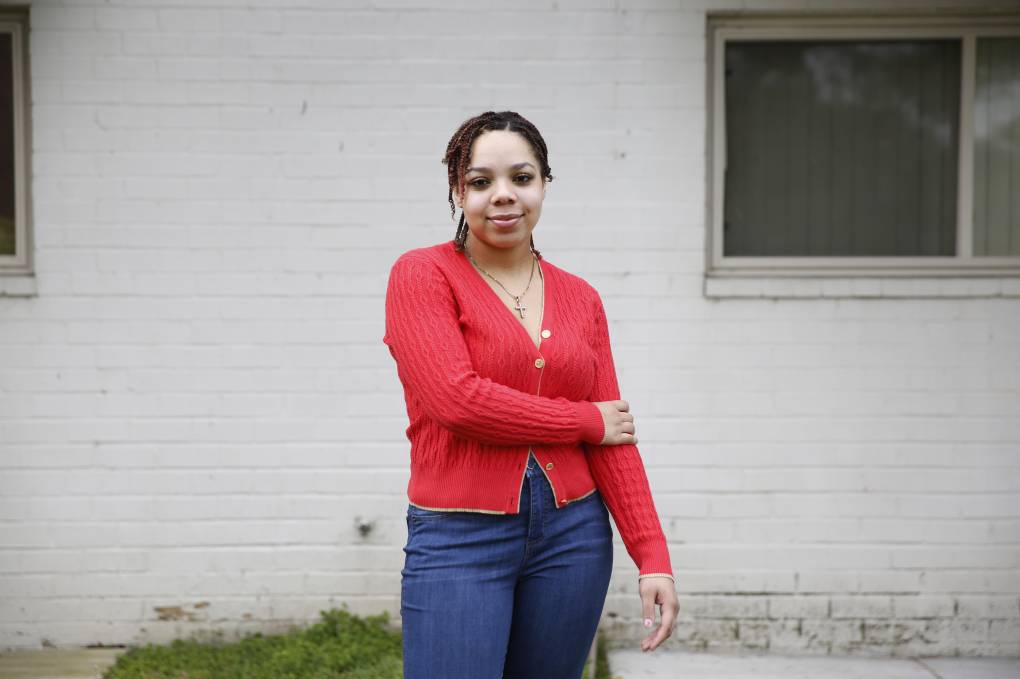
"caption": "Alexis Jones, a freshman at Cornell University.\n",
"description": null,
"title": "Alexis Jones, a freshman at Cornell University.",
"credit": "Elissa Nadworny/NPR",
"status": "inherit",
"altTag": null,
"isLoading": false,
"fetchFailed": false
},
"mindshift_57471": {
"type": "attachments",
"id": "mindshift_57471",
"meta": {
"index": "attachments_1716263798",
"site": "mindshift",
"id": "57471",
"found": true
},
"parent": 57470,
"imgSizes": {
"twentyfourteen-full-width": {
"file": "https://ww2.kqed.org/app/uploads/sites/23/2021/03/gettyimages-1216335753-1-_slide-557c046416db9f7bd5ac3e6cc5f7bea2f06c97ef-1038x576.jpg",
"width": 1038,
"mimeType": "image/jpeg",
"height": 576
},
"thumbnail": {
"file": "https://ww2.kqed.org/app/uploads/sites/23/2021/03/gettyimages-1216335753-1-_slide-557c046416db9f7bd5ac3e6cc5f7bea2f06c97ef-160x107.jpg",
"width": 160,
"mimeType": "image/jpeg",
"height": 107
},
"post-thumbnail": {
"file": "https://ww2.kqed.org/app/uploads/sites/23/2021/03/gettyimages-1216335753-1-_slide-557c046416db9f7bd5ac3e6cc5f7bea2f06c97ef-672x372.jpg",
"width": 672,
"mimeType": "image/jpeg",
"height": 372
},
"kqedFullSize": {
"file": "https://ww2.kqed.org/app/uploads/sites/23/2021/03/gettyimages-1216335753-1-_slide-557c046416db9f7bd5ac3e6cc5f7bea2f06c97ef.jpg",
"width": 2120,
"height": 1413
},
"2048x2048": {
"file": "https://ww2.kqed.org/app/uploads/sites/23/2021/03/gettyimages-1216335753-1-_slide-557c046416db9f7bd5ac3e6cc5f7bea2f06c97ef-2048x1365.jpg",
"width": 2048,
"mimeType": "image/jpeg",
"height": 1365
},
"large": {
"file": "https://ww2.kqed.org/app/uploads/sites/23/2021/03/gettyimages-1216335753-1-_slide-557c046416db9f7bd5ac3e6cc5f7bea2f06c97ef-1020x680.jpg",
"width": 1020,
"mimeType": "image/jpeg",
"height": 680
},
"1536x1536": {
"file": "https://ww2.kqed.org/app/uploads/sites/23/2021/03/gettyimages-1216335753-1-_slide-557c046416db9f7bd5ac3e6cc5f7bea2f06c97ef-1536x1024.jpg",
"width": 1536,
"mimeType": "image/jpeg",
"height": 1024
},
"full-width": {
"file": "https://ww2.kqed.org/app/uploads/sites/23/2021/03/gettyimages-1216335753-1-_slide-557c046416db9f7bd5ac3e6cc5f7bea2f06c97ef-1920x1280.jpg",
"width": 1920,
"mimeType": "image/jpeg",
"height": 1280
},
"medium": {
"file": "https://ww2.kqed.org/app/uploads/sites/23/2021/03/gettyimages-1216335753-1-_slide-557c046416db9f7bd5ac3e6cc5f7bea2f06c97ef-800x533.jpg",
"width": 800,
"mimeType": "image/jpeg",
"height": 533
},
"medium_large": {
"file": "https://ww2.kqed.org/app/uploads/sites/23/2021/03/gettyimages-1216335753-1-_slide-557c046416db9f7bd5ac3e6cc5f7bea2f06c97ef-768x512.jpg",
"width": 768,
"mimeType": "image/jpeg",
"height": 512
}
},
"publishDate": 1614981453,
"modified": 1614981493,
"caption": null,
"description": "Above view of mom working on the laptop computer while her daughter reading the e-learning resources on the digital tablet in the workspace at home",
"title": "Above view of mom working on the laptop computer while her daughter reading the e-learning resources on the digital tablet in the workspace at home.",
"credit": "Tang Ming Tung/Getty Images",
"status": "inherit",
"altTag": null,
"isLoading": false,
"fetchFailed": false
},
"mindshift_57458": {
"type": "attachments",
"id": "mindshift_57458",
"meta": {
"index": "attachments_1716263798",
"site": "mindshift",
"id": "57458",
"found": true
},
"parent": 57457,
"imgSizes": {
"twentyfourteen-full-width": {
"file": "https://ww2.kqed.org/app/uploads/sites/23/2021/03/tjlee-npr020221_slide-3148d8ac6de7ef7f61eb2518ff923b4a3bc2e6c7-1038x576.png",
"width": 1038,
"mimeType": "image/png",
"height": 576
},
"thumbnail": {
"file": "https://ww2.kqed.org/app/uploads/sites/23/2021/03/tjlee-npr020221_slide-3148d8ac6de7ef7f61eb2518ff923b4a3bc2e6c7-160x107.png",
"width": 160,
"mimeType": "image/png",
"height": 107
},
"post-thumbnail": {
"file": "https://ww2.kqed.org/app/uploads/sites/23/2021/03/tjlee-npr020221_slide-3148d8ac6de7ef7f61eb2518ff923b4a3bc2e6c7-672x372.png",
"width": 672,
"mimeType": "image/png",
"height": 372
},
"kqedFullSize": {
"file": "https://ww2.kqed.org/app/uploads/sites/23/2021/03/tjlee-npr020221_slide-3148d8ac6de7ef7f61eb2518ff923b4a3bc2e6c7.png",
"width": 1998,
"height": 1332
},
"large": {
"file": "https://ww2.kqed.org/app/uploads/sites/23/2021/03/tjlee-npr020221_slide-3148d8ac6de7ef7f61eb2518ff923b4a3bc2e6c7-1020x680.png",
"width": 1020,
"mimeType": "image/png",
"height": 680
},
"1536x1536": {
"file": "https://ww2.kqed.org/app/uploads/sites/23/2021/03/tjlee-npr020221_slide-3148d8ac6de7ef7f61eb2518ff923b4a3bc2e6c7-1536x1024.png",
"width": 1536,
"mimeType": "image/png",
"height": 1024
},
"full-width": {
"file": "https://ww2.kqed.org/app/uploads/sites/23/2021/03/tjlee-npr020221_slide-3148d8ac6de7ef7f61eb2518ff923b4a3bc2e6c7-1920x1280.png",
"width": 1920,
"mimeType": "image/png",
"height": 1280
},
"medium": {
"file": "https://ww2.kqed.org/app/uploads/sites/23/2021/03/tjlee-npr020221_slide-3148d8ac6de7ef7f61eb2518ff923b4a3bc2e6c7-800x533.png",
"width": 800,
"mimeType": "image/png",
"height": 533
},
"medium_large": {
"file": "https://ww2.kqed.org/app/uploads/sites/23/2021/03/tjlee-npr020221_slide-3148d8ac6de7ef7f61eb2518ff923b4a3bc2e6c7-768x512.png",
"width": 768,
"mimeType": "image/png",
"height": 512
}
},
"publishDate": 1614662755,
"modified": 1614662795,
"caption": null,
"description": null,
"title": "Illustration of a student sitting on the edge of a laptop with darkness behind and lightness ahead.",
"credit": "Tracy J. Lee for NPR",
"status": "inherit",
"altTag": null,
"isLoading": false,
"fetchFailed": false
},
"mindshift_57439": {
"type": "attachments",
"id": "mindshift_57439",
"meta": {
"index": "attachments_1716263798",
"site": "mindshift",
"id": "57439",
"found": true
},
"parent": 57438,
"imgSizes": {
"twentyfourteen-full-width": {
"file": "https://ww2.kqed.org/app/uploads/sites/23/2021/02/pandemic_connections_d_wide-07c97391630f2e12eea3e484c78a1426a599c9f0-1038x576.jpg",
"width": 1038,
"mimeType": "image/jpeg",
"height": 576
},
"thumbnail": {
"file": "https://ww2.kqed.org/app/uploads/sites/23/2021/02/pandemic_connections_d_wide-07c97391630f2e12eea3e484c78a1426a599c9f0-160x90.jpg",
"width": 160,
"mimeType": "image/jpeg",
"height": 90
},
"post-thumbnail": {
"file": "https://ww2.kqed.org/app/uploads/sites/23/2021/02/pandemic_connections_d_wide-07c97391630f2e12eea3e484c78a1426a599c9f0-672x372.jpg",
"width": 672,
"mimeType": "image/jpeg",
"height": 372
},
"kqedFullSize": {
"file": "https://ww2.kqed.org/app/uploads/sites/23/2021/02/pandemic_connections_d_wide-07c97391630f2e12eea3e484c78a1426a599c9f0-scaled.jpg",
"width": 2560,
"height": 1440
},
"2048x2048": {
"file": "https://ww2.kqed.org/app/uploads/sites/23/2021/02/pandemic_connections_d_wide-07c97391630f2e12eea3e484c78a1426a599c9f0-2048x1152.jpg",
"width": 2048,
"mimeType": "image/jpeg",
"height": 1152
},
"large": {
"file": "https://ww2.kqed.org/app/uploads/sites/23/2021/02/pandemic_connections_d_wide-07c97391630f2e12eea3e484c78a1426a599c9f0-1020x574.jpg",
"width": 1020,
"mimeType": "image/jpeg",
"height": 574
},
"1536x1536": {
"file": "https://ww2.kqed.org/app/uploads/sites/23/2021/02/pandemic_connections_d_wide-07c97391630f2e12eea3e484c78a1426a599c9f0-1536x864.jpg",
"width": 1536,
"mimeType": "image/jpeg",
"height": 864
},
"full-width": {
"file": "https://ww2.kqed.org/app/uploads/sites/23/2021/02/pandemic_connections_d_wide-07c97391630f2e12eea3e484c78a1426a599c9f0-1920x1080.jpg",
"width": 1920,
"mimeType": "image/jpeg",
"height": 1080
},
"medium": {
"file": "https://ww2.kqed.org/app/uploads/sites/23/2021/02/pandemic_connections_d_wide-07c97391630f2e12eea3e484c78a1426a599c9f0-800x450.jpg",
"width": 800,
"mimeType": "image/jpeg",
"height": 450
},
"medium_large": {
"file": "https://ww2.kqed.org/app/uploads/sites/23/2021/02/pandemic_connections_d_wide-07c97391630f2e12eea3e484c78a1426a599c9f0-768x432.jpg",
"width": 768,
"mimeType": "image/jpeg",
"height": 432
}
},
"publishDate": 1614152420,
"modified": 1614153090,
"caption": "Maintaining friendships and social networks during the pandemic often takes effort.\n",
"description": null,
"title": "Maintaining friendships and social networks during the pandemic often takes effort.",
"credit": "Susan Haejin Lee for NPR",
"status": "inherit",
"altTag": null,
"isLoading": false,
"fetchFailed": false
},
"mindshift_57435": {
"type": "attachments",
"id": "mindshift_57435",
"meta": {
"index": "attachments_1716263798",
"site": "mindshift",
"id": "57435",
"found": true
},
"parent": 57434,
"imgSizes": {
"twentyfourteen-full-width": {
"file": "https://ww2.kqed.org/app/uploads/sites/23/2021/02/gettyimages-157196136_wide-8892d0b8b3f3639296c5c62fdee45a678de33d5b-1038x576.jpg",
"width": 1038,
"mimeType": "image/jpeg",
"height": 576
},
"thumbnail": {
"file": "https://ww2.kqed.org/app/uploads/sites/23/2021/02/gettyimages-157196136_wide-8892d0b8b3f3639296c5c62fdee45a678de33d5b-160x90.jpg",
"width": 160,
"mimeType": "image/jpeg",
"height": 90
},
"post-thumbnail": {
"file": "https://ww2.kqed.org/app/uploads/sites/23/2021/02/gettyimages-157196136_wide-8892d0b8b3f3639296c5c62fdee45a678de33d5b-672x372.jpg",
"width": 672,
"mimeType": "image/jpeg",
"height": 372
},
"kqedFullSize": {
"file": "https://ww2.kqed.org/app/uploads/sites/23/2021/02/gettyimages-157196136_wide-8892d0b8b3f3639296c5c62fdee45a678de33d5b-scaled-e1614152344220.jpg",
"width": 1920,
"height": 1080
},
"2048x2048": {
"file": "https://ww2.kqed.org/app/uploads/sites/23/2021/02/gettyimages-157196136_wide-8892d0b8b3f3639296c5c62fdee45a678de33d5b-2048x1152.jpg",
"width": 2048,
"mimeType": "image/jpeg",
"height": 1152
},
"large": {
"file": "https://ww2.kqed.org/app/uploads/sites/23/2021/02/gettyimages-157196136_wide-8892d0b8b3f3639296c5c62fdee45a678de33d5b-1020x574.jpg",
"width": 1020,
"mimeType": "image/jpeg",
"height": 574
},
"1536x1536": {
"file": "https://ww2.kqed.org/app/uploads/sites/23/2021/02/gettyimages-157196136_wide-8892d0b8b3f3639296c5c62fdee45a678de33d5b-1536x864.jpg",
"width": 1536,
"mimeType": "image/jpeg",
"height": 864
},
"full-width": {
"file": "https://ww2.kqed.org/app/uploads/sites/23/2021/02/gettyimages-157196136_wide-8892d0b8b3f3639296c5c62fdee45a678de33d5b-1920x1080.jpg",
"width": 1920,
"mimeType": "image/jpeg",
"height": 1080
},
"medium": {
"file": "https://ww2.kqed.org/app/uploads/sites/23/2021/02/gettyimages-157196136_wide-8892d0b8b3f3639296c5c62fdee45a678de33d5b-800x450.jpg",
"width": 800,
"mimeType": "image/jpeg",
"height": 450
},
"medium_large": {
"file": "https://ww2.kqed.org/app/uploads/sites/23/2021/02/gettyimages-157196136_wide-8892d0b8b3f3639296c5c62fdee45a678de33d5b-768x432.jpg",
"width": 768,
"mimeType": "image/jpeg",
"height": 432
}
},
"publishDate": 1614152284,
"modified": 1614152358,
"caption": null,
"description": null,
"title": "Bubble sheet test with pencil.",
"credit": "spxChrome/Getty Images",
"status": "inherit",
"altTag": null,
"isLoading": false,
"fetchFailed": false
},
"mindshift_57409": {
"type": "attachments",
"id": "mindshift_57409",
"meta": {
"index": "attachments_1716263798",
"site": "mindshift",
"id": "57409",
"found": true
},
"parent": 57408,
"imgSizes": {
"twentyfourteen-full-width": {
"file": "https://ww2.kqed.org/app/uploads/sites/23/2021/02/gettyimages-1215169781-65a2eae8253583cc543fe86ea52d14e9874fbe0c-1038x576.jpg",
"width": 1038,
"mimeType": "image/jpeg",
"height": 576
},
"thumbnail": {
"file": "https://ww2.kqed.org/app/uploads/sites/23/2021/02/gettyimages-1215169781-65a2eae8253583cc543fe86ea52d14e9874fbe0c-160x120.jpg",
"width": 160,
"mimeType": "image/jpeg",
"height": 120
},
"post-thumbnail": {
"file": "https://ww2.kqed.org/app/uploads/sites/23/2021/02/gettyimages-1215169781-65a2eae8253583cc543fe86ea52d14e9874fbe0c-672x372.jpg",
"width": 672,
"mimeType": "image/jpeg",
"height": 372
},
"kqedFullSize": {
"file": "https://ww2.kqed.org/app/uploads/sites/23/2021/02/gettyimages-1215169781-65a2eae8253583cc543fe86ea52d14e9874fbe0c-scaled-e1613771590109.jpg",
"width": 1920,
"height": 1440
},
"2048x2048": {
"file": "https://ww2.kqed.org/app/uploads/sites/23/2021/02/gettyimages-1215169781-65a2eae8253583cc543fe86ea52d14e9874fbe0c-2048x1536.jpg",
"width": 2048,
"mimeType": "image/jpeg",
"height": 1536
},
"large": {
"file": "https://ww2.kqed.org/app/uploads/sites/23/2021/02/gettyimages-1215169781-65a2eae8253583cc543fe86ea52d14e9874fbe0c-1020x765.jpg",
"width": 1020,
"mimeType": "image/jpeg",
"height": 765
},
"1536x1536": {
"file": "https://ww2.kqed.org/app/uploads/sites/23/2021/02/gettyimages-1215169781-65a2eae8253583cc543fe86ea52d14e9874fbe0c-1536x1152.jpg",
"width": 1536,
"mimeType": "image/jpeg",
"height": 1152
},
"full-width": {
"file": "https://ww2.kqed.org/app/uploads/sites/23/2021/02/gettyimages-1215169781-65a2eae8253583cc543fe86ea52d14e9874fbe0c-1920x1440.jpg",
"width": 1920,
"mimeType": "image/jpeg",
"height": 1440
},
"medium": {
"file": "https://ww2.kqed.org/app/uploads/sites/23/2021/02/gettyimages-1215169781-65a2eae8253583cc543fe86ea52d14e9874fbe0c-800x600.jpg",
"width": 800,
"mimeType": "image/jpeg",
"height": 600
},
"medium_large": {
"file": "https://ww2.kqed.org/app/uploads/sites/23/2021/02/gettyimages-1215169781-65a2eae8253583cc543fe86ea52d14e9874fbe0c-768x576.jpg",
"width": 768,
"mimeType": "image/jpeg",
"height": 576
}
},
"publishDate": 1613771352,
"modified": 1613771621,
"caption": "Increased household responsibilities during the pandemic have forced many working mothers to scale back on their hours or to leave the workforce entirely.\n",
"description": "Overhead view of young mother working on computer with her son sitting in her lap during the day.",
"title": "Increased household responsibilities during the pandemic have forced many working mothers to scale back on their hours or to leave the workforce entirely.",
"credit": "ljubaphoto/Getty Images",
"status": "inherit",
"altTag": "Overhead view of young mother working on computer with her son sitting in her lap during the day.",
"isLoading": false,
"fetchFailed": false
},
"mindshift_57377": {
"type": "attachments",
"id": "mindshift_57377",
"meta": {
"index": "attachments_1716263798",
"site": "mindshift",
"id": "57377",
"found": true
},
"parent": 57373,
"imgSizes": {
"twentyfourteen-full-width": {
"file": "https://ww2.kqed.org/app/uploads/sites/23/2021/02/Todder-reaching-toward-camera-1038x576.jpg",
"width": 1038,
"mimeType": "image/jpeg",
"height": 576
},
"thumbnail": {
"file": "https://ww2.kqed.org/app/uploads/sites/23/2021/02/Todder-reaching-toward-camera-160x107.jpg",
"width": 160,
"mimeType": "image/jpeg",
"height": 107
},
"post-thumbnail": {
"file": "https://ww2.kqed.org/app/uploads/sites/23/2021/02/Todder-reaching-toward-camera-672x372.jpg",
"width": 672,
"mimeType": "image/jpeg",
"height": 372
},
"kqedFullSize": {
"file": "https://ww2.kqed.org/app/uploads/sites/23/2021/02/Todder-reaching-toward-camera-e1613457849644.jpg",
"width": 1920,
"height": 1281
},
"2048x2048": {
"file": "https://ww2.kqed.org/app/uploads/sites/23/2021/02/Todder-reaching-toward-camera-2048x1366.jpg",
"width": 2048,
"mimeType": "image/jpeg",
"height": 1366
},
"large": {
"file": "https://ww2.kqed.org/app/uploads/sites/23/2021/02/Todder-reaching-toward-camera-1020x680.jpg",
"width": 1020,
"mimeType": "image/jpeg",
"height": 680
},
"1536x1536": {
"file": "https://ww2.kqed.org/app/uploads/sites/23/2021/02/Todder-reaching-toward-camera-1536x1024.jpg",
"width": 1536,
"mimeType": "image/jpeg",
"height": 1024
},
"full-width": {
"file": "https://ww2.kqed.org/app/uploads/sites/23/2021/02/Todder-reaching-toward-camera-1920x1281.jpg",
"width": 1920,
"mimeType": "image/jpeg",
"height": 1281
},
"medium": {
"file": "https://ww2.kqed.org/app/uploads/sites/23/2021/02/Todder-reaching-toward-camera-800x534.jpg",
"width": 800,
"mimeType": "image/jpeg",
"height": 534
},
"medium_large": {
"file": "https://ww2.kqed.org/app/uploads/sites/23/2021/02/Todder-reaching-toward-camera-768x512.jpg",
"width": 768,
"mimeType": "image/jpeg",
"height": 512
}
},
"publishDate": 1613457830,
"modified": 1613457892,
"caption": null,
"description": null,
"title": "Beautiful toddler child girl playing on her knees on the floor",
"credit": "AaronAmat/iStock",
"status": "inherit",
"altTag": "Toddler reaches towards camera. Doctors worry about infant brain development during pandemic. Supporting parents will support children.",
"isLoading": false,
"fetchFailed": false
},
"mindshift_57364": {
"type": "attachments",
"id": "mindshift_57364",
"meta": {
"index": "attachments_1716263798",
"site": "mindshift",
"id": "57364",
"found": true
},
"parent": 57363,
"imgSizes": {
"twentyfourteen-full-width": {
"file": "https://ww2.kqed.org/app/uploads/sites/23/2021/02/ljohnson-edu-pandemic2021-mask_custom-7dda5055fe435c4d3db6f63a32f4fa8bf613d758-1038x576.jpg",
"width": 1038,
"mimeType": "image/jpeg",
"height": 576
},
"thumbnail": {
"file": "https://ww2.kqed.org/app/uploads/sites/23/2021/02/ljohnson-edu-pandemic2021-mask_custom-7dda5055fe435c4d3db6f63a32f4fa8bf613d758-160x100.jpg",
"width": 160,
"mimeType": "image/jpeg",
"height": 100
},
"post-thumbnail": {
"file": "https://ww2.kqed.org/app/uploads/sites/23/2021/02/ljohnson-edu-pandemic2021-mask_custom-7dda5055fe435c4d3db6f63a32f4fa8bf613d758-672x372.jpg",
"width": 672,
"mimeType": "image/jpeg",
"height": 372
},
"kqedFullSize": {
"file": "https://ww2.kqed.org/app/uploads/sites/23/2021/02/ljohnson-edu-pandemic2021-mask_custom-7dda5055fe435c4d3db6f63a32f4fa8bf613d758-scaled-e1612853952865.jpg",
"width": 1920,
"height": 1200
},
"2048x2048": {
"file": "https://ww2.kqed.org/app/uploads/sites/23/2021/02/ljohnson-edu-pandemic2021-mask_custom-7dda5055fe435c4d3db6f63a32f4fa8bf613d758-2048x1280.jpg",
"width": 2048,
"mimeType": "image/jpeg",
"height": 1280
},
"large": {
"file": "https://ww2.kqed.org/app/uploads/sites/23/2021/02/ljohnson-edu-pandemic2021-mask_custom-7dda5055fe435c4d3db6f63a32f4fa8bf613d758-1020x637.jpg",
"width": 1020,
"mimeType": "image/jpeg",
"height": 637
},
"1536x1536": {
"file": "https://ww2.kqed.org/app/uploads/sites/23/2021/02/ljohnson-edu-pandemic2021-mask_custom-7dda5055fe435c4d3db6f63a32f4fa8bf613d758-1536x960.jpg",
"width": 1536,
"mimeType": "image/jpeg",
"height": 960
},
"full-width": {
"file": "https://ww2.kqed.org/app/uploads/sites/23/2021/02/ljohnson-edu-pandemic2021-mask_custom-7dda5055fe435c4d3db6f63a32f4fa8bf613d758-1920x1200.jpg",
"width": 1920,
"mimeType": "image/jpeg",
"height": 1200
},
"medium": {
"file": "https://ww2.kqed.org/app/uploads/sites/23/2021/02/ljohnson-edu-pandemic2021-mask_custom-7dda5055fe435c4d3db6f63a32f4fa8bf613d758-800x500.jpg",
"width": 800,
"mimeType": "image/jpeg",
"height": 500
},
"medium_large": {
"file": "https://ww2.kqed.org/app/uploads/sites/23/2021/02/ljohnson-edu-pandemic2021-mask_custom-7dda5055fe435c4d3db6f63a32f4fa8bf613d758-768x480.jpg",
"width": 768,
"mimeType": "image/jpeg",
"height": 480
}
},
"publishDate": 1612853926,
"modified": 1612853971,
"caption": null,
"description": null,
"title": "A masked student escapes from her digital school with the help of a giant, benevolent hand.",
"credit": "LA Johnson/NPR",
"status": "inherit",
"altTag": null,
"isLoading": false,
"fetchFailed": false
},
"mindshift_57351": {
"type": "attachments",
"id": "mindshift_57351",
"meta": {
"index": "attachments_1716263798",
"site": "mindshift",
"id": "57351",
"found": true
},
"parent": 57350,
"imgSizes": {
"twentyfourteen-full-width": {
"file": "https://ww2.kqed.org/app/uploads/sites/23/2021/02/schoolreopen_custom-04b2b4e580cd07ab81cdeb4b8ed5aa9136cfbf69-1038x576.jpg",
"width": 1038,
"mimeType": "image/jpeg",
"height": 576
},
"thumbnail": {
"file": "https://ww2.kqed.org/app/uploads/sites/23/2021/02/schoolreopen_custom-04b2b4e580cd07ab81cdeb4b8ed5aa9136cfbf69-160x107.jpg",
"width": 160,
"mimeType": "image/jpeg",
"height": 107
},
"post-thumbnail": {
"file": "https://ww2.kqed.org/app/uploads/sites/23/2021/02/schoolreopen_custom-04b2b4e580cd07ab81cdeb4b8ed5aa9136cfbf69-672x372.jpg",
"width": 672,
"mimeType": "image/jpeg",
"height": 372
},
"kqedFullSize": {
"file": "https://ww2.kqed.org/app/uploads/sites/23/2021/02/schoolreopen_custom-04b2b4e580cd07ab81cdeb4b8ed5aa9136cfbf69-e1612545782342.jpg",
"width": 1920,
"height": 1279
},
"large": {
"file": "https://ww2.kqed.org/app/uploads/sites/23/2021/02/schoolreopen_custom-04b2b4e580cd07ab81cdeb4b8ed5aa9136cfbf69-1020x679.jpg",
"width": 1020,
"mimeType": "image/jpeg",
"height": 679
},
"1536x1536": {
"file": "https://ww2.kqed.org/app/uploads/sites/23/2021/02/schoolreopen_custom-04b2b4e580cd07ab81cdeb4b8ed5aa9136cfbf69-1536x1023.jpg",
"width": 1536,
"mimeType": "image/jpeg",
"height": 1023
},
"full-width": {
"file": "https://ww2.kqed.org/app/uploads/sites/23/2021/02/schoolreopen_custom-04b2b4e580cd07ab81cdeb4b8ed5aa9136cfbf69-1920x1279.jpg",
"width": 1920,
"mimeType": "image/jpeg",
"height": 1279
},
"medium": {
"file": "https://ww2.kqed.org/app/uploads/sites/23/2021/02/schoolreopen_custom-04b2b4e580cd07ab81cdeb4b8ed5aa9136cfbf69-800x533.jpg",
"width": 800,
"mimeType": "image/jpeg",
"height": 533
},
"medium_large": {
"file": "https://ww2.kqed.org/app/uploads/sites/23/2021/02/schoolreopen_custom-04b2b4e580cd07ab81cdeb4b8ed5aa9136cfbf69-768x511.jpg",
"width": 768,
"mimeType": "image/jpeg",
"height": 511
}
},
"publishDate": 1612545760,
"modified": 1612545799,
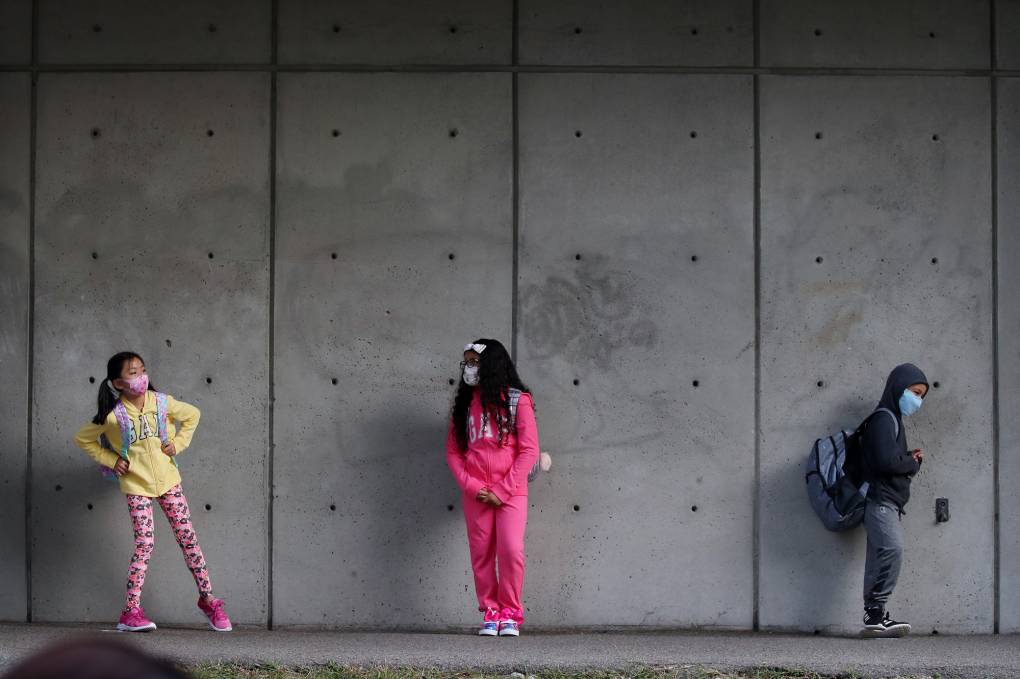
"caption": "President Biden wants most K-8 schools to go back to in-person learning within his first 100 days, but teachers and administrators don't agree on how to do that.\n",
"description": "QUINCY, MA - SEPTEMBER 17: Students line up on the first day of school at the Lincoln-Hancock Community School in Quincy, MA on September 17, 2020. Thursday was the first day of in-person learning for half of the students (Cohort B) enrolled in the schools hybrid model. The school also offers a fully remote learning program. (Photo by Craig F. Walker/The Boston Globe via Getty Images)",
"title": "President Biden wants most K-8 schools to go back to in-person learning within his first 100 days, but teachers and administrators don't agree on how to do that.",
"credit": "Craig F. Walker/Boston Globe via Getty Image",
"status": "inherit",
"altTag": null,
"isLoading": false,
"fetchFailed": false
},
"mindshift_57339": {
"type": "attachments",
"id": "mindshift_57339",
"meta": {
"index": "attachments_1716263798",
"site": "mindshift",
"id": "57339",
"found": true
},
"parent": 57338,
"imgSizes": {
"twentyfourteen-full-width": {
"file": "https://ww2.kqed.org/app/uploads/sites/23/2021/02/zhang-suicide-help-parents_wide-d86646258e96471a77a04da06ee18809239c74d0-1038x576.jpg",
"width": 1038,
"mimeType": "image/jpeg",
"height": 576
},
"thumbnail": {
"file": "https://ww2.kqed.org/app/uploads/sites/23/2021/02/zhang-suicide-help-parents_wide-d86646258e96471a77a04da06ee18809239c74d0-160x90.jpg",
"width": 160,
"mimeType": "image/jpeg",
"height": 90
},
"post-thumbnail": {
"file": "https://ww2.kqed.org/app/uploads/sites/23/2021/02/zhang-suicide-help-parents_wide-d86646258e96471a77a04da06ee18809239c74d0-672x372.jpg",
"width": 672,
"mimeType": "image/jpeg",
"height": 372
},
"kqedFullSize": {
"file": "https://ww2.kqed.org/app/uploads/sites/23/2021/02/zhang-suicide-help-parents_wide-d86646258e96471a77a04da06ee18809239c74d0-scaled-e1612341619942.jpg",
"width": 1920,
"height": 1080
},
"2048x2048": {
"file": "https://ww2.kqed.org/app/uploads/sites/23/2021/02/zhang-suicide-help-parents_wide-d86646258e96471a77a04da06ee18809239c74d0-2048x1152.jpg",
"width": 2048,
"mimeType": "image/jpeg",
"height": 1152
},
"large": {
"file": "https://ww2.kqed.org/app/uploads/sites/23/2021/02/zhang-suicide-help-parents_wide-d86646258e96471a77a04da06ee18809239c74d0-1020x574.jpg",
"width": 1020,
"mimeType": "image/jpeg",
"height": 574
},
"1536x1536": {
"file": "https://ww2.kqed.org/app/uploads/sites/23/2021/02/zhang-suicide-help-parents_wide-d86646258e96471a77a04da06ee18809239c74d0-1536x864.jpg",
"width": 1536,
"mimeType": "image/jpeg",
"height": 864
},
"full-width": {
"file": "https://ww2.kqed.org/app/uploads/sites/23/2021/02/zhang-suicide-help-parents_wide-d86646258e96471a77a04da06ee18809239c74d0-1920x1080.jpg",
"width": 1920,
"mimeType": "image/jpeg",
"height": 1080
},
"medium": {
"file": "https://ww2.kqed.org/app/uploads/sites/23/2021/02/zhang-suicide-help-parents_wide-d86646258e96471a77a04da06ee18809239c74d0-800x450.jpg",
"width": 800,
"mimeType": "image/jpeg",
"height": 450
},
"medium_large": {
"file": "https://ww2.kqed.org/app/uploads/sites/23/2021/02/zhang-suicide-help-parents_wide-d86646258e96471a77a04da06ee18809239c74d0-768x432.jpg",
"width": 768,
"mimeType": "image/jpeg",
"height": 432
}
},
"publishDate": 1612341560,
"modified": 1612341630,
"caption": null,
"description": null,
"title": "If your child tells you they're thinking of wanting to end their life, how do you help? Number one, don't panic. Suicide is preventable. Here's advice for helping young people in crisis, from people who've lived through it.",
"credit": "Jesse Zhang for NPR",
"status": "inherit",
"altTag": null,
"isLoading": false,
"fetchFailed": false
},
"mindshift_57344": {
"type": "attachments",
"id": "mindshift_57344",
"meta": {
"index": "attachments_1716263798",
"site": "mindshift",
"id": "57344",
"found": true
},
"parent": 57343,
"imgSizes": {
"twentyfourteen-full-width": {
"file": "https://ww2.kqed.org/app/uploads/sites/23/2021/02/suicide-nv-3_enl-5394966bd04caaafa7b24486ad92451af7c976d1-1038x576.jpg",
"width": 1038,
"mimeType": "image/jpeg",
"height": 576
},
"thumbnail": {
"file": "https://ww2.kqed.org/app/uploads/sites/23/2021/02/suicide-nv-3_enl-5394966bd04caaafa7b24486ad92451af7c976d1-160x107.jpg",
"width": 160,
"mimeType": "image/jpeg",
"height": 107
},
"post-thumbnail": {
"file": "https://ww2.kqed.org/app/uploads/sites/23/2021/02/suicide-nv-3_enl-5394966bd04caaafa7b24486ad92451af7c976d1-672x372.jpg",
"width": 672,
"mimeType": "image/jpeg",
"height": 372
},
"kqedFullSize": {
"file": "https://ww2.kqed.org/app/uploads/sites/23/2021/02/suicide-nv-3_enl-5394966bd04caaafa7b24486ad92451af7c976d1-e1612341976987.jpg",
"width": 1920,
"height": 1284
},
"large": {
"file": "https://ww2.kqed.org/app/uploads/sites/23/2021/02/suicide-nv-3_enl-5394966bd04caaafa7b24486ad92451af7c976d1-1020x682.jpg",
"width": 1020,
"mimeType": "image/jpeg",
"height": 682
},
"1536x1536": {
"file": "https://ww2.kqed.org/app/uploads/sites/23/2021/02/suicide-nv-3_enl-5394966bd04caaafa7b24486ad92451af7c976d1-1536x1027.jpg",
"width": 1536,
"mimeType": "image/jpeg",
"height": 1027
},
"full-width": {
"file": "https://ww2.kqed.org/app/uploads/sites/23/2021/02/suicide-nv-3_enl-5394966bd04caaafa7b24486ad92451af7c976d1-1920x1284.jpg",
"width": 1920,
"mimeType": "image/jpeg",
"height": 1284
},
"medium": {
"file": "https://ww2.kqed.org/app/uploads/sites/23/2021/02/suicide-nv-3_enl-5394966bd04caaafa7b24486ad92451af7c976d1-800x535.jpg",
"width": 800,
"mimeType": "image/jpeg",
"height": 535
},
"medium_large": {
"file": "https://ww2.kqed.org/app/uploads/sites/23/2021/02/suicide-nv-3_enl-5394966bd04caaafa7b24486ad92451af7c976d1-768x514.jpg",
"width": 768,
"mimeType": "image/jpeg",
"height": 514
}
},
"publishDate": 1612341930,
"modified": 1612341985,
"caption": "An abrupt spike in suicide deaths among students in the Clark County School District has officials in the Las Vegas district wondering if pressures brought on by the coronavirus pandemic might have been part of what fueled the increase.\n",
"description": "The abrupt spike in suicide deaths has officials at the Clark County School District wondering if pressures brought on by the pandemic might have fueled the increase.\nJoe Buglewicz for NPR",
"title": "An abrupt spike in suicide deaths among students in the Clark County School District has officials in the Las Vegas district wondering if pressures brought on by the coronavirus pandemic might have been part of what fueled the increase.",
"credit": "Joe Buglewicz for NPR",
"status": "inherit",
"altTag": null,
"isLoading": false,
"fetchFailed": false
},
"mindshift_57320": {
"type": "attachments",
"id": "mindshift_57320",
"meta": {
"index": "attachments_1716263798",
"site": "mindshift",
"id": "57320",
"found": true
},
"parent": 57317,
"imgSizes": {
"twentyfourteen-full-width": {
"file": "https://ww2.kqed.org/app/uploads/sites/23/2021/01/iStock-1082017634-1038x576.jpg",
"width": 1038,
"mimeType": "image/jpeg",
"height": 576
},
"thumbnail": {
"file": "https://ww2.kqed.org/app/uploads/sites/23/2021/01/iStock-1082017634-160x110.jpg",
"width": 160,
"mimeType": "image/jpeg",
"height": 110
},
"post-thumbnail": {
"file": "https://ww2.kqed.org/app/uploads/sites/23/2021/01/iStock-1082017634-672x372.jpg",
"width": 672,
"mimeType": "image/jpeg",
"height": 372
},
"kqedFullSize": {
"file": "https://ww2.kqed.org/app/uploads/sites/23/2021/01/iStock-1082017634-e1612166128385.jpg",
"width": 1920,
"height": 1318
},
"2048x2048": {
"file": "https://ww2.kqed.org/app/uploads/sites/23/2021/01/iStock-1082017634-2048x1406.jpg",
"width": 2048,
"mimeType": "image/jpeg",
"height": 1406
},
"large": {
"file": "https://ww2.kqed.org/app/uploads/sites/23/2021/01/iStock-1082017634-1020x700.jpg",
"width": 1020,
"mimeType": "image/jpeg",
"height": 700
},
"1536x1536": {
"file": "https://ww2.kqed.org/app/uploads/sites/23/2021/01/iStock-1082017634-1536x1055.jpg",
"width": 1536,
"mimeType": "image/jpeg",
"height": 1055
},
"full-width": {
"file": "https://ww2.kqed.org/app/uploads/sites/23/2021/01/iStock-1082017634-1920x1318.jpg",
"width": 1920,
"mimeType": "image/jpeg",
"height": 1318
},
"medium": {
"file": "https://ww2.kqed.org/app/uploads/sites/23/2021/01/iStock-1082017634-800x549.jpg",
"width": 800,
"mimeType": "image/jpeg",
"height": 549
},
"medium_large": {
"file": "https://ww2.kqed.org/app/uploads/sites/23/2021/01/iStock-1082017634-768x527.jpg",
"width": 768,
"mimeType": "image/jpeg",
"height": 527
}
},
"publishDate": 1612166110,
"modified": 1612166145,
"caption": null,
"description": null,
"title": "Vector of light bulbs on blue background.",
"credit": "Feodora Chiosea/iStock",
"status": "inherit",
"altTag": null,
"isLoading": false,
"fetchFailed": false
}
},
"audioPlayerReducer": {
"postId": "stream_live",
"isPaused": true,
"isPlaying": false,
"pfsActive": false,
"pledgeModalIsOpen": true,
"playerDrawerIsOpen": false,
"liveAudioPlayStartedAt": 0,
"liveAudioPlayContext": ""
},
"authorsReducer": {
"byline_mindshift_57493": {
"type": "authors",
"id": "byline_mindshift_57493",
"meta": {
"override": true
},
"slug": "byline_mindshift_57493",
"name": "Anya Kamenetz, Elissa Nadworny and Cory Turner",
"isLoading": false
},
"byline_mindshift_57470": {
"type": "authors",
"id": "byline_mindshift_57470",
"meta": {
"override": true
},
"slug": "byline_mindshift_57470",
"name": "Anya Kamenetz and Eda Uzunlar",
"isLoading": false
},
"byline_mindshift_57457": {
"type": "authors",
"id": "byline_mindshift_57457",
"meta": {
"override": true
},
"slug": "byline_mindshift_57457",
"name": "Elizabeth Miller",
"isLoading": false
},
"byline_mindshift_57438": {
"type": "authors",
"id": "byline_mindshift_57438",
"meta": {
"override": true
},
"slug": "byline_mindshift_57438",
"name": "Hadia Bakkar",
"isLoading": false
},
"byline_mindshift_57434": {
"type": "authors",
"id": "byline_mindshift_57434",
"meta": {
"override": true
},
"slug": "byline_mindshift_57434",
"name": "Anya Kamenetz",
"isLoading": false
},
"byline_mindshift_57408": {
"type": "authors",
"id": "byline_mindshift_57408",
"meta": {
"override": true
},
"slug": "byline_mindshift_57408",
"name": "Terry Gross",
"isLoading": false
},
"byline_mindshift_57363": {
"type": "authors",
"id": "byline_mindshift_57363",
"meta": {
"override": true
},
"slug": "byline_mindshift_57363",
"name": "Anya Kamenetz",
"isLoading": false
},
"byline_mindshift_57350": {
"type": "authors",
"id": "byline_mindshift_57350",
"meta": {
"override": true
},
"slug": "byline_mindshift_57350",
"name": "Rachel Martin and Heidi Glenn",
"isLoading": false
},
"byline_mindshift_57338": {
"type": "authors",
"id": "byline_mindshift_57338",
"meta": {
"override": true
},
"slug": "byline_mindshift_57338",
"name": "Rhitu Chatterjee",
"isLoading": false
},
"byline_mindshift_57343": {
"type": "authors",
"id": "byline_mindshift_57343",
"meta": {
"override": true
},
"slug": "byline_mindshift_57343",
"name": "Rhitu Chatterjee",
"isLoading": false
},
"kdnewhouse": {
"type": "authors",
"id": "11487",
"meta": {
"index": "authors_1716337520",
"id": "11487",
"found": true
},
"name": "Kara Newhouse",
"firstName": "Kara",
"lastName": "Newhouse",
"slug": "kdnewhouse",
"email": "knewhouse@kqed.org",
"display_author_email": false,
"staff_mastheads": [],
"title": "MindShift Editor",
"bio": null,
"avatar": "https://secure.gravatar.com/avatar/3dceed6fb271527113abfa9a8e9df34e?s=600&d=blank&r=g",
"twitter": null,
"facebook": null,
"instagram": null,
"linkedin": null,
"sites": [
{
"site": "",
"roles": [
"editor"
]
},
{
"site": "mindshift",
"roles": []
}
],
"headData": {
"title": "Kara Newhouse | KQED",
"description": "MindShift Editor",
"ogImgSrc": "https://secure.gravatar.com/avatar/3dceed6fb271527113abfa9a8e9df34e?s=600&d=blank&r=g",
"twImgSrc": "https://secure.gravatar.com/avatar/3dceed6fb271527113abfa9a8e9df34e?s=600&d=blank&r=g"
},
"isLoading": false,
"link": "/author/kdnewhouse"
}
},
"pagesReducer": {
"mindshift_tag_covid-19": {
"type": "terms",
"id": "mindshift_21343",
"meta": {
"index": "terms_1716263798",
"site": "mindshift",
"id": "21343",
"score": 8.558781
},
"featImg": null,
"name": "COVID-19",
"description": null,
"taxonomy": "tag",
"headData": {
"twImgId": null,
"twTitle": null,
"ogTitle": null,
"ogImgId": null,
"twDescription": null,
"description": null,
"title": "COVID-19 Archives - KQED Mindshift",
"ogDescription": null
},
"ttid": 20615,
"slug": "covid-19",
"isLoading": false,
"title": "COVID-19",
"pageMeta": {
"site": "mindshift",
"WpPageTemplate": "page-topic-editorial",
"currentPage": 9
},
"blocks": [
{
"blockName": "kqed/post-list",
"attrs": {
"layout": "cardArticle2",
"query": "posts/mindshift?tag=covid-19",
"seeMore": false,
"paginated": true,
"page": 9
}
},
{
"blockName": "kqed/ad"
}
]
}
},
"pfsSessionReducer": {},
"postsReducer": {
"stream_live": {
"type": "live",
"id": "stream_live",
"audioUrl": "https://streams.kqed.org/kqedradio",
"title": "Live Stream",
"excerpt": "Live Stream information currently unavailable.",
"link": "/radio",
"featImg": "",
"label": {
"name": "KQED Live",
"link": "/"
}
},
"stream_kqedNewscast": {
"type": "posts",
"id": "stream_kqedNewscast",
"audioUrl": "https://www.kqed.org/.stream/anon/radio/RDnews/newscast.mp3?_=1",
"title": "KQED Newscast",
"featImg": "",
"label": {
"name": "88.5 FM",
"link": "/"
}
},
"mindshift_57493": {
"type": "posts",
"id": "mindshift_57493",
"meta": {
"index": "posts_1716263798",
"site": "mindshift",
"id": "57493",
"score": null,
"sort": [
1615536938000
]
},
"parent": 0,
"labelTerm": {
"site": "mindshift"
},
"blocks": [],
"publishDate": 1615536938,
"format": "standard",
"disqusTitle": "A Year Of School Like No Other: How A Teacher, A Student And A Parent Have Coped",
"title": "A Year Of School Like No Other: How A Teacher, A Student And A Parent Have Coped",
"headTitle": "MindShift | KQED News",
"content": "\u003cp>Almost exactly one year ago, the pandemic caused a cascade of school and university closures, sending 9 out of 10 students home as the coronavirus raced through the United States and the rest of the world.\u003c/p>\n\u003cp>By Labor Day, 62% of U.S. students were still learning virtually, according to the organization Burbio. That number dropped significantly during the fall and rose in the winter as COVID-19 surged. And today, just under 1 in 4 public school students attends a district that still hasn't held a single day of in-person learning.\u003c/p>\n\u003cp>Colleges have seen widespread disruption, too: In the fall, only about 20% of four-year colleges offered any classes in person. And while that number has come up a bit for the spring semester, most college students — even if they live on campus — are taking classes virtually.\u003c/p>\n\u003cp>It may take years to understand what has been lost this year, and if history is any guide, it may take years to recover. There are mounting concerns about lost learning, social and emotional scars, and declining enrollment.\u003c/p>\n\u003cp>In our reporting over the past year, we've talked with hundreds of students and professors and parents and teachers about the massive disruption to their learning, their careers and their lives. This week, we checked back in with three of them — a teacher, a student and a parent — to find out what they are thinking and what they need now. Here are their stories:\u003c/p>\n\u003ch2>\u003cstrong>The teacher\u003c/strong>\u003c/h2>\n\u003cp>Robin Nelson is a first-grade teacher in Jacksonville, Fla. In March 2020, right after school shut down, she broke down in tears as she told us how much she missed her students: \"I had one little girl and her family that live in the neighborhood drive by, and she left little, you know, love notes and pictures on my doorstep.\"\u003c/p>\n\u003cp>[ad fullwidth]\u003c/p>\n\u003cp>For Nelson, the separation was heartbreaking: \"You're not a teacher if you can't be with your kids. Computers are not kids. They're not your teacher.\"\u003c/p>\n\u003cp>Florida has been one of the most aggressive large states when it comes to reopening in-person school. By Oct. 1, Nelson was back in the classroom at Ortega Elementary School.\u003c/p>\n\u003cp>Since reopening, the school does its best to follow CDC guidelines: Her students, all in masks, are spaced with an empty desk between them. Lunch takes place in the classroom, with students watching a Disney movie to prevent too much conversation. Everyone coming in the door gets a pump of hand sanitizer and a choice of COVID-safe greeting — like toe-tapping or hip-bumping.\u003c/p>\n\u003cp>Even with the social distancing, Nelson says, \"I'm just so happy to have my hands on 'em. Computer teaching is not the same. It's just not.\"\u003c/p>\n\u003cp>Her school is small and close-knit, and there have been no outbreaks. But not everything is back to normal. Some of her students have missed weeks at a time for quarantine because their families are front-line workers.\u003c/p>\n\u003cp>The lost learning time adds up. Especially, she says, with students who are still struggling to catch up from the year before. \"They didn't learn what they needed to learn to enter first grade. And then if they were more behind, they're more behind even still. So there's definitely that loss of learning.\"\u003c/p>\n\u003cp>She says that, despite the disruption, her district hasn't officially changed its student achievement targets from previous years; the state is going ahead with testing next month, as the Biden administration is requiring states to do. Nelson says teachers need to strike a balance when it comes to catch-up expectations.\u003c/p>\n\u003cp>\"If you push too hard, the kids are going to shut down because they can't make it happen. But if then if you act wishy-washy, they're not going to try to rise to any occasion.\"\u003c/p>\n\u003cp>Despite these tensions, on the day we talk there is one big bright spot: She has just gotten her first dose of a coronavirus vaccine.\u003c/p>\n\u003ch2>\u003cstrong>The college freshman\u003c/strong>\u003c/h2>\n\u003cp>The end of senior year of high school didn't go exactly as Alexis Jones had planned. Everything was online — including her AP exams. And instead of a spacious school surrounded by friends and teachers, she found herself studying and taking classes in her father's cramped two-bedroom apartment in Washington, D.C.\u003c/p>\n\u003cp>Alexis is a top student, with a passion for art and social justice. But even dreaming about college, which usually brought solace and joy, was nerve-wracking: \"It's weird to think about college when other stuff is going on that's threatening the health of people,\" she told us last March. \"Maybe I'll have to rethink my plans, or I hate to say, not go to college next year. But I'll just have to play it by ear. I guess.\"\u003c/p>\n\u003cp>When we spoke with her again in late April, she had some big news: She had committed to Cornell University in Ithaca, N.Y. She'd been dreaming about California, but with the pandemic, she wanted a location her dad could drive to, in case he needed to come pick her up in an emergency.\u003c/p>\n\u003cp>By May, the delight of getting into an Ivy League school was overshadowed by the uncertainty of the pandemic: \"I don't know how to feel because I don't know if I'm going to be going immediately in the fall, but I guess I'm still excited.\"\u003c/p>\n\u003cp>But Cornell was among the roughly 20% of colleges that opened up in-person, with regular weekly testing. Jones had never visited the school before, and says she'll always remember the first thing she did when she finally arrived: take a COVID-19 test.\u003c/p>\n\u003cp>\"I got tested. I got my I.D. I got my [dorm] key,\" she said. Because of pandemic protocols that limited building access, she carried all her belongings to her room by herself. She decorated her new home — a double room all to herself — and settled in.\u003c/p>\n\u003cp>In the fall she had some in-person classes. Although everyone was six feet apart and wearing masks, she said it really did feel like college, with discussions and interactions. This semester, her classes are all online, which means she doesn't even have to leave her room, except to get food.\u003c/p>\n\u003cp>It's not ideal, but it's what she's got — and she says she's thriving. This week started with a meeting on Zoom with her Japanese language professor.\u003c/p>\n\u003cp>\"\u003cem>Konnichiwa\u003c/em>,\" Jones says into her computer. \"\u003cem>Konnichiwa, Jones-san\u003c/em>\", her professor says back. \"\u003cem>Nihongo wa taihen desu ka?\u003c/em>\" (Japanese is tough, right?) her professor asks. \"Yes, it is hard,\" Jones replies, laughing.\u003c/p>\n\u003cp>Jones says that in high school she would spend her free time making art or reading books. So the stunted social life on campus hasn't really been a problem. \"I'm not like a social, social, social person,\" she says.\u003c/p>\n\u003cp>She's made a few friends through social media — and study groups. She has yet to go to a college party (which even though she's not a \"party girl,\" she \u003cem>was \u003c/em>looking forward to experiencing).\u003c/p>\n\u003cp>Instead, social highlights include having a few people over to her room. But even that comes with COVID stress.\u003c/p>\n\u003cp>\"I still think that is a risk,\" she says. \"You know, I am letting my friends, new friends into my room. Like I don't know these people. I don't know where they've been.\"\u003c/p>\n\u003cp>Looking back, she's glad she landed on a campus that invested in testing to make being in-person possible.\u003c/p>\n\u003cp>And she's hopeful she'll get to go to that big college party someday. \"I know I haven't gotten the typical freshman experience,\" she says, \"but luckily I am a freshman, so I still have three more years before I'm graduating to see what college is actually like.\"\u003c/p>\n\u003cp>And while she's looking forward to the social stuff, she says she's really here to learn, to grow and to graduate.\u003c/p>\n\u003ch2>\u003cstrong>The parent \u003c/strong>\u003c/h2>\n\u003cp>Kendra Mendoza lives in Providence, R.I., with her two kids, both teenagers. She's a single parent and works long hours as a home health care provider.\u003c/p>\n\u003cfigure id=\"attachment_57496\" class=\"wp-caption alignnone\" style=\"max-width: 1920px\">\u003cimg class=\"size-full wp-image-57496\" src=\"https://ww2.kqed.org/app/uploads/sites/23/2021/03/kendra-and-josh-providence-august-20-2020-1_enl-5ad250ea2b0883078d042e5e6d850cee185d0d3e-scaled.jpg\" alt=\"\" width=\"1920\" height=\"2560\" srcset=\"https://ww2.kqed.org/app/uploads/sites/23/2021/03/kendra-and-josh-providence-august-20-2020-1_enl-5ad250ea2b0883078d042e5e6d850cee185d0d3e-scaled.jpg 1920w, https://ww2.kqed.org/app/uploads/sites/23/2021/03/kendra-and-josh-providence-august-20-2020-1_enl-5ad250ea2b0883078d042e5e6d850cee185d0d3e-800x1067.jpg 800w, https://ww2.kqed.org/app/uploads/sites/23/2021/03/kendra-and-josh-providence-august-20-2020-1_enl-5ad250ea2b0883078d042e5e6d850cee185d0d3e-1020x1360.jpg 1020w, https://ww2.kqed.org/app/uploads/sites/23/2021/03/kendra-and-josh-providence-august-20-2020-1_enl-5ad250ea2b0883078d042e5e6d850cee185d0d3e-160x213.jpg 160w, https://ww2.kqed.org/app/uploads/sites/23/2021/03/kendra-and-josh-providence-august-20-2020-1_enl-5ad250ea2b0883078d042e5e6d850cee185d0d3e-768x1024.jpg 768w, https://ww2.kqed.org/app/uploads/sites/23/2021/03/kendra-and-josh-providence-august-20-2020-1_enl-5ad250ea2b0883078d042e5e6d850cee185d0d3e-1152x1536.jpg 1152w, https://ww2.kqed.org/app/uploads/sites/23/2021/03/kendra-and-josh-providence-august-20-2020-1_enl-5ad250ea2b0883078d042e5e6d850cee185d0d3e-1536x2048.jpg 1536w\" sizes=\"(max-width: 1920px) 100vw, 1920px\">\u003cfigcaption class=\"wp-caption-text\">Kendra Mendoza's son, Joshua, has cerebral palsy. Remote learning has been a big challenge. \u003ccite>(Scott Alario for NPR)\u003c/cite>\u003c/figcaption>\u003c/figure>\n\u003cp>During our first interview, back in August, she was very frank about the challenges she was facing in the pandemic, even laughing about it: \"I have a lot to say, a lot of opinions, and I don't got any answers.\"\u003c/p>\n\u003cp>Mendoza's 17-year-old son, Joshua, has cerebral palsy and a cluster of conditions that put him in a wheel chair and fragile health.\u003c/p>\n\u003cp>Mendoza said back in August that all of Joshua's therapies had stopped because of the pandemic, but she had recently been told he could go back to school in the fall. At the time, she was wrestling with whether to send him. She worried then that because of her son's physical challenges, if he got COVID-19, he could die.\u003c/p>\n\u003cp>It's now six months later, and we recently caught up with Kendra Mendoza on a Saturday morning Zoom call. The laugh was still there, but Mendoza said life has gotten harder.\u003c/p>\n\u003cp>Her rent has gone up and, even though she pays her bills on time, her water got shut off for two weeks in December. Her focus, though, is on Joshua. After we spoke in August, she decided to keep him home. Coronavirus was just too scary.\u003c/p>\n\u003cp>But it's not quite working anymore. Normally, her son is very social, \"making all kinds of jokes and noises and trying to bring up conversation. He's just so sociable and happy. He loves music.\"\u003c/p>\n\u003cp>But he's been out of school now now for a full year, she says, and Joshua has become increasingly lonely.\u003c/p>\n\u003cp>He misses his best friend, Kobe, who also has special needs. So, Mendoza was thinking recently, maybe it's time for Joshua to go back to school.\u003c/p>\n\u003cp>But, when she asked him: What do you want?\u003c/p>\n\u003cp>To her surprise, he said, he wants to stay home. Like so many parents, Mendoza has fought hard for a sense of control in this pandemic.\u003c/p>\n\u003cp>One year in, though, she's realizing, she can't control everything, and she's trying to be OK with that. \"I'm working on it, I'm working on it.\"\u003c/p>\n\u003cp>[ad floatright]\u003c/p>\n\u003cp>It's time, she says, for Joshua to be able \"to choose his happiness\" — and for her to worry less.\u003c/p>\n\u003cdiv class=\"fullattribution\">Copyright 2021 NPR. To see more, visit https://www.npr.org.\u003cimg src=\"https://www.google-analytics.com/__utm.gif?utmac=UA-5828686-4&utmdt=A+Year+Of+School+Like+No+Other%3A+How+A+Teacher%2C+A+Student+And+A+Parent+Have+Coped+&utme=8(APIKey)9(MDAxOTAwOTE4MDEyMTkxMDAzNjczZDljZA004)\">\u003c/div>\n\n",
"disqusIdentifier": "57493 https://ww2.kqed.org/mindshift/?p=57493",
"disqusUrl": "https://ww2.kqed.org/mindshift/2021/03/12/a-year-of-school-like-no-other-how-a-teacher-a-student-and-a-parent-have-coped/",
"stats": {
"hasVideo": false,
"hasChartOrMap": false,
"hasAudio": false,
"hasPolis": false,
"wordCount": 1796,
"hasGoogleForm": false,
"hasGallery": false,
"hasHearkenModule": false,
"iframeSrcs": [],
"paragraphCount": 46
},
"modified": 1615536938,
"excerpt": "We've talked with hundreds of people since the pandemic shut down schools and colleges a year ago. We checked back back in with three of them about how their lives have changed.",
"headData": {
"twImgId": "",
"twTitle": "",
"ogTitle": "",
"ogImgId": "",
"twDescription": "",
"description": "We've talked with hundreds of people since the pandemic shut down schools and colleges a year ago. We checked back back in with three of them about how their lives have changed.",
"title": "A Year Of School Like No Other: How A Teacher, A Student And A Parent Have Coped - MindShift",
"ogDescription": "",
"schema": {
"@context": "https://schema.org",
"@type": "Article",
"headline": "A Year Of School Like No Other: How A Teacher, A Student And A Parent Have Coped",
"datePublished": "2021-03-12T00:15:38-08:00",
"dateModified": "2021-03-12T00:15:38-08:00",
"image": "https://cdn.kqed.org/wp-content/uploads/2020/02/KQED-OG-Image@1x.png"
}
},
"guestAuthors": [],
"slug": "a-year-of-school-like-no-other-how-a-teacher-a-student-and-a-parent-have-coped",
"status": "publish",
"nprApiLink": "http://api.npr.org/query?id=975587578&apiKey=MDAxOTAwOTE4MDEyMTkxMDAzNjczZDljZA004",
"nprByline": "Anya Kamenetz, Elissa Nadworny and Cory Turner",
"nprStoryDate": "Thu, 11 Mar 2021 06:00:24 -0500",
"nprLastModifiedDate": "Thu, 11 Mar 2021 06:53:35 -0500",
"nprHtmlLink": "https://www.npr.org/2021/03/11/975587578/a-year-of-school-like-no-other-how-a-teacher-a-student-and-a-parent-have-coped?ft=nprml&f=975587578",
"nprImageAgency": "Scott Alario for NPR",
"nprStoryId": "975587578",
"nprRetrievedStory": "1",
"nprPubDate": "Thu, 11 Mar 2021 06:00:00 -0500",
"path": "/mindshift/57493/a-year-of-school-like-no-other-how-a-teacher-a-student-and-a-parent-have-coped",
"audioTrackLength": null,
"parsedContent": [
{
"type": "contentString",
"content": "\u003cdiv class=\"post-body\">\u003cp>\u003cp>Almost exactly one year ago, the pandemic caused a cascade of school and university closures, sending 9 out of 10 students home as the coronavirus raced through the United States and the rest of the world.\u003c/p>\n\u003cp>By Labor Day, 62% of U.S. students were still learning virtually, according to the organization Burbio. That number dropped significantly during the fall and rose in the winter as COVID-19 surged. And today, just under 1 in 4 public school students attends a district that still hasn't held a single day of in-person learning.\u003c/p>\n\u003cp>Colleges have seen widespread disruption, too: In the fall, only about 20% of four-year colleges offered any classes in person. And while that number has come up a bit for the spring semester, most college students — even if they live on campus — are taking classes virtually.\u003c/p>\n\u003cp>It may take years to understand what has been lost this year, and if history is any guide, it may take years to recover. There are mounting concerns about lost learning, social and emotional scars, and declining enrollment.\u003c/p>\n\u003cp>In our reporting over the past year, we've talked with hundreds of students and professors and parents and teachers about the massive disruption to their learning, their careers and their lives. This week, we checked back in with three of them — a teacher, a student and a parent — to find out what they are thinking and what they need now. Here are their stories:\u003c/p>\n\u003ch2>\u003cstrong>The teacher\u003c/strong>\u003c/h2>\n\u003cp>Robin Nelson is a first-grade teacher in Jacksonville, Fla. In March 2020, right after school shut down, she broke down in tears as she told us how much she missed her students: \"I had one little girl and her family that live in the neighborhood drive by, and she left little, you know, love notes and pictures on my doorstep.\"\u003c/p>\n\u003cp>\u003c/p>\u003c/div>",
"attributes": {
"named": {},
"numeric": []
}
},
{
"type": "component",
"content": "",
"name": "ad",
"attributes": {
"named": {
"label": "fullwidth"
},
"numeric": [
"fullwidth"
]
}
},
{
"type": "contentString",
"content": "\u003cdiv class=\"post-body\">\u003cp>\u003c/p>\n\u003cp>For Nelson, the separation was heartbreaking: \"You're not a teacher if you can't be with your kids. Computers are not kids. They're not your teacher.\"\u003c/p>\n\u003cp>Florida has been one of the most aggressive large states when it comes to reopening in-person school. By Oct. 1, Nelson was back in the classroom at Ortega Elementary School.\u003c/p>\n\u003cp>Since reopening, the school does its best to follow CDC guidelines: Her students, all in masks, are spaced with an empty desk between them. Lunch takes place in the classroom, with students watching a Disney movie to prevent too much conversation. Everyone coming in the door gets a pump of hand sanitizer and a choice of COVID-safe greeting — like toe-tapping or hip-bumping.\u003c/p>\n\u003cp>Even with the social distancing, Nelson says, \"I'm just so happy to have my hands on 'em. Computer teaching is not the same. It's just not.\"\u003c/p>\n\u003cp>Her school is small and close-knit, and there have been no outbreaks. But not everything is back to normal. Some of her students have missed weeks at a time for quarantine because their families are front-line workers.\u003c/p>\n\u003cp>The lost learning time adds up. Especially, she says, with students who are still struggling to catch up from the year before. \"They didn't learn what they needed to learn to enter first grade. And then if they were more behind, they're more behind even still. So there's definitely that loss of learning.\"\u003c/p>\n\u003cp>She says that, despite the disruption, her district hasn't officially changed its student achievement targets from previous years; the state is going ahead with testing next month, as the Biden administration is requiring states to do. Nelson says teachers need to strike a balance when it comes to catch-up expectations.\u003c/p>\n\u003cp>\"If you push too hard, the kids are going to shut down because they can't make it happen. But if then if you act wishy-washy, they're not going to try to rise to any occasion.\"\u003c/p>\n\u003cp>Despite these tensions, on the day we talk there is one big bright spot: She has just gotten her first dose of a coronavirus vaccine.\u003c/p>\n\u003ch2>\u003cstrong>The college freshman\u003c/strong>\u003c/h2>\n\u003cp>The end of senior year of high school didn't go exactly as Alexis Jones had planned. Everything was online — including her AP exams. And instead of a spacious school surrounded by friends and teachers, she found herself studying and taking classes in her father's cramped two-bedroom apartment in Washington, D.C.\u003c/p>\n\u003cp>Alexis is a top student, with a passion for art and social justice. But even dreaming about college, which usually brought solace and joy, was nerve-wracking: \"It's weird to think about college when other stuff is going on that's threatening the health of people,\" she told us last March. \"Maybe I'll have to rethink my plans, or I hate to say, not go to college next year. But I'll just have to play it by ear. I guess.\"\u003c/p>\n\u003cp>When we spoke with her again in late April, she had some big news: She had committed to Cornell University in Ithaca, N.Y. She'd been dreaming about California, but with the pandemic, she wanted a location her dad could drive to, in case he needed to come pick her up in an emergency.\u003c/p>\n\u003cp>By May, the delight of getting into an Ivy League school was overshadowed by the uncertainty of the pandemic: \"I don't know how to feel because I don't know if I'm going to be going immediately in the fall, but I guess I'm still excited.\"\u003c/p>\n\u003cp>But Cornell was among the roughly 20% of colleges that opened up in-person, with regular weekly testing. Jones had never visited the school before, and says she'll always remember the first thing she did when she finally arrived: take a COVID-19 test.\u003c/p>\n\u003cp>\"I got tested. I got my I.D. I got my [dorm] key,\" she said. Because of pandemic protocols that limited building access, she carried all her belongings to her room by herself. She decorated her new home — a double room all to herself — and settled in.\u003c/p>\n\u003cp>In the fall she had some in-person classes. Although everyone was six feet apart and wearing masks, she said it really did feel like college, with discussions and interactions. This semester, her classes are all online, which means she doesn't even have to leave her room, except to get food.\u003c/p>\n\u003cp>It's not ideal, but it's what she's got — and she says she's thriving. This week started with a meeting on Zoom with her Japanese language professor.\u003c/p>\n\u003cp>\"\u003cem>Konnichiwa\u003c/em>,\" Jones says into her computer. \"\u003cem>Konnichiwa, Jones-san\u003c/em>\", her professor says back. \"\u003cem>Nihongo wa taihen desu ka?\u003c/em>\" (Japanese is tough, right?) her professor asks. \"Yes, it is hard,\" Jones replies, laughing.\u003c/p>\n\u003cp>Jones says that in high school she would spend her free time making art or reading books. So the stunted social life on campus hasn't really been a problem. \"I'm not like a social, social, social person,\" she says.\u003c/p>\n\u003cp>She's made a few friends through social media — and study groups. She has yet to go to a college party (which even though she's not a \"party girl,\" she \u003cem>was \u003c/em>looking forward to experiencing).\u003c/p>\n\u003cp>Instead, social highlights include having a few people over to her room. But even that comes with COVID stress.\u003c/p>\n\u003cp>\"I still think that is a risk,\" she says. \"You know, I am letting my friends, new friends into my room. Like I don't know these people. I don't know where they've been.\"\u003c/p>\n\u003cp>Looking back, she's glad she landed on a campus that invested in testing to make being in-person possible.\u003c/p>\n\u003cp>And she's hopeful she'll get to go to that big college party someday. \"I know I haven't gotten the typical freshman experience,\" she says, \"but luckily I am a freshman, so I still have three more years before I'm graduating to see what college is actually like.\"\u003c/p>\n\u003cp>And while she's looking forward to the social stuff, she says she's really here to learn, to grow and to graduate.\u003c/p>\n\u003ch2>\u003cstrong>The parent \u003c/strong>\u003c/h2>\n\u003cp>Kendra Mendoza lives in Providence, R.I., with her two kids, both teenagers. She's a single parent and works long hours as a home health care provider.\u003c/p>\n\u003cfigure id=\"attachment_57496\" class=\"wp-caption alignnone\" style=\"max-width: 1920px\">\u003cimg class=\"size-full wp-image-57496\" src=\"https://ww2.kqed.org/app/uploads/sites/23/2021/03/kendra-and-josh-providence-august-20-2020-1_enl-5ad250ea2b0883078d042e5e6d850cee185d0d3e-scaled.jpg\" alt=\"\" width=\"1920\" height=\"2560\" srcset=\"https://ww2.kqed.org/app/uploads/sites/23/2021/03/kendra-and-josh-providence-august-20-2020-1_enl-5ad250ea2b0883078d042e5e6d850cee185d0d3e-scaled.jpg 1920w, https://ww2.kqed.org/app/uploads/sites/23/2021/03/kendra-and-josh-providence-august-20-2020-1_enl-5ad250ea2b0883078d042e5e6d850cee185d0d3e-800x1067.jpg 800w, https://ww2.kqed.org/app/uploads/sites/23/2021/03/kendra-and-josh-providence-august-20-2020-1_enl-5ad250ea2b0883078d042e5e6d850cee185d0d3e-1020x1360.jpg 1020w, https://ww2.kqed.org/app/uploads/sites/23/2021/03/kendra-and-josh-providence-august-20-2020-1_enl-5ad250ea2b0883078d042e5e6d850cee185d0d3e-160x213.jpg 160w, https://ww2.kqed.org/app/uploads/sites/23/2021/03/kendra-and-josh-providence-august-20-2020-1_enl-5ad250ea2b0883078d042e5e6d850cee185d0d3e-768x1024.jpg 768w, https://ww2.kqed.org/app/uploads/sites/23/2021/03/kendra-and-josh-providence-august-20-2020-1_enl-5ad250ea2b0883078d042e5e6d850cee185d0d3e-1152x1536.jpg 1152w, https://ww2.kqed.org/app/uploads/sites/23/2021/03/kendra-and-josh-providence-august-20-2020-1_enl-5ad250ea2b0883078d042e5e6d850cee185d0d3e-1536x2048.jpg 1536w\" sizes=\"(max-width: 1920px) 100vw, 1920px\">\u003cfigcaption class=\"wp-caption-text\">Kendra Mendoza's son, Joshua, has cerebral palsy. Remote learning has been a big challenge. \u003ccite>(Scott Alario for NPR)\u003c/cite>\u003c/figcaption>\u003c/figure>\n\u003cp>During our first interview, back in August, she was very frank about the challenges she was facing in the pandemic, even laughing about it: \"I have a lot to say, a lot of opinions, and I don't got any answers.\"\u003c/p>\n\u003cp>Mendoza's 17-year-old son, Joshua, has cerebral palsy and a cluster of conditions that put him in a wheel chair and fragile health.\u003c/p>\n\u003cp>Mendoza said back in August that all of Joshua's therapies had stopped because of the pandemic, but she had recently been told he could go back to school in the fall. At the time, she was wrestling with whether to send him. She worried then that because of her son's physical challenges, if he got COVID-19, he could die.\u003c/p>\n\u003cp>It's now six months later, and we recently caught up with Kendra Mendoza on a Saturday morning Zoom call. The laugh was still there, but Mendoza said life has gotten harder.\u003c/p>\n\u003cp>Her rent has gone up and, even though she pays her bills on time, her water got shut off for two weeks in December. Her focus, though, is on Joshua. After we spoke in August, she decided to keep him home. Coronavirus was just too scary.\u003c/p>\n\u003cp>But it's not quite working anymore. Normally, her son is very social, \"making all kinds of jokes and noises and trying to bring up conversation. He's just so sociable and happy. He loves music.\"\u003c/p>\n\u003cp>But he's been out of school now now for a full year, she says, and Joshua has become increasingly lonely.\u003c/p>\n\u003cp>He misses his best friend, Kobe, who also has special needs. So, Mendoza was thinking recently, maybe it's time for Joshua to go back to school.\u003c/p>\n\u003cp>But, when she asked him: What do you want?\u003c/p>\n\u003cp>To her surprise, he said, he wants to stay home. Like so many parents, Mendoza has fought hard for a sense of control in this pandemic.\u003c/p>\n\u003cp>One year in, though, she's realizing, she can't control everything, and she's trying to be OK with that. \"I'm working on it, I'm working on it.\"\u003c/p>\n\u003cp>\u003c/p>\u003c/div>",
"attributes": {
"named": {},
"numeric": []
}
},
{
"type": "component",
"content": "",
"name": "ad",
"attributes": {
"named": {
"label": "floatright"
},
"numeric": [
"floatright"
]
}
},
{
"type": "contentString",
"content": "\u003cdiv class=\"post-body\">\u003cp>\u003c/p>\n\u003cp>It's time, she says, for Joshua to be able \"to choose his happiness\" — and for her to worry less.\u003c/p>\n\u003cdiv class=\"fullattribution\">Copyright 2021 NPR. To see more, visit https://www.npr.org.\u003cimg src=\"https://www.google-analytics.com/__utm.gif?utmac=UA-5828686-4&utmdt=A+Year+Of+School+Like+No+Other%3A+How+A+Teacher%2C+A+Student+And+A+Parent+Have+Coped+&utme=8(APIKey)9(MDAxOTAwOTE4MDEyMTkxMDAzNjczZDljZA004)\">\u003c/div>\n\n\u003c/div>\u003c/p>",
"attributes": {
"named": {},
"numeric": []
}
}
],
"link": "/mindshift/57493/a-year-of-school-like-no-other-how-a-teacher-a-student-and-a-parent-have-coped",
"authors": [
"byline_mindshift_57493"
],
"categories": [
"mindshift_21345"
],
"tags": [
"mindshift_21344",
"mindshift_21343",
"mindshift_358",
"mindshift_480",
"mindshift_21347"
],
"featImg": "mindshift_57495",
"label": "mindshift"
},
"mindshift_57470": {
"type": "posts",
"id": "mindshift_57470",
"meta": {
"index": "posts_1716263798",
"site": "mindshift",
"id": "57470",
"score": null,
"sort": [
1614981556000
]
},
"parent": 0,
"labelTerm": {
"site": "mindshift"
},
"blocks": [],
"publishDate": 1614981556,
"format": "standard",
"disqusTitle": "NPR/Ipsos Poll: Nearly One-Third Of Parents May Stick With Remote Learning",
"title": "NPR/Ipsos Poll: Nearly One-Third Of Parents May Stick With Remote Learning",
"headTitle": "MindShift | KQED News",
"content": "\u003cp>One year after the coronavirus pandemic shuttered classrooms around the country and the world, U.S. parents are guardedly optimistic about the academic and social development of their children, \u003ca href=\"https://www.ipsos.com/en-us/news-polls/parents-welcome-educational-support\">an NPR/Ipsos poll\u003c/a> finds.\u003c/p>\n\u003cp>But 62% of parents say their child's education has been disrupted. And more than 4 out of 5 would like to see schools provide targeted extra services to help their kids catch up. This includes just over half of parents who support the idea of summer school.\u003c/p>\n\u003cp>The nation has lacked solid national data on precisely where classrooms are open to students. In our survey, half of parents said their children were learning virtually, a third were attending in person full time, and the remainder were in person part time. As other\u003ca href=\"https://www.washingtonpost.com/context/july-24-31-2020-washington-post-schar-school-poll-of-parents/f7552bde-6f87-4e1a-83a2-268953720ff5/?itid=lk_inline_manual_1\"> polls have found\u003c/a>, Black and Hispanic parents were far more likely than white parents to say their children were all remote — 65% for Black parents, 57% for Hispanic parents and 38% for white parents.\u003c/p>\n\u003cp>In a sign of the disruptions that have become routine this school year, 43% of parents said that they had switched among virtual, in-person or hybrid since the previous fall.\u003c/p>\n\u003cp>It has been \"a bit of a journey, to put it mildly,\" said Nick Ehrenberg, a father of two in Minneapolis who was one of the parents polled. School for his children has shifted back and forth between virtual, hybrid, and virtual again due to closures and quarantine. It has been full time, in person for just the past few weeks.\u003c/p>\n\u003cp>[ad fullwidth]\u003c/p>\n\u003cp>\u003cstrong>My kid is doing fine, but we want help \u003c/strong>\u003c/p>\n\u003cp>However their children were attending school, 48% of parents agreed that \"I am worried that my child will be behind when the pandemic is over.\" (In this question, as with others in the poll, there were not significant differences in the responses by race or ethnicity).\u003c/p>\n\u003cp>Yet when asked to pinpoint their areas of concern, robust majorities of parents actually judged their kids to be on track, or even ahead of schedule: in math and science, reading and writing, mental health and emotional well-being, and socialization and communication skills.\u003c/p>\n\u003cp>Considering their relatively positive outlook on children's development across these areas, it may not be surprising that parents give high marks overall to their kids' schools — 79% said \"My child's school has handled the pandemic well,\" and 82% said their schools had clearly communicated during the year.\u003c/p>\n\u003cp>When it came to specific concerns, slightly more parents were concerned about socialization and communication skills (22%) vs. academic skills (17% worried about reading and writing and 19% about math).\u003c/p>\n\u003cp>Susan Hom has a teenage son who is attending school online and lives in Poughkeepsie, N.Y., where he socializes with a neighbor outside and with friends online over video games. She says she's concerned about the \"lack of peer social interaction and also, peer learning. I think they could learn a lot from their peers if they're in the same classroom together.\"\u003c/p>\n\u003cp>The biggest area of concern among those NPR/Ipsos asked about was \"time management,\" and even there, just 1 in 4 parents say kids are behind.\u003c/p>\n\u003cp>\"There was some procrastination at times going on, where some things just didn't get done right away, and we had to kind of catch up,\" said Nick Ehrenberg in Minneapolis. He said his second-grader and kindergartner were learning from home, with himself usually supervising while also working from home.\u003c/p>\n\u003cp>Still, he said he was not too concerned about his children's progress. \"I consider myself privileged and lucky for that.\"\u003c/p>\n\u003cp>\u003cstrong>Full time, in person — or remote indefinitely\u003c/strong>\u003c/p>\n\u003cp>Looking ahead, precisely three-quarters of parents polled expect their children's schools to open full time in person next fall. And about half of those whose children now attend hybrid or remotely expect those schools to open full time in person as soon as teachers are fully vaccinated. President Biden has talked frequently about teacher vaccination and recently directed all states to \u003ca href=\"https://www.npr.org/sections/coronavirus-live-updates/2021/03/02/973030394/biden-says-u-s-will-have-vaccine-supply-for-all-adults-by-may-prioritizes-teache\">prioritize educators \u003c/a>for the shots this month.\u003c/p>\n\u003cp>However, full-time learning might prove a difficult milestone to reach unless Centers for Disease Control and Prevention guidelines are altered, cases plummet, or schools receive a large infusion of money. Current \u003ca href=\"https://www.npr.org/2021/02/19/969467560/if-schools-follow-cdc-guidance-bidens-reopening-goals-could-be-hard-to-reach?live=1\">CDC guidelines recommend\u003c/a> 6 feet of distance between students, which is only possible with hybrid scheduling, given the size of most classrooms today.\u003c/p>\n\u003cp>On the other hand, fully 29% of parents told us they were likely to stick with remote learning indefinitely. That included about half of the parents who are currently enrolled in remote learning.\u003c/p>\n\u003cp>Perhaps in response to this interest, many schools, states and districts are looking at continuing to offer a remote public school option, districtwide or even statewide to make it more efficient. School districts as diverse as \u003ca href=\"https://www.wccusd.net/site/default.aspx?PageType=3&DomainID=1&ModuleInstanceID=26537&ViewID=6446EE88-D30C-497E-9316-3F8874B3E108&RenderLoc=0&FlexDataID=88474&PageID=1\">West Contra\u003c/a> \u003ca href=\"https://www.wccusd.net/site/default.aspx?PageType=3&DomainID=1&ModuleInstanceID=26537&ViewID=6446EE88-D30C-497E-9316-3F8874B3E108&RenderLoc=0&FlexDataID=88474&PageID=1\">Costa Unified\u003c/a> and \u003ca href=\"https://www.cnusd.k12.ca.us/c_n_u_s_d_c_o_n_n_e_c_t_i_o_n/connection_newsletter_1-22-2021\">Riverside \u003c/a>in California,\u003ca href=\"https://www.parkwayschools.net/site/default.aspx?PageType=3&DomainID=4&ModuleInstanceID=63&ViewID=6446EE88-D30C-497E-9316-3F8874B3E108&RenderLoc=0&FlexDataID=73038&PageID=1\"> suburban St. Louis\u003c/a> and \u003ca href=\"https://rlp.lps.org/\">Lincoln, Neb., \u003c/a>all say they're offering districtwide virtual schools next year. A Rand Corp. survey found that about \u003ca href=\"https://www.rand.org/pubs/research_reports/RRA956-1.html\">1 in 5 district\u003c/a>s are considering it. This could end up being the most significant change in education to extend beyond the pandemic.\u003c/p>\n\u003cp>America Velez, a mother of five in St. Cloud, Fla., says a virtual school is her preferred option for her daughter. \"It's a charter school within Florida, they pretty much stick to the state guidelines. So their teachers, again, have been phenomenal,\" she said. \"But then again, it's been a program that's been around for many years. So very different than ... something that pretty much was thrown together because of COVID.\"\u003c/p>\n\u003cp>\u003cstrong>Personalize my learning, and maybe summer school? \u003c/strong>\u003c/p>\n\u003cp>We asked parents about some of the \u003ca href=\"https://www.npr.org/2021/02/08/964524688/keep-schools-open-all-summer-and-other-bold-ideas-to-help-kids-catch-up\">various recovery ideas\u003c/a> that education leaders have proposed as a way of addressing the disrupted learning, as well as the emotional hardships of the pandemic itself. Most were fans.\u003c/p>\n\u003cp>Around 4 in 5 expected their own children would benefit from each of the following: \"individualized, detailed assessment,\" \"social and emotional wellness programs,\" \"one-on-one tutoring\" and \"better software-based practice programs.\" Across the board, Black and Hispanic parents saw even more potential benefits from these interventions.\u003c/p>\n\u003cp>\"It would be nice if the school would offer some after-school tutoring ... but we may not get informed about it because their grades are fine,\" said Travis Hall, father to a 10-year-old and 13-year-old in Brownstown, Mich.\u003c/p>\n\u003cp>And more than 4 in 5 parents support additional help for students in special education.\u003c/p>\n\u003cp>Kevin LaJuan Godley in San Antonio, Texas, has a 16-year-old daughter with some special needs. Though he says that remote learning has helped her stay focused in school, she has less consistent access to an aide. \"Out of class, when she's learning from home, sometimes she gets it, sometimes she doesn't. She doesn't get [support] when she needs it.\"\u003c/p>\n\u003cp>Extra learning time was the least popular option presented. When we asked if their children would benefit from \"additional school days or extended-day programs,\" 43% said they expected a \"large\" or \"moderate\" benefit.\u003c/p>\n\u003cp>[ad floatright]\u003c/p>\n\u003cp>Just over half said they were in support of summer school as a policy. Travis Hall said he'd support some kind of summer program, but he'd prefer it be an enrichment program, such as building a robot or writing a graphic novel. \"Just something else that was more entertaining than just, 'here's the book we're going to study.' When it's 75 degrees and sunny outside, that's not going to work.\"\u003c/p>\n\u003cdiv class=\"fullattribution\">Copyright 2021 NPR. To see more, visit https://www.npr.org.\u003cimg src=\"https://www.google-analytics.com/__utm.gif?utmac=UA-5828686-4&utmdt=NPR%2FIpsos+Poll%3A+Nearly+One-Third+Of+Parents+May+Stick+With+Remote+Learning&utme=8(APIKey)9(MDAxOTAwOTE4MDEyMTkxMDAzNjczZDljZA004)\">\u003c/div>\n\n",
"disqusIdentifier": "57470 https://ww2.kqed.org/mindshift/?p=57470",
"disqusUrl": "https://ww2.kqed.org/mindshift/2021/03/05/npr-ipsos-poll-nearly-one-third-of-parents-may-stick-with-remote-learning/",
"stats": {
"hasVideo": false,
"hasChartOrMap": false,
"hasAudio": false,
"hasPolis": false,
"wordCount": 1263,
"hasGoogleForm": false,
"hasGallery": false,
"hasHearkenModule": false,
"iframeSrcs": [],
"paragraphCount": 30
},
"modified": 1614981556,
"excerpt": "Four out of 5 parents told us they support targeted interventions by schools that would help students recover academic, social and emotional skills.",
"headData": {
"twImgId": "",
"twTitle": "",
"ogTitle": "",
"ogImgId": "",
"twDescription": "",
"description": "Four out of 5 parents told us they support targeted interventions by schools that would help students recover academic, social and emotional skills.",
"title": "NPR/Ipsos Poll: Nearly One-Third Of Parents May Stick With Remote Learning - MindShift",
"ogDescription": "",
"schema": {
"@context": "https://schema.org",
"@type": "Article",
"headline": "NPR/Ipsos Poll: Nearly One-Third Of Parents May Stick With Remote Learning",
"datePublished": "2021-03-05T13:59:16-08:00",
"dateModified": "2021-03-05T13:59:16-08:00",
"image": "https://cdn.kqed.org/wp-content/uploads/2020/02/KQED-OG-Image@1x.png"
}
},
"guestAuthors": [],
"slug": "npr-ipsos-poll-nearly-one-third-of-parents-may-stick-with-remote-learning",
"status": "publish",
"nprApiLink": "http://api.npr.org/query?id=973373489&apiKey=MDAxOTAwOTE4MDEyMTkxMDAzNjczZDljZA004",
"nprByline": "Anya Kamenetz and Eda Uzunlar",
"nprStoryDate": "Fri, 05 Mar 2021 05:02:00 -0500",
"nprLastModifiedDate": "Fri, 05 Mar 2021 11:26:34 -0500",
"nprHtmlLink": "https://www.npr.org/2021/03/05/973373489/npr-ipsos-poll-nearly-one-third-of-parents-may-stick-with-remote-learning?ft=nprml&f=973373489",
"nprAudio": "https://ondemand.npr.org/anon.npr-mp3/npr/me/2021/03/20210305_me_npripsos_poll_nearly_one_third_of_parents_may_stick_with_remote_learning.mp3?orgId=1&topicId=1013&aggIds=812054919&d=240&p=3&story=973373489&ft=nprml&f=973373489",
"nprImageAgency": "Getty Images",
"nprImageCredit": "Tang Ming Tung",
"nprAudioM3u": "http://api.npr.org/m3u/1973929615-e48588.m3u?orgId=1&topicId=1013&aggIds=812054919&d=240&p=3&story=973373489&ft=nprml&f=973373489",
"nprStoryId": "973373489",
"nprRetrievedStory": "1",
"nprPubDate": "Fri, 05 Mar 2021 11:26:00 -0500",
"path": "/mindshift/57470/npr-ipsos-poll-nearly-one-third-of-parents-may-stick-with-remote-learning",
"audioUrl": "https://ondemand.npr.org/anon.npr-mp3/npr/me/2021/03/20210305_me_npripsos_poll_nearly_one_third_of_parents_may_stick_with_remote_learning.mp3?orgId=1&topicId=1013&aggIds=812054919&d=240&p=3&story=973373489&ft=nprml&f=973373489",
"audioTrackLength": null,
"parsedContent": [
{
"type": "contentString",
"content": "\u003cdiv class=\"post-body\">\u003cp>\u003cp>One year after the coronavirus pandemic shuttered classrooms around the country and the world, U.S. parents are guardedly optimistic about the academic and social development of their children, \u003ca href=\"https://www.ipsos.com/en-us/news-polls/parents-welcome-educational-support\">an NPR/Ipsos poll\u003c/a> finds.\u003c/p>\n\u003cp>But 62% of parents say their child's education has been disrupted. And more than 4 out of 5 would like to see schools provide targeted extra services to help their kids catch up. This includes just over half of parents who support the idea of summer school.\u003c/p>\n\u003cp>The nation has lacked solid national data on precisely where classrooms are open to students. In our survey, half of parents said their children were learning virtually, a third were attending in person full time, and the remainder were in person part time. As other\u003ca href=\"https://www.washingtonpost.com/context/july-24-31-2020-washington-post-schar-school-poll-of-parents/f7552bde-6f87-4e1a-83a2-268953720ff5/?itid=lk_inline_manual_1\"> polls have found\u003c/a>, Black and Hispanic parents were far more likely than white parents to say their children were all remote — 65% for Black parents, 57% for Hispanic parents and 38% for white parents.\u003c/p>\n\u003cp>In a sign of the disruptions that have become routine this school year, 43% of parents said that they had switched among virtual, in-person or hybrid since the previous fall.\u003c/p>\n\u003cp>It has been \"a bit of a journey, to put it mildly,\" said Nick Ehrenberg, a father of two in Minneapolis who was one of the parents polled. School for his children has shifted back and forth between virtual, hybrid, and virtual again due to closures and quarantine. It has been full time, in person for just the past few weeks.\u003c/p>\n\u003cp>\u003c/p>\u003c/div>",
"attributes": {
"named": {},
"numeric": []
}
},
{
"type": "component",
"content": "",
"name": "ad",
"attributes": {
"named": {
"label": "fullwidth"
},
"numeric": [
"fullwidth"
]
}
},
{
"type": "contentString",
"content": "\u003cdiv class=\"post-body\">\u003cp>\u003c/p>\n\u003cp>\u003cstrong>My kid is doing fine, but we want help \u003c/strong>\u003c/p>\n\u003cp>However their children were attending school, 48% of parents agreed that \"I am worried that my child will be behind when the pandemic is over.\" (In this question, as with others in the poll, there were not significant differences in the responses by race or ethnicity).\u003c/p>\n\u003cp>Yet when asked to pinpoint their areas of concern, robust majorities of parents actually judged their kids to be on track, or even ahead of schedule: in math and science, reading and writing, mental health and emotional well-being, and socialization and communication skills.\u003c/p>\n\u003cp>Considering their relatively positive outlook on children's development across these areas, it may not be surprising that parents give high marks overall to their kids' schools — 79% said \"My child's school has handled the pandemic well,\" and 82% said their schools had clearly communicated during the year.\u003c/p>\n\u003cp>When it came to specific concerns, slightly more parents were concerned about socialization and communication skills (22%) vs. academic skills (17% worried about reading and writing and 19% about math).\u003c/p>\n\u003cp>Susan Hom has a teenage son who is attending school online and lives in Poughkeepsie, N.Y., where he socializes with a neighbor outside and with friends online over video games. She says she's concerned about the \"lack of peer social interaction and also, peer learning. I think they could learn a lot from their peers if they're in the same classroom together.\"\u003c/p>\n\u003cp>The biggest area of concern among those NPR/Ipsos asked about was \"time management,\" and even there, just 1 in 4 parents say kids are behind.\u003c/p>\n\u003cp>\"There was some procrastination at times going on, where some things just didn't get done right away, and we had to kind of catch up,\" said Nick Ehrenberg in Minneapolis. He said his second-grader and kindergartner were learning from home, with himself usually supervising while also working from home.\u003c/p>\n\u003cp>Still, he said he was not too concerned about his children's progress. \"I consider myself privileged and lucky for that.\"\u003c/p>\n\u003cp>\u003cstrong>Full time, in person — or remote indefinitely\u003c/strong>\u003c/p>\n\u003cp>Looking ahead, precisely three-quarters of parents polled expect their children's schools to open full time in person next fall. And about half of those whose children now attend hybrid or remotely expect those schools to open full time in person as soon as teachers are fully vaccinated. President Biden has talked frequently about teacher vaccination and recently directed all states to \u003ca href=\"https://www.npr.org/sections/coronavirus-live-updates/2021/03/02/973030394/biden-says-u-s-will-have-vaccine-supply-for-all-adults-by-may-prioritizes-teache\">prioritize educators \u003c/a>for the shots this month.\u003c/p>\n\u003cp>However, full-time learning might prove a difficult milestone to reach unless Centers for Disease Control and Prevention guidelines are altered, cases plummet, or schools receive a large infusion of money. Current \u003ca href=\"https://www.npr.org/2021/02/19/969467560/if-schools-follow-cdc-guidance-bidens-reopening-goals-could-be-hard-to-reach?live=1\">CDC guidelines recommend\u003c/a> 6 feet of distance between students, which is only possible with hybrid scheduling, given the size of most classrooms today.\u003c/p>\n\u003cp>On the other hand, fully 29% of parents told us they were likely to stick with remote learning indefinitely. That included about half of the parents who are currently enrolled in remote learning.\u003c/p>\n\u003cp>Perhaps in response to this interest, many schools, states and districts are looking at continuing to offer a remote public school option, districtwide or even statewide to make it more efficient. School districts as diverse as \u003ca href=\"https://www.wccusd.net/site/default.aspx?PageType=3&DomainID=1&ModuleInstanceID=26537&ViewID=6446EE88-D30C-497E-9316-3F8874B3E108&RenderLoc=0&FlexDataID=88474&PageID=1\">West Contra\u003c/a> \u003ca href=\"https://www.wccusd.net/site/default.aspx?PageType=3&DomainID=1&ModuleInstanceID=26537&ViewID=6446EE88-D30C-497E-9316-3F8874B3E108&RenderLoc=0&FlexDataID=88474&PageID=1\">Costa Unified\u003c/a> and \u003ca href=\"https://www.cnusd.k12.ca.us/c_n_u_s_d_c_o_n_n_e_c_t_i_o_n/connection_newsletter_1-22-2021\">Riverside \u003c/a>in California,\u003ca href=\"https://www.parkwayschools.net/site/default.aspx?PageType=3&DomainID=4&ModuleInstanceID=63&ViewID=6446EE88-D30C-497E-9316-3F8874B3E108&RenderLoc=0&FlexDataID=73038&PageID=1\"> suburban St. Louis\u003c/a> and \u003ca href=\"https://rlp.lps.org/\">Lincoln, Neb., \u003c/a>all say they're offering districtwide virtual schools next year. A Rand Corp. survey found that about \u003ca href=\"https://www.rand.org/pubs/research_reports/RRA956-1.html\">1 in 5 district\u003c/a>s are considering it. This could end up being the most significant change in education to extend beyond the pandemic.\u003c/p>\n\u003cp>America Velez, a mother of five in St. Cloud, Fla., says a virtual school is her preferred option for her daughter. \"It's a charter school within Florida, they pretty much stick to the state guidelines. So their teachers, again, have been phenomenal,\" she said. \"But then again, it's been a program that's been around for many years. So very different than ... something that pretty much was thrown together because of COVID.\"\u003c/p>\n\u003cp>\u003cstrong>Personalize my learning, and maybe summer school? \u003c/strong>\u003c/p>\n\u003cp>We asked parents about some of the \u003ca href=\"https://www.npr.org/2021/02/08/964524688/keep-schools-open-all-summer-and-other-bold-ideas-to-help-kids-catch-up\">various recovery ideas\u003c/a> that education leaders have proposed as a way of addressing the disrupted learning, as well as the emotional hardships of the pandemic itself. Most were fans.\u003c/p>\n\u003cp>Around 4 in 5 expected their own children would benefit from each of the following: \"individualized, detailed assessment,\" \"social and emotional wellness programs,\" \"one-on-one tutoring\" and \"better software-based practice programs.\" Across the board, Black and Hispanic parents saw even more potential benefits from these interventions.\u003c/p>\n\u003cp>\"It would be nice if the school would offer some after-school tutoring ... but we may not get informed about it because their grades are fine,\" said Travis Hall, father to a 10-year-old and 13-year-old in Brownstown, Mich.\u003c/p>\n\u003cp>And more than 4 in 5 parents support additional help for students in special education.\u003c/p>\n\u003cp>Kevin LaJuan Godley in San Antonio, Texas, has a 16-year-old daughter with some special needs. Though he says that remote learning has helped her stay focused in school, she has less consistent access to an aide. \"Out of class, when she's learning from home, sometimes she gets it, sometimes she doesn't. She doesn't get [support] when she needs it.\"\u003c/p>\n\u003cp>Extra learning time was the least popular option presented. When we asked if their children would benefit from \"additional school days or extended-day programs,\" 43% said they expected a \"large\" or \"moderate\" benefit.\u003c/p>\n\u003cp>\u003c/p>\u003c/div>",
"attributes": {
"named": {},
"numeric": []
}
},
{
"type": "component",
"content": "",
"name": "ad",
"attributes": {
"named": {
"label": "floatright"
},
"numeric": [
"floatright"
]
}
},
{
"type": "contentString",
"content": "\u003cdiv class=\"post-body\">\u003cp>\u003c/p>\n\u003cp>Just over half said they were in support of summer school as a policy. Travis Hall said he'd support some kind of summer program, but he'd prefer it be an enrichment program, such as building a robot or writing a graphic novel. \"Just something else that was more entertaining than just, 'here's the book we're going to study.' When it's 75 degrees and sunny outside, that's not going to work.\"\u003c/p>\n\u003cdiv class=\"fullattribution\">Copyright 2021 NPR. To see more, visit https://www.npr.org.\u003cimg src=\"https://www.google-analytics.com/__utm.gif?utmac=UA-5828686-4&utmdt=NPR%2FIpsos+Poll%3A+Nearly+One-Third+Of+Parents+May+Stick+With+Remote+Learning&utme=8(APIKey)9(MDAxOTAwOTE4MDEyMTkxMDAzNjczZDljZA004)\">\u003c/div>\n\n\u003c/div>\u003c/p>",
"attributes": {
"named": {},
"numeric": []
}
}
],
"link": "/mindshift/57470/npr-ipsos-poll-nearly-one-third-of-parents-may-stick-with-remote-learning",
"authors": [
"byline_mindshift_57470"
],
"categories": [
"mindshift_21358"
],
"tags": [
"mindshift_21343",
"mindshift_358",
"mindshift_480",
"mindshift_21347",
"mindshift_21359"
],
"featImg": "mindshift_57471",
"label": "mindshift"
},
"mindshift_57457": {
"type": "posts",
"id": "mindshift_57457",
"meta": {
"index": "posts_1716263798",
"site": "mindshift",
"id": "57457",
"score": null,
"sort": [
1614662858000
]
},
"parent": 0,
"labelTerm": {
"site": "mindshift"
},
"blocks": [],
"publishDate": 1614662858,
"format": "standard",
"disqusTitle": "For Some Black Students, Remote Learning Has Offered A Chance To Thrive",
"title": "For Some Black Students, Remote Learning Has Offered A Chance To Thrive",
"headTitle": "MindShift | KQED News",
"content": "\u003cp>Back when school was in person, Josh Secrett was always tired.\u003c/p>\n\u003cp>\"I used to come home and just lay down and go to sleep for like hours,\" the eighth-grader says. \"Wake up for dinner, go to bed.\"\u003c/p>\n\u003cp>Josh's mom, Sharnissa Secrett, says teachers at his Portland, Ore., school would sometimes discipline Josh for small things, like talking when he wasn't supposed to. Those interactions would hang over him the rest of the day.\u003c/p>\n\u003cp>\"You look in my baby's eyes, when he used to come home, he was tired...mentally tired,\" she says.\u003c/p>\n\u003cp>But ever since his school went all-virtual, Josh has been doing much better.\u003c/p>\n\u003cp>[ad fullwidth]\u003c/p>\n\u003cp>His mom says there are fewer distractions, he can work independently and it's been easier for him to focus.\u003c/p>\n\u003cp>\"It's like almost the noise is shut out and we can just get to the work.\"\u003c/p>\n\u003cp>Middle school is tough for just about everyone, but for Black students like Josh, school can be even harder. That's because, in addition to learning algebra and coping with social awkwardness, they're often navigating an educational system that historically hasn't supported them.\u003c/p>\n\u003cp>In Texas, students have been assigned history textbooks that \u003ca href=\"https://www.npr.org/sections/ed/2015/07/13/421744763/how-textbooks-can-teach-different-versions-of-history\">downplay slavery and avoid talking about Jim Crow\u003c/a>. In Massachusetts, Black girls have been reprimanded for \u003ca href=\"https://www.npr.org/sections/ed/2017/07/17/534448313/when-black-hair-violates-the-dress-code\">violating dress codes that ban hair extensions\u003c/a>. And across the country, according to federal data, Black students are \u003ca href=\"https://www.npr.org/sections/ed/2018/04/04/590887226/persistent-disparities-in-school-discipline-says-government-watchdog\">more likely than white classmates to be disciplined at school\u003c/a>.\u003c/p>\n\u003cp>In Oregon, where Josh lives, Black students have lower graduation rates. They're also less likely to be identified as \"talented and gifted.\"\u003c/p>\n\u003cp>All that can take a toll on kids. But for some students like Josh, remote learning during the pandemic has offered an escape.\u003c/p>\n\u003cp>Of course, that hasn't been every student's experience. Between \u003ca href=\"https://www.npr.org/sections/health-shots/2021/02/02/962060105/child-psychiatrists-warn-that-the-pandemic-may-be-driving-up-kids-suicide-risk\">mental health struggles\u003c/a>, \u003ca href=\"https://www.npr.org/2020/09/28/916571273/in-internet-dead-zones-rural-schools-struggle-with-distanced-learning\">limited Internet access\u003c/a> and reduced child care options, distance learning isn't working for a lot of families. Research shows students with disabilities, those experiencing poverty and Black and Latinx students are among those especially at risk of falling behind.\u003c/p>\n\u003cp>Still, for Josh and kids like him, learning from home has given them a chance to thrive.\u003c/p>\n\u003cp>\u003cstrong>\"Always on alert ... always deflecting\"\u003c/strong>\u003c/p>\n\u003cp>At school, Josh learns from predominantly white teachers in classrooms full of predominantly nonwhite students. That demographic disparity is \u003ca href=\"https://www.brookings.edu/blog/brown-center-chalkboard/2019/03/07/the-diversity-gap-for-public-school-teachers-is-actually-growing-across-generations/\">not exclusive to Portland\u003c/a>. National data \u003ca href=\"https://nces.ed.gov/programs/coe/indicator_clr.asp#:~:text=In%202017%E2%80%9318%2C%20about%2079,1%20percent%20of%20public%20school\">show\u003c/a> the U.S. public school teacher population is overwhelmingly white, while more than half of the students those teachers interact with are nonwhite. And whether it's explicit or implicit, many teachers bring some kind of bias into the classroom.\u003c/p>\n\u003cp>Valerie Adams-Bass is a developmental psychologist at the University of Virginia who studies Black youth and media stereotypes. She says often, in the media, Black students are portrayed as being uninterested in education, and Black boys are portrayed as scary or intimidating.\u003c/p>\n\u003cp>\"If that's what the teachers and administrators or their peers see, then oftentimes that is what they're responding to when they're engaging with Black students in reality.\"\u003c/p>\n\u003cp>Adams-Bass says it's no surprise some Black students are doing better at home than they were at school. School can take a lot out of them.\u003c/p>\n\u003cp>\"There is emotional energy and a cognitive energy that goes along with navigating the spaces where you don't feel welcome or comfortable. You're always on alert, you're always on, you're always deflecting, so you would be exhausted at the end of the day on top of growing,\" she says.\u003c/p>\n\u003cp>\u003cstrong>\"I'm more energized. I want to do more things.\"\u003c/strong>\u003c/p>\n\u003cp>Before the pandemic, Josh says he wasn't connecting with his teachers. Instead, he put his energy into showing them he wasn't a \"bad\" kid.\u003c/p>\n\u003cp>\"I didn't want the teachers to think I was the problem in the classroom, or what they thought of my skin color,\" he says. \"I just wanted to show them I was better.\"\u003c/p>\n\u003cp>\"Even that is problematic,\" his mom interjects. She and Josh's father often talk to him about growing up as a Black boy, and how to advocate for himself if he feels singled out by teachers or peers.\u003c/p>\n\u003cp>\"You're not the model,\" she tells him. \"They have to do better, to make you feel like you are seen and heard.\"\u003c/p>\n\u003cp>In the past, when that hasn't happened, Secrett says she would step in on her son's behalf.\u003c/p>\n\u003cp>\"The nagging, the 'you're not doing well' — that damages our babies' self-esteem, especially our Black babies' and our kids of color.\"\u003c/p>\n\u003cp>Now, at home, both Josh and his mom say he's more comfortable. They say Josh and his teachers have been building relationships based around his classwork and academic achievements.\u003c/p>\n\u003cp>\"I can interact with the teachers as I need.\" Secrett says. \"He interacts with the teachers as they need.\"\u003c/p>\n\u003cp>Secrett says she's also seeing her son's confidence go up, and she's better able to monitor how he's feeling. \"I know what's going on with him. I can maintain the emotional.\"\u003c/p>\n\u003cp>She does worry about the mental health impacts of Josh learning from home, but for now she's decided the benefits outweigh the costs.\u003c/p>\n\u003cp>Josh can take breaks and relax, and he can spend more time with his family, including his older brothers. He's not exhausted at the end of the school day anymore.\u003c/p>\n\u003cp>\"I'm more energized,\" Josh says. \"I want to do more things.\"\u003c/p>\n\u003cp>\u003cstrong>How schools can help\u003c/strong>\u003c/p>\n\u003cp>The pandemic won't go on forever. Soon enough, Josh and his peers will be back in a physical classroom. And there are a few things schools can do to make learning in-person a better experience for all students, Adams-Bass says.\u003c/p>\n\u003cp>Schools could hire more teachers of color, and offer a curriculum that reflects students' culture and history.\u003c/p>\n\u003cp>\"[Students] should see teachers, they should see administrators that look like them. And certainly, the curriculum should include them beyond one month of celebration,\" she explains.\u003c/p>\n\u003cp>Adams-Bass also recommends training current teachers to understand their own biases. She says students need caring relationships with their teachers, and \"teachers that demonstrate and understand a knowledge and sensitivity to who the students are as individuals, as well as part of the classroom.\"\u003c/p>\n\u003cp>She also suggests forming groups where marginalized students can share their stories with each other.\u003c/p>\n\u003cp>\"Affinity spaces allow them to talk about common experiences, to develop solutions, to support one another, and also to figure out ... how to navigate the larger space where they're learning.\"\u003c/p>\n\u003cp>Of course, not all of these things can happen overnight.\u003c/p>\n\u003cp>\"Our staff is our staff,\" says Michael Contreras, Josh's principal at Ron Russell Middle School.\u003c/p>\n\u003cp>\"We admit that we're a bunch of white teachers teaching mostly nonwhite kids.\"\u003c/p>\n\u003cp>Contreras says it's not easy to quickly diversify a school's teaching staff. But he's committed to supporting teachers \"in teaching kids who don't necessarily have the same life experience as them.\" He says trust and strong relationships are important for teachers and students, no matter their differences.\u003c/p>\n\u003cp>Still, any changes at Ron Russell will come too late for Josh, who is heading to high school next year. His family is considering a high school in another district, one that may be a better fit.\u003c/p>\n\u003cp>[ad floatright]\u003c/p>\n\u003cp>With the right teachers, they're hoping Josh's newfound energy — both during school and after — extends beyond the pandemic.\u003c/p>\n\u003cdiv class=\"fullattribution\">Copyright 2021 Oregon Public Broadcasting. To see more, visit \u003ca href=\"https://www.opb.org\">Oregon Public Broadcasting\u003c/a>.\u003cimg src=\"https://www.google-analytics.com/__utm.gif?utmac=UA-5828686-4&utmdt=For+Some+Black+Students%2C+Remote+Learning+Has+Offered+A+Chance+To+Thrive&utme=8(APIKey)9(MDAxOTAwOTE4MDEyMTkxMDAzNjczZDljZA004)\">\u003c/div>\n\n",
"disqusIdentifier": "57457 https://ww2.kqed.org/mindshift/?p=57457",
"disqusUrl": "https://ww2.kqed.org/mindshift/2021/03/01/for-some-black-students-remote-learning-has-offered-a-chance-to-thrive/",
"stats": {
"hasVideo": false,
"hasChartOrMap": false,
"hasAudio": false,
"hasPolis": false,
"wordCount": 1260,
"hasGoogleForm": false,
"hasGallery": false,
"hasHearkenModule": false,
"iframeSrcs": [],
"paragraphCount": 47
},
"modified": 1614662858,
"excerpt": "Back when school was in person, eighth-grader Josh Secrett was always tired. Now, away from the bias he sometimes encountered in classrooms, he says, \"I'm more energized. I want to do more things.\"",
"headData": {
"twImgId": "",
"twTitle": "",
"ogTitle": "",
"ogImgId": "",
"twDescription": "",
"description": "Back when school was in person, eighth-grader Josh Secrett was always tired. Now, away from the bias he sometimes encountered in classrooms, he says, "I'm more energized. I want to do more things."",
"title": "For Some Black Students, Remote Learning Has Offered A Chance To Thrive - MindShift",
"ogDescription": "",
"schema": {
"@context": "https://schema.org",
"@type": "Article",
"headline": "For Some Black Students, Remote Learning Has Offered A Chance To Thrive",
"datePublished": "2021-03-01T21:27:38-08:00",
"dateModified": "2021-03-01T21:27:38-08:00",
"image": "https://cdn.kqed.org/wp-content/uploads/2020/02/KQED-OG-Image@1x.png"
}
},
"guestAuthors": [],
"slug": "for-some-black-students-remote-learning-has-offered-a-chance-to-thrive",
"status": "publish",
"nprApiLink": "http://api.npr.org/query?id=963282430&apiKey=MDAxOTAwOTE4MDEyMTkxMDAzNjczZDljZA004",
"nprByline": "Elizabeth Miller",
"nprStoryDate": "Mon, 01 Mar 2021 05:00:52 -0500",
"nprLastModifiedDate": "Mon, 01 Mar 2021 05:00:52 -0500",
"nprHtmlLink": "https://www.npr.org/2021/03/01/963282430/for-some-black-students-remote-learning-has-offered-a-chance-to-thrive?ft=nprml&f=963282430",
"nprImageAgency": "Tracy J. Lee for NPR",
"nprStoryId": "963282430",
"nprRetrievedStory": "1",
"nprPubDate": "Mon, 01 Mar 2021 05:00:00 -0500",
"path": "/mindshift/57457/for-some-black-students-remote-learning-has-offered-a-chance-to-thrive",
"audioTrackLength": null,
"parsedContent": [
{
"type": "contentString",
"content": "\u003cdiv class=\"post-body\">\u003cp>\u003cp>Back when school was in person, Josh Secrett was always tired.\u003c/p>\n\u003cp>\"I used to come home and just lay down and go to sleep for like hours,\" the eighth-grader says. \"Wake up for dinner, go to bed.\"\u003c/p>\n\u003cp>Josh's mom, Sharnissa Secrett, says teachers at his Portland, Ore., school would sometimes discipline Josh for small things, like talking when he wasn't supposed to. Those interactions would hang over him the rest of the day.\u003c/p>\n\u003cp>\"You look in my baby's eyes, when he used to come home, he was tired...mentally tired,\" she says.\u003c/p>\n\u003cp>But ever since his school went all-virtual, Josh has been doing much better.\u003c/p>\n\u003cp>\u003c/p>\u003c/div>",
"attributes": {
"named": {},
"numeric": []
}
},
{
"type": "component",
"content": "",
"name": "ad",
"attributes": {
"named": {
"label": "fullwidth"
},
"numeric": [
"fullwidth"
]
}
},
{
"type": "contentString",
"content": "\u003cdiv class=\"post-body\">\u003cp>\u003c/p>\n\u003cp>His mom says there are fewer distractions, he can work independently and it's been easier for him to focus.\u003c/p>\n\u003cp>\"It's like almost the noise is shut out and we can just get to the work.\"\u003c/p>\n\u003cp>Middle school is tough for just about everyone, but for Black students like Josh, school can be even harder. That's because, in addition to learning algebra and coping with social awkwardness, they're often navigating an educational system that historically hasn't supported them.\u003c/p>\n\u003cp>In Texas, students have been assigned history textbooks that \u003ca href=\"https://www.npr.org/sections/ed/2015/07/13/421744763/how-textbooks-can-teach-different-versions-of-history\">downplay slavery and avoid talking about Jim Crow\u003c/a>. In Massachusetts, Black girls have been reprimanded for \u003ca href=\"https://www.npr.org/sections/ed/2017/07/17/534448313/when-black-hair-violates-the-dress-code\">violating dress codes that ban hair extensions\u003c/a>. And across the country, according to federal data, Black students are \u003ca href=\"https://www.npr.org/sections/ed/2018/04/04/590887226/persistent-disparities-in-school-discipline-says-government-watchdog\">more likely than white classmates to be disciplined at school\u003c/a>.\u003c/p>\n\u003cp>In Oregon, where Josh lives, Black students have lower graduation rates. They're also less likely to be identified as \"talented and gifted.\"\u003c/p>\n\u003cp>All that can take a toll on kids. But for some students like Josh, remote learning during the pandemic has offered an escape.\u003c/p>\n\u003cp>Of course, that hasn't been every student's experience. Between \u003ca href=\"https://www.npr.org/sections/health-shots/2021/02/02/962060105/child-psychiatrists-warn-that-the-pandemic-may-be-driving-up-kids-suicide-risk\">mental health struggles\u003c/a>, \u003ca href=\"https://www.npr.org/2020/09/28/916571273/in-internet-dead-zones-rural-schools-struggle-with-distanced-learning\">limited Internet access\u003c/a> and reduced child care options, distance learning isn't working for a lot of families. Research shows students with disabilities, those experiencing poverty and Black and Latinx students are among those especially at risk of falling behind.\u003c/p>\n\u003cp>Still, for Josh and kids like him, learning from home has given them a chance to thrive.\u003c/p>\n\u003cp>\u003cstrong>\"Always on alert ... always deflecting\"\u003c/strong>\u003c/p>\n\u003cp>At school, Josh learns from predominantly white teachers in classrooms full of predominantly nonwhite students. That demographic disparity is \u003ca href=\"https://www.brookings.edu/blog/brown-center-chalkboard/2019/03/07/the-diversity-gap-for-public-school-teachers-is-actually-growing-across-generations/\">not exclusive to Portland\u003c/a>. National data \u003ca href=\"https://nces.ed.gov/programs/coe/indicator_clr.asp#:~:text=In%202017%E2%80%9318%2C%20about%2079,1%20percent%20of%20public%20school\">show\u003c/a> the U.S. public school teacher population is overwhelmingly white, while more than half of the students those teachers interact with are nonwhite. And whether it's explicit or implicit, many teachers bring some kind of bias into the classroom.\u003c/p>\n\u003cp>Valerie Adams-Bass is a developmental psychologist at the University of Virginia who studies Black youth and media stereotypes. She says often, in the media, Black students are portrayed as being uninterested in education, and Black boys are portrayed as scary or intimidating.\u003c/p>\n\u003cp>\"If that's what the teachers and administrators or their peers see, then oftentimes that is what they're responding to when they're engaging with Black students in reality.\"\u003c/p>\n\u003cp>Adams-Bass says it's no surprise some Black students are doing better at home than they were at school. School can take a lot out of them.\u003c/p>\n\u003cp>\"There is emotional energy and a cognitive energy that goes along with navigating the spaces where you don't feel welcome or comfortable. You're always on alert, you're always on, you're always deflecting, so you would be exhausted at the end of the day on top of growing,\" she says.\u003c/p>\n\u003cp>\u003cstrong>\"I'm more energized. I want to do more things.\"\u003c/strong>\u003c/p>\n\u003cp>Before the pandemic, Josh says he wasn't connecting with his teachers. Instead, he put his energy into showing them he wasn't a \"bad\" kid.\u003c/p>\n\u003cp>\"I didn't want the teachers to think I was the problem in the classroom, or what they thought of my skin color,\" he says. \"I just wanted to show them I was better.\"\u003c/p>\n\u003cp>\"Even that is problematic,\" his mom interjects. She and Josh's father often talk to him about growing up as a Black boy, and how to advocate for himself if he feels singled out by teachers or peers.\u003c/p>\n\u003cp>\"You're not the model,\" she tells him. \"They have to do better, to make you feel like you are seen and heard.\"\u003c/p>\n\u003cp>In the past, when that hasn't happened, Secrett says she would step in on her son's behalf.\u003c/p>\n\u003cp>\"The nagging, the 'you're not doing well' — that damages our babies' self-esteem, especially our Black babies' and our kids of color.\"\u003c/p>\n\u003cp>Now, at home, both Josh and his mom say he's more comfortable. They say Josh and his teachers have been building relationships based around his classwork and academic achievements.\u003c/p>\n\u003cp>\"I can interact with the teachers as I need.\" Secrett says. \"He interacts with the teachers as they need.\"\u003c/p>\n\u003cp>Secrett says she's also seeing her son's confidence go up, and she's better able to monitor how he's feeling. \"I know what's going on with him. I can maintain the emotional.\"\u003c/p>\n\u003cp>She does worry about the mental health impacts of Josh learning from home, but for now she's decided the benefits outweigh the costs.\u003c/p>\n\u003cp>Josh can take breaks and relax, and he can spend more time with his family, including his older brothers. He's not exhausted at the end of the school day anymore.\u003c/p>\n\u003cp>\"I'm more energized,\" Josh says. \"I want to do more things.\"\u003c/p>\n\u003cp>\u003cstrong>How schools can help\u003c/strong>\u003c/p>\n\u003cp>The pandemic won't go on forever. Soon enough, Josh and his peers will be back in a physical classroom. And there are a few things schools can do to make learning in-person a better experience for all students, Adams-Bass says.\u003c/p>\n\u003cp>Schools could hire more teachers of color, and offer a curriculum that reflects students' culture and history.\u003c/p>\n\u003cp>\"[Students] should see teachers, they should see administrators that look like them. And certainly, the curriculum should include them beyond one month of celebration,\" she explains.\u003c/p>\n\u003cp>Adams-Bass also recommends training current teachers to understand their own biases. She says students need caring relationships with their teachers, and \"teachers that demonstrate and understand a knowledge and sensitivity to who the students are as individuals, as well as part of the classroom.\"\u003c/p>\n\u003cp>She also suggests forming groups where marginalized students can share their stories with each other.\u003c/p>\n\u003cp>\"Affinity spaces allow them to talk about common experiences, to develop solutions, to support one another, and also to figure out ... how to navigate the larger space where they're learning.\"\u003c/p>\n\u003cp>Of course, not all of these things can happen overnight.\u003c/p>\n\u003cp>\"Our staff is our staff,\" says Michael Contreras, Josh's principal at Ron Russell Middle School.\u003c/p>\n\u003cp>\"We admit that we're a bunch of white teachers teaching mostly nonwhite kids.\"\u003c/p>\n\u003cp>Contreras says it's not easy to quickly diversify a school's teaching staff. But he's committed to supporting teachers \"in teaching kids who don't necessarily have the same life experience as them.\" He says trust and strong relationships are important for teachers and students, no matter their differences.\u003c/p>\n\u003cp>Still, any changes at Ron Russell will come too late for Josh, who is heading to high school next year. His family is considering a high school in another district, one that may be a better fit.\u003c/p>\n\u003cp>\u003c/p>\u003c/div>",
"attributes": {
"named": {},
"numeric": []
}
},
{
"type": "component",
"content": "",
"name": "ad",
"attributes": {
"named": {
"label": "floatright"
},
"numeric": [
"floatright"
]
}
},
{
"type": "contentString",
"content": "\u003cdiv class=\"post-body\">\u003cp>\u003c/p>\n\u003cp>With the right teachers, they're hoping Josh's newfound energy — both during school and after — extends beyond the pandemic.\u003c/p>\n\u003cdiv class=\"fullattribution\">Copyright 2021 Oregon Public Broadcasting. To see more, visit \u003ca href=\"https://www.opb.org\">Oregon Public Broadcasting\u003c/a>.\u003cimg src=\"https://www.google-analytics.com/__utm.gif?utmac=UA-5828686-4&utmdt=For+Some+Black+Students%2C+Remote+Learning+Has+Offered+A+Chance+To+Thrive&utme=8(APIKey)9(MDAxOTAwOTE4MDEyMTkxMDAzNjczZDljZA004)\">\u003c/div>\n\n\u003c/div>\u003c/p>",
"attributes": {
"named": {},
"numeric": []
}
}
],
"link": "/mindshift/57457/for-some-black-students-remote-learning-has-offered-a-chance-to-thrive",
"authors": [
"byline_mindshift_57457"
],
"categories": [
"mindshift_193"
],
"tags": [
"mindshift_20818",
"mindshift_21344",
"mindshift_21343",
"mindshift_358",
"mindshift_21317",
"mindshift_21347",
"mindshift_21359"
],
"featImg": "mindshift_57458",
"label": "mindshift"
},
"mindshift_57438": {
"type": "posts",
"id": "mindshift_57438",
"meta": {
"index": "posts_1716263798",
"site": "mindshift",
"id": "57438",
"score": null,
"sort": [
1614153222000
]
},
"parent": 0,
"labelTerm": {
"site": "mindshift"
},
"blocks": [],
"publishDate": 1614153222,
"format": "standard",
"disqusTitle": "Young People Struggle To Keep Friends Close As Pandemic Pulls Them Apart",
"title": "Young People Struggle To Keep Friends Close As Pandemic Pulls Them Apart",
"headTitle": "MindShift | KQED News",
"content": "\u003cp>Emma Fritschel, 25, and Evelyn Wang, 23, met on the first day of their freshman year as roommates almost six years ago and have been inseparable ever since.\u003c/p>\n\u003cp>But then the COVID-19 pandemic strained their relationship in ways they had never before experienced.\u003c/p>\n\u003cp>\"Things were really tense between us for reasons that we both kind of came up with in our heads,\" Wang says. At the heart of it, they were both struggling with communication.\u003c/p>\n\u003cp>Brought together by a similar interest in visual art and fashion, they experienced many traditional milestones together, including graduation from college and beginning their professional careers.\u003c/p>\n\u003cp>Wang and Fritschel live in New York City and Cambridge, Mass., respectively. After graduation, they made a habit of visiting each other once a month to keep in contact until the pandemic slowed down travel and they were robbed of the short weekends they spent together. Their friendship, like many others, switched to purely virtual.\u003c/p>\n\u003cp>[ad fullwidth]\u003c/p>\n\u003cp>For Fritschel and Wang, a crucial part of their dynamic prior to the pandemic was being in each other's presence. When that element disappeared, both had to grapple with a question: What does their friendship mean now with barriers and pandemic restrictions limiting their ability to be in the same space?\u003c/p>\n\u003cp>\u003cstrong>\"Vulnerable and upset\"\u003c/strong>\u003c/p>\n\u003cp>\"Postgrad,\" a transitional — and often challenging — period that recent college graduates encounter as they enter the workforce or move on to the next step of their lives, has been exacerbated by the pandemic. Many college graduates are struggling to find jobs in the worst economic recession in \u003ca href=\"https://www.npr.org/sections/coronavirus-live-updates/2020/07/30/896714437/3-months-of-hell-u-s-economys-worst-quarter-ever\">modern American history\u003c/a>. According to the U.S. Bureau of Labor Statistics, 46.7%\u003ca href=\"https://www.bls.gov/news.release/yoauth.nr0.htm\"> of young people ages 16-24 were employed in July 2020\u003c/a>, a decrease from 56.2% reported during the same time in 2019.\u003c/p>\n\u003cfigure id=\"attachment_57440\" class=\"wp-caption alignright\" style=\"max-width: 200px\">\u003cimg class=\"wp-image-57440\" src=\"https://ww2.kqed.org/app/uploads/sites/23/2021/02/emmaandevelyn_custom-0dd60aaa5c8c5588035f990d775dd05b8b0517d2.jpg\" alt=\"\" width=\"200\" height=\"231\" srcset=\"https://ww2.kqed.org/app/uploads/sites/23/2021/02/emmaandevelyn_custom-0dd60aaa5c8c5588035f990d775dd05b8b0517d2.jpg 749w, https://ww2.kqed.org/app/uploads/sites/23/2021/02/emmaandevelyn_custom-0dd60aaa5c8c5588035f990d775dd05b8b0517d2-160x185.jpg 160w\" sizes=\"(max-width: 200px) 100vw, 200px\">\u003cfigcaption class=\"wp-caption-text\">Emma Fritschel and Evelyn Wang, friends since freshman year, had to navigate a completely virtual friendship for the first time due to the pandemic. \u003ccite>(Emma Fritschel and Evelyn Wang)\u003c/cite>\u003c/figcaption>\u003c/figure>\n\u003cp>The prolonging of the transition amid a tough economy and shrinking of social interactions has its emotional toll. A study conducted by the Centers for Disease and Control Prevention found that 46% \u003ca href=\"https://www.cdc.gov/mmwr/volumes/69/wr/mm6932a1.htm#T1_down\">of surveyed young people\u003c/a> ages 18 to 24 reported feeling symptoms of anxiety and stressor-related disorders due to the pandemic. Out of all age groups, young people reported the highest percentage.\u003c/p>\n\u003cp>A report released by Making Caring Common, a Harvard Graduate School of Education Project, indicated that more than 1 in 3 Americans said they experienced \"serious loneliness\" during the pandemic, but \u003ca href=\"https://static1.squarespace.com/static/5b7c56e255b02c683659fe43/t/6021781b5ef8c15ffa215ee3/1612806171358/Loneliness+in+America+press+release+2021_02_08.pdf\">young adults are feeling it the most at 61%.\u003c/a>\u003c/p>\n\u003cp>During the pandemic, Wang moved out of her family home. She got a new job and adopted a dog as well. Fritschel felt left out of those life updates, and Wang, in return, was feeling conscious of the fact that they both have moved on in their lives, and seemingly without each other.\u003c/p>\n\u003cp>\"These big moments were happening and they were passing us by and I wasn't a part of it,\" Fritschel says. \"I think each of us and in our minds would be happy for the other person, but also vulnerable and upset.\"\u003c/p>\n\u003cp>As the pandemic's restrictions' stretched on, both Wang and Fritschel's insecurities about their relationship started to bubble. Even when they finally saw each other, months later, socially distanced in a park, it was not the same. Fritschel describes it as \"damaging\" to the friendship. Wang agrees, saying that she kept thinking about how to maintain boundaries and stay safe.\u003c/p>\n\u003cp>Eventually, they had a big argument discussing the insecurities that festered over the course of the past year, mainly about their friendship, but also about each other's artistic skills.\u003c/p>\n\u003cp>\"It turns out that my insecurities that I thought were insane, were actually the exact same that Emma was feeling,\" Wang says. \"That's crazy that we both feel this way,\" she reflects.\u003c/p>\n\u003cp>Fritschel contends that it was often hard to express negative feelings because it takes attention away from the other person.\u003c/p>\n\u003cp>\u003cstrong>Postgrad tensions \"amplified\"\u003c/strong>\u003c/p>\n\u003cfigure id=\"attachment_57441\" class=\"wp-caption alignright\" style=\"max-width: 200px\">\u003cimg class=\"size-full wp-image-57441\" src=\"https://ww2.kqed.org/app/uploads/sites/23/2021/02/img_0868_custom-fab420dae8c1931eb80446a896fc3220f462fbc2-scaled-e1614152766757.jpg\" alt=\"\" width=\"200\" height=\"300\">\u003cfigcaption class=\"wp-caption-text\">Maya Lee, 24, embraced virtual connection with her close friendships, but there are still some things she doesn't want to talk about. \u003ccite>(Maya Lee)\u003c/cite>\u003c/figcaption>\u003c/figure>\n\u003cp>Maya Lee, 24, from Indianapolis, had a similar experience. Although she has successfully kept in touch with her close-knit friends virtually, sometimes she feels unsure about discussing certain topics in their limited phone time, like her recent transition to medical school.\u003c/p>\n\u003cp>\"I have a lot of negative things to say as of late. That's just genuinely how I'm feeling. And I own that,\" Lee says. She does not want to bring herself or any of her friends down, even though she knows that would probably not be the case.\u003c/p>\n\u003cp>As a graduate of the class of 2019, she says that even before the pandemic, the year after graduation can be a somewhat hard experience to navigate for some.\u003c/p>\n\u003cp>Clare Mclnerney, 23, a 2020 graduate from Scarsdale, N.Y., who currently works as a first-grade teacher intern, says that the pandemic amplified natural tensions between her recent college graduate circles during the post-graduation transition.\u003c/p>\n\u003cfigure id=\"attachment_57445\" class=\"wp-caption alignright\" style=\"max-width: 249px\">\u003cimg class=\"size-full wp-image-57445\" src=\"https://ww2.kqed.org/app/uploads/sites/23/2021/02/clare_custom-b4396272ea5355da3bea8d8d9de62052a5584b05-s300-c85.png\" alt=\"\" width=\"249\" height=\"259\" data-wp-editing=\"1\" srcset=\"https://ww2.kqed.org/app/uploads/sites/23/2021/02/clare_custom-b4396272ea5355da3bea8d8d9de62052a5584b05-s300-c85.png 249w, https://ww2.kqed.org/app/uploads/sites/23/2021/02/clare_custom-b4396272ea5355da3bea8d8d9de62052a5584b05-s300-c85-160x166.png 160w\" sizes=\"(max-width: 249px) 100vw, 249px\">\u003cfigcaption class=\"wp-caption-text\">Clare Mclnerney, 23, a recent graduate, reflects on the challenges of maintaining friendships. \u003ccite>(David Gold)\u003c/cite>\u003c/figcaption>\u003c/figure>\n\u003cp>For Mclnerney, one of the main challenges to maintaining friendships right now is navigating how each person is in a completely different and equally valuable place.\u003c/p>\n\u003cp>\"People are feeling insecure about where they are in terms of the job search, in terms of the housing search,\" Mclnerney says. \"It all just really compounds when you add the pandemic.\"\u003c/p>\n\u003cp>She adds that the \"tension of not knowing what to share and what people want to hear about and what's going to make them anxious\" can be especially tricky to navigate. Therefore, she realized that connecting through games or watching movies can ease the impact of those stressors on friendships.\u003c/p>\n\u003cp>Mclnerney mentions that she sometimes feels guilty because she enjoys her job and is mostly doing well given the circumstances, which is perceived to be not very common among recent graduates at the moment.\u003c/p>\n\u003cfigure id=\"attachment_57443\" class=\"wp-caption alignnone\" style=\"max-width: 1920px\">\u003cimg class=\"size-full wp-image-57443\" src=\"https://ww2.kqed.org/app/uploads/sites/23/2021/02/jonah-1a02abcfc6c24ff4970cf1695b5e71f486f3b778-scaled-e1614153041207.jpg\" alt=\"\" width=\"1920\" height=\"1440\">\u003cfigcaption class=\"wp-caption-text\">Jonah Andreatta, a middle and high school band director, reflects on how the pandemic has put a pause on social and professional life. \u003ccite>(Thomas Neidecker)\u003c/cite>\u003c/figcaption>\u003c/figure>\n\u003cp>\u003cstrong>Loss of prime time\u003c/strong>\u003c/p>\n\u003cp>Jonah Andreatta, 23, from Lexington, Ky., a middle school and high school band director, found ways to connect with friends virtually but still feels a loss. The \"romanticized\" version of early 20s adulthood contradicts with life under the pandemic.\u003c/p>\n\u003cp>\"Here we are at this young age wanting to start things, wanting to go out into the world and try everything and be young and travel and see each other,\" Andreatta says. \"But we are stuck in our apartments.\"\u003c/p>\n\u003cp>For Wang and Fritschel, they knew that their friendship was too important to lose, and after their argument, the friendship rebounded stronger than ever.\u003c/p>\n\u003cp>They also found new ways to connect besides the occasional Zoom chat and are currently working on an art project together.\u003c/p>\n\u003cp>\"You can't just assume that things are good because you know that you love each other. That is not enough,\" Wang says, reflecting on the experience of maintaining a long-distance friendship during the pandemic.\u003c/p>\n\u003cp>\"You still have to maintain the relationship. If you care about that person, you put in work.\"\u003c/p>\n\u003cp>[ad floatright]\u003c/p>\n\u003cp>\u003cem>Hadia Bakkar is an intern on NPR's National Desk. \u003c/em>\u003c/p>\n\u003cdiv class=\"fullattribution\">Copyright 2021 NPR. To see more, visit https://www.npr.org.\u003cimg src=\"https://www.google-analytics.com/__utm.gif?utmac=UA-5828686-4&utmdt=Young+People+Struggle+To+Keep+Friends+Close+As+Pandemic+Pulls+Them+Apart&utme=8(APIKey)9(MDAxOTAwOTE4MDEyMTkxMDAzNjczZDljZA004)\">\u003c/div>\n\n",
"disqusIdentifier": "57438 https://ww2.kqed.org/mindshift/?p=57438",
"disqusUrl": "https://ww2.kqed.org/mindshift/2021/02/23/young-people-struggle-to-keep-friends-close-as-pandemic-pulls-them-apart/",
"stats": {
"hasVideo": false,
"hasChartOrMap": false,
"hasAudio": false,
"hasPolis": false,
"wordCount": 1244,
"hasGoogleForm": false,
"hasGallery": false,
"hasHearkenModule": false,
"iframeSrcs": [],
"paragraphCount": 35
},
"modified": 1614153222,
"excerpt": "The pandemic has prolonged the post-graduation transition amid a tough economy. With the lack of in-person interaction, young professionals are trying to adjust to a diminishing social circle.",
"headData": {
"twImgId": "",
"twTitle": "",
"ogTitle": "",
"ogImgId": "",
"twDescription": "",
"description": "The pandemic has prolonged the post-graduation transition amid a tough economy. With the lack of in-person interaction, young professionals are trying to adjust to a diminishing social circle.",
"title": "Young People Struggle To Keep Friends Close As Pandemic Pulls Them Apart - MindShift",
"ogDescription": "",
"schema": {
"@context": "https://schema.org",
"@type": "Article",
"headline": "Young People Struggle To Keep Friends Close As Pandemic Pulls Them Apart",
"datePublished": "2021-02-23T23:53:42-08:00",
"dateModified": "2021-02-23T23:53:42-08:00",
"image": "https://cdn.kqed.org/wp-content/uploads/2020/02/KQED-OG-Image@1x.png"
}
},
"guestAuthors": [],
"slug": "young-people-struggle-to-keep-friends-close-as-pandemic-pulls-them-apart",
"status": "publish",
"nprApiLink": "http://api.npr.org/query?id=968712893&apiKey=MDAxOTAwOTE4MDEyMTkxMDAzNjczZDljZA004",
"nprByline": "Hadia Bakkar",
"nprStoryDate": "Tue, 23 Feb 2021 05:00:26 -0500",
"nprLastModifiedDate": "Tue, 23 Feb 2021 13:40:53 -0500",
"nprHtmlLink": "https://www.npr.org/2021/02/23/968712893/young-people-struggle-to-keep-friends-close-as-pandemic-pulls-them-apart?ft=nprml&f=968712893",
"nprImageAgency": "Susan Haejin Lee for NPR",
"nprStoryId": "968712893",
"nprRetrievedStory": "1",
"nprPubDate": "Tue, 23 Feb 2021 13:40:00 -0500",
"path": "/mindshift/57438/young-people-struggle-to-keep-friends-close-as-pandemic-pulls-them-apart",
"audioTrackLength": null,
"parsedContent": [
{
"type": "contentString",
"content": "\u003cdiv class=\"post-body\">\u003cp>\u003cp>Emma Fritschel, 25, and Evelyn Wang, 23, met on the first day of their freshman year as roommates almost six years ago and have been inseparable ever since.\u003c/p>\n\u003cp>But then the COVID-19 pandemic strained their relationship in ways they had never before experienced.\u003c/p>\n\u003cp>\"Things were really tense between us for reasons that we both kind of came up with in our heads,\" Wang says. At the heart of it, they were both struggling with communication.\u003c/p>\n\u003cp>Brought together by a similar interest in visual art and fashion, they experienced many traditional milestones together, including graduation from college and beginning their professional careers.\u003c/p>\n\u003cp>Wang and Fritschel live in New York City and Cambridge, Mass., respectively. After graduation, they made a habit of visiting each other once a month to keep in contact until the pandemic slowed down travel and they were robbed of the short weekends they spent together. Their friendship, like many others, switched to purely virtual.\u003c/p>\n\u003cp>\u003c/p>\u003c/div>",
"attributes": {
"named": {},
"numeric": []
}
},
{
"type": "component",
"content": "",
"name": "ad",
"attributes": {
"named": {
"label": "fullwidth"
},
"numeric": [
"fullwidth"
]
}
},
{
"type": "contentString",
"content": "\u003cdiv class=\"post-body\">\u003cp>\u003c/p>\n\u003cp>For Fritschel and Wang, a crucial part of their dynamic prior to the pandemic was being in each other's presence. When that element disappeared, both had to grapple with a question: What does their friendship mean now with barriers and pandemic restrictions limiting their ability to be in the same space?\u003c/p>\n\u003cp>\u003cstrong>\"Vulnerable and upset\"\u003c/strong>\u003c/p>\n\u003cp>\"Postgrad,\" a transitional — and often challenging — period that recent college graduates encounter as they enter the workforce or move on to the next step of their lives, has been exacerbated by the pandemic. Many college graduates are struggling to find jobs in the worst economic recession in \u003ca href=\"https://www.npr.org/sections/coronavirus-live-updates/2020/07/30/896714437/3-months-of-hell-u-s-economys-worst-quarter-ever\">modern American history\u003c/a>. According to the U.S. Bureau of Labor Statistics, 46.7%\u003ca href=\"https://www.bls.gov/news.release/yoauth.nr0.htm\"> of young people ages 16-24 were employed in July 2020\u003c/a>, a decrease from 56.2% reported during the same time in 2019.\u003c/p>\n\u003cfigure id=\"attachment_57440\" class=\"wp-caption alignright\" style=\"max-width: 200px\">\u003cimg class=\"wp-image-57440\" src=\"https://ww2.kqed.org/app/uploads/sites/23/2021/02/emmaandevelyn_custom-0dd60aaa5c8c5588035f990d775dd05b8b0517d2.jpg\" alt=\"\" width=\"200\" height=\"231\" srcset=\"https://ww2.kqed.org/app/uploads/sites/23/2021/02/emmaandevelyn_custom-0dd60aaa5c8c5588035f990d775dd05b8b0517d2.jpg 749w, https://ww2.kqed.org/app/uploads/sites/23/2021/02/emmaandevelyn_custom-0dd60aaa5c8c5588035f990d775dd05b8b0517d2-160x185.jpg 160w\" sizes=\"(max-width: 200px) 100vw, 200px\">\u003cfigcaption class=\"wp-caption-text\">Emma Fritschel and Evelyn Wang, friends since freshman year, had to navigate a completely virtual friendship for the first time due to the pandemic. \u003ccite>(Emma Fritschel and Evelyn Wang)\u003c/cite>\u003c/figcaption>\u003c/figure>\n\u003cp>The prolonging of the transition amid a tough economy and shrinking of social interactions has its emotional toll. A study conducted by the Centers for Disease and Control Prevention found that 46% \u003ca href=\"https://www.cdc.gov/mmwr/volumes/69/wr/mm6932a1.htm#T1_down\">of surveyed young people\u003c/a> ages 18 to 24 reported feeling symptoms of anxiety and stressor-related disorders due to the pandemic. Out of all age groups, young people reported the highest percentage.\u003c/p>\n\u003cp>A report released by Making Caring Common, a Harvard Graduate School of Education Project, indicated that more than 1 in 3 Americans said they experienced \"serious loneliness\" during the pandemic, but \u003ca href=\"https://static1.squarespace.com/static/5b7c56e255b02c683659fe43/t/6021781b5ef8c15ffa215ee3/1612806171358/Loneliness+in+America+press+release+2021_02_08.pdf\">young adults are feeling it the most at 61%.\u003c/a>\u003c/p>\n\u003cp>During the pandemic, Wang moved out of her family home. She got a new job and adopted a dog as well. Fritschel felt left out of those life updates, and Wang, in return, was feeling conscious of the fact that they both have moved on in their lives, and seemingly without each other.\u003c/p>\n\u003cp>\"These big moments were happening and they were passing us by and I wasn't a part of it,\" Fritschel says. \"I think each of us and in our minds would be happy for the other person, but also vulnerable and upset.\"\u003c/p>\n\u003cp>As the pandemic's restrictions' stretched on, both Wang and Fritschel's insecurities about their relationship started to bubble. Even when they finally saw each other, months later, socially distanced in a park, it was not the same. Fritschel describes it as \"damaging\" to the friendship. Wang agrees, saying that she kept thinking about how to maintain boundaries and stay safe.\u003c/p>\n\u003cp>Eventually, they had a big argument discussing the insecurities that festered over the course of the past year, mainly about their friendship, but also about each other's artistic skills.\u003c/p>\n\u003cp>\"It turns out that my insecurities that I thought were insane, were actually the exact same that Emma was feeling,\" Wang says. \"That's crazy that we both feel this way,\" she reflects.\u003c/p>\n\u003cp>Fritschel contends that it was often hard to express negative feelings because it takes attention away from the other person.\u003c/p>\n\u003cp>\u003cstrong>Postgrad tensions \"amplified\"\u003c/strong>\u003c/p>\n\u003cfigure id=\"attachment_57441\" class=\"wp-caption alignright\" style=\"max-width: 200px\">\u003cimg class=\"size-full wp-image-57441\" src=\"https://ww2.kqed.org/app/uploads/sites/23/2021/02/img_0868_custom-fab420dae8c1931eb80446a896fc3220f462fbc2-scaled-e1614152766757.jpg\" alt=\"\" width=\"200\" height=\"300\">\u003cfigcaption class=\"wp-caption-text\">Maya Lee, 24, embraced virtual connection with her close friendships, but there are still some things she doesn't want to talk about. \u003ccite>(Maya Lee)\u003c/cite>\u003c/figcaption>\u003c/figure>\n\u003cp>Maya Lee, 24, from Indianapolis, had a similar experience. Although she has successfully kept in touch with her close-knit friends virtually, sometimes she feels unsure about discussing certain topics in their limited phone time, like her recent transition to medical school.\u003c/p>\n\u003cp>\"I have a lot of negative things to say as of late. That's just genuinely how I'm feeling. And I own that,\" Lee says. She does not want to bring herself or any of her friends down, even though she knows that would probably not be the case.\u003c/p>\n\u003cp>As a graduate of the class of 2019, she says that even before the pandemic, the year after graduation can be a somewhat hard experience to navigate for some.\u003c/p>\n\u003cp>Clare Mclnerney, 23, a 2020 graduate from Scarsdale, N.Y., who currently works as a first-grade teacher intern, says that the pandemic amplified natural tensions between her recent college graduate circles during the post-graduation transition.\u003c/p>\n\u003cfigure id=\"attachment_57445\" class=\"wp-caption alignright\" style=\"max-width: 249px\">\u003cimg class=\"size-full wp-image-57445\" src=\"https://ww2.kqed.org/app/uploads/sites/23/2021/02/clare_custom-b4396272ea5355da3bea8d8d9de62052a5584b05-s300-c85.png\" alt=\"\" width=\"249\" height=\"259\" data-wp-editing=\"1\" srcset=\"https://ww2.kqed.org/app/uploads/sites/23/2021/02/clare_custom-b4396272ea5355da3bea8d8d9de62052a5584b05-s300-c85.png 249w, https://ww2.kqed.org/app/uploads/sites/23/2021/02/clare_custom-b4396272ea5355da3bea8d8d9de62052a5584b05-s300-c85-160x166.png 160w\" sizes=\"(max-width: 249px) 100vw, 249px\">\u003cfigcaption class=\"wp-caption-text\">Clare Mclnerney, 23, a recent graduate, reflects on the challenges of maintaining friendships. \u003ccite>(David Gold)\u003c/cite>\u003c/figcaption>\u003c/figure>\n\u003cp>For Mclnerney, one of the main challenges to maintaining friendships right now is navigating how each person is in a completely different and equally valuable place.\u003c/p>\n\u003cp>\"People are feeling insecure about where they are in terms of the job search, in terms of the housing search,\" Mclnerney says. \"It all just really compounds when you add the pandemic.\"\u003c/p>\n\u003cp>She adds that the \"tension of not knowing what to share and what people want to hear about and what's going to make them anxious\" can be especially tricky to navigate. Therefore, she realized that connecting through games or watching movies can ease the impact of those stressors on friendships.\u003c/p>\n\u003cp>Mclnerney mentions that she sometimes feels guilty because she enjoys her job and is mostly doing well given the circumstances, which is perceived to be not very common among recent graduates at the moment.\u003c/p>\n\u003cfigure id=\"attachment_57443\" class=\"wp-caption alignnone\" style=\"max-width: 1920px\">\u003cimg class=\"size-full wp-image-57443\" src=\"https://ww2.kqed.org/app/uploads/sites/23/2021/02/jonah-1a02abcfc6c24ff4970cf1695b5e71f486f3b778-scaled-e1614153041207.jpg\" alt=\"\" width=\"1920\" height=\"1440\">\u003cfigcaption class=\"wp-caption-text\">Jonah Andreatta, a middle and high school band director, reflects on how the pandemic has put a pause on social and professional life. \u003ccite>(Thomas Neidecker)\u003c/cite>\u003c/figcaption>\u003c/figure>\n\u003cp>\u003cstrong>Loss of prime time\u003c/strong>\u003c/p>\n\u003cp>Jonah Andreatta, 23, from Lexington, Ky., a middle school and high school band director, found ways to connect with friends virtually but still feels a loss. The \"romanticized\" version of early 20s adulthood contradicts with life under the pandemic.\u003c/p>\n\u003cp>\"Here we are at this young age wanting to start things, wanting to go out into the world and try everything and be young and travel and see each other,\" Andreatta says. \"But we are stuck in our apartments.\"\u003c/p>\n\u003cp>For Wang and Fritschel, they knew that their friendship was too important to lose, and after their argument, the friendship rebounded stronger than ever.\u003c/p>\n\u003cp>They also found new ways to connect besides the occasional Zoom chat and are currently working on an art project together.\u003c/p>\n\u003cp>\"You can't just assume that things are good because you know that you love each other. That is not enough,\" Wang says, reflecting on the experience of maintaining a long-distance friendship during the pandemic.\u003c/p>\n\u003cp>\"You still have to maintain the relationship. If you care about that person, you put in work.\"\u003c/p>\n\u003cp>\u003c/p>\u003c/div>",
"attributes": {
"named": {},
"numeric": []
}
},
{
"type": "component",
"content": "",
"name": "ad",
"attributes": {
"named": {
"label": "floatright"
},
"numeric": [
"floatright"
]
}
},
{
"type": "contentString",
"content": "\u003cdiv class=\"post-body\">\u003cp>\u003c/p>\n\u003cp>\u003cem>Hadia Bakkar is an intern on NPR's National Desk. \u003c/em>\u003c/p>\n\u003cdiv class=\"fullattribution\">Copyright 2021 NPR. To see more, visit https://www.npr.org.\u003cimg src=\"https://www.google-analytics.com/__utm.gif?utmac=UA-5828686-4&utmdt=Young+People+Struggle+To+Keep+Friends+Close+As+Pandemic+Pulls+Them+Apart&utme=8(APIKey)9(MDAxOTAwOTE4MDEyMTkxMDAzNjczZDljZA004)\">\u003c/div>\n\n\u003c/div>\u003c/p>",
"attributes": {
"named": {},
"numeric": []
}
}
],
"link": "/mindshift/57438/young-people-struggle-to-keep-friends-close-as-pandemic-pulls-them-apart",
"authors": [
"byline_mindshift_57438"
],
"categories": [
"mindshift_21280"
],
"tags": [
"mindshift_20589",
"mindshift_21344",
"mindshift_21343",
"mindshift_21336",
"mindshift_20865",
"mindshift_21359"
],
"featImg": "mindshift_57439",
"label": "mindshift"
},
"mindshift_57434": {
"type": "posts",
"id": "mindshift_57434",
"meta": {
"index": "posts_1716263798",
"site": "mindshift",
"id": "57434",
"score": null,
"sort": [
1614152394000
]
},
"parent": 0,
"labelTerm": {
"site": "mindshift"
},
"blocks": [],
"publishDate": 1614152394,
"format": "standard",
"disqusTitle": "States Must Test Student Learning This Spring, Biden Administration Says",
"title": "States Must Test Student Learning This Spring, Biden Administration Says",
"headTitle": "MindShift | KQED News",
"content": "\u003cp>The U.S. Education Department says states must resume the annual testing of students that was suspended a year ago amid the pandemic.\u003c/p>\n\u003cp>For the past two decades, federal law has required schools to test students once each year in math and reading, in grades three through eight and once in high school. And they are required to publicly report these standardized test results, broken out by racial and ethnic group and disability status, and in some cases, hold schools accountable with various sanctions if their students score too low.\u003c/p>\n\u003cp>In March of 2020, with nearly every school in the nation suddenly pivoting to remote learning, the department \u003ca href=\"https://www.npr.org/sections/coronavirus-live-updates/2020/03/20/818977484/education-dept-makes-changes-to-standardized-tests-student-loans-over-coronaviru\">waived these requirements\u003c/a>.\u003c/p>\n\u003cp>But in a Feb. 22 letter to state schools chiefs and governors, the department wrote that states must again give these tests this spring and report the results. It remains \"vitally important that parents, educators, and the public have access to data on student learning and success,\" the letter says.\u003c/p>\n\u003cp>States must also publicly report other indicators, like chronic absenteeism, as well as, where possible, information on students' access to computers and the Internet for remote learning. This information is intended \"to address the educational inequities that have been exacerbated by the pandemic, including by using student learning data to enable states, school districts, and schools to target resources and supports to the students with the greatest needs.\"\u003c/p>\n\u003cp>[ad fullwidth]\u003c/p>\n\u003cp>The department is granting states lots of flexibility, but critics of the current accountability system are still unhappy with this move to reinstate mandatory testing.\u003c/p>\n\u003cp>The department invites states to request waivers of the requirement that they use this data to identify \"failing\" schools. These waivers would also exempt schools from the current requirement that at least 95% of students participate in testing. And the letter invites states to be flexible in how schools give the tests, such as by shortening the tests, administering them remotely and offering multiple testing windows into the summer and even the fall.\u003c/p>\n\u003cp>The move toward collecting data while reducing accountability measures effectively lowers the \"stakes\" on high-stakes testing. This has been a major issue of contention in education circles, with a national parent-led \u003ca href=\"https://www.npr.org/sections/ed/2015/04/20/400396254/anti-test-opt-out-movement-makes-a-wave-in-new-york-state\">\"opt-out\" movement\u003c/a> peaking around 2015.\u003c/p>\n\u003cp>Still, this news will be unwelcome for the states where leaders have already begun talking about canceling tests altogether this spring — California, New Jersey, New York, Illinois, Michigan and Georgia, \u003ca href=\"https://www.chalkbeat.org/2021/2/22/22296173/biden-administration-state-tests\">to name a few.\u003c/a>\u003c/p>\n\u003cp>Some education leaders say it is logistically impossible to test most students safely and accurately, and an unwise use of limited resources in an ongoing emergency.\u003c/p>\n\u003cp>\"While the vast majority of Georgia schools are offering in-person instruction, students are dealing with the ongoing effects of a global crisis and the trauma of necessary, but unprecedented, isolation,\" Georgia's Department of Education wrote in a \u003ca href=\"https://www.gadoe.org/External-Affairs-and-Policy/communications/Documents/Georgia%20Updated%20Waiver%20Request.pdf\">letter requesting a waiver. \u003c/a>\u003c/p>\n\u003cp>More than half of the nation's students are learning remotely or in hybrid classrooms with reduced in-person class time. Comparing this spring's results with those of any other year will be difficult. When the NWEA, a nonprofit test organization, released fall 2020 test results in December, about a quarter of students were \"missing\" from the data — and these were more likely to be Black and Hispanic students, from high-poverty areas, or lower-performing in the first place. So even though the students who did take the test showed progress on reading and only a little less progress than a normal year on math, there are concerns that the data do not reflect the true learning loss of the most vulnerable students.\u003c/p>\n\u003cp>Conversely, if tests are given remotely, students might get help from family members or look up the answers, artificially inflating the results.\u003c/p>\n\u003cp>\u003c/p>\n\u003cp>\"Standardized tests have never been valid or reliable measures of what students know and are able to do, and they are especially unreliable now,\" said Becky Pringle, president of the National Education Association, in a statement urging states to seek maximum flexibility on waivers. \"High-stakes standardized tests administered during the global health crisis should not determine a student's future, evaluate educators, or punish schools; nor should they come at the expense of precious learning time that students could be spending with their educators.\"\u003c/p>\n\u003cdiv class=\"fullattribution\">Copyright 2021 NPR. To see more, visit https://www.npr.org.\u003cimg src=\"https://www.google-analytics.com/__utm.gif?utmac=UA-5828686-4&utmdt=States+Must+Test+Student+Learning+This+Spring%2C+Biden+Administration+Says+&utme=8(APIKey)9(MDAxOTAwOTE4MDEyMTkxMDAzNjczZDljZA004)\">\u003c/div>\n\n",
"disqusIdentifier": "57434 https://ww2.kqed.org/mindshift/?p=57434",
"disqusUrl": "https://ww2.kqed.org/mindshift/2021/02/23/states-must-test-student-learning-this-spring-biden-administration-says/",
"stats": {
"hasVideo": false,
"hasChartOrMap": false,
"hasAudio": false,
"hasPolis": false,
"wordCount": 716,
"hasGoogleForm": false,
"hasGallery": false,
"hasHearkenModule": false,
"iframeSrcs": [],
"paragraphCount": 16
},
"modified": 1614152394,
"excerpt": "Annual state testing was canceled last year because of the pandemic. Many states want to skip it again, but the Education Department says no.",
"headData": {
"twImgId": "",
"twTitle": "",
"ogTitle": "",
"ogImgId": "",
"twDescription": "",
"description": "Annual state testing was canceled last year because of the pandemic. Many states want to skip it again, but the Education Department says no.",
"title": "States Must Test Student Learning This Spring, Biden Administration Says - MindShift",
"ogDescription": "",
"schema": {
"@context": "https://schema.org",
"@type": "Article",
"headline": "States Must Test Student Learning This Spring, Biden Administration Says",
"datePublished": "2021-02-23T23:39:54-08:00",
"dateModified": "2021-02-23T23:39:54-08:00",
"image": "https://cdn.kqed.org/wp-content/uploads/2020/02/KQED-OG-Image@1x.png"
}
},
"guestAuthors": [],
"slug": "states-must-test-student-learning-this-spring-biden-administration-says",
"status": "publish",
"nprApiLink": "http://api.npr.org/query?id=970520559&apiKey=MDAxOTAwOTE4MDEyMTkxMDAzNjczZDljZA004",
"nprByline": "Anya Kamenetz",
"nprStoryDate": "Tue, 23 Feb 2021 13:11:00 -0500",
"nprLastModifiedDate": "Tue, 23 Feb 2021 14:07:12 -0500",
"nprHtmlLink": "https://www.npr.org/sections/coronavirus-live-updates/2021/02/23/970520559/states-must-test-student-learning-this-spring-biden-administration-says?ft=nprml&f=970520559",
"nprImageAgency": "Getty Images",
"nprImageCredit": "spxChrome",
"nprStoryId": "970520559",
"nprRetrievedStory": "1",
"nprPubDate": "Tue, 23 Feb 2021 14:07:00 -0500",
"path": "/mindshift/57434/states-must-test-student-learning-this-spring-biden-administration-says",
"audioTrackLength": null,
"parsedContent": [
{
"type": "contentString",
"content": "\u003cdiv class=\"post-body\">\u003cp>\u003cp>The U.S. Education Department says states must resume the annual testing of students that was suspended a year ago amid the pandemic.\u003c/p>\n\u003cp>For the past two decades, federal law has required schools to test students once each year in math and reading, in grades three through eight and once in high school. And they are required to publicly report these standardized test results, broken out by racial and ethnic group and disability status, and in some cases, hold schools accountable with various sanctions if their students score too low.\u003c/p>\n\u003cp>In March of 2020, with nearly every school in the nation suddenly pivoting to remote learning, the department \u003ca href=\"https://www.npr.org/sections/coronavirus-live-updates/2020/03/20/818977484/education-dept-makes-changes-to-standardized-tests-student-loans-over-coronaviru\">waived these requirements\u003c/a>.\u003c/p>\n\u003cp>But in a Feb. 22 letter to state schools chiefs and governors, the department wrote that states must again give these tests this spring and report the results. It remains \"vitally important that parents, educators, and the public have access to data on student learning and success,\" the letter says.\u003c/p>\n\u003cp>States must also publicly report other indicators, like chronic absenteeism, as well as, where possible, information on students' access to computers and the Internet for remote learning. This information is intended \"to address the educational inequities that have been exacerbated by the pandemic, including by using student learning data to enable states, school districts, and schools to target resources and supports to the students with the greatest needs.\"\u003c/p>\n\u003cp>\u003c/p>\u003c/div>",
"attributes": {
"named": {},
"numeric": []
}
},
{
"type": "component",
"content": "",
"name": "ad",
"attributes": {
"named": {
"label": "fullwidth"
},
"numeric": [
"fullwidth"
]
}
},
{
"type": "contentString",
"content": "\u003cdiv class=\"post-body\">\u003cp>\u003c/p>\n\u003cp>The department is granting states lots of flexibility, but critics of the current accountability system are still unhappy with this move to reinstate mandatory testing.\u003c/p>\n\u003cp>The department invites states to request waivers of the requirement that they use this data to identify \"failing\" schools. These waivers would also exempt schools from the current requirement that at least 95% of students participate in testing. And the letter invites states to be flexible in how schools give the tests, such as by shortening the tests, administering them remotely and offering multiple testing windows into the summer and even the fall.\u003c/p>\n\u003cp>The move toward collecting data while reducing accountability measures effectively lowers the \"stakes\" on high-stakes testing. This has been a major issue of contention in education circles, with a national parent-led \u003ca href=\"https://www.npr.org/sections/ed/2015/04/20/400396254/anti-test-opt-out-movement-makes-a-wave-in-new-york-state\">\"opt-out\" movement\u003c/a> peaking around 2015.\u003c/p>\n\u003cp>Still, this news will be unwelcome for the states where leaders have already begun talking about canceling tests altogether this spring — California, New Jersey, New York, Illinois, Michigan and Georgia, \u003ca href=\"https://www.chalkbeat.org/2021/2/22/22296173/biden-administration-state-tests\">to name a few.\u003c/a>\u003c/p>\n\u003cp>Some education leaders say it is logistically impossible to test most students safely and accurately, and an unwise use of limited resources in an ongoing emergency.\u003c/p>\n\u003cp>\"While the vast majority of Georgia schools are offering in-person instruction, students are dealing with the ongoing effects of a global crisis and the trauma of necessary, but unprecedented, isolation,\" Georgia's Department of Education wrote in a \u003ca href=\"https://www.gadoe.org/External-Affairs-and-Policy/communications/Documents/Georgia%20Updated%20Waiver%20Request.pdf\">letter requesting a waiver. \u003c/a>\u003c/p>\n\u003cp>More than half of the nation's students are learning remotely or in hybrid classrooms with reduced in-person class time. Comparing this spring's results with those of any other year will be difficult. When the NWEA, a nonprofit test organization, released fall 2020 test results in December, about a quarter of students were \"missing\" from the data — and these were more likely to be Black and Hispanic students, from high-poverty areas, or lower-performing in the first place. So even though the students who did take the test showed progress on reading and only a little less progress than a normal year on math, there are concerns that the data do not reflect the true learning loss of the most vulnerable students.\u003c/p>\n\u003cp>Conversely, if tests are given remotely, students might get help from family members or look up the answers, artificially inflating the results.\u003c/p>\n\u003cp>\u003c/p>\n\u003cp>\"Standardized tests have never been valid or reliable measures of what students know and are able to do, and they are especially unreliable now,\" said Becky Pringle, president of the National Education Association, in a statement urging states to seek maximum flexibility on waivers. \"High-stakes standardized tests administered during the global health crisis should not determine a student's future, evaluate educators, or punish schools; nor should they come at the expense of precious learning time that students could be spending with their educators.\"\u003c/p>\n\u003cdiv class=\"fullattribution\">Copyright 2021 NPR. To see more, visit https://www.npr.org.\u003cimg src=\"https://www.google-analytics.com/__utm.gif?utmac=UA-5828686-4&utmdt=States+Must+Test+Student+Learning+This+Spring%2C+Biden+Administration+Says+&utme=8(APIKey)9(MDAxOTAwOTE4MDEyMTkxMDAzNjczZDljZA004)\">\u003c/div>\n\n\u003c/div>\u003c/p>",
"attributes": {
"named": {},
"numeric": []
}
}
],
"link": "/mindshift/57434/states-must-test-student-learning-this-spring-biden-administration-says",
"authors": [
"byline_mindshift_57434"
],
"categories": [
"mindshift_21345"
],
"tags": [
"mindshift_21344",
"mindshift_21343",
"mindshift_883"
],
"featImg": "mindshift_57435",
"label": "mindshift"
},
"mindshift_57408": {
"type": "posts",
"id": "mindshift_57408",
"meta": {
"index": "posts_1716263798",
"site": "mindshift",
"id": "57408",
"score": null,
"sort": [
1613771625000
]
},
"parent": 0,
"labelTerm": {
"site": "mindshift"
},
"blocks": [],
"publishDate": 1613771625,
"format": "standard",
"disqusTitle": "Almost A Year Into The Pandemic, Working Moms Feel 'Forgotten,' Journalist Says",
"title": "Almost A Year Into The Pandemic, Working Moms Feel 'Forgotten,' Journalist Says",
"headTitle": "MindShift | KQED News",
"content": "\u003cp>The COVID-19 pandemic has left many American families without child care and in-person schooling. Those new household burdens have largely landed on the shoulders of women, says Journalist Claire Cain Miller.\u003c/p>\n\u003cp>Miller has been working from home, reporting on how the pandemic has affected the lives of mothers, in a \u003cem>New York Times\u003c/em> series called \"\u003ca href=\"https://www.nytimes.com/interactive/2021/02/04/parenting/working-moms-coronavirus.html\">The Primal Scream\u003c/a>.\" It's a subject she's familiar with: Her children, ages 4 and 8,have been been attending school virtually since the pandemic began.\u003c/p>\n\u003cp>\"I hear ... from people I interview — and I feel that myself — that women stepped up, mothers stepped up,\" Miller says. \"And at this point, a year in, there's just this deep feeling that we've been forgotten about.\"\u003c/p>\n\u003cp>Miller says increased household responsibilities have forced many working mothers -- and especially Black and Latinx mothers — to scale back on their hours or leave the workforce entirely during the pandemic, further widening economic and racial disparities.\u003c/p>\n\u003cp>\"It took a very, very slow moving process from the 1970s until today to get women where they are professionally,\" Miller says. \"I do worry that this has erased so much of it so quickly that it could be a massive setback for decades.\"\u003c/p>\n\u003cp>[ad fullwidth]\u003c/p>\n\u003cp>Perhaps more than anything, Miller says, the pandemic laid bare the need for public policy initiatives that support families: \"We live in a country ... that has left it to individuals to figure out their family caregiving arrangements on their own. ... There were never the structures in place to help us and to provide for working families in this country in the way that there are elsewhere.\"\u003c/p>\n\u003chr>\n\u003ch3>\u003cstrong>Interview highlights \u003c/strong>\u003c/h3>\n\u003cp>\u003cstrong>On a gap in perception between mothers and fathers about who is picking up the slack during the pandemic\u003c/strong>\u003c/p>\n\u003cp>We did \u003ca href=\"https://www.nytimes.com/2020/05/06/upshot/pandemic-chores-homeschooling-gender.html\">a survey\u003c/a> at the \u003cem>Times \u003c/em>with Morning Consult, a survey partner we have that I found very amusing: 80% of mothers said they were managing the home school in their house; 45% of fathers said they were managing it. Now, that's impossible. Three percent of mothers said the fathers were managing it. So there's a really big disconnect here. And it's really not surprising because this generation of men does a lot more at home. They do more housework and child care, even in normal times, than their fathers or grandfathers did. But it's still nowhere near equal. And what we found is that men have done more, especially if you're working from home or if your kids' schools are still closed, there's just more to be done. ... Fathers are doing more, but their share hasn't changed. So mothers are also doing more, and they're both still doing the same share they used to. Which means men, in general — of course not all — men are doing less.\u003c/p>\n\u003cp>\u003cstrong>On things employers have done to help women work during the pandemic \u003c/strong>\u003c/p>\n\u003cp>One way that most employers responded at the very beginning is they offered flexibility. So for white-collar workers who could work from home, they said you can work at different hours. You can work in the early morning or late at night instead of being available for the midday meeting if you have child duties. Then for hourly and essential workers, they offered people to shift their schedules or to shift locations to a store near their house, things like that. And that was a helpful response last March.\u003c/p>\n\u003cp>The thing is that very few employers ever did anything else. And we did another survey: We found that over three quarters of working parents have received nothing else in the way of time off or money for child care. It's just these flexible hours. And as a working parent, I can tell you there are only so many months that you can wake up at dawn or work after bedtime in order to get it all done. It's just not sustainable. And so what's happened is that either people have had to figure out their own alternate arrangements or they're just really incredibly burnt out, [with their] mental health really suffering, or else they've had to cut back on work, either quit, cut back their hours, not apply for the promotion they wanted. And these things are just going to have really deep, long-term effects on their careers.\u003c/p>\n\u003cp>\u003cstrong>On why more employers aren't providing child care subsidies, which can help employees be more productive\u003c/strong>\u003c/p>\n\u003cp>This enables your people to spend their day dedicated to the thing you're paying them to do. It enables them to not have to quit their jobs and to be able to give you their dedicated effort, so I'm a little surprised that there hasn't been more of an effort here.\u003c/p>\n\u003cp>I think at this point it's really about money. Time is one thing. Paid leave, having a few weeks off, even having 12 weeks off, which the federal government offered to some employees last year, though that's expired — that's helpful. But the pandemic has lasted a lot more than 12 weeks. To me, if an employer gives money, then the employee can choose to use that to take an unpaid leave, or to hire a babysitter, or to help compensate a grandparent or an aunt or uncle who's helping, or to hire a tutor and make their own personal family decisions about what's best for their child. But again, very few employers are doing this. The ones that are are mostly the higher paying ones that employ people with college degrees or higher. So it's really reflecting a lot of the inequities that we see in all parts of our culture, which is that people with college degrees and high earners are treated a lot better at work.\u003c/p>\n\u003cp>\u003cstrong>On parents' weighing the risk of sending their kids back to school \u003c/strong>\u003c/p>\n\u003cp>As a parent, I can tell you it's a really very difficult decision. It's not clear cut. It doesn't really matter — and I empathize with the teachers too — what scientists and doctors say if you feel that this is too much of a risk to your health or your family's health to do. ... People are really polarized and they're really hardened, and I get it. On the one hand, it's really terrifying that your kids could get sick. And on the other hand, it's really, really hard to have your kids out of school, not just in terms of your day and getting your work done, but in terms of how obvious it is what we're seeing happen with the kids who are struggling. They're lonely; they're anxious. Their entire lives — in some cases, a quarter or an eighth of their entire lives — has just been upended.\u003c/p>\n\u003cp>\u003cstrong>On what we know about how much the coronavirus spreads in schools\u003c/strong>\u003c/p>\n\u003cp>[Pediatric disease experts \u003ca href=\"https://www.nytimes.com/2021/02/11/upshot/schools-reopening-coronavirus-experts.html\">polled by the \u003c/a>\u003ca href=\"https://www.nytimes.com/2021/02/11/upshot/schools-reopening-coronavirus-experts.html\">\u003cem>New York Times\u003c/em>\u003c/a>] said that children spread it less than adults do, that they're not as efficient spreaders, probably because they don't get sick. So they're not sneezing and coughing all over. So they do spread it less. And they said vaccinations will be very important for life to return to normal. But they said that schools around the world that have been open have shown that when the kids are wearing masks, when the teachers and staff are wearing masks, when they're maintaining distance by avoiding large gatherings and having their desks spaced apart and when they have adequate ventilation — and there are other safety measures, too, but those were really the most important — they thought that transmission is really not happening at high rates within schools. Transmission is happening outside of schools. And if restaurants and bars and gyms are open and if teachers and parents are socializing on the weekends, it's more likely to come inside the school. But the school is not the site of most of the transmission, is what they said the research has shown so far, based on what we know now.\u003c/p>\n\u003cp>\u003cstrong>On proposed legislation to provide parents with a child tax credit\u003c/strong>\u003c/p>\n\u003cp>I think there's a lot more recognition now of something that parents have always known, which is that child care is absolutely essential for society to function. High quality child care is absolutely essential and it's really expensive. A lot of child care providers have gone out of business because they had to lock down last spring and they couldn't afford to go [empty for] a few months. They were already working on very, very tight margins. Parents can't afford to pay more for all these measures they have to put in place, like distancing and sanitizing and Plexiglas barriers and these things, in order to be open in a pandemic. So I think there's recognition that it's needed.\u003c/p>\n\u003cp>I would be very surprised if the United States Congress passed any sort of public child care like the kind that we see in Europe, because there's historically been so much resistance to it. But one thing that there does seem to be growing support for is an idea of a child allowance, which is sending a monthly check to parents. President Biden has proposed this, as have several other Democratic senators. But what's been really interesting recently is that Senator Mitt Romney, who, of course, is a Republican from Utah, has also proposed a version of it that's actually more generous than President Biden's. The idea would be to send between $250 and $350 a month to parents, multiple checks if you have multiple kids up to a certain limit. In Senator Romney's proposal, it wouldn't phase out totally until you made almost half a million dollars a year as a couple. So pretty much every parent in the country would be getting this.\u003c/p>\n\u003cp>A lot of other countries do this — I'm not sure Americans realize it — Canada, Australia and most of Europe. This is not uncommon, but, of course, it has not happened here. ... It means that families could make their own choice. There could be a stay-at-home parent. They could use that check to pay their child-care tuition. They could use that check to hire a nanny, whatever they felt worked for their family. And that is something that both sides seem to agree on. Now, of course, $350 a month or so, while it would be very helpful, is not nearly enough to actually cover your whole child-care tuition. So this would not be replacing something like public child care.\u003c/p>\n\u003cp>[ad floatright]\u003c/p>\n\u003cp>\u003cem>Amy Salit and Seth Kelley produced and edited the audio of this interview. Bridget Bentz, Molly Seavy-Nesper and Nichole Cohen adapted it for the Web.\u003c/em>\u003c/p>\n\u003cdiv class=\"fullattribution\">Copyright 2021 Fresh Air. To see more, visit \u003ca href=\"http://www.npr.org/programs/fresh-air/\">Fresh Air\u003c/a>.\u003cimg src=\"https://www.google-analytics.com/__utm.gif?utmac=UA-5828686-4&utmdt=Almost+A+Year+Into+The+Pandemic%2C+Working+Moms+Feel+%27Forgotten%2C%27+Journalist+Says&utme=8(APIKey)9(MDAxOTAwOTE4MDEyMTkxMDAzNjczZDljZA004)\">\u003c/div>\n\n",
"disqusIdentifier": "57408 https://ww2.kqed.org/mindshift/?p=57408",
"disqusUrl": "https://ww2.kqed.org/mindshift/2021/02/19/almost-a-year-into-the-pandemic-working-moms-feel-forgotten-journalist-says/",
"stats": {
"hasVideo": false,
"hasChartOrMap": false,
"hasAudio": false,
"hasPolis": false,
"wordCount": 1835,
"hasGoogleForm": false,
"hasGallery": false,
"hasHearkenModule": false,
"iframeSrcs": [],
"paragraphCount": 25
},
"modified": 1613771625,
"excerpt": "Claire Cain Miller says many working moms have scaled back on their hours or left the workforce entirely in response to new household burdens. \"There were never the structures in place to help us.\" ",
"headData": {
"twImgId": "",
"twTitle": "",
"ogTitle": "",
"ogImgId": "",
"twDescription": "",
"description": "Claire Cain Miller says many working moms have scaled back on their hours or left the workforce entirely in response to new household burdens. "There were never the structures in place to help us." ",
"title": "Almost A Year Into The Pandemic, Working Moms Feel 'Forgotten,' Journalist Says - MindShift",
"ogDescription": "",
"schema": {
"@context": "https://schema.org",
"@type": "Article",
"headline": "Almost A Year Into The Pandemic, Working Moms Feel 'Forgotten,' Journalist Says",
"datePublished": "2021-02-19T13:53:45-08:00",
"dateModified": "2021-02-19T13:53:45-08:00",
"image": "https://cdn.kqed.org/wp-content/uploads/2020/02/KQED-OG-Image@1x.png"
}
},
"guestAuthors": [],
"slug": "almost-a-year-into-the-pandemic-working-moms-feel-forgotten-journalist-says",
"status": "publish",
"nprApiLink": "http://api.npr.org/query?id=968930085&apiKey=MDAxOTAwOTE4MDEyMTkxMDAzNjczZDljZA004",
"nprByline": "Terry Gross",
"nprStoryDate": "Thu, 18 Feb 2021 14:07:56 -0500",
"nprLastModifiedDate": "Thu, 18 Feb 2021 14:46:15 -0500",
"nprHtmlLink": "https://www.npr.org/2021/02/18/968930085/almost-a-year-into-the-pandemic-working-moms-feel-forgotten-journalist-says?ft=nprml&f=968930085",
"nprAudio": "https://ondemand.npr.org/anon.npr-mp3/npr/fa/2021/02/20210218_fa_01.mp3?orgId=427869011&topicId=1164&aggIds=928323746&d=2567&p=13&story=968930085&ft=nprml&f=968930085",
"nprImageAgency": "Getty Images",
"nprImageCredit": "ljubaphoto",
"nprAudioM3u": "http://api.npr.org/m3u/1969127312-67183c.m3u?orgId=427869011&topicId=1164&aggIds=928323746&d=2567&p=13&story=968930085&ft=nprml&f=968930085",
"nprStoryId": "968930085",
"nprRetrievedStory": "1",
"nprPubDate": "Thu, 18 Feb 2021 14:46:00 -0500",
"path": "/mindshift/57408/almost-a-year-into-the-pandemic-working-moms-feel-forgotten-journalist-says",
"audioUrl": "https://ondemand.npr.org/anon.npr-mp3/npr/fa/2021/02/20210218_fa_01.mp3?orgId=427869011&topicId=1164&aggIds=928323746&d=2567&p=13&story=968930085&ft=nprml&f=968930085",
"audioTrackLength": null,
"parsedContent": [
{
"type": "contentString",
"content": "\u003cdiv class=\"post-body\">\u003cp>\u003cp>The COVID-19 pandemic has left many American families without child care and in-person schooling. Those new household burdens have largely landed on the shoulders of women, says Journalist Claire Cain Miller.\u003c/p>\n\u003cp>Miller has been working from home, reporting on how the pandemic has affected the lives of mothers, in a \u003cem>New York Times\u003c/em> series called \"\u003ca href=\"https://www.nytimes.com/interactive/2021/02/04/parenting/working-moms-coronavirus.html\">The Primal Scream\u003c/a>.\" It's a subject she's familiar with: Her children, ages 4 and 8,have been been attending school virtually since the pandemic began.\u003c/p>\n\u003cp>\"I hear ... from people I interview — and I feel that myself — that women stepped up, mothers stepped up,\" Miller says. \"And at this point, a year in, there's just this deep feeling that we've been forgotten about.\"\u003c/p>\n\u003cp>Miller says increased household responsibilities have forced many working mothers -- and especially Black and Latinx mothers — to scale back on their hours or leave the workforce entirely during the pandemic, further widening economic and racial disparities.\u003c/p>\n\u003cp>\"It took a very, very slow moving process from the 1970s until today to get women where they are professionally,\" Miller says. \"I do worry that this has erased so much of it so quickly that it could be a massive setback for decades.\"\u003c/p>\n\u003cp>\u003c/p>\u003c/div>",
"attributes": {
"named": {},
"numeric": []
}
},
{
"type": "component",
"content": "",
"name": "ad",
"attributes": {
"named": {
"label": "fullwidth"
},
"numeric": [
"fullwidth"
]
}
},
{
"type": "contentString",
"content": "\u003cdiv class=\"post-body\">\u003cp>\u003c/p>\n\u003cp>Perhaps more than anything, Miller says, the pandemic laid bare the need for public policy initiatives that support families: \"We live in a country ... that has left it to individuals to figure out their family caregiving arrangements on their own. ... There were never the structures in place to help us and to provide for working families in this country in the way that there are elsewhere.\"\u003c/p>\n\u003chr>\n\u003ch3>\u003cstrong>Interview highlights \u003c/strong>\u003c/h3>\n\u003cp>\u003cstrong>On a gap in perception between mothers and fathers about who is picking up the slack during the pandemic\u003c/strong>\u003c/p>\n\u003cp>We did \u003ca href=\"https://www.nytimes.com/2020/05/06/upshot/pandemic-chores-homeschooling-gender.html\">a survey\u003c/a> at the \u003cem>Times \u003c/em>with Morning Consult, a survey partner we have that I found very amusing: 80% of mothers said they were managing the home school in their house; 45% of fathers said they were managing it. Now, that's impossible. Three percent of mothers said the fathers were managing it. So there's a really big disconnect here. And it's really not surprising because this generation of men does a lot more at home. They do more housework and child care, even in normal times, than their fathers or grandfathers did. But it's still nowhere near equal. And what we found is that men have done more, especially if you're working from home or if your kids' schools are still closed, there's just more to be done. ... Fathers are doing more, but their share hasn't changed. So mothers are also doing more, and they're both still doing the same share they used to. Which means men, in general — of course not all — men are doing less.\u003c/p>\n\u003cp>\u003cstrong>On things employers have done to help women work during the pandemic \u003c/strong>\u003c/p>\n\u003cp>One way that most employers responded at the very beginning is they offered flexibility. So for white-collar workers who could work from home, they said you can work at different hours. You can work in the early morning or late at night instead of being available for the midday meeting if you have child duties. Then for hourly and essential workers, they offered people to shift their schedules or to shift locations to a store near their house, things like that. And that was a helpful response last March.\u003c/p>\n\u003cp>The thing is that very few employers ever did anything else. And we did another survey: We found that over three quarters of working parents have received nothing else in the way of time off or money for child care. It's just these flexible hours. And as a working parent, I can tell you there are only so many months that you can wake up at dawn or work after bedtime in order to get it all done. It's just not sustainable. And so what's happened is that either people have had to figure out their own alternate arrangements or they're just really incredibly burnt out, [with their] mental health really suffering, or else they've had to cut back on work, either quit, cut back their hours, not apply for the promotion they wanted. And these things are just going to have really deep, long-term effects on their careers.\u003c/p>\n\u003cp>\u003cstrong>On why more employers aren't providing child care subsidies, which can help employees be more productive\u003c/strong>\u003c/p>\n\u003cp>This enables your people to spend their day dedicated to the thing you're paying them to do. It enables them to not have to quit their jobs and to be able to give you their dedicated effort, so I'm a little surprised that there hasn't been more of an effort here.\u003c/p>\n\u003cp>I think at this point it's really about money. Time is one thing. Paid leave, having a few weeks off, even having 12 weeks off, which the federal government offered to some employees last year, though that's expired — that's helpful. But the pandemic has lasted a lot more than 12 weeks. To me, if an employer gives money, then the employee can choose to use that to take an unpaid leave, or to hire a babysitter, or to help compensate a grandparent or an aunt or uncle who's helping, or to hire a tutor and make their own personal family decisions about what's best for their child. But again, very few employers are doing this. The ones that are are mostly the higher paying ones that employ people with college degrees or higher. So it's really reflecting a lot of the inequities that we see in all parts of our culture, which is that people with college degrees and high earners are treated a lot better at work.\u003c/p>\n\u003cp>\u003cstrong>On parents' weighing the risk of sending their kids back to school \u003c/strong>\u003c/p>\n\u003cp>As a parent, I can tell you it's a really very difficult decision. It's not clear cut. It doesn't really matter — and I empathize with the teachers too — what scientists and doctors say if you feel that this is too much of a risk to your health or your family's health to do. ... People are really polarized and they're really hardened, and I get it. On the one hand, it's really terrifying that your kids could get sick. And on the other hand, it's really, really hard to have your kids out of school, not just in terms of your day and getting your work done, but in terms of how obvious it is what we're seeing happen with the kids who are struggling. They're lonely; they're anxious. Their entire lives — in some cases, a quarter or an eighth of their entire lives — has just been upended.\u003c/p>\n\u003cp>\u003cstrong>On what we know about how much the coronavirus spreads in schools\u003c/strong>\u003c/p>\n\u003cp>[Pediatric disease experts \u003ca href=\"https://www.nytimes.com/2021/02/11/upshot/schools-reopening-coronavirus-experts.html\">polled by the \u003c/a>\u003ca href=\"https://www.nytimes.com/2021/02/11/upshot/schools-reopening-coronavirus-experts.html\">\u003cem>New York Times\u003c/em>\u003c/a>] said that children spread it less than adults do, that they're not as efficient spreaders, probably because they don't get sick. So they're not sneezing and coughing all over. So they do spread it less. And they said vaccinations will be very important for life to return to normal. But they said that schools around the world that have been open have shown that when the kids are wearing masks, when the teachers and staff are wearing masks, when they're maintaining distance by avoiding large gatherings and having their desks spaced apart and when they have adequate ventilation — and there are other safety measures, too, but those were really the most important — they thought that transmission is really not happening at high rates within schools. Transmission is happening outside of schools. And if restaurants and bars and gyms are open and if teachers and parents are socializing on the weekends, it's more likely to come inside the school. But the school is not the site of most of the transmission, is what they said the research has shown so far, based on what we know now.\u003c/p>\n\u003cp>\u003cstrong>On proposed legislation to provide parents with a child tax credit\u003c/strong>\u003c/p>\n\u003cp>I think there's a lot more recognition now of something that parents have always known, which is that child care is absolutely essential for society to function. High quality child care is absolutely essential and it's really expensive. A lot of child care providers have gone out of business because they had to lock down last spring and they couldn't afford to go [empty for] a few months. They were already working on very, very tight margins. Parents can't afford to pay more for all these measures they have to put in place, like distancing and sanitizing and Plexiglas barriers and these things, in order to be open in a pandemic. So I think there's recognition that it's needed.\u003c/p>\n\u003cp>I would be very surprised if the United States Congress passed any sort of public child care like the kind that we see in Europe, because there's historically been so much resistance to it. But one thing that there does seem to be growing support for is an idea of a child allowance, which is sending a monthly check to parents. President Biden has proposed this, as have several other Democratic senators. But what's been really interesting recently is that Senator Mitt Romney, who, of course, is a Republican from Utah, has also proposed a version of it that's actually more generous than President Biden's. The idea would be to send between $250 and $350 a month to parents, multiple checks if you have multiple kids up to a certain limit. In Senator Romney's proposal, it wouldn't phase out totally until you made almost half a million dollars a year as a couple. So pretty much every parent in the country would be getting this.\u003c/p>\n\u003cp>A lot of other countries do this — I'm not sure Americans realize it — Canada, Australia and most of Europe. This is not uncommon, but, of course, it has not happened here. ... It means that families could make their own choice. There could be a stay-at-home parent. They could use that check to pay their child-care tuition. They could use that check to hire a nanny, whatever they felt worked for their family. And that is something that both sides seem to agree on. Now, of course, $350 a month or so, while it would be very helpful, is not nearly enough to actually cover your whole child-care tuition. So this would not be replacing something like public child care.\u003c/p>\n\u003cp>\u003c/p>\u003c/div>",
"attributes": {
"named": {},
"numeric": []
}
},
{
"type": "component",
"content": "",
"name": "ad",
"attributes": {
"named": {
"label": "floatright"
},
"numeric": [
"floatright"
]
}
},
{
"type": "contentString",
"content": "\u003cdiv class=\"post-body\">\u003cp>\u003c/p>\n\u003cp>\u003cem>Amy Salit and Seth Kelley produced and edited the audio of this interview. Bridget Bentz, Molly Seavy-Nesper and Nichole Cohen adapted it for the Web.\u003c/em>\u003c/p>\n\u003cdiv class=\"fullattribution\">Copyright 2021 Fresh Air. To see more, visit \u003ca href=\"http://www.npr.org/programs/fresh-air/\">Fresh Air\u003c/a>.\u003cimg src=\"https://www.google-analytics.com/__utm.gif?utmac=UA-5828686-4&utmdt=Almost+A+Year+Into+The+Pandemic%2C+Working+Moms+Feel+%27Forgotten%2C%27+Journalist+Says&utme=8(APIKey)9(MDAxOTAwOTE4MDEyMTkxMDAzNjczZDljZA004)\">\u003c/div>\n\n\u003c/div>\u003c/p>",
"attributes": {
"named": {},
"numeric": []
}
}
],
"link": "/mindshift/57408/almost-a-year-into-the-pandemic-working-moms-feel-forgotten-journalist-says",
"authors": [
"byline_mindshift_57408"
],
"categories": [
"mindshift_21385"
],
"tags": [
"mindshift_21344",
"mindshift_21343",
"mindshift_20865",
"mindshift_20568"
],
"featImg": "mindshift_57409",
"label": "mindshift"
},
"mindshift_57373": {
"type": "posts",
"id": "mindshift_57373",
"meta": {
"index": "posts_1716263798",
"site": "mindshift",
"id": "57373",
"score": null,
"sort": [
1613464686000
]
},
"parent": 0,
"labelTerm": {
"site": "mindshift"
},
"blocks": [],
"publishDate": 1613464686,
"format": "standard",
"disqusTitle": "Why We Need to Pay More Attention to the Youngest Children and Their Parents",
"title": "Why We Need to Pay More Attention to the Youngest Children and Their Parents",
"headTitle": "MindShift | KQED News",
"content": "\u003cp>\u003cspan style=\"font-weight: 400\">Throughout the coronavirus outbreak, nearly everyone connected to children has raised the alarm about \u003c/span>\u003ca href=\"https://www.edweek.org/teaching-learning/how-much-real-learning-time-are-students-losing-during-the-pandemic/2021/02\">\u003cspan style=\"font-weight: 400\">pandemic learning loss\u003c/span>\u003c/a>\u003cspan style=\"font-weight: 400\">. Parents, educators, physicians and politicians — they might disagree on solutions, but they’re all concerned about how the current educational upheaval will affect K-12 students.\u003c/span>\u003c/p>\n\u003cp>\u003cspan style=\"font-weight: 400\">By contrast, little attention has been paid to the pandemic’s effects on even younger learners.\u003c/span>\u003c/p>\n\u003cp>\u003cspan style=\"font-weight: 400\">“There aren’t a lot of people out there screaming ‘what about the infants?’” said Jack Shonkoff, a pediatrician and professor who leads Harvard’s \u003c/span>\u003ca href=\"https://developingchild.harvard.edu/about/who-we-are/\">\u003cspan style=\"font-weight: 400\">Center on the Developing Child\u003c/span>\u003c/a>\u003cspan style=\"font-weight: 400\">. \u003c/span>\u003c/p>\n\u003cp>\u003cspan style=\"font-weight: 400\">Perhaps there should be. In recent decades, neuroscientists and early learning experts have discovered just how much an infant’s environment contributes to the development of their brain’s structure and circuitry. When infants receive nurturing, responsive care in stable settings, “it literally shapes the architecture of the brain and builds strong brain circuits for learning, for emotional development, for self-regulation,” Shonkoff explained during an \u003c/span>\u003ca href=\"https://www.ewa.org/agenda/agenda-zero-three-crash-course-covering-child-care-and-early-learning-pandemic\">\u003cspan style=\"font-weight: 400\">early childhood seminar\u003c/span>\u003c/a>\u003cspan style=\"font-weight: 400\"> hosted by the Education Writers Association.\u003c/span>\u003c/p>\n\u003cp>\u003cspan style=\"font-weight: 400\">When the opposite is true, the consequences can last a lifetime. \u003c/span>\u003ca href=\"https://www.cdc.gov/violenceprevention/aces/fastfact.html?CDC_AA_refVal=https%3A%2F%2Fwww.cdc.gov%2Fviolenceprevention%2Facestudy%2Ffastfact.html\">\u003cspan style=\"font-weight: 400\">Adverse childhood experiences\u003c/span>\u003c/a>\u003cspan style=\"font-weight: 400\"> and \u003c/span>\u003ca href=\"https://www.kqed.org/mindshift/51589/whats-going-on-in-the-brain-of-a-child-who-has-experienced-trauma\">\u003cspan style=\"font-weight: 400\">toxic stress\u003c/span>\u003c/a>\u003cspan style=\"font-weight: 400\"> can negatively affect education, jobs and health into adulthood.\u003c/span>\u003c/p>\n\u003cp>[ad fullwidth]\u003c/p>\n\u003cp>\u003cspan style=\"font-weight: 400\">Scientists knew all of that before the coronavirus sent rates of \u003c/span>\u003ca href=\"https://www.nytimes.com/2021/01/14/business/economy/unemployment-claims.html\">\u003cspan style=\"font-weight: 400\">unemployment\u003c/span>\u003c/a>\u003cspan style=\"font-weight: 400\">, \u003c/span>\u003ca href=\"https://www.washingtonpost.com/graphics/2020/business/hunger-coronavirus-economy/\">\u003cspan style=\"font-weight: 400\">hunger\u003c/span>\u003c/a>\u003cspan style=\"font-weight: 400\">, \u003c/span>\u003ca href=\"https://www.nature.com/articles/d41586-021-00175-z\">\u003cspan style=\"font-weight: 400\">depression and anxiety\u003c/span>\u003c/a>\u003cspan style=\"font-weight: 400\"> soaring. There are programs like \u003ca href=\"https://www.healthysteps.org/\">Healthy Steps\u003c/a> that can help families access resources and support. But Shonkoff worries that the the enormous stress and instability families are facing will harm babies and toddlers for years to come. To prevent that, he said everyone needs to step up to support struggling parents.\u003c/span>\u003c/p>\n\u003ch2>\u003cb>Disrupted development\u003c/b>\u003c/h2>\n\u003cp>\u003cspan style=\"font-weight: 400\">Most parents work incredibly hard to provide the best they can for their kids. But stressors like job loss, illness or a lack of child care make it harder to provide the predictable, responsive care that little ones need.\u003c/span>\u003c/p>\n\u003cp>\u003cspan style=\"font-weight: 400\">Without those things, the brain detects danger and triggers the body’s chemical and biological stress responses. If fired too often in a child’s early years, these responses can disrupt their neurological development.\u003c/span>\u003c/p>\n\u003cp>\u003cspan style=\"font-weight: 400\">One example of where this can do long-term harm is in the prefrontal cortex, the brain region involved in \u003c/span>\u003ca href=\"https://developingchild.harvard.edu/science/key-concepts/executive-function/\">\u003cspan style=\"font-weight: 400\">controlling attention\u003c/span>\u003c/a>\u003cspan style=\"font-weight: 400\">. The prefrontal cortex has two periods of rapid development, Shonkoff said in an interview. The first occurs between ages three and five when kids gain more self-control and ability to focus, or as Shonkoff put it, “all that preschool stuff that makes the difference between a 5-year-old and a 2-year-old.” \u003c/span>\u003c/p>\n\u003cp>\u003cspan style=\"font-weight: 400\">But if the base layers of the prefrontal cortex haven't been laid before then, problems can arise. Psychologists observed this issue in \u003c/span>\u003ca href=\"http://www.bucharestearlyinterventionproject.org/\">\u003cspan style=\"font-weight: 400\">a longitudinal study\u003c/span>\u003c/a>\u003cspan style=\"font-weight: 400\"> of children who grew up in Romanian orphanages and their peers who were placed in foster care. Researchers found that the institutionalized children, who \u003c/span>\u003ca href=\"https://www.theatlantic.com/magazine/archive/2020/07/can-an-unloved-child-learn-to-love/612253/\">\u003cspan style=\"font-weight: 400\">received little human contact\u003c/span>\u003c/a>\u003cspan style=\"font-weight: 400\">, had delays in cognitive, linguistic, motor and socioemotional skills. Those in foster care \u003c/span>\u003ca href=\"https://www.apa.org/monitor/2014/06/neglect\">\u003cspan style=\"font-weight: 400\">fared better\u003c/span>\u003c/a>\u003cspan style=\"font-weight: 400\"> — especially if they were removed from the orphanages before age 2. But even among that subset, ADHD symptoms appeared more often than in a control group.\u003c/span>\u003c/p>\n\u003cp>\u003cspan style=\"font-weight: 400\">“The brain circuits and the structures that underlie the early foundations of attention are clearly affected early, not in a way that's necessarily irreversible, but the older you get — and by older I mean going from 1 to 2 to 3 — the harder it becomes to completely recover,” Shonkoff explained.\u003c/span>\u003c/p>\n\u003cp>\u003cspan style=\"font-weight: 400\">That’s why, he said, if society doesn’t make moves to support infants now, in a few years schools can expect to see “more kids with more needs” arriving in classrooms.\u003c/span>\u003c/p>\n\u003ch2>\u003cb>Serve and return\u003c/b>\u003c/h2>\n\u003cp>\u003cspan style=\"font-weight: 400\">One of the best ways parents and educators can \u003c/span>\u003ca href=\"https://www.kqed.org/mindshift/52259/5-simple-ways-to-encourage-brain-development-in-your-little-one\">\u003cspan style=\"font-weight: 400\">help children develop healthy brain architecture\u003c/span>\u003c/a>\u003cspan style=\"font-weight: 400\"> now is through \u003c/span>\u003ca href=\"https://developingchild.harvard.edu/guide/a-guide-to-serve-and-return-how-your-interaction-with-children-can-build-brains/\">\u003cspan style=\"font-weight: 400\">“serve and return”\u003c/span>\u003c/a>\u003cspan style=\"font-weight: 400\"> interactions.\u003c/span>\u003c/p>\n\u003cp>\u003cspan style=\"font-weight: 400\">Think of it like tennis. When a baby does something like focusing on a new object, grabbing their feet or babbling, they’re serving the ball. A parent or caregiver can volley it back by noticing, naming and responding to these small moments. These back-and-forth interactions can activate and strengthen connections in a child’s developing brain, just as tennis practice builds an athlete’s muscles and reflexes.\u003c/span>\u003c/p>\n\u003cp>\u003cspan style=\"font-weight: 400\">Practicing serve and return doesn’t require fancy toys or oodles of free time. They can occur through simple play, like peek-a-boo, or during ordinary activities, such as making a snack. In its \u003c/span>\u003ca href=\"https://developingchild.harvard.edu/resources/5-steps-for-brain-building-serve-and-return/\">\u003cspan style=\"font-weight: 400\">resources\u003c/span>\u003c/a>\u003cspan style=\"font-weight: 400\"> for caregivers, the Center on the Developing Child outlines five steps to serve and return:\u003c/span>\u003c/p>\n\u003col>\n\u003cli style=\"font-weight: 400\">\u003cspan style=\"font-weight: 400\">Share the focus.\u003c/span>\u003c/li>\n\u003cli style=\"font-weight: 400\">\u003cspan style=\"font-weight: 400\">Support and encourage.\u003c/span>\u003c/li>\n\u003cli style=\"font-weight: 400\">\u003cspan style=\"font-weight: 400\">Name it.\u003c/span>\u003c/li>\n\u003cli style=\"font-weight: 400\">\u003cspan style=\"font-weight: 400\">Take turns.\u003c/span>\u003c/li>\n\u003cli style=\"font-weight: 400\">\u003cspan style=\"font-weight: 400\">Follow children’s lead for endings and beginnings. \u003c/span>\u003c/li>\n\u003c/ol>\n\u003ch2>\u003cb>To help children, help their parents\u003c/b>\u003c/h2>\n\u003cp>\u003cspan style=\"font-weight: 400\">Another key to early brain development is having a predictable daily routine. But if these seem like simple directives, they have become \u003c/span>\u003ca href=\"https://www.kqed.org/mindshift/56730/juggling-financial-stress-and-caregiving-parents-are-very-not-ok-in-the-pandemic\">\u003cspan style=\"font-weight: 400\">much harder\u003c/span>\u003c/a>\u003cspan style=\"font-weight: 400\"> during the pandemic.\u003c/span>\u003c/p>\n\u003cp>\u003cspan style=\"font-weight: 400\">“It's not to say that you're doomed if you're stressed, because we're all stressed,” said Shonkoff. But the amount of stress and available support networks make a difference. Parents need to ask for \u003c/span>\u003ca href=\"https://www.cdc.gov/coronavirus/2019-ncov/daily-life-coping/managing-stress-anxiety.html\">\u003cspan style=\"font-weight: 400\">help\u003c/span>\u003c/a>\u003cspan style=\"font-weight: 400\">, he said.\u003c/span>\u003c/p>\n\u003cp>\u003cspan style=\"font-weight: 400\">And the rest of society needs to respond. “There's nothing magic that the government or programs can do with babies. Whatever we do has to be done by empowering and enhancing the ability of the adults who care for them to be able to provide that kind of environment.”\u003c/span>\u003c/p>\n\u003cp>\u003cspan style=\"font-weight: 400\">In Congress, Democrats are currently pushing to \u003c/span>\u003ca href=\"https://www.washingtonpost.com/us-policy/2021/02/07/child-benefit-democrats-biden/\">\u003cspan style=\"font-weight: 400\">expand the child tax credit\u003c/span>\u003c/a>\u003cspan style=\"font-weight: 400\"> for millions of families as a way to combat child poverty. The plan, which would cost an estimated $120 billion per year, has received some bipartisan support but also criticism from conservatives.\u003c/span>\u003c/p>\n\u003cp>\u003c/p>\n\u003cp>\u003cspan style=\"font-weight: 400\">While politics can lead to pessimism for some early childhood advocates, Shonkoff said the scientific evidence showing what’s possible keeps him positive. “Optimism is the only way to think about the early childhood period, not just because we wish that things could be better, but we have so much untapped knowledge that could produce much better results if we used it.”\u003c/span>\u003c/p>\n\n",
"disqusIdentifier": "57373 https://ww2.kqed.org/mindshift/?p=57373",
"disqusUrl": "https://ww2.kqed.org/mindshift/2021/02/16/why-we-need-to-pay-more-attention-to-the-youngest-children-right-now-and-their-parents/",
"stats": {
"hasVideo": false,
"hasChartOrMap": false,
"hasAudio": false,
"hasPolis": false,
"wordCount": 1027,
"hasGoogleForm": false,
"hasGallery": false,
"hasHearkenModule": false,
"iframeSrcs": [],
"paragraphCount": 22
},
"modified": 1613762461,
"excerpt": "Doctors worry that family stress created by the pandemic may interfere with the brain development of infants, toddlers and preschoolers. Supporting parents is key. ",
"headData": {
"twImgId": "",
"twTitle": "",
"ogTitle": "",
"ogImgId": "",
"twDescription": "",
"description": "Doctors worry that family stress created by the pandemic may interfere with the brain development of infants, toddlers and preschoolers. Supporting parents is key.",
"title": "What Infants, Toddlers and Preschoolers Need During the Pandemic - MindShift",
"ogDescription": "",
"schema": {
"@context": "https://schema.org",
"@type": "Article",
"headline": "Why We Need to Pay More Attention to the Youngest Children and Their Parents",
"datePublished": "2021-02-16T00:38:06-08:00",
"dateModified": "2021-02-19T11:21:01-08:00",
"image": "https://cdn.kqed.org/wp-content/uploads/2020/02/KQED-OG-Image@1x.png"
}
},
"guestAuthors": [],
"slug": "why-we-need-to-pay-more-attention-to-the-youngest-children-right-now-and-their-parents",
"status": "publish",
"path": "/mindshift/57373/why-we-need-to-pay-more-attention-to-the-youngest-children-right-now-and-their-parents",
"audioTrackLength": null,
"parsedContent": [
{
"type": "contentString",
"content": "\u003cdiv class=\"post-body\">\u003cp>\u003cp>\u003cspan style=\"font-weight: 400\">Throughout the coronavirus outbreak, nearly everyone connected to children has raised the alarm about \u003c/span>\u003ca href=\"https://www.edweek.org/teaching-learning/how-much-real-learning-time-are-students-losing-during-the-pandemic/2021/02\">\u003cspan style=\"font-weight: 400\">pandemic learning loss\u003c/span>\u003c/a>\u003cspan style=\"font-weight: 400\">. Parents, educators, physicians and politicians — they might disagree on solutions, but they’re all concerned about how the current educational upheaval will affect K-12 students.\u003c/span>\u003c/p>\n\u003cp>\u003cspan style=\"font-weight: 400\">By contrast, little attention has been paid to the pandemic’s effects on even younger learners.\u003c/span>\u003c/p>\n\u003cp>\u003cspan style=\"font-weight: 400\">“There aren’t a lot of people out there screaming ‘what about the infants?’” said Jack Shonkoff, a pediatrician and professor who leads Harvard’s \u003c/span>\u003ca href=\"https://developingchild.harvard.edu/about/who-we-are/\">\u003cspan style=\"font-weight: 400\">Center on the Developing Child\u003c/span>\u003c/a>\u003cspan style=\"font-weight: 400\">. \u003c/span>\u003c/p>\n\u003cp>\u003cspan style=\"font-weight: 400\">Perhaps there should be. In recent decades, neuroscientists and early learning experts have discovered just how much an infant’s environment contributes to the development of their brain’s structure and circuitry. When infants receive nurturing, responsive care in stable settings, “it literally shapes the architecture of the brain and builds strong brain circuits for learning, for emotional development, for self-regulation,” Shonkoff explained during an \u003c/span>\u003ca href=\"https://www.ewa.org/agenda/agenda-zero-three-crash-course-covering-child-care-and-early-learning-pandemic\">\u003cspan style=\"font-weight: 400\">early childhood seminar\u003c/span>\u003c/a>\u003cspan style=\"font-weight: 400\"> hosted by the Education Writers Association.\u003c/span>\u003c/p>\n\u003cp>\u003cspan style=\"font-weight: 400\">When the opposite is true, the consequences can last a lifetime. \u003c/span>\u003ca href=\"https://www.cdc.gov/violenceprevention/aces/fastfact.html?CDC_AA_refVal=https%3A%2F%2Fwww.cdc.gov%2Fviolenceprevention%2Facestudy%2Ffastfact.html\">\u003cspan style=\"font-weight: 400\">Adverse childhood experiences\u003c/span>\u003c/a>\u003cspan style=\"font-weight: 400\"> and \u003c/span>\u003ca href=\"https://www.kqed.org/mindshift/51589/whats-going-on-in-the-brain-of-a-child-who-has-experienced-trauma\">\u003cspan style=\"font-weight: 400\">toxic stress\u003c/span>\u003c/a>\u003cspan style=\"font-weight: 400\"> can negatively affect education, jobs and health into adulthood.\u003c/span>\u003c/p>\n\u003cp>\u003c/p>\u003c/div>",
"attributes": {
"named": {},
"numeric": []
}
},
{
"type": "component",
"content": "",
"name": "ad",
"attributes": {
"named": {
"label": "fullwidth"
},
"numeric": [
"fullwidth"
]
}
},
{
"type": "contentString",
"content": "\u003cdiv class=\"post-body\">\u003cp>\u003c/p>\n\u003cp>\u003cspan style=\"font-weight: 400\">Scientists knew all of that before the coronavirus sent rates of \u003c/span>\u003ca href=\"https://www.nytimes.com/2021/01/14/business/economy/unemployment-claims.html\">\u003cspan style=\"font-weight: 400\">unemployment\u003c/span>\u003c/a>\u003cspan style=\"font-weight: 400\">, \u003c/span>\u003ca href=\"https://www.washingtonpost.com/graphics/2020/business/hunger-coronavirus-economy/\">\u003cspan style=\"font-weight: 400\">hunger\u003c/span>\u003c/a>\u003cspan style=\"font-weight: 400\">, \u003c/span>\u003ca href=\"https://www.nature.com/articles/d41586-021-00175-z\">\u003cspan style=\"font-weight: 400\">depression and anxiety\u003c/span>\u003c/a>\u003cspan style=\"font-weight: 400\"> soaring. There are programs like \u003ca href=\"https://www.healthysteps.org/\">Healthy Steps\u003c/a> that can help families access resources and support. But Shonkoff worries that the the enormous stress and instability families are facing will harm babies and toddlers for years to come. To prevent that, he said everyone needs to step up to support struggling parents.\u003c/span>\u003c/p>\n\u003ch2>\u003cb>Disrupted development\u003c/b>\u003c/h2>\n\u003cp>\u003cspan style=\"font-weight: 400\">Most parents work incredibly hard to provide the best they can for their kids. But stressors like job loss, illness or a lack of child care make it harder to provide the predictable, responsive care that little ones need.\u003c/span>\u003c/p>\n\u003cp>\u003cspan style=\"font-weight: 400\">Without those things, the brain detects danger and triggers the body’s chemical and biological stress responses. If fired too often in a child’s early years, these responses can disrupt their neurological development.\u003c/span>\u003c/p>\n\u003cp>\u003cspan style=\"font-weight: 400\">One example of where this can do long-term harm is in the prefrontal cortex, the brain region involved in \u003c/span>\u003ca href=\"https://developingchild.harvard.edu/science/key-concepts/executive-function/\">\u003cspan style=\"font-weight: 400\">controlling attention\u003c/span>\u003c/a>\u003cspan style=\"font-weight: 400\">. The prefrontal cortex has two periods of rapid development, Shonkoff said in an interview. The first occurs between ages three and five when kids gain more self-control and ability to focus, or as Shonkoff put it, “all that preschool stuff that makes the difference between a 5-year-old and a 2-year-old.” \u003c/span>\u003c/p>\n\u003cp>\u003cspan style=\"font-weight: 400\">But if the base layers of the prefrontal cortex haven't been laid before then, problems can arise. Psychologists observed this issue in \u003c/span>\u003ca href=\"http://www.bucharestearlyinterventionproject.org/\">\u003cspan style=\"font-weight: 400\">a longitudinal study\u003c/span>\u003c/a>\u003cspan style=\"font-weight: 400\"> of children who grew up in Romanian orphanages and their peers who were placed in foster care. Researchers found that the institutionalized children, who \u003c/span>\u003ca href=\"https://www.theatlantic.com/magazine/archive/2020/07/can-an-unloved-child-learn-to-love/612253/\">\u003cspan style=\"font-weight: 400\">received little human contact\u003c/span>\u003c/a>\u003cspan style=\"font-weight: 400\">, had delays in cognitive, linguistic, motor and socioemotional skills. Those in foster care \u003c/span>\u003ca href=\"https://www.apa.org/monitor/2014/06/neglect\">\u003cspan style=\"font-weight: 400\">fared better\u003c/span>\u003c/a>\u003cspan style=\"font-weight: 400\"> — especially if they were removed from the orphanages before age 2. But even among that subset, ADHD symptoms appeared more often than in a control group.\u003c/span>\u003c/p>\n\u003cp>\u003cspan style=\"font-weight: 400\">“The brain circuits and the structures that underlie the early foundations of attention are clearly affected early, not in a way that's necessarily irreversible, but the older you get — and by older I mean going from 1 to 2 to 3 — the harder it becomes to completely recover,” Shonkoff explained.\u003c/span>\u003c/p>\n\u003cp>\u003cspan style=\"font-weight: 400\">That’s why, he said, if society doesn’t make moves to support infants now, in a few years schools can expect to see “more kids with more needs” arriving in classrooms.\u003c/span>\u003c/p>\n\u003ch2>\u003cb>Serve and return\u003c/b>\u003c/h2>\n\u003cp>\u003cspan style=\"font-weight: 400\">One of the best ways parents and educators can \u003c/span>\u003ca href=\"https://www.kqed.org/mindshift/52259/5-simple-ways-to-encourage-brain-development-in-your-little-one\">\u003cspan style=\"font-weight: 400\">help children develop healthy brain architecture\u003c/span>\u003c/a>\u003cspan style=\"font-weight: 400\"> now is through \u003c/span>\u003ca href=\"https://developingchild.harvard.edu/guide/a-guide-to-serve-and-return-how-your-interaction-with-children-can-build-brains/\">\u003cspan style=\"font-weight: 400\">“serve and return”\u003c/span>\u003c/a>\u003cspan style=\"font-weight: 400\"> interactions.\u003c/span>\u003c/p>\n\u003cp>\u003cspan style=\"font-weight: 400\">Think of it like tennis. When a baby does something like focusing on a new object, grabbing their feet or babbling, they’re serving the ball. A parent or caregiver can volley it back by noticing, naming and responding to these small moments. These back-and-forth interactions can activate and strengthen connections in a child’s developing brain, just as tennis practice builds an athlete’s muscles and reflexes.\u003c/span>\u003c/p>\n\u003cp>\u003cspan style=\"font-weight: 400\">Practicing serve and return doesn’t require fancy toys or oodles of free time. They can occur through simple play, like peek-a-boo, or during ordinary activities, such as making a snack. In its \u003c/span>\u003ca href=\"https://developingchild.harvard.edu/resources/5-steps-for-brain-building-serve-and-return/\">\u003cspan style=\"font-weight: 400\">resources\u003c/span>\u003c/a>\u003cspan style=\"font-weight: 400\"> for caregivers, the Center on the Developing Child outlines five steps to serve and return:\u003c/span>\u003c/p>\n\u003col>\n\u003cli style=\"font-weight: 400\">\u003cspan style=\"font-weight: 400\">Share the focus.\u003c/span>\u003c/li>\n\u003cli style=\"font-weight: 400\">\u003cspan style=\"font-weight: 400\">Support and encourage.\u003c/span>\u003c/li>\n\u003cli style=\"font-weight: 400\">\u003cspan style=\"font-weight: 400\">Name it.\u003c/span>\u003c/li>\n\u003cli style=\"font-weight: 400\">\u003cspan style=\"font-weight: 400\">Take turns.\u003c/span>\u003c/li>\n\u003cli style=\"font-weight: 400\">\u003cspan style=\"font-weight: 400\">Follow children’s lead for endings and beginnings. \u003c/span>\u003c/li>\n\u003c/ol>\n\u003ch2>\u003cb>To help children, help their parents\u003c/b>\u003c/h2>\n\u003cp>\u003cspan style=\"font-weight: 400\">Another key to early brain development is having a predictable daily routine. But if these seem like simple directives, they have become \u003c/span>\u003ca href=\"https://www.kqed.org/mindshift/56730/juggling-financial-stress-and-caregiving-parents-are-very-not-ok-in-the-pandemic\">\u003cspan style=\"font-weight: 400\">much harder\u003c/span>\u003c/a>\u003cspan style=\"font-weight: 400\"> during the pandemic.\u003c/span>\u003c/p>\n\u003cp>\u003cspan style=\"font-weight: 400\">“It's not to say that you're doomed if you're stressed, because we're all stressed,” said Shonkoff. But the amount of stress and available support networks make a difference. Parents need to ask for \u003c/span>\u003ca href=\"https://www.cdc.gov/coronavirus/2019-ncov/daily-life-coping/managing-stress-anxiety.html\">\u003cspan style=\"font-weight: 400\">help\u003c/span>\u003c/a>\u003cspan style=\"font-weight: 400\">, he said.\u003c/span>\u003c/p>\n\u003cp>\u003cspan style=\"font-weight: 400\">And the rest of society needs to respond. “There's nothing magic that the government or programs can do with babies. Whatever we do has to be done by empowering and enhancing the ability of the adults who care for them to be able to provide that kind of environment.”\u003c/span>\u003c/p>\n\u003cp>\u003cspan style=\"font-weight: 400\">In Congress, Democrats are currently pushing to \u003c/span>\u003ca href=\"https://www.washingtonpost.com/us-policy/2021/02/07/child-benefit-democrats-biden/\">\u003cspan style=\"font-weight: 400\">expand the child tax credit\u003c/span>\u003c/a>\u003cspan style=\"font-weight: 400\"> for millions of families as a way to combat child poverty. The plan, which would cost an estimated $120 billion per year, has received some bipartisan support but also criticism from conservatives.\u003c/span>\u003c/p>\n\u003cp>\u003c/p>\n\u003cp>\u003cspan style=\"font-weight: 400\">While politics can lead to pessimism for some early childhood advocates, Shonkoff said the scientific evidence showing what’s possible keeps him positive. “Optimism is the only way to think about the early childhood period, not just because we wish that things could be better, but we have so much untapped knowledge that could produce much better results if we used it.”\u003c/span>\u003c/p>\n\n\u003c/div>\u003c/p>",
"attributes": {
"named": {},
"numeric": []
}
}
],
"link": "/mindshift/57373/why-we-need-to-pay-more-attention-to-the-youngest-children-right-now-and-their-parents",
"authors": [
"11487"
],
"categories": [
"mindshift_21345"
],
"tags": [
"mindshift_767",
"mindshift_21344",
"mindshift_21343",
"mindshift_20720",
"mindshift_20955",
"mindshift_21414",
"mindshift_20865",
"mindshift_943"
],
"featImg": "mindshift_57377",
"label": "mindshift"
},
"mindshift_57363": {
"type": "posts",
"id": "mindshift_57363",
"meta": {
"index": "posts_1716263798",
"site": "mindshift",
"id": "57363",
"score": null,
"sort": [
1612854207000
]
},
"parent": 0,
"labelTerm": {
"site": "mindshift"
},
"blocks": [],
"publishDate": 1612854207,
"format": "standard",
"disqusTitle": "More Counselors, Summer School And Other Bold Ideas To Help Students Catch Up",
"title": "More Counselors, Summer School And Other Bold Ideas To Help Students Catch Up",
"headTitle": "MindShift | KQED News",
"content": "\u003cp>It's been 11 months since schools first shut down across the country and around the world.\u003c/p>\n\u003cp>And most students in the U.S. are still experiencing disruptions to their learning — going into the classroom only a few days a week or not at all.\u003c/p>\n\u003cp>To respond to this disruption, education leaders are calling for a reinvention of public education on the order of the \u003ca href=\"https://www.npr.org/2019/09/06/758392077/episode-938-the-marshall-plan\">Marshall Plan\u003c/a>, the massive U.S. initiative to rebuild Western Europe after the devastations of World War II.\u003c/p>\n\u003cp>It won't be cheap, they say. The White House has\u003ca href=\"https://edlabor.house.gov/imo/media/doc/2021-02-08%20FY21%20Budget%20Reconciliation%20Section%20by%20Section.pdf\"> put forward \u003c/a>a plan that includes $130 billion in aid for K-12 schools. \u003ca href=\"https://www.erstrategies.org/cms/files/4699-cost-of-covid-paper-final.pdf\">One estimate \u003c/a>puts the full cost of recovery even higher: $12,000 per student over five years, about a 20% increase in spending for large districts.\u003c/p>\n\u003cp>But those in the education world say it would be more expensive \u003cem>not\u003c/em> to fix this.\u003c/p>\n\u003cp>[ad fullwidth]\u003c/p>\n\u003cp>\"The data on the amount of unfinished instruction that students will have from school closures is just so significant, particularly for our most vulnerable students,\" argues Allison Socol of the Education Trust, which advocates for academic achievement and equity. \"We're really talking about this as a five- or 10-year plan.\"\u003c/p>\n\u003cp>Education experts, parents and students are thinking about what is going to be necessary to recover — and at the same time the things that are not worth returning to. Here are four key ideas.\u003c/p>\n\u003ch2>\u003cstrong>1. \"Acceleration academies\" — aka summer school\u003c/strong>\u003c/h2>\n\u003cp>For students who have missed significant learning over the past year, there is one opportunity for them to make up some of that lost time.\u003c/p>\n\u003cp>\"We're talking about summer school,\" says Keri Rodrigues, the co-founder of the National Parents Union, one of the groups invited to meet with Biden's transition team to talk about priorities for children. One of their top asks is extra learning time for students who have fallen behind.\u003c/p>\n\u003cp>\"We're talking about ending this idea that the school year ends in June this year. It should not,\" she told NPR. \"If June is when every K-12 educator gets vaccinated, guess what, July 1st is the first day of school.\"\u003c/p>\n\u003cp>Some small, pilot programs that supported \u003ca href=\"https://www.npr.org/2020/07/28/895720240/can-online-learning-be-better-this-fall-these-educators-think-so\">student learning\u003c/a> this past summer found success, such as the \u003ca href=\"https://www.npr.org/2020/07/25/895329194/national-summer-school-initiative-aims-to-improve-online-teaching\">National Summer School Initiative\u003c/a>, (which used certified teachers), \u003ca href=\"https://www.springboardcollaborative.org/case-study-baltimore-city-public-schools-springboard-support-learning-at-home/\">Springboard Collaborative\u003c/a>, (which enlists parents as coaches) and the \u003ca href=\"https://oaklandreach.org/the-oakland-reach-city-wide-virtual-hub-2/\">Oakland REACH\u003c/a> (which had staff and volunteers). The White House proposal specifically mentions that K-12 schools would be able to use aid for \"summer school or other support for students that will help make up lost learning time this year.\"\u003c/p>\n\u003ch2>\u003cstrong>2. Tutoring\u003c/strong>\u003c/h2>\n\u003cp>Robert Slavin has investigated many of the potential solutions that are on the table to help students recover learning. He's the director of the Center for Research and Reform in Education at Johns Hopkins University.\u003c/p>\n\u003cp>\"We've looked at all different kinds of things,\" he says, \"summer school, after school, extended day. ... And what's striking is that tutoring gets far bigger impacts than any of those other kinds of interventions.\"\u003c/p>\n\u003cp>But not just any tutoring. Models that have been validated by research include careful training and support for tutors, plus software or other materials; a total of at least 60 sessions, three to five days a week; and groups of no more than four students to a tutor. Most of the evidence backs this kind of tutoring to help readers in elementary school, with some in math as well.\u003c/p>\n\u003cp>The programs Slavin says are well documented and could be scaled up are : \u003ca href=\"https://readingrecovery.org/reading-recovery/teaching-children/basic-facts/\">Reading Recovery\u003c/a>, \u003ca href=\"https://www.voyagersopris.com/literacy/sound-partners/overview\">Sound Partners\u003c/a>, \u003ca href=\"https://www.savvas.com/index.cfm?locator=PS15K4\">QuickReads\u003c/a>, \u003ca href=\"https://www.fountasandpinnell.com/lli/\">Leveled Literacy Intervention\u003c/a>, and the \u003ca href=\"https://www.readingandmath.net/\">Minnesota Reading and Math Corps\u003c/a>.\u003c/p>\n\u003cp>Most of these programs can be run successfully with trained teaching assistants who aren't necessarily certified teachers. Slavin likes the idea of creating a federal jobs program for tutors who are recent graduates, potentially an extension of AmeriCorps.\u003c/p>\n\u003ch2>\u003cstrong>3. Safer and more equitable schools; \"Never going to go back to normal\" \u003c/strong>\u003c/h2>\n\u003cp>Making sure every child can read and do math is not the only purpose of school.\u003c/p>\n\u003cp>After a year that saw a surge in child hunger, a mass racial uprising and an attempted insurrection, parent and student groups said they want schools to become more safe, supportive and just.\u003c/p>\n\u003cp>This encompasses many things: support for mental health and needed accommodations, strong relationships with caring adults. Biden's rescue package currently includes funds for hiring more school counselors and for expanding the \"community schools\" model where schools are set up to connect families with housing help and other social services.\u003c/p>\n\u003cp>And, students are asking for different content in the classroom. An organization called \u003ca href=\"https://www.stuvoice.org/about\">Student Voice\u003c/a> has been holding virtual listening sessions with high school students. Maya Green, 19, has conducted some of the sessions. She said, \"A lot of students spoke for the desire for a decolonization of school curricula: speaking to the real and often violent history of America, encouraging empathy in learning and really just celebrating the diverse experiences and diverse identities of students.\"\u003c/p>\n\u003cp>Jenna Yuan, 18 and also with Student Voice, noted that students are living through a tumultuous period in history. \"Regardless of whether they return to the school building or they continue to be online,\" Yuan says, \"their school experience is never going to go back to normal, nor was normal something that worked for all students even before the pandemic. \"\u003c/p>\n\u003cp>Rodrigues says that, based on her organization's polling, parents feel the same way: \"Every single month since April,\" by a 2 to 1 ratio, she says, parents have sent a consistent message: \"They're not interested in putting their kids back in the same status quo.\"\u003c/p>\n\u003ch2>4. \u003cstrong> Invest in a Moon Shot \u003c/strong>\u003c/h2>\n\u003cp>\"Tutoring and summer learning are not magic pixie dust,\" cautions Socol, at EdTrust. She says if these endeavors are to work, they need a big commitment. \"There is evidence that they work, but ... they're going to need to be at the federal level or state level, with [significant] investments and quality safeguards.\"\u003c/p>\n\u003cp>Speaking of pixie dust, Mark Schneider at the Department of Education's Institute of Education Sciences thinks the U.S. needs a lot more investment in research and evaluation of what really works in education. Artificial intelligence-based tutoring software and other high-tech ed-tech applications, he says, have disappointing and inconsistent results. \"On average, the effect size is zero.\" And with all this new federal investment, \"What I'm worried about is if we spend five billion dollars on massive tutoring, we're not setting up an evaluation system--so that we actually start learning which tutoring programs work for, say, black kids in Philadelphia, for Hispanic kids in Brownsville.\"\u003c/p>\n\u003cp>[ad floatright]\u003c/p>\n\u003cp>He proposes a federal Advanced Research Projects Agency for education — like \u003ca href=\"https://www.npr.org/2017/03/28/521779864/inside-darpa-the-pentagon-agency-whose-technology-has-changed-the-world\">DARPA\u003c/a>, in the Defense Department, which invests in cutting-edge research for national security. In fact, his office has a\u003ca href=\"https://fyi.coe.uga.edu/2020-12-ies-announces-transformative-research-in-the-education-sciences-grants-program/#:~:text=Through%20the%20Transformative%20Research%20in,education%20practice%20or%20policy%2C%20or\"> grant out right now\u003c/a> of up to $3 million for \"transformative research in the education sciences.\"\u003c/p>\n\u003cdiv class=\"fullattribution\">Copyright 2021 NPR. To see more, visit https://www.npr.org.\u003cimg src=\"https://www.google-analytics.com/__utm.gif?utmac=UA-5828686-4&utmdt=Keep+Schools+Open+All+Summer%2C+And+Other+Bold+Ideas+To+Help+Kids+Catch+Up&utme=8(APIKey)9(MDAxOTAwOTE4MDEyMTkxMDAzNjczZDljZA004)\">\u003c/div>\n\n",
"disqusIdentifier": "57363 https://ww2.kqed.org/mindshift/?p=57363",
"disqusUrl": "https://ww2.kqed.org/mindshift/2021/02/08/more-counselors-summer-school-and-other-bold-ideas-to-help-students-catch-up/",
"stats": {
"hasVideo": false,
"hasChartOrMap": false,
"hasAudio": false,
"hasPolis": false,
"wordCount": 1175,
"hasGoogleForm": false,
"hasGallery": false,
"hasHearkenModule": false,
"iframeSrcs": [],
"paragraphCount": 27
},
"modified": 1612854207,
"excerpt": "Educators, parents and students say there's a chance to take stock and reinvent education.",
"headData": {
"twImgId": "",
"twTitle": "",
"ogTitle": "",
"ogImgId": "",
"twDescription": "",
"description": "Educators, parents and students say there's a chance to take stock and reinvent education.",
"title": "More Counselors, Summer School And Other Bold Ideas To Help Students Catch Up - MindShift",
"ogDescription": "",
"schema": {
"@context": "https://schema.org",
"@type": "Article",
"headline": "More Counselors, Summer School And Other Bold Ideas To Help Students Catch Up",
"datePublished": "2021-02-08T23:03:27-08:00",
"dateModified": "2021-02-08T23:03:27-08:00",
"image": "https://cdn.kqed.org/wp-content/uploads/2020/02/KQED-OG-Image@1x.png"
}
},
"guestAuthors": [],
"slug": "more-counselors-summer-school-and-other-bold-ideas-to-help-students-catch-up",
"status": "publish",
"nprApiLink": "http://api.npr.org/query?id=964524688&apiKey=MDAxOTAwOTE4MDEyMTkxMDAzNjczZDljZA004",
"nprByline": "Anya Kamenetz",
"nprStoryDate": "Mon, 08 Feb 2021 06:00:00 -0500",
"nprLastModifiedDate": "Mon, 08 Feb 2021 16:08:28 -0500",
"nprHtmlLink": "https://www.npr.org/2021/02/08/964524688/keep-schools-open-all-summer-and-other-bold-ideas-to-help-kids-catch-up?ft=nprml&f=964524688",
"nprAudio": "https://ondemand.npr.org/anon.npr-mp3/npr/me/2021/02/20210201_me_educators_ponder_whether_schools_should_be_extended_into_summer.mp3?orgId=1&topicId=1013&d=219&story=964524688&ft=nprml&f=964524688",
"nprImageAgency": "NPR",
"nprImageCredit": "LA Johnson",
"nprAudioM3u": "http://api.npr.org/m3u/1964528384-ac1ef8.m3u?orgId=1&topicId=1013&d=219&story=964524688&ft=nprml&f=964524688",
"nprStoryId": "964524688",
"nprRetrievedStory": "1",
"nprPubDate": "Mon, 08 Feb 2021 16:08:00 -0500",
"path": "/mindshift/57363/more-counselors-summer-school-and-other-bold-ideas-to-help-students-catch-up",
"audioUrl": "https://ondemand.npr.org/anon.npr-mp3/npr/me/2021/02/20210201_me_educators_ponder_whether_schools_should_be_extended_into_summer.mp3?orgId=1&topicId=1013&d=219&story=964524688&ft=nprml&f=964524688",
"audioTrackLength": null,
"parsedContent": [
{
"type": "contentString",
"content": "\u003cdiv class=\"post-body\">\u003cp>\u003cp>It's been 11 months since schools first shut down across the country and around the world.\u003c/p>\n\u003cp>And most students in the U.S. are still experiencing disruptions to their learning — going into the classroom only a few days a week or not at all.\u003c/p>\n\u003cp>To respond to this disruption, education leaders are calling for a reinvention of public education on the order of the \u003ca href=\"https://www.npr.org/2019/09/06/758392077/episode-938-the-marshall-plan\">Marshall Plan\u003c/a>, the massive U.S. initiative to rebuild Western Europe after the devastations of World War II.\u003c/p>\n\u003cp>It won't be cheap, they say. The White House has\u003ca href=\"https://edlabor.house.gov/imo/media/doc/2021-02-08%20FY21%20Budget%20Reconciliation%20Section%20by%20Section.pdf\"> put forward \u003c/a>a plan that includes $130 billion in aid for K-12 schools. \u003ca href=\"https://www.erstrategies.org/cms/files/4699-cost-of-covid-paper-final.pdf\">One estimate \u003c/a>puts the full cost of recovery even higher: $12,000 per student over five years, about a 20% increase in spending for large districts.\u003c/p>\n\u003cp>But those in the education world say it would be more expensive \u003cem>not\u003c/em> to fix this.\u003c/p>\n\u003cp>\u003c/p>\u003c/div>",
"attributes": {
"named": {},
"numeric": []
}
},
{
"type": "component",
"content": "",
"name": "ad",
"attributes": {
"named": {
"label": "fullwidth"
},
"numeric": [
"fullwidth"
]
}
},
{
"type": "contentString",
"content": "\u003cdiv class=\"post-body\">\u003cp>\u003c/p>\n\u003cp>\"The data on the amount of unfinished instruction that students will have from school closures is just so significant, particularly for our most vulnerable students,\" argues Allison Socol of the Education Trust, which advocates for academic achievement and equity. \"We're really talking about this as a five- or 10-year plan.\"\u003c/p>\n\u003cp>Education experts, parents and students are thinking about what is going to be necessary to recover — and at the same time the things that are not worth returning to. Here are four key ideas.\u003c/p>\n\u003ch2>\u003cstrong>1. \"Acceleration academies\" — aka summer school\u003c/strong>\u003c/h2>\n\u003cp>For students who have missed significant learning over the past year, there is one opportunity for them to make up some of that lost time.\u003c/p>\n\u003cp>\"We're talking about summer school,\" says Keri Rodrigues, the co-founder of the National Parents Union, one of the groups invited to meet with Biden's transition team to talk about priorities for children. One of their top asks is extra learning time for students who have fallen behind.\u003c/p>\n\u003cp>\"We're talking about ending this idea that the school year ends in June this year. It should not,\" she told NPR. \"If June is when every K-12 educator gets vaccinated, guess what, July 1st is the first day of school.\"\u003c/p>\n\u003cp>Some small, pilot programs that supported \u003ca href=\"https://www.npr.org/2020/07/28/895720240/can-online-learning-be-better-this-fall-these-educators-think-so\">student learning\u003c/a> this past summer found success, such as the \u003ca href=\"https://www.npr.org/2020/07/25/895329194/national-summer-school-initiative-aims-to-improve-online-teaching\">National Summer School Initiative\u003c/a>, (which used certified teachers), \u003ca href=\"https://www.springboardcollaborative.org/case-study-baltimore-city-public-schools-springboard-support-learning-at-home/\">Springboard Collaborative\u003c/a>, (which enlists parents as coaches) and the \u003ca href=\"https://oaklandreach.org/the-oakland-reach-city-wide-virtual-hub-2/\">Oakland REACH\u003c/a> (which had staff and volunteers). The White House proposal specifically mentions that K-12 schools would be able to use aid for \"summer school or other support for students that will help make up lost learning time this year.\"\u003c/p>\n\u003ch2>\u003cstrong>2. Tutoring\u003c/strong>\u003c/h2>\n\u003cp>Robert Slavin has investigated many of the potential solutions that are on the table to help students recover learning. He's the director of the Center for Research and Reform in Education at Johns Hopkins University.\u003c/p>\n\u003cp>\"We've looked at all different kinds of things,\" he says, \"summer school, after school, extended day. ... And what's striking is that tutoring gets far bigger impacts than any of those other kinds of interventions.\"\u003c/p>\n\u003cp>But not just any tutoring. Models that have been validated by research include careful training and support for tutors, plus software or other materials; a total of at least 60 sessions, three to five days a week; and groups of no more than four students to a tutor. Most of the evidence backs this kind of tutoring to help readers in elementary school, with some in math as well.\u003c/p>\n\u003cp>The programs Slavin says are well documented and could be scaled up are : \u003ca href=\"https://readingrecovery.org/reading-recovery/teaching-children/basic-facts/\">Reading Recovery\u003c/a>, \u003ca href=\"https://www.voyagersopris.com/literacy/sound-partners/overview\">Sound Partners\u003c/a>, \u003ca href=\"https://www.savvas.com/index.cfm?locator=PS15K4\">QuickReads\u003c/a>, \u003ca href=\"https://www.fountasandpinnell.com/lli/\">Leveled Literacy Intervention\u003c/a>, and the \u003ca href=\"https://www.readingandmath.net/\">Minnesota Reading and Math Corps\u003c/a>.\u003c/p>\n\u003cp>Most of these programs can be run successfully with trained teaching assistants who aren't necessarily certified teachers. Slavin likes the idea of creating a federal jobs program for tutors who are recent graduates, potentially an extension of AmeriCorps.\u003c/p>\n\u003ch2>\u003cstrong>3. Safer and more equitable schools; \"Never going to go back to normal\" \u003c/strong>\u003c/h2>\n\u003cp>Making sure every child can read and do math is not the only purpose of school.\u003c/p>\n\u003cp>After a year that saw a surge in child hunger, a mass racial uprising and an attempted insurrection, parent and student groups said they want schools to become more safe, supportive and just.\u003c/p>\n\u003cp>This encompasses many things: support for mental health and needed accommodations, strong relationships with caring adults. Biden's rescue package currently includes funds for hiring more school counselors and for expanding the \"community schools\" model where schools are set up to connect families with housing help and other social services.\u003c/p>\n\u003cp>And, students are asking for different content in the classroom. An organization called \u003ca href=\"https://www.stuvoice.org/about\">Student Voice\u003c/a> has been holding virtual listening sessions with high school students. Maya Green, 19, has conducted some of the sessions. She said, \"A lot of students spoke for the desire for a decolonization of school curricula: speaking to the real and often violent history of America, encouraging empathy in learning and really just celebrating the diverse experiences and diverse identities of students.\"\u003c/p>\n\u003cp>Jenna Yuan, 18 and also with Student Voice, noted that students are living through a tumultuous period in history. \"Regardless of whether they return to the school building or they continue to be online,\" Yuan says, \"their school experience is never going to go back to normal, nor was normal something that worked for all students even before the pandemic. \"\u003c/p>\n\u003cp>Rodrigues says that, based on her organization's polling, parents feel the same way: \"Every single month since April,\" by a 2 to 1 ratio, she says, parents have sent a consistent message: \"They're not interested in putting their kids back in the same status quo.\"\u003c/p>\n\u003ch2>4. \u003cstrong> Invest in a Moon Shot \u003c/strong>\u003c/h2>\n\u003cp>\"Tutoring and summer learning are not magic pixie dust,\" cautions Socol, at EdTrust. She says if these endeavors are to work, they need a big commitment. \"There is evidence that they work, but ... they're going to need to be at the federal level or state level, with [significant] investments and quality safeguards.\"\u003c/p>\n\u003cp>Speaking of pixie dust, Mark Schneider at the Department of Education's Institute of Education Sciences thinks the U.S. needs a lot more investment in research and evaluation of what really works in education. Artificial intelligence-based tutoring software and other high-tech ed-tech applications, he says, have disappointing and inconsistent results. \"On average, the effect size is zero.\" And with all this new federal investment, \"What I'm worried about is if we spend five billion dollars on massive tutoring, we're not setting up an evaluation system--so that we actually start learning which tutoring programs work for, say, black kids in Philadelphia, for Hispanic kids in Brownsville.\"\u003c/p>\n\u003cp>\u003c/p>\u003c/div>",
"attributes": {
"named": {},
"numeric": []
}
},
{
"type": "component",
"content": "",
"name": "ad",
"attributes": {
"named": {
"label": "floatright"
},
"numeric": [
"floatright"
]
}
},
{
"type": "contentString",
"content": "\u003cdiv class=\"post-body\">\u003cp>\u003c/p>\n\u003cp>He proposes a federal Advanced Research Projects Agency for education — like \u003ca href=\"https://www.npr.org/2017/03/28/521779864/inside-darpa-the-pentagon-agency-whose-technology-has-changed-the-world\">DARPA\u003c/a>, in the Defense Department, which invests in cutting-edge research for national security. In fact, his office has a\u003ca href=\"https://fyi.coe.uga.edu/2020-12-ies-announces-transformative-research-in-the-education-sciences-grants-program/#:~:text=Through%20the%20Transformative%20Research%20in,education%20practice%20or%20policy%2C%20or\"> grant out right now\u003c/a> of up to $3 million for \"transformative research in the education sciences.\"\u003c/p>\n\u003cdiv class=\"fullattribution\">Copyright 2021 NPR. To see more, visit https://www.npr.org.\u003cimg src=\"https://www.google-analytics.com/__utm.gif?utmac=UA-5828686-4&utmdt=Keep+Schools+Open+All+Summer%2C+And+Other+Bold+Ideas+To+Help+Kids+Catch+Up&utme=8(APIKey)9(MDAxOTAwOTE4MDEyMTkxMDAzNjczZDljZA004)\">\u003c/div>\n\n\u003c/div>\u003c/p>",
"attributes": {
"named": {},
"numeric": []
}
}
],
"link": "/mindshift/57363/more-counselors-summer-school-and-other-bold-ideas-to-help-students-catch-up",
"authors": [
"byline_mindshift_57363"
],
"categories": [
"mindshift_1"
],
"tags": [
"mindshift_21412",
"mindshift_21344",
"mindshift_21343",
"mindshift_21411",
"mindshift_21413"
],
"featImg": "mindshift_57364",
"label": "mindshift"
},
"mindshift_57350": {
"type": "posts",
"id": "mindshift_57350",
"meta": {
"index": "posts_1716263798",
"site": "mindshift",
"id": "57350",
"score": null,
"sort": [
1612545859000
]
},
"parent": 0,
"labelTerm": {
"site": "mindshift"
},
"blocks": [],
"publishDate": 1612545859,
"format": "standard",
"disqusTitle": "Teachers Union Head: Examples Of Success And Trust Key To Reopening Schools",
"title": "Teachers Union Head: Examples Of Success And Trust Key To Reopening Schools",
"headTitle": "MindShift | KQED News",
"content": "\u003cp>President Biden wants \u003ca href=\"https://www.npr.org/sections/biden-transition-updates/2021/02/03/963620575/education-pick-miguel-cardonas-message-to-lawmakers-en-la-union-esta-la-fuerza\">most K-8 schools to be ready to go back to in-person\u003c/a> learning by the end of April. The problem is teachers and administrators don't agree on how to do it.\u003c/p>\n\u003cp>The Centers for Disease Control and Prevention last week\u003ca href=\"https://www.npr.org/2021/01/26/960885936/cdc-makes-case-for-school-reopening\"> made its case for in-person learning\u003c/a>, arguing that data from K-12 schools that took precautions — like wearing masks, social distancing and ventilating rooms — show little evidence that in-person classes contributed meaningfully to the spread of COVID-19.\u003c/p>\n\u003cp>But some teachers – \u003ca href=\"https://www.npr.org/2021/01/27/960868462/dont-call-it-a-comeback-school-districts-that-never-opened-are-having-trouble-no\">like those in big cities\u003c/a>, where school districts have been closed to most in-person learning for months – have been among those pushing back against plans to return to classrooms.\u003c/p>\n\u003cp>In Chicago, for example, the school district and teachers are in a standoff over how to reopen schools for the 70,000 elementary school students the district says it plans to bring back. The sticking points, \u003ca href=\"https://www.wbez.org/stories/mayor-lightfoot-says-times-up-to-make-a-deal-on-school-reopening/9ffabd85-2b26-48d0-a700-3c2c818003de\">according to WBEZ\u003c/a>, include finding a public health metric that would trigger a return to all-remote learning.\u003c/p>\n\u003cp>Randi Weingarten, president of the American Federation of Teachers, tells NPR's \u003cem>Morning Edition\u003c/em> that for teachers, it's not a matter of simply preferring to stay home. It's a safety issue, and they feel safer staying home, she says.\u003c/p>\n\u003cp>[ad fullwidth]\u003c/p>\n\u003cp>Many teachers are scared of contracting and spreading the virus. Not all places have prioritized teachers for vaccinations, although some local governments, including Ohio, \u003ca href=\"https://twitter.com/GovMikeDeWine/status/1347264768143405056?ref_src=twsrc%5Etfw%7Ctwcamp%5Etweetembed%7Ctwterm%5E1347264768143405056%7Ctwgr%5E%7Ctwcon%5Es1_&ref_url=https%3A%2F%2Fwww.yahoo.com%2Flifestyle%2Fohio-governor-says-teaching-person-010809789.html\">have offered teachers\u003c/a> vaccine priority. Some groups, \u003ca href=\"https://www.veanea.org/schools-should-go-all-virtual-until-staff-are-vaccinated/\">like the Virginia Education Association\u003c/a>, are pushing to get teachers fully vaccinated before returning to classrooms.\u003c/p>\n\u003cp>But on Wednesday, CDC Director Dr. Rochelle Walensky, citing the agency's data released last week, told reporters that vaccinations should not be a \"prerequisite for safe reopening.\"\u003c/p>\n\u003cp>Weingarten says teachers want to be involved in the process of reopening, and \u003ca href=\"https://www.aft.org/sites/default/files/covid19_reopen-america-schools.pdf\">they want the resources\u003c/a> — to, for example, test, trace and isolate new cases — to ensure it can happen safely. But they're scared, she says, and some of those fears are based on what she calls \u003ca href=\"https://www.aft.org/reopen-schools\">\"misinformation\" about the virus\u003c/a>. She says getting teachers comfortable with heading back to schools will rely not just on the science, but also on rebuilding trust between teachers and local governments.\u003c/p>\n\u003cp>\"\u003ca href=\"https://www.npr.org/sections/coronavirus-live-updates/2020/11/29/939902582/new-york-city-schools-will-reopen-with-new-covid-19-testing-protocol\">New York has done that\u003c/a>. We're starting to have phased reopenings in Boston,\" she says. \"We have to have examples that can be lifted up because, frankly, people need to trust that elected officials are going to have their best interest in mind.\"\u003c/p>\n\u003chr>\n\u003ch3>\u003cstrong>Interview highlights\u003c/strong>\u003c/h3>\n\u003cp>\u003cstrong>Is the problem that teachers don't trust the science behind safe in-person school?\u003c/strong>\u003c/p>\n\u003cp>It's not a matter of not trusting the science. It's a matter of, there's been so much disinformation, people don't know who to trust. And so part of what's vital here is to make sure that educators are involved in this process, as well as [given] the resources to make it happen.\u003c/p>\n\u003cp>\u003cstrong>Should all teachers be required to get vaccinated?\u003c/strong>\u003c/p>\n\u003cp>I think that all teachers who want to get vaccinated should be able to get vaccinated as quickly as possible. I think that that creates another layer of protection.\u003c/p>\n\u003cp>...\u003c/p>\n\u003cp>I'm a big believer that 100% of people should get vaccinated. I think that science suggests that. But given the country that we're in right now, and given the level of distrust about vaccines, we have a lot more work to do about vaccine hesitancy before you can even address that question.\u003c/p>\n\u003cp>\u003cstrong>There's wide consensus that a lot of kids are falling behind academically but the emotional psychological toll on kids has been huge. The \u003c/strong>\u003ca href=\"https://www.cdc.gov/mmwr/volumes/69/wr/mm6945a3.htm#:~:text=Beginning%20in%20April%202020%2C%20the,17%20years%20increased%20approximately%2024%25.\">\u003cstrong>CDC found\u003c/strong>\u003c/a>\u003cstrong> that from April to October 2020, hospitals across the country saw a 24% increase in the proportion of mental health emergency visits for kids ages 5 to 11. How do you, as a leader of this union, measure the actual pain and suffering of the kids against the potential pain and suffering of the teachers?\u003c/strong>\u003c/p>\n\u003cp>\u003c/p>\n\u003cp>There's fear and pain everywhere, and frankly, the lion's share of teachers are parents as well. For educators, they understand what's going on with our kids. They're scared for our kids, they're scared for themselves. And that's why we're working double and triple time, and have been for months, to get the resources, to get the safeguards and to get a consistent message from government about what is needed.\u003c/p>\n\u003cdiv class=\"fullattribution\">Copyright 2021 NPR. To see more, visit https://www.npr.org.\u003cimg src=\"https://www.google-analytics.com/__utm.gif?utmac=UA-5828686-4&utmdt=Teachers+Union+Head%3A+Examples+Of+Success+And+Trust+Key+To+Reopening+Schools&utme=8(APIKey)9(MDAxOTAwOTE4MDEyMTkxMDAzNjczZDljZA004)\">\u003c/div>\n\n",
"disqusIdentifier": "57350 https://ww2.kqed.org/mindshift/?p=57350",
"disqusUrl": "https://ww2.kqed.org/mindshift/2021/02/05/teachers-union-head-examples-of-success-and-trust-key-to-reopening-schools/",
"stats": {
"hasVideo": false,
"hasChartOrMap": false,
"hasAudio": false,
"hasPolis": false,
"wordCount": 753,
"hasGoogleForm": false,
"hasGallery": false,
"hasHearkenModule": false,
"iframeSrcs": [],
"paragraphCount": 19
},
"modified": 1612545859,
"excerpt": "Getting some teachers comfortable with opening schools will hinge in part on elected officials showing they have educators' \"best interest in mind,\" says union leader Randi Weingarten.",
"headData": {
"twImgId": "",
"twTitle": "",
"ogTitle": "",
"ogImgId": "",
"twDescription": "",
"description": "Getting some teachers comfortable with opening schools will hinge in part on elected officials showing they have educators' "best interest in mind," says union leader Randi Weingarten.",
"title": "Teachers Union Head: Examples Of Success And Trust Key To Reopening Schools - MindShift",
"ogDescription": "",
"schema": {
"@context": "https://schema.org",
"@type": "Article",
"headline": "Teachers Union Head: Examples Of Success And Trust Key To Reopening Schools",
"datePublished": "2021-02-05T09:24:19-08:00",
"dateModified": "2021-02-05T09:24:19-08:00",
"image": "https://cdn.kqed.org/wp-content/uploads/2020/02/KQED-OG-Image@1x.png"
}
},
"guestAuthors": [],
"slug": "teachers-union-head-examples-of-success-and-trust-key-to-reopening-schools",
"status": "publish",
"nprApiLink": "http://api.npr.org/query?id=964079480&apiKey=MDAxOTAwOTE4MDEyMTkxMDAzNjczZDljZA004",
"nprByline": "Rachel Martin and Heidi Glenn",
"nprStoryDate": "Fri, 05 Feb 2021 07:00:28 -0500",
"nprLastModifiedDate": "Fri, 05 Feb 2021 07:00:28 -0500",
"nprHtmlLink": "https://www.npr.org/2021/02/05/964079480/teachers-union-head-examples-of-success-and-trust-key-to-reopening-schools?ft=nprml&f=964079480",
"nprAudio": "https://ondemand.npr.org/anon.npr-mp3/npr/me/2021/02/20210201_me_school_districts_teachers_are_at_odds_over_how_to_resume_in-person_classes.mp3?orgId=1&topicId=1013&d=281&story=964079480&ft=nprml&f=964079480",
"nprImageAgency": "Boston Globe via Getty Images",
"nprImageCredit": "Craig F. Walker",
"nprAudioM3u": "http://api.npr.org/m3u/1964103158-894190.m3u?orgId=1&topicId=1013&d=281&story=964079480&ft=nprml&f=964079480",
"nprStoryId": "964079480",
"nprRetrievedStory": "1",
"nprPubDate": "Fri, 05 Feb 2021 07:00:00 -0500",
"path": "/mindshift/57350/teachers-union-head-examples-of-success-and-trust-key-to-reopening-schools",
"audioUrl": "https://ondemand.npr.org/anon.npr-mp3/npr/me/2021/02/20210201_me_school_districts_teachers_are_at_odds_over_how_to_resume_in-person_classes.mp3?orgId=1&topicId=1013&d=281&story=964079480&ft=nprml&f=964079480",
"audioTrackLength": null,
"parsedContent": [
{
"type": "contentString",
"content": "\u003cdiv class=\"post-body\">\u003cp>\u003cp>President Biden wants \u003ca href=\"https://www.npr.org/sections/biden-transition-updates/2021/02/03/963620575/education-pick-miguel-cardonas-message-to-lawmakers-en-la-union-esta-la-fuerza\">most K-8 schools to be ready to go back to in-person\u003c/a> learning by the end of April. The problem is teachers and administrators don't agree on how to do it.\u003c/p>\n\u003cp>The Centers for Disease Control and Prevention last week\u003ca href=\"https://www.npr.org/2021/01/26/960885936/cdc-makes-case-for-school-reopening\"> made its case for in-person learning\u003c/a>, arguing that data from K-12 schools that took precautions — like wearing masks, social distancing and ventilating rooms — show little evidence that in-person classes contributed meaningfully to the spread of COVID-19.\u003c/p>\n\u003cp>But some teachers – \u003ca href=\"https://www.npr.org/2021/01/27/960868462/dont-call-it-a-comeback-school-districts-that-never-opened-are-having-trouble-no\">like those in big cities\u003c/a>, where school districts have been closed to most in-person learning for months – have been among those pushing back against plans to return to classrooms.\u003c/p>\n\u003cp>In Chicago, for example, the school district and teachers are in a standoff over how to reopen schools for the 70,000 elementary school students the district says it plans to bring back. The sticking points, \u003ca href=\"https://www.wbez.org/stories/mayor-lightfoot-says-times-up-to-make-a-deal-on-school-reopening/9ffabd85-2b26-48d0-a700-3c2c818003de\">according to WBEZ\u003c/a>, include finding a public health metric that would trigger a return to all-remote learning.\u003c/p>\n\u003cp>Randi Weingarten, president of the American Federation of Teachers, tells NPR's \u003cem>Morning Edition\u003c/em> that for teachers, it's not a matter of simply preferring to stay home. It's a safety issue, and they feel safer staying home, she says.\u003c/p>\n\u003cp>\u003c/p>\u003c/div>",
"attributes": {
"named": {},
"numeric": []
}
},
{
"type": "component",
"content": "",
"name": "ad",
"attributes": {
"named": {
"label": "fullwidth"
},
"numeric": [
"fullwidth"
]
}
},
{
"type": "contentString",
"content": "\u003cdiv class=\"post-body\">\u003cp>\u003c/p>\n\u003cp>Many teachers are scared of contracting and spreading the virus. Not all places have prioritized teachers for vaccinations, although some local governments, including Ohio, \u003ca href=\"https://twitter.com/GovMikeDeWine/status/1347264768143405056?ref_src=twsrc%5Etfw%7Ctwcamp%5Etweetembed%7Ctwterm%5E1347264768143405056%7Ctwgr%5E%7Ctwcon%5Es1_&ref_url=https%3A%2F%2Fwww.yahoo.com%2Flifestyle%2Fohio-governor-says-teaching-person-010809789.html\">have offered teachers\u003c/a> vaccine priority. Some groups, \u003ca href=\"https://www.veanea.org/schools-should-go-all-virtual-until-staff-are-vaccinated/\">like the Virginia Education Association\u003c/a>, are pushing to get teachers fully vaccinated before returning to classrooms.\u003c/p>\n\u003cp>But on Wednesday, CDC Director Dr. Rochelle Walensky, citing the agency's data released last week, told reporters that vaccinations should not be a \"prerequisite for safe reopening.\"\u003c/p>\n\u003cp>Weingarten says teachers want to be involved in the process of reopening, and \u003ca href=\"https://www.aft.org/sites/default/files/covid19_reopen-america-schools.pdf\">they want the resources\u003c/a> — to, for example, test, trace and isolate new cases — to ensure it can happen safely. But they're scared, she says, and some of those fears are based on what she calls \u003ca href=\"https://www.aft.org/reopen-schools\">\"misinformation\" about the virus\u003c/a>. She says getting teachers comfortable with heading back to schools will rely not just on the science, but also on rebuilding trust between teachers and local governments.\u003c/p>\n\u003cp>\"\u003ca href=\"https://www.npr.org/sections/coronavirus-live-updates/2020/11/29/939902582/new-york-city-schools-will-reopen-with-new-covid-19-testing-protocol\">New York has done that\u003c/a>. We're starting to have phased reopenings in Boston,\" she says. \"We have to have examples that can be lifted up because, frankly, people need to trust that elected officials are going to have their best interest in mind.\"\u003c/p>\n\u003chr>\n\u003ch3>\u003cstrong>Interview highlights\u003c/strong>\u003c/h3>\n\u003cp>\u003cstrong>Is the problem that teachers don't trust the science behind safe in-person school?\u003c/strong>\u003c/p>\n\u003cp>It's not a matter of not trusting the science. It's a matter of, there's been so much disinformation, people don't know who to trust. And so part of what's vital here is to make sure that educators are involved in this process, as well as [given] the resources to make it happen.\u003c/p>\n\u003cp>\u003cstrong>Should all teachers be required to get vaccinated?\u003c/strong>\u003c/p>\n\u003cp>I think that all teachers who want to get vaccinated should be able to get vaccinated as quickly as possible. I think that that creates another layer of protection.\u003c/p>\n\u003cp>...\u003c/p>\n\u003cp>I'm a big believer that 100% of people should get vaccinated. I think that science suggests that. But given the country that we're in right now, and given the level of distrust about vaccines, we have a lot more work to do about vaccine hesitancy before you can even address that question.\u003c/p>\n\u003cp>\u003cstrong>There's wide consensus that a lot of kids are falling behind academically but the emotional psychological toll on kids has been huge. The \u003c/strong>\u003ca href=\"https://www.cdc.gov/mmwr/volumes/69/wr/mm6945a3.htm#:~:text=Beginning%20in%20April%202020%2C%20the,17%20years%20increased%20approximately%2024%25.\">\u003cstrong>CDC found\u003c/strong>\u003c/a>\u003cstrong> that from April to October 2020, hospitals across the country saw a 24% increase in the proportion of mental health emergency visits for kids ages 5 to 11. How do you, as a leader of this union, measure the actual pain and suffering of the kids against the potential pain and suffering of the teachers?\u003c/strong>\u003c/p>\n\u003cp>\u003c/p>\n\u003cp>There's fear and pain everywhere, and frankly, the lion's share of teachers are parents as well. For educators, they understand what's going on with our kids. They're scared for our kids, they're scared for themselves. And that's why we're working double and triple time, and have been for months, to get the resources, to get the safeguards and to get a consistent message from government about what is needed.\u003c/p>\n\u003cdiv class=\"fullattribution\">Copyright 2021 NPR. To see more, visit https://www.npr.org.\u003cimg src=\"https://www.google-analytics.com/__utm.gif?utmac=UA-5828686-4&utmdt=Teachers+Union+Head%3A+Examples+Of+Success+And+Trust+Key+To+Reopening+Schools&utme=8(APIKey)9(MDAxOTAwOTE4MDEyMTkxMDAzNjczZDljZA004)\">\u003c/div>\n\n\u003c/div>\u003c/p>",
"attributes": {
"named": {},
"numeric": []
}
}
],
"link": "/mindshift/57350/teachers-union-head-examples-of-success-and-trust-key-to-reopening-schools",
"authors": [
"byline_mindshift_57350"
],
"categories": [
"mindshift_21345"
],
"tags": [
"mindshift_21344",
"mindshift_21343",
"mindshift_358",
"mindshift_21410"
],
"featImg": "mindshift_57351",
"label": "mindshift"
},
"mindshift_57338": {
"type": "posts",
"id": "mindshift_57338",
"meta": {
"index": "posts_1716263798",
"site": "mindshift",
"id": "57338",
"score": null,
"sort": [
1612338173000
]
},
"parent": 0,
"labelTerm": {
"site": "mindshift"
},
"blocks": [],
"publishDate": 1612338173,
"format": "standard",
"disqusTitle": "React Calmly, Listen, Offer Hope: How To Help A Child At Risk Of Suicide",
"title": "React Calmly, Listen, Offer Hope: How To Help A Child At Risk Of Suicide",
"headTitle": "MindShift | KQED News",
"content": "\u003cp>\u003cem>If you or someone you know may be considering suicide, contact the \u003c/em>\u003ca href=\"http://suicidepreventionlifeline.org/\">\u003cem>National Suicide Prevention Lifeline\u003c/em>\u003c/a>\u003cem> at 1-800-273-8255 (en español: 1-888-628-9454; deaf and hard of hearing: 1-800-799-4889) or the \u003c/em>\u003ca href=\"http://www.crisistextline.org/\">\u003cem>Crisis Text Line\u003c/em>\u003c/a>\u003cem> by texting HOME to 741741.\u003c/em>\u003c/p>\n\u003cp>It was over a decade ago when \u003ca href=\"https://ilalliance.org/about/staff-board/\">Regina Crider\u003c/a>'s daughter first attempted suicide at age 10.\u003c/p>\n\u003cp>\"As a mom, the thought of losing your child to suicide is overwhelming,\" says Crider, who is the founder and executive director of \u003ca href=\"https://ilalliance.org/about/who-we-serve/\">Youth and Family Alliance\u003c/a>, a support group for families of youth with mental illness in Rantoul, Ill.\u003c/p>\n\u003cp>Crider was upset and confused and felt that she had failed as a mother.\u003c/p>\n\u003cp>\"I felt like maybe I missed the signs,\" she says. \"Because I work with families, why didn't I see it?\"\u003c/p>\n\u003cp>[ad fullwidth]\u003c/p>\n\u003cp>Her daughter survived the attempt, but the fear of losing her kicked Crider into action. \"I needed to understand why and what I could do [to help her],\" she says, \"because I didn't want to come home to her gone.\"\u003c/p>\n\u003cp>That started her years-long journey into figuring out how best to help her daughter with her mental health struggles — a journey that hasn't ended for the family but has gotten easier over time.\u003c/p>\n\u003cp>As the coronavirus pandemic has worsened the mental health of kids, more families are dealing with their children feeling anxious and depressed and thinking about and even attempting suicide. But mental health professionals say that suicide is preventable and that parents and family members can play an important role.\u003c/p>\n\u003cp>It's hard work that requires parents to listen to their children, acknowledge their struggles and help them find a way out of their darkness. And in the long run, it calls for creating a home environment where kids feel safe sharing their emotional lives and where families solve problems together.\u003c/p>\n\u003cp>Here are some specific things that parents or a family member can do to help.\u003c/p>\n\u003ch2>\u003cstrong>1. Get support for yourself\u003c/strong>\u003c/h2>\n\u003cp>This could be a long and difficult journey, so parents need to have emotional support themselves, Crider says.\u003c/p>\n\u003cp>\"If it's a friend's house that maybe they can go to if they need to have a meltdown, to release all of that,\" says Crider. \"They need to be able to talk about this, even if it's going to therapy.\"\u003c/p>\n\u003cp>When she was dealing with her daughter's suicidal behavior, Crider says she found support in her sister and her staff.\u003c/p>\n\u003cp>Reann, a mother of two kids in Illinois, sought therapy for herself so she could better help her daughter when she started to struggle with anxiety and self-harm last year. (NPR is using only her middle name to protect her and her daughter's privacy.)\u003c/p>\n\u003cp>\"Definitely seeing a therapist really helped process just the pandemic anxiety in general,\" she says. \"And then [it] gave me a way to feel like I wasn't screwing everything up with what was going on with my daughter.\"\u003c/p>\n\u003cp>Opening up about what's going on is the key to finding resources to help your child, says Dr. Richard Martini, a child psychiatrist at the University of Utah. \"Parents need to feel comfortable reaching out.\"\u003c/p>\n\u003cp>Crider says peer counseling groups like her own are also a good source of support and education for parents.\u003c/p>\n\u003cp>The National Alliance on Mental Illness is a\u003ca href=\"https://www.nami.org/Support-Education/Support-Groups/NAMI-Family-Support-Group\"> good place to find support groups\u003c/a> in your community or region. The American Association of Suicidology also has a \u003ca href=\"https://suicidology.org/resources/support-groups/\">directory of support groups\u003c/a>. And \u003ca href=\"https://save.org/\">Suicide Awareness Voices of Education\u003c/a> has a \u003ca href=\"https://save.org/product/parents-as-partners/\">guide on how parents can be partners\u003c/a> for their kids.\u003c/p>\n\u003ch2>\u003cstrong>2. When a child shares they're in crisis, react calmly and be accepting\u003c/strong>\u003c/h2>\n\u003cp>It can be hard for a parent to understand why their child is considering suicide — even so, parents need to resist reacting with shock or skepticism.\u003c/p>\n\u003cp>\"As a parent, the first thing you think about is 'you have a place to stay, you have food, you have clothing, we love you,' \" says Crider. \"What could possibly be the issue?\"\u003c/p>\n\u003cp>But someone who is feeling suicidal or depressed is already overwhelmed and may be unable to see a way out of their pain and problems.\u003c/p>\n\u003cp>Instead of getting upset, parents should respond calmly and \"put their game face on,\" says Megan Hilton, a senior at Ithaca College, who has struggled with depression and anxiety and is a survivor of suicide attempts.\u003c/p>\n\u003cp>\"When I've come to my parents, their reactions have been way over the top,\" says Hilton. \"And I've felt like I'm responsible for their emotions now. It just adds a lot more pressure to things.\"\u003c/p>\n\u003cp>Hilton attributes a great deal of her recovery to her older sister's support, precisely because she was not phased when Hilton was in moments of crisis.\u003c/p>\n\u003cp>Parents should also \"really try to listen to what your kid is saying,\" says Hilton.\u003c/p>\n\u003cp>When she first told her father she was depressed, Hilton remembers him telling her to \"buck up, wipe it off, you're fine.\"\u003c/p>\n\u003cp>\"To somebody who's genuinely depressed, [who] is really not able to get it together, it is a very difficult thing to hear from a parent,\" says Dr. \u003ca href=\"https://www.northwell.edu/find-care/find-a-doctor/psychiatry/dr-vera-feuer-md-11351332\">Vera Feuer\u003c/a>, a child psychiatrist at Northwell Health in New York.\u003c/p>\n\u003cp>Children who are struggling need their parents to tell them \"that the feelings are valid and that these struggles are real,\" she says.\u003c/p>\n\u003cp>One way to do that is by asking more questions. \"Parents should ask, 'Tell me more. What is it that you're having a hard time with?' \" suggests Feuer.\u003c/p>\n\u003cp>If they aren't comfortable sharing with you, Feuer suggests you ask if there's someone else whom they'd rather talk to, like another relative, a teacher or a school counselor.\u003c/p>\n\u003ch2>\u003cstrong>3. Help problem-solve and find reasons to hope \u003c/strong>\u003c/h2>\n\u003cp>If your child confides in you about their struggles, offer them hope and reassurance, says Feuer.\u003c/p>\n\u003cp>As psychologist Ursula Whiteside \u003ca href=\"https://www.npr.org/sections/health-shots/2019/04/20/707686101/how-to-help-someone-at-risk-of-suicide\">told NPR\u003c/a>, some useful things to say are: \"I know how strong you are. I've seen you get through hard things. I think we can get through this together.\"\u003c/p>\n\u003cp>Feuer says it's important for your child to know that you think there are solutions to whatever they are grappling with. She suggests using language like: \"We'll go and get whatever help you need so that you can feel better and you can be your best.\"\u003c/p>\n\u003cp>Hilton cautions that not everyone needs the same thing when they're feeling down.\u003c/p>\n\u003cp>\"A lot of times, people try to comfort or fix things the way that they would want it,\" she says. \"Like if you're feeling really depressed and isolated, some people might be like, 'Well, what gets me out of a depression is to go exercise and go for a run.' And it might not be someone's thing.\"\u003c/p>\n\u003cp>So, she suggests, ask them what they need and support them in getting that help.\u003c/p>\n\u003ch2>\u003cstrong>4. Teach them a vocabulary for sharing their feelings — and model sharing your own\u003c/strong>\u003c/h2>\n\u003cp>Kids who are struggling emotionally need help identifying their emotions and what's causing them.\u003c/p>\n\u003cp>This is \"where you begin to do the work and start to heal around things,\" says Hilton.\u003c/p>\n\u003cp>\"When I was younger, I would just get so stuck on the initial 'I feel so awful' or 'I'm feeling this immense emotion right now,' \" she says. \"And I couldn't get what's behind it. What is causing this?\"\u003c/p>\n\u003cp>She says that this ambiguity used to make her feel helpless. But in therapy, she learned the vocabulary to identify her specific emotions, like anger or sadness, and explore what was causing them.\u003c/p>\n\u003cp>\"The more you do it, the better that you get,\" she says.\u003c/p>\n\u003cp>And parents can lead by example, says Feuer, \"by labeling and discussing our own feelings and our own struggles and really modeling for our kids how we talk about [emotions], how we cope in healthy ways.\"\u003c/p>\n\u003cp>This is especially important during the pandemic.\u003c/p>\n\u003cp>\"It's OK for you to sit down with your kids and say, 'This is a very stressful time. We're all going through something. But we're a family. We love each other,' \" suggests Crider. \"We encourage there to be open communication.\"\u003c/p>\n\u003cp>Having conversations like these can help kids feel safe about opening up.\u003c/p>\n\u003cp>\"It's the feeling of acceptance, it's the feeling of being supportive, it's the feeling of being heard, it's the feeling of 'our family is working together,' \" says Crider.\u003c/p>\n\u003cp>And that family connection alone can buffer your child against stress, which is particularly important right now.\u003c/p>\n\u003ch2>\u003cstrong>5. Seek professional help, starting with your pediatrician\u003c/strong>\u003c/h2>\n\u003cp>Navigating the mental health care system can be daunting, especially if you have never done it before.\u003c/p>\n\u003cp>If you need immediate support for a child's crisis, call the \u003ca href=\"https://suicidepreventionlifeline.org/\">National Suicide Prevention Lifeline\u003c/a>. You can talk to a trained counselor about your child's symptoms and be connected with local resources.\u003c/p>\n\u003cp>Another good place to start is your pediatrician's office, says Dr. \u003ca href=\"https://www.fairfaxpediatrics.com/providers/sandy-chung/\">Sandy Chung\u003c/a>, the medical director of the \u003ca href=\"https://www.vmap.org/\">Virginia Mental Health Access Program\u003c/a>, which trains and supports pediatricians to provide mental health care.\u003c/p>\n\u003cp>There are similar programs in more than 30 states around the United States. So your pediatrician may be able to treat your child themselves or at least refer you to the right person.\u003c/p>\n\u003cp>\"It may be going to the emergency room if your child is in crisis,\" says Chung. \"It may be referring to a child psychiatrist, if there's one in your area. ... So your pediatrician will know what to do.\"\u003c/p>\n\u003cp>You can also look for a therapist yourself using the \u003ca href=\"https://www.psychologytoday.com/us/therapists\">online directory at Psychology Today\u003c/a>, suggests Reann. That's how she found a therapist for her daughter last year.\u003c/p>\n\u003ch2>\u003cstrong>6. Educate yourself and stay involved in your child's treatment\u003c/strong>\u003c/h2>\n\u003cp>A parent's job doesn't end with finding their child a therapist; they have to stay involved in that process, inform themselves along the way and advocate for their child.\u003c/p>\n\u003cp>When Crider's daughter was 14, she was diagnosed with autism and severe anxiety.\u003c/p>\n\u003cp>Once they had the diagnosis, Crider learned more about autism and how it was affecting her daughter's emotional and social life. She finally understood why school had been such a source of stress and anxiety for the girl, who she says \"had a hard time socializing with peers.\"\u003c/p>\n\u003cp>What also helped Crider's own education was going to therapy with her.\u003c/p>\n\u003cp>\"We saw the same therapist,\" she says. \"The therapist would talk with her, then she would talk to me and then she would share with me what was appropriate in therapy, how to support [her].\"\u003c/p>\n\u003cp>Along the way, she learned about her daughter's triggers — her main one was school — and she was able to better advocate for her.\u003c/p>\n\u003cp>\"I really began to work more closely with the school to help her to feel like she can come to the school and be in a safe space, not being judged or [criticized] by students or teachers,\" says Crider.\u003c/p>\n\u003cp>It's important to find a therapist willing to work with the parents, says Reann. Her daughter's therapist spends some time at the end of each session explaining to Reann what her daughter is struggling with and gives Reann tips on how she can best support her daughter.\u003c/p>\n\u003ch2>\u003cstrong>7. Remove dangers from the home environment \u003c/strong>\u003c/h2>\n\u003cp>Suicidal thoughts can span a range of severity. Occasional passing thoughts are common and don't necessarily pose an immediate risk to life. But more persistent thoughts that lead to someone making a plan and thinking about means puts that person at higher risk.\u003c/p>\n\u003cp>(Find more advice on how to assess your loved one's risk level \u003ca href=\"https://www.npr.org/sections/health-shots/2019/04/20/707686101/how-to-help-someone-at-risk-of-suicide\">in this story\u003c/a>. And if you're worried your child is at high risk, call the \u003ca href=\"https://suicidepreventionlifeline.org/\">National Suicide Prevention Lifeline\u003c/a> for help.)\u003c/p>\n\u003cp>If your child has a specific suicide plan, prioritize removing the means from your home, say suicide prevention experts. It is one of the easiest and most well-proven ways to prevent suicide.\u003c/p>\n\u003cp>\"A lot of the time, thoughts about suicide or ending one's life come as a wave,\" says Feuer. \"And then if you have nothing to hurt yourself with, the wave passes and you feel better.\"\u003c/p>\n\u003cp>Guns and other weapons at home should be removed or safely stored, she says. And \"medications — over the counter and prescription — should be out of reach and locked up.\"\u003c/p>\n\u003cp>And you don't need to do this discreetly, she says. Talk openly with your child about what you're doing and why.\u003c/p>\n\u003cp>You can tell them, \" 'We're doing all of these things because for the time being, you're really struggling and we understand that it's hard,' \" says Feuer. \"Adolescents really respond well to honestly discussing with them what's happening.\"\u003c/p>\n\u003ch2>\u003cstrong>8. Learn the early warning signs of a crisis\u003c/strong>\u003c/h2>\n\u003cp>Look for sudden changes in behavior and mood, and listen for language that suggests they're thinking about killing themselves.\u003c/p>\n\u003cp>According to the American Foundation for Suicide Prevention, behavior changes such as withdrawing from social activities, sleeping too much or too little, and drug use are among signs to watch for. (See the\u003ca href=\"https://afsp.org/risk-factors-and-warning-signs\"> AFSP's full list here\u003c/a>.) Watch for irritability or anger. They are signs of depression too.\u003c/p>\n\u003cp>Also pay attention to how they're doing at school, suggests Martini, the University of Utah child psychiatrist.\u003c/p>\n\u003cp>\"Most kids want to do reasonably well in school,\" he says. \"I think particularly when they fall far behind, then they can easily get into feelings of hopelessness and helplessness.\"\u003c/p>\n\u003cp>Crider says that over the years, she and her daughter have learned to recognize the earliest signs of trouble bubbling up \u003cem>before\u003c/em> it becomes a crisis — what she describes as \"the rumbling stage.\"\u003c/p>\n\u003cp>\"I can say during that time, 'Are you using your coping skills? Can we identify what's stressing you, what's challenging you?' \"\u003c/p>\n\u003cp>Her daughter's coping skills include writing, singing, listening to music and going for walks. Those things \"calm her down, bring her joy, take her away from whatever negative space she's in,\" says Crider.\u003c/p>\n\u003ch2>\u003cstrong>9. Make room for family fun time \u003c/strong>\u003c/h2>\n\u003cp>Helping kids with mental health struggles doesn't have to be all serious. It's just as important to make time regularly to have fun as a family, especially during stressful times like right now, say parents and mental health experts.\u003c/p>\n\u003cp>Whether it's watching a movie, cooking or baking together, going for a hike or doing any other activity, family fun times are good for several reasons, says Dr. \u003ca href=\"https://vivo.brown.edu/display/sduffymd\">Susan Duffy\u003c/a>, a professor of pediatrics and emergency medicine at Brown University.\u003c/p>\n\u003cp>First of all, having fun together helps everyone destress, which, at a time like this pandemic, helps everybody.\u003c/p>\n\u003cp>And \"it's allowing a positive interaction between a kid and a parent, instead of arguing over schoolwork,\" says Duffy. \"It's reinforcing a bond between a parent and a child, which right now is more important than actually completing a lesson.\"\u003c/p>\n\u003cp>Reann says her family started doing regular gymnastics nights during the pandemic. \"We would do movement challenges, like who can do the longest handstand or silly walks,\" she says. \"Something fun, something totally ridiculous. It gave them something to look forward to.\"\u003c/p>\n\u003cp>These activities also create natural opportunities to talk.\u003c/p>\n\u003cp>\"A lot of the reason that we're seeing an increased number of kids with suicidal ideations, it's a symptom of underlying anxiety and depression and hopelessness,\" says Duffy. \"So by having conversations that are about something else, that leads to further conversation about 'What are the stressors? What's bothering you? What's going on in your life?' \"\u003c/p>\n\u003cp>It can help parents gain more insight into their child's life and mind and also do something we mentioned earlier — create a safe space for kids to share their struggles.\u003c/p>\n\u003cp>[ad floatright]\u003c/p>\n\u003cp>\u003cem>Christine Herman of member station WILL contributed to this report.\u003c/em>\u003c/p>\n\u003cdiv class=\"fullattribution\">Copyright 2021 NPR. To see more, visit https://www.npr.org.\u003cimg src=\"https://www.google-analytics.com/__utm.gif?utmac=UA-5828686-4&utmdt=Make+Space%2C+Listen%2C+Offer+Hope%3A+How+To+Help+A+Child+At+Risk+Of+Suicide&utme=8(APIKey)9(MDAxOTAwOTE4MDEyMTkxMDAzNjczZDljZA004)\">\u003c/div>\n\n",
"disqusIdentifier": "57338 https://ww2.kqed.org/mindshift/?p=57338",
"disqusUrl": "https://ww2.kqed.org/mindshift/2021/02/02/react-calmly-listen-offer-hope-how-to-help-a-child-at-risk-of-suicide/",
"stats": {
"hasVideo": false,
"hasChartOrMap": false,
"hasAudio": false,
"hasPolis": false,
"wordCount": 2689,
"hasGoogleForm": false,
"hasGallery": false,
"hasHearkenModule": false,
"iframeSrcs": [],
"paragraphCount": 86
},
"modified": 1612341896,
"excerpt": "If a young person says they want to end their life, how do you help? First, don't panic. Suicide is preventable. Here's advice for helping young people in crisis, from people who've lived through it.",
"headData": {
"twImgId": "",
"twTitle": "",
"ogTitle": "",
"ogImgId": "",
"twDescription": "",
"description": "If a young person says they want to end their life, how do you help? First, don't panic. Suicide is preventable. Here's advice for helping young people in crisis, from people who've lived through it.",
"title": "React Calmly, Listen, Offer Hope: How To Help A Child At Risk Of Suicide - MindShift",
"ogDescription": "",
"schema": {
"@context": "https://schema.org",
"@type": "Article",
"headline": "React Calmly, Listen, Offer Hope: How To Help A Child At Risk Of Suicide",
"datePublished": "2021-02-02T23:42:53-08:00",
"dateModified": "2021-02-03T00:44:56-08:00",
"image": "https://cdn.kqed.org/wp-content/uploads/2020/02/KQED-OG-Image@1x.png"
}
},
"guestAuthors": [],
"slug": "react-calmly-listen-offer-hope-how-to-help-a-child-at-risk-of-suicide",
"status": "publish",
"nprApiLink": "http://api.npr.org/query?id=962185779&apiKey=MDAxOTAwOTE4MDEyMTkxMDAzNjczZDljZA004",
"nprByline": "Rhitu Chatterjee",
"nprStoryDate": "Tue, 02 Feb 2021 10:23:49 -0500",
"nprLastModifiedDate": "Tue, 02 Feb 2021 10:24:29 -0500",
"nprHtmlLink": "https://www.npr.org/sections/health-shots/2021/02/02/962185779/make-space-listen-offer-hope-how-to-help-a-child-at-risk-of-suicide?ft=nprml&f=962185779",
"nprImageAgency": "Jesse Zhang for NPR",
"nprStoryId": "962185779",
"nprRetrievedStory": "1",
"nprPubDate": "Tue, 02 Feb 2021 10:24:00 -0500",
"path": "/mindshift/57338/react-calmly-listen-offer-hope-how-to-help-a-child-at-risk-of-suicide",
"audioTrackLength": null,
"parsedContent": [
{
"type": "contentString",
"content": "\u003cdiv class=\"post-body\">\u003cp>\u003cp>\u003cem>If you or someone you know may be considering suicide, contact the \u003c/em>\u003ca href=\"http://suicidepreventionlifeline.org/\">\u003cem>National Suicide Prevention Lifeline\u003c/em>\u003c/a>\u003cem> at 1-800-273-8255 (en español: 1-888-628-9454; deaf and hard of hearing: 1-800-799-4889) or the \u003c/em>\u003ca href=\"http://www.crisistextline.org/\">\u003cem>Crisis Text Line\u003c/em>\u003c/a>\u003cem> by texting HOME to 741741.\u003c/em>\u003c/p>\n\u003cp>It was over a decade ago when \u003ca href=\"https://ilalliance.org/about/staff-board/\">Regina Crider\u003c/a>'s daughter first attempted suicide at age 10.\u003c/p>\n\u003cp>\"As a mom, the thought of losing your child to suicide is overwhelming,\" says Crider, who is the founder and executive director of \u003ca href=\"https://ilalliance.org/about/who-we-serve/\">Youth and Family Alliance\u003c/a>, a support group for families of youth with mental illness in Rantoul, Ill.\u003c/p>\n\u003cp>Crider was upset and confused and felt that she had failed as a mother.\u003c/p>\n\u003cp>\"I felt like maybe I missed the signs,\" she says. \"Because I work with families, why didn't I see it?\"\u003c/p>\n\u003cp>\u003c/p>\u003c/div>",
"attributes": {
"named": {},
"numeric": []
}
},
{
"type": "component",
"content": "",
"name": "ad",
"attributes": {
"named": {
"label": "fullwidth"
},
"numeric": [
"fullwidth"
]
}
},
{
"type": "contentString",
"content": "\u003cdiv class=\"post-body\">\u003cp>\u003c/p>\n\u003cp>Her daughter survived the attempt, but the fear of losing her kicked Crider into action. \"I needed to understand why and what I could do [to help her],\" she says, \"because I didn't want to come home to her gone.\"\u003c/p>\n\u003cp>That started her years-long journey into figuring out how best to help her daughter with her mental health struggles — a journey that hasn't ended for the family but has gotten easier over time.\u003c/p>\n\u003cp>As the coronavirus pandemic has worsened the mental health of kids, more families are dealing with their children feeling anxious and depressed and thinking about and even attempting suicide. But mental health professionals say that suicide is preventable and that parents and family members can play an important role.\u003c/p>\n\u003cp>It's hard work that requires parents to listen to their children, acknowledge their struggles and help them find a way out of their darkness. And in the long run, it calls for creating a home environment where kids feel safe sharing their emotional lives and where families solve problems together.\u003c/p>\n\u003cp>Here are some specific things that parents or a family member can do to help.\u003c/p>\n\u003ch2>\u003cstrong>1. Get support for yourself\u003c/strong>\u003c/h2>\n\u003cp>This could be a long and difficult journey, so parents need to have emotional support themselves, Crider says.\u003c/p>\n\u003cp>\"If it's a friend's house that maybe they can go to if they need to have a meltdown, to release all of that,\" says Crider. \"They need to be able to talk about this, even if it's going to therapy.\"\u003c/p>\n\u003cp>When she was dealing with her daughter's suicidal behavior, Crider says she found support in her sister and her staff.\u003c/p>\n\u003cp>Reann, a mother of two kids in Illinois, sought therapy for herself so she could better help her daughter when she started to struggle with anxiety and self-harm last year. (NPR is using only her middle name to protect her and her daughter's privacy.)\u003c/p>\n\u003cp>\"Definitely seeing a therapist really helped process just the pandemic anxiety in general,\" she says. \"And then [it] gave me a way to feel like I wasn't screwing everything up with what was going on with my daughter.\"\u003c/p>\n\u003cp>Opening up about what's going on is the key to finding resources to help your child, says Dr. Richard Martini, a child psychiatrist at the University of Utah. \"Parents need to feel comfortable reaching out.\"\u003c/p>\n\u003cp>Crider says peer counseling groups like her own are also a good source of support and education for parents.\u003c/p>\n\u003cp>The National Alliance on Mental Illness is a\u003ca href=\"https://www.nami.org/Support-Education/Support-Groups/NAMI-Family-Support-Group\"> good place to find support groups\u003c/a> in your community or region. The American Association of Suicidology also has a \u003ca href=\"https://suicidology.org/resources/support-groups/\">directory of support groups\u003c/a>. And \u003ca href=\"https://save.org/\">Suicide Awareness Voices of Education\u003c/a> has a \u003ca href=\"https://save.org/product/parents-as-partners/\">guide on how parents can be partners\u003c/a> for their kids.\u003c/p>\n\u003ch2>\u003cstrong>2. When a child shares they're in crisis, react calmly and be accepting\u003c/strong>\u003c/h2>\n\u003cp>It can be hard for a parent to understand why their child is considering suicide — even so, parents need to resist reacting with shock or skepticism.\u003c/p>\n\u003cp>\"As a parent, the first thing you think about is 'you have a place to stay, you have food, you have clothing, we love you,' \" says Crider. \"What could possibly be the issue?\"\u003c/p>\n\u003cp>But someone who is feeling suicidal or depressed is already overwhelmed and may be unable to see a way out of their pain and problems.\u003c/p>\n\u003cp>Instead of getting upset, parents should respond calmly and \"put their game face on,\" says Megan Hilton, a senior at Ithaca College, who has struggled with depression and anxiety and is a survivor of suicide attempts.\u003c/p>\n\u003cp>\"When I've come to my parents, their reactions have been way over the top,\" says Hilton. \"And I've felt like I'm responsible for their emotions now. It just adds a lot more pressure to things.\"\u003c/p>\n\u003cp>Hilton attributes a great deal of her recovery to her older sister's support, precisely because she was not phased when Hilton was in moments of crisis.\u003c/p>\n\u003cp>Parents should also \"really try to listen to what your kid is saying,\" says Hilton.\u003c/p>\n\u003cp>When she first told her father she was depressed, Hilton remembers him telling her to \"buck up, wipe it off, you're fine.\"\u003c/p>\n\u003cp>\"To somebody who's genuinely depressed, [who] is really not able to get it together, it is a very difficult thing to hear from a parent,\" says Dr. \u003ca href=\"https://www.northwell.edu/find-care/find-a-doctor/psychiatry/dr-vera-feuer-md-11351332\">Vera Feuer\u003c/a>, a child psychiatrist at Northwell Health in New York.\u003c/p>\n\u003cp>Children who are struggling need their parents to tell them \"that the feelings are valid and that these struggles are real,\" she says.\u003c/p>\n\u003cp>One way to do that is by asking more questions. \"Parents should ask, 'Tell me more. What is it that you're having a hard time with?' \" suggests Feuer.\u003c/p>\n\u003cp>If they aren't comfortable sharing with you, Feuer suggests you ask if there's someone else whom they'd rather talk to, like another relative, a teacher or a school counselor.\u003c/p>\n\u003ch2>\u003cstrong>3. Help problem-solve and find reasons to hope \u003c/strong>\u003c/h2>\n\u003cp>If your child confides in you about their struggles, offer them hope and reassurance, says Feuer.\u003c/p>\n\u003cp>As psychologist Ursula Whiteside \u003ca href=\"https://www.npr.org/sections/health-shots/2019/04/20/707686101/how-to-help-someone-at-risk-of-suicide\">told NPR\u003c/a>, some useful things to say are: \"I know how strong you are. I've seen you get through hard things. I think we can get through this together.\"\u003c/p>\n\u003cp>Feuer says it's important for your child to know that you think there are solutions to whatever they are grappling with. She suggests using language like: \"We'll go and get whatever help you need so that you can feel better and you can be your best.\"\u003c/p>\n\u003cp>Hilton cautions that not everyone needs the same thing when they're feeling down.\u003c/p>\n\u003cp>\"A lot of times, people try to comfort or fix things the way that they would want it,\" she says. \"Like if you're feeling really depressed and isolated, some people might be like, 'Well, what gets me out of a depression is to go exercise and go for a run.' And it might not be someone's thing.\"\u003c/p>\n\u003cp>So, she suggests, ask them what they need and support them in getting that help.\u003c/p>\n\u003ch2>\u003cstrong>4. Teach them a vocabulary for sharing their feelings — and model sharing your own\u003c/strong>\u003c/h2>\n\u003cp>Kids who are struggling emotionally need help identifying their emotions and what's causing them.\u003c/p>\n\u003cp>This is \"where you begin to do the work and start to heal around things,\" says Hilton.\u003c/p>\n\u003cp>\"When I was younger, I would just get so stuck on the initial 'I feel so awful' or 'I'm feeling this immense emotion right now,' \" she says. \"And I couldn't get what's behind it. What is causing this?\"\u003c/p>\n\u003cp>She says that this ambiguity used to make her feel helpless. But in therapy, she learned the vocabulary to identify her specific emotions, like anger or sadness, and explore what was causing them.\u003c/p>\n\u003cp>\"The more you do it, the better that you get,\" she says.\u003c/p>\n\u003cp>And parents can lead by example, says Feuer, \"by labeling and discussing our own feelings and our own struggles and really modeling for our kids how we talk about [emotions], how we cope in healthy ways.\"\u003c/p>\n\u003cp>This is especially important during the pandemic.\u003c/p>\n\u003cp>\"It's OK for you to sit down with your kids and say, 'This is a very stressful time. We're all going through something. But we're a family. We love each other,' \" suggests Crider. \"We encourage there to be open communication.\"\u003c/p>\n\u003cp>Having conversations like these can help kids feel safe about opening up.\u003c/p>\n\u003cp>\"It's the feeling of acceptance, it's the feeling of being supportive, it's the feeling of being heard, it's the feeling of 'our family is working together,' \" says Crider.\u003c/p>\n\u003cp>And that family connection alone can buffer your child against stress, which is particularly important right now.\u003c/p>\n\u003ch2>\u003cstrong>5. Seek professional help, starting with your pediatrician\u003c/strong>\u003c/h2>\n\u003cp>Navigating the mental health care system can be daunting, especially if you have never done it before.\u003c/p>\n\u003cp>If you need immediate support for a child's crisis, call the \u003ca href=\"https://suicidepreventionlifeline.org/\">National Suicide Prevention Lifeline\u003c/a>. You can talk to a trained counselor about your child's symptoms and be connected with local resources.\u003c/p>\n\u003cp>Another good place to start is your pediatrician's office, says Dr. \u003ca href=\"https://www.fairfaxpediatrics.com/providers/sandy-chung/\">Sandy Chung\u003c/a>, the medical director of the \u003ca href=\"https://www.vmap.org/\">Virginia Mental Health Access Program\u003c/a>, which trains and supports pediatricians to provide mental health care.\u003c/p>\n\u003cp>There are similar programs in more than 30 states around the United States. So your pediatrician may be able to treat your child themselves or at least refer you to the right person.\u003c/p>\n\u003cp>\"It may be going to the emergency room if your child is in crisis,\" says Chung. \"It may be referring to a child psychiatrist, if there's one in your area. ... So your pediatrician will know what to do.\"\u003c/p>\n\u003cp>You can also look for a therapist yourself using the \u003ca href=\"https://www.psychologytoday.com/us/therapists\">online directory at Psychology Today\u003c/a>, suggests Reann. That's how she found a therapist for her daughter last year.\u003c/p>\n\u003ch2>\u003cstrong>6. Educate yourself and stay involved in your child's treatment\u003c/strong>\u003c/h2>\n\u003cp>A parent's job doesn't end with finding their child a therapist; they have to stay involved in that process, inform themselves along the way and advocate for their child.\u003c/p>\n\u003cp>When Crider's daughter was 14, she was diagnosed with autism and severe anxiety.\u003c/p>\n\u003cp>Once they had the diagnosis, Crider learned more about autism and how it was affecting her daughter's emotional and social life. She finally understood why school had been such a source of stress and anxiety for the girl, who she says \"had a hard time socializing with peers.\"\u003c/p>\n\u003cp>What also helped Crider's own education was going to therapy with her.\u003c/p>\n\u003cp>\"We saw the same therapist,\" she says. \"The therapist would talk with her, then she would talk to me and then she would share with me what was appropriate in therapy, how to support [her].\"\u003c/p>\n\u003cp>Along the way, she learned about her daughter's triggers — her main one was school — and she was able to better advocate for her.\u003c/p>\n\u003cp>\"I really began to work more closely with the school to help her to feel like she can come to the school and be in a safe space, not being judged or [criticized] by students or teachers,\" says Crider.\u003c/p>\n\u003cp>It's important to find a therapist willing to work with the parents, says Reann. Her daughter's therapist spends some time at the end of each session explaining to Reann what her daughter is struggling with and gives Reann tips on how she can best support her daughter.\u003c/p>\n\u003ch2>\u003cstrong>7. Remove dangers from the home environment \u003c/strong>\u003c/h2>\n\u003cp>Suicidal thoughts can span a range of severity. Occasional passing thoughts are common and don't necessarily pose an immediate risk to life. But more persistent thoughts that lead to someone making a plan and thinking about means puts that person at higher risk.\u003c/p>\n\u003cp>(Find more advice on how to assess your loved one's risk level \u003ca href=\"https://www.npr.org/sections/health-shots/2019/04/20/707686101/how-to-help-someone-at-risk-of-suicide\">in this story\u003c/a>. And if you're worried your child is at high risk, call the \u003ca href=\"https://suicidepreventionlifeline.org/\">National Suicide Prevention Lifeline\u003c/a> for help.)\u003c/p>\n\u003cp>If your child has a specific suicide plan, prioritize removing the means from your home, say suicide prevention experts. It is one of the easiest and most well-proven ways to prevent suicide.\u003c/p>\n\u003cp>\"A lot of the time, thoughts about suicide or ending one's life come as a wave,\" says Feuer. \"And then if you have nothing to hurt yourself with, the wave passes and you feel better.\"\u003c/p>\n\u003cp>Guns and other weapons at home should be removed or safely stored, she says. And \"medications — over the counter and prescription — should be out of reach and locked up.\"\u003c/p>\n\u003cp>And you don't need to do this discreetly, she says. Talk openly with your child about what you're doing and why.\u003c/p>\n\u003cp>You can tell them, \" 'We're doing all of these things because for the time being, you're really struggling and we understand that it's hard,' \" says Feuer. \"Adolescents really respond well to honestly discussing with them what's happening.\"\u003c/p>\n\u003ch2>\u003cstrong>8. Learn the early warning signs of a crisis\u003c/strong>\u003c/h2>\n\u003cp>Look for sudden changes in behavior and mood, and listen for language that suggests they're thinking about killing themselves.\u003c/p>\n\u003cp>According to the American Foundation for Suicide Prevention, behavior changes such as withdrawing from social activities, sleeping too much or too little, and drug use are among signs to watch for. (See the\u003ca href=\"https://afsp.org/risk-factors-and-warning-signs\"> AFSP's full list here\u003c/a>.) Watch for irritability or anger. They are signs of depression too.\u003c/p>\n\u003cp>Also pay attention to how they're doing at school, suggests Martini, the University of Utah child psychiatrist.\u003c/p>\n\u003cp>\"Most kids want to do reasonably well in school,\" he says. \"I think particularly when they fall far behind, then they can easily get into feelings of hopelessness and helplessness.\"\u003c/p>\n\u003cp>Crider says that over the years, she and her daughter have learned to recognize the earliest signs of trouble bubbling up \u003cem>before\u003c/em> it becomes a crisis — what she describes as \"the rumbling stage.\"\u003c/p>\n\u003cp>\"I can say during that time, 'Are you using your coping skills? Can we identify what's stressing you, what's challenging you?' \"\u003c/p>\n\u003cp>Her daughter's coping skills include writing, singing, listening to music and going for walks. Those things \"calm her down, bring her joy, take her away from whatever negative space she's in,\" says Crider.\u003c/p>\n\u003ch2>\u003cstrong>9. Make room for family fun time \u003c/strong>\u003c/h2>\n\u003cp>Helping kids with mental health struggles doesn't have to be all serious. It's just as important to make time regularly to have fun as a family, especially during stressful times like right now, say parents and mental health experts.\u003c/p>\n\u003cp>Whether it's watching a movie, cooking or baking together, going for a hike or doing any other activity, family fun times are good for several reasons, says Dr. \u003ca href=\"https://vivo.brown.edu/display/sduffymd\">Susan Duffy\u003c/a>, a professor of pediatrics and emergency medicine at Brown University.\u003c/p>\n\u003cp>First of all, having fun together helps everyone destress, which, at a time like this pandemic, helps everybody.\u003c/p>\n\u003cp>And \"it's allowing a positive interaction between a kid and a parent, instead of arguing over schoolwork,\" says Duffy. \"It's reinforcing a bond between a parent and a child, which right now is more important than actually completing a lesson.\"\u003c/p>\n\u003cp>Reann says her family started doing regular gymnastics nights during the pandemic. \"We would do movement challenges, like who can do the longest handstand or silly walks,\" she says. \"Something fun, something totally ridiculous. It gave them something to look forward to.\"\u003c/p>\n\u003cp>These activities also create natural opportunities to talk.\u003c/p>\n\u003cp>\"A lot of the reason that we're seeing an increased number of kids with suicidal ideations, it's a symptom of underlying anxiety and depression and hopelessness,\" says Duffy. \"So by having conversations that are about something else, that leads to further conversation about 'What are the stressors? What's bothering you? What's going on in your life?' \"\u003c/p>\n\u003cp>It can help parents gain more insight into their child's life and mind and also do something we mentioned earlier — create a safe space for kids to share their struggles.\u003c/p>\n\u003cp>\u003c/p>\u003c/div>",
"attributes": {
"named": {},
"numeric": []
}
},
{
"type": "component",
"content": "",
"name": "ad",
"attributes": {
"named": {
"label": "floatright"
},
"numeric": [
"floatright"
]
}
},
{
"type": "contentString",
"content": "\u003cdiv class=\"post-body\">\u003cp>\u003c/p>\n\u003cp>\u003cem>Christine Herman of member station WILL contributed to this report.\u003c/em>\u003c/p>\n\u003cdiv class=\"fullattribution\">Copyright 2021 NPR. To see more, visit https://www.npr.org.\u003cimg src=\"https://www.google-analytics.com/__utm.gif?utmac=UA-5828686-4&utmdt=Make+Space%2C+Listen%2C+Offer+Hope%3A+How+To+Help+A+Child+At+Risk+Of+Suicide&utme=8(APIKey)9(MDAxOTAwOTE4MDEyMTkxMDAzNjczZDljZA004)\">\u003c/div>\n\n\u003c/div>\u003c/p>",
"attributes": {
"named": {},
"numeric": []
}
}
],
"link": "/mindshift/57338/react-calmly-listen-offer-hope-how-to-help-a-child-at-risk-of-suicide",
"authors": [
"byline_mindshift_57338"
],
"categories": [
"mindshift_21280"
],
"tags": [
"mindshift_20589",
"mindshift_21344",
"mindshift_21343",
"mindshift_20865",
"mindshift_21359",
"mindshift_943",
"mindshift_20884"
],
"featImg": "mindshift_57339",
"label": "mindshift"
},
"mindshift_57343": {
"type": "posts",
"id": "mindshift_57343",
"meta": {
"index": "posts_1716263798",
"site": "mindshift",
"id": "57343",
"score": null,
"sort": [
1612337033000
]
},
"parent": 0,
"labelTerm": {
"site": "mindshift"
},
"blocks": [],
"publishDate": 1612337033,
"format": "standard",
"disqusTitle": "Child Psychiatrists Warn That The Pandemic May Be Driving Up Kids' Suicide Risk",
"title": "Child Psychiatrists Warn That The Pandemic May Be Driving Up Kids' Suicide Risk",
"headTitle": "MindShift | KQED News",
"content": "\u003cp>\u003cem>For ways to help kids at risk, \u003c/em>\u003ca href=\"https://www.npr.org/sections/health-shots/2021/01/29/962185779/make-space-listen-offer-hope-how-to-help-a-child-at-risk-of-suicide\">\u003cem>read Part 2 of this story\u003c/em>\u003c/a>\u003cem>.\u003c/em>\u003c/p>\n\u003cp>\u003cem>If you or someone you know may be considering suicide, contact the \u003c/em>\u003ca href=\"http://suicidepreventionlifeline.org/\">\u003cem>National Suicide Prevention Lifeline\u003c/em>\u003c/a>\u003cem> at 1-800-273-8255 (en español: 1-888-628-9454; deaf and hard of hearing: 1-800-799-4889) or the \u003c/em>\u003ca href=\"http://www.crisistextline.org/\">\u003cem>Crisis Text Line\u003c/em>\u003c/a>\u003cem> by texting HOME to 741741.\u003c/em>\u003c/p>\n\u003cp>Anthony Orr was almost done with his high school coursework when the governor of Nevada ordered a statewide shutdown of nonessential businesses on March 17, 2020.\u003c/p>\n\u003cp>\"He was looking forward to all of the senior activities, prom and graduation,\" says his mother, Pamela Orr. But all he got was a \"mini [graduation] ceremony,\" with only a handful of students walking, wearing masks and at a distance from each other.\u003c/p>\n\u003cp>\"That was the most we could do because of COVID,\" she says.\u003c/p>\n\u003cp>[ad fullwidth]\u003c/p>\n\u003cp>Anthony graduated with honors as he had planned to, wearing a white robe and cap and an advanced honors sash, says Pamela. But he decided against going to college.\u003c/p>\n\u003cp>\"Right now ... it's all online, and you just lose the whole college experience,\" she says.\u003c/p>\n\u003cp>Instead, he got a job working in construction. His parents thought he was doing fine. \"He seemed happy to us,\" says Pamela. \"He seemed happy.\"\u003c/p>\n\u003cp>But in August of last year, Anthony died by suicide.\u003c/p>\n\u003cp>While Pamela and her husband, Marc, struggle to come to terms with their loss, his school district in Las Vegas is trying to come to grips with the troubling statistic his death is part of.\u003c/p>\n\u003cp>He was one of 19 students who has died by suicide in the district since the shutdown last March. Thirteen of those deaths occurred since July.\u003c/p>\n\u003cp>\"There's a sense of urgency,\" says Jesus Jara, the superintendent of the Clark County School District. \"You know, we have a problem.\"\u003c/p>\n\u003cp>Suicide is complex, involving layers of risk factors, including biological and environmental ones. And it's hard to know the exact factors involved in the deaths of these 19 students.\u003c/p>\n\u003cp>But the sudden rise in deaths has school district officials worried that the coronavirus pandemic may have played a role. And educators and mental health care providers in other parts of the United States have the same concern.\u003c/p>\n\u003cp>In recent months, many suicidal children have been showing up in hospital emergency departments, and more kids are needing in-patient care after serious suicide attempts.\u003c/p>\n\u003cp>\"Across the country, we're hearing that there are increased numbers of serious suicidal attempts and suicidal deaths,\" says Dr. \u003ca href=\"https://vivo.brown.edu/display/sduffymd\">Susan Duffy\u003c/a>, a professor of pediatrics and emergency medicine at Brown University.\u003c/p>\n\u003cp>\u003ca href=\"https://www.cdc.gov/mmwr/volumes/69/wr/mm6945a3.htm\">According to the Centers for Disease Control and Prevention\u003c/a>, between April and October 2020, hospital emergency departments saw a rise in the share of total visits that were from kids for mental health needs.\u003c/p>\n\u003cp>Now, there are no nationwide numbers on suicide deaths in 2020 yet, and researchers have yet to clearly link recent suicides to the pandemic. Yet on the ground, there's growing concern.\u003c/p>\n\u003cp>NPR spoke with providers at hospitals in seven states across the country, and all of them reported a similar trend: More suicidal children are coming to their hospitals — in worse mental states.\u003c/p>\n\u003cp>\"The kids that we are seeing now in the emergency department are really at the stage of maybe even having tried or attempted or have a detailed plan,\" says Dr. \u003ca href=\"https://www.northwell.edu/find-care/find-a-doctor/psychiatry/dr-vera-feuer-md-11351332\">Vera Feuer\u003c/a>, director of pediatric emergency psychiatry at Cohen Children's Medical Center of Northwell Health in New York. \"And we're admitting to the hospital more kids than usual because of how unwell they are.\"\u003c/p>\n\u003cp>She has seen a slight increase in 10-to-11-year-olds attempting, but the majority of kids she sees are teenagers.\u003c/p>\n\u003cp>Other places are seeing a rise in 2020 numbers compared with 2019 as well.\u003c/p>\n\u003cp>The number of kids with suicide attempts coming to the emergency room at Children's Hospital Oakland, in California, in the fall of 2020 was double the number in the fall of 2019, says \u003ca href=\"https://rocketreach.co/marisol-romero-email_107721118\">Marisol Cruz Romero\u003c/a>, a psychologist and the coordinator for the hospital's behavioral emergency response team.\u003c/p>\n\u003cp>At Riley Hospital for Children in Indianapolis, the number of children and teens hospitalized after suicide attempts went up from 67 in 2019 to 108 in 2020. And October 2020 saw a 250% increase in these numbers over the previous October, says \u003ca href=\"https://medicine.iu.edu/faculty/13218/blake-hillary\">Hillary Blake\u003c/a>, a pediatric psychologist at the hospital.\u003c/p>\n\u003cp>Psychiatrists and other doctors who work with children say the pandemic has created a perfect storm of stressors for kids, increasing the risk of suicide for many. It has exacerbated an ongoing children's mental health crisis — suicide rates had already been going up for almost a decade among children and youth.\u003c/p>\n\u003cp>The problems brought on by the pandemic, they say, only highlight the weaknesses in the mental health safety net for children — and point to an urgent need for new solutions.\u003c/p>\n\u003cp>\"The stories that we hear day by day in the emergency department really speak to us about the level of difficulties, the layers of traumas and the real problems that families are facing,\" says Feuer.\u003c/p>\n\u003cp>\u003cem>Suicide can be prevented, and family members can play a role in keeping kids well. For ways to help kids at risk, \u003c/em>\u003ca href=\"https://www.npr.org/sections/health-shots/2021/01/29/962185779/make-space-listen-offer-hope-how-to-help-a-child-at-risk-of-suicide\">\u003cem>read Part 2 of this story\u003c/em>\u003c/a>\u003cem>.\u003c/em>\u003c/p>\n\u003cp>\u003cstrong>Loss of critical in-person support services\u003c/strong>\u003c/p>\n\u003cp>Many young people, like Anthony Orr, have no diagnosis or known history of mental illness when they start struggling with thoughts of suicide.\u003c/p>\n\u003cp>But the children who are most vulnerable right now, says Duffy, are the ones with underlying physical or mental illness, because the pandemic has disrupted in-person services they relied on in communities and at school.\u003c/p>\n\u003cp>\"They have difficulties with their mood or difficulties with learning or socialization or medical issues,\" says Feuer. \"And now you have other layers of difficulties on top of that. These are the kids we see in real hopeless moments.\"\u003c/p>\n\u003cp>Before the pandemic, many of these children were \"relatively stable in the community with outpatient resources,\" says Duffy.\u003c/p>\n\u003cp>For example, Duffy saw a 13-year-old in her ER recently who had underlying anxiety and depression. The at-home and in-school services she relied on had been suspended.\u003c/p>\n\u003cp>Without those supports, her mental health worsened and she started to fall behind at school, says Duffy. The girl turned to self-harm and eventually attempted suicide.\u003c/p>\n\u003cp>\"It was her [older] teenage sister who found her in the bathroom and who called their mother, who had to leave work,\" says Duffy.\u003c/p>\n\u003cp>Feuer recalls seeing a 14-year-old last fall who began to struggle at school after developing a medical issue that hadn't been properly diagnosed because of pandemic-related delays in care. He was in constant pain and couldn't focus on schoolwork, she says.\u003c/p>\n\u003cp>On top of that, the pandemic had taken away his access to sports, \"which was his world and life,\" says Feuer. \"And then he looks at you and says, 'What's the point? What do I have to look forward to? You tell me, what do I have to be hopeful about?' \"\u003c/p>\n\u003cp>\u003cstrong>Falling off the radar\u003c/strong>\u003c/p>\n\u003cp>Another layer of risk right now is that virtual schooling has \u003ca href=\"https://www.npr.org/2020/04/20/828026185/school-counselors-have-a-message-for-kids-it-s-ok-to-not-be-ok\">made it much harder\u003c/a> for teachers and school counselors to identify and help students who are struggling.\u003c/p>\n\u003cfigure id=\"attachment_57345\" class=\"wp-caption alignnone\" style=\"max-width: 1920px\">\u003cimg class=\"size-full wp-image-57345\" src=\"https://ww2.kqed.org/app/uploads/sites/23/2021/02/suicide-nv-1_enl-e04172b859840f437c7ca766192b14743fc4a53a-e1612342060508.jpg\" alt=\"\" width=\"1920\" height=\"1282\">\u003cfigcaption class=\"wp-caption-text\">Colleen Neely is a counselor at Shadow Ridge High School in Las Vegas. Neely lost one of her favorite students to suicide last May, just two weeks before graduation. \u003ccite>(Joe Buglewicz for NPR)\u003c/cite>\u003c/figcaption>\u003c/figure>\n\u003cp>When Nevada shut down last March and the Clark County School District switched to virtual learning, Colleen Neely, a counselor at Shadow Ridge High School, on the outskirts of Las Vegas, tried her best to stay connected with her students by email.\u003c/p>\n\u003cp>But it wasn't as easy as being in the school together, she says.\u003c/p>\n\u003cp>\"There are just extra barriers,\" says Neely. \"We're not there just in passing, or they can't go to their teacher and be like, 'Hey, I want to see my counselor.' They can't stop in at lunch. They have to make that effort with an email or clicking on a computer to make an appointment.\"\u003c/p>\n\u003cp>In May, Neely's supervisor called her to give her the news that one of her favorite students had died.\u003c/p>\n\u003cp>\"He was a smart ... shy kind of kid,\" says Neely. \"Very kind, polite and respectful.\"\u003c/p>\n\u003cp>She was used to seeing him every day as he would stop by her office to check in. She says he had been homeless for a while and had some emotional struggles too. The school had eventually found him a family to live with.\u003c/p>\n\u003cp>And he'd been doing really well when the school switched to virtual learning, says Neely.\u003c/p>\n\u003cp>\"He was passing all of his classes, going to earn the highest-level diploma that we offer at our school. So he was in a really good place,\" she says.\u003c/p>\n\u003cp>She was devastated to hear that he'd taken his own life.\u003c/p>\n\u003cp>\"I'd just sent him an email, telling him how proud I was of him,\" Neely says. \"And that he was almost there. And the next phase of his life was going to start.\"\u003c/p>\n\u003cp>Neely doesn't know the exact circumstances that led to his death. But she knew he was at risk because of his past struggles. And she wonders if someone could have helped him if the pandemic hadn't upended everything.\u003c/p>\n\u003cp>\"Part of me will always question, if we had been in the building — and if he had been able to just see another adult, his friends, possibly talk to me — if things would have been different.\"\u003c/p>\n\u003cp>\u003cstrong>Social isolation \u003c/strong>\u003c/p>\n\u003cp>Losing the in-person interactions of life at school is itself a big risk factor.\u003c/p>\n\u003cp>\"The vast majority of my patients want to go back to school, miss the social contacts, miss the life that they have,\" says Dr. \u003ca href=\"https://healthcare.utah.edu/fad/mddetail.php?physicianID=u0615696&name=d-richard-martini\">Richard Martini\u003c/a>, a professor of pediatrics and psychiatry at the University of Utah. \"I mean, these kids really do have a separate life in school that's important to them.\"\u003c/p>\n\u003cp>It's among the reasons that the \u003ca href=\"https://services.aap.org/en/pages/2019-novel-coronavirus-covid-19-infections/clinical-guidance/interim-guidance-on-supporting-the-emotional-and-behavioral-health-needs-of-children-adolescents-and-families-during-the-covid-19-pandemic/\">American Academy of Pediatrics is encouraging\u003c/a> school districts to aim to bring back students into classrooms safely.\u003c/p>\n\u003cp>\"There's a level of social isolation for these kids ... that they have not experienced before,\" Martini adds.\u003c/p>\n\u003cp>That isolation isn't just because schools are closed but also because the pandemic has restricted people's social lives. And that has a big impact, especially for kids in communities where extended family networks matter a lot, like in Oakland, where Romero, of Children's Hospital, works.\u003c/p>\n\u003cp>\"Many of our patients that do have a mental health history, they really depend on extended family to be able to support them,\" she says. \"And that's been really challenging lately.\"\u003c/p>\n\u003cp>And social isolation is \"one of the highest risk factors,\" for suicide, she says.\u003c/p>\n\u003cp>\u003cstrong>New kinds of stress at home\u003c/strong>\u003c/p>\n\u003cp>Amid the upheaval of the pandemic, the home environment has become unstable for many kids, says Martini, pointing to job and income loss as major stressors.\u003c/p>\n\u003cp>Especially vulnerable are kids from families hit hardest by the pandemic among communities of color.\u003c/p>\n\u003cp>\"Either they had the virus, they lost people to the virus or they're impacted because they are a minority and their community ... [has suffered] losses over losses,\" says Feuer.\u003c/p>\n\u003cp>Dr. Warren Ng, a child psychiatrist at Columbia University Medical Center, says one of his patients, a boy, told him he wanted to die after watching his father die from COVID-19.\u003c/p>\n\u003cp>Romero also recalls suicidal kids she has seen recently who have lost family members to the virus or have parents who are currently sick and hospitalized.\u003c/p>\n\u003cp>\"Families who have lost family members, parents who have lost jobs, kids who have lost contact with people who are close to them, children who have experienced some significant challenges at school,\" says Martini. \"All of these experiences are fairly traumatic.\"\u003c/p>\n\u003cp>A child faced with these layers of difficulties can easily start to feel overwhelmed, he says.\u003c/p>\n\u003cp>\"They may also be in a position where they feel they can't talk to anybody, even their parents,\" he says. \"And as the number of solutions for that situation dwindle, they may begin to think that I'd rather be dead than sort through this.\"\u003c/p>\n\u003cp>Especially when there is so much uncertainty around when the pandemic will end.\u003c/p>\n\u003cp>\"I think it's the coupling of those things that are pretty daunting for a lot of our youth,\" says Dr. \u003ca href=\"https://www.uofmhealth.org/profile/3598/nasuh-mahmoud-malas-md-mph\">Nasuh Malas\u003c/a>, a psychiatrist and pediatrician at the University of Michigan. \"I mean, these are kids, right?\"\u003c/p>\n\u003cp>\u003cem>Suicide can be prevented, and family members can play a role in keeping kids well. For ways to help kids at risk, \u003c/em>\u003ca href=\"https://www.npr.org/sections/health-shots/2021/01/29/962185779/make-space-listen-offer-hope-how-to-help-a-child-at-risk-of-suicide\">\u003cem>read Part 2 of this story\u003c/em>\u003c/a>\u003cem>.\u003c/em>\u003c/p>\n\u003cp>\u003cstrong>Thinking about prevention\u003c/strong>\u003c/p>\n\u003cp>In Clark County, the school district is grappling with what it can do to prevent more suicides. Last July, it started using a software that alerts staff when it identifies at-risk students by monitoring their online activity. The staff then contact parents and offer support.\u003c/p>\n\u003cp>\"We're trying to find kids that are just the 'silent screamers,' \" says Jesus Jara, the district superintendent.\u003c/p>\n\u003cfigure id=\"attachment_57346\" class=\"wp-caption alignnone\" style=\"max-width: 1920px\">\u003cimg class=\"size-full wp-image-57346\" src=\"https://ww2.kqed.org/app/uploads/sites/23/2021/02/suicide-nv-2_enl-df35e5391b1968a2cee4ba9ef665a9d0b8f050b2-e1612342102984.jpg\" alt=\"\" width=\"1920\" height=\"1280\">\u003cfigcaption class=\"wp-caption-text\">After an abrupt spike in suicide deaths among students, officials at the Clark County School District held a series of listening sessions and are looking for ways to bring the most vulnerable students back for some in-person support. \u003ccite>(Joe Buglewicz for NPR)\u003c/cite>\u003c/figcaption>\u003c/figure>\n\u003cp>In October, the district hosted a series of listening sessions with parents and other stakeholders to try to understand what's going on with student mental health and how to help. Based on the feedback it received, it is in the process of bringing some kids back to in-person school in small groups for academic and social and emotional support.\u003c/p>\n\u003cp>Nearly six months since their son died, Marc and Pamela Orr are still struggling to cope with their trauma and grief.\u003c/p>\n\u003cp>\"Sleep is elusive,\" says Pamela. \"Any time can be a hard time. I mean, I can be in the grocery store, and I see his favorite breakfast cereal, and I just have to stop what I'm doing and just leave because anything, everything can be a trigger for the intense sadness.\"\u003c/p>\n\u003cp>To cope, she and her husband go on long walks every day. They are also seeing a therapist for the first time and talking to other parents of youth who died by suicide. And in the process, they find themselves asking questions about suicide and mental health that they'd never asked before.\u003c/p>\n\u003cp>For example, why don't schools and workplaces talk more openly about mental health and suicide?\u003c/p>\n\u003cp>\"At work, we have all these tools — hard hats, gloves and glasses\" to safely work with electricity, says Marc, who's a crew foreman for NV Energy. \"We have nothing for mental health. ... It's not talked about. Everybody turns a blind eye to it because it's taboo, it's icky.\"\u003c/p>\n\u003cp>He also wonders why schools don't have mental wellness checks for students. \"They get well-checks, you know,\" he says. \"Insurance pays for a well-check. But there's not any mental [health] screening that's done or emotional screening.\"\u003c/p>\n\u003cp>\u003cstrong>A crisis, but also an opportunity \u003c/strong>\u003c/p>\n\u003cp>The rise in mental health problems among children should spur the country to fix its mental health care system, argues Dr. \u003ca href=\"https://nyulangone.org/doctors/1205956968/jennifer-havens\">Jennifer Havens\u003c/a>, a child and adolescent psychiatrist at New York University.\u003c/p>\n\u003cp>\"Crisis is often an opportunity,\" she says.\u003c/p>\n\u003cp>To start, the U.S. should provide routine mental health checks for kids from a young age and their families, she says: \"It should be just part of what we do to keep people well.\"\u003c/p>\n\u003cp>Hospitals and behavioral health care providers are already required to do depression screenings for adolescents, she says; schools should also be doing these screenings.\u003c/p>\n\u003cp>\"We have to be able to identify the kids ... particularly for getting kids who are in early stages before they're really sick, and help them,\" says Havens. \"You don't have to wait until kids try to kill themselves.\"\u003c/p>\n\u003cp>And mental health care providers can help teachers learn to spot the early signs of problems, says Martini.\u003c/p>\n\u003cp>The solutions aren't just at schools. We also need better access to mental health care services for kids, says Martini.\u003c/p>\n\u003cp>\"There is an incredible backlog in getting children mental health services,\" he says. \"If I had all the money in the world, I think what I would do is really invest in a broad scope of services for teenagers and children.\"\u003c/p>\n\u003cp>Those services would include day treatment programs that are less intense than in-patient units and can diagnose a child's problems. He would also expand access to telepsychiatry and create more programs that send mental health care workers into people's homes.\u003c/p>\n\u003cp>But the biggest roadblock in making all this a reality is a lack of parity in insurance coverage for mental and physical health, says Havens.\u003c/p>\n\u003cp>\"There are a lot of preventive interventions that are effective,\" she says. \"But the way the [mental health care] system is set up, we can't actually get paid to do that.\"\u003c/p>\n\u003cp>[ad floatright]\u003c/p>\n\u003cp>Ultimately, the country needs to invest in kids' mental health, she adds. But, \"there's no magic bullet here,\" she says. \"We need to have a robust [mental health] care system ... and insurance companies need to pay for it.\"\u003c/p>\n\u003cdiv class=\"fullattribution\">Copyright 2021 NPR. To see more, visit https://www.npr.org.\u003cimg src=\"https://www.google-analytics.com/__utm.gif?utmac=UA-5828686-4&utmdt=Child+Psychiatrists+Warn+That+The+Pandemic+May+Be+Driving+Up+Kids%27+Suicide+Risk&utme=8(APIKey)9(MDAxOTAwOTE4MDEyMTkxMDAzNjczZDljZA004)\">\u003c/div>\n\n",
"disqusIdentifier": "57343 https://ww2.kqed.org/mindshift/?p=57343",
"disqusUrl": "https://ww2.kqed.org/mindshift/2021/02/02/child-psychiatrists-warn-that-the-pandemic-may-be-driving-up-kids-suicide-risk/",
"stats": {
"hasVideo": false,
"hasChartOrMap": false,
"hasAudio": false,
"hasPolis": false,
"wordCount": 2919,
"hasGoogleForm": false,
"hasGallery": false,
"hasHearkenModule": false,
"iframeSrcs": [],
"paragraphCount": 97
},
"modified": 1612342187,
"excerpt": "A cluster of suicides in Las Vegas, plus a troubling rise in youth suicide attempts observed in ERs nationwide, is raising fears that the pandemic is fueling a children's mental health crisis. ",
"headData": {
"twImgId": "",
"twTitle": "",
"ogTitle": "",
"ogImgId": "",
"twDescription": "",
"description": "A cluster of suicides in Las Vegas, plus a troubling rise in youth suicide attempts observed in ERs nationwide, is raising fears that the pandemic is fueling a children's mental health crisis. ",
"title": "Child Psychiatrists Warn That The Pandemic May Be Driving Up Kids' Suicide Risk - MindShift",
"ogDescription": "",
"schema": {
"@context": "https://schema.org",
"@type": "Article",
"headline": "Child Psychiatrists Warn That The Pandemic May Be Driving Up Kids' Suicide Risk",
"datePublished": "2021-02-02T23:23:53-08:00",
"dateModified": "2021-02-03T00:49:47-08:00",
"image": "https://cdn.kqed.org/wp-content/uploads/2020/02/KQED-OG-Image@1x.png"
}
},
"guestAuthors": [],
"slug": "child-psychiatrists-warn-that-the-pandemic-may-be-driving-up-kids-suicide-risk",
"status": "publish",
"nprApiLink": "http://api.npr.org/query?id=962060105&apiKey=MDAxOTAwOTE4MDEyMTkxMDAzNjczZDljZA004",
"nprByline": "Rhitu Chatterjee",
"nprStoryDate": "Tue, 02 Feb 2021 10:23:24 -0500",
"nprLastModifiedDate": "Tue, 02 Feb 2021 15:49:06 -0500",
"nprHtmlLink": "https://www.npr.org/sections/health-shots/2021/02/02/962060105/child-psychiatrists-warn-that-the-pandemic-may-be-driving-up-kids-suicide-risk?ft=nprml&f=962060105",
"nprImageAgency": "Joe Buglewicz for NPR",
"nprStoryId": "962060105",
"nprRetrievedStory": "1",
"nprPubDate": "Tue, 02 Feb 2021 15:49:00 -0500",
"path": "/mindshift/57343/child-psychiatrists-warn-that-the-pandemic-may-be-driving-up-kids-suicide-risk",
"audioTrackLength": null,
"parsedContent": [
{
"type": "contentString",
"content": "\u003cdiv class=\"post-body\">\u003cp>\u003cp>\u003cem>For ways to help kids at risk, \u003c/em>\u003ca href=\"https://www.npr.org/sections/health-shots/2021/01/29/962185779/make-space-listen-offer-hope-how-to-help-a-child-at-risk-of-suicide\">\u003cem>read Part 2 of this story\u003c/em>\u003c/a>\u003cem>.\u003c/em>\u003c/p>\n\u003cp>\u003cem>If you or someone you know may be considering suicide, contact the \u003c/em>\u003ca href=\"http://suicidepreventionlifeline.org/\">\u003cem>National Suicide Prevention Lifeline\u003c/em>\u003c/a>\u003cem> at 1-800-273-8255 (en español: 1-888-628-9454; deaf and hard of hearing: 1-800-799-4889) or the \u003c/em>\u003ca href=\"http://www.crisistextline.org/\">\u003cem>Crisis Text Line\u003c/em>\u003c/a>\u003cem> by texting HOME to 741741.\u003c/em>\u003c/p>\n\u003cp>Anthony Orr was almost done with his high school coursework when the governor of Nevada ordered a statewide shutdown of nonessential businesses on March 17, 2020.\u003c/p>\n\u003cp>\"He was looking forward to all of the senior activities, prom and graduation,\" says his mother, Pamela Orr. But all he got was a \"mini [graduation] ceremony,\" with only a handful of students walking, wearing masks and at a distance from each other.\u003c/p>\n\u003cp>\"That was the most we could do because of COVID,\" she says.\u003c/p>\n\u003cp>\u003c/p>\u003c/div>",
"attributes": {
"named": {},
"numeric": []
}
},
{
"type": "component",
"content": "",
"name": "ad",
"attributes": {
"named": {
"label": "fullwidth"
},
"numeric": [
"fullwidth"
]
}
},
{
"type": "contentString",
"content": "\u003cdiv class=\"post-body\">\u003cp>\u003c/p>\n\u003cp>Anthony graduated with honors as he had planned to, wearing a white robe and cap and an advanced honors sash, says Pamela. But he decided against going to college.\u003c/p>\n\u003cp>\"Right now ... it's all online, and you just lose the whole college experience,\" she says.\u003c/p>\n\u003cp>Instead, he got a job working in construction. His parents thought he was doing fine. \"He seemed happy to us,\" says Pamela. \"He seemed happy.\"\u003c/p>\n\u003cp>But in August of last year, Anthony died by suicide.\u003c/p>\n\u003cp>While Pamela and her husband, Marc, struggle to come to terms with their loss, his school district in Las Vegas is trying to come to grips with the troubling statistic his death is part of.\u003c/p>\n\u003cp>He was one of 19 students who has died by suicide in the district since the shutdown last March. Thirteen of those deaths occurred since July.\u003c/p>\n\u003cp>\"There's a sense of urgency,\" says Jesus Jara, the superintendent of the Clark County School District. \"You know, we have a problem.\"\u003c/p>\n\u003cp>Suicide is complex, involving layers of risk factors, including biological and environmental ones. And it's hard to know the exact factors involved in the deaths of these 19 students.\u003c/p>\n\u003cp>But the sudden rise in deaths has school district officials worried that the coronavirus pandemic may have played a role. And educators and mental health care providers in other parts of the United States have the same concern.\u003c/p>\n\u003cp>In recent months, many suicidal children have been showing up in hospital emergency departments, and more kids are needing in-patient care after serious suicide attempts.\u003c/p>\n\u003cp>\"Across the country, we're hearing that there are increased numbers of serious suicidal attempts and suicidal deaths,\" says Dr. \u003ca href=\"https://vivo.brown.edu/display/sduffymd\">Susan Duffy\u003c/a>, a professor of pediatrics and emergency medicine at Brown University.\u003c/p>\n\u003cp>\u003ca href=\"https://www.cdc.gov/mmwr/volumes/69/wr/mm6945a3.htm\">According to the Centers for Disease Control and Prevention\u003c/a>, between April and October 2020, hospital emergency departments saw a rise in the share of total visits that were from kids for mental health needs.\u003c/p>\n\u003cp>Now, there are no nationwide numbers on suicide deaths in 2020 yet, and researchers have yet to clearly link recent suicides to the pandemic. Yet on the ground, there's growing concern.\u003c/p>\n\u003cp>NPR spoke with providers at hospitals in seven states across the country, and all of them reported a similar trend: More suicidal children are coming to their hospitals — in worse mental states.\u003c/p>\n\u003cp>\"The kids that we are seeing now in the emergency department are really at the stage of maybe even having tried or attempted or have a detailed plan,\" says Dr. \u003ca href=\"https://www.northwell.edu/find-care/find-a-doctor/psychiatry/dr-vera-feuer-md-11351332\">Vera Feuer\u003c/a>, director of pediatric emergency psychiatry at Cohen Children's Medical Center of Northwell Health in New York. \"And we're admitting to the hospital more kids than usual because of how unwell they are.\"\u003c/p>\n\u003cp>She has seen a slight increase in 10-to-11-year-olds attempting, but the majority of kids she sees are teenagers.\u003c/p>\n\u003cp>Other places are seeing a rise in 2020 numbers compared with 2019 as well.\u003c/p>\n\u003cp>The number of kids with suicide attempts coming to the emergency room at Children's Hospital Oakland, in California, in the fall of 2020 was double the number in the fall of 2019, says \u003ca href=\"https://rocketreach.co/marisol-romero-email_107721118\">Marisol Cruz Romero\u003c/a>, a psychologist and the coordinator for the hospital's behavioral emergency response team.\u003c/p>\n\u003cp>At Riley Hospital for Children in Indianapolis, the number of children and teens hospitalized after suicide attempts went up from 67 in 2019 to 108 in 2020. And October 2020 saw a 250% increase in these numbers over the previous October, says \u003ca href=\"https://medicine.iu.edu/faculty/13218/blake-hillary\">Hillary Blake\u003c/a>, a pediatric psychologist at the hospital.\u003c/p>\n\u003cp>Psychiatrists and other doctors who work with children say the pandemic has created a perfect storm of stressors for kids, increasing the risk of suicide for many. It has exacerbated an ongoing children's mental health crisis — suicide rates had already been going up for almost a decade among children and youth.\u003c/p>\n\u003cp>The problems brought on by the pandemic, they say, only highlight the weaknesses in the mental health safety net for children — and point to an urgent need for new solutions.\u003c/p>\n\u003cp>\"The stories that we hear day by day in the emergency department really speak to us about the level of difficulties, the layers of traumas and the real problems that families are facing,\" says Feuer.\u003c/p>\n\u003cp>\u003cem>Suicide can be prevented, and family members can play a role in keeping kids well. For ways to help kids at risk, \u003c/em>\u003ca href=\"https://www.npr.org/sections/health-shots/2021/01/29/962185779/make-space-listen-offer-hope-how-to-help-a-child-at-risk-of-suicide\">\u003cem>read Part 2 of this story\u003c/em>\u003c/a>\u003cem>.\u003c/em>\u003c/p>\n\u003cp>\u003cstrong>Loss of critical in-person support services\u003c/strong>\u003c/p>\n\u003cp>Many young people, like Anthony Orr, have no diagnosis or known history of mental illness when they start struggling with thoughts of suicide.\u003c/p>\n\u003cp>But the children who are most vulnerable right now, says Duffy, are the ones with underlying physical or mental illness, because the pandemic has disrupted in-person services they relied on in communities and at school.\u003c/p>\n\u003cp>\"They have difficulties with their mood or difficulties with learning or socialization or medical issues,\" says Feuer. \"And now you have other layers of difficulties on top of that. These are the kids we see in real hopeless moments.\"\u003c/p>\n\u003cp>Before the pandemic, many of these children were \"relatively stable in the community with outpatient resources,\" says Duffy.\u003c/p>\n\u003cp>For example, Duffy saw a 13-year-old in her ER recently who had underlying anxiety and depression. The at-home and in-school services she relied on had been suspended.\u003c/p>\n\u003cp>Without those supports, her mental health worsened and she started to fall behind at school, says Duffy. The girl turned to self-harm and eventually attempted suicide.\u003c/p>\n\u003cp>\"It was her [older] teenage sister who found her in the bathroom and who called their mother, who had to leave work,\" says Duffy.\u003c/p>\n\u003cp>Feuer recalls seeing a 14-year-old last fall who began to struggle at school after developing a medical issue that hadn't been properly diagnosed because of pandemic-related delays in care. He was in constant pain and couldn't focus on schoolwork, she says.\u003c/p>\n\u003cp>On top of that, the pandemic had taken away his access to sports, \"which was his world and life,\" says Feuer. \"And then he looks at you and says, 'What's the point? What do I have to look forward to? You tell me, what do I have to be hopeful about?' \"\u003c/p>\n\u003cp>\u003cstrong>Falling off the radar\u003c/strong>\u003c/p>\n\u003cp>Another layer of risk right now is that virtual schooling has \u003ca href=\"https://www.npr.org/2020/04/20/828026185/school-counselors-have-a-message-for-kids-it-s-ok-to-not-be-ok\">made it much harder\u003c/a> for teachers and school counselors to identify and help students who are struggling.\u003c/p>\n\u003cfigure id=\"attachment_57345\" class=\"wp-caption alignnone\" style=\"max-width: 1920px\">\u003cimg class=\"size-full wp-image-57345\" src=\"https://ww2.kqed.org/app/uploads/sites/23/2021/02/suicide-nv-1_enl-e04172b859840f437c7ca766192b14743fc4a53a-e1612342060508.jpg\" alt=\"\" width=\"1920\" height=\"1282\">\u003cfigcaption class=\"wp-caption-text\">Colleen Neely is a counselor at Shadow Ridge High School in Las Vegas. Neely lost one of her favorite students to suicide last May, just two weeks before graduation. \u003ccite>(Joe Buglewicz for NPR)\u003c/cite>\u003c/figcaption>\u003c/figure>\n\u003cp>When Nevada shut down last March and the Clark County School District switched to virtual learning, Colleen Neely, a counselor at Shadow Ridge High School, on the outskirts of Las Vegas, tried her best to stay connected with her students by email.\u003c/p>\n\u003cp>But it wasn't as easy as being in the school together, she says.\u003c/p>\n\u003cp>\"There are just extra barriers,\" says Neely. \"We're not there just in passing, or they can't go to their teacher and be like, 'Hey, I want to see my counselor.' They can't stop in at lunch. They have to make that effort with an email or clicking on a computer to make an appointment.\"\u003c/p>\n\u003cp>In May, Neely's supervisor called her to give her the news that one of her favorite students had died.\u003c/p>\n\u003cp>\"He was a smart ... shy kind of kid,\" says Neely. \"Very kind, polite and respectful.\"\u003c/p>\n\u003cp>She was used to seeing him every day as he would stop by her office to check in. She says he had been homeless for a while and had some emotional struggles too. The school had eventually found him a family to live with.\u003c/p>\n\u003cp>And he'd been doing really well when the school switched to virtual learning, says Neely.\u003c/p>\n\u003cp>\"He was passing all of his classes, going to earn the highest-level diploma that we offer at our school. So he was in a really good place,\" she says.\u003c/p>\n\u003cp>She was devastated to hear that he'd taken his own life.\u003c/p>\n\u003cp>\"I'd just sent him an email, telling him how proud I was of him,\" Neely says. \"And that he was almost there. And the next phase of his life was going to start.\"\u003c/p>\n\u003cp>Neely doesn't know the exact circumstances that led to his death. But she knew he was at risk because of his past struggles. And she wonders if someone could have helped him if the pandemic hadn't upended everything.\u003c/p>\n\u003cp>\"Part of me will always question, if we had been in the building — and if he had been able to just see another adult, his friends, possibly talk to me — if things would have been different.\"\u003c/p>\n\u003cp>\u003cstrong>Social isolation \u003c/strong>\u003c/p>\n\u003cp>Losing the in-person interactions of life at school is itself a big risk factor.\u003c/p>\n\u003cp>\"The vast majority of my patients want to go back to school, miss the social contacts, miss the life that they have,\" says Dr. \u003ca href=\"https://healthcare.utah.edu/fad/mddetail.php?physicianID=u0615696&name=d-richard-martini\">Richard Martini\u003c/a>, a professor of pediatrics and psychiatry at the University of Utah. \"I mean, these kids really do have a separate life in school that's important to them.\"\u003c/p>\n\u003cp>It's among the reasons that the \u003ca href=\"https://services.aap.org/en/pages/2019-novel-coronavirus-covid-19-infections/clinical-guidance/interim-guidance-on-supporting-the-emotional-and-behavioral-health-needs-of-children-adolescents-and-families-during-the-covid-19-pandemic/\">American Academy of Pediatrics is encouraging\u003c/a> school districts to aim to bring back students into classrooms safely.\u003c/p>\n\u003cp>\"There's a level of social isolation for these kids ... that they have not experienced before,\" Martini adds.\u003c/p>\n\u003cp>That isolation isn't just because schools are closed but also because the pandemic has restricted people's social lives. And that has a big impact, especially for kids in communities where extended family networks matter a lot, like in Oakland, where Romero, of Children's Hospital, works.\u003c/p>\n\u003cp>\"Many of our patients that do have a mental health history, they really depend on extended family to be able to support them,\" she says. \"And that's been really challenging lately.\"\u003c/p>\n\u003cp>And social isolation is \"one of the highest risk factors,\" for suicide, she says.\u003c/p>\n\u003cp>\u003cstrong>New kinds of stress at home\u003c/strong>\u003c/p>\n\u003cp>Amid the upheaval of the pandemic, the home environment has become unstable for many kids, says Martini, pointing to job and income loss as major stressors.\u003c/p>\n\u003cp>Especially vulnerable are kids from families hit hardest by the pandemic among communities of color.\u003c/p>\n\u003cp>\"Either they had the virus, they lost people to the virus or they're impacted because they are a minority and their community ... [has suffered] losses over losses,\" says Feuer.\u003c/p>\n\u003cp>Dr. Warren Ng, a child psychiatrist at Columbia University Medical Center, says one of his patients, a boy, told him he wanted to die after watching his father die from COVID-19.\u003c/p>\n\u003cp>Romero also recalls suicidal kids she has seen recently who have lost family members to the virus or have parents who are currently sick and hospitalized.\u003c/p>\n\u003cp>\"Families who have lost family members, parents who have lost jobs, kids who have lost contact with people who are close to them, children who have experienced some significant challenges at school,\" says Martini. \"All of these experiences are fairly traumatic.\"\u003c/p>\n\u003cp>A child faced with these layers of difficulties can easily start to feel overwhelmed, he says.\u003c/p>\n\u003cp>\"They may also be in a position where they feel they can't talk to anybody, even their parents,\" he says. \"And as the number of solutions for that situation dwindle, they may begin to think that I'd rather be dead than sort through this.\"\u003c/p>\n\u003cp>Especially when there is so much uncertainty around when the pandemic will end.\u003c/p>\n\u003cp>\"I think it's the coupling of those things that are pretty daunting for a lot of our youth,\" says Dr. \u003ca href=\"https://www.uofmhealth.org/profile/3598/nasuh-mahmoud-malas-md-mph\">Nasuh Malas\u003c/a>, a psychiatrist and pediatrician at the University of Michigan. \"I mean, these are kids, right?\"\u003c/p>\n\u003cp>\u003cem>Suicide can be prevented, and family members can play a role in keeping kids well. For ways to help kids at risk, \u003c/em>\u003ca href=\"https://www.npr.org/sections/health-shots/2021/01/29/962185779/make-space-listen-offer-hope-how-to-help-a-child-at-risk-of-suicide\">\u003cem>read Part 2 of this story\u003c/em>\u003c/a>\u003cem>.\u003c/em>\u003c/p>\n\u003cp>\u003cstrong>Thinking about prevention\u003c/strong>\u003c/p>\n\u003cp>In Clark County, the school district is grappling with what it can do to prevent more suicides. Last July, it started using a software that alerts staff when it identifies at-risk students by monitoring their online activity. The staff then contact parents and offer support.\u003c/p>\n\u003cp>\"We're trying to find kids that are just the 'silent screamers,' \" says Jesus Jara, the district superintendent.\u003c/p>\n\u003cfigure id=\"attachment_57346\" class=\"wp-caption alignnone\" style=\"max-width: 1920px\">\u003cimg class=\"size-full wp-image-57346\" src=\"https://ww2.kqed.org/app/uploads/sites/23/2021/02/suicide-nv-2_enl-df35e5391b1968a2cee4ba9ef665a9d0b8f050b2-e1612342102984.jpg\" alt=\"\" width=\"1920\" height=\"1280\">\u003cfigcaption class=\"wp-caption-text\">After an abrupt spike in suicide deaths among students, officials at the Clark County School District held a series of listening sessions and are looking for ways to bring the most vulnerable students back for some in-person support. \u003ccite>(Joe Buglewicz for NPR)\u003c/cite>\u003c/figcaption>\u003c/figure>\n\u003cp>In October, the district hosted a series of listening sessions with parents and other stakeholders to try to understand what's going on with student mental health and how to help. Based on the feedback it received, it is in the process of bringing some kids back to in-person school in small groups for academic and social and emotional support.\u003c/p>\n\u003cp>Nearly six months since their son died, Marc and Pamela Orr are still struggling to cope with their trauma and grief.\u003c/p>\n\u003cp>\"Sleep is elusive,\" says Pamela. \"Any time can be a hard time. I mean, I can be in the grocery store, and I see his favorite breakfast cereal, and I just have to stop what I'm doing and just leave because anything, everything can be a trigger for the intense sadness.\"\u003c/p>\n\u003cp>To cope, she and her husband go on long walks every day. They are also seeing a therapist for the first time and talking to other parents of youth who died by suicide. And in the process, they find themselves asking questions about suicide and mental health that they'd never asked before.\u003c/p>\n\u003cp>For example, why don't schools and workplaces talk more openly about mental health and suicide?\u003c/p>\n\u003cp>\"At work, we have all these tools — hard hats, gloves and glasses\" to safely work with electricity, says Marc, who's a crew foreman for NV Energy. \"We have nothing for mental health. ... It's not talked about. Everybody turns a blind eye to it because it's taboo, it's icky.\"\u003c/p>\n\u003cp>He also wonders why schools don't have mental wellness checks for students. \"They get well-checks, you know,\" he says. \"Insurance pays for a well-check. But there's not any mental [health] screening that's done or emotional screening.\"\u003c/p>\n\u003cp>\u003cstrong>A crisis, but also an opportunity \u003c/strong>\u003c/p>\n\u003cp>The rise in mental health problems among children should spur the country to fix its mental health care system, argues Dr. \u003ca href=\"https://nyulangone.org/doctors/1205956968/jennifer-havens\">Jennifer Havens\u003c/a>, a child and adolescent psychiatrist at New York University.\u003c/p>\n\u003cp>\"Crisis is often an opportunity,\" she says.\u003c/p>\n\u003cp>To start, the U.S. should provide routine mental health checks for kids from a young age and their families, she says: \"It should be just part of what we do to keep people well.\"\u003c/p>\n\u003cp>Hospitals and behavioral health care providers are already required to do depression screenings for adolescents, she says; schools should also be doing these screenings.\u003c/p>\n\u003cp>\"We have to be able to identify the kids ... particularly for getting kids who are in early stages before they're really sick, and help them,\" says Havens. \"You don't have to wait until kids try to kill themselves.\"\u003c/p>\n\u003cp>And mental health care providers can help teachers learn to spot the early signs of problems, says Martini.\u003c/p>\n\u003cp>The solutions aren't just at schools. We also need better access to mental health care services for kids, says Martini.\u003c/p>\n\u003cp>\"There is an incredible backlog in getting children mental health services,\" he says. \"If I had all the money in the world, I think what I would do is really invest in a broad scope of services for teenagers and children.\"\u003c/p>\n\u003cp>Those services would include day treatment programs that are less intense than in-patient units and can diagnose a child's problems. He would also expand access to telepsychiatry and create more programs that send mental health care workers into people's homes.\u003c/p>\n\u003cp>But the biggest roadblock in making all this a reality is a lack of parity in insurance coverage for mental and physical health, says Havens.\u003c/p>\n\u003cp>\"There are a lot of preventive interventions that are effective,\" she says. \"But the way the [mental health care] system is set up, we can't actually get paid to do that.\"\u003c/p>\n\u003cp>\u003c/p>\u003c/div>",
"attributes": {
"named": {},
"numeric": []
}
},
{
"type": "component",
"content": "",
"name": "ad",
"attributes": {
"named": {
"label": "floatright"
},
"numeric": [
"floatright"
]
}
},
{
"type": "contentString",
"content": "\u003cdiv class=\"post-body\">\u003cp>\u003c/p>\n\u003cp>Ultimately, the country needs to invest in kids' mental health, she adds. But, \"there's no magic bullet here,\" she says. \"We need to have a robust [mental health] care system ... and insurance companies need to pay for it.\"\u003c/p>\n\u003cdiv class=\"fullattribution\">Copyright 2021 NPR. To see more, visit https://www.npr.org.\u003cimg src=\"https://www.google-analytics.com/__utm.gif?utmac=UA-5828686-4&utmdt=Child+Psychiatrists+Warn+That+The+Pandemic+May+Be+Driving+Up+Kids%27+Suicide+Risk&utme=8(APIKey)9(MDAxOTAwOTE4MDEyMTkxMDAzNjczZDljZA004)\">\u003c/div>\n\n\u003c/div>\u003c/p>",
"attributes": {
"named": {},
"numeric": []
}
}
],
"link": "/mindshift/57343/child-psychiatrists-warn-that-the-pandemic-may-be-driving-up-kids-suicide-risk",
"authors": [
"byline_mindshift_57343"
],
"categories": [
"mindshift_21280"
],
"tags": [
"mindshift_20589",
"mindshift_21344",
"mindshift_21343",
"mindshift_20865",
"mindshift_20884",
"mindshift_1038"
],
"featImg": "mindshift_57344",
"label": "mindshift"
},
"mindshift_57317": {
"type": "posts",
"id": "mindshift_57317",
"meta": {
"index": "posts_1716263798",
"site": "mindshift",
"id": "57317",
"score": null,
"sort": [
1612166408000
]
},
"parent": 0,
"labelTerm": {
"site": "mindshift"
},
"blocks": [],
"publishDate": 1612166408,
"format": "standard",
"disqusTitle": "Pandemic Schooling Is Overwhelming. Here’s How One School Lightened the Load.",
"title": "Pandemic Schooling Is Overwhelming. Here’s How One School Lightened the Load.",
"headTitle": "MindShift | KQED News",
"content": "\u003cp>\u003cspan style=\"font-weight: 400\">From personal health concerns to worries about \u003c/span>\u003ca href=\"https://www.npr.org/2020/12/29/948866982/a-quiet-and-unsettling-pandemic-toll-students-whove-fallen-off-the-grid\">\u003cspan style=\"font-weight: 400\">students who’ve fallen off the grid\u003c/span>\u003c/a>\u003cspan style=\"font-weight: 400\">, the toll of teaching during the coronavirus pandemic can be immense. Many educators say their schools have done \u003c/span>\u003ca href=\"https://padlet.com/sheathescholar/ananonymousteacher\">\u003cspan style=\"font-weight: 400\">little to lighten the load\u003c/span>\u003c/a>\u003cspan style=\"font-weight: 400\">. Not everywhere, though. In a MindShift survey this fall, some of our newsletter subscribers described structural changes at their schools that were making the year more manageable, such as shorter class periods or having one day per week devoted to teacher planning.\u003c/span>\u003c/p>\n\u003cp>\u003cspan style=\"font-weight: 400\">Principal \u003c/span>\u003ca href=\"https://twitter.com/sbgillam\">\u003cspan style=\"font-weight: 400\">Sarah Gillam\u003c/span>\u003c/a>\u003cspan style=\"font-weight: 400\"> of West Valley High School in Fairbanks, Alaska, was among those who responded to the survey. In a typical year, her school operates on a six-period schedule, with students changing classes after the first semester. This year, students are taking three classes at a time for just one quarter. Student feedback drove the change, Gillam said. In a survey last spring, students resoundingly reported that six daily virtual classes was overwhelming. So faculty and staff devised the quarter system, along with other adjustments, including:\u003c/span>\u003c/p>\n\u003cul>\n\u003cli style=\"font-weight: 400\">\u003cb>A shortened instructional day\u003c/b>\u003cspan style=\"font-weight: 400\"> — Students start at 9:15 a.m. instead of 7:45 a.m.\u003c/span>\u003c/li>\n\u003cli style=\"font-weight: 400\">\u003cb>A common prep period for teachers\u003c/b>\u003cspan style=\"font-weight: 400\"> — This 60-minute period occurs before the student day.\u003c/span>\u003c/li>\n\u003cli style=\"font-weight: 400\">\u003cb>An additional section of classes for each teacher\u003c/b>\u003cspan style=\"font-weight: 400\"> — Since the prep periods occur before students begin, there’s no prep period during the student day. Gillam said this change was made with the need for physical distancing when in-person schooling begins, and it brought class sizes down to around 25, compared to the usual 30.\u003c/span>\u003c/li>\n\u003c/ul>\n\u003cp>\u003cspan style=\"font-weight: 400\">When civics teacher \u003c/span>\u003ca href=\"https://twitter.com/Alaska_TOY2020\">\u003cspan style=\"font-weight: 400\">Amy Gallaway\u003c/span>\u003c/a>\u003cspan style=\"font-weight: 400\"> heard about the proposed changes, her first reaction was relief. Trying to recreate brick-and-mortar school for seven hours per day online was “untenable” for both students and teachers, she said. But after relief came something else: “What was that feeling? Trepidation.” \u003c/span>\u003c/p>\n\u003cp>\u003cspan style=\"font-weight: 400\">Gallaway, who is Alaska’s \u003c/span>\u003ca href=\"https://education.alaska.gov/recognitionprograms/TOY\">\u003cspan style=\"font-weight: 400\">2020 Teacher of the Year\u003c/span>\u003c/a>\u003cspan style=\"font-weight: 400\">, said that she wondered “Can I do this, and can I do it well enough that my students learn something really meaningful and their time isn't wasted?” Toni Hawkins, a math teacher at West Valley, alighted on those questions more quickly. “With math, you can't really go onto the next concept until you've really solidified what the previous one was,” she said. “So I got really nervous about it.”\u003c/span>\u003c/p>\n\u003cp>\u003cspan style=\"font-weight: 400\">Hawkins joined a committee to help redesign core math courses for the fall, and Gallaway got busy reinventing her U.S. government course. After two quarters, both teachers said the compressed schedule is full of challenges, yet holds benefits beyond reducing student and teacher \u003c/span>\u003cspan style=\"font-weight: 400\">overwhelm. It also has led to increased emphasis on higher-order thinking, more connection with individual students and an opportunity to make bold changes.\u003c/span>\u003c/p>\n\u003ch1>\u003cb>Math and metacognition\u003c/b>\u003c/h1>\n\u003cp>\u003cspan style=\"font-weight: 400\">During the summer, Hawkins worked with other teachers to distill their Algebra I sequence to the essentials. Statistics, for instance, is usually a stand-alone unit, so it got the boot. And while students normally learn to solve systems of equations through multiple methods, this year they might only learn one. Hawkins said the teachers created a document of suggested changes that served as both a guide for colleagues and a record for future years to know \u003c/span>\u003ca href=\"https://www.kqed.org/mindshift/57020/report-offers-clearest-picture-yet-of-pandemics-impact-on-student-learning\">\u003cspan style=\"font-weight: 400\">what was missed\u003c/span>\u003c/a>\u003cspan style=\"font-weight: 400\">.\u003c/span>\u003c/p>\n\u003cp>[ad fullwidth]\u003c/p>\n\u003cp>\u003cspan style=\"font-weight: 400\">That was just the start. Hawkins had other adjustments to make. To \u003c/span>\u003ca href=\"https://www.edweek.org/teaching-learning/opinion-how-to-assess-students-math-skills-remotely/2020/05\">\u003cspan style=\"font-weight: 400\">avoid online cheating\u003c/span>\u003c/a>\u003cspan style=\"font-weight: 400\">, she scrapped her standards-based assessments and created one assignment per standard, with different weights based on the work involved. She said this move pushed her to limit procedural questions — which students can solve with Snapchat and other apps — and prioritize tasks that required students to \u003c/span>\u003ca href=\"https://www.kqed.org/mindshift/53524/how-revising-math-exams-turns-students-into-learners-not-processors\">\u003cspan style=\"font-weight: 400\">explain their mathematical thinking\u003c/span>\u003c/a>\u003cspan style=\"font-weight: 400\">. \u003c/span>\u003c/p>\n\u003cp>\u003cspan style=\"font-weight: 400\">When her classes learned to write equations of lines, for example, Hawkins assigned a project called \u003c/span>\u003ca href=\"https://www.kqed.org/mindshift/56566/what-it-looks-like-when-students-share-and-revise-rough-drafts-in-math-class\">\u003cspan style=\"font-weight: 400\">“My Favorite Mistake.”\u003c/span>\u003c/a>\u003cspan style=\"font-weight: 400\"> At the start of the week, she told students they’d be diving into a complicated skill, and she asked them to note the steps they found tricky. At the end of the week, the students created Flipgrid videos describing their mistake and how they resolved it. Though Hawkins worries about retention with students only taking math for one quarter, she hopes that this increased focus on metacognitive skills will mitigate the issue.\u003c/span>\u003c/p>\n\u003cp>\u003cspan style=\"font-weight: 400\">Although eliminating tests saved some time, Hawkins noticed that the lack of discrete units made it harder for students to connect the dots between topics. So she shifted assignment deadlines from the start of class to the end of the day. That gave students the class period and office hours to get more help. It also gave her a better pulse on students’ confidence with the latest topic. If most students turned in an assignment before class, she moved forward. If they didn’t, she took more time for review.\u003c/span>\u003c/p>\n\u003cp>\u003cspan style=\"font-weight: 400\">With one quarter under their belt, Hawkins said her quarter two students “were a lot more savvy about what they needed to do right off the bat.” But by early December, their energy was flagging. “There’s more kids who are just like, ‘Uh! I just can't do it anymore,’” she said. “So I find myself being more of a cheerleader and trying to keep their interests up.”\u003c/span>\u003c/p>\n\u003cp>https://twitter.com/sbgillam/status/1299400144668950529\u003c/p>\n\u003ch1>\u003cb>Freedom to experiment\u003c/b>\u003c/h1>\n\u003cp>\u003cspan style=\"font-weight: 400\">As Gallaway prepared to condense her U.S. government curriculum, she asked herself a basic question: why do I teach? The answer — “to create empowered and engaged citizens who can go out and change the world” — led her to abandon her familiar routine of six units lasting two or three weeks. Instead, she envisioned the class like a figure eight, with students using key skills, such as \u003c/span>\u003ca href=\"https://www.kqed.org/mindshift/tag/media-literacy\">\u003cspan style=\"font-weight: 400\">media literacy\u003c/span>\u003c/a>\u003cspan style=\"font-weight: 400\"> and constitutional analysis, to “constantly move and spiral” around two topics: foundations of government and current events.\u003c/span>\u003c/p>\n\u003cp>\u003cspan style=\"font-weight: 400\">Though daunting, Gallaway said reimagining the course also gave her freedom to experiment with \u003c/span>\u003ca href=\"https://www.kqed.org/mindshift/56255/the-endless-but-joyful-work-of-creating-anti-racist-education\">\u003cspan style=\"font-weight: 400\">anti-racist teaching practices\u003c/span>\u003c/a>\u003cspan style=\"font-weight: 400\">. In the wake of the country’s latest racial reckoning, she wanted students to \u003c/span>\u003ca href=\"https://www.kqed.org/mindshift/56141/im-willing-to-fight-for-america-5-student-activists-on-protesting-for-change\">\u003cspan style=\"font-weight: 400\">engage\u003c/span>\u003c/a>\u003cspan style=\"font-weight: 400\"> deeply with issues of identity, power and oppression. To do so, throughout the quarter, she asked students to respond to recurring questions on those themes, drawn from \u003c/span>\u003ca href=\"https://www.kqed.org/mindshift/57137/how-historically-responsive-literacy-can-make-learning-more-relevant-to-students\">\u003cspan style=\"font-weight: 400\">the work of scholar Gholdy Muhammad\u003c/span>\u003c/a>\u003cspan style=\"font-weight: 400\">. “I don't have that luxury to fall back on what I usually do,” Gallaway said. “So I've been able to integrate that a lot better.”\u003c/span>\u003c/p>\n\u003cp>\u003cspan style=\"font-weight: 400\">Gallaway didn’t make those changes alone. She said that having a common prep period every day enabled West Valley teachers to collaborate within and across departments more than in the past. Social studies and English teachers, for instance, used that time to tackle shared challenges, such as how to facilitate fishbowl discussions, debates and \u003c/span>\u003ca href=\"https://www.kqed.org/mindshift/56570/6-classroom-strategies-that-work-for-generating-student-discussions-online\">\u003cspan style=\"font-weight: 400\">student dialogues online\u003c/span>\u003c/a>\u003cspan style=\"font-weight: 400\">.\u003c/span>\u003c/p>\n\u003cp>\u003cspan style=\"font-weight: 400\">Another gift of the schedule was being responsible for fewer students at a time. Gallaway normally has about 125 students per semester. With quarters, she has 60. “It allows me to know students better, get back graded work more quickly, and more easily personalize learning,” she said. “Small class size has been a veritable dream.”\u003c/span>\u003c/p>\n\u003cp>\u003cspan style=\"font-weight: 400\">The biggest challenge, Gallaway said, is for teachers to strike a balance between bare-bones and jam-packed courses. She’s heard from students who were disappointed about certain activities or content being skipped in her class while at the same time feeling saddled with hours of homework in other courses. Despite those complaints, Gallaway said that most students reported loving being able to focus on just three classes.\u003c/span>\u003c/p>\n\u003cp>\u003cspan style=\"font-weight: 400\">West Valley completed its second fully remote quarter before winter break. The district is \u003c/span>\u003ca href=\"https://www.k12northstar.org/site/default.aspx?PageType=3&DomainID=33&ModuleInstanceID=19355&ViewID=6446EE88-D30C-497E-9316-3F8874B3E108&RenderLoc=0&FlexDataID=643334&PageID=59\">\u003cspan style=\"font-weight: 400\">planning\u003c/span>\u003c/a>\u003cspan style=\"font-weight: 400\"> for high school students to have the option to \u003c/span>\u003ca href=\"https://www.edweek.org/policy-politics/an-early-honeymoon-for-miguel-cardona-could-be-tested-by-bidens-push-to-reopen-schools/2020/12\">\u003cspan style=\"font-weight: 400\">return to in-person classrooms\u003c/span>\u003c/a>\u003cspan style=\"font-weight: 400\"> in February. Gillam, the principal, said the same daily and quarterly schedule will continue for the rest of the year.\u003c/span>\u003c/p>\n\u003cp>[ad floatright]\u003c/p>\n\u003cp>\u003cspan style=\"font-weight: 400\">For Gallaway, the schedule is imperfect, but given the imperfect reality of pandemic schooling, the best option. “I think six classes a day — it would just pummel students.”\u003c/span>\u003c/p>\n\n",
"disqusIdentifier": "57317 https://ww2.kqed.org/mindshift/?p=57317",
"disqusUrl": "https://ww2.kqed.org/mindshift/2021/02/01/pandemic-schooling-is-overwhelming-heres-how-one-school-lightened-the-load/",
"stats": {
"hasVideo": false,
"hasChartOrMap": false,
"hasAudio": false,
"hasPolis": false,
"wordCount": 1360,
"hasGoogleForm": false,
"hasGallery": false,
"hasHearkenModule": false,
"iframeSrcs": [],
"paragraphCount": 19
},
"modified": 1612547544,
"excerpt": "Making big changes to school schedules and curriculum helped keep students engaged and teachers from burning out during tough times. ",
"headData": {
"twImgId": "",
"twTitle": "",
"ogTitle": "",
"ogImgId": "",
"twDescription": "",
"description": "Making big changes to school schedules and curriculum helped keep students engaged and teachers from burning out during tough times. ",
"title": "Pandemic Schooling Is Overwhelming. Here’s How One School Lightened the Load. - MindShift",
"ogDescription": "",
"schema": {
"@context": "https://schema.org",
"@type": "Article",
"headline": "Pandemic Schooling Is Overwhelming. Here’s How One School Lightened the Load.",
"datePublished": "2021-02-01T00:00:08-08:00",
"dateModified": "2021-02-05T09:52:24-08:00",
"image": "https://cdn.kqed.org/wp-content/uploads/2020/02/KQED-OG-Image@1x.png"
}
},
"guestAuthors": [],
"slug": "pandemic-schooling-is-overwhelming-heres-how-one-school-lightened-the-load",
"status": "publish",
"path": "/mindshift/57317/pandemic-schooling-is-overwhelming-heres-how-one-school-lightened-the-load",
"audioTrackLength": null,
"parsedContent": [
{
"type": "contentString",
"content": "\u003cdiv class=\"post-body\">\u003cp>\u003cp>\u003cspan style=\"font-weight: 400\">From personal health concerns to worries about \u003c/span>\u003ca href=\"https://www.npr.org/2020/12/29/948866982/a-quiet-and-unsettling-pandemic-toll-students-whove-fallen-off-the-grid\">\u003cspan style=\"font-weight: 400\">students who’ve fallen off the grid\u003c/span>\u003c/a>\u003cspan style=\"font-weight: 400\">, the toll of teaching during the coronavirus pandemic can be immense. Many educators say their schools have done \u003c/span>\u003ca href=\"https://padlet.com/sheathescholar/ananonymousteacher\">\u003cspan style=\"font-weight: 400\">little to lighten the load\u003c/span>\u003c/a>\u003cspan style=\"font-weight: 400\">. Not everywhere, though. In a MindShift survey this fall, some of our newsletter subscribers described structural changes at their schools that were making the year more manageable, such as shorter class periods or having one day per week devoted to teacher planning.\u003c/span>\u003c/p>\n\u003cp>\u003cspan style=\"font-weight: 400\">Principal \u003c/span>\u003ca href=\"https://twitter.com/sbgillam\">\u003cspan style=\"font-weight: 400\">Sarah Gillam\u003c/span>\u003c/a>\u003cspan style=\"font-weight: 400\"> of West Valley High School in Fairbanks, Alaska, was among those who responded to the survey. In a typical year, her school operates on a six-period schedule, with students changing classes after the first semester. This year, students are taking three classes at a time for just one quarter. Student feedback drove the change, Gillam said. In a survey last spring, students resoundingly reported that six daily virtual classes was overwhelming. So faculty and staff devised the quarter system, along with other adjustments, including:\u003c/span>\u003c/p>\n\u003cul>\n\u003cli style=\"font-weight: 400\">\u003cb>A shortened instructional day\u003c/b>\u003cspan style=\"font-weight: 400\"> — Students start at 9:15 a.m. instead of 7:45 a.m.\u003c/span>\u003c/li>\n\u003cli style=\"font-weight: 400\">\u003cb>A common prep period for teachers\u003c/b>\u003cspan style=\"font-weight: 400\"> — This 60-minute period occurs before the student day.\u003c/span>\u003c/li>\n\u003cli style=\"font-weight: 400\">\u003cb>An additional section of classes for each teacher\u003c/b>\u003cspan style=\"font-weight: 400\"> — Since the prep periods occur before students begin, there’s no prep period during the student day. Gillam said this change was made with the need for physical distancing when in-person schooling begins, and it brought class sizes down to around 25, compared to the usual 30.\u003c/span>\u003c/li>\n\u003c/ul>\n\u003cp>\u003cspan style=\"font-weight: 400\">When civics teacher \u003c/span>\u003ca href=\"https://twitter.com/Alaska_TOY2020\">\u003cspan style=\"font-weight: 400\">Amy Gallaway\u003c/span>\u003c/a>\u003cspan style=\"font-weight: 400\"> heard about the proposed changes, her first reaction was relief. Trying to recreate brick-and-mortar school for seven hours per day online was “untenable” for both students and teachers, she said. But after relief came something else: “What was that feeling? Trepidation.” \u003c/span>\u003c/p>\n\u003cp>\u003cspan style=\"font-weight: 400\">Gallaway, who is Alaska’s \u003c/span>\u003ca href=\"https://education.alaska.gov/recognitionprograms/TOY\">\u003cspan style=\"font-weight: 400\">2020 Teacher of the Year\u003c/span>\u003c/a>\u003cspan style=\"font-weight: 400\">, said that she wondered “Can I do this, and can I do it well enough that my students learn something really meaningful and their time isn't wasted?” Toni Hawkins, a math teacher at West Valley, alighted on those questions more quickly. “With math, you can't really go onto the next concept until you've really solidified what the previous one was,” she said. “So I got really nervous about it.”\u003c/span>\u003c/p>\n\u003cp>\u003cspan style=\"font-weight: 400\">Hawkins joined a committee to help redesign core math courses for the fall, and Gallaway got busy reinventing her U.S. government course. After two quarters, both teachers said the compressed schedule is full of challenges, yet holds benefits beyond reducing student and teacher \u003c/span>\u003cspan style=\"font-weight: 400\">overwhelm. It also has led to increased emphasis on higher-order thinking, more connection with individual students and an opportunity to make bold changes.\u003c/span>\u003c/p>\n\u003ch1>\u003cb>Math and metacognition\u003c/b>\u003c/h1>\n\u003cp>\u003cspan style=\"font-weight: 400\">During the summer, Hawkins worked with other teachers to distill their Algebra I sequence to the essentials. Statistics, for instance, is usually a stand-alone unit, so it got the boot. And while students normally learn to solve systems of equations through multiple methods, this year they might only learn one. Hawkins said the teachers created a document of suggested changes that served as both a guide for colleagues and a record for future years to know \u003c/span>\u003ca href=\"https://www.kqed.org/mindshift/57020/report-offers-clearest-picture-yet-of-pandemics-impact-on-student-learning\">\u003cspan style=\"font-weight: 400\">what was missed\u003c/span>\u003c/a>\u003cspan style=\"font-weight: 400\">.\u003c/span>\u003c/p>\n\u003cp>\u003c/p>\u003c/div>",
"attributes": {
"named": {},
"numeric": []
}
},
{
"type": "component",
"content": "",
"name": "ad",
"attributes": {
"named": {
"label": "fullwidth"
},
"numeric": [
"fullwidth"
]
}
},
{
"type": "contentString",
"content": "\u003cdiv class=\"post-body\">\u003cp>\u003c/p>\n\u003cp>\u003cspan style=\"font-weight: 400\">That was just the start. Hawkins had other adjustments to make. To \u003c/span>\u003ca href=\"https://www.edweek.org/teaching-learning/opinion-how-to-assess-students-math-skills-remotely/2020/05\">\u003cspan style=\"font-weight: 400\">avoid online cheating\u003c/span>\u003c/a>\u003cspan style=\"font-weight: 400\">, she scrapped her standards-based assessments and created one assignment per standard, with different weights based on the work involved. She said this move pushed her to limit procedural questions — which students can solve with Snapchat and other apps — and prioritize tasks that required students to \u003c/span>\u003ca href=\"https://www.kqed.org/mindshift/53524/how-revising-math-exams-turns-students-into-learners-not-processors\">\u003cspan style=\"font-weight: 400\">explain their mathematical thinking\u003c/span>\u003c/a>\u003cspan style=\"font-weight: 400\">. \u003c/span>\u003c/p>\n\u003cp>\u003cspan style=\"font-weight: 400\">When her classes learned to write equations of lines, for example, Hawkins assigned a project called \u003c/span>\u003ca href=\"https://www.kqed.org/mindshift/56566/what-it-looks-like-when-students-share-and-revise-rough-drafts-in-math-class\">\u003cspan style=\"font-weight: 400\">“My Favorite Mistake.”\u003c/span>\u003c/a>\u003cspan style=\"font-weight: 400\"> At the start of the week, she told students they’d be diving into a complicated skill, and she asked them to note the steps they found tricky. At the end of the week, the students created Flipgrid videos describing their mistake and how they resolved it. Though Hawkins worries about retention with students only taking math for one quarter, she hopes that this increased focus on metacognitive skills will mitigate the issue.\u003c/span>\u003c/p>\n\u003cp>\u003cspan style=\"font-weight: 400\">Although eliminating tests saved some time, Hawkins noticed that the lack of discrete units made it harder for students to connect the dots between topics. So she shifted assignment deadlines from the start of class to the end of the day. That gave students the class period and office hours to get more help. It also gave her a better pulse on students’ confidence with the latest topic. If most students turned in an assignment before class, she moved forward. If they didn’t, she took more time for review.\u003c/span>\u003c/p>\n\u003cp>\u003cspan style=\"font-weight: 400\">With one quarter under their belt, Hawkins said her quarter two students “were a lot more savvy about what they needed to do right off the bat.” But by early December, their energy was flagging. “There’s more kids who are just like, ‘Uh! I just can't do it anymore,’” she said. “So I find myself being more of a cheerleader and trying to keep their interests up.”\u003c/span>\u003c/p>\u003c/p>\u003c/div>",
"attributes": {
"named": {},
"numeric": []
}
},
{
"type": "component",
"content": "",
"name": "singleTwitterStatus",
"attributes": {
"named": {
"id": "1299400144668950529"
},
"numeric": []
}
},
{
"type": "contentString",
"content": "\u003cdiv class=\"post-body\">\u003cp>\n\u003ch1>\u003cb>Freedom to experiment\u003c/b>\u003c/h1>\n\u003cp>\u003cspan style=\"font-weight: 400\">As Gallaway prepared to condense her U.S. government curriculum, she asked herself a basic question: why do I teach? The answer — “to create empowered and engaged citizens who can go out and change the world” — led her to abandon her familiar routine of six units lasting two or three weeks. Instead, she envisioned the class like a figure eight, with students using key skills, such as \u003c/span>\u003ca href=\"https://www.kqed.org/mindshift/tag/media-literacy\">\u003cspan style=\"font-weight: 400\">media literacy\u003c/span>\u003c/a>\u003cspan style=\"font-weight: 400\"> and constitutional analysis, to “constantly move and spiral” around two topics: foundations of government and current events.\u003c/span>\u003c/p>\n\u003cp>\u003cspan style=\"font-weight: 400\">Though daunting, Gallaway said reimagining the course also gave her freedom to experiment with \u003c/span>\u003ca href=\"https://www.kqed.org/mindshift/56255/the-endless-but-joyful-work-of-creating-anti-racist-education\">\u003cspan style=\"font-weight: 400\">anti-racist teaching practices\u003c/span>\u003c/a>\u003cspan style=\"font-weight: 400\">. In the wake of the country’s latest racial reckoning, she wanted students to \u003c/span>\u003ca href=\"https://www.kqed.org/mindshift/56141/im-willing-to-fight-for-america-5-student-activists-on-protesting-for-change\">\u003cspan style=\"font-weight: 400\">engage\u003c/span>\u003c/a>\u003cspan style=\"font-weight: 400\"> deeply with issues of identity, power and oppression. To do so, throughout the quarter, she asked students to respond to recurring questions on those themes, drawn from \u003c/span>\u003ca href=\"https://www.kqed.org/mindshift/57137/how-historically-responsive-literacy-can-make-learning-more-relevant-to-students\">\u003cspan style=\"font-weight: 400\">the work of scholar Gholdy Muhammad\u003c/span>\u003c/a>\u003cspan style=\"font-weight: 400\">. “I don't have that luxury to fall back on what I usually do,” Gallaway said. “So I've been able to integrate that a lot better.”\u003c/span>\u003c/p>\n\u003cp>\u003cspan style=\"font-weight: 400\">Gallaway didn’t make those changes alone. She said that having a common prep period every day enabled West Valley teachers to collaborate within and across departments more than in the past. Social studies and English teachers, for instance, used that time to tackle shared challenges, such as how to facilitate fishbowl discussions, debates and \u003c/span>\u003ca href=\"https://www.kqed.org/mindshift/56570/6-classroom-strategies-that-work-for-generating-student-discussions-online\">\u003cspan style=\"font-weight: 400\">student dialogues online\u003c/span>\u003c/a>\u003cspan style=\"font-weight: 400\">.\u003c/span>\u003c/p>\n\u003cp>\u003cspan style=\"font-weight: 400\">Another gift of the schedule was being responsible for fewer students at a time. Gallaway normally has about 125 students per semester. With quarters, she has 60. “It allows me to know students better, get back graded work more quickly, and more easily personalize learning,” she said. “Small class size has been a veritable dream.”\u003c/span>\u003c/p>\n\u003cp>\u003cspan style=\"font-weight: 400\">The biggest challenge, Gallaway said, is for teachers to strike a balance between bare-bones and jam-packed courses. She’s heard from students who were disappointed about certain activities or content being skipped in her class while at the same time feeling saddled with hours of homework in other courses. Despite those complaints, Gallaway said that most students reported loving being able to focus on just three classes.\u003c/span>\u003c/p>\n\u003cp>\u003cspan style=\"font-weight: 400\">West Valley completed its second fully remote quarter before winter break. The district is \u003c/span>\u003ca href=\"https://www.k12northstar.org/site/default.aspx?PageType=3&DomainID=33&ModuleInstanceID=19355&ViewID=6446EE88-D30C-497E-9316-3F8874B3E108&RenderLoc=0&FlexDataID=643334&PageID=59\">\u003cspan style=\"font-weight: 400\">planning\u003c/span>\u003c/a>\u003cspan style=\"font-weight: 400\"> for high school students to have the option to \u003c/span>\u003ca href=\"https://www.edweek.org/policy-politics/an-early-honeymoon-for-miguel-cardona-could-be-tested-by-bidens-push-to-reopen-schools/2020/12\">\u003cspan style=\"font-weight: 400\">return to in-person classrooms\u003c/span>\u003c/a>\u003cspan style=\"font-weight: 400\"> in February. Gillam, the principal, said the same daily and quarterly schedule will continue for the rest of the year.\u003c/span>\u003c/p>\n\u003cp>\u003c/p>\u003c/div>",
"attributes": {
"named": {},
"numeric": []
}
},
{
"type": "component",
"content": "",
"name": "ad",
"attributes": {
"named": {
"label": "floatright"
},
"numeric": [
"floatright"
]
}
},
{
"type": "contentString",
"content": "\u003cdiv class=\"post-body\">\u003cp>\u003c/p>\n\u003cp>\u003cspan style=\"font-weight: 400\">For Gallaway, the schedule is imperfect, but given the imperfect reality of pandemic schooling, the best option. “I think six classes a day — it would just pummel students.”\u003c/span>\u003c/p>\n\n\u003c/div>\u003c/p>",
"attributes": {
"named": {},
"numeric": []
}
}
],
"link": "/mindshift/57317/pandemic-schooling-is-overwhelming-heres-how-one-school-lightened-the-load",
"authors": [
"11487"
],
"categories": [
"mindshift_21358"
],
"tags": [
"mindshift_21344",
"mindshift_21343",
"mindshift_358",
"mindshift_21232",
"mindshift_21347",
"mindshift_21359"
],
"featImg": "mindshift_57320",
"label": "mindshift"
}
},
"podcastsReducer": {
"isFetching": false,
"fetchFailed": false,
"hasFetched": false,
"podcasts": {}
},
"radioProgramsReducer": {
"isFetching": false,
"fetchFailed": false,
"hasFetched": false,
"radioPrograms": {}
},
"radioSearchSegmentsReducer": {},
"programsReducer": {
"all-things-considered": {
"id": "all-things-considered",
"title": "All Things Considered",
"info": "Every weekday, \u003cem>All Things Considered\u003c/em> hosts Robert Siegel, Audie Cornish, Ari Shapiro, and Kelly McEvers present the program's trademark mix of news, interviews, commentaries, reviews, and offbeat features. Michel Martin hosts on the weekends.",
"airtime": "MON-FRI 1pm-2pm, 4:30pm-6:30pm\u003cbr />SAT-SUN 5pm-6pm",
"imageSrc": "https://cdn.kqed.org/wp-content/uploads/2024/04/All-Things-Considered-Podcast-Tile-360x360-1.jpg",
"officialWebsiteLink": "https://www.npr.org/programs/all-things-considered/",
"meta": {
"site": "news",
"source": "npr"
},
"link": "/radio/program/all-things-considered"
},
"american-suburb-podcast": {
"id": "american-suburb-podcast",
"title": "American Suburb: The Podcast",
"tagline": "The flip side of gentrification, told through one town",
"info": "Gentrification is changing cities across America, forcing people from neighborhoods they have long called home. Call them the displaced. Now those priced out of the Bay Area are looking for a better life in an unlikely place. American Suburb follows this migration to one California town along the Delta, 45 miles from San Francisco. But is this once sleepy suburb ready for them?",
"imageSrc": "https://cdn.kqed.org/wp-content/uploads/2024/04/American-Suburb-Podcast-Tile-703x703-1.jpg",
"officialWebsiteLink": "/news/series/american-suburb-podcast",
"meta": {
"site": "news",
"source": "kqed",
"order": 19
},
"link": "/news/series/american-suburb-podcast/",
"subscribe": {
"npr": "https://rpb3r.app.goo.gl/RBrW",
"apple": "https://itunes.apple.com/WebObjects/MZStore.woa/wa/viewPodcast?mt=2&id=1287748328",
"tuneIn": "https://tunein.com/radio/American-Suburb-p1086805/",
"rss": "https://ww2.kqed.org/news/series/american-suburb-podcast/feed/podcast",
"google": "https://podcasts.google.com/feed/aHR0cHM6Ly9mZWVkcy5tZWdhcGhvbmUuZm0vS1FJTkMzMDExODgxNjA5"
}
},
"baycurious": {
"id": "baycurious",
"title": "Bay Curious",
"tagline": "Exploring the Bay Area, one question at a time",
"info": "KQED’s new podcast, Bay Curious, gets to the bottom of the mysteries — both profound and peculiar — that give the Bay Area its unique identity. And we’ll do it with your help! You ask the questions. You decide what Bay Curious investigates. And you join us on the journey to find the answers.",
"imageSrc": "https://cdn.kqed.org/wp-content/uploads/2024/04/Bay-Curious-Podcast-Tile-703x703-1.jpg",
"imageAlt": "KQED Bay Curious",
"officialWebsiteLink": "/news/series/baycurious",
"meta": {
"site": "news",
"source": "kqed",
"order": 3
},
"link": "/podcasts/baycurious",
"subscribe": {
"apple": "https://podcasts.apple.com/us/podcast/bay-curious/id1172473406",
"npr": "https://www.npr.org/podcasts/500557090/bay-curious",
"rss": "https://ww2.kqed.org/news/category/bay-curious-podcast/feed/podcast",
"amazon": "https://music.amazon.com/podcasts/9a90d476-aa04-455d-9a4c-0871ed6216d4/bay-curious",
"stitcher": "https://www.stitcher.com/podcast/kqed/bay-curious",
"spotify": "https://open.spotify.com/show/6O76IdmhixfijmhTZLIJ8k"
}
},
"bbc-world-service": {
"id": "bbc-world-service",
"title": "BBC World Service",
"info": "The day's top stories from BBC News compiled twice daily in the week, once at weekends.",
"airtime": "MON-FRI 9pm-10pm, TUE-FRI 1am-2am",
"imageSrc": "https://cdn.kqed.org/wp-content/uploads/2024/04/BBC-World-Service-Podcast-Tile-360x360-1.jpg",
"officialWebsiteLink": "https://www.bbc.co.uk/sounds/play/live:bbc_world_service",
"meta": {
"site": "news",
"source": "BBC World Service"
},
"link": "/radio/program/bbc-world-service",
"subscribe": {
"apple": "https://itunes.apple.com/us/podcast/global-news-podcast/id135067274?mt=2",
"tuneIn": "https://tunein.com/radio/BBC-World-Service-p455581/",
"rss": "https://podcasts.files.bbci.co.uk/p02nq0gn.rss"
}
},
"californiareport": {
"id": "californiareport",
"title": "The California Report",
"tagline": "California, day by day",
"info": "KQED’s statewide radio news program providing daily coverage of issues, trends and public policy decisions.",
"imageSrc": "https://cdn.kqed.org/wp-content/uploads/2024/04/The-California-Report-Podcast-Tile-703x703-1.jpg",
"imageAlt": "KQED The California Report",
"officialWebsiteLink": "/californiareport",
"meta": {
"site": "news",
"source": "kqed",
"order": 8
},
"link": "/californiareport",
"subscribe": {
"apple": "https://podcasts.apple.com/us/podcast/kqeds-the-california-report/id79681292",
"amazon": "https://music.amazon.com/podcasts/26099305-72af-4542-9dde-ac1807fe36d5/kqed-s-the-california-report",
"npr": "https://www.npr.org/podcasts/432285393/the-california-report",
"stitcher": "https://www.stitcher.com/podcast/kqedfm-kqeds-the-california-report-podcast-8838",
"rss": "https://ww2.kqed.org/news/tag/tcram/feed/podcast"
}
},
"californiareportmagazine": {
"id": "californiareportmagazine",
"title": "The California Report Magazine",
"tagline": "Your state, your stories",
"info": "Every week, The California Report Magazine takes you on a road trip for the ears: to visit the places and meet the people who make California unique. The in-depth storytelling podcast from the California Report.",
"airtime": "FRI 4:30pm-5pm, 6:30pm-7pm, 11pm-11:30pm",
"imageSrc": "https://cdn.kqed.org/wp-content/uploads/2024/04/The-California-Report-Magazine-Podcast-Tile-703x703-1.jpg",
"imageAlt": "KQED The California Report Magazine",
"officialWebsiteLink": "/californiareportmagazine",
"meta": {
"site": "news",
"source": "kqed",
"order": 10
},
"link": "/californiareportmagazine",
"subscribe": {
"apple": "https://podcasts.apple.com/us/podcast/the-california-report-magazine/id1314750545",
"google": "https://podcasts.google.com/feed/aHR0cHM6Ly9mZWVkcy5tZWdhcGhvbmUuZm0vS1FJTkM3NjkwNjk1OTAz",
"npr": "https://www.npr.org/podcasts/564733126/the-california-report-magazine",
"stitcher": "https://www.stitcher.com/podcast/kqed/the-california-report-magazine",
"rss": "https://ww2.kqed.org/news/tag/tcrmag/feed/podcast"
}
},
"city-arts": {
"id": "city-arts",
"title": "City Arts & Lectures",
"info": "A one-hour radio program to hear celebrated writers, artists and thinkers address contemporary ideas and values, often discussing the creative process. Please note: tapes or transcripts are not available",
"imageSrc": "https://ww2.kqed.org/radio/wp-content/uploads/sites/50/2018/05/cityartsandlecture-300x300.jpg",
"officialWebsiteLink": "https://www.cityarts.net/",
"airtime": "SUN 1pm-2pm, TUE 10pm, WED 1am",
"meta": {
"site": "news",
"source": "City Arts & Lectures"
},
"link": "https://www.cityarts.net",
"subscribe": {
"tuneIn": "https://tunein.com/radio/City-Arts-and-Lectures-p692/",
"rss": "https://www.cityarts.net/feed/"
}
},
"closealltabs": {
"id": "closealltabs",
"title": "Close All Tabs",
"tagline": "Your irreverent guide to the trends redefining our world",
"info": "Close All Tabs breaks down how digital culture shapes our world through thoughtful insights and irreverent humor.",
"imageSrc": "https://cdn.kqed.org/wp-content/uploads/2025/02/CAT_2_Tile-scaled.jpg",
"imageAlt": "KQED Close All Tabs",
"officialWebsiteLink": "/podcasts/closealltabs",
"meta": {
"site": "news",
"source": "kqed",
"order": 1
},
"link": "/podcasts/closealltabs",
"subscribe": {
"apple": "https://podcasts.apple.com/us/podcast/close-all-tabs/id214663465",
"rss": "https://feeds.megaphone.fm/KQINC6993880386",
"amazon": "https://music.amazon.com/podcasts/92d9d4ac-67a3-4eed-b10a-fb45d45b1ef2/close-all-tabs",
"spotify": "https://open.spotify.com/show/6LAJFHnGK1pYXYzv6SIol6?si=deb0cae19813417c"
}
},
"code-switch-life-kit": {
"id": "code-switch-life-kit",
"title": "Code Switch / Life Kit",
"info": "\u003cem>Code Switch\u003c/em>, which listeners will hear in the first part of the hour, has fearless and much-needed conversations about race. Hosted by journalists of color, the show tackles the subject of race head-on, exploring how it impacts every part of society — from politics and pop culture to history, sports and more.\u003cbr />\u003cbr />\u003cem>Life Kit\u003c/em>, which will be in the second part of the hour, guides you through spaces and feelings no one prepares you for — from finances to mental health, from workplace microaggressions to imposter syndrome, from relationships to parenting. The show features experts with real world experience and shares their knowledge. Because everyone needs a little help being human.\u003cbr />\u003cbr />\u003ca href=\"https://www.npr.org/podcasts/510312/codeswitch\">\u003cem>Code Switch\u003c/em> offical site and podcast\u003c/a>\u003cbr />\u003ca href=\"https://www.npr.org/lifekit\">\u003cem>Life Kit\u003c/em> offical site and podcast\u003c/a>\u003cbr />",
"airtime": "SUN 9pm-10pm",
"imageSrc": "https://cdn.kqed.org/wp-content/uploads/2024/04/Code-Switch-Life-Kit-Podcast-Tile-360x360-1.jpg",
"meta": {
"site": "radio",
"source": "npr"
},
"link": "/radio/program/code-switch-life-kit",
"subscribe": {
"apple": "https://podcasts.apple.com/podcast/1112190608?mt=2&at=11l79Y&ct=nprdirectory",
"google": "https://podcasts.google.com/feed/aHR0cHM6Ly93d3cubnByLm9yZy9yc3MvcG9kY2FzdC5waHA_aWQ9NTEwMzEy",
"spotify": "https://open.spotify.com/show/3bExJ9JQpkwNhoHvaIIuyV",
"rss": "https://feeds.npr.org/510312/podcast.xml"
}
},
"commonwealth-club": {
"id": "commonwealth-club",
"title": "Commonwealth Club of California Podcast",
"info": "The Commonwealth Club of California is the nation's oldest and largest public affairs forum. As a non-partisan forum, The Club brings to the public airwaves diverse viewpoints on important topics. The Club's weekly radio broadcast - the oldest in the U.S., dating back to 1924 - is carried across the nation on public radio stations and is now podcasting. Our website archive features audio of our recent programs, as well as selected speeches from our long and distinguished history. This podcast feed is usually updated twice a week and is always un-edited.",
"airtime": "THU 10pm, FRI 1am",
"imageSrc": "https://cdn.kqed.org/wp-content/uploads/2024/04/Commonwealth-Club-Podcast-Tile-360x360-1.jpg",
"officialWebsiteLink": "https://www.commonwealthclub.org/podcasts",
"meta": {
"site": "news",
"source": "Commonwealth Club of California"
},
"link": "/radio/program/commonwealth-club",
"subscribe": {
"apple": "https://itunes.apple.com/us/podcast/commonwealth-club-of-california-podcast/id976334034?mt=2",
"google": "https://podcasts.google.com/feed/aHR0cDovL3d3dy5jb21tb253ZWFsdGhjbHViLm9yZy9hdWRpby9wb2RjYXN0L3dlZWtseS54bWw",
"tuneIn": "https://tunein.com/radio/Commonwealth-Club-of-California-p1060/"
}
},
"forum": {
"id": "forum",
"title": "Forum",
"tagline": "The conversation starts here",
"info": "KQED’s live call-in program discussing local, state, national and international issues, as well as in-depth interviews.",
"airtime": "MON-FRI 9am-11am, 10pm-11pm",
"imageSrc": "https://cdn.kqed.org/wp-content/uploads/2024/04/Forum-Podcast-Tile-703x703-1.jpg",
"imageAlt": "KQED Forum with Mina Kim and Alexis Madrigal",
"officialWebsiteLink": "/forum",
"meta": {
"site": "news",
"source": "kqed",
"order": 9
},
"link": "/forum",
"subscribe": {
"apple": "https://podcasts.apple.com/us/podcast/kqeds-forum/id73329719",
"google": "https://podcasts.google.com/feed/aHR0cHM6Ly9mZWVkcy5tZWdhcGhvbmUuZm0vS1FJTkM5NTU3MzgxNjMz",
"npr": "https://www.npr.org/podcasts/432307980/forum",
"stitcher": "https://www.stitcher.com/podcast/kqedfm-kqeds-forum-podcast",
"rss": "https://feeds.megaphone.fm/KQINC9557381633"
}
},
"freakonomics-radio": {
"id": "freakonomics-radio",
"title": "Freakonomics Radio",
"info": "Freakonomics Radio is a one-hour award-winning podcast and public-radio project hosted by Stephen Dubner, with co-author Steve Levitt as a regular guest. It is produced in partnership with WNYC.",
"imageSrc": "https://ww2.kqed.org/news/wp-content/uploads/sites/10/2018/05/freakonomicsRadio.png",
"officialWebsiteLink": "http://freakonomics.com/",
"airtime": "SUN 1am-2am, SAT 3pm-4pm",
"meta": {
"site": "radio",
"source": "WNYC"
},
"link": "/radio/program/freakonomics-radio",
"subscribe": {
"npr": "https://rpb3r.app.goo.gl/4s8b",
"apple": "https://itunes.apple.com/us/podcast/freakonomics-radio/id354668519",
"tuneIn": "https://tunein.com/podcasts/WNYC-Podcasts/Freakonomics-Radio-p272293/",
"rss": "https://feeds.feedburner.com/freakonomicsradio"
}
},
"fresh-air": {
"id": "fresh-air",
"title": "Fresh Air",
"info": "Hosted by Terry Gross, \u003cem>Fresh Air from WHYY\u003c/em> is the Peabody Award-winning weekday magazine of contemporary arts and issues. One of public radio's most popular programs, Fresh Air features intimate conversations with today's biggest luminaries.",
"airtime": "MON-FRI 7pm-8pm",
"imageSrc": "https://cdn.kqed.org/wp-content/uploads/2024/04/Fresh-Air-Podcast-Tile-360x360-1.jpg",
"officialWebsiteLink": "https://www.npr.org/programs/fresh-air/",
"meta": {
"site": "radio",
"source": "npr"
},
"link": "/radio/program/fresh-air",
"subscribe": {
"npr": "https://rpb3r.app.goo.gl/4s8b",
"apple": "https://itunes.apple.com/WebObjects/MZStore.woa/wa/viewPodcast?s=143441&mt=2&id=214089682&at=11l79Y&ct=nprdirectory",
"tuneIn": "https://tunein.com/radio/Fresh-Air-p17/",
"rss": "https://feeds.npr.org/381444908/podcast.xml"
}
},
"here-and-now": {
"id": "here-and-now",
"title": "Here & Now",
"info": "A live production of NPR and WBUR Boston, in collaboration with stations across the country, Here & Now reflects the fluid world of news as it's happening in the middle of the day, with timely, in-depth news, interviews and conversation. Hosted by Robin Young, Jeremy Hobson and Tonya Mosley.",
"airtime": "MON-THU 11am-12pm",
"imageSrc": "https://cdn.kqed.org/wp-content/uploads/2024/04/Here-And-Now-Podcast-Tile-360x360-1.jpg",
"officialWebsiteLink": "http://www.wbur.org/hereandnow",
"meta": {
"site": "news",
"source": "npr"
},
"link": "/radio/program/here-and-now",
"subsdcribe": {
"apple": "https://itunes.apple.com/WebObjects/MZStore.woa/wa/viewPodcast?mt=2&id=426698661",
"tuneIn": "https://tunein.com/radio/Here--Now-p211/",
"rss": "https://feeds.npr.org/510051/podcast.xml"
}
},
"hidden-brain": {
"id": "hidden-brain",
"title": "Hidden Brain",
"info": "Shankar Vedantam uses science and storytelling to reveal the unconscious patterns that drive human behavior, shape our choices and direct our relationships.",
"imageSrc": "https://ww2.kqed.org/radio/wp-content/uploads/sites/50/2018/05/hiddenbrain.jpg",
"officialWebsiteLink": "https://www.npr.org/series/423302056/hidden-brain",
"airtime": "SUN 7pm-8pm",
"meta": {
"site": "news",
"source": "NPR"
},
"link": "/radio/program/hidden-brain",
"subscribe": {
"apple": "https://itunes.apple.com/us/podcast/hidden-brain/id1028908750?mt=2",
"tuneIn": "https://tunein.com/podcasts/Science-Podcasts/Hidden-Brain-p787503/",
"rss": "https://feeds.npr.org/510308/podcast.xml"
}
},
"how-i-built-this": {
"id": "how-i-built-this",
"title": "How I Built This with Guy Raz",
"info": "Guy Raz dives into the stories behind some of the world's best known companies. How I Built This weaves a narrative journey about innovators, entrepreneurs and idealists—and the movements they built.",
"imageSrc": "https://ww2.kqed.org/news/wp-content/uploads/sites/10/2018/05/howIBuiltThis.png",
"officialWebsiteLink": "https://www.npr.org/podcasts/510313/how-i-built-this",
"airtime": "SUN 7:30pm-8pm",
"meta": {
"site": "news",
"source": "npr"
},
"link": "/radio/program/how-i-built-this",
"subscribe": {
"npr": "https://rpb3r.app.goo.gl/3zxy",
"apple": "https://itunes.apple.com/us/podcast/how-i-built-this-with-guy-raz/id1150510297?mt=2",
"tuneIn": "https://tunein.com/podcasts/Arts--Culture-Podcasts/How-I-Built-This-p910896/",
"rss": "https://feeds.npr.org/510313/podcast.xml"
}
},
"hyphenacion": {
"id": "hyphenacion",
"title": "Hyphenación",
"tagline": "Where conversation and cultura meet",
"info": "What kind of no sabo word is Hyphenación? For us, it’s about living within a hyphenation. Like being a third-gen Mexican-American from the Texas border now living that Bay Area Chicano life. Like Xorje! Each week we bring together a couple of hyphenated Latinos to talk all about personal life choices: family, careers, relationships, belonging … everything is on the table. ",
"imageSrc": "https://cdn.kqed.org/wp-content/uploads/2025/03/Hyphenacion_FinalAssets_PodcastTile.png",
"imageAlt": "KQED Hyphenación",
"officialWebsiteLink": "/podcasts/hyphenacion",
"meta": {
"site": "news",
"source": "kqed",
"order": 15
},
"link": "/podcasts/hyphenacion",
"subscribe": {
"apple": "https://podcasts.apple.com/us/podcast/hyphenaci%C3%B3n/id1191591838",
"spotify": "https://open.spotify.com/show/2p3Fifq96nw9BPcmFdIq0o?si=39209f7b25774f38",
"youtube": "https://www.youtube.com/c/kqedarts",
"amazon": "https://music.amazon.com/podcasts/6c3dd23c-93fb-4aab-97ba-1725fa6315f1/hyphenaci%C3%B3n",
"rss": "https://feeds.megaphone.fm/KQINC2275451163"
}
},
"jerrybrown": {
"id": "jerrybrown",
"title": "The Political Mind of Jerry Brown",
"tagline": "Lessons from a lifetime in politics",
"info": "The Political Mind of Jerry Brown brings listeners the wisdom of the former Governor, Mayor, and presidential candidate. Scott Shafer interviewed Brown for more than 40 hours, covering the former governor's life and half-century in the political game – and Brown has some lessons he'd like to share. ",
"imageSrc": "https://cdn.kqed.org/wp-content/uploads/2024/04/The-Political-Mind-of-Jerry-Brown-Podcast-Tile-703x703-1.jpg",
"imageAlt": "KQED The Political Mind of Jerry Brown",
"officialWebsiteLink": "/podcasts/jerrybrown",
"meta": {
"site": "news",
"source": "kqed",
"order": 18
},
"link": "/podcasts/jerrybrown",
"subscribe": {
"npr": "https://www.npr.org/podcasts/790253322/the-political-mind-of-jerry-brown",
"apple": "https://itunes.apple.com/us/podcast/id1492194549",
"rss": "https://ww2.kqed.org/news/series/jerrybrown/feed/podcast/",
"tuneIn": "http://tun.in/pjGcK",
"stitcher": "https://www.stitcher.com/podcast/kqed/the-political-mind-of-jerry-brown",
"spotify": "https://open.spotify.com/show/54C1dmuyFyKMFttY6X2j6r?si=K8SgRCoISNK6ZbjpXrX5-w",
"amazon": "https://music.amazon.com/podcasts/44420f75-3b0e-4301-ab3b-16da6b09e543/the-political-mind-of-jerry-brown"
}
},
"latino-usa": {
"id": "latino-usa",
"title": "Latino USA",
"airtime": "MON 1am-2am, SUN 6pm-7pm",
"info": "Latino USA, the radio journal of news and culture, is the only national, English-language radio program produced from a Latino perspective.",
"imageSrc": "https://ww2.kqed.org/radio/wp-content/uploads/sites/50/2018/04/latinoUsa.jpg",
"officialWebsiteLink": "http://latinousa.org/",
"meta": {
"site": "news",
"source": "npr"
},
"link": "/radio/program/latino-usa",
"subscribe": {
"npr": "https://rpb3r.app.goo.gl/xtTd",
"apple": "https://itunes.apple.com/WebObjects/MZStore.woa/wa/viewPodcast?s=143441&mt=2&id=79681317&at=11l79Y&ct=nprdirectory",
"tuneIn": "https://tunein.com/radio/Latino-USA-p621/",
"rss": "https://feeds.npr.org/510016/podcast.xml"
}
},
"marketplace": {
"id": "marketplace",
"title": "Marketplace",
"info": "Our flagship program, helmed by Kai Ryssdal, examines what the day in money delivered, through stories, conversations, newsworthy numbers and more. Updated Monday through Friday at about 3:30 p.m. PT.",
"airtime": "MON-FRI 4pm-4:30pm, MON-WED 6:30pm-7pm",
"imageSrc": "https://cdn.kqed.org/wp-content/uploads/2024/04/Marketplace-Podcast-Tile-360x360-1.jpg",
"officialWebsiteLink": "https://www.marketplace.org/",
"meta": {
"site": "news",
"source": "American Public Media"
},
"link": "/radio/program/marketplace",
"subscribe": {
"apple": "https://itunes.apple.com/WebObjects/MZStore.woa/wa/viewPodcast?s=143441&mt=2&id=201853034&at=11l79Y&ct=nprdirectory",
"tuneIn": "https://tunein.com/radio/APM-Marketplace-p88/",
"rss": "https://feeds.publicradio.org/public_feeds/marketplace-pm/rss/rss"
}
},
"masters-of-scale": {
"id": "masters-of-scale",
"title": "Masters of Scale",
"info": "Masters of Scale is an original podcast in which LinkedIn co-founder and Greylock Partner Reid Hoffman sets out to describe and prove theories that explain how great entrepreneurs take their companies from zero to a gazillion in ingenious fashion.",
"airtime": "Every other Wednesday June 12 through October 16 at 8pm (repeats Thursdays at 2am)",
"imageSrc": "https://cdn.kqed.org/wp-content/uploads/2024/04/Masters-of-Scale-Podcast-Tile-360x360-1.jpg",
"officialWebsiteLink": "https://mastersofscale.com/",
"meta": {
"site": "radio",
"source": "WaitWhat"
},
"link": "/radio/program/masters-of-scale",
"subscribe": {
"apple": "http://mastersofscale.app.link/",
"rss": "https://rss.art19.com/masters-of-scale"
}
},
"mindshift": {
"id": "mindshift",
"title": "MindShift",
"tagline": "A podcast about the future of learning and how we raise our kids",
"info": "The MindShift podcast explores the innovations in education that are shaping how kids learn. Hosts Ki Sung and Katrina Schwartz introduce listeners to educators, researchers, parents and students who are developing effective ways to improve how kids learn. We cover topics like how fed-up administrators are developing surprising tactics to deal with classroom disruptions; how listening to podcasts are helping kids develop reading skills; the consequences of overparenting; and why interdisciplinary learning can engage students on all ends of the traditional achievement spectrum. This podcast is part of the MindShift education site, a division of KQED News. KQED is an NPR/PBS member station based in San Francisco. You can also visit the MindShift website for episodes and supplemental blog posts or tweet us \u003ca href=\"https://twitter.com/MindShiftKQED\">@MindShiftKQED\u003c/a> or visit us at \u003ca href=\"/mindshift\">MindShift.KQED.org\u003c/a>",
"imageSrc": "https://cdn.kqed.org/wp-content/uploads/2024/04/Mindshift-Podcast-Tile-703x703-1.jpg",
"imageAlt": "KQED MindShift: How We Will Learn",
"officialWebsiteLink": "/mindshift/",
"meta": {
"site": "news",
"source": "kqed",
"order": 12
},
"link": "/podcasts/mindshift",
"subscribe": {
"apple": "https://podcasts.apple.com/us/podcast/mindshift-podcast/id1078765985",
"google": "https://podcasts.google.com/feed/aHR0cHM6Ly9mZWVkcy5tZWdhcGhvbmUuZm0vS1FJTkM1NzY0NjAwNDI5",
"npr": "https://www.npr.org/podcasts/464615685/mind-shift-podcast",
"stitcher": "https://www.stitcher.com/podcast/kqed/stories-teachers-share",
"spotify": "https://open.spotify.com/show/0MxSpNYZKNprFLCl7eEtyx"
}
},
"morning-edition": {
"id": "morning-edition",
"title": "Morning Edition",
"info": "\u003cem>Morning Edition\u003c/em> takes listeners around the country and the world with multi-faceted stories and commentaries every weekday. Hosts Steve Inskeep, David Greene and Rachel Martin bring you the latest breaking news and features to prepare you for the day.",
"airtime": "MON-FRI 3am-9am",
"imageSrc": "https://cdn.kqed.org/wp-content/uploads/2024/04/Morning-Edition-Podcast-Tile-360x360-1.jpg",
"officialWebsiteLink": "https://www.npr.org/programs/morning-edition/",
"meta": {
"site": "news",
"source": "npr"
},
"link": "/radio/program/morning-edition"
},
"onourwatch": {
"id": "onourwatch",
"title": "On Our Watch",
"tagline": "Deeply-reported investigative journalism",
"info": "For decades, the process for how police police themselves has been inconsistent – if not opaque. In some states, like California, these proceedings were completely hidden. After a new police transparency law unsealed scores of internal affairs files, our reporters set out to examine these cases and the shadow world of police discipline. On Our Watch brings listeners into the rooms where officers are questioned and witnesses are interrogated to find out who this system is really protecting. Is it the officers, or the public they've sworn to serve?",
"imageSrc": "https://cdn.kqed.org/wp-content/uploads/2024/04/On-Our-Watch-Podcast-Tile-703x703-1.jpg",
"imageAlt": "On Our Watch from NPR and KQED",
"officialWebsiteLink": "/podcasts/onourwatch",
"meta": {
"site": "news",
"source": "kqed",
"order": 11
},
"link": "/podcasts/onourwatch",
"subscribe": {
"apple": "https://podcasts.apple.com/podcast/id1567098962",
"google": "https://podcasts.google.com/feed/aHR0cHM6Ly9mZWVkcy5ucHIub3JnLzUxMDM2MC9wb2RjYXN0LnhtbD9zYz1nb29nbGVwb2RjYXN0cw",
"npr": "https://rpb3r.app.goo.gl/onourwatch",
"spotify": "https://open.spotify.com/show/0OLWoyizopu6tY1XiuX70x",
"tuneIn": "https://tunein.com/radio/On-Our-Watch-p1436229/",
"stitcher": "https://www.stitcher.com/show/on-our-watch",
"rss": "https://feeds.npr.org/510360/podcast.xml"
}
},
"on-the-media": {
"id": "on-the-media",
"title": "On The Media",
"info": "Our weekly podcast explores how the media 'sausage' is made, casts an incisive eye on fluctuations in the marketplace of ideas, and examines threats to the freedom of information and expression in America and abroad. For one hour a week, the show tries to lift the veil from the process of \"making media,\" especially news media, because it's through that lens that we see the world and the world sees us",
"airtime": "SUN 2pm-3pm, MON 12am-1am",
"imageSrc": "https://ww2.kqed.org/radio/wp-content/uploads/sites/50/2018/04/onTheMedia.png",
"officialWebsiteLink": "https://www.wnycstudios.org/shows/otm",
"meta": {
"site": "news",
"source": "wnyc"
},
"link": "/radio/program/on-the-media",
"subscribe": {
"apple": "https://itunes.apple.com/us/podcast/on-the-media/id73330715?mt=2",
"tuneIn": "https://tunein.com/radio/On-the-Media-p69/",
"rss": "http://feeds.wnyc.org/onthemedia"
}
},
"pbs-newshour": {
"id": "pbs-newshour",
"title": "PBS NewsHour",
"info": "Analysis, background reports and updates from the PBS NewsHour putting today's news in context.",
"airtime": "MON-FRI 3pm-4pm",
"imageSrc": "https://cdn.kqed.org/wp-content/uploads/2024/04/PBS-News-Hour-Podcast-Tile-360x360-1.jpg",
"officialWebsiteLink": "https://www.pbs.org/newshour/",
"meta": {
"site": "news",
"source": "pbs"
},
"link": "/radio/program/pbs-newshour",
"subscribe": {
"apple": "https://itunes.apple.com/us/podcast/pbs-newshour-full-show/id394432287?mt=2",
"tuneIn": "https://tunein.com/radio/PBS-NewsHour---Full-Show-p425698/",
"rss": "https://www.pbs.org/newshour/feeds/rss/podcasts/show"
}
},
"perspectives": {
"id": "perspectives",
"title": "Perspectives",
"tagline": "KQED's series of daily listener commentaries since 1991",
"info": "KQED's series of daily listener commentaries since 1991.",
"imageSrc": "https://cdn.kqed.org/wp-content/uploads/2025/01/Perspectives_Tile_Final.jpg",
"imageAlt": "KQED Perspectives",
"officialWebsiteLink": "/perspectives/",
"meta": {
"site": "radio",
"source": "kqed",
"order": 14
},
"link": "/perspectives",
"subscribe": {
"apple": "https://podcasts.apple.com/us/podcast/id73801135",
"npr": "https://www.npr.org/podcasts/432309616/perspectives",
"rss": "https://ww2.kqed.org/perspectives/category/perspectives/feed/",
"google": "https://podcasts.google.com/feed/aHR0cHM6Ly93dzIua3FlZC5vcmcvcGVyc3BlY3RpdmVzL2NhdGVnb3J5L3BlcnNwZWN0aXZlcy9mZWVkLw"
}
},
"planet-money": {
"id": "planet-money",
"title": "Planet Money",
"info": "The economy explained. Imagine you could call up a friend and say, Meet me at the bar and tell me what's going on with the economy. Now imagine that's actually a fun evening.",
"airtime": "SUN 3pm-4pm",
"imageSrc": "https://ww2.kqed.org/radio/wp-content/uploads/sites/50/2018/04/planetmoney.jpg",
"officialWebsiteLink": "https://www.npr.org/sections/money/",
"meta": {
"site": "news",
"source": "npr"
},
"link": "/radio/program/planet-money",
"subscribe": {
"npr": "https://rpb3r.app.goo.gl/M4f5",
"apple": "https://itunes.apple.com/us/podcast/planet-money/id290783428?mt=2",
"tuneIn": "https://tunein.com/podcasts/Business--Economics-Podcasts/Planet-Money-p164680/",
"rss": "https://feeds.npr.org/510289/podcast.xml"
}
},
"politicalbreakdown": {
"id": "politicalbreakdown",
"title": "Political Breakdown",
"tagline": "Politics from a personal perspective",
"info": "Political Breakdown is a new series that explores the political intersection of California and the nation. Each week hosts Scott Shafer and Marisa Lagos are joined with a new special guest to unpack politics -- with personality — and offer an insider’s glimpse at how politics happens.",
"airtime": "THU 6:30pm-7pm",
"imageSrc": "https://cdn.kqed.org/wp-content/uploads/2024/04/Political-Breakdown-2024-Podcast-Tile-703x703-1.jpg",
"imageAlt": "KQED Political Breakdown",
"officialWebsiteLink": "/podcasts/politicalbreakdown",
"meta": {
"site": "radio",
"source": "kqed",
"order": 5
},
"link": "/podcasts/politicalbreakdown",
"subscribe": {
"apple": "https://podcasts.apple.com/us/podcast/political-breakdown/id1327641087",
"amazon": "https://music.amazon.com/podcasts/e0c2d153-ad36-4c8d-901d-f1da6a724824/political-breakdown",
"npr": "https://www.npr.org/podcasts/572155894/political-breakdown",
"stitcher": "https://www.stitcher.com/podcast/kqed/political-breakdown",
"spotify": "https://open.spotify.com/show/07RVyIjIdk2WDuVehvBMoN",
"rss": "https://ww2.kqed.org/news/tag/political-breakdown/feed/podcast"
}
},
"possible": {
"id": "possible",
"title": "Possible",
"info": "Possible is hosted by entrepreneur Reid Hoffman and writer Aria Finger. Together in Possible, Hoffman and Finger lead enlightening discussions about building a brighter collective future. The show features interviews with visionary guests like Trevor Noah, Sam Altman and Janette Sadik-Khan. Possible paints an optimistic portrait of the world we can create through science, policy, business, art and our shared humanity. It asks: What if everything goes right for once? How can we get there? Each episode also includes a short fiction story generated by advanced AI GPT-4, serving as a thought-provoking springboard to speculate how humanity could leverage technology for good.",
"airtime": "SUN 2pm",
"imageSrc": "https://cdn.kqed.org/wp-content/uploads/2024/04/Possible-Podcast-Tile-360x360-1.jpg",
"officialWebsiteLink": "https://www.possible.fm/",
"meta": {
"site": "news",
"source": "Possible"
},
"link": "/radio/program/possible",
"subscribe": {
"apple": "https://podcasts.apple.com/us/podcast/possible/id1677184070",
"spotify": "https://open.spotify.com/show/730YpdUSNlMyPQwNnyjp4k"
}
},
"pri-the-world": {
"id": "pri-the-world",
"title": "PRI's The World: Latest Edition",
"info": "Each weekday, host Marco Werman and his team of producers bring you the world's most interesting stories in an hour of radio that reminds us just how small our planet really is.",
"airtime": "MON-FRI 2pm-3pm",
"imageSrc": "https://cdn.kqed.org/wp-content/uploads/2024/04/The-World-Podcast-Tile-360x360-1.jpg",
"officialWebsiteLink": "https://www.pri.org/programs/the-world",
"meta": {
"site": "news",
"source": "PRI"
},
"link": "/radio/program/pri-the-world",
"subscribe": {
"apple": "https://itunes.apple.com/us/podcast/pris-the-world-latest-edition/id278196007?mt=2",
"tuneIn": "https://tunein.com/podcasts/News--Politics-Podcasts/PRIs-The-World-p24/",
"rss": "http://feeds.feedburner.com/pri/theworld"
}
},
"radiolab": {
"id": "radiolab",
"title": "Radiolab",
"info": "A two-time Peabody Award-winner, Radiolab is an investigation told through sounds and stories, and centered around one big idea. In the Radiolab world, information sounds like music and science and culture collide. Hosted by Jad Abumrad and Robert Krulwich, the show is designed for listeners who demand skepticism, but appreciate wonder. WNYC Studios is the producer of other leading podcasts including Freakonomics Radio, Death, Sex & Money, On the Media and many more.",
"airtime": "SUN 12am-1am, SAT 2pm-3pm",
"imageSrc": "https://ww2.kqed.org/radio/wp-content/uploads/sites/50/2018/04/radiolab1400.png",
"officialWebsiteLink": "https://www.wnycstudios.org/shows/radiolab/",
"meta": {
"site": "science",
"source": "WNYC"
},
"link": "/radio/program/radiolab",
"subscribe": {
"apple": "https://itunes.apple.com/us/podcast/radiolab/id152249110?mt=2",
"tuneIn": "https://tunein.com/radio/RadioLab-p68032/",
"rss": "https://feeds.wnyc.org/radiolab"
}
},
"reveal": {
"id": "reveal",
"title": "Reveal",
"info": "Created by The Center for Investigative Reporting and PRX, Reveal is public radios first one-hour weekly radio show and podcast dedicated to investigative reporting. Credible, fact based and without a partisan agenda, Reveal combines the power and artistry of driveway moment storytelling with data-rich reporting on critically important issues. The result is stories that inform and inspire, arming our listeners with information to right injustices, hold the powerful accountable and improve lives.Reveal is hosted by Al Letson and showcases the award-winning work of CIR and newsrooms large and small across the nation. In a radio and podcast market crowded with choices, Reveal focuses on important and often surprising stories that illuminate the world for our listeners.",
"airtime": "SAT 4pm-5pm",
"imageSrc": "https://ww2.kqed.org/radio/wp-content/uploads/sites/50/2018/04/reveal300px.png",
"officialWebsiteLink": "https://www.revealnews.org/episodes/",
"meta": {
"site": "news",
"source": "npr"
},
"link": "/radio/program/reveal",
"subscribe": {
"apple": "https://itunes.apple.com/us/podcast/reveal/id886009669",
"tuneIn": "https://tunein.com/radio/Reveal-p679597/",
"rss": "http://feeds.revealradio.org/revealpodcast"
}
},
"rightnowish": {
"id": "rightnowish",
"title": "Rightnowish",
"tagline": "Art is where you find it",
"info": "Rightnowish digs into life in the Bay Area right now… ish. Journalist Pendarvis Harshaw takes us to galleries painted on the sides of liquor stores in West Oakland. We'll dance in warehouses in the Bayview, make smoothies with kids in South Berkeley, and listen to classical music in a 1984 Cutlass Supreme in Richmond. Every week, Pen talks to movers and shakers about how the Bay Area shapes what they create, and how they shape the place we call home.",
"imageSrc": "https://cdn.kqed.org/wp-content/uploads/2024/04/Rightnowish-Podcast-Tile-500x500-1.jpg",
"imageAlt": "KQED Rightnowish with Pendarvis Harshaw",
"officialWebsiteLink": "/podcasts/rightnowish",
"meta": {
"site": "arts",
"source": "kqed",
"order": 16
},
"link": "/podcasts/rightnowish",
"subscribe": {
"npr": "https://www.npr.org/podcasts/721590300/rightnowish",
"rss": "https://ww2.kqed.org/arts/programs/rightnowish/feed/podcast",
"apple": "https://podcasts.apple.com/us/podcast/rightnowish/id1482187648",
"stitcher": "https://www.stitcher.com/podcast/kqed/rightnowish",
"google": "https://podcasts.google.com/feed/aHR0cHM6Ly9mZWVkcy5tZWdhcGhvbmUuZm0vS1FJTkMxMjU5MTY3NDc4",
"spotify": "https://open.spotify.com/show/7kEJuafTzTVan7B78ttz1I"
}
},
"science-friday": {
"id": "science-friday",
"title": "Science Friday",
"info": "Science Friday is a weekly science talk show, broadcast live over public radio stations nationwide. Each week, the show focuses on science topics that are in the news and tries to bring an educated, balanced discussion to bear on the scientific issues at hand. Panels of expert guests join host Ira Flatow, a veteran science journalist, to discuss science and to take questions from listeners during the call-in portion of the program.",
"airtime": "FRI 11am-1pm",
"imageSrc": "https://cdn.kqed.org/wp-content/uploads/2024/04/Science-Friday-Podcast-Tile-360x360-1.jpg",
"officialWebsiteLink": "https://www.wnycstudios.org/shows/science-friday",
"meta": {
"site": "news",
"source": "npr"
},
"link": "/radio/program/science-friday",
"subscribe": {
"apple": "https://itunes.apple.com/WebObjects/MZStore.woa/wa/viewPodcast?s=143441&mt=2&id=73329284&at=11l79Y&ct=nprdirectory",
"tuneIn": "https://tunein.com/radio/Science-Friday-p394/",
"rss": "http://feeds.wnyc.org/science-friday"
}
},
"snap-judgment": {
"id": "snap-judgment",
"title": "Snap Judgment",
"tagline": "Real stories with killer beats",
"info": "The Snap Judgment radio show and podcast mixes real stories with killer beats to produce cinematic, dramatic radio. Snap's musical brand of storytelling dares listeners to see the world through the eyes of another. This is storytelling... with a BEAT!! Snap first aired on public radio stations nationwide in July 2010. Today, Snap Judgment airs on over 450 public radio stations and is brought to the airwaves by KQED & PRX.",
"airtime": "SAT 1pm-2pm, 9pm-10pm",
"imageSrc": "https://cdn.kqed.org/wp-content/uploads/2024/05/Snap-Judgment-Podcast-Tile-703x703-1.jpg",
"imageAlt": "KQED Snap Judgment",
"officialWebsiteLink": "https://snapjudgment.org",
"meta": {
"site": "arts",
"source": "kqed",
"order": 4
},
"link": "https://snapjudgment.org",
"subscribe": {
"apple": "https://podcasts.apple.com/us/podcast/snap-judgment/id283657561",
"npr": "https://www.npr.org/podcasts/449018144/snap-judgment",
"stitcher": "https://www.pandora.com/podcast/snap-judgment/PC:241?source=stitcher-sunset",
"spotify": "https://open.spotify.com/show/3Cct7ZWmxHNAtLgBTqjC5v",
"rss": "https://snap.feed.snapjudgment.org/"
}
},
"soldout": {
"id": "soldout",
"title": "SOLD OUT: Rethinking Housing in America",
"tagline": "A new future for housing",
"info": "Sold Out: Rethinking Housing in America",
"imageSrc": "https://cdn.kqed.org/wp-content/uploads/2024/04/Sold-Out-Podcast-Tile-703x703-1.jpg",
"imageAlt": "KQED Sold Out: Rethinking Housing in America",
"officialWebsiteLink": "/podcasts/soldout",
"meta": {
"site": "news",
"source": "kqed",
"order": 13
},
"link": "/podcasts/soldout",
"subscribe": {
"npr": "https://www.npr.org/podcasts/911586047/s-o-l-d-o-u-t-a-new-future-for-housing",
"apple": "https://podcasts.apple.com/us/podcast/introducing-sold-out-rethinking-housing-in-america/id1531354937",
"rss": "https://feeds.megaphone.fm/soldout",
"spotify": "https://open.spotify.com/show/38dTBSk2ISFoPiyYNoKn1X",
"stitcher": "https://www.stitcher.com/podcast/kqed/sold-out-rethinking-housing-in-america",
"tunein": "https://tunein.com/radio/SOLD-OUT-Rethinking-Housing-in-America-p1365871/"
}
},
"spooked": {
"id": "spooked",
"title": "Spooked",
"tagline": "True-life supernatural stories",
"info": "",
"imageSrc": "https://cdn.kqed.org/wp-content/uploads/2024/10/Spooked-Podcast-Tile-703x703-1.jpg",
"imageAlt": "KQED Spooked",
"officialWebsiteLink": "https://spookedpodcast.org/",
"meta": {
"site": "news",
"source": "kqed",
"order": 7
},
"link": "https://spookedpodcast.org/",
"subscribe": {
"apple": "https://podcasts.apple.com/us/podcast/spooked/id1279361017",
"npr": "https://www.npr.org/podcasts/549547848/snap-judgment-presents-spooked",
"spotify": "https://open.spotify.com/show/76571Rfl3m7PLJQZKQIGCT",
"rss": "https://feeds.simplecast.com/TBotaapn"
}
},
"tech-nation": {
"id": "tech-nation",
"title": "Tech Nation Radio Podcast",
"info": "Tech Nation is a weekly public radio program, hosted by Dr. Moira Gunn. Founded in 1993, it has grown from a simple interview show to a multi-faceted production, featuring conversations with noted technology and science leaders, and a weekly science and technology-related commentary.",
"airtime": "FRI 10pm",
"imageSrc": "https://cdn.kqed.org/wp-content/uploads/2024/04/Tech-Nation-Radio-Podcast-Tile-360x360-1.jpg",
"officialWebsiteLink": "http://technation.podomatic.com/",
"meta": {
"site": "science",
"source": "Tech Nation Media"
},
"link": "/radio/program/tech-nation",
"subscribe": {
"rss": "https://technation.podomatic.com/rss2.xml"
}
},
"ted-radio-hour": {
"id": "ted-radio-hour",
"title": "TED Radio Hour",
"info": "The TED Radio Hour is a journey through fascinating ideas, astonishing inventions, fresh approaches to old problems, and new ways to think and create.",
"airtime": "SUN 3pm-4pm, SAT 10pm-11pm",
"imageSrc": "https://ww2.kqed.org/radio/wp-content/uploads/sites/50/2018/04/tedRadioHour.jpg",
"officialWebsiteLink": "https://www.npr.org/programs/ted-radio-hour/?showDate=2018-06-22",
"meta": {
"site": "news",
"source": "npr"
},
"link": "/radio/program/ted-radio-hour",
"subscribe": {
"npr": "https://rpb3r.app.goo.gl/8vsS",
"apple": "https://itunes.apple.com/WebObjects/MZStore.woa/wa/viewPodcast?s=143441&mt=2&id=523121474&at=11l79Y&ct=nprdirectory",
"tuneIn": "https://tunein.com/radio/TED-Radio-Hour-p418021/",
"rss": "https://feeds.npr.org/510298/podcast.xml"
}
},
"thebay": {
"id": "thebay",
"title": "The Bay",
"tagline": "Local news to keep you rooted",
"info": "Host Devin Katayama walks you through the biggest story of the day with reporters and newsmakers.",
"imageSrc": "https://cdn.kqed.org/wp-content/uploads/2024/04/The-Bay-Podcast-Tile-703x703-1.jpg",
"imageAlt": "KQED The Bay",
"officialWebsiteLink": "/podcasts/thebay",
"meta": {
"site": "radio",
"source": "kqed",
"order": 2
},
"link": "/podcasts/thebay",
"subscribe": {
"apple": "https://podcasts.apple.com/us/podcast/the-bay/id1350043452",
"amazon": "https://music.amazon.com/podcasts/d800ea4c-7a2c-42f2-b861-edaf78a5db0b/the-bay",
"npr": "https://www.npr.org/podcasts/586725995/the-bay",
"stitcher": "https://www.stitcher.com/podcast/kqed/the-bay",
"spotify": "https://open.spotify.com/show/4BIKBKIujizLHlIlBNaAqQ",
"rss": "https://feeds.megaphone.fm/KQINC8259786327"
}
},
"thelatest": {
"id": "thelatest",
"title": "The Latest",
"tagline": "Trusted local news in real time",
"info": "",
"imageSrc": "https://cdn.kqed.org/wp-content/uploads/2025/05/The-Latest-2025-Podcast-Tile-703x703-1.jpg",
"imageAlt": "KQED The Latest",
"officialWebsiteLink": "/thelatest",
"meta": {
"site": "news",
"source": "kqed",
"order": 6
},
"link": "/thelatest",
"subscribe": {
"apple": "https://podcasts.apple.com/us/podcast/the-latest-from-kqed/id1197721799",
"npr": "https://www.npr.org/podcasts/1257949365/the-latest-from-k-q-e-d",
"spotify": "https://open.spotify.com/show/5KIIXMgM9GTi5AepwOYvIZ?si=bd3053fec7244dba",
"rss": "https://feeds.megaphone.fm/KQINC9137121918"
}
},
"theleap": {
"id": "theleap",
"title": "The Leap",
"tagline": "What if you closed your eyes, and jumped?",
"info": "Stories about people making dramatic, risky changes, told by award-winning public radio reporter Judy Campbell.",
"imageSrc": "https://cdn.kqed.org/wp-content/uploads/2024/04/The-Leap-Podcast-Tile-703x703-1.jpg",
"imageAlt": "KQED The Leap",
"officialWebsiteLink": "/podcasts/theleap",
"meta": {
"site": "news",
"source": "kqed",
"order": 17
},
"link": "/podcasts/theleap",
"subscribe": {
"apple": "https://podcasts.apple.com/us/podcast/the-leap/id1046668171",
"npr": "https://www.npr.org/podcasts/447248267/the-leap",
"stitcher": "https://www.stitcher.com/podcast/kqed/the-leap",
"spotify": "https://open.spotify.com/show/3sSlVHHzU0ytLwuGs1SD1U",
"rss": "https://ww2.kqed.org/news/programs/the-leap/feed/podcast"
}
},
"the-moth-radio-hour": {
"id": "the-moth-radio-hour",
"title": "The Moth Radio Hour",
"info": "Since its launch in 1997, The Moth has presented thousands of true stories, told live and without notes, to standing-room-only crowds worldwide. Moth storytellers stand alone, under a spotlight, with only a microphone and a roomful of strangers. The storyteller and the audience embark on a high-wire act of shared experience which is both terrifying and exhilarating. Since 2008, The Moth podcast has featured many of our favorite stories told live on Moth stages around the country. For information on all of our programs and live events, visit themoth.org.",
"airtime": "SAT 8pm-9pm and SUN 11am-12pm",
"imageSrc": "https://ww2.kqed.org/radio/wp-content/uploads/sites/50/2018/04/theMoth.jpg",
"officialWebsiteLink": "https://themoth.org/",
"meta": {
"site": "arts",
"source": "prx"
},
"link": "/radio/program/the-moth-radio-hour",
"subscribe": {
"apple": "https://itunes.apple.com/us/podcast/the-moth-podcast/id275699983?mt=2",
"tuneIn": "https://tunein.com/radio/The-Moth-p273888/",
"rss": "http://feeds.themoth.org/themothpodcast"
}
},
"the-new-yorker-radio-hour": {
"id": "the-new-yorker-radio-hour",
"title": "The New Yorker Radio Hour",
"info": "The New Yorker Radio Hour is a weekly program presented by the magazine's editor, David Remnick, and produced by WNYC Studios and The New Yorker. Each episode features a diverse mix of interviews, profiles, storytelling, and an occasional burst of humor inspired by the magazine, and shaped by its writers, artists, and editors. This isn't a radio version of a magazine, but something all its own, reflecting the rich possibilities of audio storytelling and conversation. Theme music for the show was composed and performed by Merrill Garbus of tUnE-YArDs.",
"airtime": "SAT 10am-11am",
"imageSrc": "https://cdn.kqed.org/wp-content/uploads/2024/04/The-New-Yorker-Podcast-Tile-360x360-1.jpg",
"officialWebsiteLink": "https://www.wnycstudios.org/shows/tnyradiohour",
"meta": {
"site": "arts",
"source": "WNYC"
},
"link": "/radio/program/the-new-yorker-radio-hour",
"subscribe": {
"apple": "https://itunes.apple.com/us/podcast/id1050430296",
"tuneIn": "https://tunein.com/podcasts/WNYC-Podcasts/New-Yorker-Radio-Hour-p803804/",
"rss": "https://feeds.feedburner.com/newyorkerradiohour"
}
},
"the-sam-sanders-show": {
"id": "the-sam-sanders-show",
"title": "The Sam Sanders Show",
"info": "One of public radio's most dynamic voices, Sam Sanders helped launch The NPR Politics Podcast and hosted NPR's hit show It's Been A Minute. Now, the award-winning host returns with something brand new, The Sam Sanders Show. Every week, Sam Sanders and friends dig into the culture that shapes our lives: what's driving the biggest trends, how artists really think, and even the memes you can't stop scrolling past. Sam is beloved for his way of unpacking the world and bringing you up close to fresh currents and engaging conversations. The Sam Sanders Show is smart, funny and always a good time.",
"airtime": "FRI 12-1pm AND SAT 11am-12pm",
"imageSrc": "https://cdn.kqed.org/wp-content/uploads/2025/11/The-Sam-Sanders-Show-Podcast-Tile-400x400-1.jpg",
"officialWebsiteLink": "https://www.kcrw.com/shows/the-sam-sanders-show/latest",
"meta": {
"site": "arts",
"source": "KCRW"
},
"link": "https://www.kcrw.com/shows/the-sam-sanders-show/latest",
"subscribe": {
"rss": "https://feed.cdnstream1.com/zjb/feed/download/ac/28/59/ac28594c-e1d0-4231-8728-61865cdc80e8.xml"
}
},
"the-splendid-table": {
"id": "the-splendid-table",
"title": "The Splendid Table",
"info": "\u003cem>The Splendid Table\u003c/em> hosts our nation's conversations about cooking, sustainability and food culture.",
"imageSrc": "https://cdn.kqed.org/wp-content/uploads/2024/04/The-Splendid-Table-Podcast-Tile-360x360-1.jpg",
"officialWebsiteLink": "https://www.splendidtable.org/",
"airtime": "SUN 10-11 pm",
"meta": {
"site": "radio",
"source": "npr"
},
"link": "/radio/program/the-splendid-table"
},
"this-american-life": {
"id": "this-american-life",
"title": "This American Life",
"info": "This American Life is a weekly public radio show, heard by 2.2 million people on more than 500 stations. Another 2.5 million people download the weekly podcast. It is hosted by Ira Glass, produced in collaboration with Chicago Public Media, delivered to stations by PRX The Public Radio Exchange, and has won all of the major broadcasting awards.",
"airtime": "SAT 12pm-1pm, 7pm-8pm",
"imageSrc": "https://ww2.kqed.org/radio/wp-content/uploads/sites/50/2018/04/thisAmericanLife.png",
"officialWebsiteLink": "https://www.thisamericanlife.org/",
"meta": {
"site": "news",
"source": "wbez"
},
"link": "/radio/program/this-american-life",
"subscribe": {
"apple": "https://itunes.apple.com/WebObjects/MZStore.woa/wa/viewPodcast?s=143441&mt=2&id=201671138&at=11l79Y&ct=nprdirectory",
"rss": "https://www.thisamericanlife.org/podcast/rss.xml"
}
},
"tinydeskradio": {
"id": "tinydeskradio",
"title": "Tiny Desk Radio",
"info": "We're bringing the best of Tiny Desk to the airwaves, only on public radio.",
"airtime": "SUN 8pm and SAT 9pm",
"imageSrc": "https://cdn.kqed.org/wp-content/uploads/2025/04/300x300-For-Member-Station-Logo-Tiny-Desk-Radio-@2x.png",
"officialWebsiteLink": "https://www.npr.org/series/g-s1-52030/tiny-desk-radio",
"meta": {
"site": "news",
"source": "npr"
},
"link": "/radio/program/tinydeskradio",
"subscribe": {
"rss": "https://feeds.npr.org/g-s1-52030/rss.xml"
}
},
"wait-wait-dont-tell-me": {
"id": "wait-wait-dont-tell-me",
"title": "Wait Wait... Don't Tell Me!",
"info": "Peter Sagal and Bill Kurtis host the weekly NPR News quiz show alongside some of the best and brightest news and entertainment personalities.",
"airtime": "SUN 10am-11am, SAT 11am-12pm, SAT 6pm-7pm",
"imageSrc": "https://cdn.kqed.org/wp-content/uploads/2024/04/Wait-Wait-Podcast-Tile-300x300-1.jpg",
"officialWebsiteLink": "https://www.npr.org/programs/wait-wait-dont-tell-me/",
"meta": {
"site": "news",
"source": "npr"
},
"link": "/radio/program/wait-wait-dont-tell-me",
"subscribe": {
"npr": "https://rpb3r.app.goo.gl/Xogv",
"apple": "https://itunes.apple.com/WebObjects/MZStore.woa/wa/viewPodcast?s=143441&mt=2&id=121493804&at=11l79Y&ct=nprdirectory",
"tuneIn": "https://tunein.com/radio/Wait-Wait-Dont-Tell-Me-p46/",
"rss": "https://feeds.npr.org/344098539/podcast.xml"
}
},
"weekend-edition-saturday": {
"id": "weekend-edition-saturday",
"title": "Weekend Edition Saturday",
"info": "Weekend Edition Saturday wraps up the week's news and offers a mix of analysis and features on a wide range of topics, including arts, sports, entertainment, and human interest stories. The two-hour program is hosted by NPR's Peabody Award-winning Scott Simon.",
"airtime": "SAT 5am-10am",
"imageSrc": "https://cdn.kqed.org/wp-content/uploads/2024/04/Weekend-Edition-Podcast-Tile-360x360-1.jpg",
"officialWebsiteLink": "https://www.npr.org/programs/weekend-edition-saturday/",
"meta": {
"site": "news",
"source": "npr"
},
"link": "/radio/program/weekend-edition-saturday"
},
"weekend-edition-sunday": {
"id": "weekend-edition-sunday",
"title": "Weekend Edition Sunday",
"info": "Weekend Edition Sunday features interviews with newsmakers, artists, scientists, politicians, musicians, writers, theologians and historians. The program has covered news events from Nelson Mandela's 1990 release from a South African prison to the capture of Saddam Hussein.",
"airtime": "SUN 5am-10am",
"imageSrc": "https://cdn.kqed.org/wp-content/uploads/2024/04/Weekend-Edition-Podcast-Tile-360x360-1.jpg",
"officialWebsiteLink": "https://www.npr.org/programs/weekend-edition-sunday/",
"meta": {
"site": "news",
"source": "npr"
},
"link": "/radio/program/weekend-edition-sunday"
}
},
"racesReducer": {},
"racesGenElectionReducer": {},
"racesGenElection2026Reducer": {},
"racesGenElection2026PresidentialReducer": {},
"radioSchedulesReducer": {},
"listsReducer": {
"posts/mindshift?tag=covid-19": {
"isFetching": false,
"latestQuery": {
"from": 96,
"size": 12
},
"vitalsOnly": false,
"totalRequested": 12,
"isLoading": false,
"isLoadingMore": true,
"total": {
"value": 255,
"relation": "eq"
},
"items": [
"mindshift_57493",
"mindshift_57470",
"mindshift_57457",
"mindshift_57438",
"mindshift_57434",
"mindshift_57408",
"mindshift_57373",
"mindshift_57363",
"mindshift_57350",
"mindshift_57338",
"mindshift_57343",
"mindshift_57317"
],
"complete": true
}
},
"recallGuideReducer": {
"intros": {},
"policy": {},
"candidates": {}
},
"savedArticleReducer": {
"articles": [],
"status": {}
},
"newslettersReducer": {
"isFetching": false,
"fetchFailed": false,
"hasFetched": false,
"newsletters": {},
"isSubscribing": false,
"isUnsubscribing": false,
"subscribedNewsletters": {}
},
"termsReducer": {
"about": {
"name": "About",
"type": "terms",
"id": "about",
"slug": "about",
"link": "/about",
"taxonomy": "site"
},
"arts": {
"name": "Arts & Culture",
"grouping": [
"arts",
"pop",
"trulyca"
],
"description": "KQED Arts provides daily in-depth coverage of the Bay Area's music, art, film, performing arts, literature and arts news, as well as cultural commentary and criticism.",
"type": "terms",
"id": "arts",
"slug": "arts",
"link": "/arts",
"taxonomy": "site"
},
"artschool": {
"name": "Art School",
"parent": "arts",
"type": "terms",
"id": "artschool",
"slug": "artschool",
"link": "/artschool",
"taxonomy": "site"
},
"bayareabites": {
"name": "KQED food",
"grouping": [
"food",
"bayareabites",
"checkplease"
],
"parent": "food",
"type": "terms",
"id": "bayareabites",
"slug": "bayareabites",
"link": "/food",
"taxonomy": "site"
},
"bayareahiphop": {
"name": "Bay Area Hiphop",
"type": "terms",
"id": "bayareahiphop",
"slug": "bayareahiphop",
"link": "/bayareahiphop",
"taxonomy": "site"
},
"campaign21": {
"name": "Campaign 21",
"type": "terms",
"id": "campaign21",
"slug": "campaign21",
"link": "/campaign21",
"taxonomy": "site"
},
"careers": {
"name": "Careers",
"type": "terms",
"id": "careers",
"slug": "careers",
"link": "/careers",
"taxonomy": "site"
},
"checkplease": {
"name": "KQED food",
"grouping": [
"food",
"bayareabites",
"checkplease"
],
"parent": "food",
"type": "terms",
"id": "checkplease",
"slug": "checkplease",
"link": "/food",
"taxonomy": "site"
},
"education": {
"name": "Education",
"grouping": [
"education"
],
"type": "terms",
"id": "education",
"slug": "education",
"link": "/education",
"taxonomy": "site"
},
"elections": {
"name": "Elections",
"type": "terms",
"id": "elections",
"slug": "elections",
"link": "/elections",
"taxonomy": "site"
},
"events": {
"name": "Events",
"type": "terms",
"id": "events",
"slug": "events",
"link": "/events",
"taxonomy": "site"
},
"event": {
"name": "Event",
"alias": "events",
"type": "terms",
"id": "event",
"slug": "event",
"link": "/event",
"taxonomy": "site"
},
"filmschoolshorts": {
"name": "Film School Shorts",
"type": "terms",
"id": "filmschoolshorts",
"slug": "filmschoolshorts",
"link": "/filmschoolshorts",
"taxonomy": "site"
},
"food": {
"name": "KQED food",
"grouping": [
"food",
"bayareabites",
"checkplease"
],
"type": "terms",
"id": "food",
"slug": "food",
"link": "/food",
"taxonomy": "site"
},
"forum": {
"name": "Forum",
"relatedContentQuery": "posts/forum?",
"parent": "news",
"type": "terms",
"id": "forum",
"slug": "forum",
"link": "/forum",
"taxonomy": "site"
},
"futureofyou": {
"name": "Future of You",
"grouping": [
"science",
"futureofyou"
],
"parent": "science",
"type": "terms",
"id": "futureofyou",
"slug": "futureofyou",
"link": "/futureofyou",
"taxonomy": "site"
},
"jpepinheart": {
"name": "KQED food",
"relatedContentQuery": "posts/food,bayareabites,checkplease",
"parent": "food",
"type": "terms",
"id": "jpepinheart",
"slug": "jpepinheart",
"link": "/food",
"taxonomy": "site"
},
"liveblog": {
"name": "Live Blog",
"type": "terms",
"id": "liveblog",
"slug": "liveblog",
"link": "/liveblog",
"taxonomy": "site"
},
"livetv": {
"name": "Live TV",
"parent": "tv",
"type": "terms",
"id": "livetv",
"slug": "livetv",
"link": "/livetv",
"taxonomy": "site"
},
"lowdown": {
"name": "The Lowdown",
"relatedContentQuery": "posts/lowdown?",
"parent": "news",
"type": "terms",
"id": "lowdown",
"slug": "lowdown",
"link": "/lowdown",
"taxonomy": "site"
},
"mindshift": {
"name": "Mindshift",
"parent": "news",
"description": "MindShift explores the future of education by highlighting the innovative – and sometimes counterintuitive – ways educators and parents are helping all children succeed.",
"type": "terms",
"id": "mindshift",
"slug": "mindshift",
"link": "/mindshift",
"taxonomy": "site"
},
"news": {
"name": "News",
"grouping": [
"news",
"forum"
],
"type": "terms",
"id": "news",
"slug": "news",
"link": "/news",
"taxonomy": "site"
},
"newsletters": {
"name": "newsletters",
"type": "terms",
"id": "newsletters",
"slug": "newsletters",
"link": "/newsletters",
"taxonomy": "site"
},
"perspectives": {
"name": "Perspectives",
"parent": "radio",
"type": "terms",
"id": "perspectives",
"slug": "perspectives",
"link": "/perspectives",
"taxonomy": "site"
},
"podcasts": {
"name": "Podcasts",
"type": "terms",
"id": "podcasts",
"slug": "podcasts",
"link": "/podcasts",
"taxonomy": "site"
},
"pop": {
"name": "Pop",
"parent": "arts",
"type": "terms",
"id": "pop",
"slug": "pop",
"link": "/pop",
"taxonomy": "site"
},
"pressroom": {
"name": "Pressroom",
"type": "terms",
"id": "pressroom",
"slug": "pressroom",
"link": "/pressroom",
"taxonomy": "site"
},
"quest": {
"name": "Quest",
"parent": "science",
"type": "terms",
"id": "quest",
"slug": "quest",
"link": "/quest",
"taxonomy": "site"
},
"radio": {
"name": "Radio",
"grouping": [
"forum",
"perspectives"
],
"description": "Listen to KQED Public Radio – home of Forum and The California Report – on 88.5 FM in San Francisco, 89.3 FM in Sacramento, 88.3 FM in Santa Rosa and 88.1 FM in Martinez.",
"type": "terms",
"id": "radio",
"slug": "radio",
"link": "/radio",
"taxonomy": "site"
},
"root": {
"name": "KQED",
"image": "https://ww2.kqed.org/app/uploads/2020/02/KQED-OG-Image@1x.png",
"imageWidth": 1200,
"imageHeight": 630,
"headData": {
"title": "KQED | News, Radio, Podcasts, TV | Public Media for Northern California",
"description": "KQED provides public radio, television, and independent reporting on issues that matter to the Bay Area. We’re the NPR and PBS member station for Northern California."
},
"type": "terms",
"id": "root",
"slug": "root",
"link": "/root",
"taxonomy": "site"
},
"science": {
"name": "Science",
"grouping": [
"science",
"futureofyou"
],
"description": "KQED Science brings you award-winning science and environment coverage from the Bay Area and beyond.",
"type": "terms",
"id": "science",
"slug": "science",
"link": "/science",
"taxonomy": "site"
},
"stateofhealth": {
"name": "State of Health",
"parent": "science",
"type": "terms",
"id": "stateofhealth",
"slug": "stateofhealth",
"link": "/stateofhealth",
"taxonomy": "site"
},
"support": {
"name": "Support",
"type": "terms",
"id": "support",
"slug": "support",
"link": "/support",
"taxonomy": "site"
},
"thedolist": {
"name": "The Do List",
"parent": "arts",
"type": "terms",
"id": "thedolist",
"slug": "thedolist",
"link": "/thedolist",
"taxonomy": "site"
},
"trulyca": {
"name": "Truly CA",
"grouping": [
"arts",
"pop",
"trulyca"
],
"parent": "arts",
"type": "terms",
"id": "trulyca",
"slug": "trulyca",
"link": "/trulyca",
"taxonomy": "site"
},
"tv": {
"name": "TV",
"type": "terms",
"id": "tv",
"slug": "tv",
"link": "/tv",
"taxonomy": "site"
},
"voterguide": {
"name": "Voter Guide",
"parent": "elections",
"alias": "elections",
"type": "terms",
"id": "voterguide",
"slug": "voterguide",
"link": "/voterguide",
"taxonomy": "site"
},
"guiaelectoral": {
"name": "Guia Electoral",
"parent": "elections",
"alias": "elections",
"type": "terms",
"id": "guiaelectoral",
"slug": "guiaelectoral",
"link": "/guiaelectoral",
"taxonomy": "site"
},
"mindshift_tag_covid-19": {
"isLoading": true
},
"mindshift_21343": {
"type": "terms",
"id": "mindshift_21343",
"meta": {
"index": "terms_1716263798",
"site": "mindshift",
"id": "21343",
"found": true
},
"relationships": {},
"featImg": null,
"name": "COVID-19",
"description": null,
"taxonomy": "tag",
"headData": {
"twImgId": null,
"twTitle": null,
"ogTitle": null,
"ogImgId": null,
"twDescription": null,
"description": null,
"title": "COVID-19 Archives - KQED Mindshift",
"ogDescription": null
},
"ttid": 20615,
"slug": "covid-19",
"isLoading": false,
"link": "/mindshift/tag/covid-19"
},
"mindshift_21345": {
"type": "terms",
"id": "mindshift_21345",
"meta": {
"index": "terms_1716263798",
"site": "mindshift",
"id": "21345",
"found": true
},
"relationships": {},
"featImg": null,
"name": "COVID-19",
"description": null,
"taxonomy": "category",
"headData": {
"twImgId": null,
"twTitle": null,
"ogTitle": null,
"ogImgId": null,
"twDescription": null,
"description": null,
"title": "COVID-19 Archives | KQED Mindshift",
"ogDescription": null
},
"ttid": 20617,
"slug": "covid-19",
"isLoading": false,
"link": "/mindshift/category/covid-19"
},
"mindshift_21344": {
"type": "terms",
"id": "mindshift_21344",
"meta": {
"index": "terms_1716263798",
"site": "mindshift",
"id": "21344",
"found": true
},
"relationships": {},
"featImg": null,
"name": "coronavirus",
"description": null,
"taxonomy": "tag",
"headData": {
"twImgId": null,
"twTitle": null,
"ogTitle": null,
"ogImgId": null,
"twDescription": null,
"description": null,
"title": "coronavirus Archives | KQED Mindshift",
"ogDescription": null
},
"ttid": 20616,
"slug": "coronavirus",
"isLoading": false,
"link": "/mindshift/tag/coronavirus"
},
"mindshift_358": {
"type": "terms",
"id": "mindshift_358",
"meta": {
"index": "terms_1716263798",
"site": "mindshift",
"id": "358",
"found": true
},
"relationships": {},
"featImg": null,
"name": "distance learning",
"description": null,
"taxonomy": "tag",
"headData": {
"twImgId": null,
"twTitle": null,
"ogTitle": null,
"ogImgId": null,
"twDescription": null,
"description": null,
"title": "distance learning Archives - KQED Mindshift",
"ogDescription": null
},
"ttid": 359,
"slug": "distance-learning",
"isLoading": false,
"link": "/mindshift/tag/distance-learning"
},
"mindshift_480": {
"type": "terms",
"id": "mindshift_480",
"meta": {
"index": "terms_1716263798",
"site": "mindshift",
"id": "480",
"found": true
},
"relationships": {},
"featImg": null,
"name": "hybrid learning",
"description": null,
"taxonomy": "tag",
"headData": {
"twImgId": null,
"twTitle": null,
"ogTitle": null,
"ogImgId": null,
"twDescription": null,
"description": null,
"title": "hybrid learning Archives | KQED Mindshift",
"ogDescription": null
},
"ttid": 482,
"slug": "hybrid-learning",
"isLoading": false,
"link": "/mindshift/tag/hybrid-learning"
},
"mindshift_21347": {
"type": "terms",
"id": "mindshift_21347",
"meta": {
"index": "terms_1716263798",
"site": "mindshift",
"id": "21347",
"found": true
},
"relationships": {},
"featImg": null,
"name": "remote learning",
"description": null,
"taxonomy": "tag",
"headData": {
"twImgId": null,
"twTitle": null,
"ogTitle": null,
"ogImgId": null,
"twDescription": null,
"description": null,
"title": "remote learning Archives | KQED Mindshift",
"ogDescription": null
},
"ttid": 20619,
"slug": "remote-learning",
"isLoading": false,
"link": "/mindshift/tag/remote-learning"
},
"mindshift_21358": {
"type": "terms",
"id": "mindshift_21358",
"meta": {
"index": "terms_1716263798",
"site": "mindshift",
"id": "21358",
"found": true
},
"relationships": {},
"featImg": null,
"name": "Distance Learning",
"description": null,
"taxonomy": "category",
"headData": {
"twImgId": null,
"twTitle": null,
"ogTitle": null,
"ogImgId": null,
"twDescription": null,
"description": "Learn about the benefits and challenges of online learning and the future of distance education through our archive, \"Distance Learning\".",
"title": "Distance Learning - Education News and Updates | KQED",
"ogDescription": null
},
"ttid": 20630,
"slug": "distance-learning",
"isLoading": false,
"link": "/mindshift/category/distance-learning"
},
"mindshift_21359": {
"type": "terms",
"id": "mindshift_21359",
"meta": {
"index": "terms_1716263798",
"site": "mindshift",
"id": "21359",
"found": true
},
"relationships": {},
"featImg": null,
"name": "social distancing",
"description": null,
"taxonomy": "tag",
"headData": {
"twImgId": null,
"twTitle": null,
"ogTitle": null,
"ogImgId": null,
"twDescription": null,
"description": null,
"title": "social distancing Archives | KQED Mindshift",
"ogDescription": null
},
"ttid": 20631,
"slug": "social-distancing",
"isLoading": false,
"link": "/mindshift/tag/social-distancing"
},
"mindshift_193": {
"type": "terms",
"id": "mindshift_193",
"meta": {
"index": "terms_1716263798",
"site": "mindshift",
"id": "193",
"found": true
},
"relationships": {},
"featImg": null,
"name": "Teaching Strategies",
"description": "Innovative ideas - projects, processes, curricula, and more - that are transforming how we teach and learn.",
"taxonomy": "category",
"headData": {
"twImgId": null,
"twTitle": null,
"ogTitle": null,
"ogImgId": null,
"twDescription": null,
"description": "Innovative ideas - projects, processes, curricula, and more - that are transforming how we teach and learn.",
"title": "Teaching Strategies Archives | KQED Mindshift",
"ogDescription": null
},
"ttid": 193,
"slug": "teaching-strategies",
"isLoading": false,
"link": "/mindshift/category/teaching-strategies"
},
"mindshift_20818": {
"type": "terms",
"id": "mindshift_20818",
"meta": {
"index": "terms_1716263798",
"site": "mindshift",
"id": "20818",
"found": true
},
"relationships": {},
"featImg": null,
"name": "bias",
"description": null,
"taxonomy": "tag",
"headData": {
"twImgId": null,
"twTitle": null,
"ogTitle": null,
"ogImgId": null,
"twDescription": null,
"description": null,
"title": "bias Archives | KQED Mindshift",
"ogDescription": null
},
"ttid": 20095,
"slug": "bias",
"isLoading": false,
"link": "/mindshift/tag/bias"
},
"mindshift_21317": {
"type": "terms",
"id": "mindshift_21317",
"meta": {
"index": "terms_1716263798",
"site": "mindshift",
"id": "21317",
"found": true
},
"relationships": {},
"featImg": null,
"name": "racism",
"description": null,
"taxonomy": "tag",
"headData": {
"twImgId": null,
"twTitle": null,
"ogTitle": null,
"ogImgId": null,
"twDescription": null,
"description": null,
"title": "racism Archives | KQED Mindshift",
"ogDescription": null
},
"ttid": 20589,
"slug": "racism",
"isLoading": false,
"link": "/mindshift/tag/racism"
},
"mindshift_21280": {
"type": "terms",
"id": "mindshift_21280",
"meta": {
"index": "terms_1716263798",
"site": "mindshift",
"id": "21280",
"found": true
},
"relationships": {},
"featImg": null,
"name": "Mental Health",
"description": null,
"taxonomy": "category",
"headData": {
"twImgId": null,
"twTitle": null,
"ogTitle": null,
"ogImgId": null,
"twDescription": null,
"description": null,
"title": "Mental Health Archives | KQED Mindshift",
"ogDescription": null
},
"ttid": 20552,
"slug": "mental-health",
"isLoading": false,
"link": "/mindshift/category/mental-health"
},
"mindshift_20589": {
"type": "terms",
"id": "mindshift_20589",
"meta": {
"index": "terms_1716263798",
"site": "mindshift",
"id": "20589",
"found": true
},
"relationships": {},
"featImg": null,
"name": "anxiety",
"description": null,
"taxonomy": "tag",
"headData": {
"twImgId": null,
"twTitle": null,
"ogTitle": null,
"ogImgId": null,
"twDescription": null,
"description": null,
"title": "anxiety Archives | KQED Mindshift",
"ogDescription": null
},
"ttid": 19866,
"slug": "anxiety",
"isLoading": false,
"link": "/mindshift/tag/anxiety"
},
"mindshift_21336": {
"type": "terms",
"id": "mindshift_21336",
"meta": {
"index": "terms_1716263798",
"site": "mindshift",
"id": "21336",
"found": true
},
"relationships": {},
"featImg": null,
"name": "friendships",
"description": null,
"taxonomy": "tag",
"headData": {
"twImgId": null,
"twTitle": null,
"ogTitle": null,
"ogImgId": null,
"twDescription": null,
"description": null,
"title": "friendships Archives - KQED Mindshift",
"ogDescription": null
},
"ttid": 20608,
"slug": "friendships",
"isLoading": false,
"link": "/mindshift/tag/friendships"
},
"mindshift_20865": {
"type": "terms",
"id": "mindshift_20865",
"meta": {
"index": "terms_1716263798",
"site": "mindshift",
"id": "20865",
"found": true
},
"relationships": {},
"featImg": null,
"name": "mental health",
"description": null,
"taxonomy": "tag",
"headData": {
"twImgId": null,
"twTitle": null,
"ogTitle": null,
"ogImgId": null,
"twDescription": null,
"description": null,
"title": "mental health Archives - KQED Mindshift",
"ogDescription": null
},
"ttid": 20143,
"slug": "mental-health",
"isLoading": false,
"link": "/mindshift/tag/mental-health"
},
"mindshift_883": {
"type": "terms",
"id": "mindshift_883",
"meta": {
"index": "terms_1716263798",
"site": "mindshift",
"id": "883",
"found": true
},
"relationships": {},
"featImg": null,
"name": "standardized tests",
"description": null,
"taxonomy": "tag",
"headData": {
"twImgId": null,
"twTitle": null,
"ogTitle": null,
"ogImgId": null,
"twDescription": null,
"description": null,
"title": "standardized tests Archives | KQED Mindshift",
"ogDescription": null
},
"ttid": 886,
"slug": "standardized-tests",
"isLoading": false,
"link": "/mindshift/tag/standardized-tests"
},
"mindshift_21385": {
"type": "terms",
"id": "mindshift_21385",
"meta": {
"index": "terms_1716263798",
"site": "mindshift",
"id": "21385",
"found": true
},
"relationships": {},
"featImg": null,
"name": "Parenting",
"description": null,
"taxonomy": "category",
"headData": {
"twImgId": null,
"twTitle": null,
"ogTitle": null,
"ogImgId": null,
"twDescription": null,
"description": null,
"title": "Parenting Archives | KQED Mindshift",
"ogDescription": null
},
"ttid": 20657,
"slug": "parenting",
"isLoading": false,
"link": "/mindshift/category/parenting"
},
"mindshift_20568": {
"type": "terms",
"id": "mindshift_20568",
"meta": {
"index": "terms_1716263798",
"site": "mindshift",
"id": "20568",
"found": true
},
"relationships": {},
"featImg": null,
"name": "parenting",
"description": null,
"taxonomy": "tag",
"headData": {
"twImgId": null,
"twTitle": null,
"ogTitle": null,
"ogImgId": null,
"twDescription": null,
"description": null,
"title": "parenting Archives - KQED Mindshift",
"ogDescription": null
},
"ttid": 19845,
"slug": "parenting",
"isLoading": false,
"link": "/mindshift/tag/parenting"
},
"mindshift_767": {
"type": "terms",
"id": "mindshift_767",
"meta": {
"index": "terms_1716263798",
"site": "mindshift",
"id": "767",
"found": true
},
"relationships": {},
"featImg": null,
"name": "brain research",
"description": null,
"taxonomy": "tag",
"headData": {
"twImgId": null,
"twTitle": null,
"ogTitle": null,
"ogImgId": null,
"twDescription": null,
"description": null,
"title": "brain research Archives | KQED Mindshift",
"ogDescription": null
},
"ttid": 770,
"slug": "brain-research",
"isLoading": false,
"link": "/mindshift/tag/brain-research"
},
"mindshift_20720": {
"type": "terms",
"id": "mindshift_20720",
"meta": {
"index": "terms_1716263798",
"site": "mindshift",
"id": "20720",
"found": true
},
"relationships": {},
"featImg": null,
"name": "early childhood education",
"description": null,
"taxonomy": "tag",
"headData": {
"twImgId": null,
"twTitle": null,
"ogTitle": null,
"ogImgId": null,
"twDescription": null,
"description": null,
"title": "early childhood education Archives | KQED Mindshift",
"ogDescription": null
},
"ttid": 19997,
"slug": "early-childhood-education",
"isLoading": false,
"link": "/mindshift/tag/early-childhood-education"
},
"mindshift_20955": {
"type": "terms",
"id": "mindshift_20955",
"meta": {
"index": "terms_1716263798",
"site": "mindshift",
"id": "20955",
"found": true
},
"relationships": {},
"featImg": null,
"name": "executive function",
"description": null,
"taxonomy": "tag",
"headData": {
"twImgId": null,
"twTitle": null,
"ogTitle": null,
"ogImgId": null,
"twDescription": null,
"description": null,
"title": "executive function Archives | KQED Mindshift",
"ogDescription": null
},
"ttid": 20227,
"slug": "executive-function",
"isLoading": false,
"link": "/mindshift/tag/executive-function"
},
"mindshift_21414": {
"type": "terms",
"id": "mindshift_21414",
"meta": {
"index": "terms_1716263798",
"site": "mindshift",
"id": "21414",
"found": true
},
"relationships": {},
"featImg": null,
"name": "infant development",
"description": null,
"taxonomy": "tag",
"headData": {
"twImgId": null,
"twTitle": null,
"ogTitle": null,
"ogImgId": null,
"twDescription": null,
"description": null,
"title": "infant development Archives | KQED Mindshift",
"ogDescription": null
},
"ttid": 20686,
"slug": "infant-development",
"isLoading": false,
"link": "/mindshift/tag/infant-development"
},
"mindshift_943": {
"type": "terms",
"id": "mindshift_943",
"meta": {
"index": "terms_1716263798",
"site": "mindshift",
"id": "943",
"found": true
},
"relationships": {},
"featImg": null,
"name": "social emotional learning",
"description": null,
"taxonomy": "tag",
"headData": {
"twImgId": null,
"twTitle": null,
"ogTitle": null,
"ogImgId": null,
"twDescription": null,
"description": null,
"title": "social emotional learning Archives - KQED Mindshift",
"ogDescription": null
},
"ttid": 948,
"slug": "social-emotional-learning",
"isLoading": false,
"link": "/mindshift/tag/social-emotional-learning"
},
"mindshift_1": {
"type": "terms",
"id": "mindshift_1",
"meta": {
"index": "terms_1716263798",
"site": "mindshift",
"id": "1",
"found": true
},
"relationships": {},
"featImg": null,
"name": "Uncategorized",
"description": null,
"taxonomy": "category",
"headData": {
"twImgId": null,
"twTitle": null,
"ogTitle": null,
"ogImgId": null,
"twDescription": null,
"description": null,
"title": "Uncategorized Archives | KQED Mindshift",
"ogDescription": null
},
"ttid": 1,
"slug": "uncategorized",
"isLoading": false,
"link": "/mindshift/category/uncategorized"
},
"mindshift_21412": {
"type": "terms",
"id": "mindshift_21412",
"meta": {
"index": "terms_1716263798",
"site": "mindshift",
"id": "21412",
"found": true
},
"relationships": {},
"featImg": null,
"name": "acceleration academies",
"description": null,
"taxonomy": "tag",
"headData": {
"twImgId": null,
"twTitle": null,
"ogTitle": null,
"ogImgId": null,
"twDescription": null,
"description": null,
"title": "acceleration academies Archives | KQED Mindshift",
"ogDescription": null
},
"ttid": 20684,
"slug": "acceleration-academies",
"isLoading": false,
"link": "/mindshift/tag/acceleration-academies"
},
"mindshift_21411": {
"type": "terms",
"id": "mindshift_21411",
"meta": {
"index": "terms_1716263798",
"site": "mindshift",
"id": "21411",
"found": true
},
"relationships": {},
"featImg": null,
"name": "summer school",
"description": null,
"taxonomy": "tag",
"headData": {
"twImgId": null,
"twTitle": null,
"ogTitle": null,
"ogImgId": null,
"twDescription": null,
"description": null,
"title": "summer school Archives | KQED Mindshift",
"ogDescription": null
},
"ttid": 20683,
"slug": "summer-school",
"isLoading": false,
"link": "/mindshift/tag/summer-school"
},
"mindshift_21413": {
"type": "terms",
"id": "mindshift_21413",
"meta": {
"index": "terms_1716263798",
"site": "mindshift",
"id": "21413",
"found": true
},
"relationships": {},
"featImg": null,
"name": "tutoring",
"description": null,
"taxonomy": "tag",
"headData": {
"twImgId": null,
"twTitle": null,
"ogTitle": null,
"ogImgId": null,
"twDescription": null,
"description": null,
"title": "tutoring Archives | KQED Mindshift",
"ogDescription": null
},
"ttid": 20685,
"slug": "tutoring",
"isLoading": false,
"link": "/mindshift/tag/tutoring"
},
"mindshift_21410": {
"type": "terms",
"id": "mindshift_21410",
"meta": {
"index": "terms_1716263798",
"site": "mindshift",
"id": "21410",
"found": true
},
"relationships": {},
"featImg": null,
"name": "in-person learning",
"description": null,
"taxonomy": "tag",
"headData": {
"twImgId": null,
"twTitle": null,
"ogTitle": null,
"ogImgId": null,
"twDescription": null,
"description": null,
"title": "in-person learning Archives | KQED Mindshift",
"ogDescription": null
},
"ttid": 20682,
"slug": "in-person-learning",
"isLoading": false,
"link": "/mindshift/tag/in-person-learning"
},
"mindshift_20884": {
"type": "terms",
"id": "mindshift_20884",
"meta": {
"index": "terms_1716263798",
"site": "mindshift",
"id": "20884",
"found": true
},
"relationships": {},
"featImg": null,
"name": "suicide",
"description": null,
"taxonomy": "tag",
"headData": {
"twImgId": null,
"twTitle": null,
"ogTitle": null,
"ogImgId": null,
"twDescription": null,
"description": null,
"title": "suicide Archives | KQED Mindshift",
"ogDescription": null
},
"ttid": 20162,
"slug": "suicide",
"isLoading": false,
"link": "/mindshift/tag/suicide"
},
"mindshift_1038": {
"type": "terms",
"id": "mindshift_1038",
"meta": {
"index": "terms_1716263798",
"site": "mindshift",
"id": "1038",
"found": true
},
"relationships": {},
"featImg": null,
"name": "teens",
"description": null,
"taxonomy": "tag",
"headData": {
"twImgId": null,
"twTitle": null,
"ogTitle": null,
"ogImgId": null,
"twDescription": null,
"description": null,
"title": "teens Archives | KQED Mindshift",
"ogDescription": null
},
"ttid": 1043,
"slug": "teens",
"isLoading": false,
"link": "/mindshift/tag/teens"
},
"mindshift_21232": {
"type": "terms",
"id": "mindshift_21232",
"meta": {
"index": "terms_1716263798",
"site": "mindshift",
"id": "21232",
"found": true
},
"relationships": {},
"featImg": null,
"name": "master schedule",
"description": null,
"taxonomy": "tag",
"headData": {
"twImgId": null,
"twTitle": null,
"ogTitle": null,
"ogImgId": null,
"twDescription": null,
"description": null,
"title": "master schedule Archives | KQED Mindshift",
"ogDescription": null
},
"ttid": 20504,
"slug": "master-schedule",
"isLoading": false,
"link": "/mindshift/tag/master-schedule"
}
},
"userPermissionsReducer": {
"wpLoggedIn": false
},
"eventsReducer": {},
"fssReducer": {},
"tvDailyScheduleReducer": {},
"tvWeeklyScheduleReducer": {},
"tvPrimetimeScheduleReducer": {},
"tvMonthlyScheduleReducer": {},
"userAccountReducer": {
"user": {
"email": null,
"emailStatus": "EMAIL_UNVALIDATED",
"loggedStatus": "LOGGED_OUT",
"loggingChecked": false,
"articles": [],
"firstName": null,
"lastName": null,
"phoneNumber": null,
"fetchingMembership": false,
"membershipError": false,
"memberships": [
{
"id": null,
"startDate": null,
"firstName": null,
"lastName": null,
"familyNumber": null,
"memberNumber": null,
"memberSince": null,
"expirationDate": null,
"pfsEligible": false,
"isSustaining": false,
"membershipLevel": "Prospect",
"membershipStatus": "Non Member",
"lastGiftDate": null,
"renewalDate": null,
"lastDonationAmount": null
}
]
},
"authModal": {
"isOpen": false,
"view": "LANDING_VIEW"
},
"error": null
},
"youthMediaReducer": {},
"checkPleaseReducer": {
"filterData": {
"region": {
"key": "Restaurant Region",
"filters": [
"Any Region"
]
},
"cuisine": {
"key": "Restaurant Cuisine",
"filters": [
"Any Cuisine"
]
}
},
"restaurantDataById": {},
"restaurantIdsSorted": [],
"error": null
},
"userAgentReducer": {
"userAgent": "Mozilla/5.0 AppleWebKit/537.36 (KHTML, like Gecko; compatible; ClaudeBot/1.0; +claudebot@anthropic.com)",
"isBot": true
},
"requestOutcomesReducer": {
"notFound": []
}
}