window.__IS_SSR__=true
window.__INITIAL_STATE__={
"attachmentsReducer": {
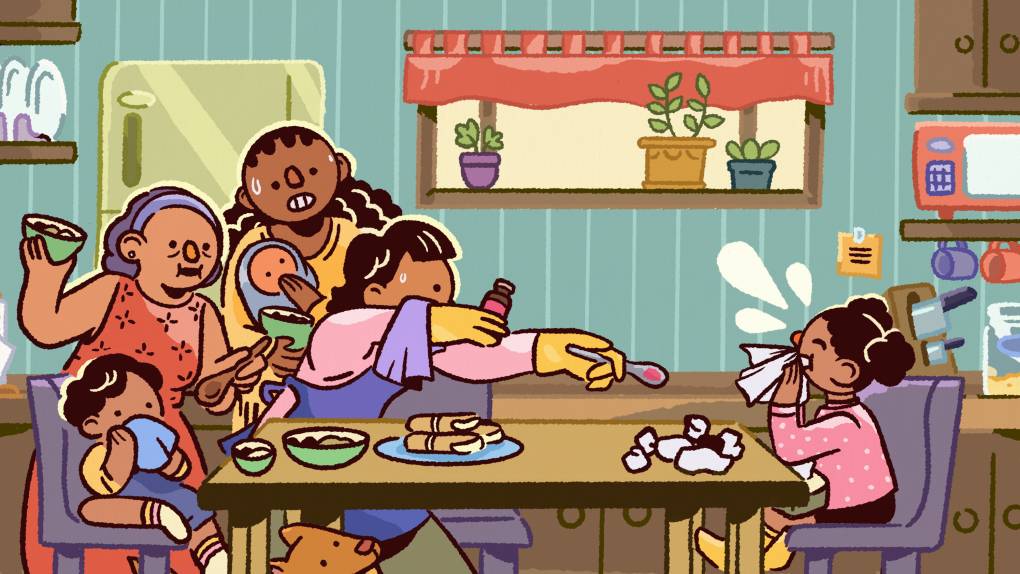
"audio_0": {
"type": "attachments",
"id": "audio_0",
"imgSizes": {
"kqedFullSize": {
"file": "https://ww2.kqed.org/news/wp-content/themes/KQED-unified/img/audio_bgs/background0.jpg"
}
}
},
"audio_1": {
"type": "attachments",
"id": "audio_1",
"imgSizes": {
"kqedFullSize": {
"file": "https://ww2.kqed.org/news/wp-content/themes/KQED-unified/img/audio_bgs/background1.jpg"
}
}
},
"audio_2": {
"type": "attachments",
"id": "audio_2",
"imgSizes": {
"kqedFullSize": {
"file": "https://ww2.kqed.org/news/wp-content/themes/KQED-unified/img/audio_bgs/background2.jpg"
}
}
},
"audio_3": {
"type": "attachments",
"id": "audio_3",
"imgSizes": {
"kqedFullSize": {
"file": "https://ww2.kqed.org/news/wp-content/themes/KQED-unified/img/audio_bgs/background3.jpg"
}
}
},
"audio_4": {
"type": "attachments",
"id": "audio_4",
"imgSizes": {
"kqedFullSize": {
"file": "https://ww2.kqed.org/news/wp-content/themes/KQED-unified/img/audio_bgs/background4.jpg"
}
}
},
"placeholder": {
"type": "attachments",
"id": "placeholder",
"imgSizes": {
"thumbnail": {
"file": "https://cdn.kqed.org/wp-content/uploads/2024/12/KQED-Default-Image-816638274-2000x1333-1-160x107.jpg",
"width": 160,
"height": 107,
"mimeType": "image/jpeg"
},
"medium": {
"file": "https://cdn.kqed.org/wp-content/uploads/2024/12/KQED-Default-Image-816638274-2000x1333-1-800x533.jpg",
"width": 800,
"height": 533,
"mimeType": "image/jpeg"
},
"medium_large": {
"file": "https://cdn.kqed.org/wp-content/uploads/2024/12/KQED-Default-Image-816638274-2000x1333-1-768x512.jpg",
"width": 768,
"height": 512,
"mimeType": "image/jpeg"
},
"large": {
"file": "https://cdn.kqed.org/wp-content/uploads/2024/12/KQED-Default-Image-816638274-2000x1333-1-1020x680.jpg",
"width": 1020,
"height": 680,
"mimeType": "image/jpeg"
},
"1536x1536": {
"file": "https://cdn.kqed.org/wp-content/uploads/2024/12/KQED-Default-Image-816638274-2000x1333-1-1536x1024.jpg",
"width": 1536,
"height": 1024,
"mimeType": "image/jpeg"
},
"fd-lrg": {
"file": "https://cdn.kqed.org/wp-content/uploads/2024/12/KQED-Default-Image-816638274-2000x1333-1-1536x1024.jpg",
"width": 1536,
"height": 1024,
"mimeType": "image/jpeg"
},
"fd-med": {
"file": "https://cdn.kqed.org/wp-content/uploads/2024/12/KQED-Default-Image-816638274-2000x1333-1-1020x680.jpg",
"width": 1020,
"height": 680,
"mimeType": "image/jpeg"
},
"fd-sm": {
"file": "https://cdn.kqed.org/wp-content/uploads/2024/12/KQED-Default-Image-816638274-2000x1333-1-800x533.jpg",
"width": 800,
"height": 533,
"mimeType": "image/jpeg"
},
"post-thumbnail": {
"file": "https://cdn.kqed.org/wp-content/uploads/2024/12/KQED-Default-Image-816638274-2000x1333-1-672x372.jpg",
"width": 672,
"height": 372,
"mimeType": "image/jpeg"
},
"twentyfourteen-full-width": {
"file": "https://cdn.kqed.org/wp-content/uploads/2024/12/KQED-Default-Image-816638274-2000x1333-1-1038x576.jpg",
"width": 1038,
"height": 576,
"mimeType": "image/jpeg"
},
"xxsmall": {
"file": "https://cdn.kqed.org/wp-content/uploads/2024/12/KQED-Default-Image-816638274-2000x1333-1-160x107.jpg",
"width": 160,
"height": 107,
"mimeType": "image/jpeg"
},
"xsmall": {
"file": "https://cdn.kqed.org/wp-content/uploads/2024/12/KQED-Default-Image-816638274-2000x1333-1-672x372.jpg",
"width": 672,
"height": 372,
"mimeType": "image/jpeg"
},
"small": {
"file": "https://cdn.kqed.org/wp-content/uploads/2024/12/KQED-Default-Image-816638274-2000x1333-1-672x372.jpg",
"width": 672,
"height": 372,
"mimeType": "image/jpeg"
},
"xlarge": {
"file": "https://cdn.kqed.org/wp-content/uploads/2024/12/KQED-Default-Image-816638274-2000x1333-1-1020x680.jpg",
"width": 1020,
"height": 680,
"mimeType": "image/jpeg"
},
"full-width": {
"file": "https://cdn.kqed.org/wp-content/uploads/2024/12/KQED-Default-Image-816638274-2000x1333-1-1920x1280.jpg",
"width": 1920,
"height": 1280,
"mimeType": "image/jpeg"
},
"guest-author-32": {
"file": "https://cdn.kqed.org/wp-content/uploads/2025/01/KQED-Default-Image-816638274-1333x1333-1-160x160.jpg",
"width": 32,
"height": 32,
"mimeType": "image/jpeg"
},
"guest-author-50": {
"file": "https://cdn.kqed.org/wp-content/uploads/2025/01/KQED-Default-Image-816638274-1333x1333-1-160x160.jpg",
"width": 50,
"height": 50,
"mimeType": "image/jpeg"
},
"guest-author-64": {
"file": "https://cdn.kqed.org/wp-content/uploads/2025/01/KQED-Default-Image-816638274-1333x1333-1-160x160.jpg",
"width": 64,
"height": 64,
"mimeType": "image/jpeg"
},
"guest-author-96": {
"file": "https://cdn.kqed.org/wp-content/uploads/2025/01/KQED-Default-Image-816638274-1333x1333-1-160x160.jpg",
"width": 96,
"height": 96,
"mimeType": "image/jpeg"
},
"guest-author-128": {
"file": "https://cdn.kqed.org/wp-content/uploads/2025/01/KQED-Default-Image-816638274-1333x1333-1-160x160.jpg",
"width": 128,
"height": 128,
"mimeType": "image/jpeg"
},
"detail": {
"file": "https://cdn.kqed.org/wp-content/uploads/2025/01/KQED-Default-Image-816638274-1333x1333-1-160x160.jpg",
"width": 160,
"height": 160,
"mimeType": "image/jpeg"
},
"kqedFullSize": {
"file": "https://cdn.kqed.org/wp-content/uploads/2024/12/KQED-Default-Image-816638274-2000x1333-1.jpg",
"width": 2000,
"height": 1333
}
}
},
"mindshift_58021": {
"type": "attachments",
"id": "mindshift_58021",
"meta": {
"index": "attachments_1716263798",
"site": "mindshift",
"id": "58021",
"found": true
},
"parent": 58020,
"imgSizes": {
"twentyfourteen-full-width": {
"file": "https://ww2.kqed.org/app/uploads/sites/23/2021/06/npr-kids-germs-static_wide-a1c01e9ecf94fe57da17018e37457e58d4358af9-1038x576.jpg",
"width": 1038,
"mimeType": "image/jpeg",
"height": 576
},
"thumbnail": {
"file": "https://ww2.kqed.org/app/uploads/sites/23/2021/06/npr-kids-germs-static_wide-a1c01e9ecf94fe57da17018e37457e58d4358af9-160x90.jpg",
"width": 160,
"mimeType": "image/jpeg",
"height": 90
},
"post-thumbnail": {
"file": "https://ww2.kqed.org/app/uploads/sites/23/2021/06/npr-kids-germs-static_wide-a1c01e9ecf94fe57da17018e37457e58d4358af9-672x372.jpg",
"width": 672,
"mimeType": "image/jpeg",
"height": 372
},
"kqedFullSize": {
"file": "https://ww2.kqed.org/app/uploads/sites/23/2021/06/npr-kids-germs-static_wide-a1c01e9ecf94fe57da17018e37457e58d4358af9-scaled-e1624000534489.jpg",
"width": 1920,
"height": 1080
},
"2048x2048": {
"file": "https://ww2.kqed.org/app/uploads/sites/23/2021/06/npr-kids-germs-static_wide-a1c01e9ecf94fe57da17018e37457e58d4358af9-2048x1152.jpg",
"width": 2048,
"mimeType": "image/jpeg",
"height": 1152
},
"large": {
"file": "https://ww2.kqed.org/app/uploads/sites/23/2021/06/npr-kids-germs-static_wide-a1c01e9ecf94fe57da17018e37457e58d4358af9-1020x574.jpg",
"width": 1020,
"mimeType": "image/jpeg",
"height": 574
},
"1536x1536": {
"file": "https://ww2.kqed.org/app/uploads/sites/23/2021/06/npr-kids-germs-static_wide-a1c01e9ecf94fe57da17018e37457e58d4358af9-1536x864.jpg",
"width": 1536,
"mimeType": "image/jpeg",
"height": 864
},
"full-width": {
"file": "https://ww2.kqed.org/app/uploads/sites/23/2021/06/npr-kids-germs-static_wide-a1c01e9ecf94fe57da17018e37457e58d4358af9-1920x1080.jpg",
"width": 1920,
"mimeType": "image/jpeg",
"height": 1080
},
"medium": {
"file": "https://ww2.kqed.org/app/uploads/sites/23/2021/06/npr-kids-germs-static_wide-a1c01e9ecf94fe57da17018e37457e58d4358af9-800x450.jpg",
"width": 800,
"mimeType": "image/jpeg",
"height": 450
},
"medium_large": {
"file": "https://ww2.kqed.org/app/uploads/sites/23/2021/06/npr-kids-germs-static_wide-a1c01e9ecf94fe57da17018e37457e58d4358af9-768x432.jpg",
"width": 768,
"mimeType": "image/jpeg",
"height": 432
}
},
"publishDate": 1623999982,
"modified": 1624000546,
"caption": null,
"description": null,
"title": "Reporter and parent Selena Simmons Duffin checked with infectious disease experts to learn how strategies from the coronavirus pandemic can be adapted to help parents keep their little ones and the whole family from sharing cold and flu viruses.",
"credit": "Joy Ho for NPR",
"status": "inherit",
"altTag": null,
"isLoading": false,
"fetchFailed": false
},
"mindshift_57977": {
"type": "attachments",
"id": "mindshift_57977",
"meta": {
"index": "attachments_1716263798",
"site": "mindshift",
"id": "57977",
"found": true
},
"parent": 57976,
"imgSizes": {
"twentyfourteen-full-width": {
"file": "https://ww2.kqed.org/app/uploads/sites/23/2021/06/decision-day1_custom-956731a1fe321ed646c69eadf42fc4e7e21ce04b-1038x576.jpg",
"width": 1038,
"mimeType": "image/jpeg",
"height": 576
},
"thumbnail": {
"file": "https://ww2.kqed.org/app/uploads/sites/23/2021/06/decision-day1_custom-956731a1fe321ed646c69eadf42fc4e7e21ce04b-160x101.jpg",
"width": 160,
"mimeType": "image/jpeg",
"height": 101
},
"post-thumbnail": {
"file": "https://ww2.kqed.org/app/uploads/sites/23/2021/06/decision-day1_custom-956731a1fe321ed646c69eadf42fc4e7e21ce04b-672x372.jpg",
"width": 672,
"mimeType": "image/jpeg",
"height": 372
},
"kqedFullSize": {
"file": "https://ww2.kqed.org/app/uploads/sites/23/2021/06/decision-day1_custom-956731a1fe321ed646c69eadf42fc4e7e21ce04b-scaled-e1623397403685.jpg",
"width": 1920,
"height": 1217
},
"2048x2048": {
"file": "https://ww2.kqed.org/app/uploads/sites/23/2021/06/decision-day1_custom-956731a1fe321ed646c69eadf42fc4e7e21ce04b-2048x1298.jpg",
"width": 2048,
"mimeType": "image/jpeg",
"height": 1298
},
"large": {
"file": "https://ww2.kqed.org/app/uploads/sites/23/2021/06/decision-day1_custom-956731a1fe321ed646c69eadf42fc4e7e21ce04b-1020x647.jpg",
"width": 1020,
"mimeType": "image/jpeg",
"height": 647
},
"1536x1536": {
"file": "https://ww2.kqed.org/app/uploads/sites/23/2021/06/decision-day1_custom-956731a1fe321ed646c69eadf42fc4e7e21ce04b-1536x974.jpg",
"width": 1536,
"mimeType": "image/jpeg",
"height": 974
},
"full-width": {
"file": "https://ww2.kqed.org/app/uploads/sites/23/2021/06/decision-day1_custom-956731a1fe321ed646c69eadf42fc4e7e21ce04b-1920x1217.jpg",
"width": 1920,
"mimeType": "image/jpeg",
"height": 1217
},
"medium": {
"file": "https://ww2.kqed.org/app/uploads/sites/23/2021/06/decision-day1_custom-956731a1fe321ed646c69eadf42fc4e7e21ce04b-800x507.jpg",
"width": 800,
"mimeType": "image/jpeg",
"height": 507
},
"medium_large": {
"file": "https://ww2.kqed.org/app/uploads/sites/23/2021/06/decision-day1_custom-956731a1fe321ed646c69eadf42fc4e7e21ce04b-768x487.jpg",
"width": 768,
"mimeType": "image/jpeg",
"height": 487
}
},
"publishDate": 1623397383,
"modified": 1623397423,
"caption": null,
"description": "Decisions, decisions.",
"title": "Overall enrollment in undergraduate and graduate programs has been trending downward since around 2012.",
"credit": "LA Johnson/NPR",
"status": "inherit",
"altTag": null,
"isLoading": false,
"fetchFailed": false
},
"mindshift_57941": {
"type": "attachments",
"id": "mindshift_57941",
"meta": {
"index": "attachments_1716263798",
"site": "mindshift",
"id": "57941",
"found": true
},
"parent": 57782,
"imgSizes": {
"twentyfourteen-full-width": {
"file": "https://ww2.kqed.org/app/uploads/sites/23/2021/06/iStock-1280356534-1038x576.jpg",
"width": 1038,
"mimeType": "image/jpeg",
"height": 576
},
"thumbnail": {
"file": "https://ww2.kqed.org/app/uploads/sites/23/2021/06/iStock-1280356534-160x107.jpg",
"width": 160,
"mimeType": "image/jpeg",
"height": 107
},
"post-thumbnail": {
"file": "https://ww2.kqed.org/app/uploads/sites/23/2021/06/iStock-1280356534-672x372.jpg",
"width": 672,
"mimeType": "image/jpeg",
"height": 372
},
"kqedFullSize": {
"file": "https://ww2.kqed.org/app/uploads/sites/23/2021/06/iStock-1280356534-e1622616931900.jpg",
"width": 1920,
"height": 1280
},
"2048x2048": {
"file": "https://ww2.kqed.org/app/uploads/sites/23/2021/06/iStock-1280356534-2048x1365.jpg",
"width": 2048,
"mimeType": "image/jpeg",
"height": 1365
},
"large": {
"file": "https://ww2.kqed.org/app/uploads/sites/23/2021/06/iStock-1280356534-1020x680.jpg",
"width": 1020,
"mimeType": "image/jpeg",
"height": 680
},
"1536x1536": {
"file": "https://ww2.kqed.org/app/uploads/sites/23/2021/06/iStock-1280356534-1536x1024.jpg",
"width": 1536,
"mimeType": "image/jpeg",
"height": 1024
},
"full-width": {
"file": "https://ww2.kqed.org/app/uploads/sites/23/2021/06/iStock-1280356534-1920x1280.jpg",
"width": 1920,
"mimeType": "image/jpeg",
"height": 1280
},
"medium": {
"file": "https://ww2.kqed.org/app/uploads/sites/23/2021/06/iStock-1280356534-800x533.jpg",
"width": 800,
"mimeType": "image/jpeg",
"height": 533
},
"medium_large": {
"file": "https://ww2.kqed.org/app/uploads/sites/23/2021/06/iStock-1280356534-768x512.jpg",
"width": 768,
"mimeType": "image/jpeg",
"height": 512
}
},
"publishDate": 1622616913,
"modified": 1622616947,
"caption": null,
"description": null,
"title": "iStock-1280356534",
"credit": "Human Age/iStock",
"status": "inherit",
"altTag": null,
"isLoading": false,
"fetchFailed": false
},
"mindshift_57865": {
"type": "attachments",
"id": "mindshift_57865",
"meta": {
"index": "attachments_1716263798",
"site": "mindshift",
"id": "57865",
"found": true
},
"parent": 57864,
"imgSizes": {
"twentyfourteen-full-width": {
"file": "https://ww2.kqed.org/app/uploads/sites/23/2021/05/ap20178622855559-6bdb3ceee0e952f325dae7c5f10eec375ce5b585-1038x576.jpg",
"width": 1038,
"mimeType": "image/jpeg",
"height": 576
},
"thumbnail": {
"file": "https://ww2.kqed.org/app/uploads/sites/23/2021/05/ap20178622855559-6bdb3ceee0e952f325dae7c5f10eec375ce5b585-160x120.jpg",
"width": 160,
"mimeType": "image/jpeg",
"height": 120
},
"post-thumbnail": {
"file": "https://ww2.kqed.org/app/uploads/sites/23/2021/05/ap20178622855559-6bdb3ceee0e952f325dae7c5f10eec375ce5b585-672x372.jpg",
"width": 672,
"mimeType": "image/jpeg",
"height": 372
},
"kqedFullSize": {
"file": "https://ww2.kqed.org/app/uploads/sites/23/2021/05/ap20178622855559-6bdb3ceee0e952f325dae7c5f10eec375ce5b585-scaled-e1620975320282.jpg",
"width": 1920,
"height": 1440
},
"2048x2048": {
"file": "https://ww2.kqed.org/app/uploads/sites/23/2021/05/ap20178622855559-6bdb3ceee0e952f325dae7c5f10eec375ce5b585-2048x1536.jpg",
"width": 2048,
"mimeType": "image/jpeg",
"height": 1536
},
"large": {
"file": "https://ww2.kqed.org/app/uploads/sites/23/2021/05/ap20178622855559-6bdb3ceee0e952f325dae7c5f10eec375ce5b585-1020x765.jpg",
"width": 1020,
"mimeType": "image/jpeg",
"height": 765
},
"1536x1536": {
"file": "https://ww2.kqed.org/app/uploads/sites/23/2021/05/ap20178622855559-6bdb3ceee0e952f325dae7c5f10eec375ce5b585-1536x1152.jpg",
"width": 1536,
"mimeType": "image/jpeg",
"height": 1152
},
"full-width": {
"file": "https://ww2.kqed.org/app/uploads/sites/23/2021/05/ap20178622855559-6bdb3ceee0e952f325dae7c5f10eec375ce5b585-1920x1440.jpg",
"width": 1920,
"mimeType": "image/jpeg",
"height": 1440
},
"medium": {
"file": "https://ww2.kqed.org/app/uploads/sites/23/2021/05/ap20178622855559-6bdb3ceee0e952f325dae7c5f10eec375ce5b585-800x600.jpg",
"width": 800,
"mimeType": "image/jpeg",
"height": 600
},
"medium_large": {
"file": "https://ww2.kqed.org/app/uploads/sites/23/2021/05/ap20178622855559-6bdb3ceee0e952f325dae7c5f10eec375ce5b585-768x576.jpg",
"width": 768,
"mimeType": "image/jpeg",
"height": 576
}
},
"publishDate": 1620975279,
"modified": 1620975333,
"caption": "A girl in Jersey City wears a mask at her Pre-K graduation ceremony almost a year ago. Now schools are deciding how looser CDC guidelines on masks affect education.\n",
"description": "FILE - In this June 10, 2020, file photo, Olivia Chan's father helps her with new mask she received during a graduation ceremony for her Pre-K class in front of Bradford School in Jersey City, N.J. New Jersey Gov. Phil Murphy says the state's schools will be open for in-person instruction this fall, as long as COVID-19 trends don't worsen. The guidelines lay out a number of requirements, but also leave many decisions up to the state's roughly 600 school districts. (AP Photo/Seth Wenig, File)",
"title": "A girl in Jersey City wears a mask at her Pre-K graduation ceremony almost a year ago. Now schools are deciding how looser CDC guidelines on masks affect education.",
"credit": "Seth Wenig/AP",
"status": "inherit",
"altTag": null,
"isLoading": false,
"fetchFailed": false
},
"mindshift_57819": {
"type": "attachments",
"id": "mindshift_57819",
"meta": {
"index": "attachments_1716263798",
"site": "mindshift",
"id": "57819",
"found": true
},
"parent": 57818,
"imgSizes": {
"twentyfourteen-full-width": {
"file": "https://ww2.kqed.org/app/uploads/sites/23/2021/05/gettyimages-1257996355_wide-350f2de5f7c45a45bb8154ff0335720bdca052eb-1038x576.jpg",
"width": 1038,
"mimeType": "image/jpeg",
"height": 576
},
"thumbnail": {
"file": "https://ww2.kqed.org/app/uploads/sites/23/2021/05/gettyimages-1257996355_wide-350f2de5f7c45a45bb8154ff0335720bdca052eb-160x90.jpg",
"width": 160,
"mimeType": "image/jpeg",
"height": 90
},
"post-thumbnail": {
"file": "https://ww2.kqed.org/app/uploads/sites/23/2021/05/gettyimages-1257996355_wide-350f2de5f7c45a45bb8154ff0335720bdca052eb-672x372.jpg",
"width": 672,
"mimeType": "image/jpeg",
"height": 372
},
"kqedFullSize": {
"file": "https://ww2.kqed.org/app/uploads/sites/23/2021/05/gettyimages-1257996355_wide-350f2de5f7c45a45bb8154ff0335720bdca052eb-scaled-e1620304507297.jpg",
"width": 1920,
"height": 1080
},
"2048x2048": {
"file": "https://ww2.kqed.org/app/uploads/sites/23/2021/05/gettyimages-1257996355_wide-350f2de5f7c45a45bb8154ff0335720bdca052eb-2048x1152.jpg",
"width": 2048,
"mimeType": "image/jpeg",
"height": 1152
},
"large": {
"file": "https://ww2.kqed.org/app/uploads/sites/23/2021/05/gettyimages-1257996355_wide-350f2de5f7c45a45bb8154ff0335720bdca052eb-1020x574.jpg",
"width": 1020,
"mimeType": "image/jpeg",
"height": 574
},
"1536x1536": {
"file": "https://ww2.kqed.org/app/uploads/sites/23/2021/05/gettyimages-1257996355_wide-350f2de5f7c45a45bb8154ff0335720bdca052eb-1536x864.jpg",
"width": 1536,
"mimeType": "image/jpeg",
"height": 864
},
"full-width": {
"file": "https://ww2.kqed.org/app/uploads/sites/23/2021/05/gettyimages-1257996355_wide-350f2de5f7c45a45bb8154ff0335720bdca052eb-1920x1080.jpg",
"width": 1920,
"mimeType": "image/jpeg",
"height": 1080
},
"medium": {
"file": "https://ww2.kqed.org/app/uploads/sites/23/2021/05/gettyimages-1257996355_wide-350f2de5f7c45a45bb8154ff0335720bdca052eb-800x450.jpg",
"width": 800,
"mimeType": "image/jpeg",
"height": 450
},
"medium_large": {
"file": "https://ww2.kqed.org/app/uploads/sites/23/2021/05/gettyimages-1257996355_wide-350f2de5f7c45a45bb8154ff0335720bdca052eb-768x432.jpg",
"width": 768,
"mimeType": "image/jpeg",
"height": 432
}
},
"publishDate": 1620304473,
"modified": 1620304527,
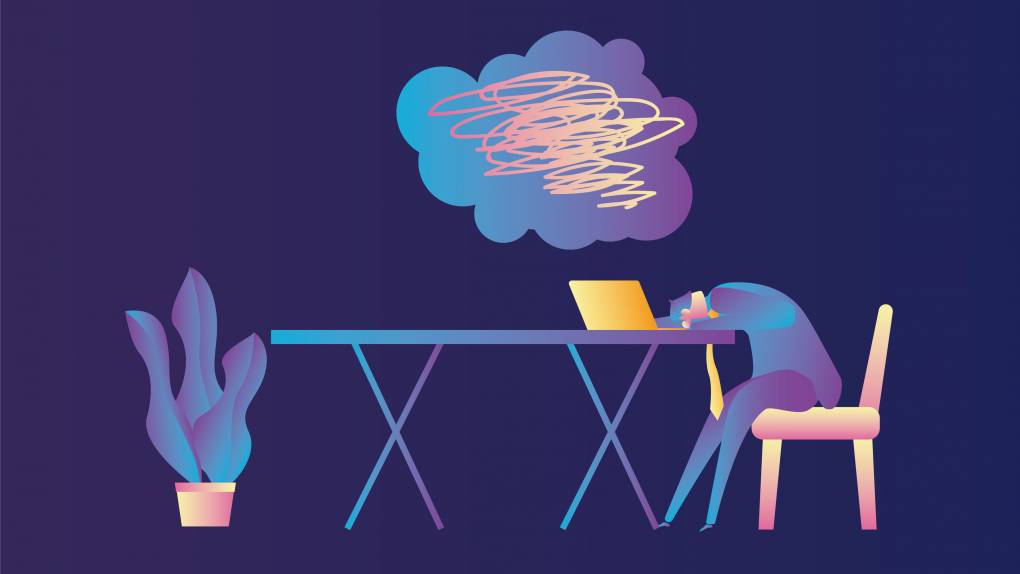
"caption": "Feelings of exhaustion, irritability and mental fogginess are our bodies' normal response to an abnormal year of pandemic life.\n",
"description": "Working, Office, Sitting, Business, Using Laptop, Tired,Boredom,Illness, Occupation,Sleeping,",
"title": "Feelings of exhaustion, irritability and mental fogginess are our bodies' normal response to an abnormal year of pandemic life.",
"credit": "Wenjin Chen/Getty Images",
"status": "inherit",
"altTag": null,
"isLoading": false,
"fetchFailed": false
},
"mindshift_57772": {
"type": "attachments",
"id": "mindshift_57772",
"meta": {
"index": "attachments_1716263798",
"site": "mindshift",
"id": "57772",
"found": true
},
"parent": 57771,
"imgSizes": {
"twentyfourteen-full-width": {
"file": "https://ww2.kqed.org/app/uploads/sites/23/2021/04/graduation-2021_final_kondrich_custom-9a67307dd5baea8768a9820927cd3d29035ad9fc-1038x576.jpg",
"width": 1038,
"mimeType": "image/jpeg",
"height": 576
},
"thumbnail": {
"file": "https://ww2.kqed.org/app/uploads/sites/23/2021/04/graduation-2021_final_kondrich_custom-9a67307dd5baea8768a9820927cd3d29035ad9fc-160x107.jpg",
"width": 160,
"mimeType": "image/jpeg",
"height": 107
},
"post-thumbnail": {
"file": "https://ww2.kqed.org/app/uploads/sites/23/2021/04/graduation-2021_final_kondrich_custom-9a67307dd5baea8768a9820927cd3d29035ad9fc-672x372.jpg",
"width": 672,
"mimeType": "image/jpeg",
"height": 372
},
"kqedFullSize": {
"file": "https://ww2.kqed.org/app/uploads/sites/23/2021/04/graduation-2021_final_kondrich_custom-9a67307dd5baea8768a9820927cd3d29035ad9fc-scaled-e1619888239757.jpg",
"width": 1920,
"height": 1279
},
"2048x2048": {
"file": "https://ww2.kqed.org/app/uploads/sites/23/2021/04/graduation-2021_final_kondrich_custom-9a67307dd5baea8768a9820927cd3d29035ad9fc-2048x1364.jpg",
"width": 2048,
"mimeType": "image/jpeg",
"height": 1364
},
"large": {
"file": "https://ww2.kqed.org/app/uploads/sites/23/2021/04/graduation-2021_final_kondrich_custom-9a67307dd5baea8768a9820927cd3d29035ad9fc-1020x679.jpg",
"width": 1020,
"mimeType": "image/jpeg",
"height": 679
},
"1536x1536": {
"file": "https://ww2.kqed.org/app/uploads/sites/23/2021/04/graduation-2021_final_kondrich_custom-9a67307dd5baea8768a9820927cd3d29035ad9fc-1536x1023.jpg",
"width": 1536,
"mimeType": "image/jpeg",
"height": 1023
},
"full-width": {
"file": "https://ww2.kqed.org/app/uploads/sites/23/2021/04/graduation-2021_final_kondrich_custom-9a67307dd5baea8768a9820927cd3d29035ad9fc-1920x1279.jpg",
"width": 1920,
"mimeType": "image/jpeg",
"height": 1279
},
"medium": {
"file": "https://ww2.kqed.org/app/uploads/sites/23/2021/04/graduation-2021_final_kondrich_custom-9a67307dd5baea8768a9820927cd3d29035ad9fc-800x533.jpg",
"width": 800,
"mimeType": "image/jpeg",
"height": 533
},
"medium_large": {
"file": "https://ww2.kqed.org/app/uploads/sites/23/2021/04/graduation-2021_final_kondrich_custom-9a67307dd5baea8768a9820927cd3d29035ad9fc-768x511.jpg",
"width": 768,
"mimeType": "image/jpeg",
"height": 511
}
},
"publishDate": 1619888216,
"modified": 1619888248,
"caption": null,
"description": null,
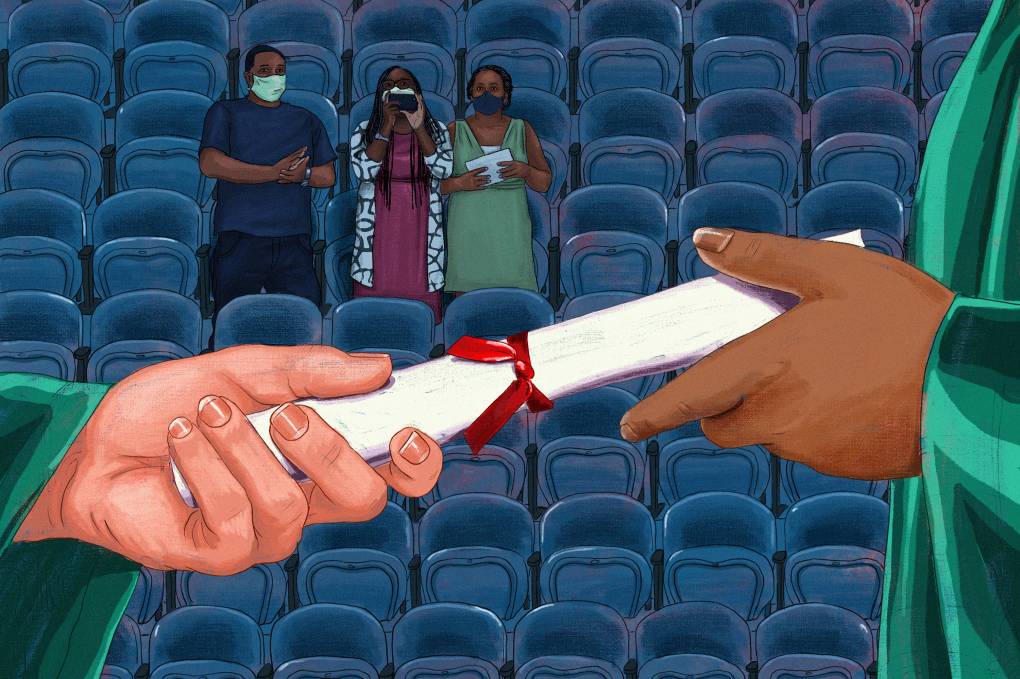
"title": "An illustration of a student being handed a diploma as a family looks on in an empty auditorium.",
"credit": "Michelle Kondrich for NPR",
"status": "inherit",
"altTag": null,
"isLoading": false,
"fetchFailed": false
},
"mindshift_57723": {
"type": "attachments",
"id": "mindshift_57723",
"meta": {
"index": "attachments_1716263798",
"site": "mindshift",
"id": "57723",
"found": true
},
"parent": 57720,
"imgSizes": {
"twentyfourteen-full-width": {
"file": "https://ww2.kqed.org/app/uploads/sites/23/2021/04/enadworny_rashidaandkai-promo_slide-857761f9ad20d8636d1d5b8b7f88f76ec71b6234-1038x576.jpg",
"width": 1038,
"mimeType": "image/jpeg",
"height": 576
},
"thumbnail": {
"file": "https://ww2.kqed.org/app/uploads/sites/23/2021/04/enadworny_rashidaandkai-promo_slide-857761f9ad20d8636d1d5b8b7f88f76ec71b6234-160x107.jpg",
"width": 160,
"mimeType": "image/jpeg",
"height": 107
},
"post-thumbnail": {
"file": "https://ww2.kqed.org/app/uploads/sites/23/2021/04/enadworny_rashidaandkai-promo_slide-857761f9ad20d8636d1d5b8b7f88f76ec71b6234-672x372.jpg",
"width": 672,
"mimeType": "image/jpeg",
"height": 372
},
"kqedFullSize": {
"file": "https://ww2.kqed.org/app/uploads/sites/23/2021/04/enadworny_rashidaandkai-promo_slide-857761f9ad20d8636d1d5b8b7f88f76ec71b6234-scaled-e1619077321694.jpg",
"width": 1920,
"height": 1280
},
"2048x2048": {
"file": "https://ww2.kqed.org/app/uploads/sites/23/2021/04/enadworny_rashidaandkai-promo_slide-857761f9ad20d8636d1d5b8b7f88f76ec71b6234-2048x1365.jpg",
"width": 2048,
"mimeType": "image/jpeg",
"height": 1365
},
"large": {
"file": "https://ww2.kqed.org/app/uploads/sites/23/2021/04/enadworny_rashidaandkai-promo_slide-857761f9ad20d8636d1d5b8b7f88f76ec71b6234-1020x680.jpg",
"width": 1020,
"mimeType": "image/jpeg",
"height": 680
},
"1536x1536": {
"file": "https://ww2.kqed.org/app/uploads/sites/23/2021/04/enadworny_rashidaandkai-promo_slide-857761f9ad20d8636d1d5b8b7f88f76ec71b6234-1536x1024.jpg",
"width": 1536,
"mimeType": "image/jpeg",
"height": 1024
},
"full-width": {
"file": "https://ww2.kqed.org/app/uploads/sites/23/2021/04/enadworny_rashidaandkai-promo_slide-857761f9ad20d8636d1d5b8b7f88f76ec71b6234-1920x1280.jpg",
"width": 1920,
"mimeType": "image/jpeg",
"height": 1280
},
"medium": {
"file": "https://ww2.kqed.org/app/uploads/sites/23/2021/04/enadworny_rashidaandkai-promo_slide-857761f9ad20d8636d1d5b8b7f88f76ec71b6234-800x533.jpg",
"width": 800,
"mimeType": "image/jpeg",
"height": 533
},
"medium_large": {
"file": "https://ww2.kqed.org/app/uploads/sites/23/2021/04/enadworny_rashidaandkai-promo_slide-857761f9ad20d8636d1d5b8b7f88f76ec71b6234-768x512.jpg",
"width": 768,
"mimeType": "image/jpeg",
"height": 512
}
},
"publishDate": 1619076841,
"modified": 1619077333,
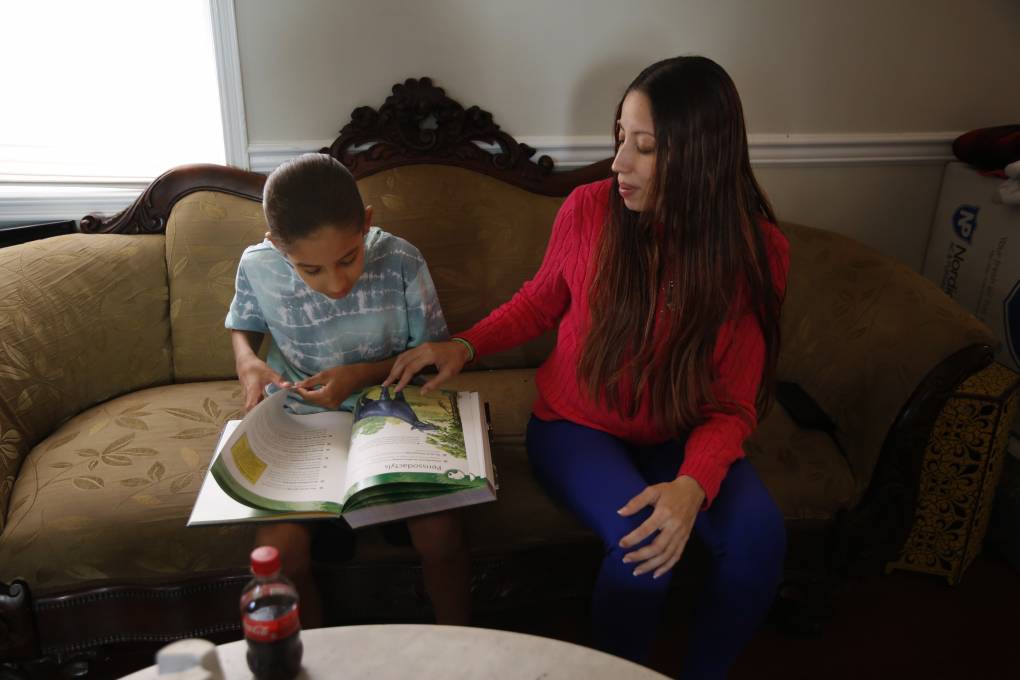
"caption": "Kai Humphrey, 9, has spent the past year learning remotely. His mom, Rashida Humphrey-Wall, says it's been hard on him. \"Stuff just keeps getting taken, and he just didn't understand like, 'When am I gonna see my friends again?' \"\n",
"description": null,
"title": "Rashida Humphrey-Wall (right) with her son Kai Humphrey at their home in Washington, D.C.",
"credit": "Elissa Nadworny/NPR",
"status": "inherit",
"altTag": null,
"isLoading": false,
"fetchFailed": false
},
"mindshift_57717": {
"type": "attachments",
"id": "mindshift_57717",
"meta": {
"index": "attachments_1716263798",
"site": "mindshift",
"id": "57717",
"found": true
},
"parent": 57716,
"imgSizes": {
"twentyfourteen-full-width": {
"file": "https://ww2.kqed.org/app/uploads/sites/23/2021/04/ryan-raphael_npr_teachers_slide-def39179ce36027a6c82ab9ce8e926d36a43f86d-1038x576.jpg",
"width": 1038,
"mimeType": "image/jpeg",
"height": 576
},
"thumbnail": {
"file": "https://ww2.kqed.org/app/uploads/sites/23/2021/04/ryan-raphael_npr_teachers_slide-def39179ce36027a6c82ab9ce8e926d36a43f86d-160x107.jpg",
"width": 160,
"mimeType": "image/jpeg",
"height": 107
},
"post-thumbnail": {
"file": "https://ww2.kqed.org/app/uploads/sites/23/2021/04/ryan-raphael_npr_teachers_slide-def39179ce36027a6c82ab9ce8e926d36a43f86d-672x372.jpg",
"width": 672,
"mimeType": "image/jpeg",
"height": 372
},
"kqedFullSize": {
"file": "https://ww2.kqed.org/app/uploads/sites/23/2021/04/ryan-raphael_npr_teachers_slide-def39179ce36027a6c82ab9ce8e926d36a43f86d-scaled.jpg",
"width": 2560,
"height": 1707
},
"2048x2048": {
"file": "https://ww2.kqed.org/app/uploads/sites/23/2021/04/ryan-raphael_npr_teachers_slide-def39179ce36027a6c82ab9ce8e926d36a43f86d-2048x1365.jpg",
"width": 2048,
"mimeType": "image/jpeg",
"height": 1365
},
"large": {
"file": "https://ww2.kqed.org/app/uploads/sites/23/2021/04/ryan-raphael_npr_teachers_slide-def39179ce36027a6c82ab9ce8e926d36a43f86d-1020x680.jpg",
"width": 1020,
"mimeType": "image/jpeg",
"height": 680
},
"1536x1536": {
"file": "https://ww2.kqed.org/app/uploads/sites/23/2021/04/ryan-raphael_npr_teachers_slide-def39179ce36027a6c82ab9ce8e926d36a43f86d-1536x1024.jpg",
"width": 1536,
"mimeType": "image/jpeg",
"height": 1024
},
"full-width": {
"file": "https://ww2.kqed.org/app/uploads/sites/23/2021/04/ryan-raphael_npr_teachers_slide-def39179ce36027a6c82ab9ce8e926d36a43f86d-1920x1280.jpg",
"width": 1920,
"mimeType": "image/jpeg",
"height": 1280
},
"medium": {
"file": "https://ww2.kqed.org/app/uploads/sites/23/2021/04/ryan-raphael_npr_teachers_slide-def39179ce36027a6c82ab9ce8e926d36a43f86d-800x533.jpg",
"width": 800,
"mimeType": "image/jpeg",
"height": 533
},
"medium_large": {
"file": "https://ww2.kqed.org/app/uploads/sites/23/2021/04/ryan-raphael_npr_teachers_slide-def39179ce36027a6c82ab9ce8e926d36a43f86d-768x512.jpg",
"width": 768,
"mimeType": "image/jpeg",
"height": 512
}
},
"publishDate": 1619076557,
"modified": 1619076624,
"caption": null,
"description": null,
"title": "A masked teacher sits squeezed in a classroom with her students.",
"credit": "Ryan Raphael for NPR",
"status": "inherit",
"altTag": null,
"isLoading": false,
"fetchFailed": false
},
"mindshift_57640": {
"type": "attachments",
"id": "mindshift_57640",
"meta": {
"index": "attachments_1716263798",
"site": "mindshift",
"id": "57640",
"found": true
},
"parent": 57639,
"imgSizes": {
"twentyfourteen-full-width": {
"file": "https://ww2.kqed.org/app/uploads/sites/23/2021/03/teachernew_slide-149bf0393611eb75b19751585c934228661f0ae4-1038x576.png",
"width": 1038,
"mimeType": "image/png",
"height": 576
},
"thumbnail": {
"file": "https://ww2.kqed.org/app/uploads/sites/23/2021/03/teachernew_slide-149bf0393611eb75b19751585c934228661f0ae4-160x107.png",
"width": 160,
"mimeType": "image/png",
"height": 107
},
"post-thumbnail": {
"file": "https://ww2.kqed.org/app/uploads/sites/23/2021/03/teachernew_slide-149bf0393611eb75b19751585c934228661f0ae4-672x372.png",
"width": 672,
"mimeType": "image/png",
"height": 372
},
"kqedFullSize": {
"file": "https://ww2.kqed.org/app/uploads/sites/23/2021/03/teachernew_slide-149bf0393611eb75b19751585c934228661f0ae4-e1617089103822.png",
"width": 1920,
"height": 1281
},
"2048x2048": {
"file": "https://ww2.kqed.org/app/uploads/sites/23/2021/03/teachernew_slide-149bf0393611eb75b19751585c934228661f0ae4-2048x1366.png",
"width": 2048,
"mimeType": "image/png",
"height": 1366
},
"large": {
"file": "https://ww2.kqed.org/app/uploads/sites/23/2021/03/teachernew_slide-149bf0393611eb75b19751585c934228661f0ae4-1020x680.png",
"width": 1020,
"mimeType": "image/png",
"height": 680
},
"1536x1536": {
"file": "https://ww2.kqed.org/app/uploads/sites/23/2021/03/teachernew_slide-149bf0393611eb75b19751585c934228661f0ae4-1536x1025.png",
"width": 1536,
"mimeType": "image/png",
"height": 1025
},
"full-width": {
"file": "https://ww2.kqed.org/app/uploads/sites/23/2021/03/teachernew_slide-149bf0393611eb75b19751585c934228661f0ae4-1920x1281.png",
"width": 1920,
"mimeType": "image/png",
"height": 1281
},
"medium": {
"file": "https://ww2.kqed.org/app/uploads/sites/23/2021/03/teachernew_slide-149bf0393611eb75b19751585c934228661f0ae4-800x534.png",
"width": 800,
"mimeType": "image/png",
"height": 534
},
"medium_large": {
"file": "https://ww2.kqed.org/app/uploads/sites/23/2021/03/teachernew_slide-149bf0393611eb75b19751585c934228661f0ae4-768x512.png",
"width": 768,
"mimeType": "image/png",
"height": 512
}
},
"publishDate": 1617088950,
"modified": 1617089126,
"caption": null,
"description": null,
"title": "Eda Uzunlar/NPR",
"credit": "Eda Uzunlar/NPR",
"status": "inherit",
"altTag": null,
"isLoading": false,
"fetchFailed": false
},
"mindshift_57628": {
"type": "attachments",
"id": "mindshift_57628",
"meta": {
"index": "attachments_1716263798",
"site": "mindshift",
"id": "57628",
"found": true
},
"parent": 57627,
"imgSizes": {
"twentyfourteen-full-width": {
"file": "https://ww2.kqed.org/app/uploads/sites/23/2021/03/erickmramos_lifekit-v2_wide-35735ea8907e051b04146d5945b9840798378ca6-1038x576.jpg",
"width": 1038,
"mimeType": "image/jpeg",
"height": 576
},
"thumbnail": {
"file": "https://ww2.kqed.org/app/uploads/sites/23/2021/03/erickmramos_lifekit-v2_wide-35735ea8907e051b04146d5945b9840798378ca6-160x90.jpg",
"width": 160,
"mimeType": "image/jpeg",
"height": 90
},
"post-thumbnail": {
"file": "https://ww2.kqed.org/app/uploads/sites/23/2021/03/erickmramos_lifekit-v2_wide-35735ea8907e051b04146d5945b9840798378ca6-672x372.jpg",
"width": 672,
"mimeType": "image/jpeg",
"height": 372
},
"kqedFullSize": {
"file": "https://ww2.kqed.org/app/uploads/sites/23/2021/03/erickmramos_lifekit-v2_wide-35735ea8907e051b04146d5945b9840798378ca6.jpg",
"width": 1900,
"height": 1068
},
"large": {
"file": "https://ww2.kqed.org/app/uploads/sites/23/2021/03/erickmramos_lifekit-v2_wide-35735ea8907e051b04146d5945b9840798378ca6-1020x573.jpg",
"width": 1020,
"mimeType": "image/jpeg",
"height": 573
},
"1536x1536": {
"file": "https://ww2.kqed.org/app/uploads/sites/23/2021/03/erickmramos_lifekit-v2_wide-35735ea8907e051b04146d5945b9840798378ca6-1536x863.jpg",
"width": 1536,
"mimeType": "image/jpeg",
"height": 863
},
"medium": {
"file": "https://ww2.kqed.org/app/uploads/sites/23/2021/03/erickmramos_lifekit-v2_wide-35735ea8907e051b04146d5945b9840798378ca6-800x450.jpg",
"width": 800,
"mimeType": "image/jpeg",
"height": 450
},
"medium_large": {
"file": "https://ww2.kqed.org/app/uploads/sites/23/2021/03/erickmramos_lifekit-v2_wide-35735ea8907e051b04146d5945b9840798378ca6-768x432.jpg",
"width": 768,
"mimeType": "image/jpeg",
"height": 432
}
},
"publishDate": 1616747146,
"modified": 1616747213,
"caption": null,
"description": null,
"title": "Illustration of a teenage girl sitting on her bed with her head in her hands, her phone sitting next to her. Her mother walks through the door on the other side of the room, but is separated by a deep chasm that it appears she cannot cross.",
"credit": "Erick M. Ramos for NPR",
"status": "inherit",
"altTag": null,
"isLoading": false,
"fetchFailed": false
},
"mindshift_57590": {
"type": "attachments",
"id": "mindshift_57590",
"meta": {
"index": "attachments_1716263798",
"site": "mindshift",
"id": "57590",
"found": true
},
"parent": 57589,
"imgSizes": {
"twentyfourteen-full-width": {
"file": "https://ww2.kqed.org/app/uploads/sites/23/2021/03/gettyimages-1207839838-51cb4d40d5b4b146861a6c4e6e23dbb9a93c070d-1038x576.jpg",
"width": 1038,
"mimeType": "image/jpeg",
"height": 576
},
"thumbnail": {
"file": "https://ww2.kqed.org/app/uploads/sites/23/2021/03/gettyimages-1207839838-51cb4d40d5b4b146861a6c4e6e23dbb9a93c070d-160x120.jpg",
"width": 160,
"mimeType": "image/jpeg",
"height": 120
},
"post-thumbnail": {
"file": "https://ww2.kqed.org/app/uploads/sites/23/2021/03/gettyimages-1207839838-51cb4d40d5b4b146861a6c4e6e23dbb9a93c070d-672x372.jpg",
"width": 672,
"mimeType": "image/jpeg",
"height": 372
},
"kqedFullSize": {
"file": "https://ww2.kqed.org/app/uploads/sites/23/2021/03/gettyimages-1207839838-51cb4d40d5b4b146861a6c4e6e23dbb9a93c070d-scaled-e1616481260864.jpg",
"width": 1920,
"height": 1440
},
"2048x2048": {
"file": "https://ww2.kqed.org/app/uploads/sites/23/2021/03/gettyimages-1207839838-51cb4d40d5b4b146861a6c4e6e23dbb9a93c070d-2048x1536.jpg",
"width": 2048,
"mimeType": "image/jpeg",
"height": 1536
},
"large": {
"file": "https://ww2.kqed.org/app/uploads/sites/23/2021/03/gettyimages-1207839838-51cb4d40d5b4b146861a6c4e6e23dbb9a93c070d-1020x765.jpg",
"width": 1020,
"mimeType": "image/jpeg",
"height": 765
},
"1536x1536": {
"file": "https://ww2.kqed.org/app/uploads/sites/23/2021/03/gettyimages-1207839838-51cb4d40d5b4b146861a6c4e6e23dbb9a93c070d-1536x1152.jpg",
"width": 1536,
"mimeType": "image/jpeg",
"height": 1152
},
"full-width": {
"file": "https://ww2.kqed.org/app/uploads/sites/23/2021/03/gettyimages-1207839838-51cb4d40d5b4b146861a6c4e6e23dbb9a93c070d-1920x1440.jpg",
"width": 1920,
"mimeType": "image/jpeg",
"height": 1440
},
"medium": {
"file": "https://ww2.kqed.org/app/uploads/sites/23/2021/03/gettyimages-1207839838-51cb4d40d5b4b146861a6c4e6e23dbb9a93c070d-800x600.jpg",
"width": 800,
"mimeType": "image/jpeg",
"height": 600
},
"medium_large": {
"file": "https://ww2.kqed.org/app/uploads/sites/23/2021/03/gettyimages-1207839838-51cb4d40d5b4b146861a6c4e6e23dbb9a93c070d-768x576.jpg",
"width": 768,
"mimeType": "image/jpeg",
"height": 576
}
},
"publishDate": 1616481136,
"modified": 1616481284,
"caption": "A Census Bureau survey found that the number of households that said they were homeschooling doubled last year.\n",
"description": null,
"title": "A Census Bureau survey found that the number of households that said they were homeschooling doubled last year.",
"credit": "Eric Baradat/AFP via Getty Images",
"status": "inherit",
"altTag": null,
"isLoading": false,
"fetchFailed": false
},
"mindshift_57538": {
"type": "attachments",
"id": "mindshift_57538",
"meta": {
"index": "attachments_1716263798",
"site": "mindshift",
"id": "57538",
"found": true
},
"parent": 57511,
"imgSizes": {
"twentyfourteen-full-width": {
"file": "https://ww2.kqed.org/app/uploads/sites/23/2021/03/Helping-students-deal-with-grief-stemming-from-Coronavirus-iStock-1227306238-1038x576.jpg",
"width": 1038,
"mimeType": "image/jpeg",
"height": 576
},
"thumbnail": {
"file": "https://ww2.kqed.org/app/uploads/sites/23/2021/03/Helping-students-deal-with-grief-stemming-from-Coronavirus-iStock-1227306238-160x113.jpg",
"width": 160,
"mimeType": "image/jpeg",
"height": 113
},
"post-thumbnail": {
"file": "https://ww2.kqed.org/app/uploads/sites/23/2021/03/Helping-students-deal-with-grief-stemming-from-Coronavirus-iStock-1227306238-672x372.jpg",
"width": 672,
"mimeType": "image/jpeg",
"height": 372
},
"kqedFullSize": {
"file": "https://ww2.kqed.org/app/uploads/sites/23/2021/03/Helping-students-deal-with-grief-stemming-from-Coronavirus-iStock-1227306238.jpg",
"width": 2057,
"height": 1457
},
"2048x2048": {
"file": "https://ww2.kqed.org/app/uploads/sites/23/2021/03/Helping-students-deal-with-grief-stemming-from-Coronavirus-iStock-1227306238-2048x1451.jpg",
"width": 2048,
"mimeType": "image/jpeg",
"height": 1451
},
"large": {
"file": "https://ww2.kqed.org/app/uploads/sites/23/2021/03/Helping-students-deal-with-grief-stemming-from-Coronavirus-iStock-1227306238-1020x722.jpg",
"width": 1020,
"mimeType": "image/jpeg",
"height": 722
},
"1536x1536": {
"file": "https://ww2.kqed.org/app/uploads/sites/23/2021/03/Helping-students-deal-with-grief-stemming-from-Coronavirus-iStock-1227306238-1536x1088.jpg",
"width": 1536,
"mimeType": "image/jpeg",
"height": 1088
},
"full-width": {
"file": "https://ww2.kqed.org/app/uploads/sites/23/2021/03/Helping-students-deal-with-grief-stemming-from-Coronavirus-iStock-1227306238-1920x1360.jpg",
"width": 1920,
"mimeType": "image/jpeg",
"height": 1360
},
"medium": {
"file": "https://ww2.kqed.org/app/uploads/sites/23/2021/03/Helping-students-deal-with-grief-stemming-from-Coronavirus-iStock-1227306238-800x567.jpg",
"width": 800,
"mimeType": "image/jpeg",
"height": 567
},
"medium_large": {
"file": "https://ww2.kqed.org/app/uploads/sites/23/2021/03/Helping-students-deal-with-grief-stemming-from-Coronavirus-iStock-1227306238-768x544.jpg",
"width": 768,
"mimeType": "image/jpeg",
"height": 544
}
},
"publishDate": 1615882509,
"modified": 1615882534,
"caption": null,
"description": null,
"title": null,
"credit": "nadia_bormotova/iStock",
"status": "inherit",
"altTag": null,
"isLoading": false,
"fetchFailed": false
}
},
"audioPlayerReducer": {
"postId": "stream_live",
"isPaused": true,
"isPlaying": false,
"pfsActive": false,
"pledgeModalIsOpen": true,
"playerDrawerIsOpen": false,
"liveAudioPlayStartedAt": 0,
"liveAudioPlayContext": ""
},
"authorsReducer": {
"byline_mindshift_58020": {
"type": "authors",
"id": "byline_mindshift_58020",
"meta": {
"override": true
},
"slug": "byline_mindshift_58020",
"name": "Selena Simmons-Duffin",
"isLoading": false
},
"byline_mindshift_57976": {
"type": "authors",
"id": "byline_mindshift_57976",
"meta": {
"override": true
},
"slug": "byline_mindshift_57976",
"name": "Elissa Nadworny ",
"isLoading": false
},
"byline_mindshift_57864": {
"type": "authors",
"id": "byline_mindshift_57864",
"meta": {
"override": true
},
"slug": "byline_mindshift_57864",
"name": "Cory Turner",
"isLoading": false
},
"byline_mindshift_57818": {
"type": "authors",
"id": "byline_mindshift_57818",
"meta": {
"override": true
},
"slug": "byline_mindshift_57818",
"name": "Rhitu Chatterjee",
"isLoading": false
},
"byline_mindshift_57771": {
"type": "authors",
"id": "byline_mindshift_57771",
"meta": {
"override": true
},
"slug": "byline_mindshift_57771",
"name": "Elissa Nadworny and Eda Uzunlar",
"isLoading": false
},
"byline_mindshift_57720": {
"type": "authors",
"id": "byline_mindshift_57720",
"meta": {
"override": true
},
"slug": "byline_mindshift_57720",
"name": "Cory Turner and Christine Herman",
"isLoading": false
},
"byline_mindshift_57716": {
"type": "authors",
"id": "byline_mindshift_57716",
"meta": {
"override": true
},
"slug": "byline_mindshift_57716",
"name": "Kavitha Cardoza",
"isLoading": false
},
"byline_mindshift_57639": {
"type": "authors",
"id": "byline_mindshift_57639",
"meta": {
"override": true
},
"slug": "byline_mindshift_57639",
"name": "Eda Uzunlar",
"isLoading": false
},
"byline_mindshift_57627": {
"type": "authors",
"id": "byline_mindshift_57627",
"meta": {
"override": true
},
"slug": "byline_mindshift_57627",
"name": "Anya Kamenetz",
"isLoading": false
},
"byline_mindshift_57589": {
"type": "authors",
"id": "byline_mindshift_57589",
"meta": {
"override": true
},
"slug": "byline_mindshift_57589",
"name": "Laurel Wamsley",
"isLoading": false
},
"kdnewhouse": {
"type": "authors",
"id": "11487",
"meta": {
"index": "authors_1716337520",
"id": "11487",
"found": true
},
"name": "Kara Newhouse",
"firstName": "Kara",
"lastName": "Newhouse",
"slug": "kdnewhouse",
"email": "knewhouse@kqed.org",
"display_author_email": false,
"staff_mastheads": [],
"title": "MindShift Editor",
"bio": null,
"avatar": "https://secure.gravatar.com/avatar/3dceed6fb271527113abfa9a8e9df34e?s=600&d=blank&r=g",
"twitter": null,
"facebook": null,
"instagram": null,
"linkedin": null,
"sites": [
{
"site": "",
"roles": [
"editor"
]
},
{
"site": "mindshift",
"roles": []
}
],
"headData": {
"title": "Kara Newhouse | KQED",
"description": "MindShift Editor",
"ogImgSrc": "https://secure.gravatar.com/avatar/3dceed6fb271527113abfa9a8e9df34e?s=600&d=blank&r=g",
"twImgSrc": "https://secure.gravatar.com/avatar/3dceed6fb271527113abfa9a8e9df34e?s=600&d=blank&r=g"
},
"isLoading": false,
"link": "/author/kdnewhouse"
},
"csmith": {
"type": "authors",
"id": "11603",
"meta": {
"index": "authors_1716337520",
"id": "11603",
"found": true
},
"name": "Caroline Smith",
"firstName": "Caroline",
"lastName": "Smith",
"slug": "csmith",
"email": "csmith@kqed.org",
"display_author_email": true,
"staff_mastheads": [
"news"
],
"title": "Producer, Forum",
"bio": "Caroline Smith is a producer for \u003cem>Forum\u003c/em>, producing more than 500 segments since joining the team in 2019 as an intern. From the Bay Area, Smith graduated with a B.A. in Rhetoric from UC Berkeley and is an alumnus of \u003cem>The Daily Californian.\u003c/em> They have received multiple San Francisco Press Club awards, a Fulbright scholarship and the ICFJ's Arthur F. Burns Fellowship, through which they reported from Berlin for one of Germany's largest national newspapers.",
"avatar": "https://secure.gravatar.com/avatar/191832bcd9809e2c67810a34b813b4b6c43fcba15f499f526da57b7161b4c778?s=600&d=blank&r=g",
"twitter": null,
"bluesky": null,
"facebook": null,
"instagram": null,
"linkedin": null,
"sites": [
{
"site": "arts",
"roles": [
"editor"
]
},
{
"site": "news",
"roles": [
"author"
]
},
{
"site": "mindshift",
"roles": [
"editor"
]
},
{
"site": "forum",
"roles": [
"administrator"
]
},
{
"site": "perspectives",
"roles": [
"editor"
]
}
],
"headData": {
"title": "Caroline Smith | KQED",
"description": "Producer, Forum",
"ogImgSrc": "https://secure.gravatar.com/avatar/191832bcd9809e2c67810a34b813b4b6c43fcba15f499f526da57b7161b4c778?s=600&d=blank&r=g",
"twImgSrc": "https://secure.gravatar.com/avatar/191832bcd9809e2c67810a34b813b4b6c43fcba15f499f526da57b7161b4c778?s=600&d=blank&r=g"
},
"isLoading": false,
"link": "/author/csmith"
}
},
"pagesReducer": {
"mindshift_tag_covid-19": {
"type": "terms",
"id": "mindshift_21343",
"meta": {
"index": "terms_1716263798",
"site": "mindshift",
"id": "21343",
"score": 8.558781
},
"featImg": null,
"name": "COVID-19",
"description": null,
"taxonomy": "tag",
"headData": {
"twImgId": null,
"twTitle": null,
"ogTitle": null,
"ogImgId": null,
"twDescription": null,
"description": null,
"title": "COVID-19 Archives - KQED Mindshift",
"ogDescription": null
},
"ttid": 20615,
"slug": "covid-19",
"isLoading": false,
"title": "COVID-19",
"pageMeta": {
"site": "mindshift",
"WpPageTemplate": "page-topic-editorial",
"currentPage": 8
},
"blocks": [
{
"blockName": "kqed/post-list",
"attrs": {
"layout": "cardArticle2",
"query": "posts/mindshift?tag=covid-19",
"seeMore": false,
"paginated": true,
"page": 8
}
},
{
"blockName": "kqed/ad"
}
]
}
},
"pfsSessionReducer": {},
"postsReducer": {
"stream_live": {
"type": "live",
"id": "stream_live",
"audioUrl": "https://streams.kqed.org/kqedradio",
"title": "Live Stream",
"excerpt": "Live Stream information currently unavailable.",
"link": "/radio",
"featImg": "",
"label": {
"name": "KQED Live",
"link": "/"
}
},
"stream_kqedNewscast": {
"type": "posts",
"id": "stream_kqedNewscast",
"audioUrl": "https://www.kqed.org/.stream/anon/radio/RDnews/newscast.mp3?_=1",
"title": "KQED Newscast",
"featImg": "",
"label": {
"name": "88.5 FM",
"link": "/"
}
},
"mindshift_58020": {
"type": "posts",
"id": "mindshift_58020",
"meta": {
"index": "posts_1716263798",
"site": "mindshift",
"id": "58020",
"score": null,
"sort": [
1624000583000
]
},
"parent": 0,
"labelTerm": {
"site": "mindshift"
},
"blocks": [],
"publishDate": 1624000583,
"format": "standard",
"disqusTitle": "5 Ways To Stop Summer Colds From Making The Rounds In Your Family",
"title": "5 Ways To Stop Summer Colds From Making The Rounds In Your Family",
"headTitle": "MindShift | KQED News",
"content": "\u003cp>Perhaps the only respite pandemic closures brought to my family — which includes two kids under age 6 — was freedom from the constant misery of dripping noses, sneezes and coughs. And statistics suggest we weren't the only ones who had fewer colds last year: With daycares and in-person schools closed and widespread use of masks and hand sanitizer in most communities, cases of many \u003ca href=\"https://academic.oup.com/cid/advance-article/doi/10.1093/cid/ciab311/6257582\">seasonal respiratory infections went down\u003c/a>, and flu cases \u003ca href=\"https://www.cdc.gov/mmwr/volumes/69/wr/mm6937a6.htm\">dropped off a cliff\u003c/a>.\u003c/p>\n\u003cp>That reprieve might be ending. Social mixing has been starting up again in much of the U.S. and so have cases of garden-variety sniffles. The Centers for Disease Control and Prevention just warned physicians that RSV, a unpleasant respiratory virus, is \u003ca href=\"https://emergency.cdc.gov/han/2021/han00443.asp\">surging right now in southern states\u003c/a>. And it's not just happening in the U.S. — researchers \u003ca href=\"https://www.thelancet.com/action/showPdf?pii=S2213-2600%2820%2930502-6\">in the U.K.\u003c/a> and \u003ca href=\"https://wwwnc.cdc.gov/eid/article/27/5/21-0277_article\">Hong Kong\u003c/a> found that \u003ca href=\"https://www.healthychildren.org/English/health-issues/conditions/ear-nose-throat/Pages/Rhinovirus-Infections.aspx\">rhinovirus outbreaks\u003c/a> spiked there, too, when COVID-19 lockdowns ended.\u003c/p>\n\u003cp>My family is at the vanguard of this trend. Right after Washington D.C. lifted its mask mandate a few weeks ago, both my kids got runny noses and coughs, and as soon as they tested negative for COVID-19, my pandemic fears were replaced by a familiar dread. I had visions of sleepless, cough-filled nights, dirty tissues everywhere, and — in short order — my own miserable cold.\u003c/p>\n\u003cp>\"If someone in your house is sick, you're not only breathing in their sick air, you're touching those contaminated surfaces. You're having closer contact, you're having longer exposures,\" says \u003ca href=\"http://www.mmg.pitt.edu/person/seema-s-lakdawala\">Seema Lakdawala\u003c/a>, a researcher at the University of Pittsburgh School of Medicine, who studies how influenza viruses transmit between people. It can start to feel inevitable that the whole family will get sick.\u003c/p>\n\u003cp>Take heart, my fellow parents-of-adorable-little-germ-machines! Lakdawala says many strategies we all picked up to fight COVID-19 can also stop the spread of many routine respiratory viruses. In fact, they may be even more effective against run-of-the-mill germs, since, unlike the viruses behind most colds, SARS-CoV2 was new to the human immune system.\u003c/p>\n\u003cp>[ad fullwidth]\u003c/p>\n\u003cp>Those strategies start with everyone \u003ca href=\"https://www.npr.org/2021/02/14/967431377/where-did-the-flu-go-homebound-kids-shape-a-mild-season\">keeping their children home from school\u003c/a>, camp and playdates when they're sick and keeping up with any and all \u003ca href=\"https://www.cdc.gov/vaccines/schedules/hcp/imz/child-adolescent.html\">vaccinations against childhood illnesses\u003c/a>. Beyond that, specialists in infectious disease transmission I consulted offer five more tips for keeping my family and yours healthier this summer.\u003c/p>\n\u003ch3>Tip #1: Hang on to those masks\u003c/h3>\n\u003cp>In pre-pandemic times, it might have seemed like a weird move to put on a mask during storytime with your drippy-nosed kid, but \u003ca href=\"https://www.feinberg.northwestern.edu/faculty-profiles/az/profile.html?xid=17154\">Dr. Tina Tan\u003c/a> says that's her top tip. She's a professor of pediatrics at the Feinberg School of Medicine at Northwestern University and a pediatric infectious disease physician at Lurie Children's Hospital in Chicago.\u003c/p>\n\u003cp>When it comes to influenza, a rhinovirus, or any of the other respiratory bugs constantly circulating, \"once these viruses touch your mucous membranes, whether it's your eyes, your nose or your mouth, you do have a chance of contracting it,\" says Tan. Masks help \u003ca href=\"https://www.npr.org/sections/goatsandsoda/2020/04/22/840146830/adding-a-nylon-stocking-layer-could-boost-protection-from-cloth-masks-study-find\">stop infectious particles\u003c/a> and virus-filled droplets from getting into your body.\u003c/p>\n\u003cp>\"You don't need a N95,\" Tan says. A light-weight surgical mask or homemade cloth mask can work as long as it has \u003ca href=\"https://www.npr.org/sections/health-shots/2021/02/03/962197192/5-hacks-to-make-your-face-mask-more-protective\">two or more layers\u003c/a>. The mask-wearing also doesn't have to be constant. \"If you're going to be face to face with them — they're sitting in your lap, you're reading to them, you're feeding them, etc. — then I would say wear a mask,\" Tan advises.\u003c/p>\n\u003cp>Even better, if it's not too uncomfortable for your sick child, have \u003cem>them\u003c/em> wear a mask, Lakdawala says. \"If your kids are old enough to wear a mask, that would probably be the best strategy, because then you're reducing the amount of virus-laden aerosols in the environment.\"\u003c/p>\n\u003cp>How long should you stay masked-up?\u003c/p>\n\u003cp>For most respiratory viruses, \"the infectious period is probably similar to that of COVID,\" says Dr. Jennifer Shu, a pediatrician in Atlanta and medical editor of the American Academy of Pediatrics' site \u003ca href=\"https://healthychildren.org/\">HealthyChildren.org\u003c/a>. It might technically start a few days before symptoms begin and last for up to two weeks, but your sniffly kids are likely most contagious during those first runny-nosed days Shu says. \"You could have kids over [age] 2 wear a mask for the first three or four days of symptoms,\" she suggests.\u003c/p>\n\u003cp>And if you can't bring yourself to wear a mask or put one on your child inside your own home to fight a cold, don't worry. Lakdawala has a few more ideas.\u003c/p>\n\u003ch3>Tip #2: Air it out, space it out\u003c/h3>\n\u003cp>When Lakdawala's 5- and 8-year-old kids get sick, \"I open the windows, I turn on the fans, I get a lot more air circulation going on in the house,\" she says — that is, weather and allergies permitting, of course.\u003c/p>\n\u003cp>\"A lot of these viruses tend to circulate more during the colder weather, so where you live is going to determine how much you can open your windows,\" Tan points out. But certainly, she says, \"the better the ventilation, the less likely the viruses are going to get transmitted from one person to another.\"\u003c/p>\n\u003cp>What about buying \u003ca href=\"https://www.npr.org/sections/goatsandsoda/2020/09/04/908896132/coronavirus-faq-is-it-a-good-idea-to-buy-an-air-cleaner-for-my-home\">HEPA filter air purifiers,\u003c/a> or changing the filter in your heating and air conditioning system? \"I would not suggest going out to purchase extra HEPA filters just for this purpose,\" says \u003ca href=\"https://www.dukehealth.org/find-doctors-physicians/ibukunoluwa-c-kalu-md\">Dr. Ibukun Kalu\u003c/a>, a pediatric infectious disease physician at Duke University. For hospitals that are treating very contagious and serious pathogens like tuberculosis or SARS-CoV2, those upgrades may be important, she says. \"But for all of the other routine viruses, it's routine ventilation.\"\u003c/p>\n\u003cp>Kalu says you might also want to think strategically about creating some social distance — when it's possible — like strategically having the parent who tends not to get as sick provide the one-on-one care for the sick kid.\u003c/p>\n\u003cp>Obviously, you can't isolate a sick child in a room by themselves until they recover, but Lakdawala says not getting too close or for too long can help. When her kids are sick, \"I do try to just not snuggle them — keep them a little bit at a distance.\"\u003c/p>\n\u003ch3>Tip #3: Don't try to be a HAZMAT team\u003c/h3>\n\u003cp>There's good news on the house-cleaning front. \"Most of these viruses don't live on surfaces for very long periods of time,\" says Tan.\u003c/p>\n\u003cp>The research on exactly how long cold-causing rhinoviruses can survive on surfaces — and how likely they are to remain infectious — isn't definitive. As Dr. Donald Goldmann of Boston Children's Hospital poetically put it \u003ca href=\"https://journals.lww.com/pidj/Fulltext/2000/10001/Transmission_of_viral_respiratory_infections_in.2.aspx\">in The Pediatric Infectious Disease Journa\u003c/a>l a couple decades ago, \"Despite many years of study, from the plains of Salisbury, to the hills of Virginia, to the collegiate environment of Madison, WI, the precise routes rhinovirus takes to inflict the misery of the common cold on a susceptible population remain controversial.\" That's still true today, doctors say.\u003c/p>\n\u003cp>There's some evidence that contaminated surfaces are not very important in the spread of colds. In one little study from the 1980s, a dozen healthy men played poker with cards and chips that \"were literally gummy\" from the secretions of eight other men who had been infected with a rhinovirus as part of the study. Even after 12 hours of poker, none of the healthy volunteers caught colds.\u003c/p>\n\u003cp>Shu's take home advice? Be methodical in your cleaning of often-touched surfaces (kitchen table, countertops and the like) with soap and water when everybody's healthy, and maybe add bleach wipes or other disinfectant when someone in your household has a cold. But don't panic.\u003c/p>\n\u003cp>Tan agrees. \"Wipe down frequently-touched surfaces multiple times a day,\" she says. \"But you don't have to go crazy and, like, scour everything down with bleach.\"\u003c/p>\n\u003cp>You also don't need to do a lot of extra laundry in hopes of eliminating germs on clothes, towels, dishtowels and the like — that can be exhausting and futile. Instead, just try to encourage kids who are sick to use their own towel — and do what you can to give towels a chance to dry out between uses. \"Having some common sense and doing laundry every few days — washing your towels every few days and washing your sheets every couple of weeks — is probably good enough,\" Shu says. \"You don't need to go overboard for run-of-the-mill viruses.\"\u003c/p>\n\u003cp>Don't fret that there are germs everywhere and you can't touch anything, says Lakdawala. \"If I touch something, \u003cem>that \u003c/em>-- in itself — is not infecting me,\" she notes. Instead, it's getting a certain amount of virus on our hands and then touching our own nose, eyes or mouth that can infect us. \"If I just go wash my hands, that risk is gone,\" Lakdawala says.\u003c/p>\n\u003cp>You can also skip wearing gloves around the house. \"People think that they are safe when they're wearing the gloves — and then they touch their face with their gloves [on]\" and infect themselves, she says.\u003c/p>\n\u003cp>Instead, just make it a habit to wash your hands frequently.\u003c/p>\n\u003ch3>Tip #4: Seriously, just wash your hands\u003c/h3>\n\u003cp>\"The same handwashing guidelines for COVID also apply for common respiratory illnesses,\" Shu says. That is: \u003ca href=\"https://www.npr.org/sections/goatsandsoda/2020/03/07/812861599/a-90-second-video-on-how-to-master-the-20-second-hand-wash\">regular soap with warm water\u003c/a>, lathered for about 20 seconds.\u003c/p>\n\u003cp>\"The reason why 20 seconds is recommended is because \u003ca href=\"https://www.cdc.gov/handwashing/show-me-the-science-handwashing.html\">some studies show\u003c/a> that washing your hands shorter than that doesn't really get rid of germs.\" She warns that there hasn't been a whole lot of research on this, and 20 seconds is not a magic number. \"But it is thought that anywhere from 15 to 30 seconds is probably good enough to get rid of most of the germs,\" she says. (Note: No need to drive your family crazy singing the birthday song twice — \u003ca href=\"https://www.npr.org/sections/goatsandsoda/2020/03/17/814221111/my-hand-washing-song-readers-offer-lyrics-for-a-20-second-scrub\">y'all have options\u003c/a>.)\u003c/p>\n\u003cp>\"Wash your hands before you eat, after you eat, after you go to the bathroom ... if you're changing your child's diaper, et cetera.,\" says Tan. \"And if you're going to use hand sanitizer, it has to be at least 60% alcohol.\"\u003c/p>\n\u003cp>\"Your hands are probably the most important source of transmission outside of someone really coughing or sneezing in your face,\" Kalu adds.\u003c/p>\n\u003ch3>Tip #5: Don't give up, but do keep perspective\u003c/h3>\n\u003cp>So, what if your beloved child \u003cem>does \u003c/em>cough or sneeze in your face? Should you then forget all this stuff and just give in to the inevitable?\u003c/p>\n\u003cp>Don't give up, says Lakdawala. \"Just because you got one large exposure in your mouth and in close range, it doesn't mean that that was sufficient to initiate an infection,\" she says. Whether you get sick from that germy onslaught is going to depend on a lot of things — the particular virus, whether the sneeze landed in your mouth or nose, whether you've been exposed to some version of that virus before and more.\u003c/p>\n\u003cp>One tiny positive side effect of the coronavirus pandemic for Lakdawala has been a broader public understanding of \"dose-response\" in viral transmission. \"Just because somebody breathed on you once doesn't necessarily mean that that's what's going to get you infected,\" she says.\u003c/p>\n\u003cp>[ad floatright]\u003c/p>\n\u003cp>Consider practicing the \u003ca href=\"https://twitter.com/MackayIM/status/1319901144836026368/photo/1\">swiss cheese model\u003c/a> of transmission control, Shu says. \"Every layer of protection helps — if you find that wearing a face shield is too much, but you do everything else, you're still going to limit your exposure,\" she says. Just do what works for you and your family.\u003c/p>\n\u003cdiv class=\"fullattribution\">Copyright 2021 NPR. To see more, visit https://www.npr.org.\u003cimg src=\"https://www.google-analytics.com/__utm.gif?utmac=UA-5828686-4&utmdt=5+Ways+To+Stop+Summer+Colds+From+Making+The+Rounds+In+Your+Family&utme=8(APIKey)9(MDAxOTAwOTE4MDEyMTkxMDAzNjczZDljZA004)\">\u003c/div>\n\n",
"disqusIdentifier": "58020 https://ww2.kqed.org/mindshift/?p=58020",
"disqusUrl": "https://ww2.kqed.org/mindshift/2021/06/18/5-ways-to-stop-summer-colds-from-making-the-rounds-in-your-family/",
"stats": {
"hasVideo": false,
"hasChartOrMap": false,
"hasAudio": false,
"hasPolis": false,
"wordCount": 1983,
"hasGoogleForm": false,
"hasGallery": false,
"hasHearkenModule": false,
"iframeSrcs": [],
"paragraphCount": 37
},
"modified": 1624000583,
"excerpt": "Run-of-the-mill runny noses and coughs are back, after a break during the pandemic's height, when so many of us were circulating less and wearing masks. Here's how to keep household viruses at bay.",
"headData": {
"twImgId": "",
"twTitle": "",
"ogTitle": "",
"ogImgId": "",
"twDescription": "",
"description": "Run-of-the-mill runny noses and coughs are back, after a break during the pandemic's height, when so many of us were circulating less and wearing masks. Here's how to keep household viruses at bay.",
"title": "5 Ways To Stop Summer Colds From Making The Rounds In Your Family - MindShift",
"ogDescription": "",
"schema": {
"@context": "https://schema.org",
"@type": "Article",
"headline": "5 Ways To Stop Summer Colds From Making The Rounds In Your Family",
"datePublished": "2021-06-18T00:16:23-07:00",
"dateModified": "2021-06-18T00:16:23-07:00",
"image": "https://cdn.kqed.org/wp-content/uploads/2020/02/KQED-OG-Image@1x.png"
}
},
"guestAuthors": [],
"slug": "5-ways-to-stop-summer-colds-from-making-the-rounds-in-your-family",
"status": "publish",
"nprApiLink": "http://api.npr.org/query?id=1006651146&apiKey=MDAxOTAwOTE4MDEyMTkxMDAzNjczZDljZA004",
"nprByline": "Selena Simmons-Duffin",
"nprStoryDate": "Wed, 16 Jun 2021 05:00:27 -0400",
"nprLastModifiedDate": "Wed, 16 Jun 2021 10:14:49 -0400",
"nprHtmlLink": "https://www.npr.org/sections/health-shots/2021/06/16/1006651146/prevent-common-cold-flu-at-home?ft=nprml&f=1006651146",
"nprImageAgency": "Joy Ho for NPR",
"nprStoryId": "1006651146",
"nprRetrievedStory": "1",
"nprPubDate": "Wed, 16 Jun 2021 10:14:00 -0400",
"path": "/mindshift/58020/5-ways-to-stop-summer-colds-from-making-the-rounds-in-your-family",
"audioTrackLength": null,
"parsedContent": [
{
"type": "contentString",
"content": "\u003cdiv class=\"post-body\">\u003cp>\u003cp>Perhaps the only respite pandemic closures brought to my family — which includes two kids under age 6 — was freedom from the constant misery of dripping noses, sneezes and coughs. And statistics suggest we weren't the only ones who had fewer colds last year: With daycares and in-person schools closed and widespread use of masks and hand sanitizer in most communities, cases of many \u003ca href=\"https://academic.oup.com/cid/advance-article/doi/10.1093/cid/ciab311/6257582\">seasonal respiratory infections went down\u003c/a>, and flu cases \u003ca href=\"https://www.cdc.gov/mmwr/volumes/69/wr/mm6937a6.htm\">dropped off a cliff\u003c/a>.\u003c/p>\n\u003cp>That reprieve might be ending. Social mixing has been starting up again in much of the U.S. and so have cases of garden-variety sniffles. The Centers for Disease Control and Prevention just warned physicians that RSV, a unpleasant respiratory virus, is \u003ca href=\"https://emergency.cdc.gov/han/2021/han00443.asp\">surging right now in southern states\u003c/a>. And it's not just happening in the U.S. — researchers \u003ca href=\"https://www.thelancet.com/action/showPdf?pii=S2213-2600%2820%2930502-6\">in the U.K.\u003c/a> and \u003ca href=\"https://wwwnc.cdc.gov/eid/article/27/5/21-0277_article\">Hong Kong\u003c/a> found that \u003ca href=\"https://www.healthychildren.org/English/health-issues/conditions/ear-nose-throat/Pages/Rhinovirus-Infections.aspx\">rhinovirus outbreaks\u003c/a> spiked there, too, when COVID-19 lockdowns ended.\u003c/p>\n\u003cp>My family is at the vanguard of this trend. Right after Washington D.C. lifted its mask mandate a few weeks ago, both my kids got runny noses and coughs, and as soon as they tested negative for COVID-19, my pandemic fears were replaced by a familiar dread. I had visions of sleepless, cough-filled nights, dirty tissues everywhere, and — in short order — my own miserable cold.\u003c/p>\n\u003cp>\"If someone in your house is sick, you're not only breathing in their sick air, you're touching those contaminated surfaces. You're having closer contact, you're having longer exposures,\" says \u003ca href=\"http://www.mmg.pitt.edu/person/seema-s-lakdawala\">Seema Lakdawala\u003c/a>, a researcher at the University of Pittsburgh School of Medicine, who studies how influenza viruses transmit between people. It can start to feel inevitable that the whole family will get sick.\u003c/p>\n\u003cp>Take heart, my fellow parents-of-adorable-little-germ-machines! Lakdawala says many strategies we all picked up to fight COVID-19 can also stop the spread of many routine respiratory viruses. In fact, they may be even more effective against run-of-the-mill germs, since, unlike the viruses behind most colds, SARS-CoV2 was new to the human immune system.\u003c/p>\n\u003cp>\u003c/p>\u003c/div>",
"attributes": {
"named": {},
"numeric": []
}
},
{
"type": "component",
"content": "",
"name": "ad",
"attributes": {
"named": {
"label": "fullwidth"
},
"numeric": [
"fullwidth"
]
}
},
{
"type": "contentString",
"content": "\u003cdiv class=\"post-body\">\u003cp>\u003c/p>\n\u003cp>Those strategies start with everyone \u003ca href=\"https://www.npr.org/2021/02/14/967431377/where-did-the-flu-go-homebound-kids-shape-a-mild-season\">keeping their children home from school\u003c/a>, camp and playdates when they're sick and keeping up with any and all \u003ca href=\"https://www.cdc.gov/vaccines/schedules/hcp/imz/child-adolescent.html\">vaccinations against childhood illnesses\u003c/a>. Beyond that, specialists in infectious disease transmission I consulted offer five more tips for keeping my family and yours healthier this summer.\u003c/p>\n\u003ch3>Tip #1: Hang on to those masks\u003c/h3>\n\u003cp>In pre-pandemic times, it might have seemed like a weird move to put on a mask during storytime with your drippy-nosed kid, but \u003ca href=\"https://www.feinberg.northwestern.edu/faculty-profiles/az/profile.html?xid=17154\">Dr. Tina Tan\u003c/a> says that's her top tip. She's a professor of pediatrics at the Feinberg School of Medicine at Northwestern University and a pediatric infectious disease physician at Lurie Children's Hospital in Chicago.\u003c/p>\n\u003cp>When it comes to influenza, a rhinovirus, or any of the other respiratory bugs constantly circulating, \"once these viruses touch your mucous membranes, whether it's your eyes, your nose or your mouth, you do have a chance of contracting it,\" says Tan. Masks help \u003ca href=\"https://www.npr.org/sections/goatsandsoda/2020/04/22/840146830/adding-a-nylon-stocking-layer-could-boost-protection-from-cloth-masks-study-find\">stop infectious particles\u003c/a> and virus-filled droplets from getting into your body.\u003c/p>\n\u003cp>\"You don't need a N95,\" Tan says. A light-weight surgical mask or homemade cloth mask can work as long as it has \u003ca href=\"https://www.npr.org/sections/health-shots/2021/02/03/962197192/5-hacks-to-make-your-face-mask-more-protective\">two or more layers\u003c/a>. The mask-wearing also doesn't have to be constant. \"If you're going to be face to face with them — they're sitting in your lap, you're reading to them, you're feeding them, etc. — then I would say wear a mask,\" Tan advises.\u003c/p>\n\u003cp>Even better, if it's not too uncomfortable for your sick child, have \u003cem>them\u003c/em> wear a mask, Lakdawala says. \"If your kids are old enough to wear a mask, that would probably be the best strategy, because then you're reducing the amount of virus-laden aerosols in the environment.\"\u003c/p>\n\u003cp>How long should you stay masked-up?\u003c/p>\n\u003cp>For most respiratory viruses, \"the infectious period is probably similar to that of COVID,\" says Dr. Jennifer Shu, a pediatrician in Atlanta and medical editor of the American Academy of Pediatrics' site \u003ca href=\"https://healthychildren.org/\">HealthyChildren.org\u003c/a>. It might technically start a few days before symptoms begin and last for up to two weeks, but your sniffly kids are likely most contagious during those first runny-nosed days Shu says. \"You could have kids over [age] 2 wear a mask for the first three or four days of symptoms,\" she suggests.\u003c/p>\n\u003cp>And if you can't bring yourself to wear a mask or put one on your child inside your own home to fight a cold, don't worry. Lakdawala has a few more ideas.\u003c/p>\n\u003ch3>Tip #2: Air it out, space it out\u003c/h3>\n\u003cp>When Lakdawala's 5- and 8-year-old kids get sick, \"I open the windows, I turn on the fans, I get a lot more air circulation going on in the house,\" she says — that is, weather and allergies permitting, of course.\u003c/p>\n\u003cp>\"A lot of these viruses tend to circulate more during the colder weather, so where you live is going to determine how much you can open your windows,\" Tan points out. But certainly, she says, \"the better the ventilation, the less likely the viruses are going to get transmitted from one person to another.\"\u003c/p>\n\u003cp>What about buying \u003ca href=\"https://www.npr.org/sections/goatsandsoda/2020/09/04/908896132/coronavirus-faq-is-it-a-good-idea-to-buy-an-air-cleaner-for-my-home\">HEPA filter air purifiers,\u003c/a> or changing the filter in your heating and air conditioning system? \"I would not suggest going out to purchase extra HEPA filters just for this purpose,\" says \u003ca href=\"https://www.dukehealth.org/find-doctors-physicians/ibukunoluwa-c-kalu-md\">Dr. Ibukun Kalu\u003c/a>, a pediatric infectious disease physician at Duke University. For hospitals that are treating very contagious and serious pathogens like tuberculosis or SARS-CoV2, those upgrades may be important, she says. \"But for all of the other routine viruses, it's routine ventilation.\"\u003c/p>\n\u003cp>Kalu says you might also want to think strategically about creating some social distance — when it's possible — like strategically having the parent who tends not to get as sick provide the one-on-one care for the sick kid.\u003c/p>\n\u003cp>Obviously, you can't isolate a sick child in a room by themselves until they recover, but Lakdawala says not getting too close or for too long can help. When her kids are sick, \"I do try to just not snuggle them — keep them a little bit at a distance.\"\u003c/p>\n\u003ch3>Tip #3: Don't try to be a HAZMAT team\u003c/h3>\n\u003cp>There's good news on the house-cleaning front. \"Most of these viruses don't live on surfaces for very long periods of time,\" says Tan.\u003c/p>\n\u003cp>The research on exactly how long cold-causing rhinoviruses can survive on surfaces — and how likely they are to remain infectious — isn't definitive. As Dr. Donald Goldmann of Boston Children's Hospital poetically put it \u003ca href=\"https://journals.lww.com/pidj/Fulltext/2000/10001/Transmission_of_viral_respiratory_infections_in.2.aspx\">in The Pediatric Infectious Disease Journa\u003c/a>l a couple decades ago, \"Despite many years of study, from the plains of Salisbury, to the hills of Virginia, to the collegiate environment of Madison, WI, the precise routes rhinovirus takes to inflict the misery of the common cold on a susceptible population remain controversial.\" That's still true today, doctors say.\u003c/p>\n\u003cp>There's some evidence that contaminated surfaces are not very important in the spread of colds. In one little study from the 1980s, a dozen healthy men played poker with cards and chips that \"were literally gummy\" from the secretions of eight other men who had been infected with a rhinovirus as part of the study. Even after 12 hours of poker, none of the healthy volunteers caught colds.\u003c/p>\n\u003cp>Shu's take home advice? Be methodical in your cleaning of often-touched surfaces (kitchen table, countertops and the like) with soap and water when everybody's healthy, and maybe add bleach wipes or other disinfectant when someone in your household has a cold. But don't panic.\u003c/p>\n\u003cp>Tan agrees. \"Wipe down frequently-touched surfaces multiple times a day,\" she says. \"But you don't have to go crazy and, like, scour everything down with bleach.\"\u003c/p>\n\u003cp>You also don't need to do a lot of extra laundry in hopes of eliminating germs on clothes, towels, dishtowels and the like — that can be exhausting and futile. Instead, just try to encourage kids who are sick to use their own towel — and do what you can to give towels a chance to dry out between uses. \"Having some common sense and doing laundry every few days — washing your towels every few days and washing your sheets every couple of weeks — is probably good enough,\" Shu says. \"You don't need to go overboard for run-of-the-mill viruses.\"\u003c/p>\n\u003cp>Don't fret that there are germs everywhere and you can't touch anything, says Lakdawala. \"If I touch something, \u003cem>that \u003c/em>-- in itself — is not infecting me,\" she notes. Instead, it's getting a certain amount of virus on our hands and then touching our own nose, eyes or mouth that can infect us. \"If I just go wash my hands, that risk is gone,\" Lakdawala says.\u003c/p>\n\u003cp>You can also skip wearing gloves around the house. \"People think that they are safe when they're wearing the gloves — and then they touch their face with their gloves [on]\" and infect themselves, she says.\u003c/p>\n\u003cp>Instead, just make it a habit to wash your hands frequently.\u003c/p>\n\u003ch3>Tip #4: Seriously, just wash your hands\u003c/h3>\n\u003cp>\"The same handwashing guidelines for COVID also apply for common respiratory illnesses,\" Shu says. That is: \u003ca href=\"https://www.npr.org/sections/goatsandsoda/2020/03/07/812861599/a-90-second-video-on-how-to-master-the-20-second-hand-wash\">regular soap with warm water\u003c/a>, lathered for about 20 seconds.\u003c/p>\n\u003cp>\"The reason why 20 seconds is recommended is because \u003ca href=\"https://www.cdc.gov/handwashing/show-me-the-science-handwashing.html\">some studies show\u003c/a> that washing your hands shorter than that doesn't really get rid of germs.\" She warns that there hasn't been a whole lot of research on this, and 20 seconds is not a magic number. \"But it is thought that anywhere from 15 to 30 seconds is probably good enough to get rid of most of the germs,\" she says. (Note: No need to drive your family crazy singing the birthday song twice — \u003ca href=\"https://www.npr.org/sections/goatsandsoda/2020/03/17/814221111/my-hand-washing-song-readers-offer-lyrics-for-a-20-second-scrub\">y'all have options\u003c/a>.)\u003c/p>\n\u003cp>\"Wash your hands before you eat, after you eat, after you go to the bathroom ... if you're changing your child's diaper, et cetera.,\" says Tan. \"And if you're going to use hand sanitizer, it has to be at least 60% alcohol.\"\u003c/p>\n\u003cp>\"Your hands are probably the most important source of transmission outside of someone really coughing or sneezing in your face,\" Kalu adds.\u003c/p>\n\u003ch3>Tip #5: Don't give up, but do keep perspective\u003c/h3>\n\u003cp>So, what if your beloved child \u003cem>does \u003c/em>cough or sneeze in your face? Should you then forget all this stuff and just give in to the inevitable?\u003c/p>\n\u003cp>Don't give up, says Lakdawala. \"Just because you got one large exposure in your mouth and in close range, it doesn't mean that that was sufficient to initiate an infection,\" she says. Whether you get sick from that germy onslaught is going to depend on a lot of things — the particular virus, whether the sneeze landed in your mouth or nose, whether you've been exposed to some version of that virus before and more.\u003c/p>\n\u003cp>One tiny positive side effect of the coronavirus pandemic for Lakdawala has been a broader public understanding of \"dose-response\" in viral transmission. \"Just because somebody breathed on you once doesn't necessarily mean that that's what's going to get you infected,\" she says.\u003c/p>\n\u003cp>\u003c/p>\u003c/div>",
"attributes": {
"named": {},
"numeric": []
}
},
{
"type": "component",
"content": "",
"name": "ad",
"attributes": {
"named": {
"label": "floatright"
},
"numeric": [
"floatright"
]
}
},
{
"type": "contentString",
"content": "\u003cdiv class=\"post-body\">\u003cp>\u003c/p>\n\u003cp>Consider practicing the \u003ca href=\"https://twitter.com/MackayIM/status/1319901144836026368/photo/1\">swiss cheese model\u003c/a> of transmission control, Shu says. \"Every layer of protection helps — if you find that wearing a face shield is too much, but you do everything else, you're still going to limit your exposure,\" she says. Just do what works for you and your family.\u003c/p>\n\u003cdiv class=\"fullattribution\">Copyright 2021 NPR. To see more, visit https://www.npr.org.\u003cimg src=\"https://www.google-analytics.com/__utm.gif?utmac=UA-5828686-4&utmdt=5+Ways+To+Stop+Summer+Colds+From+Making+The+Rounds+In+Your+Family&utme=8(APIKey)9(MDAxOTAwOTE4MDEyMTkxMDAzNjczZDljZA004)\">\u003c/div>\n\n\u003c/div>\u003c/p>",
"attributes": {
"named": {},
"numeric": []
}
}
],
"link": "/mindshift/58020/5-ways-to-stop-summer-colds-from-making-the-rounds-in-your-family",
"authors": [
"byline_mindshift_58020"
],
"categories": [
"mindshift_194"
],
"tags": [
"mindshift_21344",
"mindshift_21343",
"mindshift_268",
"mindshift_21359"
],
"featImg": "mindshift_58021",
"label": "mindshift"
},
"mindshift_57976": {
"type": "posts",
"id": "mindshift_57976",
"meta": {
"index": "posts_1716263798",
"site": "mindshift",
"id": "57976",
"score": null,
"sort": [
1623397490000
]
},
"parent": 0,
"labelTerm": {
"site": "mindshift"
},
"blocks": [],
"publishDate": 1623397490,
"format": "standard",
"disqusTitle": "Spring Numbers Show 'Dramatic' Drop In College Enrollment",
"title": "Spring Numbers Show 'Dramatic' Drop In College Enrollment",
"headTitle": "MindShift | KQED News",
"content": "\u003cp>Undergraduate college enrollment fell again this spring, down nearly 5% from a year ago. That means 727,000 fewer students, \u003ca href=\"https://nscresearchcenter.org/current-term-enrollment-estimates/\">according to new data\u003c/a> from the National Student Clearinghouse.\u003c/p>\n\u003cp>\"That's really dramatic,\" says Doug Shapiro, who leads the clearinghouse's research center. Fall enrollment numbers \u003ca href=\"https://www.npr.org/2020/12/17/925831720/losing-a-generation-fall-college-enrollment-plummets-for-first-year-students\">had indicated things were bad\u003c/a>, with a 3.6% undergraduate decline compared with a year earlier, but experts were waiting to see if those students who held off in the fall would enroll in the spring. That didn't appear to happen.\u003c/p>\n\u003cp>\"Despite all kinds of hopes and expectations that things would get better, they've only gotten worse in the spring,\" Shapiro says. \"It's really the end of a truly frightening year for higher education. There will be no easy fixes or quick bounce backs.\"\u003c/p>\n\u003cp>Overall enrollment in undergraduate and graduate programs has been \u003ca href=\"https://www.npr.org/2019/12/16/787909495/fewer-students-are-going-to-college-heres-why-that-matters\">trending downward\u003c/a> since around 2012, and that was true again this spring, \u003ca href=\"https://nscresearchcenter.org/current-term-enrollment-estimates/\">which saw a 3.5% decline\u003c/a> — seven times worse than the drop from spring 2019 to spring 2020.\u003c/p>\n\u003cp>The National Student Clearinghouse attributed that decline entirely to undergraduates across all sectors, including for-profit colleges. Community colleges, which often enroll more low-income students and students of color, remained hardest hit by far, making up more than 65% of the total undergraduate enrollment losses this spring. On average, U.S. community colleges saw an enrollment drop of 9.5%, which translates to 476,000 fewer students.\u003c/p>\n\u003cp>[ad fullwidth]\u003c/p>\n\u003cp>\"The enrollment landscape has completely shifted and changed, as though an earthquake has hit the ground,\" says Heidi Aldes, dean of enrollment management at Minneapolis College, a community college in Minnesota. She says her college's fall 2020 enrollment was down about 8% from the previous year, and spring 2021 enrollment was down about 11%.\u003c/p>\n\u003ch2>\u003cstrong>\"Less students are getting an education\"\u003c/strong>\u003c/h2>\n\u003cp>Based on her conversations with students, Aldes attributes the enrollment decline to a number of factors, including being online, the \"pandemic paralysis\" community members felt when COVID-19 first hit, and the financial situations families found themselves in.\u003c/p>\n\u003cp>\"Many folks felt like they couldn't afford to\u003cem> not\u003c/em> work and so couldn't afford to go to school and lose that full-time income,\" Aldes says. \"There was so much uncertainty and unpredictability.\"\u003c/p>\n\u003cp>A disproportionately high number of students of color withdrew or decided to delay their educational goals, she says, adding to equity gaps that already exist in the Minneapolis area.\u003c/p>\n\u003cp>\"Sure, there is a fiscal impact to the college, but that isn't where my brain goes,\" Aldes says. \"There's a decline, which means there are less students getting an education. That is the tragedy, that less students are getting an education, because we know how important education is to a successful future.\"\u003c/p>\n\u003cp>To help increase enrollment, her team is reaching out to the high school classes of 2020 and 2021, and they're contacting students who previously applied or previously enrolled and stopped attending. She says she's hopeful the college's in-person offerings — which now make up nearly 45% of its classes — will entice students to come back, and appeal to those who aren't interested in online courses. So far, enrollment numbers for fall 2021 are up by 1%. \"We are climbing back,\" she says.\u003c/p>\n\u003ch2>\u003cstrong>A widening divide\u003c/strong>\u003c/h2>\n\u003cp>Despite overall enrollment declines nationally, graduate program enrollments were up by more than 120,000 students this spring. That means there are \u003cem>more \u003c/em>students who already have college degrees earning \u003cem>more \u003c/em>credentials, while, at the other end of the spectrum, students at the beginning of their higher ed careers are opting out — a grim picture of a widening gap in America.\u003c/p>\n\u003cp>\"It's kind of the educational equivalent of the rich getting richer,\" Shapiro says. \"Those gaps in education and skills will be baked into our economy, and those families' lives, for years to come.\"\u003c/p>\n\u003cp>The value of a college degree — and its impact on earning power and recession resilience — has only been reinforced by the pandemic. According to the U.S. Bureau of Labor Statistics, Americans with a college degree were more likely to stay employed during the pandemic, and if they did lose a job, they were more likely to get hired again. Unemployment rates were higher for those without a degree or credential beyond high school.\u003c/p>\n\u003cp>\"Almost all of the income gains and the employment gains for the last decade have gone to people with higher education degrees and credentials,\" Shapiro says. \"Those who are getting squeezed out of college today, especially at community colleges, are just getting further and further away from being able to enjoy some of those benefits.\"\u003c/p>\n\u003cp>In the National Student Clearinghouse data, traditional college students, those 18 to 24, were the largest age group missing from undergraduate programs. That includes many students from the high school class of 2020, who graduated at the beginning of the pandemic. Additional research from the clearinghouse shows \u003ca href=\"https://nscresearchcenter.org/high-school-benchmarks/\">a 6.8% decline in college-going rates\u003c/a> among the class of 2020 compared with the class of 2019 — that's more than four times the decline between the classes of 2018 and 2019. College-going rates were worse for students at high-poverty high schools, which saw declines of more than 11%.\u003c/p>\n\u003cp>For communities and organizations tasked with helping high school graduates transition and succeed in college, the job this year is exponentially harder. Students have always struggled to attend college: \"It's not new to us,\" says Nazy Zargarpour, who leads the Pomona Regional Learning Collaborative, which helps Southern California high school students enroll and graduate from college. \"But this year, it's on steroids because of COVID.\"\u003c/p>\n\u003cp>Her organization is offering one-on-one outreach to students to help them enroll or re-enroll in college. As part of that effort, Zargarpour and her colleagues conducted research to help them understand why students didn't go on to college during the pandemic.\u003c/p>\n\u003cp>\"Students told us that it's a variety of things, including a lot of just life challenges,\" she says. \"Families being disrupted because of lack of work, families being disrupted because of the challenges of the illness itself, students having to take care of their young siblings, challenges with technology.\"\u003c/p>\n\u003cp>The biggest question now: Will those students return to college? Experts say the further students get from their high school graduations, the less likely they are to enroll, because \u003ca href=\"https://www.npr.org/2020/04/29/846475740/excitement-and-uncertainty-students-question-their-college-plans\">life gets in the way\u003c/a>. But Zargarpour says she is hopeful.\u003c/p>\n\u003cp>[ad floatright]\u003c/p>\n\u003cp>\"It will take a little bit of time for us to catch up to normal and better, but my heart can't bear to say all hope is lost for any student ever.\"\u003c/p>\n\u003cdiv class=\"fullattribution\">Copyright 2021 NPR. To see more, visit https://www.npr.org.\u003cimg src=\"https://www.google-analytics.com/__utm.gif?utmac=UA-5828686-4&utmdt=Spring+Numbers+Show+%27Dramatic%27+Drop+In+College+Enrollment&utme=8(APIKey)9(MDAxOTAwOTE4MDEyMTkxMDAzNjczZDljZA004)\">\u003c/div>\n\n",
"disqusIdentifier": "57976 https://ww2.kqed.org/mindshift/?p=57976",
"disqusUrl": "https://ww2.kqed.org/mindshift/2021/06/11/spring-numbers-show-dramatic-drop-in-college-enrollment/",
"stats": {
"hasVideo": false,
"hasChartOrMap": false,
"hasAudio": false,
"hasPolis": false,
"wordCount": 1127,
"hasGoogleForm": false,
"hasGallery": false,
"hasHearkenModule": false,
"iframeSrcs": [],
"paragraphCount": 23
},
"modified": 1623397490,
"excerpt": "Undergraduate college enrollment fell again this spring, down nearly 5% from a year ago. \"It's really the end of a truly frightening year for higher education,\" one researcher says.",
"headData": {
"twImgId": "",
"twTitle": "",
"ogTitle": "",
"ogImgId": "",
"twDescription": "",
"description": "Undergraduate college enrollment fell again this spring, down nearly 5% from a year ago. "It's really the end of a truly frightening year for higher education," one researcher says.",
"title": "Spring Numbers Show 'Dramatic' Drop In College Enrollment - MindShift",
"ogDescription": "",
"schema": {
"@context": "https://schema.org",
"@type": "Article",
"headline": "Spring Numbers Show 'Dramatic' Drop In College Enrollment",
"datePublished": "2021-06-11T00:44:50-07:00",
"dateModified": "2021-06-11T00:44:50-07:00",
"image": "https://cdn.kqed.org/wp-content/uploads/2020/02/KQED-OG-Image@1x.png"
}
},
"guestAuthors": [],
"slug": "spring-numbers-show-dramatic-drop-in-college-enrollment",
"status": "publish",
"nprApiLink": "http://api.npr.org/query?id=1005177324&apiKey=MDAxOTAwOTE4MDEyMTkxMDAzNjczZDljZA004",
"nprByline": "Elissa Nadworny ",
"nprStoryDate": "Thu, 10 Jun 2021 14:43:00 -0400",
"nprLastModifiedDate": "Thu, 10 Jun 2021 20:53:36 -0400",
"nprHtmlLink": "https://www.npr.org/2021/06/10/1005177324/spring-numbers-show-dramatic-drop-in-college-enrollment?ft=nprml&f=1005177324",
"nprAudio": "https://ondemand.npr.org/anon.npr-mp3/npr/atc/2021/06/20210610_atc_spring_numbers_show_dramatic_drop_in_college_enrollment.mp3?orgId=1&topicId=1013&d=235&p=2&story=1005177324&ft=nprml&f=1005177324",
"nprImageAgency": "NPR",
"nprImageCredit": "LA Johnson",
"nprAudioM3u": "http://api.npr.org/m3u/11005263859-2ce1e2.m3u?orgId=1&topicId=1013&d=235&p=2&story=1005177324&ft=nprml&f=1005177324",
"nprStoryId": "1005177324",
"nprRetrievedStory": "1",
"nprPubDate": "Thu, 10 Jun 2021 20:00:00 -0400",
"path": "/mindshift/57976/spring-numbers-show-dramatic-drop-in-college-enrollment",
"audioUrl": "https://ondemand.npr.org/anon.npr-mp3/npr/atc/2021/06/20210610_atc_spring_numbers_show_dramatic_drop_in_college_enrollment.mp3?orgId=1&topicId=1013&d=235&p=2&story=1005177324&ft=nprml&f=1005177324",
"audioTrackLength": null,
"parsedContent": [
{
"type": "contentString",
"content": "\u003cdiv class=\"post-body\">\u003cp>\u003cp>Undergraduate college enrollment fell again this spring, down nearly 5% from a year ago. That means 727,000 fewer students, \u003ca href=\"https://nscresearchcenter.org/current-term-enrollment-estimates/\">according to new data\u003c/a> from the National Student Clearinghouse.\u003c/p>\n\u003cp>\"That's really dramatic,\" says Doug Shapiro, who leads the clearinghouse's research center. Fall enrollment numbers \u003ca href=\"https://www.npr.org/2020/12/17/925831720/losing-a-generation-fall-college-enrollment-plummets-for-first-year-students\">had indicated things were bad\u003c/a>, with a 3.6% undergraduate decline compared with a year earlier, but experts were waiting to see if those students who held off in the fall would enroll in the spring. That didn't appear to happen.\u003c/p>\n\u003cp>\"Despite all kinds of hopes and expectations that things would get better, they've only gotten worse in the spring,\" Shapiro says. \"It's really the end of a truly frightening year for higher education. There will be no easy fixes or quick bounce backs.\"\u003c/p>\n\u003cp>Overall enrollment in undergraduate and graduate programs has been \u003ca href=\"https://www.npr.org/2019/12/16/787909495/fewer-students-are-going-to-college-heres-why-that-matters\">trending downward\u003c/a> since around 2012, and that was true again this spring, \u003ca href=\"https://nscresearchcenter.org/current-term-enrollment-estimates/\">which saw a 3.5% decline\u003c/a> — seven times worse than the drop from spring 2019 to spring 2020.\u003c/p>\n\u003cp>The National Student Clearinghouse attributed that decline entirely to undergraduates across all sectors, including for-profit colleges. Community colleges, which often enroll more low-income students and students of color, remained hardest hit by far, making up more than 65% of the total undergraduate enrollment losses this spring. On average, U.S. community colleges saw an enrollment drop of 9.5%, which translates to 476,000 fewer students.\u003c/p>\n\u003cp>\u003c/p>\u003c/div>",
"attributes": {
"named": {},
"numeric": []
}
},
{
"type": "component",
"content": "",
"name": "ad",
"attributes": {
"named": {
"label": "fullwidth"
},
"numeric": [
"fullwidth"
]
}
},
{
"type": "contentString",
"content": "\u003cdiv class=\"post-body\">\u003cp>\u003c/p>\n\u003cp>\"The enrollment landscape has completely shifted and changed, as though an earthquake has hit the ground,\" says Heidi Aldes, dean of enrollment management at Minneapolis College, a community college in Minnesota. She says her college's fall 2020 enrollment was down about 8% from the previous year, and spring 2021 enrollment was down about 11%.\u003c/p>\n\u003ch2>\u003cstrong>\"Less students are getting an education\"\u003c/strong>\u003c/h2>\n\u003cp>Based on her conversations with students, Aldes attributes the enrollment decline to a number of factors, including being online, the \"pandemic paralysis\" community members felt when COVID-19 first hit, and the financial situations families found themselves in.\u003c/p>\n\u003cp>\"Many folks felt like they couldn't afford to\u003cem> not\u003c/em> work and so couldn't afford to go to school and lose that full-time income,\" Aldes says. \"There was so much uncertainty and unpredictability.\"\u003c/p>\n\u003cp>A disproportionately high number of students of color withdrew or decided to delay their educational goals, she says, adding to equity gaps that already exist in the Minneapolis area.\u003c/p>\n\u003cp>\"Sure, there is a fiscal impact to the college, but that isn't where my brain goes,\" Aldes says. \"There's a decline, which means there are less students getting an education. That is the tragedy, that less students are getting an education, because we know how important education is to a successful future.\"\u003c/p>\n\u003cp>To help increase enrollment, her team is reaching out to the high school classes of 2020 and 2021, and they're contacting students who previously applied or previously enrolled and stopped attending. She says she's hopeful the college's in-person offerings — which now make up nearly 45% of its classes — will entice students to come back, and appeal to those who aren't interested in online courses. So far, enrollment numbers for fall 2021 are up by 1%. \"We are climbing back,\" she says.\u003c/p>\n\u003ch2>\u003cstrong>A widening divide\u003c/strong>\u003c/h2>\n\u003cp>Despite overall enrollment declines nationally, graduate program enrollments were up by more than 120,000 students this spring. That means there are \u003cem>more \u003c/em>students who already have college degrees earning \u003cem>more \u003c/em>credentials, while, at the other end of the spectrum, students at the beginning of their higher ed careers are opting out — a grim picture of a widening gap in America.\u003c/p>\n\u003cp>\"It's kind of the educational equivalent of the rich getting richer,\" Shapiro says. \"Those gaps in education and skills will be baked into our economy, and those families' lives, for years to come.\"\u003c/p>\n\u003cp>The value of a college degree — and its impact on earning power and recession resilience — has only been reinforced by the pandemic. According to the U.S. Bureau of Labor Statistics, Americans with a college degree were more likely to stay employed during the pandemic, and if they did lose a job, they were more likely to get hired again. Unemployment rates were higher for those without a degree or credential beyond high school.\u003c/p>\n\u003cp>\"Almost all of the income gains and the employment gains for the last decade have gone to people with higher education degrees and credentials,\" Shapiro says. \"Those who are getting squeezed out of college today, especially at community colleges, are just getting further and further away from being able to enjoy some of those benefits.\"\u003c/p>\n\u003cp>In the National Student Clearinghouse data, traditional college students, those 18 to 24, were the largest age group missing from undergraduate programs. That includes many students from the high school class of 2020, who graduated at the beginning of the pandemic. Additional research from the clearinghouse shows \u003ca href=\"https://nscresearchcenter.org/high-school-benchmarks/\">a 6.8% decline in college-going rates\u003c/a> among the class of 2020 compared with the class of 2019 — that's more than four times the decline between the classes of 2018 and 2019. College-going rates were worse for students at high-poverty high schools, which saw declines of more than 11%.\u003c/p>\n\u003cp>For communities and organizations tasked with helping high school graduates transition and succeed in college, the job this year is exponentially harder. Students have always struggled to attend college: \"It's not new to us,\" says Nazy Zargarpour, who leads the Pomona Regional Learning Collaborative, which helps Southern California high school students enroll and graduate from college. \"But this year, it's on steroids because of COVID.\"\u003c/p>\n\u003cp>Her organization is offering one-on-one outreach to students to help them enroll or re-enroll in college. As part of that effort, Zargarpour and her colleagues conducted research to help them understand why students didn't go on to college during the pandemic.\u003c/p>\n\u003cp>\"Students told us that it's a variety of things, including a lot of just life challenges,\" she says. \"Families being disrupted because of lack of work, families being disrupted because of the challenges of the illness itself, students having to take care of their young siblings, challenges with technology.\"\u003c/p>\n\u003cp>The biggest question now: Will those students return to college? Experts say the further students get from their high school graduations, the less likely they are to enroll, because \u003ca href=\"https://www.npr.org/2020/04/29/846475740/excitement-and-uncertainty-students-question-their-college-plans\">life gets in the way\u003c/a>. But Zargarpour says she is hopeful.\u003c/p>\n\u003cp>\u003c/p>\u003c/div>",
"attributes": {
"named": {},
"numeric": []
}
},
{
"type": "component",
"content": "",
"name": "ad",
"attributes": {
"named": {
"label": "floatright"
},
"numeric": [
"floatright"
]
}
},
{
"type": "contentString",
"content": "\u003cdiv class=\"post-body\">\u003cp>\u003c/p>\n\u003cp>\"It will take a little bit of time for us to catch up to normal and better, but my heart can't bear to say all hope is lost for any student ever.\"\u003c/p>\n\u003cdiv class=\"fullattribution\">Copyright 2021 NPR. To see more, visit https://www.npr.org.\u003cimg src=\"https://www.google-analytics.com/__utm.gif?utmac=UA-5828686-4&utmdt=Spring+Numbers+Show+%27Dramatic%27+Drop+In+College+Enrollment&utme=8(APIKey)9(MDAxOTAwOTE4MDEyMTkxMDAzNjczZDljZA004)\">\u003c/div>\n\n\u003c/div>\u003c/p>",
"attributes": {
"named": {},
"numeric": []
}
}
],
"link": "/mindshift/57976/spring-numbers-show-dramatic-drop-in-college-enrollment",
"authors": [
"byline_mindshift_57976"
],
"categories": [
"mindshift_21345"
],
"tags": [
"mindshift_21261",
"mindshift_21305",
"mindshift_20966",
"mindshift_21344",
"mindshift_21343"
],
"featImg": "mindshift_57977",
"label": "mindshift"
},
"mindshift_57782": {
"type": "posts",
"id": "mindshift_57782",
"meta": {
"index": "posts_1716263798",
"site": "mindshift",
"id": "57782",
"score": null,
"sort": [
1622618103000
]
},
"parent": 0,
"labelTerm": {
"site": "mindshift"
},
"blocks": [],
"publishDate": 1622618103,
"format": "standard",
"disqusTitle": "Distance Learning Tools That Teachers and Students Hope Become the Norm",
"title": "Distance Learning Tools That Teachers and Students Hope Become the Norm",
"headTitle": "MindShift | KQED News",
"content": "\u003cp>\u003cspan style=\"font-weight: 400\">When distance learning necessitated a reliance on technology, many teachers began experimenting with digital tools. From the student perspective, experiences were mixed. \u003c/span>\u003cspan style=\"font-weight: 400\">Some appreciated the new opportunities created by these technologies, especially in contrast to some limitations of in-person learning. Others chose to return to more analog methods, determining what worked best from the prior world and consciously choosing to keep some of the newer tools acquired during remote teaching. \u003c/span>\u003c/p>\n\u003cp>\u003cspan style=\"font-weight: 400\">“I'm just glad teachers know how to use technology better now,” said Edward Huang, a senior at San Mateo High School in California. \u003c/span>\u003c/p>\n\u003cp>\u003cspan style=\"font-weight: 400\">Huang wanted to return to in-person instruction, but he was grateful for the technological upgrades his teachers made during this period. Homework that once near-exclusively consisted of written packets began to include videos. Lectures were often recorded, meaning he could rewind or rewatch to study for exams. His teachers all posted assignments online in a consolidated place, with assignments correctly uploaded to the proper files and posted on the promised dates.\u003c/span>\u003c/p>\n\u003ch2>\u003cb>MULTI-MODAL COMMUNICATION \u003c/b>\u003c/h2>\n\u003cp>\u003cspan style=\"font-weight: 400\">Huang’s English teacher began posting prompts during virtual class on \u003c/span>\u003ca href=\"https://nearpod.com/\">\u003cspan style=\"font-weight: 400\">Nearpod\u003c/span>\u003c/a>\u003cspan style=\"font-weight: 400\">, giving students roughly five minutes to make a quick claim or argument about an assigned book. These responses were read privately by the teacher, with strong examples read to the class and feedback provided individually. This process, Huang said, encouraged students to be more comfortable and honest responding to reading material than they might be in a classroom setting. They wouldn’t need to stand before the class and announce their opinions.\u003c/span>\u003c/p>\n\u003cp>\u003cspan style=\"font-weight: 400\">“Before, English would be one of those classes where I'd be uncomfortable to speak in. But now that I can just type in my answer, I feel like I'm more comfortable,” said Huang.\u003c/span>\u003c/p>\n\u003cp>[ad fullwidth]\u003c/p>\n\u003cp>\u003cspan style=\"font-weight: 400\">Time constraints might not allow every student to participate during a class discussion. By requiring each student to write a response, teachers can receive more understandings of student comprehension levels and personal thoughts. \u003c/span>\u003c/p>\n\u003cp>\u003cspan style=\"font-weight: 400\">Huang personally found it easier to talk with his teachers over Zoom, helping him form closer relationships with his instructors than he had pre-pandemic. \u003c/span>\u003cspan style=\"font-weight: 400\">While Huang appreciated the anonymity of Nearpod responses, he also valued the ability to read his classmates’ attributed posts on \u003c/span>\u003ca href=\"https://www.instructure.com/canvas\">\u003cspan style=\"font-weight: 400\">Canvas\u003c/span>\u003c/a>\u003cspan style=\"font-weight: 400\"> discussion boards. Many of his classmates made jokes about the overly formal way students respond to each other, using language they might not say in a classroom setting, like “concur” and “to that point.” These discussion boards gave him greater insight into his classmates’ points of view, even though he often agreed with them. He read all of his peers' insights in greater detail than what he would typically get from an oral classroom discussion, where dialogue is linear and people have to wait their turns to speak.\u003c/span>\u003c/p>\n\u003cp>\u003cspan style=\"font-weight: 400\">“Being able to read what they're thinking in English (class) to this level isn't something that I would have been able to do in in-person learning,” he said.\u003c/span>\u003c/p>\n\u003ch2>\u003cb>BETTER AUDIO TECH \u003c/b>\u003c/h2>\n\u003cp>\u003cspan style=\"font-weight: 400\">Teachers found voice technology as a way to amplify personal connections. Katlyn Bare, an 11th and 12th grade teacher in Cincinnati, began leaving voice — rather than written — comments on her students’ essays during virtual education. Using the Chrome extension \u003c/span>\u003ca href=\"https://www.justmote.me/\">\u003cspan style=\"font-weight: 400\">mote\u003c/span>\u003c/a>\u003cspan style=\"font-weight: 400\">, she recorded 30 to 90 seconds of feedback for each student. \u003c/span>\u003c/p>\n\u003cp>\u003cspan style=\"font-weight: 400\">Hearing her voice, she theorized, provided students with a more natural connection than words on a screen could. When leaving a voice memo, she was more likely to begin with positive feedback than she was in her written comments. Voice memos made approaching feedback less daunting for students: listening to a single audio file might seem more manageable than reading rows of comments. This process was easier for Bare, too — in decreased time, she could provide more feedback to a greater number of students.\u003c/span>\u003c/p>\n\u003cp>\u003cimg class=\"wp-image-57790 aligncenter\" src=\"https://ww2.kqed.org/app/uploads/sites/23/2021/05/Bare-Mote-2-800x403.png\" alt=\"\" width=\"524\" height=\"264\" srcset=\"https://ww2.kqed.org/app/uploads/sites/23/2021/05/Bare-Mote-2-800x403.png 800w, https://ww2.kqed.org/app/uploads/sites/23/2021/05/Bare-Mote-2-160x81.png 160w, https://ww2.kqed.org/app/uploads/sites/23/2021/05/Bare-Mote-2-768x387.png 768w, https://ww2.kqed.org/app/uploads/sites/23/2021/05/Bare-Mote-2.png 956w\" sizes=\"(max-width: 524px) 100vw, 524px\">\u003c/p>\n\u003ch2>\u003cb>NO TECH FOR LESS STRESS\u003c/b>\u003c/h2>\n\u003cp>\u003cspan style=\"font-weight: 400\">Some teachers found themselves encouraging their students to return to pen and paper during virtual education to prevent a feeling of inundation by technology. In her classes, Heather Bradley began encouraging her students to write their notes on paper toward the end of their first semester of virtual learning. She is a teacher at Thomas Edison High School of Technology in Maryland, where she teaches adult English for Speakers of Other Languages.\u003c/span>\u003c/p>\n\u003cp>\u003cspan style=\"font-weight: 400\">The act of writing down new words from the reading, rather than copy-pasting from a device, allowed her students to more thoughtfully consider each term. Her students’ applied reading skills improved as a result. The process also eliminated the need to toggle between screens when taking notes. While especially helpful for her students with less digital experience, writing notes by hand also seemed to lessen her students’ overall technology fatigue. She pointed to the emotional toll posed by distance learning’s \u003c/span>\u003ca href=\"https://edsource.org/2020/on-or-off-california-schools-weigh-webcam-concerns-during-distance-learning/638984\">\u003cspan style=\"font-weight: 400\">webcam surveillance\u003c/span>\u003c/a>\u003cspan style=\"font-weight: 400\">.\u003c/span>\u003c/p>\n\u003cp>\u003cspan style=\"font-weight: 400\">“Being able to look away from your screen, at something else, to do your work gives students a renewed sense of intimacy,\" she said. \"I feel like their stress factor lowers, and when you lower that stress factor, they are more readily able to access the content of the lesson.” \u003c/span>\u003c/p>\n\u003cp>\u003cspan style=\"font-weight: 400\">Avoiding technological overload during distance learning was a personal choice some high school students made without explicit instruction.\u003c/span>\u003c/p>\n\u003cp>\u003cspan style=\"font-weight: 400\">“I personally really don't like having to stare at my computer more than I have to,” said Melina Kritikopoulos, a high school senior in Santa Clara County, California. \u003c/span>\u003c/p>\n\u003cp>\u003cspan style=\"font-weight: 400\">Some of her classmates took notes directly on textbook PDFs or online documents. But Kritikopoulos preferred writing on paper. Drawing special characters and formatting was easier by hand than creating her preferred layouts and symbols online. She also remembered content better when she wrote it down rather than typing it.\u003c/span>\u003c/p>\n\u003cp>\u003cspan style=\"font-weight: 400\">Though Kritikopoulos was required to turn in typed notes for one of her classes, she still wrote first drafts of her notes by hand — choosing this despite the extra time it took her to type those up. Possessing a set of personal notes provided her with freedom to include jokes or asides, which she said fought boredom and helped with her retention of the course material. \u003c/span>\u003c/p>\n\u003cp>\u003cimg class=\"alignnone size-medium wp-image-57802\" src=\"https://ww2.kqed.org/app/uploads/sites/23/2021/05/notes1-1-800x603.jpg\" alt=\"\" width=\"800\" height=\"603\" srcset=\"https://ww2.kqed.org/app/uploads/sites/23/2021/05/notes1-1-800x603.jpg 800w, https://ww2.kqed.org/app/uploads/sites/23/2021/05/notes1-1-160x121.jpg 160w, https://ww2.kqed.org/app/uploads/sites/23/2021/05/notes1-1-768x579.jpg 768w, https://ww2.kqed.org/app/uploads/sites/23/2021/05/notes1-1.jpg 983w\" sizes=\"(max-width: 800px) 100vw, 800px\">\u003c/p>\n\u003cp>\u003cspan style=\"font-weight: 400\">Rae Wymer, a high school student in San Francisco, California, also cited memory as a factor in her choice to write by hand. During virtual learning, she found paper note-taking comfortably reminiscent of in-person education. \u003c/span>\u003c/p>\n\u003cp>\u003cspan style=\"font-weight: 400\">“It's just more familiar, you know? Like out of all the changes that we've gone through over the year, of changing to distance learning and kind of getting accustomed to doing everything through a computer screen, it's nice to still have the same style of notes or style of note-taking that I would have if I was doing it in person,” said Wymer.\u003c/span>\u003c/p>\n\u003cp>[ad floatright]\u003c/p>\n\u003cp>\u003cspan style=\"font-weight: 400\">With a return to full in-person instruction top of mind for many students, parents and educators, many are conversing about the technologies to retain. Some educators and students were able to utilize this period to determine what worked best – championing new digital assets, old-school practices or a combination thereof. By allowing students to explore both digital and offline domains in their education, many can exit virtual education with a better understanding of what worked for them.\u003c/span>\u003c/p>\n\n",
"disqusIdentifier": "57782 https://ww2.kqed.org/mindshift/?p=57782",
"disqusUrl": "https://ww2.kqed.org/mindshift/2021/06/02/distance-learning-tools-that-teachers-and-students-hope-become-the-norm/",
"stats": {
"hasVideo": false,
"hasChartOrMap": false,
"hasAudio": false,
"hasPolis": false,
"wordCount": 1230,
"hasGoogleForm": false,
"hasGallery": false,
"hasHearkenModule": false,
"iframeSrcs": [],
"paragraphCount": 24
},
"modified": 1622618103,
"excerpt": "Distance learning provided an opportunity for teachers and students to try out different digital and analog tools to help them figure out how they learn best.",
"headData": {
"twImgId": "",
"twTitle": "",
"ogTitle": "",
"ogImgId": "",
"twDescription": "",
"description": "Distance learning provided an opportunity for teachers and students to try out different digital and analog tools to help them figure out how they learn best.",
"title": "Distance Learning Tools That Teachers and Students Hope Become the Norm - MindShift",
"ogDescription": "",
"schema": {
"@context": "https://schema.org",
"@type": "Article",
"headline": "Distance Learning Tools That Teachers and Students Hope Become the Norm",
"datePublished": "2021-06-02T00:15:03-07:00",
"dateModified": "2021-06-02T00:15:03-07:00",
"image": "https://cdn.kqed.org/wp-content/uploads/2020/02/KQED-OG-Image@1x.png"
}
},
"guestAuthors": [],
"slug": "distance-learning-tools-that-teachers-and-students-hope-become-the-norm",
"status": "publish",
"path": "/mindshift/57782/distance-learning-tools-that-teachers-and-students-hope-become-the-norm",
"audioTrackLength": null,
"parsedContent": [
{
"type": "contentString",
"content": "\u003cdiv class=\"post-body\">\u003cp>\u003cp>\u003cspan style=\"font-weight: 400\">When distance learning necessitated a reliance on technology, many teachers began experimenting with digital tools. From the student perspective, experiences were mixed. \u003c/span>\u003cspan style=\"font-weight: 400\">Some appreciated the new opportunities created by these technologies, especially in contrast to some limitations of in-person learning. Others chose to return to more analog methods, determining what worked best from the prior world and consciously choosing to keep some of the newer tools acquired during remote teaching. \u003c/span>\u003c/p>\n\u003cp>\u003cspan style=\"font-weight: 400\">“I'm just glad teachers know how to use technology better now,” said Edward Huang, a senior at San Mateo High School in California. \u003c/span>\u003c/p>\n\u003cp>\u003cspan style=\"font-weight: 400\">Huang wanted to return to in-person instruction, but he was grateful for the technological upgrades his teachers made during this period. Homework that once near-exclusively consisted of written packets began to include videos. Lectures were often recorded, meaning he could rewind or rewatch to study for exams. His teachers all posted assignments online in a consolidated place, with assignments correctly uploaded to the proper files and posted on the promised dates.\u003c/span>\u003c/p>\n\u003ch2>\u003cb>MULTI-MODAL COMMUNICATION \u003c/b>\u003c/h2>\n\u003cp>\u003cspan style=\"font-weight: 400\">Huang’s English teacher began posting prompts during virtual class on \u003c/span>\u003ca href=\"https://nearpod.com/\">\u003cspan style=\"font-weight: 400\">Nearpod\u003c/span>\u003c/a>\u003cspan style=\"font-weight: 400\">, giving students roughly five minutes to make a quick claim or argument about an assigned book. These responses were read privately by the teacher, with strong examples read to the class and feedback provided individually. This process, Huang said, encouraged students to be more comfortable and honest responding to reading material than they might be in a classroom setting. They wouldn’t need to stand before the class and announce their opinions.\u003c/span>\u003c/p>\n\u003cp>\u003cspan style=\"font-weight: 400\">“Before, English would be one of those classes where I'd be uncomfortable to speak in. But now that I can just type in my answer, I feel like I'm more comfortable,” said Huang.\u003c/span>\u003c/p>\n\u003cp>\u003c/p>\u003c/div>",
"attributes": {
"named": {},
"numeric": []
}
},
{
"type": "component",
"content": "",
"name": "ad",
"attributes": {
"named": {
"label": "fullwidth"
},
"numeric": [
"fullwidth"
]
}
},
{
"type": "contentString",
"content": "\u003cdiv class=\"post-body\">\u003cp>\u003c/p>\n\u003cp>\u003cspan style=\"font-weight: 400\">Time constraints might not allow every student to participate during a class discussion. By requiring each student to write a response, teachers can receive more understandings of student comprehension levels and personal thoughts. \u003c/span>\u003c/p>\n\u003cp>\u003cspan style=\"font-weight: 400\">Huang personally found it easier to talk with his teachers over Zoom, helping him form closer relationships with his instructors than he had pre-pandemic. \u003c/span>\u003cspan style=\"font-weight: 400\">While Huang appreciated the anonymity of Nearpod responses, he also valued the ability to read his classmates’ attributed posts on \u003c/span>\u003ca href=\"https://www.instructure.com/canvas\">\u003cspan style=\"font-weight: 400\">Canvas\u003c/span>\u003c/a>\u003cspan style=\"font-weight: 400\"> discussion boards. Many of his classmates made jokes about the overly formal way students respond to each other, using language they might not say in a classroom setting, like “concur” and “to that point.” These discussion boards gave him greater insight into his classmates’ points of view, even though he often agreed with them. He read all of his peers' insights in greater detail than what he would typically get from an oral classroom discussion, where dialogue is linear and people have to wait their turns to speak.\u003c/span>\u003c/p>\n\u003cp>\u003cspan style=\"font-weight: 400\">“Being able to read what they're thinking in English (class) to this level isn't something that I would have been able to do in in-person learning,” he said.\u003c/span>\u003c/p>\n\u003ch2>\u003cb>BETTER AUDIO TECH \u003c/b>\u003c/h2>\n\u003cp>\u003cspan style=\"font-weight: 400\">Teachers found voice technology as a way to amplify personal connections. Katlyn Bare, an 11th and 12th grade teacher in Cincinnati, began leaving voice — rather than written — comments on her students’ essays during virtual education. Using the Chrome extension \u003c/span>\u003ca href=\"https://www.justmote.me/\">\u003cspan style=\"font-weight: 400\">mote\u003c/span>\u003c/a>\u003cspan style=\"font-weight: 400\">, she recorded 30 to 90 seconds of feedback for each student. \u003c/span>\u003c/p>\n\u003cp>\u003cspan style=\"font-weight: 400\">Hearing her voice, she theorized, provided students with a more natural connection than words on a screen could. When leaving a voice memo, she was more likely to begin with positive feedback than she was in her written comments. Voice memos made approaching feedback less daunting for students: listening to a single audio file might seem more manageable than reading rows of comments. This process was easier for Bare, too — in decreased time, she could provide more feedback to a greater number of students.\u003c/span>\u003c/p>\n\u003cp>\u003cimg class=\"wp-image-57790 aligncenter\" src=\"https://ww2.kqed.org/app/uploads/sites/23/2021/05/Bare-Mote-2-800x403.png\" alt=\"\" width=\"524\" height=\"264\" srcset=\"https://ww2.kqed.org/app/uploads/sites/23/2021/05/Bare-Mote-2-800x403.png 800w, https://ww2.kqed.org/app/uploads/sites/23/2021/05/Bare-Mote-2-160x81.png 160w, https://ww2.kqed.org/app/uploads/sites/23/2021/05/Bare-Mote-2-768x387.png 768w, https://ww2.kqed.org/app/uploads/sites/23/2021/05/Bare-Mote-2.png 956w\" sizes=\"(max-width: 524px) 100vw, 524px\">\u003c/p>\n\u003ch2>\u003cb>NO TECH FOR LESS STRESS\u003c/b>\u003c/h2>\n\u003cp>\u003cspan style=\"font-weight: 400\">Some teachers found themselves encouraging their students to return to pen and paper during virtual education to prevent a feeling of inundation by technology. In her classes, Heather Bradley began encouraging her students to write their notes on paper toward the end of their first semester of virtual learning. She is a teacher at Thomas Edison High School of Technology in Maryland, where she teaches adult English for Speakers of Other Languages.\u003c/span>\u003c/p>\n\u003cp>\u003cspan style=\"font-weight: 400\">The act of writing down new words from the reading, rather than copy-pasting from a device, allowed her students to more thoughtfully consider each term. Her students’ applied reading skills improved as a result. The process also eliminated the need to toggle between screens when taking notes. While especially helpful for her students with less digital experience, writing notes by hand also seemed to lessen her students’ overall technology fatigue. She pointed to the emotional toll posed by distance learning’s \u003c/span>\u003ca href=\"https://edsource.org/2020/on-or-off-california-schools-weigh-webcam-concerns-during-distance-learning/638984\">\u003cspan style=\"font-weight: 400\">webcam surveillance\u003c/span>\u003c/a>\u003cspan style=\"font-weight: 400\">.\u003c/span>\u003c/p>\n\u003cp>\u003cspan style=\"font-weight: 400\">“Being able to look away from your screen, at something else, to do your work gives students a renewed sense of intimacy,\" she said. \"I feel like their stress factor lowers, and when you lower that stress factor, they are more readily able to access the content of the lesson.” \u003c/span>\u003c/p>\n\u003cp>\u003cspan style=\"font-weight: 400\">Avoiding technological overload during distance learning was a personal choice some high school students made without explicit instruction.\u003c/span>\u003c/p>\n\u003cp>\u003cspan style=\"font-weight: 400\">“I personally really don't like having to stare at my computer more than I have to,” said Melina Kritikopoulos, a high school senior in Santa Clara County, California. \u003c/span>\u003c/p>\n\u003cp>\u003cspan style=\"font-weight: 400\">Some of her classmates took notes directly on textbook PDFs or online documents. But Kritikopoulos preferred writing on paper. Drawing special characters and formatting was easier by hand than creating her preferred layouts and symbols online. She also remembered content better when she wrote it down rather than typing it.\u003c/span>\u003c/p>\n\u003cp>\u003cspan style=\"font-weight: 400\">Though Kritikopoulos was required to turn in typed notes for one of her classes, she still wrote first drafts of her notes by hand — choosing this despite the extra time it took her to type those up. Possessing a set of personal notes provided her with freedom to include jokes or asides, which she said fought boredom and helped with her retention of the course material. \u003c/span>\u003c/p>\n\u003cp>\u003cimg class=\"alignnone size-medium wp-image-57802\" src=\"https://ww2.kqed.org/app/uploads/sites/23/2021/05/notes1-1-800x603.jpg\" alt=\"\" width=\"800\" height=\"603\" srcset=\"https://ww2.kqed.org/app/uploads/sites/23/2021/05/notes1-1-800x603.jpg 800w, https://ww2.kqed.org/app/uploads/sites/23/2021/05/notes1-1-160x121.jpg 160w, https://ww2.kqed.org/app/uploads/sites/23/2021/05/notes1-1-768x579.jpg 768w, https://ww2.kqed.org/app/uploads/sites/23/2021/05/notes1-1.jpg 983w\" sizes=\"(max-width: 800px) 100vw, 800px\">\u003c/p>\n\u003cp>\u003cspan style=\"font-weight: 400\">Rae Wymer, a high school student in San Francisco, California, also cited memory as a factor in her choice to write by hand. During virtual learning, she found paper note-taking comfortably reminiscent of in-person education. \u003c/span>\u003c/p>\n\u003cp>\u003cspan style=\"font-weight: 400\">“It's just more familiar, you know? Like out of all the changes that we've gone through over the year, of changing to distance learning and kind of getting accustomed to doing everything through a computer screen, it's nice to still have the same style of notes or style of note-taking that I would have if I was doing it in person,” said Wymer.\u003c/span>\u003c/p>\n\u003cp>\u003c/p>\u003c/div>",
"attributes": {
"named": {},
"numeric": []
}
},
{
"type": "component",
"content": "",
"name": "ad",
"attributes": {
"named": {
"label": "floatright"
},
"numeric": [
"floatright"
]
}
},
{
"type": "contentString",
"content": "\u003cdiv class=\"post-body\">\u003cp>\u003c/p>\n\u003cp>\u003cspan style=\"font-weight: 400\">With a return to full in-person instruction top of mind for many students, parents and educators, many are conversing about the technologies to retain. Some educators and students were able to utilize this period to determine what worked best – championing new digital assets, old-school practices or a combination thereof. By allowing students to explore both digital and offline domains in their education, many can exit virtual education with a better understanding of what worked for them.\u003c/span>\u003c/p>\n\n\u003c/div>\u003c/p>",
"attributes": {
"named": {},
"numeric": []
}
}
],
"link": "/mindshift/57782/distance-learning-tools-that-teachers-and-students-hope-become-the-norm",
"authors": [
"11603"
],
"categories": [
"mindshift_193"
],
"tags": [
"mindshift_21343",
"mindshift_33",
"mindshift_358",
"mindshift_243",
"mindshift_21347",
"mindshift_21436"
],
"featImg": "mindshift_57941",
"label": "mindshift"
},
"mindshift_57864": {
"type": "posts",
"id": "mindshift_57864",
"meta": {
"index": "posts_1716263798",
"site": "mindshift",
"id": "57864",
"score": null,
"sort": [
1620975417000
]
},
"parent": 0,
"labelTerm": {
"site": "mindshift"
},
"blocks": [],
"publishDate": 1620975417,
"format": "standard",
"disqusTitle": "Schools Are Deciding What The New CDC Mask Guidelines Mean For The Classroom",
"title": "Schools Are Deciding What The New CDC Mask Guidelines Mean For The Classroom",
"headTitle": "MindShift | KQED News",
"content": "\u003cdiv class=\"storyMajorUpdateDate\">\u003cstrong>Updated May 13, 2021 at 10:49 PM ET\u003c/strong>\u003c/div>\n\u003cp>This week has brought a few dizzying updates to the year-long school-reopening story.\u003c/p>\n\u003cp>In a surprise move, the Centers for Disease Control and Prevention \u003ca href=\"https://www.npr.org/2021/05/13/996582891/fully-vaccinated-people-can-stop-wearing-masks-indoors-and-outdoors-cdc-says\">changed its COVID-19 safety guidance\u003c/a>, telling people who have been fully vaccinated that, with some exceptions, they can now gather indoors as well as outside without face masks or social distancing. The announcement came just one day after the CDC also gave the green light for children ages 12 to 15 to begin receiving the Pfizer-BioNTech vaccine.\u003c/p>\n\u003cp>What does all of this mean for schools? It's complicated.\u003c/p>\n\u003cp>The vaccination expansion is certainly good news for families and for school leaders who want to see their middle schools fully reopen. It likely won't have much impact on many districts' plans for the remainder of the school year, since children receiving their first shot won't be considered \"fully\" vaccinated for five more weeks, but it will certainly make it easier for classrooms to fully reopen in the fall if many students return vaccinated.\u003c/p>\n\u003cp>It's worth mentioning, though, that allowing younger children to be vaccinated doesn't guarantee they will be. Recent polling from \u003ca href=\"https://www.kff.org/coronavirus-covid-19/poll-finding/kff-covid-19-vaccine-monitor-april-2021/\">the KFF COVID-19 Vaccine Monitor\u003c/a> found considerable vaccine hesitancy among the families of early adolescents. Nearly a quarter said they would definitely not vaccinate their children, while a quarter remained undecided. Another 18% said they would allow their child to be vaccinated \u003cem>if\u003c/em> schools require it, and just 30% of caregivers said their children would get the shot as soon as possible.\u003c/p>\n\u003cp>[ad fullwidth]\u003c/p>\n\u003cp>In an effort to reassure anxious families, \u003ca href=\"https://pediatrics.aappublications.org/content/pediatrics/early/2021/05/11/peds.2021-052336.full.pdf\">the American Academy of Pediatrics recently issued\u003c/a> a statement recommending COVID-19 vaccinations for children 12 years and older, saying \"vaccines are safe and effective in protecting individuals and populations against infectious diseases\" and that \"new vaccines are evaluated by a long-standing, rigorous, and transparent process.\"\u003c/p>\n\u003cp>As for the CDC's revision of its masking rules, it is unclear what impact this will have on teachers, staff and students in the near term. Though the CDC has not yet revised its K-12 schools safety guidance, at least one district did move quickly Thursday to announce changes to its own in-school safety policies.\u003c/p>\n\u003cp>\"In accordance with the new [CDC] guidance, Cobb Schools will no longer require fully vaccinated individuals to wear a mask,\" \u003ca href=\"https://patch.com/georgia/kennesaw/cobb-county-school-district-cobb-schools-updates-public-health-guidance\">wrote Chris Ragsdale\u003c/a>, the superintendent of schools in Cobb County, Ga. \"I would also like to make clear that any individual wishing to continue wearing a mask while attending school and/or school events should feel free to do so.\"\u003c/p>\n\u003cp>In many places where mask-wearing has become unpopular, families and political leaders want children to be able to learn mask-less — regardless of whether they've been vaccinated. In Florida, Gov. Ron DeSantis \u003ca href=\"https://www.wptv.com/rebound/state-of-education/children-shouldnt-wear-face-masks-in-school-florida-governor-says\">said at a news conference Tuesday\u003c/a> that he believes children should not be masked in classrooms, vaccinated or not.\u003c/p>\n\u003cp>\"These kids do not need to be wearing these masks,\" DeSantis said, though \u003ca href=\"https://www.cdc.gov/coronavirus/2019-ncov/community/schools-childcare/operation-strategy.html#anchor_1616080023247\">the CDC has said masking is a key strategy\u003c/a> to prevent the spread of COVID-19 in schools. On Thursday, Palm Beach County Schools told families masks will be optional when the next school year begins.\u003c/p>\n\u003cp>In some states, masks in schools are already optional.\u003c/p>\n\u003cp>\"Whether a child wears a mask in school is a decision that should be left only to a student's parents,\" \u003ca href=\"https://www.wbtv.com/2021/05/11/sc-governor-allows-parents-opt-children-out-school-mask-requirements-bans-vaccine-passports/\">said South Carolina Gov. Henry McMaster earlier this week\u003c/a> as he issued an executive order allowing parents to opt their children out of school-based mask requirements.\u003c/p>\n\u003cp>The move was excoriated by the Palmetto State Teachers Association. In a statement, the group said, \"many families and staff no longer have a choice for in-person learning if those individuals desire to follow the clear instructions of our public health authorities.\"\u003c/p>\n\u003cp>\u003c/p>\n\u003cp>\u003ca href=\"https://www.sltrib.com/news/education/2021/04/24/utah-school-districts-now/\">Several districts in Utah\u003c/a> are also now allowing parents to simply sign a form to exempt their children from schools' face mask requirements. And, on Thursday, Utah's governor announced a controversial move to end a statewide mask mandate in schools for the last week of the school year.\u003c/p>\n\u003cdiv class=\"fullattribution\">Copyright 2021 NPR. To see more, visit https://www.npr.org.\u003cimg src=\"https://www.google-analytics.com/__utm.gif?utmac=UA-5828686-4&utmdt=Schools+Are+Deciding+What+The+New+CDC+Mask+Guidelines+Mean+For+The+Classroom&utme=8(APIKey)9(MDAxOTAwOTE4MDEyMTkxMDAzNjczZDljZA004)\">\u003c/div>\n\n",
"disqusIdentifier": "57864 https://ww2.kqed.org/mindshift/?p=57864",
"disqusUrl": "https://ww2.kqed.org/mindshift/2021/05/13/schools-are-deciding-what-the-new-cdc-mask-guidelines-mean-for-the-classroom/",
"stats": {
"hasVideo": false,
"hasChartOrMap": false,
"hasAudio": false,
"hasPolis": false,
"wordCount": 702,
"hasGoogleForm": false,
"hasGallery": false,
"hasHearkenModule": false,
"iframeSrcs": [],
"paragraphCount": 16
},
"modified": 1620975417,
"excerpt": "It is unclear what impact this will have on teachers, staff and students in the near term. In some states, masks in schools are already optional.",
"headData": {
"twImgId": "",
"twTitle": "",
"ogTitle": "",
"ogImgId": "",
"twDescription": "",
"description": "It is unclear what impact this will have on teachers, staff and students in the near term. In some states, masks in schools are already optional.",
"title": "Schools Are Deciding What The New CDC Mask Guidelines Mean For The Classroom - MindShift",
"ogDescription": "",
"schema": {
"@context": "https://schema.org",
"@type": "Article",
"headline": "Schools Are Deciding What The New CDC Mask Guidelines Mean For The Classroom",
"datePublished": "2021-05-13T23:56:57-07:00",
"dateModified": "2021-05-13T23:56:57-07:00",
"image": "https://cdn.kqed.org/wp-content/uploads/2020/02/KQED-OG-Image@1x.png"
}
},
"guestAuthors": [],
"slug": "schools-are-deciding-what-the-new-cdc-mask-guidelines-mean-for-the-classroom",
"status": "publish",
"nprApiLink": "http://api.npr.org/query?id=996727768&apiKey=MDAxOTAwOTE4MDEyMTkxMDAzNjczZDljZA004",
"nprByline": "Cory Turner",
"nprStoryDate": "Thu, 13 May 2021 22:41:26 -0400",
"nprLastModifiedDate": "Thu, 13 May 2021 22:55:58 -0400",
"nprHtmlLink": "https://www.npr.org/2021/05/13/996727768/schools-are-deciding-what-the-new-cdc-mask-guidelines-mean-for-the-classroom?ft=nprml&f=996727768",
"nprImageAgency": "AP",
"nprImageCredit": "Seth Wenig",
"nprStoryId": "996727768",
"nprRetrievedStory": "1",
"nprPubDate": "Thu, 13 May 2021 22:54:00 -0400",
"path": "/mindshift/57864/schools-are-deciding-what-the-new-cdc-mask-guidelines-mean-for-the-classroom",
"audioTrackLength": null,
"parsedContent": [
{
"type": "contentString",
"content": "\u003cdiv class=\"post-body\">\u003cp>\u003cdiv class=\"storyMajorUpdateDate\">\u003cstrong>Updated May 13, 2021 at 10:49 PM ET\u003c/strong>\u003c/div>\n\u003cp>This week has brought a few dizzying updates to the year-long school-reopening story.\u003c/p>\n\u003cp>In a surprise move, the Centers for Disease Control and Prevention \u003ca href=\"https://www.npr.org/2021/05/13/996582891/fully-vaccinated-people-can-stop-wearing-masks-indoors-and-outdoors-cdc-says\">changed its COVID-19 safety guidance\u003c/a>, telling people who have been fully vaccinated that, with some exceptions, they can now gather indoors as well as outside without face masks or social distancing. The announcement came just one day after the CDC also gave the green light for children ages 12 to 15 to begin receiving the Pfizer-BioNTech vaccine.\u003c/p>\n\u003cp>What does all of this mean for schools? It's complicated.\u003c/p>\n\u003cp>The vaccination expansion is certainly good news for families and for school leaders who want to see their middle schools fully reopen. It likely won't have much impact on many districts' plans for the remainder of the school year, since children receiving their first shot won't be considered \"fully\" vaccinated for five more weeks, but it will certainly make it easier for classrooms to fully reopen in the fall if many students return vaccinated.\u003c/p>\n\u003cp>It's worth mentioning, though, that allowing younger children to be vaccinated doesn't guarantee they will be. Recent polling from \u003ca href=\"https://www.kff.org/coronavirus-covid-19/poll-finding/kff-covid-19-vaccine-monitor-april-2021/\">the KFF COVID-19 Vaccine Monitor\u003c/a> found considerable vaccine hesitancy among the families of early adolescents. Nearly a quarter said they would definitely not vaccinate their children, while a quarter remained undecided. Another 18% said they would allow their child to be vaccinated \u003cem>if\u003c/em> schools require it, and just 30% of caregivers said their children would get the shot as soon as possible.\u003c/p>\n\u003cp>\u003c/p>\u003c/div>",
"attributes": {
"named": {},
"numeric": []
}
},
{
"type": "component",
"content": "",
"name": "ad",
"attributes": {
"named": {
"label": "fullwidth"
},
"numeric": [
"fullwidth"
]
}
},
{
"type": "contentString",
"content": "\u003cdiv class=\"post-body\">\u003cp>\u003c/p>\n\u003cp>In an effort to reassure anxious families, \u003ca href=\"https://pediatrics.aappublications.org/content/pediatrics/early/2021/05/11/peds.2021-052336.full.pdf\">the American Academy of Pediatrics recently issued\u003c/a> a statement recommending COVID-19 vaccinations for children 12 years and older, saying \"vaccines are safe and effective in protecting individuals and populations against infectious diseases\" and that \"new vaccines are evaluated by a long-standing, rigorous, and transparent process.\"\u003c/p>\n\u003cp>As for the CDC's revision of its masking rules, it is unclear what impact this will have on teachers, staff and students in the near term. Though the CDC has not yet revised its K-12 schools safety guidance, at least one district did move quickly Thursday to announce changes to its own in-school safety policies.\u003c/p>\n\u003cp>\"In accordance with the new [CDC] guidance, Cobb Schools will no longer require fully vaccinated individuals to wear a mask,\" \u003ca href=\"https://patch.com/georgia/kennesaw/cobb-county-school-district-cobb-schools-updates-public-health-guidance\">wrote Chris Ragsdale\u003c/a>, the superintendent of schools in Cobb County, Ga. \"I would also like to make clear that any individual wishing to continue wearing a mask while attending school and/or school events should feel free to do so.\"\u003c/p>\n\u003cp>In many places where mask-wearing has become unpopular, families and political leaders want children to be able to learn mask-less — regardless of whether they've been vaccinated. In Florida, Gov. Ron DeSantis \u003ca href=\"https://www.wptv.com/rebound/state-of-education/children-shouldnt-wear-face-masks-in-school-florida-governor-says\">said at a news conference Tuesday\u003c/a> that he believes children should not be masked in classrooms, vaccinated or not.\u003c/p>\n\u003cp>\"These kids do not need to be wearing these masks,\" DeSantis said, though \u003ca href=\"https://www.cdc.gov/coronavirus/2019-ncov/community/schools-childcare/operation-strategy.html#anchor_1616080023247\">the CDC has said masking is a key strategy\u003c/a> to prevent the spread of COVID-19 in schools. On Thursday, Palm Beach County Schools told families masks will be optional when the next school year begins.\u003c/p>\n\u003cp>In some states, masks in schools are already optional.\u003c/p>\n\u003cp>\"Whether a child wears a mask in school is a decision that should be left only to a student's parents,\" \u003ca href=\"https://www.wbtv.com/2021/05/11/sc-governor-allows-parents-opt-children-out-school-mask-requirements-bans-vaccine-passports/\">said South Carolina Gov. Henry McMaster earlier this week\u003c/a> as he issued an executive order allowing parents to opt their children out of school-based mask requirements.\u003c/p>\n\u003cp>The move was excoriated by the Palmetto State Teachers Association. In a statement, the group said, \"many families and staff no longer have a choice for in-person learning if those individuals desire to follow the clear instructions of our public health authorities.\"\u003c/p>\n\u003cp>\u003c/p>\n\u003cp>\u003ca href=\"https://www.sltrib.com/news/education/2021/04/24/utah-school-districts-now/\">Several districts in Utah\u003c/a> are also now allowing parents to simply sign a form to exempt their children from schools' face mask requirements. And, on Thursday, Utah's governor announced a controversial move to end a statewide mask mandate in schools for the last week of the school year.\u003c/p>\n\u003cdiv class=\"fullattribution\">Copyright 2021 NPR. To see more, visit https://www.npr.org.\u003cimg src=\"https://www.google-analytics.com/__utm.gif?utmac=UA-5828686-4&utmdt=Schools+Are+Deciding+What+The+New+CDC+Mask+Guidelines+Mean+For+The+Classroom&utme=8(APIKey)9(MDAxOTAwOTE4MDEyMTkxMDAzNjczZDljZA004)\">\u003c/div>\n\n\u003c/div>\u003c/p>",
"attributes": {
"named": {},
"numeric": []
}
}
],
"link": "/mindshift/57864/schools-are-deciding-what-the-new-cdc-mask-guidelines-mean-for-the-classroom",
"authors": [
"byline_mindshift_57864"
],
"categories": [
"mindshift_21345"
],
"tags": [
"mindshift_21344",
"mindshift_21343"
],
"featImg": "mindshift_57865",
"label": "mindshift"
},
"mindshift_57818": {
"type": "posts",
"id": "mindshift_57818",
"meta": {
"index": "posts_1716263798",
"site": "mindshift",
"id": "57818",
"score": null,
"sort": [
1620304629000
]
},
"parent": 0,
"labelTerm": {
"site": "mindshift"
},
"blocks": [],
"publishDate": 1620304629,
"format": "standard",
"disqusTitle": "If Your Brain Feels Foggy And You're Tired All The Time, You're Not Alone",
"title": "If Your Brain Feels Foggy And You're Tired All The Time, You're Not Alone",
"headTitle": "MindShift | KQED News",
"content": "\u003cp>In recent weeks, \u003ca href=\"https://www.kalidcmd.com/about-me\">Dr. Kali Cyrus\u003c/a> has struggled with periods of exhaustion.\u003c/p>\n\u003cp>\"I am taking a nap in between patients,\" says Cyrus, a psychiatrist at Johns Hopkins University. \"I'm going to bed earlier. It's hard to even just get out of bed. I don't feel like being active again.\"\u003c/p>\n\u003cp>Exhaustion is also one of the top complaints she hears from her patients these days. They say things like, \"It's just so hard to get out of bed\" or \"I've been misplacing things more often,\" she says.\u003c/p>\n\u003cp>Some patients tell Cyrus they've been making mistakes at work. Some tell her they can \"barely turn on the TV. 'All I want to do is stare at the ceiling.' \" Others say they are more irritable.\u003c/p>\n\u003cp>Mental health care providers around the U.S. are hearing similar complaints. And many providers, like Cyrus, are feeling it themselves.\u003c/p>\n\u003cp>[ad fullwidth]\u003c/p>\n\u003cp>This kind of mental fog is real and can have a few different causes. But at the root of it are the stress and trauma of the past year, say Cyrus and other mental health experts. It's a normal reaction to a very abnormal year.\u003c/p>\n\u003cp>And while many people will likely continue to struggle with mental health symptoms in the long run, \u003ca href=\"https://pubmed.ncbi.nlm.nih.gov/19403217/\">research on past mass traumas\u003c/a> suggests that most people will recover once the coronavirus pandemic ends.\u003c/p>\n\u003cp>\"We know that the majority of people tend to be resilient,\" says \u003ca href=\"https://www.apa.org/research/action/speaking-of-psychology/stress-discrimination\">Lynn Bufka\u003c/a>, a psychologist with the American Psychological Association. \"They may have struggled during the time of the challenges but generally come out OK on the other end.\"\u003c/p>\n\u003cp>In the meantime, Bufka and other experts say that there are things we can do now to fight the mental fog and exhaustion.\u003c/p>\n\u003cp>\u003cstrong>How stress and sleep are linked\u003c/strong>\u003c/p>\n\u003cp>\"Exhaustion can be a symptom of many things,\" says Cyrus.\u003c/p>\n\u003cp>For one, it can be a symptom of stress.\u003c/p>\n\u003cp>\"We know from \u003ca href=\"https://bmcpsychiatry.biomedcentral.com/articles/10.1186/1471-244X-14-118\">other research \u003c/a>that people will talk about fatigue as something that they experience when they're feeling overstressed,\" says Bufka.\u003c/p>\n\u003cp>A \u003ca href=\"https://www.apa.org/news/press/releases/2020/11/coronavirus-pandemic-stress\">recent survey\u003c/a> by the American Psychological Association found that 3 in 4 Americans said that the pandemic is a significant source of stress.\u003c/p>\n\u003cp>Millions of people have lost loved ones, have become ill themselves and/or have lost income as a result of the pandemic. The threat of COVID-19 alone has been stressful for most people, as has all of the upheaval that the pandemic has brought, says Bufka.\u003c/p>\n\u003cp>Stress \"keeps our mind vigilant and our nervous system vigilant, and that uses more energy,\" says \u003ca href=\"https://profiles.ucsf.edu/elissa.epel\">Elissa Epel\u003c/a>, a psychologist at the University of California, San Francisco. That's one reason that prolonged stress can leave us feeling drained.\u003c/p>\n\u003cp>Another way that chronic stress makes us feel exhausted is by interfering with sleep, says Bufka. \"When we're feeling stressed, our sleep can get disrupted, which naturally leads to feelings of tiredness and exhaustion,\" she says.\u003c/p>\n\u003cp>\"We really rely on sleep to recover each day,\" explains Epel. \"And so for many of us, even though we might think we're sleeping the same number of hours, it's not the same quality. It doesn't have the same restorative ability, because we're getting less deep sleep, and we think that is tied to this chronic, subtle uncertainty, stress.\"\u003c/p>\n\u003cp>Chronic stress also triggers \u003ca href=\"https://pubmed.ncbi.nlm.nih.gov/24608036/\">low-grade inflammation\u003c/a>, she adds.\u003c/p>\n\u003cp>\"We have this inflammatory response when we're feeling severe states of stress that can last. It's subtle, it's low grade and it can absolutely cause fatigue and a worse mood.\"\u003c/p>\n\u003cp>\u003cstrong>A year of anxiety, grief and trauma\u003c/strong>\u003c/p>\n\u003cp>The fatigue and fog so many are feeling now also could be symptoms of other mental health issues that flared over the last year, says \u003ca href=\"https://psychiatry.wustl.edu/people/jessica-gold-md-ms/\">Dr. Jessica Gold\u003c/a>, a psychiatrist at Washington University in St. Louis. \"After this long, most people have had some degree of anxiety, depression, trauma, something,\" she says.\u003c/p>\n\u003cp>As \u003ca href=\"https://www.cdc.gov/mmwr/volumes/70/wr/mm7013e2.htm\">studies\u003c/a> have shown, rates of anxiety and depression in the population have gone up during the course of the pandemic.\u003c/p>\n\u003cp>Long-term anxiety can also exhaust the body, says Gold.\u003c/p>\n\u003cp>\"We evolved as creatures, people that run from predators in the animal kingdom, right? To have anxiety as a way to predict and run from threat,\" she says.\u003c/p>\n\u003cp>When we're anxious, \u003ca href=\"https://www.nm.org/healthbeat/healthy-tips/emotional-health/the-science-of-anxiety\">our hearts race and our muscles tense up\u003c/a> as we prepare to fight a predator or run from it. But \"you can only run a 100-yard dash for a short amount of time. Not a year, and not a year where they keep moving the finish line,\" says Gold. \"We can't do that. Eventually our muscles and our body say, 'No, I'm tired.' \"\u003c/p>\n\u003cp>The rise in symptoms of anxiety and depression, which include exhaustion, is a predictable response to the trauma of the pandemic, says \u003ca href=\"https://www.bu.edu/sph/profile/sandro-galea/\">Dr. Sandro Galea\u003c/a>, dean of the School of Public Health at Boston University.\u003c/p>\n\u003cp>\"The definition of a trauma is an event that threatens people's sense of safety and stability,\" which this pandemic is, he adds.\u003c/p>\n\u003cp>Nearly all of us are grieving the loss of life as we knew it, says \u003ca href=\"https://www.hopkinsmedicine.org/profiles/details/jennifer-payne\">Dr. Jennifer Payne\u003c/a>, director of the Women's Mood Disorders Center at Johns Hopkins. \"We're just in a completely different world right now,\" she says. \"A lot of things are not going to go back to the way they were. And so that causes grief and is a normal reaction to a big change.\"\u003c/p>\n\u003cp>However, the trauma is much bigger for individuals directly affected by the pandemic, says Galea — for instance, those who've lost loved ones or who had COVID-19, lost a job or housing, or struggled with child care.\u003c/p>\n\u003cp>Some people have been hit so hard — and are so worn down — that \"they are having trouble coming back from this,\" says Cyrus, the Johns Hopkins psychiatrist, whose patients are mostly people of color and/or queer. Black and Latino communities in particular have been \u003ca href=\"https://www.npr.org/sections/health-shots/2020/09/23/914427907/as-pandemic-deaths-add-up-racial-disparities-persist-and-in-some-cases-worsen\">disproportionately affected by the pandemic and its fallout\u003c/a>.\u003c/p>\n\u003cp>And people in these communities will likely struggle with more mental and physical health issues in the long run, notes Galea, and need access to mental health care and greater support to recover.\u003c/p>\n\u003cp>\u003cstrong>Steps to take now\u003c/strong>\u003c/p>\n\u003cp>For many people, the relaxing social activities that can help buffer against stress and anxiety — like seeing friends or going out to dinner — are not yet reality, due to uneven vaccination rates. So what can we do now to help recharge?\u003c/p>\n\u003cp>Payne, of Johns Hopkins' Women's Mood Disorders Center, encourages people to keep in mind all of the usual things that help during stressful times: exercise, a healthy diet, going outdoors and \u003ca href=\"https://www.npr.org/2020/10/23/927134772/when-the-headlines-wont-stop-here-s-how-to-cope-with-anxiety\">limiting news consumption\u003c/a>. And engage in relaxing activities often, like a hobby you love, listening to or watching something funny, or reading books you enjoy.\u003c/p>\n\u003cp>If these diversions aren't working for you now, she recommends trying a change of scenery if you can.\u003c/p>\n\u003cp>For Payne, who lives in Baltimore, that meant staying at her parents' home in West Virginia for three nights.\u003c/p>\n\u003cp>\"It was not a very exciting trip, but we got away and it was a completely different environment. And I didn't have any projects around the house that I could do other than reading or listening to a podcast, sleeping, eating,\" Payne says. \"And that was really, really renewing for me.\"\u003c/p>\n\u003cp>However, Cyrus, who is also at Johns Hopkins, says some of her patients say their normal coping strategies aren't working.\u003c/p>\n\u003cp>That's because we are running on an emptier gas tank than usual, she says. \"Your coping strategies that might be able to refill you a certain percent, [but now] you're starting lower. So it's not quite getting you where you need to be.\"\u003c/p>\n\u003cp>If that's the case for you, try changing up your routine, Payne says. \"If you're walking every day and that's no longer helping, you try biking.\"\u003c/p>\n\u003cp>Self-care is important, notes Gold of Washington University. \"Take the vacation time you need,\" she recommends. \"Make sure that you're taking care of yourself in the short and long term.\"\u003c/p>\n\u003cp>And, she adds, \"there's no wrong time to go talk to someone.\" If you can't get an appointment with a therapist, talk to a friend or co-worker, she suggests.\u003c/p>\n\u003cp>\"I think that because so many people are struggling with this and because it is so normal, everybody has something to say,\" says Gold. \"If we could just get to the point where we could be talking about the stuff more openly, we'd feel a lot less alone.\"\u003c/p>\n\u003cp>Feeling more connected can help ease some of our stress and related exhaustion.\u003c/p>\n\u003cp>Also, Payne encourages trying to find things to be grateful for. Research shows that \u003ca href=\"https://www.npr.org/sections/health-shots/2018/12/24/678232331/if-you-feel-thankful-write-it-down-its-good-for-your-health\">gratitude journaling\u003c/a> lifts your mood and is good for your mental health.\u003c/p>\n\u003cp>\"We can always find things to be grateful for,\" says Payne. \"It's springtime and the days are starting to be beautiful and the trees are blossoming, and really thinking about that and admiring the trees, for example, can make you feel really grateful.\"\u003c/p>\n\u003cp>Acceptance and self-compassion will also help, notes Gold. \"We have to be able to give ourselves a little bit of grace,\" she says. In other words, accept that you might not work as efficiently or get as much done right now.\u003c/p>\n\u003cp>For most of us, the brain fog will likely fade away when we are able to resume some normalcy in our lives, say Gold and others.\u003c/p>\n\u003cp>[ad floatright]\u003c/p>\n\u003cp>\"Most people are resilient to traumatic events, and we should always keep that in mind,\" says Galea of Boston University. \"Most people bounce back fairly quickly once the trauma resolves.\"\u003c/p>\n\u003cdiv class=\"fullattribution\">Copyright 2021 NPR. To see more, visit https://www.npr.org.\u003cimg src=\"https://www.google-analytics.com/__utm.gif?utmac=UA-5828686-4&utmdt=If+Your+Brain+Feels+Foggy+And+You%27re+Tired+All+The+Time%2C+You%27re+Not+Alone&utme=8(APIKey)9(MDAxOTAwOTE4MDEyMTkxMDAzNjczZDljZA004)\">\u003c/div>\n\n",
"disqusIdentifier": "57818 https://ww2.kqed.org/mindshift/?p=57818",
"disqusUrl": "https://ww2.kqed.org/mindshift/2021/05/06/if-your-brain-feels-foggy-and-youre-tired-all-the-time-youre-not-alone/",
"stats": {
"hasVideo": false,
"hasChartOrMap": false,
"hasAudio": false,
"hasPolis": false,
"wordCount": 1633,
"hasGoogleForm": false,
"hasGallery": false,
"hasHearkenModule": false,
"iframeSrcs": [],
"paragraphCount": 52
},
"modified": 1620304629,
"excerpt": "The pandemic has done a number on us, in too many ways to count. Our bodies are responding with feelings of fatigue and lack of focus, experts say. Here are some tips to help you feel better.",
"headData": {
"twImgId": "",
"twTitle": "",
"ogTitle": "",
"ogImgId": "",
"twDescription": "",
"description": "The pandemic has done a number on us, in too many ways to count. Our bodies are responding with feelings of fatigue and lack of focus, experts say. Here are some tips to help you feel better.",
"title": "If Your Brain Feels Foggy And You're Tired All The Time, You're Not Alone - MindShift",
"ogDescription": "",
"schema": {
"@context": "https://schema.org",
"@type": "Article",
"headline": "If Your Brain Feels Foggy And You're Tired All The Time, You're Not Alone",
"datePublished": "2021-05-06T05:37:09-07:00",
"dateModified": "2021-05-06T05:37:09-07:00",
"image": "https://cdn.kqed.org/wp-content/uploads/2020/02/KQED-OG-Image@1x.png"
}
},
"guestAuthors": [],
"slug": "if-your-brain-feels-foggy-and-youre-tired-all-the-time-youre-not-alone",
"status": "publish",
"nprApiLink": "http://api.npr.org/query?id=992401123&apiKey=MDAxOTAwOTE4MDEyMTkxMDAzNjczZDljZA004",
"nprByline": "Rhitu Chatterjee",
"nprStoryDate": "Thu, 06 May 2021 05:01:21 -0400",
"nprLastModifiedDate": "Thu, 06 May 2021 05:01:21 -0400",
"nprHtmlLink": "https://www.npr.org/sections/health-shots/2021/05/06/992401123/if-your-brain-feels-foggy-and-youre-tired-all-the-time-youre-not-alone?ft=nprml&f=992401123",
"nprAudio": "https://ondemand.npr.org/anon.npr-mp3/npr/wesat/2021/04/20210417_wesat_pandemic_fog_is_real.mp3?orgId=1&topicId=1029&aggIds=812054919&d=270&story=992401123&ft=nprml&f=992401123",
"nprImageAgency": "Getty Images",
"nprImageCredit": "Wenjin Chen",
"nprAudioM3u": "http://api.npr.org/m3u/1993099405-a335df.m3u?orgId=1&topicId=1029&aggIds=812054919&d=270&story=992401123&ft=nprml&f=992401123",
"nprStoryId": "992401123",
"nprRetrievedStory": "1",
"nprPubDate": "Thu, 06 May 2021 05:01:00 -0400",
"path": "/mindshift/57818/if-your-brain-feels-foggy-and-youre-tired-all-the-time-youre-not-alone",
"audioUrl": "https://ondemand.npr.org/anon.npr-mp3/npr/wesat/2021/04/20210417_wesat_pandemic_fog_is_real.mp3?orgId=1&topicId=1029&aggIds=812054919&d=270&story=992401123&ft=nprml&f=992401123",
"audioTrackLength": null,
"parsedContent": [
{
"type": "contentString",
"content": "\u003cdiv class=\"post-body\">\u003cp>\u003cp>In recent weeks, \u003ca href=\"https://www.kalidcmd.com/about-me\">Dr. Kali Cyrus\u003c/a> has struggled with periods of exhaustion.\u003c/p>\n\u003cp>\"I am taking a nap in between patients,\" says Cyrus, a psychiatrist at Johns Hopkins University. \"I'm going to bed earlier. It's hard to even just get out of bed. I don't feel like being active again.\"\u003c/p>\n\u003cp>Exhaustion is also one of the top complaints she hears from her patients these days. They say things like, \"It's just so hard to get out of bed\" or \"I've been misplacing things more often,\" she says.\u003c/p>\n\u003cp>Some patients tell Cyrus they've been making mistakes at work. Some tell her they can \"barely turn on the TV. 'All I want to do is stare at the ceiling.' \" Others say they are more irritable.\u003c/p>\n\u003cp>Mental health care providers around the U.S. are hearing similar complaints. And many providers, like Cyrus, are feeling it themselves.\u003c/p>\n\u003cp>\u003c/p>\u003c/div>",
"attributes": {
"named": {},
"numeric": []
}
},
{
"type": "component",
"content": "",
"name": "ad",
"attributes": {
"named": {
"label": "fullwidth"
},
"numeric": [
"fullwidth"
]
}
},
{
"type": "contentString",
"content": "\u003cdiv class=\"post-body\">\u003cp>\u003c/p>\n\u003cp>This kind of mental fog is real and can have a few different causes. But at the root of it are the stress and trauma of the past year, say Cyrus and other mental health experts. It's a normal reaction to a very abnormal year.\u003c/p>\n\u003cp>And while many people will likely continue to struggle with mental health symptoms in the long run, \u003ca href=\"https://pubmed.ncbi.nlm.nih.gov/19403217/\">research on past mass traumas\u003c/a> suggests that most people will recover once the coronavirus pandemic ends.\u003c/p>\n\u003cp>\"We know that the majority of people tend to be resilient,\" says \u003ca href=\"https://www.apa.org/research/action/speaking-of-psychology/stress-discrimination\">Lynn Bufka\u003c/a>, a psychologist with the American Psychological Association. \"They may have struggled during the time of the challenges but generally come out OK on the other end.\"\u003c/p>\n\u003cp>In the meantime, Bufka and other experts say that there are things we can do now to fight the mental fog and exhaustion.\u003c/p>\n\u003cp>\u003cstrong>How stress and sleep are linked\u003c/strong>\u003c/p>\n\u003cp>\"Exhaustion can be a symptom of many things,\" says Cyrus.\u003c/p>\n\u003cp>For one, it can be a symptom of stress.\u003c/p>\n\u003cp>\"We know from \u003ca href=\"https://bmcpsychiatry.biomedcentral.com/articles/10.1186/1471-244X-14-118\">other research \u003c/a>that people will talk about fatigue as something that they experience when they're feeling overstressed,\" says Bufka.\u003c/p>\n\u003cp>A \u003ca href=\"https://www.apa.org/news/press/releases/2020/11/coronavirus-pandemic-stress\">recent survey\u003c/a> by the American Psychological Association found that 3 in 4 Americans said that the pandemic is a significant source of stress.\u003c/p>\n\u003cp>Millions of people have lost loved ones, have become ill themselves and/or have lost income as a result of the pandemic. The threat of COVID-19 alone has been stressful for most people, as has all of the upheaval that the pandemic has brought, says Bufka.\u003c/p>\n\u003cp>Stress \"keeps our mind vigilant and our nervous system vigilant, and that uses more energy,\" says \u003ca href=\"https://profiles.ucsf.edu/elissa.epel\">Elissa Epel\u003c/a>, a psychologist at the University of California, San Francisco. That's one reason that prolonged stress can leave us feeling drained.\u003c/p>\n\u003cp>Another way that chronic stress makes us feel exhausted is by interfering with sleep, says Bufka. \"When we're feeling stressed, our sleep can get disrupted, which naturally leads to feelings of tiredness and exhaustion,\" she says.\u003c/p>\n\u003cp>\"We really rely on sleep to recover each day,\" explains Epel. \"And so for many of us, even though we might think we're sleeping the same number of hours, it's not the same quality. It doesn't have the same restorative ability, because we're getting less deep sleep, and we think that is tied to this chronic, subtle uncertainty, stress.\"\u003c/p>\n\u003cp>Chronic stress also triggers \u003ca href=\"https://pubmed.ncbi.nlm.nih.gov/24608036/\">low-grade inflammation\u003c/a>, she adds.\u003c/p>\n\u003cp>\"We have this inflammatory response when we're feeling severe states of stress that can last. It's subtle, it's low grade and it can absolutely cause fatigue and a worse mood.\"\u003c/p>\n\u003cp>\u003cstrong>A year of anxiety, grief and trauma\u003c/strong>\u003c/p>\n\u003cp>The fatigue and fog so many are feeling now also could be symptoms of other mental health issues that flared over the last year, says \u003ca href=\"https://psychiatry.wustl.edu/people/jessica-gold-md-ms/\">Dr. Jessica Gold\u003c/a>, a psychiatrist at Washington University in St. Louis. \"After this long, most people have had some degree of anxiety, depression, trauma, something,\" she says.\u003c/p>\n\u003cp>As \u003ca href=\"https://www.cdc.gov/mmwr/volumes/70/wr/mm7013e2.htm\">studies\u003c/a> have shown, rates of anxiety and depression in the population have gone up during the course of the pandemic.\u003c/p>\n\u003cp>Long-term anxiety can also exhaust the body, says Gold.\u003c/p>\n\u003cp>\"We evolved as creatures, people that run from predators in the animal kingdom, right? To have anxiety as a way to predict and run from threat,\" she says.\u003c/p>\n\u003cp>When we're anxious, \u003ca href=\"https://www.nm.org/healthbeat/healthy-tips/emotional-health/the-science-of-anxiety\">our hearts race and our muscles tense up\u003c/a> as we prepare to fight a predator or run from it. But \"you can only run a 100-yard dash for a short amount of time. Not a year, and not a year where they keep moving the finish line,\" says Gold. \"We can't do that. Eventually our muscles and our body say, 'No, I'm tired.' \"\u003c/p>\n\u003cp>The rise in symptoms of anxiety and depression, which include exhaustion, is a predictable response to the trauma of the pandemic, says \u003ca href=\"https://www.bu.edu/sph/profile/sandro-galea/\">Dr. Sandro Galea\u003c/a>, dean of the School of Public Health at Boston University.\u003c/p>\n\u003cp>\"The definition of a trauma is an event that threatens people's sense of safety and stability,\" which this pandemic is, he adds.\u003c/p>\n\u003cp>Nearly all of us are grieving the loss of life as we knew it, says \u003ca href=\"https://www.hopkinsmedicine.org/profiles/details/jennifer-payne\">Dr. Jennifer Payne\u003c/a>, director of the Women's Mood Disorders Center at Johns Hopkins. \"We're just in a completely different world right now,\" she says. \"A lot of things are not going to go back to the way they were. And so that causes grief and is a normal reaction to a big change.\"\u003c/p>\n\u003cp>However, the trauma is much bigger for individuals directly affected by the pandemic, says Galea — for instance, those who've lost loved ones or who had COVID-19, lost a job or housing, or struggled with child care.\u003c/p>\n\u003cp>Some people have been hit so hard — and are so worn down — that \"they are having trouble coming back from this,\" says Cyrus, the Johns Hopkins psychiatrist, whose patients are mostly people of color and/or queer. Black and Latino communities in particular have been \u003ca href=\"https://www.npr.org/sections/health-shots/2020/09/23/914427907/as-pandemic-deaths-add-up-racial-disparities-persist-and-in-some-cases-worsen\">disproportionately affected by the pandemic and its fallout\u003c/a>.\u003c/p>\n\u003cp>And people in these communities will likely struggle with more mental and physical health issues in the long run, notes Galea, and need access to mental health care and greater support to recover.\u003c/p>\n\u003cp>\u003cstrong>Steps to take now\u003c/strong>\u003c/p>\n\u003cp>For many people, the relaxing social activities that can help buffer against stress and anxiety — like seeing friends or going out to dinner — are not yet reality, due to uneven vaccination rates. So what can we do now to help recharge?\u003c/p>\n\u003cp>Payne, of Johns Hopkins' Women's Mood Disorders Center, encourages people to keep in mind all of the usual things that help during stressful times: exercise, a healthy diet, going outdoors and \u003ca href=\"https://www.npr.org/2020/10/23/927134772/when-the-headlines-wont-stop-here-s-how-to-cope-with-anxiety\">limiting news consumption\u003c/a>. And engage in relaxing activities often, like a hobby you love, listening to or watching something funny, or reading books you enjoy.\u003c/p>\n\u003cp>If these diversions aren't working for you now, she recommends trying a change of scenery if you can.\u003c/p>\n\u003cp>For Payne, who lives in Baltimore, that meant staying at her parents' home in West Virginia for three nights.\u003c/p>\n\u003cp>\"It was not a very exciting trip, but we got away and it was a completely different environment. And I didn't have any projects around the house that I could do other than reading or listening to a podcast, sleeping, eating,\" Payne says. \"And that was really, really renewing for me.\"\u003c/p>\n\u003cp>However, Cyrus, who is also at Johns Hopkins, says some of her patients say their normal coping strategies aren't working.\u003c/p>\n\u003cp>That's because we are running on an emptier gas tank than usual, she says. \"Your coping strategies that might be able to refill you a certain percent, [but now] you're starting lower. So it's not quite getting you where you need to be.\"\u003c/p>\n\u003cp>If that's the case for you, try changing up your routine, Payne says. \"If you're walking every day and that's no longer helping, you try biking.\"\u003c/p>\n\u003cp>Self-care is important, notes Gold of Washington University. \"Take the vacation time you need,\" she recommends. \"Make sure that you're taking care of yourself in the short and long term.\"\u003c/p>\n\u003cp>And, she adds, \"there's no wrong time to go talk to someone.\" If you can't get an appointment with a therapist, talk to a friend or co-worker, she suggests.\u003c/p>\n\u003cp>\"I think that because so many people are struggling with this and because it is so normal, everybody has something to say,\" says Gold. \"If we could just get to the point where we could be talking about the stuff more openly, we'd feel a lot less alone.\"\u003c/p>\n\u003cp>Feeling more connected can help ease some of our stress and related exhaustion.\u003c/p>\n\u003cp>Also, Payne encourages trying to find things to be grateful for. Research shows that \u003ca href=\"https://www.npr.org/sections/health-shots/2018/12/24/678232331/if-you-feel-thankful-write-it-down-its-good-for-your-health\">gratitude journaling\u003c/a> lifts your mood and is good for your mental health.\u003c/p>\n\u003cp>\"We can always find things to be grateful for,\" says Payne. \"It's springtime and the days are starting to be beautiful and the trees are blossoming, and really thinking about that and admiring the trees, for example, can make you feel really grateful.\"\u003c/p>\n\u003cp>Acceptance and self-compassion will also help, notes Gold. \"We have to be able to give ourselves a little bit of grace,\" she says. In other words, accept that you might not work as efficiently or get as much done right now.\u003c/p>\n\u003cp>For most of us, the brain fog will likely fade away when we are able to resume some normalcy in our lives, say Gold and others.\u003c/p>\n\u003cp>\u003c/p>\u003c/div>",
"attributes": {
"named": {},
"numeric": []
}
},
{
"type": "component",
"content": "",
"name": "ad",
"attributes": {
"named": {
"label": "floatright"
},
"numeric": [
"floatright"
]
}
},
{
"type": "contentString",
"content": "\u003cdiv class=\"post-body\">\u003cp>\u003c/p>\n\u003cp>\"Most people are resilient to traumatic events, and we should always keep that in mind,\" says Galea of Boston University. \"Most people bounce back fairly quickly once the trauma resolves.\"\u003c/p>\n\u003cdiv class=\"fullattribution\">Copyright 2021 NPR. To see more, visit https://www.npr.org.\u003cimg src=\"https://www.google-analytics.com/__utm.gif?utmac=UA-5828686-4&utmdt=If+Your+Brain+Feels+Foggy+And+You%27re+Tired+All+The+Time%2C+You%27re+Not+Alone&utme=8(APIKey)9(MDAxOTAwOTE4MDEyMTkxMDAzNjczZDljZA004)\">\u003c/div>\n\n\u003c/div>\u003c/p>",
"attributes": {
"named": {},
"numeric": []
}
}
],
"link": "/mindshift/57818/if-your-brain-feels-foggy-and-youre-tired-all-the-time-youre-not-alone",
"authors": [
"byline_mindshift_57818"
],
"categories": [
"mindshift_21280"
],
"tags": [
"mindshift_20589",
"mindshift_21344",
"mindshift_21343",
"mindshift_358",
"mindshift_21419",
"mindshift_20865",
"mindshift_21347",
"mindshift_21359",
"mindshift_21105"
],
"featImg": "mindshift_57819",
"label": "mindshift"
},
"mindshift_57771": {
"type": "posts",
"id": "mindshift_57771",
"meta": {
"index": "posts_1716263798",
"site": "mindshift",
"id": "57771",
"score": null,
"sort": [
1619888309000
]
},
"parent": 0,
"labelTerm": {
"site": "mindshift"
},
"blocks": [],
"publishDate": 1619888309,
"format": "standard",
"disqusTitle": "Pandemic Pomp and Circumstance: Graduation Looks Different This Year (Again)",
"title": "Pandemic Pomp and Circumstance: Graduation Looks Different This Year (Again)",
"headTitle": "MindShift | KQED News",
"content": "\u003cp>In Jasmine Williams' family, graduating from the University of Michigan is a rite of passage. Her parents met on the campus, and her older sister graduated from the school a few years ago. She remembers sitting bundled up in the family section for that graduation. \"It was overwhelming to feel so many people that proud,\" she says, \"I remember sitting there watching her, and that was probably the first time I was like, 'OK, yeah, I like this. I can't wait to do this.'\u003c/p>\n\u003cp>This year, Williams' own graduation will look a bit different. The main undergraduate ceremony will be all virtual, though the university has \u003ca href=\"https://commencement.umich.edu/commencement-experience/\">invited students to watch that ceremony\u003c/a> from the football stadium on campus known as the Big House. There will be no family members in attendance, and students will be required to have a negative COVID-19 test result to enter.\u003c/p>\n\u003cp>\"I think it's hard not to downplay it when it's reduced to a Zoom,\" says Williams. But come Saturday, she's planning on donning her cap and gown and heading to the stadium with friends. \"Knowing that we are going to the Big House to watch together as a class makes everything way more enjoyable for the weekend; to be able to at least get some remnants of what I witnessed years ago with my sister.\" Her family plans to host a streaming party from their home in Detroit.\u003c/p>\n\u003cp>As an academic year like no other comes to an end, colleges and universities are celebrating their graduates in a variety of ways. Some schools, like the University of Idaho and Virginia Tech are hosting multiple smaller, in-person ceremonies to comply with social distancing mandates. Others, like Iowa State, are hosting large ceremonies in football stadiums and outdoor arenas. There's also a handful that are doing virtual-only again, like the University of Washington and Portland State University. At some schools, including the University of Michigan and Emmanuel College in Boston, in-person events are restricted to just graduates; family and friends have to watch from a livestream.\u003c/p>\n\u003cp>For lots of students, the effort to be in-person is greatly appreciated. \"You work hard those four years, you dream of that day, getting to graduate in-person and walk across the stage,\" says Jamontrae Christmon, a graduating senior at Tennessee State University in Nashville. For most of the year he assumed graduation would be virtual. He even sent out his graduation announcements to friends and family — and left the date off. Weeks later, he learned TSU would actually hold a May 1st in-person ceremony in the football stadium.\u003c/p>\n\u003cp>[ad fullwidth]\u003c/p>\n\u003cp>\"I haven't been sleeping much this week at all. I'm just happy. Excited,\" says Christmon.\u003c/p>\n\u003cp>But planning for an event in an ongoing public health emergency has proven to be stressful. Steve Bennett, the chief of staff for academic affairs at Syracuse University, has worked to create commencement ceremonies that are as close to a normal year as possible.\u003c/p>\n\u003cp>\"This may be the single most challenging special event that our team has put together, maybe ever,\" explains Bennett. \"And it's because we keep having to plan towards a moving target.\"\u003c/p>\n\u003cp>Syracuse's plan for graduation is to have multiple smaller commencement ceremonies in their stadium; everyone in attendance has to be fully vaccinated or show proof of a recent negative COVID-19 test. According to state guidance, the stadium can only reach 10 % capacity, so graduates are limited to two guests per person. Despite the restrictions, the team that planned the ceremonies is determined to make it one that the class of 2021 deserves.\u003c/p>\n\u003cp>\"The students have been through a lot this year. Graduating seniors lost a number of student experiences due to pandemic conditions that are important to them,\" says Bennett. That's why having the in-person component was essential. \"It was really important to the university, given [the seniors'] commitment to us, that we have a commitment to them.\"\u003c/p>\n\u003cp>At California Lutheran University, in Thousand Oaks, Calif., graduation will be celebrated as a drive-in style event at the Ventura County Fairgrounds. Each graduate can bring one carful of people to the fairgrounds parking lot, which can accommodate up to 700 vehicles. Inspired by the city's drive-in concert events, there'll be a stage with speakers and a jumbo screen.\u003c/p>\n\u003cp>\"That's ultimately what led us to our decision to have it at the fairgrounds. Since it's a drive-in and they're staying in their cars, they were allowed to bring family... that was just really important to us,\" says Karissa Oien, who works in academic affairs at California Lutheran University and is the lead organizer for the drive-in commencement. She's been planning the university's ceremonies for 13 years, and knows how important graduation can be — not just for students, but for those who helped them along the way as well.\u003c/p>\n\u003cp>\"We wanted to have that moment again. Where the families can see their students cross the stage and\u003cem> be\u003c/em> there with them.\"\u003c/p>\n\u003cp>Jamontrae Christmon, the graduating senior from Tennessee State University, will have his parents, an uncle and one of his sisters there with him at Hale Stadium. \"It's just something about your parents being there,\" says Christmon, \"you want to look into the audience and maybe see your parents and you hear them scream your name when they call your name to walk across the stage.\"\u003c/p>\n\u003cp>As the day gets closer, Christmon says he's been thinking about the moments of self-doubt he had along the way. \"I could have easily said 'I'm not cut out for college' and just gave up, but I didn't.\" He says his family was a big part of that motivation.\u003c/p>\n\u003cp>\"Not many in my family even attended college, let alone graduated. So this is a big deal,\" says Christmon. \"To me it means I broke the cycle. And that's what they always wanted.\"\u003c/p>\n\u003cp>\u003c/p>\n\u003cp>He expects his mother will cry, and likely, he will too.\u003c/p>\n\u003cdiv class=\"fullattribution\">Copyright 2021 NPR. To see more, visit https://www.npr.org.\u003cimg src=\"https://www.google-analytics.com/__utm.gif?utmac=UA-5828686-4&utmdt=Pandemic+Pomp+and+Circumstance%3A+Graduation+Looks+Different+This+Year+%28Again%29&utme=8(APIKey)9(MDAxOTAwOTE4MDEyMTkxMDAzNjczZDljZA004)\">\u003c/div>\n\n",
"disqusIdentifier": "57771 https://ww2.kqed.org/mindshift/?p=57771",
"disqusUrl": "https://ww2.kqed.org/mindshift/2021/05/01/pandemic-pomp-and-circumstance-graduation-looks-different-this-year-again/",
"stats": {
"hasVideo": false,
"hasChartOrMap": false,
"hasAudio": false,
"hasPolis": false,
"wordCount": 1024,
"hasGoogleForm": false,
"hasGallery": false,
"hasHearkenModule": false,
"iframeSrcs": [],
"paragraphCount": 19
},
"modified": 1619888309,
"excerpt": "Most of the class of 2020 experienced canceled or online-only graduation ceremonies, but this year many colleges are finding creative ways to celebrate their graduates in person. ",
"headData": {
"twImgId": "",
"twTitle": "",
"ogTitle": "",
"ogImgId": "",
"twDescription": "",
"description": "Most of the class of 2020 experienced canceled or online-only graduation ceremonies, but this year many colleges are finding creative ways to celebrate their graduates in person. ",
"title": "Pandemic Pomp and Circumstance: Graduation Looks Different This Year (Again) - MindShift",
"ogDescription": "",
"schema": {
"@context": "https://schema.org",
"@type": "Article",
"headline": "Pandemic Pomp and Circumstance: Graduation Looks Different This Year (Again)",
"datePublished": "2021-05-01T09:58:29-07:00",
"dateModified": "2021-05-01T09:58:29-07:00",
"image": "https://cdn.kqed.org/wp-content/uploads/2020/02/KQED-OG-Image@1x.png"
}
},
"guestAuthors": [],
"slug": "pandemic-pomp-and-circumstance-graduation-looks-different-this-year-again",
"status": "publish",
"nprApiLink": "http://api.npr.org/query?id=989167570&apiKey=MDAxOTAwOTE4MDEyMTkxMDAzNjczZDljZA004",
"nprByline": "Elissa Nadworny and Eda Uzunlar",
"nprStoryDate": "Fri, 30 Apr 2021 06:00:17 -0400",
"nprLastModifiedDate": "Fri, 30 Apr 2021 06:00:17 -0400",
"nprHtmlLink": "https://www.npr.org/2021/04/30/989167570/pandemic-pomp-and-circumstance-graduation-looks-different-this-year-again?ft=nprml&f=989167570",
"nprImageAgency": "Michelle Kondrich for NPR",
"nprStoryId": "989167570",
"nprRetrievedStory": "1",
"nprPubDate": "Fri, 30 Apr 2021 06:00:00 -0400",
"path": "/mindshift/57771/pandemic-pomp-and-circumstance-graduation-looks-different-this-year-again",
"audioTrackLength": null,
"parsedContent": [
{
"type": "contentString",
"content": "\u003cdiv class=\"post-body\">\u003cp>\u003cp>In Jasmine Williams' family, graduating from the University of Michigan is a rite of passage. Her parents met on the campus, and her older sister graduated from the school a few years ago. She remembers sitting bundled up in the family section for that graduation. \"It was overwhelming to feel so many people that proud,\" she says, \"I remember sitting there watching her, and that was probably the first time I was like, 'OK, yeah, I like this. I can't wait to do this.'\u003c/p>\n\u003cp>This year, Williams' own graduation will look a bit different. The main undergraduate ceremony will be all virtual, though the university has \u003ca href=\"https://commencement.umich.edu/commencement-experience/\">invited students to watch that ceremony\u003c/a> from the football stadium on campus known as the Big House. There will be no family members in attendance, and students will be required to have a negative COVID-19 test result to enter.\u003c/p>\n\u003cp>\"I think it's hard not to downplay it when it's reduced to a Zoom,\" says Williams. But come Saturday, she's planning on donning her cap and gown and heading to the stadium with friends. \"Knowing that we are going to the Big House to watch together as a class makes everything way more enjoyable for the weekend; to be able to at least get some remnants of what I witnessed years ago with my sister.\" Her family plans to host a streaming party from their home in Detroit.\u003c/p>\n\u003cp>As an academic year like no other comes to an end, colleges and universities are celebrating their graduates in a variety of ways. Some schools, like the University of Idaho and Virginia Tech are hosting multiple smaller, in-person ceremonies to comply with social distancing mandates. Others, like Iowa State, are hosting large ceremonies in football stadiums and outdoor arenas. There's also a handful that are doing virtual-only again, like the University of Washington and Portland State University. At some schools, including the University of Michigan and Emmanuel College in Boston, in-person events are restricted to just graduates; family and friends have to watch from a livestream.\u003c/p>\n\u003cp>For lots of students, the effort to be in-person is greatly appreciated. \"You work hard those four years, you dream of that day, getting to graduate in-person and walk across the stage,\" says Jamontrae Christmon, a graduating senior at Tennessee State University in Nashville. For most of the year he assumed graduation would be virtual. He even sent out his graduation announcements to friends and family — and left the date off. Weeks later, he learned TSU would actually hold a May 1st in-person ceremony in the football stadium.\u003c/p>\n\u003cp>\u003c/p>\u003c/div>",
"attributes": {
"named": {},
"numeric": []
}
},
{
"type": "component",
"content": "",
"name": "ad",
"attributes": {
"named": {
"label": "fullwidth"
},
"numeric": [
"fullwidth"
]
}
},
{
"type": "contentString",
"content": "\u003cdiv class=\"post-body\">\u003cp>\u003c/p>\n\u003cp>\"I haven't been sleeping much this week at all. I'm just happy. Excited,\" says Christmon.\u003c/p>\n\u003cp>But planning for an event in an ongoing public health emergency has proven to be stressful. Steve Bennett, the chief of staff for academic affairs at Syracuse University, has worked to create commencement ceremonies that are as close to a normal year as possible.\u003c/p>\n\u003cp>\"This may be the single most challenging special event that our team has put together, maybe ever,\" explains Bennett. \"And it's because we keep having to plan towards a moving target.\"\u003c/p>\n\u003cp>Syracuse's plan for graduation is to have multiple smaller commencement ceremonies in their stadium; everyone in attendance has to be fully vaccinated or show proof of a recent negative COVID-19 test. According to state guidance, the stadium can only reach 10 % capacity, so graduates are limited to two guests per person. Despite the restrictions, the team that planned the ceremonies is determined to make it one that the class of 2021 deserves.\u003c/p>\n\u003cp>\"The students have been through a lot this year. Graduating seniors lost a number of student experiences due to pandemic conditions that are important to them,\" says Bennett. That's why having the in-person component was essential. \"It was really important to the university, given [the seniors'] commitment to us, that we have a commitment to them.\"\u003c/p>\n\u003cp>At California Lutheran University, in Thousand Oaks, Calif., graduation will be celebrated as a drive-in style event at the Ventura County Fairgrounds. Each graduate can bring one carful of people to the fairgrounds parking lot, which can accommodate up to 700 vehicles. Inspired by the city's drive-in concert events, there'll be a stage with speakers and a jumbo screen.\u003c/p>\n\u003cp>\"That's ultimately what led us to our decision to have it at the fairgrounds. Since it's a drive-in and they're staying in their cars, they were allowed to bring family... that was just really important to us,\" says Karissa Oien, who works in academic affairs at California Lutheran University and is the lead organizer for the drive-in commencement. She's been planning the university's ceremonies for 13 years, and knows how important graduation can be — not just for students, but for those who helped them along the way as well.\u003c/p>\n\u003cp>\"We wanted to have that moment again. Where the families can see their students cross the stage and\u003cem> be\u003c/em> there with them.\"\u003c/p>\n\u003cp>Jamontrae Christmon, the graduating senior from Tennessee State University, will have his parents, an uncle and one of his sisters there with him at Hale Stadium. \"It's just something about your parents being there,\" says Christmon, \"you want to look into the audience and maybe see your parents and you hear them scream your name when they call your name to walk across the stage.\"\u003c/p>\n\u003cp>As the day gets closer, Christmon says he's been thinking about the moments of self-doubt he had along the way. \"I could have easily said 'I'm not cut out for college' and just gave up, but I didn't.\" He says his family was a big part of that motivation.\u003c/p>\n\u003cp>\"Not many in my family even attended college, let alone graduated. So this is a big deal,\" says Christmon. \"To me it means I broke the cycle. And that's what they always wanted.\"\u003c/p>\n\u003cp>\u003c/p>\n\u003cp>He expects his mother will cry, and likely, he will too.\u003c/p>\n\u003cdiv class=\"fullattribution\">Copyright 2021 NPR. To see more, visit https://www.npr.org.\u003cimg src=\"https://www.google-analytics.com/__utm.gif?utmac=UA-5828686-4&utmdt=Pandemic+Pomp+and+Circumstance%3A+Graduation+Looks+Different+This+Year+%28Again%29&utme=8(APIKey)9(MDAxOTAwOTE4MDEyMTkxMDAzNjczZDljZA004)\">\u003c/div>\n\n\u003c/div>\u003c/p>",
"attributes": {
"named": {},
"numeric": []
}
}
],
"link": "/mindshift/57771/pandemic-pomp-and-circumstance-graduation-looks-different-this-year-again",
"authors": [
"byline_mindshift_57771"
],
"categories": [
"mindshift_21345"
],
"tags": [
"mindshift_21344",
"mindshift_21343",
"mindshift_358",
"mindshift_21347",
"mindshift_21359"
],
"featImg": "mindshift_57772",
"label": "mindshift"
},
"mindshift_57720": {
"type": "posts",
"id": "mindshift_57720",
"meta": {
"index": "posts_1716263798",
"site": "mindshift",
"id": "57720",
"score": null,
"sort": [
1619078149000
]
},
"parent": 0,
"labelTerm": {
"site": "mindshift"
},
"blocks": [],
"publishDate": 1619078149,
"format": "standard",
"disqusTitle": "How Schools Can Help Kids Heal After A Year Of 'Crisis And Uncertainty'",
"title": "How Schools Can Help Kids Heal After A Year Of 'Crisis And Uncertainty'",
"headTitle": "MindShift | KQED News",
"content": "\u003cp>Kai Humphrey, 9, has been learning from home for more than a year. He badly misses his Washington, D.C., elementary school, along with his friends and the bustle of the classroom.\u003c/p>\n\u003cp>\"I will be the first person ever to have every single person in the world as my friend,\" he said on a recent Zoom call, his sandy brown hair hanging down to his shoulder blades. From Kai, this kind of proclamation doesn't feel like bragging, more like exuberant kindness.\u003c/p>\n\u003cp>But when Kai's school recently invited him back, he refused. That's because his worry list is long, topped by his fear of getting COVID-19 and giving it to his 2-year-old sister, Alaina. She was born with a heart condition, Down syndrome and a fragile immune system. To her, the disease poses a mortal threat, and he is her protector, the only one who can make her giggle breathlessly.\u003c/p>\n\u003cp>Kai also worries about being separated from his mom, Rashida Humphrey-Wall. His biological father died in 2014, and she remains his rock, his mama bear and occasional taekwondo partner. He sometimes visits her bedside, in the middle of the night, just to check on her.\u003c/p>\n\u003cfigure id=\"attachment_57721\" class=\"wp-caption alignnone\" style=\"max-width: 1920px\">\u003cimg class=\"size-full wp-image-57721\" src=\"https://ww2.kqed.org/app/uploads/sites/23/2021/04/enadworny_rashidaandkai_05_slide-8f1a45271ac12891eb1e6f579ff35b4bd7696126-scaled-e1619077382264.jpg\" alt=\"\" width=\"1920\" height=\"1280\">\u003cfigcaption class=\"wp-caption-text\">Kai worries he could give COVID-19 to his 2-year-old sister, Alaina. She was born with a heart condition, Down syndrome and a fragile immune system. \u003ccite>(Elissa Nadworny/NPR)\u003c/cite>\u003c/figcaption>\u003c/figure>\n\u003cp>This pandemic has been stressful for millions of children like Kai. Some have lost a loved one to COVID-19, and many families have lost jobs, their homes and even reliable access to food. If that stress isn't buffered by caring adults, it can have lifelong consequences.\u003c/p>\n\u003cp>[ad fullwidth]\u003c/p>\n\u003cp>\"Kids have had extended exposure to chaos, crisis and uncertainty,\" says Matt Biel, a child psychiatrist at MedStar Georgetown University Hospital.\u003c/p>\n\u003cp>But there's some good news for kids like Kai: Educators across the country say their top priority right now isn't doubling down on math or reading — it's helping students manage all of this pandemic-driven stress.\u003c/p>\n\u003cp>\"If kids don't return to school and get a lot of attention paid to security, safety, predictability and re-establishing of strong, secure relationships, [they] are not gonna be able to make up ground academically,\" Biel says.\u003c/p>\n\u003cp>\u003cstrong>Promoting mental wellness in the classroom\u003c/strong>\u003c/p>\n\u003cp>To reestablish relationships in the classroom — and help kids cope with the stress and trauma of the past year — mental health experts say educators can start by building in time every day, for every student, in every classroom to share their feelings and learn the basics of naming and managing their emotions. Think morning circle time or, for older students, homeroom.\u003c/p>\n\u003cp>At Hernandez Middle School in Chicago, teacher Lilian Sackett starts off each day by checking in with students, then diving into a short lesson on mindfulness and other social-emotional skills.\u003c/p>\n\u003cp>The school is in a predominantly Latino area that was hit hard by the pandemic, Sackett says. She teaches English as a second language, and she learned early on that many of her students' families were dealing with a lot of stress related to job losses and illness — that's on top of any trauma that may have \u003cem>predated \u003c/em>the pandemic.\u003c/p>\n\u003cp>\"We need to allow the students to share their experiences with the pandemic and to give them that safe space [to] talk about it,\" Sackett says.\u003c/p>\n\u003cp>What's more, she says, children can benefit a lot from just a few minutes each day of classwide\u003cem> calm\u003c/em>. When she found out her students love Bob Ross and his \u003ca href=\"https://www.npr.org/2016/08/29/490923502/the-real-bob-ross-meet-the-meticulous-artist-behind-those-happy-trees\">tranquil, televised painting lessons\u003c/a> from the 1980s and '90s, Sackett decided to work him into their morning routine.\u003c/p>\n\u003cfigure id=\"attachment_57725\" class=\"wp-caption alignnone\" style=\"max-width: 1920px\">\u003cimg class=\"size-full wp-image-57725\" src=\"https://ww2.kqed.org/app/uploads/sites/23/2021/04/enadworny_rashidaandkai_06_slide-efbed2c9acc41fcdc8666e08eb5a210b441e9dcc-scaled-e1619077426812.jpg\" alt=\"\" width=\"1920\" height=\"1280\">\u003cfigcaption class=\"wp-caption-text\">Rashida Humphrey-Wall is a longtime nurse who recently began a new job — on top of her already full-time job of parenting Kai and Alaina through the pandemic. \u003ccite>(Elissa Nadworny/NPR)\u003c/cite>\u003c/figcaption>\u003c/figure>\n\u003cp>\"We watch five minutes of Bob Ross, and we watch the whole painting session within one week,\" she explains. \"When they're having fun, they're so excited — they'll learn anything you throw at them.\"\u003c/p>\n\u003cp>Sackett says her approach was informed by a \u003ca href=\"https://www.luriechildrens.org/en/news-stories/isbe-partners-with-lurie-childrens-and-peoria-roe-on-mental-health-supports-for-illinois-students-and-staff/\">virtual training\u003c/a>, provided by Ann & Robert H. Lurie Children's Hospital, that focused on the impacts of trauma on children.\u003c/p>\n\u003cp>\"They mentioned a bad grade is never about a lazy kid,\" she says. If a child is struggling academically, they may be dealing with really tough circumstances at home. Sackett learned that teachers can help by creating a supportive environment that fosters resilience.\u003c/p>\n\u003cp>Sheyla Ramirez, an eighth-grader at Sackett's school, has benefited a lot from daily check-ins with her teacher. Last fall, her family came down with COVID-19, and her baby sister ended up hospitalized before she recovered. Sheyla's uncle had died after testing positive for the virus months earlier. She says it was a really stressful time, especially for her third-grade sister.\u003c/p>\n\u003cp>\"My sister was like, 'Oh, I don't want to die,'\" Sheyla remembers. \"And it made me feel bad because it's just like... I didn't know what to tell her because I was in shock, too.\"\u003c/p>\n\u003cp>School staff routinely checked in to see if she or her family needed anything, and they offered to connect Sheyla with a school counselor. But Sheyla says the short daily lessons in mindfulness at the start of each school day — and being able to share her feelings and concerns with her teacher — were enough to help her get through.\u003c/p>\n\u003cp>\"They've been doing an excellent job,\" says Sheyla's mom, Amparo Ramirez. \"I've been telling them, 'I'm thankful for you being here.'\"\u003c/p>\n\u003cp>\u003cstrong>When more serious help is needed\u003c/strong>\u003c/p>\n\u003cp>For many kids, a little morning circle time with a caring teacher, or an occasional chat with a school counselor is all they'll need. And the more schools invest in promoting mental health and equipping children with social-emotional skills, the fewer children will go on to develop more serious problems, says child psychiatrist Matt Biel.\u003c/p>\n\u003cp>But there will always be children who need more intensive interventions, which could involve school social workers and psychologists, when available, or a referral to a mental health professional beyond the school.\u003c/p>\n\u003cp>Kai has been talking regularly with a therapist through his elementary school. And he says she has helped him come up with strategies to manage his stress at home.\u003c/p>\n\u003cfigure id=\"attachment_57722\" class=\"wp-caption alignnone\" style=\"max-width: 1920px\">\u003cimg class=\"size-full wp-image-57722\" src=\"https://ww2.kqed.org/app/uploads/sites/23/2021/04/enadworny_rashidaandkai_09_slide-077f290be0bec7c47f592429a9bf6ac901f10a9d-scaled-e1619077597733.jpg\" alt=\"\" width=\"1920\" height=\"1280\">\u003cfigcaption class=\"wp-caption-text\">Kai has been talking regularly with a therapist through his elementary school. He says she has helped him come up with strategies to manage his stress at home. \u003ccite>(Elissa Nadworny/NPR)\u003c/cite>\u003c/figcaption>\u003c/figure>\n\u003cp>\"I would go in my room, lay on my bed, and either watch TV or play with my toys or do something like that,\" Kai says. \"And then I'll come back out when I'm more calm and happy.\"\u003c/p>\n\u003cp>As a solo parent, Kai's mom, Rashida Humphrey-Wall, has also had a tough year. She admits that looking after two kids, in addition to taking on a new job, during a pandemic has been stressful. \"In the beginning I think I had depression, anxiety... anything you can think of, I probably had it.\"\u003c/p>\n\u003cp>Biel says that kind of stress can trickle down to children.\u003c/p>\n\u003cp>\"All of the best evidence-based practices in the world are not going to have the desired effect if that child is living in a family that's overwhelmed by stress,\" he explains.\u003c/p>\n\u003cp>One of the best ways to address that is to also help caregivers, like Humphrey-Wall. And that's exactly what Kai's school has done. Through a partnership with \u003ca href=\"http://www.medstarwise.org/our-work\">Medstar Georgetown Center for Wellbeing in School Environments\u003c/a>, Kai's school arranged for Humphrey-Wall to meet with a clinical psychologist once a week for what they call \"parent wellbeing sessions.\"\u003c/p>\n\u003cp>Without it, she says, \"I don't know what I would have done, really.\"\u003c/p>\n\u003cp>Partnerships between schools and mental health care providers can be expensive for districts and may not be an option in rural or under-resourced areas where there simply aren't enough child-focused services.\u003c/p>\n\u003cfigure id=\"attachment_57727\" class=\"wp-caption alignnone\" style=\"max-width: 1920px\">\u003cimg class=\"size-full wp-image-57727\" src=\"https://ww2.kqed.org/app/uploads/sites/23/2021/04/enadworny_rashidaandkai_10_slide-b0078794ea6e5c005f0a555c084a7ef7c9ae2c4a-scaled-e1619077645425.jpg\" alt=\"\" width=\"1920\" height=\"1280\">\u003cfigcaption class=\"wp-caption-text\">\"In the beginning [of the pandemic] I think I had depression, anxiety... anything you can think of, I probably had it,\" Humphrey-Wall says. \u003ccite>(Elissa Nadworny/NPR)\u003c/cite>\u003c/figcaption>\u003c/figure>\n\u003cp>Biel says he's hopeful the rise in telehealth will help. But whatever the solution, he says schools need support as they explore their options.\u003c/p>\n\u003cp>\"Schools can't beg, borrow and steal from what they already have to do this,\" Biel says. \"We need to support schools and school systems with more resources to make this possible.\"\u003c/p>\n\u003cp>\u003cstrong>Federal help for schools\u003c/strong>\u003c/p>\n\u003cp>For districts that want to do more, \u003ca href=\"https://www.npr.org/sections/coronavirus-live-updates/2021/03/09/974841565/heres-whats-in-the-american-rescue-plan-as-it-heads-toward-final-passage\">the latest COVID-19 relief package\u003c/a> could be a big help. The American Rescue Plan contains roughly $122 billion for K-12 schools, some of which can be used to hire more counselors, social workers and psychologists. And one U.S. senator has been pushing the Biden administration to emphasize mental health as it guides districts on how to spend that money.\u003c/p>\n\u003cp>\"Not all schools and districts are equipped to work on these complex mental and behavioral health issues and meet the unique needs of today's students,\" Sen. Catherine Cortez Masto \u003ca href=\"https://www.cortezmasto.senate.gov/imo/media/doc/21.04.06%20CCM%20Letter%20to%20HHS%20and%20Ed.pdf\">wrote in a letter\u003c/a> to the secretaries of the U.S. Departments of Education and Health and Human Services. \"Many suffer from drastic shortages of counselors, social workers, and psychologists to work with students even under normal circumstances. They will need robust assistance from community-based service providers and the health care community.\"\u003c/p>\n\u003cp>Cortez Masto says a recent spate of \u003ca href=\"https://www.npr.org/sections/health-shots/2021/02/02/962060105/child-psychiatrists-warn-that-the-pandemic-may-be-driving-up-kids-suicide-risk\">student suicides in one county in her state\u003c/a>, Nevada, underscores just how urgent the needs are.\u003c/p>\n\u003cp>\"This is a unique situation we're in, hopefully a once-in-a-lifetime pandemic,\" she tells NPR. \"We don't know the impact it's going to have long-term [on] our kids. But we know the short-term. I've seen it here in southern Nevada and its devastating consequence here. So we've got to change that dynamic.\"\u003c/p>\n\u003cp>In the U.S., where access to health care — especially for children's mental health — is inequitable and inconsistent, the difficult work of identifying and tending to the mental and emotional health of this pandemic generation will fall largely on the shoulders of educators.\u003c/p>\n\u003cp>Programs like the one at Kai's school, in Washington, D.C., could play a critical role in helping to change that dynamic. Cortez Masto hopes the flood of federal relief dollars will help other districts create similar partnerships with child mental health providers, or find other solutions.\u003c/p>\n\u003cp>In the meantime, Kai and his mom are trying to figure out when Kai will return to in-person school. Humphrey-Wall thinks it would be good for her son to get out of the house, but Kai still fears bringing COVID-19 home. He's talking it through with his school-based therapist, doing his best to give those worries a roundhouse kick:\u003c/p>\n\u003cfigure id=\"attachment_57728\" class=\"wp-caption alignnone\" style=\"max-width: 1920px\">\u003cimg class=\"size-full wp-image-57728\" src=\"https://ww2.kqed.org/app/uploads/sites/23/2021/04/enadworny_rashidaandkai_07_slide-9c0033773489803bf3ed95626afd6bddcfd39afa-scaled-e1619077691258.jpg\" alt=\"\" width=\"1920\" height=\"1280\">\u003cfigcaption class=\"wp-caption-text\">Kai says he's doing his best to tamp his worries down. He's eager to get back to the business of making friends with the entire world. \u003ccite>(Elissa Nadworny/NPR)\u003c/cite>\u003c/figcaption>\u003c/figure>\n\u003cp>\"We all need to be free from this quarantine. I'm going crazy. I want to be free!\" Kai shouts. He's eager to get back to the business of making friends with the entire world.\u003c/p>\n\u003cp>\u003cem>If you or someone you know may be considering suicide, contact the \u003c/em>\u003ca href=\"http://suicidepreventionlifeline.org/\">\u003cem>National Suicide Prevention Lifeline\u003c/em>\u003c/a>\u003cem> at 1-800-273-8255 (en español: 1-888-628-9454; deaf and hard of hearing: dial 711, then 1-800-273-8255) or the \u003c/em>\u003ca href=\"http://www.crisistextline.org/\">\u003cem>Crisis Text Line\u003c/em>\u003c/a>\u003cem> by texting HOME to 741741.\u003c/em>\u003c/p>\n\u003cp>[ad floatright]\u003c/p>\n\u003cp>\u003cem>This story is part of a reporting partnership that includes NPR, Illinois Public Media and Kaiser Health News. \u003c/em>\u003c/p>\n\u003cdiv class=\"fullattribution\">Copyright 2021 NPR. To see more, visit https://www.npr.org.\u003cimg src=\"https://www.google-analytics.com/__utm.gif?utmac=UA-5828686-4&utmdt=How+Schools+Can+Help+Kids+Heal+After+A+Year+Of+%27Crisis+And+Uncertainty%27&utme=8(APIKey)9(MDAxOTAwOTE4MDEyMTkxMDAzNjczZDljZA004)\">\u003c/div>\n\n",
"disqusIdentifier": "57720 https://ww2.kqed.org/mindshift/?p=57720",
"disqusUrl": "https://ww2.kqed.org/mindshift/2021/04/22/how-schools-can-help-kids-heal-after-a-year-of-crisis-and-uncertainty/",
"stats": {
"hasVideo": false,
"hasChartOrMap": false,
"hasAudio": false,
"hasPolis": false,
"wordCount": 1984,
"hasGoogleForm": false,
"hasGallery": false,
"hasHearkenModule": false,
"iframeSrcs": [],
"paragraphCount": 47
},
"modified": 1619078149,
"excerpt": "The pandemic has been stressful for millions of children. If that stress isn't buffered by caring adults, it can have lifelong consequences. There's a lot schools can do to keep that from happening. ",
"headData": {
"twImgId": "",
"twTitle": "",
"ogTitle": "",
"ogImgId": "",
"twDescription": "",
"description": "The pandemic has been stressful for millions of children. If that stress isn't buffered by caring adults, it can have lifelong consequences. There's a lot schools can do to keep that from happening. ",
"title": "How Schools Can Help Kids Heal After A Year Of 'Crisis And Uncertainty' - MindShift",
"ogDescription": "",
"schema": {
"@context": "https://schema.org",
"@type": "Article",
"headline": "How Schools Can Help Kids Heal After A Year Of 'Crisis And Uncertainty'",
"datePublished": "2021-04-22T00:55:49-07:00",
"dateModified": "2021-04-22T00:55:49-07:00",
"image": "https://cdn.kqed.org/wp-content/uploads/2020/02/KQED-OG-Image@1x.png"
}
},
"guestAuthors": [],
"slug": "how-schools-can-help-kids-heal-after-a-year-of-crisis-and-uncertainty",
"status": "publish",
"nprApiLink": "http://api.npr.org/query?id=989056927&apiKey=MDAxOTAwOTE4MDEyMTkxMDAzNjczZDljZA004",
"nprByline": "Cory Turner and Christine Herman",
"nprStoryDate": "Wed, 21 Apr 2021 05:00:55 -0400",
"nprLastModifiedDate": "Wed, 21 Apr 2021 13:13:34 -0400",
"nprHtmlLink": "https://www.npr.org/2021/04/21/989056927/how-schools-can-help-kids-heal-after-a-year-of-crisis-and-uncertainty?ft=nprml&f=989056927",
"nprImageAgency": "NPR",
"nprImageCredit": "Elissa Nadworny",
"nprStoryId": "989056927",
"nprRetrievedStory": "1",
"nprPubDate": "Wed, 21 Apr 2021 13:13:00 -0400",
"path": "/mindshift/57720/how-schools-can-help-kids-heal-after-a-year-of-crisis-and-uncertainty",
"audioTrackLength": null,
"parsedContent": [
{
"type": "contentString",
"content": "\u003cdiv class=\"post-body\">\u003cp>\u003cp>Kai Humphrey, 9, has been learning from home for more than a year. He badly misses his Washington, D.C., elementary school, along with his friends and the bustle of the classroom.\u003c/p>\n\u003cp>\"I will be the first person ever to have every single person in the world as my friend,\" he said on a recent Zoom call, his sandy brown hair hanging down to his shoulder blades. From Kai, this kind of proclamation doesn't feel like bragging, more like exuberant kindness.\u003c/p>\n\u003cp>But when Kai's school recently invited him back, he refused. That's because his worry list is long, topped by his fear of getting COVID-19 and giving it to his 2-year-old sister, Alaina. She was born with a heart condition, Down syndrome and a fragile immune system. To her, the disease poses a mortal threat, and he is her protector, the only one who can make her giggle breathlessly.\u003c/p>\n\u003cp>Kai also worries about being separated from his mom, Rashida Humphrey-Wall. His biological father died in 2014, and she remains his rock, his mama bear and occasional taekwondo partner. He sometimes visits her bedside, in the middle of the night, just to check on her.\u003c/p>\n\u003cfigure id=\"attachment_57721\" class=\"wp-caption alignnone\" style=\"max-width: 1920px\">\u003cimg class=\"size-full wp-image-57721\" src=\"https://ww2.kqed.org/app/uploads/sites/23/2021/04/enadworny_rashidaandkai_05_slide-8f1a45271ac12891eb1e6f579ff35b4bd7696126-scaled-e1619077382264.jpg\" alt=\"\" width=\"1920\" height=\"1280\">\u003cfigcaption class=\"wp-caption-text\">Kai worries he could give COVID-19 to his 2-year-old sister, Alaina. She was born with a heart condition, Down syndrome and a fragile immune system. \u003ccite>(Elissa Nadworny/NPR)\u003c/cite>\u003c/figcaption>\u003c/figure>\n\u003cp>This pandemic has been stressful for millions of children like Kai. Some have lost a loved one to COVID-19, and many families have lost jobs, their homes and even reliable access to food. If that stress isn't buffered by caring adults, it can have lifelong consequences.\u003c/p>\n\u003cp>\u003c/p>\u003c/div>",
"attributes": {
"named": {},
"numeric": []
}
},
{
"type": "component",
"content": "",
"name": "ad",
"attributes": {
"named": {
"label": "fullwidth"
},
"numeric": [
"fullwidth"
]
}
},
{
"type": "contentString",
"content": "\u003cdiv class=\"post-body\">\u003cp>\u003c/p>\n\u003cp>\"Kids have had extended exposure to chaos, crisis and uncertainty,\" says Matt Biel, a child psychiatrist at MedStar Georgetown University Hospital.\u003c/p>\n\u003cp>But there's some good news for kids like Kai: Educators across the country say their top priority right now isn't doubling down on math or reading — it's helping students manage all of this pandemic-driven stress.\u003c/p>\n\u003cp>\"If kids don't return to school and get a lot of attention paid to security, safety, predictability and re-establishing of strong, secure relationships, [they] are not gonna be able to make up ground academically,\" Biel says.\u003c/p>\n\u003cp>\u003cstrong>Promoting mental wellness in the classroom\u003c/strong>\u003c/p>\n\u003cp>To reestablish relationships in the classroom — and help kids cope with the stress and trauma of the past year — mental health experts say educators can start by building in time every day, for every student, in every classroom to share their feelings and learn the basics of naming and managing their emotions. Think morning circle time or, for older students, homeroom.\u003c/p>\n\u003cp>At Hernandez Middle School in Chicago, teacher Lilian Sackett starts off each day by checking in with students, then diving into a short lesson on mindfulness and other social-emotional skills.\u003c/p>\n\u003cp>The school is in a predominantly Latino area that was hit hard by the pandemic, Sackett says. She teaches English as a second language, and she learned early on that many of her students' families were dealing with a lot of stress related to job losses and illness — that's on top of any trauma that may have \u003cem>predated \u003c/em>the pandemic.\u003c/p>\n\u003cp>\"We need to allow the students to share their experiences with the pandemic and to give them that safe space [to] talk about it,\" Sackett says.\u003c/p>\n\u003cp>What's more, she says, children can benefit a lot from just a few minutes each day of classwide\u003cem> calm\u003c/em>. When she found out her students love Bob Ross and his \u003ca href=\"https://www.npr.org/2016/08/29/490923502/the-real-bob-ross-meet-the-meticulous-artist-behind-those-happy-trees\">tranquil, televised painting lessons\u003c/a> from the 1980s and '90s, Sackett decided to work him into their morning routine.\u003c/p>\n\u003cfigure id=\"attachment_57725\" class=\"wp-caption alignnone\" style=\"max-width: 1920px\">\u003cimg class=\"size-full wp-image-57725\" src=\"https://ww2.kqed.org/app/uploads/sites/23/2021/04/enadworny_rashidaandkai_06_slide-efbed2c9acc41fcdc8666e08eb5a210b441e9dcc-scaled-e1619077426812.jpg\" alt=\"\" width=\"1920\" height=\"1280\">\u003cfigcaption class=\"wp-caption-text\">Rashida Humphrey-Wall is a longtime nurse who recently began a new job — on top of her already full-time job of parenting Kai and Alaina through the pandemic. \u003ccite>(Elissa Nadworny/NPR)\u003c/cite>\u003c/figcaption>\u003c/figure>\n\u003cp>\"We watch five minutes of Bob Ross, and we watch the whole painting session within one week,\" she explains. \"When they're having fun, they're so excited — they'll learn anything you throw at them.\"\u003c/p>\n\u003cp>Sackett says her approach was informed by a \u003ca href=\"https://www.luriechildrens.org/en/news-stories/isbe-partners-with-lurie-childrens-and-peoria-roe-on-mental-health-supports-for-illinois-students-and-staff/\">virtual training\u003c/a>, provided by Ann & Robert H. Lurie Children's Hospital, that focused on the impacts of trauma on children.\u003c/p>\n\u003cp>\"They mentioned a bad grade is never about a lazy kid,\" she says. If a child is struggling academically, they may be dealing with really tough circumstances at home. Sackett learned that teachers can help by creating a supportive environment that fosters resilience.\u003c/p>\n\u003cp>Sheyla Ramirez, an eighth-grader at Sackett's school, has benefited a lot from daily check-ins with her teacher. Last fall, her family came down with COVID-19, and her baby sister ended up hospitalized before she recovered. Sheyla's uncle had died after testing positive for the virus months earlier. She says it was a really stressful time, especially for her third-grade sister.\u003c/p>\n\u003cp>\"My sister was like, 'Oh, I don't want to die,'\" Sheyla remembers. \"And it made me feel bad because it's just like... I didn't know what to tell her because I was in shock, too.\"\u003c/p>\n\u003cp>School staff routinely checked in to see if she or her family needed anything, and they offered to connect Sheyla with a school counselor. But Sheyla says the short daily lessons in mindfulness at the start of each school day — and being able to share her feelings and concerns with her teacher — were enough to help her get through.\u003c/p>\n\u003cp>\"They've been doing an excellent job,\" says Sheyla's mom, Amparo Ramirez. \"I've been telling them, 'I'm thankful for you being here.'\"\u003c/p>\n\u003cp>\u003cstrong>When more serious help is needed\u003c/strong>\u003c/p>\n\u003cp>For many kids, a little morning circle time with a caring teacher, or an occasional chat with a school counselor is all they'll need. And the more schools invest in promoting mental health and equipping children with social-emotional skills, the fewer children will go on to develop more serious problems, says child psychiatrist Matt Biel.\u003c/p>\n\u003cp>But there will always be children who need more intensive interventions, which could involve school social workers and psychologists, when available, or a referral to a mental health professional beyond the school.\u003c/p>\n\u003cp>Kai has been talking regularly with a therapist through his elementary school. And he says she has helped him come up with strategies to manage his stress at home.\u003c/p>\n\u003cfigure id=\"attachment_57722\" class=\"wp-caption alignnone\" style=\"max-width: 1920px\">\u003cimg class=\"size-full wp-image-57722\" src=\"https://ww2.kqed.org/app/uploads/sites/23/2021/04/enadworny_rashidaandkai_09_slide-077f290be0bec7c47f592429a9bf6ac901f10a9d-scaled-e1619077597733.jpg\" alt=\"\" width=\"1920\" height=\"1280\">\u003cfigcaption class=\"wp-caption-text\">Kai has been talking regularly with a therapist through his elementary school. He says she has helped him come up with strategies to manage his stress at home. \u003ccite>(Elissa Nadworny/NPR)\u003c/cite>\u003c/figcaption>\u003c/figure>\n\u003cp>\"I would go in my room, lay on my bed, and either watch TV or play with my toys or do something like that,\" Kai says. \"And then I'll come back out when I'm more calm and happy.\"\u003c/p>\n\u003cp>As a solo parent, Kai's mom, Rashida Humphrey-Wall, has also had a tough year. She admits that looking after two kids, in addition to taking on a new job, during a pandemic has been stressful. \"In the beginning I think I had depression, anxiety... anything you can think of, I probably had it.\"\u003c/p>\n\u003cp>Biel says that kind of stress can trickle down to children.\u003c/p>\n\u003cp>\"All of the best evidence-based practices in the world are not going to have the desired effect if that child is living in a family that's overwhelmed by stress,\" he explains.\u003c/p>\n\u003cp>One of the best ways to address that is to also help caregivers, like Humphrey-Wall. And that's exactly what Kai's school has done. Through a partnership with \u003ca href=\"http://www.medstarwise.org/our-work\">Medstar Georgetown Center for Wellbeing in School Environments\u003c/a>, Kai's school arranged for Humphrey-Wall to meet with a clinical psychologist once a week for what they call \"parent wellbeing sessions.\"\u003c/p>\n\u003cp>Without it, she says, \"I don't know what I would have done, really.\"\u003c/p>\n\u003cp>Partnerships between schools and mental health care providers can be expensive for districts and may not be an option in rural or under-resourced areas where there simply aren't enough child-focused services.\u003c/p>\n\u003cfigure id=\"attachment_57727\" class=\"wp-caption alignnone\" style=\"max-width: 1920px\">\u003cimg class=\"size-full wp-image-57727\" src=\"https://ww2.kqed.org/app/uploads/sites/23/2021/04/enadworny_rashidaandkai_10_slide-b0078794ea6e5c005f0a555c084a7ef7c9ae2c4a-scaled-e1619077645425.jpg\" alt=\"\" width=\"1920\" height=\"1280\">\u003cfigcaption class=\"wp-caption-text\">\"In the beginning [of the pandemic] I think I had depression, anxiety... anything you can think of, I probably had it,\" Humphrey-Wall says. \u003ccite>(Elissa Nadworny/NPR)\u003c/cite>\u003c/figcaption>\u003c/figure>\n\u003cp>Biel says he's hopeful the rise in telehealth will help. But whatever the solution, he says schools need support as they explore their options.\u003c/p>\n\u003cp>\"Schools can't beg, borrow and steal from what they already have to do this,\" Biel says. \"We need to support schools and school systems with more resources to make this possible.\"\u003c/p>\n\u003cp>\u003cstrong>Federal help for schools\u003c/strong>\u003c/p>\n\u003cp>For districts that want to do more, \u003ca href=\"https://www.npr.org/sections/coronavirus-live-updates/2021/03/09/974841565/heres-whats-in-the-american-rescue-plan-as-it-heads-toward-final-passage\">the latest COVID-19 relief package\u003c/a> could be a big help. The American Rescue Plan contains roughly $122 billion for K-12 schools, some of which can be used to hire more counselors, social workers and psychologists. And one U.S. senator has been pushing the Biden administration to emphasize mental health as it guides districts on how to spend that money.\u003c/p>\n\u003cp>\"Not all schools and districts are equipped to work on these complex mental and behavioral health issues and meet the unique needs of today's students,\" Sen. Catherine Cortez Masto \u003ca href=\"https://www.cortezmasto.senate.gov/imo/media/doc/21.04.06%20CCM%20Letter%20to%20HHS%20and%20Ed.pdf\">wrote in a letter\u003c/a> to the secretaries of the U.S. Departments of Education and Health and Human Services. \"Many suffer from drastic shortages of counselors, social workers, and psychologists to work with students even under normal circumstances. They will need robust assistance from community-based service providers and the health care community.\"\u003c/p>\n\u003cp>Cortez Masto says a recent spate of \u003ca href=\"https://www.npr.org/sections/health-shots/2021/02/02/962060105/child-psychiatrists-warn-that-the-pandemic-may-be-driving-up-kids-suicide-risk\">student suicides in one county in her state\u003c/a>, Nevada, underscores just how urgent the needs are.\u003c/p>\n\u003cp>\"This is a unique situation we're in, hopefully a once-in-a-lifetime pandemic,\" she tells NPR. \"We don't know the impact it's going to have long-term [on] our kids. But we know the short-term. I've seen it here in southern Nevada and its devastating consequence here. So we've got to change that dynamic.\"\u003c/p>\n\u003cp>In the U.S., where access to health care — especially for children's mental health — is inequitable and inconsistent, the difficult work of identifying and tending to the mental and emotional health of this pandemic generation will fall largely on the shoulders of educators.\u003c/p>\n\u003cp>Programs like the one at Kai's school, in Washington, D.C., could play a critical role in helping to change that dynamic. Cortez Masto hopes the flood of federal relief dollars will help other districts create similar partnerships with child mental health providers, or find other solutions.\u003c/p>\n\u003cp>In the meantime, Kai and his mom are trying to figure out when Kai will return to in-person school. Humphrey-Wall thinks it would be good for her son to get out of the house, but Kai still fears bringing COVID-19 home. He's talking it through with his school-based therapist, doing his best to give those worries a roundhouse kick:\u003c/p>\n\u003cfigure id=\"attachment_57728\" class=\"wp-caption alignnone\" style=\"max-width: 1920px\">\u003cimg class=\"size-full wp-image-57728\" src=\"https://ww2.kqed.org/app/uploads/sites/23/2021/04/enadworny_rashidaandkai_07_slide-9c0033773489803bf3ed95626afd6bddcfd39afa-scaled-e1619077691258.jpg\" alt=\"\" width=\"1920\" height=\"1280\">\u003cfigcaption class=\"wp-caption-text\">Kai says he's doing his best to tamp his worries down. He's eager to get back to the business of making friends with the entire world. \u003ccite>(Elissa Nadworny/NPR)\u003c/cite>\u003c/figcaption>\u003c/figure>\n\u003cp>\"We all need to be free from this quarantine. I'm going crazy. I want to be free!\" Kai shouts. He's eager to get back to the business of making friends with the entire world.\u003c/p>\n\u003cp>\u003cem>If you or someone you know may be considering suicide, contact the \u003c/em>\u003ca href=\"http://suicidepreventionlifeline.org/\">\u003cem>National Suicide Prevention Lifeline\u003c/em>\u003c/a>\u003cem> at 1-800-273-8255 (en español: 1-888-628-9454; deaf and hard of hearing: dial 711, then 1-800-273-8255) or the \u003c/em>\u003ca href=\"http://www.crisistextline.org/\">\u003cem>Crisis Text Line\u003c/em>\u003c/a>\u003cem> by texting HOME to 741741.\u003c/em>\u003c/p>\n\u003cp>\u003c/p>\u003c/div>",
"attributes": {
"named": {},
"numeric": []
}
},
{
"type": "component",
"content": "",
"name": "ad",
"attributes": {
"named": {
"label": "floatright"
},
"numeric": [
"floatright"
]
}
},
{
"type": "contentString",
"content": "\u003cdiv class=\"post-body\">\u003cp>\u003c/p>\n\u003cp>\u003cem>This story is part of a reporting partnership that includes NPR, Illinois Public Media and Kaiser Health News. \u003c/em>\u003c/p>\n\u003cdiv class=\"fullattribution\">Copyright 2021 NPR. To see more, visit https://www.npr.org.\u003cimg src=\"https://www.google-analytics.com/__utm.gif?utmac=UA-5828686-4&utmdt=How+Schools+Can+Help+Kids+Heal+After+A+Year+Of+%27Crisis+And+Uncertainty%27&utme=8(APIKey)9(MDAxOTAwOTE4MDEyMTkxMDAzNjczZDljZA004)\">\u003c/div>\n\n\u003c/div>\u003c/p>",
"attributes": {
"named": {},
"numeric": []
}
}
],
"link": "/mindshift/57720/how-schools-can-help-kids-heal-after-a-year-of-crisis-and-uncertainty",
"authors": [
"byline_mindshift_57720"
],
"categories": [
"mindshift_21280"
],
"tags": [
"mindshift_21027",
"mindshift_21344",
"mindshift_21343",
"mindshift_358",
"mindshift_20865",
"mindshift_841",
"mindshift_21359",
"mindshift_943"
],
"featImg": "mindshift_57723",
"label": "mindshift"
},
"mindshift_57716": {
"type": "posts",
"id": "mindshift_57716",
"meta": {
"index": "posts_1716263798",
"site": "mindshift",
"id": "57716",
"score": null,
"sort": [
1618903773000
]
},
"parent": 0,
"labelTerm": {
"site": "mindshift"
},
"blocks": [],
"publishDate": 1618903773,
"format": "standard",
"disqusTitle": "'We Need To Be Nurtured, Too': Many Teachers Say They're Reaching A Breaking Point",
"title": "'We Need To Be Nurtured, Too': Many Teachers Say They're Reaching A Breaking Point",
"headTitle": "MindShift | KQED News",
"content": "\u003cp>To say Leah Juelke is an award-winning teacher is a bit of an understatement. She was a top 10 finalist for the Global Teacher Prize in 2020; she was North Dakota's Teacher of the Year in 2018; and she was awarded an NEA Foundation award for teaching excellence in 2019.\u003c/p>\n\u003cp>But Juelke, who teaches high school English learners in Fargo, N.D., says nothing prepared her for teaching during the coronavirus pandemic.\u003c/p>\n\u003cp>\"The level of stress is exponentially higher. It's like nothing I've experienced before.\"\u003c/p>\n\u003cp>It's a sentiment that NPR heard from teachers across the United States. After a year of uncertainty, long hours and juggling personal and work responsibilities, many told NPR they had reached a breaking point.\u003c/p>\n\u003cp>Heidi Crumrine, a high school English teacher in Concord, N.H., says this has been the most challenging year she has ever encountered in her two decades of teaching.\u003c/p>\n\u003cp>[ad fullwidth]\u003c/p>\n\u003cp>\"And I say [that] as someone who started her first day of teaching on 9/11 in the Bronx in New York City.\"\u003c/p>\n\u003cp>Teaching is one of the most stressful occupations in the U.S., tied only with nurses, a \u003ca href=\"https://www.gallup.com/education/269648/state-america-schools-report.aspx\">2013 Gallup poll found\u003c/a>. Jennifer Greif Green, an education professor at Boston University, says the additional stress that teachers are reporting during the pandemic is worrying because it doesn't affect only educators — it also affects students.\u003c/p>\n\u003cp>\"The mental health and well-being of teachers can have a really important impact on the mental health and well-being of the children who they're spending most of their days with,\" Green explains. \"Having teachers feel safe and supported in their school environments is essential to students learning and being successful.\"\u003c/p>\n\u003cp>Lisa Sanetti, a professor of educational psychology at the University of Connecticut, says, \"Chronically stressed teachers are just less effective in the classroom.\"\u003c/p>\n\u003cp>All that stress can also lead to burnout, which leads to teachers leaving the profession, Sanetti says. \"And we have a huge teacher turnover problem in our country.\"\u003c/p>\n\u003cp>Districts are trying to help — with yoga classes, counseling sessions and webinars on mental health. Some teachers have organized trivia nights or online happy hours where colleagues can just vent. Teachers told NPR they force themselves to take breaks, go for a bike ride or call a friend. Some have started therapy.\u003c/p>\n\u003cp>But most of the educators NPR spoke with say they're so exhausted that even self-care feels like one additional thing to do.\u003c/p>\n\u003cp>\"The reality is, when you're living it, you're just trying to get to the end of the day successfully and try again tomorrow,\" Crumrine says.\u003c/p>\n\u003cp>\u003cstrong>\"It feels like we're building the plane while we're flying it\"\u003c/strong>\u003c/p>\n\u003cp>In March 2020, when schools moved online, teachers across the U.S. had to completely reimagine their approach to education, often with no training or time to prepare. For many, it was a rough transition.\u003c/p>\n\u003cp>Teachers told NPR they've spent the past year experimenting with different methods of online and hybrid teaching, while also providing tech support for their students and families. Many say they routinely work 12-hour days and on weekends, yet struggle to form relationships with children virtually. Answering emails can take two hours a day.\u003c/p>\n\u003cp>Rashon Briggs, who teaches high school special education in Los Angeles, spent a lot of time worrying about his students during remote learning (his district only recently started offering in-person options). \"One of the biggest challenges is knowing that the kids were not getting the same level of service that they were getting in person,\" he says.\u003c/p>\n\u003cp>Teachers in districts that opened earlier for in-person learning say they have additional responsibilities now, such as sanitizing desks between classes, making sure children follow school safety protocols and keeping track of students who have had to quarantine.\u003c/p>\n\u003cp>\"I have a calendar, and it says who's quarantined, who is cleared to return on what day, who was absent,\" explains Rosamund Looney, who teaches first grade in Jefferson Parish, La. \"Then I follow up with those families to see 'Are you OK?' So there's just so much space taken up by that monitoring.\"\u003c/p>\n\u003cp>Looney also worries about her students' learning. Everyone in her district has to wear masks in class, which she says she completely agrees with. But those masks mean she can't see her first-graders' mouths as they learn phonics.\u003c/p>\n\u003cp>\"You are watching your teacher sound out words and then figuring out how to do that. And it's really hard for me to gauge what they are and aren't able to say.\" She says she's especially concerned about students who are more at risk of falling behind academically, like English learners.\u003c/p>\n\u003cp>In New Hampshire, Crumrine says quarantines and positive cases among school staff have led to a constant shifting between fully online and hybrid classes. The fluctuations have been exhausting for her. \"We started the year remote. Then we went back to school in October; then we were remote again in November, December. We went back to hybrid [in early February],\" she says. New Hampshire's governor has now \u003ca href=\"https://www.nhpr.org/post/sununu-says-all-nh-schools-must-reopen-later-month?nopop=1#stream/0\">ordered all schools to reopen\u003c/a> for full-time, in-person classes by this week.\u003c/p>\n\u003cp>\"It feels like we're building the plane while we're flying it and the destination keeps changing on us,\" Crumrine says.\u003c/p>\n\u003cp>\u003cstrong>Balancing work and home life\u003c/strong>\u003c/p>\n\u003cp>In addition to worrying about their students, many teachers are also concerned about their own children. Crumrine, whose husband is also a teacher, has three children and says she feels pulled by competing demands.\u003c/p>\n\u003cp>\"I feel this sense of guilt that I'm not a good enough teacher for my students and I'm not a good mother for my own kids. It just feels like a constant wave of never feeling like I can do what I know I'm good at.\"\u003c/p>\n\u003cp>Juelke, in North Dakota, is a single mom with a 9- and 3-year-old. \"I'm juggling the children and making sure my daughter is in her class and my 3-year-old is entertained. And that is definitely taking a toll.\"\u003c/p>\n\u003cp>Many teachers say they are eating and drinking more — and exercising and sleeping less.\u003c/p>\n\u003cp>Briggs, in LA, says his sleeping patterns are completely off. \"Being awake all hours of the night, going to bed at 2, 3 a.m., drinking coffee late at night and try to finish work so I can be more prepared the next day.\"\u003c/p>\n\u003cp>He's stressed, in part, because there are no clear work-life boundaries anymore. \"When you're waking up in the same space that you're on Zoom, that you're grading papers, that you're watching Netflix, those lines are blurred very easily.\"\u003c/p>\n\u003cp>Others say they're not as active at home and they're eating more junk food and putting on weight. The tight schedules mean they don't always move between classes or even remember to drink water.\u003c/p>\n\u003cp>\"There are a lot of dehydrated teachers out there,\" says Looney.\u003c/p>\n\u003cp>Many, like Juelke, say they miss having personal time. \"That time where I could sit in the car and drive to work and just kind of relax a little, or my prep time at school alone. That's gone now. And so I feel like my mental health has struggled in that way.\"\u003c/p>\n\u003cp>She says even though it breaks her heart, she has started looking for another profession.\u003c/p>\n\u003cp>Leonda Archer, a middle school math teacher in Arlington, Va., says she's usually a very upbeat person, but the pandemic — coupled with the racial turmoil in the country — has taken a toll. She's African American and says reports of Black men and women being killed by police make her fear for her husband's safety.\u003c/p>\n\u003cp>\"There were some points of lowness that I hadn't experienced before. There are some days where I feel like it's hard to keep going.\"\u003c/p>\n\u003cp>Archer says she has had difficulty sleeping and doesn't have an appetite. \"And right when I get into a groove, another traumatic experience happens.\"\u003c/p>\n\u003cp>Briggs says it was hard not being able to process events like \u003ca href=\"https://www.npr.org/sections/trial-over-killing-of-george-floyd/\">George Floyd's death\u003c/a> and the Black Lives Matter protests with his colleagues. In the past, those conversations informed what he would say in the classroom to help his own students make sense of the news.\u003c/p>\n\u003cp>\"The teachers were not able to talk to each other about 'How do you talk about this? How do you present that?' \" he says. \"There was a lack of ability for us to communicate a message about social justice and rights and the wrongs.\"\u003c/p>\n\u003cp>Crumrine says she misses the social aspect of being with her students, as well as other teachers. \"We're not eating lunch together. We're not popping into each other's classrooms. We're all in our little silos.\"\u003c/p>\n\u003cp>\u003cstrong>The school reopening divide\u003c/strong>\u003c/p>\n\u003cp>Teachers told NPR they feel a growing chasm in their communities: Parents want schools to open, but teachers first want to make sure it's safe. Many feel that they are not being included in these conversations and that their concerns aren't being taken seriously.\u003c/p>\n\u003cp>Crumrine says it has been devastating hearing elected officials and parents criticize teachers, insisting that schools need to open, even though teachers are concerned about their own health. She says some community members acted like online classes meant teachers weren't working at all. In fact, she says, they were working harder than ever. \"It just makes it feel so much worse when you read these horrible things that people say about us or these assumptions that they make about what we are or are not doing.\"\u003c/p>\n\u003cp>She says many states, \u003ca href=\"https://www.nhpr.org/post/you-dont-need-vaccine-reopen-schools-says-sununu#stream/0\">including her own\u003c/a>, didn't prioritize vaccines for teachers, which to her revealed just \"how deep that lack of value of educators is.\"\u003c/p>\n\u003cp>Sarahi Monterrey, who teaches English learners in Waukesha, Wis., says she has felt a \"huge divide\" in the community. \"It almost seems like us against them.\" She was in a Zoom school board meeting where parents and students were present, and a teacher testified that her husband had COVID-19. \"And a parent in the room said, 'Who cares?' And I was blown away. Just blown away.\"\u003c/p>\n\u003cp>In Virginia, Archer says that at the beginning of the pandemic, \"We were seen as angels. Like, 'Oh, my God, I've been home with my child for two months. How do teachers do it?' And now the narrative has totally flip-flopped.\"\u003c/p>\n\u003cp>She says she also misses \"the vibe of school, the energy, all of that. But I don't want people to be sick.\"\u003c/p>\n\u003cp>[ad floatright]\u003c/p>\n\u003cp>Archer works 12-hour days and says people need to remember that teachers are people too. \"Our profession is a nurturing one, but we also are humans that need to be poured into. We need to be nurtured, too.\"\u003c/p>\n\u003cdiv class=\"fullattribution\">Copyright 2021 NPR. To see more, visit https://www.npr.org.\u003cimg src=\"https://www.google-analytics.com/__utm.gif?utmac=UA-5828686-4&utmdt=%27We+Need+To+Be+Nurtured%2C+Too%27%3A+Many+Teachers+Say+They%27re+Reaching+A+Breaking+Point&utme=8(APIKey)9(MDAxOTAwOTE4MDEyMTkxMDAzNjczZDljZA004)\">\u003c/div>\n\n",
"disqusIdentifier": "57716 https://ww2.kqed.org/mindshift/?p=57716",
"disqusUrl": "https://ww2.kqed.org/mindshift/2021/04/20/we-need-to-be-nurtured-too-many-teachers-say-theyre-reaching-a-breaking-point/",
"stats": {
"hasVideo": false,
"hasChartOrMap": false,
"hasAudio": false,
"hasPolis": false,
"wordCount": 1835,
"hasGoogleForm": false,
"hasGallery": false,
"hasHearkenModule": false,
"iframeSrcs": [],
"paragraphCount": 50
},
"modified": 1619076758,
"excerpt": "Educators tell NPR that the stress of teaching through the pandemic has affected their health and their personal lives. \"It's like nothing I've experienced before,\" one teachers says.",
"headData": {
"twImgId": "",
"twTitle": "",
"ogTitle": "",
"ogImgId": "",
"twDescription": "",
"description": "The stress of teaching through the pandemic has affected teachers' mental health and their personal lives.",
"title": "'We Need To Be Nurtured, Too': Many Teachers Say They're Reaching A Breaking Point - MindShift",
"ogDescription": "",
"schema": {
"@context": "https://schema.org",
"@type": "Article",
"headline": "'We Need To Be Nurtured, Too': Many Teachers Say They're Reaching A Breaking Point",
"datePublished": "2021-04-20T00:29:33-07:00",
"dateModified": "2021-04-22T00:32:38-07:00",
"image": "https://cdn.kqed.org/wp-content/uploads/2020/02/KQED-OG-Image@1x.png"
}
},
"guestAuthors": [],
"slug": "we-need-to-be-nurtured-too-many-teachers-say-theyre-reaching-a-breaking-point",
"status": "publish",
"nprApiLink": "http://api.npr.org/query?id=988211478&apiKey=MDAxOTAwOTE4MDEyMTkxMDAzNjczZDljZA004",
"nprByline": "Kavitha Cardoza",
"nprStoryDate": "Mon, 19 Apr 2021 12:00:00 -0400",
"nprLastModifiedDate": "Mon, 19 Apr 2021 15:36:49 -0400",
"nprHtmlLink": "https://www.npr.org/2021/04/19/988211478/we-need-to-be-nurtured-too-many-teachers-say-theyre-reaching-a-breaking-point?ft=nprml&f=988211478",
"nprImageAgency": "Ryan Raphael for NPR",
"nprStoryId": "988211478",
"nprRetrievedStory": "1",
"nprPubDate": "Mon, 19 Apr 2021 15:36:00 -0400",
"path": "/mindshift/57716/we-need-to-be-nurtured-too-many-teachers-say-theyre-reaching-a-breaking-point",
"audioTrackLength": null,
"parsedContent": [
{
"type": "contentString",
"content": "\u003cdiv class=\"post-body\">\u003cp>\u003cp>To say Leah Juelke is an award-winning teacher is a bit of an understatement. She was a top 10 finalist for the Global Teacher Prize in 2020; she was North Dakota's Teacher of the Year in 2018; and she was awarded an NEA Foundation award for teaching excellence in 2019.\u003c/p>\n\u003cp>But Juelke, who teaches high school English learners in Fargo, N.D., says nothing prepared her for teaching during the coronavirus pandemic.\u003c/p>\n\u003cp>\"The level of stress is exponentially higher. It's like nothing I've experienced before.\"\u003c/p>\n\u003cp>It's a sentiment that NPR heard from teachers across the United States. After a year of uncertainty, long hours and juggling personal and work responsibilities, many told NPR they had reached a breaking point.\u003c/p>\n\u003cp>Heidi Crumrine, a high school English teacher in Concord, N.H., says this has been the most challenging year she has ever encountered in her two decades of teaching.\u003c/p>\n\u003cp>\u003c/p>\u003c/div>",
"attributes": {
"named": {},
"numeric": []
}
},
{
"type": "component",
"content": "",
"name": "ad",
"attributes": {
"named": {
"label": "fullwidth"
},
"numeric": [
"fullwidth"
]
}
},
{
"type": "contentString",
"content": "\u003cdiv class=\"post-body\">\u003cp>\u003c/p>\n\u003cp>\"And I say [that] as someone who started her first day of teaching on 9/11 in the Bronx in New York City.\"\u003c/p>\n\u003cp>Teaching is one of the most stressful occupations in the U.S., tied only with nurses, a \u003ca href=\"https://www.gallup.com/education/269648/state-america-schools-report.aspx\">2013 Gallup poll found\u003c/a>. Jennifer Greif Green, an education professor at Boston University, says the additional stress that teachers are reporting during the pandemic is worrying because it doesn't affect only educators — it also affects students.\u003c/p>\n\u003cp>\"The mental health and well-being of teachers can have a really important impact on the mental health and well-being of the children who they're spending most of their days with,\" Green explains. \"Having teachers feel safe and supported in their school environments is essential to students learning and being successful.\"\u003c/p>\n\u003cp>Lisa Sanetti, a professor of educational psychology at the University of Connecticut, says, \"Chronically stressed teachers are just less effective in the classroom.\"\u003c/p>\n\u003cp>All that stress can also lead to burnout, which leads to teachers leaving the profession, Sanetti says. \"And we have a huge teacher turnover problem in our country.\"\u003c/p>\n\u003cp>Districts are trying to help — with yoga classes, counseling sessions and webinars on mental health. Some teachers have organized trivia nights or online happy hours where colleagues can just vent. Teachers told NPR they force themselves to take breaks, go for a bike ride or call a friend. Some have started therapy.\u003c/p>\n\u003cp>But most of the educators NPR spoke with say they're so exhausted that even self-care feels like one additional thing to do.\u003c/p>\n\u003cp>\"The reality is, when you're living it, you're just trying to get to the end of the day successfully and try again tomorrow,\" Crumrine says.\u003c/p>\n\u003cp>\u003cstrong>\"It feels like we're building the plane while we're flying it\"\u003c/strong>\u003c/p>\n\u003cp>In March 2020, when schools moved online, teachers across the U.S. had to completely reimagine their approach to education, often with no training or time to prepare. For many, it was a rough transition.\u003c/p>\n\u003cp>Teachers told NPR they've spent the past year experimenting with different methods of online and hybrid teaching, while also providing tech support for their students and families. Many say they routinely work 12-hour days and on weekends, yet struggle to form relationships with children virtually. Answering emails can take two hours a day.\u003c/p>\n\u003cp>Rashon Briggs, who teaches high school special education in Los Angeles, spent a lot of time worrying about his students during remote learning (his district only recently started offering in-person options). \"One of the biggest challenges is knowing that the kids were not getting the same level of service that they were getting in person,\" he says.\u003c/p>\n\u003cp>Teachers in districts that opened earlier for in-person learning say they have additional responsibilities now, such as sanitizing desks between classes, making sure children follow school safety protocols and keeping track of students who have had to quarantine.\u003c/p>\n\u003cp>\"I have a calendar, and it says who's quarantined, who is cleared to return on what day, who was absent,\" explains Rosamund Looney, who teaches first grade in Jefferson Parish, La. \"Then I follow up with those families to see 'Are you OK?' So there's just so much space taken up by that monitoring.\"\u003c/p>\n\u003cp>Looney also worries about her students' learning. Everyone in her district has to wear masks in class, which she says she completely agrees with. But those masks mean she can't see her first-graders' mouths as they learn phonics.\u003c/p>\n\u003cp>\"You are watching your teacher sound out words and then figuring out how to do that. And it's really hard for me to gauge what they are and aren't able to say.\" She says she's especially concerned about students who are more at risk of falling behind academically, like English learners.\u003c/p>\n\u003cp>In New Hampshire, Crumrine says quarantines and positive cases among school staff have led to a constant shifting between fully online and hybrid classes. The fluctuations have been exhausting for her. \"We started the year remote. Then we went back to school in October; then we were remote again in November, December. We went back to hybrid [in early February],\" she says. New Hampshire's governor has now \u003ca href=\"https://www.nhpr.org/post/sununu-says-all-nh-schools-must-reopen-later-month?nopop=1#stream/0\">ordered all schools to reopen\u003c/a> for full-time, in-person classes by this week.\u003c/p>\n\u003cp>\"It feels like we're building the plane while we're flying it and the destination keeps changing on us,\" Crumrine says.\u003c/p>\n\u003cp>\u003cstrong>Balancing work and home life\u003c/strong>\u003c/p>\n\u003cp>In addition to worrying about their students, many teachers are also concerned about their own children. Crumrine, whose husband is also a teacher, has three children and says she feels pulled by competing demands.\u003c/p>\n\u003cp>\"I feel this sense of guilt that I'm not a good enough teacher for my students and I'm not a good mother for my own kids. It just feels like a constant wave of never feeling like I can do what I know I'm good at.\"\u003c/p>\n\u003cp>Juelke, in North Dakota, is a single mom with a 9- and 3-year-old. \"I'm juggling the children and making sure my daughter is in her class and my 3-year-old is entertained. And that is definitely taking a toll.\"\u003c/p>\n\u003cp>Many teachers say they are eating and drinking more — and exercising and sleeping less.\u003c/p>\n\u003cp>Briggs, in LA, says his sleeping patterns are completely off. \"Being awake all hours of the night, going to bed at 2, 3 a.m., drinking coffee late at night and try to finish work so I can be more prepared the next day.\"\u003c/p>\n\u003cp>He's stressed, in part, because there are no clear work-life boundaries anymore. \"When you're waking up in the same space that you're on Zoom, that you're grading papers, that you're watching Netflix, those lines are blurred very easily.\"\u003c/p>\n\u003cp>Others say they're not as active at home and they're eating more junk food and putting on weight. The tight schedules mean they don't always move between classes or even remember to drink water.\u003c/p>\n\u003cp>\"There are a lot of dehydrated teachers out there,\" says Looney.\u003c/p>\n\u003cp>Many, like Juelke, say they miss having personal time. \"That time where I could sit in the car and drive to work and just kind of relax a little, or my prep time at school alone. That's gone now. And so I feel like my mental health has struggled in that way.\"\u003c/p>\n\u003cp>She says even though it breaks her heart, she has started looking for another profession.\u003c/p>\n\u003cp>Leonda Archer, a middle school math teacher in Arlington, Va., says she's usually a very upbeat person, but the pandemic — coupled with the racial turmoil in the country — has taken a toll. She's African American and says reports of Black men and women being killed by police make her fear for her husband's safety.\u003c/p>\n\u003cp>\"There were some points of lowness that I hadn't experienced before. There are some days where I feel like it's hard to keep going.\"\u003c/p>\n\u003cp>Archer says she has had difficulty sleeping and doesn't have an appetite. \"And right when I get into a groove, another traumatic experience happens.\"\u003c/p>\n\u003cp>Briggs says it was hard not being able to process events like \u003ca href=\"https://www.npr.org/sections/trial-over-killing-of-george-floyd/\">George Floyd's death\u003c/a> and the Black Lives Matter protests with his colleagues. In the past, those conversations informed what he would say in the classroom to help his own students make sense of the news.\u003c/p>\n\u003cp>\"The teachers were not able to talk to each other about 'How do you talk about this? How do you present that?' \" he says. \"There was a lack of ability for us to communicate a message about social justice and rights and the wrongs.\"\u003c/p>\n\u003cp>Crumrine says she misses the social aspect of being with her students, as well as other teachers. \"We're not eating lunch together. We're not popping into each other's classrooms. We're all in our little silos.\"\u003c/p>\n\u003cp>\u003cstrong>The school reopening divide\u003c/strong>\u003c/p>\n\u003cp>Teachers told NPR they feel a growing chasm in their communities: Parents want schools to open, but teachers first want to make sure it's safe. Many feel that they are not being included in these conversations and that their concerns aren't being taken seriously.\u003c/p>\n\u003cp>Crumrine says it has been devastating hearing elected officials and parents criticize teachers, insisting that schools need to open, even though teachers are concerned about their own health. She says some community members acted like online classes meant teachers weren't working at all. In fact, she says, they were working harder than ever. \"It just makes it feel so much worse when you read these horrible things that people say about us or these assumptions that they make about what we are or are not doing.\"\u003c/p>\n\u003cp>She says many states, \u003ca href=\"https://www.nhpr.org/post/you-dont-need-vaccine-reopen-schools-says-sununu#stream/0\">including her own\u003c/a>, didn't prioritize vaccines for teachers, which to her revealed just \"how deep that lack of value of educators is.\"\u003c/p>\n\u003cp>Sarahi Monterrey, who teaches English learners in Waukesha, Wis., says she has felt a \"huge divide\" in the community. \"It almost seems like us against them.\" She was in a Zoom school board meeting where parents and students were present, and a teacher testified that her husband had COVID-19. \"And a parent in the room said, 'Who cares?' And I was blown away. Just blown away.\"\u003c/p>\n\u003cp>In Virginia, Archer says that at the beginning of the pandemic, \"We were seen as angels. Like, 'Oh, my God, I've been home with my child for two months. How do teachers do it?' And now the narrative has totally flip-flopped.\"\u003c/p>\n\u003cp>She says she also misses \"the vibe of school, the energy, all of that. But I don't want people to be sick.\"\u003c/p>\n\u003cp>\u003c/p>\u003c/div>",
"attributes": {
"named": {},
"numeric": []
}
},
{
"type": "component",
"content": "",
"name": "ad",
"attributes": {
"named": {
"label": "floatright"
},
"numeric": [
"floatright"
]
}
},
{
"type": "contentString",
"content": "\u003cdiv class=\"post-body\">\u003cp>\u003c/p>\n\u003cp>Archer works 12-hour days and says people need to remember that teachers are people too. \"Our profession is a nurturing one, but we also are humans that need to be poured into. We need to be nurtured, too.\"\u003c/p>\n\u003cdiv class=\"fullattribution\">Copyright 2021 NPR. To see more, visit https://www.npr.org.\u003cimg src=\"https://www.google-analytics.com/__utm.gif?utmac=UA-5828686-4&utmdt=%27We+Need+To+Be+Nurtured%2C+Too%27%3A+Many+Teachers+Say+They%27re+Reaching+A+Breaking+Point&utme=8(APIKey)9(MDAxOTAwOTE4MDEyMTkxMDAzNjczZDljZA004)\">\u003c/div>\n\n\u003c/div>\u003c/p>",
"attributes": {
"named": {},
"numeric": []
}
}
],
"link": "/mindshift/57716/we-need-to-be-nurtured-too-many-teachers-say-theyre-reaching-a-breaking-point",
"authors": [
"byline_mindshift_57716"
],
"categories": [
"mindshift_21280"
],
"tags": [
"mindshift_21344",
"mindshift_21343",
"mindshift_358",
"mindshift_480",
"mindshift_20865",
"mindshift_21398"
],
"featImg": "mindshift_57717",
"label": "mindshift"
},
"mindshift_57639": {
"type": "posts",
"id": "mindshift_57639",
"meta": {
"index": "posts_1716263798",
"site": "mindshift",
"id": "57639",
"score": null,
"sort": [
1617089377000
]
},
"parent": 0,
"labelTerm": {
"site": "mindshift"
},
"blocks": [],
"publishDate": 1617089377,
"format": "standard",
"disqusTitle": "After A Year Of Remote Classes, Teachers Are Meeting Students For The First Time",
"title": "After A Year Of Remote Classes, Teachers Are Meeting Students For The First Time",
"headTitle": "MindShift | KQED News",
"content": "\u003cp>As students walked into Jahdai Jeffords' classroom for the first time, he greeted them with an assignment: \"Say something!\"\u003c/p>\n\u003cp>Jeffords, who teaches Spanish and Latin American studies at Carver High School in Winston-Salem, N.C., had been teaching remotely since March 2020. When school opened back up almost a year later on February 15th, he had never met, or in some cases, even seen many of the students he had been teaching.\u003c/p>\n\u003cp>To get over any first-day jitters, he rigged up a game: Don't introduce yourself by name.\u003c/p>\n\u003cp>\"I'd say, 'Wait! Don't tell me!' And try to guess their voices,\" Jeffords explains. \"Some of them had such unique voices [over Zoom] that I could tell, but others never really spoke, so it felt like having new students in front of me.\"\u003c/p>\n\u003cp>Similar reunions are playing out in classrooms across the country, where after months of seeing their students only on computer screens, teachers are finally getting their chance to meet — and teach — their students face-to-face.\u003c/p>\n\u003cp>[ad fullwidth]\u003c/p>\n\u003cp>Leslie Montufar, a sophomore in Jeffords' class, remembers her first day well; she was just as excited as her teacher to be back in class.\u003c/p>\n\u003cp>\"I walked in and he was standing on a high chair,\" she says with a grin. \"I was just like, 'Oh my gosh, Mr. Jeffords, like, here we go! I already know this is gonna be one of the best classes.' \"\u003c/p>\n\u003cp>Leslie was eager to get back to the familiar routines of school life. It was tough to stay motivated, she says, while learning virtually.\u003c/p>\n\u003cp>\"I'm a really social person,\" she explains. \"Once you get used to waking up and then logging into class, it gets really tiring just sitting all day in your pajamas not doing anything. But waking up, having something to get ready for, seeing old friends – \u003cem>oh my gosh\u003c/em>!' \"\u003c/p>\n\u003cp>Amy Barksdale, who teaches first grade in Silver Spring, Md., knew what her students \u003cem>looked\u003c/em> like, since most of them kept their cameras on. But there was one surprising difference when she actually met them in person.\u003c/p>\n\u003cp>\"When I saw the first kid walk in, I really forgot how \u003cem>small \u003c/em>they were,\" she says, laughing. Video classes, she learned, don't convey height very well. \"They were just so little. And they even looked at me and they were like, 'Wow! you're taller than I thought.' \"\u003c/p>\n\u003cp>When Arcola Elementary School reopened in person in mid-March, Barksdale's students had to adjust to a very different classroom. The reading corner was gone. The carpet squares the kids usually sat on? Packed away.\u003c/p>\n\u003cp>And for the first time, Barksdale had to encourage her first-graders \u003cem>not \u003c/em>to share. \"An aspect for social and emotional learning that they really need to gain is how to share and how to collaborate,\" she says. \"And right now, the safest thing for them is to \u003cem>not\u003c/em> share their materials.\"\u003c/p>\n\u003cp>But she says her students have adapted quickly. After all, as first-graders, almost all of their school experience has been colored by the pandemic.\u003c/p>\n\u003cp>\"It's just something that is their new normal,\" Barksdale explains. \"Because they are so young, it's not something that's so different for them.\"\u003c/p>\n\u003cp>\u003cstrong>On The Other Hand\u003c/strong>\u003c/p>\n\u003cp>Of course, not all students are back in class. According to a U.S. Education Department school survey \u003ca href=\"https://www.npr.org/2021/03/24/980592512/new-data-highlight-disparities-in-students-learning-in-person\">released last week,\u003c/a> 22% of elementary students and 26% percent of middle school students are still learning completely virtually.\u003c/p>\n\u003cp>And, looking ahead, it's unclear how traditional schooling will transform and expand after the pandemic.\u003c/p>\n\u003cp>A recent \u003ca href=\"https://www.npr.org/2021/03/05/973373489/npr-ipsos-poll-nearly-one-third-of-parents-may-stick-with-remote-learning\">NPR/IPSOS poll\u003c/a> shows that 29% of parents polled are considering keeping their kids in remote learning indefinitely. This could be for a myriad of reasons, such as home being a \u003ca href=\"https://www.npr.org/2021/03/08/971457441/as-many-parents-fret-over-remote-learning-some-find-their-kids-are-thriving\">better environment to focus\u003c/a> in, or not having to feel the impacts of an \u003ca href=\"https://www.npr.org/2021/03/01/963282430/for-some-black-students-remote-learning-has-offered-a-chance-to-thrive\">unsupportive education system.\u003c/a>\u003c/p>\n\u003cp>Neven Holland, who teaches fourth grade at Shelby County Schools in Memphis, Tenn., returned to the classroom for hybrid teaching in the beginning of March. Though he says seeing his students' faces again brings him joy, he doesn't know if teaching the students in front of him — as well as those online — is feasible for the long-term.\u003c/p>\n\u003cp>\"I've met a lot of challenging things in my life – graduate school, and climbed a mountain,\" says Holland. \"This definitely is the hardest thing I've ever done... trying to teach students virtually \u003cem>and\u003c/em> in person through a mask.\"\u003c/p>\n\u003cp>Holland says that after two weeks of this teaching model, he's exhausted. But, he recognizes the importance of building the student-teacher relationship, and knows he can maintain it both in-person and online.\u003c/p>\n\u003cp>\"Kids don't learn from someone they don't like,\" he explains. \"I've just learned to tap into their desires, how they want to see themselves, and their interests... and that works virtually or in person.\"\u003c/p>\n\u003cp>Rhonda Higgins, who, like Jeffords, teaches high school in Winston-Salem, N.C., is happy to have her students back. But, she adds quickly, it's not the same.\u003c/p>\n\u003cp>\"I feel like we've gone backwards in education,\" she says. \"Now the desks are in rows, you know, spaced out six feet apart – it's just really sterile. With this form of in-person learning, I don't know that they're getting a good education.\"\u003c/p>\n\u003cp>Nevertheless, Higgins believes that in-person learning is better than being completely virtual when it comes to the mental health and social development of her students. \"The social-emotional needs of our students, and staff – me, myself – it is critical. We need that connection,\" she says. \"These kids, they benefit from being back in the building.\"\u003c/p>\n\u003cp>Alice Letona began teaching her third-graders in-person last week at a dual-immersion school for English- and Spanish-speaking students in Santa Cruz, Calif. A week before she returned to the classroom, she shared a message for her future self:\u003c/p>\n\u003cp>[ad floatright]\u003c/p>\n\u003cp>\"If [there's] anything that this year has taught me, it's flexibility. These kids have been so resilient during this time. And resiliency is a big part of getting through life. Get through it, and just enjoy the time that you have with them.\"\u003c/p>\n\u003cdiv class=\"fullattribution\">Copyright 2021 NPR. To see more, visit https://www.npr.org.\u003cimg src=\"https://www.google-analytics.com/__utm.gif?utmac=UA-5828686-4&utmdt=After+A+Year+Of+Remote+Classes%2C+Teachers+Are+Meeting+Students+For+The+First+Time&utme=8(APIKey)9(MDAxOTAwOTE4MDEyMTkxMDAzNjczZDljZA004)\">\u003c/div>\n\n",
"disqusIdentifier": "57639 https://ww2.kqed.org/mindshift/?p=57639",
"disqusUrl": "https://ww2.kqed.org/mindshift/2021/03/30/after-a-year-of-remote-classes-teachers-are-meeting-students-for-the-first-time/",
"stats": {
"hasVideo": false,
"hasChartOrMap": false,
"hasAudio": false,
"hasPolis": false,
"wordCount": 1058,
"hasGoogleForm": false,
"hasGallery": false,
"hasHearkenModule": false,
"iframeSrcs": [],
"paragraphCount": 30
},
"modified": 1617089377,
"excerpt": "As schools reopen — either fully or for hybrid learning — teachers are getting the chance to meet their students face-to-face.",
"headData": {
"twImgId": "",
"twTitle": "",
"ogTitle": "",
"ogImgId": "",
"twDescription": "",
"description": "As schools reopen — either fully or for hybrid learning — teachers are getting the chance to meet their students face-to-face.",
"title": "After A Year Of Remote Classes, Teachers Are Meeting Students For The First Time - MindShift",
"ogDescription": "",
"schema": {
"@context": "https://schema.org",
"@type": "Article",
"headline": "After A Year Of Remote Classes, Teachers Are Meeting Students For The First Time",
"datePublished": "2021-03-30T00:29:37-07:00",
"dateModified": "2021-03-30T00:29:37-07:00",
"image": "https://cdn.kqed.org/wp-content/uploads/2020/02/KQED-OG-Image@1x.png"
}
},
"guestAuthors": [],
"slug": "after-a-year-of-remote-classes-teachers-are-meeting-students-for-the-first-time",
"status": "publish",
"nprApiLink": "http://api.npr.org/query?id=981562837&apiKey=MDAxOTAwOTE4MDEyMTkxMDAzNjczZDljZA004",
"nprByline": "Eda Uzunlar",
"nprStoryDate": "Sat, 27 Mar 2021 06:02:56 -0400",
"nprLastModifiedDate": "Sat, 27 Mar 2021 06:02:56 -0400",
"nprHtmlLink": "https://www.npr.org/2021/03/27/981562837/after-a-year-of-remote-classes-teachers-are-meeting-students-for-the-first-time?ft=nprml&f=981562837",
"nprImageAgency": "NPR",
"nprImageCredit": "Eda Uzunlar",
"nprStoryId": "981562837",
"nprRetrievedStory": "1",
"nprPubDate": "Sat, 27 Mar 2021 06:02:00 -0400",
"path": "/mindshift/57639/after-a-year-of-remote-classes-teachers-are-meeting-students-for-the-first-time",
"audioTrackLength": null,
"parsedContent": [
{
"type": "contentString",
"content": "\u003cdiv class=\"post-body\">\u003cp>\u003cp>As students walked into Jahdai Jeffords' classroom for the first time, he greeted them with an assignment: \"Say something!\"\u003c/p>\n\u003cp>Jeffords, who teaches Spanish and Latin American studies at Carver High School in Winston-Salem, N.C., had been teaching remotely since March 2020. When school opened back up almost a year later on February 15th, he had never met, or in some cases, even seen many of the students he had been teaching.\u003c/p>\n\u003cp>To get over any first-day jitters, he rigged up a game: Don't introduce yourself by name.\u003c/p>\n\u003cp>\"I'd say, 'Wait! Don't tell me!' And try to guess their voices,\" Jeffords explains. \"Some of them had such unique voices [over Zoom] that I could tell, but others never really spoke, so it felt like having new students in front of me.\"\u003c/p>\n\u003cp>Similar reunions are playing out in classrooms across the country, where after months of seeing their students only on computer screens, teachers are finally getting their chance to meet — and teach — their students face-to-face.\u003c/p>\n\u003cp>\u003c/p>\u003c/div>",
"attributes": {
"named": {},
"numeric": []
}
},
{
"type": "component",
"content": "",
"name": "ad",
"attributes": {
"named": {
"label": "fullwidth"
},
"numeric": [
"fullwidth"
]
}
},
{
"type": "contentString",
"content": "\u003cdiv class=\"post-body\">\u003cp>\u003c/p>\n\u003cp>Leslie Montufar, a sophomore in Jeffords' class, remembers her first day well; she was just as excited as her teacher to be back in class.\u003c/p>\n\u003cp>\"I walked in and he was standing on a high chair,\" she says with a grin. \"I was just like, 'Oh my gosh, Mr. Jeffords, like, here we go! I already know this is gonna be one of the best classes.' \"\u003c/p>\n\u003cp>Leslie was eager to get back to the familiar routines of school life. It was tough to stay motivated, she says, while learning virtually.\u003c/p>\n\u003cp>\"I'm a really social person,\" she explains. \"Once you get used to waking up and then logging into class, it gets really tiring just sitting all day in your pajamas not doing anything. But waking up, having something to get ready for, seeing old friends – \u003cem>oh my gosh\u003c/em>!' \"\u003c/p>\n\u003cp>Amy Barksdale, who teaches first grade in Silver Spring, Md., knew what her students \u003cem>looked\u003c/em> like, since most of them kept their cameras on. But there was one surprising difference when she actually met them in person.\u003c/p>\n\u003cp>\"When I saw the first kid walk in, I really forgot how \u003cem>small \u003c/em>they were,\" she says, laughing. Video classes, she learned, don't convey height very well. \"They were just so little. And they even looked at me and they were like, 'Wow! you're taller than I thought.' \"\u003c/p>\n\u003cp>When Arcola Elementary School reopened in person in mid-March, Barksdale's students had to adjust to a very different classroom. The reading corner was gone. The carpet squares the kids usually sat on? Packed away.\u003c/p>\n\u003cp>And for the first time, Barksdale had to encourage her first-graders \u003cem>not \u003c/em>to share. \"An aspect for social and emotional learning that they really need to gain is how to share and how to collaborate,\" she says. \"And right now, the safest thing for them is to \u003cem>not\u003c/em> share their materials.\"\u003c/p>\n\u003cp>But she says her students have adapted quickly. After all, as first-graders, almost all of their school experience has been colored by the pandemic.\u003c/p>\n\u003cp>\"It's just something that is their new normal,\" Barksdale explains. \"Because they are so young, it's not something that's so different for them.\"\u003c/p>\n\u003cp>\u003cstrong>On The Other Hand\u003c/strong>\u003c/p>\n\u003cp>Of course, not all students are back in class. According to a U.S. Education Department school survey \u003ca href=\"https://www.npr.org/2021/03/24/980592512/new-data-highlight-disparities-in-students-learning-in-person\">released last week,\u003c/a> 22% of elementary students and 26% percent of middle school students are still learning completely virtually.\u003c/p>\n\u003cp>And, looking ahead, it's unclear how traditional schooling will transform and expand after the pandemic.\u003c/p>\n\u003cp>A recent \u003ca href=\"https://www.npr.org/2021/03/05/973373489/npr-ipsos-poll-nearly-one-third-of-parents-may-stick-with-remote-learning\">NPR/IPSOS poll\u003c/a> shows that 29% of parents polled are considering keeping their kids in remote learning indefinitely. This could be for a myriad of reasons, such as home being a \u003ca href=\"https://www.npr.org/2021/03/08/971457441/as-many-parents-fret-over-remote-learning-some-find-their-kids-are-thriving\">better environment to focus\u003c/a> in, or not having to feel the impacts of an \u003ca href=\"https://www.npr.org/2021/03/01/963282430/for-some-black-students-remote-learning-has-offered-a-chance-to-thrive\">unsupportive education system.\u003c/a>\u003c/p>\n\u003cp>Neven Holland, who teaches fourth grade at Shelby County Schools in Memphis, Tenn., returned to the classroom for hybrid teaching in the beginning of March. Though he says seeing his students' faces again brings him joy, he doesn't know if teaching the students in front of him — as well as those online — is feasible for the long-term.\u003c/p>\n\u003cp>\"I've met a lot of challenging things in my life – graduate school, and climbed a mountain,\" says Holland. \"This definitely is the hardest thing I've ever done... trying to teach students virtually \u003cem>and\u003c/em> in person through a mask.\"\u003c/p>\n\u003cp>Holland says that after two weeks of this teaching model, he's exhausted. But, he recognizes the importance of building the student-teacher relationship, and knows he can maintain it both in-person and online.\u003c/p>\n\u003cp>\"Kids don't learn from someone they don't like,\" he explains. \"I've just learned to tap into their desires, how they want to see themselves, and their interests... and that works virtually or in person.\"\u003c/p>\n\u003cp>Rhonda Higgins, who, like Jeffords, teaches high school in Winston-Salem, N.C., is happy to have her students back. But, she adds quickly, it's not the same.\u003c/p>\n\u003cp>\"I feel like we've gone backwards in education,\" she says. \"Now the desks are in rows, you know, spaced out six feet apart – it's just really sterile. With this form of in-person learning, I don't know that they're getting a good education.\"\u003c/p>\n\u003cp>Nevertheless, Higgins believes that in-person learning is better than being completely virtual when it comes to the mental health and social development of her students. \"The social-emotional needs of our students, and staff – me, myself – it is critical. We need that connection,\" she says. \"These kids, they benefit from being back in the building.\"\u003c/p>\n\u003cp>Alice Letona began teaching her third-graders in-person last week at a dual-immersion school for English- and Spanish-speaking students in Santa Cruz, Calif. A week before she returned to the classroom, she shared a message for her future self:\u003c/p>\n\u003cp>\u003c/p>\u003c/div>",
"attributes": {
"named": {},
"numeric": []
}
},
{
"type": "component",
"content": "",
"name": "ad",
"attributes": {
"named": {
"label": "floatright"
},
"numeric": [
"floatright"
]
}
},
{
"type": "contentString",
"content": "\u003cdiv class=\"post-body\">\u003cp>\u003c/p>\n\u003cp>\"If [there's] anything that this year has taught me, it's flexibility. These kids have been so resilient during this time. And resiliency is a big part of getting through life. Get through it, and just enjoy the time that you have with them.\"\u003c/p>\n\u003cdiv class=\"fullattribution\">Copyright 2021 NPR. To see more, visit https://www.npr.org.\u003cimg src=\"https://www.google-analytics.com/__utm.gif?utmac=UA-5828686-4&utmdt=After+A+Year+Of+Remote+Classes%2C+Teachers+Are+Meeting+Students+For+The+First+Time&utme=8(APIKey)9(MDAxOTAwOTE4MDEyMTkxMDAzNjczZDljZA004)\">\u003c/div>\n\n\u003c/div>\u003c/p>",
"attributes": {
"named": {},
"numeric": []
}
}
],
"link": "/mindshift/57639/after-a-year-of-remote-classes-teachers-are-meeting-students-for-the-first-time",
"authors": [
"byline_mindshift_57639"
],
"categories": [
"mindshift_21345"
],
"tags": [
"mindshift_21344",
"mindshift_21343",
"mindshift_358",
"mindshift_480",
"mindshift_21359"
],
"featImg": "mindshift_57640",
"label": "mindshift"
},
"mindshift_57627": {
"type": "posts",
"id": "mindshift_57627",
"meta": {
"index": "posts_1716263798",
"site": "mindshift",
"id": "57627",
"score": null,
"sort": [
1616747375000
]
},
"parent": 0,
"labelTerm": {
"site": "mindshift"
},
"blocks": [],
"publishDate": 1616747375,
"format": "standard",
"disqusTitle": "How To Talk — And Listen — To A Teen With Mental Health Struggles",
"title": "How To Talk — And Listen — To A Teen With Mental Health Struggles",
"headTitle": "MindShift | KQED News",
"content": "\u003cp>\"It just is really sad to see what was supposed to be the best years of your life, like, go down the tubes.\"\u003c/p>\n\u003cp>That's how E., a 16-year-old who lives in Alexandria, Va., described her state of mind right now. E. is among many teenagers who have struggled during the pandemic with the loss of routines and milestones. (We're not using her name to protect her privacy.) When school went remote last spring, she started staying up late into the night. Once a cross-country runner, she became less physically active. Her grades slipped from A's and B's to F's. She lost friendships and felt lonely. She compared living with her mother to being \"in solitary confinement.\"\u003c/p>\n\u003cp>Not sleeping, failing classes, and expressing severe pain and turmoil — these are all what \u003ca href=\"https://www.mghclaycenter.org/about-us/our-team/khadijah-booth-watkins/\">Dr. Khadijah Booth Watkins\u003c/a>, a psychiatrist and associate director of The Clay Center for Young Healthy Minds at Massachusetts General Hospital, calls a \"loss of function.\" They could be indicators of a serious mental health problem.\u003c/p>\n\u003cp>There's not much solid data on this, but some clinicians, like Dr. Booth Watkins and \u003ca href=\"https://www.elisanebolsine.com/\">Elisa Nebolsine\u003c/a>, a cognitive behavioral therapist in Falls Church, Va., say that the \u003ca href=\"https://www.cidrap.umn.edu/news-perspective/2021/03/teens-mental-health-claims-skyrocket-pandemic\">levels of distress, including suicidality, in their adolescent patients\u003c/a> is among the highest they've seen in their careers. Nebolsine says that's because the pandemic is making it hard for teenagers to meet basic developmental needs. \"I mean, \u003ca href=\"https://www.npr.org/sections/ed/2014/10/04/351187049/q-a-plumbing-the-mysteries-of-the-teenage-brain\">their brain is wired for new experiences\u003c/a>, for new learning, for social connection, for romantic connection, for status and hierarchy and all these different developmental tasks that they are not getting access to.\"\u003c/p>\n\u003cp>If you are worried about a teenager you care about, here's how to start the conversation and when to get professional help.\u003c/p>\n\u003ch3>Spot the red flags\u003c/h3>\n\u003cp>Beyond loss of function, which could include sudden and severe changes in eating, sleeping, or even basic hygiene, red flags could include language about wanting to hurt yourself or not wanting to be around anymore. (If you have any questions about talking to a young person who may be suicidal, our mental health reporter \u003ca href=\"https://www.npr.org/sections/health-shots/2021/02/02/962185779/make-space-listen-offer-hope-how-to-help-a-child-at-risk-of-suicide\">Rhitu Chatterjee did a whole article\u003c/a> about that.)\u003c/p>\n\u003cp>[ad fullwidth]\u003c/p>\n\u003cp>Nebolsine, the therapist in Falls Church, Va., adds that depression manifests itself in talk that is PPP — personal, pervasive and permanent. Personal, meaning they're internalizing whatever's going wrong and experiencing it as a personal flaw. Pervasive, meaning the bad feelings cross many areas of their lives from school to socializing. And permanent, like E., who told us, \"Everything is hard because there's no end to it.\"\u003c/p>\n\u003ch3>Validating and modeling\u003c/h3>\n\u003cp>\u003cstrong>\"\u003c/strong>The biggest tool in the toolbox of a parent is being able to model,\" says Dr. Booth Watkins. \"So being able to model resilience, being able to model self-compassion, being able to model mindfulness.\" Of course, this means parents need their own support system and self-care practices in place if they want to help their children thrive.\u003c/p>\n\u003cp>Modeling self-compassion includes what Dr. Booth Watkins calls \"the best friend test.\" \"Would you tell your best friend, 'that was stupid'?\" Probably not, she says, and we should ask our teens not to talk to themselves that way either.\u003c/p>\n\u003cp>Modeling resilience doesn't mean belittling or downplaying our children's concerns. Dr. Booth Watkins says we need to validate and empathize with their feelings about missing a birthday party or a baseball season, even if it seems small in the grand scheme of things. Only then can you move to trying to creatively problem-solve with them.\u003c/p>\n\u003ch3>Getting help\u003c/h3>\n\u003cp>After having one of these conversations, you might want to seek out help from a professional. \u003ca href=\"https://www.npr.org/2020/04/03/826726628/how-to-get-therapy-when-you-cant-leave-the-house\">Teletherapy has made therapy more accessibl\u003c/a>e during the pandemic. Here are some resources and ideas:\u003c/p>\n\u003cul>\n\u003cli>Google for \"sliding scale therapy\" in your location to find clinicians who accept lower fees based on patients' income.\u003c/li>\n\u003cli>Check with a local graduate school to see if they have student therapists available. Check in with your teen's school for resources.\u003c/li>\n\u003cli>\u003ca href=\"https://openpathcollective.org/\">Open Path Collective\u003c/a> is a nonprofit committed to affordable therapy\u003c/li>\n\u003cli>\u003ca href=\"https://www.teencounseling.com/\">Teencounseling.com\u003c/a> is an online platform for teens created by the company BetterHelp. (BetterHelp is an NPR sponsor. A full list of NPR podcast sponsors is available \u003ca href=\"https://www.nationalpublicmedia.com/podcastsponsors/\">here\u003c/a>.)\u003c/li>\n\u003c/ul>\n\u003cp>With help from a therapist and medication, E. pulled her grades up from F's to C's. And she was excited to return to school in person this month.\u003c/p>\n\u003chr>\n\u003cp>\u003cem>The podcast version of this episode was produced by \u003c/em>\u003ca href=\"https://www.npr.org/people/747369843/audrey-nguyen\">\u003cem>Audrey Nguyen\u003c/em>\u003c/a>\u003cem>.\u003c/em>\u003c/p>\n\u003cp>\u003cem>We'd love to hear from you. Leave us a voicemail at 202-216-9823, or email us at \u003c/em>\u003ca href=\"mailto:LifeKit@npr.org\">\u003cem>LifeKit@npr.org\u003c/em>\u003c/a>\u003cem>.\u003c/em>\u003c/p>\n\u003cp>\u003c/p>\n\u003cp>\u003cem>For more Life Kit, \u003c/em>\u003ca href=\"https://www.npr.org/newsletter/life-kit\">\u003cem>subscribe to our newsletter\u003c/em>\u003c/a>\u003cem>.\u003c/em>\u003c/p>\n\u003cdiv class=\"fullattribution\">Copyright 2021 NPR. To see more, visit https://www.npr.org.\u003cimg src=\"https://www.google-analytics.com/__utm.gif?utmac=UA-5828686-4&utmdt=How+To+Talk+%E2%80%94+And+Listen+%E2%80%94+To+A+Teen+With+Mental+Health+Struggles&utme=8(APIKey)9(MDAxOTAwOTE4MDEyMTkxMDAzNjczZDljZA004)\">\u003c/div>\n\n",
"disqusIdentifier": "57627 https://ww2.kqed.org/mindshift/?p=57627",
"disqusUrl": "https://ww2.kqed.org/mindshift/2021/03/26/how-to-talk-and-listen-to-a-teen-with-mental-health-struggles/",
"stats": {
"hasVideo": false,
"hasChartOrMap": false,
"hasAudio": false,
"hasPolis": false,
"wordCount": 792,
"hasGoogleForm": false,
"hasGallery": false,
"hasHearkenModule": false,
"iframeSrcs": [],
"paragraphCount": 17
},
"modified": 1616747375,
"excerpt": "Over a year into the pandemic, many teens are missing milestones and struggling with their mental health. Here's how to spot red flags and when to get help. ",
"headData": {
"twImgId": "",
"twTitle": "",
"ogTitle": "",
"ogImgId": "",
"twDescription": "",
"description": "Many teens are struggling with depression and anxiety during a period of their lives that's supposed to be filled with exciting milestones. Here's how to spot red flags and some resources on how to get help.",
"title": "How To Talk — And Listen — To A Teen With Mental Health Struggles - MindShift",
"ogDescription": "",
"schema": {
"@context": "https://schema.org",
"@type": "Article",
"headline": "How To Talk — And Listen — To A Teen With Mental Health Struggles",
"datePublished": "2021-03-26T01:29:35-07:00",
"dateModified": "2021-03-26T01:29:35-07:00",
"image": "https://cdn.kqed.org/wp-content/uploads/2020/02/KQED-OG-Image@1x.png"
}
},
"guestAuthors": [],
"slug": "how-to-talk-and-listen-to-a-teen-with-mental-health-struggles",
"status": "publish",
"nprApiLink": "http://api.npr.org/query?id=980776808&profileTypeId=15&apiKey=MDAxOTAwOTE4MDEyMTkxMDAzNjczZDljZA004",
"nprByline": "Anya Kamenetz",
"nprStoryDate": "Thu, 25 Mar 2021 00:03:09 -0400",
"nprLastModifiedDate": "Wed, 24 Mar 2021 20:57:32 -0400",
"nprHtmlLink": "https://www.npr.org/2021/03/24/980776808/how-to-talk-and-listen-to-a-teen-with-mental-health-struggles?ft=nprml&f=980776808",
"nprAudio": "https://ondemand.npr.org/anon.npr-mp3/npr/lifekit/2021/03/20210325_lifekit_life_kit_-_teens_and_mental_health__-_final.mp3?orgId=1&topicId=1029&aggIds=676529561&d=1327&p=510338&story=980776808&t=podcast&e=980776808&ft=nprml&f=980776808",
"nprAudioM3u": "http://api.npr.org/m3u/1981038872-9a8027.m3u?orgId=1&topicId=1029&aggIds=676529561&d=1327&p=510338&story=980776808&t=podcast&e=980776808&ft=nprml&f=980776808",
"nprStoryId": "980776808",
"nprRetrievedStory": "1",
"nprPubDate": "Thu, 25 Mar 2021 00:03:00 -0400",
"path": "/mindshift/57627/how-to-talk-and-listen-to-a-teen-with-mental-health-struggles",
"audioUrl": "https://ondemand.npr.org/anon.npr-mp3/npr/lifekit/2021/03/20210325_lifekit_life_kit_-_teens_and_mental_health__-_final.mp3?orgId=1&topicId=1029&aggIds=676529561&d=1327&p=510338&story=980776808&t=podcast&e=980776808&ft=nprml&f=980776808",
"audioTrackLength": null,
"parsedContent": [
{
"type": "contentString",
"content": "\u003cdiv class=\"post-body\">\u003cp>\u003cp>\"It just is really sad to see what was supposed to be the best years of your life, like, go down the tubes.\"\u003c/p>\n\u003cp>That's how E., a 16-year-old who lives in Alexandria, Va., described her state of mind right now. E. is among many teenagers who have struggled during the pandemic with the loss of routines and milestones. (We're not using her name to protect her privacy.) When school went remote last spring, she started staying up late into the night. Once a cross-country runner, she became less physically active. Her grades slipped from A's and B's to F's. She lost friendships and felt lonely. She compared living with her mother to being \"in solitary confinement.\"\u003c/p>\n\u003cp>Not sleeping, failing classes, and expressing severe pain and turmoil — these are all what \u003ca href=\"https://www.mghclaycenter.org/about-us/our-team/khadijah-booth-watkins/\">Dr. Khadijah Booth Watkins\u003c/a>, a psychiatrist and associate director of The Clay Center for Young Healthy Minds at Massachusetts General Hospital, calls a \"loss of function.\" They could be indicators of a serious mental health problem.\u003c/p>\n\u003cp>There's not much solid data on this, but some clinicians, like Dr. Booth Watkins and \u003ca href=\"https://www.elisanebolsine.com/\">Elisa Nebolsine\u003c/a>, a cognitive behavioral therapist in Falls Church, Va., say that the \u003ca href=\"https://www.cidrap.umn.edu/news-perspective/2021/03/teens-mental-health-claims-skyrocket-pandemic\">levels of distress, including suicidality, in their adolescent patients\u003c/a> is among the highest they've seen in their careers. Nebolsine says that's because the pandemic is making it hard for teenagers to meet basic developmental needs. \"I mean, \u003ca href=\"https://www.npr.org/sections/ed/2014/10/04/351187049/q-a-plumbing-the-mysteries-of-the-teenage-brain\">their brain is wired for new experiences\u003c/a>, for new learning, for social connection, for romantic connection, for status and hierarchy and all these different developmental tasks that they are not getting access to.\"\u003c/p>\n\u003cp>If you are worried about a teenager you care about, here's how to start the conversation and when to get professional help.\u003c/p>\n\u003ch3>Spot the red flags\u003c/h3>\n\u003cp>Beyond loss of function, which could include sudden and severe changes in eating, sleeping, or even basic hygiene, red flags could include language about wanting to hurt yourself or not wanting to be around anymore. (If you have any questions about talking to a young person who may be suicidal, our mental health reporter \u003ca href=\"https://www.npr.org/sections/health-shots/2021/02/02/962185779/make-space-listen-offer-hope-how-to-help-a-child-at-risk-of-suicide\">Rhitu Chatterjee did a whole article\u003c/a> about that.)\u003c/p>\n\u003cp>\u003c/p>\u003c/div>",
"attributes": {
"named": {},
"numeric": []
}
},
{
"type": "component",
"content": "",
"name": "ad",
"attributes": {
"named": {
"label": "fullwidth"
},
"numeric": [
"fullwidth"
]
}
},
{
"type": "contentString",
"content": "\u003cdiv class=\"post-body\">\u003cp>\u003c/p>\n\u003cp>Nebolsine, the therapist in Falls Church, Va., adds that depression manifests itself in talk that is PPP — personal, pervasive and permanent. Personal, meaning they're internalizing whatever's going wrong and experiencing it as a personal flaw. Pervasive, meaning the bad feelings cross many areas of their lives from school to socializing. And permanent, like E., who told us, \"Everything is hard because there's no end to it.\"\u003c/p>\n\u003ch3>Validating and modeling\u003c/h3>\n\u003cp>\u003cstrong>\"\u003c/strong>The biggest tool in the toolbox of a parent is being able to model,\" says Dr. Booth Watkins. \"So being able to model resilience, being able to model self-compassion, being able to model mindfulness.\" Of course, this means parents need their own support system and self-care practices in place if they want to help their children thrive.\u003c/p>\n\u003cp>Modeling self-compassion includes what Dr. Booth Watkins calls \"the best friend test.\" \"Would you tell your best friend, 'that was stupid'?\" Probably not, she says, and we should ask our teens not to talk to themselves that way either.\u003c/p>\n\u003cp>Modeling resilience doesn't mean belittling or downplaying our children's concerns. Dr. Booth Watkins says we need to validate and empathize with their feelings about missing a birthday party or a baseball season, even if it seems small in the grand scheme of things. Only then can you move to trying to creatively problem-solve with them.\u003c/p>\n\u003ch3>Getting help\u003c/h3>\n\u003cp>After having one of these conversations, you might want to seek out help from a professional. \u003ca href=\"https://www.npr.org/2020/04/03/826726628/how-to-get-therapy-when-you-cant-leave-the-house\">Teletherapy has made therapy more accessibl\u003c/a>e during the pandemic. Here are some resources and ideas:\u003c/p>\n\u003cul>\n\u003cli>Google for \"sliding scale therapy\" in your location to find clinicians who accept lower fees based on patients' income.\u003c/li>\n\u003cli>Check with a local graduate school to see if they have student therapists available. Check in with your teen's school for resources.\u003c/li>\n\u003cli>\u003ca href=\"https://openpathcollective.org/\">Open Path Collective\u003c/a> is a nonprofit committed to affordable therapy\u003c/li>\n\u003cli>\u003ca href=\"https://www.teencounseling.com/\">Teencounseling.com\u003c/a> is an online platform for teens created by the company BetterHelp. (BetterHelp is an NPR sponsor. A full list of NPR podcast sponsors is available \u003ca href=\"https://www.nationalpublicmedia.com/podcastsponsors/\">here\u003c/a>.)\u003c/li>\n\u003c/ul>\n\u003cp>With help from a therapist and medication, E. pulled her grades up from F's to C's. And she was excited to return to school in person this month.\u003c/p>\n\u003chr>\n\u003cp>\u003cem>The podcast version of this episode was produced by \u003c/em>\u003ca href=\"https://www.npr.org/people/747369843/audrey-nguyen\">\u003cem>Audrey Nguyen\u003c/em>\u003c/a>\u003cem>.\u003c/em>\u003c/p>\n\u003cp>\u003cem>We'd love to hear from you. Leave us a voicemail at 202-216-9823, or email us at \u003c/em>\u003ca href=\"mailto:LifeKit@npr.org\">\u003cem>LifeKit@npr.org\u003c/em>\u003c/a>\u003cem>.\u003c/em>\u003c/p>\n\u003cp>\u003c/p>\n\u003cp>\u003cem>For more Life Kit, \u003c/em>\u003ca href=\"https://www.npr.org/newsletter/life-kit\">\u003cem>subscribe to our newsletter\u003c/em>\u003c/a>\u003cem>.\u003c/em>\u003c/p>\n\u003cdiv class=\"fullattribution\">Copyright 2021 NPR. To see more, visit https://www.npr.org.\u003cimg src=\"https://www.google-analytics.com/__utm.gif?utmac=UA-5828686-4&utmdt=How+To+Talk+%E2%80%94+And+Listen+%E2%80%94+To+A+Teen+With+Mental+Health+Struggles&utme=8(APIKey)9(MDAxOTAwOTE4MDEyMTkxMDAzNjczZDljZA004)\">\u003c/div>\n\n\u003c/div>\u003c/p>",
"attributes": {
"named": {},
"numeric": []
}
}
],
"link": "/mindshift/57627/how-to-talk-and-listen-to-a-teen-with-mental-health-struggles",
"authors": [
"byline_mindshift_57627"
],
"categories": [
"mindshift_21280"
],
"tags": [
"mindshift_20589",
"mindshift_21344",
"mindshift_21343",
"mindshift_21070",
"mindshift_20865",
"mindshift_21159"
],
"featImg": "mindshift_57628",
"label": "mindshift"
},
"mindshift_57589": {
"type": "posts",
"id": "mindshift_57589",
"meta": {
"index": "posts_1716263798",
"site": "mindshift",
"id": "57589",
"score": null,
"sort": [
1616481326000
]
},
"parent": 0,
"labelTerm": {
"site": "mindshift"
},
"blocks": [],
"publishDate": 1616481326,
"format": "standard",
"disqusTitle": "Homeschooling Doubled During The Pandemic, U.S. Census Survey Finds",
"title": "Homeschooling Doubled During The Pandemic, U.S. Census Survey Finds",
"headTitle": "MindShift | KQED News",
"content": "\u003cp>In a year when so much about schooling has changed, add this to the list: A significant increase in the number of households where students were homeschooled.\u003c/p>\n\u003cp>That's \u003ca href=\"https://www.census.gov/library/stories/2021/03/homeschooling-on-the-rise-during-covid-19-pandemic.html\">according to\u003c/a> data from the U.S. Census Bureau's Household Pulse Survey, an online survey that asks questions about how the pandemic is changing life in U.S. homes.\u003c/p>\n\u003cp>When the survey began, the week of April 23-May 5, 2020, 5.4% of U.S. households with school-aged children reported homeschooling.\u003c/p>\n\u003cp>By the fall, that number had spiked: 11.1% of households with school-age children reported homeschooling in the Sept. 30-Oct. 12 survey. The Census Bureau says that figure is twice the number of households that were homeschooling at the start of the 2019-2020 school year.\u003c/p>\n\u003cp>Homeschooling rates increased most dramatically among respondents who identified as Black. The proportion of Black homeschoolers increased fivefold, from 3.3% in late spring to 16.1% in the fall.\u003c/p>\n\u003cp>[ad fullwidth]\u003c/p>\n\u003cp>And there was significant variation among states. Alaska, Florida, Massachusetts, Mississippi, Montana, Nevada, New York, Oklahoma, Vermont and West Virginia all saw at least a 9% increase in households homeschooling. Many other states, meanwhile, did not show a significant change.\u003c/p>\n\u003cp>Possible reasons for that variation, the Bureau noted, include local rates of coronavirus infections and local decisions about how school is conducted.\u003c/p>\n\u003ch2>\u003cstrong>A Look At The Data\u003c/strong>\u003c/h2>\n\u003cp>Before we go further, a few words about the data. The Household Pulse Survey uses a large, nationally representative sample of U.S. households.\u003c/p>\n\u003cp>The Census Bureau notes that \"a clarification\" was added to the survey question at some point between May and September \"to highlight the distinction between homeschooling and virtual schooling.\" But a spokesperson for the Bureau was not immediately able to provide the before-and-after language.\u003c/p>\n\u003cp>A \u003ca href=\"https://www2.census.gov/programs-surveys/demo/technical-documentation/hhp/Phase%203%20Questionnaire_02.25.21_English.pdf\">Feb. 25, 2021, version of the survey\u003c/a> provided to NPR asks the question this way:\u003c/p>\n\u003cblockquote>\u003cp>\"At any time during the 2020-2021 school year, will any children in this household be enrolled in a public school, enrolled in a private school, or educated in a homeschool setting in Kindergarten through 12th grade or grade equivalent? Select all that apply.\u003c/p>\n\u003cp>- Yes, enrolled in a public or private school\u003c/p>\n\u003cp>- Yes, homeschooled\u003c/p>\n\u003cp>- No\"\u003c/p>\u003c/blockquote>\n\u003cp>Christopher Lubienski, a professor of education policy at Indiana University, noted a couple of potential complications with this data.\u003c/p>\n\u003cp>First: What counts as homeschooling? \"If you're supplementing what their kids are getting through their normal school or to an online school, for example, are you still doing homeschooling?\" Lubienski says. \"It's a question of definition.\"\u003c/p>\n\u003cp>With parents and caretakers currently taking on many pedagogical roles usually performed by teachers in normal times, \"homeschooling\" certainly took place in many households where students were enrolled in schools.\u003c/p>\n\u003cp>Second: It's long been hard to get reliable numbers of how many U.S. students are homeschooling, Lubienski says, because some of the families who do it are not inclined to answer questionnaires.\u003c/p>\n\u003cp>\"A lot of families do home schooling specifically because they're avoiding any kind of entanglements with the government,\" he explains. \"Part of that is they don't want to respond to the government coming in and asking how they're educating their children. They see it as their right to fly under the radar.\"\u003c/p>\n\u003ch2>\u003cstrong>A Confluence Of Factors \u003c/strong>\u003c/h2>\n\u003cp>There has been anecdotal evidence throughout the pandemic that more families were turning to homeschooling.\u003c/p>\n\u003cp>J. Allen Weston, executive director of the National Home School Association, \u003ca href=\"https://www.nbcnews.com/news/us-news/parents-are-opting-home-school-their-children-due-covid-19-n1232739\">said\u003c/a> last summer that inquiries from parents interested in homeschooling had \"exploded.\"\u003c/p>\n\u003cp>NPR member station WUNC \u003ca href=\"https://www.wunc.org/education/2021-02-26/new-homeschooling-families-weigh-how-long-they-will-continue-amid-pandemic\">reported recently\u003c/a> on families in North Carolina who have turned to homeschooling – some who plan to it for another year, and some who are eager to send their kids back to public school.\u003c/p>\n\u003cp>He's not surprised to see the current growth — but he doesn't think it will last forever: \"Will it be there in five years? I think there will still be some legacies of this explosion in homeschooling, but it won't be at these rates by any means.\"\u003c/p>\n\u003cp>He points to a number of factors in play right now.\u003c/p>\n\u003cp>For starters, many schools remain physically closed, and not all parents and students have been satisfied with the virtual classes offered instead. Second, even when schools \u003cem>are\u003c/em> open, many parents and caretakers remain concerned for their child's health and safety during a pandemic.\u003c/p>\n\u003cp>And many parents have newfound flexibility to try homeschooling in the first place: They're suddenly working from home for the first time.\u003c/p>\n\u003cp>\u003c/p>\n\u003cp>Whether the current spike will last will depend on whether employers continue to grant workers flexibility, Lubienski says. If workers can keep telecommuting, \"that could potentially open up opportunities for homeschooling families that aren't there otherwise.\"\u003c/p>\n\u003cdiv class=\"fullattribution\">Copyright 2021 NPR. To see more, visit https://www.npr.org.\u003cimg src=\"https://www.google-analytics.com/__utm.gif?utmac=UA-5828686-4&utmdt=Homeschooling+Doubled+During+The+Pandemic%2C+U.S.+Census+Survey+Finds&utme=8(APIKey)9(MDAxOTAwOTE4MDEyMTkxMDAzNjczZDljZA004)\">\u003c/div>\n\n",
"disqusIdentifier": "57589 https://ww2.kqed.org/mindshift/?p=57589",
"disqusUrl": "https://ww2.kqed.org/mindshift/2021/03/22/homeschooling-doubled-during-the-pandemic-u-s-census-survey-finds/",
"stats": {
"hasVideo": false,
"hasChartOrMap": false,
"hasAudio": false,
"hasPolis": false,
"wordCount": 803,
"hasGoogleForm": false,
"hasGallery": false,
"hasHearkenModule": false,
"iframeSrcs": [],
"paragraphCount": 29
},
"modified": 1616481326,
"excerpt": "Precise numbers are hard to come by, but several factors — including school closures and parents working from home — appear to have led to an increase in households that are homeschooling.",
"headData": {
"twImgId": "",
"twTitle": "",
"ogTitle": "",
"ogImgId": "",
"twDescription": "",
"description": "Precise numbers are hard to come by, but several factors — including school closures and parents working from home — appear to have led to an increase in households that are homeschooling.",
"title": "Homeschooling Doubled During The Pandemic, U.S. Census Survey Finds - MindShift",
"ogDescription": "",
"schema": {
"@context": "https://schema.org",
"@type": "Article",
"headline": "Homeschooling Doubled During The Pandemic, U.S. Census Survey Finds",
"datePublished": "2021-03-22T23:35:26-07:00",
"dateModified": "2021-03-22T23:35:26-07:00",
"image": "https://cdn.kqed.org/wp-content/uploads/2020/02/KQED-OG-Image@1x.png"
}
},
"guestAuthors": [],
"slug": "homeschooling-doubled-during-the-pandemic-u-s-census-survey-finds",
"status": "publish",
"nprApiLink": "http://api.npr.org/query?id=980149971&apiKey=MDAxOTAwOTE4MDEyMTkxMDAzNjczZDljZA004",
"nprByline": "Laurel Wamsley",
"nprStoryDate": "Mon, 22 Mar 2021 20:05:08 -0400",
"nprLastModifiedDate": "Mon, 22 Mar 2021 20:05:26 -0400",
"nprHtmlLink": "https://www.npr.org/2021/03/22/980149971/homeschooling-doubled-during-the-pandemic-u-s-census-survey-finds?ft=nprml&f=980149971",
"nprImageAgency": "AFP via Getty Images",
"nprImageCredit": "Eric Baradat",
"nprStoryId": "980149971",
"nprRetrievedStory": "1",
"nprPubDate": "Mon, 22 Mar 2021 20:05:00 -0400",
"path": "/mindshift/57589/homeschooling-doubled-during-the-pandemic-u-s-census-survey-finds",
"audioTrackLength": null,
"parsedContent": [
{
"type": "contentString",
"content": "\u003cdiv class=\"post-body\">\u003cp>\u003cp>In a year when so much about schooling has changed, add this to the list: A significant increase in the number of households where students were homeschooled.\u003c/p>\n\u003cp>That's \u003ca href=\"https://www.census.gov/library/stories/2021/03/homeschooling-on-the-rise-during-covid-19-pandemic.html\">according to\u003c/a> data from the U.S. Census Bureau's Household Pulse Survey, an online survey that asks questions about how the pandemic is changing life in U.S. homes.\u003c/p>\n\u003cp>When the survey began, the week of April 23-May 5, 2020, 5.4% of U.S. households with school-aged children reported homeschooling.\u003c/p>\n\u003cp>By the fall, that number had spiked: 11.1% of households with school-age children reported homeschooling in the Sept. 30-Oct. 12 survey. The Census Bureau says that figure is twice the number of households that were homeschooling at the start of the 2019-2020 school year.\u003c/p>\n\u003cp>Homeschooling rates increased most dramatically among respondents who identified as Black. The proportion of Black homeschoolers increased fivefold, from 3.3% in late spring to 16.1% in the fall.\u003c/p>\n\u003cp>\u003c/p>\u003c/div>",
"attributes": {
"named": {},
"numeric": []
}
},
{
"type": "component",
"content": "",
"name": "ad",
"attributes": {
"named": {
"label": "fullwidth"
},
"numeric": [
"fullwidth"
]
}
},
{
"type": "contentString",
"content": "\u003cdiv class=\"post-body\">\u003cp>\u003c/p>\n\u003cp>And there was significant variation among states. Alaska, Florida, Massachusetts, Mississippi, Montana, Nevada, New York, Oklahoma, Vermont and West Virginia all saw at least a 9% increase in households homeschooling. Many other states, meanwhile, did not show a significant change.\u003c/p>\n\u003cp>Possible reasons for that variation, the Bureau noted, include local rates of coronavirus infections and local decisions about how school is conducted.\u003c/p>\n\u003ch2>\u003cstrong>A Look At The Data\u003c/strong>\u003c/h2>\n\u003cp>Before we go further, a few words about the data. The Household Pulse Survey uses a large, nationally representative sample of U.S. households.\u003c/p>\n\u003cp>The Census Bureau notes that \"a clarification\" was added to the survey question at some point between May and September \"to highlight the distinction between homeschooling and virtual schooling.\" But a spokesperson for the Bureau was not immediately able to provide the before-and-after language.\u003c/p>\n\u003cp>A \u003ca href=\"https://www2.census.gov/programs-surveys/demo/technical-documentation/hhp/Phase%203%20Questionnaire_02.25.21_English.pdf\">Feb. 25, 2021, version of the survey\u003c/a> provided to NPR asks the question this way:\u003c/p>\n\u003cblockquote>\u003cp>\"At any time during the 2020-2021 school year, will any children in this household be enrolled in a public school, enrolled in a private school, or educated in a homeschool setting in Kindergarten through 12th grade or grade equivalent? Select all that apply.\u003c/p>\n\u003cp>- Yes, enrolled in a public or private school\u003c/p>\n\u003cp>- Yes, homeschooled\u003c/p>\n\u003cp>- No\"\u003c/p>\u003c/blockquote>\n\u003cp>Christopher Lubienski, a professor of education policy at Indiana University, noted a couple of potential complications with this data.\u003c/p>\n\u003cp>First: What counts as homeschooling? \"If you're supplementing what their kids are getting through their normal school or to an online school, for example, are you still doing homeschooling?\" Lubienski says. \"It's a question of definition.\"\u003c/p>\n\u003cp>With parents and caretakers currently taking on many pedagogical roles usually performed by teachers in normal times, \"homeschooling\" certainly took place in many households where students were enrolled in schools.\u003c/p>\n\u003cp>Second: It's long been hard to get reliable numbers of how many U.S. students are homeschooling, Lubienski says, because some of the families who do it are not inclined to answer questionnaires.\u003c/p>\n\u003cp>\"A lot of families do home schooling specifically because they're avoiding any kind of entanglements with the government,\" he explains. \"Part of that is they don't want to respond to the government coming in and asking how they're educating their children. They see it as their right to fly under the radar.\"\u003c/p>\n\u003ch2>\u003cstrong>A Confluence Of Factors \u003c/strong>\u003c/h2>\n\u003cp>There has been anecdotal evidence throughout the pandemic that more families were turning to homeschooling.\u003c/p>\n\u003cp>J. Allen Weston, executive director of the National Home School Association, \u003ca href=\"https://www.nbcnews.com/news/us-news/parents-are-opting-home-school-their-children-due-covid-19-n1232739\">said\u003c/a> last summer that inquiries from parents interested in homeschooling had \"exploded.\"\u003c/p>\n\u003cp>NPR member station WUNC \u003ca href=\"https://www.wunc.org/education/2021-02-26/new-homeschooling-families-weigh-how-long-they-will-continue-amid-pandemic\">reported recently\u003c/a> on families in North Carolina who have turned to homeschooling – some who plan to it for another year, and some who are eager to send their kids back to public school.\u003c/p>\n\u003cp>He's not surprised to see the current growth — but he doesn't think it will last forever: \"Will it be there in five years? I think there will still be some legacies of this explosion in homeschooling, but it won't be at these rates by any means.\"\u003c/p>\n\u003cp>He points to a number of factors in play right now.\u003c/p>\n\u003cp>For starters, many schools remain physically closed, and not all parents and students have been satisfied with the virtual classes offered instead. Second, even when schools \u003cem>are\u003c/em> open, many parents and caretakers remain concerned for their child's health and safety during a pandemic.\u003c/p>\n\u003cp>And many parents have newfound flexibility to try homeschooling in the first place: They're suddenly working from home for the first time.\u003c/p>\n\u003cp>\u003c/p>\n\u003cp>Whether the current spike will last will depend on whether employers continue to grant workers flexibility, Lubienski says. If workers can keep telecommuting, \"that could potentially open up opportunities for homeschooling families that aren't there otherwise.\"\u003c/p>\n\u003cdiv class=\"fullattribution\">Copyright 2021 NPR. To see more, visit https://www.npr.org.\u003cimg src=\"https://www.google-analytics.com/__utm.gif?utmac=UA-5828686-4&utmdt=Homeschooling+Doubled+During+The+Pandemic%2C+U.S.+Census+Survey+Finds&utme=8(APIKey)9(MDAxOTAwOTE4MDEyMTkxMDAzNjczZDljZA004)\">\u003c/div>\n\n\u003c/div>\u003c/p>",
"attributes": {
"named": {},
"numeric": []
}
}
],
"link": "/mindshift/57589/homeschooling-doubled-during-the-pandemic-u-s-census-survey-finds",
"authors": [
"byline_mindshift_57589"
],
"categories": [
"mindshift_21345"
],
"tags": [
"mindshift_21344",
"mindshift_21343",
"mindshift_358",
"mindshift_289"
],
"featImg": "mindshift_57590",
"label": "mindshift"
},
"mindshift_57511": {
"type": "posts",
"id": "mindshift_57511",
"meta": {
"index": "posts_1716263798",
"site": "mindshift",
"id": "57511",
"score": null,
"sort": [
1615883764000
]
},
"parent": 0,
"labelTerm": {
"site": "mindshift"
},
"blocks": [],
"publishDate": 1615883764,
"format": "standard",
"disqusTitle": "Why Helping Grieving Students Heal Matters So Much",
"title": "Why Helping Grieving Students Heal Matters So Much",
"headTitle": "MindShift | KQED News",
"content": "\u003cp>\u003cspan style=\"font-weight: 400\">School social worker Maria Garcia keeps a list on her computer. It’s not the kind of list anyone wants to have; it's not a list of dream vacations or birthday gifts for her three kids or even groceries to pick up. It’s a list of all her students’ family members who have died from coronavirus: 35 and counting.\u003c/span>\u003c/p>\n\u003cp>\u003cspan style=\"font-weight: 400\">Garcia works at a public elementary school in Sunset Park, Brooklyn, where she also grew up. Named for a park that sits in view of the Statue of Liberty, it’s a neighborhood Garcia describes as vibrant and resilient, “with many people seeking to better their lives.” It’s also a place that the serpent of COVID-19 struck with particular venom, attacking all its vulnerabilities: high poverty, crowded housing and low health \u003ca href=\"https://www.brooklynpaper.com/sunset-park-has-lowest-health-insurance-rate-in-brooklyn-report/\">insurance\u003c/a> coverage.\u003c/span>\u003c/p>\n\u003cp>\u003cspan style=\"font-weight: 400\">“In the spring, our families didn't know where to go,” Garcia recalled. With a large immigrant population and a tense political climate, she said people were afraid to reach out for services. The school fielded many calls “about people being very sick at home, not knowing what to do.”\u003c/span>\u003c/p>\n\u003cp>\u003cspan style=\"font-weight: 400\">Since then, Garcia and her colleagues have worked tirelessly to connect families to health care, set up food pantries, bridge technology gaps and keep education going for their 800 students. At the same time, they’re encountering the effects of widespread grief and trauma and all the ways it hinders learning. \u003c/span>\u003c/p>\n\u003cp>\u003cspan style=\"font-weight: 400\">It's a situation playing out in schools across America. One that educators and mental health professionals say requires an intentional response as more schools reopen this spring. But with so much focus on \"learning loss\" and “returning to normal,” it’s unclear whether schools will be able to prioritize healing.\u003c/span>\u003c/p>\n\u003cp>[ad fullwidth]\u003c/p>\n\u003cp>\u003cspan style=\"font-weight: 400\">Last month the U.S. death toll from coronavirus \u003c/span>\u003ca href=\"https://www.npr.org/sections/health-shots/2021/02/22/969494791/a-loss-to-the-whole-society-u-s-covid-19-death-toll-reaches-500-000\">\u003cspan style=\"font-weight: 400\">surpassed half a million\u003c/span>\u003c/a>\u003cspan style=\"font-weight: 400\">. That’s a difficult number to fathom, but in schools it can look like this: a list on a computer, dozens of grieving children, and staff stretching themselves thinner and thinner to support them.\u003c/span>\u003c/p>\n\u003ch2>\u003cb>Tidal wave of loss\u003c/b>\u003c/h2>\n\u003cp>\u003cspan style=\"font-weight: 400\">Garcia said she’d been hearing about unidentifiable, drawn-out illnesses among her school’s families — 74% of whom are Hispanic — even before the coronavirus outbreak was declared a pandemic in March 2020. Then, around mid-month, everything shifted. Fast. Schools shut down. Ambulance sirens wailed all day. Hospital morgues \u003c/span>\u003ca href=\"https://www.nytimes.com/2020/04/02/nyregion/coronavirus-new-york-bodies.html\">\u003cspan style=\"font-weight: 400\">overflowed\u003c/span>\u003c/a>\u003cspan style=\"font-weight: 400\">.\u003c/span>\u003c/p>\n\u003cp>\u003cspan style=\"font-weight: 400\">“It was like a tidal wave,” Garcia said.\u003c/span>\u003c/p>\n\u003cp>\u003cspan style=\"font-weight: 400\">At home with her own family, she typed the names of the deceased into a document, unsure what she would do with the list but compelled to keep a record. “There was no way to mourn during the spring,” she said. “But I was like, 'How could it be OK to just let this go by?'”\u003c/span>\u003c/p>\n\u003cp>\u003cspan style=\"font-weight: 400\">By August, 4,200 children in New York State lost a parent to COVID, according to \u003c/span>\u003ca href=\"https://uhfnyc.org/news/article/uhf-report-4200-children-nys--lost-parent-covid-19/\">\u003cspan style=\"font-weight: 400\">a report\u003c/span>\u003c/a>\u003cspan style=\"font-weight: 400\"> from the United Hospital Fund. Those children were disproportionately Black and Hispanic, and 57% lived in three boroughs of New York City, including Brooklyn.\u003c/span>\u003c/p>\n\u003cfigure id=\"attachment_57534\" class=\"wp-caption alignright\" style=\"max-width: 240px\">\u003cimg class=\"size-full wp-image-57534\" src=\"https://ww2.kqed.org/app/uploads/sites/23/2021/03/bereavement-basket-1-e1615879596821.jpg\" alt=\"\" width=\"240\" height=\"256\" srcset=\"https://ww2.kqed.org/app/uploads/sites/23/2021/03/bereavement-basket-1-e1615879596821.jpg 240w, https://ww2.kqed.org/app/uploads/sites/23/2021/03/bereavement-basket-1-e1615879596821-160x171.jpg 160w\" sizes=\"(max-width: 240px) 100vw, 240px\">\u003cfigcaption class=\"wp-caption-text\">Bereavement basket for kids filled with books, activities and comforting items. \u003ccite>(Courtesy of Maria Garcia)\u003c/cite>\u003c/figcaption>\u003c/figure>\n\u003cp>\u003cspan style=\"font-weight: 400\">School closures made it hard to \u003c/span>\u003ca href=\"https://www.kqed.org/mindshift/55595/staying-in-touch-why-kids-need-teachers-during-coronavirus-school-closings\">\u003cspan style=\"font-weight: 400\">reach those children\u003c/span>\u003c/a>\u003cspan style=\"font-weight: 400\">. Garcia partnered with a local bookstore to send home “bereavement baskets” with books, a stuffed animal, colored pencils and a handwritten note, but it wasn’t until the city’s schools \u003c/span>\u003ca href=\"https://www.nytimes.com/2020/10/01/nyregion/nyc-coronavirus-schools-reopen.html\">\u003cspan style=\"font-weight: 400\">reopened in October\u003c/span>\u003c/a>\u003cspan style=\"font-weight: 400\"> that she could assess how students were really doing. \u003c/span>\u003c/p>\n\u003cp>\u003cspan style=\"font-weight: 400\">The conflict between physical distancing and the human need for connection is one of the great challenges of the pandemic, according to Dr. Pamela Cantor, a child and adolescent psychiatrist. Cantor is the founder of Turnaround for Children, a nonprofit that translates developmental science into \u003c/span>\u003ca href=\"https://turnaroundusa.org/toolbox/\">\u003cspan style=\"font-weight: 400\">resources for educators\u003c/span>\u003c/a>\u003cspan style=\"font-weight: 400\">.\u003c/span>\u003c/p>\n\u003cp>\u003cspan style=\"font-weight: 400\">Stress caused by loss of a loved one or even the loss of daily routines can trigger a hormone called cortisol, Cantor explained. When stress is chronic, cortisol can do long-term harm to bodily systems, \u003c/span>\u003ca href=\"https://www.kqed.org/mindshift/57373/why-we-need-to-pay-more-attention-to-the-youngest-children-right-now-and-their-parents\">\u003cspan style=\"font-weight: 400\">including those associated with learning\u003c/span>\u003c/a>\u003cspan style=\"font-weight: 400\">. But Cantor said that another hormone, oxytocin, can have a countering effect on the same systems.\u003c/span>\u003c/p>\n\u003cp>\u003cspan style=\"font-weight: 400\">And what triggers oxytocin?\u003c/span>\u003c/p>\n\u003cp>\u003cspan style=\"font-weight: 400\">Human relationships. In particular, relationships that are full of love, trust, attachment and safety. That’s why, Cantor said, educational settings that put connection at the center are the most successful.\u003c/span>\u003c/p>\n\u003ch2>\u003cb>Space for healing\u003c/b>\u003c/h2>\n\u003cp>\u003cspan style=\"font-weight: 400\">In November, Garcia and two colleagues began offering \u003c/span>\u003ca href=\"https://www.kqed.org/mindshift/tag/trauma-informed-teaching\">\u003cspan style=\"font-weight: 400\">trauma support\u003c/span>\u003c/a>\u003cspan style=\"font-weight: 400\"> sessions for groups of about four students. Each group runs for 12 weeks, mostly via Zoom to accommodate in-person and virtual students. They use a \u003c/span>\u003ca href=\"https://www.kqed.org/mindshift/tag/cognitive-behavioral-therapy\">\u003cspan style=\"font-weight: 400\">cognitive-behavioral\u003c/span>\u003c/a>\u003cspan style=\"font-weight: 400\"> model that enables children to share their stories, recognize connections between emotions and behavior, and eventually reduce the intensity of negative feelings.\u003c/span>\u003c/p>\n\u003cp>\u003cspan style=\"font-weight: 400\">In a normal year, Garcia might facilitate one trauma support group. This year, she has run three. A colleague has done a similar number. They’ve also led \u003c/span>\u003ca href=\"https://www.kqed.org/mindshift/tag/resilience\">\u003cspan style=\"font-weight: 400\">resilience\u003c/span>\u003c/a>\u003cspan style=\"font-weight: 400\"> workshops for entire classes. Officially, Garcia’s job is focused on special education services, not counseling. She said some of these activities have been implemented by a partner agency in the past, but the technical logistics and unpredictable schedule made that too hard this year. So she adds to her own workload, sometimes missing lunch to fill the gaps.\u003c/span>\u003c/p>\n\u003cp>\u003cspan style=\"font-weight: 400\">“I can't allow the students to not have that kind of support,” she said. Without it, kids can become disengaged from school and overwhelmed by the seeming endlessness of the pandemic. “So we're trying to stretch ourselves.”\u003c/span>\u003c/p>\n\u003cp>\u003cspan style=\"font-weight: 400\">As Garcia speaks, she tugs her fists apart, like she’s pulling taffy. Her words echo many classroom teachers, who have had to learn new instructional methods, adapt to constant uncertainty, and go to great lengths to \u003c/span>\u003ca href=\"https://www.washingtonpost.com/education/pandemic-schools-students-missing/2021/02/25/f0b27262-5ce8-11eb-a976-bad6431e03e2_story.html\">\u003cspan style=\"font-weight: 400\">reach missing kids\u003c/span>\u003c/a>\u003cspan style=\"font-weight: 400\"> this year. And when counselors are unavailable or over capacity, teachers can face the decreased motivation among students that Garcia worries about.\u003c/span>\u003c/p>\n\u003cp>\u003cspan style=\"font-weight: 400\">“One of the universals about grief is that there has to be a place and a space for the feelings associated with loss,” said Cantor, the Turnaround for Children founder.\u003c/span>\u003c/p>\n\u003cp>\u003cspan style=\"font-weight: 400\">Marcus Harden, a former school counselor and school leader, said teachers can also provide those spaces by being intentional. Some of the activities he recommends include \u003c/span>\u003ca href=\"https://www.edutopia.org/article/building-community-restorative-circles\">\u003cspan style=\"font-weight: 400\">healing circles\u003c/span>\u003c/a>\u003cspan style=\"font-weight: 400\">, \u003c/span>\u003ca href=\"https://www.kqed.org/mindshift/tag/mindfulness\">\u003cspan style=\"font-weight: 400\">mindfulness\u003c/span>\u003c/a>\u003cspan style=\"font-weight: 400\">, \u003c/span>\u003ca href=\"https://www.kqed.org/mindshift/tag/journaling\">\u003cspan style=\"font-weight: 400\">journaling\u003c/span>\u003c/a>\u003cspan style=\"font-weight: 400\">, and authentic \u003c/span>\u003ca href=\"https://www.edutopia.org/article/simple-powerful-class-opening-activity\">\u003cspan style=\"font-weight: 400\">check-ins\u003c/span>\u003c/a>\u003cspan style=\"font-weight: 400\">. Through his organization, ACE Academy, Harden helps educators implement such practices with a focus on young men of color.\u003c/span>\u003c/p>\n\u003cp>\u003cspan style=\"font-weight: 400\">But as more teachers get \u003c/span>\u003ca href=\"https://www.edweek.org/policy-politics/vaccine-access-speeds-up-for-teachers-after-bidens-declaration/2021/03\">\u003cspan style=\"font-weight: 400\">vaccinated\u003c/span>\u003c/a>\u003cspan style=\"font-weight: 400\"> against coronavirus and the Biden administration \u003c/span>\u003ca href=\"https://www.npr.org/2021/03/04/973561015/education-secretary-cardona-has-a-plan-to-open-schools-for-in-person-learning\">\u003cspan style=\"font-weight: 400\">pushes for all schools to reopen\u003c/span>\u003c/a>\u003cspan style=\"font-weight: 400\">, Harden said these efforts could be skipped in the rush to make up for lost instruction. “You can't treat it like a throw away, which we tend to do with any relational thing.”\u003c/span>\u003c/p>\n\u003cp>\u003cspan style=\"font-weight: 400\">Healing takes time. In Sunset Park, businesses have reopened but foot traffic is lighter. A once-bustling diner no longer draws a line on weekends. Parents who used to clean affluent homes five days a week now work two or three.\u003c/span>\u003c/p>\n\u003cp>\u003cspan style=\"font-weight: 400\">Garcia’s list of the deceased isn’t growing as rapidly as 12 months ago, but it still weighs on her. She worries how the losses will affect students long-term. Recently, she spoke with a child who had been a diligent pupil before the pandemic. After a family member died from COVID-19, he started missing class and assignments. Garcia asked what was going on. He told her: “I just feel like I can't find happiness in anything.”\u003c/span>\u003c/p>\n\u003cp>[ad floatright]\u003c/p>\n\u003cp>\u003cspan style=\"font-weight: 400\">That student is 9-years-old, Garcia said. And his response was familiar. “There’s countless stories like that.”\u003c/span>\u003c/p>\n\n",
"disqusIdentifier": "57511 https://ww2.kqed.org/mindshift/?p=57511",
"disqusUrl": "https://ww2.kqed.org/mindshift/2021/03/16/why-helping-grieving-students-heal-matters-so-much/",
"stats": {
"hasVideo": false,
"hasChartOrMap": false,
"hasAudio": false,
"hasPolis": false,
"wordCount": 1284,
"hasGoogleForm": false,
"hasGallery": false,
"hasHearkenModule": false,
"iframeSrcs": [],
"paragraphCount": 27
},
"modified": 1615883764,
"excerpt": "With more than half a million COVID-19 deaths in the U.S., educators worry about how to help grieving students heal.",
"headData": {
"twImgId": "",
"twTitle": "",
"ogTitle": "",
"ogImgId": "",
"twDescription": "",
"description": "With more than half a million COVID-19 deaths in the U.S., educators worry about how to help grieving students heal.",
"title": "Why Helping Grieving Students Heal Matters So Much - MindShift",
"ogDescription": "",
"schema": {
"@context": "https://schema.org",
"@type": "Article",
"headline": "Why Helping Grieving Students Heal Matters So Much",
"datePublished": "2021-03-16T01:36:04-07:00",
"dateModified": "2021-03-16T01:36:04-07:00",
"image": "https://cdn.kqed.org/wp-content/uploads/2020/02/KQED-OG-Image@1x.png"
}
},
"guestAuthors": [],
"slug": "why-helping-grieving-students-heal-matters-so-much",
"status": "publish",
"path": "/mindshift/57511/why-helping-grieving-students-heal-matters-so-much",
"audioTrackLength": null,
"parsedContent": [
{
"type": "contentString",
"content": "\u003cdiv class=\"post-body\">\u003cp>\u003cp>\u003cspan style=\"font-weight: 400\">School social worker Maria Garcia keeps a list on her computer. It’s not the kind of list anyone wants to have; it's not a list of dream vacations or birthday gifts for her three kids or even groceries to pick up. It’s a list of all her students’ family members who have died from coronavirus: 35 and counting.\u003c/span>\u003c/p>\n\u003cp>\u003cspan style=\"font-weight: 400\">Garcia works at a public elementary school in Sunset Park, Brooklyn, where she also grew up. Named for a park that sits in view of the Statue of Liberty, it’s a neighborhood Garcia describes as vibrant and resilient, “with many people seeking to better their lives.” It’s also a place that the serpent of COVID-19 struck with particular venom, attacking all its vulnerabilities: high poverty, crowded housing and low health \u003ca href=\"https://www.brooklynpaper.com/sunset-park-has-lowest-health-insurance-rate-in-brooklyn-report/\">insurance\u003c/a> coverage.\u003c/span>\u003c/p>\n\u003cp>\u003cspan style=\"font-weight: 400\">“In the spring, our families didn't know where to go,” Garcia recalled. With a large immigrant population and a tense political climate, she said people were afraid to reach out for services. The school fielded many calls “about people being very sick at home, not knowing what to do.”\u003c/span>\u003c/p>\n\u003cp>\u003cspan style=\"font-weight: 400\">Since then, Garcia and her colleagues have worked tirelessly to connect families to health care, set up food pantries, bridge technology gaps and keep education going for their 800 students. At the same time, they’re encountering the effects of widespread grief and trauma and all the ways it hinders learning. \u003c/span>\u003c/p>\n\u003cp>\u003cspan style=\"font-weight: 400\">It's a situation playing out in schools across America. One that educators and mental health professionals say requires an intentional response as more schools reopen this spring. But with so much focus on \"learning loss\" and “returning to normal,” it’s unclear whether schools will be able to prioritize healing.\u003c/span>\u003c/p>\n\u003cp>\u003c/p>\u003c/div>",
"attributes": {
"named": {},
"numeric": []
}
},
{
"type": "component",
"content": "",
"name": "ad",
"attributes": {
"named": {
"label": "fullwidth"
},
"numeric": [
"fullwidth"
]
}
},
{
"type": "contentString",
"content": "\u003cdiv class=\"post-body\">\u003cp>\u003c/p>\n\u003cp>\u003cspan style=\"font-weight: 400\">Last month the U.S. death toll from coronavirus \u003c/span>\u003ca href=\"https://www.npr.org/sections/health-shots/2021/02/22/969494791/a-loss-to-the-whole-society-u-s-covid-19-death-toll-reaches-500-000\">\u003cspan style=\"font-weight: 400\">surpassed half a million\u003c/span>\u003c/a>\u003cspan style=\"font-weight: 400\">. That’s a difficult number to fathom, but in schools it can look like this: a list on a computer, dozens of grieving children, and staff stretching themselves thinner and thinner to support them.\u003c/span>\u003c/p>\n\u003ch2>\u003cb>Tidal wave of loss\u003c/b>\u003c/h2>\n\u003cp>\u003cspan style=\"font-weight: 400\">Garcia said she’d been hearing about unidentifiable, drawn-out illnesses among her school’s families — 74% of whom are Hispanic — even before the coronavirus outbreak was declared a pandemic in March 2020. Then, around mid-month, everything shifted. Fast. Schools shut down. Ambulance sirens wailed all day. Hospital morgues \u003c/span>\u003ca href=\"https://www.nytimes.com/2020/04/02/nyregion/coronavirus-new-york-bodies.html\">\u003cspan style=\"font-weight: 400\">overflowed\u003c/span>\u003c/a>\u003cspan style=\"font-weight: 400\">.\u003c/span>\u003c/p>\n\u003cp>\u003cspan style=\"font-weight: 400\">“It was like a tidal wave,” Garcia said.\u003c/span>\u003c/p>\n\u003cp>\u003cspan style=\"font-weight: 400\">At home with her own family, she typed the names of the deceased into a document, unsure what she would do with the list but compelled to keep a record. “There was no way to mourn during the spring,” she said. “But I was like, 'How could it be OK to just let this go by?'”\u003c/span>\u003c/p>\n\u003cp>\u003cspan style=\"font-weight: 400\">By August, 4,200 children in New York State lost a parent to COVID, according to \u003c/span>\u003ca href=\"https://uhfnyc.org/news/article/uhf-report-4200-children-nys--lost-parent-covid-19/\">\u003cspan style=\"font-weight: 400\">a report\u003c/span>\u003c/a>\u003cspan style=\"font-weight: 400\"> from the United Hospital Fund. Those children were disproportionately Black and Hispanic, and 57% lived in three boroughs of New York City, including Brooklyn.\u003c/span>\u003c/p>\n\u003cfigure id=\"attachment_57534\" class=\"wp-caption alignright\" style=\"max-width: 240px\">\u003cimg class=\"size-full wp-image-57534\" src=\"https://ww2.kqed.org/app/uploads/sites/23/2021/03/bereavement-basket-1-e1615879596821.jpg\" alt=\"\" width=\"240\" height=\"256\" srcset=\"https://ww2.kqed.org/app/uploads/sites/23/2021/03/bereavement-basket-1-e1615879596821.jpg 240w, https://ww2.kqed.org/app/uploads/sites/23/2021/03/bereavement-basket-1-e1615879596821-160x171.jpg 160w\" sizes=\"(max-width: 240px) 100vw, 240px\">\u003cfigcaption class=\"wp-caption-text\">Bereavement basket for kids filled with books, activities and comforting items. \u003ccite>(Courtesy of Maria Garcia)\u003c/cite>\u003c/figcaption>\u003c/figure>\n\u003cp>\u003cspan style=\"font-weight: 400\">School closures made it hard to \u003c/span>\u003ca href=\"https://www.kqed.org/mindshift/55595/staying-in-touch-why-kids-need-teachers-during-coronavirus-school-closings\">\u003cspan style=\"font-weight: 400\">reach those children\u003c/span>\u003c/a>\u003cspan style=\"font-weight: 400\">. Garcia partnered with a local bookstore to send home “bereavement baskets” with books, a stuffed animal, colored pencils and a handwritten note, but it wasn’t until the city’s schools \u003c/span>\u003ca href=\"https://www.nytimes.com/2020/10/01/nyregion/nyc-coronavirus-schools-reopen.html\">\u003cspan style=\"font-weight: 400\">reopened in October\u003c/span>\u003c/a>\u003cspan style=\"font-weight: 400\"> that she could assess how students were really doing. \u003c/span>\u003c/p>\n\u003cp>\u003cspan style=\"font-weight: 400\">The conflict between physical distancing and the human need for connection is one of the great challenges of the pandemic, according to Dr. Pamela Cantor, a child and adolescent psychiatrist. Cantor is the founder of Turnaround for Children, a nonprofit that translates developmental science into \u003c/span>\u003ca href=\"https://turnaroundusa.org/toolbox/\">\u003cspan style=\"font-weight: 400\">resources for educators\u003c/span>\u003c/a>\u003cspan style=\"font-weight: 400\">.\u003c/span>\u003c/p>\n\u003cp>\u003cspan style=\"font-weight: 400\">Stress caused by loss of a loved one or even the loss of daily routines can trigger a hormone called cortisol, Cantor explained. When stress is chronic, cortisol can do long-term harm to bodily systems, \u003c/span>\u003ca href=\"https://www.kqed.org/mindshift/57373/why-we-need-to-pay-more-attention-to-the-youngest-children-right-now-and-their-parents\">\u003cspan style=\"font-weight: 400\">including those associated with learning\u003c/span>\u003c/a>\u003cspan style=\"font-weight: 400\">. But Cantor said that another hormone, oxytocin, can have a countering effect on the same systems.\u003c/span>\u003c/p>\n\u003cp>\u003cspan style=\"font-weight: 400\">And what triggers oxytocin?\u003c/span>\u003c/p>\n\u003cp>\u003cspan style=\"font-weight: 400\">Human relationships. In particular, relationships that are full of love, trust, attachment and safety. That’s why, Cantor said, educational settings that put connection at the center are the most successful.\u003c/span>\u003c/p>\n\u003ch2>\u003cb>Space for healing\u003c/b>\u003c/h2>\n\u003cp>\u003cspan style=\"font-weight: 400\">In November, Garcia and two colleagues began offering \u003c/span>\u003ca href=\"https://www.kqed.org/mindshift/tag/trauma-informed-teaching\">\u003cspan style=\"font-weight: 400\">trauma support\u003c/span>\u003c/a>\u003cspan style=\"font-weight: 400\"> sessions for groups of about four students. Each group runs for 12 weeks, mostly via Zoom to accommodate in-person and virtual students. They use a \u003c/span>\u003ca href=\"https://www.kqed.org/mindshift/tag/cognitive-behavioral-therapy\">\u003cspan style=\"font-weight: 400\">cognitive-behavioral\u003c/span>\u003c/a>\u003cspan style=\"font-weight: 400\"> model that enables children to share their stories, recognize connections between emotions and behavior, and eventually reduce the intensity of negative feelings.\u003c/span>\u003c/p>\n\u003cp>\u003cspan style=\"font-weight: 400\">In a normal year, Garcia might facilitate one trauma support group. This year, she has run three. A colleague has done a similar number. They’ve also led \u003c/span>\u003ca href=\"https://www.kqed.org/mindshift/tag/resilience\">\u003cspan style=\"font-weight: 400\">resilience\u003c/span>\u003c/a>\u003cspan style=\"font-weight: 400\"> workshops for entire classes. Officially, Garcia’s job is focused on special education services, not counseling. She said some of these activities have been implemented by a partner agency in the past, but the technical logistics and unpredictable schedule made that too hard this year. So she adds to her own workload, sometimes missing lunch to fill the gaps.\u003c/span>\u003c/p>\n\u003cp>\u003cspan style=\"font-weight: 400\">“I can't allow the students to not have that kind of support,” she said. Without it, kids can become disengaged from school and overwhelmed by the seeming endlessness of the pandemic. “So we're trying to stretch ourselves.”\u003c/span>\u003c/p>\n\u003cp>\u003cspan style=\"font-weight: 400\">As Garcia speaks, she tugs her fists apart, like she’s pulling taffy. Her words echo many classroom teachers, who have had to learn new instructional methods, adapt to constant uncertainty, and go to great lengths to \u003c/span>\u003ca href=\"https://www.washingtonpost.com/education/pandemic-schools-students-missing/2021/02/25/f0b27262-5ce8-11eb-a976-bad6431e03e2_story.html\">\u003cspan style=\"font-weight: 400\">reach missing kids\u003c/span>\u003c/a>\u003cspan style=\"font-weight: 400\"> this year. And when counselors are unavailable or over capacity, teachers can face the decreased motivation among students that Garcia worries about.\u003c/span>\u003c/p>\n\u003cp>\u003cspan style=\"font-weight: 400\">“One of the universals about grief is that there has to be a place and a space for the feelings associated with loss,” said Cantor, the Turnaround for Children founder.\u003c/span>\u003c/p>\n\u003cp>\u003cspan style=\"font-weight: 400\">Marcus Harden, a former school counselor and school leader, said teachers can also provide those spaces by being intentional. Some of the activities he recommends include \u003c/span>\u003ca href=\"https://www.edutopia.org/article/building-community-restorative-circles\">\u003cspan style=\"font-weight: 400\">healing circles\u003c/span>\u003c/a>\u003cspan style=\"font-weight: 400\">, \u003c/span>\u003ca href=\"https://www.kqed.org/mindshift/tag/mindfulness\">\u003cspan style=\"font-weight: 400\">mindfulness\u003c/span>\u003c/a>\u003cspan style=\"font-weight: 400\">, \u003c/span>\u003ca href=\"https://www.kqed.org/mindshift/tag/journaling\">\u003cspan style=\"font-weight: 400\">journaling\u003c/span>\u003c/a>\u003cspan style=\"font-weight: 400\">, and authentic \u003c/span>\u003ca href=\"https://www.edutopia.org/article/simple-powerful-class-opening-activity\">\u003cspan style=\"font-weight: 400\">check-ins\u003c/span>\u003c/a>\u003cspan style=\"font-weight: 400\">. Through his organization, ACE Academy, Harden helps educators implement such practices with a focus on young men of color.\u003c/span>\u003c/p>\n\u003cp>\u003cspan style=\"font-weight: 400\">But as more teachers get \u003c/span>\u003ca href=\"https://www.edweek.org/policy-politics/vaccine-access-speeds-up-for-teachers-after-bidens-declaration/2021/03\">\u003cspan style=\"font-weight: 400\">vaccinated\u003c/span>\u003c/a>\u003cspan style=\"font-weight: 400\"> against coronavirus and the Biden administration \u003c/span>\u003ca href=\"https://www.npr.org/2021/03/04/973561015/education-secretary-cardona-has-a-plan-to-open-schools-for-in-person-learning\">\u003cspan style=\"font-weight: 400\">pushes for all schools to reopen\u003c/span>\u003c/a>\u003cspan style=\"font-weight: 400\">, Harden said these efforts could be skipped in the rush to make up for lost instruction. “You can't treat it like a throw away, which we tend to do with any relational thing.”\u003c/span>\u003c/p>\n\u003cp>\u003cspan style=\"font-weight: 400\">Healing takes time. In Sunset Park, businesses have reopened but foot traffic is lighter. A once-bustling diner no longer draws a line on weekends. Parents who used to clean affluent homes five days a week now work two or three.\u003c/span>\u003c/p>\n\u003cp>\u003cspan style=\"font-weight: 400\">Garcia’s list of the deceased isn’t growing as rapidly as 12 months ago, but it still weighs on her. She worries how the losses will affect students long-term. Recently, she spoke with a child who had been a diligent pupil before the pandemic. After a family member died from COVID-19, he started missing class and assignments. Garcia asked what was going on. He told her: “I just feel like I can't find happiness in anything.”\u003c/span>\u003c/p>\n\u003cp>\u003c/p>\u003c/div>",
"attributes": {
"named": {},
"numeric": []
}
},
{
"type": "component",
"content": "",
"name": "ad",
"attributes": {
"named": {
"label": "floatright"
},
"numeric": [
"floatright"
]
}
},
{
"type": "contentString",
"content": "\u003cdiv class=\"post-body\">\u003cp>\u003c/p>\n\u003cp>\u003cspan style=\"font-weight: 400\">That student is 9-years-old, Garcia said. And his response was familiar. “There’s countless stories like that.”\u003c/span>\u003c/p>\n\n\u003c/div>\u003c/p>",
"attributes": {
"named": {},
"numeric": []
}
}
],
"link": "/mindshift/57511/why-helping-grieving-students-heal-matters-so-much",
"authors": [
"11487"
],
"categories": [
"mindshift_21280"
],
"tags": [
"mindshift_21344",
"mindshift_21343",
"mindshift_358",
"mindshift_20701",
"mindshift_21419",
"mindshift_20865",
"mindshift_21091",
"mindshift_21359",
"mindshift_943"
],
"featImg": "mindshift_57538",
"label": "mindshift"
}
},
"podcastsReducer": {
"isFetching": false,
"fetchFailed": false,
"hasFetched": false,
"podcasts": {}
},
"radioProgramsReducer": {
"isFetching": false,
"fetchFailed": false,
"hasFetched": false,
"radioPrograms": {}
},
"radioSearchSegmentsReducer": {},
"programsReducer": {
"all-things-considered": {
"id": "all-things-considered",
"title": "All Things Considered",
"info": "Every weekday, \u003cem>All Things Considered\u003c/em> hosts Robert Siegel, Audie Cornish, Ari Shapiro, and Kelly McEvers present the program's trademark mix of news, interviews, commentaries, reviews, and offbeat features. Michel Martin hosts on the weekends.",
"airtime": "MON-FRI 1pm-2pm, 4:30pm-6:30pm\u003cbr />SAT-SUN 5pm-6pm",
"imageSrc": "https://cdn.kqed.org/wp-content/uploads/2024/04/All-Things-Considered-Podcast-Tile-360x360-1.jpg",
"officialWebsiteLink": "https://www.npr.org/programs/all-things-considered/",
"meta": {
"site": "news",
"source": "npr"
},
"link": "/radio/program/all-things-considered"
},
"american-suburb-podcast": {
"id": "american-suburb-podcast",
"title": "American Suburb: The Podcast",
"tagline": "The flip side of gentrification, told through one town",
"info": "Gentrification is changing cities across America, forcing people from neighborhoods they have long called home. Call them the displaced. Now those priced out of the Bay Area are looking for a better life in an unlikely place. American Suburb follows this migration to one California town along the Delta, 45 miles from San Francisco. But is this once sleepy suburb ready for them?",
"imageSrc": "https://cdn.kqed.org/wp-content/uploads/2024/04/American-Suburb-Podcast-Tile-703x703-1.jpg",
"officialWebsiteLink": "/news/series/american-suburb-podcast",
"meta": {
"site": "news",
"source": "kqed",
"order": 19
},
"link": "/news/series/american-suburb-podcast/",
"subscribe": {
"npr": "https://rpb3r.app.goo.gl/RBrW",
"apple": "https://itunes.apple.com/WebObjects/MZStore.woa/wa/viewPodcast?mt=2&id=1287748328",
"tuneIn": "https://tunein.com/radio/American-Suburb-p1086805/",
"rss": "https://ww2.kqed.org/news/series/american-suburb-podcast/feed/podcast",
"google": "https://podcasts.google.com/feed/aHR0cHM6Ly9mZWVkcy5tZWdhcGhvbmUuZm0vS1FJTkMzMDExODgxNjA5"
}
},
"baycurious": {
"id": "baycurious",
"title": "Bay Curious",
"tagline": "Exploring the Bay Area, one question at a time",
"info": "KQED’s new podcast, Bay Curious, gets to the bottom of the mysteries — both profound and peculiar — that give the Bay Area its unique identity. And we’ll do it with your help! You ask the questions. You decide what Bay Curious investigates. And you join us on the journey to find the answers.",
"imageSrc": "https://cdn.kqed.org/wp-content/uploads/2024/04/Bay-Curious-Podcast-Tile-703x703-1.jpg",
"imageAlt": "KQED Bay Curious",
"officialWebsiteLink": "/news/series/baycurious",
"meta": {
"site": "news",
"source": "kqed",
"order": 3
},
"link": "/podcasts/baycurious",
"subscribe": {
"apple": "https://podcasts.apple.com/us/podcast/bay-curious/id1172473406",
"npr": "https://www.npr.org/podcasts/500557090/bay-curious",
"rss": "https://ww2.kqed.org/news/category/bay-curious-podcast/feed/podcast",
"amazon": "https://music.amazon.com/podcasts/9a90d476-aa04-455d-9a4c-0871ed6216d4/bay-curious",
"stitcher": "https://www.stitcher.com/podcast/kqed/bay-curious",
"spotify": "https://open.spotify.com/show/6O76IdmhixfijmhTZLIJ8k"
}
},
"bbc-world-service": {
"id": "bbc-world-service",
"title": "BBC World Service",
"info": "The day's top stories from BBC News compiled twice daily in the week, once at weekends.",
"airtime": "MON-FRI 9pm-10pm, TUE-FRI 1am-2am",
"imageSrc": "https://cdn.kqed.org/wp-content/uploads/2024/04/BBC-World-Service-Podcast-Tile-360x360-1.jpg",
"officialWebsiteLink": "https://www.bbc.co.uk/sounds/play/live:bbc_world_service",
"meta": {
"site": "news",
"source": "BBC World Service"
},
"link": "/radio/program/bbc-world-service",
"subscribe": {
"apple": "https://itunes.apple.com/us/podcast/global-news-podcast/id135067274?mt=2",
"tuneIn": "https://tunein.com/radio/BBC-World-Service-p455581/",
"rss": "https://podcasts.files.bbci.co.uk/p02nq0gn.rss"
}
},
"californiareport": {
"id": "californiareport",
"title": "The California Report",
"tagline": "California, day by day",
"info": "KQED’s statewide radio news program providing daily coverage of issues, trends and public policy decisions.",
"imageSrc": "https://cdn.kqed.org/wp-content/uploads/2024/04/The-California-Report-Podcast-Tile-703x703-1.jpg",
"imageAlt": "KQED The California Report",
"officialWebsiteLink": "/californiareport",
"meta": {
"site": "news",
"source": "kqed",
"order": 8
},
"link": "/californiareport",
"subscribe": {
"apple": "https://podcasts.apple.com/us/podcast/kqeds-the-california-report/id79681292",
"amazon": "https://music.amazon.com/podcasts/26099305-72af-4542-9dde-ac1807fe36d5/kqed-s-the-california-report",
"npr": "https://www.npr.org/podcasts/432285393/the-california-report",
"stitcher": "https://www.stitcher.com/podcast/kqedfm-kqeds-the-california-report-podcast-8838",
"rss": "https://ww2.kqed.org/news/tag/tcram/feed/podcast"
}
},
"californiareportmagazine": {
"id": "californiareportmagazine",
"title": "The California Report Magazine",
"tagline": "Your state, your stories",
"info": "Every week, The California Report Magazine takes you on a road trip for the ears: to visit the places and meet the people who make California unique. The in-depth storytelling podcast from the California Report.",
"airtime": "FRI 4:30pm-5pm, 6:30pm-7pm, 11pm-11:30pm",
"imageSrc": "https://cdn.kqed.org/wp-content/uploads/2024/04/The-California-Report-Magazine-Podcast-Tile-703x703-1.jpg",
"imageAlt": "KQED The California Report Magazine",
"officialWebsiteLink": "/californiareportmagazine",
"meta": {
"site": "news",
"source": "kqed",
"order": 10
},
"link": "/californiareportmagazine",
"subscribe": {
"apple": "https://podcasts.apple.com/us/podcast/the-california-report-magazine/id1314750545",
"google": "https://podcasts.google.com/feed/aHR0cHM6Ly9mZWVkcy5tZWdhcGhvbmUuZm0vS1FJTkM3NjkwNjk1OTAz",
"npr": "https://www.npr.org/podcasts/564733126/the-california-report-magazine",
"stitcher": "https://www.stitcher.com/podcast/kqed/the-california-report-magazine",
"rss": "https://ww2.kqed.org/news/tag/tcrmag/feed/podcast"
}
},
"city-arts": {
"id": "city-arts",
"title": "City Arts & Lectures",
"info": "A one-hour radio program to hear celebrated writers, artists and thinkers address contemporary ideas and values, often discussing the creative process. Please note: tapes or transcripts are not available",
"imageSrc": "https://ww2.kqed.org/radio/wp-content/uploads/sites/50/2018/05/cityartsandlecture-300x300.jpg",
"officialWebsiteLink": "https://www.cityarts.net/",
"airtime": "SUN 1pm-2pm, TUE 10pm, WED 1am",
"meta": {
"site": "news",
"source": "City Arts & Lectures"
},
"link": "https://www.cityarts.net",
"subscribe": {
"tuneIn": "https://tunein.com/radio/City-Arts-and-Lectures-p692/",
"rss": "https://www.cityarts.net/feed/"
}
},
"closealltabs": {
"id": "closealltabs",
"title": "Close All Tabs",
"tagline": "Your irreverent guide to the trends redefining our world",
"info": "Close All Tabs breaks down how digital culture shapes our world through thoughtful insights and irreverent humor.",
"imageSrc": "https://cdn.kqed.org/wp-content/uploads/2025/02/CAT_2_Tile-scaled.jpg",
"imageAlt": "KQED Close All Tabs",
"officialWebsiteLink": "/podcasts/closealltabs",
"meta": {
"site": "news",
"source": "kqed",
"order": 1
},
"link": "/podcasts/closealltabs",
"subscribe": {
"apple": "https://podcasts.apple.com/us/podcast/close-all-tabs/id214663465",
"rss": "https://feeds.megaphone.fm/KQINC6993880386",
"amazon": "https://music.amazon.com/podcasts/92d9d4ac-67a3-4eed-b10a-fb45d45b1ef2/close-all-tabs",
"spotify": "https://open.spotify.com/show/6LAJFHnGK1pYXYzv6SIol6?si=deb0cae19813417c"
}
},
"code-switch-life-kit": {
"id": "code-switch-life-kit",
"title": "Code Switch / Life Kit",
"info": "\u003cem>Code Switch\u003c/em>, which listeners will hear in the first part of the hour, has fearless and much-needed conversations about race. Hosted by journalists of color, the show tackles the subject of race head-on, exploring how it impacts every part of society — from politics and pop culture to history, sports and more.\u003cbr />\u003cbr />\u003cem>Life Kit\u003c/em>, which will be in the second part of the hour, guides you through spaces and feelings no one prepares you for — from finances to mental health, from workplace microaggressions to imposter syndrome, from relationships to parenting. The show features experts with real world experience and shares their knowledge. Because everyone needs a little help being human.\u003cbr />\u003cbr />\u003ca href=\"https://www.npr.org/podcasts/510312/codeswitch\">\u003cem>Code Switch\u003c/em> offical site and podcast\u003c/a>\u003cbr />\u003ca href=\"https://www.npr.org/lifekit\">\u003cem>Life Kit\u003c/em> offical site and podcast\u003c/a>\u003cbr />",
"airtime": "SUN 9pm-10pm",
"imageSrc": "https://cdn.kqed.org/wp-content/uploads/2024/04/Code-Switch-Life-Kit-Podcast-Tile-360x360-1.jpg",
"meta": {
"site": "radio",
"source": "npr"
},
"link": "/radio/program/code-switch-life-kit",
"subscribe": {
"apple": "https://podcasts.apple.com/podcast/1112190608?mt=2&at=11l79Y&ct=nprdirectory",
"google": "https://podcasts.google.com/feed/aHR0cHM6Ly93d3cubnByLm9yZy9yc3MvcG9kY2FzdC5waHA_aWQ9NTEwMzEy",
"spotify": "https://open.spotify.com/show/3bExJ9JQpkwNhoHvaIIuyV",
"rss": "https://feeds.npr.org/510312/podcast.xml"
}
},
"commonwealth-club": {
"id": "commonwealth-club",
"title": "Commonwealth Club of California Podcast",
"info": "The Commonwealth Club of California is the nation's oldest and largest public affairs forum. As a non-partisan forum, The Club brings to the public airwaves diverse viewpoints on important topics. The Club's weekly radio broadcast - the oldest in the U.S., dating back to 1924 - is carried across the nation on public radio stations and is now podcasting. Our website archive features audio of our recent programs, as well as selected speeches from our long and distinguished history. This podcast feed is usually updated twice a week and is always un-edited.",
"airtime": "THU 10pm, FRI 1am",
"imageSrc": "https://cdn.kqed.org/wp-content/uploads/2024/04/Commonwealth-Club-Podcast-Tile-360x360-1.jpg",
"officialWebsiteLink": "https://www.commonwealthclub.org/podcasts",
"meta": {
"site": "news",
"source": "Commonwealth Club of California"
},
"link": "/radio/program/commonwealth-club",
"subscribe": {
"apple": "https://itunes.apple.com/us/podcast/commonwealth-club-of-california-podcast/id976334034?mt=2",
"google": "https://podcasts.google.com/feed/aHR0cDovL3d3dy5jb21tb253ZWFsdGhjbHViLm9yZy9hdWRpby9wb2RjYXN0L3dlZWtseS54bWw",
"tuneIn": "https://tunein.com/radio/Commonwealth-Club-of-California-p1060/"
}
},
"forum": {
"id": "forum",
"title": "Forum",
"tagline": "The conversation starts here",
"info": "KQED’s live call-in program discussing local, state, national and international issues, as well as in-depth interviews.",
"airtime": "MON-FRI 9am-11am, 10pm-11pm",
"imageSrc": "https://cdn.kqed.org/wp-content/uploads/2024/04/Forum-Podcast-Tile-703x703-1.jpg",
"imageAlt": "KQED Forum with Mina Kim and Alexis Madrigal",
"officialWebsiteLink": "/forum",
"meta": {
"site": "news",
"source": "kqed",
"order": 9
},
"link": "/forum",
"subscribe": {
"apple": "https://podcasts.apple.com/us/podcast/kqeds-forum/id73329719",
"google": "https://podcasts.google.com/feed/aHR0cHM6Ly9mZWVkcy5tZWdhcGhvbmUuZm0vS1FJTkM5NTU3MzgxNjMz",
"npr": "https://www.npr.org/podcasts/432307980/forum",
"stitcher": "https://www.stitcher.com/podcast/kqedfm-kqeds-forum-podcast",
"rss": "https://feeds.megaphone.fm/KQINC9557381633"
}
},
"freakonomics-radio": {
"id": "freakonomics-radio",
"title": "Freakonomics Radio",
"info": "Freakonomics Radio is a one-hour award-winning podcast and public-radio project hosted by Stephen Dubner, with co-author Steve Levitt as a regular guest. It is produced in partnership with WNYC.",
"imageSrc": "https://ww2.kqed.org/news/wp-content/uploads/sites/10/2018/05/freakonomicsRadio.png",
"officialWebsiteLink": "http://freakonomics.com/",
"airtime": "SUN 1am-2am, SAT 3pm-4pm",
"meta": {
"site": "radio",
"source": "WNYC"
},
"link": "/radio/program/freakonomics-radio",
"subscribe": {
"npr": "https://rpb3r.app.goo.gl/4s8b",
"apple": "https://itunes.apple.com/us/podcast/freakonomics-radio/id354668519",
"tuneIn": "https://tunein.com/podcasts/WNYC-Podcasts/Freakonomics-Radio-p272293/",
"rss": "https://feeds.feedburner.com/freakonomicsradio"
}
},
"fresh-air": {
"id": "fresh-air",
"title": "Fresh Air",
"info": "Hosted by Terry Gross, \u003cem>Fresh Air from WHYY\u003c/em> is the Peabody Award-winning weekday magazine of contemporary arts and issues. One of public radio's most popular programs, Fresh Air features intimate conversations with today's biggest luminaries.",
"airtime": "MON-FRI 7pm-8pm",
"imageSrc": "https://cdn.kqed.org/wp-content/uploads/2024/04/Fresh-Air-Podcast-Tile-360x360-1.jpg",
"officialWebsiteLink": "https://www.npr.org/programs/fresh-air/",
"meta": {
"site": "radio",
"source": "npr"
},
"link": "/radio/program/fresh-air",
"subscribe": {
"npr": "https://rpb3r.app.goo.gl/4s8b",
"apple": "https://itunes.apple.com/WebObjects/MZStore.woa/wa/viewPodcast?s=143441&mt=2&id=214089682&at=11l79Y&ct=nprdirectory",
"tuneIn": "https://tunein.com/radio/Fresh-Air-p17/",
"rss": "https://feeds.npr.org/381444908/podcast.xml"
}
},
"here-and-now": {
"id": "here-and-now",
"title": "Here & Now",
"info": "A live production of NPR and WBUR Boston, in collaboration with stations across the country, Here & Now reflects the fluid world of news as it's happening in the middle of the day, with timely, in-depth news, interviews and conversation. Hosted by Robin Young, Jeremy Hobson and Tonya Mosley.",
"airtime": "MON-THU 11am-12pm",
"imageSrc": "https://cdn.kqed.org/wp-content/uploads/2024/04/Here-And-Now-Podcast-Tile-360x360-1.jpg",
"officialWebsiteLink": "http://www.wbur.org/hereandnow",
"meta": {
"site": "news",
"source": "npr"
},
"link": "/radio/program/here-and-now",
"subsdcribe": {
"apple": "https://itunes.apple.com/WebObjects/MZStore.woa/wa/viewPodcast?mt=2&id=426698661",
"tuneIn": "https://tunein.com/radio/Here--Now-p211/",
"rss": "https://feeds.npr.org/510051/podcast.xml"
}
},
"hidden-brain": {
"id": "hidden-brain",
"title": "Hidden Brain",
"info": "Shankar Vedantam uses science and storytelling to reveal the unconscious patterns that drive human behavior, shape our choices and direct our relationships.",
"imageSrc": "https://ww2.kqed.org/radio/wp-content/uploads/sites/50/2018/05/hiddenbrain.jpg",
"officialWebsiteLink": "https://www.npr.org/series/423302056/hidden-brain",
"airtime": "SUN 7pm-8pm",
"meta": {
"site": "news",
"source": "NPR"
},
"link": "/radio/program/hidden-brain",
"subscribe": {
"apple": "https://itunes.apple.com/us/podcast/hidden-brain/id1028908750?mt=2",
"tuneIn": "https://tunein.com/podcasts/Science-Podcasts/Hidden-Brain-p787503/",
"rss": "https://feeds.npr.org/510308/podcast.xml"
}
},
"how-i-built-this": {
"id": "how-i-built-this",
"title": "How I Built This with Guy Raz",
"info": "Guy Raz dives into the stories behind some of the world's best known companies. How I Built This weaves a narrative journey about innovators, entrepreneurs and idealists—and the movements they built.",
"imageSrc": "https://ww2.kqed.org/news/wp-content/uploads/sites/10/2018/05/howIBuiltThis.png",
"officialWebsiteLink": "https://www.npr.org/podcasts/510313/how-i-built-this",
"airtime": "SUN 7:30pm-8pm",
"meta": {
"site": "news",
"source": "npr"
},
"link": "/radio/program/how-i-built-this",
"subscribe": {
"npr": "https://rpb3r.app.goo.gl/3zxy",
"apple": "https://itunes.apple.com/us/podcast/how-i-built-this-with-guy-raz/id1150510297?mt=2",
"tuneIn": "https://tunein.com/podcasts/Arts--Culture-Podcasts/How-I-Built-This-p910896/",
"rss": "https://feeds.npr.org/510313/podcast.xml"
}
},
"hyphenacion": {
"id": "hyphenacion",
"title": "Hyphenación",
"tagline": "Where conversation and cultura meet",
"info": "What kind of no sabo word is Hyphenación? For us, it’s about living within a hyphenation. Like being a third-gen Mexican-American from the Texas border now living that Bay Area Chicano life. Like Xorje! Each week we bring together a couple of hyphenated Latinos to talk all about personal life choices: family, careers, relationships, belonging … everything is on the table. ",
"imageSrc": "https://cdn.kqed.org/wp-content/uploads/2025/03/Hyphenacion_FinalAssets_PodcastTile.png",
"imageAlt": "KQED Hyphenación",
"officialWebsiteLink": "/podcasts/hyphenacion",
"meta": {
"site": "news",
"source": "kqed",
"order": 15
},
"link": "/podcasts/hyphenacion",
"subscribe": {
"apple": "https://podcasts.apple.com/us/podcast/hyphenaci%C3%B3n/id1191591838",
"spotify": "https://open.spotify.com/show/2p3Fifq96nw9BPcmFdIq0o?si=39209f7b25774f38",
"youtube": "https://www.youtube.com/c/kqedarts",
"amazon": "https://music.amazon.com/podcasts/6c3dd23c-93fb-4aab-97ba-1725fa6315f1/hyphenaci%C3%B3n",
"rss": "https://feeds.megaphone.fm/KQINC2275451163"
}
},
"jerrybrown": {
"id": "jerrybrown",
"title": "The Political Mind of Jerry Brown",
"tagline": "Lessons from a lifetime in politics",
"info": "The Political Mind of Jerry Brown brings listeners the wisdom of the former Governor, Mayor, and presidential candidate. Scott Shafer interviewed Brown for more than 40 hours, covering the former governor's life and half-century in the political game – and Brown has some lessons he'd like to share. ",
"imageSrc": "https://cdn.kqed.org/wp-content/uploads/2024/04/The-Political-Mind-of-Jerry-Brown-Podcast-Tile-703x703-1.jpg",
"imageAlt": "KQED The Political Mind of Jerry Brown",
"officialWebsiteLink": "/podcasts/jerrybrown",
"meta": {
"site": "news",
"source": "kqed",
"order": 18
},
"link": "/podcasts/jerrybrown",
"subscribe": {
"npr": "https://www.npr.org/podcasts/790253322/the-political-mind-of-jerry-brown",
"apple": "https://itunes.apple.com/us/podcast/id1492194549",
"rss": "https://ww2.kqed.org/news/series/jerrybrown/feed/podcast/",
"tuneIn": "http://tun.in/pjGcK",
"stitcher": "https://www.stitcher.com/podcast/kqed/the-political-mind-of-jerry-brown",
"spotify": "https://open.spotify.com/show/54C1dmuyFyKMFttY6X2j6r?si=K8SgRCoISNK6ZbjpXrX5-w",
"amazon": "https://music.amazon.com/podcasts/44420f75-3b0e-4301-ab3b-16da6b09e543/the-political-mind-of-jerry-brown"
}
},
"latino-usa": {
"id": "latino-usa",
"title": "Latino USA",
"airtime": "MON 1am-2am, SUN 6pm-7pm",
"info": "Latino USA, the radio journal of news and culture, is the only national, English-language radio program produced from a Latino perspective.",
"imageSrc": "https://ww2.kqed.org/radio/wp-content/uploads/sites/50/2018/04/latinoUsa.jpg",
"officialWebsiteLink": "http://latinousa.org/",
"meta": {
"site": "news",
"source": "npr"
},
"link": "/radio/program/latino-usa",
"subscribe": {
"npr": "https://rpb3r.app.goo.gl/xtTd",
"apple": "https://itunes.apple.com/WebObjects/MZStore.woa/wa/viewPodcast?s=143441&mt=2&id=79681317&at=11l79Y&ct=nprdirectory",
"tuneIn": "https://tunein.com/radio/Latino-USA-p621/",
"rss": "https://feeds.npr.org/510016/podcast.xml"
}
},
"marketplace": {
"id": "marketplace",
"title": "Marketplace",
"info": "Our flagship program, helmed by Kai Ryssdal, examines what the day in money delivered, through stories, conversations, newsworthy numbers and more. Updated Monday through Friday at about 3:30 p.m. PT.",
"airtime": "MON-FRI 4pm-4:30pm, MON-WED 6:30pm-7pm",
"imageSrc": "https://cdn.kqed.org/wp-content/uploads/2024/04/Marketplace-Podcast-Tile-360x360-1.jpg",
"officialWebsiteLink": "https://www.marketplace.org/",
"meta": {
"site": "news",
"source": "American Public Media"
},
"link": "/radio/program/marketplace",
"subscribe": {
"apple": "https://itunes.apple.com/WebObjects/MZStore.woa/wa/viewPodcast?s=143441&mt=2&id=201853034&at=11l79Y&ct=nprdirectory",
"tuneIn": "https://tunein.com/radio/APM-Marketplace-p88/",
"rss": "https://feeds.publicradio.org/public_feeds/marketplace-pm/rss/rss"
}
},
"masters-of-scale": {
"id": "masters-of-scale",
"title": "Masters of Scale",
"info": "Masters of Scale is an original podcast in which LinkedIn co-founder and Greylock Partner Reid Hoffman sets out to describe and prove theories that explain how great entrepreneurs take their companies from zero to a gazillion in ingenious fashion.",
"airtime": "Every other Wednesday June 12 through October 16 at 8pm (repeats Thursdays at 2am)",
"imageSrc": "https://cdn.kqed.org/wp-content/uploads/2024/04/Masters-of-Scale-Podcast-Tile-360x360-1.jpg",
"officialWebsiteLink": "https://mastersofscale.com/",
"meta": {
"site": "radio",
"source": "WaitWhat"
},
"link": "/radio/program/masters-of-scale",
"subscribe": {
"apple": "http://mastersofscale.app.link/",
"rss": "https://rss.art19.com/masters-of-scale"
}
},
"mindshift": {
"id": "mindshift",
"title": "MindShift",
"tagline": "A podcast about the future of learning and how we raise our kids",
"info": "The MindShift podcast explores the innovations in education that are shaping how kids learn. Hosts Ki Sung and Katrina Schwartz introduce listeners to educators, researchers, parents and students who are developing effective ways to improve how kids learn. We cover topics like how fed-up administrators are developing surprising tactics to deal with classroom disruptions; how listening to podcasts are helping kids develop reading skills; the consequences of overparenting; and why interdisciplinary learning can engage students on all ends of the traditional achievement spectrum. This podcast is part of the MindShift education site, a division of KQED News. KQED is an NPR/PBS member station based in San Francisco. You can also visit the MindShift website for episodes and supplemental blog posts or tweet us \u003ca href=\"https://twitter.com/MindShiftKQED\">@MindShiftKQED\u003c/a> or visit us at \u003ca href=\"/mindshift\">MindShift.KQED.org\u003c/a>",
"imageSrc": "https://cdn.kqed.org/wp-content/uploads/2024/04/Mindshift-Podcast-Tile-703x703-1.jpg",
"imageAlt": "KQED MindShift: How We Will Learn",
"officialWebsiteLink": "/mindshift/",
"meta": {
"site": "news",
"source": "kqed",
"order": 12
},
"link": "/podcasts/mindshift",
"subscribe": {
"apple": "https://podcasts.apple.com/us/podcast/mindshift-podcast/id1078765985",
"google": "https://podcasts.google.com/feed/aHR0cHM6Ly9mZWVkcy5tZWdhcGhvbmUuZm0vS1FJTkM1NzY0NjAwNDI5",
"npr": "https://www.npr.org/podcasts/464615685/mind-shift-podcast",
"stitcher": "https://www.stitcher.com/podcast/kqed/stories-teachers-share",
"spotify": "https://open.spotify.com/show/0MxSpNYZKNprFLCl7eEtyx"
}
},
"morning-edition": {
"id": "morning-edition",
"title": "Morning Edition",
"info": "\u003cem>Morning Edition\u003c/em> takes listeners around the country and the world with multi-faceted stories and commentaries every weekday. Hosts Steve Inskeep, David Greene and Rachel Martin bring you the latest breaking news and features to prepare you for the day.",
"airtime": "MON-FRI 3am-9am",
"imageSrc": "https://cdn.kqed.org/wp-content/uploads/2024/04/Morning-Edition-Podcast-Tile-360x360-1.jpg",
"officialWebsiteLink": "https://www.npr.org/programs/morning-edition/",
"meta": {
"site": "news",
"source": "npr"
},
"link": "/radio/program/morning-edition"
},
"onourwatch": {
"id": "onourwatch",
"title": "On Our Watch",
"tagline": "Deeply-reported investigative journalism",
"info": "For decades, the process for how police police themselves has been inconsistent – if not opaque. In some states, like California, these proceedings were completely hidden. After a new police transparency law unsealed scores of internal affairs files, our reporters set out to examine these cases and the shadow world of police discipline. On Our Watch brings listeners into the rooms where officers are questioned and witnesses are interrogated to find out who this system is really protecting. Is it the officers, or the public they've sworn to serve?",
"imageSrc": "https://cdn.kqed.org/wp-content/uploads/2024/04/On-Our-Watch-Podcast-Tile-703x703-1.jpg",
"imageAlt": "On Our Watch from NPR and KQED",
"officialWebsiteLink": "/podcasts/onourwatch",
"meta": {
"site": "news",
"source": "kqed",
"order": 11
},
"link": "/podcasts/onourwatch",
"subscribe": {
"apple": "https://podcasts.apple.com/podcast/id1567098962",
"google": "https://podcasts.google.com/feed/aHR0cHM6Ly9mZWVkcy5ucHIub3JnLzUxMDM2MC9wb2RjYXN0LnhtbD9zYz1nb29nbGVwb2RjYXN0cw",
"npr": "https://rpb3r.app.goo.gl/onourwatch",
"spotify": "https://open.spotify.com/show/0OLWoyizopu6tY1XiuX70x",
"tuneIn": "https://tunein.com/radio/On-Our-Watch-p1436229/",
"stitcher": "https://www.stitcher.com/show/on-our-watch",
"rss": "https://feeds.npr.org/510360/podcast.xml"
}
},
"on-the-media": {
"id": "on-the-media",
"title": "On The Media",
"info": "Our weekly podcast explores how the media 'sausage' is made, casts an incisive eye on fluctuations in the marketplace of ideas, and examines threats to the freedom of information and expression in America and abroad. For one hour a week, the show tries to lift the veil from the process of \"making media,\" especially news media, because it's through that lens that we see the world and the world sees us",
"airtime": "SUN 2pm-3pm, MON 12am-1am",
"imageSrc": "https://ww2.kqed.org/radio/wp-content/uploads/sites/50/2018/04/onTheMedia.png",
"officialWebsiteLink": "https://www.wnycstudios.org/shows/otm",
"meta": {
"site": "news",
"source": "wnyc"
},
"link": "/radio/program/on-the-media",
"subscribe": {
"apple": "https://itunes.apple.com/us/podcast/on-the-media/id73330715?mt=2",
"tuneIn": "https://tunein.com/radio/On-the-Media-p69/",
"rss": "http://feeds.wnyc.org/onthemedia"
}
},
"pbs-newshour": {
"id": "pbs-newshour",
"title": "PBS NewsHour",
"info": "Analysis, background reports and updates from the PBS NewsHour putting today's news in context.",
"airtime": "MON-FRI 3pm-4pm",
"imageSrc": "https://cdn.kqed.org/wp-content/uploads/2024/04/PBS-News-Hour-Podcast-Tile-360x360-1.jpg",
"officialWebsiteLink": "https://www.pbs.org/newshour/",
"meta": {
"site": "news",
"source": "pbs"
},
"link": "/radio/program/pbs-newshour",
"subscribe": {
"apple": "https://itunes.apple.com/us/podcast/pbs-newshour-full-show/id394432287?mt=2",
"tuneIn": "https://tunein.com/radio/PBS-NewsHour---Full-Show-p425698/",
"rss": "https://www.pbs.org/newshour/feeds/rss/podcasts/show"
}
},
"perspectives": {
"id": "perspectives",
"title": "Perspectives",
"tagline": "KQED's series of daily listener commentaries since 1991",
"info": "KQED's series of daily listener commentaries since 1991.",
"imageSrc": "https://cdn.kqed.org/wp-content/uploads/2025/01/Perspectives_Tile_Final.jpg",
"imageAlt": "KQED Perspectives",
"officialWebsiteLink": "/perspectives/",
"meta": {
"site": "radio",
"source": "kqed",
"order": 14
},
"link": "/perspectives",
"subscribe": {
"apple": "https://podcasts.apple.com/us/podcast/id73801135",
"npr": "https://www.npr.org/podcasts/432309616/perspectives",
"rss": "https://ww2.kqed.org/perspectives/category/perspectives/feed/",
"google": "https://podcasts.google.com/feed/aHR0cHM6Ly93dzIua3FlZC5vcmcvcGVyc3BlY3RpdmVzL2NhdGVnb3J5L3BlcnNwZWN0aXZlcy9mZWVkLw"
}
},
"planet-money": {
"id": "planet-money",
"title": "Planet Money",
"info": "The economy explained. Imagine you could call up a friend and say, Meet me at the bar and tell me what's going on with the economy. Now imagine that's actually a fun evening.",
"airtime": "SUN 3pm-4pm",
"imageSrc": "https://ww2.kqed.org/radio/wp-content/uploads/sites/50/2018/04/planetmoney.jpg",
"officialWebsiteLink": "https://www.npr.org/sections/money/",
"meta": {
"site": "news",
"source": "npr"
},
"link": "/radio/program/planet-money",
"subscribe": {
"npr": "https://rpb3r.app.goo.gl/M4f5",
"apple": "https://itunes.apple.com/us/podcast/planet-money/id290783428?mt=2",
"tuneIn": "https://tunein.com/podcasts/Business--Economics-Podcasts/Planet-Money-p164680/",
"rss": "https://feeds.npr.org/510289/podcast.xml"
}
},
"politicalbreakdown": {
"id": "politicalbreakdown",
"title": "Political Breakdown",
"tagline": "Politics from a personal perspective",
"info": "Political Breakdown is a new series that explores the political intersection of California and the nation. Each week hosts Scott Shafer and Marisa Lagos are joined with a new special guest to unpack politics -- with personality — and offer an insider’s glimpse at how politics happens.",
"airtime": "THU 6:30pm-7pm",
"imageSrc": "https://cdn.kqed.org/wp-content/uploads/2024/04/Political-Breakdown-2024-Podcast-Tile-703x703-1.jpg",
"imageAlt": "KQED Political Breakdown",
"officialWebsiteLink": "/podcasts/politicalbreakdown",
"meta": {
"site": "radio",
"source": "kqed",
"order": 5
},
"link": "/podcasts/politicalbreakdown",
"subscribe": {
"apple": "https://podcasts.apple.com/us/podcast/political-breakdown/id1327641087",
"amazon": "https://music.amazon.com/podcasts/e0c2d153-ad36-4c8d-901d-f1da6a724824/political-breakdown",
"npr": "https://www.npr.org/podcasts/572155894/political-breakdown",
"stitcher": "https://www.stitcher.com/podcast/kqed/political-breakdown",
"spotify": "https://open.spotify.com/show/07RVyIjIdk2WDuVehvBMoN",
"rss": "https://ww2.kqed.org/news/tag/political-breakdown/feed/podcast"
}
},
"possible": {
"id": "possible",
"title": "Possible",
"info": "Possible is hosted by entrepreneur Reid Hoffman and writer Aria Finger. Together in Possible, Hoffman and Finger lead enlightening discussions about building a brighter collective future. The show features interviews with visionary guests like Trevor Noah, Sam Altman and Janette Sadik-Khan. Possible paints an optimistic portrait of the world we can create through science, policy, business, art and our shared humanity. It asks: What if everything goes right for once? How can we get there? Each episode also includes a short fiction story generated by advanced AI GPT-4, serving as a thought-provoking springboard to speculate how humanity could leverage technology for good.",
"airtime": "SUN 2pm",
"imageSrc": "https://cdn.kqed.org/wp-content/uploads/2024/04/Possible-Podcast-Tile-360x360-1.jpg",
"officialWebsiteLink": "https://www.possible.fm/",
"meta": {
"site": "news",
"source": "Possible"
},
"link": "/radio/program/possible",
"subscribe": {
"apple": "https://podcasts.apple.com/us/podcast/possible/id1677184070",
"spotify": "https://open.spotify.com/show/730YpdUSNlMyPQwNnyjp4k"
}
},
"pri-the-world": {
"id": "pri-the-world",
"title": "PRI's The World: Latest Edition",
"info": "Each weekday, host Marco Werman and his team of producers bring you the world's most interesting stories in an hour of radio that reminds us just how small our planet really is.",
"airtime": "MON-FRI 2pm-3pm",
"imageSrc": "https://cdn.kqed.org/wp-content/uploads/2024/04/The-World-Podcast-Tile-360x360-1.jpg",
"officialWebsiteLink": "https://www.pri.org/programs/the-world",
"meta": {
"site": "news",
"source": "PRI"
},
"link": "/radio/program/pri-the-world",
"subscribe": {
"apple": "https://itunes.apple.com/us/podcast/pris-the-world-latest-edition/id278196007?mt=2",
"tuneIn": "https://tunein.com/podcasts/News--Politics-Podcasts/PRIs-The-World-p24/",
"rss": "http://feeds.feedburner.com/pri/theworld"
}
},
"radiolab": {
"id": "radiolab",
"title": "Radiolab",
"info": "A two-time Peabody Award-winner, Radiolab is an investigation told through sounds and stories, and centered around one big idea. In the Radiolab world, information sounds like music and science and culture collide. Hosted by Jad Abumrad and Robert Krulwich, the show is designed for listeners who demand skepticism, but appreciate wonder. WNYC Studios is the producer of other leading podcasts including Freakonomics Radio, Death, Sex & Money, On the Media and many more.",
"airtime": "SUN 12am-1am, SAT 2pm-3pm",
"imageSrc": "https://ww2.kqed.org/radio/wp-content/uploads/sites/50/2018/04/radiolab1400.png",
"officialWebsiteLink": "https://www.wnycstudios.org/shows/radiolab/",
"meta": {
"site": "science",
"source": "WNYC"
},
"link": "/radio/program/radiolab",
"subscribe": {
"apple": "https://itunes.apple.com/us/podcast/radiolab/id152249110?mt=2",
"tuneIn": "https://tunein.com/radio/RadioLab-p68032/",
"rss": "https://feeds.wnyc.org/radiolab"
}
},
"reveal": {
"id": "reveal",
"title": "Reveal",
"info": "Created by The Center for Investigative Reporting and PRX, Reveal is public radios first one-hour weekly radio show and podcast dedicated to investigative reporting. Credible, fact based and without a partisan agenda, Reveal combines the power and artistry of driveway moment storytelling with data-rich reporting on critically important issues. The result is stories that inform and inspire, arming our listeners with information to right injustices, hold the powerful accountable and improve lives.Reveal is hosted by Al Letson and showcases the award-winning work of CIR and newsrooms large and small across the nation. In a radio and podcast market crowded with choices, Reveal focuses on important and often surprising stories that illuminate the world for our listeners.",
"airtime": "SAT 4pm-5pm",
"imageSrc": "https://ww2.kqed.org/radio/wp-content/uploads/sites/50/2018/04/reveal300px.png",
"officialWebsiteLink": "https://www.revealnews.org/episodes/",
"meta": {
"site": "news",
"source": "npr"
},
"link": "/radio/program/reveal",
"subscribe": {
"apple": "https://itunes.apple.com/us/podcast/reveal/id886009669",
"tuneIn": "https://tunein.com/radio/Reveal-p679597/",
"rss": "http://feeds.revealradio.org/revealpodcast"
}
},
"rightnowish": {
"id": "rightnowish",
"title": "Rightnowish",
"tagline": "Art is where you find it",
"info": "Rightnowish digs into life in the Bay Area right now… ish. Journalist Pendarvis Harshaw takes us to galleries painted on the sides of liquor stores in West Oakland. We'll dance in warehouses in the Bayview, make smoothies with kids in South Berkeley, and listen to classical music in a 1984 Cutlass Supreme in Richmond. Every week, Pen talks to movers and shakers about how the Bay Area shapes what they create, and how they shape the place we call home.",
"imageSrc": "https://cdn.kqed.org/wp-content/uploads/2024/04/Rightnowish-Podcast-Tile-500x500-1.jpg",
"imageAlt": "KQED Rightnowish with Pendarvis Harshaw",
"officialWebsiteLink": "/podcasts/rightnowish",
"meta": {
"site": "arts",
"source": "kqed",
"order": 16
},
"link": "/podcasts/rightnowish",
"subscribe": {
"npr": "https://www.npr.org/podcasts/721590300/rightnowish",
"rss": "https://ww2.kqed.org/arts/programs/rightnowish/feed/podcast",
"apple": "https://podcasts.apple.com/us/podcast/rightnowish/id1482187648",
"stitcher": "https://www.stitcher.com/podcast/kqed/rightnowish",
"google": "https://podcasts.google.com/feed/aHR0cHM6Ly9mZWVkcy5tZWdhcGhvbmUuZm0vS1FJTkMxMjU5MTY3NDc4",
"spotify": "https://open.spotify.com/show/7kEJuafTzTVan7B78ttz1I"
}
},
"science-friday": {
"id": "science-friday",
"title": "Science Friday",
"info": "Science Friday is a weekly science talk show, broadcast live over public radio stations nationwide. Each week, the show focuses on science topics that are in the news and tries to bring an educated, balanced discussion to bear on the scientific issues at hand. Panels of expert guests join host Ira Flatow, a veteran science journalist, to discuss science and to take questions from listeners during the call-in portion of the program.",
"airtime": "FRI 11am-1pm",
"imageSrc": "https://cdn.kqed.org/wp-content/uploads/2024/04/Science-Friday-Podcast-Tile-360x360-1.jpg",
"officialWebsiteLink": "https://www.wnycstudios.org/shows/science-friday",
"meta": {
"site": "news",
"source": "npr"
},
"link": "/radio/program/science-friday",
"subscribe": {
"apple": "https://itunes.apple.com/WebObjects/MZStore.woa/wa/viewPodcast?s=143441&mt=2&id=73329284&at=11l79Y&ct=nprdirectory",
"tuneIn": "https://tunein.com/radio/Science-Friday-p394/",
"rss": "http://feeds.wnyc.org/science-friday"
}
},
"snap-judgment": {
"id": "snap-judgment",
"title": "Snap Judgment",
"tagline": "Real stories with killer beats",
"info": "The Snap Judgment radio show and podcast mixes real stories with killer beats to produce cinematic, dramatic radio. Snap's musical brand of storytelling dares listeners to see the world through the eyes of another. This is storytelling... with a BEAT!! Snap first aired on public radio stations nationwide in July 2010. Today, Snap Judgment airs on over 450 public radio stations and is brought to the airwaves by KQED & PRX.",
"airtime": "SAT 1pm-2pm, 9pm-10pm",
"imageSrc": "https://cdn.kqed.org/wp-content/uploads/2024/05/Snap-Judgment-Podcast-Tile-703x703-1.jpg",
"imageAlt": "KQED Snap Judgment",
"officialWebsiteLink": "https://snapjudgment.org",
"meta": {
"site": "arts",
"source": "kqed",
"order": 4
},
"link": "https://snapjudgment.org",
"subscribe": {
"apple": "https://podcasts.apple.com/us/podcast/snap-judgment/id283657561",
"npr": "https://www.npr.org/podcasts/449018144/snap-judgment",
"stitcher": "https://www.pandora.com/podcast/snap-judgment/PC:241?source=stitcher-sunset",
"spotify": "https://open.spotify.com/show/3Cct7ZWmxHNAtLgBTqjC5v",
"rss": "https://snap.feed.snapjudgment.org/"
}
},
"soldout": {
"id": "soldout",
"title": "SOLD OUT: Rethinking Housing in America",
"tagline": "A new future for housing",
"info": "Sold Out: Rethinking Housing in America",
"imageSrc": "https://cdn.kqed.org/wp-content/uploads/2024/04/Sold-Out-Podcast-Tile-703x703-1.jpg",
"imageAlt": "KQED Sold Out: Rethinking Housing in America",
"officialWebsiteLink": "/podcasts/soldout",
"meta": {
"site": "news",
"source": "kqed",
"order": 13
},
"link": "/podcasts/soldout",
"subscribe": {
"npr": "https://www.npr.org/podcasts/911586047/s-o-l-d-o-u-t-a-new-future-for-housing",
"apple": "https://podcasts.apple.com/us/podcast/introducing-sold-out-rethinking-housing-in-america/id1531354937",
"rss": "https://feeds.megaphone.fm/soldout",
"spotify": "https://open.spotify.com/show/38dTBSk2ISFoPiyYNoKn1X",
"stitcher": "https://www.stitcher.com/podcast/kqed/sold-out-rethinking-housing-in-america",
"tunein": "https://tunein.com/radio/SOLD-OUT-Rethinking-Housing-in-America-p1365871/"
}
},
"spooked": {
"id": "spooked",
"title": "Spooked",
"tagline": "True-life supernatural stories",
"info": "",
"imageSrc": "https://cdn.kqed.org/wp-content/uploads/2024/10/Spooked-Podcast-Tile-703x703-1.jpg",
"imageAlt": "KQED Spooked",
"officialWebsiteLink": "https://spookedpodcast.org/",
"meta": {
"site": "news",
"source": "kqed",
"order": 7
},
"link": "https://spookedpodcast.org/",
"subscribe": {
"apple": "https://podcasts.apple.com/us/podcast/spooked/id1279361017",
"npr": "https://www.npr.org/podcasts/549547848/snap-judgment-presents-spooked",
"spotify": "https://open.spotify.com/show/76571Rfl3m7PLJQZKQIGCT",
"rss": "https://feeds.simplecast.com/TBotaapn"
}
},
"tech-nation": {
"id": "tech-nation",
"title": "Tech Nation Radio Podcast",
"info": "Tech Nation is a weekly public radio program, hosted by Dr. Moira Gunn. Founded in 1993, it has grown from a simple interview show to a multi-faceted production, featuring conversations with noted technology and science leaders, and a weekly science and technology-related commentary.",
"airtime": "FRI 10pm",
"imageSrc": "https://cdn.kqed.org/wp-content/uploads/2024/04/Tech-Nation-Radio-Podcast-Tile-360x360-1.jpg",
"officialWebsiteLink": "http://technation.podomatic.com/",
"meta": {
"site": "science",
"source": "Tech Nation Media"
},
"link": "/radio/program/tech-nation",
"subscribe": {
"rss": "https://technation.podomatic.com/rss2.xml"
}
},
"ted-radio-hour": {
"id": "ted-radio-hour",
"title": "TED Radio Hour",
"info": "The TED Radio Hour is a journey through fascinating ideas, astonishing inventions, fresh approaches to old problems, and new ways to think and create.",
"airtime": "SUN 3pm-4pm, SAT 10pm-11pm",
"imageSrc": "https://ww2.kqed.org/radio/wp-content/uploads/sites/50/2018/04/tedRadioHour.jpg",
"officialWebsiteLink": "https://www.npr.org/programs/ted-radio-hour/?showDate=2018-06-22",
"meta": {
"site": "news",
"source": "npr"
},
"link": "/radio/program/ted-radio-hour",
"subscribe": {
"npr": "https://rpb3r.app.goo.gl/8vsS",
"apple": "https://itunes.apple.com/WebObjects/MZStore.woa/wa/viewPodcast?s=143441&mt=2&id=523121474&at=11l79Y&ct=nprdirectory",
"tuneIn": "https://tunein.com/radio/TED-Radio-Hour-p418021/",
"rss": "https://feeds.npr.org/510298/podcast.xml"
}
},
"thebay": {
"id": "thebay",
"title": "The Bay",
"tagline": "Local news to keep you rooted",
"info": "Host Devin Katayama walks you through the biggest story of the day with reporters and newsmakers.",
"imageSrc": "https://cdn.kqed.org/wp-content/uploads/2024/04/The-Bay-Podcast-Tile-703x703-1.jpg",
"imageAlt": "KQED The Bay",
"officialWebsiteLink": "/podcasts/thebay",
"meta": {
"site": "radio",
"source": "kqed",
"order": 2
},
"link": "/podcasts/thebay",
"subscribe": {
"apple": "https://podcasts.apple.com/us/podcast/the-bay/id1350043452",
"amazon": "https://music.amazon.com/podcasts/d800ea4c-7a2c-42f2-b861-edaf78a5db0b/the-bay",
"npr": "https://www.npr.org/podcasts/586725995/the-bay",
"stitcher": "https://www.stitcher.com/podcast/kqed/the-bay",
"spotify": "https://open.spotify.com/show/4BIKBKIujizLHlIlBNaAqQ",
"rss": "https://feeds.megaphone.fm/KQINC8259786327"
}
},
"thelatest": {
"id": "thelatest",
"title": "The Latest",
"tagline": "Trusted local news in real time",
"info": "",
"imageSrc": "https://cdn.kqed.org/wp-content/uploads/2025/05/The-Latest-2025-Podcast-Tile-703x703-1.jpg",
"imageAlt": "KQED The Latest",
"officialWebsiteLink": "/thelatest",
"meta": {
"site": "news",
"source": "kqed",
"order": 6
},
"link": "/thelatest",
"subscribe": {
"apple": "https://podcasts.apple.com/us/podcast/the-latest-from-kqed/id1197721799",
"npr": "https://www.npr.org/podcasts/1257949365/the-latest-from-k-q-e-d",
"spotify": "https://open.spotify.com/show/5KIIXMgM9GTi5AepwOYvIZ?si=bd3053fec7244dba",
"rss": "https://feeds.megaphone.fm/KQINC9137121918"
}
},
"theleap": {
"id": "theleap",
"title": "The Leap",
"tagline": "What if you closed your eyes, and jumped?",
"info": "Stories about people making dramatic, risky changes, told by award-winning public radio reporter Judy Campbell.",
"imageSrc": "https://cdn.kqed.org/wp-content/uploads/2024/04/The-Leap-Podcast-Tile-703x703-1.jpg",
"imageAlt": "KQED The Leap",
"officialWebsiteLink": "/podcasts/theleap",
"meta": {
"site": "news",
"source": "kqed",
"order": 17
},
"link": "/podcasts/theleap",
"subscribe": {
"apple": "https://podcasts.apple.com/us/podcast/the-leap/id1046668171",
"npr": "https://www.npr.org/podcasts/447248267/the-leap",
"stitcher": "https://www.stitcher.com/podcast/kqed/the-leap",
"spotify": "https://open.spotify.com/show/3sSlVHHzU0ytLwuGs1SD1U",
"rss": "https://ww2.kqed.org/news/programs/the-leap/feed/podcast"
}
},
"the-moth-radio-hour": {
"id": "the-moth-radio-hour",
"title": "The Moth Radio Hour",
"info": "Since its launch in 1997, The Moth has presented thousands of true stories, told live and without notes, to standing-room-only crowds worldwide. Moth storytellers stand alone, under a spotlight, with only a microphone and a roomful of strangers. The storyteller and the audience embark on a high-wire act of shared experience which is both terrifying and exhilarating. Since 2008, The Moth podcast has featured many of our favorite stories told live on Moth stages around the country. For information on all of our programs and live events, visit themoth.org.",
"airtime": "SAT 8pm-9pm and SUN 11am-12pm",
"imageSrc": "https://ww2.kqed.org/radio/wp-content/uploads/sites/50/2018/04/theMoth.jpg",
"officialWebsiteLink": "https://themoth.org/",
"meta": {
"site": "arts",
"source": "prx"
},
"link": "/radio/program/the-moth-radio-hour",
"subscribe": {
"apple": "https://itunes.apple.com/us/podcast/the-moth-podcast/id275699983?mt=2",
"tuneIn": "https://tunein.com/radio/The-Moth-p273888/",
"rss": "http://feeds.themoth.org/themothpodcast"
}
},
"the-new-yorker-radio-hour": {
"id": "the-new-yorker-radio-hour",
"title": "The New Yorker Radio Hour",
"info": "The New Yorker Radio Hour is a weekly program presented by the magazine's editor, David Remnick, and produced by WNYC Studios and The New Yorker. Each episode features a diverse mix of interviews, profiles, storytelling, and an occasional burst of humor inspired by the magazine, and shaped by its writers, artists, and editors. This isn't a radio version of a magazine, but something all its own, reflecting the rich possibilities of audio storytelling and conversation. Theme music for the show was composed and performed by Merrill Garbus of tUnE-YArDs.",
"airtime": "SAT 10am-11am",
"imageSrc": "https://cdn.kqed.org/wp-content/uploads/2024/04/The-New-Yorker-Podcast-Tile-360x360-1.jpg",
"officialWebsiteLink": "https://www.wnycstudios.org/shows/tnyradiohour",
"meta": {
"site": "arts",
"source": "WNYC"
},
"link": "/radio/program/the-new-yorker-radio-hour",
"subscribe": {
"apple": "https://itunes.apple.com/us/podcast/id1050430296",
"tuneIn": "https://tunein.com/podcasts/WNYC-Podcasts/New-Yorker-Radio-Hour-p803804/",
"rss": "https://feeds.feedburner.com/newyorkerradiohour"
}
},
"the-sam-sanders-show": {
"id": "the-sam-sanders-show",
"title": "The Sam Sanders Show",
"info": "One of public radio's most dynamic voices, Sam Sanders helped launch The NPR Politics Podcast and hosted NPR's hit show It's Been A Minute. Now, the award-winning host returns with something brand new, The Sam Sanders Show. Every week, Sam Sanders and friends dig into the culture that shapes our lives: what's driving the biggest trends, how artists really think, and even the memes you can't stop scrolling past. Sam is beloved for his way of unpacking the world and bringing you up close to fresh currents and engaging conversations. The Sam Sanders Show is smart, funny and always a good time.",
"airtime": "FRI 12-1pm AND SAT 11am-12pm",
"imageSrc": "https://cdn.kqed.org/wp-content/uploads/2025/11/The-Sam-Sanders-Show-Podcast-Tile-400x400-1.jpg",
"officialWebsiteLink": "https://www.kcrw.com/shows/the-sam-sanders-show/latest",
"meta": {
"site": "arts",
"source": "KCRW"
},
"link": "https://www.kcrw.com/shows/the-sam-sanders-show/latest",
"subscribe": {
"rss": "https://feed.cdnstream1.com/zjb/feed/download/ac/28/59/ac28594c-e1d0-4231-8728-61865cdc80e8.xml"
}
},
"the-splendid-table": {
"id": "the-splendid-table",
"title": "The Splendid Table",
"info": "\u003cem>The Splendid Table\u003c/em> hosts our nation's conversations about cooking, sustainability and food culture.",
"imageSrc": "https://cdn.kqed.org/wp-content/uploads/2024/04/The-Splendid-Table-Podcast-Tile-360x360-1.jpg",
"officialWebsiteLink": "https://www.splendidtable.org/",
"airtime": "SUN 10-11 pm",
"meta": {
"site": "radio",
"source": "npr"
},
"link": "/radio/program/the-splendid-table"
},
"this-american-life": {
"id": "this-american-life",
"title": "This American Life",
"info": "This American Life is a weekly public radio show, heard by 2.2 million people on more than 500 stations. Another 2.5 million people download the weekly podcast. It is hosted by Ira Glass, produced in collaboration with Chicago Public Media, delivered to stations by PRX The Public Radio Exchange, and has won all of the major broadcasting awards.",
"airtime": "SAT 12pm-1pm, 7pm-8pm",
"imageSrc": "https://ww2.kqed.org/radio/wp-content/uploads/sites/50/2018/04/thisAmericanLife.png",
"officialWebsiteLink": "https://www.thisamericanlife.org/",
"meta": {
"site": "news",
"source": "wbez"
},
"link": "/radio/program/this-american-life",
"subscribe": {
"apple": "https://itunes.apple.com/WebObjects/MZStore.woa/wa/viewPodcast?s=143441&mt=2&id=201671138&at=11l79Y&ct=nprdirectory",
"rss": "https://www.thisamericanlife.org/podcast/rss.xml"
}
},
"tinydeskradio": {
"id": "tinydeskradio",
"title": "Tiny Desk Radio",
"info": "We're bringing the best of Tiny Desk to the airwaves, only on public radio.",
"airtime": "SUN 8pm and SAT 9pm",
"imageSrc": "https://cdn.kqed.org/wp-content/uploads/2025/04/300x300-For-Member-Station-Logo-Tiny-Desk-Radio-@2x.png",
"officialWebsiteLink": "https://www.npr.org/series/g-s1-52030/tiny-desk-radio",
"meta": {
"site": "news",
"source": "npr"
},
"link": "/radio/program/tinydeskradio",
"subscribe": {
"rss": "https://feeds.npr.org/g-s1-52030/rss.xml"
}
},
"wait-wait-dont-tell-me": {
"id": "wait-wait-dont-tell-me",
"title": "Wait Wait... Don't Tell Me!",
"info": "Peter Sagal and Bill Kurtis host the weekly NPR News quiz show alongside some of the best and brightest news and entertainment personalities.",
"airtime": "SUN 10am-11am, SAT 11am-12pm, SAT 6pm-7pm",
"imageSrc": "https://cdn.kqed.org/wp-content/uploads/2024/04/Wait-Wait-Podcast-Tile-300x300-1.jpg",
"officialWebsiteLink": "https://www.npr.org/programs/wait-wait-dont-tell-me/",
"meta": {
"site": "news",
"source": "npr"
},
"link": "/radio/program/wait-wait-dont-tell-me",
"subscribe": {
"npr": "https://rpb3r.app.goo.gl/Xogv",
"apple": "https://itunes.apple.com/WebObjects/MZStore.woa/wa/viewPodcast?s=143441&mt=2&id=121493804&at=11l79Y&ct=nprdirectory",
"tuneIn": "https://tunein.com/radio/Wait-Wait-Dont-Tell-Me-p46/",
"rss": "https://feeds.npr.org/344098539/podcast.xml"
}
},
"weekend-edition-saturday": {
"id": "weekend-edition-saturday",
"title": "Weekend Edition Saturday",
"info": "Weekend Edition Saturday wraps up the week's news and offers a mix of analysis and features on a wide range of topics, including arts, sports, entertainment, and human interest stories. The two-hour program is hosted by NPR's Peabody Award-winning Scott Simon.",
"airtime": "SAT 5am-10am",
"imageSrc": "https://cdn.kqed.org/wp-content/uploads/2024/04/Weekend-Edition-Podcast-Tile-360x360-1.jpg",
"officialWebsiteLink": "https://www.npr.org/programs/weekend-edition-saturday/",
"meta": {
"site": "news",
"source": "npr"
},
"link": "/radio/program/weekend-edition-saturday"
},
"weekend-edition-sunday": {
"id": "weekend-edition-sunday",
"title": "Weekend Edition Sunday",
"info": "Weekend Edition Sunday features interviews with newsmakers, artists, scientists, politicians, musicians, writers, theologians and historians. The program has covered news events from Nelson Mandela's 1990 release from a South African prison to the capture of Saddam Hussein.",
"airtime": "SUN 5am-10am",
"imageSrc": "https://cdn.kqed.org/wp-content/uploads/2024/04/Weekend-Edition-Podcast-Tile-360x360-1.jpg",
"officialWebsiteLink": "https://www.npr.org/programs/weekend-edition-sunday/",
"meta": {
"site": "news",
"source": "npr"
},
"link": "/radio/program/weekend-edition-sunday"
}
},
"racesReducer": {},
"racesGenElectionReducer": {},
"racesGenElection2026Reducer": {},
"racesGenElection2026PresidentialReducer": {},
"radioSchedulesReducer": {},
"listsReducer": {
"posts/mindshift?tag=covid-19": {
"isFetching": false,
"latestQuery": {
"from": 84,
"size": 12
},
"vitalsOnly": false,
"totalRequested": 12,
"isLoading": false,
"isLoadingMore": true,
"total": {
"value": 255,
"relation": "eq"
},
"items": [
"mindshift_58020",
"mindshift_57976",
"mindshift_57782",
"mindshift_57864",
"mindshift_57818",
"mindshift_57771",
"mindshift_57720",
"mindshift_57716",
"mindshift_57639",
"mindshift_57627",
"mindshift_57589",
"mindshift_57511"
],
"complete": true
}
},
"recallGuideReducer": {
"intros": {},
"policy": {},
"candidates": {}
},
"savedArticleReducer": {
"articles": [],
"status": {}
},
"newslettersReducer": {
"isFetching": false,
"fetchFailed": false,
"hasFetched": false,
"newsletters": {},
"isSubscribing": false,
"isUnsubscribing": false,
"subscribedNewsletters": {}
},
"termsReducer": {
"about": {
"name": "About",
"type": "terms",
"id": "about",
"slug": "about",
"link": "/about",
"taxonomy": "site"
},
"arts": {
"name": "Arts & Culture",
"grouping": [
"arts",
"pop",
"trulyca"
],
"description": "KQED Arts provides daily in-depth coverage of the Bay Area's music, art, film, performing arts, literature and arts news, as well as cultural commentary and criticism.",
"type": "terms",
"id": "arts",
"slug": "arts",
"link": "/arts",
"taxonomy": "site"
},
"artschool": {
"name": "Art School",
"parent": "arts",
"type": "terms",
"id": "artschool",
"slug": "artschool",
"link": "/artschool",
"taxonomy": "site"
},
"bayareabites": {
"name": "KQED food",
"grouping": [
"food",
"bayareabites",
"checkplease"
],
"parent": "food",
"type": "terms",
"id": "bayareabites",
"slug": "bayareabites",
"link": "/food",
"taxonomy": "site"
},
"bayareahiphop": {
"name": "Bay Area Hiphop",
"type": "terms",
"id": "bayareahiphop",
"slug": "bayareahiphop",
"link": "/bayareahiphop",
"taxonomy": "site"
},
"campaign21": {
"name": "Campaign 21",
"type": "terms",
"id": "campaign21",
"slug": "campaign21",
"link": "/campaign21",
"taxonomy": "site"
},
"careers": {
"name": "Careers",
"type": "terms",
"id": "careers",
"slug": "careers",
"link": "/careers",
"taxonomy": "site"
},
"checkplease": {
"name": "KQED food",
"grouping": [
"food",
"bayareabites",
"checkplease"
],
"parent": "food",
"type": "terms",
"id": "checkplease",
"slug": "checkplease",
"link": "/food",
"taxonomy": "site"
},
"education": {
"name": "Education",
"grouping": [
"education"
],
"type": "terms",
"id": "education",
"slug": "education",
"link": "/education",
"taxonomy": "site"
},
"elections": {
"name": "Elections",
"type": "terms",
"id": "elections",
"slug": "elections",
"link": "/elections",
"taxonomy": "site"
},
"events": {
"name": "Events",
"type": "terms",
"id": "events",
"slug": "events",
"link": "/events",
"taxonomy": "site"
},
"event": {
"name": "Event",
"alias": "events",
"type": "terms",
"id": "event",
"slug": "event",
"link": "/event",
"taxonomy": "site"
},
"filmschoolshorts": {
"name": "Film School Shorts",
"type": "terms",
"id": "filmschoolshorts",
"slug": "filmschoolshorts",
"link": "/filmschoolshorts",
"taxonomy": "site"
},
"food": {
"name": "KQED food",
"grouping": [
"food",
"bayareabites",
"checkplease"
],
"type": "terms",
"id": "food",
"slug": "food",
"link": "/food",
"taxonomy": "site"
},
"forum": {
"name": "Forum",
"relatedContentQuery": "posts/forum?",
"parent": "news",
"type": "terms",
"id": "forum",
"slug": "forum",
"link": "/forum",
"taxonomy": "site"
},
"futureofyou": {
"name": "Future of You",
"grouping": [
"science",
"futureofyou"
],
"parent": "science",
"type": "terms",
"id": "futureofyou",
"slug": "futureofyou",
"link": "/futureofyou",
"taxonomy": "site"
},
"jpepinheart": {
"name": "KQED food",
"relatedContentQuery": "posts/food,bayareabites,checkplease",
"parent": "food",
"type": "terms",
"id": "jpepinheart",
"slug": "jpepinheart",
"link": "/food",
"taxonomy": "site"
},
"liveblog": {
"name": "Live Blog",
"type": "terms",
"id": "liveblog",
"slug": "liveblog",
"link": "/liveblog",
"taxonomy": "site"
},
"livetv": {
"name": "Live TV",
"parent": "tv",
"type": "terms",
"id": "livetv",
"slug": "livetv",
"link": "/livetv",
"taxonomy": "site"
},
"lowdown": {
"name": "The Lowdown",
"relatedContentQuery": "posts/lowdown?",
"parent": "news",
"type": "terms",
"id": "lowdown",
"slug": "lowdown",
"link": "/lowdown",
"taxonomy": "site"
},
"mindshift": {
"name": "Mindshift",
"parent": "news",
"description": "MindShift explores the future of education by highlighting the innovative – and sometimes counterintuitive – ways educators and parents are helping all children succeed.",
"type": "terms",
"id": "mindshift",
"slug": "mindshift",
"link": "/mindshift",
"taxonomy": "site"
},
"news": {
"name": "News",
"grouping": [
"news",
"forum"
],
"type": "terms",
"id": "news",
"slug": "news",
"link": "/news",
"taxonomy": "site"
},
"newsletters": {
"name": "newsletters",
"type": "terms",
"id": "newsletters",
"slug": "newsletters",
"link": "/newsletters",
"taxonomy": "site"
},
"perspectives": {
"name": "Perspectives",
"parent": "radio",
"type": "terms",
"id": "perspectives",
"slug": "perspectives",
"link": "/perspectives",
"taxonomy": "site"
},
"podcasts": {
"name": "Podcasts",
"type": "terms",
"id": "podcasts",
"slug": "podcasts",
"link": "/podcasts",
"taxonomy": "site"
},
"pop": {
"name": "Pop",
"parent": "arts",
"type": "terms",
"id": "pop",
"slug": "pop",
"link": "/pop",
"taxonomy": "site"
},
"pressroom": {
"name": "Pressroom",
"type": "terms",
"id": "pressroom",
"slug": "pressroom",
"link": "/pressroom",
"taxonomy": "site"
},
"quest": {
"name": "Quest",
"parent": "science",
"type": "terms",
"id": "quest",
"slug": "quest",
"link": "/quest",
"taxonomy": "site"
},
"radio": {
"name": "Radio",
"grouping": [
"forum",
"perspectives"
],
"description": "Listen to KQED Public Radio – home of Forum and The California Report – on 88.5 FM in San Francisco, 89.3 FM in Sacramento, 88.3 FM in Santa Rosa and 88.1 FM in Martinez.",
"type": "terms",
"id": "radio",
"slug": "radio",
"link": "/radio",
"taxonomy": "site"
},
"root": {
"name": "KQED",
"image": "https://ww2.kqed.org/app/uploads/2020/02/KQED-OG-Image@1x.png",
"imageWidth": 1200,
"imageHeight": 630,
"headData": {
"title": "KQED | News, Radio, Podcasts, TV | Public Media for Northern California",
"description": "KQED provides public radio, television, and independent reporting on issues that matter to the Bay Area. We’re the NPR and PBS member station for Northern California."
},
"type": "terms",
"id": "root",
"slug": "root",
"link": "/root",
"taxonomy": "site"
},
"science": {
"name": "Science",
"grouping": [
"science",
"futureofyou"
],
"description": "KQED Science brings you award-winning science and environment coverage from the Bay Area and beyond.",
"type": "terms",
"id": "science",
"slug": "science",
"link": "/science",
"taxonomy": "site"
},
"stateofhealth": {
"name": "State of Health",
"parent": "science",
"type": "terms",
"id": "stateofhealth",
"slug": "stateofhealth",
"link": "/stateofhealth",
"taxonomy": "site"
},
"support": {
"name": "Support",
"type": "terms",
"id": "support",
"slug": "support",
"link": "/support",
"taxonomy": "site"
},
"thedolist": {
"name": "The Do List",
"parent": "arts",
"type": "terms",
"id": "thedolist",
"slug": "thedolist",
"link": "/thedolist",
"taxonomy": "site"
},
"trulyca": {
"name": "Truly CA",
"grouping": [
"arts",
"pop",
"trulyca"
],
"parent": "arts",
"type": "terms",
"id": "trulyca",
"slug": "trulyca",
"link": "/trulyca",
"taxonomy": "site"
},
"tv": {
"name": "TV",
"type": "terms",
"id": "tv",
"slug": "tv",
"link": "/tv",
"taxonomy": "site"
},
"voterguide": {
"name": "Voter Guide",
"parent": "elections",
"alias": "elections",
"type": "terms",
"id": "voterguide",
"slug": "voterguide",
"link": "/voterguide",
"taxonomy": "site"
},
"guiaelectoral": {
"name": "Guia Electoral",
"parent": "elections",
"alias": "elections",
"type": "terms",
"id": "guiaelectoral",
"slug": "guiaelectoral",
"link": "/guiaelectoral",
"taxonomy": "site"
},
"mindshift_tag_covid-19": {
"isLoading": true
},
"mindshift_21343": {
"type": "terms",
"id": "mindshift_21343",
"meta": {
"index": "terms_1716263798",
"site": "mindshift",
"id": "21343",
"found": true
},
"relationships": {},
"featImg": null,
"name": "COVID-19",
"description": null,
"taxonomy": "tag",
"headData": {
"twImgId": null,
"twTitle": null,
"ogTitle": null,
"ogImgId": null,
"twDescription": null,
"description": null,
"title": "COVID-19 Archives - KQED Mindshift",
"ogDescription": null
},
"ttid": 20615,
"slug": "covid-19",
"isLoading": false,
"link": "/mindshift/tag/covid-19"
},
"mindshift_194": {
"type": "terms",
"id": "mindshift_194",
"meta": {
"index": "terms_1716263798",
"site": "mindshift",
"id": "194",
"found": true
},
"relationships": {},
"featImg": null,
"name": "Culture",
"description": "How trends in technology – social networks, Internet privacy, cyberbullying – influence education.",
"taxonomy": "category",
"headData": {
"twImgId": null,
"twTitle": null,
"ogTitle": null,
"ogImgId": null,
"twDescription": null,
"description": "How trends in technology – social networks, Internet privacy, cyberbullying – influence education.",
"title": "Culture Archives | KQED Mindshift",
"ogDescription": null
},
"ttid": 194,
"slug": "culture",
"isLoading": false,
"link": "/mindshift/category/culture"
},
"mindshift_21344": {
"type": "terms",
"id": "mindshift_21344",
"meta": {
"index": "terms_1716263798",
"site": "mindshift",
"id": "21344",
"found": true
},
"relationships": {},
"featImg": null,
"name": "coronavirus",
"description": null,
"taxonomy": "tag",
"headData": {
"twImgId": null,
"twTitle": null,
"ogTitle": null,
"ogImgId": null,
"twDescription": null,
"description": null,
"title": "coronavirus Archives | KQED Mindshift",
"ogDescription": null
},
"ttid": 20616,
"slug": "coronavirus",
"isLoading": false,
"link": "/mindshift/tag/coronavirus"
},
"mindshift_268": {
"type": "terms",
"id": "mindshift_268",
"meta": {
"index": "terms_1716263798",
"site": "mindshift",
"id": "268",
"found": true
},
"relationships": {},
"featImg": null,
"name": "health",
"description": null,
"taxonomy": "tag",
"headData": {
"twImgId": null,
"twTitle": null,
"ogTitle": null,
"ogImgId": null,
"twDescription": null,
"description": null,
"title": "health Archives | KQED Mindshift",
"ogDescription": null
},
"ttid": 269,
"slug": "health",
"isLoading": false,
"link": "/mindshift/tag/health"
},
"mindshift_21359": {
"type": "terms",
"id": "mindshift_21359",
"meta": {
"index": "terms_1716263798",
"site": "mindshift",
"id": "21359",
"found": true
},
"relationships": {},
"featImg": null,
"name": "social distancing",
"description": null,
"taxonomy": "tag",
"headData": {
"twImgId": null,
"twTitle": null,
"ogTitle": null,
"ogImgId": null,
"twDescription": null,
"description": null,
"title": "social distancing Archives | KQED Mindshift",
"ogDescription": null
},
"ttid": 20631,
"slug": "social-distancing",
"isLoading": false,
"link": "/mindshift/tag/social-distancing"
},
"mindshift_21345": {
"type": "terms",
"id": "mindshift_21345",
"meta": {
"index": "terms_1716263798",
"site": "mindshift",
"id": "21345",
"found": true
},
"relationships": {},
"featImg": null,
"name": "COVID-19",
"description": null,
"taxonomy": "category",
"headData": {
"twImgId": null,
"twTitle": null,
"ogTitle": null,
"ogImgId": null,
"twDescription": null,
"description": null,
"title": "COVID-19 Archives | KQED Mindshift",
"ogDescription": null
},
"ttid": 20617,
"slug": "covid-19",
"isLoading": false,
"link": "/mindshift/category/covid-19"
},
"mindshift_21261": {
"type": "terms",
"id": "mindshift_21261",
"meta": {
"index": "terms_1716263798",
"site": "mindshift",
"id": "21261",
"found": true
},
"relationships": {},
"featImg": null,
"name": "college",
"description": null,
"taxonomy": "tag",
"headData": {
"twImgId": null,
"twTitle": null,
"ogTitle": null,
"ogImgId": null,
"twDescription": null,
"description": null,
"title": "college Archives | KQED Mindshift",
"ogDescription": null
},
"ttid": 20533,
"slug": "college",
"isLoading": false,
"link": "/mindshift/tag/college"
},
"mindshift_21305": {
"type": "terms",
"id": "mindshift_21305",
"meta": {
"index": "terms_1716263798",
"site": "mindshift",
"id": "21305",
"found": true
},
"relationships": {},
"featImg": null,
"name": "college affordability",
"description": null,
"taxonomy": "tag",
"headData": {
"twImgId": null,
"twTitle": null,
"ogTitle": null,
"ogImgId": null,
"twDescription": null,
"description": null,
"title": "college affordability Archives | KQED Mindshift",
"ogDescription": null
},
"ttid": 20577,
"slug": "college-affordability",
"isLoading": false,
"link": "/mindshift/tag/college-affordability"
},
"mindshift_20966": {
"type": "terms",
"id": "mindshift_20966",
"meta": {
"index": "terms_1716263798",
"site": "mindshift",
"id": "20966",
"found": true
},
"relationships": {},
"featImg": null,
"name": "community college",
"description": null,
"taxonomy": "tag",
"headData": {
"twImgId": null,
"twTitle": null,
"ogTitle": null,
"ogImgId": null,
"twDescription": null,
"description": null,
"title": "community college Archives | KQED Mindshift",
"ogDescription": null
},
"ttid": 20238,
"slug": "community-college",
"isLoading": false,
"link": "/mindshift/tag/community-college"
},
"mindshift_193": {
"type": "terms",
"id": "mindshift_193",
"meta": {
"index": "terms_1716263798",
"site": "mindshift",
"id": "193",
"found": true
},
"relationships": {},
"featImg": null,
"name": "Teaching Strategies",
"description": "Innovative ideas - projects, processes, curricula, and more - that are transforming how we teach and learn.",
"taxonomy": "category",
"headData": {
"twImgId": null,
"twTitle": null,
"ogTitle": null,
"ogImgId": null,
"twDescription": null,
"description": "Innovative ideas - projects, processes, curricula, and more - that are transforming how we teach and learn.",
"title": "Teaching Strategies Archives | KQED Mindshift",
"ogDescription": null
},
"ttid": 193,
"slug": "teaching-strategies",
"isLoading": false,
"link": "/mindshift/category/teaching-strategies"
},
"mindshift_33": {
"type": "terms",
"id": "mindshift_33",
"meta": {
"index": "terms_1716263798",
"site": "mindshift",
"id": "33",
"found": true
},
"relationships": {},
"featImg": null,
"name": "digital textbooks",
"description": null,
"taxonomy": "tag",
"headData": {
"twImgId": null,
"twTitle": null,
"ogTitle": null,
"ogImgId": null,
"twDescription": null,
"description": null,
"title": "digital textbooks Archives | KQED Mindshift",
"ogDescription": null
},
"ttid": 33,
"slug": "digital-textbooks",
"isLoading": false,
"link": "/mindshift/tag/digital-textbooks"
},
"mindshift_358": {
"type": "terms",
"id": "mindshift_358",
"meta": {
"index": "terms_1716263798",
"site": "mindshift",
"id": "358",
"found": true
},
"relationships": {},
"featImg": null,
"name": "distance learning",
"description": null,
"taxonomy": "tag",
"headData": {
"twImgId": null,
"twTitle": null,
"ogTitle": null,
"ogImgId": null,
"twDescription": null,
"description": null,
"title": "distance learning Archives - KQED Mindshift",
"ogDescription": null
},
"ttid": 359,
"slug": "distance-learning",
"isLoading": false,
"link": "/mindshift/tag/distance-learning"
},
"mindshift_243": {
"type": "terms",
"id": "mindshift_243",
"meta": {
"index": "terms_1716263798",
"site": "mindshift",
"id": "243",
"found": true
},
"relationships": {},
"featImg": null,
"name": "multimedia",
"description": null,
"taxonomy": "tag",
"headData": {
"twImgId": null,
"twTitle": null,
"ogTitle": null,
"ogImgId": null,
"twDescription": null,
"description": null,
"title": "multimedia Archives | KQED Mindshift",
"ogDescription": null
},
"ttid": 243,
"slug": "multimedia",
"isLoading": false,
"link": "/mindshift/tag/multimedia"
},
"mindshift_21347": {
"type": "terms",
"id": "mindshift_21347",
"meta": {
"index": "terms_1716263798",
"site": "mindshift",
"id": "21347",
"found": true
},
"relationships": {},
"featImg": null,
"name": "remote learning",
"description": null,
"taxonomy": "tag",
"headData": {
"twImgId": null,
"twTitle": null,
"ogTitle": null,
"ogImgId": null,
"twDescription": null,
"description": null,
"title": "remote learning Archives | KQED Mindshift",
"ogDescription": null
},
"ttid": 20619,
"slug": "remote-learning",
"isLoading": false,
"link": "/mindshift/tag/remote-learning"
},
"mindshift_21436": {
"type": "terms",
"id": "mindshift_21436",
"meta": {
"index": "terms_1716263798",
"site": "mindshift",
"id": "21436",
"found": true
},
"relationships": {},
"featImg": null,
"name": "speech-to-text technology",
"description": null,
"taxonomy": "tag",
"headData": {
"twImgId": null,
"twTitle": null,
"ogTitle": null,
"ogImgId": null,
"twDescription": null,
"description": null,
"title": "speech-to-text technology Archives | KQED Mindshift",
"ogDescription": null
},
"ttid": 20708,
"slug": "speech-to-text-technology",
"isLoading": false,
"link": "/mindshift/tag/speech-to-text-technology"
},
"mindshift_21280": {
"type": "terms",
"id": "mindshift_21280",
"meta": {
"index": "terms_1716263798",
"site": "mindshift",
"id": "21280",
"found": true
},
"relationships": {},
"featImg": null,
"name": "Mental Health",
"description": null,
"taxonomy": "category",
"headData": {
"twImgId": null,
"twTitle": null,
"ogTitle": null,
"ogImgId": null,
"twDescription": null,
"description": null,
"title": "Mental Health Archives | KQED Mindshift",
"ogDescription": null
},
"ttid": 20552,
"slug": "mental-health",
"isLoading": false,
"link": "/mindshift/category/mental-health"
},
"mindshift_20589": {
"type": "terms",
"id": "mindshift_20589",
"meta": {
"index": "terms_1716263798",
"site": "mindshift",
"id": "20589",
"found": true
},
"relationships": {},
"featImg": null,
"name": "anxiety",
"description": null,
"taxonomy": "tag",
"headData": {
"twImgId": null,
"twTitle": null,
"ogTitle": null,
"ogImgId": null,
"twDescription": null,
"description": null,
"title": "anxiety Archives | KQED Mindshift",
"ogDescription": null
},
"ttid": 19866,
"slug": "anxiety",
"isLoading": false,
"link": "/mindshift/tag/anxiety"
},
"mindshift_21419": {
"type": "terms",
"id": "mindshift_21419",
"meta": {
"index": "terms_1716263798",
"site": "mindshift",
"id": "21419",
"found": true
},
"relationships": {},
"featImg": null,
"name": "grief",
"description": null,
"taxonomy": "tag",
"headData": {
"twImgId": null,
"twTitle": null,
"ogTitle": null,
"ogImgId": null,
"twDescription": null,
"description": null,
"title": "grief Archives | KQED Mindshift",
"ogDescription": null
},
"ttid": 20691,
"slug": "grief",
"isLoading": false,
"link": "/mindshift/tag/grief"
},
"mindshift_20865": {
"type": "terms",
"id": "mindshift_20865",
"meta": {
"index": "terms_1716263798",
"site": "mindshift",
"id": "20865",
"found": true
},
"relationships": {},
"featImg": null,
"name": "mental health",
"description": null,
"taxonomy": "tag",
"headData": {
"twImgId": null,
"twTitle": null,
"ogTitle": null,
"ogImgId": null,
"twDescription": null,
"description": null,
"title": "mental health Archives - KQED Mindshift",
"ogDescription": null
},
"ttid": 20143,
"slug": "mental-health",
"isLoading": false,
"link": "/mindshift/tag/mental-health"
},
"mindshift_21105": {
"type": "terms",
"id": "mindshift_21105",
"meta": {
"index": "terms_1716263798",
"site": "mindshift",
"id": "21105",
"found": true
},
"relationships": {},
"featImg": null,
"name": "trauma",
"description": null,
"taxonomy": "tag",
"headData": {
"twImgId": null,
"twTitle": null,
"ogTitle": null,
"ogImgId": null,
"twDescription": null,
"description": null,
"title": "trauma Archives | KQED Mindshift",
"ogDescription": null
},
"ttid": 20377,
"slug": "trauma",
"isLoading": false,
"link": "/mindshift/tag/trauma"
},
"mindshift_21027": {
"type": "terms",
"id": "mindshift_21027",
"meta": {
"index": "terms_1716263798",
"site": "mindshift",
"id": "21027",
"found": true
},
"relationships": {},
"featImg": null,
"name": "burnout",
"description": null,
"taxonomy": "tag",
"headData": {
"twImgId": null,
"twTitle": null,
"ogTitle": null,
"ogImgId": null,
"twDescription": null,
"description": null,
"title": "burnout Archives | KQED Mindshift",
"ogDescription": null
},
"ttid": 20299,
"slug": "burnout",
"isLoading": false,
"link": "/mindshift/tag/burnout"
},
"mindshift_841": {
"type": "terms",
"id": "mindshift_841",
"meta": {
"index": "terms_1716263798",
"site": "mindshift",
"id": "841",
"found": true
},
"relationships": {},
"featImg": null,
"name": "mindfulness",
"description": null,
"taxonomy": "tag",
"headData": {
"twImgId": null,
"twTitle": null,
"ogTitle": null,
"ogImgId": null,
"twDescription": null,
"description": null,
"title": "mindfulness Archives - KQED Mindshift",
"ogDescription": null
},
"ttid": 844,
"slug": "mindfulness",
"isLoading": false,
"link": "/mindshift/tag/mindfulness"
},
"mindshift_943": {
"type": "terms",
"id": "mindshift_943",
"meta": {
"index": "terms_1716263798",
"site": "mindshift",
"id": "943",
"found": true
},
"relationships": {},
"featImg": null,
"name": "social emotional learning",
"description": null,
"taxonomy": "tag",
"headData": {
"twImgId": null,
"twTitle": null,
"ogTitle": null,
"ogImgId": null,
"twDescription": null,
"description": null,
"title": "social emotional learning Archives - KQED Mindshift",
"ogDescription": null
},
"ttid": 948,
"slug": "social-emotional-learning",
"isLoading": false,
"link": "/mindshift/tag/social-emotional-learning"
},
"mindshift_480": {
"type": "terms",
"id": "mindshift_480",
"meta": {
"index": "terms_1716263798",
"site": "mindshift",
"id": "480",
"found": true
},
"relationships": {},
"featImg": null,
"name": "hybrid learning",
"description": null,
"taxonomy": "tag",
"headData": {
"twImgId": null,
"twTitle": null,
"ogTitle": null,
"ogImgId": null,
"twDescription": null,
"description": null,
"title": "hybrid learning Archives | KQED Mindshift",
"ogDescription": null
},
"ttid": 482,
"slug": "hybrid-learning",
"isLoading": false,
"link": "/mindshift/tag/hybrid-learning"
},
"mindshift_21398": {
"type": "terms",
"id": "mindshift_21398",
"meta": {
"index": "terms_1716263798",
"site": "mindshift",
"id": "21398",
"found": true
},
"relationships": {},
"featImg": null,
"name": "teacher burnout",
"description": null,
"taxonomy": "tag",
"headData": {
"twImgId": null,
"twTitle": null,
"ogTitle": null,
"ogImgId": null,
"twDescription": null,
"description": null,
"title": "teacher burnout Archives | KQED Mindshift",
"ogDescription": null
},
"ttid": 20670,
"slug": "teacher-burnout",
"isLoading": false,
"link": "/mindshift/tag/teacher-burnout"
},
"mindshift_21070": {
"type": "terms",
"id": "mindshift_21070",
"meta": {
"index": "terms_1716263798",
"site": "mindshift",
"id": "21070",
"found": true
},
"relationships": {},
"featImg": null,
"name": "depression",
"description": null,
"taxonomy": "tag",
"headData": {
"twImgId": null,
"twTitle": null,
"ogTitle": null,
"ogImgId": null,
"twDescription": null,
"description": null,
"title": "depression Archives | KQED Mindshift",
"ogDescription": null
},
"ttid": 20342,
"slug": "depression",
"isLoading": false,
"link": "/mindshift/tag/depression"
},
"mindshift_21159": {
"type": "terms",
"id": "mindshift_21159",
"meta": {
"index": "terms_1716263798",
"site": "mindshift",
"id": "21159",
"found": true
},
"relationships": {},
"featImg": null,
"name": "teenage brain",
"description": null,
"taxonomy": "tag",
"headData": {
"twImgId": null,
"twTitle": null,
"ogTitle": null,
"ogImgId": null,
"twDescription": null,
"description": null,
"title": "teenage brain Archives | KQED Mindshift",
"ogDescription": null
},
"ttid": 20431,
"slug": "teenage-brain",
"isLoading": false,
"link": "/mindshift/tag/teenage-brain"
},
"mindshift_289": {
"type": "terms",
"id": "mindshift_289",
"meta": {
"index": "terms_1716263798",
"site": "mindshift",
"id": "289",
"found": true
},
"relationships": {},
"featImg": null,
"name": "homeschool",
"description": null,
"taxonomy": "tag",
"headData": {
"twImgId": null,
"twTitle": null,
"ogTitle": null,
"ogImgId": null,
"twDescription": null,
"description": null,
"title": "homeschool Archives | KQED Mindshift",
"ogDescription": null
},
"ttid": 290,
"slug": "homeschool",
"isLoading": false,
"link": "/mindshift/tag/homeschool"
},
"mindshift_20701": {
"type": "terms",
"id": "mindshift_20701",
"meta": {
"index": "terms_1716263798",
"site": "mindshift",
"id": "20701",
"found": true
},
"relationships": {},
"featImg": null,
"name": "equity",
"description": null,
"taxonomy": "tag",
"headData": {
"twImgId": null,
"twTitle": null,
"ogTitle": null,
"ogImgId": null,
"twDescription": null,
"description": null,
"title": "equity Archives - KQED Mindshift",
"ogDescription": null
},
"ttid": 19978,
"slug": "equity",
"isLoading": false,
"link": "/mindshift/tag/equity"
},
"mindshift_21091": {
"type": "terms",
"id": "mindshift_21091",
"meta": {
"index": "terms_1716263798",
"site": "mindshift",
"id": "21091",
"found": true
},
"relationships": {},
"featImg": null,
"name": "poverty",
"description": null,
"taxonomy": "tag",
"headData": {
"twImgId": null,
"twTitle": null,
"ogTitle": null,
"ogImgId": null,
"twDescription": null,
"description": null,
"title": "poverty Archives | KQED Mindshift",
"ogDescription": null
},
"ttid": 20363,
"slug": "poverty",
"isLoading": false,
"link": "/mindshift/tag/poverty"
}
},
"userPermissionsReducer": {
"wpLoggedIn": false
},
"eventsReducer": {},
"fssReducer": {},
"tvDailyScheduleReducer": {},
"tvWeeklyScheduleReducer": {},
"tvPrimetimeScheduleReducer": {},
"tvMonthlyScheduleReducer": {},
"userAccountReducer": {
"user": {
"email": null,
"emailStatus": "EMAIL_UNVALIDATED",
"loggedStatus": "LOGGED_OUT",
"loggingChecked": false,
"articles": [],
"firstName": null,
"lastName": null,
"phoneNumber": null,
"fetchingMembership": false,
"membershipError": false,
"memberships": [
{
"id": null,
"startDate": null,
"firstName": null,
"lastName": null,
"familyNumber": null,
"memberNumber": null,
"memberSince": null,
"expirationDate": null,
"pfsEligible": false,
"isSustaining": false,
"membershipLevel": "Prospect",
"membershipStatus": "Non Member",
"lastGiftDate": null,
"renewalDate": null,
"lastDonationAmount": null
}
]
},
"authModal": {
"isOpen": false,
"view": "LANDING_VIEW"
},
"error": null
},
"youthMediaReducer": {},
"checkPleaseReducer": {
"filterData": {
"region": {
"key": "Restaurant Region",
"filters": [
"Any Region"
]
},
"cuisine": {
"key": "Restaurant Cuisine",
"filters": [
"Any Cuisine"
]
}
},
"restaurantDataById": {},
"restaurantIdsSorted": [],
"error": null
},
"userAgentReducer": {
"userAgent": "Mozilla/5.0 AppleWebKit/537.36 (KHTML, like Gecko; compatible; ClaudeBot/1.0; +claudebot@anthropic.com)",
"isBot": true
},
"requestOutcomesReducer": {
"notFound": []
}
}