window.__IS_SSR__=true
window.__INITIAL_STATE__={
"attachmentsReducer": {
"audio_0": {
"type": "attachments",
"id": "audio_0",
"imgSizes": {
"kqedFullSize": {
"file": "https://ww2.kqed.org/news/wp-content/themes/KQED-unified/img/audio_bgs/background0.jpg"
}
}
},
"audio_1": {
"type": "attachments",
"id": "audio_1",
"imgSizes": {
"kqedFullSize": {
"file": "https://ww2.kqed.org/news/wp-content/themes/KQED-unified/img/audio_bgs/background1.jpg"
}
}
},
"audio_2": {
"type": "attachments",
"id": "audio_2",
"imgSizes": {
"kqedFullSize": {
"file": "https://ww2.kqed.org/news/wp-content/themes/KQED-unified/img/audio_bgs/background2.jpg"
}
}
},
"audio_3": {
"type": "attachments",
"id": "audio_3",
"imgSizes": {
"kqedFullSize": {
"file": "https://ww2.kqed.org/news/wp-content/themes/KQED-unified/img/audio_bgs/background3.jpg"
}
}
},
"audio_4": {
"type": "attachments",
"id": "audio_4",
"imgSizes": {
"kqedFullSize": {
"file": "https://ww2.kqed.org/news/wp-content/themes/KQED-unified/img/audio_bgs/background4.jpg"
}
}
},
"placeholder": {
"type": "attachments",
"id": "placeholder",
"imgSizes": {
"thumbnail": {
"file": "https://cdn.kqed.org/wp-content/uploads/2024/12/KQED-Default-Image-816638274-2000x1333-1-160x107.jpg",
"width": 160,
"height": 107,
"mimeType": "image/jpeg"
},
"medium": {
"file": "https://cdn.kqed.org/wp-content/uploads/2024/12/KQED-Default-Image-816638274-2000x1333-1-800x533.jpg",
"width": 800,
"height": 533,
"mimeType": "image/jpeg"
},
"medium_large": {
"file": "https://cdn.kqed.org/wp-content/uploads/2024/12/KQED-Default-Image-816638274-2000x1333-1-768x512.jpg",
"width": 768,
"height": 512,
"mimeType": "image/jpeg"
},
"large": {
"file": "https://cdn.kqed.org/wp-content/uploads/2024/12/KQED-Default-Image-816638274-2000x1333-1-1020x680.jpg",
"width": 1020,
"height": 680,
"mimeType": "image/jpeg"
},
"1536x1536": {
"file": "https://cdn.kqed.org/wp-content/uploads/2024/12/KQED-Default-Image-816638274-2000x1333-1-1536x1024.jpg",
"width": 1536,
"height": 1024,
"mimeType": "image/jpeg"
},
"fd-lrg": {
"file": "https://cdn.kqed.org/wp-content/uploads/2024/12/KQED-Default-Image-816638274-2000x1333-1-1536x1024.jpg",
"width": 1536,
"height": 1024,
"mimeType": "image/jpeg"
},
"fd-med": {
"file": "https://cdn.kqed.org/wp-content/uploads/2024/12/KQED-Default-Image-816638274-2000x1333-1-1020x680.jpg",
"width": 1020,
"height": 680,
"mimeType": "image/jpeg"
},
"fd-sm": {
"file": "https://cdn.kqed.org/wp-content/uploads/2024/12/KQED-Default-Image-816638274-2000x1333-1-800x533.jpg",
"width": 800,
"height": 533,
"mimeType": "image/jpeg"
},
"post-thumbnail": {
"file": "https://cdn.kqed.org/wp-content/uploads/2024/12/KQED-Default-Image-816638274-2000x1333-1-672x372.jpg",
"width": 672,
"height": 372,
"mimeType": "image/jpeg"
},
"twentyfourteen-full-width": {
"file": "https://cdn.kqed.org/wp-content/uploads/2024/12/KQED-Default-Image-816638274-2000x1333-1-1038x576.jpg",
"width": 1038,
"height": 576,
"mimeType": "image/jpeg"
},
"xxsmall": {
"file": "https://cdn.kqed.org/wp-content/uploads/2024/12/KQED-Default-Image-816638274-2000x1333-1-160x107.jpg",
"width": 160,
"height": 107,
"mimeType": "image/jpeg"
},
"xsmall": {
"file": "https://cdn.kqed.org/wp-content/uploads/2024/12/KQED-Default-Image-816638274-2000x1333-1-672x372.jpg",
"width": 672,
"height": 372,
"mimeType": "image/jpeg"
},
"small": {
"file": "https://cdn.kqed.org/wp-content/uploads/2024/12/KQED-Default-Image-816638274-2000x1333-1-672x372.jpg",
"width": 672,
"height": 372,
"mimeType": "image/jpeg"
},
"xlarge": {
"file": "https://cdn.kqed.org/wp-content/uploads/2024/12/KQED-Default-Image-816638274-2000x1333-1-1020x680.jpg",
"width": 1020,
"height": 680,
"mimeType": "image/jpeg"
},
"full-width": {
"file": "https://cdn.kqed.org/wp-content/uploads/2024/12/KQED-Default-Image-816638274-2000x1333-1-1920x1280.jpg",
"width": 1920,
"height": 1280,
"mimeType": "image/jpeg"
},
"guest-author-32": {
"file": "https://cdn.kqed.org/wp-content/uploads/2025/01/KQED-Default-Image-816638274-1333x1333-1-160x160.jpg",
"width": 32,
"height": 32,
"mimeType": "image/jpeg"
},
"guest-author-50": {
"file": "https://cdn.kqed.org/wp-content/uploads/2025/01/KQED-Default-Image-816638274-1333x1333-1-160x160.jpg",
"width": 50,
"height": 50,
"mimeType": "image/jpeg"
},
"guest-author-64": {
"file": "https://cdn.kqed.org/wp-content/uploads/2025/01/KQED-Default-Image-816638274-1333x1333-1-160x160.jpg",
"width": 64,
"height": 64,
"mimeType": "image/jpeg"
},
"guest-author-96": {
"file": "https://cdn.kqed.org/wp-content/uploads/2025/01/KQED-Default-Image-816638274-1333x1333-1-160x160.jpg",
"width": 96,
"height": 96,
"mimeType": "image/jpeg"
},
"guest-author-128": {
"file": "https://cdn.kqed.org/wp-content/uploads/2025/01/KQED-Default-Image-816638274-1333x1333-1-160x160.jpg",
"width": 128,
"height": 128,
"mimeType": "image/jpeg"
},
"detail": {
"file": "https://cdn.kqed.org/wp-content/uploads/2025/01/KQED-Default-Image-816638274-1333x1333-1-160x160.jpg",
"width": 160,
"height": 160,
"mimeType": "image/jpeg"
},
"kqedFullSize": {
"file": "https://cdn.kqed.org/wp-content/uploads/2024/12/KQED-Default-Image-816638274-2000x1333-1.jpg",
"width": 2000,
"height": 1333
}
}
},
"mindshift_66071": {
"type": "attachments",
"id": "mindshift_66071",
"meta": {
"index": "attachments_1716263798",
"site": "mindshift",
"id": "66071",
"found": true
},
"title": "Collage halftone hand holding a pencil. Female halftone arm holds a drawn pencil. Back to school concept. Template for banners, posters and social media. Vector.",
"publishDate": 1768546411,
"status": "inherit",
"parent": 66069,
"modified": 1768546440,
"caption": null,
"credit": "Roman Prysiazhniuk/iStock",
"altTag": "illustration of a hand holding a pencil firmly",
"description": null,
"imgSizes": {
"medium": {
"file": "https://cdn.kqed.org/wp-content/uploads/sites/23/2026/01/iStock-2212400432-2000x1000.jpg",
"width": 2000,
"height": 1000,
"mimeType": "image/jpeg"
},
"large": {
"file": "https://cdn.kqed.org/wp-content/uploads/sites/23/2026/01/iStock-2212400432-2000x1000.jpg",
"width": 2000,
"height": 1000,
"mimeType": "image/jpeg"
},
"thumbnail": {
"file": "https://cdn.kqed.org/wp-content/uploads/sites/23/2026/01/iStock-2212400432-160x80.jpg",
"width": 160,
"height": 80,
"mimeType": "image/jpeg"
},
"medium_large": {
"file": "https://cdn.kqed.org/wp-content/uploads/sites/23/2026/01/iStock-2212400432-768x384.jpg",
"width": 768,
"height": 384,
"mimeType": "image/jpeg"
},
"1536x1536": {
"file": "https://cdn.kqed.org/wp-content/uploads/sites/23/2026/01/iStock-2212400432-1536x768.jpg",
"width": 1536,
"height": 768,
"mimeType": "image/jpeg"
},
"2048x2048": {
"file": "https://cdn.kqed.org/wp-content/uploads/sites/23/2026/01/iStock-2212400432-2048x1024.jpg",
"width": 2048,
"height": 1024,
"mimeType": "image/jpeg"
},
"post-thumbnail": {
"file": "https://cdn.kqed.org/wp-content/uploads/sites/23/2026/01/iStock-2212400432-672x372.jpg",
"width": 672,
"height": 372,
"mimeType": "image/jpeg"
},
"twentyfourteen-full-width": {
"file": "https://cdn.kqed.org/wp-content/uploads/sites/23/2026/01/iStock-2212400432-1038x576.jpg",
"width": 1038,
"height": 576,
"mimeType": "image/jpeg"
},
"full-width": {
"file": "https://cdn.kqed.org/wp-content/uploads/sites/23/2026/01/iStock-2212400432-2000x1000.jpg",
"width": 2000,
"height": 1000,
"mimeType": "image/jpeg"
},
"npr-cds-wide": {
"file": "https://cdn.kqed.org/wp-content/uploads/sites/23/2026/01/iStock-2212400432-1200x675.jpg",
"width": 1200,
"height": 675,
"mimeType": "image/jpeg"
},
"kqedFullSize": {
"file": "https://cdn.kqed.org/wp-content/uploads/sites/23/2026/01/iStock-2212400432.jpg",
"width": 2448,
"height": 1224
}
},
"isLoading": false,
"fetchFailed": false
},
"mindshift_64914": {
"type": "attachments",
"id": "mindshift_64914",
"meta": {
"index": "attachments_1716263798",
"site": "mindshift",
"id": "64914",
"found": true
},
"title": "Student writing essay in class",
"publishDate": 1730092553,
"status": "inherit",
"parent": 64913,
"modified": 1730092624,
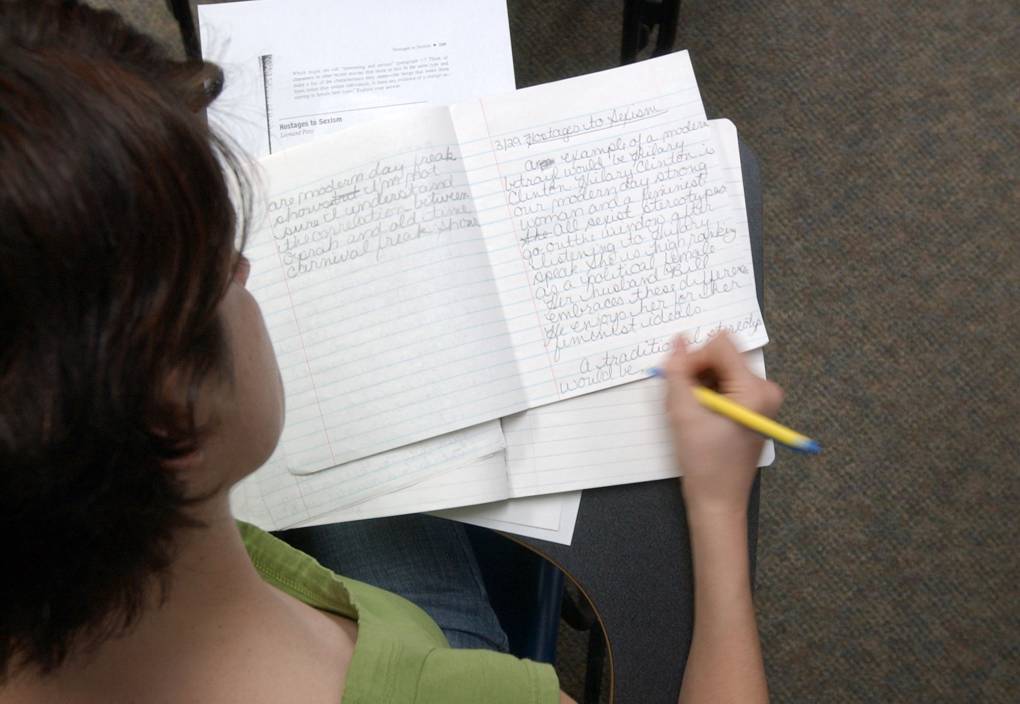
"caption": "A community college student works on an in-class writing assignment.",
"credit": "Bradley C. Bower/ Associated Press",
"altTag": null,
"description": null,
"imgSizes": {
"medium": {
"file": "https://cdn.kqed.org/wp-content/uploads/sites/23/2024/10/PP-dual-enrollment-800x552.jpg",
"width": 800,
"height": 552,
"mimeType": "image/jpeg"
},
"large": {
"file": "https://cdn.kqed.org/wp-content/uploads/sites/23/2024/10/PP-dual-enrollment-1020x704.jpg",
"width": 1020,
"height": 704,
"mimeType": "image/jpeg"
},
"thumbnail": {
"file": "https://cdn.kqed.org/wp-content/uploads/sites/23/2024/10/PP-dual-enrollment-160x110.jpg",
"width": 160,
"height": 110,
"mimeType": "image/jpeg"
},
"medium_large": {
"file": "https://cdn.kqed.org/wp-content/uploads/sites/23/2024/10/PP-dual-enrollment-768x530.jpg",
"width": 768,
"height": 530,
"mimeType": "image/jpeg"
},
"1536x1536": {
"file": "https://cdn.kqed.org/wp-content/uploads/sites/23/2024/10/PP-dual-enrollment-1536x1061.jpg",
"width": 1536,
"height": 1061,
"mimeType": "image/jpeg"
},
"post-thumbnail": {
"file": "https://cdn.kqed.org/wp-content/uploads/sites/23/2024/10/PP-dual-enrollment-672x372.jpg",
"width": 672,
"height": 372,
"mimeType": "image/jpeg"
},
"twentyfourteen-full-width": {
"file": "https://cdn.kqed.org/wp-content/uploads/sites/23/2024/10/PP-dual-enrollment-1038x576.jpg",
"width": 1038,
"height": 576,
"mimeType": "image/jpeg"
},
"full-width": {
"file": "https://cdn.kqed.org/wp-content/uploads/sites/23/2024/10/PP-dual-enrollment-1920x1326.jpg",
"width": 1920,
"height": 1326,
"mimeType": "image/jpeg"
},
"kqedFullSize": {
"file": "https://cdn.kqed.org/wp-content/uploads/sites/23/2024/10/PP-dual-enrollment.jpg",
"width": 2000,
"height": 1381
}
},
"isLoading": false,
"fetchFailed": false
},
"mindshift_64872": {
"type": "attachments",
"id": "mindshift_64872",
"meta": {
"index": "attachments_1716263798",
"site": "mindshift",
"id": "64872",
"found": true
},
"title": "Tennessee State Capitol",
"publishDate": 1728915591,
"status": "inherit",
"parent": 64867,
"modified": 1728915621,
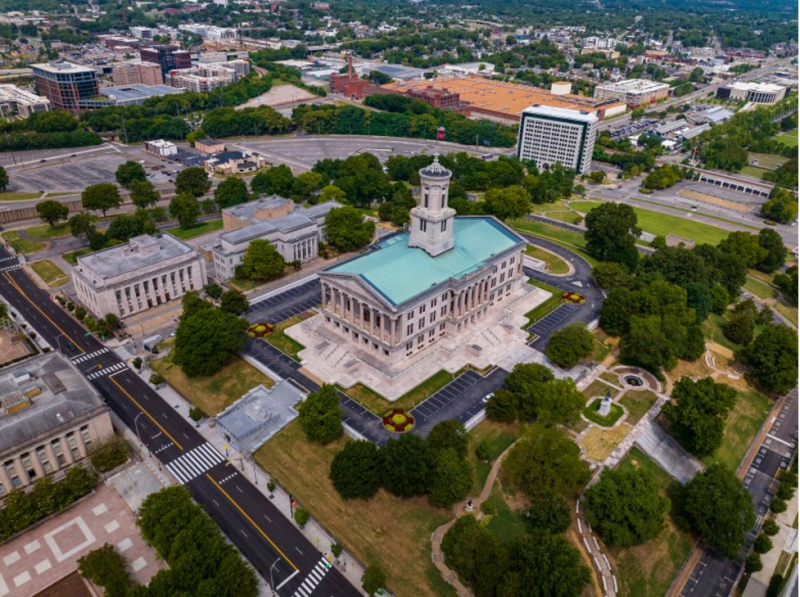
"caption": "View of the Tennessee State Capitol, where lawmakers were the first in the nation to pass a law in 2014 to make community college tuition free for future high school graduates. Credit: Joe Sohm/Visions of America/Universal Images Group via Getty Images",
"credit": null,
"altTag": "Overhead view of a state capitol building",
"description": null,
"imgSizes": {
"medium": {
"file": "https://cdn.kqed.org/wp-content/uploads/sites/23/2024/10/Tennessee-State-Capitol-800x597.png",
"width": 800,
"height": 597,
"mimeType": "image/png"
},
"thumbnail": {
"file": "https://cdn.kqed.org/wp-content/uploads/sites/23/2024/10/Tennessee-State-Capitol-160x119.png",
"width": 160,
"height": 119,
"mimeType": "image/png"
},
"medium_large": {
"file": "https://cdn.kqed.org/wp-content/uploads/sites/23/2024/10/Tennessee-State-Capitol-768x573.png",
"width": 768,
"height": 573,
"mimeType": "image/png"
},
"post-thumbnail": {
"file": "https://cdn.kqed.org/wp-content/uploads/sites/23/2024/10/Tennessee-State-Capitol-672x372.png",
"width": 672,
"height": 372,
"mimeType": "image/png"
},
"twentyfourteen-full-width": {
"file": "https://cdn.kqed.org/wp-content/uploads/sites/23/2024/10/Tennessee-State-Capitol-977x576.png",
"width": 977,
"height": 576,
"mimeType": "image/png"
},
"kqedFullSize": {
"file": "https://cdn.kqed.org/wp-content/uploads/sites/23/2024/10/Tennessee-State-Capitol.png",
"width": 977,
"height": 729
}
},
"isLoading": false,
"fetchFailed": false
},
"mindshift_62067": {
"type": "attachments",
"id": "mindshift_62067",
"meta": {
"index": "attachments_1716263798",
"site": "mindshift",
"id": "62067",
"found": true
},
"parent": 62061,
"imgSizes": {
"twentyfourteen-full-width": {
"file": "https://ww2.kqed.org/app/uploads/sites/23/2023/07/iStock-1194386686-1038x576.jpg",
"width": 1038,
"mimeType": "image/jpeg",
"height": 576
},
"thumbnail": {
"file": "https://ww2.kqed.org/app/uploads/sites/23/2023/07/iStock-1194386686-160x107.jpg",
"width": 160,
"mimeType": "image/jpeg",
"height": 107
},
"post-thumbnail": {
"file": "https://ww2.kqed.org/app/uploads/sites/23/2023/07/iStock-1194386686-672x372.jpg",
"width": 672,
"mimeType": "image/jpeg",
"height": 372
},
"kqedFullSize": {
"file": "https://ww2.kqed.org/app/uploads/sites/23/2023/07/iStock-1194386686.jpg",
"width": 2120,
"height": 1414
},
"2048x2048": {
"file": "https://ww2.kqed.org/app/uploads/sites/23/2023/07/iStock-1194386686-2048x1366.jpg",
"width": 2048,
"mimeType": "image/jpeg",
"height": 1366
},
"large": {
"file": "https://ww2.kqed.org/app/uploads/sites/23/2023/07/iStock-1194386686-1020x680.jpg",
"width": 1020,
"mimeType": "image/jpeg",
"height": 680
},
"1536x1536": {
"file": "https://ww2.kqed.org/app/uploads/sites/23/2023/07/iStock-1194386686-1536x1024.jpg",
"width": 1536,
"mimeType": "image/jpeg",
"height": 1024
},
"full-width": {
"file": "https://ww2.kqed.org/app/uploads/sites/23/2023/07/iStock-1194386686-1920x1281.jpg",
"width": 1920,
"mimeType": "image/jpeg",
"height": 1281
},
"medium": {
"file": "https://ww2.kqed.org/app/uploads/sites/23/2023/07/iStock-1194386686-800x534.jpg",
"width": 800,
"mimeType": "image/jpeg",
"height": 534
},
"medium_large": {
"file": "https://ww2.kqed.org/app/uploads/sites/23/2023/07/iStock-1194386686-768x512.jpg",
"width": 768,
"mimeType": "image/jpeg",
"height": 512
}
},
"publishDate": 1690044505,
"modified": 1690044563,
"caption": null,
"description": null,
"title": "Two Female Students Studying Together Outdoors in Winter on University Campus",
"credit": "iStock/Jeremy Poland",
"status": "inherit",
"altTag": null,
"isLoading": false,
"fetchFailed": false
},
"mindshift_61930": {
"type": "attachments",
"id": "mindshift_61930",
"meta": {
"index": "attachments_1716263798",
"site": "mindshift",
"id": "61930",
"found": true
},
"parent": 61929,
"imgSizes": {
"twentyfourteen-full-width": {
"file": "https://ww2.kqed.org/app/uploads/sites/23/2023/06/iStock-1160952396-1038x576.jpg",
"width": 1038,
"mimeType": "image/jpeg",
"height": 576
},
"thumbnail": {
"file": "https://ww2.kqed.org/app/uploads/sites/23/2023/06/iStock-1160952396-160x107.jpg",
"width": 160,
"mimeType": "image/jpeg",
"height": 107
},
"post-thumbnail": {
"file": "https://ww2.kqed.org/app/uploads/sites/23/2023/06/iStock-1160952396-672x372.jpg",
"width": 672,
"mimeType": "image/jpeg",
"height": 372
},
"kqedFullSize": {
"file": "https://ww2.kqed.org/app/uploads/sites/23/2023/06/iStock-1160952396.jpg",
"width": 2121,
"height": 1414
},
"2048x2048": {
"file": "https://ww2.kqed.org/app/uploads/sites/23/2023/06/iStock-1160952396-2048x1365.jpg",
"width": 2048,
"mimeType": "image/jpeg",
"height": 1365
},
"large": {
"file": "https://ww2.kqed.org/app/uploads/sites/23/2023/06/iStock-1160952396-1020x680.jpg",
"width": 1020,
"mimeType": "image/jpeg",
"height": 680
},
"1536x1536": {
"file": "https://ww2.kqed.org/app/uploads/sites/23/2023/06/iStock-1160952396-1536x1024.jpg",
"width": 1536,
"mimeType": "image/jpeg",
"height": 1024
},
"full-width": {
"file": "https://ww2.kqed.org/app/uploads/sites/23/2023/06/iStock-1160952396-1920x1280.jpg",
"width": 1920,
"mimeType": "image/jpeg",
"height": 1280
},
"medium": {
"file": "https://ww2.kqed.org/app/uploads/sites/23/2023/06/iStock-1160952396-800x533.jpg",
"width": 800,
"mimeType": "image/jpeg",
"height": 533
},
"medium_large": {
"file": "https://ww2.kqed.org/app/uploads/sites/23/2023/06/iStock-1160952396-768x512.jpg",
"width": 768,
"mimeType": "image/jpeg",
"height": 512
}
},
"publishDate": 1688052514,
"modified": 1688052560,
"caption": null,
"description": null,
"title": "college application on a clipboard",
"credit": "iStock/relif",
"status": "inherit",
"altTag": "a college application on a clipboard",
"isLoading": false,
"fetchFailed": false
},
"mindshift_61626": {
"type": "attachments",
"id": "mindshift_61626",
"meta": {
"index": "attachments_1716263798",
"site": "mindshift",
"id": "61626",
"found": true
},
"parent": 61606,
"imgSizes": {
"twentyfourteen-full-width": {
"file": "https://ww2.kqed.org/app/uploads/sites/23/2023/05/iStock-1314539691-e1683918316979-1038x576.jpg",
"width": 1038,
"mimeType": "image/jpeg",
"height": 576
},
"thumbnail": {
"file": "https://ww2.kqed.org/app/uploads/sites/23/2023/05/iStock-1314539691-e1683918316979-160x126.jpg",
"width": 160,
"mimeType": "image/jpeg",
"height": 126
},
"post-thumbnail": {
"file": "https://ww2.kqed.org/app/uploads/sites/23/2023/05/iStock-1314539691-e1683918316979-672x372.jpg",
"width": 672,
"mimeType": "image/jpeg",
"height": 372
},
"kqedFullSize": {
"file": "https://ww2.kqed.org/app/uploads/sites/23/2023/05/iStock-1314539691-e1683918316979.jpg",
"width": 1920,
"height": 1512
},
"large": {
"file": "https://ww2.kqed.org/app/uploads/sites/23/2023/05/iStock-1314539691-e1683918316979-1020x803.jpg",
"width": 1020,
"mimeType": "image/jpeg",
"height": 803
},
"1536x1536": {
"file": "https://ww2.kqed.org/app/uploads/sites/23/2023/05/iStock-1314539691-e1683918316979-1536x1210.jpg",
"width": 1536,
"mimeType": "image/jpeg",
"height": 1210
},
"full-width": {
"file": "https://ww2.kqed.org/app/uploads/sites/23/2023/05/iStock-1314539691-1920x1512.jpg",
"width": 1920,
"mimeType": "image/jpeg",
"height": 1512
},
"medium": {
"file": "https://ww2.kqed.org/app/uploads/sites/23/2023/05/iStock-1314539691-e1683918316979-800x630.jpg",
"width": 800,
"mimeType": "image/jpeg",
"height": 630
},
"medium_large": {
"file": "https://ww2.kqed.org/app/uploads/sites/23/2023/05/iStock-1314539691-e1683918316979-768x605.jpg",
"width": 768,
"mimeType": "image/jpeg",
"height": 605
}
},
"publishDate": 1683918296,
"modified": 1683918498,
"caption": null,
"description": null,
"title": "Student in learning process",
"credit": "Syuzanna Guseynova/ iStock",
"status": "inherit",
"altTag": "Student in learning process. Math. Vector flat illustration.",
"isLoading": false,
"fetchFailed": false
},
"mindshift_61136": {
"type": "attachments",
"id": "mindshift_61136",
"meta": {
"index": "attachments_1716263798",
"site": "mindshift",
"id": "61136",
"found": true
},
"parent": 61134,
"imgSizes": {
"twentyfourteen-full-width": {
"file": "https://ww2.kqed.org/app/uploads/sites/23/2023/03/fizkes-iStock-1038x576.jpg",
"width": 1038,
"mimeType": "image/jpeg",
"height": 576
},
"thumbnail": {
"file": "https://ww2.kqed.org/app/uploads/sites/23/2023/03/fizkes-iStock-160x107.jpg",
"width": 160,
"mimeType": "image/jpeg",
"height": 107
},
"post-thumbnail": {
"file": "https://ww2.kqed.org/app/uploads/sites/23/2023/03/fizkes-iStock-672x372.jpg",
"width": 672,
"mimeType": "image/jpeg",
"height": 372
},
"kqedFullSize": {
"file": "https://ww2.kqed.org/app/uploads/sites/23/2023/03/fizkes-iStock.jpg",
"width": 2121,
"height": 1414
},
"2048x2048": {
"file": "https://ww2.kqed.org/app/uploads/sites/23/2023/03/fizkes-iStock-2048x1365.jpg",
"width": 2048,
"mimeType": "image/jpeg",
"height": 1365
},
"large": {
"file": "https://ww2.kqed.org/app/uploads/sites/23/2023/03/fizkes-iStock-1020x680.jpg",
"width": 1020,
"mimeType": "image/jpeg",
"height": 680
},
"1536x1536": {
"file": "https://ww2.kqed.org/app/uploads/sites/23/2023/03/fizkes-iStock-1536x1024.jpg",
"width": 1536,
"mimeType": "image/jpeg",
"height": 1024
},
"full-width": {
"file": "https://ww2.kqed.org/app/uploads/sites/23/2023/03/fizkes-iStock-1920x1280.jpg",
"width": 1920,
"mimeType": "image/jpeg",
"height": 1280
},
"medium": {
"file": "https://ww2.kqed.org/app/uploads/sites/23/2023/03/fizkes-iStock-800x533.jpg",
"width": 800,
"mimeType": "image/jpeg",
"height": 533
},
"medium_large": {
"file": "https://ww2.kqed.org/app/uploads/sites/23/2023/03/fizkes-iStock-768x512.jpg",
"width": 768,
"mimeType": "image/jpeg",
"height": 512
}
},
"publishDate": 1678048237,
"modified": 1678048372,
"caption": null,
"description": null,
"title": "Happy focused Asian young female student studying on online class.",
"credit": "fizkes/iStock",
"status": "inherit",
"altTag": "Asian female college student with blonde hair wearing headphones and using a laptop at the library",
"isLoading": false,
"fetchFailed": false
},
"mindshift_60609": {
"type": "attachments",
"id": "mindshift_60609",
"meta": {
"index": "attachments_1716263798",
"site": "mindshift",
"id": "60609",
"found": true
},
"parent": 60607,
"imgSizes": {
"twentyfourteen-full-width": {
"file": "https://ww2.kqed.org/app/uploads/sites/23/2022/12/Alisa-Zahoruiko-iStock-1038x576.jpg",
"width": 1038,
"mimeType": "image/jpeg",
"height": 576
},
"thumbnail": {
"file": "https://ww2.kqed.org/app/uploads/sites/23/2022/12/Alisa-Zahoruiko-iStock-160x96.jpg",
"width": 160,
"mimeType": "image/jpeg",
"height": 96
},
"post-thumbnail": {
"file": "https://ww2.kqed.org/app/uploads/sites/23/2022/12/Alisa-Zahoruiko-iStock-672x372.jpg",
"width": 672,
"mimeType": "image/jpeg",
"height": 372
},
"kqedFullSize": {
"file": "https://ww2.kqed.org/app/uploads/sites/23/2022/12/Alisa-Zahoruiko-iStock.jpg",
"width": 2235,
"height": 1341
},
"2048x2048": {
"file": "https://ww2.kqed.org/app/uploads/sites/23/2022/12/Alisa-Zahoruiko-iStock-2048x1229.jpg",
"width": 2048,
"mimeType": "image/jpeg",
"height": 1229
},
"large": {
"file": "https://ww2.kqed.org/app/uploads/sites/23/2022/12/Alisa-Zahoruiko-iStock-1020x612.jpg",
"width": 1020,
"mimeType": "image/jpeg",
"height": 612
},
"1536x1536": {
"file": "https://ww2.kqed.org/app/uploads/sites/23/2022/12/Alisa-Zahoruiko-iStock-1536x922.jpg",
"width": 1536,
"mimeType": "image/jpeg",
"height": 922
},
"full-width": {
"file": "https://ww2.kqed.org/app/uploads/sites/23/2022/12/Alisa-Zahoruiko-iStock-1920x1152.jpg",
"width": 1920,
"mimeType": "image/jpeg",
"height": 1152
},
"medium": {
"file": "https://ww2.kqed.org/app/uploads/sites/23/2022/12/Alisa-Zahoruiko-iStock-800x480.jpg",
"width": 800,
"mimeType": "image/jpeg",
"height": 480
},
"medium_large": {
"file": "https://ww2.kqed.org/app/uploads/sites/23/2022/12/Alisa-Zahoruiko-iStock-768x461.jpg",
"width": 768,
"mimeType": "image/jpeg",
"height": 461
}
},
"publishDate": 1671393590,
"modified": 1671393769,
"caption": null,
"description": null,
"title": "Alisa Zahoruiko-iStock",
"credit": "Alisa Zahoruiko/iStock",
"status": "inherit",
"altTag": "A counselor in a computer screen talks to a young woman in mental distress",
"isLoading": false,
"fetchFailed": false
},
"mindshift_59505": {
"type": "attachments",
"id": "mindshift_59505",
"meta": {
"index": "attachments_1716263798",
"site": "mindshift",
"id": "59505",
"found": true
},
"parent": 59503,
"imgSizes": {
"twentyfourteen-full-width": {
"file": "https://ww2.kqed.org/app/uploads/sites/23/2022/06/villareal-corona-dual-5-1038x576.jpeg",
"width": 1038,
"mimeType": "image/jpeg",
"height": 576
},
"thumbnail": {
"file": "https://ww2.kqed.org/app/uploads/sites/23/2022/06/villareal-corona-dual-5-160x107.jpeg",
"width": 160,
"mimeType": "image/jpeg",
"height": 107
},
"post-thumbnail": {
"file": "https://ww2.kqed.org/app/uploads/sites/23/2022/06/villareal-corona-dual-5-672x372.jpeg",
"width": 672,
"mimeType": "image/jpeg",
"height": 372
},
"kqedFullSize": {
"file": "https://ww2.kqed.org/app/uploads/sites/23/2022/06/villareal-corona-dual-5-e1655797699767.jpeg",
"width": 1920,
"height": 1280
},
"large": {
"file": "https://ww2.kqed.org/app/uploads/sites/23/2022/06/villareal-corona-dual-5-1020x680.jpeg",
"width": 1020,
"mimeType": "image/jpeg",
"height": 680
},
"1536x1536": {
"file": "https://ww2.kqed.org/app/uploads/sites/23/2022/06/villareal-corona-dual-5-1536x1024.jpeg",
"width": 1536,
"mimeType": "image/jpeg",
"height": 1024
},
"full-width": {
"file": "https://ww2.kqed.org/app/uploads/sites/23/2022/06/villareal-corona-dual-5-1920x1280.jpeg",
"width": 1920,
"mimeType": "image/jpeg",
"height": 1280
},
"medium": {
"file": "https://ww2.kqed.org/app/uploads/sites/23/2022/06/villareal-corona-dual-5-800x533.jpeg",
"width": 800,
"mimeType": "image/jpeg",
"height": 533
},
"medium_large": {
"file": "https://ww2.kqed.org/app/uploads/sites/23/2022/06/villareal-corona-dual-5-768x512.jpeg",
"width": 768,
"mimeType": "image/jpeg",
"height": 512
}
},
"publishDate": 1655797674,
"modified": 1655797702,
"caption": "Austin Community College in Texas is emblematic of two-year community colleges around the nation that have benefited from higher state appropriations and property tax collections. ",
"description": null,
"title": "villareal-corona-dual-5",
"credit": "Jackie Mader/The Hechinger Report",
"status": "inherit",
"altTag": null,
"isLoading": false,
"fetchFailed": false
},
"mindshift_58744": {
"type": "attachments",
"id": "mindshift_58744",
"meta": {
"index": "attachments_1716263798",
"site": "mindshift",
"id": "58744",
"found": true
},
"parent": 58743,
"imgSizes": {
"twentyfourteen-full-width": {
"file": "https://ww2.kqed.org/app/uploads/sites/23/2021/11/capossela-transfer-lifekit-revised_wide-0f78c524677fe42c3fcff01fb7438c52b4096c33-1038x576.jpg",
"width": 1038,
"mimeType": "image/jpeg",
"height": 576
},
"thumbnail": {
"file": "https://ww2.kqed.org/app/uploads/sites/23/2021/11/capossela-transfer-lifekit-revised_wide-0f78c524677fe42c3fcff01fb7438c52b4096c33-160x90.jpg",
"width": 160,
"mimeType": "image/jpeg",
"height": 90
},
"post-thumbnail": {
"file": "https://ww2.kqed.org/app/uploads/sites/23/2021/11/capossela-transfer-lifekit-revised_wide-0f78c524677fe42c3fcff01fb7438c52b4096c33-672x372.jpg",
"width": 672,
"mimeType": "image/jpeg",
"height": 372
},
"kqedFullSize": {
"file": "https://ww2.kqed.org/app/uploads/sites/23/2021/11/capossela-transfer-lifekit-revised_wide-0f78c524677fe42c3fcff01fb7438c52b4096c33.jpg",
"width": 1917,
"height": 1078
},
"large": {
"file": "https://ww2.kqed.org/app/uploads/sites/23/2021/11/capossela-transfer-lifekit-revised_wide-0f78c524677fe42c3fcff01fb7438c52b4096c33-1020x574.jpg",
"width": 1020,
"mimeType": "image/jpeg",
"height": 574
},
"1536x1536": {
"file": "https://ww2.kqed.org/app/uploads/sites/23/2021/11/capossela-transfer-lifekit-revised_wide-0f78c524677fe42c3fcff01fb7438c52b4096c33-1536x864.jpg",
"width": 1536,
"mimeType": "image/jpeg",
"height": 864
},
"medium": {
"file": "https://ww2.kqed.org/app/uploads/sites/23/2021/11/capossela-transfer-lifekit-revised_wide-0f78c524677fe42c3fcff01fb7438c52b4096c33-800x450.jpg",
"width": 800,
"mimeType": "image/jpeg",
"height": 450
},
"medium_large": {
"file": "https://ww2.kqed.org/app/uploads/sites/23/2021/11/capossela-transfer-lifekit-revised_wide-0f78c524677fe42c3fcff01fb7438c52b4096c33-768x432.jpg",
"width": 768,
"mimeType": "image/jpeg",
"height": 432
}
},
"publishDate": 1636705285,
"modified": 1636705328,
"caption": null,
"description": null,
"title": "Illustration of a maroon and gold pennant flag with the word \"transfer\" stitched on it in big bold letters. The flag is in front of a pink background, casting a shadow.",
"credit": "Annelise Capossela for NPR",
"status": "inherit",
"altTag": null,
"isLoading": false,
"fetchFailed": false
},
"mindshift_57977": {
"type": "attachments",
"id": "mindshift_57977",
"meta": {
"index": "attachments_1716263798",
"site": "mindshift",
"id": "57977",
"found": true
},
"parent": 57976,
"imgSizes": {
"twentyfourteen-full-width": {
"file": "https://ww2.kqed.org/app/uploads/sites/23/2021/06/decision-day1_custom-956731a1fe321ed646c69eadf42fc4e7e21ce04b-1038x576.jpg",
"width": 1038,
"mimeType": "image/jpeg",
"height": 576
},
"thumbnail": {
"file": "https://ww2.kqed.org/app/uploads/sites/23/2021/06/decision-day1_custom-956731a1fe321ed646c69eadf42fc4e7e21ce04b-160x101.jpg",
"width": 160,
"mimeType": "image/jpeg",
"height": 101
},
"post-thumbnail": {
"file": "https://ww2.kqed.org/app/uploads/sites/23/2021/06/decision-day1_custom-956731a1fe321ed646c69eadf42fc4e7e21ce04b-672x372.jpg",
"width": 672,
"mimeType": "image/jpeg",
"height": 372
},
"kqedFullSize": {
"file": "https://ww2.kqed.org/app/uploads/sites/23/2021/06/decision-day1_custom-956731a1fe321ed646c69eadf42fc4e7e21ce04b-scaled-e1623397403685.jpg",
"width": 1920,
"height": 1217
},
"2048x2048": {
"file": "https://ww2.kqed.org/app/uploads/sites/23/2021/06/decision-day1_custom-956731a1fe321ed646c69eadf42fc4e7e21ce04b-2048x1298.jpg",
"width": 2048,
"mimeType": "image/jpeg",
"height": 1298
},
"large": {
"file": "https://ww2.kqed.org/app/uploads/sites/23/2021/06/decision-day1_custom-956731a1fe321ed646c69eadf42fc4e7e21ce04b-1020x647.jpg",
"width": 1020,
"mimeType": "image/jpeg",
"height": 647
},
"1536x1536": {
"file": "https://ww2.kqed.org/app/uploads/sites/23/2021/06/decision-day1_custom-956731a1fe321ed646c69eadf42fc4e7e21ce04b-1536x974.jpg",
"width": 1536,
"mimeType": "image/jpeg",
"height": 974
},
"full-width": {
"file": "https://ww2.kqed.org/app/uploads/sites/23/2021/06/decision-day1_custom-956731a1fe321ed646c69eadf42fc4e7e21ce04b-1920x1217.jpg",
"width": 1920,
"mimeType": "image/jpeg",
"height": 1217
},
"medium": {
"file": "https://ww2.kqed.org/app/uploads/sites/23/2021/06/decision-day1_custom-956731a1fe321ed646c69eadf42fc4e7e21ce04b-800x507.jpg",
"width": 800,
"mimeType": "image/jpeg",
"height": 507
},
"medium_large": {
"file": "https://ww2.kqed.org/app/uploads/sites/23/2021/06/decision-day1_custom-956731a1fe321ed646c69eadf42fc4e7e21ce04b-768x487.jpg",
"width": 768,
"mimeType": "image/jpeg",
"height": 487
}
},
"publishDate": 1623397383,
"modified": 1623397423,
"caption": null,
"description": "Decisions, decisions.",
"title": "Overall enrollment in undergraduate and graduate programs has been trending downward since around 2012.",
"credit": "LA Johnson/NPR",
"status": "inherit",
"altTag": null,
"isLoading": false,
"fetchFailed": false
},
"mindshift_57752": {
"type": "attachments",
"id": "mindshift_57752",
"meta": {
"index": "attachments_1716263798",
"site": "mindshift",
"id": "57752",
"found": true
},
"parent": 57751,
"imgSizes": {
"twentyfourteen-full-width": {
"file": "https://ww2.kqed.org/app/uploads/sites/23/2021/04/npr-how-not-to-go-to-college_wide-72229ce37d9c8e98c9fa396f835d094cf70ac153-1038x576.jpg",
"width": 1038,
"mimeType": "image/jpeg",
"height": 576
},
"thumbnail": {
"file": "https://ww2.kqed.org/app/uploads/sites/23/2021/04/npr-how-not-to-go-to-college_wide-72229ce37d9c8e98c9fa396f835d094cf70ac153-160x90.jpg",
"width": 160,
"mimeType": "image/jpeg",
"height": 90
},
"post-thumbnail": {
"file": "https://ww2.kqed.org/app/uploads/sites/23/2021/04/npr-how-not-to-go-to-college_wide-72229ce37d9c8e98c9fa396f835d094cf70ac153-672x372.jpg",
"width": 672,
"mimeType": "image/jpeg",
"height": 372
},
"kqedFullSize": {
"file": "https://ww2.kqed.org/app/uploads/sites/23/2021/04/npr-how-not-to-go-to-college_wide-72229ce37d9c8e98c9fa396f835d094cf70ac153-scaled-e1619677663484.jpg",
"width": 1920,
"height": 1080
},
"2048x2048": {
"file": "https://ww2.kqed.org/app/uploads/sites/23/2021/04/npr-how-not-to-go-to-college_wide-72229ce37d9c8e98c9fa396f835d094cf70ac153-2048x1152.jpg",
"width": 2048,
"mimeType": "image/jpeg",
"height": 1152
},
"large": {
"file": "https://ww2.kqed.org/app/uploads/sites/23/2021/04/npr-how-not-to-go-to-college_wide-72229ce37d9c8e98c9fa396f835d094cf70ac153-1020x574.jpg",
"width": 1020,
"mimeType": "image/jpeg",
"height": 574
},
"1536x1536": {
"file": "https://ww2.kqed.org/app/uploads/sites/23/2021/04/npr-how-not-to-go-to-college_wide-72229ce37d9c8e98c9fa396f835d094cf70ac153-1536x864.jpg",
"width": 1536,
"mimeType": "image/jpeg",
"height": 864
},
"full-width": {
"file": "https://ww2.kqed.org/app/uploads/sites/23/2021/04/npr-how-not-to-go-to-college_wide-72229ce37d9c8e98c9fa396f835d094cf70ac153-1920x1080.jpg",
"width": 1920,
"mimeType": "image/jpeg",
"height": 1080
},
"medium": {
"file": "https://ww2.kqed.org/app/uploads/sites/23/2021/04/npr-how-not-to-go-to-college_wide-72229ce37d9c8e98c9fa396f835d094cf70ac153-800x450.jpg",
"width": 800,
"mimeType": "image/jpeg",
"height": 450
},
"medium_large": {
"file": "https://ww2.kqed.org/app/uploads/sites/23/2021/04/npr-how-not-to-go-to-college_wide-72229ce37d9c8e98c9fa396f835d094cf70ac153-768x432.jpg",
"width": 768,
"mimeType": "image/jpeg",
"height": 432
}
},
"publishDate": 1619677465,
"modified": 1619677676,
"caption": null,
"description": null,
"title": null,
"credit": "Cha Pornea for NPR",
"status": "inherit",
"altTag": null,
"isLoading": false,
"fetchFailed": false
}
},
"audioPlayerReducer": {
"postId": "stream_live",
"isPaused": true,
"isPlaying": false,
"pfsActive": false,
"pledgeModalIsOpen": true,
"playerDrawerIsOpen": false,
"liveAudioPlayStartedAt": 0,
"liveAudioPlayContext": ""
},
"authorsReducer": {
"byline_mindshift_66069": {
"type": "authors",
"id": "byline_mindshift_66069",
"meta": {
"override": true
},
"slug": "byline_mindshift_66069",
"name": "Elissa Nadworny",
"isLoading": false
},
"byline_mindshift_64913": {
"type": "authors",
"id": "byline_mindshift_64913",
"meta": {
"override": true
},
"slug": "byline_mindshift_64913",
"name": "Jill Barshay, \u003ca href=\"https://hechingerreport.org/\">The Hechinger Report\u003c/a>",
"isLoading": false
},
"byline_mindshift_64867": {
"type": "authors",
"id": "byline_mindshift_64867",
"meta": {
"override": true
},
"slug": "byline_mindshift_64867",
"name": "Jill Barshay, \u003ca href=\"https://hechingerreport.org/\">The Hechinger Report\u003c/a>",
"isLoading": false
},
"byline_mindshift_62061": {
"type": "authors",
"id": "byline_mindshift_62061",
"meta": {
"override": true
},
"slug": "byline_mindshift_62061",
"name": "Jill Barshay, \u003ca href=\"https://hechingerreport.org/\" target=\"_blank\">The Hechinger Report\u003c/a>",
"isLoading": false
},
"byline_mindshift_61929": {
"type": "authors",
"id": "byline_mindshift_61929",
"meta": {
"override": true
},
"slug": "byline_mindshift_61929",
"name": "Kalyn Belsha, Chalkbeat",
"isLoading": false
},
"byline_mindshift_61606": {
"type": "authors",
"id": "byline_mindshift_61606",
"meta": {
"override": true
},
"slug": "byline_mindshift_61606",
"name": "Jill Barshay, \u003ca href=\"https://hechingerreport.org/\" target=\"_blank\">The Hechinger Report\u003c/a>",
"isLoading": false
},
"byline_mindshift_61134": {
"type": "authors",
"id": "byline_mindshift_61134",
"meta": {
"override": true
},
"slug": "byline_mindshift_61134",
"name": "Jill Barshay, \u003ca href=\"https://hechingerreport.org/\" target=\"_blank\">The Hechinger Report\u003c/a>",
"isLoading": false
},
"byline_mindshift_59503": {
"type": "authors",
"id": "byline_mindshift_59503",
"meta": {
"override": true
},
"slug": "byline_mindshift_59503",
"name": "Jill Barshay, \u003ca href=\"https://hechingerreport.org/\">The Hechinger Report\u003c/a>",
"isLoading": false
},
"byline_mindshift_58743": {
"type": "authors",
"id": "byline_mindshift_58743",
"meta": {
"override": true
},
"slug": "byline_mindshift_58743",
"name": "Elissa Nadworny and Clare Marie Schneider",
"isLoading": false
},
"byline_mindshift_57976": {
"type": "authors",
"id": "byline_mindshift_57976",
"meta": {
"override": true
},
"slug": "byline_mindshift_57976",
"name": "Elissa Nadworny ",
"isLoading": false
},
"byline_mindshift_57751": {
"type": "authors",
"id": "byline_mindshift_57751",
"meta": {
"override": true
},
"slug": "byline_mindshift_57751",
"name": "Elissa Nadworny and Andee Tagle",
"isLoading": false
},
"hollykorbey": {
"type": "authors",
"id": "4445",
"meta": {
"index": "authors_1716337520",
"id": "4445",
"found": true
},
"name": "Holly Korbey",
"firstName": "Holly",
"lastName": "Korbey",
"slug": "hollykorbey",
"email": "holly@hollykorbey.com",
"display_author_email": false,
"staff_mastheads": [],
"title": null,
"bio": "Holly Korbey's work on parenting and education has appeared in The New York Times, The Atlantic, Babble, Brain, Child Magazine, and others. She lives in Nashville with her family. Follow her on Twitter: @HKorbey",
"avatar": "https://secure.gravatar.com/avatar/f385f7a3b90e52ecd5e85c24fbd0a363?s=600&d=blank&r=g",
"twitter": null,
"facebook": null,
"instagram": null,
"linkedin": null,
"sites": [
{
"site": "mindshift",
"roles": [
"contributor"
]
}
],
"headData": {
"title": "Holly Korbey | KQED",
"description": null,
"ogImgSrc": "https://secure.gravatar.com/avatar/f385f7a3b90e52ecd5e85c24fbd0a363?s=600&d=blank&r=g",
"twImgSrc": "https://secure.gravatar.com/avatar/f385f7a3b90e52ecd5e85c24fbd0a363?s=600&d=blank&r=g"
},
"isLoading": false,
"link": "/author/hollykorbey"
}
},
"pagesReducer": {
"mindshift_tag_community-college": {
"type": "terms",
"id": "mindshift_20966",
"meta": {
"index": "terms_1716263798",
"site": "mindshift",
"id": "20966",
"score": 9.896915
},
"featImg": null,
"name": "community college",
"description": null,
"taxonomy": "tag",
"headData": {
"twImgId": null,
"twTitle": null,
"ogTitle": null,
"ogImgId": null,
"twDescription": null,
"description": null,
"title": "community college Archives | KQED Mindshift",
"ogDescription": null
},
"ttid": 20238,
"slug": "community-college",
"isLoading": false,
"title": "community college",
"pageMeta": {
"site": "mindshift",
"WpPageTemplate": "page-topic-editorial",
"currentPage": 1
},
"blocks": [
{
"blockName": "kqed/post-list",
"attrs": {
"layout": "cardArticle2",
"query": "posts/mindshift?tag=community-college",
"seeMore": false,
"paginated": true,
"page": 1
}
},
{
"blockName": "kqed/ad"
}
]
}
},
"pfsSessionReducer": {},
"postsReducer": {
"stream_live": {
"type": "live",
"id": "stream_live",
"audioUrl": "https://hls.kqed.org/hls/kqed_app/playlist.m3u8",
"title": "Live Stream",
"excerpt": "Live Stream information currently unavailable.",
"link": "/radio",
"featImg": "",
"label": {
"name": "KQED Live",
"link": "/"
}
},
"stream_kqedNewscast": {
"type": "posts",
"id": "stream_kqedNewscast",
"audioUrl": "https://www.kqed.org/.stream/anon/radio/RDnews/newscast.mp3?_=1",
"title": "KQED Newscast",
"featImg": "",
"label": {
"name": "88.5 FM",
"link": "/"
}
},
"mindshift_66069": {
"type": "posts",
"id": "mindshift_66069",
"meta": {
"index": "posts_1716263798",
"site": "mindshift",
"id": "66069",
"score": null,
"sort": [
1768546637000
]
},
"guestAuthors": [],
"slug": "more-students-are-going-to-college-affordability-and-workforce-training-are-factors",
"title": "More Students Are Going to College. Affordability and Workforce Training Are Factors",
"publishDate": 1768546637,
"format": "standard",
"headTitle": "More Students Are Going to College. Affordability and Workforce Training Are Factors | KQED",
"labelTerm": {
"term": 21847,
"site": "mindshift"
},
"content": "\u003cp>College enrollment in the U.S. continued to rise last fall, surpassing prepandemic levels, new figures out on Thursday show.\u003c/p>\n\u003cp>Across undergraduate and graduate programs, total enrollment reached 19.4 million students, growing 1.0% compared with the fall of 2024, according to the National Student Clearinghouse Research Center, a nonprofit that studies higher education.\u003c/p>\n\u003cp>“Higher education has stabilized and is growing again,” says Matthew Holsapple, senior director of research at the center.\u003c/p>\n\u003cfigure class=\"wp-block-embed npr-promo-card insettwocolumn\">\n\u003cdiv class=\"wp-block-embed__wrapper\">\u003c/div>\n\u003c/figure>\n\u003cp>That growth, Holsapple says, is uneven this academic year: Enrollment at private four-year colleges is down, and fewer people are getting master’s degrees. But enrollment rose at four-year public universities and at community colleges, where short-term credentials tied to the workforce grew by 28% when compared with a year ago.\u003c/p>\n\u003cp>“We’re continuing to see students shifting out of some of the more traditional pathways into these shorter-term, these more flexible, perhaps more job- and career-oriented fields,” explains Holsapple.\u003c/p>\n\u003ch2>Gains and shifts, despite concerns about value\u003c/h2>\n\u003cp>The numbers provide welcome news and some clear insights to college leaders worried about reports showing many Americans questioning the value of a college degree.\u003c/p>\n\u003cp>[ad fullwidth]\u003c/p>\n\u003cp>“Confidence in college is coming back, but it is conditional,” says Courtney Brown, who studies public opinion on colleges for the Lumina Foundation, an Indianapolis-based nonprofit aimed at improving higher education.\u003c/p>\n\u003cp>“The public’s been telling us that cost, flexibility and career relevance shape their view of college’s worth,” Brown says. “So people aren’t turning away from education — they’re just getting more precise about what kind of education they want.”\u003c/p>\n\u003cp>That could reflect uncertainty in the economy and news about hiring slowdowns, says Jeff Strohl, director of the Georgetown University Center on Education and the Workforce. He says when job prospects feel shaky and the economy is struggling, people return to college, especially community college.\u003c/p>\n\u003cp>“If we think about what’s going on in the U.S. economy as of late, especially a growing economic uncertainty, this kind of follows that pattern,” he says. “It’s easier to test the waters at a local community college than it is necessarily to go through the steps of enrolling in a four-year program, especially if a student doesn’t really know what they want to do.”\u003c/p>\n\u003ch2>A big drop in international students at the graduate level\u003c/h2>\n\u003cp>While the number of international students enrolling in undergraduate programs grew this academic year by 3.2%, it was overshadowed by a significant drop at the graduate level, by about 10,000 students.\u003c/p>\n\u003cp>That graduate-level drop — mostly in master’s programs — followed several years of strong growth in which the number of international graduate students had risen by about 50%. The downturn reflects federal policies that limited or disrupted the student visa process and the billions of dollars in canceled federal dollars flowing to research universities, disrupting the pipeline.\u003c/p>\n\u003cp>Another key finding from the latest enrollment data was a big decline in students studying computer and information sciences. The drop in both graduate and undergraduate programs came after years of steady expansion.\u003c/p>\n\u003cp>In addition to a consequence of fewer international students, Holsapple, at the Clearinghouse, explains that the shift away from CS majors is also influenced by the rise of artificial intelligence.\u003c/p>\n\u003cp>“Students are seeing the same trends that we all are seeing,” he says. “They see the same news reports of layoffs in the tech field. They see the rise of AI like we do.”\u003c/p>\n\u003cp>But he’s encouraged by these trends. “Students are making different choices, which I think is a real positive for the field and particularly for students because they have those options.”\u003c/p>\n\u003cp>[ad floatright]\u003c/p>\n\u003cp>He says the colleges that are rising to the occasion — offering nontraditional pathways and more-affordable degrees — will continue to be the ones seeing growth in future years.\u003c/p>\n\u003cdiv class=\"npr-transcript\">\n\u003cp>\u003cstrong>Transcript:\u003c/strong>\u003c/p>\n\u003cp>A MARTÍNEZ, HOST:\u003c/p>\n\u003cp>College enrollment in the U.S. is up overall compared with last year. That’s because more Americans are going to community college and four-year public universities, even as polling shows people are losing confidence in higher education. Here’s NPR’s Elissa Nadworny.\u003c/p>\n\u003cp>ELISSA NADWORNY, BYLINE: The latest fall enrollment data shows a slight increase overall – up by about 200,000 students, according to the research center at the National Student Clearinghouse.\u003c/p>\n\u003cp>JEFF STROHL: These findings might catch people a little bit by surprise.\u003c/p>\n\u003cp>NADWORNY: Jeff Strohl is the director of the Georgetown University Center on Education and the Workforce.\u003c/p>\n\u003cp>STROHL: But if we think about what’s going on in the U.S. economy as of late, especially growing economic uncertainty, a lot of news about hiring slowdowns, the whole freezing of the labor market, it makes a lot of sense if people are returning back to college.\u003c/p>\n\u003cp>NADWORNY: While overall more people are choosing college, there are important shifts happening in where students are going and where they’re not. Enrollment at private four-year colleges is down. Fewer people are enrolled in master’s degree programs. But enrollment is up at four-year public universities and at community colleges. There, it’s driven by students choosing short-term credentials tied to the workforce. Courtney Brown is with the Lumina Foundation, which focuses on improving higher education. She’s been studying public opinion on college.\u003c/p>\n\u003cp>COURTNEY BROWN: The public’s been telling us that cost, flexibility and career relevance shape their view of college’s worth. So people aren’t turning away from education. They’re just getting more precise about what kind of education they want.\u003c/p>\n\u003cp>NADWORNY: There were also big declines in international students enrolled in graduate programs – down by about 10,000 students. This may reflect billions in canceled federal dollars flowing to research universities disrupting the pipeline, plus federal policies that limited the student visa process. Another finding – a huge drop in students enrolled in computer science programs. Here’s how Matthew Holsapple, the senior director of research at the clearinghouse, explains it.\u003c/p>\n\u003cp>MATTHEW HOLSAPPLE: Students are – they’re seeing the same trends that we all are seeing. They see the same news reports of layoffs in the tech field. They see the rise of AI like we do.\u003c/p>\n\u003cp>NADWORNY: Still, the biggest takeaway is that overall enrollment has continued to surpass prepandemic levels. Students are simply making different choices about where to go.\u003c/p>\n\u003cp>Elissa Nadworny, NPR News.\u003c/p>\n\u003cp>(SOUNDBITE OF BRASSTRACKS’ “IN MY FEELINGS”)\u003c/p>\n\u003c/div>\n\n",
"blocks": [],
"excerpt": "Overall enrollment is up slightly at colleges and universities, driven by gains at community colleges and public four-year programs.",
"status": "publish",
"parent": 0,
"modified": 1768546637,
"stats": {
"hasAudio": false,
"hasVideo": false,
"hasChartOrMap": false,
"iframeSrcs": [],
"hasGoogleForm": false,
"hasGallery": false,
"hasHearkenModule": false,
"hasPolis": false,
"paragraphCount": 33,
"wordCount": 1123
},
"headData": {
"title": "More Students Are Going to College. Affordability and Workforce Training Are Factors | KQED",
"description": "Overall enrollment is up slightly at colleges and universities, driven by gains at community colleges and public four-year programs.",
"ogTitle": "",
"ogDescription": "",
"ogImgId": "",
"twTitle": "",
"twDescription": "",
"twImgId": "",
"schema": {
"@context": "https://schema.org",
"@type": "Article",
"headline": "More Students Are Going to College. Affordability and Workforce Training Are Factors",
"datePublished": "2026-01-15T22:57:17-08:00",
"dateModified": "2026-01-15T22:57:17-08:00",
"image": "https://cdn.kqed.org/wp-content/uploads/2020/02/KQED-OG-Image@1x.png"
}
},
"primaryCategory": {
"termId": 21694,
"slug": "higher-education",
"name": "Higher Education"
},
"sticky": false,
"nprByline": "Elissa Nadworny",
"nprStoryId": "nx-s1-5676186",
"nprHtmlLink": "https://www.npr.org/2026/01/15/nx-s1-5676186/college-enrollment-increases-in-2025",
"nprRetrievedStory": "1",
"nprPubDate": "2026-01-15T05:00:00-05:00",
"nprStoryDate": "2026-01-15T05:00:00-05:00",
"nprLastModifiedDate": "2026-01-15T07:00:21.432-05:00",
"nprAudio": "https://ondemand.npr.org/anon.npr-mp3/npr/me/2026/01/20260115_me_more_students_are_going_to_college._affordability_and_workforce_training_are_factors.mp3?t=progseg&e=nx-s1-5662788&p=3&seg=9&d=146&size=2347303",
"templateType": "standard",
"featuredImageType": "standard",
"excludeFromSiteSearch": "Include",
"showOnAuthorArchivePages": "No",
"articleAge": "0",
"path": "/mindshift/66069/more-students-are-going-to-college-affordability-and-workforce-training-are-factors",
"audioUrl": "https://ondemand.npr.org/anon.npr-mp3/npr/me/2026/01/20260115_me_more_students_are_going_to_college._affordability_and_workforce_training_are_factors.mp3?t=progseg&e=nx-s1-5662788&p=3&seg=9&d=146&size=2347303",
"audioTrackLength": null,
"parsedContent": [
{
"type": "contentString",
"content": "\u003cdiv class=\"post-body\">\u003cp>\u003cp>College enrollment in the U.S. continued to rise last fall, surpassing prepandemic levels, new figures out on Thursday show.\u003c/p>\n\u003cp>Across undergraduate and graduate programs, total enrollment reached 19.4 million students, growing 1.0% compared with the fall of 2024, according to the National Student Clearinghouse Research Center, a nonprofit that studies higher education.\u003c/p>\n\u003cp>“Higher education has stabilized and is growing again,” says Matthew Holsapple, senior director of research at the center.\u003c/p>\n\u003cfigure class=\"wp-block-embed npr-promo-card insettwocolumn\">\n\u003cdiv class=\"wp-block-embed__wrapper\">\u003c/div>\n\u003c/figure>\n\u003cp>That growth, Holsapple says, is uneven this academic year: Enrollment at private four-year colleges is down, and fewer people are getting master’s degrees. But enrollment rose at four-year public universities and at community colleges, where short-term credentials tied to the workforce grew by 28% when compared with a year ago.\u003c/p>\n\u003cp>“We’re continuing to see students shifting out of some of the more traditional pathways into these shorter-term, these more flexible, perhaps more job- and career-oriented fields,” explains Holsapple.\u003c/p>\n\u003ch2>Gains and shifts, despite concerns about value\u003c/h2>\n\u003cp>The numbers provide welcome news and some clear insights to college leaders worried about reports showing many Americans questioning the value of a college degree.\u003c/p>\n\u003cp>\u003c/p>\u003c/div>",
"attributes": {
"named": {},
"numeric": []
}
},
{
"type": "component",
"content": "",
"name": "ad",
"attributes": {
"named": {
"label": "fullwidth"
},
"numeric": [
"fullwidth"
]
}
},
{
"type": "contentString",
"content": "\u003cdiv class=\"post-body\">\u003cp>\u003c/p>\n\u003cp>“Confidence in college is coming back, but it is conditional,” says Courtney Brown, who studies public opinion on colleges for the Lumina Foundation, an Indianapolis-based nonprofit aimed at improving higher education.\u003c/p>\n\u003cp>“The public’s been telling us that cost, flexibility and career relevance shape their view of college’s worth,” Brown says. “So people aren’t turning away from education — they’re just getting more precise about what kind of education they want.”\u003c/p>\n\u003cp>That could reflect uncertainty in the economy and news about hiring slowdowns, says Jeff Strohl, director of the Georgetown University Center on Education and the Workforce. He says when job prospects feel shaky and the economy is struggling, people return to college, especially community college.\u003c/p>\n\u003cp>“If we think about what’s going on in the U.S. economy as of late, especially a growing economic uncertainty, this kind of follows that pattern,” he says. “It’s easier to test the waters at a local community college than it is necessarily to go through the steps of enrolling in a four-year program, especially if a student doesn’t really know what they want to do.”\u003c/p>\n\u003ch2>A big drop in international students at the graduate level\u003c/h2>\n\u003cp>While the number of international students enrolling in undergraduate programs grew this academic year by 3.2%, it was overshadowed by a significant drop at the graduate level, by about 10,000 students.\u003c/p>\n\u003cp>That graduate-level drop — mostly in master’s programs — followed several years of strong growth in which the number of international graduate students had risen by about 50%. The downturn reflects federal policies that limited or disrupted the student visa process and the billions of dollars in canceled federal dollars flowing to research universities, disrupting the pipeline.\u003c/p>\n\u003cp>Another key finding from the latest enrollment data was a big decline in students studying computer and information sciences. The drop in both graduate and undergraduate programs came after years of steady expansion.\u003c/p>\n\u003cp>In addition to a consequence of fewer international students, Holsapple, at the Clearinghouse, explains that the shift away from CS majors is also influenced by the rise of artificial intelligence.\u003c/p>\n\u003cp>“Students are seeing the same trends that we all are seeing,” he says. “They see the same news reports of layoffs in the tech field. They see the rise of AI like we do.”\u003c/p>\n\u003cp>But he’s encouraged by these trends. “Students are making different choices, which I think is a real positive for the field and particularly for students because they have those options.”\u003c/p>\n\u003cp>\u003c/p>\u003c/div>",
"attributes": {
"named": {},
"numeric": []
}
},
{
"type": "component",
"content": "",
"name": "ad",
"attributes": {
"named": {
"label": "floatright"
},
"numeric": [
"floatright"
]
}
},
{
"type": "contentString",
"content": "\u003cdiv class=\"post-body\">\u003cp>\u003c/p>\n\u003cp>He says the colleges that are rising to the occasion — offering nontraditional pathways and more-affordable degrees — will continue to be the ones seeing growth in future years.\u003c/p>\n\u003cdiv class=\"npr-transcript\">\n\u003cp>\u003cstrong>Transcript:\u003c/strong>\u003c/p>\n\u003cp>A MARTÍNEZ, HOST:\u003c/p>\n\u003cp>College enrollment in the U.S. is up overall compared with last year. That’s because more Americans are going to community college and four-year public universities, even as polling shows people are losing confidence in higher education. Here’s NPR’s Elissa Nadworny.\u003c/p>\n\u003cp>ELISSA NADWORNY, BYLINE: The latest fall enrollment data shows a slight increase overall – up by about 200,000 students, according to the research center at the National Student Clearinghouse.\u003c/p>\n\u003cp>JEFF STROHL: These findings might catch people a little bit by surprise.\u003c/p>\n\u003cp>NADWORNY: Jeff Strohl is the director of the Georgetown University Center on Education and the Workforce.\u003c/p>\n\u003cp>STROHL: But if we think about what’s going on in the U.S. economy as of late, especially growing economic uncertainty, a lot of news about hiring slowdowns, the whole freezing of the labor market, it makes a lot of sense if people are returning back to college.\u003c/p>\n\u003cp>NADWORNY: While overall more people are choosing college, there are important shifts happening in where students are going and where they’re not. Enrollment at private four-year colleges is down. Fewer people are enrolled in master’s degree programs. But enrollment is up at four-year public universities and at community colleges. There, it’s driven by students choosing short-term credentials tied to the workforce. Courtney Brown is with the Lumina Foundation, which focuses on improving higher education. She’s been studying public opinion on college.\u003c/p>\n\u003cp>COURTNEY BROWN: The public’s been telling us that cost, flexibility and career relevance shape their view of college’s worth. So people aren’t turning away from education. They’re just getting more precise about what kind of education they want.\u003c/p>\n\u003cp>NADWORNY: There were also big declines in international students enrolled in graduate programs – down by about 10,000 students. This may reflect billions in canceled federal dollars flowing to research universities disrupting the pipeline, plus federal policies that limited the student visa process. Another finding – a huge drop in students enrolled in computer science programs. Here’s how Matthew Holsapple, the senior director of research at the clearinghouse, explains it.\u003c/p>\n\u003cp>MATTHEW HOLSAPPLE: Students are – they’re seeing the same trends that we all are seeing. They see the same news reports of layoffs in the tech field. They see the rise of AI like we do.\u003c/p>\n\u003cp>NADWORNY: Still, the biggest takeaway is that overall enrollment has continued to surpass prepandemic levels. Students are simply making different choices about where to go.\u003c/p>\n\u003cp>Elissa Nadworny, NPR News.\u003c/p>\n\u003cp>(SOUNDBITE OF BRASSTRACKS’ “IN MY FEELINGS”)\u003c/p>\n\u003c/div>\n\n\u003c/div>\u003c/p>",
"attributes": {
"named": {},
"numeric": []
}
}
],
"link": "/mindshift/66069/more-students-are-going-to-college-affordability-and-workforce-training-are-factors",
"authors": [
"byline_mindshift_66069"
],
"programs": [
"mindshift_21847"
],
"categories": [
"mindshift_21694"
],
"tags": [
"mindshift_21954",
"mindshift_21109",
"mindshift_20966"
],
"featImg": "mindshift_66071",
"label": "mindshift_21847"
},
"mindshift_64913": {
"type": "posts",
"id": "mindshift_64913",
"meta": {
"index": "posts_1716263798",
"site": "mindshift",
"id": "64913",
"score": null,
"sort": [
1730109568000
]
},
"guestAuthors": [],
"slug": "how-is-dual-enrollment-affecting-students-chances-at-earning-college-degrees",
"title": "How is Dual Enrollment Affecting Students' Chances at Earning College Degrees?",
"publishDate": 1730109568,
"format": "standard",
"headTitle": "How is Dual Enrollment Affecting Students’ Chances at Earning College Degrees? | KQED",
"labelTerm": {
"site": "mindshift"
},
"content": "\u003cp>Dual enrollment is exploding. During the 2022-23 school year, nearly \u003ca href=\"https://ccrc.tc.columbia.edu/publications/postsecondary-outcomes-dual-enrollment-national-state.html\">2.5 million\u003c/a> high school students took college classes, simultaneously earning high school and college credits. That’s up from 1.5 million students in the fall of 2021 and roughly 300,000 students in the early 2000s. Figures released last week show that dual enrollment grew another \u003ca href=\"https://nscresearchcenter.org/stay-informed/\">7 percent\u003c/a> in the fall of 2024 from a year earlier, even as the number of traditional college freshmen fell.\u003c/p>\n\u003cp>Exactly how much all of this is costing the nation isn’t known. But the state of Texas, which accounts for 10 percent of high schoolers who are taking these college classes, was investing \u003ca href=\"https://www.air.org/sites/default/files/Dual-Credit-Education-Programs-in-Texas-Phase-II-July-2018.pdf\">$120 million\u003c/a> annually as recently as 2017, according to one estimate. It wouldn’t be far fetched to extrapolate that over $1 billion a year in public funds is being spent on dual enrollment across the nation.\u003c/p>\n\u003cp>Alongside this meteoric rise of students and resources, researchers are trying to understand who is taking advantage of these early college classes, whether they’re expanding the pool of college educated Americans, and if these extra credits help students earn college degrees faster and save money.\u003c/p>\n\u003cp>A new \u003ca href=\"https://ccrc.tc.columbia.edu/publications/postsecondary-outcomes-dual-enrollment-national-state.html\">analysis released in October 2024\u003c/a> by the Community College Research Center (CCRC), at Teachers College, Columbia University, and the National Student Clearinghouse Research Center tracked what happened to every high school student who started taking dual enrollment classes in 2015. Of these 400,000 high schoolers, more than 80 percent enrolled in college straight after high school. That compares favorably with the general population, of whom only \u003ca href=\"https://nces.ed.gov/fastfacts/display.asp?id=51\">70 percent\u003c/a> of high school graduates went straight to college. Almost 30 percent of the 400,000 dual enrollees, roughly 117,000 students, earned a bachelor’s degree in four years. But a majority (58 percent) had not earned any college degree, either a four-year bachelor’s or a two-year associate, or any post-secondary credential, such as a short-term certificate, within this four-year period. (\u003cem>The Hechinger Report is an independent unit of Teachers College.\u003c/em>)\u003c/p>\n\u003cp>This is the most detailed and extensive analysis of dual enrollment that I’ve seen, covering all students in the nation, and tracking them for years after high school. But the analysis does not answer the fundamental question of whether dual enrollment is a worthwhile public policy.\u003c/p>\n\u003cfigure id=\"attachment_64915\" class=\"wp-caption aligncenter\" style=\"max-width: 977px\">\u003cimg loading=\"lazy\" decoding=\"async\" class=\"size-full wp-image-64915\" src=\"https://cdn.kqed.org/wp-content/uploads/sites/23/2024/10/Community-College-Research-Center.png\" alt=\"\" width=\"977\" height=\"499\" srcset=\"https://cdn.kqed.org/wp-content/uploads/sites/23/2024/10/Community-College-Research-Center.png 977w, https://cdn.kqed.org/wp-content/uploads/sites/23/2024/10/Community-College-Research-Center-800x409.png 800w, https://cdn.kqed.org/wp-content/uploads/sites/23/2024/10/Community-College-Research-Center-160x82.png 160w, https://cdn.kqed.org/wp-content/uploads/sites/23/2024/10/Community-College-Research-Center-768x392.png 768w\" sizes=\"(max-width: 977px) 100vw, 977px\">\u003cfigcaption class=\"wp-caption-text\">Share of new college students in the fall of 2015 who were still in high school and taking a dual enrollment class. Map reprinted from The Postsecondary Outcomes of High School Dual Enrollment Students A National and State-by-State Analysis (October 2024) Community College Research Center.\u003c/figcaption>\u003c/figure>\n\u003cp>It’s not clear that an early taste of higher education encourages more students to go to college who wouldn’t have otherwise. And it’s hard to tell from this report if the credits are helping students get through college any faster.\u003c/p>\n\u003cp>[ad fullwidth]\u003c/p>\n\u003cp>The fact that students with dual enrollment credits are faring better than students without dual enrollment credits isn’t terribly persuasive. In order to qualify for the classes, students usually need to have done well on a test, earned high grades or be on an advanced or honors track in school. These high-achieving students would likely have graduated college in much higher numbers without any dual enrollment courses.\u003c/p>\n\u003cp>“Are we subsidizing students who were always going to go to college anyway?” asked Kristen Hengtgen, a policy analyst at EdTrust, a nonprofit research and advocacy organization that lobbies for racial and economic equity in education. “Could we have spent the time and energy and effort differently on higher quality teachers or something else? I think that’s a really important question.”\u003c/p>\n\u003cp>Hengtgen was not involved in this latest analysis, but she is concerned about the severe underrepresentation of Black and Hispanic students that the report highlights. A \u003ca href=\"https://ccrc.tc.columbia.edu/dual-enrollment.html\">data dashboard\u003c/a> accompanying the new report documents that only 9 percent of the high schoolers in dual enrollment classes were Black, while Black students made up 16 percent of high school students. Only 17 percent of dual enrollment students were Hispanic at a time when Hispanic students made up almost a quarter of the high school population. White students, by contrast, took 65 percent of the dual enrollment seats but represented only half of the high school population. Asian students were the only group whose participation in dual enrollment matched their share of the student population: 5 percent of each.\u003c/p>\n\u003cp>Advocates of dual enrollment have made the argument that an early taste of college can motivate students to go to college, and the fact that so few Black and Hispanic students are enrolling is perhaps is the most troubling sign that the giant public-and-private investment in education isn’t fulfilling one of its main objectives: to expand the college-educated workforce.\u003c/p>\n\u003cp>Hengtgen of EdTrust argues that Black, Hispanic and low-income students of all races need better high school advising to help them sign up for the classes. Sometimes, she said, students don’t know they have to have a prerequisite class in 10th grade in order to be eligible for a dual enrollment class in 11th grade, and by the time they find out, it’s too late. Cost is another barrier. Depending upon the state and county, a family may have to pay fees to take the classes. Though these fees are generally much cheaper than what college students pay per course, low-income families may still not be able to afford them.\u003c/p>\n\u003cp>Tatiana Velasco, an economist at CCRC and lead author of the October 2024 dual enrollment report, makes the argument that dual enrollment may be most beneficial to Black and Hispanic students and low-income students of all races and ethnicities. In her data analysis, she noted that dual enrollment credits were only providing a modest boost to students overall, but very large boosts to some demographic groups.\u003c/p>\n\u003cp>Among all high school students who enrolled in college straight after high school, 36 percent of those with dual enrollment credits earned a bachelor’s degree within four years compared with 34 percent without any dual enrollment credits. Arguably, dual enrollment credits are not making a huge difference in time to completion, on average.\u003c/p>\n\u003cp>However, Velasco found much larger benefits from dual enrollment when she sliced the data by race and income. Among only Black students who enrolled in college straight away, 29 percent of those who had earned dual enrollment credits completed a bachelor’s degree within four years, compared to only 18 percent of those without dual enrollment credits. That’s more than a 50 percent increase in college attainment. “The difference is massive,” said Velasco.\u003c/p>\n\u003cp>Among Hispanic students who went straight to college, 25 percent of those with dual enrollment credits earned a bachelor’s degree within four years. Only 19 percent of Hispanic college students without dual enrollment credits did. Dual enrollment also seemed particularly helpful for college students from low-income neighborhoods; 28 percent of them earned a bachelor’s degree within four years compared with only 20 percent without dual enrollment.\u003c/p>\n\u003cp>Again, it’s still unclear if dual enrollment is driving these differences. It could be that Black students who opt to take dual enrollment classes were already more motivated and higher achieving and still would have graduated college in much higher numbers. (Notably, Black students with dual enrollment credits were more likely to attend selective four-year institutions.)\u003c/p>\n\u003cp>There is a wide variation across the nation in how dual enrollment operates in high schools. In \u003ca href=\"https://nces.ed.gov/pubs2019/2019176.pdf\">most cases\u003c/a>, high schoolers never step foot on a college campus. Often the class is taught in a high school classroom by a high school teacher. Sometimes community colleges supply the instructors. English composition and college algebra are popular offerings. The courses are generally designed and the credits awarded by a local community college, though 30 percent of dual enrollment credits are awarded by four-year institutions.\u003c/p>\n\u003cp>A few other takeaways from the CCRC and National Student Clearinghouse report:\u003c/p>\n\u003cul>\n\u003cli>States with very high rates of college completion from their dual enrollment programs, such as Delaware, Georgia, Mississippi and New Jersey, tend to serve fewer Black, Hispanic and low-income students. Florida stood out as an exception. CCRC’s Velasco noted it had both strong college completion rates while serving a somewhat higher proportion of Hispanic students.\u003c/li>\n\u003cli>In Iowa, Texas and Washington, half of all dual enrollment students ended up going to the college that awarded their dual enrollment credits.\u003c/li>\n\u003cli>In Montana, New Hampshire, Ohio, and Wisconsin, dual enrollment students have become a huge source of future students for community colleges. (A \u003ca href=\"https://ccrc.tc.columbia.edu/publications/community-colleges-afford-dual-enrollment-discount.html\">separate cost study\u003c/a> shows that some community colleges are providing dual enrollment courses to a nearby high school at a loss, but if these students subsequently matriculate, their future tuition dollars can offset those losses.)\u003c/li>\n\u003c/ul>\n\u003cp>And that perhaps is the most worrisome unintended consequence of the explosion of dual enrollment credits. Many bright high school students are racking up credits from three, four or even five college classes and they’re feeling pressure to take advantage of these credits by enrolling in the community college that partners with their high school. That might seem like a sensible decision. It’s iffy whether these dual enrollment credits can be transferred to another school, or, more importantly, count toward a student’s requirements in a major, which is what really matters and holds students back from graduating on time.\u003c/p>\n\u003cp>But a lot of these students could get into their state flagship or even a highly selective private college on scholarship. And they’d be better off. Dual enrollment students who started at a community college, the report found, were much less likely than those who enrolled at a four-year institution to complete a bachelor’s degree four years after high school.\u003c/p>\n\u003cp>[ad floatright]\u003c/p>\n\u003cp>\u003cem>This story about \u003c/em>\u003ca href=\"https://hechingerreport.org/proof-points-dual-enrollment-national-analysis/\">\u003cem>dual enrollment\u003c/em>\u003c/a>\u003cem> was written by Jill Barshay and produced by \u003c/em>\u003ca href=\"https://hechingerreport.org/special-reports/higher-education/\">The Hechinger Report\u003c/a>\u003cem>, a nonprofit, independent news organization focused on inequality and innovation in education. Sign up for \u003c/em>\u003ca href=\"https://hechingerreport.org/proofpoints/\">\u003cem>Proof Points\u003c/em>\u003c/a>\u003cem> and other \u003c/em>\u003ca href=\"https://hechingerreport.org/newsletters/\">\u003cem>Hechinger newsletters\u003c/em>\u003c/a>\u003cem>.\u003c/em>\u003c/p>\n\n",
"blocks": [],
"excerpt": "High school students who take college courses are gaining some benefits, but there are some drawbacks, according to a new national analysis of 400,000 students. ",
"status": "publish",
"parent": 0,
"modified": 1730093270,
"stats": {
"hasAudio": false,
"hasVideo": false,
"hasChartOrMap": false,
"iframeSrcs": [],
"hasGoogleForm": false,
"hasGallery": false,
"hasHearkenModule": false,
"hasPolis": false,
"paragraphCount": 23,
"wordCount": 1712
},
"headData": {
"title": "How is Dual Enrollment Affecting Students' Chances at Earning College Degrees? | KQED",
"description": "High school students who take college courses are gaining some benefits, but there are some drawbacks, according to a new national analysis of 400,000 students. ",
"ogTitle": "",
"ogDescription": "",
"ogImgId": "",
"twTitle": "",
"twDescription": "",
"twImgId": "",
"schema": {
"@context": "https://schema.org",
"@type": "Article",
"headline": "How is Dual Enrollment Affecting Students' Chances at Earning College Degrees?",
"datePublished": "2024-10-28T02:59:28-07:00",
"dateModified": "2024-10-27T22:27:50-07:00",
"image": "https://cdn.kqed.org/wp-content/uploads/2020/02/KQED-OG-Image@1x.png"
}
},
"sticky": false,
"nprByline": "Jill Barshay, \u003ca href=\"https://hechingerreport.org/\">The Hechinger Report\u003c/a>",
"excludeFromSiteSearch": "Include",
"showOnAuthorArchivePages": "No",
"articleAge": "0",
"path": "/mindshift/64913/how-is-dual-enrollment-affecting-students-chances-at-earning-college-degrees",
"audioTrackLength": null,
"parsedContent": [
{
"type": "contentString",
"content": "\u003cdiv class=\"post-body\">\u003cp>\u003cp>Dual enrollment is exploding. During the 2022-23 school year, nearly \u003ca href=\"https://ccrc.tc.columbia.edu/publications/postsecondary-outcomes-dual-enrollment-national-state.html\">2.5 million\u003c/a> high school students took college classes, simultaneously earning high school and college credits. That’s up from 1.5 million students in the fall of 2021 and roughly 300,000 students in the early 2000s. Figures released last week show that dual enrollment grew another \u003ca href=\"https://nscresearchcenter.org/stay-informed/\">7 percent\u003c/a> in the fall of 2024 from a year earlier, even as the number of traditional college freshmen fell.\u003c/p>\n\u003cp>Exactly how much all of this is costing the nation isn’t known. But the state of Texas, which accounts for 10 percent of high schoolers who are taking these college classes, was investing \u003ca href=\"https://www.air.org/sites/default/files/Dual-Credit-Education-Programs-in-Texas-Phase-II-July-2018.pdf\">$120 million\u003c/a> annually as recently as 2017, according to one estimate. It wouldn’t be far fetched to extrapolate that over $1 billion a year in public funds is being spent on dual enrollment across the nation.\u003c/p>\n\u003cp>Alongside this meteoric rise of students and resources, researchers are trying to understand who is taking advantage of these early college classes, whether they’re expanding the pool of college educated Americans, and if these extra credits help students earn college degrees faster and save money.\u003c/p>\n\u003cp>A new \u003ca href=\"https://ccrc.tc.columbia.edu/publications/postsecondary-outcomes-dual-enrollment-national-state.html\">analysis released in October 2024\u003c/a> by the Community College Research Center (CCRC), at Teachers College, Columbia University, and the National Student Clearinghouse Research Center tracked what happened to every high school student who started taking dual enrollment classes in 2015. Of these 400,000 high schoolers, more than 80 percent enrolled in college straight after high school. That compares favorably with the general population, of whom only \u003ca href=\"https://nces.ed.gov/fastfacts/display.asp?id=51\">70 percent\u003c/a> of high school graduates went straight to college. Almost 30 percent of the 400,000 dual enrollees, roughly 117,000 students, earned a bachelor’s degree in four years. But a majority (58 percent) had not earned any college degree, either a four-year bachelor’s or a two-year associate, or any post-secondary credential, such as a short-term certificate, within this four-year period. (\u003cem>The Hechinger Report is an independent unit of Teachers College.\u003c/em>)\u003c/p>\n\u003cp>This is the most detailed and extensive analysis of dual enrollment that I’ve seen, covering all students in the nation, and tracking them for years after high school. But the analysis does not answer the fundamental question of whether dual enrollment is a worthwhile public policy.\u003c/p>\n\u003cfigure id=\"attachment_64915\" class=\"wp-caption aligncenter\" style=\"max-width: 977px\">\u003cimg loading=\"lazy\" decoding=\"async\" class=\"size-full wp-image-64915\" src=\"https://cdn.kqed.org/wp-content/uploads/sites/23/2024/10/Community-College-Research-Center.png\" alt=\"\" width=\"977\" height=\"499\" srcset=\"https://cdn.kqed.org/wp-content/uploads/sites/23/2024/10/Community-College-Research-Center.png 977w, https://cdn.kqed.org/wp-content/uploads/sites/23/2024/10/Community-College-Research-Center-800x409.png 800w, https://cdn.kqed.org/wp-content/uploads/sites/23/2024/10/Community-College-Research-Center-160x82.png 160w, https://cdn.kqed.org/wp-content/uploads/sites/23/2024/10/Community-College-Research-Center-768x392.png 768w\" sizes=\"(max-width: 977px) 100vw, 977px\">\u003cfigcaption class=\"wp-caption-text\">Share of new college students in the fall of 2015 who were still in high school and taking a dual enrollment class. Map reprinted from The Postsecondary Outcomes of High School Dual Enrollment Students A National and State-by-State Analysis (October 2024) Community College Research Center.\u003c/figcaption>\u003c/figure>\n\u003cp>It’s not clear that an early taste of higher education encourages more students to go to college who wouldn’t have otherwise. And it’s hard to tell from this report if the credits are helping students get through college any faster.\u003c/p>\n\u003cp>\u003c/p>\u003c/div>",
"attributes": {
"named": {},
"numeric": []
}
},
{
"type": "component",
"content": "",
"name": "ad",
"attributes": {
"named": {
"label": "fullwidth"
},
"numeric": [
"fullwidth"
]
}
},
{
"type": "contentString",
"content": "\u003cdiv class=\"post-body\">\u003cp>\u003c/p>\n\u003cp>The fact that students with dual enrollment credits are faring better than students without dual enrollment credits isn’t terribly persuasive. In order to qualify for the classes, students usually need to have done well on a test, earned high grades or be on an advanced or honors track in school. These high-achieving students would likely have graduated college in much higher numbers without any dual enrollment courses.\u003c/p>\n\u003cp>“Are we subsidizing students who were always going to go to college anyway?” asked Kristen Hengtgen, a policy analyst at EdTrust, a nonprofit research and advocacy organization that lobbies for racial and economic equity in education. “Could we have spent the time and energy and effort differently on higher quality teachers or something else? I think that’s a really important question.”\u003c/p>\n\u003cp>Hengtgen was not involved in this latest analysis, but she is concerned about the severe underrepresentation of Black and Hispanic students that the report highlights. A \u003ca href=\"https://ccrc.tc.columbia.edu/dual-enrollment.html\">data dashboard\u003c/a> accompanying the new report documents that only 9 percent of the high schoolers in dual enrollment classes were Black, while Black students made up 16 percent of high school students. Only 17 percent of dual enrollment students were Hispanic at a time when Hispanic students made up almost a quarter of the high school population. White students, by contrast, took 65 percent of the dual enrollment seats but represented only half of the high school population. Asian students were the only group whose participation in dual enrollment matched their share of the student population: 5 percent of each.\u003c/p>\n\u003cp>Advocates of dual enrollment have made the argument that an early taste of college can motivate students to go to college, and the fact that so few Black and Hispanic students are enrolling is perhaps is the most troubling sign that the giant public-and-private investment in education isn’t fulfilling one of its main objectives: to expand the college-educated workforce.\u003c/p>\n\u003cp>Hengtgen of EdTrust argues that Black, Hispanic and low-income students of all races need better high school advising to help them sign up for the classes. Sometimes, she said, students don’t know they have to have a prerequisite class in 10th grade in order to be eligible for a dual enrollment class in 11th grade, and by the time they find out, it’s too late. Cost is another barrier. Depending upon the state and county, a family may have to pay fees to take the classes. Though these fees are generally much cheaper than what college students pay per course, low-income families may still not be able to afford them.\u003c/p>\n\u003cp>Tatiana Velasco, an economist at CCRC and lead author of the October 2024 dual enrollment report, makes the argument that dual enrollment may be most beneficial to Black and Hispanic students and low-income students of all races and ethnicities. In her data analysis, she noted that dual enrollment credits were only providing a modest boost to students overall, but very large boosts to some demographic groups.\u003c/p>\n\u003cp>Among all high school students who enrolled in college straight after high school, 36 percent of those with dual enrollment credits earned a bachelor’s degree within four years compared with 34 percent without any dual enrollment credits. Arguably, dual enrollment credits are not making a huge difference in time to completion, on average.\u003c/p>\n\u003cp>However, Velasco found much larger benefits from dual enrollment when she sliced the data by race and income. Among only Black students who enrolled in college straight away, 29 percent of those who had earned dual enrollment credits completed a bachelor’s degree within four years, compared to only 18 percent of those without dual enrollment credits. That’s more than a 50 percent increase in college attainment. “The difference is massive,” said Velasco.\u003c/p>\n\u003cp>Among Hispanic students who went straight to college, 25 percent of those with dual enrollment credits earned a bachelor’s degree within four years. Only 19 percent of Hispanic college students without dual enrollment credits did. Dual enrollment also seemed particularly helpful for college students from low-income neighborhoods; 28 percent of them earned a bachelor’s degree within four years compared with only 20 percent without dual enrollment.\u003c/p>\n\u003cp>Again, it’s still unclear if dual enrollment is driving these differences. It could be that Black students who opt to take dual enrollment classes were already more motivated and higher achieving and still would have graduated college in much higher numbers. (Notably, Black students with dual enrollment credits were more likely to attend selective four-year institutions.)\u003c/p>\n\u003cp>There is a wide variation across the nation in how dual enrollment operates in high schools. In \u003ca href=\"https://nces.ed.gov/pubs2019/2019176.pdf\">most cases\u003c/a>, high schoolers never step foot on a college campus. Often the class is taught in a high school classroom by a high school teacher. Sometimes community colleges supply the instructors. English composition and college algebra are popular offerings. The courses are generally designed and the credits awarded by a local community college, though 30 percent of dual enrollment credits are awarded by four-year institutions.\u003c/p>\n\u003cp>A few other takeaways from the CCRC and National Student Clearinghouse report:\u003c/p>\n\u003cul>\n\u003cli>States with very high rates of college completion from their dual enrollment programs, such as Delaware, Georgia, Mississippi and New Jersey, tend to serve fewer Black, Hispanic and low-income students. Florida stood out as an exception. CCRC’s Velasco noted it had both strong college completion rates while serving a somewhat higher proportion of Hispanic students.\u003c/li>\n\u003cli>In Iowa, Texas and Washington, half of all dual enrollment students ended up going to the college that awarded their dual enrollment credits.\u003c/li>\n\u003cli>In Montana, New Hampshire, Ohio, and Wisconsin, dual enrollment students have become a huge source of future students for community colleges. (A \u003ca href=\"https://ccrc.tc.columbia.edu/publications/community-colleges-afford-dual-enrollment-discount.html\">separate cost study\u003c/a> shows that some community colleges are providing dual enrollment courses to a nearby high school at a loss, but if these students subsequently matriculate, their future tuition dollars can offset those losses.)\u003c/li>\n\u003c/ul>\n\u003cp>And that perhaps is the most worrisome unintended consequence of the explosion of dual enrollment credits. Many bright high school students are racking up credits from three, four or even five college classes and they’re feeling pressure to take advantage of these credits by enrolling in the community college that partners with their high school. That might seem like a sensible decision. It’s iffy whether these dual enrollment credits can be transferred to another school, or, more importantly, count toward a student’s requirements in a major, which is what really matters and holds students back from graduating on time.\u003c/p>\n\u003cp>But a lot of these students could get into their state flagship or even a highly selective private college on scholarship. And they’d be better off. Dual enrollment students who started at a community college, the report found, were much less likely than those who enrolled at a four-year institution to complete a bachelor’s degree four years after high school.\u003c/p>\n\u003cp>\u003c/p>\u003c/div>",
"attributes": {
"named": {},
"numeric": []
}
},
{
"type": "component",
"content": "",
"name": "ad",
"attributes": {
"named": {
"label": "floatright"
},
"numeric": [
"floatright"
]
}
},
{
"type": "contentString",
"content": "\u003cdiv class=\"post-body\">\u003cp>\u003c/p>\n\u003cp>\u003cem>This story about \u003c/em>\u003ca href=\"https://hechingerreport.org/proof-points-dual-enrollment-national-analysis/\">\u003cem>dual enrollment\u003c/em>\u003c/a>\u003cem> was written by Jill Barshay and produced by \u003c/em>\u003ca href=\"https://hechingerreport.org/special-reports/higher-education/\">The Hechinger Report\u003c/a>\u003cem>, a nonprofit, independent news organization focused on inequality and innovation in education. Sign up for \u003c/em>\u003ca href=\"https://hechingerreport.org/proofpoints/\">\u003cem>Proof Points\u003c/em>\u003c/a>\u003cem> and other \u003c/em>\u003ca href=\"https://hechingerreport.org/newsletters/\">\u003cem>Hechinger newsletters\u003c/em>\u003c/a>\u003cem>.\u003c/em>\u003c/p>\n\n\u003c/div>\u003c/p>",
"attributes": {
"named": {},
"numeric": []
}
}
],
"link": "/mindshift/64913/how-is-dual-enrollment-affecting-students-chances-at-earning-college-degrees",
"authors": [
"byline_mindshift_64913"
],
"categories": [
"mindshift_21694"
],
"tags": [
"mindshift_21933",
"mindshift_20966",
"mindshift_21723"
],
"featImg": "mindshift_64914",
"label": "mindshift"
},
"mindshift_64867": {
"type": "posts",
"id": "mindshift_64867",
"meta": {
"index": "posts_1716263798",
"site": "mindshift",
"id": "64867",
"score": null,
"sort": [
1728915993000
]
},
"guestAuthors": [],
"slug": "what-one-state-learned-after-a-decade-of-free-community-college",
"title": "What One State Learned After a Decade of Free Community College",
"publishDate": 1728915993,
"format": "standard",
"headTitle": "What One State Learned After a Decade of Free Community College | KQED",
"labelTerm": {
"site": "mindshift"
},
"content": "\u003cp>The free community college movement effectively began in 2014 when Republican Gov. Bill Haslam of Tennessee signed the Tennessee Promise Scholarship Act, which offered the state’s high school graduates free tuition to attend any two-year public community college or technical college in Tennessee.\u003c/p>\n\u003cp>Communities around the country had been experimenting with free college programs since 2005, usually with private funding, but Tennessee was the first to make it a statewide policy, and it inspired 36 states to follow suit. This year, Massachusetts was the most recent to make community college free. (Here is a search tool for \u003ca href=\"https://mypromisetool.org/\">all the free college programs\u003c/a>, including more than 400 local ones.)\u003c/p>\n\u003cp>But as free-tuition programs have multiplied, so have questions and doubts. Are low-income students benefiting? Is free tuition leading to more college graduates?\u003c/p>\n\u003cfigure id=\"attachment_64868\" class=\"wp-caption alignnone\" style=\"max-width: 977px\">\u003cimg loading=\"lazy\" decoding=\"async\" class=\"size-full wp-image-64868\" src=\"https://cdn.kqed.org/wp-content/uploads/sites/23/2024/10/Statewide-free-college-programs.png\" alt=\"Map of United States\" width=\"977\" height=\"539\" srcset=\"https://cdn.kqed.org/wp-content/uploads/sites/23/2024/10/Statewide-free-college-programs.png 977w, https://cdn.kqed.org/wp-content/uploads/sites/23/2024/10/Statewide-free-college-programs-800x441.png 800w, https://cdn.kqed.org/wp-content/uploads/sites/23/2024/10/Statewide-free-college-programs-160x88.png 160w, https://cdn.kqed.org/wp-content/uploads/sites/23/2024/10/Statewide-free-college-programs-768x424.png 768w, https://cdn.kqed.org/wp-content/uploads/sites/23/2024/10/Statewide-free-college-programs-672x372.png 672w\" sizes=\"(max-width: 977px) 100vw, 977px\">\u003cfigcaption class=\"wp-caption-text\">Thirty-seven states operate statewide free college tuition programs. Some programs cover all tuition and fees; others don’t. Some just cover two-year community colleges while others include four-year institutions. Some only give assistance to low-income students; others give aid only to students who meet certain academic thresholds. Some states offer free tuition to a combination of those with need and merit. Source: College Promise\u003c/figcaption>\u003c/figure>\n\u003cp>Unfortunately we have to wait years to allow students time to get through college, but answers to these important questions are starting to emerge from Tennessee. College Promise, a nonprofit that advocates for making college free, along with tnAchieves, the nonprofit that helps administer the Tennessee program, released a 10-year anniversary report on Oct. 14. The report offers encouraging signs that the Tennessee Promise scholarship program, which now costs about $29 million a year in tuition subsidies and other services, has helped more students go to college and earn two-year associate degrees. In addition, Tennessee shared some of the lessons learned.\u003c/p>\n\u003cp>First the numbers. The report highlights that more than 90 percent of all Tennessee high school seniors apply for the free college program. All students regardless of family income are eligible, and roughly 15,000 students a year ultimately use the program to enroll in college right after high school. About half come from low-income families who \u003ca href=\"https://studentaid.gov/articles/dont-miss-out-on-pell-grants/\">qualify for the Federal Pell Grant\u003c/a>.\u003c/p>\n\u003cp>[ad fullwidth]\u003c/p>\n\u003cp>Thirty-seven percent of students who initially enrolled in college with the Promise scholarship program earned a two-year associate degree within three years, compared with only 11 percent of students who applied for the scholarship but never met its requirements, such as financial aid paperwork and service hours.* Tennessee projects that since its inception, the scholarship program will have produced a total of 50,000 college graduates by 2025, administrators told me in an interview.\u003c/p>\n\u003cp>Before the free tuition program went statewide, only 16 percent of Tennessee students who started community college in 2011 had earned an associate degree three years later. Graduation rates then rose to 22 percent for students who started community college in 2014. At this time, 27 Tennessee counties had launched their own free tuition programs, but the statewide policy had not yet gone into effect.\u003c/p>\n\u003cp>By 2020, when free tuition statewide had been in effect for five years, 28 percent of Tennessee’s community college students had earned a degree in three years. Not all of these students participated in the free tuition program, but many did.\u003c/p>\n\u003cp>It’s unclear if the free tuition program is the driving force behind the rising graduation rates. It could be that motivated students sign up for it and abide by the rules of the scholarship program and might have still graduated in higher numbers without it. It could also be that unrelated nationwide reforms, from increases in federal financial aid to academic advising, have helped more students make it to the finish line.\u003c/p>\n\u003cp>I talked with Celeste Carruthers, an economist at University of Tennessee Knoxville, who has been studying the free tuition program in her state. She is currently crunching the numbers to figure out whether the program is causing graduation rates to climb, but the signs she sees right now are giving her “cause for optimism.” Using U.S. Census data, she compared Tennessee’s college attainment rates with the rest of the United States. In the years immediately following the statewide scholarship program, beginning with the high school class of 2015, there is a striking jump in the share of young adults with associate degrees a few years later, while associate degree attainment elsewhere in the nation improved only mildly. Tennessee quickly went from being a laggard in young adult college attainment to a leader – at least until the pandemic hit. (See graph.)\u003c/p>\n\u003cfigure id=\"attachment_64869\" class=\"wp-caption alignnone\" style=\"max-width: 977px\">\u003cimg loading=\"lazy\" decoding=\"async\" class=\"size-full wp-image-64869\" src=\"https://cdn.kqed.org/wp-content/uploads/sites/23/2024/10/Celeste-Carruthers-Associates-Degree.png\" alt=\"Graph showing rise in associates degrees\" width=\"977\" height=\"675\" srcset=\"https://cdn.kqed.org/wp-content/uploads/sites/23/2024/10/Celeste-Carruthers-Associates-Degree.png 977w, https://cdn.kqed.org/wp-content/uploads/sites/23/2024/10/Celeste-Carruthers-Associates-Degree-800x553.png 800w, https://cdn.kqed.org/wp-content/uploads/sites/23/2024/10/Celeste-Carruthers-Associates-Degree-160x111.png 160w, https://cdn.kqed.org/wp-content/uploads/sites/23/2024/10/Celeste-Carruthers-Associates-Degree-768x531.png 768w\" sizes=\"(max-width: 977px) 100vw, 977px\">\u003cfigcaption class=\"wp-caption-text\">Computations by Celeste Carruthers, University of Tennessee Knoxville. Data Source: American Community Survey, via IPUMS (https://usa.ipums.org/usa/index.shtml). Graph produced by Jill Barshay/The Hechinger Report.\u003c/figcaption>\u003c/figure>\n\u003cp>Although there will likely be continuing evaluation of the Tennessee program, researchers and program officers point to three lessons learned so far:\u003c/p>\n\u003cul>\n\u003cli>\u003cstrong>The scholarship program hasn’t helped many low-income students financially.\u003c/strong> The Federal Pell Grant of $7,395 far exceeds annual tuition and fees at Tennessee’s community colleges, which hover around $4,500 for a full-time student. Community college was already free for low-income students, who represent roughly half of the students in Tennessee’s free college program. \u003ca href=\"https://hechingerreport.org/popular-free-college-programs-yield-mixed-results/\">Like other free college programs\u003c/a> around the country, Tennessee’s is structured as a “last dollar” program, which means that it only pays out after other forms of financial aid are exhausted.\u003c/li>\n\u003c/ul>\n\u003cp>That means that tuition subsidies have primarily gone to students from higher income families that don’t qualify for the Pell Grant. In Tennessee, the funding source is the state lottery. Roughly $22 million of lottery proceeds were used to pay for community college tuition in the most recent year.\u003c/p>\n\u003cul>\n\u003cli>\u003cstrong>Free tuition alone isn’t enough help.\u003c/strong> In 2018, Tennessee added coaching and mentoring for low-income students to give them extra support. (Low-income students hadn’t been receiving any tuition subsidies because other financial aid sources already covered their tuition.) Then, in 2022, Tennessee added emergency grants for books and other living expenses for needy students – up to $1,000 per student per semester.* The extra assistance for low-income students is financed through state budget allocations and private fundraising. For students who are the first generation in their families to attend college, current graduation rates have jumped to 34 percent with this extra support compared with 11 percent without it, the 10-year report said.\u003c/li>\n\u003c/ul>\n\u003cp>“Pairing the financial support with the non-financial support – that mentoring support, the coaching support – is really the sweet spot,” said Graham Thomas, chief community and government relations officer at tnAchieves. “It’s the game changer, and that is often overlooked for the money part.”\u003c/p>\n\u003cp>Coaching is best conducted in person on campus. During COVID, Tennessee launched an online mentoring platform, but students didn’t engage with it. “We learned our lesson that in-person is the most valuable way to go when building relationships,” said Ben Sterling, chief content officer at tnAchieves.\u003c/p>\n\u003cul>\n\u003cli>\u003cstrong>The worst case scenario didn’t happen.\u003c/strong> When free community college was first announced, critics fretted that the zero price tag would lure students away from four-year colleges, which aren’t free. That’s bad because the transfer process from community college back to a four-year school can be rocky with students losing credits and the time invested. Studies have shown that \u003ca href=\"https://www.air.org/sites/default/files/downloads/report/AIR-CALDER-Understanding-the-College-Dropout-Population-Jan14.pdf\">most students\u003c/a> are more likely to complete a four-year degree if they\u003ca href=\"https://www.nber.org/system/files/working_papers/w14367/w14367.pdf\"> start at a four-year institution\u003c/a>. But the number of bachelor’s degrees did not fall. It seems possible that the free tuition policy lured students who wouldn’t have gone to college at all in the past, without cannibalizing four-year colleges. However, bachelor’s degree acquisition in Tennessee, though rising, remains far below the rest of the nation. (See graph.)\u003c/li>\n\u003c/ul>\n\u003cfigure id=\"attachment_64870\" class=\"wp-caption alignnone\" style=\"max-width: 977px\">\u003cimg loading=\"lazy\" decoding=\"async\" class=\"size-full wp-image-64870\" src=\"https://cdn.kqed.org/wp-content/uploads/sites/23/2024/10/Celeste-Carruthers.png\" alt=\"Graph of two lines indicating rise in bachelor's degrees\" width=\"977\" height=\"604\" srcset=\"https://cdn.kqed.org/wp-content/uploads/sites/23/2024/10/Celeste-Carruthers.png 977w, https://cdn.kqed.org/wp-content/uploads/sites/23/2024/10/Celeste-Carruthers-800x495.png 800w, https://cdn.kqed.org/wp-content/uploads/sites/23/2024/10/Celeste-Carruthers-160x99.png 160w, https://cdn.kqed.org/wp-content/uploads/sites/23/2024/10/Celeste-Carruthers-768x475.png 768w\" sizes=\"(max-width: 977px) 100vw, 977px\">\u003cfigcaption class=\"wp-caption-text\">Computations by Celeste Carruthers, University of Tennessee Knoxville. Source: American Community Survey, via IPUMS (https://usa.ipums.org/usa/index.shtml). Graph produced by Jill Barshay/The Hechinger Report.\u003c/figcaption>\u003c/figure>\n\u003cp>As an aside, students are also able to use their Tennessee Promise scholarship funds at a limited number of public four-year colleges that offer associate degrees. About 10 percent of the program’s students take advantage of this option.\u003c/p>\n\u003cp>Despite all the positive signs for educational attainment in Tennessee, recent years have not been kind. “Everything that’s happened to enrollment since COVID kind of erased all of the gains from Tennessee Promise,” said the University of Tennessee’s Carruthers. The combination of pandemic disruptions, a strong job market and changing public sentiment about higher education hammered enrollment at community colleges nationwide. Students have started returning again in Tennessee, but community college enrollment is still below what it was in 2019.\u003c/p>\n\u003cp>\u003cem>* Correction and clarifications: Because of incorrect information supplied to The Hechinger Report, an earlier version of this story mischaracterized the two groups of students that succeeded in earning a college degree within three years. This story was also modified to clarify that only coaching was introduced in 2018. A separate mentoring service already existed. In addition, the $1,000 emergency grants, which began in 2022, are not one-time grants but can be issued multiple times. \u003c/em>\u003c/p>\n\u003cp>[ad floatright]\u003c/p>\n\u003cp>\u003cem>This story about \u003c/em>\u003ca href=\"https://hechingerreport.org/proof-points-decade-free-community-college/\">\u003cem>free community college\u003c/em>\u003c/a>\u003cem> was written by Jill Barshay and produced by \u003c/em>\u003ca href=\"https://hechingerreport.org/special-reports/higher-education/\">The Hechinger Report\u003c/a>\u003cem>, a nonprofit, independent news organization focused on inequality and innovation in education. Sign up for \u003c/em>\u003ca href=\"https://hechingerreport.org/proofpoints/\">\u003cem>Proof Points\u003c/em>\u003c/a>\u003cem> and other \u003c/em>\u003ca href=\"https://hechingerreport.org/newsletters/\">\u003cem>Hechinger newsletters\u003c/em>\u003c/a>\u003cem>.\u003c/em>\u003c/p>\n\n",
"blocks": [],
"excerpt": "36 states have since followed Tennessee’s lead and offer some version of free tuition to residents",
"status": "publish",
"parent": 0,
"modified": 1729134123,
"stats": {
"hasAudio": false,
"hasVideo": false,
"hasChartOrMap": false,
"iframeSrcs": [],
"hasGoogleForm": false,
"hasGallery": false,
"hasHearkenModule": false,
"hasPolis": false,
"paragraphCount": 20,
"wordCount": 1626
},
"headData": {
"title": "What One State Learned After a Decade of Free Community College | KQED",
"description": "36 states have since followed Tennessee’s lead and offer some version of free tuition to residents",
"ogTitle": "",
"ogDescription": "",
"ogImgId": "",
"twTitle": "",
"twDescription": "",
"twImgId": "",
"schema": {
"@context": "https://schema.org",
"@type": "Article",
"headline": "What One State Learned After a Decade of Free Community College",
"datePublished": "2024-10-14T07:26:33-07:00",
"dateModified": "2024-10-16T20:02:03-07:00",
"image": "https://cdn.kqed.org/wp-content/uploads/2020/02/KQED-OG-Image@1x.png"
}
},
"sticky": false,
"nprByline": "Jill Barshay, \u003ca href=\"https://hechingerreport.org/\">The Hechinger Report\u003c/a>",
"nprStoryId": "kqed-64867",
"excludeFromSiteSearch": "Include",
"showOnAuthorArchivePages": "No",
"articleAge": "0",
"path": "/mindshift/64867/what-one-state-learned-after-a-decade-of-free-community-college",
"audioTrackLength": null,
"parsedContent": [
{
"type": "contentString",
"content": "\u003cdiv class=\"post-body\">\u003cp>\u003cp>The free community college movement effectively began in 2014 when Republican Gov. Bill Haslam of Tennessee signed the Tennessee Promise Scholarship Act, which offered the state’s high school graduates free tuition to attend any two-year public community college or technical college in Tennessee.\u003c/p>\n\u003cp>Communities around the country had been experimenting with free college programs since 2005, usually with private funding, but Tennessee was the first to make it a statewide policy, and it inspired 36 states to follow suit. This year, Massachusetts was the most recent to make community college free. (Here is a search tool for \u003ca href=\"https://mypromisetool.org/\">all the free college programs\u003c/a>, including more than 400 local ones.)\u003c/p>\n\u003cp>But as free-tuition programs have multiplied, so have questions and doubts. Are low-income students benefiting? Is free tuition leading to more college graduates?\u003c/p>\n\u003cfigure id=\"attachment_64868\" class=\"wp-caption alignnone\" style=\"max-width: 977px\">\u003cimg loading=\"lazy\" decoding=\"async\" class=\"size-full wp-image-64868\" src=\"https://cdn.kqed.org/wp-content/uploads/sites/23/2024/10/Statewide-free-college-programs.png\" alt=\"Map of United States\" width=\"977\" height=\"539\" srcset=\"https://cdn.kqed.org/wp-content/uploads/sites/23/2024/10/Statewide-free-college-programs.png 977w, https://cdn.kqed.org/wp-content/uploads/sites/23/2024/10/Statewide-free-college-programs-800x441.png 800w, https://cdn.kqed.org/wp-content/uploads/sites/23/2024/10/Statewide-free-college-programs-160x88.png 160w, https://cdn.kqed.org/wp-content/uploads/sites/23/2024/10/Statewide-free-college-programs-768x424.png 768w, https://cdn.kqed.org/wp-content/uploads/sites/23/2024/10/Statewide-free-college-programs-672x372.png 672w\" sizes=\"(max-width: 977px) 100vw, 977px\">\u003cfigcaption class=\"wp-caption-text\">Thirty-seven states operate statewide free college tuition programs. Some programs cover all tuition and fees; others don’t. Some just cover two-year community colleges while others include four-year institutions. Some only give assistance to low-income students; others give aid only to students who meet certain academic thresholds. Some states offer free tuition to a combination of those with need and merit. Source: College Promise\u003c/figcaption>\u003c/figure>\n\u003cp>Unfortunately we have to wait years to allow students time to get through college, but answers to these important questions are starting to emerge from Tennessee. College Promise, a nonprofit that advocates for making college free, along with tnAchieves, the nonprofit that helps administer the Tennessee program, released a 10-year anniversary report on Oct. 14. The report offers encouraging signs that the Tennessee Promise scholarship program, which now costs about $29 million a year in tuition subsidies and other services, has helped more students go to college and earn two-year associate degrees. In addition, Tennessee shared some of the lessons learned.\u003c/p>\n\u003cp>First the numbers. The report highlights that more than 90 percent of all Tennessee high school seniors apply for the free college program. All students regardless of family income are eligible, and roughly 15,000 students a year ultimately use the program to enroll in college right after high school. About half come from low-income families who \u003ca href=\"https://studentaid.gov/articles/dont-miss-out-on-pell-grants/\">qualify for the Federal Pell Grant\u003c/a>.\u003c/p>\n\u003cp>\u003c/p>\u003c/div>",
"attributes": {
"named": {},
"numeric": []
}
},
{
"type": "component",
"content": "",
"name": "ad",
"attributes": {
"named": {
"label": "fullwidth"
},
"numeric": [
"fullwidth"
]
}
},
{
"type": "contentString",
"content": "\u003cdiv class=\"post-body\">\u003cp>\u003c/p>\n\u003cp>Thirty-seven percent of students who initially enrolled in college with the Promise scholarship program earned a two-year associate degree within three years, compared with only 11 percent of students who applied for the scholarship but never met its requirements, such as financial aid paperwork and service hours.* Tennessee projects that since its inception, the scholarship program will have produced a total of 50,000 college graduates by 2025, administrators told me in an interview.\u003c/p>\n\u003cp>Before the free tuition program went statewide, only 16 percent of Tennessee students who started community college in 2011 had earned an associate degree three years later. Graduation rates then rose to 22 percent for students who started community college in 2014. At this time, 27 Tennessee counties had launched their own free tuition programs, but the statewide policy had not yet gone into effect.\u003c/p>\n\u003cp>By 2020, when free tuition statewide had been in effect for five years, 28 percent of Tennessee’s community college students had earned a degree in three years. Not all of these students participated in the free tuition program, but many did.\u003c/p>\n\u003cp>It’s unclear if the free tuition program is the driving force behind the rising graduation rates. It could be that motivated students sign up for it and abide by the rules of the scholarship program and might have still graduated in higher numbers without it. It could also be that unrelated nationwide reforms, from increases in federal financial aid to academic advising, have helped more students make it to the finish line.\u003c/p>\n\u003cp>I talked with Celeste Carruthers, an economist at University of Tennessee Knoxville, who has been studying the free tuition program in her state. She is currently crunching the numbers to figure out whether the program is causing graduation rates to climb, but the signs she sees right now are giving her “cause for optimism.” Using U.S. Census data, she compared Tennessee’s college attainment rates with the rest of the United States. In the years immediately following the statewide scholarship program, beginning with the high school class of 2015, there is a striking jump in the share of young adults with associate degrees a few years later, while associate degree attainment elsewhere in the nation improved only mildly. Tennessee quickly went from being a laggard in young adult college attainment to a leader – at least until the pandemic hit. (See graph.)\u003c/p>\n\u003cfigure id=\"attachment_64869\" class=\"wp-caption alignnone\" style=\"max-width: 977px\">\u003cimg loading=\"lazy\" decoding=\"async\" class=\"size-full wp-image-64869\" src=\"https://cdn.kqed.org/wp-content/uploads/sites/23/2024/10/Celeste-Carruthers-Associates-Degree.png\" alt=\"Graph showing rise in associates degrees\" width=\"977\" height=\"675\" srcset=\"https://cdn.kqed.org/wp-content/uploads/sites/23/2024/10/Celeste-Carruthers-Associates-Degree.png 977w, https://cdn.kqed.org/wp-content/uploads/sites/23/2024/10/Celeste-Carruthers-Associates-Degree-800x553.png 800w, https://cdn.kqed.org/wp-content/uploads/sites/23/2024/10/Celeste-Carruthers-Associates-Degree-160x111.png 160w, https://cdn.kqed.org/wp-content/uploads/sites/23/2024/10/Celeste-Carruthers-Associates-Degree-768x531.png 768w\" sizes=\"(max-width: 977px) 100vw, 977px\">\u003cfigcaption class=\"wp-caption-text\">Computations by Celeste Carruthers, University of Tennessee Knoxville. Data Source: American Community Survey, via IPUMS (https://usa.ipums.org/usa/index.shtml). Graph produced by Jill Barshay/The Hechinger Report.\u003c/figcaption>\u003c/figure>\n\u003cp>Although there will likely be continuing evaluation of the Tennessee program, researchers and program officers point to three lessons learned so far:\u003c/p>\n\u003cul>\n\u003cli>\u003cstrong>The scholarship program hasn’t helped many low-income students financially.\u003c/strong> The Federal Pell Grant of $7,395 far exceeds annual tuition and fees at Tennessee’s community colleges, which hover around $4,500 for a full-time student. Community college was already free for low-income students, who represent roughly half of the students in Tennessee’s free college program. \u003ca href=\"https://hechingerreport.org/popular-free-college-programs-yield-mixed-results/\">Like other free college programs\u003c/a> around the country, Tennessee’s is structured as a “last dollar” program, which means that it only pays out after other forms of financial aid are exhausted.\u003c/li>\n\u003c/ul>\n\u003cp>That means that tuition subsidies have primarily gone to students from higher income families that don’t qualify for the Pell Grant. In Tennessee, the funding source is the state lottery. Roughly $22 million of lottery proceeds were used to pay for community college tuition in the most recent year.\u003c/p>\n\u003cul>\n\u003cli>\u003cstrong>Free tuition alone isn’t enough help.\u003c/strong> In 2018, Tennessee added coaching and mentoring for low-income students to give them extra support. (Low-income students hadn’t been receiving any tuition subsidies because other financial aid sources already covered their tuition.) Then, in 2022, Tennessee added emergency grants for books and other living expenses for needy students – up to $1,000 per student per semester.* The extra assistance for low-income students is financed through state budget allocations and private fundraising. For students who are the first generation in their families to attend college, current graduation rates have jumped to 34 percent with this extra support compared with 11 percent without it, the 10-year report said.\u003c/li>\n\u003c/ul>\n\u003cp>“Pairing the financial support with the non-financial support – that mentoring support, the coaching support – is really the sweet spot,” said Graham Thomas, chief community and government relations officer at tnAchieves. “It’s the game changer, and that is often overlooked for the money part.”\u003c/p>\n\u003cp>Coaching is best conducted in person on campus. During COVID, Tennessee launched an online mentoring platform, but students didn’t engage with it. “We learned our lesson that in-person is the most valuable way to go when building relationships,” said Ben Sterling, chief content officer at tnAchieves.\u003c/p>\n\u003cul>\n\u003cli>\u003cstrong>The worst case scenario didn’t happen.\u003c/strong> When free community college was first announced, critics fretted that the zero price tag would lure students away from four-year colleges, which aren’t free. That’s bad because the transfer process from community college back to a four-year school can be rocky with students losing credits and the time invested. Studies have shown that \u003ca href=\"https://www.air.org/sites/default/files/downloads/report/AIR-CALDER-Understanding-the-College-Dropout-Population-Jan14.pdf\">most students\u003c/a> are more likely to complete a four-year degree if they\u003ca href=\"https://www.nber.org/system/files/working_papers/w14367/w14367.pdf\"> start at a four-year institution\u003c/a>. But the number of bachelor’s degrees did not fall. It seems possible that the free tuition policy lured students who wouldn’t have gone to college at all in the past, without cannibalizing four-year colleges. However, bachelor’s degree acquisition in Tennessee, though rising, remains far below the rest of the nation. (See graph.)\u003c/li>\n\u003c/ul>\n\u003cfigure id=\"attachment_64870\" class=\"wp-caption alignnone\" style=\"max-width: 977px\">\u003cimg loading=\"lazy\" decoding=\"async\" class=\"size-full wp-image-64870\" src=\"https://cdn.kqed.org/wp-content/uploads/sites/23/2024/10/Celeste-Carruthers.png\" alt=\"Graph of two lines indicating rise in bachelor's degrees\" width=\"977\" height=\"604\" srcset=\"https://cdn.kqed.org/wp-content/uploads/sites/23/2024/10/Celeste-Carruthers.png 977w, https://cdn.kqed.org/wp-content/uploads/sites/23/2024/10/Celeste-Carruthers-800x495.png 800w, https://cdn.kqed.org/wp-content/uploads/sites/23/2024/10/Celeste-Carruthers-160x99.png 160w, https://cdn.kqed.org/wp-content/uploads/sites/23/2024/10/Celeste-Carruthers-768x475.png 768w\" sizes=\"(max-width: 977px) 100vw, 977px\">\u003cfigcaption class=\"wp-caption-text\">Computations by Celeste Carruthers, University of Tennessee Knoxville. Source: American Community Survey, via IPUMS (https://usa.ipums.org/usa/index.shtml). Graph produced by Jill Barshay/The Hechinger Report.\u003c/figcaption>\u003c/figure>\n\u003cp>As an aside, students are also able to use their Tennessee Promise scholarship funds at a limited number of public four-year colleges that offer associate degrees. About 10 percent of the program’s students take advantage of this option.\u003c/p>\n\u003cp>Despite all the positive signs for educational attainment in Tennessee, recent years have not been kind. “Everything that’s happened to enrollment since COVID kind of erased all of the gains from Tennessee Promise,” said the University of Tennessee’s Carruthers. The combination of pandemic disruptions, a strong job market and changing public sentiment about higher education hammered enrollment at community colleges nationwide. Students have started returning again in Tennessee, but community college enrollment is still below what it was in 2019.\u003c/p>\n\u003cp>\u003cem>* Correction and clarifications: Because of incorrect information supplied to The Hechinger Report, an earlier version of this story mischaracterized the two groups of students that succeeded in earning a college degree within three years. This story was also modified to clarify that only coaching was introduced in 2018. A separate mentoring service already existed. In addition, the $1,000 emergency grants, which began in 2022, are not one-time grants but can be issued multiple times. \u003c/em>\u003c/p>\n\u003cp>\u003c/p>\u003c/div>",
"attributes": {
"named": {},
"numeric": []
}
},
{
"type": "component",
"content": "",
"name": "ad",
"attributes": {
"named": {
"label": "floatright"
},
"numeric": [
"floatright"
]
}
},
{
"type": "contentString",
"content": "\u003cdiv class=\"post-body\">\u003cp>\u003c/p>\n\u003cp>\u003cem>This story about \u003c/em>\u003ca href=\"https://hechingerreport.org/proof-points-decade-free-community-college/\">\u003cem>free community college\u003c/em>\u003c/a>\u003cem> was written by Jill Barshay and produced by \u003c/em>\u003ca href=\"https://hechingerreport.org/special-reports/higher-education/\">The Hechinger Report\u003c/a>\u003cem>, a nonprofit, independent news organization focused on inequality and innovation in education. Sign up for \u003c/em>\u003ca href=\"https://hechingerreport.org/proofpoints/\">\u003cem>Proof Points\u003c/em>\u003c/a>\u003cem> and other \u003c/em>\u003ca href=\"https://hechingerreport.org/newsletters/\">\u003cem>Hechinger newsletters\u003c/em>\u003c/a>\u003cem>.\u003c/em>\u003c/p>\n\n\u003c/div>\u003c/p>",
"attributes": {
"named": {},
"numeric": []
}
}
],
"link": "/mindshift/64867/what-one-state-learned-after-a-decade-of-free-community-college",
"authors": [
"byline_mindshift_64867"
],
"categories": [
"mindshift_21694",
"mindshift_21848"
],
"tags": [
"mindshift_20966",
"mindshift_21218"
],
"featImg": "mindshift_64872",
"label": "mindshift"
},
"mindshift_62061": {
"type": "posts",
"id": "mindshift_62061",
"meta": {
"index": "posts_1716263798",
"site": "mindshift",
"id": "62061",
"score": null,
"sort": [
1690192842000
]
},
"parent": 0,
"labelTerm": {
"site": "mindshift"
},
"blocks": [],
"publishDate": 1690192842,
"format": "standard",
"title": "High schoolers account for nearly 1 in 5 community college students",
"headTitle": "High schoolers account for nearly 1 in 5 community college students | KQED",
"content": "\u003cp>\u003cspan style=\"font-weight: 400\">When you think of a college student, you might imagine a young adult leaving home, moving into a dorm, navigating a campus and maybe attending a fraternity party. That’s an outdated image. We’ve written a lot about how older adults with jobs and children are a giant group on campus. But a more surprising species is spreading through the college registrar’s rolls: teenagers living at home, taking yellow buses to high school and maybe scrambling home before curfew.\u003c/span>\u003c/p>\n\u003cp>\u003cspan style=\"font-weight: 400\">The number of high schoolers taking college classes has been surging for more than two decades. In what is called dual enrollment, students simultaneously earn high school and college credits from a single class. These advanced college-level courses are no longer just for gifted students who have exhausted the high school course catalog. Now they’re a tool to encourage more Americans to enroll in college by giving them an early taste of post-secondary education and a head start with a few credits. \u003c/span>\u003c/p>\n\u003cp>\u003cspan style=\"font-weight: 400\">Dual enrollment students were estimated at more than 1.4 million in the fall of 2022, and account for almost one out of five community college students. That’s according to estimates from the National Student Clearinghouse Research Center. Some scholars believe the total number could be much higher, perhaps 2 million students, when spring 2023 course taking is included. Dual enrollees appear to far outnumber the \u003c/span>\u003ca href=\"https://reports.collegeboard.org/ap-program-results/class-of-2022\">\u003cspan style=\"font-weight: 400\">1.1 million high school graduates in the class of 2022 who took at least one Advanced Placement\u003c/span>\u003c/a>\u003cspan style=\"font-weight: 400\"> exam.\u003c/span>\u003c/p>\n\u003cp>\u003cspan style=\"font-weight: 400\">“It’s meteoric,” said Brian An, a sociologist at the University of Iowa. “When I first started working in dual enrollment research in the mid 2000s, it was nowhere near these numbers. If you had told me 10 years ago that 20% of all community college students would be dual enrollment, I would have said that’s crazy talk.”\u003c/span>\u003c/p>\n\u003cp>\u003cspan style=\"font-weight: 400\">Community colleges oversee roughly 70% of dual enrollments with four-year colleges running the remaining 30%. Students often don’t pay any college tuition for dual enrollment classes. In \u003c/span>\u003ca href=\"https://nces.ed.gov/pubs2019/2019176.pdf\">\u003cspan style=\"font-weight: 400\">most cases\u003c/span>\u003c/a>\u003cspan style=\"font-weight: 400\">, high schoolers never step foot on a college campus; the class is taught in a high school classroom by a high school teacher. English composition and college algebra are popular.\u003c/span>\u003c/p>\n\u003cfigure id=\"attachment_62062\" class=\"wp-caption aligncenter\" style=\"max-width: 780px\">\u003cimg decoding=\"async\" loading=\"lazy\" class=\"size-full wp-image-62062\" src=\"https://ww2.kqed.org/app/uploads/sites/23/2023/07/enrollment.jpg\" alt=\"\" width=\"780\" height=\"780\" srcset=\"https://ww2.kqed.org/app/uploads/sites/23/2023/07/enrollment.jpg 780w, https://ww2.kqed.org/app/uploads/sites/23/2023/07/enrollment-160x160.jpg 160w, https://ww2.kqed.org/app/uploads/sites/23/2023/07/enrollment-768x768.jpg 768w\" sizes=\"(max-width: 780px) 100vw, 780px\">\u003cfigcaption class=\"wp-caption-text\">The number of students 17 years old and under enrolled in a community college course increased sharply in the past 10 years. \u003ccite>(Source: Community College Research Center, January 2023)\u003c/cite>\u003c/figcaption>\u003c/figure>\n\u003cp>\u003cspan style=\"font-weight: 400\">Students are flocking to these courses because they perceive that it’s easier to earn college credits through dual enrollment than through Advanced Placement, said University of Iowa’s An. With Advanced Placement, students have to score high enough on an exam to earn college credit. With dual enrollment, a passing grade is sufficient.\u003c/span>\u003c/p>\n\u003cp>[ad fullwidth]\u003c/p>\n\u003cp>\u003cspan style=\"font-weight: 400\">The sharp growth in dual enrollment has raised a lot of questions about course content and whether students are really producing college-level work. John Fink, an expert in dual enrollment at the Community College Research Center, acknowledged that quality is uneven. That’s not surprising when 80% of high schools are now offering these courses and there’s decentralized oversight among thousands of colleges around the country. But colleges that oversee these courses are trying to improve quality, Fink said. (The Community College Research Center is a unit of Teachers College, Columbia University. The Hechinger Report is also an independent news organization based at Teachers College, but the two entities are not affiliated.)\u003c/span>\u003c/p>\n\u003cfigure id=\"attachment_62064\" class=\"wp-caption aligncenter\" style=\"max-width: 1600px\">\u003cimg decoding=\"async\" loading=\"lazy\" class=\"size-full wp-image-62064\" src=\"https://ww2.kqed.org/app/uploads/sites/23/2023/07/image2-2.png\" alt=\"\" width=\"1600\" height=\"955\" srcset=\"https://ww2.kqed.org/app/uploads/sites/23/2023/07/image2-2.png 1600w, https://ww2.kqed.org/app/uploads/sites/23/2023/07/image2-2-800x478.png 800w, https://ww2.kqed.org/app/uploads/sites/23/2023/07/image2-2-1020x609.png 1020w, https://ww2.kqed.org/app/uploads/sites/23/2023/07/image2-2-160x96.png 160w, https://ww2.kqed.org/app/uploads/sites/23/2023/07/image2-2-768x458.png 768w, https://ww2.kqed.org/app/uploads/sites/23/2023/07/image2-2-1536x917.png 1536w\" sizes=\"(max-width: 1600px) 100vw, 1600px\">\u003cfigcaption class=\"wp-caption-text\">More high school students are taking dual enrollment classes, and fewer traditional students are attending community colleges. \u003ccite>(Source: Community College Research Center, January 2023)\u003c/cite>\u003c/figcaption>\u003c/figure>\n\u003cp>\u003cspan style=\"font-weight: 400\">Despite concerns about course rigor, research points to better outcomes for students. Between similar students with comparable grades and family backgrounds, the student who takes a dual enrollment class is more likely to graduate high school, enroll in college and earn a college degree, many studies have found. In 2017, the What Works Clearinghouse, a unit of the Department of Education that reviews education research, gave dual enrollment its stamp of approval with a \u003c/span>\u003ca href=\"https://ies.ed.gov/ncee/wwc/EvidenceSnapshot/671\">\u003cspan style=\"font-weight: 400\">strong level of evidence\u003c/span>\u003c/a>\u003cspan style=\"font-weight: 400\"> for it.\u003c/span>\u003c/p>\n\u003cp>\u003cspan style=\"font-weight: 400\">In qualitative research interviews, students described how dual enrollment courses taught them how to take notes or study for a test, helping them feel more prepared for college. Much of the benefit may be in boosting a student’s confidence and soft skills, and not necessarily in teaching academic content, University of Iowa’s An explained.\u003c/span>\u003c/p>\n\u003cp>\u003cspan style=\"font-weight: 400\">A big downside to dual enrollment is that \u003c/span>\u003ca href=\"https://cherp.utah.edu/_resources/documents/publications/research_priorities_for_advancing_equitable_dual_enrollment_policy_and_practice.pdf\">\u003cspan style=\"font-weight: 400\">students of color are underrepresented\u003c/span>\u003c/a>\u003cspan style=\"font-weight: 400\">. That’s an ironic outcome given that advocates, including the Bill & Melinda Gates Foundation, pushed the expansion of these programs to help promote college going and attainment among Black and Hispanic students. Only one fifth of high schools have managed to enroll Black and Hispanic students in dual enrollment classes at the same or higher rates as white students, Fink said. \u003c/span>\u003cspan style=\"font-weight: 400\">(The Gates Foundation is among the many funders of The Hechinger Report.)\u003c/span>\u003c/p>\n\u003cp>\u003cspan style=\"font-weight: 400\">Another reason for the rapid expansion of dual enrollment may be financial. Dual enrollment courses are money losers for many community colleges, according to Fink at the Community College Research Center. That’s because colleges receive a discounted per-pupil allotment for each high schooler who signs up. Each state funds dual enrollment differently, often through a combination of state and school district budgets. Sometimes families need to contribute too, but it tends to be a lot cheaper than a usual college course.\u003c/span>\u003c/p>\n\u003cp>\u003cspan style=\"font-weight: 400\">But colleges can turn dual enrollment programs into a modest money maker when they serve more students, according to a \u003c/span>\u003ca href=\"https://ccrc.tc.columbia.edu/media/k2/attachments/community-colleges-afford-dual-enrollment-discount.pdf\">\u003cspan style=\"font-weight: 400\">February 2023 analysis\u003c/span>\u003c/a>\u003cspan style=\"font-weight: 400\"> by the Community College Research Center. Once fixed costs are covered, each additional student means an increase in revenues. For example, adding an additional high school teacher to an existing instructor training program isn’t very costly and could open up dozens more student slots, each generating income that flows to the college.\u003c/span>\u003c/p>\n\u003cp>\u003cspan style=\"font-weight: 400\">The reason that dual enrollments have become such a big slice of community colleges’ offerings is not only because more high school students are taking these courses, but also because fewer traditional students want to attend community colleges. When the pandemic hit in 2020, there were shocking double digit drops in enrollment at community colleges. Dual enrollment classes at many high schools temporarily shut down too, but they dramatically rebounded in 2022-23. Meanwhile, traditional students haven’t been returning to community colleges in large numbers, thanks to a strong job market. High school students even make up the \u003c/span>\u003ca href=\"https://hechingerreport.org/the-reckoning-is-here-more-than-a-third-of-community-college-students-have-vanished/\">\u003cspan style=\"font-weight: 400\">majority of students at 31 community colleges\u003c/span>\u003c/a>\u003cspan style=\"font-weight: 400\">, my colleague Jon Marcus found.\u003c/span>\u003c/p>\n\u003cp>\u003cspan style=\"font-weight: 400\">Precise numbers on exactly how many high schoolers are taking dual enrollment classes are hard to come by. The best data is from the National Student Clearinghouse, which receives enrollment data from most colleges in the country. But colleges report only the ages of their students and not whether they have finished high school. The estimates for dual enrollees are based on students 17 years and under and cross-checked against high school records available to the National Student Clearinghouse. We should get a clearer picture next year when the Department of Education is expected to release a more accurate report on the numbers, broken down by race and ethnicity.\u003c/span>\u003c/p>\n\u003cp>\u003ci>\u003cspan style=\"font-weight: 400\">This story about \u003c/span>\u003c/i>\u003ca href=\"https://hechingerreport.org/proof-points-high-schoolers-account-for-nearly-1-out-of-every-5-community-college-students/\">\u003ci>\u003cspan style=\"font-weight: 400\">dual enrollment classes\u003c/span>\u003c/i>\u003c/a>\u003ci>\u003cspan style=\"font-weight: 400\"> was written by Jill Barshay and produced by \u003c/span>\u003c/i>\u003ca href=\"https://hechingerreport.org/special-reports/higher-education/\">\u003cspan style=\"font-weight: 400\">The Hechinger Report\u003c/span>\u003c/a>\u003ci>\u003cspan style=\"font-weight: 400\">, a nonprofit, independent news organization focused on inequality and innovation in education. Sign up for \u003c/span>\u003c/i>\u003ca href=\"https://hechingerreport.org/proofpoints/\">\u003ci>\u003cspan style=\"font-weight: 400\">Proof Points\u003c/span>\u003c/i>\u003c/a>\u003ci>\u003cspan style=\"font-weight: 400\"> and other \u003c/span>\u003c/i>\u003ca href=\"https://hechingerreport.org/newsletters/\">\u003ci>\u003cspan style=\"font-weight: 400\">Hechinger newsletters\u003c/span>\u003c/i>\u003c/a>\u003ci>\u003cspan style=\"font-weight: 400\">.\u003c/span>\u003c/i>\u003cspan style=\"font-weight: 400\"> \u003c/span>\u003c/p>\n\u003cp>[ad floatright]\u003c/p>\n\u003cp> \u003c/p>\n\n",
"stats": {
"hasVideo": false,
"hasChartOrMap": false,
"hasAudio": false,
"hasPolis": false,
"wordCount": 1264,
"hasGoogleForm": false,
"hasGallery": false,
"hasHearkenModule": false,
"iframeSrcs": [],
"paragraphCount": 17
},
"modified": 1690044632,
"excerpt": "Dual enrollment far exceeds the popularity of Advanced Placement courses.",
"headData": {
"twImgId": "",
"twTitle": "",
"ogTitle": "",
"ogImgId": "",
"twDescription": "",
"description": "Dual enrollment far exceeds the popularity of Advanced Placement courses.",
"socialDescription": "Dual enrollment far exceeds the popularity of Advanced Placement courses.",
"title": "High schoolers account for nearly 1 in 5 community college students | KQED",
"ogDescription": "",
"schema": {
"@context": "https://schema.org",
"@type": "Article",
"headline": "High schoolers account for nearly 1 in 5 community college students",
"datePublished": "2023-07-24T03:00:42-07:00",
"dateModified": "2023-07-22T09:50:32-07:00",
"image": "https://cdn.kqed.org/wp-content/uploads/2020/02/KQED-OG-Image@1x.png"
}
},
"guestAuthors": [],
"slug": "high-schoolers-account-for-nearly-1-in-5-community-college-students",
"status": "publish",
"nprByline": "Jill Barshay, \u003ca href=\"https://hechingerreport.org/\" target=\"_blank\">The Hechinger Report\u003c/a>",
"excludeFromSiteSearch": "Include",
"showOnAuthorArchivePages": "No",
"articleAge": "0",
"path": "/mindshift/62061/high-schoolers-account-for-nearly-1-in-5-community-college-students",
"audioTrackLength": null,
"parsedContent": [
{
"type": "contentString",
"content": "\u003cdiv class=\"post-body\">\u003cp>\u003cp>\u003cspan style=\"font-weight: 400\">When you think of a college student, you might imagine a young adult leaving home, moving into a dorm, navigating a campus and maybe attending a fraternity party. That’s an outdated image. We’ve written a lot about how older adults with jobs and children are a giant group on campus. But a more surprising species is spreading through the college registrar’s rolls: teenagers living at home, taking yellow buses to high school and maybe scrambling home before curfew.\u003c/span>\u003c/p>\n\u003cp>\u003cspan style=\"font-weight: 400\">The number of high schoolers taking college classes has been surging for more than two decades. In what is called dual enrollment, students simultaneously earn high school and college credits from a single class. These advanced college-level courses are no longer just for gifted students who have exhausted the high school course catalog. Now they’re a tool to encourage more Americans to enroll in college by giving them an early taste of post-secondary education and a head start with a few credits. \u003c/span>\u003c/p>\n\u003cp>\u003cspan style=\"font-weight: 400\">Dual enrollment students were estimated at more than 1.4 million in the fall of 2022, and account for almost one out of five community college students. That’s according to estimates from the National Student Clearinghouse Research Center. Some scholars believe the total number could be much higher, perhaps 2 million students, when spring 2023 course taking is included. Dual enrollees appear to far outnumber the \u003c/span>\u003ca href=\"https://reports.collegeboard.org/ap-program-results/class-of-2022\">\u003cspan style=\"font-weight: 400\">1.1 million high school graduates in the class of 2022 who took at least one Advanced Placement\u003c/span>\u003c/a>\u003cspan style=\"font-weight: 400\"> exam.\u003c/span>\u003c/p>\n\u003cp>\u003cspan style=\"font-weight: 400\">“It’s meteoric,” said Brian An, a sociologist at the University of Iowa. “When I first started working in dual enrollment research in the mid 2000s, it was nowhere near these numbers. If you had told me 10 years ago that 20% of all community college students would be dual enrollment, I would have said that’s crazy talk.”\u003c/span>\u003c/p>\n\u003cp>\u003cspan style=\"font-weight: 400\">Community colleges oversee roughly 70% of dual enrollments with four-year colleges running the remaining 30%. Students often don’t pay any college tuition for dual enrollment classes. In \u003c/span>\u003ca href=\"https://nces.ed.gov/pubs2019/2019176.pdf\">\u003cspan style=\"font-weight: 400\">most cases\u003c/span>\u003c/a>\u003cspan style=\"font-weight: 400\">, high schoolers never step foot on a college campus; the class is taught in a high school classroom by a high school teacher. English composition and college algebra are popular.\u003c/span>\u003c/p>\n\u003cfigure id=\"attachment_62062\" class=\"wp-caption aligncenter\" style=\"max-width: 780px\">\u003cimg decoding=\"async\" loading=\"lazy\" class=\"size-full wp-image-62062\" src=\"https://ww2.kqed.org/app/uploads/sites/23/2023/07/enrollment.jpg\" alt=\"\" width=\"780\" height=\"780\" srcset=\"https://ww2.kqed.org/app/uploads/sites/23/2023/07/enrollment.jpg 780w, https://ww2.kqed.org/app/uploads/sites/23/2023/07/enrollment-160x160.jpg 160w, https://ww2.kqed.org/app/uploads/sites/23/2023/07/enrollment-768x768.jpg 768w\" sizes=\"(max-width: 780px) 100vw, 780px\">\u003cfigcaption class=\"wp-caption-text\">The number of students 17 years old and under enrolled in a community college course increased sharply in the past 10 years. \u003ccite>(Source: Community College Research Center, January 2023)\u003c/cite>\u003c/figcaption>\u003c/figure>\n\u003cp>\u003cspan style=\"font-weight: 400\">Students are flocking to these courses because they perceive that it’s easier to earn college credits through dual enrollment than through Advanced Placement, said University of Iowa’s An. With Advanced Placement, students have to score high enough on an exam to earn college credit. With dual enrollment, a passing grade is sufficient.\u003c/span>\u003c/p>\n\u003cp>\u003c/p>\u003c/div>",
"attributes": {
"named": {},
"numeric": []
}
},
{
"type": "component",
"content": "",
"name": "ad",
"attributes": {
"named": {
"label": "fullwidth"
},
"numeric": [
"fullwidth"
]
}
},
{
"type": "contentString",
"content": "\u003cdiv class=\"post-body\">\u003cp>\u003c/p>\n\u003cp>\u003cspan style=\"font-weight: 400\">The sharp growth in dual enrollment has raised a lot of questions about course content and whether students are really producing college-level work. John Fink, an expert in dual enrollment at the Community College Research Center, acknowledged that quality is uneven. That’s not surprising when 80% of high schools are now offering these courses and there’s decentralized oversight among thousands of colleges around the country. But colleges that oversee these courses are trying to improve quality, Fink said. (The Community College Research Center is a unit of Teachers College, Columbia University. The Hechinger Report is also an independent news organization based at Teachers College, but the two entities are not affiliated.)\u003c/span>\u003c/p>\n\u003cfigure id=\"attachment_62064\" class=\"wp-caption aligncenter\" style=\"max-width: 1600px\">\u003cimg decoding=\"async\" loading=\"lazy\" class=\"size-full wp-image-62064\" src=\"https://ww2.kqed.org/app/uploads/sites/23/2023/07/image2-2.png\" alt=\"\" width=\"1600\" height=\"955\" srcset=\"https://ww2.kqed.org/app/uploads/sites/23/2023/07/image2-2.png 1600w, https://ww2.kqed.org/app/uploads/sites/23/2023/07/image2-2-800x478.png 800w, https://ww2.kqed.org/app/uploads/sites/23/2023/07/image2-2-1020x609.png 1020w, https://ww2.kqed.org/app/uploads/sites/23/2023/07/image2-2-160x96.png 160w, https://ww2.kqed.org/app/uploads/sites/23/2023/07/image2-2-768x458.png 768w, https://ww2.kqed.org/app/uploads/sites/23/2023/07/image2-2-1536x917.png 1536w\" sizes=\"(max-width: 1600px) 100vw, 1600px\">\u003cfigcaption class=\"wp-caption-text\">More high school students are taking dual enrollment classes, and fewer traditional students are attending community colleges. \u003ccite>(Source: Community College Research Center, January 2023)\u003c/cite>\u003c/figcaption>\u003c/figure>\n\u003cp>\u003cspan style=\"font-weight: 400\">Despite concerns about course rigor, research points to better outcomes for students. Between similar students with comparable grades and family backgrounds, the student who takes a dual enrollment class is more likely to graduate high school, enroll in college and earn a college degree, many studies have found. In 2017, the What Works Clearinghouse, a unit of the Department of Education that reviews education research, gave dual enrollment its stamp of approval with a \u003c/span>\u003ca href=\"https://ies.ed.gov/ncee/wwc/EvidenceSnapshot/671\">\u003cspan style=\"font-weight: 400\">strong level of evidence\u003c/span>\u003c/a>\u003cspan style=\"font-weight: 400\"> for it.\u003c/span>\u003c/p>\n\u003cp>\u003cspan style=\"font-weight: 400\">In qualitative research interviews, students described how dual enrollment courses taught them how to take notes or study for a test, helping them feel more prepared for college. Much of the benefit may be in boosting a student’s confidence and soft skills, and not necessarily in teaching academic content, University of Iowa’s An explained.\u003c/span>\u003c/p>\n\u003cp>\u003cspan style=\"font-weight: 400\">A big downside to dual enrollment is that \u003c/span>\u003ca href=\"https://cherp.utah.edu/_resources/documents/publications/research_priorities_for_advancing_equitable_dual_enrollment_policy_and_practice.pdf\">\u003cspan style=\"font-weight: 400\">students of color are underrepresented\u003c/span>\u003c/a>\u003cspan style=\"font-weight: 400\">. That’s an ironic outcome given that advocates, including the Bill & Melinda Gates Foundation, pushed the expansion of these programs to help promote college going and attainment among Black and Hispanic students. Only one fifth of high schools have managed to enroll Black and Hispanic students in dual enrollment classes at the same or higher rates as white students, Fink said. \u003c/span>\u003cspan style=\"font-weight: 400\">(The Gates Foundation is among the many funders of The Hechinger Report.)\u003c/span>\u003c/p>\n\u003cp>\u003cspan style=\"font-weight: 400\">Another reason for the rapid expansion of dual enrollment may be financial. Dual enrollment courses are money losers for many community colleges, according to Fink at the Community College Research Center. That’s because colleges receive a discounted per-pupil allotment for each high schooler who signs up. Each state funds dual enrollment differently, often through a combination of state and school district budgets. Sometimes families need to contribute too, but it tends to be a lot cheaper than a usual college course.\u003c/span>\u003c/p>\n\u003cp>\u003cspan style=\"font-weight: 400\">But colleges can turn dual enrollment programs into a modest money maker when they serve more students, according to a \u003c/span>\u003ca href=\"https://ccrc.tc.columbia.edu/media/k2/attachments/community-colleges-afford-dual-enrollment-discount.pdf\">\u003cspan style=\"font-weight: 400\">February 2023 analysis\u003c/span>\u003c/a>\u003cspan style=\"font-weight: 400\"> by the Community College Research Center. Once fixed costs are covered, each additional student means an increase in revenues. For example, adding an additional high school teacher to an existing instructor training program isn’t very costly and could open up dozens more student slots, each generating income that flows to the college.\u003c/span>\u003c/p>\n\u003cp>\u003cspan style=\"font-weight: 400\">The reason that dual enrollments have become such a big slice of community colleges’ offerings is not only because more high school students are taking these courses, but also because fewer traditional students want to attend community colleges. When the pandemic hit in 2020, there were shocking double digit drops in enrollment at community colleges. Dual enrollment classes at many high schools temporarily shut down too, but they dramatically rebounded in 2022-23. Meanwhile, traditional students haven’t been returning to community colleges in large numbers, thanks to a strong job market. High school students even make up the \u003c/span>\u003ca href=\"https://hechingerreport.org/the-reckoning-is-here-more-than-a-third-of-community-college-students-have-vanished/\">\u003cspan style=\"font-weight: 400\">majority of students at 31 community colleges\u003c/span>\u003c/a>\u003cspan style=\"font-weight: 400\">, my colleague Jon Marcus found.\u003c/span>\u003c/p>\n\u003cp>\u003cspan style=\"font-weight: 400\">Precise numbers on exactly how many high schoolers are taking dual enrollment classes are hard to come by. The best data is from the National Student Clearinghouse, which receives enrollment data from most colleges in the country. But colleges report only the ages of their students and not whether they have finished high school. The estimates for dual enrollees are based on students 17 years and under and cross-checked against high school records available to the National Student Clearinghouse. We should get a clearer picture next year when the Department of Education is expected to release a more accurate report on the numbers, broken down by race and ethnicity.\u003c/span>\u003c/p>\n\u003cp>\u003ci>\u003cspan style=\"font-weight: 400\">This story about \u003c/span>\u003c/i>\u003ca href=\"https://hechingerreport.org/proof-points-high-schoolers-account-for-nearly-1-out-of-every-5-community-college-students/\">\u003ci>\u003cspan style=\"font-weight: 400\">dual enrollment classes\u003c/span>\u003c/i>\u003c/a>\u003ci>\u003cspan style=\"font-weight: 400\"> was written by Jill Barshay and produced by \u003c/span>\u003c/i>\u003ca href=\"https://hechingerreport.org/special-reports/higher-education/\">\u003cspan style=\"font-weight: 400\">The Hechinger Report\u003c/span>\u003c/a>\u003ci>\u003cspan style=\"font-weight: 400\">, a nonprofit, independent news organization focused on inequality and innovation in education. Sign up for \u003c/span>\u003c/i>\u003ca href=\"https://hechingerreport.org/proofpoints/\">\u003ci>\u003cspan style=\"font-weight: 400\">Proof Points\u003c/span>\u003c/i>\u003c/a>\u003ci>\u003cspan style=\"font-weight: 400\"> and other \u003c/span>\u003c/i>\u003ca href=\"https://hechingerreport.org/newsletters/\">\u003ci>\u003cspan style=\"font-weight: 400\">Hechinger newsletters\u003c/span>\u003c/i>\u003c/a>\u003ci>\u003cspan style=\"font-weight: 400\">.\u003c/span>\u003c/i>\u003cspan style=\"font-weight: 400\"> \u003c/span>\u003c/p>\n\u003cp>\u003c/p>\u003c/div>",
"attributes": {
"named": {},
"numeric": []
}
},
{
"type": "component",
"content": "",
"name": "ad",
"attributes": {
"named": {
"label": "floatright"
},
"numeric": [
"floatright"
]
}
},
{
"type": "contentString",
"content": "\u003cdiv class=\"post-body\">\u003cp>\u003c/p>\n\u003cp> \u003c/p>\n\n\u003c/div>\u003c/p>",
"attributes": {
"named": {},
"numeric": []
}
}
],
"link": "/mindshift/62061/high-schoolers-account-for-nearly-1-in-5-community-college-students",
"authors": [
"byline_mindshift_62061"
],
"categories": [
"mindshift_21504",
"mindshift_21694"
],
"tags": [
"mindshift_912",
"mindshift_913",
"mindshift_21305",
"mindshift_20966",
"mindshift_21723",
"mindshift_68"
],
"featImg": "mindshift_62067",
"label": "mindshift"
},
"mindshift_61929": {
"type": "posts",
"id": "mindshift_61929",
"meta": {
"index": "posts_1716263798",
"site": "mindshift",
"id": "61929",
"score": null,
"sort": [
1688053200000
]
},
"parent": 0,
"labelTerm": {
"site": "mindshift"
},
"blocks": [],
"publishDate": 1688053200,
"format": "standard",
"title": "Supreme Court rules against affirmative action in college admissions; racial diversity likely to suffer",
"headTitle": "Supreme Court rules against affirmative action in college admissions; racial diversity likely to suffer | KQED",
"content": "\u003cp>\u003cem>This story was \u003ca href=\"https://www.chalkbeat.org/2023/6/29/23778335/supreme-court-affirmative-action-case-college-admissions-student-effects\" rel=\"canonical\">originally published\u003c/a> by Chalkbeat. Sign up for their newsletters at \u003ca class=\"Link\" href=\"https://ckbe.at/newsletters\" target=\"_blank\" rel=\"noopener\">\u003cu>ckbe.at/newsletters.\u003c/u>\u003c/a>\u003c/em>\u003c/p>\n\u003cp>The nation’s top colleges are likely to enroll fewer Black, Latino, and Native American students after the Supreme Court ruled Thursday that colleges and universities essentially cannot consider race as a factor in the admissions process.\u003c/p>\n\u003cp>The ruling severely restricts colleges’ ability to use affirmative action to create more racially diverse campuses, and will likely curtail broader efforts to fight for racial equity in higher education.\u003c/p>\n\u003cp>\u003ca class=\"Link\" href=\"https://www.supremecourt.gov/opinions/22pdf/20-1199_hgdj.pdf\" target=\"_blank\" rel=\"noopener\">Writing for the majority\u003c/a>, Chief Justice John Roberts said that Harvard and the University of North Carolina’s race-conscious admissions programs had violated the equal protection clause of the U.S. Constitution, which bars discrimination, because they “lack sufficiently focused and measurable objectives warranting the use of race, unavoidably employ race in a negative manner, involve racial stereotyping, and lack meaningful end points.”\u003c/p>\n\u003cp>“Eliminating racial discrimination means eliminating all of it,” Roberts wrote.\u003c/p>\n\u003cp>[ad fullwidth]\u003c/p>\n\u003cp>That bar will make it exceedingly difficult for colleges and universities to consider race as part of their admissions process going forward.\u003c/p>\n\u003cp>Roberts’ majority opinion did leave open a small window for how colleges could consider race in admissions. “Nothing in this opinion should be construed as prohibiting universities from considering an applicant’s discussion of how race affected his or her life, be it through discrimination, inspiration, or otherwise,” the chief justice wrote.\u003c/p>\n\u003cp>In dissent, Justice Sonia Sotomayor described this as a meaningless concession — “nothing but an attempt to put lipstick on a pig.”\u003c/p>\n\u003cp>“The Court’s opinion circumscribes universities’ ability to consider race in any form by meticulously gutting respondents’ asserted diversity interests,” wrote Sotomayor. “Yet, because the Court cannot escape the inevitable truth that race matters in students’ lives, it announces a false promise to save face and appear attuned to reality. No one is fooled.”\u003c/p>\n\u003cp>Nine states — including California, Florida, Michigan, and Washington — \u003ca class=\"Link\" href=\"https://www.nytimes.com/2022/10/31/us/politics/affirmative-action-ban-states.html\" target=\"_blank\" rel=\"noopener\">already ban affirmative action\u003c/a> at public colleges and universities.\u003c/p>\n\u003cp>This decision stems from \u003ca class=\"Link\" href=\"https://www.supremecourt.gov/docket/docketfiles/html/public/20-1199.html\" target=\"_blank\" rel=\"noopener\">two\u003c/a> \u003ca class=\"Link\" href=\"https://www.supremecourt.gov/docket/docketfiles/html/public/21-707.html\" target=\"_blank\" rel=\"noopener\">cases\u003c/a> that were brought before the court by Students for Fair Admissions, an organization headed by Edward Blum, who has \u003ca class=\"Link\" href=\"https://www.nytimes.com/2017/11/19/us/affirmative-action-lawsuits.html\" target=\"_blank\" rel=\"noopener\">spent years fighting affirmative action\u003c/a>.\u003c/p>\n\u003cp>Students for Fair Admissions sued Harvard and the University of North Carolina over their race-conscious admissions policies, arguing that they were unfair and discriminatory. The group alleged that Harvard’s policies, in particular, discriminated against Asian American applicants. The universities countered that they needed to take race into account to build a diverse student body, which brings educational benefits to the schools.\u003c/p>\n\u003cp>The decision has big implications for students looking to attend the nation’s most competitive colleges, which are more likely to consider race as a factor in admissions. But the ruling likely will have little effect on the vast majority of college students who attend less selective schools, such as community colleges, which accept most students who apply.\u003c/p>\n\u003cp>Here are three major ways the ruling is likely to affect students who are applying to college:\u003c/p>\n\u003ch2>Black, Latino, and Native students will be less likely to get into top colleges\u003c/h2>\n\u003cp>Officials at several selective colleges have said they expect the numbers of Black and Latino students, in particular, to decline if colleges are essentially no longer permitted to consider student race as part of a holistic admissions review.\u003c/p>\n\u003cp>An expert working on behalf of Harvard, for example, \u003ca class=\"Link\" href=\"https://www.supremecourt.gov/DocketPDF/20/20-1199/169941/20210225095533757_Students%20Appendix.pdf\" target=\"_blank\" rel=\"noopener\">estimated\u003c/a> that getting rid of race-conscious admissions would cause Black enrollment in Harvard’s freshman class to fall from 14% to 6%, and Hispanic enrollment to drop from 14% to 9%. White and Asian American enrollment, meanwhile, would grow.\u003c/p>\n\u003cp>Data from states that previously banned affirmative action also provide a look at what may happen nationwide. After California and Michigan got rid of affirmative action, the share of Black, Latino, and Indigenous students at several of the most selective colleges fell sharply. Those figures tended to tick back up with time, but never fully rebounded — and they still fail to represent the racial diversity of high school graduates in those states, \u003ca class=\"Link\" href=\"https://www.bostonglobe.com/2023/04/22/metro/with-supreme-court-poised-eliminate-use-race-college-admissions-states-with-existing-bans-offer-sobering-view/?event=event12\" target=\"_blank\" rel=\"noopener\">the Boston Globe reported\u003c/a>.\u003c/p>\n\u003cp>When colleges become less racially diverse, students of color often feel the schools are less welcoming — which could further depress the number of Black and Latino students on campus. That matters because Black and Latino students are \u003ca class=\"Link\" href=\"https://www.nytimes.com/2019/03/15/upshot/elite-colleges-actual-value.html\" target=\"_blank\" rel=\"noopener\">more likely to benefit\u003c/a> from the social capital that comes from attending a top college.\u003c/p>\n\u003cp>Colleges in states that axed affirmative action have tried alternatives to create racially diverse classes. That includes accepting a certain percentage of top high school graduates, recruiting from high schools that enroll large shares of underrepresented students, and \u003ca class=\"Link\" href=\"https://www.nytimes.com/2023/03/29/us/richard-kahlenberg-affirmative-action.html\" target=\"_blank\" rel=\"noopener\">giving preference to students from low-income families\u003c/a>. But \u003ca class=\"Link\" href=\"https://cew.georgetown.edu/cew-reports/diversity-without-race/#summary\" target=\"_blank\" rel=\"noopener\">researchers\u003c/a> and many college officials say those methods don’t work as well as explicitly taking race into account.\u003c/p>\n\u003cp>“There is no race-neutral alternative to being able to consider race,” Femi Ogundele, an official at the University of California, Berkeley, \u003ca class=\"Link\" href=\"https://www.latimes.com/california/story/2022-10-31/california-banned-affirmative-action-uc-struggles-for-diversity\" target=\"_blank\" rel=\"noopener\">told the Los Angeles Times recently\u003c/a>.\u003c/p>\n\u003cp>On top of that, colleges may not want to take new steps to ensure racial diversity for fear of violating the Supreme Court’s latest ruling.\u003c/p>\n\u003cp>“I think people imagine that we’ll find creative ways of working around the court’s decision, like using an applicant’s ZIP code as a stand-in for their race. But we won’t,” \u003ca class=\"Link\" href=\"https://magazine.columbia.edu/article/columbia-president-lee-c-bollinger-looks-back-two-remarkable-decades\" target=\"_blank\" rel=\"noopener\">said Lee Bollinger\u003c/a>, the outgoing president of Columbia University who was a defendant in a previous \u003ca class=\"Link\" href=\"https://www.oyez.org/cases/2002/02-241\" target=\"_blank\" rel=\"noopener\">landmark Supreme Court case\u003c/a> that upheld affirmative action. “We can’t knowingly violate the U.S. Supreme Court’s decision. We’ll have to abide by it, no matter how painful.”\u003c/p>\n\u003ch2 id=\"HuI6WT\">Students, and their school counselors, will have to navigate a new college admissions terrain\u003c/h2>\n\u003cp>The Supreme Court’s ruling will have the biggest effects on high-achieving high schoolers who are applying to highly selective colleges, as those institutions are more likely to use race as a factor in admissions.\u003c/p>\n\u003cp>A quarter of colleges considered race in admissions to some degree, according to a \u003ca class=\"Link\" href=\"https://nacacnet.org/wp-content/uploads/2022/10/soca2019_all.pdf?_ga=2.43022893.905831718.1682630032-703981455.1682630031\" target=\"_blank\" rel=\"noopener\">2019 survey\u003c/a> from the National Association for College Admission Counseling that was cited in the court case. But 60% of the most selective colleges — those that accept 4 in 10 applicants or less — considered an applicant’s race, according to a \u003ca class=\"Link\" href=\"https://www.acenet.edu/Documents/Race-Class-and-College-Access-Achieving-Diversity-in-a-Shifting-Legal-Landscape.pdf\" target=\"_blank\" rel=\"noopener\">2015 survey\u003c/a> from the American Council on Education.\u003c/p>\n\u003cp>Those colleges serve a small slice of the nation’s undergraduates. This fall, colleges that admitted half of their students or less enrolled just 10% of U.S. undergraduates, \u003ca class=\"Link\" href=\"https://nscresearchcenter.org/current-term-enrollment-estimates/\" target=\"_blank\" rel=\"noopener\">according to data from the National Student Clearinghouse\u003c/a>.\u003c/p>\n\u003cp>For those students, this ruling may change which colleges they apply to and what information they share on their applications.\u003c/p>\n\u003cp>That’s left many school counselors and college coaches worried about whether they’ll have time to research and advise students on changing admissions policies. Many low-income students of color — whose school counselors tend to have higher student caseloads — won’t have someone to provide that kind of hands-on help.\u003c/p>\n\u003cp>“It’s already a complicated job that’s underresourced,” said Austin Buchan, a senior vice president at College Possible, a nonprofit organization that helps students from low-income families apply to college. “And this is just not going to do us any favors.”\u003c/p>\n\u003cp>Personal essays, which often ask students about their identity, values, and how they’d contribute to campus life, are likely to be especially fraught.\u003c/p>\n\u003cp>During both sets of \u003ca class=\"Link\" href=\"https://www.supremecourt.gov/oral_arguments/argument_transcripts/2022/21-707_9o6b.pdf\" target=\"_blank\" rel=\"noopener\">oral arguments\u003c/a>, \u003ca class=\"Link\" href=\"https://www.supremecourt.gov/oral_arguments/argument_transcripts/2022/20-1199_g314.pdf\" target=\"_blank\" rel=\"noopener\">several justices asked\u003c/a> whether students would still be permitted to talk about certain personal experiences, such as overcoming racial discrimination or taking pride in their family’s cultural traditions, if race could not be considered.\u003c/p>\n\u003cp>A lawyer for Students for Fair Admissions said “culture, tradition, heritage are all not off limits for students to talk about and for universities to consider” so long as the college awarded credit for “something unique and individual in what they actually wrote, not race itself.” Some justices noted that distinction could be hard for colleges to make.\u003c/p>\n\u003cp>For that reason, some college access coaches and school counselors worry that students will avoid talking about anything that could hint at their race, even if it could enhance their application.\u003c/p>\n\u003cp>“Students might self-censor,” said Marie Bigham, the executive director of ACCEPT, a nonprofit that advocates for racial equity in college admissions. “Racial identities and experiences are just so interwoven with our lives in the United States. How do you pull that apart effectively in a way that’s not going to be constantly scrutinized?”\u003c/p>\n\u003ch2 id=\"kBebD1\">Some students of color may lower their college ambitions\u003c/h2>\n\u003cp>School counselors and college coaches say Black and Latino students already hold off on applying to the nation’s top colleges, or worry they don’t deserve their spots when they get accepted. The latest Supreme Court ruling, they said, could cause more students to question their abilities and whether they want to pursue higher education — at a time when there’s already been a spike in \u003ca class=\"Link\" href=\"https://www.npr.org/2022/01/13/1072529477/more-than-1-million-fewer-students-are-in-college-the-lowest-enrollment-numbers-\" target=\"_blank\" rel=\"noopener\">students skipping college\u003c/a>.\u003c/p>\n\u003cp>“It’s compounding a narrative that many students feel reinforced at each step of the process,” said Buchan, of College Possible. He worries the ruling will cause more students to think: “See, I told you higher ed isn’t for me.”\u003c/p>\n\u003cp>Some research also supports the idea that student motivation suffers when affirmative action is off the table. Natalie Bau, an economics professor at UCLA, looked at what happened when Texas lifted its ban on considering race in college admissions.\u003c/p>\n\u003cp>\u003ca class=\"Link\" href=\"https://www.dropbox.com/s/8ay92xe71fyzop1/ABL_August2021.pdf?dl=0\" target=\"_blank\" rel=\"noopener\">She and her colleagues found\u003c/a> that Black and Latino high schoolers had better school attendance, higher SAT scores, higher grades, and applied to more colleges — and the effects were greatest for students with the highest test scores.\u003c/p>\n\u003cp>The thinking is “before it seemed too hard” to get into a more selective college, and “now it becomes attainable, so it makes sense to put in that extra effort,” Bau said. With a nationwide ban on affirmative action, Bau said, student motivation may slip.\u003c/p>\n\u003cp>“Underrepresented minority students might reduce their effort in high school and that might result in lower test scores, lower grades, lower attendance, and fewer applications to selective institutions,” Bau said. “That might make this under-application problem worse.”\u003c/p>\n\u003cp>\u003ci>Kalyn Belsha is a national education reporter based in Chicago. Contact her at \u003c/i>\u003ca class=\"Link\" href=\"mailto:kbelsha@chalkbeat.org\" target=\"_blank\" rel=\"noopener\">\u003ci>kbelsha@chalkbeat.org\u003c/i>\u003c/a>\u003ci>.\u003c/i>\u003c/p>\n\u003cp>[ad floatright]\u003c/p>\n\u003cp>\u003ca href=\"https://www.chalkbeat.org/2023/6/29/23778335/supreme-court-affirmative-action-case-college-admissions-student-effects\" rel=\"canonical\">Chalkbeat\u003c/a> is a nonprofit news site covering educational change in public schools.\u003c/p>\n\n",
"stats": {
"hasVideo": false,
"hasChartOrMap": false,
"hasAudio": false,
"hasPolis": false,
"wordCount": 1799,
"hasGoogleForm": false,
"hasGallery": false,
"hasHearkenModule": false,
"iframeSrcs": [],
"paragraphCount": 43
},
"modified": 1688053356,
"excerpt": "The Supreme Court ruled that colleges and universities essentially cannot consider race as a factor in the admissions process. The ruling will likely curtail broader efforts to fight for racial equity in higher education.",
"headData": {
"twImgId": "",
"twTitle": "",
"ogTitle": "",
"ogImgId": "",
"twDescription": "",
"description": "The ruling severely restricts colleges’ ability to consider race in admissions and will likely curtail broader efforts to fight for racial equity in higher education.",
"socialDescription": "The ruling severely restricts colleges’ ability to consider race in admissions and will likely curtail broader efforts to fight for racial equity in higher education.",
"title": "Supreme Court rules against affirmative action in college admissions; racial diversity likely to suffer | KQED",
"ogDescription": "",
"schema": {
"@context": "https://schema.org",
"@type": "Article",
"headline": "Supreme Court rules against affirmative action in college admissions; racial diversity likely to suffer",
"datePublished": "2023-06-29T08:40:00-07:00",
"dateModified": "2023-06-29T08:42:36-07:00",
"image": "https://cdn.kqed.org/wp-content/uploads/2020/02/KQED-OG-Image@1x.png"
}
},
"guestAuthors": [],
"slug": "supreme-court-rules-against-affirmative-action-in-college-admissions-racial-diversity-likely-to-suffer",
"status": "publish",
"nprByline": "Kalyn Belsha, Chalkbeat",
"excludeFromSiteSearch": "Include",
"showOnAuthorArchivePages": "No",
"articleAge": "0",
"path": "/mindshift/61929/supreme-court-rules-against-affirmative-action-in-college-admissions-racial-diversity-likely-to-suffer",
"audioTrackLength": null,
"parsedContent": [
{
"type": "contentString",
"content": "\u003cdiv class=\"post-body\">\u003cp>\u003cp>\u003cem>This story was \u003ca href=\"https://www.chalkbeat.org/2023/6/29/23778335/supreme-court-affirmative-action-case-college-admissions-student-effects\" rel=\"canonical\">originally published\u003c/a> by Chalkbeat. Sign up for their newsletters at \u003ca class=\"Link\" href=\"https://ckbe.at/newsletters\" target=\"_blank\" rel=\"noopener\">\u003cu>ckbe.at/newsletters.\u003c/u>\u003c/a>\u003c/em>\u003c/p>\n\u003cp>The nation’s top colleges are likely to enroll fewer Black, Latino, and Native American students after the Supreme Court ruled Thursday that colleges and universities essentially cannot consider race as a factor in the admissions process.\u003c/p>\n\u003cp>The ruling severely restricts colleges’ ability to use affirmative action to create more racially diverse campuses, and will likely curtail broader efforts to fight for racial equity in higher education.\u003c/p>\n\u003cp>\u003ca class=\"Link\" href=\"https://www.supremecourt.gov/opinions/22pdf/20-1199_hgdj.pdf\" target=\"_blank\" rel=\"noopener\">Writing for the majority\u003c/a>, Chief Justice John Roberts said that Harvard and the University of North Carolina’s race-conscious admissions programs had violated the equal protection clause of the U.S. Constitution, which bars discrimination, because they “lack sufficiently focused and measurable objectives warranting the use of race, unavoidably employ race in a negative manner, involve racial stereotyping, and lack meaningful end points.”\u003c/p>\n\u003cp>“Eliminating racial discrimination means eliminating all of it,” Roberts wrote.\u003c/p>\n\u003cp>\u003c/p>\u003c/div>",
"attributes": {
"named": {},
"numeric": []
}
},
{
"type": "component",
"content": "",
"name": "ad",
"attributes": {
"named": {
"label": "fullwidth"
},
"numeric": [
"fullwidth"
]
}
},
{
"type": "contentString",
"content": "\u003cdiv class=\"post-body\">\u003cp>\u003c/p>\n\u003cp>That bar will make it exceedingly difficult for colleges and universities to consider race as part of their admissions process going forward.\u003c/p>\n\u003cp>Roberts’ majority opinion did leave open a small window for how colleges could consider race in admissions. “Nothing in this opinion should be construed as prohibiting universities from considering an applicant’s discussion of how race affected his or her life, be it through discrimination, inspiration, or otherwise,” the chief justice wrote.\u003c/p>\n\u003cp>In dissent, Justice Sonia Sotomayor described this as a meaningless concession — “nothing but an attempt to put lipstick on a pig.”\u003c/p>\n\u003cp>“The Court’s opinion circumscribes universities’ ability to consider race in any form by meticulously gutting respondents’ asserted diversity interests,” wrote Sotomayor. “Yet, because the Court cannot escape the inevitable truth that race matters in students’ lives, it announces a false promise to save face and appear attuned to reality. No one is fooled.”\u003c/p>\n\u003cp>Nine states — including California, Florida, Michigan, and Washington — \u003ca class=\"Link\" href=\"https://www.nytimes.com/2022/10/31/us/politics/affirmative-action-ban-states.html\" target=\"_blank\" rel=\"noopener\">already ban affirmative action\u003c/a> at public colleges and universities.\u003c/p>\n\u003cp>This decision stems from \u003ca class=\"Link\" href=\"https://www.supremecourt.gov/docket/docketfiles/html/public/20-1199.html\" target=\"_blank\" rel=\"noopener\">two\u003c/a> \u003ca class=\"Link\" href=\"https://www.supremecourt.gov/docket/docketfiles/html/public/21-707.html\" target=\"_blank\" rel=\"noopener\">cases\u003c/a> that were brought before the court by Students for Fair Admissions, an organization headed by Edward Blum, who has \u003ca class=\"Link\" href=\"https://www.nytimes.com/2017/11/19/us/affirmative-action-lawsuits.html\" target=\"_blank\" rel=\"noopener\">spent years fighting affirmative action\u003c/a>.\u003c/p>\n\u003cp>Students for Fair Admissions sued Harvard and the University of North Carolina over their race-conscious admissions policies, arguing that they were unfair and discriminatory. The group alleged that Harvard’s policies, in particular, discriminated against Asian American applicants. The universities countered that they needed to take race into account to build a diverse student body, which brings educational benefits to the schools.\u003c/p>\n\u003cp>The decision has big implications for students looking to attend the nation’s most competitive colleges, which are more likely to consider race as a factor in admissions. But the ruling likely will have little effect on the vast majority of college students who attend less selective schools, such as community colleges, which accept most students who apply.\u003c/p>\n\u003cp>Here are three major ways the ruling is likely to affect students who are applying to college:\u003c/p>\n\u003ch2>Black, Latino, and Native students will be less likely to get into top colleges\u003c/h2>\n\u003cp>Officials at several selective colleges have said they expect the numbers of Black and Latino students, in particular, to decline if colleges are essentially no longer permitted to consider student race as part of a holistic admissions review.\u003c/p>\n\u003cp>An expert working on behalf of Harvard, for example, \u003ca class=\"Link\" href=\"https://www.supremecourt.gov/DocketPDF/20/20-1199/169941/20210225095533757_Students%20Appendix.pdf\" target=\"_blank\" rel=\"noopener\">estimated\u003c/a> that getting rid of race-conscious admissions would cause Black enrollment in Harvard’s freshman class to fall from 14% to 6%, and Hispanic enrollment to drop from 14% to 9%. White and Asian American enrollment, meanwhile, would grow.\u003c/p>\n\u003cp>Data from states that previously banned affirmative action also provide a look at what may happen nationwide. After California and Michigan got rid of affirmative action, the share of Black, Latino, and Indigenous students at several of the most selective colleges fell sharply. Those figures tended to tick back up with time, but never fully rebounded — and they still fail to represent the racial diversity of high school graduates in those states, \u003ca class=\"Link\" href=\"https://www.bostonglobe.com/2023/04/22/metro/with-supreme-court-poised-eliminate-use-race-college-admissions-states-with-existing-bans-offer-sobering-view/?event=event12\" target=\"_blank\" rel=\"noopener\">the Boston Globe reported\u003c/a>.\u003c/p>\n\u003cp>When colleges become less racially diverse, students of color often feel the schools are less welcoming — which could further depress the number of Black and Latino students on campus. That matters because Black and Latino students are \u003ca class=\"Link\" href=\"https://www.nytimes.com/2019/03/15/upshot/elite-colleges-actual-value.html\" target=\"_blank\" rel=\"noopener\">more likely to benefit\u003c/a> from the social capital that comes from attending a top college.\u003c/p>\n\u003cp>Colleges in states that axed affirmative action have tried alternatives to create racially diverse classes. That includes accepting a certain percentage of top high school graduates, recruiting from high schools that enroll large shares of underrepresented students, and \u003ca class=\"Link\" href=\"https://www.nytimes.com/2023/03/29/us/richard-kahlenberg-affirmative-action.html\" target=\"_blank\" rel=\"noopener\">giving preference to students from low-income families\u003c/a>. But \u003ca class=\"Link\" href=\"https://cew.georgetown.edu/cew-reports/diversity-without-race/#summary\" target=\"_blank\" rel=\"noopener\">researchers\u003c/a> and many college officials say those methods don’t work as well as explicitly taking race into account.\u003c/p>\n\u003cp>“There is no race-neutral alternative to being able to consider race,” Femi Ogundele, an official at the University of California, Berkeley, \u003ca class=\"Link\" href=\"https://www.latimes.com/california/story/2022-10-31/california-banned-affirmative-action-uc-struggles-for-diversity\" target=\"_blank\" rel=\"noopener\">told the Los Angeles Times recently\u003c/a>.\u003c/p>\n\u003cp>On top of that, colleges may not want to take new steps to ensure racial diversity for fear of violating the Supreme Court’s latest ruling.\u003c/p>\n\u003cp>“I think people imagine that we’ll find creative ways of working around the court’s decision, like using an applicant’s ZIP code as a stand-in for their race. But we won’t,” \u003ca class=\"Link\" href=\"https://magazine.columbia.edu/article/columbia-president-lee-c-bollinger-looks-back-two-remarkable-decades\" target=\"_blank\" rel=\"noopener\">said Lee Bollinger\u003c/a>, the outgoing president of Columbia University who was a defendant in a previous \u003ca class=\"Link\" href=\"https://www.oyez.org/cases/2002/02-241\" target=\"_blank\" rel=\"noopener\">landmark Supreme Court case\u003c/a> that upheld affirmative action. “We can’t knowingly violate the U.S. Supreme Court’s decision. We’ll have to abide by it, no matter how painful.”\u003c/p>\n\u003ch2 id=\"HuI6WT\">Students, and their school counselors, will have to navigate a new college admissions terrain\u003c/h2>\n\u003cp>The Supreme Court’s ruling will have the biggest effects on high-achieving high schoolers who are applying to highly selective colleges, as those institutions are more likely to use race as a factor in admissions.\u003c/p>\n\u003cp>A quarter of colleges considered race in admissions to some degree, according to a \u003ca class=\"Link\" href=\"https://nacacnet.org/wp-content/uploads/2022/10/soca2019_all.pdf?_ga=2.43022893.905831718.1682630032-703981455.1682630031\" target=\"_blank\" rel=\"noopener\">2019 survey\u003c/a> from the National Association for College Admission Counseling that was cited in the court case. But 60% of the most selective colleges — those that accept 4 in 10 applicants or less — considered an applicant’s race, according to a \u003ca class=\"Link\" href=\"https://www.acenet.edu/Documents/Race-Class-and-College-Access-Achieving-Diversity-in-a-Shifting-Legal-Landscape.pdf\" target=\"_blank\" rel=\"noopener\">2015 survey\u003c/a> from the American Council on Education.\u003c/p>\n\u003cp>Those colleges serve a small slice of the nation’s undergraduates. This fall, colleges that admitted half of their students or less enrolled just 10% of U.S. undergraduates, \u003ca class=\"Link\" href=\"https://nscresearchcenter.org/current-term-enrollment-estimates/\" target=\"_blank\" rel=\"noopener\">according to data from the National Student Clearinghouse\u003c/a>.\u003c/p>\n\u003cp>For those students, this ruling may change which colleges they apply to and what information they share on their applications.\u003c/p>\n\u003cp>That’s left many school counselors and college coaches worried about whether they’ll have time to research and advise students on changing admissions policies. Many low-income students of color — whose school counselors tend to have higher student caseloads — won’t have someone to provide that kind of hands-on help.\u003c/p>\n\u003cp>“It’s already a complicated job that’s underresourced,” said Austin Buchan, a senior vice president at College Possible, a nonprofit organization that helps students from low-income families apply to college. “And this is just not going to do us any favors.”\u003c/p>\n\u003cp>Personal essays, which often ask students about their identity, values, and how they’d contribute to campus life, are likely to be especially fraught.\u003c/p>\n\u003cp>During both sets of \u003ca class=\"Link\" href=\"https://www.supremecourt.gov/oral_arguments/argument_transcripts/2022/21-707_9o6b.pdf\" target=\"_blank\" rel=\"noopener\">oral arguments\u003c/a>, \u003ca class=\"Link\" href=\"https://www.supremecourt.gov/oral_arguments/argument_transcripts/2022/20-1199_g314.pdf\" target=\"_blank\" rel=\"noopener\">several justices asked\u003c/a> whether students would still be permitted to talk about certain personal experiences, such as overcoming racial discrimination or taking pride in their family’s cultural traditions, if race could not be considered.\u003c/p>\n\u003cp>A lawyer for Students for Fair Admissions said “culture, tradition, heritage are all not off limits for students to talk about and for universities to consider” so long as the college awarded credit for “something unique and individual in what they actually wrote, not race itself.” Some justices noted that distinction could be hard for colleges to make.\u003c/p>\n\u003cp>For that reason, some college access coaches and school counselors worry that students will avoid talking about anything that could hint at their race, even if it could enhance their application.\u003c/p>\n\u003cp>“Students might self-censor,” said Marie Bigham, the executive director of ACCEPT, a nonprofit that advocates for racial equity in college admissions. “Racial identities and experiences are just so interwoven with our lives in the United States. How do you pull that apart effectively in a way that’s not going to be constantly scrutinized?”\u003c/p>\n\u003ch2 id=\"kBebD1\">Some students of color may lower their college ambitions\u003c/h2>\n\u003cp>School counselors and college coaches say Black and Latino students already hold off on applying to the nation’s top colleges, or worry they don’t deserve their spots when they get accepted. The latest Supreme Court ruling, they said, could cause more students to question their abilities and whether they want to pursue higher education — at a time when there’s already been a spike in \u003ca class=\"Link\" href=\"https://www.npr.org/2022/01/13/1072529477/more-than-1-million-fewer-students-are-in-college-the-lowest-enrollment-numbers-\" target=\"_blank\" rel=\"noopener\">students skipping college\u003c/a>.\u003c/p>\n\u003cp>“It’s compounding a narrative that many students feel reinforced at each step of the process,” said Buchan, of College Possible. He worries the ruling will cause more students to think: “See, I told you higher ed isn’t for me.”\u003c/p>\n\u003cp>Some research also supports the idea that student motivation suffers when affirmative action is off the table. Natalie Bau, an economics professor at UCLA, looked at what happened when Texas lifted its ban on considering race in college admissions.\u003c/p>\n\u003cp>\u003ca class=\"Link\" href=\"https://www.dropbox.com/s/8ay92xe71fyzop1/ABL_August2021.pdf?dl=0\" target=\"_blank\" rel=\"noopener\">She and her colleagues found\u003c/a> that Black and Latino high schoolers had better school attendance, higher SAT scores, higher grades, and applied to more colleges — and the effects were greatest for students with the highest test scores.\u003c/p>\n\u003cp>The thinking is “before it seemed too hard” to get into a more selective college, and “now it becomes attainable, so it makes sense to put in that extra effort,” Bau said. With a nationwide ban on affirmative action, Bau said, student motivation may slip.\u003c/p>\n\u003cp>“Underrepresented minority students might reduce their effort in high school and that might result in lower test scores, lower grades, lower attendance, and fewer applications to selective institutions,” Bau said. “That might make this under-application problem worse.”\u003c/p>\n\u003cp>\u003ci>Kalyn Belsha is a national education reporter based in Chicago. Contact her at \u003c/i>\u003ca class=\"Link\" href=\"mailto:kbelsha@chalkbeat.org\" target=\"_blank\" rel=\"noopener\">\u003ci>kbelsha@chalkbeat.org\u003c/i>\u003c/a>\u003ci>.\u003c/i>\u003c/p>\n\u003cp>\u003c/p>\u003c/div>",
"attributes": {
"named": {},
"numeric": []
}
},
{
"type": "component",
"content": "",
"name": "ad",
"attributes": {
"named": {
"label": "floatright"
},
"numeric": [
"floatright"
]
}
},
{
"type": "contentString",
"content": "\u003cdiv class=\"post-body\">\u003cp>\u003c/p>\n\u003cp>\u003ca href=\"https://www.chalkbeat.org/2023/6/29/23778335/supreme-court-affirmative-action-case-college-admissions-student-effects\" rel=\"canonical\">Chalkbeat\u003c/a> is a nonprofit news site covering educational change in public schools.\u003c/p>\n\n\u003c/div>\u003c/p>",
"attributes": {
"named": {},
"numeric": []
}
}
],
"link": "/mindshift/61929/supreme-court-rules-against-affirmative-action-in-college-admissions-racial-diversity-likely-to-suffer",
"authors": [
"byline_mindshift_61929"
],
"categories": [
"mindshift_21694"
],
"tags": [
"mindshift_21696",
"mindshift_21635",
"mindshift_21261",
"mindshift_21189",
"mindshift_20966",
"mindshift_21699",
"mindshift_20610",
"mindshift_21695",
"mindshift_21284",
"mindshift_21700",
"mindshift_21698",
"mindshift_21697"
],
"featImg": "mindshift_61930",
"label": "mindshift"
},
"mindshift_61606": {
"type": "posts",
"id": "mindshift_61606",
"meta": {
"index": "posts_1716263798",
"site": "mindshift",
"id": "61606",
"score": null,
"sort": [
1684144842000
]
},
"parent": 0,
"labelTerm": {
"site": "mindshift"
},
"blocks": [],
"publishDate": 1684144842,
"format": "standard",
"title": "Inside the perplexing study that’s inspired colleges to drop remedial math",
"headTitle": "Inside the perplexing study that’s inspired colleges to drop remedial math | KQED",
"content": "\u003cp>When Alexandra Logue served as the chief academic officer of the City University of New York (CUNY) from 2008 to 2014, she discovered that her 25-college system was spending over $20 million a year on remedial classes. Nationwide, the cost of remedial education exceeded\u003ca href=\"https://www.sciencedirect.com/science/article/abs/pii/S0272775716304605\" target=\"_blank\" rel=\"noopener\"> $1 billion \u003c/a>annually; many colleges operated separate departments of “developmental education,” higher-education’s euphemistic jargon for non-credit catch-up classes. “Nobody could tell me if we were doing it the right way,” Logue said.\u003c/p>\n\u003cp>She suspected they weren’t. More than \u003ca href=\"https://nces.ed.gov/pubs2016/2016405.pdf\" target=\"_blank\" rel=\"noopener\">two-thirds of all community college students and 40 percent of undergraduates\u003c/a> in four-year colleges had to start with at least one remedial class, according to a statistical report from the U.S. Department of Education. The majority of these students dropped out without degrees.\u003c/p>\n\u003cp>An experimental psychologist by training, Logue designed an experiment. She compared remedial math classes to the alternative of letting ill-prepared students proceed straight to a college course accompanied by extra help. The early results of her randomized control trial were so extraordinary that her study influenced not only CUNY in 2016 but also\u003ca href=\"https://www.ppic.org/blog/ensuring-all-students-benefit-from-landmark-community-college-reform/#:~:text=What%20does%20the%20new%20law,actually%20enroll%20in%20those%20courses.\" target=\"_blank\" rel=\"noopener\"> California lawmakers in 2017\u003c/a> to start phasing out remedial education in their state.\u003c/p>\n\u003cp>Over the seven years of Logue’s study, which took place at three of CUNY’s seven two-year community colleges, the results kept getting better. Students who started with college math were successfully passing the course at a fraction of the cost of remediation, getting their math requirements out of the way, earning their degrees faster and earning thousands more in the labor market. Many public colleges, from Nevada and Colorado to Connecticut and Tennessee, have followed suit, \u003ca href=\"https://www.ecs.org/50-state-comparison-developmental-education-policies/\" target=\"_blank\" rel=\"noopener\">phasing out remedial ed\u003c/a>.\u003c/p>\n\u003cp>Other \u003ca href=\"https://completecollege.org/wp-content/uploads/2021/04/CCA_NoRoomForDoubt_CorequisiteSupport.pdf\" target=\"_blank\" rel=\"noopener\">data analyses\u003c/a> have also shown benefits to bypassing remedial education, but this was one of the only real-life experiments, like a clinical trial, and so it carried a lot of weight. Most importantly, it studied math, often an insurmountable requirement for many students to complete their college degrees. This study has arguably been one of the most influential attempts to use experimental evidence to change how higher education operates and is now affecting the lives of millions of college students.\u003c/p>\n\u003cp>[ad fullwidth]\u003c/p>\n\u003cp>“It’s a great feeling of satisfaction,” said Logue, now a research professor at CUNY’s Graduate Center, “because it isn’t just CUNY. It’s across the country, using this really great evidence to help make things better.”\u003c/p>\n\u003cp>The third and final chapter of this long-term study was \u003ca href=\"https://journals.sagepub.com/doi/abs/10.3102/0013189X221138848\" target=\"_blank\" rel=\"noopener\">published in the January/February 2023 issue of the journal Educational Researcher\u003c/a>, and as I pored over this body of research, I became confused about what it proved. The study could be seen as evidence against remedial education, but it could equally be seen as evidence for letting college students meet their math requirements without taking algebra.\u003c/p>\n\u003cp>The confusion stems from the study design. Instead of testing remedial versus college algebra, which would be a direct test of remedial education, the study compared remedial algebra to college statistics, a sort of apples to oranges comparison. In the experiment, CUNY randomly assigned almost 300 students who failed the algebra portion of a math placement test to an introductory statistics course. In tandem with this college class, students attended an extra two-hour workshop each week where a college classmate who had already passed the class tutored them. Researchers then compared what happened to these stats students with a similar group of almost 300 students who were sent to remedial algebra, the traditional first step for students who fail the algebra subtest. Logue had the same teachers teach sections of both courses – remedial algebra and college stats – so that no one could argue instructional quality was different. Also, only students who struggled with algebra, but not arithmetic, were part of this experiment; students with more severe math difficulties, as measured by the freshman placement test, weren’t asked to attempt the college course and were excluded from the control group.\u003c/p>\n\u003cp>By all measures, the students who went straight to college stats did better. More than half of the students who bypassed remedial algebra passed the stats class and earned college credit. Ultimately, these students finished their degrees a lot faster than those who started off in remedial algebra. They were 50 percent more likely to complete a two-year associate’s degree within three years and, according to the latest chapter of this seven-year study, they were twice as likely to transfer to a four-year institution and complete a bachelor’s degree within five years. Seven years after bypassing remedial ed, students were earning $4,600 more a year in the workplace, on average, than those who started in remedial math.\u003c/p>\n\u003cp>“What we can say is, for students who have been assigned to remediation, put them into statistics with extra help, and you will get a good result,” said Logue.\u003c/p>\n\u003cp>Some researchers argue that the shift to statistics might have made the difference.\u003c/p>\n\u003cp>“That switch from algebra to stats is a big one for a lot of students,” said Lindsay Daugherty, a senior policy researcher at the RAND Corporation who has studied remedial education and efforts to reform it. She said all the other studies that have looked at replacing remedial classes with college courses plus extra support haven’t produced better graduation rates. “This CUNY study is the only one,” said Daugherty.\u003c/p>\n\u003cp>The only other randomized control trial of remedial education is Daugherty’s Texas experiment to \u003ca href=\"https://www.tandfonline.com/doi/full/10.1080/19345747.2021.1932000\" target=\"_blank\" rel=\"noopener\">replace remedial English courses\u003c/a> with college courses plus extra support. Going straight to college courses helped more students earn college credits in English but that didn’t help them get through college. Dropout rates were the same for students in both the remedial and the “corequisite” courses, as the college plus extra help version is often called.\u003c/p>\n\u003cp>“We know that the way that we did it before with these standalone [remedial] courses was not helping students, and most states and colleges have made a change and are moving towards corequisites,” said Daugherty. “But the evidence does not suggest that these corequisite courses are the magic potion that is going to change completion and persistence. It’s going to take a lot more and a lot of other support.”\u003c/p>\n\u003cp>What we don’t know from this study is how to help students who are behind in math learn college algebra, a course that is similar to intermediate high school algebra, which remains a requirement for many business, health and engineering majors. All the students in this landmark CUNY study had intended to major in non-STEM fields that didn’t require algebra, such as criminal justice and the humanities, and for which college statistics would fulfill their math requirements.\u003c/p>\n\u003cp>Logue originally sought to conduct a simpler, cleaner study of only algebra, comparing the remedial prerequisite to the college course plus tutoring support. But she ran into problems with the algebra faculty. (There were too many different versions of college algebra for different majors and across different colleges at CUNY, each covering different topics, she said, and it was impossible to test one version of a basic college algebra course.) Meanwhile, the statistics department was open to the experiment and their introductory courses were very similar from professor to professor.\u003c/p>\n\u003cp>It’s unclear from this study how essential the weekly tutoring sessions were to helping students pass the statistics course. The experiment didn’t test whether students could pass the normal college stats class without peer tutoring.\u003c/p>\n\u003cp>The good news is that the switch from remedial algebra to college stats didn’t seem to harm anyone. Indeed, the students in the statistics group were just as likely to complete advanced math courses, along the algebra-to-calculus track, as students who started with remedial algebra, according to co-author Daniel Douglas, director of social science research at Trinity College in Hartford, Connecticut, who led the data analysis. In the final number crunching, the stats students were just as likely to complete math-intensive degrees that required college algebra. Starting with stats didn’t thwart students from changing their minds about their majors and returning to an algebra-to-calculus track, Douglas said.\u003c/p>\n\u003cp>The bad news is that a lot of community college students still fell through the cracks. Although there was a 50 percent boost to the number of students who completed an associate’s degree within three years, only a quarter of the statistics students hit this milestone. Almost three-quarters didn’t. And though bypassing math remediation and heading straight to college stats led to a 100 percent increase in the number of bachelor’s degrees, only 14 percent of the statistics students earned a four-year degree.\u003c/p>\n\u003cp>The main benefit of allowing students to bypass remedial classes is speed, according to Douglas. Over the course of seven years, the students who started in remedial algebra eventually caught up and hit many of the same milestones as the students who started with statistics. “At the end of our data collection in the fall of 2020, their degree completion – the elementary algebra group and the stats group – they’re not that different,” said Douglas. As those students enter the workforce and gain experience, it’s quite possible that their wages will catch up too.\u003c/p>\n\u003cp>A CUNY spokesperson told me that their college system stopped placing new students into remedial classes in the fall of 2022. For students who are behind in math, there are now “corequisite” math classes, where the extra support is more costly and differs from the tutoring that was tested in this study I am writing about here. Now the college-level course is two hours longer each week, blurring the lines between regular instruction and extra help support, and entirely taught by instructors, not peer tutors. Many instructors who used to teach remedial courses now teach these corequisite courses.\u003c/p>\n\u003cp>For students who are significantly behind — struggling not only in algebra, but also in basic arithmetic — CUNY operates a separate pre-college program, called CUNY Start, where students take only remedial classes. These students haven’t yet matriculated at the college and don’t pay tuition, and so CUNY doesn’t count them as students. And the numbers of students in this \u003ca href=\"https://www1.cuny.edu/sites/cunystart/resources/how-are-we-doing/\" target=\"_blank\" rel=\"noopener\">pre-college remedial program had been swelling before the pandemic.\u003c/a>*\u003c/p>\n\u003cp>\u003ca href=\"https://www1.cuny.edu/sites/cunystart/wp-content/uploads/sites/51/2021/03/CUNYStartWorkingpaper_rev.pdf\">Students did better in these newer pre-college remedial classes\u003c/a> than those who took traditional remedial classes, according to a separate 2021 study that Logue was also involved in. But these students aren’t necessarily doing better in college and earning more credits, unless they get a lot more advising and counseling support during their college years. Helping more young adults get through college isn’t going to be easy or cheap.\u003c/p>\n\u003cp>\u003ci>*Clarification: This paragraph has been modified to reflect that the CUNY Start program dates to 2009 and the number of students in it grew during the 2010s. Enrollment in CUNY Start has decreased in recent years, mirroring the general drop in enrollment at community colleges. An earlier version implied that the CUNY Start program was new and that the number of students in it is still increasing. \u003c/i>\u003c/p>\n\u003cp>[ad floatright]\u003c/p>\n\u003cp>\u003ci>\u003cspan style=\"font-weight: 400\">This story about \u003c/span>\u003c/i>\u003ca href=\"https://hechingerreport.org/proof-points-inside-the-perplexing-study-thats-inspired-college-to-drop-remedial-math/\" target=\"_blank\" rel=\"noopener\">\u003ci>\u003cspan style=\"font-weight: 400\">remedial math in college\u003c/span>\u003c/i>\u003c/a>\u003ci>\u003cspan style=\"font-weight: 400\"> was written by Jill Barshay and produced by \u003c/span>\u003c/i>\u003ca href=\"https://hechingerreport.org/special-reports/higher-education/\" target=\"_blank\" rel=\"noopener\">\u003cspan style=\"font-weight: 400\">The Hechinger Report\u003c/span>\u003c/a>\u003ci>\u003cspan style=\"font-weight: 400\">, a nonprofit, independent news organization focused on inequality and innovation in education. Sign up for \u003c/span>\u003c/i>\u003ca href=\"https://hechingerreport.org/proofpoints/\" target=\"_blank\" rel=\"noopener\">\u003ci>\u003cspan style=\"font-weight: 400\">Proof Points\u003c/span>\u003c/i>\u003c/a>\u003ci>\u003cspan style=\"font-weight: 400\"> and other \u003c/span>\u003c/i>\u003ca href=\"https://hechingerreport.org/newsletters/\" target=\"_blank\" rel=\"noopener\">\u003ci>\u003cspan style=\"font-weight: 400\">Hechinger newsletters\u003c/span>\u003c/i>\u003c/a>\u003ci>\u003cspan style=\"font-weight: 400\">.\u003c/span>\u003c/i>\u003c/p>\n\n",
"stats": {
"hasVideo": false,
"hasChartOrMap": false,
"hasAudio": false,
"hasPolis": false,
"wordCount": 1964,
"hasGoogleForm": false,
"hasGallery": false,
"hasHearkenModule": false,
"iframeSrcs": [],
"paragraphCount": 27
},
"modified": 1684275524,
"excerpt": "A study found that skipping remedial math classes and going straight into a college course can actually help students graduate more often and make more money after graduation.",
"headData": {
"twImgId": "",
"twTitle": "",
"ogTitle": "",
"ogImgId": "",
"twDescription": "",
"description": "A study found that skipping remedial math classes and going straight into a college course can actually help students graduate more often and make more money after graduation.",
"socialDescription": "A study found that skipping remedial math classes and going straight into a college course can actually help students graduate more often and make more money after graduation.",
"title": "Inside the perplexing study that’s inspired colleges to drop remedial math | KQED",
"ogDescription": "",
"schema": {
"@context": "https://schema.org",
"@type": "Article",
"headline": "Inside the perplexing study that’s inspired colleges to drop remedial math",
"datePublished": "2023-05-15T03:00:42-07:00",
"dateModified": "2023-05-16T15:18:44-07:00",
"image": "https://cdn.kqed.org/wp-content/uploads/2020/02/KQED-OG-Image@1x.png"
}
},
"guestAuthors": [],
"slug": "inside-the-perplexing-study-thats-inspired-college-to-drop-remedial-math",
"status": "publish",
"nprByline": "Jill Barshay, \u003ca href=\"https://hechingerreport.org/\" target=\"_blank\">The Hechinger Report\u003c/a>",
"excludeFromSiteSearch": "Include",
"showOnAuthorArchivePages": "No",
"articleAge": "0",
"path": "/mindshift/61606/inside-the-perplexing-study-thats-inspired-college-to-drop-remedial-math",
"audioTrackLength": null,
"parsedContent": [
{
"type": "contentString",
"content": "\u003cdiv class=\"post-body\">\u003cp>\u003cp>When Alexandra Logue served as the chief academic officer of the City University of New York (CUNY) from 2008 to 2014, she discovered that her 25-college system was spending over $20 million a year on remedial classes. Nationwide, the cost of remedial education exceeded\u003ca href=\"https://www.sciencedirect.com/science/article/abs/pii/S0272775716304605\" target=\"_blank\" rel=\"noopener\"> $1 billion \u003c/a>annually; many colleges operated separate departments of “developmental education,” higher-education’s euphemistic jargon for non-credit catch-up classes. “Nobody could tell me if we were doing it the right way,” Logue said.\u003c/p>\n\u003cp>She suspected they weren’t. More than \u003ca href=\"https://nces.ed.gov/pubs2016/2016405.pdf\" target=\"_blank\" rel=\"noopener\">two-thirds of all community college students and 40 percent of undergraduates\u003c/a> in four-year colleges had to start with at least one remedial class, according to a statistical report from the U.S. Department of Education. The majority of these students dropped out without degrees.\u003c/p>\n\u003cp>An experimental psychologist by training, Logue designed an experiment. She compared remedial math classes to the alternative of letting ill-prepared students proceed straight to a college course accompanied by extra help. The early results of her randomized control trial were so extraordinary that her study influenced not only CUNY in 2016 but also\u003ca href=\"https://www.ppic.org/blog/ensuring-all-students-benefit-from-landmark-community-college-reform/#:~:text=What%20does%20the%20new%20law,actually%20enroll%20in%20those%20courses.\" target=\"_blank\" rel=\"noopener\"> California lawmakers in 2017\u003c/a> to start phasing out remedial education in their state.\u003c/p>\n\u003cp>Over the seven years of Logue’s study, which took place at three of CUNY’s seven two-year community colleges, the results kept getting better. Students who started with college math were successfully passing the course at a fraction of the cost of remediation, getting their math requirements out of the way, earning their degrees faster and earning thousands more in the labor market. Many public colleges, from Nevada and Colorado to Connecticut and Tennessee, have followed suit, \u003ca href=\"https://www.ecs.org/50-state-comparison-developmental-education-policies/\" target=\"_blank\" rel=\"noopener\">phasing out remedial ed\u003c/a>.\u003c/p>\n\u003cp>Other \u003ca href=\"https://completecollege.org/wp-content/uploads/2021/04/CCA_NoRoomForDoubt_CorequisiteSupport.pdf\" target=\"_blank\" rel=\"noopener\">data analyses\u003c/a> have also shown benefits to bypassing remedial education, but this was one of the only real-life experiments, like a clinical trial, and so it carried a lot of weight. Most importantly, it studied math, often an insurmountable requirement for many students to complete their college degrees. This study has arguably been one of the most influential attempts to use experimental evidence to change how higher education operates and is now affecting the lives of millions of college students.\u003c/p>\n\u003cp>\u003c/p>\u003c/div>",
"attributes": {
"named": {},
"numeric": []
}
},
{
"type": "component",
"content": "",
"name": "ad",
"attributes": {
"named": {
"label": "fullwidth"
},
"numeric": [
"fullwidth"
]
}
},
{
"type": "contentString",
"content": "\u003cdiv class=\"post-body\">\u003cp>\u003c/p>\n\u003cp>“It’s a great feeling of satisfaction,” said Logue, now a research professor at CUNY’s Graduate Center, “because it isn’t just CUNY. It’s across the country, using this really great evidence to help make things better.”\u003c/p>\n\u003cp>The third and final chapter of this long-term study was \u003ca href=\"https://journals.sagepub.com/doi/abs/10.3102/0013189X221138848\" target=\"_blank\" rel=\"noopener\">published in the January/February 2023 issue of the journal Educational Researcher\u003c/a>, and as I pored over this body of research, I became confused about what it proved. The study could be seen as evidence against remedial education, but it could equally be seen as evidence for letting college students meet their math requirements without taking algebra.\u003c/p>\n\u003cp>The confusion stems from the study design. Instead of testing remedial versus college algebra, which would be a direct test of remedial education, the study compared remedial algebra to college statistics, a sort of apples to oranges comparison. In the experiment, CUNY randomly assigned almost 300 students who failed the algebra portion of a math placement test to an introductory statistics course. In tandem with this college class, students attended an extra two-hour workshop each week where a college classmate who had already passed the class tutored them. Researchers then compared what happened to these stats students with a similar group of almost 300 students who were sent to remedial algebra, the traditional first step for students who fail the algebra subtest. Logue had the same teachers teach sections of both courses – remedial algebra and college stats – so that no one could argue instructional quality was different. Also, only students who struggled with algebra, but not arithmetic, were part of this experiment; students with more severe math difficulties, as measured by the freshman placement test, weren’t asked to attempt the college course and were excluded from the control group.\u003c/p>\n\u003cp>By all measures, the students who went straight to college stats did better. More than half of the students who bypassed remedial algebra passed the stats class and earned college credit. Ultimately, these students finished their degrees a lot faster than those who started off in remedial algebra. They were 50 percent more likely to complete a two-year associate’s degree within three years and, according to the latest chapter of this seven-year study, they were twice as likely to transfer to a four-year institution and complete a bachelor’s degree within five years. Seven years after bypassing remedial ed, students were earning $4,600 more a year in the workplace, on average, than those who started in remedial math.\u003c/p>\n\u003cp>“What we can say is, for students who have been assigned to remediation, put them into statistics with extra help, and you will get a good result,” said Logue.\u003c/p>\n\u003cp>Some researchers argue that the shift to statistics might have made the difference.\u003c/p>\n\u003cp>“That switch from algebra to stats is a big one for a lot of students,” said Lindsay Daugherty, a senior policy researcher at the RAND Corporation who has studied remedial education and efforts to reform it. She said all the other studies that have looked at replacing remedial classes with college courses plus extra support haven’t produced better graduation rates. “This CUNY study is the only one,” said Daugherty.\u003c/p>\n\u003cp>The only other randomized control trial of remedial education is Daugherty’s Texas experiment to \u003ca href=\"https://www.tandfonline.com/doi/full/10.1080/19345747.2021.1932000\" target=\"_blank\" rel=\"noopener\">replace remedial English courses\u003c/a> with college courses plus extra support. Going straight to college courses helped more students earn college credits in English but that didn’t help them get through college. Dropout rates were the same for students in both the remedial and the “corequisite” courses, as the college plus extra help version is often called.\u003c/p>\n\u003cp>“We know that the way that we did it before with these standalone [remedial] courses was not helping students, and most states and colleges have made a change and are moving towards corequisites,” said Daugherty. “But the evidence does not suggest that these corequisite courses are the magic potion that is going to change completion and persistence. It’s going to take a lot more and a lot of other support.”\u003c/p>\n\u003cp>What we don’t know from this study is how to help students who are behind in math learn college algebra, a course that is similar to intermediate high school algebra, which remains a requirement for many business, health and engineering majors. All the students in this landmark CUNY study had intended to major in non-STEM fields that didn’t require algebra, such as criminal justice and the humanities, and for which college statistics would fulfill their math requirements.\u003c/p>\n\u003cp>Logue originally sought to conduct a simpler, cleaner study of only algebra, comparing the remedial prerequisite to the college course plus tutoring support. But she ran into problems with the algebra faculty. (There were too many different versions of college algebra for different majors and across different colleges at CUNY, each covering different topics, she said, and it was impossible to test one version of a basic college algebra course.) Meanwhile, the statistics department was open to the experiment and their introductory courses were very similar from professor to professor.\u003c/p>\n\u003cp>It’s unclear from this study how essential the weekly tutoring sessions were to helping students pass the statistics course. The experiment didn’t test whether students could pass the normal college stats class without peer tutoring.\u003c/p>\n\u003cp>The good news is that the switch from remedial algebra to college stats didn’t seem to harm anyone. Indeed, the students in the statistics group were just as likely to complete advanced math courses, along the algebra-to-calculus track, as students who started with remedial algebra, according to co-author Daniel Douglas, director of social science research at Trinity College in Hartford, Connecticut, who led the data analysis. In the final number crunching, the stats students were just as likely to complete math-intensive degrees that required college algebra. Starting with stats didn’t thwart students from changing their minds about their majors and returning to an algebra-to-calculus track, Douglas said.\u003c/p>\n\u003cp>The bad news is that a lot of community college students still fell through the cracks. Although there was a 50 percent boost to the number of students who completed an associate’s degree within three years, only a quarter of the statistics students hit this milestone. Almost three-quarters didn’t. And though bypassing math remediation and heading straight to college stats led to a 100 percent increase in the number of bachelor’s degrees, only 14 percent of the statistics students earned a four-year degree.\u003c/p>\n\u003cp>The main benefit of allowing students to bypass remedial classes is speed, according to Douglas. Over the course of seven years, the students who started in remedial algebra eventually caught up and hit many of the same milestones as the students who started with statistics. “At the end of our data collection in the fall of 2020, their degree completion – the elementary algebra group and the stats group – they’re not that different,” said Douglas. As those students enter the workforce and gain experience, it’s quite possible that their wages will catch up too.\u003c/p>\n\u003cp>A CUNY spokesperson told me that their college system stopped placing new students into remedial classes in the fall of 2022. For students who are behind in math, there are now “corequisite” math classes, where the extra support is more costly and differs from the tutoring that was tested in this study I am writing about here. Now the college-level course is two hours longer each week, blurring the lines between regular instruction and extra help support, and entirely taught by instructors, not peer tutors. Many instructors who used to teach remedial courses now teach these corequisite courses.\u003c/p>\n\u003cp>For students who are significantly behind — struggling not only in algebra, but also in basic arithmetic — CUNY operates a separate pre-college program, called CUNY Start, where students take only remedial classes. These students haven’t yet matriculated at the college and don’t pay tuition, and so CUNY doesn’t count them as students. And the numbers of students in this \u003ca href=\"https://www1.cuny.edu/sites/cunystart/resources/how-are-we-doing/\" target=\"_blank\" rel=\"noopener\">pre-college remedial program had been swelling before the pandemic.\u003c/a>*\u003c/p>\n\u003cp>\u003ca href=\"https://www1.cuny.edu/sites/cunystart/wp-content/uploads/sites/51/2021/03/CUNYStartWorkingpaper_rev.pdf\">Students did better in these newer pre-college remedial classes\u003c/a> than those who took traditional remedial classes, according to a separate 2021 study that Logue was also involved in. But these students aren’t necessarily doing better in college and earning more credits, unless they get a lot more advising and counseling support during their college years. Helping more young adults get through college isn’t going to be easy or cheap.\u003c/p>\n\u003cp>\u003ci>*Clarification: This paragraph has been modified to reflect that the CUNY Start program dates to 2009 and the number of students in it grew during the 2010s. Enrollment in CUNY Start has decreased in recent years, mirroring the general drop in enrollment at community colleges. An earlier version implied that the CUNY Start program was new and that the number of students in it is still increasing. \u003c/i>\u003c/p>\n\u003cp>\u003c/p>\u003c/div>",
"attributes": {
"named": {},
"numeric": []
}
},
{
"type": "component",
"content": "",
"name": "ad",
"attributes": {
"named": {
"label": "floatright"
},
"numeric": [
"floatright"
]
}
},
{
"type": "contentString",
"content": "\u003cdiv class=\"post-body\">\u003cp>\u003c/p>\n\u003cp>\u003ci>\u003cspan style=\"font-weight: 400\">This story about \u003c/span>\u003c/i>\u003ca href=\"https://hechingerreport.org/proof-points-inside-the-perplexing-study-thats-inspired-college-to-drop-remedial-math/\" target=\"_blank\" rel=\"noopener\">\u003ci>\u003cspan style=\"font-weight: 400\">remedial math in college\u003c/span>\u003c/i>\u003c/a>\u003ci>\u003cspan style=\"font-weight: 400\"> was written by Jill Barshay and produced by \u003c/span>\u003c/i>\u003ca href=\"https://hechingerreport.org/special-reports/higher-education/\" target=\"_blank\" rel=\"noopener\">\u003cspan style=\"font-weight: 400\">The Hechinger Report\u003c/span>\u003c/a>\u003ci>\u003cspan style=\"font-weight: 400\">, a nonprofit, independent news organization focused on inequality and innovation in education. Sign up for \u003c/span>\u003c/i>\u003ca href=\"https://hechingerreport.org/proofpoints/\" target=\"_blank\" rel=\"noopener\">\u003ci>\u003cspan style=\"font-weight: 400\">Proof Points\u003c/span>\u003c/i>\u003c/a>\u003ci>\u003cspan style=\"font-weight: 400\"> and other \u003c/span>\u003c/i>\u003ca href=\"https://hechingerreport.org/newsletters/\" target=\"_blank\" rel=\"noopener\">\u003ci>\u003cspan style=\"font-weight: 400\">Hechinger newsletters\u003c/span>\u003c/i>\u003c/a>\u003ci>\u003cspan style=\"font-weight: 400\">.\u003c/span>\u003c/i>\u003c/p>\n\n\u003c/div>\u003c/p>",
"attributes": {
"named": {},
"numeric": []
}
}
],
"link": "/mindshift/61606/inside-the-perplexing-study-thats-inspired-college-to-drop-remedial-math",
"authors": [
"byline_mindshift_61606"
],
"categories": [
"mindshift_21504"
],
"tags": [
"mindshift_276",
"mindshift_21261",
"mindshift_20966",
"mindshift_68",
"mindshift_392",
"mindshift_381",
"mindshift_47",
"mindshift_391"
],
"featImg": "mindshift_61626",
"label": "mindshift"
},
"mindshift_61134": {
"type": "posts",
"id": "mindshift_61134",
"meta": {
"index": "posts_1716263798",
"site": "mindshift",
"id": "61134",
"score": null,
"sort": [
1678100432000
]
},
"parent": 0,
"labelTerm": {
"site": "mindshift"
},
"blocks": [],
"publishDate": 1678100432,
"format": "standard",
"title": "How much does it cost to produce a community college graduate?",
"headTitle": "MindShift | KQED News",
"content": "\u003cp>\u003cspan style=\"font-weight: 400\">Community colleges say they can’t help the neediest students get through college successfully without more funding. But these institutions, which educate \u003c/span>\u003ca href=\"https://ccrc.tc.columbia.edu/media/k2/attachments/ccrc-community-college-fact-sheets-policy-briefs-2021.pdf\" target=\"_blank\" rel=\"noopener\">\u003cspan style=\"font-weight: 400\">10 million students a year or 44% of all undergraduates\u003c/span>\u003c/a>\u003cspan style=\"font-weight: 400\">, have a terrible track record; fewer than half their students end up earning degrees. Obviously, all those college dropouts aren’t improving local work forces. And state lawmakers aren’t keen to write community colleges blank checks without accountability. \u003c/span>\u003c/p>\n\u003cp>\u003cspan style=\"font-weight: 400\">The problem is that no one really knows how much it costs to educate a community college student, or exactly how much more should be spent on the neediest ones, from young adults who are the first in their families to go to college, known as first-generation students, to older adults who are juggling a job and children of their own along with school, often called “nontraditional” students.\u003c/span>\u003c/p>\n\u003cp>\u003cspan style=\"font-weight: 400\">A first attempt at finding an answer was the publication of a paper in October 2022 that \u003c/span>\u003ca href=\"https://ies.ed.gov/ncee/rel/Products/Region/southwest/Publication/100875\" target=\"_blank\" rel=\"noopener\">\u003cspan style=\"font-weight: 400\">examined the costs of Texas community colleges\u003c/span>\u003c/a>\u003cspan style=\"font-weight: 400\">. The analysis was conducted for the U.S. Department of Education’s research arm, the Institute of Education Sciences, by a team of researchers from the American Institutes for Research, a nonprofit research organization, and education finance specialists from Rutgers University and the University of Tennessee. \u003ci>(T\u003c/i>\u003ci>he American Institutes for Research is one of the many funders of The Hechinger Report.*)\u003c/i>\u003c/span>\u003c/p>\n\u003cp>\u003cspan style=\"font-weight: 400\">The team applied the same cost analysis used in K-12 education to the community college context. In K-12 education, cost modeling helps states design per-pupil funding formulas that give more weight to English language learners, low-income students and students with disabilities. The idea is to give needier students more resources.\u003c/span>\u003c/p>\n\u003cp>\u003cspan style=\"font-weight: 400\">In the Texas analysis of six years of student records across all 50 community colleges, the researchers noticed that two categories – first-generation students and students older than 24 – were the least likely to hit various academic milestones, such as passing remedial courses, completing the first 15-credit semester hours, or earning a degree. At the same time, the researchers noticed that Texas community colleges were spending more on these students. Colleges that serve higher percentages of at-risk students had higher per-pupil expenditures than colleges that serve less needy students. \u003c/span>\u003c/p>\n\u003cp>[ad fullwidth]\u003c/p>\n\u003cp>\u003cspan style=\"font-weight: 400\">“Funding is progressive, but it’s not progressive enough” to provide an equal opportunity for all students, said Jesse Levin, an economist at the American Institutes for Research and lead author of the study. \u003c/span>\u003c/p>\n\u003cp>\u003cspan style=\"font-weight: 400\">According to the researchers’ cost modeling, it costs more than twice as much to achieve statewide average outcomes for a first-generation or older student than for a student without extra needs. Students from low-income households and English learners cost 19 to 31% more. But high school students who earn dual credits at community colleges are actually 16% cheaper to educate. That’s because dual-credit courses cost less to administer and high school students need fewer support services from local colleges.\u003c/span>\u003c/p>\n\u003cp>\u003cspan style=\"font-weight: 400\">This extra funding that the researchers suggest for needier students doesn’t guarantee that they’ll all end up with a college degree. But it might make it more likely that needier students could achieve average statewide outcomes at community colleges.\u003c/span>\u003c/p>\n\u003cp>\u003cspan style=\"font-weight: 400\">In Texas, the average community college student racks up a little more than two and a quarter success points, a metric that the state uses to award performance-based funding to colleges, which receive about 12% of their state funding this way. (Total state funding accounts for less than \u003c/span>\u003ca href=\"https://www.texastribune.org/2022/09/09/texas-community-college-funding/\" target=\"_blank\" rel=\"noopener\">\u003cspan style=\"font-weight: 400\">25% of community college revenues\u003c/span>\u003c/a>\u003cspan style=\"font-weight: 400\"> in Texas with the rest coming from local property taxes and student tuition.) \u003c/span>\u003c/p>\n\u003cp>\u003cspan style=\"font-weight: 400\">Earning a degree generates two success points, but students can rack up additional points along the way, including earning one point for passing a first college level course in math, one point for completing the first 15 credit hours, another point for completing 30 credits, and other measures of progress. (See \u003c/span>\u003ca href=\"https://ies.ed.gov/ncee/rel/regions/southwest/pdf/REL_2023142_appendices.pdf\" target=\"_blank\" rel=\"noopener\">\u003cspan style=\"font-weight: 400\">Table 1A in the appendix\u003c/span>\u003c/a>\u003cspan style=\"font-weight: 400\"> for a list of success points.) A student who completes every milestone on the road to earning a degree could conceivably rack up eight points, so an average of two points is not a very high bar. \u003c/span>\u003c/p>\n\u003cp>\u003cspan style=\"font-weight: 400\">Nonetheless, it can be expensive for many students to reach that standard. First-generation students made up half of Texas’s 750,000 community college students between the academic years 2014-15 and 2019-20. And it would cost $14,460 for a first generation college student who attends a small college to have the same opportunity to earn success points. That is more than three times the $4,537 that it would cost to educate a student with no extra needs attending a large community college to achieve statewide average outcomes. \u003c/span>\u003c/p>\n\u003cp>\u003cspan style=\"font-weight: 400\">The colleges in Texas that serve the highest shares of first-generation college students actually spent $10,523 per full-time equivalent student, which was $1,475 less than the researchers’ estimated cost of $11,998. By contrast, the colleges that serve the fewest first-generation students spent less per student ($9,980) but the researchers said their estimated cost for an adequate education for these students was $10,385. That’s a much smaller $405 funding gap. \u003c/span>\u003c/p>\n\u003cp>\u003cspan style=\"font-weight: 400\">The researchers also developed a simulation tool to allow community colleges and policymakers to tweak assumptions and come up with their own cost estimates. (There is no public link for this tool, but it is available upon request from relsouthwest@air.org.**)\u003c/span>\u003c/p>\n\u003cp>\u003cspan style=\"font-weight: 400\">It’s worth emphasizing that these costs have nothing to do with an individual student’s costs, such as tuition and fees, or the financial aid and loans students receive. These are the estimated expenditures that a college would have to allocate for faculty and support services in order to level the playing field between the haves and have-nots.\u003c/span>\u003c/p>\n\u003cp>\u003cspan style=\"font-weight: 400\">It’s important to note that this is not an analysis of which support services are effective. It’s also not a bottom-up analysis of how much academic counseling each student needs and how much that costs. Instead, it is based on actual spending throughout Texas’s 50 community colleges over the six academic years from 2014-15 to 2019-20. The researchers calculated how much colleges spent per academic outcome (as measured by Texas’s success points) on their 750,000 students. Then they computed how spending per academic outcome varied for different types of students, based on how much harder it is for disadvantaged students to hit milestones. \u003c/span>\u003c/p>\n\u003cp>\u003cspan style=\"font-weight: 400\">Additional cost adjustments were made for different kinds of institutions. Colleges in big cities have higher real estate prices and faculty salaries. Smaller colleges are more expensive to run because there are fewer economies of scale. For example, a bursar’s office that serves 10,000 students is cheaper per student to run than one that serves 1,000 students. \u003c/span>\u003c/p>\n\u003cp>\u003cspan style=\"font-weight: 400\">Cost functions like these are often criticized for being “black boxes” because it’s hard to understand how researchers are using mathematical techniques to put a dollar total on how much it costs to reach an academic goal. And there’s no guarantee that if you gave colleges this extra money that they would actually succeed in raising the academic outcomes of first-generation and older students. Some challenges – juggling work, school and parenting – cannot be easily solved, even with unlimited money.\u003c/span>\u003c/p>\n\u003cp>\u003cspan style=\"font-weight: 400\">Nonetheless, Kate Shaw, a senior adviser at HCM Strategists, a consulting firm that works with schools and colleges, described this first attempt at community college cost analysis as a “game changer” at a January 2023 seminar on higher education by the Education Writers Association. If policymakers accept these cost analyses, it could give colleges more incentive to serve the neediest students. But we also need to know how to spend the money wisely and the most cost-effective ways to help students who need more support get through college quickly.\u003c/span>\u003c/p>\n\u003cp>\u003ci>\u003cspan style=\"font-weight: 400\">This story about \u003c/span>\u003c/i>\u003ca href=\"https://hechingerreport.org/proof-points-how-much-does-it-cost-to-produce-a-community-college-graduate/\" target=\"_blank\" rel=\"noopener\">\u003ci>\u003cspan style=\"font-weight: 400\">community college costs\u003c/span>\u003c/i>\u003c/a>\u003ci>\u003cspan style=\"font-weight: 400\"> was written by Jill Barshay and produced by \u003c/span>\u003c/i>\u003cspan style=\"font-weight: 400\">The Hechinger Report\u003c/span>\u003ci>\u003cspan style=\"font-weight: 400\">, a nonprofit, independent news organization focused on inequality and innovation in education. Sign up for the \u003c/span>\u003c/i>\u003ca href=\"http://hechingerreport.us2.list-manage1.com/subscribe?u=66c306eebb323868c3ce353c1&id=d3ee4c3e04\" target=\"_blank\" rel=\"noopener\">\u003ci>\u003cspan style=\"font-weight: 400\">Hechinger newsletter\u003c/span>\u003c/i>\u003c/a>\u003cspan style=\"font-weight: 400\">.\u003c/span>\u003c/p>\n\u003cp>\u003cem>* An earlier version of this story omitted the disclosure that the American Institutes for Research is one of the many funders of The Hechinger Report.\u003c/em>\u003c/p>\n\u003cp>[ad floatright]\u003c/p>\n\u003cp>\u003cem>** An earlier version of this story directed readers to a different e-mail address. Because of the number of requests, the American Institutes for Research asked that we redirect readers to a new address.\u003c/em>\u003c/p>\n\n",
"stats": {
"hasVideo": false,
"hasChartOrMap": false,
"hasAudio": false,
"hasPolis": false,
"wordCount": 1444,
"hasGoogleForm": false,
"hasGallery": false,
"hasHearkenModule": false,
"iframeSrcs": [],
"paragraphCount": 23
},
"modified": 1678475906,
"excerpt": "An analysis conducted for the U.S. Department of Education’s research arm, the Institute of Education Sciences, attempts to find out how much it costs to educate a community college student, who comprise 44% of U.S. undergraduates.",
"headData": {
"twImgId": "",
"twTitle": "",
"ogTitle": "",
"ogImgId": "",
"twDescription": "",
"description": "New research applies the same cost analysis used in K-12 education to the community college context.",
"title": "How much does it cost to produce a community college graduate? | KQED",
"ogDescription": "",
"schema": {
"@context": "https://schema.org",
"@type": "Article",
"headline": "How much does it cost to produce a community college graduate?",
"datePublished": "2023-03-06T03:00:32-08:00",
"dateModified": "2023-03-10T11:18:26-08:00",
"image": "https://cdn.kqed.org/wp-content/uploads/2020/02/KQED-OG-Image@1x.png"
}
},
"guestAuthors": [],
"slug": "how-much-does-it-cost-to-produce-a-community-college-graduate",
"status": "publish",
"nprByline": "Jill Barshay, \u003ca href=\"https://hechingerreport.org/\" target=\"_blank\">The Hechinger Report\u003c/a>",
"excludeFromSiteSearch": "Include",
"showOnAuthorArchivePages": "No",
"articleAge": "0",
"path": "/mindshift/61134/how-much-does-it-cost-to-produce-a-community-college-graduate",
"audioTrackLength": null,
"parsedContent": [
{
"type": "contentString",
"content": "\u003cdiv class=\"post-body\">\u003cp>\u003cp>\u003cspan style=\"font-weight: 400\">Community colleges say they can’t help the neediest students get through college successfully without more funding. But these institutions, which educate \u003c/span>\u003ca href=\"https://ccrc.tc.columbia.edu/media/k2/attachments/ccrc-community-college-fact-sheets-policy-briefs-2021.pdf\" target=\"_blank\" rel=\"noopener\">\u003cspan style=\"font-weight: 400\">10 million students a year or 44% of all undergraduates\u003c/span>\u003c/a>\u003cspan style=\"font-weight: 400\">, have a terrible track record; fewer than half their students end up earning degrees. Obviously, all those college dropouts aren’t improving local work forces. And state lawmakers aren’t keen to write community colleges blank checks without accountability. \u003c/span>\u003c/p>\n\u003cp>\u003cspan style=\"font-weight: 400\">The problem is that no one really knows how much it costs to educate a community college student, or exactly how much more should be spent on the neediest ones, from young adults who are the first in their families to go to college, known as first-generation students, to older adults who are juggling a job and children of their own along with school, often called “nontraditional” students.\u003c/span>\u003c/p>\n\u003cp>\u003cspan style=\"font-weight: 400\">A first attempt at finding an answer was the publication of a paper in October 2022 that \u003c/span>\u003ca href=\"https://ies.ed.gov/ncee/rel/Products/Region/southwest/Publication/100875\" target=\"_blank\" rel=\"noopener\">\u003cspan style=\"font-weight: 400\">examined the costs of Texas community colleges\u003c/span>\u003c/a>\u003cspan style=\"font-weight: 400\">. The analysis was conducted for the U.S. Department of Education’s research arm, the Institute of Education Sciences, by a team of researchers from the American Institutes for Research, a nonprofit research organization, and education finance specialists from Rutgers University and the University of Tennessee. \u003ci>(T\u003c/i>\u003ci>he American Institutes for Research is one of the many funders of The Hechinger Report.*)\u003c/i>\u003c/span>\u003c/p>\n\u003cp>\u003cspan style=\"font-weight: 400\">The team applied the same cost analysis used in K-12 education to the community college context. In K-12 education, cost modeling helps states design per-pupil funding formulas that give more weight to English language learners, low-income students and students with disabilities. The idea is to give needier students more resources.\u003c/span>\u003c/p>\n\u003cp>\u003cspan style=\"font-weight: 400\">In the Texas analysis of six years of student records across all 50 community colleges, the researchers noticed that two categories – first-generation students and students older than 24 – were the least likely to hit various academic milestones, such as passing remedial courses, completing the first 15-credit semester hours, or earning a degree. At the same time, the researchers noticed that Texas community colleges were spending more on these students. Colleges that serve higher percentages of at-risk students had higher per-pupil expenditures than colleges that serve less needy students. \u003c/span>\u003c/p>\n\u003cp>\u003c/p>\u003c/div>",
"attributes": {
"named": {},
"numeric": []
}
},
{
"type": "component",
"content": "",
"name": "ad",
"attributes": {
"named": {
"label": "fullwidth"
},
"numeric": [
"fullwidth"
]
}
},
{
"type": "contentString",
"content": "\u003cdiv class=\"post-body\">\u003cp>\u003c/p>\n\u003cp>\u003cspan style=\"font-weight: 400\">“Funding is progressive, but it’s not progressive enough” to provide an equal opportunity for all students, said Jesse Levin, an economist at the American Institutes for Research and lead author of the study. \u003c/span>\u003c/p>\n\u003cp>\u003cspan style=\"font-weight: 400\">According to the researchers’ cost modeling, it costs more than twice as much to achieve statewide average outcomes for a first-generation or older student than for a student without extra needs. Students from low-income households and English learners cost 19 to 31% more. But high school students who earn dual credits at community colleges are actually 16% cheaper to educate. That’s because dual-credit courses cost less to administer and high school students need fewer support services from local colleges.\u003c/span>\u003c/p>\n\u003cp>\u003cspan style=\"font-weight: 400\">This extra funding that the researchers suggest for needier students doesn’t guarantee that they’ll all end up with a college degree. But it might make it more likely that needier students could achieve average statewide outcomes at community colleges.\u003c/span>\u003c/p>\n\u003cp>\u003cspan style=\"font-weight: 400\">In Texas, the average community college student racks up a little more than two and a quarter success points, a metric that the state uses to award performance-based funding to colleges, which receive about 12% of their state funding this way. (Total state funding accounts for less than \u003c/span>\u003ca href=\"https://www.texastribune.org/2022/09/09/texas-community-college-funding/\" target=\"_blank\" rel=\"noopener\">\u003cspan style=\"font-weight: 400\">25% of community college revenues\u003c/span>\u003c/a>\u003cspan style=\"font-weight: 400\"> in Texas with the rest coming from local property taxes and student tuition.) \u003c/span>\u003c/p>\n\u003cp>\u003cspan style=\"font-weight: 400\">Earning a degree generates two success points, but students can rack up additional points along the way, including earning one point for passing a first college level course in math, one point for completing the first 15 credit hours, another point for completing 30 credits, and other measures of progress. (See \u003c/span>\u003ca href=\"https://ies.ed.gov/ncee/rel/regions/southwest/pdf/REL_2023142_appendices.pdf\" target=\"_blank\" rel=\"noopener\">\u003cspan style=\"font-weight: 400\">Table 1A in the appendix\u003c/span>\u003c/a>\u003cspan style=\"font-weight: 400\"> for a list of success points.) A student who completes every milestone on the road to earning a degree could conceivably rack up eight points, so an average of two points is not a very high bar. \u003c/span>\u003c/p>\n\u003cp>\u003cspan style=\"font-weight: 400\">Nonetheless, it can be expensive for many students to reach that standard. First-generation students made up half of Texas’s 750,000 community college students between the academic years 2014-15 and 2019-20. And it would cost $14,460 for a first generation college student who attends a small college to have the same opportunity to earn success points. That is more than three times the $4,537 that it would cost to educate a student with no extra needs attending a large community college to achieve statewide average outcomes. \u003c/span>\u003c/p>\n\u003cp>\u003cspan style=\"font-weight: 400\">The colleges in Texas that serve the highest shares of first-generation college students actually spent $10,523 per full-time equivalent student, which was $1,475 less than the researchers’ estimated cost of $11,998. By contrast, the colleges that serve the fewest first-generation students spent less per student ($9,980) but the researchers said their estimated cost for an adequate education for these students was $10,385. That’s a much smaller $405 funding gap. \u003c/span>\u003c/p>\n\u003cp>\u003cspan style=\"font-weight: 400\">The researchers also developed a simulation tool to allow community colleges and policymakers to tweak assumptions and come up with their own cost estimates. (There is no public link for this tool, but it is available upon request from relsouthwest@air.org.**)\u003c/span>\u003c/p>\n\u003cp>\u003cspan style=\"font-weight: 400\">It’s worth emphasizing that these costs have nothing to do with an individual student’s costs, such as tuition and fees, or the financial aid and loans students receive. These are the estimated expenditures that a college would have to allocate for faculty and support services in order to level the playing field between the haves and have-nots.\u003c/span>\u003c/p>\n\u003cp>\u003cspan style=\"font-weight: 400\">It’s important to note that this is not an analysis of which support services are effective. It’s also not a bottom-up analysis of how much academic counseling each student needs and how much that costs. Instead, it is based on actual spending throughout Texas’s 50 community colleges over the six academic years from 2014-15 to 2019-20. The researchers calculated how much colleges spent per academic outcome (as measured by Texas’s success points) on their 750,000 students. Then they computed how spending per academic outcome varied for different types of students, based on how much harder it is for disadvantaged students to hit milestones. \u003c/span>\u003c/p>\n\u003cp>\u003cspan style=\"font-weight: 400\">Additional cost adjustments were made for different kinds of institutions. Colleges in big cities have higher real estate prices and faculty salaries. Smaller colleges are more expensive to run because there are fewer economies of scale. For example, a bursar’s office that serves 10,000 students is cheaper per student to run than one that serves 1,000 students. \u003c/span>\u003c/p>\n\u003cp>\u003cspan style=\"font-weight: 400\">Cost functions like these are often criticized for being “black boxes” because it’s hard to understand how researchers are using mathematical techniques to put a dollar total on how much it costs to reach an academic goal. And there’s no guarantee that if you gave colleges this extra money that they would actually succeed in raising the academic outcomes of first-generation and older students. Some challenges – juggling work, school and parenting – cannot be easily solved, even with unlimited money.\u003c/span>\u003c/p>\n\u003cp>\u003cspan style=\"font-weight: 400\">Nonetheless, Kate Shaw, a senior adviser at HCM Strategists, a consulting firm that works with schools and colleges, described this first attempt at community college cost analysis as a “game changer” at a January 2023 seminar on higher education by the Education Writers Association. If policymakers accept these cost analyses, it could give colleges more incentive to serve the neediest students. But we also need to know how to spend the money wisely and the most cost-effective ways to help students who need more support get through college quickly.\u003c/span>\u003c/p>\n\u003cp>\u003ci>\u003cspan style=\"font-weight: 400\">This story about \u003c/span>\u003c/i>\u003ca href=\"https://hechingerreport.org/proof-points-how-much-does-it-cost-to-produce-a-community-college-graduate/\" target=\"_blank\" rel=\"noopener\">\u003ci>\u003cspan style=\"font-weight: 400\">community college costs\u003c/span>\u003c/i>\u003c/a>\u003ci>\u003cspan style=\"font-weight: 400\"> was written by Jill Barshay and produced by \u003c/span>\u003c/i>\u003cspan style=\"font-weight: 400\">The Hechinger Report\u003c/span>\u003ci>\u003cspan style=\"font-weight: 400\">, a nonprofit, independent news organization focused on inequality and innovation in education. Sign up for the \u003c/span>\u003c/i>\u003ca href=\"http://hechingerreport.us2.list-manage1.com/subscribe?u=66c306eebb323868c3ce353c1&id=d3ee4c3e04\" target=\"_blank\" rel=\"noopener\">\u003ci>\u003cspan style=\"font-weight: 400\">Hechinger newsletter\u003c/span>\u003c/i>\u003c/a>\u003cspan style=\"font-weight: 400\">.\u003c/span>\u003c/p>\n\u003cp>\u003cem>* An earlier version of this story omitted the disclosure that the American Institutes for Research is one of the many funders of The Hechinger Report.\u003c/em>\u003c/p>\n\u003cp>\u003c/p>\u003c/div>",
"attributes": {
"named": {},
"numeric": []
}
},
{
"type": "component",
"content": "",
"name": "ad",
"attributes": {
"named": {
"label": "floatright"
},
"numeric": [
"floatright"
]
}
},
{
"type": "contentString",
"content": "\u003cdiv class=\"post-body\">\u003cp>\u003c/p>\n\u003cp>\u003cem>** An earlier version of this story directed readers to a different e-mail address. Because of the number of requests, the American Institutes for Research asked that we redirect readers to a new address.\u003c/em>\u003c/p>\n\n\u003c/div>\u003c/p>",
"attributes": {
"named": {},
"numeric": []
}
}
],
"link": "/mindshift/61134/how-much-does-it-cost-to-produce-a-community-college-graduate",
"authors": [
"byline_mindshift_61134"
],
"categories": [
"mindshift_21504"
],
"tags": [
"mindshift_20966",
"mindshift_21310",
"mindshift_68"
],
"featImg": "mindshift_61136",
"label": "mindshift"
},
"mindshift_60607": {
"type": "posts",
"id": "mindshift_60607",
"meta": {
"index": "posts_1716263798",
"site": "mindshift",
"id": "60607",
"score": null,
"sort": [
1671447647000
]
},
"parent": 0,
"labelTerm": {
"site": "mindshift"
},
"blocks": [],
"publishDate": 1671447647,
"format": "standard",
"title": "Talk now: How community colleges are using teletherapy to transform student mental health services",
"headTitle": "MindShift | KQED News",
"content": "\u003cp>\u003cspan style=\"font-weight: 400\">At 4 a.m. one day early in her freshman year, a student at Solano Community College in Fairfield, California, reached for her phone. In her mind, everything felt like it was piling up — financial worries, academic stress and a relationship that had spun out of control. That night, she was feeling so anxious, she needed to talk to somebody right away. (The student’s name is not being used to protect her privacy. Another student in this story will be identified by first name only.)\u003cbr>\n\u003c/span>\u003c/p>\n\u003cp>\u003cspan style=\"font-weight: 400\">With her bedroom door closed so her parents wouldn’t hear, \u003c/span>\u003cspan style=\"font-weight: 400\">the student \u003c/span>\u003cspan style=\"font-weight: 400\">opened an app she’d heard about on campus, one that gave students free access to a trained therapist for emergencies, anytime day or night. With her heart racing, she pressed a button in the app that said “TalkNow.” Within five minutes, she was connected to a therapist who asked if she was thinking of harming herself. \u003c/span>\u003c/p>\n\u003cp>\u003cspan style=\"font-weight: 400\">The student responded “no” but still felt like she was having “personal mental warfare” inside her own mind. She’d been struggling with her mental health for years — at one point, her depression became so debilitating she considered dropping out of high school. She never asked her parents to see a therapist; she didn’t want to burden them financially and felt they wouldn’t approve of her seeking therapy. The app made seeking help private and fast.\u003c/span>\u003c/p>\n\u003cp>\u003cspan style=\"font-weight: 400\">In their 30-minute session, the therapist gave her some coping tools. More than anything, it helped to talk to someone. “It felt better to be heard instead of silence, when I truly needed someone to talk to the most,” she said.\u003c/span>\u003c/p>\n\u003cp>\u003cspan style=\"font-weight: 400\">Colleges are making \u003c/span>\u003ca href=\"https://www.apa.org/monitor/2022/10/mental-health-campus-care\" target=\"_blank\" rel=\"noopener noreferrer\">\u003cspan style=\"font-weight: 400\">sweeping changes\u003c/span>\u003c/a>\u003cspan style=\"font-weight: 400\"> to how mental health support is delivered to students on campus, with teletherapy — in which patients receive mental health services via phone, text or video call — at the top of the list. Teletherapy \u003c/span>\u003ca href=\"https://www.chronicle.com/article/can-teletherapy-companies-ease-the-campus-mental-health-crisis?cid2=gen_login_refresh&cid=gen_sign_in\" target=\"_blank\" rel=\"noopener noreferrer\">\u003cspan style=\"font-weight: 400\">spread to prominence during the pandemic\u003c/span>\u003c/a>\u003cspan style=\"font-weight: 400\">, especially for colleges that moved online while \u003c/span>\u003ca href=\"https://fortune.com/well/2022/07/12/mental-health-crisis-college-schools-unprepared/\" target=\"_blank\" rel=\"noopener noreferrer\">\u003cspan style=\"font-weight: 400\">youth mental health problems like anxiety and depression skyrocketed\u003c/span>\u003c/a>\u003cspan style=\"font-weight: 400\">. Tech companies like Uwill, Bettermynd and TimelyCare — provider of the blue-button “TalkNow” 24/7 crisis line — partner with colleges and universities to offer students mental health services beyond the 9-to-5 schedule of the counseling center, focusing instead on students’ convenience, and often for no cost to the student. \u003c/span>\u003c/p>\n\u003cp>[ad fullwidth]\u003c/p>\n\u003cp>\u003cspan style=\"font-weight: 400\">While research on teletherapy is still in its early stages, experts agree that the service has great potential especially for community college students, who are often low-income and under- or uninsured and lack access to mental health care. While many schools are still in their first or second years of offering teletherapy, community college administrators interviewed for this story agreed that the technology has been a game-changer for students.\u003c/span>\u003c/p>\n\u003cp>\u003cspan style=\"font-weight: 400\">“For us, it’s a retention effort,” said Emily Stone, Dean of counseling and student success programs at Diablo Valley Community College in Pleasant Hill, California. Pointing to \u003c/span>\u003ca href=\"https://www.simplypsychology.org/maslow.html#:~:text=There%20are%20five%20levels%20in,esteem%2C%20and%20self%2Dactualization.\" target=\"_blank\" rel=\"noopener noreferrer\">\u003cspan style=\"font-weight: 400\">Maslow’s hierarchy of needs\u003c/span>\u003c/a>\u003cspan style=\"font-weight: 400\"> and the research-backed idea that students who are mentally unwell can’t learn, she said, “Our well-being, our mental health, are all foundational for a student being able to show up to class, be productive and be successful.” \u003c/span>\u003c/p>\n\u003ch2>For community colleges, a different mental health crisis\u003c/h2>\n\u003cp>\u003cspan style=\"font-weight: 400\">Most colleges and universities were already seeing a climb in mental health issues among students before the pandemic made them considerably worse. According to the \u003c/span>\u003ca href=\"https://www.sciencedirect.com/science/article/abs/pii/S0165032722002774\" target=\"_blank\" rel=\"noopener noreferrer\">\u003cspan style=\"font-weight: 400\">Healthy Minds survey\u003c/span>\u003c/a>\u003cspan style=\"font-weight: 400\"> of campuses across the country, by 2021 more than 60% of college students met criteria for at least one mental health problem, with the most common being anxiety, depression and suicidality. \u003c/span>\u003c/p>\n\u003cp>\u003cspan style=\"font-weight: 400\">Yet mental health challenges look slightly different for the nation’s roughly \u003c/span>\u003ca href=\"https://ccrc.tc.columbia.edu/community-college-faqs.html#:~:text=Overall%2C%2044%25%20of%20undergraduates%20were,small%20numbers%20of%20bachelor's%20degrees.\" target=\"_blank\" rel=\"noopener noreferrer\">\u003cspan style=\"font-weight: 400\">4.2 million community college students\u003c/span>\u003c/a>\u003cspan style=\"font-weight: 400\">, who constitute about a third or more of all undergraduates. According to a 2021 national analysis, community college students ages 18-22 had \u003c/span>\u003ca href=\"https://pubmed.ncbi.nlm.nih.gov/33657842/\">\u003cspan style=\"font-weight: 400\">significantly higher prevalence\u003c/span>\u003c/a>\u003cspan style=\"font-weight: 400\"> of anxiety and depression than their four-year undergraduate peers and at the same time were much less likely to seek treatment — especially those from historically marginalized backgrounds. \u003c/span>\u003c/p>\n\u003cp>\u003cspan style=\"font-weight: 400\">For community college students, \u003c/span>\u003ca href=\"https://ccrc.tc.columbia.edu/community-college-faqs.html\">\u003cspan style=\"font-weight: 400\">more than a third of whom\u003c/span>\u003c/a>\u003cspan style=\"font-weight: 400\"> are low-income and a \u003c/span>\u003ca href=\"https://firstgen.naspa.org/files/dmfile/FactSheet-01.pdf\" target=\"_blank\" rel=\"noopener noreferrer\">\u003cspan style=\"font-weight: 400\">quarter of whom\u003c/span>\u003c/a>\u003cspan style=\"font-weight: 400\"> are first in their families to attend college, finances play a big part in mental health, not only as a cause of stress but also as a reason to avoid seeking treatment. “Financial stress was a strong predictor of mental health outcomes,” researchers in the 2021 analysis wrote, “and cost was the most salient treatment barrier in the community college sample.” \u003c/span>\u003c/p>\n\u003cp>\u003ca href=\"https://www.kff.org/health-reform/issue-brief/how-does-use-of-mental-health-care-vary-by-demographics-and-health-insurance-coverage/\" target=\"_blank\" rel=\"noopener noreferrer\">\u003cspan style=\"font-weight: 400\">Related research has shown\u003c/span>\u003c/a>\u003cspan style=\"font-weight: 400\"> that uninsured patients with depression and anxiety are less likely to receive mental health care compared to their insured counterparts, suggesting that cost plays a role.\u003c/span>\u003c/p>\n\u003cp>\u003cspan style=\"font-weight: 400\">Anecdotally, community college administrators said that worry over finances is one piece of a bigger picture: Community college students are more often engaged in a balancing act that includes full-time work, child care and caring for other family members on top of their studies.\u003c/span>\u003c/p>\n\u003cp>\u003cspan style=\"font-weight: 400\">“We have students from all walks of life. Some of them are married. Some have kids. They are juggling a lot,” said Maureen Delaney at Germanna Community College in Stafford, Virginia. “For a lot of students, this is their chance to try and do better for themselves or their families, and they struggle.” \u003c/span>\u003c/p>\n\u003cp>\u003cspan style=\"font-weight: 400\">At the same time, community colleges themselves are struggling to provide students with mental health services. One out of four community colleges \u003c/span>\u003ca href=\"https://www.insidehighered.com/sites/default/server_files/files/ACCA%20CCTF%202012-2013%20Survey%20FINAL.PDF\" target=\"_blank\" rel=\"noopener noreferrer\">\u003cspan style=\"font-weight: 400\">offer no mental health services\u003c/span>\u003c/a>\u003cspan style=\"font-weight: 400\">, and \u003c/span>\u003ca href=\"https://www.mhec.org/sites/default/files/resources/20160215SS7_counseling_services.pdf\" target=\"_blank\" rel=\"noopener noreferrer\">\u003cspan style=\"font-weight: 400\">less than 10%\u003c/span>\u003c/a>\u003cspan style=\"font-weight: 400\"> offer psychiatric services to students. And \u003c/span>\u003ca href=\"https://nscresearchcenter.org/current-term-enrollment-estimates/\" target=\"_blank\" rel=\"noopener noreferrer\">\u003cspan style=\"font-weight: 400\">enrollment continues to decline nationally\u003c/span>\u003c/a>\u003cspan style=\"font-weight: 400\">, threatening to squeeze some schools’ already limited resources.\u003c/span>\u003c/p>\n\u003ch2>Teletherapy’s potential to change the game\u003c/h2>\n\u003cp>\u003cspan style=\"font-weight: 400\">Teletherapy, with its anytime-anywhere model that is often paid for by the colleges and offered to students at no cost, has the potential to revolutionize mental health support for community college students.\u003c/span>\u003c/p>\n\u003cp>\u003cspan style=\"font-weight: 400\">Teletherapy’s greatest strength, \u003c/span>\u003ca href=\"https://ajp.psychiatryonline.org/doi/pdf/10.1176/appi.ajp.2020.20050557\" target=\"_blank\" rel=\"noopener noreferrer\">\u003cspan style=\"font-weight: 400\">according to psychotherapists\u003c/span>\u003c/a>\u003cspan style=\"font-weight: 400\">, is its ability to expand access, and early research shows it has the potential to \u003c/span>\u003ca href=\"https://psycnet.apa.org/record/2022-17335-001\" target=\"_blank\" rel=\"noopener noreferrer\">\u003cspan style=\"font-weight: 400\">provide the same outcomes\u003c/span>\u003c/a>\u003cspan style=\"font-weight: 400\"> as in-person therapy, especially when performed by a well-trained, licensed therapist. \u003c/span>\u003c/p>\n\u003cp>\u003cspan style=\"font-weight: 400\">College students \u003c/span>\u003ca href=\"https://www.ncbi.nlm.nih.gov/pmc/articles/PMC7785477/\" target=\"_blank\" rel=\"noopener noreferrer\">\u003cspan style=\"font-weight: 400\">find teletherapy\u003c/span>\u003c/a>\u003cspan style=\"font-weight: 400\"> “convenient, accessible, easy to use and helpful,” mostly due to the expanded number and availability of therapists. Campus counseling centers often are open only during regular business hours and \u003c/span>\u003ca href=\"https://www.apa.org/monitor/2020/09/crunch-college-counseling\" target=\"_blank\" rel=\"noopener noreferrer\">\u003cspan style=\"font-weight: 400\">are short-staffed\u003c/span>\u003c/a>\u003cspan style=\"font-weight: 400\">. Getting an appointment can take weeks.\u003c/span>\u003c/p>\n\u003cp>\u003cspan style=\"font-weight: 400\">“We are there when the counseling office is closed, holidays, vacations and peak times when there’s not enough capacity,” said Michael London, CEO of Uwill, a web-based teletherapy platform serving more than 100 colleges and universities. “There’s video, phone, chat or messaging. The student drives the way they want to be helped.” \u003c/span>\u003c/p>\n\u003cp>\u003cspan style=\"font-weight: 400\">Most teletherapy services also offer a crisis line like the “TalkNow” button, which gives students who are having a mental health crisis or even a panic attack someone to chat with within minutes. \u003c/span>\u003c/p>\n\u003cp>\u003cspan style=\"font-weight: 400\">Teletherapy startups are also eliminating the web of medical and insurance bureaucracy that can stand in the way for students who don’t have insurance or can’t pay hourly fees to therapists who don’t take insurance. \u003c/span>\u003ca href=\"https://www.tandfonline.com/doi/abs/10.1080/07448481.2022.2062245\" target=\"_blank\" rel=\"noopener noreferrer\">\u003cspan style=\"font-weight: 400\">One recent study\u003c/span>\u003c/a>\u003cspan style=\"font-weight: 400\"> showed that a majority of college students, especially Black, Hispanic and Asian students, would consider teletherapy if no cost were involved. \u003c/span>\u003c/p>\n\u003cp>\u003cspan style=\"font-weight: 400\">Colleges that hire teletherapy services can choose from a variety of plans for students, but according to the representatives of the teletherapy services interviewed for this story, many offer a certain number of therapy appointments to students for no cost, removing a barrier that can prevent low-income students from seeking mental health care.\u003c/span>\u003c/p>\n\u003cp>\u003cspan style=\"font-weight: 400\">Beyond cost and convenience, teletherapy has the potential to break down other stubborn access barriers, especially for the most vulnerable groups of college students. Students of color and LGBTQ students, for example, are often looking for therapists with similar backgrounds, and teletherapy’s wide net of therapists can make that easier than the one or two found in the counseling center. In a \u003c/span>\u003ca href=\"https://www.nytimes.com/2021/07/16/well/mind/find-black-latinx-asian-therapist.html\" target=\"_blank\" rel=\"noopener noreferrer\">\u003cspan style=\"font-weight: 400\">recent \u003c/span>\u003ci>\u003cspan style=\"font-weight: 400\">New York Times\u003c/span>\u003c/i>\u003cspan style=\"font-weight: 400\"> story\u003c/span>\u003c/a>\u003cspan style=\"font-weight: 400\">, Virginia psychologist Alfiee M. Breland-Noble noted that having this kind of cultural competence “is not how much do you know about individual cultures, it is more how do you show up in any space in a way that allows other people to feel welcome, to feel heard and to feel understood.”\u003c/span>\u003c/p>\n\u003cp>\u003cspan style=\"font-weight: 400\">Teletherapy services also hold great potential for students in rural areas, where mental health care service \u003c/span>\u003ca href=\"https://www.ruralhealthinfo.org/toolkits/mental-health/1/barriers\">\u003cspan style=\"font-weight: 400\">shortages are the greatest\u003c/span>\u003c/a>\u003cspan style=\"font-weight: 400\"> and stigma against treatment \u003c/span>\u003ca href=\"https://psycnet.apa.org/record/2019-06780-005\">\u003cspan style=\"font-weight: 400\">is the highest\u003c/span>\u003c/a>\u003cspan style=\"font-weight: 400\">. \u003c/span>\u003c/p>\n\u003ch2>Promise and pitfalls ahead\u003c/h2>\n\u003cp>\u003cspan style=\"font-weight: 400\">Teletherapy is still so new that questions remain about its effectiveness and accessibility. Researchers interviewed for this story agreed that easier access for people like community college students is promising — but more research needs to be done. \u003c/span>\u003c/p>\n\u003cp>\u003cspan style=\"font-weight: 400\">Barriers to teletherapy remain for some groups as well, due to lack of internet access or a smartphone. The public doesn’t always realize how many college students are struggling with basic needs like food, housing and transportation, said Sara Abelson, senior director of training and education at \u003c/span>\u003ca href=\"https://hope.temple.edu/\">\u003cspan style=\"font-weight: 400\">The Hope Center for College, Community and Justice\u003c/span>\u003c/a>\u003cspan style=\"font-weight: 400\"> at Temple University. In a \u003c/span>\u003ca href=\"https://hope.temple.edu/sites/hope/files/media/document/HopeSurveyReport2021.pdf\" target=\"_blank\" rel=\"noopener noreferrer\">\u003cspan style=\"font-weight: 400\">2020 national survey\u003c/span>\u003c/a>\u003cspan style=\"font-weight: 400\"> of college students, the Hope Center found that more than one third of community college students often did not have enough food to eat, and 14% experienced homelessness at some point during the year. \u003c/span>\u003c/p>\n\u003cp>\u003cspan style=\"font-weight: 400\">Abelson said the Hope Center’s future research into basic needs will include collecting data on mental health, with attention to its relationship to lack of food and housing. “We believe and know colleges have to connect their dots,” she said. “When [students] go one place for SNAP, another for mental health support — [schools] have to think holistically about the supports that serve students.” \u003c/span>\u003c/p>\n\u003cp>\u003cspan style=\"font-weight: 400\">At the same time, the fast rise of teletherapy startups is calling quality into question. Some online therapists have complained that teletherapy appointments are too short, and some startups appear to be more focused on growth than helping patients. A \u003c/span>\u003ca href=\"https://time.com/6225361/telehealth-startups-cerebral-done-ahead/\" target=\"_blank\" rel=\"noopener noreferrer\">\u003cspan style=\"font-weight: 400\">recent \u003c/span>\u003ci>\u003cspan style=\"font-weight: 400\">Time \u003c/span>\u003c/i>\u003cspan style=\"font-weight: 400\">story\u003c/span>\u003c/a>\u003cspan style=\"font-weight: 400\"> revealed that federal investigators are currently looking into teletherapy services Done and Cerebral for possible over-prescription practices. \u003c/span>\u003c/p>\n\u003cp>\u003cspan style=\"font-weight: 400\">Yet many community college students who have used teletherapy said it has helped them. After the student at Solano Community College sought help with teletherapy, she began telling other students about it. “I remember this one student, he was really struggling,” she said. “He was considering dropping out of school. I told him to use the ‘TalkNow’ button and find someone to talk to about it.” \u003c/span>\u003c/p>\n\u003cp>\u003cspan style=\"font-weight: 400\">As teletherapy becomes more popular and maybe even the norm, colleges are looking to expand, with digital help, what they can offer students, hoping to head off mental health challenges before they become crises. Many teletherapy apps have added wellness components — online yoga classes, meditation and other preventative measures students can access on their smartphones anytime. And at least one app, TimelyCare, has added help for basic needs like food, housing and transportation, all at the touch of a button. \u003c/span>\u003c/p>\n\u003cp>\u003cspan style=\"font-weight: 400\">Alessandra, a second-year computer science major at Germanna Community College, said she thought she was having a panic attack on the night she hit the “TalkNow” button. She was feeling overwhelmed with thoughts of failure, worried about her GPA, and she couldn’t breathe.\u003c/span>\u003c/p>\n\u003cp>[ad floatright]\u003c/p>\n\u003cp>\u003cspan style=\"font-weight: 400\">When Alessandra got connected to a therapist, the professional walked her through some breathing techniques and meditation exercises to calm her down. “What I liked was, she was calm, and her calmness made me calm,”she said. “We just breathed together, and I loved that. I never paid attention to that before, but the breathing techniques helped me a lot.” \u003c/span>\u003c/p>\n\n",
"stats": {
"hasVideo": false,
"hasChartOrMap": false,
"hasAudio": false,
"hasPolis": false,
"wordCount": 2020,
"hasGoogleForm": false,
"hasGallery": false,
"hasHearkenModule": false,
"iframeSrcs": [],
"paragraphCount": 33
},
"modified": 1671398836,
"excerpt": "Colleges are making sweeping changes to how mental health support is delivered to students on campus, with teletherapy at the top of the list.",
"headData": {
"twImgId": "",
"twTitle": "",
"ogTitle": "",
"ogImgId": "",
"twDescription": "",
"description": "Colleges are making sweeping changes to how mental health support is delivered to students on campus, with teletherapy at the top of the list.",
"title": "Talk now: How community colleges are using teletherapy to transform student mental health services - MindShift",
"ogDescription": "",
"schema": {
"@context": "https://schema.org",
"@type": "Article",
"headline": "Talk now: How community colleges are using teletherapy to transform student mental health services",
"datePublished": "2022-12-19T03:00:47-08:00",
"dateModified": "2022-12-18T13:27:16-08:00",
"image": "https://cdn.kqed.org/wp-content/uploads/2020/02/KQED-OG-Image@1x.png"
}
},
"guestAuthors": [],
"slug": "talk-now-how-community-colleges-are-using-teletherapy-to-transform-student-mental-health-services",
"status": "publish",
"excludeFromSiteSearch": "Include",
"articleAge": "0",
"path": "/mindshift/60607/talk-now-how-community-colleges-are-using-teletherapy-to-transform-student-mental-health-services",
"audioTrackLength": null,
"parsedContent": [
{
"type": "contentString",
"content": "\u003cdiv class=\"post-body\">\u003cp>\u003cp>\u003cspan style=\"font-weight: 400\">At 4 a.m. one day early in her freshman year, a student at Solano Community College in Fairfield, California, reached for her phone. In her mind, everything felt like it was piling up — financial worries, academic stress and a relationship that had spun out of control. That night, she was feeling so anxious, she needed to talk to somebody right away. (The student’s name is not being used to protect her privacy. Another student in this story will be identified by first name only.)\u003cbr>\n\u003c/span>\u003c/p>\n\u003cp>\u003cspan style=\"font-weight: 400\">With her bedroom door closed so her parents wouldn’t hear, \u003c/span>\u003cspan style=\"font-weight: 400\">the student \u003c/span>\u003cspan style=\"font-weight: 400\">opened an app she’d heard about on campus, one that gave students free access to a trained therapist for emergencies, anytime day or night. With her heart racing, she pressed a button in the app that said “TalkNow.” Within five minutes, she was connected to a therapist who asked if she was thinking of harming herself. \u003c/span>\u003c/p>\n\u003cp>\u003cspan style=\"font-weight: 400\">The student responded “no” but still felt like she was having “personal mental warfare” inside her own mind. She’d been struggling with her mental health for years — at one point, her depression became so debilitating she considered dropping out of high school. She never asked her parents to see a therapist; she didn’t want to burden them financially and felt they wouldn’t approve of her seeking therapy. The app made seeking help private and fast.\u003c/span>\u003c/p>\n\u003cp>\u003cspan style=\"font-weight: 400\">In their 30-minute session, the therapist gave her some coping tools. More than anything, it helped to talk to someone. “It felt better to be heard instead of silence, when I truly needed someone to talk to the most,” she said.\u003c/span>\u003c/p>\n\u003cp>\u003cspan style=\"font-weight: 400\">Colleges are making \u003c/span>\u003ca href=\"https://www.apa.org/monitor/2022/10/mental-health-campus-care\" target=\"_blank\" rel=\"noopener noreferrer\">\u003cspan style=\"font-weight: 400\">sweeping changes\u003c/span>\u003c/a>\u003cspan style=\"font-weight: 400\"> to how mental health support is delivered to students on campus, with teletherapy — in which patients receive mental health services via phone, text or video call — at the top of the list. Teletherapy \u003c/span>\u003ca href=\"https://www.chronicle.com/article/can-teletherapy-companies-ease-the-campus-mental-health-crisis?cid2=gen_login_refresh&cid=gen_sign_in\" target=\"_blank\" rel=\"noopener noreferrer\">\u003cspan style=\"font-weight: 400\">spread to prominence during the pandemic\u003c/span>\u003c/a>\u003cspan style=\"font-weight: 400\">, especially for colleges that moved online while \u003c/span>\u003ca href=\"https://fortune.com/well/2022/07/12/mental-health-crisis-college-schools-unprepared/\" target=\"_blank\" rel=\"noopener noreferrer\">\u003cspan style=\"font-weight: 400\">youth mental health problems like anxiety and depression skyrocketed\u003c/span>\u003c/a>\u003cspan style=\"font-weight: 400\">. Tech companies like Uwill, Bettermynd and TimelyCare — provider of the blue-button “TalkNow” 24/7 crisis line — partner with colleges and universities to offer students mental health services beyond the 9-to-5 schedule of the counseling center, focusing instead on students’ convenience, and often for no cost to the student. \u003c/span>\u003c/p>\n\u003cp>\u003c/p>\u003c/div>",
"attributes": {
"named": {},
"numeric": []
}
},
{
"type": "component",
"content": "",
"name": "ad",
"attributes": {
"named": {
"label": "fullwidth"
},
"numeric": [
"fullwidth"
]
}
},
{
"type": "contentString",
"content": "\u003cdiv class=\"post-body\">\u003cp>\u003c/p>\n\u003cp>\u003cspan style=\"font-weight: 400\">While research on teletherapy is still in its early stages, experts agree that the service has great potential especially for community college students, who are often low-income and under- or uninsured and lack access to mental health care. While many schools are still in their first or second years of offering teletherapy, community college administrators interviewed for this story agreed that the technology has been a game-changer for students.\u003c/span>\u003c/p>\n\u003cp>\u003cspan style=\"font-weight: 400\">“For us, it’s a retention effort,” said Emily Stone, Dean of counseling and student success programs at Diablo Valley Community College in Pleasant Hill, California. Pointing to \u003c/span>\u003ca href=\"https://www.simplypsychology.org/maslow.html#:~:text=There%20are%20five%20levels%20in,esteem%2C%20and%20self%2Dactualization.\" target=\"_blank\" rel=\"noopener noreferrer\">\u003cspan style=\"font-weight: 400\">Maslow’s hierarchy of needs\u003c/span>\u003c/a>\u003cspan style=\"font-weight: 400\"> and the research-backed idea that students who are mentally unwell can’t learn, she said, “Our well-being, our mental health, are all foundational for a student being able to show up to class, be productive and be successful.” \u003c/span>\u003c/p>\n\u003ch2>For community colleges, a different mental health crisis\u003c/h2>\n\u003cp>\u003cspan style=\"font-weight: 400\">Most colleges and universities were already seeing a climb in mental health issues among students before the pandemic made them considerably worse. According to the \u003c/span>\u003ca href=\"https://www.sciencedirect.com/science/article/abs/pii/S0165032722002774\" target=\"_blank\" rel=\"noopener noreferrer\">\u003cspan style=\"font-weight: 400\">Healthy Minds survey\u003c/span>\u003c/a>\u003cspan style=\"font-weight: 400\"> of campuses across the country, by 2021 more than 60% of college students met criteria for at least one mental health problem, with the most common being anxiety, depression and suicidality. \u003c/span>\u003c/p>\n\u003cp>\u003cspan style=\"font-weight: 400\">Yet mental health challenges look slightly different for the nation’s roughly \u003c/span>\u003ca href=\"https://ccrc.tc.columbia.edu/community-college-faqs.html#:~:text=Overall%2C%2044%25%20of%20undergraduates%20were,small%20numbers%20of%20bachelor's%20degrees.\" target=\"_blank\" rel=\"noopener noreferrer\">\u003cspan style=\"font-weight: 400\">4.2 million community college students\u003c/span>\u003c/a>\u003cspan style=\"font-weight: 400\">, who constitute about a third or more of all undergraduates. According to a 2021 national analysis, community college students ages 18-22 had \u003c/span>\u003ca href=\"https://pubmed.ncbi.nlm.nih.gov/33657842/\">\u003cspan style=\"font-weight: 400\">significantly higher prevalence\u003c/span>\u003c/a>\u003cspan style=\"font-weight: 400\"> of anxiety and depression than their four-year undergraduate peers and at the same time were much less likely to seek treatment — especially those from historically marginalized backgrounds. \u003c/span>\u003c/p>\n\u003cp>\u003cspan style=\"font-weight: 400\">For community college students, \u003c/span>\u003ca href=\"https://ccrc.tc.columbia.edu/community-college-faqs.html\">\u003cspan style=\"font-weight: 400\">more than a third of whom\u003c/span>\u003c/a>\u003cspan style=\"font-weight: 400\"> are low-income and a \u003c/span>\u003ca href=\"https://firstgen.naspa.org/files/dmfile/FactSheet-01.pdf\" target=\"_blank\" rel=\"noopener noreferrer\">\u003cspan style=\"font-weight: 400\">quarter of whom\u003c/span>\u003c/a>\u003cspan style=\"font-weight: 400\"> are first in their families to attend college, finances play a big part in mental health, not only as a cause of stress but also as a reason to avoid seeking treatment. “Financial stress was a strong predictor of mental health outcomes,” researchers in the 2021 analysis wrote, “and cost was the most salient treatment barrier in the community college sample.” \u003c/span>\u003c/p>\n\u003cp>\u003ca href=\"https://www.kff.org/health-reform/issue-brief/how-does-use-of-mental-health-care-vary-by-demographics-and-health-insurance-coverage/\" target=\"_blank\" rel=\"noopener noreferrer\">\u003cspan style=\"font-weight: 400\">Related research has shown\u003c/span>\u003c/a>\u003cspan style=\"font-weight: 400\"> that uninsured patients with depression and anxiety are less likely to receive mental health care compared to their insured counterparts, suggesting that cost plays a role.\u003c/span>\u003c/p>\n\u003cp>\u003cspan style=\"font-weight: 400\">Anecdotally, community college administrators said that worry over finances is one piece of a bigger picture: Community college students are more often engaged in a balancing act that includes full-time work, child care and caring for other family members on top of their studies.\u003c/span>\u003c/p>\n\u003cp>\u003cspan style=\"font-weight: 400\">“We have students from all walks of life. Some of them are married. Some have kids. They are juggling a lot,” said Maureen Delaney at Germanna Community College in Stafford, Virginia. “For a lot of students, this is their chance to try and do better for themselves or their families, and they struggle.” \u003c/span>\u003c/p>\n\u003cp>\u003cspan style=\"font-weight: 400\">At the same time, community colleges themselves are struggling to provide students with mental health services. One out of four community colleges \u003c/span>\u003ca href=\"https://www.insidehighered.com/sites/default/server_files/files/ACCA%20CCTF%202012-2013%20Survey%20FINAL.PDF\" target=\"_blank\" rel=\"noopener noreferrer\">\u003cspan style=\"font-weight: 400\">offer no mental health services\u003c/span>\u003c/a>\u003cspan style=\"font-weight: 400\">, and \u003c/span>\u003ca href=\"https://www.mhec.org/sites/default/files/resources/20160215SS7_counseling_services.pdf\" target=\"_blank\" rel=\"noopener noreferrer\">\u003cspan style=\"font-weight: 400\">less than 10%\u003c/span>\u003c/a>\u003cspan style=\"font-weight: 400\"> offer psychiatric services to students. And \u003c/span>\u003ca href=\"https://nscresearchcenter.org/current-term-enrollment-estimates/\" target=\"_blank\" rel=\"noopener noreferrer\">\u003cspan style=\"font-weight: 400\">enrollment continues to decline nationally\u003c/span>\u003c/a>\u003cspan style=\"font-weight: 400\">, threatening to squeeze some schools’ already limited resources.\u003c/span>\u003c/p>\n\u003ch2>Teletherapy’s potential to change the game\u003c/h2>\n\u003cp>\u003cspan style=\"font-weight: 400\">Teletherapy, with its anytime-anywhere model that is often paid for by the colleges and offered to students at no cost, has the potential to revolutionize mental health support for community college students.\u003c/span>\u003c/p>\n\u003cp>\u003cspan style=\"font-weight: 400\">Teletherapy’s greatest strength, \u003c/span>\u003ca href=\"https://ajp.psychiatryonline.org/doi/pdf/10.1176/appi.ajp.2020.20050557\" target=\"_blank\" rel=\"noopener noreferrer\">\u003cspan style=\"font-weight: 400\">according to psychotherapists\u003c/span>\u003c/a>\u003cspan style=\"font-weight: 400\">, is its ability to expand access, and early research shows it has the potential to \u003c/span>\u003ca href=\"https://psycnet.apa.org/record/2022-17335-001\" target=\"_blank\" rel=\"noopener noreferrer\">\u003cspan style=\"font-weight: 400\">provide the same outcomes\u003c/span>\u003c/a>\u003cspan style=\"font-weight: 400\"> as in-person therapy, especially when performed by a well-trained, licensed therapist. \u003c/span>\u003c/p>\n\u003cp>\u003cspan style=\"font-weight: 400\">College students \u003c/span>\u003ca href=\"https://www.ncbi.nlm.nih.gov/pmc/articles/PMC7785477/\" target=\"_blank\" rel=\"noopener noreferrer\">\u003cspan style=\"font-weight: 400\">find teletherapy\u003c/span>\u003c/a>\u003cspan style=\"font-weight: 400\"> “convenient, accessible, easy to use and helpful,” mostly due to the expanded number and availability of therapists. Campus counseling centers often are open only during regular business hours and \u003c/span>\u003ca href=\"https://www.apa.org/monitor/2020/09/crunch-college-counseling\" target=\"_blank\" rel=\"noopener noreferrer\">\u003cspan style=\"font-weight: 400\">are short-staffed\u003c/span>\u003c/a>\u003cspan style=\"font-weight: 400\">. Getting an appointment can take weeks.\u003c/span>\u003c/p>\n\u003cp>\u003cspan style=\"font-weight: 400\">“We are there when the counseling office is closed, holidays, vacations and peak times when there’s not enough capacity,” said Michael London, CEO of Uwill, a web-based teletherapy platform serving more than 100 colleges and universities. “There’s video, phone, chat or messaging. The student drives the way they want to be helped.” \u003c/span>\u003c/p>\n\u003cp>\u003cspan style=\"font-weight: 400\">Most teletherapy services also offer a crisis line like the “TalkNow” button, which gives students who are having a mental health crisis or even a panic attack someone to chat with within minutes. \u003c/span>\u003c/p>\n\u003cp>\u003cspan style=\"font-weight: 400\">Teletherapy startups are also eliminating the web of medical and insurance bureaucracy that can stand in the way for students who don’t have insurance or can’t pay hourly fees to therapists who don’t take insurance. \u003c/span>\u003ca href=\"https://www.tandfonline.com/doi/abs/10.1080/07448481.2022.2062245\" target=\"_blank\" rel=\"noopener noreferrer\">\u003cspan style=\"font-weight: 400\">One recent study\u003c/span>\u003c/a>\u003cspan style=\"font-weight: 400\"> showed that a majority of college students, especially Black, Hispanic and Asian students, would consider teletherapy if no cost were involved. \u003c/span>\u003c/p>\n\u003cp>\u003cspan style=\"font-weight: 400\">Colleges that hire teletherapy services can choose from a variety of plans for students, but according to the representatives of the teletherapy services interviewed for this story, many offer a certain number of therapy appointments to students for no cost, removing a barrier that can prevent low-income students from seeking mental health care.\u003c/span>\u003c/p>\n\u003cp>\u003cspan style=\"font-weight: 400\">Beyond cost and convenience, teletherapy has the potential to break down other stubborn access barriers, especially for the most vulnerable groups of college students. Students of color and LGBTQ students, for example, are often looking for therapists with similar backgrounds, and teletherapy’s wide net of therapists can make that easier than the one or two found in the counseling center. In a \u003c/span>\u003ca href=\"https://www.nytimes.com/2021/07/16/well/mind/find-black-latinx-asian-therapist.html\" target=\"_blank\" rel=\"noopener noreferrer\">\u003cspan style=\"font-weight: 400\">recent \u003c/span>\u003ci>\u003cspan style=\"font-weight: 400\">New York Times\u003c/span>\u003c/i>\u003cspan style=\"font-weight: 400\"> story\u003c/span>\u003c/a>\u003cspan style=\"font-weight: 400\">, Virginia psychologist Alfiee M. Breland-Noble noted that having this kind of cultural competence “is not how much do you know about individual cultures, it is more how do you show up in any space in a way that allows other people to feel welcome, to feel heard and to feel understood.”\u003c/span>\u003c/p>\n\u003cp>\u003cspan style=\"font-weight: 400\">Teletherapy services also hold great potential for students in rural areas, where mental health care service \u003c/span>\u003ca href=\"https://www.ruralhealthinfo.org/toolkits/mental-health/1/barriers\">\u003cspan style=\"font-weight: 400\">shortages are the greatest\u003c/span>\u003c/a>\u003cspan style=\"font-weight: 400\"> and stigma against treatment \u003c/span>\u003ca href=\"https://psycnet.apa.org/record/2019-06780-005\">\u003cspan style=\"font-weight: 400\">is the highest\u003c/span>\u003c/a>\u003cspan style=\"font-weight: 400\">. \u003c/span>\u003c/p>\n\u003ch2>Promise and pitfalls ahead\u003c/h2>\n\u003cp>\u003cspan style=\"font-weight: 400\">Teletherapy is still so new that questions remain about its effectiveness and accessibility. Researchers interviewed for this story agreed that easier access for people like community college students is promising — but more research needs to be done. \u003c/span>\u003c/p>\n\u003cp>\u003cspan style=\"font-weight: 400\">Barriers to teletherapy remain for some groups as well, due to lack of internet access or a smartphone. The public doesn’t always realize how many college students are struggling with basic needs like food, housing and transportation, said Sara Abelson, senior director of training and education at \u003c/span>\u003ca href=\"https://hope.temple.edu/\">\u003cspan style=\"font-weight: 400\">The Hope Center for College, Community and Justice\u003c/span>\u003c/a>\u003cspan style=\"font-weight: 400\"> at Temple University. In a \u003c/span>\u003ca href=\"https://hope.temple.edu/sites/hope/files/media/document/HopeSurveyReport2021.pdf\" target=\"_blank\" rel=\"noopener noreferrer\">\u003cspan style=\"font-weight: 400\">2020 national survey\u003c/span>\u003c/a>\u003cspan style=\"font-weight: 400\"> of college students, the Hope Center found that more than one third of community college students often did not have enough food to eat, and 14% experienced homelessness at some point during the year. \u003c/span>\u003c/p>\n\u003cp>\u003cspan style=\"font-weight: 400\">Abelson said the Hope Center’s future research into basic needs will include collecting data on mental health, with attention to its relationship to lack of food and housing. “We believe and know colleges have to connect their dots,” she said. “When [students] go one place for SNAP, another for mental health support — [schools] have to think holistically about the supports that serve students.” \u003c/span>\u003c/p>\n\u003cp>\u003cspan style=\"font-weight: 400\">At the same time, the fast rise of teletherapy startups is calling quality into question. Some online therapists have complained that teletherapy appointments are too short, and some startups appear to be more focused on growth than helping patients. A \u003c/span>\u003ca href=\"https://time.com/6225361/telehealth-startups-cerebral-done-ahead/\" target=\"_blank\" rel=\"noopener noreferrer\">\u003cspan style=\"font-weight: 400\">recent \u003c/span>\u003ci>\u003cspan style=\"font-weight: 400\">Time \u003c/span>\u003c/i>\u003cspan style=\"font-weight: 400\">story\u003c/span>\u003c/a>\u003cspan style=\"font-weight: 400\"> revealed that federal investigators are currently looking into teletherapy services Done and Cerebral for possible over-prescription practices. \u003c/span>\u003c/p>\n\u003cp>\u003cspan style=\"font-weight: 400\">Yet many community college students who have used teletherapy said it has helped them. After the student at Solano Community College sought help with teletherapy, she began telling other students about it. “I remember this one student, he was really struggling,” she said. “He was considering dropping out of school. I told him to use the ‘TalkNow’ button and find someone to talk to about it.” \u003c/span>\u003c/p>\n\u003cp>\u003cspan style=\"font-weight: 400\">As teletherapy becomes more popular and maybe even the norm, colleges are looking to expand, with digital help, what they can offer students, hoping to head off mental health challenges before they become crises. Many teletherapy apps have added wellness components — online yoga classes, meditation and other preventative measures students can access on their smartphones anytime. And at least one app, TimelyCare, has added help for basic needs like food, housing and transportation, all at the touch of a button. \u003c/span>\u003c/p>\n\u003cp>\u003cspan style=\"font-weight: 400\">Alessandra, a second-year computer science major at Germanna Community College, said she thought she was having a panic attack on the night she hit the “TalkNow” button. She was feeling overwhelmed with thoughts of failure, worried about her GPA, and she couldn’t breathe.\u003c/span>\u003c/p>\n\u003cp>\u003c/p>\u003c/div>",
"attributes": {
"named": {},
"numeric": []
}
},
{
"type": "component",
"content": "",
"name": "ad",
"attributes": {
"named": {
"label": "floatright"
},
"numeric": [
"floatright"
]
}
},
{
"type": "contentString",
"content": "\u003cdiv class=\"post-body\">\u003cp>\u003c/p>\n\u003cp>\u003cspan style=\"font-weight: 400\">When Alessandra got connected to a therapist, the professional walked her through some breathing techniques and meditation exercises to calm her down. “What I liked was, she was calm, and her calmness made me calm,”she said. “We just breathed together, and I loved that. I never paid attention to that before, but the breathing techniques helped me a lot.” \u003c/span>\u003c/p>\n\n\u003c/div>\u003c/p>",
"attributes": {
"named": {},
"numeric": []
}
}
],
"link": "/mindshift/60607/talk-now-how-community-colleges-are-using-teletherapy-to-transform-student-mental-health-services",
"authors": [
"4445"
],
"categories": [
"mindshift_21445",
"mindshift_21280"
],
"tags": [
"mindshift_20966",
"mindshift_68",
"mindshift_20865",
"mindshift_21420"
],
"featImg": "mindshift_60609",
"label": "mindshift"
},
"mindshift_59503": {
"type": "posts",
"id": "mindshift_59503",
"meta": {
"index": "posts_1716263798",
"site": "mindshift",
"id": "59503",
"score": null,
"sort": [
1655719435000
]
},
"parent": 0,
"labelTerm": {
"site": "mindshift"
},
"blocks": [],
"publishDate": 1655719435,
"format": "standard",
"disqusTitle": "States and localities pump more money into community colleges than four-year campuses",
"title": "States and localities pump more money into community colleges than four-year campuses",
"headTitle": "MindShift | KQED News",
"content": "\u003cp>State and county officials used to think bachelor’s and graduate degree students deserved more money than those pursuing two-year associate degrees, but during the pandemic they changed their minds.\u003c/p>\n\u003cp>Public two-year community colleges achieved a new budgetary milestone in fiscal year 2021 as they reaped 6 percent more money per student from state and local governments than public four-year institutions did for their regular operating expenses: $9,347 versus $8,859 for each student. That’s a reversal from 2019 when two-year students received 5 percent less than four-year students.\u003c/p>\n\u003cp>These numbers were supplied by an association of officials who oversee public colleges and universities in their states, called the State Higher Education Executive Officers Association (SHEEO), which released a \u003ca href=\"https://shef.sheeo.org/\">higher education finance report in June 2022\u003c/a>. The funding figures exclude additional state and federal money for university research, agricultural projects, medical schools and hospitals in order to put a spotlight on funds that are available for students’ educations. Community colleges don’t receive these sorts of funds.\u003c/p>\n\u003cp>“All public institutions need more funding for operations, but community colleges are particularly reliant on state and local funding,” said Sophia Laderman, who leads research and policy analysis at the association. “Community college students are more likely to be low-income and students of color and this can help close equity gaps.”\u003c/p>\n\u003cp>Even with increased state and local funding, much less is spent on community college students in total. The difference is tuition. Tuition collected from community college students adds up to only about 20 percent of what community colleges spend on their educational operations. Almost 80 percent of community college revenues come from state and local funds.\u003c/p>\n\u003cp>[ad fullwidth]\u003c/p>\n\u003cp>Public four-year colleges, by contrast, charge far higher tuition and ultimately spend more than double their state and local funds on their students. Flagship universities attract big donors and can dip into their endowments. “They can still provide a much better education,” said Laderman.\u003c/p>\n\u003cp>\u003ciframe src=\"https://docs.google.com/spreadsheets/d/e/2PACX-1vSL364yPSmDeYNB7POfU1HmaJ-G2j8pylO7-xUia3ZkAdp-GKr2uQ96kAOA8xnSilnQ0BjV7-p_4elH/pubchart?oid=1311450222&format=interactive\" width=\"600\" height=\"371\" frameborder=\"0\" scrolling=\"no\" seamless=\"\">\u003c/iframe>\u003c/p>\n\u003cp>As an aside, I was struck by how much less we as a nation spend on public higher education than we do public school for younger students. Per pupil funding of kindergarten through high school students \u003ca href=\"https://nces.ed.gov/pubs2022/2022301.pdf\">averaged $15,711 during the 2019-20 school year\u003c/a>, according to the most recent data from the Department of Education. Then again, it makes sense for the government to spend more on children’s education which is mandated by the state. College is optional.\u003c/p>\n\u003cp>Lawmakers have historically funded public four-year institutions that confer bachelor's and graduate degrees, such as the University of Texas, more generously than two-year colleges, such as Austin Community College, which award associate degrees and educate \u003ca href=\"https://ccrc.tc.columbia.edu/community-college-faqs.html\">more than a third of undergraduate student\u003c/a>s across the country. When the 2008 recession hit, both community colleges and four-year universities alike were hit with big budget cuts.\u003c/p>\n\u003cp>As the economy recovered, however, state lawmakers restored funding to community colleges, which positioned themselves as places for \u003ca href=\"https://lao.ca.gov/Education/EdBudget/Details/61\">blue-collar workforce training\u003c/a>. In addition to appropriating more money directly to two-year colleges, lawmakers created many \u003ca href=\"https://hechingerreport.org/popular-free-college-programs-yield-mixed-results/\">new free community college programs\u003c/a> and scholarships, which now operate in hundreds of cities and counties and statewide in \u003ca href=\"https://www.cnbc.com/2022/04/08/free-college-is-now-a-reality-in-nearly-30-states.html\">almost 30 states\u003c/a>. By contrast, \u003ca href=\"https://www.idahopress.com/eyeonboise/the-social-justice-debate-in-higher-ed-from-equity-to-cannibalism/article_727a169b-26ea-5b5e-9ce7-a752db6f1f71.html\">a conservative backlash against “liberal”\u003c/a> academics tamped enthusiasm for funding increases at more elite four-year universities.\u003c/p>\n\u003cp>Community colleges also gained from regional real estate booms, which \u003ca href=\"https://www.highereddive.com/news/property-taxes-lift-community-college-revenue-as-enrollment-ebbs/564319/\">increased property taxes\u003c/a> that flow to two-year colleges.\u003c/p>\n\u003cp>Funding for community colleges, already on the upswing, then surpassed that of four-year universities during the pandemic. State lawmakers had discretion over how to spend a portion of their federal stimulus money and steered a big chunk to community colleges. Some states dug even deeper into their own pockets. Washington, for example, increased its funding of community colleges by 27 percent in 2021, as it introduced a free community college program. By comparison, the state boosted funding of its four-year colleges by 6.5 percent that year.\u003c/p>\n\u003cfigure id=\"attachment_59504\" class=\"wp-caption alignnone\" style=\"max-width: 977px\">\u003cimg class=\"size-full wp-image-59504\" src=\"https://ww2.kqed.org/app/uploads/sites/23/2022/06/State-and-local-funding-for-community-college.png\" alt=\"\" width=\"977\" height=\"616\" srcset=\"https://ww2.kqed.org/app/uploads/sites/23/2022/06/State-and-local-funding-for-community-college.png 977w, https://ww2.kqed.org/app/uploads/sites/23/2022/06/State-and-local-funding-for-community-college-800x504.png 800w, https://ww2.kqed.org/app/uploads/sites/23/2022/06/State-and-local-funding-for-community-college-160x101.png 160w, https://ww2.kqed.org/app/uploads/sites/23/2022/06/State-and-local-funding-for-community-college-768x484.png 768w\" sizes=\"(max-width: 977px) 100vw, 977px\">\u003cfigcaption class=\"wp-caption-text\">State and local funding for community college students, depicted by the green line, steadily rose since the 2008 recession while funding for students at public universities didn’t rise as much. Funding per FTE or full-time equivalent means the amount of funds available for each full-time student or its equivalent number of part-time students. The majority of community college students attend part-time and, for example, two half-time students would equal one full-time equivalent student. Source: Investigating The Impacts Of State Higher Education Appropriations And Financial Aid, SHEEO, May 2021.\u003c/figcaption>\u003c/figure>\n\u003cp>Ironically, some of the increase in per-student funding was also driven by misfortune. Community colleges hemorrhaged \u003ca href=\"https://nscresearchcenter.org/current-term-enrollment-estimates/\">827,000 students\u003c/a> during the pandemic as young adults chose work over school. Some government funding is tied to the numbers of enrolled students but some isn’t. With fewer students, there was more of that untied funding to spread among remaining students.\u003c/p>\n\u003cp>Laderman cautioned, however, that this aspect of the increase was not a boon for community colleges. They still had to cover many of the same bills as they had before the students left, from faculty salaries to custodians and electricity. Many are struggling financially.\u003c/p>\n\u003cp>Per student funding would have gone up even without the decline in student enrollment at community colleges. Laderman calculated that state and local education appropriations per community college student would have increased by half as much, or 7 percent, if enrollment hadn’t declined.\u003c/p>\n\u003cp>It’s unclear how higher education finance will fare going forward. If a recession hits and unemployed adults return to school, that could increase funds for community colleges. But lawmakers may also be pressured once again to cut funding if tax collections run dry.\u003c/p>\n\u003cp>\u003c/p>\n\u003cp>\u003cem>This story about \u003c/em>\u003ca href=\"https://hechingerreport.org/proof-points-states-and-localities-pump-more-money-into-community-colleges-than-four-year-campuses/\">\u003cem>community college funding\u003c/em>\u003c/a> \u003cem>was written by Jill Barshay and produced by The Hechinger Report, a nonprofit, independent news organization focused on inequality and innovation in education. Sign up for the \u003c/em>\u003ca href=\"http://hechingerreport.us2.list-manage1.com/subscribe?u=66c306eebb323868c3ce353c1&id=d3ee4c3e04\">\u003cem>Hechinger newsletter.\u003c/em>\u003c/a>\u003c/p>\n\n",
"disqusIdentifier": "59503 https://ww2.kqed.org/mindshift/?p=59503",
"disqusUrl": "https://ww2.kqed.org/mindshift/2022/06/20/states-and-localities-pump-more-money-into-community-colleges-than-four-year-campuses/",
"stats": {
"hasVideo": false,
"hasChartOrMap": true,
"hasAudio": false,
"hasPolis": false,
"wordCount": 1000,
"hasGoogleForm": false,
"hasGallery": false,
"hasHearkenModule": false,
"iframeSrcs": [
"https://docs.google.com/spreadsheets/d/e/2PACX-1vSL364yPSmDeYNB7POfU1HmaJ-G2j8pylO7-xUia3ZkAdp-GKr2uQ96kAOA8xnSilnQ0BjV7-p_4elH/pubchart"
],
"paragraphCount": 19
},
"modified": 1655797879,
"excerpt": "Politicians restore funding for institutions that conduct workforce training and favor free community college programs. ",
"headData": {
"twImgId": "",
"twTitle": "",
"ogTitle": "",
"ogImgId": "",
"twDescription": "",
"description": "Politicians restore funding for institutions that conduct workforce training and favor free community college programs. ",
"title": "States and localities pump more money into community colleges than four-year campuses - MindShift",
"ogDescription": "",
"schema": {
"@context": "https://schema.org",
"@type": "Article",
"headline": "States and localities pump more money into community colleges than four-year campuses",
"datePublished": "2022-06-20T03:03:55-07:00",
"dateModified": "2022-06-21T00:51:19-07:00",
"image": "https://cdn.kqed.org/wp-content/uploads/2020/02/KQED-OG-Image@1x.png"
}
},
"guestAuthors": [],
"slug": "states-and-localities-pump-more-money-into-community-colleges-than-four-year-campuses",
"status": "publish",
"nprByline": "Jill Barshay, \u003ca href=\"https://hechingerreport.org/\">The Hechinger Report\u003c/a>",
"excludeFromSiteSearch": "Include",
"showOnAuthorArchivePages": "No",
"path": "/mindshift/59503/states-and-localities-pump-more-money-into-community-colleges-than-four-year-campuses",
"audioTrackLength": null,
"parsedContent": [
{
"type": "contentString",
"content": "\u003cdiv class=\"post-body\">\u003cp>\u003cp>State and county officials used to think bachelor’s and graduate degree students deserved more money than those pursuing two-year associate degrees, but during the pandemic they changed their minds.\u003c/p>\n\u003cp>Public two-year community colleges achieved a new budgetary milestone in fiscal year 2021 as they reaped 6 percent more money per student from state and local governments than public four-year institutions did for their regular operating expenses: $9,347 versus $8,859 for each student. That’s a reversal from 2019 when two-year students received 5 percent less than four-year students.\u003c/p>\n\u003cp>These numbers were supplied by an association of officials who oversee public colleges and universities in their states, called the State Higher Education Executive Officers Association (SHEEO), which released a \u003ca href=\"https://shef.sheeo.org/\">higher education finance report in June 2022\u003c/a>. The funding figures exclude additional state and federal money for university research, agricultural projects, medical schools and hospitals in order to put a spotlight on funds that are available for students’ educations. Community colleges don’t receive these sorts of funds.\u003c/p>\n\u003cp>“All public institutions need more funding for operations, but community colleges are particularly reliant on state and local funding,” said Sophia Laderman, who leads research and policy analysis at the association. “Community college students are more likely to be low-income and students of color and this can help close equity gaps.”\u003c/p>\n\u003cp>Even with increased state and local funding, much less is spent on community college students in total. The difference is tuition. Tuition collected from community college students adds up to only about 20 percent of what community colleges spend on their educational operations. Almost 80 percent of community college revenues come from state and local funds.\u003c/p>\n\u003cp>\u003c/p>\u003c/div>",
"attributes": {
"named": {},
"numeric": []
}
},
{
"type": "component",
"content": "",
"name": "ad",
"attributes": {
"named": {
"label": "fullwidth"
},
"numeric": [
"fullwidth"
]
}
},
{
"type": "contentString",
"content": "\u003cdiv class=\"post-body\">\u003cp>\u003c/p>\n\u003cp>Public four-year colleges, by contrast, charge far higher tuition and ultimately spend more than double their state and local funds on their students. Flagship universities attract big donors and can dip into their endowments. “They can still provide a much better education,” said Laderman.\u003c/p>\n\u003cp>\u003ciframe src=\"https://docs.google.com/spreadsheets/d/e/2PACX-1vSL364yPSmDeYNB7POfU1HmaJ-G2j8pylO7-xUia3ZkAdp-GKr2uQ96kAOA8xnSilnQ0BjV7-p_4elH/pubchart?oid=1311450222&format=interactive\" width=\"600\" height=\"371\" frameborder=\"0\" scrolling=\"no\" seamless=\"\">\u003c/iframe>\u003c/p>\n\u003cp>As an aside, I was struck by how much less we as a nation spend on public higher education than we do public school for younger students. Per pupil funding of kindergarten through high school students \u003ca href=\"https://nces.ed.gov/pubs2022/2022301.pdf\">averaged $15,711 during the 2019-20 school year\u003c/a>, according to the most recent data from the Department of Education. Then again, it makes sense for the government to spend more on children’s education which is mandated by the state. College is optional.\u003c/p>\n\u003cp>Lawmakers have historically funded public four-year institutions that confer bachelor's and graduate degrees, such as the University of Texas, more generously than two-year colleges, such as Austin Community College, which award associate degrees and educate \u003ca href=\"https://ccrc.tc.columbia.edu/community-college-faqs.html\">more than a third of undergraduate student\u003c/a>s across the country. When the 2008 recession hit, both community colleges and four-year universities alike were hit with big budget cuts.\u003c/p>\n\u003cp>As the economy recovered, however, state lawmakers restored funding to community colleges, which positioned themselves as places for \u003ca href=\"https://lao.ca.gov/Education/EdBudget/Details/61\">blue-collar workforce training\u003c/a>. In addition to appropriating more money directly to two-year colleges, lawmakers created many \u003ca href=\"https://hechingerreport.org/popular-free-college-programs-yield-mixed-results/\">new free community college programs\u003c/a> and scholarships, which now operate in hundreds of cities and counties and statewide in \u003ca href=\"https://www.cnbc.com/2022/04/08/free-college-is-now-a-reality-in-nearly-30-states.html\">almost 30 states\u003c/a>. By contrast, \u003ca href=\"https://www.idahopress.com/eyeonboise/the-social-justice-debate-in-higher-ed-from-equity-to-cannibalism/article_727a169b-26ea-5b5e-9ce7-a752db6f1f71.html\">a conservative backlash against “liberal”\u003c/a> academics tamped enthusiasm for funding increases at more elite four-year universities.\u003c/p>\n\u003cp>Community colleges also gained from regional real estate booms, which \u003ca href=\"https://www.highereddive.com/news/property-taxes-lift-community-college-revenue-as-enrollment-ebbs/564319/\">increased property taxes\u003c/a> that flow to two-year colleges.\u003c/p>\n\u003cp>Funding for community colleges, already on the upswing, then surpassed that of four-year universities during the pandemic. State lawmakers had discretion over how to spend a portion of their federal stimulus money and steered a big chunk to community colleges. Some states dug even deeper into their own pockets. Washington, for example, increased its funding of community colleges by 27 percent in 2021, as it introduced a free community college program. By comparison, the state boosted funding of its four-year colleges by 6.5 percent that year.\u003c/p>\n\u003cfigure id=\"attachment_59504\" class=\"wp-caption alignnone\" style=\"max-width: 977px\">\u003cimg class=\"size-full wp-image-59504\" src=\"https://ww2.kqed.org/app/uploads/sites/23/2022/06/State-and-local-funding-for-community-college.png\" alt=\"\" width=\"977\" height=\"616\" srcset=\"https://ww2.kqed.org/app/uploads/sites/23/2022/06/State-and-local-funding-for-community-college.png 977w, https://ww2.kqed.org/app/uploads/sites/23/2022/06/State-and-local-funding-for-community-college-800x504.png 800w, https://ww2.kqed.org/app/uploads/sites/23/2022/06/State-and-local-funding-for-community-college-160x101.png 160w, https://ww2.kqed.org/app/uploads/sites/23/2022/06/State-and-local-funding-for-community-college-768x484.png 768w\" sizes=\"(max-width: 977px) 100vw, 977px\">\u003cfigcaption class=\"wp-caption-text\">State and local funding for community college students, depicted by the green line, steadily rose since the 2008 recession while funding for students at public universities didn’t rise as much. Funding per FTE or full-time equivalent means the amount of funds available for each full-time student or its equivalent number of part-time students. The majority of community college students attend part-time and, for example, two half-time students would equal one full-time equivalent student. Source: Investigating The Impacts Of State Higher Education Appropriations And Financial Aid, SHEEO, May 2021.\u003c/figcaption>\u003c/figure>\n\u003cp>Ironically, some of the increase in per-student funding was also driven by misfortune. Community colleges hemorrhaged \u003ca href=\"https://nscresearchcenter.org/current-term-enrollment-estimates/\">827,000 students\u003c/a> during the pandemic as young adults chose work over school. Some government funding is tied to the numbers of enrolled students but some isn’t. With fewer students, there was more of that untied funding to spread among remaining students.\u003c/p>\n\u003cp>Laderman cautioned, however, that this aspect of the increase was not a boon for community colleges. They still had to cover many of the same bills as they had before the students left, from faculty salaries to custodians and electricity. Many are struggling financially.\u003c/p>\n\u003cp>Per student funding would have gone up even without the decline in student enrollment at community colleges. Laderman calculated that state and local education appropriations per community college student would have increased by half as much, or 7 percent, if enrollment hadn’t declined.\u003c/p>\n\u003cp>It’s unclear how higher education finance will fare going forward. If a recession hits and unemployed adults return to school, that could increase funds for community colleges. But lawmakers may also be pressured once again to cut funding if tax collections run dry.\u003c/p>\n\u003cp>\u003c/p>\n\u003cp>\u003cem>This story about \u003c/em>\u003ca href=\"https://hechingerreport.org/proof-points-states-and-localities-pump-more-money-into-community-colleges-than-four-year-campuses/\">\u003cem>community college funding\u003c/em>\u003c/a> \u003cem>was written by Jill Barshay and produced by The Hechinger Report, a nonprofit, independent news organization focused on inequality and innovation in education. Sign up for the \u003c/em>\u003ca href=\"http://hechingerreport.us2.list-manage1.com/subscribe?u=66c306eebb323868c3ce353c1&id=d3ee4c3e04\">\u003cem>Hechinger newsletter.\u003c/em>\u003c/a>\u003c/p>\n\n\u003c/div>\u003c/p>",
"attributes": {
"named": {},
"numeric": []
}
}
],
"link": "/mindshift/59503/states-and-localities-pump-more-money-into-community-colleges-than-four-year-campuses",
"authors": [
"byline_mindshift_59503"
],
"categories": [
"mindshift_192"
],
"tags": [
"mindshift_20966"
],
"featImg": "mindshift_59505",
"label": "mindshift"
},
"mindshift_58743": {
"type": "posts",
"id": "mindshift_58743",
"meta": {
"index": "posts_1716263798",
"site": "mindshift",
"id": "58743",
"score": null,
"sort": [
1636705417000
]
},
"parent": 0,
"labelTerm": {
"site": "mindshift"
},
"blocks": [],
"publishDate": 1636705417,
"format": "standard",
"disqusTitle": "Most students who want to transfer colleges don't. Here's how to start",
"title": "Most students who want to transfer colleges don't. Here's how to start",
"headTitle": "MindShift | KQED News",
"content": "\u003cp>Unique. Complicated. Overwhelming. Those are just a few of the ways people have described the college transfer process.\u003c/p>\n\u003cp>\u003ca href=\"https://impactstudio.oregonstate.edu/transfer-enrollment-and-success-expansion\">Bridget Jones\u003c/a>, the senior associate director of transfer admissions at Oregon State University, has a different way of describing it, though: \"Complex ... but not in a scary way.\" Jones helps guide students through the transfer process because even if it's not scary, it can definitely be confusing.\u003c/p>\n\u003cp>Research shows that 80% of community college students intend to transfer but fewer than a third actually do.\u003c/p>\n\u003cp>Despite these hurdles, transferring is a popular route to a four-year college and can be a great way to save money or move from a school that isn't a good fit. It can also offer you a different or new location and open up doors to career opportunities.\u003c/p>\n\u003cp>\"The great news is that transfers thrive when they transfer,\" explains \u003ca href=\"https://www.aspeninstitute.org/our-people/heather-adams/\">Heather Adams\u003c/a>, a senior program manager at the Aspen Institute's College Excellence Program.\u003c/p>\n\u003cp>[ad fullwidth]\u003c/p>\n\u003cp>So how do you make the transfer process go as smoothly as possible? Here's what experts recommend.\u003c/p>\n\u003ch3>It's never too early to start\u003c/h3>\n\u003cp>First off, who can help you start this process? If you're at a community college, reach out to your school's transfer center. It'll often be staffed with transfer advisers who can help you figure out what you need to do. You can also directly contact the transfer center at the university you'd like to transfer to. Honestly, it might be a good idea to do both.\u003c/p>\n\u003cp>\"You need to start planning from Day 1,\" says Marisa Serrano, a \u003ca href=\"https://www.austincc.edu/students/transfer-services/transfer-advising-specialists\">transfer resources coordinator \u003c/a>for the Austin Community College (ACC) District. Her job is to help students through the transfer process, and she says students often come into her office on a tight timeline the semester before they're trying to transfer. \"A lot of things could have happened that we could have helped them with along the process if we knew they were going to transfer.\"\u003c/p>\n\u003cp>She says your first semester at community college is not too early to start thinking about transferring. Your transfer journey can even start in high school.\u003c/p>\n\u003cp>Joseph Hauck took classes at ACC when he was still in high school. That's when he started to map out his plan for graduation. \"I always knew I was pretty much going to transfer from ACC,\" says Hauck, who did his freshman year at ACC before transferring to the University of Texas at Austin. \"I knew that there wouldn't be a four-year degree for me at ACC.\" The year he took classes at the community college, he worked with a transfer counselor to plot out his courses so the jump to university would be seamless.\u003c/p>\n\u003cp>Do beware of deadlines! Jones says the first question students should ask is, what's the deadline to transfer? If you missed it, don't worry too much — many schools admit students at several points throughout the year. Oregon State University offers admissions four times a year.\u003c/p>\n\u003ch3>Figure out what you want to study, and make sure your credits apply\u003c/h3>\n\u003cp>A lot of people don't know exactly what they want to study when they begin college, but deciding on a major is essential to the transfer process. First off, you want to make sure you're looking at schools that offer the majors you're interested in.\u003c/p>\n\u003cp>Once you figure out what you might want to study, look into what credits the degree requires. For example, if you're thinking of studying engineering at a four-year institution, you're going to need a lot of math credits. But if you're hoping to major in psychology, you might need fewer math classes.\u003c/p>\n\u003cp>\"Nobody wants to take calculus if they don't have to,\" says Serrano. It's best, she says, not to just take classes for the sake of taking classes. You want to know that the classes you're taking at community college are going toward your degree.\u003c/p>\n\u003cp>There's a distinction between credits that just transfer and credits that \u003cem>apply\u003c/em> to your major. To help figure this out, lots of schools offer transfer guides — documents that show which credits apply to your program of study, which leads us to our next takeaway.\u003c/p>\n\u003ch3>Find a school that fits\u003c/h3>\n\u003cp>Mia Mendoza knows a thing or two about transferring. She has transferred twice — once from City College of San Francisco to San Francisco State University and again from San Francisco State to California State University, San Bernardino (CSUSB). She says she initially transferred to San Francisco State because it was close by and familiar. \"I knew friends who went there, so they could help me out with anything if I needed it.\" In retrospect, she wishes she'd done more research about student life, resources for transfer students and campus feel.\u003c/p>\n\u003cp>When thinking about institutions to transfer to, Mendoza, who is also a transfer peer mentor at CSUSB, says to look for schools that have support in place for transfer students. \"One thing I would strongly recommend is to see if they have a transfer center. If they have it, I would say that's already a good sign.\"\u003c/p>\n\u003cp>The second time Mendoza transferred, she conducted a lot more research and made sure the campus, academics and student opportunities were all a good fit for her.\u003c/p>\n\u003cp>When thinking about how many schools to apply to, Jones recommends \"the tried-and-true three. You should not be stressing yourself out trying to apply to 20 different schools.\" Jones says students should look for three to five schools that \"have programs that are suited to their end goal\" and that work with their lifestyle and will help them thrive in the classroom.\u003c/p>\n\u003cp>When you're trying to figure out if a school would be a good fit for you, you can ask yourself: Do you want big or small classroom sizes? Do you prefer urban or rural environments or something in between? What career opportunities do they have for you? And of course, do they offer the major you're interested in?\u003c/p>\n\u003cp>Simeone Miller, a transfer peer mentor at CSUSB who transferred from Chaffey College, a community college in Rancho Cucamonga, Calif., recommends reaching out directly to the department chairs of the schools you're applying to. \"Look at the program you're applying for. See if it fits what your interests might be.\" Miller, who was interested in studying political science, says CSUSB's program \"stood out to me the most.\"\u003c/p>\n\u003ch3>Stay organized\u003c/h3>\n\u003cp>Credits, official transcripts, essays — the transfer process has a lot of moving parts to keep track of. For Mendoza, staying organized was key to her success during the transfer process. \"By the time I transferred, I had Google Sheet documents listing all the classes I had and all the grades I got.\"\u003c/p>\n\u003cp>Serrano suggests saving your class syllabuses. \"Take a picture, store it in the drive or keep a hard copy,\" she says. Your syllabuses can help with transferring out of state or to private universities. If you're trying to make a class apply to a course at a four-year institution, she says it can help to have the syllabus as a record of what you did for that class.\u003c/p>\n\u003cp>You'll also need to request official transcripts from all the schools you've taken classes at, usually through an office called the registrar — which is the official record keeper of a college. Miller recommends clarifying how the transcripts are being sent because schools do it differently: \"Am I sending it? Or are you doing it on my behalf?\"\u003c/p>\n\u003cp>If you're planning to move out of state to transfer, you'll also need to establish residency to qualify for in-state tuition. Hannah Beck, who transferred from the University of Alaska Fairbanks to Oregon State University, says to make sure you keep track of important documents such as bank statements and mail that show your new address. You might also need government-issued documents such as a voter registration card dated at least 12 months prior to your first day of class. Make sure to check your state's guidelines for establishing residency.\u003c/p>\n\u003ch3>Ask for help\u003c/h3>\n\u003cp>For people who work in transfer admissions at four-year schools, like Jones, or transfer counselors at community colleges, like Serrano, their whole job is designed to help you through this process, so take advantage of that.\u003c/p>\n\u003cp>Clarissa Perez, a transfer peer mentor at CSUSB, says to reach out to the university you want to attend and ask questions. \"Find those email addresses and literally ask all the questions that you have as transfer students.\" Most college websites have a directory to look up contact information for members of the transfer staff.\u003c/p>\n\u003cp>Perez says that just because you're familiar with the ropes of post-secondary education doesn't mean you don't need support transferring to another institution. \"The expectation is that we already know how to college — we've already done the community college, we know what it takes and we know the whole process. But that's not true because the university system is a completely different monster.\"\u003c/p>\n\u003cp>If you don't have questions, she still recommends reaching out. \"Just find an email address and say, 'Hey, I'm a transfer student thinking about coming in. Is there anything you can share with me?' Because if you never reach out, you're not going to get anything.\"\u003c/p>\n\u003chr>\n\u003cp>\u003cem>This story was adapted for digital by Clare Marie Schneider, who also produced the audio portion of this story, with engineering support from Neal Rauch.\u003c/em>\u003c/p>\n\u003cp>\u003cem>We'd love to hear from you. If you have a good life hack, leave us a voicemail at 202-216-9823, or email us at \u003c/em>\u003ca href=\"mailto:lifekit@npr.org\">\u003cem>LifeKit@npr.org\u003c/em>\u003c/a>\u003cem>. Your tip could appear in an upcoming episode.\u003c/em>\u003c/p>\n\u003cp>[ad floatright]\u003c/p>\n\u003cp>\u003cem>If you love Life Kit and want more,\u003c/em>\u003ca href=\"https://www.npr.org/newsletter/life-kit\">\u003cem> subscribe to our newsletter\u003c/em>\u003c/a>\u003cem>.\u003c/em>\u003c/p>\n\u003cdiv class=\"fullattribution\">Copyright 2021 NPR. To see more, visit https://www.npr.org.\u003cimg src=\"https://www.google-analytics.com/__utm.gif?utmac=UA-5828686-4&utmdt=Most+students+who+want+to+transfer+colleges+don%27t.+Here%27s+how+to+start&utme=8(APIKey)9(MDAxOTAwOTE4MDEyMTkxMDAzNjczZDljZA004)\">\u003c/div>\n\n",
"disqusIdentifier": "58743 https://ww2.kqed.org/mindshift/?p=58743",
"disqusUrl": "https://ww2.kqed.org/mindshift/2021/11/12/most-students-who-want-to-transfer-colleges-dont-heres-how-to-start/",
"stats": {
"hasVideo": false,
"hasChartOrMap": false,
"hasAudio": false,
"hasPolis": false,
"wordCount": 1673,
"hasGoogleForm": false,
"hasGallery": false,
"hasHearkenModule": false,
"iframeSrcs": [],
"paragraphCount": 34
},
"modified": 1636705417,
"excerpt": "Most students who want to transfer colleges don't. The process can be complicated and confusing and differ from state to state and institution to institution. Despite these hurdles, transferring is a common route to a four-year college. So how do you make the process go as smoothly as possible? Start early, stay organized and find a good fit.",
"headData": {
"twImgId": "",
"twTitle": "",
"ogTitle": "",
"ogImgId": "",
"twDescription": "",
"description": "Most students who want to transfer colleges don't. The process can be complicated and confusing and differ from state to state and institution to institution. Despite these hurdles, transferring is a common route to a four-year college. So how do you make the process go as smoothly as possible? Start early, stay organized and find a good fit.",
"title": "Most students who want to transfer colleges don't. Here's how to start - MindShift",
"ogDescription": "",
"schema": {
"@context": "https://schema.org",
"@type": "Article",
"headline": "Most students who want to transfer colleges don't. Here's how to start",
"datePublished": "2021-11-12T00:23:37-08:00",
"dateModified": "2021-11-12T00:23:37-08:00",
"image": "https://cdn.kqed.org/wp-content/uploads/2020/02/KQED-OG-Image@1x.png"
}
},
"guestAuthors": [],
"slug": "most-students-who-want-to-transfer-colleges-dont-heres-how-to-start",
"status": "publish",
"nprApiLink": "http://api.npr.org/query?id=1054306602&profileTypeId=15&apiKey=MDAxOTAwOTE4MDEyMTkxMDAzNjczZDljZA004",
"nprByline": "Elissa Nadworny and Clare Marie Schneider",
"nprStoryDate": "Thu, 11 Nov 2021 00:03:42 -0500",
"excludeFromSiteSearch": "Include",
"nprLastModifiedDate": "Thu, 11 Nov 2021 12:03:21 -0500",
"nprHtmlLink": "https://www.npr.org/2021/11/10/1054306602/how-to-transfer-colleges?ft=nprml&f=1054306602",
"nprAudio": "https://ondemand.npr.org/anon.npr-mp3/npr/lifekit/2021/11/20211111_lifekit_transferring_college_life_kit__-_final.mp3?orgId=1&topicId=1013&aggIds=676529561&d=1168&p=510338&story=1054306602&t=podcast&e=1054306602&ft=nprml&f=1054306602",
"nprImageAgency": "Annelise Capossela for NPR",
"nprAudioM3u": "http://api.npr.org/m3u/11054444268-cdb1cc.m3u?orgId=1&topicId=1013&aggIds=676529561&d=1168&p=510338&story=1054306602&t=podcast&e=1054306602&ft=nprml&f=1054306602",
"nprStoryId": "1054306602",
"nprRetrievedStory": "1",
"nprPubDate": "Thu, 11 Nov 2021 00:03:00 -0500",
"path": "/mindshift/58743/most-students-who-want-to-transfer-colleges-dont-heres-how-to-start",
"audioUrl": "https://ondemand.npr.org/anon.npr-mp3/npr/lifekit/2021/11/20211111_lifekit_transferring_college_life_kit__-_final.mp3?orgId=1&topicId=1013&aggIds=676529561&d=1168&p=510338&story=1054306602&t=podcast&e=1054306602&ft=nprml&f=1054306602",
"audioTrackLength": null,
"parsedContent": [
{
"type": "contentString",
"content": "\u003cdiv class=\"post-body\">\u003cp>\u003cp>Unique. Complicated. Overwhelming. Those are just a few of the ways people have described the college transfer process.\u003c/p>\n\u003cp>\u003ca href=\"https://impactstudio.oregonstate.edu/transfer-enrollment-and-success-expansion\">Bridget Jones\u003c/a>, the senior associate director of transfer admissions at Oregon State University, has a different way of describing it, though: \"Complex ... but not in a scary way.\" Jones helps guide students through the transfer process because even if it's not scary, it can definitely be confusing.\u003c/p>\n\u003cp>Research shows that 80% of community college students intend to transfer but fewer than a third actually do.\u003c/p>\n\u003cp>Despite these hurdles, transferring is a popular route to a four-year college and can be a great way to save money or move from a school that isn't a good fit. It can also offer you a different or new location and open up doors to career opportunities.\u003c/p>\n\u003cp>\"The great news is that transfers thrive when they transfer,\" explains \u003ca href=\"https://www.aspeninstitute.org/our-people/heather-adams/\">Heather Adams\u003c/a>, a senior program manager at the Aspen Institute's College Excellence Program.\u003c/p>\n\u003cp>\u003c/p>\u003c/div>",
"attributes": {
"named": {},
"numeric": []
}
},
{
"type": "component",
"content": "",
"name": "ad",
"attributes": {
"named": {
"label": "fullwidth"
},
"numeric": [
"fullwidth"
]
}
},
{
"type": "contentString",
"content": "\u003cdiv class=\"post-body\">\u003cp>\u003c/p>\n\u003cp>So how do you make the transfer process go as smoothly as possible? Here's what experts recommend.\u003c/p>\n\u003ch3>It's never too early to start\u003c/h3>\n\u003cp>First off, who can help you start this process? If you're at a community college, reach out to your school's transfer center. It'll often be staffed with transfer advisers who can help you figure out what you need to do. You can also directly contact the transfer center at the university you'd like to transfer to. Honestly, it might be a good idea to do both.\u003c/p>\n\u003cp>\"You need to start planning from Day 1,\" says Marisa Serrano, a \u003ca href=\"https://www.austincc.edu/students/transfer-services/transfer-advising-specialists\">transfer resources coordinator \u003c/a>for the Austin Community College (ACC) District. Her job is to help students through the transfer process, and she says students often come into her office on a tight timeline the semester before they're trying to transfer. \"A lot of things could have happened that we could have helped them with along the process if we knew they were going to transfer.\"\u003c/p>\n\u003cp>She says your first semester at community college is not too early to start thinking about transferring. Your transfer journey can even start in high school.\u003c/p>\n\u003cp>Joseph Hauck took classes at ACC when he was still in high school. That's when he started to map out his plan for graduation. \"I always knew I was pretty much going to transfer from ACC,\" says Hauck, who did his freshman year at ACC before transferring to the University of Texas at Austin. \"I knew that there wouldn't be a four-year degree for me at ACC.\" The year he took classes at the community college, he worked with a transfer counselor to plot out his courses so the jump to university would be seamless.\u003c/p>\n\u003cp>Do beware of deadlines! Jones says the first question students should ask is, what's the deadline to transfer? If you missed it, don't worry too much — many schools admit students at several points throughout the year. Oregon State University offers admissions four times a year.\u003c/p>\n\u003ch3>Figure out what you want to study, and make sure your credits apply\u003c/h3>\n\u003cp>A lot of people don't know exactly what they want to study when they begin college, but deciding on a major is essential to the transfer process. First off, you want to make sure you're looking at schools that offer the majors you're interested in.\u003c/p>\n\u003cp>Once you figure out what you might want to study, look into what credits the degree requires. For example, if you're thinking of studying engineering at a four-year institution, you're going to need a lot of math credits. But if you're hoping to major in psychology, you might need fewer math classes.\u003c/p>\n\u003cp>\"Nobody wants to take calculus if they don't have to,\" says Serrano. It's best, she says, not to just take classes for the sake of taking classes. You want to know that the classes you're taking at community college are going toward your degree.\u003c/p>\n\u003cp>There's a distinction between credits that just transfer and credits that \u003cem>apply\u003c/em> to your major. To help figure this out, lots of schools offer transfer guides — documents that show which credits apply to your program of study, which leads us to our next takeaway.\u003c/p>\n\u003ch3>Find a school that fits\u003c/h3>\n\u003cp>Mia Mendoza knows a thing or two about transferring. She has transferred twice — once from City College of San Francisco to San Francisco State University and again from San Francisco State to California State University, San Bernardino (CSUSB). She says she initially transferred to San Francisco State because it was close by and familiar. \"I knew friends who went there, so they could help me out with anything if I needed it.\" In retrospect, she wishes she'd done more research about student life, resources for transfer students and campus feel.\u003c/p>\n\u003cp>When thinking about institutions to transfer to, Mendoza, who is also a transfer peer mentor at CSUSB, says to look for schools that have support in place for transfer students. \"One thing I would strongly recommend is to see if they have a transfer center. If they have it, I would say that's already a good sign.\"\u003c/p>\n\u003cp>The second time Mendoza transferred, she conducted a lot more research and made sure the campus, academics and student opportunities were all a good fit for her.\u003c/p>\n\u003cp>When thinking about how many schools to apply to, Jones recommends \"the tried-and-true three. You should not be stressing yourself out trying to apply to 20 different schools.\" Jones says students should look for three to five schools that \"have programs that are suited to their end goal\" and that work with their lifestyle and will help them thrive in the classroom.\u003c/p>\n\u003cp>When you're trying to figure out if a school would be a good fit for you, you can ask yourself: Do you want big or small classroom sizes? Do you prefer urban or rural environments or something in between? What career opportunities do they have for you? And of course, do they offer the major you're interested in?\u003c/p>\n\u003cp>Simeone Miller, a transfer peer mentor at CSUSB who transferred from Chaffey College, a community college in Rancho Cucamonga, Calif., recommends reaching out directly to the department chairs of the schools you're applying to. \"Look at the program you're applying for. See if it fits what your interests might be.\" Miller, who was interested in studying political science, says CSUSB's program \"stood out to me the most.\"\u003c/p>\n\u003ch3>Stay organized\u003c/h3>\n\u003cp>Credits, official transcripts, essays — the transfer process has a lot of moving parts to keep track of. For Mendoza, staying organized was key to her success during the transfer process. \"By the time I transferred, I had Google Sheet documents listing all the classes I had and all the grades I got.\"\u003c/p>\n\u003cp>Serrano suggests saving your class syllabuses. \"Take a picture, store it in the drive or keep a hard copy,\" she says. Your syllabuses can help with transferring out of state or to private universities. If you're trying to make a class apply to a course at a four-year institution, she says it can help to have the syllabus as a record of what you did for that class.\u003c/p>\n\u003cp>You'll also need to request official transcripts from all the schools you've taken classes at, usually through an office called the registrar — which is the official record keeper of a college. Miller recommends clarifying how the transcripts are being sent because schools do it differently: \"Am I sending it? Or are you doing it on my behalf?\"\u003c/p>\n\u003cp>If you're planning to move out of state to transfer, you'll also need to establish residency to qualify for in-state tuition. Hannah Beck, who transferred from the University of Alaska Fairbanks to Oregon State University, says to make sure you keep track of important documents such as bank statements and mail that show your new address. You might also need government-issued documents such as a voter registration card dated at least 12 months prior to your first day of class. Make sure to check your state's guidelines for establishing residency.\u003c/p>\n\u003ch3>Ask for help\u003c/h3>\n\u003cp>For people who work in transfer admissions at four-year schools, like Jones, or transfer counselors at community colleges, like Serrano, their whole job is designed to help you through this process, so take advantage of that.\u003c/p>\n\u003cp>Clarissa Perez, a transfer peer mentor at CSUSB, says to reach out to the university you want to attend and ask questions. \"Find those email addresses and literally ask all the questions that you have as transfer students.\" Most college websites have a directory to look up contact information for members of the transfer staff.\u003c/p>\n\u003cp>Perez says that just because you're familiar with the ropes of post-secondary education doesn't mean you don't need support transferring to another institution. \"The expectation is that we already know how to college — we've already done the community college, we know what it takes and we know the whole process. But that's not true because the university system is a completely different monster.\"\u003c/p>\n\u003cp>If you don't have questions, she still recommends reaching out. \"Just find an email address and say, 'Hey, I'm a transfer student thinking about coming in. Is there anything you can share with me?' Because if you never reach out, you're not going to get anything.\"\u003c/p>\n\u003chr>\n\u003cp>\u003cem>This story was adapted for digital by Clare Marie Schneider, who also produced the audio portion of this story, with engineering support from Neal Rauch.\u003c/em>\u003c/p>\n\u003cp>\u003cem>We'd love to hear from you. If you have a good life hack, leave us a voicemail at 202-216-9823, or email us at \u003c/em>\u003ca href=\"mailto:lifekit@npr.org\">\u003cem>LifeKit@npr.org\u003c/em>\u003c/a>\u003cem>. Your tip could appear in an upcoming episode.\u003c/em>\u003c/p>\n\u003cp>\u003c/p>\u003c/div>",
"attributes": {
"named": {},
"numeric": []
}
},
{
"type": "component",
"content": "",
"name": "ad",
"attributes": {
"named": {
"label": "floatright"
},
"numeric": [
"floatright"
]
}
},
{
"type": "contentString",
"content": "\u003cdiv class=\"post-body\">\u003cp>\u003c/p>\n\u003cp>\u003cem>If you love Life Kit and want more,\u003c/em>\u003ca href=\"https://www.npr.org/newsletter/life-kit\">\u003cem> subscribe to our newsletter\u003c/em>\u003c/a>\u003cem>.\u003c/em>\u003c/p>\n\u003cdiv class=\"fullattribution\">Copyright 2021 NPR. To see more, visit https://www.npr.org.\u003cimg src=\"https://www.google-analytics.com/__utm.gif?utmac=UA-5828686-4&utmdt=Most+students+who+want+to+transfer+colleges+don%27t.+Here%27s+how+to+start&utme=8(APIKey)9(MDAxOTAwOTE4MDEyMTkxMDAzNjczZDljZA004)\">\u003c/div>\n\n\u003c/div>\u003c/p>",
"attributes": {
"named": {},
"numeric": []
}
}
],
"link": "/mindshift/58743/most-students-who-want-to-transfer-colleges-dont-heres-how-to-start",
"authors": [
"byline_mindshift_58743"
],
"categories": [
"mindshift_192"
],
"tags": [
"mindshift_20733",
"mindshift_21452",
"mindshift_20966"
],
"featImg": "mindshift_58744",
"label": "mindshift"
},
"mindshift_57976": {
"type": "posts",
"id": "mindshift_57976",
"meta": {
"index": "posts_1716263798",
"site": "mindshift",
"id": "57976",
"score": null,
"sort": [
1623397490000
]
},
"parent": 0,
"labelTerm": {
"site": "mindshift"
},
"blocks": [],
"publishDate": 1623397490,
"format": "standard",
"disqusTitle": "Spring Numbers Show 'Dramatic' Drop In College Enrollment",
"title": "Spring Numbers Show 'Dramatic' Drop In College Enrollment",
"headTitle": "MindShift | KQED News",
"content": "\u003cp>Undergraduate college enrollment fell again this spring, down nearly 5% from a year ago. That means 727,000 fewer students, \u003ca href=\"https://nscresearchcenter.org/current-term-enrollment-estimates/\">according to new data\u003c/a> from the National Student Clearinghouse.\u003c/p>\n\u003cp>\"That's really dramatic,\" says Doug Shapiro, who leads the clearinghouse's research center. Fall enrollment numbers \u003ca href=\"https://www.npr.org/2020/12/17/925831720/losing-a-generation-fall-college-enrollment-plummets-for-first-year-students\">had indicated things were bad\u003c/a>, with a 3.6% undergraduate decline compared with a year earlier, but experts were waiting to see if those students who held off in the fall would enroll in the spring. That didn't appear to happen.\u003c/p>\n\u003cp>\"Despite all kinds of hopes and expectations that things would get better, they've only gotten worse in the spring,\" Shapiro says. \"It's really the end of a truly frightening year for higher education. There will be no easy fixes or quick bounce backs.\"\u003c/p>\n\u003cp>Overall enrollment in undergraduate and graduate programs has been \u003ca href=\"https://www.npr.org/2019/12/16/787909495/fewer-students-are-going-to-college-heres-why-that-matters\">trending downward\u003c/a> since around 2012, and that was true again this spring, \u003ca href=\"https://nscresearchcenter.org/current-term-enrollment-estimates/\">which saw a 3.5% decline\u003c/a> — seven times worse than the drop from spring 2019 to spring 2020.\u003c/p>\n\u003cp>The National Student Clearinghouse attributed that decline entirely to undergraduates across all sectors, including for-profit colleges. Community colleges, which often enroll more low-income students and students of color, remained hardest hit by far, making up more than 65% of the total undergraduate enrollment losses this spring. On average, U.S. community colleges saw an enrollment drop of 9.5%, which translates to 476,000 fewer students.\u003c/p>\n\u003cp>[ad fullwidth]\u003c/p>\n\u003cp>\"The enrollment landscape has completely shifted and changed, as though an earthquake has hit the ground,\" says Heidi Aldes, dean of enrollment management at Minneapolis College, a community college in Minnesota. She says her college's fall 2020 enrollment was down about 8% from the previous year, and spring 2021 enrollment was down about 11%.\u003c/p>\n\u003ch2>\u003cstrong>\"Less students are getting an education\"\u003c/strong>\u003c/h2>\n\u003cp>Based on her conversations with students, Aldes attributes the enrollment decline to a number of factors, including being online, the \"pandemic paralysis\" community members felt when COVID-19 first hit, and the financial situations families found themselves in.\u003c/p>\n\u003cp>\"Many folks felt like they couldn't afford to\u003cem> not\u003c/em> work and so couldn't afford to go to school and lose that full-time income,\" Aldes says. \"There was so much uncertainty and unpredictability.\"\u003c/p>\n\u003cp>A disproportionately high number of students of color withdrew or decided to delay their educational goals, she says, adding to equity gaps that already exist in the Minneapolis area.\u003c/p>\n\u003cp>\"Sure, there is a fiscal impact to the college, but that isn't where my brain goes,\" Aldes says. \"There's a decline, which means there are less students getting an education. That is the tragedy, that less students are getting an education, because we know how important education is to a successful future.\"\u003c/p>\n\u003cp>To help increase enrollment, her team is reaching out to the high school classes of 2020 and 2021, and they're contacting students who previously applied or previously enrolled and stopped attending. She says she's hopeful the college's in-person offerings — which now make up nearly 45% of its classes — will entice students to come back, and appeal to those who aren't interested in online courses. So far, enrollment numbers for fall 2021 are up by 1%. \"We are climbing back,\" she says.\u003c/p>\n\u003ch2>\u003cstrong>A widening divide\u003c/strong>\u003c/h2>\n\u003cp>Despite overall enrollment declines nationally, graduate program enrollments were up by more than 120,000 students this spring. That means there are \u003cem>more \u003c/em>students who already have college degrees earning \u003cem>more \u003c/em>credentials, while, at the other end of the spectrum, students at the beginning of their higher ed careers are opting out — a grim picture of a widening gap in America.\u003c/p>\n\u003cp>\"It's kind of the educational equivalent of the rich getting richer,\" Shapiro says. \"Those gaps in education and skills will be baked into our economy, and those families' lives, for years to come.\"\u003c/p>\n\u003cp>The value of a college degree — and its impact on earning power and recession resilience — has only been reinforced by the pandemic. According to the U.S. Bureau of Labor Statistics, Americans with a college degree were more likely to stay employed during the pandemic, and if they did lose a job, they were more likely to get hired again. Unemployment rates were higher for those without a degree or credential beyond high school.\u003c/p>\n\u003cp>\"Almost all of the income gains and the employment gains for the last decade have gone to people with higher education degrees and credentials,\" Shapiro says. \"Those who are getting squeezed out of college today, especially at community colleges, are just getting further and further away from being able to enjoy some of those benefits.\"\u003c/p>\n\u003cp>In the National Student Clearinghouse data, traditional college students, those 18 to 24, were the largest age group missing from undergraduate programs. That includes many students from the high school class of 2020, who graduated at the beginning of the pandemic. Additional research from the clearinghouse shows \u003ca href=\"https://nscresearchcenter.org/high-school-benchmarks/\">a 6.8% decline in college-going rates\u003c/a> among the class of 2020 compared with the class of 2019 — that's more than four times the decline between the classes of 2018 and 2019. College-going rates were worse for students at high-poverty high schools, which saw declines of more than 11%.\u003c/p>\n\u003cp>For communities and organizations tasked with helping high school graduates transition and succeed in college, the job this year is exponentially harder. Students have always struggled to attend college: \"It's not new to us,\" says Nazy Zargarpour, who leads the Pomona Regional Learning Collaborative, which helps Southern California high school students enroll and graduate from college. \"But this year, it's on steroids because of COVID.\"\u003c/p>\n\u003cp>Her organization is offering one-on-one outreach to students to help them enroll or re-enroll in college. As part of that effort, Zargarpour and her colleagues conducted research to help them understand why students didn't go on to college during the pandemic.\u003c/p>\n\u003cp>\"Students told us that it's a variety of things, including a lot of just life challenges,\" she says. \"Families being disrupted because of lack of work, families being disrupted because of the challenges of the illness itself, students having to take care of their young siblings, challenges with technology.\"\u003c/p>\n\u003cp>The biggest question now: Will those students return to college? Experts say the further students get from their high school graduations, the less likely they are to enroll, because \u003ca href=\"https://www.npr.org/2020/04/29/846475740/excitement-and-uncertainty-students-question-their-college-plans\">life gets in the way\u003c/a>. But Zargarpour says she is hopeful.\u003c/p>\n\u003cp>[ad floatright]\u003c/p>\n\u003cp>\"It will take a little bit of time for us to catch up to normal and better, but my heart can't bear to say all hope is lost for any student ever.\"\u003c/p>\n\u003cdiv class=\"fullattribution\">Copyright 2021 NPR. To see more, visit https://www.npr.org.\u003cimg src=\"https://www.google-analytics.com/__utm.gif?utmac=UA-5828686-4&utmdt=Spring+Numbers+Show+%27Dramatic%27+Drop+In+College+Enrollment&utme=8(APIKey)9(MDAxOTAwOTE4MDEyMTkxMDAzNjczZDljZA004)\">\u003c/div>\n\n",
"disqusIdentifier": "57976 https://ww2.kqed.org/mindshift/?p=57976",
"disqusUrl": "https://ww2.kqed.org/mindshift/2021/06/11/spring-numbers-show-dramatic-drop-in-college-enrollment/",
"stats": {
"hasVideo": false,
"hasChartOrMap": false,
"hasAudio": false,
"hasPolis": false,
"wordCount": 1127,
"hasGoogleForm": false,
"hasGallery": false,
"hasHearkenModule": false,
"iframeSrcs": [],
"paragraphCount": 23
},
"modified": 1623397490,
"excerpt": "Undergraduate college enrollment fell again this spring, down nearly 5% from a year ago. \"It's really the end of a truly frightening year for higher education,\" one researcher says.",
"headData": {
"twImgId": "",
"twTitle": "",
"ogTitle": "",
"ogImgId": "",
"twDescription": "",
"description": "Undergraduate college enrollment fell again this spring, down nearly 5% from a year ago. "It's really the end of a truly frightening year for higher education," one researcher says.",
"title": "Spring Numbers Show 'Dramatic' Drop In College Enrollment - MindShift",
"ogDescription": "",
"schema": {
"@context": "https://schema.org",
"@type": "Article",
"headline": "Spring Numbers Show 'Dramatic' Drop In College Enrollment",
"datePublished": "2021-06-11T00:44:50-07:00",
"dateModified": "2021-06-11T00:44:50-07:00",
"image": "https://cdn.kqed.org/wp-content/uploads/2020/02/KQED-OG-Image@1x.png"
}
},
"guestAuthors": [],
"slug": "spring-numbers-show-dramatic-drop-in-college-enrollment",
"status": "publish",
"nprApiLink": "http://api.npr.org/query?id=1005177324&apiKey=MDAxOTAwOTE4MDEyMTkxMDAzNjczZDljZA004",
"nprByline": "Elissa Nadworny ",
"nprStoryDate": "Thu, 10 Jun 2021 14:43:00 -0400",
"nprLastModifiedDate": "Thu, 10 Jun 2021 20:53:36 -0400",
"nprHtmlLink": "https://www.npr.org/2021/06/10/1005177324/spring-numbers-show-dramatic-drop-in-college-enrollment?ft=nprml&f=1005177324",
"nprAudio": "https://ondemand.npr.org/anon.npr-mp3/npr/atc/2021/06/20210610_atc_spring_numbers_show_dramatic_drop_in_college_enrollment.mp3?orgId=1&topicId=1013&d=235&p=2&story=1005177324&ft=nprml&f=1005177324",
"nprImageAgency": "NPR",
"nprImageCredit": "LA Johnson",
"nprAudioM3u": "http://api.npr.org/m3u/11005263859-2ce1e2.m3u?orgId=1&topicId=1013&d=235&p=2&story=1005177324&ft=nprml&f=1005177324",
"nprStoryId": "1005177324",
"nprRetrievedStory": "1",
"nprPubDate": "Thu, 10 Jun 2021 20:00:00 -0400",
"path": "/mindshift/57976/spring-numbers-show-dramatic-drop-in-college-enrollment",
"audioUrl": "https://ondemand.npr.org/anon.npr-mp3/npr/atc/2021/06/20210610_atc_spring_numbers_show_dramatic_drop_in_college_enrollment.mp3?orgId=1&topicId=1013&d=235&p=2&story=1005177324&ft=nprml&f=1005177324",
"audioTrackLength": null,
"parsedContent": [
{
"type": "contentString",
"content": "\u003cdiv class=\"post-body\">\u003cp>\u003cp>Undergraduate college enrollment fell again this spring, down nearly 5% from a year ago. That means 727,000 fewer students, \u003ca href=\"https://nscresearchcenter.org/current-term-enrollment-estimates/\">according to new data\u003c/a> from the National Student Clearinghouse.\u003c/p>\n\u003cp>\"That's really dramatic,\" says Doug Shapiro, who leads the clearinghouse's research center. Fall enrollment numbers \u003ca href=\"https://www.npr.org/2020/12/17/925831720/losing-a-generation-fall-college-enrollment-plummets-for-first-year-students\">had indicated things were bad\u003c/a>, with a 3.6% undergraduate decline compared with a year earlier, but experts were waiting to see if those students who held off in the fall would enroll in the spring. That didn't appear to happen.\u003c/p>\n\u003cp>\"Despite all kinds of hopes and expectations that things would get better, they've only gotten worse in the spring,\" Shapiro says. \"It's really the end of a truly frightening year for higher education. There will be no easy fixes or quick bounce backs.\"\u003c/p>\n\u003cp>Overall enrollment in undergraduate and graduate programs has been \u003ca href=\"https://www.npr.org/2019/12/16/787909495/fewer-students-are-going-to-college-heres-why-that-matters\">trending downward\u003c/a> since around 2012, and that was true again this spring, \u003ca href=\"https://nscresearchcenter.org/current-term-enrollment-estimates/\">which saw a 3.5% decline\u003c/a> — seven times worse than the drop from spring 2019 to spring 2020.\u003c/p>\n\u003cp>The National Student Clearinghouse attributed that decline entirely to undergraduates across all sectors, including for-profit colleges. Community colleges, which often enroll more low-income students and students of color, remained hardest hit by far, making up more than 65% of the total undergraduate enrollment losses this spring. On average, U.S. community colleges saw an enrollment drop of 9.5%, which translates to 476,000 fewer students.\u003c/p>\n\u003cp>\u003c/p>\u003c/div>",
"attributes": {
"named": {},
"numeric": []
}
},
{
"type": "component",
"content": "",
"name": "ad",
"attributes": {
"named": {
"label": "fullwidth"
},
"numeric": [
"fullwidth"
]
}
},
{
"type": "contentString",
"content": "\u003cdiv class=\"post-body\">\u003cp>\u003c/p>\n\u003cp>\"The enrollment landscape has completely shifted and changed, as though an earthquake has hit the ground,\" says Heidi Aldes, dean of enrollment management at Minneapolis College, a community college in Minnesota. She says her college's fall 2020 enrollment was down about 8% from the previous year, and spring 2021 enrollment was down about 11%.\u003c/p>\n\u003ch2>\u003cstrong>\"Less students are getting an education\"\u003c/strong>\u003c/h2>\n\u003cp>Based on her conversations with students, Aldes attributes the enrollment decline to a number of factors, including being online, the \"pandemic paralysis\" community members felt when COVID-19 first hit, and the financial situations families found themselves in.\u003c/p>\n\u003cp>\"Many folks felt like they couldn't afford to\u003cem> not\u003c/em> work and so couldn't afford to go to school and lose that full-time income,\" Aldes says. \"There was so much uncertainty and unpredictability.\"\u003c/p>\n\u003cp>A disproportionately high number of students of color withdrew or decided to delay their educational goals, she says, adding to equity gaps that already exist in the Minneapolis area.\u003c/p>\n\u003cp>\"Sure, there is a fiscal impact to the college, but that isn't where my brain goes,\" Aldes says. \"There's a decline, which means there are less students getting an education. That is the tragedy, that less students are getting an education, because we know how important education is to a successful future.\"\u003c/p>\n\u003cp>To help increase enrollment, her team is reaching out to the high school classes of 2020 and 2021, and they're contacting students who previously applied or previously enrolled and stopped attending. She says she's hopeful the college's in-person offerings — which now make up nearly 45% of its classes — will entice students to come back, and appeal to those who aren't interested in online courses. So far, enrollment numbers for fall 2021 are up by 1%. \"We are climbing back,\" she says.\u003c/p>\n\u003ch2>\u003cstrong>A widening divide\u003c/strong>\u003c/h2>\n\u003cp>Despite overall enrollment declines nationally, graduate program enrollments were up by more than 120,000 students this spring. That means there are \u003cem>more \u003c/em>students who already have college degrees earning \u003cem>more \u003c/em>credentials, while, at the other end of the spectrum, students at the beginning of their higher ed careers are opting out — a grim picture of a widening gap in America.\u003c/p>\n\u003cp>\"It's kind of the educational equivalent of the rich getting richer,\" Shapiro says. \"Those gaps in education and skills will be baked into our economy, and those families' lives, for years to come.\"\u003c/p>\n\u003cp>The value of a college degree — and its impact on earning power and recession resilience — has only been reinforced by the pandemic. According to the U.S. Bureau of Labor Statistics, Americans with a college degree were more likely to stay employed during the pandemic, and if they did lose a job, they were more likely to get hired again. Unemployment rates were higher for those without a degree or credential beyond high school.\u003c/p>\n\u003cp>\"Almost all of the income gains and the employment gains for the last decade have gone to people with higher education degrees and credentials,\" Shapiro says. \"Those who are getting squeezed out of college today, especially at community colleges, are just getting further and further away from being able to enjoy some of those benefits.\"\u003c/p>\n\u003cp>In the National Student Clearinghouse data, traditional college students, those 18 to 24, were the largest age group missing from undergraduate programs. That includes many students from the high school class of 2020, who graduated at the beginning of the pandemic. Additional research from the clearinghouse shows \u003ca href=\"https://nscresearchcenter.org/high-school-benchmarks/\">a 6.8% decline in college-going rates\u003c/a> among the class of 2020 compared with the class of 2019 — that's more than four times the decline between the classes of 2018 and 2019. College-going rates were worse for students at high-poverty high schools, which saw declines of more than 11%.\u003c/p>\n\u003cp>For communities and organizations tasked with helping high school graduates transition and succeed in college, the job this year is exponentially harder. Students have always struggled to attend college: \"It's not new to us,\" says Nazy Zargarpour, who leads the Pomona Regional Learning Collaborative, which helps Southern California high school students enroll and graduate from college. \"But this year, it's on steroids because of COVID.\"\u003c/p>\n\u003cp>Her organization is offering one-on-one outreach to students to help them enroll or re-enroll in college. As part of that effort, Zargarpour and her colleagues conducted research to help them understand why students didn't go on to college during the pandemic.\u003c/p>\n\u003cp>\"Students told us that it's a variety of things, including a lot of just life challenges,\" she says. \"Families being disrupted because of lack of work, families being disrupted because of the challenges of the illness itself, students having to take care of their young siblings, challenges with technology.\"\u003c/p>\n\u003cp>The biggest question now: Will those students return to college? Experts say the further students get from their high school graduations, the less likely they are to enroll, because \u003ca href=\"https://www.npr.org/2020/04/29/846475740/excitement-and-uncertainty-students-question-their-college-plans\">life gets in the way\u003c/a>. But Zargarpour says she is hopeful.\u003c/p>\n\u003cp>\u003c/p>\u003c/div>",
"attributes": {
"named": {},
"numeric": []
}
},
{
"type": "component",
"content": "",
"name": "ad",
"attributes": {
"named": {
"label": "floatright"
},
"numeric": [
"floatright"
]
}
},
{
"type": "contentString",
"content": "\u003cdiv class=\"post-body\">\u003cp>\u003c/p>\n\u003cp>\"It will take a little bit of time for us to catch up to normal and better, but my heart can't bear to say all hope is lost for any student ever.\"\u003c/p>\n\u003cdiv class=\"fullattribution\">Copyright 2021 NPR. To see more, visit https://www.npr.org.\u003cimg src=\"https://www.google-analytics.com/__utm.gif?utmac=UA-5828686-4&utmdt=Spring+Numbers+Show+%27Dramatic%27+Drop+In+College+Enrollment&utme=8(APIKey)9(MDAxOTAwOTE4MDEyMTkxMDAzNjczZDljZA004)\">\u003c/div>\n\n\u003c/div>\u003c/p>",
"attributes": {
"named": {},
"numeric": []
}
}
],
"link": "/mindshift/57976/spring-numbers-show-dramatic-drop-in-college-enrollment",
"authors": [
"byline_mindshift_57976"
],
"categories": [
"mindshift_21345"
],
"tags": [
"mindshift_21261",
"mindshift_21305",
"mindshift_20966",
"mindshift_21344",
"mindshift_21343"
],
"featImg": "mindshift_57977",
"label": "mindshift"
},
"mindshift_57751": {
"type": "posts",
"id": "mindshift_57751",
"meta": {
"index": "posts_1716263798",
"site": "mindshift",
"id": "57751",
"score": null,
"sort": [
1619677723000
]
},
"parent": 0,
"labelTerm": {
"site": "mindshift"
},
"blocks": [],
"publishDate": 1619677723,
"format": "standard",
"disqusTitle": "Tips for Finding Your Way to a (High-Paying) Trade Job",
"title": "Tips for Finding Your Way to a (High-Paying) Trade Job",
"headTitle": "MindShift | KQED News",
"content": "\u003cp>Figuring out what to do with your life is a challenge for anyone. Students are often told to get their bachelor's degree and find their passion and they'll eventually be rewarded by landing their dream job.\u003c/p>\n\u003cp>For most people, it's not that simple.\u003c/p>\n\u003cp>Along the way, Isis Harris in Portland, Ore., says, \"I kept hitting walls and I kept running into obstacles.\" Then she took a course designed to sample different jobs in construction, and while wiring a light bulb, a switch flipped in her head. Almost five years later, Isis is finishing up her apprenticeship to become a certified electrician.\u003c/p>\n\u003cp>She didn't aim to be in the construction industry, she says, but \"once I did and it clicked so well, I had no intention of ever looking back on anything else.\"\u003c/p>\n\u003cp>There are lots of jobs out there like Isis's, that don't require a bachelor's degree. Whether you're looking for your first job or changing paths, here's what to know about getting a job in the trades.\u003c/p>\n\u003ch3>You can make good money working in the trades — and jobs are in demand\u003c/h3>\n\u003cp>\"There are thousands of jobs that go unfilled every year because they can't find qualified people with both the skills and the interest to pursue them,\" says Carrie Akins, director for career and technology education for Calvert County Public Schools in Maryland.\u003c/p>\n\u003cp>[ad fullwidth]\u003c/p>\n\u003cp>Many of these jobs aren't just available — they also pay well. With an associate degree, air traffic controllers made a median salary of $130,420 per year in 2020. Some other lucrative jobs that don't require a bachelor's degree? Construction managers ($97,180), aircraft mechanics ($66,680), plumbers ($56,330) and firefighters ($52,500). And those are just the median salaries. Depending on where you live, you could make more.\u003c/p>\n\u003cp>Isis Harris is constantly trying to get this message out to as many people as she can. \"Earning your own money and being able to take care of yourself and not have to depend on anybody else is so important when you're trying to put your life together,\" she says.\u003c/p>\n\u003ch3>It's not four-year college vs. the trades\u003c/h3>\n\u003cp>Getting an associate degree, doing an apprenticeship program or getting a certificate doesn't mean you can't get a bachelor's degree later — or vice versa. Nearly a million students currently enrolled in community college classes already have a bachelor's degree.\u003c/p>\n\u003cp>\"College is a necessary tool for some careers, and it's a great way to continue to learn. But not every great career requires college,\" says Carrie Akins. Getting a four-year degree isn't a bad thing, she says, \"but you just want to make sure that you are taking the time to really think about why you're going.\"\u003c/p>\n\u003ch3>Think about who you want to be\u003c/h3>\n\u003cp>Jobs shape our lives in lots of different ways. So as you're thinking about what you want to do for work, it's equally important to think about how you envision your life.\u003c/p>\n\u003cp>Michael Torrence, president of Motlow State Community College in Tennessee, says his advice to his students — and his daughter, who is thinking about her path right now — is to ask themselves some questions: \"Where do you want to live? How do you want to live? Where do you want to take vacation? How do you want to dress? Who do you want your friends to be? What do you want to drive?\"\u003c/p>\n\u003cp>These are big questions, but there's a good chance you have \u003cem>some\u003c/em> idea. Would you prefer working outdoors or in an office? Isis Harris says she did an honest assessment of her skills: \"What is it that I like about work? What are my strengths when I'm working? You know, what are my strengths just as an individual, period?\" She realized pretty quickly that she wanted to work with her hands — and use her knowledge. She found that as an electrician.\u003c/p>\n\u003cp>\u003cstrong>A note on \"following your passion\"\u003c/strong>\u003c/p>\n\u003cp>Lots of people are told to get out there and find their passion — but Mike Rowe, the host of the TV show \u003cem>Dirty Jobs\u003c/em>, says that's bad advice. If you're heading out into the world in search of your passion, he says, \"then you might as well go out into the world and start looking for your soul mate. It's a needle in a haystack. Doesn't mean you're not going to find it. But in this world, I'm all for stacking the deck in my favor.\" Instead of waiting for your dream job, he suggests going where the opportunities are and building from there. The big lesson from \u003cem>Dirty Jobs\u003c/em>, Rowe says, \"was don't follow your passion. Bring it with you wherever you go, but don't follow it around.\"\u003c/p>\n\u003ch3>Make a plan\u003c/h3>\n\u003cp>There are several ways to get into the trades.\u003c/p>\n\u003cp>You can get an apprenticeship, like Isis Harris did. Employers, local trade associations and other professional groups, such as unions, can connect you to training programs.\u003c/p>\n\u003cp>Community colleges also offer lots of great programs to catapult you into a career in the trades. Look at their job placement rates to see how well their students land jobs after they graduate.\u003c/p>\n\u003cp>Most community colleges are inexpensive, while for-profit trade schools have higher price tags. To pay, start by filling out the FAFSA — the \u003ca href=\"https://studentaid.gov/h/apply-for-aid/fafsa\">Free Application for Federal Student Aid\u003c/a>.\u003c/p>\n\u003cp>Once you land in a program, there will be hurdles. You might change your path, stop and start again. That's OK.\u003c/p>\n\u003chr>\n\u003cp>\u003cem>The podcast portion of this episode was produced by \u003c/em>\u003ca href=\"https://www.npr.org/people/776533008/andee-tagle\">\u003cem>Andee Tagle\u003c/em>\u003c/a>\u003cem>. The digital version was written by \u003c/em>\u003ca href=\"https://www.npr.org/people/628526516/clare-lombardo\">\u003cem>Clare Lombardo\u003c/em>\u003c/a>\u003cem>. \u003c/em>\u003c/p>\n\u003cp>\u003cem>We'd love to hear from you. Leave us a voicemail at 202-216-9823, or email us at \u003c/em>\u003ca href=\"mailto:LifeKit@npr.org\">\u003cem>LifeKit@npr.org\u003c/em>\u003c/a>\u003cem>.\u003c/em>\u003c/p>\n\u003cp>\u003c/p>\n\u003cp>\u003cem>For more Life Kit, \u003c/em>\u003ca href=\"https://www.npr.org/newsletter/life-kit\">\u003cem>subscribe to our newsletter\u003c/em>\u003c/a>\u003cem>.\u003c/em>\u003c/p>\n\u003cdiv class=\"fullattribution\">Copyright 2021 NPR. To see more, visit https://www.npr.org.\u003cimg src=\"https://www.google-analytics.com/__utm.gif?utmac=UA-5828686-4&utmdt=Finding+Your+Way+To+A+%28High-Paying%29+Trade+Job&utme=8(APIKey)9(MDAxOTAwOTE4MDEyMTkxMDAzNjczZDljZA004)\">\u003c/div>\n\n",
"disqusIdentifier": "57751 https://ww2.kqed.org/mindshift/?p=57751",
"disqusUrl": "https://ww2.kqed.org/mindshift/2021/04/28/tips-for-finding-your-way-to-a-high-paying-trade-job/",
"stats": {
"hasVideo": false,
"hasChartOrMap": false,
"hasAudio": false,
"hasPolis": false,
"wordCount": 1003,
"hasGoogleForm": false,
"hasGallery": false,
"hasHearkenModule": false,
"iframeSrcs": [],
"paragraphCount": 25
},
"modified": 1619677723,
"excerpt": " There are lots of jobs that don't require a bachelor's degree — and pay well. Here's what to consider if you're thinking about a job in the trades — from assessing your options to choosing a training program. ",
"headData": {
"twImgId": "",
"twTitle": "",
"ogTitle": "",
"ogImgId": "",
"twDescription": "",
"description": "There are lots of jobs that don't require a bachelor's degree — and pay well. Here's what to consider if you're thinking about a job in the trades — from assessing your options to choosing a training program.",
"title": "Tips for Finding Your Way to a (High-Paying) Trade Job - MindShift",
"ogDescription": "",
"schema": {
"@context": "https://schema.org",
"@type": "Article",
"headline": "Tips for Finding Your Way to a (High-Paying) Trade Job",
"datePublished": "2021-04-28T23:28:43-07:00",
"dateModified": "2021-04-28T23:28:43-07:00",
"image": "https://cdn.kqed.org/wp-content/uploads/2020/02/KQED-OG-Image@1x.png"
}
},
"guestAuthors": [],
"slug": "tips-for-finding-your-way-to-a-high-paying-trade-job",
"status": "publish",
"nprApiLink": "http://api.npr.org/query?id=989609489&profileTypeId=15&apiKey=MDAxOTAwOTE4MDEyMTkxMDAzNjczZDljZA004",
"nprByline": "Elissa Nadworny and Andee Tagle",
"nprStoryDate": "Mon, 26 Apr 2021 00:03:22 -0400",
"nprLastModifiedDate": "Mon, 26 Apr 2021 15:51:27 -0400",
"nprHtmlLink": "https://www.npr.org/2021/04/21/989609489/finding-your-way-to-a-high-paying-trade-job-without-college?ft=nprml&f=989609489",
"nprAudio": "https://ondemand.npr.org/anon.npr-mp3/npr/lifekit/2021/04/20210426_lifekit_life_kit_how_not_to_go_to_college__-_final.mp3?orgId=1&topicId=1013&aggIds=676529561&d=1360&p=510338&story=989609489&t=podcast&e=989609489&ft=nprml&f=989609489",
"nprImageAgency": "Cha Pornea for NPR",
"nprAudioM3u": "http://api.npr.org/m3u/1990330393-5718a8.m3u?orgId=1&topicId=1013&aggIds=676529561&d=1360&p=510338&story=989609489&t=podcast&e=989609489&ft=nprml&f=989609489",
"nprStoryId": "989609489",
"nprRetrievedStory": "1",
"nprPubDate": "Mon, 26 Apr 2021 15:51:00 -0400",
"path": "/mindshift/57751/tips-for-finding-your-way-to-a-high-paying-trade-job",
"audioUrl": "https://ondemand.npr.org/anon.npr-mp3/npr/lifekit/2021/04/20210426_lifekit_life_kit_how_not_to_go_to_college__-_final.mp3?orgId=1&topicId=1013&aggIds=676529561&d=1360&p=510338&story=989609489&t=podcast&e=989609489&ft=nprml&f=989609489",
"audioTrackLength": null,
"parsedContent": [
{
"type": "contentString",
"content": "\u003cdiv class=\"post-body\">\u003cp>\u003cp>Figuring out what to do with your life is a challenge for anyone. Students are often told to get their bachelor's degree and find their passion and they'll eventually be rewarded by landing their dream job.\u003c/p>\n\u003cp>For most people, it's not that simple.\u003c/p>\n\u003cp>Along the way, Isis Harris in Portland, Ore., says, \"I kept hitting walls and I kept running into obstacles.\" Then she took a course designed to sample different jobs in construction, and while wiring a light bulb, a switch flipped in her head. Almost five years later, Isis is finishing up her apprenticeship to become a certified electrician.\u003c/p>\n\u003cp>She didn't aim to be in the construction industry, she says, but \"once I did and it clicked so well, I had no intention of ever looking back on anything else.\"\u003c/p>\n\u003cp>There are lots of jobs out there like Isis's, that don't require a bachelor's degree. Whether you're looking for your first job or changing paths, here's what to know about getting a job in the trades.\u003c/p>\n\u003ch3>You can make good money working in the trades — and jobs are in demand\u003c/h3>\n\u003cp>\"There are thousands of jobs that go unfilled every year because they can't find qualified people with both the skills and the interest to pursue them,\" says Carrie Akins, director for career and technology education for Calvert County Public Schools in Maryland.\u003c/p>\n\u003cp>\u003c/p>\u003c/div>",
"attributes": {
"named": {},
"numeric": []
}
},
{
"type": "component",
"content": "",
"name": "ad",
"attributes": {
"named": {
"label": "fullwidth"
},
"numeric": [
"fullwidth"
]
}
},
{
"type": "contentString",
"content": "\u003cdiv class=\"post-body\">\u003cp>\u003c/p>\n\u003cp>Many of these jobs aren't just available — they also pay well. With an associate degree, air traffic controllers made a median salary of $130,420 per year in 2020. Some other lucrative jobs that don't require a bachelor's degree? Construction managers ($97,180), aircraft mechanics ($66,680), plumbers ($56,330) and firefighters ($52,500). And those are just the median salaries. Depending on where you live, you could make more.\u003c/p>\n\u003cp>Isis Harris is constantly trying to get this message out to as many people as she can. \"Earning your own money and being able to take care of yourself and not have to depend on anybody else is so important when you're trying to put your life together,\" she says.\u003c/p>\n\u003ch3>It's not four-year college vs. the trades\u003c/h3>\n\u003cp>Getting an associate degree, doing an apprenticeship program or getting a certificate doesn't mean you can't get a bachelor's degree later — or vice versa. Nearly a million students currently enrolled in community college classes already have a bachelor's degree.\u003c/p>\n\u003cp>\"College is a necessary tool for some careers, and it's a great way to continue to learn. But not every great career requires college,\" says Carrie Akins. Getting a four-year degree isn't a bad thing, she says, \"but you just want to make sure that you are taking the time to really think about why you're going.\"\u003c/p>\n\u003ch3>Think about who you want to be\u003c/h3>\n\u003cp>Jobs shape our lives in lots of different ways. So as you're thinking about what you want to do for work, it's equally important to think about how you envision your life.\u003c/p>\n\u003cp>Michael Torrence, president of Motlow State Community College in Tennessee, says his advice to his students — and his daughter, who is thinking about her path right now — is to ask themselves some questions: \"Where do you want to live? How do you want to live? Where do you want to take vacation? How do you want to dress? Who do you want your friends to be? What do you want to drive?\"\u003c/p>\n\u003cp>These are big questions, but there's a good chance you have \u003cem>some\u003c/em> idea. Would you prefer working outdoors or in an office? Isis Harris says she did an honest assessment of her skills: \"What is it that I like about work? What are my strengths when I'm working? You know, what are my strengths just as an individual, period?\" She realized pretty quickly that she wanted to work with her hands — and use her knowledge. She found that as an electrician.\u003c/p>\n\u003cp>\u003cstrong>A note on \"following your passion\"\u003c/strong>\u003c/p>\n\u003cp>Lots of people are told to get out there and find their passion — but Mike Rowe, the host of the TV show \u003cem>Dirty Jobs\u003c/em>, says that's bad advice. If you're heading out into the world in search of your passion, he says, \"then you might as well go out into the world and start looking for your soul mate. It's a needle in a haystack. Doesn't mean you're not going to find it. But in this world, I'm all for stacking the deck in my favor.\" Instead of waiting for your dream job, he suggests going where the opportunities are and building from there. The big lesson from \u003cem>Dirty Jobs\u003c/em>, Rowe says, \"was don't follow your passion. Bring it with you wherever you go, but don't follow it around.\"\u003c/p>\n\u003ch3>Make a plan\u003c/h3>\n\u003cp>There are several ways to get into the trades.\u003c/p>\n\u003cp>You can get an apprenticeship, like Isis Harris did. Employers, local trade associations and other professional groups, such as unions, can connect you to training programs.\u003c/p>\n\u003cp>Community colleges also offer lots of great programs to catapult you into a career in the trades. Look at their job placement rates to see how well their students land jobs after they graduate.\u003c/p>\n\u003cp>Most community colleges are inexpensive, while for-profit trade schools have higher price tags. To pay, start by filling out the FAFSA — the \u003ca href=\"https://studentaid.gov/h/apply-for-aid/fafsa\">Free Application for Federal Student Aid\u003c/a>.\u003c/p>\n\u003cp>Once you land in a program, there will be hurdles. You might change your path, stop and start again. That's OK.\u003c/p>\n\u003chr>\n\u003cp>\u003cem>The podcast portion of this episode was produced by \u003c/em>\u003ca href=\"https://www.npr.org/people/776533008/andee-tagle\">\u003cem>Andee Tagle\u003c/em>\u003c/a>\u003cem>. The digital version was written by \u003c/em>\u003ca href=\"https://www.npr.org/people/628526516/clare-lombardo\">\u003cem>Clare Lombardo\u003c/em>\u003c/a>\u003cem>. \u003c/em>\u003c/p>\n\u003cp>\u003cem>We'd love to hear from you. Leave us a voicemail at 202-216-9823, or email us at \u003c/em>\u003ca href=\"mailto:LifeKit@npr.org\">\u003cem>LifeKit@npr.org\u003c/em>\u003c/a>\u003cem>.\u003c/em>\u003c/p>\n\u003cp>\u003c/p>\n\u003cp>\u003cem>For more Life Kit, \u003c/em>\u003ca href=\"https://www.npr.org/newsletter/life-kit\">\u003cem>subscribe to our newsletter\u003c/em>\u003c/a>\u003cem>.\u003c/em>\u003c/p>\n\u003cdiv class=\"fullattribution\">Copyright 2021 NPR. To see more, visit https://www.npr.org.\u003cimg src=\"https://www.google-analytics.com/__utm.gif?utmac=UA-5828686-4&utmdt=Finding+Your+Way+To+A+%28High-Paying%29+Trade+Job&utme=8(APIKey)9(MDAxOTAwOTE4MDEyMTkxMDAzNjczZDljZA004)\">\u003c/div>\n\n\u003c/div>\u003c/p>",
"attributes": {
"named": {},
"numeric": []
}
}
],
"link": "/mindshift/57751/tips-for-finding-your-way-to-a-high-paying-trade-job",
"authors": [
"byline_mindshift_57751"
],
"categories": [
"mindshift_192"
],
"tags": [
"mindshift_20966",
"mindshift_21429"
],
"featImg": "mindshift_57752",
"label": "mindshift"
}
},
"podcastsReducer": {
"isFetching": false,
"fetchFailed": false,
"hasFetched": false,
"podcasts": {}
},
"radioProgramsReducer": {
"isFetching": false,
"fetchFailed": false,
"hasFetched": false,
"radioPrograms": {}
},
"radioSearchSegmentsReducer": {},
"programsReducer": {
"all-things-considered": {
"id": "all-things-considered",
"title": "All Things Considered",
"info": "Every weekday, \u003cem>All Things Considered\u003c/em> hosts Robert Siegel, Audie Cornish, Ari Shapiro, and Kelly McEvers present the program's trademark mix of news, interviews, commentaries, reviews, and offbeat features. Michel Martin hosts on the weekends.",
"airtime": "MON-FRI 1pm-2pm, 4:30pm-6:30pm\u003cbr />SAT-SUN 5pm-6pm",
"imageSrc": "https://cdn.kqed.org/wp-content/uploads/2024/04/All-Things-Considered-Podcast-Tile-360x360-1.jpg",
"officialWebsiteLink": "https://www.npr.org/programs/all-things-considered/",
"meta": {
"site": "news",
"source": "npr"
},
"link": "/radio/program/all-things-considered"
},
"american-suburb-podcast": {
"id": "american-suburb-podcast",
"title": "American Suburb: The Podcast",
"tagline": "The flip side of gentrification, told through one town",
"info": "Gentrification is changing cities across America, forcing people from neighborhoods they have long called home. Call them the displaced. Now those priced out of the Bay Area are looking for a better life in an unlikely place. American Suburb follows this migration to one California town along the Delta, 45 miles from San Francisco. But is this once sleepy suburb ready for them?",
"imageSrc": "https://cdn.kqed.org/wp-content/uploads/2024/04/American-Suburb-Podcast-Tile-703x703-1.jpg",
"officialWebsiteLink": "/news/series/american-suburb-podcast",
"meta": {
"site": "news",
"source": "kqed",
"order": 19
},
"link": "/news/series/american-suburb-podcast/",
"subscribe": {
"npr": "https://rpb3r.app.goo.gl/RBrW",
"apple": "https://itunes.apple.com/WebObjects/MZStore.woa/wa/viewPodcast?mt=2&id=1287748328",
"tuneIn": "https://tunein.com/radio/American-Suburb-p1086805/",
"rss": "https://ww2.kqed.org/news/series/american-suburb-podcast/feed/podcast",
"google": "https://podcasts.google.com/feed/aHR0cHM6Ly9mZWVkcy5tZWdhcGhvbmUuZm0vS1FJTkMzMDExODgxNjA5"
}
},
"baycurious": {
"id": "baycurious",
"title": "Bay Curious",
"tagline": "Exploring the Bay Area, one question at a time",
"info": "KQED’s new podcast, Bay Curious, gets to the bottom of the mysteries — both profound and peculiar — that give the Bay Area its unique identity. And we’ll do it with your help! You ask the questions. You decide what Bay Curious investigates. And you join us on the journey to find the answers.",
"imageSrc": "https://cdn.kqed.org/wp-content/uploads/2024/04/Bay-Curious-Podcast-Tile-703x703-1.jpg",
"imageAlt": "KQED Bay Curious",
"officialWebsiteLink": "/news/series/baycurious",
"meta": {
"site": "news",
"source": "kqed",
"order": 3
},
"link": "/podcasts/baycurious",
"subscribe": {
"apple": "https://podcasts.apple.com/us/podcast/bay-curious/id1172473406",
"npr": "https://www.npr.org/podcasts/500557090/bay-curious",
"rss": "https://ww2.kqed.org/news/category/bay-curious-podcast/feed/podcast",
"amazon": "https://music.amazon.com/podcasts/9a90d476-aa04-455d-9a4c-0871ed6216d4/bay-curious",
"stitcher": "https://www.stitcher.com/podcast/kqed/bay-curious",
"spotify": "https://open.spotify.com/show/6O76IdmhixfijmhTZLIJ8k"
}
},
"bbc-world-service": {
"id": "bbc-world-service",
"title": "BBC World Service",
"info": "The day's top stories from BBC News compiled twice daily in the week, once at weekends.",
"airtime": "MON-FRI 9pm-10pm, TUE-FRI 1am-2am",
"imageSrc": "https://cdn.kqed.org/wp-content/uploads/2024/04/BBC-World-Service-Podcast-Tile-360x360-1.jpg",
"officialWebsiteLink": "https://www.bbc.co.uk/sounds/play/live:bbc_world_service",
"meta": {
"site": "news",
"source": "BBC World Service"
},
"link": "/radio/program/bbc-world-service",
"subscribe": {
"apple": "https://itunes.apple.com/us/podcast/global-news-podcast/id135067274?mt=2",
"tuneIn": "https://tunein.com/radio/BBC-World-Service-p455581/",
"rss": "https://podcasts.files.bbci.co.uk/p02nq0gn.rss"
}
},
"californiareport": {
"id": "californiareport",
"title": "The California Report",
"tagline": "California, day by day",
"info": "KQED’s statewide radio news program providing daily coverage of issues, trends and public policy decisions.",
"imageSrc": "https://cdn.kqed.org/wp-content/uploads/2024/04/The-California-Report-Podcast-Tile-703x703-1.jpg",
"imageAlt": "KQED The California Report",
"officialWebsiteLink": "/californiareport",
"meta": {
"site": "news",
"source": "kqed",
"order": 8
},
"link": "/californiareport",
"subscribe": {
"apple": "https://podcasts.apple.com/us/podcast/kqeds-the-california-report/id79681292",
"amazon": "https://music.amazon.com/podcasts/26099305-72af-4542-9dde-ac1807fe36d5/kqed-s-the-california-report",
"npr": "https://www.npr.org/podcasts/432285393/the-california-report",
"stitcher": "https://www.stitcher.com/podcast/kqedfm-kqeds-the-california-report-podcast-8838",
"rss": "https://ww2.kqed.org/news/tag/tcram/feed/podcast"
}
},
"californiareportmagazine": {
"id": "californiareportmagazine",
"title": "The California Report Magazine",
"tagline": "Your state, your stories",
"info": "Every week, The California Report Magazine takes you on a road trip for the ears: to visit the places and meet the people who make California unique. The in-depth storytelling podcast from the California Report.",
"airtime": "FRI 4:30pm-5pm, 6:30pm-7pm, 11pm-11:30pm",
"imageSrc": "https://cdn.kqed.org/wp-content/uploads/2024/04/The-California-Report-Magazine-Podcast-Tile-703x703-1.jpg",
"imageAlt": "KQED The California Report Magazine",
"officialWebsiteLink": "/californiareportmagazine",
"meta": {
"site": "news",
"source": "kqed",
"order": 10
},
"link": "/californiareportmagazine",
"subscribe": {
"apple": "https://podcasts.apple.com/us/podcast/the-california-report-magazine/id1314750545",
"google": "https://podcasts.google.com/feed/aHR0cHM6Ly9mZWVkcy5tZWdhcGhvbmUuZm0vS1FJTkM3NjkwNjk1OTAz",
"npr": "https://www.npr.org/podcasts/564733126/the-california-report-magazine",
"stitcher": "https://www.stitcher.com/podcast/kqed/the-california-report-magazine",
"rss": "https://ww2.kqed.org/news/tag/tcrmag/feed/podcast"
}
},
"city-arts": {
"id": "city-arts",
"title": "City Arts & Lectures",
"info": "A one-hour radio program to hear celebrated writers, artists and thinkers address contemporary ideas and values, often discussing the creative process. Please note: tapes or transcripts are not available",
"imageSrc": "https://ww2.kqed.org/radio/wp-content/uploads/sites/50/2018/05/cityartsandlecture-300x300.jpg",
"officialWebsiteLink": "https://www.cityarts.net/",
"airtime": "SUN 1pm-2pm, TUE 10pm, WED 1am",
"meta": {
"site": "news",
"source": "City Arts & Lectures"
},
"link": "https://www.cityarts.net",
"subscribe": {
"tuneIn": "https://tunein.com/radio/City-Arts-and-Lectures-p692/",
"rss": "https://www.cityarts.net/feed/"
}
},
"closealltabs": {
"id": "closealltabs",
"title": "Close All Tabs",
"tagline": "Your irreverent guide to the trends redefining our world",
"info": "Close All Tabs breaks down how digital culture shapes our world through thoughtful insights and irreverent humor.",
"imageSrc": "https://cdn.kqed.org/wp-content/uploads/2025/02/CAT_2_Tile-scaled.jpg",
"imageAlt": "KQED Close All Tabs",
"officialWebsiteLink": "/podcasts/closealltabs",
"meta": {
"site": "news",
"source": "kqed",
"order": 1
},
"link": "/podcasts/closealltabs",
"subscribe": {
"apple": "https://podcasts.apple.com/us/podcast/close-all-tabs/id214663465",
"rss": "https://feeds.megaphone.fm/KQINC6993880386",
"amazon": "https://music.amazon.com/podcasts/92d9d4ac-67a3-4eed-b10a-fb45d45b1ef2/close-all-tabs",
"spotify": "https://open.spotify.com/show/6LAJFHnGK1pYXYzv6SIol6?si=deb0cae19813417c"
}
},
"code-switch-life-kit": {
"id": "code-switch-life-kit",
"title": "Code Switch / Life Kit",
"info": "\u003cem>Code Switch\u003c/em>, which listeners will hear in the first part of the hour, has fearless and much-needed conversations about race. Hosted by journalists of color, the show tackles the subject of race head-on, exploring how it impacts every part of society — from politics and pop culture to history, sports and more.\u003cbr />\u003cbr />\u003cem>Life Kit\u003c/em>, which will be in the second part of the hour, guides you through spaces and feelings no one prepares you for — from finances to mental health, from workplace microaggressions to imposter syndrome, from relationships to parenting. The show features experts with real world experience and shares their knowledge. Because everyone needs a little help being human.\u003cbr />\u003cbr />\u003ca href=\"https://www.npr.org/podcasts/510312/codeswitch\">\u003cem>Code Switch\u003c/em> offical site and podcast\u003c/a>\u003cbr />\u003ca href=\"https://www.npr.org/lifekit\">\u003cem>Life Kit\u003c/em> offical site and podcast\u003c/a>\u003cbr />",
"airtime": "SUN 9pm-10pm",
"imageSrc": "https://cdn.kqed.org/wp-content/uploads/2024/04/Code-Switch-Life-Kit-Podcast-Tile-360x360-1.jpg",
"meta": {
"site": "radio",
"source": "npr"
},
"link": "/radio/program/code-switch-life-kit",
"subscribe": {
"apple": "https://podcasts.apple.com/podcast/1112190608?mt=2&at=11l79Y&ct=nprdirectory",
"google": "https://podcasts.google.com/feed/aHR0cHM6Ly93d3cubnByLm9yZy9yc3MvcG9kY2FzdC5waHA_aWQ9NTEwMzEy",
"spotify": "https://open.spotify.com/show/3bExJ9JQpkwNhoHvaIIuyV",
"rss": "https://feeds.npr.org/510312/podcast.xml"
}
},
"commonwealth-club": {
"id": "commonwealth-club",
"title": "Commonwealth Club of California Podcast",
"info": "The Commonwealth Club of California is the nation's oldest and largest public affairs forum. As a non-partisan forum, The Club brings to the public airwaves diverse viewpoints on important topics. The Club's weekly radio broadcast - the oldest in the U.S., dating back to 1924 - is carried across the nation on public radio stations and is now podcasting. Our website archive features audio of our recent programs, as well as selected speeches from our long and distinguished history. This podcast feed is usually updated twice a week and is always un-edited.",
"airtime": "THU 10pm, FRI 1am",
"imageSrc": "https://cdn.kqed.org/wp-content/uploads/2024/04/Commonwealth-Club-Podcast-Tile-360x360-1.jpg",
"officialWebsiteLink": "https://www.commonwealthclub.org/podcasts",
"meta": {
"site": "news",
"source": "Commonwealth Club of California"
},
"link": "/radio/program/commonwealth-club",
"subscribe": {
"apple": "https://itunes.apple.com/us/podcast/commonwealth-club-of-california-podcast/id976334034?mt=2",
"google": "https://podcasts.google.com/feed/aHR0cDovL3d3dy5jb21tb253ZWFsdGhjbHViLm9yZy9hdWRpby9wb2RjYXN0L3dlZWtseS54bWw",
"tuneIn": "https://tunein.com/radio/Commonwealth-Club-of-California-p1060/"
}
},
"forum": {
"id": "forum",
"title": "Forum",
"tagline": "The conversation starts here",
"info": "KQED’s live call-in program discussing local, state, national and international issues, as well as in-depth interviews.",
"airtime": "MON-FRI 9am-11am, 10pm-11pm",
"imageSrc": "https://cdn.kqed.org/wp-content/uploads/2024/04/Forum-Podcast-Tile-703x703-1.jpg",
"imageAlt": "KQED Forum with Mina Kim and Alexis Madrigal",
"officialWebsiteLink": "/forum",
"meta": {
"site": "news",
"source": "kqed",
"order": 9
},
"link": "/forum",
"subscribe": {
"apple": "https://podcasts.apple.com/us/podcast/kqeds-forum/id73329719",
"google": "https://podcasts.google.com/feed/aHR0cHM6Ly9mZWVkcy5tZWdhcGhvbmUuZm0vS1FJTkM5NTU3MzgxNjMz",
"npr": "https://www.npr.org/podcasts/432307980/forum",
"stitcher": "https://www.stitcher.com/podcast/kqedfm-kqeds-forum-podcast",
"rss": "https://feeds.megaphone.fm/KQINC9557381633"
}
},
"freakonomics-radio": {
"id": "freakonomics-radio",
"title": "Freakonomics Radio",
"info": "Freakonomics Radio is a one-hour award-winning podcast and public-radio project hosted by Stephen Dubner, with co-author Steve Levitt as a regular guest. It is produced in partnership with WNYC.",
"imageSrc": "https://ww2.kqed.org/news/wp-content/uploads/sites/10/2018/05/freakonomicsRadio.png",
"officialWebsiteLink": "http://freakonomics.com/",
"airtime": "SUN 1am-2am, SAT 3pm-4pm",
"meta": {
"site": "radio",
"source": "WNYC"
},
"link": "/radio/program/freakonomics-radio",
"subscribe": {
"npr": "https://rpb3r.app.goo.gl/4s8b",
"apple": "https://itunes.apple.com/us/podcast/freakonomics-radio/id354668519",
"tuneIn": "https://tunein.com/podcasts/WNYC-Podcasts/Freakonomics-Radio-p272293/",
"rss": "https://feeds.feedburner.com/freakonomicsradio"
}
},
"fresh-air": {
"id": "fresh-air",
"title": "Fresh Air",
"info": "Hosted by Terry Gross, \u003cem>Fresh Air from WHYY\u003c/em> is the Peabody Award-winning weekday magazine of contemporary arts and issues. One of public radio's most popular programs, Fresh Air features intimate conversations with today's biggest luminaries.",
"airtime": "MON-FRI 7pm-8pm",
"imageSrc": "https://cdn.kqed.org/wp-content/uploads/2024/04/Fresh-Air-Podcast-Tile-360x360-1.jpg",
"officialWebsiteLink": "https://www.npr.org/programs/fresh-air/",
"meta": {
"site": "radio",
"source": "npr"
},
"link": "/radio/program/fresh-air",
"subscribe": {
"npr": "https://rpb3r.app.goo.gl/4s8b",
"apple": "https://itunes.apple.com/WebObjects/MZStore.woa/wa/viewPodcast?s=143441&mt=2&id=214089682&at=11l79Y&ct=nprdirectory",
"tuneIn": "https://tunein.com/radio/Fresh-Air-p17/",
"rss": "https://feeds.npr.org/381444908/podcast.xml"
}
},
"here-and-now": {
"id": "here-and-now",
"title": "Here & Now",
"info": "A live production of NPR and WBUR Boston, in collaboration with stations across the country, Here & Now reflects the fluid world of news as it's happening in the middle of the day, with timely, in-depth news, interviews and conversation. Hosted by Robin Young, Jeremy Hobson and Tonya Mosley.",
"airtime": "MON-THU 11am-12pm",
"imageSrc": "https://cdn.kqed.org/wp-content/uploads/2024/04/Here-And-Now-Podcast-Tile-360x360-1.jpg",
"officialWebsiteLink": "http://www.wbur.org/hereandnow",
"meta": {
"site": "news",
"source": "npr"
},
"link": "/radio/program/here-and-now",
"subsdcribe": {
"apple": "https://itunes.apple.com/WebObjects/MZStore.woa/wa/viewPodcast?mt=2&id=426698661",
"tuneIn": "https://tunein.com/radio/Here--Now-p211/",
"rss": "https://feeds.npr.org/510051/podcast.xml"
}
},
"hidden-brain": {
"id": "hidden-brain",
"title": "Hidden Brain",
"info": "Shankar Vedantam uses science and storytelling to reveal the unconscious patterns that drive human behavior, shape our choices and direct our relationships.",
"imageSrc": "https://ww2.kqed.org/radio/wp-content/uploads/sites/50/2018/05/hiddenbrain.jpg",
"officialWebsiteLink": "https://www.npr.org/series/423302056/hidden-brain",
"airtime": "SUN 7pm-8pm",
"meta": {
"site": "news",
"source": "NPR"
},
"link": "/radio/program/hidden-brain",
"subscribe": {
"apple": "https://itunes.apple.com/us/podcast/hidden-brain/id1028908750?mt=2",
"tuneIn": "https://tunein.com/podcasts/Science-Podcasts/Hidden-Brain-p787503/",
"rss": "https://feeds.npr.org/510308/podcast.xml"
}
},
"how-i-built-this": {
"id": "how-i-built-this",
"title": "How I Built This with Guy Raz",
"info": "Guy Raz dives into the stories behind some of the world's best known companies. How I Built This weaves a narrative journey about innovators, entrepreneurs and idealists—and the movements they built.",
"imageSrc": "https://ww2.kqed.org/news/wp-content/uploads/sites/10/2018/05/howIBuiltThis.png",
"officialWebsiteLink": "https://www.npr.org/podcasts/510313/how-i-built-this",
"airtime": "SUN 7:30pm-8pm",
"meta": {
"site": "news",
"source": "npr"
},
"link": "/radio/program/how-i-built-this",
"subscribe": {
"npr": "https://rpb3r.app.goo.gl/3zxy",
"apple": "https://itunes.apple.com/us/podcast/how-i-built-this-with-guy-raz/id1150510297?mt=2",
"tuneIn": "https://tunein.com/podcasts/Arts--Culture-Podcasts/How-I-Built-This-p910896/",
"rss": "https://feeds.npr.org/510313/podcast.xml"
}
},
"hyphenacion": {
"id": "hyphenacion",
"title": "Hyphenación",
"tagline": "Where conversation and cultura meet",
"info": "What kind of no sabo word is Hyphenación? For us, it’s about living within a hyphenation. Like being a third-gen Mexican-American from the Texas border now living that Bay Area Chicano life. Like Xorje! Each week we bring together a couple of hyphenated Latinos to talk all about personal life choices: family, careers, relationships, belonging … everything is on the table. ",
"imageSrc": "https://cdn.kqed.org/wp-content/uploads/2025/03/Hyphenacion_FinalAssets_PodcastTile.png",
"imageAlt": "KQED Hyphenación",
"officialWebsiteLink": "/podcasts/hyphenacion",
"meta": {
"site": "news",
"source": "kqed",
"order": 15
},
"link": "/podcasts/hyphenacion",
"subscribe": {
"apple": "https://podcasts.apple.com/us/podcast/hyphenaci%C3%B3n/id1191591838",
"spotify": "https://open.spotify.com/show/2p3Fifq96nw9BPcmFdIq0o?si=39209f7b25774f38",
"youtube": "https://www.youtube.com/c/kqedarts",
"amazon": "https://music.amazon.com/podcasts/6c3dd23c-93fb-4aab-97ba-1725fa6315f1/hyphenaci%C3%B3n",
"rss": "https://feeds.megaphone.fm/KQINC2275451163"
}
},
"jerrybrown": {
"id": "jerrybrown",
"title": "The Political Mind of Jerry Brown",
"tagline": "Lessons from a lifetime in politics",
"info": "The Political Mind of Jerry Brown brings listeners the wisdom of the former Governor, Mayor, and presidential candidate. Scott Shafer interviewed Brown for more than 40 hours, covering the former governor's life and half-century in the political game – and Brown has some lessons he'd like to share. ",
"imageSrc": "https://cdn.kqed.org/wp-content/uploads/2024/04/The-Political-Mind-of-Jerry-Brown-Podcast-Tile-703x703-1.jpg",
"imageAlt": "KQED The Political Mind of Jerry Brown",
"officialWebsiteLink": "/podcasts/jerrybrown",
"meta": {
"site": "news",
"source": "kqed",
"order": 18
},
"link": "/podcasts/jerrybrown",
"subscribe": {
"npr": "https://www.npr.org/podcasts/790253322/the-political-mind-of-jerry-brown",
"apple": "https://itunes.apple.com/us/podcast/id1492194549",
"rss": "https://ww2.kqed.org/news/series/jerrybrown/feed/podcast/",
"tuneIn": "http://tun.in/pjGcK",
"stitcher": "https://www.stitcher.com/podcast/kqed/the-political-mind-of-jerry-brown",
"spotify": "https://open.spotify.com/show/54C1dmuyFyKMFttY6X2j6r?si=K8SgRCoISNK6ZbjpXrX5-w",
"amazon": "https://music.amazon.com/podcasts/44420f75-3b0e-4301-ab3b-16da6b09e543/the-political-mind-of-jerry-brown"
}
},
"latino-usa": {
"id": "latino-usa",
"title": "Latino USA",
"airtime": "MON 1am-2am, SUN 6pm-7pm",
"info": "Latino USA, the radio journal of news and culture, is the only national, English-language radio program produced from a Latino perspective.",
"imageSrc": "https://ww2.kqed.org/radio/wp-content/uploads/sites/50/2018/04/latinoUsa.jpg",
"officialWebsiteLink": "http://latinousa.org/",
"meta": {
"site": "news",
"source": "npr"
},
"link": "/radio/program/latino-usa",
"subscribe": {
"npr": "https://rpb3r.app.goo.gl/xtTd",
"apple": "https://itunes.apple.com/WebObjects/MZStore.woa/wa/viewPodcast?s=143441&mt=2&id=79681317&at=11l79Y&ct=nprdirectory",
"tuneIn": "https://tunein.com/radio/Latino-USA-p621/",
"rss": "https://feeds.npr.org/510016/podcast.xml"
}
},
"marketplace": {
"id": "marketplace",
"title": "Marketplace",
"info": "Our flagship program, helmed by Kai Ryssdal, examines what the day in money delivered, through stories, conversations, newsworthy numbers and more. Updated Monday through Friday at about 3:30 p.m. PT.",
"airtime": "MON-FRI 4pm-4:30pm, MON-WED 6:30pm-7pm",
"imageSrc": "https://cdn.kqed.org/wp-content/uploads/2024/04/Marketplace-Podcast-Tile-360x360-1.jpg",
"officialWebsiteLink": "https://www.marketplace.org/",
"meta": {
"site": "news",
"source": "American Public Media"
},
"link": "/radio/program/marketplace",
"subscribe": {
"apple": "https://itunes.apple.com/WebObjects/MZStore.woa/wa/viewPodcast?s=143441&mt=2&id=201853034&at=11l79Y&ct=nprdirectory",
"tuneIn": "https://tunein.com/radio/APM-Marketplace-p88/",
"rss": "https://feeds.publicradio.org/public_feeds/marketplace-pm/rss/rss"
}
},
"masters-of-scale": {
"id": "masters-of-scale",
"title": "Masters of Scale",
"info": "Masters of Scale is an original podcast in which LinkedIn co-founder and Greylock Partner Reid Hoffman sets out to describe and prove theories that explain how great entrepreneurs take their companies from zero to a gazillion in ingenious fashion.",
"airtime": "Every other Wednesday June 12 through October 16 at 8pm (repeats Thursdays at 2am)",
"imageSrc": "https://cdn.kqed.org/wp-content/uploads/2024/04/Masters-of-Scale-Podcast-Tile-360x360-1.jpg",
"officialWebsiteLink": "https://mastersofscale.com/",
"meta": {
"site": "radio",
"source": "WaitWhat"
},
"link": "/radio/program/masters-of-scale",
"subscribe": {
"apple": "http://mastersofscale.app.link/",
"rss": "https://rss.art19.com/masters-of-scale"
}
},
"mindshift": {
"id": "mindshift",
"title": "MindShift",
"tagline": "A podcast about the future of learning and how we raise our kids",
"info": "The MindShift podcast explores the innovations in education that are shaping how kids learn. Hosts Ki Sung and Katrina Schwartz introduce listeners to educators, researchers, parents and students who are developing effective ways to improve how kids learn. We cover topics like how fed-up administrators are developing surprising tactics to deal with classroom disruptions; how listening to podcasts are helping kids develop reading skills; the consequences of overparenting; and why interdisciplinary learning can engage students on all ends of the traditional achievement spectrum. This podcast is part of the MindShift education site, a division of KQED News. KQED is an NPR/PBS member station based in San Francisco. You can also visit the MindShift website for episodes and supplemental blog posts or tweet us \u003ca href=\"https://twitter.com/MindShiftKQED\">@MindShiftKQED\u003c/a> or visit us at \u003ca href=\"/mindshift\">MindShift.KQED.org\u003c/a>",
"imageSrc": "https://cdn.kqed.org/wp-content/uploads/2024/04/Mindshift-Podcast-Tile-703x703-1.jpg",
"imageAlt": "KQED MindShift: How We Will Learn",
"officialWebsiteLink": "/mindshift/",
"meta": {
"site": "news",
"source": "kqed",
"order": 12
},
"link": "/podcasts/mindshift",
"subscribe": {
"apple": "https://podcasts.apple.com/us/podcast/mindshift-podcast/id1078765985",
"google": "https://podcasts.google.com/feed/aHR0cHM6Ly9mZWVkcy5tZWdhcGhvbmUuZm0vS1FJTkM1NzY0NjAwNDI5",
"npr": "https://www.npr.org/podcasts/464615685/mind-shift-podcast",
"stitcher": "https://www.stitcher.com/podcast/kqed/stories-teachers-share",
"spotify": "https://open.spotify.com/show/0MxSpNYZKNprFLCl7eEtyx"
}
},
"morning-edition": {
"id": "morning-edition",
"title": "Morning Edition",
"info": "\u003cem>Morning Edition\u003c/em> takes listeners around the country and the world with multi-faceted stories and commentaries every weekday. Hosts Steve Inskeep, David Greene and Rachel Martin bring you the latest breaking news and features to prepare you for the day.",
"airtime": "MON-FRI 3am-9am",
"imageSrc": "https://cdn.kqed.org/wp-content/uploads/2024/04/Morning-Edition-Podcast-Tile-360x360-1.jpg",
"officialWebsiteLink": "https://www.npr.org/programs/morning-edition/",
"meta": {
"site": "news",
"source": "npr"
},
"link": "/radio/program/morning-edition"
},
"onourwatch": {
"id": "onourwatch",
"title": "On Our Watch",
"tagline": "Deeply-reported investigative journalism",
"info": "For decades, the process for how police police themselves has been inconsistent – if not opaque. In some states, like California, these proceedings were completely hidden. After a new police transparency law unsealed scores of internal affairs files, our reporters set out to examine these cases and the shadow world of police discipline. On Our Watch brings listeners into the rooms where officers are questioned and witnesses are interrogated to find out who this system is really protecting. Is it the officers, or the public they've sworn to serve?",
"imageSrc": "https://cdn.kqed.org/wp-content/uploads/2024/04/On-Our-Watch-Podcast-Tile-703x703-1.jpg",
"imageAlt": "On Our Watch from NPR and KQED",
"officialWebsiteLink": "/podcasts/onourwatch",
"meta": {
"site": "news",
"source": "kqed",
"order": 11
},
"link": "/podcasts/onourwatch",
"subscribe": {
"apple": "https://podcasts.apple.com/podcast/id1567098962",
"google": "https://podcasts.google.com/feed/aHR0cHM6Ly9mZWVkcy5ucHIub3JnLzUxMDM2MC9wb2RjYXN0LnhtbD9zYz1nb29nbGVwb2RjYXN0cw",
"npr": "https://rpb3r.app.goo.gl/onourwatch",
"spotify": "https://open.spotify.com/show/0OLWoyizopu6tY1XiuX70x",
"tuneIn": "https://tunein.com/radio/On-Our-Watch-p1436229/",
"stitcher": "https://www.stitcher.com/show/on-our-watch",
"rss": "https://feeds.npr.org/510360/podcast.xml"
}
},
"on-the-media": {
"id": "on-the-media",
"title": "On The Media",
"info": "Our weekly podcast explores how the media 'sausage' is made, casts an incisive eye on fluctuations in the marketplace of ideas, and examines threats to the freedom of information and expression in America and abroad. For one hour a week, the show tries to lift the veil from the process of \"making media,\" especially news media, because it's through that lens that we see the world and the world sees us",
"airtime": "SUN 2pm-3pm, MON 12am-1am",
"imageSrc": "https://ww2.kqed.org/radio/wp-content/uploads/sites/50/2018/04/onTheMedia.png",
"officialWebsiteLink": "https://www.wnycstudios.org/shows/otm",
"meta": {
"site": "news",
"source": "wnyc"
},
"link": "/radio/program/on-the-media",
"subscribe": {
"apple": "https://itunes.apple.com/us/podcast/on-the-media/id73330715?mt=2",
"tuneIn": "https://tunein.com/radio/On-the-Media-p69/",
"rss": "http://feeds.wnyc.org/onthemedia"
}
},
"pbs-newshour": {
"id": "pbs-newshour",
"title": "PBS NewsHour",
"info": "Analysis, background reports and updates from the PBS NewsHour putting today's news in context.",
"airtime": "MON-FRI 3pm-4pm",
"imageSrc": "https://cdn.kqed.org/wp-content/uploads/2024/04/PBS-News-Hour-Podcast-Tile-360x360-1.jpg",
"officialWebsiteLink": "https://www.pbs.org/newshour/",
"meta": {
"site": "news",
"source": "pbs"
},
"link": "/radio/program/pbs-newshour",
"subscribe": {
"apple": "https://itunes.apple.com/us/podcast/pbs-newshour-full-show/id394432287?mt=2",
"tuneIn": "https://tunein.com/radio/PBS-NewsHour---Full-Show-p425698/",
"rss": "https://www.pbs.org/newshour/feeds/rss/podcasts/show"
}
},
"perspectives": {
"id": "perspectives",
"title": "Perspectives",
"tagline": "KQED's series of daily listener commentaries since 1991",
"info": "KQED's series of daily listener commentaries since 1991.",
"imageSrc": "https://cdn.kqed.org/wp-content/uploads/2025/01/Perspectives_Tile_Final.jpg",
"imageAlt": "KQED Perspectives",
"officialWebsiteLink": "/perspectives/",
"meta": {
"site": "radio",
"source": "kqed",
"order": 14
},
"link": "/perspectives",
"subscribe": {
"apple": "https://podcasts.apple.com/us/podcast/id73801135",
"npr": "https://www.npr.org/podcasts/432309616/perspectives",
"rss": "https://ww2.kqed.org/perspectives/category/perspectives/feed/",
"google": "https://podcasts.google.com/feed/aHR0cHM6Ly93dzIua3FlZC5vcmcvcGVyc3BlY3RpdmVzL2NhdGVnb3J5L3BlcnNwZWN0aXZlcy9mZWVkLw"
}
},
"planet-money": {
"id": "planet-money",
"title": "Planet Money",
"info": "The economy explained. Imagine you could call up a friend and say, Meet me at the bar and tell me what's going on with the economy. Now imagine that's actually a fun evening.",
"airtime": "SUN 3pm-4pm",
"imageSrc": "https://ww2.kqed.org/radio/wp-content/uploads/sites/50/2018/04/planetmoney.jpg",
"officialWebsiteLink": "https://www.npr.org/sections/money/",
"meta": {
"site": "news",
"source": "npr"
},
"link": "/radio/program/planet-money",
"subscribe": {
"npr": "https://rpb3r.app.goo.gl/M4f5",
"apple": "https://itunes.apple.com/us/podcast/planet-money/id290783428?mt=2",
"tuneIn": "https://tunein.com/podcasts/Business--Economics-Podcasts/Planet-Money-p164680/",
"rss": "https://feeds.npr.org/510289/podcast.xml"
}
},
"politicalbreakdown": {
"id": "politicalbreakdown",
"title": "Political Breakdown",
"tagline": "Politics from a personal perspective",
"info": "Political Breakdown is a new series that explores the political intersection of California and the nation. Each week hosts Scott Shafer and Marisa Lagos are joined with a new special guest to unpack politics -- with personality — and offer an insider’s glimpse at how politics happens.",
"airtime": "THU 6:30pm-7pm",
"imageSrc": "https://cdn.kqed.org/wp-content/uploads/2024/04/Political-Breakdown-2024-Podcast-Tile-703x703-1.jpg",
"imageAlt": "KQED Political Breakdown",
"officialWebsiteLink": "/podcasts/politicalbreakdown",
"meta": {
"site": "radio",
"source": "kqed",
"order": 5
},
"link": "/podcasts/politicalbreakdown",
"subscribe": {
"apple": "https://podcasts.apple.com/us/podcast/political-breakdown/id1327641087",
"amazon": "https://music.amazon.com/podcasts/e0c2d153-ad36-4c8d-901d-f1da6a724824/political-breakdown",
"npr": "https://www.npr.org/podcasts/572155894/political-breakdown",
"stitcher": "https://www.stitcher.com/podcast/kqed/political-breakdown",
"spotify": "https://open.spotify.com/show/07RVyIjIdk2WDuVehvBMoN",
"rss": "https://ww2.kqed.org/news/tag/political-breakdown/feed/podcast"
}
},
"possible": {
"id": "possible",
"title": "Possible",
"info": "Possible is hosted by entrepreneur Reid Hoffman and writer Aria Finger. Together in Possible, Hoffman and Finger lead enlightening discussions about building a brighter collective future. The show features interviews with visionary guests like Trevor Noah, Sam Altman and Janette Sadik-Khan. Possible paints an optimistic portrait of the world we can create through science, policy, business, art and our shared humanity. It asks: What if everything goes right for once? How can we get there? Each episode also includes a short fiction story generated by advanced AI GPT-4, serving as a thought-provoking springboard to speculate how humanity could leverage technology for good.",
"airtime": "SUN 2pm",
"imageSrc": "https://cdn.kqed.org/wp-content/uploads/2024/04/Possible-Podcast-Tile-360x360-1.jpg",
"officialWebsiteLink": "https://www.possible.fm/",
"meta": {
"site": "news",
"source": "Possible"
},
"link": "/radio/program/possible",
"subscribe": {
"apple": "https://podcasts.apple.com/us/podcast/possible/id1677184070",
"spotify": "https://open.spotify.com/show/730YpdUSNlMyPQwNnyjp4k"
}
},
"pri-the-world": {
"id": "pri-the-world",
"title": "PRI's The World: Latest Edition",
"info": "Each weekday, host Marco Werman and his team of producers bring you the world's most interesting stories in an hour of radio that reminds us just how small our planet really is.",
"airtime": "MON-FRI 2pm-3pm",
"imageSrc": "https://cdn.kqed.org/wp-content/uploads/2024/04/The-World-Podcast-Tile-360x360-1.jpg",
"officialWebsiteLink": "https://www.pri.org/programs/the-world",
"meta": {
"site": "news",
"source": "PRI"
},
"link": "/radio/program/pri-the-world",
"subscribe": {
"apple": "https://itunes.apple.com/us/podcast/pris-the-world-latest-edition/id278196007?mt=2",
"tuneIn": "https://tunein.com/podcasts/News--Politics-Podcasts/PRIs-The-World-p24/",
"rss": "http://feeds.feedburner.com/pri/theworld"
}
},
"radiolab": {
"id": "radiolab",
"title": "Radiolab",
"info": "A two-time Peabody Award-winner, Radiolab is an investigation told through sounds and stories, and centered around one big idea. In the Radiolab world, information sounds like music and science and culture collide. Hosted by Jad Abumrad and Robert Krulwich, the show is designed for listeners who demand skepticism, but appreciate wonder. WNYC Studios is the producer of other leading podcasts including Freakonomics Radio, Death, Sex & Money, On the Media and many more.",
"airtime": "SUN 12am-1am, SAT 2pm-3pm",
"imageSrc": "https://ww2.kqed.org/radio/wp-content/uploads/sites/50/2018/04/radiolab1400.png",
"officialWebsiteLink": "https://www.wnycstudios.org/shows/radiolab/",
"meta": {
"site": "science",
"source": "WNYC"
},
"link": "/radio/program/radiolab",
"subscribe": {
"apple": "https://itunes.apple.com/us/podcast/radiolab/id152249110?mt=2",
"tuneIn": "https://tunein.com/radio/RadioLab-p68032/",
"rss": "https://feeds.wnyc.org/radiolab"
}
},
"reveal": {
"id": "reveal",
"title": "Reveal",
"info": "Created by The Center for Investigative Reporting and PRX, Reveal is public radios first one-hour weekly radio show and podcast dedicated to investigative reporting. Credible, fact based and without a partisan agenda, Reveal combines the power and artistry of driveway moment storytelling with data-rich reporting on critically important issues. The result is stories that inform and inspire, arming our listeners with information to right injustices, hold the powerful accountable and improve lives.Reveal is hosted by Al Letson and showcases the award-winning work of CIR and newsrooms large and small across the nation. In a radio and podcast market crowded with choices, Reveal focuses on important and often surprising stories that illuminate the world for our listeners.",
"airtime": "SAT 4pm-5pm",
"imageSrc": "https://ww2.kqed.org/radio/wp-content/uploads/sites/50/2018/04/reveal300px.png",
"officialWebsiteLink": "https://www.revealnews.org/episodes/",
"meta": {
"site": "news",
"source": "npr"
},
"link": "/radio/program/reveal",
"subscribe": {
"apple": "https://itunes.apple.com/us/podcast/reveal/id886009669",
"tuneIn": "https://tunein.com/radio/Reveal-p679597/",
"rss": "http://feeds.revealradio.org/revealpodcast"
}
},
"rightnowish": {
"id": "rightnowish",
"title": "Rightnowish",
"tagline": "Art is where you find it",
"info": "Rightnowish digs into life in the Bay Area right now… ish. Journalist Pendarvis Harshaw takes us to galleries painted on the sides of liquor stores in West Oakland. We'll dance in warehouses in the Bayview, make smoothies with kids in South Berkeley, and listen to classical music in a 1984 Cutlass Supreme in Richmond. Every week, Pen talks to movers and shakers about how the Bay Area shapes what they create, and how they shape the place we call home.",
"imageSrc": "https://cdn.kqed.org/wp-content/uploads/2024/04/Rightnowish-Podcast-Tile-500x500-1.jpg",
"imageAlt": "KQED Rightnowish with Pendarvis Harshaw",
"officialWebsiteLink": "/podcasts/rightnowish",
"meta": {
"site": "arts",
"source": "kqed",
"order": 16
},
"link": "/podcasts/rightnowish",
"subscribe": {
"npr": "https://www.npr.org/podcasts/721590300/rightnowish",
"rss": "https://ww2.kqed.org/arts/programs/rightnowish/feed/podcast",
"apple": "https://podcasts.apple.com/us/podcast/rightnowish/id1482187648",
"stitcher": "https://www.stitcher.com/podcast/kqed/rightnowish",
"google": "https://podcasts.google.com/feed/aHR0cHM6Ly9mZWVkcy5tZWdhcGhvbmUuZm0vS1FJTkMxMjU5MTY3NDc4",
"spotify": "https://open.spotify.com/show/7kEJuafTzTVan7B78ttz1I"
}
},
"science-friday": {
"id": "science-friday",
"title": "Science Friday",
"info": "Science Friday is a weekly science talk show, broadcast live over public radio stations nationwide. Each week, the show focuses on science topics that are in the news and tries to bring an educated, balanced discussion to bear on the scientific issues at hand. Panels of expert guests join host Ira Flatow, a veteran science journalist, to discuss science and to take questions from listeners during the call-in portion of the program.",
"airtime": "FRI 11am-1pm",
"imageSrc": "https://cdn.kqed.org/wp-content/uploads/2024/04/Science-Friday-Podcast-Tile-360x360-1.jpg",
"officialWebsiteLink": "https://www.wnycstudios.org/shows/science-friday",
"meta": {
"site": "news",
"source": "npr"
},
"link": "/radio/program/science-friday",
"subscribe": {
"apple": "https://itunes.apple.com/WebObjects/MZStore.woa/wa/viewPodcast?s=143441&mt=2&id=73329284&at=11l79Y&ct=nprdirectory",
"tuneIn": "https://tunein.com/radio/Science-Friday-p394/",
"rss": "http://feeds.wnyc.org/science-friday"
}
},
"snap-judgment": {
"id": "snap-judgment",
"title": "Snap Judgment",
"tagline": "Real stories with killer beats",
"info": "The Snap Judgment radio show and podcast mixes real stories with killer beats to produce cinematic, dramatic radio. Snap's musical brand of storytelling dares listeners to see the world through the eyes of another. This is storytelling... with a BEAT!! Snap first aired on public radio stations nationwide in July 2010. Today, Snap Judgment airs on over 450 public radio stations and is brought to the airwaves by KQED & PRX.",
"airtime": "SAT 1pm-2pm, 9pm-10pm",
"imageSrc": "https://cdn.kqed.org/wp-content/uploads/2024/05/Snap-Judgment-Podcast-Tile-703x703-1.jpg",
"imageAlt": "KQED Snap Judgment",
"officialWebsiteLink": "https://snapjudgment.org",
"meta": {
"site": "arts",
"source": "kqed",
"order": 4
},
"link": "https://snapjudgment.org",
"subscribe": {
"apple": "https://podcasts.apple.com/us/podcast/snap-judgment/id283657561",
"npr": "https://www.npr.org/podcasts/449018144/snap-judgment",
"stitcher": "https://www.pandora.com/podcast/snap-judgment/PC:241?source=stitcher-sunset",
"spotify": "https://open.spotify.com/show/3Cct7ZWmxHNAtLgBTqjC5v",
"rss": "https://snap.feed.snapjudgment.org/"
}
},
"soldout": {
"id": "soldout",
"title": "SOLD OUT: Rethinking Housing in America",
"tagline": "A new future for housing",
"info": "Sold Out: Rethinking Housing in America",
"imageSrc": "https://cdn.kqed.org/wp-content/uploads/2024/04/Sold-Out-Podcast-Tile-703x703-1.jpg",
"imageAlt": "KQED Sold Out: Rethinking Housing in America",
"officialWebsiteLink": "/podcasts/soldout",
"meta": {
"site": "news",
"source": "kqed",
"order": 13
},
"link": "/podcasts/soldout",
"subscribe": {
"npr": "https://www.npr.org/podcasts/911586047/s-o-l-d-o-u-t-a-new-future-for-housing",
"apple": "https://podcasts.apple.com/us/podcast/introducing-sold-out-rethinking-housing-in-america/id1531354937",
"rss": "https://feeds.megaphone.fm/soldout",
"spotify": "https://open.spotify.com/show/38dTBSk2ISFoPiyYNoKn1X",
"stitcher": "https://www.stitcher.com/podcast/kqed/sold-out-rethinking-housing-in-america",
"tunein": "https://tunein.com/radio/SOLD-OUT-Rethinking-Housing-in-America-p1365871/"
}
},
"spooked": {
"id": "spooked",
"title": "Spooked",
"tagline": "True-life supernatural stories",
"info": "",
"imageSrc": "https://cdn.kqed.org/wp-content/uploads/2024/10/Spooked-Podcast-Tile-703x703-1.jpg",
"imageAlt": "KQED Spooked",
"officialWebsiteLink": "https://spookedpodcast.org/",
"meta": {
"site": "news",
"source": "kqed",
"order": 7
},
"link": "https://spookedpodcast.org/",
"subscribe": {
"apple": "https://podcasts.apple.com/us/podcast/spooked/id1279361017",
"npr": "https://www.npr.org/podcasts/549547848/snap-judgment-presents-spooked",
"spotify": "https://open.spotify.com/show/76571Rfl3m7PLJQZKQIGCT",
"rss": "https://feeds.simplecast.com/TBotaapn"
}
},
"tech-nation": {
"id": "tech-nation",
"title": "Tech Nation Radio Podcast",
"info": "Tech Nation is a weekly public radio program, hosted by Dr. Moira Gunn. Founded in 1993, it has grown from a simple interview show to a multi-faceted production, featuring conversations with noted technology and science leaders, and a weekly science and technology-related commentary.",
"airtime": "FRI 10pm",
"imageSrc": "https://cdn.kqed.org/wp-content/uploads/2024/04/Tech-Nation-Radio-Podcast-Tile-360x360-1.jpg",
"officialWebsiteLink": "http://technation.podomatic.com/",
"meta": {
"site": "science",
"source": "Tech Nation Media"
},
"link": "/radio/program/tech-nation",
"subscribe": {
"rss": "https://technation.podomatic.com/rss2.xml"
}
},
"ted-radio-hour": {
"id": "ted-radio-hour",
"title": "TED Radio Hour",
"info": "The TED Radio Hour is a journey through fascinating ideas, astonishing inventions, fresh approaches to old problems, and new ways to think and create.",
"airtime": "SUN 3pm-4pm, SAT 10pm-11pm",
"imageSrc": "https://ww2.kqed.org/radio/wp-content/uploads/sites/50/2018/04/tedRadioHour.jpg",
"officialWebsiteLink": "https://www.npr.org/programs/ted-radio-hour/?showDate=2018-06-22",
"meta": {
"site": "news",
"source": "npr"
},
"link": "/radio/program/ted-radio-hour",
"subscribe": {
"npr": "https://rpb3r.app.goo.gl/8vsS",
"apple": "https://itunes.apple.com/WebObjects/MZStore.woa/wa/viewPodcast?s=143441&mt=2&id=523121474&at=11l79Y&ct=nprdirectory",
"tuneIn": "https://tunein.com/radio/TED-Radio-Hour-p418021/",
"rss": "https://feeds.npr.org/510298/podcast.xml"
}
},
"thebay": {
"id": "thebay",
"title": "The Bay",
"tagline": "Local news to keep you rooted",
"info": "Host Devin Katayama walks you through the biggest story of the day with reporters and newsmakers.",
"imageSrc": "https://cdn.kqed.org/wp-content/uploads/2024/04/The-Bay-Podcast-Tile-703x703-1.jpg",
"imageAlt": "KQED The Bay",
"officialWebsiteLink": "/podcasts/thebay",
"meta": {
"site": "radio",
"source": "kqed",
"order": 2
},
"link": "/podcasts/thebay",
"subscribe": {
"apple": "https://podcasts.apple.com/us/podcast/the-bay/id1350043452",
"amazon": "https://music.amazon.com/podcasts/d800ea4c-7a2c-42f2-b861-edaf78a5db0b/the-bay",
"npr": "https://www.npr.org/podcasts/586725995/the-bay",
"stitcher": "https://www.stitcher.com/podcast/kqed/the-bay",
"spotify": "https://open.spotify.com/show/4BIKBKIujizLHlIlBNaAqQ",
"rss": "https://feeds.megaphone.fm/KQINC8259786327"
}
},
"thelatest": {
"id": "thelatest",
"title": "The Latest",
"tagline": "Trusted local news in real time",
"info": "",
"imageSrc": "https://cdn.kqed.org/wp-content/uploads/2025/05/The-Latest-2025-Podcast-Tile-703x703-1.jpg",
"imageAlt": "KQED The Latest",
"officialWebsiteLink": "/thelatest",
"meta": {
"site": "news",
"source": "kqed",
"order": 6
},
"link": "/thelatest",
"subscribe": {
"apple": "https://podcasts.apple.com/us/podcast/the-latest-from-kqed/id1197721799",
"npr": "https://www.npr.org/podcasts/1257949365/the-latest-from-k-q-e-d",
"spotify": "https://open.spotify.com/show/5KIIXMgM9GTi5AepwOYvIZ?si=bd3053fec7244dba",
"rss": "https://feeds.megaphone.fm/KQINC9137121918"
}
},
"theleap": {
"id": "theleap",
"title": "The Leap",
"tagline": "What if you closed your eyes, and jumped?",
"info": "Stories about people making dramatic, risky changes, told by award-winning public radio reporter Judy Campbell.",
"imageSrc": "https://cdn.kqed.org/wp-content/uploads/2024/04/The-Leap-Podcast-Tile-703x703-1.jpg",
"imageAlt": "KQED The Leap",
"officialWebsiteLink": "/podcasts/theleap",
"meta": {
"site": "news",
"source": "kqed",
"order": 17
},
"link": "/podcasts/theleap",
"subscribe": {
"apple": "https://podcasts.apple.com/us/podcast/the-leap/id1046668171",
"npr": "https://www.npr.org/podcasts/447248267/the-leap",
"stitcher": "https://www.stitcher.com/podcast/kqed/the-leap",
"spotify": "https://open.spotify.com/show/3sSlVHHzU0ytLwuGs1SD1U",
"rss": "https://ww2.kqed.org/news/programs/the-leap/feed/podcast"
}
},
"the-moth-radio-hour": {
"id": "the-moth-radio-hour",
"title": "The Moth Radio Hour",
"info": "Since its launch in 1997, The Moth has presented thousands of true stories, told live and without notes, to standing-room-only crowds worldwide. Moth storytellers stand alone, under a spotlight, with only a microphone and a roomful of strangers. The storyteller and the audience embark on a high-wire act of shared experience which is both terrifying and exhilarating. Since 2008, The Moth podcast has featured many of our favorite stories told live on Moth stages around the country. For information on all of our programs and live events, visit themoth.org.",
"airtime": "SAT 8pm-9pm and SUN 11am-12pm",
"imageSrc": "https://ww2.kqed.org/radio/wp-content/uploads/sites/50/2018/04/theMoth.jpg",
"officialWebsiteLink": "https://themoth.org/",
"meta": {
"site": "arts",
"source": "prx"
},
"link": "/radio/program/the-moth-radio-hour",
"subscribe": {
"apple": "https://itunes.apple.com/us/podcast/the-moth-podcast/id275699983?mt=2",
"tuneIn": "https://tunein.com/radio/The-Moth-p273888/",
"rss": "http://feeds.themoth.org/themothpodcast"
}
},
"the-new-yorker-radio-hour": {
"id": "the-new-yorker-radio-hour",
"title": "The New Yorker Radio Hour",
"info": "The New Yorker Radio Hour is a weekly program presented by the magazine's editor, David Remnick, and produced by WNYC Studios and The New Yorker. Each episode features a diverse mix of interviews, profiles, storytelling, and an occasional burst of humor inspired by the magazine, and shaped by its writers, artists, and editors. This isn't a radio version of a magazine, but something all its own, reflecting the rich possibilities of audio storytelling and conversation. Theme music for the show was composed and performed by Merrill Garbus of tUnE-YArDs.",
"airtime": "SAT 10am-11am",
"imageSrc": "https://cdn.kqed.org/wp-content/uploads/2024/04/The-New-Yorker-Podcast-Tile-360x360-1.jpg",
"officialWebsiteLink": "https://www.wnycstudios.org/shows/tnyradiohour",
"meta": {
"site": "arts",
"source": "WNYC"
},
"link": "/radio/program/the-new-yorker-radio-hour",
"subscribe": {
"apple": "https://itunes.apple.com/us/podcast/id1050430296",
"tuneIn": "https://tunein.com/podcasts/WNYC-Podcasts/New-Yorker-Radio-Hour-p803804/",
"rss": "https://feeds.feedburner.com/newyorkerradiohour"
}
},
"the-sam-sanders-show": {
"id": "the-sam-sanders-show",
"title": "The Sam Sanders Show",
"info": "One of public radio's most dynamic voices, Sam Sanders helped launch The NPR Politics Podcast and hosted NPR's hit show It's Been A Minute. Now, the award-winning host returns with something brand new, The Sam Sanders Show. Every week, Sam Sanders and friends dig into the culture that shapes our lives: what's driving the biggest trends, how artists really think, and even the memes you can't stop scrolling past. Sam is beloved for his way of unpacking the world and bringing you up close to fresh currents and engaging conversations. The Sam Sanders Show is smart, funny and always a good time.",
"airtime": "FRI 12-1pm AND SAT 11am-12pm",
"imageSrc": "https://cdn.kqed.org/wp-content/uploads/2025/11/The-Sam-Sanders-Show-Podcast-Tile-400x400-1.jpg",
"officialWebsiteLink": "https://www.kcrw.com/shows/the-sam-sanders-show/latest",
"meta": {
"site": "arts",
"source": "KCRW"
},
"link": "https://www.kcrw.com/shows/the-sam-sanders-show/latest",
"subscribe": {
"rss": "https://feed.cdnstream1.com/zjb/feed/download/ac/28/59/ac28594c-e1d0-4231-8728-61865cdc80e8.xml"
}
},
"the-splendid-table": {
"id": "the-splendid-table",
"title": "The Splendid Table",
"info": "\u003cem>The Splendid Table\u003c/em> hosts our nation's conversations about cooking, sustainability and food culture.",
"imageSrc": "https://cdn.kqed.org/wp-content/uploads/2024/04/The-Splendid-Table-Podcast-Tile-360x360-1.jpg",
"officialWebsiteLink": "https://www.splendidtable.org/",
"airtime": "SUN 10-11 pm",
"meta": {
"site": "radio",
"source": "npr"
},
"link": "/radio/program/the-splendid-table"
},
"this-american-life": {
"id": "this-american-life",
"title": "This American Life",
"info": "This American Life is a weekly public radio show, heard by 2.2 million people on more than 500 stations. Another 2.5 million people download the weekly podcast. It is hosted by Ira Glass, produced in collaboration with Chicago Public Media, delivered to stations by PRX The Public Radio Exchange, and has won all of the major broadcasting awards.",
"airtime": "SAT 12pm-1pm, 7pm-8pm",
"imageSrc": "https://ww2.kqed.org/radio/wp-content/uploads/sites/50/2018/04/thisAmericanLife.png",
"officialWebsiteLink": "https://www.thisamericanlife.org/",
"meta": {
"site": "news",
"source": "wbez"
},
"link": "/radio/program/this-american-life",
"subscribe": {
"apple": "https://itunes.apple.com/WebObjects/MZStore.woa/wa/viewPodcast?s=143441&mt=2&id=201671138&at=11l79Y&ct=nprdirectory",
"rss": "https://www.thisamericanlife.org/podcast/rss.xml"
}
},
"tinydeskradio": {
"id": "tinydeskradio",
"title": "Tiny Desk Radio",
"info": "We're bringing the best of Tiny Desk to the airwaves, only on public radio.",
"airtime": "SUN 8pm and SAT 9pm",
"imageSrc": "https://cdn.kqed.org/wp-content/uploads/2025/04/300x300-For-Member-Station-Logo-Tiny-Desk-Radio-@2x.png",
"officialWebsiteLink": "https://www.npr.org/series/g-s1-52030/tiny-desk-radio",
"meta": {
"site": "news",
"source": "npr"
},
"link": "/radio/program/tinydeskradio",
"subscribe": {
"rss": "https://feeds.npr.org/g-s1-52030/rss.xml"
}
},
"wait-wait-dont-tell-me": {
"id": "wait-wait-dont-tell-me",
"title": "Wait Wait... Don't Tell Me!",
"info": "Peter Sagal and Bill Kurtis host the weekly NPR News quiz show alongside some of the best and brightest news and entertainment personalities.",
"airtime": "SUN 10am-11am, SAT 11am-12pm, SAT 6pm-7pm",
"imageSrc": "https://cdn.kqed.org/wp-content/uploads/2024/04/Wait-Wait-Podcast-Tile-300x300-1.jpg",
"officialWebsiteLink": "https://www.npr.org/programs/wait-wait-dont-tell-me/",
"meta": {
"site": "news",
"source": "npr"
},
"link": "/radio/program/wait-wait-dont-tell-me",
"subscribe": {
"npr": "https://rpb3r.app.goo.gl/Xogv",
"apple": "https://itunes.apple.com/WebObjects/MZStore.woa/wa/viewPodcast?s=143441&mt=2&id=121493804&at=11l79Y&ct=nprdirectory",
"tuneIn": "https://tunein.com/radio/Wait-Wait-Dont-Tell-Me-p46/",
"rss": "https://feeds.npr.org/344098539/podcast.xml"
}
},
"weekend-edition-saturday": {
"id": "weekend-edition-saturday",
"title": "Weekend Edition Saturday",
"info": "Weekend Edition Saturday wraps up the week's news and offers a mix of analysis and features on a wide range of topics, including arts, sports, entertainment, and human interest stories. The two-hour program is hosted by NPR's Peabody Award-winning Scott Simon.",
"airtime": "SAT 5am-10am",
"imageSrc": "https://cdn.kqed.org/wp-content/uploads/2024/04/Weekend-Edition-Podcast-Tile-360x360-1.jpg",
"officialWebsiteLink": "https://www.npr.org/programs/weekend-edition-saturday/",
"meta": {
"site": "news",
"source": "npr"
},
"link": "/radio/program/weekend-edition-saturday"
},
"weekend-edition-sunday": {
"id": "weekend-edition-sunday",
"title": "Weekend Edition Sunday",
"info": "Weekend Edition Sunday features interviews with newsmakers, artists, scientists, politicians, musicians, writers, theologians and historians. The program has covered news events from Nelson Mandela's 1990 release from a South African prison to the capture of Saddam Hussein.",
"airtime": "SUN 5am-10am",
"imageSrc": "https://cdn.kqed.org/wp-content/uploads/2024/04/Weekend-Edition-Podcast-Tile-360x360-1.jpg",
"officialWebsiteLink": "https://www.npr.org/programs/weekend-edition-sunday/",
"meta": {
"site": "news",
"source": "npr"
},
"link": "/radio/program/weekend-edition-sunday"
}
},
"racesReducer": {},
"racesGenElectionReducer": {},
"racesGenElection2026Reducer": {},
"racesGeneralEl2026Reducer": {},
"radioSchedulesReducer": {},
"listsReducer": {
"posts/mindshift?tag=community-college": {
"isFetching": false,
"latestQuery": {
"from": 0,
"size": 12
},
"vitalsOnly": false,
"totalRequested": 12,
"isLoading": false,
"isLoadingMore": true,
"total": {
"value": 26,
"relation": "eq"
},
"items": [
"mindshift_66069",
"mindshift_64913",
"mindshift_64867",
"mindshift_62061",
"mindshift_61929",
"mindshift_61606",
"mindshift_61134",
"mindshift_60607",
"mindshift_59503",
"mindshift_58743",
"mindshift_57976",
"mindshift_57751"
],
"complete": true
}
},
"recallGuideReducer": {
"intros": {},
"policy": {},
"candidates": {}
},
"savedArticleReducer": {
"articles": [],
"status": {}
},
"newslettersReducer": {
"isFetching": false,
"fetchFailed": false,
"hasFetched": false,
"newsletters": {},
"isSubscribing": false,
"isUnsubscribing": false,
"subscribedNewsletters": {}
},
"termsReducer": {
"about": {
"name": "About",
"type": "terms",
"id": "about",
"slug": "about",
"link": "/about",
"taxonomy": "site"
},
"arts": {
"name": "Arts & Culture",
"grouping": [
"arts",
"pop",
"trulyca"
],
"description": "KQED Arts provides daily in-depth coverage of the Bay Area's music, art, film, performing arts, literature and arts news, as well as cultural commentary and criticism.",
"type": "terms",
"id": "arts",
"slug": "arts",
"link": "/arts",
"taxonomy": "site"
},
"artschool": {
"name": "Art School",
"parent": "arts",
"type": "terms",
"id": "artschool",
"slug": "artschool",
"link": "/artschool",
"taxonomy": "site"
},
"bayareabites": {
"name": "KQED food",
"grouping": [
"food",
"bayareabites",
"checkplease"
],
"parent": "food",
"type": "terms",
"id": "bayareabites",
"slug": "bayareabites",
"link": "/food",
"taxonomy": "site"
},
"bayareahiphop": {
"name": "Bay Area Hiphop",
"type": "terms",
"id": "bayareahiphop",
"slug": "bayareahiphop",
"link": "/bayareahiphop",
"taxonomy": "site"
},
"campaign21": {
"name": "Campaign 21",
"type": "terms",
"id": "campaign21",
"slug": "campaign21",
"link": "/campaign21",
"taxonomy": "site"
},
"careers": {
"name": "Careers",
"type": "terms",
"id": "careers",
"slug": "careers",
"link": "/careers",
"taxonomy": "site"
},
"checkplease": {
"name": "KQED food",
"grouping": [
"food",
"bayareabites",
"checkplease"
],
"parent": "food",
"type": "terms",
"id": "checkplease",
"slug": "checkplease",
"link": "/food",
"taxonomy": "site"
},
"education": {
"name": "Education",
"grouping": [
"education"
],
"type": "terms",
"id": "education",
"slug": "education",
"link": "/education",
"taxonomy": "site"
},
"elections": {
"name": "Elections",
"type": "terms",
"id": "elections",
"slug": "elections",
"link": "/elections",
"taxonomy": "site"
},
"events": {
"name": "Events",
"type": "terms",
"id": "events",
"slug": "events",
"link": "/events",
"taxonomy": "site"
},
"event": {
"name": "Event",
"alias": "events",
"type": "terms",
"id": "event",
"slug": "event",
"link": "/event",
"taxonomy": "site"
},
"filmschoolshorts": {
"name": "Film School Shorts",
"type": "terms",
"id": "filmschoolshorts",
"slug": "filmschoolshorts",
"link": "/filmschoolshorts",
"taxonomy": "site"
},
"food": {
"name": "KQED food",
"grouping": [
"food",
"bayareabites",
"checkplease"
],
"type": "terms",
"id": "food",
"slug": "food",
"link": "/food",
"taxonomy": "site"
},
"forum": {
"name": "Forum",
"relatedContentQuery": "posts/forum?",
"parent": "news",
"type": "terms",
"id": "forum",
"slug": "forum",
"link": "/forum",
"taxonomy": "site"
},
"futureofyou": {
"name": "Future of You",
"grouping": [
"science",
"futureofyou"
],
"parent": "science",
"type": "terms",
"id": "futureofyou",
"slug": "futureofyou",
"link": "/futureofyou",
"taxonomy": "site"
},
"jpepinheart": {
"name": "KQED food",
"relatedContentQuery": "posts/food,bayareabites,checkplease",
"parent": "food",
"type": "terms",
"id": "jpepinheart",
"slug": "jpepinheart",
"link": "/food",
"taxonomy": "site"
},
"liveblog": {
"name": "Live Blog",
"type": "terms",
"id": "liveblog",
"slug": "liveblog",
"link": "/liveblog",
"taxonomy": "site"
},
"livetv": {
"name": "Live TV",
"parent": "tv",
"type": "terms",
"id": "livetv",
"slug": "livetv",
"link": "/livetv",
"taxonomy": "site"
},
"lowdown": {
"name": "The Lowdown",
"relatedContentQuery": "posts/lowdown?",
"parent": "news",
"type": "terms",
"id": "lowdown",
"slug": "lowdown",
"link": "/lowdown",
"taxonomy": "site"
},
"mindshift": {
"name": "Mindshift",
"parent": "news",
"description": "MindShift explores the future of education by highlighting the innovative – and sometimes counterintuitive – ways educators and parents are helping all children succeed.",
"type": "terms",
"id": "mindshift",
"slug": "mindshift",
"link": "/mindshift",
"taxonomy": "site"
},
"news": {
"name": "News",
"grouping": [
"news",
"forum"
],
"type": "terms",
"id": "news",
"slug": "news",
"link": "/news",
"taxonomy": "site"
},
"newsletters": {
"name": "newsletters",
"type": "terms",
"id": "newsletters",
"slug": "newsletters",
"link": "/newsletters",
"taxonomy": "site"
},
"perspectives": {
"name": "Perspectives",
"parent": "radio",
"type": "terms",
"id": "perspectives",
"slug": "perspectives",
"link": "/perspectives",
"taxonomy": "site"
},
"podcasts": {
"name": "Podcasts",
"type": "terms",
"id": "podcasts",
"slug": "podcasts",
"link": "/podcasts",
"taxonomy": "site"
},
"pop": {
"name": "Pop",
"parent": "arts",
"type": "terms",
"id": "pop",
"slug": "pop",
"link": "/pop",
"taxonomy": "site"
},
"pressroom": {
"name": "Pressroom",
"type": "terms",
"id": "pressroom",
"slug": "pressroom",
"link": "/pressroom",
"taxonomy": "site"
},
"quest": {
"name": "Quest",
"parent": "science",
"type": "terms",
"id": "quest",
"slug": "quest",
"link": "/quest",
"taxonomy": "site"
},
"radio": {
"name": "Radio",
"grouping": [
"forum",
"perspectives"
],
"description": "Listen to KQED Public Radio – home of Forum and The California Report – on 88.5 FM in San Francisco, 89.3 FM in Sacramento, 88.3 FM in Santa Rosa and 88.1 FM in Martinez.",
"type": "terms",
"id": "radio",
"slug": "radio",
"link": "/radio",
"taxonomy": "site"
},
"root": {
"name": "KQED",
"image": "https://ww2.kqed.org/app/uploads/2020/02/KQED-OG-Image@1x.png",
"imageWidth": 1200,
"imageHeight": 630,
"headData": {
"title": "KQED | News, Radio, Podcasts, TV | Public Media for Northern California",
"description": "KQED provides public radio, television, and independent reporting on issues that matter to the Bay Area. We’re the NPR and PBS member station for Northern California."
},
"type": "terms",
"id": "root",
"slug": "root",
"link": "/root",
"taxonomy": "site"
},
"science": {
"name": "Science",
"grouping": [
"science",
"futureofyou"
],
"description": "KQED Science brings you award-winning science and environment coverage from the Bay Area and beyond.",
"type": "terms",
"id": "science",
"slug": "science",
"link": "/science",
"taxonomy": "site"
},
"stateofhealth": {
"name": "State of Health",
"parent": "science",
"type": "terms",
"id": "stateofhealth",
"slug": "stateofhealth",
"link": "/stateofhealth",
"taxonomy": "site"
},
"support": {
"name": "Support",
"type": "terms",
"id": "support",
"slug": "support",
"link": "/support",
"taxonomy": "site"
},
"thedolist": {
"name": "The Do List",
"parent": "arts",
"type": "terms",
"id": "thedolist",
"slug": "thedolist",
"link": "/thedolist",
"taxonomy": "site"
},
"trulyca": {
"name": "Truly CA",
"grouping": [
"arts",
"pop",
"trulyca"
],
"parent": "arts",
"type": "terms",
"id": "trulyca",
"slug": "trulyca",
"link": "/trulyca",
"taxonomy": "site"
},
"tv": {
"name": "TV",
"type": "terms",
"id": "tv",
"slug": "tv",
"link": "/tv",
"taxonomy": "site"
},
"voterguide": {
"name": "Voter Guide",
"parent": "elections",
"alias": "elections",
"type": "terms",
"id": "voterguide",
"slug": "voterguide",
"link": "/voterguide",
"taxonomy": "site"
},
"guiaelectoral": {
"name": "Guia Electoral",
"parent": "elections",
"alias": "elections",
"type": "terms",
"id": "guiaelectoral",
"slug": "guiaelectoral",
"link": "/guiaelectoral",
"taxonomy": "site"
},
"mindshift_tag_community-college": {
"isLoading": true
},
"mindshift_20966": {
"type": "terms",
"id": "mindshift_20966",
"meta": {
"index": "terms_1716263798",
"site": "mindshift",
"id": "20966",
"found": true
},
"relationships": {},
"featImg": null,
"name": "community college",
"description": null,
"taxonomy": "tag",
"headData": {
"twImgId": null,
"twTitle": null,
"ogTitle": null,
"ogImgId": null,
"twDescription": null,
"description": null,
"title": "community college Archives | KQED Mindshift",
"ogDescription": null
},
"ttid": 20238,
"slug": "community-college",
"isLoading": false,
"link": "/mindshift/tag/community-college"
},
"mindshift_21847": {
"type": "terms",
"id": "mindshift_21847",
"meta": {
"index": "terms_1716263798",
"site": "mindshift",
"id": "21847",
"found": true
},
"relationships": {},
"featImg": null,
"name": "MindShift",
"description": null,
"taxonomy": "program",
"headData": {
"twImgId": null,
"twTitle": null,
"ogTitle": null,
"ogImgId": null,
"twDescription": null,
"description": null,
"title": "MindShift Archives - KQED Mindshift",
"ogDescription": null
},
"ttid": 21119,
"slug": "mindshift",
"isLoading": false,
"link": "/mindshift/program/mindshift"
},
"mindshift_21694": {
"type": "terms",
"id": "mindshift_21694",
"meta": {
"index": "terms_1716263798",
"site": "mindshift",
"id": "21694",
"found": true
},
"relationships": {},
"featImg": null,
"name": "Higher Education",
"description": null,
"taxonomy": "category",
"headData": {
"twImgId": null,
"twTitle": null,
"ogTitle": null,
"ogImgId": null,
"twDescription": null,
"description": null,
"title": "Higher Education Archives - KQED Mindshift",
"ogDescription": null
},
"ttid": 20966,
"slug": "higher-education",
"isLoading": false,
"link": "/mindshift/category/higher-education"
},
"mindshift_21954": {
"type": "terms",
"id": "mindshift_21954",
"meta": {
"index": "terms_1716263798",
"site": "mindshift",
"id": "21954",
"found": true
},
"relationships": {},
"name": "college attendance",
"slug": "college-attendance",
"taxonomy": "tag",
"description": null,
"featImg": null,
"headData": {
"title": "college attendance - KQED Mindshift",
"description": null,
"ogTitle": null,
"ogDescription": null,
"ogImgId": null,
"twTitle": null,
"twDescription": null,
"twImgId": null
},
"ttid": 21226,
"isLoading": false,
"link": "/mindshift/tag/college-attendance"
},
"mindshift_21109": {
"type": "terms",
"id": "mindshift_21109",
"meta": {
"index": "terms_1716263798",
"site": "mindshift",
"id": "21109",
"found": true
},
"relationships": {},
"featImg": null,
"name": "college persistence",
"description": null,
"taxonomy": "tag",
"headData": {
"twImgId": null,
"twTitle": null,
"ogTitle": null,
"ogImgId": null,
"twDescription": null,
"description": null,
"title": "college persistence Archives | KQED Mindshift",
"ogDescription": null
},
"ttid": 20381,
"slug": "college-persistence",
"isLoading": false,
"link": "/mindshift/tag/college-persistence"
},
"mindshift_21892": {
"type": "terms",
"id": "mindshift_21892",
"meta": {
"index": "terms_1716263798",
"site": "mindshift",
"id": "21892",
"found": true
},
"relationships": {},
"featImg": null,
"name": "Education",
"description": null,
"taxonomy": "interest",
"headData": {
"twImgId": null,
"twTitle": null,
"ogTitle": null,
"ogImgId": null,
"twDescription": null,
"description": null,
"title": "Education Archives - MindShift",
"ogDescription": null
},
"ttid": 21164,
"slug": "education",
"isLoading": false,
"link": "/mindshift/interest/education"
},
"mindshift_21933": {
"type": "terms",
"id": "mindshift_21933",
"meta": {
"index": "terms_1716263798",
"site": "mindshift",
"id": "21933",
"found": true
},
"relationships": {},
"name": "college education",
"slug": "college-education",
"taxonomy": "tag",
"description": null,
"featImg": null,
"headData": {
"title": "college education Archives - KQED Mindshift",
"description": null,
"ogTitle": null,
"ogDescription": null,
"ogImgId": null,
"twTitle": null,
"twDescription": null,
"twImgId": null
},
"ttid": 21205,
"isLoading": false,
"link": "/mindshift/tag/college-education"
},
"mindshift_21723": {
"type": "terms",
"id": "mindshift_21723",
"meta": {
"index": "terms_1716263798",
"site": "mindshift",
"id": "21723",
"found": true
},
"relationships": {},
"featImg": null,
"name": "dual enrollment",
"description": null,
"taxonomy": "tag",
"headData": {
"twImgId": null,
"twTitle": null,
"ogTitle": null,
"ogImgId": null,
"twDescription": null,
"description": null,
"title": "dual enrollment Archives - KQED Mindshift",
"ogDescription": null
},
"ttid": 20995,
"slug": "dual-enrollment",
"isLoading": false,
"link": "/mindshift/tag/dual-enrollment"
},
"mindshift_21848": {
"type": "terms",
"id": "mindshift_21848",
"meta": {
"index": "terms_1716263798",
"site": "mindshift",
"id": "21848",
"found": true
},
"relationships": {},
"featImg": null,
"name": "Podcast",
"description": null,
"taxonomy": "category",
"headData": {
"twImgId": null,
"twTitle": null,
"ogTitle": null,
"ogImgId": null,
"twDescription": null,
"description": null,
"title": "Podcast Archives - KQED Mindshift",
"ogDescription": null
},
"ttid": 21120,
"slug": "podcast",
"isLoading": false,
"link": "/mindshift/category/podcast"
},
"mindshift_21218": {
"type": "terms",
"id": "mindshift_21218",
"meta": {
"index": "terms_1716263798",
"site": "mindshift",
"id": "21218",
"found": true
},
"relationships": {},
"featImg": null,
"name": "free college",
"description": null,
"taxonomy": "tag",
"headData": {
"twImgId": null,
"twTitle": null,
"ogTitle": null,
"ogImgId": null,
"twDescription": null,
"description": null,
"title": "free college Archives | KQED Mindshift",
"ogDescription": null
},
"ttid": 20490,
"slug": "free-college",
"isLoading": false,
"link": "/mindshift/tag/free-college"
},
"mindshift_21504": {
"type": "terms",
"id": "mindshift_21504",
"meta": {
"index": "terms_1716263798",
"site": "mindshift",
"id": "21504",
"found": true
},
"relationships": {},
"featImg": null,
"name": "Education research",
"description": null,
"taxonomy": "category",
"headData": {
"twImgId": null,
"twTitle": null,
"ogTitle": null,
"ogImgId": null,
"twDescription": null,
"description": null,
"title": "Education research Archives | KQED Mindshift",
"ogDescription": null
},
"ttid": 20776,
"slug": "education-research",
"isLoading": false,
"link": "/mindshift/category/education-research"
},
"mindshift_912": {
"type": "terms",
"id": "mindshift_912",
"meta": {
"index": "terms_1716263798",
"site": "mindshift",
"id": "912",
"found": true
},
"relationships": {},
"featImg": null,
"name": "Advanced Placement",
"description": null,
"taxonomy": "tag",
"headData": {
"twImgId": null,
"twTitle": null,
"ogTitle": null,
"ogImgId": null,
"twDescription": null,
"description": null,
"title": "Advanced Placement Archives | KQED Mindshift",
"ogDescription": null
},
"ttid": 916,
"slug": "advanced-placement",
"isLoading": false,
"link": "/mindshift/tag/advanced-placement"
},
"mindshift_913": {
"type": "terms",
"id": "mindshift_913",
"meta": {
"index": "terms_1716263798",
"site": "mindshift",
"id": "913",
"found": true
},
"relationships": {},
"featImg": null,
"name": "AP classes",
"description": null,
"taxonomy": "tag",
"headData": {
"twImgId": null,
"twTitle": null,
"ogTitle": null,
"ogImgId": null,
"twDescription": null,
"description": null,
"title": "AP classes Archives | KQED Mindshift",
"ogDescription": null
},
"ttid": 917,
"slug": "ap-classes",
"isLoading": false,
"link": "/mindshift/tag/ap-classes"
},
"mindshift_21305": {
"type": "terms",
"id": "mindshift_21305",
"meta": {
"index": "terms_1716263798",
"site": "mindshift",
"id": "21305",
"found": true
},
"relationships": {},
"featImg": null,
"name": "college affordability",
"description": null,
"taxonomy": "tag",
"headData": {
"twImgId": null,
"twTitle": null,
"ogTitle": null,
"ogImgId": null,
"twDescription": null,
"description": null,
"title": "college affordability Archives | KQED Mindshift",
"ogDescription": null
},
"ttid": 20577,
"slug": "college-affordability",
"isLoading": false,
"link": "/mindshift/tag/college-affordability"
},
"mindshift_68": {
"type": "terms",
"id": "mindshift_68",
"meta": {
"index": "terms_1716263798",
"site": "mindshift",
"id": "68",
"found": true
},
"relationships": {},
"featImg": null,
"name": "Higher Education",
"description": null,
"taxonomy": "tag",
"headData": {
"twImgId": null,
"twTitle": null,
"ogTitle": null,
"ogImgId": null,
"twDescription": null,
"description": null,
"title": "Higher Education Archives - KQED Mindshift",
"ogDescription": null
},
"ttid": 68,
"slug": "higher-education",
"isLoading": false,
"link": "/mindshift/tag/higher-education"
},
"mindshift_21696": {
"type": "terms",
"id": "mindshift_21696",
"meta": {
"index": "terms_1716263798",
"site": "mindshift",
"id": "21696",
"found": true
},
"relationships": {},
"featImg": null,
"name": "affirmative action",
"description": null,
"taxonomy": "tag",
"headData": {
"twImgId": null,
"twTitle": null,
"ogTitle": null,
"ogImgId": null,
"twDescription": null,
"description": null,
"title": "affirmative action Archives - KQED Mindshift",
"ogDescription": null
},
"ttid": 20968,
"slug": "affirmative-action",
"isLoading": false,
"link": "/mindshift/tag/affirmative-action"
},
"mindshift_21635": {
"type": "terms",
"id": "mindshift_21635",
"meta": {
"index": "terms_1716263798",
"site": "mindshift",
"id": "21635",
"found": true
},
"relationships": {},
"featImg": null,
"name": "civil rights",
"description": null,
"taxonomy": "tag",
"headData": {
"twImgId": null,
"twTitle": null,
"ogTitle": null,
"ogImgId": null,
"twDescription": null,
"description": null,
"title": "civil rights Archives - KQED Mindshift",
"ogDescription": null
},
"ttid": 20907,
"slug": "civil-rights",
"isLoading": false,
"link": "/mindshift/tag/civil-rights"
},
"mindshift_21261": {
"type": "terms",
"id": "mindshift_21261",
"meta": {
"index": "terms_1716263798",
"site": "mindshift",
"id": "21261",
"found": true
},
"relationships": {},
"featImg": null,
"name": "college",
"description": null,
"taxonomy": "tag",
"headData": {
"twImgId": null,
"twTitle": null,
"ogTitle": null,
"ogImgId": null,
"twDescription": null,
"description": null,
"title": "college Archives | KQED Mindshift",
"ogDescription": null
},
"ttid": 20533,
"slug": "college",
"isLoading": false,
"link": "/mindshift/tag/college"
},
"mindshift_21189": {
"type": "terms",
"id": "mindshift_21189",
"meta": {
"index": "terms_1716263798",
"site": "mindshift",
"id": "21189",
"found": true
},
"relationships": {},
"featImg": null,
"name": "college admissions",
"description": null,
"taxonomy": "tag",
"headData": {
"twImgId": null,
"twTitle": null,
"ogTitle": null,
"ogImgId": null,
"twDescription": null,
"description": null,
"title": "college admissions Archives | KQED Mindshift",
"ogDescription": null
},
"ttid": 20461,
"slug": "college-admissions",
"isLoading": false,
"link": "/mindshift/tag/college-admissions"
},
"mindshift_21699": {
"type": "terms",
"id": "mindshift_21699",
"meta": {
"index": "terms_1716263798",
"site": "mindshift",
"id": "21699",
"found": true
},
"relationships": {},
"featImg": null,
"name": "DEI",
"description": null,
"taxonomy": "tag",
"headData": {
"twImgId": null,
"twTitle": null,
"ogTitle": null,
"ogImgId": null,
"twDescription": null,
"description": null,
"title": "DEI Archives - KQED Mindshift",
"ogDescription": null
},
"ttid": 20971,
"slug": "dei",
"isLoading": false,
"link": "/mindshift/tag/dei"
},
"mindshift_20610": {
"type": "terms",
"id": "mindshift_20610",
"meta": {
"index": "terms_1716263798",
"site": "mindshift",
"id": "20610",
"found": true
},
"relationships": {},
"featImg": null,
"name": "diversity",
"description": null,
"taxonomy": "tag",
"headData": {
"twImgId": null,
"twTitle": null,
"ogTitle": null,
"ogImgId": null,
"twDescription": null,
"description": null,
"title": "diversity Archives | KQED Mindshift",
"ogDescription": null
},
"ttid": 19887,
"slug": "diversity",
"isLoading": false,
"link": "/mindshift/tag/diversity"
},
"mindshift_21695": {
"type": "terms",
"id": "mindshift_21695",
"meta": {
"index": "terms_1716263798",
"site": "mindshift",
"id": "21695",
"found": true
},
"relationships": {},
"featImg": null,
"name": "Ivy League",
"description": null,
"taxonomy": "tag",
"headData": {
"twImgId": null,
"twTitle": null,
"ogTitle": null,
"ogImgId": null,
"twDescription": null,
"description": null,
"title": "Ivy League Archives - KQED Mindshift",
"ogDescription": null
},
"ttid": 20967,
"slug": "ivy-league",
"isLoading": false,
"link": "/mindshift/tag/ivy-league"
},
"mindshift_21284": {
"type": "terms",
"id": "mindshift_21284",
"meta": {
"index": "terms_1716263798",
"site": "mindshift",
"id": "21284",
"found": true
},
"relationships": {},
"featImg": null,
"name": "race",
"description": null,
"taxonomy": "tag",
"headData": {
"twImgId": null,
"twTitle": null,
"ogTitle": null,
"ogImgId": null,
"twDescription": null,
"description": null,
"title": "race Archives | KQED Mindshift",
"ogDescription": null
},
"ttid": 20556,
"slug": "race",
"isLoading": false,
"link": "/mindshift/tag/race"
},
"mindshift_21700": {
"type": "terms",
"id": "mindshift_21700",
"meta": {
"index": "terms_1716263798",
"site": "mindshift",
"id": "21700",
"found": true
},
"relationships": {},
"featImg": null,
"name": "racial discrimination",
"description": null,
"taxonomy": "tag",
"headData": {
"twImgId": null,
"twTitle": null,
"ogTitle": null,
"ogImgId": null,
"twDescription": null,
"description": null,
"title": "racial discrimination Archives - KQED Mindshift",
"ogDescription": null
},
"ttid": 20972,
"slug": "racial-discrimination",
"isLoading": false,
"link": "/mindshift/tag/racial-discrimination"
},
"mindshift_21698": {
"type": "terms",
"id": "mindshift_21698",
"meta": {
"index": "terms_1716263798",
"site": "mindshift",
"id": "21698",
"found": true
},
"relationships": {},
"featImg": null,
"name": "SCOTUS",
"description": null,
"taxonomy": "tag",
"headData": {
"twImgId": null,
"twTitle": null,
"ogTitle": null,
"ogImgId": null,
"twDescription": null,
"description": null,
"title": "SCOTUS Archives - KQED Mindshift",
"ogDescription": null
},
"ttid": 20970,
"slug": "scotus",
"isLoading": false,
"link": "/mindshift/tag/scotus"
},
"mindshift_21697": {
"type": "terms",
"id": "mindshift_21697",
"meta": {
"index": "terms_1716263798",
"site": "mindshift",
"id": "21697",
"found": true
},
"relationships": {},
"featImg": null,
"name": "Supreme Court",
"description": null,
"taxonomy": "tag",
"headData": {
"twImgId": null,
"twTitle": null,
"ogTitle": null,
"ogImgId": null,
"twDescription": null,
"description": null,
"title": "Supreme Court Archives - KQED Mindshift",
"ogDescription": null
},
"ttid": 20969,
"slug": "supreme-court",
"isLoading": false,
"link": "/mindshift/tag/supreme-court"
},
"mindshift_276": {
"type": "terms",
"id": "mindshift_276",
"meta": {
"index": "terms_1716263798",
"site": "mindshift",
"id": "276",
"found": true
},
"relationships": {},
"featImg": null,
"name": "algebra",
"description": null,
"taxonomy": "tag",
"headData": {
"twImgId": null,
"twTitle": null,
"ogTitle": null,
"ogImgId": null,
"twDescription": null,
"description": null,
"title": "algebra Archives | KQED Mindshift",
"ogDescription": null
},
"ttid": 277,
"slug": "algebra",
"isLoading": false,
"link": "/mindshift/tag/algebra"
},
"mindshift_392": {
"type": "terms",
"id": "mindshift_392",
"meta": {
"index": "terms_1716263798",
"site": "mindshift",
"id": "392",
"found": true
},
"relationships": {},
"featImg": null,
"name": "math",
"description": null,
"taxonomy": "tag",
"headData": {
"twImgId": null,
"twTitle": null,
"ogTitle": null,
"ogImgId": null,
"twDescription": null,
"description": null,
"title": "math Archives - KQED Mindshift",
"ogDescription": null
},
"ttid": 393,
"slug": "math",
"isLoading": false,
"link": "/mindshift/tag/math"
},
"mindshift_381": {
"type": "terms",
"id": "mindshift_381",
"meta": {
"index": "terms_1716263798",
"site": "mindshift",
"id": "381",
"found": true
},
"relationships": {},
"featImg": null,
"name": "research",
"description": null,
"taxonomy": "tag",
"headData": {
"twImgId": null,
"twTitle": null,
"ogTitle": null,
"ogImgId": null,
"twDescription": null,
"description": null,
"title": "research Archives | KQED Mindshift",
"ogDescription": null
},
"ttid": 382,
"slug": "research-2",
"isLoading": false,
"link": "/mindshift/tag/research-2"
},
"mindshift_47": {
"type": "terms",
"id": "mindshift_47",
"meta": {
"index": "terms_1716263798",
"site": "mindshift",
"id": "47",
"found": true
},
"relationships": {},
"featImg": null,
"name": "STEM",
"description": null,
"taxonomy": "tag",
"headData": {
"twImgId": null,
"twTitle": null,
"ogTitle": null,
"ogImgId": null,
"twDescription": null,
"description": null,
"title": "STEM Archives - KQED Mindshift",
"ogDescription": null
},
"ttid": 47,
"slug": "stem",
"isLoading": false,
"link": "/mindshift/tag/stem"
},
"mindshift_391": {
"type": "terms",
"id": "mindshift_391",
"meta": {
"index": "terms_1716263798",
"site": "mindshift",
"id": "391",
"found": true
},
"relationships": {},
"featImg": null,
"name": "STEM education",
"description": null,
"taxonomy": "tag",
"headData": {
"twImgId": null,
"twTitle": null,
"ogTitle": null,
"ogImgId": null,
"twDescription": null,
"description": null,
"title": "STEM education Archives | KQED Mindshift",
"ogDescription": null
},
"ttid": 392,
"slug": "stem-education",
"isLoading": false,
"link": "/mindshift/tag/stem-education"
},
"mindshift_21310": {
"type": "terms",
"id": "mindshift_21310",
"meta": {
"index": "terms_1716263798",
"site": "mindshift",
"id": "21310",
"found": true
},
"relationships": {},
"featImg": null,
"name": "First Generation College Students",
"description": null,
"taxonomy": "tag",
"headData": {
"twImgId": null,
"twTitle": null,
"ogTitle": null,
"ogImgId": null,
"twDescription": null,
"description": null,
"title": "First Generation College Students Archives | KQED Mindshift",
"ogDescription": null
},
"ttid": 20582,
"slug": "first-generation-college-students",
"isLoading": false,
"link": "/mindshift/tag/first-generation-college-students"
},
"mindshift_21445": {
"type": "terms",
"id": "mindshift_21445",
"meta": {
"index": "terms_1716263798",
"site": "mindshift",
"id": "21445",
"found": true
},
"relationships": {},
"featImg": null,
"name": "Adolescence",
"description": null,
"taxonomy": "category",
"headData": {
"twImgId": null,
"twTitle": null,
"ogTitle": null,
"ogImgId": null,
"twDescription": null,
"description": null,
"title": "Adolescence Archives | KQED Mindshift",
"ogDescription": null
},
"ttid": 20717,
"slug": "adolescence",
"isLoading": false,
"link": "/mindshift/category/adolescence"
},
"mindshift_21280": {
"type": "terms",
"id": "mindshift_21280",
"meta": {
"index": "terms_1716263798",
"site": "mindshift",
"id": "21280",
"found": true
},
"relationships": {},
"featImg": null,
"name": "Mental Health",
"description": null,
"taxonomy": "category",
"headData": {
"twImgId": null,
"twTitle": null,
"ogTitle": null,
"ogImgId": null,
"twDescription": null,
"description": null,
"title": "Mental Health Archives | KQED Mindshift",
"ogDescription": null
},
"ttid": 20552,
"slug": "mental-health",
"isLoading": false,
"link": "/mindshift/category/mental-health"
},
"mindshift_20865": {
"type": "terms",
"id": "mindshift_20865",
"meta": {
"index": "terms_1716263798",
"site": "mindshift",
"id": "20865",
"found": true
},
"relationships": {},
"featImg": null,
"name": "mental health",
"description": null,
"taxonomy": "tag",
"headData": {
"twImgId": null,
"twTitle": null,
"ogTitle": null,
"ogImgId": null,
"twDescription": null,
"description": null,
"title": "mental health Archives - KQED Mindshift",
"ogDescription": null
},
"ttid": 20143,
"slug": "mental-health",
"isLoading": false,
"link": "/mindshift/tag/mental-health"
},
"mindshift_21420": {
"type": "terms",
"id": "mindshift_21420",
"meta": {
"index": "terms_1716263798",
"site": "mindshift",
"id": "21420",
"found": true
},
"relationships": {},
"featImg": null,
"name": "teletherapy",
"description": null,
"taxonomy": "tag",
"headData": {
"twImgId": null,
"twTitle": null,
"ogTitle": null,
"ogImgId": null,
"twDescription": null,
"description": null,
"title": "teletherapy Archives | KQED Mindshift",
"ogDescription": null
},
"ttid": 20692,
"slug": "teletherapy",
"isLoading": false,
"link": "/mindshift/tag/teletherapy"
},
"mindshift_192": {
"type": "terms",
"id": "mindshift_192",
"meta": {
"index": "terms_1716263798",
"site": "mindshift",
"id": "192",
"found": true
},
"relationships": {},
"featImg": null,
"name": "Big Ideas",
"description": "The latest findings from experts in the field related to the future of learning.",
"taxonomy": "category",
"headData": {
"twImgId": null,
"twTitle": null,
"ogTitle": null,
"ogImgId": null,
"twDescription": null,
"description": "The latest findings from experts in the field related to the future of learning.",
"title": "Big Ideas Archives | KQED Mindshift",
"ogDescription": null
},
"ttid": 192,
"slug": "big-ideas",
"isLoading": false,
"link": "/mindshift/category/big-ideas"
},
"mindshift_20733": {
"type": "terms",
"id": "mindshift_20733",
"meta": {
"index": "terms_1716263798",
"site": "mindshift",
"id": "20733",
"found": true
},
"relationships": {},
"featImg": null,
"name": "college applications",
"description": null,
"taxonomy": "tag",
"headData": {
"twImgId": null,
"twTitle": null,
"ogTitle": null,
"ogImgId": null,
"twDescription": null,
"description": null,
"title": "college applications Archives | KQED Mindshift",
"ogDescription": null
},
"ttid": 20010,
"slug": "college-applications",
"isLoading": false,
"link": "/mindshift/tag/college-applications"
},
"mindshift_21452": {
"type": "terms",
"id": "mindshift_21452",
"meta": {
"index": "terms_1716263798",
"site": "mindshift",
"id": "21452",
"found": true
},
"relationships": {},
"featImg": null,
"name": "college transfer",
"description": null,
"taxonomy": "tag",
"headData": {
"twImgId": null,
"twTitle": null,
"ogTitle": null,
"ogImgId": null,
"twDescription": null,
"description": null,
"title": "college transfer Archives | KQED Mindshift",
"ogDescription": null
},
"ttid": 20724,
"slug": "college-transfer",
"isLoading": false,
"link": "/mindshift/tag/college-transfer"
},
"mindshift_21345": {
"type": "terms",
"id": "mindshift_21345",
"meta": {
"index": "terms_1716263798",
"site": "mindshift",
"id": "21345",
"found": true
},
"relationships": {},
"featImg": null,
"name": "COVID-19",
"description": null,
"taxonomy": "category",
"headData": {
"twImgId": null,
"twTitle": null,
"ogTitle": null,
"ogImgId": null,
"twDescription": null,
"description": null,
"title": "COVID-19 Archives | KQED Mindshift",
"ogDescription": null
},
"ttid": 20617,
"slug": "covid-19",
"isLoading": false,
"link": "/mindshift/category/covid-19"
},
"mindshift_21344": {
"type": "terms",
"id": "mindshift_21344",
"meta": {
"index": "terms_1716263798",
"site": "mindshift",
"id": "21344",
"found": true
},
"relationships": {},
"featImg": null,
"name": "coronavirus",
"description": null,
"taxonomy": "tag",
"headData": {
"twImgId": null,
"twTitle": null,
"ogTitle": null,
"ogImgId": null,
"twDescription": null,
"description": null,
"title": "coronavirus Archives | KQED Mindshift",
"ogDescription": null
},
"ttid": 20616,
"slug": "coronavirus",
"isLoading": false,
"link": "/mindshift/tag/coronavirus"
},
"mindshift_21343": {
"type": "terms",
"id": "mindshift_21343",
"meta": {
"index": "terms_1716263798",
"site": "mindshift",
"id": "21343",
"found": true
},
"relationships": {},
"featImg": null,
"name": "COVID-19",
"description": null,
"taxonomy": "tag",
"headData": {
"twImgId": null,
"twTitle": null,
"ogTitle": null,
"ogImgId": null,
"twDescription": null,
"description": null,
"title": "COVID-19 Archives - KQED Mindshift",
"ogDescription": null
},
"ttid": 20615,
"slug": "covid-19",
"isLoading": false,
"link": "/mindshift/tag/covid-19"
},
"mindshift_21429": {
"type": "terms",
"id": "mindshift_21429",
"meta": {
"index": "terms_1716263798",
"site": "mindshift",
"id": "21429",
"found": true
},
"relationships": {},
"featImg": null,
"name": "trade school",
"description": null,
"taxonomy": "tag",
"headData": {
"twImgId": null,
"twTitle": null,
"ogTitle": null,
"ogImgId": null,
"twDescription": null,
"description": null,
"title": "trade school Archives | KQED Mindshift",
"ogDescription": null
},
"ttid": 20701,
"slug": "trade-school",
"isLoading": false,
"link": "/mindshift/tag/trade-school"
}
},
"userPermissionsReducer": {
"wpLoggedIn": false
},
"eventsReducer": {},
"fssReducer": {},
"tvDailyScheduleReducer": {},
"tvWeeklyScheduleReducer": {},
"tvPrimetimeScheduleReducer": {},
"tvMonthlyScheduleReducer": {},
"userAccountReducer": {
"user": {
"email": null,
"emailStatus": "EMAIL_UNVALIDATED",
"loggedStatus": "LOGGED_OUT",
"loggingChecked": false,
"articles": [],
"firstName": null,
"lastName": null,
"phoneNumber": null,
"fetchingMembership": false,
"membershipError": false,
"memberships": [
{
"id": null,
"startDate": null,
"firstName": null,
"lastName": null,
"familyNumber": null,
"memberNumber": null,
"memberSince": null,
"expirationDate": null,
"pfsEligible": false,
"isSustaining": false,
"membershipLevel": "Prospect",
"membershipStatus": "Non Member",
"lastGiftDate": null,
"renewalDate": null,
"lastDonationAmount": null
}
]
},
"authModal": {
"isOpen": false,
"view": "LANDING_VIEW"
},
"error": null
},
"youthMediaReducer": {},
"checkPleaseReducer": {
"filterData": {
"region": {
"key": "Restaurant Region",
"filters": [
"Any Region"
]
},
"cuisine": {
"key": "Restaurant Cuisine",
"filters": [
"Any Cuisine"
]
}
},
"restaurantDataById": {},
"restaurantIdsSorted": [],
"error": null
},
"userAgentReducer": {
"userAgent": "Mozilla/5.0 AppleWebKit/537.36 (KHTML, like Gecko; compatible; ClaudeBot/1.0; +claudebot@anthropic.com)",
"isBot": true
},
"requestOutcomesReducer": {
"notFound": []
},
"navPromosReducer": {
"isFetching": false,
"fetchFailed": false,
"hasFetched": true,
"promos": {
"news": {},
"podcasts-radio": {},
"video-tv": {},
"events": {},
"support": {
"name": "Shop exclusive Bay Area offers",
"link": "https://shop.kqed.org/",
"imageURL": "https://cdn.kqed.org/wp-content/uploads/2026/11/Nav-Support-KQED-Marketplace@2x-e29b8111.png",
"description": "100% of net proceeds go to support KQED’s mission."
}
}
}
}