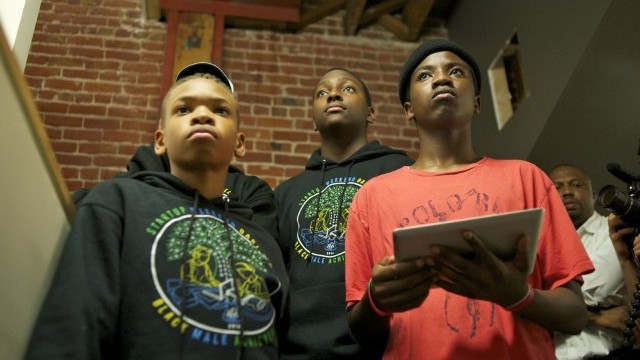
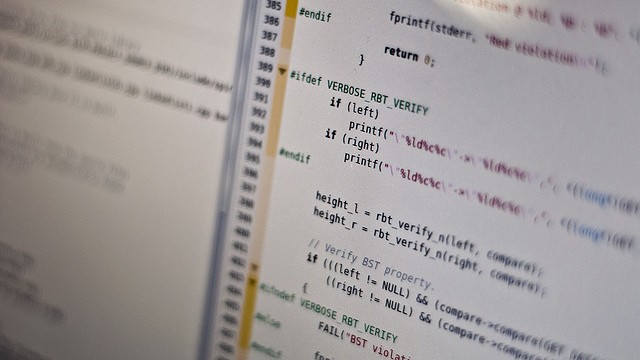
window.__IS_SSR__=true
window.__INITIAL_STATE__={
"attachmentsReducer": {
"audio_0": {
"type": "attachments",
"id": "audio_0",
"imgSizes": {
"kqedFullSize": {
"file": "https://ww2.kqed.org/news/wp-content/themes/KQED-unified/img/audio_bgs/background0.jpg"
}
}
},
"audio_1": {
"type": "attachments",
"id": "audio_1",
"imgSizes": {
"kqedFullSize": {
"file": "https://ww2.kqed.org/news/wp-content/themes/KQED-unified/img/audio_bgs/background1.jpg"
}
}
},
"audio_2": {
"type": "attachments",
"id": "audio_2",
"imgSizes": {
"kqedFullSize": {
"file": "https://ww2.kqed.org/news/wp-content/themes/KQED-unified/img/audio_bgs/background2.jpg"
}
}
},
"audio_3": {
"type": "attachments",
"id": "audio_3",
"imgSizes": {
"kqedFullSize": {
"file": "https://ww2.kqed.org/news/wp-content/themes/KQED-unified/img/audio_bgs/background3.jpg"
}
}
},
"audio_4": {
"type": "attachments",
"id": "audio_4",
"imgSizes": {
"kqedFullSize": {
"file": "https://ww2.kqed.org/news/wp-content/themes/KQED-unified/img/audio_bgs/background4.jpg"
}
}
},
"placeholder": {
"type": "attachments",
"id": "placeholder",
"imgSizes": {
"thumbnail": {
"file": "https://cdn.kqed.org/wp-content/uploads/2024/12/KQED-Default-Image-816638274-2000x1333-1-160x107.jpg",
"width": 160,
"height": 107,
"mimeType": "image/jpeg"
},
"medium": {
"file": "https://cdn.kqed.org/wp-content/uploads/2024/12/KQED-Default-Image-816638274-2000x1333-1-800x533.jpg",
"width": 800,
"height": 533,
"mimeType": "image/jpeg"
},
"medium_large": {
"file": "https://cdn.kqed.org/wp-content/uploads/2024/12/KQED-Default-Image-816638274-2000x1333-1-768x512.jpg",
"width": 768,
"height": 512,
"mimeType": "image/jpeg"
},
"large": {
"file": "https://cdn.kqed.org/wp-content/uploads/2024/12/KQED-Default-Image-816638274-2000x1333-1-1020x680.jpg",
"width": 1020,
"height": 680,
"mimeType": "image/jpeg"
},
"1536x1536": {
"file": "https://cdn.kqed.org/wp-content/uploads/2024/12/KQED-Default-Image-816638274-2000x1333-1-1536x1024.jpg",
"width": 1536,
"height": 1024,
"mimeType": "image/jpeg"
},
"fd-lrg": {
"file": "https://cdn.kqed.org/wp-content/uploads/2024/12/KQED-Default-Image-816638274-2000x1333-1-1536x1024.jpg",
"width": 1536,
"height": 1024,
"mimeType": "image/jpeg"
},
"fd-med": {
"file": "https://cdn.kqed.org/wp-content/uploads/2024/12/KQED-Default-Image-816638274-2000x1333-1-1020x680.jpg",
"width": 1020,
"height": 680,
"mimeType": "image/jpeg"
},
"fd-sm": {
"file": "https://cdn.kqed.org/wp-content/uploads/2024/12/KQED-Default-Image-816638274-2000x1333-1-800x533.jpg",
"width": 800,
"height": 533,
"mimeType": "image/jpeg"
},
"post-thumbnail": {
"file": "https://cdn.kqed.org/wp-content/uploads/2024/12/KQED-Default-Image-816638274-2000x1333-1-672x372.jpg",
"width": 672,
"height": 372,
"mimeType": "image/jpeg"
},
"twentyfourteen-full-width": {
"file": "https://cdn.kqed.org/wp-content/uploads/2024/12/KQED-Default-Image-816638274-2000x1333-1-1038x576.jpg",
"width": 1038,
"height": 576,
"mimeType": "image/jpeg"
},
"xxsmall": {
"file": "https://cdn.kqed.org/wp-content/uploads/2024/12/KQED-Default-Image-816638274-2000x1333-1-160x107.jpg",
"width": 160,
"height": 107,
"mimeType": "image/jpeg"
},
"xsmall": {
"file": "https://cdn.kqed.org/wp-content/uploads/2024/12/KQED-Default-Image-816638274-2000x1333-1-672x372.jpg",
"width": 672,
"height": 372,
"mimeType": "image/jpeg"
},
"small": {
"file": "https://cdn.kqed.org/wp-content/uploads/2024/12/KQED-Default-Image-816638274-2000x1333-1-672x372.jpg",
"width": 672,
"height": 372,
"mimeType": "image/jpeg"
},
"xlarge": {
"file": "https://cdn.kqed.org/wp-content/uploads/2024/12/KQED-Default-Image-816638274-2000x1333-1-1020x680.jpg",
"width": 1020,
"height": 680,
"mimeType": "image/jpeg"
},
"full-width": {
"file": "https://cdn.kqed.org/wp-content/uploads/2024/12/KQED-Default-Image-816638274-2000x1333-1-1920x1280.jpg",
"width": 1920,
"height": 1280,
"mimeType": "image/jpeg"
},
"guest-author-32": {
"file": "https://cdn.kqed.org/wp-content/uploads/2025/01/KQED-Default-Image-816638274-1333x1333-1-160x160.jpg",
"width": 32,
"height": 32,
"mimeType": "image/jpeg"
},
"guest-author-50": {
"file": "https://cdn.kqed.org/wp-content/uploads/2025/01/KQED-Default-Image-816638274-1333x1333-1-160x160.jpg",
"width": 50,
"height": 50,
"mimeType": "image/jpeg"
},
"guest-author-64": {
"file": "https://cdn.kqed.org/wp-content/uploads/2025/01/KQED-Default-Image-816638274-1333x1333-1-160x160.jpg",
"width": 64,
"height": 64,
"mimeType": "image/jpeg"
},
"guest-author-96": {
"file": "https://cdn.kqed.org/wp-content/uploads/2025/01/KQED-Default-Image-816638274-1333x1333-1-160x160.jpg",
"width": 96,
"height": 96,
"mimeType": "image/jpeg"
},
"guest-author-128": {
"file": "https://cdn.kqed.org/wp-content/uploads/2025/01/KQED-Default-Image-816638274-1333x1333-1-160x160.jpg",
"width": 128,
"height": 128,
"mimeType": "image/jpeg"
},
"detail": {
"file": "https://cdn.kqed.org/wp-content/uploads/2025/01/KQED-Default-Image-816638274-1333x1333-1-160x160.jpg",
"width": 160,
"height": 160,
"mimeType": "image/jpeg"
},
"kqedFullSize": {
"file": "https://cdn.kqed.org/wp-content/uploads/2024/12/KQED-Default-Image-816638274-2000x1333-1.jpg",
"width": 2000,
"height": 1333
}
}
},
"mindshift_34317": {
"type": "attachments",
"id": "mindshift_34317",
"meta": {
"index": "attachments_1716263798",
"site": "mindshift",
"id": "34317",
"found": true
},
"parent": 34312,
"imgSizes": {
"thumbnail": {
"file": "https://ww2.kqed.org/app/uploads/sites/23/2014/03/DSC_9640-e1393704242581-400x225.jpg",
"width": 400,
"mimeType": "image/jpeg",
"height": 225
},
"fd-sm": {
"file": "https://ww2.kqed.org/app/uploads/sites/23/2014/03/DSC_9640-e1393704242581-320x180.jpg",
"width": 320,
"mimeType": "image/jpeg",
"height": 180
},
"kqedFullSize": {
"file": "https://ww2.kqed.org/app/uploads/sites/23/2014/03/DSC_9640-e1393704242581.jpg",
"width": 640,
"height": 360
},
"guest-author-96": {
"file": "https://ww2.kqed.org/app/uploads/sites/23/2014/03/DSC_9640-e1393704242581-96x96.jpg",
"width": 96,
"mimeType": "image/jpeg",
"height": 96
},
"guest-author-64": {
"file": "https://ww2.kqed.org/app/uploads/sites/23/2014/03/DSC_9640-e1393704242581-64x64.jpg",
"width": 64,
"mimeType": "image/jpeg",
"height": 64
},
"detail": {
"file": "https://ww2.kqed.org/app/uploads/sites/23/2014/03/DSC_9640-e1393704242581-75x75.jpg",
"width": 75,
"mimeType": "image/jpeg",
"height": 75
},
"guest-author-32": {
"file": "https://ww2.kqed.org/app/uploads/sites/23/2014/03/DSC_9640-e1393704242581-32x32.jpg",
"width": 32,
"mimeType": "image/jpeg",
"height": 32
},
"guest-author-128": {
"file": "https://ww2.kqed.org/app/uploads/sites/23/2014/03/DSC_9640-e1393704242581-128x128.jpg",
"width": 128,
"mimeType": "image/jpeg",
"height": 128
}
},
"publishDate": 1393704196,
"modified": 1393704196,
"caption": "Members of the Hidden Genius Project learn how to code.",
"description": null,
"title": "DSC_9640",
"credit": null,
"status": "inherit",
"isLoading": false,
"fetchFailed": false
},
"mindshift_34089": {
"type": "attachments",
"id": "mindshift_34089",
"meta": {
"index": "attachments_1716263798",
"site": "mindshift",
"id": "34089",
"found": true
},
"parent": 34088,
"imgSizes": {
"thumbnail": {
"file": "https://ww2.kqed.org/app/uploads/sites/23/2014/02/4466482623_6aea29d90a_z-e1392339552436-400x225.jpg",
"width": 400,
"mimeType": "image/jpeg",
"height": 225
},
"fd-sm": {
"file": "https://ww2.kqed.org/app/uploads/sites/23/2014/02/4466482623_6aea29d90a_z-e1392339552436-320x180.jpg",
"width": 320,
"mimeType": "image/jpeg",
"height": 180
},
"kqedFullSize": {
"file": "https://ww2.kqed.org/app/uploads/sites/23/2014/02/4466482623_6aea29d90a_z-e1392339552436.jpg",
"width": 640,
"height": 360
},
"guest-author-96": {
"file": "https://ww2.kqed.org/app/uploads/sites/23/2014/02/4466482623_6aea29d90a_z-e1392339552436-96x96.jpg",
"width": 96,
"mimeType": "image/jpeg",
"height": 96
},
"guest-author-64": {
"file": "https://ww2.kqed.org/app/uploads/sites/23/2014/02/4466482623_6aea29d90a_z-e1392339552436-64x64.jpg",
"width": 64,
"mimeType": "image/jpeg",
"height": 64
},
"detail": {
"file": "https://ww2.kqed.org/app/uploads/sites/23/2014/02/4466482623_6aea29d90a_z-e1392339552436-75x75.jpg",
"width": 75,
"mimeType": "image/jpeg",
"height": 75
},
"guest-author-32": {
"file": "https://ww2.kqed.org/app/uploads/sites/23/2014/02/4466482623_6aea29d90a_z-e1392339552436-32x32.jpg",
"width": 32,
"mimeType": "image/jpeg",
"height": 32
},
"guest-author-128": {
"file": "https://ww2.kqed.org/app/uploads/sites/23/2014/02/4466482623_6aea29d90a_z-e1392339552436-128x128.jpg",
"width": 128,
"mimeType": "image/jpeg",
"height": 128
}
},
"publishDate": 1392339263,
"modified": 1392339263,
"caption": null,
"description": null,
"title": "4466482623_6aea29d90a_z",
"credit": null,
"status": "inherit",
"isLoading": false,
"fetchFailed": false
},
"mindshift_34121": {
"type": "attachments",
"id": "mindshift_34121",
"meta": {
"index": "attachments_1716263798",
"site": "mindshift",
"id": "34121",
"found": true
},
"parent": 34120,
"imgSizes": {
"twentyfourteen-full-width": {
"file": "https://ww2.kqed.org/app/uploads/sites/23/2014/02/ap716483568359_wide-3d89555fdd14f214893b776bf3734db33b31279d-1038x576.jpg",
"width": 1038,
"mimeType": "image/jpeg",
"height": 576
},
"thumbnail": {
"file": "https://ww2.kqed.org/app/uploads/sites/23/2014/02/ap716483568359_wide-3d89555fdd14f214893b776bf3734db33b31279d-400x225.jpg",
"width": 400,
"mimeType": "image/jpeg",
"height": 225
},
"fd-sm": {
"file": "https://ww2.kqed.org/app/uploads/sites/23/2014/02/ap716483568359_wide-3d89555fdd14f214893b776bf3734db33b31279d-320x180.jpg",
"width": 320,
"mimeType": "image/jpeg",
"height": 180
},
"post-thumbnail": {
"file": "https://ww2.kqed.org/app/uploads/sites/23/2014/02/ap716483568359_wide-3d89555fdd14f214893b776bf3734db33b31279d-672x372.jpg",
"width": 672,
"mimeType": "image/jpeg",
"height": 372
},
"kqedFullSize": {
"file": "https://ww2.kqed.org/app/uploads/sites/23/2014/02/ap716483568359_wide-3d89555fdd14f214893b776bf3734db33b31279d.jpg",
"width": 1672,
"height": 940
},
"large": {
"file": "https://ww2.kqed.org/app/uploads/sites/23/2014/02/ap716483568359_wide-3d89555fdd14f214893b776bf3734db33b31279d-1440x810.jpg",
"width": 1440,
"mimeType": "image/jpeg",
"height": 810
},
"guest-author-96": {
"file": "https://ww2.kqed.org/app/uploads/sites/23/2014/02/ap716483568359_wide-3d89555fdd14f214893b776bf3734db33b31279d-96x96.jpg",
"width": 96,
"mimeType": "image/jpeg",
"height": 96
},
"medium": {
"file": "https://ww2.kqed.org/app/uploads/sites/23/2014/02/ap716483568359_wide-3d89555fdd14f214893b776bf3734db33b31279d-800x450.jpg",
"width": 800,
"mimeType": "image/jpeg",
"height": 450
},
"guest-author-64": {
"file": "https://ww2.kqed.org/app/uploads/sites/23/2014/02/ap716483568359_wide-3d89555fdd14f214893b776bf3734db33b31279d-64x64.jpg",
"width": 64,
"mimeType": "image/jpeg",
"height": 64
},
"guest-author-32": {
"file": "https://ww2.kqed.org/app/uploads/sites/23/2014/02/ap716483568359_wide-3d89555fdd14f214893b776bf3734db33b31279d-32x32.jpg",
"width": 32,
"mimeType": "image/jpeg",
"height": 32
},
"fd-lrg": {
"file": "https://ww2.kqed.org/app/uploads/sites/23/2014/02/ap716483568359_wide-3d89555fdd14f214893b776bf3734db33b31279d-1180x663.jpg",
"width": 1180,
"mimeType": "image/jpeg",
"height": 663
},
"fd-med": {
"file": "https://ww2.kqed.org/app/uploads/sites/23/2014/02/ap716483568359_wide-3d89555fdd14f214893b776bf3734db33b31279d-768x432.jpg",
"width": 768,
"mimeType": "image/jpeg",
"height": 432
},
"guest-author-128": {
"file": "https://ww2.kqed.org/app/uploads/sites/23/2014/02/ap716483568359_wide-3d89555fdd14f214893b776bf3734db33b31279d-128x128.jpg",
"width": 128,
"mimeType": "image/jpeg",
"height": 128
}
},
"publishDate": 1392634190,
"modified": 1392634190,
"caption": null,
"description": null,
"title": "Alex Tu, left, an Advanced Placement student, works during a computer science class in Midwest City, Okla. There's been a sharp decline in the number of computer science classes offered in U.S. secondary schools.",
"credit": null,
"status": "inherit",
"isLoading": false,
"fetchFailed": false
},
"mindshift_32250": {
"type": "attachments",
"id": "mindshift_32250",
"meta": {
"index": "attachments_1716263798",
"site": "mindshift",
"id": "32250",
"found": true
},
"parent": 32243,
"imgSizes": {
"thumbnail": {
"file": "https://ww2.kqed.org/app/uploads/sites/23/2013/10/7654263730_cd0ce96755_z-400x265.jpg",
"width": 400,
"mimeType": "image/jpeg",
"height": 265
},
"fd-sm": {
"file": "https://ww2.kqed.org/app/uploads/sites/23/2013/10/7654263730_cd0ce96755_z-320x212.jpg",
"width": 320,
"mimeType": "image/jpeg",
"height": 212
},
"post-thumbnail": {
"file": "https://ww2.kqed.org/app/uploads/sites/23/2013/10/7654263730_cd0ce96755_z-640x372.jpg",
"width": 640,
"mimeType": "image/jpeg",
"height": 372
},
"kqedFullSize": {
"file": "https://ww2.kqed.org/app/uploads/sites/23/2013/10/7654263730_cd0ce96755_z.jpg",
"width": 640,
"height": 424
},
"guest-author-96": {
"file": "https://ww2.kqed.org/app/uploads/sites/23/2013/10/7654263730_cd0ce96755_z-96x96.jpg",
"width": 96,
"mimeType": "image/jpeg",
"height": 96
},
"guest-author-64": {
"file": "https://ww2.kqed.org/app/uploads/sites/23/2013/10/7654263730_cd0ce96755_z-64x64.jpg",
"width": 64,
"mimeType": "image/jpeg",
"height": 64
},
"detail": {
"file": "https://ww2.kqed.org/app/uploads/sites/23/2013/10/7654263730_cd0ce96755_z-75x75.jpg",
"width": 75,
"mimeType": "image/jpeg",
"height": 75
},
"guest-author-32": {
"file": "https://ww2.kqed.org/app/uploads/sites/23/2013/10/7654263730_cd0ce96755_z-32x32.jpg",
"width": 32,
"mimeType": "image/jpeg",
"height": 32
},
"guest-author-128": {
"file": "https://ww2.kqed.org/app/uploads/sites/23/2013/10/7654263730_cd0ce96755_z-128x128.jpg",
"width": 128,
"mimeType": "image/jpeg",
"height": 128
}
},
"publishDate": 1382462264,
"modified": 1382462264,
"caption": null,
"description": null,
"title": "7654263730_cd0ce96755_z",
"credit": null,
"status": "inherit",
"isLoading": false,
"fetchFailed": false
},
"mindshift_31483": {
"type": "attachments",
"id": "mindshift_31483",
"meta": {
"index": "attachments_1716263798",
"site": "mindshift",
"id": "31483",
"found": true
},
"parent": 31477,
"imgSizes": {
"thumbnail": {
"file": "https://ww2.kqed.org/app/uploads/sites/23/2013/09/robotturtles-400x225.jpg",
"width": 400,
"mimeType": "image/jpeg",
"height": 225
},
"fd-sm": {
"file": "https://ww2.kqed.org/app/uploads/sites/23/2013/09/robotturtles-320x180.jpg",
"width": 320,
"mimeType": "image/jpeg",
"height": 180
},
"kqedFullSize": {
"file": "https://ww2.kqed.org/app/uploads/sites/23/2013/09/robotturtles.jpg",
"width": 640,
"height": 360
},
"guest-author-96": {
"file": "https://ww2.kqed.org/app/uploads/sites/23/2013/09/robotturtles-96x96.jpg",
"width": 96,
"mimeType": "image/jpeg",
"height": 96
},
"guest-author-64": {
"file": "https://ww2.kqed.org/app/uploads/sites/23/2013/09/robotturtles-64x64.jpg",
"width": 64,
"mimeType": "image/jpeg",
"height": 64
},
"detail": {
"file": "https://ww2.kqed.org/app/uploads/sites/23/2013/09/robotturtles-75x75.jpg",
"width": 75,
"mimeType": "image/jpeg",
"height": 75
},
"guest-author-32": {
"file": "https://ww2.kqed.org/app/uploads/sites/23/2013/09/robotturtles-32x32.jpg",
"width": 32,
"mimeType": "image/jpeg",
"height": 32
},
"guest-author-128": {
"file": "https://ww2.kqed.org/app/uploads/sites/23/2013/09/robotturtles-128x128.jpg",
"width": 128,
"mimeType": "image/jpeg",
"height": 128
}
},
"publishDate": 1379622491,
"modified": 1379622491,
"caption": null,
"description": null,
"title": "robotturtles",
"credit": null,
"status": "inherit",
"isLoading": false,
"fetchFailed": false
},
"mindshift_31497": {
"type": "attachments",
"id": "mindshift_31497",
"meta": {
"index": "attachments_1716263798",
"site": "mindshift",
"id": "31497",
"found": true
},
"parent": 31491,
"imgSizes": {
"thumbnail": {
"file": "https://ww2.kqed.org/app/uploads/sites/23/2013/09/black-girls-code640x360-400x225.jpg",
"width": 400,
"mimeType": "image/jpeg",
"height": 225
},
"fd-sm": {
"file": "https://ww2.kqed.org/app/uploads/sites/23/2013/09/black-girls-code640x360-320x180.jpg",
"width": 320,
"mimeType": "image/jpeg",
"height": 180
},
"kqedFullSize": {
"file": "https://ww2.kqed.org/app/uploads/sites/23/2013/09/black-girls-code640x360.jpg",
"width": 640,
"height": 360
},
"guest-author-96": {
"file": "https://ww2.kqed.org/app/uploads/sites/23/2013/09/black-girls-code640x360-96x96.jpg",
"width": 96,
"mimeType": "image/jpeg",
"height": 96
},
"guest-author-64": {
"file": "https://ww2.kqed.org/app/uploads/sites/23/2013/09/black-girls-code640x360-64x64.jpg",
"width": 64,
"mimeType": "image/jpeg",
"height": 64
},
"detail": {
"file": "https://ww2.kqed.org/app/uploads/sites/23/2013/09/black-girls-code640x360-75x75.jpg",
"width": 75,
"mimeType": "image/jpeg",
"height": 75
},
"guest-author-32": {
"file": "https://ww2.kqed.org/app/uploads/sites/23/2013/09/black-girls-code640x360-32x32.jpg",
"width": 32,
"mimeType": "image/jpeg",
"height": 32
},
"guest-author-128": {
"file": "https://ww2.kqed.org/app/uploads/sites/23/2013/09/black-girls-code640x360-128x128.jpg",
"width": 128,
"mimeType": "image/jpeg",
"height": 128
}
},
"publishDate": 1379635646,
"modified": 1379635646,
"caption": null,
"description": null,
"title": "black-girls-code640x360",
"credit": null,
"status": "inherit",
"isLoading": false,
"fetchFailed": false
},
"mindshift_30615": {
"type": "attachments",
"id": "mindshift_30615",
"meta": {
"index": "attachments_1716263798",
"site": "mindshift",
"id": "30615",
"found": true
},
"parent": 30611,
"imgSizes": {
"thumbnail": {
"file": "https://ww2.kqed.org/app/uploads/sites/23/2013/08/back-to-school-400x225.jpg",
"width": 400,
"mimeType": "image/jpeg",
"height": 225
},
"fd-sm": {
"file": "https://ww2.kqed.org/app/uploads/sites/23/2013/08/back-to-school-320x180.jpg",
"width": 320,
"mimeType": "image/jpeg",
"height": 180
},
"kqedFullSize": {
"file": "https://ww2.kqed.org/app/uploads/sites/23/2013/08/back-to-school.jpg",
"width": 640,
"height": 360
},
"guest-author-96": {
"file": "https://ww2.kqed.org/app/uploads/sites/23/2013/08/back-to-school-96x96.jpg",
"width": 96,
"mimeType": "image/jpeg",
"height": 96
},
"guest-author-64": {
"file": "https://ww2.kqed.org/app/uploads/sites/23/2013/08/back-to-school-64x64.jpg",
"width": 64,
"mimeType": "image/jpeg",
"height": 64
},
"detail": {
"file": "https://ww2.kqed.org/app/uploads/sites/23/2013/08/back-to-school-75x75.jpg",
"width": 75,
"mimeType": "image/jpeg",
"height": 75
},
"guest-author-32": {
"file": "https://ww2.kqed.org/app/uploads/sites/23/2013/08/back-to-school-32x32.jpg",
"width": 32,
"mimeType": "image/jpeg",
"height": 32
},
"guest-author-128": {
"file": "https://ww2.kqed.org/app/uploads/sites/23/2013/08/back-to-school-128x128.jpg",
"width": 128,
"mimeType": "image/jpeg",
"height": 128
}
},
"publishDate": 1376441571,
"modified": 1376441571,
"caption": null,
"description": null,
"title": "back-to-school",
"credit": null,
"status": "inherit",
"isLoading": false,
"fetchFailed": false
},
"mindshift_30500": {
"type": "attachments",
"id": "mindshift_30500",
"meta": {
"index": "attachments_1716263798",
"site": "mindshift",
"id": "30500",
"found": true
},
"parent": 30498,
"imgSizes": {
"thumbnail": {
"file": "https://ww2.kqed.org/app/uploads/sites/23/2013/08/Tynker-400x225.jpg",
"width": 400,
"mimeType": "image/jpeg",
"height": 225
},
"fd-sm": {
"file": "https://ww2.kqed.org/app/uploads/sites/23/2013/08/Tynker-320x180.jpg",
"width": 320,
"mimeType": "image/jpeg",
"height": 180
},
"kqedFullSize": {
"file": "https://ww2.kqed.org/app/uploads/sites/23/2013/08/Tynker.jpg",
"width": 640,
"height": 360
},
"guest-author-96": {
"file": "https://ww2.kqed.org/app/uploads/sites/23/2013/08/Tynker-96x96.jpg",
"width": 96,
"mimeType": "image/jpeg",
"height": 96
},
"guest-author-64": {
"file": "https://ww2.kqed.org/app/uploads/sites/23/2013/08/Tynker-64x64.jpg",
"width": 64,
"mimeType": "image/jpeg",
"height": 64
},
"detail": {
"file": "https://ww2.kqed.org/app/uploads/sites/23/2013/08/Tynker-75x75.jpg",
"width": 75,
"mimeType": "image/jpeg",
"height": 75
},
"guest-author-32": {
"file": "https://ww2.kqed.org/app/uploads/sites/23/2013/08/Tynker-32x32.jpg",
"width": 32,
"mimeType": "image/jpeg",
"height": 32
},
"guest-author-128": {
"file": "https://ww2.kqed.org/app/uploads/sites/23/2013/08/Tynker-128x128.jpg",
"width": 128,
"mimeType": "image/jpeg",
"height": 128
}
},
"publishDate": 1375996652,
"modified": 1375996652,
"caption": null,
"description": null,
"title": "Tynker",
"credit": null,
"status": "inherit",
"isLoading": false,
"fetchFailed": false
},
"mindshift_28954": {
"type": "attachments",
"id": "mindshift_28954",
"meta": {
"index": "attachments_1716263798",
"site": "mindshift",
"id": "28954",
"found": true
},
"parent": 28867,
"imgSizes": {
"thumbnail": {
"file": "https://ww2.kqed.org/app/uploads/sites/23/2013/05/Kids-computers1-400x225.jpg",
"width": 400,
"mimeType": "image/jpeg",
"height": 225
},
"fd-sm": {
"file": "https://ww2.kqed.org/app/uploads/sites/23/2013/05/Kids-computers1-320x180.jpg",
"width": 320,
"mimeType": "image/jpeg",
"height": 180
},
"kqedFullSize": {
"file": "https://ww2.kqed.org/app/uploads/sites/23/2013/05/Kids-computers1.jpg",
"width": 640,
"height": 360
},
"guest-author-96": {
"file": "https://ww2.kqed.org/app/uploads/sites/23/2013/05/Kids-computers1-96x96.jpg",
"width": 96,
"mimeType": "image/jpeg",
"height": 96
},
"guest-author-64": {
"file": "https://ww2.kqed.org/app/uploads/sites/23/2013/05/Kids-computers1-64x64.jpg",
"width": 64,
"mimeType": "image/jpeg",
"height": 64
},
"detail": {
"file": "https://ww2.kqed.org/app/uploads/sites/23/2013/05/Kids-computers1-75x75.jpg",
"width": 75,
"mimeType": "image/jpeg",
"height": 75
},
"guest-author-32": {
"file": "https://ww2.kqed.org/app/uploads/sites/23/2013/05/Kids-computers1-32x32.jpg",
"width": 32,
"mimeType": "image/jpeg",
"height": 32
},
"guest-author-128": {
"file": "https://ww2.kqed.org/app/uploads/sites/23/2013/05/Kids-computers1-128x128.jpg",
"width": 128,
"mimeType": "image/jpeg",
"height": 128
}
},
"publishDate": 1369417516,
"modified": 1369417516,
"caption": null,
"description": null,
"title": "Kids-computers1",
"credit": null,
"status": "inherit",
"isLoading": false,
"fetchFailed": false
}
},
"audioPlayerReducer": {
"postId": "stream_live",
"isPaused": true,
"isPlaying": false,
"pfsActive": false,
"pledgeModalIsOpen": true,
"playerDrawerIsOpen": false,
"liveAudioPlayStartedAt": 0,
"liveAudioPlayContext": ""
},
"authorsReducer": {
"byline_mindshift_34120": {
"type": "authors",
"id": "byline_mindshift_34120",
"meta": {
"override": true
},
"slug": "byline_mindshift_34120",
"name": "Eric Westervelt",
"isLoading": false
},
"byline_mindshift_31477": {
"type": "authors",
"id": "byline_mindshift_31477",
"meta": {
"override": true
},
"slug": "byline_mindshift_31477",
"name": "Elise Hu",
"isLoading": false
},
"tbarseghian": {
"type": "authors",
"id": "180",
"meta": {
"index": "authors_1716337520",
"id": "180",
"found": true
},
"name": "Tina Barseghian",
"firstName": "Tina",
"lastName": "Barseghian",
"slug": "tbarseghian",
"email": "tbarseghian@kqed.org",
"display_author_email": false,
"staff_mastheads": [],
"title": null,
"bio": null,
"avatar": "https://secure.gravatar.com/avatar/de7e6ced1239b7018fe4d2b61f723c90?s=600&d=blank&r=g",
"twitter": null,
"facebook": null,
"instagram": null,
"linkedin": null,
"sites": [
{
"site": "styleguide",
"roles": [
"contributor"
]
},
{
"site": "news",
"roles": [
"subscriber"
]
},
{
"site": "mindshift",
"roles": [
"subscriber"
]
},
{
"site": "bayareabites",
"roles": [
"subscriber"
]
}
],
"headData": {
"title": "Tina Barseghian | KQED",
"description": null,
"ogImgSrc": "https://secure.gravatar.com/avatar/de7e6ced1239b7018fe4d2b61f723c90?s=600&d=blank&r=g",
"twImgSrc": "https://secure.gravatar.com/avatar/de7e6ced1239b7018fe4d2b61f723c90?s=600&d=blank&r=g"
},
"isLoading": false,
"link": "/author/tbarseghian"
},
"katrinaschwartz": {
"type": "authors",
"id": "234",
"meta": {
"index": "authors_1716337520",
"id": "234",
"found": true
},
"name": "Katrina Schwartz",
"firstName": "Katrina",
"lastName": "Schwartz",
"slug": "katrinaschwartz",
"email": "kschwartz@kqed.org",
"display_author_email": false,
"staff_mastheads": [
"news"
],
"title": "Producer",
"bio": "Katrina Schwartz is a journalist based in San Francisco. She's worked at KPCC public radio in LA and has reported on air and online for KQED since 2010. She covered how teaching and learning is changing for MindShift between 2012 and 2020. She is the co-host of the MindShift podcast and now produces KQED's Bay Curious podcast.",
"avatar": "https://secure.gravatar.com/avatar/edb4ee79070447a018538c9aae6eeecf28786515b8a0c30e43b6b7dce5aa44c8?s=600&d=blank&r=g",
"twitter": "kschwart",
"bluesky": null,
"facebook": null,
"instagram": null,
"linkedin": null,
"sites": [
{
"site": "",
"roles": [
"editor"
]
},
{
"site": "news",
"roles": [
"editor"
]
},
{
"site": "mindshift",
"roles": [
"administrator"
]
},
{
"site": "stateofhealth",
"roles": [
"author"
]
},
{
"site": "science",
"roles": [
"editor"
]
}
],
"headData": {
"title": "Katrina Schwartz | KQED",
"description": "Producer",
"ogImgSrc": "https://secure.gravatar.com/avatar/edb4ee79070447a018538c9aae6eeecf28786515b8a0c30e43b6b7dce5aa44c8?s=600&d=blank&r=g",
"twImgSrc": "https://secure.gravatar.com/avatar/edb4ee79070447a018538c9aae6eeecf28786515b8a0c30e43b6b7dce5aa44c8?s=600&d=blank&r=g"
},
"isLoading": false,
"link": "/author/katrinaschwartz"
},
"ianquillen": {
"type": "authors",
"id": "4411",
"meta": {
"index": "authors_1716337520",
"id": "4411",
"found": true
},
"name": "Ian Quillen",
"firstName": "Ian",
"lastName": "Quillen",
"slug": "ianquillen",
"email": "ian.nicholas.quillen@gmail.com",
"display_author_email": false,
"staff_mastheads": [],
"title": null,
"bio": null,
"avatar": "https://secure.gravatar.com/avatar/587c40a44a1c17d9578290184bcc41cf?s=600&d=blank&r=g",
"twitter": null,
"facebook": null,
"instagram": null,
"linkedin": null,
"sites": [
{
"site": "mindshift",
"roles": [
"subscriber"
]
}
],
"headData": {
"title": "Ian Quillen | KQED",
"description": null,
"ogImgSrc": "https://secure.gravatar.com/avatar/587c40a44a1c17d9578290184bcc41cf?s=600&d=blank&r=g",
"twImgSrc": "https://secure.gravatar.com/avatar/587c40a44a1c17d9578290184bcc41cf?s=600&d=blank&r=g"
},
"isLoading": false,
"link": "/author/ianquillen"
},
"hollykorbey": {
"type": "authors",
"id": "4445",
"meta": {
"index": "authors_1716337520",
"id": "4445",
"found": true
},
"name": "Holly Korbey",
"firstName": "Holly",
"lastName": "Korbey",
"slug": "hollykorbey",
"email": "holly@hollykorbey.com",
"display_author_email": false,
"staff_mastheads": [],
"title": null,
"bio": "Holly Korbey's work on parenting and education has appeared in The New York Times, The Atlantic, Babble, Brain, Child Magazine, and others. She lives in Nashville with her family. Follow her on Twitter: @HKorbey",
"avatar": "https://secure.gravatar.com/avatar/f385f7a3b90e52ecd5e85c24fbd0a363?s=600&d=blank&r=g",
"twitter": null,
"facebook": null,
"instagram": null,
"linkedin": null,
"sites": [
{
"site": "mindshift",
"roles": [
"contributor"
]
}
],
"headData": {
"title": "Holly Korbey | KQED",
"description": null,
"ogImgSrc": "https://secure.gravatar.com/avatar/f385f7a3b90e52ecd5e85c24fbd0a363?s=600&d=blank&r=g",
"twImgSrc": "https://secure.gravatar.com/avatar/f385f7a3b90e52ecd5e85c24fbd0a363?s=600&d=blank&r=g"
},
"isLoading": false,
"link": "/author/hollykorbey"
}
},
"pagesReducer": {
"mindshift_tag_coding": {
"type": "terms",
"id": "mindshift_981",
"meta": {
"index": "terms_1716263798",
"site": "mindshift",
"id": "981",
"score": 9.896347
},
"featImg": null,
"name": "coding",
"description": null,
"taxonomy": "tag",
"headData": {
"twImgId": null,
"twTitle": null,
"ogTitle": null,
"ogImgId": null,
"twDescription": null,
"description": null,
"title": "coding Archives | KQED Mindshift",
"ogDescription": null
},
"ttid": 986,
"slug": "coding",
"isLoading": false,
"title": "coding",
"pageMeta": {
"site": "mindshift",
"WpPageTemplate": "page-topic-editorial",
"currentPage": 3
},
"blocks": [
{
"blockName": "kqed/post-list",
"attrs": {
"layout": "cardArticle2",
"query": "posts/mindshift?tag=coding",
"seeMore": false,
"paginated": true,
"page": 3
}
},
{
"blockName": "kqed/ad"
}
]
}
},
"pfsSessionReducer": {},
"postsReducer": {
"stream_live": {
"type": "live",
"id": "stream_live",
"audioUrl": "https://hls.kqed.org/hls/kqed_app/playlist.m3u8",
"title": "Live Stream",
"excerpt": "Live Stream information currently unavailable.",
"link": "/radio",
"featImg": "",
"label": {
"name": "KQED Live",
"link": "/"
}
},
"stream_kqedNewscast": {
"type": "posts",
"id": "stream_kqedNewscast",
"audioUrl": "https://www.kqed.org/.stream/anon/radio/RDnews/newscast.mp3?_=1",
"title": "KQED Newscast",
"featImg": "",
"label": {
"name": "88.5 FM",
"link": "/"
}
},
"mindshift_34580": {
"type": "posts",
"id": "mindshift_34580",
"meta": {
"index": "posts_1716263798",
"site": "mindshift",
"id": "34580",
"score": null,
"sort": [
1395174794000
]
},
"parent": 0,
"labelTerm": {
"site": "mindshift"
},
"blocks": [],
"publishDate": 1395174794,
"format": "aside",
"disqusTitle": "For One African American Student, Coding Is the Path to Success",
"title": "For One African American Student, Coding Is the Path to Success",
"headTitle": "MindShift | KQED News",
"content": "\u003cp>Languages like Python, Java and C++ are the backbone of the internet economy, but they’re generally not part of most schools' curriculum. While educators and lawmakers in California debate whether programming belongs in the classroom, a handful of start-ups and investors in Oakland want to help local teenagers to code.\u003c/p>\n\u003cp>“I wanted to change my life instead of being in a ghetto every day, growing up around people smoking and doing drugs,” says high school sophomore Johnnel White, who takes coding classes at the nonprofit \u003ca href=\"http://www.hiddengeniusproject.org/\" target=\"_blank\">Hidden Genius Project\u003c/a>.\u003c/p>\n\u003cp>A few weeks ago, White had a chance to test his growing knowledge during a hackathon for “Black Achievement.” Teams of teenagers and adult mentors spent the weekend at a local incubator in Oakland, hacking away at apps to deal with their own everyday problems — from what to eat to whether to show up to school.\u003c/p>\n\u003cp>\u003cem> Video by Jeremy Raff\u003c/em>\u003c/p>\n\u003cp>[youtube //www.youtube.com/watch?v=5tnXsnAaEF4]\u003c/p>\n\u003cp>[ad fullwidth]\u003c/p>\u003cp>\u003c/p>\n",
"disqusIdentifier": "34580 http://blogs.kqed.org/mindshift/?p=34580",
"disqusUrl": "https://ww2.kqed.org/mindshift/2014/03/18/for-one-african-american-student-coding-is-the-path-to-success/",
"stats": {
"hasVideo": true,
"hasChartOrMap": false,
"hasAudio": false,
"hasPolis": false,
"wordCount": 165,
"hasGoogleForm": false,
"hasGallery": false,
"hasHearkenModule": false,
"iframeSrcs": [],
"paragraphCount": 7
},
"modified": 1395263025,
"excerpt": "Students are \"hacking\" problems important to their everyday experience, like developing a simple app for women who feel harassed on the street.",
"headData": {
"twImgId": "",
"twTitle": "",
"ogTitle": "",
"ogImgId": "",
"twDescription": "",
"description": "Students are "hacking" problems important to their everyday experience, like developing a simple app for women who feel harassed on the street.",
"title": "For One African American Student, Coding Is the Path to Success | KQED",
"ogDescription": "",
"schema": {
"@context": "https://schema.org",
"@type": "Article",
"headline": "For One African American Student, Coding Is the Path to Success",
"datePublished": "2014-03-18T13:33:14-07:00",
"dateModified": "2014-03-19T14:03:45-07:00",
"image": "https://cdn.kqed.org/wp-content/uploads/2020/02/KQED-OG-Image@1x.png"
}
},
"guestAuthors": [],
"slug": "for-one-african-american-student-coding-is-the-path-to-success",
"status": "publish",
"path": "/mindshift/34580/for-one-african-american-student-coding-is-the-path-to-success",
"audioTrackLength": null,
"parsedContent": [
{
"type": "contentString",
"content": "\u003cdiv class=\"post-body\">\u003cp>\u003cp>Languages like Python, Java and C++ are the backbone of the internet economy, but they’re generally not part of most schools' curriculum. While educators and lawmakers in California debate whether programming belongs in the classroom, a handful of start-ups and investors in Oakland want to help local teenagers to code.\u003c/p>\n\u003cp>“I wanted to change my life instead of being in a ghetto every day, growing up around people smoking and doing drugs,” says high school sophomore Johnnel White, who takes coding classes at the nonprofit \u003ca href=\"http://www.hiddengeniusproject.org/\" target=\"_blank\">Hidden Genius Project\u003c/a>.\u003c/p>\n\u003cp>A few weeks ago, White had a chance to test his growing knowledge during a hackathon for “Black Achievement.” Teams of teenagers and adult mentors spent the weekend at a local incubator in Oakland, hacking away at apps to deal with their own everyday problems — from what to eat to whether to show up to school.\u003c/p>\n\u003cp>\u003cem> Video by Jeremy Raff\u003c/em>\u003c/p>\n\u003cp>\u003c/p>\u003cp>\u003cspan class='utils-parseShortcode-shortcodes-__youtubeShortcode__embedYoutube'>\n \u003cspan class='utils-parseShortcode-shortcodes-__youtubeShortcode__embedYoutubeInside'>\n \u003ciframe\n loading='lazy'\n class='utils-parseShortcode-shortcodes-__youtubeShortcode__youtubePlayer'\n type='text/html'\n src='//www.youtube.com/embed/5tnXsnAaEF4'\n title='//www.youtube.com/embed/5tnXsnAaEF4'\n allowfullscreen='true'\n style='border:0;'>\u003c/iframe>\n \u003c/span>\n \u003c/span>\u003c/p>\u003cp>\u003c/p>\n\u003cp>\u003c/p>\u003c/div>",
"attributes": {
"named": {},
"numeric": []
}
},
{
"type": "component",
"content": "",
"name": "ad",
"attributes": {
"named": {
"label": "fullwidth"
},
"numeric": [
"fullwidth"
]
}
},
{
"type": "contentString",
"content": "\u003cdiv class=\"post-body\">\u003cp>\u003c/p>\u003cp>\u003c/p>\n\u003c/div>\u003c/p>",
"attributes": {
"named": {},
"numeric": []
}
}
],
"link": "/mindshift/34580/for-one-african-american-student-coding-is-the-path-to-success",
"authors": [
"234"
],
"categories": [
"mindshift_194"
],
"tags": [
"mindshift_981",
"mindshift_557",
"mindshift_1040",
"mindshift_20644"
],
"featImg": "mindshift_34317",
"label": "mindshift"
},
"mindshift_34312": {
"type": "posts",
"id": "mindshift_34312",
"meta": {
"index": "posts_1716263798",
"site": "mindshift",
"id": "34312",
"score": null,
"sort": [
1393858846000
]
},
"parent": 0,
"labelTerm": {
"site": "mindshift"
},
"blocks": [],
"publishDate": 1393858846,
"format": "aside",
"disqusTitle": "Looking for the Hidden Genius Within Disenfranchised Youth",
"title": "Looking for the Hidden Genius Within Disenfranchised Youth",
"headTitle": "MindShift | KQED News",
"content": "\u003cp>For low-income and disenfranchised youth, learning to code might lead to a lucrative career in an industry that's both booming and lacking in diversity. That's the idea behind Oakland's \u003ca href=\"http://www.hiddengeniusproject.org/\">Hidden Genius Project,\u003c/a> a two-year program that offers black high school students a variety of tech classes and pairs them with mentors. Kalimah Priforce, a tech entrepreneur and head mentor at the project wants to see black and Latino kids move from being consumers of technology to being producers -- and he wants to see that diversity reflected in high tech products.\u003c/p>\n\u003cp>“If we want to build an app that could have saved Trayvon Martin’s life, one of the best approaches is to make sure that Trayvon Martin is able to build that app,” said Priforce, who was also among the community leaders advising the White House on its new initiative, My Brother's Keeper, aimed at empowering young men of color.\u003c/p>\n\u003cp>At a recent hack-a-thon in Oakland, Calif., students from the Hidden Genius Project pitched their ideas for software to address their own everyday problems -- from an adventure game about decision making to a mobile app encouraging users to exercise more. Check out what the students are up to.\u003c/p>\n\u003cp>[\u003cem>Produced by Monica Lam/Reported by Aarti Shahani for\u003c/em> \u003ca href=\"http://www.kqed.org/tv/programs/newsroom/\">KQED Newsroom\u003c/a>]\u003c/p>\n\u003cp>[youtube //www.youtube.com/watch?v=7J0lkO3cKio?list=UU0FISFbEaHFc5ccrIgkZ3mg]\u003c/p>\n\u003cp>[ad fullwidth]\u003c/p>\u003cp>\u003c/p>\n",
"disqusIdentifier": "34312 http://blogs.kqed.org/mindshift/?p=34312",
"disqusUrl": "https://ww2.kqed.org/mindshift/2014/03/03/looking-for-hidden-geniuses-among-disenfranchised-youth/",
"stats": {
"hasVideo": true,
"hasChartOrMap": false,
"hasAudio": false,
"hasPolis": false,
"wordCount": 231,
"hasGoogleForm": false,
"hasGallery": false,
"hasHearkenModule": false,
"iframeSrcs": [],
"paragraphCount": 7
},
"modified": 1395252746,
"excerpt": "For low-income and disenfranchised youth, learning to code might lead to a lucrative career in an industry that’s both booming and lacking in diversity. That’s the idea behind Oakland’s Hidden Genius Project, a two-year program that offers black high school students a variety of tech classes and pairs them with mentors. Kalimah Priforce, a tech entrepreneur and head mentor at the projects wants to see black and Latino kids move from being consumers of technology to being producers — and he wants to see that diversity reflected in high tech products.",
"headData": {
"twImgId": "",
"twTitle": "",
"ogTitle": "",
"ogImgId": "",
"twDescription": "",
"description": "For low-income and disenfranchised youth, learning to code might lead to a lucrative career in an industry that’s both booming and lacking in diversity. That’s the idea behind Oakland’s Hidden Genius Project, a two-year program that offers black high school students a variety of tech classes and pairs them with mentors. Kalimah Priforce, a tech entrepreneur and head mentor at the projects wants to see black and Latino kids move from being consumers of technology to being producers — and he wants to see that diversity reflected in high tech products.",
"title": "Looking for the Hidden Genius Within Disenfranchised Youth | KQED",
"ogDescription": "",
"schema": {
"@context": "https://schema.org",
"@type": "Article",
"headline": "Looking for the Hidden Genius Within Disenfranchised Youth",
"datePublished": "2014-03-03T07:00:46-08:00",
"dateModified": "2014-03-19T11:12:26-07:00",
"image": "https://cdn.kqed.org/wp-content/uploads/2020/02/KQED-OG-Image@1x.png"
}
},
"guestAuthors": [],
"slug": "looking-for-hidden-geniuses-among-disenfranchised-youth",
"status": "publish",
"path": "/mindshift/34312/looking-for-hidden-geniuses-among-disenfranchised-youth",
"audioTrackLength": null,
"parsedContent": [
{
"type": "contentString",
"content": "\u003cdiv class=\"post-body\">\u003cp>\u003cp>For low-income and disenfranchised youth, learning to code might lead to a lucrative career in an industry that's both booming and lacking in diversity. That's the idea behind Oakland's \u003ca href=\"http://www.hiddengeniusproject.org/\">Hidden Genius Project,\u003c/a> a two-year program that offers black high school students a variety of tech classes and pairs them with mentors. Kalimah Priforce, a tech entrepreneur and head mentor at the project wants to see black and Latino kids move from being consumers of technology to being producers -- and he wants to see that diversity reflected in high tech products.\u003c/p>\n\u003cp>“If we want to build an app that could have saved Trayvon Martin’s life, one of the best approaches is to make sure that Trayvon Martin is able to build that app,” said Priforce, who was also among the community leaders advising the White House on its new initiative, My Brother's Keeper, aimed at empowering young men of color.\u003c/p>\n\u003cp>At a recent hack-a-thon in Oakland, Calif., students from the Hidden Genius Project pitched their ideas for software to address their own everyday problems -- from an adventure game about decision making to a mobile app encouraging users to exercise more. Check out what the students are up to.\u003c/p>\n\u003cp>[\u003cem>Produced by Monica Lam/Reported by Aarti Shahani for\u003c/em> \u003ca href=\"http://www.kqed.org/tv/programs/newsroom/\">KQED Newsroom\u003c/a>]\u003c/p>\n\u003cp>\u003c/p>\u003cp>\u003cspan class='utils-parseShortcode-shortcodes-__youtubeShortcode__embedYoutube'>\n \u003cspan class='utils-parseShortcode-shortcodes-__youtubeShortcode__embedYoutubeInside'>\n \u003ciframe\n loading='lazy'\n class='utils-parseShortcode-shortcodes-__youtubeShortcode__youtubePlayer'\n type='text/html'\n src='//www.youtube.com/embed/7J0lkO3cKio?list=UU0FISFbEaHFc5ccrIgkZ3mg'\n title='//www.youtube.com/embed/7J0lkO3cKio?list=UU0FISFbEaHFc5ccrIgkZ3mg'\n allowfullscreen='true'\n style='border:0;'>\u003c/iframe>\n \u003c/span>\n \u003c/span>\u003c/p>\u003cp>\u003c/p>\n\u003cp>\u003c/p>\u003c/div>",
"attributes": {
"named": {},
"numeric": []
}
},
{
"type": "component",
"content": "",
"name": "ad",
"attributes": {
"named": {
"label": "fullwidth"
},
"numeric": [
"fullwidth"
]
}
},
{
"type": "contentString",
"content": "\u003cdiv class=\"post-body\">\u003cp>\u003c/p>\u003cp>\u003c/p>\n\u003c/div>\u003c/p>",
"attributes": {
"named": {},
"numeric": []
}
}
],
"link": "/mindshift/34312/looking-for-hidden-geniuses-among-disenfranchised-youth",
"authors": [
"4354"
],
"categories": [
"mindshift_192"
],
"tags": [
"mindshift_981",
"mindshift_1040",
"mindshift_20644"
],
"featImg": "mindshift_34317",
"label": "mindshift"
},
"mindshift_34088": {
"type": "posts",
"id": "mindshift_34088",
"meta": {
"index": "posts_1716263798",
"site": "mindshift",
"id": "34088",
"score": null,
"sort": [
1393088451000
]
},
"parent": 0,
"labelTerm": {
"site": "mindshift"
},
"blocks": [],
"publishDate": 1393088451,
"format": "aside",
"disqusTitle": "Closing the Gender and Minority Gap in Computer Science",
"title": "Closing the Gender and Minority Gap in Computer Science",
"headTitle": "MindShift | KQED News",
"content": "\u003cp>A great discussion around the need for coding and programming in schools, and how to reach girls and minorities, on \u003ca href=\"http://www.sciencefriday.com/segment/01/24/2014/is-coding-the-language-of-the-digital-age.html\">Science Friday\u003c/a>.\u003c/p>\n\u003cp>\u003ciframe src=\"https://w.soundcloud.com/player/?url=https%3A//api.soundcloud.com/tracks/133231889&color=ff5500&auto_play=false&hide_related=false&show_artwork=true\" frameborder=\"no\" scrolling=\"no\" width=\"100%\" height=\"166\">\u003c/iframe>\u003c/p>\n\u003cp>[ad fullwidth]\u003c/p>\u003cp>\u003c/p>\n",
"disqusIdentifier": "34088 http://blogs.kqed.org/mindshift/?p=34088",
"disqusUrl": "https://ww2.kqed.org/mindshift/2014/02/22/closing-the-gender-and-minority-gap-in-computer-science/",
"stats": {
"hasVideo": false,
"hasChartOrMap": true,
"hasAudio": true,
"hasPolis": false,
"wordCount": 24,
"hasGoogleForm": false,
"hasGallery": false,
"hasHearkenModule": false,
"iframeSrcs": [
"https://w.soundcloud.com/player/"
],
"paragraphCount": 4
},
"modified": 1393549996,
"excerpt": null,
"headData": {
"twImgId": "",
"twTitle": "",
"ogTitle": "",
"ogImgId": "",
"twDescription": "",
"description": "A great discussion around the need for coding and programming in schools, and how to reach girls and minorities, on Science Friday.",
"title": "Closing the Gender and Minority Gap in Computer Science | KQED",
"ogDescription": "",
"schema": {
"@context": "https://schema.org",
"@type": "Article",
"headline": "Closing the Gender and Minority Gap in Computer Science",
"datePublished": "2014-02-22T09:00:51-08:00",
"dateModified": "2014-02-27T17:13:16-08:00",
"image": "https://cdn.kqed.org/wp-content/uploads/2020/02/KQED-OG-Image@1x.png"
}
},
"guestAuthors": [],
"slug": "closing-the-gender-and-minority-gap-in-computer-science",
"status": "publish",
"path": "/mindshift/34088/closing-the-gender-and-minority-gap-in-computer-science",
"audioTrackLength": null,
"parsedContent": [
{
"type": "contentString",
"content": "\u003cdiv class=\"post-body\">\u003cp>\u003cp>A great discussion around the need for coding and programming in schools, and how to reach girls and minorities, on \u003ca href=\"http://www.sciencefriday.com/segment/01/24/2014/is-coding-the-language-of-the-digital-age.html\">Science Friday\u003c/a>.\u003c/p>\n\u003cp>\u003ciframe src=\"https://w.soundcloud.com/player/?url=https%3A//api.soundcloud.com/tracks/133231889&color=ff5500&auto_play=false&hide_related=false&show_artwork=true\" frameborder=\"no\" scrolling=\"no\" width=\"100%\" height=\"166\">\u003c/iframe>\u003c/p>\n\u003cp>\u003c/p>\u003c/div>",
"attributes": {
"named": {},
"numeric": []
}
},
{
"type": "component",
"content": "",
"name": "ad",
"attributes": {
"named": {
"label": "fullwidth"
},
"numeric": [
"fullwidth"
]
}
},
{
"type": "contentString",
"content": "\u003cdiv class=\"post-body\">\u003cp>\u003c/p>\u003cp>\u003c/p>\n\u003c/div>\u003c/p>",
"attributes": {
"named": {},
"numeric": []
}
}
],
"link": "/mindshift/34088/closing-the-gender-and-minority-gap-in-computer-science",
"authors": [
"180"
],
"categories": [
"mindshift_195"
],
"tags": [
"mindshift_981",
"mindshift_557",
"mindshift_1040",
"mindshift_20592",
"mindshift_499",
"mindshift_20632"
],
"featImg": "mindshift_34089",
"label": "mindshift"
},
"mindshift_34120": {
"type": "posts",
"id": "mindshift_34120",
"meta": {
"index": "posts_1716263798",
"site": "mindshift",
"id": "34120",
"score": null,
"sort": [
1392649238000
]
},
"parent": 0,
"labelTerm": {
"site": "mindshift"
},
"blocks": [],
"publishDate": 1392649238,
"format": "aside",
"disqusTitle": "Demand for Computer Science Classes Grows, Along With Digital Divide",
"title": "Demand for Computer Science Classes Grows, Along With Digital Divide",
"headTitle": "MindShift | KQED News",
"content": "\u003cfigure id=\"attachment_34123\" class=\"wp-caption center\" style=\"max-width: 640px\">\u003cimg class=\"size-large wp-image-34123\" src=\"http://ww2.kqed.org/mindshift/wp-content/uploads/sites/23/2014/02/ap716483568359_wide-3d89555fdd14f214893b776bf3734db33b31279d-s40-c85-640x359.jpg\" alt=\"Alex Tu, left, an Advanced Placement student, works during a computer science class in Midwest City, Okla. There's been a sharp decline in the number of computer science classes offered in U.S. secondary schools. \" width=\"640\" height=\"359\">\u003cfigcaption class=\"wp-caption-text\">Alex Tu, left, an Advanced Placement student, works during a computer science class in Midwest City, Okla. There's been a sharp decline in the number of computer science classes offered in U.S. secondary schools.\u003c/figcaption>\u003c/figure>\n\u003cp>\u003cstrong>By Eric Westervelt\u003c/strong>\u003c/p>\n\u003cp class=\"dropcap\">A handful of nonprofit and for-profit groups are working to address what they see as a national education crisis: Too few of America's K-12 public schools actually teach computer science basics and fewer still offer it for credit.\u003c/p>\n\u003cp>It's \u003ca href=\"https://docs.google.com/document/d/1gySkItxiJn_vwb8HIIKNXqen184mRtzDX12cux0ZgZk/pub\">projected\u003c/a> that in the next decade there will be about 1 million more U.S. jobs in the tech sector than computer science graduates to fill them. And it's \u003ca href=\"http://research.collegeboard.org/programs/ap/data/archived\">estimated\u003c/a> that only about 10 percent of K-12 schools teach computer science.\u003c/p>\n\u003cp>So some in the education technology sector, an industry \u003ca href=\"http://www.siia.net/index.php?option=com_docman&task=doc_view&gid=4801&Itemid=318\">worth some $8 billion\u003c/a> a year and growing, are stepping in.\u003c/p>\n\u003cp>At a Silicon Valley hotel recently, venture capitalists and interested parties heard funding pitches and watched demonstrations from 13 ed-tech start-ups backed by an incubator called \u003ca href=\"http://www.imaginek12.com/\">Imagine K-12\u003c/a>. One of them is \u003ca href=\"http://www.surfscore.com/\">Kodable\u003c/a>, which aims to teach kids five years and younger the fundamentals of programming through a game where you guide a Pac-Man-esque fuzz ball.\u003c/p>\n\u003cp>[ad fullwidth]\u003c/p>\n\u003cp>\"As soon as you can start learning [coding] you should, because the earlier you start learning something, the better you'll be at it later in life,\" says Grechen Huebner, the co-founder of Kodable. She's working two computer screens to demonstrate how the game works in the hotel lobby.\u003c/p>\n\u003cp>\"Kids have to drag and drop symbols to get their fuzzy character to go through a maze so they learn about conditions, loops and functions and even debugging,\" Huebner says.\u003c/p>\n\u003cp>So should kids who've barely shed their pull-up diapers really learn to code? Huebner thinks it's vital. \"We have kids as young as two using it. Five is just kinda the sweet spot.\u003cstrong>\"\u003c/strong>\u003c/p>\n\u003cp>My daughter's behind, I think. She's four and she hasn't started coding. Bad parent.\u003c/p>\n\u003cp>Even if kids aren't offered game-based computer science concepts in pre-K, there is growing consensus students should get exposed to basic computer science concepts early. Kodable and other startups hope to make a profit filling this enormous void in American public education.\u003c/p>\n\u003cp>\"Ninety percent of schools just don't even teach it. So if you're a parent and your school doesn't even offer this class, your kids aren't going to have the preparation they need for 21st century,\" says\u003cstrong> \u003c/strong>Hadi Partovi, co-founder of the nonprofit \u003ca href=\"http://code.org/\">Code.org\u003c/a>. \"Just like we teach how electricity works and biology basics they should also know how the Internet works and how apps work. Schools need to add this to the curriculum.\"\u003c/p>\n\u003cp>Through his \u003ca href=\"http://csedweek.org/\" target=\"_blank\">\"Hour of Code\" initiative\u003c/a>,\u003cstrong> \u003c/strong>Partovi is working to get kids, parents and schools interested computer science curriculum.\u003c/p>\n\u003cp>\u003cstrong>'It's All Around Us'\u003c/strong>\u003c/p>\n\u003cp>Third graders at a public elementary school in Baltimore recently took part in a game-based Hour of Code to start to try to learn the very basics of coding even though they don't realize it. \"So you're moving three blocks and then you press start,\" one third grader says.\u003cstrong> \u003c/strong>Gretchen LeGrand with the nonprofit \u003ca href=\"http://codeintheschools.org/\">Code in the Schools\u003c/a> is trying to bring computer science fundamentals to underserved, low-income kids in Baltimore. She says it's a huge challenge in a district with few resources.\u003c/p>\n\u003cp>\"The computers are old or outdated. We either can't install the software we want to use to teach computer programming or the connection's slow.\"\u003cstrong> \u003c/strong>She's had to adapt to teaching about coding without a computer or what more teachers are calling teaching \u003ca href=\"http://csedweek.org/unplugged/thinkersmith\">CS unplugged.\u003c/a>\u003c/p>\n\u003cp>Partovi says teaching computer science is not about esoteric knowledge for computer geeks or filling jobs at Google or Microsoft. Most of these jobs are not with big high tech companies. It's about training a globally competitive workforce and keeping most every sector of the U.S. economy thriving.\u003c/p>\n\u003cp>\"Our future lawyers and doctors and politicians and businessmen — the folks in the other jobs — need to have a little bit of a background about how the world around them works,\" Partovi says. \"It's all around us, and every industry gets impacted by it.\"\u003c/p>\n\u003cp>According to a study by the largest U.S. \u003ca href=\"http://www.acm.org/\">computing society\u003c/a>, only \u003ca href=\"http://www.acm.org/runningonempty/exec_summary.pdf\">14 states\u003c/a> have adopted secondary school standards for computer science. At the same time, there's been a sharp decline in the last five years in the number of introductory and advanced placement (AP) computer science classes offered in U.S. secondary schools.\u003c/p>\n\u003cp>Ironically, that decline comes just as states tout improvements to science, technology, engineering and math (STEM) curricula. And several \u003ca href=\"http://www.computinginthecore.org/about\">groups and corporations\u003c/a> have voiced deep concern that the new Common Core state standards promote no significant computer science content in either math or science.\u003c/p>\n\u003cp>There are some bright spots: \u003ca href=\"http://www.theepochtimes.com/n3/390980-chancellor-walcott-announces-1-million-investment-in-computer-science-education/?photo=2\">New York\u003c/a>, Los Angeles, \u003ca href=\"http://www.chicagotribune.com/news/local/breaking/chi-cps-to-add-computer-science-as-core-subject-20131209,0,799638.story\">Chicago\u003c/a> and \u003ca href=\"http://www.fortlauderdaleconnex.com/local/28164-broward-county-public-schools-announces-partnership-with-code-org.html\">Broward County, Fla\u003c/a>., have all recently boosted their commitments to expanding computer science offerings. But there's a long way to go, says Chris Stephenson who directs the Computer Science Teachers Association. She says a big problem is profound confusion about just what computer science is. Too many parents and administrators conflate gaming and basic point-and-click literacy with computer science — the principles and practices of computing and coding.\u003c/p>\n\u003cp>\"I've had administrators actually say to me in all good intention, 'I know kids are learning computer science in my schools because there are computers in the schools.' And that is just not true,\" Stephenson says.\u003c/p>\n\u003cp>\"I think that they just don't understand that having access to a computer isn't the same as learning computer science any more than having a Bunsen burner in the cupboard is the same as learning chemistry,\" she says. \"There's a scientific discipline here you can't just learn by playing around with the technology.\"\u003c/p>\n\u003cp>\u003cstrong>Informational Divide\u003c/strong>\u003c/p>\n\u003cp>The \"guesstimate\" is that only five to 10 percent of schools teach computer science, based largely on data on students who take the \u003ca href=\"http://home.cc.gatech.edu/ice-gt/556\">AP test\u003c/a> in computer science annually. The real percentage may be lower. Nobody tracks the figures nationally.\u003c/p>\n\u003cp>Some sobering stats from last year's AP data:\u003c/p>\n\u003cul>\n\u003cli>In Mississippi, Montana and Wyoming, no girls took the computer science exam.\u003c/li>\n\u003cli>In 11 states, no black students took it.\u003c/li>\n\u003cli>In eight states, no Hispanics took it.\u003c/li>\n\u003cli>In 17 states, fewer than 100 students took it.\u003c/li>\n\u003c/ul>\n\u003cp>\"It's crazy small. I mean it would be absurd if it weren't so scary; that's how terrifying it is,\" Stephenson says.\u003c/p>\n\u003cp>So never mind the hardware-based digital divide, there's a growing digital information divide. Computer science education, it seems, is now privileged knowledge accessible mostly by affluent kids.\u003c/p>\n\u003cp>\"The people that are most likely to succeed have access to it and other kids do not, and we really need to look at those facts and figures and be horrified by them,\" Stephenson says.\u003c/p>\n\u003cp>[ad floatright]\u003c/p>\n\u003cp>She says the Hour of Code — which has reached millions of students around the world — is a terrific start. But \u003ca href=\"http://ww2.kqed.org/mindshift/2013/05/why-programming-teaches-so-much-more-than-technical-skills/\">until more public schools offer computer science\u003c/a>— for credit — she says the knowledge gap will only continue to widen.\u003c/p>\n\u003cdiv class=\"fullattribution\">Copyright 2014 NPR. To see more, visit http://www.npr.org/.\u003cimg src=\"http://www.google-analytics.com/__utm.gif?utmac=UA-5828686-4&utmdt=A+Push+To+Boost+Computer+Science+Learning%2C+Even+At+An+Early+Age&utme=8(APIKey)9(MDAxOTAwOTE4MDEyMTkxMDAzNjczZDljZA004)\" alt=\"\">\u003c/div>\n\n",
"disqusIdentifier": "34120 http://blogs.kqed.org/mindshift/?p=34120",
"disqusUrl": "https://ww2.kqed.org/mindshift/2014/02/17/demand-for-computer-science-classes-grows-despite-digital-divide/",
"stats": {
"hasVideo": false,
"hasChartOrMap": false,
"hasAudio": false,
"hasPolis": false,
"wordCount": 1228,
"hasGoogleForm": false,
"hasGallery": false,
"hasHearkenModule": false,
"iframeSrcs": [],
"paragraphCount": 30
},
"modified": 1392935420,
"excerpt": "It's estimated that only about 10 percent of K-12 schools teach computer science. Some companies are trying to fill a void in American public education by teaching kids computer programming basics. The push comes amid projections that there will be far more tech sector jobs than computer science graduates to fill them.",
"headData": {
"twImgId": "",
"twTitle": "",
"ogTitle": "",
"ogImgId": "",
"twDescription": "",
"description": "It's estimated that only about 10 percent of K-12 schools teach computer science. Some companies are trying to fill a void in American public education by teaching kids computer programming basics. The push comes amid projections that there will be far more tech sector jobs than computer science graduates to fill them.",
"title": "Demand for Computer Science Classes Grows, Along With Digital Divide | KQED",
"ogDescription": "",
"schema": {
"@context": "https://schema.org",
"@type": "Article",
"headline": "Demand for Computer Science Classes Grows, Along With Digital Divide",
"datePublished": "2014-02-17T07:00:38-08:00",
"dateModified": "2014-02-20T14:30:20-08:00",
"image": "https://cdn.kqed.org/wp-content/uploads/2020/02/KQED-OG-Image@1x.png"
}
},
"guestAuthors": [],
"slug": "demand-for-computer-science-classes-grows-despite-digital-divide",
"status": "publish",
"nprApiLink": "http://api.npr.org/query?id=271151462&apiKey=MDAxOTAwOTE4MDEyMTkxMDAzNjczZDljZA004",
"nprByline": "Eric Westervelt",
"nprStoryDate": "Mon, 17 Feb 2014 03:39:00 -0500",
"nprLastModifiedDate": "Mon, 17 Feb 2014 03:39:01 -0500",
"nprHtmlLink": "http://www.npr.org/blogs/alltechconsidered/2014/02/17/271151462/a-push-to-boost-computer-science-learning-even-at-an-early-age?ft=3&f=271151462",
"nprStoryId": "271151462",
"nprRetrievedStory": "1",
"nprPubDate": "Mon, 17 Feb 2014 05:17:00 -0500",
"path": "/mindshift/34120/demand-for-computer-science-classes-grows-despite-digital-divide",
"audioTrackLength": null,
"parsedContent": [
{
"type": "contentString",
"content": "\u003cdiv class=\"post-body\">\u003cp>\u003cfigure id=\"attachment_34123\" class=\"wp-caption center\" style=\"max-width: 640px\">\u003cimg class=\"size-large wp-image-34123\" src=\"http://ww2.kqed.org/mindshift/wp-content/uploads/sites/23/2014/02/ap716483568359_wide-3d89555fdd14f214893b776bf3734db33b31279d-s40-c85-640x359.jpg\" alt=\"Alex Tu, left, an Advanced Placement student, works during a computer science class in Midwest City, Okla. There's been a sharp decline in the number of computer science classes offered in U.S. secondary schools. \" width=\"640\" height=\"359\">\u003cfigcaption class=\"wp-caption-text\">Alex Tu, left, an Advanced Placement student, works during a computer science class in Midwest City, Okla. There's been a sharp decline in the number of computer science classes offered in U.S. secondary schools.\u003c/figcaption>\u003c/figure>\n\u003cp>\u003cstrong>By Eric Westervelt\u003c/strong>\u003c/p>\n\u003cp class=\"dropcap\">A handful of nonprofit and for-profit groups are working to address what they see as a national education crisis: Too few of America's K-12 public schools actually teach computer science basics and fewer still offer it for credit.\u003c/p>\n\u003cp>It's \u003ca href=\"https://docs.google.com/document/d/1gySkItxiJn_vwb8HIIKNXqen184mRtzDX12cux0ZgZk/pub\">projected\u003c/a> that in the next decade there will be about 1 million more U.S. jobs in the tech sector than computer science graduates to fill them. And it's \u003ca href=\"http://research.collegeboard.org/programs/ap/data/archived\">estimated\u003c/a> that only about 10 percent of K-12 schools teach computer science.\u003c/p>\n\u003cp>So some in the education technology sector, an industry \u003ca href=\"http://www.siia.net/index.php?option=com_docman&task=doc_view&gid=4801&Itemid=318\">worth some $8 billion\u003c/a> a year and growing, are stepping in.\u003c/p>\n\u003cp>At a Silicon Valley hotel recently, venture capitalists and interested parties heard funding pitches and watched demonstrations from 13 ed-tech start-ups backed by an incubator called \u003ca href=\"http://www.imaginek12.com/\">Imagine K-12\u003c/a>. One of them is \u003ca href=\"http://www.surfscore.com/\">Kodable\u003c/a>, which aims to teach kids five years and younger the fundamentals of programming through a game where you guide a Pac-Man-esque fuzz ball.\u003c/p>\n\u003cp>\u003c/p>\u003c/div>",
"attributes": {
"named": {},
"numeric": []
}
},
{
"type": "component",
"content": "",
"name": "ad",
"attributes": {
"named": {
"label": "fullwidth"
},
"numeric": [
"fullwidth"
]
}
},
{
"type": "contentString",
"content": "\u003cdiv class=\"post-body\">\u003cp>\u003c/p>\n\u003cp>\"As soon as you can start learning [coding] you should, because the earlier you start learning something, the better you'll be at it later in life,\" says Grechen Huebner, the co-founder of Kodable. She's working two computer screens to demonstrate how the game works in the hotel lobby.\u003c/p>\n\u003cp>\"Kids have to drag and drop symbols to get their fuzzy character to go through a maze so they learn about conditions, loops and functions and even debugging,\" Huebner says.\u003c/p>\n\u003cp>So should kids who've barely shed their pull-up diapers really learn to code? Huebner thinks it's vital. \"We have kids as young as two using it. Five is just kinda the sweet spot.\u003cstrong>\"\u003c/strong>\u003c/p>\n\u003cp>My daughter's behind, I think. She's four and she hasn't started coding. Bad parent.\u003c/p>\n\u003cp>Even if kids aren't offered game-based computer science concepts in pre-K, there is growing consensus students should get exposed to basic computer science concepts early. Kodable and other startups hope to make a profit filling this enormous void in American public education.\u003c/p>\n\u003cp>\"Ninety percent of schools just don't even teach it. So if you're a parent and your school doesn't even offer this class, your kids aren't going to have the preparation they need for 21st century,\" says\u003cstrong> \u003c/strong>Hadi Partovi, co-founder of the nonprofit \u003ca href=\"http://code.org/\">Code.org\u003c/a>. \"Just like we teach how electricity works and biology basics they should also know how the Internet works and how apps work. Schools need to add this to the curriculum.\"\u003c/p>\n\u003cp>Through his \u003ca href=\"http://csedweek.org/\" target=\"_blank\">\"Hour of Code\" initiative\u003c/a>,\u003cstrong> \u003c/strong>Partovi is working to get kids, parents and schools interested computer science curriculum.\u003c/p>\n\u003cp>\u003cstrong>'It's All Around Us'\u003c/strong>\u003c/p>\n\u003cp>Third graders at a public elementary school in Baltimore recently took part in a game-based Hour of Code to start to try to learn the very basics of coding even though they don't realize it. \"So you're moving three blocks and then you press start,\" one third grader says.\u003cstrong> \u003c/strong>Gretchen LeGrand with the nonprofit \u003ca href=\"http://codeintheschools.org/\">Code in the Schools\u003c/a> is trying to bring computer science fundamentals to underserved, low-income kids in Baltimore. She says it's a huge challenge in a district with few resources.\u003c/p>\n\u003cp>\"The computers are old or outdated. We either can't install the software we want to use to teach computer programming or the connection's slow.\"\u003cstrong> \u003c/strong>She's had to adapt to teaching about coding without a computer or what more teachers are calling teaching \u003ca href=\"http://csedweek.org/unplugged/thinkersmith\">CS unplugged.\u003c/a>\u003c/p>\n\u003cp>Partovi says teaching computer science is not about esoteric knowledge for computer geeks or filling jobs at Google or Microsoft. Most of these jobs are not with big high tech companies. It's about training a globally competitive workforce and keeping most every sector of the U.S. economy thriving.\u003c/p>\n\u003cp>\"Our future lawyers and doctors and politicians and businessmen — the folks in the other jobs — need to have a little bit of a background about how the world around them works,\" Partovi says. \"It's all around us, and every industry gets impacted by it.\"\u003c/p>\n\u003cp>According to a study by the largest U.S. \u003ca href=\"http://www.acm.org/\">computing society\u003c/a>, only \u003ca href=\"http://www.acm.org/runningonempty/exec_summary.pdf\">14 states\u003c/a> have adopted secondary school standards for computer science. At the same time, there's been a sharp decline in the last five years in the number of introductory and advanced placement (AP) computer science classes offered in U.S. secondary schools.\u003c/p>\n\u003cp>Ironically, that decline comes just as states tout improvements to science, technology, engineering and math (STEM) curricula. And several \u003ca href=\"http://www.computinginthecore.org/about\">groups and corporations\u003c/a> have voiced deep concern that the new Common Core state standards promote no significant computer science content in either math or science.\u003c/p>\n\u003cp>There are some bright spots: \u003ca href=\"http://www.theepochtimes.com/n3/390980-chancellor-walcott-announces-1-million-investment-in-computer-science-education/?photo=2\">New York\u003c/a>, Los Angeles, \u003ca href=\"http://www.chicagotribune.com/news/local/breaking/chi-cps-to-add-computer-science-as-core-subject-20131209,0,799638.story\">Chicago\u003c/a> and \u003ca href=\"http://www.fortlauderdaleconnex.com/local/28164-broward-county-public-schools-announces-partnership-with-code-org.html\">Broward County, Fla\u003c/a>., have all recently boosted their commitments to expanding computer science offerings. But there's a long way to go, says Chris Stephenson who directs the Computer Science Teachers Association. She says a big problem is profound confusion about just what computer science is. Too many parents and administrators conflate gaming and basic point-and-click literacy with computer science — the principles and practices of computing and coding.\u003c/p>\n\u003cp>\"I've had administrators actually say to me in all good intention, 'I know kids are learning computer science in my schools because there are computers in the schools.' And that is just not true,\" Stephenson says.\u003c/p>\n\u003cp>\"I think that they just don't understand that having access to a computer isn't the same as learning computer science any more than having a Bunsen burner in the cupboard is the same as learning chemistry,\" she says. \"There's a scientific discipline here you can't just learn by playing around with the technology.\"\u003c/p>\n\u003cp>\u003cstrong>Informational Divide\u003c/strong>\u003c/p>\n\u003cp>The \"guesstimate\" is that only five to 10 percent of schools teach computer science, based largely on data on students who take the \u003ca href=\"http://home.cc.gatech.edu/ice-gt/556\">AP test\u003c/a> in computer science annually. The real percentage may be lower. Nobody tracks the figures nationally.\u003c/p>\n\u003cp>Some sobering stats from last year's AP data:\u003c/p>\n\u003cul>\n\u003cli>In Mississippi, Montana and Wyoming, no girls took the computer science exam.\u003c/li>\n\u003cli>In 11 states, no black students took it.\u003c/li>\n\u003cli>In eight states, no Hispanics took it.\u003c/li>\n\u003cli>In 17 states, fewer than 100 students took it.\u003c/li>\n\u003c/ul>\n\u003cp>\"It's crazy small. I mean it would be absurd if it weren't so scary; that's how terrifying it is,\" Stephenson says.\u003c/p>\n\u003cp>So never mind the hardware-based digital divide, there's a growing digital information divide. Computer science education, it seems, is now privileged knowledge accessible mostly by affluent kids.\u003c/p>\n\u003cp>\"The people that are most likely to succeed have access to it and other kids do not, and we really need to look at those facts and figures and be horrified by them,\" Stephenson says.\u003c/p>\n\u003cp>\u003c/p>\u003c/div>",
"attributes": {
"named": {},
"numeric": []
}
},
{
"type": "component",
"content": "",
"name": "ad",
"attributes": {
"named": {
"label": "floatright"
},
"numeric": [
"floatright"
]
}
},
{
"type": "contentString",
"content": "\u003cdiv class=\"post-body\">\u003cp>\u003c/p>\n\u003cp>She says the Hour of Code — which has reached millions of students around the world — is a terrific start. But \u003ca href=\"http://ww2.kqed.org/mindshift/2013/05/why-programming-teaches-so-much-more-than-technical-skills/\">until more public schools offer computer science\u003c/a>— for credit — she says the knowledge gap will only continue to widen.\u003c/p>\n\u003cdiv class=\"fullattribution\">Copyright 2014 NPR. To see more, visit http://www.npr.org/.\u003cimg src=\"http://www.google-analytics.com/__utm.gif?utmac=UA-5828686-4&utmdt=A+Push+To+Boost+Computer+Science+Learning%2C+Even+At+An+Early+Age&utme=8(APIKey)9(MDAxOTAwOTE4MDEyMTkxMDAzNjczZDljZA004)\" alt=\"\">\u003c/div>\n\n\u003c/div>\u003c/p>",
"attributes": {
"named": {},
"numeric": []
}
}
],
"link": "/mindshift/34120/demand-for-computer-science-classes-grows-despite-digital-divide",
"authors": [
"byline_mindshift_34120"
],
"categories": [
"mindshift_195",
"mindshift_20639"
],
"tags": [
"mindshift_981",
"mindshift_557",
"mindshift_252",
"mindshift_1040"
],
"featImg": "mindshift_34121",
"label": "mindshift"
},
"mindshift_32956": {
"type": "posts",
"id": "mindshift_32956",
"meta": {
"index": "posts_1716263798",
"site": "mindshift",
"id": "32956",
"score": null,
"sort": [
1386691234000
]
},
"parent": 0,
"labelTerm": {
"site": "mindshift"
},
"blocks": [],
"publishDate": 1386691234,
"format": "aside",
"disqusTitle": "How One \"Hour of Code\" Can Launch an Entire Computer Science Program",
"title": "How One \"Hour of Code\" Can Launch an Entire Computer Science Program",
"headTitle": "MindShift | KQED News",
"content": "\u003cfigure id=\"attachment_32963\" class=\"wp-caption center\" style=\"max-width: 640px\">\u003cimg class=\"size-large wp-image-32963\" src=\"http://ww2.kqed.org/mindshift/wp-content/uploads/sites/23/2013/12/Screen-Shot-2013-12-09-at-9.55.56-AM-640x372.png\" alt=\"\" width=\"640\" height=\"372\">\u003cfigcaption class=\"wp-caption-text\"> \u003c/figcaption>\u003c/figure>\n\u003cp dir=\"ltr\">\u003cstrong>By Sheena Vaidyanathan\u003c/strong>\u003c/p>\n\u003cp class=\"dropcap-serif\">Thanks to \u003ca href=\"http://code.org/\">code.org\u003c/a>'s \"Hour of Code,\" millions of students will get their first taste of computer programming this week, Dec. 9-13, designated as \u003ca href=\"http://csedweek.org/\">Computer Science Education Week\u003c/a>. If schools do decide to go beyond the one hour and take the next step to add coding as a part of school curriculum, what will this look like?\u003c/p>\n\u003cp dir=\"ltr\">Getting kids excited about coding is the easy part. What about the stuff that administrators and educators must worry about -- funding, teacher development, curriculum, connection to standards? And, where do you fit this \"coding class\" in a school day?\u003c/p>\n\u003cp dir=\"ltr\">One school district, \u003ca href=\"http://lasdschools.org/\">Los Altos School District (LASD)\u003c/a> in the heart of Silicon Valley, Calif., may have some of these answers. They've been growing their coding program over the last four years and have begun answering many of these questions. LASD started like most educational programs in any district: small, with one teacher (me), one class, in one school -- and then grew it based on results. After the success of digital art as an art unit in one school, an entire district-wide program called Digital Design in 2009 was created. This weekly Digital Design class gave every student in 4th-6th grade \u003ca href=\"http://www.learningandleading-digital.com/learning_leading/20120304#pg26\">an opportunity to be creative using digital medium\u003c/a>. Students worked on 2D vector art, 3D designs and art through programming using MIT’s \u003ca href=\"http://scratch.mit.edu/\">Scratch\u003c/a>.\u003c/p>\n\u003cp dir=\"ltr\">After two years of a successful district-wide Digital Design class, LASD made an intentional decision to focus on the programming component and on sixth grade. The goal was to expose all students to computer science with a required class -- called CSTEM (the C stands for creativity, collaboration and computer science) -- and not wait until students encountered it as an elective in junior high or high school.\u003c/p>\n\u003cp>[ad fullwidth]\u003c/p>\n\u003cp dir=\"ltr\">Sixth grade is a critical age to develop interest in STEM and computer programming areas, especially for girls. Research suggests that some of the strongest influences to attract girls to computing fields are early exposure as a required part of the curriculum and computing connections to broader areas of society. This premise may be working in LASD. One sixth-grade girl writes in her CSTEM notebook: \"Before I started CSTEM class I thought it was only my older brother who was tech savvy, and I didn’t even want to try programming! But later I learned how to do it and it was easy! It was also fun, I want to learn if there are even bounds to what you can do with a computer.\"\u003c/p>\n\u003cp dir=\"ltr\">\u003cstrong>FOSTERING A GOOD ATTITUDE\u003c/strong>\u003c/p>\n\u003cp dir=\"ltr\">One of best parts of this program is the attitude students have developed to computer programming. They view code as a creative medium and programming as a social activity. Many refer to programming as difficult, but fun. \"You should try coding!\" one student said. \"It's really fun, but I'm not promising that it's easy. It's really useful and it teaches you patience.\"\u003c/p>\n\u003cp dir=\"ltr\">LASD students today are no different from the students \u003ca href=\"http://en.wikipedia.org/wiki/Seymour_Papert\">Seymour Papert\u003c/a> encountered about 30 years ago, when he showed us that children could program computers using Logo. They think of this work as what Papert referred to in his article as \"\u003ca href=\"http://www.papert.org/articles/HardFun.html\">hard fun\u003c/a>.\"\u003c/p>\n\u003cfigure id=\"attachment_33009\" class=\"wp-caption alignright\" style=\"max-width: 300px\">\u003cimg class=\"size-medium wp-image-33009\" src=\"http://ww2.kqed.org/mindshift/wp-content/uploads/sites/23/2013/12/LASDLegoWeDoScratch1-300x226.png\" alt=\"LASDLegoWeDoScratch1\" width=\"300\" height=\"226\">\u003cfigcaption class=\"wp-caption-text\"> \u003c/figcaption>\u003c/figure>\n\u003cp dir=\"ltr\">The other big success story from CSTEM is that there does not seem to be any big gender gap in computing. Both girls and boys enjoy programming at this age. The bigger challenge is to get some of them to stop coding and leave the lab when the class is over! Students often continue to work on projects at home, posting questions and fragments of code or links to finished work on Edmodo. Last year, LASD held its first coding competition with 20 percent participation from the students. The biggest surprise: More girls than boys competed in the coding competition with most of them entering a team project.\u003c/p>\n\u003cp dir=\"ltr\">\u003ca href=\"http://www.lasdschools.org/District/Portal/CSTEM\">CSTEM\u003c/a> uses a variety of projects to engage all students, from building a motherboard in 3D, using a text-based language like Processing to connect math and art, and making math video games using Scratch.\u003c/p>\n\u003cp dir=\"ltr\">The LASD program has made an ongoing effort to involve the community with showcase events, newsletters to parents, and presenting at conferences (\u003ca href=\"https://www.iste.org/\">ISTE\u003c/a>,\u003ca href=\"http://www.csta.acm.org/\">CSTA\u003c/a>, \u003ca href=\"http://cdefoundation.org/stemconference/\">California 1st STEM conference\u003c/a>). This has kept interest in program alive within the community and it has generously supported it through its parent-led education foundation. It does help that the district is situated in Silicon Valley and many parents are in the tech industry. However, with the national interest in teaching students coding this may now be easier in other districts as well.\u003c/p>\n\u003cp dir=\"ltr\">This year, a new STEM teacher in each of the LASD elementary schools was funded, as well as professional development for these teachers to learn and teach computational thinking/early programming lessons to all students, beginning in kindergarten. The STEM teachers are not computer science majors but have embraced the opportunity to learn to code and are passing on their enthusiasm to their students, learning right along with them. Today, all LASD students have some exposure to code, using Bee-Bots in K-2, Lego WeDo and MIT’s Scratch in grades 3-5, JavaScript/Arduino/Scratch/Processing in grade 6 and a robotics elective in grades 7-8.\u003c/p>\n\u003cp dir=\"ltr\">What this program will look like next year is not yet known. However, as students put in their hour of code this week, they know there are many more fun hours of code coming right up.\u003c/p>\n\u003cp>\u003c/p>\n\u003cp dir=\"ltr\">\u003cem> Sheena Vaidyanathan teaches the 6th grade CSTEM Program at Los Altos School District. You can find more information about her work \u003ca href=\"http://www.computersforcreativity.com\">here\u003c/a>.\u003cbr>\n\u003c/em>\u003c/p>\n\n",
"disqusIdentifier": "32956 http://blogs.kqed.org/mindshift/?p=32956",
"disqusUrl": "https://ww2.kqed.org/mindshift/2013/12/10/how-one-hour-of-code-can-launch-an-entire-computer-science-program/",
"stats": {
"hasVideo": false,
"hasChartOrMap": false,
"hasAudio": false,
"hasPolis": false,
"wordCount": 939,
"hasGoogleForm": false,
"hasGallery": false,
"hasHearkenModule": false,
"iframeSrcs": [],
"paragraphCount": 2
},
"modified": 1387211314,
"excerpt": "Thanks to code.org's \"Hour of Code,\" millions of students will get their first taste of computer programming this week, Dec. 9-13, designated as Computer Science Education Week. If schools do decide to go beyond the one hour and take the next step to add coding as a part of school curriculum, what will this look like?",
"headData": {
"twImgId": "",
"twTitle": "",
"ogTitle": "",
"ogImgId": "",
"twDescription": "",
"description": "Thanks to code.org's "Hour of Code," millions of students will get their first taste of computer programming this week, Dec. 9-13, designated as Computer Science Education Week. If schools do decide to go beyond the one hour and take the next step to add coding as a part of school curriculum, what will this look like?",
"title": "How One \"Hour of Code\" Can Launch an Entire Computer Science Program | KQED",
"ogDescription": "",
"schema": {
"@context": "https://schema.org",
"@type": "Article",
"headline": "How One \"Hour of Code\" Can Launch an Entire Computer Science Program",
"datePublished": "2013-12-10T08:00:34-08:00",
"dateModified": "2013-12-16T08:28:34-08:00",
"image": "https://cdn.kqed.org/wp-content/uploads/2020/02/KQED-OG-Image@1x.png"
}
},
"guestAuthors": [],
"slug": "how-one-hour-of-code-can-launch-an-entire-computer-science-program",
"status": "publish",
"path": "/mindshift/32956/how-one-hour-of-code-can-launch-an-entire-computer-science-program",
"audioTrackLength": null,
"parsedContent": [
{
"type": "contentString",
"content": "\u003cdiv class=\"post-body\">\u003cp>\u003cfigure id=\"attachment_32963\" class=\"wp-caption center\" style=\"max-width: 640px\">\u003cimg class=\"size-large wp-image-32963\" src=\"http://ww2.kqed.org/mindshift/wp-content/uploads/sites/23/2013/12/Screen-Shot-2013-12-09-at-9.55.56-AM-640x372.png\" alt=\"\" width=\"640\" height=\"372\">\u003cfigcaption class=\"wp-caption-text\"> \u003c/figcaption>\u003c/figure>\n\u003cp dir=\"ltr\">\u003cstrong>By Sheena Vaidyanathan\u003c/strong>\u003c/p>\n\u003cp class=\"dropcap-serif\">Thanks to \u003ca href=\"http://code.org/\">code.org\u003c/a>'s \"Hour of Code,\" millions of students will get their first taste of computer programming this week, Dec. 9-13, designated as \u003ca href=\"http://csedweek.org/\">Computer Science Education Week\u003c/a>. If schools do decide to go beyond the one hour and take the next step to add coding as a part of school curriculum, what will this look like?\u003c/p>\n\u003cp dir=\"ltr\">Getting kids excited about coding is the easy part. What about the stuff that administrators and educators must worry about -- funding, teacher development, curriculum, connection to standards? And, where do you fit this \"coding class\" in a school day?\u003c/p>\n\u003cp dir=\"ltr\">One school district, \u003ca href=\"http://lasdschools.org/\">Los Altos School District (LASD)\u003c/a> in the heart of Silicon Valley, Calif., may have some of these answers. They've been growing their coding program over the last four years and have begun answering many of these questions. LASD started like most educational programs in any district: small, with one teacher (me), one class, in one school -- and then grew it based on results. After the success of digital art as an art unit in one school, an entire district-wide program called Digital Design in 2009 was created. This weekly Digital Design class gave every student in 4th-6th grade \u003ca href=\"http://www.learningandleading-digital.com/learning_leading/20120304#pg26\">an opportunity to be creative using digital medium\u003c/a>. Students worked on 2D vector art, 3D designs and art through programming using MIT’s \u003ca href=\"http://scratch.mit.edu/\">Scratch\u003c/a>.\u003c/p>\n\u003cp dir=\"ltr\">After two years of a successful district-wide Digital Design class, LASD made an intentional decision to focus on the programming component and on sixth grade. The goal was to expose all students to computer science with a required class -- called CSTEM (the C stands for creativity, collaboration and computer science) -- and not wait until students encountered it as an elective in junior high or high school.\u003c/p>\n\u003cp>\u003c/p>\u003c/div>",
"attributes": {
"named": {},
"numeric": []
}
},
{
"type": "component",
"content": "",
"name": "ad",
"attributes": {
"named": {
"label": "fullwidth"
},
"numeric": [
"fullwidth"
]
}
},
{
"type": "contentString",
"content": "\u003cdiv class=\"post-body\">\u003cp>\u003c/p>\n\u003cp dir=\"ltr\">Sixth grade is a critical age to develop interest in STEM and computer programming areas, especially for girls. Research suggests that some of the strongest influences to attract girls to computing fields are early exposure as a required part of the curriculum and computing connections to broader areas of society. This premise may be working in LASD. One sixth-grade girl writes in her CSTEM notebook: \"Before I started CSTEM class I thought it was only my older brother who was tech savvy, and I didn’t even want to try programming! But later I learned how to do it and it was easy! It was also fun, I want to learn if there are even bounds to what you can do with a computer.\"\u003c/p>\n\u003cp dir=\"ltr\">\u003cstrong>FOSTERING A GOOD ATTITUDE\u003c/strong>\u003c/p>\n\u003cp dir=\"ltr\">One of best parts of this program is the attitude students have developed to computer programming. They view code as a creative medium and programming as a social activity. Many refer to programming as difficult, but fun. \"You should try coding!\" one student said. \"It's really fun, but I'm not promising that it's easy. It's really useful and it teaches you patience.\"\u003c/p>\n\u003cp dir=\"ltr\">LASD students today are no different from the students \u003ca href=\"http://en.wikipedia.org/wiki/Seymour_Papert\">Seymour Papert\u003c/a> encountered about 30 years ago, when he showed us that children could program computers using Logo. They think of this work as what Papert referred to in his article as \"\u003ca href=\"http://www.papert.org/articles/HardFun.html\">hard fun\u003c/a>.\"\u003c/p>\n\u003cfigure id=\"attachment_33009\" class=\"wp-caption alignright\" style=\"max-width: 300px\">\u003cimg class=\"size-medium wp-image-33009\" src=\"http://ww2.kqed.org/mindshift/wp-content/uploads/sites/23/2013/12/LASDLegoWeDoScratch1-300x226.png\" alt=\"LASDLegoWeDoScratch1\" width=\"300\" height=\"226\">\u003cfigcaption class=\"wp-caption-text\"> \u003c/figcaption>\u003c/figure>\n\u003cp dir=\"ltr\">The other big success story from CSTEM is that there does not seem to be any big gender gap in computing. Both girls and boys enjoy programming at this age. The bigger challenge is to get some of them to stop coding and leave the lab when the class is over! Students often continue to work on projects at home, posting questions and fragments of code or links to finished work on Edmodo. Last year, LASD held its first coding competition with 20 percent participation from the students. The biggest surprise: More girls than boys competed in the coding competition with most of them entering a team project.\u003c/p>\n\u003cp dir=\"ltr\">\u003ca href=\"http://www.lasdschools.org/District/Portal/CSTEM\">CSTEM\u003c/a> uses a variety of projects to engage all students, from building a motherboard in 3D, using a text-based language like Processing to connect math and art, and making math video games using Scratch.\u003c/p>\n\u003cp dir=\"ltr\">The LASD program has made an ongoing effort to involve the community with showcase events, newsletters to parents, and presenting at conferences (\u003ca href=\"https://www.iste.org/\">ISTE\u003c/a>,\u003ca href=\"http://www.csta.acm.org/\">CSTA\u003c/a>, \u003ca href=\"http://cdefoundation.org/stemconference/\">California 1st STEM conference\u003c/a>). This has kept interest in program alive within the community and it has generously supported it through its parent-led education foundation. It does help that the district is situated in Silicon Valley and many parents are in the tech industry. However, with the national interest in teaching students coding this may now be easier in other districts as well.\u003c/p>\n\u003cp dir=\"ltr\">This year, a new STEM teacher in each of the LASD elementary schools was funded, as well as professional development for these teachers to learn and teach computational thinking/early programming lessons to all students, beginning in kindergarten. The STEM teachers are not computer science majors but have embraced the opportunity to learn to code and are passing on their enthusiasm to their students, learning right along with them. Today, all LASD students have some exposure to code, using Bee-Bots in K-2, Lego WeDo and MIT’s Scratch in grades 3-5, JavaScript/Arduino/Scratch/Processing in grade 6 and a robotics elective in grades 7-8.\u003c/p>\n\u003cp dir=\"ltr\">What this program will look like next year is not yet known. However, as students put in their hour of code this week, they know there are many more fun hours of code coming right up.\u003c/p>\n\u003cp>\u003c/p>\n\u003cp dir=\"ltr\">\u003cem> Sheena Vaidyanathan teaches the 6th grade CSTEM Program at Los Altos School District. You can find more information about her work \u003ca href=\"http://www.computersforcreativity.com\">here\u003c/a>.\u003cbr>\n\u003c/em>\u003c/p>\n\n\u003c/div>\u003c/p>",
"attributes": {
"named": {},
"numeric": []
}
}
],
"link": "/mindshift/32956/how-one-hour-of-code-can-launch-an-entire-computer-science-program",
"authors": [
"4354"
],
"categories": [
"mindshift_195"
],
"tags": [
"mindshift_981",
"mindshift_557",
"mindshift_1040",
"mindshift_20592",
"mindshift_499"
],
"label": "mindshift"
},
"mindshift_32243": {
"type": "posts",
"id": "mindshift_32243",
"meta": {
"index": "posts_1716263798",
"site": "mindshift",
"id": "32243",
"score": null,
"sort": [
1382462391000
]
},
"parent": 0,
"labelTerm": {
"site": "mindshift"
},
"blocks": [],
"publishDate": 1382462391,
"format": "aside",
"disqusTitle": "Learn to Code, Code to Learn ",
"title": "Learn to Code, Code to Learn ",
"headTitle": "MindShift | KQED News",
"content": "\u003cp>\u003ciframe src=\"http://embed.ted.com/talks/mitch_resnick_let_s_teach_kids_to_code.html\" frameborder=\"0\" scrolling=\"no\" width=\"640\" height=\"360\">\u003c/iframe>\u003c/p>\n\u003cp>In this demo-filled talk MIT's Mitch Resnick, one of the main creators of the kids coding program called \u003ca href=\"http://www.scratch.mit.edu/%E2%80%8E\">Scratch\u003c/a>, outlines the benefits of teaching kids to code, so they can do more than just “read” new technologies -- but also create them.\u003c/p>\n\u003cp>\"As kids are creating projects like this, they're learning to code, but even more importantly, they're coding to learn. Because as they learn to code, it enables them to learn many other things, opens up many new opportunities for learning. Again, it's useful to make an analogy to reading and writing. When you learn to read and write, it opens up opportunities for you to learn so many other things. When you learn to read, you can then read to learn. And it's the same thing with coding. If you learn to code, you can code to learn. Now some of the things you can learn are sort of obvious. You learn more about how computers work. But that's just where it starts. When you learn to code, it opens up for you to learn many other things.\"\u003c/p>\n\u003cp>[ad fullwidth]\u003c/p>\u003cp>\u003c/p>\n",
"disqusIdentifier": "32243 http://blogs.kqed.org/mindshift/?p=32243",
"disqusUrl": "https://ww2.kqed.org/mindshift/2013/10/22/learn-to-code-code-to-learn/",
"stats": {
"hasVideo": false,
"hasChartOrMap": true,
"hasAudio": false,
"hasPolis": false,
"wordCount": 190,
"hasGoogleForm": false,
"hasGallery": false,
"hasHearkenModule": false,
"iframeSrcs": [
"http://embed.ted.com/talks/mitch_resnick_let_s_teach_kids_to_code.html"
],
"paragraphCount": 5
},
"modified": 1392935495,
"excerpt": null,
"headData": {
"twImgId": "",
"twTitle": "",
"ogTitle": "",
"ogImgId": "",
"twDescription": "",
"description": "In this demo-filled talk MIT's Mitch Resnick, one of the main creators of the kids coding program called Scratch, outlines the benefits of teaching kids to code, so they can do more than just “read” new technologies -- but also create them. "As kids are creating projects like this, they're learning to code, but even",
"title": "Learn to Code, Code to Learn | KQED",
"ogDescription": "",
"schema": {
"@context": "https://schema.org",
"@type": "Article",
"headline": "Learn to Code, Code to Learn ",
"datePublished": "2013-10-22T10:19:51-07:00",
"dateModified": "2014-02-20T14:31:35-08:00",
"image": "https://cdn.kqed.org/wp-content/uploads/2020/02/KQED-OG-Image@1x.png"
}
},
"guestAuthors": [],
"slug": "learn-to-code-code-to-learn",
"status": "publish",
"path": "/mindshift/32243/learn-to-code-code-to-learn",
"audioTrackLength": null,
"parsedContent": [
{
"type": "contentString",
"content": "\u003cdiv class=\"post-body\">\u003cp>\u003cp>\u003ciframe src=\"http://embed.ted.com/talks/mitch_resnick_let_s_teach_kids_to_code.html\" frameborder=\"0\" scrolling=\"no\" width=\"640\" height=\"360\">\u003c/iframe>\u003c/p>\n\u003cp>In this demo-filled talk MIT's Mitch Resnick, one of the main creators of the kids coding program called \u003ca href=\"http://www.scratch.mit.edu/%E2%80%8E\">Scratch\u003c/a>, outlines the benefits of teaching kids to code, so they can do more than just “read” new technologies -- but also create them.\u003c/p>\n\u003cp>\"As kids are creating projects like this, they're learning to code, but even more importantly, they're coding to learn. Because as they learn to code, it enables them to learn many other things, opens up many new opportunities for learning. Again, it's useful to make an analogy to reading and writing. When you learn to read and write, it opens up opportunities for you to learn so many other things. When you learn to read, you can then read to learn. And it's the same thing with coding. If you learn to code, you can code to learn. Now some of the things you can learn are sort of obvious. You learn more about how computers work. But that's just where it starts. When you learn to code, it opens up for you to learn many other things.\"\u003c/p>\n\u003cp>\u003c/p>\u003c/div>",
"attributes": {
"named": {},
"numeric": []
}
},
{
"type": "component",
"content": "",
"name": "ad",
"attributes": {
"named": {
"label": "fullwidth"
},
"numeric": [
"fullwidth"
]
}
},
{
"type": "contentString",
"content": "\u003cdiv class=\"post-body\">\u003cp>\u003c/p>\u003cp>\u003c/p>\n\u003c/div>\u003c/p>",
"attributes": {
"named": {},
"numeric": []
}
}
],
"link": "/mindshift/32243/learn-to-code-code-to-learn",
"authors": [
"180"
],
"categories": [
"mindshift_195",
"mindshift_20639"
],
"tags": [
"mindshift_981",
"mindshift_713",
"mindshift_499",
"mindshift_500",
"mindshift_135"
],
"featImg": "mindshift_32250",
"label": "mindshift"
},
"mindshift_31684": {
"type": "posts",
"id": "mindshift_31684",
"meta": {
"index": "posts_1716263798",
"site": "mindshift",
"id": "31684",
"score": null,
"sort": [
1381253740000
]
},
"parent": 0,
"labelTerm": {
"site": "mindshift"
},
"blocks": [],
"publishDate": 1381253740,
"format": "aside",
"disqusTitle": "Can Learning to Knit Help Learning to Code? ",
"title": "Can Learning to Knit Help Learning to Code? ",
"headTitle": "MindShift | KQED News",
"content": "\u003cfigure id=\"attachment_31959\" class=\"wp-caption center\" style=\"max-width: 612px\">\u003ca href=\"http://http://www.flickr.com/photos/34666709@N00/5352052564/in/photolist-99WELm-4WXKW6-8eN9yW-8eNatG-8eJQGg-8YhTLx-a85bPy-dks3wj\">\u003cimg class=\"size-full wp-image-31959\" src=\"http://ww2.kqed.org/mindshift/wp-content/uploads/sites/23/2013/10/5352052564_f0def869e3_z-e1381253257409.jpg\" alt=\"5352052564_f0def869e3_z\" width=\"612\" height=\"359\" srcset=\"https://ww2.kqed.org/app/uploads/sites/23/2013/10/5352052564_f0def869e3_z-e1381253257409.jpg 612w, https://ww2.kqed.org/app/uploads/sites/23/2013/10/5352052564_f0def869e3_z-e1381253257409-400x235.jpg 400w, https://ww2.kqed.org/app/uploads/sites/23/2013/10/5352052564_f0def869e3_z-e1381253257409-320x188.jpg 320w\" sizes=\"(max-width: 612px) 100vw, 612px\">\u003c/a>\u003cfigcaption class=\"wp-caption-text\"> \u003c/figcaption>\u003c/figure>\n\u003cp class=\"dropcap-serif\">“Thinking is like cosmic knitting,” Waldorf school founder Rudolph Steiner wrote nearly one hundred years ago. Steiner developed a comprehensive handwork curriculum for Waldorf students based on this idea, filled with knitting, sewing and woodworking, believing that “a person who is unskillful in his fingers will also be unskillful in his intellect, having less mobile ideas and thoughts.”\u003c/p>\n\u003cp dir=\"ltr\">Today’s Waldorf students still knit socks and whittle kitchen spoons and many Waldorf schools shun the use of technology. Those two things -- handwork and technology -- might seem at first glance to be at odds. But there's a case to be made that handwork and computing -- and the kind of process that links the two -- are more closely related than one might think.\u003c/p>\n\u003cp dir=\"ltr\">When electrical engineering professor Dr. Karen Shoop of Queen Mary University in London took her first knitting workshop, she noticed immediately that knitting is very similar to writing computer code. “I noticed that knitting instructions are largely binary (like computers) - in other words, knit or purl,” she said. “More interesting were the knitting instructions, which read just like \u003ca href=\"http://en.wikipedia.org/wiki/Regular_expression\">regular expressions\u003c/a> [of code], used for string matching and manipulation when coding.” Shoop also recognizes that the earliest stages of computing were inspired by handwork: “Of course, computers ultimately started off partially inspired by weaving and the \u003ca href=\"http://en.wikipedia.org/wiki/Jacquard_loom#Importance_in_computing\">Jacquard loom\u003c/a>, or earlier Bouchon's loom. Arguably some of the earliest programmers were the people making the card/paper punch hole patterns for weaving patterns.”\u003c/p>\n\u003cp style=\"text-align: center\" dir=\"ltr\">\u003cstrong>[RELATED:\u003c/strong> \u003ca href=\"http://ww2.kqed.org/mindshift/2012/06/how-spatial-thinking-can-improve-math-and-science-skills/\">How Thinking In 3D Can Improve Math and Science Skills\u003c/a>\u003cstrong>]\u003c/strong>\u003c/p>\n\u003cp>Shoop explains that regular expressions are simple but powerful for both searching and simplifying code, and are used in both \u003ca href=\"http://www.cs4fn.org/regularexpressions/knitters.php\">knitting and coding\u003c/a> to read patterns. In the essay \u003ca href=\"http://www.cs4fn.org/regularexpressions/knitters.php\">“Knitters and Coders: Separated at Birth?”\u003c/a> she writes, “In knitting notation (assuming an even number of stitches) it looks like:\u003c/p>\n\u003cp>[ad fullwidth]\u003c/p>\n\u003cp dir=\"ltr\">\u003cem>Row 1: *k1, p1; rep from * Rows 2: *p1, k1; rep from *, or\u003c/em>\u003c/p>\n\u003cp dir=\"ltr\">\u003cem>Row 1: (K1, P1) rep to end Row 2: (P1, K1) rep to end.\u003c/em>\u003c/p>\n\u003cp dir=\"ltr\">\u003cem>Repeat these 2 rows for length desired.\u003c/em>\u003c/p>\n\u003cp>“Computers do not understand the words we used in our explanation above: words like 'row,' 'repeat,' 'rep,' 'to,' 'from,' 'end,' 'length' and 'desired,' for example.” But what if the knitting pattern were written in code? Using coding’s regular expressions, the knitting notation above turns into something like:\u003c/p>\n\u003cp>\u003cem>“((kp){10}\\n(pk){10}\\n){20}”\u003c/em>\u003c/p>\n\u003cp>“Students often feel anything to do with computing (especially coding) is in a separate bubble,” she said. “And I wanted to show that we ‘code’ in our outside world.” Shoop even had a student -- an enthusiastic knitter -- who, as a senior class project, developed a digital tool that could recognize and generate new knitting patterns. “We’re interested in how creativity can inform technology and help create and inform new tools and technologies to support the creative process,” she said.\u003c/p>\n\u003ch4>HOW HANDWORK CORRELATES TO LEARNING\u003c/h4>\n\u003cp>Working with the hands can help both boys and girls develop thinking skills as well as fine motor skills, both of which are sorely needed in schools, says Michael Gurian, author of \u003ca href=\"http://www.amazon.com/Girls-Learn-Differently-Teachers-Parents/dp/0470608250\">Boys and Girls Learn Differently\u003c/a>. “For males [in general], handwork helps with fine motor skills, and for females [in general], it helps with diagrammatic thinking, found in the highest levels of geometry and physics,” he said. “School is fine motor-oriented, and we need more boys to get fine motor skills early.” Gurian would also be interested to see if handwork like knitting or woodworking would be a way to interest more girls in STEM fields, hoping that something like Shoop’s knitting project might serve as a guide for longitudinal studies finding a connection between handwork, engineering, and computer coding.\u003c/p>\n\u003cp dir=\"ltr\">Seeing how the hand is connected to learning goes beyond skills matching or STEM, but to the roots of human biology, says Stanford neurologist Frank R. Wilson, author of \u003ca href=\"http://www.amazon.com/Hand-Shapes-Brain-Language-Culture/dp/0679740473/ref=sr_1_1?s=books&ie=UTF8&qid=1380212094&sr=1-1&keywords=frank+r+wilson+the+hand\">The Hand: How its Use Shapes the Brain, Language and Human Culture\u003c/a>. In a keynote address given to the department of Humanities and Human Sciences at Point Park College, \u003ca href=\"http://www.handoc.com/HandmadeMindsInTheDigitalAge_FW_ConferenceAddress_2002-June-21.html\">“Hand-made Minds in the ‘Digital’ Age,”\u003c/a> Wilson implored teachers to incorporate more handwork into school work.\u003c/p>\n\u003cp style=\"text-align: center\" dir=\"ltr\">\u003cstrong>[RELATED:\u003c/strong> \u003ca href=\"http://ww2.kqed.org/mindshift/2013/07/why-we-need-to-value-spatial-creativity/\">Why We Need to Value Students' Spacial Creativity\u003c/a>\u003cstrong>]\u003c/strong>\u003c/p>\n\u003cp dir=\"ltr\">“It seems abundantly clear to me that, because of the process of co-evolution, the hand enjoys a privileged status in the learning process,” he said. “Being not only a catalyst but an experiential focal point for the organization of the young child’s perceptual, motor, cognitive, and creative world. It seems equally clear that as the child comes to the end of the pre-adolescent stage of development, the hand readily becomes a connecting link between self and community and a powerful enabler of the growing child’s determination to acquire adult skill, responsibility, and recognition.\"\u003c/p>\n\u003cp>\u003c/p>\n\u003cp dir=\"ltr\">Shoop isn’t sure that k-12 students can learn anything specific from knitting (“Being a devil’s advocate,” she remarked, “does it have to teach anything? Knitting as making activity could be sufficient.”), and warns that teaching large classes of students to knit does have drawbacks -- including the time to check everyone’s work. Yet she admires how the tangible, sensory experience of knitting and the seemingly intangible world of computer coding are so closely linked. “I loved the fact that there is a perception (usually wrong) that there’s a world of computers (soulless, technical, ‘geeky’) and a completely different domain such as knitting (traditional, ‘female’, craft) - yet there is a clear overlap.”\u003c/p>\n\n",
"disqusIdentifier": "31684 http://blogs.kqed.org/mindshift/?p=31684",
"disqusUrl": "https://ww2.kqed.org/mindshift/2013/10/08/can-learning-to-knit-help-learning-to-code/",
"stats": {
"hasVideo": false,
"hasChartOrMap": false,
"hasAudio": false,
"hasPolis": false,
"wordCount": 968,
"hasGoogleForm": false,
"hasGallery": false,
"hasHearkenModule": false,
"iframeSrcs": [],
"paragraphCount": 7
},
"modified": 1381253818,
"excerpt": "Handwork and technology might seem at first glance to be at odds. But there's a case to be made that handwork and computing -- and the kind of process that links the two -- are more closely related than one might think.",
"headData": {
"twImgId": "",
"twTitle": "",
"ogTitle": "",
"ogImgId": "",
"twDescription": "",
"description": "Handwork and technology might seem at first glance to be at odds. But there's a case to be made that handwork and computing -- and the kind of process that links the two -- are more closely related than one might think.",
"title": "Can Learning to Knit Help Learning to Code? | KQED",
"ogDescription": "",
"schema": {
"@context": "https://schema.org",
"@type": "Article",
"headline": "Can Learning to Knit Help Learning to Code? ",
"datePublished": "2013-10-08T10:35:40-07:00",
"dateModified": "2013-10-08T10:36:58-07:00",
"image": "https://cdn.kqed.org/wp-content/uploads/2020/02/KQED-OG-Image@1x.png"
}
},
"guestAuthors": [],
"slug": "can-learning-to-knit-help-learning-to-code",
"status": "publish",
"path": "/mindshift/31684/can-learning-to-knit-help-learning-to-code",
"audioTrackLength": null,
"parsedContent": [
{
"type": "contentString",
"content": "\u003cdiv class=\"post-body\">\u003cp>\u003cfigure id=\"attachment_31959\" class=\"wp-caption center\" style=\"max-width: 612px\">\u003ca href=\"http://http://www.flickr.com/photos/34666709@N00/5352052564/in/photolist-99WELm-4WXKW6-8eN9yW-8eNatG-8eJQGg-8YhTLx-a85bPy-dks3wj\">\u003cimg class=\"size-full wp-image-31959\" src=\"http://ww2.kqed.org/mindshift/wp-content/uploads/sites/23/2013/10/5352052564_f0def869e3_z-e1381253257409.jpg\" alt=\"5352052564_f0def869e3_z\" width=\"612\" height=\"359\" srcset=\"https://ww2.kqed.org/app/uploads/sites/23/2013/10/5352052564_f0def869e3_z-e1381253257409.jpg 612w, https://ww2.kqed.org/app/uploads/sites/23/2013/10/5352052564_f0def869e3_z-e1381253257409-400x235.jpg 400w, https://ww2.kqed.org/app/uploads/sites/23/2013/10/5352052564_f0def869e3_z-e1381253257409-320x188.jpg 320w\" sizes=\"(max-width: 612px) 100vw, 612px\">\u003c/a>\u003cfigcaption class=\"wp-caption-text\"> \u003c/figcaption>\u003c/figure>\n\u003cp class=\"dropcap-serif\">“Thinking is like cosmic knitting,” Waldorf school founder Rudolph Steiner wrote nearly one hundred years ago. Steiner developed a comprehensive handwork curriculum for Waldorf students based on this idea, filled with knitting, sewing and woodworking, believing that “a person who is unskillful in his fingers will also be unskillful in his intellect, having less mobile ideas and thoughts.”\u003c/p>\n\u003cp dir=\"ltr\">Today’s Waldorf students still knit socks and whittle kitchen spoons and many Waldorf schools shun the use of technology. Those two things -- handwork and technology -- might seem at first glance to be at odds. But there's a case to be made that handwork and computing -- and the kind of process that links the two -- are more closely related than one might think.\u003c/p>\n\u003cp dir=\"ltr\">When electrical engineering professor Dr. Karen Shoop of Queen Mary University in London took her first knitting workshop, she noticed immediately that knitting is very similar to writing computer code. “I noticed that knitting instructions are largely binary (like computers) - in other words, knit or purl,” she said. “More interesting were the knitting instructions, which read just like \u003ca href=\"http://en.wikipedia.org/wiki/Regular_expression\">regular expressions\u003c/a> [of code], used for string matching and manipulation when coding.” Shoop also recognizes that the earliest stages of computing were inspired by handwork: “Of course, computers ultimately started off partially inspired by weaving and the \u003ca href=\"http://en.wikipedia.org/wiki/Jacquard_loom#Importance_in_computing\">Jacquard loom\u003c/a>, or earlier Bouchon's loom. Arguably some of the earliest programmers were the people making the card/paper punch hole patterns for weaving patterns.”\u003c/p>\n\u003cp style=\"text-align: center\" dir=\"ltr\">\u003cstrong>[RELATED:\u003c/strong> \u003ca href=\"http://ww2.kqed.org/mindshift/2012/06/how-spatial-thinking-can-improve-math-and-science-skills/\">How Thinking In 3D Can Improve Math and Science Skills\u003c/a>\u003cstrong>]\u003c/strong>\u003c/p>\n\u003cp>Shoop explains that regular expressions are simple but powerful for both searching and simplifying code, and are used in both \u003ca href=\"http://www.cs4fn.org/regularexpressions/knitters.php\">knitting and coding\u003c/a> to read patterns. In the essay \u003ca href=\"http://www.cs4fn.org/regularexpressions/knitters.php\">“Knitters and Coders: Separated at Birth?”\u003c/a> she writes, “In knitting notation (assuming an even number of stitches) it looks like:\u003c/p>\n\u003cp>\u003c/p>\u003c/div>",
"attributes": {
"named": {},
"numeric": []
}
},
{
"type": "component",
"content": "",
"name": "ad",
"attributes": {
"named": {
"label": "fullwidth"
},
"numeric": [
"fullwidth"
]
}
},
{
"type": "contentString",
"content": "\u003cdiv class=\"post-body\">\u003cp>\u003c/p>\n\u003cp dir=\"ltr\">\u003cem>Row 1: *k1, p1; rep from * Rows 2: *p1, k1; rep from *, or\u003c/em>\u003c/p>\n\u003cp dir=\"ltr\">\u003cem>Row 1: (K1, P1) rep to end Row 2: (P1, K1) rep to end.\u003c/em>\u003c/p>\n\u003cp dir=\"ltr\">\u003cem>Repeat these 2 rows for length desired.\u003c/em>\u003c/p>\n\u003cp>“Computers do not understand the words we used in our explanation above: words like 'row,' 'repeat,' 'rep,' 'to,' 'from,' 'end,' 'length' and 'desired,' for example.” But what if the knitting pattern were written in code? Using coding’s regular expressions, the knitting notation above turns into something like:\u003c/p>\n\u003cp>\u003cem>“((kp){10}\\n(pk){10}\\n){20}”\u003c/em>\u003c/p>\n\u003cp>“Students often feel anything to do with computing (especially coding) is in a separate bubble,” she said. “And I wanted to show that we ‘code’ in our outside world.” Shoop even had a student -- an enthusiastic knitter -- who, as a senior class project, developed a digital tool that could recognize and generate new knitting patterns. “We’re interested in how creativity can inform technology and help create and inform new tools and technologies to support the creative process,” she said.\u003c/p>\n\u003ch4>HOW HANDWORK CORRELATES TO LEARNING\u003c/h4>\n\u003cp>Working with the hands can help both boys and girls develop thinking skills as well as fine motor skills, both of which are sorely needed in schools, says Michael Gurian, author of \u003ca href=\"http://www.amazon.com/Girls-Learn-Differently-Teachers-Parents/dp/0470608250\">Boys and Girls Learn Differently\u003c/a>. “For males [in general], handwork helps with fine motor skills, and for females [in general], it helps with diagrammatic thinking, found in the highest levels of geometry and physics,” he said. “School is fine motor-oriented, and we need more boys to get fine motor skills early.” Gurian would also be interested to see if handwork like knitting or woodworking would be a way to interest more girls in STEM fields, hoping that something like Shoop’s knitting project might serve as a guide for longitudinal studies finding a connection between handwork, engineering, and computer coding.\u003c/p>\n\u003cp dir=\"ltr\">Seeing how the hand is connected to learning goes beyond skills matching or STEM, but to the roots of human biology, says Stanford neurologist Frank R. Wilson, author of \u003ca href=\"http://www.amazon.com/Hand-Shapes-Brain-Language-Culture/dp/0679740473/ref=sr_1_1?s=books&ie=UTF8&qid=1380212094&sr=1-1&keywords=frank+r+wilson+the+hand\">The Hand: How its Use Shapes the Brain, Language and Human Culture\u003c/a>. In a keynote address given to the department of Humanities and Human Sciences at Point Park College, \u003ca href=\"http://www.handoc.com/HandmadeMindsInTheDigitalAge_FW_ConferenceAddress_2002-June-21.html\">“Hand-made Minds in the ‘Digital’ Age,”\u003c/a> Wilson implored teachers to incorporate more handwork into school work.\u003c/p>\n\u003cp style=\"text-align: center\" dir=\"ltr\">\u003cstrong>[RELATED:\u003c/strong> \u003ca href=\"http://ww2.kqed.org/mindshift/2013/07/why-we-need-to-value-spatial-creativity/\">Why We Need to Value Students' Spacial Creativity\u003c/a>\u003cstrong>]\u003c/strong>\u003c/p>\n\u003cp dir=\"ltr\">“It seems abundantly clear to me that, because of the process of co-evolution, the hand enjoys a privileged status in the learning process,” he said. “Being not only a catalyst but an experiential focal point for the organization of the young child’s perceptual, motor, cognitive, and creative world. It seems equally clear that as the child comes to the end of the pre-adolescent stage of development, the hand readily becomes a connecting link between self and community and a powerful enabler of the growing child’s determination to acquire adult skill, responsibility, and recognition.\"\u003c/p>\n\u003cp>\u003c/p>\n\u003cp dir=\"ltr\">Shoop isn’t sure that k-12 students can learn anything specific from knitting (“Being a devil’s advocate,” she remarked, “does it have to teach anything? Knitting as making activity could be sufficient.”), and warns that teaching large classes of students to knit does have drawbacks -- including the time to check everyone’s work. Yet she admires how the tangible, sensory experience of knitting and the seemingly intangible world of computer coding are so closely linked. “I loved the fact that there is a perception (usually wrong) that there’s a world of computers (soulless, technical, ‘geeky’) and a completely different domain such as knitting (traditional, ‘female’, craft) - yet there is a clear overlap.”\u003c/p>\n\n\u003c/div>\u003c/p>",
"attributes": {
"named": {},
"numeric": []
}
}
],
"link": "/mindshift/31684/can-learning-to-knit-help-learning-to-code",
"authors": [
"4445"
],
"categories": [
"mindshift_193"
],
"tags": [
"mindshift_981",
"mindshift_557",
"mindshift_1040",
"mindshift_20560"
],
"label": "mindshift"
},
"mindshift_31477": {
"type": "posts",
"id": "mindshift_31477",
"meta": {
"index": "posts_1716263798",
"site": "mindshift",
"id": "31477",
"score": null,
"sort": [
1380391200000
]
},
"parent": 0,
"labelTerm": {
"site": "mindshift"
},
"blocks": [],
"publishDate": 1380391200,
"format": "aside",
"disqusTitle": "Teach Preschoolers How To Code With a Board Game",
"title": "Teach Preschoolers How To Code With a Board Game",
"headTitle": "MindShift | KQED News",
"content": "\u003cfigure id=\"attachment_31484\" class=\"wp-caption center\" style=\"max-width: 640px\">\u003cimg class=\"size-full wp-image-31484\" src=\"http://ww2.kqed.org/mindshift/wp-content/uploads/sites/23/2013/09/robotturtles2.jpg\" alt=\"robotturtles2\" width=\"640\" height=\"300\" srcset=\"https://ww2.kqed.org/app/uploads/sites/23/2013/09/robotturtles2.jpg 640w, https://ww2.kqed.org/app/uploads/sites/23/2013/09/robotturtles2-400x188.jpg 400w, https://ww2.kqed.org/app/uploads/sites/23/2013/09/robotturtles2-320x150.jpg 320w\" sizes=\"(max-width: 640px) 100vw, 640px\">\u003cfigcaption class=\"wp-caption-text\"> \u003c/figcaption>\u003c/figure>\n\u003cp>\u003cstrong>By Elise Hu, \u003ca href=\"http://www.npr.org/blogs/alltechconsidered/2013/09/17/223402361/this-board-game-aims-to-teach-preschoolers-how-to-code\">NPR\u003c/a>\u003c/strong>\u003c/p>\n\u003cp class=\"dropcap-serif\">These days, the effort to get more of us writing computer programs has become part of an \"everybody should learn to code\" ethos that folks like President Obama and \u003ca href=\"http://www.mobilemag.com/2013/02/27/code-video-by-code-org/\">Will.I.Am\u003c/a> have gotten behind.\u003c/p>\n\u003cp>\"We all depend on technology — to communicate, to bank, [for] information — and none of us know how to read and write code,\" Will.I.Am points out in an online ad for \u003ca href=\"http://code.org/\">Code.org\u003c/a>, a nonprofit aimed at making coding more mainstream. \u003ca href=\"http://news.cnet.com/8301-17938_105-57569503-1/obama-endorses-required-high-school-coding-classes/\">Obama said in February\u003c/a> that he wants young people to \"know how to produce stuff using computers and not just consume stuff.\"\u003c/p>\n\u003cp>There is no shortage of books and online programs teaching you how to code once you can use a computer. But how would you learn to code if you can't even read? How could 3-year-olds begin to learn the basics of computer programming?\u003c/p>\n\u003cp style=\"text-align: center\">\u003cstrong>\u003cspan style=\"color: #808080\">[RELATED READING: \u003ca href=\"http://ww2.kqed.org/mindshift/2012/02/introducing-programming-to-preschoolers/\">Introducing Preschoolers to Programming\u003c/a>]\u003c/span>\u003c/strong>\u003c/p>\n\u003cp>That was the question swirling around the head of startup entrepreneur Dan Shapiro while playing with his twin kids one afternoon. \u003cem>[Disclosure: We didn't know it when we started reporting this story, but Dan is the brother of NPR White House Correspondent Ari Shapiro.]\u003c/em> Dan Shapiro tried to come up with a way to play a game with his children without getting bored himself. Then he came up with his own: Robot Turtles, a tabletop board game that teaches youngsters the fundamentals of programming, without words.\u003c/p>\n\u003cp>[ad fullwidth]\u003c/p>\n\u003cp>\"What would it be like if there was a way to write programs that had nothing to do with the English language? Ever since we got away from flipping switches [to interact with computers], we have been expressing programming languages in English. That's not a foregone conclusion,\" Shapiro said.\u003c/p>\n\u003cp>So he made up what is now Robot Turtles by cutting out clip art cards and moving the cards based on what his kids were doing. \u003ca href=\"http://www.kickstarter.com/projects/danshapiro/robot-turtles-the-board-game-for-little-programmer\">As the Kickstarter page for Robot Turtles explains\u003c/a>:\u003c/p>\n\u003cblockquote>\u003cp>\"Pretty soon your kids will figure out the secret of Robot Turtles: it lets the kids control the grownups! The little programmers put instruction cards down, driving the turtles through the maze, but the grownup is the computer, executing commands on the board. At its heart, Robot Turtles is a game about bossing around adults. Just like programming is about bossing around computers.\"\u003c/p>\u003c/blockquote>\n\u003cp>\"What they didn't realize is this is how programming starts,\" Shapiro said. \"You go into the command line, and something happens. You type in another command, and something else happens. When they run into walls, my son said, 'Daddy, I want to play more cards at once,' which lit up my face. That is exactly how you start programming! You go from one command to a chain of commands.\"\u003c/p>\n\u003cp>\u003c/p>\n\u003cp>Shapiro took a leave from his job at Google to get Robot Turtles to production, but it's a limited run. Those who donate to the product's Kickstarter by Sept. 27 \u003ca href=\"http://www.kickstarter.com/projects/danshapiro/robot-turtles-the-board-game-for-little-programmer\">can order Robot Turtles for $29\u003c/a>. A single print run is planned, and that's it. But hopefully with this game's help, Shapiro says, today's tiny programmers will be writing the inspiring technology of tomorrow.\u003c/p>\n\n",
"disqusIdentifier": "31477 http://blogs.kqed.org/mindshift/?p=31477",
"disqusUrl": "https://ww2.kqed.org/mindshift/2013/09/28/teach-preschoolers-how-to-code-with-a-board-game/",
"stats": {
"hasVideo": false,
"hasChartOrMap": false,
"hasAudio": false,
"hasPolis": false,
"wordCount": 532,
"hasGoogleForm": false,
"hasGallery": false,
"hasHearkenModule": false,
"iframeSrcs": [],
"paragraphCount": 11
},
"modified": 1380655625,
"excerpt": "Robot Turtles is a tabletop board game that teaches children as young as 3 years old the fundamentals of computer programming. Entrepreneur Dan Shapiro came up with the idea while playing with his kids, and took a leave of absence from Google to get the game into production.",
"headData": {
"twImgId": "",
"twTitle": "",
"ogTitle": "",
"ogImgId": "",
"twDescription": "",
"description": "Robot Turtles is a tabletop board game that teaches children as young as 3 years old the fundamentals of computer programming. Entrepreneur Dan Shapiro came up with the idea while playing with his kids, and took a leave of absence from Google to get the game into production.",
"title": "Teach Preschoolers How To Code With a Board Game | KQED",
"ogDescription": "",
"schema": {
"@context": "https://schema.org",
"@type": "Article",
"headline": "Teach Preschoolers How To Code With a Board Game",
"datePublished": "2013-09-28T11:00:00-07:00",
"dateModified": "2013-10-01T12:27:05-07:00",
"image": "https://cdn.kqed.org/wp-content/uploads/2020/02/KQED-OG-Image@1x.png"
}
},
"guestAuthors": [],
"slug": "teach-preschoolers-how-to-code-with-a-board-game",
"status": "publish",
"nprApiLink": "http://api.npr.org/query?id=223402361&apiKey=MDAxOTAwOTE4MDEyMTkxMDAzNjczZDljZA004",
"nprByline": "Elise Hu",
"nprStoryDate": "Wed, 18 Sep 2013 12:13:00 -0400",
"nprLastModifiedDate": "Wed, 18 Sep 2013 13:01:12 -0400",
"nprHtmlLink": "http://www.npr.org/blogs/alltechconsidered/2013/09/17/223402361/this-board-game-aims-to-teach-preschoolers-how-to-code?ft=3&f=223402361",
"nprStoryId": "223402361",
"nprRetrievedStory": "1",
"nprPubDate": "Wed, 18 Sep 2013 13:01:00 -0400",
"path": "/mindshift/31477/teach-preschoolers-how-to-code-with-a-board-game",
"audioTrackLength": null,
"parsedContent": [
{
"type": "contentString",
"content": "\u003cdiv class=\"post-body\">\u003cp>\u003cfigure id=\"attachment_31484\" class=\"wp-caption center\" style=\"max-width: 640px\">\u003cimg class=\"size-full wp-image-31484\" src=\"http://ww2.kqed.org/mindshift/wp-content/uploads/sites/23/2013/09/robotturtles2.jpg\" alt=\"robotturtles2\" width=\"640\" height=\"300\" srcset=\"https://ww2.kqed.org/app/uploads/sites/23/2013/09/robotturtles2.jpg 640w, https://ww2.kqed.org/app/uploads/sites/23/2013/09/robotturtles2-400x188.jpg 400w, https://ww2.kqed.org/app/uploads/sites/23/2013/09/robotturtles2-320x150.jpg 320w\" sizes=\"(max-width: 640px) 100vw, 640px\">\u003cfigcaption class=\"wp-caption-text\"> \u003c/figcaption>\u003c/figure>\n\u003cp>\u003cstrong>By Elise Hu, \u003ca href=\"http://www.npr.org/blogs/alltechconsidered/2013/09/17/223402361/this-board-game-aims-to-teach-preschoolers-how-to-code\">NPR\u003c/a>\u003c/strong>\u003c/p>\n\u003cp class=\"dropcap-serif\">These days, the effort to get more of us writing computer programs has become part of an \"everybody should learn to code\" ethos that folks like President Obama and \u003ca href=\"http://www.mobilemag.com/2013/02/27/code-video-by-code-org/\">Will.I.Am\u003c/a> have gotten behind.\u003c/p>\n\u003cp>\"We all depend on technology — to communicate, to bank, [for] information — and none of us know how to read and write code,\" Will.I.Am points out in an online ad for \u003ca href=\"http://code.org/\">Code.org\u003c/a>, a nonprofit aimed at making coding more mainstream. \u003ca href=\"http://news.cnet.com/8301-17938_105-57569503-1/obama-endorses-required-high-school-coding-classes/\">Obama said in February\u003c/a> that he wants young people to \"know how to produce stuff using computers and not just consume stuff.\"\u003c/p>\n\u003cp>There is no shortage of books and online programs teaching you how to code once you can use a computer. But how would you learn to code if you can't even read? How could 3-year-olds begin to learn the basics of computer programming?\u003c/p>\n\u003cp style=\"text-align: center\">\u003cstrong>\u003cspan style=\"color: #808080\">[RELATED READING: \u003ca href=\"http://ww2.kqed.org/mindshift/2012/02/introducing-programming-to-preschoolers/\">Introducing Preschoolers to Programming\u003c/a>]\u003c/span>\u003c/strong>\u003c/p>\n\u003cp>That was the question swirling around the head of startup entrepreneur Dan Shapiro while playing with his twin kids one afternoon. \u003cem>[Disclosure: We didn't know it when we started reporting this story, but Dan is the brother of NPR White House Correspondent Ari Shapiro.]\u003c/em> Dan Shapiro tried to come up with a way to play a game with his children without getting bored himself. Then he came up with his own: Robot Turtles, a tabletop board game that teaches youngsters the fundamentals of programming, without words.\u003c/p>\n\u003cp>\u003c/p>\u003c/div>",
"attributes": {
"named": {},
"numeric": []
}
},
{
"type": "component",
"content": "",
"name": "ad",
"attributes": {
"named": {
"label": "fullwidth"
},
"numeric": [
"fullwidth"
]
}
},
{
"type": "contentString",
"content": "\u003cdiv class=\"post-body\">\u003cp>\u003c/p>\n\u003cp>\"What would it be like if there was a way to write programs that had nothing to do with the English language? Ever since we got away from flipping switches [to interact with computers], we have been expressing programming languages in English. That's not a foregone conclusion,\" Shapiro said.\u003c/p>\n\u003cp>So he made up what is now Robot Turtles by cutting out clip art cards and moving the cards based on what his kids were doing. \u003ca href=\"http://www.kickstarter.com/projects/danshapiro/robot-turtles-the-board-game-for-little-programmer\">As the Kickstarter page for Robot Turtles explains\u003c/a>:\u003c/p>\n\u003cblockquote>\u003cp>\"Pretty soon your kids will figure out the secret of Robot Turtles: it lets the kids control the grownups! The little programmers put instruction cards down, driving the turtles through the maze, but the grownup is the computer, executing commands on the board. At its heart, Robot Turtles is a game about bossing around adults. Just like programming is about bossing around computers.\"\u003c/p>\u003c/blockquote>\n\u003cp>\"What they didn't realize is this is how programming starts,\" Shapiro said. \"You go into the command line, and something happens. You type in another command, and something else happens. When they run into walls, my son said, 'Daddy, I want to play more cards at once,' which lit up my face. That is exactly how you start programming! You go from one command to a chain of commands.\"\u003c/p>\n\u003cp>\u003c/p>\n\u003cp>Shapiro took a leave from his job at Google to get Robot Turtles to production, but it's a limited run. Those who donate to the product's Kickstarter by Sept. 27 \u003ca href=\"http://www.kickstarter.com/projects/danshapiro/robot-turtles-the-board-game-for-little-programmer\">can order Robot Turtles for $29\u003c/a>. A single print run is planned, and that's it. But hopefully with this game's help, Shapiro says, today's tiny programmers will be writing the inspiring technology of tomorrow.\u003c/p>\n\n\u003c/div>\u003c/p>",
"attributes": {
"named": {},
"numeric": []
}
}
],
"link": "/mindshift/31477/teach-preschoolers-how-to-code-with-a-board-game",
"authors": [
"byline_mindshift_31477"
],
"categories": [
"mindshift_193"
],
"tags": [
"mindshift_981",
"mindshift_1040",
"mindshift_548",
"mindshift_152"
],
"featImg": "mindshift_31483",
"label": "mindshift"
},
"mindshift_31491": {
"type": "posts",
"id": "mindshift_31491",
"meta": {
"index": "posts_1716263798",
"site": "mindshift",
"id": "31491",
"score": null,
"sort": [
1379701690000
]
},
"parent": 0,
"labelTerm": {
"site": "mindshift"
},
"blocks": [],
"publishDate": 1379701690,
"format": "aside",
"disqusTitle": "How to Grab and Keep Girls’ Interest in Computer Coding",
"title": "How to Grab and Keep Girls’ Interest in Computer Coding",
"headTitle": "MindShift | KQED News",
"content": "\u003cfigure id=\"attachment_31496\" class=\"wp-caption center\" style=\"max-width: 640px\">\u003ca href=\"http://www.flickr.com/photos/blackgirlscode/7127041605/sizes/l/in/photolist-bRMXaF-awVcN5-awStZZ-azTm9y-azTmVo-azTkEQ-azQFZ4-azTmFh-azQFti-aDCDdt-axFaXu-axCrUx-axCs7Z-axFbbm-axCsQv-azTkr1-aBWEEb-aBTZKZ-aBWEgs-aBTZDg-aBTZHi-aBJtv9-aBJtqf-aDCEri-aDcnJm-aDGuTU-aDCDke-aDCDyH-aDGv93-aNyeGX-aNydMR-aNyemZ-aNye2e-aKn4j4-aKn4PV-aKn5iD-aKn3Pe-aKn3jZ-aKn2Qg-aDcnML-aFHT1v-aFHTiR-aFHTBp-buTerF-buTeAg-cFnHQQ-cpK64G-awVcjU-awSus8-awStLM-awVcFC/\">\u003cimg class=\"size-full wp-image-31496\" src=\"http://ww2.kqed.org/mindshift/wp-content/uploads/sites/23/2013/09/black-girls-code640x300.jpg\" alt=\"black-girls-code640x300\" width=\"640\" height=\"300\" srcset=\"https://ww2.kqed.org/app/uploads/sites/23/2013/09/black-girls-code640x300.jpg 640w, https://ww2.kqed.org/app/uploads/sites/23/2013/09/black-girls-code640x300-400x188.jpg 400w, https://ww2.kqed.org/app/uploads/sites/23/2013/09/black-girls-code640x300-320x150.jpg 320w\" sizes=\"(max-width: 640px) 100vw, 640px\">\u003c/a>\u003cfigcaption class=\"wp-caption-text\"> \u003c/figcaption>\u003c/figure>\n\u003cp class=\"dropcap-serif\">There's growing and well-founded concern about the gender gap in science, technology, engineering and math fields, particularly when it comes to women of color. Women’s participation in computer science careers has actually decreased since the 1980s. Right now, about 20 percent of all programmers are women and while women make up 57 percent of undergraduates they represent only 18 percent of the computer science majors.\u003c/p>\n\u003cp>Meanwhile, a \u003ca href=\"http://www.stemconnector.org/sites/default/files/store/STEM-Students-STEM-Jobs-Executive-Summary.pdf\">STEM Connector report \u003c/a>from 2012-2013 predicts that 8.65 million jobs in 2018 will be in STEM fields. That growth makes the gender disparity numbers especially troubling.\u003c/p>\n\u003cp>Why is there a gender gap in computer science?\u003c/p>\n\u003cp>There are a lot of reasons, but \u003ca href=\"http://www.cs.usfca.edu/~ejung/\">EJ Jung\u003c/a>, associate professor of computer science at the University of San Francisco says two of the biggest are social pressure and a misconceptions about what computer science jobs are like. “Girls are not very cool if they want to program -- if they are interested in computer games -- and that social pressure definitely affects their major choices,” Jung said on \u003ca href=\"http://www.kqed.org/a/forum/R201309091000\">KQED’s Forum\u003c/a> program.\u003c/p>\n\u003caside class=\"pullquote alignleft\">“By high school it’s almost impossible for us to recruit girls of color into computer coding.”\u003c/aside>\n\u003cp>Girls often hold the misperception that programming jobs aren’t social or collaborative and that they will be stuck in front of a computer alone if they go into computer science. There are especially few women programmers of color, a fact Kimberly Bryant, founder of \u003ca href=\"http://www.blackgirlscode.com/\">Black Girls Code\u003c/a>, partially attributes to the high costs of extracurricular coding camps. “Over half of our students don’t have laptops or computers at home,” Bryan said. Her work illustrates the very real digital divide that still exists in the U.S. and which prevents less affluent families from taking advantage of free online coding resources as well. “There is still a very real barrier that we are working against.” She added that many girls of color don’t have clear role models or mentors within their community to encourage them along the computer science path.\u003c/p>\n\u003cp>[ad fullwidth]\u003c/p>\n\u003cp style=\"text-align: center\">\u003cstrong>[RELATED READING: \u003ca href=\"http://ww2.kqed.org/mindshift/2013/02/coding-making-and-the-arts-essential-tools-for-students-outside-of-school/\">Coding, Making and the Arts: Essential Tools for Students\u003c/a>]\u003c/strong>\u003c/p>\n\u003cp>Yet another problem is the “elbowing out” that boys do in computer science classes. Jung said that because boys are often exposed to computers and coding earlier than girls, they like to show off what they know in college computer science classes. That can make girls in the class feel like they are so far behind it isn’t worth trying to catch up, but Jung said that’s almost never true.\u003c/p>\n\u003cp>\u003cstrong>HOW TO GRAB GIRLS’ INTEREST\u003c/strong>\u003c/p>\n\u003cp>\u003cstrong>Introduce girls to coding in middle school or grade school.\u003c/strong> “By high school it’s almost impossible for us to recruit girls of color into computer coding,” said Bryant. Social pressures on girls increase in high school and they have often already made up their minds about their interests and direction. Many organizations working with youth focus on middle school aged girls.\u003c/p>\n\u003cp>It's also important to begin creating a community of women coders. “What I’ve realized in doing Girl Develop It is we’re creating a community of people,” said Pamela Fox, co-organizer of the San Francisco Chapter of \u003ca href=\"http://www.girldevelopit.com/\">Girl Develop It\u003c/a>, a series of workshops to teach women about web development. She says the workshops offer education, but also a community of people to continue collaborating with, to draw inspiration and support from and to have as friends. She even recommended that women already working as programmers might seek out such a community to help provide support if they have no other female mentors.\u003c/p>\n\u003cp style=\"text-align: center\">\u003cstrong>[RELATED READING: \u003ca href=\"http://ww2.kqed.org/mindshift/2012/09/should-kids-learn-to-code-in-grade-school/\">Should Kids Learn to Code in Grade School?\u003c/a>]\u003c/strong>\u003c/p>\n\u003cp>\u003cstrong>Girls should understand that coding is creative.\u003c/strong> Fox likes to emphasis the incredible power of creation that coding can put in the hands of young women. “All you need is a computer and your head and in two hours you can come up with something that no one has ever thought of and post it to the internet,” she said. She and other coding mentors have also found that girls often like story-based games and role play, which can all be incorporated into the gaming and coding world.\u003c/p>\n\u003cp>\u003cstrong>Women programmers become mentors for girls.\u003c/strong> Girls need to see that there are cool, smart women in these jobs and they're enjoying them. Women of color especially have power to inspire girls who might not otherwise see someone that looks like them in STEM fields. “In the back tech community we joke about the unicorn effect, something that’s very rare,” Bryant said. “A black programmer becomes the unicorn because it’s something you don’t see often.”\u003c/p>\n\u003cp>Women can start to feel isolated in the workplace fairly easily and without a mentor to talk with they might leave the field. “We need women throughout the whole pipeline, to mentor back for young women today,” Bryant said. Women should also recognize that programming can be a very flexible job, making it ideal for driven intellectuals who want families too.\u003c/p>\n\u003cp>\u003cstrong>KEEPING WOMEN IN COMPUTER SCIENCE\u003c/strong>\u003c/p>\n\u003cp>A lot of energy is going into recruiting girls to become coders because of the expected growth in the industry going forward. But women already working in computer science are leaving. “We call it leaky pipe,” Jung said. She said in academia, 20 percent of associate computer science professors are women, but only 10 percent make it to become full professors. A woman programmer who called into the talk show explained that she gave up working at a start-up because she wanted to have a family and couldn’t sustain the hours. Another said she left because she had no support dealing with issues that arose around gender in the workplace.\u003c/p>\n\u003cp>[ad floatright]\u003c/p>\n\u003cp>Women can start to feel isolated in the workplace fairly easily and without a mentor to talk, with they might leave the field. “We need women throughout the whole pipeline, to mentor back for young women today,” Bryant said. Women should also recognize that programming can be a very flexible job since programmers only need their computers. That can make it ideal for driven intellectuals who want families too.\u003c/p>\n\n",
"disqusIdentifier": "31491 http://blogs.kqed.org/mindshift/?p=31491",
"disqusUrl": "https://ww2.kqed.org/mindshift/2013/09/20/how-to-grab-and-keep-girls-interest-in-computer-coding/",
"stats": {
"hasVideo": false,
"hasChartOrMap": false,
"hasAudio": false,
"hasPolis": false,
"wordCount": 1065,
"hasGoogleForm": false,
"hasGallery": false,
"hasHearkenModule": false,
"iframeSrcs": [],
"paragraphCount": 16
},
"modified": 1398293352,
"excerpt": "There's growing and well-founded concern about the gender gap in science, technology, engineering and math fields, particularly when it comes to women of color. Here are some ideas on what to do about it.",
"headData": {
"twImgId": "",
"twTitle": "",
"ogTitle": "",
"ogImgId": "",
"twDescription": "",
"description": "There's growing and well-founded concern about the gender gap in science, technology, engineering and math fields, particularly when it comes to women of color. Here are some ideas on what to do about it.",
"title": "How to Grab and Keep Girls’ Interest in Computer Coding | KQED",
"ogDescription": "",
"schema": {
"@context": "https://schema.org",
"@type": "Article",
"headline": "How to Grab and Keep Girls’ Interest in Computer Coding",
"datePublished": "2013-09-20T11:28:10-07:00",
"dateModified": "2014-04-23T15:49:12-07:00",
"image": "https://cdn.kqed.org/wp-content/uploads/2020/02/KQED-OG-Image@1x.png"
}
},
"guestAuthors": [],
"slug": "how-to-grab-and-keep-girls-interest-in-computer-coding",
"status": "publish",
"path": "/mindshift/31491/how-to-grab-and-keep-girls-interest-in-computer-coding",
"audioTrackLength": null,
"parsedContent": [
{
"type": "contentString",
"content": "\u003cdiv class=\"post-body\">\u003cp>\u003cfigure id=\"attachment_31496\" class=\"wp-caption center\" style=\"max-width: 640px\">\u003ca href=\"http://www.flickr.com/photos/blackgirlscode/7127041605/sizes/l/in/photolist-bRMXaF-awVcN5-awStZZ-azTm9y-azTmVo-azTkEQ-azQFZ4-azTmFh-azQFti-aDCDdt-axFaXu-axCrUx-axCs7Z-axFbbm-axCsQv-azTkr1-aBWEEb-aBTZKZ-aBWEgs-aBTZDg-aBTZHi-aBJtv9-aBJtqf-aDCEri-aDcnJm-aDGuTU-aDCDke-aDCDyH-aDGv93-aNyeGX-aNydMR-aNyemZ-aNye2e-aKn4j4-aKn4PV-aKn5iD-aKn3Pe-aKn3jZ-aKn2Qg-aDcnML-aFHT1v-aFHTiR-aFHTBp-buTerF-buTeAg-cFnHQQ-cpK64G-awVcjU-awSus8-awStLM-awVcFC/\">\u003cimg class=\"size-full wp-image-31496\" src=\"http://ww2.kqed.org/mindshift/wp-content/uploads/sites/23/2013/09/black-girls-code640x300.jpg\" alt=\"black-girls-code640x300\" width=\"640\" height=\"300\" srcset=\"https://ww2.kqed.org/app/uploads/sites/23/2013/09/black-girls-code640x300.jpg 640w, https://ww2.kqed.org/app/uploads/sites/23/2013/09/black-girls-code640x300-400x188.jpg 400w, https://ww2.kqed.org/app/uploads/sites/23/2013/09/black-girls-code640x300-320x150.jpg 320w\" sizes=\"(max-width: 640px) 100vw, 640px\">\u003c/a>\u003cfigcaption class=\"wp-caption-text\"> \u003c/figcaption>\u003c/figure>\n\u003cp class=\"dropcap-serif\">There's growing and well-founded concern about the gender gap in science, technology, engineering and math fields, particularly when it comes to women of color. Women’s participation in computer science careers has actually decreased since the 1980s. Right now, about 20 percent of all programmers are women and while women make up 57 percent of undergraduates they represent only 18 percent of the computer science majors.\u003c/p>\n\u003cp>Meanwhile, a \u003ca href=\"http://www.stemconnector.org/sites/default/files/store/STEM-Students-STEM-Jobs-Executive-Summary.pdf\">STEM Connector report \u003c/a>from 2012-2013 predicts that 8.65 million jobs in 2018 will be in STEM fields. That growth makes the gender disparity numbers especially troubling.\u003c/p>\n\u003cp>Why is there a gender gap in computer science?\u003c/p>\n\u003cp>There are a lot of reasons, but \u003ca href=\"http://www.cs.usfca.edu/~ejung/\">EJ Jung\u003c/a>, associate professor of computer science at the University of San Francisco says two of the biggest are social pressure and a misconceptions about what computer science jobs are like. “Girls are not very cool if they want to program -- if they are interested in computer games -- and that social pressure definitely affects their major choices,” Jung said on \u003ca href=\"http://www.kqed.org/a/forum/R201309091000\">KQED’s Forum\u003c/a> program.\u003c/p>\n\u003caside class=\"pullquote alignleft\">“By high school it’s almost impossible for us to recruit girls of color into computer coding.”\u003c/aside>\n\u003cp>Girls often hold the misperception that programming jobs aren’t social or collaborative and that they will be stuck in front of a computer alone if they go into computer science. There are especially few women programmers of color, a fact Kimberly Bryant, founder of \u003ca href=\"http://www.blackgirlscode.com/\">Black Girls Code\u003c/a>, partially attributes to the high costs of extracurricular coding camps. “Over half of our students don’t have laptops or computers at home,” Bryan said. Her work illustrates the very real digital divide that still exists in the U.S. and which prevents less affluent families from taking advantage of free online coding resources as well. “There is still a very real barrier that we are working against.” She added that many girls of color don’t have clear role models or mentors within their community to encourage them along the computer science path.\u003c/p>\n\u003cp>\u003c/p>\u003c/div>",
"attributes": {
"named": {},
"numeric": []
}
},
{
"type": "component",
"content": "",
"name": "ad",
"attributes": {
"named": {
"label": "fullwidth"
},
"numeric": [
"fullwidth"
]
}
},
{
"type": "contentString",
"content": "\u003cdiv class=\"post-body\">\u003cp>\u003c/p>\n\u003cp style=\"text-align: center\">\u003cstrong>[RELATED READING: \u003ca href=\"http://ww2.kqed.org/mindshift/2013/02/coding-making-and-the-arts-essential-tools-for-students-outside-of-school/\">Coding, Making and the Arts: Essential Tools for Students\u003c/a>]\u003c/strong>\u003c/p>\n\u003cp>Yet another problem is the “elbowing out” that boys do in computer science classes. Jung said that because boys are often exposed to computers and coding earlier than girls, they like to show off what they know in college computer science classes. That can make girls in the class feel like they are so far behind it isn’t worth trying to catch up, but Jung said that’s almost never true.\u003c/p>\n\u003cp>\u003cstrong>HOW TO GRAB GIRLS’ INTEREST\u003c/strong>\u003c/p>\n\u003cp>\u003cstrong>Introduce girls to coding in middle school or grade school.\u003c/strong> “By high school it’s almost impossible for us to recruit girls of color into computer coding,” said Bryant. Social pressures on girls increase in high school and they have often already made up their minds about their interests and direction. Many organizations working with youth focus on middle school aged girls.\u003c/p>\n\u003cp>It's also important to begin creating a community of women coders. “What I’ve realized in doing Girl Develop It is we’re creating a community of people,” said Pamela Fox, co-organizer of the San Francisco Chapter of \u003ca href=\"http://www.girldevelopit.com/\">Girl Develop It\u003c/a>, a series of workshops to teach women about web development. She says the workshops offer education, but also a community of people to continue collaborating with, to draw inspiration and support from and to have as friends. She even recommended that women already working as programmers might seek out such a community to help provide support if they have no other female mentors.\u003c/p>\n\u003cp style=\"text-align: center\">\u003cstrong>[RELATED READING: \u003ca href=\"http://ww2.kqed.org/mindshift/2012/09/should-kids-learn-to-code-in-grade-school/\">Should Kids Learn to Code in Grade School?\u003c/a>]\u003c/strong>\u003c/p>\n\u003cp>\u003cstrong>Girls should understand that coding is creative.\u003c/strong> Fox likes to emphasis the incredible power of creation that coding can put in the hands of young women. “All you need is a computer and your head and in two hours you can come up with something that no one has ever thought of and post it to the internet,” she said. She and other coding mentors have also found that girls often like story-based games and role play, which can all be incorporated into the gaming and coding world.\u003c/p>\n\u003cp>\u003cstrong>Women programmers become mentors for girls.\u003c/strong> Girls need to see that there are cool, smart women in these jobs and they're enjoying them. Women of color especially have power to inspire girls who might not otherwise see someone that looks like them in STEM fields. “In the back tech community we joke about the unicorn effect, something that’s very rare,” Bryant said. “A black programmer becomes the unicorn because it’s something you don’t see often.”\u003c/p>\n\u003cp>Women can start to feel isolated in the workplace fairly easily and without a mentor to talk with they might leave the field. “We need women throughout the whole pipeline, to mentor back for young women today,” Bryant said. Women should also recognize that programming can be a very flexible job, making it ideal for driven intellectuals who want families too.\u003c/p>\n\u003cp>\u003cstrong>KEEPING WOMEN IN COMPUTER SCIENCE\u003c/strong>\u003c/p>\n\u003cp>A lot of energy is going into recruiting girls to become coders because of the expected growth in the industry going forward. But women already working in computer science are leaving. “We call it leaky pipe,” Jung said. She said in academia, 20 percent of associate computer science professors are women, but only 10 percent make it to become full professors. A woman programmer who called into the talk show explained that she gave up working at a start-up because she wanted to have a family and couldn’t sustain the hours. Another said she left because she had no support dealing with issues that arose around gender in the workplace.\u003c/p>\n\u003cp>\u003c/p>\u003c/div>",
"attributes": {
"named": {},
"numeric": []
}
},
{
"type": "component",
"content": "",
"name": "ad",
"attributes": {
"named": {
"label": "floatright"
},
"numeric": [
"floatright"
]
}
},
{
"type": "contentString",
"content": "\u003cdiv class=\"post-body\">\u003cp>\u003c/p>\n\u003cp>Women can start to feel isolated in the workplace fairly easily and without a mentor to talk, with they might leave the field. “We need women throughout the whole pipeline, to mentor back for young women today,” Bryant said. Women should also recognize that programming can be a very flexible job since programmers only need their computers. That can make it ideal for driven intellectuals who want families too.\u003c/p>\n\n\u003c/div>\u003c/p>",
"attributes": {
"named": {},
"numeric": []
}
}
],
"link": "/mindshift/31491/how-to-grab-and-keep-girls-interest-in-computer-coding",
"authors": [
"234"
],
"categories": [
"mindshift_193"
],
"tags": [
"mindshift_1005",
"mindshift_981",
"mindshift_1040"
],
"featImg": "mindshift_31497",
"label": "mindshift"
},
"mindshift_30611": {
"type": "posts",
"id": "mindshift_30611",
"meta": {
"index": "posts_1716263798",
"site": "mindshift",
"id": "30611",
"score": null,
"sort": [
1376575240000
]
},
"parent": 0,
"labelTerm": {
"site": "mindshift"
},
"blocks": [],
"publishDate": 1376575240,
"format": "aside",
"disqusTitle": "10 Ideas to Get Those Back-to-School Juices Flowing",
"title": "10 Ideas to Get Those Back-to-School Juices Flowing",
"headTitle": "MindShift | KQED News",
"content": "\u003cfigure id=\"attachment_30615\" class=\"wp-caption center\" style=\"max-width: 640px\">\u003ca href=\"http://www.flickr.com/photos/amyalana/4863519603/sizes/l/in/photolist-8pLNWg-8pLN3z-8pLL62-9S73Xe-9S9ZPN-9S74tx-9S9XeC-9S9Z6S-7LfcXB-a7UGxh-9iQ7th-bVLrv5-a7RPuz-a7U1xR-br86US-cHLGMN-cHLHWf-7AXtMU-dyPmQY-cLPqno-9cNZeq-dmesR6-dmeruK-8YVT28-9PmGuP-8xkL73-ewLJqK-9UnuG3-9FaqhG-9qUNwf-aheXYJ-aY68MM-c8wrbf/\">\u003cimg class=\"size-full wp-image-30615\" src=\"http://ww2.kqed.org/mindshift/wp-content/uploads/sites/23/2013/08/back-to-school.jpg\" alt=\"back-to-school\" width=\"640\" height=\"360\" srcset=\"https://ww2.kqed.org/app/uploads/sites/23/2013/08/back-to-school.jpg 640w, https://ww2.kqed.org/app/uploads/sites/23/2013/08/back-to-school-400x225.jpg 400w, https://ww2.kqed.org/app/uploads/sites/23/2013/08/back-to-school-320x180.jpg 320w\" sizes=\"(max-width: 640px) 100vw, 640px\">\u003c/a>\u003cfigcaption class=\"wp-caption-text\"> \u003c/figcaption>\u003c/figure>\n\u003cp class=\"dropcap-serif\">Educators are getting prepared to welcome students back to school this month. Many have spent the summer reading up on new teaching strategies or getting inspired by colleagues across the country. To help get those idea juices flowing, here are some MindShift articles that delve into creative work, tools, and methodologies. Happy back to school!\u003c/p>\n\u003cul>\n\u003cli>\u003cstrong>\u003ca href=\"http://ww2.kqed.org/mindshift/2013/04/for-storytelling-projects-cool-new-multimedia-tools/\">FOR STORYTELLING PROJECTS, COOL NEW MULTIMEDIA TOOLS\u003c/a>:\u003c/strong> Writing will always be important, but weaving text, images, sound, and presentation together can give students more and different ways to express themselves. Easy-to-use online tools allow students the opportunity to create multimedia projects that demonstrate knowledge and develop useful skills. Check out three tools on the scene.\u003c/li>\n\u003c/ul>\n\u003cul>\n\u003cli>\u003cstrong>\u003ca href=\"http://ww2.kqed.org/mindshift/2013/07/13-free-web-tools-students-and-teachers-should-know-about/\">13 FREE WEB TOOLS STUDENTS AND TEACHERS SHOULD KNOW ABOUT\u003c/a>:\u003c/strong> Web-based tools continue to proliferate, giving teachers more to add to their arsenal, but it can be hard to determine which resources are worth spending time exploring. Here are some tried-and-true favorites of ed-tech veterans Adam Bellow and Steve Dembo.\u003c/li>\n\u003c/ul>\n\u003cul>\n\u003cli>\u003cstrong>\u003ca href=\"http://ww2.kqed.org/mindshift/2012/11/5-ways-to-inspire-students-through-global-collaboration/\">5 WAYS TO INSPIRE STUDENTS THROUGH GLOBAL COLLABORATION\u003c/a>:\u003c/strong> The Internet has made the world smaller. Teachers can now collaborate with classrooms around the world to expose students to different cultures. Some advantages of investing in a globally connected classroom include motivating students through international friendships and inspiring independent learning as students become curious about different cultures.\u003c/li>\n\u003c/ul>\n\u003cul>\n\u003cli>\u003cstrong>\u003ca href=\"http://ww2.kqed.org/mindshift/2013/06/how-to-use-design-thinking-in-class-step-by-step/\">HOW TO APPLY DESIGN THINKING IN CLASS, STEP-BY-STEP\u003c/a>:\u003c/strong> Adding elements of design thinking to the classroom doesn't necessarily require a huge classroom redesign or an expensive 3D printer. There are plenty of ways to bring the creativity and energy of designing thinking into class, helping to inspire students and teachers alike. Here are some ideas for integrating different components of a design learning experience into familiar, pre-existing scenarios that play out in every school.\u003c/li>\n\u003c/ul>\n\u003cul>\n\u003cli>\u003cstrong>\u003ca href=\"http://ww2.kqed.org/mindshift/2013/07/how-to-trigger-students-inquiry-through-projects/\">HOW TO TRIGGER STUDENTS' INQUIRY THROUGH PROJECTS\u003c/a>:\u003c/strong> Project-based learning has got a lot of educators excited about the future of education. It's easy to get excited about what students could make without thinking through the learning outcomes that are the ultimate goal. In this article a project-based learning experts Suzie Boss and Jane Krauss walk through simple steps to set up effective projects.\u003c/li>\n\u003c/ul>\n\u003cul>\n\u003cli>\u003cstrong>\u003ca href=\"http://ww2.kqed.org/mindshift/2013/01/why-sleeping-may-be-more-important-than-studying/\">WHY SLEEPING MAY BE MORE IMPORTANT THAN STUDYING\u003c/a>:\u003c/strong> Part of the excitement of going back to school is imagining all the ways to stimulate student curiosity and passion through classroom work. But it's also important to keep in mind how overwhelmed students can be with homework, extracurricular activities and other commitments. Sleep is a huge part of the learning process and both parents and teachers should keep it in mind as kids move through the school year.\u003c/li>\n\u003c/ul>\n\u003cul>\n\u003cli>\u003cstrong>\u003ca href=\"http://ww2.kqed.org/mindshift/2013/05/to-get-students-invested-involve-them-in-decisions-big-and-small/\">TO GET STUDENTS INVESTED, INVOLVE THEM IN DECISIONS BIG AND SMALL\u003c/a>:\u003c/strong> Technology is becoming an inherent part of many classrooms, but that doesn't mean educators can stop thinking about how to integrate it effectively into learning goals. A big challenge can be how to frame curriculum design using the technology so that it moves beyond novelty and engagement into deep learning. One way to get students engaged is to involve them in designing their own learning. It can be eye-opening to see how students understand learning and engagement.\u003c/li>\n\u003c/ul>\n\u003cul>\n\u003cli>\u003cstrong>\u003ca href=\"http://ww2.kqed.org/mindshift/2013/05/why-reading-aloud-to-older-children-is-valuable/\">WHY READING ALOUD TO OLDER CHILDREN IS VALUABLE\u003c/a>:\u003c/strong> Storytime often disappears in school after first or second grade. But some teachers are finding that reading aloud to older children can help them understand literary devices and nuance that they might otherwise miss. And research shows that it can enhance interest in and attention to reading.\u003c/li>\n\u003c/ul>\n\u003cul>\n\u003cli>\u003cstrong>\u003ca href=\"http://ww2.kqed.org/mindshift/2013/05/why-programming-teaches-so-much-more-than-technical-skills/\">WHY CODING TEACHES SO MUCH MORE THAN TECHNICAL SKILLS\u003c/a>:\u003c/strong> Computer programming is often seen as a technical skill, but at its heart, learning to code is just like learning another language. And, once kids speak the language, their power to create expands. Learn about some of the specific benefits coding offers.\u003c/li>\n\u003c/ul>\n\u003cul>\n\u003cli>\u003cstrong>\u003ca href=\"http://ww2.kqed.org/mindshift/2011/10/can-playing-games-teach-literacy/\">IS GAMING THE NEW ESSENTIAL LITERACY\u003c/a>?\u003c/strong> Game-based learning has taken off in the last several years, often offering students fun ways to problem solve and achieve mastery in a subject. Educators are finding value not only in the game, but also in the \u003ca href=\"http://ww2.kqed.org/mindshift/2013/03/world-of-warcraft-finds-its-way-into-class/\">meta-cultures that surround games\u003c/a>, inspiring fan-fiction, collaboration and peer-editing from a diverse set of students. Gaming has become so popular that some big names in education are even hoping to \u003ca href=\"http://ww2.kqed.org/mindshift/2013/03/video-games-as-assessment-tools-game-changer/\">assess learning \u003c/a>through games.\u003c/li>\n\u003c/ul>\n\u003cp>[ad fullwidth]\u003c/p>\u003cp>\u003c/p>\n",
"disqusIdentifier": "30611 http://blogs.kqed.org/mindshift/?p=30611",
"disqusUrl": "https://ww2.kqed.org/mindshift/2013/08/15/10-ideas-to-get-those-back-to-school-juices-flowing/",
"stats": {
"hasVideo": false,
"hasChartOrMap": false,
"hasAudio": false,
"hasPolis": false,
"wordCount": 723,
"hasGoogleForm": false,
"hasGallery": false,
"hasHearkenModule": false,
"iframeSrcs": [],
"paragraphCount": 2
},
"modified": 1377190447,
"excerpt": "Educators are getting prepared to welcome students back to school this month. Many have spent the summer reading up on new teaching strategies or getting inspired by colleagues across the country. To help get those idea juices flowing, here are some MindShift articles that delve into creative work, tools, and methodologies.\r\n\r\n",
"headData": {
"twImgId": "",
"twTitle": "",
"ogTitle": "",
"ogImgId": "",
"twDescription": "",
"description": "Educators are getting prepared to welcome students back to school this month. Many have spent the summer reading up on new teaching strategies or getting inspired by colleagues across the country. To help get those idea juices flowing, here are some MindShift articles that delve into creative work, tools, and methodologies.\r\n\r\n",
"title": "10 Ideas to Get Those Back-to-School Juices Flowing | KQED",
"ogDescription": "",
"schema": {
"@context": "https://schema.org",
"@type": "Article",
"headline": "10 Ideas to Get Those Back-to-School Juices Flowing",
"datePublished": "2013-08-15T07:00:40-07:00",
"dateModified": "2013-08-22T09:54:07-07:00",
"image": "https://cdn.kqed.org/wp-content/uploads/2020/02/KQED-OG-Image@1x.png"
}
},
"guestAuthors": [],
"slug": "10-ideas-to-get-those-back-to-school-juices-flowing",
"status": "publish",
"path": "/mindshift/30611/10-ideas-to-get-those-back-to-school-juices-flowing",
"audioTrackLength": null,
"parsedContent": [
{
"type": "contentString",
"content": "\u003cdiv class=\"post-body\">\u003cp>\u003cfigure id=\"attachment_30615\" class=\"wp-caption center\" style=\"max-width: 640px\">\u003ca href=\"http://www.flickr.com/photos/amyalana/4863519603/sizes/l/in/photolist-8pLNWg-8pLN3z-8pLL62-9S73Xe-9S9ZPN-9S74tx-9S9XeC-9S9Z6S-7LfcXB-a7UGxh-9iQ7th-bVLrv5-a7RPuz-a7U1xR-br86US-cHLGMN-cHLHWf-7AXtMU-dyPmQY-cLPqno-9cNZeq-dmesR6-dmeruK-8YVT28-9PmGuP-8xkL73-ewLJqK-9UnuG3-9FaqhG-9qUNwf-aheXYJ-aY68MM-c8wrbf/\">\u003cimg class=\"size-full wp-image-30615\" src=\"http://ww2.kqed.org/mindshift/wp-content/uploads/sites/23/2013/08/back-to-school.jpg\" alt=\"back-to-school\" width=\"640\" height=\"360\" srcset=\"https://ww2.kqed.org/app/uploads/sites/23/2013/08/back-to-school.jpg 640w, https://ww2.kqed.org/app/uploads/sites/23/2013/08/back-to-school-400x225.jpg 400w, https://ww2.kqed.org/app/uploads/sites/23/2013/08/back-to-school-320x180.jpg 320w\" sizes=\"(max-width: 640px) 100vw, 640px\">\u003c/a>\u003cfigcaption class=\"wp-caption-text\"> \u003c/figcaption>\u003c/figure>\n\u003cp class=\"dropcap-serif\">Educators are getting prepared to welcome students back to school this month. Many have spent the summer reading up on new teaching strategies or getting inspired by colleagues across the country. To help get those idea juices flowing, here are some MindShift articles that delve into creative work, tools, and methodologies. Happy back to school!\u003c/p>\n\u003cul>\n\u003cli>\u003cstrong>\u003ca href=\"http://ww2.kqed.org/mindshift/2013/04/for-storytelling-projects-cool-new-multimedia-tools/\">FOR STORYTELLING PROJECTS, COOL NEW MULTIMEDIA TOOLS\u003c/a>:\u003c/strong> Writing will always be important, but weaving text, images, sound, and presentation together can give students more and different ways to express themselves. Easy-to-use online tools allow students the opportunity to create multimedia projects that demonstrate knowledge and develop useful skills. Check out three tools on the scene.\u003c/li>\n\u003c/ul>\n\u003cul>\n\u003cli>\u003cstrong>\u003ca href=\"http://ww2.kqed.org/mindshift/2013/07/13-free-web-tools-students-and-teachers-should-know-about/\">13 FREE WEB TOOLS STUDENTS AND TEACHERS SHOULD KNOW ABOUT\u003c/a>:\u003c/strong> Web-based tools continue to proliferate, giving teachers more to add to their arsenal, but it can be hard to determine which resources are worth spending time exploring. Here are some tried-and-true favorites of ed-tech veterans Adam Bellow and Steve Dembo.\u003c/li>\n\u003c/ul>\n\u003cul>\n\u003cli>\u003cstrong>\u003ca href=\"http://ww2.kqed.org/mindshift/2012/11/5-ways-to-inspire-students-through-global-collaboration/\">5 WAYS TO INSPIRE STUDENTS THROUGH GLOBAL COLLABORATION\u003c/a>:\u003c/strong> The Internet has made the world smaller. Teachers can now collaborate with classrooms around the world to expose students to different cultures. Some advantages of investing in a globally connected classroom include motivating students through international friendships and inspiring independent learning as students become curious about different cultures.\u003c/li>\n\u003c/ul>\n\u003cul>\n\u003cli>\u003cstrong>\u003ca href=\"http://ww2.kqed.org/mindshift/2013/06/how-to-use-design-thinking-in-class-step-by-step/\">HOW TO APPLY DESIGN THINKING IN CLASS, STEP-BY-STEP\u003c/a>:\u003c/strong> Adding elements of design thinking to the classroom doesn't necessarily require a huge classroom redesign or an expensive 3D printer. There are plenty of ways to bring the creativity and energy of designing thinking into class, helping to inspire students and teachers alike. Here are some ideas for integrating different components of a design learning experience into familiar, pre-existing scenarios that play out in every school.\u003c/li>\n\u003c/ul>\n\u003cul>\n\u003cli>\u003cstrong>\u003ca href=\"http://ww2.kqed.org/mindshift/2013/07/how-to-trigger-students-inquiry-through-projects/\">HOW TO TRIGGER STUDENTS' INQUIRY THROUGH PROJECTS\u003c/a>:\u003c/strong> Project-based learning has got a lot of educators excited about the future of education. It's easy to get excited about what students could make without thinking through the learning outcomes that are the ultimate goal. In this article a project-based learning experts Suzie Boss and Jane Krauss walk through simple steps to set up effective projects.\u003c/li>\n\u003c/ul>\n\u003cul>\n\u003cli>\u003cstrong>\u003ca href=\"http://ww2.kqed.org/mindshift/2013/01/why-sleeping-may-be-more-important-than-studying/\">WHY SLEEPING MAY BE MORE IMPORTANT THAN STUDYING\u003c/a>:\u003c/strong> Part of the excitement of going back to school is imagining all the ways to stimulate student curiosity and passion through classroom work. But it's also important to keep in mind how overwhelmed students can be with homework, extracurricular activities and other commitments. Sleep is a huge part of the learning process and both parents and teachers should keep it in mind as kids move through the school year.\u003c/li>\n\u003c/ul>\n\u003cul>\n\u003cli>\u003cstrong>\u003ca href=\"http://ww2.kqed.org/mindshift/2013/05/to-get-students-invested-involve-them-in-decisions-big-and-small/\">TO GET STUDENTS INVESTED, INVOLVE THEM IN DECISIONS BIG AND SMALL\u003c/a>:\u003c/strong> Technology is becoming an inherent part of many classrooms, but that doesn't mean educators can stop thinking about how to integrate it effectively into learning goals. A big challenge can be how to frame curriculum design using the technology so that it moves beyond novelty and engagement into deep learning. One way to get students engaged is to involve them in designing their own learning. It can be eye-opening to see how students understand learning and engagement.\u003c/li>\n\u003c/ul>\n\u003cul>\n\u003cli>\u003cstrong>\u003ca href=\"http://ww2.kqed.org/mindshift/2013/05/why-reading-aloud-to-older-children-is-valuable/\">WHY READING ALOUD TO OLDER CHILDREN IS VALUABLE\u003c/a>:\u003c/strong> Storytime often disappears in school after first or second grade. But some teachers are finding that reading aloud to older children can help them understand literary devices and nuance that they might otherwise miss. And research shows that it can enhance interest in and attention to reading.\u003c/li>\n\u003c/ul>\n\u003cul>\n\u003cli>\u003cstrong>\u003ca href=\"http://ww2.kqed.org/mindshift/2013/05/why-programming-teaches-so-much-more-than-technical-skills/\">WHY CODING TEACHES SO MUCH MORE THAN TECHNICAL SKILLS\u003c/a>:\u003c/strong> Computer programming is often seen as a technical skill, but at its heart, learning to code is just like learning another language. And, once kids speak the language, their power to create expands. Learn about some of the specific benefits coding offers.\u003c/li>\n\u003c/ul>\n\u003cul>\n\u003cli>\u003cstrong>\u003ca href=\"http://ww2.kqed.org/mindshift/2011/10/can-playing-games-teach-literacy/\">IS GAMING THE NEW ESSENTIAL LITERACY\u003c/a>?\u003c/strong> Game-based learning has taken off in the last several years, often offering students fun ways to problem solve and achieve mastery in a subject. Educators are finding value not only in the game, but also in the \u003ca href=\"http://ww2.kqed.org/mindshift/2013/03/world-of-warcraft-finds-its-way-into-class/\">meta-cultures that surround games\u003c/a>, inspiring fan-fiction, collaboration and peer-editing from a diverse set of students. Gaming has become so popular that some big names in education are even hoping to \u003ca href=\"http://ww2.kqed.org/mindshift/2013/03/video-games-as-assessment-tools-game-changer/\">assess learning \u003c/a>through games.\u003c/li>\n\u003c/ul>\n\u003cp>\u003c/p>\u003c/div>",
"attributes": {
"named": {},
"numeric": []
}
},
{
"type": "component",
"content": "",
"name": "ad",
"attributes": {
"named": {
"label": "fullwidth"
},
"numeric": [
"fullwidth"
]
}
},
{
"type": "contentString",
"content": "\u003cdiv class=\"post-body\">\u003cp>\u003c/p>\u003cp>\u003c/p>\n\u003c/div>\u003c/p>",
"attributes": {
"named": {},
"numeric": []
}
}
],
"link": "/mindshift/30611/10-ideas-to-get-those-back-to-school-juices-flowing",
"authors": [
"234"
],
"categories": [
"mindshift_193"
],
"tags": [
"mindshift_981",
"mindshift_167",
"mindshift_1040",
"mindshift_548",
"mindshift_243",
"mindshift_256",
"mindshift_125"
],
"featImg": "mindshift_30615",
"label": "mindshift"
},
"mindshift_30498": {
"type": "posts",
"id": "mindshift_30498",
"meta": {
"index": "posts_1716263798",
"site": "mindshift",
"id": "30498",
"score": null,
"sort": [
1376068065000
]
},
"parent": 0,
"labelTerm": {
"site": "mindshift"
},
"blocks": [],
"publishDate": 1376068065,
"format": "aside",
"disqusTitle": "New Visual Tool Teaches Kids How to Code at Home",
"title": "New Visual Tool Teaches Kids How to Code at Home",
"headTitle": "MindShift | KQED News",
"content": "\u003cfigure id=\"attachment_30500\" class=\"wp-caption center\" style=\"max-width: 640px\">\u003cimg class=\"size-full wp-image-30500\" src=\"http://ww2.kqed.org/mindshift/wp-content/uploads/sites/23/2013/08/Tynker.jpg\" alt=\"Tynker\" width=\"640\" height=\"360\" srcset=\"https://ww2.kqed.org/app/uploads/sites/23/2013/08/Tynker.jpg 640w, https://ww2.kqed.org/app/uploads/sites/23/2013/08/Tynker-400x225.jpg 400w, https://ww2.kqed.org/app/uploads/sites/23/2013/08/Tynker-320x180.jpg 320w\" sizes=\"(max-width: 640px) 100vw, 640px\">\u003cfigcaption class=\"wp-caption-text\"> \u003c/figcaption>\u003c/figure>\n\u003cp class=\"dropcap-serif\">As the conversation about education shifts towards helping students develop useful skills in life beyond the classroom, a new spotlight on computer coding has emerged. Kids are impressing adults with their creativity, with their facility in learning new technologies, and their ability to \u003ca href=\"http://ww2.kqed.org/mindshift/2013/07/joan-ganz-cooney-center-stem-game-based-learning/\">design challenging video games\u003c/a>.\u003c/p>\n\u003cp>More and more, parents are beginning to see \u003ca href=\"http://ww2.kqed.org/mindshift/2013/05/why-programming-teaches-so-much-more-than-technical-skills/\">computer science and programming as the key to success\u003c/a> for their children. And like other foreign languages, even if the child doesn’t grow up to be a computer programmer, learning to code can yield many other benefits, the thinking goes.\u003c/p>\n\u003cp>Tools like \u003ca href=\"http://scratch.mit.edu/\">Scratch\u003c/a> and \u003ca href=\"http://www.alice.org/index.php\">Alice\u003c/a> have been around to help kids code for several years, but now commercial products are starting to compete, offering sleek new platforms focused on teaching how to think like a computer programmer. \u003ca href=\"http://www.tynker.com/\">Tynker\u003c/a> is one such newcomer, and the founders hope its easy-to-use product can capture both educational and commercial users. On Tuesday, Tynker released its \"\u003ca href=\"http://www.tynker.com/#course101\">at-home package,\u003c/a>\" a 16-week immersive course for elementary and middle-school aged kids that costs $50 and doesn’t require any adult intervention.\u003c/p>\n\u003caside class=\"pullquote alignleft\">“What most kids have is this creativity in their heads and they just want to put it out there.” \u003c/aside>\n\u003cp>Tynker is hoping that parents will see the value in teaching kids to code to invest in the course and access to Tynker’s tools. “Ultimately our question is, do kids love this,” said Krishna Vedati, CEO of Tynker and a successful start-up entrepreneur several times over. “Teachers and parents are channels for us. Our customers, if I were to use the word, are kids.”\u003c/p>\n\u003cp>Tynker breaks programming down into visual blocks that teach concepts like animation in simple steps. “This is a visual programming language, so we eliminated the syntax,” Vedati said. Kids see different colored blocks that represent different steps in computational thinking. For example, in the animation lesson, a child learns that she needs an actor and an event to make a puppy bark. She isn’t seeing scary lines of JavaScript, she’s seeing friendly colored boxes labeled with their functions and she’s learning the order and logic to those functions.\u003c/p>\n\u003cp>[ad fullwidth]\u003c/p>\n\u003cp style=\"text-align: center\">\u003cstrong>\u003cspan style=\"color: #808080\">[RELATED: \u003ca href=\"http://ww2.kqed.org/mindshift/2013/05/why-programming-teaches-so-much-more-than-technical-skills/\">Why Coding Teaches So Much More Than Technical Skills\u003c/a>]\u003c/span>\u003c/strong>\u003c/p>\n\u003cp>“These constructs actually translate to any major programming language,” Vedati said. “As [students] get to middle grades they don’t see the visual block anymore, they just get an editor.” Then students have to begin creating their own syntax, with the ability to toggle back and forth between text and visual views so they can see what they're creating. The immediacy of creation is what Vedati hopes will draw kids into coding.\u003c/p>\n\u003cp>“What most kids have is this creativity in their heads and they just want to put it out there,” Vedati said. “We give them the tools to put it out, and then we come back and reinforce what they just did.” He thinks the key is to get kids excited about making products for the web or mobile phones, to get their imaginations working. “If you ask kids, they only want to think about fun first and programming is just a layer that they have to learn to make it happen,” he said.\u003c/p>\n\u003cp>Tynker does test to see if kids are picking up the computational constructs and logic accurately. When kids have completed the lessons associated with a concept, they are prompted with a puzzle that requires them to fix a piece of broken code. For example, when testing animation a student might see a picture with the earth and moon. Both are supposed to spin, but only the moon is spinning. How can they make the earth spin? To fix the broken code the student has to understand concepts of loops and weights and choose the correct blocks of code to apply to the problem.\u003c/p>\n\u003cp style=\"text-align: center\">\u003cstrong>\u003cspan style=\"color: #808080\">[RELATED: \u003ca href=\"http://ww2.kqed.org/mindshift/2011/05/5-tools-to-introduce-programming-to-kids/\">5 Tools to Introduce Programming to Kids\u003c/a>]\u003c/span>\u003c/strong>\u003c/p>\n\u003cp>Tynker’s first product, released four months ago, was Tynker for Schools. It’s based on the freemium model, where the basic product is free to schools, with an advanced package available for a fee that varies depending on the size of the class or school. The school package comes with lesson plans, classroom management tools, sharing tools and ways to manage the students within a classroom. Vedati emphasized that it also tries to \u003ca href=\"http://ww2.kqed.org/mindshift/2013/04/allergic-or-not-middle-school-students-design-app-that-tells-you/\">connect math and science concepts to coding\u003c/a> to help teachers make the concepts come alive.\u003c/p>\n\u003cp>“We have to make it easy so they aren’t spending hours and hours figuring it out,” Vedati said. “It’s got to be five minutes and it has to relieve some of the pressures of their teaching and be fun for the kids.” They’ve even thought about how to integrate it with Common Core.\u003c/p>\n\u003cp>But Vedati says they’ve gotten more requests for the at-home product than anything else, which is why the team developed it only four months after releasing \u003ca href=\"http://www.tynker.com/school/\">Tynker for Schools\u003c/a>. The home version is based on a story, with good guys and bad guys. Kids advance the story by programming.\u003c/p>\n\u003cp>\u003c/p>\n\u003cp>Tynker is one of many ed-tech start-ups hoping that technology will transform the education system. Vedati isn’t afraid of his competition. He thinks coding is a language that people all over the world will need to know and it’s a good thing that many companies are vying to fill that need. “There’s massive opportunity,” he said. “I wouldn’t be surprised if there were 30 companies. That’s OK; you just got to make the best product.”\u003c/p>\n\n",
"disqusIdentifier": "30498 http://blogs.kqed.org/mindshift/?p=30498",
"disqusUrl": "https://ww2.kqed.org/mindshift/2013/08/09/new-visual-tool-teaches-kids-how-to-code-at-home/",
"stats": {
"hasVideo": false,
"hasChartOrMap": false,
"hasAudio": false,
"hasPolis": false,
"wordCount": 972,
"hasGoogleForm": false,
"hasGallery": false,
"hasHearkenModule": false,
"iframeSrcs": [],
"paragraphCount": 13
},
"modified": 1376408009,
"excerpt": "Though computer programming is becoming more important, many K-12 schools don't offer classes. Now commercial products are starting to offer at-home learning, offering sleek new platforms focused on teaching how to think like a computer programmer.",
"headData": {
"twImgId": "",
"twTitle": "",
"ogTitle": "",
"ogImgId": "",
"twDescription": "",
"description": "Though computer programming is becoming more important, many K-12 schools don't offer classes. Now commercial products are starting to offer at-home learning, offering sleek new platforms focused on teaching how to think like a computer programmer.",
"title": "New Visual Tool Teaches Kids How to Code at Home | KQED",
"ogDescription": "",
"schema": {
"@context": "https://schema.org",
"@type": "Article",
"headline": "New Visual Tool Teaches Kids How to Code at Home",
"datePublished": "2013-08-09T10:07:45-07:00",
"dateModified": "2013-08-13T08:33:29-07:00",
"image": "https://cdn.kqed.org/wp-content/uploads/2020/02/KQED-OG-Image@1x.png"
}
},
"guestAuthors": [],
"slug": "new-visual-tool-teaches-kids-how-to-code-at-home",
"status": "publish",
"path": "/mindshift/30498/new-visual-tool-teaches-kids-how-to-code-at-home",
"audioTrackLength": null,
"parsedContent": [
{
"type": "contentString",
"content": "\u003cdiv class=\"post-body\">\u003cp>\u003cfigure id=\"attachment_30500\" class=\"wp-caption center\" style=\"max-width: 640px\">\u003cimg class=\"size-full wp-image-30500\" src=\"http://ww2.kqed.org/mindshift/wp-content/uploads/sites/23/2013/08/Tynker.jpg\" alt=\"Tynker\" width=\"640\" height=\"360\" srcset=\"https://ww2.kqed.org/app/uploads/sites/23/2013/08/Tynker.jpg 640w, https://ww2.kqed.org/app/uploads/sites/23/2013/08/Tynker-400x225.jpg 400w, https://ww2.kqed.org/app/uploads/sites/23/2013/08/Tynker-320x180.jpg 320w\" sizes=\"(max-width: 640px) 100vw, 640px\">\u003cfigcaption class=\"wp-caption-text\"> \u003c/figcaption>\u003c/figure>\n\u003cp class=\"dropcap-serif\">As the conversation about education shifts towards helping students develop useful skills in life beyond the classroom, a new spotlight on computer coding has emerged. Kids are impressing adults with their creativity, with their facility in learning new technologies, and their ability to \u003ca href=\"http://ww2.kqed.org/mindshift/2013/07/joan-ganz-cooney-center-stem-game-based-learning/\">design challenging video games\u003c/a>.\u003c/p>\n\u003cp>More and more, parents are beginning to see \u003ca href=\"http://ww2.kqed.org/mindshift/2013/05/why-programming-teaches-so-much-more-than-technical-skills/\">computer science and programming as the key to success\u003c/a> for their children. And like other foreign languages, even if the child doesn’t grow up to be a computer programmer, learning to code can yield many other benefits, the thinking goes.\u003c/p>\n\u003cp>Tools like \u003ca href=\"http://scratch.mit.edu/\">Scratch\u003c/a> and \u003ca href=\"http://www.alice.org/index.php\">Alice\u003c/a> have been around to help kids code for several years, but now commercial products are starting to compete, offering sleek new platforms focused on teaching how to think like a computer programmer. \u003ca href=\"http://www.tynker.com/\">Tynker\u003c/a> is one such newcomer, and the founders hope its easy-to-use product can capture both educational and commercial users. On Tuesday, Tynker released its \"\u003ca href=\"http://www.tynker.com/#course101\">at-home package,\u003c/a>\" a 16-week immersive course for elementary and middle-school aged kids that costs $50 and doesn’t require any adult intervention.\u003c/p>\n\u003caside class=\"pullquote alignleft\">“What most kids have is this creativity in their heads and they just want to put it out there.” \u003c/aside>\n\u003cp>Tynker is hoping that parents will see the value in teaching kids to code to invest in the course and access to Tynker’s tools. “Ultimately our question is, do kids love this,” said Krishna Vedati, CEO of Tynker and a successful start-up entrepreneur several times over. “Teachers and parents are channels for us. Our customers, if I were to use the word, are kids.”\u003c/p>\n\u003cp>Tynker breaks programming down into visual blocks that teach concepts like animation in simple steps. “This is a visual programming language, so we eliminated the syntax,” Vedati said. Kids see different colored blocks that represent different steps in computational thinking. For example, in the animation lesson, a child learns that she needs an actor and an event to make a puppy bark. She isn’t seeing scary lines of JavaScript, she’s seeing friendly colored boxes labeled with their functions and she’s learning the order and logic to those functions.\u003c/p>\n\u003cp>\u003c/p>\u003c/div>",
"attributes": {
"named": {},
"numeric": []
}
},
{
"type": "component",
"content": "",
"name": "ad",
"attributes": {
"named": {
"label": "fullwidth"
},
"numeric": [
"fullwidth"
]
}
},
{
"type": "contentString",
"content": "\u003cdiv class=\"post-body\">\u003cp>\u003c/p>\n\u003cp style=\"text-align: center\">\u003cstrong>\u003cspan style=\"color: #808080\">[RELATED: \u003ca href=\"http://ww2.kqed.org/mindshift/2013/05/why-programming-teaches-so-much-more-than-technical-skills/\">Why Coding Teaches So Much More Than Technical Skills\u003c/a>]\u003c/span>\u003c/strong>\u003c/p>\n\u003cp>“These constructs actually translate to any major programming language,” Vedati said. “As [students] get to middle grades they don’t see the visual block anymore, they just get an editor.” Then students have to begin creating their own syntax, with the ability to toggle back and forth between text and visual views so they can see what they're creating. The immediacy of creation is what Vedati hopes will draw kids into coding.\u003c/p>\n\u003cp>“What most kids have is this creativity in their heads and they just want to put it out there,” Vedati said. “We give them the tools to put it out, and then we come back and reinforce what they just did.” He thinks the key is to get kids excited about making products for the web or mobile phones, to get their imaginations working. “If you ask kids, they only want to think about fun first and programming is just a layer that they have to learn to make it happen,” he said.\u003c/p>\n\u003cp>Tynker does test to see if kids are picking up the computational constructs and logic accurately. When kids have completed the lessons associated with a concept, they are prompted with a puzzle that requires them to fix a piece of broken code. For example, when testing animation a student might see a picture with the earth and moon. Both are supposed to spin, but only the moon is spinning. How can they make the earth spin? To fix the broken code the student has to understand concepts of loops and weights and choose the correct blocks of code to apply to the problem.\u003c/p>\n\u003cp style=\"text-align: center\">\u003cstrong>\u003cspan style=\"color: #808080\">[RELATED: \u003ca href=\"http://ww2.kqed.org/mindshift/2011/05/5-tools-to-introduce-programming-to-kids/\">5 Tools to Introduce Programming to Kids\u003c/a>]\u003c/span>\u003c/strong>\u003c/p>\n\u003cp>Tynker’s first product, released four months ago, was Tynker for Schools. It’s based on the freemium model, where the basic product is free to schools, with an advanced package available for a fee that varies depending on the size of the class or school. The school package comes with lesson plans, classroom management tools, sharing tools and ways to manage the students within a classroom. Vedati emphasized that it also tries to \u003ca href=\"http://ww2.kqed.org/mindshift/2013/04/allergic-or-not-middle-school-students-design-app-that-tells-you/\">connect math and science concepts to coding\u003c/a> to help teachers make the concepts come alive.\u003c/p>\n\u003cp>“We have to make it easy so they aren’t spending hours and hours figuring it out,” Vedati said. “It’s got to be five minutes and it has to relieve some of the pressures of their teaching and be fun for the kids.” They’ve even thought about how to integrate it with Common Core.\u003c/p>\n\u003cp>But Vedati says they’ve gotten more requests for the at-home product than anything else, which is why the team developed it only four months after releasing \u003ca href=\"http://www.tynker.com/school/\">Tynker for Schools\u003c/a>. The home version is based on a story, with good guys and bad guys. Kids advance the story by programming.\u003c/p>\n\u003cp>\u003c/p>\n\u003cp>Tynker is one of many ed-tech start-ups hoping that technology will transform the education system. Vedati isn’t afraid of his competition. He thinks coding is a language that people all over the world will need to know and it’s a good thing that many companies are vying to fill that need. “There’s massive opportunity,” he said. “I wouldn’t be surprised if there were 30 companies. That’s OK; you just got to make the best product.”\u003c/p>\n\n\u003c/div>\u003c/p>",
"attributes": {
"named": {},
"numeric": []
}
}
],
"link": "/mindshift/30498/new-visual-tool-teaches-kids-how-to-code-at-home",
"authors": [
"234"
],
"categories": [
"mindshift_195"
],
"tags": [
"mindshift_981",
"mindshift_557",
"mindshift_1040",
"mindshift_499",
"mindshift_20539"
],
"featImg": "mindshift_30500",
"label": "mindshift"
},
"mindshift_28867": {
"type": "posts",
"id": "mindshift_28867",
"meta": {
"index": "posts_1716263798",
"site": "mindshift",
"id": "28867",
"score": null,
"sort": [
1369317633000
]
},
"parent": 0,
"labelTerm": {
"site": "mindshift"
},
"blocks": [],
"publishDate": 1369317633,
"format": "aside",
"disqusTitle": "Why Programming Teaches So Much More Than Technical Skills",
"title": "Why Programming Teaches So Much More Than Technical Skills",
"headTitle": "MindShift | KQED News",
"content": "\u003cfigure id=\"attachment_28954\" class=\"wp-caption center\" style=\"max-width: 640px\">\u003cimg class=\"size-full wp-image-28954\" src=\"http://ww2.kqed.org/mindshift/wp-content/uploads/sites/23/2013/05/Kids-computers1.jpg\" alt=\"Kids-computers1\" width=\"640\" height=\"360\" srcset=\"https://ww2.kqed.org/app/uploads/sites/23/2013/05/Kids-computers1.jpg 640w, https://ww2.kqed.org/app/uploads/sites/23/2013/05/Kids-computers1-400x225.jpg 400w, https://ww2.kqed.org/app/uploads/sites/23/2013/05/Kids-computers1-320x180.jpg 320w\" sizes=\"(max-width: 640px) 100vw, 640px\">\u003cfigcaption class=\"wp-caption-text\"> \u003c/figcaption>\u003c/figure>\n\u003cp class=\"dropcap-serif\">If your local school system offers computer science courses, chances are those courses are electives that won't count toward core science or mathematics credit. The implicit message is that, while those skills may prove important for some students' futures, they aren't as transferable to a wide range of occupations as, say, Algebra 2 or Biology.\u003c/p>\n\u003cp>But students like Sam Blazes and Wilfried Hounyo, two winners in the 2012 \u003ca href=\"http://stemchallenge.org/\">National STEM Video Game Challenge\u003c/a>, say they see their passion for \u003ca href=\"http://en.wikipedia.org/wiki/Computer_programming\">computer programming\u003c/a> is potentially leading them into a wide range of future professions.\u003c/p>\n\u003cp>“There's no specific place you can plan on going because there are so many different things you can do with programming,\" Blazes told an audience during a panel discussion at \u003cem>The Atlantic\u003c/em> magazine's \u003ca href=\"http://events.theatlantic.com/technologies-education/2013/\">Technologies in Education Forum\u003c/a> earlier this month. “You can do pretty much anything with it that you can program.”\u003c/p>\n\u003cp>That's because computer programming is a study of \u003ca href=\"http://en.wikipedia.org/wiki/List_of_programming_languages\">languages\u003c/a> more than of technology or mechanics. And command of those languages allows programmers to control the functionality of anything that is driven by a computer.\u003c/p>\n\u003cp>For example, Blazes and Hounyo, both now high school students in the Washington, D.C. area, each won acclaim for helping to design educational video games. But they both said they initially \u003c!--more-->embraced programming through school robotics clubs, where students not only build robots, but work to write code that can control robots' movements and reactions. And as Blazes pointed out, the same skills could also be used for a wide range of career purposes, such as constructing meteorological simulations, making financial predictions, or creating personalized online learning curricula.\u003c/p>\n\u003cp>[ad fullwidth]\u003c/p>\n\u003cp>Yet in most secondary educational settings, programming is treated as a primarily technological pursuit with a far narrower potential application. One reason may be a simple lack of community exposure, said U.S. Sen. Amy Klobuchar (D-Minn.) in a separate conversation at the May 15 event.\u003c/p>\n\u003cp>“It's really easy in a town like Rochester, Minn., where you can see you can get a two-year degree (in computer science) and you can get a job at IBM or (the) Mayo” Clinic nearby,\" said Klobuchar, referencing one industrial town in her state where there is widespread need for employees with programming ability. “They see a connection. That doesn't happen all the time with inner city kids or kids in small towns.”\u003c/p>\n\u003cp>Blazes and Hounyo say they have experienced a range of academic and extra-curricular benefits as a result of their pursuit of programming:\u003c/p>\n\u003cp>\u003cstrong>1. SUBJECT MASTERY\u003c/strong>\u003c/p>\n\u003cp>A primary use of programming is to lead a user through the acquisition of knowledge, whether it's through a traditional lesson or an educational game like those created by Blazes and Hounyo. To lead a user through a range of possible options requires a coder to understand all those options and their implications. Blazes, for example, had to master the basic principals of genetics before creating his game, while Hounyo's team had to learn about the principals of electricity.\u003c/p>\n\u003cp>\u003cstrong>2. SYSTEMS THINKING\u003c/strong>\u003c/p>\n\u003cp>Whether writing code to lead a player through a game or a robot up a pyramid, the programming process requires an understanding of how possible inputs and outcomes effect one another. Further, as students move from their first programming language to others, they also learn what organizational elements are universal and what elements may be specific to a particular coding language.\u003c/p>\n\u003cp>“They're all sort of the same grammatical structures, and there are sort of different dialects, key words, or quirks to them that you sort of have to learn,” Blazes said of the coding languages he's learned.\u003c/p>\n\u003cp>\u003cstrong>3. COLLABORATION\u003c/strong>\u003c/p>\n\u003cp>Most programming projects are multiple-person efforts because the pursuit lends itself well to specialization. For example, if a group of students are creating an educational game, one may have a firmer grasp of the subject matter, while another may be the head coder, and the third may be the visual artist. Some students are actually drawn into programming because of collaborative environments.\u003c/p>\n\u003cp>“I joined my school robotics team, and we did an awesome first season, and I got hooked to robotics ever since,” Hounyo said. “There are students and mentors working together, and they program the robot to do different tasks, from basic to higher levels.”\u003c/p>\n\u003cp>\u003cstrong>4. PASSION\u003c/strong>\u003c/p>\n\u003cp>Both Blazes and Hounyo pursued programming out of their own interest, and suggested not all of their school classmates would be engaged by a formal computer programming education. But they also said the constructive nature of programming allows students who are passionate about it to harness that interest and take it as far as they might dare.\u003c/p>\n\u003cp>\u003c/p>\n\u003cp>“Programming is fun to me,” Blazes said. “It's something that I can sort of do and have fun and work on, and I can feel a sort of sense of accomplishment when I start working on stuff and even finish something.”\u003c/p>\n\n",
"disqusIdentifier": "28867 http://blogs.kqed.org/mindshift/?p=28867",
"disqusUrl": "https://ww2.kqed.org/mindshift/2013/05/23/why-programming-teaches-so-much-more-than-technical-skills/",
"stats": {
"hasVideo": false,
"hasChartOrMap": false,
"hasAudio": false,
"hasPolis": false,
"wordCount": 833,
"hasGoogleForm": false,
"hasGallery": false,
"hasHearkenModule": false,
"iframeSrcs": [],
"paragraphCount": 20
},
"modified": 1392935531,
"excerpt": "Skills used for programming could also be used for a wide range of careers, such as constructing meteorological simulations, making financial predictions, or creating personalized online learning curricula.",
"headData": {
"twImgId": "",
"twTitle": "",
"ogTitle": "",
"ogImgId": "",
"twDescription": "",
"description": "Skills used for programming could also be used for a wide range of careers, such as constructing meteorological simulations, making financial predictions, or creating personalized online learning curricula.",
"title": "Why Programming Teaches So Much More Than Technical Skills | KQED",
"ogDescription": "",
"schema": {
"@context": "https://schema.org",
"@type": "Article",
"headline": "Why Programming Teaches So Much More Than Technical Skills",
"datePublished": "2013-05-23T07:00:33-07:00",
"dateModified": "2014-02-20T14:32:11-08:00",
"image": "https://cdn.kqed.org/wp-content/uploads/2020/02/KQED-OG-Image@1x.png"
}
},
"guestAuthors": [],
"slug": "why-programming-teaches-so-much-more-than-technical-skills",
"status": "publish",
"path": "/mindshift/28867/why-programming-teaches-so-much-more-than-technical-skills",
"audioTrackLength": null,
"parsedContent": [
{
"type": "contentString",
"content": "\u003cdiv class=\"post-body\">\u003cp>\u003cfigure id=\"attachment_28954\" class=\"wp-caption center\" style=\"max-width: 640px\">\u003cimg class=\"size-full wp-image-28954\" src=\"http://ww2.kqed.org/mindshift/wp-content/uploads/sites/23/2013/05/Kids-computers1.jpg\" alt=\"Kids-computers1\" width=\"640\" height=\"360\" srcset=\"https://ww2.kqed.org/app/uploads/sites/23/2013/05/Kids-computers1.jpg 640w, https://ww2.kqed.org/app/uploads/sites/23/2013/05/Kids-computers1-400x225.jpg 400w, https://ww2.kqed.org/app/uploads/sites/23/2013/05/Kids-computers1-320x180.jpg 320w\" sizes=\"(max-width: 640px) 100vw, 640px\">\u003cfigcaption class=\"wp-caption-text\"> \u003c/figcaption>\u003c/figure>\n\u003cp class=\"dropcap-serif\">If your local school system offers computer science courses, chances are those courses are electives that won't count toward core science or mathematics credit. The implicit message is that, while those skills may prove important for some students' futures, they aren't as transferable to a wide range of occupations as, say, Algebra 2 or Biology.\u003c/p>\n\u003cp>But students like Sam Blazes and Wilfried Hounyo, two winners in the 2012 \u003ca href=\"http://stemchallenge.org/\">National STEM Video Game Challenge\u003c/a>, say they see their passion for \u003ca href=\"http://en.wikipedia.org/wiki/Computer_programming\">computer programming\u003c/a> is potentially leading them into a wide range of future professions.\u003c/p>\n\u003cp>“There's no specific place you can plan on going because there are so many different things you can do with programming,\" Blazes told an audience during a panel discussion at \u003cem>The Atlantic\u003c/em> magazine's \u003ca href=\"http://events.theatlantic.com/technologies-education/2013/\">Technologies in Education Forum\u003c/a> earlier this month. “You can do pretty much anything with it that you can program.”\u003c/p>\n\u003cp>That's because computer programming is a study of \u003ca href=\"http://en.wikipedia.org/wiki/List_of_programming_languages\">languages\u003c/a> more than of technology or mechanics. And command of those languages allows programmers to control the functionality of anything that is driven by a computer.\u003c/p>\n\u003cp>For example, Blazes and Hounyo, both now high school students in the Washington, D.C. area, each won acclaim for helping to design educational video games. But they both said they initially \u003c!--more-->embraced programming through school robotics clubs, where students not only build robots, but work to write code that can control robots' movements and reactions. And as Blazes pointed out, the same skills could also be used for a wide range of career purposes, such as constructing meteorological simulations, making financial predictions, or creating personalized online learning curricula.\u003c/p>\n\u003cp>\u003c/p>\u003c/div>",
"attributes": {
"named": {},
"numeric": []
}
},
{
"type": "component",
"content": "",
"name": "ad",
"attributes": {
"named": {
"label": "fullwidth"
},
"numeric": [
"fullwidth"
]
}
},
{
"type": "contentString",
"content": "\u003cdiv class=\"post-body\">\u003cp>\u003c/p>\n\u003cp>Yet in most secondary educational settings, programming is treated as a primarily technological pursuit with a far narrower potential application. One reason may be a simple lack of community exposure, said U.S. Sen. Amy Klobuchar (D-Minn.) in a separate conversation at the May 15 event.\u003c/p>\n\u003cp>“It's really easy in a town like Rochester, Minn., where you can see you can get a two-year degree (in computer science) and you can get a job at IBM or (the) Mayo” Clinic nearby,\" said Klobuchar, referencing one industrial town in her state where there is widespread need for employees with programming ability. “They see a connection. That doesn't happen all the time with inner city kids or kids in small towns.”\u003c/p>\n\u003cp>Blazes and Hounyo say they have experienced a range of academic and extra-curricular benefits as a result of their pursuit of programming:\u003c/p>\n\u003cp>\u003cstrong>1. SUBJECT MASTERY\u003c/strong>\u003c/p>\n\u003cp>A primary use of programming is to lead a user through the acquisition of knowledge, whether it's through a traditional lesson or an educational game like those created by Blazes and Hounyo. To lead a user through a range of possible options requires a coder to understand all those options and their implications. Blazes, for example, had to master the basic principals of genetics before creating his game, while Hounyo's team had to learn about the principals of electricity.\u003c/p>\n\u003cp>\u003cstrong>2. SYSTEMS THINKING\u003c/strong>\u003c/p>\n\u003cp>Whether writing code to lead a player through a game or a robot up a pyramid, the programming process requires an understanding of how possible inputs and outcomes effect one another. Further, as students move from their first programming language to others, they also learn what organizational elements are universal and what elements may be specific to a particular coding language.\u003c/p>\n\u003cp>“They're all sort of the same grammatical structures, and there are sort of different dialects, key words, or quirks to them that you sort of have to learn,” Blazes said of the coding languages he's learned.\u003c/p>\n\u003cp>\u003cstrong>3. COLLABORATION\u003c/strong>\u003c/p>\n\u003cp>Most programming projects are multiple-person efforts because the pursuit lends itself well to specialization. For example, if a group of students are creating an educational game, one may have a firmer grasp of the subject matter, while another may be the head coder, and the third may be the visual artist. Some students are actually drawn into programming because of collaborative environments.\u003c/p>\n\u003cp>“I joined my school robotics team, and we did an awesome first season, and I got hooked to robotics ever since,” Hounyo said. “There are students and mentors working together, and they program the robot to do different tasks, from basic to higher levels.”\u003c/p>\n\u003cp>\u003cstrong>4. PASSION\u003c/strong>\u003c/p>\n\u003cp>Both Blazes and Hounyo pursued programming out of their own interest, and suggested not all of their school classmates would be engaged by a formal computer programming education. But they also said the constructive nature of programming allows students who are passionate about it to harness that interest and take it as far as they might dare.\u003c/p>\n\u003cp>\u003c/p>\n\u003cp>“Programming is fun to me,” Blazes said. “It's something that I can sort of do and have fun and work on, and I can feel a sort of sense of accomplishment when I start working on stuff and even finish something.”\u003c/p>\n\n\u003c/div>\u003c/p>",
"attributes": {
"named": {},
"numeric": []
}
}
],
"link": "/mindshift/28867/why-programming-teaches-so-much-more-than-technical-skills",
"authors": [
"4411"
],
"categories": [
"mindshift_20639",
"mindshift_193"
],
"tags": [
"mindshift_981",
"mindshift_1040",
"mindshift_499"
],
"featImg": "mindshift_28954",
"label": "mindshift"
}
},
"podcastsReducer": {
"isFetching": false,
"fetchFailed": false,
"hasFetched": false,
"podcasts": {}
},
"radioProgramsReducer": {
"isFetching": false,
"fetchFailed": false,
"hasFetched": false,
"radioPrograms": {}
},
"radioSearchSegmentsReducer": {},
"programsReducer": {
"all-things-considered": {
"id": "all-things-considered",
"title": "All Things Considered",
"info": "Every weekday, \u003cem>All Things Considered\u003c/em> hosts Robert Siegel, Audie Cornish, Ari Shapiro, and Kelly McEvers present the program's trademark mix of news, interviews, commentaries, reviews, and offbeat features. Michel Martin hosts on the weekends.",
"airtime": "MON-FRI 1pm-2pm, 4:30pm-6:30pm\u003cbr />SAT-SUN 5pm-6pm",
"imageSrc": "https://cdn.kqed.org/wp-content/uploads/2024/04/All-Things-Considered-Podcast-Tile-360x360-1.jpg",
"officialWebsiteLink": "https://www.npr.org/programs/all-things-considered/",
"meta": {
"site": "news",
"source": "npr"
},
"link": "/radio/program/all-things-considered"
},
"american-suburb-podcast": {
"id": "american-suburb-podcast",
"title": "American Suburb: The Podcast",
"tagline": "The flip side of gentrification, told through one town",
"info": "Gentrification is changing cities across America, forcing people from neighborhoods they have long called home. Call them the displaced. Now those priced out of the Bay Area are looking for a better life in an unlikely place. American Suburb follows this migration to one California town along the Delta, 45 miles from San Francisco. But is this once sleepy suburb ready for them?",
"imageSrc": "https://cdn.kqed.org/wp-content/uploads/2024/04/American-Suburb-Podcast-Tile-703x703-1.jpg",
"officialWebsiteLink": "/news/series/american-suburb-podcast",
"meta": {
"site": "news",
"source": "kqed",
"order": 19
},
"link": "/news/series/american-suburb-podcast/",
"subscribe": {
"npr": "https://rpb3r.app.goo.gl/RBrW",
"apple": "https://itunes.apple.com/WebObjects/MZStore.woa/wa/viewPodcast?mt=2&id=1287748328",
"tuneIn": "https://tunein.com/radio/American-Suburb-p1086805/",
"rss": "https://ww2.kqed.org/news/series/american-suburb-podcast/feed/podcast",
"google": "https://podcasts.google.com/feed/aHR0cHM6Ly9mZWVkcy5tZWdhcGhvbmUuZm0vS1FJTkMzMDExODgxNjA5"
}
},
"baycurious": {
"id": "baycurious",
"title": "Bay Curious",
"tagline": "Exploring the Bay Area, one question at a time",
"info": "KQED’s new podcast, Bay Curious, gets to the bottom of the mysteries — both profound and peculiar — that give the Bay Area its unique identity. And we’ll do it with your help! You ask the questions. You decide what Bay Curious investigates. And you join us on the journey to find the answers.",
"imageSrc": "https://cdn.kqed.org/wp-content/uploads/2024/04/Bay-Curious-Podcast-Tile-703x703-1.jpg",
"imageAlt": "KQED Bay Curious",
"officialWebsiteLink": "/news/series/baycurious",
"meta": {
"site": "news",
"source": "kqed",
"order": 3
},
"link": "/podcasts/baycurious",
"subscribe": {
"apple": "https://podcasts.apple.com/us/podcast/bay-curious/id1172473406",
"npr": "https://www.npr.org/podcasts/500557090/bay-curious",
"rss": "https://ww2.kqed.org/news/category/bay-curious-podcast/feed/podcast",
"amazon": "https://music.amazon.com/podcasts/9a90d476-aa04-455d-9a4c-0871ed6216d4/bay-curious",
"stitcher": "https://www.stitcher.com/podcast/kqed/bay-curious",
"spotify": "https://open.spotify.com/show/6O76IdmhixfijmhTZLIJ8k"
}
},
"bbc-world-service": {
"id": "bbc-world-service",
"title": "BBC World Service",
"info": "The day's top stories from BBC News compiled twice daily in the week, once at weekends.",
"airtime": "MON-FRI 9pm-10pm, TUE-FRI 1am-2am",
"imageSrc": "https://cdn.kqed.org/wp-content/uploads/2024/04/BBC-World-Service-Podcast-Tile-360x360-1.jpg",
"officialWebsiteLink": "https://www.bbc.co.uk/sounds/play/live:bbc_world_service",
"meta": {
"site": "news",
"source": "BBC World Service"
},
"link": "/radio/program/bbc-world-service",
"subscribe": {
"apple": "https://itunes.apple.com/us/podcast/global-news-podcast/id135067274?mt=2",
"tuneIn": "https://tunein.com/radio/BBC-World-Service-p455581/",
"rss": "https://podcasts.files.bbci.co.uk/p02nq0gn.rss"
}
},
"californiareport": {
"id": "californiareport",
"title": "The California Report",
"tagline": "California, day by day",
"info": "KQED’s statewide radio news program providing daily coverage of issues, trends and public policy decisions.",
"imageSrc": "https://cdn.kqed.org/wp-content/uploads/2024/04/The-California-Report-Podcast-Tile-703x703-1.jpg",
"imageAlt": "KQED The California Report",
"officialWebsiteLink": "/californiareport",
"meta": {
"site": "news",
"source": "kqed",
"order": 8
},
"link": "/californiareport",
"subscribe": {
"apple": "https://podcasts.apple.com/us/podcast/kqeds-the-california-report/id79681292",
"amazon": "https://music.amazon.com/podcasts/26099305-72af-4542-9dde-ac1807fe36d5/kqed-s-the-california-report",
"npr": "https://www.npr.org/podcasts/432285393/the-california-report",
"stitcher": "https://www.stitcher.com/podcast/kqedfm-kqeds-the-california-report-podcast-8838",
"rss": "https://ww2.kqed.org/news/tag/tcram/feed/podcast"
}
},
"californiareportmagazine": {
"id": "californiareportmagazine",
"title": "The California Report Magazine",
"tagline": "Your state, your stories",
"info": "Every week, The California Report Magazine takes you on a road trip for the ears: to visit the places and meet the people who make California unique. The in-depth storytelling podcast from the California Report.",
"airtime": "FRI 4:30pm-5pm, 6:30pm-7pm, 11pm-11:30pm",
"imageSrc": "https://cdn.kqed.org/wp-content/uploads/2024/04/The-California-Report-Magazine-Podcast-Tile-703x703-1.jpg",
"imageAlt": "KQED The California Report Magazine",
"officialWebsiteLink": "/californiareportmagazine",
"meta": {
"site": "news",
"source": "kqed",
"order": 10
},
"link": "/californiareportmagazine",
"subscribe": {
"apple": "https://podcasts.apple.com/us/podcast/the-california-report-magazine/id1314750545",
"google": "https://podcasts.google.com/feed/aHR0cHM6Ly9mZWVkcy5tZWdhcGhvbmUuZm0vS1FJTkM3NjkwNjk1OTAz",
"npr": "https://www.npr.org/podcasts/564733126/the-california-report-magazine",
"stitcher": "https://www.stitcher.com/podcast/kqed/the-california-report-magazine",
"rss": "https://ww2.kqed.org/news/tag/tcrmag/feed/podcast"
}
},
"city-arts": {
"id": "city-arts",
"title": "City Arts & Lectures",
"info": "A one-hour radio program to hear celebrated writers, artists and thinkers address contemporary ideas and values, often discussing the creative process. Please note: tapes or transcripts are not available",
"imageSrc": "https://ww2.kqed.org/radio/wp-content/uploads/sites/50/2018/05/cityartsandlecture-300x300.jpg",
"officialWebsiteLink": "https://www.cityarts.net/",
"airtime": "SUN 1pm-2pm, TUE 10pm, WED 1am",
"meta": {
"site": "news",
"source": "City Arts & Lectures"
},
"link": "https://www.cityarts.net",
"subscribe": {
"tuneIn": "https://tunein.com/radio/City-Arts-and-Lectures-p692/",
"rss": "https://www.cityarts.net/feed/"
}
},
"closealltabs": {
"id": "closealltabs",
"title": "Close All Tabs",
"tagline": "Your irreverent guide to the trends redefining our world",
"info": "Close All Tabs breaks down how digital culture shapes our world through thoughtful insights and irreverent humor.",
"imageSrc": "https://cdn.kqed.org/wp-content/uploads/2025/02/CAT_2_Tile-scaled.jpg",
"imageAlt": "KQED Close All Tabs",
"officialWebsiteLink": "/podcasts/closealltabs",
"meta": {
"site": "news",
"source": "kqed",
"order": 1
},
"link": "/podcasts/closealltabs",
"subscribe": {
"apple": "https://podcasts.apple.com/us/podcast/close-all-tabs/id214663465",
"rss": "https://feeds.megaphone.fm/KQINC6993880386",
"amazon": "https://music.amazon.com/podcasts/92d9d4ac-67a3-4eed-b10a-fb45d45b1ef2/close-all-tabs",
"spotify": "https://open.spotify.com/show/6LAJFHnGK1pYXYzv6SIol6?si=deb0cae19813417c"
}
},
"code-switch-life-kit": {
"id": "code-switch-life-kit",
"title": "Code Switch / Life Kit",
"info": "\u003cem>Code Switch\u003c/em>, which listeners will hear in the first part of the hour, has fearless and much-needed conversations about race. Hosted by journalists of color, the show tackles the subject of race head-on, exploring how it impacts every part of society — from politics and pop culture to history, sports and more.\u003cbr />\u003cbr />\u003cem>Life Kit\u003c/em>, which will be in the second part of the hour, guides you through spaces and feelings no one prepares you for — from finances to mental health, from workplace microaggressions to imposter syndrome, from relationships to parenting. The show features experts with real world experience and shares their knowledge. Because everyone needs a little help being human.\u003cbr />\u003cbr />\u003ca href=\"https://www.npr.org/podcasts/510312/codeswitch\">\u003cem>Code Switch\u003c/em> offical site and podcast\u003c/a>\u003cbr />\u003ca href=\"https://www.npr.org/lifekit\">\u003cem>Life Kit\u003c/em> offical site and podcast\u003c/a>\u003cbr />",
"airtime": "SUN 9pm-10pm",
"imageSrc": "https://cdn.kqed.org/wp-content/uploads/2024/04/Code-Switch-Life-Kit-Podcast-Tile-360x360-1.jpg",
"meta": {
"site": "radio",
"source": "npr"
},
"link": "/radio/program/code-switch-life-kit",
"subscribe": {
"apple": "https://podcasts.apple.com/podcast/1112190608?mt=2&at=11l79Y&ct=nprdirectory",
"google": "https://podcasts.google.com/feed/aHR0cHM6Ly93d3cubnByLm9yZy9yc3MvcG9kY2FzdC5waHA_aWQ9NTEwMzEy",
"spotify": "https://open.spotify.com/show/3bExJ9JQpkwNhoHvaIIuyV",
"rss": "https://feeds.npr.org/510312/podcast.xml"
}
},
"commonwealth-club": {
"id": "commonwealth-club",
"title": "Commonwealth Club of California Podcast",
"info": "The Commonwealth Club of California is the nation's oldest and largest public affairs forum. As a non-partisan forum, The Club brings to the public airwaves diverse viewpoints on important topics. The Club's weekly radio broadcast - the oldest in the U.S., dating back to 1924 - is carried across the nation on public radio stations and is now podcasting. Our website archive features audio of our recent programs, as well as selected speeches from our long and distinguished history. This podcast feed is usually updated twice a week and is always un-edited.",
"airtime": "THU 10pm, FRI 1am",
"imageSrc": "https://cdn.kqed.org/wp-content/uploads/2024/04/Commonwealth-Club-Podcast-Tile-360x360-1.jpg",
"officialWebsiteLink": "https://www.commonwealthclub.org/podcasts",
"meta": {
"site": "news",
"source": "Commonwealth Club of California"
},
"link": "/radio/program/commonwealth-club",
"subscribe": {
"apple": "https://itunes.apple.com/us/podcast/commonwealth-club-of-california-podcast/id976334034?mt=2",
"google": "https://podcasts.google.com/feed/aHR0cDovL3d3dy5jb21tb253ZWFsdGhjbHViLm9yZy9hdWRpby9wb2RjYXN0L3dlZWtseS54bWw",
"tuneIn": "https://tunein.com/radio/Commonwealth-Club-of-California-p1060/"
}
},
"forum": {
"id": "forum",
"title": "Forum",
"tagline": "The conversation starts here",
"info": "KQED’s live call-in program discussing local, state, national and international issues, as well as in-depth interviews.",
"airtime": "MON-FRI 9am-11am, 10pm-11pm",
"imageSrc": "https://cdn.kqed.org/wp-content/uploads/2024/04/Forum-Podcast-Tile-703x703-1.jpg",
"imageAlt": "KQED Forum with Mina Kim and Alexis Madrigal",
"officialWebsiteLink": "/forum",
"meta": {
"site": "news",
"source": "kqed",
"order": 9
},
"link": "/forum",
"subscribe": {
"apple": "https://podcasts.apple.com/us/podcast/kqeds-forum/id73329719",
"google": "https://podcasts.google.com/feed/aHR0cHM6Ly9mZWVkcy5tZWdhcGhvbmUuZm0vS1FJTkM5NTU3MzgxNjMz",
"npr": "https://www.npr.org/podcasts/432307980/forum",
"stitcher": "https://www.stitcher.com/podcast/kqedfm-kqeds-forum-podcast",
"rss": "https://feeds.megaphone.fm/KQINC9557381633"
}
},
"freakonomics-radio": {
"id": "freakonomics-radio",
"title": "Freakonomics Radio",
"info": "Freakonomics Radio is a one-hour award-winning podcast and public-radio project hosted by Stephen Dubner, with co-author Steve Levitt as a regular guest. It is produced in partnership with WNYC.",
"imageSrc": "https://ww2.kqed.org/news/wp-content/uploads/sites/10/2018/05/freakonomicsRadio.png",
"officialWebsiteLink": "http://freakonomics.com/",
"airtime": "SUN 1am-2am, SAT 3pm-4pm",
"meta": {
"site": "radio",
"source": "WNYC"
},
"link": "/radio/program/freakonomics-radio",
"subscribe": {
"npr": "https://rpb3r.app.goo.gl/4s8b",
"apple": "https://itunes.apple.com/us/podcast/freakonomics-radio/id354668519",
"tuneIn": "https://tunein.com/podcasts/WNYC-Podcasts/Freakonomics-Radio-p272293/",
"rss": "https://feeds.feedburner.com/freakonomicsradio"
}
},
"fresh-air": {
"id": "fresh-air",
"title": "Fresh Air",
"info": "Hosted by Terry Gross, \u003cem>Fresh Air from WHYY\u003c/em> is the Peabody Award-winning weekday magazine of contemporary arts and issues. One of public radio's most popular programs, Fresh Air features intimate conversations with today's biggest luminaries.",
"airtime": "MON-FRI 7pm-8pm",
"imageSrc": "https://cdn.kqed.org/wp-content/uploads/2024/04/Fresh-Air-Podcast-Tile-360x360-1.jpg",
"officialWebsiteLink": "https://www.npr.org/programs/fresh-air/",
"meta": {
"site": "radio",
"source": "npr"
},
"link": "/radio/program/fresh-air",
"subscribe": {
"npr": "https://rpb3r.app.goo.gl/4s8b",
"apple": "https://itunes.apple.com/WebObjects/MZStore.woa/wa/viewPodcast?s=143441&mt=2&id=214089682&at=11l79Y&ct=nprdirectory",
"tuneIn": "https://tunein.com/radio/Fresh-Air-p17/",
"rss": "https://feeds.npr.org/381444908/podcast.xml"
}
},
"here-and-now": {
"id": "here-and-now",
"title": "Here & Now",
"info": "A live production of NPR and WBUR Boston, in collaboration with stations across the country, Here & Now reflects the fluid world of news as it's happening in the middle of the day, with timely, in-depth news, interviews and conversation. Hosted by Robin Young, Jeremy Hobson and Tonya Mosley.",
"airtime": "MON-THU 11am-12pm",
"imageSrc": "https://cdn.kqed.org/wp-content/uploads/2024/04/Here-And-Now-Podcast-Tile-360x360-1.jpg",
"officialWebsiteLink": "http://www.wbur.org/hereandnow",
"meta": {
"site": "news",
"source": "npr"
},
"link": "/radio/program/here-and-now",
"subsdcribe": {
"apple": "https://itunes.apple.com/WebObjects/MZStore.woa/wa/viewPodcast?mt=2&id=426698661",
"tuneIn": "https://tunein.com/radio/Here--Now-p211/",
"rss": "https://feeds.npr.org/510051/podcast.xml"
}
},
"hidden-brain": {
"id": "hidden-brain",
"title": "Hidden Brain",
"info": "Shankar Vedantam uses science and storytelling to reveal the unconscious patterns that drive human behavior, shape our choices and direct our relationships.",
"imageSrc": "https://ww2.kqed.org/radio/wp-content/uploads/sites/50/2018/05/hiddenbrain.jpg",
"officialWebsiteLink": "https://www.npr.org/series/423302056/hidden-brain",
"airtime": "SUN 7pm-8pm",
"meta": {
"site": "news",
"source": "NPR"
},
"link": "/radio/program/hidden-brain",
"subscribe": {
"apple": "https://itunes.apple.com/us/podcast/hidden-brain/id1028908750?mt=2",
"tuneIn": "https://tunein.com/podcasts/Science-Podcasts/Hidden-Brain-p787503/",
"rss": "https://feeds.npr.org/510308/podcast.xml"
}
},
"how-i-built-this": {
"id": "how-i-built-this",
"title": "How I Built This with Guy Raz",
"info": "Guy Raz dives into the stories behind some of the world's best known companies. How I Built This weaves a narrative journey about innovators, entrepreneurs and idealists—and the movements they built.",
"imageSrc": "https://ww2.kqed.org/news/wp-content/uploads/sites/10/2018/05/howIBuiltThis.png",
"officialWebsiteLink": "https://www.npr.org/podcasts/510313/how-i-built-this",
"airtime": "SUN 7:30pm-8pm",
"meta": {
"site": "news",
"source": "npr"
},
"link": "/radio/program/how-i-built-this",
"subscribe": {
"npr": "https://rpb3r.app.goo.gl/3zxy",
"apple": "https://itunes.apple.com/us/podcast/how-i-built-this-with-guy-raz/id1150510297?mt=2",
"tuneIn": "https://tunein.com/podcasts/Arts--Culture-Podcasts/How-I-Built-This-p910896/",
"rss": "https://feeds.npr.org/510313/podcast.xml"
}
},
"hyphenacion": {
"id": "hyphenacion",
"title": "Hyphenación",
"tagline": "Where conversation and cultura meet",
"info": "What kind of no sabo word is Hyphenación? For us, it’s about living within a hyphenation. Like being a third-gen Mexican-American from the Texas border now living that Bay Area Chicano life. Like Xorje! Each week we bring together a couple of hyphenated Latinos to talk all about personal life choices: family, careers, relationships, belonging … everything is on the table. ",
"imageSrc": "https://cdn.kqed.org/wp-content/uploads/2025/03/Hyphenacion_FinalAssets_PodcastTile.png",
"imageAlt": "KQED Hyphenación",
"officialWebsiteLink": "/podcasts/hyphenacion",
"meta": {
"site": "news",
"source": "kqed",
"order": 15
},
"link": "/podcasts/hyphenacion",
"subscribe": {
"apple": "https://podcasts.apple.com/us/podcast/hyphenaci%C3%B3n/id1191591838",
"spotify": "https://open.spotify.com/show/2p3Fifq96nw9BPcmFdIq0o?si=39209f7b25774f38",
"youtube": "https://www.youtube.com/c/kqedarts",
"amazon": "https://music.amazon.com/podcasts/6c3dd23c-93fb-4aab-97ba-1725fa6315f1/hyphenaci%C3%B3n",
"rss": "https://feeds.megaphone.fm/KQINC2275451163"
}
},
"jerrybrown": {
"id": "jerrybrown",
"title": "The Political Mind of Jerry Brown",
"tagline": "Lessons from a lifetime in politics",
"info": "The Political Mind of Jerry Brown brings listeners the wisdom of the former Governor, Mayor, and presidential candidate. Scott Shafer interviewed Brown for more than 40 hours, covering the former governor's life and half-century in the political game – and Brown has some lessons he'd like to share. ",
"imageSrc": "https://cdn.kqed.org/wp-content/uploads/2024/04/The-Political-Mind-of-Jerry-Brown-Podcast-Tile-703x703-1.jpg",
"imageAlt": "KQED The Political Mind of Jerry Brown",
"officialWebsiteLink": "/podcasts/jerrybrown",
"meta": {
"site": "news",
"source": "kqed",
"order": 18
},
"link": "/podcasts/jerrybrown",
"subscribe": {
"npr": "https://www.npr.org/podcasts/790253322/the-political-mind-of-jerry-brown",
"apple": "https://itunes.apple.com/us/podcast/id1492194549",
"rss": "https://ww2.kqed.org/news/series/jerrybrown/feed/podcast/",
"tuneIn": "http://tun.in/pjGcK",
"stitcher": "https://www.stitcher.com/podcast/kqed/the-political-mind-of-jerry-brown",
"spotify": "https://open.spotify.com/show/54C1dmuyFyKMFttY6X2j6r?si=K8SgRCoISNK6ZbjpXrX5-w",
"amazon": "https://music.amazon.com/podcasts/44420f75-3b0e-4301-ab3b-16da6b09e543/the-political-mind-of-jerry-brown"
}
},
"latino-usa": {
"id": "latino-usa",
"title": "Latino USA",
"airtime": "MON 1am-2am, SUN 6pm-7pm",
"info": "Latino USA, the radio journal of news and culture, is the only national, English-language radio program produced from a Latino perspective.",
"imageSrc": "https://ww2.kqed.org/radio/wp-content/uploads/sites/50/2018/04/latinoUsa.jpg",
"officialWebsiteLink": "http://latinousa.org/",
"meta": {
"site": "news",
"source": "npr"
},
"link": "/radio/program/latino-usa",
"subscribe": {
"npr": "https://rpb3r.app.goo.gl/xtTd",
"apple": "https://itunes.apple.com/WebObjects/MZStore.woa/wa/viewPodcast?s=143441&mt=2&id=79681317&at=11l79Y&ct=nprdirectory",
"tuneIn": "https://tunein.com/radio/Latino-USA-p621/",
"rss": "https://feeds.npr.org/510016/podcast.xml"
}
},
"marketplace": {
"id": "marketplace",
"title": "Marketplace",
"info": "Our flagship program, helmed by Kai Ryssdal, examines what the day in money delivered, through stories, conversations, newsworthy numbers and more. Updated Monday through Friday at about 3:30 p.m. PT.",
"airtime": "MON-FRI 4pm-4:30pm, MON-WED 6:30pm-7pm",
"imageSrc": "https://cdn.kqed.org/wp-content/uploads/2024/04/Marketplace-Podcast-Tile-360x360-1.jpg",
"officialWebsiteLink": "https://www.marketplace.org/",
"meta": {
"site": "news",
"source": "American Public Media"
},
"link": "/radio/program/marketplace",
"subscribe": {
"apple": "https://itunes.apple.com/WebObjects/MZStore.woa/wa/viewPodcast?s=143441&mt=2&id=201853034&at=11l79Y&ct=nprdirectory",
"tuneIn": "https://tunein.com/radio/APM-Marketplace-p88/",
"rss": "https://feeds.publicradio.org/public_feeds/marketplace-pm/rss/rss"
}
},
"masters-of-scale": {
"id": "masters-of-scale",
"title": "Masters of Scale",
"info": "Masters of Scale is an original podcast in which LinkedIn co-founder and Greylock Partner Reid Hoffman sets out to describe and prove theories that explain how great entrepreneurs take their companies from zero to a gazillion in ingenious fashion.",
"airtime": "Every other Wednesday June 12 through October 16 at 8pm (repeats Thursdays at 2am)",
"imageSrc": "https://cdn.kqed.org/wp-content/uploads/2024/04/Masters-of-Scale-Podcast-Tile-360x360-1.jpg",
"officialWebsiteLink": "https://mastersofscale.com/",
"meta": {
"site": "radio",
"source": "WaitWhat"
},
"link": "/radio/program/masters-of-scale",
"subscribe": {
"apple": "http://mastersofscale.app.link/",
"rss": "https://rss.art19.com/masters-of-scale"
}
},
"mindshift": {
"id": "mindshift",
"title": "MindShift",
"tagline": "A podcast about the future of learning and how we raise our kids",
"info": "The MindShift podcast explores the innovations in education that are shaping how kids learn. Hosts Ki Sung and Katrina Schwartz introduce listeners to educators, researchers, parents and students who are developing effective ways to improve how kids learn. We cover topics like how fed-up administrators are developing surprising tactics to deal with classroom disruptions; how listening to podcasts are helping kids develop reading skills; the consequences of overparenting; and why interdisciplinary learning can engage students on all ends of the traditional achievement spectrum. This podcast is part of the MindShift education site, a division of KQED News. KQED is an NPR/PBS member station based in San Francisco. You can also visit the MindShift website for episodes and supplemental blog posts or tweet us \u003ca href=\"https://twitter.com/MindShiftKQED\">@MindShiftKQED\u003c/a> or visit us at \u003ca href=\"/mindshift\">MindShift.KQED.org\u003c/a>",
"imageSrc": "https://cdn.kqed.org/wp-content/uploads/2024/04/Mindshift-Podcast-Tile-703x703-1.jpg",
"imageAlt": "KQED MindShift: How We Will Learn",
"officialWebsiteLink": "/mindshift/",
"meta": {
"site": "news",
"source": "kqed",
"order": 12
},
"link": "/podcasts/mindshift",
"subscribe": {
"apple": "https://podcasts.apple.com/us/podcast/mindshift-podcast/id1078765985",
"google": "https://podcasts.google.com/feed/aHR0cHM6Ly9mZWVkcy5tZWdhcGhvbmUuZm0vS1FJTkM1NzY0NjAwNDI5",
"npr": "https://www.npr.org/podcasts/464615685/mind-shift-podcast",
"stitcher": "https://www.stitcher.com/podcast/kqed/stories-teachers-share",
"spotify": "https://open.spotify.com/show/0MxSpNYZKNprFLCl7eEtyx"
}
},
"morning-edition": {
"id": "morning-edition",
"title": "Morning Edition",
"info": "\u003cem>Morning Edition\u003c/em> takes listeners around the country and the world with multi-faceted stories and commentaries every weekday. Hosts Steve Inskeep, David Greene and Rachel Martin bring you the latest breaking news and features to prepare you for the day.",
"airtime": "MON-FRI 3am-9am",
"imageSrc": "https://cdn.kqed.org/wp-content/uploads/2024/04/Morning-Edition-Podcast-Tile-360x360-1.jpg",
"officialWebsiteLink": "https://www.npr.org/programs/morning-edition/",
"meta": {
"site": "news",
"source": "npr"
},
"link": "/radio/program/morning-edition"
},
"onourwatch": {
"id": "onourwatch",
"title": "On Our Watch",
"tagline": "Deeply-reported investigative journalism",
"info": "For decades, the process for how police police themselves has been inconsistent – if not opaque. In some states, like California, these proceedings were completely hidden. After a new police transparency law unsealed scores of internal affairs files, our reporters set out to examine these cases and the shadow world of police discipline. On Our Watch brings listeners into the rooms where officers are questioned and witnesses are interrogated to find out who this system is really protecting. Is it the officers, or the public they've sworn to serve?",
"imageSrc": "https://cdn.kqed.org/wp-content/uploads/2024/04/On-Our-Watch-Podcast-Tile-703x703-1.jpg",
"imageAlt": "On Our Watch from NPR and KQED",
"officialWebsiteLink": "/podcasts/onourwatch",
"meta": {
"site": "news",
"source": "kqed",
"order": 11
},
"link": "/podcasts/onourwatch",
"subscribe": {
"apple": "https://podcasts.apple.com/podcast/id1567098962",
"google": "https://podcasts.google.com/feed/aHR0cHM6Ly9mZWVkcy5ucHIub3JnLzUxMDM2MC9wb2RjYXN0LnhtbD9zYz1nb29nbGVwb2RjYXN0cw",
"npr": "https://rpb3r.app.goo.gl/onourwatch",
"spotify": "https://open.spotify.com/show/0OLWoyizopu6tY1XiuX70x",
"tuneIn": "https://tunein.com/radio/On-Our-Watch-p1436229/",
"stitcher": "https://www.stitcher.com/show/on-our-watch",
"rss": "https://feeds.npr.org/510360/podcast.xml"
}
},
"on-the-media": {
"id": "on-the-media",
"title": "On The Media",
"info": "Our weekly podcast explores how the media 'sausage' is made, casts an incisive eye on fluctuations in the marketplace of ideas, and examines threats to the freedom of information and expression in America and abroad. For one hour a week, the show tries to lift the veil from the process of \"making media,\" especially news media, because it's through that lens that we see the world and the world sees us",
"airtime": "SUN 2pm-3pm, MON 12am-1am",
"imageSrc": "https://ww2.kqed.org/radio/wp-content/uploads/sites/50/2018/04/onTheMedia.png",
"officialWebsiteLink": "https://www.wnycstudios.org/shows/otm",
"meta": {
"site": "news",
"source": "wnyc"
},
"link": "/radio/program/on-the-media",
"subscribe": {
"apple": "https://itunes.apple.com/us/podcast/on-the-media/id73330715?mt=2",
"tuneIn": "https://tunein.com/radio/On-the-Media-p69/",
"rss": "http://feeds.wnyc.org/onthemedia"
}
},
"pbs-newshour": {
"id": "pbs-newshour",
"title": "PBS NewsHour",
"info": "Analysis, background reports and updates from the PBS NewsHour putting today's news in context.",
"airtime": "MON-FRI 3pm-4pm",
"imageSrc": "https://cdn.kqed.org/wp-content/uploads/2024/04/PBS-News-Hour-Podcast-Tile-360x360-1.jpg",
"officialWebsiteLink": "https://www.pbs.org/newshour/",
"meta": {
"site": "news",
"source": "pbs"
},
"link": "/radio/program/pbs-newshour",
"subscribe": {
"apple": "https://itunes.apple.com/us/podcast/pbs-newshour-full-show/id394432287?mt=2",
"tuneIn": "https://tunein.com/radio/PBS-NewsHour---Full-Show-p425698/",
"rss": "https://www.pbs.org/newshour/feeds/rss/podcasts/show"
}
},
"perspectives": {
"id": "perspectives",
"title": "Perspectives",
"tagline": "KQED's series of daily listener commentaries since 1991",
"info": "KQED's series of daily listener commentaries since 1991.",
"imageSrc": "https://cdn.kqed.org/wp-content/uploads/2025/01/Perspectives_Tile_Final.jpg",
"imageAlt": "KQED Perspectives",
"officialWebsiteLink": "/perspectives/",
"meta": {
"site": "radio",
"source": "kqed",
"order": 14
},
"link": "/perspectives",
"subscribe": {
"apple": "https://podcasts.apple.com/us/podcast/id73801135",
"npr": "https://www.npr.org/podcasts/432309616/perspectives",
"rss": "https://ww2.kqed.org/perspectives/category/perspectives/feed/",
"google": "https://podcasts.google.com/feed/aHR0cHM6Ly93dzIua3FlZC5vcmcvcGVyc3BlY3RpdmVzL2NhdGVnb3J5L3BlcnNwZWN0aXZlcy9mZWVkLw"
}
},
"planet-money": {
"id": "planet-money",
"title": "Planet Money",
"info": "The economy explained. Imagine you could call up a friend and say, Meet me at the bar and tell me what's going on with the economy. Now imagine that's actually a fun evening.",
"airtime": "SUN 3pm-4pm",
"imageSrc": "https://ww2.kqed.org/radio/wp-content/uploads/sites/50/2018/04/planetmoney.jpg",
"officialWebsiteLink": "https://www.npr.org/sections/money/",
"meta": {
"site": "news",
"source": "npr"
},
"link": "/radio/program/planet-money",
"subscribe": {
"npr": "https://rpb3r.app.goo.gl/M4f5",
"apple": "https://itunes.apple.com/us/podcast/planet-money/id290783428?mt=2",
"tuneIn": "https://tunein.com/podcasts/Business--Economics-Podcasts/Planet-Money-p164680/",
"rss": "https://feeds.npr.org/510289/podcast.xml"
}
},
"politicalbreakdown": {
"id": "politicalbreakdown",
"title": "Political Breakdown",
"tagline": "Politics from a personal perspective",
"info": "Political Breakdown is a new series that explores the political intersection of California and the nation. Each week hosts Scott Shafer and Marisa Lagos are joined with a new special guest to unpack politics -- with personality — and offer an insider’s glimpse at how politics happens.",
"airtime": "THU 6:30pm-7pm",
"imageSrc": "https://cdn.kqed.org/wp-content/uploads/2024/04/Political-Breakdown-2024-Podcast-Tile-703x703-1.jpg",
"imageAlt": "KQED Political Breakdown",
"officialWebsiteLink": "/podcasts/politicalbreakdown",
"meta": {
"site": "radio",
"source": "kqed",
"order": 5
},
"link": "/podcasts/politicalbreakdown",
"subscribe": {
"apple": "https://podcasts.apple.com/us/podcast/political-breakdown/id1327641087",
"amazon": "https://music.amazon.com/podcasts/e0c2d153-ad36-4c8d-901d-f1da6a724824/political-breakdown",
"npr": "https://www.npr.org/podcasts/572155894/political-breakdown",
"stitcher": "https://www.stitcher.com/podcast/kqed/political-breakdown",
"spotify": "https://open.spotify.com/show/07RVyIjIdk2WDuVehvBMoN",
"rss": "https://ww2.kqed.org/news/tag/political-breakdown/feed/podcast"
}
},
"possible": {
"id": "possible",
"title": "Possible",
"info": "Possible is hosted by entrepreneur Reid Hoffman and writer Aria Finger. Together in Possible, Hoffman and Finger lead enlightening discussions about building a brighter collective future. The show features interviews with visionary guests like Trevor Noah, Sam Altman and Janette Sadik-Khan. Possible paints an optimistic portrait of the world we can create through science, policy, business, art and our shared humanity. It asks: What if everything goes right for once? How can we get there? Each episode also includes a short fiction story generated by advanced AI GPT-4, serving as a thought-provoking springboard to speculate how humanity could leverage technology for good.",
"airtime": "SUN 2pm",
"imageSrc": "https://cdn.kqed.org/wp-content/uploads/2024/04/Possible-Podcast-Tile-360x360-1.jpg",
"officialWebsiteLink": "https://www.possible.fm/",
"meta": {
"site": "news",
"source": "Possible"
},
"link": "/radio/program/possible",
"subscribe": {
"apple": "https://podcasts.apple.com/us/podcast/possible/id1677184070",
"spotify": "https://open.spotify.com/show/730YpdUSNlMyPQwNnyjp4k"
}
},
"pri-the-world": {
"id": "pri-the-world",
"title": "PRI's The World: Latest Edition",
"info": "Each weekday, host Marco Werman and his team of producers bring you the world's most interesting stories in an hour of radio that reminds us just how small our planet really is.",
"airtime": "MON-FRI 2pm-3pm",
"imageSrc": "https://cdn.kqed.org/wp-content/uploads/2024/04/The-World-Podcast-Tile-360x360-1.jpg",
"officialWebsiteLink": "https://www.pri.org/programs/the-world",
"meta": {
"site": "news",
"source": "PRI"
},
"link": "/radio/program/pri-the-world",
"subscribe": {
"apple": "https://itunes.apple.com/us/podcast/pris-the-world-latest-edition/id278196007?mt=2",
"tuneIn": "https://tunein.com/podcasts/News--Politics-Podcasts/PRIs-The-World-p24/",
"rss": "http://feeds.feedburner.com/pri/theworld"
}
},
"radiolab": {
"id": "radiolab",
"title": "Radiolab",
"info": "A two-time Peabody Award-winner, Radiolab is an investigation told through sounds and stories, and centered around one big idea. In the Radiolab world, information sounds like music and science and culture collide. Hosted by Jad Abumrad and Robert Krulwich, the show is designed for listeners who demand skepticism, but appreciate wonder. WNYC Studios is the producer of other leading podcasts including Freakonomics Radio, Death, Sex & Money, On the Media and many more.",
"airtime": "SUN 12am-1am, SAT 2pm-3pm",
"imageSrc": "https://ww2.kqed.org/radio/wp-content/uploads/sites/50/2018/04/radiolab1400.png",
"officialWebsiteLink": "https://www.wnycstudios.org/shows/radiolab/",
"meta": {
"site": "science",
"source": "WNYC"
},
"link": "/radio/program/radiolab",
"subscribe": {
"apple": "https://itunes.apple.com/us/podcast/radiolab/id152249110?mt=2",
"tuneIn": "https://tunein.com/radio/RadioLab-p68032/",
"rss": "https://feeds.wnyc.org/radiolab"
}
},
"reveal": {
"id": "reveal",
"title": "Reveal",
"info": "Created by The Center for Investigative Reporting and PRX, Reveal is public radios first one-hour weekly radio show and podcast dedicated to investigative reporting. Credible, fact based and without a partisan agenda, Reveal combines the power and artistry of driveway moment storytelling with data-rich reporting on critically important issues. The result is stories that inform and inspire, arming our listeners with information to right injustices, hold the powerful accountable and improve lives.Reveal is hosted by Al Letson and showcases the award-winning work of CIR and newsrooms large and small across the nation. In a radio and podcast market crowded with choices, Reveal focuses on important and often surprising stories that illuminate the world for our listeners.",
"airtime": "SAT 4pm-5pm",
"imageSrc": "https://ww2.kqed.org/radio/wp-content/uploads/sites/50/2018/04/reveal300px.png",
"officialWebsiteLink": "https://www.revealnews.org/episodes/",
"meta": {
"site": "news",
"source": "npr"
},
"link": "/radio/program/reveal",
"subscribe": {
"apple": "https://itunes.apple.com/us/podcast/reveal/id886009669",
"tuneIn": "https://tunein.com/radio/Reveal-p679597/",
"rss": "http://feeds.revealradio.org/revealpodcast"
}
},
"rightnowish": {
"id": "rightnowish",
"title": "Rightnowish",
"tagline": "Art is where you find it",
"info": "Rightnowish digs into life in the Bay Area right now… ish. Journalist Pendarvis Harshaw takes us to galleries painted on the sides of liquor stores in West Oakland. We'll dance in warehouses in the Bayview, make smoothies with kids in South Berkeley, and listen to classical music in a 1984 Cutlass Supreme in Richmond. Every week, Pen talks to movers and shakers about how the Bay Area shapes what they create, and how they shape the place we call home.",
"imageSrc": "https://cdn.kqed.org/wp-content/uploads/2024/04/Rightnowish-Podcast-Tile-500x500-1.jpg",
"imageAlt": "KQED Rightnowish with Pendarvis Harshaw",
"officialWebsiteLink": "/podcasts/rightnowish",
"meta": {
"site": "arts",
"source": "kqed",
"order": 16
},
"link": "/podcasts/rightnowish",
"subscribe": {
"npr": "https://www.npr.org/podcasts/721590300/rightnowish",
"rss": "https://ww2.kqed.org/arts/programs/rightnowish/feed/podcast",
"apple": "https://podcasts.apple.com/us/podcast/rightnowish/id1482187648",
"stitcher": "https://www.stitcher.com/podcast/kqed/rightnowish",
"google": "https://podcasts.google.com/feed/aHR0cHM6Ly9mZWVkcy5tZWdhcGhvbmUuZm0vS1FJTkMxMjU5MTY3NDc4",
"spotify": "https://open.spotify.com/show/7kEJuafTzTVan7B78ttz1I"
}
},
"science-friday": {
"id": "science-friday",
"title": "Science Friday",
"info": "Science Friday is a weekly science talk show, broadcast live over public radio stations nationwide. Each week, the show focuses on science topics that are in the news and tries to bring an educated, balanced discussion to bear on the scientific issues at hand. Panels of expert guests join host Ira Flatow, a veteran science journalist, to discuss science and to take questions from listeners during the call-in portion of the program.",
"airtime": "FRI 11am-1pm",
"imageSrc": "https://cdn.kqed.org/wp-content/uploads/2024/04/Science-Friday-Podcast-Tile-360x360-1.jpg",
"officialWebsiteLink": "https://www.wnycstudios.org/shows/science-friday",
"meta": {
"site": "news",
"source": "npr"
},
"link": "/radio/program/science-friday",
"subscribe": {
"apple": "https://itunes.apple.com/WebObjects/MZStore.woa/wa/viewPodcast?s=143441&mt=2&id=73329284&at=11l79Y&ct=nprdirectory",
"tuneIn": "https://tunein.com/radio/Science-Friday-p394/",
"rss": "http://feeds.wnyc.org/science-friday"
}
},
"snap-judgment": {
"id": "snap-judgment",
"title": "Snap Judgment",
"tagline": "Real stories with killer beats",
"info": "The Snap Judgment radio show and podcast mixes real stories with killer beats to produce cinematic, dramatic radio. Snap's musical brand of storytelling dares listeners to see the world through the eyes of another. This is storytelling... with a BEAT!! Snap first aired on public radio stations nationwide in July 2010. Today, Snap Judgment airs on over 450 public radio stations and is brought to the airwaves by KQED & PRX.",
"airtime": "SAT 1pm-2pm, 9pm-10pm",
"imageSrc": "https://cdn.kqed.org/wp-content/uploads/2024/05/Snap-Judgment-Podcast-Tile-703x703-1.jpg",
"imageAlt": "KQED Snap Judgment",
"officialWebsiteLink": "https://snapjudgment.org",
"meta": {
"site": "arts",
"source": "kqed",
"order": 4
},
"link": "https://snapjudgment.org",
"subscribe": {
"apple": "https://podcasts.apple.com/us/podcast/snap-judgment/id283657561",
"npr": "https://www.npr.org/podcasts/449018144/snap-judgment",
"stitcher": "https://www.pandora.com/podcast/snap-judgment/PC:241?source=stitcher-sunset",
"spotify": "https://open.spotify.com/show/3Cct7ZWmxHNAtLgBTqjC5v",
"rss": "https://snap.feed.snapjudgment.org/"
}
},
"soldout": {
"id": "soldout",
"title": "SOLD OUT: Rethinking Housing in America",
"tagline": "A new future for housing",
"info": "Sold Out: Rethinking Housing in America",
"imageSrc": "https://cdn.kqed.org/wp-content/uploads/2024/04/Sold-Out-Podcast-Tile-703x703-1.jpg",
"imageAlt": "KQED Sold Out: Rethinking Housing in America",
"officialWebsiteLink": "/podcasts/soldout",
"meta": {
"site": "news",
"source": "kqed",
"order": 13
},
"link": "/podcasts/soldout",
"subscribe": {
"npr": "https://www.npr.org/podcasts/911586047/s-o-l-d-o-u-t-a-new-future-for-housing",
"apple": "https://podcasts.apple.com/us/podcast/introducing-sold-out-rethinking-housing-in-america/id1531354937",
"rss": "https://feeds.megaphone.fm/soldout",
"spotify": "https://open.spotify.com/show/38dTBSk2ISFoPiyYNoKn1X",
"stitcher": "https://www.stitcher.com/podcast/kqed/sold-out-rethinking-housing-in-america",
"tunein": "https://tunein.com/radio/SOLD-OUT-Rethinking-Housing-in-America-p1365871/"
}
},
"spooked": {
"id": "spooked",
"title": "Spooked",
"tagline": "True-life supernatural stories",
"info": "",
"imageSrc": "https://cdn.kqed.org/wp-content/uploads/2024/10/Spooked-Podcast-Tile-703x703-1.jpg",
"imageAlt": "KQED Spooked",
"officialWebsiteLink": "https://spookedpodcast.org/",
"meta": {
"site": "news",
"source": "kqed",
"order": 7
},
"link": "https://spookedpodcast.org/",
"subscribe": {
"apple": "https://podcasts.apple.com/us/podcast/spooked/id1279361017",
"npr": "https://www.npr.org/podcasts/549547848/snap-judgment-presents-spooked",
"spotify": "https://open.spotify.com/show/76571Rfl3m7PLJQZKQIGCT",
"rss": "https://feeds.simplecast.com/TBotaapn"
}
},
"tech-nation": {
"id": "tech-nation",
"title": "Tech Nation Radio Podcast",
"info": "Tech Nation is a weekly public radio program, hosted by Dr. Moira Gunn. Founded in 1993, it has grown from a simple interview show to a multi-faceted production, featuring conversations with noted technology and science leaders, and a weekly science and technology-related commentary.",
"airtime": "FRI 10pm",
"imageSrc": "https://cdn.kqed.org/wp-content/uploads/2024/04/Tech-Nation-Radio-Podcast-Tile-360x360-1.jpg",
"officialWebsiteLink": "http://technation.podomatic.com/",
"meta": {
"site": "science",
"source": "Tech Nation Media"
},
"link": "/radio/program/tech-nation",
"subscribe": {
"rss": "https://technation.podomatic.com/rss2.xml"
}
},
"ted-radio-hour": {
"id": "ted-radio-hour",
"title": "TED Radio Hour",
"info": "The TED Radio Hour is a journey through fascinating ideas, astonishing inventions, fresh approaches to old problems, and new ways to think and create.",
"airtime": "SUN 3pm-4pm, SAT 10pm-11pm",
"imageSrc": "https://ww2.kqed.org/radio/wp-content/uploads/sites/50/2018/04/tedRadioHour.jpg",
"officialWebsiteLink": "https://www.npr.org/programs/ted-radio-hour/?showDate=2018-06-22",
"meta": {
"site": "news",
"source": "npr"
},
"link": "/radio/program/ted-radio-hour",
"subscribe": {
"npr": "https://rpb3r.app.goo.gl/8vsS",
"apple": "https://itunes.apple.com/WebObjects/MZStore.woa/wa/viewPodcast?s=143441&mt=2&id=523121474&at=11l79Y&ct=nprdirectory",
"tuneIn": "https://tunein.com/radio/TED-Radio-Hour-p418021/",
"rss": "https://feeds.npr.org/510298/podcast.xml"
}
},
"thebay": {
"id": "thebay",
"title": "The Bay",
"tagline": "Local news to keep you rooted",
"info": "Host Devin Katayama walks you through the biggest story of the day with reporters and newsmakers.",
"imageSrc": "https://cdn.kqed.org/wp-content/uploads/2024/04/The-Bay-Podcast-Tile-703x703-1.jpg",
"imageAlt": "KQED The Bay",
"officialWebsiteLink": "/podcasts/thebay",
"meta": {
"site": "radio",
"source": "kqed",
"order": 2
},
"link": "/podcasts/thebay",
"subscribe": {
"apple": "https://podcasts.apple.com/us/podcast/the-bay/id1350043452",
"amazon": "https://music.amazon.com/podcasts/d800ea4c-7a2c-42f2-b861-edaf78a5db0b/the-bay",
"npr": "https://www.npr.org/podcasts/586725995/the-bay",
"stitcher": "https://www.stitcher.com/podcast/kqed/the-bay",
"spotify": "https://open.spotify.com/show/4BIKBKIujizLHlIlBNaAqQ",
"rss": "https://feeds.megaphone.fm/KQINC8259786327"
}
},
"thelatest": {
"id": "thelatest",
"title": "The Latest",
"tagline": "Trusted local news in real time",
"info": "",
"imageSrc": "https://cdn.kqed.org/wp-content/uploads/2025/05/The-Latest-2025-Podcast-Tile-703x703-1.jpg",
"imageAlt": "KQED The Latest",
"officialWebsiteLink": "/thelatest",
"meta": {
"site": "news",
"source": "kqed",
"order": 6
},
"link": "/thelatest",
"subscribe": {
"apple": "https://podcasts.apple.com/us/podcast/the-latest-from-kqed/id1197721799",
"npr": "https://www.npr.org/podcasts/1257949365/the-latest-from-k-q-e-d",
"spotify": "https://open.spotify.com/show/5KIIXMgM9GTi5AepwOYvIZ?si=bd3053fec7244dba",
"rss": "https://feeds.megaphone.fm/KQINC9137121918"
}
},
"theleap": {
"id": "theleap",
"title": "The Leap",
"tagline": "What if you closed your eyes, and jumped?",
"info": "Stories about people making dramatic, risky changes, told by award-winning public radio reporter Judy Campbell.",
"imageSrc": "https://cdn.kqed.org/wp-content/uploads/2024/04/The-Leap-Podcast-Tile-703x703-1.jpg",
"imageAlt": "KQED The Leap",
"officialWebsiteLink": "/podcasts/theleap",
"meta": {
"site": "news",
"source": "kqed",
"order": 17
},
"link": "/podcasts/theleap",
"subscribe": {
"apple": "https://podcasts.apple.com/us/podcast/the-leap/id1046668171",
"npr": "https://www.npr.org/podcasts/447248267/the-leap",
"stitcher": "https://www.stitcher.com/podcast/kqed/the-leap",
"spotify": "https://open.spotify.com/show/3sSlVHHzU0ytLwuGs1SD1U",
"rss": "https://ww2.kqed.org/news/programs/the-leap/feed/podcast"
}
},
"the-moth-radio-hour": {
"id": "the-moth-radio-hour",
"title": "The Moth Radio Hour",
"info": "Since its launch in 1997, The Moth has presented thousands of true stories, told live and without notes, to standing-room-only crowds worldwide. Moth storytellers stand alone, under a spotlight, with only a microphone and a roomful of strangers. The storyteller and the audience embark on a high-wire act of shared experience which is both terrifying and exhilarating. Since 2008, The Moth podcast has featured many of our favorite stories told live on Moth stages around the country. For information on all of our programs and live events, visit themoth.org.",
"airtime": "SAT 8pm-9pm and SUN 11am-12pm",
"imageSrc": "https://ww2.kqed.org/radio/wp-content/uploads/sites/50/2018/04/theMoth.jpg",
"officialWebsiteLink": "https://themoth.org/",
"meta": {
"site": "arts",
"source": "prx"
},
"link": "/radio/program/the-moth-radio-hour",
"subscribe": {
"apple": "https://itunes.apple.com/us/podcast/the-moth-podcast/id275699983?mt=2",
"tuneIn": "https://tunein.com/radio/The-Moth-p273888/",
"rss": "http://feeds.themoth.org/themothpodcast"
}
},
"the-new-yorker-radio-hour": {
"id": "the-new-yorker-radio-hour",
"title": "The New Yorker Radio Hour",
"info": "The New Yorker Radio Hour is a weekly program presented by the magazine's editor, David Remnick, and produced by WNYC Studios and The New Yorker. Each episode features a diverse mix of interviews, profiles, storytelling, and an occasional burst of humor inspired by the magazine, and shaped by its writers, artists, and editors. This isn't a radio version of a magazine, but something all its own, reflecting the rich possibilities of audio storytelling and conversation. Theme music for the show was composed and performed by Merrill Garbus of tUnE-YArDs.",
"airtime": "SAT 10am-11am",
"imageSrc": "https://cdn.kqed.org/wp-content/uploads/2024/04/The-New-Yorker-Podcast-Tile-360x360-1.jpg",
"officialWebsiteLink": "https://www.wnycstudios.org/shows/tnyradiohour",
"meta": {
"site": "arts",
"source": "WNYC"
},
"link": "/radio/program/the-new-yorker-radio-hour",
"subscribe": {
"apple": "https://itunes.apple.com/us/podcast/id1050430296",
"tuneIn": "https://tunein.com/podcasts/WNYC-Podcasts/New-Yorker-Radio-Hour-p803804/",
"rss": "https://feeds.feedburner.com/newyorkerradiohour"
}
},
"the-sam-sanders-show": {
"id": "the-sam-sanders-show",
"title": "The Sam Sanders Show",
"info": "One of public radio's most dynamic voices, Sam Sanders helped launch The NPR Politics Podcast and hosted NPR's hit show It's Been A Minute. Now, the award-winning host returns with something brand new, The Sam Sanders Show. Every week, Sam Sanders and friends dig into the culture that shapes our lives: what's driving the biggest trends, how artists really think, and even the memes you can't stop scrolling past. Sam is beloved for his way of unpacking the world and bringing you up close to fresh currents and engaging conversations. The Sam Sanders Show is smart, funny and always a good time.",
"airtime": "FRI 12-1pm AND SAT 11am-12pm",
"imageSrc": "https://cdn.kqed.org/wp-content/uploads/2025/11/The-Sam-Sanders-Show-Podcast-Tile-400x400-1.jpg",
"officialWebsiteLink": "https://www.kcrw.com/shows/the-sam-sanders-show/latest",
"meta": {
"site": "arts",
"source": "KCRW"
},
"link": "https://www.kcrw.com/shows/the-sam-sanders-show/latest",
"subscribe": {
"rss": "https://feed.cdnstream1.com/zjb/feed/download/ac/28/59/ac28594c-e1d0-4231-8728-61865cdc80e8.xml"
}
},
"the-splendid-table": {
"id": "the-splendid-table",
"title": "The Splendid Table",
"info": "\u003cem>The Splendid Table\u003c/em> hosts our nation's conversations about cooking, sustainability and food culture.",
"imageSrc": "https://cdn.kqed.org/wp-content/uploads/2024/04/The-Splendid-Table-Podcast-Tile-360x360-1.jpg",
"officialWebsiteLink": "https://www.splendidtable.org/",
"airtime": "SUN 10-11 pm",
"meta": {
"site": "radio",
"source": "npr"
},
"link": "/radio/program/the-splendid-table"
},
"this-american-life": {
"id": "this-american-life",
"title": "This American Life",
"info": "This American Life is a weekly public radio show, heard by 2.2 million people on more than 500 stations. Another 2.5 million people download the weekly podcast. It is hosted by Ira Glass, produced in collaboration with Chicago Public Media, delivered to stations by PRX The Public Radio Exchange, and has won all of the major broadcasting awards.",
"airtime": "SAT 12pm-1pm, 7pm-8pm",
"imageSrc": "https://ww2.kqed.org/radio/wp-content/uploads/sites/50/2018/04/thisAmericanLife.png",
"officialWebsiteLink": "https://www.thisamericanlife.org/",
"meta": {
"site": "news",
"source": "wbez"
},
"link": "/radio/program/this-american-life",
"subscribe": {
"apple": "https://itunes.apple.com/WebObjects/MZStore.woa/wa/viewPodcast?s=143441&mt=2&id=201671138&at=11l79Y&ct=nprdirectory",
"rss": "https://www.thisamericanlife.org/podcast/rss.xml"
}
},
"tinydeskradio": {
"id": "tinydeskradio",
"title": "Tiny Desk Radio",
"info": "We're bringing the best of Tiny Desk to the airwaves, only on public radio.",
"airtime": "SUN 8pm and SAT 9pm",
"imageSrc": "https://cdn.kqed.org/wp-content/uploads/2025/04/300x300-For-Member-Station-Logo-Tiny-Desk-Radio-@2x.png",
"officialWebsiteLink": "https://www.npr.org/series/g-s1-52030/tiny-desk-radio",
"meta": {
"site": "news",
"source": "npr"
},
"link": "/radio/program/tinydeskradio",
"subscribe": {
"rss": "https://feeds.npr.org/g-s1-52030/rss.xml"
}
},
"wait-wait-dont-tell-me": {
"id": "wait-wait-dont-tell-me",
"title": "Wait Wait... Don't Tell Me!",
"info": "Peter Sagal and Bill Kurtis host the weekly NPR News quiz show alongside some of the best and brightest news and entertainment personalities.",
"airtime": "SUN 10am-11am, SAT 11am-12pm, SAT 6pm-7pm",
"imageSrc": "https://cdn.kqed.org/wp-content/uploads/2024/04/Wait-Wait-Podcast-Tile-300x300-1.jpg",
"officialWebsiteLink": "https://www.npr.org/programs/wait-wait-dont-tell-me/",
"meta": {
"site": "news",
"source": "npr"
},
"link": "/radio/program/wait-wait-dont-tell-me",
"subscribe": {
"npr": "https://rpb3r.app.goo.gl/Xogv",
"apple": "https://itunes.apple.com/WebObjects/MZStore.woa/wa/viewPodcast?s=143441&mt=2&id=121493804&at=11l79Y&ct=nprdirectory",
"tuneIn": "https://tunein.com/radio/Wait-Wait-Dont-Tell-Me-p46/",
"rss": "https://feeds.npr.org/344098539/podcast.xml"
}
},
"weekend-edition-saturday": {
"id": "weekend-edition-saturday",
"title": "Weekend Edition Saturday",
"info": "Weekend Edition Saturday wraps up the week's news and offers a mix of analysis and features on a wide range of topics, including arts, sports, entertainment, and human interest stories. The two-hour program is hosted by NPR's Peabody Award-winning Scott Simon.",
"airtime": "SAT 5am-10am",
"imageSrc": "https://cdn.kqed.org/wp-content/uploads/2024/04/Weekend-Edition-Podcast-Tile-360x360-1.jpg",
"officialWebsiteLink": "https://www.npr.org/programs/weekend-edition-saturday/",
"meta": {
"site": "news",
"source": "npr"
},
"link": "/radio/program/weekend-edition-saturday"
},
"weekend-edition-sunday": {
"id": "weekend-edition-sunday",
"title": "Weekend Edition Sunday",
"info": "Weekend Edition Sunday features interviews with newsmakers, artists, scientists, politicians, musicians, writers, theologians and historians. The program has covered news events from Nelson Mandela's 1990 release from a South African prison to the capture of Saddam Hussein.",
"airtime": "SUN 5am-10am",
"imageSrc": "https://cdn.kqed.org/wp-content/uploads/2024/04/Weekend-Edition-Podcast-Tile-360x360-1.jpg",
"officialWebsiteLink": "https://www.npr.org/programs/weekend-edition-sunday/",
"meta": {
"site": "news",
"source": "npr"
},
"link": "/radio/program/weekend-edition-sunday"
}
},
"racesReducer": {},
"racesGenElectionReducer": {},
"racesGenElection2026Reducer": {},
"racesGeneralEl2026Reducer": {},
"radioSchedulesReducer": {},
"listsReducer": {
"posts/mindshift?tag=coding": {
"isFetching": false,
"latestQuery": {
"from": 24,
"size": 12
},
"vitalsOnly": false,
"totalRequested": 12,
"isLoading": false,
"isLoadingMore": true,
"total": {
"value": 39,
"relation": "eq"
},
"items": [
"mindshift_34580",
"mindshift_34312",
"mindshift_34088",
"mindshift_34120",
"mindshift_32956",
"mindshift_32243",
"mindshift_31684",
"mindshift_31477",
"mindshift_31491",
"mindshift_30611",
"mindshift_30498",
"mindshift_28867"
],
"complete": true
}
},
"recallGuideReducer": {
"intros": {},
"policy": {},
"candidates": {}
},
"savedArticleReducer": {
"articles": [],
"status": {}
},
"newslettersReducer": {
"isFetching": false,
"fetchFailed": false,
"hasFetched": false,
"newsletters": {},
"isSubscribing": false,
"isUnsubscribing": false,
"subscribedNewsletters": {}
},
"termsReducer": {
"about": {
"name": "About",
"type": "terms",
"id": "about",
"slug": "about",
"link": "/about",
"taxonomy": "site"
},
"arts": {
"name": "Arts & Culture",
"grouping": [
"arts",
"pop",
"trulyca"
],
"description": "KQED Arts provides daily in-depth coverage of the Bay Area's music, art, film, performing arts, literature and arts news, as well as cultural commentary and criticism.",
"type": "terms",
"id": "arts",
"slug": "arts",
"link": "/arts",
"taxonomy": "site"
},
"artschool": {
"name": "Art School",
"parent": "arts",
"type": "terms",
"id": "artschool",
"slug": "artschool",
"link": "/artschool",
"taxonomy": "site"
},
"bayareabites": {
"name": "KQED food",
"grouping": [
"food",
"bayareabites",
"checkplease"
],
"parent": "food",
"type": "terms",
"id": "bayareabites",
"slug": "bayareabites",
"link": "/food",
"taxonomy": "site"
},
"bayareahiphop": {
"name": "Bay Area Hiphop",
"type": "terms",
"id": "bayareahiphop",
"slug": "bayareahiphop",
"link": "/bayareahiphop",
"taxonomy": "site"
},
"campaign21": {
"name": "Campaign 21",
"type": "terms",
"id": "campaign21",
"slug": "campaign21",
"link": "/campaign21",
"taxonomy": "site"
},
"careers": {
"name": "Careers",
"type": "terms",
"id": "careers",
"slug": "careers",
"link": "/careers",
"taxonomy": "site"
},
"checkplease": {
"name": "KQED food",
"grouping": [
"food",
"bayareabites",
"checkplease"
],
"parent": "food",
"type": "terms",
"id": "checkplease",
"slug": "checkplease",
"link": "/food",
"taxonomy": "site"
},
"education": {
"name": "Education",
"grouping": [
"education"
],
"type": "terms",
"id": "education",
"slug": "education",
"link": "/education",
"taxonomy": "site"
},
"elections": {
"name": "Elections",
"type": "terms",
"id": "elections",
"slug": "elections",
"link": "/elections",
"taxonomy": "site"
},
"events": {
"name": "Events",
"type": "terms",
"id": "events",
"slug": "events",
"link": "/events",
"taxonomy": "site"
},
"event": {
"name": "Event",
"alias": "events",
"type": "terms",
"id": "event",
"slug": "event",
"link": "/event",
"taxonomy": "site"
},
"filmschoolshorts": {
"name": "Film School Shorts",
"type": "terms",
"id": "filmschoolshorts",
"slug": "filmschoolshorts",
"link": "/filmschoolshorts",
"taxonomy": "site"
},
"food": {
"name": "KQED food",
"grouping": [
"food",
"bayareabites",
"checkplease"
],
"type": "terms",
"id": "food",
"slug": "food",
"link": "/food",
"taxonomy": "site"
},
"forum": {
"name": "Forum",
"relatedContentQuery": "posts/forum?",
"parent": "news",
"type": "terms",
"id": "forum",
"slug": "forum",
"link": "/forum",
"taxonomy": "site"
},
"futureofyou": {
"name": "Future of You",
"grouping": [
"science",
"futureofyou"
],
"parent": "science",
"type": "terms",
"id": "futureofyou",
"slug": "futureofyou",
"link": "/futureofyou",
"taxonomy": "site"
},
"jpepinheart": {
"name": "KQED food",
"relatedContentQuery": "posts/food,bayareabites,checkplease",
"parent": "food",
"type": "terms",
"id": "jpepinheart",
"slug": "jpepinheart",
"link": "/food",
"taxonomy": "site"
},
"liveblog": {
"name": "Live Blog",
"type": "terms",
"id": "liveblog",
"slug": "liveblog",
"link": "/liveblog",
"taxonomy": "site"
},
"livetv": {
"name": "Live TV",
"parent": "tv",
"type": "terms",
"id": "livetv",
"slug": "livetv",
"link": "/livetv",
"taxonomy": "site"
},
"lowdown": {
"name": "The Lowdown",
"relatedContentQuery": "posts/lowdown?",
"parent": "news",
"type": "terms",
"id": "lowdown",
"slug": "lowdown",
"link": "/lowdown",
"taxonomy": "site"
},
"mindshift": {
"name": "Mindshift",
"parent": "news",
"description": "MindShift explores the future of education by highlighting the innovative – and sometimes counterintuitive – ways educators and parents are helping all children succeed.",
"type": "terms",
"id": "mindshift",
"slug": "mindshift",
"link": "/mindshift",
"taxonomy": "site"
},
"news": {
"name": "News",
"grouping": [
"news",
"forum"
],
"type": "terms",
"id": "news",
"slug": "news",
"link": "/news",
"taxonomy": "site"
},
"newsletters": {
"name": "newsletters",
"type": "terms",
"id": "newsletters",
"slug": "newsletters",
"link": "/newsletters",
"taxonomy": "site"
},
"perspectives": {
"name": "Perspectives",
"parent": "radio",
"type": "terms",
"id": "perspectives",
"slug": "perspectives",
"link": "/perspectives",
"taxonomy": "site"
},
"podcasts": {
"name": "Podcasts",
"type": "terms",
"id": "podcasts",
"slug": "podcasts",
"link": "/podcasts",
"taxonomy": "site"
},
"pop": {
"name": "Pop",
"parent": "arts",
"type": "terms",
"id": "pop",
"slug": "pop",
"link": "/pop",
"taxonomy": "site"
},
"pressroom": {
"name": "Pressroom",
"type": "terms",
"id": "pressroom",
"slug": "pressroom",
"link": "/pressroom",
"taxonomy": "site"
},
"quest": {
"name": "Quest",
"parent": "science",
"type": "terms",
"id": "quest",
"slug": "quest",
"link": "/quest",
"taxonomy": "site"
},
"radio": {
"name": "Radio",
"grouping": [
"forum",
"perspectives"
],
"description": "Listen to KQED Public Radio – home of Forum and The California Report – on 88.5 FM in San Francisco, 89.3 FM in Sacramento, 88.3 FM in Santa Rosa and 88.1 FM in Martinez.",
"type": "terms",
"id": "radio",
"slug": "radio",
"link": "/radio",
"taxonomy": "site"
},
"root": {
"name": "KQED",
"image": "https://ww2.kqed.org/app/uploads/2020/02/KQED-OG-Image@1x.png",
"imageWidth": 1200,
"imageHeight": 630,
"headData": {
"title": "KQED | News, Radio, Podcasts, TV | Public Media for Northern California",
"description": "KQED provides public radio, television, and independent reporting on issues that matter to the Bay Area. We’re the NPR and PBS member station for Northern California."
},
"type": "terms",
"id": "root",
"slug": "root",
"link": "/root",
"taxonomy": "site"
},
"science": {
"name": "Science",
"grouping": [
"science",
"futureofyou"
],
"description": "KQED Science brings you award-winning science and environment coverage from the Bay Area and beyond.",
"type": "terms",
"id": "science",
"slug": "science",
"link": "/science",
"taxonomy": "site"
},
"stateofhealth": {
"name": "State of Health",
"parent": "science",
"type": "terms",
"id": "stateofhealth",
"slug": "stateofhealth",
"link": "/stateofhealth",
"taxonomy": "site"
},
"support": {
"name": "Support",
"type": "terms",
"id": "support",
"slug": "support",
"link": "/support",
"taxonomy": "site"
},
"thedolist": {
"name": "The Do List",
"parent": "arts",
"type": "terms",
"id": "thedolist",
"slug": "thedolist",
"link": "/thedolist",
"taxonomy": "site"
},
"trulyca": {
"name": "Truly CA",
"grouping": [
"arts",
"pop",
"trulyca"
],
"parent": "arts",
"type": "terms",
"id": "trulyca",
"slug": "trulyca",
"link": "/trulyca",
"taxonomy": "site"
},
"tv": {
"name": "TV",
"type": "terms",
"id": "tv",
"slug": "tv",
"link": "/tv",
"taxonomy": "site"
},
"voterguide": {
"name": "Voter Guide",
"parent": "elections",
"alias": "elections",
"type": "terms",
"id": "voterguide",
"slug": "voterguide",
"link": "/voterguide",
"taxonomy": "site"
},
"guiaelectoral": {
"name": "Guia Electoral",
"parent": "elections",
"alias": "elections",
"type": "terms",
"id": "guiaelectoral",
"slug": "guiaelectoral",
"link": "/guiaelectoral",
"taxonomy": "site"
},
"mindshift_tag_coding": {
"isLoading": true
},
"mindshift_981": {
"type": "terms",
"id": "mindshift_981",
"meta": {
"index": "terms_1716263798",
"site": "mindshift",
"id": "981",
"found": true
},
"relationships": {},
"featImg": null,
"name": "coding",
"description": null,
"taxonomy": "tag",
"headData": {
"twImgId": null,
"twTitle": null,
"ogTitle": null,
"ogImgId": null,
"twDescription": null,
"description": null,
"title": "coding Archives | KQED Mindshift",
"ogDescription": null
},
"ttid": 986,
"slug": "coding",
"isLoading": false,
"link": "/mindshift/tag/coding"
},
"mindshift_194": {
"type": "terms",
"id": "mindshift_194",
"meta": {
"index": "terms_1716263798",
"site": "mindshift",
"id": "194",
"found": true
},
"relationships": {},
"featImg": null,
"name": "Culture",
"description": "How trends in technology – social networks, Internet privacy, cyberbullying – influence education.",
"taxonomy": "category",
"headData": {
"twImgId": null,
"twTitle": null,
"ogTitle": null,
"ogImgId": null,
"twDescription": null,
"description": "How trends in technology – social networks, Internet privacy, cyberbullying – influence education.",
"title": "Culture Archives | KQED Mindshift",
"ogDescription": null
},
"ttid": 194,
"slug": "culture",
"isLoading": false,
"link": "/mindshift/category/culture"
},
"mindshift_557": {
"type": "terms",
"id": "mindshift_557",
"meta": {
"index": "terms_1716263798",
"site": "mindshift",
"id": "557",
"found": true
},
"relationships": {},
"featImg": null,
"name": "computer science",
"description": null,
"taxonomy": "tag",
"headData": {
"twImgId": null,
"twTitle": null,
"ogTitle": null,
"ogImgId": null,
"twDescription": null,
"description": null,
"title": "computer science Archives | KQED Mindshift",
"ogDescription": null
},
"ttid": 560,
"slug": "computer-science",
"isLoading": false,
"link": "/mindshift/tag/computer-science"
},
"mindshift_1040": {
"type": "terms",
"id": "mindshift_1040",
"meta": {
"index": "terms_1716263798",
"site": "mindshift",
"id": "1040",
"found": true
},
"relationships": {},
"featImg": null,
"name": "full-image",
"description": null,
"taxonomy": "tag",
"headData": {
"twImgId": null,
"twTitle": null,
"ogTitle": null,
"ogImgId": null,
"twDescription": null,
"description": null,
"title": "full-image Archives | KQED Mindshift",
"ogDescription": null
},
"ttid": 1045,
"slug": "full-image",
"isLoading": false,
"link": "/mindshift/tag/full-image"
},
"mindshift_20644": {
"type": "terms",
"id": "mindshift_20644",
"meta": {
"index": "terms_1716263798",
"site": "mindshift",
"id": "20644",
"found": true
},
"relationships": {},
"featImg": null,
"name": "Hidden Genius Project",
"description": null,
"taxonomy": "tag",
"headData": {
"twImgId": null,
"twTitle": null,
"ogTitle": null,
"ogImgId": null,
"twDescription": null,
"description": null,
"title": "Hidden Genius Project Archives | KQED Mindshift",
"ogDescription": null
},
"ttid": 19921,
"slug": "hidden-genius-project",
"isLoading": false,
"link": "/mindshift/tag/hidden-genius-project"
},
"mindshift_192": {
"type": "terms",
"id": "mindshift_192",
"meta": {
"index": "terms_1716263798",
"site": "mindshift",
"id": "192",
"found": true
},
"relationships": {},
"featImg": null,
"name": "Big Ideas",
"description": "The latest findings from experts in the field related to the future of learning.",
"taxonomy": "category",
"headData": {
"twImgId": null,
"twTitle": null,
"ogTitle": null,
"ogImgId": null,
"twDescription": null,
"description": "The latest findings from experts in the field related to the future of learning.",
"title": "Big Ideas Archives | KQED Mindshift",
"ogDescription": null
},
"ttid": 192,
"slug": "big-ideas",
"isLoading": false,
"link": "/mindshift/category/big-ideas"
},
"mindshift_195": {
"type": "terms",
"id": "mindshift_195",
"meta": {
"index": "terms_1716263798",
"site": "mindshift",
"id": "195",
"found": true
},
"relationships": {},
"featImg": null,
"name": "Digital Tools",
"description": "How devices, software, and the Internet are changing the classroom dynamic.",
"taxonomy": "category",
"headData": {
"twImgId": null,
"twTitle": null,
"ogTitle": null,
"ogImgId": null,
"twDescription": null,
"description": "How devices, software, and the Internet are changing the classroom dynamic.",
"title": "Digital Tools Archives | KQED Mindshift",
"ogDescription": null
},
"ttid": 195,
"slug": "digital-tools",
"isLoading": false,
"link": "/mindshift/category/digital-tools"
},
"mindshift_20592": {
"type": "terms",
"id": "mindshift_20592",
"meta": {
"index": "terms_1716263798",
"site": "mindshift",
"id": "20592",
"found": true
},
"relationships": {},
"featImg": null,
"name": "Hour of Code",
"description": null,
"taxonomy": "tag",
"headData": {
"twImgId": null,
"twTitle": null,
"ogTitle": null,
"ogImgId": null,
"twDescription": null,
"description": null,
"title": "Hour of Code Archives | KQED Mindshift",
"ogDescription": null
},
"ttid": 19869,
"slug": "hour-of-code",
"isLoading": false,
"link": "/mindshift/tag/hour-of-code"
},
"mindshift_499": {
"type": "terms",
"id": "mindshift_499",
"meta": {
"index": "terms_1716263798",
"site": "mindshift",
"id": "499",
"found": true
},
"relationships": {},
"featImg": null,
"name": "programming",
"description": null,
"taxonomy": "tag",
"headData": {
"twImgId": null,
"twTitle": null,
"ogTitle": null,
"ogImgId": null,
"twDescription": null,
"description": null,
"title": "programming Archives | KQED Mindshift",
"ogDescription": null
},
"ttid": 502,
"slug": "programming",
"isLoading": false,
"link": "/mindshift/tag/programming"
},
"mindshift_20632": {
"type": "terms",
"id": "mindshift_20632",
"meta": {
"index": "terms_1716263798",
"site": "mindshift",
"id": "20632",
"found": true
},
"relationships": {},
"featImg": null,
"name": "Science Friday",
"description": null,
"taxonomy": "tag",
"headData": {
"twImgId": null,
"twTitle": null,
"ogTitle": null,
"ogImgId": null,
"twDescription": null,
"description": null,
"title": "Science Friday Archives | KQED Mindshift",
"ogDescription": null
},
"ttid": 19909,
"slug": "science-friday",
"isLoading": false,
"link": "/mindshift/tag/science-friday"
},
"mindshift_20639": {
"type": "terms",
"id": "mindshift_20639",
"meta": {
"index": "terms_1716263798",
"site": "mindshift",
"id": "20639",
"found": true
},
"relationships": {},
"featImg": null,
"name": "Kids and Coding",
"description": null,
"taxonomy": "category",
"headData": {
"twImgId": null,
"twTitle": null,
"ogTitle": null,
"ogImgId": null,
"twDescription": null,
"description": null,
"title": "Kids and Coding Archives | KQED Mindshift",
"ogDescription": null
},
"ttid": 19916,
"slug": "kids-and-coding",
"isLoading": false,
"link": "/mindshift/category/kids-and-coding"
},
"mindshift_252": {
"type": "terms",
"id": "mindshift_252",
"meta": {
"index": "terms_1716263798",
"site": "mindshift",
"id": "252",
"found": true
},
"relationships": {},
"featImg": null,
"name": "digital-divide",
"description": null,
"taxonomy": "tag",
"headData": {
"twImgId": null,
"twTitle": null,
"ogTitle": null,
"ogImgId": null,
"twDescription": null,
"description": null,
"title": "digital-divide Archives | KQED Mindshift",
"ogDescription": null
},
"ttid": 252,
"slug": "digital-divide",
"isLoading": false,
"link": "/mindshift/tag/digital-divide"
},
"mindshift_713": {
"type": "terms",
"id": "mindshift_713",
"meta": {
"index": "terms_1716263798",
"site": "mindshift",
"id": "713",
"found": true
},
"relationships": {},
"featImg": null,
"name": "Mitch Resnick",
"description": null,
"taxonomy": "tag",
"headData": {
"twImgId": null,
"twTitle": null,
"ogTitle": null,
"ogImgId": null,
"twDescription": null,
"description": null,
"title": "Mitch Resnick Archives | KQED Mindshift",
"ogDescription": null
},
"ttid": 716,
"slug": "mitch-resnick",
"isLoading": false,
"link": "/mindshift/tag/mitch-resnick"
},
"mindshift_500": {
"type": "terms",
"id": "mindshift_500",
"meta": {
"index": "terms_1716263798",
"site": "mindshift",
"id": "500",
"found": true
},
"relationships": {},
"featImg": null,
"name": "Scratch",
"description": null,
"taxonomy": "tag",
"headData": {
"twImgId": null,
"twTitle": null,
"ogTitle": null,
"ogImgId": null,
"twDescription": null,
"description": null,
"title": "Scratch Archives | KQED Mindshift",
"ogDescription": null
},
"ttid": 503,
"slug": "scratch",
"isLoading": false,
"link": "/mindshift/tag/scratch"
},
"mindshift_135": {
"type": "terms",
"id": "mindshift_135",
"meta": {
"index": "terms_1716263798",
"site": "mindshift",
"id": "135",
"found": true
},
"relationships": {},
"featImg": null,
"name": "TED talk",
"description": null,
"taxonomy": "tag",
"headData": {
"twImgId": null,
"twTitle": null,
"ogTitle": null,
"ogImgId": null,
"twDescription": null,
"description": null,
"title": "TED talk Archives | KQED Mindshift",
"ogDescription": null
},
"ttid": 135,
"slug": "ted-talk",
"isLoading": false,
"link": "/mindshift/tag/ted-talk"
},
"mindshift_193": {
"type": "terms",
"id": "mindshift_193",
"meta": {
"index": "terms_1716263798",
"site": "mindshift",
"id": "193",
"found": true
},
"relationships": {},
"featImg": null,
"name": "Teaching Strategies",
"description": "Innovative ideas - projects, processes, curricula, and more - that are transforming how we teach and learn.",
"taxonomy": "category",
"headData": {
"twImgId": null,
"twTitle": null,
"ogTitle": null,
"ogImgId": null,
"twDescription": null,
"description": "Innovative ideas - projects, processes, curricula, and more - that are transforming how we teach and learn.",
"title": "Teaching Strategies Archives | KQED Mindshift",
"ogDescription": null
},
"ttid": 193,
"slug": "teaching-strategies",
"isLoading": false,
"link": "/mindshift/category/teaching-strategies"
},
"mindshift_20560": {
"type": "terms",
"id": "mindshift_20560",
"meta": {
"index": "terms_1716263798",
"site": "mindshift",
"id": "20560",
"found": true
},
"relationships": {},
"featImg": null,
"name": "knitting",
"description": null,
"taxonomy": "tag",
"headData": {
"twImgId": null,
"twTitle": null,
"ogTitle": null,
"ogImgId": null,
"twDescription": null,
"description": null,
"title": "knitting Archives | KQED Mindshift",
"ogDescription": null
},
"ttid": 19837,
"slug": "knitting",
"isLoading": false,
"link": "/mindshift/tag/knitting"
},
"mindshift_548": {
"type": "terms",
"id": "mindshift_548",
"meta": {
"index": "terms_1716263798",
"site": "mindshift",
"id": "548",
"found": true
},
"relationships": {},
"featImg": null,
"name": "game-based learning",
"description": null,
"taxonomy": "tag",
"headData": {
"twImgId": null,
"twTitle": null,
"ogTitle": null,
"ogImgId": null,
"twDescription": null,
"description": null,
"title": "game-based learning Archives | KQED Mindshift",
"ogDescription": null
},
"ttid": 551,
"slug": "game-based-learning",
"isLoading": false,
"link": "/mindshift/tag/game-based-learning"
},
"mindshift_152": {
"type": "terms",
"id": "mindshift_152",
"meta": {
"index": "terms_1716263798",
"site": "mindshift",
"id": "152",
"found": true
},
"relationships": {},
"featImg": null,
"name": "preschool",
"description": null,
"taxonomy": "tag",
"headData": {
"twImgId": null,
"twTitle": null,
"ogTitle": null,
"ogImgId": null,
"twDescription": null,
"description": null,
"title": "preschool Archives | KQED Mindshift",
"ogDescription": null
},
"ttid": 152,
"slug": "preschool",
"isLoading": false,
"link": "/mindshift/tag/preschool"
},
"mindshift_1005": {
"type": "terms",
"id": "mindshift_1005",
"meta": {
"index": "terms_1716263798",
"site": "mindshift",
"id": "1005",
"found": true
},
"relationships": {},
"featImg": null,
"name": "Black Girls Code",
"description": null,
"taxonomy": "tag",
"headData": {
"twImgId": null,
"twTitle": null,
"ogTitle": null,
"ogImgId": null,
"twDescription": null,
"description": null,
"title": "Black Girls Code Archives | KQED Mindshift",
"ogDescription": null
},
"ttid": 1010,
"slug": "black-girls-code",
"isLoading": false,
"link": "/mindshift/tag/black-girls-code"
},
"mindshift_167": {
"type": "terms",
"id": "mindshift_167",
"meta": {
"index": "terms_1716263798",
"site": "mindshift",
"id": "167",
"found": true
},
"relationships": {},
"featImg": null,
"name": "design thinking",
"description": null,
"taxonomy": "tag",
"headData": {
"twImgId": null,
"twTitle": null,
"ogTitle": null,
"ogImgId": null,
"twDescription": null,
"description": null,
"title": "design thinking Archives | KQED Mindshift",
"ogDescription": null
},
"ttid": 167,
"slug": "design-thinking",
"isLoading": false,
"link": "/mindshift/tag/design-thinking"
},
"mindshift_243": {
"type": "terms",
"id": "mindshift_243",
"meta": {
"index": "terms_1716263798",
"site": "mindshift",
"id": "243",
"found": true
},
"relationships": {},
"featImg": null,
"name": "multimedia",
"description": null,
"taxonomy": "tag",
"headData": {
"twImgId": null,
"twTitle": null,
"ogTitle": null,
"ogImgId": null,
"twDescription": null,
"description": null,
"title": "multimedia Archives | KQED Mindshift",
"ogDescription": null
},
"ttid": 243,
"slug": "multimedia",
"isLoading": false,
"link": "/mindshift/tag/multimedia"
},
"mindshift_256": {
"type": "terms",
"id": "mindshift_256",
"meta": {
"index": "terms_1716263798",
"site": "mindshift",
"id": "256",
"found": true
},
"relationships": {},
"featImg": null,
"name": "Project Based Learning",
"description": "Educators use Project Based Learning to allow students to make projects as they learn certain subjects.",
"taxonomy": "tag",
"headData": {
"twImgId": null,
"twTitle": null,
"ogTitle": null,
"ogImgId": null,
"twDescription": null,
"description": "Educators use Project Based Learning to allow students to make projects as they learn certain subjects.",
"title": "Project Based Learning Archives - KQED Mindshift",
"ogDescription": null
},
"ttid": 256,
"slug": "project-based-learning",
"isLoading": false,
"link": "/mindshift/tag/project-based-learning"
},
"mindshift_125": {
"type": "terms",
"id": "mindshift_125",
"meta": {
"index": "terms_1716263798",
"site": "mindshift",
"id": "125",
"found": true
},
"relationships": {},
"featImg": null,
"name": "tech tools",
"description": null,
"taxonomy": "tag",
"headData": {
"twImgId": null,
"twTitle": null,
"ogTitle": null,
"ogImgId": null,
"twDescription": null,
"description": null,
"title": "tech tools Archives | KQED Mindshift",
"ogDescription": null
},
"ttid": 125,
"slug": "tech-tools",
"isLoading": false,
"link": "/mindshift/tag/tech-tools"
},
"mindshift_20539": {
"type": "terms",
"id": "mindshift_20539",
"meta": {
"index": "terms_1716263798",
"site": "mindshift",
"id": "20539",
"found": true
},
"relationships": {},
"featImg": null,
"name": "Tynker",
"description": null,
"taxonomy": "tag",
"headData": {
"twImgId": null,
"twTitle": null,
"ogTitle": null,
"ogImgId": null,
"twDescription": null,
"description": null,
"title": "Tynker Archives | KQED Mindshift",
"ogDescription": null
},
"ttid": 19816,
"slug": "tynker",
"isLoading": false,
"link": "/mindshift/tag/tynker"
}
},
"userPermissionsReducer": {
"wpLoggedIn": false
},
"eventsReducer": {},
"fssReducer": {},
"tvDailyScheduleReducer": {},
"tvWeeklyScheduleReducer": {},
"tvPrimetimeScheduleReducer": {},
"tvMonthlyScheduleReducer": {},
"userAccountReducer": {
"user": {
"email": null,
"emailStatus": "EMAIL_UNVALIDATED",
"loggedStatus": "LOGGED_OUT",
"loggingChecked": false,
"articles": [],
"firstName": null,
"lastName": null,
"phoneNumber": null,
"fetchingMembership": false,
"membershipError": false,
"memberships": [
{
"id": null,
"startDate": null,
"firstName": null,
"lastName": null,
"familyNumber": null,
"memberNumber": null,
"memberSince": null,
"expirationDate": null,
"pfsEligible": false,
"isSustaining": false,
"membershipLevel": "Prospect",
"membershipStatus": "Non Member",
"lastGiftDate": null,
"renewalDate": null,
"lastDonationAmount": null
}
]
},
"authModal": {
"isOpen": false,
"view": "LANDING_VIEW"
},
"error": null
},
"youthMediaReducer": {},
"checkPleaseReducer": {
"filterData": {
"region": {
"key": "Restaurant Region",
"filters": [
"Any Region"
]
},
"cuisine": {
"key": "Restaurant Cuisine",
"filters": [
"Any Cuisine"
]
}
},
"restaurantDataById": {},
"restaurantIdsSorted": [],
"error": null
},
"userAgentReducer": {
"userAgent": "Mozilla/5.0 AppleWebKit/537.36 (KHTML, like Gecko; compatible; ClaudeBot/1.0; +claudebot@anthropic.com)",
"isBot": true
},
"requestOutcomesReducer": {
"notFound": []
},
"navPromosReducer": {
"isFetching": false,
"fetchFailed": false,
"hasFetched": true,
"promos": {
"news": {
"name": "2026 Voter Guide",
"link": "/voterguide",
"imageURL": "https://cdn.kqed.org/wp-content/uploads/2026/10/Nav-News-Nov2026ElectionCoverage@2x-7bd4aad4.png",
"description": "Get informed in minutes with our Voter Guide for California’s November 3 election."
},
"podcasts-radio": {},
"video-tv": {},
"events": {},
"support": {}
}
}
}