window.__IS_SSR__=true
window.__INITIAL_STATE__={
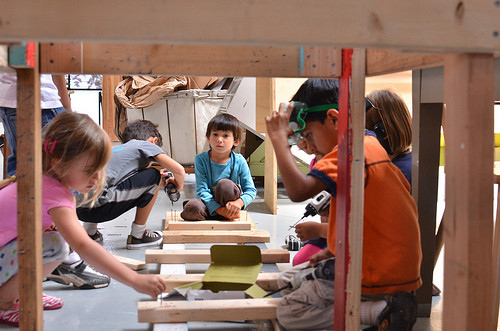
"attachmentsReducer": {
"audio_0": {
"type": "attachments",
"id": "audio_0",
"imgSizes": {
"kqedFullSize": {
"file": "https://ww2.kqed.org/news/wp-content/themes/KQED-unified/img/audio_bgs/background0.jpg"
}
}
},
"audio_1": {
"type": "attachments",
"id": "audio_1",
"imgSizes": {
"kqedFullSize": {
"file": "https://ww2.kqed.org/news/wp-content/themes/KQED-unified/img/audio_bgs/background1.jpg"
}
}
},
"audio_2": {
"type": "attachments",
"id": "audio_2",
"imgSizes": {
"kqedFullSize": {
"file": "https://ww2.kqed.org/news/wp-content/themes/KQED-unified/img/audio_bgs/background2.jpg"
}
}
},
"audio_3": {
"type": "attachments",
"id": "audio_3",
"imgSizes": {
"kqedFullSize": {
"file": "https://ww2.kqed.org/news/wp-content/themes/KQED-unified/img/audio_bgs/background3.jpg"
}
}
},
"audio_4": {
"type": "attachments",
"id": "audio_4",
"imgSizes": {
"kqedFullSize": {
"file": "https://ww2.kqed.org/news/wp-content/themes/KQED-unified/img/audio_bgs/background4.jpg"
}
}
},
"placeholder": {
"type": "attachments",
"id": "placeholder",
"imgSizes": {
"thumbnail": {
"file": "https://cdn.kqed.org/wp-content/uploads/2024/12/KQED-Default-Image-816638274-2000x1333-1-160x107.jpg",
"width": 160,
"height": 107,
"mimeType": "image/jpeg"
},
"medium": {
"file": "https://cdn.kqed.org/wp-content/uploads/2024/12/KQED-Default-Image-816638274-2000x1333-1-800x533.jpg",
"width": 800,
"height": 533,
"mimeType": "image/jpeg"
},
"medium_large": {
"file": "https://cdn.kqed.org/wp-content/uploads/2024/12/KQED-Default-Image-816638274-2000x1333-1-768x512.jpg",
"width": 768,
"height": 512,
"mimeType": "image/jpeg"
},
"large": {
"file": "https://cdn.kqed.org/wp-content/uploads/2024/12/KQED-Default-Image-816638274-2000x1333-1-1020x680.jpg",
"width": 1020,
"height": 680,
"mimeType": "image/jpeg"
},
"1536x1536": {
"file": "https://cdn.kqed.org/wp-content/uploads/2024/12/KQED-Default-Image-816638274-2000x1333-1-1536x1024.jpg",
"width": 1536,
"height": 1024,
"mimeType": "image/jpeg"
},
"fd-lrg": {
"file": "https://cdn.kqed.org/wp-content/uploads/2024/12/KQED-Default-Image-816638274-2000x1333-1-1536x1024.jpg",
"width": 1536,
"height": 1024,
"mimeType": "image/jpeg"
},
"fd-med": {
"file": "https://cdn.kqed.org/wp-content/uploads/2024/12/KQED-Default-Image-816638274-2000x1333-1-1020x680.jpg",
"width": 1020,
"height": 680,
"mimeType": "image/jpeg"
},
"fd-sm": {
"file": "https://cdn.kqed.org/wp-content/uploads/2024/12/KQED-Default-Image-816638274-2000x1333-1-800x533.jpg",
"width": 800,
"height": 533,
"mimeType": "image/jpeg"
},
"post-thumbnail": {
"file": "https://cdn.kqed.org/wp-content/uploads/2024/12/KQED-Default-Image-816638274-2000x1333-1-672x372.jpg",
"width": 672,
"height": 372,
"mimeType": "image/jpeg"
},
"twentyfourteen-full-width": {
"file": "https://cdn.kqed.org/wp-content/uploads/2024/12/KQED-Default-Image-816638274-2000x1333-1-1038x576.jpg",
"width": 1038,
"height": 576,
"mimeType": "image/jpeg"
},
"xxsmall": {
"file": "https://cdn.kqed.org/wp-content/uploads/2024/12/KQED-Default-Image-816638274-2000x1333-1-160x107.jpg",
"width": 160,
"height": 107,
"mimeType": "image/jpeg"
},
"xsmall": {
"file": "https://cdn.kqed.org/wp-content/uploads/2024/12/KQED-Default-Image-816638274-2000x1333-1-672x372.jpg",
"width": 672,
"height": 372,
"mimeType": "image/jpeg"
},
"small": {
"file": "https://cdn.kqed.org/wp-content/uploads/2024/12/KQED-Default-Image-816638274-2000x1333-1-672x372.jpg",
"width": 672,
"height": 372,
"mimeType": "image/jpeg"
},
"xlarge": {
"file": "https://cdn.kqed.org/wp-content/uploads/2024/12/KQED-Default-Image-816638274-2000x1333-1-1020x680.jpg",
"width": 1020,
"height": 680,
"mimeType": "image/jpeg"
},
"full-width": {
"file": "https://cdn.kqed.org/wp-content/uploads/2024/12/KQED-Default-Image-816638274-2000x1333-1-1920x1280.jpg",
"width": 1920,
"height": 1280,
"mimeType": "image/jpeg"
},
"guest-author-32": {
"file": "https://cdn.kqed.org/wp-content/uploads/2025/01/KQED-Default-Image-816638274-1333x1333-1-160x160.jpg",
"width": 32,
"height": 32,
"mimeType": "image/jpeg"
},
"guest-author-50": {
"file": "https://cdn.kqed.org/wp-content/uploads/2025/01/KQED-Default-Image-816638274-1333x1333-1-160x160.jpg",
"width": 50,
"height": 50,
"mimeType": "image/jpeg"
},
"guest-author-64": {
"file": "https://cdn.kqed.org/wp-content/uploads/2025/01/KQED-Default-Image-816638274-1333x1333-1-160x160.jpg",
"width": 64,
"height": 64,
"mimeType": "image/jpeg"
},
"guest-author-96": {
"file": "https://cdn.kqed.org/wp-content/uploads/2025/01/KQED-Default-Image-816638274-1333x1333-1-160x160.jpg",
"width": 96,
"height": 96,
"mimeType": "image/jpeg"
},
"guest-author-128": {
"file": "https://cdn.kqed.org/wp-content/uploads/2025/01/KQED-Default-Image-816638274-1333x1333-1-160x160.jpg",
"width": 128,
"height": 128,
"mimeType": "image/jpeg"
},
"detail": {
"file": "https://cdn.kqed.org/wp-content/uploads/2025/01/KQED-Default-Image-816638274-1333x1333-1-160x160.jpg",
"width": 160,
"height": 160,
"mimeType": "image/jpeg"
},
"kqedFullSize": {
"file": "https://cdn.kqed.org/wp-content/uploads/2024/12/KQED-Default-Image-816638274-2000x1333-1.jpg",
"width": 2000,
"height": 1333
}
}
},
"mindshift_23384": {
"type": "attachments",
"id": "mindshift_23384",
"meta": {
"index": "attachments_1716263798",
"site": "mindshift",
"id": "23384",
"found": true
},
"parent": 21675,
"imgSizes": {
"thumbnail": {
"file": "https://ww2.kqed.org/app/uploads/sites/23/2012/08/7566338594_488672fb61-400x265.jpg",
"width": 400,
"mimeType": "image/jpeg",
"height": 265
},
"fd-sm": {
"file": "https://ww2.kqed.org/app/uploads/sites/23/2012/08/7566338594_488672fb61-320x212.jpg",
"width": 320,
"mimeType": "image/jpeg",
"height": 212
},
"kqedFullSize": {
"file": "https://ww2.kqed.org/app/uploads/sites/23/2012/08/7566338594_488672fb61.jpg",
"width": 500,
"height": 331
},
"guest-author-96": {
"file": "https://ww2.kqed.org/app/uploads/sites/23/2012/08/7566338594_488672fb61-96x96.jpg",
"width": 96,
"mimeType": "image/jpeg",
"height": 96
},
"guest-author-64": {
"file": "https://ww2.kqed.org/app/uploads/sites/23/2012/08/7566338594_488672fb61-64x64.jpg",
"width": 64,
"mimeType": "image/jpeg",
"height": 64
},
"detail": {
"file": "https://ww2.kqed.org/app/uploads/sites/23/2012/08/7566338594_488672fb61-75x75.jpg",
"width": 75,
"mimeType": "image/jpeg",
"height": 75
},
"guest-author-32": {
"file": "https://ww2.kqed.org/app/uploads/sites/23/2012/08/7566338594_488672fb61-32x32.jpg",
"width": 32,
"mimeType": "image/jpeg",
"height": 32
},
"guest-author-128": {
"file": "https://ww2.kqed.org/app/uploads/sites/23/2012/08/7566338594_488672fb61-128x128.jpg",
"width": 128,
"mimeType": "image/jpeg",
"height": 128
}
},
"publishDate": 1345223205,
"modified": 1345223205,
"caption": null,
"description": null,
"title": "7566338594_488672fb61",
"credit": null,
"status": "inherit",
"isLoading": false,
"fetchFailed": false
},
"mindshift_23303": {
"type": "attachments",
"id": "mindshift_23303",
"meta": {
"index": "attachments_1716263798",
"site": "mindshift",
"id": "23303",
"found": true
},
"parent": 23270,
"imgSizes": {
"twentyfourteen-full-width": {
"file": "https://ww2.kqed.org/app/uploads/sites/23/2012/08/8654254412-1038x576.jpg",
"width": 1038,
"mimeType": "image/jpeg",
"height": 576
},
"thumbnail": {
"file": "https://ww2.kqed.org/app/uploads/sites/23/2012/08/8654254412-400x265.jpg",
"width": 400,
"mimeType": "image/jpeg",
"height": 265
},
"fd-sm": {
"file": "https://ww2.kqed.org/app/uploads/sites/23/2012/08/8654254412-320x212.jpg",
"width": 320,
"mimeType": "image/jpeg",
"height": 212
},
"post-thumbnail": {
"file": "https://ww2.kqed.org/app/uploads/sites/23/2012/08/8654254412-672x372.jpg",
"width": 672,
"mimeType": "image/jpeg",
"height": 372
},
"kqedFullSize": {
"file": "https://ww2.kqed.org/app/uploads/sites/23/2012/08/8654254412.jpg",
"width": 1525,
"height": 1009
},
"large": {
"file": "https://ww2.kqed.org/app/uploads/sites/23/2012/08/8654254412-1440x953.jpg",
"width": 1440,
"mimeType": "image/jpeg",
"height": 953
},
"guest-author-96": {
"file": "https://ww2.kqed.org/app/uploads/sites/23/2012/08/8654254412-96x96.jpg",
"width": 96,
"mimeType": "image/jpeg",
"height": 96
},
"medium": {
"file": "https://ww2.kqed.org/app/uploads/sites/23/2012/08/8654254412-800x529.jpg",
"width": 800,
"mimeType": "image/jpeg",
"height": 529
},
"guest-author-64": {
"file": "https://ww2.kqed.org/app/uploads/sites/23/2012/08/8654254412-64x64.jpg",
"width": 64,
"mimeType": "image/jpeg",
"height": 64
},
"guest-author-32": {
"file": "https://ww2.kqed.org/app/uploads/sites/23/2012/08/8654254412-32x32.jpg",
"width": 32,
"mimeType": "image/jpeg",
"height": 32
},
"fd-lrg": {
"file": "https://ww2.kqed.org/app/uploads/sites/23/2012/08/8654254412-1180x781.jpg",
"width": 1180,
"mimeType": "image/jpeg",
"height": 781
},
"fd-med": {
"file": "https://ww2.kqed.org/app/uploads/sites/23/2012/08/8654254412-768x508.jpg",
"width": 768,
"mimeType": "image/jpeg",
"height": 508
},
"detail": {
"file": "https://ww2.kqed.org/app/uploads/sites/23/2012/08/8654254412-75x75.jpg",
"width": 75,
"mimeType": "image/jpeg",
"height": 75
},
"guest-author-128": {
"file": "https://ww2.kqed.org/app/uploads/sites/23/2012/08/8654254412-128x128.jpg",
"width": 128,
"mimeType": "image/jpeg",
"height": 128
}
},
"publishDate": 1344964195,
"modified": 1344964195,
"caption": null,
"description": "Stack of books and laptop computer",
"title": "865425441",
"credit": null,
"status": "inherit",
"isLoading": false,
"fetchFailed": false
},
"mindshift_23264": {
"type": "attachments",
"id": "mindshift_23264",
"meta": {
"index": "attachments_1716263798",
"site": "mindshift",
"id": "23264",
"found": true
},
"parent": 23193,
"imgSizes": {
"thumbnail": {
"file": "https://ww2.kqed.org/app/uploads/sites/23/2012/08/145130371-400x266.jpg",
"width": 400,
"mimeType": "image/jpeg",
"height": 266
},
"fd-sm": {
"file": "https://ww2.kqed.org/app/uploads/sites/23/2012/08/145130371-320x213.jpg",
"width": 320,
"mimeType": "image/jpeg",
"height": 213
},
"post-thumbnail": {
"file": "https://ww2.kqed.org/app/uploads/sites/23/2012/08/145130371-672x372.jpg",
"width": 672,
"mimeType": "image/jpeg",
"height": 372
},
"kqedFullSize": {
"file": "https://ww2.kqed.org/app/uploads/sites/23/2012/08/145130371.jpg",
"width": 725,
"height": 483
},
"guest-author-96": {
"file": "https://ww2.kqed.org/app/uploads/sites/23/2012/08/145130371-96x96.jpg",
"width": 96,
"mimeType": "image/jpeg",
"height": 96
},
"guest-author-64": {
"file": "https://ww2.kqed.org/app/uploads/sites/23/2012/08/145130371-64x64.jpg",
"width": 64,
"mimeType": "image/jpeg",
"height": 64
},
"detail": {
"file": "https://ww2.kqed.org/app/uploads/sites/23/2012/08/145130371-75x75.jpg",
"width": 75,
"mimeType": "image/jpeg",
"height": 75
},
"guest-author-32": {
"file": "https://ww2.kqed.org/app/uploads/sites/23/2012/08/145130371-32x32.jpg",
"width": 32,
"mimeType": "image/jpeg",
"height": 32
},
"guest-author-128": {
"file": "https://ww2.kqed.org/app/uploads/sites/23/2012/08/145130371-128x128.jpg",
"width": 128,
"mimeType": "image/jpeg",
"height": 128
}
},
"publishDate": 1344632588,
"modified": 1344632588,
"caption": null,
"description": "Schoolboys at school",
"title": "145130371",
"credit": null,
"status": "inherit",
"isLoading": false,
"fetchFailed": false
},
"mindshift_23235": {
"type": "attachments",
"id": "mindshift_23235",
"meta": {
"index": "attachments_1716263798",
"site": "mindshift",
"id": "23235",
"found": true
},
"parent": 23223,
"imgSizes": {
"thumbnail": {
"file": "https://ww2.kqed.org/app/uploads/sites/23/2012/08/136325027-400x267.jpg",
"width": 400,
"mimeType": "image/jpeg",
"height": 267
},
"fd-sm": {
"file": "https://ww2.kqed.org/app/uploads/sites/23/2012/08/136325027-320x213.jpg",
"width": 320,
"mimeType": "image/jpeg",
"height": 213
},
"kqedFullSize": {
"file": "https://ww2.kqed.org/app/uploads/sites/23/2012/08/136325027.jpg",
"width": 507,
"height": 338
},
"guest-author-96": {
"file": "https://ww2.kqed.org/app/uploads/sites/23/2012/08/136325027-96x96.jpg",
"width": 96,
"mimeType": "image/jpeg",
"height": 96
},
"guest-author-64": {
"file": "https://ww2.kqed.org/app/uploads/sites/23/2012/08/136325027-64x64.jpg",
"width": 64,
"mimeType": "image/jpeg",
"height": 64
},
"detail": {
"file": "https://ww2.kqed.org/app/uploads/sites/23/2012/08/136325027-75x75.jpg",
"width": 75,
"mimeType": "image/jpeg",
"height": 75
},
"guest-author-32": {
"file": "https://ww2.kqed.org/app/uploads/sites/23/2012/08/136325027-32x32.jpg",
"width": 32,
"mimeType": "image/jpeg",
"height": 32
},
"guest-author-128": {
"file": "https://ww2.kqed.org/app/uploads/sites/23/2012/08/136325027-128x128.jpg",
"width": 128,
"mimeType": "image/jpeg",
"height": 128
}
},
"publishDate": 1344537644,
"modified": 1344537644,
"caption": null,
"description": "happy kid and computer",
"title": "136325027",
"credit": null,
"status": "inherit",
"isLoading": false,
"fetchFailed": false
},
"mindshift_23209": {
"type": "attachments",
"id": "mindshift_23209",
"meta": {
"index": "attachments_1716263798",
"site": "mindshift",
"id": "23209",
"found": true
},
"parent": 23196,
"imgSizes": {
"thumbnail": {
"file": "https://ww2.kqed.org/app/uploads/sites/23/2012/08/4302925518_efb1cc57ea-400x266.jpg",
"width": 400,
"mimeType": "image/jpeg",
"height": 266
},
"fd-sm": {
"file": "https://ww2.kqed.org/app/uploads/sites/23/2012/08/4302925518_efb1cc57ea-320x213.jpg",
"width": 320,
"mimeType": "image/jpeg",
"height": 213
},
"kqedFullSize": {
"file": "https://ww2.kqed.org/app/uploads/sites/23/2012/08/4302925518_efb1cc57ea.jpg",
"width": 500,
"height": 333
},
"guest-author-96": {
"file": "https://ww2.kqed.org/app/uploads/sites/23/2012/08/4302925518_efb1cc57ea-96x96.jpg",
"width": 96,
"mimeType": "image/jpeg",
"height": 96
},
"guest-author-64": {
"file": "https://ww2.kqed.org/app/uploads/sites/23/2012/08/4302925518_efb1cc57ea-64x64.jpg",
"width": 64,
"mimeType": "image/jpeg",
"height": 64
},
"detail": {
"file": "https://ww2.kqed.org/app/uploads/sites/23/2012/08/4302925518_efb1cc57ea-75x75.jpg",
"width": 75,
"mimeType": "image/jpeg",
"height": 75
},
"guest-author-32": {
"file": "https://ww2.kqed.org/app/uploads/sites/23/2012/08/4302925518_efb1cc57ea-32x32.jpg",
"width": 32,
"mimeType": "image/jpeg",
"height": 32
},
"guest-author-128": {
"file": "https://ww2.kqed.org/app/uploads/sites/23/2012/08/4302925518_efb1cc57ea-128x128.jpg",
"width": 128,
"mimeType": "image/jpeg",
"height": 128
}
},
"publishDate": 1344450853,
"modified": 1344450853,
"caption": null,
"description": null,
"title": "4302925518_efb1cc57ea",
"credit": null,
"status": "inherit",
"isLoading": false,
"fetchFailed": false
},
"mindshift_23162": {
"type": "attachments",
"id": "mindshift_23162",
"meta": {
"index": "attachments_1716263798",
"site": "mindshift",
"id": "23162",
"found": true
},
"parent": 23151,
"imgSizes": {
"twentyfourteen-full-width": {
"file": "https://ww2.kqed.org/app/uploads/sites/23/2012/08/10_11.15_newtech_0427-1038x576.jpg",
"width": 1038,
"mimeType": "image/jpeg",
"height": 576
},
"thumbnail": {
"file": "https://ww2.kqed.org/app/uploads/sites/23/2012/08/10_11.15_newtech_0427-400x237.jpg",
"width": 400,
"mimeType": "image/jpeg",
"height": 237
},
"fd-sm": {
"file": "https://ww2.kqed.org/app/uploads/sites/23/2012/08/10_11.15_newtech_0427-320x189.jpg",
"width": 320,
"mimeType": "image/jpeg",
"height": 189
},
"post-thumbnail": {
"file": "https://ww2.kqed.org/app/uploads/sites/23/2012/08/10_11.15_newtech_0427-672x372.jpg",
"width": 672,
"mimeType": "image/jpeg",
"height": 372
},
"kqedFullSize": {
"file": "https://ww2.kqed.org/app/uploads/sites/23/2012/08/10_11.15_newtech_0427.jpg",
"width": 1440,
"height": 852
},
"large": {
"file": "https://ww2.kqed.org/app/uploads/sites/23/2012/08/10_11.15_newtech_0427-1440x852.jpg",
"width": 1440,
"mimeType": "image/jpeg",
"height": 852
},
"guest-author-96": {
"file": "https://ww2.kqed.org/app/uploads/sites/23/2012/08/10_11.15_newtech_0427-96x96.jpg",
"width": 96,
"mimeType": "image/jpeg",
"height": 96
},
"medium": {
"file": "https://ww2.kqed.org/app/uploads/sites/23/2012/08/10_11.15_newtech_0427-800x473.jpg",
"width": 800,
"mimeType": "image/jpeg",
"height": 473
},
"guest-author-64": {
"file": "https://ww2.kqed.org/app/uploads/sites/23/2012/08/10_11.15_newtech_0427-64x64.jpg",
"width": 64,
"mimeType": "image/jpeg",
"height": 64
},
"guest-author-32": {
"file": "https://ww2.kqed.org/app/uploads/sites/23/2012/08/10_11.15_newtech_0427-32x32.jpg",
"width": 32,
"mimeType": "image/jpeg",
"height": 32
},
"fd-lrg": {
"file": "https://ww2.kqed.org/app/uploads/sites/23/2012/08/10_11.15_newtech_0427-1180x698.jpg",
"width": 1180,
"mimeType": "image/jpeg",
"height": 698
},
"fd-med": {
"file": "https://ww2.kqed.org/app/uploads/sites/23/2012/08/10_11.15_newtech_0427-768x454.jpg",
"width": 768,
"mimeType": "image/jpeg",
"height": 454
},
"detail": {
"file": "https://ww2.kqed.org/app/uploads/sites/23/2012/08/10_11.15_newtech_0427-75x75.jpg",
"width": 75,
"mimeType": "image/jpeg",
"height": 75
},
"guest-author-128": {
"file": "https://ww2.kqed.org/app/uploads/sites/23/2012/08/10_11.15_newtech_0427-128x128.jpg",
"width": 128,
"mimeType": "image/jpeg",
"height": 128
}
},
"publishDate": 1344361882,
"modified": 1344361882,
"caption": null,
"description": null,
"title": "10_11.15_newtech_0427",
"credit": null,
"status": "inherit",
"isLoading": false,
"fetchFailed": false
},
"mindshift_23062": {
"type": "attachments",
"id": "mindshift_23062",
"meta": {
"index": "attachments_1716263798",
"site": "mindshift",
"id": "23062",
"found": true
},
"parent": 23059,
"imgSizes": {
"thumbnail": {
"file": "https://ww2.kqed.org/app/uploads/sites/23/2012/07/2866912269_8b3b0399dd-400x300.jpg",
"width": 400,
"mimeType": "image/jpeg",
"height": 300
},
"fd-sm": {
"file": "https://ww2.kqed.org/app/uploads/sites/23/2012/07/2866912269_8b3b0399dd-320x240.jpg",
"width": 320,
"mimeType": "image/jpeg",
"height": 240
},
"post-thumbnail": {
"file": "https://ww2.kqed.org/app/uploads/sites/23/2012/07/2866912269_8b3b0399dd-500x372.jpg",
"width": 500,
"mimeType": "image/jpeg",
"height": 372
},
"kqedFullSize": {
"file": "https://ww2.kqed.org/app/uploads/sites/23/2012/07/2866912269_8b3b0399dd.jpg",
"width": 500,
"height": 375
},
"guest-author-96": {
"file": "https://ww2.kqed.org/app/uploads/sites/23/2012/07/2866912269_8b3b0399dd-96x96.jpg",
"width": 96,
"mimeType": "image/jpeg",
"height": 96
},
"guest-author-64": {
"file": "https://ww2.kqed.org/app/uploads/sites/23/2012/07/2866912269_8b3b0399dd-64x64.jpg",
"width": 64,
"mimeType": "image/jpeg",
"height": 64
},
"detail": {
"file": "https://ww2.kqed.org/app/uploads/sites/23/2012/07/2866912269_8b3b0399dd-75x75.jpg",
"width": 75,
"mimeType": "image/jpeg",
"height": 75
},
"guest-author-32": {
"file": "https://ww2.kqed.org/app/uploads/sites/23/2012/07/2866912269_8b3b0399dd-32x32.jpg",
"width": 32,
"mimeType": "image/jpeg",
"height": 32
},
"guest-author-128": {
"file": "https://ww2.kqed.org/app/uploads/sites/23/2012/07/2866912269_8b3b0399dd-128x128.jpg",
"width": 128,
"mimeType": "image/jpeg",
"height": 128
}
},
"publishDate": 1343420008,
"modified": 1343420008,
"caption": null,
"description": null,
"title": "2866912269_8b3b0399dd",
"credit": null,
"status": "inherit",
"isLoading": false,
"fetchFailed": false
},
"mindshift_23002": {
"type": "attachments",
"id": "mindshift_23002",
"meta": {
"index": "attachments_1716263798",
"site": "mindshift",
"id": "23002",
"found": true
},
"parent": 22985,
"imgSizes": {
"thumbnail": {
"file": "https://ww2.kqed.org/app/uploads/sites/23/2012/07/3545946507_a9e9d7c7d3_z-400x267.jpg",
"width": 400,
"mimeType": "image/jpeg",
"height": 267
},
"fd-sm": {
"file": "https://ww2.kqed.org/app/uploads/sites/23/2012/07/3545946507_a9e9d7c7d3_z-320x214.jpg",
"width": 320,
"mimeType": "image/jpeg",
"height": 214
},
"post-thumbnail": {
"file": "https://ww2.kqed.org/app/uploads/sites/23/2012/07/3545946507_a9e9d7c7d3_z-640x372.jpg",
"width": 640,
"mimeType": "image/jpeg",
"height": 372
},
"kqedFullSize": {
"file": "https://ww2.kqed.org/app/uploads/sites/23/2012/07/3545946507_a9e9d7c7d3_z.jpg",
"width": 640,
"height": 427
},
"guest-author-96": {
"file": "https://ww2.kqed.org/app/uploads/sites/23/2012/07/3545946507_a9e9d7c7d3_z-96x96.jpg",
"width": 96,
"mimeType": "image/jpeg",
"height": 96
},
"guest-author-64": {
"file": "https://ww2.kqed.org/app/uploads/sites/23/2012/07/3545946507_a9e9d7c7d3_z-64x64.jpg",
"width": 64,
"mimeType": "image/jpeg",
"height": 64
},
"detail": {
"file": "https://ww2.kqed.org/app/uploads/sites/23/2012/07/3545946507_a9e9d7c7d3_z-75x75.jpg",
"width": 75,
"mimeType": "image/jpeg",
"height": 75
},
"guest-author-32": {
"file": "https://ww2.kqed.org/app/uploads/sites/23/2012/07/3545946507_a9e9d7c7d3_z-32x32.jpg",
"width": 32,
"mimeType": "image/jpeg",
"height": 32
},
"guest-author-128": {
"file": "https://ww2.kqed.org/app/uploads/sites/23/2012/07/3545946507_a9e9d7c7d3_z-128x128.jpg",
"width": 128,
"mimeType": "image/jpeg",
"height": 128
}
},
"publishDate": 1343339789,
"modified": 1343339789,
"caption": null,
"description": null,
"title": "3545946507_a9e9d7c7d3_z",
"credit": null,
"status": "inherit",
"isLoading": false,
"fetchFailed": false
},
"mindshift_22851": {
"type": "attachments",
"id": "mindshift_22851",
"meta": {
"index": "attachments_1716263798",
"site": "mindshift",
"id": "22851",
"found": true
},
"parent": 22845,
"imgSizes": {
"thumbnail": {
"file": "https://ww2.kqed.org/app/uploads/sites/23/2012/07/Kids-computers-400x266.jpg",
"width": 400,
"mimeType": "image/jpeg",
"height": 266
},
"fd-sm": {
"file": "https://ww2.kqed.org/app/uploads/sites/23/2012/07/Kids-computers-320x213.jpg",
"width": 320,
"mimeType": "image/jpeg",
"height": 213
},
"post-thumbnail": {
"file": "https://ww2.kqed.org/app/uploads/sites/23/2012/07/Kids-computers-672x372.jpg",
"width": 672,
"mimeType": "image/jpeg",
"height": 372
},
"kqedFullSize": {
"file": "https://ww2.kqed.org/app/uploads/sites/23/2012/07/Kids-computers.jpg",
"width": 842,
"height": 560
},
"fd-med": {
"file": "https://ww2.kqed.org/app/uploads/sites/23/2012/07/Kids-computers-768x511.jpg",
"width": 768,
"mimeType": "image/jpeg",
"height": 511
},
"guest-author-96": {
"file": "https://ww2.kqed.org/app/uploads/sites/23/2012/07/Kids-computers-96x96.jpg",
"width": 96,
"mimeType": "image/jpeg",
"height": 96
},
"medium": {
"file": "https://ww2.kqed.org/app/uploads/sites/23/2012/07/Kids-computers-800x532.jpg",
"width": 800,
"mimeType": "image/jpeg",
"height": 532
},
"guest-author-64": {
"file": "https://ww2.kqed.org/app/uploads/sites/23/2012/07/Kids-computers-64x64.jpg",
"width": 64,
"mimeType": "image/jpeg",
"height": 64
},
"detail": {
"file": "https://ww2.kqed.org/app/uploads/sites/23/2012/07/Kids-computers-75x75.jpg",
"width": 75,
"mimeType": "image/jpeg",
"height": 75
},
"guest-author-32": {
"file": "https://ww2.kqed.org/app/uploads/sites/23/2012/07/Kids-computers-32x32.jpg",
"width": 32,
"mimeType": "image/jpeg",
"height": 32
},
"guest-author-128": {
"file": "https://ww2.kqed.org/app/uploads/sites/23/2012/07/Kids-computers-128x128.jpg",
"width": 128,
"mimeType": "image/jpeg",
"height": 128
}
},
"publishDate": 1342718700,
"modified": 1342718700,
"caption": null,
"description": null,
"title": "Kids computers",
"credit": null,
"status": "inherit",
"isLoading": false,
"fetchFailed": false
},
"mindshift_22828": {
"type": "attachments",
"id": "mindshift_22828",
"meta": {
"index": "attachments_1716263798",
"site": "mindshift",
"id": "22828",
"found": true
},
"parent": 22821,
"imgSizes": {
"thumbnail": {
"file": "https://ww2.kqed.org/app/uploads/sites/23/2012/07/6660153575_0ee7b9bd58-400x300.jpg",
"width": 400,
"mimeType": "image/jpeg",
"height": 300
},
"fd-sm": {
"file": "https://ww2.kqed.org/app/uploads/sites/23/2012/07/6660153575_0ee7b9bd58-320x240.jpg",
"width": 320,
"mimeType": "image/jpeg",
"height": 240
},
"post-thumbnail": {
"file": "https://ww2.kqed.org/app/uploads/sites/23/2012/07/6660153575_0ee7b9bd58-500x372.jpg",
"width": 500,
"mimeType": "image/jpeg",
"height": 372
},
"kqedFullSize": {
"file": "https://ww2.kqed.org/app/uploads/sites/23/2012/07/6660153575_0ee7b9bd58.jpg",
"width": 500,
"height": 375
},
"guest-author-96": {
"file": "https://ww2.kqed.org/app/uploads/sites/23/2012/07/6660153575_0ee7b9bd58-96x96.jpg",
"width": 96,
"mimeType": "image/jpeg",
"height": 96
},
"guest-author-64": {
"file": "https://ww2.kqed.org/app/uploads/sites/23/2012/07/6660153575_0ee7b9bd58-64x64.jpg",
"width": 64,
"mimeType": "image/jpeg",
"height": 64
},
"detail": {
"file": "https://ww2.kqed.org/app/uploads/sites/23/2012/07/6660153575_0ee7b9bd58-75x75.jpg",
"width": 75,
"mimeType": "image/jpeg",
"height": 75
},
"guest-author-32": {
"file": "https://ww2.kqed.org/app/uploads/sites/23/2012/07/6660153575_0ee7b9bd58-32x32.jpg",
"width": 32,
"mimeType": "image/jpeg",
"height": 32
},
"guest-author-128": {
"file": "https://ww2.kqed.org/app/uploads/sites/23/2012/07/6660153575_0ee7b9bd58-128x128.jpg",
"width": 128,
"mimeType": "image/jpeg",
"height": 128
}
},
"publishDate": 1342547208,
"modified": 1342547208,
"caption": null,
"description": null,
"title": "6660153575_0ee7b9bd58",
"credit": null,
"status": "inherit",
"isLoading": false,
"fetchFailed": false
},
"mindshift_22778": {
"type": "attachments",
"id": "mindshift_22778",
"meta": {
"index": "attachments_1716263798",
"site": "mindshift",
"id": "22778",
"found": true
},
"parent": 22768,
"imgSizes": {
"thumbnail": {
"file": "https://ww2.kqed.org/app/uploads/sites/23/2012/07/Screen-Shot-2012-07-12-at-8.11.25-AM-400x217.png",
"width": 400,
"mimeType": "image/png",
"height": 217
},
"fd-sm": {
"file": "https://ww2.kqed.org/app/uploads/sites/23/2012/07/Screen-Shot-2012-07-12-at-8.11.25-AM-320x174.png",
"width": 320,
"mimeType": "image/png",
"height": 174
},
"post-thumbnail": {
"file": "https://ww2.kqed.org/app/uploads/sites/23/2012/07/Screen-Shot-2012-07-12-at-8.11.25-AM-672x372.png",
"width": 672,
"mimeType": "image/png",
"height": 372
},
"kqedFullSize": {
"file": "https://ww2.kqed.org/app/uploads/sites/23/2012/07/Screen-Shot-2012-07-12-at-8.11.25-AM.png",
"width": 973,
"height": 528
},
"fd-med": {
"file": "https://ww2.kqed.org/app/uploads/sites/23/2012/07/Screen-Shot-2012-07-12-at-8.11.25-AM-768x417.png",
"width": 768,
"mimeType": "image/png",
"height": 417
},
"guest-author-96": {
"file": "https://ww2.kqed.org/app/uploads/sites/23/2012/07/Screen-Shot-2012-07-12-at-8.11.25-AM-96x96.png",
"width": 96,
"mimeType": "image/png",
"height": 96
},
"medium": {
"file": "https://ww2.kqed.org/app/uploads/sites/23/2012/07/Screen-Shot-2012-07-12-at-8.11.25-AM-800x434.png",
"width": 800,
"mimeType": "image/png",
"height": 434
},
"guest-author-64": {
"file": "https://ww2.kqed.org/app/uploads/sites/23/2012/07/Screen-Shot-2012-07-12-at-8.11.25-AM-64x64.png",
"width": 64,
"mimeType": "image/png",
"height": 64
},
"detail": {
"file": "https://ww2.kqed.org/app/uploads/sites/23/2012/07/Screen-Shot-2012-07-12-at-8.11.25-AM-75x75.png",
"width": 75,
"mimeType": "image/png",
"height": 75
},
"guest-author-32": {
"file": "https://ww2.kqed.org/app/uploads/sites/23/2012/07/Screen-Shot-2012-07-12-at-8.11.25-AM-32x32.png",
"width": 32,
"mimeType": "image/png",
"height": 32
},
"guest-author-128": {
"file": "https://ww2.kqed.org/app/uploads/sites/23/2012/07/Screen-Shot-2012-07-12-at-8.11.25-AM-128x128.png",
"width": 128,
"mimeType": "image/png",
"height": 128
}
},
"publishDate": 1342105915,
"modified": 1342105915,
"caption": "Screen Shot from Edutopia video \"Finalnd's Formula for Success.\"",
"description": null,
"title": "Screen-Shot-2012-07-12-at-8.11.25-AM",
"credit": null,
"status": "inherit",
"isLoading": false,
"fetchFailed": false
},
"mindshift_22765": {
"type": "attachments",
"id": "mindshift_22765",
"meta": {
"index": "attachments_1716263798",
"site": "mindshift",
"id": "22765",
"found": true
},
"parent": 22756,
"imgSizes": {
"thumbnail": {
"file": "https://ww2.kqed.org/app/uploads/sites/23/2012/07/Screen-Shot-2012-07-11-at-1.32.52-PM-400x197.png",
"width": 400,
"mimeType": "image/png",
"height": 197
},
"fd-sm": {
"file": "https://ww2.kqed.org/app/uploads/sites/23/2012/07/Screen-Shot-2012-07-11-at-1.32.52-PM-320x158.png",
"width": 320,
"mimeType": "image/png",
"height": 158
},
"post-thumbnail": {
"file": "https://ww2.kqed.org/app/uploads/sites/23/2012/07/Screen-Shot-2012-07-11-at-1.32.52-PM-672x372.png",
"width": 672,
"mimeType": "image/png",
"height": 372
},
"kqedFullSize": {
"file": "https://ww2.kqed.org/app/uploads/sites/23/2012/07/Screen-Shot-2012-07-11-at-1.32.52-PM.png",
"width": 840,
"height": 414
},
"fd-med": {
"file": "https://ww2.kqed.org/app/uploads/sites/23/2012/07/Screen-Shot-2012-07-11-at-1.32.52-PM-768x379.png",
"width": 768,
"mimeType": "image/png",
"height": 379
},
"guest-author-96": {
"file": "https://ww2.kqed.org/app/uploads/sites/23/2012/07/Screen-Shot-2012-07-11-at-1.32.52-PM-96x96.png",
"width": 96,
"mimeType": "image/png",
"height": 96
},
"medium": {
"file": "https://ww2.kqed.org/app/uploads/sites/23/2012/07/Screen-Shot-2012-07-11-at-1.32.52-PM-800x394.png",
"width": 800,
"mimeType": "image/png",
"height": 394
},
"guest-author-64": {
"file": "https://ww2.kqed.org/app/uploads/sites/23/2012/07/Screen-Shot-2012-07-11-at-1.32.52-PM-64x64.png",
"width": 64,
"mimeType": "image/png",
"height": 64
},
"detail": {
"file": "https://ww2.kqed.org/app/uploads/sites/23/2012/07/Screen-Shot-2012-07-11-at-1.32.52-PM-75x75.png",
"width": 75,
"mimeType": "image/png",
"height": 75
},
"guest-author-32": {
"file": "https://ww2.kqed.org/app/uploads/sites/23/2012/07/Screen-Shot-2012-07-11-at-1.32.52-PM-32x32.png",
"width": 32,
"mimeType": "image/png",
"height": 32
},
"guest-author-128": {
"file": "https://ww2.kqed.org/app/uploads/sites/23/2012/07/Screen-Shot-2012-07-11-at-1.32.52-PM-128x128.png",
"width": 128,
"mimeType": "image/png",
"height": 128
}
},
"publishDate": 1342038797,
"modified": 1342038797,
"caption": null,
"description": null,
"title": "Screen Shot 2012-07-11 at 1.32.52 PM",
"credit": null,
"status": "inherit",
"isLoading": false,
"fetchFailed": false
}
},
"audioPlayerReducer": {
"postId": "stream_live",
"isPaused": true,
"isPlaying": false,
"pfsActive": false,
"pledgeModalIsOpen": true,
"playerDrawerIsOpen": false,
"liveAudioPlayStartedAt": 0,
"liveAudioPlayContext": ""
},
"authorsReducer": {
"tbarseghian": {
"type": "authors",
"id": "180",
"meta": {
"index": "authors_1716337520",
"id": "180",
"found": true
},
"name": "Tina Barseghian",
"firstName": "Tina",
"lastName": "Barseghian",
"slug": "tbarseghian",
"email": "tbarseghian@kqed.org",
"display_author_email": false,
"staff_mastheads": [],
"title": null,
"bio": null,
"avatar": "https://secure.gravatar.com/avatar/de7e6ced1239b7018fe4d2b61f723c90?s=600&d=blank&r=g",
"twitter": null,
"facebook": null,
"instagram": null,
"linkedin": null,
"sites": [
{
"site": "styleguide",
"roles": [
"contributor"
]
},
{
"site": "news",
"roles": [
"subscriber"
]
},
{
"site": "mindshift",
"roles": [
"subscriber"
]
},
{
"site": "bayareabites",
"roles": [
"subscriber"
]
}
],
"headData": {
"title": "Tina Barseghian | KQED",
"description": null,
"ogImgSrc": "https://secure.gravatar.com/avatar/de7e6ced1239b7018fe4d2b61f723c90?s=600&d=blank&r=g",
"twImgSrc": "https://secure.gravatar.com/avatar/de7e6ced1239b7018fe4d2b61f723c90?s=600&d=blank&r=g"
},
"isLoading": false,
"link": "/author/tbarseghian"
},
"sbernard": {
"type": "authors",
"id": "4351",
"meta": {
"index": "authors_1716337520",
"id": "4351",
"found": true
},
"name": "Sara Bernard",
"firstName": "Sara",
"lastName": "Bernard",
"slug": "sbernard",
"email": "saralacy@gmail.com",
"display_author_email": false,
"staff_mastheads": [],
"title": null,
"bio": null,
"avatar": "https://secure.gravatar.com/avatar/69bae8afcc64ab67f6e3709cfb4bef26?s=600&d=blank&r=g",
"twitter": null,
"facebook": null,
"instagram": null,
"linkedin": null,
"sites": [
{
"site": "mindshift",
"roles": [
"subscriber"
]
}
],
"headData": {
"title": "Sara Bernard | KQED",
"description": null,
"ogImgSrc": "https://secure.gravatar.com/avatar/69bae8afcc64ab67f6e3709cfb4bef26?s=600&d=blank&r=g",
"twImgSrc": "https://secure.gravatar.com/avatar/69bae8afcc64ab67f6e3709cfb4bef26?s=600&d=blank&r=g"
},
"isLoading": false,
"link": "/author/sbernard"
}
},
"pagesReducer": {
"mindshift_category_teaching-strategies": {
"type": "terms",
"id": "mindshift_193",
"meta": {
"index": "terms_1716263798",
"site": "mindshift",
"id": "193",
"score": 14.406914
},
"featImg": null,
"name": "Teaching Strategies",
"description": "Innovative ideas - projects, processes, curricula, and more - that are transforming how we teach and learn.",
"taxonomy": "category",
"headData": {
"twImgId": null,
"twTitle": null,
"ogTitle": null,
"ogImgId": null,
"twDescription": null,
"description": "Innovative ideas - projects, processes, curricula, and more - that are transforming how we teach and learn.",
"title": "Teaching Strategies Archives | KQED Mindshift",
"ogDescription": null
},
"ttid": 193,
"slug": "teaching-strategies",
"isLoading": false,
"title": "Teaching Strategies",
"pageMeta": {
"site": "mindshift",
"WpPageTemplate": "page-topic-editorial",
"currentPage": 67
},
"blocks": [
{
"blockName": "kqed/company-paragraph",
"content": "Innovative ideas - projects, processes, curricula, and more - that are transforming how we teach and learn."
},
{
"blockName": "kqed/post-list",
"attrs": {
"layout": "cardArticle2",
"query": "posts/mindshift?category=teaching-strategies",
"seeMore": false,
"paginated": true,
"page": 67
}
},
{
"blockName": "kqed/ad"
}
]
}
},
"pfsSessionReducer": {},
"postsReducer": {
"stream_live": {
"type": "live",
"id": "stream_live",
"audioUrl": "https://streams.kqed.org/kqedradio",
"title": "Live Stream",
"excerpt": "Live Stream information currently unavailable.",
"link": "/radio",
"featImg": "",
"label": {
"name": "KQED Live",
"link": "/"
}
},
"stream_kqedNewscast": {
"type": "posts",
"id": "stream_kqedNewscast",
"audioUrl": "https://www.kqed.org/.stream/anon/radio/RDnews/newscast.mp3?_=1",
"title": "KQED Newscast",
"featImg": "",
"label": {
"name": "88.5 FM",
"link": "/"
}
},
"mindshift_21675": {
"type": "posts",
"id": "mindshift_21675",
"meta": {
"index": "posts_1716263798",
"site": "mindshift",
"id": "21675",
"score": null,
"sort": [
1345223877000
]
},
"parent": 0,
"labelTerm": {
"site": "mindshift",
"term": 20656
},
"blocks": [],
"publishDate": 1345223877,
"format": "aside",
"disqusTitle": "Lessons Learned: How a Progressive New School Adapts to Realities",
"title": "Lessons Learned: How a Progressive New School Adapts to Realities",
"headTitle": "PROJECT BASED LEARNING | MindShift | KQED News",
"content": "\u003cfigure id=\"attachment_23384\" class=\"wp-caption center\" style=\"max-width: 500px\">\u003ca href=\"http://ww2.kqed.org/mindshift/2012/08/lessons-learned-how-a-progressive-new-school-evolves/7566338594_488672fb61/\" rel=\"attachment wp-att-23384\">\u003cimg class=\"size-full wp-image-23384\" title=\"7566338594_488672fb61\" src=\"http://ww2.kqed.org/mindshift/wp-content/uploads/sites/23/2012/08/7566338594_488672fb61.jpg\" alt=\"\" width=\"500\" height=\"331\" srcset=\"https://ww2.kqed.org/app/uploads/sites/23/2012/08/7566338594_488672fb61.jpg 500w, https://ww2.kqed.org/app/uploads/sites/23/2012/08/7566338594_488672fb61-400x265.jpg 400w, https://ww2.kqed.org/app/uploads/sites/23/2012/08/7566338594_488672fb61-320x212.jpg 320w\" sizes=\"(max-width: 500px) 100vw, 500px\">\u003c/a>\u003cfigcaption class=\"wp-caption-text\"> \u003c/figcaption>\u003c/figure>\n\u003cp class=\"dropcap-serif\">When we envision a well-rounded, progressive education for our kids, we think of a vibrant environment that nurtures students' passions, provides structure for rich and deep learning, a place where kids can get their hands on projects that are meaningful to them.\u003c/p>\n\u003cp>That's the goal at \u003ca title=\"Brightworks\" href=\"http://sfbrightworks.org\" target=\"_blank\">Brightworks\u003c/a>, a small, K-12 private school just starting its second year in San Francisco: to re-imagine traditional modes of education so that curiosity and creativity hold sway over standardized tests and worksheets. But in the course of creating this space for students' interests, the school has also had to refine some of its original ideas to make room for realities like assessments and how to group students.\u003c/p>\n\u003cp>\u003ca title=\"Brightworks: A School That Rethinks School\" href=\"http://ww2.kqed.org/mindshift/2011/08/brightworks-a-school-that-rethinks-school/\" target=\"_blank\">Brightworks first opened \u003c/a>last fall, billed as a progressive school that allows kids to follow their own passions. It's organized very differently from traditional schools. Teachers are known as “collaborators” and the curriculum is centered on “\u003ca title=\"Bightworks arc\" href=\"http://sfbrightworks.org/the-brightworks-arc/\" target=\"_blank\">the Brightworks arc\u003c/a>,” which divides learning into three phases – exploration, expression, and exposition – based on a central theme. The students explore a theme, design projects around that theme, then present their work to the community. The idea is that these projects – such as building a wooden stage for a play they've written or using aerial silks to demonstrate kinetic energy – provide the context for learning core academic skills.\u003c/p>\n\u003cp>As with every experiment, the first year has provided plenty of opportunities for refining, according to founder and co-director \u003ca title=\"Brightworks staff\" href=\"http://sfbrightworks.org/our-staff/\" target=\"_blank\">Gever Tulley\u003c/a>.\u003c/p>\n\u003cp>“It’s been a great year. We’ve had great moments and we’ve had hiccup-y moments,” Tulley said.\u003c!--more-->\u003c/p>\n\u003cp>[ad fullwidth]\u003c/p>\n\u003cp>Or as one parent, Amanda Moore, puts it, “It’s been everything we expected and nothing we\u003cstrong>\u003c/strong> expected.”\u003c/p>\n\u003cp>\u003cstrong>CREATING A STRUCTURE\u003c/strong>\u003c/p>\n\u003cp>While the school still follows the basic \"arc\" structure it started with, Tulley says there have been a lot of refinements. One major change has been how students are grouped. The year started with kids of all ages -- six to 12 -- working together on everything. But that proved problematic. What's easily graspable to a 12-year-old might be far over the head of a six-year-old, and what might be new and interesting to a six-year-old could bore a 12-year-old. Now, students are grouped into age-based cohorts, or “bands,” so that age-appropriate work could move along more smoothly.\u003c/p>\n\u003cp>What happens during the day is more or less fluid at Brightworks -- in fact, a typical day is hard to describe, as the school values spontaneity and student-directed work. Overall the typical structure involves a few key parts: 1) Morning Circle, when the entire school gets together to check in and make announcements; 2) \"band\" meetings, or small-group reflections where students check in with one another and the teacher about where they're at in a certain project arc and what they plan to do that day; 3) Exploration or Expression phase activities, often involving a field trip or a visit from a professional in some field; and 4) Closing Circle time when the entire school gathers again to reflect and part ways.\u003c/p>\n\u003cfigure id=\"attachment_23385\" class=\"wp-caption center\" style=\"max-width: 620px\">\u003ca href=\"http://ww2.kqed.org/mindshift/wp-content/uploads/sites/23/2012/08/diagram800.jpg\">\u003cimg class=\"size-large wp-image-23385\" title=\"diagram800\" src=\"http://ww2.kqed.org/mindshift/wp-content/uploads/sites/23/2012/08/diagram800-620x326.jpg\" alt=\"\" width=\"620\" height=\"326\">\u003c/a>\u003cfigcaption class=\"wp-caption-text\">The Brightworks Arc\u003c/figcaption>\u003c/figure>\n\u003cp>Tulley admits that the collaborators still struggle with the most appropriate way to integrate core academics into project work. “You don’t want to compromise the quality of the project phase by cramming a math exercise into it,” he says, but there are still plenty of teachable moments (building wooden structures involves math, for example) and collaborators are trying to build their knowledge base and comfort zones around those.\u003c/p>\n\u003cp>\u003cstrong>MEANINGFUL ASSESSMENT\u003cbr>\n\u003c/strong>\u003c/p>\n\u003cp>“We’re still in a lot of discussions about meaningful ways to assess children without the harm of grading and testing,” Tulley says, adding that many students at traditional schools have optimized the ability to cram for a test, then to purge the information post-test. “I think that’s something that we’ll develop over time.”\u003c/p>\n\u003cp>Student assessment at Brightworks takes the holistic approach. At the end of last year, teachers pored over student work, progress, accomplishments, behavior, and everything else that contributed to a student's experience and put together a two- to three-page narrative assessment sent home to parents. These assessments were specifically tailored to each student, but were based on a template that Brightworks staff put together based on \"all of the things we want our students to eventually be,\" says Director Ellen Hathaway -- including qualifications in academic areas.\u003c/p>\n\u003caside class=\"pullquote alignleft\">\n\u003cp>Assessments are specifically tailored to each student, based on a template that staff put together based on “all of the things we want our students to eventually be.\"\u003c/p>\n\u003c/aside>\n\u003cp>The assessments covered three areas: students' project-based learning, social and emotional learning, and skills acquisition and quantitative learning, according to Program Coordinator Justine Macauley. \"Rather than assessing the students' work product, we looked at their work and development during the process of their project,\" asking questions like, \u003cem> Are they a supporter of other students' projects or do they spearhead their own? Do they listen to others? Do they self-advocate? What subject areas do they gravitate to?\u003c/em> and \u003cem>How adept is the student at organizing him/herself, their projects, their process? \u003c/em>\u003c/p>\n\u003cp>This coming school year, staff will be looking at the same three areas broadly, but with more specific focus on certain areas depending on the projects and the arc topic, Macauley said.\u003c/p>\n\u003cp>Another change is the frequency in assessments: They'll happen three times a year, instead of just once, which Hathaway says will be more effective and far easier for teachers to manage.\u003c/p>\n\u003cp>\u003cstrong>A YEAR IN REVIEW\u003c/strong>\u003c/p>\n\u003cp>Many parents and collaborators are excited to be part of the growing Brightworks community and are surprised by the positive effects the school has had on its students. Others are skeptical about both the model and its execution. Does this open-ended, student-driven approach mean that kids aren’t learning core academic skills? Is there too much time for free play? Are there adequate assessments in place so that learning can be measured?\u003c/p>\n\u003cp>One of the critics, who commented on the \u003ca title=\"Brightworks: A School That Rethinks School comments\" href=\"http://ww2.kqed.org/mindshift/2011/08/brightworks-a-school-that-rethinks-school/#comments\" target=\"_blank\">previous article on Brightworks,\u003c/a> responded to a few questions via e-mail on the condition of anonymity. Despite an appreciation for the school’s mission, the commenter -- who claims to be familiar with the inner-workings of the school -- finds that the departure from traditional curriculum at Brightworks forgoes academic rigor, daily structure, and basic classroom management. “Children need schedules to feel their environment is a safe and predictable place,” the commenter said, adding that there may be “students as old as 10 who don’t know how to do multiplication or how to use a dictionary. \"There are basic skills we need as adults to succeed in our culture, like critical thinking, analyzing, evaluating and synthesizing information.\"\u003c/p>\n\u003cp>These are common concerns when teachers and parents investigate a model like Brightworks. Is it okay to let a child learn to read and to do basic math later than what's typically done in traditional schools? Do students exercise critical thinking and analysis at Brightworks, or does the lack of structure inhibit learning?\u003c/p>\n\u003cp>For Amanda Moore, a teacher whose daughter is six and attends Brightworks, the results are evident in what she sees everyday. “The real feature of my day is that I show up at 3:30 and she does not want to leave. She feels empowered by her education. She understands that she’s responsible for things,” Moore says.\u003c/p>\n\u003cfigure id=\"attachment_23386\" class=\"wp-caption alignright\" style=\"max-width: 300px\">\u003ca href=\"http://ww2.kqed.org/mindshift/wp-content/uploads/sites/23/2012/08/7206259704_355833cf1e_z.jpg\">\u003cimg class=\"size-medium wp-image-23386\" title=\"7206259704_355833cf1e_z\" src=\"http://ww2.kqed.org/mindshift/wp-content/uploads/sites/23/2012/08/7206259704_355833cf1e_z-300x225.jpg\" alt=\"\" width=\"300\" height=\"225\">\u003c/a>\u003cfigcaption class=\"wp-caption-text\">Students work on projects throughout the school day.\u003c/figcaption>\u003c/figure>\n\u003cp>Adds Tulley, “Each child has his or her personal narrative through the school. That seems to be working really well. They each have an individualized experience. It feels like they have a story to tell; it feels personal.”\u003c/p>\n\u003cp>That’s also important for parent Angela Wall, whose nine-year-old will attend Brightworks this fall. During the past few years while her daughter has attended traditional schools, Wall says she would see her “flourish during vacations in developing her curiosity and seemingly become frustrated” during the school year. “I want her to be set up with a lifelong love of learning,” Wall says. “And I’m not convinced that the education she’s currently involved with is doing that. I see it squashing some of her passions, slowly.”\u003c/p>\n\u003cp>Wall says she arrived at Brightworks as a huge skeptic, grilling the collaborators and founders about academic skills, assessment, and even college admissions without standardized tests (although apparently, Brightworks has been talking with Stanford University about providing different admissions requirements for students who’ve been schooled in alternative ways). And she left feeling “very very inspired and ignited intellectually,” finding that Brightworks prioritizes collaboration between students and the ability to tackle a problem, embrace failure, and try again above all else – key skills in a collaborative age.\u003c/p>\n\u003cp>\u003cstrong>NOT FOR EVERY CHILD\u003c/strong>\u003c/p>\n\u003cp>Still, this school is not for every child, nor every parent, and part of Brightworks’ struggle is to accurately assess a kind of educational model that doesn’t have much precedent. “What we’re trying to develop is something difficult to test: the habits and abilities of a lifelong learner, someone who seeks challenge and enjoys looking at topics that they haven’t encountered before,” Tulley says.\u003c/p>\n\u003cp>Though for some parents, this kind of experimentation is worrisome, for parents like Amanda Moore, it’s ideal. “My six-year-old is learning how to draw a bird,” she says. “She’s learning math by measuring a wing span. I’m less worried about her being able to meet a reading benchmark. The question is, can she meet a challenge?”\u003c/p>\n\u003cp>Above all, says Tulley, Brightworks’ commitment to grow and evolve in conversation with its parents and community will be the key to its success. This coming year will involve more vetting and relationship-building with some of the professionals and experts they’ve brought in to collaborate with educators, for instance. They'll also bring in a fresh crop of educators to accommodate a few more students and develop a more focused, pre-planned Brightworks arc.\u003c/p>\n\u003cp>[ad floatright]\u003c/p>\n\u003cp>“It may all fail,” says parent Angela Wall, who has committed to trying Brightworks for a year. “But I also want my daughter to know that people fail – and that when you go through failures, you figure out how to move on.” Sure, she says, “I’m taking a leap of faith with this school. But I’m willing to take that leap.”\u003c/p>\n\n",
"disqusIdentifier": "21675 http://blogs.kqed.org/mindshift/?p=21675",
"disqusUrl": "https://ww2.kqed.org/mindshift/2012/08/17/lessons-learned-how-a-progressive-new-school-evolves/",
"stats": {
"hasVideo": false,
"hasChartOrMap": false,
"hasAudio": false,
"hasPolis": false,
"wordCount": 1811,
"hasGoogleForm": false,
"hasGallery": false,
"hasHearkenModule": false,
"iframeSrcs": [],
"paragraphCount": 31
},
"modified": 1347041837,
"excerpt": null,
"headData": {
"twImgId": "",
"twTitle": "",
"ogTitle": "",
"ogImgId": "",
"twDescription": "",
"description": "When we envision a well-rounded, progressive education for our kids, we think of a vibrant environment that nurtures students' passions, provides structure for rich and deep learning, a place where kids can get their hands on projects that are meaningful to them. That's the goal at Brightworks, a small, K-12 private school just starting its",
"title": "Lessons Learned: How a Progressive New School Adapts to Realities | KQED",
"ogDescription": "",
"schema": {
"@context": "https://schema.org",
"@type": "Article",
"headline": "Lessons Learned: How a Progressive New School Adapts to Realities",
"datePublished": "2012-08-17T10:17:57-07:00",
"dateModified": "2012-09-07T11:17:17-07:00",
"image": "https://cdn.kqed.org/wp-content/uploads/2020/02/KQED-OG-Image@1x.png"
}
},
"guestAuthors": [],
"slug": "lessons-learned-how-a-progressive-new-school-evolves",
"status": "publish",
"path": "/mindshift/21675/lessons-learned-how-a-progressive-new-school-evolves",
"audioTrackLength": null,
"parsedContent": [
{
"type": "contentString",
"content": "\u003cdiv class=\"post-body\">\u003cp>\u003cfigure id=\"attachment_23384\" class=\"wp-caption center\" style=\"max-width: 500px\">\u003ca href=\"http://ww2.kqed.org/mindshift/2012/08/lessons-learned-how-a-progressive-new-school-evolves/7566338594_488672fb61/\" rel=\"attachment wp-att-23384\">\u003cimg class=\"size-full wp-image-23384\" title=\"7566338594_488672fb61\" src=\"http://ww2.kqed.org/mindshift/wp-content/uploads/sites/23/2012/08/7566338594_488672fb61.jpg\" alt=\"\" width=\"500\" height=\"331\" srcset=\"https://ww2.kqed.org/app/uploads/sites/23/2012/08/7566338594_488672fb61.jpg 500w, https://ww2.kqed.org/app/uploads/sites/23/2012/08/7566338594_488672fb61-400x265.jpg 400w, https://ww2.kqed.org/app/uploads/sites/23/2012/08/7566338594_488672fb61-320x212.jpg 320w\" sizes=\"(max-width: 500px) 100vw, 500px\">\u003c/a>\u003cfigcaption class=\"wp-caption-text\"> \u003c/figcaption>\u003c/figure>\n\u003cp class=\"dropcap-serif\">When we envision a well-rounded, progressive education for our kids, we think of a vibrant environment that nurtures students' passions, provides structure for rich and deep learning, a place where kids can get their hands on projects that are meaningful to them.\u003c/p>\n\u003cp>That's the goal at \u003ca title=\"Brightworks\" href=\"http://sfbrightworks.org\" target=\"_blank\">Brightworks\u003c/a>, a small, K-12 private school just starting its second year in San Francisco: to re-imagine traditional modes of education so that curiosity and creativity hold sway over standardized tests and worksheets. But in the course of creating this space for students' interests, the school has also had to refine some of its original ideas to make room for realities like assessments and how to group students.\u003c/p>\n\u003cp>\u003ca title=\"Brightworks: A School That Rethinks School\" href=\"http://ww2.kqed.org/mindshift/2011/08/brightworks-a-school-that-rethinks-school/\" target=\"_blank\">Brightworks first opened \u003c/a>last fall, billed as a progressive school that allows kids to follow their own passions. It's organized very differently from traditional schools. Teachers are known as “collaborators” and the curriculum is centered on “\u003ca title=\"Bightworks arc\" href=\"http://sfbrightworks.org/the-brightworks-arc/\" target=\"_blank\">the Brightworks arc\u003c/a>,” which divides learning into three phases – exploration, expression, and exposition – based on a central theme. The students explore a theme, design projects around that theme, then present their work to the community. The idea is that these projects – such as building a wooden stage for a play they've written or using aerial silks to demonstrate kinetic energy – provide the context for learning core academic skills.\u003c/p>\n\u003cp>As with every experiment, the first year has provided plenty of opportunities for refining, according to founder and co-director \u003ca title=\"Brightworks staff\" href=\"http://sfbrightworks.org/our-staff/\" target=\"_blank\">Gever Tulley\u003c/a>.\u003c/p>\n\u003cp>“It’s been a great year. We’ve had great moments and we’ve had hiccup-y moments,” Tulley said.\u003c!--more-->\u003c/p>\n\u003cp>\u003c/p>\u003c/div>",
"attributes": {
"named": {},
"numeric": []
}
},
{
"type": "component",
"content": "",
"name": "ad",
"attributes": {
"named": {
"label": "fullwidth"
},
"numeric": [
"fullwidth"
]
}
},
{
"type": "contentString",
"content": "\u003cdiv class=\"post-body\">\u003cp>\u003c/p>\n\u003cp>Or as one parent, Amanda Moore, puts it, “It’s been everything we expected and nothing we\u003cstrong>\u003c/strong> expected.”\u003c/p>\n\u003cp>\u003cstrong>CREATING A STRUCTURE\u003c/strong>\u003c/p>\n\u003cp>While the school still follows the basic \"arc\" structure it started with, Tulley says there have been a lot of refinements. One major change has been how students are grouped. The year started with kids of all ages -- six to 12 -- working together on everything. But that proved problematic. What's easily graspable to a 12-year-old might be far over the head of a six-year-old, and what might be new and interesting to a six-year-old could bore a 12-year-old. Now, students are grouped into age-based cohorts, or “bands,” so that age-appropriate work could move along more smoothly.\u003c/p>\n\u003cp>What happens during the day is more or less fluid at Brightworks -- in fact, a typical day is hard to describe, as the school values spontaneity and student-directed work. Overall the typical structure involves a few key parts: 1) Morning Circle, when the entire school gets together to check in and make announcements; 2) \"band\" meetings, or small-group reflections where students check in with one another and the teacher about where they're at in a certain project arc and what they plan to do that day; 3) Exploration or Expression phase activities, often involving a field trip or a visit from a professional in some field; and 4) Closing Circle time when the entire school gathers again to reflect and part ways.\u003c/p>\n\u003cfigure id=\"attachment_23385\" class=\"wp-caption center\" style=\"max-width: 620px\">\u003ca href=\"http://ww2.kqed.org/mindshift/wp-content/uploads/sites/23/2012/08/diagram800.jpg\">\u003cimg class=\"size-large wp-image-23385\" title=\"diagram800\" src=\"http://ww2.kqed.org/mindshift/wp-content/uploads/sites/23/2012/08/diagram800-620x326.jpg\" alt=\"\" width=\"620\" height=\"326\">\u003c/a>\u003cfigcaption class=\"wp-caption-text\">The Brightworks Arc\u003c/figcaption>\u003c/figure>\n\u003cp>Tulley admits that the collaborators still struggle with the most appropriate way to integrate core academics into project work. “You don’t want to compromise the quality of the project phase by cramming a math exercise into it,” he says, but there are still plenty of teachable moments (building wooden structures involves math, for example) and collaborators are trying to build their knowledge base and comfort zones around those.\u003c/p>\n\u003cp>\u003cstrong>MEANINGFUL ASSESSMENT\u003cbr>\n\u003c/strong>\u003c/p>\n\u003cp>“We’re still in a lot of discussions about meaningful ways to assess children without the harm of grading and testing,” Tulley says, adding that many students at traditional schools have optimized the ability to cram for a test, then to purge the information post-test. “I think that’s something that we’ll develop over time.”\u003c/p>\n\u003cp>Student assessment at Brightworks takes the holistic approach. At the end of last year, teachers pored over student work, progress, accomplishments, behavior, and everything else that contributed to a student's experience and put together a two- to three-page narrative assessment sent home to parents. These assessments were specifically tailored to each student, but were based on a template that Brightworks staff put together based on \"all of the things we want our students to eventually be,\" says Director Ellen Hathaway -- including qualifications in academic areas.\u003c/p>\n\u003caside class=\"pullquote alignleft\">\n\u003cp>Assessments are specifically tailored to each student, based on a template that staff put together based on “all of the things we want our students to eventually be.\"\u003c/p>\n\u003c/aside>\n\u003cp>The assessments covered three areas: students' project-based learning, social and emotional learning, and skills acquisition and quantitative learning, according to Program Coordinator Justine Macauley. \"Rather than assessing the students' work product, we looked at their work and development during the process of their project,\" asking questions like, \u003cem> Are they a supporter of other students' projects or do they spearhead their own? Do they listen to others? Do they self-advocate? What subject areas do they gravitate to?\u003c/em> and \u003cem>How adept is the student at organizing him/herself, their projects, their process? \u003c/em>\u003c/p>\n\u003cp>This coming school year, staff will be looking at the same three areas broadly, but with more specific focus on certain areas depending on the projects and the arc topic, Macauley said.\u003c/p>\n\u003cp>Another change is the frequency in assessments: They'll happen three times a year, instead of just once, which Hathaway says will be more effective and far easier for teachers to manage.\u003c/p>\n\u003cp>\u003cstrong>A YEAR IN REVIEW\u003c/strong>\u003c/p>\n\u003cp>Many parents and collaborators are excited to be part of the growing Brightworks community and are surprised by the positive effects the school has had on its students. Others are skeptical about both the model and its execution. Does this open-ended, student-driven approach mean that kids aren’t learning core academic skills? Is there too much time for free play? Are there adequate assessments in place so that learning can be measured?\u003c/p>\n\u003cp>One of the critics, who commented on the \u003ca title=\"Brightworks: A School That Rethinks School comments\" href=\"http://ww2.kqed.org/mindshift/2011/08/brightworks-a-school-that-rethinks-school/#comments\" target=\"_blank\">previous article on Brightworks,\u003c/a> responded to a few questions via e-mail on the condition of anonymity. Despite an appreciation for the school’s mission, the commenter -- who claims to be familiar with the inner-workings of the school -- finds that the departure from traditional curriculum at Brightworks forgoes academic rigor, daily structure, and basic classroom management. “Children need schedules to feel their environment is a safe and predictable place,” the commenter said, adding that there may be “students as old as 10 who don’t know how to do multiplication or how to use a dictionary. \"There are basic skills we need as adults to succeed in our culture, like critical thinking, analyzing, evaluating and synthesizing information.\"\u003c/p>\n\u003cp>These are common concerns when teachers and parents investigate a model like Brightworks. Is it okay to let a child learn to read and to do basic math later than what's typically done in traditional schools? Do students exercise critical thinking and analysis at Brightworks, or does the lack of structure inhibit learning?\u003c/p>\n\u003cp>For Amanda Moore, a teacher whose daughter is six and attends Brightworks, the results are evident in what she sees everyday. “The real feature of my day is that I show up at 3:30 and she does not want to leave. She feels empowered by her education. She understands that she’s responsible for things,” Moore says.\u003c/p>\n\u003cfigure id=\"attachment_23386\" class=\"wp-caption alignright\" style=\"max-width: 300px\">\u003ca href=\"http://ww2.kqed.org/mindshift/wp-content/uploads/sites/23/2012/08/7206259704_355833cf1e_z.jpg\">\u003cimg class=\"size-medium wp-image-23386\" title=\"7206259704_355833cf1e_z\" src=\"http://ww2.kqed.org/mindshift/wp-content/uploads/sites/23/2012/08/7206259704_355833cf1e_z-300x225.jpg\" alt=\"\" width=\"300\" height=\"225\">\u003c/a>\u003cfigcaption class=\"wp-caption-text\">Students work on projects throughout the school day.\u003c/figcaption>\u003c/figure>\n\u003cp>Adds Tulley, “Each child has his or her personal narrative through the school. That seems to be working really well. They each have an individualized experience. It feels like they have a story to tell; it feels personal.”\u003c/p>\n\u003cp>That’s also important for parent Angela Wall, whose nine-year-old will attend Brightworks this fall. During the past few years while her daughter has attended traditional schools, Wall says she would see her “flourish during vacations in developing her curiosity and seemingly become frustrated” during the school year. “I want her to be set up with a lifelong love of learning,” Wall says. “And I’m not convinced that the education she’s currently involved with is doing that. I see it squashing some of her passions, slowly.”\u003c/p>\n\u003cp>Wall says she arrived at Brightworks as a huge skeptic, grilling the collaborators and founders about academic skills, assessment, and even college admissions without standardized tests (although apparently, Brightworks has been talking with Stanford University about providing different admissions requirements for students who’ve been schooled in alternative ways). And she left feeling “very very inspired and ignited intellectually,” finding that Brightworks prioritizes collaboration between students and the ability to tackle a problem, embrace failure, and try again above all else – key skills in a collaborative age.\u003c/p>\n\u003cp>\u003cstrong>NOT FOR EVERY CHILD\u003c/strong>\u003c/p>\n\u003cp>Still, this school is not for every child, nor every parent, and part of Brightworks’ struggle is to accurately assess a kind of educational model that doesn’t have much precedent. “What we’re trying to develop is something difficult to test: the habits and abilities of a lifelong learner, someone who seeks challenge and enjoys looking at topics that they haven’t encountered before,” Tulley says.\u003c/p>\n\u003cp>Though for some parents, this kind of experimentation is worrisome, for parents like Amanda Moore, it’s ideal. “My six-year-old is learning how to draw a bird,” she says. “She’s learning math by measuring a wing span. I’m less worried about her being able to meet a reading benchmark. The question is, can she meet a challenge?”\u003c/p>\n\u003cp>Above all, says Tulley, Brightworks’ commitment to grow and evolve in conversation with its parents and community will be the key to its success. This coming year will involve more vetting and relationship-building with some of the professionals and experts they’ve brought in to collaborate with educators, for instance. They'll also bring in a fresh crop of educators to accommodate a few more students and develop a more focused, pre-planned Brightworks arc.\u003c/p>\n\u003cp>\u003c/p>\u003c/div>",
"attributes": {
"named": {},
"numeric": []
}
},
{
"type": "component",
"content": "",
"name": "ad",
"attributes": {
"named": {
"label": "floatright"
},
"numeric": [
"floatright"
]
}
},
{
"type": "contentString",
"content": "\u003cdiv class=\"post-body\">\u003cp>\u003c/p>\n\u003cp>“It may all fail,” says parent Angela Wall, who has committed to trying Brightworks for a year. “But I also want my daughter to know that people fail – and that when you go through failures, you figure out how to move on.” Sure, she says, “I’m taking a leap of faith with this school. But I’m willing to take that leap.”\u003c/p>\n\n\u003c/div>\u003c/p>",
"attributes": {
"named": {},
"numeric": []
}
}
],
"link": "/mindshift/21675/lessons-learned-how-a-progressive-new-school-evolves",
"authors": [
"4351"
],
"series": [
"mindshift_20656"
],
"categories": [
"mindshift_194",
"mindshift_193"
],
"tags": [
"mindshift_564",
"mindshift_862",
"mindshift_569",
"mindshift_567",
"mindshift_623",
"mindshift_256"
],
"featImg": "mindshift_23384",
"label": "mindshift_20656"
},
"mindshift_23270": {
"type": "posts",
"id": "mindshift_23270",
"meta": {
"index": "posts_1716263798",
"site": "mindshift",
"id": "23270",
"score": null,
"sort": [
1344876962000
]
},
"parent": 0,
"labelTerm": {
"site": "mindshift"
},
"blocks": [],
"publishDate": 1344876962,
"format": "aside",
"disqusTitle": "Five Smart Habits to Develop for Back to School",
"title": "Five Smart Habits to Develop for Back to School",
"headTitle": "MindShift | KQED News",
"content": "\u003ch5>\u003ca href=\"http://ww2.kqed.org/mindshift/2012/08/five-smart-habits-to-develop-for-back-to-school/865425441-2/\" rel=\"attachment wp-att-23303\">\u003cimg class=\"alignright size-large wp-image-23303\" title=\"865425441\" src=\"http://ww2.kqed.org/mindshift/wp-content/uploads/sites/23/2012/08/8654254412-620x410.jpg\" alt=\"\" width=\"620\" height=\"410\">\u003c/a>\u003c/h5>\n\u003ch5>By Ben Stern, \u003ca href=\"https://www.edsurge.com\">EdSurge\u003c/a>\u003c/h5>\n\u003cp class=\"dropcap-serif\">The enemy of innovation and growth is routine. These auspicious weeks before the school year commences are the perfect time to create a new routine that will ensure innovation in your instruction and growth as an instructor. Here are some idea for those who want to take advantage of these next few weeks to guarantee the best year they've ever had.\u003c/p>\n\u003cp>\u003cstrong>1. MOVE BEYOND THE TEXTBOOK\u003c/strong> Textbooks are by nature restrictive. The chapter order is an imposition; the information within the book is only as current as the publication date. If you can, liberate yourself from the book! If you don’t have the luxury of foregoing textbooks altogether, you can still supplement them. The first step is to choose a destination for the resources. If your school doesn’t already use a Learning Management System like Moodle or Blackboard, there are some excellent, free resources. \u003ca href=\"http://www.edmodo.com/\">Edmodo\u003c/a> looks and feels a bit like Facebook but with education-friendly features like assignment postings, quizzes, due dates, and more. If you’d prefer more customizability and care less about the aesthetics of your destination you could build a wiki with your students on \u003ca href=\"http://www.wikispaces.com/\">Wikispaces\u003c/a>. Once you set up your destination, you can begin to aggregate content and resources. Put a few resources up for the beginning of the year, but then invite students to contribute much of the material thereafter--an excellent strategy for enriching students' learning. For instance, you might have students find interesting websites that relate to the themes of each chapter of the text. Students can then guide the class with their discoveries. You could have students rewrite sections of the textbook based on these resources and collect the best submissions in a wiki that becomes \u003c!--more-->a sort of “living” textbook for your particular class. You can even invite students to discuss subject-related Youtube videos in an Edmodo discussion board, then pick up the discussion in class the next morning as a warm-up. Now is the best time to work out the kinks in these platforms (of which there are only a very few) and develop unit plans that make full use of them. You'll thank yourself later (as will the students)! \u003cstrong>2. BECOME AN EXPERT IN ONE TOOL \u003c/strong> There are at least half a dozen apps and software for every job. Should you use \u003ca href=\"http://www.diigo.com/\">Diigo\u003c/a>, \u003ca href=\"http://delicious.com/\">Delicious\u003c/a>, \u003ca href=\"http://educlipper.net/\">eduClipper\u003c/a>, \u003ca href=\"http://pinterest.com/\">Pinterest\u003c/a>, or \u003ca href=\"http://bagtheweb.com/\">BagTheWeb\u003c/a> to collect links? Is Photoshop, \u003ca href=\"http://www.gimp.org/\">GIMP\u003c/a>, \u003ca href=\"http://pixlr.com/\">Pixlr\u003c/a>, or \u003ca href=\"http://fotoflexer.com/\">FotoFlexer\u003c/a> the right photo-editing software? It's overwhelming, and there really is no single right answer. (For the record, though, Diigo is great because of its iOS app and GIMP works well because it’s both free and powerful.) So pick one class of tools and become a ninja in how to use one of the leading tools in that class. Skills from one platform are transferable to the others. You will benefit from learning everything about whatever tool you choose. \u003cstrong>3. READ ABOUT ALL THINGS EDUCATION \u003c/strong> In the middle of the school year, a good novel sounds much more compelling than a book on education. But books on pedagogical theory can influence your instruction in meaningful and enduring ways even if they are short on immediate, practical advice. Reading books about math pedagogy have helped educators teach more linear, logical concepts like cause and effect analysis using timelines or even Roman battle strategies. Here are some favorite books from a summer reading list: \u003ca href=\"http://www.amazon.com/Scaling-Success-Technology-Based-Educational-Improvement/dp/0787976598/ref=sr_1_1?ie=UTF8&qid=1344281581&sr=8-1&keywords=scaling+up+success\">Scaling Up Success\u003c/a> \u003ca href=\"http://www.amazon.com/Education-Nation-Leading-Innovation-Jossey-Bass/dp/1118157400/ref=sr_1_1?s=books&ie=UTF8&qid=1344281603&sr=1-1&keywords=education+nation\">Education Nation\u003c/a> \u003ca href=\"http://www.amazon.com/Students-are-Watching-Schools-Contract/dp/0807031216/ref=sr_1_2?s=books&ie=UTF8&qid=1344281631&sr=1-2&keywords=the+kids+are+watching+education\">The Students Are Watching\u003c/a> \u003ca href=\"http://www.amazon.com/Reinventing-Project-Based-Learning-Real-World-Projects/dp/156484238X/ref=sr_1_2?s=books&ie=UTF8&qid=1344281680&sr=1-2&keywords=project-based+learning\">Reinventing Project-Based Learning\u003c/a> \u003cstrong>4. REVISIT YOUR HOMEWORK STRATEGY \u003c/strong> Flipping is not just for math. The essential justification for flipping – that is, utilizing technology to redistribute tasks between homework and classwork to make both more meaningful – can benefit any class. Are there individual activities that you could turn into homework in order to devote more attention to students in class? Is there a tangential class discussion that you want to continue but can't justify doing during precious class time? To flip your lectures, you'll need some kind of software. \u003ca href=\"http://www.techsmith.com/camtasia.html\">Camtasia\u003c/a> is the crème de la crème of flipping software, but it’s expensive. An alternative is to film your lecture with your phone, edit it with Windows Live Movie Maker or iMovie, and post it to Youtube as an unlisted video, and use the discussion board to allow your students to ask and answer questions. But you don’t necessarily need to post a lecture on-line to flip your class. Any aspect of your class can be flipped. An English teacher asked her students to conduct discussions of each reading assignment on her Edmodo page. Some students were responsible for posting a discussion question, others for being first responders, and others for posting follow-ups. Then, every student had to respond to another discussion thread also. The roles rotated and were staggered over a few days so that timing issues were minimized. We found that the students retained the reading better when they had to engage with their classmates immediately. In class, they would apply their understanding of the reading in some creative endeavor like a skit and discuss the essential meaning of the text at the very end of class. The extra time afforded to the students by the meaningful work they did the night before allowed them to access the core of the text much more effectively. \u003cstrong>5. MAKE A PROFESSIONAL DEVELOPMENT SCHEDULE \u003c/strong> A formal principal used to tell the kids: “Ask for it and you just might get it!” The same sentiment applies to teachers. Funds are limited in every school and they become increasingly scarce as the school year progresses. Get your requests in now. Look for major conferences in your nearest city and peruse the blogs, Twitter, and EdSurge for other educators' assessments of previous year's events. To demonstrate your genuine commitment to regular PD, also “attend” some free webinars such as these from ASCD or these from EdWeek. Watch \u003ca href=\"http://www.ted.com/talks/tags/education\">TED talks about education\u003c/a> and peruse \u003ca href=\"https://www.teachingchannel.org/\">Teaching Channel\u003c/a> for lesson plan inspiration. Your administrators will be more inclined to encourage your continued learning, and you will get that much-needed “shot in the arm” on a regular basis. Your teaching is only as good as your learning. During the madness of a school year, it's very difficult to begin any new endeavor that doesn't relate directly to your class. So use these final dog days of summer to set yourself up to be a learner for the rest of the year. \u003cem>This piece was reprinted from \u003ca href=\"http://www.edsurge.com/\">EdSurge-Instruct\u003c/a>, a weekly newsletter for educators on education technology products and great practices.\u003c/em> \u003cem>Ben Stern writes the \"\u003ca href=\"https://www.edsurge.com/because-you-asked#/news\">Because You Asked\u003c/a>\" column for \u003ca href=\"http://www.edsurge.com\">EdSurge\u003c/a>. He is also the Technology Integrationist for a middle school in New York City. Earlier in his career, he revamped his curriculum using computers and the Internet, replacing textbooks with scholarly sources and leveraging the connectivity afforded by the Internet to contextualize content. Since then, Ben has found a passion in the evolution of education through technology and works to help teachers enhance their curriculum wherever possible. You can follow him on Twitter at \u003ca href=\"https://twitter.com/EdTechBSt\">@EdTechBSt\u003c/a>\u003c/em>\u003c/p>\n\u003cp>[ad fullwidth]\u003c/p>\u003cp>[ad floatright]\u003c/p>\n",
"disqusIdentifier": "23270 http://blogs.kqed.org/mindshift/?p=23270",
"disqusUrl": "https://ww2.kqed.org/mindshift/2012/08/13/five-smart-habits-to-develop-for-back-to-school/",
"stats": {
"hasVideo": false,
"hasChartOrMap": false,
"hasAudio": false,
"hasPolis": false,
"wordCount": 1212,
"hasGoogleForm": false,
"hasGallery": false,
"hasHearkenModule": false,
"iframeSrcs": [],
"paragraphCount": 3
},
"modified": 1409250068,
"excerpt": null,
"headData": {
"twImgId": "",
"twTitle": "",
"ogTitle": "",
"ogImgId": "",
"twDescription": "",
"description": "By Ben Stern, EdSurge The enemy of innovation and growth is routine. These auspicious weeks before the school year commences are the perfect time to create a new routine that will ensure innovation in your instruction and growth as an instructor. Here are some idea for those who want to take advantage of these next",
"title": "Five Smart Habits to Develop for Back to School | KQED",
"ogDescription": "",
"schema": {
"@context": "https://schema.org",
"@type": "Article",
"headline": "Five Smart Habits to Develop for Back to School",
"datePublished": "2012-08-13T09:56:02-07:00",
"dateModified": "2014-08-28T11:21:08-07:00",
"image": "https://cdn.kqed.org/wp-content/uploads/2020/02/KQED-OG-Image@1x.png"
}
},
"guestAuthors": [],
"slug": "five-smart-habits-to-develop-for-back-to-school",
"status": "publish",
"path": "/mindshift/23270/five-smart-habits-to-develop-for-back-to-school",
"audioTrackLength": null,
"parsedContent": [
{
"type": "contentString",
"content": "\u003cdiv class=\"post-body\">\u003cp>\u003ch5>\u003ca href=\"http://ww2.kqed.org/mindshift/2012/08/five-smart-habits-to-develop-for-back-to-school/865425441-2/\" rel=\"attachment wp-att-23303\">\u003cimg class=\"alignright size-large wp-image-23303\" title=\"865425441\" src=\"http://ww2.kqed.org/mindshift/wp-content/uploads/sites/23/2012/08/8654254412-620x410.jpg\" alt=\"\" width=\"620\" height=\"410\">\u003c/a>\u003c/h5>\n\u003ch5>By Ben Stern, \u003ca href=\"https://www.edsurge.com\">EdSurge\u003c/a>\u003c/h5>\n\u003cp class=\"dropcap-serif\">The enemy of innovation and growth is routine. These auspicious weeks before the school year commences are the perfect time to create a new routine that will ensure innovation in your instruction and growth as an instructor. Here are some idea for those who want to take advantage of these next few weeks to guarantee the best year they've ever had.\u003c/p>\n\u003cp>\u003cstrong>1. MOVE BEYOND THE TEXTBOOK\u003c/strong> Textbooks are by nature restrictive. The chapter order is an imposition; the information within the book is only as current as the publication date. If you can, liberate yourself from the book! If you don’t have the luxury of foregoing textbooks altogether, you can still supplement them. The first step is to choose a destination for the resources. If your school doesn’t already use a Learning Management System like Moodle or Blackboard, there are some excellent, free resources. \u003ca href=\"http://www.edmodo.com/\">Edmodo\u003c/a> looks and feels a bit like Facebook but with education-friendly features like assignment postings, quizzes, due dates, and more. If you’d prefer more customizability and care less about the aesthetics of your destination you could build a wiki with your students on \u003ca href=\"http://www.wikispaces.com/\">Wikispaces\u003c/a>. Once you set up your destination, you can begin to aggregate content and resources. Put a few resources up for the beginning of the year, but then invite students to contribute much of the material thereafter--an excellent strategy for enriching students' learning. For instance, you might have students find interesting websites that relate to the themes of each chapter of the text. Students can then guide the class with their discoveries. You could have students rewrite sections of the textbook based on these resources and collect the best submissions in a wiki that becomes \u003c!--more-->a sort of “living” textbook for your particular class. You can even invite students to discuss subject-related Youtube videos in an Edmodo discussion board, then pick up the discussion in class the next morning as a warm-up. Now is the best time to work out the kinks in these platforms (of which there are only a very few) and develop unit plans that make full use of them. You'll thank yourself later (as will the students)! \u003cstrong>2. BECOME AN EXPERT IN ONE TOOL \u003c/strong> There are at least half a dozen apps and software for every job. Should you use \u003ca href=\"http://www.diigo.com/\">Diigo\u003c/a>, \u003ca href=\"http://delicious.com/\">Delicious\u003c/a>, \u003ca href=\"http://educlipper.net/\">eduClipper\u003c/a>, \u003ca href=\"http://pinterest.com/\">Pinterest\u003c/a>, or \u003ca href=\"http://bagtheweb.com/\">BagTheWeb\u003c/a> to collect links? Is Photoshop, \u003ca href=\"http://www.gimp.org/\">GIMP\u003c/a>, \u003ca href=\"http://pixlr.com/\">Pixlr\u003c/a>, or \u003ca href=\"http://fotoflexer.com/\">FotoFlexer\u003c/a> the right photo-editing software? It's overwhelming, and there really is no single right answer. (For the record, though, Diigo is great because of its iOS app and GIMP works well because it’s both free and powerful.) So pick one class of tools and become a ninja in how to use one of the leading tools in that class. Skills from one platform are transferable to the others. You will benefit from learning everything about whatever tool you choose. \u003cstrong>3. READ ABOUT ALL THINGS EDUCATION \u003c/strong> In the middle of the school year, a good novel sounds much more compelling than a book on education. But books on pedagogical theory can influence your instruction in meaningful and enduring ways even if they are short on immediate, practical advice. Reading books about math pedagogy have helped educators teach more linear, logical concepts like cause and effect analysis using timelines or even Roman battle strategies. Here are some favorite books from a summer reading list: \u003ca href=\"http://www.amazon.com/Scaling-Success-Technology-Based-Educational-Improvement/dp/0787976598/ref=sr_1_1?ie=UTF8&qid=1344281581&sr=8-1&keywords=scaling+up+success\">Scaling Up Success\u003c/a> \u003ca href=\"http://www.amazon.com/Education-Nation-Leading-Innovation-Jossey-Bass/dp/1118157400/ref=sr_1_1?s=books&ie=UTF8&qid=1344281603&sr=1-1&keywords=education+nation\">Education Nation\u003c/a> \u003ca href=\"http://www.amazon.com/Students-are-Watching-Schools-Contract/dp/0807031216/ref=sr_1_2?s=books&ie=UTF8&qid=1344281631&sr=1-2&keywords=the+kids+are+watching+education\">The Students Are Watching\u003c/a> \u003ca href=\"http://www.amazon.com/Reinventing-Project-Based-Learning-Real-World-Projects/dp/156484238X/ref=sr_1_2?s=books&ie=UTF8&qid=1344281680&sr=1-2&keywords=project-based+learning\">Reinventing Project-Based Learning\u003c/a> \u003cstrong>4. REVISIT YOUR HOMEWORK STRATEGY \u003c/strong> Flipping is not just for math. The essential justification for flipping – that is, utilizing technology to redistribute tasks between homework and classwork to make both more meaningful – can benefit any class. Are there individual activities that you could turn into homework in order to devote more attention to students in class? Is there a tangential class discussion that you want to continue but can't justify doing during precious class time? To flip your lectures, you'll need some kind of software. \u003ca href=\"http://www.techsmith.com/camtasia.html\">Camtasia\u003c/a> is the crème de la crème of flipping software, but it’s expensive. An alternative is to film your lecture with your phone, edit it with Windows Live Movie Maker or iMovie, and post it to Youtube as an unlisted video, and use the discussion board to allow your students to ask and answer questions. But you don’t necessarily need to post a lecture on-line to flip your class. Any aspect of your class can be flipped. An English teacher asked her students to conduct discussions of each reading assignment on her Edmodo page. Some students were responsible for posting a discussion question, others for being first responders, and others for posting follow-ups. Then, every student had to respond to another discussion thread also. The roles rotated and were staggered over a few days so that timing issues were minimized. We found that the students retained the reading better when they had to engage with their classmates immediately. In class, they would apply their understanding of the reading in some creative endeavor like a skit and discuss the essential meaning of the text at the very end of class. The extra time afforded to the students by the meaningful work they did the night before allowed them to access the core of the text much more effectively. \u003cstrong>5. MAKE A PROFESSIONAL DEVELOPMENT SCHEDULE \u003c/strong> A formal principal used to tell the kids: “Ask for it and you just might get it!” The same sentiment applies to teachers. Funds are limited in every school and they become increasingly scarce as the school year progresses. Get your requests in now. Look for major conferences in your nearest city and peruse the blogs, Twitter, and EdSurge for other educators' assessments of previous year's events. To demonstrate your genuine commitment to regular PD, also “attend” some free webinars such as these from ASCD or these from EdWeek. Watch \u003ca href=\"http://www.ted.com/talks/tags/education\">TED talks about education\u003c/a> and peruse \u003ca href=\"https://www.teachingchannel.org/\">Teaching Channel\u003c/a> for lesson plan inspiration. Your administrators will be more inclined to encourage your continued learning, and you will get that much-needed “shot in the arm” on a regular basis. Your teaching is only as good as your learning. During the madness of a school year, it's very difficult to begin any new endeavor that doesn't relate directly to your class. So use these final dog days of summer to set yourself up to be a learner for the rest of the year. \u003cem>This piece was reprinted from \u003ca href=\"http://www.edsurge.com/\">EdSurge-Instruct\u003c/a>, a weekly newsletter for educators on education technology products and great practices.\u003c/em> \u003cem>Ben Stern writes the \"\u003ca href=\"https://www.edsurge.com/because-you-asked#/news\">Because You Asked\u003c/a>\" column for \u003ca href=\"http://www.edsurge.com\">EdSurge\u003c/a>. He is also the Technology Integrationist for a middle school in New York City. Earlier in his career, he revamped his curriculum using computers and the Internet, replacing textbooks with scholarly sources and leveraging the connectivity afforded by the Internet to contextualize content. Since then, Ben has found a passion in the evolution of education through technology and works to help teachers enhance their curriculum wherever possible. You can follow him on Twitter at \u003ca href=\"https://twitter.com/EdTechBSt\">@EdTechBSt\u003c/a>\u003c/em>\u003c/p>\n\u003cp>\u003c/p>\u003c/div>",
"attributes": {
"named": {},
"numeric": []
}
},
{
"type": "component",
"content": "",
"name": "ad",
"attributes": {
"named": {
"label": "fullwidth"
},
"numeric": [
"fullwidth"
]
}
},
{
"type": "contentString",
"content": "\u003cdiv class=\"post-body\">\u003cp>\u003c/p>\u003cp>\u003c/p>\u003c/div>",
"attributes": {
"named": {},
"numeric": []
}
},
{
"type": "component",
"content": "",
"name": "ad",
"attributes": {
"named": {
"label": "floatright"
},
"numeric": [
"floatright"
]
}
},
{
"type": "contentString",
"content": "\u003cdiv class=\"post-body\">\u003cp>\u003c/p>\n\u003c/div>\u003c/p>",
"attributes": {
"named": {},
"numeric": []
}
}
],
"link": "/mindshift/23270/five-smart-habits-to-develop-for-back-to-school",
"authors": [
"4354"
],
"categories": [
"mindshift_20729",
"mindshift_193"
],
"tags": [
"mindshift_33",
"mindshift_651",
"mindshift_76",
"mindshift_96"
],
"featImg": "mindshift_23303",
"label": "mindshift"
},
"mindshift_23193": {
"type": "posts",
"id": "mindshift_23193",
"meta": {
"index": "posts_1716263798",
"site": "mindshift",
"id": "23193",
"score": null,
"sort": [
1344622130000
]
},
"parent": 0,
"labelTerm": {
"site": "mindshift"
},
"blocks": [],
"publishDate": 1344622130,
"format": "aside",
"disqusTitle": "For Dyslexic and Visually Impaired Students, a Free High-Tech Solution",
"title": "For Dyslexic and Visually Impaired Students, a Free High-Tech Solution",
"headTitle": "MindShift | KQED News",
"content": "\u003cdiv id=\"attachment_23264\" class=\"module image alignright mceTemp\" style=\"width: 620px\">\u003ca href=\"http://ww2.kqed.org/mindshift/2012/08/for-dyslexic-and-visually-impaired-students-a-free-high-tech-solution/attachment/145130371/\" rel=\"attachment wp-att-23264\">\u003cimg class=\"size-large wp-image-23264\" title=\"145130371\" src=\"http://ww2.kqed.org/mindshift/wp-content/uploads/sites/23/2012/08/145130371-620x413.jpg\" alt=\"\" width=\"620\" height=\"413\">\u003c/a>\n\u003cp class=\"wp-media-credit\">Thinkstock\u003c/p>\n\u003c/div>\n\u003ch5>By Lillian Mongeau\u003c/h5>\n\u003cp class=\"dropcap-serif\">Elizabeth is a college freshman who has severe dyslexia that makes it impossible for her to decipher printed materials. Nearly every night for 12 years of school, Elizabeth’s mother would sit down and read her daughter's school work to her because that's the only choice they had.\u003c/p>\n\u003cp>But a few months before starting college, Elizabeth discovered an online library called \u003ca href=\"http://www.bookshare.org\">Bookshare.org\u003c/a>, run by a small non-profit called Benetech.\u003c/p>\n\u003cp>“My life changed as I entered the world of accessible literature,” Elizabeth wrote on Bookshare's blog.\u003c/p>\n\u003cp>For Elizabeth and the millions of students who are \"print disabled\" -- meaning they have trouble reading because of dyslexia or vision impairment -- many textbooks are not available in an audio format or in any other format that's easily accessible. Bookshare converts texts into accessible digital formats--mostly audio and digital braille--for those who can't decipher print.\u003c/p>\n\u003caside class=\"pullquote alignleft\">\n\u003cp>“I would hear about a book and remember thinking, ‘I wish I could read that,’ knowing it might be available in a year and a half. Bookshare changed all that.\"\u003c/p>\n\u003c/aside>\n\u003cp>It’s not that Benetech invented accessible literature. The National Library Service for the Blind and Physically Handicapped (NLS), which is part of the Library of Congress, has 300,000 titles and close to 1 million registered readers. The library provides audio books, Braille books and digital files that communicate with electronic Braille notetakers. However, many NLS books must be requested by mail and wait lists for popular texts can be long. In the last few years, the NLS has started offering some texts for download.\u003c/p>\n\u003cp>[ad fullwidth]\u003c/p>\n\u003cp>A few other services, like the nonprofit \u003ca href=\"http://www.learningally.org/\">Learning Ally\u003c/a>, which has been around since 1948, also offer accessible books for the dyslexic and visually impaired. Volunteers of Learning Ally volunteers read books out loud and those recordings are uploaded to an online library in an accessible format that works much like Bookshare. What Bookshare does differently is focus on the technology element. \u003c!--more-->Instead of a book read by a volunteer, Bookshare offers a book that will be read by a computer. To this end Bookshare focus on developing software in-house.**\u003c/p>\n\u003cp>Currently Bookshare, which was founded in 2001, offers more than 150,000 titles, which can be downloaded in a file format that works with several different digital solutions. Membership is free for all students, including those in adult education, and $50 per year for everyone else, not including a $25 one-time set up fee. For textbooks that aren't yet available on Bookshare, users can send in a request for those titles, which then take anywhere from a couple of weeks to a couple of months to convert.\u003c/p>\n\u003cp>“We want books in a format everyone can use,” said Betsy Beaumon, vice president of Benetech.\u003c/p>\n\u003cp>Benetech’s user-friendly software and its efforts to work with publishers to create accessible digital texts on the front-end have earned the small company a major grant from the U.S. Department of Education. Last month, the Department of Education awarded Benetech $6.5 million a year through 2017 to continue and expand its work to make textbooks, textbook images and software innovations for users more widespread.\u003c/p>\n\u003cp>Bookshare books aren't just PDFs of print pages. Each page is scanned and processed through an optical character recognition program that translates the image file into a text file. That file is proofread to eliminate typos and ensure that things like odd page layouts haven’t damaged readability. Finally, the file is formatted so that it can be “read” in a digital voice by screen reading software -- a computer program that reads what's on the screen -- or fed to a Braille notetaker.\u003c/p>\n\u003cp>Benetech engineers have also produced an iPhone, iPad and Android app that makes these files user-friendly in a variety of ways. For example, it's easy to skip to a chapter heading or even a specific page just as a sighted reader could with a paper textbook by using a combination of aural clues and tapping of the touch-screen.\u003c/p>\n\u003cp>One of two specially created voices can be chosen to read the text. The voices can be sped up or slowed down without losing their pleasant tone. For Rob Turner, the head of customer service at Benetech, this means no more “chipmunk voices.” Turner is blind and in order to read texts as fast as sighted readers when he was in college, Turner would speed up the tape deck playback. With years of practice, he can listen to and take in aural information this way much faster than most people.\u003c/p>\n\u003cp>Since many legally blind people have some amount of vision and because dyslexic readers can see, the software also has a visual element. The size and color of the text can be changed. The background color can also be changed—this has been shown to help some dyslexic readers. A highlighter can be set to follow each word of the text as it’s read out loud.\u003c/p>\n\u003cp>Math equations have traditionally been a big stumbling block for this demographic of readers. The software that “reads” text from the screen cannot read image files and math equations are often in image files. Benetech has created a program that allows a user to type a math equation into a box that will translate the equation into code that works with its software or that can be fed into a Braille notetaker.\u003c/p>\n\u003cp>Rick Roderick, who has been blind since birth, has made a career out of teaching other blind people to use computers and Braille notetakers. As such, he’s stayed on the cutting edge of technology to help the blind. Bookshare, he said, is the best innovation yet.\u003c/p>\n\u003cp>“Bookshare has totally improved my quality of life,” he said.\u003c/p>\n\u003cp>The biggest change has been the speed at which he can access books, Roderick said.\u003c/p>\n\u003cp>“My frustration was I would hear about a book on Morning Edition or Fresh Air and I remember thinking, ‘I wish I could read that,’ knowing it might be available in a year and a half,” he said. “Bookshare changed all that.”\u003c/p>\n\u003cp>Now, Roderick said he can get new books within days or weeks of their publication date. As soon as it's uploaded to Bookshare, he can access it. He can also get same-day news from print publications like \u003cem>The New York Times\u003c/em> and \u003ca href=\"https://www.bookshare.org/browse/periodical\">a list of other big and small periodicals\u003c/a>.\u003c/p>\n\u003cp>“I remember asking one of my teachers in first grade, ‘Will there ever be a Braille newspaper?’” Roderick said. “She said, ‘No, that would be impossible.’ That is now possible.”\u003c/p>\n\u003cp>Benetech leaders hope their recently awarded grant will continue to make even more content readily available to those who cannot decipher print. They have already begun conversations with publishers about how eBooks can be formatted for accessibility from the beginning of the printing process so the long process of scanning and changing file types can be eliminated.\u003c/p>\n\u003cp>Beaumon said she is especially excited about the work they’ve begun with a few textbook publishers in advance of the switch to Common Core standards. If digital files are created as “accessible literature” in the first place, Beaumon said there would be more high-quality content available more quickly.\u003c/p>\n\u003cp>“Now is the opportune moment,” she said.\u003c/p>\n\u003cp>Elizabeth is about to start her sophomore year of college. She’s developed the habit of figuring out exactly what books she’ll need for her upcoming semester and making sure they're available on Bookshare months in advance. If they’re not, she buys two copies of the book, one for herself and one to send to Benetech for scanning. That way, everyone will have access to the information.\u003c/p>\n\u003cp>“I consider it a privilege to have the opportunity to read every word,\" she wrote on the Bookshare blog.\u003c/p>\n\u003cp>\u003cem>** [CLARIFICATION August 15, 2012: An earlier version of this article mischaracterized Learning Ally, which also specializes in accessible textbooks for the dyslexic, visually impaired, and physically handicapped. MindShift regrets the error.]\u003c/em>\u003c/p>\n\u003cp>[ad floatright]\u003c/p>\n\u003cp> \u003c/p>\n\n",
"disqusIdentifier": "23193 http://blogs.kqed.org/mindshift/?p=23193",
"disqusUrl": "https://ww2.kqed.org/mindshift/2012/08/10/for-dyslexic-and-visually-impaired-students-a-free-high-tech-solution/",
"stats": {
"hasVideo": false,
"hasChartOrMap": false,
"hasAudio": false,
"hasPolis": false,
"wordCount": 1388,
"hasGoogleForm": false,
"hasGallery": false,
"hasHearkenModule": false,
"iframeSrcs": [],
"paragraphCount": 28
},
"modified": 1345062272,
"excerpt": null,
"headData": {
"twImgId": "",
"twTitle": "",
"ogTitle": "",
"ogImgId": "",
"twDescription": "",
"description": "Thinkstock By Lillian Mongeau Elizabeth is a college freshman who has severe dyslexia that makes it impossible for her to decipher printed materials. Nearly every night for 12 years of school, Elizabeth’s mother would sit down and read her daughter's school work to her because that's the only choice they had. But a few months",
"title": "For Dyslexic and Visually Impaired Students, a Free High-Tech Solution | KQED",
"ogDescription": "",
"schema": {
"@context": "https://schema.org",
"@type": "Article",
"headline": "For Dyslexic and Visually Impaired Students, a Free High-Tech Solution",
"datePublished": "2012-08-10T11:08:50-07:00",
"dateModified": "2012-08-15T13:24:32-07:00",
"image": "https://cdn.kqed.org/wp-content/uploads/2020/02/KQED-OG-Image@1x.png"
}
},
"guestAuthors": [],
"slug": "for-dyslexic-and-visually-impaired-students-a-free-high-tech-solution",
"status": "publish",
"path": "/mindshift/23193/for-dyslexic-and-visually-impaired-students-a-free-high-tech-solution",
"audioTrackLength": null,
"parsedContent": [
{
"type": "contentString",
"content": "\u003cdiv class=\"post-body\">\u003cp>\u003cdiv id=\"attachment_23264\" class=\"module image alignright mceTemp\" style=\"width: 620px\">\u003ca href=\"http://ww2.kqed.org/mindshift/2012/08/for-dyslexic-and-visually-impaired-students-a-free-high-tech-solution/attachment/145130371/\" rel=\"attachment wp-att-23264\">\u003cimg class=\"size-large wp-image-23264\" title=\"145130371\" src=\"http://ww2.kqed.org/mindshift/wp-content/uploads/sites/23/2012/08/145130371-620x413.jpg\" alt=\"\" width=\"620\" height=\"413\">\u003c/a>\n\u003cp class=\"wp-media-credit\">Thinkstock\u003c/p>\n\u003c/div>\n\u003ch5>By Lillian Mongeau\u003c/h5>\n\u003cp class=\"dropcap-serif\">Elizabeth is a college freshman who has severe dyslexia that makes it impossible for her to decipher printed materials. Nearly every night for 12 years of school, Elizabeth’s mother would sit down and read her daughter's school work to her because that's the only choice they had.\u003c/p>\n\u003cp>But a few months before starting college, Elizabeth discovered an online library called \u003ca href=\"http://www.bookshare.org\">Bookshare.org\u003c/a>, run by a small non-profit called Benetech.\u003c/p>\n\u003cp>“My life changed as I entered the world of accessible literature,” Elizabeth wrote on Bookshare's blog.\u003c/p>\n\u003cp>For Elizabeth and the millions of students who are \"print disabled\" -- meaning they have trouble reading because of dyslexia or vision impairment -- many textbooks are not available in an audio format or in any other format that's easily accessible. Bookshare converts texts into accessible digital formats--mostly audio and digital braille--for those who can't decipher print.\u003c/p>\n\u003caside class=\"pullquote alignleft\">\n\u003cp>“I would hear about a book and remember thinking, ‘I wish I could read that,’ knowing it might be available in a year and a half. Bookshare changed all that.\"\u003c/p>\n\u003c/aside>\n\u003cp>It’s not that Benetech invented accessible literature. The National Library Service for the Blind and Physically Handicapped (NLS), which is part of the Library of Congress, has 300,000 titles and close to 1 million registered readers. The library provides audio books, Braille books and digital files that communicate with electronic Braille notetakers. However, many NLS books must be requested by mail and wait lists for popular texts can be long. In the last few years, the NLS has started offering some texts for download.\u003c/p>\n\u003cp>\u003c/p>\u003c/div>",
"attributes": {
"named": {},
"numeric": []
}
},
{
"type": "component",
"content": "",
"name": "ad",
"attributes": {
"named": {
"label": "fullwidth"
},
"numeric": [
"fullwidth"
]
}
},
{
"type": "contentString",
"content": "\u003cdiv class=\"post-body\">\u003cp>\u003c/p>\n\u003cp>A few other services, like the nonprofit \u003ca href=\"http://www.learningally.org/\">Learning Ally\u003c/a>, which has been around since 1948, also offer accessible books for the dyslexic and visually impaired. Volunteers of Learning Ally volunteers read books out loud and those recordings are uploaded to an online library in an accessible format that works much like Bookshare. What Bookshare does differently is focus on the technology element. \u003c!--more-->Instead of a book read by a volunteer, Bookshare offers a book that will be read by a computer. To this end Bookshare focus on developing software in-house.**\u003c/p>\n\u003cp>Currently Bookshare, which was founded in 2001, offers more than 150,000 titles, which can be downloaded in a file format that works with several different digital solutions. Membership is free for all students, including those in adult education, and $50 per year for everyone else, not including a $25 one-time set up fee. For textbooks that aren't yet available on Bookshare, users can send in a request for those titles, which then take anywhere from a couple of weeks to a couple of months to convert.\u003c/p>\n\u003cp>“We want books in a format everyone can use,” said Betsy Beaumon, vice president of Benetech.\u003c/p>\n\u003cp>Benetech’s user-friendly software and its efforts to work with publishers to create accessible digital texts on the front-end have earned the small company a major grant from the U.S. Department of Education. Last month, the Department of Education awarded Benetech $6.5 million a year through 2017 to continue and expand its work to make textbooks, textbook images and software innovations for users more widespread.\u003c/p>\n\u003cp>Bookshare books aren't just PDFs of print pages. Each page is scanned and processed through an optical character recognition program that translates the image file into a text file. That file is proofread to eliminate typos and ensure that things like odd page layouts haven’t damaged readability. Finally, the file is formatted so that it can be “read” in a digital voice by screen reading software -- a computer program that reads what's on the screen -- or fed to a Braille notetaker.\u003c/p>\n\u003cp>Benetech engineers have also produced an iPhone, iPad and Android app that makes these files user-friendly in a variety of ways. For example, it's easy to skip to a chapter heading or even a specific page just as a sighted reader could with a paper textbook by using a combination of aural clues and tapping of the touch-screen.\u003c/p>\n\u003cp>One of two specially created voices can be chosen to read the text. The voices can be sped up or slowed down without losing their pleasant tone. For Rob Turner, the head of customer service at Benetech, this means no more “chipmunk voices.” Turner is blind and in order to read texts as fast as sighted readers when he was in college, Turner would speed up the tape deck playback. With years of practice, he can listen to and take in aural information this way much faster than most people.\u003c/p>\n\u003cp>Since many legally blind people have some amount of vision and because dyslexic readers can see, the software also has a visual element. The size and color of the text can be changed. The background color can also be changed—this has been shown to help some dyslexic readers. A highlighter can be set to follow each word of the text as it’s read out loud.\u003c/p>\n\u003cp>Math equations have traditionally been a big stumbling block for this demographic of readers. The software that “reads” text from the screen cannot read image files and math equations are often in image files. Benetech has created a program that allows a user to type a math equation into a box that will translate the equation into code that works with its software or that can be fed into a Braille notetaker.\u003c/p>\n\u003cp>Rick Roderick, who has been blind since birth, has made a career out of teaching other blind people to use computers and Braille notetakers. As such, he’s stayed on the cutting edge of technology to help the blind. Bookshare, he said, is the best innovation yet.\u003c/p>\n\u003cp>“Bookshare has totally improved my quality of life,” he said.\u003c/p>\n\u003cp>The biggest change has been the speed at which he can access books, Roderick said.\u003c/p>\n\u003cp>“My frustration was I would hear about a book on Morning Edition or Fresh Air and I remember thinking, ‘I wish I could read that,’ knowing it might be available in a year and a half,” he said. “Bookshare changed all that.”\u003c/p>\n\u003cp>Now, Roderick said he can get new books within days or weeks of their publication date. As soon as it's uploaded to Bookshare, he can access it. He can also get same-day news from print publications like \u003cem>The New York Times\u003c/em> and \u003ca href=\"https://www.bookshare.org/browse/periodical\">a list of other big and small periodicals\u003c/a>.\u003c/p>\n\u003cp>“I remember asking one of my teachers in first grade, ‘Will there ever be a Braille newspaper?’” Roderick said. “She said, ‘No, that would be impossible.’ That is now possible.”\u003c/p>\n\u003cp>Benetech leaders hope their recently awarded grant will continue to make even more content readily available to those who cannot decipher print. They have already begun conversations with publishers about how eBooks can be formatted for accessibility from the beginning of the printing process so the long process of scanning and changing file types can be eliminated.\u003c/p>\n\u003cp>Beaumon said she is especially excited about the work they’ve begun with a few textbook publishers in advance of the switch to Common Core standards. If digital files are created as “accessible literature” in the first place, Beaumon said there would be more high-quality content available more quickly.\u003c/p>\n\u003cp>“Now is the opportune moment,” she said.\u003c/p>\n\u003cp>Elizabeth is about to start her sophomore year of college. She’s developed the habit of figuring out exactly what books she’ll need for her upcoming semester and making sure they're available on Bookshare months in advance. If they’re not, she buys two copies of the book, one for herself and one to send to Benetech for scanning. That way, everyone will have access to the information.\u003c/p>\n\u003cp>“I consider it a privilege to have the opportunity to read every word,\" she wrote on the Bookshare blog.\u003c/p>\n\u003cp>\u003cem>** [CLARIFICATION August 15, 2012: An earlier version of this article mischaracterized Learning Ally, which also specializes in accessible textbooks for the dyslexic, visually impaired, and physically handicapped. MindShift regrets the error.]\u003c/em>\u003c/p>\n\u003cp>\u003c/p>\u003c/div>",
"attributes": {
"named": {},
"numeric": []
}
},
{
"type": "component",
"content": "",
"name": "ad",
"attributes": {
"named": {
"label": "floatright"
},
"numeric": [
"floatright"
]
}
},
{
"type": "contentString",
"content": "\u003cdiv class=\"post-body\">\u003cp>\u003c/p>\n\u003cp> \u003c/p>\n\n\u003c/div>\u003c/p>",
"attributes": {
"named": {},
"numeric": []
}
}
],
"link": "/mindshift/23193/for-dyslexic-and-visually-impaired-students-a-free-high-tech-solution",
"authors": [
"4354"
],
"categories": [
"mindshift_195",
"mindshift_193"
],
"tags": [
"mindshift_915",
"mindshift_160",
"mindshift_914"
],
"featImg": "mindshift_23264",
"label": "mindshift"
},
"mindshift_23223": {
"type": "posts",
"id": "mindshift_23223",
"meta": {
"index": "posts_1716263798",
"site": "mindshift",
"id": "23223",
"score": null,
"sort": [
1344537894000
]
},
"parent": 0,
"labelTerm": {
"site": "mindshift"
},
"blocks": [],
"publishDate": 1344537894,
"format": "aside",
"disqusTitle": "What Makes Educational Games Work?",
"title": "What Makes Educational Games Work?",
"headTitle": "MindShift | KQED News",
"content": "\u003cp class=\"dropcap-serif\">As the gaming in education continues to grow, one of the foremost experts in the field, Constance Steinkuehler, makes the case for why it's important to pay attention to what works in gaming and how it could be applied to learning.\u003c/p>\n\u003cp>At the recent \u003ca href=\"http://www.aspenideas.org\">Aspen Ideas Festival\u003c/a>, Steinkuehler, who's now a Senior Policy Analyst at the \u003ca title=\"Office of Science and Technology Policy\" href=\"http://en.wikipedia.org/wiki/Office_of_Science_and_Technology_Policy\">Office of Science and Technology Policy\u003c/a> in the \u003ca title=\"Executive Office of the President\" href=\"http://en.wikipedia.org/wiki/Executive_Office_of_the_President\">Executive Office of the President\u003c/a>\u003cem>, \u003c/em>spoke with author and researcher \u003ca href=\"http://www.johnseelybrown.com/bio.html\">John Seely Brown\u003c/a> about some of the more prominent issues in gaming and education.\u003c/p>\n\u003cp>\u003cstrong>WHY GAMES?\u003c/strong>\u003c/p>\n\u003cp>In \u003ca href=\"http://eventsnetwork.com/content/games-learning-and-society-constance-squire-white-house-senior-policy-analyst-aspen-ideas-fe\">this video\u003c/a>, she makes a case for the importance of investing in learning more about games and education. \"It will engage [players] in a level of problem solving that's stunning -- and call it fun,\" she says.\u003c/p>\n\u003cp>\u003cobject id=\"flashObj\" width=\"480\" height=\"270\" classid=\"d27cdb6e-ae6d-11cf-96b8-444553540000\" codebase=\"http://download.macromedia.com/pub/shockwave/cabs/flash/swflash.cab#version=6,0,40,0\">\u003cparam name=\"flashVars\" value=\"videoId=1714523373001&playerID=1175267304001&playerKey=AQ~~,AAABDi-KShE~,LggjlaWmc_lXIGzmVWDsBPTZUKRh5bcn&domain=embed&dynamicStreaming=true\">\u003cparam name=\"base\" value=\"http://admin.brightcove.com\">\u003cparam name=\"seamlesstabbing\" value=\"false\">\u003cparam name=\"allowFullScreen\" value=\"true\">\u003cparam name=\"swLiveConnect\" value=\"true\">\u003cparam name=\"allowScriptAccess\" value=\"always\">\u003cparam name=\"src\" value=\"http://c.brightcove.com/services/viewer/federated_f9?isVid=1&isUI=1\">\u003cparam name=\"flashvars\" value=\"videoId=1714523373001&playerID=1175267304001&playerKey=AQ~~,AAABDi-KShE~,LggjlaWmc_lXIGzmVWDsBPTZUKRh5bcn&domain=embed&dynamicStreaming=true\">\u003cparam name=\"allowfullscreen\" value=\"true\">\u003cparam name=\"allowscriptaccess\" value=\"always\">\u003cparam name=\"swliveconnect\" value=\"true\">\u003cparam name=\"pluginspage\" value=\"http://www.macromedia.com/shockwave/download/index.cgi?P1_Prod_Version=ShockwaveFlash\">\u003cembed width=\"480\" height=\"270\" type=\"application/x-shockwave-flash\" src=\"http://c.brightcove.com/services/viewer/federated_f9?isVid=1&isUI=1\" flashvars=\"videoId=1714523373001&playerID=1175267304001&playerKey=AQ~~,AAABDi-KShE~,LggjlaWmc_lXIGzmVWDsBPTZUKRh5bcn&domain=embed&dynamicStreaming=true\" base=\"http://admin.brightcove.com\" seamlesstabbing=\"false\" allowfullscreen=\"true\" swliveconnect=\"true\" allowscriptaccess=\"always\" pluginspage=\"http://www.macromedia.com/shockwave/download/index.cgi?P1_Prod_Version=ShockwaveFlash\">\u003c/embed>\u003c/object>\u003c/p>\n\u003cp>[ad fullwidth]\u003c/p>\n\u003cp>\u003cstrong>\u003c!--more-->SOCIAL EMOTIONAL CONNECTION IN GAMING \u003c/strong>\u003c/p>\n\u003cp>In response to concerns about how gaming has the potential to isolate kids from each other, Steinkuehler talks about the need to figure out the best ways of incorporating games as part of a larger learning system.\u003c/p>\n\u003cp>\"It's the wild wild west right now,\" she says. Though there will be a place for gaming, she says it's not meant to replace face-to-face contact. It's important to figure out what the new model of e-learning looks like.\u003cbr>\n\u003cobject id=\"flashObj\" width=\"480\" height=\"270\" classid=\"d27cdb6e-ae6d-11cf-96b8-444553540000\" codebase=\"http://download.macromedia.com/pub/shockwave/cabs/flash/swflash.cab#version=6,0,40,0\">\u003cparam name=\"flashVars\" value=\"videoId=1715335153001&playerID=1175267304001&playerKey=AQ~~,AAABDi-KShE~,LggjlaWmc_lXIGzmVWDsBPTZUKRh5bcn&domain=embed&dynamicStreaming=true\">\u003cparam name=\"base\" value=\"http://admin.brightcove.com\">\u003cparam name=\"seamlesstabbing\" value=\"false\">\u003cparam name=\"allowFullScreen\" value=\"true\">\u003cparam name=\"swLiveConnect\" value=\"true\">\u003cparam name=\"allowScriptAccess\" value=\"always\">\u003cparam name=\"src\" value=\"http://c.brightcove.com/services/viewer/federated_f9?isVid=1&isUI=1\">\u003cparam name=\"flashvars\" value=\"videoId=1715335153001&playerID=1175267304001&playerKey=AQ~~,AAABDi-KShE~,LggjlaWmc_lXIGzmVWDsBPTZUKRh5bcn&domain=embed&dynamicStreaming=true\">\u003cparam name=\"allowfullscreen\" value=\"true\">\u003cparam name=\"allowscriptaccess\" value=\"always\">\u003cparam name=\"swliveconnect\" value=\"true\">\u003cparam name=\"pluginspage\" value=\"http://www.macromedia.com/shockwave/download/index.cgi?P1_Prod_Version=ShockwaveFlash\">\u003cembed width=\"480\" height=\"270\" type=\"application/x-shockwave-flash\" src=\"http://c.brightcove.com/services/viewer/federated_f9?isVid=1&isUI=1\" flashvars=\"videoId=1715335153001&playerID=1175267304001&playerKey=AQ~~,AAABDi-KShE~,LggjlaWmc_lXIGzmVWDsBPTZUKRh5bcn&domain=embed&dynamicStreaming=true\" base=\"http://admin.brightcove.com\" seamlesstabbing=\"false\" allowfullscreen=\"true\" swliveconnect=\"true\" allowscriptaccess=\"always\" pluginspage=\"http://www.macromedia.com/shockwave/download/index.cgi?P1_Prod_Version=ShockwaveFlash\">\u003c/embed>\u003c/object>\u003c/p>\n\u003cp>\u003cstrong>LEARNING VERSUS ENTERTAINMENT\u003c/strong>\u003c/p>\n\u003cp>What constitutes a good game? Steinkuehler concedes that though there are a lot of \"bad games out there,\" there's a new generation of higher quality games coming.\u003c/p>\n\u003cp>\u003cobject id=\"flashObj\" width=\"480\" height=\"270\" classid=\"d27cdb6e-ae6d-11cf-96b8-444553540000\" codebase=\"http://download.macromedia.com/pub/shockwave/cabs/flash/swflash.cab#version=6,0,40,0\">\u003cparam name=\"flashVars\" value=\"videoId=1714586994001&playerID=1175267304001&playerKey=AQ~~,AAABDi-KShE~,LggjlaWmc_lXIGzmVWDsBPTZUKRh5bcn&domain=embed&dynamicStreaming=true\">\u003cparam name=\"base\" value=\"http://admin.brightcove.com\">\u003cparam name=\"seamlesstabbing\" value=\"false\">\u003cparam name=\"allowFullScreen\" value=\"true\">\u003cparam name=\"swLiveConnect\" value=\"true\">\u003cparam name=\"allowScriptAccess\" value=\"always\">\u003cparam name=\"src\" value=\"http://c.brightcove.com/services/viewer/federated_f9?isVid=1&isUI=1\">\u003cparam name=\"flashvars\" value=\"videoId=1714586994001&playerID=1175267304001&playerKey=AQ~~,AAABDi-KShE~,LggjlaWmc_lXIGzmVWDsBPTZUKRh5bcn&domain=embed&dynamicStreaming=true\">\u003cparam name=\"allowfullscreen\" value=\"true\">\u003cparam name=\"allowscriptaccess\" value=\"always\">\u003cparam name=\"swliveconnect\" value=\"true\">\u003cparam name=\"pluginspage\" value=\"http://www.macromedia.com/shockwave/download/index.cgi?P1_Prod_Version=ShockwaveFlash\">\u003cembed width=\"480\" height=\"270\" type=\"application/x-shockwave-flash\" src=\"http://c.brightcove.com/services/viewer/federated_f9?isVid=1&isUI=1\" flashvars=\"videoId=1714586994001&playerID=1175267304001&playerKey=AQ~~,AAABDi-KShE~,LggjlaWmc_lXIGzmVWDsBPTZUKRh5bcn&domain=embed&dynamicStreaming=true\" base=\"http://admin.brightcove.com\" seamlesstabbing=\"false\" allowfullscreen=\"true\" swliveconnect=\"true\" allowscriptaccess=\"always\" pluginspage=\"http://www.macromedia.com/shockwave/download/index.cgi?P1_Prod_Version=ShockwaveFlash\">\u003c/embed>\u003c/object>\u003c/p>\n\u003cp>\u003c/p>\n\u003cp> \u003c/p>\n\n",
"disqusIdentifier": "23223 http://blogs.kqed.org/mindshift/?p=23223",
"disqusUrl": "https://ww2.kqed.org/mindshift/2012/08/09/what-makes-educational-games-work/",
"stats": {
"hasVideo": false,
"hasChartOrMap": false,
"hasAudio": false,
"hasPolis": false,
"wordCount": 251,
"hasGoogleForm": false,
"hasGallery": false,
"hasHearkenModule": false,
"iframeSrcs": [],
"paragraphCount": 12
},
"modified": 1344537894,
"excerpt": null,
"headData": {
"twImgId": "",
"twTitle": "",
"ogTitle": "",
"ogImgId": "",
"twDescription": "",
"description": "As the gaming in education continues to grow, one of the foremost experts in the field, Constance Steinkuehler, makes the case for why it's important to pay attention to what works in gaming and how it could be applied to learning. At the recent Aspen Ideas Festival, Steinkuehler, who's now a Senior Policy Analyst at",
"title": "What Makes Educational Games Work? | KQED",
"ogDescription": "",
"schema": {
"@context": "https://schema.org",
"@type": "Article",
"headline": "What Makes Educational Games Work?",
"datePublished": "2012-08-09T11:44:54-07:00",
"dateModified": "2012-08-09T11:44:54-07:00",
"image": "https://cdn.kqed.org/wp-content/uploads/2020/02/KQED-OG-Image@1x.png"
}
},
"guestAuthors": [],
"slug": "what-makes-educational-games-work",
"status": "publish",
"path": "/mindshift/23223/what-makes-educational-games-work",
"audioTrackLength": null,
"parsedContent": [
{
"type": "contentString",
"content": "\u003cdiv class=\"post-body\">\u003cp>\u003cp class=\"dropcap-serif\">As the gaming in education continues to grow, one of the foremost experts in the field, Constance Steinkuehler, makes the case for why it's important to pay attention to what works in gaming and how it could be applied to learning.\u003c/p>\n\u003cp>At the recent \u003ca href=\"http://www.aspenideas.org\">Aspen Ideas Festival\u003c/a>, Steinkuehler, who's now a Senior Policy Analyst at the \u003ca title=\"Office of Science and Technology Policy\" href=\"http://en.wikipedia.org/wiki/Office_of_Science_and_Technology_Policy\">Office of Science and Technology Policy\u003c/a> in the \u003ca title=\"Executive Office of the President\" href=\"http://en.wikipedia.org/wiki/Executive_Office_of_the_President\">Executive Office of the President\u003c/a>\u003cem>, \u003c/em>spoke with author and researcher \u003ca href=\"http://www.johnseelybrown.com/bio.html\">John Seely Brown\u003c/a> about some of the more prominent issues in gaming and education.\u003c/p>\n\u003cp>\u003cstrong>WHY GAMES?\u003c/strong>\u003c/p>\n\u003cp>In \u003ca href=\"http://eventsnetwork.com/content/games-learning-and-society-constance-squire-white-house-senior-policy-analyst-aspen-ideas-fe\">this video\u003c/a>, she makes a case for the importance of investing in learning more about games and education. \"It will engage [players] in a level of problem solving that's stunning -- and call it fun,\" she says.\u003c/p>\n\u003cp>\u003cobject id=\"flashObj\" width=\"480\" height=\"270\" classid=\"d27cdb6e-ae6d-11cf-96b8-444553540000\" codebase=\"http://download.macromedia.com/pub/shockwave/cabs/flash/swflash.cab#version=6,0,40,0\">\u003cparam name=\"flashVars\" value=\"videoId=1714523373001&playerID=1175267304001&playerKey=AQ~~,AAABDi-KShE~,LggjlaWmc_lXIGzmVWDsBPTZUKRh5bcn&domain=embed&dynamicStreaming=true\">\u003cparam name=\"base\" value=\"http://admin.brightcove.com\">\u003cparam name=\"seamlesstabbing\" value=\"false\">\u003cparam name=\"allowFullScreen\" value=\"true\">\u003cparam name=\"swLiveConnect\" value=\"true\">\u003cparam name=\"allowScriptAccess\" value=\"always\">\u003cparam name=\"src\" value=\"http://c.brightcove.com/services/viewer/federated_f9?isVid=1&isUI=1\">\u003cparam name=\"flashvars\" value=\"videoId=1714523373001&playerID=1175267304001&playerKey=AQ~~,AAABDi-KShE~,LggjlaWmc_lXIGzmVWDsBPTZUKRh5bcn&domain=embed&dynamicStreaming=true\">\u003cparam name=\"allowfullscreen\" value=\"true\">\u003cparam name=\"allowscriptaccess\" value=\"always\">\u003cparam name=\"swliveconnect\" value=\"true\">\u003cparam name=\"pluginspage\" value=\"http://www.macromedia.com/shockwave/download/index.cgi?P1_Prod_Version=ShockwaveFlash\">\u003cembed width=\"480\" height=\"270\" type=\"application/x-shockwave-flash\" src=\"http://c.brightcove.com/services/viewer/federated_f9?isVid=1&isUI=1\" flashvars=\"videoId=1714523373001&playerID=1175267304001&playerKey=AQ~~,AAABDi-KShE~,LggjlaWmc_lXIGzmVWDsBPTZUKRh5bcn&domain=embed&dynamicStreaming=true\" base=\"http://admin.brightcove.com\" seamlesstabbing=\"false\" allowfullscreen=\"true\" swliveconnect=\"true\" allowscriptaccess=\"always\" pluginspage=\"http://www.macromedia.com/shockwave/download/index.cgi?P1_Prod_Version=ShockwaveFlash\">\u003c/embed>\u003c/object>\u003c/p>\n\u003cp>\u003c/p>\u003c/div>",
"attributes": {
"named": {},
"numeric": []
}
},
{
"type": "component",
"content": "",
"name": "ad",
"attributes": {
"named": {
"label": "fullwidth"
},
"numeric": [
"fullwidth"
]
}
},
{
"type": "contentString",
"content": "\u003cdiv class=\"post-body\">\u003cp>\u003c/p>\n\u003cp>\u003cstrong>\u003c!--more-->SOCIAL EMOTIONAL CONNECTION IN GAMING \u003c/strong>\u003c/p>\n\u003cp>In response to concerns about how gaming has the potential to isolate kids from each other, Steinkuehler talks about the need to figure out the best ways of incorporating games as part of a larger learning system.\u003c/p>\n\u003cp>\"It's the wild wild west right now,\" she says. Though there will be a place for gaming, she says it's not meant to replace face-to-face contact. It's important to figure out what the new model of e-learning looks like.\u003cbr>\n\u003cobject id=\"flashObj\" width=\"480\" height=\"270\" classid=\"d27cdb6e-ae6d-11cf-96b8-444553540000\" codebase=\"http://download.macromedia.com/pub/shockwave/cabs/flash/swflash.cab#version=6,0,40,0\">\u003cparam name=\"flashVars\" value=\"videoId=1715335153001&playerID=1175267304001&playerKey=AQ~~,AAABDi-KShE~,LggjlaWmc_lXIGzmVWDsBPTZUKRh5bcn&domain=embed&dynamicStreaming=true\">\u003cparam name=\"base\" value=\"http://admin.brightcove.com\">\u003cparam name=\"seamlesstabbing\" value=\"false\">\u003cparam name=\"allowFullScreen\" value=\"true\">\u003cparam name=\"swLiveConnect\" value=\"true\">\u003cparam name=\"allowScriptAccess\" value=\"always\">\u003cparam name=\"src\" value=\"http://c.brightcove.com/services/viewer/federated_f9?isVid=1&isUI=1\">\u003cparam name=\"flashvars\" value=\"videoId=1715335153001&playerID=1175267304001&playerKey=AQ~~,AAABDi-KShE~,LggjlaWmc_lXIGzmVWDsBPTZUKRh5bcn&domain=embed&dynamicStreaming=true\">\u003cparam name=\"allowfullscreen\" value=\"true\">\u003cparam name=\"allowscriptaccess\" value=\"always\">\u003cparam name=\"swliveconnect\" value=\"true\">\u003cparam name=\"pluginspage\" value=\"http://www.macromedia.com/shockwave/download/index.cgi?P1_Prod_Version=ShockwaveFlash\">\u003cembed width=\"480\" height=\"270\" type=\"application/x-shockwave-flash\" src=\"http://c.brightcove.com/services/viewer/federated_f9?isVid=1&isUI=1\" flashvars=\"videoId=1715335153001&playerID=1175267304001&playerKey=AQ~~,AAABDi-KShE~,LggjlaWmc_lXIGzmVWDsBPTZUKRh5bcn&domain=embed&dynamicStreaming=true\" base=\"http://admin.brightcove.com\" seamlesstabbing=\"false\" allowfullscreen=\"true\" swliveconnect=\"true\" allowscriptaccess=\"always\" pluginspage=\"http://www.macromedia.com/shockwave/download/index.cgi?P1_Prod_Version=ShockwaveFlash\">\u003c/embed>\u003c/object>\u003c/p>\n\u003cp>\u003cstrong>LEARNING VERSUS ENTERTAINMENT\u003c/strong>\u003c/p>\n\u003cp>What constitutes a good game? Steinkuehler concedes that though there are a lot of \"bad games out there,\" there's a new generation of higher quality games coming.\u003c/p>\n\u003cp>\u003cobject id=\"flashObj\" width=\"480\" height=\"270\" classid=\"d27cdb6e-ae6d-11cf-96b8-444553540000\" codebase=\"http://download.macromedia.com/pub/shockwave/cabs/flash/swflash.cab#version=6,0,40,0\">\u003cparam name=\"flashVars\" value=\"videoId=1714586994001&playerID=1175267304001&playerKey=AQ~~,AAABDi-KShE~,LggjlaWmc_lXIGzmVWDsBPTZUKRh5bcn&domain=embed&dynamicStreaming=true\">\u003cparam name=\"base\" value=\"http://admin.brightcove.com\">\u003cparam name=\"seamlesstabbing\" value=\"false\">\u003cparam name=\"allowFullScreen\" value=\"true\">\u003cparam name=\"swLiveConnect\" value=\"true\">\u003cparam name=\"allowScriptAccess\" value=\"always\">\u003cparam name=\"src\" value=\"http://c.brightcove.com/services/viewer/federated_f9?isVid=1&isUI=1\">\u003cparam name=\"flashvars\" value=\"videoId=1714586994001&playerID=1175267304001&playerKey=AQ~~,AAABDi-KShE~,LggjlaWmc_lXIGzmVWDsBPTZUKRh5bcn&domain=embed&dynamicStreaming=true\">\u003cparam name=\"allowfullscreen\" value=\"true\">\u003cparam name=\"allowscriptaccess\" value=\"always\">\u003cparam name=\"swliveconnect\" value=\"true\">\u003cparam name=\"pluginspage\" value=\"http://www.macromedia.com/shockwave/download/index.cgi?P1_Prod_Version=ShockwaveFlash\">\u003cembed width=\"480\" height=\"270\" type=\"application/x-shockwave-flash\" src=\"http://c.brightcove.com/services/viewer/federated_f9?isVid=1&isUI=1\" flashvars=\"videoId=1714586994001&playerID=1175267304001&playerKey=AQ~~,AAABDi-KShE~,LggjlaWmc_lXIGzmVWDsBPTZUKRh5bcn&domain=embed&dynamicStreaming=true\" base=\"http://admin.brightcove.com\" seamlesstabbing=\"false\" allowfullscreen=\"true\" swliveconnect=\"true\" allowscriptaccess=\"always\" pluginspage=\"http://www.macromedia.com/shockwave/download/index.cgi?P1_Prod_Version=ShockwaveFlash\">\u003c/embed>\u003c/object>\u003c/p>\n\u003cp>\u003c/p>\n\u003cp> \u003c/p>\n\n\u003c/div>\u003c/p>",
"attributes": {
"named": {},
"numeric": []
}
}
],
"link": "/mindshift/23223/what-makes-educational-games-work",
"authors": [
"180"
],
"categories": [
"mindshift_193"
],
"tags": [
"mindshift_20902"
],
"featImg": "mindshift_23235",
"label": "mindshift"
},
"mindshift_23196": {
"type": "posts",
"id": "mindshift_23196",
"meta": {
"index": "posts_1716263798",
"site": "mindshift",
"id": "23196",
"score": null,
"sort": [
1344451059000
]
},
"parent": 0,
"labelTerm": {
"site": "mindshift"
},
"blocks": [],
"publishDate": 1344451059,
"format": "aside",
"disqusTitle": "Is it Time to Reconsider AP Classes?",
"title": "Is it Time to Reconsider AP Classes?",
"headTitle": "MindShift | KQED News",
"content": "\u003cdiv id=\"attachment_23209\" class=\"module image aligncenter mceTemp mceIEcenter\" style=\"width: 500px\">\n\u003cp>\u003ca href=\"http://www.flickr.com/photos/amitburst/4302925518/sizes/m/in/photostream/\">\u003cimg class=\"size-full wp-image-23209\" title=\"4302925518_Refb1cc57ea\" src=\"http://ww2.kqed.org/mindshift/wp-content/uploads/sites/23/2012/08/4302925518_efb1cc57ea.jpg\" alt=\"\" width=\"500\" height=\"333\" srcset=\"https://ww2.kqed.org/app/uploads/sites/23/2012/08/4302925518_efb1cc57ea.jpg 500w, https://ww2.kqed.org/app/uploads/sites/23/2012/08/4302925518_efb1cc57ea-400x266.jpg 400w, https://ww2.kqed.org/app/uploads/sites/23/2012/08/4302925518_efb1cc57ea-320x213.jpg 320w\" sizes=\"(max-width: 500px) 100vw, 500px\">\u003c/a>\u003c/p>\n\u003cp class=\"wp-media-credit\">Flickr: Amitburst\u003c/p>\n\u003c/div>\n\u003ch5>By Katrina Schwartz\u003c/h5>\n\u003cp class=\"dropcap-serif\">Advanced Placement courses have long been the standard for high achievement in high school. The classes are modeled on college courses and are meant to represent the difficulty and breadth of material that students are expected to handle when they get to college. For that reason, some colleges give in-coming freshman credits or allow them to pass out of introductory courses if they score a three or above on the AP test (it’s scored from one to five).\u003c/p>\n\u003cp>In many schools, AP classes \u003ca href=\"http://www.boston.com/news/local/massachusetts/articles/2012/07/12/advanced_placement_classes_more_popular_than_ever_among_areas_high_school_students/\">are more popular than ever\u003c/a>, as students seek a leg up in the competitive college admissions process. But now, some of the most elite schools in the country are opting out of the AP frenzy, saying they can design better and more rigorous courses on their own that won’t force them to adhere to someone else’s curriculum and timeline and force teachers to teach to the test. And, instead of replicating a college level course in high school, they say they can go one better – partnering with local colleges so their students get the real deal.\u003c/p>\n\u003caside class=\"pullquote alignleft\">\n\u003cp>“Our major complaint with the AP courses was that it was a race for breadth against depth.”\u003c/p>\n\u003c/aside>\n\u003cp>“Our major complaint with the AP courses was that it was a race for breadth against depth,” explained Robert Vitalo, Head of School at Berkeley Carroll, a Brooklyn prep school that decided to completely do away with AP courses in the 2011-2012 school year. “We think the way of the world, the way to be teaching, the way that kids should be learning is to look at how subjects and questions and ideas are connected and related, and to take the time to make those connections and ask those questions and not to have it be a race to cover a lot of content.\"\u003c/p>\n\u003cp>To replace AP courses Berkeley Carroll has designed interdisciplinary courses like “The Physical Applications of Calculus,” a course that joins principles of both physics and calculus to uncover how they work together in the real world. Vitalo says they also still offer courses that can \u003c!--more-->sometimes look like the AP curriculum, in that they cover similar material and concepts, but now the teachers aren’t constrained by an outside calendar and test format while they teach.\u003c/p>\n\u003cp>What's more, rather than relying on the \u003ca href=\"http://www.collegeboard.com/student/testing/ap/about.html\">College Board\u003c/a> to be the arbiter of what qualifies as a college-level course, Berkeley Carroll makes it possible for its students to attend select classes at the \u003ca href=\"http://www.poly.edu/\">Polytechnic Institute of New York \u003c/a>to experience college offerings first hand. Vitalo says many of his students are particularly enjoying the intro to engineering class.\u003c/p>\n\u003cp>[ad fullwidth]\u003c/p>\n\u003cp>But Berkeley Carroll did not make the decision to move away from APs easily. Over many years, the staff studied the effectiveness of the courses and spoke with admissions counselors at top universities to make sure that nothing would be lost in the educational experience and to ensure that their students wouldn’t be penalized when applying to the country’s top universities.\u003c/p>\n\u003cp>“Really what colleges are interested in is that a student has taken the most rigorous coursework,” Vitalo said. Berkeley Carroll’s reputation and standing in the educational community assures universities that AP-replacement courses are indeed challenging. Plus, Vitalo says the kind of schools many of his students want to go to, like Williams and Amherst, require students who want to pass out of intro classes to \u003ca href=\"http://www.huffingtonpost.com/alex-mallory/private-schools-ap-tests_b_823616.html\">pass additional proficiency exams\u003c/a> to prove that they meet the institution's high standards in a given subject.\u003c/p>\n\u003cp>But Vitalo said there’s a bigger reason to pull the plug on APs.\u003c/p>\n\u003cp>“One more transcript with three more AP courses looks like a thousand other transcripts,” he explained. “A transcript with good standardized test scores and interesting courses like American Studies or Science Writing, from a good school, with good results by a good student helps that student stand out more in the competitive admissions process.” Rather than hindering students, Vitalo sees the move away from APs as giving his students a leg up in application processes that are ever more competitive.\u003c/p>\n\u003cp>And Berkeley Carroll isn’t the only school pursuing this path. The elite Urban School in San Francisco also chose not to offer AP courses, nor does Riverdale Country Day School in New York. “I think it's sort of an impoverished view of expecting kids to learn a bunch of stuff and parrot it back to you, and that’s the end of it,” said Dominic Rudolph, Head of School at Riverdale Country in a \u003ca href=\"http://fora.tv/2012/07/01/NBC_News_Education_Nation_Can_Character_Be_Taught\">talk at the Aspen Ideas Festival\u003c/a>. “These kids have to be better critical thinkers, they have to be better communicators,” he added. He doesn’t think passing the AP test necessarily gives them those skills.\u003c/p>\n\u003cp>When Scarsdale High, an affluent public school in upstate New York did away with AP classes in 2007, the school superintendent said \"teachers felt driven to cover what was on the AP test, 'gaming' their classes by teaching with the test in mind,\" and that the teachers themselves asked for the change, according to \u003ca href=\"http://www.scholastic.com/browse/article.jsp?id=3751960\">an article in Scholastic\u003c/a>.\u003c/p>\n\u003cp>But at the moment, it seems that the choice not to offer AP classes is happening in mostly affluent schools. Cash-strapped schools may not have the resources -- time or money -- to design and implement specialized courses that emphasize depth and work with nearby colleges and universities to incorporate college-level classes into the curriculum.\u003c/p>\n\u003cp>And even if schools did design highly rigorous, college-level classes, the fact that they don't have the AP stamp makes them harder to tout to college admissions. And for that reason, schools must decide between offering AP classes \u003cem>or\u003c/em> their own versions of those classes -- they can't have both. “If you have APs in your curriculum then everything else is judged not as rigorous,” said Riverdale's Dominic Rudolph. That means there’s no going half-way.\u003c/p>\n\u003cp>[ad floatright]\u003c/p>\n\u003cp>Opting away from AP classes is still the exception, and until all schools can create their own versions of rigorous, college-level classes, it may be the cheapest and easiest way to indicate high achievement.\u003c/p>\n\n",
"disqusIdentifier": "23196 http://blogs.kqed.org/mindshift/?p=23196",
"disqusUrl": "https://ww2.kqed.org/mindshift/2012/08/08/is-it-time-to-reconsider-ap-classes/",
"stats": {
"hasVideo": false,
"hasChartOrMap": false,
"hasAudio": false,
"hasPolis": false,
"wordCount": 1064,
"hasGoogleForm": false,
"hasGallery": false,
"hasHearkenModule": false,
"iframeSrcs": [],
"paragraphCount": 17
},
"modified": 1344487022,
"excerpt": null,
"headData": {
"twImgId": "",
"twTitle": "",
"ogTitle": "",
"ogImgId": "",
"twDescription": "",
"description": "Flickr: Amitburst By Katrina Schwartz Advanced Placement courses have long been the standard for high achievement in high school. The classes are modeled on college courses and are meant to represent the difficulty and breadth of material that students are expected to handle when they get to college. For that reason, some colleges give in-coming",
"title": "Is it Time to Reconsider AP Classes? | KQED",
"ogDescription": "",
"schema": {
"@context": "https://schema.org",
"@type": "Article",
"headline": "Is it Time to Reconsider AP Classes?",
"datePublished": "2012-08-08T11:37:39-07:00",
"dateModified": "2012-08-08T21:37:02-07:00",
"image": "https://cdn.kqed.org/wp-content/uploads/2020/02/KQED-OG-Image@1x.png"
}
},
"guestAuthors": [],
"slug": "is-it-time-to-reconsider-ap-classes",
"status": "publish",
"path": "/mindshift/23196/is-it-time-to-reconsider-ap-classes",
"audioTrackLength": null,
"parsedContent": [
{
"type": "contentString",
"content": "\u003cdiv class=\"post-body\">\u003cp>\u003cdiv id=\"attachment_23209\" class=\"module image aligncenter mceTemp mceIEcenter\" style=\"width: 500px\">\n\u003cp>\u003ca href=\"http://www.flickr.com/photos/amitburst/4302925518/sizes/m/in/photostream/\">\u003cimg class=\"size-full wp-image-23209\" title=\"4302925518_Refb1cc57ea\" src=\"http://ww2.kqed.org/mindshift/wp-content/uploads/sites/23/2012/08/4302925518_efb1cc57ea.jpg\" alt=\"\" width=\"500\" height=\"333\" srcset=\"https://ww2.kqed.org/app/uploads/sites/23/2012/08/4302925518_efb1cc57ea.jpg 500w, https://ww2.kqed.org/app/uploads/sites/23/2012/08/4302925518_efb1cc57ea-400x266.jpg 400w, https://ww2.kqed.org/app/uploads/sites/23/2012/08/4302925518_efb1cc57ea-320x213.jpg 320w\" sizes=\"(max-width: 500px) 100vw, 500px\">\u003c/a>\u003c/p>\n\u003cp class=\"wp-media-credit\">Flickr: Amitburst\u003c/p>\n\u003c/div>\n\u003ch5>By Katrina Schwartz\u003c/h5>\n\u003cp class=\"dropcap-serif\">Advanced Placement courses have long been the standard for high achievement in high school. The classes are modeled on college courses and are meant to represent the difficulty and breadth of material that students are expected to handle when they get to college. For that reason, some colleges give in-coming freshman credits or allow them to pass out of introductory courses if they score a three or above on the AP test (it’s scored from one to five).\u003c/p>\n\u003cp>In many schools, AP classes \u003ca href=\"http://www.boston.com/news/local/massachusetts/articles/2012/07/12/advanced_placement_classes_more_popular_than_ever_among_areas_high_school_students/\">are more popular than ever\u003c/a>, as students seek a leg up in the competitive college admissions process. But now, some of the most elite schools in the country are opting out of the AP frenzy, saying they can design better and more rigorous courses on their own that won’t force them to adhere to someone else’s curriculum and timeline and force teachers to teach to the test. And, instead of replicating a college level course in high school, they say they can go one better – partnering with local colleges so their students get the real deal.\u003c/p>\n\u003caside class=\"pullquote alignleft\">\n\u003cp>“Our major complaint with the AP courses was that it was a race for breadth against depth.”\u003c/p>\n\u003c/aside>\n\u003cp>“Our major complaint with the AP courses was that it was a race for breadth against depth,” explained Robert Vitalo, Head of School at Berkeley Carroll, a Brooklyn prep school that decided to completely do away with AP courses in the 2011-2012 school year. “We think the way of the world, the way to be teaching, the way that kids should be learning is to look at how subjects and questions and ideas are connected and related, and to take the time to make those connections and ask those questions and not to have it be a race to cover a lot of content.\"\u003c/p>\n\u003cp>To replace AP courses Berkeley Carroll has designed interdisciplinary courses like “The Physical Applications of Calculus,” a course that joins principles of both physics and calculus to uncover how they work together in the real world. Vitalo says they also still offer courses that can \u003c!--more-->sometimes look like the AP curriculum, in that they cover similar material and concepts, but now the teachers aren’t constrained by an outside calendar and test format while they teach.\u003c/p>\n\u003cp>What's more, rather than relying on the \u003ca href=\"http://www.collegeboard.com/student/testing/ap/about.html\">College Board\u003c/a> to be the arbiter of what qualifies as a college-level course, Berkeley Carroll makes it possible for its students to attend select classes at the \u003ca href=\"http://www.poly.edu/\">Polytechnic Institute of New York \u003c/a>to experience college offerings first hand. Vitalo says many of his students are particularly enjoying the intro to engineering class.\u003c/p>\n\u003cp>\u003c/p>\u003c/div>",
"attributes": {
"named": {},
"numeric": []
}
},
{
"type": "component",
"content": "",
"name": "ad",
"attributes": {
"named": {
"label": "fullwidth"
},
"numeric": [
"fullwidth"
]
}
},
{
"type": "contentString",
"content": "\u003cdiv class=\"post-body\">\u003cp>\u003c/p>\n\u003cp>But Berkeley Carroll did not make the decision to move away from APs easily. Over many years, the staff studied the effectiveness of the courses and spoke with admissions counselors at top universities to make sure that nothing would be lost in the educational experience and to ensure that their students wouldn’t be penalized when applying to the country’s top universities.\u003c/p>\n\u003cp>“Really what colleges are interested in is that a student has taken the most rigorous coursework,” Vitalo said. Berkeley Carroll’s reputation and standing in the educational community assures universities that AP-replacement courses are indeed challenging. Plus, Vitalo says the kind of schools many of his students want to go to, like Williams and Amherst, require students who want to pass out of intro classes to \u003ca href=\"http://www.huffingtonpost.com/alex-mallory/private-schools-ap-tests_b_823616.html\">pass additional proficiency exams\u003c/a> to prove that they meet the institution's high standards in a given subject.\u003c/p>\n\u003cp>But Vitalo said there’s a bigger reason to pull the plug on APs.\u003c/p>\n\u003cp>“One more transcript with three more AP courses looks like a thousand other transcripts,” he explained. “A transcript with good standardized test scores and interesting courses like American Studies or Science Writing, from a good school, with good results by a good student helps that student stand out more in the competitive admissions process.” Rather than hindering students, Vitalo sees the move away from APs as giving his students a leg up in application processes that are ever more competitive.\u003c/p>\n\u003cp>And Berkeley Carroll isn’t the only school pursuing this path. The elite Urban School in San Francisco also chose not to offer AP courses, nor does Riverdale Country Day School in New York. “I think it's sort of an impoverished view of expecting kids to learn a bunch of stuff and parrot it back to you, and that’s the end of it,” said Dominic Rudolph, Head of School at Riverdale Country in a \u003ca href=\"http://fora.tv/2012/07/01/NBC_News_Education_Nation_Can_Character_Be_Taught\">talk at the Aspen Ideas Festival\u003c/a>. “These kids have to be better critical thinkers, they have to be better communicators,” he added. He doesn’t think passing the AP test necessarily gives them those skills.\u003c/p>\n\u003cp>When Scarsdale High, an affluent public school in upstate New York did away with AP classes in 2007, the school superintendent said \"teachers felt driven to cover what was on the AP test, 'gaming' their classes by teaching with the test in mind,\" and that the teachers themselves asked for the change, according to \u003ca href=\"http://www.scholastic.com/browse/article.jsp?id=3751960\">an article in Scholastic\u003c/a>.\u003c/p>\n\u003cp>But at the moment, it seems that the choice not to offer AP classes is happening in mostly affluent schools. Cash-strapped schools may not have the resources -- time or money -- to design and implement specialized courses that emphasize depth and work with nearby colleges and universities to incorporate college-level classes into the curriculum.\u003c/p>\n\u003cp>And even if schools did design highly rigorous, college-level classes, the fact that they don't have the AP stamp makes them harder to tout to college admissions. And for that reason, schools must decide between offering AP classes \u003cem>or\u003c/em> their own versions of those classes -- they can't have both. “If you have APs in your curriculum then everything else is judged not as rigorous,” said Riverdale's Dominic Rudolph. That means there’s no going half-way.\u003c/p>\n\u003cp>\u003c/p>\u003c/div>",
"attributes": {
"named": {},
"numeric": []
}
},
{
"type": "component",
"content": "",
"name": "ad",
"attributes": {
"named": {
"label": "floatright"
},
"numeric": [
"floatright"
]
}
},
{
"type": "contentString",
"content": "\u003cdiv class=\"post-body\">\u003cp>\u003c/p>\n\u003cp>Opting away from AP classes is still the exception, and until all schools can create their own versions of rigorous, college-level classes, it may be the cheapest and easiest way to indicate high achievement.\u003c/p>\n\n\u003c/div>\u003c/p>",
"attributes": {
"named": {},
"numeric": []
}
}
],
"link": "/mindshift/23196/is-it-time-to-reconsider-ap-classes",
"authors": [
"4354"
],
"categories": [
"mindshift_194",
"mindshift_193"
],
"tags": [
"mindshift_912",
"mindshift_913"
],
"featImg": "mindshift_23209",
"label": "mindshift"
},
"mindshift_23151": {
"type": "posts",
"id": "mindshift_23151",
"meta": {
"index": "posts_1716263798",
"site": "mindshift",
"id": "23151",
"score": null,
"sort": [
1344362641000
]
},
"parent": 0,
"labelTerm": {
"site": "mindshift"
},
"blocks": [],
"publishDate": 1344362641,
"format": "aside",
"disqusTitle": "For Back to School, Reimagine Classroom Design",
"title": "For Back to School, Reimagine Classroom Design",
"headTitle": "MindShift | KQED News",
"content": "\u003cp>\u003cimg class=\"size-large wp-image-23162\" title=\"10_11.15_newtech_0427\" src=\"http://ww2.kqed.org/mindshift/wp-content/uploads/sites/23/2012/08/10_11.15_newtech_0427-620x366.jpg\" alt=\"\" width=\"620\" height=\"366\">\u003c/p>\n\u003ch5>By Therese Jilek\u003c/h5>\n\u003cp class=\"dropcap-serif\">As the school year begins, most classrooms across the country will mirror traditional class design: rows of desks with passive children sitting quietly listening to a teacher in the front of the class.\u003c/p>\n\u003cp>But not at \u003ca href=\"http://www.hartlake.org/\">Hartland-Lakeside\u003c/a>. Across the Hartland-Lakeside school district in Hartland, Wisconsin, teachers have transformed their Industrial Age classrooms into innovative, state-of-the-art learning spaces. Unique spaces allow children flexibility to move, collaborate, and express themselves in creative ways. And as a result of changing the learning environment, classroom instruction changed to fit students' needs too. The innovative spaces were a product of teachers changing how they taught and viewed student learning. Teachers realized that differentiated methods and changing their learning expectations for students required an environment that was radically different than rows or groups of desks. Creating comfortable spaces that reflected the world outside of the classroom began to take shape. \u003c/p>\n\u003caside class=\"pullquote alignleft\"> Teachers realized that they needed to do more than rearrange the room; they needed to start over. \u003c/aside>\n\u003cp> As teachers transformed their roles into facilitators of learning, they found that standing in front of the classroom or lecturing was no longer prudent. Teachers and students need to be able to easily move and rearrange furniture, as learning needs change throughout the day. Children need to talk to one another and collaborate with each other to make meaning of their learning; rows, even clusters, of desks, make collaboration difficult. The process of forming strong learning relationships is key to a child’s academic success. Students and teachers work together throughout the day in many different ways. At one point, a student may be researching and need a quiet space to focus. This space is called “the cave.” In \u003c!--more-->the next 15 minutes, that same student may need to pull his or her team together to share the information and plan for next steps. This dynamic is called “the campfire.” In another 20 minutes, the teacher may need to pull the entire class together to allow time for students to report back to the class their discoveries. “The mountain top” is what this type of space is called. This kind of flexible learning requires furniture that's as mobile and fluid as the people who use them. These models are reflective of the type of work we all engage in. This change also reflects the increased use of mobile technology to personalize learning. Rather than relying on a traditional desk full of supplies, mobile resources travel with students wherever their learning takes them. \u003cstrong>DON'T REINVENT THE WHEEL\u003c/strong> There's already plenty of research to show that this kind of change is necessary. Teachers found evidence in the white paper \u003cem>21\u003csup>st\u003c/sup> Century Learning Environments \u003c/em>[\u003ca href=\"http://www.p21.org/storage/documents/le_white_paper-1.pdf\">PDF\u003c/a>]\u003cem>, \u003c/em>and took a close look at their own homes to see how they work and talk with their families. Their own learning was a very important part of this transformation. \u003ca href=\"http://ww2.kqed.org/mindshift/2012/08/for-back-to-school-reimagine-classroom-design/screen-shot-2012-08-07-at-10-55-59-am/\" rel=\"attachment wp-att-23169\">\u003cimg class=\"size-medium wp-image-23169\" title=\"\" src=\"http://ww2.kqed.org/mindshift/wp-content/uploads/sites/23/2012/08/Screen-Shot-2012-08-07-at-10.55.59-AM-300x217.png\" alt=\"\" width=\"300\" height=\"217\">\u003c/a> “I thought about how adults work best – how can we mirror something that it is the workplace – like Starbucks – comfortable environments to work collaboratively,” said Andrea Davenport, a fourth grade teacher. They also researched the effects of color, sound, light, temperature, movement and height of the room. And because learning is a multi-sensory and personal experience that's personal, teachers elicited feedback from their students. It turns out they had a lot to say. “I like the couch because it just looks like a place you can work and read a book,” one student said. “My desk used to feel like my prison,” said a third-grader. “I used to sit in school and think about being at home where I could get comfortable. Now, I'm just as comfortable at school as I am at home.” Some children need to move around or wiggle. Others need a quiet, comfortable nook to curl up with a good book. One student does his learning nestled in a beanbag, while another sits on a chair originally designed for hockey players, a simply designed stool that has a unique feature: When you sit on it, it rolls slightly in any direction, but doesn't tip over; this is ideal when putting on skates, but also perfect for kids who need to be in motion to think. \u003cstrong>THINK DIFFERENT \u003c/strong> Amy Buttner worked with her middle school Spanish students and various consultants to redesign the Spanish classroom. The following is the list of furniture and design elements that resulted in a completely new classroom environment.\u003c/p>\n\u003cul>\n\u003cli>Hokki stools, flexible chairs that students can sit in three different ways and flex back in to go with a newer style of table desk.\u003c/li>\n\u003cli>Desks that easily interconnect to form a pair, trio, or table with four desks.\u003c/li>\n\u003cli>High stools for students to stand or sit in that are paired with tall desk tables in the back of the room. The stools are on casters to facilitate movement in the room and spin so students can move slightly in their chair. The idea is that, since students can see and hear more, they can absorb more.\u003c/li>\n\u003cli>Low tables with casters for ease of movement paired with floor cushions to make it more comfortable.\u003c/li>\n\u003cli>Bean bags that are mobile depending upon the activity.\u003c/li>\n\u003cli>Video rockers for students who like to move.\u003c/li>\n\u003cli>Fresh paint.\u003c/li>\n\u003cli>Pops of bright colors with furniture, bean bags and wall decals, as well as posters on the walls create a vibrant environment.\u003c/li>\n\u003cli>Softer lighting that works with natural light to reduce the glare of fluorescent overhead lights.\u003c/li>\n\u003c/ul>\n\u003cp>Students across the board loved the change. They said they were excited to come to class, that it made them more relaxed and comfortable, and ready to learn more. \u003cstrong>INVOLVE STUDENTS IN THE DESIGN\u003c/strong> A group of students came up with the idea of converting an unused room into a student learning lounge. Over the course of the following year, the students came up with design ideas on how they wanted the room to look and function, browsed online furniture stores, designed a scale model, met with furniture consultants, went on shopping trips, worked within a limited budget, fundraised, and presented their idea to the school board. They did run into obstacles and had to make tough decisions about what they could actually afford compared to their original vision. The fruits of their labor is reflected in a student lounge that's constantly being used during lunch times by students, for staff meetings, by classroom teachers and their students, and by the community. \u003ca href=\"http://ww2.kqed.org/mindshift/2012/08/for-back-to-school-reimagine-classroom-design/screen-shot-2012-08-07-at-10-57-32-am/\" rel=\"attachment wp-att-23170\">\u003cimg class=\"size-medium wp-image-23170\" title=\"Screen Shot 2012-08-07 at 10.57.32 AM\" src=\"http://ww2.kqed.org/mindshift/wp-content/uploads/sites/23/2012/08/Screen-Shot-2012-08-07-at-10.57.32-AM-300x163.png\" alt=\"\" width=\"300\" height=\"163\">\u003c/a> Another opportunity to exercise creative design came up with the purchase of new lunchroom furniture for the middle school. Administrative assistant Michele Davis worked with a group of sixth- and seventh-grade students to design the cafeteria. The students overwhelmingly decided their top priorities were easy accessibility for all students, oval and round tables to offer more inclusive social interactions, and incorporating café tables and booths. Throughout the planning process, students met with various staff, such as the building engineer to discuss how the furniture changes would impact his time, lunchroom management, the buildings manager, principal, and the superintendent. They also spent a day surveying fellow students on their lunchroom ideas. When the final design was formulated the student team presented their design ideas to the school board for approval. \u003cstrong>SEEDS OF CHANGE\u003c/strong> The concept of change in classroom design is not new. Teachers move desks, add beanbags and couches in bold and creative attempts to make classrooms match what they know about student learning. But in Hartland-Lakeside, teachers realized that they needed to do more than rearrange the room; they needed to start over. Light and mobile furniture provide the freedom to creatively change the environment, enabling teachers to adapt flexibly to student learning needs without disrupting the learning. No longer is furniture a hindrance. “There's freedom in choosing how you want to be engaged as you learn,” said Holly Albrecht, a fifth-grade teacher. Change doesn't happen overnight -- and it's much more than just putting a couch in a room or painting an accent wall. To create meaningful change, teachers involved a variety of voices to bring richness and flavor to the design, including Bernajean Porter who shared the beauty of storytelling, architects who showed teachers how to look at space through different eyes, and parents who showed them that they support and care for the schools. \u003ca href=\"http://ww2.kqed.org/mindshift/2012/08/for-back-to-school-reimagine-classroom-design/screen-shot-2012-08-07-at-10-57-02-am/\" rel=\"attachment wp-att-23171\">\u003cimg class=\"alignright size-medium wp-image-23171\" title=\"Screen Shot 2012-08-07 at 10.57.02 AM\" src=\"http://ww2.kqed.org/mindshift/wp-content/uploads/sites/23/2012/08/Screen-Shot-2012-08-07-at-10.57.02-AM-300x234.png\" alt=\"\" width=\"300\" height=\"234\">\u003c/a>As a result of all the work, none of the classrooms look the same. Teachers were active agents in the transformation of learning spaces and exercised freedom in color, furniture, and design. The concept of infusion, the process of bringing in a new element or quality and becoming one with the existing structure, played an important role in the success of classroom transformations. Every space looks different, but every space is designed with the same goals in mind: collaboration, flexibility, and meaningful learning. “I have always experienced a direct connection between the physical setup of a classroom and the learning and engagement of students in that classroom,” said multi-age classroom teacher Alicia Moore. “The classrooms in Hartland-Lakeside now reflect what we believe about how students learn best, and it has a positive impact on both teaching and learning.” Teachers can start the redesign process right now. Let go of one thing from the past and bring in a new idea. Build a team. Start talking about it. Get ideas from your own home. Get started! \u003cstrong>RESOURCES\u003c/strong> \u003ca href=\"http://www.thethirdteacher.com/\">The Third Teacher\u003c/a> \u003ca href=\"http://www.designshare.com/\">Design Share\u003c/a> \u003ca href=\"http://schoolstudio.typepad.com/\">School Design Studio\u003c/a> Furniture: \u003ca href=\"http://www.henricksen.com/\">Henricksen\u003c/a>, \u003ca href=\"http://www.demco.com/goto?PNHA11\">Demco\u003c/a>, \u003ca href=\"http://www.thecozysac.com/\">The CozySac\u003c/a> This \u003ca href=\"http://www.youtube.com/watch?v=GPua_6tS-_I&feature=youtu.be\">video slideshow\u003c/a>, Innovative Classroom Design, provides a glimpse into some of these new learning spaces: http://youtu.be/GPua_6tS-_I \u003cem>Therese Jilek is the Director of Technology and Instruction for the Hartland/Lakeside School District\u003c/em>\u003c/p>\n\u003cp>[ad fullwidth]\u003c/p>\u003cp>[ad floatright]\u003c/p>\n",
"disqusIdentifier": "23151 http://blogs.kqed.org/mindshift/?p=23151",
"disqusUrl": "https://ww2.kqed.org/mindshift/2012/08/07/for-back-to-school-reimagine-classroom-design/",
"stats": {
"hasVideo": false,
"hasChartOrMap": false,
"hasAudio": false,
"hasPolis": false,
"wordCount": 1649,
"hasGoogleForm": false,
"hasGallery": false,
"hasHearkenModule": false,
"iframeSrcs": [],
"paragraphCount": 6
},
"modified": 1409250063,
"excerpt": null,
"headData": {
"twImgId": "",
"twTitle": "",
"ogTitle": "",
"ogImgId": "",
"twDescription": "",
"description": "By Therese Jilek As the school year begins, most classrooms across the country will mirror traditional class design: rows of desks with passive children sitting quietly listening to a teacher in the front of the class. But not at Hartland-Lakeside. Across the Hartland-Lakeside school district in Hartland, Wisconsin, teachers have transformed their Industrial Age classrooms",
"title": "For Back to School, Reimagine Classroom Design | KQED",
"ogDescription": "",
"schema": {
"@context": "https://schema.org",
"@type": "Article",
"headline": "For Back to School, Reimagine Classroom Design",
"datePublished": "2012-08-07T11:04:01-07:00",
"dateModified": "2014-08-28T11:21:03-07:00",
"image": "https://cdn.kqed.org/wp-content/uploads/2020/02/KQED-OG-Image@1x.png"
}
},
"guestAuthors": [],
"slug": "for-back-to-school-reimagine-classroom-design",
"status": "publish",
"path": "/mindshift/23151/for-back-to-school-reimagine-classroom-design",
"audioTrackLength": null,
"parsedContent": [
{
"type": "contentString",
"content": "\u003cdiv class=\"post-body\">\u003cp>\u003cp>\u003cimg class=\"size-large wp-image-23162\" title=\"10_11.15_newtech_0427\" src=\"http://ww2.kqed.org/mindshift/wp-content/uploads/sites/23/2012/08/10_11.15_newtech_0427-620x366.jpg\" alt=\"\" width=\"620\" height=\"366\">\u003c/p>\n\u003ch5>By Therese Jilek\u003c/h5>\n\u003cp class=\"dropcap-serif\">As the school year begins, most classrooms across the country will mirror traditional class design: rows of desks with passive children sitting quietly listening to a teacher in the front of the class.\u003c/p>\n\u003cp>But not at \u003ca href=\"http://www.hartlake.org/\">Hartland-Lakeside\u003c/a>. Across the Hartland-Lakeside school district in Hartland, Wisconsin, teachers have transformed their Industrial Age classrooms into innovative, state-of-the-art learning spaces. Unique spaces allow children flexibility to move, collaborate, and express themselves in creative ways. And as a result of changing the learning environment, classroom instruction changed to fit students' needs too. The innovative spaces were a product of teachers changing how they taught and viewed student learning. Teachers realized that differentiated methods and changing their learning expectations for students required an environment that was radically different than rows or groups of desks. Creating comfortable spaces that reflected the world outside of the classroom began to take shape. \u003c/p>\n\u003caside class=\"pullquote alignleft\"> Teachers realized that they needed to do more than rearrange the room; they needed to start over. \u003c/aside>\n\u003cp> As teachers transformed their roles into facilitators of learning, they found that standing in front of the classroom or lecturing was no longer prudent. Teachers and students need to be able to easily move and rearrange furniture, as learning needs change throughout the day. Children need to talk to one another and collaborate with each other to make meaning of their learning; rows, even clusters, of desks, make collaboration difficult. The process of forming strong learning relationships is key to a child’s academic success. Students and teachers work together throughout the day in many different ways. At one point, a student may be researching and need a quiet space to focus. This space is called “the cave.” In \u003c!--more-->the next 15 minutes, that same student may need to pull his or her team together to share the information and plan for next steps. This dynamic is called “the campfire.” In another 20 minutes, the teacher may need to pull the entire class together to allow time for students to report back to the class their discoveries. “The mountain top” is what this type of space is called. This kind of flexible learning requires furniture that's as mobile and fluid as the people who use them. These models are reflective of the type of work we all engage in. This change also reflects the increased use of mobile technology to personalize learning. Rather than relying on a traditional desk full of supplies, mobile resources travel with students wherever their learning takes them. \u003cstrong>DON'T REINVENT THE WHEEL\u003c/strong> There's already plenty of research to show that this kind of change is necessary. Teachers found evidence in the white paper \u003cem>21\u003csup>st\u003c/sup> Century Learning Environments \u003c/em>[\u003ca href=\"http://www.p21.org/storage/documents/le_white_paper-1.pdf\">PDF\u003c/a>]\u003cem>, \u003c/em>and took a close look at their own homes to see how they work and talk with their families. Their own learning was a very important part of this transformation. \u003ca href=\"http://ww2.kqed.org/mindshift/2012/08/for-back-to-school-reimagine-classroom-design/screen-shot-2012-08-07-at-10-55-59-am/\" rel=\"attachment wp-att-23169\">\u003cimg class=\"size-medium wp-image-23169\" title=\"\" src=\"http://ww2.kqed.org/mindshift/wp-content/uploads/sites/23/2012/08/Screen-Shot-2012-08-07-at-10.55.59-AM-300x217.png\" alt=\"\" width=\"300\" height=\"217\">\u003c/a> “I thought about how adults work best – how can we mirror something that it is the workplace – like Starbucks – comfortable environments to work collaboratively,” said Andrea Davenport, a fourth grade teacher. They also researched the effects of color, sound, light, temperature, movement and height of the room. And because learning is a multi-sensory and personal experience that's personal, teachers elicited feedback from their students. It turns out they had a lot to say. “I like the couch because it just looks like a place you can work and read a book,” one student said. “My desk used to feel like my prison,” said a third-grader. “I used to sit in school and think about being at home where I could get comfortable. Now, I'm just as comfortable at school as I am at home.” Some children need to move around or wiggle. Others need a quiet, comfortable nook to curl up with a good book. One student does his learning nestled in a beanbag, while another sits on a chair originally designed for hockey players, a simply designed stool that has a unique feature: When you sit on it, it rolls slightly in any direction, but doesn't tip over; this is ideal when putting on skates, but also perfect for kids who need to be in motion to think. \u003cstrong>THINK DIFFERENT \u003c/strong> Amy Buttner worked with her middle school Spanish students and various consultants to redesign the Spanish classroom. The following is the list of furniture and design elements that resulted in a completely new classroom environment.\u003c/p>\n\u003cul>\n\u003cli>Hokki stools, flexible chairs that students can sit in three different ways and flex back in to go with a newer style of table desk.\u003c/li>\n\u003cli>Desks that easily interconnect to form a pair, trio, or table with four desks.\u003c/li>\n\u003cli>High stools for students to stand or sit in that are paired with tall desk tables in the back of the room. The stools are on casters to facilitate movement in the room and spin so students can move slightly in their chair. The idea is that, since students can see and hear more, they can absorb more.\u003c/li>\n\u003cli>Low tables with casters for ease of movement paired with floor cushions to make it more comfortable.\u003c/li>\n\u003cli>Bean bags that are mobile depending upon the activity.\u003c/li>\n\u003cli>Video rockers for students who like to move.\u003c/li>\n\u003cli>Fresh paint.\u003c/li>\n\u003cli>Pops of bright colors with furniture, bean bags and wall decals, as well as posters on the walls create a vibrant environment.\u003c/li>\n\u003cli>Softer lighting that works with natural light to reduce the glare of fluorescent overhead lights.\u003c/li>\n\u003c/ul>\n\u003cp>Students across the board loved the change. They said they were excited to come to class, that it made them more relaxed and comfortable, and ready to learn more. \u003cstrong>INVOLVE STUDENTS IN THE DESIGN\u003c/strong> A group of students came up with the idea of converting an unused room into a student learning lounge. Over the course of the following year, the students came up with design ideas on how they wanted the room to look and function, browsed online furniture stores, designed a scale model, met with furniture consultants, went on shopping trips, worked within a limited budget, fundraised, and presented their idea to the school board. They did run into obstacles and had to make tough decisions about what they could actually afford compared to their original vision. The fruits of their labor is reflected in a student lounge that's constantly being used during lunch times by students, for staff meetings, by classroom teachers and their students, and by the community. \u003ca href=\"http://ww2.kqed.org/mindshift/2012/08/for-back-to-school-reimagine-classroom-design/screen-shot-2012-08-07-at-10-57-32-am/\" rel=\"attachment wp-att-23170\">\u003cimg class=\"size-medium wp-image-23170\" title=\"Screen Shot 2012-08-07 at 10.57.32 AM\" src=\"http://ww2.kqed.org/mindshift/wp-content/uploads/sites/23/2012/08/Screen-Shot-2012-08-07-at-10.57.32-AM-300x163.png\" alt=\"\" width=\"300\" height=\"163\">\u003c/a> Another opportunity to exercise creative design came up with the purchase of new lunchroom furniture for the middle school. Administrative assistant Michele Davis worked with a group of sixth- and seventh-grade students to design the cafeteria. The students overwhelmingly decided their top priorities were easy accessibility for all students, oval and round tables to offer more inclusive social interactions, and incorporating café tables and booths. Throughout the planning process, students met with various staff, such as the building engineer to discuss how the furniture changes would impact his time, lunchroom management, the buildings manager, principal, and the superintendent. They also spent a day surveying fellow students on their lunchroom ideas. When the final design was formulated the student team presented their design ideas to the school board for approval. \u003cstrong>SEEDS OF CHANGE\u003c/strong> The concept of change in classroom design is not new. Teachers move desks, add beanbags and couches in bold and creative attempts to make classrooms match what they know about student learning. But in Hartland-Lakeside, teachers realized that they needed to do more than rearrange the room; they needed to start over. Light and mobile furniture provide the freedom to creatively change the environment, enabling teachers to adapt flexibly to student learning needs without disrupting the learning. No longer is furniture a hindrance. “There's freedom in choosing how you want to be engaged as you learn,” said Holly Albrecht, a fifth-grade teacher. Change doesn't happen overnight -- and it's much more than just putting a couch in a room or painting an accent wall. To create meaningful change, teachers involved a variety of voices to bring richness and flavor to the design, including Bernajean Porter who shared the beauty of storytelling, architects who showed teachers how to look at space through different eyes, and parents who showed them that they support and care for the schools. \u003ca href=\"http://ww2.kqed.org/mindshift/2012/08/for-back-to-school-reimagine-classroom-design/screen-shot-2012-08-07-at-10-57-02-am/\" rel=\"attachment wp-att-23171\">\u003cimg class=\"alignright size-medium wp-image-23171\" title=\"Screen Shot 2012-08-07 at 10.57.02 AM\" src=\"http://ww2.kqed.org/mindshift/wp-content/uploads/sites/23/2012/08/Screen-Shot-2012-08-07-at-10.57.02-AM-300x234.png\" alt=\"\" width=\"300\" height=\"234\">\u003c/a>As a result of all the work, none of the classrooms look the same. Teachers were active agents in the transformation of learning spaces and exercised freedom in color, furniture, and design. The concept of infusion, the process of bringing in a new element or quality and becoming one with the existing structure, played an important role in the success of classroom transformations. Every space looks different, but every space is designed with the same goals in mind: collaboration, flexibility, and meaningful learning. “I have always experienced a direct connection between the physical setup of a classroom and the learning and engagement of students in that classroom,” said multi-age classroom teacher Alicia Moore. “The classrooms in Hartland-Lakeside now reflect what we believe about how students learn best, and it has a positive impact on both teaching and learning.” Teachers can start the redesign process right now. Let go of one thing from the past and bring in a new idea. Build a team. Start talking about it. Get ideas from your own home. Get started! \u003cstrong>RESOURCES\u003c/strong> \u003ca href=\"http://www.thethirdteacher.com/\">The Third Teacher\u003c/a> \u003ca href=\"http://www.designshare.com/\">Design Share\u003c/a> \u003ca href=\"http://schoolstudio.typepad.com/\">School Design Studio\u003c/a> Furniture: \u003ca href=\"http://www.henricksen.com/\">Henricksen\u003c/a>, \u003ca href=\"http://www.demco.com/goto?PNHA11\">Demco\u003c/a>, \u003ca href=\"http://www.thecozysac.com/\">The CozySac\u003c/a> This \u003ca href=\"http://www.youtube.com/watch?v=GPua_6tS-_I&feature=youtu.be\">video slideshow\u003c/a>, Innovative Classroom Design, provides a glimpse into some of these new learning spaces: http://youtu.be/GPua_6tS-_I \u003cem>Therese Jilek is the Director of Technology and Instruction for the Hartland/Lakeside School District\u003c/em>\u003c/p>\n\u003cp>\u003c/p>\u003c/div>",
"attributes": {
"named": {},
"numeric": []
}
},
{
"type": "component",
"content": "",
"name": "ad",
"attributes": {
"named": {
"label": "fullwidth"
},
"numeric": [
"fullwidth"
]
}
},
{
"type": "contentString",
"content": "\u003cdiv class=\"post-body\">\u003cp>\u003c/p>\u003cp>\u003c/p>\u003c/div>",
"attributes": {
"named": {},
"numeric": []
}
},
{
"type": "component",
"content": "",
"name": "ad",
"attributes": {
"named": {
"label": "floatright"
},
"numeric": [
"floatright"
]
}
},
{
"type": "contentString",
"content": "\u003cdiv class=\"post-body\">\u003cp>\u003c/p>\n\u003c/div>\u003c/p>",
"attributes": {
"named": {},
"numeric": []
}
}
],
"link": "/mindshift/23151/for-back-to-school-reimagine-classroom-design",
"authors": [
"4354"
],
"categories": [
"mindshift_20729",
"mindshift_193"
],
"tags": [
"mindshift_20538"
],
"featImg": "mindshift_23162",
"label": "mindshift"
},
"mindshift_23059": {
"type": "posts",
"id": "mindshift_23059",
"meta": {
"index": "posts_1716263798",
"site": "mindshift",
"id": "23059",
"score": null,
"sort": [
1343829609000
]
},
"parent": 0,
"labelTerm": {
"site": "mindshift"
},
"blocks": [],
"publishDate": 1343829609,
"format": "aside",
"disqusTitle": "Important Facts to Know About Learning Math",
"title": "Important Facts to Know About Learning Math",
"headTitle": "MindShift | KQED News",
"content": "\u003cdiv id=\"attachment_23062\" class=\"module image aligncenter mceTemp mceIEcenter\" style=\"width: 500px\">\n\u003cp>\u003cimg class=\"size-full wp-image-23062\" title=\"2866912269_8b3b0399dd\" src=\"http://ww2.kqed.org/mindshift/wp-content/uploads/sites/23/2012/07/2866912269_8b3b0399dd.jpg\" alt=\"\" width=\"500\" height=\"375\" srcset=\"https://ww2.kqed.org/app/uploads/sites/23/2012/07/2866912269_8b3b0399dd.jpg 500w, https://ww2.kqed.org/app/uploads/sites/23/2012/07/2866912269_8b3b0399dd-400x300.jpg 400w, https://ww2.kqed.org/app/uploads/sites/23/2012/07/2866912269_8b3b0399dd-320x240.jpg 320w\" sizes=\"(max-width: 500px) 100vw, 500px\">\u003c/p>\n\u003cp class=\"wp-media-credit\">Flickr: Benjamin Rossen\u003c/p>\n\u003c/div>\n\u003cp class=\"dropcap-serif\">We've explored a variety of angles about different aspects of teaching and learning math -- everything from stereotyping girls to how to deal with math anxiety to the importance of spatial thinking. Here are some helpful articles that examine the learning processes.\u003c/p>\n\u003cul>\n\u003cli>\u003ca href=\"http://ww2.kqed.org/mindshift/2012/03/why-its-important-to-talk-math-with-kids/\">WHY IT'S IMPORTANT TO TALK MATH WITH KIDS >>\u003c/a> Many of us feel completely comfortable talking about letters, words and sentences with our children—reading to them at night, helping them decode their own books, noting messages on street signs and billboards. But speaking to them about numbers, fractions, and decimals? Not so much. And yet studies show that “number talk” at home is a key predictor of young children’s achievement in math once they \u003cimg title=\"More...\" src=\"http://ww2.kqed.org/mindshift/wp-includes/js/tinymce/plugins/wordpress/img/trans.gif\" alt=\"\">get to school. Now a new study provides evidence that gender is part of the equation: Parents speak to their daughters about numbers far less than their sons.\u003c/li>\n\u003cli>\u003ca href=\"http://ww2.kqed.org/mindshift/2012/08/important-facts-to-know-about-learning-math/attachment/767541871/\" rel=\"attachment wp-att-23064\">\u003cimg class=\"alignright size-thumbnail wp-image-23064\" title=\"767541871\" src=\"http://ww2.kqed.org/mindshift/wp-content/uploads/sites/23/2012/07/767541871-140x140.jpg\" alt=\"\" width=\"140\" height=\"140\">\u003c/a>\u003ca href=\"http://ww2.kqed.org/mindshift/2012/05/how-do-you-spark-a-love-of-math-in-kids/\">HOW DO YOU SPARK A LOVE OF MATH IN KIDS? >>\u003c/a> Decades of educational research demonstrate that during the years between elementary school and high school, many students disengage from math and don’t regain their interest—to the detriment of their later schooling, and even their adult careers. A \u003ca href=\"http://www.sciencedirect.com/science/article/pii/S0361476X98909912\">study that followed 273 students\u003c/a> over the course of their first year of middle school, for example, found that by spring, the pupils described mathematics as less valuable than they had the previous fall, and reported that they were investing less effort and persistence in the subject than they had before.\u003c/li>\n\u003cli>\u003ca href=\"http://ww2.kqed.org/mindshift/2012/01/girls-and-math-busting-the-stereotype/\">GIRLS AND MATH: BUSTING THE STEREOTYPE MYTH >>\u003c/a> According to Claude Steele, author of \u003cem>Whistling Vivaldi and Other Clues to How Stereotypes Affect Us, \u003c/em>it’s not that girls \u003cem>aren’t\u003c/em> necessarily interested in science and math, the problem lies whether they’re discouraged from following their interests because of the persistent stereotype that girls aren’t good at that sort of thing.\u003c/li>\n\u003cli>\u003ca href=\"http://ww2.kqed.org/mindshift/2012/03/how-to-deal-with-kids-math-anxiety/\">HOW TO DEAL WITH KIDS' MATH ANXIETY >>\u003c/a> In children with math anxiety, seeing numbers on a page stimulates the same part of the brain that would respond if they spotted a slithering \u003c!--more-->snake or a creeping spider—math is that scary. Math anxiety is real and can’t simply be wished away. But there are specific exercises that have been shown to reduce students’ nervousness and allow them to focus on their work without the powerful distraction of fear.\u003c/li>\n\u003cli>\u003ca href=\"http://ww2.kqed.org/mindshift/2012/08/important-facts-to-know-about-learning-math/2070992813_214a6558bc_z-620x291/\" rel=\"attachment wp-att-23065\">\u003cimg class=\"alignright size-thumbnail wp-image-23065\" title=\"2070992813_214a6558bc_z-620x291\" src=\"http://ww2.kqed.org/mindshift/wp-content/uploads/sites/23/2012/07/2070992813_214a6558bc_z-620x291-140x140.jpg\" alt=\"\" width=\"121\" height=\"121\">\u003c/a>\u003ca href=\"http://ww2.kqed.org/mindshift/2012/06/how-spatial-thinking-can-improve-math-and-science-skills/\">HOW THINKING IN 3D CAN IMPROVE MATH AND SCIENCE SKILLS >>\u003c/a> Growing evidence suggests that a focus on these characteristics of the material world can help children hone their spatial thinking skills—and that such skills, in turn, support achievement in subjects like science and math.\u003c/li>\n\u003c/ul>\n\u003cp>[ad fullwidth]\u003c/p>\u003cp>\u003c/p>\n",
"disqusIdentifier": "23059 http://blogs.kqed.org/mindshift/?p=23059",
"disqusUrl": "https://ww2.kqed.org/mindshift/2012/08/01/important-facts-to-know-about-learning-math/",
"stats": {
"hasVideo": false,
"hasChartOrMap": false,
"hasAudio": false,
"hasPolis": false,
"wordCount": 466,
"hasGoogleForm": false,
"hasGallery": false,
"hasHearkenModule": false,
"iframeSrcs": [],
"paragraphCount": 3
},
"modified": 1343832126,
"excerpt": null,
"headData": {
"twImgId": "",
"twTitle": "",
"ogTitle": "",
"ogImgId": "",
"twDescription": "",
"description": "Flickr: Benjamin Rossen We've explored a variety of angles about different aspects of teaching and learning math -- everything from stereotyping girls to how to deal with math anxiety to the importance of spatial thinking. Here are some helpful articles that examine the learning processes. WHY IT'S IMPORTANT TO TALK MATH WITH KIDS >> Many",
"title": "Important Facts to Know About Learning Math | KQED",
"ogDescription": "",
"schema": {
"@context": "https://schema.org",
"@type": "Article",
"headline": "Important Facts to Know About Learning Math",
"datePublished": "2012-08-01T07:00:09-07:00",
"dateModified": "2012-08-01T07:42:06-07:00",
"image": "https://cdn.kqed.org/wp-content/uploads/2020/02/KQED-OG-Image@1x.png"
}
},
"guestAuthors": [],
"slug": "important-facts-to-know-about-learning-math",
"status": "publish",
"path": "/mindshift/23059/important-facts-to-know-about-learning-math",
"audioTrackLength": null,
"parsedContent": [
{
"type": "contentString",
"content": "\u003cdiv class=\"post-body\">\u003cp>\u003cdiv id=\"attachment_23062\" class=\"module image aligncenter mceTemp mceIEcenter\" style=\"width: 500px\">\n\u003cp>\u003cimg class=\"size-full wp-image-23062\" title=\"2866912269_8b3b0399dd\" src=\"http://ww2.kqed.org/mindshift/wp-content/uploads/sites/23/2012/07/2866912269_8b3b0399dd.jpg\" alt=\"\" width=\"500\" height=\"375\" srcset=\"https://ww2.kqed.org/app/uploads/sites/23/2012/07/2866912269_8b3b0399dd.jpg 500w, https://ww2.kqed.org/app/uploads/sites/23/2012/07/2866912269_8b3b0399dd-400x300.jpg 400w, https://ww2.kqed.org/app/uploads/sites/23/2012/07/2866912269_8b3b0399dd-320x240.jpg 320w\" sizes=\"(max-width: 500px) 100vw, 500px\">\u003c/p>\n\u003cp class=\"wp-media-credit\">Flickr: Benjamin Rossen\u003c/p>\n\u003c/div>\n\u003cp class=\"dropcap-serif\">We've explored a variety of angles about different aspects of teaching and learning math -- everything from stereotyping girls to how to deal with math anxiety to the importance of spatial thinking. Here are some helpful articles that examine the learning processes.\u003c/p>\n\u003cul>\n\u003cli>\u003ca href=\"http://ww2.kqed.org/mindshift/2012/03/why-its-important-to-talk-math-with-kids/\">WHY IT'S IMPORTANT TO TALK MATH WITH KIDS >>\u003c/a> Many of us feel completely comfortable talking about letters, words and sentences with our children—reading to them at night, helping them decode their own books, noting messages on street signs and billboards. But speaking to them about numbers, fractions, and decimals? Not so much. And yet studies show that “number talk” at home is a key predictor of young children’s achievement in math once they \u003cimg title=\"More...\" src=\"http://ww2.kqed.org/mindshift/wp-includes/js/tinymce/plugins/wordpress/img/trans.gif\" alt=\"\">get to school. Now a new study provides evidence that gender is part of the equation: Parents speak to their daughters about numbers far less than their sons.\u003c/li>\n\u003cli>\u003ca href=\"http://ww2.kqed.org/mindshift/2012/08/important-facts-to-know-about-learning-math/attachment/767541871/\" rel=\"attachment wp-att-23064\">\u003cimg class=\"alignright size-thumbnail wp-image-23064\" title=\"767541871\" src=\"http://ww2.kqed.org/mindshift/wp-content/uploads/sites/23/2012/07/767541871-140x140.jpg\" alt=\"\" width=\"140\" height=\"140\">\u003c/a>\u003ca href=\"http://ww2.kqed.org/mindshift/2012/05/how-do-you-spark-a-love-of-math-in-kids/\">HOW DO YOU SPARK A LOVE OF MATH IN KIDS? >>\u003c/a> Decades of educational research demonstrate that during the years between elementary school and high school, many students disengage from math and don’t regain their interest—to the detriment of their later schooling, and even their adult careers. A \u003ca href=\"http://www.sciencedirect.com/science/article/pii/S0361476X98909912\">study that followed 273 students\u003c/a> over the course of their first year of middle school, for example, found that by spring, the pupils described mathematics as less valuable than they had the previous fall, and reported that they were investing less effort and persistence in the subject than they had before.\u003c/li>\n\u003cli>\u003ca href=\"http://ww2.kqed.org/mindshift/2012/01/girls-and-math-busting-the-stereotype/\">GIRLS AND MATH: BUSTING THE STEREOTYPE MYTH >>\u003c/a> According to Claude Steele, author of \u003cem>Whistling Vivaldi and Other Clues to How Stereotypes Affect Us, \u003c/em>it’s not that girls \u003cem>aren’t\u003c/em> necessarily interested in science and math, the problem lies whether they’re discouraged from following their interests because of the persistent stereotype that girls aren’t good at that sort of thing.\u003c/li>\n\u003cli>\u003ca href=\"http://ww2.kqed.org/mindshift/2012/03/how-to-deal-with-kids-math-anxiety/\">HOW TO DEAL WITH KIDS' MATH ANXIETY >>\u003c/a> In children with math anxiety, seeing numbers on a page stimulates the same part of the brain that would respond if they spotted a slithering \u003c!--more-->snake or a creeping spider—math is that scary. Math anxiety is real and can’t simply be wished away. But there are specific exercises that have been shown to reduce students’ nervousness and allow them to focus on their work without the powerful distraction of fear.\u003c/li>\n\u003cli>\u003ca href=\"http://ww2.kqed.org/mindshift/2012/08/important-facts-to-know-about-learning-math/2070992813_214a6558bc_z-620x291/\" rel=\"attachment wp-att-23065\">\u003cimg class=\"alignright size-thumbnail wp-image-23065\" title=\"2070992813_214a6558bc_z-620x291\" src=\"http://ww2.kqed.org/mindshift/wp-content/uploads/sites/23/2012/07/2070992813_214a6558bc_z-620x291-140x140.jpg\" alt=\"\" width=\"121\" height=\"121\">\u003c/a>\u003ca href=\"http://ww2.kqed.org/mindshift/2012/06/how-spatial-thinking-can-improve-math-and-science-skills/\">HOW THINKING IN 3D CAN IMPROVE MATH AND SCIENCE SKILLS >>\u003c/a> Growing evidence suggests that a focus on these characteristics of the material world can help children hone their spatial thinking skills—and that such skills, in turn, support achievement in subjects like science and math.\u003c/li>\n\u003c/ul>\n\u003cp>\u003c/p>\u003c/div>",
"attributes": {
"named": {},
"numeric": []
}
},
{
"type": "component",
"content": "",
"name": "ad",
"attributes": {
"named": {
"label": "fullwidth"
},
"numeric": [
"fullwidth"
]
}
},
{
"type": "contentString",
"content": "\u003cdiv class=\"post-body\">\u003cp>\u003c/p>\u003cp>\u003c/p>\n\u003c/div>\u003c/p>",
"attributes": {
"named": {},
"numeric": []
}
}
],
"link": "/mindshift/23059/important-facts-to-know-about-learning-math",
"authors": [
"180"
],
"categories": [
"mindshift_193"
],
"tags": [
"mindshift_392",
"mindshift_825"
],
"featImg": "mindshift_23062",
"label": "mindshift"
},
"mindshift_22985": {
"type": "posts",
"id": "mindshift_22985",
"meta": {
"index": "posts_1716263798",
"site": "mindshift",
"id": "22985",
"score": null,
"sort": [
1343401227000
]
},
"parent": 0,
"labelTerm": {
"site": "mindshift"
},
"blocks": [],
"publishDate": 1343401227,
"format": "aside",
"disqusTitle": "Can Kids Be Taught Persistence?",
"title": "Can Kids Be Taught Persistence?",
"headTitle": "MindShift | KQED News",
"content": "\u003cdiv id=\"attachment_23002\" class=\"module image aligncenter mceTemp mceIEcenter\" style=\"width: 620px\">\n\u003cp>\u003ca href=\"http://www.flickr.com/photos/mishism/3545946507/sizes/z/in/photostream/\">\u003cimg class=\"size-large wp-image-23002\" title=\"3545946507_a9e9d7c7d3_z\" src=\"http://ww2.kqed.org/mindshift/wp-content/uploads/sites/23/2012/07/3545946507_a9e9d7c7d3_z-620x413.jpg\" alt=\"\" width=\"620\" height=\"413\">\u003c/a>\u003c/p>\n\u003cp class=\"wp-media-credit\">Flickr:Miish\u003c/p>\n\u003c/div>\n\u003ch5>By Jennie Rose\u003c/h5>\n\u003cp class=\"dropcap-serif\">\u003cspan style=\"color: #000000\">In his new book \u003cem>How Children Succeed: Grit, Curiosity, and the Hidden Power of Character, \u003c/em>author Paul Tough makes the case that persistence and grit are the biggest indicators of student success. Being resilient against failure, he says, is the fundamental quality we should be teaching kids, and he gives examples of where that's being done.\u003c/span>\u003c/p>\n\u003cp>\u003cspan style=\"color: #000000\">Dominic Randolph, the headmaster at the elite \u003ca href=\"http://www.riverdale.edu/default.aspx\">\u003cspan style=\"color: #000000\">Riverdale Country School\u003c/span>\u003c/a> in the Bronx, New York, who believes students don’t know how to fail, is one of the sources in Tough’s book who has set out on a road to change an “impoverished view” of learning. Rather than producing students adept at “gaming” the system, “we have got to change the educational system to think about different outcomes and different capacities,” he says.\u003c/span>\u003c/p>\n\u003cp dir=\"ltr\">\u003cspan style=\"color: #000000\">Another primary source in the book is David Levin, co-founder of the charter \u003ca href=\"http://www.kipp.org/about-kipp/\">\u003cspan style=\"color: #000000\">KIPP Academy\u003c/span>\u003c/a>, who developed a student character report card to cultivate this resilience and self control in his students. With Levin’s KIPP Academy as a case study, Tough tracks persistence among low-income kids who aim to go to college, taking special note of those who have the skill in\u003c/span>\u003c/p>\n\u003caside class=\"pullquote alignleft\">\n\u003cp>\"What I think is important on the road to success is learning to deal with failure, to manage adversity. That's a skill that parents can certainly help their children develop—but so can teachers and coaches and mentors and neighbors and lots of other people.\"\u003c/p>\n\u003c/aside>\n\u003cp dir=\"ltr\">\u003cspan style=\"color: #000000\">engaging with people who are different from them, or what educators refer to as “code switching.” Tough's research indicates that students who possess this “code switching” ability, as well as self control, optimism, and curiosity, also show an ability to recover from setbacks.\u003c/span>\u003c/p>\n\u003cp dir=\"ltr\">\u003cspan style=\"color: #000000\">At KIPP Academy, kids wear school spirit sweatshirts with pro self-control slogans like “Don’t Eat the Marshmallow!”-- a nod to \u003ca href=\"http://en.wikipedia.org/wiki/Stanford_marshmallow_experiment\">\u003cspan style=\"color: #000000\">Walter Mischel’s renowned cognitive psychology study\u003c/span>\u003c/a> on self \u003c!--more-->control. But it's hard to teach kids how to be grateful, how to demonstrate self control, so KIPP teachers use character language to show kids how to slow them down, to understand the mistakes they're making.\u003c/span>\u003c/p>\n\u003cp>[ad fullwidth]\u003c/p>\n\u003cp>\u003cspan style=\"color: #000000\">Tough, who wrote \u003cem>Whatever It Takes\u003c/em> in 2008, about Geoffrey Canada and the Harlem Children's Zone, \u003ca href=\"http://www.hmhbooks.com/howchildrensucceed/qanda.html\">\u003cspan style=\"color: #000000\">said in an interview\u003c/span>\u003c/a> that these intangible qualities -- self-control, perseverance, and grit -- are far more important than letter grades in accounting for student success.\u003c/span>\u003c/p>\n\u003cp>\u003ca href=\"http://ww2.kqed.org/mindshift/2012/07/can-kids-be-taught-persistence/children_succeed_hi/\" rel=\"attachment wp-att-22997\">\u003cimg class=\"alignright size-medium wp-image-22997\" title=\"Children_Succeed_hi\" src=\"http://ww2.kqed.org/mindshift/wp-content/uploads/sites/23/2012/07/Children_Succeed_hi-300x452.jpg\" alt=\"\" width=\"196\" height=\"296\">\u003c/a>\u003cspan style=\"color: #000000\">\"Until recently, most economists and psychologists believed that the most important factor in a child's success was the IQ. This notion is behind our national obsession with test scores. From preschool-admission tests to the SAT and the ACT—even when we tell ourselves as individuals that these tests don't matter, as a culture we put great faith in them. All because we believe, on some level, that they measure what matters,\" he said. \"But the scientists whose work I followed for \u003cem>How Children Succeed\u003c/em> have identified a very different set of skills that they believe are crucial to success. They include qualities like persistence, curiosity, conscientiousness, optimism, and self-control. Economists call these non-cognitive skills. Psychologists call them personality traits. Neuroscientists sometimes use the term executive functions. The rest of us often sum them up with the word character.\"\u003c/span>\u003c/p>\n\u003cp>\u003cspan style=\"color: #000000\">Critics have argued that what Tough is really talking about are life skills that can't be taught. But a \u003ca href=\"http://www.nap.edu/catalog.php?record_id=13398\">\u003cspan style=\"color: #000000\">report \u003c/span>\u003c/a>released recently by the National Research Council of the National Academies of Science in Washington suggests that recognizing the intangible qualities is an important part of education. The report, \u003cem>Education for Life and Work: Developing Transferable Knowledge and Skills in the 21st Century \u003c/em>describes \"important set of key skills that increase deeper learning, college and career readiness, student-centered learning, and higher order thinking. These labels include both cognitive and non-cognitive skills- such as critical thinking, problem solving, collaboration, effective communication, motivation, persistence, and learning to learn.\"\u003c/span>\u003c/p>\n\u003cp>\u003cspan style=\"color: #000000\">It's that idea -- whether kids can learn to learn -- that concerns both parents and teachers.\u003c/span>\u003c/p>\n\u003cp>\u003cspan style=\"color: #000000\">\"What I think is important on the road to success is learning to deal with failure, to manage adversity,\" Tough said. \"That's a skill that parents can certainly help their children develop—but so can teachers and coaches and mentors and neighbors and lots of other people.\"\u003c/span>\u003c/p>\n\u003cp>\u003c/p>\n\u003cp>\u003cspan style=\"color: #000000\">\u003cem>Watch Paul Tough \u003ca href=\"http://ww2.kqed.org/mindshift/2012/07/can-character-be-taught/\">\u003cspan style=\"color: #000000\">in an interview about his book\u003c/span>\u003c/a> at the Aspen Ideas Festival.\u003c/em>\u003c/span>\u003c/p>\n\n",
"disqusIdentifier": "22985 http://blogs.kqed.org/mindshift/?p=22985",
"disqusUrl": "https://ww2.kqed.org/mindshift/2012/07/27/can-kids-be-taught-persistence/",
"stats": {
"hasVideo": false,
"hasChartOrMap": false,
"hasAudio": false,
"hasPolis": false,
"wordCount": 754,
"hasGoogleForm": false,
"hasGallery": false,
"hasHearkenModule": false,
"iframeSrcs": [],
"paragraphCount": 11
},
"modified": 1395070159,
"excerpt": null,
"headData": {
"twImgId": "",
"twTitle": "",
"ogTitle": "",
"ogImgId": "",
"twDescription": "",
"description": "Flickr:Miish By Jennie Rose In his new book How Children Succeed: Grit, Curiosity, and the Hidden Power of Character, author Paul Tough makes the case that persistence and grit are the biggest indicators of student success. Being resilient against failure, he says, is the fundamental quality we should be teaching kids, and he gives examples",
"title": "Can Kids Be Taught Persistence? | KQED",
"ogDescription": "",
"schema": {
"@context": "https://schema.org",
"@type": "Article",
"headline": "Can Kids Be Taught Persistence?",
"datePublished": "2012-07-27T08:00:27-07:00",
"dateModified": "2014-03-17T08:29:19-07:00",
"image": "https://cdn.kqed.org/wp-content/uploads/2020/02/KQED-OG-Image@1x.png"
}
},
"guestAuthors": [],
"slug": "can-kids-be-taught-persistence",
"status": "publish",
"path": "/mindshift/22985/can-kids-be-taught-persistence",
"audioTrackLength": null,
"parsedContent": [
{
"type": "contentString",
"content": "\u003cdiv class=\"post-body\">\u003cp>\u003cdiv id=\"attachment_23002\" class=\"module image aligncenter mceTemp mceIEcenter\" style=\"width: 620px\">\n\u003cp>\u003ca href=\"http://www.flickr.com/photos/mishism/3545946507/sizes/z/in/photostream/\">\u003cimg class=\"size-large wp-image-23002\" title=\"3545946507_a9e9d7c7d3_z\" src=\"http://ww2.kqed.org/mindshift/wp-content/uploads/sites/23/2012/07/3545946507_a9e9d7c7d3_z-620x413.jpg\" alt=\"\" width=\"620\" height=\"413\">\u003c/a>\u003c/p>\n\u003cp class=\"wp-media-credit\">Flickr:Miish\u003c/p>\n\u003c/div>\n\u003ch5>By Jennie Rose\u003c/h5>\n\u003cp class=\"dropcap-serif\">\u003cspan style=\"color: #000000\">In his new book \u003cem>How Children Succeed: Grit, Curiosity, and the Hidden Power of Character, \u003c/em>author Paul Tough makes the case that persistence and grit are the biggest indicators of student success. Being resilient against failure, he says, is the fundamental quality we should be teaching kids, and he gives examples of where that's being done.\u003c/span>\u003c/p>\n\u003cp>\u003cspan style=\"color: #000000\">Dominic Randolph, the headmaster at the elite \u003ca href=\"http://www.riverdale.edu/default.aspx\">\u003cspan style=\"color: #000000\">Riverdale Country School\u003c/span>\u003c/a> in the Bronx, New York, who believes students don’t know how to fail, is one of the sources in Tough’s book who has set out on a road to change an “impoverished view” of learning. Rather than producing students adept at “gaming” the system, “we have got to change the educational system to think about different outcomes and different capacities,” he says.\u003c/span>\u003c/p>\n\u003cp dir=\"ltr\">\u003cspan style=\"color: #000000\">Another primary source in the book is David Levin, co-founder of the charter \u003ca href=\"http://www.kipp.org/about-kipp/\">\u003cspan style=\"color: #000000\">KIPP Academy\u003c/span>\u003c/a>, who developed a student character report card to cultivate this resilience and self control in his students. With Levin’s KIPP Academy as a case study, Tough tracks persistence among low-income kids who aim to go to college, taking special note of those who have the skill in\u003c/span>\u003c/p>\n\u003caside class=\"pullquote alignleft\">\n\u003cp>\"What I think is important on the road to success is learning to deal with failure, to manage adversity. That's a skill that parents can certainly help their children develop—but so can teachers and coaches and mentors and neighbors and lots of other people.\"\u003c/p>\n\u003c/aside>\n\u003cp dir=\"ltr\">\u003cspan style=\"color: #000000\">engaging with people who are different from them, or what educators refer to as “code switching.” Tough's research indicates that students who possess this “code switching” ability, as well as self control, optimism, and curiosity, also show an ability to recover from setbacks.\u003c/span>\u003c/p>\n\u003cp dir=\"ltr\">\u003cspan style=\"color: #000000\">At KIPP Academy, kids wear school spirit sweatshirts with pro self-control slogans like “Don’t Eat the Marshmallow!”-- a nod to \u003ca href=\"http://en.wikipedia.org/wiki/Stanford_marshmallow_experiment\">\u003cspan style=\"color: #000000\">Walter Mischel’s renowned cognitive psychology study\u003c/span>\u003c/a> on self \u003c!--more-->control. But it's hard to teach kids how to be grateful, how to demonstrate self control, so KIPP teachers use character language to show kids how to slow them down, to understand the mistakes they're making.\u003c/span>\u003c/p>\n\u003cp>\u003c/p>\u003c/div>",
"attributes": {
"named": {},
"numeric": []
}
},
{
"type": "component",
"content": "",
"name": "ad",
"attributes": {
"named": {
"label": "fullwidth"
},
"numeric": [
"fullwidth"
]
}
},
{
"type": "contentString",
"content": "\u003cdiv class=\"post-body\">\u003cp>\u003c/p>\n\u003cp>\u003cspan style=\"color: #000000\">Tough, who wrote \u003cem>Whatever It Takes\u003c/em> in 2008, about Geoffrey Canada and the Harlem Children's Zone, \u003ca href=\"http://www.hmhbooks.com/howchildrensucceed/qanda.html\">\u003cspan style=\"color: #000000\">said in an interview\u003c/span>\u003c/a> that these intangible qualities -- self-control, perseverance, and grit -- are far more important than letter grades in accounting for student success.\u003c/span>\u003c/p>\n\u003cp>\u003ca href=\"http://ww2.kqed.org/mindshift/2012/07/can-kids-be-taught-persistence/children_succeed_hi/\" rel=\"attachment wp-att-22997\">\u003cimg class=\"alignright size-medium wp-image-22997\" title=\"Children_Succeed_hi\" src=\"http://ww2.kqed.org/mindshift/wp-content/uploads/sites/23/2012/07/Children_Succeed_hi-300x452.jpg\" alt=\"\" width=\"196\" height=\"296\">\u003c/a>\u003cspan style=\"color: #000000\">\"Until recently, most economists and psychologists believed that the most important factor in a child's success was the IQ. This notion is behind our national obsession with test scores. From preschool-admission tests to the SAT and the ACT—even when we tell ourselves as individuals that these tests don't matter, as a culture we put great faith in them. All because we believe, on some level, that they measure what matters,\" he said. \"But the scientists whose work I followed for \u003cem>How Children Succeed\u003c/em> have identified a very different set of skills that they believe are crucial to success. They include qualities like persistence, curiosity, conscientiousness, optimism, and self-control. Economists call these non-cognitive skills. Psychologists call them personality traits. Neuroscientists sometimes use the term executive functions. The rest of us often sum them up with the word character.\"\u003c/span>\u003c/p>\n\u003cp>\u003cspan style=\"color: #000000\">Critics have argued that what Tough is really talking about are life skills that can't be taught. But a \u003ca href=\"http://www.nap.edu/catalog.php?record_id=13398\">\u003cspan style=\"color: #000000\">report \u003c/span>\u003c/a>released recently by the National Research Council of the National Academies of Science in Washington suggests that recognizing the intangible qualities is an important part of education. The report, \u003cem>Education for Life and Work: Developing Transferable Knowledge and Skills in the 21st Century \u003c/em>describes \"important set of key skills that increase deeper learning, college and career readiness, student-centered learning, and higher order thinking. These labels include both cognitive and non-cognitive skills- such as critical thinking, problem solving, collaboration, effective communication, motivation, persistence, and learning to learn.\"\u003c/span>\u003c/p>\n\u003cp>\u003cspan style=\"color: #000000\">It's that idea -- whether kids can learn to learn -- that concerns both parents and teachers.\u003c/span>\u003c/p>\n\u003cp>\u003cspan style=\"color: #000000\">\"What I think is important on the road to success is learning to deal with failure, to manage adversity,\" Tough said. \"That's a skill that parents can certainly help their children develop—but so can teachers and coaches and mentors and neighbors and lots of other people.\"\u003c/span>\u003c/p>\n\u003cp>\u003c/p>\n\u003cp>\u003cspan style=\"color: #000000\">\u003cem>Watch Paul Tough \u003ca href=\"http://ww2.kqed.org/mindshift/2012/07/can-character-be-taught/\">\u003cspan style=\"color: #000000\">in an interview about his book\u003c/span>\u003c/a> at the Aspen Ideas Festival.\u003c/em>\u003c/span>\u003c/p>\n\n\u003c/div>\u003c/p>",
"attributes": {
"named": {},
"numeric": []
}
}
],
"link": "/mindshift/22985/can-kids-be-taught-persistence",
"authors": [
"4354"
],
"categories": [
"mindshift_194",
"mindshift_193"
],
"tags": [
"mindshift_870",
"mindshift_1040",
"mindshift_945",
"mindshift_910"
],
"featImg": "mindshift_23002",
"label": "mindshift"
},
"mindshift_22845": {
"type": "posts",
"id": "mindshift_22845",
"meta": {
"index": "posts_1716263798",
"site": "mindshift",
"id": "22845",
"score": null,
"sort": [
1342718788000
]
},
"parent": 0,
"labelTerm": {
"site": "mindshift"
},
"blocks": [],
"publishDate": 1342718788,
"format": "aside",
"disqusTitle": "What's the Best Way to Practice Project Based Learning?",
"title": "What's the Best Way to Practice Project Based Learning?",
"headTitle": "MindShift | KQED News",
"content": "\u003cdiv id=\"attachment_22851\" class=\"module image aligncenter mceTemp mceIEcenter\" style=\"width: 620px\">\u003ca href=\"http://ww2.kqed.org/mindshift/wp-content/uploads/sites/23/2012/07/Kids-computers.jpg\">\u003cimg class=\"size-large wp-image-22851\" title=\"Kids computers\" src=\"http://ww2.kqed.org/mindshift/wp-content/uploads/sites/23/2012/07/Kids-computers-620x412.jpg\" alt=\"\" width=\"620\" height=\"412\">\u003c/a>\n\u003cp class=\"wp-media-credit\">TB\u003c/p>\n\u003c/div>\n\u003ch5>\u003ca href=\"http://plpnetwork.com/author/peter/\">By Peter Skillen\u003c/a>\u003c/h5>\n\u003cp class=\"dropcap-serif\">Project Based Learning can mean different things to different people, and can be practiced in a variety of ways. For educators who want to dive in, the good news is that a rich trove of resources are available.\u003c/p>\n\u003cp>In order to create your own definition and practice, here are some parameters to consider. This diagram, enhanced by the critical eye of \u003ca href=\"http://brendasherry.com\">Brenda Sherry\u003c/a>, can help you figure out what's important to you and your students.\u003c/p>\n\u003cp>\u003ca href=\"http://plpnetwork.com/wp-content/uploads/2012/07/PBL-Continua.png\">\u003cimg title=\"PBL-Continua\" src=\"http://plpnetwork.com/wp-content/uploads/2012/07/PBL-Continua.png\" alt=\"\" width=\"448\" height=\"335\">\u003c/a>\u003c/p>\n\u003cp>We like to think with the frame of continua rather than dichotomies simply because things are rarely on or off, black or white, ones or zeroes. Flipping from one end to the other may not be the best solution, though. You may choose to slide more in one direction, the student’s experience, the \u003c!--more-->purpose, type of project, and so on.\u003c/p>\n\u003cp>You could likely add other dimensions to consider as you build your own understandings and beliefs.\u003c/p>\n\u003cp>[ad fullwidth]\u003c/p>\n\u003cp>\u003cstrong>TRUST\u003c/strong>\u003c/p>\n\u003cp>Who is in control? Who is initiating the project? Whose passion is being honored with the project? Who is setting the goals, timelines, and motivation? Are you scaffolding the students’ success through templates, calendars, checklists, rubrics or are you unwittingly stealing their locus of control and micromanaging them.\u003c/p>\n\u003cp>\u003cstrong>QUESTIONING\u003c/strong>\u003c/p>\n\u003cp>Who is asking the question to be investigated in the project? The student or the teacher? Is the question a ‘deep, driving question’? Is it a ‘fat’ question or a ‘skinny’ one?\u003c/p>\n\u003cp>\u003cstrong>COLLABORATION\u003c/strong>\u003c/p>\n\u003cp>If the projects are collaborative in nature, you may wish to consider the amount of interdependence that students have with one another. Are they merely gluing their parts together to make a whole or do their conversations and co-creations lead to a whole that is greater than the sum of its parts?\u003c/p>\n\u003cp>\u003cstrong>CONTENT\u003c/strong>\u003c/p>\n\u003cp>Is the content a rich, deep problem space or is it a more narrowly focused content area? Are there natural links to other domains that provide a context or is the content deconstructed to remove seemingly distracting and disparate information?\u003c/p>\n\u003cp>\u003cstrong>KNOWLEDGE\u003c/strong>\u003c/p>\n\u003cp>Are the students involved in constructing new meanings and understandings or are they simply retelling in their own words information they have found during their research? Have you built in mechanisms (blogs, wiki, vokis, public journal writing, etc.) so that student thinking is made visible, transparent and discussable or is most student process hidden and unavailable to others?\u003c/p>\n\u003cp>\u003cstrong>PURPOSE\u003c/strong>\u003c/p>\n\u003cp>How authentic is the problem under investigation? Are students ‘being’ scientists, historians or geographers and so on, or are they ‘studying’ science, history and geography? How much is the project based in the real world of the student? Is it purposeful for them?\u003c/p>\n\u003cp>\u003cstrong>RESOURCES FOR PROJECT-BASED LEARNING\u003c/strong>\u003c/p>\n\u003cul>\n\u003cli>\u003ca href=\"http://tech2learn.wikispaces.com\">Tech2Learn wiki\u003c/a> has a \u003ca href=\"http://tech2learn.wikispaces.com/Project-Based+Learning\">Project-Based Learning page\u003c/a> developed for workshops. It includes resources from the best of the best:\u003c/li>\n\u003cli>\u003ca href=\"http://www.amazon.com/Reinventing-Project-Based-Learning-Real-World-Projects/dp/156484238X\">Jane Krauss and Suzie Boss\u003c/a>\u003ca href=\"http://www.amazon.com/Reinventing-Project-Based-Learning-Real-World-Projects/dp/156484238X\"> – Reinventing Project-based Learning\u003c/a>\u003c/li>\n\u003cli>\u003ca href=\"http://edutopia.org\">Edutopia\u003c/a>\u003c/li>\n\u003cli>\u003ca href=\"http://www.bie.org\">Buck Institute for Education\u003c/a>\u003c/li>\n\u003cli>\u003ca href=\"http://www.amazon.com/Powerful-Learning-About-Teaching-Understanding/dp/0470276673/ref=sr_1_2?s=books&ie=UTF8&qid=1323106810&sr=1-2\">Linda Darling-Hammond – Powerful Learning\u003c/a>\u003c/li>\n\u003cli>\u003ca href=\"http://brendasherry.com/\">Learning Zone\u003c/a> and \u003ca href=\"http://theconstructionzone.wordpress.com/Blog/\">The Construction Zone\u003c/a> also offer more information.\u003c/li>\n\u003c/ul>\n\u003cp> \u003c/p>\n\u003cp>\u003cem>\u003cstrong>Chart:\u003c/strong> Effective PBL Continua by Peter Skillen & Brenda Sherry is licensed under a \u003ca href=\"http://creativecommons.org/licenses/by-nc-sa/3.0/\" rel=\"license\">Creative Commons Attribution-NonCommercial-ShareAlike 3.0 Unported License\u003c/a>.\u003c/em>\u003c/p>\n\u003cp>\u003c/p>\n\u003cp>\u003cem>This post originally appeared on \u003ca href=\"http://plpnetwork.com/2012/07/13/pbl-right/\">Voices from the Learning Revolution\u003c/a>.\u003c/em>\u003c/p>\n\n",
"disqusIdentifier": "22845 http://blogs.kqed.org/mindshift/?p=22845",
"disqusUrl": "https://ww2.kqed.org/mindshift/2012/07/19/whats-the-best-way-to-practice-project-based-learning/",
"stats": {
"hasVideo": false,
"hasChartOrMap": false,
"hasAudio": false,
"hasPolis": false,
"wordCount": 546,
"hasGoogleForm": false,
"hasGallery": false,
"hasHearkenModule": false,
"iframeSrcs": [],
"paragraphCount": 21
},
"modified": 1342718788,
"excerpt": null,
"headData": {
"twImgId": "",
"twTitle": "",
"ogTitle": "",
"ogImgId": "",
"twDescription": "",
"description": "TB By Peter Skillen Project Based Learning can mean different things to different people, and can be practiced in a variety of ways. For educators who want to dive in, the good news is that a rich trove of resources are available. In order to create your own definition and practice, here are some parameters",
"title": "What's the Best Way to Practice Project Based Learning? | KQED",
"ogDescription": "",
"schema": {
"@context": "https://schema.org",
"@type": "Article",
"headline": "What's the Best Way to Practice Project Based Learning?",
"datePublished": "2012-07-19T10:26:28-07:00",
"dateModified": "2012-07-19T10:26:28-07:00",
"image": "https://cdn.kqed.org/wp-content/uploads/2020/02/KQED-OG-Image@1x.png"
}
},
"guestAuthors": [],
"slug": "whats-the-best-way-to-practice-project-based-learning",
"status": "publish",
"path": "/mindshift/22845/whats-the-best-way-to-practice-project-based-learning",
"audioTrackLength": null,
"parsedContent": [
{
"type": "contentString",
"content": "\u003cdiv class=\"post-body\">\u003cp>\u003cdiv id=\"attachment_22851\" class=\"module image aligncenter mceTemp mceIEcenter\" style=\"width: 620px\">\u003ca href=\"http://ww2.kqed.org/mindshift/wp-content/uploads/sites/23/2012/07/Kids-computers.jpg\">\u003cimg class=\"size-large wp-image-22851\" title=\"Kids computers\" src=\"http://ww2.kqed.org/mindshift/wp-content/uploads/sites/23/2012/07/Kids-computers-620x412.jpg\" alt=\"\" width=\"620\" height=\"412\">\u003c/a>\n\u003cp class=\"wp-media-credit\">TB\u003c/p>\n\u003c/div>\n\u003ch5>\u003ca href=\"http://plpnetwork.com/author/peter/\">By Peter Skillen\u003c/a>\u003c/h5>\n\u003cp class=\"dropcap-serif\">Project Based Learning can mean different things to different people, and can be practiced in a variety of ways. For educators who want to dive in, the good news is that a rich trove of resources are available.\u003c/p>\n\u003cp>In order to create your own definition and practice, here are some parameters to consider. This diagram, enhanced by the critical eye of \u003ca href=\"http://brendasherry.com\">Brenda Sherry\u003c/a>, can help you figure out what's important to you and your students.\u003c/p>\n\u003cp>\u003ca href=\"http://plpnetwork.com/wp-content/uploads/2012/07/PBL-Continua.png\">\u003cimg title=\"PBL-Continua\" src=\"http://plpnetwork.com/wp-content/uploads/2012/07/PBL-Continua.png\" alt=\"\" width=\"448\" height=\"335\">\u003c/a>\u003c/p>\n\u003cp>We like to think with the frame of continua rather than dichotomies simply because things are rarely on or off, black or white, ones or zeroes. Flipping from one end to the other may not be the best solution, though. You may choose to slide more in one direction, the student’s experience, the \u003c!--more-->purpose, type of project, and so on.\u003c/p>\n\u003cp>You could likely add other dimensions to consider as you build your own understandings and beliefs.\u003c/p>\n\u003cp>\u003c/p>\u003c/div>",
"attributes": {
"named": {},
"numeric": []
}
},
{
"type": "component",
"content": "",
"name": "ad",
"attributes": {
"named": {
"label": "fullwidth"
},
"numeric": [
"fullwidth"
]
}
},
{
"type": "contentString",
"content": "\u003cdiv class=\"post-body\">\u003cp>\u003c/p>\n\u003cp>\u003cstrong>TRUST\u003c/strong>\u003c/p>\n\u003cp>Who is in control? Who is initiating the project? Whose passion is being honored with the project? Who is setting the goals, timelines, and motivation? Are you scaffolding the students’ success through templates, calendars, checklists, rubrics or are you unwittingly stealing their locus of control and micromanaging them.\u003c/p>\n\u003cp>\u003cstrong>QUESTIONING\u003c/strong>\u003c/p>\n\u003cp>Who is asking the question to be investigated in the project? The student or the teacher? Is the question a ‘deep, driving question’? Is it a ‘fat’ question or a ‘skinny’ one?\u003c/p>\n\u003cp>\u003cstrong>COLLABORATION\u003c/strong>\u003c/p>\n\u003cp>If the projects are collaborative in nature, you may wish to consider the amount of interdependence that students have with one another. Are they merely gluing their parts together to make a whole or do their conversations and co-creations lead to a whole that is greater than the sum of its parts?\u003c/p>\n\u003cp>\u003cstrong>CONTENT\u003c/strong>\u003c/p>\n\u003cp>Is the content a rich, deep problem space or is it a more narrowly focused content area? Are there natural links to other domains that provide a context or is the content deconstructed to remove seemingly distracting and disparate information?\u003c/p>\n\u003cp>\u003cstrong>KNOWLEDGE\u003c/strong>\u003c/p>\n\u003cp>Are the students involved in constructing new meanings and understandings or are they simply retelling in their own words information they have found during their research? Have you built in mechanisms (blogs, wiki, vokis, public journal writing, etc.) so that student thinking is made visible, transparent and discussable or is most student process hidden and unavailable to others?\u003c/p>\n\u003cp>\u003cstrong>PURPOSE\u003c/strong>\u003c/p>\n\u003cp>How authentic is the problem under investigation? Are students ‘being’ scientists, historians or geographers and so on, or are they ‘studying’ science, history and geography? How much is the project based in the real world of the student? Is it purposeful for them?\u003c/p>\n\u003cp>\u003cstrong>RESOURCES FOR PROJECT-BASED LEARNING\u003c/strong>\u003c/p>\n\u003cul>\n\u003cli>\u003ca href=\"http://tech2learn.wikispaces.com\">Tech2Learn wiki\u003c/a> has a \u003ca href=\"http://tech2learn.wikispaces.com/Project-Based+Learning\">Project-Based Learning page\u003c/a> developed for workshops. It includes resources from the best of the best:\u003c/li>\n\u003cli>\u003ca href=\"http://www.amazon.com/Reinventing-Project-Based-Learning-Real-World-Projects/dp/156484238X\">Jane Krauss and Suzie Boss\u003c/a>\u003ca href=\"http://www.amazon.com/Reinventing-Project-Based-Learning-Real-World-Projects/dp/156484238X\"> – Reinventing Project-based Learning\u003c/a>\u003c/li>\n\u003cli>\u003ca href=\"http://edutopia.org\">Edutopia\u003c/a>\u003c/li>\n\u003cli>\u003ca href=\"http://www.bie.org\">Buck Institute for Education\u003c/a>\u003c/li>\n\u003cli>\u003ca href=\"http://www.amazon.com/Powerful-Learning-About-Teaching-Understanding/dp/0470276673/ref=sr_1_2?s=books&ie=UTF8&qid=1323106810&sr=1-2\">Linda Darling-Hammond – Powerful Learning\u003c/a>\u003c/li>\n\u003cli>\u003ca href=\"http://brendasherry.com/\">Learning Zone\u003c/a> and \u003ca href=\"http://theconstructionzone.wordpress.com/Blog/\">The Construction Zone\u003c/a> also offer more information.\u003c/li>\n\u003c/ul>\n\u003cp> \u003c/p>\n\u003cp>\u003cem>\u003cstrong>Chart:\u003c/strong> Effective PBL Continua by Peter Skillen & Brenda Sherry is licensed under a \u003ca href=\"http://creativecommons.org/licenses/by-nc-sa/3.0/\" rel=\"license\">Creative Commons Attribution-NonCommercial-ShareAlike 3.0 Unported License\u003c/a>.\u003c/em>\u003c/p>\n\u003cp>\u003c/p>\n\u003cp>\u003cem>This post originally appeared on \u003ca href=\"http://plpnetwork.com/2012/07/13/pbl-right/\">Voices from the Learning Revolution\u003c/a>.\u003c/em>\u003c/p>\n\n\u003c/div>\u003c/p>",
"attributes": {
"named": {},
"numeric": []
}
}
],
"link": "/mindshift/22845/whats-the-best-way-to-practice-project-based-learning",
"authors": [
"4354"
],
"categories": [
"mindshift_193"
],
"tags": [
"mindshift_256"
],
"featImg": "mindshift_22851",
"label": "mindshift"
},
"mindshift_22821": {
"type": "posts",
"id": "mindshift_22821",
"meta": {
"index": "posts_1716263798",
"site": "mindshift",
"id": "22821",
"score": null,
"sort": [
1342547317000
]
},
"parent": 0,
"labelTerm": {
"site": "mindshift"
},
"blocks": [],
"publishDate": 1342547317,
"format": "aside",
"disqusTitle": "Does Our Current Education System Support Innovation?",
"title": "Does Our Current Education System Support Innovation?",
"headTitle": "MindShift | KQED News",
"content": "\u003cdiv id=\"attachment_22828\" class=\"module image aligncenter mceTemp mceIEcenter\" style=\"width: 500px\">\u003ca href=\"http://www.flickr.com/photos/56155476@N08/6660153575/sizes/m/in/photostream/\">\u003cimg class=\"size-full wp-image-22828\" title=\"6660153575_0ee7b9bd58\" src=\"http://ww2.kqed.org/mindshift/wp-content/uploads/sites/23/2012/07/6660153575_0ee7b9bd58.jpg\" alt=\"\" width=\"500\" height=\"375\" srcset=\"https://ww2.kqed.org/app/uploads/sites/23/2012/07/6660153575_0ee7b9bd58.jpg 500w, https://ww2.kqed.org/app/uploads/sites/23/2012/07/6660153575_0ee7b9bd58-400x300.jpg 400w, https://ww2.kqed.org/app/uploads/sites/23/2012/07/6660153575_0ee7b9bd58-320x240.jpg 320w\" sizes=\"(max-width: 500px) 100vw, 500px\">\u003c/a>\n\u003cp class=\"wp-media-credit\">Flickr:Flickingerbrad\u003c/p>\n\u003c/div>\n\u003ch5>By \u003ca href=\"http://www.pbs.org/mediashift/aran-levasseur-1/\">Aran Levasseur\u003c/a>\u003c/h5>\n\u003cp class=\"dropcap-serif\">Innovation is the currency of progress. In our world of seismic changes, innovation has become a holy grail that promises to shepherd us through these uncertain and challenging times. And there isn't a more visible symbol of innovation than the iPad. It's captured the hearts and minds of disparate subcultures and organizations.\u003c/p>\n\u003cp>In education it's been widely hailed as a revolutionary device, promising to transform education as we know it. Unfortunately, it's not as simple as bulk purchasing iPads and deploying them into the wilds of education. Innovation can't be installed. It has to be grown -- and generally from the margins.\u003c/p>\n\u003cp>The profusion of digital technology at work, home and everywhere in between is evident to even the most causal observer. In this climate, it's understandable why many schools are interested in technological integration and innovation. While it seems clear that students will increasingly be expected to be adept at using digital tools in their professional and personal lives, there isn't great clarity on how exactly these tools should be used. Often visions and goals are nebulous -- if they exist at all. We can't just buy iPads (or any device), add water, and hope that strategy will usher schools to the leading edge of 21st century education. Technology, by itself, isn't curative. Human agency shapes the path.\u003c/p>\n\u003caside class=\"pullquote alignleft\">\n\u003cp>We can't just buy iPads (or any device), add water, and hope that strategy will usher schools to the leading edge of 21st century education.\u003c/p>\n\u003c/aside>\n\u003cp>In light of this dynamic, two critical questions need to be asked and provisionally answered when integrating technology into education. The first question, while obvious at first glance, isn't always fully articulated: \"What are the educational goals of technology integration?\"\u003c/p>\n\u003cp>The second question is equally important and often more elusive: \"Do the current systems and processes support the integrative and innovative goals?\"\u003c/p>\n\u003ch4>Adapting Teaching To Technology\u003c/h4>\n\u003cp>The answer to the first question -- about the goals of technology integration -- often orbits around 21st century skills. The problem is that most of the curriculum within schools today is distinctly tied to the 20th century. The first phase of technology integration usually focuses on the transition from an analog to a digital environment, but after that happens, the use of technology raises deeper \u003c!--more-->pedagogical questions.\u003c/p>\n\u003cp>[ad fullwidth]\u003c/p>\n\u003cp>The best schools throughout history prepared their students for the social and economic realities of their time. Our system of universal education was designed to meet the social and economic needs of the industrial revolution, which was defined by a world of standardization. While the industrial revolution has been added to the annals of history, our system of education has not.\u003c/p>\n\u003cp>The social and economic world of today and tomorrow require people who can critically and creatively work in teams to solve problems. Technology widens the spectrum of how individuals and teams can access, construct and communicate knowledge. Education, for the most part, isn't creating learners along these lines. Meanwhile, computers are challenging the legitimacy of expert-driven knowledge, i.e., of the teacher at the front of the classroom being the authority. All computing devices -- from laptops to tablets to smartphones -- are dismantling knowledge silos and are therefore transforming the role of a teacher into something that is more of a facilitator and coach.\u003c/p>\n\u003cp>This isn't to say that teachers are becoming obsolete. Great teachers are needed now more than ever. But what it means to be a teacher and student is changing -- as it has throughout history. The main point is that technology is helping to drive a pedagogical change, and schools need to be mindful of this influence and thoughtful of how they'd like to facilitate this transition. This is why linking technology to learning objectives is so important. Otherwise, schools could find themselves in a position where the cart (technology) is before the horse (pedagogy).\u003c/p>\n\u003ch4>Does Our Current System Support Innovation?\u003c/h4>\n\u003cp>Answers to the second question (Do the current systems and processes support the integrative and innovative goals?) are rarely offered because the question is seldom asked.\u003c/p>\n\u003caside class=\"pullquote alignright\">\n\u003cp>Uncertainty and experimentation are perceived as a waste of time within the current model because there is curriculum that needs to be covered and tests that need to be taken within a prescribed schedule.\u003c/p>\n\u003c/aside>\n\u003cp>The organization of schools -- their systems, processes and values -- were deliberately designed to accomplish specific objectives. Departments, 50-minute classes, bells, rows of desks, lectures, textbooks, standardized tests, and grades are all aspects of schools' organizational structure that were conceived to train students in the image of industrial society. Within this model, standardization and mass production rule supreme.\u003c/p>\n\u003cp>The systems and values of industrial education were not designed with innovation and digital tools in mind. Innovation, whether it's with technology, assessment or instruction, requires time and space for experimentation and a high tolerance for uncertainty. Disruption of established patterns is the \u003cem>modus operandi\u003c/em> of innovation. We like the fruits of innovation, but few of us have the mettle to run the gauntlet of innovation.\u003c/p>\n\u003ch4>Innovation from the Margins\u003c/h4>\n\u003cp>Because integration and innovation with technology can be so disruptive to established systems, innovation is more likely to take root if it is grown on the margins. The margin can be a small percentage of class time that's carved out each week for experimentation, or it can be a technology incubator designed to function beyond the conventional boundaries of school systems.\u003c/p>\n\u003cp>Wherever the appropriate margin is identified for technological innovation, the climate within the margin needs to be such that teachers and students are supported in exploring the edges of uncertainty. This is critical because uncertainty and experimentation are perceived as a waste of time within the current model because there is curriculum that needs to be covered and tests that need to be taken within a prescribed schedule. One can't begin to have more time and space for innovating in class unless one loosens the reigns on traditional objectives and creates more flexibility and leverage within classrooms and schools.\u003c/p>\n\u003cp>This is easier said than done. To varying degrees we've all come through the traditional model of education that has trained us to seek certainty. Combine that with the fact that we are wired to look for negative information -- and uncertainty would definitely fit into the negative category for most of us -- and we have a compound society that is increasingly risk averse. Yet without taking risks, we can't have breakthroughs.\u003c/p>\n\u003cp>Learning environments of the future are in incubation. And therein lies the challenge: Learning environments that don't exist can't be analyzed. Moving into the unknown requires a pioneering spirit. Helen Keller reminds us that is the truth of not only our age, but of all ages: \"Security is mostly a superstition. It does not exist in nature, nor do the children of men as a whole experience it. Avoiding danger is no safer in the long run than outright exposure. Life is either a daring adventure, or nothing.\"\u003c/p>\n\u003cp>\u003cem>Aran Levasseur taught middle school history and science for five years, where he integrated technology into his classes to enhance his teaching and student learning and is currently the Academic Technology Coordinator at San Francisco University High School. You can follow him \u003ca href=\"http://www.twitter.com/fusionjones\">@fusionjones on Twitter\u003c/a>.\u003c/em>\u003c/p>\n\u003ch5>\u003ca href=\"http://ww2.kqed.org/mindshift/wp-content/uploads/sites/23/2012/06/pbs-mediashift-logo-final.jpg\">\u003cimg class=\"alignleft size-thumbnail wp-image-22454\" title=\"pbs-mediashift-logo-final\" src=\"http://ww2.kqed.org/mindshift/wp-content/uploads/sites/23/2012/06/pbs-mediashift-logo-final-140x140.jpg\" alt=\"\" width=\"39\" height=\"39\">\u003c/a>\u003c/h5>\n\u003cp>[ad floatright]\u003c/p>\n\u003cp>\u003cem>This post originally appeared on \u003ca href=\"http://www.pbs.org/mediashift/2012/06/as-e-book-demand-rises-libraries-struggle-with-publishers-budgets-to-deliver178.html\">MediaShift\u003c/a>, which covers the intersection of media and technology. Follow \u003ca href=\"http://twitter.com/#%21/pbsmediashift\">@PBSMediaShift\u003c/a> for Twitter updates, or join us on \u003ca href=\"https://www.facebook.com/mediashift\">Facebook.\u003c/a>\u003c/em>\u003c/p>\n\u003ch5>\u003c/h5>\n\n",
"disqusIdentifier": "22821 http://blogs.kqed.org/mindshift/?p=22821",
"disqusUrl": "https://ww2.kqed.org/mindshift/2012/07/17/does-our-current-education-system-support-innovation/",
"stats": {
"hasVideo": false,
"hasChartOrMap": false,
"hasAudio": false,
"hasPolis": false,
"wordCount": 1245,
"hasGoogleForm": false,
"hasGallery": false,
"hasHearkenModule": false,
"iframeSrcs": [],
"paragraphCount": 21
},
"modified": 1342632858,
"excerpt": null,
"headData": {
"twImgId": "",
"twTitle": "",
"ogTitle": "",
"ogImgId": "",
"twDescription": "",
"description": "Flickr:Flickingerbrad By Aran Levasseur Innovation is the currency of progress. In our world of seismic changes, innovation has become a holy grail that promises to shepherd us through these uncertain and challenging times. And there isn't a more visible symbol of innovation than the iPad. It's captured the hearts and minds of disparate subcultures and",
"title": "Does Our Current Education System Support Innovation? | KQED",
"ogDescription": "",
"schema": {
"@context": "https://schema.org",
"@type": "Article",
"headline": "Does Our Current Education System Support Innovation?",
"datePublished": "2012-07-17T10:48:37-07:00",
"dateModified": "2012-07-18T10:34:18-07:00",
"image": "https://cdn.kqed.org/wp-content/uploads/2020/02/KQED-OG-Image@1x.png"
}
},
"guestAuthors": [],
"slug": "does-our-current-education-system-support-innovation",
"status": "publish",
"path": "/mindshift/22821/does-our-current-education-system-support-innovation",
"audioTrackLength": null,
"parsedContent": [
{
"type": "contentString",
"content": "\u003cdiv class=\"post-body\">\u003cp>\u003cdiv id=\"attachment_22828\" class=\"module image aligncenter mceTemp mceIEcenter\" style=\"width: 500px\">\u003ca href=\"http://www.flickr.com/photos/56155476@N08/6660153575/sizes/m/in/photostream/\">\u003cimg class=\"size-full wp-image-22828\" title=\"6660153575_0ee7b9bd58\" src=\"http://ww2.kqed.org/mindshift/wp-content/uploads/sites/23/2012/07/6660153575_0ee7b9bd58.jpg\" alt=\"\" width=\"500\" height=\"375\" srcset=\"https://ww2.kqed.org/app/uploads/sites/23/2012/07/6660153575_0ee7b9bd58.jpg 500w, https://ww2.kqed.org/app/uploads/sites/23/2012/07/6660153575_0ee7b9bd58-400x300.jpg 400w, https://ww2.kqed.org/app/uploads/sites/23/2012/07/6660153575_0ee7b9bd58-320x240.jpg 320w\" sizes=\"(max-width: 500px) 100vw, 500px\">\u003c/a>\n\u003cp class=\"wp-media-credit\">Flickr:Flickingerbrad\u003c/p>\n\u003c/div>\n\u003ch5>By \u003ca href=\"http://www.pbs.org/mediashift/aran-levasseur-1/\">Aran Levasseur\u003c/a>\u003c/h5>\n\u003cp class=\"dropcap-serif\">Innovation is the currency of progress. In our world of seismic changes, innovation has become a holy grail that promises to shepherd us through these uncertain and challenging times. And there isn't a more visible symbol of innovation than the iPad. It's captured the hearts and minds of disparate subcultures and organizations.\u003c/p>\n\u003cp>In education it's been widely hailed as a revolutionary device, promising to transform education as we know it. Unfortunately, it's not as simple as bulk purchasing iPads and deploying them into the wilds of education. Innovation can't be installed. It has to be grown -- and generally from the margins.\u003c/p>\n\u003cp>The profusion of digital technology at work, home and everywhere in between is evident to even the most causal observer. In this climate, it's understandable why many schools are interested in technological integration and innovation. While it seems clear that students will increasingly be expected to be adept at using digital tools in their professional and personal lives, there isn't great clarity on how exactly these tools should be used. Often visions and goals are nebulous -- if they exist at all. We can't just buy iPads (or any device), add water, and hope that strategy will usher schools to the leading edge of 21st century education. Technology, by itself, isn't curative. Human agency shapes the path.\u003c/p>\n\u003caside class=\"pullquote alignleft\">\n\u003cp>We can't just buy iPads (or any device), add water, and hope that strategy will usher schools to the leading edge of 21st century education.\u003c/p>\n\u003c/aside>\n\u003cp>In light of this dynamic, two critical questions need to be asked and provisionally answered when integrating technology into education. The first question, while obvious at first glance, isn't always fully articulated: \"What are the educational goals of technology integration?\"\u003c/p>\n\u003cp>The second question is equally important and often more elusive: \"Do the current systems and processes support the integrative and innovative goals?\"\u003c/p>\n\u003ch4>Adapting Teaching To Technology\u003c/h4>\n\u003cp>The answer to the first question -- about the goals of technology integration -- often orbits around 21st century skills. The problem is that most of the curriculum within schools today is distinctly tied to the 20th century. The first phase of technology integration usually focuses on the transition from an analog to a digital environment, but after that happens, the use of technology raises deeper \u003c!--more-->pedagogical questions.\u003c/p>\n\u003cp>\u003c/p>\u003c/div>",
"attributes": {
"named": {},
"numeric": []
}
},
{
"type": "component",
"content": "",
"name": "ad",
"attributes": {
"named": {
"label": "fullwidth"
},
"numeric": [
"fullwidth"
]
}
},
{
"type": "contentString",
"content": "\u003cdiv class=\"post-body\">\u003cp>\u003c/p>\n\u003cp>The best schools throughout history prepared their students for the social and economic realities of their time. Our system of universal education was designed to meet the social and economic needs of the industrial revolution, which was defined by a world of standardization. While the industrial revolution has been added to the annals of history, our system of education has not.\u003c/p>\n\u003cp>The social and economic world of today and tomorrow require people who can critically and creatively work in teams to solve problems. Technology widens the spectrum of how individuals and teams can access, construct and communicate knowledge. Education, for the most part, isn't creating learners along these lines. Meanwhile, computers are challenging the legitimacy of expert-driven knowledge, i.e., of the teacher at the front of the classroom being the authority. All computing devices -- from laptops to tablets to smartphones -- are dismantling knowledge silos and are therefore transforming the role of a teacher into something that is more of a facilitator and coach.\u003c/p>\n\u003cp>This isn't to say that teachers are becoming obsolete. Great teachers are needed now more than ever. But what it means to be a teacher and student is changing -- as it has throughout history. The main point is that technology is helping to drive a pedagogical change, and schools need to be mindful of this influence and thoughtful of how they'd like to facilitate this transition. This is why linking technology to learning objectives is so important. Otherwise, schools could find themselves in a position where the cart (technology) is before the horse (pedagogy).\u003c/p>\n\u003ch4>Does Our Current System Support Innovation?\u003c/h4>\n\u003cp>Answers to the second question (Do the current systems and processes support the integrative and innovative goals?) are rarely offered because the question is seldom asked.\u003c/p>\n\u003caside class=\"pullquote alignright\">\n\u003cp>Uncertainty and experimentation are perceived as a waste of time within the current model because there is curriculum that needs to be covered and tests that need to be taken within a prescribed schedule.\u003c/p>\n\u003c/aside>\n\u003cp>The organization of schools -- their systems, processes and values -- were deliberately designed to accomplish specific objectives. Departments, 50-minute classes, bells, rows of desks, lectures, textbooks, standardized tests, and grades are all aspects of schools' organizational structure that were conceived to train students in the image of industrial society. Within this model, standardization and mass production rule supreme.\u003c/p>\n\u003cp>The systems and values of industrial education were not designed with innovation and digital tools in mind. Innovation, whether it's with technology, assessment or instruction, requires time and space for experimentation and a high tolerance for uncertainty. Disruption of established patterns is the \u003cem>modus operandi\u003c/em> of innovation. We like the fruits of innovation, but few of us have the mettle to run the gauntlet of innovation.\u003c/p>\n\u003ch4>Innovation from the Margins\u003c/h4>\n\u003cp>Because integration and innovation with technology can be so disruptive to established systems, innovation is more likely to take root if it is grown on the margins. The margin can be a small percentage of class time that's carved out each week for experimentation, or it can be a technology incubator designed to function beyond the conventional boundaries of school systems.\u003c/p>\n\u003cp>Wherever the appropriate margin is identified for technological innovation, the climate within the margin needs to be such that teachers and students are supported in exploring the edges of uncertainty. This is critical because uncertainty and experimentation are perceived as a waste of time within the current model because there is curriculum that needs to be covered and tests that need to be taken within a prescribed schedule. One can't begin to have more time and space for innovating in class unless one loosens the reigns on traditional objectives and creates more flexibility and leverage within classrooms and schools.\u003c/p>\n\u003cp>This is easier said than done. To varying degrees we've all come through the traditional model of education that has trained us to seek certainty. Combine that with the fact that we are wired to look for negative information -- and uncertainty would definitely fit into the negative category for most of us -- and we have a compound society that is increasingly risk averse. Yet without taking risks, we can't have breakthroughs.\u003c/p>\n\u003cp>Learning environments of the future are in incubation. And therein lies the challenge: Learning environments that don't exist can't be analyzed. Moving into the unknown requires a pioneering spirit. Helen Keller reminds us that is the truth of not only our age, but of all ages: \"Security is mostly a superstition. It does not exist in nature, nor do the children of men as a whole experience it. Avoiding danger is no safer in the long run than outright exposure. Life is either a daring adventure, or nothing.\"\u003c/p>\n\u003cp>\u003cem>Aran Levasseur taught middle school history and science for five years, where he integrated technology into his classes to enhance his teaching and student learning and is currently the Academic Technology Coordinator at San Francisco University High School. You can follow him \u003ca href=\"http://www.twitter.com/fusionjones\">@fusionjones on Twitter\u003c/a>.\u003c/em>\u003c/p>\n\u003ch5>\u003ca href=\"http://ww2.kqed.org/mindshift/wp-content/uploads/sites/23/2012/06/pbs-mediashift-logo-final.jpg\">\u003cimg class=\"alignleft size-thumbnail wp-image-22454\" title=\"pbs-mediashift-logo-final\" src=\"http://ww2.kqed.org/mindshift/wp-content/uploads/sites/23/2012/06/pbs-mediashift-logo-final-140x140.jpg\" alt=\"\" width=\"39\" height=\"39\">\u003c/a>\u003c/h5>\n\u003cp>\u003c/p>\u003c/div>",
"attributes": {
"named": {},
"numeric": []
}
},
{
"type": "component",
"content": "",
"name": "ad",
"attributes": {
"named": {
"label": "floatright"
},
"numeric": [
"floatright"
]
}
},
{
"type": "contentString",
"content": "\u003cdiv class=\"post-body\">\u003cp>\u003c/p>\n\u003cp>\u003cem>This post originally appeared on \u003ca href=\"http://www.pbs.org/mediashift/2012/06/as-e-book-demand-rises-libraries-struggle-with-publishers-budgets-to-deliver178.html\">MediaShift\u003c/a>, which covers the intersection of media and technology. Follow \u003ca href=\"http://twitter.com/#%21/pbsmediashift\">@PBSMediaShift\u003c/a> for Twitter updates, or join us on \u003ca href=\"https://www.facebook.com/mediashift\">Facebook.\u003c/a>\u003c/em>\u003c/p>\n\u003ch5>\u003c/h5>\n\n\u003c/div>\u003c/p>",
"attributes": {
"named": {},
"numeric": []
}
}
],
"link": "/mindshift/22821/does-our-current-education-system-support-innovation",
"authors": [
"4354"
],
"categories": [
"mindshift_194",
"mindshift_193"
],
"tags": [
"mindshift_262",
"mindshift_870",
"mindshift_70",
"mindshift_81"
],
"featImg": "mindshift_22828",
"label": "mindshift"
},
"mindshift_22768": {
"type": "posts",
"id": "mindshift_22768",
"meta": {
"index": "posts_1716263798",
"site": "mindshift",
"id": "22768",
"score": null,
"sort": [
1342105246000
]
},
"parent": 0,
"labelTerm": {
"site": "mindshift"
},
"blocks": [],
"publishDate": 1342105246,
"format": "aside",
"disqusTitle": "What's So Great About Schools in Finland?",
"title": "What's So Great About Schools in Finland?",
"headTitle": "MindShift | KQED News",
"content": "\u003cfigure id=\"attachment_22778\" class=\"wp-caption center\" style=\"max-width: 620px\">\u003ca href=\"http://ww2.kqed.org/mindshift/2012/02/finlands-formula-for-success/\">\u003cimg class=\"size-large wp-image-22778\" title=\"\" src=\"http://ww2.kqed.org/mindshift/wp-content/uploads/sites/23/2012/07/Screen-Shot-2012-07-12-at-8.11.25-AM-620x336.png\" alt=\"\" width=\"620\" height=\"336\">\u003c/a>\u003cfigcaption class=\"wp-caption-text\">Screen Shot from Edutopia video \"Finalnd's Formula for Success.\"\u003c/figcaption>\u003c/figure>\n\u003cp>\u003cem>Monday's \u003ca href=\"http://ww2.kqed.org/mindshift/2012/07/three-things-to-unlearn-about-learning/\">Three Things to Unlearn About Learning\u003c/a> elicited several comments about Finland's school system. Here's a \u003ca href=\"http://wp.me/p2io8W-4IE\">recent post \u003c/a>describing some differences between schools in the U.S. and Finland.\u003c/em>\u003c/p>\n\u003cp class=\"dropcap-serif\">Finland has been hailed for exemplifying the ideal model of a thriving, innovative education system that prioritizes the most important stakeholders: students.\u003c/p>\n\u003cp>\u003ca href=\"http://www.guardian.co.uk/world/2010/dec/05/finland-schools-curriculum-teaching\">International\u003c/a> and \u003ca href=\"http://www.nytimes.com/2011/12/13/education/from-finland-an-intriguing-school-reform-model.html?pagewanted=all\">American\u003c/a> \u003ca href=\"http://www.washingtonpost.com/blogs/answer-sheet/post/ravitch-why-finlands-schools-are-great-by-doing-what-we-dont/2011/10/12/gIQAmTyLgL_blog.html\">media\u003c/a> are fascinated by the Scandinavian country's approach to designing the education system. The fact that Finland manages to score among the top three countries on the \u003ca href=\"http://www.pisa.oecd.org/pages/0,2987,en_32252351_32235731_1_1_1_1_1,00.html\">PISA\u003c/a> survey is a tribute to its success, and worth following closely, observers say.\u003c/p>\n\u003cp>So what makes the Finland story so compelling?\u003c/p>\n\u003cul>\n\u003cli>\u003cspan style=\"color: #000000\">\u003cstrong>THERE ARE NO PRIVATE SCHOOLS\u003c/strong>.\u003c/span> Technically, there are a few independent schools, but they're financed by the state and don't charge tuition, according to a wildly \u003ca href=\"http://www.theatlantic.com/national/archive/2011/12/what-americans-keep-ignoring-about-finlands-school-success/250564/\">popular article\u003c/a> in the Atlantic about the school system. “The primary aim of education is to serve as an equalizing instrument for society,” said \u003ca href=\"http://www.pasisahlberg.com/index.php?group=2\">Dr. Pasi Sahlberg\u003c/a>, Director General of the Centre for International Mobility and Cooperation in Finland’s \u003ca href=\"http://www.minedu.fi/OPM/?lang=en\">Ministry of Education and Culture\u003c/a> who was visiting New York. \"Here in America, parents can choose to take their kids to private schools. It's the same idea of a marketplace that applies to, say, shops. Schools are a shop and parents can buy what ever they want. In Finland parents can also choose. But the options are all the same.\" The Atlantic article also notes that all Finnish students receive free meals at school, and have \"easy access to health care, psychological counseling, and individualized student guidance.\"\u003c/li>\n\u003cli>\u003cspan style=\"color: #000000\">\u003cstrong>ALL ADMINISTRATORS HAVE WORKED AS TEACHERS.\u003c/strong>\u003c/span> \"We have very carefully kept the business of education in the hands of educators. It’s practically impossible to become a superintendent without also being a former teacher,\" Sahlberg told the \u003c!--more-->\u003ca href=\"http://hechingerreport.org/content/what-can-we-learn-from-finland-a-qa-with-dr-pasi-sahlberg_4851/\">Hechinger Report\u003c/a>. \"If you have people [in leadership positions] with no background in teaching, they’ll never have the type of communication they need.\"\u003c/li>\n\u003cli>\u003cspan style=\"color: #000000\">\u003cstrong>THEY DON'T FOCUS ON TESTS. \u003c/strong>\u003c/span>\"Finns don’t believe you can reliably measure the essence of learning,\" Sahlberg said to the Hechinger Report. \"You know, one big difference in thinking about education and the whole discourse is that in the U.S. it’s based on a belief in competition. In my country, we are in education because we believe in cooperation and sharing. Cooperation is a core starting point for growth.\" To that end, testing doesn't really begin until students are \"well into their teens,\" \u003ca href=\"http://www.nytimes.com/2011/12/13/education/from-finland-an-intriguing-school-reform-model.html?pagewanted=all\">according to the Times\u003c/a>.\u003c/li>\n\u003cli>\u003cspan style=\"color: #000000\">\u003cstrong>TEACHING IS A REVERED PROFESSION.\u003c/strong>\u003c/span> \"The teaching profession is one of the most famous careers in Finland, so young people want to become teachers,\" said Henna Virkkunen, Finland’s Minister of Education to \u003ca href=\"http://hechingerreport.org/content/an-interview-with-henna-virkkunen-finlands-minister-of-education_5458/\">the Hechinger Report\u003c/a>. \"In Finland, we think that teachers are key for the future and it’s a very important profession—and that’s why all of the young, talented people want to become teachers.\" It's compulsory for teachers to have a master's degree, a process that typically takes five years, and requires intensive supervised teacher-training.\u003c/li>\n\u003cli>\u003cstrong>\u003cspan style=\"color: #000000\">THEY TRUST TEACHERS.\u003c/span> \"\u003c/strong>Teachers in Finland can choose their own teaching methods and materials. They are experts of their own work, and they test their own pupils,\" Virkkunen said. \"I think this is also one of the reasons why teaching is such an attractive profession in Finland because teachers are working like academic experts with their own pupils in schools.\"\u003c/li>\n\u003cli>\u003cspan style=\"color: #000000\">\u003cstrong>THEY INTEGRATE FOREIGN STUDENTS. \u003c/strong>\u003c/span>Though Finland is primarily a homogenous country, there are pockets where immigrant populations are growing, specifically near Helsinki, where 30 percent are immigrants. \"Normally, if children come from a very different schooling system or society, they have one year in a smaller setting where they study Finnish and maybe some other subjects,\" Virkkunen said. \"We try to raise their level before they come to regular classrooms.\" Finnish schools also try to teach immigrant students' native language as much as possible. \"It’s very challenging,\" she said. \"I think in Helsinki, they are teaching 44 different mother tongues. The government pays for two-hour lessons each week for these pupils. We think it is very important to know your own tongue—that you can write and read and think in it. Then it’s easier also to learn other languages like Finnish or English, or other subjects.\"\u003c/li>\n\u003c/ul>\n\u003cp>Clearly, the Finland system can't simply be picked up and dropped into the U.S. -- in fact, Sahlberg himself advised against it: “Don’t try to apply anything,” he said \u003ca href=\"http://www.nytimes.com/2011/12/13/education/from-finland-an-intriguing-school-reform-model.html?pagewanted=all\">in the Times\u003c/a> article. “It won’t work because education is a very complex system.”\u003c/p>\n\u003cp>[ad fullwidth]\u003c/p>\n\u003cp>There are too many divergent factors for that to happen. Finland's population is about 5.3 million, while there are more than 300 million residents in the U.S. But even more importantly, the culture around competition is vastly different. There's a distinct distaste for unabashed competition.\u003c/p>\n\u003cp>\"You know, one big difference in thinking about education and the whole discourse is that in the U.S. it’s based on a belief in competition,\" Sahlberg said. \"In my country, we are in education because we believe in cooperation and sharing. Cooperation is a core starting point for growth.\"\u003c/p>\n\u003cp>\u003c/p>\n\u003cp> \u003c/p>\n\n",
"disqusIdentifier": "22768 http://blogs.kqed.org/mindshift/?p=22768",
"disqusUrl": "https://ww2.kqed.org/mindshift/2012/07/12/whats-so-great-about-schools-in-finland-2/",
"stats": {
"hasVideo": false,
"hasChartOrMap": false,
"hasAudio": false,
"hasPolis": false,
"wordCount": 898,
"hasGoogleForm": false,
"hasGallery": false,
"hasHearkenModule": false,
"iframeSrcs": [],
"paragraphCount": 8
},
"modified": 1342127876,
"excerpt": null,
"headData": {
"twImgId": "",
"twTitle": "",
"ogTitle": "",
"ogImgId": "",
"twDescription": "",
"description": "Monday's Three Things to Unlearn About Learning elicited several comments about Finland's school system. Here's a recent post describing some differences between schools in the U.S. and Finland. Finland has been hailed for exemplifying the ideal model of a thriving, innovative education system that prioritizes the most important stakeholders: students. International and American media are",
"title": "What's So Great About Schools in Finland? | KQED",
"ogDescription": "",
"schema": {
"@context": "https://schema.org",
"@type": "Article",
"headline": "What's So Great About Schools in Finland?",
"datePublished": "2012-07-12T08:00:46-07:00",
"dateModified": "2012-07-12T14:17:56-07:00",
"image": "https://cdn.kqed.org/wp-content/uploads/2020/02/KQED-OG-Image@1x.png"
}
},
"guestAuthors": [],
"slug": "whats-so-great-about-schools-in-finland-2",
"status": "publish",
"path": "/mindshift/22768/whats-so-great-about-schools-in-finland-2",
"audioTrackLength": null,
"parsedContent": [
{
"type": "contentString",
"content": "\u003cdiv class=\"post-body\">\u003cp>\u003cfigure id=\"attachment_22778\" class=\"wp-caption center\" style=\"max-width: 620px\">\u003ca href=\"http://ww2.kqed.org/mindshift/2012/02/finlands-formula-for-success/\">\u003cimg class=\"size-large wp-image-22778\" title=\"\" src=\"http://ww2.kqed.org/mindshift/wp-content/uploads/sites/23/2012/07/Screen-Shot-2012-07-12-at-8.11.25-AM-620x336.png\" alt=\"\" width=\"620\" height=\"336\">\u003c/a>\u003cfigcaption class=\"wp-caption-text\">Screen Shot from Edutopia video \"Finalnd's Formula for Success.\"\u003c/figcaption>\u003c/figure>\n\u003cp>\u003cem>Monday's \u003ca href=\"http://ww2.kqed.org/mindshift/2012/07/three-things-to-unlearn-about-learning/\">Three Things to Unlearn About Learning\u003c/a> elicited several comments about Finland's school system. Here's a \u003ca href=\"http://wp.me/p2io8W-4IE\">recent post \u003c/a>describing some differences between schools in the U.S. and Finland.\u003c/em>\u003c/p>\n\u003cp class=\"dropcap-serif\">Finland has been hailed for exemplifying the ideal model of a thriving, innovative education system that prioritizes the most important stakeholders: students.\u003c/p>\n\u003cp>\u003ca href=\"http://www.guardian.co.uk/world/2010/dec/05/finland-schools-curriculum-teaching\">International\u003c/a> and \u003ca href=\"http://www.nytimes.com/2011/12/13/education/from-finland-an-intriguing-school-reform-model.html?pagewanted=all\">American\u003c/a> \u003ca href=\"http://www.washingtonpost.com/blogs/answer-sheet/post/ravitch-why-finlands-schools-are-great-by-doing-what-we-dont/2011/10/12/gIQAmTyLgL_blog.html\">media\u003c/a> are fascinated by the Scandinavian country's approach to designing the education system. The fact that Finland manages to score among the top three countries on the \u003ca href=\"http://www.pisa.oecd.org/pages/0,2987,en_32252351_32235731_1_1_1_1_1,00.html\">PISA\u003c/a> survey is a tribute to its success, and worth following closely, observers say.\u003c/p>\n\u003cp>So what makes the Finland story so compelling?\u003c/p>\n\u003cul>\n\u003cli>\u003cspan style=\"color: #000000\">\u003cstrong>THERE ARE NO PRIVATE SCHOOLS\u003c/strong>.\u003c/span> Technically, there are a few independent schools, but they're financed by the state and don't charge tuition, according to a wildly \u003ca href=\"http://www.theatlantic.com/national/archive/2011/12/what-americans-keep-ignoring-about-finlands-school-success/250564/\">popular article\u003c/a> in the Atlantic about the school system. “The primary aim of education is to serve as an equalizing instrument for society,” said \u003ca href=\"http://www.pasisahlberg.com/index.php?group=2\">Dr. Pasi Sahlberg\u003c/a>, Director General of the Centre for International Mobility and Cooperation in Finland’s \u003ca href=\"http://www.minedu.fi/OPM/?lang=en\">Ministry of Education and Culture\u003c/a> who was visiting New York. \"Here in America, parents can choose to take their kids to private schools. It's the same idea of a marketplace that applies to, say, shops. Schools are a shop and parents can buy what ever they want. In Finland parents can also choose. But the options are all the same.\" The Atlantic article also notes that all Finnish students receive free meals at school, and have \"easy access to health care, psychological counseling, and individualized student guidance.\"\u003c/li>\n\u003cli>\u003cspan style=\"color: #000000\">\u003cstrong>ALL ADMINISTRATORS HAVE WORKED AS TEACHERS.\u003c/strong>\u003c/span> \"We have very carefully kept the business of education in the hands of educators. It’s practically impossible to become a superintendent without also being a former teacher,\" Sahlberg told the \u003c!--more-->\u003ca href=\"http://hechingerreport.org/content/what-can-we-learn-from-finland-a-qa-with-dr-pasi-sahlberg_4851/\">Hechinger Report\u003c/a>. \"If you have people [in leadership positions] with no background in teaching, they’ll never have the type of communication they need.\"\u003c/li>\n\u003cli>\u003cspan style=\"color: #000000\">\u003cstrong>THEY DON'T FOCUS ON TESTS. \u003c/strong>\u003c/span>\"Finns don’t believe you can reliably measure the essence of learning,\" Sahlberg said to the Hechinger Report. \"You know, one big difference in thinking about education and the whole discourse is that in the U.S. it’s based on a belief in competition. In my country, we are in education because we believe in cooperation and sharing. Cooperation is a core starting point for growth.\" To that end, testing doesn't really begin until students are \"well into their teens,\" \u003ca href=\"http://www.nytimes.com/2011/12/13/education/from-finland-an-intriguing-school-reform-model.html?pagewanted=all\">according to the Times\u003c/a>.\u003c/li>\n\u003cli>\u003cspan style=\"color: #000000\">\u003cstrong>TEACHING IS A REVERED PROFESSION.\u003c/strong>\u003c/span> \"The teaching profession is one of the most famous careers in Finland, so young people want to become teachers,\" said Henna Virkkunen, Finland’s Minister of Education to \u003ca href=\"http://hechingerreport.org/content/an-interview-with-henna-virkkunen-finlands-minister-of-education_5458/\">the Hechinger Report\u003c/a>. \"In Finland, we think that teachers are key for the future and it’s a very important profession—and that’s why all of the young, talented people want to become teachers.\" It's compulsory for teachers to have a master's degree, a process that typically takes five years, and requires intensive supervised teacher-training.\u003c/li>\n\u003cli>\u003cstrong>\u003cspan style=\"color: #000000\">THEY TRUST TEACHERS.\u003c/span> \"\u003c/strong>Teachers in Finland can choose their own teaching methods and materials. They are experts of their own work, and they test their own pupils,\" Virkkunen said. \"I think this is also one of the reasons why teaching is such an attractive profession in Finland because teachers are working like academic experts with their own pupils in schools.\"\u003c/li>\n\u003cli>\u003cspan style=\"color: #000000\">\u003cstrong>THEY INTEGRATE FOREIGN STUDENTS. \u003c/strong>\u003c/span>Though Finland is primarily a homogenous country, there are pockets where immigrant populations are growing, specifically near Helsinki, where 30 percent are immigrants. \"Normally, if children come from a very different schooling system or society, they have one year in a smaller setting where they study Finnish and maybe some other subjects,\" Virkkunen said. \"We try to raise their level before they come to regular classrooms.\" Finnish schools also try to teach immigrant students' native language as much as possible. \"It’s very challenging,\" she said. \"I think in Helsinki, they are teaching 44 different mother tongues. The government pays for two-hour lessons each week for these pupils. We think it is very important to know your own tongue—that you can write and read and think in it. Then it’s easier also to learn other languages like Finnish or English, or other subjects.\"\u003c/li>\n\u003c/ul>\n\u003cp>Clearly, the Finland system can't simply be picked up and dropped into the U.S. -- in fact, Sahlberg himself advised against it: “Don’t try to apply anything,” he said \u003ca href=\"http://www.nytimes.com/2011/12/13/education/from-finland-an-intriguing-school-reform-model.html?pagewanted=all\">in the Times\u003c/a> article. “It won’t work because education is a very complex system.”\u003c/p>\n\u003cp>\u003c/p>\u003c/div>",
"attributes": {
"named": {},
"numeric": []
}
},
{
"type": "component",
"content": "",
"name": "ad",
"attributes": {
"named": {
"label": "fullwidth"
},
"numeric": [
"fullwidth"
]
}
},
{
"type": "contentString",
"content": "\u003cdiv class=\"post-body\">\u003cp>\u003c/p>\n\u003cp>There are too many divergent factors for that to happen. Finland's population is about 5.3 million, while there are more than 300 million residents in the U.S. But even more importantly, the culture around competition is vastly different. There's a distinct distaste for unabashed competition.\u003c/p>\n\u003cp>\"You know, one big difference in thinking about education and the whole discourse is that in the U.S. it’s based on a belief in competition,\" Sahlberg said. \"In my country, we are in education because we believe in cooperation and sharing. Cooperation is a core starting point for growth.\"\u003c/p>\n\u003cp>\u003c/p>\n\u003cp> \u003c/p>\n\n\u003c/div>\u003c/p>",
"attributes": {
"named": {},
"numeric": []
}
}
],
"link": "/mindshift/22768/whats-so-great-about-schools-in-finland-2",
"authors": [
"180"
],
"categories": [
"mindshift_194",
"mindshift_193"
],
"tags": [
"mindshift_108",
"mindshift_799",
"mindshift_96"
],
"featImg": "mindshift_22778",
"label": "mindshift"
},
"mindshift_22756": {
"type": "posts",
"id": "mindshift_22756",
"meta": {
"index": "posts_1716263798",
"site": "mindshift",
"id": "22756",
"score": null,
"sort": [
1342038585000
]
},
"parent": 0,
"labelTerm": {
"site": "mindshift"
},
"blocks": [],
"publishDate": 1342038585,
"format": "aside",
"disqusTitle": "Letting Fourth Graders Solve the World's Problems",
"title": "Letting Fourth Graders Solve the World's Problems",
"headTitle": "MindShift | KQED News",
"content": "\u003cp>\u003cobject width=\"526\" height=\"374\" classid=\"d27cdb6e-ae6d-11cf-96b8-444553540000\" codebase=\"http://download.macromedia.com/pub/shockwave/cabs/flash/swflash.cab#version=6,0,40,0\">\u003cparam name=\"allowFullScreen\" value=\"true\">\u003cparam name=\"allowScriptAccess\" value=\"always\">\u003cparam name=\"wmode\" value=\"transparent\">\u003cparam name=\"bgColor\" value=\"#ffffff\">\u003cparam name=\"flashvars\" value=\"vu=http://video.ted.com/talk/stream/2011/Blank/JohnHunter_2011-320k.mp4&su=http://images.ted.com/images/ted/tedindex/embed-posters/JohnHunter-2011.embed_thumbnail.jpg&vw=512&vh=288&ap=0&ti=1127&lang=en&introDuration=15330&adDuration=4000&postAdDuration=830&adKeys=talk=john_hunter_on_the_world_peace_game;year=2011;theme=master_storytellers;theme=tales_of_invention;theme=the_creative_spark;theme=the_rise_of_collaboration;theme=rethinking_poverty;theme=how_we_learn;theme=listening_to_teachers;theme=design_like_you_give_a_damn;event=TED2011;tag=design;tag=education;tag=gaming;tag=global+issues;tag=government;tag=peace;tag=politics;tag=war;&preAdTag=tconf.ted/embed;tile=1;sz=512x288;\">\u003cparam name=\"src\" value=\"http://video.ted.com/assets/player/swf/EmbedPlayer.swf\">\u003cparam name=\"pluginspace\" value=\"http://www.macromedia.com/go/getflashplayer\">\u003cparam name=\"allowfullscreen\" value=\"true\">\u003cparam name=\"allowscriptaccess\" value=\"always\">\u003cembed width=\"526\" height=\"374\" type=\"application/x-shockwave-flash\" src=\"http://video.ted.com/assets/player/swf/EmbedPlayer.swf\" allowfullscreen=\"true\" allowscriptaccess=\"always\" wmode=\"transparent\" bgcolor=\"#ffffff\" flashvars=\"vu=http://video.ted.com/talk/stream/2011/Blank/JohnHunter_2011-320k.mp4&su=http://images.ted.com/images/ted/tedindex/embed-posters/JohnHunter-2011.embed_thumbnail.jpg&vw=512&vh=288&ap=0&ti=1127&lang=en&introDuration=15330&adDuration=4000&postAdDuration=830&adKeys=talk=john_hunter_on_the_world_peace_game;year=2011;theme=master_storytellers;theme=tales_of_invention;theme=the_creative_spark;theme=the_rise_of_collaboration;theme=rethinking_poverty;theme=how_we_learn;theme=listening_to_teachers;theme=design_like_you_give_a_damn;event=TED2011;tag=design;tag=education;tag=gaming;tag=global+issues;tag=government;tag=peace;tag=politics;tag=war;&preAdTag=tconf.ted/embed;tile=1;sz=512x288;\">\u003c/embed>\u003c/object>\u003c/p>\n\u003cp class=\"dropcap-serif\">John Hunter puts all the problems of the world on a 4'x5' plywood board and lets his 4th-graders solve them. In this TED Talk, Hunter, who's been named one of Time Magazine's \u003ca href=\"http://ideas.time.com/2012/01/13/school-of-thought-12-education-activists-for-2012/#john-hunter-the-inspiration\">education activists for 2012\u003c/a>, explains how his \u003ca href=\"http://www.worldpeacegame.org/\">World Peace Game\u003c/a> engages schoolkids, and why the complex lessons it teaches -- spontaneous, and always surprising -- go further than classroom lectures can.\u003c/p>\n\u003cp>Students must deconstruct a 13-page crisis document with interlocking problems like ethnic and \u003c!--more-->minority tensions, chemical and nuclear spills, oil spills, environmental disasters, water rights disputes, breakaway republics, famine, endangered species and global warming.\u003c/p>\n\u003cp>In the process of solving these problems in class, Hunter says he hands over the reigns to students.\u003c/p>\n\u003cp>\"It's a serious question: who is really in charge? I've learned to cede control of the classroom over to the students over time. There's a trust and an understanding and a dedication to an ideal that I simply don't have to do what I thought I had to do as a beginning teacher: control every conversation and response in the classroom. It's impossible. Their collective wisdom is much greater than mine, and I admit it to them openly,\" he says.\u003c/p>\n\u003cp>[ad fullwidth]\u003c/p>\n\u003cp>A documentary, \u003cem>World Peace and Other Fourth-Grade Achievements,\u003c/em> offers a look into how the game is played in class, and how it influences the dynamic of teachers and students.\u003c/p>\n\u003cp> \u003c/p>\n\u003cp> \u003c/p>\n\u003cp>\u003c/p>\n\u003cp> \u003c/p>\n\n",
"disqusIdentifier": "22756 http://blogs.kqed.org/mindshift/?p=22756",
"disqusUrl": "https://ww2.kqed.org/mindshift/2012/07/11/letting-fourth-graders-solve-the-worlds-problems/",
"stats": {
"hasVideo": false,
"hasChartOrMap": false,
"hasAudio": false,
"hasPolis": false,
"wordCount": 238,
"hasGoogleForm": false,
"hasGallery": false,
"hasHearkenModule": false,
"iframeSrcs": [],
"paragraphCount": 7
},
"modified": 1342038995,
"excerpt": null,
"headData": {
"twImgId": "",
"twTitle": "",
"ogTitle": "",
"ogImgId": "",
"twDescription": "",
"description": "John Hunter puts all the problems of the world on a 4'x5' plywood board and lets his 4th-graders solve them. In this TED Talk, Hunter, who's been named one of Time Magazine's education activists for 2012, explains how his World Peace Game engages schoolkids, and why the complex lessons it teaches -- spontaneous, and always",
"title": "Letting Fourth Graders Solve the World's Problems | KQED",
"ogDescription": "",
"schema": {
"@context": "https://schema.org",
"@type": "Article",
"headline": "Letting Fourth Graders Solve the World's Problems",
"datePublished": "2012-07-11T13:29:45-07:00",
"dateModified": "2012-07-11T13:36:35-07:00",
"image": "https://cdn.kqed.org/wp-content/uploads/2020/02/KQED-OG-Image@1x.png"
}
},
"guestAuthors": [],
"slug": "letting-fourth-graders-solve-the-worlds-problems",
"status": "publish",
"path": "/mindshift/22756/letting-fourth-graders-solve-the-worlds-problems",
"audioTrackLength": null,
"parsedContent": [
{
"type": "contentString",
"content": "\u003cdiv class=\"post-body\">\u003cp>\u003cp>\u003cobject width=\"526\" height=\"374\" classid=\"d27cdb6e-ae6d-11cf-96b8-444553540000\" codebase=\"http://download.macromedia.com/pub/shockwave/cabs/flash/swflash.cab#version=6,0,40,0\">\u003cparam name=\"allowFullScreen\" value=\"true\">\u003cparam name=\"allowScriptAccess\" value=\"always\">\u003cparam name=\"wmode\" value=\"transparent\">\u003cparam name=\"bgColor\" value=\"#ffffff\">\u003cparam name=\"flashvars\" value=\"vu=http://video.ted.com/talk/stream/2011/Blank/JohnHunter_2011-320k.mp4&su=http://images.ted.com/images/ted/tedindex/embed-posters/JohnHunter-2011.embed_thumbnail.jpg&vw=512&vh=288&ap=0&ti=1127&lang=en&introDuration=15330&adDuration=4000&postAdDuration=830&adKeys=talk=john_hunter_on_the_world_peace_game;year=2011;theme=master_storytellers;theme=tales_of_invention;theme=the_creative_spark;theme=the_rise_of_collaboration;theme=rethinking_poverty;theme=how_we_learn;theme=listening_to_teachers;theme=design_like_you_give_a_damn;event=TED2011;tag=design;tag=education;tag=gaming;tag=global+issues;tag=government;tag=peace;tag=politics;tag=war;&preAdTag=tconf.ted/embed;tile=1;sz=512x288;\">\u003cparam name=\"src\" value=\"http://video.ted.com/assets/player/swf/EmbedPlayer.swf\">\u003cparam name=\"pluginspace\" value=\"http://www.macromedia.com/go/getflashplayer\">\u003cparam name=\"allowfullscreen\" value=\"true\">\u003cparam name=\"allowscriptaccess\" value=\"always\">\u003cembed width=\"526\" height=\"374\" type=\"application/x-shockwave-flash\" src=\"http://video.ted.com/assets/player/swf/EmbedPlayer.swf\" allowfullscreen=\"true\" allowscriptaccess=\"always\" wmode=\"transparent\" bgcolor=\"#ffffff\" flashvars=\"vu=http://video.ted.com/talk/stream/2011/Blank/JohnHunter_2011-320k.mp4&su=http://images.ted.com/images/ted/tedindex/embed-posters/JohnHunter-2011.embed_thumbnail.jpg&vw=512&vh=288&ap=0&ti=1127&lang=en&introDuration=15330&adDuration=4000&postAdDuration=830&adKeys=talk=john_hunter_on_the_world_peace_game;year=2011;theme=master_storytellers;theme=tales_of_invention;theme=the_creative_spark;theme=the_rise_of_collaboration;theme=rethinking_poverty;theme=how_we_learn;theme=listening_to_teachers;theme=design_like_you_give_a_damn;event=TED2011;tag=design;tag=education;tag=gaming;tag=global+issues;tag=government;tag=peace;tag=politics;tag=war;&preAdTag=tconf.ted/embed;tile=1;sz=512x288;\">\u003c/embed>\u003c/object>\u003c/p>\n\u003cp class=\"dropcap-serif\">John Hunter puts all the problems of the world on a 4'x5' plywood board and lets his 4th-graders solve them. In this TED Talk, Hunter, who's been named one of Time Magazine's \u003ca href=\"http://ideas.time.com/2012/01/13/school-of-thought-12-education-activists-for-2012/#john-hunter-the-inspiration\">education activists for 2012\u003c/a>, explains how his \u003ca href=\"http://www.worldpeacegame.org/\">World Peace Game\u003c/a> engages schoolkids, and why the complex lessons it teaches -- spontaneous, and always surprising -- go further than classroom lectures can.\u003c/p>\n\u003cp>Students must deconstruct a 13-page crisis document with interlocking problems like ethnic and \u003c!--more-->minority tensions, chemical and nuclear spills, oil spills, environmental disasters, water rights disputes, breakaway republics, famine, endangered species and global warming.\u003c/p>\n\u003cp>In the process of solving these problems in class, Hunter says he hands over the reigns to students.\u003c/p>\n\u003cp>\"It's a serious question: who is really in charge? I've learned to cede control of the classroom over to the students over time. There's a trust and an understanding and a dedication to an ideal that I simply don't have to do what I thought I had to do as a beginning teacher: control every conversation and response in the classroom. It's impossible. Their collective wisdom is much greater than mine, and I admit it to them openly,\" he says.\u003c/p>\n\u003cp>\u003c/p>\u003c/div>",
"attributes": {
"named": {},
"numeric": []
}
},
{
"type": "component",
"content": "",
"name": "ad",
"attributes": {
"named": {
"label": "fullwidth"
},
"numeric": [
"fullwidth"
]
}
},
{
"type": "contentString",
"content": "\u003cdiv class=\"post-body\">\u003cp>\u003c/p>\n\u003cp>A documentary, \u003cem>World Peace and Other Fourth-Grade Achievements,\u003c/em> offers a look into how the game is played in class, and how it influences the dynamic of teachers and students.\u003c/p>\n\u003cp> \u003c/p>\n\u003cp> \u003c/p>\n\u003cp>\u003c/p>\n\u003cp> \u003c/p>\n\n\u003c/div>\u003c/p>",
"attributes": {
"named": {},
"numeric": []
}
}
],
"link": "/mindshift/22756/letting-fourth-graders-solve-the-worlds-problems",
"authors": [
"4354"
],
"categories": [
"mindshift_194",
"mindshift_193"
],
"tags": [
"mindshift_322",
"mindshift_905",
"mindshift_135",
"mindshift_904"
],
"featImg": "mindshift_22765",
"label": "mindshift"
}
},
"podcastsReducer": {
"isFetching": false,
"fetchFailed": false,
"hasFetched": false,
"podcasts": {}
},
"radioProgramsReducer": {
"isFetching": false,
"fetchFailed": false,
"hasFetched": false,
"radioPrograms": {}
},
"radioSearchSegmentsReducer": {},
"programsReducer": {
"all-things-considered": {
"id": "all-things-considered",
"title": "All Things Considered",
"info": "Every weekday, \u003cem>All Things Considered\u003c/em> hosts Robert Siegel, Audie Cornish, Ari Shapiro, and Kelly McEvers present the program's trademark mix of news, interviews, commentaries, reviews, and offbeat features. Michel Martin hosts on the weekends.",
"airtime": "MON-FRI 1pm-2pm, 4:30pm-6:30pm\u003cbr />SAT-SUN 5pm-6pm",
"imageSrc": "https://cdn.kqed.org/wp-content/uploads/2024/04/All-Things-Considered-Podcast-Tile-360x360-1.jpg",
"officialWebsiteLink": "https://www.npr.org/programs/all-things-considered/",
"meta": {
"site": "news",
"source": "npr"
},
"link": "/radio/program/all-things-considered"
},
"american-suburb-podcast": {
"id": "american-suburb-podcast",
"title": "American Suburb: The Podcast",
"tagline": "The flip side of gentrification, told through one town",
"info": "Gentrification is changing cities across America, forcing people from neighborhoods they have long called home. Call them the displaced. Now those priced out of the Bay Area are looking for a better life in an unlikely place. American Suburb follows this migration to one California town along the Delta, 45 miles from San Francisco. But is this once sleepy suburb ready for them?",
"imageSrc": "https://cdn.kqed.org/wp-content/uploads/2024/04/American-Suburb-Podcast-Tile-703x703-1.jpg",
"officialWebsiteLink": "/news/series/american-suburb-podcast",
"meta": {
"site": "news",
"source": "kqed",
"order": 19
},
"link": "/news/series/american-suburb-podcast/",
"subscribe": {
"npr": "https://rpb3r.app.goo.gl/RBrW",
"apple": "https://itunes.apple.com/WebObjects/MZStore.woa/wa/viewPodcast?mt=2&id=1287748328",
"tuneIn": "https://tunein.com/radio/American-Suburb-p1086805/",
"rss": "https://ww2.kqed.org/news/series/american-suburb-podcast/feed/podcast",
"google": "https://podcasts.google.com/feed/aHR0cHM6Ly9mZWVkcy5tZWdhcGhvbmUuZm0vS1FJTkMzMDExODgxNjA5"
}
},
"baycurious": {
"id": "baycurious",
"title": "Bay Curious",
"tagline": "Exploring the Bay Area, one question at a time",
"info": "KQED’s new podcast, Bay Curious, gets to the bottom of the mysteries — both profound and peculiar — that give the Bay Area its unique identity. And we’ll do it with your help! You ask the questions. You decide what Bay Curious investigates. And you join us on the journey to find the answers.",
"imageSrc": "https://cdn.kqed.org/wp-content/uploads/2024/04/Bay-Curious-Podcast-Tile-703x703-1.jpg",
"imageAlt": "KQED Bay Curious",
"officialWebsiteLink": "/news/series/baycurious",
"meta": {
"site": "news",
"source": "kqed",
"order": 3
},
"link": "/podcasts/baycurious",
"subscribe": {
"apple": "https://podcasts.apple.com/us/podcast/bay-curious/id1172473406",
"npr": "https://www.npr.org/podcasts/500557090/bay-curious",
"rss": "https://ww2.kqed.org/news/category/bay-curious-podcast/feed/podcast",
"amazon": "https://music.amazon.com/podcasts/9a90d476-aa04-455d-9a4c-0871ed6216d4/bay-curious",
"stitcher": "https://www.stitcher.com/podcast/kqed/bay-curious",
"spotify": "https://open.spotify.com/show/6O76IdmhixfijmhTZLIJ8k"
}
},
"bbc-world-service": {
"id": "bbc-world-service",
"title": "BBC World Service",
"info": "The day's top stories from BBC News compiled twice daily in the week, once at weekends.",
"airtime": "MON-FRI 9pm-10pm, TUE-FRI 1am-2am",
"imageSrc": "https://cdn.kqed.org/wp-content/uploads/2024/04/BBC-World-Service-Podcast-Tile-360x360-1.jpg",
"officialWebsiteLink": "https://www.bbc.co.uk/sounds/play/live:bbc_world_service",
"meta": {
"site": "news",
"source": "BBC World Service"
},
"link": "/radio/program/bbc-world-service",
"subscribe": {
"apple": "https://itunes.apple.com/us/podcast/global-news-podcast/id135067274?mt=2",
"tuneIn": "https://tunein.com/radio/BBC-World-Service-p455581/",
"rss": "https://podcasts.files.bbci.co.uk/p02nq0gn.rss"
}
},
"californiareport": {
"id": "californiareport",
"title": "The California Report",
"tagline": "California, day by day",
"info": "KQED’s statewide radio news program providing daily coverage of issues, trends and public policy decisions.",
"imageSrc": "https://cdn.kqed.org/wp-content/uploads/2024/04/The-California-Report-Podcast-Tile-703x703-1.jpg",
"imageAlt": "KQED The California Report",
"officialWebsiteLink": "/californiareport",
"meta": {
"site": "news",
"source": "kqed",
"order": 8
},
"link": "/californiareport",
"subscribe": {
"apple": "https://podcasts.apple.com/us/podcast/kqeds-the-california-report/id79681292",
"amazon": "https://music.amazon.com/podcasts/26099305-72af-4542-9dde-ac1807fe36d5/kqed-s-the-california-report",
"npr": "https://www.npr.org/podcasts/432285393/the-california-report",
"stitcher": "https://www.stitcher.com/podcast/kqedfm-kqeds-the-california-report-podcast-8838",
"rss": "https://ww2.kqed.org/news/tag/tcram/feed/podcast"
}
},
"californiareportmagazine": {
"id": "californiareportmagazine",
"title": "The California Report Magazine",
"tagline": "Your state, your stories",
"info": "Every week, The California Report Magazine takes you on a road trip for the ears: to visit the places and meet the people who make California unique. The in-depth storytelling podcast from the California Report.",
"airtime": "FRI 4:30pm-5pm, 6:30pm-7pm, 11pm-11:30pm",
"imageSrc": "https://cdn.kqed.org/wp-content/uploads/2024/04/The-California-Report-Magazine-Podcast-Tile-703x703-1.jpg",
"imageAlt": "KQED The California Report Magazine",
"officialWebsiteLink": "/californiareportmagazine",
"meta": {
"site": "news",
"source": "kqed",
"order": 10
},
"link": "/californiareportmagazine",
"subscribe": {
"apple": "https://podcasts.apple.com/us/podcast/the-california-report-magazine/id1314750545",
"google": "https://podcasts.google.com/feed/aHR0cHM6Ly9mZWVkcy5tZWdhcGhvbmUuZm0vS1FJTkM3NjkwNjk1OTAz",
"npr": "https://www.npr.org/podcasts/564733126/the-california-report-magazine",
"stitcher": "https://www.stitcher.com/podcast/kqed/the-california-report-magazine",
"rss": "https://ww2.kqed.org/news/tag/tcrmag/feed/podcast"
}
},
"city-arts": {
"id": "city-arts",
"title": "City Arts & Lectures",
"info": "A one-hour radio program to hear celebrated writers, artists and thinkers address contemporary ideas and values, often discussing the creative process. Please note: tapes or transcripts are not available",
"imageSrc": "https://ww2.kqed.org/radio/wp-content/uploads/sites/50/2018/05/cityartsandlecture-300x300.jpg",
"officialWebsiteLink": "https://www.cityarts.net/",
"airtime": "SUN 1pm-2pm, TUE 10pm, WED 1am",
"meta": {
"site": "news",
"source": "City Arts & Lectures"
},
"link": "https://www.cityarts.net",
"subscribe": {
"tuneIn": "https://tunein.com/radio/City-Arts-and-Lectures-p692/",
"rss": "https://www.cityarts.net/feed/"
}
},
"closealltabs": {
"id": "closealltabs",
"title": "Close All Tabs",
"tagline": "Your irreverent guide to the trends redefining our world",
"info": "Close All Tabs breaks down how digital culture shapes our world through thoughtful insights and irreverent humor.",
"imageSrc": "https://cdn.kqed.org/wp-content/uploads/2025/02/CAT_2_Tile-scaled.jpg",
"imageAlt": "KQED Close All Tabs",
"officialWebsiteLink": "/podcasts/closealltabs",
"meta": {
"site": "news",
"source": "kqed",
"order": 1
},
"link": "/podcasts/closealltabs",
"subscribe": {
"apple": "https://podcasts.apple.com/us/podcast/close-all-tabs/id214663465",
"rss": "https://feeds.megaphone.fm/KQINC6993880386",
"amazon": "https://music.amazon.com/podcasts/92d9d4ac-67a3-4eed-b10a-fb45d45b1ef2/close-all-tabs",
"spotify": "https://open.spotify.com/show/6LAJFHnGK1pYXYzv6SIol6?si=deb0cae19813417c"
}
},
"code-switch-life-kit": {
"id": "code-switch-life-kit",
"title": "Code Switch / Life Kit",
"info": "\u003cem>Code Switch\u003c/em>, which listeners will hear in the first part of the hour, has fearless and much-needed conversations about race. Hosted by journalists of color, the show tackles the subject of race head-on, exploring how it impacts every part of society — from politics and pop culture to history, sports and more.\u003cbr />\u003cbr />\u003cem>Life Kit\u003c/em>, which will be in the second part of the hour, guides you through spaces and feelings no one prepares you for — from finances to mental health, from workplace microaggressions to imposter syndrome, from relationships to parenting. The show features experts with real world experience and shares their knowledge. Because everyone needs a little help being human.\u003cbr />\u003cbr />\u003ca href=\"https://www.npr.org/podcasts/510312/codeswitch\">\u003cem>Code Switch\u003c/em> offical site and podcast\u003c/a>\u003cbr />\u003ca href=\"https://www.npr.org/lifekit\">\u003cem>Life Kit\u003c/em> offical site and podcast\u003c/a>\u003cbr />",
"airtime": "SUN 9pm-10pm",
"imageSrc": "https://cdn.kqed.org/wp-content/uploads/2024/04/Code-Switch-Life-Kit-Podcast-Tile-360x360-1.jpg",
"meta": {
"site": "radio",
"source": "npr"
},
"link": "/radio/program/code-switch-life-kit",
"subscribe": {
"apple": "https://podcasts.apple.com/podcast/1112190608?mt=2&at=11l79Y&ct=nprdirectory",
"google": "https://podcasts.google.com/feed/aHR0cHM6Ly93d3cubnByLm9yZy9yc3MvcG9kY2FzdC5waHA_aWQ9NTEwMzEy",
"spotify": "https://open.spotify.com/show/3bExJ9JQpkwNhoHvaIIuyV",
"rss": "https://feeds.npr.org/510312/podcast.xml"
}
},
"commonwealth-club": {
"id": "commonwealth-club",
"title": "Commonwealth Club of California Podcast",
"info": "The Commonwealth Club of California is the nation's oldest and largest public affairs forum. As a non-partisan forum, The Club brings to the public airwaves diverse viewpoints on important topics. The Club's weekly radio broadcast - the oldest in the U.S., dating back to 1924 - is carried across the nation on public radio stations and is now podcasting. Our website archive features audio of our recent programs, as well as selected speeches from our long and distinguished history. This podcast feed is usually updated twice a week and is always un-edited.",
"airtime": "THU 10pm, FRI 1am",
"imageSrc": "https://cdn.kqed.org/wp-content/uploads/2024/04/Commonwealth-Club-Podcast-Tile-360x360-1.jpg",
"officialWebsiteLink": "https://www.commonwealthclub.org/podcasts",
"meta": {
"site": "news",
"source": "Commonwealth Club of California"
},
"link": "/radio/program/commonwealth-club",
"subscribe": {
"apple": "https://itunes.apple.com/us/podcast/commonwealth-club-of-california-podcast/id976334034?mt=2",
"google": "https://podcasts.google.com/feed/aHR0cDovL3d3dy5jb21tb253ZWFsdGhjbHViLm9yZy9hdWRpby9wb2RjYXN0L3dlZWtseS54bWw",
"tuneIn": "https://tunein.com/radio/Commonwealth-Club-of-California-p1060/"
}
},
"forum": {
"id": "forum",
"title": "Forum",
"tagline": "The conversation starts here",
"info": "KQED’s live call-in program discussing local, state, national and international issues, as well as in-depth interviews.",
"airtime": "MON-FRI 9am-11am, 10pm-11pm",
"imageSrc": "https://cdn.kqed.org/wp-content/uploads/2024/04/Forum-Podcast-Tile-703x703-1.jpg",
"imageAlt": "KQED Forum with Mina Kim and Alexis Madrigal",
"officialWebsiteLink": "/forum",
"meta": {
"site": "news",
"source": "kqed",
"order": 9
},
"link": "/forum",
"subscribe": {
"apple": "https://podcasts.apple.com/us/podcast/kqeds-forum/id73329719",
"google": "https://podcasts.google.com/feed/aHR0cHM6Ly9mZWVkcy5tZWdhcGhvbmUuZm0vS1FJTkM5NTU3MzgxNjMz",
"npr": "https://www.npr.org/podcasts/432307980/forum",
"stitcher": "https://www.stitcher.com/podcast/kqedfm-kqeds-forum-podcast",
"rss": "https://feeds.megaphone.fm/KQINC9557381633"
}
},
"freakonomics-radio": {
"id": "freakonomics-radio",
"title": "Freakonomics Radio",
"info": "Freakonomics Radio is a one-hour award-winning podcast and public-radio project hosted by Stephen Dubner, with co-author Steve Levitt as a regular guest. It is produced in partnership with WNYC.",
"imageSrc": "https://ww2.kqed.org/news/wp-content/uploads/sites/10/2018/05/freakonomicsRadio.png",
"officialWebsiteLink": "http://freakonomics.com/",
"airtime": "SUN 1am-2am, SAT 3pm-4pm",
"meta": {
"site": "radio",
"source": "WNYC"
},
"link": "/radio/program/freakonomics-radio",
"subscribe": {
"npr": "https://rpb3r.app.goo.gl/4s8b",
"apple": "https://itunes.apple.com/us/podcast/freakonomics-radio/id354668519",
"tuneIn": "https://tunein.com/podcasts/WNYC-Podcasts/Freakonomics-Radio-p272293/",
"rss": "https://feeds.feedburner.com/freakonomicsradio"
}
},
"fresh-air": {
"id": "fresh-air",
"title": "Fresh Air",
"info": "Hosted by Terry Gross, \u003cem>Fresh Air from WHYY\u003c/em> is the Peabody Award-winning weekday magazine of contemporary arts and issues. One of public radio's most popular programs, Fresh Air features intimate conversations with today's biggest luminaries.",
"airtime": "MON-FRI 7pm-8pm",
"imageSrc": "https://cdn.kqed.org/wp-content/uploads/2024/04/Fresh-Air-Podcast-Tile-360x360-1.jpg",
"officialWebsiteLink": "https://www.npr.org/programs/fresh-air/",
"meta": {
"site": "radio",
"source": "npr"
},
"link": "/radio/program/fresh-air",
"subscribe": {
"npr": "https://rpb3r.app.goo.gl/4s8b",
"apple": "https://itunes.apple.com/WebObjects/MZStore.woa/wa/viewPodcast?s=143441&mt=2&id=214089682&at=11l79Y&ct=nprdirectory",
"tuneIn": "https://tunein.com/radio/Fresh-Air-p17/",
"rss": "https://feeds.npr.org/381444908/podcast.xml"
}
},
"here-and-now": {
"id": "here-and-now",
"title": "Here & Now",
"info": "A live production of NPR and WBUR Boston, in collaboration with stations across the country, Here & Now reflects the fluid world of news as it's happening in the middle of the day, with timely, in-depth news, interviews and conversation. Hosted by Robin Young, Jeremy Hobson and Tonya Mosley.",
"airtime": "MON-THU 11am-12pm",
"imageSrc": "https://cdn.kqed.org/wp-content/uploads/2024/04/Here-And-Now-Podcast-Tile-360x360-1.jpg",
"officialWebsiteLink": "http://www.wbur.org/hereandnow",
"meta": {
"site": "news",
"source": "npr"
},
"link": "/radio/program/here-and-now",
"subsdcribe": {
"apple": "https://itunes.apple.com/WebObjects/MZStore.woa/wa/viewPodcast?mt=2&id=426698661",
"tuneIn": "https://tunein.com/radio/Here--Now-p211/",
"rss": "https://feeds.npr.org/510051/podcast.xml"
}
},
"hidden-brain": {
"id": "hidden-brain",
"title": "Hidden Brain",
"info": "Shankar Vedantam uses science and storytelling to reveal the unconscious patterns that drive human behavior, shape our choices and direct our relationships.",
"imageSrc": "https://ww2.kqed.org/radio/wp-content/uploads/sites/50/2018/05/hiddenbrain.jpg",
"officialWebsiteLink": "https://www.npr.org/series/423302056/hidden-brain",
"airtime": "SUN 7pm-8pm",
"meta": {
"site": "news",
"source": "NPR"
},
"link": "/radio/program/hidden-brain",
"subscribe": {
"apple": "https://itunes.apple.com/us/podcast/hidden-brain/id1028908750?mt=2",
"tuneIn": "https://tunein.com/podcasts/Science-Podcasts/Hidden-Brain-p787503/",
"rss": "https://feeds.npr.org/510308/podcast.xml"
}
},
"how-i-built-this": {
"id": "how-i-built-this",
"title": "How I Built This with Guy Raz",
"info": "Guy Raz dives into the stories behind some of the world's best known companies. How I Built This weaves a narrative journey about innovators, entrepreneurs and idealists—and the movements they built.",
"imageSrc": "https://ww2.kqed.org/news/wp-content/uploads/sites/10/2018/05/howIBuiltThis.png",
"officialWebsiteLink": "https://www.npr.org/podcasts/510313/how-i-built-this",
"airtime": "SUN 7:30pm-8pm",
"meta": {
"site": "news",
"source": "npr"
},
"link": "/radio/program/how-i-built-this",
"subscribe": {
"npr": "https://rpb3r.app.goo.gl/3zxy",
"apple": "https://itunes.apple.com/us/podcast/how-i-built-this-with-guy-raz/id1150510297?mt=2",
"tuneIn": "https://tunein.com/podcasts/Arts--Culture-Podcasts/How-I-Built-This-p910896/",
"rss": "https://feeds.npr.org/510313/podcast.xml"
}
},
"hyphenacion": {
"id": "hyphenacion",
"title": "Hyphenación",
"tagline": "Where conversation and cultura meet",
"info": "What kind of no sabo word is Hyphenación? For us, it’s about living within a hyphenation. Like being a third-gen Mexican-American from the Texas border now living that Bay Area Chicano life. Like Xorje! Each week we bring together a couple of hyphenated Latinos to talk all about personal life choices: family, careers, relationships, belonging … everything is on the table. ",
"imageSrc": "https://cdn.kqed.org/wp-content/uploads/2025/03/Hyphenacion_FinalAssets_PodcastTile.png",
"imageAlt": "KQED Hyphenación",
"officialWebsiteLink": "/podcasts/hyphenacion",
"meta": {
"site": "news",
"source": "kqed",
"order": 15
},
"link": "/podcasts/hyphenacion",
"subscribe": {
"apple": "https://podcasts.apple.com/us/podcast/hyphenaci%C3%B3n/id1191591838",
"spotify": "https://open.spotify.com/show/2p3Fifq96nw9BPcmFdIq0o?si=39209f7b25774f38",
"youtube": "https://www.youtube.com/c/kqedarts",
"amazon": "https://music.amazon.com/podcasts/6c3dd23c-93fb-4aab-97ba-1725fa6315f1/hyphenaci%C3%B3n",
"rss": "https://feeds.megaphone.fm/KQINC2275451163"
}
},
"jerrybrown": {
"id": "jerrybrown",
"title": "The Political Mind of Jerry Brown",
"tagline": "Lessons from a lifetime in politics",
"info": "The Political Mind of Jerry Brown brings listeners the wisdom of the former Governor, Mayor, and presidential candidate. Scott Shafer interviewed Brown for more than 40 hours, covering the former governor's life and half-century in the political game – and Brown has some lessons he'd like to share. ",
"imageSrc": "https://cdn.kqed.org/wp-content/uploads/2024/04/The-Political-Mind-of-Jerry-Brown-Podcast-Tile-703x703-1.jpg",
"imageAlt": "KQED The Political Mind of Jerry Brown",
"officialWebsiteLink": "/podcasts/jerrybrown",
"meta": {
"site": "news",
"source": "kqed",
"order": 18
},
"link": "/podcasts/jerrybrown",
"subscribe": {
"npr": "https://www.npr.org/podcasts/790253322/the-political-mind-of-jerry-brown",
"apple": "https://itunes.apple.com/us/podcast/id1492194549",
"rss": "https://ww2.kqed.org/news/series/jerrybrown/feed/podcast/",
"tuneIn": "http://tun.in/pjGcK",
"stitcher": "https://www.stitcher.com/podcast/kqed/the-political-mind-of-jerry-brown",
"spotify": "https://open.spotify.com/show/54C1dmuyFyKMFttY6X2j6r?si=K8SgRCoISNK6ZbjpXrX5-w",
"amazon": "https://music.amazon.com/podcasts/44420f75-3b0e-4301-ab3b-16da6b09e543/the-political-mind-of-jerry-brown"
}
},
"latino-usa": {
"id": "latino-usa",
"title": "Latino USA",
"airtime": "MON 1am-2am, SUN 6pm-7pm",
"info": "Latino USA, the radio journal of news and culture, is the only national, English-language radio program produced from a Latino perspective.",
"imageSrc": "https://ww2.kqed.org/radio/wp-content/uploads/sites/50/2018/04/latinoUsa.jpg",
"officialWebsiteLink": "http://latinousa.org/",
"meta": {
"site": "news",
"source": "npr"
},
"link": "/radio/program/latino-usa",
"subscribe": {
"npr": "https://rpb3r.app.goo.gl/xtTd",
"apple": "https://itunes.apple.com/WebObjects/MZStore.woa/wa/viewPodcast?s=143441&mt=2&id=79681317&at=11l79Y&ct=nprdirectory",
"tuneIn": "https://tunein.com/radio/Latino-USA-p621/",
"rss": "https://feeds.npr.org/510016/podcast.xml"
}
},
"marketplace": {
"id": "marketplace",
"title": "Marketplace",
"info": "Our flagship program, helmed by Kai Ryssdal, examines what the day in money delivered, through stories, conversations, newsworthy numbers and more. Updated Monday through Friday at about 3:30 p.m. PT.",
"airtime": "MON-FRI 4pm-4:30pm, MON-WED 6:30pm-7pm",
"imageSrc": "https://cdn.kqed.org/wp-content/uploads/2024/04/Marketplace-Podcast-Tile-360x360-1.jpg",
"officialWebsiteLink": "https://www.marketplace.org/",
"meta": {
"site": "news",
"source": "American Public Media"
},
"link": "/radio/program/marketplace",
"subscribe": {
"apple": "https://itunes.apple.com/WebObjects/MZStore.woa/wa/viewPodcast?s=143441&mt=2&id=201853034&at=11l79Y&ct=nprdirectory",
"tuneIn": "https://tunein.com/radio/APM-Marketplace-p88/",
"rss": "https://feeds.publicradio.org/public_feeds/marketplace-pm/rss/rss"
}
},
"masters-of-scale": {
"id": "masters-of-scale",
"title": "Masters of Scale",
"info": "Masters of Scale is an original podcast in which LinkedIn co-founder and Greylock Partner Reid Hoffman sets out to describe and prove theories that explain how great entrepreneurs take their companies from zero to a gazillion in ingenious fashion.",
"airtime": "Every other Wednesday June 12 through October 16 at 8pm (repeats Thursdays at 2am)",
"imageSrc": "https://cdn.kqed.org/wp-content/uploads/2024/04/Masters-of-Scale-Podcast-Tile-360x360-1.jpg",
"officialWebsiteLink": "https://mastersofscale.com/",
"meta": {
"site": "radio",
"source": "WaitWhat"
},
"link": "/radio/program/masters-of-scale",
"subscribe": {
"apple": "http://mastersofscale.app.link/",
"rss": "https://rss.art19.com/masters-of-scale"
}
},
"mindshift": {
"id": "mindshift",
"title": "MindShift",
"tagline": "A podcast about the future of learning and how we raise our kids",
"info": "The MindShift podcast explores the innovations in education that are shaping how kids learn. Hosts Ki Sung and Katrina Schwartz introduce listeners to educators, researchers, parents and students who are developing effective ways to improve how kids learn. We cover topics like how fed-up administrators are developing surprising tactics to deal with classroom disruptions; how listening to podcasts are helping kids develop reading skills; the consequences of overparenting; and why interdisciplinary learning can engage students on all ends of the traditional achievement spectrum. This podcast is part of the MindShift education site, a division of KQED News. KQED is an NPR/PBS member station based in San Francisco. You can also visit the MindShift website for episodes and supplemental blog posts or tweet us \u003ca href=\"https://twitter.com/MindShiftKQED\">@MindShiftKQED\u003c/a> or visit us at \u003ca href=\"/mindshift\">MindShift.KQED.org\u003c/a>",
"imageSrc": "https://cdn.kqed.org/wp-content/uploads/2024/04/Mindshift-Podcast-Tile-703x703-1.jpg",
"imageAlt": "KQED MindShift: How We Will Learn",
"officialWebsiteLink": "/mindshift/",
"meta": {
"site": "news",
"source": "kqed",
"order": 12
},
"link": "/podcasts/mindshift",
"subscribe": {
"apple": "https://podcasts.apple.com/us/podcast/mindshift-podcast/id1078765985",
"google": "https://podcasts.google.com/feed/aHR0cHM6Ly9mZWVkcy5tZWdhcGhvbmUuZm0vS1FJTkM1NzY0NjAwNDI5",
"npr": "https://www.npr.org/podcasts/464615685/mind-shift-podcast",
"stitcher": "https://www.stitcher.com/podcast/kqed/stories-teachers-share",
"spotify": "https://open.spotify.com/show/0MxSpNYZKNprFLCl7eEtyx"
}
},
"morning-edition": {
"id": "morning-edition",
"title": "Morning Edition",
"info": "\u003cem>Morning Edition\u003c/em> takes listeners around the country and the world with multi-faceted stories and commentaries every weekday. Hosts Steve Inskeep, David Greene and Rachel Martin bring you the latest breaking news and features to prepare you for the day.",
"airtime": "MON-FRI 3am-9am",
"imageSrc": "https://cdn.kqed.org/wp-content/uploads/2024/04/Morning-Edition-Podcast-Tile-360x360-1.jpg",
"officialWebsiteLink": "https://www.npr.org/programs/morning-edition/",
"meta": {
"site": "news",
"source": "npr"
},
"link": "/radio/program/morning-edition"
},
"onourwatch": {
"id": "onourwatch",
"title": "On Our Watch",
"tagline": "Deeply-reported investigative journalism",
"info": "For decades, the process for how police police themselves has been inconsistent – if not opaque. In some states, like California, these proceedings were completely hidden. After a new police transparency law unsealed scores of internal affairs files, our reporters set out to examine these cases and the shadow world of police discipline. On Our Watch brings listeners into the rooms where officers are questioned and witnesses are interrogated to find out who this system is really protecting. Is it the officers, or the public they've sworn to serve?",
"imageSrc": "https://cdn.kqed.org/wp-content/uploads/2024/04/On-Our-Watch-Podcast-Tile-703x703-1.jpg",
"imageAlt": "On Our Watch from NPR and KQED",
"officialWebsiteLink": "/podcasts/onourwatch",
"meta": {
"site": "news",
"source": "kqed",
"order": 11
},
"link": "/podcasts/onourwatch",
"subscribe": {
"apple": "https://podcasts.apple.com/podcast/id1567098962",
"google": "https://podcasts.google.com/feed/aHR0cHM6Ly9mZWVkcy5ucHIub3JnLzUxMDM2MC9wb2RjYXN0LnhtbD9zYz1nb29nbGVwb2RjYXN0cw",
"npr": "https://rpb3r.app.goo.gl/onourwatch",
"spotify": "https://open.spotify.com/show/0OLWoyizopu6tY1XiuX70x",
"tuneIn": "https://tunein.com/radio/On-Our-Watch-p1436229/",
"stitcher": "https://www.stitcher.com/show/on-our-watch",
"rss": "https://feeds.npr.org/510360/podcast.xml"
}
},
"on-the-media": {
"id": "on-the-media",
"title": "On The Media",
"info": "Our weekly podcast explores how the media 'sausage' is made, casts an incisive eye on fluctuations in the marketplace of ideas, and examines threats to the freedom of information and expression in America and abroad. For one hour a week, the show tries to lift the veil from the process of \"making media,\" especially news media, because it's through that lens that we see the world and the world sees us",
"airtime": "SUN 2pm-3pm, MON 12am-1am",
"imageSrc": "https://ww2.kqed.org/radio/wp-content/uploads/sites/50/2018/04/onTheMedia.png",
"officialWebsiteLink": "https://www.wnycstudios.org/shows/otm",
"meta": {
"site": "news",
"source": "wnyc"
},
"link": "/radio/program/on-the-media",
"subscribe": {
"apple": "https://itunes.apple.com/us/podcast/on-the-media/id73330715?mt=2",
"tuneIn": "https://tunein.com/radio/On-the-Media-p69/",
"rss": "http://feeds.wnyc.org/onthemedia"
}
},
"pbs-newshour": {
"id": "pbs-newshour",
"title": "PBS NewsHour",
"info": "Analysis, background reports and updates from the PBS NewsHour putting today's news in context.",
"airtime": "MON-FRI 3pm-4pm",
"imageSrc": "https://cdn.kqed.org/wp-content/uploads/2024/04/PBS-News-Hour-Podcast-Tile-360x360-1.jpg",
"officialWebsiteLink": "https://www.pbs.org/newshour/",
"meta": {
"site": "news",
"source": "pbs"
},
"link": "/radio/program/pbs-newshour",
"subscribe": {
"apple": "https://itunes.apple.com/us/podcast/pbs-newshour-full-show/id394432287?mt=2",
"tuneIn": "https://tunein.com/radio/PBS-NewsHour---Full-Show-p425698/",
"rss": "https://www.pbs.org/newshour/feeds/rss/podcasts/show"
}
},
"perspectives": {
"id": "perspectives",
"title": "Perspectives",
"tagline": "KQED's series of daily listener commentaries since 1991",
"info": "KQED's series of daily listener commentaries since 1991.",
"imageSrc": "https://cdn.kqed.org/wp-content/uploads/2025/01/Perspectives_Tile_Final.jpg",
"imageAlt": "KQED Perspectives",
"officialWebsiteLink": "/perspectives/",
"meta": {
"site": "radio",
"source": "kqed",
"order": 14
},
"link": "/perspectives",
"subscribe": {
"apple": "https://podcasts.apple.com/us/podcast/id73801135",
"npr": "https://www.npr.org/podcasts/432309616/perspectives",
"rss": "https://ww2.kqed.org/perspectives/category/perspectives/feed/",
"google": "https://podcasts.google.com/feed/aHR0cHM6Ly93dzIua3FlZC5vcmcvcGVyc3BlY3RpdmVzL2NhdGVnb3J5L3BlcnNwZWN0aXZlcy9mZWVkLw"
}
},
"planet-money": {
"id": "planet-money",
"title": "Planet Money",
"info": "The economy explained. Imagine you could call up a friend and say, Meet me at the bar and tell me what's going on with the economy. Now imagine that's actually a fun evening.",
"airtime": "SUN 3pm-4pm",
"imageSrc": "https://ww2.kqed.org/radio/wp-content/uploads/sites/50/2018/04/planetmoney.jpg",
"officialWebsiteLink": "https://www.npr.org/sections/money/",
"meta": {
"site": "news",
"source": "npr"
},
"link": "/radio/program/planet-money",
"subscribe": {
"npr": "https://rpb3r.app.goo.gl/M4f5",
"apple": "https://itunes.apple.com/us/podcast/planet-money/id290783428?mt=2",
"tuneIn": "https://tunein.com/podcasts/Business--Economics-Podcasts/Planet-Money-p164680/",
"rss": "https://feeds.npr.org/510289/podcast.xml"
}
},
"politicalbreakdown": {
"id": "politicalbreakdown",
"title": "Political Breakdown",
"tagline": "Politics from a personal perspective",
"info": "Political Breakdown is a new series that explores the political intersection of California and the nation. Each week hosts Scott Shafer and Marisa Lagos are joined with a new special guest to unpack politics -- with personality — and offer an insider’s glimpse at how politics happens.",
"airtime": "THU 6:30pm-7pm",
"imageSrc": "https://cdn.kqed.org/wp-content/uploads/2024/04/Political-Breakdown-2024-Podcast-Tile-703x703-1.jpg",
"imageAlt": "KQED Political Breakdown",
"officialWebsiteLink": "/podcasts/politicalbreakdown",
"meta": {
"site": "radio",
"source": "kqed",
"order": 5
},
"link": "/podcasts/politicalbreakdown",
"subscribe": {
"apple": "https://podcasts.apple.com/us/podcast/political-breakdown/id1327641087",
"amazon": "https://music.amazon.com/podcasts/e0c2d153-ad36-4c8d-901d-f1da6a724824/political-breakdown",
"npr": "https://www.npr.org/podcasts/572155894/political-breakdown",
"stitcher": "https://www.stitcher.com/podcast/kqed/political-breakdown",
"spotify": "https://open.spotify.com/show/07RVyIjIdk2WDuVehvBMoN",
"rss": "https://ww2.kqed.org/news/tag/political-breakdown/feed/podcast"
}
},
"possible": {
"id": "possible",
"title": "Possible",
"info": "Possible is hosted by entrepreneur Reid Hoffman and writer Aria Finger. Together in Possible, Hoffman and Finger lead enlightening discussions about building a brighter collective future. The show features interviews with visionary guests like Trevor Noah, Sam Altman and Janette Sadik-Khan. Possible paints an optimistic portrait of the world we can create through science, policy, business, art and our shared humanity. It asks: What if everything goes right for once? How can we get there? Each episode also includes a short fiction story generated by advanced AI GPT-4, serving as a thought-provoking springboard to speculate how humanity could leverage technology for good.",
"airtime": "SUN 2pm",
"imageSrc": "https://cdn.kqed.org/wp-content/uploads/2024/04/Possible-Podcast-Tile-360x360-1.jpg",
"officialWebsiteLink": "https://www.possible.fm/",
"meta": {
"site": "news",
"source": "Possible"
},
"link": "/radio/program/possible",
"subscribe": {
"apple": "https://podcasts.apple.com/us/podcast/possible/id1677184070",
"spotify": "https://open.spotify.com/show/730YpdUSNlMyPQwNnyjp4k"
}
},
"pri-the-world": {
"id": "pri-the-world",
"title": "PRI's The World: Latest Edition",
"info": "Each weekday, host Marco Werman and his team of producers bring you the world's most interesting stories in an hour of radio that reminds us just how small our planet really is.",
"airtime": "MON-FRI 2pm-3pm",
"imageSrc": "https://cdn.kqed.org/wp-content/uploads/2024/04/The-World-Podcast-Tile-360x360-1.jpg",
"officialWebsiteLink": "https://www.pri.org/programs/the-world",
"meta": {
"site": "news",
"source": "PRI"
},
"link": "/radio/program/pri-the-world",
"subscribe": {
"apple": "https://itunes.apple.com/us/podcast/pris-the-world-latest-edition/id278196007?mt=2",
"tuneIn": "https://tunein.com/podcasts/News--Politics-Podcasts/PRIs-The-World-p24/",
"rss": "http://feeds.feedburner.com/pri/theworld"
}
},
"radiolab": {
"id": "radiolab",
"title": "Radiolab",
"info": "A two-time Peabody Award-winner, Radiolab is an investigation told through sounds and stories, and centered around one big idea. In the Radiolab world, information sounds like music and science and culture collide. Hosted by Jad Abumrad and Robert Krulwich, the show is designed for listeners who demand skepticism, but appreciate wonder. WNYC Studios is the producer of other leading podcasts including Freakonomics Radio, Death, Sex & Money, On the Media and many more.",
"airtime": "SUN 12am-1am, SAT 2pm-3pm",
"imageSrc": "https://ww2.kqed.org/radio/wp-content/uploads/sites/50/2018/04/radiolab1400.png",
"officialWebsiteLink": "https://www.wnycstudios.org/shows/radiolab/",
"meta": {
"site": "science",
"source": "WNYC"
},
"link": "/radio/program/radiolab",
"subscribe": {
"apple": "https://itunes.apple.com/us/podcast/radiolab/id152249110?mt=2",
"tuneIn": "https://tunein.com/radio/RadioLab-p68032/",
"rss": "https://feeds.wnyc.org/radiolab"
}
},
"reveal": {
"id": "reveal",
"title": "Reveal",
"info": "Created by The Center for Investigative Reporting and PRX, Reveal is public radios first one-hour weekly radio show and podcast dedicated to investigative reporting. Credible, fact based and without a partisan agenda, Reveal combines the power and artistry of driveway moment storytelling with data-rich reporting on critically important issues. The result is stories that inform and inspire, arming our listeners with information to right injustices, hold the powerful accountable and improve lives.Reveal is hosted by Al Letson and showcases the award-winning work of CIR and newsrooms large and small across the nation. In a radio and podcast market crowded with choices, Reveal focuses on important and often surprising stories that illuminate the world for our listeners.",
"airtime": "SAT 4pm-5pm",
"imageSrc": "https://ww2.kqed.org/radio/wp-content/uploads/sites/50/2018/04/reveal300px.png",
"officialWebsiteLink": "https://www.revealnews.org/episodes/",
"meta": {
"site": "news",
"source": "npr"
},
"link": "/radio/program/reveal",
"subscribe": {
"apple": "https://itunes.apple.com/us/podcast/reveal/id886009669",
"tuneIn": "https://tunein.com/radio/Reveal-p679597/",
"rss": "http://feeds.revealradio.org/revealpodcast"
}
},
"rightnowish": {
"id": "rightnowish",
"title": "Rightnowish",
"tagline": "Art is where you find it",
"info": "Rightnowish digs into life in the Bay Area right now… ish. Journalist Pendarvis Harshaw takes us to galleries painted on the sides of liquor stores in West Oakland. We'll dance in warehouses in the Bayview, make smoothies with kids in South Berkeley, and listen to classical music in a 1984 Cutlass Supreme in Richmond. Every week, Pen talks to movers and shakers about how the Bay Area shapes what they create, and how they shape the place we call home.",
"imageSrc": "https://cdn.kqed.org/wp-content/uploads/2024/04/Rightnowish-Podcast-Tile-500x500-1.jpg",
"imageAlt": "KQED Rightnowish with Pendarvis Harshaw",
"officialWebsiteLink": "/podcasts/rightnowish",
"meta": {
"site": "arts",
"source": "kqed",
"order": 16
},
"link": "/podcasts/rightnowish",
"subscribe": {
"npr": "https://www.npr.org/podcasts/721590300/rightnowish",
"rss": "https://ww2.kqed.org/arts/programs/rightnowish/feed/podcast",
"apple": "https://podcasts.apple.com/us/podcast/rightnowish/id1482187648",
"stitcher": "https://www.stitcher.com/podcast/kqed/rightnowish",
"google": "https://podcasts.google.com/feed/aHR0cHM6Ly9mZWVkcy5tZWdhcGhvbmUuZm0vS1FJTkMxMjU5MTY3NDc4",
"spotify": "https://open.spotify.com/show/7kEJuafTzTVan7B78ttz1I"
}
},
"science-friday": {
"id": "science-friday",
"title": "Science Friday",
"info": "Science Friday is a weekly science talk show, broadcast live over public radio stations nationwide. Each week, the show focuses on science topics that are in the news and tries to bring an educated, balanced discussion to bear on the scientific issues at hand. Panels of expert guests join host Ira Flatow, a veteran science journalist, to discuss science and to take questions from listeners during the call-in portion of the program.",
"airtime": "FRI 11am-1pm",
"imageSrc": "https://cdn.kqed.org/wp-content/uploads/2024/04/Science-Friday-Podcast-Tile-360x360-1.jpg",
"officialWebsiteLink": "https://www.wnycstudios.org/shows/science-friday",
"meta": {
"site": "news",
"source": "npr"
},
"link": "/radio/program/science-friday",
"subscribe": {
"apple": "https://itunes.apple.com/WebObjects/MZStore.woa/wa/viewPodcast?s=143441&mt=2&id=73329284&at=11l79Y&ct=nprdirectory",
"tuneIn": "https://tunein.com/radio/Science-Friday-p394/",
"rss": "http://feeds.wnyc.org/science-friday"
}
},
"snap-judgment": {
"id": "snap-judgment",
"title": "Snap Judgment",
"tagline": "Real stories with killer beats",
"info": "The Snap Judgment radio show and podcast mixes real stories with killer beats to produce cinematic, dramatic radio. Snap's musical brand of storytelling dares listeners to see the world through the eyes of another. This is storytelling... with a BEAT!! Snap first aired on public radio stations nationwide in July 2010. Today, Snap Judgment airs on over 450 public radio stations and is brought to the airwaves by KQED & PRX.",
"airtime": "SAT 1pm-2pm, 9pm-10pm",
"imageSrc": "https://cdn.kqed.org/wp-content/uploads/2024/05/Snap-Judgment-Podcast-Tile-703x703-1.jpg",
"imageAlt": "KQED Snap Judgment",
"officialWebsiteLink": "https://snapjudgment.org",
"meta": {
"site": "arts",
"source": "kqed",
"order": 4
},
"link": "https://snapjudgment.org",
"subscribe": {
"apple": "https://podcasts.apple.com/us/podcast/snap-judgment/id283657561",
"npr": "https://www.npr.org/podcasts/449018144/snap-judgment",
"stitcher": "https://www.pandora.com/podcast/snap-judgment/PC:241?source=stitcher-sunset",
"spotify": "https://open.spotify.com/show/3Cct7ZWmxHNAtLgBTqjC5v",
"rss": "https://snap.feed.snapjudgment.org/"
}
},
"soldout": {
"id": "soldout",
"title": "SOLD OUT: Rethinking Housing in America",
"tagline": "A new future for housing",
"info": "Sold Out: Rethinking Housing in America",
"imageSrc": "https://cdn.kqed.org/wp-content/uploads/2024/04/Sold-Out-Podcast-Tile-703x703-1.jpg",
"imageAlt": "KQED Sold Out: Rethinking Housing in America",
"officialWebsiteLink": "/podcasts/soldout",
"meta": {
"site": "news",
"source": "kqed",
"order": 13
},
"link": "/podcasts/soldout",
"subscribe": {
"npr": "https://www.npr.org/podcasts/911586047/s-o-l-d-o-u-t-a-new-future-for-housing",
"apple": "https://podcasts.apple.com/us/podcast/introducing-sold-out-rethinking-housing-in-america/id1531354937",
"rss": "https://feeds.megaphone.fm/soldout",
"spotify": "https://open.spotify.com/show/38dTBSk2ISFoPiyYNoKn1X",
"stitcher": "https://www.stitcher.com/podcast/kqed/sold-out-rethinking-housing-in-america",
"tunein": "https://tunein.com/radio/SOLD-OUT-Rethinking-Housing-in-America-p1365871/"
}
},
"spooked": {
"id": "spooked",
"title": "Spooked",
"tagline": "True-life supernatural stories",
"info": "",
"imageSrc": "https://cdn.kqed.org/wp-content/uploads/2024/10/Spooked-Podcast-Tile-703x703-1.jpg",
"imageAlt": "KQED Spooked",
"officialWebsiteLink": "https://spookedpodcast.org/",
"meta": {
"site": "news",
"source": "kqed",
"order": 7
},
"link": "https://spookedpodcast.org/",
"subscribe": {
"apple": "https://podcasts.apple.com/us/podcast/spooked/id1279361017",
"npr": "https://www.npr.org/podcasts/549547848/snap-judgment-presents-spooked",
"spotify": "https://open.spotify.com/show/76571Rfl3m7PLJQZKQIGCT",
"rss": "https://feeds.simplecast.com/TBotaapn"
}
},
"tech-nation": {
"id": "tech-nation",
"title": "Tech Nation Radio Podcast",
"info": "Tech Nation is a weekly public radio program, hosted by Dr. Moira Gunn. Founded in 1993, it has grown from a simple interview show to a multi-faceted production, featuring conversations with noted technology and science leaders, and a weekly science and technology-related commentary.",
"airtime": "FRI 10pm",
"imageSrc": "https://cdn.kqed.org/wp-content/uploads/2024/04/Tech-Nation-Radio-Podcast-Tile-360x360-1.jpg",
"officialWebsiteLink": "http://technation.podomatic.com/",
"meta": {
"site": "science",
"source": "Tech Nation Media"
},
"link": "/radio/program/tech-nation",
"subscribe": {
"rss": "https://technation.podomatic.com/rss2.xml"
}
},
"ted-radio-hour": {
"id": "ted-radio-hour",
"title": "TED Radio Hour",
"info": "The TED Radio Hour is a journey through fascinating ideas, astonishing inventions, fresh approaches to old problems, and new ways to think and create.",
"airtime": "SUN 3pm-4pm, SAT 10pm-11pm",
"imageSrc": "https://ww2.kqed.org/radio/wp-content/uploads/sites/50/2018/04/tedRadioHour.jpg",
"officialWebsiteLink": "https://www.npr.org/programs/ted-radio-hour/?showDate=2018-06-22",
"meta": {
"site": "news",
"source": "npr"
},
"link": "/radio/program/ted-radio-hour",
"subscribe": {
"npr": "https://rpb3r.app.goo.gl/8vsS",
"apple": "https://itunes.apple.com/WebObjects/MZStore.woa/wa/viewPodcast?s=143441&mt=2&id=523121474&at=11l79Y&ct=nprdirectory",
"tuneIn": "https://tunein.com/radio/TED-Radio-Hour-p418021/",
"rss": "https://feeds.npr.org/510298/podcast.xml"
}
},
"thebay": {
"id": "thebay",
"title": "The Bay",
"tagline": "Local news to keep you rooted",
"info": "Host Devin Katayama walks you through the biggest story of the day with reporters and newsmakers.",
"imageSrc": "https://cdn.kqed.org/wp-content/uploads/2024/04/The-Bay-Podcast-Tile-703x703-1.jpg",
"imageAlt": "KQED The Bay",
"officialWebsiteLink": "/podcasts/thebay",
"meta": {
"site": "radio",
"source": "kqed",
"order": 2
},
"link": "/podcasts/thebay",
"subscribe": {
"apple": "https://podcasts.apple.com/us/podcast/the-bay/id1350043452",
"amazon": "https://music.amazon.com/podcasts/d800ea4c-7a2c-42f2-b861-edaf78a5db0b/the-bay",
"npr": "https://www.npr.org/podcasts/586725995/the-bay",
"stitcher": "https://www.stitcher.com/podcast/kqed/the-bay",
"spotify": "https://open.spotify.com/show/4BIKBKIujizLHlIlBNaAqQ",
"rss": "https://feeds.megaphone.fm/KQINC8259786327"
}
},
"thelatest": {
"id": "thelatest",
"title": "The Latest",
"tagline": "Trusted local news in real time",
"info": "",
"imageSrc": "https://cdn.kqed.org/wp-content/uploads/2025/05/The-Latest-2025-Podcast-Tile-703x703-1.jpg",
"imageAlt": "KQED The Latest",
"officialWebsiteLink": "/thelatest",
"meta": {
"site": "news",
"source": "kqed",
"order": 6
},
"link": "/thelatest",
"subscribe": {
"apple": "https://podcasts.apple.com/us/podcast/the-latest-from-kqed/id1197721799",
"npr": "https://www.npr.org/podcasts/1257949365/the-latest-from-k-q-e-d",
"spotify": "https://open.spotify.com/show/5KIIXMgM9GTi5AepwOYvIZ?si=bd3053fec7244dba",
"rss": "https://feeds.megaphone.fm/KQINC9137121918"
}
},
"theleap": {
"id": "theleap",
"title": "The Leap",
"tagline": "What if you closed your eyes, and jumped?",
"info": "Stories about people making dramatic, risky changes, told by award-winning public radio reporter Judy Campbell.",
"imageSrc": "https://cdn.kqed.org/wp-content/uploads/2024/04/The-Leap-Podcast-Tile-703x703-1.jpg",
"imageAlt": "KQED The Leap",
"officialWebsiteLink": "/podcasts/theleap",
"meta": {
"site": "news",
"source": "kqed",
"order": 17
},
"link": "/podcasts/theleap",
"subscribe": {
"apple": "https://podcasts.apple.com/us/podcast/the-leap/id1046668171",
"npr": "https://www.npr.org/podcasts/447248267/the-leap",
"stitcher": "https://www.stitcher.com/podcast/kqed/the-leap",
"spotify": "https://open.spotify.com/show/3sSlVHHzU0ytLwuGs1SD1U",
"rss": "https://ww2.kqed.org/news/programs/the-leap/feed/podcast"
}
},
"the-moth-radio-hour": {
"id": "the-moth-radio-hour",
"title": "The Moth Radio Hour",
"info": "Since its launch in 1997, The Moth has presented thousands of true stories, told live and without notes, to standing-room-only crowds worldwide. Moth storytellers stand alone, under a spotlight, with only a microphone and a roomful of strangers. The storyteller and the audience embark on a high-wire act of shared experience which is both terrifying and exhilarating. Since 2008, The Moth podcast has featured many of our favorite stories told live on Moth stages around the country. For information on all of our programs and live events, visit themoth.org.",
"airtime": "SAT 8pm-9pm and SUN 11am-12pm",
"imageSrc": "https://ww2.kqed.org/radio/wp-content/uploads/sites/50/2018/04/theMoth.jpg",
"officialWebsiteLink": "https://themoth.org/",
"meta": {
"site": "arts",
"source": "prx"
},
"link": "/radio/program/the-moth-radio-hour",
"subscribe": {
"apple": "https://itunes.apple.com/us/podcast/the-moth-podcast/id275699983?mt=2",
"tuneIn": "https://tunein.com/radio/The-Moth-p273888/",
"rss": "http://feeds.themoth.org/themothpodcast"
}
},
"the-new-yorker-radio-hour": {
"id": "the-new-yorker-radio-hour",
"title": "The New Yorker Radio Hour",
"info": "The New Yorker Radio Hour is a weekly program presented by the magazine's editor, David Remnick, and produced by WNYC Studios and The New Yorker. Each episode features a diverse mix of interviews, profiles, storytelling, and an occasional burst of humor inspired by the magazine, and shaped by its writers, artists, and editors. This isn't a radio version of a magazine, but something all its own, reflecting the rich possibilities of audio storytelling and conversation. Theme music for the show was composed and performed by Merrill Garbus of tUnE-YArDs.",
"airtime": "SAT 10am-11am",
"imageSrc": "https://cdn.kqed.org/wp-content/uploads/2024/04/The-New-Yorker-Podcast-Tile-360x360-1.jpg",
"officialWebsiteLink": "https://www.wnycstudios.org/shows/tnyradiohour",
"meta": {
"site": "arts",
"source": "WNYC"
},
"link": "/radio/program/the-new-yorker-radio-hour",
"subscribe": {
"apple": "https://itunes.apple.com/us/podcast/id1050430296",
"tuneIn": "https://tunein.com/podcasts/WNYC-Podcasts/New-Yorker-Radio-Hour-p803804/",
"rss": "https://feeds.feedburner.com/newyorkerradiohour"
}
},
"the-sam-sanders-show": {
"id": "the-sam-sanders-show",
"title": "The Sam Sanders Show",
"info": "One of public radio's most dynamic voices, Sam Sanders helped launch The NPR Politics Podcast and hosted NPR's hit show It's Been A Minute. Now, the award-winning host returns with something brand new, The Sam Sanders Show. Every week, Sam Sanders and friends dig into the culture that shapes our lives: what's driving the biggest trends, how artists really think, and even the memes you can't stop scrolling past. Sam is beloved for his way of unpacking the world and bringing you up close to fresh currents and engaging conversations. The Sam Sanders Show is smart, funny and always a good time.",
"airtime": "FRI 12-1pm AND SAT 11am-12pm",
"imageSrc": "https://cdn.kqed.org/wp-content/uploads/2025/11/The-Sam-Sanders-Show-Podcast-Tile-400x400-1.jpg",
"officialWebsiteLink": "https://www.kcrw.com/shows/the-sam-sanders-show/latest",
"meta": {
"site": "arts",
"source": "KCRW"
},
"link": "https://www.kcrw.com/shows/the-sam-sanders-show/latest",
"subscribe": {
"rss": "https://feed.cdnstream1.com/zjb/feed/download/ac/28/59/ac28594c-e1d0-4231-8728-61865cdc80e8.xml"
}
},
"the-splendid-table": {
"id": "the-splendid-table",
"title": "The Splendid Table",
"info": "\u003cem>The Splendid Table\u003c/em> hosts our nation's conversations about cooking, sustainability and food culture.",
"imageSrc": "https://cdn.kqed.org/wp-content/uploads/2024/04/The-Splendid-Table-Podcast-Tile-360x360-1.jpg",
"officialWebsiteLink": "https://www.splendidtable.org/",
"airtime": "SUN 10-11 pm",
"meta": {
"site": "radio",
"source": "npr"
},
"link": "/radio/program/the-splendid-table"
},
"this-american-life": {
"id": "this-american-life",
"title": "This American Life",
"info": "This American Life is a weekly public radio show, heard by 2.2 million people on more than 500 stations. Another 2.5 million people download the weekly podcast. It is hosted by Ira Glass, produced in collaboration with Chicago Public Media, delivered to stations by PRX The Public Radio Exchange, and has won all of the major broadcasting awards.",
"airtime": "SAT 12pm-1pm, 7pm-8pm",
"imageSrc": "https://ww2.kqed.org/radio/wp-content/uploads/sites/50/2018/04/thisAmericanLife.png",
"officialWebsiteLink": "https://www.thisamericanlife.org/",
"meta": {
"site": "news",
"source": "wbez"
},
"link": "/radio/program/this-american-life",
"subscribe": {
"apple": "https://itunes.apple.com/WebObjects/MZStore.woa/wa/viewPodcast?s=143441&mt=2&id=201671138&at=11l79Y&ct=nprdirectory",
"rss": "https://www.thisamericanlife.org/podcast/rss.xml"
}
},
"tinydeskradio": {
"id": "tinydeskradio",
"title": "Tiny Desk Radio",
"info": "We're bringing the best of Tiny Desk to the airwaves, only on public radio.",
"airtime": "SUN 8pm and SAT 9pm",
"imageSrc": "https://cdn.kqed.org/wp-content/uploads/2025/04/300x300-For-Member-Station-Logo-Tiny-Desk-Radio-@2x.png",
"officialWebsiteLink": "https://www.npr.org/series/g-s1-52030/tiny-desk-radio",
"meta": {
"site": "news",
"source": "npr"
},
"link": "/radio/program/tinydeskradio",
"subscribe": {
"rss": "https://feeds.npr.org/g-s1-52030/rss.xml"
}
},
"wait-wait-dont-tell-me": {
"id": "wait-wait-dont-tell-me",
"title": "Wait Wait... Don't Tell Me!",
"info": "Peter Sagal and Bill Kurtis host the weekly NPR News quiz show alongside some of the best and brightest news and entertainment personalities.",
"airtime": "SUN 10am-11am, SAT 11am-12pm, SAT 6pm-7pm",
"imageSrc": "https://cdn.kqed.org/wp-content/uploads/2024/04/Wait-Wait-Podcast-Tile-300x300-1.jpg",
"officialWebsiteLink": "https://www.npr.org/programs/wait-wait-dont-tell-me/",
"meta": {
"site": "news",
"source": "npr"
},
"link": "/radio/program/wait-wait-dont-tell-me",
"subscribe": {
"npr": "https://rpb3r.app.goo.gl/Xogv",
"apple": "https://itunes.apple.com/WebObjects/MZStore.woa/wa/viewPodcast?s=143441&mt=2&id=121493804&at=11l79Y&ct=nprdirectory",
"tuneIn": "https://tunein.com/radio/Wait-Wait-Dont-Tell-Me-p46/",
"rss": "https://feeds.npr.org/344098539/podcast.xml"
}
},
"weekend-edition-saturday": {
"id": "weekend-edition-saturday",
"title": "Weekend Edition Saturday",
"info": "Weekend Edition Saturday wraps up the week's news and offers a mix of analysis and features on a wide range of topics, including arts, sports, entertainment, and human interest stories. The two-hour program is hosted by NPR's Peabody Award-winning Scott Simon.",
"airtime": "SAT 5am-10am",
"imageSrc": "https://cdn.kqed.org/wp-content/uploads/2024/04/Weekend-Edition-Podcast-Tile-360x360-1.jpg",
"officialWebsiteLink": "https://www.npr.org/programs/weekend-edition-saturday/",
"meta": {
"site": "news",
"source": "npr"
},
"link": "/radio/program/weekend-edition-saturday"
},
"weekend-edition-sunday": {
"id": "weekend-edition-sunday",
"title": "Weekend Edition Sunday",
"info": "Weekend Edition Sunday features interviews with newsmakers, artists, scientists, politicians, musicians, writers, theologians and historians. The program has covered news events from Nelson Mandela's 1990 release from a South African prison to the capture of Saddam Hussein.",
"airtime": "SUN 5am-10am",
"imageSrc": "https://cdn.kqed.org/wp-content/uploads/2024/04/Weekend-Edition-Podcast-Tile-360x360-1.jpg",
"officialWebsiteLink": "https://www.npr.org/programs/weekend-edition-sunday/",
"meta": {
"site": "news",
"source": "npr"
},
"link": "/radio/program/weekend-edition-sunday"
}
},
"racesReducer": {},
"racesGenElectionReducer": {},
"racesGenElection2026Reducer": {},
"racesGenElection2026PresidentialReducer": {},
"radioSchedulesReducer": {},
"listsReducer": {
"posts/mindshift?category=teaching-strategies": {
"isFetching": false,
"latestQuery": {
"from": 792,
"size": 12
},
"vitalsOnly": false,
"totalRequested": 12,
"isLoading": false,
"isLoadingMore": true,
"total": {
"value": 1188,
"relation": "eq"
},
"items": [
"mindshift_21675",
"mindshift_23270",
"mindshift_23193",
"mindshift_23223",
"mindshift_23196",
"mindshift_23151",
"mindshift_23059",
"mindshift_22985",
"mindshift_22845",
"mindshift_22821",
"mindshift_22768",
"mindshift_22756"
],
"complete": true
}
},
"recallGuideReducer": {
"intros": {},
"policy": {},
"candidates": {}
},
"savedArticleReducer": {
"articles": [],
"status": {}
},
"newslettersReducer": {
"isFetching": false,
"fetchFailed": false,
"hasFetched": false,
"newsletters": {},
"isSubscribing": false,
"isUnsubscribing": false,
"subscribedNewsletters": {}
},
"termsReducer": {
"about": {
"name": "About",
"type": "terms",
"id": "about",
"slug": "about",
"link": "/about",
"taxonomy": "site"
},
"arts": {
"name": "Arts & Culture",
"grouping": [
"arts",
"pop",
"trulyca"
],
"description": "KQED Arts provides daily in-depth coverage of the Bay Area's music, art, film, performing arts, literature and arts news, as well as cultural commentary and criticism.",
"type": "terms",
"id": "arts",
"slug": "arts",
"link": "/arts",
"taxonomy": "site"
},
"artschool": {
"name": "Art School",
"parent": "arts",
"type": "terms",
"id": "artschool",
"slug": "artschool",
"link": "/artschool",
"taxonomy": "site"
},
"bayareabites": {
"name": "KQED food",
"grouping": [
"food",
"bayareabites",
"checkplease"
],
"parent": "food",
"type": "terms",
"id": "bayareabites",
"slug": "bayareabites",
"link": "/food",
"taxonomy": "site"
},
"bayareahiphop": {
"name": "Bay Area Hiphop",
"type": "terms",
"id": "bayareahiphop",
"slug": "bayareahiphop",
"link": "/bayareahiphop",
"taxonomy": "site"
},
"campaign21": {
"name": "Campaign 21",
"type": "terms",
"id": "campaign21",
"slug": "campaign21",
"link": "/campaign21",
"taxonomy": "site"
},
"careers": {
"name": "Careers",
"type": "terms",
"id": "careers",
"slug": "careers",
"link": "/careers",
"taxonomy": "site"
},
"checkplease": {
"name": "KQED food",
"grouping": [
"food",
"bayareabites",
"checkplease"
],
"parent": "food",
"type": "terms",
"id": "checkplease",
"slug": "checkplease",
"link": "/food",
"taxonomy": "site"
},
"education": {
"name": "Education",
"grouping": [
"education"
],
"type": "terms",
"id": "education",
"slug": "education",
"link": "/education",
"taxonomy": "site"
},
"elections": {
"name": "Elections",
"type": "terms",
"id": "elections",
"slug": "elections",
"link": "/elections",
"taxonomy": "site"
},
"events": {
"name": "Events",
"type": "terms",
"id": "events",
"slug": "events",
"link": "/events",
"taxonomy": "site"
},
"event": {
"name": "Event",
"alias": "events",
"type": "terms",
"id": "event",
"slug": "event",
"link": "/event",
"taxonomy": "site"
},
"filmschoolshorts": {
"name": "Film School Shorts",
"type": "terms",
"id": "filmschoolshorts",
"slug": "filmschoolshorts",
"link": "/filmschoolshorts",
"taxonomy": "site"
},
"food": {
"name": "KQED food",
"grouping": [
"food",
"bayareabites",
"checkplease"
],
"type": "terms",
"id": "food",
"slug": "food",
"link": "/food",
"taxonomy": "site"
},
"forum": {
"name": "Forum",
"relatedContentQuery": "posts/forum?",
"parent": "news",
"type": "terms",
"id": "forum",
"slug": "forum",
"link": "/forum",
"taxonomy": "site"
},
"futureofyou": {
"name": "Future of You",
"grouping": [
"science",
"futureofyou"
],
"parent": "science",
"type": "terms",
"id": "futureofyou",
"slug": "futureofyou",
"link": "/futureofyou",
"taxonomy": "site"
},
"jpepinheart": {
"name": "KQED food",
"relatedContentQuery": "posts/food,bayareabites,checkplease",
"parent": "food",
"type": "terms",
"id": "jpepinheart",
"slug": "jpepinheart",
"link": "/food",
"taxonomy": "site"
},
"liveblog": {
"name": "Live Blog",
"type": "terms",
"id": "liveblog",
"slug": "liveblog",
"link": "/liveblog",
"taxonomy": "site"
},
"livetv": {
"name": "Live TV",
"parent": "tv",
"type": "terms",
"id": "livetv",
"slug": "livetv",
"link": "/livetv",
"taxonomy": "site"
},
"lowdown": {
"name": "The Lowdown",
"relatedContentQuery": "posts/lowdown?",
"parent": "news",
"type": "terms",
"id": "lowdown",
"slug": "lowdown",
"link": "/lowdown",
"taxonomy": "site"
},
"mindshift": {
"name": "Mindshift",
"parent": "news",
"description": "MindShift explores the future of education by highlighting the innovative – and sometimes counterintuitive – ways educators and parents are helping all children succeed.",
"type": "terms",
"id": "mindshift",
"slug": "mindshift",
"link": "/mindshift",
"taxonomy": "site"
},
"news": {
"name": "News",
"grouping": [
"news",
"forum"
],
"type": "terms",
"id": "news",
"slug": "news",
"link": "/news",
"taxonomy": "site"
},
"newsletters": {
"name": "newsletters",
"type": "terms",
"id": "newsletters",
"slug": "newsletters",
"link": "/newsletters",
"taxonomy": "site"
},
"perspectives": {
"name": "Perspectives",
"parent": "radio",
"type": "terms",
"id": "perspectives",
"slug": "perspectives",
"link": "/perspectives",
"taxonomy": "site"
},
"podcasts": {
"name": "Podcasts",
"type": "terms",
"id": "podcasts",
"slug": "podcasts",
"link": "/podcasts",
"taxonomy": "site"
},
"pop": {
"name": "Pop",
"parent": "arts",
"type": "terms",
"id": "pop",
"slug": "pop",
"link": "/pop",
"taxonomy": "site"
},
"pressroom": {
"name": "Pressroom",
"type": "terms",
"id": "pressroom",
"slug": "pressroom",
"link": "/pressroom",
"taxonomy": "site"
},
"quest": {
"name": "Quest",
"parent": "science",
"type": "terms",
"id": "quest",
"slug": "quest",
"link": "/quest",
"taxonomy": "site"
},
"radio": {
"name": "Radio",
"grouping": [
"forum",
"perspectives"
],
"description": "Listen to KQED Public Radio – home of Forum and The California Report – on 88.5 FM in San Francisco, 89.3 FM in Sacramento, 88.3 FM in Santa Rosa and 88.1 FM in Martinez.",
"type": "terms",
"id": "radio",
"slug": "radio",
"link": "/radio",
"taxonomy": "site"
},
"root": {
"name": "KQED",
"image": "https://ww2.kqed.org/app/uploads/2020/02/KQED-OG-Image@1x.png",
"imageWidth": 1200,
"imageHeight": 630,
"headData": {
"title": "KQED | News, Radio, Podcasts, TV | Public Media for Northern California",
"description": "KQED provides public radio, television, and independent reporting on issues that matter to the Bay Area. We’re the NPR and PBS member station for Northern California."
},
"type": "terms",
"id": "root",
"slug": "root",
"link": "/root",
"taxonomy": "site"
},
"science": {
"name": "Science",
"grouping": [
"science",
"futureofyou"
],
"description": "KQED Science brings you award-winning science and environment coverage from the Bay Area and beyond.",
"type": "terms",
"id": "science",
"slug": "science",
"link": "/science",
"taxonomy": "site"
},
"stateofhealth": {
"name": "State of Health",
"parent": "science",
"type": "terms",
"id": "stateofhealth",
"slug": "stateofhealth",
"link": "/stateofhealth",
"taxonomy": "site"
},
"support": {
"name": "Support",
"type": "terms",
"id": "support",
"slug": "support",
"link": "/support",
"taxonomy": "site"
},
"thedolist": {
"name": "The Do List",
"parent": "arts",
"type": "terms",
"id": "thedolist",
"slug": "thedolist",
"link": "/thedolist",
"taxonomy": "site"
},
"trulyca": {
"name": "Truly CA",
"grouping": [
"arts",
"pop",
"trulyca"
],
"parent": "arts",
"type": "terms",
"id": "trulyca",
"slug": "trulyca",
"link": "/trulyca",
"taxonomy": "site"
},
"tv": {
"name": "TV",
"type": "terms",
"id": "tv",
"slug": "tv",
"link": "/tv",
"taxonomy": "site"
},
"voterguide": {
"name": "Voter Guide",
"parent": "elections",
"alias": "elections",
"type": "terms",
"id": "voterguide",
"slug": "voterguide",
"link": "/voterguide",
"taxonomy": "site"
},
"guiaelectoral": {
"name": "Guia Electoral",
"parent": "elections",
"alias": "elections",
"type": "terms",
"id": "guiaelectoral",
"slug": "guiaelectoral",
"link": "/guiaelectoral",
"taxonomy": "site"
},
"mindshift_category_teaching-strategies": {
"isLoading": true
},
"mindshift_193": {
"type": "terms",
"id": "mindshift_193",
"meta": {
"index": "terms_1716263798",
"site": "mindshift",
"id": "193",
"found": true
},
"relationships": {},
"featImg": null,
"name": "Teaching Strategies",
"description": "Innovative ideas - projects, processes, curricula, and more - that are transforming how we teach and learn.",
"taxonomy": "category",
"headData": {
"twImgId": null,
"twTitle": null,
"ogTitle": null,
"ogImgId": null,
"twDescription": null,
"description": "Innovative ideas - projects, processes, curricula, and more - that are transforming how we teach and learn.",
"title": "Teaching Strategies Archives | KQED Mindshift",
"ogDescription": null
},
"ttid": 193,
"slug": "teaching-strategies",
"isLoading": false,
"link": "/mindshift/category/teaching-strategies"
},
"mindshift_20656": {
"type": "terms",
"id": "mindshift_20656",
"meta": {
"index": "terms_1716263798",
"site": "mindshift",
"id": "20656",
"found": true
},
"relationships": {},
"featImg": null,
"name": "PROJECT BASED LEARNING",
"description": "The term “project-based learning” gets tossed around a lot in discussions about how to connect students to what they’re learning. As many great teachers know, project-based learning is much more than students just \"doing projects\" after they’ve learned about a certain subject. When done well, students use the project as a way to learn about the subject. The idea is that kids learn best not by being lectured, but when they \u003ca href=\"http://blogs.kqed.org/mindshift/2011/01/napa-new-tech-school-of-the-future-is-here/\">become a part of the learning objective\u003c/a>. \r\n\r\nWhen done well, the goal of project based learning is to \u003ca href=\"http://blogs.kqed.org/mindshift/2013/01/what-project-based-learning-is-and-isnt/\">connect classroom learning to its applications in the outside world\u003c/a>. Planning and designing great projects is not easy, though. \u003ca href=\"http://blogs.kqed.org/mindshift/2012/10/why-learning-should-be-messy/\">It can be very messy\u003c/a>, and schools that are entirely based on project based learning \u003ca href=\"http://blogs.kqed.org/mindshift/2012/08/lessons-learned-how-a-progressive-new-school-evolves/\">look very different than traditional classrooms\u003c/a>. Though there’s no one particular way of doing it, there are certain criteria that educators agree should be incorporated. \r\n\r\nTake a look at the posts below, which include \u003ca href=\"http://blogs.kqed.org/mindshift/2012/05/building-a-bridge-to-summer-with-projects/\">examples of projects\u003c/a>, like this \u003ca href=\"http://blogs.kqed.org/mindshift/2011/07/what-does-a-great-school-year-look-like-ask-the-students/\">student-created Holocaust exhibit\u003c/a>, and this \u003ca href=\"http://blogs.kqed.org/mindshift/2012/12/the-far-flung-reach-of-caines-arcade/\">arcade made of cardboard\u003c/a> completely by one motivated kid. We recommend starting with the articles below, but be sure to scroll through all the pages.\r\n\r\n\u003cstrong>DIG INTO PROJECT BASED LEARNING\u003c/strong>\r\n\r\n1. \u003ca href=\"http://blogs.kqed.org/mindshift/2014/03/moving-towards-inquiry-how-to-reinvent-project-based-learning/\">How to Reinvent Project Based Learning to Be More Meaningful\u003c/a>\r\n\r\n2. \u003ca href=\"http://blogs.kqed.org/mindshift/2013/07/how-to-trigger-students-inquiry-through-projects/\">How to Trigger Students' Inquiry Through Projects\u003c/a> \r\n\r\n3. \u003ca href=\"http://blogs.kqed.org/mindshift/2013/01/what-project-based-learning-is-and-isnt/\">What Project-Based Learning Is -- And What It Isn't\u003c/a>\r\n\r\n4. \u003ca href=\"http://blogs.kqed.org/mindshift/2012/10/why-learning-should-be-messy/\">Why Learning Should Be Messy\u003c/a>\r\n\r\n5. \u003ca href=\"http://blogs.kqed.org/mindshift/2012/07/whats-the-best-way-to-practice-project-based-learning/\">What's the Best Way to Practice Project-Based Learning?\u003c/a>\r\n\r\n6. \u003ca href=\"http://blogs.kqed.org/mindshift/2013/05/what-it-takes-to-become-a-project-based-school/\">What It Takes to Become an All Project-Based School\u003c/a>\r\n\r\n7. \u003ca href=\"http://blogs.kqed.org/mindshift/2013/07/before-reading-or-watching-videos-students-should-first-experiment/\">Before Reading or Watching, Students Should Experiment First\u003c/a>",
"taxonomy": "series",
"headData": {
"twImgId": null,
"twTitle": null,
"ogTitle": null,
"ogImgId": null,
"twDescription": null,
"description": "The term “project-based learning” gets tossed around a lot in discussions about how to connect students to what they’re learning. As many great teachers know, project-based learning is much more than students just \"doing projects\" after they’ve learned about a certain subject. When done well, students use the project as a way to learn about the subject. The idea is that kids learn best not by being lectured, but when they become a part of the learning objective. When done well, the goal of project based learning is to connect classroom learning to its applications in the outside world. Planning and designing great projects is not easy, though. It can be very messy, and schools that are entirely based on project based learning look very different than traditional classrooms. Though there’s no one particular way of doing it, there are certain criteria that educators agree should be incorporated. Take a look at the posts below, which include examples of projects, like this student-created Holocaust exhibit, and this arcade made of cardboard completely by one motivated kid. We recommend starting with the articles below, but be sure to scroll through all the pages. DIG INTO PROJECT BASED LEARNING 1. How to Reinvent Project Based Learning to Be More Meaningful 2. How to Trigger Students' Inquiry Through Projects 3. What Project-Based Learning Is -- And What It Isn't 4. Why Learning Should Be Messy 5. What's the Best Way to Practice Project-Based Learning? 6. What It Takes to Become an All Project-Based School 7. Before Reading or Watching, Students Should Experiment First",
"title": "PROJECT BASED LEARNING Archives | KQED Mindshift",
"ogDescription": null
},
"ttid": 19933,
"slug": "project-problem-based-learning-pbl",
"isLoading": false,
"link": "/mindshift/series/project-problem-based-learning-pbl"
},
"mindshift_194": {
"type": "terms",
"id": "mindshift_194",
"meta": {
"index": "terms_1716263798",
"site": "mindshift",
"id": "194",
"found": true
},
"relationships": {},
"featImg": null,
"name": "Culture",
"description": "How trends in technology – social networks, Internet privacy, cyberbullying – influence education.",
"taxonomy": "category",
"headData": {
"twImgId": null,
"twTitle": null,
"ogTitle": null,
"ogImgId": null,
"twDescription": null,
"description": "How trends in technology – social networks, Internet privacy, cyberbullying – influence education.",
"title": "Culture Archives | KQED Mindshift",
"ogDescription": null
},
"ttid": 194,
"slug": "culture",
"isLoading": false,
"link": "/mindshift/category/culture"
},
"mindshift_564": {
"type": "terms",
"id": "mindshift_564",
"meta": {
"index": "terms_1716263798",
"site": "mindshift",
"id": "564",
"found": true
},
"relationships": {},
"featImg": null,
"name": "Brightworks",
"description": null,
"taxonomy": "tag",
"headData": {
"twImgId": null,
"twTitle": null,
"ogTitle": null,
"ogImgId": null,
"twDescription": null,
"description": null,
"title": "Brightworks Archives | KQED Mindshift",
"ogDescription": null
},
"ttid": 567,
"slug": "brightworks",
"isLoading": false,
"link": "/mindshift/tag/brightworks"
},
"mindshift_862": {
"type": "terms",
"id": "mindshift_862",
"meta": {
"index": "terms_1716263798",
"site": "mindshift",
"id": "862",
"found": true
},
"relationships": {},
"featImg": null,
"name": "creativity",
"description": null,
"taxonomy": "tag",
"headData": {
"twImgId": null,
"twTitle": null,
"ogTitle": null,
"ogImgId": null,
"twDescription": null,
"description": null,
"title": "creativity Archives | KQED Mindshift",
"ogDescription": null
},
"ttid": 865,
"slug": "creativity",
"isLoading": false,
"link": "/mindshift/tag/creativity"
},
"mindshift_569": {
"type": "terms",
"id": "mindshift_569",
"meta": {
"index": "terms_1716263798",
"site": "mindshift",
"id": "569",
"found": true
},
"relationships": {},
"featImg": null,
"name": "experiential learning",
"description": null,
"taxonomy": "tag",
"headData": {
"twImgId": null,
"twTitle": null,
"ogTitle": null,
"ogImgId": null,
"twDescription": null,
"description": null,
"title": "experiential learning Archives | KQED Mindshift",
"ogDescription": null
},
"ttid": 572,
"slug": "experiential-learning",
"isLoading": false,
"link": "/mindshift/tag/experiential-learning"
},
"mindshift_567": {
"type": "terms",
"id": "mindshift_567",
"meta": {
"index": "terms_1716263798",
"site": "mindshift",
"id": "567",
"found": true
},
"relationships": {},
"featImg": null,
"name": "Gever Tulley",
"description": null,
"taxonomy": "tag",
"headData": {
"twImgId": null,
"twTitle": null,
"ogTitle": null,
"ogImgId": null,
"twDescription": null,
"description": null,
"title": "Gever Tulley Archives | KQED Mindshift",
"ogDescription": null
},
"ttid": 570,
"slug": "gever-tulley",
"isLoading": false,
"link": "/mindshift/tag/gever-tulley"
},
"mindshift_623": {
"type": "terms",
"id": "mindshift_623",
"meta": {
"index": "terms_1716263798",
"site": "mindshift",
"id": "623",
"found": true
},
"relationships": {},
"featImg": null,
"name": "passion-based learning",
"description": null,
"taxonomy": "tag",
"headData": {
"twImgId": null,
"twTitle": null,
"ogTitle": null,
"ogImgId": null,
"twDescription": null,
"description": null,
"title": "passion-based learning Archives | KQED Mindshift",
"ogDescription": null
},
"ttid": 626,
"slug": "passion-based-learning",
"isLoading": false,
"link": "/mindshift/tag/passion-based-learning"
},
"mindshift_256": {
"type": "terms",
"id": "mindshift_256",
"meta": {
"index": "terms_1716263798",
"site": "mindshift",
"id": "256",
"found": true
},
"relationships": {},
"featImg": null,
"name": "Project Based Learning",
"description": "Educators use Project Based Learning to allow students to make projects as they learn certain subjects.",
"taxonomy": "tag",
"headData": {
"twImgId": null,
"twTitle": null,
"ogTitle": null,
"ogImgId": null,
"twDescription": null,
"description": "Educators use Project Based Learning to allow students to make projects as they learn certain subjects.",
"title": "Project Based Learning Archives - KQED Mindshift",
"ogDescription": null
},
"ttid": 256,
"slug": "project-based-learning",
"isLoading": false,
"link": "/mindshift/tag/project-based-learning"
},
"mindshift_20729": {
"type": "terms",
"id": "mindshift_20729",
"meta": {
"index": "terms_1716263798",
"site": "mindshift",
"id": "20729",
"found": true
},
"relationships": {},
"featImg": null,
"name": "BACK TO SCHOOL",
"description": null,
"taxonomy": "category",
"headData": {
"twImgId": null,
"twTitle": null,
"ogTitle": null,
"ogImgId": null,
"twDescription": null,
"description": null,
"title": "BACK TO SCHOOL Archives | KQED Mindshift",
"ogDescription": null
},
"ttid": 20006,
"slug": "back-to-school",
"isLoading": false,
"link": "/mindshift/category/back-to-school"
},
"mindshift_33": {
"type": "terms",
"id": "mindshift_33",
"meta": {
"index": "terms_1716263798",
"site": "mindshift",
"id": "33",
"found": true
},
"relationships": {},
"featImg": null,
"name": "digital textbooks",
"description": null,
"taxonomy": "tag",
"headData": {
"twImgId": null,
"twTitle": null,
"ogTitle": null,
"ogImgId": null,
"twDescription": null,
"description": null,
"title": "digital textbooks Archives | KQED Mindshift",
"ogDescription": null
},
"ttid": 33,
"slug": "digital-textbooks",
"isLoading": false,
"link": "/mindshift/tag/digital-textbooks"
},
"mindshift_651": {
"type": "terms",
"id": "mindshift_651",
"meta": {
"index": "terms_1716263798",
"site": "mindshift",
"id": "651",
"found": true
},
"relationships": {},
"featImg": null,
"name": "Flipped classroom",
"description": null,
"taxonomy": "tag",
"headData": {
"twImgId": null,
"twTitle": null,
"ogTitle": null,
"ogImgId": null,
"twDescription": null,
"description": null,
"title": "Flipped classroom Archives | KQED Mindshift",
"ogDescription": null
},
"ttid": 654,
"slug": "flipped-classroom",
"isLoading": false,
"link": "/mindshift/tag/flipped-classroom"
},
"mindshift_76": {
"type": "terms",
"id": "mindshift_76",
"meta": {
"index": "terms_1716263798",
"site": "mindshift",
"id": "76",
"found": true
},
"relationships": {},
"featImg": null,
"name": "Open Source",
"description": null,
"taxonomy": "tag",
"headData": {
"twImgId": null,
"twTitle": null,
"ogTitle": null,
"ogImgId": null,
"twDescription": null,
"description": null,
"title": "Open Source Archives | KQED Mindshift",
"ogDescription": null
},
"ttid": 76,
"slug": "open-source",
"isLoading": false,
"link": "/mindshift/tag/open-source"
},
"mindshift_96": {
"type": "terms",
"id": "mindshift_96",
"meta": {
"index": "terms_1716263798",
"site": "mindshift",
"id": "96",
"found": true
},
"relationships": {},
"featImg": null,
"name": "professional development",
"description": null,
"taxonomy": "tag",
"headData": {
"twImgId": null,
"twTitle": null,
"ogTitle": null,
"ogImgId": null,
"twDescription": null,
"description": null,
"title": "professional development Archives | KQED Mindshift",
"ogDescription": null
},
"ttid": 96,
"slug": "professional-development",
"isLoading": false,
"link": "/mindshift/tag/professional-development"
},
"mindshift_195": {
"type": "terms",
"id": "mindshift_195",
"meta": {
"index": "terms_1716263798",
"site": "mindshift",
"id": "195",
"found": true
},
"relationships": {},
"featImg": null,
"name": "Digital Tools",
"description": "How devices, software, and the Internet are changing the classroom dynamic.",
"taxonomy": "category",
"headData": {
"twImgId": null,
"twTitle": null,
"ogTitle": null,
"ogImgId": null,
"twDescription": null,
"description": "How devices, software, and the Internet are changing the classroom dynamic.",
"title": "Digital Tools Archives | KQED Mindshift",
"ogDescription": null
},
"ttid": 195,
"slug": "digital-tools",
"isLoading": false,
"link": "/mindshift/category/digital-tools"
},
"mindshift_915": {
"type": "terms",
"id": "mindshift_915",
"meta": {
"index": "terms_1716263798",
"site": "mindshift",
"id": "915",
"found": true
},
"relationships": {},
"featImg": null,
"name": "Bookshare",
"description": null,
"taxonomy": "tag",
"headData": {
"twImgId": null,
"twTitle": null,
"ogTitle": null,
"ogImgId": null,
"twDescription": null,
"description": null,
"title": "Bookshare Archives | KQED Mindshift",
"ogDescription": null
},
"ttid": 919,
"slug": "bookshare",
"isLoading": false,
"link": "/mindshift/tag/bookshare"
},
"mindshift_160": {
"type": "terms",
"id": "mindshift_160",
"meta": {
"index": "terms_1716263798",
"site": "mindshift",
"id": "160",
"found": true
},
"relationships": {},
"featImg": null,
"name": "dyslexia",
"description": null,
"taxonomy": "tag",
"headData": {
"twImgId": null,
"twTitle": null,
"ogTitle": null,
"ogImgId": null,
"twDescription": null,
"description": null,
"title": "dyslexia Archives | KQED Mindshift",
"ogDescription": null
},
"ttid": 160,
"slug": "dyslexia",
"isLoading": false,
"link": "/mindshift/tag/dyslexia"
},
"mindshift_914": {
"type": "terms",
"id": "mindshift_914",
"meta": {
"index": "terms_1716263798",
"site": "mindshift",
"id": "914",
"found": true
},
"relationships": {},
"featImg": null,
"name": "visually impaired",
"description": null,
"taxonomy": "tag",
"headData": {
"twImgId": null,
"twTitle": null,
"ogTitle": null,
"ogImgId": null,
"twDescription": null,
"description": null,
"title": "visually impaired Archives | KQED Mindshift",
"ogDescription": null
},
"ttid": 918,
"slug": "visually-impaired",
"isLoading": false,
"link": "/mindshift/tag/visually-impaired"
},
"mindshift_20902": {
"type": "terms",
"id": "mindshift_20902",
"meta": {
"index": "terms_1716263798",
"site": "mindshift",
"id": "20902",
"found": true
},
"relationships": {},
"featImg": null,
"name": "Games",
"description": null,
"taxonomy": "tag",
"headData": {
"twImgId": null,
"twTitle": null,
"ogTitle": null,
"ogImgId": null,
"twDescription": null,
"description": null,
"title": "Games Archives - KQED Mindshift",
"ogDescription": null
},
"ttid": 67,
"slug": "games",
"isLoading": false,
"link": "/mindshift/tag/games"
},
"mindshift_912": {
"type": "terms",
"id": "mindshift_912",
"meta": {
"index": "terms_1716263798",
"site": "mindshift",
"id": "912",
"found": true
},
"relationships": {},
"featImg": null,
"name": "Advanced Placement",
"description": null,
"taxonomy": "tag",
"headData": {
"twImgId": null,
"twTitle": null,
"ogTitle": null,
"ogImgId": null,
"twDescription": null,
"description": null,
"title": "Advanced Placement Archives | KQED Mindshift",
"ogDescription": null
},
"ttid": 916,
"slug": "advanced-placement",
"isLoading": false,
"link": "/mindshift/tag/advanced-placement"
},
"mindshift_913": {
"type": "terms",
"id": "mindshift_913",
"meta": {
"index": "terms_1716263798",
"site": "mindshift",
"id": "913",
"found": true
},
"relationships": {},
"featImg": null,
"name": "AP classes",
"description": null,
"taxonomy": "tag",
"headData": {
"twImgId": null,
"twTitle": null,
"ogTitle": null,
"ogImgId": null,
"twDescription": null,
"description": null,
"title": "AP classes Archives | KQED Mindshift",
"ogDescription": null
},
"ttid": 917,
"slug": "ap-classes",
"isLoading": false,
"link": "/mindshift/tag/ap-classes"
},
"mindshift_20538": {
"type": "terms",
"id": "mindshift_20538",
"meta": {
"index": "terms_1716263798",
"site": "mindshift",
"id": "20538",
"found": true
},
"relationships": {},
"featImg": null,
"name": "classroom design",
"description": null,
"taxonomy": "tag",
"headData": {
"twImgId": null,
"twTitle": null,
"ogTitle": null,
"ogImgId": null,
"twDescription": null,
"description": null,
"title": "classroom design Archives | KQED Mindshift",
"ogDescription": null
},
"ttid": 19815,
"slug": "classroom-design",
"isLoading": false,
"link": "/mindshift/tag/classroom-design"
},
"mindshift_392": {
"type": "terms",
"id": "mindshift_392",
"meta": {
"index": "terms_1716263798",
"site": "mindshift",
"id": "392",
"found": true
},
"relationships": {},
"featImg": null,
"name": "math",
"description": null,
"taxonomy": "tag",
"headData": {
"twImgId": null,
"twTitle": null,
"ogTitle": null,
"ogImgId": null,
"twDescription": null,
"description": null,
"title": "math Archives - KQED Mindshift",
"ogDescription": null
},
"ttid": 393,
"slug": "math",
"isLoading": false,
"link": "/mindshift/tag/math"
},
"mindshift_825": {
"type": "terms",
"id": "mindshift_825",
"meta": {
"index": "terms_1716263798",
"site": "mindshift",
"id": "825",
"found": true
},
"relationships": {},
"featImg": null,
"name": "stereotypes",
"description": null,
"taxonomy": "tag",
"headData": {
"twImgId": null,
"twTitle": null,
"ogTitle": null,
"ogImgId": null,
"twDescription": null,
"description": null,
"title": "stereotypes Archives | KQED Mindshift",
"ogDescription": null
},
"ttid": 828,
"slug": "stereotypes",
"isLoading": false,
"link": "/mindshift/tag/stereotypes"
},
"mindshift_870": {
"type": "terms",
"id": "mindshift_870",
"meta": {
"index": "terms_1716263798",
"site": "mindshift",
"id": "870",
"found": true
},
"relationships": {},
"featImg": null,
"name": "Failure",
"description": null,
"taxonomy": "tag",
"headData": {
"twImgId": null,
"twTitle": null,
"ogTitle": null,
"ogImgId": null,
"twDescription": null,
"description": null,
"title": "Failure Archives | KQED Mindshift",
"ogDescription": null
},
"ttid": 873,
"slug": "failure",
"isLoading": false,
"link": "/mindshift/tag/failure"
},
"mindshift_1040": {
"type": "terms",
"id": "mindshift_1040",
"meta": {
"index": "terms_1716263798",
"site": "mindshift",
"id": "1040",
"found": true
},
"relationships": {},
"featImg": null,
"name": "full-image",
"description": null,
"taxonomy": "tag",
"headData": {
"twImgId": null,
"twTitle": null,
"ogTitle": null,
"ogImgId": null,
"twDescription": null,
"description": null,
"title": "full-image Archives | KQED Mindshift",
"ogDescription": null
},
"ttid": 1045,
"slug": "full-image",
"isLoading": false,
"link": "/mindshift/tag/full-image"
},
"mindshift_945": {
"type": "terms",
"id": "mindshift_945",
"meta": {
"index": "terms_1716263798",
"site": "mindshift",
"id": "945",
"found": true
},
"relationships": {},
"featImg": null,
"name": "grit",
"description": null,
"taxonomy": "tag",
"headData": {
"twImgId": null,
"twTitle": null,
"ogTitle": null,
"ogImgId": null,
"twDescription": null,
"description": null,
"title": "grit Archives | KQED Mindshift",
"ogDescription": null
},
"ttid": 950,
"slug": "grit",
"isLoading": false,
"link": "/mindshift/tag/grit"
},
"mindshift_910": {
"type": "terms",
"id": "mindshift_910",
"meta": {
"index": "terms_1716263798",
"site": "mindshift",
"id": "910",
"found": true
},
"relationships": {},
"featImg": null,
"name": "Paul Tough",
"description": null,
"taxonomy": "tag",
"headData": {
"twImgId": null,
"twTitle": null,
"ogTitle": null,
"ogImgId": null,
"twDescription": null,
"description": null,
"title": "Paul Tough Archives | KQED Mindshift",
"ogDescription": null
},
"ttid": 914,
"slug": "paul-tough",
"isLoading": false,
"link": "/mindshift/tag/paul-tough"
},
"mindshift_262": {
"type": "terms",
"id": "mindshift_262",
"meta": {
"index": "terms_1716263798",
"site": "mindshift",
"id": "262",
"found": true
},
"relationships": {},
"featImg": null,
"name": "21st-century-skills",
"description": null,
"taxonomy": "tag",
"headData": {
"twImgId": null,
"twTitle": null,
"ogTitle": null,
"ogImgId": null,
"twDescription": null,
"description": null,
"title": "21st-century-skills Archives | KQED Mindshift",
"ogDescription": null
},
"ttid": 262,
"slug": "21st-century-skills",
"isLoading": false,
"link": "/mindshift/tag/21st-century-skills"
},
"mindshift_70": {
"type": "terms",
"id": "mindshift_70",
"meta": {
"index": "terms_1716263798",
"site": "mindshift",
"id": "70",
"found": true
},
"relationships": {},
"featImg": null,
"name": "Innovation",
"description": null,
"taxonomy": "tag",
"headData": {
"twImgId": null,
"twTitle": null,
"ogTitle": null,
"ogImgId": null,
"twDescription": null,
"description": null,
"title": "Innovation Archives | KQED Mindshift",
"ogDescription": null
},
"ttid": 70,
"slug": "innovation",
"isLoading": false,
"link": "/mindshift/tag/innovation"
},
"mindshift_81": {
"type": "terms",
"id": "mindshift_81",
"meta": {
"index": "terms_1716263798",
"site": "mindshift",
"id": "81",
"found": true
},
"relationships": {},
"featImg": null,
"name": "iPad",
"description": null,
"taxonomy": "tag",
"headData": {
"twImgId": null,
"twTitle": null,
"ogTitle": null,
"ogImgId": null,
"twDescription": null,
"description": null,
"title": "iPad Archives | KQED Mindshift",
"ogDescription": null
},
"ttid": 81,
"slug": "ipad",
"isLoading": false,
"link": "/mindshift/tag/ipad"
},
"mindshift_108": {
"type": "terms",
"id": "mindshift_108",
"meta": {
"index": "terms_1716263798",
"site": "mindshift",
"id": "108",
"found": true
},
"relationships": {},
"featImg": null,
"name": "assessment",
"description": null,
"taxonomy": "tag",
"headData": {
"twImgId": null,
"twTitle": null,
"ogTitle": null,
"ogImgId": null,
"twDescription": null,
"description": null,
"title": "assessment Archives | KQED Mindshift",
"ogDescription": null
},
"ttid": 108,
"slug": "assessments",
"isLoading": false,
"link": "/mindshift/tag/assessments"
},
"mindshift_799": {
"type": "terms",
"id": "mindshift_799",
"meta": {
"index": "terms_1716263798",
"site": "mindshift",
"id": "799",
"found": true
},
"relationships": {},
"featImg": null,
"name": "Finland",
"description": null,
"taxonomy": "tag",
"headData": {
"twImgId": null,
"twTitle": null,
"ogTitle": null,
"ogImgId": null,
"twDescription": null,
"description": null,
"title": "Finland Archives | KQED Mindshift",
"ogDescription": null
},
"ttid": 802,
"slug": "finland",
"isLoading": false,
"link": "/mindshift/tag/finland"
},
"mindshift_322": {
"type": "terms",
"id": "mindshift_322",
"meta": {
"index": "terms_1716263798",
"site": "mindshift",
"id": "322",
"found": true
},
"relationships": {},
"featImg": null,
"name": "Control Shift",
"description": null,
"taxonomy": "tag",
"headData": {
"twImgId": null,
"twTitle": null,
"ogTitle": null,
"ogImgId": null,
"twDescription": null,
"description": null,
"title": "Control Shift Archives | KQED Mindshift",
"ogDescription": null
},
"ttid": 323,
"slug": "control-shift",
"isLoading": false,
"link": "/mindshift/tag/control-shift"
},
"mindshift_905": {
"type": "terms",
"id": "mindshift_905",
"meta": {
"index": "terms_1716263798",
"site": "mindshift",
"id": "905",
"found": true
},
"relationships": {},
"featImg": null,
"name": "John Hunter",
"description": null,
"taxonomy": "tag",
"headData": {
"twImgId": null,
"twTitle": null,
"ogTitle": null,
"ogImgId": null,
"twDescription": null,
"description": null,
"title": "John Hunter Archives | KQED Mindshift",
"ogDescription": null
},
"ttid": 909,
"slug": "john-hunter",
"isLoading": false,
"link": "/mindshift/tag/john-hunter"
},
"mindshift_135": {
"type": "terms",
"id": "mindshift_135",
"meta": {
"index": "terms_1716263798",
"site": "mindshift",
"id": "135",
"found": true
},
"relationships": {},
"featImg": null,
"name": "TED talk",
"description": null,
"taxonomy": "tag",
"headData": {
"twImgId": null,
"twTitle": null,
"ogTitle": null,
"ogImgId": null,
"twDescription": null,
"description": null,
"title": "TED talk Archives | KQED Mindshift",
"ogDescription": null
},
"ttid": 135,
"slug": "ted-talk",
"isLoading": false,
"link": "/mindshift/tag/ted-talk"
},
"mindshift_904": {
"type": "terms",
"id": "mindshift_904",
"meta": {
"index": "terms_1716263798",
"site": "mindshift",
"id": "904",
"found": true
},
"relationships": {},
"featImg": null,
"name": "World Peace Game",
"description": null,
"taxonomy": "tag",
"headData": {
"twImgId": null,
"twTitle": null,
"ogTitle": null,
"ogImgId": null,
"twDescription": null,
"description": null,
"title": "World Peace Game Archives | KQED Mindshift",
"ogDescription": null
},
"ttid": 908,
"slug": "world-peace-game",
"isLoading": false,
"link": "/mindshift/tag/world-peace-game"
}
},
"userPermissionsReducer": {
"wpLoggedIn": false
},
"eventsReducer": {},
"fssReducer": {},
"tvDailyScheduleReducer": {},
"tvWeeklyScheduleReducer": {},
"tvPrimetimeScheduleReducer": {},
"tvMonthlyScheduleReducer": {},
"userAccountReducer": {
"user": {
"email": null,
"emailStatus": "EMAIL_UNVALIDATED",
"loggedStatus": "LOGGED_OUT",
"loggingChecked": false,
"articles": [],
"firstName": null,
"lastName": null,
"phoneNumber": null,
"fetchingMembership": false,
"membershipError": false,
"memberships": [
{
"id": null,
"startDate": null,
"firstName": null,
"lastName": null,
"familyNumber": null,
"memberNumber": null,
"memberSince": null,
"expirationDate": null,
"pfsEligible": false,
"isSustaining": false,
"membershipLevel": "Prospect",
"membershipStatus": "Non Member",
"lastGiftDate": null,
"renewalDate": null,
"lastDonationAmount": null
}
]
},
"authModal": {
"isOpen": false,
"view": "LANDING_VIEW"
},
"error": null
},
"youthMediaReducer": {},
"checkPleaseReducer": {
"filterData": {
"region": {
"key": "Restaurant Region",
"filters": [
"Any Region"
]
},
"cuisine": {
"key": "Restaurant Cuisine",
"filters": [
"Any Cuisine"
]
}
},
"restaurantDataById": {},
"restaurantIdsSorted": [],
"error": null
},
"userAgentReducer": {
"userAgent": "Mozilla/5.0 AppleWebKit/537.36 (KHTML, like Gecko; compatible; ClaudeBot/1.0; +claudebot@anthropic.com)",
"isBot": true
},
"requestOutcomesReducer": {
"notFound": []
}
}