window.__IS_SSR__=true
window.__INITIAL_STATE__={
"attachmentsReducer": {
"audio_0": {
"type": "attachments",
"id": "audio_0",
"imgSizes": {
"kqedFullSize": {
"file": "https://ww2.kqed.org/news/wp-content/themes/KQED-unified/img/audio_bgs/background0.jpg"
}
}
},
"audio_1": {
"type": "attachments",
"id": "audio_1",
"imgSizes": {
"kqedFullSize": {
"file": "https://ww2.kqed.org/news/wp-content/themes/KQED-unified/img/audio_bgs/background1.jpg"
}
}
},
"audio_2": {
"type": "attachments",
"id": "audio_2",
"imgSizes": {
"kqedFullSize": {
"file": "https://ww2.kqed.org/news/wp-content/themes/KQED-unified/img/audio_bgs/background2.jpg"
}
}
},
"audio_3": {
"type": "attachments",
"id": "audio_3",
"imgSizes": {
"kqedFullSize": {
"file": "https://ww2.kqed.org/news/wp-content/themes/KQED-unified/img/audio_bgs/background3.jpg"
}
}
},
"audio_4": {
"type": "attachments",
"id": "audio_4",
"imgSizes": {
"kqedFullSize": {
"file": "https://ww2.kqed.org/news/wp-content/themes/KQED-unified/img/audio_bgs/background4.jpg"
}
}
},
"placeholder": {
"type": "attachments",
"id": "placeholder",
"imgSizes": {
"thumbnail": {
"file": "https://cdn.kqed.org/wp-content/uploads/2024/12/KQED-Default-Image-816638274-2000x1333-1-160x107.jpg",
"width": 160,
"height": 107,
"mimeType": "image/jpeg"
},
"medium": {
"file": "https://cdn.kqed.org/wp-content/uploads/2024/12/KQED-Default-Image-816638274-2000x1333-1-800x533.jpg",
"width": 800,
"height": 533,
"mimeType": "image/jpeg"
},
"medium_large": {
"file": "https://cdn.kqed.org/wp-content/uploads/2024/12/KQED-Default-Image-816638274-2000x1333-1-768x512.jpg",
"width": 768,
"height": 512,
"mimeType": "image/jpeg"
},
"large": {
"file": "https://cdn.kqed.org/wp-content/uploads/2024/12/KQED-Default-Image-816638274-2000x1333-1-1020x680.jpg",
"width": 1020,
"height": 680,
"mimeType": "image/jpeg"
},
"1536x1536": {
"file": "https://cdn.kqed.org/wp-content/uploads/2024/12/KQED-Default-Image-816638274-2000x1333-1-1536x1024.jpg",
"width": 1536,
"height": 1024,
"mimeType": "image/jpeg"
},
"fd-lrg": {
"file": "https://cdn.kqed.org/wp-content/uploads/2024/12/KQED-Default-Image-816638274-2000x1333-1-1536x1024.jpg",
"width": 1536,
"height": 1024,
"mimeType": "image/jpeg"
},
"fd-med": {
"file": "https://cdn.kqed.org/wp-content/uploads/2024/12/KQED-Default-Image-816638274-2000x1333-1-1020x680.jpg",
"width": 1020,
"height": 680,
"mimeType": "image/jpeg"
},
"fd-sm": {
"file": "https://cdn.kqed.org/wp-content/uploads/2024/12/KQED-Default-Image-816638274-2000x1333-1-800x533.jpg",
"width": 800,
"height": 533,
"mimeType": "image/jpeg"
},
"post-thumbnail": {
"file": "https://cdn.kqed.org/wp-content/uploads/2024/12/KQED-Default-Image-816638274-2000x1333-1-672x372.jpg",
"width": 672,
"height": 372,
"mimeType": "image/jpeg"
},
"twentyfourteen-full-width": {
"file": "https://cdn.kqed.org/wp-content/uploads/2024/12/KQED-Default-Image-816638274-2000x1333-1-1038x576.jpg",
"width": 1038,
"height": 576,
"mimeType": "image/jpeg"
},
"xxsmall": {
"file": "https://cdn.kqed.org/wp-content/uploads/2024/12/KQED-Default-Image-816638274-2000x1333-1-160x107.jpg",
"width": 160,
"height": 107,
"mimeType": "image/jpeg"
},
"xsmall": {
"file": "https://cdn.kqed.org/wp-content/uploads/2024/12/KQED-Default-Image-816638274-2000x1333-1-672x372.jpg",
"width": 672,
"height": 372,
"mimeType": "image/jpeg"
},
"small": {
"file": "https://cdn.kqed.org/wp-content/uploads/2024/12/KQED-Default-Image-816638274-2000x1333-1-672x372.jpg",
"width": 672,
"height": 372,
"mimeType": "image/jpeg"
},
"xlarge": {
"file": "https://cdn.kqed.org/wp-content/uploads/2024/12/KQED-Default-Image-816638274-2000x1333-1-1020x680.jpg",
"width": 1020,
"height": 680,
"mimeType": "image/jpeg"
},
"full-width": {
"file": "https://cdn.kqed.org/wp-content/uploads/2024/12/KQED-Default-Image-816638274-2000x1333-1-1920x1280.jpg",
"width": 1920,
"height": 1280,
"mimeType": "image/jpeg"
},
"guest-author-32": {
"file": "https://cdn.kqed.org/wp-content/uploads/2025/01/KQED-Default-Image-816638274-1333x1333-1-160x160.jpg",
"width": 32,
"height": 32,
"mimeType": "image/jpeg"
},
"guest-author-50": {
"file": "https://cdn.kqed.org/wp-content/uploads/2025/01/KQED-Default-Image-816638274-1333x1333-1-160x160.jpg",
"width": 50,
"height": 50,
"mimeType": "image/jpeg"
},
"guest-author-64": {
"file": "https://cdn.kqed.org/wp-content/uploads/2025/01/KQED-Default-Image-816638274-1333x1333-1-160x160.jpg",
"width": 64,
"height": 64,
"mimeType": "image/jpeg"
},
"guest-author-96": {
"file": "https://cdn.kqed.org/wp-content/uploads/2025/01/KQED-Default-Image-816638274-1333x1333-1-160x160.jpg",
"width": 96,
"height": 96,
"mimeType": "image/jpeg"
},
"guest-author-128": {
"file": "https://cdn.kqed.org/wp-content/uploads/2025/01/KQED-Default-Image-816638274-1333x1333-1-160x160.jpg",
"width": 128,
"height": 128,
"mimeType": "image/jpeg"
},
"detail": {
"file": "https://cdn.kqed.org/wp-content/uploads/2025/01/KQED-Default-Image-816638274-1333x1333-1-160x160.jpg",
"width": 160,
"height": 160,
"mimeType": "image/jpeg"
},
"kqedFullSize": {
"file": "https://cdn.kqed.org/wp-content/uploads/2024/12/KQED-Default-Image-816638274-2000x1333-1.jpg",
"width": 2000,
"height": 1333
}
}
},
"mindshift_29791": {
"type": "attachments",
"id": "mindshift_29791",
"meta": {
"index": "attachments_1716263798",
"site": "mindshift",
"id": "29791",
"found": true
},
"parent": 29787,
"imgSizes": {
"thumbnail": {
"file": "https://ww2.kqed.org/app/uploads/sites/23/2013/07/tutoring-400x225.jpg",
"width": 400,
"mimeType": "image/jpeg",
"height": 225
},
"fd-sm": {
"file": "https://ww2.kqed.org/app/uploads/sites/23/2013/07/tutoring-320x180.jpg",
"width": 320,
"mimeType": "image/jpeg",
"height": 180
},
"kqedFullSize": {
"file": "https://ww2.kqed.org/app/uploads/sites/23/2013/07/tutoring.jpg",
"width": 640,
"height": 360
},
"guest-author-96": {
"file": "https://ww2.kqed.org/app/uploads/sites/23/2013/07/tutoring-96x96.jpg",
"width": 96,
"mimeType": "image/jpeg",
"height": 96
},
"guest-author-64": {
"file": "https://ww2.kqed.org/app/uploads/sites/23/2013/07/tutoring-64x64.jpg",
"width": 64,
"mimeType": "image/jpeg",
"height": 64
},
"detail": {
"file": "https://ww2.kqed.org/app/uploads/sites/23/2013/07/tutoring-75x75.jpg",
"width": 75,
"mimeType": "image/jpeg",
"height": 75
},
"guest-author-32": {
"file": "https://ww2.kqed.org/app/uploads/sites/23/2013/07/tutoring-32x32.jpg",
"width": 32,
"mimeType": "image/jpeg",
"height": 32
},
"guest-author-128": {
"file": "https://ww2.kqed.org/app/uploads/sites/23/2013/07/tutoring-128x128.jpg",
"width": 128,
"mimeType": "image/jpeg",
"height": 128
}
},
"publishDate": 1372803576,
"modified": 1372803576,
"caption": null,
"description": null,
"title": "tutoring",
"credit": null,
"status": "inherit",
"isLoading": false,
"fetchFailed": false
},
"mindshift_29700": {
"type": "attachments",
"id": "mindshift_29700",
"meta": {
"index": "attachments_1716263798",
"site": "mindshift",
"id": "29700",
"found": true
},
"parent": 29549,
"imgSizes": {
"thumbnail": {
"file": "https://ww2.kqed.org/app/uploads/sites/23/2013/06/teacher-400x225.jpg",
"width": 400,
"mimeType": "image/jpeg",
"height": 225
},
"fd-sm": {
"file": "https://ww2.kqed.org/app/uploads/sites/23/2013/06/teacher-320x180.jpg",
"width": 320,
"mimeType": "image/jpeg",
"height": 180
},
"kqedFullSize": {
"file": "https://ww2.kqed.org/app/uploads/sites/23/2013/06/teacher.jpg",
"width": 640,
"height": 360
},
"guest-author-96": {
"file": "https://ww2.kqed.org/app/uploads/sites/23/2013/06/teacher-96x96.jpg",
"width": 96,
"mimeType": "image/jpeg",
"height": 96
},
"guest-author-64": {
"file": "https://ww2.kqed.org/app/uploads/sites/23/2013/06/teacher-64x64.jpg",
"width": 64,
"mimeType": "image/jpeg",
"height": 64
},
"detail": {
"file": "https://ww2.kqed.org/app/uploads/sites/23/2013/06/teacher-75x75.jpg",
"width": 75,
"mimeType": "image/jpeg",
"height": 75
},
"guest-author-32": {
"file": "https://ww2.kqed.org/app/uploads/sites/23/2013/06/teacher-32x32.jpg",
"width": 32,
"mimeType": "image/jpeg",
"height": 32
},
"guest-author-128": {
"file": "https://ww2.kqed.org/app/uploads/sites/23/2013/06/teacher-128x128.jpg",
"width": 128,
"mimeType": "image/jpeg",
"height": 128
}
},
"publishDate": 1372203378,
"modified": 1372203378,
"caption": null,
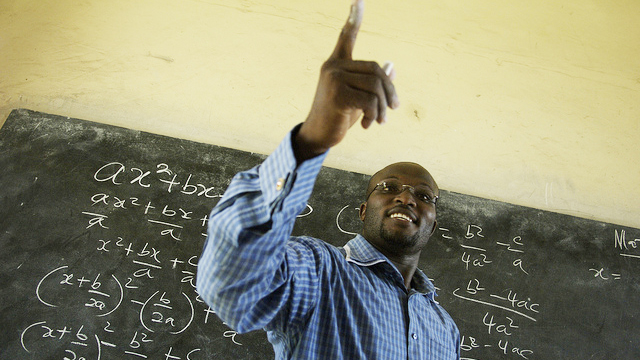
"description": "Winston Mills-Compton teaches a class in mathematics at the Mfantsipim Boys School in Cape Coast, Ghana, June 20, 2006. Mfantsipim is one of the oldest schools in Cape Coast, a town that prides itself as the academic center of the country. UN Secretary General Kofi Annan is one of the school's alumni. (Photo by Jonathan Ernst)",
"title": "teacher",
"credit": null,
"status": "inherit",
"isLoading": false,
"fetchFailed": false
},
"mindshift_29604": {
"type": "attachments",
"id": "mindshift_29604",
"meta": {
"index": "attachments_1716263798",
"site": "mindshift",
"id": "29604",
"found": true
},
"parent": 29598,
"imgSizes": {
"thumbnail": {
"file": "https://ww2.kqed.org/app/uploads/sites/23/2013/06/4112145057_410df48843_z1-400x225.jpg",
"width": 400,
"mimeType": "image/jpeg",
"height": 225
},
"fd-sm": {
"file": "https://ww2.kqed.org/app/uploads/sites/23/2013/06/4112145057_410df48843_z1-320x180.jpg",
"width": 320,
"mimeType": "image/jpeg",
"height": 180
},
"kqedFullSize": {
"file": "https://ww2.kqed.org/app/uploads/sites/23/2013/06/4112145057_410df48843_z1.jpg",
"width": 640,
"height": 360
},
"guest-author-96": {
"file": "https://ww2.kqed.org/app/uploads/sites/23/2013/06/4112145057_410df48843_z1-96x96.jpg",
"width": 96,
"mimeType": "image/jpeg",
"height": 96
},
"guest-author-64": {
"file": "https://ww2.kqed.org/app/uploads/sites/23/2013/06/4112145057_410df48843_z1-64x64.jpg",
"width": 64,
"mimeType": "image/jpeg",
"height": 64
},
"detail": {
"file": "https://ww2.kqed.org/app/uploads/sites/23/2013/06/4112145057_410df48843_z1-75x75.jpg",
"width": 75,
"mimeType": "image/jpeg",
"height": 75
},
"guest-author-32": {
"file": "https://ww2.kqed.org/app/uploads/sites/23/2013/06/4112145057_410df48843_z1-32x32.jpg",
"width": 32,
"mimeType": "image/jpeg",
"height": 32
},
"guest-author-128": {
"file": "https://ww2.kqed.org/app/uploads/sites/23/2013/06/4112145057_410df48843_z1-128x128.jpg",
"width": 128,
"mimeType": "image/jpeg",
"height": 128
}
},
"publishDate": 1372093635,
"modified": 1372093635,
"caption": null,
"description": null,
"title": "4112145057_410df48843_z",
"credit": null,
"status": "inherit",
"isLoading": false,
"fetchFailed": false
},
"mindshift_29498": {
"type": "attachments",
"id": "mindshift_29498",
"meta": {
"index": "attachments_1716263798",
"site": "mindshift",
"id": "29498",
"found": true
},
"parent": 29386,
"imgSizes": {
"thumbnail": {
"file": "https://ww2.kqed.org/app/uploads/sites/23/2013/06/test-taking-400x225.jpg",
"width": 400,
"mimeType": "image/jpeg",
"height": 225
},
"fd-sm": {
"file": "https://ww2.kqed.org/app/uploads/sites/23/2013/06/test-taking-320x180.jpg",
"width": 320,
"mimeType": "image/jpeg",
"height": 180
},
"kqedFullSize": {
"file": "https://ww2.kqed.org/app/uploads/sites/23/2013/06/test-taking.jpg",
"width": 640,
"height": 360
},
"guest-author-96": {
"file": "https://ww2.kqed.org/app/uploads/sites/23/2013/06/test-taking-96x96.jpg",
"width": 96,
"mimeType": "image/jpeg",
"height": 96
},
"guest-author-64": {
"file": "https://ww2.kqed.org/app/uploads/sites/23/2013/06/test-taking-64x64.jpg",
"width": 64,
"mimeType": "image/jpeg",
"height": 64
},
"detail": {
"file": "https://ww2.kqed.org/app/uploads/sites/23/2013/06/test-taking-75x75.jpg",
"width": 75,
"mimeType": "image/jpeg",
"height": 75
},
"guest-author-32": {
"file": "https://ww2.kqed.org/app/uploads/sites/23/2013/06/test-taking-32x32.jpg",
"width": 32,
"mimeType": "image/jpeg",
"height": 32
},
"guest-author-128": {
"file": "https://ww2.kqed.org/app/uploads/sites/23/2013/06/test-taking-128x128.jpg",
"width": 128,
"mimeType": "image/jpeg",
"height": 128
}
},
"publishDate": 1371407024,
"modified": 1371407024,
"caption": null,
"description": null,
"title": "test-taking",
"credit": null,
"status": "inherit",
"isLoading": false,
"fetchFailed": false
},
"mindshift_29321": {
"type": "attachments",
"id": "mindshift_29321",
"meta": {
"index": "attachments_1716263798",
"site": "mindshift",
"id": "29321",
"found": true
},
"parent": 29015,
"imgSizes": {
"thumbnail": {
"file": "https://ww2.kqed.org/app/uploads/sites/23/2013/06/photo1-400x225.jpg",
"width": 400,
"mimeType": "image/jpeg",
"height": 225
},
"fd-sm": {
"file": "https://ww2.kqed.org/app/uploads/sites/23/2013/06/photo1-320x180.jpg",
"width": 320,
"mimeType": "image/jpeg",
"height": 180
},
"kqedFullSize": {
"file": "https://ww2.kqed.org/app/uploads/sites/23/2013/06/photo1.jpg",
"width": 640,
"height": 360
},
"guest-author-96": {
"file": "https://ww2.kqed.org/app/uploads/sites/23/2013/06/photo1-96x96.jpg",
"width": 96,
"mimeType": "image/jpeg",
"height": 96
},
"guest-author-64": {
"file": "https://ww2.kqed.org/app/uploads/sites/23/2013/06/photo1-64x64.jpg",
"width": 64,
"mimeType": "image/jpeg",
"height": 64
},
"detail": {
"file": "https://ww2.kqed.org/app/uploads/sites/23/2013/06/photo1-75x75.jpg",
"width": 75,
"mimeType": "image/jpeg",
"height": 75
},
"guest-author-32": {
"file": "https://ww2.kqed.org/app/uploads/sites/23/2013/06/photo1-32x32.jpg",
"width": 32,
"mimeType": "image/jpeg",
"height": 32
},
"guest-author-128": {
"file": "https://ww2.kqed.org/app/uploads/sites/23/2013/06/photo1-128x128.jpg",
"width": 128,
"mimeType": "image/jpeg",
"height": 128
}
},
"publishDate": 1371056740,
"modified": 1371056740,
"caption": null,
"description": null,
"title": "photo1",
"credit": null,
"status": "inherit",
"isLoading": false,
"fetchFailed": false
},
"mindshift_28986": {
"type": "attachments",
"id": "mindshift_28986",
"meta": {
"index": "attachments_1716263798",
"site": "mindshift",
"id": "28986",
"found": true
},
"parent": 28982,
"imgSizes": {
"thumbnail": {
"file": "https://ww2.kqed.org/app/uploads/sites/23/2013/05/RamseyMusallam-400x225.jpg",
"width": 400,
"mimeType": "image/jpeg",
"height": 225
},
"fd-sm": {
"file": "https://ww2.kqed.org/app/uploads/sites/23/2013/05/RamseyMusallam-320x180.jpg",
"width": 320,
"mimeType": "image/jpeg",
"height": 180
},
"kqedFullSize": {
"file": "https://ww2.kqed.org/app/uploads/sites/23/2013/05/RamseyMusallam.jpg",
"width": 640,
"height": 360
},
"guest-author-96": {
"file": "https://ww2.kqed.org/app/uploads/sites/23/2013/05/RamseyMusallam-96x96.jpg",
"width": 96,
"mimeType": "image/jpeg",
"height": 96
},
"guest-author-64": {
"file": "https://ww2.kqed.org/app/uploads/sites/23/2013/05/RamseyMusallam-64x64.jpg",
"width": 64,
"mimeType": "image/jpeg",
"height": 64
},
"detail": {
"file": "https://ww2.kqed.org/app/uploads/sites/23/2013/05/RamseyMusallam-75x75.jpg",
"width": 75,
"mimeType": "image/jpeg",
"height": 75
},
"guest-author-32": {
"file": "https://ww2.kqed.org/app/uploads/sites/23/2013/05/RamseyMusallam-32x32.jpg",
"width": 32,
"mimeType": "image/jpeg",
"height": 32
},
"guest-author-128": {
"file": "https://ww2.kqed.org/app/uploads/sites/23/2013/05/RamseyMusallam-128x128.jpg",
"width": 128,
"mimeType": "image/jpeg",
"height": 128
}
},
"publishDate": 1369765592,
"modified": 1369765592,
"caption": null,
"description": null,
"title": "RamseyMusallam",
"credit": null,
"status": "inherit",
"isLoading": false,
"fetchFailed": false
},
"mindshift_28954": {
"type": "attachments",
"id": "mindshift_28954",
"meta": {
"index": "attachments_1716263798",
"site": "mindshift",
"id": "28954",
"found": true
},
"parent": 28867,
"imgSizes": {
"thumbnail": {
"file": "https://ww2.kqed.org/app/uploads/sites/23/2013/05/Kids-computers1-400x225.jpg",
"width": 400,
"mimeType": "image/jpeg",
"height": 225
},
"fd-sm": {
"file": "https://ww2.kqed.org/app/uploads/sites/23/2013/05/Kids-computers1-320x180.jpg",
"width": 320,
"mimeType": "image/jpeg",
"height": 180
},
"kqedFullSize": {
"file": "https://ww2.kqed.org/app/uploads/sites/23/2013/05/Kids-computers1.jpg",
"width": 640,
"height": 360
},
"guest-author-96": {
"file": "https://ww2.kqed.org/app/uploads/sites/23/2013/05/Kids-computers1-96x96.jpg",
"width": 96,
"mimeType": "image/jpeg",
"height": 96
},
"guest-author-64": {
"file": "https://ww2.kqed.org/app/uploads/sites/23/2013/05/Kids-computers1-64x64.jpg",
"width": 64,
"mimeType": "image/jpeg",
"height": 64
},
"detail": {
"file": "https://ww2.kqed.org/app/uploads/sites/23/2013/05/Kids-computers1-75x75.jpg",
"width": 75,
"mimeType": "image/jpeg",
"height": 75
},
"guest-author-32": {
"file": "https://ww2.kqed.org/app/uploads/sites/23/2013/05/Kids-computers1-32x32.jpg",
"width": 32,
"mimeType": "image/jpeg",
"height": 32
},
"guest-author-128": {
"file": "https://ww2.kqed.org/app/uploads/sites/23/2013/05/Kids-computers1-128x128.jpg",
"width": 128,
"mimeType": "image/jpeg",
"height": 128
}
},
"publishDate": 1369417516,
"modified": 1369417516,
"caption": null,
"description": null,
"title": "Kids-computers1",
"credit": null,
"status": "inherit",
"isLoading": false,
"fetchFailed": false
},
"mindshift_28950": {
"type": "attachments",
"id": "mindshift_28950",
"meta": {
"index": "attachments_1716263798",
"site": "mindshift",
"id": "28950",
"found": true
},
"parent": 28696,
"imgSizes": {
"thumbnail": {
"file": "https://ww2.kqed.org/app/uploads/sites/23/2013/05/teacher-students-400x225.jpg",
"width": 400,
"mimeType": "image/jpeg",
"height": 225
},
"fd-sm": {
"file": "https://ww2.kqed.org/app/uploads/sites/23/2013/05/teacher-students-320x180.jpg",
"width": 320,
"mimeType": "image/jpeg",
"height": 180
},
"kqedFullSize": {
"file": "https://ww2.kqed.org/app/uploads/sites/23/2013/05/teacher-students.jpg",
"width": 640,
"height": 360
},
"guest-author-96": {
"file": "https://ww2.kqed.org/app/uploads/sites/23/2013/05/teacher-students-96x96.jpg",
"width": 96,
"mimeType": "image/jpeg",
"height": 96
},
"guest-author-64": {
"file": "https://ww2.kqed.org/app/uploads/sites/23/2013/05/teacher-students-64x64.jpg",
"width": 64,
"mimeType": "image/jpeg",
"height": 64
},
"detail": {
"file": "https://ww2.kqed.org/app/uploads/sites/23/2013/05/teacher-students-75x75.jpg",
"width": 75,
"mimeType": "image/jpeg",
"height": 75
},
"guest-author-32": {
"file": "https://ww2.kqed.org/app/uploads/sites/23/2013/05/teacher-students-32x32.jpg",
"width": 32,
"mimeType": "image/jpeg",
"height": 32
},
"guest-author-128": {
"file": "https://ww2.kqed.org/app/uploads/sites/23/2013/05/teacher-students-128x128.jpg",
"width": 128,
"mimeType": "image/jpeg",
"height": 128
}
},
"publishDate": 1369417119,
"modified": 1369417119,
"caption": null,
"description": null,
"title": "teacher-students",
"credit": null,
"status": "inherit",
"isLoading": false,
"fetchFailed": false
},
"mindshift_28904": {
"type": "attachments",
"id": "mindshift_28904",
"meta": {
"index": "attachments_1716263798",
"site": "mindshift",
"id": "28904",
"found": true
},
"parent": 28820,
"imgSizes": {
"thumbnail": {
"file": "https://ww2.kqed.org/app/uploads/sites/23/2013/05/497411105_60c65df8ba_z1-400x225.jpg",
"width": 400,
"mimeType": "image/jpeg",
"height": 225
},
"fd-sm": {
"file": "https://ww2.kqed.org/app/uploads/sites/23/2013/05/497411105_60c65df8ba_z1-320x180.jpg",
"width": 320,
"mimeType": "image/jpeg",
"height": 180
},
"kqedFullSize": {
"file": "https://ww2.kqed.org/app/uploads/sites/23/2013/05/497411105_60c65df8ba_z1.jpg",
"width": 640,
"height": 360
},
"guest-author-96": {
"file": "https://ww2.kqed.org/app/uploads/sites/23/2013/05/497411105_60c65df8ba_z1-96x96.jpg",
"width": 96,
"mimeType": "image/jpeg",
"height": 96
},
"guest-author-64": {
"file": "https://ww2.kqed.org/app/uploads/sites/23/2013/05/497411105_60c65df8ba_z1-64x64.jpg",
"width": 64,
"mimeType": "image/jpeg",
"height": 64
},
"detail": {
"file": "https://ww2.kqed.org/app/uploads/sites/23/2013/05/497411105_60c65df8ba_z1-75x75.jpg",
"width": 75,
"mimeType": "image/jpeg",
"height": 75
},
"guest-author-32": {
"file": "https://ww2.kqed.org/app/uploads/sites/23/2013/05/497411105_60c65df8ba_z1-32x32.jpg",
"width": 32,
"mimeType": "image/jpeg",
"height": 32
},
"guest-author-128": {
"file": "https://ww2.kqed.org/app/uploads/sites/23/2013/05/497411105_60c65df8ba_z1-128x128.jpg",
"width": 128,
"mimeType": "image/jpeg",
"height": 128
}
},
"publishDate": 1369350898,
"modified": 1369350898,
"caption": null,
"description": null,
"title": "497411105_60c65df8ba_z",
"credit": null,
"status": "inherit",
"isLoading": false,
"fetchFailed": false
},
"mindshift_28685": {
"type": "attachments",
"id": "mindshift_28685",
"meta": {
"index": "attachments_1716263798",
"site": "mindshift",
"id": "28685",
"found": true
},
"parent": 28673,
"imgSizes": {
"twentyfourteen-full-width": {
"file": "https://ww2.kqed.org/app/uploads/sites/23/2013/05/DebbieSterlingPic-1038x576.jpg",
"width": 1038,
"mimeType": "image/jpeg",
"height": 576
},
"thumbnail": {
"file": "https://ww2.kqed.org/app/uploads/sites/23/2013/05/DebbieSterlingPic-400x289.jpg",
"width": 400,
"mimeType": "image/jpeg",
"height": 289
},
"fd-sm": {
"file": "https://ww2.kqed.org/app/uploads/sites/23/2013/05/DebbieSterlingPic-320x231.jpg",
"width": 320,
"mimeType": "image/jpeg",
"height": 231
},
"post-thumbnail": {
"file": "https://ww2.kqed.org/app/uploads/sites/23/2013/05/DebbieSterlingPic-672x372.jpg",
"width": 672,
"mimeType": "image/jpeg",
"height": 372
},
"kqedFullSize": {
"file": "https://ww2.kqed.org/app/uploads/sites/23/2013/05/DebbieSterlingPic.jpg",
"width": 3106,
"height": 2242
},
"large": {
"file": "https://ww2.kqed.org/app/uploads/sites/23/2013/05/DebbieSterlingPic-1440x1039.jpg",
"width": 1440,
"mimeType": "image/jpeg",
"height": 1039
},
"guest-author-96": {
"file": "https://ww2.kqed.org/app/uploads/sites/23/2013/05/DebbieSterlingPic-96x96.jpg",
"width": 96,
"mimeType": "image/jpeg",
"height": 96
},
"medium": {
"file": "https://ww2.kqed.org/app/uploads/sites/23/2013/05/DebbieSterlingPic-800x577.jpg",
"width": 800,
"mimeType": "image/jpeg",
"height": 577
},
"guest-author-64": {
"file": "https://ww2.kqed.org/app/uploads/sites/23/2013/05/DebbieSterlingPic-64x64.jpg",
"width": 64,
"mimeType": "image/jpeg",
"height": 64
},
"guest-author-32": {
"file": "https://ww2.kqed.org/app/uploads/sites/23/2013/05/DebbieSterlingPic-32x32.jpg",
"width": 32,
"mimeType": "image/jpeg",
"height": 32
},
"fd-lrg": {
"file": "https://ww2.kqed.org/app/uploads/sites/23/2013/05/DebbieSterlingPic-1180x852.jpg",
"width": 1180,
"mimeType": "image/jpeg",
"height": 852
},
"fd-med": {
"file": "https://ww2.kqed.org/app/uploads/sites/23/2013/05/DebbieSterlingPic-768x554.jpg",
"width": 768,
"mimeType": "image/jpeg",
"height": 554
},
"detail": {
"file": "https://ww2.kqed.org/app/uploads/sites/23/2013/05/DebbieSterlingPic-75x75.jpg",
"width": 75,
"mimeType": "image/jpeg",
"height": 75
},
"guest-author-128": {
"file": "https://ww2.kqed.org/app/uploads/sites/23/2013/05/DebbieSterlingPic-128x128.jpg",
"width": 128,
"mimeType": "image/jpeg",
"height": 128
}
},
"publishDate": 1368049343,
"modified": 1368049343,
"caption": null,
"description": null,
"title": "DebbieSterlingPic",
"credit": null,
"status": "inherit",
"isLoading": false,
"fetchFailed": false
},
"mindshift_28477": {
"type": "attachments",
"id": "mindshift_28477",
"meta": {
"index": "attachments_1716263798",
"site": "mindshift",
"id": "28477",
"found": true
},
"parent": 28475,
"imgSizes": {
"twentyfourteen-full-width": {
"file": "https://ww2.kqed.org/app/uploads/sites/23/2013/04/New-Tech-students-1038x576.jpg",
"width": 1038,
"mimeType": "image/jpeg",
"height": 576
},
"thumbnail": {
"file": "https://ww2.kqed.org/app/uploads/sites/23/2013/04/New-Tech-students-400x238.jpg",
"width": 400,
"mimeType": "image/jpeg",
"height": 238
},
"fd-sm": {
"file": "https://ww2.kqed.org/app/uploads/sites/23/2013/04/New-Tech-students-320x190.jpg",
"width": 320,
"mimeType": "image/jpeg",
"height": 190
},
"post-thumbnail": {
"file": "https://ww2.kqed.org/app/uploads/sites/23/2013/04/New-Tech-students-672x372.jpg",
"width": 672,
"mimeType": "image/jpeg",
"height": 372
},
"kqedFullSize": {
"file": "https://ww2.kqed.org/app/uploads/sites/23/2013/04/New-Tech-students.jpg",
"width": 3225,
"height": 1917
},
"large": {
"file": "https://ww2.kqed.org/app/uploads/sites/23/2013/04/New-Tech-students-1440x856.jpg",
"width": 1440,
"mimeType": "image/jpeg",
"height": 856
},
"guest-author-96": {
"file": "https://ww2.kqed.org/app/uploads/sites/23/2013/04/New-Tech-students-96x96.jpg",
"width": 96,
"mimeType": "image/jpeg",
"height": 96
},
"medium": {
"file": "https://ww2.kqed.org/app/uploads/sites/23/2013/04/New-Tech-students-800x476.jpg",
"width": 800,
"mimeType": "image/jpeg",
"height": 476
},
"guest-author-64": {
"file": "https://ww2.kqed.org/app/uploads/sites/23/2013/04/New-Tech-students-64x64.jpg",
"width": 64,
"mimeType": "image/jpeg",
"height": 64
},
"guest-author-32": {
"file": "https://ww2.kqed.org/app/uploads/sites/23/2013/04/New-Tech-students-32x32.jpg",
"width": 32,
"mimeType": "image/jpeg",
"height": 32
},
"fd-lrg": {
"file": "https://ww2.kqed.org/app/uploads/sites/23/2013/04/New-Tech-students-1180x701.jpg",
"width": 1180,
"mimeType": "image/jpeg",
"height": 701
},
"fd-med": {
"file": "https://ww2.kqed.org/app/uploads/sites/23/2013/04/New-Tech-students-768x457.jpg",
"width": 768,
"mimeType": "image/jpeg",
"height": 457
},
"detail": {
"file": "https://ww2.kqed.org/app/uploads/sites/23/2013/04/New-Tech-students-75x75.jpg",
"width": 75,
"mimeType": "image/jpeg",
"height": 75
},
"guest-author-128": {
"file": "https://ww2.kqed.org/app/uploads/sites/23/2013/04/New-Tech-students-128x128.jpg",
"width": 128,
"mimeType": "image/jpeg",
"height": 128
}
},
"publishDate": 1367262771,
"modified": 1367262771,
"caption": null,
"description": null,
"title": "New-Tech-students",
"credit": null,
"status": "inherit",
"isLoading": false,
"fetchFailed": false
},
"mindshift_28775": {
"type": "attachments",
"id": "mindshift_28775",
"meta": {
"index": "attachments_1716263798",
"site": "mindshift",
"id": "28775",
"found": true
},
"parent": 28719,
"imgSizes": {
"twentyfourteen-full-width": {
"file": "https://ww2.kqed.org/app/uploads/sites/23/2013/05/11_1.21_Ipad_Algebra_0238-1038x576.jpg",
"width": 1038,
"mimeType": "image/jpeg",
"height": 576
},
"thumbnail": {
"file": "https://ww2.kqed.org/app/uploads/sites/23/2013/05/11_1.21_Ipad_Algebra_0238-400x266.jpg",
"width": 400,
"mimeType": "image/jpeg",
"height": 266
},
"fd-sm": {
"file": "https://ww2.kqed.org/app/uploads/sites/23/2013/05/11_1.21_Ipad_Algebra_0238-320x213.jpg",
"width": 320,
"mimeType": "image/jpeg",
"height": 213
},
"post-thumbnail": {
"file": "https://ww2.kqed.org/app/uploads/sites/23/2013/05/11_1.21_Ipad_Algebra_0238-672x372.jpg",
"width": 672,
"mimeType": "image/jpeg",
"height": 372
},
"kqedFullSize": {
"file": "https://ww2.kqed.org/app/uploads/sites/23/2013/05/11_1.21_Ipad_Algebra_0238.jpg",
"width": 1440,
"height": 958
},
"large": {
"file": "https://ww2.kqed.org/app/uploads/sites/23/2013/05/11_1.21_Ipad_Algebra_0238-1440x958.jpg",
"width": 1440,
"mimeType": "image/jpeg",
"height": 958
},
"guest-author-96": {
"file": "https://ww2.kqed.org/app/uploads/sites/23/2013/05/11_1.21_Ipad_Algebra_0238-96x96.jpg",
"width": 96,
"mimeType": "image/jpeg",
"height": 96
},
"medium": {
"file": "https://ww2.kqed.org/app/uploads/sites/23/2013/05/11_1.21_Ipad_Algebra_0238-800x532.jpg",
"width": 800,
"mimeType": "image/jpeg",
"height": 532
},
"guest-author-64": {
"file": "https://ww2.kqed.org/app/uploads/sites/23/2013/05/11_1.21_Ipad_Algebra_0238-64x64.jpg",
"width": 64,
"mimeType": "image/jpeg",
"height": 64
},
"guest-author-32": {
"file": "https://ww2.kqed.org/app/uploads/sites/23/2013/05/11_1.21_Ipad_Algebra_0238-32x32.jpg",
"width": 32,
"mimeType": "image/jpeg",
"height": 32
},
"fd-lrg": {
"file": "https://ww2.kqed.org/app/uploads/sites/23/2013/05/11_1.21_Ipad_Algebra_0238-1180x785.jpg",
"width": 1180,
"mimeType": "image/jpeg",
"height": 785
},
"fd-med": {
"file": "https://ww2.kqed.org/app/uploads/sites/23/2013/05/11_1.21_Ipad_Algebra_0238-768x511.jpg",
"width": 768,
"mimeType": "image/jpeg",
"height": 511
},
"detail": {
"file": "https://ww2.kqed.org/app/uploads/sites/23/2013/05/11_1.21_Ipad_Algebra_0238-75x75.jpg",
"width": 75,
"mimeType": "image/jpeg",
"height": 75
},
"guest-author-128": {
"file": "https://ww2.kqed.org/app/uploads/sites/23/2013/05/11_1.21_Ipad_Algebra_0238-128x128.jpg",
"width": 128,
"mimeType": "image/jpeg",
"height": 128
}
},
"publishDate": 1368567916,
"modified": 1368567916,
"caption": null,
"description": null,
"title": "11_1.21_Ipad_Algebra_0238",
"credit": null,
"status": "inherit",
"isLoading": false,
"fetchFailed": false
}
},
"audioPlayerReducer": {
"postId": "stream_live",
"isPaused": true,
"isPlaying": false,
"pfsActive": false,
"pledgeModalIsOpen": true,
"playerDrawerIsOpen": false,
"liveAudioPlayStartedAt": 0,
"liveAudioPlayContext": ""
},
"authorsReducer": {
"katrinaschwartz": {
"type": "authors",
"id": "234",
"meta": {
"index": "authors_1716337520",
"id": "234",
"found": true
},
"name": "Katrina Schwartz",
"firstName": "Katrina",
"lastName": "Schwartz",
"slug": "katrinaschwartz",
"email": "kschwartz@kqed.org",
"display_author_email": false,
"staff_mastheads": [
"news"
],
"title": "Producer",
"bio": "Katrina Schwartz is a journalist based in San Francisco. She's worked at KPCC public radio in LA and has reported on air and online for KQED since 2010. She covered how teaching and learning is changing for MindShift between 2012 and 2020. She is the co-host of the MindShift podcast and now produces KQED's Bay Curious podcast.",
"avatar": "https://secure.gravatar.com/avatar/edb4ee79070447a018538c9aae6eeecf28786515b8a0c30e43b6b7dce5aa44c8?s=600&d=blank&r=g",
"twitter": "kschwart",
"bluesky": null,
"facebook": null,
"instagram": null,
"linkedin": null,
"sites": [
{
"site": "",
"roles": [
"editor"
]
},
{
"site": "news",
"roles": [
"editor"
]
},
{
"site": "mindshift",
"roles": [
"administrator"
]
},
{
"site": "stateofhealth",
"roles": [
"author"
]
},
{
"site": "science",
"roles": [
"editor"
]
}
],
"headData": {
"title": "Katrina Schwartz | KQED",
"description": "Producer",
"ogImgSrc": "https://secure.gravatar.com/avatar/edb4ee79070447a018538c9aae6eeecf28786515b8a0c30e43b6b7dce5aa44c8?s=600&d=blank&r=g",
"twImgSrc": "https://secure.gravatar.com/avatar/edb4ee79070447a018538c9aae6eeecf28786515b8a0c30e43b6b7dce5aa44c8?s=600&d=blank&r=g"
},
"isLoading": false,
"link": "/author/katrinaschwartz"
},
"anniempaul": {
"type": "authors",
"id": "4355",
"meta": {
"index": "authors_1716337520",
"id": "4355",
"found": true
},
"name": "Annie Murphy Paul",
"firstName": "Annie",
"lastName": "Murphy Paul",
"slug": "anniempaul",
"email": "anniempaul@gmail.com",
"display_author_email": false,
"staff_mastheads": [],
"title": null,
"bio": null,
"avatar": "https://secure.gravatar.com/avatar/060ea758e9b83d478e4e6c8a0466af50?s=600&d=blank&r=g",
"twitter": null,
"facebook": null,
"instagram": null,
"linkedin": null,
"sites": [
{
"site": "mindshift",
"roles": [
"author"
]
}
],
"headData": {
"title": "Annie Murphy Paul | KQED",
"description": null,
"ogImgSrc": "https://secure.gravatar.com/avatar/060ea758e9b83d478e4e6c8a0466af50?s=600&d=blank&r=g",
"twImgSrc": "https://secure.gravatar.com/avatar/060ea758e9b83d478e4e6c8a0466af50?s=600&d=blank&r=g"
},
"isLoading": false,
"link": "/author/anniempaul"
},
"ianquillen": {
"type": "authors",
"id": "4411",
"meta": {
"index": "authors_1716337520",
"id": "4411",
"found": true
},
"name": "Ian Quillen",
"firstName": "Ian",
"lastName": "Quillen",
"slug": "ianquillen",
"email": "ian.nicholas.quillen@gmail.com",
"display_author_email": false,
"staff_mastheads": [],
"title": null,
"bio": null,
"avatar": "https://secure.gravatar.com/avatar/587c40a44a1c17d9578290184bcc41cf?s=600&d=blank&r=g",
"twitter": null,
"facebook": null,
"instagram": null,
"linkedin": null,
"sites": [
{
"site": "mindshift",
"roles": [
"subscriber"
]
}
],
"headData": {
"title": "Ian Quillen | KQED",
"description": null,
"ogImgSrc": "https://secure.gravatar.com/avatar/587c40a44a1c17d9578290184bcc41cf?s=600&d=blank&r=g",
"twImgSrc": "https://secure.gravatar.com/avatar/587c40a44a1c17d9578290184bcc41cf?s=600&d=blank&r=g"
},
"isLoading": false,
"link": "/author/ianquillen"
},
"hollykorbey": {
"type": "authors",
"id": "4445",
"meta": {
"index": "authors_1716337520",
"id": "4445",
"found": true
},
"name": "Holly Korbey",
"firstName": "Holly",
"lastName": "Korbey",
"slug": "hollykorbey",
"email": "holly@hollykorbey.com",
"display_author_email": false,
"staff_mastheads": [],
"title": null,
"bio": "Holly Korbey's work on parenting and education has appeared in The New York Times, The Atlantic, Babble, Brain, Child Magazine, and others. She lives in Nashville with her family. Follow her on Twitter: @HKorbey",
"avatar": "https://secure.gravatar.com/avatar/f385f7a3b90e52ecd5e85c24fbd0a363?s=600&d=blank&r=g",
"twitter": null,
"facebook": null,
"instagram": null,
"linkedin": null,
"sites": [
{
"site": "mindshift",
"roles": [
"contributor"
]
}
],
"headData": {
"title": "Holly Korbey | KQED",
"description": null,
"ogImgSrc": "https://secure.gravatar.com/avatar/f385f7a3b90e52ecd5e85c24fbd0a363?s=600&d=blank&r=g",
"twImgSrc": "https://secure.gravatar.com/avatar/f385f7a3b90e52ecd5e85c24fbd0a363?s=600&d=blank&r=g"
},
"isLoading": false,
"link": "/author/hollykorbey"
}
},
"pagesReducer": {
"mindshift_category_teaching-strategies": {
"type": "terms",
"id": "mindshift_193",
"meta": {
"index": "terms_1716263798",
"site": "mindshift",
"id": "193",
"score": 14.4071665
},
"featImg": null,
"name": "Teaching Strategies",
"description": "Innovative ideas - projects, processes, curricula, and more - that are transforming how we teach and learn.",
"taxonomy": "category",
"headData": {
"twImgId": null,
"twTitle": null,
"ogTitle": null,
"ogImgId": null,
"twDescription": null,
"description": "Innovative ideas - projects, processes, curricula, and more - that are transforming how we teach and learn.",
"title": "Teaching Strategies Archives | KQED Mindshift",
"ogDescription": null
},
"ttid": 193,
"slug": "teaching-strategies",
"isLoading": false,
"title": "Teaching Strategies",
"pageMeta": {
"site": "mindshift",
"WpPageTemplate": "page-topic-editorial",
"currentPage": 55
},
"blocks": [
{
"blockName": "kqed/company-paragraph",
"content": "Innovative ideas - projects, processes, curricula, and more - that are transforming how we teach and learn."
},
{
"blockName": "kqed/post-list",
"attrs": {
"layout": "cardArticle2",
"query": "posts/mindshift?category=teaching-strategies",
"seeMore": false,
"paginated": true,
"page": 55
}
},
{
"blockName": "kqed/ad"
}
]
}
},
"pfsSessionReducer": {},
"postsReducer": {
"stream_live": {
"type": "live",
"id": "stream_live",
"audioUrl": "https://streams.kqed.org/kqedradio",
"title": "Live Stream",
"excerpt": "Live Stream information currently unavailable.",
"link": "/radio",
"featImg": "",
"label": {
"name": "KQED Live",
"link": "/"
}
},
"stream_kqedNewscast": {
"type": "posts",
"id": "stream_kqedNewscast",
"audioUrl": "https://www.kqed.org/.stream/anon/radio/RDnews/newscast.mp3?_=1",
"title": "KQED Newscast",
"featImg": "",
"label": {
"name": "88.5 FM",
"link": "/"
}
},
"mindshift_29787": {
"type": "posts",
"id": "mindshift_29787",
"meta": {
"index": "posts_1716263798",
"site": "mindshift",
"id": "29787",
"score": null,
"sort": [
1372804005000
]
},
"parent": 0,
"labelTerm": {
"site": "mindshift"
},
"blocks": [],
"publishDate": 1372804005,
"format": "aside",
"disqusTitle": "Why Teaching Helps Students Learn More Deeply",
"title": "Why Teaching Helps Students Learn More Deeply",
"headTitle": "MindShift | KQED News",
"content": "\u003cfigure id=\"attachment_29791\" class=\"wp-caption center\" style=\"max-width: 640px\">\u003ca href=\"http://www.flickr.com/photos/tulanesally/3349979270/sizes/l/in/photolist-672w8h-6atBBo-6guXCQ-6EXUJo-6T42BL-6ZHhdr-77e2x7-9fsnDL-8RiCTN-9XS4m5-8DCnqQ-8EN8Nc-9kVs1G-9gvgU1-9H4VtM-9H7PeL-9W3Wrx-9W3Wt4-b3JkVg-7zhcd3-8JKLrV-819pHL-8ERjmu-8ERjuu-8ERjqJ-8EN94T-8ERjGb-8EN9a2-8fq9BV-9gvgWS-9gsbt6-9gvh45-awSbiu-9W6KQU-9W3Wut-9W3Wq4-9W6KYw-djWQDw-8RjotY-9GydEU-8DRSBJ-97ib44-97mrhq-97ixia-97iCCV-97iMMc-97mAXJ-97igYk-97iAJt-97id98-97muQE/\">\u003cimg class=\"size-full wp-image-29791\" src=\"http://ww2.kqed.org/mindshift/wp-content/uploads/sites/23/2013/07/tutoring.jpg\" alt=\"tutoring\" width=\"640\" height=\"360\" srcset=\"https://ww2.kqed.org/app/uploads/sites/23/2013/07/tutoring.jpg 640w, https://ww2.kqed.org/app/uploads/sites/23/2013/07/tutoring-400x225.jpg 400w, https://ww2.kqed.org/app/uploads/sites/23/2013/07/tutoring-320x180.jpg 320w\" sizes=\"(max-width: 640px) 100vw, 640px\">\u003c/a>\u003cfigcaption class=\"wp-caption-text\"> \u003c/figcaption>\u003c/figure>\n\u003cp class=\"dropcap-serif\">Learning, and thinking, are deeply social activities. This is not the traditional view (Rodin’s iconic sculpture, “The Thinker,” is conspicuously alone in his chin-on-fist musings), but it’s the view that is emerging out of several decades of social science research. Our minds often work best in interaction with other people’s minds, and there are particular kinds of relationships that are especially good at evoking our intelligence.\u003c/p>\n\u003cp>One is the \u003ca href=\"http://anniemurphypaul.com/2013/07/the-benefits-of-engaging-in-a-cognitive-apprenticeship/?utm_source=Brilliant%3A+The+New+Science+of+Smart+Newsletter&utm_campaign=bfdc283dc8-Brilliant_Report_16_1_2012&utm_medium=email&utm_term=0_9c734401c1-bfdc283dc8-306812621\">master-apprentice relationship\u003c/a>. Another, of course, is the teacher-student relationship—but today I want to talk about the benefits of this relationship for the teacher. For thousands of years, people have known that the best way to understand a concept is to explain it to someone else. “While we teach, we learn,” said the Roman philosopher Seneca. Now scientists are bringing this ancient wisdom up to date, documenting exactly why teaching is such a fruitful way to learn — and designing innovative ways for young people to engage in instruction.\u003c/p>\n\u003caside class=\"pullquote alignleft\">\"Student teachers score higher on tests than pupils who are learning only for their own sake.\"\u003c/aside>\n\u003cp>Students enlisted to tutor others, these researchers have found, work harder to understand the material, recall it more accurately and apply it more effectively. In a phenomenon that scientists have dubbed “the protégé effect,” student teachers score higher on tests than pupils who are learning only for their own sake. But how can children, still learning themselves, teach others? One answer: They can tutor younger kids. The benefits of this practice were indicated by a pair of articles published in 2007 in the journals Science and Intelligence. The studies concluded that first-born children are more intelligent than their later-born brothers and sisters and suggested that their higher IQs result from the time they spend showing their younger siblings the ropes.\u003c/p>\n\u003cp>Educators are experimenting with ways to apply this model to academic subjects. In an ingenious program at the University of Pennsylvania, a “cascading mentoring program” engages college undergraduates to teach computer science to high school students, who in turn instruct middle school students on the topic. But the most cutting-edge tool under development is the “teachable agent” — a computerized character who learns, tries, makes mistakes and asks questions just like a real-world pupil. Engineers and computer scientists at Stanford and Vanderbilt universities have created an animated figure they call Betty’s Brain, who has been “taught” about environmental science by hundreds of middle school students.\u003c/p>\n\u003cp>Even though users’ interactions with Betty are virtual, the social impulses that make learning-by-teaching so potent still come into play. Student teachers are motivated to help Betty master the material, so they study it more conscientiously. As they prepare to teach, they organize their knowledge, improving their own understanding and recall. And as they explain the information to her, they identify knots and gaps in their own thinking. A 2009 study of Betty’s Brain published in the Journal of Science Education and Technology found that students engaged in instructing her spent more time going over the material and learned it more thoroughly.\u003c/p>\n\u003cp>[ad fullwidth]\u003c/p>\n\u003cp>Feedback from the teachable agents further enhances the tutors’ learning. The agent’s questions compel users to think and explain the material in different ways, and watching the agent solve problems allows users to see their knowledge put into action. Sandra Okita, an assistant professor of technology and education at Teachers College, reported in 2006 on the use of a teachable agent by high school students learning to engage in deductive reasoning. On a subsequent test of their skills, the students who had observed agents using rules of reasoning to solve a problem “significantly outperformed” students who had only practiced applying the rules themselves.\u003c/p>\n\u003cp>\u003c/p>\n\u003cp>Above all, it’s the emotions elicited by teaching that make it such a powerful vehicle for learning. Student tutors feel chagrin when their virtual pupils fail; when the characters succeed, they feel what one expert calls by the Yiddish term nachas. Don’t know that word? I had to learn it myself: “Pride and satisfaction that is derived from someone else’s accomplishment.”\u003c/p>\n\n",
"disqusIdentifier": "29787 http://blogs.kqed.org/mindshift/?p=29787",
"disqusUrl": "https://ww2.kqed.org/mindshift/2013/07/02/why-teaching-helps-students-learn-more-deeply/",
"stats": {
"hasVideo": false,
"hasChartOrMap": false,
"hasAudio": false,
"hasPolis": false,
"wordCount": 717,
"hasGoogleForm": false,
"hasGallery": false,
"hasHearkenModule": false,
"iframeSrcs": [],
"paragraphCount": 8
},
"modified": 1373572468,
"excerpt": "For thousands of years, people have known that the best way to understand a concept is to explain it to someone else. “While we teach, we learn,” said the Roman philosopher Seneca. Now scientists are bringing this ancient wisdom up to date, documenting exactly why teaching is such a fruitful way to learn — and designing innovative ways for young people to engage in instruction.",
"headData": {
"twImgId": "",
"twTitle": "",
"ogTitle": "",
"ogImgId": "",
"twDescription": "",
"description": "For thousands of years, people have known that the best way to understand a concept is to explain it to someone else. “While we teach, we learn,” said the Roman philosopher Seneca. Now scientists are bringing this ancient wisdom up to date, documenting exactly why teaching is such a fruitful way to learn — and designing innovative ways for young people to engage in instruction.",
"title": "Why Teaching Helps Students Learn More Deeply | KQED",
"ogDescription": "",
"schema": {
"@context": "https://schema.org",
"@type": "Article",
"headline": "Why Teaching Helps Students Learn More Deeply",
"datePublished": "2013-07-02T15:26:45-07:00",
"dateModified": "2013-07-11T12:54:28-07:00",
"image": "https://cdn.kqed.org/wp-content/uploads/2020/02/KQED-OG-Image@1x.png"
}
},
"guestAuthors": [],
"slug": "why-teaching-helps-students-learn-more-deeply",
"status": "publish",
"path": "/mindshift/29787/why-teaching-helps-students-learn-more-deeply",
"audioTrackLength": null,
"parsedContent": [
{
"type": "contentString",
"content": "\u003cdiv class=\"post-body\">\u003cp>\u003cfigure id=\"attachment_29791\" class=\"wp-caption center\" style=\"max-width: 640px\">\u003ca href=\"http://www.flickr.com/photos/tulanesally/3349979270/sizes/l/in/photolist-672w8h-6atBBo-6guXCQ-6EXUJo-6T42BL-6ZHhdr-77e2x7-9fsnDL-8RiCTN-9XS4m5-8DCnqQ-8EN8Nc-9kVs1G-9gvgU1-9H4VtM-9H7PeL-9W3Wrx-9W3Wt4-b3JkVg-7zhcd3-8JKLrV-819pHL-8ERjmu-8ERjuu-8ERjqJ-8EN94T-8ERjGb-8EN9a2-8fq9BV-9gvgWS-9gsbt6-9gvh45-awSbiu-9W6KQU-9W3Wut-9W3Wq4-9W6KYw-djWQDw-8RjotY-9GydEU-8DRSBJ-97ib44-97mrhq-97ixia-97iCCV-97iMMc-97mAXJ-97igYk-97iAJt-97id98-97muQE/\">\u003cimg class=\"size-full wp-image-29791\" src=\"http://ww2.kqed.org/mindshift/wp-content/uploads/sites/23/2013/07/tutoring.jpg\" alt=\"tutoring\" width=\"640\" height=\"360\" srcset=\"https://ww2.kqed.org/app/uploads/sites/23/2013/07/tutoring.jpg 640w, https://ww2.kqed.org/app/uploads/sites/23/2013/07/tutoring-400x225.jpg 400w, https://ww2.kqed.org/app/uploads/sites/23/2013/07/tutoring-320x180.jpg 320w\" sizes=\"(max-width: 640px) 100vw, 640px\">\u003c/a>\u003cfigcaption class=\"wp-caption-text\"> \u003c/figcaption>\u003c/figure>\n\u003cp class=\"dropcap-serif\">Learning, and thinking, are deeply social activities. This is not the traditional view (Rodin’s iconic sculpture, “The Thinker,” is conspicuously alone in his chin-on-fist musings), but it’s the view that is emerging out of several decades of social science research. Our minds often work best in interaction with other people’s minds, and there are particular kinds of relationships that are especially good at evoking our intelligence.\u003c/p>\n\u003cp>One is the \u003ca href=\"http://anniemurphypaul.com/2013/07/the-benefits-of-engaging-in-a-cognitive-apprenticeship/?utm_source=Brilliant%3A+The+New+Science+of+Smart+Newsletter&utm_campaign=bfdc283dc8-Brilliant_Report_16_1_2012&utm_medium=email&utm_term=0_9c734401c1-bfdc283dc8-306812621\">master-apprentice relationship\u003c/a>. Another, of course, is the teacher-student relationship—but today I want to talk about the benefits of this relationship for the teacher. For thousands of years, people have known that the best way to understand a concept is to explain it to someone else. “While we teach, we learn,” said the Roman philosopher Seneca. Now scientists are bringing this ancient wisdom up to date, documenting exactly why teaching is such a fruitful way to learn — and designing innovative ways for young people to engage in instruction.\u003c/p>\n\u003caside class=\"pullquote alignleft\">\"Student teachers score higher on tests than pupils who are learning only for their own sake.\"\u003c/aside>\n\u003cp>Students enlisted to tutor others, these researchers have found, work harder to understand the material, recall it more accurately and apply it more effectively. In a phenomenon that scientists have dubbed “the protégé effect,” student teachers score higher on tests than pupils who are learning only for their own sake. But how can children, still learning themselves, teach others? One answer: They can tutor younger kids. The benefits of this practice were indicated by a pair of articles published in 2007 in the journals Science and Intelligence. The studies concluded that first-born children are more intelligent than their later-born brothers and sisters and suggested that their higher IQs result from the time they spend showing their younger siblings the ropes.\u003c/p>\n\u003cp>Educators are experimenting with ways to apply this model to academic subjects. In an ingenious program at the University of Pennsylvania, a “cascading mentoring program” engages college undergraduates to teach computer science to high school students, who in turn instruct middle school students on the topic. But the most cutting-edge tool under development is the “teachable agent” — a computerized character who learns, tries, makes mistakes and asks questions just like a real-world pupil. Engineers and computer scientists at Stanford and Vanderbilt universities have created an animated figure they call Betty’s Brain, who has been “taught” about environmental science by hundreds of middle school students.\u003c/p>\n\u003cp>Even though users’ interactions with Betty are virtual, the social impulses that make learning-by-teaching so potent still come into play. Student teachers are motivated to help Betty master the material, so they study it more conscientiously. As they prepare to teach, they organize their knowledge, improving their own understanding and recall. And as they explain the information to her, they identify knots and gaps in their own thinking. A 2009 study of Betty’s Brain published in the Journal of Science Education and Technology found that students engaged in instructing her spent more time going over the material and learned it more thoroughly.\u003c/p>\n\u003cp>\u003c/p>\u003c/div>",
"attributes": {
"named": {},
"numeric": []
}
},
{
"type": "component",
"content": "",
"name": "ad",
"attributes": {
"named": {
"label": "fullwidth"
},
"numeric": [
"fullwidth"
]
}
},
{
"type": "contentString",
"content": "\u003cdiv class=\"post-body\">\u003cp>\u003c/p>\n\u003cp>Feedback from the teachable agents further enhances the tutors’ learning. The agent’s questions compel users to think and explain the material in different ways, and watching the agent solve problems allows users to see their knowledge put into action. Sandra Okita, an assistant professor of technology and education at Teachers College, reported in 2006 on the use of a teachable agent by high school students learning to engage in deductive reasoning. On a subsequent test of their skills, the students who had observed agents using rules of reasoning to solve a problem “significantly outperformed” students who had only practiced applying the rules themselves.\u003c/p>\n\u003cp>\u003c/p>\n\u003cp>Above all, it’s the emotions elicited by teaching that make it such a powerful vehicle for learning. Student tutors feel chagrin when their virtual pupils fail; when the characters succeed, they feel what one expert calls by the Yiddish term nachas. Don’t know that word? I had to learn it myself: “Pride and satisfaction that is derived from someone else’s accomplishment.”\u003c/p>\n\n\u003c/div>\u003c/p>",
"attributes": {
"named": {},
"numeric": []
}
}
],
"link": "/mindshift/29787/why-teaching-helps-students-learn-more-deeply",
"authors": [
"4355"
],
"categories": [
"mindshift_193"
],
"tags": [
"mindshift_1040"
],
"featImg": "mindshift_29791",
"label": "mindshift"
},
"mindshift_29549": {
"type": "posts",
"id": "mindshift_29549",
"meta": {
"index": "posts_1716263798",
"site": "mindshift",
"id": "29549",
"score": null,
"sort": [
1372687243000
]
},
"parent": 0,
"labelTerm": {
"site": "mindshift"
},
"blocks": [],
"publishDate": 1372687243,
"format": "aside",
"disqusTitle": "Why Teachers Should Be Trained Like Actors",
"title": "Why Teachers Should Be Trained Like Actors",
"headTitle": "MindShift | KQED News",
"content": "\u003cfigure id=\"attachment_29700\" class=\"wp-caption center\" style=\"max-width: 640px\">\u003ca href=\"http://www.flickr.com/photos/worldbank/5320646943/sizes/z/in/photolist-97aGY8-avAith-e4x11G-aLVY7z-cE5XLo-7YACPG-bosc1f-boseH1-9XshG2-bTbBR4-dTzDg4-7ZoAHj-brfbTr-8ziCoW-czoJgS-czoJuU-9YuZ38-92ovAw-degyyv-arWLaF-ejX2G7-9v6csz-ayLr19-czoHaE-8aFbMC-aA5QxF-8gnmfP-dU9jmx-dUeVCm-dU9jbp-dU9j4M-dU9iVT-bpfSDt-8gnqDc/\">\u003cimg class=\"size-full wp-image-29700\" src=\"http://ww2.kqed.org/mindshift/wp-content/uploads/sites/23/2013/06/teacher.jpg\" alt=\"teacher\" width=\"640\" height=\"360\" srcset=\"https://ww2.kqed.org/app/uploads/sites/23/2013/06/teacher.jpg 640w, https://ww2.kqed.org/app/uploads/sites/23/2013/06/teacher-400x225.jpg 400w, https://ww2.kqed.org/app/uploads/sites/23/2013/06/teacher-320x180.jpg 320w\" sizes=\"(max-width: 640px) 100vw, 640px\">\u003c/a>\u003cfigcaption class=\"wp-caption-text\"> \u003c/figcaption>\u003c/figure>\n\u003cp class=\"dropcap-serif\">Teaching is a lot like acting, a high-energy, performance profession that requires a person to act as a role model. But when teachers go through training and professional development, the performance aspect of the job is rarely emphasized or taught. Acknowledging this aspect could be a missed opportunity to restructure ways teachers learn new skills and tactics.\u003c/p>\n\u003cp>Actors, musicians or acrobats spend hours perfecting their craft because that’s how they improve. Teachers on the other hand, are often asked to identify teaching tools and tactics they’d like to try and to reflect on how those new elements could be integrated into the classroom.\u003c/p>\n\u003cp>“Knowing what you want to do is a long way from being able to do it,” said \u003ca href=\"http://teachlikeachampion.com/about/about-doug-lemov/\">Doug Lemov\u003c/a>, managing director of \u003ca href=\"http://uncommonschools.org/our-approach\">Uncommon Schools\u003c/a>, a non-profit school management organization and author of \u003ca href=\"http://teachlikeachampion.com/\">\u003cem>Teach Like a Champion\u003c/em>\u003c/a> and \u003ca href=\"http://uncommonschools.org/our-approach/thought-leadership/practice-perfect-book-lemov-woolway-yezzi\">\u003cem>Practice Perfect: 42 Rules for Getting Better at Getting Better\u003c/em>\u003c/a> in a recent \u003ca href=\"http://www.futureofeducation.com/\">Future of Education\u003c/a> conversation with \u003ca href=\"http://www.stevehargadon.com/\">Steve Hargadon\u003c/a>. He started trying to improve teaching by identifying the best practices of exceptional teachers and giving workshops on those “gold nuggets” to less experienced teachers. While many teachers found what they learned helpful, they couldn't put the new methods into practice.\u003c/p>\n\u003cp>“Every other performance profession prepares people by practicing and breaking things down into sections,” said Lemov. So he shifted his professional development workshops to emphasize practicing good teaching strategies rather than just thinking about them.\u003c/p>\n\u003cp style=\"text-align: center\">\u003cstrong>\u003cspan style=\"color: #808080\">[RELATED READING: \u003ca href=\"http://ww2.kqed.org/mindshift/2013/02/are-teachers-of-tomorrow-prepared-to-use-innovative-tech/\">Are Teachers of Tomorrow Prepared to Use Innovative Tech?\u003c/a>]\u003c/span>\u003c/strong>\u003c/p>\n\u003cp>Those first workshops were a learning experience in building on skill sets. Lemov remembers in one of his first groups, teachers pretended to be unruly students in a class taught by another teacher present. The teacher tried to give her lesson as her “students” misbehaved. She was unable to do so; they were throwing too many challenges at her at once. “What just happened there is she practiced failure,” Lemov said. “She just got better at losing control of the classroom.”\u003c/p>\n\u003cp>[ad fullwidth]\u003c/p>\n\u003cp>At this point he realized that, like learning a new piece of music or the lines to a play, the challenges of the classroom had to be broken down into component parts. In order for the teacher to practice succeeding, to feel the satisfaction of a well-given lesson to a controlled classroom, she needed to first practice controlling simple behaviors. Then gradually, the pretend students added in new types of challenging behaviors, adding layers of complexity so she could improve at a manageable pace.\u003c/p>\n\u003cp>\u003cstrong>\u003c/strong>\u003c/p>\n\u003caside class=\"pullquote alignleft\">“To really learn something teachers and students have to embrace the normalcy of falling down and picking yourself back up.\"\u003c/aside>\n\u003cp>\u003c/p>\n\u003cp>“So often we ask people to do things that are outside their realm of possibility,” Lemov said. That’s a disservice to the learner because it gives the impression that the difficult task is insurmountable when in fact it was thrust on the person too quickly. Lemov gave the example of teaching his son to play baseball and allowing his son to try the batting cage after he’d just barely learned to connect with a slow pitch. His son changed his practiced swing to randomly connect with the ball, undercutting all his previous learning. The rate of failure in the batting cage was too high for his experience and time practicing.\u003c/p>\n\u003cp>That’s not to say that failure is bad. In fact, Lemov councils that failure needs to be a much more accepted part of the teaching practice. “You can’t learn if you are afraid to fail,” Lemov said. “To really learn something teachers and students have to embrace the normalcy of falling down and picking yourself back up. But it needs to happen in a manageable way.”\u003c/p>\n\u003cp>In the workshops that Lemov now runs he encourages teachers who are “practicing” their craft to take the suggestions offered in real time and immediately try to use them. So often in teaching feedback is delayed or must be ignored in the moment for the good of the whole group. Lemov champions a space where teachers can immediately shift course and practice the difference.\u003c/p>\n\u003cp>But it’s not easy to get teachers to give up old ways. It’s hard to tell an earnest educator who has prepared for his work primarily through reflection that he should practice. “Getting them to feel comfortable and safe in that dynamic is a big part of what has to happen for it to be effective,” Lemov said. It has to be safe to do something risky, not a culture supported in many schools.\u003c/p>\n\u003cp>Through his work Lemov has observed that there is a correlation between how well a teacher gives instruction to students and the quality of the academic content. Giving clear instructions is only one of many skills a teacher needs, but Lemov found that if a teacher had mastered those external elements of the teaching craft, she was also more successful on the academic side because she thought about discussion in the same clear, measured way.\u003c/p>\n\u003cp>“I do think there’s a strange correlation between intentionality about seemingly little things on the behavioral-cultural side and big educational ideas,” Lemov said. A teacher who pays enough attention to make instructions clear is probably also paying close attention to how academic discussions and projects are structured.\u003c/p>\n\u003cp>\u003c/p>\n\u003cp>But the most important thing is to realize that by practicing good teaching methods, a teacher can begin to embody good habits and feel successful at once difficult classroom tasks. Ultimately, professional development should make teachers feel that they can perform their jobs better, not merely know cerebrally what they should do differently.\u003c/p>\n\n",
"disqusIdentifier": "29549 http://blogs.kqed.org/mindshift/?p=29549",
"disqusUrl": "https://ww2.kqed.org/mindshift/2013/07/01/teaching-as-acting-a-performance-profession/",
"stats": {
"hasVideo": false,
"hasChartOrMap": false,
"hasAudio": false,
"hasPolis": false,
"wordCount": 971,
"hasGoogleForm": false,
"hasGallery": false,
"hasHearkenModule": false,
"iframeSrcs": [],
"paragraphCount": 16
},
"modified": 1373572517,
"excerpt": "Teaching is a lot like acting, a high-energy, performance profession that requires a person to act as a role model. But when teachers go through training and professional development, the performance aspect of the job is rarely emphasized or taught. Acknowledging this aspect could be a missed opportunity to restructure ways teachers learn new skills and tactics.",
"headData": {
"twImgId": "",
"twTitle": "",
"ogTitle": "",
"ogImgId": "",
"twDescription": "",
"description": "Teaching is a lot like acting, a high-energy, performance profession that requires a person to act as a role model. But when teachers go through training and professional development, the performance aspect of the job is rarely emphasized or taught. Acknowledging this aspect could be a missed opportunity to restructure ways teachers learn new skills and tactics.",
"title": "Why Teachers Should Be Trained Like Actors | KQED",
"ogDescription": "",
"schema": {
"@context": "https://schema.org",
"@type": "Article",
"headline": "Why Teachers Should Be Trained Like Actors",
"datePublished": "2013-07-01T07:00:43-07:00",
"dateModified": "2013-07-11T12:55:17-07:00",
"image": "https://cdn.kqed.org/wp-content/uploads/2020/02/KQED-OG-Image@1x.png"
}
},
"guestAuthors": [],
"slug": "teaching-as-acting-a-performance-profession",
"status": "publish",
"path": "/mindshift/29549/teaching-as-acting-a-performance-profession",
"audioTrackLength": null,
"parsedContent": [
{
"type": "contentString",
"content": "\u003cdiv class=\"post-body\">\u003cp>\u003cfigure id=\"attachment_29700\" class=\"wp-caption center\" style=\"max-width: 640px\">\u003ca href=\"http://www.flickr.com/photos/worldbank/5320646943/sizes/z/in/photolist-97aGY8-avAith-e4x11G-aLVY7z-cE5XLo-7YACPG-bosc1f-boseH1-9XshG2-bTbBR4-dTzDg4-7ZoAHj-brfbTr-8ziCoW-czoJgS-czoJuU-9YuZ38-92ovAw-degyyv-arWLaF-ejX2G7-9v6csz-ayLr19-czoHaE-8aFbMC-aA5QxF-8gnmfP-dU9jmx-dUeVCm-dU9jbp-dU9j4M-dU9iVT-bpfSDt-8gnqDc/\">\u003cimg class=\"size-full wp-image-29700\" src=\"http://ww2.kqed.org/mindshift/wp-content/uploads/sites/23/2013/06/teacher.jpg\" alt=\"teacher\" width=\"640\" height=\"360\" srcset=\"https://ww2.kqed.org/app/uploads/sites/23/2013/06/teacher.jpg 640w, https://ww2.kqed.org/app/uploads/sites/23/2013/06/teacher-400x225.jpg 400w, https://ww2.kqed.org/app/uploads/sites/23/2013/06/teacher-320x180.jpg 320w\" sizes=\"(max-width: 640px) 100vw, 640px\">\u003c/a>\u003cfigcaption class=\"wp-caption-text\"> \u003c/figcaption>\u003c/figure>\n\u003cp class=\"dropcap-serif\">Teaching is a lot like acting, a high-energy, performance profession that requires a person to act as a role model. But when teachers go through training and professional development, the performance aspect of the job is rarely emphasized or taught. Acknowledging this aspect could be a missed opportunity to restructure ways teachers learn new skills and tactics.\u003c/p>\n\u003cp>Actors, musicians or acrobats spend hours perfecting their craft because that’s how they improve. Teachers on the other hand, are often asked to identify teaching tools and tactics they’d like to try and to reflect on how those new elements could be integrated into the classroom.\u003c/p>\n\u003cp>“Knowing what you want to do is a long way from being able to do it,” said \u003ca href=\"http://teachlikeachampion.com/about/about-doug-lemov/\">Doug Lemov\u003c/a>, managing director of \u003ca href=\"http://uncommonschools.org/our-approach\">Uncommon Schools\u003c/a>, a non-profit school management organization and author of \u003ca href=\"http://teachlikeachampion.com/\">\u003cem>Teach Like a Champion\u003c/em>\u003c/a> and \u003ca href=\"http://uncommonschools.org/our-approach/thought-leadership/practice-perfect-book-lemov-woolway-yezzi\">\u003cem>Practice Perfect: 42 Rules for Getting Better at Getting Better\u003c/em>\u003c/a> in a recent \u003ca href=\"http://www.futureofeducation.com/\">Future of Education\u003c/a> conversation with \u003ca href=\"http://www.stevehargadon.com/\">Steve Hargadon\u003c/a>. He started trying to improve teaching by identifying the best practices of exceptional teachers and giving workshops on those “gold nuggets” to less experienced teachers. While many teachers found what they learned helpful, they couldn't put the new methods into practice.\u003c/p>\n\u003cp>“Every other performance profession prepares people by practicing and breaking things down into sections,” said Lemov. So he shifted his professional development workshops to emphasize practicing good teaching strategies rather than just thinking about them.\u003c/p>\n\u003cp style=\"text-align: center\">\u003cstrong>\u003cspan style=\"color: #808080\">[RELATED READING: \u003ca href=\"http://ww2.kqed.org/mindshift/2013/02/are-teachers-of-tomorrow-prepared-to-use-innovative-tech/\">Are Teachers of Tomorrow Prepared to Use Innovative Tech?\u003c/a>]\u003c/span>\u003c/strong>\u003c/p>\n\u003cp>Those first workshops were a learning experience in building on skill sets. Lemov remembers in one of his first groups, teachers pretended to be unruly students in a class taught by another teacher present. The teacher tried to give her lesson as her “students” misbehaved. She was unable to do so; they were throwing too many challenges at her at once. “What just happened there is she practiced failure,” Lemov said. “She just got better at losing control of the classroom.”\u003c/p>\n\u003cp>\u003c/p>\u003c/div>",
"attributes": {
"named": {},
"numeric": []
}
},
{
"type": "component",
"content": "",
"name": "ad",
"attributes": {
"named": {
"label": "fullwidth"
},
"numeric": [
"fullwidth"
]
}
},
{
"type": "contentString",
"content": "\u003cdiv class=\"post-body\">\u003cp>\u003c/p>\n\u003cp>At this point he realized that, like learning a new piece of music or the lines to a play, the challenges of the classroom had to be broken down into component parts. In order for the teacher to practice succeeding, to feel the satisfaction of a well-given lesson to a controlled classroom, she needed to first practice controlling simple behaviors. Then gradually, the pretend students added in new types of challenging behaviors, adding layers of complexity so she could improve at a manageable pace.\u003c/p>\n\u003cp>\u003cstrong>\u003c/strong>\u003c/p>\n\u003caside class=\"pullquote alignleft\">“To really learn something teachers and students have to embrace the normalcy of falling down and picking yourself back up.\"\u003c/aside>\n\u003cp>\u003c/p>\n\u003cp>“So often we ask people to do things that are outside their realm of possibility,” Lemov said. That’s a disservice to the learner because it gives the impression that the difficult task is insurmountable when in fact it was thrust on the person too quickly. Lemov gave the example of teaching his son to play baseball and allowing his son to try the batting cage after he’d just barely learned to connect with a slow pitch. His son changed his practiced swing to randomly connect with the ball, undercutting all his previous learning. The rate of failure in the batting cage was too high for his experience and time practicing.\u003c/p>\n\u003cp>That’s not to say that failure is bad. In fact, Lemov councils that failure needs to be a much more accepted part of the teaching practice. “You can’t learn if you are afraid to fail,” Lemov said. “To really learn something teachers and students have to embrace the normalcy of falling down and picking yourself back up. But it needs to happen in a manageable way.”\u003c/p>\n\u003cp>In the workshops that Lemov now runs he encourages teachers who are “practicing” their craft to take the suggestions offered in real time and immediately try to use them. So often in teaching feedback is delayed or must be ignored in the moment for the good of the whole group. Lemov champions a space where teachers can immediately shift course and practice the difference.\u003c/p>\n\u003cp>But it’s not easy to get teachers to give up old ways. It’s hard to tell an earnest educator who has prepared for his work primarily through reflection that he should practice. “Getting them to feel comfortable and safe in that dynamic is a big part of what has to happen for it to be effective,” Lemov said. It has to be safe to do something risky, not a culture supported in many schools.\u003c/p>\n\u003cp>Through his work Lemov has observed that there is a correlation between how well a teacher gives instruction to students and the quality of the academic content. Giving clear instructions is only one of many skills a teacher needs, but Lemov found that if a teacher had mastered those external elements of the teaching craft, she was also more successful on the academic side because she thought about discussion in the same clear, measured way.\u003c/p>\n\u003cp>“I do think there’s a strange correlation between intentionality about seemingly little things on the behavioral-cultural side and big educational ideas,” Lemov said. A teacher who pays enough attention to make instructions clear is probably also paying close attention to how academic discussions and projects are structured.\u003c/p>\n\u003cp>\u003c/p>\n\u003cp>But the most important thing is to realize that by practicing good teaching methods, a teacher can begin to embody good habits and feel successful at once difficult classroom tasks. Ultimately, professional development should make teachers feel that they can perform their jobs better, not merely know cerebrally what they should do differently.\u003c/p>\n\n\u003c/div>\u003c/p>",
"attributes": {
"named": {},
"numeric": []
}
}
],
"link": "/mindshift/29549/teaching-as-acting-a-performance-profession",
"authors": [
"234"
],
"categories": [
"mindshift_193"
],
"tags": [
"mindshift_1040",
"mindshift_96"
],
"featImg": "mindshift_29700",
"label": "mindshift"
},
"mindshift_29598": {
"type": "posts",
"id": "mindshift_29598",
"meta": {
"index": "posts_1716263798",
"site": "mindshift",
"id": "29598",
"score": null,
"sort": [
1372094166000
]
},
"parent": 0,
"labelTerm": {
"site": "mindshift"
},
"blocks": [],
"publishDate": 1372094166,
"format": "aside",
"disqusTitle": "Cracking a Secret Code to Learning: Hand Gestures",
"title": "Cracking a Secret Code to Learning: Hand Gestures",
"headTitle": "MindShift | KQED News",
"content": "\u003cfigure id=\"attachment_29604\" class=\"wp-caption center\" style=\"max-width: 640px\">\u003ca href=\"http://www.flickr.com/photos/24256351@N04/4112145057/in/photolist-7gnPsH-6iQSuj-7b95Pz\">\u003cimg class=\"size-full wp-image-29604\" src=\"http://ww2.kqed.org/mindshift/wp-content/uploads/sites/23/2013/06/4112145057_410df48843_z1.jpg\" alt=\"4112145057_410df48843_z\" width=\"640\" height=\"360\" srcset=\"https://ww2.kqed.org/app/uploads/sites/23/2013/06/4112145057_410df48843_z1.jpg 640w, https://ww2.kqed.org/app/uploads/sites/23/2013/06/4112145057_410df48843_z1-400x225.jpg 400w, https://ww2.kqed.org/app/uploads/sites/23/2013/06/4112145057_410df48843_z1-320x180.jpg 320w\" sizes=\"(max-width: 640px) 100vw, 640px\">\u003c/a>\u003cfigcaption class=\"wp-caption-text\"> \u003c/figcaption>\u003c/figure>\n\u003cp class=\"dropcap-serif\">Over the past few years, while working on my forthcoming book \u003cem>Brilliant\u003c/em>, I've been watching and taking note as a new conceptualization of intelligence takes shape in the social and biological sciences. This conceptualization involves many lines of inquiry that can be loosely grouped under the title \u003cem>situated cognition\u003c/em>: the idea that thinking doesn't happen in some abstract, disembodied space, but always in a particular brain, in a particular body, located in a particular social and physical world. The moment-by-moment conditions that prevail in that brain, that body, and that world powerfully affect how well we think and perform.\u003c/p>\n\u003cp>One of the most interesting lines of inquiry within this perspective is known as \u003cem>embodied cognition\u003c/em>: the recognition that our bodies play a big role in how we think. Physical gestures, for example, constitute a kind of back-channel way of expressing and even working out our thoughts. Research demonstrates that the movements we make with our hands when we talk constitute a kind of second language, adding information that’s absent from our words. It’s learning’s secret code: Gesture reveals what we know. It reveals what we don’t know. And it reveals (as Donald Rumsfeld might put it) what we know, but don’t yet know we know. What’s more, the congruence—or lack of congruence—between what our voices say and how our hands move offers a clue to our readiness to learn.\u003c/p>\n\u003cp>There's plenty of research to back it up. \u003ca href=\"http://msutoday.msu.edu/news/2013/teachers-gestures-boost-math-learning/#sthash.SdBUsYIE.dpuf\">A study \u003c/a>published by educational psychology journal \u003cem>Child Development\u003c/em> just a few months ago showed that students do better when educators use hand gestures.\u003c/p>\n\u003cp>Many of the studies establishing the importance of gesture to learning have been conducted by Susan Goldin-Meadow, a professor of psychology at the University of Chicago. “We change our minds by moving our hands,” writes Goldin-Meadow in a review of this work published in a recent issue of the journal Cognitive Science. Particularly significant are what she calls “mismatches” between verbal expression and physical gestures. A student might say that a heavier ball falls faster than a light one, for example, but make a gesture indicating that they fall at the same rate, which is correct. Such discrepancies indicate that we’re in a transitional state, moving from one level of understanding to another.\u003c/p>\n\u003caside class=\"pullquote alignleft\">\u003cstrong>The act of gesturing itself seems to accelerate learning, bringing nascent knowledge into consciousness and aiding the understanding of new concepts.\u003c/strong> \u003c/aside>\n\u003cp>The thoughts expressed by hand motions are often our newest and most advanced ideas about the problem we’re working on; we can’t yet assimilate these notions into language, but we can capture them in movement. When a child employs gesture, Goldin-Meadow notes, “the information about the child’s cognitive state is conveyed sub rosa—below the surface of ordinary conversation.” Such gesture-speech mismatches have been found in toddlers going through a vocabulary spurt, in elementary-school children describing why the seasons change, and in adults attempting to explain how a machine works.\u003c/p>\n\u003cp>[ad fullwidth]\u003c/p>\n\u003cp>Goldin-Meadow’s more recent work shows not only that gesture is an index to our readiness to learn, but that it actually helps to bring learning about. It does so in two ways. First, it elicits helpful behavior from others around us. Goldin-Meadow has found that adults spontaneously respond to children’s speech-gesture mismatches by adjusting their mode of instruction. Parents and teachers apparently receive the signal that children are ready to learn, and they act on it by offering a greater variety of problem-solving strategies.\u003c/p>\n\u003cp>The act of gesturing itself also seems to accelerate learning, bringing nascent knowledge into consciousness and aiding the understanding of new concepts. A 2007 study by Susan Wagner Cook, an assistant professor of psychology at the University of Iowa, reported that third-graders who were asked to gesture while learning algebra were nearly three times more likely to remember what they’d learned than classmates who did not gesture. Another experiment conducted by Cook determined that college students who gestured as they retold short stories they’d seen recalled the details of the stories better, suggesting that gesturing as we’re remembering helps retrieve the information from memory.\u003c/p>\n\u003cp>So how can you crack learning’s secret code? First, pay attention to your own gestures. Research has found that watching a teacher gesture encourages young learners to produce gestures of their own. Learning improves even when children are given a specific gesture by someone else, rather than generating it themselves. In a 2009 experiment, Goldin-Meadow demonstrated that fourth-graders learning how to solve a math equation identified the correct answers more often when they imitated a helpful gesture shown to them by an adult than when they simply repeated the grown-up’s words.\u003c/p>\n\u003cp>Second, train yourself to attend to others’ gestures. Notice in particular the gestures that diverge from speech—when people say one thing and motion another, they are primed to take advantage of instruction and direction from others. And encourage your kids to move their hands when they talk. Studies show that children instructed to gesture make more speech-gesture mismatches—that is, they increase their readiness to learn.\u003c/p>\n\u003cp>\u003c/p>\n\u003cp>By broadening our notion of how and where thinking takes place, we can effectively add to our repertoire another way to be smart.\u003c/p>\n\n",
"disqusIdentifier": "29598 http://blogs.kqed.org/mindshift/?p=29598",
"disqusUrl": "https://ww2.kqed.org/mindshift/2013/06/24/cracking-a-secret-code-to-learning-hand-gestures/",
"stats": {
"hasVideo": false,
"hasChartOrMap": false,
"hasAudio": false,
"hasPolis": false,
"wordCount": 924,
"hasGoogleForm": false,
"hasGallery": false,
"hasHearkenModule": false,
"iframeSrcs": [],
"paragraphCount": 11
},
"modified": 1373572640,
"excerpt": "Research shows that the act of gesturing itself seems to accelerate learning, bringing nascent knowledge into consciousness and aiding the understanding of new concepts.",
"headData": {
"twImgId": "",
"twTitle": "",
"ogTitle": "",
"ogImgId": "",
"twDescription": "",
"description": "Research shows that the act of gesturing itself seems to accelerate learning, bringing nascent knowledge into consciousness and aiding the understanding of new concepts.",
"title": "Cracking a Secret Code to Learning: Hand Gestures | KQED",
"ogDescription": "",
"schema": {
"@context": "https://schema.org",
"@type": "Article",
"headline": "Cracking a Secret Code to Learning: Hand Gestures",
"datePublished": "2013-06-24T10:16:06-07:00",
"dateModified": "2013-07-11T12:57:20-07:00",
"image": "https://cdn.kqed.org/wp-content/uploads/2020/02/KQED-OG-Image@1x.png"
}
},
"guestAuthors": [],
"slug": "cracking-a-secret-code-to-learning-hand-gestures",
"status": "publish",
"path": "/mindshift/29598/cracking-a-secret-code-to-learning-hand-gestures",
"audioTrackLength": null,
"parsedContent": [
{
"type": "contentString",
"content": "\u003cdiv class=\"post-body\">\u003cp>\u003cfigure id=\"attachment_29604\" class=\"wp-caption center\" style=\"max-width: 640px\">\u003ca href=\"http://www.flickr.com/photos/24256351@N04/4112145057/in/photolist-7gnPsH-6iQSuj-7b95Pz\">\u003cimg class=\"size-full wp-image-29604\" src=\"http://ww2.kqed.org/mindshift/wp-content/uploads/sites/23/2013/06/4112145057_410df48843_z1.jpg\" alt=\"4112145057_410df48843_z\" width=\"640\" height=\"360\" srcset=\"https://ww2.kqed.org/app/uploads/sites/23/2013/06/4112145057_410df48843_z1.jpg 640w, https://ww2.kqed.org/app/uploads/sites/23/2013/06/4112145057_410df48843_z1-400x225.jpg 400w, https://ww2.kqed.org/app/uploads/sites/23/2013/06/4112145057_410df48843_z1-320x180.jpg 320w\" sizes=\"(max-width: 640px) 100vw, 640px\">\u003c/a>\u003cfigcaption class=\"wp-caption-text\"> \u003c/figcaption>\u003c/figure>\n\u003cp class=\"dropcap-serif\">Over the past few years, while working on my forthcoming book \u003cem>Brilliant\u003c/em>, I've been watching and taking note as a new conceptualization of intelligence takes shape in the social and biological sciences. This conceptualization involves many lines of inquiry that can be loosely grouped under the title \u003cem>situated cognition\u003c/em>: the idea that thinking doesn't happen in some abstract, disembodied space, but always in a particular brain, in a particular body, located in a particular social and physical world. The moment-by-moment conditions that prevail in that brain, that body, and that world powerfully affect how well we think and perform.\u003c/p>\n\u003cp>One of the most interesting lines of inquiry within this perspective is known as \u003cem>embodied cognition\u003c/em>: the recognition that our bodies play a big role in how we think. Physical gestures, for example, constitute a kind of back-channel way of expressing and even working out our thoughts. Research demonstrates that the movements we make with our hands when we talk constitute a kind of second language, adding information that’s absent from our words. It’s learning’s secret code: Gesture reveals what we know. It reveals what we don’t know. And it reveals (as Donald Rumsfeld might put it) what we know, but don’t yet know we know. What’s more, the congruence—or lack of congruence—between what our voices say and how our hands move offers a clue to our readiness to learn.\u003c/p>\n\u003cp>There's plenty of research to back it up. \u003ca href=\"http://msutoday.msu.edu/news/2013/teachers-gestures-boost-math-learning/#sthash.SdBUsYIE.dpuf\">A study \u003c/a>published by educational psychology journal \u003cem>Child Development\u003c/em> just a few months ago showed that students do better when educators use hand gestures.\u003c/p>\n\u003cp>Many of the studies establishing the importance of gesture to learning have been conducted by Susan Goldin-Meadow, a professor of psychology at the University of Chicago. “We change our minds by moving our hands,” writes Goldin-Meadow in a review of this work published in a recent issue of the journal Cognitive Science. Particularly significant are what she calls “mismatches” between verbal expression and physical gestures. A student might say that a heavier ball falls faster than a light one, for example, but make a gesture indicating that they fall at the same rate, which is correct. Such discrepancies indicate that we’re in a transitional state, moving from one level of understanding to another.\u003c/p>\n\u003caside class=\"pullquote alignleft\">\u003cstrong>The act of gesturing itself seems to accelerate learning, bringing nascent knowledge into consciousness and aiding the understanding of new concepts.\u003c/strong> \u003c/aside>\n\u003cp>The thoughts expressed by hand motions are often our newest and most advanced ideas about the problem we’re working on; we can’t yet assimilate these notions into language, but we can capture them in movement. When a child employs gesture, Goldin-Meadow notes, “the information about the child’s cognitive state is conveyed sub rosa—below the surface of ordinary conversation.” Such gesture-speech mismatches have been found in toddlers going through a vocabulary spurt, in elementary-school children describing why the seasons change, and in adults attempting to explain how a machine works.\u003c/p>\n\u003cp>\u003c/p>\u003c/div>",
"attributes": {
"named": {},
"numeric": []
}
},
{
"type": "component",
"content": "",
"name": "ad",
"attributes": {
"named": {
"label": "fullwidth"
},
"numeric": [
"fullwidth"
]
}
},
{
"type": "contentString",
"content": "\u003cdiv class=\"post-body\">\u003cp>\u003c/p>\n\u003cp>Goldin-Meadow’s more recent work shows not only that gesture is an index to our readiness to learn, but that it actually helps to bring learning about. It does so in two ways. First, it elicits helpful behavior from others around us. Goldin-Meadow has found that adults spontaneously respond to children’s speech-gesture mismatches by adjusting their mode of instruction. Parents and teachers apparently receive the signal that children are ready to learn, and they act on it by offering a greater variety of problem-solving strategies.\u003c/p>\n\u003cp>The act of gesturing itself also seems to accelerate learning, bringing nascent knowledge into consciousness and aiding the understanding of new concepts. A 2007 study by Susan Wagner Cook, an assistant professor of psychology at the University of Iowa, reported that third-graders who were asked to gesture while learning algebra were nearly three times more likely to remember what they’d learned than classmates who did not gesture. Another experiment conducted by Cook determined that college students who gestured as they retold short stories they’d seen recalled the details of the stories better, suggesting that gesturing as we’re remembering helps retrieve the information from memory.\u003c/p>\n\u003cp>So how can you crack learning’s secret code? First, pay attention to your own gestures. Research has found that watching a teacher gesture encourages young learners to produce gestures of their own. Learning improves even when children are given a specific gesture by someone else, rather than generating it themselves. In a 2009 experiment, Goldin-Meadow demonstrated that fourth-graders learning how to solve a math equation identified the correct answers more often when they imitated a helpful gesture shown to them by an adult than when they simply repeated the grown-up’s words.\u003c/p>\n\u003cp>Second, train yourself to attend to others’ gestures. Notice in particular the gestures that diverge from speech—when people say one thing and motion another, they are primed to take advantage of instruction and direction from others. And encourage your kids to move their hands when they talk. Studies show that children instructed to gesture make more speech-gesture mismatches—that is, they increase their readiness to learn.\u003c/p>\n\u003cp>\u003c/p>\n\u003cp>By broadening our notion of how and where thinking takes place, we can effectively add to our repertoire another way to be smart.\u003c/p>\n\n\u003c/div>\u003c/p>",
"attributes": {
"named": {},
"numeric": []
}
}
],
"link": "/mindshift/29598/cracking-a-secret-code-to-learning-hand-gestures",
"authors": [
"4355"
],
"categories": [
"mindshift_193"
],
"tags": [
"mindshift_1040",
"mindshift_20520"
],
"featImg": "mindshift_29604",
"label": "mindshift"
},
"mindshift_29386": {
"type": "posts",
"id": "mindshift_29386",
"meta": {
"index": "posts_1716263798",
"site": "mindshift",
"id": "29386",
"score": null,
"sort": [
1371650456000
]
},
"parent": 0,
"labelTerm": {
"site": "mindshift",
"term": 20658
},
"blocks": [],
"publishDate": 1371650456,
"format": "aside",
"disqusTitle": "Rethinking Assessment: Trusting Teachers to Evaluate Student Learning",
"title": "Rethinking Assessment: Trusting Teachers to Evaluate Student Learning",
"headTitle": "ASSESSMENT | MindShift | KQED News",
"content": "\u003cfigure id=\"attachment_29498\" class=\"wp-caption center\" style=\"max-width: 640px\">\u003ca href=\"http://www.flickr.com/photos/rzganoza/4186516481/\">\u003cimg class=\"size-full wp-image-29498\" src=\"http://ww2.kqed.org/mindshift/wp-content/uploads/sites/23/2013/06/test-taking.jpg\" alt=\"test-taking\" width=\"640\" height=\"360\" srcset=\"https://ww2.kqed.org/app/uploads/sites/23/2013/06/test-taking.jpg 640w, https://ww2.kqed.org/app/uploads/sites/23/2013/06/test-taking-400x225.jpg 400w, https://ww2.kqed.org/app/uploads/sites/23/2013/06/test-taking-320x180.jpg 320w\" sizes=\"(max-width: 640px) 100vw, 640px\">\u003c/a>\u003cfigcaption class=\"wp-caption-text\"> \u003c/figcaption>\u003c/figure>\n\u003cp class=\"dropcap-serif\">After more than ten years of national education policies like No Child Left Behind and Race to the Top, the words \u003cem>accountability\u003c/em> and \u003cem>assessment\u003c/em> have become synonymous at many public schools with high-stakes testing. The two government programs have attached consequences and rewards to standardized test scores, leading many educators to believe they have to teach to the test. But, as the well-known argument goes, teaching prescribed math and reading content doesn't help students build the skills like creativity, problem-solving and adaptability they need to adapt in the \u003ca href=\"http://ww2.kqed.org/mindshift/2012/10/should-kids-schoolwork-impact-the-real-world/\">world outside of school\u003c/a>.\u003c/p>\n\u003cp>Many educators are hoping that as \u003ca href=\"http://www.corestandards.org/\">Common Core State Standards\u003c/a> roll out across the country, teaching and assessment can focus more on problem-solving and the process of getting to an answer, rather than a focus on the answer itself. But, even those process-oriented skills will be assessed with a standardized test – either the \u003ca href=\"http://www.smarterbalanced.org/\">Smarter Balanced Assessment \u003c/a>or \u003ca href=\"http://www.parcconline.org/\">Partnership for Assessment of Readiness for College and Career\u003c/a>s (PARCC).\u003c/p>\n\u003cp>\u003cstrong>\u003c/strong>\u003c/p>\n\u003caside class=\"pullquote alignleft\">\"The notion that we have to make accountability an easily measurable test item is one notion of accountability, but by no means the most useful for kids, for teachers or for the society as a whole.”\u003c/aside>\n\u003cp>\u003c/p>\n\u003cp>The Smarter Balanced Consortium conducted a pilot of their test earlier this year to help participating schools get a sense of what the tests would be like, as well as to evaluate logistical challenges in administering the computer-based test. An \u003ca href=\"http://www.edweek.org/dd/articles/2013/06/12/03commoncore.h06.html\">Education Week article\u003c/a> explains:\u003c/p>\n\u003cp>[ad fullwidth]\u003c/p>\n\u003cp>\u003cem>The biggest idea that the pilots underscored for many educators was that the key for getting ready for the tests is not just getting the technology ready, but also having students and teachers know the standards.\u003c/em>\u003c/p>\n\u003cp>\"I think we have to make sure we are teaching and assessing with intent on the common core,\" Henson [a Michigan superintendent of instruction] says. \"It is really skills-based. Reading, writing, and listening skills are a huge part of being able to take that test.\"\u003c/p>\n\u003cp>The article indicates that teachers will still be teaching to the test -- they’re just hoping the test will measure how a learner thinks, not just what they've memorized. That’s the big question, and early studies suggest they will.\u003c/p>\n\u003cp>\u003ca href=\"http://www.cse.ucla.edu/products/reports/R823.pdf\">One report [PDF]\u003c/a> conducted by \u003ca href=\"http://www.cse.ucla.edu/\">The National Center for Research on Evaluation, Standards & Student Testing\u003c/a>, or CRESST, at the University of California, Los Angeles indicates that the new tests “are likely to represent important goals for deeper learning, particularly those related to mastering and being able to apply core academic content and cognitive strategies related to complex thinking, communication, and problem solving.”\u003c/p>\n\u003cp style=\"text-align: center\">\u003cstrong>\u003cspan style=\"color: #808080\">[RELATED READING: \u003ca href=\"http://ww2.kqed.org/mindshift/2012/10/will-the-new-online-standardized-tests-be-different/\">Will the New Online Standardized Tests Be Different?\u003c/a>]\u003c/span>\u003c/strong>\u003c/p>\n\u003cp>But other education researchers wonder if high-stakes testing in any form can truly measure the skills that not only deepen learning, but turn a student into a life-long learner.\u003c/p>\n\u003cp>“People often try to figure out what makes a difference in education and they try to find different variables that might explain that difference,” said \u003ca href=\"http://works.bepress.com/brent_duckor/\">Brent Duckor\u003c/a>, a professor at San Jose State University focusing on assessment. “It’s been harder for people to measure, and put the resources around measuring, the so-called soft skills -- let’s call them resiliency, persistence, a sense of caring and engagement with school -- and to use those in conjunction with the more typical academic achievement measures.” The benefits of the harder-to-quantify skills aren't easily disentangled from academic achievement scores, making it hard to prove through tests that alternative teaching and learning styles can achieve measurable outcomes.\u003c/p>\n\u003caside class=\"pullquote alignright\">\u003cstrong>“The American educational system was as successful in the absence of high-stakes standardized, centralized forms of assessments, as it is now, perhaps more successful.”\u003c/strong>\u003c/aside>\n\u003cp>This tension arises clearly with one of the hottest topics in education right now – project-based learning. Many educators hope this method of teaching content through inquiry and exploration will implicitly deepen learning and shift it towards the goals outlined in Common Core.\u003c/p>\n\u003cp>“If we are going to measure something, it’s going to take time and it’s going to take resources and effort,” said Duckor. “And what we've seen is a lot less attention on measuring those skills in any rigorous or reliable way.” It would take much more time and money to really develop assessments that measure creativity or resilience, but states have neither the time, money nor political will to do so, Duckor said.\u003c/p>\n\u003cp>“To the extent that policymakers can go back to the drawing board and say, 'How could Smarter Balanced find ways to investigate the validity and the reliability of teacher claims,' we could say there would be an advance,” Duckor said. He’d like to see more alternative methods of assessment used.\u003c/p>\n\u003cp>School-based accountability, where student achievement and progression is determined by teachers, not a state test, is one such method that’s already been studied by researchers. New York City’s Central Park East Secondary School, a progressive poster child in the 1990s, provides an example of how school-based accountability works.\u003c/p>\n\u003cp style=\"text-align: center\">\u003cstrong>\u003cspan style=\"color: #808080\">[RELATED READING: \u003ca href=\"http://ww2.kqed.org/mindshift/2012/03/how-do-you-measure-learning/\">How Do You Measure Learning?\u003c/a>]\u003c/span>\u003c/strong>\u003c/p>\n\u003cp>Central Park East developed systems to assess student work that meet the \u003ca href=\"http://www.tcrecord.org/Content.asp?ContentId=17338\">criteria for authentic assessment\u003c/a> that well-known researchers like Stanford’s \u003ca href=\"https://ed.stanford.edu/faculty/ldh\">Linda Darling Hammond\u003c/a> have determined to be successful. In a soon-to-be-published \u003ca href=\"http://www.researchgate.net/publication/260741999_Assessing_Habits_of_Mind\" target=\"_blank\">article\u003c/a>, Duckor and co-author \u003ca href=\"http://gse.berkeley.edu/people/daniel-perlstein\">Daniel Perlstein\u003c/a> argue that the school evaluated projects by asking students to demonstrate knowledge, understand various perspectives on it, connect it to other learning, make conclusions based on varying sets of conditions and be able to discuss its relevance. Most of these elements were included in subject-based portfolios that students created and had to defend in front of a committee that included teachers, students and outside adults.\u003c/p>\n\u003cp>But Central Park East’s modelcouldn't hold up to the strong pressures for standardized testing. “The pressures to develop easily measured and easily routinized forms of assessment, and easily measured and easily routinized forms of teaching and learning, in turn, made the school increasingly less successful and less central to reform,” said Daniel Perlstein, professor of education history at the University of California, Berkeley. There has always been a reform movement pushing for more democratic and socially oriented education in the U.S., but historically those efforts haven’t faired well on tests.\u003c/p>\n\u003caside class=\"pullquote alignleft\">\u003cstrong>\"It would take much more time and money to really develop assessments that measure creativity or resilience, but states have neither the time, money nor political will to do so.\u003c/strong>”\u003c/aside>\n\u003cp>“The American educational system was as successful in the absence of high-stakes standardized, centralized forms of assessments, as it is now, perhaps more successful,” said Perlstein. “There are various forms of accountability and the notion that we have to make accountability an easily measurable test item is one notion of accountability, but by no means the most useful for kids, for teachers or for the society as a whole.”\u003c/p>\n\u003cp>Perlstein points to other measures of a school’s success. Are parents satisfied with the education their children are receiving? Are students engaged and excited to come to school? Those are measures of accountability that don’t carry much weight when it comes to funding, teachers salaries or national rankings, but might be the most important for encouraging life-long learners.\u003c/p>\n\u003cp>Moving away from tests as the only means to measure knowledge, both at the school level and on state tests, frees teachers up to teach in more dynamic ways. “It’s a question of whose accountability and for whose good,” said Duckor. “And what infrastructure do we have to support communities that would like to have school-based accountability, but at this point are being measured by somebody else’s yardstick?”\u003c/p>\n\u003cp>[ad floatright]\u003c/p>\n\u003cp>For Perlstein, it comes down to the basic fact that teachers, students and schools have a deep capacity for engaging, thoughtful work, but aren't often given the credit for their efforts. “In schools across the country teachers are trying to figure out how to do their job better,” said Perlstein. “The systems of accountability we have, rather than helping them do that, typically get in the way of that.”\u003c/p>\n\n",
"disqusIdentifier": "29386 http://blogs.kqed.org/mindshift/?p=29386",
"disqusUrl": "https://ww2.kqed.org/mindshift/2013/06/19/will-new-tests-measure-any-valuable-skills/",
"stats": {
"hasVideo": false,
"hasChartOrMap": false,
"hasAudio": false,
"hasPolis": false,
"wordCount": 1401,
"hasGoogleForm": false,
"hasGallery": false,
"hasHearkenModule": false,
"iframeSrcs": [],
"paragraphCount": 22
},
"modified": 1394731763,
"excerpt": "Many educators are hoping that through the Common Core State Standards, teaching and assessment can focus more on problem-solving and the process of getting to an answer. But even those process-oriented skills will be assessed with a standardized test. The benefits of the harder-to-quantify skills aren't easily disentangled from academic achievement scores, making it hard to prove through tests that alternative teaching and learning styles can achieve measurable outcomes.",
"headData": {
"twImgId": "",
"twTitle": "",
"ogTitle": "",
"ogImgId": "",
"twDescription": "",
"description": "Many educators are hoping that through the Common Core State Standards, teaching and assessment can focus more on problem-solving and the process of getting to an answer. But even those process-oriented skills will be assessed with a standardized test. The benefits of the harder-to-quantify skills aren't easily disentangled from academic achievement scores, making it hard to prove through tests that alternative teaching and learning styles can achieve measurable outcomes.",
"title": "Rethinking Assessment: Trusting Teachers to Evaluate Student Learning | KQED",
"ogDescription": "",
"schema": {
"@context": "https://schema.org",
"@type": "Article",
"headline": "Rethinking Assessment: Trusting Teachers to Evaluate Student Learning",
"datePublished": "2013-06-19T07:00:56-07:00",
"dateModified": "2014-03-13T10:29:23-07:00",
"image": "https://cdn.kqed.org/wp-content/uploads/2020/02/KQED-OG-Image@1x.png"
}
},
"guestAuthors": [],
"slug": "will-new-tests-measure-any-valuable-skills",
"status": "publish",
"path": "/mindshift/29386/will-new-tests-measure-any-valuable-skills",
"audioTrackLength": null,
"parsedContent": [
{
"type": "contentString",
"content": "\u003cdiv class=\"post-body\">\u003cp>\u003cfigure id=\"attachment_29498\" class=\"wp-caption center\" style=\"max-width: 640px\">\u003ca href=\"http://www.flickr.com/photos/rzganoza/4186516481/\">\u003cimg class=\"size-full wp-image-29498\" src=\"http://ww2.kqed.org/mindshift/wp-content/uploads/sites/23/2013/06/test-taking.jpg\" alt=\"test-taking\" width=\"640\" height=\"360\" srcset=\"https://ww2.kqed.org/app/uploads/sites/23/2013/06/test-taking.jpg 640w, https://ww2.kqed.org/app/uploads/sites/23/2013/06/test-taking-400x225.jpg 400w, https://ww2.kqed.org/app/uploads/sites/23/2013/06/test-taking-320x180.jpg 320w\" sizes=\"(max-width: 640px) 100vw, 640px\">\u003c/a>\u003cfigcaption class=\"wp-caption-text\"> \u003c/figcaption>\u003c/figure>\n\u003cp class=\"dropcap-serif\">After more than ten years of national education policies like No Child Left Behind and Race to the Top, the words \u003cem>accountability\u003c/em> and \u003cem>assessment\u003c/em> have become synonymous at many public schools with high-stakes testing. The two government programs have attached consequences and rewards to standardized test scores, leading many educators to believe they have to teach to the test. But, as the well-known argument goes, teaching prescribed math and reading content doesn't help students build the skills like creativity, problem-solving and adaptability they need to adapt in the \u003ca href=\"http://ww2.kqed.org/mindshift/2012/10/should-kids-schoolwork-impact-the-real-world/\">world outside of school\u003c/a>.\u003c/p>\n\u003cp>Many educators are hoping that as \u003ca href=\"http://www.corestandards.org/\">Common Core State Standards\u003c/a> roll out across the country, teaching and assessment can focus more on problem-solving and the process of getting to an answer, rather than a focus on the answer itself. But, even those process-oriented skills will be assessed with a standardized test – either the \u003ca href=\"http://www.smarterbalanced.org/\">Smarter Balanced Assessment \u003c/a>or \u003ca href=\"http://www.parcconline.org/\">Partnership for Assessment of Readiness for College and Career\u003c/a>s (PARCC).\u003c/p>\n\u003cp>\u003cstrong>\u003c/strong>\u003c/p>\n\u003caside class=\"pullquote alignleft\">\"The notion that we have to make accountability an easily measurable test item is one notion of accountability, but by no means the most useful for kids, for teachers or for the society as a whole.”\u003c/aside>\n\u003cp>\u003c/p>\n\u003cp>The Smarter Balanced Consortium conducted a pilot of their test earlier this year to help participating schools get a sense of what the tests would be like, as well as to evaluate logistical challenges in administering the computer-based test. An \u003ca href=\"http://www.edweek.org/dd/articles/2013/06/12/03commoncore.h06.html\">Education Week article\u003c/a> explains:\u003c/p>\n\u003cp>\u003c/p>\u003c/div>",
"attributes": {
"named": {},
"numeric": []
}
},
{
"type": "component",
"content": "",
"name": "ad",
"attributes": {
"named": {
"label": "fullwidth"
},
"numeric": [
"fullwidth"
]
}
},
{
"type": "contentString",
"content": "\u003cdiv class=\"post-body\">\u003cp>\u003c/p>\n\u003cp>\u003cem>The biggest idea that the pilots underscored for many educators was that the key for getting ready for the tests is not just getting the technology ready, but also having students and teachers know the standards.\u003c/em>\u003c/p>\n\u003cp>\"I think we have to make sure we are teaching and assessing with intent on the common core,\" Henson [a Michigan superintendent of instruction] says. \"It is really skills-based. Reading, writing, and listening skills are a huge part of being able to take that test.\"\u003c/p>\n\u003cp>The article indicates that teachers will still be teaching to the test -- they’re just hoping the test will measure how a learner thinks, not just what they've memorized. That’s the big question, and early studies suggest they will.\u003c/p>\n\u003cp>\u003ca href=\"http://www.cse.ucla.edu/products/reports/R823.pdf\">One report [PDF]\u003c/a> conducted by \u003ca href=\"http://www.cse.ucla.edu/\">The National Center for Research on Evaluation, Standards & Student Testing\u003c/a>, or CRESST, at the University of California, Los Angeles indicates that the new tests “are likely to represent important goals for deeper learning, particularly those related to mastering and being able to apply core academic content and cognitive strategies related to complex thinking, communication, and problem solving.”\u003c/p>\n\u003cp style=\"text-align: center\">\u003cstrong>\u003cspan style=\"color: #808080\">[RELATED READING: \u003ca href=\"http://ww2.kqed.org/mindshift/2012/10/will-the-new-online-standardized-tests-be-different/\">Will the New Online Standardized Tests Be Different?\u003c/a>]\u003c/span>\u003c/strong>\u003c/p>\n\u003cp>But other education researchers wonder if high-stakes testing in any form can truly measure the skills that not only deepen learning, but turn a student into a life-long learner.\u003c/p>\n\u003cp>“People often try to figure out what makes a difference in education and they try to find different variables that might explain that difference,” said \u003ca href=\"http://works.bepress.com/brent_duckor/\">Brent Duckor\u003c/a>, a professor at San Jose State University focusing on assessment. “It’s been harder for people to measure, and put the resources around measuring, the so-called soft skills -- let’s call them resiliency, persistence, a sense of caring and engagement with school -- and to use those in conjunction with the more typical academic achievement measures.” The benefits of the harder-to-quantify skills aren't easily disentangled from academic achievement scores, making it hard to prove through tests that alternative teaching and learning styles can achieve measurable outcomes.\u003c/p>\n\u003caside class=\"pullquote alignright\">\u003cstrong>“The American educational system was as successful in the absence of high-stakes standardized, centralized forms of assessments, as it is now, perhaps more successful.”\u003c/strong>\u003c/aside>\n\u003cp>This tension arises clearly with one of the hottest topics in education right now – project-based learning. Many educators hope this method of teaching content through inquiry and exploration will implicitly deepen learning and shift it towards the goals outlined in Common Core.\u003c/p>\n\u003cp>“If we are going to measure something, it’s going to take time and it’s going to take resources and effort,” said Duckor. “And what we've seen is a lot less attention on measuring those skills in any rigorous or reliable way.” It would take much more time and money to really develop assessments that measure creativity or resilience, but states have neither the time, money nor political will to do so, Duckor said.\u003c/p>\n\u003cp>“To the extent that policymakers can go back to the drawing board and say, 'How could Smarter Balanced find ways to investigate the validity and the reliability of teacher claims,' we could say there would be an advance,” Duckor said. He’d like to see more alternative methods of assessment used.\u003c/p>\n\u003cp>School-based accountability, where student achievement and progression is determined by teachers, not a state test, is one such method that’s already been studied by researchers. New York City’s Central Park East Secondary School, a progressive poster child in the 1990s, provides an example of how school-based accountability works.\u003c/p>\n\u003cp style=\"text-align: center\">\u003cstrong>\u003cspan style=\"color: #808080\">[RELATED READING: \u003ca href=\"http://ww2.kqed.org/mindshift/2012/03/how-do-you-measure-learning/\">How Do You Measure Learning?\u003c/a>]\u003c/span>\u003c/strong>\u003c/p>\n\u003cp>Central Park East developed systems to assess student work that meet the \u003ca href=\"http://www.tcrecord.org/Content.asp?ContentId=17338\">criteria for authentic assessment\u003c/a> that well-known researchers like Stanford’s \u003ca href=\"https://ed.stanford.edu/faculty/ldh\">Linda Darling Hammond\u003c/a> have determined to be successful. In a soon-to-be-published \u003ca href=\"http://www.researchgate.net/publication/260741999_Assessing_Habits_of_Mind\" target=\"_blank\">article\u003c/a>, Duckor and co-author \u003ca href=\"http://gse.berkeley.edu/people/daniel-perlstein\">Daniel Perlstein\u003c/a> argue that the school evaluated projects by asking students to demonstrate knowledge, understand various perspectives on it, connect it to other learning, make conclusions based on varying sets of conditions and be able to discuss its relevance. Most of these elements were included in subject-based portfolios that students created and had to defend in front of a committee that included teachers, students and outside adults.\u003c/p>\n\u003cp>But Central Park East’s modelcouldn't hold up to the strong pressures for standardized testing. “The pressures to develop easily measured and easily routinized forms of assessment, and easily measured and easily routinized forms of teaching and learning, in turn, made the school increasingly less successful and less central to reform,” said Daniel Perlstein, professor of education history at the University of California, Berkeley. There has always been a reform movement pushing for more democratic and socially oriented education in the U.S., but historically those efforts haven’t faired well on tests.\u003c/p>\n\u003caside class=\"pullquote alignleft\">\u003cstrong>\"It would take much more time and money to really develop assessments that measure creativity or resilience, but states have neither the time, money nor political will to do so.\u003c/strong>”\u003c/aside>\n\u003cp>“The American educational system was as successful in the absence of high-stakes standardized, centralized forms of assessments, as it is now, perhaps more successful,” said Perlstein. “There are various forms of accountability and the notion that we have to make accountability an easily measurable test item is one notion of accountability, but by no means the most useful for kids, for teachers or for the society as a whole.”\u003c/p>\n\u003cp>Perlstein points to other measures of a school’s success. Are parents satisfied with the education their children are receiving? Are students engaged and excited to come to school? Those are measures of accountability that don’t carry much weight when it comes to funding, teachers salaries or national rankings, but might be the most important for encouraging life-long learners.\u003c/p>\n\u003cp>Moving away from tests as the only means to measure knowledge, both at the school level and on state tests, frees teachers up to teach in more dynamic ways. “It’s a question of whose accountability and for whose good,” said Duckor. “And what infrastructure do we have to support communities that would like to have school-based accountability, but at this point are being measured by somebody else’s yardstick?”\u003c/p>\n\u003cp>\u003c/p>\u003c/div>",
"attributes": {
"named": {},
"numeric": []
}
},
{
"type": "component",
"content": "",
"name": "ad",
"attributes": {
"named": {
"label": "floatright"
},
"numeric": [
"floatright"
]
}
},
{
"type": "contentString",
"content": "\u003cdiv class=\"post-body\">\u003cp>\u003c/p>\n\u003cp>For Perlstein, it comes down to the basic fact that teachers, students and schools have a deep capacity for engaging, thoughtful work, but aren't often given the credit for their efforts. “In schools across the country teachers are trying to figure out how to do their job better,” said Perlstein. “The systems of accountability we have, rather than helping them do that, typically get in the way of that.”\u003c/p>\n\n\u003c/div>\u003c/p>",
"attributes": {
"named": {},
"numeric": []
}
}
],
"link": "/mindshift/29386/will-new-tests-measure-any-valuable-skills",
"authors": [
"234"
],
"series": [
"mindshift_20658"
],
"categories": [
"mindshift_193"
],
"tags": [
"mindshift_49",
"mindshift_20554",
"mindshift_1040",
"mindshift_627",
"mindshift_20514",
"mindshift_628"
],
"featImg": "mindshift_29498",
"label": "mindshift_20658"
},
"mindshift_29015": {
"type": "posts",
"id": "mindshift_29015",
"meta": {
"index": "posts_1716263798",
"site": "mindshift",
"id": "29015",
"score": null,
"sort": [
1371056928000
]
},
"parent": 0,
"labelTerm": {
"site": "mindshift"
},
"blocks": [],
"publishDate": 1371056928,
"format": "aside",
"disqusTitle": "How to Hold Onto a Kid's Natural Genius",
"title": "How to Hold Onto a Kid's Natural Genius",
"headTitle": "MindShift | KQED News",
"content": "\u003cfigure id=\"attachment_29321\" class=\"wp-caption center\" style=\"max-width: 640px\">\u003cimg class=\"size-full wp-image-29321\" src=\"http://ww2.kqed.org/mindshift/wp-content/uploads/sites/23/2013/06/photo1.jpg\" alt=\"photo1\" width=\"640\" height=\"360\" srcset=\"https://ww2.kqed.org/app/uploads/sites/23/2013/06/photo1.jpg 640w, https://ww2.kqed.org/app/uploads/sites/23/2013/06/photo1-400x225.jpg 400w, https://ww2.kqed.org/app/uploads/sites/23/2013/06/photo1-320x180.jpg 320w\" sizes=\"(max-width: 640px) 100vw, 640px\">\u003cfigcaption class=\"wp-caption-text\"> \u003c/figcaption>\u003c/figure>\n\u003cp class=\"dropcap-serif\">Progressive educators have long been pushing to develop curriculum and teaching methods that will \u003ca href=\"http://ww2.kqed.org/mindshift/2013/04/if-robots-will-run-the-world-what-should-students-learn/\">help students build skills \u003c/a>that will be useful outside the perimeter of school. President Obama, legislators and dozens of business leaders have noted that the American education system isn’t teaching young people to think critically or \u003ca href=\"http://ww2.kqed.org/mindshift/2013/01/dan-pink-how-teachers-can-sell-love-of-learning-to-students/\">solve problems creatively\u003c/a> – skills that will be needed for the jobs of the future.\u003c/p>\n\u003cp>“The gap exists because we are not talking about this skill set with specificity,” said \u003ca href=\"http://www.angelamaiers.com/about\">Angela Maiers\u003c/a>, a former teacher and author of \u003ca href=\"http://www.angelamaiers.com/2008/10/classroom-hab-2.html\">Classroom Habitudes\u003c/a>. “We talk about it in generalities, but that doesn't get us anywhere if we don’t know what that would look like in the classroom.” She explained her method of fostering curiosity, adaptability, courage, and self-awareness among other traits in a recent \u003ca href=\"http://home.edweb.net/\">edWeb \u003c/a>webinar.\u003c/p>\n\u003cp>“Every five-year old that I know has that skill set,” Maiers said. “It’s not about this new agenda that we have to have or adopt or add on. It’s the recognition that you are already in the presence of genius.” Schools should cherish and cultivate the natural passion and curiosity in young children throughout their school careers, Maiers said.\u003c/p>\n\u003caside class=\"pullquote alignleft\">\u003cstrong> “Very quickly in school we ask students to shut down what makes them special in order to conform. But standing out is critical in this world.”\u003c/strong>\u003c/aside>\n\u003cp>While there are dozens of skills that could be useful to learners, Maiers recommends that teachers focus on specific ones that are most appropriate for the particular learning goals of that class and district. Then all the activities and discussion can focus on cultivating those traits. For Maiers, those important skills are: imagination, curiosity, self-awareness, perseverance, courage, adaptability, and passion. Maiers has developed a three-step process to help kids understand and embody these important, but hard to measure skills.\u003c/p>\n\u003cp>\u003cstrong>NAME IT\u003c/strong>\u003c/p>\n\u003cp>[ad fullwidth]\u003c/p>\n\u003cp>In order to cultivate learning traits, students have to understand what those traits are. A great way to help them along that path is to demonstrate good habits as teacher and role model. “You are the learner that you wish them to be,” said Maiers. “Your habits and mindset are demonstrated in everything you do.”\u003c/p>\n\u003cp>She also recommends having two to three discussions each week for several weeks about what the traits mean, how they look in real world contexts and the kind of behaviors that define them. After fleshing out these hard-to-pin-down concepts, students should be able to defend them because they understand them better. Maiers stresses that while her three-step process can be done linearly, it also cycles as students take on new challenges and re-imagine how the skills play out in different contexts.\u003c/p>\n\u003cp>\u003cstrong>CLAIM IT\u003c/strong>\u003c/p>\n\u003cp>Once everyone has a working vocabulary for the characteristics of learning they're trying to build, it’s easier for students to identify the learning traits in others. Maiers suggested that students draft a learning \"dream team,\" with each member representing one of the qualities that she is working towards. Then when students run into challenges, they can emulate the qualities of their dream team members.\u003c/p>\n\u003cp>Maiers put Einstein on her dream team for curiosity, Edison for innovation and Seth Godin for fearlessness. After assembling a dream team and being forced to think about why each of those people symbolize a specific learning trait, students can be asked to identify their own unique genius and label it. Then they can explore that skill by discussing why they need it and in what ways they demonstrate it.\u003c/p>\n\u003cp>“Very quickly in school we ask students to shut down what makes them special in order to conform,” Maiers said. “But standing out is critical in this world.” Society often teaches people to feel that naming their good qualities is arrogant, but students have to understand their own strengths, said Maiers.\u003c/p>\n\u003cp>\u003cstrong>SUSTAIN IT\u003c/strong>\u003c/p>\n\u003cp>After the naming and claiming stages, teachers need to create lessons to help strengthen each trait. For example, Maiers wanted to create a lesson around one of the traits she thinks is important in learners – courage. She defined courage for the class as “acting in the presence of fear” and included the idea of acting despite challenges, risk and fear of failure. The following discussion revealed that even the five-year-olds she was teaching had a deep, ingrained understanding that failure is bad.\u003c/p>\n\u003cp>Maiers stood in front of the class and explained all the ways that she had failed that day. She went on to discuss what she’d learned from those failures and how she tried to improve on them the next day. The discussion of courage and acting fearlessly in front of challenging tasks helped \u003ca href=\"http://ww2.kqed.org/mindshift/2013/04/giving-good-praise-to-girls-what-messages-stick/\">redefine failure and risk\u003c/a>. The activity helped those students to re-frame the idea of failure from a purely negative one to something with the potential for positive growth.\u003c/p>\n\u003cp>\u003c/p>\n\u003cp>It’s easy to name qualities that will help students in the future, but much harder to help them identify those traits within themselves.\u003c/p>\n\n",
"disqusIdentifier": "29015 http://blogs.kqed.org/mindshift/?p=29015",
"disqusUrl": "https://ww2.kqed.org/mindshift/2013/06/12/how-to-hold-onto-a-kids-natural-genius/",
"stats": {
"hasVideo": false,
"hasChartOrMap": false,
"hasAudio": false,
"hasPolis": false,
"wordCount": 862,
"hasGoogleForm": false,
"hasGallery": false,
"hasHearkenModule": false,
"iframeSrcs": [],
"paragraphCount": 16
},
"modified": 1371166685,
"excerpt": "In many schools, students are asked to shut down what makes them special in order to conform. But standing out is critical in this world. Here are some ways to help kids understand and embody intangible but important things like imagination, curiosity, self-awareness, perseverance, courage, adaptability, and passion. ",
"headData": {
"twImgId": "",
"twTitle": "",
"ogTitle": "",
"ogImgId": "",
"twDescription": "",
"description": "In many schools, students are asked to shut down what makes them special in order to conform. But standing out is critical in this world. Here are some ways to help kids understand and embody intangible but important things like imagination, curiosity, self-awareness, perseverance, courage, adaptability, and passion. ",
"title": "How to Hold Onto a Kid's Natural Genius | KQED",
"ogDescription": "",
"schema": {
"@context": "https://schema.org",
"@type": "Article",
"headline": "How to Hold Onto a Kid's Natural Genius",
"datePublished": "2013-06-12T10:08:48-07:00",
"dateModified": "2013-06-13T16:38:05-07:00",
"image": "https://cdn.kqed.org/wp-content/uploads/2020/02/KQED-OG-Image@1x.png"
}
},
"guestAuthors": [],
"slug": "how-to-hold-onto-a-kids-natural-genius",
"status": "publish",
"path": "/mindshift/29015/how-to-hold-onto-a-kids-natural-genius",
"audioTrackLength": null,
"parsedContent": [
{
"type": "contentString",
"content": "\u003cdiv class=\"post-body\">\u003cp>\u003cfigure id=\"attachment_29321\" class=\"wp-caption center\" style=\"max-width: 640px\">\u003cimg class=\"size-full wp-image-29321\" src=\"http://ww2.kqed.org/mindshift/wp-content/uploads/sites/23/2013/06/photo1.jpg\" alt=\"photo1\" width=\"640\" height=\"360\" srcset=\"https://ww2.kqed.org/app/uploads/sites/23/2013/06/photo1.jpg 640w, https://ww2.kqed.org/app/uploads/sites/23/2013/06/photo1-400x225.jpg 400w, https://ww2.kqed.org/app/uploads/sites/23/2013/06/photo1-320x180.jpg 320w\" sizes=\"(max-width: 640px) 100vw, 640px\">\u003cfigcaption class=\"wp-caption-text\"> \u003c/figcaption>\u003c/figure>\n\u003cp class=\"dropcap-serif\">Progressive educators have long been pushing to develop curriculum and teaching methods that will \u003ca href=\"http://ww2.kqed.org/mindshift/2013/04/if-robots-will-run-the-world-what-should-students-learn/\">help students build skills \u003c/a>that will be useful outside the perimeter of school. President Obama, legislators and dozens of business leaders have noted that the American education system isn’t teaching young people to think critically or \u003ca href=\"http://ww2.kqed.org/mindshift/2013/01/dan-pink-how-teachers-can-sell-love-of-learning-to-students/\">solve problems creatively\u003c/a> – skills that will be needed for the jobs of the future.\u003c/p>\n\u003cp>“The gap exists because we are not talking about this skill set with specificity,” said \u003ca href=\"http://www.angelamaiers.com/about\">Angela Maiers\u003c/a>, a former teacher and author of \u003ca href=\"http://www.angelamaiers.com/2008/10/classroom-hab-2.html\">Classroom Habitudes\u003c/a>. “We talk about it in generalities, but that doesn't get us anywhere if we don’t know what that would look like in the classroom.” She explained her method of fostering curiosity, adaptability, courage, and self-awareness among other traits in a recent \u003ca href=\"http://home.edweb.net/\">edWeb \u003c/a>webinar.\u003c/p>\n\u003cp>“Every five-year old that I know has that skill set,” Maiers said. “It’s not about this new agenda that we have to have or adopt or add on. It’s the recognition that you are already in the presence of genius.” Schools should cherish and cultivate the natural passion and curiosity in young children throughout their school careers, Maiers said.\u003c/p>\n\u003caside class=\"pullquote alignleft\">\u003cstrong> “Very quickly in school we ask students to shut down what makes them special in order to conform. But standing out is critical in this world.”\u003c/strong>\u003c/aside>\n\u003cp>While there are dozens of skills that could be useful to learners, Maiers recommends that teachers focus on specific ones that are most appropriate for the particular learning goals of that class and district. Then all the activities and discussion can focus on cultivating those traits. For Maiers, those important skills are: imagination, curiosity, self-awareness, perseverance, courage, adaptability, and passion. Maiers has developed a three-step process to help kids understand and embody these important, but hard to measure skills.\u003c/p>\n\u003cp>\u003cstrong>NAME IT\u003c/strong>\u003c/p>\n\u003cp>\u003c/p>\u003c/div>",
"attributes": {
"named": {},
"numeric": []
}
},
{
"type": "component",
"content": "",
"name": "ad",
"attributes": {
"named": {
"label": "fullwidth"
},
"numeric": [
"fullwidth"
]
}
},
{
"type": "contentString",
"content": "\u003cdiv class=\"post-body\">\u003cp>\u003c/p>\n\u003cp>In order to cultivate learning traits, students have to understand what those traits are. A great way to help them along that path is to demonstrate good habits as teacher and role model. “You are the learner that you wish them to be,” said Maiers. “Your habits and mindset are demonstrated in everything you do.”\u003c/p>\n\u003cp>She also recommends having two to three discussions each week for several weeks about what the traits mean, how they look in real world contexts and the kind of behaviors that define them. After fleshing out these hard-to-pin-down concepts, students should be able to defend them because they understand them better. Maiers stresses that while her three-step process can be done linearly, it also cycles as students take on new challenges and re-imagine how the skills play out in different contexts.\u003c/p>\n\u003cp>\u003cstrong>CLAIM IT\u003c/strong>\u003c/p>\n\u003cp>Once everyone has a working vocabulary for the characteristics of learning they're trying to build, it’s easier for students to identify the learning traits in others. Maiers suggested that students draft a learning \"dream team,\" with each member representing one of the qualities that she is working towards. Then when students run into challenges, they can emulate the qualities of their dream team members.\u003c/p>\n\u003cp>Maiers put Einstein on her dream team for curiosity, Edison for innovation and Seth Godin for fearlessness. After assembling a dream team and being forced to think about why each of those people symbolize a specific learning trait, students can be asked to identify their own unique genius and label it. Then they can explore that skill by discussing why they need it and in what ways they demonstrate it.\u003c/p>\n\u003cp>“Very quickly in school we ask students to shut down what makes them special in order to conform,” Maiers said. “But standing out is critical in this world.” Society often teaches people to feel that naming their good qualities is arrogant, but students have to understand their own strengths, said Maiers.\u003c/p>\n\u003cp>\u003cstrong>SUSTAIN IT\u003c/strong>\u003c/p>\n\u003cp>After the naming and claiming stages, teachers need to create lessons to help strengthen each trait. For example, Maiers wanted to create a lesson around one of the traits she thinks is important in learners – courage. She defined courage for the class as “acting in the presence of fear” and included the idea of acting despite challenges, risk and fear of failure. The following discussion revealed that even the five-year-olds she was teaching had a deep, ingrained understanding that failure is bad.\u003c/p>\n\u003cp>Maiers stood in front of the class and explained all the ways that she had failed that day. She went on to discuss what she’d learned from those failures and how she tried to improve on them the next day. The discussion of courage and acting fearlessly in front of challenging tasks helped \u003ca href=\"http://ww2.kqed.org/mindshift/2013/04/giving-good-praise-to-girls-what-messages-stick/\">redefine failure and risk\u003c/a>. The activity helped those students to re-frame the idea of failure from a purely negative one to something with the potential for positive growth.\u003c/p>\n\u003cp>\u003c/p>\n\u003cp>It’s easy to name qualities that will help students in the future, but much harder to help them identify those traits within themselves.\u003c/p>\n\n\u003c/div>\u003c/p>",
"attributes": {
"named": {},
"numeric": []
}
}
],
"link": "/mindshift/29015/how-to-hold-onto-a-kids-natural-genius",
"authors": [
"234"
],
"categories": [
"mindshift_192",
"mindshift_193"
],
"tags": [
"mindshift_262",
"mindshift_1040"
],
"featImg": "mindshift_29321",
"label": "mindshift"
},
"mindshift_28982": {
"type": "posts",
"id": "mindshift_28982",
"meta": {
"index": "posts_1716263798",
"site": "mindshift",
"id": "28982",
"score": null,
"sort": [
1370378188000
]
},
"parent": 0,
"labelTerm": {
"site": "mindshift"
},
"blocks": [],
"publishDate": 1370378188,
"format": "aside",
"disqusTitle": "Teacher's Most Powerful Tool: Piquing Students' Curiosity",
"title": "Teacher's Most Powerful Tool: Piquing Students' Curiosity",
"headTitle": "MindShift | KQED News",
"content": "\u003cp>Ramsey Musallam, a high school chemistry teacher from the San Francisco Bay Area, has been \u003ca href=\"http://ww2.kqed.org/mindshift/2012/05/how-teachers-make-cell-phones-work-in-the-classroom/\">creatively using digital tools in his classroom\u003c/a> for several years as a way to drive students to deeper inquiry. In a recent TED talk, Musallam says that a teacher's strongest tool -- the force that draws students deeper into learning -- is piquing students' curiosity. In his classroom, Musallam follows three rules: curiosity comes first, embrace the mess, and reflect and revise.\u003c/p>\n\u003cp>\u003ciframe src=\"http://www.youtube.com/embed/YsYHqfk0X2A\" frameborder=\"0\" width=\"560\" height=\"315\">\u003c/iframe>\u003c/p>\n\u003cp>[ad fullwidth]\u003c/p>\u003cp>\u003c/p>\n",
"disqusIdentifier": "28982 http://blogs.kqed.org/mindshift/?p=28982",
"disqusUrl": "https://ww2.kqed.org/mindshift/2013/06/04/teachers-most-powerful-tool-piquing-students-curiosity/",
"stats": {
"hasVideo": true,
"hasChartOrMap": true,
"hasAudio": false,
"hasPolis": false,
"wordCount": 78,
"hasGoogleForm": false,
"hasGallery": false,
"hasHearkenModule": false,
"iframeSrcs": [
"http://www.youtube.com/embed/YsYHqfk0X2A"
],
"paragraphCount": 4
},
"modified": 1370968772,
"excerpt": "Educator Ramsey Musallam says that a teacher's strongest tool -- the force that draws students deeper into learning -- is piquing students' curiosity. In his classroom, Musallam follows three rules: curiosity comes first, embrace the mess, and reflect and revise.",
"headData": {
"twImgId": "",
"twTitle": "",
"ogTitle": "",
"ogImgId": "",
"twDescription": "",
"description": "Educator Ramsey Musallam says that a teacher's strongest tool -- the force that draws students deeper into learning -- is piquing students' curiosity. In his classroom, Musallam follows three rules: curiosity comes first, embrace the mess, and reflect and revise.",
"title": "Teacher's Most Powerful Tool: Piquing Students' Curiosity | KQED",
"ogDescription": "",
"schema": {
"@context": "https://schema.org",
"@type": "Article",
"headline": "Teacher's Most Powerful Tool: Piquing Students' Curiosity",
"datePublished": "2013-06-04T13:36:28-07:00",
"dateModified": "2013-06-11T09:39:32-07:00",
"image": "https://cdn.kqed.org/wp-content/uploads/2020/02/KQED-OG-Image@1x.png"
}
},
"guestAuthors": [],
"slug": "teachers-most-powerful-tool-piquing-students-curiosity",
"status": "publish",
"path": "/mindshift/28982/teachers-most-powerful-tool-piquing-students-curiosity",
"audioTrackLength": null,
"parsedContent": [
{
"type": "contentString",
"content": "\u003cdiv class=\"post-body\">\u003cp>\u003cp>Ramsey Musallam, a high school chemistry teacher from the San Francisco Bay Area, has been \u003ca href=\"http://ww2.kqed.org/mindshift/2012/05/how-teachers-make-cell-phones-work-in-the-classroom/\">creatively using digital tools in his classroom\u003c/a> for several years as a way to drive students to deeper inquiry. In a recent TED talk, Musallam says that a teacher's strongest tool -- the force that draws students deeper into learning -- is piquing students' curiosity. In his classroom, Musallam follows three rules: curiosity comes first, embrace the mess, and reflect and revise.\u003c/p>\n\u003cp>\u003ciframe src=\"http://www.youtube.com/embed/YsYHqfk0X2A\" frameborder=\"0\" width=\"560\" height=\"315\">\u003c/iframe>\u003c/p>\n\u003cp>\u003c/p>\u003c/div>",
"attributes": {
"named": {},
"numeric": []
}
},
{
"type": "component",
"content": "",
"name": "ad",
"attributes": {
"named": {
"label": "fullwidth"
},
"numeric": [
"fullwidth"
]
}
},
{
"type": "contentString",
"content": "\u003cdiv class=\"post-body\">\u003cp>\u003c/p>\u003cp>\u003c/p>\n\u003c/div>\u003c/p>",
"attributes": {
"named": {},
"numeric": []
}
}
],
"link": "/mindshift/28982/teachers-most-powerful-tool-piquing-students-curiosity",
"authors": [
"234"
],
"categories": [
"mindshift_193"
],
"tags": [
"mindshift_1020",
"mindshift_797",
"mindshift_135"
],
"featImg": "mindshift_28986",
"label": "mindshift"
},
"mindshift_28867": {
"type": "posts",
"id": "mindshift_28867",
"meta": {
"index": "posts_1716263798",
"site": "mindshift",
"id": "28867",
"score": null,
"sort": [
1369317633000
]
},
"parent": 0,
"labelTerm": {
"site": "mindshift"
},
"blocks": [],
"publishDate": 1369317633,
"format": "aside",
"disqusTitle": "Why Programming Teaches So Much More Than Technical Skills",
"title": "Why Programming Teaches So Much More Than Technical Skills",
"headTitle": "MindShift | KQED News",
"content": "\u003cfigure id=\"attachment_28954\" class=\"wp-caption center\" style=\"max-width: 640px\">\u003cimg class=\"size-full wp-image-28954\" src=\"http://ww2.kqed.org/mindshift/wp-content/uploads/sites/23/2013/05/Kids-computers1.jpg\" alt=\"Kids-computers1\" width=\"640\" height=\"360\" srcset=\"https://ww2.kqed.org/app/uploads/sites/23/2013/05/Kids-computers1.jpg 640w, https://ww2.kqed.org/app/uploads/sites/23/2013/05/Kids-computers1-400x225.jpg 400w, https://ww2.kqed.org/app/uploads/sites/23/2013/05/Kids-computers1-320x180.jpg 320w\" sizes=\"(max-width: 640px) 100vw, 640px\">\u003cfigcaption class=\"wp-caption-text\"> \u003c/figcaption>\u003c/figure>\n\u003cp class=\"dropcap-serif\">If your local school system offers computer science courses, chances are those courses are electives that won't count toward core science or mathematics credit. The implicit message is that, while those skills may prove important for some students' futures, they aren't as transferable to a wide range of occupations as, say, Algebra 2 or Biology.\u003c/p>\n\u003cp>But students like Sam Blazes and Wilfried Hounyo, two winners in the 2012 \u003ca href=\"http://stemchallenge.org/\">National STEM Video Game Challenge\u003c/a>, say they see their passion for \u003ca href=\"http://en.wikipedia.org/wiki/Computer_programming\">computer programming\u003c/a> is potentially leading them into a wide range of future professions.\u003c/p>\n\u003cp>“There's no specific place you can plan on going because there are so many different things you can do with programming,\" Blazes told an audience during a panel discussion at \u003cem>The Atlantic\u003c/em> magazine's \u003ca href=\"http://events.theatlantic.com/technologies-education/2013/\">Technologies in Education Forum\u003c/a> earlier this month. “You can do pretty much anything with it that you can program.”\u003c/p>\n\u003cp>That's because computer programming is a study of \u003ca href=\"http://en.wikipedia.org/wiki/List_of_programming_languages\">languages\u003c/a> more than of technology or mechanics. And command of those languages allows programmers to control the functionality of anything that is driven by a computer.\u003c/p>\n\u003cp>For example, Blazes and Hounyo, both now high school students in the Washington, D.C. area, each won acclaim for helping to design educational video games. But they both said they initially \u003c!--more-->embraced programming through school robotics clubs, where students not only build robots, but work to write code that can control robots' movements and reactions. And as Blazes pointed out, the same skills could also be used for a wide range of career purposes, such as constructing meteorological simulations, making financial predictions, or creating personalized online learning curricula.\u003c/p>\n\u003cp>[ad fullwidth]\u003c/p>\n\u003cp>Yet in most secondary educational settings, programming is treated as a primarily technological pursuit with a far narrower potential application. One reason may be a simple lack of community exposure, said U.S. Sen. Amy Klobuchar (D-Minn.) in a separate conversation at the May 15 event.\u003c/p>\n\u003cp>“It's really easy in a town like Rochester, Minn., where you can see you can get a two-year degree (in computer science) and you can get a job at IBM or (the) Mayo” Clinic nearby,\" said Klobuchar, referencing one industrial town in her state where there is widespread need for employees with programming ability. “They see a connection. That doesn't happen all the time with inner city kids or kids in small towns.”\u003c/p>\n\u003cp>Blazes and Hounyo say they have experienced a range of academic and extra-curricular benefits as a result of their pursuit of programming:\u003c/p>\n\u003cp>\u003cstrong>1. SUBJECT MASTERY\u003c/strong>\u003c/p>\n\u003cp>A primary use of programming is to lead a user through the acquisition of knowledge, whether it's through a traditional lesson or an educational game like those created by Blazes and Hounyo. To lead a user through a range of possible options requires a coder to understand all those options and their implications. Blazes, for example, had to master the basic principals of genetics before creating his game, while Hounyo's team had to learn about the principals of electricity.\u003c/p>\n\u003cp>\u003cstrong>2. SYSTEMS THINKING\u003c/strong>\u003c/p>\n\u003cp>Whether writing code to lead a player through a game or a robot up a pyramid, the programming process requires an understanding of how possible inputs and outcomes effect one another. Further, as students move from their first programming language to others, they also learn what organizational elements are universal and what elements may be specific to a particular coding language.\u003c/p>\n\u003cp>“They're all sort of the same grammatical structures, and there are sort of different dialects, key words, or quirks to them that you sort of have to learn,” Blazes said of the coding languages he's learned.\u003c/p>\n\u003cp>\u003cstrong>3. COLLABORATION\u003c/strong>\u003c/p>\n\u003cp>Most programming projects are multiple-person efforts because the pursuit lends itself well to specialization. For example, if a group of students are creating an educational game, one may have a firmer grasp of the subject matter, while another may be the head coder, and the third may be the visual artist. Some students are actually drawn into programming because of collaborative environments.\u003c/p>\n\u003cp>“I joined my school robotics team, and we did an awesome first season, and I got hooked to robotics ever since,” Hounyo said. “There are students and mentors working together, and they program the robot to do different tasks, from basic to higher levels.”\u003c/p>\n\u003cp>\u003cstrong>4. PASSION\u003c/strong>\u003c/p>\n\u003cp>Both Blazes and Hounyo pursued programming out of their own interest, and suggested not all of their school classmates would be engaged by a formal computer programming education. But they also said the constructive nature of programming allows students who are passionate about it to harness that interest and take it as far as they might dare.\u003c/p>\n\u003cp>\u003c/p>\n\u003cp>“Programming is fun to me,” Blazes said. “It's something that I can sort of do and have fun and work on, and I can feel a sort of sense of accomplishment when I start working on stuff and even finish something.”\u003c/p>\n\n",
"disqusIdentifier": "28867 http://blogs.kqed.org/mindshift/?p=28867",
"disqusUrl": "https://ww2.kqed.org/mindshift/2013/05/23/why-programming-teaches-so-much-more-than-technical-skills/",
"stats": {
"hasVideo": false,
"hasChartOrMap": false,
"hasAudio": false,
"hasPolis": false,
"wordCount": 833,
"hasGoogleForm": false,
"hasGallery": false,
"hasHearkenModule": false,
"iframeSrcs": [],
"paragraphCount": 20
},
"modified": 1392935531,
"excerpt": "Skills used for programming could also be used for a wide range of careers, such as constructing meteorological simulations, making financial predictions, or creating personalized online learning curricula.",
"headData": {
"twImgId": "",
"twTitle": "",
"ogTitle": "",
"ogImgId": "",
"twDescription": "",
"description": "Skills used for programming could also be used for a wide range of careers, such as constructing meteorological simulations, making financial predictions, or creating personalized online learning curricula.",
"title": "Why Programming Teaches So Much More Than Technical Skills | KQED",
"ogDescription": "",
"schema": {
"@context": "https://schema.org",
"@type": "Article",
"headline": "Why Programming Teaches So Much More Than Technical Skills",
"datePublished": "2013-05-23T07:00:33-07:00",
"dateModified": "2014-02-20T14:32:11-08:00",
"image": "https://cdn.kqed.org/wp-content/uploads/2020/02/KQED-OG-Image@1x.png"
}
},
"guestAuthors": [],
"slug": "why-programming-teaches-so-much-more-than-technical-skills",
"status": "publish",
"path": "/mindshift/28867/why-programming-teaches-so-much-more-than-technical-skills",
"audioTrackLength": null,
"parsedContent": [
{
"type": "contentString",
"content": "\u003cdiv class=\"post-body\">\u003cp>\u003cfigure id=\"attachment_28954\" class=\"wp-caption center\" style=\"max-width: 640px\">\u003cimg class=\"size-full wp-image-28954\" src=\"http://ww2.kqed.org/mindshift/wp-content/uploads/sites/23/2013/05/Kids-computers1.jpg\" alt=\"Kids-computers1\" width=\"640\" height=\"360\" srcset=\"https://ww2.kqed.org/app/uploads/sites/23/2013/05/Kids-computers1.jpg 640w, https://ww2.kqed.org/app/uploads/sites/23/2013/05/Kids-computers1-400x225.jpg 400w, https://ww2.kqed.org/app/uploads/sites/23/2013/05/Kids-computers1-320x180.jpg 320w\" sizes=\"(max-width: 640px) 100vw, 640px\">\u003cfigcaption class=\"wp-caption-text\"> \u003c/figcaption>\u003c/figure>\n\u003cp class=\"dropcap-serif\">If your local school system offers computer science courses, chances are those courses are electives that won't count toward core science or mathematics credit. The implicit message is that, while those skills may prove important for some students' futures, they aren't as transferable to a wide range of occupations as, say, Algebra 2 or Biology.\u003c/p>\n\u003cp>But students like Sam Blazes and Wilfried Hounyo, two winners in the 2012 \u003ca href=\"http://stemchallenge.org/\">National STEM Video Game Challenge\u003c/a>, say they see their passion for \u003ca href=\"http://en.wikipedia.org/wiki/Computer_programming\">computer programming\u003c/a> is potentially leading them into a wide range of future professions.\u003c/p>\n\u003cp>“There's no specific place you can plan on going because there are so many different things you can do with programming,\" Blazes told an audience during a panel discussion at \u003cem>The Atlantic\u003c/em> magazine's \u003ca href=\"http://events.theatlantic.com/technologies-education/2013/\">Technologies in Education Forum\u003c/a> earlier this month. “You can do pretty much anything with it that you can program.”\u003c/p>\n\u003cp>That's because computer programming is a study of \u003ca href=\"http://en.wikipedia.org/wiki/List_of_programming_languages\">languages\u003c/a> more than of technology or mechanics. And command of those languages allows programmers to control the functionality of anything that is driven by a computer.\u003c/p>\n\u003cp>For example, Blazes and Hounyo, both now high school students in the Washington, D.C. area, each won acclaim for helping to design educational video games. But they both said they initially \u003c!--more-->embraced programming through school robotics clubs, where students not only build robots, but work to write code that can control robots' movements and reactions. And as Blazes pointed out, the same skills could also be used for a wide range of career purposes, such as constructing meteorological simulations, making financial predictions, or creating personalized online learning curricula.\u003c/p>\n\u003cp>\u003c/p>\u003c/div>",
"attributes": {
"named": {},
"numeric": []
}
},
{
"type": "component",
"content": "",
"name": "ad",
"attributes": {
"named": {
"label": "fullwidth"
},
"numeric": [
"fullwidth"
]
}
},
{
"type": "contentString",
"content": "\u003cdiv class=\"post-body\">\u003cp>\u003c/p>\n\u003cp>Yet in most secondary educational settings, programming is treated as a primarily technological pursuit with a far narrower potential application. One reason may be a simple lack of community exposure, said U.S. Sen. Amy Klobuchar (D-Minn.) in a separate conversation at the May 15 event.\u003c/p>\n\u003cp>“It's really easy in a town like Rochester, Minn., where you can see you can get a two-year degree (in computer science) and you can get a job at IBM or (the) Mayo” Clinic nearby,\" said Klobuchar, referencing one industrial town in her state where there is widespread need for employees with programming ability. “They see a connection. That doesn't happen all the time with inner city kids or kids in small towns.”\u003c/p>\n\u003cp>Blazes and Hounyo say they have experienced a range of academic and extra-curricular benefits as a result of their pursuit of programming:\u003c/p>\n\u003cp>\u003cstrong>1. SUBJECT MASTERY\u003c/strong>\u003c/p>\n\u003cp>A primary use of programming is to lead a user through the acquisition of knowledge, whether it's through a traditional lesson or an educational game like those created by Blazes and Hounyo. To lead a user through a range of possible options requires a coder to understand all those options and their implications. Blazes, for example, had to master the basic principals of genetics before creating his game, while Hounyo's team had to learn about the principals of electricity.\u003c/p>\n\u003cp>\u003cstrong>2. SYSTEMS THINKING\u003c/strong>\u003c/p>\n\u003cp>Whether writing code to lead a player through a game or a robot up a pyramid, the programming process requires an understanding of how possible inputs and outcomes effect one another. Further, as students move from their first programming language to others, they also learn what organizational elements are universal and what elements may be specific to a particular coding language.\u003c/p>\n\u003cp>“They're all sort of the same grammatical structures, and there are sort of different dialects, key words, or quirks to them that you sort of have to learn,” Blazes said of the coding languages he's learned.\u003c/p>\n\u003cp>\u003cstrong>3. COLLABORATION\u003c/strong>\u003c/p>\n\u003cp>Most programming projects are multiple-person efforts because the pursuit lends itself well to specialization. For example, if a group of students are creating an educational game, one may have a firmer grasp of the subject matter, while another may be the head coder, and the third may be the visual artist. Some students are actually drawn into programming because of collaborative environments.\u003c/p>\n\u003cp>“I joined my school robotics team, and we did an awesome first season, and I got hooked to robotics ever since,” Hounyo said. “There are students and mentors working together, and they program the robot to do different tasks, from basic to higher levels.”\u003c/p>\n\u003cp>\u003cstrong>4. PASSION\u003c/strong>\u003c/p>\n\u003cp>Both Blazes and Hounyo pursued programming out of their own interest, and suggested not all of their school classmates would be engaged by a formal computer programming education. But they also said the constructive nature of programming allows students who are passionate about it to harness that interest and take it as far as they might dare.\u003c/p>\n\u003cp>\u003c/p>\n\u003cp>“Programming is fun to me,” Blazes said. “It's something that I can sort of do and have fun and work on, and I can feel a sort of sense of accomplishment when I start working on stuff and even finish something.”\u003c/p>\n\n\u003c/div>\u003c/p>",
"attributes": {
"named": {},
"numeric": []
}
}
],
"link": "/mindshift/28867/why-programming-teaches-so-much-more-than-technical-skills",
"authors": [
"4411"
],
"categories": [
"mindshift_20639",
"mindshift_193"
],
"tags": [
"mindshift_981",
"mindshift_1040",
"mindshift_499"
],
"featImg": "mindshift_28954",
"label": "mindshift"
},
"mindshift_28696": {
"type": "posts",
"id": "mindshift_28696",
"meta": {
"index": "posts_1716263798",
"site": "mindshift",
"id": "28696",
"score": null,
"sort": [
1369153682000
]
},
"parent": 0,
"labelTerm": {
"site": "mindshift"
},
"blocks": [],
"publishDate": 1369153682,
"format": "aside",
"disqusTitle": "Flipped Classroom 2.0: Competency Learning With Videos",
"title": "Flipped Classroom 2.0: Competency Learning With Videos",
"headTitle": "MindShift | KQED News",
"content": "\u003cp>\u003ca href=\"http://www.flickr.com/photos/jeremywilburn/5229735592/sizes/z/in/photostream/\">\u003cimg src=\"http://ww2.kqed.org/mindshift/wp-content/uploads/sites/23/2013/05/teacher-students.jpg\" alt=\"teacher-students\" width=\"640\" height=\"360\" class=\"size-full wp-image-28950\" srcset=\"https://ww2.kqed.org/app/uploads/sites/23/2013/05/teacher-students.jpg 640w, https://ww2.kqed.org/app/uploads/sites/23/2013/05/teacher-students-400x225.jpg 400w, https://ww2.kqed.org/app/uploads/sites/23/2013/05/teacher-students-320x180.jpg 320w\" sizes=\"(max-width: 640px) 100vw, 640px\">\u003c/a>\u003c/p>\n\u003cp class=\"dropcap-serif\">The flipped classroom model generated \u003ca href=\"http://ww2.kqed.org/mindshift/2011/07/the-flip-why-i-love-it-how-i-use-it/\">a lot of excitement \u003c/a>initially, but more recently some educators -- even those who were initial advocates -- have \u003ca href=\"http://plpnetwork.com/2012/10/08/flip-love-affair/\">expressed disillusionment\u003c/a> with the idea of assigning students to watch instructional videos at home and work on problem solving and practice in class. Biggest criticisms: watching videos of lectures wasn't all that revolutionary, that it perpetuated bad teaching and raised questions about equal access to digital technology.\u003c/p>\n\u003cp>Now flipped classroom may have reached equilibrium, neither loved nor hated, just another potential tool for teachers -- if done well. “You never want to get stuck in a rut and keep doing the same thing over and over,” said \u003ca href=\"http://www.aaronsams.com/about-aaron/\">Aaron Sams\u003c/a>, a former high school chemistry teacher turned consultant who helped pioneer \u003ca href=\"http://flipped-learning.com/\">flipped classroom learning\u003c/a> in an \u003ca href=\"http://home.edweb.net/\">edWeb\u003c/a> webinar. “The flipped classroom is not about the video,” said \u003ca href=\"http://www.ted.com/speakers/jon_bergmann.html\">Jonathan Bergmann\u003c/a>, Sams’ fellow teacher who helped fine tune and improve a flipped classroom strategy. “It’s about the active engaged stuff you can do in your class.”\u003c/p>\n\u003caside class=\"pullquote alignright\">“There is no place for them to hide. They had to converse with me and tell me when they were ready to be assessed on something.”\u003c/aside>\n\u003cp>The two teachers admit when they started flipping their classrooms they put everything into video form. Now, they've taken a step back and realized some things shouldn't be in lecture form, and \u003c!--more-->therefore shouldn't be videos either. Instead, the two teachers have embraced what they call mastery learning, with an emphasis on students taking control of their own learning. Instructional videos are an optional part of a bigger move towards asynchronous learning.\u003c/p>\n\u003cp>“The best use of class time is to meet the individual needs of each learner, not driving the class with predetermined curriculum,” Sams said. So he and Bergmann decided to make watching the video lectures optional. The videos are available, but if students felt they could learn it better in some other way, they're encouraged to do what works best for them.\u003c/p>\n\u003cp>[ad fullwidth]\u003c/p>\n\u003cp style=\"text-align: center\">\u003cstrong>\u003cspan style=\"color: #808080\">[RELATED READING: \u003ca href=\"http://ww2.kqed.org/mindshift/2012/05/can-ted-talks-really-work-in-a-classroom/\">Can TED Talks Really Work in the Classroom?\u003c/a>]\u003c/span>\u003c/strong>\u003c/p>\n\u003cp>“One of the most important skills that any student can learn is where to go for information and resources,” Sams said. Instead of following a rigid curriculum, the two teachers decided on the key learning objectives of the class -- the things they felt their students really needed to know --and structured the class around those. Then they offered students a menu of resources that included instructional video, some sort of practice and links to the corresponding section of a textbook. The teachers became resources and helped provide benchmarks to keep students on track.\u003c/p>\n\u003cp>The educators say this method is working for them because they've decided to make their classrooms mastery based, whereby \"a student gets to the end of some learning unit and must pass whatever kind of assessment you have before he can move on,” Sams said -- very much like \u003ca href=\"http://ww2.kqed.org/mindshift/2013/04/to-break-the-mold-is-competency-learning-the-key/\">competency-based learning\u003c/a>. “There is no place for them to hide. They had to converse with me and tell me when they were ready to be assessed on something,” Sams said. When he taught in a more traditional way, Sams admitted there were students he hardly knew.\u003c/p>\n\u003cp>\u003cstrong>WHAT'S IT LOOK LIKE?\u003c/strong>\u003c/p>\n\u003cp>Working with a mastery-based model means students are not all learning the same thing at the same time. Bergmann said the first five minutes of class are essential to setting the class into productive motion by quickly assessing where students are and directing them to various stations around the room. ”Your class looks like organized chaos,” Bergmann said. “It’s very powerful.”\u003c/p>\n\u003caside class=\"pullquote alignleft\"> “The flipped classroom is not about the video. It’s about the active engaged stuff you can do in your class.”\u003c/aside>\n\u003cp>Students are scattered around the room learning a topic in their own way and teachers are walking around talking to students, answering questions and checking in on their progress. There’s no assigned homework, unless a student feels he needs to do some extra work to understand a concept. “The kids who are going to get most of my time are the kids who need it,” said Sams. “It’s the kids who are struggling or the kids who need me hovering over their shoulder.”\u003c/p>\n\u003cp>Sams and Bergmann soon realized that effective flipped classrooms didn’t include videos of science demonstrations. That’s the most exciting part of science and kids should get to see it up close. Since students were moving at different paces, Sams and Bergmann had to demonstrate the same thing multiple times. “We did demos for just a handful of students,” said Sams. “It was a far more intimate environment so we could converse with kids about what was going on.”\u003c/p>\n\u003cp>Disciplinary issues also diminished significantly. “When I was the guy up front, all the attention was supposed to be on me and it was really easy for a disruptive kid to pull the attention to himself,” said Sams. With everyone working on their own projects, one kid has much less power to disrupt.\u003c/p>\n\u003cp>\u003cstrong>ASSESSING WITH MASTERY MODEL\u003c/strong>\u003c/p>\n\u003cp>One of the most challenging parts of a messy, asynchronous classroom is that kids aren't all ready to be assessed at the same time, and when they do take a test, they might not pass. Sams’ and Bergmann's chemistry classes have formative assessments, constant checking in and talking about work with students on a daily basis.\u003c/p>\n\u003cp>The two teachers also spent two years building up a store of test questions in \u003ca href=\"https://moodle.org/\">Moodle\u003c/a>, a free learning management system that randomly generates tests. Those who fail the test can take another to prove mastery.\u003c/p>\n\u003cp>It took a lot of work to build up the system that now works smoothly and the process revealed challenges in the mastery model. “One of the dark sides of mastery is the demoralizing effect,” Bergmann said. He had students that he knew understood the material because of his daily work with them, but who couldn’t pass the tests. That’s a frustrating and demotivating experience for a student.\u003c/p>\n\u003cp>Sams and Bergmann turned to the \u003ca href=\"http://www.udlcenter.org/aboutudl\">Universal Design for Learning\u003c/a>, a set of curriculum principles that maintains students need more than one way to learn information and more than one way to demonstrate knowledge. Following the second principle, the two teachers allowed their students to show they understood the material any way they wanted. Sams said he received songs, welding projects and even hand-drawn graphic novels. He admits those didn’t help the students take standardized tests, but they showed chemistry understanding, his main goal.\u003c/p>\n\u003cp>If this all sounds messy, it is. Sams and Bergmann are the first to admit that there are challenges, especially around grading. But, they’ve discovered a way to take flipped learning to another level, offering it as one option in a smorgasbord of instructional materials and letting students have the autonomy to choose what works best for them. Kids got behind, but the teachers checked their progress along the way and structured the course so that the most necessary information was in the first four sections, with nice-to-know material in the fifth section.\u003c/p>\n\u003cp>[ad floatright]\u003c/p>\n\u003cp>“We would rather our kids actually know 80 percent of the content, instead of being exposed to 100 percent of the content,” said Bergmann.\u003c/p>\n\n",
"disqusIdentifier": "28696 http://blogs.kqed.org/mindshift/?p=28696",
"disqusUrl": "https://ww2.kqed.org/mindshift/2013/05/21/flipped-classroom-2-0-mastery-levelcomptenecy-learning-with-videos/",
"stats": {
"hasVideo": false,
"hasChartOrMap": false,
"hasAudio": false,
"hasPolis": false,
"wordCount": 1263,
"hasGoogleForm": false,
"hasGallery": false,
"hasHearkenModule": false,
"iframeSrcs": [],
"paragraphCount": 20
},
"modified": 1457134472,
"excerpt": null,
"headData": {
"twImgId": "",
"twTitle": "",
"ogTitle": "",
"ogImgId": "",
"twDescription": "",
"description": "The flipped classroom model generated a lot of excitement initially, but more recently some educators -- even those who were initial advocates -- have expressed disillusionment with the idea of assigning students to watch instructional videos at home and work on problem solving and practice in class. Biggest criticisms: watching videos of lectures wasn't all",
"title": "Flipped Classroom 2.0: Competency Learning With Videos | KQED",
"ogDescription": "",
"schema": {
"@context": "https://schema.org",
"@type": "Article",
"headline": "Flipped Classroom 2.0: Competency Learning With Videos",
"datePublished": "2013-05-21T09:28:02-07:00",
"dateModified": "2016-03-04T15:34:32-08:00",
"image": "https://cdn.kqed.org/wp-content/uploads/2020/02/KQED-OG-Image@1x.png"
}
},
"guestAuthors": [],
"slug": "flipped-classroom-2-0-mastery-levelcomptenecy-learning-with-videos",
"status": "publish",
"path": "/mindshift/28696/flipped-classroom-2-0-mastery-levelcomptenecy-learning-with-videos",
"audioTrackLength": null,
"parsedContent": [
{
"type": "contentString",
"content": "\u003cdiv class=\"post-body\">\u003cp>\u003cp>\u003ca href=\"http://www.flickr.com/photos/jeremywilburn/5229735592/sizes/z/in/photostream/\">\u003cimg src=\"http://ww2.kqed.org/mindshift/wp-content/uploads/sites/23/2013/05/teacher-students.jpg\" alt=\"teacher-students\" width=\"640\" height=\"360\" class=\"size-full wp-image-28950\" srcset=\"https://ww2.kqed.org/app/uploads/sites/23/2013/05/teacher-students.jpg 640w, https://ww2.kqed.org/app/uploads/sites/23/2013/05/teacher-students-400x225.jpg 400w, https://ww2.kqed.org/app/uploads/sites/23/2013/05/teacher-students-320x180.jpg 320w\" sizes=\"(max-width: 640px) 100vw, 640px\">\u003c/a>\u003c/p>\n\u003cp class=\"dropcap-serif\">The flipped classroom model generated \u003ca href=\"http://ww2.kqed.org/mindshift/2011/07/the-flip-why-i-love-it-how-i-use-it/\">a lot of excitement \u003c/a>initially, but more recently some educators -- even those who were initial advocates -- have \u003ca href=\"http://plpnetwork.com/2012/10/08/flip-love-affair/\">expressed disillusionment\u003c/a> with the idea of assigning students to watch instructional videos at home and work on problem solving and practice in class. Biggest criticisms: watching videos of lectures wasn't all that revolutionary, that it perpetuated bad teaching and raised questions about equal access to digital technology.\u003c/p>\n\u003cp>Now flipped classroom may have reached equilibrium, neither loved nor hated, just another potential tool for teachers -- if done well. “You never want to get stuck in a rut and keep doing the same thing over and over,” said \u003ca href=\"http://www.aaronsams.com/about-aaron/\">Aaron Sams\u003c/a>, a former high school chemistry teacher turned consultant who helped pioneer \u003ca href=\"http://flipped-learning.com/\">flipped classroom learning\u003c/a> in an \u003ca href=\"http://home.edweb.net/\">edWeb\u003c/a> webinar. “The flipped classroom is not about the video,” said \u003ca href=\"http://www.ted.com/speakers/jon_bergmann.html\">Jonathan Bergmann\u003c/a>, Sams’ fellow teacher who helped fine tune and improve a flipped classroom strategy. “It’s about the active engaged stuff you can do in your class.”\u003c/p>\n\u003caside class=\"pullquote alignright\">“There is no place for them to hide. They had to converse with me and tell me when they were ready to be assessed on something.”\u003c/aside>\n\u003cp>The two teachers admit when they started flipping their classrooms they put everything into video form. Now, they've taken a step back and realized some things shouldn't be in lecture form, and \u003c!--more-->therefore shouldn't be videos either. Instead, the two teachers have embraced what they call mastery learning, with an emphasis on students taking control of their own learning. Instructional videos are an optional part of a bigger move towards asynchronous learning.\u003c/p>\n\u003cp>“The best use of class time is to meet the individual needs of each learner, not driving the class with predetermined curriculum,” Sams said. So he and Bergmann decided to make watching the video lectures optional. The videos are available, but if students felt they could learn it better in some other way, they're encouraged to do what works best for them.\u003c/p>\n\u003cp>\u003c/p>\u003c/div>",
"attributes": {
"named": {},
"numeric": []
}
},
{
"type": "component",
"content": "",
"name": "ad",
"attributes": {
"named": {
"label": "fullwidth"
},
"numeric": [
"fullwidth"
]
}
},
{
"type": "contentString",
"content": "\u003cdiv class=\"post-body\">\u003cp>\u003c/p>\n\u003cp style=\"text-align: center\">\u003cstrong>\u003cspan style=\"color: #808080\">[RELATED READING: \u003ca href=\"http://ww2.kqed.org/mindshift/2012/05/can-ted-talks-really-work-in-a-classroom/\">Can TED Talks Really Work in the Classroom?\u003c/a>]\u003c/span>\u003c/strong>\u003c/p>\n\u003cp>“One of the most important skills that any student can learn is where to go for information and resources,” Sams said. Instead of following a rigid curriculum, the two teachers decided on the key learning objectives of the class -- the things they felt their students really needed to know --and structured the class around those. Then they offered students a menu of resources that included instructional video, some sort of practice and links to the corresponding section of a textbook. The teachers became resources and helped provide benchmarks to keep students on track.\u003c/p>\n\u003cp>The educators say this method is working for them because they've decided to make their classrooms mastery based, whereby \"a student gets to the end of some learning unit and must pass whatever kind of assessment you have before he can move on,” Sams said -- very much like \u003ca href=\"http://ww2.kqed.org/mindshift/2013/04/to-break-the-mold-is-competency-learning-the-key/\">competency-based learning\u003c/a>. “There is no place for them to hide. They had to converse with me and tell me when they were ready to be assessed on something,” Sams said. When he taught in a more traditional way, Sams admitted there were students he hardly knew.\u003c/p>\n\u003cp>\u003cstrong>WHAT'S IT LOOK LIKE?\u003c/strong>\u003c/p>\n\u003cp>Working with a mastery-based model means students are not all learning the same thing at the same time. Bergmann said the first five minutes of class are essential to setting the class into productive motion by quickly assessing where students are and directing them to various stations around the room. ”Your class looks like organized chaos,” Bergmann said. “It’s very powerful.”\u003c/p>\n\u003caside class=\"pullquote alignleft\"> “The flipped classroom is not about the video. It’s about the active engaged stuff you can do in your class.”\u003c/aside>\n\u003cp>Students are scattered around the room learning a topic in their own way and teachers are walking around talking to students, answering questions and checking in on their progress. There’s no assigned homework, unless a student feels he needs to do some extra work to understand a concept. “The kids who are going to get most of my time are the kids who need it,” said Sams. “It’s the kids who are struggling or the kids who need me hovering over their shoulder.”\u003c/p>\n\u003cp>Sams and Bergmann soon realized that effective flipped classrooms didn’t include videos of science demonstrations. That’s the most exciting part of science and kids should get to see it up close. Since students were moving at different paces, Sams and Bergmann had to demonstrate the same thing multiple times. “We did demos for just a handful of students,” said Sams. “It was a far more intimate environment so we could converse with kids about what was going on.”\u003c/p>\n\u003cp>Disciplinary issues also diminished significantly. “When I was the guy up front, all the attention was supposed to be on me and it was really easy for a disruptive kid to pull the attention to himself,” said Sams. With everyone working on their own projects, one kid has much less power to disrupt.\u003c/p>\n\u003cp>\u003cstrong>ASSESSING WITH MASTERY MODEL\u003c/strong>\u003c/p>\n\u003cp>One of the most challenging parts of a messy, asynchronous classroom is that kids aren't all ready to be assessed at the same time, and when they do take a test, they might not pass. Sams’ and Bergmann's chemistry classes have formative assessments, constant checking in and talking about work with students on a daily basis.\u003c/p>\n\u003cp>The two teachers also spent two years building up a store of test questions in \u003ca href=\"https://moodle.org/\">Moodle\u003c/a>, a free learning management system that randomly generates tests. Those who fail the test can take another to prove mastery.\u003c/p>\n\u003cp>It took a lot of work to build up the system that now works smoothly and the process revealed challenges in the mastery model. “One of the dark sides of mastery is the demoralizing effect,” Bergmann said. He had students that he knew understood the material because of his daily work with them, but who couldn’t pass the tests. That’s a frustrating and demotivating experience for a student.\u003c/p>\n\u003cp>Sams and Bergmann turned to the \u003ca href=\"http://www.udlcenter.org/aboutudl\">Universal Design for Learning\u003c/a>, a set of curriculum principles that maintains students need more than one way to learn information and more than one way to demonstrate knowledge. Following the second principle, the two teachers allowed their students to show they understood the material any way they wanted. Sams said he received songs, welding projects and even hand-drawn graphic novels. He admits those didn’t help the students take standardized tests, but they showed chemistry understanding, his main goal.\u003c/p>\n\u003cp>If this all sounds messy, it is. Sams and Bergmann are the first to admit that there are challenges, especially around grading. But, they’ve discovered a way to take flipped learning to another level, offering it as one option in a smorgasbord of instructional materials and letting students have the autonomy to choose what works best for them. Kids got behind, but the teachers checked their progress along the way and structured the course so that the most necessary information was in the first four sections, with nice-to-know material in the fifth section.\u003c/p>\n\u003cp>\u003c/p>\u003c/div>",
"attributes": {
"named": {},
"numeric": []
}
},
{
"type": "component",
"content": "",
"name": "ad",
"attributes": {
"named": {
"label": "floatright"
},
"numeric": [
"floatright"
]
}
},
{
"type": "contentString",
"content": "\u003cdiv class=\"post-body\">\u003cp>\u003c/p>\n\u003cp>“We would rather our kids actually know 80 percent of the content, instead of being exposed to 100 percent of the content,” said Bergmann.\u003c/p>\n\n\u003c/div>\u003c/p>",
"attributes": {
"named": {},
"numeric": []
}
}
],
"link": "/mindshift/28696/flipped-classroom-2-0-mastery-levelcomptenecy-learning-with-videos",
"authors": [
"234"
],
"categories": [
"mindshift_195",
"mindshift_193"
],
"tags": [
"mindshift_1021",
"mindshift_651",
"mindshift_1040",
"mindshift_873"
],
"featImg": "mindshift_28950",
"label": "mindshift"
},
"mindshift_28820": {
"type": "posts",
"id": "mindshift_28820",
"meta": {
"index": "posts_1716263798",
"site": "mindshift",
"id": "28820",
"score": null,
"sort": [
1369058418000
]
},
"parent": 0,
"labelTerm": {
"site": "mindshift"
},
"blocks": [],
"publishDate": 1369058418,
"format": "aside",
"disqusTitle": "Inquiry Learning Vs. Standardized Content: Can They Coexist?",
"title": "Inquiry Learning Vs. Standardized Content: Can They Coexist?",
"headTitle": "MindShift | KQED News",
"content": "\u003cfigure id=\"attachment_28904\" class=\"wp-caption center\" style=\"max-width: 640px\">\u003ca href=\"http://www.flickr.com/photos/umjanedoan/497411105/\">\u003cimg class=\"size-full wp-image-28904\" src=\"http://ww2.kqed.org/mindshift/wp-content/uploads/sites/23/2013/05/497411105_60c65df8ba_z1.jpg\" alt=\"497411105_60c65df8ba_z\" width=\"640\" height=\"360\" srcset=\"https://ww2.kqed.org/app/uploads/sites/23/2013/05/497411105_60c65df8ba_z1.jpg 640w, https://ww2.kqed.org/app/uploads/sites/23/2013/05/497411105_60c65df8ba_z1-400x225.jpg 400w, https://ww2.kqed.org/app/uploads/sites/23/2013/05/497411105_60c65df8ba_z1-320x180.jpg 320w\" sizes=\"(max-width: 640px) 100vw, 640px\">\u003c/a>\u003cfigcaption class=\"wp-caption-text\"> \u003c/figcaption>\u003c/figure>\n\u003ch5>By Thom Markham\u003c/h5>\n\u003cp class=\"dropcap\">As Common Core State Standards are incorporated from school to school across the country, educators are discussing their value. It may seem that educators are arguing over whether the CCSS will roll out as a substitute No Child Left Behind curriculum or as an innovative guide to encourage inquiry rather than rote learning. In reality, as time will prove, we’re arguing over whether content standards are still appropriate.\u003c/p>\n\u003cp>Everyday there is less standardization of information, making it nearly impossible to decide what a tenth-grader should know. Beyond the core literacies of reading, writing, computation, and research, the world-wide culture of innovation, discovery, multi-polarity, interdisciplinary thinking, and rapid change depends on the explosive potential of the human mind, not entombed truths from the past. Increasingly, any standards-based curriculum is at odds with the outside world.\u003c/p>\n\u003cp>There is only one resolution to the debate. Sooner or later, inquiry-standards will take precedence over content-based standards. Education’s core task is to prepare young people to generate new ideas, filter them through a net of critical analysis and reflection, and move the ideas through a design process to create a quality product, either as an idea or a material object. Students need information, facts, and specific knowledge for a successful outcome. But that information must be gathered during the process of creation, in a usable, just-in-time format not found in \"subjects.\"\u003c/p>\n\u003cp>If you’re a teacher in tune with the needs of your students, you sense the disconnect between the curriculum and reality. You’d like the freedom to respond more directly to student needs, but standardized information and testing remains a barrier to innovative teaching.\u003c/p>\n\u003cp>So how can you, as a teacher, help move the dialogue forward? First, you can focus on becoming a highly-effective project based learning (PBL) teacher. When done well, PBL is the most effective method education has at the moment to introduce and practice inquiry-based education.\u003c!--more-->\u003c/p>\n\u003cp>[ad fullwidth]\u003c/p>\n\u003cp>But PBL is the near-term solution. The ultimate destination is to align education with the requirements of a process-based world. This means we need to invent and agree on a set of clearly prescribed methods that promote inquiry, permeate the learning environment, and become as embedded in education as the current content standards. The move to integrate 21\u003csup>st\u003c/sup> century skills into the curriculum is a start. But to really advance the cause, the following ideas will need to take root.\u003c/p>\n\u003cp>\u003cstrong>REDEFINE RIGOR. \u003c/strong>As the Google-age fully blossoms, the fundamental shift is from information to attitude. The instant, ubiquitous availability of knowledge puts enormous responsibility on the individual, as they try to sift through, discern, apply, and share information. This is not a simple cognitive exercise. Success in this environment requires a mix of self-awareness, empathy, and collaborative skills, as well as grit and self-direction. Eventually, the measure of student performance will be the demonstrated ability to use personal strengths to move gracefully through a connected world. We’ve started along this path, by the way. Portfolios measure personal growth and achievement; the best collaboration and teamwork rubrics assess empathy; many PBL teachers have found work ethic rubrics to be a great tool for measuring attitude and productivity.\u003cbr>\n\u003cstrong>BLEND CRITICAL THINKING, SOCIAL-EMOTIONAL LEARNING, AND OTHER VALUABLE SKILLS. \u003c/strong>In the search for better inquiry methods, the gaming industry has much to teach education. A case in point is a recent article by \u003cspan style=\"color: #000000\">\u003ca href=\"http://www.ascd.org/publications/educational-leadership/mar13/vol70/num06/Our-Brains-Extended.aspx\">\u003cspan style=\"color: #000000\">Mark Prensky,\u003c/span>\u003c/a> a leading games and learning advocate, who suggests reorganizing the curriculum into four areas that blend inquiry and performance. Let's call these the 4 E’s: Effective Accomplishment, including portfolios, content mastery, tests, and assessment; Effective Action, including goal setting, persistence, and work ethic; Effective Relationships, including communication, teamwork, and empathy; and Effective Thinking, including critical thinking, creativity, and content acquisition. There are several advantages to developing this framework, chief of which it recognizes that the foundation for today’s skills is emotional balance and self-awareness, and it integrates valuable skills into the curriculum core, rather than extending their current status as an add on to academic work.\u003c/span>\u003c/p>\n\u003cp>\u003cstrong>TEACH INQUIRY SKILLS. \u003c/strong>Creativity, problem-solving, design thinking, and critical analysis are learnable skills that benefit from intentional instruction. The options are many, starting with exercises in creativity and brainstorming, regular use of protocols to practice sharing and giving feedback on divergent ideas; and consistent assessment of the inquiry process using high quality performance rubrics for problem solving, design or creativity. We’ve also made inroads here. The eight Mathematical Practices accompanying the CCSS math sequence is an impressive guide to inquiry skills. But so far it's been difficult to locate a missing link: A performance rubric for students that defines their level of performance on each practice.\u003c/p>\n\u003cp>\u003cstrong>MAKE COHORTS AND TEAMS THE PRACTICE, NOT THE EXCEPTION. \u003c/strong>Probably the most deeply embedded norm of industrial education, originating from the 15\u003csup>th \u003c/sup>century, is the ideal of the individual scholar. The default mode is to aim teaching at a single student, and assess and recognize accomplishments gained through individual performance. But we must shift this\u003cspan style=\"color: #000000\"> towards \u003c/span>\u003c/p>\n\u003caside class=\"pullquote alignleft\">\n\u003ch5>RELATED READING\u003c/h5>\n\u003cul>\n\u003cli>\u003ca href=\"http://ww2.kqed.org/mindshift/2013/03/5-tools-to-help-students-learn-how-to-learn/\">5 Tools to Help Students Learn How to Learn\u003c/a>\u003c/li>\n\u003c/ul>\n\u003cul>\n\u003cli>\u003ca href=\"http://ww2.kqed.org/mindshift/2013/03/creating-classrooms-we-need-8-ways-into-inquiry-learning/\">Creating Classrooms We Need: Ways Into Inquiry Learning\u003c/a>\u003c/li>\n\u003c/ul>\n\u003cul>\n\u003cli>\u003ca href=\"http://ww2.kqed.org/mindshift/2013/04/10-ways-to-teach-innovation/\">How to Teach Innovation\u003c/a>\u003c/li>\n\u003c/ul>\n\u003c/aside>\n\u003cp>\u003cspan style=\"color: #0000ff\">\u003cspan style=\"color: #000000\">\u003ca href=\"http://ww2.kqed.org/mindshift/2013/04/how-to-foster-collaboration-and-team-spirit/\">\u003cspan style=\"color: #000000\">team learning\u003c/span>\u003c/a>. The collaborative world succeeds through interaction and exchange, and it's important to move towards deep, peer-driven learning and performance. A supportive team that meets regularly during the course of a unit will provide feedback and help each student produce a better individual product. In an inquiry-based classroom, this should be standard practice.\u003c/span> \u003c/span>\u003c/p>\n\u003cp>\u003cstrong>SEE THE BALANCE BETWEEN INQUIRY AND CONTENT AS A DYNAMIC. \u003c/strong>This dilemma—<Should I teach content or turn students loose to figure out things on their own?—is at the heart of the debate over teacher preparation for the CCSS. Knowing when to teach directly, or allow for problem solving, is a high art. But that is what inquiry-based education demands. For some content, the best choice is <just teach it. Other topics can’t be taught, but must be learned through discovery, trial and error, or prototyping—all of which require more time. In an inquiry-based world, lesson design allows for fluidity, mini-lessons, and ample time for process. Success relies on whether teachers have the ability—and give themselves permission—to move back and forth between content and process.\u003c/p>\n\u003cp>\u003cstrong>THE CIRCLE OF CONTROL. \u003c/strong>The chief obstacle to an inquiry-based system is us. To give up a content-based curriculum, with its deep traditions, proven techniques for controlling behavior and outcomes, and dominating, standardized regimen, feels like giving a 14-year old the keys to the car and a full tank of gas. It’s scary. The shift into the next, non-industrial phase of schooling is a psychological issue, not just a logistical one. The world that is opening up requires faith that something new, and better, is being born, but in the short term, it can feel like it’s falling apart. But I’ll leave you with two thoughts. First, it’s happening, whether we agree or not. Second, we’ll need good minds to figure it out, meaning more of those young people in your classroom who have been well trained in the art and skill of inquiry.\u003c/p>\n\u003cp>[ad floatright]\u003c/p>\n\u003cp>\u003cem>\u003cspan style=\"color: #333333\">\u003cspan style=\"font-family: Helvetica,sans-serif\">\u003cspan style=\"font-size: small\">Thom Markham is a speaker, writer, psychologist, school redesign consultant, and the author of the \u003c/span>\u003c/span>\u003c/span>\u003cspan style=\"color: #0000ff\">\u003cspan style=\"text-decoration: underline\">\u003ca href=\"http://www.amazon.com/Project-Based-Learning-Design-Coaching/dp/1616233613/ref=sr_1_3?s=books&ie=UTF8&qid=1334257826&sr=1-3\">\u003cspan style=\"font-family: Helvetica,sans-serif\">\u003cspan style=\"font-size: small\">Project Based Learning Design and Coaching Guide: Expert tools for inquiry and innovation for K-12 educators\u003c/span>\u003c/span>\u003c/a>\u003c/span>\u003c/span>\u003cspan style=\"color: #333333\">\u003cspan style=\"font-family: Helvetica,sans-serif\">\u003cspan style=\"font-size: small\">. To download the tools for inquiry, go to the PBL tools page on \u003c/span>\u003c/span>\u003c/span>\u003cspan style=\"color: #0000ff\">\u003cspan style=\"text-decoration: underline\">\u003ca href=\"http://www.thommarkham.com/\">\u003cspan style=\"font-family: Helvetica,sans-serif\">\u003cspan style=\"font-size: small\">www.thommarkham.com\u003c/span>\u003c/span>\u003c/a>\u003c/span>\u003c/span>\u003cspan style=\"color: #333333\">\u003cspan style=\"font-family: Helvetica,sans-serif\">\u003cspan style=\"font-size: small\">. \u003c/span>\u003c/span>\u003c/span>\u003c/em>\u003c/p>\n\n",
"disqusIdentifier": "28820 http://blogs.kqed.org/mindshift/?p=28820",
"disqusUrl": "https://ww2.kqed.org/mindshift/2013/05/20/inquiry-learning-vs-standardized-content-can-they-coexist/",
"stats": {
"hasVideo": false,
"hasChartOrMap": false,
"hasAudio": false,
"hasPolis": false,
"wordCount": 1293,
"hasGoogleForm": false,
"hasGallery": false,
"hasHearkenModule": false,
"iframeSrcs": [],
"paragraphCount": 14
},
"modified": 1372302666,
"excerpt": "Everyday there is less standardization of information, making it nearly impossible to decide what a student should know. Are sticking to content standards still appropriate?\r\n\r\n",
"headData": {
"twImgId": "",
"twTitle": "",
"ogTitle": "",
"ogImgId": "",
"twDescription": "",
"description": "Everyday there is less standardization of information, making it nearly impossible to decide what a student should know. Are sticking to content standards still appropriate?\r\n\r\n",
"title": "Inquiry Learning Vs. Standardized Content: Can They Coexist? | KQED",
"ogDescription": "",
"schema": {
"@context": "https://schema.org",
"@type": "Article",
"headline": "Inquiry Learning Vs. Standardized Content: Can They Coexist?",
"datePublished": "2013-05-20T07:00:18-07:00",
"dateModified": "2013-06-26T20:11:06-07:00",
"image": "https://cdn.kqed.org/wp-content/uploads/2020/02/KQED-OG-Image@1x.png"
}
},
"guestAuthors": [],
"slug": "inquiry-learning-vs-standardized-content-can-they-coexist",
"status": "publish",
"path": "/mindshift/28820/inquiry-learning-vs-standardized-content-can-they-coexist",
"audioTrackLength": null,
"parsedContent": [
{
"type": "contentString",
"content": "\u003cdiv class=\"post-body\">\u003cp>\u003cfigure id=\"attachment_28904\" class=\"wp-caption center\" style=\"max-width: 640px\">\u003ca href=\"http://www.flickr.com/photos/umjanedoan/497411105/\">\u003cimg class=\"size-full wp-image-28904\" src=\"http://ww2.kqed.org/mindshift/wp-content/uploads/sites/23/2013/05/497411105_60c65df8ba_z1.jpg\" alt=\"497411105_60c65df8ba_z\" width=\"640\" height=\"360\" srcset=\"https://ww2.kqed.org/app/uploads/sites/23/2013/05/497411105_60c65df8ba_z1.jpg 640w, https://ww2.kqed.org/app/uploads/sites/23/2013/05/497411105_60c65df8ba_z1-400x225.jpg 400w, https://ww2.kqed.org/app/uploads/sites/23/2013/05/497411105_60c65df8ba_z1-320x180.jpg 320w\" sizes=\"(max-width: 640px) 100vw, 640px\">\u003c/a>\u003cfigcaption class=\"wp-caption-text\"> \u003c/figcaption>\u003c/figure>\n\u003ch5>By Thom Markham\u003c/h5>\n\u003cp class=\"dropcap\">As Common Core State Standards are incorporated from school to school across the country, educators are discussing their value. It may seem that educators are arguing over whether the CCSS will roll out as a substitute No Child Left Behind curriculum or as an innovative guide to encourage inquiry rather than rote learning. In reality, as time will prove, we’re arguing over whether content standards are still appropriate.\u003c/p>\n\u003cp>Everyday there is less standardization of information, making it nearly impossible to decide what a tenth-grader should know. Beyond the core literacies of reading, writing, computation, and research, the world-wide culture of innovation, discovery, multi-polarity, interdisciplinary thinking, and rapid change depends on the explosive potential of the human mind, not entombed truths from the past. Increasingly, any standards-based curriculum is at odds with the outside world.\u003c/p>\n\u003cp>There is only one resolution to the debate. Sooner or later, inquiry-standards will take precedence over content-based standards. Education’s core task is to prepare young people to generate new ideas, filter them through a net of critical analysis and reflection, and move the ideas through a design process to create a quality product, either as an idea or a material object. Students need information, facts, and specific knowledge for a successful outcome. But that information must be gathered during the process of creation, in a usable, just-in-time format not found in \"subjects.\"\u003c/p>\n\u003cp>If you’re a teacher in tune with the needs of your students, you sense the disconnect between the curriculum and reality. You’d like the freedom to respond more directly to student needs, but standardized information and testing remains a barrier to innovative teaching.\u003c/p>\n\u003cp>So how can you, as a teacher, help move the dialogue forward? First, you can focus on becoming a highly-effective project based learning (PBL) teacher. When done well, PBL is the most effective method education has at the moment to introduce and practice inquiry-based education.\u003c!--more-->\u003c/p>\n\u003cp>\u003c/p>\u003c/div>",
"attributes": {
"named": {},
"numeric": []
}
},
{
"type": "component",
"content": "",
"name": "ad",
"attributes": {
"named": {
"label": "fullwidth"
},
"numeric": [
"fullwidth"
]
}
},
{
"type": "contentString",
"content": "\u003cdiv class=\"post-body\">\u003cp>\u003c/p>\n\u003cp>But PBL is the near-term solution. The ultimate destination is to align education with the requirements of a process-based world. This means we need to invent and agree on a set of clearly prescribed methods that promote inquiry, permeate the learning environment, and become as embedded in education as the current content standards. The move to integrate 21\u003csup>st\u003c/sup> century skills into the curriculum is a start. But to really advance the cause, the following ideas will need to take root.\u003c/p>\n\u003cp>\u003cstrong>REDEFINE RIGOR. \u003c/strong>As the Google-age fully blossoms, the fundamental shift is from information to attitude. The instant, ubiquitous availability of knowledge puts enormous responsibility on the individual, as they try to sift through, discern, apply, and share information. This is not a simple cognitive exercise. Success in this environment requires a mix of self-awareness, empathy, and collaborative skills, as well as grit and self-direction. Eventually, the measure of student performance will be the demonstrated ability to use personal strengths to move gracefully through a connected world. We’ve started along this path, by the way. Portfolios measure personal growth and achievement; the best collaboration and teamwork rubrics assess empathy; many PBL teachers have found work ethic rubrics to be a great tool for measuring attitude and productivity.\u003cbr>\n\u003cstrong>BLEND CRITICAL THINKING, SOCIAL-EMOTIONAL LEARNING, AND OTHER VALUABLE SKILLS. \u003c/strong>In the search for better inquiry methods, the gaming industry has much to teach education. A case in point is a recent article by \u003cspan style=\"color: #000000\">\u003ca href=\"http://www.ascd.org/publications/educational-leadership/mar13/vol70/num06/Our-Brains-Extended.aspx\">\u003cspan style=\"color: #000000\">Mark Prensky,\u003c/span>\u003c/a> a leading games and learning advocate, who suggests reorganizing the curriculum into four areas that blend inquiry and performance. Let's call these the 4 E’s: Effective Accomplishment, including portfolios, content mastery, tests, and assessment; Effective Action, including goal setting, persistence, and work ethic; Effective Relationships, including communication, teamwork, and empathy; and Effective Thinking, including critical thinking, creativity, and content acquisition. There are several advantages to developing this framework, chief of which it recognizes that the foundation for today’s skills is emotional balance and self-awareness, and it integrates valuable skills into the curriculum core, rather than extending their current status as an add on to academic work.\u003c/span>\u003c/p>\n\u003cp>\u003cstrong>TEACH INQUIRY SKILLS. \u003c/strong>Creativity, problem-solving, design thinking, and critical analysis are learnable skills that benefit from intentional instruction. The options are many, starting with exercises in creativity and brainstorming, regular use of protocols to practice sharing and giving feedback on divergent ideas; and consistent assessment of the inquiry process using high quality performance rubrics for problem solving, design or creativity. We’ve also made inroads here. The eight Mathematical Practices accompanying the CCSS math sequence is an impressive guide to inquiry skills. But so far it's been difficult to locate a missing link: A performance rubric for students that defines their level of performance on each practice.\u003c/p>\n\u003cp>\u003cstrong>MAKE COHORTS AND TEAMS THE PRACTICE, NOT THE EXCEPTION. \u003c/strong>Probably the most deeply embedded norm of industrial education, originating from the 15\u003csup>th \u003c/sup>century, is the ideal of the individual scholar. The default mode is to aim teaching at a single student, and assess and recognize accomplishments gained through individual performance. But we must shift this\u003cspan style=\"color: #000000\"> towards \u003c/span>\u003c/p>\n\u003caside class=\"pullquote alignleft\">\n\u003ch5>RELATED READING\u003c/h5>\n\u003cul>\n\u003cli>\u003ca href=\"http://ww2.kqed.org/mindshift/2013/03/5-tools-to-help-students-learn-how-to-learn/\">5 Tools to Help Students Learn How to Learn\u003c/a>\u003c/li>\n\u003c/ul>\n\u003cul>\n\u003cli>\u003ca href=\"http://ww2.kqed.org/mindshift/2013/03/creating-classrooms-we-need-8-ways-into-inquiry-learning/\">Creating Classrooms We Need: Ways Into Inquiry Learning\u003c/a>\u003c/li>\n\u003c/ul>\n\u003cul>\n\u003cli>\u003ca href=\"http://ww2.kqed.org/mindshift/2013/04/10-ways-to-teach-innovation/\">How to Teach Innovation\u003c/a>\u003c/li>\n\u003c/ul>\n\u003c/aside>\n\u003cp>\u003cspan style=\"color: #0000ff\">\u003cspan style=\"color: #000000\">\u003ca href=\"http://ww2.kqed.org/mindshift/2013/04/how-to-foster-collaboration-and-team-spirit/\">\u003cspan style=\"color: #000000\">team learning\u003c/span>\u003c/a>. The collaborative world succeeds through interaction and exchange, and it's important to move towards deep, peer-driven learning and performance. A supportive team that meets regularly during the course of a unit will provide feedback and help each student produce a better individual product. In an inquiry-based classroom, this should be standard practice.\u003c/span> \u003c/span>\u003c/p>\n\u003cp>\u003cstrong>SEE THE BALANCE BETWEEN INQUIRY AND CONTENT AS A DYNAMIC. \u003c/strong>This dilemma—<Should I teach content or turn students loose to figure out things on their own?—is at the heart of the debate over teacher preparation for the CCSS. Knowing when to teach directly, or allow for problem solving, is a high art. But that is what inquiry-based education demands. For some content, the best choice is <just teach it. Other topics can’t be taught, but must be learned through discovery, trial and error, or prototyping—all of which require more time. In an inquiry-based world, lesson design allows for fluidity, mini-lessons, and ample time for process. Success relies on whether teachers have the ability—and give themselves permission—to move back and forth between content and process.\u003c/p>\n\u003cp>\u003cstrong>THE CIRCLE OF CONTROL. \u003c/strong>The chief obstacle to an inquiry-based system is us. To give up a content-based curriculum, with its deep traditions, proven techniques for controlling behavior and outcomes, and dominating, standardized regimen, feels like giving a 14-year old the keys to the car and a full tank of gas. It’s scary. The shift into the next, non-industrial phase of schooling is a psychological issue, not just a logistical one. The world that is opening up requires faith that something new, and better, is being born, but in the short term, it can feel like it’s falling apart. But I’ll leave you with two thoughts. First, it’s happening, whether we agree or not. Second, we’ll need good minds to figure it out, meaning more of those young people in your classroom who have been well trained in the art and skill of inquiry.\u003c/p>\n\u003cp>\u003c/p>\u003c/div>",
"attributes": {
"named": {},
"numeric": []
}
},
{
"type": "component",
"content": "",
"name": "ad",
"attributes": {
"named": {
"label": "floatright"
},
"numeric": [
"floatright"
]
}
},
{
"type": "contentString",
"content": "\u003cdiv class=\"post-body\">\u003cp>\u003c/p>\n\u003cp>\u003cem>\u003cspan style=\"color: #333333\">\u003cspan style=\"font-family: Helvetica,sans-serif\">\u003cspan style=\"font-size: small\">Thom Markham is a speaker, writer, psychologist, school redesign consultant, and the author of the \u003c/span>\u003c/span>\u003c/span>\u003cspan style=\"color: #0000ff\">\u003cspan style=\"text-decoration: underline\">\u003ca href=\"http://www.amazon.com/Project-Based-Learning-Design-Coaching/dp/1616233613/ref=sr_1_3?s=books&ie=UTF8&qid=1334257826&sr=1-3\">\u003cspan style=\"font-family: Helvetica,sans-serif\">\u003cspan style=\"font-size: small\">Project Based Learning Design and Coaching Guide: Expert tools for inquiry and innovation for K-12 educators\u003c/span>\u003c/span>\u003c/a>\u003c/span>\u003c/span>\u003cspan style=\"color: #333333\">\u003cspan style=\"font-family: Helvetica,sans-serif\">\u003cspan style=\"font-size: small\">. To download the tools for inquiry, go to the PBL tools page on \u003c/span>\u003c/span>\u003c/span>\u003cspan style=\"color: #0000ff\">\u003cspan style=\"text-decoration: underline\">\u003ca href=\"http://www.thommarkham.com/\">\u003cspan style=\"font-family: Helvetica,sans-serif\">\u003cspan style=\"font-size: small\">www.thommarkham.com\u003c/span>\u003c/span>\u003c/a>\u003c/span>\u003c/span>\u003cspan style=\"color: #333333\">\u003cspan style=\"font-family: Helvetica,sans-serif\">\u003cspan style=\"font-size: small\">. \u003c/span>\u003c/span>\u003c/span>\u003c/em>\u003c/p>\n\n\u003c/div>\u003c/p>",
"attributes": {
"named": {},
"numeric": []
}
}
],
"link": "/mindshift/28820/inquiry-learning-vs-standardized-content-can-they-coexist",
"authors": [
"4354"
],
"categories": [
"mindshift_20524",
"mindshift_193"
],
"tags": [
"mindshift_1004",
"mindshift_797",
"mindshift_256"
],
"featImg": "mindshift_28904",
"label": "mindshift"
},
"mindshift_28673": {
"type": "posts",
"id": "mindshift_28673",
"meta": {
"index": "posts_1716263798",
"site": "mindshift",
"id": "28673",
"score": null,
"sort": [
1368799219000
]
},
"parent": 0,
"labelTerm": {
"site": "mindshift"
},
"blocks": [],
"publishDate": 1368799219,
"format": "aside",
"disqusTitle": "Can a Toy Spark Interest in Engineering for Girls?",
"title": "Can a Toy Spark Interest in Engineering for Girls?",
"headTitle": "MindShift | KQED News",
"content": "\u003cfigure id=\"attachment_28685\" class=\"wp-caption center\" style=\"max-width: 620px\">\u003cimg class=\"size-large wp-image-28685\" title=\"\" src=\"http://ww2.kqed.org/mindshift/wp-content/uploads/sites/23/2013/05/DebbieSterlingPic-620x447.jpg\" alt=\"DebbieSterlingPic\" width=\"620\" height=\"447\">\u003cfigcaption class=\"wp-caption-text\"> \u003c/figcaption>\u003c/figure>\n\u003cp class=\"dropcap-serif\">It's a common refrain that there aren’t enough \u003ca href=\"http://ww2.kqed.org/mindshift/2012/01/girls-and-math-busting-the-stereotype/\">women in jobs that require math and science skills\u003c/a> like engineering and computer science. Though more programs are cropping up geared towards girls involved in science through \u003ca href=\"http://ww2.kqed.org/mindshift/2012/05/what-schools-can-learn-from-summer-camps/\">camps\u003c/a>, \u003ca href=\"http://www.washingtonpost.com/local/education/prince-georges-county-high-school-girls-in-national-rocket-competition/2013/05/05/4dadbcea-ab5f-11e2-a198-99893f10d6dd_story.html\">rocketry clubs\u003c/a> or with more focused \u003ca href=\"http://ww2.kqed.org/mindshift/2013/04/combining-robotics-with-poetry-art-and-engineering-can-co-exist/\">courses on STEM subjects\u003c/a>, the \u003ca href=\"http://www.aauw.org/resource/why-so-few-women-in-science-technology-engineering-and-mathematics/\">gender imbalance\u003c/a> is still striking.\u003c/p>\n\u003cp>The discrepancy became all-too apparent to Debbie Sterling, a budding inventor who was one of the only girls in her engineering courses at Stanford. So she came up with an idea to encourage more girls in is why she’s spent the last several years developing \u003ca href=\"http://www.goldieblox.com/\">GoldieBlox\u003c/a>, a toy focused on developing spatial skills in girls.\u003c/p>\n\u003cp>“I just think there need to be more options, more role models, more career paths for girls to see and that’s what I’m trying to do with GoldieBlox,” Sterling said.\u003c/p>\n\u003cp>Sterling discovered her interest in engineering almost by accident -- a math teacher suggested she take a course when she got to college -- and she wonders if girls would choose science careers if they were exposed to basic engineering and physics concepts earlier in life.\u003c/p>\n\u003cp>\u003cstrong>\u003cstrong>\u003c/strong>\u003c/strong>\u003c/p>\n\u003caside class=\"pullquote alignright\">“Some modeling of a cool, young girl engineer could be useful if the girl playing can see a path from where she is to where the cool, functioning engineer is.”\u003c/aside>\n\u003cp>\u003c/p>\n\u003cp>[ad fullwidth]\u003c/p>\n\u003cp>\u003ca href=\"http://www.tandfonline.com/doi/full/10.1080/07370000802177177#.UYmXBbXvt8E\">Research shows\u003c/a> that building toys like Legos or Erector Sets are good for building spatial skills, but those typically fall under the stereotype of toys for boys. After visiting the toy store and experiencing what she called “the pink explosion isle for girls” Sterling decided she needed to build an engineering toy that would appeal to girls.\u003c/p>\n\u003cp>GoldieBlox and the Spinning Machine is a construction kit with pieces that clip into a board to make a simple belt drive. The set comes with a story that tells of a girl engineer named Goldie who \u003c!--more-->wants to build a spinning machine so all her friends can spin together. She takes apart a jewelry box to learn about the spinning mechanism and then builds her own.\u003c/p>\n\u003cp style=\"text-align: center\">\u003cstrong>[RELATED READING: \u003ca href=\"http://ww2.kqed.org/mindshift/2013/04/giving-good-praise-to-girls-what-messages-stick/\">Giving Good Praise to Girls: What Messages Stick?\u003c/a>]\u003c/strong>\u003c/p>\n\u003cp>“My 'ah ha' moment was that instead of a construction toy only, which is spatial skills and object play, I would combine spatial skills with verbal, so I would have the construction toy plus the book,” Sterling said. “By introducing the story of Goldie and these characters, and building for a reason, it gave girls the context they were craving and the narrative behind the play that was meaningful to them.”\u003c/p>\n\u003cp>She came up with the idea of her hybrid story-building toy by observing that girls prefer narrative-based play. She hoped she could draw girls in with a story and after directing them to follow along with Goldie as she builds, they’d get comfortable tinkering with the construction kit. Once they're comfortable with the parts and how they work, the hope is that they begin to design their own machines.\u003c/p>\n\u003cp>“Some modeling of a cool, young girl engineer could be useful if the girl playing can see a path from where she is to where the cool, functioning engineer is,” said Carol Dweck, a professor of psychology at Stanford University. She said the connection between the toy and engineering needs to be clear and that the hands on-skills girls learn at young ages need to be continual reinforcement for the effects to last.\u003c/p>\n\u003cp>Goldie can be a role model to younger girls, while the inventor herself can model what a successful female engineer looks like to older girls. “She’s not the kid genius,” Sterling said describing Goldie. “She’s well liked; she’s fun; she’s quirky; she’s a little messy. I guess that is a bit like me.”\u003c/p>\n\u003cp>Sterling said in its early days the toy has been very popular with engineering parents. “It touched my heart that it was a mechanical toy that was targeted towards young girls,” said Martin Miller, an engineer who pre-ordered GoldieBlox for his six-year-old daughter Kaitlin when the toy appeared on \u003ca href=\"http://www.kickstarter.com/projects/16029337/goldieblox-the-engineering-toy-for-girls\">Kickstarter\u003c/a>. “That’s unusual and I felt that was perfect for my little daughter.” Kaitlin has two older brothers and Miller considers a tomboy, so he thought she’d like a building toy. She has also already begun to play with the characters off the board, imagining scenes for Goldie and her friends.\u003c/p>\n\u003cp>Sterling hoped her toy would inspire creative play and was also aware of \u003ca href=\"https://www.stanford.edu/dept/psychology/cgi-bin/drupalm/system/files/Person%20vs%20process%20praise%20and%20criticism%20-%20Implications%20for%20contingent%20self%20worth%20and%20coping_0.pdf\">research like Carol Dweck’s\u003c/a> that shows kids need to learn to struggle with difficult concepts so they know how to tackle setbacks in the future.\u003c/p>\n\u003cp>“From a very young age I would start stressing the fun and interestingness of difficult tasks,” Dweck said. “When something is easy I’d say, ‘oh that’s boring, that’s a waste of time.’”\u003c/p>\n\u003cp style=\"text-align: center\">\u003cstrong>[RELATED READING: \u003ca href=\"http://ww2.kqed.org/mindshift/2013/02/how-to-foster-grit-tenacity-and-perseverance-an-educators-guide/\">How to Foster Grit, Tenacity and Perseverance: An Educator's Guide\u003c/a>]\u003c/strong>\u003c/p>\n\u003cp>In the first draft of the story, Sterling had Goldie build a machine that didn’t work. But when Sterling tested the story line, girls and their parents got so frustrated that the machine didn’t work that they refused to turn the page and continue. So Sterling softened the failure.\u003c/p>\n\u003cp>“I have a moment where Goldie is perplexed,” she said. “So I don’t set anyone up for failure, but I show that she’s confused and she doesn’t know the answers and she goes through a series of funny moments where she tries a bunch of things until she finally works it out.”\u003c/p>\n\u003cp>That strategy is in line with Dweck’s research on how to keep kids striving for challenging tasks. “If you have little failures along the way and have them understand that’s part of learning, part of building and that you can actually derive useful information about what to do next -- that’s really useful,” Dweck said.\u003c/p>\n\u003cp>Some \u003ca href=\"http://www.goldieblox.com/pages/track-goldie\">specialty toy stores\u003c/a> are already stocking GoldieBlox after the Kickstarter campaign Sterling launched to fund manufacturing went viral and more than doubled its goal. “From the very beginning I knew I wanted this girl character sitting on the shelf next to Bob the Builder and Thomas the Train,” Sterling said.\u003c/p>\n\u003cp>The game costs $29.99 and the three additional story lines and accompanying kits that Sterling is working on will likely have similar price tags.\u003c/p>\n\u003cp>[ad floatright]\u003c/p>\n\u003cp>Sterling wants the toy to be inclusive, unlike her experiences in engineering classes at Stanford, where most of her professors were men and she often felt her ideas were discounted. “I want everybody to get to have fun with engineering and I think that by doing it in this very accessible way that no one has to feel like they don’t belong,” she said.\u003c/p>\n\n",
"disqusIdentifier": "28673 http://blogs.kqed.org/mindshift/?p=28673",
"disqusUrl": "https://ww2.kqed.org/mindshift/2013/05/17/can-a-toy-spark-interest-in-engineering-for-girls/",
"stats": {
"hasVideo": false,
"hasChartOrMap": false,
"hasAudio": false,
"hasPolis": false,
"wordCount": 1189,
"hasGoogleForm": false,
"hasGallery": false,
"hasHearkenModule": false,
"iframeSrcs": [],
"paragraphCount": 22
},
"modified": 1369352081,
"excerpt": "Fed up with the limited choices of toys for girls, a Stanford-trained engineer created a toy focused on developing spatial skills in girls.",
"headData": {
"twImgId": "",
"twTitle": "",
"ogTitle": "",
"ogImgId": "",
"twDescription": "",
"description": "Fed up with the limited choices of toys for girls, a Stanford-trained engineer created a toy focused on developing spatial skills in girls.",
"title": "Can a Toy Spark Interest in Engineering for Girls? | KQED",
"ogDescription": "",
"schema": {
"@context": "https://schema.org",
"@type": "Article",
"headline": "Can a Toy Spark Interest in Engineering for Girls?",
"datePublished": "2013-05-17T07:00:19-07:00",
"dateModified": "2013-05-23T16:34:41-07:00",
"image": "https://cdn.kqed.org/wp-content/uploads/2020/02/KQED-OG-Image@1x.png"
}
},
"guestAuthors": [],
"slug": "can-a-toy-spark-interest-in-engineering-for-girls",
"status": "publish",
"path": "/mindshift/28673/can-a-toy-spark-interest-in-engineering-for-girls",
"audioTrackLength": null,
"parsedContent": [
{
"type": "contentString",
"content": "\u003cdiv class=\"post-body\">\u003cp>\u003cfigure id=\"attachment_28685\" class=\"wp-caption center\" style=\"max-width: 620px\">\u003cimg class=\"size-large wp-image-28685\" title=\"\" src=\"http://ww2.kqed.org/mindshift/wp-content/uploads/sites/23/2013/05/DebbieSterlingPic-620x447.jpg\" alt=\"DebbieSterlingPic\" width=\"620\" height=\"447\">\u003cfigcaption class=\"wp-caption-text\"> \u003c/figcaption>\u003c/figure>\n\u003cp class=\"dropcap-serif\">It's a common refrain that there aren’t enough \u003ca href=\"http://ww2.kqed.org/mindshift/2012/01/girls-and-math-busting-the-stereotype/\">women in jobs that require math and science skills\u003c/a> like engineering and computer science. Though more programs are cropping up geared towards girls involved in science through \u003ca href=\"http://ww2.kqed.org/mindshift/2012/05/what-schools-can-learn-from-summer-camps/\">camps\u003c/a>, \u003ca href=\"http://www.washingtonpost.com/local/education/prince-georges-county-high-school-girls-in-national-rocket-competition/2013/05/05/4dadbcea-ab5f-11e2-a198-99893f10d6dd_story.html\">rocketry clubs\u003c/a> or with more focused \u003ca href=\"http://ww2.kqed.org/mindshift/2013/04/combining-robotics-with-poetry-art-and-engineering-can-co-exist/\">courses on STEM subjects\u003c/a>, the \u003ca href=\"http://www.aauw.org/resource/why-so-few-women-in-science-technology-engineering-and-mathematics/\">gender imbalance\u003c/a> is still striking.\u003c/p>\n\u003cp>The discrepancy became all-too apparent to Debbie Sterling, a budding inventor who was one of the only girls in her engineering courses at Stanford. So she came up with an idea to encourage more girls in is why she’s spent the last several years developing \u003ca href=\"http://www.goldieblox.com/\">GoldieBlox\u003c/a>, a toy focused on developing spatial skills in girls.\u003c/p>\n\u003cp>“I just think there need to be more options, more role models, more career paths for girls to see and that’s what I’m trying to do with GoldieBlox,” Sterling said.\u003c/p>\n\u003cp>Sterling discovered her interest in engineering almost by accident -- a math teacher suggested she take a course when she got to college -- and she wonders if girls would choose science careers if they were exposed to basic engineering and physics concepts earlier in life.\u003c/p>\n\u003cp>\u003cstrong>\u003cstrong>\u003c/strong>\u003c/strong>\u003c/p>\n\u003caside class=\"pullquote alignright\">“Some modeling of a cool, young girl engineer could be useful if the girl playing can see a path from where she is to where the cool, functioning engineer is.”\u003c/aside>\n\u003cp>\u003c/p>\n\u003cp>\u003c/p>\u003c/div>",
"attributes": {
"named": {},
"numeric": []
}
},
{
"type": "component",
"content": "",
"name": "ad",
"attributes": {
"named": {
"label": "fullwidth"
},
"numeric": [
"fullwidth"
]
}
},
{
"type": "contentString",
"content": "\u003cdiv class=\"post-body\">\u003cp>\u003c/p>\n\u003cp>\u003ca href=\"http://www.tandfonline.com/doi/full/10.1080/07370000802177177#.UYmXBbXvt8E\">Research shows\u003c/a> that building toys like Legos or Erector Sets are good for building spatial skills, but those typically fall under the stereotype of toys for boys. After visiting the toy store and experiencing what she called “the pink explosion isle for girls” Sterling decided she needed to build an engineering toy that would appeal to girls.\u003c/p>\n\u003cp>GoldieBlox and the Spinning Machine is a construction kit with pieces that clip into a board to make a simple belt drive. The set comes with a story that tells of a girl engineer named Goldie who \u003c!--more-->wants to build a spinning machine so all her friends can spin together. She takes apart a jewelry box to learn about the spinning mechanism and then builds her own.\u003c/p>\n\u003cp style=\"text-align: center\">\u003cstrong>[RELATED READING: \u003ca href=\"http://ww2.kqed.org/mindshift/2013/04/giving-good-praise-to-girls-what-messages-stick/\">Giving Good Praise to Girls: What Messages Stick?\u003c/a>]\u003c/strong>\u003c/p>\n\u003cp>“My 'ah ha' moment was that instead of a construction toy only, which is spatial skills and object play, I would combine spatial skills with verbal, so I would have the construction toy plus the book,” Sterling said. “By introducing the story of Goldie and these characters, and building for a reason, it gave girls the context they were craving and the narrative behind the play that was meaningful to them.”\u003c/p>\n\u003cp>She came up with the idea of her hybrid story-building toy by observing that girls prefer narrative-based play. She hoped she could draw girls in with a story and after directing them to follow along with Goldie as she builds, they’d get comfortable tinkering with the construction kit. Once they're comfortable with the parts and how they work, the hope is that they begin to design their own machines.\u003c/p>\n\u003cp>“Some modeling of a cool, young girl engineer could be useful if the girl playing can see a path from where she is to where the cool, functioning engineer is,” said Carol Dweck, a professor of psychology at Stanford University. She said the connection between the toy and engineering needs to be clear and that the hands on-skills girls learn at young ages need to be continual reinforcement for the effects to last.\u003c/p>\n\u003cp>Goldie can be a role model to younger girls, while the inventor herself can model what a successful female engineer looks like to older girls. “She’s not the kid genius,” Sterling said describing Goldie. “She’s well liked; she’s fun; she’s quirky; she’s a little messy. I guess that is a bit like me.”\u003c/p>\n\u003cp>Sterling said in its early days the toy has been very popular with engineering parents. “It touched my heart that it was a mechanical toy that was targeted towards young girls,” said Martin Miller, an engineer who pre-ordered GoldieBlox for his six-year-old daughter Kaitlin when the toy appeared on \u003ca href=\"http://www.kickstarter.com/projects/16029337/goldieblox-the-engineering-toy-for-girls\">Kickstarter\u003c/a>. “That’s unusual and I felt that was perfect for my little daughter.” Kaitlin has two older brothers and Miller considers a tomboy, so he thought she’d like a building toy. She has also already begun to play with the characters off the board, imagining scenes for Goldie and her friends.\u003c/p>\n\u003cp>Sterling hoped her toy would inspire creative play and was also aware of \u003ca href=\"https://www.stanford.edu/dept/psychology/cgi-bin/drupalm/system/files/Person%20vs%20process%20praise%20and%20criticism%20-%20Implications%20for%20contingent%20self%20worth%20and%20coping_0.pdf\">research like Carol Dweck’s\u003c/a> that shows kids need to learn to struggle with difficult concepts so they know how to tackle setbacks in the future.\u003c/p>\n\u003cp>“From a very young age I would start stressing the fun and interestingness of difficult tasks,” Dweck said. “When something is easy I’d say, ‘oh that’s boring, that’s a waste of time.’”\u003c/p>\n\u003cp style=\"text-align: center\">\u003cstrong>[RELATED READING: \u003ca href=\"http://ww2.kqed.org/mindshift/2013/02/how-to-foster-grit-tenacity-and-perseverance-an-educators-guide/\">How to Foster Grit, Tenacity and Perseverance: An Educator's Guide\u003c/a>]\u003c/strong>\u003c/p>\n\u003cp>In the first draft of the story, Sterling had Goldie build a machine that didn’t work. But when Sterling tested the story line, girls and their parents got so frustrated that the machine didn’t work that they refused to turn the page and continue. So Sterling softened the failure.\u003c/p>\n\u003cp>“I have a moment where Goldie is perplexed,” she said. “So I don’t set anyone up for failure, but I show that she’s confused and she doesn’t know the answers and she goes through a series of funny moments where she tries a bunch of things until she finally works it out.”\u003c/p>\n\u003cp>That strategy is in line with Dweck’s research on how to keep kids striving for challenging tasks. “If you have little failures along the way and have them understand that’s part of learning, part of building and that you can actually derive useful information about what to do next -- that’s really useful,” Dweck said.\u003c/p>\n\u003cp>Some \u003ca href=\"http://www.goldieblox.com/pages/track-goldie\">specialty toy stores\u003c/a> are already stocking GoldieBlox after the Kickstarter campaign Sterling launched to fund manufacturing went viral and more than doubled its goal. “From the very beginning I knew I wanted this girl character sitting on the shelf next to Bob the Builder and Thomas the Train,” Sterling said.\u003c/p>\n\u003cp>The game costs $29.99 and the three additional story lines and accompanying kits that Sterling is working on will likely have similar price tags.\u003c/p>\n\u003cp>\u003c/p>\u003c/div>",
"attributes": {
"named": {},
"numeric": []
}
},
{
"type": "component",
"content": "",
"name": "ad",
"attributes": {
"named": {
"label": "floatright"
},
"numeric": [
"floatright"
]
}
},
{
"type": "contentString",
"content": "\u003cdiv class=\"post-body\">\u003cp>\u003c/p>\n\u003cp>Sterling wants the toy to be inclusive, unlike her experiences in engineering classes at Stanford, where most of her professors were men and she often felt her ideas were discounted. “I want everybody to get to have fun with engineering and I think that by doing it in this very accessible way that no one has to feel like they don’t belong,” she said.\u003c/p>\n\n\u003c/div>\u003c/p>",
"attributes": {
"named": {},
"numeric": []
}
}
],
"link": "/mindshift/28673/can-a-toy-spark-interest-in-engineering-for-girls",
"authors": [
"234"
],
"categories": [
"mindshift_192",
"mindshift_193"
],
"tags": [
"mindshift_796",
"mindshift_20902",
"mindshift_47",
"mindshift_825"
],
"featImg": "mindshift_28685",
"label": "mindshift"
},
"mindshift_28475": {
"type": "posts",
"id": "mindshift_28475",
"meta": {
"index": "posts_1716263798",
"site": "mindshift",
"id": "28475",
"score": null,
"sort": [
1368712819000
]
},
"parent": 0,
"labelTerm": {
"site": "mindshift",
"term": 20656
},
"blocks": [],
"publishDate": 1368712819,
"format": "aside",
"disqusTitle": "What It Takes to Become an All Project-Based School",
"title": "What It Takes to Become an All Project-Based School",
"headTitle": "PROJECT BASED LEARNING | MindShift | KQED News",
"content": "\u003cfigure id=\"attachment_28477\" class=\"wp-caption center\" style=\"max-width: 620px\">\u003cimg class=\"size-large wp-image-28477\" title=\"\" src=\"http://ww2.kqed.org/mindshift/wp-content/uploads/sites/23/2013/04/New-Tech-students-620x368.jpg\" alt=\"New-Tech-students\" width=\"620\" height=\"368\">\u003cfigcaption class=\"wp-caption-text\"> \u003c/figcaption>\u003c/figure>\n\u003cp class=\"dropcap-serif\">In many schools, project-based learning happens in isolated cases: in certain teachers' classrooms here and there, or in the contexts of specific subjects. But for students to benefit from project-based learning, ideally it's part of a school's infrastructure -- a way to approach learning holistically.\u003c/p>\n\u003cp>For one quickly growing network of schools, project-based learning is the crux of the entire ecosystem. \u003ca href=\"http://www.newtechnetwork.org/\">New Tech Network,\u003c/a> which was founded 15 years ago, is taking its school-wide project-based model to national scale. The organization, which offers a paid program for schools to use its model, began with a \u003ca href=\"http://ww2.kqed.org/mindshift/2011/01/napa-new-tech-school-of-the-future-is-here/\">flagship school in Napa\u003c/a> and has grown to 120 schools in 18 states, most of which are public schools.\u003c/p>\n\u003cp>The network has not only grown in size, but also in notoriety. President Obama visited \u003ca href=\"http://www.csmonitor.com/USA/Education/2013/0509/In-Texas-Obama-lauds-New-Tech-high-school.-Model-for-the-future-video\">Manor New Tech High School\u003c/a> in Texas last week, as part of an effort to promote an education agenda focused on producing graduates that can compete in today's global economy.\u003c/p>\n\u003cp>The nod from the president comes at a time when New Tech is attempting to position itself as a successful model to follow. But rather than relying on test scores and such quantifiable numbers to prove its value, New Tech's own \u003ca href=\"http://www.newtechnetwork.org/sites/default/files/news/2013_annual_data_v14-01.pdf\">2013 annual report \u003c/a>frames success by focusing on deeper learning that can't be measured by standardized test scores and their college readiness. Yet it's that lack of emphasis on test scores, an all-consuming worry for many districts, that makes it more difficult for the organization to pin point numbers to tell its story.\u003c/p>\n\u003caside class=\"pullquote alignleft\">\u003cstrong>“From where we stand, public school districts are as capable of innovative schools as charter schools.”\u003c/strong>\u003c/aside>\n\u003cp>Here are a few of the\u003ca href=\"http://www.newtechnetwork.org/sites/default/files/ntn_overview1.pdf\"> statistics\u003c/a> New Tech has gathered from their schools: students graduate at a rate six percent higher than the national average and enroll in college nine percent more than the average. They also persist in four-year universities at a 17 percent higher rate and 46 percent higher rate when it comes to two year colleges. Perhaps most importantly, they claim that \u003c!--more-->students’ higher order thinking skills between freshmen and senior years grow 75 percent more than a comparison group that did not attend a New Tech high school.\u003c/p>\n\u003cp>[ad fullwidth]\u003c/p>\n\u003cp>New Tech calls itself a school development organization and is a non-profit subsidiary of \u003ca href=\"http://knowledgeworks.org/\">KnowledgeWorks\u003c/a>, another non-profit that acts as a foundation, education policy advocate and on-the-ground work through mergers with groups like New Tech, \u003ca href=\"http://strivenetwork.org/\">Strive\u003c/a> and \u003ca href=\"http://www.edworkspartners.org/\">EdWorks\u003c/a>.\u003c/p>\n\u003cp>\u003cstrong>GRAPPLING WITH THE PUBLIC SCHOOL SYSTEM\u003c/strong>\u003c/p>\n\u003cp>New Tech offers whole-school change to any school interested in contracting with them, including public schools. It has implemented the model in charter and private schools as well, but the majority of its clients are public schools. “From where we stand, public school districts are as capable of innovative schools as charter schools,” said Lydia Dobyns, president of New Tech Network. But as everyone in education knows, every school and every district has different needs, and the organization's offerings are changed accordingly.\u003c/p>\n\u003cp>New Tech schools are entirely\u003ca href=\"http://ww2.kqed.org/mindshift/2013/01/what-project-based-learning-is-and-isnt/\"> project-based\u003c/a> and cross-disciplinary. Students take courses like Bio-literacy, which mesh subjects together, emphasizing that disciplines are not stand-alone endeavors. Technology is woven throughout the school day and at home seamlessly. Many New Tech schools have one-to-one programs and all schools in the network use a learning management system called Echo that tracks student progress, is open to teachers and students, and connects New Tech educators around the country.\u003c/p>\n\u003cfigure id=\"attachment_28483\" class=\"wp-caption left\" style=\"max-width: 300px\">\u003cimg class=\"size-medium wp-image-28483\" title=\"\" src=\"http://ww2.kqed.org/mindshift/wp-content/uploads/sites/23/2013/04/New-Tech-measuring-300x438.jpg\" alt=\"New-Tech-measuring\" width=\"300\" height=\"438\">\u003cfigcaption class=\"wp-caption-text\"> \u003c/figcaption>\u003c/figure>\n\u003cp>Assessments are designed to measure different kinds of learning outcomes. Mike Reed, principal of \u003ca href=\"http://www.bcsc.k12.in.us/Page/8148\">Columbus Signature Academy\u003c/a> in Indiana, said that only 60 percent of assessment is based on content. The other 40 percent is based on what he called “school-wide learning outcomes,” things like written and oral proficiency, work ethic, presentation skills and the ability to give and take feedback. Students can see the project rubric and know where they need to improve their skills.\u003c/p>\n\u003cp>“Looking at school performance is really different from looking at student growth, which is really what we want to focus on,” Dobyns said. That’s why New Tech doesn’t promise to increase school test scores – it sees that as a separate question, and one that they're not necessarily interested in.\u003c/p>\n\u003cp>The schools that have taken on this model don’t seem to mind that test scores aren’t the focus. “A big difference you’d see is student engagement,” Reed said. “Students are working on authentic projects and problems.” He gave an example of a cross curricular physics and environmental science class that studied the physics of power and electricity. “Our students learned those skills and then rewired houses that were destroyed in New Orleans’ 9th Ward. They’re going to remember that far longer than regurgitating a test or a lab.”\u003c/p>\n\u003cp>\u003cstrong>PROFESSIONAL DEVELOPMENT\u003c/strong>\u003c/p>\n\u003cp>New Tech works with schools individually, offering professional development as the school gets started. “One of the things we’ve learned and changed is that every implementation is now a custom designed implementation plan,” Dobyns said.\u003c/p>\n\u003cp>New Tech sticks with a school for five years, spending the first year laying ground work, listening to what schools want and need and garnering teacher buy-in. They offer intensive trainings to help teachers retool skills to teach entirely-project based and cross-curricular classes. Each school is given a coach who visits throughout the school year, checks on lesson plans, suggests changes and helps troubleshoot problems. And New Tech focuses on nurturing the leadership capacity of principals so they can continue to innovate with teachers.\u003c/p>\n\u003cp style=\"text-align: center\">\u003cstrong>[RELATED READING: \u003ca href=\"http://ww2.kqed.org/mindshift/2013/02/are-teachers-of-tomorrow-prepared-to-use-innovative-tech/\">Are Teachers of Tomorrow Prepared to Use Innovative Tech?\u003c/a>]\u003c/strong>\u003c/p>\n\u003cp>At Columbus Signature Academy, Reed and his staff discussed the professional culture they wanted to promote and decided they’d make decisions by consensus. “That changes everything in a school,” Reed said. Those affected by a decision get equal say in making it, and that includes students. For example, teachers are in charge of the master schedule because it affects them most, but students can weigh in about how changes affect them too.\u003c/p>\n\u003cp>If gaining consensus is important in New Tech Schools, so is transparency. Teachers share and vet lessons with colleagues at the beginning and end of every project to learn from successes and mistakes. Teachers aren’t penalized if something they try doesn’t work out. They share their successes, experiments, and failures and everyone learns from the experience. That’s the kind of collaborative learning schools expect from students and Dobyns thinks it’s important that teachers experience and practice it too.\u003c/p>\n\u003cp>\u003cstrong>TRANSITION CHALLENGES\u003c/strong>\u003c/p>\n\u003cp>Opening or converting to a New Tech school can mean some growing pains.\u003c/p>\n\u003cp>“It’s almost a month of de-programming,” said Randy Hollenkamp, director of \u003ca href=\"http://www.bulldogtech.org/\">Bulldog Tech\u003c/a> in San Jose, one of the few middle schools New Tech has begun to pilot. When kids enter his seventh grade they are so used to the traditional school system, they don’t know how to work collaboratively on projects. “At first their grades go down just because it’s projects. It’s actually kind of harder because you have to be a self-learner.” In traditional schools, kids are constantly being directed, so they don’t have to think for themselves as much, Hollenkamp said.\u003c/p>\n\u003cp>“Every year, as you grow into it, it’s difficult for the group of students who aren’t a part of New Tech,” said Jason Witzigreuter, principal of \u003ca href=\"http://www.accs.k12.in.us/jets/\">Adams Central\u003c/a> in Monroe, Indiana. Adams Central is a unique school in the New Tech Network because it is a K-12 school under one roof, but only the high school uses New Tech’s model. Witzigreuter calls his school a hybrid model and a learning experience. The school is three years into the experiment, which means the seniors are the only class without their own laptops and without some of the communication and presentation skills that the freshmen quickly pick up.\u003c/p>\n\u003cp>“Our kids at a lower grade are able to understand how to collaborate better and use those soft skills, or 21st century skills, better because they’ve been taught that through New Tech,” Witzigreuter said. He tries to use the younger students’ success to encourage seniors into demonstrating the same kinds of higher order thinking and maturity.\u003c/p>\n\u003cp style=\"text-align: center\">\u003cstrong>[RELATED READING: \u003ca href=\"http://ww2.kqed.org/mindshift/2013/01/how-can-teachers-prepare-kids-for-a-connected-world/\">How Can Teachers Prepare Kids for a Connected World?\u003c/a>]\u003c/strong>\u003c/p>\n\u003cp>From New Tech’s perspective, one of the hardest things about working on a five-year timeline can be school leadership changes. And, like any part of the public school system, funding cuts can affect whether a district is able to continue to pay for the program.\u003c/p>\n\u003cp>\u003cstrong>COSTS\u003c/strong>\u003c/p>\n\u003cp>New Tech’s model is not cheap. It costs about $100,000-$120,000 per year for each school. That hefty fee includes support, training, professional development, and access to the knowledge and experience of all the other schools in the network. Still, to pay for it, districts have done everything from pass school bonds, apply for state innovation grants, apply for private foundation grants and beg districts for the money. In addition to New Tech’s service fees, schools have to pay for the technology that accompanies the program and often facility redesign to foster more collaborative “studio” spaces.\u003c/p>\n\u003cp>Though it's a big price tag, the principals interviewed at three New Tech schools thought the money was well spent. \u003ca href=\"http://www.successforall.org/\">Success For All\u003c/a> is another school development program that uses a “whole school” model at the elementary school level. They estimate that for 500 students, their program costs $120,000 in the first year and decreases to $50,000 in the second year, finally reaching $30,000 in the third year. High schools programs generally cost more than elementary programs, though.\u003c/p>\n\u003cp>\u003cstrong>NEW DIRECTIONS\u003c/strong>\u003c/p>\n\u003cp>[ad floatright]\u003c/p>\n\u003cp>New Tech has proven that its model is scalable, in part with extra cash from its parent company KnowledgeWorks. Now they're trying to see if it can work beyond high school. In the past year New Tech has opened 10 middle schools in various states and is dipping into the elementary school scene as well. They’re also trying to find ways for districts to expand the model to other schools nearby on their own. “The first New Tech School can be an anchor in their district and then the strategies can spread across the schools,” Dobyns said. Leaders and teachers at the anchor school could act as trainers and coaches to others, lowering the cost of transitioning future schools.\u003c/p>\n\n",
"disqusIdentifier": "28475 http://blogs.kqed.org/mindshift/?p=28475",
"disqusUrl": "https://ww2.kqed.org/mindshift/2013/05/16/what-it-takes-to-become-a-project-based-school/",
"stats": {
"hasVideo": false,
"hasChartOrMap": false,
"hasAudio": false,
"hasPolis": false,
"wordCount": 1810,
"hasGoogleForm": false,
"hasGallery": false,
"hasHearkenModule": false,
"iframeSrcs": [],
"paragraphCount": 29
},
"modified": 1369352668,
"excerpt": "New Tech Network, which was founded 15 years ago, is taking its school-wide project-based model to national scale. The organization, which offers a paid program for schools to use its model, began with a flagship school in Napa and has grown to 120 schools in 18 states, most of which are public schools.",
"headData": {
"twImgId": "",
"twTitle": "",
"ogTitle": "",
"ogImgId": "",
"twDescription": "",
"description": "New Tech Network, which was founded 15 years ago, is taking its school-wide project-based model to national scale. The organization, which offers a paid program for schools to use its model, began with a flagship school in Napa and has grown to 120 schools in 18 states, most of which are public schools.",
"title": "What It Takes to Become an All Project-Based School | KQED",
"ogDescription": "",
"schema": {
"@context": "https://schema.org",
"@type": "Article",
"headline": "What It Takes to Become an All Project-Based School",
"datePublished": "2013-05-16T07:00:19-07:00",
"dateModified": "2013-05-23T16:44:28-07:00",
"image": "https://cdn.kqed.org/wp-content/uploads/2020/02/KQED-OG-Image@1x.png"
}
},
"guestAuthors": [],
"slug": "what-it-takes-to-become-a-project-based-school",
"status": "publish",
"path": "/mindshift/28475/what-it-takes-to-become-a-project-based-school",
"audioTrackLength": null,
"parsedContent": [
{
"type": "contentString",
"content": "\u003cdiv class=\"post-body\">\u003cp>\u003cfigure id=\"attachment_28477\" class=\"wp-caption center\" style=\"max-width: 620px\">\u003cimg class=\"size-large wp-image-28477\" title=\"\" src=\"http://ww2.kqed.org/mindshift/wp-content/uploads/sites/23/2013/04/New-Tech-students-620x368.jpg\" alt=\"New-Tech-students\" width=\"620\" height=\"368\">\u003cfigcaption class=\"wp-caption-text\"> \u003c/figcaption>\u003c/figure>\n\u003cp class=\"dropcap-serif\">In many schools, project-based learning happens in isolated cases: in certain teachers' classrooms here and there, or in the contexts of specific subjects. But for students to benefit from project-based learning, ideally it's part of a school's infrastructure -- a way to approach learning holistically.\u003c/p>\n\u003cp>For one quickly growing network of schools, project-based learning is the crux of the entire ecosystem. \u003ca href=\"http://www.newtechnetwork.org/\">New Tech Network,\u003c/a> which was founded 15 years ago, is taking its school-wide project-based model to national scale. The organization, which offers a paid program for schools to use its model, began with a \u003ca href=\"http://ww2.kqed.org/mindshift/2011/01/napa-new-tech-school-of-the-future-is-here/\">flagship school in Napa\u003c/a> and has grown to 120 schools in 18 states, most of which are public schools.\u003c/p>\n\u003cp>The network has not only grown in size, but also in notoriety. President Obama visited \u003ca href=\"http://www.csmonitor.com/USA/Education/2013/0509/In-Texas-Obama-lauds-New-Tech-high-school.-Model-for-the-future-video\">Manor New Tech High School\u003c/a> in Texas last week, as part of an effort to promote an education agenda focused on producing graduates that can compete in today's global economy.\u003c/p>\n\u003cp>The nod from the president comes at a time when New Tech is attempting to position itself as a successful model to follow. But rather than relying on test scores and such quantifiable numbers to prove its value, New Tech's own \u003ca href=\"http://www.newtechnetwork.org/sites/default/files/news/2013_annual_data_v14-01.pdf\">2013 annual report \u003c/a>frames success by focusing on deeper learning that can't be measured by standardized test scores and their college readiness. Yet it's that lack of emphasis on test scores, an all-consuming worry for many districts, that makes it more difficult for the organization to pin point numbers to tell its story.\u003c/p>\n\u003caside class=\"pullquote alignleft\">\u003cstrong>“From where we stand, public school districts are as capable of innovative schools as charter schools.”\u003c/strong>\u003c/aside>\n\u003cp>Here are a few of the\u003ca href=\"http://www.newtechnetwork.org/sites/default/files/ntn_overview1.pdf\"> statistics\u003c/a> New Tech has gathered from their schools: students graduate at a rate six percent higher than the national average and enroll in college nine percent more than the average. They also persist in four-year universities at a 17 percent higher rate and 46 percent higher rate when it comes to two year colleges. Perhaps most importantly, they claim that \u003c!--more-->students’ higher order thinking skills between freshmen and senior years grow 75 percent more than a comparison group that did not attend a New Tech high school.\u003c/p>\n\u003cp>\u003c/p>\u003c/div>",
"attributes": {
"named": {},
"numeric": []
}
},
{
"type": "component",
"content": "",
"name": "ad",
"attributes": {
"named": {
"label": "fullwidth"
},
"numeric": [
"fullwidth"
]
}
},
{
"type": "contentString",
"content": "\u003cdiv class=\"post-body\">\u003cp>\u003c/p>\n\u003cp>New Tech calls itself a school development organization and is a non-profit subsidiary of \u003ca href=\"http://knowledgeworks.org/\">KnowledgeWorks\u003c/a>, another non-profit that acts as a foundation, education policy advocate and on-the-ground work through mergers with groups like New Tech, \u003ca href=\"http://strivenetwork.org/\">Strive\u003c/a> and \u003ca href=\"http://www.edworkspartners.org/\">EdWorks\u003c/a>.\u003c/p>\n\u003cp>\u003cstrong>GRAPPLING WITH THE PUBLIC SCHOOL SYSTEM\u003c/strong>\u003c/p>\n\u003cp>New Tech offers whole-school change to any school interested in contracting with them, including public schools. It has implemented the model in charter and private schools as well, but the majority of its clients are public schools. “From where we stand, public school districts are as capable of innovative schools as charter schools,” said Lydia Dobyns, president of New Tech Network. But as everyone in education knows, every school and every district has different needs, and the organization's offerings are changed accordingly.\u003c/p>\n\u003cp>New Tech schools are entirely\u003ca href=\"http://ww2.kqed.org/mindshift/2013/01/what-project-based-learning-is-and-isnt/\"> project-based\u003c/a> and cross-disciplinary. Students take courses like Bio-literacy, which mesh subjects together, emphasizing that disciplines are not stand-alone endeavors. Technology is woven throughout the school day and at home seamlessly. Many New Tech schools have one-to-one programs and all schools in the network use a learning management system called Echo that tracks student progress, is open to teachers and students, and connects New Tech educators around the country.\u003c/p>\n\u003cfigure id=\"attachment_28483\" class=\"wp-caption left\" style=\"max-width: 300px\">\u003cimg class=\"size-medium wp-image-28483\" title=\"\" src=\"http://ww2.kqed.org/mindshift/wp-content/uploads/sites/23/2013/04/New-Tech-measuring-300x438.jpg\" alt=\"New-Tech-measuring\" width=\"300\" height=\"438\">\u003cfigcaption class=\"wp-caption-text\"> \u003c/figcaption>\u003c/figure>\n\u003cp>Assessments are designed to measure different kinds of learning outcomes. Mike Reed, principal of \u003ca href=\"http://www.bcsc.k12.in.us/Page/8148\">Columbus Signature Academy\u003c/a> in Indiana, said that only 60 percent of assessment is based on content. The other 40 percent is based on what he called “school-wide learning outcomes,” things like written and oral proficiency, work ethic, presentation skills and the ability to give and take feedback. Students can see the project rubric and know where they need to improve their skills.\u003c/p>\n\u003cp>“Looking at school performance is really different from looking at student growth, which is really what we want to focus on,” Dobyns said. That’s why New Tech doesn’t promise to increase school test scores – it sees that as a separate question, and one that they're not necessarily interested in.\u003c/p>\n\u003cp>The schools that have taken on this model don’t seem to mind that test scores aren’t the focus. “A big difference you’d see is student engagement,” Reed said. “Students are working on authentic projects and problems.” He gave an example of a cross curricular physics and environmental science class that studied the physics of power and electricity. “Our students learned those skills and then rewired houses that were destroyed in New Orleans’ 9th Ward. They’re going to remember that far longer than regurgitating a test or a lab.”\u003c/p>\n\u003cp>\u003cstrong>PROFESSIONAL DEVELOPMENT\u003c/strong>\u003c/p>\n\u003cp>New Tech works with schools individually, offering professional development as the school gets started. “One of the things we’ve learned and changed is that every implementation is now a custom designed implementation plan,” Dobyns said.\u003c/p>\n\u003cp>New Tech sticks with a school for five years, spending the first year laying ground work, listening to what schools want and need and garnering teacher buy-in. They offer intensive trainings to help teachers retool skills to teach entirely-project based and cross-curricular classes. Each school is given a coach who visits throughout the school year, checks on lesson plans, suggests changes and helps troubleshoot problems. And New Tech focuses on nurturing the leadership capacity of principals so they can continue to innovate with teachers.\u003c/p>\n\u003cp style=\"text-align: center\">\u003cstrong>[RELATED READING: \u003ca href=\"http://ww2.kqed.org/mindshift/2013/02/are-teachers-of-tomorrow-prepared-to-use-innovative-tech/\">Are Teachers of Tomorrow Prepared to Use Innovative Tech?\u003c/a>]\u003c/strong>\u003c/p>\n\u003cp>At Columbus Signature Academy, Reed and his staff discussed the professional culture they wanted to promote and decided they’d make decisions by consensus. “That changes everything in a school,” Reed said. Those affected by a decision get equal say in making it, and that includes students. For example, teachers are in charge of the master schedule because it affects them most, but students can weigh in about how changes affect them too.\u003c/p>\n\u003cp>If gaining consensus is important in New Tech Schools, so is transparency. Teachers share and vet lessons with colleagues at the beginning and end of every project to learn from successes and mistakes. Teachers aren’t penalized if something they try doesn’t work out. They share their successes, experiments, and failures and everyone learns from the experience. That’s the kind of collaborative learning schools expect from students and Dobyns thinks it’s important that teachers experience and practice it too.\u003c/p>\n\u003cp>\u003cstrong>TRANSITION CHALLENGES\u003c/strong>\u003c/p>\n\u003cp>Opening or converting to a New Tech school can mean some growing pains.\u003c/p>\n\u003cp>“It’s almost a month of de-programming,” said Randy Hollenkamp, director of \u003ca href=\"http://www.bulldogtech.org/\">Bulldog Tech\u003c/a> in San Jose, one of the few middle schools New Tech has begun to pilot. When kids enter his seventh grade they are so used to the traditional school system, they don’t know how to work collaboratively on projects. “At first their grades go down just because it’s projects. It’s actually kind of harder because you have to be a self-learner.” In traditional schools, kids are constantly being directed, so they don’t have to think for themselves as much, Hollenkamp said.\u003c/p>\n\u003cp>“Every year, as you grow into it, it’s difficult for the group of students who aren’t a part of New Tech,” said Jason Witzigreuter, principal of \u003ca href=\"http://www.accs.k12.in.us/jets/\">Adams Central\u003c/a> in Monroe, Indiana. Adams Central is a unique school in the New Tech Network because it is a K-12 school under one roof, but only the high school uses New Tech’s model. Witzigreuter calls his school a hybrid model and a learning experience. The school is three years into the experiment, which means the seniors are the only class without their own laptops and without some of the communication and presentation skills that the freshmen quickly pick up.\u003c/p>\n\u003cp>“Our kids at a lower grade are able to understand how to collaborate better and use those soft skills, or 21st century skills, better because they’ve been taught that through New Tech,” Witzigreuter said. He tries to use the younger students’ success to encourage seniors into demonstrating the same kinds of higher order thinking and maturity.\u003c/p>\n\u003cp style=\"text-align: center\">\u003cstrong>[RELATED READING: \u003ca href=\"http://ww2.kqed.org/mindshift/2013/01/how-can-teachers-prepare-kids-for-a-connected-world/\">How Can Teachers Prepare Kids for a Connected World?\u003c/a>]\u003c/strong>\u003c/p>\n\u003cp>From New Tech’s perspective, one of the hardest things about working on a five-year timeline can be school leadership changes. And, like any part of the public school system, funding cuts can affect whether a district is able to continue to pay for the program.\u003c/p>\n\u003cp>\u003cstrong>COSTS\u003c/strong>\u003c/p>\n\u003cp>New Tech’s model is not cheap. It costs about $100,000-$120,000 per year for each school. That hefty fee includes support, training, professional development, and access to the knowledge and experience of all the other schools in the network. Still, to pay for it, districts have done everything from pass school bonds, apply for state innovation grants, apply for private foundation grants and beg districts for the money. In addition to New Tech’s service fees, schools have to pay for the technology that accompanies the program and often facility redesign to foster more collaborative “studio” spaces.\u003c/p>\n\u003cp>Though it's a big price tag, the principals interviewed at three New Tech schools thought the money was well spent. \u003ca href=\"http://www.successforall.org/\">Success For All\u003c/a> is another school development program that uses a “whole school” model at the elementary school level. They estimate that for 500 students, their program costs $120,000 in the first year and decreases to $50,000 in the second year, finally reaching $30,000 in the third year. High schools programs generally cost more than elementary programs, though.\u003c/p>\n\u003cp>\u003cstrong>NEW DIRECTIONS\u003c/strong>\u003c/p>\n\u003cp>\u003c/p>\u003c/div>",
"attributes": {
"named": {},
"numeric": []
}
},
{
"type": "component",
"content": "",
"name": "ad",
"attributes": {
"named": {
"label": "floatright"
},
"numeric": [
"floatright"
]
}
},
{
"type": "contentString",
"content": "\u003cdiv class=\"post-body\">\u003cp>\u003c/p>\n\u003cp>New Tech has proven that its model is scalable, in part with extra cash from its parent company KnowledgeWorks. Now they're trying to see if it can work beyond high school. In the past year New Tech has opened 10 middle schools in various states and is dipping into the elementary school scene as well. They’re also trying to find ways for districts to expand the model to other schools nearby on their own. “The first New Tech School can be an anchor in their district and then the strategies can spread across the schools,” Dobyns said. Leaders and teachers at the anchor school could act as trainers and coaches to others, lowering the cost of transitioning future schools.\u003c/p>\n\n\u003c/div>\u003c/p>",
"attributes": {
"named": {},
"numeric": []
}
}
],
"link": "/mindshift/28475/what-it-takes-to-become-a-project-based-school",
"authors": [
"234"
],
"series": [
"mindshift_20656"
],
"categories": [
"mindshift_194",
"mindshift_195",
"mindshift_193"
],
"tags": [
"mindshift_254",
"mindshift_421",
"mindshift_96",
"mindshift_256",
"mindshift_486"
],
"featImg": "mindshift_28477",
"label": "mindshift_20656"
},
"mindshift_28719": {
"type": "posts",
"id": "mindshift_28719",
"meta": {
"index": "posts_1716263798",
"site": "mindshift",
"id": "28719",
"score": null,
"sort": [
1368626446000
]
},
"parent": 0,
"labelTerm": {
"site": "mindshift"
},
"blocks": [],
"publishDate": 1368626446,
"format": "aside",
"disqusTitle": "With Tech Tools, How Should Teachers Tackle Multitasking In Class?",
"title": "With Tech Tools, How Should Teachers Tackle Multitasking In Class?",
"headTitle": "MindShift | KQED News",
"content": "\u003cfigure id=\"attachment_28775\" class=\"wp-caption center\" style=\"max-width: 620px\">\u003cimg class=\"size-large wp-image-28775\" title=\"\" src=\"http://ww2.kqed.org/mindshift/wp-content/uploads/sites/23/2013/05/11_1.21_Ipad_Algebra_0238-620x412.jpg\" alt=\"11_1.21_Ipad_Algebra_0238\" width=\"620\" height=\"412\">\u003cfigcaption class=\"wp-caption-text\"> \u003c/figcaption>\u003c/figure>\n\u003cp class=\"dropcap-serif\">Important research compiled on the effects of students multitasking while learning shows that they are losing depth of learning, getting mentally fatigued, and are weakening their ability to transfer what they have learned to other subjects and situations.\u003c/p>\n\u003cp>Educators as well as students have noticed how schoolwork suffers when attention is split between homework and a buzzing smartphone. Many students, like Alex Sifuentes, who admit to multitasking while studying, know the consequences well. “When I was grounded for a couple of months and didn't have my phone, I got done extra early with homework,” Sifuentes wrote in response to Annie Murphy Paul's article, \"\u003ca href=\"http://ww2.kqed.org/mindshift/2013/05/how-does-multitasking-change-the-way-kids-learn/\">How Does Multitasking Change the Way Kids Learn?\u003c/a>\"\u003c/p>\n\u003cp>Parents also see a big difference in their kids' studying habits. Jenifer Gossman reported that her 17-year-old daughter asked her brother to hide her phone so she could study for several important exams. After hours of studying, Gossman’s daughter reappeared, amazed at how productive she’d been without her phone by her side.\u003c/p>\n\u003caside class=\"pullquote alignleft\">\u003cstrong>\"Devices that once were just an entertainment tool are also becoming our educational and work tools.\"\u003c/strong>\u003c/aside>\n\u003cp>But for many, the solution isn't simply to do away with the gadgets -- mostly because they're the same tools that actually help do the work, and it can be confusing for young adults to distinguish the difference between work and everything else.\u003c/p>\n\u003cp>“We have a new problem forthcoming and that is our devices that once were just an entertainment tool are also becoming our educational and work tools,\" wrote commenter Des. \"And with this all combined into one, it's hard to put one away without the other being easy to access. With these things being integrated, we also start to lose sight of what is actually work and what is entertainment.\"\u003c/p>\n\u003cp>[ad fullwidth]\u003c/p>\n\u003cp>While some teachers want to remove all digital distractions from the classroom, others say Generation M’s biggest challenges -- like giving schoolwork undivided attention -- require learning \u003c!--more-->a new set of behaviors that need to be taught and modeled. Besides, tasks like online research, communicating with teachers and other students, and sharing ideas and divvying up work online are mandatory parts of doing school work. So the question for educators is: what to do about it?\u003c/p>\n\u003cp>\u003cstrong>WHEN DOES IT WORK?\u003c/strong>\u003c/p>\n\u003cp>At the totally wired, textbook-free New Tech Institute in Evansville, Indiana, high school students are online for all their assignments, working on Dell laptops in 90-minute subject blocks. Principal Michael Allen admits that keeping students simultaneously connected and focused for that length of time has been a big challenge. “It is very hard to manage teenagers with technology for 90 minutes of academic purpose,” he said.\u003c/p>\n\u003cp>But Allen emphasizes that, when dealing with new and emerging technologies, there will undoubtedly be new and emerging behaviors that will need guidance -- a responsibility he believes falls somewhat on schools. Much like Howard Rheingold’s call to name \u003ca href=\"http://rheingold.com/netsmart/\">attention\u003c/a> as a vital digital skill in his book \u003cem>NetSmart\u003c/em>, Allen thinks it’s important not only to teach kids how to use technology, it’s important to show them how to be aware of what they’re doing while using it, too.\u003c/p>\n\u003cp>Allen recently challenged some of his educators to sit with students and teach them how to watch a video math tutorial, piece by piece: “How do you structure watching a tutorial? How many times do you hit pause? How many times do you watch something before you get all the way through it? How do you put yourself in an environment where you can remain focused?” He hopes that teacher guidance can help shape the new behaviors required of students in the digital age, and that includes avoiding being distracted by texts and Facebook feeds.\u003c/p>\n\u003cp dir=\"ltr\">“Look, it’s not going away. It exists, it’s permeated every other aspect of their life,” Allen said about teens and tech distractions. “The article is timely and correct in so many ways: multitasking is one of the things that needs to be tackled about tech.”\u003c/p>\n\u003cp>\u003cstrong>\u003c/strong>\u003c/p>\n\u003caside class=\"pullquote alignleft\">“Look, it’s not going away. It exists, it’s permeated every other aspect of their life. Multitasking is one of the things that needs to be tackled about tech.”\u003c/aside>\n\u003cp>\u003c/p>\n\u003cp>Thirty-year veteran educator Elizabeth Smith, who teaches AP English at Hume-Fogg High School in Nashville, says that over the last decade, teens’ work has changed. “The things that I notice the most are the reduced transfer of knowledge discussed by Poldrack in the article, and the more shallow learning that Meyer mentions,” she said. Smith had a no-tech rule in her class until a few years ago, when school policy moved from prohibiting phones to allowing them in passing periods and in class, with teacher approval. “Of course, this is a constant problem, since they now have them legally at school -- their use filters into the classroom.”\u003c/p>\n\u003cp>In order to maintain student focus, especially during open-book tests, during which many students have the book stored on their iPhone, Smith takes extra precautions. “This is a much bigger issue than ever this year. I have to go around and disable wi-fi (which most of them use) on reading devices,” she said.\u003c/p>\n\u003cp>But as for the effects of multitasking on her students, as Smith sees it, the problem might be more complex than just teen brains being re-wired by technology interruptions. She also believes that many students aren’t being challenged and engaged enough to stimulate their brains in class. The result is kids who are looking for a welcome, exciting distraction. “I have recently discussed this with my colleagues, and we believe that this is a result of rote learning with much less focus on critical thinking,\" she said. \"Maybe it is a combination. Perhaps if we were given more leeway at all levels (which I have in my AP class) to teach important concepts in-depth, students would find the learning we are doing more intriguing and would be less likely to head to Facebook for a distraction.”\u003c/p>\n\u003cp>How will students stay focused? Where will teachers draw the line? For Elizabeth Smith, it’s a no-brainer; even though she can’t enforce it at home, she still has a strict no-tech policy during class. “I prefer talking to my students when they are actually in the room,” she said. “I want my students to boldly take risks. They cannot do this if their ideas come anonymously across an electronic device.”\u003c/p>\n\u003cp>[ad floatright]\u003c/p>\n\u003cp>But even then, students sometimes get distracted. “Students sometimes Tweet things I say in class,” she said, “which, so far, has only been in good humor.”\u003c/p>\n\n",
"disqusIdentifier": "28719 http://blogs.kqed.org/mindshift/?p=28719",
"disqusUrl": "https://ww2.kqed.org/mindshift/2013/05/15/with-tech-tools-how-should-teachers-tackle-multitasking-in-class/",
"stats": {
"hasVideo": false,
"hasChartOrMap": false,
"hasAudio": false,
"hasPolis": false,
"wordCount": 1152,
"hasGoogleForm": false,
"hasGallery": false,
"hasHearkenModule": false,
"iframeSrcs": [],
"paragraphCount": 18
},
"modified": 1369352872,
"excerpt": "Educators, students, and parents have noticed how schoolwork suffers when attention is split between homework and a buzzing smartphone. Read how teachers are responding.",
"headData": {
"twImgId": "",
"twTitle": "",
"ogTitle": "",
"ogImgId": "",
"twDescription": "",
"description": "Educators, students, and parents have noticed how schoolwork suffers when attention is split between homework and a buzzing smartphone. Read how teachers are responding.",
"title": "With Tech Tools, How Should Teachers Tackle Multitasking In Class? | KQED",
"ogDescription": "",
"schema": {
"@context": "https://schema.org",
"@type": "Article",
"headline": "With Tech Tools, How Should Teachers Tackle Multitasking In Class?",
"datePublished": "2013-05-15T07:00:46-07:00",
"dateModified": "2013-05-23T16:47:52-07:00",
"image": "https://cdn.kqed.org/wp-content/uploads/2020/02/KQED-OG-Image@1x.png"
}
},
"guestAuthors": [],
"slug": "with-tech-tools-how-should-teachers-tackle-multitasking-in-class",
"status": "publish",
"path": "/mindshift/28719/with-tech-tools-how-should-teachers-tackle-multitasking-in-class",
"audioTrackLength": null,
"parsedContent": [
{
"type": "contentString",
"content": "\u003cdiv class=\"post-body\">\u003cp>\u003cfigure id=\"attachment_28775\" class=\"wp-caption center\" style=\"max-width: 620px\">\u003cimg class=\"size-large wp-image-28775\" title=\"\" src=\"http://ww2.kqed.org/mindshift/wp-content/uploads/sites/23/2013/05/11_1.21_Ipad_Algebra_0238-620x412.jpg\" alt=\"11_1.21_Ipad_Algebra_0238\" width=\"620\" height=\"412\">\u003cfigcaption class=\"wp-caption-text\"> \u003c/figcaption>\u003c/figure>\n\u003cp class=\"dropcap-serif\">Important research compiled on the effects of students multitasking while learning shows that they are losing depth of learning, getting mentally fatigued, and are weakening their ability to transfer what they have learned to other subjects and situations.\u003c/p>\n\u003cp>Educators as well as students have noticed how schoolwork suffers when attention is split between homework and a buzzing smartphone. Many students, like Alex Sifuentes, who admit to multitasking while studying, know the consequences well. “When I was grounded for a couple of months and didn't have my phone, I got done extra early with homework,” Sifuentes wrote in response to Annie Murphy Paul's article, \"\u003ca href=\"http://ww2.kqed.org/mindshift/2013/05/how-does-multitasking-change-the-way-kids-learn/\">How Does Multitasking Change the Way Kids Learn?\u003c/a>\"\u003c/p>\n\u003cp>Parents also see a big difference in their kids' studying habits. Jenifer Gossman reported that her 17-year-old daughter asked her brother to hide her phone so she could study for several important exams. After hours of studying, Gossman’s daughter reappeared, amazed at how productive she’d been without her phone by her side.\u003c/p>\n\u003caside class=\"pullquote alignleft\">\u003cstrong>\"Devices that once were just an entertainment tool are also becoming our educational and work tools.\"\u003c/strong>\u003c/aside>\n\u003cp>But for many, the solution isn't simply to do away with the gadgets -- mostly because they're the same tools that actually help do the work, and it can be confusing for young adults to distinguish the difference between work and everything else.\u003c/p>\n\u003cp>“We have a new problem forthcoming and that is our devices that once were just an entertainment tool are also becoming our educational and work tools,\" wrote commenter Des. \"And with this all combined into one, it's hard to put one away without the other being easy to access. With these things being integrated, we also start to lose sight of what is actually work and what is entertainment.\"\u003c/p>\n\u003cp>\u003c/p>\u003c/div>",
"attributes": {
"named": {},
"numeric": []
}
},
{
"type": "component",
"content": "",
"name": "ad",
"attributes": {
"named": {
"label": "fullwidth"
},
"numeric": [
"fullwidth"
]
}
},
{
"type": "contentString",
"content": "\u003cdiv class=\"post-body\">\u003cp>\u003c/p>\n\u003cp>While some teachers want to remove all digital distractions from the classroom, others say Generation M’s biggest challenges -- like giving schoolwork undivided attention -- require learning \u003c!--more-->a new set of behaviors that need to be taught and modeled. Besides, tasks like online research, communicating with teachers and other students, and sharing ideas and divvying up work online are mandatory parts of doing school work. So the question for educators is: what to do about it?\u003c/p>\n\u003cp>\u003cstrong>WHEN DOES IT WORK?\u003c/strong>\u003c/p>\n\u003cp>At the totally wired, textbook-free New Tech Institute in Evansville, Indiana, high school students are online for all their assignments, working on Dell laptops in 90-minute subject blocks. Principal Michael Allen admits that keeping students simultaneously connected and focused for that length of time has been a big challenge. “It is very hard to manage teenagers with technology for 90 minutes of academic purpose,” he said.\u003c/p>\n\u003cp>But Allen emphasizes that, when dealing with new and emerging technologies, there will undoubtedly be new and emerging behaviors that will need guidance -- a responsibility he believes falls somewhat on schools. Much like Howard Rheingold’s call to name \u003ca href=\"http://rheingold.com/netsmart/\">attention\u003c/a> as a vital digital skill in his book \u003cem>NetSmart\u003c/em>, Allen thinks it’s important not only to teach kids how to use technology, it’s important to show them how to be aware of what they’re doing while using it, too.\u003c/p>\n\u003cp>Allen recently challenged some of his educators to sit with students and teach them how to watch a video math tutorial, piece by piece: “How do you structure watching a tutorial? How many times do you hit pause? How many times do you watch something before you get all the way through it? How do you put yourself in an environment where you can remain focused?” He hopes that teacher guidance can help shape the new behaviors required of students in the digital age, and that includes avoiding being distracted by texts and Facebook feeds.\u003c/p>\n\u003cp dir=\"ltr\">“Look, it’s not going away. It exists, it’s permeated every other aspect of their life,” Allen said about teens and tech distractions. “The article is timely and correct in so many ways: multitasking is one of the things that needs to be tackled about tech.”\u003c/p>\n\u003cp>\u003cstrong>\u003c/strong>\u003c/p>\n\u003caside class=\"pullquote alignleft\">“Look, it’s not going away. It exists, it’s permeated every other aspect of their life. Multitasking is one of the things that needs to be tackled about tech.”\u003c/aside>\n\u003cp>\u003c/p>\n\u003cp>Thirty-year veteran educator Elizabeth Smith, who teaches AP English at Hume-Fogg High School in Nashville, says that over the last decade, teens’ work has changed. “The things that I notice the most are the reduced transfer of knowledge discussed by Poldrack in the article, and the more shallow learning that Meyer mentions,” she said. Smith had a no-tech rule in her class until a few years ago, when school policy moved from prohibiting phones to allowing them in passing periods and in class, with teacher approval. “Of course, this is a constant problem, since they now have them legally at school -- their use filters into the classroom.”\u003c/p>\n\u003cp>In order to maintain student focus, especially during open-book tests, during which many students have the book stored on their iPhone, Smith takes extra precautions. “This is a much bigger issue than ever this year. I have to go around and disable wi-fi (which most of them use) on reading devices,” she said.\u003c/p>\n\u003cp>But as for the effects of multitasking on her students, as Smith sees it, the problem might be more complex than just teen brains being re-wired by technology interruptions. She also believes that many students aren’t being challenged and engaged enough to stimulate their brains in class. The result is kids who are looking for a welcome, exciting distraction. “I have recently discussed this with my colleagues, and we believe that this is a result of rote learning with much less focus on critical thinking,\" she said. \"Maybe it is a combination. Perhaps if we were given more leeway at all levels (which I have in my AP class) to teach important concepts in-depth, students would find the learning we are doing more intriguing and would be less likely to head to Facebook for a distraction.”\u003c/p>\n\u003cp>How will students stay focused? Where will teachers draw the line? For Elizabeth Smith, it’s a no-brainer; even though she can’t enforce it at home, she still has a strict no-tech policy during class. “I prefer talking to my students when they are actually in the room,” she said. “I want my students to boldly take risks. They cannot do this if their ideas come anonymously across an electronic device.”\u003c/p>\n\u003cp>\u003c/p>\u003c/div>",
"attributes": {
"named": {},
"numeric": []
}
},
{
"type": "component",
"content": "",
"name": "ad",
"attributes": {
"named": {
"label": "floatright"
},
"numeric": [
"floatright"
]
}
},
{
"type": "contentString",
"content": "\u003cdiv class=\"post-body\">\u003cp>\u003c/p>\n\u003cp>But even then, students sometimes get distracted. “Students sometimes Tweet things I say in class,” she said, “which, so far, has only been in good humor.”\u003c/p>\n\n\u003c/div>\u003c/p>",
"attributes": {
"named": {},
"numeric": []
}
}
],
"link": "/mindshift/28719/with-tech-tools-how-should-teachers-tackle-multitasking-in-class",
"authors": [
"4445"
],
"categories": [
"mindshift_192",
"mindshift_195",
"mindshift_193"
],
"tags": [
"mindshift_380"
],
"featImg": "mindshift_28775",
"label": "mindshift"
}
},
"podcastsReducer": {
"isFetching": false,
"fetchFailed": false,
"hasFetched": false,
"podcasts": {}
},
"radioProgramsReducer": {
"isFetching": false,
"fetchFailed": false,
"hasFetched": false,
"radioPrograms": {}
},
"radioSearchSegmentsReducer": {},
"programsReducer": {
"all-things-considered": {
"id": "all-things-considered",
"title": "All Things Considered",
"info": "Every weekday, \u003cem>All Things Considered\u003c/em> hosts Robert Siegel, Audie Cornish, Ari Shapiro, and Kelly McEvers present the program's trademark mix of news, interviews, commentaries, reviews, and offbeat features. Michel Martin hosts on the weekends.",
"airtime": "MON-FRI 1pm-2pm, 4:30pm-6:30pm\u003cbr />SAT-SUN 5pm-6pm",
"imageSrc": "https://cdn.kqed.org/wp-content/uploads/2024/04/All-Things-Considered-Podcast-Tile-360x360-1.jpg",
"officialWebsiteLink": "https://www.npr.org/programs/all-things-considered/",
"meta": {
"site": "news",
"source": "npr"
},
"link": "/radio/program/all-things-considered"
},
"american-suburb-podcast": {
"id": "american-suburb-podcast",
"title": "American Suburb: The Podcast",
"tagline": "The flip side of gentrification, told through one town",
"info": "Gentrification is changing cities across America, forcing people from neighborhoods they have long called home. Call them the displaced. Now those priced out of the Bay Area are looking for a better life in an unlikely place. American Suburb follows this migration to one California town along the Delta, 45 miles from San Francisco. But is this once sleepy suburb ready for them?",
"imageSrc": "https://cdn.kqed.org/wp-content/uploads/2024/04/American-Suburb-Podcast-Tile-703x703-1.jpg",
"officialWebsiteLink": "/news/series/american-suburb-podcast",
"meta": {
"site": "news",
"source": "kqed",
"order": 19
},
"link": "/news/series/american-suburb-podcast/",
"subscribe": {
"npr": "https://rpb3r.app.goo.gl/RBrW",
"apple": "https://itunes.apple.com/WebObjects/MZStore.woa/wa/viewPodcast?mt=2&id=1287748328",
"tuneIn": "https://tunein.com/radio/American-Suburb-p1086805/",
"rss": "https://ww2.kqed.org/news/series/american-suburb-podcast/feed/podcast",
"google": "https://podcasts.google.com/feed/aHR0cHM6Ly9mZWVkcy5tZWdhcGhvbmUuZm0vS1FJTkMzMDExODgxNjA5"
}
},
"baycurious": {
"id": "baycurious",
"title": "Bay Curious",
"tagline": "Exploring the Bay Area, one question at a time",
"info": "KQED’s new podcast, Bay Curious, gets to the bottom of the mysteries — both profound and peculiar — that give the Bay Area its unique identity. And we’ll do it with your help! You ask the questions. You decide what Bay Curious investigates. And you join us on the journey to find the answers.",
"imageSrc": "https://cdn.kqed.org/wp-content/uploads/2024/04/Bay-Curious-Podcast-Tile-703x703-1.jpg",
"imageAlt": "KQED Bay Curious",
"officialWebsiteLink": "/news/series/baycurious",
"meta": {
"site": "news",
"source": "kqed",
"order": 3
},
"link": "/podcasts/baycurious",
"subscribe": {
"apple": "https://podcasts.apple.com/us/podcast/bay-curious/id1172473406",
"npr": "https://www.npr.org/podcasts/500557090/bay-curious",
"rss": "https://ww2.kqed.org/news/category/bay-curious-podcast/feed/podcast",
"amazon": "https://music.amazon.com/podcasts/9a90d476-aa04-455d-9a4c-0871ed6216d4/bay-curious",
"stitcher": "https://www.stitcher.com/podcast/kqed/bay-curious",
"spotify": "https://open.spotify.com/show/6O76IdmhixfijmhTZLIJ8k"
}
},
"bbc-world-service": {
"id": "bbc-world-service",
"title": "BBC World Service",
"info": "The day's top stories from BBC News compiled twice daily in the week, once at weekends.",
"airtime": "MON-FRI 9pm-10pm, TUE-FRI 1am-2am",
"imageSrc": "https://cdn.kqed.org/wp-content/uploads/2024/04/BBC-World-Service-Podcast-Tile-360x360-1.jpg",
"officialWebsiteLink": "https://www.bbc.co.uk/sounds/play/live:bbc_world_service",
"meta": {
"site": "news",
"source": "BBC World Service"
},
"link": "/radio/program/bbc-world-service",
"subscribe": {
"apple": "https://itunes.apple.com/us/podcast/global-news-podcast/id135067274?mt=2",
"tuneIn": "https://tunein.com/radio/BBC-World-Service-p455581/",
"rss": "https://podcasts.files.bbci.co.uk/p02nq0gn.rss"
}
},
"californiareport": {
"id": "californiareport",
"title": "The California Report",
"tagline": "California, day by day",
"info": "KQED’s statewide radio news program providing daily coverage of issues, trends and public policy decisions.",
"imageSrc": "https://cdn.kqed.org/wp-content/uploads/2024/04/The-California-Report-Podcast-Tile-703x703-1.jpg",
"imageAlt": "KQED The California Report",
"officialWebsiteLink": "/californiareport",
"meta": {
"site": "news",
"source": "kqed",
"order": 8
},
"link": "/californiareport",
"subscribe": {
"apple": "https://podcasts.apple.com/us/podcast/kqeds-the-california-report/id79681292",
"amazon": "https://music.amazon.com/podcasts/26099305-72af-4542-9dde-ac1807fe36d5/kqed-s-the-california-report",
"npr": "https://www.npr.org/podcasts/432285393/the-california-report",
"stitcher": "https://www.stitcher.com/podcast/kqedfm-kqeds-the-california-report-podcast-8838",
"rss": "https://ww2.kqed.org/news/tag/tcram/feed/podcast"
}
},
"californiareportmagazine": {
"id": "californiareportmagazine",
"title": "The California Report Magazine",
"tagline": "Your state, your stories",
"info": "Every week, The California Report Magazine takes you on a road trip for the ears: to visit the places and meet the people who make California unique. The in-depth storytelling podcast from the California Report.",
"airtime": "FRI 4:30pm-5pm, 6:30pm-7pm, 11pm-11:30pm",
"imageSrc": "https://cdn.kqed.org/wp-content/uploads/2024/04/The-California-Report-Magazine-Podcast-Tile-703x703-1.jpg",
"imageAlt": "KQED The California Report Magazine",
"officialWebsiteLink": "/californiareportmagazine",
"meta": {
"site": "news",
"source": "kqed",
"order": 10
},
"link": "/californiareportmagazine",
"subscribe": {
"apple": "https://podcasts.apple.com/us/podcast/the-california-report-magazine/id1314750545",
"google": "https://podcasts.google.com/feed/aHR0cHM6Ly9mZWVkcy5tZWdhcGhvbmUuZm0vS1FJTkM3NjkwNjk1OTAz",
"npr": "https://www.npr.org/podcasts/564733126/the-california-report-magazine",
"stitcher": "https://www.stitcher.com/podcast/kqed/the-california-report-magazine",
"rss": "https://ww2.kqed.org/news/tag/tcrmag/feed/podcast"
}
},
"city-arts": {
"id": "city-arts",
"title": "City Arts & Lectures",
"info": "A one-hour radio program to hear celebrated writers, artists and thinkers address contemporary ideas and values, often discussing the creative process. Please note: tapes or transcripts are not available",
"imageSrc": "https://ww2.kqed.org/radio/wp-content/uploads/sites/50/2018/05/cityartsandlecture-300x300.jpg",
"officialWebsiteLink": "https://www.cityarts.net/",
"airtime": "SUN 1pm-2pm, TUE 10pm, WED 1am",
"meta": {
"site": "news",
"source": "City Arts & Lectures"
},
"link": "https://www.cityarts.net",
"subscribe": {
"tuneIn": "https://tunein.com/radio/City-Arts-and-Lectures-p692/",
"rss": "https://www.cityarts.net/feed/"
}
},
"closealltabs": {
"id": "closealltabs",
"title": "Close All Tabs",
"tagline": "Your irreverent guide to the trends redefining our world",
"info": "Close All Tabs breaks down how digital culture shapes our world through thoughtful insights and irreverent humor.",
"imageSrc": "https://cdn.kqed.org/wp-content/uploads/2025/02/CAT_2_Tile-scaled.jpg",
"imageAlt": "KQED Close All Tabs",
"officialWebsiteLink": "/podcasts/closealltabs",
"meta": {
"site": "news",
"source": "kqed",
"order": 1
},
"link": "/podcasts/closealltabs",
"subscribe": {
"apple": "https://podcasts.apple.com/us/podcast/close-all-tabs/id214663465",
"rss": "https://feeds.megaphone.fm/KQINC6993880386",
"amazon": "https://music.amazon.com/podcasts/92d9d4ac-67a3-4eed-b10a-fb45d45b1ef2/close-all-tabs",
"spotify": "https://open.spotify.com/show/6LAJFHnGK1pYXYzv6SIol6?si=deb0cae19813417c"
}
},
"code-switch-life-kit": {
"id": "code-switch-life-kit",
"title": "Code Switch / Life Kit",
"info": "\u003cem>Code Switch\u003c/em>, which listeners will hear in the first part of the hour, has fearless and much-needed conversations about race. Hosted by journalists of color, the show tackles the subject of race head-on, exploring how it impacts every part of society — from politics and pop culture to history, sports and more.\u003cbr />\u003cbr />\u003cem>Life Kit\u003c/em>, which will be in the second part of the hour, guides you through spaces and feelings no one prepares you for — from finances to mental health, from workplace microaggressions to imposter syndrome, from relationships to parenting. The show features experts with real world experience and shares their knowledge. Because everyone needs a little help being human.\u003cbr />\u003cbr />\u003ca href=\"https://www.npr.org/podcasts/510312/codeswitch\">\u003cem>Code Switch\u003c/em> offical site and podcast\u003c/a>\u003cbr />\u003ca href=\"https://www.npr.org/lifekit\">\u003cem>Life Kit\u003c/em> offical site and podcast\u003c/a>\u003cbr />",
"airtime": "SUN 9pm-10pm",
"imageSrc": "https://cdn.kqed.org/wp-content/uploads/2024/04/Code-Switch-Life-Kit-Podcast-Tile-360x360-1.jpg",
"meta": {
"site": "radio",
"source": "npr"
},
"link": "/radio/program/code-switch-life-kit",
"subscribe": {
"apple": "https://podcasts.apple.com/podcast/1112190608?mt=2&at=11l79Y&ct=nprdirectory",
"google": "https://podcasts.google.com/feed/aHR0cHM6Ly93d3cubnByLm9yZy9yc3MvcG9kY2FzdC5waHA_aWQ9NTEwMzEy",
"spotify": "https://open.spotify.com/show/3bExJ9JQpkwNhoHvaIIuyV",
"rss": "https://feeds.npr.org/510312/podcast.xml"
}
},
"commonwealth-club": {
"id": "commonwealth-club",
"title": "Commonwealth Club of California Podcast",
"info": "The Commonwealth Club of California is the nation's oldest and largest public affairs forum. As a non-partisan forum, The Club brings to the public airwaves diverse viewpoints on important topics. The Club's weekly radio broadcast - the oldest in the U.S., dating back to 1924 - is carried across the nation on public radio stations and is now podcasting. Our website archive features audio of our recent programs, as well as selected speeches from our long and distinguished history. This podcast feed is usually updated twice a week and is always un-edited.",
"airtime": "THU 10pm, FRI 1am",
"imageSrc": "https://cdn.kqed.org/wp-content/uploads/2024/04/Commonwealth-Club-Podcast-Tile-360x360-1.jpg",
"officialWebsiteLink": "https://www.commonwealthclub.org/podcasts",
"meta": {
"site": "news",
"source": "Commonwealth Club of California"
},
"link": "/radio/program/commonwealth-club",
"subscribe": {
"apple": "https://itunes.apple.com/us/podcast/commonwealth-club-of-california-podcast/id976334034?mt=2",
"google": "https://podcasts.google.com/feed/aHR0cDovL3d3dy5jb21tb253ZWFsdGhjbHViLm9yZy9hdWRpby9wb2RjYXN0L3dlZWtseS54bWw",
"tuneIn": "https://tunein.com/radio/Commonwealth-Club-of-California-p1060/"
}
},
"forum": {
"id": "forum",
"title": "Forum",
"tagline": "The conversation starts here",
"info": "KQED’s live call-in program discussing local, state, national and international issues, as well as in-depth interviews.",
"airtime": "MON-FRI 9am-11am, 10pm-11pm",
"imageSrc": "https://cdn.kqed.org/wp-content/uploads/2024/04/Forum-Podcast-Tile-703x703-1.jpg",
"imageAlt": "KQED Forum with Mina Kim and Alexis Madrigal",
"officialWebsiteLink": "/forum",
"meta": {
"site": "news",
"source": "kqed",
"order": 9
},
"link": "/forum",
"subscribe": {
"apple": "https://podcasts.apple.com/us/podcast/kqeds-forum/id73329719",
"google": "https://podcasts.google.com/feed/aHR0cHM6Ly9mZWVkcy5tZWdhcGhvbmUuZm0vS1FJTkM5NTU3MzgxNjMz",
"npr": "https://www.npr.org/podcasts/432307980/forum",
"stitcher": "https://www.stitcher.com/podcast/kqedfm-kqeds-forum-podcast",
"rss": "https://feeds.megaphone.fm/KQINC9557381633"
}
},
"freakonomics-radio": {
"id": "freakonomics-radio",
"title": "Freakonomics Radio",
"info": "Freakonomics Radio is a one-hour award-winning podcast and public-radio project hosted by Stephen Dubner, with co-author Steve Levitt as a regular guest. It is produced in partnership with WNYC.",
"imageSrc": "https://ww2.kqed.org/news/wp-content/uploads/sites/10/2018/05/freakonomicsRadio.png",
"officialWebsiteLink": "http://freakonomics.com/",
"airtime": "SUN 1am-2am, SAT 3pm-4pm",
"meta": {
"site": "radio",
"source": "WNYC"
},
"link": "/radio/program/freakonomics-radio",
"subscribe": {
"npr": "https://rpb3r.app.goo.gl/4s8b",
"apple": "https://itunes.apple.com/us/podcast/freakonomics-radio/id354668519",
"tuneIn": "https://tunein.com/podcasts/WNYC-Podcasts/Freakonomics-Radio-p272293/",
"rss": "https://feeds.feedburner.com/freakonomicsradio"
}
},
"fresh-air": {
"id": "fresh-air",
"title": "Fresh Air",
"info": "Hosted by Terry Gross, \u003cem>Fresh Air from WHYY\u003c/em> is the Peabody Award-winning weekday magazine of contemporary arts and issues. One of public radio's most popular programs, Fresh Air features intimate conversations with today's biggest luminaries.",
"airtime": "MON-FRI 7pm-8pm",
"imageSrc": "https://cdn.kqed.org/wp-content/uploads/2024/04/Fresh-Air-Podcast-Tile-360x360-1.jpg",
"officialWebsiteLink": "https://www.npr.org/programs/fresh-air/",
"meta": {
"site": "radio",
"source": "npr"
},
"link": "/radio/program/fresh-air",
"subscribe": {
"npr": "https://rpb3r.app.goo.gl/4s8b",
"apple": "https://itunes.apple.com/WebObjects/MZStore.woa/wa/viewPodcast?s=143441&mt=2&id=214089682&at=11l79Y&ct=nprdirectory",
"tuneIn": "https://tunein.com/radio/Fresh-Air-p17/",
"rss": "https://feeds.npr.org/381444908/podcast.xml"
}
},
"here-and-now": {
"id": "here-and-now",
"title": "Here & Now",
"info": "A live production of NPR and WBUR Boston, in collaboration with stations across the country, Here & Now reflects the fluid world of news as it's happening in the middle of the day, with timely, in-depth news, interviews and conversation. Hosted by Robin Young, Jeremy Hobson and Tonya Mosley.",
"airtime": "MON-THU 11am-12pm",
"imageSrc": "https://cdn.kqed.org/wp-content/uploads/2024/04/Here-And-Now-Podcast-Tile-360x360-1.jpg",
"officialWebsiteLink": "http://www.wbur.org/hereandnow",
"meta": {
"site": "news",
"source": "npr"
},
"link": "/radio/program/here-and-now",
"subsdcribe": {
"apple": "https://itunes.apple.com/WebObjects/MZStore.woa/wa/viewPodcast?mt=2&id=426698661",
"tuneIn": "https://tunein.com/radio/Here--Now-p211/",
"rss": "https://feeds.npr.org/510051/podcast.xml"
}
},
"hidden-brain": {
"id": "hidden-brain",
"title": "Hidden Brain",
"info": "Shankar Vedantam uses science and storytelling to reveal the unconscious patterns that drive human behavior, shape our choices and direct our relationships.",
"imageSrc": "https://ww2.kqed.org/radio/wp-content/uploads/sites/50/2018/05/hiddenbrain.jpg",
"officialWebsiteLink": "https://www.npr.org/series/423302056/hidden-brain",
"airtime": "SUN 7pm-8pm",
"meta": {
"site": "news",
"source": "NPR"
},
"link": "/radio/program/hidden-brain",
"subscribe": {
"apple": "https://itunes.apple.com/us/podcast/hidden-brain/id1028908750?mt=2",
"tuneIn": "https://tunein.com/podcasts/Science-Podcasts/Hidden-Brain-p787503/",
"rss": "https://feeds.npr.org/510308/podcast.xml"
}
},
"how-i-built-this": {
"id": "how-i-built-this",
"title": "How I Built This with Guy Raz",
"info": "Guy Raz dives into the stories behind some of the world's best known companies. How I Built This weaves a narrative journey about innovators, entrepreneurs and idealists—and the movements they built.",
"imageSrc": "https://ww2.kqed.org/news/wp-content/uploads/sites/10/2018/05/howIBuiltThis.png",
"officialWebsiteLink": "https://www.npr.org/podcasts/510313/how-i-built-this",
"airtime": "SUN 7:30pm-8pm",
"meta": {
"site": "news",
"source": "npr"
},
"link": "/radio/program/how-i-built-this",
"subscribe": {
"npr": "https://rpb3r.app.goo.gl/3zxy",
"apple": "https://itunes.apple.com/us/podcast/how-i-built-this-with-guy-raz/id1150510297?mt=2",
"tuneIn": "https://tunein.com/podcasts/Arts--Culture-Podcasts/How-I-Built-This-p910896/",
"rss": "https://feeds.npr.org/510313/podcast.xml"
}
},
"hyphenacion": {
"id": "hyphenacion",
"title": "Hyphenación",
"tagline": "Where conversation and cultura meet",
"info": "What kind of no sabo word is Hyphenación? For us, it’s about living within a hyphenation. Like being a third-gen Mexican-American from the Texas border now living that Bay Area Chicano life. Like Xorje! Each week we bring together a couple of hyphenated Latinos to talk all about personal life choices: family, careers, relationships, belonging … everything is on the table. ",
"imageSrc": "https://cdn.kqed.org/wp-content/uploads/2025/03/Hyphenacion_FinalAssets_PodcastTile.png",
"imageAlt": "KQED Hyphenación",
"officialWebsiteLink": "/podcasts/hyphenacion",
"meta": {
"site": "news",
"source": "kqed",
"order": 15
},
"link": "/podcasts/hyphenacion",
"subscribe": {
"apple": "https://podcasts.apple.com/us/podcast/hyphenaci%C3%B3n/id1191591838",
"spotify": "https://open.spotify.com/show/2p3Fifq96nw9BPcmFdIq0o?si=39209f7b25774f38",
"youtube": "https://www.youtube.com/c/kqedarts",
"amazon": "https://music.amazon.com/podcasts/6c3dd23c-93fb-4aab-97ba-1725fa6315f1/hyphenaci%C3%B3n",
"rss": "https://feeds.megaphone.fm/KQINC2275451163"
}
},
"jerrybrown": {
"id": "jerrybrown",
"title": "The Political Mind of Jerry Brown",
"tagline": "Lessons from a lifetime in politics",
"info": "The Political Mind of Jerry Brown brings listeners the wisdom of the former Governor, Mayor, and presidential candidate. Scott Shafer interviewed Brown for more than 40 hours, covering the former governor's life and half-century in the political game – and Brown has some lessons he'd like to share. ",
"imageSrc": "https://cdn.kqed.org/wp-content/uploads/2024/04/The-Political-Mind-of-Jerry-Brown-Podcast-Tile-703x703-1.jpg",
"imageAlt": "KQED The Political Mind of Jerry Brown",
"officialWebsiteLink": "/podcasts/jerrybrown",
"meta": {
"site": "news",
"source": "kqed",
"order": 18
},
"link": "/podcasts/jerrybrown",
"subscribe": {
"npr": "https://www.npr.org/podcasts/790253322/the-political-mind-of-jerry-brown",
"apple": "https://itunes.apple.com/us/podcast/id1492194549",
"rss": "https://ww2.kqed.org/news/series/jerrybrown/feed/podcast/",
"tuneIn": "http://tun.in/pjGcK",
"stitcher": "https://www.stitcher.com/podcast/kqed/the-political-mind-of-jerry-brown",
"spotify": "https://open.spotify.com/show/54C1dmuyFyKMFttY6X2j6r?si=K8SgRCoISNK6ZbjpXrX5-w",
"amazon": "https://music.amazon.com/podcasts/44420f75-3b0e-4301-ab3b-16da6b09e543/the-political-mind-of-jerry-brown"
}
},
"latino-usa": {
"id": "latino-usa",
"title": "Latino USA",
"airtime": "MON 1am-2am, SUN 6pm-7pm",
"info": "Latino USA, the radio journal of news and culture, is the only national, English-language radio program produced from a Latino perspective.",
"imageSrc": "https://ww2.kqed.org/radio/wp-content/uploads/sites/50/2018/04/latinoUsa.jpg",
"officialWebsiteLink": "http://latinousa.org/",
"meta": {
"site": "news",
"source": "npr"
},
"link": "/radio/program/latino-usa",
"subscribe": {
"npr": "https://rpb3r.app.goo.gl/xtTd",
"apple": "https://itunes.apple.com/WebObjects/MZStore.woa/wa/viewPodcast?s=143441&mt=2&id=79681317&at=11l79Y&ct=nprdirectory",
"tuneIn": "https://tunein.com/radio/Latino-USA-p621/",
"rss": "https://feeds.npr.org/510016/podcast.xml"
}
},
"marketplace": {
"id": "marketplace",
"title": "Marketplace",
"info": "Our flagship program, helmed by Kai Ryssdal, examines what the day in money delivered, through stories, conversations, newsworthy numbers and more. Updated Monday through Friday at about 3:30 p.m. PT.",
"airtime": "MON-FRI 4pm-4:30pm, MON-WED 6:30pm-7pm",
"imageSrc": "https://cdn.kqed.org/wp-content/uploads/2024/04/Marketplace-Podcast-Tile-360x360-1.jpg",
"officialWebsiteLink": "https://www.marketplace.org/",
"meta": {
"site": "news",
"source": "American Public Media"
},
"link": "/radio/program/marketplace",
"subscribe": {
"apple": "https://itunes.apple.com/WebObjects/MZStore.woa/wa/viewPodcast?s=143441&mt=2&id=201853034&at=11l79Y&ct=nprdirectory",
"tuneIn": "https://tunein.com/radio/APM-Marketplace-p88/",
"rss": "https://feeds.publicradio.org/public_feeds/marketplace-pm/rss/rss"
}
},
"masters-of-scale": {
"id": "masters-of-scale",
"title": "Masters of Scale",
"info": "Masters of Scale is an original podcast in which LinkedIn co-founder and Greylock Partner Reid Hoffman sets out to describe and prove theories that explain how great entrepreneurs take their companies from zero to a gazillion in ingenious fashion.",
"airtime": "Every other Wednesday June 12 through October 16 at 8pm (repeats Thursdays at 2am)",
"imageSrc": "https://cdn.kqed.org/wp-content/uploads/2024/04/Masters-of-Scale-Podcast-Tile-360x360-1.jpg",
"officialWebsiteLink": "https://mastersofscale.com/",
"meta": {
"site": "radio",
"source": "WaitWhat"
},
"link": "/radio/program/masters-of-scale",
"subscribe": {
"apple": "http://mastersofscale.app.link/",
"rss": "https://rss.art19.com/masters-of-scale"
}
},
"mindshift": {
"id": "mindshift",
"title": "MindShift",
"tagline": "A podcast about the future of learning and how we raise our kids",
"info": "The MindShift podcast explores the innovations in education that are shaping how kids learn. Hosts Ki Sung and Katrina Schwartz introduce listeners to educators, researchers, parents and students who are developing effective ways to improve how kids learn. We cover topics like how fed-up administrators are developing surprising tactics to deal with classroom disruptions; how listening to podcasts are helping kids develop reading skills; the consequences of overparenting; and why interdisciplinary learning can engage students on all ends of the traditional achievement spectrum. This podcast is part of the MindShift education site, a division of KQED News. KQED is an NPR/PBS member station based in San Francisco. You can also visit the MindShift website for episodes and supplemental blog posts or tweet us \u003ca href=\"https://twitter.com/MindShiftKQED\">@MindShiftKQED\u003c/a> or visit us at \u003ca href=\"/mindshift\">MindShift.KQED.org\u003c/a>",
"imageSrc": "https://cdn.kqed.org/wp-content/uploads/2024/04/Mindshift-Podcast-Tile-703x703-1.jpg",
"imageAlt": "KQED MindShift: How We Will Learn",
"officialWebsiteLink": "/mindshift/",
"meta": {
"site": "news",
"source": "kqed",
"order": 12
},
"link": "/podcasts/mindshift",
"subscribe": {
"apple": "https://podcasts.apple.com/us/podcast/mindshift-podcast/id1078765985",
"google": "https://podcasts.google.com/feed/aHR0cHM6Ly9mZWVkcy5tZWdhcGhvbmUuZm0vS1FJTkM1NzY0NjAwNDI5",
"npr": "https://www.npr.org/podcasts/464615685/mind-shift-podcast",
"stitcher": "https://www.stitcher.com/podcast/kqed/stories-teachers-share",
"spotify": "https://open.spotify.com/show/0MxSpNYZKNprFLCl7eEtyx"
}
},
"morning-edition": {
"id": "morning-edition",
"title": "Morning Edition",
"info": "\u003cem>Morning Edition\u003c/em> takes listeners around the country and the world with multi-faceted stories and commentaries every weekday. Hosts Steve Inskeep, David Greene and Rachel Martin bring you the latest breaking news and features to prepare you for the day.",
"airtime": "MON-FRI 3am-9am",
"imageSrc": "https://cdn.kqed.org/wp-content/uploads/2024/04/Morning-Edition-Podcast-Tile-360x360-1.jpg",
"officialWebsiteLink": "https://www.npr.org/programs/morning-edition/",
"meta": {
"site": "news",
"source": "npr"
},
"link": "/radio/program/morning-edition"
},
"onourwatch": {
"id": "onourwatch",
"title": "On Our Watch",
"tagline": "Deeply-reported investigative journalism",
"info": "For decades, the process for how police police themselves has been inconsistent – if not opaque. In some states, like California, these proceedings were completely hidden. After a new police transparency law unsealed scores of internal affairs files, our reporters set out to examine these cases and the shadow world of police discipline. On Our Watch brings listeners into the rooms where officers are questioned and witnesses are interrogated to find out who this system is really protecting. Is it the officers, or the public they've sworn to serve?",
"imageSrc": "https://cdn.kqed.org/wp-content/uploads/2024/04/On-Our-Watch-Podcast-Tile-703x703-1.jpg",
"imageAlt": "On Our Watch from NPR and KQED",
"officialWebsiteLink": "/podcasts/onourwatch",
"meta": {
"site": "news",
"source": "kqed",
"order": 11
},
"link": "/podcasts/onourwatch",
"subscribe": {
"apple": "https://podcasts.apple.com/podcast/id1567098962",
"google": "https://podcasts.google.com/feed/aHR0cHM6Ly9mZWVkcy5ucHIub3JnLzUxMDM2MC9wb2RjYXN0LnhtbD9zYz1nb29nbGVwb2RjYXN0cw",
"npr": "https://rpb3r.app.goo.gl/onourwatch",
"spotify": "https://open.spotify.com/show/0OLWoyizopu6tY1XiuX70x",
"tuneIn": "https://tunein.com/radio/On-Our-Watch-p1436229/",
"stitcher": "https://www.stitcher.com/show/on-our-watch",
"rss": "https://feeds.npr.org/510360/podcast.xml"
}
},
"on-the-media": {
"id": "on-the-media",
"title": "On The Media",
"info": "Our weekly podcast explores how the media 'sausage' is made, casts an incisive eye on fluctuations in the marketplace of ideas, and examines threats to the freedom of information and expression in America and abroad. For one hour a week, the show tries to lift the veil from the process of \"making media,\" especially news media, because it's through that lens that we see the world and the world sees us",
"airtime": "SUN 2pm-3pm, MON 12am-1am",
"imageSrc": "https://ww2.kqed.org/radio/wp-content/uploads/sites/50/2018/04/onTheMedia.png",
"officialWebsiteLink": "https://www.wnycstudios.org/shows/otm",
"meta": {
"site": "news",
"source": "wnyc"
},
"link": "/radio/program/on-the-media",
"subscribe": {
"apple": "https://itunes.apple.com/us/podcast/on-the-media/id73330715?mt=2",
"tuneIn": "https://tunein.com/radio/On-the-Media-p69/",
"rss": "http://feeds.wnyc.org/onthemedia"
}
},
"pbs-newshour": {
"id": "pbs-newshour",
"title": "PBS NewsHour",
"info": "Analysis, background reports and updates from the PBS NewsHour putting today's news in context.",
"airtime": "MON-FRI 3pm-4pm",
"imageSrc": "https://cdn.kqed.org/wp-content/uploads/2024/04/PBS-News-Hour-Podcast-Tile-360x360-1.jpg",
"officialWebsiteLink": "https://www.pbs.org/newshour/",
"meta": {
"site": "news",
"source": "pbs"
},
"link": "/radio/program/pbs-newshour",
"subscribe": {
"apple": "https://itunes.apple.com/us/podcast/pbs-newshour-full-show/id394432287?mt=2",
"tuneIn": "https://tunein.com/radio/PBS-NewsHour---Full-Show-p425698/",
"rss": "https://www.pbs.org/newshour/feeds/rss/podcasts/show"
}
},
"perspectives": {
"id": "perspectives",
"title": "Perspectives",
"tagline": "KQED's series of daily listener commentaries since 1991",
"info": "KQED's series of daily listener commentaries since 1991.",
"imageSrc": "https://cdn.kqed.org/wp-content/uploads/2025/01/Perspectives_Tile_Final.jpg",
"imageAlt": "KQED Perspectives",
"officialWebsiteLink": "/perspectives/",
"meta": {
"site": "radio",
"source": "kqed",
"order": 14
},
"link": "/perspectives",
"subscribe": {
"apple": "https://podcasts.apple.com/us/podcast/id73801135",
"npr": "https://www.npr.org/podcasts/432309616/perspectives",
"rss": "https://ww2.kqed.org/perspectives/category/perspectives/feed/",
"google": "https://podcasts.google.com/feed/aHR0cHM6Ly93dzIua3FlZC5vcmcvcGVyc3BlY3RpdmVzL2NhdGVnb3J5L3BlcnNwZWN0aXZlcy9mZWVkLw"
}
},
"planet-money": {
"id": "planet-money",
"title": "Planet Money",
"info": "The economy explained. Imagine you could call up a friend and say, Meet me at the bar and tell me what's going on with the economy. Now imagine that's actually a fun evening.",
"airtime": "SUN 3pm-4pm",
"imageSrc": "https://ww2.kqed.org/radio/wp-content/uploads/sites/50/2018/04/planetmoney.jpg",
"officialWebsiteLink": "https://www.npr.org/sections/money/",
"meta": {
"site": "news",
"source": "npr"
},
"link": "/radio/program/planet-money",
"subscribe": {
"npr": "https://rpb3r.app.goo.gl/M4f5",
"apple": "https://itunes.apple.com/us/podcast/planet-money/id290783428?mt=2",
"tuneIn": "https://tunein.com/podcasts/Business--Economics-Podcasts/Planet-Money-p164680/",
"rss": "https://feeds.npr.org/510289/podcast.xml"
}
},
"politicalbreakdown": {
"id": "politicalbreakdown",
"title": "Political Breakdown",
"tagline": "Politics from a personal perspective",
"info": "Political Breakdown is a new series that explores the political intersection of California and the nation. Each week hosts Scott Shafer and Marisa Lagos are joined with a new special guest to unpack politics -- with personality — and offer an insider’s glimpse at how politics happens.",
"airtime": "THU 6:30pm-7pm",
"imageSrc": "https://cdn.kqed.org/wp-content/uploads/2024/04/Political-Breakdown-2024-Podcast-Tile-703x703-1.jpg",
"imageAlt": "KQED Political Breakdown",
"officialWebsiteLink": "/podcasts/politicalbreakdown",
"meta": {
"site": "radio",
"source": "kqed",
"order": 5
},
"link": "/podcasts/politicalbreakdown",
"subscribe": {
"apple": "https://podcasts.apple.com/us/podcast/political-breakdown/id1327641087",
"amazon": "https://music.amazon.com/podcasts/e0c2d153-ad36-4c8d-901d-f1da6a724824/political-breakdown",
"npr": "https://www.npr.org/podcasts/572155894/political-breakdown",
"stitcher": "https://www.stitcher.com/podcast/kqed/political-breakdown",
"spotify": "https://open.spotify.com/show/07RVyIjIdk2WDuVehvBMoN",
"rss": "https://ww2.kqed.org/news/tag/political-breakdown/feed/podcast"
}
},
"possible": {
"id": "possible",
"title": "Possible",
"info": "Possible is hosted by entrepreneur Reid Hoffman and writer Aria Finger. Together in Possible, Hoffman and Finger lead enlightening discussions about building a brighter collective future. The show features interviews with visionary guests like Trevor Noah, Sam Altman and Janette Sadik-Khan. Possible paints an optimistic portrait of the world we can create through science, policy, business, art and our shared humanity. It asks: What if everything goes right for once? How can we get there? Each episode also includes a short fiction story generated by advanced AI GPT-4, serving as a thought-provoking springboard to speculate how humanity could leverage technology for good.",
"airtime": "SUN 2pm",
"imageSrc": "https://cdn.kqed.org/wp-content/uploads/2024/04/Possible-Podcast-Tile-360x360-1.jpg",
"officialWebsiteLink": "https://www.possible.fm/",
"meta": {
"site": "news",
"source": "Possible"
},
"link": "/radio/program/possible",
"subscribe": {
"apple": "https://podcasts.apple.com/us/podcast/possible/id1677184070",
"spotify": "https://open.spotify.com/show/730YpdUSNlMyPQwNnyjp4k"
}
},
"pri-the-world": {
"id": "pri-the-world",
"title": "PRI's The World: Latest Edition",
"info": "Each weekday, host Marco Werman and his team of producers bring you the world's most interesting stories in an hour of radio that reminds us just how small our planet really is.",
"airtime": "MON-FRI 2pm-3pm",
"imageSrc": "https://cdn.kqed.org/wp-content/uploads/2024/04/The-World-Podcast-Tile-360x360-1.jpg",
"officialWebsiteLink": "https://www.pri.org/programs/the-world",
"meta": {
"site": "news",
"source": "PRI"
},
"link": "/radio/program/pri-the-world",
"subscribe": {
"apple": "https://itunes.apple.com/us/podcast/pris-the-world-latest-edition/id278196007?mt=2",
"tuneIn": "https://tunein.com/podcasts/News--Politics-Podcasts/PRIs-The-World-p24/",
"rss": "http://feeds.feedburner.com/pri/theworld"
}
},
"radiolab": {
"id": "radiolab",
"title": "Radiolab",
"info": "A two-time Peabody Award-winner, Radiolab is an investigation told through sounds and stories, and centered around one big idea. In the Radiolab world, information sounds like music and science and culture collide. Hosted by Jad Abumrad and Robert Krulwich, the show is designed for listeners who demand skepticism, but appreciate wonder. WNYC Studios is the producer of other leading podcasts including Freakonomics Radio, Death, Sex & Money, On the Media and many more.",
"airtime": "SUN 12am-1am, SAT 2pm-3pm",
"imageSrc": "https://ww2.kqed.org/radio/wp-content/uploads/sites/50/2018/04/radiolab1400.png",
"officialWebsiteLink": "https://www.wnycstudios.org/shows/radiolab/",
"meta": {
"site": "science",
"source": "WNYC"
},
"link": "/radio/program/radiolab",
"subscribe": {
"apple": "https://itunes.apple.com/us/podcast/radiolab/id152249110?mt=2",
"tuneIn": "https://tunein.com/radio/RadioLab-p68032/",
"rss": "https://feeds.wnyc.org/radiolab"
}
},
"reveal": {
"id": "reveal",
"title": "Reveal",
"info": "Created by The Center for Investigative Reporting and PRX, Reveal is public radios first one-hour weekly radio show and podcast dedicated to investigative reporting. Credible, fact based and without a partisan agenda, Reveal combines the power and artistry of driveway moment storytelling with data-rich reporting on critically important issues. The result is stories that inform and inspire, arming our listeners with information to right injustices, hold the powerful accountable and improve lives.Reveal is hosted by Al Letson and showcases the award-winning work of CIR and newsrooms large and small across the nation. In a radio and podcast market crowded with choices, Reveal focuses on important and often surprising stories that illuminate the world for our listeners.",
"airtime": "SAT 4pm-5pm",
"imageSrc": "https://ww2.kqed.org/radio/wp-content/uploads/sites/50/2018/04/reveal300px.png",
"officialWebsiteLink": "https://www.revealnews.org/episodes/",
"meta": {
"site": "news",
"source": "npr"
},
"link": "/radio/program/reveal",
"subscribe": {
"apple": "https://itunes.apple.com/us/podcast/reveal/id886009669",
"tuneIn": "https://tunein.com/radio/Reveal-p679597/",
"rss": "http://feeds.revealradio.org/revealpodcast"
}
},
"rightnowish": {
"id": "rightnowish",
"title": "Rightnowish",
"tagline": "Art is where you find it",
"info": "Rightnowish digs into life in the Bay Area right now… ish. Journalist Pendarvis Harshaw takes us to galleries painted on the sides of liquor stores in West Oakland. We'll dance in warehouses in the Bayview, make smoothies with kids in South Berkeley, and listen to classical music in a 1984 Cutlass Supreme in Richmond. Every week, Pen talks to movers and shakers about how the Bay Area shapes what they create, and how they shape the place we call home.",
"imageSrc": "https://cdn.kqed.org/wp-content/uploads/2024/04/Rightnowish-Podcast-Tile-500x500-1.jpg",
"imageAlt": "KQED Rightnowish with Pendarvis Harshaw",
"officialWebsiteLink": "/podcasts/rightnowish",
"meta": {
"site": "arts",
"source": "kqed",
"order": 16
},
"link": "/podcasts/rightnowish",
"subscribe": {
"npr": "https://www.npr.org/podcasts/721590300/rightnowish",
"rss": "https://ww2.kqed.org/arts/programs/rightnowish/feed/podcast",
"apple": "https://podcasts.apple.com/us/podcast/rightnowish/id1482187648",
"stitcher": "https://www.stitcher.com/podcast/kqed/rightnowish",
"google": "https://podcasts.google.com/feed/aHR0cHM6Ly9mZWVkcy5tZWdhcGhvbmUuZm0vS1FJTkMxMjU5MTY3NDc4",
"spotify": "https://open.spotify.com/show/7kEJuafTzTVan7B78ttz1I"
}
},
"science-friday": {
"id": "science-friday",
"title": "Science Friday",
"info": "Science Friday is a weekly science talk show, broadcast live over public radio stations nationwide. Each week, the show focuses on science topics that are in the news and tries to bring an educated, balanced discussion to bear on the scientific issues at hand. Panels of expert guests join host Ira Flatow, a veteran science journalist, to discuss science and to take questions from listeners during the call-in portion of the program.",
"airtime": "FRI 11am-1pm",
"imageSrc": "https://cdn.kqed.org/wp-content/uploads/2024/04/Science-Friday-Podcast-Tile-360x360-1.jpg",
"officialWebsiteLink": "https://www.wnycstudios.org/shows/science-friday",
"meta": {
"site": "news",
"source": "npr"
},
"link": "/radio/program/science-friday",
"subscribe": {
"apple": "https://itunes.apple.com/WebObjects/MZStore.woa/wa/viewPodcast?s=143441&mt=2&id=73329284&at=11l79Y&ct=nprdirectory",
"tuneIn": "https://tunein.com/radio/Science-Friday-p394/",
"rss": "http://feeds.wnyc.org/science-friday"
}
},
"snap-judgment": {
"id": "snap-judgment",
"title": "Snap Judgment",
"tagline": "Real stories with killer beats",
"info": "The Snap Judgment radio show and podcast mixes real stories with killer beats to produce cinematic, dramatic radio. Snap's musical brand of storytelling dares listeners to see the world through the eyes of another. This is storytelling... with a BEAT!! Snap first aired on public radio stations nationwide in July 2010. Today, Snap Judgment airs on over 450 public radio stations and is brought to the airwaves by KQED & PRX.",
"airtime": "SAT 1pm-2pm, 9pm-10pm",
"imageSrc": "https://cdn.kqed.org/wp-content/uploads/2024/05/Snap-Judgment-Podcast-Tile-703x703-1.jpg",
"imageAlt": "KQED Snap Judgment",
"officialWebsiteLink": "https://snapjudgment.org",
"meta": {
"site": "arts",
"source": "kqed",
"order": 4
},
"link": "https://snapjudgment.org",
"subscribe": {
"apple": "https://podcasts.apple.com/us/podcast/snap-judgment/id283657561",
"npr": "https://www.npr.org/podcasts/449018144/snap-judgment",
"stitcher": "https://www.pandora.com/podcast/snap-judgment/PC:241?source=stitcher-sunset",
"spotify": "https://open.spotify.com/show/3Cct7ZWmxHNAtLgBTqjC5v",
"rss": "https://snap.feed.snapjudgment.org/"
}
},
"soldout": {
"id": "soldout",
"title": "SOLD OUT: Rethinking Housing in America",
"tagline": "A new future for housing",
"info": "Sold Out: Rethinking Housing in America",
"imageSrc": "https://cdn.kqed.org/wp-content/uploads/2024/04/Sold-Out-Podcast-Tile-703x703-1.jpg",
"imageAlt": "KQED Sold Out: Rethinking Housing in America",
"officialWebsiteLink": "/podcasts/soldout",
"meta": {
"site": "news",
"source": "kqed",
"order": 13
},
"link": "/podcasts/soldout",
"subscribe": {
"npr": "https://www.npr.org/podcasts/911586047/s-o-l-d-o-u-t-a-new-future-for-housing",
"apple": "https://podcasts.apple.com/us/podcast/introducing-sold-out-rethinking-housing-in-america/id1531354937",
"rss": "https://feeds.megaphone.fm/soldout",
"spotify": "https://open.spotify.com/show/38dTBSk2ISFoPiyYNoKn1X",
"stitcher": "https://www.stitcher.com/podcast/kqed/sold-out-rethinking-housing-in-america",
"tunein": "https://tunein.com/radio/SOLD-OUT-Rethinking-Housing-in-America-p1365871/"
}
},
"spooked": {
"id": "spooked",
"title": "Spooked",
"tagline": "True-life supernatural stories",
"info": "",
"imageSrc": "https://cdn.kqed.org/wp-content/uploads/2024/10/Spooked-Podcast-Tile-703x703-1.jpg",
"imageAlt": "KQED Spooked",
"officialWebsiteLink": "https://spookedpodcast.org/",
"meta": {
"site": "news",
"source": "kqed",
"order": 7
},
"link": "https://spookedpodcast.org/",
"subscribe": {
"apple": "https://podcasts.apple.com/us/podcast/spooked/id1279361017",
"npr": "https://www.npr.org/podcasts/549547848/snap-judgment-presents-spooked",
"spotify": "https://open.spotify.com/show/76571Rfl3m7PLJQZKQIGCT",
"rss": "https://feeds.simplecast.com/TBotaapn"
}
},
"tech-nation": {
"id": "tech-nation",
"title": "Tech Nation Radio Podcast",
"info": "Tech Nation is a weekly public radio program, hosted by Dr. Moira Gunn. Founded in 1993, it has grown from a simple interview show to a multi-faceted production, featuring conversations with noted technology and science leaders, and a weekly science and technology-related commentary.",
"airtime": "FRI 10pm",
"imageSrc": "https://cdn.kqed.org/wp-content/uploads/2024/04/Tech-Nation-Radio-Podcast-Tile-360x360-1.jpg",
"officialWebsiteLink": "http://technation.podomatic.com/",
"meta": {
"site": "science",
"source": "Tech Nation Media"
},
"link": "/radio/program/tech-nation",
"subscribe": {
"rss": "https://technation.podomatic.com/rss2.xml"
}
},
"ted-radio-hour": {
"id": "ted-radio-hour",
"title": "TED Radio Hour",
"info": "The TED Radio Hour is a journey through fascinating ideas, astonishing inventions, fresh approaches to old problems, and new ways to think and create.",
"airtime": "SUN 3pm-4pm, SAT 10pm-11pm",
"imageSrc": "https://ww2.kqed.org/radio/wp-content/uploads/sites/50/2018/04/tedRadioHour.jpg",
"officialWebsiteLink": "https://www.npr.org/programs/ted-radio-hour/?showDate=2018-06-22",
"meta": {
"site": "news",
"source": "npr"
},
"link": "/radio/program/ted-radio-hour",
"subscribe": {
"npr": "https://rpb3r.app.goo.gl/8vsS",
"apple": "https://itunes.apple.com/WebObjects/MZStore.woa/wa/viewPodcast?s=143441&mt=2&id=523121474&at=11l79Y&ct=nprdirectory",
"tuneIn": "https://tunein.com/radio/TED-Radio-Hour-p418021/",
"rss": "https://feeds.npr.org/510298/podcast.xml"
}
},
"thebay": {
"id": "thebay",
"title": "The Bay",
"tagline": "Local news to keep you rooted",
"info": "Host Devin Katayama walks you through the biggest story of the day with reporters and newsmakers.",
"imageSrc": "https://cdn.kqed.org/wp-content/uploads/2024/04/The-Bay-Podcast-Tile-703x703-1.jpg",
"imageAlt": "KQED The Bay",
"officialWebsiteLink": "/podcasts/thebay",
"meta": {
"site": "radio",
"source": "kqed",
"order": 2
},
"link": "/podcasts/thebay",
"subscribe": {
"apple": "https://podcasts.apple.com/us/podcast/the-bay/id1350043452",
"amazon": "https://music.amazon.com/podcasts/d800ea4c-7a2c-42f2-b861-edaf78a5db0b/the-bay",
"npr": "https://www.npr.org/podcasts/586725995/the-bay",
"stitcher": "https://www.stitcher.com/podcast/kqed/the-bay",
"spotify": "https://open.spotify.com/show/4BIKBKIujizLHlIlBNaAqQ",
"rss": "https://feeds.megaphone.fm/KQINC8259786327"
}
},
"thelatest": {
"id": "thelatest",
"title": "The Latest",
"tagline": "Trusted local news in real time",
"info": "",
"imageSrc": "https://cdn.kqed.org/wp-content/uploads/2025/05/The-Latest-2025-Podcast-Tile-703x703-1.jpg",
"imageAlt": "KQED The Latest",
"officialWebsiteLink": "/thelatest",
"meta": {
"site": "news",
"source": "kqed",
"order": 6
},
"link": "/thelatest",
"subscribe": {
"apple": "https://podcasts.apple.com/us/podcast/the-latest-from-kqed/id1197721799",
"npr": "https://www.npr.org/podcasts/1257949365/the-latest-from-k-q-e-d",
"spotify": "https://open.spotify.com/show/5KIIXMgM9GTi5AepwOYvIZ?si=bd3053fec7244dba",
"rss": "https://feeds.megaphone.fm/KQINC9137121918"
}
},
"theleap": {
"id": "theleap",
"title": "The Leap",
"tagline": "What if you closed your eyes, and jumped?",
"info": "Stories about people making dramatic, risky changes, told by award-winning public radio reporter Judy Campbell.",
"imageSrc": "https://cdn.kqed.org/wp-content/uploads/2024/04/The-Leap-Podcast-Tile-703x703-1.jpg",
"imageAlt": "KQED The Leap",
"officialWebsiteLink": "/podcasts/theleap",
"meta": {
"site": "news",
"source": "kqed",
"order": 17
},
"link": "/podcasts/theleap",
"subscribe": {
"apple": "https://podcasts.apple.com/us/podcast/the-leap/id1046668171",
"npr": "https://www.npr.org/podcasts/447248267/the-leap",
"stitcher": "https://www.stitcher.com/podcast/kqed/the-leap",
"spotify": "https://open.spotify.com/show/3sSlVHHzU0ytLwuGs1SD1U",
"rss": "https://ww2.kqed.org/news/programs/the-leap/feed/podcast"
}
},
"the-moth-radio-hour": {
"id": "the-moth-radio-hour",
"title": "The Moth Radio Hour",
"info": "Since its launch in 1997, The Moth has presented thousands of true stories, told live and without notes, to standing-room-only crowds worldwide. Moth storytellers stand alone, under a spotlight, with only a microphone and a roomful of strangers. The storyteller and the audience embark on a high-wire act of shared experience which is both terrifying and exhilarating. Since 2008, The Moth podcast has featured many of our favorite stories told live on Moth stages around the country. For information on all of our programs and live events, visit themoth.org.",
"airtime": "SAT 8pm-9pm and SUN 11am-12pm",
"imageSrc": "https://ww2.kqed.org/radio/wp-content/uploads/sites/50/2018/04/theMoth.jpg",
"officialWebsiteLink": "https://themoth.org/",
"meta": {
"site": "arts",
"source": "prx"
},
"link": "/radio/program/the-moth-radio-hour",
"subscribe": {
"apple": "https://itunes.apple.com/us/podcast/the-moth-podcast/id275699983?mt=2",
"tuneIn": "https://tunein.com/radio/The-Moth-p273888/",
"rss": "http://feeds.themoth.org/themothpodcast"
}
},
"the-new-yorker-radio-hour": {
"id": "the-new-yorker-radio-hour",
"title": "The New Yorker Radio Hour",
"info": "The New Yorker Radio Hour is a weekly program presented by the magazine's editor, David Remnick, and produced by WNYC Studios and The New Yorker. Each episode features a diverse mix of interviews, profiles, storytelling, and an occasional burst of humor inspired by the magazine, and shaped by its writers, artists, and editors. This isn't a radio version of a magazine, but something all its own, reflecting the rich possibilities of audio storytelling and conversation. Theme music for the show was composed and performed by Merrill Garbus of tUnE-YArDs.",
"airtime": "SAT 10am-11am",
"imageSrc": "https://cdn.kqed.org/wp-content/uploads/2024/04/The-New-Yorker-Podcast-Tile-360x360-1.jpg",
"officialWebsiteLink": "https://www.wnycstudios.org/shows/tnyradiohour",
"meta": {
"site": "arts",
"source": "WNYC"
},
"link": "/radio/program/the-new-yorker-radio-hour",
"subscribe": {
"apple": "https://itunes.apple.com/us/podcast/id1050430296",
"tuneIn": "https://tunein.com/podcasts/WNYC-Podcasts/New-Yorker-Radio-Hour-p803804/",
"rss": "https://feeds.feedburner.com/newyorkerradiohour"
}
},
"the-sam-sanders-show": {
"id": "the-sam-sanders-show",
"title": "The Sam Sanders Show",
"info": "One of public radio's most dynamic voices, Sam Sanders helped launch The NPR Politics Podcast and hosted NPR's hit show It's Been A Minute. Now, the award-winning host returns with something brand new, The Sam Sanders Show. Every week, Sam Sanders and friends dig into the culture that shapes our lives: what's driving the biggest trends, how artists really think, and even the memes you can't stop scrolling past. Sam is beloved for his way of unpacking the world and bringing you up close to fresh currents and engaging conversations. The Sam Sanders Show is smart, funny and always a good time.",
"airtime": "FRI 12-1pm AND SAT 11am-12pm",
"imageSrc": "https://cdn.kqed.org/wp-content/uploads/2025/11/The-Sam-Sanders-Show-Podcast-Tile-400x400-1.jpg",
"officialWebsiteLink": "https://www.kcrw.com/shows/the-sam-sanders-show/latest",
"meta": {
"site": "arts",
"source": "KCRW"
},
"link": "https://www.kcrw.com/shows/the-sam-sanders-show/latest",
"subscribe": {
"rss": "https://feed.cdnstream1.com/zjb/feed/download/ac/28/59/ac28594c-e1d0-4231-8728-61865cdc80e8.xml"
}
},
"the-splendid-table": {
"id": "the-splendid-table",
"title": "The Splendid Table",
"info": "\u003cem>The Splendid Table\u003c/em> hosts our nation's conversations about cooking, sustainability and food culture.",
"imageSrc": "https://cdn.kqed.org/wp-content/uploads/2024/04/The-Splendid-Table-Podcast-Tile-360x360-1.jpg",
"officialWebsiteLink": "https://www.splendidtable.org/",
"airtime": "SUN 10-11 pm",
"meta": {
"site": "radio",
"source": "npr"
},
"link": "/radio/program/the-splendid-table"
},
"this-american-life": {
"id": "this-american-life",
"title": "This American Life",
"info": "This American Life is a weekly public radio show, heard by 2.2 million people on more than 500 stations. Another 2.5 million people download the weekly podcast. It is hosted by Ira Glass, produced in collaboration with Chicago Public Media, delivered to stations by PRX The Public Radio Exchange, and has won all of the major broadcasting awards.",
"airtime": "SAT 12pm-1pm, 7pm-8pm",
"imageSrc": "https://ww2.kqed.org/radio/wp-content/uploads/sites/50/2018/04/thisAmericanLife.png",
"officialWebsiteLink": "https://www.thisamericanlife.org/",
"meta": {
"site": "news",
"source": "wbez"
},
"link": "/radio/program/this-american-life",
"subscribe": {
"apple": "https://itunes.apple.com/WebObjects/MZStore.woa/wa/viewPodcast?s=143441&mt=2&id=201671138&at=11l79Y&ct=nprdirectory",
"rss": "https://www.thisamericanlife.org/podcast/rss.xml"
}
},
"tinydeskradio": {
"id": "tinydeskradio",
"title": "Tiny Desk Radio",
"info": "We're bringing the best of Tiny Desk to the airwaves, only on public radio.",
"airtime": "SUN 8pm and SAT 9pm",
"imageSrc": "https://cdn.kqed.org/wp-content/uploads/2025/04/300x300-For-Member-Station-Logo-Tiny-Desk-Radio-@2x.png",
"officialWebsiteLink": "https://www.npr.org/series/g-s1-52030/tiny-desk-radio",
"meta": {
"site": "news",
"source": "npr"
},
"link": "/radio/program/tinydeskradio",
"subscribe": {
"rss": "https://feeds.npr.org/g-s1-52030/rss.xml"
}
},
"wait-wait-dont-tell-me": {
"id": "wait-wait-dont-tell-me",
"title": "Wait Wait... Don't Tell Me!",
"info": "Peter Sagal and Bill Kurtis host the weekly NPR News quiz show alongside some of the best and brightest news and entertainment personalities.",
"airtime": "SUN 10am-11am, SAT 11am-12pm, SAT 6pm-7pm",
"imageSrc": "https://cdn.kqed.org/wp-content/uploads/2024/04/Wait-Wait-Podcast-Tile-300x300-1.jpg",
"officialWebsiteLink": "https://www.npr.org/programs/wait-wait-dont-tell-me/",
"meta": {
"site": "news",
"source": "npr"
},
"link": "/radio/program/wait-wait-dont-tell-me",
"subscribe": {
"npr": "https://rpb3r.app.goo.gl/Xogv",
"apple": "https://itunes.apple.com/WebObjects/MZStore.woa/wa/viewPodcast?s=143441&mt=2&id=121493804&at=11l79Y&ct=nprdirectory",
"tuneIn": "https://tunein.com/radio/Wait-Wait-Dont-Tell-Me-p46/",
"rss": "https://feeds.npr.org/344098539/podcast.xml"
}
},
"weekend-edition-saturday": {
"id": "weekend-edition-saturday",
"title": "Weekend Edition Saturday",
"info": "Weekend Edition Saturday wraps up the week's news and offers a mix of analysis and features on a wide range of topics, including arts, sports, entertainment, and human interest stories. The two-hour program is hosted by NPR's Peabody Award-winning Scott Simon.",
"airtime": "SAT 5am-10am",
"imageSrc": "https://cdn.kqed.org/wp-content/uploads/2024/04/Weekend-Edition-Podcast-Tile-360x360-1.jpg",
"officialWebsiteLink": "https://www.npr.org/programs/weekend-edition-saturday/",
"meta": {
"site": "news",
"source": "npr"
},
"link": "/radio/program/weekend-edition-saturday"
},
"weekend-edition-sunday": {
"id": "weekend-edition-sunday",
"title": "Weekend Edition Sunday",
"info": "Weekend Edition Sunday features interviews with newsmakers, artists, scientists, politicians, musicians, writers, theologians and historians. The program has covered news events from Nelson Mandela's 1990 release from a South African prison to the capture of Saddam Hussein.",
"airtime": "SUN 5am-10am",
"imageSrc": "https://cdn.kqed.org/wp-content/uploads/2024/04/Weekend-Edition-Podcast-Tile-360x360-1.jpg",
"officialWebsiteLink": "https://www.npr.org/programs/weekend-edition-sunday/",
"meta": {
"site": "news",
"source": "npr"
},
"link": "/radio/program/weekend-edition-sunday"
}
},
"racesReducer": {},
"racesGenElectionReducer": {},
"racesGenElection2026Reducer": {},
"racesGenElection2026PresidentialReducer": {},
"radioSchedulesReducer": {},
"listsReducer": {
"posts/mindshift?category=teaching-strategies": {
"isFetching": false,
"latestQuery": {
"from": 648,
"size": 12
},
"vitalsOnly": false,
"totalRequested": 12,
"isLoading": false,
"isLoadingMore": true,
"total": {
"value": 1188,
"relation": "eq"
},
"items": [
"mindshift_29787",
"mindshift_29549",
"mindshift_29598",
"mindshift_29386",
"mindshift_29015",
"mindshift_28982",
"mindshift_28867",
"mindshift_28696",
"mindshift_28820",
"mindshift_28673",
"mindshift_28475",
"mindshift_28719"
],
"complete": true
}
},
"recallGuideReducer": {
"intros": {},
"policy": {},
"candidates": {}
},
"savedArticleReducer": {
"articles": [],
"status": {}
},
"newslettersReducer": {
"isFetching": false,
"fetchFailed": false,
"hasFetched": false,
"newsletters": {},
"isSubscribing": false,
"isUnsubscribing": false,
"subscribedNewsletters": {}
},
"termsReducer": {
"about": {
"name": "About",
"type": "terms",
"id": "about",
"slug": "about",
"link": "/about",
"taxonomy": "site"
},
"arts": {
"name": "Arts & Culture",
"grouping": [
"arts",
"pop",
"trulyca"
],
"description": "KQED Arts provides daily in-depth coverage of the Bay Area's music, art, film, performing arts, literature and arts news, as well as cultural commentary and criticism.",
"type": "terms",
"id": "arts",
"slug": "arts",
"link": "/arts",
"taxonomy": "site"
},
"artschool": {
"name": "Art School",
"parent": "arts",
"type": "terms",
"id": "artschool",
"slug": "artschool",
"link": "/artschool",
"taxonomy": "site"
},
"bayareabites": {
"name": "KQED food",
"grouping": [
"food",
"bayareabites",
"checkplease"
],
"parent": "food",
"type": "terms",
"id": "bayareabites",
"slug": "bayareabites",
"link": "/food",
"taxonomy": "site"
},
"bayareahiphop": {
"name": "Bay Area Hiphop",
"type": "terms",
"id": "bayareahiphop",
"slug": "bayareahiphop",
"link": "/bayareahiphop",
"taxonomy": "site"
},
"campaign21": {
"name": "Campaign 21",
"type": "terms",
"id": "campaign21",
"slug": "campaign21",
"link": "/campaign21",
"taxonomy": "site"
},
"careers": {
"name": "Careers",
"type": "terms",
"id": "careers",
"slug": "careers",
"link": "/careers",
"taxonomy": "site"
},
"checkplease": {
"name": "KQED food",
"grouping": [
"food",
"bayareabites",
"checkplease"
],
"parent": "food",
"type": "terms",
"id": "checkplease",
"slug": "checkplease",
"link": "/food",
"taxonomy": "site"
},
"education": {
"name": "Education",
"grouping": [
"education"
],
"type": "terms",
"id": "education",
"slug": "education",
"link": "/education",
"taxonomy": "site"
},
"elections": {
"name": "Elections",
"type": "terms",
"id": "elections",
"slug": "elections",
"link": "/elections",
"taxonomy": "site"
},
"events": {
"name": "Events",
"type": "terms",
"id": "events",
"slug": "events",
"link": "/events",
"taxonomy": "site"
},
"event": {
"name": "Event",
"alias": "events",
"type": "terms",
"id": "event",
"slug": "event",
"link": "/event",
"taxonomy": "site"
},
"filmschoolshorts": {
"name": "Film School Shorts",
"type": "terms",
"id": "filmschoolshorts",
"slug": "filmschoolshorts",
"link": "/filmschoolshorts",
"taxonomy": "site"
},
"food": {
"name": "KQED food",
"grouping": [
"food",
"bayareabites",
"checkplease"
],
"type": "terms",
"id": "food",
"slug": "food",
"link": "/food",
"taxonomy": "site"
},
"forum": {
"name": "Forum",
"relatedContentQuery": "posts/forum?",
"parent": "news",
"type": "terms",
"id": "forum",
"slug": "forum",
"link": "/forum",
"taxonomy": "site"
},
"futureofyou": {
"name": "Future of You",
"grouping": [
"science",
"futureofyou"
],
"parent": "science",
"type": "terms",
"id": "futureofyou",
"slug": "futureofyou",
"link": "/futureofyou",
"taxonomy": "site"
},
"jpepinheart": {
"name": "KQED food",
"relatedContentQuery": "posts/food,bayareabites,checkplease",
"parent": "food",
"type": "terms",
"id": "jpepinheart",
"slug": "jpepinheart",
"link": "/food",
"taxonomy": "site"
},
"liveblog": {
"name": "Live Blog",
"type": "terms",
"id": "liveblog",
"slug": "liveblog",
"link": "/liveblog",
"taxonomy": "site"
},
"livetv": {
"name": "Live TV",
"parent": "tv",
"type": "terms",
"id": "livetv",
"slug": "livetv",
"link": "/livetv",
"taxonomy": "site"
},
"lowdown": {
"name": "The Lowdown",
"relatedContentQuery": "posts/lowdown?",
"parent": "news",
"type": "terms",
"id": "lowdown",
"slug": "lowdown",
"link": "/lowdown",
"taxonomy": "site"
},
"mindshift": {
"name": "Mindshift",
"parent": "news",
"description": "MindShift explores the future of education by highlighting the innovative – and sometimes counterintuitive – ways educators and parents are helping all children succeed.",
"type": "terms",
"id": "mindshift",
"slug": "mindshift",
"link": "/mindshift",
"taxonomy": "site"
},
"news": {
"name": "News",
"grouping": [
"news",
"forum"
],
"type": "terms",
"id": "news",
"slug": "news",
"link": "/news",
"taxonomy": "site"
},
"newsletters": {
"name": "newsletters",
"type": "terms",
"id": "newsletters",
"slug": "newsletters",
"link": "/newsletters",
"taxonomy": "site"
},
"perspectives": {
"name": "Perspectives",
"parent": "radio",
"type": "terms",
"id": "perspectives",
"slug": "perspectives",
"link": "/perspectives",
"taxonomy": "site"
},
"podcasts": {
"name": "Podcasts",
"type": "terms",
"id": "podcasts",
"slug": "podcasts",
"link": "/podcasts",
"taxonomy": "site"
},
"pop": {
"name": "Pop",
"parent": "arts",
"type": "terms",
"id": "pop",
"slug": "pop",
"link": "/pop",
"taxonomy": "site"
},
"pressroom": {
"name": "Pressroom",
"type": "terms",
"id": "pressroom",
"slug": "pressroom",
"link": "/pressroom",
"taxonomy": "site"
},
"quest": {
"name": "Quest",
"parent": "science",
"type": "terms",
"id": "quest",
"slug": "quest",
"link": "/quest",
"taxonomy": "site"
},
"radio": {
"name": "Radio",
"grouping": [
"forum",
"perspectives"
],
"description": "Listen to KQED Public Radio – home of Forum and The California Report – on 88.5 FM in San Francisco, 89.3 FM in Sacramento, 88.3 FM in Santa Rosa and 88.1 FM in Martinez.",
"type": "terms",
"id": "radio",
"slug": "radio",
"link": "/radio",
"taxonomy": "site"
},
"root": {
"name": "KQED",
"image": "https://ww2.kqed.org/app/uploads/2020/02/KQED-OG-Image@1x.png",
"imageWidth": 1200,
"imageHeight": 630,
"headData": {
"title": "KQED | News, Radio, Podcasts, TV | Public Media for Northern California",
"description": "KQED provides public radio, television, and independent reporting on issues that matter to the Bay Area. We’re the NPR and PBS member station for Northern California."
},
"type": "terms",
"id": "root",
"slug": "root",
"link": "/root",
"taxonomy": "site"
},
"science": {
"name": "Science",
"grouping": [
"science",
"futureofyou"
],
"description": "KQED Science brings you award-winning science and environment coverage from the Bay Area and beyond.",
"type": "terms",
"id": "science",
"slug": "science",
"link": "/science",
"taxonomy": "site"
},
"stateofhealth": {
"name": "State of Health",
"parent": "science",
"type": "terms",
"id": "stateofhealth",
"slug": "stateofhealth",
"link": "/stateofhealth",
"taxonomy": "site"
},
"support": {
"name": "Support",
"type": "terms",
"id": "support",
"slug": "support",
"link": "/support",
"taxonomy": "site"
},
"thedolist": {
"name": "The Do List",
"parent": "arts",
"type": "terms",
"id": "thedolist",
"slug": "thedolist",
"link": "/thedolist",
"taxonomy": "site"
},
"trulyca": {
"name": "Truly CA",
"grouping": [
"arts",
"pop",
"trulyca"
],
"parent": "arts",
"type": "terms",
"id": "trulyca",
"slug": "trulyca",
"link": "/trulyca",
"taxonomy": "site"
},
"tv": {
"name": "TV",
"type": "terms",
"id": "tv",
"slug": "tv",
"link": "/tv",
"taxonomy": "site"
},
"voterguide": {
"name": "Voter Guide",
"parent": "elections",
"alias": "elections",
"type": "terms",
"id": "voterguide",
"slug": "voterguide",
"link": "/voterguide",
"taxonomy": "site"
},
"guiaelectoral": {
"name": "Guia Electoral",
"parent": "elections",
"alias": "elections",
"type": "terms",
"id": "guiaelectoral",
"slug": "guiaelectoral",
"link": "/guiaelectoral",
"taxonomy": "site"
},
"mindshift_category_teaching-strategies": {
"isLoading": true
},
"mindshift_193": {
"type": "terms",
"id": "mindshift_193",
"meta": {
"index": "terms_1716263798",
"site": "mindshift",
"id": "193",
"found": true
},
"relationships": {},
"featImg": null,
"name": "Teaching Strategies",
"description": "Innovative ideas - projects, processes, curricula, and more - that are transforming how we teach and learn.",
"taxonomy": "category",
"headData": {
"twImgId": null,
"twTitle": null,
"ogTitle": null,
"ogImgId": null,
"twDescription": null,
"description": "Innovative ideas - projects, processes, curricula, and more - that are transforming how we teach and learn.",
"title": "Teaching Strategies Archives | KQED Mindshift",
"ogDescription": null
},
"ttid": 193,
"slug": "teaching-strategies",
"isLoading": false,
"link": "/mindshift/category/teaching-strategies"
},
"mindshift_1040": {
"type": "terms",
"id": "mindshift_1040",
"meta": {
"index": "terms_1716263798",
"site": "mindshift",
"id": "1040",
"found": true
},
"relationships": {},
"featImg": null,
"name": "full-image",
"description": null,
"taxonomy": "tag",
"headData": {
"twImgId": null,
"twTitle": null,
"ogTitle": null,
"ogImgId": null,
"twDescription": null,
"description": null,
"title": "full-image Archives | KQED Mindshift",
"ogDescription": null
},
"ttid": 1045,
"slug": "full-image",
"isLoading": false,
"link": "/mindshift/tag/full-image"
},
"mindshift_96": {
"type": "terms",
"id": "mindshift_96",
"meta": {
"index": "terms_1716263798",
"site": "mindshift",
"id": "96",
"found": true
},
"relationships": {},
"featImg": null,
"name": "professional development",
"description": null,
"taxonomy": "tag",
"headData": {
"twImgId": null,
"twTitle": null,
"ogTitle": null,
"ogImgId": null,
"twDescription": null,
"description": null,
"title": "professional development Archives | KQED Mindshift",
"ogDescription": null
},
"ttid": 96,
"slug": "professional-development",
"isLoading": false,
"link": "/mindshift/tag/professional-development"
},
"mindshift_20520": {
"type": "terms",
"id": "mindshift_20520",
"meta": {
"index": "terms_1716263798",
"site": "mindshift",
"id": "20520",
"found": true
},
"relationships": {},
"featImg": null,
"name": "gestures",
"description": null,
"taxonomy": "tag",
"headData": {
"twImgId": null,
"twTitle": null,
"ogTitle": null,
"ogImgId": null,
"twDescription": null,
"description": null,
"title": "gestures Archives | KQED Mindshift",
"ogDescription": null
},
"ttid": 19797,
"slug": "gestures",
"isLoading": false,
"link": "/mindshift/tag/gestures"
},
"mindshift_20658": {
"type": "terms",
"id": "mindshift_20658",
"meta": {
"index": "terms_1716263798",
"site": "mindshift",
"id": "20658",
"found": true
},
"relationships": {},
"featImg": null,
"name": "ASSESSMENT",
"description": "Assessing, or measuring, students’ content knowledge and skills is one of the most complex and controversial topics of discussion in education. For more than 10 years, the word assessment has been synonymous with high stakes standardized tests, used to compare schools and states against one another, to allocate federal funding and increasingly to evaluate teachers. Many have argued that in their current state, \u003ca href=\"http://blogs.kqed.org/mindshift/2011/03/the-bubble-test-the-bane-of-learning/\">assessments have become accountability tools\u003c/a> that end up hurting teachers, rather than helpful tools for teachers.\r\n\r\nBut the \u003ca href=\"http://blogs.kqed.org/mindshift/2012/04/movement-against-standardized-testing-grows-as-parents-opt-out/\">movement against standardized testing grows\u003c/a>, as parents are choosing to opt their children out, even if it means \u003ca href=\"http://blogs.kqed.org/mindshift/2013/12/what-happens-when-parents-decide-to-opt-out-of-standardized-tests/\">there may be repercussions\u003c/a>.\r\n\r\nAmidst this backlash against standardized tests, many \u003ca href=\"http://blogs.kqed.org/mindshift/2013/06/will-new-tests-measure-any-valuable-skills/\">schools and teachers are finding ways to give students meaningful feedback\u003c/a> on their work before testing them, so they have time to improve or shift course. These \u003ca href=\"http://blogs.kqed.org/mindshift/2014/01/the-importance-of-low-stakes-student-feedback/\">formative assessments\u003c/a> -- check-ins on how well students are learning stage by stage -- help teachers recalibrate and meet students they are. To that end, educators will find a \u003ca href=\"http://blogs.kqed.org/mindshift/2013/09/are-teachers-and-ed-tech-businesses-working-towards-the-same-goal/\">slew of tech products\u003c/a> that promise to make these formative assessments easier.\r\n\r\nTake a look at the posts below, which provide examples of how teachers are using technology to help assess student learning moment by moment, including one effort to use \u003ca href=\"http://blogs.kqed.org/mindshift/2013/03/video-games-as-assessment-tools-game-changer/\">video games for assessment\u003c/a>.\r\n\r\n\u003cstrong>DIG INTO ASSESSMENT\u003c/strong>\r\n\r\n1. \u003ca href=\"http://blogs.kqed.org/mindshift/2014/01/the-importance-of-low-stakes-student-feedback/\">The Importance of Low-Stakes Student Feedback\u003c/a>\r\n\r\n2. \u003ca href=\"http://blogs.kqed.org/mindshift/2013/06/will-new-tests-measure-any-valuable-skills/\">Rethinking Assessment: Trusting Teachers to Evaluate Student Learning\u003c/a>\r\n\r\n3. \u003ca href=\"http://blogs.kqed.org/mindshift/2011/07/beyond-the-bubble-test-how-will-we-measure-learning/\">Beyond the Bubble Test: How Will We Measure Learning in the Future?\u003c/a>\r\n\r\n4. \u003ca href=\"http://blogs.kqed.org/mindshift/2013/04/in-an-era-of-global-competition-what-exactly-are-we-testing-for/\">In an Era of Global Competition, What Exactly Are We Testing For?\u003c/a>\r\n\r\n5. \u003ca href=\"http://blogs.kqed.org/mindshift/2012/03/how-do-you-measure-learning/\">How Do You Measure Learning?\u003c/a>\r\n\r\n6. \u003ca href=\"http://blogs.kqed.org/mindshift/2013/03/video-games-as-assessment-tools-game-changer/\">SimCityEDU: Using Games for Formative Assessment\u003c/a>\r\n\r\n7. \u003ca href=\"http://blogs.kqed.org/mindshift/2014/02/is-kindergarten-too-young-to-test/\">Is Kindergarten Too Young to Test?\u003c/a>\r\n\r\n8. \u003ca href=\"http://blogs.kqed.org/mindshift/2014/04/more-progressive-ways-to-measure-deeper-level-of-learning/\" target=\"_blank\">More Progressive Ways to Measure Deeper Level of Learning\u003c/a>",
"taxonomy": "series",
"headData": {
"twImgId": null,
"twTitle": null,
"ogTitle": null,
"ogImgId": null,
"twDescription": null,
"description": "Assessing, or measuring, students’ content knowledge and skills is one of the most complex and controversial topics of discussion in education. For more than 10 years, the word assessment has been synonymous with high stakes standardized tests, used to compare schools and states against one another, to allocate federal funding and increasingly to evaluate teachers. Many have argued that in their current state, assessments have become accountability tools that end up hurting teachers, rather than helpful tools for teachers. But the movement against standardized testing grows, as parents are choosing to opt their children out, even if it means there may be repercussions. Amidst this backlash against standardized tests, many schools and teachers are finding ways to give students meaningful feedback on their work before testing them, so they have time to improve or shift course. These formative assessments -- check-ins on how well students are learning stage by stage -- help teachers recalibrate and meet students they are. To that end, educators will find a slew of tech products that promise to make these formative assessments easier. Take a look at the posts below, which provide examples of how teachers are using technology to help assess student learning moment by moment, including one effort to use video games for assessment. DIG INTO ASSESSMENT 1. The Importance of Low-Stakes Student Feedback 2. Rethinking Assessment: Trusting Teachers to Evaluate Student Learning 3. Beyond the Bubble Test: How Will We Measure Learning in the Future? 4. In an Era of Global Competition, What Exactly Are We Testing For? 5. How Do You Measure Learning? 6. SimCityEDU: Using Games for Formative Assessment 7. Is Kindergarten Too Young to Test? 8. More Progressive Ways to Measure Deeper Level of Learning",
"title": "ASSESSMENT Archives | KQED Mindshift",
"ogDescription": null
},
"ttid": 19935,
"slug": "assessment-authentic-formative-summative-tests-testing",
"isLoading": false,
"link": "/mindshift/series/assessment-authentic-formative-summative-tests-testing"
},
"mindshift_49": {
"type": "terms",
"id": "mindshift_49",
"meta": {
"index": "terms_1716263798",
"site": "mindshift",
"id": "49",
"found": true
},
"relationships": {},
"featImg": null,
"name": "1-1",
"description": null,
"taxonomy": "tag",
"headData": {
"twImgId": null,
"twTitle": null,
"ogTitle": null,
"ogImgId": null,
"twDescription": null,
"description": null,
"title": "1-1 Archives | KQED Mindshift",
"ogDescription": null
},
"ttid": 49,
"slug": "1-1",
"isLoading": false,
"link": "/mindshift/tag/1-1"
},
"mindshift_20554": {
"type": "terms",
"id": "mindshift_20554",
"meta": {
"index": "terms_1716263798",
"site": "mindshift",
"id": "20554",
"found": true
},
"relationships": {},
"featImg": null,
"name": "Common Core State",
"description": null,
"taxonomy": "tag",
"headData": {
"twImgId": null,
"twTitle": null,
"ogTitle": null,
"ogImgId": null,
"twDescription": null,
"description": null,
"title": "Common Core State Archives | KQED Mindshift",
"ogDescription": null
},
"ttid": 19831,
"slug": "common-core-state",
"isLoading": false,
"link": "/mindshift/tag/common-core-state"
},
"mindshift_627": {
"type": "terms",
"id": "mindshift_627",
"meta": {
"index": "terms_1716263798",
"site": "mindshift",
"id": "627",
"found": true
},
"relationships": {},
"featImg": null,
"name": "PARCC",
"description": null,
"taxonomy": "tag",
"headData": {
"twImgId": null,
"twTitle": null,
"ogTitle": null,
"ogImgId": null,
"twDescription": null,
"description": null,
"title": "PARCC Archives | KQED Mindshift",
"ogDescription": null
},
"ttid": 630,
"slug": "parcc",
"isLoading": false,
"link": "/mindshift/tag/parcc"
},
"mindshift_20514": {
"type": "terms",
"id": "mindshift_20514",
"meta": {
"index": "terms_1716263798",
"site": "mindshift",
"id": "20514",
"found": true
},
"relationships": {},
"featImg": null,
"name": "school-based accountability",
"description": null,
"taxonomy": "tag",
"headData": {
"twImgId": null,
"twTitle": null,
"ogTitle": null,
"ogImgId": null,
"twDescription": null,
"description": null,
"title": "school-based accountability Archives | KQED Mindshift",
"ogDescription": null
},
"ttid": 19791,
"slug": "school-based-accountability",
"isLoading": false,
"link": "/mindshift/tag/school-based-accountability"
},
"mindshift_628": {
"type": "terms",
"id": "mindshift_628",
"meta": {
"index": "terms_1716263798",
"site": "mindshift",
"id": "628",
"found": true
},
"relationships": {},
"featImg": null,
"name": "SMARTER Balanced Assessment Consortium",
"description": null,
"taxonomy": "tag",
"headData": {
"twImgId": null,
"twTitle": null,
"ogTitle": null,
"ogImgId": null,
"twDescription": null,
"description": null,
"title": "SMARTER Balanced Assessment Consortium Archives | KQED Mindshift",
"ogDescription": null
},
"ttid": 631,
"slug": "smarter-balanced-assessment-consortium",
"isLoading": false,
"link": "/mindshift/tag/smarter-balanced-assessment-consortium"
},
"mindshift_192": {
"type": "terms",
"id": "mindshift_192",
"meta": {
"index": "terms_1716263798",
"site": "mindshift",
"id": "192",
"found": true
},
"relationships": {},
"featImg": null,
"name": "Big Ideas",
"description": "The latest findings from experts in the field related to the future of learning.",
"taxonomy": "category",
"headData": {
"twImgId": null,
"twTitle": null,
"ogTitle": null,
"ogImgId": null,
"twDescription": null,
"description": "The latest findings from experts in the field related to the future of learning.",
"title": "Big Ideas Archives | KQED Mindshift",
"ogDescription": null
},
"ttid": 192,
"slug": "big-ideas",
"isLoading": false,
"link": "/mindshift/category/big-ideas"
},
"mindshift_262": {
"type": "terms",
"id": "mindshift_262",
"meta": {
"index": "terms_1716263798",
"site": "mindshift",
"id": "262",
"found": true
},
"relationships": {},
"featImg": null,
"name": "21st-century-skills",
"description": null,
"taxonomy": "tag",
"headData": {
"twImgId": null,
"twTitle": null,
"ogTitle": null,
"ogImgId": null,
"twDescription": null,
"description": null,
"title": "21st-century-skills Archives | KQED Mindshift",
"ogDescription": null
},
"ttid": 262,
"slug": "21st-century-skills",
"isLoading": false,
"link": "/mindshift/tag/21st-century-skills"
},
"mindshift_1020": {
"type": "terms",
"id": "mindshift_1020",
"meta": {
"index": "terms_1716263798",
"site": "mindshift",
"id": "1020",
"found": true
},
"relationships": {},
"featImg": null,
"name": "Curiosity",
"description": null,
"taxonomy": "tag",
"headData": {
"twImgId": null,
"twTitle": null,
"ogTitle": null,
"ogImgId": null,
"twDescription": null,
"description": null,
"title": "Curiosity Archives | KQED Mindshift",
"ogDescription": null
},
"ttid": 1025,
"slug": "curiosity",
"isLoading": false,
"link": "/mindshift/tag/curiosity"
},
"mindshift_797": {
"type": "terms",
"id": "mindshift_797",
"meta": {
"index": "terms_1716263798",
"site": "mindshift",
"id": "797",
"found": true
},
"relationships": {},
"featImg": null,
"name": "inquiry learning",
"description": null,
"taxonomy": "tag",
"headData": {
"twImgId": null,
"twTitle": null,
"ogTitle": null,
"ogImgId": null,
"twDescription": null,
"description": null,
"title": "inquiry learning Archives - KQED Mindshift",
"ogDescription": null
},
"ttid": 800,
"slug": "inquiry-learning",
"isLoading": false,
"link": "/mindshift/tag/inquiry-learning"
},
"mindshift_135": {
"type": "terms",
"id": "mindshift_135",
"meta": {
"index": "terms_1716263798",
"site": "mindshift",
"id": "135",
"found": true
},
"relationships": {},
"featImg": null,
"name": "TED talk",
"description": null,
"taxonomy": "tag",
"headData": {
"twImgId": null,
"twTitle": null,
"ogTitle": null,
"ogImgId": null,
"twDescription": null,
"description": null,
"title": "TED talk Archives | KQED Mindshift",
"ogDescription": null
},
"ttid": 135,
"slug": "ted-talk",
"isLoading": false,
"link": "/mindshift/tag/ted-talk"
},
"mindshift_20639": {
"type": "terms",
"id": "mindshift_20639",
"meta": {
"index": "terms_1716263798",
"site": "mindshift",
"id": "20639",
"found": true
},
"relationships": {},
"featImg": null,
"name": "Kids and Coding",
"description": null,
"taxonomy": "category",
"headData": {
"twImgId": null,
"twTitle": null,
"ogTitle": null,
"ogImgId": null,
"twDescription": null,
"description": null,
"title": "Kids and Coding Archives | KQED Mindshift",
"ogDescription": null
},
"ttid": 19916,
"slug": "kids-and-coding",
"isLoading": false,
"link": "/mindshift/category/kids-and-coding"
},
"mindshift_981": {
"type": "terms",
"id": "mindshift_981",
"meta": {
"index": "terms_1716263798",
"site": "mindshift",
"id": "981",
"found": true
},
"relationships": {},
"featImg": null,
"name": "coding",
"description": null,
"taxonomy": "tag",
"headData": {
"twImgId": null,
"twTitle": null,
"ogTitle": null,
"ogImgId": null,
"twDescription": null,
"description": null,
"title": "coding Archives | KQED Mindshift",
"ogDescription": null
},
"ttid": 986,
"slug": "coding",
"isLoading": false,
"link": "/mindshift/tag/coding"
},
"mindshift_499": {
"type": "terms",
"id": "mindshift_499",
"meta": {
"index": "terms_1716263798",
"site": "mindshift",
"id": "499",
"found": true
},
"relationships": {},
"featImg": null,
"name": "programming",
"description": null,
"taxonomy": "tag",
"headData": {
"twImgId": null,
"twTitle": null,
"ogTitle": null,
"ogImgId": null,
"twDescription": null,
"description": null,
"title": "programming Archives | KQED Mindshift",
"ogDescription": null
},
"ttid": 502,
"slug": "programming",
"isLoading": false,
"link": "/mindshift/tag/programming"
},
"mindshift_195": {
"type": "terms",
"id": "mindshift_195",
"meta": {
"index": "terms_1716263798",
"site": "mindshift",
"id": "195",
"found": true
},
"relationships": {},
"featImg": null,
"name": "Digital Tools",
"description": "How devices, software, and the Internet are changing the classroom dynamic.",
"taxonomy": "category",
"headData": {
"twImgId": null,
"twTitle": null,
"ogTitle": null,
"ogImgId": null,
"twDescription": null,
"description": "How devices, software, and the Internet are changing the classroom dynamic.",
"title": "Digital Tools Archives | KQED Mindshift",
"ogDescription": null
},
"ttid": 195,
"slug": "digital-tools",
"isLoading": false,
"link": "/mindshift/category/digital-tools"
},
"mindshift_1021": {
"type": "terms",
"id": "mindshift_1021",
"meta": {
"index": "terms_1716263798",
"site": "mindshift",
"id": "1021",
"found": true
},
"relationships": {},
"featImg": null,
"name": "competency-based education",
"description": null,
"taxonomy": "tag",
"headData": {
"twImgId": null,
"twTitle": null,
"ogTitle": null,
"ogImgId": null,
"twDescription": null,
"description": null,
"title": "competency-based education Archives | KQED Mindshift",
"ogDescription": null
},
"ttid": 1026,
"slug": "competency-based-education",
"isLoading": false,
"link": "/mindshift/tag/competency-based-education"
},
"mindshift_651": {
"type": "terms",
"id": "mindshift_651",
"meta": {
"index": "terms_1716263798",
"site": "mindshift",
"id": "651",
"found": true
},
"relationships": {},
"featImg": null,
"name": "Flipped classroom",
"description": null,
"taxonomy": "tag",
"headData": {
"twImgId": null,
"twTitle": null,
"ogTitle": null,
"ogImgId": null,
"twDescription": null,
"description": null,
"title": "Flipped classroom Archives | KQED Mindshift",
"ogDescription": null
},
"ttid": 654,
"slug": "flipped-classroom",
"isLoading": false,
"link": "/mindshift/tag/flipped-classroom"
},
"mindshift_873": {
"type": "terms",
"id": "mindshift_873",
"meta": {
"index": "terms_1716263798",
"site": "mindshift",
"id": "873",
"found": true
},
"relationships": {},
"featImg": null,
"name": "mastery",
"description": null,
"taxonomy": "tag",
"headData": {
"twImgId": null,
"twTitle": null,
"ogTitle": null,
"ogImgId": null,
"twDescription": null,
"description": null,
"title": "mastery Archives | KQED Mindshift",
"ogDescription": null
},
"ttid": 876,
"slug": "mastery",
"isLoading": false,
"link": "/mindshift/tag/mastery"
},
"mindshift_20524": {
"type": "terms",
"id": "mindshift_20524",
"meta": {
"index": "terms_1716263798",
"site": "mindshift",
"id": "20524",
"found": true
},
"relationships": {},
"featImg": null,
"name": "Inquiry Learning",
"description": null,
"taxonomy": "category",
"headData": {
"twImgId": null,
"twTitle": null,
"ogTitle": null,
"ogImgId": null,
"twDescription": null,
"description": null,
"title": "Inquiry Learning Archives | KQED Mindshift",
"ogDescription": null
},
"ttid": 19801,
"slug": "inquiry-learning-2",
"isLoading": false,
"link": "/mindshift/category/inquiry-learning-2"
},
"mindshift_1004": {
"type": "terms",
"id": "mindshift_1004",
"meta": {
"index": "terms_1716263798",
"site": "mindshift",
"id": "1004",
"found": true
},
"relationships": {},
"featImg": null,
"name": "Common Core State Standards",
"description": null,
"taxonomy": "tag",
"headData": {
"twImgId": null,
"twTitle": null,
"ogTitle": null,
"ogImgId": null,
"twDescription": null,
"description": null,
"title": "Common Core State Standards Archives | KQED Mindshift",
"ogDescription": null
},
"ttid": 1009,
"slug": "common-core",
"isLoading": false,
"link": "/mindshift/tag/common-core"
},
"mindshift_256": {
"type": "terms",
"id": "mindshift_256",
"meta": {
"index": "terms_1716263798",
"site": "mindshift",
"id": "256",
"found": true
},
"relationships": {},
"featImg": null,
"name": "Project Based Learning",
"description": "Educators use Project Based Learning to allow students to make projects as they learn certain subjects.",
"taxonomy": "tag",
"headData": {
"twImgId": null,
"twTitle": null,
"ogTitle": null,
"ogImgId": null,
"twDescription": null,
"description": "Educators use Project Based Learning to allow students to make projects as they learn certain subjects.",
"title": "Project Based Learning Archives - KQED Mindshift",
"ogDescription": null
},
"ttid": 256,
"slug": "project-based-learning",
"isLoading": false,
"link": "/mindshift/tag/project-based-learning"
},
"mindshift_796": {
"type": "terms",
"id": "mindshift_796",
"meta": {
"index": "terms_1716263798",
"site": "mindshift",
"id": "796",
"found": true
},
"relationships": {},
"featImg": null,
"name": "Carol Dweck",
"description": null,
"taxonomy": "tag",
"headData": {
"twImgId": null,
"twTitle": null,
"ogTitle": null,
"ogImgId": null,
"twDescription": null,
"description": null,
"title": "Carol Dweck Archives | KQED Mindshift",
"ogDescription": null
},
"ttid": 799,
"slug": "carol-dweck",
"isLoading": false,
"link": "/mindshift/tag/carol-dweck"
},
"mindshift_20902": {
"type": "terms",
"id": "mindshift_20902",
"meta": {
"index": "terms_1716263798",
"site": "mindshift",
"id": "20902",
"found": true
},
"relationships": {},
"featImg": null,
"name": "Games",
"description": null,
"taxonomy": "tag",
"headData": {
"twImgId": null,
"twTitle": null,
"ogTitle": null,
"ogImgId": null,
"twDescription": null,
"description": null,
"title": "Games Archives - KQED Mindshift",
"ogDescription": null
},
"ttid": 67,
"slug": "games",
"isLoading": false,
"link": "/mindshift/tag/games"
},
"mindshift_47": {
"type": "terms",
"id": "mindshift_47",
"meta": {
"index": "terms_1716263798",
"site": "mindshift",
"id": "47",
"found": true
},
"relationships": {},
"featImg": null,
"name": "STEM",
"description": null,
"taxonomy": "tag",
"headData": {
"twImgId": null,
"twTitle": null,
"ogTitle": null,
"ogImgId": null,
"twDescription": null,
"description": null,
"title": "STEM Archives - KQED Mindshift",
"ogDescription": null
},
"ttid": 47,
"slug": "stem",
"isLoading": false,
"link": "/mindshift/tag/stem"
},
"mindshift_825": {
"type": "terms",
"id": "mindshift_825",
"meta": {
"index": "terms_1716263798",
"site": "mindshift",
"id": "825",
"found": true
},
"relationships": {},
"featImg": null,
"name": "stereotypes",
"description": null,
"taxonomy": "tag",
"headData": {
"twImgId": null,
"twTitle": null,
"ogTitle": null,
"ogImgId": null,
"twDescription": null,
"description": null,
"title": "stereotypes Archives | KQED Mindshift",
"ogDescription": null
},
"ttid": 828,
"slug": "stereotypes",
"isLoading": false,
"link": "/mindshift/tag/stereotypes"
},
"mindshift_20656": {
"type": "terms",
"id": "mindshift_20656",
"meta": {
"index": "terms_1716263798",
"site": "mindshift",
"id": "20656",
"found": true
},
"relationships": {},
"featImg": null,
"name": "PROJECT BASED LEARNING",
"description": "The term “project-based learning” gets tossed around a lot in discussions about how to connect students to what they’re learning. As many great teachers know, project-based learning is much more than students just \"doing projects\" after they’ve learned about a certain subject. When done well, students use the project as a way to learn about the subject. The idea is that kids learn best not by being lectured, but when they \u003ca href=\"http://blogs.kqed.org/mindshift/2011/01/napa-new-tech-school-of-the-future-is-here/\">become a part of the learning objective\u003c/a>. \r\n\r\nWhen done well, the goal of project based learning is to \u003ca href=\"http://blogs.kqed.org/mindshift/2013/01/what-project-based-learning-is-and-isnt/\">connect classroom learning to its applications in the outside world\u003c/a>. Planning and designing great projects is not easy, though. \u003ca href=\"http://blogs.kqed.org/mindshift/2012/10/why-learning-should-be-messy/\">It can be very messy\u003c/a>, and schools that are entirely based on project based learning \u003ca href=\"http://blogs.kqed.org/mindshift/2012/08/lessons-learned-how-a-progressive-new-school-evolves/\">look very different than traditional classrooms\u003c/a>. Though there’s no one particular way of doing it, there are certain criteria that educators agree should be incorporated. \r\n\r\nTake a look at the posts below, which include \u003ca href=\"http://blogs.kqed.org/mindshift/2012/05/building-a-bridge-to-summer-with-projects/\">examples of projects\u003c/a>, like this \u003ca href=\"http://blogs.kqed.org/mindshift/2011/07/what-does-a-great-school-year-look-like-ask-the-students/\">student-created Holocaust exhibit\u003c/a>, and this \u003ca href=\"http://blogs.kqed.org/mindshift/2012/12/the-far-flung-reach-of-caines-arcade/\">arcade made of cardboard\u003c/a> completely by one motivated kid. We recommend starting with the articles below, but be sure to scroll through all the pages.\r\n\r\n\u003cstrong>DIG INTO PROJECT BASED LEARNING\u003c/strong>\r\n\r\n1. \u003ca href=\"http://blogs.kqed.org/mindshift/2014/03/moving-towards-inquiry-how-to-reinvent-project-based-learning/\">How to Reinvent Project Based Learning to Be More Meaningful\u003c/a>\r\n\r\n2. \u003ca href=\"http://blogs.kqed.org/mindshift/2013/07/how-to-trigger-students-inquiry-through-projects/\">How to Trigger Students' Inquiry Through Projects\u003c/a> \r\n\r\n3. \u003ca href=\"http://blogs.kqed.org/mindshift/2013/01/what-project-based-learning-is-and-isnt/\">What Project-Based Learning Is -- And What It Isn't\u003c/a>\r\n\r\n4. \u003ca href=\"http://blogs.kqed.org/mindshift/2012/10/why-learning-should-be-messy/\">Why Learning Should Be Messy\u003c/a>\r\n\r\n5. \u003ca href=\"http://blogs.kqed.org/mindshift/2012/07/whats-the-best-way-to-practice-project-based-learning/\">What's the Best Way to Practice Project-Based Learning?\u003c/a>\r\n\r\n6. \u003ca href=\"http://blogs.kqed.org/mindshift/2013/05/what-it-takes-to-become-a-project-based-school/\">What It Takes to Become an All Project-Based School\u003c/a>\r\n\r\n7. \u003ca href=\"http://blogs.kqed.org/mindshift/2013/07/before-reading-or-watching-videos-students-should-first-experiment/\">Before Reading or Watching, Students Should Experiment First\u003c/a>",
"taxonomy": "series",
"headData": {
"twImgId": null,
"twTitle": null,
"ogTitle": null,
"ogImgId": null,
"twDescription": null,
"description": "The term “project-based learning” gets tossed around a lot in discussions about how to connect students to what they’re learning. As many great teachers know, project-based learning is much more than students just \"doing projects\" after they’ve learned about a certain subject. When done well, students use the project as a way to learn about the subject. The idea is that kids learn best not by being lectured, but when they become a part of the learning objective. When done well, the goal of project based learning is to connect classroom learning to its applications in the outside world. Planning and designing great projects is not easy, though. It can be very messy, and schools that are entirely based on project based learning look very different than traditional classrooms. Though there’s no one particular way of doing it, there are certain criteria that educators agree should be incorporated. Take a look at the posts below, which include examples of projects, like this student-created Holocaust exhibit, and this arcade made of cardboard completely by one motivated kid. We recommend starting with the articles below, but be sure to scroll through all the pages. DIG INTO PROJECT BASED LEARNING 1. How to Reinvent Project Based Learning to Be More Meaningful 2. How to Trigger Students' Inquiry Through Projects 3. What Project-Based Learning Is -- And What It Isn't 4. Why Learning Should Be Messy 5. What's the Best Way to Practice Project-Based Learning? 6. What It Takes to Become an All Project-Based School 7. Before Reading or Watching, Students Should Experiment First",
"title": "PROJECT BASED LEARNING Archives | KQED Mindshift",
"ogDescription": null
},
"ttid": 19933,
"slug": "project-problem-based-learning-pbl",
"isLoading": false,
"link": "/mindshift/series/project-problem-based-learning-pbl"
},
"mindshift_194": {
"type": "terms",
"id": "mindshift_194",
"meta": {
"index": "terms_1716263798",
"site": "mindshift",
"id": "194",
"found": true
},
"relationships": {},
"featImg": null,
"name": "Culture",
"description": "How trends in technology – social networks, Internet privacy, cyberbullying – influence education.",
"taxonomy": "category",
"headData": {
"twImgId": null,
"twTitle": null,
"ogTitle": null,
"ogImgId": null,
"twDescription": null,
"description": "How trends in technology – social networks, Internet privacy, cyberbullying – influence education.",
"title": "Culture Archives | KQED Mindshift",
"ogDescription": null
},
"ttid": 194,
"slug": "culture",
"isLoading": false,
"link": "/mindshift/category/culture"
},
"mindshift_254": {
"type": "terms",
"id": "mindshift_254",
"meta": {
"index": "terms_1716263798",
"site": "mindshift",
"id": "254",
"found": true
},
"relationships": {},
"featImg": null,
"name": "New Tech Network",
"description": null,
"taxonomy": "tag",
"headData": {
"twImgId": null,
"twTitle": null,
"ogTitle": null,
"ogImgId": null,
"twDescription": null,
"description": null,
"title": "New Tech Network Archives | KQED Mindshift",
"ogDescription": null
},
"ttid": 254,
"slug": "new-tech-network",
"isLoading": false,
"link": "/mindshift/tag/new-tech-network"
},
"mindshift_421": {
"type": "terms",
"id": "mindshift_421",
"meta": {
"index": "terms_1716263798",
"site": "mindshift",
"id": "421",
"found": true
},
"relationships": {},
"featImg": null,
"name": "personalized learning",
"description": null,
"taxonomy": "tag",
"headData": {
"twImgId": null,
"twTitle": null,
"ogTitle": null,
"ogImgId": null,
"twDescription": null,
"description": null,
"title": "personalized learning Archives | KQED Mindshift",
"ogDescription": null
},
"ttid": 422,
"slug": "personalized-learning",
"isLoading": false,
"link": "/mindshift/tag/personalized-learning"
},
"mindshift_486": {
"type": "terms",
"id": "mindshift_486",
"meta": {
"index": "terms_1716263798",
"site": "mindshift",
"id": "486",
"found": true
},
"relationships": {},
"featImg": null,
"name": "school culture",
"description": null,
"taxonomy": "tag",
"headData": {
"twImgId": null,
"twTitle": null,
"ogTitle": null,
"ogImgId": null,
"twDescription": null,
"description": null,
"title": "school culture Archives | KQED Mindshift",
"ogDescription": null
},
"ttid": 489,
"slug": "school-culture",
"isLoading": false,
"link": "/mindshift/tag/school-culture"
},
"mindshift_380": {
"type": "terms",
"id": "mindshift_380",
"meta": {
"index": "terms_1716263798",
"site": "mindshift",
"id": "380",
"found": true
},
"relationships": {},
"featImg": null,
"name": "multitasking",
"description": null,
"taxonomy": "tag",
"headData": {
"twImgId": null,
"twTitle": null,
"ogTitle": null,
"ogImgId": null,
"twDescription": null,
"description": null,
"title": "multitasking Archives | KQED Mindshift",
"ogDescription": null
},
"ttid": 381,
"slug": "multitasking",
"isLoading": false,
"link": "/mindshift/tag/multitasking"
}
},
"userPermissionsReducer": {
"wpLoggedIn": false
},
"eventsReducer": {},
"fssReducer": {},
"tvDailyScheduleReducer": {},
"tvWeeklyScheduleReducer": {},
"tvPrimetimeScheduleReducer": {},
"tvMonthlyScheduleReducer": {},
"userAccountReducer": {
"user": {
"email": null,
"emailStatus": "EMAIL_UNVALIDATED",
"loggedStatus": "LOGGED_OUT",
"loggingChecked": false,
"articles": [],
"firstName": null,
"lastName": null,
"phoneNumber": null,
"fetchingMembership": false,
"membershipError": false,
"memberships": [
{
"id": null,
"startDate": null,
"firstName": null,
"lastName": null,
"familyNumber": null,
"memberNumber": null,
"memberSince": null,
"expirationDate": null,
"pfsEligible": false,
"isSustaining": false,
"membershipLevel": "Prospect",
"membershipStatus": "Non Member",
"lastGiftDate": null,
"renewalDate": null,
"lastDonationAmount": null
}
]
},
"authModal": {
"isOpen": false,
"view": "LANDING_VIEW"
},
"error": null
},
"youthMediaReducer": {},
"checkPleaseReducer": {
"filterData": {
"region": {
"key": "Restaurant Region",
"filters": [
"Any Region"
]
},
"cuisine": {
"key": "Restaurant Cuisine",
"filters": [
"Any Cuisine"
]
}
},
"restaurantDataById": {},
"restaurantIdsSorted": [],
"error": null
},
"userAgentReducer": {
"userAgent": "Mozilla/5.0 AppleWebKit/537.36 (KHTML, like Gecko; compatible; ClaudeBot/1.0; +claudebot@anthropic.com)",
"isBot": true
},
"requestOutcomesReducer": {
"notFound": []
}
}