window.__IS_SSR__=true
window.__INITIAL_STATE__={
"attachmentsReducer": {
"audio_0": {
"type": "attachments",
"id": "audio_0",
"imgSizes": {
"kqedFullSize": {
"file": "https://ww2.kqed.org/news/wp-content/themes/KQED-unified/img/audio_bgs/background0.jpg"
}
}
},
"audio_1": {
"type": "attachments",
"id": "audio_1",
"imgSizes": {
"kqedFullSize": {
"file": "https://ww2.kqed.org/news/wp-content/themes/KQED-unified/img/audio_bgs/background1.jpg"
}
}
},
"audio_2": {
"type": "attachments",
"id": "audio_2",
"imgSizes": {
"kqedFullSize": {
"file": "https://ww2.kqed.org/news/wp-content/themes/KQED-unified/img/audio_bgs/background2.jpg"
}
}
},
"audio_3": {
"type": "attachments",
"id": "audio_3",
"imgSizes": {
"kqedFullSize": {
"file": "https://ww2.kqed.org/news/wp-content/themes/KQED-unified/img/audio_bgs/background3.jpg"
}
}
},
"audio_4": {
"type": "attachments",
"id": "audio_4",
"imgSizes": {
"kqedFullSize": {
"file": "https://ww2.kqed.org/news/wp-content/themes/KQED-unified/img/audio_bgs/background4.jpg"
}
}
},
"placeholder": {
"type": "attachments",
"id": "placeholder",
"imgSizes": {
"thumbnail": {
"file": "https://cdn.kqed.org/wp-content/uploads/2024/12/KQED-Default-Image-816638274-2000x1333-1-160x107.jpg",
"width": 160,
"height": 107,
"mimeType": "image/jpeg"
},
"medium": {
"file": "https://cdn.kqed.org/wp-content/uploads/2024/12/KQED-Default-Image-816638274-2000x1333-1-800x533.jpg",
"width": 800,
"height": 533,
"mimeType": "image/jpeg"
},
"medium_large": {
"file": "https://cdn.kqed.org/wp-content/uploads/2024/12/KQED-Default-Image-816638274-2000x1333-1-768x512.jpg",
"width": 768,
"height": 512,
"mimeType": "image/jpeg"
},
"large": {
"file": "https://cdn.kqed.org/wp-content/uploads/2024/12/KQED-Default-Image-816638274-2000x1333-1-1020x680.jpg",
"width": 1020,
"height": 680,
"mimeType": "image/jpeg"
},
"1536x1536": {
"file": "https://cdn.kqed.org/wp-content/uploads/2024/12/KQED-Default-Image-816638274-2000x1333-1-1536x1024.jpg",
"width": 1536,
"height": 1024,
"mimeType": "image/jpeg"
},
"fd-lrg": {
"file": "https://cdn.kqed.org/wp-content/uploads/2024/12/KQED-Default-Image-816638274-2000x1333-1-1536x1024.jpg",
"width": 1536,
"height": 1024,
"mimeType": "image/jpeg"
},
"fd-med": {
"file": "https://cdn.kqed.org/wp-content/uploads/2024/12/KQED-Default-Image-816638274-2000x1333-1-1020x680.jpg",
"width": 1020,
"height": 680,
"mimeType": "image/jpeg"
},
"fd-sm": {
"file": "https://cdn.kqed.org/wp-content/uploads/2024/12/KQED-Default-Image-816638274-2000x1333-1-800x533.jpg",
"width": 800,
"height": 533,
"mimeType": "image/jpeg"
},
"post-thumbnail": {
"file": "https://cdn.kqed.org/wp-content/uploads/2024/12/KQED-Default-Image-816638274-2000x1333-1-672x372.jpg",
"width": 672,
"height": 372,
"mimeType": "image/jpeg"
},
"twentyfourteen-full-width": {
"file": "https://cdn.kqed.org/wp-content/uploads/2024/12/KQED-Default-Image-816638274-2000x1333-1-1038x576.jpg",
"width": 1038,
"height": 576,
"mimeType": "image/jpeg"
},
"xxsmall": {
"file": "https://cdn.kqed.org/wp-content/uploads/2024/12/KQED-Default-Image-816638274-2000x1333-1-160x107.jpg",
"width": 160,
"height": 107,
"mimeType": "image/jpeg"
},
"xsmall": {
"file": "https://cdn.kqed.org/wp-content/uploads/2024/12/KQED-Default-Image-816638274-2000x1333-1-672x372.jpg",
"width": 672,
"height": 372,
"mimeType": "image/jpeg"
},
"small": {
"file": "https://cdn.kqed.org/wp-content/uploads/2024/12/KQED-Default-Image-816638274-2000x1333-1-672x372.jpg",
"width": 672,
"height": 372,
"mimeType": "image/jpeg"
},
"xlarge": {
"file": "https://cdn.kqed.org/wp-content/uploads/2024/12/KQED-Default-Image-816638274-2000x1333-1-1020x680.jpg",
"width": 1020,
"height": 680,
"mimeType": "image/jpeg"
},
"full-width": {
"file": "https://cdn.kqed.org/wp-content/uploads/2024/12/KQED-Default-Image-816638274-2000x1333-1-1920x1280.jpg",
"width": 1920,
"height": 1280,
"mimeType": "image/jpeg"
},
"guest-author-32": {
"file": "https://cdn.kqed.org/wp-content/uploads/2025/01/KQED-Default-Image-816638274-1333x1333-1-160x160.jpg",
"width": 32,
"height": 32,
"mimeType": "image/jpeg"
},
"guest-author-50": {
"file": "https://cdn.kqed.org/wp-content/uploads/2025/01/KQED-Default-Image-816638274-1333x1333-1-160x160.jpg",
"width": 50,
"height": 50,
"mimeType": "image/jpeg"
},
"guest-author-64": {
"file": "https://cdn.kqed.org/wp-content/uploads/2025/01/KQED-Default-Image-816638274-1333x1333-1-160x160.jpg",
"width": 64,
"height": 64,
"mimeType": "image/jpeg"
},
"guest-author-96": {
"file": "https://cdn.kqed.org/wp-content/uploads/2025/01/KQED-Default-Image-816638274-1333x1333-1-160x160.jpg",
"width": 96,
"height": 96,
"mimeType": "image/jpeg"
},
"guest-author-128": {
"file": "https://cdn.kqed.org/wp-content/uploads/2025/01/KQED-Default-Image-816638274-1333x1333-1-160x160.jpg",
"width": 128,
"height": 128,
"mimeType": "image/jpeg"
},
"detail": {
"file": "https://cdn.kqed.org/wp-content/uploads/2025/01/KQED-Default-Image-816638274-1333x1333-1-160x160.jpg",
"width": 160,
"height": 160,
"mimeType": "image/jpeg"
},
"kqedFullSize": {
"file": "https://cdn.kqed.org/wp-content/uploads/2024/12/KQED-Default-Image-816638274-2000x1333-1.jpg",
"width": 2000,
"height": 1333
}
}
},
"mindshift_54657": {
"type": "attachments",
"id": "mindshift_54657",
"meta": {
"index": "attachments_1716263798",
"site": "mindshift",
"id": "54657",
"found": true
},
"parent": 54655,
"imgSizes": {
"twentyfourteen-full-width": {
"file": "https://ww2.kqed.org/app/uploads/sites/23/2019/10/why-sketchnoting-1038x576.png",
"width": 1038,
"mimeType": "image/png",
"height": 576
},
"thumbnail": {
"file": "https://ww2.kqed.org/app/uploads/sites/23/2019/10/why-sketchnoting-160x113.png",
"width": 160,
"mimeType": "image/png",
"height": 113
},
"post-thumbnail": {
"file": "https://ww2.kqed.org/app/uploads/sites/23/2019/10/why-sketchnoting-672x372.png",
"width": 672,
"mimeType": "image/png",
"height": 372
},
"kqedFullSize": {
"file": "https://ww2.kqed.org/app/uploads/sites/23/2019/10/why-sketchnoting.png",
"width": 1700,
"height": 1200
},
"large": {
"file": "https://ww2.kqed.org/app/uploads/sites/23/2019/10/why-sketchnoting-1020x720.png",
"width": 1020,
"mimeType": "image/png",
"height": 720
},
"complete_open_graph": {
"file": "https://ww2.kqed.org/app/uploads/sites/23/2019/10/why-sketchnoting-1200x847.png",
"width": 1200,
"mimeType": "image/png",
"height": 847
},
"medium": {
"file": "https://ww2.kqed.org/app/uploads/sites/23/2019/10/why-sketchnoting-800x565.png",
"width": 800,
"mimeType": "image/png",
"height": 565
},
"medium_large": {
"file": "https://ww2.kqed.org/app/uploads/sites/23/2019/10/why-sketchnoting-768x542.png",
"width": 768,
"mimeType": "image/png",
"height": 542
}
},
"publishDate": 1572029181,
"modified": 1572029274,
"caption": "Carrie Baughcum's sketchnote of why she uses sketchnoting in her classroom.",
"description": "Carrie Baughcum's sketchnote of why she uses sketchnoting in her classroom.",
"title": "why sketchnoting",
"credit": "Courtesy \u003ca href=\"https://carriebaughcum.com/\">Carrie Baughcum\u003c/a>",
"status": "inherit",
"isLoading": false,
"fetchFailed": false
},
"mindshift_54458": {
"type": "attachments",
"id": "mindshift_54458",
"meta": {
"index": "attachments_1716263798",
"site": "mindshift",
"id": "54458",
"found": true
},
"parent": 54452,
"imgSizes": {
"twentyfourteen-full-width": {
"file": "https://ww2.kqed.org/app/uploads/sites/23/2019/09/teach-reading-content-1038x576.jpg",
"width": 1038,
"mimeType": "image/jpeg",
"height": 576
},
"thumbnail": {
"file": "https://ww2.kqed.org/app/uploads/sites/23/2019/09/teach-reading-content-160x90.jpg",
"width": 160,
"mimeType": "image/jpeg",
"height": 90
},
"post-thumbnail": {
"file": "https://ww2.kqed.org/app/uploads/sites/23/2019/09/teach-reading-content-672x372.jpg",
"width": 672,
"mimeType": "image/jpeg",
"height": 372
},
"kqedFullSize": {
"file": "https://ww2.kqed.org/app/uploads/sites/23/2019/09/teach-reading-content.jpg",
"width": 1920,
"height": 1080
},
"large": {
"file": "https://ww2.kqed.org/app/uploads/sites/23/2019/09/teach-reading-content-1020x574.jpg",
"width": 1020,
"mimeType": "image/jpeg",
"height": 574
},
"complete_open_graph": {
"file": "https://ww2.kqed.org/app/uploads/sites/23/2019/09/teach-reading-content-1200x675.jpg",
"width": 1200,
"mimeType": "image/jpeg",
"height": 675
},
"full-width": {
"file": "https://ww2.kqed.org/app/uploads/sites/23/2019/09/teach-reading-content-1920x1080.jpg",
"width": 1920,
"mimeType": "image/jpeg",
"height": 1080
},
"medium": {
"file": "https://ww2.kqed.org/app/uploads/sites/23/2019/09/teach-reading-content-800x450.jpg",
"width": 800,
"mimeType": "image/jpeg",
"height": 450
},
"medium_large": {
"file": "https://ww2.kqed.org/app/uploads/sites/23/2019/09/teach-reading-content-768x432.jpg",
"width": 768,
"mimeType": "image/jpeg",
"height": 432
}
},
"publishDate": 1568847008,
"modified": 1568847122,
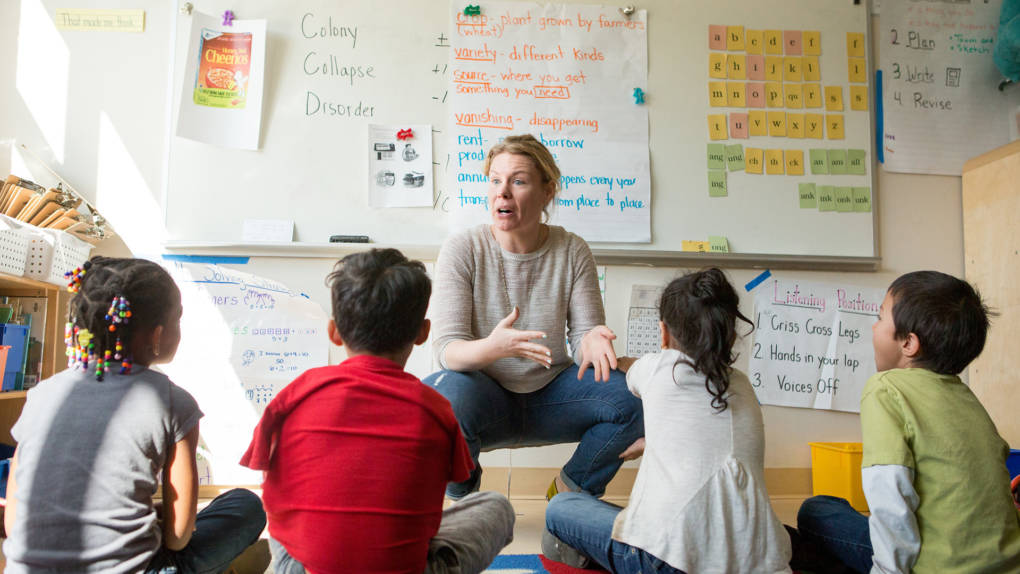
"caption": "A first-grade teacher leads a lesson about bee colonies with her students.",
"description": "A first-grade teacher leads a lesson about bee colonies with her students.",
"title": "teach-reading-content",
"credit": "Courtesy of Allison Shelley/\u003ca href=\"https://www.flickr.com/photos/all4ed/36456776906/in/album-72157687475899455/\">The Verbatim Agency for American Education: Images of Teachers and Students in Action\u003c/a>",
"status": "inherit",
"isLoading": false,
"fetchFailed": false
},
"mindshift_54530": {
"type": "attachments",
"id": "mindshift_54530",
"meta": {
"index": "attachments_1716263798",
"site": "mindshift",
"id": "54530",
"found": true
},
"parent": 54514,
"imgSizes": {
"twentyfourteen-full-width": {
"file": "https://ww2.kqed.org/app/uploads/sites/23/2019/09/Wacom-Olivia-Nick-sm-1038x576.jpg",
"width": 1038,
"mimeType": "image/jpeg",
"height": 576
},
"thumbnail": {
"file": "https://ww2.kqed.org/app/uploads/sites/23/2019/09/Wacom-Olivia-Nick-sm-160x107.jpg",
"width": 160,
"mimeType": "image/jpeg",
"height": 107
},
"post-thumbnail": {
"file": "https://ww2.kqed.org/app/uploads/sites/23/2019/09/Wacom-Olivia-Nick-sm-672x372.jpg",
"width": 672,
"mimeType": "image/jpeg",
"height": 372
},
"kqedFullSize": {
"file": "https://ww2.kqed.org/app/uploads/sites/23/2019/09/Wacom-Olivia-Nick-sm.jpg",
"width": 1920,
"height": 1280
},
"large": {
"file": "https://ww2.kqed.org/app/uploads/sites/23/2019/09/Wacom-Olivia-Nick-sm-1020x680.jpg",
"width": 1020,
"mimeType": "image/jpeg",
"height": 680
},
"complete_open_graph": {
"file": "https://ww2.kqed.org/app/uploads/sites/23/2019/09/Wacom-Olivia-Nick-sm-1200x800.jpg",
"width": 1200,
"mimeType": "image/jpeg",
"height": 800
},
"full-width": {
"file": "https://ww2.kqed.org/app/uploads/sites/23/2019/09/Wacom-Olivia-Nick-sm-1920x1280.jpg",
"width": 1920,
"mimeType": "image/jpeg",
"height": 1280
},
"medium": {
"file": "https://ww2.kqed.org/app/uploads/sites/23/2019/09/Wacom-Olivia-Nick-sm-800x533.jpg",
"width": 800,
"mimeType": "image/jpeg",
"height": 533
},
"medium_large": {
"file": "https://ww2.kqed.org/app/uploads/sites/23/2019/09/Wacom-Olivia-Nick-sm-768x512.jpg",
"width": 768,
"mimeType": "image/jpeg",
"height": 512
}
},
"publishDate": 1569611973,
"modified": 1569612032,
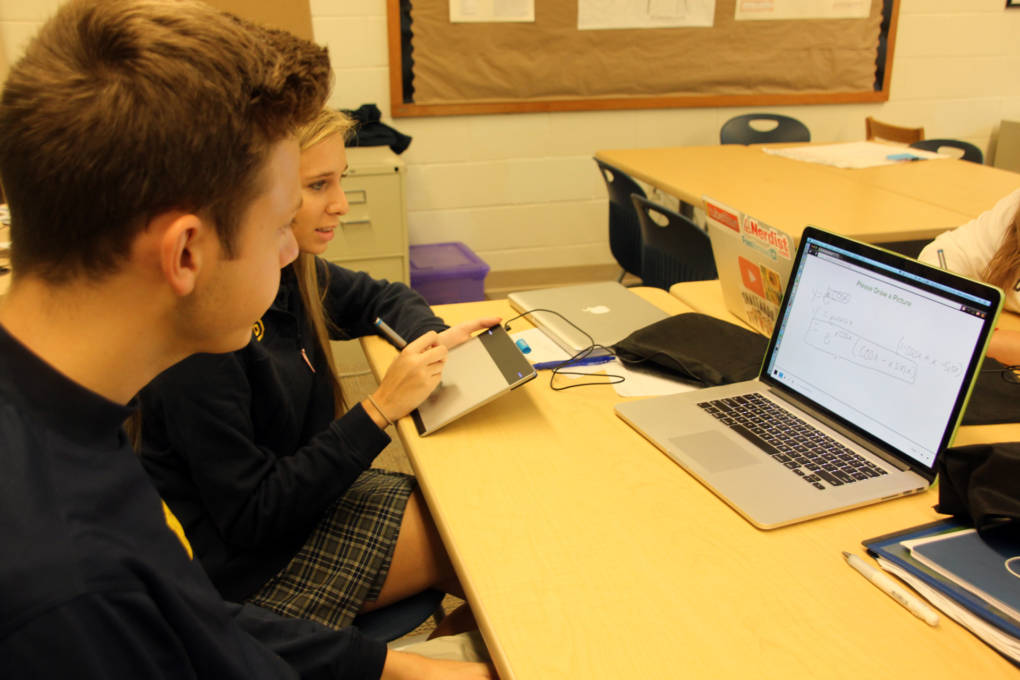
"caption": "Roshan's students work together to solve a math problem using Wacom tablets and Pear Deck.",
"description": "Roshan's students work together to solve a math problem using Wacom tablets and Pear Deck.",
"title": "Wacom---Olivia,-Nick-sm",
"credit": "Courtesy Stacey Roshan",
"status": "inherit",
"isLoading": false,
"fetchFailed": false
},
"mindshift_54596": {
"type": "attachments",
"id": "mindshift_54596",
"meta": {
"index": "attachments_1716263798",
"site": "mindshift",
"id": "54596",
"found": true
},
"parent": 54536,
"imgSizes": {
"twentyfourteen-full-width": {
"file": "https://ww2.kqed.org/app/uploads/sites/23/2019/10/iStock-846511402-1038x576.jpg",
"width": 1038,
"mimeType": "image/jpeg",
"height": 576
},
"thumbnail": {
"file": "https://ww2.kqed.org/app/uploads/sites/23/2019/10/iStock-846511402-160x107.jpg",
"width": 160,
"mimeType": "image/jpeg",
"height": 107
},
"post-thumbnail": {
"file": "https://ww2.kqed.org/app/uploads/sites/23/2019/10/iStock-846511402-672x372.jpg",
"width": 672,
"mimeType": "image/jpeg",
"height": 372
},
"kqedFullSize": {
"file": "https://ww2.kqed.org/app/uploads/sites/23/2019/10/iStock-846511402-e1570220832324.jpg",
"width": 1920,
"height": 1280
},
"large": {
"file": "https://ww2.kqed.org/app/uploads/sites/23/2019/10/iStock-846511402-1020x680.jpg",
"width": 1020,
"mimeType": "image/jpeg",
"height": 680
},
"complete_open_graph": {
"file": "https://ww2.kqed.org/app/uploads/sites/23/2019/10/iStock-846511402-1200x800.jpg",
"width": 1200,
"mimeType": "image/jpeg",
"height": 800
},
"full-width": {
"file": "https://ww2.kqed.org/app/uploads/sites/23/2019/10/iStock-846511402-1920x1280.jpg",
"width": 1920,
"mimeType": "image/jpeg",
"height": 1280
},
"medium": {
"file": "https://ww2.kqed.org/app/uploads/sites/23/2019/10/iStock-846511402-800x533.jpg",
"width": 800,
"mimeType": "image/jpeg",
"height": 533
},
"medium_large": {
"file": "https://ww2.kqed.org/app/uploads/sites/23/2019/10/iStock-846511402-768x512.jpg",
"width": 768,
"mimeType": "image/jpeg",
"height": 512
}
},
"publishDate": 1570220805,
"modified": 1570220827,
"caption": null,
"description": null,
"title": "Young girl doing homework",
"credit": "ASIFE/iStock",
"status": "inherit",
"isLoading": false,
"fetchFailed": false
},
"mindshift_54495": {
"type": "attachments",
"id": "mindshift_54495",
"meta": {
"index": "attachments_1716263798",
"site": "mindshift",
"id": "54495",
"found": true
},
"parent": 54486,
"imgSizes": {
"twentyfourteen-full-width": {
"file": "https://ww2.kqed.org/app/uploads/sites/23/2019/09/iStock-641755684-1038x576.jpg",
"width": 1038,
"mimeType": "image/jpeg",
"height": 576
},
"thumbnail": {
"file": "https://ww2.kqed.org/app/uploads/sites/23/2019/09/iStock-641755684-160x107.jpg",
"width": 160,
"mimeType": "image/jpeg",
"height": 107
},
"post-thumbnail": {
"file": "https://ww2.kqed.org/app/uploads/sites/23/2019/09/iStock-641755684-672x372.jpg",
"width": 672,
"mimeType": "image/jpeg",
"height": 372
},
"kqedFullSize": {
"file": "https://ww2.kqed.org/app/uploads/sites/23/2019/09/iStock-641755684-e1569305198853.jpg",
"width": 1920,
"height": 1280
},
"large": {
"file": "https://ww2.kqed.org/app/uploads/sites/23/2019/09/iStock-641755684-1020x680.jpg",
"width": 1020,
"mimeType": "image/jpeg",
"height": 680
},
"complete_open_graph": {
"file": "https://ww2.kqed.org/app/uploads/sites/23/2019/09/iStock-641755684-1200x800.jpg",
"width": 1200,
"mimeType": "image/jpeg",
"height": 800
},
"full-width": {
"file": "https://ww2.kqed.org/app/uploads/sites/23/2019/09/iStock-641755684-1920x1280.jpg",
"width": 1920,
"mimeType": "image/jpeg",
"height": 1280
},
"medium": {
"file": "https://ww2.kqed.org/app/uploads/sites/23/2019/09/iStock-641755684-800x533.jpg",
"width": 800,
"mimeType": "image/jpeg",
"height": 533
},
"medium_large": {
"file": "https://ww2.kqed.org/app/uploads/sites/23/2019/09/iStock-641755684-768x512.jpg",
"width": 768,
"mimeType": "image/jpeg",
"height": 512
}
},
"publishDate": 1569305171,
"modified": 1569305192,
"caption": null,
"description": null,
"title": "Working Together In Lesson",
"credit": "DGLimages/iStock",
"status": "inherit",
"isLoading": false,
"fetchFailed": false
},
"mindshift_54478": {
"type": "attachments",
"id": "mindshift_54478",
"meta": {
"index": "attachments_1716263798",
"site": "mindshift",
"id": "54478",
"found": true
},
"parent": 54477,
"imgSizes": {
"twentyfourteen-full-width": {
"file": "https://ww2.kqed.org/app/uploads/sites/23/2019/09/917esn-rxul-710c0e9149ae97419610f73dcaa782ff73793df6-1038x576.jpg",
"width": 1038,
"mimeType": "image/jpeg",
"height": 576
},
"thumbnail": {
"file": "https://ww2.kqed.org/app/uploads/sites/23/2019/09/917esn-rxul-710c0e9149ae97419610f73dcaa782ff73793df6-160x120.jpg",
"width": 160,
"mimeType": "image/jpeg",
"height": 120
},
"post-thumbnail": {
"file": "https://ww2.kqed.org/app/uploads/sites/23/2019/09/917esn-rxul-710c0e9149ae97419610f73dcaa782ff73793df6-672x372.jpg",
"width": 672,
"mimeType": "image/jpeg",
"height": 372
},
"kqedFullSize": {
"file": "https://ww2.kqed.org/app/uploads/sites/23/2019/09/917esn-rxul-710c0e9149ae97419610f73dcaa782ff73793df6.jpg",
"width": 1342,
"height": 1007
},
"large": {
"file": "https://ww2.kqed.org/app/uploads/sites/23/2019/09/917esn-rxul-710c0e9149ae97419610f73dcaa782ff73793df6-1020x765.jpg",
"width": 1020,
"mimeType": "image/jpeg",
"height": 765
},
"complete_open_graph": {
"file": "https://ww2.kqed.org/app/uploads/sites/23/2019/09/917esn-rxul-710c0e9149ae97419610f73dcaa782ff73793df6-1200x900.jpg",
"width": 1200,
"mimeType": "image/jpeg",
"height": 900
},
"medium": {
"file": "https://ww2.kqed.org/app/uploads/sites/23/2019/09/917esn-rxul-710c0e9149ae97419610f73dcaa782ff73793df6-800x600.jpg",
"width": 800,
"mimeType": "image/jpeg",
"height": 600
},
"medium_large": {
"file": "https://ww2.kqed.org/app/uploads/sites/23/2019/09/917esn-rxul-710c0e9149ae97419610f73dcaa782ff73793df6-768x576.jpg",
"width": 768,
"mimeType": "image/jpeg",
"height": 576
}
},
"publishDate": 1569216107,
"modified": 1569216107,
"caption": null,
"description": "\u003cem>Stargazing\u003c/em>, by Jen Wang",
"title": "Stargazing, by Jen Wang",
"credit": null,
"status": "inherit",
"isLoading": false,
"fetchFailed": false
},
"mindshift_54473": {
"type": "attachments",
"id": "mindshift_54473",
"meta": {
"index": "attachments_1716263798",
"site": "mindshift",
"id": "54473",
"found": true
},
"parent": 54470,
"imgSizes": {
"twentyfourteen-full-width": {
"file": "https://ww2.kqed.org/app/uploads/sites/23/2019/09/8660451515_0cb8aa10c2_k-1038x576.jpg",
"width": 1038,
"mimeType": "image/jpeg",
"height": 576
},
"thumbnail": {
"file": "https://ww2.kqed.org/app/uploads/sites/23/2019/09/8660451515_0cb8aa10c2_k-160x128.jpg",
"width": 160,
"mimeType": "image/jpeg",
"height": 128
},
"post-thumbnail": {
"file": "https://ww2.kqed.org/app/uploads/sites/23/2019/09/8660451515_0cb8aa10c2_k-672x372.jpg",
"width": 672,
"mimeType": "image/jpeg",
"height": 372
},
"kqedFullSize": {
"file": "https://ww2.kqed.org/app/uploads/sites/23/2019/09/8660451515_0cb8aa10c2_k-e1568872124558.jpg",
"width": 1920,
"height": 1531
},
"large": {
"file": "https://ww2.kqed.org/app/uploads/sites/23/2019/09/8660451515_0cb8aa10c2_k-1020x813.jpg",
"width": 1020,
"mimeType": "image/jpeg",
"height": 813
},
"complete_open_graph": {
"file": "https://ww2.kqed.org/app/uploads/sites/23/2019/09/8660451515_0cb8aa10c2_k-1200x957.jpg",
"width": 1200,
"mimeType": "image/jpeg",
"height": 957
},
"full-width": {
"file": "https://ww2.kqed.org/app/uploads/sites/23/2019/09/8660451515_0cb8aa10c2_k-1920x1531.jpg",
"width": 1920,
"mimeType": "image/jpeg",
"height": 1531
},
"medium": {
"file": "https://ww2.kqed.org/app/uploads/sites/23/2019/09/8660451515_0cb8aa10c2_k-800x638.jpg",
"width": 800,
"mimeType": "image/jpeg",
"height": 638
},
"medium_large": {
"file": "https://ww2.kqed.org/app/uploads/sites/23/2019/09/8660451515_0cb8aa10c2_k-768x612.jpg",
"width": 768,
"mimeType": "image/jpeg",
"height": 612
}
},
"publishDate": 1568872098,
"modified": 1568872118,
"caption": null,
"description": null,
"title": "8660451515_0cb8aa10c2_k",
"credit": "\u003ca href=\"https://www.flickr.com/photos/42042512@N00/8660451515/in/photolist-eci5vz-wTPkdn-dWnqmx-q9wAAN-vR68pn-7yks3w-9VqKZG-2a7muWr-5yd9Xj-5QrqyT-9FcXGK-7m5kWA-7ykr99-4D3T6z-7MYpc7-anbpPk-6T6oo7-EyKKf-egNpRj-crjhs9-gfcwyT-6Gkhpr-c9bYxd-9DjQPZ-5oTfTn-Dyy8gX-5tUJm1-q6c7ev-5QCxds-PNmRzw-5AM6cq-fcHXbZ-r6o7Ek-bt52cr-oFE5G7-dhDZod-oYyFws-NT19vL-5wcwbV-24AvH5X-dPJysu-7Gc6P5-4PBQFe-bsE7nv-65KaUq-6bwrCP-4YJgPP-5tqiYe-7ykwXq-5pxtLw\">Flickr/Carlos Ebert\u003c/a>",
"status": "inherit",
"isLoading": false,
"fetchFailed": false
},
"mindshift_54411": {
"type": "attachments",
"id": "mindshift_54411",
"meta": {
"index": "attachments_1716263798",
"site": "mindshift",
"id": "54411",
"found": true
},
"parent": 54378,
"imgSizes": {
"twentyfourteen-full-width": {
"file": "https://ww2.kqed.org/app/uploads/sites/23/2019/09/iStock-695160826-1038x576.jpg",
"width": 1038,
"mimeType": "image/jpeg",
"height": 576
},
"thumbnail": {
"file": "https://ww2.kqed.org/app/uploads/sites/23/2019/09/iStock-695160826-160x107.jpg",
"width": 160,
"mimeType": "image/jpeg",
"height": 107
},
"post-thumbnail": {
"file": "https://ww2.kqed.org/app/uploads/sites/23/2019/09/iStock-695160826-672x372.jpg",
"width": 672,
"mimeType": "image/jpeg",
"height": 372
},
"kqedFullSize": {
"file": "https://ww2.kqed.org/app/uploads/sites/23/2019/09/iStock-695160826-e1568618577737.jpg",
"width": 1920,
"height": 1280
},
"large": {
"file": "https://ww2.kqed.org/app/uploads/sites/23/2019/09/iStock-695160826-1020x680.jpg",
"width": 1020,
"mimeType": "image/jpeg",
"height": 680
},
"complete_open_graph": {
"file": "https://ww2.kqed.org/app/uploads/sites/23/2019/09/iStock-695160826-1200x800.jpg",
"width": 1200,
"mimeType": "image/jpeg",
"height": 800
},
"full-width": {
"file": "https://ww2.kqed.org/app/uploads/sites/23/2019/09/iStock-695160826-1920x1280.jpg",
"width": 1920,
"mimeType": "image/jpeg",
"height": 1280
},
"medium": {
"file": "https://ww2.kqed.org/app/uploads/sites/23/2019/09/iStock-695160826-800x533.jpg",
"width": 800,
"mimeType": "image/jpeg",
"height": 533
},
"medium_large": {
"file": "https://ww2.kqed.org/app/uploads/sites/23/2019/09/iStock-695160826-768x512.jpg",
"width": 768,
"mimeType": "image/jpeg",
"height": 512
}
},
"publishDate": 1568618545,
"modified": 1568618565,
"caption": null,
"description": null,
"title": "iStock-695160826",
"credit": "Bet_Noire/iStock",
"status": "inherit",
"isLoading": false,
"fetchFailed": false
},
"mindshift_53948": {
"type": "attachments",
"id": "mindshift_53948",
"meta": {
"index": "attachments_1716263798",
"site": "mindshift",
"id": "53948",
"found": true
},
"parent": 53937,
"imgSizes": {
"twentyfourteen-full-width": {
"file": "https://ww2.kqed.org/app/uploads/sites/23/2019/07/motivational-strategies-1038x576.jpg",
"width": 1038,
"mimeType": "image/jpeg",
"height": 576
},
"thumbnail": {
"file": "https://ww2.kqed.org/app/uploads/sites/23/2019/07/motivational-strategies-160x106.jpg",
"width": 160,
"mimeType": "image/jpeg",
"height": 106
},
"post-thumbnail": {
"file": "https://ww2.kqed.org/app/uploads/sites/23/2019/07/motivational-strategies-672x372.jpg",
"width": 672,
"mimeType": "image/jpeg",
"height": 372
},
"kqedFullSize": {
"file": "https://ww2.kqed.org/app/uploads/sites/23/2019/07/motivational-strategies-e1567659611356.jpg",
"width": 1920,
"height": 1275
},
"large": {
"file": "https://ww2.kqed.org/app/uploads/sites/23/2019/07/motivational-strategies-1020x677.jpg",
"width": 1020,
"mimeType": "image/jpeg",
"height": 677
},
"complete_open_graph": {
"file": "https://ww2.kqed.org/app/uploads/sites/23/2019/07/motivational-strategies-1200x797.jpg",
"width": 1200,
"mimeType": "image/jpeg",
"height": 797
},
"full-width": {
"file": "https://ww2.kqed.org/app/uploads/sites/23/2019/07/motivational-strategies-1920x1275.jpg",
"width": 1920,
"mimeType": "image/jpeg",
"height": 1275
},
"medium": {
"file": "https://ww2.kqed.org/app/uploads/sites/23/2019/07/motivational-strategies-800x531.jpg",
"width": 800,
"mimeType": "image/jpeg",
"height": 531
},
"medium_large": {
"file": "https://ww2.kqed.org/app/uploads/sites/23/2019/07/motivational-strategies-768x510.jpg",
"width": 768,
"mimeType": "image/jpeg",
"height": 510
}
},
"publishDate": 1562787397,
"modified": 1562787471,
"caption": "Keeping a journal with goals and reflections can help students see their progress over the year. That in turn helps them stay motivated.",
"description": null,
"title": "School girl writing in class",
"credit": "iStock/Ridofranz",
"status": "inherit",
"isLoading": false,
"fetchFailed": false
},
"mindshift_54241": {
"type": "attachments",
"id": "mindshift_54241",
"meta": {
"index": "attachments_1716263798",
"site": "mindshift",
"id": "54241",
"found": true
},
"parent": 54238,
"imgSizes": {
"twentyfourteen-full-width": {
"file": "https://ww2.kqed.org/app/uploads/sites/23/2019/08/parents-teachers-share-strategies-to-deal-anxiety-1038x576.jpg",
"width": 1038,
"mimeType": "image/jpeg",
"height": 576
},
"thumbnail": {
"file": "https://ww2.kqed.org/app/uploads/sites/23/2019/08/parents-teachers-share-strategies-to-deal-anxiety-160x90.jpg",
"width": 160,
"mimeType": "image/jpeg",
"height": 90
},
"post-thumbnail": {
"file": "https://ww2.kqed.org/app/uploads/sites/23/2019/08/parents-teachers-share-strategies-to-deal-anxiety-672x372.jpg",
"width": 672,
"mimeType": "image/jpeg",
"height": 372
},
"kqedFullSize": {
"file": "https://ww2.kqed.org/app/uploads/sites/23/2019/08/parents-teachers-share-strategies-to-deal-anxiety.jpg",
"width": 1920,
"height": 1080
},
"large": {
"file": "https://ww2.kqed.org/app/uploads/sites/23/2019/08/parents-teachers-share-strategies-to-deal-anxiety-1020x574.jpg",
"width": 1020,
"mimeType": "image/jpeg",
"height": 574
},
"complete_open_graph": {
"file": "https://ww2.kqed.org/app/uploads/sites/23/2019/08/parents-teachers-share-strategies-to-deal-anxiety-1200x675.jpg",
"width": 1200,
"mimeType": "image/jpeg",
"height": 675
},
"full-width": {
"file": "https://ww2.kqed.org/app/uploads/sites/23/2019/08/parents-teachers-share-strategies-to-deal-anxiety-1920x1080.jpg",
"width": 1920,
"mimeType": "image/jpeg",
"height": 1080
},
"medium": {
"file": "https://ww2.kqed.org/app/uploads/sites/23/2019/08/parents-teachers-share-strategies-to-deal-anxiety-800x450.jpg",
"width": 800,
"mimeType": "image/jpeg",
"height": 450
},
"medium_large": {
"file": "https://ww2.kqed.org/app/uploads/sites/23/2019/08/parents-teachers-share-strategies-to-deal-anxiety-768x432.jpg",
"width": 768,
"mimeType": "image/jpeg",
"height": 432
}
},
"publishDate": 1566605857,
"modified": 1566863179,
"caption": "Parents and teachers share their tried-and-true strategies for dealing with student anxiety.",
"description": "Parents and teachers share their tried-and-true strategies for dealing with student anxiety.",
"title": "parents-teachers-share-strategies-to-deal-anxiety",
"credit": "solarseven/iStock",
"status": "inherit",
"isLoading": false,
"fetchFailed": false
},
"mindshift_54226": {
"type": "attachments",
"id": "mindshift_54226",
"meta": {
"index": "attachments_1716263798",
"site": "mindshift",
"id": "54226",
"found": true
},
"parent": 53524,
"imgSizes": {
"twentyfourteen-full-width": {
"file": "https://ww2.kqed.org/app/uploads/sites/23/2019/08/teaching-strategy-revising-math-tests-1038x576.jpg",
"width": 1038,
"mimeType": "image/jpeg",
"height": 576
},
"thumbnail": {
"file": "https://ww2.kqed.org/app/uploads/sites/23/2019/08/teaching-strategy-revising-math-tests-160x107.jpg",
"width": 160,
"mimeType": "image/jpeg",
"height": 107
},
"post-thumbnail": {
"file": "https://ww2.kqed.org/app/uploads/sites/23/2019/08/teaching-strategy-revising-math-tests-672x372.jpg",
"width": 672,
"mimeType": "image/jpeg",
"height": 372
},
"kqedFullSize": {
"file": "https://ww2.kqed.org/app/uploads/sites/23/2019/08/teaching-strategy-revising-math-tests.jpg",
"width": 2048,
"height": 1365
},
"large": {
"file": "https://ww2.kqed.org/app/uploads/sites/23/2019/08/teaching-strategy-revising-math-tests-1020x680.jpg",
"width": 1020,
"mimeType": "image/jpeg",
"height": 680
},
"complete_open_graph": {
"file": "https://ww2.kqed.org/app/uploads/sites/23/2019/08/teaching-strategy-revising-math-tests-1200x800.jpg",
"width": 1200,
"mimeType": "image/jpeg",
"height": 800
},
"full-width": {
"file": "https://ww2.kqed.org/app/uploads/sites/23/2019/08/teaching-strategy-revising-math-tests-1920x1280.jpg",
"width": 1920,
"mimeType": "image/jpeg",
"height": 1280
},
"medium": {
"file": "https://ww2.kqed.org/app/uploads/sites/23/2019/08/teaching-strategy-revising-math-tests-800x533.jpg",
"width": 800,
"mimeType": "image/jpeg",
"height": 533
},
"medium_large": {
"file": "https://ww2.kqed.org/app/uploads/sites/23/2019/08/teaching-strategy-revising-math-tests-768x512.jpg",
"width": 768,
"mimeType": "image/jpeg",
"height": 512
}
},
"publishDate": 1566432348,
"modified": 1566432547,
"caption": "Students work together on a challenging math problem.",
"description": "Students work together on a challenging math problem.",
"title": "High school student helps classmate in math class",
"credit": "Courtesy of \u003ca href=\"https://www.flickr.com/photos/all4ed/36334533262/in/album-72157684949805513/\">Allison Shelley/The Verbatim Agency for American Education: Images of Teachers and Students in Action\u003c/a>",
"status": "inherit",
"isLoading": false,
"fetchFailed": false
},
"mindshift_54046": {
"type": "attachments",
"id": "mindshift_54046",
"meta": {
"index": "attachments_1716263798",
"site": "mindshift",
"id": "54046",
"found": true
},
"parent": 54045,
"imgSizes": {
"twentyfourteen-full-width": {
"file": "https://ww2.kqed.org/app/uploads/sites/23/2019/08/lajohnson-immigrant-generations_custom-60bc9b35d5d935d32ab325e3db37f469bf5fb7f7-1038x576.jpg",
"width": 1038,
"mimeType": "image/jpeg",
"height": 576
},
"thumbnail": {
"file": "https://ww2.kqed.org/app/uploads/sites/23/2019/08/lajohnson-immigrant-generations_custom-60bc9b35d5d935d32ab325e3db37f469bf5fb7f7-160x100.jpg",
"width": 160,
"mimeType": "image/jpeg",
"height": 100
},
"post-thumbnail": {
"file": "https://ww2.kqed.org/app/uploads/sites/23/2019/08/lajohnson-immigrant-generations_custom-60bc9b35d5d935d32ab325e3db37f469bf5fb7f7-672x372.jpg",
"width": 672,
"mimeType": "image/jpeg",
"height": 372
},
"kqedFullSize": {
"file": "https://ww2.kqed.org/app/uploads/sites/23/2019/08/lajohnson-immigrant-generations_custom-60bc9b35d5d935d32ab325e3db37f469bf5fb7f7-e1564985494828.jpg",
"width": 1920,
"height": 1198
},
"large": {
"file": "https://ww2.kqed.org/app/uploads/sites/23/2019/08/lajohnson-immigrant-generations_custom-60bc9b35d5d935d32ab325e3db37f469bf5fb7f7-1020x637.jpg",
"width": 1020,
"mimeType": "image/jpeg",
"height": 637
},
"complete_open_graph": {
"file": "https://ww2.kqed.org/app/uploads/sites/23/2019/08/lajohnson-immigrant-generations_custom-60bc9b35d5d935d32ab325e3db37f469bf5fb7f7-1200x749.jpg",
"width": 1200,
"mimeType": "image/jpeg",
"height": 749
},
"full-width": {
"file": "https://ww2.kqed.org/app/uploads/sites/23/2019/08/lajohnson-immigrant-generations_custom-60bc9b35d5d935d32ab325e3db37f469bf5fb7f7-1920x1198.jpg",
"width": 1920,
"mimeType": "image/jpeg",
"height": 1198
},
"medium": {
"file": "https://ww2.kqed.org/app/uploads/sites/23/2019/08/lajohnson-immigrant-generations_custom-60bc9b35d5d935d32ab325e3db37f469bf5fb7f7-800x499.jpg",
"width": 800,
"mimeType": "image/jpeg",
"height": 499
},
"medium_large": {
"file": "https://ww2.kqed.org/app/uploads/sites/23/2019/08/lajohnson-immigrant-generations_custom-60bc9b35d5d935d32ab325e3db37f469bf5fb7f7-768x479.jpg",
"width": 768,
"mimeType": "image/jpeg",
"height": 479
}
},
"publishDate": 1564985248,
"modified": 1564985512,
"caption": "Generations of immigrants.",
"description": "Generations of immigrants.",
"title": "Generations of immigrants.",
"credit": "LA Johnson/NPR",
"status": "inherit",
"isLoading": false,
"fetchFailed": false
}
},
"audioPlayerReducer": {
"postId": "stream_live",
"isPaused": true,
"isPlaying": false,
"pfsActive": false,
"pledgeModalIsOpen": true,
"playerDrawerIsOpen": false,
"liveAudioPlayStartedAt": 0,
"liveAudioPlayContext": ""
},
"authorsReducer": {
"byline_mindshift_54477": {
"type": "authors",
"id": "byline_mindshift_54477",
"meta": {
"override": true
},
"slug": "byline_mindshift_54477",
"name": "Etelka Lehoczky",
"isLoading": false
},
"byline_mindshift_54470": {
"type": "authors",
"id": "byline_mindshift_54470",
"meta": {
"override": true
},
"slug": "byline_mindshift_54470",
"name": "\u003ca href=\"https://hechingerreport.org/\">Jill Barshay, Columnist for The Hechinger Report\u003c/a>",
"isLoading": false
},
"byline_mindshift_54045": {
"type": "authors",
"id": "byline_mindshift_54045",
"meta": {
"override": true
},
"slug": "byline_mindshift_54045",
"name": "Jacqueline Nkhonjera",
"isLoading": false
},
"katrinaschwartz": {
"type": "authors",
"id": "234",
"meta": {
"index": "authors_1716337520",
"id": "234",
"found": true
},
"name": "Katrina Schwartz",
"firstName": "Katrina",
"lastName": "Schwartz",
"slug": "katrinaschwartz",
"email": "kschwartz@kqed.org",
"display_author_email": false,
"staff_mastheads": [
"news"
],
"title": "Producer",
"bio": "Katrina Schwartz is a journalist based in San Francisco. She's worked at KPCC public radio in LA and has reported on air and online for KQED since 2010. She covered how teaching and learning is changing for MindShift between 2012 and 2020. She is the co-host of the MindShift podcast and now produces KQED's Bay Curious podcast.",
"avatar": "https://secure.gravatar.com/avatar/edb4ee79070447a018538c9aae6eeecf28786515b8a0c30e43b6b7dce5aa44c8?s=600&d=blank&r=g",
"twitter": "kschwart",
"bluesky": null,
"facebook": null,
"instagram": null,
"linkedin": null,
"sites": [
{
"site": "",
"roles": [
"editor"
]
},
{
"site": "news",
"roles": [
"editor"
]
},
{
"site": "mindshift",
"roles": [
"administrator"
]
},
{
"site": "stateofhealth",
"roles": [
"author"
]
},
{
"site": "science",
"roles": [
"editor"
]
}
],
"headData": {
"title": "Katrina Schwartz | KQED",
"description": "Producer",
"ogImgSrc": "https://secure.gravatar.com/avatar/edb4ee79070447a018538c9aae6eeecf28786515b8a0c30e43b6b7dce5aa44c8?s=600&d=blank&r=g",
"twImgSrc": "https://secure.gravatar.com/avatar/edb4ee79070447a018538c9aae6eeecf28786515b8a0c30e43b6b7dce5aa44c8?s=600&d=blank&r=g"
},
"isLoading": false,
"link": "/author/katrinaschwartz"
},
"kdnewhouse": {
"type": "authors",
"id": "11487",
"meta": {
"index": "authors_1716337520",
"id": "11487",
"found": true
},
"name": "Kara Newhouse",
"firstName": "Kara",
"lastName": "Newhouse",
"slug": "kdnewhouse",
"email": "knewhouse@kqed.org",
"display_author_email": false,
"staff_mastheads": [],
"title": "MindShift Editor",
"bio": null,
"avatar": "https://secure.gravatar.com/avatar/3dceed6fb271527113abfa9a8e9df34e?s=600&d=blank&r=g",
"twitter": null,
"facebook": null,
"instagram": null,
"linkedin": null,
"sites": [
{
"site": "",
"roles": [
"editor"
]
},
{
"site": "mindshift",
"roles": []
}
],
"headData": {
"title": "Kara Newhouse | KQED",
"description": "MindShift Editor",
"ogImgSrc": "https://secure.gravatar.com/avatar/3dceed6fb271527113abfa9a8e9df34e?s=600&d=blank&r=g",
"twImgSrc": "https://secure.gravatar.com/avatar/3dceed6fb271527113abfa9a8e9df34e?s=600&d=blank&r=g"
},
"isLoading": false,
"link": "/author/kdnewhouse"
}
},
"pagesReducer": {
"mindshift_category_teaching-strategies": {
"type": "terms",
"id": "mindshift_193",
"meta": {
"index": "terms_1716263798",
"site": "mindshift",
"id": "193",
"score": 14.406956
},
"featImg": null,
"name": "Teaching Strategies",
"description": "Innovative ideas - projects, processes, curricula, and more - that are transforming how we teach and learn.",
"taxonomy": "category",
"headData": {
"twImgId": null,
"twTitle": null,
"ogTitle": null,
"ogImgId": null,
"twDescription": null,
"description": "Innovative ideas - projects, processes, curricula, and more - that are transforming how we teach and learn.",
"title": "Teaching Strategies Archives | KQED Mindshift",
"ogDescription": null
},
"ttid": 193,
"slug": "teaching-strategies",
"isLoading": false,
"title": "Teaching Strategies",
"pageMeta": {
"site": "mindshift",
"WpPageTemplate": "page-topic-editorial",
"currentPage": 18
},
"blocks": [
{
"blockName": "kqed/company-paragraph",
"content": "Innovative ideas - projects, processes, curricula, and more - that are transforming how we teach and learn."
},
{
"blockName": "kqed/post-list",
"attrs": {
"layout": "cardArticle2",
"query": "posts/mindshift?category=teaching-strategies",
"seeMore": false,
"paginated": true,
"page": 18
}
},
{
"blockName": "kqed/ad"
}
]
}
},
"pfsSessionReducer": {},
"postsReducer": {
"stream_live": {
"type": "live",
"id": "stream_live",
"audioUrl": "https://streams.kqed.org/kqedradio",
"title": "Live Stream",
"excerpt": "Live Stream information currently unavailable.",
"link": "/radio",
"featImg": "",
"label": {
"name": "KQED Live",
"link": "/"
}
},
"stream_kqedNewscast": {
"type": "posts",
"id": "stream_kqedNewscast",
"audioUrl": "https://www.kqed.org/.stream/anon/radio/RDnews/newscast.mp3?_=1",
"title": "KQED Newscast",
"featImg": "",
"label": {
"name": "88.5 FM",
"link": "/"
}
},
"mindshift_54655": {
"type": "posts",
"id": "mindshift_54655",
"meta": {
"index": "posts_1716263798",
"site": "mindshift",
"id": "54655",
"score": null,
"sort": [
1572852429000
]
},
"parent": 0,
"labelTerm": {
"site": "mindshift"
},
"blocks": [],
"publishDate": 1572852429,
"format": "standard",
"disqusTitle": "Why Teachers Are So Excited About the Power Of Sketchnoting",
"title": "Why Teachers Are So Excited About the Power Of Sketchnoting",
"headTitle": "MindShift | KQED News",
"content": "\u003cp>Once a month, \u003ca href=\"https://twitter.com/rlfreedm?ref_src=twsrc%5Egoogle%7Ctwcamp%5Eserp%7Ctwgr%5Eauthor\" target=\"_blank\" rel=\"noopener noreferrer\">Rayna Freedman\u003c/a>’s fifth-graders present their genius hour projects. They get to explore anything that interests them and present what they’ve learned to the class in whatever way they want. Freedman likes \u003ca href=\"https://www.kqed.org/mindshift/51827/10-ways-to-start-shifting-your-classroom-practices-little-by-little\" target=\"_blank\" rel=\"noopener noreferrer\">genius hour projects\u003c/a> because students often get more excited about researching and sharing their knowledge about a topic that interests them. But she was never sure what the other kids were getting out of listening to the presentations.\u003c/p>\n\u003cp>One day she noticed a student in the back of the class drawing during the presentations. She went over, ready to reprimand him for not paying attention, but instead asked him what he was doing. He explained he doodles what his classmate is talking about to help him remember later. A lightbulb went on for Freedman.\u003c/p>\n\u003cp>“I thought that if the kids had a way to show me what they were learning, I would know what other kids were getting out of it,” Freedman said during a presentation on how she uses sketchnoting in her classroom at the \u003ca href=\"https://novemberlearning.com/education-conference/\" target=\"_blank\" rel=\"noopener noreferrer\">Building Learning Communities conference\u003c/a>.\u003c/p>\n\u003cp>This first step into doodling for learning has opened up an \u003ca href=\"http://msfreedmanagent24.blogspot.com/2018/10/a-sketchnoting-odyssey.html\" target=\"_blank\" rel=\"noopener noreferrer\">extensive new classroom practice\u003c/a> for Freedman. She’s been encouraging students to take visual notes for only a little over a year, but she’s seen it help some students tremendously. Now she dedicates about five minutes a day for a month to sketchnote practice. She gives students lots of choices in how they want to do it -- on a whiteboard, on a digital tablet, or with paper and pencils. The point is to give them dedicated time to familiarize themselves with how they might express themselves visually.\u003c/p>\n\u003cp>“I did have students complain about it,” Freedman said. But she told them that if after a month of building up their visual vocabulary and giving it a shot, they wanted to take notes in other ways, that was fine with her. In the end, many of her students chose to sketchnote.\u003c/p>\n\u003cp>[ad fullwidth]\u003c/p>\n\u003cp>Freedman has come to see sketchnoting as a bridge between early elementary, when students necessarily think visually because they are still learning to read, and middle school, where suddenly all visual thinking seems to stop.\u003c/p>\n\u003cp>\u003ca href=\"https://carriebaughcum.com/\">\u003cimg class=\"aligncenter size-full wp-image-54658\" src=\"https://ww2.kqed.org/mindshift/wp-content/uploads/sites/23/2019/10/what-sketchnoting.png\" alt=\"\" width=\"1700\" height=\"1200\" srcset=\"https://ww2.kqed.org/app/uploads/sites/23/2019/10/what-sketchnoting.png 1700w, https://ww2.kqed.org/app/uploads/sites/23/2019/10/what-sketchnoting-160x113.png 160w, https://ww2.kqed.org/app/uploads/sites/23/2019/10/what-sketchnoting-800x565.png 800w, https://ww2.kqed.org/app/uploads/sites/23/2019/10/what-sketchnoting-768x542.png 768w, https://ww2.kqed.org/app/uploads/sites/23/2019/10/what-sketchnoting-1020x720.png 1020w, https://ww2.kqed.org/app/uploads/sites/23/2019/10/what-sketchnoting-1200x847.png 1200w\" sizes=\"(max-width: 1700px) 100vw, 1700px\">\u003c/a>\u003c/p>\n\u003cp>\"One of my girls at the end of the year said that, 'I learned that sketchnoting helps me remember things more,' \" Freedman said.\u003c/p>\n\u003cp>Freedman uses sketchnoting resources on the website of \u003ca href=\"https://sylviaduckworth.com/\" target=\"_blank\" rel=\"noopener noreferrer\">Sylvia Duckworth\u003c/a>, a former teacher and author who has become a sketchnoting celebrity. Duckworth breaks down the elements of a sketchnote like icons, containers and font to help the artist think about organizing the sketch. Freedman has found those tools help her students organize their thinking as well.\u003c/p>\n\u003cp>“My students have their own podcast and they sketchnote their segments on notecards,” she explained. Storyboarding in this segmented way allows them to move things around, finding a structure and coherence that doesn’t come as naturally when writing is the first step in the process. “They wouldn’t have been able to do that if it were on paper. They just don’t see it that way.”\u003c/p>\n\u003cp>She’s also found that allowing students to sketchnote an outline or first draft of a writing assignment can dramatically improve the quality of the thinking and writing she receives. Freedman says her students always want the first draft to be the final draft, and they often write the bare minimum. But when they sketch first, not only do they organize their thoughts better, but they also tend to add more detail and evidence from what they’ve read. They have a template to follow, one that didn’t feel as intimidating to make.\u003c/p>\n\u003cp>\u003c!-- iframe plugin v.4.3 wordpress.org/plugins/iframe/ -->\u003cbr>\n\u003ciframe width=\"640\" height=\"360\" src=\"https://www.youtube.com/embed/gY9KdRfNN9w\" frameborder=\"0\" allow=\"accelerometer; autoplay; encrypted-media; gyroscope; picture-in-picture\" scrolling=\"yes\" class=\"iframe-class\">\u003c/iframe>\u003c/p>\n\u003cp>Since the genius project experiment, Freedman has offered sketchnoting as an option to her students in many other ways. She’s found that student sketches are a great jumping-off point to ask them more about their thinking -- they look at what they’ve drawn and can tell her far more than they used to. And, she can easily spot when there are misconceptions.\u003c/p>\n\u003cp>For example, she quickly realized her students didn’t understand what theme was because, when she asked them to sketchnote the story’s theme, they would draw characters and setting. That was an immediate sign to Freedman she needed to reteach the idea of theme, something she might not have known from the cryptic sentences her students used to write in response to the same kinds of questions.\u003c/p>\n\u003cp>“It allows me to ask better questions because I’m not just looking at a simple answer or a paragraph,” Freedman said. “I’m trying to interpret what’s in front of me, too.”\u003c/p>\n\u003cp>Freedman has also found sketchnoting to be surprisingly helpful dealing with the inevitable conflicts that crop up in the middle grades.\u003c/p>\n\u003cblockquote class=\"twitter-tweet\">\n\u003cp dir=\"ltr\" lang=\"en\">Ss learning about what sketchnoting is \u003ca href=\"https://twitter.com/HeckAwesome?ref_src=twsrc%5Etfw\">@HeckAwesome\u003c/a> \u003ca href=\"https://twitter.com/hashtag/sketchnote?src=hash&ref_src=twsrc%5Etfw\">#sketchnote\u003c/a> \u003ca href=\"https://twitter.com/manuelherrera33?ref_src=twsrc%5Etfw\">@manuelherrera33\u003c/a> \u003ca href=\"https://twitter.com/ZajacSLP?ref_src=twsrc%5Etfw\">@ZajacSLP\u003c/a> \u003ca href=\"https://twitter.com/hashtag/jjpride?src=hash&ref_src=twsrc%5Etfw\">#jjpride\u003c/a> \u003ca href=\"https://t.co/hIwdRg2vgN\">pic.twitter.com/hIwdRg2vgN\u003c/a>\u003c/p>\n\u003cp>— Rayna Freedman (@rlfreedm) \u003ca href=\"https://twitter.com/rlfreedm/status/1046782566945165312?ref_src=twsrc%5Etfw\">October 1, 2018\u003c/a>\u003c/p>\u003c/blockquote>\n\u003cp>“I had these two girls that were up each other's throats,” Freedman said. She asked them to stay in from recess one day, but rather than lecturing them, she asked each girl to sketchnote how she was feeling. Then they each looked at the other person’s drawing and drew what it made them think. The drawings revealed the misunderstanding at the bottom of the conflict, and gave each girl enough emotional distance to truthfully express how they were feeling.\u003c/p>\n\u003cp>\u003ca href=\"https://twitter.com/zajacslp?lang=en\" target=\"_blank\" rel=\"noopener noreferrer\">Kim Zajac\u003c/a> is the speech and language pathologist at Freedman’s school. She has also found sketchnoting to be a powerful tool for her students. One boy was regularly in conflict with other classmates. Zajac encouraged him to sketch out what happened in those interactions and to imagine and sketch alternative ways to handle it next time.\u003c/p>\n\u003cp>“Make it less of a criticism process and more of a social expectation process,” Zajac said. This student wouldn’t have been able to talk about how these interactions made him feel without the sketches. They gave him a concrete reference for his feelings and reactions to other kids.\u003c/p>\n\u003cp>In another instance, Zojac had a student who struggled to keep his speech rate up when he presented. To support him, she first had him explain his ideas to her while she sketched them. Later, when he presented in front of the class, he had the sketch as reference, which helped him stay on track.\u003c/p>\n\u003cp>“If they can just dump it out, put it in some symbolic form, then it allows them to recall it back, think deeper, and present it in a different form,” Zojac said. And for the kids she supports, who have speech and language issues, sketchnoting offers important insights into their thinking that is otherwise difficult to access.\u003c/p>\n\u003cp>“It isn’t about things being pretty,” Zojac said. “It’s not about creating a piece of art. It’s about creating a piece of thinking.”\u003c/p>\n\u003cp>\u003cstrong>\u003cbr>\nSketchnoting With Special Needs Students\u003c/strong>\u003c/p>\n\u003cp>Carrie Baughcum teaches students with special learning needs at South Middle in Arlington Heights, Illinois. Her students have a range of disabilities from motor challenges, to language challenges, to emotional and behavioral issues. She usually has students for English, math, social studies and a resource class, but they are integrated into other subjects throughout the day. And, as they become more independent learners throughout their time in middle school, they often transition out to the general classroom more often.\u003c/p>\n\u003cp>Before Baughcum discovered sketchnoting, she used a fairly traditional approach with her students. She was focused on building their comprehension skills and did a lot of skill practice with them. She always saw gains and made solid progress on her students’ Individualized Education Programs (IEPs), but she hadn’t done a lot of thinking about how to get them excited about what they were learning.\u003c/p>\n\u003cp>Baughcum had begun drawing at home with her daughters as a way of spending time with them. It was an uncomfortable experience for her. She didn’t feel like a good artist, but noticed herself improving as she kept at it. And, she loved the insight she got into her own children’s minds through their drawings.\u003c/p>\n\u003cp>“I was certain that the students in my special education classroom, two to three years below grade level, that they couldn’t do it,” Baughcum said at the Building Learning Communities conference. But she decided to test the theory one year with a group of students that happened to be all boys.\u003c/p>\n\u003cp>“It was one of the most challenging groups I’ve had in 20 years of teaching,” Baughcum said.\u003c/p>\n\u003cp>They were reading an adapted version of Edgar Allan Poe's story, \"The Fall of the House of Usher.\" Baughcum asked her students, “What movie is playing in your head when we read this paragraph?” No one said anything. So, she started narrating out loud what she imagined as she read.\u003c/p>\n\u003cfigure id=\"attachment_54660\" class=\"wp-caption aligncenter\" style=\"max-width: 1700px\">\u003cimg class=\"wp-image-54660 size-full\" src=\"https://ww2.kqed.org/mindshift/wp-content/uploads/sites/23/2019/10/baughcum-student-margins.png\" alt=\"An example of Carrie Baughcum's students sketchnoting in the margins of a text.\" width=\"1700\" height=\"1200\" srcset=\"https://ww2.kqed.org/app/uploads/sites/23/2019/10/baughcum-student-margins.png 1700w, https://ww2.kqed.org/app/uploads/sites/23/2019/10/baughcum-student-margins-160x113.png 160w, https://ww2.kqed.org/app/uploads/sites/23/2019/10/baughcum-student-margins-800x565.png 800w, https://ww2.kqed.org/app/uploads/sites/23/2019/10/baughcum-student-margins-768x542.png 768w, https://ww2.kqed.org/app/uploads/sites/23/2019/10/baughcum-student-margins-1020x720.png 1020w, https://ww2.kqed.org/app/uploads/sites/23/2019/10/baughcum-student-margins-1200x847.png 1200w\" sizes=\"(max-width: 1700px) 100vw, 1700px\">\u003cfigcaption class=\"wp-caption-text\">An example of Carrie Baughcum's students sketchnoting in the margins of a text. \u003ccite>(Courtesy Carrie Baughcum)\u003c/cite>\u003c/figcaption>\u003c/figure>\n\u003cp>She modeled drawing those thoughts into the margin of the book. Her students dutifully copied down what she had drawn. That went on for a while. Baughcum would walk around the room and ask her students questions about what they were drawing, even though the drawings were copies of what she had described. One day, a student decided to draw something different. Baughcum calls it the “going rogue moment.” It transformed her classroom; overnight every student wanted to show that they imagined something unique.\u003c/p>\n\u003cp>“Since that moment when he went rogue, all the other students embraced the idea that they had these ideas in their head and we can draw them,” Baughcum said.\u003c/p>\n\u003cp>Her students didn’t have a lot of experience visualizing, but once she started asking them to do so, and they got comfortable with the idea, Baughcum has seen the practice deepen their comprehension. But, she cautions, it doesn’t always look how she expects. She's even written a guide to sketchnoting in the classroom called \u003cem>\u003ca href=\"https://carriebaughcum.com/book/\" target=\"_blank\" rel=\"noopener noreferrer\">My Pencil Made Me Do It\u003c/a>\u003c/em>.\u003c/p>\n\u003cp>“Their drawing could be so off base, but if I can go over and ask them about it, and they can connect it, then that’s the right image for them,” Baughcum said. She’s adamant that the drawings themselves are not the point. It’s the thinking behind the drawing that interests her. To keep her students focused on the process and not the product she’s careful to use phrases like “visual thinking” and “doodling to learn.”\u003c/p>\n\u003cp>Baughcum doesn’t care what the drawings look like, as long as her students can talk about the ideas they represent. She never gives feedback on the drawings themselves, only on the thinking. She often spots misconceptions in the drawings her students have made -- valuable information for her -- but also opportunities to discuss editing the drawing to fill in those comprehension holes.\u003c/p>\n\u003cp>“The conversations we have in my classroom have become richer,” Baughcum said, and there’s less lag time retrieving thoughts. She points out to students how much cognitive processing is happening as they sketchnote. They’re listening to information, making sense of it, connecting it to other information they know and to a visual image, and then drawing it. It’s an active process, which is why Baughcum has found it to be so powerful for her students.\u003c/p>\n\u003cp>“That offers this really wonderful desire to want to do it more because they’re feeling good about what they're thinking,” Baughcum said.\u003c/p>\n\u003cp>Sketchnoting has changed what she expects from her students. But she acknowledges that using this practice in class is a marathon, not a race. It takes time to help students learn how to visualize, to see a picture in their heads. And, she’s worked with them to think carefully about the icons, fonts and containers they’re sketching. She wants them to have a reason for each choice they make in their sketchnote because those choices are directly connected to the material they are learning.\u003c/p>\n\u003cp>“When we’re sketchnoting in class I tell students is it new, is it interesting, does it make you feel something? If so, it’s probably worth taking down.”\u003c/p>\n\u003cp>Baughcum also says it’s important for teachers to sketchnote with their students. Drawing can make people feel vulnerable, so when the teacher acknowledges she’s new to this as well, and makes mistakes, it creates room for students to try new things, too.\u003c/p>\n\u003cp>“Before I started sketchnoting with my students, I wasn’t really a drawer,” Baughcum said. “I have noted that opening up this new permission to draw and learn has opened up opportunities for students to show me parts of themselves they may not have shown before.”\u003c/p>\n\u003cfigure id=\"attachment_54661\" class=\"wp-caption aligncenter\" style=\"max-width: 1700px\">\u003cimg class=\"size-full wp-image-54661\" src=\"https://ww2.kqed.org/mindshift/wp-content/uploads/sites/23/2019/10/baughcum-student-sketchnote.png\" alt=\"A student's sketchnote.\" width=\"1700\" height=\"1200\" srcset=\"https://ww2.kqed.org/app/uploads/sites/23/2019/10/baughcum-student-sketchnote.png 1700w, https://ww2.kqed.org/app/uploads/sites/23/2019/10/baughcum-student-sketchnote-160x113.png 160w, https://ww2.kqed.org/app/uploads/sites/23/2019/10/baughcum-student-sketchnote-800x565.png 800w, https://ww2.kqed.org/app/uploads/sites/23/2019/10/baughcum-student-sketchnote-768x542.png 768w, https://ww2.kqed.org/app/uploads/sites/23/2019/10/baughcum-student-sketchnote-1020x720.png 1020w, https://ww2.kqed.org/app/uploads/sites/23/2019/10/baughcum-student-sketchnote-1200x847.png 1200w\" sizes=\"(max-width: 1700px) 100vw, 1700px\">\u003cfigcaption class=\"wp-caption-text\">A student's sketchnote. \u003ccite>(Courtesy Carrie Baughcum)\u003c/cite>\u003c/figcaption>\u003c/figure>\n\u003cp>And she’s seen huge successes. Like the first-year student who struggled tremendously with reading. Getting through a whole paragraph was almost impossible for him. But by visualizing the story as it was read to him, doodling in the margins, and connecting the ideas on the first read-through, he could then read it on his own. Baughcum was also quick to point out that students can sketch on Post-it notes pasted into books if they aren't allowed to write in the texts themselves.\u003c/p>\n\u003cp>“It surprised me that my students, no matter how impaired their cognitive level might be, or their reading level might be, how well their potential to visualize and connect to doodling is,” Baughcum said. She even has students who use assistive technology to write because their motor skills make handwriting very difficult, but they can sketch. And the social worker on her team has picked up on the sketchnoting success to help make social and emotional learning themes more concrete for students as well. Students have created an icon library of their feelings that they use to express their emotions.\u003c/p>\n\u003cp>Baughcum isn’t suggesting that every teacher drop what they’ve been doing for years to start sketchnoting. But she says if teachers open the door for sketchnoting, even allowing students to sketch as part of another note-taking strategy -- like Cornell notes -- it may be helpful to some students. She thinks of it as a layering strategy. She didn’t stop covering her curriculum to only sketchnote. She gradually exposed her students to different elements of sketchnoting, building up their visualizing capacity and organization skills by practicing it alongside existing social studies or reading activities.\u003c/p>\n\u003cp>She also says teachers have to be patient with themselves and with their students. Often mindsets are the hardest things to overcome. Baughcum has had students who refuse to draw. But she’s found ways around that. One student was adamant that she could not draw, but Baughcum still wanted her to visualize because she saw how much it helped her other students in their comprehension. She let the student print out pictures and glue them to her sketchnote to make visible her thinking. And ultimately, the girl decided to give sketchnoting a shot after all.\u003c/p>\n\u003cp>Baughcum says she’s always been a fearless teacher, ready to try anything that might help her students learn. But sketchnoting has stretched her in ways she didn’t know she needed to be stretched. It’s revealed some of her own mindsets about what she believed students with learning disabilities could and couldn’t do. Her students have shown her those beliefs just weren’t true.\u003c/p>\n\u003cp>[ad floatright]\u003c/p>\n\u003cp>“It was never that they couldn’t do it, it was that I never gave it a try to see if they could,” Baughcum said.\u003c/p>\n\n",
"disqusIdentifier": "54655 https://ww2.kqed.org/mindshift/?p=54655",
"disqusUrl": "https://ww2.kqed.org/mindshift/2019/11/03/why-teachers-are-so-excited-about-the-power-of-sketchnoting/",
"stats": {
"hasVideo": true,
"hasChartOrMap": false,
"hasAudio": false,
"hasPolis": false,
"wordCount": 2698,
"hasGoogleForm": false,
"hasGallery": false,
"hasHearkenModule": false,
"iframeSrcs": [],
"paragraphCount": 49
},
"modified": 1601609280,
"excerpt": "Many teachers are using sketchnoting or \"doodling for learning\" in their classrooms as a way to make thinking visible. Many are finding the practice improves memory, engagement and comprehension.",
"headData": {
"twImgId": "",
"twTitle": "",
"ogTitle": "",
"ogImgId": "",
"twDescription": "",
"description": "Many teachers are using sketchnoting or "doodling for learning" in their classrooms as a way to make thinking visible. Many are finding the practice improves memory, engagement and comprehension.",
"title": "Why Teachers Are So Excited About the Power Of Sketchnoting - MindShift",
"ogDescription": "",
"schema": {
"@context": "https://schema.org",
"@type": "Article",
"headline": "Why Teachers Are So Excited About the Power Of Sketchnoting",
"datePublished": "2019-11-03T23:27:09-08:00",
"dateModified": "2020-10-01T20:28:00-07:00",
"image": "https://cdn.kqed.org/wp-content/uploads/2020/02/KQED-OG-Image@1x.png"
}
},
"guestAuthors": [],
"slug": "why-teachers-are-so-excited-about-the-power-of-sketchnoting",
"status": "publish",
"path": "/mindshift/54655/why-teachers-are-so-excited-about-the-power-of-sketchnoting",
"audioTrackLength": null,
"parsedContent": [
{
"type": "contentString",
"content": "\u003cdiv class=\"post-body\">\u003cp>\u003cp>Once a month, \u003ca href=\"https://twitter.com/rlfreedm?ref_src=twsrc%5Egoogle%7Ctwcamp%5Eserp%7Ctwgr%5Eauthor\" target=\"_blank\" rel=\"noopener noreferrer\">Rayna Freedman\u003c/a>’s fifth-graders present their genius hour projects. They get to explore anything that interests them and present what they’ve learned to the class in whatever way they want. Freedman likes \u003ca href=\"https://www.kqed.org/mindshift/51827/10-ways-to-start-shifting-your-classroom-practices-little-by-little\" target=\"_blank\" rel=\"noopener noreferrer\">genius hour projects\u003c/a> because students often get more excited about researching and sharing their knowledge about a topic that interests them. But she was never sure what the other kids were getting out of listening to the presentations.\u003c/p>\n\u003cp>One day she noticed a student in the back of the class drawing during the presentations. She went over, ready to reprimand him for not paying attention, but instead asked him what he was doing. He explained he doodles what his classmate is talking about to help him remember later. A lightbulb went on for Freedman.\u003c/p>\n\u003cp>“I thought that if the kids had a way to show me what they were learning, I would know what other kids were getting out of it,” Freedman said during a presentation on how she uses sketchnoting in her classroom at the \u003ca href=\"https://novemberlearning.com/education-conference/\" target=\"_blank\" rel=\"noopener noreferrer\">Building Learning Communities conference\u003c/a>.\u003c/p>\n\u003cp>This first step into doodling for learning has opened up an \u003ca href=\"http://msfreedmanagent24.blogspot.com/2018/10/a-sketchnoting-odyssey.html\" target=\"_blank\" rel=\"noopener noreferrer\">extensive new classroom practice\u003c/a> for Freedman. She’s been encouraging students to take visual notes for only a little over a year, but she’s seen it help some students tremendously. Now she dedicates about five minutes a day for a month to sketchnote practice. She gives students lots of choices in how they want to do it -- on a whiteboard, on a digital tablet, or with paper and pencils. The point is to give them dedicated time to familiarize themselves with how they might express themselves visually.\u003c/p>\n\u003cp>“I did have students complain about it,” Freedman said. But she told them that if after a month of building up their visual vocabulary and giving it a shot, they wanted to take notes in other ways, that was fine with her. In the end, many of her students chose to sketchnote.\u003c/p>\n\u003cp>\u003c/p>\u003c/div>",
"attributes": {
"named": {},
"numeric": []
}
},
{
"type": "component",
"content": "",
"name": "ad",
"attributes": {
"named": {
"label": "fullwidth"
},
"numeric": [
"fullwidth"
]
}
},
{
"type": "contentString",
"content": "\u003cdiv class=\"post-body\">\u003cp>\u003c/p>\n\u003cp>Freedman has come to see sketchnoting as a bridge between early elementary, when students necessarily think visually because they are still learning to read, and middle school, where suddenly all visual thinking seems to stop.\u003c/p>\n\u003cp>\u003ca href=\"https://carriebaughcum.com/\">\u003cimg class=\"aligncenter size-full wp-image-54658\" src=\"https://ww2.kqed.org/mindshift/wp-content/uploads/sites/23/2019/10/what-sketchnoting.png\" alt=\"\" width=\"1700\" height=\"1200\" srcset=\"https://ww2.kqed.org/app/uploads/sites/23/2019/10/what-sketchnoting.png 1700w, https://ww2.kqed.org/app/uploads/sites/23/2019/10/what-sketchnoting-160x113.png 160w, https://ww2.kqed.org/app/uploads/sites/23/2019/10/what-sketchnoting-800x565.png 800w, https://ww2.kqed.org/app/uploads/sites/23/2019/10/what-sketchnoting-768x542.png 768w, https://ww2.kqed.org/app/uploads/sites/23/2019/10/what-sketchnoting-1020x720.png 1020w, https://ww2.kqed.org/app/uploads/sites/23/2019/10/what-sketchnoting-1200x847.png 1200w\" sizes=\"(max-width: 1700px) 100vw, 1700px\">\u003c/a>\u003c/p>\n\u003cp>\"One of my girls at the end of the year said that, 'I learned that sketchnoting helps me remember things more,' \" Freedman said.\u003c/p>\n\u003cp>Freedman uses sketchnoting resources on the website of \u003ca href=\"https://sylviaduckworth.com/\" target=\"_blank\" rel=\"noopener noreferrer\">Sylvia Duckworth\u003c/a>, a former teacher and author who has become a sketchnoting celebrity. Duckworth breaks down the elements of a sketchnote like icons, containers and font to help the artist think about organizing the sketch. Freedman has found those tools help her students organize their thinking as well.\u003c/p>\n\u003cp>“My students have their own podcast and they sketchnote their segments on notecards,” she explained. Storyboarding in this segmented way allows them to move things around, finding a structure and coherence that doesn’t come as naturally when writing is the first step in the process. “They wouldn’t have been able to do that if it were on paper. They just don’t see it that way.”\u003c/p>\n\u003cp>She’s also found that allowing students to sketchnote an outline or first draft of a writing assignment can dramatically improve the quality of the thinking and writing she receives. Freedman says her students always want the first draft to be the final draft, and they often write the bare minimum. But when they sketch first, not only do they organize their thoughts better, but they also tend to add more detail and evidence from what they’ve read. They have a template to follow, one that didn’t feel as intimidating to make.\u003c/p>\n\u003cp>\u003c!-- iframe plugin v.4.3 wordpress.org/plugins/iframe/ -->\u003cbr>\n\u003ciframe width=\"640\" height=\"360\" src=\"https://www.youtube.com/embed/gY9KdRfNN9w\" frameborder=\"0\" allow=\"accelerometer; autoplay; encrypted-media; gyroscope; picture-in-picture\" scrolling=\"yes\" class=\"iframe-class\">\u003c/iframe>\u003c/p>\n\u003cp>Since the genius project experiment, Freedman has offered sketchnoting as an option to her students in many other ways. She’s found that student sketches are a great jumping-off point to ask them more about their thinking -- they look at what they’ve drawn and can tell her far more than they used to. And, she can easily spot when there are misconceptions.\u003c/p>\n\u003cp>For example, she quickly realized her students didn’t understand what theme was because, when she asked them to sketchnote the story’s theme, they would draw characters and setting. That was an immediate sign to Freedman she needed to reteach the idea of theme, something she might not have known from the cryptic sentences her students used to write in response to the same kinds of questions.\u003c/p>\n\u003cp>“It allows me to ask better questions because I’m not just looking at a simple answer or a paragraph,” Freedman said. “I’m trying to interpret what’s in front of me, too.”\u003c/p>\n\u003cp>Freedman has also found sketchnoting to be surprisingly helpful dealing with the inevitable conflicts that crop up in the middle grades.\u003c/p>\n\u003cblockquote class=\"twitter-tweet\">\n\u003cp dir=\"ltr\" lang=\"en\">Ss learning about what sketchnoting is \u003ca href=\"https://twitter.com/HeckAwesome?ref_src=twsrc%5Etfw\">@HeckAwesome\u003c/a> \u003ca href=\"https://twitter.com/hashtag/sketchnote?src=hash&ref_src=twsrc%5Etfw\">#sketchnote\u003c/a> \u003ca href=\"https://twitter.com/manuelherrera33?ref_src=twsrc%5Etfw\">@manuelherrera33\u003c/a> \u003ca href=\"https://twitter.com/ZajacSLP?ref_src=twsrc%5Etfw\">@ZajacSLP\u003c/a> \u003ca href=\"https://twitter.com/hashtag/jjpride?src=hash&ref_src=twsrc%5Etfw\">#jjpride\u003c/a> \u003ca href=\"https://t.co/hIwdRg2vgN\">pic.twitter.com/hIwdRg2vgN\u003c/a>\u003c/p>\n\u003cp>— Rayna Freedman (@rlfreedm) \u003ca href=\"https://twitter.com/rlfreedm/status/1046782566945165312?ref_src=twsrc%5Etfw\">October 1, 2018\u003c/a>\u003c/p>\u003c/blockquote>\n\u003cp>“I had these two girls that were up each other's throats,” Freedman said. She asked them to stay in from recess one day, but rather than lecturing them, she asked each girl to sketchnote how she was feeling. Then they each looked at the other person’s drawing and drew what it made them think. The drawings revealed the misunderstanding at the bottom of the conflict, and gave each girl enough emotional distance to truthfully express how they were feeling.\u003c/p>\n\u003cp>\u003ca href=\"https://twitter.com/zajacslp?lang=en\" target=\"_blank\" rel=\"noopener noreferrer\">Kim Zajac\u003c/a> is the speech and language pathologist at Freedman’s school. She has also found sketchnoting to be a powerful tool for her students. One boy was regularly in conflict with other classmates. Zajac encouraged him to sketch out what happened in those interactions and to imagine and sketch alternative ways to handle it next time.\u003c/p>\n\u003cp>“Make it less of a criticism process and more of a social expectation process,” Zajac said. This student wouldn’t have been able to talk about how these interactions made him feel without the sketches. They gave him a concrete reference for his feelings and reactions to other kids.\u003c/p>\n\u003cp>In another instance, Zojac had a student who struggled to keep his speech rate up when he presented. To support him, she first had him explain his ideas to her while she sketched them. Later, when he presented in front of the class, he had the sketch as reference, which helped him stay on track.\u003c/p>\n\u003cp>“If they can just dump it out, put it in some symbolic form, then it allows them to recall it back, think deeper, and present it in a different form,” Zojac said. And for the kids she supports, who have speech and language issues, sketchnoting offers important insights into their thinking that is otherwise difficult to access.\u003c/p>\n\u003cp>“It isn’t about things being pretty,” Zojac said. “It’s not about creating a piece of art. It’s about creating a piece of thinking.”\u003c/p>\n\u003cp>\u003cstrong>\u003cbr>\nSketchnoting With Special Needs Students\u003c/strong>\u003c/p>\n\u003cp>Carrie Baughcum teaches students with special learning needs at South Middle in Arlington Heights, Illinois. Her students have a range of disabilities from motor challenges, to language challenges, to emotional and behavioral issues. She usually has students for English, math, social studies and a resource class, but they are integrated into other subjects throughout the day. And, as they become more independent learners throughout their time in middle school, they often transition out to the general classroom more often.\u003c/p>\n\u003cp>Before Baughcum discovered sketchnoting, she used a fairly traditional approach with her students. She was focused on building their comprehension skills and did a lot of skill practice with them. She always saw gains and made solid progress on her students’ Individualized Education Programs (IEPs), but she hadn’t done a lot of thinking about how to get them excited about what they were learning.\u003c/p>\n\u003cp>Baughcum had begun drawing at home with her daughters as a way of spending time with them. It was an uncomfortable experience for her. She didn’t feel like a good artist, but noticed herself improving as she kept at it. And, she loved the insight she got into her own children’s minds through their drawings.\u003c/p>\n\u003cp>“I was certain that the students in my special education classroom, two to three years below grade level, that they couldn’t do it,” Baughcum said at the Building Learning Communities conference. But she decided to test the theory one year with a group of students that happened to be all boys.\u003c/p>\n\u003cp>“It was one of the most challenging groups I’ve had in 20 years of teaching,” Baughcum said.\u003c/p>\n\u003cp>They were reading an adapted version of Edgar Allan Poe's story, \"The Fall of the House of Usher.\" Baughcum asked her students, “What movie is playing in your head when we read this paragraph?” No one said anything. So, she started narrating out loud what she imagined as she read.\u003c/p>\n\u003cfigure id=\"attachment_54660\" class=\"wp-caption aligncenter\" style=\"max-width: 1700px\">\u003cimg class=\"wp-image-54660 size-full\" src=\"https://ww2.kqed.org/mindshift/wp-content/uploads/sites/23/2019/10/baughcum-student-margins.png\" alt=\"An example of Carrie Baughcum's students sketchnoting in the margins of a text.\" width=\"1700\" height=\"1200\" srcset=\"https://ww2.kqed.org/app/uploads/sites/23/2019/10/baughcum-student-margins.png 1700w, https://ww2.kqed.org/app/uploads/sites/23/2019/10/baughcum-student-margins-160x113.png 160w, https://ww2.kqed.org/app/uploads/sites/23/2019/10/baughcum-student-margins-800x565.png 800w, https://ww2.kqed.org/app/uploads/sites/23/2019/10/baughcum-student-margins-768x542.png 768w, https://ww2.kqed.org/app/uploads/sites/23/2019/10/baughcum-student-margins-1020x720.png 1020w, https://ww2.kqed.org/app/uploads/sites/23/2019/10/baughcum-student-margins-1200x847.png 1200w\" sizes=\"(max-width: 1700px) 100vw, 1700px\">\u003cfigcaption class=\"wp-caption-text\">An example of Carrie Baughcum's students sketchnoting in the margins of a text. \u003ccite>(Courtesy Carrie Baughcum)\u003c/cite>\u003c/figcaption>\u003c/figure>\n\u003cp>She modeled drawing those thoughts into the margin of the book. Her students dutifully copied down what she had drawn. That went on for a while. Baughcum would walk around the room and ask her students questions about what they were drawing, even though the drawings were copies of what she had described. One day, a student decided to draw something different. Baughcum calls it the “going rogue moment.” It transformed her classroom; overnight every student wanted to show that they imagined something unique.\u003c/p>\n\u003cp>“Since that moment when he went rogue, all the other students embraced the idea that they had these ideas in their head and we can draw them,” Baughcum said.\u003c/p>\n\u003cp>Her students didn’t have a lot of experience visualizing, but once she started asking them to do so, and they got comfortable with the idea, Baughcum has seen the practice deepen their comprehension. But, she cautions, it doesn’t always look how she expects. She's even written a guide to sketchnoting in the classroom called \u003cem>\u003ca href=\"https://carriebaughcum.com/book/\" target=\"_blank\" rel=\"noopener noreferrer\">My Pencil Made Me Do It\u003c/a>\u003c/em>.\u003c/p>\n\u003cp>“Their drawing could be so off base, but if I can go over and ask them about it, and they can connect it, then that’s the right image for them,” Baughcum said. She’s adamant that the drawings themselves are not the point. It’s the thinking behind the drawing that interests her. To keep her students focused on the process and not the product she’s careful to use phrases like “visual thinking” and “doodling to learn.”\u003c/p>\n\u003cp>Baughcum doesn’t care what the drawings look like, as long as her students can talk about the ideas they represent. She never gives feedback on the drawings themselves, only on the thinking. She often spots misconceptions in the drawings her students have made -- valuable information for her -- but also opportunities to discuss editing the drawing to fill in those comprehension holes.\u003c/p>\n\u003cp>“The conversations we have in my classroom have become richer,” Baughcum said, and there’s less lag time retrieving thoughts. She points out to students how much cognitive processing is happening as they sketchnote. They’re listening to information, making sense of it, connecting it to other information they know and to a visual image, and then drawing it. It’s an active process, which is why Baughcum has found it to be so powerful for her students.\u003c/p>\n\u003cp>“That offers this really wonderful desire to want to do it more because they’re feeling good about what they're thinking,” Baughcum said.\u003c/p>\n\u003cp>Sketchnoting has changed what she expects from her students. But she acknowledges that using this practice in class is a marathon, not a race. It takes time to help students learn how to visualize, to see a picture in their heads. And, she’s worked with them to think carefully about the icons, fonts and containers they’re sketching. She wants them to have a reason for each choice they make in their sketchnote because those choices are directly connected to the material they are learning.\u003c/p>\n\u003cp>“When we’re sketchnoting in class I tell students is it new, is it interesting, does it make you feel something? If so, it’s probably worth taking down.”\u003c/p>\n\u003cp>Baughcum also says it’s important for teachers to sketchnote with their students. Drawing can make people feel vulnerable, so when the teacher acknowledges she’s new to this as well, and makes mistakes, it creates room for students to try new things, too.\u003c/p>\n\u003cp>“Before I started sketchnoting with my students, I wasn’t really a drawer,” Baughcum said. “I have noted that opening up this new permission to draw and learn has opened up opportunities for students to show me parts of themselves they may not have shown before.”\u003c/p>\n\u003cfigure id=\"attachment_54661\" class=\"wp-caption aligncenter\" style=\"max-width: 1700px\">\u003cimg class=\"size-full wp-image-54661\" src=\"https://ww2.kqed.org/mindshift/wp-content/uploads/sites/23/2019/10/baughcum-student-sketchnote.png\" alt=\"A student's sketchnote.\" width=\"1700\" height=\"1200\" srcset=\"https://ww2.kqed.org/app/uploads/sites/23/2019/10/baughcum-student-sketchnote.png 1700w, https://ww2.kqed.org/app/uploads/sites/23/2019/10/baughcum-student-sketchnote-160x113.png 160w, https://ww2.kqed.org/app/uploads/sites/23/2019/10/baughcum-student-sketchnote-800x565.png 800w, https://ww2.kqed.org/app/uploads/sites/23/2019/10/baughcum-student-sketchnote-768x542.png 768w, https://ww2.kqed.org/app/uploads/sites/23/2019/10/baughcum-student-sketchnote-1020x720.png 1020w, https://ww2.kqed.org/app/uploads/sites/23/2019/10/baughcum-student-sketchnote-1200x847.png 1200w\" sizes=\"(max-width: 1700px) 100vw, 1700px\">\u003cfigcaption class=\"wp-caption-text\">A student's sketchnote. \u003ccite>(Courtesy Carrie Baughcum)\u003c/cite>\u003c/figcaption>\u003c/figure>\n\u003cp>And she’s seen huge successes. Like the first-year student who struggled tremendously with reading. Getting through a whole paragraph was almost impossible for him. But by visualizing the story as it was read to him, doodling in the margins, and connecting the ideas on the first read-through, he could then read it on his own. Baughcum was also quick to point out that students can sketch on Post-it notes pasted into books if they aren't allowed to write in the texts themselves.\u003c/p>\n\u003cp>“It surprised me that my students, no matter how impaired their cognitive level might be, or their reading level might be, how well their potential to visualize and connect to doodling is,” Baughcum said. She even has students who use assistive technology to write because their motor skills make handwriting very difficult, but they can sketch. And the social worker on her team has picked up on the sketchnoting success to help make social and emotional learning themes more concrete for students as well. Students have created an icon library of their feelings that they use to express their emotions.\u003c/p>\n\u003cp>Baughcum isn’t suggesting that every teacher drop what they’ve been doing for years to start sketchnoting. But she says if teachers open the door for sketchnoting, even allowing students to sketch as part of another note-taking strategy -- like Cornell notes -- it may be helpful to some students. She thinks of it as a layering strategy. She didn’t stop covering her curriculum to only sketchnote. She gradually exposed her students to different elements of sketchnoting, building up their visualizing capacity and organization skills by practicing it alongside existing social studies or reading activities.\u003c/p>\n\u003cp>She also says teachers have to be patient with themselves and with their students. Often mindsets are the hardest things to overcome. Baughcum has had students who refuse to draw. But she’s found ways around that. One student was adamant that she could not draw, but Baughcum still wanted her to visualize because she saw how much it helped her other students in their comprehension. She let the student print out pictures and glue them to her sketchnote to make visible her thinking. And ultimately, the girl decided to give sketchnoting a shot after all.\u003c/p>\n\u003cp>Baughcum says she’s always been a fearless teacher, ready to try anything that might help her students learn. But sketchnoting has stretched her in ways she didn’t know she needed to be stretched. It’s revealed some of her own mindsets about what she believed students with learning disabilities could and couldn’t do. Her students have shown her those beliefs just weren’t true.\u003c/p>\n\u003cp>\u003c/p>\u003c/div>",
"attributes": {
"named": {},
"numeric": []
}
},
{
"type": "component",
"content": "",
"name": "ad",
"attributes": {
"named": {
"label": "floatright"
},
"numeric": [
"floatright"
]
}
},
{
"type": "contentString",
"content": "\u003cdiv class=\"post-body\">\u003cp>\u003c/p>\n\u003cp>“It was never that they couldn’t do it, it was that I never gave it a try to see if they could,” Baughcum said.\u003c/p>\n\n\u003c/div>\u003c/p>",
"attributes": {
"named": {},
"numeric": []
}
}
],
"link": "/mindshift/54655/why-teachers-are-so-excited-about-the-power-of-sketchnoting",
"authors": [
"234"
],
"categories": [
"mindshift_193"
],
"tags": [
"mindshift_20784",
"mindshift_1040",
"mindshift_21303",
"mindshift_20837",
"mindshift_20934",
"mindshift_21302"
],
"featImg": "mindshift_54657",
"label": "mindshift"
},
"mindshift_54452": {
"type": "posts",
"id": "mindshift_54452",
"meta": {
"index": "posts_1716263798",
"site": "mindshift",
"id": "54452",
"score": null,
"sort": [
1571810747000
]
},
"parent": 0,
"labelTerm": {
"site": "mindshift"
},
"blocks": [],
"publishDate": 1571810747,
"format": "standard",
"disqusTitle": "Why Deeply Diving Into Content Could Be the Key to Reading Comprehension",
"title": "Why Deeply Diving Into Content Could Be the Key to Reading Comprehension",
"headTitle": "MindShift | KQED News",
"content": "\u003cp>A lot of people are concerned that American kids aren't learning to read. And rightly so. The \u003ca href=\"https://www.nationsreportcard.gov/reading_2017/nation/achievement?grade=4\" target=\"_blank\" rel=\"noopener\">National Assessment of Educational Progress (NAEP) shows \u003c/a>only about a third of fourth-graders are proficient in reading. Much of the \u003ca href=\"https://www.apmreports.org/story/2019/08/22/whats-wrong-how-schools-teach-reading\" target=\"_blank\" rel=\"noopener\">recent debate\u003c/a> has been a return to an old battle between advocates of phonics instruction versus those who favor a whole-language approach to teaching the building blocks of reading. But that debate focuses on early learning and the mechanics of reading. Education journalist \u003ca href=\"https://nataliewexler.com/\" target=\"_blank\" rel=\"noopener\">Natalie Wexler\u003c/a> has a whole different argument to make that \u003ca href=\"https://www.kqed.org/mindshift/54054/how-testing-kids-for-skills-hurts-those-lacking-knowledge\" target=\"_blank\" rel=\"noopener\">focuses on why kids often don’t comprehend what they read\u003c/a>.\u003c/p>\n\u003cp>“There are really two different aspects to reading,” said Wexler on \u003ca href=\"https://www.kqed.org/forum/2010101872903/closing-the-knowledge-gap-through-content-rich-primary-education\" target=\"_blank\" rel=\"noopener\">KQED’s Forum program\u003c/a>. \"One is decoding, just matching sounds to letters. That really is a set of skills that you need to be taught directly. But reading comprehension skills are different.\"\u003c/p>\n\u003cp>[pullquote size='medium' align='right' citation='Natalie Wexler, author of \u003cem>The Knowledge Gap\u003c/em>']'If kids don't have the vocabulary and knowledge to read the passage in the first place, they're not going to be able to find the main idea.'[/pullquote]\u003c/p>\n\u003cp>Wexler contends that most elementary schools teach reading comprehension as free-floating skills, detached from the content a child is reading. The teacher is focused on teaching students how to make inferences or find the main idea, regardless of the topic. For her book, \"\u003ca href=\"https://www.penguinrandomhouse.com/books/547653/the-knowledge-gap-by-natalie-wexler/9780735213555\" target=\"_blank\" rel=\"noopener\">The Knowledge Gap: The Hidden Cause of America’s Broken Education System–and How to Fix It\u003c/a>,\" Wexler dove deeply into the \u003ca href=\"https://www.kqed.org/mindshift/54470/why-content-knowledge-is-crucial-to-effective-critical-thinking\">cognitive science of reading\u003c/a>. She found that\u003ca href=\"https://www.aft.org/periodical/american-educator/spring-2006/how-knowledge-helps\" target=\"_blank\" rel=\"noopener\"> cognitive scientists have agreed for decades\u003c/a> that the most important element of reading comprehension is knowledge and vocabulary about the topic.\u003c/p>\n\u003cp>There’s an iconic experiment researchers like to cite from the 1980s \u003ca href=\"https://www.literacyhow.org/wp-content/uploads/2016/03/Effect-of-Prior-Knowledge-on-Good-and-Poor-Readers-Memory-of-Text.pdf\" target=\"_blank\" rel=\"noopener\">about baseball\u003c/a>. Researchers chose baseball because it’s the type of topic that kids who might not be all-around good readers would know something about. The goal of the study was to figure out what was more important to reading comprehension: general reading skills or knowledge of the topic.\u003c/p>\n\u003cp>[ad fullwidth]\u003c/p>\n\u003cp>“What they found was the kids who knew about baseball did very well, regardless of whether they tested as good or poor readers,” Wexler said. And even more telling, the kids who knew more about baseball, but had been identified as “poor” readers, performed better on the baseball-focused reading comprehension task than children who were deemed “good” readers, but who didn’t know much about baseball. Wexler says that study has been replicated in many other contexts.\u003c/p>\n\u003cp>[youtube https://www.youtube.com/watch?v=RiP-ijdxqEc&w=640&h=360]\u003c/p>\n\u003cp>This “knowledge gap” that concerns Wexler also helps explain the achievement gap. Largely mirroring \u003ca href=\"https://www.brookings.edu/blog/social-mobility-memos/2018/01/11/raj-chetty-in-14-charts-big-findings-on-opportunity-and-mobility-we-should-know/\" target=\"_blank\" rel=\"noopener\">growing income inequality\u003c/a>, the achievement gap has remained stubbornly wide, despite concentrated efforts to close it. Wexler contends it’s not just about being rich or poor, \u003ca href=\"https://eric.ed.gov/?id=EJ1050199\" target=\"_blank\" rel=\"noopener\">it’s about the education level of parents\u003c/a>. And, generally speaking, wealthier parents are more highly educated.\u003c/p>\n\u003cp>“Children with highly educated parents are immersed in sophisticated knowledge and vocabulary from birth, so they start school with more of that type of knowledge,” Wexler said. And, when they get to school, they continue to build on all that they knew before, whereas less affluent children often start school with less exposure to knowledge, and the gap only widens.\u003c/p>\n\u003cp>“So if schools are not providing [content-rich curriculum] in a systematic way, they can get to high school with huge, really crippling gaps in their knowledge,” Wexler said.\u003c/p>\n\u003cp>The severity of this comprehension gap often doesn’t make itself \u003ca href=\"https://chalkbeat.org/posts/us/2019/09/16/knowledge-gap-author-natalie-wexler/\" target=\"_blank\" rel=\"noopener\">fully known until high school\u003c/a>, when teachers assume students have more knowledge, the content is more complicated, and the texts more complex. Worse, Wexler said, tests designed to measure reading play into the idea that reading comprehension skills are generalizable.\u003c/p>\n\u003cp>“I’m not against testing per se,” Wexler said. \"Testing has uncovered a lot of deficiencies that were hidden before. It has revealed these gaps and that’s important information to have. The problem with reading tests is they seem to be testing these general skills.”\u003c/p>\n\u003cp>When kids sit down to take their standardized reading test, most often \u003ca href=\"https://www.kqed.org/mindshift/49773/are-we-thinking-about-reading-comprehension-all-wrong\" target=\"_blank\" rel=\"noopener\">the passages aren’t about anything they’ve been learning\u003c/a> in class. In fact, they’re designed that way, to prevent any group from having an advantage. But Wexler contends most elementary schools aren’t teaching kids much content anyway. Instead, they read one-off articles about a topic that allow kids to practice the “skills” of reading comprehension.\u003c/p>\n\u003cp>“If kids don’t have the vocab and knowledge to read the passage in the first place, they’re not going to be able to find the main idea, or whatever,” Wexler said.\u003c/p>\n\u003cp>She also points out that the type of knowledge she’s talking about, the kind that leads to really good comprehension, is a long-term project. Each bit of knowledge builds on something that came before, so it can’t be measured in one or two year increments. It’s something that continues from year to year.\u003c/p>\n\u003cp>“If we want change to occur, we can’t just rely on teachers alone to do it,” Wexler said. “They do need to be on board, but building knowledge is a gradual, cumulative process and one teacher is not going to be able to do it.”\u003c/p>\n\u003cp>That’s why she’s excited to see some states dipping a toe into content-rich curriculum. Ironically it’s Louisiana, a state at the bottom of most measures of educational quality, that is pioneering \u003ca href=\"https://www.louisianabelieves.com/academics/louisiana-content-leaders\" target=\"_blank\" rel=\"noopener\">content-based curricula\u003c/a> and tests that align to it. The state is also experimenting with giving a reading test to students that covers topics they’ve covered in English and social studies.\u003c/p>\n\u003cp>“This both levels the playing field for kids, and it also gives teachers an incentive to focus on content and not these illusory skills,” Wexler said.\u003c/p>\n\u003cp>While the results of Louisiana’s experiment aren’t known yet, France inadvertently provided a massive case study on content-rich curriculum in 1989. \u003ca href=\"https://www.coreknowledge.org/about-us/e-d-hirsch-jr/articles-e-d-hirsch-jr/\" target=\"_blank\" rel=\"noopener\">E.D.Hirsch\u003c/a> details the change in his book, \"Why Knowledge Matters.\" French lawmakers passed legislation changing elementary school education in France to a skills-based approach to reading. Prior to 1989, the national curriculum had been focused on content. French children performed fairly well compared to their international peers, and wealthy kids performed at about the same level as poorer kids.\u003c/p>\n\u003cp>After the switch, however, things changed. In just a few decades, French children’s performance on international tests overall declined and the gap between wealthier and poorer students grew.\u003c/p>\n\u003cp>\u003cstrong>What Should Teaching Reading Look Like, Then?\u003c/strong>\u003c/p>\n\u003cp>For Wexler, it would be ideal for elementary school classrooms to dig into one topic for several weeks. Teachers could use read-alouds to expose children to complex texts, ones with more complicated syntax and vocabulary. In this way, kids learn about the topic and become familiar with the vocabulary. Together the class could discuss those ideas and connect them to the information they’ve already learned. Then, students might read simpler texts on their own about the same topic, but they will already be primed with some background knowledge and vocabulary.\u003c/p>\n\u003cp>[pullquote size='medium' align='left' citation='Natalie Wexler']'There's much more that even kids living in difficult situations could be learning in school. We're not even trying to teach them anything substantive. And not only is that unfair to them and damaging for their future chances, but it's really boring.'[/pullquote]\u003c/p>\n\u003cp>\u003ca href=\"https://www.kqed.org/mindshift/48112/how-do-you-know-when-a-teaching-strategy-is-most-effective-john-hattie-has-an-idea\" target=\"_blank\" rel=\"noopener\">After students have learned a fair amount of background knowledge\u003c/a> from the teacher, in discussion, and from their own reading, they might \u003ca href=\"https://www.kqed.org/mindshift/50620/how-to-ease-students-into-independent-inquiry-projects\" target=\"_blank\" rel=\"noopener\">dive into an inquiry project\u003c/a> to investigate an area of particular interest to them. Wexler is concerned that some progressively-minded educators throw students into project-based learning or an independent inquiry when they don’t yet have much background knowledge on the topic. In that case, it may favor kids from more affluent families.\u003c/p>\n\u003cp>“When kids or people generally don’t know much about a topic, it’s going to be very inefficient for them to learn by inquiry or discovery,” Wexler said. And, how would a child know if they’re interested in learning more about dinosaurs or space exploration if they haven’t been exposed to those topics before?\u003c/p>\n\u003cp>“There’s much more that even kids living in difficult situations could be learning in school,” Wexler said. “We’re not even trying to teach them anything substantive. And not only is that unfair to them and damaging for their future chances, but it’s really boring.”\u003c/p>\n\u003cp>For her research on “The Knowledge Gap,” Wexler spent time in two Washington, D.C., classrooms that primarily serve low-income children of color. The only real difference, she said, was that one class taught reading through the typical, skills-based curriculum approach, while the other used a content-rich curriculum.\u003c/p>\n\u003cp>“The kids in the content-focused classrooms were having these rich, interesting discussions,” Wexler said. “They were using vocabulary like revenge, opponent and labyrinth.” And many of these students didn’t speak English as their first language and were still mastering it.\u003c/p>\n\u003cp>Wexler \u003ca href=\"https://www.theatlantic.com/education/archive/2016/09/dont-blame-the-teachers/500552/\" target=\"_blank\" rel=\"noopener\">doesn’t blame teachers\u003c/a> for the gap between the research on reading comprehension and how it is taught. She points to an entire education system oriented toward curricula organized by skill, tests designed to measure those skills, and the slow pace at which learning science makes its way into real classrooms. She hopes informed parents can push for curriculum reform because it shouldn’t be the job of individual teachers to develop content-rich curriculum from scratch.\u003c/p>\n\u003cp>[ad floatright]\u003c/p>\n\u003cp>“Where they need to really devote their efforts is in adapting a curriculum,” Wexler said. The district should provide them with a high-quality curriculum, support in teaching it, and freedom to adapt it to their needs and students.\u003c/p>\n\n",
"disqusIdentifier": "54452 https://ww2.kqed.org/mindshift/?p=54452",
"disqusUrl": "https://ww2.kqed.org/mindshift/2019/10/22/why-deeply-diving-into-content-could-be-the-key-to-reading-comprehension/",
"stats": {
"hasVideo": true,
"hasChartOrMap": false,
"hasAudio": false,
"hasPolis": false,
"wordCount": 1728,
"hasGoogleForm": false,
"hasGallery": false,
"hasHearkenModule": false,
"iframeSrcs": [],
"paragraphCount": 32
},
"modified": 1571810747,
"excerpt": "Natalie Wexler contends that elementary schools have been teaching reading comprehension as a bundle of skills that can be applied to any text. In reality, cognitive scientists have known for years that knowledge and vocabulary play an outsized role.",
"headData": {
"twImgId": "",
"twTitle": "",
"ogTitle": "",
"ogImgId": "",
"twDescription": "",
"description": "Natalie Wexler contends that elementary schools have been teaching reading comprehension as a bundle of skills that can be applied to any text. In reality, cognitive scientists have known for years that knowledge and vocabulary play an outsized role.",
"title": "Why Deeply Diving Into Content Could Be the Key to Reading Comprehension | KQED",
"ogDescription": "",
"schema": {
"@context": "https://schema.org",
"@type": "Article",
"headline": "Why Deeply Diving Into Content Could Be the Key to Reading Comprehension",
"datePublished": "2019-10-22T23:05:47-07:00",
"dateModified": "2019-10-22T23:05:47-07:00",
"image": "https://cdn.kqed.org/wp-content/uploads/2020/02/KQED-OG-Image@1x.png"
}
},
"guestAuthors": [],
"slug": "why-deeply-diving-into-content-could-be-the-key-to-reading-comprehension",
"status": "publish",
"path": "/mindshift/54452/why-deeply-diving-into-content-could-be-the-key-to-reading-comprehension",
"audioTrackLength": null,
"parsedContent": [
{
"type": "contentString",
"content": "\u003cdiv class=\"post-body\">\u003cp>\u003cp>A lot of people are concerned that American kids aren't learning to read. And rightly so. The \u003ca href=\"https://www.nationsreportcard.gov/reading_2017/nation/achievement?grade=4\" target=\"_blank\" rel=\"noopener\">National Assessment of Educational Progress (NAEP) shows \u003c/a>only about a third of fourth-graders are proficient in reading. Much of the \u003ca href=\"https://www.apmreports.org/story/2019/08/22/whats-wrong-how-schools-teach-reading\" target=\"_blank\" rel=\"noopener\">recent debate\u003c/a> has been a return to an old battle between advocates of phonics instruction versus those who favor a whole-language approach to teaching the building blocks of reading. But that debate focuses on early learning and the mechanics of reading. Education journalist \u003ca href=\"https://nataliewexler.com/\" target=\"_blank\" rel=\"noopener\">Natalie Wexler\u003c/a> has a whole different argument to make that \u003ca href=\"https://www.kqed.org/mindshift/54054/how-testing-kids-for-skills-hurts-those-lacking-knowledge\" target=\"_blank\" rel=\"noopener\">focuses on why kids often don’t comprehend what they read\u003c/a>.\u003c/p>\n\u003cp>“There are really two different aspects to reading,” said Wexler on \u003ca href=\"https://www.kqed.org/forum/2010101872903/closing-the-knowledge-gap-through-content-rich-primary-education\" target=\"_blank\" rel=\"noopener\">KQED’s Forum program\u003c/a>. \"One is decoding, just matching sounds to letters. That really is a set of skills that you need to be taught directly. But reading comprehension skills are different.\"\u003c/p>\n\u003cp>\u003c/p>\u003c/div>",
"attributes": {
"named": {},
"numeric": []
}
},
{
"type": "component",
"content": "'If kids don't have the vocabulary and knowledge to read the passage in the first place, they're not going to be able to find the main idea.'",
"name": "pullquote",
"attributes": {
"named": {
"size": "medium",
"align": "right",
"citation": "Natalie Wexler, author of \u003cem>The Knowledge Gap\u003c/em>",
"label": ""
},
"numeric": []
}
},
{
"type": "contentString",
"content": "\u003cdiv class=\"post-body\">\u003cp>\u003c/p>\n\u003cp>Wexler contends that most elementary schools teach reading comprehension as free-floating skills, detached from the content a child is reading. The teacher is focused on teaching students how to make inferences or find the main idea, regardless of the topic. For her book, \"\u003ca href=\"https://www.penguinrandomhouse.com/books/547653/the-knowledge-gap-by-natalie-wexler/9780735213555\" target=\"_blank\" rel=\"noopener\">The Knowledge Gap: The Hidden Cause of America’s Broken Education System–and How to Fix It\u003c/a>,\" Wexler dove deeply into the \u003ca href=\"https://www.kqed.org/mindshift/54470/why-content-knowledge-is-crucial-to-effective-critical-thinking\">cognitive science of reading\u003c/a>. She found that\u003ca href=\"https://www.aft.org/periodical/american-educator/spring-2006/how-knowledge-helps\" target=\"_blank\" rel=\"noopener\"> cognitive scientists have agreed for decades\u003c/a> that the most important element of reading comprehension is knowledge and vocabulary about the topic.\u003c/p>\n\u003cp>There’s an iconic experiment researchers like to cite from the 1980s \u003ca href=\"https://www.literacyhow.org/wp-content/uploads/2016/03/Effect-of-Prior-Knowledge-on-Good-and-Poor-Readers-Memory-of-Text.pdf\" target=\"_blank\" rel=\"noopener\">about baseball\u003c/a>. Researchers chose baseball because it’s the type of topic that kids who might not be all-around good readers would know something about. The goal of the study was to figure out what was more important to reading comprehension: general reading skills or knowledge of the topic.\u003c/p>\n\u003cp>\u003c/p>\u003c/div>",
"attributes": {
"named": {},
"numeric": []
}
},
{
"type": "component",
"content": "",
"name": "ad",
"attributes": {
"named": {
"label": "fullwidth"
},
"numeric": [
"fullwidth"
]
}
},
{
"type": "contentString",
"content": "\u003cdiv class=\"post-body\">\u003cp>\u003c/p>\n\u003cp>“What they found was the kids who knew about baseball did very well, regardless of whether they tested as good or poor readers,” Wexler said. And even more telling, the kids who knew more about baseball, but had been identified as “poor” readers, performed better on the baseball-focused reading comprehension task than children who were deemed “good” readers, but who didn’t know much about baseball. Wexler says that study has been replicated in many other contexts.\u003c/p>\n\u003cp>\u003c/p>\u003cp>\u003cspan class='utils-parseShortcode-shortcodes-__youtubeShortcode__embedYoutube'>\n \u003cspan class='utils-parseShortcode-shortcodes-__youtubeShortcode__embedYoutubeInside'>\n \u003ciframe\n loading='lazy'\n class='utils-parseShortcode-shortcodes-__youtubeShortcode__youtubePlayer'\n type='text/html'\n src='//www.youtube.com/embed/RiP-ijdxqEc'\n title='//www.youtube.com/embed/RiP-ijdxqEc'\n allowfullscreen='true'\n style='border:0;'>\u003c/iframe>\n \u003c/span>\n \u003c/span>\u003c/p>\u003cp>\u003c/p>\n\u003cp>This “knowledge gap” that concerns Wexler also helps explain the achievement gap. Largely mirroring \u003ca href=\"https://www.brookings.edu/blog/social-mobility-memos/2018/01/11/raj-chetty-in-14-charts-big-findings-on-opportunity-and-mobility-we-should-know/\" target=\"_blank\" rel=\"noopener\">growing income inequality\u003c/a>, the achievement gap has remained stubbornly wide, despite concentrated efforts to close it. Wexler contends it’s not just about being rich or poor, \u003ca href=\"https://eric.ed.gov/?id=EJ1050199\" target=\"_blank\" rel=\"noopener\">it’s about the education level of parents\u003c/a>. And, generally speaking, wealthier parents are more highly educated.\u003c/p>\n\u003cp>“Children with highly educated parents are immersed in sophisticated knowledge and vocabulary from birth, so they start school with more of that type of knowledge,” Wexler said. And, when they get to school, they continue to build on all that they knew before, whereas less affluent children often start school with less exposure to knowledge, and the gap only widens.\u003c/p>\n\u003cp>“So if schools are not providing [content-rich curriculum] in a systematic way, they can get to high school with huge, really crippling gaps in their knowledge,” Wexler said.\u003c/p>\n\u003cp>The severity of this comprehension gap often doesn’t make itself \u003ca href=\"https://chalkbeat.org/posts/us/2019/09/16/knowledge-gap-author-natalie-wexler/\" target=\"_blank\" rel=\"noopener\">fully known until high school\u003c/a>, when teachers assume students have more knowledge, the content is more complicated, and the texts more complex. Worse, Wexler said, tests designed to measure reading play into the idea that reading comprehension skills are generalizable.\u003c/p>\n\u003cp>“I’m not against testing per se,” Wexler said. \"Testing has uncovered a lot of deficiencies that were hidden before. It has revealed these gaps and that’s important information to have. The problem with reading tests is they seem to be testing these general skills.”\u003c/p>\n\u003cp>When kids sit down to take their standardized reading test, most often \u003ca href=\"https://www.kqed.org/mindshift/49773/are-we-thinking-about-reading-comprehension-all-wrong\" target=\"_blank\" rel=\"noopener\">the passages aren’t about anything they’ve been learning\u003c/a> in class. In fact, they’re designed that way, to prevent any group from having an advantage. But Wexler contends most elementary schools aren’t teaching kids much content anyway. Instead, they read one-off articles about a topic that allow kids to practice the “skills” of reading comprehension.\u003c/p>\n\u003cp>“If kids don’t have the vocab and knowledge to read the passage in the first place, they’re not going to be able to find the main idea, or whatever,” Wexler said.\u003c/p>\n\u003cp>She also points out that the type of knowledge she’s talking about, the kind that leads to really good comprehension, is a long-term project. Each bit of knowledge builds on something that came before, so it can’t be measured in one or two year increments. It’s something that continues from year to year.\u003c/p>\n\u003cp>“If we want change to occur, we can’t just rely on teachers alone to do it,” Wexler said. “They do need to be on board, but building knowledge is a gradual, cumulative process and one teacher is not going to be able to do it.”\u003c/p>\n\u003cp>That’s why she’s excited to see some states dipping a toe into content-rich curriculum. Ironically it’s Louisiana, a state at the bottom of most measures of educational quality, that is pioneering \u003ca href=\"https://www.louisianabelieves.com/academics/louisiana-content-leaders\" target=\"_blank\" rel=\"noopener\">content-based curricula\u003c/a> and tests that align to it. The state is also experimenting with giving a reading test to students that covers topics they’ve covered in English and social studies.\u003c/p>\n\u003cp>“This both levels the playing field for kids, and it also gives teachers an incentive to focus on content and not these illusory skills,” Wexler said.\u003c/p>\n\u003cp>While the results of Louisiana’s experiment aren’t known yet, France inadvertently provided a massive case study on content-rich curriculum in 1989. \u003ca href=\"https://www.coreknowledge.org/about-us/e-d-hirsch-jr/articles-e-d-hirsch-jr/\" target=\"_blank\" rel=\"noopener\">E.D.Hirsch\u003c/a> details the change in his book, \"Why Knowledge Matters.\" French lawmakers passed legislation changing elementary school education in France to a skills-based approach to reading. Prior to 1989, the national curriculum had been focused on content. French children performed fairly well compared to their international peers, and wealthy kids performed at about the same level as poorer kids.\u003c/p>\n\u003cp>After the switch, however, things changed. In just a few decades, French children’s performance on international tests overall declined and the gap between wealthier and poorer students grew.\u003c/p>\n\u003cp>\u003cstrong>What Should Teaching Reading Look Like, Then?\u003c/strong>\u003c/p>\n\u003cp>For Wexler, it would be ideal for elementary school classrooms to dig into one topic for several weeks. Teachers could use read-alouds to expose children to complex texts, ones with more complicated syntax and vocabulary. In this way, kids learn about the topic and become familiar with the vocabulary. Together the class could discuss those ideas and connect them to the information they’ve already learned. Then, students might read simpler texts on their own about the same topic, but they will already be primed with some background knowledge and vocabulary.\u003c/p>\n\u003cp>\u003c/p>\u003c/div>",
"attributes": {
"named": {},
"numeric": []
}
},
{
"type": "component",
"content": "'There's much more that even kids living in difficult situations could be learning in school. We're not even trying to teach them anything substantive. And not only is that unfair to them and damaging for their future chances, but it's really boring.'",
"name": "pullquote",
"attributes": {
"named": {
"size": "medium",
"align": "left",
"citation": "Natalie Wexler",
"label": ""
},
"numeric": []
}
},
{
"type": "contentString",
"content": "\u003cdiv class=\"post-body\">\u003cp>\u003c/p>\n\u003cp>\u003ca href=\"https://www.kqed.org/mindshift/48112/how-do-you-know-when-a-teaching-strategy-is-most-effective-john-hattie-has-an-idea\" target=\"_blank\" rel=\"noopener\">After students have learned a fair amount of background knowledge\u003c/a> from the teacher, in discussion, and from their own reading, they might \u003ca href=\"https://www.kqed.org/mindshift/50620/how-to-ease-students-into-independent-inquiry-projects\" target=\"_blank\" rel=\"noopener\">dive into an inquiry project\u003c/a> to investigate an area of particular interest to them. Wexler is concerned that some progressively-minded educators throw students into project-based learning or an independent inquiry when they don’t yet have much background knowledge on the topic. In that case, it may favor kids from more affluent families.\u003c/p>\n\u003cp>“When kids or people generally don’t know much about a topic, it’s going to be very inefficient for them to learn by inquiry or discovery,” Wexler said. And, how would a child know if they’re interested in learning more about dinosaurs or space exploration if they haven’t been exposed to those topics before?\u003c/p>\n\u003cp>“There’s much more that even kids living in difficult situations could be learning in school,” Wexler said. “We’re not even trying to teach them anything substantive. And not only is that unfair to them and damaging for their future chances, but it’s really boring.”\u003c/p>\n\u003cp>For her research on “The Knowledge Gap,” Wexler spent time in two Washington, D.C., classrooms that primarily serve low-income children of color. The only real difference, she said, was that one class taught reading through the typical, skills-based curriculum approach, while the other used a content-rich curriculum.\u003c/p>\n\u003cp>“The kids in the content-focused classrooms were having these rich, interesting discussions,” Wexler said. “They were using vocabulary like revenge, opponent and labyrinth.” And many of these students didn’t speak English as their first language and were still mastering it.\u003c/p>\n\u003cp>Wexler \u003ca href=\"https://www.theatlantic.com/education/archive/2016/09/dont-blame-the-teachers/500552/\" target=\"_blank\" rel=\"noopener\">doesn’t blame teachers\u003c/a> for the gap between the research on reading comprehension and how it is taught. She points to an entire education system oriented toward curricula organized by skill, tests designed to measure those skills, and the slow pace at which learning science makes its way into real classrooms. She hopes informed parents can push for curriculum reform because it shouldn’t be the job of individual teachers to develop content-rich curriculum from scratch.\u003c/p>\n\u003cp>\u003c/p>\u003c/div>",
"attributes": {
"named": {},
"numeric": []
}
},
{
"type": "component",
"content": "",
"name": "ad",
"attributes": {
"named": {
"label": "floatright"
},
"numeric": [
"floatright"
]
}
},
{
"type": "contentString",
"content": "\u003cdiv class=\"post-body\">\u003cp>\u003c/p>\n\u003cp>“Where they need to really devote their efforts is in adapting a curriculum,” Wexler said. The district should provide them with a high-quality curriculum, support in teaching it, and freedom to adapt it to their needs and students.\u003c/p>\n\n\u003c/div>\u003c/p>",
"attributes": {
"named": {},
"numeric": []
}
}
],
"link": "/mindshift/54452/why-deeply-diving-into-content-could-be-the-key-to-reading-comprehension",
"authors": [
"234"
],
"categories": [
"mindshift_193"
],
"tags": [
"mindshift_21101",
"mindshift_20784",
"mindshift_1040",
"mindshift_444",
"mindshift_550",
"mindshift_21128"
],
"featImg": "mindshift_54458",
"label": "mindshift"
},
"mindshift_54514": {
"type": "posts",
"id": "mindshift_54514",
"meta": {
"index": "posts_1716263798",
"site": "mindshift",
"id": "54514",
"score": null,
"sort": [
1571642033000
]
},
"parent": 0,
"labelTerm": {
"site": "mindshift"
},
"blocks": [],
"publishDate": 1571642033,
"format": "standard",
"disqusTitle": "How Tech Tools Can Reduce Anxiety And Strengthen Relationships With Students",
"title": "How Tech Tools Can Reduce Anxiety And Strengthen Relationships With Students",
"headTitle": "MindShift | KQED News",
"content": "\u003cp>\u003cem>Excerpted from \u003ca href=\"https://www.daveburgessconsulting.com/books/tech-with-heart/\" target=\"_blank\" rel=\"noopener\">Tech With Heart\u003c/a> by Stacey Roshan, copyright 2019. Reprinted with permission by Dave Burgess Consulting, Inc.\u003c/em>\u003c/p>\n\u003cp>\u003cstrong>By Stacey Roshan\u003c/strong>\u003c/p>\n\u003cp>\u003cem>Pencils down, time's up.\u003cbr>\nCapture all multiples of five before the timer is up. Game over! \u003c/em>\u003c/p>\n\u003cp>In elementary school, I felt as if I was always being timed in math. And I could never finish in time. Tests made me panic, I had to count on my fingers and toes, and my friend was always faster than me when we practiced flashcards. My teachers told me that I didn't know the material well enough and my friend was smarter. And I believed them.\u003c/p>\n\u003cp>To top this all off, I was a perfectionist. I wanted to raise my hand and participate, but uncertainty, combined with the time-sensitive pressure to be the first to raise my hand and be called on, was oftentimes too much. And so, even though I was always eager to participate, it may not have always seemed this way to my teachers.\u003c/p>\n\u003cp>[ad fullwidth]\u003c/p>\n\u003cp>I decided early on in my teaching that I wanted to reduce the stress level in my classroom. It's why I flipped my classroom, after all. As I've looked to technology to help me reimagine how class runs, I have been very deliberate in my approach. I'm careful to dissect the problem and need before jumping to the tech. Thinking back to my own experiences in school and how I felt in the classroom has led me to focus on these driving questions:\u003c/p>\n\u003cul>\n\u003cli>How can we create safe learning environments for all students to find their voice and build their confidence?\u003c/li>\n\u003cli>How can we leverage technology to gain insight into student needs and provide them multiple ways of showcasing their understanding and expressing themselves?\u003c/li>\n\u003cli>How can we empower students with the resources they need to take ownership for their learning?\u003c/li>\n\u003c/ul>\n\u003cp>\u003cimg class=\"alignright wp-image-54527\" src=\"https://ww2.kqed.org/mindshift/wp-content/uploads/sites/23/2019/09/Tech-with-Heart-Book-Cover-1020x1020.png\" alt=\"\" width=\"250\" height=\"250\">\u003c/p>\n\u003cp>Let me take you through the process of choosing some of the key tools in my flipped classroom:\u003c/p>\n\u003cp>Because I flipped my class, students are able to watch a video for homework at a pace that best fits them. Students can pause and rewind the video based on how they are grasping the lesson. They can look back at old videos as they work to synthesize the material and make connections. In class, instead of standing at the board to deliver what I need to cover for the day, I can sit with individuals and customize class to their needs. Though this was a start, I realized that I could embrace tech tools to make the video watching experience a more active exercise for my students. And this is where I turned to Edpuzzle. Students now have the chance to self-assess as they watch, and I come to class equipped with the analytics from the video so I can pre-identify what needs to be done for the day. In class, \u003ca href=\"https://www.kqed.org/mindshift/54486/how-collaboration-unlocks-learning-and-lessens-student-isolation\" target=\"_blank\" rel=\"noopener\">students work on problems in groups\u003c/a>, collaboratively, at a pace that suits them. They have plenty of time in the classroom to get problems solved and questions answered and to chat about their process, reasoning, and thoughts. When I want to engage the class in a full discussion, I usually do this through Pear Deck so that no student can be a passive participant. Students have time to process and respond to the question on their own computer screen. They can contribute without needing to raise their hand, and we can discuss mistakes without singling any child out.\u003c/p>\n\u003cp>I'm always on a mission to find tools that help me get to know my students as individuals and build meaningful relationships with them. The information that both Edpuzzle and Pear Deck provide through the teacher dashboard gives me the ability to amplify student learning and give each student a voice in the classroom. These tools allow me to hear from each and every student in the room.\u003c/p>\n\u003cp>Technology provides a powerful way to engage students, inform individual and group instruction, differentiate lessons, document work, and empower students to direct their own learning. But if you want technology to be a transformative force in your classroom, school, or district, you have to start with \"why?\"\u003c/p>\n\u003cp>\u003c!-- iframe plugin v.4.3 wordpress.org/plugins/iframe/ -->\u003cbr>\n\u003ciframe width=\"640\" height=\"360\" src=\"https://www.youtube.com/embed/F4fgT0M4qao\" frameborder=\"0\" allow=\"accelerometer; autoplay; encrypted-media; gyroscope; picture-in-picture\" scrolling=\"yes\" class=\"iframe-class\">\u003c/iframe>\u003c/p>\n\u003cp>If you are interested in seeing how we have approached this question at my school, take a moment to watch this video I created to explain our philosophy at Bullis: \"Empathy in EdTech: How We Are Transforming Learning at Bullis\" ( this video can also be found on the resources page of \u003ca href=\"https://techiemusings.com/techwithheart/\" target=\"_blank\" rel=\"noopener\">my website\u003c/a>).\u003c/p>\n\u003cp>As both a teacher and technology integrationist, I know the importance of finding simple solutions that keep the focus on the learning. One way to ensure we start the conversation with the pedagogy is to identify a set of go-to tools we help our students feel comfortable with, then to set a routine where using these tools becomes natural. Maintaining a small suite of tools also helps our students become fluent with technology that will boost their learning and productivity and serve them well in the long run.\u003c/p>\n\u003cp>Here are the primary reasons Pear Deck, Flipgrid, and Edpuzzle are go-to tools in my classroom:\u003c/p>\n\u003cul>\n\u003cli>They provide each student in the classroom an equal voice. In a traditional classroom discussion, students are called on or raise their hands to respond. As a result, teachers often repeatedly hear from the same students. In contrast, Pear Deck, Flipgrid, and Edpuzzle provide each student an opportunity to respond individually.\u003c/li>\n\u003cli>They engage each student in the room. With these tools, each student is required to actively participate and respond to each question, form an opinion, and submit an answer.\u003c/li>\n\u003cli>They create a safe space for each student to honestly respond and make mistakes. Students have time to draft out and revise responses before posting them. And the teacher can make answers anonymous to the group so students don't have to worry about how their peers might perceive their answers or worry about answering incorrectly (in Flipgrid, the teacher can choose to turn on moderated posts to keep all videos private to just the teacher).\u003c/li>\n\u003cli>They allow educators to efficiently and effectively target class and individual student needs. The analytics provided show class trends and also provide indicators of who is struggling.\u003c/li>\n\u003cli>They differentiate how students can respond to questions. While some students are wonderful with oral discussion and on-the-spot responses, other students are best when they have time to process and collect their thoughts before recording or typing an answer.\u003c/li>\n\u003c/ul>\n\u003cp>[ad floatright]\u003c/p>\n\u003cp>\u003cem>\u003cimg class=\"alignleft wp-image-54529 size-full\" src=\"https://ww2.kqed.org/mindshift/wp-content/uploads/sites/23/2019/09/Roshan-e1569824553133.jpg\" alt=\"\" width=\"247\" height=\"300\" srcset=\"https://ww2.kqed.org/app/uploads/sites/23/2019/09/Roshan-e1569824553133.jpg 247w, https://ww2.kqed.org/app/uploads/sites/23/2019/09/Roshan-e1569824553133-160x194.jpg 160w\" sizes=\"(max-width: 247px) 100vw, 247px\">\u003ca href=\"https://twitter.com/buddyxo\">Stacey Roshan\u003c/a> is Director of Innovation & Educational Technology at Bullis School and author of \u003ca href=\"https://www.daveburgessconsulting.com/books/tech-with-heart/\" target=\"_blank\" rel=\"noopener\">Tech with Heart: Leveraging Technology to Empower Student Voice, Ease Anxiety, & Create Compassionate Classrooms\u003c/a>. In addition to teaching high school students to love and understand math, Stacey works closely with faculty to design tech-infused lessons aimed at providing the optimal learning environment for all students. \u003c/em>\u003c/p>\n\n",
"disqusIdentifier": "54514 https://ww2.kqed.org/mindshift/?p=54514",
"disqusUrl": "https://ww2.kqed.org/mindshift/2019/10/21/how-tech-tools-can-reduce-anxiety-and-strengthen-relationships-with-students/",
"stats": {
"hasVideo": true,
"hasChartOrMap": true,
"hasAudio": false,
"hasPolis": false,
"wordCount": 1158,
"hasGoogleForm": false,
"hasGallery": false,
"hasHearkenModule": false,
"iframeSrcs": [
"https://www.youtube.com/embed/F4fgT0M4qao"
],
"paragraphCount": 18
},
"modified": 1571642205,
"excerpt": "High school math teacher and tech integrationist Stacey Roshan has found she needs to deliberately explore the classroom problem she's trying to solve before choosing tech tools.",
"headData": {
"twImgId": "",
"twTitle": "",
"ogTitle": "",
"ogImgId": "",
"twDescription": "",
"description": "High school math teacher and tech integrationist Stacey Roshan has found she needs to deliberately explore the classroom problem she's trying to solve before choosing tech tools.",
"title": "How Tech Tools Can Reduce Anxiety And Strengthen Relationships With Students | KQED",
"ogDescription": "",
"schema": {
"@context": "https://schema.org",
"@type": "Article",
"headline": "How Tech Tools Can Reduce Anxiety And Strengthen Relationships With Students",
"datePublished": "2019-10-21T00:13:53-07:00",
"dateModified": "2019-10-21T00:16:45-07:00",
"image": "https://cdn.kqed.org/wp-content/uploads/2020/02/KQED-OG-Image@1x.png"
}
},
"guestAuthors": [],
"slug": "how-tech-tools-can-reduce-anxiety-and-strengthen-relationships-with-students",
"status": "publish",
"path": "/mindshift/54514/how-tech-tools-can-reduce-anxiety-and-strengthen-relationships-with-students",
"audioTrackLength": null,
"parsedContent": [
{
"type": "contentString",
"content": "\u003cdiv class=\"post-body\">\u003cp>\u003cp>\u003cem>Excerpted from \u003ca href=\"https://www.daveburgessconsulting.com/books/tech-with-heart/\" target=\"_blank\" rel=\"noopener\">Tech With Heart\u003c/a> by Stacey Roshan, copyright 2019. Reprinted with permission by Dave Burgess Consulting, Inc.\u003c/em>\u003c/p>\n\u003cp>\u003cstrong>By Stacey Roshan\u003c/strong>\u003c/p>\n\u003cp>\u003cem>Pencils down, time's up.\u003cbr>\nCapture all multiples of five before the timer is up. Game over! \u003c/em>\u003c/p>\n\u003cp>In elementary school, I felt as if I was always being timed in math. And I could never finish in time. Tests made me panic, I had to count on my fingers and toes, and my friend was always faster than me when we practiced flashcards. My teachers told me that I didn't know the material well enough and my friend was smarter. And I believed them.\u003c/p>\n\u003cp>To top this all off, I was a perfectionist. I wanted to raise my hand and participate, but uncertainty, combined with the time-sensitive pressure to be the first to raise my hand and be called on, was oftentimes too much. And so, even though I was always eager to participate, it may not have always seemed this way to my teachers.\u003c/p>\n\u003cp>\u003c/p>\u003c/div>",
"attributes": {
"named": {},
"numeric": []
}
},
{
"type": "component",
"content": "",
"name": "ad",
"attributes": {
"named": {
"label": "fullwidth"
},
"numeric": [
"fullwidth"
]
}
},
{
"type": "contentString",
"content": "\u003cdiv class=\"post-body\">\u003cp>\u003c/p>\n\u003cp>I decided early on in my teaching that I wanted to reduce the stress level in my classroom. It's why I flipped my classroom, after all. As I've looked to technology to help me reimagine how class runs, I have been very deliberate in my approach. I'm careful to dissect the problem and need before jumping to the tech. Thinking back to my own experiences in school and how I felt in the classroom has led me to focus on these driving questions:\u003c/p>\n\u003cul>\n\u003cli>How can we create safe learning environments for all students to find their voice and build their confidence?\u003c/li>\n\u003cli>How can we leverage technology to gain insight into student needs and provide them multiple ways of showcasing their understanding and expressing themselves?\u003c/li>\n\u003cli>How can we empower students with the resources they need to take ownership for their learning?\u003c/li>\n\u003c/ul>\n\u003cp>\u003cimg class=\"alignright wp-image-54527\" src=\"https://ww2.kqed.org/mindshift/wp-content/uploads/sites/23/2019/09/Tech-with-Heart-Book-Cover-1020x1020.png\" alt=\"\" width=\"250\" height=\"250\">\u003c/p>\n\u003cp>Let me take you through the process of choosing some of the key tools in my flipped classroom:\u003c/p>\n\u003cp>Because I flipped my class, students are able to watch a video for homework at a pace that best fits them. Students can pause and rewind the video based on how they are grasping the lesson. They can look back at old videos as they work to synthesize the material and make connections. In class, instead of standing at the board to deliver what I need to cover for the day, I can sit with individuals and customize class to their needs. Though this was a start, I realized that I could embrace tech tools to make the video watching experience a more active exercise for my students. And this is where I turned to Edpuzzle. Students now have the chance to self-assess as they watch, and I come to class equipped with the analytics from the video so I can pre-identify what needs to be done for the day. In class, \u003ca href=\"https://www.kqed.org/mindshift/54486/how-collaboration-unlocks-learning-and-lessens-student-isolation\" target=\"_blank\" rel=\"noopener\">students work on problems in groups\u003c/a>, collaboratively, at a pace that suits them. They have plenty of time in the classroom to get problems solved and questions answered and to chat about their process, reasoning, and thoughts. When I want to engage the class in a full discussion, I usually do this through Pear Deck so that no student can be a passive participant. Students have time to process and respond to the question on their own computer screen. They can contribute without needing to raise their hand, and we can discuss mistakes without singling any child out.\u003c/p>\n\u003cp>I'm always on a mission to find tools that help me get to know my students as individuals and build meaningful relationships with them. The information that both Edpuzzle and Pear Deck provide through the teacher dashboard gives me the ability to amplify student learning and give each student a voice in the classroom. These tools allow me to hear from each and every student in the room.\u003c/p>\n\u003cp>Technology provides a powerful way to engage students, inform individual and group instruction, differentiate lessons, document work, and empower students to direct their own learning. But if you want technology to be a transformative force in your classroom, school, or district, you have to start with \"why?\"\u003c/p>\n\u003cp>\u003c!-- iframe plugin v.4.3 wordpress.org/plugins/iframe/ -->\u003cbr>\n\u003ciframe width=\"640\" height=\"360\" src=\"https://www.youtube.com/embed/F4fgT0M4qao\" frameborder=\"0\" allow=\"accelerometer; autoplay; encrypted-media; gyroscope; picture-in-picture\" scrolling=\"yes\" class=\"iframe-class\">\u003c/iframe>\u003c/p>\n\u003cp>If you are interested in seeing how we have approached this question at my school, take a moment to watch this video I created to explain our philosophy at Bullis: \"Empathy in EdTech: How We Are Transforming Learning at Bullis\" ( this video can also be found on the resources page of \u003ca href=\"https://techiemusings.com/techwithheart/\" target=\"_blank\" rel=\"noopener\">my website\u003c/a>).\u003c/p>\n\u003cp>As both a teacher and technology integrationist, I know the importance of finding simple solutions that keep the focus on the learning. One way to ensure we start the conversation with the pedagogy is to identify a set of go-to tools we help our students feel comfortable with, then to set a routine where using these tools becomes natural. Maintaining a small suite of tools also helps our students become fluent with technology that will boost their learning and productivity and serve them well in the long run.\u003c/p>\n\u003cp>Here are the primary reasons Pear Deck, Flipgrid, and Edpuzzle are go-to tools in my classroom:\u003c/p>\n\u003cul>\n\u003cli>They provide each student in the classroom an equal voice. In a traditional classroom discussion, students are called on or raise their hands to respond. As a result, teachers often repeatedly hear from the same students. In contrast, Pear Deck, Flipgrid, and Edpuzzle provide each student an opportunity to respond individually.\u003c/li>\n\u003cli>They engage each student in the room. With these tools, each student is required to actively participate and respond to each question, form an opinion, and submit an answer.\u003c/li>\n\u003cli>They create a safe space for each student to honestly respond and make mistakes. Students have time to draft out and revise responses before posting them. And the teacher can make answers anonymous to the group so students don't have to worry about how their peers might perceive their answers or worry about answering incorrectly (in Flipgrid, the teacher can choose to turn on moderated posts to keep all videos private to just the teacher).\u003c/li>\n\u003cli>They allow educators to efficiently and effectively target class and individual student needs. The analytics provided show class trends and also provide indicators of who is struggling.\u003c/li>\n\u003cli>They differentiate how students can respond to questions. While some students are wonderful with oral discussion and on-the-spot responses, other students are best when they have time to process and collect their thoughts before recording or typing an answer.\u003c/li>\n\u003c/ul>\n\u003cp>\u003c/p>\u003c/div>",
"attributes": {
"named": {},
"numeric": []
}
},
{
"type": "component",
"content": "",
"name": "ad",
"attributes": {
"named": {
"label": "floatright"
},
"numeric": [
"floatright"
]
}
},
{
"type": "contentString",
"content": "\u003cdiv class=\"post-body\">\u003cp>\u003c/p>\n\u003cp>\u003cem>\u003cimg class=\"alignleft wp-image-54529 size-full\" src=\"https://ww2.kqed.org/mindshift/wp-content/uploads/sites/23/2019/09/Roshan-e1569824553133.jpg\" alt=\"\" width=\"247\" height=\"300\" srcset=\"https://ww2.kqed.org/app/uploads/sites/23/2019/09/Roshan-e1569824553133.jpg 247w, https://ww2.kqed.org/app/uploads/sites/23/2019/09/Roshan-e1569824553133-160x194.jpg 160w\" sizes=\"(max-width: 247px) 100vw, 247px\">\u003ca href=\"https://twitter.com/buddyxo\">Stacey Roshan\u003c/a> is Director of Innovation & Educational Technology at Bullis School and author of \u003ca href=\"https://www.daveburgessconsulting.com/books/tech-with-heart/\" target=\"_blank\" rel=\"noopener\">Tech with Heart: Leveraging Technology to Empower Student Voice, Ease Anxiety, & Create Compassionate Classrooms\u003c/a>. In addition to teaching high school students to love and understand math, Stacey works closely with faculty to design tech-infused lessons aimed at providing the optimal learning environment for all students. \u003c/em>\u003c/p>\n\n\u003c/div>\u003c/p>",
"attributes": {
"named": {},
"numeric": []
}
}
],
"link": "/mindshift/54514/how-tech-tools-can-reduce-anxiety-and-strengthen-relationships-with-students",
"authors": [
"4354"
],
"categories": [
"mindshift_193"
],
"tags": [
"mindshift_20678",
"mindshift_21300",
"mindshift_20784",
"mindshift_21299",
"mindshift_651",
"mindshift_1040",
"mindshift_146",
"mindshift_20973",
"mindshift_392",
"mindshift_21298",
"mindshift_125"
],
"featImg": "mindshift_54530",
"label": "mindshift"
},
"mindshift_54536": {
"type": "posts",
"id": "mindshift_54536",
"meta": {
"index": "posts_1716263798",
"site": "mindshift",
"id": "54536",
"score": null,
"sort": [
1570571368000
]
},
"parent": 0,
"labelTerm": {
"site": "mindshift"
},
"blocks": [],
"publishDate": 1570571368,
"format": "standard",
"disqusTitle": "Is Homework Valuable? Depends on the Grade. Teachers Share Their Approaches",
"title": "Is Homework Valuable? Depends on the Grade. Teachers Share Their Approaches",
"headTitle": "MindShift | KQED News",
"content": "\u003cp>Homework is a hot-button issue for both parents and teachers. When we asked the MindShift audience about it, we got a wide range of thoughtful answers. And the results of our poll were pretty evenly split, although the “No’s” have it by a small margin (it’s worth checking out the \u003ca href=\"https://twitter.com/MindShiftKQED/status/1176260575623385088\" target=\"_blank\" rel=\"noopener\">poll on Twitter\u003c/a> and \u003ca href=\"https://www.facebook.com/MindShift.KQED/posts/2389195157783056?__tn__=-R\" target=\"_blank\" rel=\"noopener\">Facebook\u003c/a> to read about teachers' experiences with homework). That’s probably because a lot of adults are concerned that students are tired, stressed and don’t have enough downtime at home after school.\u003c/p>\n\u003cp>\u003ca href=\"https://twitter.com/MindShiftKQED/status/1176260575623385088\">\u003cimg class=\"aligncenter size-full wp-image-54539\" src=\"https://ww2.kqed.org/mindshift/wp-content/uploads/sites/23/2019/09/homework-poll.png\" alt=\"\" width=\"648\" height=\"539\" srcset=\"https://ww2.kqed.org/app/uploads/sites/23/2019/09/homework-poll.png 648w, https://ww2.kqed.org/app/uploads/sites/23/2019/09/homework-poll-160x133.png 160w\" sizes=\"(max-width: 648px) 100vw, 648px\">\u003c/a>\u003c/p>\n\u003cp>There was a pretty clear consensus among educators and parents that homework is not appropriate in elementary school. And research supports this perspective -- homework in the \u003ca href=\"https://journals.sagepub.com/doi/10.3102/00346543076001001\">early years\u003c/a> doesn’t do a lot to improve achievement. However, some argue that the goal of giving students some light assignments is to start building a habit around responsibly doing work at home.\u003c/p>\n\u003cblockquote class=\"twitter-tweet\">\n\u003cp dir=\"ltr\" lang=\"en\">Not for children up to age 12, as there is no research to support an achievement correlation\u003c/p>\n\u003cp>— Ali Baran (@AlisonBaran1) \u003ca href=\"https://twitter.com/AlisonBaran1/status/1176619456132526080?ref_src=twsrc%5Etfw\">September 24, 2019\u003c/a>\u003c/p>\u003c/blockquote>\n\u003cp>Many elementary teachers responded that \u003ca href=\"https://www.kqed.org/mindshift/51571/raising-kids-who-want-to-read-even-during-the-summer\" target=\"_blank\" rel=\"noopener\">reading at home\u003c/a> should be the only homework. And research on reading supports this approach. When reading becomes a habit, kids are more likely to enjoy reading and that has all kinds of positive benefits.\u003c/p>\n\u003cblockquote class=\"twitter-tweet\">\n\u003cp dir=\"ltr\" lang=\"en\">I prefer to call it Learning at home rather than homework. Skill practice, reading for pleasure, finishing up a learning task, preparing for a test, conversations with family are all things that can happen at home and appropriate for kids in elementary school.\u003c/p>\n\u003cp>— Audrey McGregor (@AudreyMcGregor1) \u003ca href=\"https://twitter.com/AudreyMcGregor1/status/1176291491179827200?ref_src=twsrc%5Etfw\">September 24, 2019\u003c/a>\u003c/p>\u003c/blockquote>\n\u003cp>Many parents are frustrated that their kids’ teachers assign homework. They worry it is hurting their kids’ love of learning.\u003c/p>\n\u003cblockquote class=\"twitter-tweet\">\n\u003cp dir=\"ltr\" lang=\"en\">Yes but we have it in kindergarten. She’s five. She generally likes writing and reading and learning but as homework — nope. Kills the genuine curiosity and fun.\u003c/p>\n\u003cp>— Amanda Stupi (@Pemberly) \u003ca href=\"https://twitter.com/Pemberly/status/1176274501568364544?ref_src=twsrc%5Etfw\">September 23, 2019\u003c/a>\u003c/p>\u003c/blockquote>\n\u003cblockquote class=\"twitter-tweet\">\n\u003cp dir=\"ltr\" lang=\"en\">We are dealing with teachers that assign homework every night but tell us in conferences that they don't grade it. Instead they check for completion. My daughter gets A+ after A on homework and then gets a C in the test. Teachers tell me they have too many students to grade it\u003c/p>\n\u003cp>— JJ (@mzzstaj) \u003ca href=\"https://twitter.com/mzzstaj/status/1176276808431484928?ref_src=twsrc%5Etfw\">September 23, 2019\u003c/a>\u003c/p>\u003c/blockquote>\n\u003cp>A lot of teachers who responded to this poll said they don’t assign homework per se, but if students don’t finish their work in class, they are expected to finish it at home.\u003c/p>\n\u003cblockquote class=\"twitter-tweet\">\n\u003cp dir=\"ltr\" lang=\"en\">I try to give students time to work in class but sometimes they need to complete assignments at home. I don’t intentionally assign work for them to do exclusively at home.\u003c/p>\n\u003cp>— Dustin Potter (@mrpottercb) \u003ca href=\"https://twitter.com/mrpottercb/status/1176281865990410242?ref_src=twsrc%5Etfw\">September 23, 2019\u003c/a>\u003c/p>\u003c/blockquote>\n\u003cblockquote class=\"twitter-tweet\">\n\u003cp dir=\"ltr\" lang=\"en\">I voted other because I do believe in giving engaging tasks that Ss WANT to do for homework, but homework for the sake of practice can be done in class and represents an equity issue when taken for a grade and Ss don’t have support at home\u003c/p>\n\u003cp>— Jenny Peters (@jennypmathed) \u003ca href=\"https://twitter.com/jennypmathed/status/1176301464391704582?ref_src=twsrc%5Etfw\">September 24, 2019\u003c/a>\u003c/p>\u003c/blockquote>\n\u003cp>The research on homework and cognitive learning tells us that some kinds of homework are more useful than others, although\u003ca href=\"https://www.kqed.org/mindshift/24983/parents-wonder-why-so-much-homework\" target=\"_blank\" rel=\"noopener\"> parental frustration\u003c/a> about “poor quality” homework abounds. Many teachers responding to the poll said they don’t believe in \"busy work,\" but some definitely see value in practicing skills learned in class.\u003c/p>\n\u003cblockquote class=\"twitter-tweet\">\n\u003cp dir=\"ltr\" lang=\"en\">Students need to learn the discipline of sitting and working at home but I dislike homework that requires more than 10 repetitions of the same skill. And error correcting work is good homework too.\u003c/p>\n\u003cp>— Alicia Warnick-Ellis (@Alitig1) \u003ca href=\"https://twitter.com/Alitig1/status/1176261971995500544?ref_src=twsrc%5Etfw\">September 23, 2019\u003c/a>\u003c/p>\u003c/blockquote>\n\u003cp>Cognitive science tells us one way to make homework \u003ca href=\"https://www.kqed.org/mindshift/31391/how-can-we-make-homework-worthwhile\" target=\"_blank\" rel=\"noopener\">more effective is to space out practice\u003c/a>. The brain remembers things better when there are multiple opportunities to practice in small chunks over time. Designing homework that doesn’t leave topics in the past, but continues to resurface them over a semester, is powerful for retention.\u003c/p>\n\u003cblockquote class=\"twitter-tweet\">\n\u003cp dir=\"ltr\" lang=\"en\">Well-crafted homework for high school students (no busy-work) is essential for some courses. For elementary students - just no. If they just read at night, that would be great (but no reading logs).\u003c/p>\n\u003cp>— Amber Counts (@mrscounts) \u003ca href=\"https://twitter.com/mrscounts/status/1176266262487453696?ref_src=twsrc%5Etfw\">September 23, 2019\u003c/a>\u003c/p>\u003c/blockquote>\n\u003cp>Research tells us another way to make homework more meaningful is to force students to \u003ca href=\"https://www.kqed.org/mindshift/49750/a-better-way-to-study-through-self-testing-and-distributed-practice\" target=\"_blank\" rel=\"noopener\">retrieve information from their memory\u003c/a> with low-stakes quizzes. When we first learn something, the memory we’ve formed with the information is weak and easily forgotten. But every time we pull it up without looking at notes, it gets stronger.\u003c/p>\n\u003cblockquote class=\"twitter-tweet\">\n\u003cp dir=\"ltr\" lang=\"en\">I believe in suggestions for home reinforcement and acceleration. The WORK should be done at school!\u003c/p>\n\u003cp>— Brian Moore (@BMooreAP) \u003ca href=\"https://twitter.com/BMooreAP/status/1176261696547106816?ref_src=twsrc%5Etfw\">September 23, 2019\u003c/a>\u003c/p>\u003c/blockquote>\n\u003cp>Some research shows that in the older grades homework can be helpful. Some studies show \u003ca href=\"https://www.kqed.org/mindshift/42115/what-kinds-of-homework-seem-to-be-most-effective\" target=\"_blank\" rel=\"noopener\">a correlation between homework and improved unit test results\u003c/a>. But more is not always better. Research also shows that higher-income schools often assign more homework.\u003c/p>\n\u003cblockquote class=\"twitter-tweet\">\n\u003cp dir=\"ltr\" lang=\"en\">Written homework? No. But as a band teacher who sees her students only 2 or 3 times a week with no time for sectionals or pull-out lessons, I expect my students to practice at home.\u003c/p>\n\u003cp>— Ms. Tucker (@ExpatMusicEd) \u003ca href=\"https://twitter.com/ExpatMusicEd/status/1176262874810863616?ref_src=twsrc%5Etfw\">September 23, 2019\u003c/a>\u003c/p>\u003c/blockquote>\n\u003cp>Instead of giving students a lot of practice on the same set of skills, homework with a \u003ca href=\"https://www.kqed.org/mindshift/31391/how-can-we-make-homework-worthwhile\" target=\"_blank\" rel=\"noopener\">variety of questions that mix up the skills\u003c/a> required to solve them is more effective. Cognitive scientists call this “\u003ca href=\"https://www.kqed.org/mindshift/37765/how-relearning-old-concepts-alongside-new-ones-makes-it-all-stick\" target=\"_blank\" rel=\"noopener\">interleaving\u003c/a>.” When students can’t tell in advance what kind of knowledge or problem-solving strategy will be required to answer a question, their brains have to work harder to come up with the solution, and the result is that students learn the material more thoroughly.\u003c/p>\n\u003cblockquote class=\"twitter-tweet\">\n\u003cp dir=\"ltr\" lang=\"en\">It exists so it doesn’t matter whether I believe in it. Should it exist? Yes, but not as rote drills or to teach obedience. It ought to be expansion & exploration, and developed across subject areas, so that there’s just one assignment not one for each subject.\u003c/p>\n\u003cp>— 🧱House🏳️🌈 (@architek2ra) \u003ca href=\"https://twitter.com/architek2ra/status/1176279862803193856?ref_src=twsrc%5Etfw\">September 23, 2019\u003c/a>\u003c/p>\u003c/blockquote>\n\u003cp>[ad fullwidth]\u003c/p>\u003cp>\u003c/p>\n",
"disqusIdentifier": "54536 https://ww2.kqed.org/mindshift/?p=54536",
"disqusUrl": "https://ww2.kqed.org/mindshift/2019/10/08/is-homework-valuable-depends-on-the-grade-teachers-share-their-approaches/",
"stats": {
"hasVideo": false,
"hasChartOrMap": false,
"hasAudio": false,
"hasPolis": false,
"wordCount": 1029,
"hasGoogleForm": false,
"hasGallery": false,
"hasHearkenModule": false,
"iframeSrcs": [],
"paragraphCount": 24
},
"modified": 1570571369,
"excerpt": "Teachers and researchers agree that homework in elementary school doesn't correlate to better academic achievement. In the older grades, the research is mixed, but cognitive science offers ideas for how to make any homework you assign more effective.",
"headData": {
"twImgId": "",
"twTitle": "",
"ogTitle": "",
"ogImgId": "",
"twDescription": "",
"description": "Teachers and researchers agree that homework in elementary school doesn't correlate to better academic achievement. In the older grades, the research is mixed, but cognitive science offers ideas for how to make any homework you assign more effective.",
"title": "Is Homework Valuable? Depends on the Grade. Teachers Share Their Approaches | KQED",
"ogDescription": "",
"schema": {
"@context": "https://schema.org",
"@type": "Article",
"headline": "Is Homework Valuable? Depends on the Grade. Teachers Share Their Approaches",
"datePublished": "2019-10-08T14:49:28-07:00",
"dateModified": "2019-10-08T14:49:29-07:00",
"image": "https://cdn.kqed.org/wp-content/uploads/2020/02/KQED-OG-Image@1x.png"
}
},
"guestAuthors": [],
"slug": "is-homework-valuable-depends-on-the-grade-teachers-share-their-approaches",
"status": "publish",
"path": "/mindshift/54536/is-homework-valuable-depends-on-the-grade-teachers-share-their-approaches",
"audioTrackLength": null,
"parsedContent": [
{
"type": "contentString",
"content": "\u003cdiv class=\"post-body\">\u003cp>\u003cp>Homework is a hot-button issue for both parents and teachers. When we asked the MindShift audience about it, we got a wide range of thoughtful answers. And the results of our poll were pretty evenly split, although the “No’s” have it by a small margin (it’s worth checking out the \u003ca href=\"https://twitter.com/MindShiftKQED/status/1176260575623385088\" target=\"_blank\" rel=\"noopener\">poll on Twitter\u003c/a> and \u003ca href=\"https://www.facebook.com/MindShift.KQED/posts/2389195157783056?__tn__=-R\" target=\"_blank\" rel=\"noopener\">Facebook\u003c/a> to read about teachers' experiences with homework). That’s probably because a lot of adults are concerned that students are tired, stressed and don’t have enough downtime at home after school.\u003c/p>\n\u003cp>\u003ca href=\"https://twitter.com/MindShiftKQED/status/1176260575623385088\">\u003cimg class=\"aligncenter size-full wp-image-54539\" src=\"https://ww2.kqed.org/mindshift/wp-content/uploads/sites/23/2019/09/homework-poll.png\" alt=\"\" width=\"648\" height=\"539\" srcset=\"https://ww2.kqed.org/app/uploads/sites/23/2019/09/homework-poll.png 648w, https://ww2.kqed.org/app/uploads/sites/23/2019/09/homework-poll-160x133.png 160w\" sizes=\"(max-width: 648px) 100vw, 648px\">\u003c/a>\u003c/p>\n\u003cp>There was a pretty clear consensus among educators and parents that homework is not appropriate in elementary school. And research supports this perspective -- homework in the \u003ca href=\"https://journals.sagepub.com/doi/10.3102/00346543076001001\">early years\u003c/a> doesn’t do a lot to improve achievement. However, some argue that the goal of giving students some light assignments is to start building a habit around responsibly doing work at home.\u003c/p>\n\u003cblockquote class=\"twitter-tweet\">\n\u003cp dir=\"ltr\" lang=\"en\">Not for children up to age 12, as there is no research to support an achievement correlation\u003c/p>\n\u003cp>— Ali Baran (@AlisonBaran1) \u003ca href=\"https://twitter.com/AlisonBaran1/status/1176619456132526080?ref_src=twsrc%5Etfw\">September 24, 2019\u003c/a>\u003c/p>\u003c/blockquote>\n\u003cp>Many elementary teachers responded that \u003ca href=\"https://www.kqed.org/mindshift/51571/raising-kids-who-want-to-read-even-during-the-summer\" target=\"_blank\" rel=\"noopener\">reading at home\u003c/a> should be the only homework. And research on reading supports this approach. When reading becomes a habit, kids are more likely to enjoy reading and that has all kinds of positive benefits.\u003c/p>\n\u003cblockquote class=\"twitter-tweet\">\n\u003cp dir=\"ltr\" lang=\"en\">I prefer to call it Learning at home rather than homework. Skill practice, reading for pleasure, finishing up a learning task, preparing for a test, conversations with family are all things that can happen at home and appropriate for kids in elementary school.\u003c/p>\n\u003cp>— Audrey McGregor (@AudreyMcGregor1) \u003ca href=\"https://twitter.com/AudreyMcGregor1/status/1176291491179827200?ref_src=twsrc%5Etfw\">September 24, 2019\u003c/a>\u003c/p>\u003c/blockquote>\n\u003cp>Many parents are frustrated that their kids’ teachers assign homework. They worry it is hurting their kids’ love of learning.\u003c/p>\n\u003cblockquote class=\"twitter-tweet\">\n\u003cp dir=\"ltr\" lang=\"en\">Yes but we have it in kindergarten. She’s five. She generally likes writing and reading and learning but as homework — nope. Kills the genuine curiosity and fun.\u003c/p>\n\u003cp>— Amanda Stupi (@Pemberly) \u003ca href=\"https://twitter.com/Pemberly/status/1176274501568364544?ref_src=twsrc%5Etfw\">September 23, 2019\u003c/a>\u003c/p>\u003c/blockquote>\n\u003cblockquote class=\"twitter-tweet\">\n\u003cp dir=\"ltr\" lang=\"en\">We are dealing with teachers that assign homework every night but tell us in conferences that they don't grade it. Instead they check for completion. My daughter gets A+ after A on homework and then gets a C in the test. Teachers tell me they have too many students to grade it\u003c/p>\n\u003cp>— JJ (@mzzstaj) \u003ca href=\"https://twitter.com/mzzstaj/status/1176276808431484928?ref_src=twsrc%5Etfw\">September 23, 2019\u003c/a>\u003c/p>\u003c/blockquote>\n\u003cp>A lot of teachers who responded to this poll said they don’t assign homework per se, but if students don’t finish their work in class, they are expected to finish it at home.\u003c/p>\n\u003cblockquote class=\"twitter-tweet\">\n\u003cp dir=\"ltr\" lang=\"en\">I try to give students time to work in class but sometimes they need to complete assignments at home. I don’t intentionally assign work for them to do exclusively at home.\u003c/p>\n\u003cp>— Dustin Potter (@mrpottercb) \u003ca href=\"https://twitter.com/mrpottercb/status/1176281865990410242?ref_src=twsrc%5Etfw\">September 23, 2019\u003c/a>\u003c/p>\u003c/blockquote>\n\u003cblockquote class=\"twitter-tweet\">\n\u003cp dir=\"ltr\" lang=\"en\">I voted other because I do believe in giving engaging tasks that Ss WANT to do for homework, but homework for the sake of practice can be done in class and represents an equity issue when taken for a grade and Ss don’t have support at home\u003c/p>\n\u003cp>— Jenny Peters (@jennypmathed) \u003ca href=\"https://twitter.com/jennypmathed/status/1176301464391704582?ref_src=twsrc%5Etfw\">September 24, 2019\u003c/a>\u003c/p>\u003c/blockquote>\n\u003cp>The research on homework and cognitive learning tells us that some kinds of homework are more useful than others, although\u003ca href=\"https://www.kqed.org/mindshift/24983/parents-wonder-why-so-much-homework\" target=\"_blank\" rel=\"noopener\"> parental frustration\u003c/a> about “poor quality” homework abounds. Many teachers responding to the poll said they don’t believe in \"busy work,\" but some definitely see value in practicing skills learned in class.\u003c/p>\n\u003cblockquote class=\"twitter-tweet\">\n\u003cp dir=\"ltr\" lang=\"en\">Students need to learn the discipline of sitting and working at home but I dislike homework that requires more than 10 repetitions of the same skill. And error correcting work is good homework too.\u003c/p>\n\u003cp>— Alicia Warnick-Ellis (@Alitig1) \u003ca href=\"https://twitter.com/Alitig1/status/1176261971995500544?ref_src=twsrc%5Etfw\">September 23, 2019\u003c/a>\u003c/p>\u003c/blockquote>\n\u003cp>Cognitive science tells us one way to make homework \u003ca href=\"https://www.kqed.org/mindshift/31391/how-can-we-make-homework-worthwhile\" target=\"_blank\" rel=\"noopener\">more effective is to space out practice\u003c/a>. The brain remembers things better when there are multiple opportunities to practice in small chunks over time. Designing homework that doesn’t leave topics in the past, but continues to resurface them over a semester, is powerful for retention.\u003c/p>\n\u003cblockquote class=\"twitter-tweet\">\n\u003cp dir=\"ltr\" lang=\"en\">Well-crafted homework for high school students (no busy-work) is essential for some courses. For elementary students - just no. If they just read at night, that would be great (but no reading logs).\u003c/p>\n\u003cp>— Amber Counts (@mrscounts) \u003ca href=\"https://twitter.com/mrscounts/status/1176266262487453696?ref_src=twsrc%5Etfw\">September 23, 2019\u003c/a>\u003c/p>\u003c/blockquote>\n\u003cp>Research tells us another way to make homework more meaningful is to force students to \u003ca href=\"https://www.kqed.org/mindshift/49750/a-better-way-to-study-through-self-testing-and-distributed-practice\" target=\"_blank\" rel=\"noopener\">retrieve information from their memory\u003c/a> with low-stakes quizzes. When we first learn something, the memory we’ve formed with the information is weak and easily forgotten. But every time we pull it up without looking at notes, it gets stronger.\u003c/p>\n\u003cblockquote class=\"twitter-tweet\">\n\u003cp dir=\"ltr\" lang=\"en\">I believe in suggestions for home reinforcement and acceleration. The WORK should be done at school!\u003c/p>\n\u003cp>— Brian Moore (@BMooreAP) \u003ca href=\"https://twitter.com/BMooreAP/status/1176261696547106816?ref_src=twsrc%5Etfw\">September 23, 2019\u003c/a>\u003c/p>\u003c/blockquote>\n\u003cp>Some research shows that in the older grades homework can be helpful. Some studies show \u003ca href=\"https://www.kqed.org/mindshift/42115/what-kinds-of-homework-seem-to-be-most-effective\" target=\"_blank\" rel=\"noopener\">a correlation between homework and improved unit test results\u003c/a>. But more is not always better. Research also shows that higher-income schools often assign more homework.\u003c/p>\n\u003cblockquote class=\"twitter-tweet\">\n\u003cp dir=\"ltr\" lang=\"en\">Written homework? No. But as a band teacher who sees her students only 2 or 3 times a week with no time for sectionals or pull-out lessons, I expect my students to practice at home.\u003c/p>\n\u003cp>— Ms. Tucker (@ExpatMusicEd) \u003ca href=\"https://twitter.com/ExpatMusicEd/status/1176262874810863616?ref_src=twsrc%5Etfw\">September 23, 2019\u003c/a>\u003c/p>\u003c/blockquote>\n\u003cp>Instead of giving students a lot of practice on the same set of skills, homework with a \u003ca href=\"https://www.kqed.org/mindshift/31391/how-can-we-make-homework-worthwhile\" target=\"_blank\" rel=\"noopener\">variety of questions that mix up the skills\u003c/a> required to solve them is more effective. Cognitive scientists call this “\u003ca href=\"https://www.kqed.org/mindshift/37765/how-relearning-old-concepts-alongside-new-ones-makes-it-all-stick\" target=\"_blank\" rel=\"noopener\">interleaving\u003c/a>.” When students can’t tell in advance what kind of knowledge or problem-solving strategy will be required to answer a question, their brains have to work harder to come up with the solution, and the result is that students learn the material more thoroughly.\u003c/p>\n\u003cblockquote class=\"twitter-tweet\">\n\u003cp dir=\"ltr\" lang=\"en\">It exists so it doesn’t matter whether I believe in it. Should it exist? Yes, but not as rote drills or to teach obedience. It ought to be expansion & exploration, and developed across subject areas, so that there’s just one assignment not one for each subject.\u003c/p>\n\u003cp>— 🧱House🏳️🌈 (@architek2ra) \u003ca href=\"https://twitter.com/architek2ra/status/1176279862803193856?ref_src=twsrc%5Etfw\">September 23, 2019\u003c/a>\u003c/p>\u003c/blockquote>\n\u003cp>\u003c/p>\u003c/div>",
"attributes": {
"named": {},
"numeric": []
}
},
{
"type": "component",
"content": "",
"name": "ad",
"attributes": {
"named": {
"label": "fullwidth"
},
"numeric": [
"fullwidth"
]
}
},
{
"type": "contentString",
"content": "\u003cdiv class=\"post-body\">\u003cp>\u003c/p>\u003cp>\u003c/p>\n\u003c/div>\u003c/p>",
"attributes": {
"named": {},
"numeric": []
}
}
],
"link": "/mindshift/54536/is-homework-valuable-depends-on-the-grade-teachers-share-their-approaches",
"authors": [
"234"
],
"categories": [
"mindshift_193"
],
"tags": [
"mindshift_20784",
"mindshift_1040",
"mindshift_563",
"mindshift_20777",
"mindshift_550"
],
"featImg": "mindshift_54596",
"label": "mindshift"
},
"mindshift_54486": {
"type": "posts",
"id": "mindshift_54486",
"meta": {
"index": "posts_1716263798",
"site": "mindshift",
"id": "54486",
"score": null,
"sort": [
1569305261000
]
},
"parent": 0,
"labelTerm": {
"site": "mindshift"
},
"blocks": [],
"publishDate": 1569305261,
"format": "standard",
"disqusTitle": "How Collaboration Unlocks Learning and Lessens Student Isolation",
"title": "How Collaboration Unlocks Learning and Lessens Student Isolation",
"headTitle": "MindShift | KQED News",
"content": "\u003cp class=\"p1\">\u003cem>Excerpted from \u003ca href=\"https://www.youcubed.org/limitless-mind/\">LIMITLESS MIND\u003c/a> by Jo Boaler, copyright 2019. Reprinted with permission by HarperOne, an imprint of HarperCollins Publishers.\u003c/em>\u003c/p>\n\u003cp>\u003cstrong>By Jo Boaler\u003c/strong>\u003c/p>\n\u003cp class=\"p2\">Why Is Collaboration Important?\u003c/p>\n\u003cp class=\"p2\">Over my lifetime I have encountered a small number of fascinating situations, some through research and some through personal experience, in which collaboration and connection produced surprising outcomes. Some of these have related to learning, some to the pursuit of equity, and some to the advancement of ideas, even in the face of severe opposition. These different cases all shed light on something that neuroscience is also showing—when we connect with other people’s ideas there are multiple benefits for our brains and for our lives.\u003c/p>\n\u003cp class=\"p2\">Uri Treisman, a mathematician at the University of Texas at Austin, used to teach at the University of California, Berkeley. While Uri was at Berkeley, he noticed that 60 percent of African American students who took calculus were failing the class. This caused many to drop out of college altogether. Uri began looking at more university data and saw that no Chinese American students were failing calculus, so he asked the question: What is the difference between these two cultural groups that seems to be causing this discrepancy?\u003c/p>\n\u003cp>[ad fullwidth]\u003c/p>\n\u003cp class=\"p2\">Uri at first asked the other mathematics faculty what they thought the reason was. They came up with a range of reasons: perhaps African American students came into the university with lower math scores or an insufficient mathematical background; perhaps they were from less wealthy homes. None of these suggested reasons were correct. What Uri found, through studying the students at work, was that there was one difference—the African American students worked on math problems by themselves, whereas the Chinese American students worked collaboratively. The Chinese American students worked on their assigned math problems in their dormitories and in the dining halls, thinking about them together. By contrast the African American students worked alone in their dormitory rooms and when they struggled on problems, they decided they were just not “math people” and gave up.\u003c/p>\n\u003cp class=\"p2\">\u003ca href=\"https://www.youcubed.org/limitless-mind/\">\u003cimg class=\"alignright size-full wp-image-54489\" src=\"https://ww2.kqed.org/mindshift/wp-content/uploads/sites/23/2019/09/BOALER_LimitlessMind_HC-e1569303153159.jpg\" alt=\"\" width=\"250\" height=\"375\">\u003c/a>Uri and his team set up workshops for the more vulnerable students, including students of color. They created what Uri describes as a “challenging yet emotionally supportive academic environment.” In the workshops students worked on math problems together, considering together what it would take to achieve at the highest levels on different problems. The academic improvement that resulted from the workshops was significant. Within two years, the failure rate of African American students had dropped to zero, and the African American and Latino students who attended the workshops were outperforming their white and Asian classmates. This was an impressive result, and Uri has continued this approach at Austin. His approach has now been used in over two hundred different institutions of higher education. In writing about the experience, Uri says:\u003c/p>\n\u003cp class=\"p2\">\u003cem>We were able to convince the students in our orientation that success in college would require them to work with their peers, to create for themselves a community based on shared intellectual interests and common professional aims. How‐ ever, it took some work to teach them how to work together. After that it was really rather elementary pedagogy.\u003c/em>\u003c/p>\n\u003cp class=\"p2\">The fact that it took work to teach students how to collaborate with each other after they had spent thirteen years in school speaks to the problems in our school system, where the common pattern is that teachers lecture and students work through problems alone. The team leading the work‐ shops was right to point out that success in college requires working with others and making good connections. Many people know this, but they still see no role for collaboration in learning. When Uri and his team encouraged students to work together, their mathematical learning paths changed and they found success. This success story was about learning calculus in college, but we could substitute any other subject and expect similar results.\u003c/p>\n\u003cp class=\"p2\">Part of the reason students give up on learning is because they find it difficult and think they are alone in their struggle. An important change takes place when students work together and discover that everybody finds some or all of the work difficult. This is a critical moment for students, and one that helps them know that for everyone learning is a process and that obstacles are common.\u003c/p>\n\u003cp class=\"p2\">Another reason that students’ learning pathways change is because they receive an opportunity to connect ideas. Connecting with another person’s idea both requires and develops a higher level of understanding. When students work together (learning math, science, languages, English— anything), they get opportunities to make connections be‐ tween ideas, which is inherently valuable for them.\u003c/p>\n\u003cp class=\"p2\">A similarly noteworthy finding came from the results of a large‐scale testing program. In 2012, PISA assessments (international tests given to fifteen‐year‐olds worldwide, as mentioned earlier) showed that boys achieved at higher levels than girls in mathematics in thirty‐eight countries.\u003c/p>\n\u003cp class=\"p2\">This result was disappointing and surprising. In the US and in most other countries, the achievement of girls and boys in school is equal. This reminded me again of the ways that tests distort what students actually know and can do.\u003c/p>\n\u003cfigure id=\"attachment_54492\" class=\"wp-caption alignright\" style=\"max-width: 250px\">\u003cimg class=\"wp-image-54492\" src=\"https://ww2.kqed.org/mindshift/wp-content/uploads/sites/23/2019/09/Jo-Boaler-author-photo-Photo-Credit-Robert-Houser-Photography-2.jpg\" alt=\"\" width=\"250\" height=\"319\" srcset=\"https://ww2.kqed.org/app/uploads/sites/23/2019/09/Jo-Boaler-author-photo-Photo-Credit-Robert-Houser-Photography-2.jpg 1440w, https://ww2.kqed.org/app/uploads/sites/23/2019/09/Jo-Boaler-author-photo-Photo-Credit-Robert-Houser-Photography-2-160x204.jpg 160w, https://ww2.kqed.org/app/uploads/sites/23/2019/09/Jo-Boaler-author-photo-Photo-Credit-Robert-Houser-Photography-2-800x1020.jpg 800w, https://ww2.kqed.org/app/uploads/sites/23/2019/09/Jo-Boaler-author-photo-Photo-Credit-Robert-Houser-Photography-2-768x979.jpg 768w, https://ww2.kqed.org/app/uploads/sites/23/2019/09/Jo-Boaler-author-photo-Photo-Credit-Robert-Houser-Photography-2-1020x1301.jpg 1020w, https://ww2.kqed.org/app/uploads/sites/23/2019/09/Jo-Boaler-author-photo-Photo-Credit-Robert-Houser-Photography-2-941x1200.jpg 941w\" sizes=\"(max-width: 250px) 100vw, 250px\">\u003cfigcaption class=\"wp-caption-text\">Jo Boaler \u003ccite>(Robert Houser Photography)\u003c/cite>\u003c/figcaption>\u003c/figure>\n\u003cp class=\"p2\">This was underscored when the PISA team issued a report showing that when anxiety was factored into the analysis, the gap in achievement between girls and boys was fully explained by the lower confidence of girls.\u003cspan class=\"s1\"> \u003c/span>What appeared to be a gender difference in mathematics achievement was in reality a difference in mathematics confidence levels. Girls became more anxious when they took the individual math tests, a phenomenon that is well established,\u003cspan class=\"s1\"> \u003c/span>and one that should make any educator pause before basing decisions on test performance.\u003c/p>\n\u003cp class=\"p2\">The impact of the different testing conditions as well as the potential of collaboration for reducing inequalities were also shown by another assessment the PISA team conducted. In addition to the usual individual mathematics test, they did an assessment of collaborative problem solving. In this assessment students did not collaborate with other students but with a computer agent. They had to take on the ideas of the agent and connect with and build upon them to collaboratively solve complex problems.\u003cspan class=\"s1\"> \u003c/span>This, to me, gauges something much more valuable than what a student produces on an individual math test. Instead of reproducing knowledge individually, students are asked to consider another’s ideas and work with them to solve a complex problem. This is also more consistent with the world of work students are being prepared for.\u003c/p>\n\u003cp class=\"p2\">In the test of collaborative problem solving, administered in fifty‐one countries, girls outperformed boys in every country. This notable result was accompanied by two others—there were no significant differences in outcomes between advantaged and disadvantaged students, a rare and important finding. And in some countries diversity boosted performance. The team found that in some countries “non‐ immigrant” students achieved at higher levels when they were in schools with larger numbers of “immigrant” students, a fantastic result, suggesting that diverse communities of learners help students become better collaborators.\u003c/p>\n\u003cp class=\"p2\">The results of the PISA assessment of collaborative problem solving shine a light on the pursuit of equity, revealing also the discriminatory nature of individual testing, something that anyone who gets anxious about high‐stakes testing fully understands. What does it mean that for girls collaboration, even with a computer agent, increases their confidence levels and causes them to achieve at higher levels? Similarly, what does it mean that African American students go from failing calculus to outperforming other, previously more successful, students when they collaborate? This research reveals the potential of collaboration, not only for girls or students of color, but for all learners and thinkers. When you connect with someone else’s ideas, you enhance your brain, your understanding, and your perspective.\u003c/p>\n\u003cp class=\"p2\">Neuroscientists also know the importance of collaboration. Research shows that when people collaborate, the medial orbitofrontal cortex and the frontoparietal network are activated, the latter of which aids in the development of executive functions. Neuroscientists refer to these different brain areas as the “social brain.” When we collaborate, our brains are charged with the complex task of making sense of another’s thinking and learning to interact. Social cognition is the topic of much current neuroscientific investigation.\u003c/p>\n\u003cp class=\"p2\">Collaboration is vital for learning, for college success, for brain development, and for creating equitable outcomes. Beyond all of this, it is beneficial to establish interpersonal connections, especially in times of conflict and need.\u003c/p>\n\u003cp class=\"p2\">Victor and Mildred Goertzel studied seven hundred people who had made huge contributions to society, choosing those who had been the subject of at least two biographies, people such as Marie Curie and Henry Ford. They found, in‐ credibly, that less than 15 percent of the famous men and women had been raised in supportive families; 75 percent had grown up in families with severe problems such as “poverty, abuse, absent parents, alcoholism, serious illness,” and other major issues. Their study was conducted in the 1960s. Clinical psychologist Meg Jay, in her interesting Wall Street Journal article on resilience, reports that similar results would be found today and cites Oprah Winfrey, Howard Schultz, and LeBron James as examples of people who grew up in extreme hardship.\u003c/p>\n\u003cp class=\"p2\">Jay has studied resilience over many years and points out that people who survive hardship often do better, but not through “bouncing back,” as some think, because the recovery process takes time and is more of a battle than a bounce. She also points out those who ultimately benefit from hardship, becoming stronger and resilient, do so when they maintain self‐belief, when they “own the fighter within,” and when they connect with other people. The thing that people who overcome hardship and do not become defeated by it have in common is that in times of need they all reached out to someone—a friend, a family member, or a colleague—and those connections helped them survive and develop strength.\u003c/p>\n\u003cp>[ad floatright]\u003c/p>\n\u003cp class=\"p1\">\u003cem>Jo Boaler is the Nomellini-Olivier Professor of Education at Stanford, cofounder of \u003ca href=\"https://www.youcubed.org/\">youcubed.org\u003c/a> and author of \u003ca href=\"https://www.youcubed.org/limitless-mind/\">Limitless Mind: Learn, Lead & Live without Barriers\u003c/a> by HarperOne, an imprint of HarperCollins Publishers.\u003c/em>\u003c/p>\n\n",
"disqusIdentifier": "54486 https://ww2.kqed.org/mindshift/?p=54486",
"disqusUrl": "https://ww2.kqed.org/mindshift/2019/09/23/how-collaboration-unlocks-learning-and-lessens-student-isolation/",
"stats": {
"hasVideo": false,
"hasChartOrMap": false,
"hasAudio": false,
"hasPolis": false,
"wordCount": 1733,
"hasGoogleForm": false,
"hasGallery": false,
"hasHearkenModule": false,
"iframeSrcs": [],
"paragraphCount": 3
},
"modified": 1569305261,
"excerpt": "Working together helps students know that obstacles are a shared experience and that they're not alone in their struggles. Collaboration also helps deepen connections to learning. ",
"headData": {
"twImgId": "",
"twTitle": "",
"ogTitle": "",
"ogImgId": "",
"twDescription": "",
"description": "Working together helps students know that obstacles are a shared experience and that they're not alone in their struggles. Collaboration also helps deepen connections to learning. ",
"title": "How Collaboration Unlocks Learning and Lessens Student Isolation | KQED",
"ogDescription": "",
"schema": {
"@context": "https://schema.org",
"@type": "Article",
"headline": "How Collaboration Unlocks Learning and Lessens Student Isolation",
"datePublished": "2019-09-23T23:07:41-07:00",
"dateModified": "2019-09-23T23:07:41-07:00",
"image": "https://cdn.kqed.org/wp-content/uploads/2020/02/KQED-OG-Image@1x.png"
}
},
"guestAuthors": [],
"slug": "how-collaboration-unlocks-learning-and-lessens-student-isolation",
"status": "publish",
"path": "/mindshift/54486/how-collaboration-unlocks-learning-and-lessens-student-isolation",
"audioTrackLength": null,
"parsedContent": [
{
"type": "contentString",
"content": "\u003cdiv class=\"post-body\">\u003cp>\u003cp class=\"p1\">\u003cem>Excerpted from \u003ca href=\"https://www.youcubed.org/limitless-mind/\">LIMITLESS MIND\u003c/a> by Jo Boaler, copyright 2019. Reprinted with permission by HarperOne, an imprint of HarperCollins Publishers.\u003c/em>\u003c/p>\n\u003cp>\u003cstrong>By Jo Boaler\u003c/strong>\u003c/p>\n\u003cp class=\"p2\">Why Is Collaboration Important?\u003c/p>\n\u003cp class=\"p2\">Over my lifetime I have encountered a small number of fascinating situations, some through research and some through personal experience, in which collaboration and connection produced surprising outcomes. Some of these have related to learning, some to the pursuit of equity, and some to the advancement of ideas, even in the face of severe opposition. These different cases all shed light on something that neuroscience is also showing—when we connect with other people’s ideas there are multiple benefits for our brains and for our lives.\u003c/p>\n\u003cp class=\"p2\">Uri Treisman, a mathematician at the University of Texas at Austin, used to teach at the University of California, Berkeley. While Uri was at Berkeley, he noticed that 60 percent of African American students who took calculus were failing the class. This caused many to drop out of college altogether. Uri began looking at more university data and saw that no Chinese American students were failing calculus, so he asked the question: What is the difference between these two cultural groups that seems to be causing this discrepancy?\u003c/p>\n\u003cp>\u003c/p>\u003c/div>",
"attributes": {
"named": {},
"numeric": []
}
},
{
"type": "component",
"content": "",
"name": "ad",
"attributes": {
"named": {
"label": "fullwidth"
},
"numeric": [
"fullwidth"
]
}
},
{
"type": "contentString",
"content": "\u003cdiv class=\"post-body\">\u003cp>\u003c/p>\n\u003cp class=\"p2\">Uri at first asked the other mathematics faculty what they thought the reason was. They came up with a range of reasons: perhaps African American students came into the university with lower math scores or an insufficient mathematical background; perhaps they were from less wealthy homes. None of these suggested reasons were correct. What Uri found, through studying the students at work, was that there was one difference—the African American students worked on math problems by themselves, whereas the Chinese American students worked collaboratively. The Chinese American students worked on their assigned math problems in their dormitories and in the dining halls, thinking about them together. By contrast the African American students worked alone in their dormitory rooms and when they struggled on problems, they decided they were just not “math people” and gave up.\u003c/p>\n\u003cp class=\"p2\">\u003ca href=\"https://www.youcubed.org/limitless-mind/\">\u003cimg class=\"alignright size-full wp-image-54489\" src=\"https://ww2.kqed.org/mindshift/wp-content/uploads/sites/23/2019/09/BOALER_LimitlessMind_HC-e1569303153159.jpg\" alt=\"\" width=\"250\" height=\"375\">\u003c/a>Uri and his team set up workshops for the more vulnerable students, including students of color. They created what Uri describes as a “challenging yet emotionally supportive academic environment.” In the workshops students worked on math problems together, considering together what it would take to achieve at the highest levels on different problems. The academic improvement that resulted from the workshops was significant. Within two years, the failure rate of African American students had dropped to zero, and the African American and Latino students who attended the workshops were outperforming their white and Asian classmates. This was an impressive result, and Uri has continued this approach at Austin. His approach has now been used in over two hundred different institutions of higher education. In writing about the experience, Uri says:\u003c/p>\n\u003cp class=\"p2\">\u003cem>We were able to convince the students in our orientation that success in college would require them to work with their peers, to create for themselves a community based on shared intellectual interests and common professional aims. How‐ ever, it took some work to teach them how to work together. After that it was really rather elementary pedagogy.\u003c/em>\u003c/p>\n\u003cp class=\"p2\">The fact that it took work to teach students how to collaborate with each other after they had spent thirteen years in school speaks to the problems in our school system, where the common pattern is that teachers lecture and students work through problems alone. The team leading the work‐ shops was right to point out that success in college requires working with others and making good connections. Many people know this, but they still see no role for collaboration in learning. When Uri and his team encouraged students to work together, their mathematical learning paths changed and they found success. This success story was about learning calculus in college, but we could substitute any other subject and expect similar results.\u003c/p>\n\u003cp class=\"p2\">Part of the reason students give up on learning is because they find it difficult and think they are alone in their struggle. An important change takes place when students work together and discover that everybody finds some or all of the work difficult. This is a critical moment for students, and one that helps them know that for everyone learning is a process and that obstacles are common.\u003c/p>\n\u003cp class=\"p2\">Another reason that students’ learning pathways change is because they receive an opportunity to connect ideas. Connecting with another person’s idea both requires and develops a higher level of understanding. When students work together (learning math, science, languages, English— anything), they get opportunities to make connections be‐ tween ideas, which is inherently valuable for them.\u003c/p>\n\u003cp class=\"p2\">A similarly noteworthy finding came from the results of a large‐scale testing program. In 2012, PISA assessments (international tests given to fifteen‐year‐olds worldwide, as mentioned earlier) showed that boys achieved at higher levels than girls in mathematics in thirty‐eight countries.\u003c/p>\n\u003cp class=\"p2\">This result was disappointing and surprising. In the US and in most other countries, the achievement of girls and boys in school is equal. This reminded me again of the ways that tests distort what students actually know and can do.\u003c/p>\n\u003cfigure id=\"attachment_54492\" class=\"wp-caption alignright\" style=\"max-width: 250px\">\u003cimg class=\"wp-image-54492\" src=\"https://ww2.kqed.org/mindshift/wp-content/uploads/sites/23/2019/09/Jo-Boaler-author-photo-Photo-Credit-Robert-Houser-Photography-2.jpg\" alt=\"\" width=\"250\" height=\"319\" srcset=\"https://ww2.kqed.org/app/uploads/sites/23/2019/09/Jo-Boaler-author-photo-Photo-Credit-Robert-Houser-Photography-2.jpg 1440w, https://ww2.kqed.org/app/uploads/sites/23/2019/09/Jo-Boaler-author-photo-Photo-Credit-Robert-Houser-Photography-2-160x204.jpg 160w, https://ww2.kqed.org/app/uploads/sites/23/2019/09/Jo-Boaler-author-photo-Photo-Credit-Robert-Houser-Photography-2-800x1020.jpg 800w, https://ww2.kqed.org/app/uploads/sites/23/2019/09/Jo-Boaler-author-photo-Photo-Credit-Robert-Houser-Photography-2-768x979.jpg 768w, https://ww2.kqed.org/app/uploads/sites/23/2019/09/Jo-Boaler-author-photo-Photo-Credit-Robert-Houser-Photography-2-1020x1301.jpg 1020w, https://ww2.kqed.org/app/uploads/sites/23/2019/09/Jo-Boaler-author-photo-Photo-Credit-Robert-Houser-Photography-2-941x1200.jpg 941w\" sizes=\"(max-width: 250px) 100vw, 250px\">\u003cfigcaption class=\"wp-caption-text\">Jo Boaler \u003ccite>(Robert Houser Photography)\u003c/cite>\u003c/figcaption>\u003c/figure>\n\u003cp class=\"p2\">This was underscored when the PISA team issued a report showing that when anxiety was factored into the analysis, the gap in achievement between girls and boys was fully explained by the lower confidence of girls.\u003cspan class=\"s1\"> \u003c/span>What appeared to be a gender difference in mathematics achievement was in reality a difference in mathematics confidence levels. Girls became more anxious when they took the individual math tests, a phenomenon that is well established,\u003cspan class=\"s1\"> \u003c/span>and one that should make any educator pause before basing decisions on test performance.\u003c/p>\n\u003cp class=\"p2\">The impact of the different testing conditions as well as the potential of collaboration for reducing inequalities were also shown by another assessment the PISA team conducted. In addition to the usual individual mathematics test, they did an assessment of collaborative problem solving. In this assessment students did not collaborate with other students but with a computer agent. They had to take on the ideas of the agent and connect with and build upon them to collaboratively solve complex problems.\u003cspan class=\"s1\"> \u003c/span>This, to me, gauges something much more valuable than what a student produces on an individual math test. Instead of reproducing knowledge individually, students are asked to consider another’s ideas and work with them to solve a complex problem. This is also more consistent with the world of work students are being prepared for.\u003c/p>\n\u003cp class=\"p2\">In the test of collaborative problem solving, administered in fifty‐one countries, girls outperformed boys in every country. This notable result was accompanied by two others—there were no significant differences in outcomes between advantaged and disadvantaged students, a rare and important finding. And in some countries diversity boosted performance. The team found that in some countries “non‐ immigrant” students achieved at higher levels when they were in schools with larger numbers of “immigrant” students, a fantastic result, suggesting that diverse communities of learners help students become better collaborators.\u003c/p>\n\u003cp class=\"p2\">The results of the PISA assessment of collaborative problem solving shine a light on the pursuit of equity, revealing also the discriminatory nature of individual testing, something that anyone who gets anxious about high‐stakes testing fully understands. What does it mean that for girls collaboration, even with a computer agent, increases their confidence levels and causes them to achieve at higher levels? Similarly, what does it mean that African American students go from failing calculus to outperforming other, previously more successful, students when they collaborate? This research reveals the potential of collaboration, not only for girls or students of color, but for all learners and thinkers. When you connect with someone else’s ideas, you enhance your brain, your understanding, and your perspective.\u003c/p>\n\u003cp class=\"p2\">Neuroscientists also know the importance of collaboration. Research shows that when people collaborate, the medial orbitofrontal cortex and the frontoparietal network are activated, the latter of which aids in the development of executive functions. Neuroscientists refer to these different brain areas as the “social brain.” When we collaborate, our brains are charged with the complex task of making sense of another’s thinking and learning to interact. Social cognition is the topic of much current neuroscientific investigation.\u003c/p>\n\u003cp class=\"p2\">Collaboration is vital for learning, for college success, for brain development, and for creating equitable outcomes. Beyond all of this, it is beneficial to establish interpersonal connections, especially in times of conflict and need.\u003c/p>\n\u003cp class=\"p2\">Victor and Mildred Goertzel studied seven hundred people who had made huge contributions to society, choosing those who had been the subject of at least two biographies, people such as Marie Curie and Henry Ford. They found, in‐ credibly, that less than 15 percent of the famous men and women had been raised in supportive families; 75 percent had grown up in families with severe problems such as “poverty, abuse, absent parents, alcoholism, serious illness,” and other major issues. Their study was conducted in the 1960s. Clinical psychologist Meg Jay, in her interesting Wall Street Journal article on resilience, reports that similar results would be found today and cites Oprah Winfrey, Howard Schultz, and LeBron James as examples of people who grew up in extreme hardship.\u003c/p>\n\u003cp class=\"p2\">Jay has studied resilience over many years and points out that people who survive hardship often do better, but not through “bouncing back,” as some think, because the recovery process takes time and is more of a battle than a bounce. She also points out those who ultimately benefit from hardship, becoming stronger and resilient, do so when they maintain self‐belief, when they “own the fighter within,” and when they connect with other people. The thing that people who overcome hardship and do not become defeated by it have in common is that in times of need they all reached out to someone—a friend, a family member, or a colleague—and those connections helped them survive and develop strength.\u003c/p>\n\u003cp>\u003c/p>\u003c/div>",
"attributes": {
"named": {},
"numeric": []
}
},
{
"type": "component",
"content": "",
"name": "ad",
"attributes": {
"named": {
"label": "floatright"
},
"numeric": [
"floatright"
]
}
},
{
"type": "contentString",
"content": "\u003cdiv class=\"post-body\">\u003cp>\u003c/p>\n\u003cp class=\"p1\">\u003cem>Jo Boaler is the Nomellini-Olivier Professor of Education at Stanford, cofounder of \u003ca href=\"https://www.youcubed.org/\">youcubed.org\u003c/a> and author of \u003ca href=\"https://www.youcubed.org/limitless-mind/\">Limitless Mind: Learn, Lead & Live without Barriers\u003c/a> by HarperOne, an imprint of HarperCollins Publishers.\u003c/em>\u003c/p>\n\n\u003c/div>\u003c/p>",
"attributes": {
"named": {},
"numeric": []
}
}
],
"link": "/mindshift/54486/how-collaboration-unlocks-learning-and-lessens-student-isolation",
"authors": [
"4354"
],
"categories": [
"mindshift_193"
],
"tags": [
"mindshift_20589",
"mindshift_1028",
"mindshift_121",
"mindshift_939",
"mindshift_20784",
"mindshift_1040",
"mindshift_20512",
"mindshift_20943",
"mindshift_392",
"mindshift_20893",
"mindshift_46",
"mindshift_205"
],
"featImg": "mindshift_54495",
"label": "mindshift"
},
"mindshift_54477": {
"type": "posts",
"id": "mindshift_54477",
"meta": {
"index": "posts_1716263798",
"site": "mindshift",
"id": "54477",
"score": null,
"sort": [
1569219288000
]
},
"parent": 0,
"labelTerm": {
"site": "mindshift"
},
"blocks": [],
"publishDate": 1569219288,
"format": "standard",
"disqusTitle": "Friendship, IBS and Transgender History: Three Innovative YA Graphic Novels",
"title": "Friendship, IBS and Transgender History: Three Innovative YA Graphic Novels",
"headTitle": "MindShift | KQED News",
"content": "\u003cp>Get ready to get woozy, get groovy and yell \"Yee-ha!\" September sees the arrival of a handful of audacious new graphic novels aimed at the young-adult crowd. With settings ranging from a contemporary Chinese-American community to the Old West, this trio of books tackles such unexpected topics as irritable bowel syndrome and transgender history with a combination of wit, heart and visual flair. It's a good month to be a preteen — or to read like one.\u003c/p>\n\u003cp class=\"p1\">\u003cspan class=\"s1\">\u003ca href=\"https://www.npr.org/books/titles/762843696/stargazing\">\u003cimg class=\"wp-image-54480 alignleft\" src=\"https://ww2.kqed.org/mindshift/wp-content/uploads/sites/23/2019/09/Stargazing.jpg\" alt=\"\" width=\"250\" height=\"363\" srcset=\"https://ww2.kqed.org/app/uploads/sites/23/2019/09/Stargazing.jpg 300w, https://ww2.kqed.org/app/uploads/sites/23/2019/09/Stargazing-160x232.jpg 160w\" sizes=\"(max-width: 250px) 100vw, 250px\">\u003c/a>\u003ca href=\"https://www.npr.org/books/titles/762843696/stargazing\">\u003cstrong>Stargazing\u003c/strong>\u003c/a>\u003c/span>\u003c/p>\n\u003cp>\u003cspan class=\"s1\">\u003ci>by \u003c/i>\u003ca href=\"https://www.npr.org/books/authors/659996711/jen-wang\">\u003cspan class=\"s2\">\u003ci>Jen Wang\u003c/i>\u003c/span>\u003c/a>\u003c/span>\u003c/p>\n\u003cp class=\"p3\">\u003cspan class=\"s1\">\u003ci>Paperback, 1 volume (unpaged)\u003c/i>\u003c/span>\u003c/p>\n\u003cp class=\"p10\">\u003cspan class=\"s1\">Jen Wang, author of the delightful \u003ci>The Prince and the Dressmaker\u003c/i> drew on personal experience for parts of this story, in which a young girl is diagnosed with a brain tumor. (Wang herself had to have a brain tumor removed when she was six.) But much of what's great about \u003ci>Stargazing\u003c/i> has little to do with how Wang handles that subject. The book comes to life thanks to the vividness of its two main characters, Christine and Moon. When Christine's parents rent out their carriage house to a new family, the shy preteen violinist gains an unpredictable, energetic and endlessly beguiling new friend in Moon. Suddenly Christine finds herself signed up to appear in the school talent show — not to play her violin, but to perform in a dance group inspired by Moon's favorite K-Pop star. Moon's effervescence is inspiring to Christine, but also a little scary. Moon says she has visions of people up in space communicating with her. \"That's why I'm so different from everyone,\" she explains. \"I'm actually a celestial being, like the ones in my sketchbook. Someday soon I think they're going to come get me.\" \u003c/span>\u003c/p>\n\u003cp>[ad fullwidth]\u003c/p>\n\u003cp class=\"p10\">\u003cspan class=\"s1\">Wang is pitch-perfect when it comes to complex relationship dynamics and the subtleties of growing up Asian in America. Her art is a supple balance of quirkiness and relatability. Christine's expressions reacting to her kindly but clueless parents are just priceless. Moon is so suffused with bouncy, chaotic energy, she seems almost to levitate — especially when she's showing Christine new dance moves. \u003ci>Stargazing\u003c/i> really sparkles.\u003c/span>\u003c/p>\n\u003cp class=\"p1\">\u003cspan class=\"s1\">\u003ca href=\"https://www.npr.org/books/titles/753513015/guts\">\u003cimg class=\"alignleft size-full wp-image-54481\" src=\"https://ww2.kqed.org/mindshift/wp-content/uploads/sites/23/2019/09/Guts-e1569216447943.jpg\" alt=\"\" width=\"250\" height=\"363\">\u003c/a>\u003ca href=\"https://www.npr.org/books/titles/753513015/guts\">\u003cstrong>Guts\u003c/strong>\u003c/a>\u003c/span>\u003c/p>\n\u003cp>\u003cspan class=\"s1\">\u003ci>by \u003c/i>\u003ca href=\"https://www.npr.org/books/authors/165479482/raina-telgemeier\">\u003cspan class=\"s2\">\u003ci>Raina Telgemeier\u003c/i>\u003c/span>\u003c/a>\u003c/span>\u003c/p>\n\u003cp class=\"p3\">\u003cspan class=\"s1\">\u003ci>Paperback, 224 pages\u003c/i>\u003c/span>\u003c/p>\n\u003cp class=\"p10\">\u003cspan class=\"s1\">She's stormed bestseller lists and won multiple Eisner Awards with the graphic memoirs \u003ci>Smile\u003c/i> and \u003ci>Sisters\u003c/i>. Now Raina Telgemeier returns with a soul-baring account of her youthful battles with anxiety and irritable bowel syndrome. Featuring Telgemeier's trademarks — bouncy artwork, wry wisdom and plenty of laughs — \u003ci>Guts\u003c/i> finds broad resonance in an unusual problem. Starting around fifth grade, young Raina develops a fixation on, and fear of, throwing up. \"I didn't puke,\" she recalls of one occasion when the feeling seized her. \"But the thought that I might was worse than if I actually had ... 'Sick' isn't quite the right word for it. But something was definitely wrong.\" \u003c/span>\u003c/p>\n\u003cp class=\"p10\">\u003cspan class=\"s1\">As she grapples with her fears under a helpful therapist's aegis, she faces a gamut of challenges at school: Michelle, the mean girl who sits next to her in class; the terror-inducing prospect of presenting an oral report; the possibility that her best friend may move away to the other side of town. Telgemeier writes about each new development with nicely modulated optimism, intermingling positivity with an ironical matter-of-factness. When a teacher tells Raina, \"perhaps you and Michelle can become allies instead of adversaries,\" young Raina knows the real message. \"In non-teacher-speak, that means, 'If I'm nice to you, maybe you won't be so mean to me,'\" she thinks. \"You first.\" Telgemeier's down-to-earth style is as winning as ever, making its unusual topic instantly relatable.\u003c/span>\u003c/p>\n\u003cp class=\"p1\">\u003cspan class=\"s1\">\u003ca href=\"npr.org/books/titles/762847080/stage-dreams\">\u003cimg class=\"alignleft size-full wp-image-54482\" src=\"https://ww2.kqed.org/mindshift/wp-content/uploads/sites/23/2019/09/Stage-Dreams-e1569216563949.jpg\" alt=\"\" width=\"250\" height=\"313\">\u003c/a>\u003ca href=\"https://www.npr.org/books/titles/762847080/stage-dreams\">\u003cstrong>Stage Dreams\u003c/strong>\u003c/a>\u003c/span>\u003c/p>\n\u003cp class=\"p2\">\u003cspan class=\"s1\">\u003ci>by \u003c/i>\u003ca href=\"https://www.npr.org/books/authors/762847161/melanie-gillman\">\u003cspan class=\"s2\">\u003ci>Melanie Gillman\u003c/i>\u003c/span>\u003c/a>\u003c/span>\u003c/p>\n\u003cp class=\"p3\">\u003cspan class=\"s1\">\u003ci>Paperback, 103 pages\u003c/i>\u003c/span>\u003c/p>\n\u003cp class=\"p10\">\u003cspan class=\"s1\">As in 2017's \u003ci>As the Crow Flies\u003c/i>, the irresistible attraction in \u003ci>Stage Dreams\u003c/i> is Melanie Gillman's radiant color work. Using colored pencils, Gillman painstakingly fills in layer upon layer of heathery tones until each page seems to breathe. Their glowing, autumnal palette is perfect for this story of heists and hijinks in the Old West. \u003c/span>\u003c/p>\n\u003cp class=\"p10\">\u003cspan class=\"s1\">Fleeing conscription into the Confederate army, Grace, a trans teen from Georgia, boards a stagecoach heading across the New Mexico Territory. In short order she's kidnapped by the notorious Ghost Hawk — actually Flor, a female bandit with dreams of retiring to a goat farm of her very own. (\"Goats?\" asks Grace. \"Only livestock that's useful \u003ci>and\u003c/i> smart,\" Flor explains.) Flor plans to sneak into an upcoming gathering of Southern rail barons to get information she can sell to the Union army. Grace offers to help, and the pair embark on a complicated caper. \u003c/span>\u003c/p>\n\u003cp class=\"p10\">\u003cspan class=\"s1\">While Gillman's narrative skills have improved since \u003ci>As the Crow Flies\u003c/i>, they still aren't as strong a storyteller as they are an artist. But Grace and Flor are engaging figures, and \u003ci>Stage Dreams'\u003c/i> sweeping lines and dimensional shading are rich pleasures. In an afterward, Gillman offers historical background on trans men in the Confederate army and the American West. Their earnestness and dedication make \u003ci>Stage Dreams\u003c/i> memorable.\u003c/span>\u003c/p>\n\u003cp>\u003c/p>\n\u003cp>\u003cem>Etelka Lehoczky \u003c/em>\u003cem>has written about books for\u003c/em> The Atlantic, The Los Angeles Review of Books \u003cem>and\u003c/em> The New York Times.\u003cem> She tweets at\u003c/em> \u003ca href=\"https://urldefense.proofpoint.com/v2/url?u=https-3A__twitter.com_EtelkaL&d=DwMFaQ&c=E2nBno7hEddFhl23N5nD1Q&r=eDR3RhrQF9JBI8Rzx0SRPw&m=vR6dskFG6Pki76w8marL327xnaWSpIVAqnkFp2Pm3ak&s=Mdo8__hjawldjbQthelAboNsxAd-9SFUx24643NrlUM&e=\">@EtelkaL\u003c/a>.\u003c/p>\n\u003cdiv class=\"fullattribution\">Copyright 2019 NPR. To see more, visit https://www.npr.org.\u003cimg src=\"https://www.google-analytics.com/__utm.gif?utmac=UA-5828686-4&utmdt=Kick+Off+Fall+With+This+Trio+Of+Innovative+YA+Graphic+Novels&utme=8(APIKey)9(MDAxOTAwOTE4MDEyMTkxMDAzNjczZDljZA004)\">\u003c/div>\n\n",
"disqusIdentifier": "54477 https://ww2.kqed.org/mindshift/?p=54477",
"disqusUrl": "https://ww2.kqed.org/mindshift/2019/09/22/friendship-ibs-and-transgender-history-three-innovative-ya-graphic-novels/",
"stats": {
"hasVideo": false,
"hasChartOrMap": false,
"hasAudio": false,
"hasPolis": false,
"wordCount": 909,
"hasGoogleForm": false,
"hasGallery": false,
"hasHearkenModule": false,
"iframeSrcs": [],
"paragraphCount": 6
},
"modified": 1569219288,
"excerpt": "Bold new graphic novels aimed at young adult readers tell stories of transgender identity in the wild west, dealing with anxiety and irritable bowel syndrome, and becoming friends with an unusual new neighbor. ",
"headData": {
"twImgId": "",
"twTitle": "",
"ogTitle": "",
"ogImgId": "",
"twDescription": "",
"description": "Bold new graphic novels aimed at young adult readers tell stories of transgender identity in the wild west, dealing with anxiety and irritable bowel syndrome, and becoming friends with an unusual new neighbor. ",
"title": "Friendship, IBS and Transgender History: Three Innovative YA Graphic Novels | KQED",
"ogDescription": "",
"schema": {
"@context": "https://schema.org",
"@type": "Article",
"headline": "Friendship, IBS and Transgender History: Three Innovative YA Graphic Novels",
"datePublished": "2019-09-22T23:14:48-07:00",
"dateModified": "2019-09-22T23:14:48-07:00",
"image": "https://cdn.kqed.org/wp-content/uploads/2020/02/KQED-OG-Image@1x.png"
}
},
"guestAuthors": [],
"slug": "friendship-ibs-and-transgender-history-three-innovative-ya-graphic-novels",
"status": "publish",
"nprApiLink": "http://api.npr.org/query?id=762842406&apiKey=MDAxOTAwOTE4MDEyMTkxMDAzNjczZDljZA004",
"nprByline": "Etelka Lehoczky",
"nprStoryDate": "Sun, 22 Sep 2019 07:00:26 -0400",
"nprLastModifiedDate": "Sun, 22 Sep 2019 07:00:26 -0400",
"nprHtmlLink": "https://www.npr.org/2019/09/22/762842406/kick-off-fall-with-this-trio-of-innovative-ya-graphic-novels?ft=nprml&f=762842406",
"nprImageAgency": "First Second",
"nprStoryId": "762842406",
"nprRetrievedStory": "1",
"nprPubDate": "Sun, 22 Sep 2019 07:00:00 -0400",
"path": "/mindshift/54477/friendship-ibs-and-transgender-history-three-innovative-ya-graphic-novels",
"audioTrackLength": null,
"parsedContent": [
{
"type": "contentString",
"content": "\u003cdiv class=\"post-body\">\u003cp>\u003cp>Get ready to get woozy, get groovy and yell \"Yee-ha!\" September sees the arrival of a handful of audacious new graphic novels aimed at the young-adult crowd. With settings ranging from a contemporary Chinese-American community to the Old West, this trio of books tackles such unexpected topics as irritable bowel syndrome and transgender history with a combination of wit, heart and visual flair. It's a good month to be a preteen — or to read like one.\u003c/p>\n\u003cp class=\"p1\">\u003cspan class=\"s1\">\u003ca href=\"https://www.npr.org/books/titles/762843696/stargazing\">\u003cimg class=\"wp-image-54480 alignleft\" src=\"https://ww2.kqed.org/mindshift/wp-content/uploads/sites/23/2019/09/Stargazing.jpg\" alt=\"\" width=\"250\" height=\"363\" srcset=\"https://ww2.kqed.org/app/uploads/sites/23/2019/09/Stargazing.jpg 300w, https://ww2.kqed.org/app/uploads/sites/23/2019/09/Stargazing-160x232.jpg 160w\" sizes=\"(max-width: 250px) 100vw, 250px\">\u003c/a>\u003ca href=\"https://www.npr.org/books/titles/762843696/stargazing\">\u003cstrong>Stargazing\u003c/strong>\u003c/a>\u003c/span>\u003c/p>\n\u003cp>\u003cspan class=\"s1\">\u003ci>by \u003c/i>\u003ca href=\"https://www.npr.org/books/authors/659996711/jen-wang\">\u003cspan class=\"s2\">\u003ci>Jen Wang\u003c/i>\u003c/span>\u003c/a>\u003c/span>\u003c/p>\n\u003cp class=\"p3\">\u003cspan class=\"s1\">\u003ci>Paperback, 1 volume (unpaged)\u003c/i>\u003c/span>\u003c/p>\n\u003cp class=\"p10\">\u003cspan class=\"s1\">Jen Wang, author of the delightful \u003ci>The Prince and the Dressmaker\u003c/i> drew on personal experience for parts of this story, in which a young girl is diagnosed with a brain tumor. (Wang herself had to have a brain tumor removed when she was six.) But much of what's great about \u003ci>Stargazing\u003c/i> has little to do with how Wang handles that subject. The book comes to life thanks to the vividness of its two main characters, Christine and Moon. When Christine's parents rent out their carriage house to a new family, the shy preteen violinist gains an unpredictable, energetic and endlessly beguiling new friend in Moon. Suddenly Christine finds herself signed up to appear in the school talent show — not to play her violin, but to perform in a dance group inspired by Moon's favorite K-Pop star. Moon's effervescence is inspiring to Christine, but also a little scary. Moon says she has visions of people up in space communicating with her. \"That's why I'm so different from everyone,\" she explains. \"I'm actually a celestial being, like the ones in my sketchbook. Someday soon I think they're going to come get me.\" \u003c/span>\u003c/p>\n\u003cp>\u003c/p>\u003c/div>",
"attributes": {
"named": {},
"numeric": []
}
},
{
"type": "component",
"content": "",
"name": "ad",
"attributes": {
"named": {
"label": "fullwidth"
},
"numeric": [
"fullwidth"
]
}
},
{
"type": "contentString",
"content": "\u003cdiv class=\"post-body\">\u003cp>\u003c/p>\n\u003cp class=\"p10\">\u003cspan class=\"s1\">Wang is pitch-perfect when it comes to complex relationship dynamics and the subtleties of growing up Asian in America. Her art is a supple balance of quirkiness and relatability. Christine's expressions reacting to her kindly but clueless parents are just priceless. Moon is so suffused with bouncy, chaotic energy, she seems almost to levitate — especially when she's showing Christine new dance moves. \u003ci>Stargazing\u003c/i> really sparkles.\u003c/span>\u003c/p>\n\u003cp class=\"p1\">\u003cspan class=\"s1\">\u003ca href=\"https://www.npr.org/books/titles/753513015/guts\">\u003cimg class=\"alignleft size-full wp-image-54481\" src=\"https://ww2.kqed.org/mindshift/wp-content/uploads/sites/23/2019/09/Guts-e1569216447943.jpg\" alt=\"\" width=\"250\" height=\"363\">\u003c/a>\u003ca href=\"https://www.npr.org/books/titles/753513015/guts\">\u003cstrong>Guts\u003c/strong>\u003c/a>\u003c/span>\u003c/p>\n\u003cp>\u003cspan class=\"s1\">\u003ci>by \u003c/i>\u003ca href=\"https://www.npr.org/books/authors/165479482/raina-telgemeier\">\u003cspan class=\"s2\">\u003ci>Raina Telgemeier\u003c/i>\u003c/span>\u003c/a>\u003c/span>\u003c/p>\n\u003cp class=\"p3\">\u003cspan class=\"s1\">\u003ci>Paperback, 224 pages\u003c/i>\u003c/span>\u003c/p>\n\u003cp class=\"p10\">\u003cspan class=\"s1\">She's stormed bestseller lists and won multiple Eisner Awards with the graphic memoirs \u003ci>Smile\u003c/i> and \u003ci>Sisters\u003c/i>. Now Raina Telgemeier returns with a soul-baring account of her youthful battles with anxiety and irritable bowel syndrome. Featuring Telgemeier's trademarks — bouncy artwork, wry wisdom and plenty of laughs — \u003ci>Guts\u003c/i> finds broad resonance in an unusual problem. Starting around fifth grade, young Raina develops a fixation on, and fear of, throwing up. \"I didn't puke,\" she recalls of one occasion when the feeling seized her. \"But the thought that I might was worse than if I actually had ... 'Sick' isn't quite the right word for it. But something was definitely wrong.\" \u003c/span>\u003c/p>\n\u003cp class=\"p10\">\u003cspan class=\"s1\">As she grapples with her fears under a helpful therapist's aegis, she faces a gamut of challenges at school: Michelle, the mean girl who sits next to her in class; the terror-inducing prospect of presenting an oral report; the possibility that her best friend may move away to the other side of town. Telgemeier writes about each new development with nicely modulated optimism, intermingling positivity with an ironical matter-of-factness. When a teacher tells Raina, \"perhaps you and Michelle can become allies instead of adversaries,\" young Raina knows the real message. \"In non-teacher-speak, that means, 'If I'm nice to you, maybe you won't be so mean to me,'\" she thinks. \"You first.\" Telgemeier's down-to-earth style is as winning as ever, making its unusual topic instantly relatable.\u003c/span>\u003c/p>\n\u003cp class=\"p1\">\u003cspan class=\"s1\">\u003ca href=\"npr.org/books/titles/762847080/stage-dreams\">\u003cimg class=\"alignleft size-full wp-image-54482\" src=\"https://ww2.kqed.org/mindshift/wp-content/uploads/sites/23/2019/09/Stage-Dreams-e1569216563949.jpg\" alt=\"\" width=\"250\" height=\"313\">\u003c/a>\u003ca href=\"https://www.npr.org/books/titles/762847080/stage-dreams\">\u003cstrong>Stage Dreams\u003c/strong>\u003c/a>\u003c/span>\u003c/p>\n\u003cp class=\"p2\">\u003cspan class=\"s1\">\u003ci>by \u003c/i>\u003ca href=\"https://www.npr.org/books/authors/762847161/melanie-gillman\">\u003cspan class=\"s2\">\u003ci>Melanie Gillman\u003c/i>\u003c/span>\u003c/a>\u003c/span>\u003c/p>\n\u003cp class=\"p3\">\u003cspan class=\"s1\">\u003ci>Paperback, 103 pages\u003c/i>\u003c/span>\u003c/p>\n\u003cp class=\"p10\">\u003cspan class=\"s1\">As in 2017's \u003ci>As the Crow Flies\u003c/i>, the irresistible attraction in \u003ci>Stage Dreams\u003c/i> is Melanie Gillman's radiant color work. Using colored pencils, Gillman painstakingly fills in layer upon layer of heathery tones until each page seems to breathe. Their glowing, autumnal palette is perfect for this story of heists and hijinks in the Old West. \u003c/span>\u003c/p>\n\u003cp class=\"p10\">\u003cspan class=\"s1\">Fleeing conscription into the Confederate army, Grace, a trans teen from Georgia, boards a stagecoach heading across the New Mexico Territory. In short order she's kidnapped by the notorious Ghost Hawk — actually Flor, a female bandit with dreams of retiring to a goat farm of her very own. (\"Goats?\" asks Grace. \"Only livestock that's useful \u003ci>and\u003c/i> smart,\" Flor explains.) Flor plans to sneak into an upcoming gathering of Southern rail barons to get information she can sell to the Union army. Grace offers to help, and the pair embark on a complicated caper. \u003c/span>\u003c/p>\n\u003cp class=\"p10\">\u003cspan class=\"s1\">While Gillman's narrative skills have improved since \u003ci>As the Crow Flies\u003c/i>, they still aren't as strong a storyteller as they are an artist. But Grace and Flor are engaging figures, and \u003ci>Stage Dreams'\u003c/i> sweeping lines and dimensional shading are rich pleasures. In an afterward, Gillman offers historical background on trans men in the Confederate army and the American West. Their earnestness and dedication make \u003ci>Stage Dreams\u003c/i> memorable.\u003c/span>\u003c/p>\n\u003cp>\u003c/p>\n\u003cp>\u003cem>Etelka Lehoczky \u003c/em>\u003cem>has written about books for\u003c/em> The Atlantic, The Los Angeles Review of Books \u003cem>and\u003c/em> The New York Times.\u003cem> She tweets at\u003c/em> \u003ca href=\"https://urldefense.proofpoint.com/v2/url?u=https-3A__twitter.com_EtelkaL&d=DwMFaQ&c=E2nBno7hEddFhl23N5nD1Q&r=eDR3RhrQF9JBI8Rzx0SRPw&m=vR6dskFG6Pki76w8marL327xnaWSpIVAqnkFp2Pm3ak&s=Mdo8__hjawldjbQthelAboNsxAd-9SFUx24643NrlUM&e=\">@EtelkaL\u003c/a>.\u003c/p>\n\u003cdiv class=\"fullattribution\">Copyright 2019 NPR. To see more, visit https://www.npr.org.\u003cimg src=\"https://www.google-analytics.com/__utm.gif?utmac=UA-5828686-4&utmdt=Kick+Off+Fall+With+This+Trio+Of+Innovative+YA+Graphic+Novels&utme=8(APIKey)9(MDAxOTAwOTE4MDEyMTkxMDAzNjczZDljZA004)\">\u003c/div>\n\n\u003c/div>\u003c/p>",
"attributes": {
"named": {},
"numeric": []
}
}
],
"link": "/mindshift/54477/friendship-ibs-and-transgender-history-three-innovative-ya-graphic-novels",
"authors": [
"byline_mindshift_54477"
],
"categories": [
"mindshift_193"
],
"tags": [
"mindshift_20784",
"mindshift_1040",
"mindshift_20564",
"mindshift_21158"
],
"featImg": "mindshift_54478",
"label": "mindshift"
},
"mindshift_54470": {
"type": "posts",
"id": "mindshift_54470",
"meta": {
"index": "posts_1716263798",
"site": "mindshift",
"id": "54470",
"score": null,
"sort": [
1568873183000
]
},
"parent": 0,
"labelTerm": {
"site": "mindshift"
},
"blocks": [],
"publishDate": 1568873183,
"format": "standard",
"disqusTitle": "Why Content Knowledge is Crucial to Effective Critical Thinking",
"title": "Why Content Knowledge is Crucial to Effective Critical Thinking",
"headTitle": "MindShift | KQED News",
"content": "\u003cp class=\"article-sub-h\">\u003cem>The Hechinger Report is a national nonprofit newsroom that reports on one topic: education. Sign up for \u003ca href=\"https://hechingerreport.org/newsletters/\">our weekly newsletters\u003c/a> to get stories like this delivered directly to your inbox.\u003c/em>\u003c/p>\n\u003cp>Critical thinking is all the rage in education. Schools brag that they teach it on their websites and in open houses to impress parents. Some argue that critical thinking should be the primary purpose of education and one of the most important skills to have in the 21st century, with advanced machines and algorithms replacing manual and repetitive labor.\u003c/p>\n\u003cp>But a fascinating review of the scientific research on how to teach critical thinking concludes that teaching generic critical thinking skills, such as logical reasoning, might be a big waste of time. Critical thinking exercises and games haven’t produced long-lasting improvements for students. And the research literature shows that it’s very difficult for students to apply critical thinking skills learned in one subject to another, even between different fields of science.\u003c/p>\n\u003cp>“Wanting students to be able to ‘analyse, synthesise and evaluate’ information sounds like a reasonable goal,” writes Daniel Willingham, a professor of psychology at the University of Virginia. “But analysis, synthesis, and evaluation mean different things in different disciplines.”\u003c/p>\n\u003cp>Willingham’s reading of the research literature concludes that scientists are united in their belief that content knowledge is crucial to effective critical thinking. And he argues that the best approach is to explicitly teach very specific small skills of analysis for each subject. For example, in history, students need to interpret documents in light of their sources, seek corroboration and put them in their historical context. That kind of analysis isn’t relevant in science, where the source of a document isn’t as important as following the scientific method.\u003c/p>\n\u003cp>[ad fullwidth]\u003c/p>\n\u003cp>Willingham wrote a paper, “\u003ca href=\"https://education.nsw.gov.au/our-priorities/innovate-for-the-future/education-for-a-changing-world/media/documents/exar/How-to-teach-critical-thinking-Willingham.pdf\" target=\"_blank\" rel=\"noopener noreferrer\">How to Teach Critical Thinking\u003c/a>,” in May 2019 for the Department of Education of New South Wales in Australia. But it is entirely applicable to the American context.\u003c/p>\n\u003cp>In the paper, Willingham traces the history of teaching critical thinking. More than a century ago, many thought that difficult subjects like Latin might improve thinking abilities. But scientists subsequently found that students who studied Latin didn’t do any better on tests than those who didn’t. There are mixed results from more recent studies in teaching students computer science. A \u003ca href=\"https://www.uv.uio.no/english/research/groups/lea/news/transferct-2018.html\" target=\"_blank\" rel=\"noopener noreferrer\">2018 meta-analysis\u003c/a> showed better creative thinking, mathematics, meta-cognition, spatial skills and reasoning for students who take computer programing. But the gains were much smaller for studies with good control groups. A lot of the so-called benefit to studying computer science appears to be a placebo effect.\u003c/p>\n\u003cp>To be sure, there are basic logic principles that are true across subjects, such as understanding that “A” and “not A” cannot simultaneously be true. But students typically fail to apply even generic principles like these in new situations. In one experiment described by Willingham, people read a passage about how rebels successfully attacked a dictator hiding in a fortress (they dispersed the forces to avoid collateral damage and then converged at the point of attack). Immediately afterwards, they were asked how to destroy a malignant tumor using a ray that could cause a lot of collateral damage to healthy tissue. The solution was identical to that of the military attack but the subjects in the experiment didn’t see the analogy. In a follow-up experiment, people were told that the military story might help them solve the cancer problem and almost everyone solved it. “Using the analogy was not hard; the problem was thinking to use it in the first place,” Willingham explained.\u003c/p>\n\u003cp>To help student see analogies, “show students two solved problems with different surface structures but the same deep structure and ask them to compare them,” Williingham advises teachers, citing a \u003ca href=\"http://groups.psych.northwestern.edu/gentner/papers/kurtzBoukrina%26Gentner_2013.pdf\" target=\"_blank\" rel=\"noopener noreferrer\">pedagogical technique proven to work\u003c/a> by researchers in 2013.\u003c/p>\n\u003cp>In math, students often get derailed when a word problem is slightly different from a step-by-step model that they’ve studied. A research-tested strategy here, \u003ca href=\"https://mrbartonmaths.com/resourcesnew/8.%20Research/Problem%20Solving/The%20Subgoal%20Learning%20Model.pdf\" target=\"_blank\" rel=\"noopener noreferrer\">developed by Richard Catrambone at the Georgia Institute of Technology\u003c/a>, is to label the sub-steps of the solution with the goal they serve. That way students can understand why they’re using each step and what it’s accomplishing.\u003c/p>\n\u003cp>But the bigger problem is that critical thinking varies so much. “Critical thinking is needed when playing chess, designing a product, or planning strategy for a field hockey match,” Willingham wrote. “But there are no routine, reusable solutions for these problems.”\u003c/p>\n\u003cp>And this is where content knowledge becomes important. In order to compare and contrast, the brain has to hold ideas in working memory, which can easily be overloaded. The more familiar a student is with a particular topic, the easier it is for the student to hold those ideas in his working memory and really think. Willingham uses chess as a good example. Once a student has a played a lot of chess, then he has many board positions memorized in his brain and can sort through which one is better in each particular circumstance.\u003c/p>\n\u003cp>Willingham says that the scientific research shows that it’s very hard to evaluate an author’s claim if you don’t have background knowledge in the subject. “If you lack background knowledge about the topic, ample evidence from the last 40 years indicates you will not comprehend the author’s claims in the first place,” wrote Willingham, citing his own \u003ca href=\"https://www.amazon.com/Reading-Mind-Cognitive-Approach-Understanding/dp/1119301378\" target=\"_blank\" rel=\"noopener noreferrer\">2017 book\u003c/a>.\u003c/p>\n\u003cp>At what age should teachers begin this subject-specific teaching of individual, discrete critical thinking skills? Some teachers might think it’s developmentally inappropriate, and possibly harmful, to engage in cognitive work that seems more appropriate for an older child. But research from the last 30 years shows that young children are far more capable in engaging in reasoning that we once thought. Scientists now think that cognitive development is more gradual and starts young. “In some circumstances, even toddlers can understand principles of conditional reasoning, and in other circumstances, conditional reasoning confuses adult physicians,” wrote Willingham. “It all depends on the content of the problem.”\u003c/p>\n\u003cp>Willingham’s ideas are similar to those of Natalie Wexler, who makes an impassioned argument that schools should return to a content-rich curriculum in her 2019 book, “\u003ca href=\"https://www.penguinrandomhouse.com/books/547653/the-knowledge-gap-by-natalie-wexler/9780735213555/\" target=\"_blank\" rel=\"noopener noreferrer\">The Knowledge Gap\u003c/a>.” Both are worth reading as a strong counterpoint to the emphasis on critical thinking in schools today.\u003c/p>\n\u003cp>[ad floatright]\u003c/p>\n\u003cp>\u003cem>This story about \u003ca href=\"https://hechingerreport.org/scientific-research-on-how-to-teach-critical-thinking-contradicts-education-trends/\" target=\"_blank\" rel=\"noopener noreferrer\">how to teach critical thinking\u003c/a> was written by Jill Barshay and produced by \u003c/em>The Hechinger Report\u003cem>, a nonprofit, independent news organization focused on inequality and innovation in education. Sign up for the \u003c/em>\u003ca href=\"http://hechingerreport.us2.list-manage1.com/subscribe?u=66c306eebb323868c3ce353c1&id=d3ee4c3e04\" target=\"_blank\" rel=\"noopener noreferrer\">\u003cem>Hechinger newsletter\u003c/em>\u003c/a>.\u003c/p>\n\n",
"disqusIdentifier": "54470 https://ww2.kqed.org/mindshift/?p=54470",
"disqusUrl": "https://ww2.kqed.org/mindshift/2019/09/18/why-content-knowledge-is-crucial-to-effective-critical-thinking/",
"stats": {
"hasVideo": false,
"hasChartOrMap": false,
"hasAudio": false,
"hasPolis": false,
"wordCount": 1161,
"hasGoogleForm": false,
"hasGallery": false,
"hasHearkenModule": false,
"iframeSrcs": [],
"paragraphCount": 17
},
"modified": 1568873183,
"excerpt": "Scientific research on how to teach critical thinking contradicts education trends. ",
"headData": {
"twImgId": "",
"twTitle": "",
"ogTitle": "",
"ogImgId": "",
"twDescription": "",
"description": "Scientific research on how to teach critical thinking contradicts education trends. ",
"title": "Why Content Knowledge is Crucial to Effective Critical Thinking | KQED",
"ogDescription": "",
"schema": {
"@context": "https://schema.org",
"@type": "Article",
"headline": "Why Content Knowledge is Crucial to Effective Critical Thinking",
"datePublished": "2019-09-18T23:06:23-07:00",
"dateModified": "2019-09-18T23:06:23-07:00",
"image": "https://cdn.kqed.org/wp-content/uploads/2020/02/KQED-OG-Image@1x.png"
}
},
"guestAuthors": [],
"slug": "why-content-knowledge-is-crucial-to-effective-critical-thinking",
"status": "publish",
"nprByline": "\u003ca href=\"https://hechingerreport.org/\">Jill Barshay, Columnist for The Hechinger Report\u003c/a>",
"path": "/mindshift/54470/why-content-knowledge-is-crucial-to-effective-critical-thinking",
"audioTrackLength": null,
"parsedContent": [
{
"type": "contentString",
"content": "\u003cdiv class=\"post-body\">\u003cp>\u003cp class=\"article-sub-h\">\u003cem>The Hechinger Report is a national nonprofit newsroom that reports on one topic: education. Sign up for \u003ca href=\"https://hechingerreport.org/newsletters/\">our weekly newsletters\u003c/a> to get stories like this delivered directly to your inbox.\u003c/em>\u003c/p>\n\u003cp>Critical thinking is all the rage in education. Schools brag that they teach it on their websites and in open houses to impress parents. Some argue that critical thinking should be the primary purpose of education and one of the most important skills to have in the 21st century, with advanced machines and algorithms replacing manual and repetitive labor.\u003c/p>\n\u003cp>But a fascinating review of the scientific research on how to teach critical thinking concludes that teaching generic critical thinking skills, such as logical reasoning, might be a big waste of time. Critical thinking exercises and games haven’t produced long-lasting improvements for students. And the research literature shows that it’s very difficult for students to apply critical thinking skills learned in one subject to another, even between different fields of science.\u003c/p>\n\u003cp>“Wanting students to be able to ‘analyse, synthesise and evaluate’ information sounds like a reasonable goal,” writes Daniel Willingham, a professor of psychology at the University of Virginia. “But analysis, synthesis, and evaluation mean different things in different disciplines.”\u003c/p>\n\u003cp>Willingham’s reading of the research literature concludes that scientists are united in their belief that content knowledge is crucial to effective critical thinking. And he argues that the best approach is to explicitly teach very specific small skills of analysis for each subject. For example, in history, students need to interpret documents in light of their sources, seek corroboration and put them in their historical context. That kind of analysis isn’t relevant in science, where the source of a document isn’t as important as following the scientific method.\u003c/p>\n\u003cp>\u003c/p>\u003c/div>",
"attributes": {
"named": {},
"numeric": []
}
},
{
"type": "component",
"content": "",
"name": "ad",
"attributes": {
"named": {
"label": "fullwidth"
},
"numeric": [
"fullwidth"
]
}
},
{
"type": "contentString",
"content": "\u003cdiv class=\"post-body\">\u003cp>\u003c/p>\n\u003cp>Willingham wrote a paper, “\u003ca href=\"https://education.nsw.gov.au/our-priorities/innovate-for-the-future/education-for-a-changing-world/media/documents/exar/How-to-teach-critical-thinking-Willingham.pdf\" target=\"_blank\" rel=\"noopener noreferrer\">How to Teach Critical Thinking\u003c/a>,” in May 2019 for the Department of Education of New South Wales in Australia. But it is entirely applicable to the American context.\u003c/p>\n\u003cp>In the paper, Willingham traces the history of teaching critical thinking. More than a century ago, many thought that difficult subjects like Latin might improve thinking abilities. But scientists subsequently found that students who studied Latin didn’t do any better on tests than those who didn’t. There are mixed results from more recent studies in teaching students computer science. A \u003ca href=\"https://www.uv.uio.no/english/research/groups/lea/news/transferct-2018.html\" target=\"_blank\" rel=\"noopener noreferrer\">2018 meta-analysis\u003c/a> showed better creative thinking, mathematics, meta-cognition, spatial skills and reasoning for students who take computer programing. But the gains were much smaller for studies with good control groups. A lot of the so-called benefit to studying computer science appears to be a placebo effect.\u003c/p>\n\u003cp>To be sure, there are basic logic principles that are true across subjects, such as understanding that “A” and “not A” cannot simultaneously be true. But students typically fail to apply even generic principles like these in new situations. In one experiment described by Willingham, people read a passage about how rebels successfully attacked a dictator hiding in a fortress (they dispersed the forces to avoid collateral damage and then converged at the point of attack). Immediately afterwards, they were asked how to destroy a malignant tumor using a ray that could cause a lot of collateral damage to healthy tissue. The solution was identical to that of the military attack but the subjects in the experiment didn’t see the analogy. In a follow-up experiment, people were told that the military story might help them solve the cancer problem and almost everyone solved it. “Using the analogy was not hard; the problem was thinking to use it in the first place,” Willingham explained.\u003c/p>\n\u003cp>To help student see analogies, “show students two solved problems with different surface structures but the same deep structure and ask them to compare them,” Williingham advises teachers, citing a \u003ca href=\"http://groups.psych.northwestern.edu/gentner/papers/kurtzBoukrina%26Gentner_2013.pdf\" target=\"_blank\" rel=\"noopener noreferrer\">pedagogical technique proven to work\u003c/a> by researchers in 2013.\u003c/p>\n\u003cp>In math, students often get derailed when a word problem is slightly different from a step-by-step model that they’ve studied. A research-tested strategy here, \u003ca href=\"https://mrbartonmaths.com/resourcesnew/8.%20Research/Problem%20Solving/The%20Subgoal%20Learning%20Model.pdf\" target=\"_blank\" rel=\"noopener noreferrer\">developed by Richard Catrambone at the Georgia Institute of Technology\u003c/a>, is to label the sub-steps of the solution with the goal they serve. That way students can understand why they’re using each step and what it’s accomplishing.\u003c/p>\n\u003cp>But the bigger problem is that critical thinking varies so much. “Critical thinking is needed when playing chess, designing a product, or planning strategy for a field hockey match,” Willingham wrote. “But there are no routine, reusable solutions for these problems.”\u003c/p>\n\u003cp>And this is where content knowledge becomes important. In order to compare and contrast, the brain has to hold ideas in working memory, which can easily be overloaded. The more familiar a student is with a particular topic, the easier it is for the student to hold those ideas in his working memory and really think. Willingham uses chess as a good example. Once a student has a played a lot of chess, then he has many board positions memorized in his brain and can sort through which one is better in each particular circumstance.\u003c/p>\n\u003cp>Willingham says that the scientific research shows that it’s very hard to evaluate an author’s claim if you don’t have background knowledge in the subject. “If you lack background knowledge about the topic, ample evidence from the last 40 years indicates you will not comprehend the author’s claims in the first place,” wrote Willingham, citing his own \u003ca href=\"https://www.amazon.com/Reading-Mind-Cognitive-Approach-Understanding/dp/1119301378\" target=\"_blank\" rel=\"noopener noreferrer\">2017 book\u003c/a>.\u003c/p>\n\u003cp>At what age should teachers begin this subject-specific teaching of individual, discrete critical thinking skills? Some teachers might think it’s developmentally inappropriate, and possibly harmful, to engage in cognitive work that seems more appropriate for an older child. But research from the last 30 years shows that young children are far more capable in engaging in reasoning that we once thought. Scientists now think that cognitive development is more gradual and starts young. “In some circumstances, even toddlers can understand principles of conditional reasoning, and in other circumstances, conditional reasoning confuses adult physicians,” wrote Willingham. “It all depends on the content of the problem.”\u003c/p>\n\u003cp>Willingham’s ideas are similar to those of Natalie Wexler, who makes an impassioned argument that schools should return to a content-rich curriculum in her 2019 book, “\u003ca href=\"https://www.penguinrandomhouse.com/books/547653/the-knowledge-gap-by-natalie-wexler/9780735213555/\" target=\"_blank\" rel=\"noopener noreferrer\">The Knowledge Gap\u003c/a>.” Both are worth reading as a strong counterpoint to the emphasis on critical thinking in schools today.\u003c/p>\n\u003cp>\u003c/p>\u003c/div>",
"attributes": {
"named": {},
"numeric": []
}
},
{
"type": "component",
"content": "",
"name": "ad",
"attributes": {
"named": {
"label": "floatright"
},
"numeric": [
"floatright"
]
}
},
{
"type": "contentString",
"content": "\u003cdiv class=\"post-body\">\u003cp>\u003c/p>\n\u003cp>\u003cem>This story about \u003ca href=\"https://hechingerreport.org/scientific-research-on-how-to-teach-critical-thinking-contradicts-education-trends/\" target=\"_blank\" rel=\"noopener noreferrer\">how to teach critical thinking\u003c/a> was written by Jill Barshay and produced by \u003c/em>The Hechinger Report\u003cem>, a nonprofit, independent news organization focused on inequality and innovation in education. Sign up for the \u003c/em>\u003ca href=\"http://hechingerreport.us2.list-manage1.com/subscribe?u=66c306eebb323868c3ce353c1&id=d3ee4c3e04\" target=\"_blank\" rel=\"noopener noreferrer\">\u003cem>Hechinger newsletter\u003c/em>\u003c/a>.\u003c/p>\n\n\u003c/div>\u003c/p>",
"attributes": {
"named": {},
"numeric": []
}
}
],
"link": "/mindshift/54470/why-content-knowledge-is-crucial-to-effective-critical-thinking",
"authors": [
"byline_mindshift_54470"
],
"categories": [
"mindshift_193"
],
"tags": [
"mindshift_262",
"mindshift_21292",
"mindshift_843",
"mindshift_21128",
"mindshift_21254"
],
"featImg": "mindshift_54473",
"label": "mindshift"
},
"mindshift_54378": {
"type": "posts",
"id": "mindshift_54378",
"meta": {
"index": "posts_1716263798",
"site": "mindshift",
"id": "54378",
"score": null,
"sort": [
1568618757000
]
},
"parent": 0,
"labelTerm": {
"site": "mindshift"
},
"blocks": [],
"publishDate": 1568618757,
"format": "standard",
"disqusTitle": "How to Create Deeper Student Learning Experiences Through Authentic Questions",
"title": "How to Create Deeper Student Learning Experiences Through Authentic Questions",
"headTitle": "MindShift | KQED News",
"content": "\u003cp>\u003cem>Excerpted from \u003ca href=\"https://us.corwin.com/en-us/nam/think-like-socrates/book258226\">Think Like Socrates: Using Questions to Invite Wonder and Empathy Into the Classroom, Grades 4-12\u003c/a> copyright 2018 by Shanna Peeples. Used with the permission of the publisher, Corwin.\u003c/em>\u003c/p>\n\u003cp>\u003cstrong>By Shanna Peeples\u003c/strong>\u003c/p>\n\u003cp>A favorite opening question of mine in designing professional development workshops for teachers is this: What do you struggle with the most as a teacher? And the answers are almost always the same:\u003c/p>\n\u003col type=\"1\">\n\u003cli>Students are apathetic, unmotivated, or disengaged.\u003c/li>\n\u003cli>Students don’t value education.\u003c/li>\n\u003cli>Parents aren’t supportive.\u003c/li>\n\u003cli>Kids don’t believe in themselves.\u003c/li>\n\u003cli>Kids are distracted by technology.\u003c/li>\n\u003c/ol>\n\u003cp>During a presentation for K–12 teachers, a man stopped me during the break to ask me when I was going to get to the point in the workshop where I talk about how spoiled kids are. “They need to understand that in the real world no one is going to care about their ideas,” he said. “Are you going to show us how to tell them that?”\u003c/p>\n\u003cp>No, I wasn’t.\u003c/p>\n\u003cp>[ad fullwidth]\u003c/p>\n\u003cp>Instead, I asked him if he felt ignored. “Do you feel like no one cares about your ideas? That you can’t make decisions for your classes and your students?” He stopped talking and just stared at me. It made me wonder: \u003cspan id=\"page14\" title=\"14\">\u003c/span>What if we’ve taken away our own efficacy as teachers by giving in to these assumptions about our students? If we really think this, then why aren’t we giving them opportunities to test their ideas in the real world? Why aren’t we setting up opportunities for work that requires real and sustained effort?\u003c/p>\n\u003cp>Maybe one of the reasons students are apathetic is that we’ve taken all of the choice away from them. Then, we get irritated and annoyed when they can’t “think on their own.” Too often as a teacher coach, I walk into classrooms where any 19th century student would feel at home: desks in rows, textbooks open on desks, the teacher at the front of the room talking. This classroom design is so familiar that it’s almost invisible; we accept it as the default setting for children’s learning.\u003c/p>\n\u003cp>\u003ca href=\"https://us.corwin.com/en-us/nam/think-like-socrates/book258226\">\u003cimg class=\"wp-image-54405 alignright\" src=\"https://ww2.kqed.org/mindshift/wp-content/uploads/sites/23/2019/09/Peeples_Think-Like-Socrates.jpg\" alt=\"\" width=\"250\" height=\"309\" srcset=\"https://ww2.kqed.org/app/uploads/sites/23/2019/09/Peeples_Think-Like-Socrates.jpg 727w, https://ww2.kqed.org/app/uploads/sites/23/2019/09/Peeples_Think-Like-Socrates-160x198.jpg 160w\" sizes=\"(max-width: 250px) 100vw, 250px\">\u003c/a>One of our basic human drives is connection. We want and need the company of others. Further, we become smarter by participating in social learning, according to Vygotsky’s social development theory. The theory emphasizes the importance of the learning environment in determining how children think and what they think about (Vygotsky, 1962/1986).\u003c/p>\n\u003cp>[ad floatright]\u003c/p>\n\u003cp>This is especially true for adolescents whose developmental needs are centered around a need to discover who they are. If we’re not meeting these needs in our classrooms, then how are we any better than a screen on a phone or other device? When we encourage natural social behaviors, we are making ourselves and our learning experiences necessary and ourselves and our teaching difficult to replace with technology or scripts.\u003c/p>\n\u003csection id=\"s9781506391663.i136\" class=\"sect1\" title=\"What Happens When We Allow Questions Into Our Classrooms\">\n\u003cp class=\"title\">\u003cstrong>What Happens When We Allow Questions Into Our Classrooms\u003c/strong>\u003c/p>\n\u003cp>Allowing real curiosity—the kind that fuels philosophers, artists, scientists, historians, explorers, and innovators—is the most fundamental change we can make in our teaching practice. When we step back and allow students to step forward with their own inquiry, it throws a switch in their brains that changes everything. Encouraging students to cocreate their own learning by generating authentic questions grants them an intellectual power and an identity as meaning-makers.\u003c/p>\n\u003cp>\u003cspan id=\"page15\" title=\"15\">\u003c/span>The fastest way to engage anyone’s brain is to ask it a question, neuroscience says. Judy Willis, a neurologist and middle school teacher, explains that inquiry is like caffeine for kids’ brains. That’s because questions kick-start a process inside their heads that works like a kind of prediction machine. Once a question enters this system, the brain begins trying to resolve the uncertainty by formulating answers. The tension that comes from wanting to know if they’ve guessed correctly is immediately and powerfully engaging:\u003c/p>\n\u003cfigure>\n\u003cblockquote>\u003cp>Students’ curiosity, along with their written or verbal predictions, will tune their brains into the perfect zone for attentive focus. They are like adults placing bets on a horse race. Students may not be interested in the subject matter itself, but their brains need to find out if their predictions are correct, just as the race ticket holder needs to know if he holds a winning ticket. (Willis, 2014)\u003c/p>\u003c/blockquote>\n\u003c/figure>\n\u003cp>As teachers, we can use this information as a sort of neurological hack. If we carefully scaffold students’ questions in a way that points toward the content we need to teach, we can enlist their natural tendency to find answers into deeper learning experiences. These experiences then, in turn, develop their vocabulary; their speaking and listening skills; their writing skills; their reading; and, most importantly, their critical thinking.\u003c/p>\n\u003cfigure id=\"attachment_54403\" class=\"wp-caption alignright\" style=\"max-width: 250px\">\u003cimg class=\"wp-image-54403\" src=\"https://ww2.kqed.org/mindshift/wp-content/uploads/sites/23/2019/09/Peeples-headshot-e1568616319474.jpg\" alt=\"\" width=\"250\" height=\"346\" srcset=\"https://ww2.kqed.org/app/uploads/sites/23/2019/09/Peeples-headshot-e1568616319474.jpg 1311w, https://ww2.kqed.org/app/uploads/sites/23/2019/09/Peeples-headshot-e1568616319474-160x222.jpg 160w, https://ww2.kqed.org/app/uploads/sites/23/2019/09/Peeples-headshot-e1568616319474-800x1108.jpg 800w, https://ww2.kqed.org/app/uploads/sites/23/2019/09/Peeples-headshot-e1568616319474-768x1063.jpg 768w, https://ww2.kqed.org/app/uploads/sites/23/2019/09/Peeples-headshot-e1568616319474-1020x1412.jpg 1020w, https://ww2.kqed.org/app/uploads/sites/23/2019/09/Peeples-headshot-e1568616319474-867x1200.jpg 867w\" sizes=\"(max-width: 250px) 100vw, 250px\">\u003cfigcaption class=\"wp-caption-text\">Shanna Peeples \u003ccite>(Courtesy of Corwin)\u003c/cite>\u003c/figcaption>\u003c/figure>\n\u003cp>This idea was road tested during my year of service as National Teacher of the Year. In a special partnership with the U.S. Department of State, I visited the Middle East as an ambassador of American teaching. Traveling alone caused the kind of stress that kept my brainpower focused on finding my way around airports and adjusting to the realities of heightened security. This meant that I didn’t prepare for one of my first presentations like I normally would have. During times of uncertainty, familiar practices are strength, so I leaned on those that are bedrock for me: inviting students to share their questions.\u003c/p>\n\u003cp>Even though I’d never met them, the senior class at the American Jerusalem High School in Jerusalem was willing to play along. We gathered in an auditorium, and as I looked at the 200 assembled students, I felt a wave of insecurity wash over me. Seeing their interested faces was all the encouragement I needed to open the lesson the same way I did at my high school: sharing a personally meaningful question.\u003c/p>\n\u003cp>\u003cspan id=\"page16\" title=\"16\">\u003c/span>“Before I was a teacher, I was a reporter and I covered some really sad and scary things,” I told them. “And some of them, I don’t think I’ll ever forget—especially when they happen to children. I accept that bad things happen to good people. That’s just the way of the world. What I can’t seem to accept is when \u003ci>good\u003c/i> things happen to \u003ci>bad\u003c/i> people. Why do some people ‘get away with it’? Why are some people never made to answer for what they do to others? I don’t know that I’ll ever get a good answer, but it’s a question that haunts me. What about you? What are the questions that stay with you? What haunts you? Or makes you sad? Or makes you angry? Or just confuses you no matter how much you try to think about it?”\u003c/p>\n\u003cp>By this point, they were silent. I could see that they were considering whether or not to trust this strange woman from the United States.\u003c/p>\n\u003cp>“I’ve asked your teachers to give everyone a piece of paper. I’d love to know what your questions are,” I said. “What are the things you’ve kept inside you that you’ve been afraid to ask? Would you mind sharing them with me? If you want to, please write them on the paper.”\u003c/p>\n\u003cp>An engaged quiet settled over the room as they began writing. I exhaled. They were repeating the behavior I’d seen in my own classes.\u003c/p>\n\u003cp>What I’ve written here is version of my traditional opening for this lesson. Part of the reason the room gets quiet, I think, is because of a willingness to be authentic and vulnerable with my own questions. What I share with them are my own frustrations with the difficult nature of justice, which is also an engaging topic for teenagers.\u003c/p>\n\u003cp>After a few minutes, I stopped the students and asked who wanted to share. So many hands went up that the administrators were startled.\u003c/p>\n\u003cul>\n\u003cli>\u003ci>“Why is there so much intolerance in the world?”\u003c/i>\u003c/li>\n\u003cli>\u003ci>“Is it ever okay to tell a lie?”\u003c/i>\u003c/li>\n\u003cli>\u003ci>“Why do we equate money with success? Are there other ways to be successful?”\u003c/i>\u003c/li>\n\u003c/ul>\n\u003cp>Their teachers were as surprised as I was. “We will definitely be talking about these in class today,” one of them told me. As I was leaving the \u003cspan id=\"page17\" title=\"17\">\u003c/span>school, an older teenage girl stopped me and said, “I just want to give you a hug and say thank you for listening to us.”When we worry that students want more technology or games or for our lessons to be more fun, maybe what they really need is just for us to \u003ci>listen\u003c/i> to them and trust the intellectual power inside them.\u003c/p>\n\u003csection title=\"What Happens When We Allow Questions Into Our Classrooms\">\u003c/section>\n\u003csection id=\"s9781506391663.i138\" class=\"sect1\" title=\"Starting With Your Own Questions\">\n\u003cp class=\"title\">\u003cstrong>Starting With Your Own Questions\u003c/strong>\u003c/p>\n\u003cp>The authenticity of your own questions are all you really need to get started in the process of inviting more authentic inquiry into your classroom. Everything you need is already there inside you. When I ask teachers to share their authentic questions with me—anonymously—I see that they have long-standing struggles that could connect to their students’ concerns:\u003c/p>\n\u003cdiv id=\"s9781506391663.i139\" class=\"speech\">\n\u003cp class=\"sp\">\u003cspan class=\"speaker\">From Montana:\u003c/span>\u003cbr>\n\u003ci>“Why is it so hard to forgive and move on?”\u003c/i>\u003cbr>\n\u003ci>“Why is it so hard to listen to other people?”\u003c/i>\u003cbr>\n\u003ci>“Why do people/corporations treat the planet in such a crappy way?”\u003c/i>\u003c/p>\n\u003cp class=\"sp\">\u003cspan class=\"speaker\">From Ohio:\u003c/span>\u003cbr>\n\u003ci>“If I died tomorrow, would I regret how much work has ruled my life?”\u003c/i>\u003cbr>\n\u003ci>“Am I being a good person?”\u003c/i>\u003cbr>\n\u003ci>“I have deeply loved and valued many beautiful places of the world—will they survive?”\u003c/i>\u003cbr>\n\u003ci>“Why do random shootings of innocent people happen? Who is next?”\u003c/i>\u003cbr>\n\u003ci>“Why is there so much intolerance in the world?”\u003c/i>\u003c/p>\n\u003cp class=\"sp\">\u003cspan class=\"speaker\">From Texas:\u003c/span>\u003cbr>\n\u003ci>“Why can’t we value people for who they are and not devalue them because of how they look or what they believe?”\u003c/i>\u003cbr>\n\u003ci>“What will the future be like?”\u003c/i>\u003cbr>\n\u003ci>“How will the present trauma of so many students affect the brains of future generations?”\u003c/i>\u003c/p>\n\u003c/div>\n\u003cp>\u003cspan id=\"page18\" title=\"18\">\u003c/span>Reading these, I see the grounds of our common humanity. What’s more amazing than the fact that we share these ideas around the world is that young children wonder the same things. If we step back and make a space for students to speak and really listen to them, they will show us what is in their hearts and minds.\u003c/p>\n\u003cp>Justin Minkel, a second-grade teacher at a high-poverty school in Fayetteville, Arkansas, gave an opening to his students, during the first weeks of school, to share what they would ask the smartest person in the world.\u003c/p>\n\u003cdiv id=\"s9781506391663.i141\" class=\"general\">\n\u003cfigure>\u003cimg class=\"general\" src=\"https://jigsaw.vitalsource.com/books/9781506391632/epub/OEBPS/images/10.4135_9781506391663-fig1.jpg\" alt=\"Figure 1\">\u003c/figure>\n\u003cp>This reminded me of the cards my seventh-grade class turned in that first year.\u003c/p>\n\u003cdiv id=\"s9781506391663.i144\" class=\"general\">\n\u003cfigure>\u003cimg class=\"general\" src=\"https://jigsaw.vitalsource.com/books/9781506391632/epub/OEBPS/images/10.4135_9781506391663-fig2.jpg\" alt=\"Figure 2\">\u003c/figure>\n\u003c/div>\n\u003cp>Finally, all of the questions seem connected to this writing from Joseph, a young man I worked with in the night program who was transitioning out of jail where he served time for his involvement in a drive-by shooting. Not sure of how to assess his writing skills, I asked him if he would write down the thoughts and questions that haunt him, sadden him, and nag at him. In one furious burst, he wrote this:\u003c/p>\n\u003cp>\u003cimg class=\"size-full wp-image-54408 alignnone\" src=\"https://ww2.kqed.org/mindshift/wp-content/uploads/sites/23/2019/09/Peeples-Figure-3.jpg\" alt=\"\" width=\"525\" height=\"332\" srcset=\"https://ww2.kqed.org/app/uploads/sites/23/2019/09/Peeples-Figure-3.jpg 525w, https://ww2.kqed.org/app/uploads/sites/23/2019/09/Peeples-Figure-3-160x101.jpg 160w\" sizes=\"(max-width: 525px) 100vw, 525px\">\u003c/p>\n\u003cp>Your students are no different than these. If you give them time, space, and respect, they will stun you with their depth.\u003c/p>\n\u003cdiv id=\"s9781506391663.i147\" class=\"general\">\n\u003cp class=\"p1\">\u003cem>\u003ca href=\"https://www.shannapeeples.com/about-us/\">Shanna Peeples\u003c/a> is the 2015 National Teacher of the Year and author of \u003ca href=\"https://us.corwin.com/en-us/nam/think-like-socrates/book258226\">Think Like Socrates: Using Questions to Invite Wonder and Empathy Into the Classroom, Grades 4-12\u003c/a>. Shanna taught middle and high school English in low-income schools in Amarillo, Texas for fourteen years and is a doctoral candidate at the Harvard Graduate School of Education. Shanna is on Twitter at \u003ca href=\"https://twitter.com/ShannaPeeples\">@ShannaPeeples\u003c/a>.\u003c/em>\u003c/p>\n\u003c/div>\n\u003c/div>\n\u003c/section>\n\u003c/section>\n\n",
"disqusIdentifier": "54378 https://ww2.kqed.org/mindshift/?p=54378",
"disqusUrl": "https://ww2.kqed.org/mindshift/2019/09/16/how-to-create-deeper-student-learning-experiences-through-questions/",
"stats": {
"hasVideo": false,
"hasChartOrMap": false,
"hasAudio": false,
"hasPolis": false,
"wordCount": 2022,
"hasGoogleForm": false,
"hasGallery": false,
"hasHearkenModule": false,
"iframeSrcs": [],
"paragraphCount": 31
},
"modified": 1568619138,
"excerpt": "When teachers give students the space to pursue inquiry, kids can take more ownership of their own learning and generate authentic questions. ",
"headData": {
"twImgId": "",
"twTitle": "",
"ogTitle": "",
"ogImgId": "",
"twDescription": "",
"description": "When teachers give students the space to pursue inquiry, kids can take more ownership of their own learning and generate authentic questions. ",
"title": "How to Create Deeper Student Learning Experiences Through Authentic Questions | KQED",
"ogDescription": "",
"schema": {
"@context": "https://schema.org",
"@type": "Article",
"headline": "How to Create Deeper Student Learning Experiences Through Authentic Questions",
"datePublished": "2019-09-16T00:25:57-07:00",
"dateModified": "2019-09-16T00:32:18-07:00",
"image": "https://cdn.kqed.org/wp-content/uploads/2020/02/KQED-OG-Image@1x.png"
}
},
"guestAuthors": [],
"slug": "how-to-create-deeper-student-learning-experiences-through-questions",
"status": "publish",
"path": "/mindshift/54378/how-to-create-deeper-student-learning-experiences-through-questions",
"audioTrackLength": null,
"parsedContent": [
{
"type": "contentString",
"content": "\u003cdiv class=\"post-body\">\u003cp>\u003cp>\u003cem>Excerpted from \u003ca href=\"https://us.corwin.com/en-us/nam/think-like-socrates/book258226\">Think Like Socrates: Using Questions to Invite Wonder and Empathy Into the Classroom, Grades 4-12\u003c/a> copyright 2018 by Shanna Peeples. Used with the permission of the publisher, Corwin.\u003c/em>\u003c/p>\n\u003cp>\u003cstrong>By Shanna Peeples\u003c/strong>\u003c/p>\n\u003cp>A favorite opening question of mine in designing professional development workshops for teachers is this: What do you struggle with the most as a teacher? And the answers are almost always the same:\u003c/p>\n\u003col type=\"1\">\n\u003cli>Students are apathetic, unmotivated, or disengaged.\u003c/li>\n\u003cli>Students don’t value education.\u003c/li>\n\u003cli>Parents aren’t supportive.\u003c/li>\n\u003cli>Kids don’t believe in themselves.\u003c/li>\n\u003cli>Kids are distracted by technology.\u003c/li>\n\u003c/ol>\n\u003cp>During a presentation for K–12 teachers, a man stopped me during the break to ask me when I was going to get to the point in the workshop where I talk about how spoiled kids are. “They need to understand that in the real world no one is going to care about their ideas,” he said. “Are you going to show us how to tell them that?”\u003c/p>\n\u003cp>No, I wasn’t.\u003c/p>\n\u003cp>\u003c/p>\u003c/div>",
"attributes": {
"named": {},
"numeric": []
}
},
{
"type": "component",
"content": "",
"name": "ad",
"attributes": {
"named": {
"label": "fullwidth"
},
"numeric": [
"fullwidth"
]
}
},
{
"type": "contentString",
"content": "\u003cdiv class=\"post-body\">\u003cp>\u003c/p>\n\u003cp>Instead, I asked him if he felt ignored. “Do you feel like no one cares about your ideas? That you can’t make decisions for your classes and your students?” He stopped talking and just stared at me. It made me wonder: \u003cspan id=\"page14\" title=\"14\">\u003c/span>What if we’ve taken away our own efficacy as teachers by giving in to these assumptions about our students? If we really think this, then why aren’t we giving them opportunities to test their ideas in the real world? Why aren’t we setting up opportunities for work that requires real and sustained effort?\u003c/p>\n\u003cp>Maybe one of the reasons students are apathetic is that we’ve taken all of the choice away from them. Then, we get irritated and annoyed when they can’t “think on their own.” Too often as a teacher coach, I walk into classrooms where any 19th century student would feel at home: desks in rows, textbooks open on desks, the teacher at the front of the room talking. This classroom design is so familiar that it’s almost invisible; we accept it as the default setting for children’s learning.\u003c/p>\n\u003cp>\u003ca href=\"https://us.corwin.com/en-us/nam/think-like-socrates/book258226\">\u003cimg class=\"wp-image-54405 alignright\" src=\"https://ww2.kqed.org/mindshift/wp-content/uploads/sites/23/2019/09/Peeples_Think-Like-Socrates.jpg\" alt=\"\" width=\"250\" height=\"309\" srcset=\"https://ww2.kqed.org/app/uploads/sites/23/2019/09/Peeples_Think-Like-Socrates.jpg 727w, https://ww2.kqed.org/app/uploads/sites/23/2019/09/Peeples_Think-Like-Socrates-160x198.jpg 160w\" sizes=\"(max-width: 250px) 100vw, 250px\">\u003c/a>One of our basic human drives is connection. We want and need the company of others. Further, we become smarter by participating in social learning, according to Vygotsky’s social development theory. The theory emphasizes the importance of the learning environment in determining how children think and what they think about (Vygotsky, 1962/1986).\u003c/p>\n\u003cp>\u003c/p>\u003c/div>",
"attributes": {
"named": {},
"numeric": []
}
},
{
"type": "component",
"content": "",
"name": "ad",
"attributes": {
"named": {
"label": "floatright"
},
"numeric": [
"floatright"
]
}
},
{
"type": "contentString",
"content": "\u003cdiv class=\"post-body\">\u003cp>\u003c/p>\n\u003cp>This is especially true for adolescents whose developmental needs are centered around a need to discover who they are. If we’re not meeting these needs in our classrooms, then how are we any better than a screen on a phone or other device? When we encourage natural social behaviors, we are making ourselves and our learning experiences necessary and ourselves and our teaching difficult to replace with technology or scripts.\u003c/p>\n\u003csection id=\"s9781506391663.i136\" class=\"sect1\" title=\"What Happens When We Allow Questions Into Our Classrooms\">\n\u003cp class=\"title\">\u003cstrong>What Happens When We Allow Questions Into Our Classrooms\u003c/strong>\u003c/p>\n\u003cp>Allowing real curiosity—the kind that fuels philosophers, artists, scientists, historians, explorers, and innovators—is the most fundamental change we can make in our teaching practice. When we step back and allow students to step forward with their own inquiry, it throws a switch in their brains that changes everything. Encouraging students to cocreate their own learning by generating authentic questions grants them an intellectual power and an identity as meaning-makers.\u003c/p>\n\u003cp>\u003cspan id=\"page15\" title=\"15\">\u003c/span>The fastest way to engage anyone’s brain is to ask it a question, neuroscience says. Judy Willis, a neurologist and middle school teacher, explains that inquiry is like caffeine for kids’ brains. That’s because questions kick-start a process inside their heads that works like a kind of prediction machine. Once a question enters this system, the brain begins trying to resolve the uncertainty by formulating answers. The tension that comes from wanting to know if they’ve guessed correctly is immediately and powerfully engaging:\u003c/p>\n\u003cfigure>\n\u003cblockquote>\u003cp>Students’ curiosity, along with their written or verbal predictions, will tune their brains into the perfect zone for attentive focus. They are like adults placing bets on a horse race. Students may not be interested in the subject matter itself, but their brains need to find out if their predictions are correct, just as the race ticket holder needs to know if he holds a winning ticket. (Willis, 2014)\u003c/p>\u003c/blockquote>\n\u003c/figure>\n\u003cp>As teachers, we can use this information as a sort of neurological hack. If we carefully scaffold students’ questions in a way that points toward the content we need to teach, we can enlist their natural tendency to find answers into deeper learning experiences. These experiences then, in turn, develop their vocabulary; their speaking and listening skills; their writing skills; their reading; and, most importantly, their critical thinking.\u003c/p>\n\u003cfigure id=\"attachment_54403\" class=\"wp-caption alignright\" style=\"max-width: 250px\">\u003cimg class=\"wp-image-54403\" src=\"https://ww2.kqed.org/mindshift/wp-content/uploads/sites/23/2019/09/Peeples-headshot-e1568616319474.jpg\" alt=\"\" width=\"250\" height=\"346\" srcset=\"https://ww2.kqed.org/app/uploads/sites/23/2019/09/Peeples-headshot-e1568616319474.jpg 1311w, https://ww2.kqed.org/app/uploads/sites/23/2019/09/Peeples-headshot-e1568616319474-160x222.jpg 160w, https://ww2.kqed.org/app/uploads/sites/23/2019/09/Peeples-headshot-e1568616319474-800x1108.jpg 800w, https://ww2.kqed.org/app/uploads/sites/23/2019/09/Peeples-headshot-e1568616319474-768x1063.jpg 768w, https://ww2.kqed.org/app/uploads/sites/23/2019/09/Peeples-headshot-e1568616319474-1020x1412.jpg 1020w, https://ww2.kqed.org/app/uploads/sites/23/2019/09/Peeples-headshot-e1568616319474-867x1200.jpg 867w\" sizes=\"(max-width: 250px) 100vw, 250px\">\u003cfigcaption class=\"wp-caption-text\">Shanna Peeples \u003ccite>(Courtesy of Corwin)\u003c/cite>\u003c/figcaption>\u003c/figure>\n\u003cp>This idea was road tested during my year of service as National Teacher of the Year. In a special partnership with the U.S. Department of State, I visited the Middle East as an ambassador of American teaching. Traveling alone caused the kind of stress that kept my brainpower focused on finding my way around airports and adjusting to the realities of heightened security. This meant that I didn’t prepare for one of my first presentations like I normally would have. During times of uncertainty, familiar practices are strength, so I leaned on those that are bedrock for me: inviting students to share their questions.\u003c/p>\n\u003cp>Even though I’d never met them, the senior class at the American Jerusalem High School in Jerusalem was willing to play along. We gathered in an auditorium, and as I looked at the 200 assembled students, I felt a wave of insecurity wash over me. Seeing their interested faces was all the encouragement I needed to open the lesson the same way I did at my high school: sharing a personally meaningful question.\u003c/p>\n\u003cp>\u003cspan id=\"page16\" title=\"16\">\u003c/span>“Before I was a teacher, I was a reporter and I covered some really sad and scary things,” I told them. “And some of them, I don’t think I’ll ever forget—especially when they happen to children. I accept that bad things happen to good people. That’s just the way of the world. What I can’t seem to accept is when \u003ci>good\u003c/i> things happen to \u003ci>bad\u003c/i> people. Why do some people ‘get away with it’? Why are some people never made to answer for what they do to others? I don’t know that I’ll ever get a good answer, but it’s a question that haunts me. What about you? What are the questions that stay with you? What haunts you? Or makes you sad? Or makes you angry? Or just confuses you no matter how much you try to think about it?”\u003c/p>\n\u003cp>By this point, they were silent. I could see that they were considering whether or not to trust this strange woman from the United States.\u003c/p>\n\u003cp>“I’ve asked your teachers to give everyone a piece of paper. I’d love to know what your questions are,” I said. “What are the things you’ve kept inside you that you’ve been afraid to ask? Would you mind sharing them with me? If you want to, please write them on the paper.”\u003c/p>\n\u003cp>An engaged quiet settled over the room as they began writing. I exhaled. They were repeating the behavior I’d seen in my own classes.\u003c/p>\n\u003cp>What I’ve written here is version of my traditional opening for this lesson. Part of the reason the room gets quiet, I think, is because of a willingness to be authentic and vulnerable with my own questions. What I share with them are my own frustrations with the difficult nature of justice, which is also an engaging topic for teenagers.\u003c/p>\n\u003cp>After a few minutes, I stopped the students and asked who wanted to share. So many hands went up that the administrators were startled.\u003c/p>\n\u003cul>\n\u003cli>\u003ci>“Why is there so much intolerance in the world?”\u003c/i>\u003c/li>\n\u003cli>\u003ci>“Is it ever okay to tell a lie?”\u003c/i>\u003c/li>\n\u003cli>\u003ci>“Why do we equate money with success? Are there other ways to be successful?”\u003c/i>\u003c/li>\n\u003c/ul>\n\u003cp>Their teachers were as surprised as I was. “We will definitely be talking about these in class today,” one of them told me. As I was leaving the \u003cspan id=\"page17\" title=\"17\">\u003c/span>school, an older teenage girl stopped me and said, “I just want to give you a hug and say thank you for listening to us.”When we worry that students want more technology or games or for our lessons to be more fun, maybe what they really need is just for us to \u003ci>listen\u003c/i> to them and trust the intellectual power inside them.\u003c/p>\n\u003csection title=\"What Happens When We Allow Questions Into Our Classrooms\">\u003c/section>\n\u003csection id=\"s9781506391663.i138\" class=\"sect1\" title=\"Starting With Your Own Questions\">\n\u003cp class=\"title\">\u003cstrong>Starting With Your Own Questions\u003c/strong>\u003c/p>\n\u003cp>The authenticity of your own questions are all you really need to get started in the process of inviting more authentic inquiry into your classroom. Everything you need is already there inside you. When I ask teachers to share their authentic questions with me—anonymously—I see that they have long-standing struggles that could connect to their students’ concerns:\u003c/p>\n\u003cdiv id=\"s9781506391663.i139\" class=\"speech\">\n\u003cp class=\"sp\">\u003cspan class=\"speaker\">From Montana:\u003c/span>\u003cbr>\n\u003ci>“Why is it so hard to forgive and move on?”\u003c/i>\u003cbr>\n\u003ci>“Why is it so hard to listen to other people?”\u003c/i>\u003cbr>\n\u003ci>“Why do people/corporations treat the planet in such a crappy way?”\u003c/i>\u003c/p>\n\u003cp class=\"sp\">\u003cspan class=\"speaker\">From Ohio:\u003c/span>\u003cbr>\n\u003ci>“If I died tomorrow, would I regret how much work has ruled my life?”\u003c/i>\u003cbr>\n\u003ci>“Am I being a good person?”\u003c/i>\u003cbr>\n\u003ci>“I have deeply loved and valued many beautiful places of the world—will they survive?”\u003c/i>\u003cbr>\n\u003ci>“Why do random shootings of innocent people happen? Who is next?”\u003c/i>\u003cbr>\n\u003ci>“Why is there so much intolerance in the world?”\u003c/i>\u003c/p>\n\u003cp class=\"sp\">\u003cspan class=\"speaker\">From Texas:\u003c/span>\u003cbr>\n\u003ci>“Why can’t we value people for who they are and not devalue them because of how they look or what they believe?”\u003c/i>\u003cbr>\n\u003ci>“What will the future be like?”\u003c/i>\u003cbr>\n\u003ci>“How will the present trauma of so many students affect the brains of future generations?”\u003c/i>\u003c/p>\n\u003c/div>\n\u003cp>\u003cspan id=\"page18\" title=\"18\">\u003c/span>Reading these, I see the grounds of our common humanity. What’s more amazing than the fact that we share these ideas around the world is that young children wonder the same things. If we step back and make a space for students to speak and really listen to them, they will show us what is in their hearts and minds.\u003c/p>\n\u003cp>Justin Minkel, a second-grade teacher at a high-poverty school in Fayetteville, Arkansas, gave an opening to his students, during the first weeks of school, to share what they would ask the smartest person in the world.\u003c/p>\n\u003cdiv id=\"s9781506391663.i141\" class=\"general\">\n\u003cfigure>\u003cimg class=\"general\" src=\"https://jigsaw.vitalsource.com/books/9781506391632/epub/OEBPS/images/10.4135_9781506391663-fig1.jpg\" alt=\"Figure 1\">\u003c/figure>\n\u003cp>This reminded me of the cards my seventh-grade class turned in that first year.\u003c/p>\n\u003cdiv id=\"s9781506391663.i144\" class=\"general\">\n\u003cfigure>\u003cimg class=\"general\" src=\"https://jigsaw.vitalsource.com/books/9781506391632/epub/OEBPS/images/10.4135_9781506391663-fig2.jpg\" alt=\"Figure 2\">\u003c/figure>\n\u003c/div>\n\u003cp>Finally, all of the questions seem connected to this writing from Joseph, a young man I worked with in the night program who was transitioning out of jail where he served time for his involvement in a drive-by shooting. Not sure of how to assess his writing skills, I asked him if he would write down the thoughts and questions that haunt him, sadden him, and nag at him. In one furious burst, he wrote this:\u003c/p>\n\u003cp>\u003cimg class=\"size-full wp-image-54408 alignnone\" src=\"https://ww2.kqed.org/mindshift/wp-content/uploads/sites/23/2019/09/Peeples-Figure-3.jpg\" alt=\"\" width=\"525\" height=\"332\" srcset=\"https://ww2.kqed.org/app/uploads/sites/23/2019/09/Peeples-Figure-3.jpg 525w, https://ww2.kqed.org/app/uploads/sites/23/2019/09/Peeples-Figure-3-160x101.jpg 160w\" sizes=\"(max-width: 525px) 100vw, 525px\">\u003c/p>\n\u003cp>Your students are no different than these. If you give them time, space, and respect, they will stun you with their depth.\u003c/p>\n\u003cdiv id=\"s9781506391663.i147\" class=\"general\">\n\u003cp class=\"p1\">\u003cem>\u003ca href=\"https://www.shannapeeples.com/about-us/\">Shanna Peeples\u003c/a> is the 2015 National Teacher of the Year and author of \u003ca href=\"https://us.corwin.com/en-us/nam/think-like-socrates/book258226\">Think Like Socrates: Using Questions to Invite Wonder and Empathy Into the Classroom, Grades 4-12\u003c/a>. Shanna taught middle and high school English in low-income schools in Amarillo, Texas for fourteen years and is a doctoral candidate at the Harvard Graduate School of Education. Shanna is on Twitter at \u003ca href=\"https://twitter.com/ShannaPeeples\">@ShannaPeeples\u003c/a>.\u003c/em>\u003c/p>\n\u003c/div>\n\u003c/div>\n\u003c/section>\n\u003c/section>\n\n\u003c/div>\u003c/p>",
"attributes": {
"named": {},
"numeric": []
}
}
],
"link": "/mindshift/54378/how-to-create-deeper-student-learning-experiences-through-questions",
"authors": [
"4354"
],
"categories": [
"mindshift_193"
],
"tags": [
"mindshift_939",
"mindshift_20784",
"mindshift_1040",
"mindshift_797",
"mindshift_96",
"mindshift_20601",
"mindshift_20989",
"mindshift_21102"
],
"featImg": "mindshift_54411",
"label": "mindshift"
},
"mindshift_53937": {
"type": "posts",
"id": "mindshift_53937",
"meta": {
"index": "posts_1716263798",
"site": "mindshift",
"id": "53937",
"score": null,
"sort": [
1567659949000
]
},
"parent": 0,
"labelTerm": {
"site": "mindshift"
},
"blocks": [],
"publishDate": 1567659949,
"format": "standard",
"disqusTitle": "Seven Strategies to Keep Students Motivated All Year Long",
"title": "Seven Strategies to Keep Students Motivated All Year Long",
"headTitle": "MindShift | KQED News",
"content": "\u003cp>\u003cstrong>By Kendal Rolley\u003c/strong>\u003c/p>\n\u003cp>Looking around my seventh-grade Language Arts classroom at the start of another school year, I saw the same range of reactions that we are all familiar with as teachers. Some students were obviously eager to get started, returning from the break with a desire to start the year off in a positive way. Others were less confident, and had evidently approached the end of the summer holiday with a sense of dread.\u003c/p>\n\u003cp>Throughout the school year, I know I can expect some students to slowly lose motivation. I know when they get disappointing grades, they’ll be discouraged. And some will quietly decide that the material is too difficult, or not worth the effort, or that they generally lack the fundamental skills to keep up. As their teacher, I want to stop those thoughts early. But I’ve noticed that students often can’t see their own progress the way I can as their teacher. They often have unrealistic notions of what their growth should look like.\u003c/p>\n\u003cp>To try to help students see what I see, I started checking in with students one-on-one throughout the year. Using research from \u003ca href=\"https://www.zoltandornyei.co.uk/\" target=\"_blank\" rel=\"noopener\">Zoltan Dӧrnyei\u003c/a>, who specializes in motivation to learn second languages, I developed some practical motivational strategies that helped my students reflect on their own work and learning environments.\u003c/p>\n\u003cp>\u003cstrong>1. The Classroom Environment\u003c/strong>\u003c/p>\n\u003cp>[ad fullwidth]\u003c/p>\n\u003cp>It’s easy to overlook the most important step in any teaching strategy: build a positive class culture. When I take the time to set a solid, positive learning foundation, I find it smoothes the way for other interventions.\u003c/p>\n\u003cp>When \u003ca href=\"https://www.kqed.org/mindshift/40082/how-to-create-the-learning-community-project-based-learning-demands\" target=\"_blank\" rel=\"noopener\">classroom rules are negotiated with students\u003c/a> they feel a greater sense of ownership and commitment toward them. Often these \"rule-setting\" sessions at the start of the year generate fairly similar (and effective) sets of rules. A set of class rules may look as follows:\u003c/p>\n\u003cul>\n\u003cli>We should listen to each other\u003c/li>\n\u003cli>We should try not to hurt each other, verbally or physically\u003c/li>\n\u003cli>We should respect each other’s ideas and values\u003c/li>\n\u003cli>We shouldn’t make fun of each other’s learning / it’s OK to make mistakes\u003c/li>\n\u003cli>We should help each other\u003c/li>\n\u003c/ul>\n\u003cp>Student-negotiated consequences for breaking these rules, and ensuring they are followed throughout the year, can also reinforce a cohesive and positive learning environment. Students are more likely to meet expectations and interact positively with others when they’ve agreed on both the rules and consequences.\u003c/p>\n\u003cp>I’ve also had success in allowing students to set (realistic) rules for me as their teacher, such as “always be willing to help” and “make sure our tests are fair.”\u003c/p>\n\u003cp>The teacher also has an obligation in a motivation-sensitive teaching approach to make the learning interesting to students. I try to do that by changing up the teaching style and materials, making content and activities fun and relevant to learners, showing enthusiasm for my subject, and being available to offer help.\u003c/p>\n\u003cp>\u003cstrong>2. Strategies to Build Commitment\u003c/strong>\u003c/p>\n\u003cp>There are a few ways I help students preserve (and potentially increase) their commitment to the goals they set for themselves.\u003c/p>\n\u003cp>The first step is to \u003ca href=\"https://www.kqed.org/mindshift/41110/how-writing-down-specific-goals-can-empower-struggling-students\" target=\"_blank\" rel=\"noopener\">help students set appropriate goals\u003c/a>. This works best if students make goals based on the \u003ca href=\"https://en.wikipedia.org/wiki/SMART_criteria\" target=\"_blank\" rel=\"noopener\">S.M.A.R.T principles\u003c/a> (Specific, Measurable, Achievable, Realistic and Time-Specific). I then have them create a learning journal where they record both the goals and their progress. A good stimulus question may be, \"What did you learn this week?\"\u003c/p>\n\u003cp>Second, I provide short \u003ca href=\"https://www.kqed.org/mindshift/47948/why-giving-effective-feedback-is-trickier-than-it-seems\" target=\"_blank\" rel=\"noopener\">written feedback on a regular basis\u003c/a>. I encourage students to reflect positively on their own progress, and to not discuss grades wherever possible, since the point is to hold themselves to their own standards.\u003c/p>\n\u003cp>Third, I try to hold verbal feedback sessions several times a year. A natural time to check in is prior to parent-teacher meetings. These one-on-one meetings with students are a chance for a positive self-reflection and discussion about the student’s progress over a longer period of time.\u003c/p>\n\u003cp>\u003cstrong>3. Metacognitive Strategies\u003c/strong>\u003c/p>\n\u003cp>Students are going to get distracted at some point during the school year, and many procrastinate. But they may not have a lot of practice noticing when they start to get off task. To help them gain awareness, have them record examples of things that have interrupted their learning, both inside and outside the classroom. This can take place in their learning journals. Maybe they didn’t do their homework because a favorite show was on or they wasted their studying time on social media. Discuss the various choices implicit in those distractions, and focus on positive and realistic solutions, like choosing to watch the show later as a reward for task completion.\u003c/p>\n\u003cp>Use further student examples in feedback sessions throughout the year, where students can share strategies they’ve developed on their own for dealing with distractions. Students are often more receptive to this advice when it comes from a peer.\u003c/p>\n\u003cp>\u003cstrong>4. Strategies to Boost Student Interest\u003c/strong>\u003c/p>\n\u003cp>Students are more motivated by their schoolwork when it is interesting. \u003ca href=\"https://www.kqed.org/mindshift/52424/why-choice-matters-to-student-learning\" target=\"_blank\" rel=\"noopener\">Offering students choice\u003c/a> is a common way of building interest, along with the quality and relevance of learning materials.\u003c/p>\n\u003cp>Teachers may also allow students to negotiate twists on a task that makes it more interesting to them, while still working toward the learning outcomes of the lesson.\u003c/p>\n\u003cp>But not every learning goal will naturally pique students’ interests, a fact worth acknowledging openly. Ask students to reflect on tasks they find uninteresting in their learning journal to help them identify patterns in these moments and to react in a positive way. The journal entries are also great feedback for the teacher on how to make content more engaging for students.\u003c/p>\n\u003cp>\u003cstrong>5. Strategies to Handle Negative Emotions\u003c/strong>\u003c/p>\n\u003cp>At the start of the school year, I discuss with my students how different moods and emotions help or hurt learning. I’ve found students often aren’t aware of how much their \u003ca href=\"https://www.kqed.org/mindshift/47616/emotional-agility-as-a-tool-to-help-teens-manage-their-feelings\" target=\"_blank\" rel=\"noopener\">emotions affect their schoolwork\u003c/a>. Then, I ask students to create a positive \"mantra\" they can refer back to if feeling unmotivated or anxious.\u003c/p>\n\u003cp>Teachers can also prompt students to reflect on their moods when evaluating how they are progressing toward their goals, and note these observations in their learning journals. For example, a student might write: \"I didn't learn much new vocabulary this week. I was feeling angry and I couldn't focus.\" Once the teacher knows what’s going on in the emotional lives of students it’s easier to offer targeted advice on strategies to ensure learning continues, even when a student is in a heightened emotional state.\u003c/p>\n\u003cp>\u003cstrong>6. Strategies to Build Positive Learning Environments\u003c/strong>\u003c/p>\n\u003cp>Ask students to respond to the questions: Who do I work well with? Who don’t I work well with? Why? This helps students to evaluate the social dynamics of their classroom context. A target output might be something like: \"Harriet’s a great friend, but when we are put in a group together we just end up chatting about Riverdale instead of the work.\" As a teacher, you can also use this information to make groups that collaborate well and work effectively toward common goals.\u003c/p>\n\u003cp>Creating a positive learning environment — one in which students are free to express themselves, make mistakes and effectively self-reflect — will allow the environment to be an effective place for learning.\u003c/p>\n\u003cp>\u003cstrong>7. Visualizing the future\u003c/strong>\u003c/p>\n\u003cp>According to Dörnyei, motivation for learning is partly informed by two potential future versions of yourself — the ideal self of your future, and the self that you feel you ought to become. Asking students to map these out in as much detail as possible, and discussing them (what does your ideal self look like? At minimum, what do you feel like your future self should look like?) can be very helpful in bringing this background process into the light. Discussing these selves can also be a fun activity to start off the year, with students getting down to very specific details of what their future selves eat (my ideal self eats a lot more vegetables than I currently do!), where they live, and do for fun.\u003c/p>\n\u003cp>Refer back to these selves throughout the year to have students track their own progress, and in the process break down long-term motivational goals into shorter ones. This is especially necessary for younger learners who often have trouble visualizing life after school.\u003c/p>\n\u003cp>It’s also important to allow students, in the process of reflecting on these future selves, the ability to think about what they can do if they're not meeting the benchmarks on the road to either who they want to be or feel they should be. Reinforcing the idea that it is never too late to get back on track can help prevent students from feeling they've set unattainable goals for themselves.\u003c/p>\n\u003cp>While it may be difficult to reach every student with every one of the strategies mentioned above, all we can do as educators is to consistently try. All these strategies are ways to help students develop their ability to consciously recognize and mindfully react to their learning experiences. Strategies like these help students to make progress toward being lifelong learners.\u003c/p>\n\u003cp>[ad floatright]\u003c/p>\n\u003cp>\u003cem>Kendal Rolley is the English coordinator of a bilingual K-12 school in Hanoi, Vietnam. He conducts research on language policy and motivation in language learning, and supports TEFL professionals in the development of their classroom practice.\u003c/em>\u003c/p>\n\n",
"disqusIdentifier": "53937 https://ww2.kqed.org/mindshift/?p=53937",
"disqusUrl": "https://ww2.kqed.org/mindshift/2019/09/04/seven-strategies-to-keep-students-motivated-all-year-long/",
"stats": {
"hasVideo": false,
"hasChartOrMap": false,
"hasAudio": false,
"hasPolis": false,
"wordCount": 1601,
"hasGoogleForm": false,
"hasGallery": false,
"hasHearkenModule": false,
"iframeSrcs": [],
"paragraphCount": 36
},
"modified": 1567659949,
"excerpt": "Students aren't always aware of the progress they are making or how their emotions affect their learning throughout the year. These strategies can help make those things visible to them.",
"headData": {
"twImgId": "",
"twTitle": "",
"ogTitle": "",
"ogImgId": "",
"twDescription": "",
"description": "Students aren't always aware of the progress they are making or how their emotions affect their learning throughout the year. These strategies can help make those things visible to them.",
"title": "Seven Strategies to Keep Students Motivated All Year Long | KQED",
"ogDescription": "",
"schema": {
"@context": "https://schema.org",
"@type": "Article",
"headline": "Seven Strategies to Keep Students Motivated All Year Long",
"datePublished": "2019-09-04T22:05:49-07:00",
"dateModified": "2019-09-04T22:05:49-07:00",
"image": "https://cdn.kqed.org/wp-content/uploads/2020/02/KQED-OG-Image@1x.png"
}
},
"guestAuthors": [],
"slug": "seven-strategies-to-keep-students-motivated-all-year-long",
"status": "publish",
"path": "/mindshift/53937/seven-strategies-to-keep-students-motivated-all-year-long",
"audioTrackLength": null,
"parsedContent": [
{
"type": "contentString",
"content": "\u003cdiv class=\"post-body\">\u003cp>\u003cp>\u003cstrong>By Kendal Rolley\u003c/strong>\u003c/p>\n\u003cp>Looking around my seventh-grade Language Arts classroom at the start of another school year, I saw the same range of reactions that we are all familiar with as teachers. Some students were obviously eager to get started, returning from the break with a desire to start the year off in a positive way. Others were less confident, and had evidently approached the end of the summer holiday with a sense of dread.\u003c/p>\n\u003cp>Throughout the school year, I know I can expect some students to slowly lose motivation. I know when they get disappointing grades, they’ll be discouraged. And some will quietly decide that the material is too difficult, or not worth the effort, or that they generally lack the fundamental skills to keep up. As their teacher, I want to stop those thoughts early. But I’ve noticed that students often can’t see their own progress the way I can as their teacher. They often have unrealistic notions of what their growth should look like.\u003c/p>\n\u003cp>To try to help students see what I see, I started checking in with students one-on-one throughout the year. Using research from \u003ca href=\"https://www.zoltandornyei.co.uk/\" target=\"_blank\" rel=\"noopener\">Zoltan Dӧrnyei\u003c/a>, who specializes in motivation to learn second languages, I developed some practical motivational strategies that helped my students reflect on their own work and learning environments.\u003c/p>\n\u003cp>\u003cstrong>1. The Classroom Environment\u003c/strong>\u003c/p>\n\u003cp>\u003c/p>\u003c/div>",
"attributes": {
"named": {},
"numeric": []
}
},
{
"type": "component",
"content": "",
"name": "ad",
"attributes": {
"named": {
"label": "fullwidth"
},
"numeric": [
"fullwidth"
]
}
},
{
"type": "contentString",
"content": "\u003cdiv class=\"post-body\">\u003cp>\u003c/p>\n\u003cp>It’s easy to overlook the most important step in any teaching strategy: build a positive class culture. When I take the time to set a solid, positive learning foundation, I find it smoothes the way for other interventions.\u003c/p>\n\u003cp>When \u003ca href=\"https://www.kqed.org/mindshift/40082/how-to-create-the-learning-community-project-based-learning-demands\" target=\"_blank\" rel=\"noopener\">classroom rules are negotiated with students\u003c/a> they feel a greater sense of ownership and commitment toward them. Often these \"rule-setting\" sessions at the start of the year generate fairly similar (and effective) sets of rules. A set of class rules may look as follows:\u003c/p>\n\u003cul>\n\u003cli>We should listen to each other\u003c/li>\n\u003cli>We should try not to hurt each other, verbally or physically\u003c/li>\n\u003cli>We should respect each other’s ideas and values\u003c/li>\n\u003cli>We shouldn’t make fun of each other’s learning / it’s OK to make mistakes\u003c/li>\n\u003cli>We should help each other\u003c/li>\n\u003c/ul>\n\u003cp>Student-negotiated consequences for breaking these rules, and ensuring they are followed throughout the year, can also reinforce a cohesive and positive learning environment. Students are more likely to meet expectations and interact positively with others when they’ve agreed on both the rules and consequences.\u003c/p>\n\u003cp>I’ve also had success in allowing students to set (realistic) rules for me as their teacher, such as “always be willing to help” and “make sure our tests are fair.”\u003c/p>\n\u003cp>The teacher also has an obligation in a motivation-sensitive teaching approach to make the learning interesting to students. I try to do that by changing up the teaching style and materials, making content and activities fun and relevant to learners, showing enthusiasm for my subject, and being available to offer help.\u003c/p>\n\u003cp>\u003cstrong>2. Strategies to Build Commitment\u003c/strong>\u003c/p>\n\u003cp>There are a few ways I help students preserve (and potentially increase) their commitment to the goals they set for themselves.\u003c/p>\n\u003cp>The first step is to \u003ca href=\"https://www.kqed.org/mindshift/41110/how-writing-down-specific-goals-can-empower-struggling-students\" target=\"_blank\" rel=\"noopener\">help students set appropriate goals\u003c/a>. This works best if students make goals based on the \u003ca href=\"https://en.wikipedia.org/wiki/SMART_criteria\" target=\"_blank\" rel=\"noopener\">S.M.A.R.T principles\u003c/a> (Specific, Measurable, Achievable, Realistic and Time-Specific). I then have them create a learning journal where they record both the goals and their progress. A good stimulus question may be, \"What did you learn this week?\"\u003c/p>\n\u003cp>Second, I provide short \u003ca href=\"https://www.kqed.org/mindshift/47948/why-giving-effective-feedback-is-trickier-than-it-seems\" target=\"_blank\" rel=\"noopener\">written feedback on a regular basis\u003c/a>. I encourage students to reflect positively on their own progress, and to not discuss grades wherever possible, since the point is to hold themselves to their own standards.\u003c/p>\n\u003cp>Third, I try to hold verbal feedback sessions several times a year. A natural time to check in is prior to parent-teacher meetings. These one-on-one meetings with students are a chance for a positive self-reflection and discussion about the student’s progress over a longer period of time.\u003c/p>\n\u003cp>\u003cstrong>3. Metacognitive Strategies\u003c/strong>\u003c/p>\n\u003cp>Students are going to get distracted at some point during the school year, and many procrastinate. But they may not have a lot of practice noticing when they start to get off task. To help them gain awareness, have them record examples of things that have interrupted their learning, both inside and outside the classroom. This can take place in their learning journals. Maybe they didn’t do their homework because a favorite show was on or they wasted their studying time on social media. Discuss the various choices implicit in those distractions, and focus on positive and realistic solutions, like choosing to watch the show later as a reward for task completion.\u003c/p>\n\u003cp>Use further student examples in feedback sessions throughout the year, where students can share strategies they’ve developed on their own for dealing with distractions. Students are often more receptive to this advice when it comes from a peer.\u003c/p>\n\u003cp>\u003cstrong>4. Strategies to Boost Student Interest\u003c/strong>\u003c/p>\n\u003cp>Students are more motivated by their schoolwork when it is interesting. \u003ca href=\"https://www.kqed.org/mindshift/52424/why-choice-matters-to-student-learning\" target=\"_blank\" rel=\"noopener\">Offering students choice\u003c/a> is a common way of building interest, along with the quality and relevance of learning materials.\u003c/p>\n\u003cp>Teachers may also allow students to negotiate twists on a task that makes it more interesting to them, while still working toward the learning outcomes of the lesson.\u003c/p>\n\u003cp>But not every learning goal will naturally pique students’ interests, a fact worth acknowledging openly. Ask students to reflect on tasks they find uninteresting in their learning journal to help them identify patterns in these moments and to react in a positive way. The journal entries are also great feedback for the teacher on how to make content more engaging for students.\u003c/p>\n\u003cp>\u003cstrong>5. Strategies to Handle Negative Emotions\u003c/strong>\u003c/p>\n\u003cp>At the start of the school year, I discuss with my students how different moods and emotions help or hurt learning. I’ve found students often aren’t aware of how much their \u003ca href=\"https://www.kqed.org/mindshift/47616/emotional-agility-as-a-tool-to-help-teens-manage-their-feelings\" target=\"_blank\" rel=\"noopener\">emotions affect their schoolwork\u003c/a>. Then, I ask students to create a positive \"mantra\" they can refer back to if feeling unmotivated or anxious.\u003c/p>\n\u003cp>Teachers can also prompt students to reflect on their moods when evaluating how they are progressing toward their goals, and note these observations in their learning journals. For example, a student might write: \"I didn't learn much new vocabulary this week. I was feeling angry and I couldn't focus.\" Once the teacher knows what’s going on in the emotional lives of students it’s easier to offer targeted advice on strategies to ensure learning continues, even when a student is in a heightened emotional state.\u003c/p>\n\u003cp>\u003cstrong>6. Strategies to Build Positive Learning Environments\u003c/strong>\u003c/p>\n\u003cp>Ask students to respond to the questions: Who do I work well with? Who don’t I work well with? Why? This helps students to evaluate the social dynamics of their classroom context. A target output might be something like: \"Harriet’s a great friend, but when we are put in a group together we just end up chatting about Riverdale instead of the work.\" As a teacher, you can also use this information to make groups that collaborate well and work effectively toward common goals.\u003c/p>\n\u003cp>Creating a positive learning environment — one in which students are free to express themselves, make mistakes and effectively self-reflect — will allow the environment to be an effective place for learning.\u003c/p>\n\u003cp>\u003cstrong>7. Visualizing the future\u003c/strong>\u003c/p>\n\u003cp>According to Dörnyei, motivation for learning is partly informed by two potential future versions of yourself — the ideal self of your future, and the self that you feel you ought to become. Asking students to map these out in as much detail as possible, and discussing them (what does your ideal self look like? At minimum, what do you feel like your future self should look like?) can be very helpful in bringing this background process into the light. Discussing these selves can also be a fun activity to start off the year, with students getting down to very specific details of what their future selves eat (my ideal self eats a lot more vegetables than I currently do!), where they live, and do for fun.\u003c/p>\n\u003cp>Refer back to these selves throughout the year to have students track their own progress, and in the process break down long-term motivational goals into shorter ones. This is especially necessary for younger learners who often have trouble visualizing life after school.\u003c/p>\n\u003cp>It’s also important to allow students, in the process of reflecting on these future selves, the ability to think about what they can do if they're not meeting the benchmarks on the road to either who they want to be or feel they should be. Reinforcing the idea that it is never too late to get back on track can help prevent students from feeling they've set unattainable goals for themselves.\u003c/p>\n\u003cp>While it may be difficult to reach every student with every one of the strategies mentioned above, all we can do as educators is to consistently try. All these strategies are ways to help students develop their ability to consciously recognize and mindfully react to their learning experiences. Strategies like these help students to make progress toward being lifelong learners.\u003c/p>\n\u003cp>\u003c/p>\u003c/div>",
"attributes": {
"named": {},
"numeric": []
}
},
{
"type": "component",
"content": "",
"name": "ad",
"attributes": {
"named": {
"label": "floatright"
},
"numeric": [
"floatright"
]
}
},
{
"type": "contentString",
"content": "\u003cdiv class=\"post-body\">\u003cp>\u003c/p>\n\u003cp>\u003cem>Kendal Rolley is the English coordinator of a bilingual K-12 school in Hanoi, Vietnam. He conducts research on language policy and motivation in language learning, and supports TEFL professionals in the development of their classroom practice.\u003c/em>\u003c/p>\n\n\u003c/div>\u003c/p>",
"attributes": {
"named": {},
"numeric": []
}
}
],
"link": "/mindshift/53937/seven-strategies-to-keep-students-motivated-all-year-long",
"authors": [
"4354"
],
"categories": [
"mindshift_193"
],
"tags": [
"mindshift_20784",
"mindshift_21074",
"mindshift_1040",
"mindshift_815",
"mindshift_20790",
"mindshift_20557",
"mindshift_21288"
],
"featImg": "mindshift_53948",
"label": "mindshift"
},
"mindshift_54238": {
"type": "posts",
"id": "mindshift_54238",
"meta": {
"index": "posts_1716263798",
"site": "mindshift",
"id": "54238",
"score": null,
"sort": [
1566886539000
]
},
"parent": 0,
"labelTerm": {
"site": "mindshift"
},
"blocks": [],
"publishDate": 1566886539,
"format": "standard",
"disqusTitle": "Your Strategies For Supporting Anxious Kids At Home And At School",
"title": "Your Strategies For Supporting Anxious Kids At Home And At School",
"headTitle": "MindShift | KQED News",
"content": "\u003cp>Teachers and parents all over the country are noticing an increase in mental health issues, including anxiety, among students. The National Institute of Mental Health \u003ca href=\"https://www.nimh.nih.gov/health/statistics/any-anxiety-disorder.shtml#part_155096\">estimates a third of adolescents\u003c/a> have been or will be seriously affected by anxiety in their lifetimes. And \u003ca href=\"https://www.kqed.org/mindshift/54144/how-can-schools-help-kids-with-anxiety\">anxiety can have serious effects\u003c/a> on academic achievement, class participation, and teens' social lives. It’s also hard on parents who are trying to help their children deal with anxiety.\u003c/p>\n\u003cp>We asked teachers and parents on \u003ca href=\"https://www.facebook.com/MindShift.KQED/photos/a.285520908150502/2324385907597315/?type=3&theater\">Facebook\u003c/a> and \u003ca href=\"https://twitter.com/MindShiftKQED/status/1164136341292113921\">Twitter\u003c/a> to share the strategies they use to effectively deal with anxiety at home and at school. And, as always, there is a lot of wisdom in the MindShift community.\u003c/p>\n\u003cp>\u003cstrong>Julie Latimore\u003c/strong>, a parent, wrote:\u003c/p>\n\u003cp>\u003cem>\"For my kiddo, helping him to know exactly what is going to happen next - giving him space to ease into an environment (i.e. sitting on a chair until he is ready to join the rug) and following through on what I say I'm going to do.\"\u003c/em>\u003c/p>\n\u003cp>\u003cstrong>Jennifer Meyer\u003c/strong> wrote:\u003c/p>\n\u003cp>[ad fullwidth]\u003c/p>\n\u003cp>\u003cem>\"Reminding them of times that they pushed through their anxiety and had a positive experience by naming specific qualities that allowed them to do so. And meeting them where they are at by really listening to how they are feeling. Asking them 'what is the worst that could happen?' and then brainstorm possible responses in order to show them that they have many tools in their belt to deal with things that make them anxious. Follow up and celebrate successes to build confidence. Challenge them to face fears by giving them specific ways to react and practice this through role playing with the child. Make the role play child friendly by turning it silly from time to time. Most of all love them as loudly as you can so it is clear that you are always their safe space.\"\u003c/em>\u003c/p>\n\u003cblockquote class=\"twitter-tweet\">\n\u003cp dir=\"ltr\" lang=\"en\">Prepare ahead of time—lay out clothes and practice gear night before instead of in the morning/study for a few days instead of night before.\u003c/p>\n\u003cp>Discuss the worst case scenario...what are the possible outcomes/how will it affect your plans? Now make a plan for the goal and work it.\u003c/p>\n\u003cp>— tiffany (@willetthelp) \u003ca href=\"https://twitter.com/willetthelp/status/1164155666140938240?ref_src=twsrc%5Etfw\">August 21, 2019\u003c/a>\u003c/p>\u003c/blockquote>\n\u003cp>Another parent, \u003cstrong>Becs D-bar\u003c/strong>, shared a resource that helped her family.\u003c/p>\n\u003cp>\u003cem>\"A really good book is \"\u003ca href=\"https://www.goodreads.com/book/show/17574740-anxious-kids-anxious-parents\">Anxious Kids, Anxious Parents\u003c/a>\" by Lynn Lyons. There is a companion workbook for kids if you want it for them, as well as some online support through YouTube videos. It helps you, as a parent, to reframe anxiety for your child and allow them to take control of their own feelings. It gently urges you to look at the well-intentioned ways that we, as parents, often support and may contribute to our child's anxiety. This book has helped my family out tremendously and I have even used some of the techniques with my students.\"\u003c/em>\u003c/p>\n\u003cblockquote class=\"twitter-tweet\">\n\u003cp dir=\"ltr\" lang=\"en\">Taking deep breaths and finding 5 things you can see, 4 things you can touch, 3 things you can hear, 2 things you can smell, and 1 thing you can taste. Then, talking it out.\u003c/p>\n\u003cp>— Felicia (@mamamessa) \u003ca href=\"https://twitter.com/mamamessa/status/1164140599089467392?ref_src=twsrc%5Etfw\">August 21, 2019\u003c/a>\u003c/p>\u003c/blockquote>\n\u003cp>\u003cstrong>Christine Brady\u003c/strong> reminded the community that in addition to calming strategies and helping kids reframe their thoughts, parents sometimes have the tricky job of pushing kids to face their anxieties.\u003c/p>\n\u003cp>\u003cem>\"Educating them on anxiety so they can recognize it for what it is. Teaching deep breathing and helping them practice it. Helping them reframe their thoughts. Teaching them to pre-plan for things that may come up that cause them anxiety. And sometimes tough love, our son got anxious and wouldn't order his food at a fast food place. We told him when he got hungry enough and decided what he wanted, he could go order. He did it eventually.\"\u003c/em>\u003c/p>\n\u003cp>Teachers also had specific strategies and practices they use with students, some of which overlap with the calming and grounding strategies that parents find helpful.\u003c/p>\n\u003cp>\u003cstrong>Kari Groeneveld\u003c/strong> wrote:\u003c/p>\n\u003cp>\u003cem>\"I love talking about 'Circle of Control' with students who are anxious. Things they can control go on the inside and things out of their control go on the outside. Then, we talking about different strategies to use when the student would get anxious about things out of their control. I had students who would come to me and say choosing 5 things they could control and focusing on those helped a lot. One student's first answer was always that he could control his breathing, another said she would look for 5 different colors in the room because she loved art. All depends on the kid.\"\u003c/em>\u003c/p>\n\u003cblockquote class=\"twitter-tweet\">\n\u003cp dir=\"ltr\" lang=\"en\">Writing positive affirmations on an index card to keep in a central location (I.e. middle school planner, binder, etc). These include:”you’ve got this,” “I am creative, capable and just as good as anyone else to succeed,” and “if I fall, I will get back up again.”\u003c/p>\n\u003cp>— Jenn Pollack (@jenn_pollack) \u003ca href=\"https://twitter.com/jenn_pollack/status/1164299968703868928?ref_src=twsrc%5Etfw\">August 21, 2019\u003c/a>\u003c/p>\u003c/blockquote>\n\u003cp>\u003cstrong>Angela Stephens\u003c/strong> shared this specific strategy, and encouraged teachers to share their own experiences:\u003c/p>\n\u003cp>\u003cem>\"If it is paperwork, I cover 2/3 of the page so that they can only see some. As they work through that part, they can uncover more. I provide a half sheet of colored or plain paper that they can use and doodle on, if needed. I have also offered to sit near by, if they choose for me to. Rarely, I’ve had students go take a walk to the restroom, to get a drink, to take something to the office- just to break up the tension they are feeling. This is as a teacher- I’ve also shared with a few students that I too suffer anxiety and have for a very long time.\"\u003c/em>\u003c/p>\n\u003cblockquote class=\"twitter-tweet\">\n\u003cp dir=\"ltr\" lang=\"en\">Clearly posted schedule, agenda, and expectations, time signals/cues, brain breaks - both physical and mental, and ‘Turn and Talks.’\u003c/p>\n\u003cp>— Sally Ann (@sak_sam7) \u003ca href=\"https://twitter.com/sak_sam7/status/1164159326304505858?ref_src=twsrc%5Etfw\">August 21, 2019\u003c/a>\u003c/p>\u003c/blockquote>\n\u003cp>\u003cstrong>Shivie Cohen\u003c/strong> said:\u003c/p>\n\u003cp>\"As a teacher: picture schedules. Lots or warnings about the next steps in our day. Lots of hugs and hand holding. Making sure a teacher was nearby for any new experience. Lots of taking walks when things are overwhelming.\"\u003c/p>\n\u003ch4>Listen and subscribe to the MindShift podcast on anxiety from your mobile device:\u003cbr>\n\u003ca href=\"https://podcasts.apple.com/us/podcast/mindshift-podcast/id1078765985?mt=2\">via Apple Podcasts \u003c/a> | \u003ca href=\"https://www.stitcher.com/podcast/kqed/stories-teachers-share\">via Stitcher\u003c/a> | \u003ca href=\"https://one.npr.org/?sharedMediaId=752668336:752668338\">via NPROne\u003c/a> | \u003ca href=\"https://open.spotify.com/show/0MxSpNYZKNprFLCl7eEtyx\"> via Spotify\u003c/a>\u003c/h4>\n\u003cp>[ad floatright]\u003c/p>\n\u003cp> \u003c/p>\n\n",
"disqusIdentifier": "54238 https://ww2.kqed.org/mindshift/?p=54238",
"disqusUrl": "https://ww2.kqed.org/mindshift/2019/08/26/your-strategies-for-supporting-anxious-kids-at-home-and-at-school/",
"stats": {
"hasVideo": false,
"hasChartOrMap": false,
"hasAudio": false,
"hasPolis": false,
"wordCount": 1059,
"hasGoogleForm": false,
"hasGallery": false,
"hasHearkenModule": false,
"iframeSrcs": [],
"paragraphCount": 24
},
"modified": 1566886539,
"excerpt": "Parents and teachers in the MindShift community share their tips and strategies for helping anxious kids succeed at school and in life.",
"headData": {
"twImgId": "",
"twTitle": "",
"ogTitle": "",
"ogImgId": "",
"twDescription": "",
"description": "Parents and teachers in the MindShift community share their tips and strategies for helping anxious kids succeed at school and in life.",
"title": "Your Strategies For Supporting Anxious Kids At Home And At School | KQED",
"ogDescription": "",
"schema": {
"@context": "https://schema.org",
"@type": "Article",
"headline": "Your Strategies For Supporting Anxious Kids At Home And At School",
"datePublished": "2019-08-26T23:15:39-07:00",
"dateModified": "2019-08-26T23:15:39-07:00",
"image": "https://cdn.kqed.org/wp-content/uploads/2020/02/KQED-OG-Image@1x.png"
}
},
"guestAuthors": [],
"slug": "your-strategies-for-supporting-anxious-kids-at-home-and-at-school",
"status": "publish",
"path": "/mindshift/54238/your-strategies-for-supporting-anxious-kids-at-home-and-at-school",
"audioTrackLength": null,
"parsedContent": [
{
"type": "contentString",
"content": "\u003cdiv class=\"post-body\">\u003cp>\u003cp>Teachers and parents all over the country are noticing an increase in mental health issues, including anxiety, among students. The National Institute of Mental Health \u003ca href=\"https://www.nimh.nih.gov/health/statistics/any-anxiety-disorder.shtml#part_155096\">estimates a third of adolescents\u003c/a> have been or will be seriously affected by anxiety in their lifetimes. And \u003ca href=\"https://www.kqed.org/mindshift/54144/how-can-schools-help-kids-with-anxiety\">anxiety can have serious effects\u003c/a> on academic achievement, class participation, and teens' social lives. It’s also hard on parents who are trying to help their children deal with anxiety.\u003c/p>\n\u003cp>We asked teachers and parents on \u003ca href=\"https://www.facebook.com/MindShift.KQED/photos/a.285520908150502/2324385907597315/?type=3&theater\">Facebook\u003c/a> and \u003ca href=\"https://twitter.com/MindShiftKQED/status/1164136341292113921\">Twitter\u003c/a> to share the strategies they use to effectively deal with anxiety at home and at school. And, as always, there is a lot of wisdom in the MindShift community.\u003c/p>\n\u003cp>\u003cstrong>Julie Latimore\u003c/strong>, a parent, wrote:\u003c/p>\n\u003cp>\u003cem>\"For my kiddo, helping him to know exactly what is going to happen next - giving him space to ease into an environment (i.e. sitting on a chair until he is ready to join the rug) and following through on what I say I'm going to do.\"\u003c/em>\u003c/p>\n\u003cp>\u003cstrong>Jennifer Meyer\u003c/strong> wrote:\u003c/p>\n\u003cp>\u003c/p>\u003c/div>",
"attributes": {
"named": {},
"numeric": []
}
},
{
"type": "component",
"content": "",
"name": "ad",
"attributes": {
"named": {
"label": "fullwidth"
},
"numeric": [
"fullwidth"
]
}
},
{
"type": "contentString",
"content": "\u003cdiv class=\"post-body\">\u003cp>\u003c/p>\n\u003cp>\u003cem>\"Reminding them of times that they pushed through their anxiety and had a positive experience by naming specific qualities that allowed them to do so. And meeting them where they are at by really listening to how they are feeling. Asking them 'what is the worst that could happen?' and then brainstorm possible responses in order to show them that they have many tools in their belt to deal with things that make them anxious. Follow up and celebrate successes to build confidence. Challenge them to face fears by giving them specific ways to react and practice this through role playing with the child. Make the role play child friendly by turning it silly from time to time. Most of all love them as loudly as you can so it is clear that you are always their safe space.\"\u003c/em>\u003c/p>\n\u003cblockquote class=\"twitter-tweet\">\n\u003cp dir=\"ltr\" lang=\"en\">Prepare ahead of time—lay out clothes and practice gear night before instead of in the morning/study for a few days instead of night before.\u003c/p>\n\u003cp>Discuss the worst case scenario...what are the possible outcomes/how will it affect your plans? Now make a plan for the goal and work it.\u003c/p>\n\u003cp>— tiffany (@willetthelp) \u003ca href=\"https://twitter.com/willetthelp/status/1164155666140938240?ref_src=twsrc%5Etfw\">August 21, 2019\u003c/a>\u003c/p>\u003c/blockquote>\n\u003cp>Another parent, \u003cstrong>Becs D-bar\u003c/strong>, shared a resource that helped her family.\u003c/p>\n\u003cp>\u003cem>\"A really good book is \"\u003ca href=\"https://www.goodreads.com/book/show/17574740-anxious-kids-anxious-parents\">Anxious Kids, Anxious Parents\u003c/a>\" by Lynn Lyons. There is a companion workbook for kids if you want it for them, as well as some online support through YouTube videos. It helps you, as a parent, to reframe anxiety for your child and allow them to take control of their own feelings. It gently urges you to look at the well-intentioned ways that we, as parents, often support and may contribute to our child's anxiety. This book has helped my family out tremendously and I have even used some of the techniques with my students.\"\u003c/em>\u003c/p>\n\u003cblockquote class=\"twitter-tweet\">\n\u003cp dir=\"ltr\" lang=\"en\">Taking deep breaths and finding 5 things you can see, 4 things you can touch, 3 things you can hear, 2 things you can smell, and 1 thing you can taste. Then, talking it out.\u003c/p>\n\u003cp>— Felicia (@mamamessa) \u003ca href=\"https://twitter.com/mamamessa/status/1164140599089467392?ref_src=twsrc%5Etfw\">August 21, 2019\u003c/a>\u003c/p>\u003c/blockquote>\n\u003cp>\u003cstrong>Christine Brady\u003c/strong> reminded the community that in addition to calming strategies and helping kids reframe their thoughts, parents sometimes have the tricky job of pushing kids to face their anxieties.\u003c/p>\n\u003cp>\u003cem>\"Educating them on anxiety so they can recognize it for what it is. Teaching deep breathing and helping them practice it. Helping them reframe their thoughts. Teaching them to pre-plan for things that may come up that cause them anxiety. And sometimes tough love, our son got anxious and wouldn't order his food at a fast food place. We told him when he got hungry enough and decided what he wanted, he could go order. He did it eventually.\"\u003c/em>\u003c/p>\n\u003cp>Teachers also had specific strategies and practices they use with students, some of which overlap with the calming and grounding strategies that parents find helpful.\u003c/p>\n\u003cp>\u003cstrong>Kari Groeneveld\u003c/strong> wrote:\u003c/p>\n\u003cp>\u003cem>\"I love talking about 'Circle of Control' with students who are anxious. Things they can control go on the inside and things out of their control go on the outside. Then, we talking about different strategies to use when the student would get anxious about things out of their control. I had students who would come to me and say choosing 5 things they could control and focusing on those helped a lot. One student's first answer was always that he could control his breathing, another said she would look for 5 different colors in the room because she loved art. All depends on the kid.\"\u003c/em>\u003c/p>\n\u003cblockquote class=\"twitter-tweet\">\n\u003cp dir=\"ltr\" lang=\"en\">Writing positive affirmations on an index card to keep in a central location (I.e. middle school planner, binder, etc). These include:”you’ve got this,” “I am creative, capable and just as good as anyone else to succeed,” and “if I fall, I will get back up again.”\u003c/p>\n\u003cp>— Jenn Pollack (@jenn_pollack) \u003ca href=\"https://twitter.com/jenn_pollack/status/1164299968703868928?ref_src=twsrc%5Etfw\">August 21, 2019\u003c/a>\u003c/p>\u003c/blockquote>\n\u003cp>\u003cstrong>Angela Stephens\u003c/strong> shared this specific strategy, and encouraged teachers to share their own experiences:\u003c/p>\n\u003cp>\u003cem>\"If it is paperwork, I cover 2/3 of the page so that they can only see some. As they work through that part, they can uncover more. I provide a half sheet of colored or plain paper that they can use and doodle on, if needed. I have also offered to sit near by, if they choose for me to. Rarely, I’ve had students go take a walk to the restroom, to get a drink, to take something to the office- just to break up the tension they are feeling. This is as a teacher- I’ve also shared with a few students that I too suffer anxiety and have for a very long time.\"\u003c/em>\u003c/p>\n\u003cblockquote class=\"twitter-tweet\">\n\u003cp dir=\"ltr\" lang=\"en\">Clearly posted schedule, agenda, and expectations, time signals/cues, brain breaks - both physical and mental, and ‘Turn and Talks.’\u003c/p>\n\u003cp>— Sally Ann (@sak_sam7) \u003ca href=\"https://twitter.com/sak_sam7/status/1164159326304505858?ref_src=twsrc%5Etfw\">August 21, 2019\u003c/a>\u003c/p>\u003c/blockquote>\n\u003cp>\u003cstrong>Shivie Cohen\u003c/strong> said:\u003c/p>\n\u003cp>\"As a teacher: picture schedules. Lots or warnings about the next steps in our day. Lots of hugs and hand holding. Making sure a teacher was nearby for any new experience. Lots of taking walks when things are overwhelming.\"\u003c/p>\n\u003ch4>Listen and subscribe to the MindShift podcast on anxiety from your mobile device:\u003cbr>\n\u003ca href=\"https://podcasts.apple.com/us/podcast/mindshift-podcast/id1078765985?mt=2\">via Apple Podcasts \u003c/a> | \u003ca href=\"https://www.stitcher.com/podcast/kqed/stories-teachers-share\">via Stitcher\u003c/a> | \u003ca href=\"https://one.npr.org/?sharedMediaId=752668336:752668338\">via NPROne\u003c/a> | \u003ca href=\"https://open.spotify.com/show/0MxSpNYZKNprFLCl7eEtyx\"> via Spotify\u003c/a>\u003c/h4>\n\u003cp>\u003c/p>\u003c/div>",
"attributes": {
"named": {},
"numeric": []
}
},
{
"type": "component",
"content": "",
"name": "ad",
"attributes": {
"named": {
"label": "floatright"
},
"numeric": [
"floatright"
]
}
},
{
"type": "contentString",
"content": "\u003cdiv class=\"post-body\">\u003cp>\u003c/p>\n\u003cp> \u003c/p>\n\n\u003c/div>\u003c/p>",
"attributes": {
"named": {},
"numeric": []
}
}
],
"link": "/mindshift/54238/your-strategies-for-supporting-anxious-kids-at-home-and-at-school",
"authors": [
"234"
],
"categories": [
"mindshift_193"
],
"tags": [
"mindshift_20589",
"mindshift_20784",
"mindshift_1040",
"mindshift_20568"
],
"featImg": "mindshift_54241",
"label": "mindshift"
},
"mindshift_53524": {
"type": "posts",
"id": "mindshift_53524",
"meta": {
"index": "posts_1716263798",
"site": "mindshift",
"id": "53524",
"score": null,
"sort": [
1566454292000
]
},
"parent": 0,
"labelTerm": {
"site": "mindshift"
},
"blocks": [],
"publishDate": 1566454292,
"format": "standard",
"title": "How Revising Math Exams Turns Students Into Learners, Not Processors",
"headTitle": "How Revising Math Exams Turns Students Into Learners, Not Processors | KQED",
"content": "\u003cp>\u003cspan style=\"font-weight: 400\">Teacher Sandra Cover glanced up at the sound of cheers. Two juniors slapped their hands together in a triumphant high-five, like doubles players celebrating a tennis victory. In reality, the girls had just solved a proof on a trigonometry exam.\u003c/span>\u003c/p>\n\u003cp>\u003cspan style=\"font-weight: 400\">For their teacher, the moment was as sweet as scoring a match point, because it showed how much her students’ relationship to math had changed in the past year.\u003c/span>\u003c/p>\n\u003cp>\u003cspan style=\"font-weight: 400\">Cover began incorporating partner portions for trig tests a few years ago to reflect the \u003ca href=\"https://www.kqed.org/mindshift/39210/playing-with-math-how-math-circles-bring-learners-together-for-fun\" target=\"_blank\" rel=\"noopener\">collaborative nature\u003c/a> of real-world problem-solving. But last year she made more dramatic changes to her exams. First, she replaced procedural questions with ones that ask students to explain how they solved the problem. Then she upended the exam process. Instead of getting a letter grade and moving onto the next unit, students receive feedback and can revise and resubmit their tests.\u003c/span>\u003c/p>\n\u003cp>\u003cspan style=\"font-weight: 400\">Cover, who teaches at Lakeview High School in Battle Creek, Michigan, developed this new approach after realizing her students were learning the “what” of math, but not the “how” or “why.” Indeed, many of the essential teaching practices identified by the National Council of Teachers of Mathematics (NCTM) in its \u003c/span>\u003ca href=\"https://www.nctm.org/PtA/\">\u003cspan style=\"font-weight: 400\">2014 “Principles to Actions” publication\u003c/span>\u003c/a>\u003cspan style=\"font-weight: 400\"> support her changes. Those principles include, for example: eliciting and using evidence of student thinking and supporting productive struggle in learning mathematics. \u003c/span>\u003c/p>\n\u003cp>\u003cspan style=\"font-weight: 400\">But Cover said her new approach isn’t just for math’s sake. For her, it’s a matter of equity.\u003c/span>\u003c/p>\n\u003cp>[ad fullwidth]\u003c/p>\n\u003cp>\u003cb>Teaching metacognitive skills\u003c/b>\u003c/p>\n\u003cp>\u003cspan style=\"font-weight: 400\">According to Cover, the Lakeview School District has had “a big equity push” in recent years, with two organizations being brought in to lead monthly dialogues for cohorts of about 15 faculty members. Those dialogues prompted Cover to reflect on areas where she had struggled in school — primarily writing.\u003c/span>\u003c/p>\n\u003cp>\u003cspan style=\"font-weight: 400\">“I recalled that I learned to write by doing rewrites on English and history papers,” she says. “So why not bring more complex math problems and do the same in my class?” \u003c/span>\u003c/p>\n\u003cp>\u003cspan style=\"font-weight: 400\">Cover says her most helpful writing teachers did not just tell her what was wrong, such as passive voice, and expect her to fix it. They gave examples that modeled active voice. She adopted the same approach for math. In addition to showing the steps to solving problems, she now models \u003ca href=\"https://www.kqed.org/mindshift/46038/the-role-of-metacognition-in-learning-and-achievement\" target=\"_blank\" rel=\"noopener\">metacognitive skills\u003c/a> in class by explaining how she thinks and what thinking strategies she uses for tackling problems. For example, when working on the whiteboard, she draws thought bubbles in which she jots notes about her problem-solving choices. These informal annotations help answer the question, “How do I know how to do this?”\u003c/span>\u003c/p>\n\u003cp>\u003cspan style=\"font-weight: 400\">After her examples, Cover’s students practice explaining their own problem-solving choices during class, enabling them to tackle more challenging exam questions than previous years’ students might have. Take, for example, this garden-variety trig problem: If cos(theta)=3/4, what is cos(-theta)? As Cover explains, a student may get this question right based on memorization, rather than understanding odd and even functions.\u003c/span>\u003c/p>\n\u003cp>\u003cspan style=\"font-weight: 400\">On her new tests, Cover is more likely to ask a question like this: Explain how cosine is even by using the unit circle. These types of questions not only \u003ca href=\"https://www.kqed.org/mindshift/45288/five-classroom-dimensions-that-show-deep-math-learning-is-happening\">stimulate deeper thinking\u003c/a>; they give Cover “very clear feedback on what students don’t know.”\u003c/span>\u003c/p>\n\u003cp>\u003cspan style=\"font-weight: 400\">During the exams, some students mimic Cover’s thought bubbles to explain their thinking. Others write full sentences. \u003c/span>\u003cspan style=\"font-weight: 400\">After the first attempt, Cover returns tests with feedback that probes for more information or highlights spots where problem-solving went awry. Students have one class period to complete their first revision. For the second, they have a half period before submitting for an official grade.\u003c/span>\u003c/p>\n\u003cp>\u003cspan style=\"font-weight: 400\">McKenna Evans, a recent Lakeview graduate, says that the metacognitive challenge of Cover’s tests stressed her out at first. But the opportunity to revise her work ultimately built her confidence. “\u003c/span>\u003cspan style=\"font-weight: 400\">Being able to see what I got wrong helped me learn for future tests. Going into the last couple tests of the trimester I felt very prepared because I was taught after each test the mistakes I was making.”\u003c/span>\u003c/p>\n\u003cp>\u003cspan style=\"font-weight: 400\">The revision process has not resulted in perfect achievement, though. According to Cover, the final distribution of grades has been similar to previous years, but each mark represents a deeper level of comprehension than in the past. She sees evidence of that not only on the exams but in classroom conversations, which connects to another of NCTM’s eight essential teaching practices: facilitation of “meaningful mathematics discourse” among students.\u003c/span>\u003c/p>\n\u003cp>\u003cspan style=\"font-weight: 400\">“The students are talking more about the process. I’m hearing them ask (one another), ‘How did you know to do that?’” Cover says. “All of the sudden they realize their thinking matters.”\u003c/span>\u003c/p>\n\u003cp>\u003cspan style=\"font-weight: 400\">That’s where equity comes into play. Cover knows that most of her students won’t need to graph sine waves in the future. But assessing a problem, developing strategies for solving it, and communicating about those strategies are skills that transfer beyond math class. Cover wants to see all students encouraged to practice those skills — not just those who have been labeled as “good at math.”\u003c/span>\u003c/p>\n\u003cp>\u003cspan style=\"font-weight: 400\">Last year, Cover had a senior who was failing at one point in the trimester but revised some of her tests and ultimately earned a ‘C.’ In a private conversation, Cover told the student how much she admired her work ethic. Contrasted with negative messages the student had received elsewhere, Cover’s affirmation brought the student to tears.\u003c/span>\u003c/p>\n\u003cp>\u003cspan style=\"font-weight: 400\">“Why are we making our kids feel this way?” Cover asks, referring to what she sees as a pervasive trend of defining students by test scores.\u003c/span>\u003c/p>\n\u003cp>\u003cspan style=\"font-weight: 400\">By transforming her assessment practices, Cover has worked to define her students as learners — and to enable them to see themselves that way, too. The shift “makes me happy to go to work,” she says. \u003c/span>\u003c/p>\n\u003cp>\u003cb>Making the change\u003c/b>\u003c/p>\n\u003cp>\u003cspan style=\"font-weight: 400\">Lakeview High School operates on trimesters, which gave Cover multiple opportunities to practice and refine her new exam model last year. This year, she tested the waters with her algebra classes: she integrated metacognitive skills into lessons, added one deeper question per test, and gave students the opportunity to revise that section. Starting small and scaling up is what Cover recommends to other teachers who want to bring more metacognitive skills into their classes. Though some teachers may question if extra time for revisions can fit into their course schedule, Cover says that with the changes in both trig and algebra, she has seen dividends in student retention of concepts during the trimester. “Is it better to cover one more unit or really send home the other four-to-six units to all students?” she asks.\u003c/span>\u003c/p>\n\u003cp>\u003cspan style=\"font-weight: 400\">For Cover, there were greater challenges than time. “I used to classify myself as a control freak,” she says. Changing her teaching and assessment practices after nearly 18 years at Lakeview meant trusting her students more and asking them to trust her as they navigated new territory.\u003c/span>\u003c/p>\n\u003cp>[ad floatright]\u003c/p>\n\u003cp>\u003cspan style=\"font-weight: 400\">Taking that leap not only led to deeper learning but to more authentic relationships with her students, Cover says. “We’re in a learning process together.”\u003c/span>\u003c/p>\n\n",
"stats": {
"hasVideo": false,
"hasChartOrMap": false,
"hasAudio": false,
"hasPolis": false,
"wordCount": 1245,
"hasGoogleForm": false,
"hasGallery": false,
"hasHearkenModule": false,
"iframeSrcs": [],
"paragraphCount": 25
},
"modified": 1702325628,
"excerpt": "High school math teacher Sandra Cover developed a new approach to assessment when she realized her students were learning the \"what\" of math, but not the \"how\" or \"why.\" ",
"headData": {
"twImgId": "",
"twTitle": "",
"ogTitle": "",
"ogImgId": "",
"twDescription": "",
"description": "High school math teacher Sandra Cover developed a new approach to assessment when she realized her students were learning the "what" of math, but not the "how" or "why." ",
"title": "How Revising Math Exams Turns Students Into Learners, Not Processors | KQED",
"ogDescription": "",
"schema": {
"@context": "https://schema.org",
"@type": "Article",
"headline": "How Revising Math Exams Turns Students Into Learners, Not Processors",
"datePublished": "2019-08-21T23:11:32-07:00",
"dateModified": "2023-12-11T12:13:48-08:00",
"image": "https://cdn.kqed.org/wp-content/uploads/2020/02/KQED-OG-Image@1x.png"
}
},
"guestAuthors": [],
"slug": "how-revising-math-exams-turns-students-into-learners-not-processors",
"status": "publish",
"excludeFromSiteSearch": "Include",
"sticky": false,
"articleAge": "0",
"path": "/mindshift/53524/how-revising-math-exams-turns-students-into-learners-not-processors",
"audioTrackLength": null,
"parsedContent": [
{
"type": "contentString",
"content": "\u003cdiv class=\"post-body\">\u003cp>\u003cp>\u003cspan style=\"font-weight: 400\">Teacher Sandra Cover glanced up at the sound of cheers. Two juniors slapped their hands together in a triumphant high-five, like doubles players celebrating a tennis victory. In reality, the girls had just solved a proof on a trigonometry exam.\u003c/span>\u003c/p>\n\u003cp>\u003cspan style=\"font-weight: 400\">For their teacher, the moment was as sweet as scoring a match point, because it showed how much her students’ relationship to math had changed in the past year.\u003c/span>\u003c/p>\n\u003cp>\u003cspan style=\"font-weight: 400\">Cover began incorporating partner portions for trig tests a few years ago to reflect the \u003ca href=\"https://www.kqed.org/mindshift/39210/playing-with-math-how-math-circles-bring-learners-together-for-fun\" target=\"_blank\" rel=\"noopener\">collaborative nature\u003c/a> of real-world problem-solving. But last year she made more dramatic changes to her exams. First, she replaced procedural questions with ones that ask students to explain how they solved the problem. Then she upended the exam process. Instead of getting a letter grade and moving onto the next unit, students receive feedback and can revise and resubmit their tests.\u003c/span>\u003c/p>\n\u003cp>\u003cspan style=\"font-weight: 400\">Cover, who teaches at Lakeview High School in Battle Creek, Michigan, developed this new approach after realizing her students were learning the “what” of math, but not the “how” or “why.” Indeed, many of the essential teaching practices identified by the National Council of Teachers of Mathematics (NCTM) in its \u003c/span>\u003ca href=\"https://www.nctm.org/PtA/\">\u003cspan style=\"font-weight: 400\">2014 “Principles to Actions” publication\u003c/span>\u003c/a>\u003cspan style=\"font-weight: 400\"> support her changes. Those principles include, for example: eliciting and using evidence of student thinking and supporting productive struggle in learning mathematics. \u003c/span>\u003c/p>\n\u003cp>\u003cspan style=\"font-weight: 400\">But Cover said her new approach isn’t just for math’s sake. For her, it’s a matter of equity.\u003c/span>\u003c/p>\n\u003cp>\u003c/p>\u003c/div>",
"attributes": {
"named": {},
"numeric": []
}
},
{
"type": "component",
"content": "",
"name": "ad",
"attributes": {
"named": {
"label": "fullwidth"
},
"numeric": [
"fullwidth"
]
}
},
{
"type": "contentString",
"content": "\u003cdiv class=\"post-body\">\u003cp>\u003c/p>\n\u003cp>\u003cb>Teaching metacognitive skills\u003c/b>\u003c/p>\n\u003cp>\u003cspan style=\"font-weight: 400\">According to Cover, the Lakeview School District has had “a big equity push” in recent years, with two organizations being brought in to lead monthly dialogues for cohorts of about 15 faculty members. Those dialogues prompted Cover to reflect on areas where she had struggled in school — primarily writing.\u003c/span>\u003c/p>\n\u003cp>\u003cspan style=\"font-weight: 400\">“I recalled that I learned to write by doing rewrites on English and history papers,” she says. “So why not bring more complex math problems and do the same in my class?” \u003c/span>\u003c/p>\n\u003cp>\u003cspan style=\"font-weight: 400\">Cover says her most helpful writing teachers did not just tell her what was wrong, such as passive voice, and expect her to fix it. They gave examples that modeled active voice. She adopted the same approach for math. In addition to showing the steps to solving problems, she now models \u003ca href=\"https://www.kqed.org/mindshift/46038/the-role-of-metacognition-in-learning-and-achievement\" target=\"_blank\" rel=\"noopener\">metacognitive skills\u003c/a> in class by explaining how she thinks and what thinking strategies she uses for tackling problems. For example, when working on the whiteboard, she draws thought bubbles in which she jots notes about her problem-solving choices. These informal annotations help answer the question, “How do I know how to do this?”\u003c/span>\u003c/p>\n\u003cp>\u003cspan style=\"font-weight: 400\">After her examples, Cover’s students practice explaining their own problem-solving choices during class, enabling them to tackle more challenging exam questions than previous years’ students might have. Take, for example, this garden-variety trig problem: If cos(theta)=3/4, what is cos(-theta)? As Cover explains, a student may get this question right based on memorization, rather than understanding odd and even functions.\u003c/span>\u003c/p>\n\u003cp>\u003cspan style=\"font-weight: 400\">On her new tests, Cover is more likely to ask a question like this: Explain how cosine is even by using the unit circle. These types of questions not only \u003ca href=\"https://www.kqed.org/mindshift/45288/five-classroom-dimensions-that-show-deep-math-learning-is-happening\">stimulate deeper thinking\u003c/a>; they give Cover “very clear feedback on what students don’t know.”\u003c/span>\u003c/p>\n\u003cp>\u003cspan style=\"font-weight: 400\">During the exams, some students mimic Cover’s thought bubbles to explain their thinking. Others write full sentences. \u003c/span>\u003cspan style=\"font-weight: 400\">After the first attempt, Cover returns tests with feedback that probes for more information or highlights spots where problem-solving went awry. Students have one class period to complete their first revision. For the second, they have a half period before submitting for an official grade.\u003c/span>\u003c/p>\n\u003cp>\u003cspan style=\"font-weight: 400\">McKenna Evans, a recent Lakeview graduate, says that the metacognitive challenge of Cover’s tests stressed her out at first. But the opportunity to revise her work ultimately built her confidence. “\u003c/span>\u003cspan style=\"font-weight: 400\">Being able to see what I got wrong helped me learn for future tests. Going into the last couple tests of the trimester I felt very prepared because I was taught after each test the mistakes I was making.”\u003c/span>\u003c/p>\n\u003cp>\u003cspan style=\"font-weight: 400\">The revision process has not resulted in perfect achievement, though. According to Cover, the final distribution of grades has been similar to previous years, but each mark represents a deeper level of comprehension than in the past. She sees evidence of that not only on the exams but in classroom conversations, which connects to another of NCTM’s eight essential teaching practices: facilitation of “meaningful mathematics discourse” among students.\u003c/span>\u003c/p>\n\u003cp>\u003cspan style=\"font-weight: 400\">“The students are talking more about the process. I’m hearing them ask (one another), ‘How did you know to do that?’” Cover says. “All of the sudden they realize their thinking matters.”\u003c/span>\u003c/p>\n\u003cp>\u003cspan style=\"font-weight: 400\">That’s where equity comes into play. Cover knows that most of her students won’t need to graph sine waves in the future. But assessing a problem, developing strategies for solving it, and communicating about those strategies are skills that transfer beyond math class. Cover wants to see all students encouraged to practice those skills — not just those who have been labeled as “good at math.”\u003c/span>\u003c/p>\n\u003cp>\u003cspan style=\"font-weight: 400\">Last year, Cover had a senior who was failing at one point in the trimester but revised some of her tests and ultimately earned a ‘C.’ In a private conversation, Cover told the student how much she admired her work ethic. Contrasted with negative messages the student had received elsewhere, Cover’s affirmation brought the student to tears.\u003c/span>\u003c/p>\n\u003cp>\u003cspan style=\"font-weight: 400\">“Why are we making our kids feel this way?” Cover asks, referring to what she sees as a pervasive trend of defining students by test scores.\u003c/span>\u003c/p>\n\u003cp>\u003cspan style=\"font-weight: 400\">By transforming her assessment practices, Cover has worked to define her students as learners — and to enable them to see themselves that way, too. The shift “makes me happy to go to work,” she says. \u003c/span>\u003c/p>\n\u003cp>\u003cb>Making the change\u003c/b>\u003c/p>\n\u003cp>\u003cspan style=\"font-weight: 400\">Lakeview High School operates on trimesters, which gave Cover multiple opportunities to practice and refine her new exam model last year. This year, she tested the waters with her algebra classes: she integrated metacognitive skills into lessons, added one deeper question per test, and gave students the opportunity to revise that section. Starting small and scaling up is what Cover recommends to other teachers who want to bring more metacognitive skills into their classes. Though some teachers may question if extra time for revisions can fit into their course schedule, Cover says that with the changes in both trig and algebra, she has seen dividends in student retention of concepts during the trimester. “Is it better to cover one more unit or really send home the other four-to-six units to all students?” she asks.\u003c/span>\u003c/p>\n\u003cp>\u003cspan style=\"font-weight: 400\">For Cover, there were greater challenges than time. “I used to classify myself as a control freak,” she says. Changing her teaching and assessment practices after nearly 18 years at Lakeview meant trusting her students more and asking them to trust her as they navigated new territory.\u003c/span>\u003c/p>\n\u003cp>\u003c/p>\u003c/div>",
"attributes": {
"named": {},
"numeric": []
}
},
{
"type": "component",
"content": "",
"name": "ad",
"attributes": {
"named": {
"label": "floatright"
},
"numeric": [
"floatright"
]
}
},
{
"type": "contentString",
"content": "\u003cdiv class=\"post-body\">\u003cp>\u003c/p>\n\u003cp>\u003cspan style=\"font-weight: 400\">Taking that leap not only led to deeper learning but to more authentic relationships with her students, Cover says. “We’re in a learning process together.”\u003c/span>\u003c/p>\n\n\u003c/div>\u003c/p>",
"attributes": {
"named": {},
"numeric": []
}
}
],
"link": "/mindshift/53524/how-revising-math-exams-turns-students-into-learners-not-processors",
"authors": [
"11487"
],
"categories": [
"mindshift_193"
],
"tags": [
"mindshift_20784",
"mindshift_1040",
"mindshift_146",
"mindshift_392"
],
"featImg": "mindshift_54226",
"label": "mindshift"
},
"mindshift_54045": {
"type": "posts",
"id": "mindshift_54045",
"meta": {
"index": "posts_1716263798",
"site": "mindshift",
"id": "54045",
"score": null,
"sort": [
1564985664000
]
},
"parent": 0,
"labelTerm": {
"site": "mindshift"
},
"blocks": [],
"publishDate": 1564985664,
"format": "standard",
"disqusTitle": "Coming To America: Our Best Student Podcasts About Immigration",
"title": "Coming To America: Our Best Student Podcasts About Immigration",
"headTitle": "MindShift | KQED News",
"content": "\u003cp>When Fahmo Abdi and her family immigrated to the United States from Kenya, they lost contact with all of their loved ones. While living in a refugee camp, Abdi's mother decided to move her family to the United States in search of a better life. \"She knew she had to work hard to provide for us and [for] her family back home,\" Abdi recalls.\u003c/p>\n\u003cp>But once they arrived, it was difficult to stay in touch. After eight years of attempting to contact relatives in Kenya, Abdi's mother learned that her brother — Abdi's uncle — was still alive.\u003c/p>\n\u003cp>\"But he was really struggling and he was like a stranger,\" she says. \"Their relationship will never be the same.\"\u003c/p>\n\u003cp>Nevertheless, she still considers her family fortunate: \"Not every immigrant gets to find their loved ones alive.\"\u003c/p>\n\u003cp>Abdi is now a sophomore at Auburn Riverside High School, east of Tacoma in Washington State, and she tells her story in an entry for NPR's Student Podcast Challenge.\u003c/p>\n\u003cp>[ad fullwidth]\u003c/p>\n\u003cp>[soundcloud url=\"https://api.soundcloud.com/tracks/581155650\" params=\"color=#ff5500&auto_play=false&hide_related=false&show_comments=true&show_user=true&show_reposts=false&show_teaser=true&visual=true\" width=\"100%\" height=\"300\" iframe=\"true\" /]\u003c/p>\n\u003cp>It's one of many we received, out of nearly 6,000 total, that touched on the lives and experiences of immigrants: stories of students struggling with adapting to life in the U.S., or their journeys to get here, or, in some cases, reaching back a generation or two to learn about where they came from.\u003c/p>\n\u003cp>Here are some of the standout student podcasts about immigration.\u003c/p>\n\u003cp>\u003cstrong>My Mother, My Hero\u003c/strong>\u003c/p>\n\u003cp>In this podcast, a ninth grader, Souleymane Diallo, interviews 12th grader Marwa Ahmad Jamshid, 11th grader Bibi Amina Safi, and 10th grader Djeinabou Diallo about their countries of origin, their journey to the United States with, as the title suggests, a special focus on their mothers.\u003c/p>\n\u003cp>Their entry, submitted by teacher Jeremy Dudley of Albany International Center, in Albany, N.Y., concludes with a piece of advice for their listeners: \"Love your parents. We are so busy growing up, we often forget that they are also growing old.\"\u003c/p>\n\u003cp>[soundcloud url=\"https://api.soundcloud.com/tracks/597972384\" params=\"color=#ff5500&auto_play=false&hide_related=false&show_comments=true&show_user=true&show_reposts=false&show_teaser=true&visual=true\" width=\"100%\" height=\"300\" iframe=\"true\" /]\u003c/p>\n\u003cp>\u003cstrong>Between Two Worlds\u003c/strong>\u003c/p>\n\u003cp>\"Is it possible to strike a balance between competing ideologies?\"\u003c/p>\n\u003cp>This is the question that 11th graders Alina Naseer and Umema Siddiqui discuss with 12th grader Efrain Citle-Palestino in their podcast.\u003c/p>\n\u003cp>Focusing on \"the culture clash that exists between immigrants and their children,\" the first-generation students talk about hard work, sacrifice, pressure and rebellion — all in the context of their relationship with their parents.\u003c/p>\n\u003cp>This entry was edited by 10th grader Benjamin Joseph, and was submitted by teacher Justin Shepherd of Walt Whitman High School in Huntington Station, N.Y.\u003c/p>\n\u003cp>[soundcloud url=\"https://api.soundcloud.com/tracks/598099953\" params=\"color=#ff5500&auto_play=false&hide_related=false&show_comments=true&show_user=true&show_reposts=false&show_teaser=true&visual=true\" width=\"100%\" height=\"300\" iframe=\"true\" /]\u003c/p>\n\u003cp>\u003cstrong>Foreign Natives\u003c/strong>\u003c/p>\n\u003cp>Eleventh-graders Somya Thakur, Sakeena Badrane, Meryem Marasli, and Grace Lee are also first-generation Americans, and they explored what it's like to grow up in an immigrant family in their podcast.\u003c/p>\n\u003cp>With the guidance of teacher Dave Morris at North Allegheny Senior High School in Wexford, Pa., the students delve into the feeling of being \"stuck between two cultures.\"\u003c/p>\n\u003cp>[soundcloud url=\"https://api.soundcloud.com/tracks/598595985\" params=\"color=#ff5500&auto_play=false&hide_related=false&show_comments=true&show_user=true&show_reposts=false&show_teaser=true&visual=true\" width=\"100%\" height=\"300\" iframe=\"true\" /]\u003c/p>\n\u003cp>\u003cstrong>Stories from Arkansas\u003c/strong>\u003c/p>\n\u003cp>Inti Rios, a ninth grader when she created her podcast, introduced us to guests from all over the world, including South Africa, Mexico, El Salvador and Colombia. In an entry submitted by teachers Sam Slaton and Ian Heung of Thaden School, in Bentonville, Ark., Rios shared the immigration stories of immigrants who now call Arkansas home. She asks listeners to remember that, \"We are all people. Legal or illegal. And most of all, we are all equal.\"\u003c/p>\n\u003cp>[soundcloud url=\"https://api.soundcloud.com/tracks/598988214\" params=\"color=#ff5500&auto_play=false&hide_related=false&show_comments=true&show_user=true&show_reposts=false&show_teaser=true&visual=true\" width=\"100%\" height=\"300\" iframe=\"true\" /]\u003c/p>\n\u003cp>\u003c/p>\n\u003cp>\u003cem>You can find out more information about the NPR Student Podcast Challenge \u003c/em>\u003ca href=\"https://www.npr.org/2018/11/15/650500116/npr-student-podcast-challenge-home\">\u003cem>here\u003c/em>\u003c/a>\u003cem>. You can read more about the winners \u003c/em>\u003ca href=\"https://www.npr.org/2019/05/15/721729850/periods-why-these-eighth-graders-arent-afraid-to-talk-about-them\">\u003cem>here\u003c/em>\u003c/a>\u003cem> and \u003c/em>\u003ca href=\"https://www.npr.org/2019/05/15/722236763/the-town-that-hanged-an-elephant-is-now-working-to-save-them\">\u003cem>here\u003c/em>\u003c/a>\u003cem>. \u003c/em>\u003c/p>\n\u003cdiv class=\"fullattribution\">Copyright 2019 NPR. To see more, visit https://www.npr.org.\u003cimg src=\"https://www.google-analytics.com/__utm.gif?utmac=UA-5828686-4&utmdt=Coming+To+America%3A+Our+Best+Student+Podcasts+About+Immigration&utme=8(APIKey)9(MDAxOTAwOTE4MDEyMTkxMDAzNjczZDljZA004)\">\u003c/div>\n\n",
"disqusIdentifier": "54045 https://ww2.kqed.org/mindshift/?p=54045",
"disqusUrl": "https://ww2.kqed.org/mindshift/2019/08/04/coming-to-america-our-best-student-podcasts-about-immigration/",
"stats": {
"hasVideo": false,
"hasChartOrMap": false,
"hasAudio": false,
"hasPolis": false,
"wordCount": 792,
"hasGoogleForm": false,
"hasGallery": false,
"hasHearkenModule": false,
"iframeSrcs": [],
"paragraphCount": 28
},
"modified": 1564985664,
"excerpt": "The NPR Student Podcast Challenge received dozens of submissions about immigration. The student podcasters shared their stories of hope, struggle and success.",
"headData": {
"twImgId": "",
"twTitle": "",
"ogTitle": "",
"ogImgId": "",
"twDescription": "",
"description": "The NPR Student Podcast Challenge received dozens of submissions about immigration. The student podcasters shared their stories of hope, struggle and success.",
"title": "Coming To America: Our Best Student Podcasts About Immigration | KQED",
"ogDescription": "",
"schema": {
"@context": "https://schema.org",
"@type": "Article",
"headline": "Coming To America: Our Best Student Podcasts About Immigration",
"datePublished": "2019-08-04T23:14:24-07:00",
"dateModified": "2019-08-04T23:14:24-07:00",
"image": "https://cdn.kqed.org/wp-content/uploads/2020/02/KQED-OG-Image@1x.png"
}
},
"guestAuthors": [],
"slug": "coming-to-america-our-best-student-podcasts-about-immigration",
"status": "publish",
"nprApiLink": "http://api.npr.org/query?id=746677793&apiKey=MDAxOTAwOTE4MDEyMTkxMDAzNjczZDljZA004",
"nprByline": "Jacqueline Nkhonjera",
"nprStoryDate": "Sat, 03 Aug 2019 08:57:42 -0400",
"nprLastModifiedDate": "Sat, 03 Aug 2019 08:57:55 -0400",
"nprHtmlLink": "https://www.npr.org/2019/08/03/746677793/coming-to-america-our-best-student-podcasts-about-immigration?ft=nprml&f=746677793",
"nprImageAgency": "NPR",
"nprImageCredit": "LA Johnson",
"nprStoryId": "746677793",
"nprRetrievedStory": "1",
"nprPubDate": "Sat, 03 Aug 2019 08:57:00 -0400",
"path": "/mindshift/54045/coming-to-america-our-best-student-podcasts-about-immigration",
"audioTrackLength": null,
"parsedContent": [
{
"type": "contentString",
"content": "\u003cdiv class=\"post-body\">\u003cp>\u003cp>When Fahmo Abdi and her family immigrated to the United States from Kenya, they lost contact with all of their loved ones. While living in a refugee camp, Abdi's mother decided to move her family to the United States in search of a better life. \"She knew she had to work hard to provide for us and [for] her family back home,\" Abdi recalls.\u003c/p>\n\u003cp>But once they arrived, it was difficult to stay in touch. After eight years of attempting to contact relatives in Kenya, Abdi's mother learned that her brother — Abdi's uncle — was still alive.\u003c/p>\n\u003cp>\"But he was really struggling and he was like a stranger,\" she says. \"Their relationship will never be the same.\"\u003c/p>\n\u003cp>Nevertheless, she still considers her family fortunate: \"Not every immigrant gets to find their loved ones alive.\"\u003c/p>\n\u003cp>Abdi is now a sophomore at Auburn Riverside High School, east of Tacoma in Washington State, and she tells her story in an entry for NPR's Student Podcast Challenge.\u003c/p>\n\u003cp>\u003c/p>\u003c/div>",
"attributes": {
"named": {},
"numeric": []
}
},
{
"type": "component",
"content": "",
"name": "ad",
"attributes": {
"named": {
"label": "fullwidth"
},
"numeric": [
"fullwidth"
]
}
},
{
"type": "contentString",
"content": "\u003cdiv class=\"post-body\">\u003cp>\u003c/p>\n\u003cp>\u003c/p>\u003cp>\u003cdiv class='utils-parseShortcode-shortcodes-__shortcodes__shortcodeWrapper'>\n \u003ciframe width='100%' height='300'\n scrolling='no' frameborder='no'\n src='https://w.soundcloud.com/player/?url=https://api.soundcloud.com/tracks/581155650&visual=true&color=#ff5500&auto_play=false&hide_related=false&show_comments=true&show_user=true&show_reposts=false&show_teaser=true&visual=true'\n title='https://api.soundcloud.com/tracks/581155650'>\n \u003c/iframe>\n \u003c/div>\u003c/p>\u003cp>\u003c/p>\n\u003cp>It's one of many we received, out of nearly 6,000 total, that touched on the lives and experiences of immigrants: stories of students struggling with adapting to life in the U.S., or their journeys to get here, or, in some cases, reaching back a generation or two to learn about where they came from.\u003c/p>\n\u003cp>Here are some of the standout student podcasts about immigration.\u003c/p>\n\u003cp>\u003cstrong>My Mother, My Hero\u003c/strong>\u003c/p>\n\u003cp>In this podcast, a ninth grader, Souleymane Diallo, interviews 12th grader Marwa Ahmad Jamshid, 11th grader Bibi Amina Safi, and 10th grader Djeinabou Diallo about their countries of origin, their journey to the United States with, as the title suggests, a special focus on their mothers.\u003c/p>\n\u003cp>Their entry, submitted by teacher Jeremy Dudley of Albany International Center, in Albany, N.Y., concludes with a piece of advice for their listeners: \"Love your parents. We are so busy growing up, we often forget that they are also growing old.\"\u003c/p>\n\u003cp>\u003c/p>\u003cp>\u003cdiv class='utils-parseShortcode-shortcodes-__shortcodes__shortcodeWrapper'>\n \u003ciframe width='100%' height='300'\n scrolling='no' frameborder='no'\n src='https://w.soundcloud.com/player/?url=https://api.soundcloud.com/tracks/597972384&visual=true&color=#ff5500&auto_play=false&hide_related=false&show_comments=true&show_user=true&show_reposts=false&show_teaser=true&visual=true'\n title='https://api.soundcloud.com/tracks/597972384'>\n \u003c/iframe>\n \u003c/div>\u003c/p>\u003cp>\u003c/p>\n\u003cp>\u003cstrong>Between Two Worlds\u003c/strong>\u003c/p>\n\u003cp>\"Is it possible to strike a balance between competing ideologies?\"\u003c/p>\n\u003cp>This is the question that 11th graders Alina Naseer and Umema Siddiqui discuss with 12th grader Efrain Citle-Palestino in their podcast.\u003c/p>\n\u003cp>Focusing on \"the culture clash that exists between immigrants and their children,\" the first-generation students talk about hard work, sacrifice, pressure and rebellion — all in the context of their relationship with their parents.\u003c/p>\n\u003cp>This entry was edited by 10th grader Benjamin Joseph, and was submitted by teacher Justin Shepherd of Walt Whitman High School in Huntington Station, N.Y.\u003c/p>\n\u003cp>\u003c/p>\u003cp>\u003cdiv class='utils-parseShortcode-shortcodes-__shortcodes__shortcodeWrapper'>\n \u003ciframe width='100%' height='300'\n scrolling='no' frameborder='no'\n src='https://w.soundcloud.com/player/?url=https://api.soundcloud.com/tracks/598099953&visual=true&color=#ff5500&auto_play=false&hide_related=false&show_comments=true&show_user=true&show_reposts=false&show_teaser=true&visual=true'\n title='https://api.soundcloud.com/tracks/598099953'>\n \u003c/iframe>\n \u003c/div>\u003c/p>\u003cp>\u003c/p>\n\u003cp>\u003cstrong>Foreign Natives\u003c/strong>\u003c/p>\n\u003cp>Eleventh-graders Somya Thakur, Sakeena Badrane, Meryem Marasli, and Grace Lee are also first-generation Americans, and they explored what it's like to grow up in an immigrant family in their podcast.\u003c/p>\n\u003cp>With the guidance of teacher Dave Morris at North Allegheny Senior High School in Wexford, Pa., the students delve into the feeling of being \"stuck between two cultures.\"\u003c/p>\n\u003cp>\u003c/p>\u003cp>\u003cdiv class='utils-parseShortcode-shortcodes-__shortcodes__shortcodeWrapper'>\n \u003ciframe width='100%' height='300'\n scrolling='no' frameborder='no'\n src='https://w.soundcloud.com/player/?url=https://api.soundcloud.com/tracks/598595985&visual=true&color=#ff5500&auto_play=false&hide_related=false&show_comments=true&show_user=true&show_reposts=false&show_teaser=true&visual=true'\n title='https://api.soundcloud.com/tracks/598595985'>\n \u003c/iframe>\n \u003c/div>\u003c/p>\u003cp>\u003c/p>\n\u003cp>\u003cstrong>Stories from Arkansas\u003c/strong>\u003c/p>\n\u003cp>Inti Rios, a ninth grader when she created her podcast, introduced us to guests from all over the world, including South Africa, Mexico, El Salvador and Colombia. In an entry submitted by teachers Sam Slaton and Ian Heung of Thaden School, in Bentonville, Ark., Rios shared the immigration stories of immigrants who now call Arkansas home. She asks listeners to remember that, \"We are all people. Legal or illegal. And most of all, we are all equal.\"\u003c/p>\n\u003cp>\u003c/p>\u003cp>\u003cdiv class='utils-parseShortcode-shortcodes-__shortcodes__shortcodeWrapper'>\n \u003ciframe width='100%' height='300'\n scrolling='no' frameborder='no'\n src='https://w.soundcloud.com/player/?url=https://api.soundcloud.com/tracks/598988214&visual=true&color=#ff5500&auto_play=false&hide_related=false&show_comments=true&show_user=true&show_reposts=false&show_teaser=true&visual=true'\n title='https://api.soundcloud.com/tracks/598988214'>\n \u003c/iframe>\n \u003c/div>\u003c/p>\u003cp>\u003c/p>\n\u003cp>\u003c/p>\n\u003cp>\u003cem>You can find out more information about the NPR Student Podcast Challenge \u003c/em>\u003ca href=\"https://www.npr.org/2018/11/15/650500116/npr-student-podcast-challenge-home\">\u003cem>here\u003c/em>\u003c/a>\u003cem>. You can read more about the winners \u003c/em>\u003ca href=\"https://www.npr.org/2019/05/15/721729850/periods-why-these-eighth-graders-arent-afraid-to-talk-about-them\">\u003cem>here\u003c/em>\u003c/a>\u003cem> and \u003c/em>\u003ca href=\"https://www.npr.org/2019/05/15/722236763/the-town-that-hanged-an-elephant-is-now-working-to-save-them\">\u003cem>here\u003c/em>\u003c/a>\u003cem>. \u003c/em>\u003c/p>\n\u003cdiv class=\"fullattribution\">Copyright 2019 NPR. To see more, visit https://www.npr.org.\u003cimg src=\"https://www.google-analytics.com/__utm.gif?utmac=UA-5828686-4&utmdt=Coming+To+America%3A+Our+Best+Student+Podcasts+About+Immigration&utme=8(APIKey)9(MDAxOTAwOTE4MDEyMTkxMDAzNjczZDljZA004)\">\u003c/div>\n\n\u003c/div>\u003c/p>",
"attributes": {
"named": {},
"numeric": []
}
}
],
"link": "/mindshift/54045/coming-to-america-our-best-student-podcasts-about-immigration",
"authors": [
"byline_mindshift_54045"
],
"categories": [
"mindshift_193"
],
"tags": [
"mindshift_20822",
"mindshift_20646",
"mindshift_20851",
"mindshift_397",
"mindshift_20784",
"mindshift_1040",
"mindshift_74",
"mindshift_21166"
],
"featImg": "mindshift_54046",
"label": "mindshift"
}
},
"podcastsReducer": {
"isFetching": false,
"fetchFailed": false,
"hasFetched": false,
"podcasts": {}
},
"radioProgramsReducer": {
"isFetching": false,
"fetchFailed": false,
"hasFetched": false,
"radioPrograms": {}
},
"radioSearchSegmentsReducer": {},
"programsReducer": {
"all-things-considered": {
"id": "all-things-considered",
"title": "All Things Considered",
"info": "Every weekday, \u003cem>All Things Considered\u003c/em> hosts Robert Siegel, Audie Cornish, Ari Shapiro, and Kelly McEvers present the program's trademark mix of news, interviews, commentaries, reviews, and offbeat features. Michel Martin hosts on the weekends.",
"airtime": "MON-FRI 1pm-2pm, 4:30pm-6:30pm\u003cbr />SAT-SUN 5pm-6pm",
"imageSrc": "https://cdn.kqed.org/wp-content/uploads/2024/04/All-Things-Considered-Podcast-Tile-360x360-1.jpg",
"officialWebsiteLink": "https://www.npr.org/programs/all-things-considered/",
"meta": {
"site": "news",
"source": "npr"
},
"link": "/radio/program/all-things-considered"
},
"american-suburb-podcast": {
"id": "american-suburb-podcast",
"title": "American Suburb: The Podcast",
"tagline": "The flip side of gentrification, told through one town",
"info": "Gentrification is changing cities across America, forcing people from neighborhoods they have long called home. Call them the displaced. Now those priced out of the Bay Area are looking for a better life in an unlikely place. American Suburb follows this migration to one California town along the Delta, 45 miles from San Francisco. But is this once sleepy suburb ready for them?",
"imageSrc": "https://cdn.kqed.org/wp-content/uploads/2024/04/American-Suburb-Podcast-Tile-703x703-1.jpg",
"officialWebsiteLink": "/news/series/american-suburb-podcast",
"meta": {
"site": "news",
"source": "kqed",
"order": 19
},
"link": "/news/series/american-suburb-podcast/",
"subscribe": {
"npr": "https://rpb3r.app.goo.gl/RBrW",
"apple": "https://itunes.apple.com/WebObjects/MZStore.woa/wa/viewPodcast?mt=2&id=1287748328",
"tuneIn": "https://tunein.com/radio/American-Suburb-p1086805/",
"rss": "https://ww2.kqed.org/news/series/american-suburb-podcast/feed/podcast",
"google": "https://podcasts.google.com/feed/aHR0cHM6Ly9mZWVkcy5tZWdhcGhvbmUuZm0vS1FJTkMzMDExODgxNjA5"
}
},
"baycurious": {
"id": "baycurious",
"title": "Bay Curious",
"tagline": "Exploring the Bay Area, one question at a time",
"info": "KQED’s new podcast, Bay Curious, gets to the bottom of the mysteries — both profound and peculiar — that give the Bay Area its unique identity. And we’ll do it with your help! You ask the questions. You decide what Bay Curious investigates. And you join us on the journey to find the answers.",
"imageSrc": "https://cdn.kqed.org/wp-content/uploads/2024/04/Bay-Curious-Podcast-Tile-703x703-1.jpg",
"imageAlt": "KQED Bay Curious",
"officialWebsiteLink": "/news/series/baycurious",
"meta": {
"site": "news",
"source": "kqed",
"order": 3
},
"link": "/podcasts/baycurious",
"subscribe": {
"apple": "https://podcasts.apple.com/us/podcast/bay-curious/id1172473406",
"npr": "https://www.npr.org/podcasts/500557090/bay-curious",
"rss": "https://ww2.kqed.org/news/category/bay-curious-podcast/feed/podcast",
"amazon": "https://music.amazon.com/podcasts/9a90d476-aa04-455d-9a4c-0871ed6216d4/bay-curious",
"stitcher": "https://www.stitcher.com/podcast/kqed/bay-curious",
"spotify": "https://open.spotify.com/show/6O76IdmhixfijmhTZLIJ8k"
}
},
"bbc-world-service": {
"id": "bbc-world-service",
"title": "BBC World Service",
"info": "The day's top stories from BBC News compiled twice daily in the week, once at weekends.",
"airtime": "MON-FRI 9pm-10pm, TUE-FRI 1am-2am",
"imageSrc": "https://cdn.kqed.org/wp-content/uploads/2024/04/BBC-World-Service-Podcast-Tile-360x360-1.jpg",
"officialWebsiteLink": "https://www.bbc.co.uk/sounds/play/live:bbc_world_service",
"meta": {
"site": "news",
"source": "BBC World Service"
},
"link": "/radio/program/bbc-world-service",
"subscribe": {
"apple": "https://itunes.apple.com/us/podcast/global-news-podcast/id135067274?mt=2",
"tuneIn": "https://tunein.com/radio/BBC-World-Service-p455581/",
"rss": "https://podcasts.files.bbci.co.uk/p02nq0gn.rss"
}
},
"californiareport": {
"id": "californiareport",
"title": "The California Report",
"tagline": "California, day by day",
"info": "KQED’s statewide radio news program providing daily coverage of issues, trends and public policy decisions.",
"imageSrc": "https://cdn.kqed.org/wp-content/uploads/2024/04/The-California-Report-Podcast-Tile-703x703-1.jpg",
"imageAlt": "KQED The California Report",
"officialWebsiteLink": "/californiareport",
"meta": {
"site": "news",
"source": "kqed",
"order": 8
},
"link": "/californiareport",
"subscribe": {
"apple": "https://podcasts.apple.com/us/podcast/kqeds-the-california-report/id79681292",
"amazon": "https://music.amazon.com/podcasts/26099305-72af-4542-9dde-ac1807fe36d5/kqed-s-the-california-report",
"npr": "https://www.npr.org/podcasts/432285393/the-california-report",
"stitcher": "https://www.stitcher.com/podcast/kqedfm-kqeds-the-california-report-podcast-8838",
"rss": "https://ww2.kqed.org/news/tag/tcram/feed/podcast"
}
},
"californiareportmagazine": {
"id": "californiareportmagazine",
"title": "The California Report Magazine",
"tagline": "Your state, your stories",
"info": "Every week, The California Report Magazine takes you on a road trip for the ears: to visit the places and meet the people who make California unique. The in-depth storytelling podcast from the California Report.",
"airtime": "FRI 4:30pm-5pm, 6:30pm-7pm, 11pm-11:30pm",
"imageSrc": "https://cdn.kqed.org/wp-content/uploads/2024/04/The-California-Report-Magazine-Podcast-Tile-703x703-1.jpg",
"imageAlt": "KQED The California Report Magazine",
"officialWebsiteLink": "/californiareportmagazine",
"meta": {
"site": "news",
"source": "kqed",
"order": 10
},
"link": "/californiareportmagazine",
"subscribe": {
"apple": "https://podcasts.apple.com/us/podcast/the-california-report-magazine/id1314750545",
"google": "https://podcasts.google.com/feed/aHR0cHM6Ly9mZWVkcy5tZWdhcGhvbmUuZm0vS1FJTkM3NjkwNjk1OTAz",
"npr": "https://www.npr.org/podcasts/564733126/the-california-report-magazine",
"stitcher": "https://www.stitcher.com/podcast/kqed/the-california-report-magazine",
"rss": "https://ww2.kqed.org/news/tag/tcrmag/feed/podcast"
}
},
"city-arts": {
"id": "city-arts",
"title": "City Arts & Lectures",
"info": "A one-hour radio program to hear celebrated writers, artists and thinkers address contemporary ideas and values, often discussing the creative process. Please note: tapes or transcripts are not available",
"imageSrc": "https://ww2.kqed.org/radio/wp-content/uploads/sites/50/2018/05/cityartsandlecture-300x300.jpg",
"officialWebsiteLink": "https://www.cityarts.net/",
"airtime": "SUN 1pm-2pm, TUE 10pm, WED 1am",
"meta": {
"site": "news",
"source": "City Arts & Lectures"
},
"link": "https://www.cityarts.net",
"subscribe": {
"tuneIn": "https://tunein.com/radio/City-Arts-and-Lectures-p692/",
"rss": "https://www.cityarts.net/feed/"
}
},
"closealltabs": {
"id": "closealltabs",
"title": "Close All Tabs",
"tagline": "Your irreverent guide to the trends redefining our world",
"info": "Close All Tabs breaks down how digital culture shapes our world through thoughtful insights and irreverent humor.",
"imageSrc": "https://cdn.kqed.org/wp-content/uploads/2025/02/CAT_2_Tile-scaled.jpg",
"imageAlt": "KQED Close All Tabs",
"officialWebsiteLink": "/podcasts/closealltabs",
"meta": {
"site": "news",
"source": "kqed",
"order": 1
},
"link": "/podcasts/closealltabs",
"subscribe": {
"apple": "https://podcasts.apple.com/us/podcast/close-all-tabs/id214663465",
"rss": "https://feeds.megaphone.fm/KQINC6993880386",
"amazon": "https://music.amazon.com/podcasts/92d9d4ac-67a3-4eed-b10a-fb45d45b1ef2/close-all-tabs",
"spotify": "https://open.spotify.com/show/6LAJFHnGK1pYXYzv6SIol6?si=deb0cae19813417c"
}
},
"code-switch-life-kit": {
"id": "code-switch-life-kit",
"title": "Code Switch / Life Kit",
"info": "\u003cem>Code Switch\u003c/em>, which listeners will hear in the first part of the hour, has fearless and much-needed conversations about race. Hosted by journalists of color, the show tackles the subject of race head-on, exploring how it impacts every part of society — from politics and pop culture to history, sports and more.\u003cbr />\u003cbr />\u003cem>Life Kit\u003c/em>, which will be in the second part of the hour, guides you through spaces and feelings no one prepares you for — from finances to mental health, from workplace microaggressions to imposter syndrome, from relationships to parenting. The show features experts with real world experience and shares their knowledge. Because everyone needs a little help being human.\u003cbr />\u003cbr />\u003ca href=\"https://www.npr.org/podcasts/510312/codeswitch\">\u003cem>Code Switch\u003c/em> offical site and podcast\u003c/a>\u003cbr />\u003ca href=\"https://www.npr.org/lifekit\">\u003cem>Life Kit\u003c/em> offical site and podcast\u003c/a>\u003cbr />",
"airtime": "SUN 9pm-10pm",
"imageSrc": "https://cdn.kqed.org/wp-content/uploads/2024/04/Code-Switch-Life-Kit-Podcast-Tile-360x360-1.jpg",
"meta": {
"site": "radio",
"source": "npr"
},
"link": "/radio/program/code-switch-life-kit",
"subscribe": {
"apple": "https://podcasts.apple.com/podcast/1112190608?mt=2&at=11l79Y&ct=nprdirectory",
"google": "https://podcasts.google.com/feed/aHR0cHM6Ly93d3cubnByLm9yZy9yc3MvcG9kY2FzdC5waHA_aWQ9NTEwMzEy",
"spotify": "https://open.spotify.com/show/3bExJ9JQpkwNhoHvaIIuyV",
"rss": "https://feeds.npr.org/510312/podcast.xml"
}
},
"commonwealth-club": {
"id": "commonwealth-club",
"title": "Commonwealth Club of California Podcast",
"info": "The Commonwealth Club of California is the nation's oldest and largest public affairs forum. As a non-partisan forum, The Club brings to the public airwaves diverse viewpoints on important topics. The Club's weekly radio broadcast - the oldest in the U.S., dating back to 1924 - is carried across the nation on public radio stations and is now podcasting. Our website archive features audio of our recent programs, as well as selected speeches from our long and distinguished history. This podcast feed is usually updated twice a week and is always un-edited.",
"airtime": "THU 10pm, FRI 1am",
"imageSrc": "https://cdn.kqed.org/wp-content/uploads/2024/04/Commonwealth-Club-Podcast-Tile-360x360-1.jpg",
"officialWebsiteLink": "https://www.commonwealthclub.org/podcasts",
"meta": {
"site": "news",
"source": "Commonwealth Club of California"
},
"link": "/radio/program/commonwealth-club",
"subscribe": {
"apple": "https://itunes.apple.com/us/podcast/commonwealth-club-of-california-podcast/id976334034?mt=2",
"google": "https://podcasts.google.com/feed/aHR0cDovL3d3dy5jb21tb253ZWFsdGhjbHViLm9yZy9hdWRpby9wb2RjYXN0L3dlZWtseS54bWw",
"tuneIn": "https://tunein.com/radio/Commonwealth-Club-of-California-p1060/"
}
},
"forum": {
"id": "forum",
"title": "Forum",
"tagline": "The conversation starts here",
"info": "KQED’s live call-in program discussing local, state, national and international issues, as well as in-depth interviews.",
"airtime": "MON-FRI 9am-11am, 10pm-11pm",
"imageSrc": "https://cdn.kqed.org/wp-content/uploads/2024/04/Forum-Podcast-Tile-703x703-1.jpg",
"imageAlt": "KQED Forum with Mina Kim and Alexis Madrigal",
"officialWebsiteLink": "/forum",
"meta": {
"site": "news",
"source": "kqed",
"order": 9
},
"link": "/forum",
"subscribe": {
"apple": "https://podcasts.apple.com/us/podcast/kqeds-forum/id73329719",
"google": "https://podcasts.google.com/feed/aHR0cHM6Ly9mZWVkcy5tZWdhcGhvbmUuZm0vS1FJTkM5NTU3MzgxNjMz",
"npr": "https://www.npr.org/podcasts/432307980/forum",
"stitcher": "https://www.stitcher.com/podcast/kqedfm-kqeds-forum-podcast",
"rss": "https://feeds.megaphone.fm/KQINC9557381633"
}
},
"freakonomics-radio": {
"id": "freakonomics-radio",
"title": "Freakonomics Radio",
"info": "Freakonomics Radio is a one-hour award-winning podcast and public-radio project hosted by Stephen Dubner, with co-author Steve Levitt as a regular guest. It is produced in partnership with WNYC.",
"imageSrc": "https://ww2.kqed.org/news/wp-content/uploads/sites/10/2018/05/freakonomicsRadio.png",
"officialWebsiteLink": "http://freakonomics.com/",
"airtime": "SUN 1am-2am, SAT 3pm-4pm",
"meta": {
"site": "radio",
"source": "WNYC"
},
"link": "/radio/program/freakonomics-radio",
"subscribe": {
"npr": "https://rpb3r.app.goo.gl/4s8b",
"apple": "https://itunes.apple.com/us/podcast/freakonomics-radio/id354668519",
"tuneIn": "https://tunein.com/podcasts/WNYC-Podcasts/Freakonomics-Radio-p272293/",
"rss": "https://feeds.feedburner.com/freakonomicsradio"
}
},
"fresh-air": {
"id": "fresh-air",
"title": "Fresh Air",
"info": "Hosted by Terry Gross, \u003cem>Fresh Air from WHYY\u003c/em> is the Peabody Award-winning weekday magazine of contemporary arts and issues. One of public radio's most popular programs, Fresh Air features intimate conversations with today's biggest luminaries.",
"airtime": "MON-FRI 7pm-8pm",
"imageSrc": "https://cdn.kqed.org/wp-content/uploads/2024/04/Fresh-Air-Podcast-Tile-360x360-1.jpg",
"officialWebsiteLink": "https://www.npr.org/programs/fresh-air/",
"meta": {
"site": "radio",
"source": "npr"
},
"link": "/radio/program/fresh-air",
"subscribe": {
"npr": "https://rpb3r.app.goo.gl/4s8b",
"apple": "https://itunes.apple.com/WebObjects/MZStore.woa/wa/viewPodcast?s=143441&mt=2&id=214089682&at=11l79Y&ct=nprdirectory",
"tuneIn": "https://tunein.com/radio/Fresh-Air-p17/",
"rss": "https://feeds.npr.org/381444908/podcast.xml"
}
},
"here-and-now": {
"id": "here-and-now",
"title": "Here & Now",
"info": "A live production of NPR and WBUR Boston, in collaboration with stations across the country, Here & Now reflects the fluid world of news as it's happening in the middle of the day, with timely, in-depth news, interviews and conversation. Hosted by Robin Young, Jeremy Hobson and Tonya Mosley.",
"airtime": "MON-THU 11am-12pm",
"imageSrc": "https://cdn.kqed.org/wp-content/uploads/2024/04/Here-And-Now-Podcast-Tile-360x360-1.jpg",
"officialWebsiteLink": "http://www.wbur.org/hereandnow",
"meta": {
"site": "news",
"source": "npr"
},
"link": "/radio/program/here-and-now",
"subsdcribe": {
"apple": "https://itunes.apple.com/WebObjects/MZStore.woa/wa/viewPodcast?mt=2&id=426698661",
"tuneIn": "https://tunein.com/radio/Here--Now-p211/",
"rss": "https://feeds.npr.org/510051/podcast.xml"
}
},
"hidden-brain": {
"id": "hidden-brain",
"title": "Hidden Brain",
"info": "Shankar Vedantam uses science and storytelling to reveal the unconscious patterns that drive human behavior, shape our choices and direct our relationships.",
"imageSrc": "https://ww2.kqed.org/radio/wp-content/uploads/sites/50/2018/05/hiddenbrain.jpg",
"officialWebsiteLink": "https://www.npr.org/series/423302056/hidden-brain",
"airtime": "SUN 7pm-8pm",
"meta": {
"site": "news",
"source": "NPR"
},
"link": "/radio/program/hidden-brain",
"subscribe": {
"apple": "https://itunes.apple.com/us/podcast/hidden-brain/id1028908750?mt=2",
"tuneIn": "https://tunein.com/podcasts/Science-Podcasts/Hidden-Brain-p787503/",
"rss": "https://feeds.npr.org/510308/podcast.xml"
}
},
"how-i-built-this": {
"id": "how-i-built-this",
"title": "How I Built This with Guy Raz",
"info": "Guy Raz dives into the stories behind some of the world's best known companies. How I Built This weaves a narrative journey about innovators, entrepreneurs and idealists—and the movements they built.",
"imageSrc": "https://ww2.kqed.org/news/wp-content/uploads/sites/10/2018/05/howIBuiltThis.png",
"officialWebsiteLink": "https://www.npr.org/podcasts/510313/how-i-built-this",
"airtime": "SUN 7:30pm-8pm",
"meta": {
"site": "news",
"source": "npr"
},
"link": "/radio/program/how-i-built-this",
"subscribe": {
"npr": "https://rpb3r.app.goo.gl/3zxy",
"apple": "https://itunes.apple.com/us/podcast/how-i-built-this-with-guy-raz/id1150510297?mt=2",
"tuneIn": "https://tunein.com/podcasts/Arts--Culture-Podcasts/How-I-Built-This-p910896/",
"rss": "https://feeds.npr.org/510313/podcast.xml"
}
},
"hyphenacion": {
"id": "hyphenacion",
"title": "Hyphenación",
"tagline": "Where conversation and cultura meet",
"info": "What kind of no sabo word is Hyphenación? For us, it’s about living within a hyphenation. Like being a third-gen Mexican-American from the Texas border now living that Bay Area Chicano life. Like Xorje! Each week we bring together a couple of hyphenated Latinos to talk all about personal life choices: family, careers, relationships, belonging … everything is on the table. ",
"imageSrc": "https://cdn.kqed.org/wp-content/uploads/2025/03/Hyphenacion_FinalAssets_PodcastTile.png",
"imageAlt": "KQED Hyphenación",
"officialWebsiteLink": "/podcasts/hyphenacion",
"meta": {
"site": "news",
"source": "kqed",
"order": 15
},
"link": "/podcasts/hyphenacion",
"subscribe": {
"apple": "https://podcasts.apple.com/us/podcast/hyphenaci%C3%B3n/id1191591838",
"spotify": "https://open.spotify.com/show/2p3Fifq96nw9BPcmFdIq0o?si=39209f7b25774f38",
"youtube": "https://www.youtube.com/c/kqedarts",
"amazon": "https://music.amazon.com/podcasts/6c3dd23c-93fb-4aab-97ba-1725fa6315f1/hyphenaci%C3%B3n",
"rss": "https://feeds.megaphone.fm/KQINC2275451163"
}
},
"jerrybrown": {
"id": "jerrybrown",
"title": "The Political Mind of Jerry Brown",
"tagline": "Lessons from a lifetime in politics",
"info": "The Political Mind of Jerry Brown brings listeners the wisdom of the former Governor, Mayor, and presidential candidate. Scott Shafer interviewed Brown for more than 40 hours, covering the former governor's life and half-century in the political game – and Brown has some lessons he'd like to share. ",
"imageSrc": "https://cdn.kqed.org/wp-content/uploads/2024/04/The-Political-Mind-of-Jerry-Brown-Podcast-Tile-703x703-1.jpg",
"imageAlt": "KQED The Political Mind of Jerry Brown",
"officialWebsiteLink": "/podcasts/jerrybrown",
"meta": {
"site": "news",
"source": "kqed",
"order": 18
},
"link": "/podcasts/jerrybrown",
"subscribe": {
"npr": "https://www.npr.org/podcasts/790253322/the-political-mind-of-jerry-brown",
"apple": "https://itunes.apple.com/us/podcast/id1492194549",
"rss": "https://ww2.kqed.org/news/series/jerrybrown/feed/podcast/",
"tuneIn": "http://tun.in/pjGcK",
"stitcher": "https://www.stitcher.com/podcast/kqed/the-political-mind-of-jerry-brown",
"spotify": "https://open.spotify.com/show/54C1dmuyFyKMFttY6X2j6r?si=K8SgRCoISNK6ZbjpXrX5-w",
"amazon": "https://music.amazon.com/podcasts/44420f75-3b0e-4301-ab3b-16da6b09e543/the-political-mind-of-jerry-brown"
}
},
"latino-usa": {
"id": "latino-usa",
"title": "Latino USA",
"airtime": "MON 1am-2am, SUN 6pm-7pm",
"info": "Latino USA, the radio journal of news and culture, is the only national, English-language radio program produced from a Latino perspective.",
"imageSrc": "https://ww2.kqed.org/radio/wp-content/uploads/sites/50/2018/04/latinoUsa.jpg",
"officialWebsiteLink": "http://latinousa.org/",
"meta": {
"site": "news",
"source": "npr"
},
"link": "/radio/program/latino-usa",
"subscribe": {
"npr": "https://rpb3r.app.goo.gl/xtTd",
"apple": "https://itunes.apple.com/WebObjects/MZStore.woa/wa/viewPodcast?s=143441&mt=2&id=79681317&at=11l79Y&ct=nprdirectory",
"tuneIn": "https://tunein.com/radio/Latino-USA-p621/",
"rss": "https://feeds.npr.org/510016/podcast.xml"
}
},
"marketplace": {
"id": "marketplace",
"title": "Marketplace",
"info": "Our flagship program, helmed by Kai Ryssdal, examines what the day in money delivered, through stories, conversations, newsworthy numbers and more. Updated Monday through Friday at about 3:30 p.m. PT.",
"airtime": "MON-FRI 4pm-4:30pm, MON-WED 6:30pm-7pm",
"imageSrc": "https://cdn.kqed.org/wp-content/uploads/2024/04/Marketplace-Podcast-Tile-360x360-1.jpg",
"officialWebsiteLink": "https://www.marketplace.org/",
"meta": {
"site": "news",
"source": "American Public Media"
},
"link": "/radio/program/marketplace",
"subscribe": {
"apple": "https://itunes.apple.com/WebObjects/MZStore.woa/wa/viewPodcast?s=143441&mt=2&id=201853034&at=11l79Y&ct=nprdirectory",
"tuneIn": "https://tunein.com/radio/APM-Marketplace-p88/",
"rss": "https://feeds.publicradio.org/public_feeds/marketplace-pm/rss/rss"
}
},
"masters-of-scale": {
"id": "masters-of-scale",
"title": "Masters of Scale",
"info": "Masters of Scale is an original podcast in which LinkedIn co-founder and Greylock Partner Reid Hoffman sets out to describe and prove theories that explain how great entrepreneurs take their companies from zero to a gazillion in ingenious fashion.",
"airtime": "Every other Wednesday June 12 through October 16 at 8pm (repeats Thursdays at 2am)",
"imageSrc": "https://cdn.kqed.org/wp-content/uploads/2024/04/Masters-of-Scale-Podcast-Tile-360x360-1.jpg",
"officialWebsiteLink": "https://mastersofscale.com/",
"meta": {
"site": "radio",
"source": "WaitWhat"
},
"link": "/radio/program/masters-of-scale",
"subscribe": {
"apple": "http://mastersofscale.app.link/",
"rss": "https://rss.art19.com/masters-of-scale"
}
},
"mindshift": {
"id": "mindshift",
"title": "MindShift",
"tagline": "A podcast about the future of learning and how we raise our kids",
"info": "The MindShift podcast explores the innovations in education that are shaping how kids learn. Hosts Ki Sung and Katrina Schwartz introduce listeners to educators, researchers, parents and students who are developing effective ways to improve how kids learn. We cover topics like how fed-up administrators are developing surprising tactics to deal with classroom disruptions; how listening to podcasts are helping kids develop reading skills; the consequences of overparenting; and why interdisciplinary learning can engage students on all ends of the traditional achievement spectrum. This podcast is part of the MindShift education site, a division of KQED News. KQED is an NPR/PBS member station based in San Francisco. You can also visit the MindShift website for episodes and supplemental blog posts or tweet us \u003ca href=\"https://twitter.com/MindShiftKQED\">@MindShiftKQED\u003c/a> or visit us at \u003ca href=\"/mindshift\">MindShift.KQED.org\u003c/a>",
"imageSrc": "https://cdn.kqed.org/wp-content/uploads/2024/04/Mindshift-Podcast-Tile-703x703-1.jpg",
"imageAlt": "KQED MindShift: How We Will Learn",
"officialWebsiteLink": "/mindshift/",
"meta": {
"site": "news",
"source": "kqed",
"order": 12
},
"link": "/podcasts/mindshift",
"subscribe": {
"apple": "https://podcasts.apple.com/us/podcast/mindshift-podcast/id1078765985",
"google": "https://podcasts.google.com/feed/aHR0cHM6Ly9mZWVkcy5tZWdhcGhvbmUuZm0vS1FJTkM1NzY0NjAwNDI5",
"npr": "https://www.npr.org/podcasts/464615685/mind-shift-podcast",
"stitcher": "https://www.stitcher.com/podcast/kqed/stories-teachers-share",
"spotify": "https://open.spotify.com/show/0MxSpNYZKNprFLCl7eEtyx"
}
},
"morning-edition": {
"id": "morning-edition",
"title": "Morning Edition",
"info": "\u003cem>Morning Edition\u003c/em> takes listeners around the country and the world with multi-faceted stories and commentaries every weekday. Hosts Steve Inskeep, David Greene and Rachel Martin bring you the latest breaking news and features to prepare you for the day.",
"airtime": "MON-FRI 3am-9am",
"imageSrc": "https://cdn.kqed.org/wp-content/uploads/2024/04/Morning-Edition-Podcast-Tile-360x360-1.jpg",
"officialWebsiteLink": "https://www.npr.org/programs/morning-edition/",
"meta": {
"site": "news",
"source": "npr"
},
"link": "/radio/program/morning-edition"
},
"onourwatch": {
"id": "onourwatch",
"title": "On Our Watch",
"tagline": "Deeply-reported investigative journalism",
"info": "For decades, the process for how police police themselves has been inconsistent – if not opaque. In some states, like California, these proceedings were completely hidden. After a new police transparency law unsealed scores of internal affairs files, our reporters set out to examine these cases and the shadow world of police discipline. On Our Watch brings listeners into the rooms where officers are questioned and witnesses are interrogated to find out who this system is really protecting. Is it the officers, or the public they've sworn to serve?",
"imageSrc": "https://cdn.kqed.org/wp-content/uploads/2024/04/On-Our-Watch-Podcast-Tile-703x703-1.jpg",
"imageAlt": "On Our Watch from NPR and KQED",
"officialWebsiteLink": "/podcasts/onourwatch",
"meta": {
"site": "news",
"source": "kqed",
"order": 11
},
"link": "/podcasts/onourwatch",
"subscribe": {
"apple": "https://podcasts.apple.com/podcast/id1567098962",
"google": "https://podcasts.google.com/feed/aHR0cHM6Ly9mZWVkcy5ucHIub3JnLzUxMDM2MC9wb2RjYXN0LnhtbD9zYz1nb29nbGVwb2RjYXN0cw",
"npr": "https://rpb3r.app.goo.gl/onourwatch",
"spotify": "https://open.spotify.com/show/0OLWoyizopu6tY1XiuX70x",
"tuneIn": "https://tunein.com/radio/On-Our-Watch-p1436229/",
"stitcher": "https://www.stitcher.com/show/on-our-watch",
"rss": "https://feeds.npr.org/510360/podcast.xml"
}
},
"on-the-media": {
"id": "on-the-media",
"title": "On The Media",
"info": "Our weekly podcast explores how the media 'sausage' is made, casts an incisive eye on fluctuations in the marketplace of ideas, and examines threats to the freedom of information and expression in America and abroad. For one hour a week, the show tries to lift the veil from the process of \"making media,\" especially news media, because it's through that lens that we see the world and the world sees us",
"airtime": "SUN 2pm-3pm, MON 12am-1am",
"imageSrc": "https://ww2.kqed.org/radio/wp-content/uploads/sites/50/2018/04/onTheMedia.png",
"officialWebsiteLink": "https://www.wnycstudios.org/shows/otm",
"meta": {
"site": "news",
"source": "wnyc"
},
"link": "/radio/program/on-the-media",
"subscribe": {
"apple": "https://itunes.apple.com/us/podcast/on-the-media/id73330715?mt=2",
"tuneIn": "https://tunein.com/radio/On-the-Media-p69/",
"rss": "http://feeds.wnyc.org/onthemedia"
}
},
"pbs-newshour": {
"id": "pbs-newshour",
"title": "PBS NewsHour",
"info": "Analysis, background reports and updates from the PBS NewsHour putting today's news in context.",
"airtime": "MON-FRI 3pm-4pm",
"imageSrc": "https://cdn.kqed.org/wp-content/uploads/2024/04/PBS-News-Hour-Podcast-Tile-360x360-1.jpg",
"officialWebsiteLink": "https://www.pbs.org/newshour/",
"meta": {
"site": "news",
"source": "pbs"
},
"link": "/radio/program/pbs-newshour",
"subscribe": {
"apple": "https://itunes.apple.com/us/podcast/pbs-newshour-full-show/id394432287?mt=2",
"tuneIn": "https://tunein.com/radio/PBS-NewsHour---Full-Show-p425698/",
"rss": "https://www.pbs.org/newshour/feeds/rss/podcasts/show"
}
},
"perspectives": {
"id": "perspectives",
"title": "Perspectives",
"tagline": "KQED's series of daily listener commentaries since 1991",
"info": "KQED's series of daily listener commentaries since 1991.",
"imageSrc": "https://cdn.kqed.org/wp-content/uploads/2025/01/Perspectives_Tile_Final.jpg",
"imageAlt": "KQED Perspectives",
"officialWebsiteLink": "/perspectives/",
"meta": {
"site": "radio",
"source": "kqed",
"order": 14
},
"link": "/perspectives",
"subscribe": {
"apple": "https://podcasts.apple.com/us/podcast/id73801135",
"npr": "https://www.npr.org/podcasts/432309616/perspectives",
"rss": "https://ww2.kqed.org/perspectives/category/perspectives/feed/",
"google": "https://podcasts.google.com/feed/aHR0cHM6Ly93dzIua3FlZC5vcmcvcGVyc3BlY3RpdmVzL2NhdGVnb3J5L3BlcnNwZWN0aXZlcy9mZWVkLw"
}
},
"planet-money": {
"id": "planet-money",
"title": "Planet Money",
"info": "The economy explained. Imagine you could call up a friend and say, Meet me at the bar and tell me what's going on with the economy. Now imagine that's actually a fun evening.",
"airtime": "SUN 3pm-4pm",
"imageSrc": "https://ww2.kqed.org/radio/wp-content/uploads/sites/50/2018/04/planetmoney.jpg",
"officialWebsiteLink": "https://www.npr.org/sections/money/",
"meta": {
"site": "news",
"source": "npr"
},
"link": "/radio/program/planet-money",
"subscribe": {
"npr": "https://rpb3r.app.goo.gl/M4f5",
"apple": "https://itunes.apple.com/us/podcast/planet-money/id290783428?mt=2",
"tuneIn": "https://tunein.com/podcasts/Business--Economics-Podcasts/Planet-Money-p164680/",
"rss": "https://feeds.npr.org/510289/podcast.xml"
}
},
"politicalbreakdown": {
"id": "politicalbreakdown",
"title": "Political Breakdown",
"tagline": "Politics from a personal perspective",
"info": "Political Breakdown is a new series that explores the political intersection of California and the nation. Each week hosts Scott Shafer and Marisa Lagos are joined with a new special guest to unpack politics -- with personality — and offer an insider’s glimpse at how politics happens.",
"airtime": "THU 6:30pm-7pm",
"imageSrc": "https://cdn.kqed.org/wp-content/uploads/2024/04/Political-Breakdown-2024-Podcast-Tile-703x703-1.jpg",
"imageAlt": "KQED Political Breakdown",
"officialWebsiteLink": "/podcasts/politicalbreakdown",
"meta": {
"site": "radio",
"source": "kqed",
"order": 5
},
"link": "/podcasts/politicalbreakdown",
"subscribe": {
"apple": "https://podcasts.apple.com/us/podcast/political-breakdown/id1327641087",
"amazon": "https://music.amazon.com/podcasts/e0c2d153-ad36-4c8d-901d-f1da6a724824/political-breakdown",
"npr": "https://www.npr.org/podcasts/572155894/political-breakdown",
"stitcher": "https://www.stitcher.com/podcast/kqed/political-breakdown",
"spotify": "https://open.spotify.com/show/07RVyIjIdk2WDuVehvBMoN",
"rss": "https://ww2.kqed.org/news/tag/political-breakdown/feed/podcast"
}
},
"possible": {
"id": "possible",
"title": "Possible",
"info": "Possible is hosted by entrepreneur Reid Hoffman and writer Aria Finger. Together in Possible, Hoffman and Finger lead enlightening discussions about building a brighter collective future. The show features interviews with visionary guests like Trevor Noah, Sam Altman and Janette Sadik-Khan. Possible paints an optimistic portrait of the world we can create through science, policy, business, art and our shared humanity. It asks: What if everything goes right for once? How can we get there? Each episode also includes a short fiction story generated by advanced AI GPT-4, serving as a thought-provoking springboard to speculate how humanity could leverage technology for good.",
"airtime": "SUN 2pm",
"imageSrc": "https://cdn.kqed.org/wp-content/uploads/2024/04/Possible-Podcast-Tile-360x360-1.jpg",
"officialWebsiteLink": "https://www.possible.fm/",
"meta": {
"site": "news",
"source": "Possible"
},
"link": "/radio/program/possible",
"subscribe": {
"apple": "https://podcasts.apple.com/us/podcast/possible/id1677184070",
"spotify": "https://open.spotify.com/show/730YpdUSNlMyPQwNnyjp4k"
}
},
"pri-the-world": {
"id": "pri-the-world",
"title": "PRI's The World: Latest Edition",
"info": "Each weekday, host Marco Werman and his team of producers bring you the world's most interesting stories in an hour of radio that reminds us just how small our planet really is.",
"airtime": "MON-FRI 2pm-3pm",
"imageSrc": "https://cdn.kqed.org/wp-content/uploads/2024/04/The-World-Podcast-Tile-360x360-1.jpg",
"officialWebsiteLink": "https://www.pri.org/programs/the-world",
"meta": {
"site": "news",
"source": "PRI"
},
"link": "/radio/program/pri-the-world",
"subscribe": {
"apple": "https://itunes.apple.com/us/podcast/pris-the-world-latest-edition/id278196007?mt=2",
"tuneIn": "https://tunein.com/podcasts/News--Politics-Podcasts/PRIs-The-World-p24/",
"rss": "http://feeds.feedburner.com/pri/theworld"
}
},
"radiolab": {
"id": "radiolab",
"title": "Radiolab",
"info": "A two-time Peabody Award-winner, Radiolab is an investigation told through sounds and stories, and centered around one big idea. In the Radiolab world, information sounds like music and science and culture collide. Hosted by Jad Abumrad and Robert Krulwich, the show is designed for listeners who demand skepticism, but appreciate wonder. WNYC Studios is the producer of other leading podcasts including Freakonomics Radio, Death, Sex & Money, On the Media and many more.",
"airtime": "SUN 12am-1am, SAT 2pm-3pm",
"imageSrc": "https://ww2.kqed.org/radio/wp-content/uploads/sites/50/2018/04/radiolab1400.png",
"officialWebsiteLink": "https://www.wnycstudios.org/shows/radiolab/",
"meta": {
"site": "science",
"source": "WNYC"
},
"link": "/radio/program/radiolab",
"subscribe": {
"apple": "https://itunes.apple.com/us/podcast/radiolab/id152249110?mt=2",
"tuneIn": "https://tunein.com/radio/RadioLab-p68032/",
"rss": "https://feeds.wnyc.org/radiolab"
}
},
"reveal": {
"id": "reveal",
"title": "Reveal",
"info": "Created by The Center for Investigative Reporting and PRX, Reveal is public radios first one-hour weekly radio show and podcast dedicated to investigative reporting. Credible, fact based and without a partisan agenda, Reveal combines the power and artistry of driveway moment storytelling with data-rich reporting on critically important issues. The result is stories that inform and inspire, arming our listeners with information to right injustices, hold the powerful accountable and improve lives.Reveal is hosted by Al Letson and showcases the award-winning work of CIR and newsrooms large and small across the nation. In a radio and podcast market crowded with choices, Reveal focuses on important and often surprising stories that illuminate the world for our listeners.",
"airtime": "SAT 4pm-5pm",
"imageSrc": "https://ww2.kqed.org/radio/wp-content/uploads/sites/50/2018/04/reveal300px.png",
"officialWebsiteLink": "https://www.revealnews.org/episodes/",
"meta": {
"site": "news",
"source": "npr"
},
"link": "/radio/program/reveal",
"subscribe": {
"apple": "https://itunes.apple.com/us/podcast/reveal/id886009669",
"tuneIn": "https://tunein.com/radio/Reveal-p679597/",
"rss": "http://feeds.revealradio.org/revealpodcast"
}
},
"rightnowish": {
"id": "rightnowish",
"title": "Rightnowish",
"tagline": "Art is where you find it",
"info": "Rightnowish digs into life in the Bay Area right now… ish. Journalist Pendarvis Harshaw takes us to galleries painted on the sides of liquor stores in West Oakland. We'll dance in warehouses in the Bayview, make smoothies with kids in South Berkeley, and listen to classical music in a 1984 Cutlass Supreme in Richmond. Every week, Pen talks to movers and shakers about how the Bay Area shapes what they create, and how they shape the place we call home.",
"imageSrc": "https://cdn.kqed.org/wp-content/uploads/2024/04/Rightnowish-Podcast-Tile-500x500-1.jpg",
"imageAlt": "KQED Rightnowish with Pendarvis Harshaw",
"officialWebsiteLink": "/podcasts/rightnowish",
"meta": {
"site": "arts",
"source": "kqed",
"order": 16
},
"link": "/podcasts/rightnowish",
"subscribe": {
"npr": "https://www.npr.org/podcasts/721590300/rightnowish",
"rss": "https://ww2.kqed.org/arts/programs/rightnowish/feed/podcast",
"apple": "https://podcasts.apple.com/us/podcast/rightnowish/id1482187648",
"stitcher": "https://www.stitcher.com/podcast/kqed/rightnowish",
"google": "https://podcasts.google.com/feed/aHR0cHM6Ly9mZWVkcy5tZWdhcGhvbmUuZm0vS1FJTkMxMjU5MTY3NDc4",
"spotify": "https://open.spotify.com/show/7kEJuafTzTVan7B78ttz1I"
}
},
"science-friday": {
"id": "science-friday",
"title": "Science Friday",
"info": "Science Friday is a weekly science talk show, broadcast live over public radio stations nationwide. Each week, the show focuses on science topics that are in the news and tries to bring an educated, balanced discussion to bear on the scientific issues at hand. Panels of expert guests join host Ira Flatow, a veteran science journalist, to discuss science and to take questions from listeners during the call-in portion of the program.",
"airtime": "FRI 11am-1pm",
"imageSrc": "https://cdn.kqed.org/wp-content/uploads/2024/04/Science-Friday-Podcast-Tile-360x360-1.jpg",
"officialWebsiteLink": "https://www.wnycstudios.org/shows/science-friday",
"meta": {
"site": "news",
"source": "npr"
},
"link": "/radio/program/science-friday",
"subscribe": {
"apple": "https://itunes.apple.com/WebObjects/MZStore.woa/wa/viewPodcast?s=143441&mt=2&id=73329284&at=11l79Y&ct=nprdirectory",
"tuneIn": "https://tunein.com/radio/Science-Friday-p394/",
"rss": "http://feeds.wnyc.org/science-friday"
}
},
"snap-judgment": {
"id": "snap-judgment",
"title": "Snap Judgment",
"tagline": "Real stories with killer beats",
"info": "The Snap Judgment radio show and podcast mixes real stories with killer beats to produce cinematic, dramatic radio. Snap's musical brand of storytelling dares listeners to see the world through the eyes of another. This is storytelling... with a BEAT!! Snap first aired on public radio stations nationwide in July 2010. Today, Snap Judgment airs on over 450 public radio stations and is brought to the airwaves by KQED & PRX.",
"airtime": "SAT 1pm-2pm, 9pm-10pm",
"imageSrc": "https://cdn.kqed.org/wp-content/uploads/2024/05/Snap-Judgment-Podcast-Tile-703x703-1.jpg",
"imageAlt": "KQED Snap Judgment",
"officialWebsiteLink": "https://snapjudgment.org",
"meta": {
"site": "arts",
"source": "kqed",
"order": 4
},
"link": "https://snapjudgment.org",
"subscribe": {
"apple": "https://podcasts.apple.com/us/podcast/snap-judgment/id283657561",
"npr": "https://www.npr.org/podcasts/449018144/snap-judgment",
"stitcher": "https://www.pandora.com/podcast/snap-judgment/PC:241?source=stitcher-sunset",
"spotify": "https://open.spotify.com/show/3Cct7ZWmxHNAtLgBTqjC5v",
"rss": "https://snap.feed.snapjudgment.org/"
}
},
"soldout": {
"id": "soldout",
"title": "SOLD OUT: Rethinking Housing in America",
"tagline": "A new future for housing",
"info": "Sold Out: Rethinking Housing in America",
"imageSrc": "https://cdn.kqed.org/wp-content/uploads/2024/04/Sold-Out-Podcast-Tile-703x703-1.jpg",
"imageAlt": "KQED Sold Out: Rethinking Housing in America",
"officialWebsiteLink": "/podcasts/soldout",
"meta": {
"site": "news",
"source": "kqed",
"order": 13
},
"link": "/podcasts/soldout",
"subscribe": {
"npr": "https://www.npr.org/podcasts/911586047/s-o-l-d-o-u-t-a-new-future-for-housing",
"apple": "https://podcasts.apple.com/us/podcast/introducing-sold-out-rethinking-housing-in-america/id1531354937",
"rss": "https://feeds.megaphone.fm/soldout",
"spotify": "https://open.spotify.com/show/38dTBSk2ISFoPiyYNoKn1X",
"stitcher": "https://www.stitcher.com/podcast/kqed/sold-out-rethinking-housing-in-america",
"tunein": "https://tunein.com/radio/SOLD-OUT-Rethinking-Housing-in-America-p1365871/"
}
},
"spooked": {
"id": "spooked",
"title": "Spooked",
"tagline": "True-life supernatural stories",
"info": "",
"imageSrc": "https://cdn.kqed.org/wp-content/uploads/2024/10/Spooked-Podcast-Tile-703x703-1.jpg",
"imageAlt": "KQED Spooked",
"officialWebsiteLink": "https://spookedpodcast.org/",
"meta": {
"site": "news",
"source": "kqed",
"order": 7
},
"link": "https://spookedpodcast.org/",
"subscribe": {
"apple": "https://podcasts.apple.com/us/podcast/spooked/id1279361017",
"npr": "https://www.npr.org/podcasts/549547848/snap-judgment-presents-spooked",
"spotify": "https://open.spotify.com/show/76571Rfl3m7PLJQZKQIGCT",
"rss": "https://feeds.simplecast.com/TBotaapn"
}
},
"tech-nation": {
"id": "tech-nation",
"title": "Tech Nation Radio Podcast",
"info": "Tech Nation is a weekly public radio program, hosted by Dr. Moira Gunn. Founded in 1993, it has grown from a simple interview show to a multi-faceted production, featuring conversations with noted technology and science leaders, and a weekly science and technology-related commentary.",
"airtime": "FRI 10pm",
"imageSrc": "https://cdn.kqed.org/wp-content/uploads/2024/04/Tech-Nation-Radio-Podcast-Tile-360x360-1.jpg",
"officialWebsiteLink": "http://technation.podomatic.com/",
"meta": {
"site": "science",
"source": "Tech Nation Media"
},
"link": "/radio/program/tech-nation",
"subscribe": {
"rss": "https://technation.podomatic.com/rss2.xml"
}
},
"ted-radio-hour": {
"id": "ted-radio-hour",
"title": "TED Radio Hour",
"info": "The TED Radio Hour is a journey through fascinating ideas, astonishing inventions, fresh approaches to old problems, and new ways to think and create.",
"airtime": "SUN 3pm-4pm, SAT 10pm-11pm",
"imageSrc": "https://ww2.kqed.org/radio/wp-content/uploads/sites/50/2018/04/tedRadioHour.jpg",
"officialWebsiteLink": "https://www.npr.org/programs/ted-radio-hour/?showDate=2018-06-22",
"meta": {
"site": "news",
"source": "npr"
},
"link": "/radio/program/ted-radio-hour",
"subscribe": {
"npr": "https://rpb3r.app.goo.gl/8vsS",
"apple": "https://itunes.apple.com/WebObjects/MZStore.woa/wa/viewPodcast?s=143441&mt=2&id=523121474&at=11l79Y&ct=nprdirectory",
"tuneIn": "https://tunein.com/radio/TED-Radio-Hour-p418021/",
"rss": "https://feeds.npr.org/510298/podcast.xml"
}
},
"thebay": {
"id": "thebay",
"title": "The Bay",
"tagline": "Local news to keep you rooted",
"info": "Host Devin Katayama walks you through the biggest story of the day with reporters and newsmakers.",
"imageSrc": "https://cdn.kqed.org/wp-content/uploads/2024/04/The-Bay-Podcast-Tile-703x703-1.jpg",
"imageAlt": "KQED The Bay",
"officialWebsiteLink": "/podcasts/thebay",
"meta": {
"site": "radio",
"source": "kqed",
"order": 2
},
"link": "/podcasts/thebay",
"subscribe": {
"apple": "https://podcasts.apple.com/us/podcast/the-bay/id1350043452",
"amazon": "https://music.amazon.com/podcasts/d800ea4c-7a2c-42f2-b861-edaf78a5db0b/the-bay",
"npr": "https://www.npr.org/podcasts/586725995/the-bay",
"stitcher": "https://www.stitcher.com/podcast/kqed/the-bay",
"spotify": "https://open.spotify.com/show/4BIKBKIujizLHlIlBNaAqQ",
"rss": "https://feeds.megaphone.fm/KQINC8259786327"
}
},
"thelatest": {
"id": "thelatest",
"title": "The Latest",
"tagline": "Trusted local news in real time",
"info": "",
"imageSrc": "https://cdn.kqed.org/wp-content/uploads/2025/05/The-Latest-2025-Podcast-Tile-703x703-1.jpg",
"imageAlt": "KQED The Latest",
"officialWebsiteLink": "/thelatest",
"meta": {
"site": "news",
"source": "kqed",
"order": 6
},
"link": "/thelatest",
"subscribe": {
"apple": "https://podcasts.apple.com/us/podcast/the-latest-from-kqed/id1197721799",
"npr": "https://www.npr.org/podcasts/1257949365/the-latest-from-k-q-e-d",
"spotify": "https://open.spotify.com/show/5KIIXMgM9GTi5AepwOYvIZ?si=bd3053fec7244dba",
"rss": "https://feeds.megaphone.fm/KQINC9137121918"
}
},
"theleap": {
"id": "theleap",
"title": "The Leap",
"tagline": "What if you closed your eyes, and jumped?",
"info": "Stories about people making dramatic, risky changes, told by award-winning public radio reporter Judy Campbell.",
"imageSrc": "https://cdn.kqed.org/wp-content/uploads/2024/04/The-Leap-Podcast-Tile-703x703-1.jpg",
"imageAlt": "KQED The Leap",
"officialWebsiteLink": "/podcasts/theleap",
"meta": {
"site": "news",
"source": "kqed",
"order": 17
},
"link": "/podcasts/theleap",
"subscribe": {
"apple": "https://podcasts.apple.com/us/podcast/the-leap/id1046668171",
"npr": "https://www.npr.org/podcasts/447248267/the-leap",
"stitcher": "https://www.stitcher.com/podcast/kqed/the-leap",
"spotify": "https://open.spotify.com/show/3sSlVHHzU0ytLwuGs1SD1U",
"rss": "https://ww2.kqed.org/news/programs/the-leap/feed/podcast"
}
},
"the-moth-radio-hour": {
"id": "the-moth-radio-hour",
"title": "The Moth Radio Hour",
"info": "Since its launch in 1997, The Moth has presented thousands of true stories, told live and without notes, to standing-room-only crowds worldwide. Moth storytellers stand alone, under a spotlight, with only a microphone and a roomful of strangers. The storyteller and the audience embark on a high-wire act of shared experience which is both terrifying and exhilarating. Since 2008, The Moth podcast has featured many of our favorite stories told live on Moth stages around the country. For information on all of our programs and live events, visit themoth.org.",
"airtime": "SAT 8pm-9pm and SUN 11am-12pm",
"imageSrc": "https://ww2.kqed.org/radio/wp-content/uploads/sites/50/2018/04/theMoth.jpg",
"officialWebsiteLink": "https://themoth.org/",
"meta": {
"site": "arts",
"source": "prx"
},
"link": "/radio/program/the-moth-radio-hour",
"subscribe": {
"apple": "https://itunes.apple.com/us/podcast/the-moth-podcast/id275699983?mt=2",
"tuneIn": "https://tunein.com/radio/The-Moth-p273888/",
"rss": "http://feeds.themoth.org/themothpodcast"
}
},
"the-new-yorker-radio-hour": {
"id": "the-new-yorker-radio-hour",
"title": "The New Yorker Radio Hour",
"info": "The New Yorker Radio Hour is a weekly program presented by the magazine's editor, David Remnick, and produced by WNYC Studios and The New Yorker. Each episode features a diverse mix of interviews, profiles, storytelling, and an occasional burst of humor inspired by the magazine, and shaped by its writers, artists, and editors. This isn't a radio version of a magazine, but something all its own, reflecting the rich possibilities of audio storytelling and conversation. Theme music for the show was composed and performed by Merrill Garbus of tUnE-YArDs.",
"airtime": "SAT 10am-11am",
"imageSrc": "https://cdn.kqed.org/wp-content/uploads/2024/04/The-New-Yorker-Podcast-Tile-360x360-1.jpg",
"officialWebsiteLink": "https://www.wnycstudios.org/shows/tnyradiohour",
"meta": {
"site": "arts",
"source": "WNYC"
},
"link": "/radio/program/the-new-yorker-radio-hour",
"subscribe": {
"apple": "https://itunes.apple.com/us/podcast/id1050430296",
"tuneIn": "https://tunein.com/podcasts/WNYC-Podcasts/New-Yorker-Radio-Hour-p803804/",
"rss": "https://feeds.feedburner.com/newyorkerradiohour"
}
},
"the-sam-sanders-show": {
"id": "the-sam-sanders-show",
"title": "The Sam Sanders Show",
"info": "One of public radio's most dynamic voices, Sam Sanders helped launch The NPR Politics Podcast and hosted NPR's hit show It's Been A Minute. Now, the award-winning host returns with something brand new, The Sam Sanders Show. Every week, Sam Sanders and friends dig into the culture that shapes our lives: what's driving the biggest trends, how artists really think, and even the memes you can't stop scrolling past. Sam is beloved for his way of unpacking the world and bringing you up close to fresh currents and engaging conversations. The Sam Sanders Show is smart, funny and always a good time.",
"airtime": "FRI 12-1pm AND SAT 11am-12pm",
"imageSrc": "https://cdn.kqed.org/wp-content/uploads/2025/11/The-Sam-Sanders-Show-Podcast-Tile-400x400-1.jpg",
"officialWebsiteLink": "https://www.kcrw.com/shows/the-sam-sanders-show/latest",
"meta": {
"site": "arts",
"source": "KCRW"
},
"link": "https://www.kcrw.com/shows/the-sam-sanders-show/latest",
"subscribe": {
"rss": "https://feed.cdnstream1.com/zjb/feed/download/ac/28/59/ac28594c-e1d0-4231-8728-61865cdc80e8.xml"
}
},
"the-splendid-table": {
"id": "the-splendid-table",
"title": "The Splendid Table",
"info": "\u003cem>The Splendid Table\u003c/em> hosts our nation's conversations about cooking, sustainability and food culture.",
"imageSrc": "https://cdn.kqed.org/wp-content/uploads/2024/04/The-Splendid-Table-Podcast-Tile-360x360-1.jpg",
"officialWebsiteLink": "https://www.splendidtable.org/",
"airtime": "SUN 10-11 pm",
"meta": {
"site": "radio",
"source": "npr"
},
"link": "/radio/program/the-splendid-table"
},
"this-american-life": {
"id": "this-american-life",
"title": "This American Life",
"info": "This American Life is a weekly public radio show, heard by 2.2 million people on more than 500 stations. Another 2.5 million people download the weekly podcast. It is hosted by Ira Glass, produced in collaboration with Chicago Public Media, delivered to stations by PRX The Public Radio Exchange, and has won all of the major broadcasting awards.",
"airtime": "SAT 12pm-1pm, 7pm-8pm",
"imageSrc": "https://ww2.kqed.org/radio/wp-content/uploads/sites/50/2018/04/thisAmericanLife.png",
"officialWebsiteLink": "https://www.thisamericanlife.org/",
"meta": {
"site": "news",
"source": "wbez"
},
"link": "/radio/program/this-american-life",
"subscribe": {
"apple": "https://itunes.apple.com/WebObjects/MZStore.woa/wa/viewPodcast?s=143441&mt=2&id=201671138&at=11l79Y&ct=nprdirectory",
"rss": "https://www.thisamericanlife.org/podcast/rss.xml"
}
},
"tinydeskradio": {
"id": "tinydeskradio",
"title": "Tiny Desk Radio",
"info": "We're bringing the best of Tiny Desk to the airwaves, only on public radio.",
"airtime": "SUN 8pm and SAT 9pm",
"imageSrc": "https://cdn.kqed.org/wp-content/uploads/2025/04/300x300-For-Member-Station-Logo-Tiny-Desk-Radio-@2x.png",
"officialWebsiteLink": "https://www.npr.org/series/g-s1-52030/tiny-desk-radio",
"meta": {
"site": "news",
"source": "npr"
},
"link": "/radio/program/tinydeskradio",
"subscribe": {
"rss": "https://feeds.npr.org/g-s1-52030/rss.xml"
}
},
"wait-wait-dont-tell-me": {
"id": "wait-wait-dont-tell-me",
"title": "Wait Wait... Don't Tell Me!",
"info": "Peter Sagal and Bill Kurtis host the weekly NPR News quiz show alongside some of the best and brightest news and entertainment personalities.",
"airtime": "SUN 10am-11am, SAT 11am-12pm, SAT 6pm-7pm",
"imageSrc": "https://cdn.kqed.org/wp-content/uploads/2024/04/Wait-Wait-Podcast-Tile-300x300-1.jpg",
"officialWebsiteLink": "https://www.npr.org/programs/wait-wait-dont-tell-me/",
"meta": {
"site": "news",
"source": "npr"
},
"link": "/radio/program/wait-wait-dont-tell-me",
"subscribe": {
"npr": "https://rpb3r.app.goo.gl/Xogv",
"apple": "https://itunes.apple.com/WebObjects/MZStore.woa/wa/viewPodcast?s=143441&mt=2&id=121493804&at=11l79Y&ct=nprdirectory",
"tuneIn": "https://tunein.com/radio/Wait-Wait-Dont-Tell-Me-p46/",
"rss": "https://feeds.npr.org/344098539/podcast.xml"
}
},
"weekend-edition-saturday": {
"id": "weekend-edition-saturday",
"title": "Weekend Edition Saturday",
"info": "Weekend Edition Saturday wraps up the week's news and offers a mix of analysis and features on a wide range of topics, including arts, sports, entertainment, and human interest stories. The two-hour program is hosted by NPR's Peabody Award-winning Scott Simon.",
"airtime": "SAT 5am-10am",
"imageSrc": "https://cdn.kqed.org/wp-content/uploads/2024/04/Weekend-Edition-Podcast-Tile-360x360-1.jpg",
"officialWebsiteLink": "https://www.npr.org/programs/weekend-edition-saturday/",
"meta": {
"site": "news",
"source": "npr"
},
"link": "/radio/program/weekend-edition-saturday"
},
"weekend-edition-sunday": {
"id": "weekend-edition-sunday",
"title": "Weekend Edition Sunday",
"info": "Weekend Edition Sunday features interviews with newsmakers, artists, scientists, politicians, musicians, writers, theologians and historians. The program has covered news events from Nelson Mandela's 1990 release from a South African prison to the capture of Saddam Hussein.",
"airtime": "SUN 5am-10am",
"imageSrc": "https://cdn.kqed.org/wp-content/uploads/2024/04/Weekend-Edition-Podcast-Tile-360x360-1.jpg",
"officialWebsiteLink": "https://www.npr.org/programs/weekend-edition-sunday/",
"meta": {
"site": "news",
"source": "npr"
},
"link": "/radio/program/weekend-edition-sunday"
}
},
"racesReducer": {},
"racesGenElectionReducer": {},
"racesGenElection2026Reducer": {},
"racesGenElection2026PresidentialReducer": {},
"radioSchedulesReducer": {},
"listsReducer": {
"posts/mindshift?category=teaching-strategies": {
"isFetching": false,
"latestQuery": {
"from": 204,
"size": 12
},
"vitalsOnly": false,
"totalRequested": 12,
"isLoading": false,
"isLoadingMore": true,
"total": {
"value": 1188,
"relation": "eq"
},
"items": [
"mindshift_54655",
"mindshift_54452",
"mindshift_54514",
"mindshift_54536",
"mindshift_54486",
"mindshift_54477",
"mindshift_54470",
"mindshift_54378",
"mindshift_53937",
"mindshift_54238",
"mindshift_53524",
"mindshift_54045"
],
"complete": true
}
},
"recallGuideReducer": {
"intros": {},
"policy": {},
"candidates": {}
},
"savedArticleReducer": {
"articles": [],
"status": {}
},
"newslettersReducer": {
"isFetching": false,
"fetchFailed": false,
"hasFetched": false,
"newsletters": {},
"isSubscribing": false,
"isUnsubscribing": false,
"subscribedNewsletters": {}
},
"termsReducer": {
"about": {
"name": "About",
"type": "terms",
"id": "about",
"slug": "about",
"link": "/about",
"taxonomy": "site"
},
"arts": {
"name": "Arts & Culture",
"grouping": [
"arts",
"pop",
"trulyca"
],
"description": "KQED Arts provides daily in-depth coverage of the Bay Area's music, art, film, performing arts, literature and arts news, as well as cultural commentary and criticism.",
"type": "terms",
"id": "arts",
"slug": "arts",
"link": "/arts",
"taxonomy": "site"
},
"artschool": {
"name": "Art School",
"parent": "arts",
"type": "terms",
"id": "artschool",
"slug": "artschool",
"link": "/artschool",
"taxonomy": "site"
},
"bayareabites": {
"name": "KQED food",
"grouping": [
"food",
"bayareabites",
"checkplease"
],
"parent": "food",
"type": "terms",
"id": "bayareabites",
"slug": "bayareabites",
"link": "/food",
"taxonomy": "site"
},
"bayareahiphop": {
"name": "Bay Area Hiphop",
"type": "terms",
"id": "bayareahiphop",
"slug": "bayareahiphop",
"link": "/bayareahiphop",
"taxonomy": "site"
},
"campaign21": {
"name": "Campaign 21",
"type": "terms",
"id": "campaign21",
"slug": "campaign21",
"link": "/campaign21",
"taxonomy": "site"
},
"careers": {
"name": "Careers",
"type": "terms",
"id": "careers",
"slug": "careers",
"link": "/careers",
"taxonomy": "site"
},
"checkplease": {
"name": "KQED food",
"grouping": [
"food",
"bayareabites",
"checkplease"
],
"parent": "food",
"type": "terms",
"id": "checkplease",
"slug": "checkplease",
"link": "/food",
"taxonomy": "site"
},
"education": {
"name": "Education",
"grouping": [
"education"
],
"type": "terms",
"id": "education",
"slug": "education",
"link": "/education",
"taxonomy": "site"
},
"elections": {
"name": "Elections",
"type": "terms",
"id": "elections",
"slug": "elections",
"link": "/elections",
"taxonomy": "site"
},
"events": {
"name": "Events",
"type": "terms",
"id": "events",
"slug": "events",
"link": "/events",
"taxonomy": "site"
},
"event": {
"name": "Event",
"alias": "events",
"type": "terms",
"id": "event",
"slug": "event",
"link": "/event",
"taxonomy": "site"
},
"filmschoolshorts": {
"name": "Film School Shorts",
"type": "terms",
"id": "filmschoolshorts",
"slug": "filmschoolshorts",
"link": "/filmschoolshorts",
"taxonomy": "site"
},
"food": {
"name": "KQED food",
"grouping": [
"food",
"bayareabites",
"checkplease"
],
"type": "terms",
"id": "food",
"slug": "food",
"link": "/food",
"taxonomy": "site"
},
"forum": {
"name": "Forum",
"relatedContentQuery": "posts/forum?",
"parent": "news",
"type": "terms",
"id": "forum",
"slug": "forum",
"link": "/forum",
"taxonomy": "site"
},
"futureofyou": {
"name": "Future of You",
"grouping": [
"science",
"futureofyou"
],
"parent": "science",
"type": "terms",
"id": "futureofyou",
"slug": "futureofyou",
"link": "/futureofyou",
"taxonomy": "site"
},
"jpepinheart": {
"name": "KQED food",
"relatedContentQuery": "posts/food,bayareabites,checkplease",
"parent": "food",
"type": "terms",
"id": "jpepinheart",
"slug": "jpepinheart",
"link": "/food",
"taxonomy": "site"
},
"liveblog": {
"name": "Live Blog",
"type": "terms",
"id": "liveblog",
"slug": "liveblog",
"link": "/liveblog",
"taxonomy": "site"
},
"livetv": {
"name": "Live TV",
"parent": "tv",
"type": "terms",
"id": "livetv",
"slug": "livetv",
"link": "/livetv",
"taxonomy": "site"
},
"lowdown": {
"name": "The Lowdown",
"relatedContentQuery": "posts/lowdown?",
"parent": "news",
"type": "terms",
"id": "lowdown",
"slug": "lowdown",
"link": "/lowdown",
"taxonomy": "site"
},
"mindshift": {
"name": "Mindshift",
"parent": "news",
"description": "MindShift explores the future of education by highlighting the innovative – and sometimes counterintuitive – ways educators and parents are helping all children succeed.",
"type": "terms",
"id": "mindshift",
"slug": "mindshift",
"link": "/mindshift",
"taxonomy": "site"
},
"news": {
"name": "News",
"grouping": [
"news",
"forum"
],
"type": "terms",
"id": "news",
"slug": "news",
"link": "/news",
"taxonomy": "site"
},
"newsletters": {
"name": "newsletters",
"type": "terms",
"id": "newsletters",
"slug": "newsletters",
"link": "/newsletters",
"taxonomy": "site"
},
"perspectives": {
"name": "Perspectives",
"parent": "radio",
"type": "terms",
"id": "perspectives",
"slug": "perspectives",
"link": "/perspectives",
"taxonomy": "site"
},
"podcasts": {
"name": "Podcasts",
"type": "terms",
"id": "podcasts",
"slug": "podcasts",
"link": "/podcasts",
"taxonomy": "site"
},
"pop": {
"name": "Pop",
"parent": "arts",
"type": "terms",
"id": "pop",
"slug": "pop",
"link": "/pop",
"taxonomy": "site"
},
"pressroom": {
"name": "Pressroom",
"type": "terms",
"id": "pressroom",
"slug": "pressroom",
"link": "/pressroom",
"taxonomy": "site"
},
"quest": {
"name": "Quest",
"parent": "science",
"type": "terms",
"id": "quest",
"slug": "quest",
"link": "/quest",
"taxonomy": "site"
},
"radio": {
"name": "Radio",
"grouping": [
"forum",
"perspectives"
],
"description": "Listen to KQED Public Radio – home of Forum and The California Report – on 88.5 FM in San Francisco, 89.3 FM in Sacramento, 88.3 FM in Santa Rosa and 88.1 FM in Martinez.",
"type": "terms",
"id": "radio",
"slug": "radio",
"link": "/radio",
"taxonomy": "site"
},
"root": {
"name": "KQED",
"image": "https://ww2.kqed.org/app/uploads/2020/02/KQED-OG-Image@1x.png",
"imageWidth": 1200,
"imageHeight": 630,
"headData": {
"title": "KQED | News, Radio, Podcasts, TV | Public Media for Northern California",
"description": "KQED provides public radio, television, and independent reporting on issues that matter to the Bay Area. We’re the NPR and PBS member station for Northern California."
},
"type": "terms",
"id": "root",
"slug": "root",
"link": "/root",
"taxonomy": "site"
},
"science": {
"name": "Science",
"grouping": [
"science",
"futureofyou"
],
"description": "KQED Science brings you award-winning science and environment coverage from the Bay Area and beyond.",
"type": "terms",
"id": "science",
"slug": "science",
"link": "/science",
"taxonomy": "site"
},
"stateofhealth": {
"name": "State of Health",
"parent": "science",
"type": "terms",
"id": "stateofhealth",
"slug": "stateofhealth",
"link": "/stateofhealth",
"taxonomy": "site"
},
"support": {
"name": "Support",
"type": "terms",
"id": "support",
"slug": "support",
"link": "/support",
"taxonomy": "site"
},
"thedolist": {
"name": "The Do List",
"parent": "arts",
"type": "terms",
"id": "thedolist",
"slug": "thedolist",
"link": "/thedolist",
"taxonomy": "site"
},
"trulyca": {
"name": "Truly CA",
"grouping": [
"arts",
"pop",
"trulyca"
],
"parent": "arts",
"type": "terms",
"id": "trulyca",
"slug": "trulyca",
"link": "/trulyca",
"taxonomy": "site"
},
"tv": {
"name": "TV",
"type": "terms",
"id": "tv",
"slug": "tv",
"link": "/tv",
"taxonomy": "site"
},
"voterguide": {
"name": "Voter Guide",
"parent": "elections",
"alias": "elections",
"type": "terms",
"id": "voterguide",
"slug": "voterguide",
"link": "/voterguide",
"taxonomy": "site"
},
"guiaelectoral": {
"name": "Guia Electoral",
"parent": "elections",
"alias": "elections",
"type": "terms",
"id": "guiaelectoral",
"slug": "guiaelectoral",
"link": "/guiaelectoral",
"taxonomy": "site"
},
"mindshift_category_teaching-strategies": {
"isLoading": true
},
"mindshift_193": {
"type": "terms",
"id": "mindshift_193",
"meta": {
"index": "terms_1716263798",
"site": "mindshift",
"id": "193",
"found": true
},
"relationships": {},
"featImg": null,
"name": "Teaching Strategies",
"description": "Innovative ideas - projects, processes, curricula, and more - that are transforming how we teach and learn.",
"taxonomy": "category",
"headData": {
"twImgId": null,
"twTitle": null,
"ogTitle": null,
"ogImgId": null,
"twDescription": null,
"description": "Innovative ideas - projects, processes, curricula, and more - that are transforming how we teach and learn.",
"title": "Teaching Strategies Archives | KQED Mindshift",
"ogDescription": null
},
"ttid": 193,
"slug": "teaching-strategies",
"isLoading": false,
"link": "/mindshift/category/teaching-strategies"
},
"mindshift_20784": {
"type": "terms",
"id": "mindshift_20784",
"meta": {
"index": "terms_1716263798",
"site": "mindshift",
"id": "20784",
"found": true
},
"relationships": {},
"featImg": null,
"name": "featured",
"description": null,
"taxonomy": "tag",
"headData": {
"twImgId": null,
"twTitle": null,
"ogTitle": null,
"ogImgId": null,
"twDescription": null,
"description": null,
"title": "featured Archives | KQED Mindshift",
"ogDescription": null
},
"ttid": 20061,
"slug": "featured",
"isLoading": false,
"link": "/mindshift/tag/featured"
},
"mindshift_1040": {
"type": "terms",
"id": "mindshift_1040",
"meta": {
"index": "terms_1716263798",
"site": "mindshift",
"id": "1040",
"found": true
},
"relationships": {},
"featImg": null,
"name": "full-image",
"description": null,
"taxonomy": "tag",
"headData": {
"twImgId": null,
"twTitle": null,
"ogTitle": null,
"ogImgId": null,
"twDescription": null,
"description": null,
"title": "full-image Archives | KQED Mindshift",
"ogDescription": null
},
"ttid": 1045,
"slug": "full-image",
"isLoading": false,
"link": "/mindshift/tag/full-image"
},
"mindshift_21303": {
"type": "terms",
"id": "mindshift_21303",
"meta": {
"index": "terms_1716263798",
"site": "mindshift",
"id": "21303",
"found": true
},
"relationships": {},
"featImg": null,
"name": "making thinking visible",
"description": null,
"taxonomy": "tag",
"headData": {
"twImgId": null,
"twTitle": null,
"ogTitle": null,
"ogImgId": null,
"twDescription": null,
"description": null,
"title": "making thinking visible Archives | KQED Mindshift",
"ogDescription": null
},
"ttid": 20575,
"slug": "making-thinking-visible",
"isLoading": false,
"link": "/mindshift/tag/making-thinking-visible"
},
"mindshift_20837": {
"type": "terms",
"id": "mindshift_20837",
"meta": {
"index": "terms_1716263798",
"site": "mindshift",
"id": "20837",
"found": true
},
"relationships": {},
"featImg": null,
"name": "sketchnotes",
"description": null,
"taxonomy": "tag",
"headData": {
"twImgId": null,
"twTitle": null,
"ogTitle": null,
"ogImgId": null,
"twDescription": null,
"description": null,
"title": "sketchnotes Archives | KQED Mindshift",
"ogDescription": null
},
"ttid": 20115,
"slug": "sketchnotes",
"isLoading": false,
"link": "/mindshift/tag/sketchnotes"
},
"mindshift_20934": {
"type": "terms",
"id": "mindshift_20934",
"meta": {
"index": "terms_1716263798",
"site": "mindshift",
"id": "20934",
"found": true
},
"relationships": {},
"featImg": null,
"name": "special education",
"description": null,
"taxonomy": "tag",
"headData": {
"twImgId": null,
"twTitle": null,
"ogTitle": null,
"ogImgId": null,
"twDescription": null,
"description": null,
"title": "special education Archives | KQED Mindshift",
"ogDescription": null
},
"ttid": 20206,
"slug": "special-education",
"isLoading": false,
"link": "/mindshift/tag/special-education"
},
"mindshift_21302": {
"type": "terms",
"id": "mindshift_21302",
"meta": {
"index": "terms_1716263798",
"site": "mindshift",
"id": "21302",
"found": true
},
"relationships": {},
"featImg": null,
"name": "visual thinking",
"description": null,
"taxonomy": "tag",
"headData": {
"twImgId": null,
"twTitle": null,
"ogTitle": null,
"ogImgId": null,
"twDescription": null,
"description": null,
"title": "visual thinking Archives | KQED Mindshift",
"ogDescription": null
},
"ttid": 20574,
"slug": "visual-thinking",
"isLoading": false,
"link": "/mindshift/tag/visual-thinking"
},
"mindshift_21101": {
"type": "terms",
"id": "mindshift_21101",
"meta": {
"index": "terms_1716263798",
"site": "mindshift",
"id": "21101",
"found": true
},
"relationships": {},
"featImg": null,
"name": "elementary",
"description": null,
"taxonomy": "tag",
"headData": {
"twImgId": null,
"twTitle": null,
"ogTitle": null,
"ogImgId": null,
"twDescription": null,
"description": null,
"title": "elementary Archives | KQED Mindshift",
"ogDescription": null
},
"ttid": 20373,
"slug": "elementary",
"isLoading": false,
"link": "/mindshift/tag/elementary"
},
"mindshift_444": {
"type": "terms",
"id": "mindshift_444",
"meta": {
"index": "terms_1716263798",
"site": "mindshift",
"id": "444",
"found": true
},
"relationships": {},
"featImg": null,
"name": "literacy",
"description": null,
"taxonomy": "tag",
"headData": {
"twImgId": null,
"twTitle": null,
"ogTitle": null,
"ogImgId": null,
"twDescription": null,
"description": null,
"title": "literacy Archives | KQED Mindshift",
"ogDescription": null
},
"ttid": 446,
"slug": "literacy",
"isLoading": false,
"link": "/mindshift/tag/literacy"
},
"mindshift_550": {
"type": "terms",
"id": "mindshift_550",
"meta": {
"index": "terms_1716263798",
"site": "mindshift",
"id": "550",
"found": true
},
"relationships": {},
"featImg": null,
"name": "Reading",
"description": null,
"taxonomy": "tag",
"headData": {
"twImgId": null,
"twTitle": null,
"ogTitle": null,
"ogImgId": null,
"twDescription": null,
"description": null,
"title": "Reading Archives | KQED Mindshift",
"ogDescription": null
},
"ttid": 553,
"slug": "reading",
"isLoading": false,
"link": "/mindshift/tag/reading"
},
"mindshift_21128": {
"type": "terms",
"id": "mindshift_21128",
"meta": {
"index": "terms_1716263798",
"site": "mindshift",
"id": "21128",
"found": true
},
"relationships": {},
"featImg": null,
"name": "reading comprehension",
"description": null,
"taxonomy": "tag",
"headData": {
"twImgId": null,
"twTitle": null,
"ogTitle": null,
"ogImgId": null,
"twDescription": null,
"description": null,
"title": "reading comprehension Archives | KQED Mindshift",
"ogDescription": null
},
"ttid": 20400,
"slug": "reading-comprehension",
"isLoading": false,
"link": "/mindshift/tag/reading-comprehension"
},
"mindshift_20678": {
"type": "terms",
"id": "mindshift_20678",
"meta": {
"index": "terms_1716263798",
"site": "mindshift",
"id": "20678",
"found": true
},
"relationships": {},
"featImg": null,
"name": "education technology",
"description": null,
"taxonomy": "tag",
"headData": {
"twImgId": null,
"twTitle": null,
"ogTitle": null,
"ogImgId": null,
"twDescription": null,
"description": null,
"title": "education technology Archives | KQED Mindshift",
"ogDescription": null
},
"ttid": 19955,
"slug": "education-technology",
"isLoading": false,
"link": "/mindshift/tag/education-technology"
},
"mindshift_21300": {
"type": "terms",
"id": "mindshift_21300",
"meta": {
"index": "terms_1716263798",
"site": "mindshift",
"id": "21300",
"found": true
},
"relationships": {},
"featImg": null,
"name": "Edupuzzle",
"description": null,
"taxonomy": "tag",
"headData": {
"twImgId": null,
"twTitle": null,
"ogTitle": null,
"ogImgId": null,
"twDescription": null,
"description": null,
"title": "Edupuzzle Archives | KQED Mindshift",
"ogDescription": null
},
"ttid": 20572,
"slug": "edupuzzle",
"isLoading": false,
"link": "/mindshift/tag/edupuzzle"
},
"mindshift_21299": {
"type": "terms",
"id": "mindshift_21299",
"meta": {
"index": "terms_1716263798",
"site": "mindshift",
"id": "21299",
"found": true
},
"relationships": {},
"featImg": null,
"name": "Flipgrid",
"description": null,
"taxonomy": "tag",
"headData": {
"twImgId": null,
"twTitle": null,
"ogTitle": null,
"ogImgId": null,
"twDescription": null,
"description": null,
"title": "Flipgrid Archives | KQED Mindshift",
"ogDescription": null
},
"ttid": 20571,
"slug": "flipgrid",
"isLoading": false,
"link": "/mindshift/tag/flipgrid"
},
"mindshift_651": {
"type": "terms",
"id": "mindshift_651",
"meta": {
"index": "terms_1716263798",
"site": "mindshift",
"id": "651",
"found": true
},
"relationships": {},
"featImg": null,
"name": "Flipped classroom",
"description": null,
"taxonomy": "tag",
"headData": {
"twImgId": null,
"twTitle": null,
"ogTitle": null,
"ogImgId": null,
"twDescription": null,
"description": null,
"title": "Flipped classroom Archives | KQED Mindshift",
"ogDescription": null
},
"ttid": 654,
"slug": "flipped-classroom",
"isLoading": false,
"link": "/mindshift/tag/flipped-classroom"
},
"mindshift_146": {
"type": "terms",
"id": "mindshift_146",
"meta": {
"index": "terms_1716263798",
"site": "mindshift",
"id": "146",
"found": true
},
"relationships": {},
"featImg": null,
"name": "High School",
"description": null,
"taxonomy": "tag",
"headData": {
"twImgId": null,
"twTitle": null,
"ogTitle": null,
"ogImgId": null,
"twDescription": null,
"description": null,
"title": "High School Archives | KQED Mindshift",
"ogDescription": null
},
"ttid": 146,
"slug": "high-school",
"isLoading": false,
"link": "/mindshift/tag/high-school"
},
"mindshift_20973": {
"type": "terms",
"id": "mindshift_20973",
"meta": {
"index": "terms_1716263798",
"site": "mindshift",
"id": "20973",
"found": true
},
"relationships": {},
"featImg": null,
"name": "integration",
"description": null,
"taxonomy": "tag",
"headData": {
"twImgId": null,
"twTitle": null,
"ogTitle": null,
"ogImgId": null,
"twDescription": null,
"description": null,
"title": "integration Archives | KQED Mindshift",
"ogDescription": null
},
"ttid": 20245,
"slug": "integration",
"isLoading": false,
"link": "/mindshift/tag/integration"
},
"mindshift_392": {
"type": "terms",
"id": "mindshift_392",
"meta": {
"index": "terms_1716263798",
"site": "mindshift",
"id": "392",
"found": true
},
"relationships": {},
"featImg": null,
"name": "math",
"description": null,
"taxonomy": "tag",
"headData": {
"twImgId": null,
"twTitle": null,
"ogTitle": null,
"ogImgId": null,
"twDescription": null,
"description": null,
"title": "math Archives - KQED Mindshift",
"ogDescription": null
},
"ttid": 393,
"slug": "math",
"isLoading": false,
"link": "/mindshift/tag/math"
},
"mindshift_21298": {
"type": "terms",
"id": "mindshift_21298",
"meta": {
"index": "terms_1716263798",
"site": "mindshift",
"id": "21298",
"found": true
},
"relationships": {},
"featImg": null,
"name": "Pear Deck",
"description": null,
"taxonomy": "tag",
"headData": {
"twImgId": null,
"twTitle": null,
"ogTitle": null,
"ogImgId": null,
"twDescription": null,
"description": null,
"title": "Pear Deck Archives | KQED Mindshift",
"ogDescription": null
},
"ttid": 20570,
"slug": "pear-deck",
"isLoading": false,
"link": "/mindshift/tag/pear-deck"
},
"mindshift_125": {
"type": "terms",
"id": "mindshift_125",
"meta": {
"index": "terms_1716263798",
"site": "mindshift",
"id": "125",
"found": true
},
"relationships": {},
"featImg": null,
"name": "tech tools",
"description": null,
"taxonomy": "tag",
"headData": {
"twImgId": null,
"twTitle": null,
"ogTitle": null,
"ogImgId": null,
"twDescription": null,
"description": null,
"title": "tech tools Archives | KQED Mindshift",
"ogDescription": null
},
"ttid": 125,
"slug": "tech-tools",
"isLoading": false,
"link": "/mindshift/tag/tech-tools"
},
"mindshift_563": {
"type": "terms",
"id": "mindshift_563",
"meta": {
"index": "terms_1716263798",
"site": "mindshift",
"id": "563",
"found": true
},
"relationships": {},
"featImg": null,
"name": "homework",
"description": null,
"taxonomy": "tag",
"headData": {
"twImgId": null,
"twTitle": null,
"ogTitle": null,
"ogImgId": null,
"twDescription": null,
"description": null,
"title": "homework Archives | KQED Mindshift",
"ogDescription": null
},
"ttid": 566,
"slug": "homework",
"isLoading": false,
"link": "/mindshift/tag/homework"
},
"mindshift_20777": {
"type": "terms",
"id": "mindshift_20777",
"meta": {
"index": "terms_1716263798",
"site": "mindshift",
"id": "20777",
"found": true
},
"relationships": {},
"featImg": null,
"name": "interleaved learning",
"description": null,
"taxonomy": "tag",
"headData": {
"twImgId": null,
"twTitle": null,
"ogTitle": null,
"ogImgId": null,
"twDescription": null,
"description": null,
"title": "interleaved learning Archives | KQED Mindshift",
"ogDescription": null
},
"ttid": 20054,
"slug": "interleaved-learning",
"isLoading": false,
"link": "/mindshift/tag/interleaved-learning"
},
"mindshift_20589": {
"type": "terms",
"id": "mindshift_20589",
"meta": {
"index": "terms_1716263798",
"site": "mindshift",
"id": "20589",
"found": true
},
"relationships": {},
"featImg": null,
"name": "anxiety",
"description": null,
"taxonomy": "tag",
"headData": {
"twImgId": null,
"twTitle": null,
"ogTitle": null,
"ogImgId": null,
"twDescription": null,
"description": null,
"title": "anxiety Archives | KQED Mindshift",
"ogDescription": null
},
"ttid": 19866,
"slug": "anxiety",
"isLoading": false,
"link": "/mindshift/tag/anxiety"
},
"mindshift_1028": {
"type": "terms",
"id": "mindshift_1028",
"meta": {
"index": "terms_1716263798",
"site": "mindshift",
"id": "1028",
"found": true
},
"relationships": {},
"featImg": null,
"name": "collaboration",
"description": null,
"taxonomy": "tag",
"headData": {
"twImgId": null,
"twTitle": null,
"ogTitle": null,
"ogImgId": null,
"twDescription": null,
"description": null,
"title": "collaboration Archives | KQED Mindshift",
"ogDescription": null
},
"ttid": 1033,
"slug": "collaboration",
"isLoading": false,
"link": "/mindshift/tag/collaboration"
},
"mindshift_121": {
"type": "terms",
"id": "mindshift_121",
"meta": {
"index": "terms_1716263798",
"site": "mindshift",
"id": "121",
"found": true
},
"relationships": {},
"featImg": null,
"name": "collaborative learning",
"description": null,
"taxonomy": "tag",
"headData": {
"twImgId": null,
"twTitle": null,
"ogTitle": null,
"ogImgId": null,
"twDescription": null,
"description": null,
"title": "collaborative learning Archives | KQED Mindshift",
"ogDescription": null
},
"ttid": 121,
"slug": "collaborative-learning",
"isLoading": false,
"link": "/mindshift/tag/collaborative-learning"
},
"mindshift_939": {
"type": "terms",
"id": "mindshift_939",
"meta": {
"index": "terms_1716263798",
"site": "mindshift",
"id": "939",
"found": true
},
"relationships": {},
"featImg": null,
"name": "deeper learning",
"description": null,
"taxonomy": "tag",
"headData": {
"twImgId": null,
"twTitle": null,
"ogTitle": null,
"ogImgId": null,
"twDescription": null,
"description": null,
"title": "deeper learning Archives | KQED Mindshift",
"ogDescription": null
},
"ttid": 944,
"slug": "deeper-learning",
"isLoading": false,
"link": "/mindshift/tag/deeper-learning"
},
"mindshift_20512": {
"type": "terms",
"id": "mindshift_20512",
"meta": {
"index": "terms_1716263798",
"site": "mindshift",
"id": "20512",
"found": true
},
"relationships": {},
"featImg": null,
"name": "growth mindset",
"description": null,
"taxonomy": "tag",
"headData": {
"twImgId": null,
"twTitle": null,
"ogTitle": null,
"ogImgId": null,
"twDescription": null,
"description": null,
"title": "growth mindset Archives - KQED Mindshift",
"ogDescription": null
},
"ttid": 19789,
"slug": "growth-mindset",
"isLoading": false,
"link": "/mindshift/tag/growth-mindset"
},
"mindshift_20943": {
"type": "terms",
"id": "mindshift_20943",
"meta": {
"index": "terms_1716263798",
"site": "mindshift",
"id": "20943",
"found": true
},
"relationships": {},
"featImg": null,
"name": "Jo Boaler",
"description": null,
"taxonomy": "tag",
"headData": {
"twImgId": null,
"twTitle": null,
"ogTitle": null,
"ogImgId": null,
"twDescription": null,
"description": null,
"title": "Jo Boaler Archives | KQED Mindshift",
"ogDescription": null
},
"ttid": 20215,
"slug": "jo-boaler",
"isLoading": false,
"link": "/mindshift/tag/jo-boaler"
},
"mindshift_20893": {
"type": "terms",
"id": "mindshift_20893",
"meta": {
"index": "terms_1716263798",
"site": "mindshift",
"id": "20893",
"found": true
},
"relationships": {},
"featImg": null,
"name": "math anxiety",
"description": null,
"taxonomy": "tag",
"headData": {
"twImgId": null,
"twTitle": null,
"ogTitle": null,
"ogImgId": null,
"twDescription": null,
"description": null,
"title": "math anxiety Archives | KQED Mindshift",
"ogDescription": null
},
"ttid": 20171,
"slug": "math-anxiety",
"isLoading": false,
"link": "/mindshift/tag/math-anxiety"
},
"mindshift_46": {
"type": "terms",
"id": "mindshift_46",
"meta": {
"index": "terms_1716263798",
"site": "mindshift",
"id": "46",
"found": true
},
"relationships": {},
"featImg": null,
"name": "Neuroscience",
"description": null,
"taxonomy": "tag",
"headData": {
"twImgId": null,
"twTitle": null,
"ogTitle": null,
"ogImgId": null,
"twDescription": null,
"description": null,
"title": "Neuroscience Archives | KQED Mindshift",
"ogDescription": null
},
"ttid": 46,
"slug": "neuroscience",
"isLoading": false,
"link": "/mindshift/tag/neuroscience"
},
"mindshift_205": {
"type": "terms",
"id": "mindshift_205",
"meta": {
"index": "terms_1716263798",
"site": "mindshift",
"id": "205",
"found": true
},
"relationships": {},
"featImg": null,
"name": "PISA",
"description": null,
"taxonomy": "tag",
"headData": {
"twImgId": null,
"twTitle": null,
"ogTitle": null,
"ogImgId": null,
"twDescription": null,
"description": null,
"title": "PISA Archives | KQED Mindshift",
"ogDescription": null
},
"ttid": 205,
"slug": "pisa",
"isLoading": false,
"link": "/mindshift/tag/pisa"
},
"mindshift_20564": {
"type": "terms",
"id": "mindshift_20564",
"meta": {
"index": "terms_1716263798",
"site": "mindshift",
"id": "20564",
"found": true
},
"relationships": {},
"featImg": null,
"name": "literature",
"description": null,
"taxonomy": "tag",
"headData": {
"twImgId": null,
"twTitle": null,
"ogTitle": null,
"ogImgId": null,
"twDescription": null,
"description": null,
"title": "literature Archives | KQED Mindshift",
"ogDescription": null
},
"ttid": 19841,
"slug": "literature",
"isLoading": false,
"link": "/mindshift/tag/literature"
},
"mindshift_21158": {
"type": "terms",
"id": "mindshift_21158",
"meta": {
"index": "terms_1716263798",
"site": "mindshift",
"id": "21158",
"found": true
},
"relationships": {},
"featImg": null,
"name": "young adult",
"description": null,
"taxonomy": "tag",
"headData": {
"twImgId": null,
"twTitle": null,
"ogTitle": null,
"ogImgId": null,
"twDescription": null,
"description": null,
"title": "young adult Archives | KQED Mindshift",
"ogDescription": null
},
"ttid": 20430,
"slug": "young-adult",
"isLoading": false,
"link": "/mindshift/tag/young-adult"
},
"mindshift_262": {
"type": "terms",
"id": "mindshift_262",
"meta": {
"index": "terms_1716263798",
"site": "mindshift",
"id": "262",
"found": true
},
"relationships": {},
"featImg": null,
"name": "21st-century-skills",
"description": null,
"taxonomy": "tag",
"headData": {
"twImgId": null,
"twTitle": null,
"ogTitle": null,
"ogImgId": null,
"twDescription": null,
"description": null,
"title": "21st-century-skills Archives | KQED Mindshift",
"ogDescription": null
},
"ttid": 262,
"slug": "21st-century-skills",
"isLoading": false,
"link": "/mindshift/tag/21st-century-skills"
},
"mindshift_21292": {
"type": "terms",
"id": "mindshift_21292",
"meta": {
"index": "terms_1716263798",
"site": "mindshift",
"id": "21292",
"found": true
},
"relationships": {},
"featImg": null,
"name": "content knowledge",
"description": null,
"taxonomy": "tag",
"headData": {
"twImgId": null,
"twTitle": null,
"ogTitle": null,
"ogImgId": null,
"twDescription": null,
"description": null,
"title": "content knowledge Archives | KQED Mindshift",
"ogDescription": null
},
"ttid": 20564,
"slug": "content-knowledge",
"isLoading": false,
"link": "/mindshift/tag/content-knowledge"
},
"mindshift_843": {
"type": "terms",
"id": "mindshift_843",
"meta": {
"index": "terms_1716263798",
"site": "mindshift",
"id": "843",
"found": true
},
"relationships": {},
"featImg": null,
"name": "critical thinking",
"description": null,
"taxonomy": "tag",
"headData": {
"twImgId": null,
"twTitle": null,
"ogTitle": null,
"ogImgId": null,
"twDescription": null,
"description": null,
"title": "critical thinking Archives | KQED Mindshift",
"ogDescription": null
},
"ttid": 846,
"slug": "critical-thinking",
"isLoading": false,
"link": "/mindshift/tag/critical-thinking"
},
"mindshift_21254": {
"type": "terms",
"id": "mindshift_21254",
"meta": {
"index": "terms_1716263798",
"site": "mindshift",
"id": "21254",
"found": true
},
"relationships": {},
"featImg": null,
"name": "reading proficiency",
"description": null,
"taxonomy": "tag",
"headData": {
"twImgId": null,
"twTitle": null,
"ogTitle": null,
"ogImgId": null,
"twDescription": null,
"description": null,
"title": "reading proficiency Archives | KQED Mindshift",
"ogDescription": null
},
"ttid": 20526,
"slug": "reading-proficiency",
"isLoading": false,
"link": "/mindshift/tag/reading-proficiency"
},
"mindshift_797": {
"type": "terms",
"id": "mindshift_797",
"meta": {
"index": "terms_1716263798",
"site": "mindshift",
"id": "797",
"found": true
},
"relationships": {},
"featImg": null,
"name": "inquiry learning",
"description": null,
"taxonomy": "tag",
"headData": {
"twImgId": null,
"twTitle": null,
"ogTitle": null,
"ogImgId": null,
"twDescription": null,
"description": null,
"title": "inquiry learning Archives - KQED Mindshift",
"ogDescription": null
},
"ttid": 800,
"slug": "inquiry-learning",
"isLoading": false,
"link": "/mindshift/tag/inquiry-learning"
},
"mindshift_96": {
"type": "terms",
"id": "mindshift_96",
"meta": {
"index": "terms_1716263798",
"site": "mindshift",
"id": "96",
"found": true
},
"relationships": {},
"featImg": null,
"name": "professional development",
"description": null,
"taxonomy": "tag",
"headData": {
"twImgId": null,
"twTitle": null,
"ogTitle": null,
"ogImgId": null,
"twDescription": null,
"description": null,
"title": "professional development Archives | KQED Mindshift",
"ogDescription": null
},
"ttid": 96,
"slug": "professional-development",
"isLoading": false,
"link": "/mindshift/tag/professional-development"
},
"mindshift_20601": {
"type": "terms",
"id": "mindshift_20601",
"meta": {
"index": "terms_1716263798",
"site": "mindshift",
"id": "20601",
"found": true
},
"relationships": {},
"featImg": null,
"name": "questions",
"description": null,
"taxonomy": "tag",
"headData": {
"twImgId": null,
"twTitle": null,
"ogTitle": null,
"ogImgId": null,
"twDescription": null,
"description": null,
"title": "questions Archives | KQED Mindshift",
"ogDescription": null
},
"ttid": 19878,
"slug": "questions",
"isLoading": false,
"link": "/mindshift/tag/questions"
},
"mindshift_20989": {
"type": "terms",
"id": "mindshift_20989",
"meta": {
"index": "terms_1716263798",
"site": "mindshift",
"id": "20989",
"found": true
},
"relationships": {},
"featImg": null,
"name": "socratic seminar",
"description": null,
"taxonomy": "tag",
"headData": {
"twImgId": null,
"twTitle": null,
"ogTitle": null,
"ogImgId": null,
"twDescription": null,
"description": null,
"title": "socratic seminar Archives | KQED Mindshift",
"ogDescription": null
},
"ttid": 20261,
"slug": "socratic-seminar",
"isLoading": false,
"link": "/mindshift/tag/socratic-seminar"
},
"mindshift_21102": {
"type": "terms",
"id": "mindshift_21102",
"meta": {
"index": "terms_1716263798",
"site": "mindshift",
"id": "21102",
"found": true
},
"relationships": {},
"featImg": null,
"name": "Zone of Proximal Development",
"description": null,
"taxonomy": "tag",
"headData": {
"twImgId": null,
"twTitle": null,
"ogTitle": null,
"ogImgId": null,
"twDescription": null,
"description": null,
"title": "Zone of Proximal Development Archives | KQED Mindshift",
"ogDescription": null
},
"ttid": 20374,
"slug": "zone-of-proximal-development",
"isLoading": false,
"link": "/mindshift/tag/zone-of-proximal-development"
},
"mindshift_21074": {
"type": "terms",
"id": "mindshift_21074",
"meta": {
"index": "terms_1716263798",
"site": "mindshift",
"id": "21074",
"found": true
},
"relationships": {},
"featImg": null,
"name": "feedback",
"description": null,
"taxonomy": "tag",
"headData": {
"twImgId": null,
"twTitle": null,
"ogTitle": null,
"ogImgId": null,
"twDescription": null,
"description": null,
"title": "feedback Archives | KQED Mindshift",
"ogDescription": null
},
"ttid": 20346,
"slug": "feedback",
"isLoading": false,
"link": "/mindshift/tag/feedback"
},
"mindshift_815": {
"type": "terms",
"id": "mindshift_815",
"meta": {
"index": "terms_1716263798",
"site": "mindshift",
"id": "815",
"found": true
},
"relationships": {},
"featImg": null,
"name": "language learning",
"description": null,
"taxonomy": "tag",
"headData": {
"twImgId": null,
"twTitle": null,
"ogTitle": null,
"ogImgId": null,
"twDescription": null,
"description": null,
"title": "language learning Archives | KQED Mindshift",
"ogDescription": null
},
"ttid": 818,
"slug": "language-learning",
"isLoading": false,
"link": "/mindshift/tag/language-learning"
},
"mindshift_20790": {
"type": "terms",
"id": "mindshift_20790",
"meta": {
"index": "terms_1716263798",
"site": "mindshift",
"id": "20790",
"found": true
},
"relationships": {},
"featImg": null,
"name": "metacognition",
"description": null,
"taxonomy": "tag",
"headData": {
"twImgId": null,
"twTitle": null,
"ogTitle": null,
"ogImgId": null,
"twDescription": null,
"description": null,
"title": "metacognition Archives | KQED Mindshift",
"ogDescription": null
},
"ttid": 20067,
"slug": "metacognition",
"isLoading": false,
"link": "/mindshift/tag/metacognition"
},
"mindshift_20557": {
"type": "terms",
"id": "mindshift_20557",
"meta": {
"index": "terms_1716263798",
"site": "mindshift",
"id": "20557",
"found": true
},
"relationships": {},
"featImg": null,
"name": "student motivation",
"description": null,
"taxonomy": "tag",
"headData": {
"twImgId": null,
"twTitle": null,
"ogTitle": null,
"ogImgId": null,
"twDescription": null,
"description": null,
"title": "student motivation Archives | KQED Mindshift",
"ogDescription": null
},
"ttid": 19834,
"slug": "student-motivation",
"isLoading": false,
"link": "/mindshift/tag/student-motivation"
},
"mindshift_21288": {
"type": "terms",
"id": "mindshift_21288",
"meta": {
"index": "terms_1716263798",
"site": "mindshift",
"id": "21288",
"found": true
},
"relationships": {},
"featImg": null,
"name": "Zoltan Dӧrnyei",
"description": null,
"taxonomy": "tag",
"headData": {
"twImgId": null,
"twTitle": null,
"ogTitle": null,
"ogImgId": null,
"twDescription": null,
"description": null,
"title": "Zoltan Dӧrnyei Archives | KQED Mindshift",
"ogDescription": null
},
"ttid": 20560,
"slug": "zoltan-d%d3%a7rnyei",
"isLoading": false,
"link": "/mindshift/tag/zoltan-d%d3%a7rnyei"
},
"mindshift_20568": {
"type": "terms",
"id": "mindshift_20568",
"meta": {
"index": "terms_1716263798",
"site": "mindshift",
"id": "20568",
"found": true
},
"relationships": {},
"featImg": null,
"name": "parenting",
"description": null,
"taxonomy": "tag",
"headData": {
"twImgId": null,
"twTitle": null,
"ogTitle": null,
"ogImgId": null,
"twDescription": null,
"description": null,
"title": "parenting Archives - KQED Mindshift",
"ogDescription": null
},
"ttid": 19845,
"slug": "parenting",
"isLoading": false,
"link": "/mindshift/tag/parenting"
},
"mindshift_20822": {
"type": "terms",
"id": "mindshift_20822",
"meta": {
"index": "terms_1716263798",
"site": "mindshift",
"id": "20822",
"found": true
},
"relationships": {},
"featImg": null,
"name": "audio",
"description": null,
"taxonomy": "tag",
"headData": {
"twImgId": null,
"twTitle": null,
"ogTitle": null,
"ogImgId": null,
"twDescription": null,
"description": null,
"title": "audio Archives | KQED Mindshift",
"ogDescription": null
},
"ttid": 20099,
"slug": "audio",
"isLoading": false,
"link": "/mindshift/tag/audio"
},
"mindshift_20646": {
"type": "terms",
"id": "mindshift_20646",
"meta": {
"index": "terms_1716263798",
"site": "mindshift",
"id": "20646",
"found": true
},
"relationships": {},
"featImg": null,
"name": "English Language Arts",
"description": null,
"taxonomy": "tag",
"headData": {
"twImgId": null,
"twTitle": null,
"ogTitle": null,
"ogImgId": null,
"twDescription": null,
"description": null,
"title": "English Language Arts Archives | KQED Mindshift",
"ogDescription": null
},
"ttid": 19923,
"slug": "english-language-arts",
"isLoading": false,
"link": "/mindshift/tag/english-language-arts"
},
"mindshift_20851": {
"type": "terms",
"id": "mindshift_20851",
"meta": {
"index": "terms_1716263798",
"site": "mindshift",
"id": "20851",
"found": true
},
"relationships": {},
"featImg": null,
"name": "English Language Learners",
"description": null,
"taxonomy": "tag",
"headData": {
"twImgId": null,
"twTitle": null,
"ogTitle": null,
"ogImgId": null,
"twDescription": null,
"description": null,
"title": "English Language Learners Archives | KQED Mindshift",
"ogDescription": null
},
"ttid": 20129,
"slug": "english-language-learners",
"isLoading": false,
"link": "/mindshift/tag/english-language-learners"
},
"mindshift_397": {
"type": "terms",
"id": "mindshift_397",
"meta": {
"index": "terms_1716263798",
"site": "mindshift",
"id": "397",
"found": true
},
"relationships": {},
"featImg": null,
"name": "English language learning",
"description": null,
"taxonomy": "tag",
"headData": {
"twImgId": null,
"twTitle": null,
"ogTitle": null,
"ogImgId": null,
"twDescription": null,
"description": null,
"title": "English language learning Archives | KQED Mindshift",
"ogDescription": null
},
"ttid": 398,
"slug": "english-language-learning",
"isLoading": false,
"link": "/mindshift/tag/english-language-learning"
},
"mindshift_74": {
"type": "terms",
"id": "mindshift_74",
"meta": {
"index": "terms_1716263798",
"site": "mindshift",
"id": "74",
"found": true
},
"relationships": {},
"featImg": null,
"name": "Podcasts",
"description": null,
"taxonomy": "tag",
"headData": {
"twImgId": null,
"twTitle": null,
"ogTitle": null,
"ogImgId": null,
"twDescription": null,
"description": null,
"title": "Podcasts Archives | KQED Mindshift",
"ogDescription": null
},
"ttid": 74,
"slug": "podcasts",
"isLoading": false,
"link": "/mindshift/tag/podcasts"
},
"mindshift_21166": {
"type": "terms",
"id": "mindshift_21166",
"meta": {
"index": "terms_1716263798",
"site": "mindshift",
"id": "21166",
"found": true
},
"relationships": {},
"featImg": null,
"name": "storytelling",
"description": null,
"taxonomy": "tag",
"headData": {
"twImgId": null,
"twTitle": null,
"ogTitle": null,
"ogImgId": null,
"twDescription": null,
"description": null,
"title": "storytelling Archives | KQED Mindshift",
"ogDescription": null
},
"ttid": 20438,
"slug": "storytelling",
"isLoading": false,
"link": "/mindshift/tag/storytelling"
}
},
"userPermissionsReducer": {
"wpLoggedIn": false
},
"eventsReducer": {},
"fssReducer": {},
"tvDailyScheduleReducer": {},
"tvWeeklyScheduleReducer": {},
"tvPrimetimeScheduleReducer": {},
"tvMonthlyScheduleReducer": {},
"userAccountReducer": {
"user": {
"email": null,
"emailStatus": "EMAIL_UNVALIDATED",
"loggedStatus": "LOGGED_OUT",
"loggingChecked": false,
"articles": [],
"firstName": null,
"lastName": null,
"phoneNumber": null,
"fetchingMembership": false,
"membershipError": false,
"memberships": [
{
"id": null,
"startDate": null,
"firstName": null,
"lastName": null,
"familyNumber": null,
"memberNumber": null,
"memberSince": null,
"expirationDate": null,
"pfsEligible": false,
"isSustaining": false,
"membershipLevel": "Prospect",
"membershipStatus": "Non Member",
"lastGiftDate": null,
"renewalDate": null,
"lastDonationAmount": null
}
]
},
"authModal": {
"isOpen": false,
"view": "LANDING_VIEW"
},
"error": null
},
"youthMediaReducer": {},
"checkPleaseReducer": {
"filterData": {
"region": {
"key": "Restaurant Region",
"filters": [
"Any Region"
]
},
"cuisine": {
"key": "Restaurant Cuisine",
"filters": [
"Any Cuisine"
]
}
},
"restaurantDataById": {},
"restaurantIdsSorted": [],
"error": null
},
"userAgentReducer": {
"userAgent": "Mozilla/5.0 AppleWebKit/537.36 (KHTML, like Gecko; compatible; ClaudeBot/1.0; +claudebot@anthropic.com)",
"isBot": true
},
"requestOutcomesReducer": {
"notFound": []
}
}