window.__IS_SSR__=true
window.__INITIAL_STATE__={
"attachmentsReducer": {
"audio_0": {
"type": "attachments",
"id": "audio_0",
"imgSizes": {
"kqedFullSize": {
"file": "https://ww2.kqed.org/news/wp-content/themes/KQED-unified/img/audio_bgs/background0.jpg"
}
}
},
"audio_1": {
"type": "attachments",
"id": "audio_1",
"imgSizes": {
"kqedFullSize": {
"file": "https://ww2.kqed.org/news/wp-content/themes/KQED-unified/img/audio_bgs/background1.jpg"
}
}
},
"audio_2": {
"type": "attachments",
"id": "audio_2",
"imgSizes": {
"kqedFullSize": {
"file": "https://ww2.kqed.org/news/wp-content/themes/KQED-unified/img/audio_bgs/background2.jpg"
}
}
},
"audio_3": {
"type": "attachments",
"id": "audio_3",
"imgSizes": {
"kqedFullSize": {
"file": "https://ww2.kqed.org/news/wp-content/themes/KQED-unified/img/audio_bgs/background3.jpg"
}
}
},
"audio_4": {
"type": "attachments",
"id": "audio_4",
"imgSizes": {
"kqedFullSize": {
"file": "https://ww2.kqed.org/news/wp-content/themes/KQED-unified/img/audio_bgs/background4.jpg"
}
}
},
"placeholder": {
"type": "attachments",
"id": "placeholder",
"imgSizes": {
"thumbnail": {
"file": "https://cdn.kqed.org/wp-content/uploads/2024/12/KQED-Default-Image-816638274-2000x1333-1-160x107.jpg",
"width": 160,
"height": 107,
"mimeType": "image/jpeg"
},
"medium": {
"file": "https://cdn.kqed.org/wp-content/uploads/2024/12/KQED-Default-Image-816638274-2000x1333-1-800x533.jpg",
"width": 800,
"height": 533,
"mimeType": "image/jpeg"
},
"medium_large": {
"file": "https://cdn.kqed.org/wp-content/uploads/2024/12/KQED-Default-Image-816638274-2000x1333-1-768x512.jpg",
"width": 768,
"height": 512,
"mimeType": "image/jpeg"
},
"large": {
"file": "https://cdn.kqed.org/wp-content/uploads/2024/12/KQED-Default-Image-816638274-2000x1333-1-1020x680.jpg",
"width": 1020,
"height": 680,
"mimeType": "image/jpeg"
},
"1536x1536": {
"file": "https://cdn.kqed.org/wp-content/uploads/2024/12/KQED-Default-Image-816638274-2000x1333-1-1536x1024.jpg",
"width": 1536,
"height": 1024,
"mimeType": "image/jpeg"
},
"fd-lrg": {
"file": "https://cdn.kqed.org/wp-content/uploads/2024/12/KQED-Default-Image-816638274-2000x1333-1-1536x1024.jpg",
"width": 1536,
"height": 1024,
"mimeType": "image/jpeg"
},
"fd-med": {
"file": "https://cdn.kqed.org/wp-content/uploads/2024/12/KQED-Default-Image-816638274-2000x1333-1-1020x680.jpg",
"width": 1020,
"height": 680,
"mimeType": "image/jpeg"
},
"fd-sm": {
"file": "https://cdn.kqed.org/wp-content/uploads/2024/12/KQED-Default-Image-816638274-2000x1333-1-800x533.jpg",
"width": 800,
"height": 533,
"mimeType": "image/jpeg"
},
"post-thumbnail": {
"file": "https://cdn.kqed.org/wp-content/uploads/2024/12/KQED-Default-Image-816638274-2000x1333-1-672x372.jpg",
"width": 672,
"height": 372,
"mimeType": "image/jpeg"
},
"twentyfourteen-full-width": {
"file": "https://cdn.kqed.org/wp-content/uploads/2024/12/KQED-Default-Image-816638274-2000x1333-1-1038x576.jpg",
"width": 1038,
"height": 576,
"mimeType": "image/jpeg"
},
"xxsmall": {
"file": "https://cdn.kqed.org/wp-content/uploads/2024/12/KQED-Default-Image-816638274-2000x1333-1-160x107.jpg",
"width": 160,
"height": 107,
"mimeType": "image/jpeg"
},
"xsmall": {
"file": "https://cdn.kqed.org/wp-content/uploads/2024/12/KQED-Default-Image-816638274-2000x1333-1-672x372.jpg",
"width": 672,
"height": 372,
"mimeType": "image/jpeg"
},
"small": {
"file": "https://cdn.kqed.org/wp-content/uploads/2024/12/KQED-Default-Image-816638274-2000x1333-1-672x372.jpg",
"width": 672,
"height": 372,
"mimeType": "image/jpeg"
},
"xlarge": {
"file": "https://cdn.kqed.org/wp-content/uploads/2024/12/KQED-Default-Image-816638274-2000x1333-1-1020x680.jpg",
"width": 1020,
"height": 680,
"mimeType": "image/jpeg"
},
"full-width": {
"file": "https://cdn.kqed.org/wp-content/uploads/2024/12/KQED-Default-Image-816638274-2000x1333-1-1920x1280.jpg",
"width": 1920,
"height": 1280,
"mimeType": "image/jpeg"
},
"guest-author-32": {
"file": "https://cdn.kqed.org/wp-content/uploads/2025/01/KQED-Default-Image-816638274-1333x1333-1-160x160.jpg",
"width": 32,
"height": 32,
"mimeType": "image/jpeg"
},
"guest-author-50": {
"file": "https://cdn.kqed.org/wp-content/uploads/2025/01/KQED-Default-Image-816638274-1333x1333-1-160x160.jpg",
"width": 50,
"height": 50,
"mimeType": "image/jpeg"
},
"guest-author-64": {
"file": "https://cdn.kqed.org/wp-content/uploads/2025/01/KQED-Default-Image-816638274-1333x1333-1-160x160.jpg",
"width": 64,
"height": 64,
"mimeType": "image/jpeg"
},
"guest-author-96": {
"file": "https://cdn.kqed.org/wp-content/uploads/2025/01/KQED-Default-Image-816638274-1333x1333-1-160x160.jpg",
"width": 96,
"height": 96,
"mimeType": "image/jpeg"
},
"guest-author-128": {
"file": "https://cdn.kqed.org/wp-content/uploads/2025/01/KQED-Default-Image-816638274-1333x1333-1-160x160.jpg",
"width": 128,
"height": 128,
"mimeType": "image/jpeg"
},
"detail": {
"file": "https://cdn.kqed.org/wp-content/uploads/2025/01/KQED-Default-Image-816638274-1333x1333-1-160x160.jpg",
"width": 160,
"height": 160,
"mimeType": "image/jpeg"
},
"kqedFullSize": {
"file": "https://cdn.kqed.org/wp-content/uploads/2024/12/KQED-Default-Image-816638274-2000x1333-1.jpg",
"width": 2000,
"height": 1333
}
}
},
"mindshift_37279": {
"type": "attachments",
"id": "mindshift_37279",
"meta": {
"index": "attachments_1716263798",
"site": "mindshift",
"id": "37279",
"found": true
},
"parent": 37276,
"imgSizes": {
"thumbnail": {
"file": "https://ww2.kqed.org/app/uploads/sites/23/2014/08/posterlet2-e6ddbc7791828b57ffcd00a8958fee46a13f6f91-e1407528764883-400x225.jpg",
"width": 400,
"mimeType": "image/jpeg",
"height": 225
},
"fd-sm": {
"file": "https://ww2.kqed.org/app/uploads/sites/23/2014/08/posterlet2-e6ddbc7791828b57ffcd00a8958fee46a13f6f91-e1407528764883-320x180.jpg",
"width": 320,
"mimeType": "image/jpeg",
"height": 180
},
"kqedFullSize": {
"file": "https://ww2.kqed.org/app/uploads/sites/23/2014/08/posterlet2-e6ddbc7791828b57ffcd00a8958fee46a13f6f91-e1407528764883.jpg",
"width": 640,
"height": 360
},
"guest-author-96": {
"file": "https://ww2.kqed.org/app/uploads/sites/23/2014/08/posterlet2-e6ddbc7791828b57ffcd00a8958fee46a13f6f91-e1407528764883-96x96.jpg",
"width": 96,
"mimeType": "image/jpeg",
"height": 96
},
"guest-author-64": {
"file": "https://ww2.kqed.org/app/uploads/sites/23/2014/08/posterlet2-e6ddbc7791828b57ffcd00a8958fee46a13f6f91-e1407528764883-64x64.jpg",
"width": 64,
"mimeType": "image/jpeg",
"height": 64
},
"guest-author-32": {
"file": "https://ww2.kqed.org/app/uploads/sites/23/2014/08/posterlet2-e6ddbc7791828b57ffcd00a8958fee46a13f6f91-e1407528764883-32x32.jpg",
"width": 32,
"mimeType": "image/jpeg",
"height": 32
},
"guest-author-128": {
"file": "https://ww2.kqed.org/app/uploads/sites/23/2014/08/posterlet2-e6ddbc7791828b57ffcd00a8958fee46a13f6f91-e1407528764883-128x128.jpg",
"width": 128,
"mimeType": "image/jpeg",
"height": 128
}
},
"publishDate": 1407525621,
"modified": 1407525621,
"caption": "A screenshot from the Posterlet game: choosing negative or positive feedback.",
"description": "A screenshot from the Posterlet game: choosing negative or positive feedback.",
"title": "A screenshot from the Posterlet game: choosing negative or positive feedback.",
"credit": null,
"status": "inherit",
"isLoading": false,
"fetchFailed": false
},
"mindshift_37270": {
"type": "attachments",
"id": "mindshift_37270",
"meta": {
"index": "attachments_1716263798",
"site": "mindshift",
"id": "37270",
"found": true
},
"parent": 37267,
"imgSizes": {
"thumbnail": {
"file": "https://ww2.kqed.org/app/uploads/sites/23/2014/08/6813669931_fb9abae43f_z-e1407474609262-400x225.jpg",
"width": 400,
"mimeType": "image/jpeg",
"height": 225
},
"fd-sm": {
"file": "https://ww2.kqed.org/app/uploads/sites/23/2014/08/6813669931_fb9abae43f_z-e1407474609262-320x180.jpg",
"width": 320,
"mimeType": "image/jpeg",
"height": 180
},
"kqedFullSize": {
"file": "https://ww2.kqed.org/app/uploads/sites/23/2014/08/6813669931_fb9abae43f_z-e1407474609262.jpg",
"width": 640,
"height": 360
},
"guest-author-96": {
"file": "https://ww2.kqed.org/app/uploads/sites/23/2014/08/6813669931_fb9abae43f_z-e1407474609262-96x96.jpg",
"width": 96,
"mimeType": "image/jpeg",
"height": 96
},
"guest-author-64": {
"file": "https://ww2.kqed.org/app/uploads/sites/23/2014/08/6813669931_fb9abae43f_z-e1407474609262-64x64.jpg",
"width": 64,
"mimeType": "image/jpeg",
"height": 64
},
"guest-author-32": {
"file": "https://ww2.kqed.org/app/uploads/sites/23/2014/08/6813669931_fb9abae43f_z-e1407474609262-32x32.jpg",
"width": 32,
"mimeType": "image/jpeg",
"height": 32
},
"guest-author-128": {
"file": "https://ww2.kqed.org/app/uploads/sites/23/2014/08/6813669931_fb9abae43f_z-e1407474609262-128x128.jpg",
"width": 128,
"mimeType": "image/jpeg",
"height": 128
}
},
"publishDate": 1407474561,
"modified": 1407474561,
"caption": "Laurie Sullivan",
"description": null,
"title": "6813669931_fb9abae43f_z",
"credit": null,
"status": "inherit",
"isLoading": false,
"fetchFailed": false
},
"mindshift_37059": {
"type": "attachments",
"id": "mindshift_37059",
"meta": {
"index": "attachments_1716263798",
"site": "mindshift",
"id": "37059",
"found": true
},
"parent": 37048,
"imgSizes": {
"thumbnail": {
"file": "https://ww2.kqed.org/app/uploads/sites/23/2014/08/RS7421_5958586280_bf751bbddb_b-scr-e1406917583442-400x225.jpg",
"width": 400,
"mimeType": "image/jpeg",
"height": 225
},
"fd-sm": {
"file": "https://ww2.kqed.org/app/uploads/sites/23/2014/08/RS7421_5958586280_bf751bbddb_b-scr-e1406917583442-320x180.jpg",
"width": 320,
"mimeType": "image/jpeg",
"height": 180
},
"kqedFullSize": {
"file": "https://ww2.kqed.org/app/uploads/sites/23/2014/08/RS7421_5958586280_bf751bbddb_b-scr-e1406917583442.jpg",
"width": 640,
"height": 360
},
"guest-author-96": {
"file": "https://ww2.kqed.org/app/uploads/sites/23/2014/08/RS7421_5958586280_bf751bbddb_b-scr-e1406917583442-96x96.jpg",
"width": 96,
"mimeType": "image/jpeg",
"height": 96
},
"guest-author-64": {
"file": "https://ww2.kqed.org/app/uploads/sites/23/2014/08/RS7421_5958586280_bf751bbddb_b-scr-e1406917583442-64x64.jpg",
"width": 64,
"mimeType": "image/jpeg",
"height": 64
},
"guest-author-32": {
"file": "https://ww2.kqed.org/app/uploads/sites/23/2014/08/RS7421_5958586280_bf751bbddb_b-scr-e1406917583442-32x32.jpg",
"width": 32,
"mimeType": "image/jpeg",
"height": 32
},
"guest-author-128": {
"file": "https://ww2.kqed.org/app/uploads/sites/23/2014/08/RS7421_5958586280_bf751bbddb_b-scr-e1406917583442-128x128.jpg",
"width": 128,
"mimeType": "image/jpeg",
"height": 128
}
},
"publishDate": 1406909296,
"modified": 1406909296,
"caption": "NASA",
"description": null,
"title": "RS7421_5958586280_bf751bbddb_b-scr",
"credit": null,
"status": "inherit",
"isLoading": false,
"fetchFailed": false
},
"mindshift_19000": {
"type": "attachments",
"id": "mindshift_19000",
"meta": {
"index": "attachments_1716263798",
"site": "mindshift",
"id": "19000",
"found": true
},
"parent": 18993,
"imgSizes": {
"thumbnail": {
"file": "https://ww2.kqed.org/app/uploads/sites/23/2012/02/131708640-400x267.jpg",
"width": 400,
"mimeType": "image/jpeg",
"height": 267
},
"fd-sm": {
"file": "https://ww2.kqed.org/app/uploads/sites/23/2012/02/131708640-320x213.jpg",
"width": 320,
"mimeType": "image/jpeg",
"height": 213
},
"kqedFullSize": {
"file": "https://ww2.kqed.org/app/uploads/sites/23/2012/02/131708640.jpg",
"width": 507,
"height": 338
},
"guest-author-96": {
"file": "https://ww2.kqed.org/app/uploads/sites/23/2012/02/131708640-96x96.jpg",
"width": 96,
"mimeType": "image/jpeg",
"height": 96
},
"guest-author-64": {
"file": "https://ww2.kqed.org/app/uploads/sites/23/2012/02/131708640-64x64.jpg",
"width": 64,
"mimeType": "image/jpeg",
"height": 64
},
"detail": {
"file": "https://ww2.kqed.org/app/uploads/sites/23/2012/02/131708640-75x75.jpg",
"width": 75,
"mimeType": "image/jpeg",
"height": 75
},
"guest-author-32": {
"file": "https://ww2.kqed.org/app/uploads/sites/23/2012/02/131708640-32x32.jpg",
"width": 32,
"mimeType": "image/jpeg",
"height": 32
},
"guest-author-128": {
"file": "https://ww2.kqed.org/app/uploads/sites/23/2012/02/131708640-128x128.jpg",
"width": 128,
"mimeType": "image/jpeg",
"height": 128
}
},
"publishDate": 1328900122,
"modified": 1328900122,
"caption": "College professors are finding creative ways to use tablets in classes.",
"description": "Young focused student using a tablet computer",
"title": "131708640",
"credit": null,
"status": "inherit",
"isLoading": false,
"fetchFailed": false
},
"mindshift_36821": {
"type": "attachments",
"id": "mindshift_36821",
"meta": {
"index": "attachments_1716263798",
"site": "mindshift",
"id": "36821",
"found": true
},
"parent": 36814,
"imgSizes": {
"thumbnail": {
"file": "https://ww2.kqed.org/app/uploads/sites/23/2014/07/j84a8474_0-400x267.jpg",
"width": 400,
"mimeType": "image/jpeg",
"height": 267
},
"fd-sm": {
"file": "https://ww2.kqed.org/app/uploads/sites/23/2014/07/j84a8474_0-320x214.jpg",
"width": 320,
"mimeType": "image/jpeg",
"height": 214
},
"post-thumbnail": {
"file": "https://ww2.kqed.org/app/uploads/sites/23/2014/07/j84a8474_0-640x372.jpg",
"width": 640,
"mimeType": "image/jpeg",
"height": 372
},
"kqedFullSize": {
"file": "https://ww2.kqed.org/app/uploads/sites/23/2014/07/j84a8474_0.jpg",
"width": 640,
"height": 427
},
"guest-author-96": {
"file": "https://ww2.kqed.org/app/uploads/sites/23/2014/07/j84a8474_0-96x96.jpg",
"width": 96,
"mimeType": "image/jpeg",
"height": 96
},
"guest-author-64": {
"file": "https://ww2.kqed.org/app/uploads/sites/23/2014/07/j84a8474_0-64x64.jpg",
"width": 64,
"mimeType": "image/jpeg",
"height": 64
},
"guest-author-32": {
"file": "https://ww2.kqed.org/app/uploads/sites/23/2014/07/j84a8474_0-32x32.jpg",
"width": 32,
"mimeType": "image/jpeg",
"height": 32
},
"guest-author-128": {
"file": "https://ww2.kqed.org/app/uploads/sites/23/2014/07/j84a8474_0-128x128.jpg",
"width": 128,
"mimeType": "image/jpeg",
"height": 128
}
},
"publishDate": 1405014319,
"modified": 1405014319,
"caption": "Quest to Learn",
"description": null,
"title": "j84a8474_0",
"credit": null,
"status": "inherit",
"isLoading": false,
"fetchFailed": false
},
"mindshift_36834": {
"type": "attachments",
"id": "mindshift_36834",
"meta": {
"index": "attachments_1716263798",
"site": "mindshift",
"id": "36834",
"found": true
},
"parent": 35883,
"imgSizes": {
"thumbnail": {
"file": "https://ww2.kqed.org/app/uploads/sites/23/2014/07/erinscott_-7085-400x225.jpg",
"width": 400,
"mimeType": "image/jpeg",
"height": 225
},
"fd-sm": {
"file": "https://ww2.kqed.org/app/uploads/sites/23/2014/07/erinscott_-7085-320x180.jpg",
"width": 320,
"mimeType": "image/jpeg",
"height": 180
},
"kqedFullSize": {
"file": "https://ww2.kqed.org/app/uploads/sites/23/2014/07/erinscott_-7085.jpg",
"width": 640,
"height": 360
},
"guest-author-96": {
"file": "https://ww2.kqed.org/app/uploads/sites/23/2014/07/erinscott_-7085-96x96.jpg",
"width": 96,
"mimeType": "image/jpeg",
"height": 96
},
"guest-author-64": {
"file": "https://ww2.kqed.org/app/uploads/sites/23/2014/07/erinscott_-7085-64x64.jpg",
"width": 64,
"mimeType": "image/jpeg",
"height": 64
},
"guest-author-32": {
"file": "https://ww2.kqed.org/app/uploads/sites/23/2014/07/erinscott_-7085-32x32.jpg",
"width": 32,
"mimeType": "image/jpeg",
"height": 32
},
"guest-author-128": {
"file": "https://ww2.kqed.org/app/uploads/sites/23/2014/07/erinscott_-7085-128x128.jpg",
"width": 128,
"mimeType": "image/jpeg",
"height": 128
}
},
"publishDate": 1405016627,
"modified": 1405016627,
"caption": "Erin Scott",
"description": null,
"title": "erinscott_-7085",
"credit": null,
"status": "inherit",
"isLoading": false,
"fetchFailed": false
},
"mindshift_36709": {
"type": "attachments",
"id": "mindshift_36709",
"meta": {
"index": "attachments_1716263798",
"site": "mindshift",
"id": "36709",
"found": true
},
"parent": 35726,
"imgSizes": {
"thumbnail": {
"file": "https://ww2.kqed.org/app/uploads/sites/23/2014/07/erinscott_-7061-400x225.jpg",
"width": 400,
"mimeType": "image/jpeg",
"height": 225
},
"fd-sm": {
"file": "https://ww2.kqed.org/app/uploads/sites/23/2014/07/erinscott_-7061-320x180.jpg",
"width": 320,
"mimeType": "image/jpeg",
"height": 180
},
"kqedFullSize": {
"file": "https://ww2.kqed.org/app/uploads/sites/23/2014/07/erinscott_-7061.jpg",
"width": 640,
"height": 360
},
"guest-author-96": {
"file": "https://ww2.kqed.org/app/uploads/sites/23/2014/07/erinscott_-7061-96x96.jpg",
"width": 96,
"mimeType": "image/jpeg",
"height": 96
},
"guest-author-64": {
"file": "https://ww2.kqed.org/app/uploads/sites/23/2014/07/erinscott_-7061-64x64.jpg",
"width": 64,
"mimeType": "image/jpeg",
"height": 64
},
"guest-author-32": {
"file": "https://ww2.kqed.org/app/uploads/sites/23/2014/07/erinscott_-7061-32x32.jpg",
"width": 32,
"mimeType": "image/jpeg",
"height": 32
},
"guest-author-128": {
"file": "https://ww2.kqed.org/app/uploads/sites/23/2014/07/erinscott_-7061-128x128.jpg",
"width": 128,
"mimeType": "image/jpeg",
"height": 128
}
},
"publishDate": 1404707520,
"modified": 1404707520,
"caption": "Erin Scott/MindShift",
"description": null,
"title": "erinscott_-7061",
"credit": null,
"status": "inherit",
"isLoading": false,
"fetchFailed": false
},
"mindshift_36675": {
"type": "attachments",
"id": "mindshift_36675",
"meta": {
"index": "attachments_1716263798",
"site": "mindshift",
"id": "36675",
"found": true
},
"parent": 36674,
"imgSizes": {
"fd-sm": {
"file": "https://ww2.kqed.org/app/uploads/sites/23/2014/07/eqm10110_f3-596b39a35d21d704b2148a39d766e7a19082b48e-320x240.jpg",
"width": 320,
"mimeType": "image/jpeg",
"height": 240
},
"post-thumbnail": {
"file": "https://ww2.kqed.org/app/uploads/sites/23/2014/07/eqm10110_f3-596b39a35d21d704b2148a39d766e7a19082b48e-638x372.jpg",
"width": 638,
"mimeType": "image/jpeg",
"height": 372
},
"kqedFullSize": {
"file": "https://ww2.kqed.org/app/uploads/sites/23/2014/07/eqm10110_f3-596b39a35d21d704b2148a39d766e7a19082b48e.jpg",
"width": 638,
"height": 479
},
"guest-author-96": {
"file": "https://ww2.kqed.org/app/uploads/sites/23/2014/07/eqm10110_f3-596b39a35d21d704b2148a39d766e7a19082b48e-96x96.jpg",
"width": 96,
"mimeType": "image/jpeg",
"height": 96
},
"guest-author-64": {
"file": "https://ww2.kqed.org/app/uploads/sites/23/2014/07/eqm10110_f3-596b39a35d21d704b2148a39d766e7a19082b48e-64x64.jpg",
"width": 64,
"mimeType": "image/jpeg",
"height": 64
},
"guest-author-32": {
"file": "https://ww2.kqed.org/app/uploads/sites/23/2014/07/eqm10110_f3-596b39a35d21d704b2148a39d766e7a19082b48e-32x32.jpg",
"width": 32,
"mimeType": "image/jpeg",
"height": 32
},
"guest-author-128": {
"file": "https://ww2.kqed.org/app/uploads/sites/23/2014/07/eqm10110_f3-596b39a35d21d704b2148a39d766e7a19082b48e-128x128.jpg",
"width": 128,
"mimeType": "image/jpeg",
"height": 128
}
},
"publishDate": 1404489248,
"modified": 1404489248,
"caption": null,
"description": "The Course Signals dashboard tells professors how their students are doing at a glance.",
"title": "The Course Signals dashboard tells professors how their students are doing at a glance.",
"credit": null,
"status": "inherit",
"isLoading": false,
"fetchFailed": false
},
"mindshift_36477": {
"type": "attachments",
"id": "mindshift_36477",
"meta": {
"index": "attachments_1716263798",
"site": "mindshift",
"id": "36477",
"found": true
},
"parent": 36476,
"imgSizes": {
"fd-sm": {
"file": "https://ww2.kqed.org/app/uploads/sites/23/2014/06/annie-b68349519cea2fb1e9fa145d56cb21ea5722f827-320x240.jpg",
"width": 320,
"mimeType": "image/jpeg",
"height": 240
},
"post-thumbnail": {
"file": "https://ww2.kqed.org/app/uploads/sites/23/2014/06/annie-b68349519cea2fb1e9fa145d56cb21ea5722f827-672x372.jpg",
"width": 672,
"mimeType": "image/jpeg",
"height": 372
},
"kqedFullSize": {
"file": "https://ww2.kqed.org/app/uploads/sites/23/2014/06/annie-b68349519cea2fb1e9fa145d56cb21ea5722f827.jpg",
"width": 701,
"height": 525
},
"guest-author-96": {
"file": "https://ww2.kqed.org/app/uploads/sites/23/2014/06/annie-b68349519cea2fb1e9fa145d56cb21ea5722f827-96x96.jpg",
"width": 96,
"mimeType": "image/jpeg",
"height": 96
},
"guest-author-64": {
"file": "https://ww2.kqed.org/app/uploads/sites/23/2014/06/annie-b68349519cea2fb1e9fa145d56cb21ea5722f827-64x64.jpg",
"width": 64,
"mimeType": "image/jpeg",
"height": 64
},
"guest-author-32": {
"file": "https://ww2.kqed.org/app/uploads/sites/23/2014/06/annie-b68349519cea2fb1e9fa145d56cb21ea5722f827-32x32.jpg",
"width": 32,
"mimeType": "image/jpeg",
"height": 32
},
"guest-author-128": {
"file": "https://ww2.kqed.org/app/uploads/sites/23/2014/06/annie-b68349519cea2fb1e9fa145d56cb21ea5722f827-128x128.jpg",
"width": 128,
"mimeType": "image/jpeg",
"height": 128
}
},
"publishDate": 1403634305,
"modified": 1403634305,
"caption": "League of Legends is a video game with 70 million players a month. (Riot Games, Inc)",
"description": null,
"title": "League of Legends is a video game with 70 million players a month.",
"credit": null,
"status": "inherit",
"isLoading": false,
"fetchFailed": false
},
"mindshift_36510": {
"type": "attachments",
"id": "mindshift_36510",
"meta": {
"index": "attachments_1716263798",
"site": "mindshift",
"id": "36510",
"found": true
},
"parent": 36489,
"imgSizes": {
"thumbnail": {
"file": "https://ww2.kqed.org/app/uploads/sites/23/2014/06/483861483-e1403740781792-400x225.jpg",
"width": 400,
"mimeType": "image/jpeg",
"height": 225
},
"fd-sm": {
"file": "https://ww2.kqed.org/app/uploads/sites/23/2014/06/483861483-e1403740781792-320x180.jpg",
"width": 320,
"mimeType": "image/jpeg",
"height": 180
},
"kqedFullSize": {
"file": "https://ww2.kqed.org/app/uploads/sites/23/2014/06/483861483-e1403740781792.jpg",
"width": 640,
"height": 360
},
"guest-author-96": {
"file": "https://ww2.kqed.org/app/uploads/sites/23/2014/06/483861483-e1403740781792-96x96.jpg",
"width": 96,
"mimeType": "image/jpeg",
"height": 96
},
"guest-author-64": {
"file": "https://ww2.kqed.org/app/uploads/sites/23/2014/06/483861483-e1403740781792-64x64.jpg",
"width": 64,
"mimeType": "image/jpeg",
"height": 64
},
"guest-author-32": {
"file": "https://ww2.kqed.org/app/uploads/sites/23/2014/06/483861483-e1403740781792-32x32.jpg",
"width": 32,
"mimeType": "image/jpeg",
"height": 32
},
"guest-author-128": {
"file": "https://ww2.kqed.org/app/uploads/sites/23/2014/06/483861483-e1403740781792-128x128.jpg",
"width": 128,
"mimeType": "image/jpeg",
"height": 128
}
},
"publishDate": 1403740743,
"modified": 1403740743,
"caption": null,
"description": "Concept of censure. Boarded up laptop",
"title": "483861483",
"credit": null,
"status": "inherit",
"isLoading": false,
"fetchFailed": false
}
},
"audioPlayerReducer": {
"postId": "stream_live",
"isPaused": true,
"isPlaying": false,
"pfsActive": false,
"pledgeModalIsOpen": true,
"playerDrawerIsOpen": false,
"liveAudioPlayStartedAt": 0,
"liveAudioPlayContext": ""
},
"authorsReducer": {
"byline_mindshift_37276": {
"type": "authors",
"id": "byline_mindshift_37276",
"meta": {
"override": true
},
"slug": "byline_mindshift_37276",
"name": "Anya Kamenetz ",
"isLoading": false
},
"byline_mindshift_36674": {
"type": "authors",
"id": "byline_mindshift_36674",
"meta": {
"override": true
},
"slug": "byline_mindshift_36674",
"name": "Anya Kamenetz",
"isLoading": false
},
"byline_mindshift_36476": {
"type": "authors",
"id": "byline_mindshift_36476",
"meta": {
"override": true
},
"slug": "byline_mindshift_36476",
"name": "Anya Kamenetz",
"isLoading": false
},
"katrinaschwartz": {
"type": "authors",
"id": "234",
"meta": {
"index": "authors_1716337520",
"id": "234",
"found": true
},
"name": "Katrina Schwartz",
"firstName": "Katrina",
"lastName": "Schwartz",
"slug": "katrinaschwartz",
"email": "kschwartz@kqed.org",
"display_author_email": false,
"staff_mastheads": [
"news"
],
"title": "Producer",
"bio": "Katrina Schwartz is a journalist based in San Francisco. She's worked at KPCC public radio in LA and has reported on air and online for KQED since 2010. She covered how teaching and learning is changing for MindShift between 2012 and 2020. She is the co-host of the MindShift podcast and now produces KQED's Bay Curious podcast.",
"avatar": "https://secure.gravatar.com/avatar/edb4ee79070447a018538c9aae6eeecf28786515b8a0c30e43b6b7dce5aa44c8?s=600&d=blank&r=g",
"twitter": "kschwart",
"bluesky": null,
"facebook": null,
"instagram": null,
"linkedin": null,
"sites": [
{
"site": "",
"roles": [
"editor"
]
},
{
"site": "news",
"roles": [
"editor"
]
},
{
"site": "mindshift",
"roles": [
"administrator"
]
},
{
"site": "stateofhealth",
"roles": [
"author"
]
},
{
"site": "science",
"roles": [
"editor"
]
}
],
"headData": {
"title": "Katrina Schwartz | KQED",
"description": "Producer",
"ogImgSrc": "https://secure.gravatar.com/avatar/edb4ee79070447a018538c9aae6eeecf28786515b8a0c30e43b6b7dce5aa44c8?s=600&d=blank&r=g",
"twImgSrc": "https://secure.gravatar.com/avatar/edb4ee79070447a018538c9aae6eeecf28786515b8a0c30e43b6b7dce5aa44c8?s=600&d=blank&r=g"
},
"isLoading": false,
"link": "/author/katrinaschwartz"
},
"anniempaul": {
"type": "authors",
"id": "4355",
"meta": {
"index": "authors_1716337520",
"id": "4355",
"found": true
},
"name": "Annie Murphy Paul",
"firstName": "Annie",
"lastName": "Murphy Paul",
"slug": "anniempaul",
"email": "anniempaul@gmail.com",
"display_author_email": false,
"staff_mastheads": [],
"title": null,
"bio": null,
"avatar": "https://secure.gravatar.com/avatar/060ea758e9b83d478e4e6c8a0466af50?s=600&d=blank&r=g",
"twitter": null,
"facebook": null,
"instagram": null,
"linkedin": null,
"sites": [
{
"site": "mindshift",
"roles": [
"author"
]
}
],
"headData": {
"title": "Annie Murphy Paul | KQED",
"description": null,
"ogImgSrc": "https://secure.gravatar.com/avatar/060ea758e9b83d478e4e6c8a0466af50?s=600&d=blank&r=g",
"twImgSrc": "https://secure.gravatar.com/avatar/060ea758e9b83d478e4e6c8a0466af50?s=600&d=blank&r=g"
},
"isLoading": false,
"link": "/author/anniempaul"
},
"jordosh": {
"type": "authors",
"id": "4557",
"meta": {
"index": "authors_1716337520",
"id": "4557",
"found": true
},
"name": "Jordan Shapiro",
"firstName": "Jordan",
"lastName": "Shapiro",
"slug": "jordosh",
"email": "jordosh@gmail.com",
"display_author_email": false,
"staff_mastheads": [],
"title": null,
"bio": "Jordan Shapiro’s academic work and publishing blend psychology, philosophy, and business in surprising ways. His internationally celebrated writing on education, parenting, and game-based learning can be found on \u003ca href=\"http://www.forbes.com/sites/jordanshapiro/\">Forbes.com\u003c/a>. He teaches in Temple University's Intellectual Heritage Department where he’s also the Digital Learning Coordinator. He is the parent of two boys (six and eight years old) and the lead administrator at \u003ca href=\"http://www.projectlearnschool.org/\">Project Learn School\u003c/a> (an independent cooperative K-8 school in Philadephia). His most recent book \u003ca href=\"http://www.amazon.com/FREEPLAY-Video-Guide-Maximum-Euphoric/dp/147938643X/ref=sr_1_4?ie=UTF8&qid=1398114780&sr=8-4&keywords=freeplay\">FREEPLAY: A Video Game Guide To Maximum Euphoric Bliss\u003c/a>, considers how the games we play in our youth shape our adult lives.",
"avatar": "https://secure.gravatar.com/avatar/4b111ea254a2d6423af927dd263ccb39?s=600&d=blank&r=g",
"twitter": "jordosh",
"facebook": null,
"instagram": null,
"linkedin": null,
"sites": [
{
"site": "mindshift",
"roles": [
"contributor"
]
}
],
"headData": {
"title": "Jordan Shapiro | KQED",
"description": null,
"ogImgSrc": "https://secure.gravatar.com/avatar/4b111ea254a2d6423af927dd263ccb39?s=600&d=blank&r=g",
"twImgSrc": "https://secure.gravatar.com/avatar/4b111ea254a2d6423af927dd263ccb39?s=600&d=blank&r=g"
},
"isLoading": false,
"link": "/author/jordosh"
}
},
"pagesReducer": {
"mindshift_category_digital-tools": {
"type": "terms",
"id": "mindshift_195",
"meta": {
"index": "terms_1716263798",
"site": "mindshift",
"id": "195",
"score": 14.406026
},
"featImg": null,
"name": "Digital Tools",
"description": "How devices, software, and the Internet are changing the classroom dynamic.",
"taxonomy": "category",
"headData": {
"twImgId": null,
"twTitle": null,
"ogTitle": null,
"ogImgId": null,
"twDescription": null,
"description": "How devices, software, and the Internet are changing the classroom dynamic.",
"title": "Digital Tools Archives | KQED Mindshift",
"ogDescription": null
},
"ttid": 195,
"slug": "digital-tools",
"isLoading": false,
"title": "Digital Tools",
"pageMeta": {
"site": "mindshift",
"WpPageTemplate": "page-topic-editorial",
"currentPage": 19
},
"blocks": [
{
"blockName": "kqed/company-paragraph",
"content": "How devices, software, and the Internet are changing the classroom dynamic."
},
{
"blockName": "kqed/post-list",
"attrs": {
"layout": "cardArticle2",
"query": "posts/mindshift?category=digital-tools",
"seeMore": false,
"paginated": true,
"page": 19
}
},
{
"blockName": "kqed/ad"
}
]
}
},
"pfsSessionReducer": {},
"postsReducer": {
"stream_live": {
"type": "live",
"id": "stream_live",
"audioUrl": "https://streams.kqed.org/kqedradio",
"title": "Live Stream",
"excerpt": "Live Stream information currently unavailable.",
"link": "/radio",
"featImg": "",
"label": {
"name": "KQED Live",
"link": "/"
}
},
"stream_kqedNewscast": {
"type": "posts",
"id": "stream_kqedNewscast",
"audioUrl": "https://www.kqed.org/.stream/anon/radio/RDnews/newscast.mp3?_=1",
"title": "KQED Newscast",
"featImg": "",
"label": {
"name": "88.5 FM",
"link": "/"
}
},
"mindshift_37276": {
"type": "posts",
"id": "mindshift_37276",
"meta": {
"index": "posts_1716263798",
"site": "mindshift",
"id": "37276",
"score": null,
"sort": [
1407765637000
]
},
"parent": 0,
"labelTerm": {
"site": "mindshift"
},
"blocks": [],
"publishDate": 1407765637,
"format": "aside",
"disqusTitle": "Could Video Games Measure Skills That Tests Can't Capture?",
"title": "Could Video Games Measure Skills That Tests Can't Capture?",
"headTitle": "MindShift | KQED News",
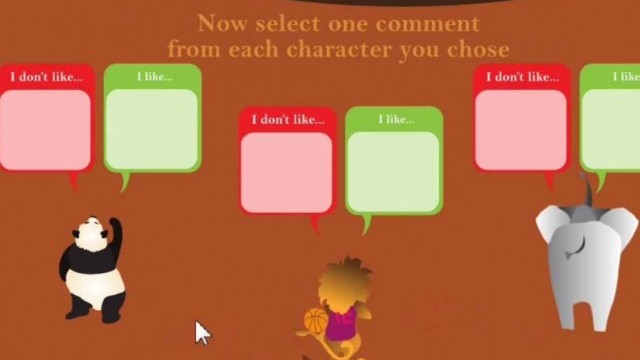
"content": "\u003cfigure id=\"attachment_37279\" class=\"wp-caption aligncenter\" style=\"max-width: 640px\">\u003ca href=\"http://ww2.kqed.org/mindshift/wp-content/uploads/sites/23/2014/08/posterlet2-e6ddbc7791828b57ffcd00a8958fee46a13f6f91-e1407528764883.jpg\">\u003cimg class=\"size-full wp-image-37279\" src=\"http://ww2.kqed.org/mindshift/wp-content/uploads/sites/23/2014/08/posterlet2-e6ddbc7791828b57ffcd00a8958fee46a13f6f91-e1407528764883.jpg\" alt=\"A screenshot from the Posterlet game: choosing negative or positive feedback.\" width=\"640\" height=\"360\" srcset=\"https://ww2.kqed.org/app/uploads/sites/23/2014/08/posterlet2-e6ddbc7791828b57ffcd00a8958fee46a13f6f91-e1407528764883.jpg 640w, https://ww2.kqed.org/app/uploads/sites/23/2014/08/posterlet2-e6ddbc7791828b57ffcd00a8958fee46a13f6f91-e1407528764883-400x225.jpg 400w, https://ww2.kqed.org/app/uploads/sites/23/2014/08/posterlet2-e6ddbc7791828b57ffcd00a8958fee46a13f6f91-e1407528764883-320x180.jpg 320w\" sizes=\"(max-width: 640px) 100vw, 640px\">\u003c/a>\u003cfigcaption class=\"wp-caption-text\">A screenshot from the Posterlet game: choosing negative or positive feedback.\u003c/figcaption>\u003c/figure>\n\u003cp class=\"dropcap-serif\">Imagine you're playing a computer game that asks you to design a poster for the school fair. You're fiddling with fonts, changing background colors and deciding what activity to feature: Will a basketball toss appeal to more people than a pie bake-off?\u003c/p>\n\u003cp>Then, animal characters — maybe a panda or an ostrich — offer feedback on your design. You can choose whether to hear a compliment or a complaint: \"The words are overlapping too much,\" or, \"I like that you put in the dates.\"\u003c/p>\n\u003caside class=\"pullquote alignleft\">\"They're not just measures of what the student already knows, but attempts to measure whether they are prepared to continue learning when they're no longer told exactly what to do.\"\u003c/aside>\n\u003cp>You can use their critiques as guides to help you revise your poster. Finally, you get to see how many tickets your poster sold.\u003c/p>\n\u003cp>This little Web-based game isn't just a game. It's a test, too.\u003c/p>\n\u003cp>\"In our assessments we make little fun games, and to do well at the games you need to learn something,\" says Dan Schwartz, the director of the \u003ca href=\"http://aaalab.stanford.edu/\">AAA Lab at Stanford University\u003c/a>. \"So they're not just measures of what the student already knows, but attempts to measure whether they are prepared to continue learning when they're no longer told exactly what to do.\"\u003c/p>\n\u003cp>[ad fullwidth]\u003c/p>\n\u003cp>Schwartz is among a new breed of researchers who are applying the mechanics of games to the science of psychometrics — the measurement of the mind.\u003c/p>\n\u003cp>Right now, he's working on a series of video games called Choicelets. They're designed to evaluate students on factors that traditional tests can't assess. He wants to measure how students learn, how they make decisions and how they respond to feedback.\u003c/p>\n\u003cp>\u003cstrong>A Test Or A Learning Encounter?\u003c/strong>\u003c/p>\n\u003cp>Most kids like video games — a lot more than they like taking tests.\u003c/p>\n\u003cp>But the purpose of making tests more like games isn't just to add a spoonful of sugar to the medicine.\u003c/p>\n\u003cp>Scholars like \u003ca href=\"http://ww2.kqed.org/mindshift/2014/07/games-can-advance-education-a-conversation-with-james-paul-gee/\" target=\"_blank\">James Paul Gee\u003c/a> believe video games actually come much closer to capturing the learning process in action than traditional fill-in-the-bubble tests.\u003c/p>\n\u003cp>[contextly_sidebar id=\"AEMyggVrb11GysQCIi4T20XLCX9mVZWB\"]\u003c/p>\n\u003cp>Gee, a professor of education at Arizona State University, is considered the godfather of game-based assessment.\u003c/p>\n\u003cp>\"Is a video game a test or a learning encounter? It's both,\" he said. In fact, in a video game, \"you're always being tested — you can't get out of a level until you finish it.\"\u003c/p>\n\u003cp>Gee and other experts explain that classic video games, like Mario Brothers or Tetris, are designed to adapt as the player gets better. Each level moves faster, or presents harder obstacles.\u003c/p>\n\u003cp>The game tugs you along, held in a \u003ca href=\"http://ww2.kqed.org/mindshift/2012/04/whats-the-secret-sauce-to-a-great-educational-game/\" target=\"_blank\">state of \"flow\" \u003c/a>between anxiety (when things get too hard) and boredom (when they're too easy).\u003c/p>\n\u003cp>And, the researchers point out, at the same time you're playing a game, the game can record your actions. When it's over, the software can create a report: not just a record of right and wrong answers, but all the steps you took to get there.\u003c/p>\n\u003cp>Schwartz's \u003ca href=\"http://aaalab.stanford.edu/papers/Measuring_What_Matters_Most.pdf\">theory of assessment\u003c/a> focuses on choice. He argues that the ultimate goal of education is to create independent thinkers who make good decisions. And so we need assessments that test how students think, not what they happen to know at a given moment.\u003c/p>\n\u003cp>For example, the real point of the school-fair game, called Posterlet, is not to test how good students are at graphic design.\u003c/p>\n\u003cp>Instead, the crux of the game comes when students choose to hear comments on their work. Seeking negative feedback, it turns out, is the best way to improve the design of your posters quickly. It's also a healthy strategy for doing well in school and in life.\u003c/p>\n\u003cp>In Photolet, another game from Schwartz's lab, players pretend to take photos of animals. Then they edit, crop and filter the shots.\u003c/p>\n\u003cp>On the surface, the game is about photography skills like focus and composition. Underneath, it emphasizes another concept: making several versions of your work and then self-editing to choose the best.\u003c/p>\n\u003cp>One of Schwartz's experiments took place recently at \u003ca href=\"http://ww2.kqed.org/mindshift/2014/02/what-will-it-take-for-ipads-to-upend-teaching-and-learning/\" target=\"_blank\">Hillview Middle School\u003c/a> in Menlo Park, Calif. \"We took over their sixth grade and taught design thinking for five weeks,\" he says. Design thinking includes using empathy and fact-finding to understand people's needs, generate prototype solutions to problems and test them out.\u003c/p>\n\u003cp>Schwartz's study showed that students were able to apply the concepts they learned in social studies or science class to improve their performance on Posterlet or Photolet.\u003c/p>\n\u003cp>Larra Olson, who teaches humanities at Hillview, says her students loved playing the games. \"They were completely engaged,\" she said.\u003c/p>\n\u003cp>Olson said the project left her \"totally open\" to the potential of games as assessments, especially as an alternative to the traditional emphasis on grades and multiple-choice tests.\u003c/p>\n\u003cp>\u003c/p>\n\u003cp>\"I think you have to figure out the structure of the game so you're not 'leading the witness,' \" she said. \"But I think they're very powerful.\"\u003c/p>\n\u003cdiv class=\"fullattribution\">\u003cem>Copyright 2014 NPR. To see more, visit http://www.npr.org/.\u003cimg src=\"http://www.google-analytics.com/__utm.gif?utmac=UA-5828686-4&utmdt=Tests+That+Look+Like+Video+Games&utme=8(APIKey)9(MDAxOTAwOTE4MDEyMTkxMDAzNjczZDljZA004)\" alt=\"\">\u003c/em>\u003c/div>\n\n",
"disqusIdentifier": "37276 http://blogs.kqed.org/mindshift/?p=37276",
"disqusUrl": "https://ww2.kqed.org/mindshift/2014/08/11/could-video-games-measure-skills-that-tests-cant-capture/",
"stats": {
"hasVideo": false,
"hasChartOrMap": false,
"hasAudio": false,
"hasPolis": false,
"wordCount": 876,
"hasGoogleForm": false,
"hasGallery": false,
"hasHearkenModule": false,
"iframeSrcs": [],
"paragraphCount": 28
},
"modified": 1407530640,
"excerpt": "Researchers are experimenting with playable tests capable of capturing learning in action.",
"headData": {
"twImgId": "",
"twTitle": "",
"ogTitle": "",
"ogImgId": "",
"twDescription": "",
"description": "Researchers are experimenting with playable tests capable of capturing learning in action.",
"title": "Could Video Games Measure Skills That Tests Can't Capture? | KQED",
"ogDescription": "",
"schema": {
"@context": "https://schema.org",
"@type": "Article",
"headline": "Could Video Games Measure Skills That Tests Can't Capture?",
"datePublished": "2014-08-11T07:00:37-07:00",
"dateModified": "2014-08-08T13:44:00-07:00",
"image": "https://cdn.kqed.org/wp-content/uploads/2020/02/KQED-OG-Image@1x.png"
}
},
"guestAuthors": [],
"slug": "could-video-games-measure-skills-that-tests-cant-capture",
"status": "publish",
"nprApiLink": "http://api.npr.org/query?id=337129961&apiKey=MDAxOTAwOTE4MDEyMTkxMDAzNjczZDljZA004",
"nprByline": "Anya Kamenetz ",
"nprStoryDate": "Thu, 07 Aug 2014 08:03:00 -0400",
"nprLastModifiedDate": "Thu, 07 Aug 2014 11:21:29 -0400",
"nprHtmlLink": "http://www.npr.org/blogs/ed/2014/08/07/337129961/tests-that-look-like-video-games?ft=3&f=337129961",
"nprStoryId": "337129961",
"nprRetrievedStory": "1",
"nprPubDate": "Thu, 07 Aug 2014 11:21:00 -0400",
"path": "/mindshift/37276/could-video-games-measure-skills-that-tests-cant-capture",
"audioTrackLength": null,
"parsedContent": [
{
"type": "contentString",
"content": "\u003cdiv class=\"post-body\">\u003cp>\u003cfigure id=\"attachment_37279\" class=\"wp-caption aligncenter\" style=\"max-width: 640px\">\u003ca href=\"http://ww2.kqed.org/mindshift/wp-content/uploads/sites/23/2014/08/posterlet2-e6ddbc7791828b57ffcd00a8958fee46a13f6f91-e1407528764883.jpg\">\u003cimg class=\"size-full wp-image-37279\" src=\"http://ww2.kqed.org/mindshift/wp-content/uploads/sites/23/2014/08/posterlet2-e6ddbc7791828b57ffcd00a8958fee46a13f6f91-e1407528764883.jpg\" alt=\"A screenshot from the Posterlet game: choosing negative or positive feedback.\" width=\"640\" height=\"360\" srcset=\"https://ww2.kqed.org/app/uploads/sites/23/2014/08/posterlet2-e6ddbc7791828b57ffcd00a8958fee46a13f6f91-e1407528764883.jpg 640w, https://ww2.kqed.org/app/uploads/sites/23/2014/08/posterlet2-e6ddbc7791828b57ffcd00a8958fee46a13f6f91-e1407528764883-400x225.jpg 400w, https://ww2.kqed.org/app/uploads/sites/23/2014/08/posterlet2-e6ddbc7791828b57ffcd00a8958fee46a13f6f91-e1407528764883-320x180.jpg 320w\" sizes=\"(max-width: 640px) 100vw, 640px\">\u003c/a>\u003cfigcaption class=\"wp-caption-text\">A screenshot from the Posterlet game: choosing negative or positive feedback.\u003c/figcaption>\u003c/figure>\n\u003cp class=\"dropcap-serif\">Imagine you're playing a computer game that asks you to design a poster for the school fair. You're fiddling with fonts, changing background colors and deciding what activity to feature: Will a basketball toss appeal to more people than a pie bake-off?\u003c/p>\n\u003cp>Then, animal characters — maybe a panda or an ostrich — offer feedback on your design. You can choose whether to hear a compliment or a complaint: \"The words are overlapping too much,\" or, \"I like that you put in the dates.\"\u003c/p>\n\u003caside class=\"pullquote alignleft\">\"They're not just measures of what the student already knows, but attempts to measure whether they are prepared to continue learning when they're no longer told exactly what to do.\"\u003c/aside>\n\u003cp>You can use their critiques as guides to help you revise your poster. Finally, you get to see how many tickets your poster sold.\u003c/p>\n\u003cp>This little Web-based game isn't just a game. It's a test, too.\u003c/p>\n\u003cp>\"In our assessments we make little fun games, and to do well at the games you need to learn something,\" says Dan Schwartz, the director of the \u003ca href=\"http://aaalab.stanford.edu/\">AAA Lab at Stanford University\u003c/a>. \"So they're not just measures of what the student already knows, but attempts to measure whether they are prepared to continue learning when they're no longer told exactly what to do.\"\u003c/p>\n\u003cp>\u003c/p>\u003c/div>",
"attributes": {
"named": {},
"numeric": []
}
},
{
"type": "component",
"content": "",
"name": "ad",
"attributes": {
"named": {
"label": "fullwidth"
},
"numeric": [
"fullwidth"
]
}
},
{
"type": "contentString",
"content": "\u003cdiv class=\"post-body\">\u003cp>\u003c/p>\n\u003cp>Schwartz is among a new breed of researchers who are applying the mechanics of games to the science of psychometrics — the measurement of the mind.\u003c/p>\n\u003cp>Right now, he's working on a series of video games called Choicelets. They're designed to evaluate students on factors that traditional tests can't assess. He wants to measure how students learn, how they make decisions and how they respond to feedback.\u003c/p>\n\u003cp>\u003cstrong>A Test Or A Learning Encounter?\u003c/strong>\u003c/p>\n\u003cp>Most kids like video games — a lot more than they like taking tests.\u003c/p>\n\u003cp>But the purpose of making tests more like games isn't just to add a spoonful of sugar to the medicine.\u003c/p>\n\u003cp>Scholars like \u003ca href=\"http://ww2.kqed.org/mindshift/2014/07/games-can-advance-education-a-conversation-with-james-paul-gee/\" target=\"_blank\">James Paul Gee\u003c/a> believe video games actually come much closer to capturing the learning process in action than traditional fill-in-the-bubble tests.\u003c/p>\n\u003cp>\u003c/p>\u003cp>\u003c/p>\u003cp>\u003c/p>\n\u003cp>Gee, a professor of education at Arizona State University, is considered the godfather of game-based assessment.\u003c/p>\n\u003cp>\"Is a video game a test or a learning encounter? It's both,\" he said. In fact, in a video game, \"you're always being tested — you can't get out of a level until you finish it.\"\u003c/p>\n\u003cp>Gee and other experts explain that classic video games, like Mario Brothers or Tetris, are designed to adapt as the player gets better. Each level moves faster, or presents harder obstacles.\u003c/p>\n\u003cp>The game tugs you along, held in a \u003ca href=\"http://ww2.kqed.org/mindshift/2012/04/whats-the-secret-sauce-to-a-great-educational-game/\" target=\"_blank\">state of \"flow\" \u003c/a>between anxiety (when things get too hard) and boredom (when they're too easy).\u003c/p>\n\u003cp>And, the researchers point out, at the same time you're playing a game, the game can record your actions. When it's over, the software can create a report: not just a record of right and wrong answers, but all the steps you took to get there.\u003c/p>\n\u003cp>Schwartz's \u003ca href=\"http://aaalab.stanford.edu/papers/Measuring_What_Matters_Most.pdf\">theory of assessment\u003c/a> focuses on choice. He argues that the ultimate goal of education is to create independent thinkers who make good decisions. And so we need assessments that test how students think, not what they happen to know at a given moment.\u003c/p>\n\u003cp>For example, the real point of the school-fair game, called Posterlet, is not to test how good students are at graphic design.\u003c/p>\n\u003cp>Instead, the crux of the game comes when students choose to hear comments on their work. Seeking negative feedback, it turns out, is the best way to improve the design of your posters quickly. It's also a healthy strategy for doing well in school and in life.\u003c/p>\n\u003cp>In Photolet, another game from Schwartz's lab, players pretend to take photos of animals. Then they edit, crop and filter the shots.\u003c/p>\n\u003cp>On the surface, the game is about photography skills like focus and composition. Underneath, it emphasizes another concept: making several versions of your work and then self-editing to choose the best.\u003c/p>\n\u003cp>One of Schwartz's experiments took place recently at \u003ca href=\"http://ww2.kqed.org/mindshift/2014/02/what-will-it-take-for-ipads-to-upend-teaching-and-learning/\" target=\"_blank\">Hillview Middle School\u003c/a> in Menlo Park, Calif. \"We took over their sixth grade and taught design thinking for five weeks,\" he says. Design thinking includes using empathy and fact-finding to understand people's needs, generate prototype solutions to problems and test them out.\u003c/p>\n\u003cp>Schwartz's study showed that students were able to apply the concepts they learned in social studies or science class to improve their performance on Posterlet or Photolet.\u003c/p>\n\u003cp>Larra Olson, who teaches humanities at Hillview, says her students loved playing the games. \"They were completely engaged,\" she said.\u003c/p>\n\u003cp>Olson said the project left her \"totally open\" to the potential of games as assessments, especially as an alternative to the traditional emphasis on grades and multiple-choice tests.\u003c/p>\n\u003cp>\u003c/p>\n\u003cp>\"I think you have to figure out the structure of the game so you're not 'leading the witness,' \" she said. \"But I think they're very powerful.\"\u003c/p>\n\u003cdiv class=\"fullattribution\">\u003cem>Copyright 2014 NPR. To see more, visit http://www.npr.org/.\u003cimg src=\"http://www.google-analytics.com/__utm.gif?utmac=UA-5828686-4&utmdt=Tests+That+Look+Like+Video+Games&utme=8(APIKey)9(MDAxOTAwOTE4MDEyMTkxMDAzNjczZDljZA004)\" alt=\"\">\u003c/em>\u003c/div>\n\n\u003c/div>\u003c/p>",
"attributes": {
"named": {},
"numeric": []
}
}
],
"link": "/mindshift/37276/could-video-games-measure-skills-that-tests-cant-capture",
"authors": [
"byline_mindshift_37276"
],
"categories": [
"mindshift_195"
],
"tags": [
"mindshift_108",
"mindshift_1040",
"mindshift_548",
"mindshift_20902"
],
"featImg": "mindshift_37279",
"label": "mindshift"
},
"mindshift_37267": {
"type": "posts",
"id": "mindshift_37267",
"meta": {
"index": "posts_1716263798",
"site": "mindshift",
"id": "37267",
"score": null,
"sort": [
1407506415000
]
},
"parent": 0,
"labelTerm": {
"site": "mindshift",
"term": 20669
},
"blocks": [],
"publishDate": 1407506415,
"format": "aside",
"disqusTitle": "Screen Time That's Valuable For Young Kids",
"title": "Screen Time That's Valuable For Young Kids",
"headTitle": "The MindShift Guide to Digital Games and Learning | MindShift | KQED News",
"content": "\u003cfigure id=\"attachment_37270\" class=\"wp-caption alignnone\" style=\"max-width: 640px\">\u003cimg class=\"size-full wp-image-37270\" src=\"http://ww2.kqed.org/mindshift/wp-content/uploads/sites/23/2014/08/6813669931_fb9abae43f_z-e1407474609262.jpg\" alt=\"Laurie Sullivan\" width=\"640\" height=\"360\" srcset=\"https://ww2.kqed.org/app/uploads/sites/23/2014/08/6813669931_fb9abae43f_z-e1407474609262.jpg 640w, https://ww2.kqed.org/app/uploads/sites/23/2014/08/6813669931_fb9abae43f_z-e1407474609262-400x225.jpg 400w, https://ww2.kqed.org/app/uploads/sites/23/2014/08/6813669931_fb9abae43f_z-e1407474609262-320x180.jpg 320w\" sizes=\"(max-width: 640px) 100vw, 640px\">\u003cfigcaption class=\"wp-caption-text\">Laurie Sullivan\u003c/figcaption>\u003c/figure>\n\u003cp>\u003cem>Part 15 of \u003ca href=\"http://ww2.kqed.org/mindshift/series/guide-to-games-and-learning/\" target=\"_blank\">MindShift’s Guide to Games and Learning\u003c/a>.\u003c/em>\u003c/p>\n\u003cp class=\"dropcap-serif\">Most people agree that implementing game-based learning makes sense for older students, but what about really young kids? Do screens have a place in early childhood education? How young is \u003ca href=\"http://ww2.kqed.org/mindshift/2011/03/screen-time-for-kids-is-it-learning-or-a-brain-drain/\" target=\"_blank\">too young for screen time\u003c/a>? If you have small children, you know that this is a hot topic among new parents. Some moms and dads believe that screen time will ruin their children. Others see tablets as an exceptional parenting gadget, a tool that can teach, distract, and educate.\u003c/p>\n\u003cp>The American Academy Of Pediatrics (AAP) \u003ca href=\"http://www.aap.org/en-us/advocacy-and-policy/aap-health-initiatives/Pages/Media-and-Children.aspx\">recommends\u003c/a> that children younger than two years old have no screen time at all. Infants probably get more than enough screen time already, just being pushed in a stroller through the electronics aisle at Target or peaking over their parents’ shoulders. For older kids, AAP suggests one to two hours per day of electronic media. In addition, the AAP encourages parents to “establish ‘screen-free’ zones at home by making sure there are no televisions, computers or video games in children's bedrooms, and by turning off the TV during dinner.”\u003c/p>\n\u003cp>But reducing the issue to an on/off switch oversimplifies things. When we understand the question of electronic media in such a polarized way, we are caught in the same way of thinking that can make screen time problematic. Tablets become like junk food, imagined as a temptation that children gravitate to but need to be protected from. On the contrary, it is only when electronic media is used to occupy children -- like a babysitter that provides parents or teachers with an hour or two of peace and quiet -- that justifying its use becomes more complicated.\u003c/p>\n\u003cp>Videos can often carry the same baggage. We sometimes think that the motivation for showing the class a movie is that the teacher’s too busy to properly plan for the day. Or maybe when the teacher needs an extra hour for grading and preparation, a documentary can keep the students occupied. Of course, this is not always the case. There are certainly good pedagogical reasons to use video content in class.\u003c/p>\n\u003cp>[ad fullwidth]\u003c/p>\n\u003cp>\u003cimg class=\"size-thumbnail wp-image-35200 alignright\" style=\"border: 0\" src=\"http://ww2.kqed.org/mindshift/wp-content/uploads/sites/23/2014/04/MindShiftGames-140x140.png\" alt=\"MindShiftGames\" width=\"140\" height=\"140\">\u003c/p>\n\u003cp>Likewise, there are good pedagogical reasons to use video games and other electronic media in early childhood education. It is not about employing ed-tech for its own sake -- as if gadgets automatically make things more innovative or somehow better -- but rather about using tools that engage students toward specific learning objectives. Simply avoiding apps because of some nostalgia for a bygone era may cause educators to miss valuable early academic opportunities. The real question is not whether or not technology belongs in early childhood education, but rather, how can we leverage the efficiency of digital tools to best serve young learners.\u003c/p>\n\u003cp>It needs to happen carefully. Although the iOS and Android app stores are both full of content labeled as educational, it is not all good content. Let us look specifically at early literacy. Many apps drill and practice letter recognition and sounds, but few are grounded in good pedagogical practices. \u003ca href=\"http://www.slate.com/authors.lisa_guernsey.html\">Lisa Guernsey\u003c/a> and \u003ca href=\"http://www.slate.com/authors.michael_levine.html\">Michael Levine\u003c/a> \u003ca href=\"http://www.slate.com/blogs/future_tense/2012/12/13/kids_apps_and_ebooks_can_t_teach_them_to_read_without_parent_and_teacher.html\">wrote in Slate:\u003c/a> “Most of the top-selling reading apps appear to teach only the most basic of literacy skills. They lean toward easy-to-teach tasks, such as identifying the ABCs, but don’t address higher-level competencies that young children also need to become strong readers, such as developing vocabulary and understanding words in a narrative.” Just adding the alphabet to popular games like \u003ci>Angry Birds\u003c/i> or \u003ci>Temple Run\u003c/i> might make parents more willing to whip out their credit cards, but it won’t necessarily teach their children how to read. Good early childhood literacy options tend to blur the distinction between \"game\" and \"app,\" often looking more like apps than like traditional video games.\u003c/p>\n\u003cp>\u003ci>Seeding Reading: Investing in Children’s Literacy in a Digital Age \u003c/i>is a \u003ca href=\"http://www.joanganzcooneycenter.org/2014/06/23/introducing-seeding-reading-investing-in-childrens-literacy-in-a-digital-age/\">new series\u003c/a> from \u003ca href=\"http://www.newamerica.org/\">New America\u003c/a>’s \u003ca href=\"http://education.newamerica.net/dashboard/\">Education Policy Program\u003c/a> and the \u003ca href=\"http://www.joanganzcooneycenter.org/\">Joan Ganz Cooney Center \u003c/a>at Sesame Workshop. The series (which has only just begun) looks at “early education and parenting initiatives that are harnessing new technologies.” It will also scrutinize “the marketplace of digital ‘reading’ products.” And bring information and analysis about “research that may illuminate how communications technologies and digital media are affecting the learning of reading, the act of reading, and the reading brain, in both good ways and bad.” This will become a valuable resource for early childhood educators that want to explore using games and apps in their classroom.\u003c/p>\n\u003cp>[contextly_sidebar id=\"SOnSuylJQtxvNmP7s3kgdbYIlNYYATwg\"]\u003c/p>\n\u003cp>In the meantime, there are already some great apps out there. \u003ca href=\"https://learnwithhomer.com/\">Learn With Homer\u003c/a>, for example, is an iPad app created by Stephanie Dua, a well-known education reformer. It provides a comprehensive contextualized literacy curriculum. “I know there’s a lot of great research on how to teach children to read,” says Dua. “But when my own daughter wanted to learn, I couldn’t find any suitable materials for parents. That’s when \u003ca href=\"http://www.youtube.com/watch?v=pt1ddPqafnU&feature=share&list=UUc22ePreVTXl7k29goQj1SQ\">\u003ci>Learn with Homer\u003c/i>\u003c/a> was born. It brings the best early learning techniques together in one app.”\u003c/p>\n\u003cp>Learn With Homer does some of the same things a good kindergarten or pre-school teacher would. It is interdisciplinary in that it “combines learning to read with learning to understand the world.” What does that mean? Kids are not only learning what the letter “A” sounds like and that “alligator” starts with “A,” but also taking virtual “field trips” to the zoo, where they learn about alligators. They also draw pictures, record their own voice discussing the subject matter, listen to stories, and play mini games that emphasize the letters, sounds, and ideas.\u003c/p>\n\u003cp>In addition, there are less comprehensive options: apps and games that can supplement the great non-digital learning that’s already happening in early childhood education. For example, \u003ca href=\"http://www.forbes.com/sites/jordanshapiro/2014/08/06/your-five-year-old-can-learn-to-code-with-an-ipad-app/\">ScratchJr\u003c/a> is an iPad app from MIT’s Media Lab that lets 5-7 year-olds create games and stories using a simple drag and drop interface that is designed to provide the foundation for learning computer coding. Most of us consider coding to be part of computer science, but it is also a form of expression. It reminds us that \u003ca href=\"http://ww2.kqed.org/mindshift/2014/05/math-science-history-games-break-boundaries-between-subjects-interdisciplinary-learning/\">the distinction between STEM and ELA\u003c/a> is an arbitrary and often superficial one. Mitchel Resnick, head of MIT Media Labs Lifelong Kindergarten Research Group and one of the creators of Scratch and ScratchJr, \u003ca href=\"http://www.forbes.com/sites/jordanshapiro/2014/08/06/your-five-year-old-can-learn-to-code-with-an-ipad-app/\" target=\"_blank\">says\u003c/a>, “When people learn to write, they can share their ideas with the rest of the world. So too with coding.” Good kindergarten teachers understand that for young students, literacy is as much about creating a love of formal self-expression and articulation as it is about learning to write letters on lined paper. Both are necessary.\u003c/p>\n\u003cp>\u003ca href=\"http://kindoma.com/\">Kindoma \u003c/a>is another interesting app. It combines video conferencing, screen sharing, and reading into a single app. It was design with grandparents or traveling parents in mind. The idea was that you do not need to be right next to the child in order to both enjoy reading together. But there could also be many great classroom applications for this app. Imagine a fantastic twist on penpals. Kindergarten teachers could partner with other classrooms in other parts of the city, other states, even on opposite sides of the country. Students could have online reading buddies through Kindoma. Creative teachers will imagine tons of innovative ways to use this platform.\u003c/p>\n\u003cp>There are plenty of games aimed at younger kids that can be part of a balanced approach to technology in early childhood education. Check out games by \u003ca href=\"http://tocaboca.com/games/\">Toca Boca\u003c/a>, \u003ca href=\"http://www.launchpadtoys.com/toontastic/\">Toontastic\u003c/a>, or \u003ca href=\"http://motionmathgames.com/\">Motion Math\u003c/a>. Imagine ways to let these games supplement and enhance your well-worn curriculum.\u003c/p>\n\u003cp>It's especially important in a digitally connected world where everything is always on that we start teaching children the importance of text, language, and expression as early as possible. With so many options for stimulation and entertainment, it is all too easy to imagine a generation of children that grow up believing that YouTube videos replace books. One is not an alternative to the other; they are two different types of communication.\u003c/p>\n\u003cp>Using games and apps not only offers engaging opportunities for young students to acquire important academic skills, it also teaches those students to associate screens with refined cognitive skills. It reinforces the idea that screens are more than just distraction machines. Early education should provide a foundation for critical thinking, including thinking critically about technology and digital media.\u003c/p>\n\u003cp>[ad floatright]\u003c/p>\n\u003cp>\u003cem>The \u003ca href=\"http://ww2.kqed.org/mindshift/series/guide-to-games-and-learning/\" target=\"_blank\">MindShift Guide to Games and Learning\u003c/a> is made possible through the generous support of the \u003ca href=\"http://ww2.kqed.org/mindshift/2014/05/math-science-history-games-break-boundaries-between-subjects-interdisciplinary-learning/www.joanganzcooneycenter.org/\" target=\"_blank\">Joan Ganz Cooney Center\u003c/a> and is a project of the \u003ca href=\"http://www.joanganzcooneycenter.org/initiative/games-and-learning-publishing-council-analyzing-a-rising-sector/\" target=\"_blank\">Games and Learning Publishing Council\u003c/a>.\u003c/em>\u003c/p>\n\n",
"disqusIdentifier": "37267 http://blogs.kqed.org/mindshift/?p=37267",
"disqusUrl": "https://ww2.kqed.org/mindshift/2014/08/08/screen-time-games-learning-thats-valuable-for-young-kids/",
"stats": {
"hasVideo": false,
"hasChartOrMap": false,
"hasAudio": false,
"hasPolis": false,
"wordCount": 1479,
"hasGoogleForm": false,
"hasGallery": false,
"hasHearkenModule": false,
"iframeSrcs": [],
"paragraphCount": 19
},
"modified": 1430847636,
"excerpt": "Most people agree that implementing game-based learning makes sense for older students, but what about really young kids?",
"headData": {
"twImgId": "",
"twTitle": "",
"ogTitle": "",
"ogImgId": "",
"twDescription": "",
"description": "Most people agree that implementing game-based learning makes sense for older students, but what about really young kids?",
"title": "Screen Time That's Valuable For Young Kids | KQED",
"ogDescription": "",
"schema": {
"@context": "https://schema.org",
"@type": "Article",
"headline": "Screen Time That's Valuable For Young Kids",
"datePublished": "2014-08-08T07:00:15-07:00",
"dateModified": "2015-05-05T10:40:36-07:00",
"image": "https://cdn.kqed.org/wp-content/uploads/2020/02/KQED-OG-Image@1x.png"
}
},
"guestAuthors": [],
"slug": "screen-time-games-learning-thats-valuable-for-young-kids",
"status": "publish",
"path": "/mindshift/37267/screen-time-games-learning-thats-valuable-for-young-kids",
"audioTrackLength": null,
"parsedContent": [
{
"type": "contentString",
"content": "\u003cdiv class=\"post-body\">\u003cp>\u003cfigure id=\"attachment_37270\" class=\"wp-caption alignnone\" style=\"max-width: 640px\">\u003cimg class=\"size-full wp-image-37270\" src=\"http://ww2.kqed.org/mindshift/wp-content/uploads/sites/23/2014/08/6813669931_fb9abae43f_z-e1407474609262.jpg\" alt=\"Laurie Sullivan\" width=\"640\" height=\"360\" srcset=\"https://ww2.kqed.org/app/uploads/sites/23/2014/08/6813669931_fb9abae43f_z-e1407474609262.jpg 640w, https://ww2.kqed.org/app/uploads/sites/23/2014/08/6813669931_fb9abae43f_z-e1407474609262-400x225.jpg 400w, https://ww2.kqed.org/app/uploads/sites/23/2014/08/6813669931_fb9abae43f_z-e1407474609262-320x180.jpg 320w\" sizes=\"(max-width: 640px) 100vw, 640px\">\u003cfigcaption class=\"wp-caption-text\">Laurie Sullivan\u003c/figcaption>\u003c/figure>\n\u003cp>\u003cem>Part 15 of \u003ca href=\"http://ww2.kqed.org/mindshift/series/guide-to-games-and-learning/\" target=\"_blank\">MindShift’s Guide to Games and Learning\u003c/a>.\u003c/em>\u003c/p>\n\u003cp class=\"dropcap-serif\">Most people agree that implementing game-based learning makes sense for older students, but what about really young kids? Do screens have a place in early childhood education? How young is \u003ca href=\"http://ww2.kqed.org/mindshift/2011/03/screen-time-for-kids-is-it-learning-or-a-brain-drain/\" target=\"_blank\">too young for screen time\u003c/a>? If you have small children, you know that this is a hot topic among new parents. Some moms and dads believe that screen time will ruin their children. Others see tablets as an exceptional parenting gadget, a tool that can teach, distract, and educate.\u003c/p>\n\u003cp>The American Academy Of Pediatrics (AAP) \u003ca href=\"http://www.aap.org/en-us/advocacy-and-policy/aap-health-initiatives/Pages/Media-and-Children.aspx\">recommends\u003c/a> that children younger than two years old have no screen time at all. Infants probably get more than enough screen time already, just being pushed in a stroller through the electronics aisle at Target or peaking over their parents’ shoulders. For older kids, AAP suggests one to two hours per day of electronic media. In addition, the AAP encourages parents to “establish ‘screen-free’ zones at home by making sure there are no televisions, computers or video games in children's bedrooms, and by turning off the TV during dinner.”\u003c/p>\n\u003cp>But reducing the issue to an on/off switch oversimplifies things. When we understand the question of electronic media in such a polarized way, we are caught in the same way of thinking that can make screen time problematic. Tablets become like junk food, imagined as a temptation that children gravitate to but need to be protected from. On the contrary, it is only when electronic media is used to occupy children -- like a babysitter that provides parents or teachers with an hour or two of peace and quiet -- that justifying its use becomes more complicated.\u003c/p>\n\u003cp>Videos can often carry the same baggage. We sometimes think that the motivation for showing the class a movie is that the teacher’s too busy to properly plan for the day. Or maybe when the teacher needs an extra hour for grading and preparation, a documentary can keep the students occupied. Of course, this is not always the case. There are certainly good pedagogical reasons to use video content in class.\u003c/p>\n\u003cp>\u003c/p>\u003c/div>",
"attributes": {
"named": {},
"numeric": []
}
},
{
"type": "component",
"content": "",
"name": "ad",
"attributes": {
"named": {
"label": "fullwidth"
},
"numeric": [
"fullwidth"
]
}
},
{
"type": "contentString",
"content": "\u003cdiv class=\"post-body\">\u003cp>\u003c/p>\n\u003cp>\u003cimg class=\"size-thumbnail wp-image-35200 alignright\" style=\"border: 0\" src=\"http://ww2.kqed.org/mindshift/wp-content/uploads/sites/23/2014/04/MindShiftGames-140x140.png\" alt=\"MindShiftGames\" width=\"140\" height=\"140\">\u003c/p>\n\u003cp>Likewise, there are good pedagogical reasons to use video games and other electronic media in early childhood education. It is not about employing ed-tech for its own sake -- as if gadgets automatically make things more innovative or somehow better -- but rather about using tools that engage students toward specific learning objectives. Simply avoiding apps because of some nostalgia for a bygone era may cause educators to miss valuable early academic opportunities. The real question is not whether or not technology belongs in early childhood education, but rather, how can we leverage the efficiency of digital tools to best serve young learners.\u003c/p>\n\u003cp>It needs to happen carefully. Although the iOS and Android app stores are both full of content labeled as educational, it is not all good content. Let us look specifically at early literacy. Many apps drill and practice letter recognition and sounds, but few are grounded in good pedagogical practices. \u003ca href=\"http://www.slate.com/authors.lisa_guernsey.html\">Lisa Guernsey\u003c/a> and \u003ca href=\"http://www.slate.com/authors.michael_levine.html\">Michael Levine\u003c/a> \u003ca href=\"http://www.slate.com/blogs/future_tense/2012/12/13/kids_apps_and_ebooks_can_t_teach_them_to_read_without_parent_and_teacher.html\">wrote in Slate:\u003c/a> “Most of the top-selling reading apps appear to teach only the most basic of literacy skills. They lean toward easy-to-teach tasks, such as identifying the ABCs, but don’t address higher-level competencies that young children also need to become strong readers, such as developing vocabulary and understanding words in a narrative.” Just adding the alphabet to popular games like \u003ci>Angry Birds\u003c/i> or \u003ci>Temple Run\u003c/i> might make parents more willing to whip out their credit cards, but it won’t necessarily teach their children how to read. Good early childhood literacy options tend to blur the distinction between \"game\" and \"app,\" often looking more like apps than like traditional video games.\u003c/p>\n\u003cp>\u003ci>Seeding Reading: Investing in Children’s Literacy in a Digital Age \u003c/i>is a \u003ca href=\"http://www.joanganzcooneycenter.org/2014/06/23/introducing-seeding-reading-investing-in-childrens-literacy-in-a-digital-age/\">new series\u003c/a> from \u003ca href=\"http://www.newamerica.org/\">New America\u003c/a>’s \u003ca href=\"http://education.newamerica.net/dashboard/\">Education Policy Program\u003c/a> and the \u003ca href=\"http://www.joanganzcooneycenter.org/\">Joan Ganz Cooney Center \u003c/a>at Sesame Workshop. The series (which has only just begun) looks at “early education and parenting initiatives that are harnessing new technologies.” It will also scrutinize “the marketplace of digital ‘reading’ products.” And bring information and analysis about “research that may illuminate how communications technologies and digital media are affecting the learning of reading, the act of reading, and the reading brain, in both good ways and bad.” This will become a valuable resource for early childhood educators that want to explore using games and apps in their classroom.\u003c/p>\n\u003cp>\u003c/p>\u003cp>\u003c/p>\u003cp>\u003c/p>\n\u003cp>In the meantime, there are already some great apps out there. \u003ca href=\"https://learnwithhomer.com/\">Learn With Homer\u003c/a>, for example, is an iPad app created by Stephanie Dua, a well-known education reformer. It provides a comprehensive contextualized literacy curriculum. “I know there’s a lot of great research on how to teach children to read,” says Dua. “But when my own daughter wanted to learn, I couldn’t find any suitable materials for parents. That’s when \u003ca href=\"http://www.youtube.com/watch?v=pt1ddPqafnU&feature=share&list=UUc22ePreVTXl7k29goQj1SQ\">\u003ci>Learn with Homer\u003c/i>\u003c/a> was born. It brings the best early learning techniques together in one app.”\u003c/p>\n\u003cp>Learn With Homer does some of the same things a good kindergarten or pre-school teacher would. It is interdisciplinary in that it “combines learning to read with learning to understand the world.” What does that mean? Kids are not only learning what the letter “A” sounds like and that “alligator” starts with “A,” but also taking virtual “field trips” to the zoo, where they learn about alligators. They also draw pictures, record their own voice discussing the subject matter, listen to stories, and play mini games that emphasize the letters, sounds, and ideas.\u003c/p>\n\u003cp>In addition, there are less comprehensive options: apps and games that can supplement the great non-digital learning that’s already happening in early childhood education. For example, \u003ca href=\"http://www.forbes.com/sites/jordanshapiro/2014/08/06/your-five-year-old-can-learn-to-code-with-an-ipad-app/\">ScratchJr\u003c/a> is an iPad app from MIT’s Media Lab that lets 5-7 year-olds create games and stories using a simple drag and drop interface that is designed to provide the foundation for learning computer coding. Most of us consider coding to be part of computer science, but it is also a form of expression. It reminds us that \u003ca href=\"http://ww2.kqed.org/mindshift/2014/05/math-science-history-games-break-boundaries-between-subjects-interdisciplinary-learning/\">the distinction between STEM and ELA\u003c/a> is an arbitrary and often superficial one. Mitchel Resnick, head of MIT Media Labs Lifelong Kindergarten Research Group and one of the creators of Scratch and ScratchJr, \u003ca href=\"http://www.forbes.com/sites/jordanshapiro/2014/08/06/your-five-year-old-can-learn-to-code-with-an-ipad-app/\" target=\"_blank\">says\u003c/a>, “When people learn to write, they can share their ideas with the rest of the world. So too with coding.” Good kindergarten teachers understand that for young students, literacy is as much about creating a love of formal self-expression and articulation as it is about learning to write letters on lined paper. Both are necessary.\u003c/p>\n\u003cp>\u003ca href=\"http://kindoma.com/\">Kindoma \u003c/a>is another interesting app. It combines video conferencing, screen sharing, and reading into a single app. It was design with grandparents or traveling parents in mind. The idea was that you do not need to be right next to the child in order to both enjoy reading together. But there could also be many great classroom applications for this app. Imagine a fantastic twist on penpals. Kindergarten teachers could partner with other classrooms in other parts of the city, other states, even on opposite sides of the country. Students could have online reading buddies through Kindoma. Creative teachers will imagine tons of innovative ways to use this platform.\u003c/p>\n\u003cp>There are plenty of games aimed at younger kids that can be part of a balanced approach to technology in early childhood education. Check out games by \u003ca href=\"http://tocaboca.com/games/\">Toca Boca\u003c/a>, \u003ca href=\"http://www.launchpadtoys.com/toontastic/\">Toontastic\u003c/a>, or \u003ca href=\"http://motionmathgames.com/\">Motion Math\u003c/a>. Imagine ways to let these games supplement and enhance your well-worn curriculum.\u003c/p>\n\u003cp>It's especially important in a digitally connected world where everything is always on that we start teaching children the importance of text, language, and expression as early as possible. With so many options for stimulation and entertainment, it is all too easy to imagine a generation of children that grow up believing that YouTube videos replace books. One is not an alternative to the other; they are two different types of communication.\u003c/p>\n\u003cp>Using games and apps not only offers engaging opportunities for young students to acquire important academic skills, it also teaches those students to associate screens with refined cognitive skills. It reinforces the idea that screens are more than just distraction machines. Early education should provide a foundation for critical thinking, including thinking critically about technology and digital media.\u003c/p>\n\u003cp>\u003c/p>\u003c/div>",
"attributes": {
"named": {},
"numeric": []
}
},
{
"type": "component",
"content": "",
"name": "ad",
"attributes": {
"named": {
"label": "floatright"
},
"numeric": [
"floatright"
]
}
},
{
"type": "contentString",
"content": "\u003cdiv class=\"post-body\">\u003cp>\u003c/p>\n\u003cp>\u003cem>The \u003ca href=\"http://ww2.kqed.org/mindshift/series/guide-to-games-and-learning/\" target=\"_blank\">MindShift Guide to Games and Learning\u003c/a> is made possible through the generous support of the \u003ca href=\"http://ww2.kqed.org/mindshift/2014/05/math-science-history-games-break-boundaries-between-subjects-interdisciplinary-learning/www.joanganzcooneycenter.org/\" target=\"_blank\">Joan Ganz Cooney Center\u003c/a> and is a project of the \u003ca href=\"http://www.joanganzcooneycenter.org/initiative/games-and-learning-publishing-council-analyzing-a-rising-sector/\" target=\"_blank\">Games and Learning Publishing Council\u003c/a>.\u003c/em>\u003c/p>\n\n\u003c/div>\u003c/p>",
"attributes": {
"named": {},
"numeric": []
}
}
],
"link": "/mindshift/37267/screen-time-games-learning-thats-valuable-for-young-kids",
"authors": [
"4557"
],
"series": [
"mindshift_20669"
],
"categories": [
"mindshift_195"
],
"tags": [
"mindshift_20720",
"mindshift_1040",
"mindshift_20902",
"mindshift_20655"
],
"featImg": "mindshift_37270",
"label": "mindshift_20669"
},
"mindshift_37048": {
"type": "posts",
"id": "mindshift_37048",
"meta": {
"index": "posts_1716263798",
"site": "mindshift",
"id": "37048",
"score": null,
"sort": [
1406909629000
]
},
"parent": 0,
"labelTerm": {
"site": "mindshift",
"term": 20669
},
"blocks": [],
"publishDate": 1406909629,
"format": "aside",
"disqusTitle": "In the Bustling, Interactive Classroom, A Place for Digital Games ",
"title": "In the Bustling, Interactive Classroom, A Place for Digital Games ",
"headTitle": "The MindShift Guide to Digital Games and Learning | MindShift | KQED News",
"content": "\u003cfigure id=\"attachment_37059\" class=\"wp-caption aligncenter\" style=\"max-width: 640px\">\u003cimg src=\"http://ww2.kqed.org/mindshift/wp-content/uploads/sites/23/2014/08/RS7421_5958586280_bf751bbddb_b-scr-e1406917583442.jpg\" alt=\"NASA\" width=\"640\" height=\"360\" class=\"size-full wp-image-37059\" srcset=\"https://ww2.kqed.org/app/uploads/sites/23/2014/08/RS7421_5958586280_bf751bbddb_b-scr-e1406917583442.jpg 640w, https://ww2.kqed.org/app/uploads/sites/23/2014/08/RS7421_5958586280_bf751bbddb_b-scr-e1406917583442-400x225.jpg 400w, https://ww2.kqed.org/app/uploads/sites/23/2014/08/RS7421_5958586280_bf751bbddb_b-scr-e1406917583442-320x180.jpg 320w\" sizes=\"(max-width: 640px) 100vw, 640px\">\u003cfigcaption class=\"wp-caption-text\">NASA\u003c/figcaption>\u003c/figure>\n\u003cp>\u003cem>Part 14 of \u003ca href=\"http://ww2.kqed.org/mindshift/series/guide-to-games-and-learning/\" target=\"_blank\">MindShift’s Guide to Games and Learning\u003c/a>.\u003c/em>\u003c/p>\n\u003cp class=\"dropcap-serif\">If there’s one thing we know for sure, it's that today’s technologies will one day be obsolete -- we shouldn’t be too enamored with any particular educational tool. Teachers will always play the most important role in the classroom.\u003c/p>\n\u003cp>Although ed-tech has a lot to offer, even the most interactive, adaptive software cannot provide the social and emotional benefits that a good teacher can. Early psychoanalytic research already made it clear at the beginning of the 20th century: the relationship between developing children and adult figures is important. Good teachers (especially in the younger grades) understand that they are responsible not only for transmitting new ideas and information, but also for creating a collaborative classroom structure that models, reinforces, and encourages positive social behaviors.\u003c/p>\n\u003cp>Teaching and learning are not simply about academic content and retention. Don’t imagine game-based learning as an innovative content distribution system. Instead, imagine it as a way to move out of a high-stakes testing mentality and away from a top-down pedagogy. Because they present \u003ca href=\"http://ww2.kqed.org/mindshift/2014/05/how-games-based-learning-teaches-problem-solving-in-context/\" target=\"_blank\">content in context\u003c/a>, video games encourage students to understand knowledge \u003ca href=\"http://www.forbes.com/sites/jordanshapiro/2014/07/31/our-schools-are-un-american-video-games-can-fix-that/\" target=\"_blank\">not as data to be downloaded into a biological hard drive\u003c/a>, but rather as the collective wisdom that enables one thing to interact with another in meaningful ways.\u003c/p>\n\u003cp>Of course, such a lofty goal cannot be accomplished with video games alone. It will also require that teachers work directly with students. It requires that teachers move away from standardization and meet each student as a unique individual. The best learning happens when we abandon the “sage on the stage” classroom model and leave behind our reliance on set curricula. When education becomes rigidly homogenized, the change in student body from year to year, or semester to semester, is tantamount to kids taking turns playing an algorithmically predetermined arcade game.\u003c/p>\n\u003cp>[ad fullwidth]\u003c/p>\n\u003cp>\u003cimg class=\"size-thumbnail wp-image-35200 alignright\" style=\"border: 0\" src=\"http://ww2.kqed.org/mindshift/wp-content/uploads/sites/23/2014/04/MindShiftGames-140x140.png\" alt=\"MindShiftGames\" width=\"140\" height=\"140\">\u003c/p>\n\u003cp>Although many people worry that game-based learning will lead to an increasingly standardized pedagogy, the best implementations do the exact opposite. They make differentiated instruction easier and more efficient. Teachers can use games as a supplement that enables increased one-on-one learning between teacher and student.\u003c/p>\n\u003cp>I visited one kindergarten classroom where \u003ca href=\"http://www.mindresearch.net/programs/\">ST Math\u003c/a> was part of the curriculum. The kids called it Jiji math because of the adorable animated penguin. Jiji the penguin is not only the ST Math mascot, but also a critical part of the program’s pedagogy. Created by the MIND Research Institute, ST (spatial temporal) Math offers a playful game-based program that teaches mathematical concepts without using words.\u003c/p>\n\u003cp>ST Math has all the bells and whistles of cutting-edge software but it is not revolutionary. That is, despite being digital, it remains grounded in three classic principles of good teaching: interactivity, informative feedback, and intrinsic motivation. I spoke to the company’s founder, Dr. Matthew Peterson, to understand how these three principles work in practice.\u003c/p>\n\u003cp>\u003cb>1. Interactivity.\u003c/b> Learning needs to be a dialogue. The child needs to come before the curriculum. At the same time, learning needs to be interactive because, as Dr. Peterson explains, “they need to own their own solutions.\" That's why multiple choice doesn’t work; it puts assessment before learning. If the student doesn’t generate his or her own answers, the quality of retention is severely debilitated.\u003c/p>\n\u003cp>\u003cb>2. Informative feedback. \u003c/b>Obviously video games and computer software offer substantially more opportunities for interactivity than the old fashioned textbook, or even the supplemental workbooks. But the majority of educational games are simply electronic tests with animated gold stars and smiley faces.They lack informative feedback, which is different from simple rewards because it is \u003ca href=\"http://www.forbes.com/sites/jordanshapiro/2012/11/23/mario-brothers-and-level-up-leadership-social-entrepreneurship-gamification-and-religion/\">transformational rather than transactional.\u003c/a> Unlike points and grades, which simply tell students whether they're right or wrong, informative feedback provides instant explanations about \u003cem>why\u003c/em> an answer is right or wrong. ST Math uses Jiji to provide informative feedback. When the answer is right the penguin can move across the screen; when it's wrong, he can’t.\u003c/p>\n\u003cp>\u003cb>3. Intrinsic motivation. \u003c/b>When informative feedback works, students are no longer motivated by transactional rewards. Instead, they are intrinsically motivated to solve the problems, not to pass the test. Dr. Peterson explains this using the example of the Rubik’s Cube. The classic puzzle toy has nothing to do with gold stars, nor smiley faces, nor coins. Instead, one twists the cube because of the pure intrinsic pleasure you get from seeing all the colors line up.\u003c/p>\n\u003cp>[contextly_sidebar id=\"mX90QMzi6UScXar9WH631KlCPqbTYGMO\"]\u003c/p>\n\u003cp>ST Math combines instruction, practice, and assessment so that they're always happening simultaneously, and it can be used even in classrooms with few computers. In the kindergarten classroom I visited, there were only four laptops. They were set up at a table near the “cozy corner.” This was just one station in a room full of math themed choices. There were manipulatives at another table. Worksheets and art supplies at others.\u003c/p>\n\u003cp>The students were lively. Some were following instructions with the manipulatives. Some were tracing numbers on worksheets. Some were drawing number-themed pictures. And some were playing “Jiji Math” at the table of laptop computers.\u003c/p>\n\u003cp>So how does the teacher incorporate the games into the curriculum? “Video games allow me to keep some students working on academic content while I give other students personal attention,” said Lisa Pack, the classroom teacher. She made her rounds, moving from one station to another, giving focused attention to each student that wasn’t working with Jiji. Then, after 15 or 20 minutes, she rotated some students off Jiji and moved others on. She immediately worked with the students who had been working with Jiji and then she continued to make rounds of the room. Sometimes she worked directly with groups of students, other times with individuals.\u003c/p>\n\u003cp>It was clear that she knew exactly what each student needed and was able to provide it in an individual way. ST Math was like a classroom assistant. It wasn’t doing the teaching, but rather reinforcing the concepts that had already been taught. The games were classroom management tools, providing engaging practice for some students while she worked with others. They enabled more personalized face-to-face instruction by making it more efficient.\u003c/p>\n\u003cp>In many of the classrooms I visit, digital games are being used in the same way. They're just one activity in a room full of diverse learning options. When thinking about game-based learning, we don’t always have to imagine the games at the center of the classroom. The games can belong on the margins, supplementing everyday teaching practices and providing the tools that enable differentiated instruction.\u003c/p>\n\u003cp>[ad floatright]\u003c/p>\n\u003cp>\u003cem>The \u003ca href=\"http://ww2.kqed.org/mindshift/series/guide-to-games-and-learning/\" target=\"_blank\">MindShift Guide to Games and Learning\u003c/a> is made possible through the generous support of the \u003ca href=\"http://ww2.kqed.org/mindshift/2014/05/math-science-history-games-break-boundaries-between-subjects-interdisciplinary-learning/www.joanganzcooneycenter.org/\" target=\"_blank\">Joan Ganz Cooney Center\u003c/a> and is a project of the \u003ca href=\"http://www.joanganzcooneycenter.org/initiative/games-and-learning-publishing-council-analyzing-a-rising-sector/\" target=\"_blank\">Games and Learning Publishing Council\u003c/a>.\u003c/em>\u003c/p>\n\n",
"disqusIdentifier": "37048 http://blogs.kqed.org/mindshift/?p=37048",
"disqusUrl": "https://ww2.kqed.org/mindshift/2014/08/01/in-the-bustling-interactive-classroom-a-place-for-digital-games/",
"stats": {
"hasVideo": false,
"hasChartOrMap": false,
"hasAudio": false,
"hasPolis": false,
"wordCount": 1166,
"hasGoogleForm": false,
"hasGallery": false,
"hasHearkenModule": false,
"iframeSrcs": [],
"paragraphCount": 20
},
"modified": 1406928988,
"excerpt": "Teachers can use games as a supplement that enables increased one-on-one learning between teacher and student.",
"headData": {
"twImgId": "",
"twTitle": "",
"ogTitle": "",
"ogImgId": "",
"twDescription": "",
"description": "Teachers can use games as a supplement that enables increased one-on-one learning between teacher and student.",
"title": "In the Bustling, Interactive Classroom, A Place for Digital Games | KQED",
"ogDescription": "",
"schema": {
"@context": "https://schema.org",
"@type": "Article",
"headline": "In the Bustling, Interactive Classroom, A Place for Digital Games ",
"datePublished": "2014-08-01T09:13:49-07:00",
"dateModified": "2014-08-01T14:36:28-07:00",
"image": "https://cdn.kqed.org/wp-content/uploads/2020/02/KQED-OG-Image@1x.png"
}
},
"guestAuthors": [],
"slug": "in-the-bustling-interactive-classroom-a-place-for-digital-games",
"status": "publish",
"path": "/mindshift/37048/in-the-bustling-interactive-classroom-a-place-for-digital-games",
"audioTrackLength": null,
"parsedContent": [
{
"type": "contentString",
"content": "\u003cdiv class=\"post-body\">\u003cp>\u003cfigure id=\"attachment_37059\" class=\"wp-caption aligncenter\" style=\"max-width: 640px\">\u003cimg src=\"http://ww2.kqed.org/mindshift/wp-content/uploads/sites/23/2014/08/RS7421_5958586280_bf751bbddb_b-scr-e1406917583442.jpg\" alt=\"NASA\" width=\"640\" height=\"360\" class=\"size-full wp-image-37059\" srcset=\"https://ww2.kqed.org/app/uploads/sites/23/2014/08/RS7421_5958586280_bf751bbddb_b-scr-e1406917583442.jpg 640w, https://ww2.kqed.org/app/uploads/sites/23/2014/08/RS7421_5958586280_bf751bbddb_b-scr-e1406917583442-400x225.jpg 400w, https://ww2.kqed.org/app/uploads/sites/23/2014/08/RS7421_5958586280_bf751bbddb_b-scr-e1406917583442-320x180.jpg 320w\" sizes=\"(max-width: 640px) 100vw, 640px\">\u003cfigcaption class=\"wp-caption-text\">NASA\u003c/figcaption>\u003c/figure>\n\u003cp>\u003cem>Part 14 of \u003ca href=\"http://ww2.kqed.org/mindshift/series/guide-to-games-and-learning/\" target=\"_blank\">MindShift’s Guide to Games and Learning\u003c/a>.\u003c/em>\u003c/p>\n\u003cp class=\"dropcap-serif\">If there’s one thing we know for sure, it's that today’s technologies will one day be obsolete -- we shouldn’t be too enamored with any particular educational tool. Teachers will always play the most important role in the classroom.\u003c/p>\n\u003cp>Although ed-tech has a lot to offer, even the most interactive, adaptive software cannot provide the social and emotional benefits that a good teacher can. Early psychoanalytic research already made it clear at the beginning of the 20th century: the relationship between developing children and adult figures is important. Good teachers (especially in the younger grades) understand that they are responsible not only for transmitting new ideas and information, but also for creating a collaborative classroom structure that models, reinforces, and encourages positive social behaviors.\u003c/p>\n\u003cp>Teaching and learning are not simply about academic content and retention. Don’t imagine game-based learning as an innovative content distribution system. Instead, imagine it as a way to move out of a high-stakes testing mentality and away from a top-down pedagogy. Because they present \u003ca href=\"http://ww2.kqed.org/mindshift/2014/05/how-games-based-learning-teaches-problem-solving-in-context/\" target=\"_blank\">content in context\u003c/a>, video games encourage students to understand knowledge \u003ca href=\"http://www.forbes.com/sites/jordanshapiro/2014/07/31/our-schools-are-un-american-video-games-can-fix-that/\" target=\"_blank\">not as data to be downloaded into a biological hard drive\u003c/a>, but rather as the collective wisdom that enables one thing to interact with another in meaningful ways.\u003c/p>\n\u003cp>Of course, such a lofty goal cannot be accomplished with video games alone. It will also require that teachers work directly with students. It requires that teachers move away from standardization and meet each student as a unique individual. The best learning happens when we abandon the “sage on the stage” classroom model and leave behind our reliance on set curricula. When education becomes rigidly homogenized, the change in student body from year to year, or semester to semester, is tantamount to kids taking turns playing an algorithmically predetermined arcade game.\u003c/p>\n\u003cp>\u003c/p>\u003c/div>",
"attributes": {
"named": {},
"numeric": []
}
},
{
"type": "component",
"content": "",
"name": "ad",
"attributes": {
"named": {
"label": "fullwidth"
},
"numeric": [
"fullwidth"
]
}
},
{
"type": "contentString",
"content": "\u003cdiv class=\"post-body\">\u003cp>\u003c/p>\n\u003cp>\u003cimg class=\"size-thumbnail wp-image-35200 alignright\" style=\"border: 0\" src=\"http://ww2.kqed.org/mindshift/wp-content/uploads/sites/23/2014/04/MindShiftGames-140x140.png\" alt=\"MindShiftGames\" width=\"140\" height=\"140\">\u003c/p>\n\u003cp>Although many people worry that game-based learning will lead to an increasingly standardized pedagogy, the best implementations do the exact opposite. They make differentiated instruction easier and more efficient. Teachers can use games as a supplement that enables increased one-on-one learning between teacher and student.\u003c/p>\n\u003cp>I visited one kindergarten classroom where \u003ca href=\"http://www.mindresearch.net/programs/\">ST Math\u003c/a> was part of the curriculum. The kids called it Jiji math because of the adorable animated penguin. Jiji the penguin is not only the ST Math mascot, but also a critical part of the program’s pedagogy. Created by the MIND Research Institute, ST (spatial temporal) Math offers a playful game-based program that teaches mathematical concepts without using words.\u003c/p>\n\u003cp>ST Math has all the bells and whistles of cutting-edge software but it is not revolutionary. That is, despite being digital, it remains grounded in three classic principles of good teaching: interactivity, informative feedback, and intrinsic motivation. I spoke to the company’s founder, Dr. Matthew Peterson, to understand how these three principles work in practice.\u003c/p>\n\u003cp>\u003cb>1. Interactivity.\u003c/b> Learning needs to be a dialogue. The child needs to come before the curriculum. At the same time, learning needs to be interactive because, as Dr. Peterson explains, “they need to own their own solutions.\" That's why multiple choice doesn’t work; it puts assessment before learning. If the student doesn’t generate his or her own answers, the quality of retention is severely debilitated.\u003c/p>\n\u003cp>\u003cb>2. Informative feedback. \u003c/b>Obviously video games and computer software offer substantially more opportunities for interactivity than the old fashioned textbook, or even the supplemental workbooks. But the majority of educational games are simply electronic tests with animated gold stars and smiley faces.They lack informative feedback, which is different from simple rewards because it is \u003ca href=\"http://www.forbes.com/sites/jordanshapiro/2012/11/23/mario-brothers-and-level-up-leadership-social-entrepreneurship-gamification-and-religion/\">transformational rather than transactional.\u003c/a> Unlike points and grades, which simply tell students whether they're right or wrong, informative feedback provides instant explanations about \u003cem>why\u003c/em> an answer is right or wrong. ST Math uses Jiji to provide informative feedback. When the answer is right the penguin can move across the screen; when it's wrong, he can’t.\u003c/p>\n\u003cp>\u003cb>3. Intrinsic motivation. \u003c/b>When informative feedback works, students are no longer motivated by transactional rewards. Instead, they are intrinsically motivated to solve the problems, not to pass the test. Dr. Peterson explains this using the example of the Rubik’s Cube. The classic puzzle toy has nothing to do with gold stars, nor smiley faces, nor coins. Instead, one twists the cube because of the pure intrinsic pleasure you get from seeing all the colors line up.\u003c/p>\n\u003cp>\u003c/p>\u003cp>\u003c/p>\u003cp>\u003c/p>\n\u003cp>ST Math combines instruction, practice, and assessment so that they're always happening simultaneously, and it can be used even in classrooms with few computers. In the kindergarten classroom I visited, there were only four laptops. They were set up at a table near the “cozy corner.” This was just one station in a room full of math themed choices. There were manipulatives at another table. Worksheets and art supplies at others.\u003c/p>\n\u003cp>The students were lively. Some were following instructions with the manipulatives. Some were tracing numbers on worksheets. Some were drawing number-themed pictures. And some were playing “Jiji Math” at the table of laptop computers.\u003c/p>\n\u003cp>So how does the teacher incorporate the games into the curriculum? “Video games allow me to keep some students working on academic content while I give other students personal attention,” said Lisa Pack, the classroom teacher. She made her rounds, moving from one station to another, giving focused attention to each student that wasn’t working with Jiji. Then, after 15 or 20 minutes, she rotated some students off Jiji and moved others on. She immediately worked with the students who had been working with Jiji and then she continued to make rounds of the room. Sometimes she worked directly with groups of students, other times with individuals.\u003c/p>\n\u003cp>It was clear that she knew exactly what each student needed and was able to provide it in an individual way. ST Math was like a classroom assistant. It wasn’t doing the teaching, but rather reinforcing the concepts that had already been taught. The games were classroom management tools, providing engaging practice for some students while she worked with others. They enabled more personalized face-to-face instruction by making it more efficient.\u003c/p>\n\u003cp>In many of the classrooms I visit, digital games are being used in the same way. They're just one activity in a room full of diverse learning options. When thinking about game-based learning, we don’t always have to imagine the games at the center of the classroom. The games can belong on the margins, supplementing everyday teaching practices and providing the tools that enable differentiated instruction.\u003c/p>\n\u003cp>\u003c/p>\u003c/div>",
"attributes": {
"named": {},
"numeric": []
}
},
{
"type": "component",
"content": "",
"name": "ad",
"attributes": {
"named": {
"label": "floatright"
},
"numeric": [
"floatright"
]
}
},
{
"type": "contentString",
"content": "\u003cdiv class=\"post-body\">\u003cp>\u003c/p>\n\u003cp>\u003cem>The \u003ca href=\"http://ww2.kqed.org/mindshift/series/guide-to-games-and-learning/\" target=\"_blank\">MindShift Guide to Games and Learning\u003c/a> is made possible through the generous support of the \u003ca href=\"http://ww2.kqed.org/mindshift/2014/05/math-science-history-games-break-boundaries-between-subjects-interdisciplinary-learning/www.joanganzcooneycenter.org/\" target=\"_blank\">Joan Ganz Cooney Center\u003c/a> and is a project of the \u003ca href=\"http://www.joanganzcooneycenter.org/initiative/games-and-learning-publishing-council-analyzing-a-rising-sector/\" target=\"_blank\">Games and Learning Publishing Council\u003c/a>.\u003c/em>\u003c/p>\n\n\u003c/div>\u003c/p>",
"attributes": {
"named": {},
"numeric": []
}
}
],
"link": "/mindshift/37048/in-the-bustling-interactive-classroom-a-place-for-digital-games",
"authors": [
"4557"
],
"series": [
"mindshift_20669"
],
"categories": [
"mindshift_195"
],
"tags": [
"mindshift_1040",
"mindshift_20902",
"mindshift_20655",
"mindshift_20717"
],
"featImg": "mindshift_37059",
"label": "mindshift_20669"
},
"mindshift_37039": {
"type": "posts",
"id": "mindshift_37039",
"meta": {
"index": "posts_1716263798",
"site": "mindshift",
"id": "37039",
"score": null,
"sort": [
1406821696000
]
},
"parent": 0,
"labelTerm": {
"site": "mindshift"
},
"blocks": [],
"publishDate": 1406821696,
"format": "aside",
"disqusTitle": "Teaching Kids Skills For Deep Reading on Digital Devices",
"title": "Teaching Kids Skills For Deep Reading on Digital Devices",
"headTitle": "MindShift | KQED News",
"content": "\u003cp>There's no doubt that the experience of reading online is different than reading in print, but does it affect comprehension? While several studies have found student comprehension and retention are lower on digital devices, could it be that students just need to learn the right tools to enhance their digital reading? Maria Konnikova explores the research and theories behind reading in her \u003ca href=\"http://www.newyorker.com/science/maria-konnikova/being-a-better-online-reader\" target=\"_blank\">New Yorker column\u003c/a>. She writes:\u003c/p>\n\u003cp>\"Wolf is optimistic that we can learn to navigate online reading just as deeply as we once did print—if we go about it with the necessary thoughtfulness. In a new study, the introduction of an interactive annotation component helped improve comprehension and reading strategy use in a group of fifth graders. It turns out that they could read deeply. They just had to be taught how. Wolf is now working on digital apps to train students in the tools of deep reading, to use the digital world to teach the sorts of skills we tend to associate with quiet contemplation and physical volumes. 'The same plasticity that allows us to form a reading circuit to begin with, and short-circuit the development of deep reading if we allow it, also allows us to learn how to duplicate deep reading in a new environment,' she says. 'We cannot go backwards. As children move more toward an immersion in digital media, we have to figure out ways to read deeply there.'\"\u003cbr>\nhttp://www.newyorker.com/science/maria-konnikova/being-a-better-online-reader\u003c/p>\n\u003cp>[ad fullwidth]\u003c/p>\u003cp>\u003c/p>\n",
"disqusIdentifier": "37039 http://blogs.kqed.org/mindshift/?p=37039",
"disqusUrl": "https://ww2.kqed.org/mindshift/2014/07/31/teaching-kids-skills-for-deep-reading-on-digital-devices/",
"stats": {
"hasVideo": false,
"hasChartOrMap": false,
"hasAudio": false,
"hasPolis": false,
"wordCount": 253,
"hasGoogleForm": false,
"hasGallery": false,
"hasHearkenModule": false,
"iframeSrcs": [],
"paragraphCount": 4
},
"modified": 1499470796,
"excerpt": "Does reading online or in digital format negatively impact comprehension?",
"headData": {
"twImgId": "",
"twTitle": "",
"ogTitle": "",
"ogImgId": "",
"twDescription": "",
"description": "Does reading online or in digital format negatively impact comprehension?",
"title": "Teaching Kids Skills For Deep Reading on Digital Devices | KQED",
"ogDescription": "",
"schema": {
"@context": "https://schema.org",
"@type": "Article",
"headline": "Teaching Kids Skills For Deep Reading on Digital Devices",
"datePublished": "2014-07-31T08:48:16-07:00",
"dateModified": "2017-07-07T16:39:56-07:00",
"image": "https://cdn.kqed.org/wp-content/uploads/2020/02/KQED-OG-Image@1x.png"
}
},
"guestAuthors": [],
"slug": "teaching-kids-skills-for-deep-reading-on-digital-devices",
"status": "publish",
"path": "/mindshift/37039/teaching-kids-skills-for-deep-reading-on-digital-devices",
"audioTrackLength": null,
"parsedContent": [
{
"type": "contentString",
"content": "\u003cdiv class=\"post-body\">\u003cp>\u003cp>There's no doubt that the experience of reading online is different than reading in print, but does it affect comprehension? While several studies have found student comprehension and retention are lower on digital devices, could it be that students just need to learn the right tools to enhance their digital reading? Maria Konnikova explores the research and theories behind reading in her \u003ca href=\"http://www.newyorker.com/science/maria-konnikova/being-a-better-online-reader\" target=\"_blank\">New Yorker column\u003c/a>. She writes:\u003c/p>\n\u003cp>\"Wolf is optimistic that we can learn to navigate online reading just as deeply as we once did print—if we go about it with the necessary thoughtfulness. In a new study, the introduction of an interactive annotation component helped improve comprehension and reading strategy use in a group of fifth graders. It turns out that they could read deeply. They just had to be taught how. Wolf is now working on digital apps to train students in the tools of deep reading, to use the digital world to teach the sorts of skills we tend to associate with quiet contemplation and physical volumes. 'The same plasticity that allows us to form a reading circuit to begin with, and short-circuit the development of deep reading if we allow it, also allows us to learn how to duplicate deep reading in a new environment,' she says. 'We cannot go backwards. As children move more toward an immersion in digital media, we have to figure out ways to read deeply there.'\"\u003cbr>\nhttp://www.newyorker.com/science/maria-konnikova/being-a-better-online-reader\u003c/p>\n\u003cp>\u003c/p>\u003c/div>",
"attributes": {
"named": {},
"numeric": []
}
},
{
"type": "component",
"content": "",
"name": "ad",
"attributes": {
"named": {
"label": "fullwidth"
},
"numeric": [
"fullwidth"
]
}
},
{
"type": "contentString",
"content": "\u003cdiv class=\"post-body\">\u003cp>\u003c/p>\u003cp>\u003c/p>\n\u003c/div>\u003c/p>",
"attributes": {
"named": {},
"numeric": []
}
}
],
"link": "/mindshift/37039/teaching-kids-skills-for-deep-reading-on-digital-devices",
"authors": [
"4354"
],
"categories": [
"mindshift_195"
],
"tags": [
"mindshift_20646",
"mindshift_550"
],
"featImg": "mindshift_19000",
"label": "mindshift"
},
"mindshift_36814": {
"type": "posts",
"id": "mindshift_36814",
"meta": {
"index": "posts_1716263798",
"site": "mindshift",
"id": "36814",
"score": null,
"sort": [
1406210409000
]
},
"parent": 0,
"labelTerm": {
"site": "mindshift",
"term": 20669
},
"blocks": [],
"publishDate": 1406210409,
"format": "aside",
"disqusTitle": "What Happens When School Design Looks Like Game Design",
"title": "What Happens When School Design Looks Like Game Design",
"headTitle": "The MindShift Guide to Digital Games and Learning | MindShift | KQED News",
"content": "\u003cfigure id=\"attachment_36821\" class=\"wp-caption aligncenter\" style=\"max-width: 640px\">\u003cimg class=\"size-full wp-image-36821\" src=\"http://ww2.kqed.org/mindshift/wp-content/uploads/sites/23/2014/07/j84a8474_0.jpg\" alt=\"Quest to Learn\" width=\"640\" height=\"427\" srcset=\"https://ww2.kqed.org/app/uploads/sites/23/2014/07/j84a8474_0.jpg 640w, https://ww2.kqed.org/app/uploads/sites/23/2014/07/j84a8474_0-400x267.jpg 400w, https://ww2.kqed.org/app/uploads/sites/23/2014/07/j84a8474_0-320x214.jpg 320w\" sizes=\"(max-width: 640px) 100vw, 640px\">\u003cfigcaption class=\"wp-caption-text\">Quest to Learn\u003c/figcaption>\u003c/figure>\n\u003cp>\u003cem>Part 13 of \u003ca href=\"http://ww2.kqed.org/mindshift/series/guide-to-games-and-learning/\" target=\"_blank\">MindShift's Guide to Games and Learning\u003c/a>.\u003c/em>\u003c/p>\n\u003cp class=\"dropcap-serif\">In education, it seems as if innovation and revolution play like the song of the Sirens in a culture of perpetual obsolescence. It seems as if we’ve got an unhealthy fetish for new-ness, indiscriminately choosing the convenient disposability of shrink-wrap over the sustainability of the well-worn.\u003c/p>\n\u003cp>Digital games can be amazing tools, but only when used to make it easier to \u003ca href=\"http://ww2.kqed.org/mindshift/2014/05/how-games-based-learning-teaches-problem-solving-in-context/\">contextualize the gifts\u003c/a> we’ve received from Shakespeare, Socrates, Euclid, and others. The thing about tools is that their strength is usually derived from the way they approach a problem rather than in the particularity of the solution they offer. For example, consider the hammer: a great technological innovation that our human ancestors imagined more than 2 million years ago. What made it revolutionary was not so much in the material from which it was assembled, nor the particular object it bashed. Instead, the hammer was revolutionary because it forever transformed human experience by introducing the possibility of striking, and therefore altering, our natural surroundings. It changed the way we look at things.\u003c/p>\n\u003cp>Still today, a great deal of our teaching is essentially grounded in teaching the perspective that early tools enabled. We want our students to know that humans have the capacity to shape their own world. We want them to provide them with the skills necessary to do so. We want to teach them how to utilize the ways of knowing that were made possible through the technological innovations that enabled, produced, and shaped the civilizations of the past and the present.\u003c/p>\n\u003cp>Our current civilization is built on information technologies. Smartphones, the internet, and video games are all simply hunks of machinery that become special because they introduce new interactive narrative structures. They introduce non-linear ways of thinking about the world and organizing information.\u003c/p>\n\u003cp>[ad fullwidth]\u003c/p>\n\u003cp>\u003cimg class=\"size-thumbnail wp-image-35200 alignright\" style=\"border: 0\" src=\"http://ww2.kqed.org/mindshift/wp-content/uploads/sites/23/2014/04/MindShiftGames-140x140.png\" alt=\"MindShiftGames\" width=\"140\" height=\"140\">\u003c/p>\n\u003cp>When we look at a network, or a jumble of hyperlinks, or an interactive simulation like a video game, it immediately appears chaotic. This is because we are conditioned to make sense of it using the habitual linear narrative traditions that have defined “literacy” for a few thousand years. We try to identify beginnings, middles, and ends. But new narrative conventions require a different form of literacy: \u003ca href=\"http://ww2.kqed.org/mindshift/2014/07/games-can-advance-education-a-conversation-with-james-paul-gee/\">systems literacy\u003c/a>.\u003c/p>\n\u003cp>Systems literacy is playful and inter-subjective. It defines order according to the way things interact with one another. It privileges the quality of the relationship between nodes rather than trying to figure out what is first, last, and in-between (value judgments). Systems work more like a sandboxes than ambitious ladders to the top.\u003c/p>\n\u003cp>In the current world, our schools should be focused on teaching both linear and non-linear ways of knowing. We need to remember that the goal of technology is ultimately to help us mentor our youth so that they become familiar with the many ways of knowing that humanity has discovered. It's not just to develop proficiency with today’s tools while maintaining yesterday’s predominant thinking.\u003c/p>\n\u003cp>This shift is precisely what seems to be happening at the \u003ca href=\"http://q2l.org/\">Quest To Learn School\u003c/a>. Curriculum experts and game designers work together to reimagine what school might look like if it drew its inspiration from video games. The New York City public school employs a standards-based integrated curriculum that “mimics the action and design principles of games by generating a compelling ‘need to know’ in the classroom,” as they describe it. The goal: to intrinsically motivate kids toward mastery. Students seek out knowledge because they need to know it in order to complete a project based task.\u003c/p>\n\u003cp>Quest To Learn doesn’t set out to change the learning objectives, but rather the process through which they are achieved. Of course, process and product are indistinct. Transform the shape of the container and you simultaneously alter the the kind of content that can fit inside. Sometimes you don’t notice all the implications just by looking at the surface. Students at the Quest To Learn School “encounter a series of increasingly complex, narrative challenges, games or quests, where learning, knowledge sharing, feedback, reflection and next steps emerge as a natural function of play.”\u003c/p>\n\u003cp>\u003cstrong>GAMES IN PRACTICE\u003c/strong>\u003c/p>\n\u003cp>When I visited Quest To Learn, I saw a school that looked very similar to any other school, except every student seemed engaged, empowered, and motivated. It wasn’t what I expected from a place that most people describe as “the video game school.” There weren’t screens all over the place. No fingers pounding game controllers. I didn’t see tons of gadgets or gizmos. But I did see a curriculum that was designed to approach from a video game perspective. The organizational structure through which material was presented was game-like.\u003c/p>\n\u003cfigure id=\"attachment_36819\" class=\"wp-caption aligncenter\" style=\"max-width: 640px\">\u003cimg class=\"size-large wp-image-36819\" src=\"http://ww2.kqed.org/mindshift/wp-content/uploads/sites/23/2014/07/PANO_20140624_131530-640x233.jpg\" alt=\"Jordan Shapiro/MindShift\" width=\"640\" height=\"233\">\u003cfigcaption class=\"wp-caption-text\">Quest to Learn School: Jordan Shapiro/MindShift\u003c/figcaption>\u003c/figure>\n\u003cp>“Failure is reframed as iteration” reads one poster that’s hanging by the elevators. Another explains how to break down complex ideas: “Systems are all around us -- games are playful systems.” Students are encouraged to analyze, interpret, and articulate using categories like space, components, rules, challenges, core mechanics, and goals. They apply this model, or other game-based systems-thinking models, to almost everything.\u003c/p>\n\u003cp>In one class, kids play \u003ca href=\"http://www.instituteofplay.org/work/projects/print-play-games-2/socratic-smackdown/\">Socratic Smackdown\u003c/a>. Eighth-grade English Language Arts Teacher/Designer Rebecca Grodner created the game to teach the building blocks of argumentation while simultaneously making a space where students practice and assess their peers’ conversational etiquette. Students might earn points for using supporting evidence or playing devil’s advocate. They lose points for interrupting or insulting other players. They’re intrinsically motivated to learn the components of rhetoric, to understand how they function within a discursive system, and to be able to use them in everyday contexts.\u003c/p>\n\u003cp>[contextly_sidebar id=\"43245470412e360d3a276e622d83cd20\"]\u003c/p>\n\u003cp>In another class, the students play Rock-onimoes, a geology-themed version of dominoes that asks players to make connections by using words like sedimentary and magma. Again, they need to understand the relationships between the geological concepts. Success is a product of their to ability use complex concepts in context, not to memorize and regurgitate.\u003c/p>\n\u003cp>Quest To Learn shows us what happens when the old “factory model” of organization is replaced with a systems-based game-like paradigm. They call it games, systems, or design. That’s code for understanding content in context -- and for seeing the interconnectedness between elements.\u003c/p>\n\u003cp>“We need to do a better job at giving children and young people opportunities to rise, which means developing systems that enable that rise -- that enable them to move across networks and to engage in really hard problems with relevant resources. Games are all about creating spaces of possibility, where players feel they can do anything,” \u003ca href=\"http://www.instituteofplay.org/wp-content/uploads/2011/02/QuestToLearn-DevelopingTheSchoolForDigitalKids.pdf\">writes Katie Salen\u003c/a>, who helped launch and design Quest To Learn while she was the founding executive director of the \u003ca href=\"http://www.instituteofplay.org/\">Institute of Play\u003c/a>.\u003c/p>\n\u003cp>Systems are all about connections, networks, and the ways in which nodes relate to one another. This focus on connections might also be one of the building blocks of citizenry, humanity, and social community. Perhaps this is why one of Quest To Learn’s core values is “Collaboration Matters.” You can see it manifest among their students. They embody it. They know that “we need the support, ideas, and respect of others to truly succeed.”\u003c/p>\n\u003cp>[ad floatright]\u003c/p>\n\u003cp>\u003cem>The \u003ca href=\"http://ww2.kqed.org/mindshift/series/guide-to-games-and-learning/\" target=\"_blank\">MindShift Guide to Games and Learning\u003c/a> is made possible through the generous support of the \u003ca href=\"http://ww2.kqed.org/mindshift/2014/05/math-science-history-games-break-boundaries-between-subjects-interdisciplinary-learning/www.joanganzcooneycenter.org/\" target=\"_blank\">Joan Ganz Cooney Center\u003c/a> and is a project of the \u003ca href=\"http://www.joanganzcooneycenter.org/initiative/games-and-learning-publishing-council-analyzing-a-rising-sector/\" target=\"_blank\">Games and Learning Publishing Council\u003c/a>.\u003c/em>\u003c/p>\n\n",
"disqusIdentifier": "36814 http://blogs.kqed.org/mindshift/?p=36814",
"disqusUrl": "https://ww2.kqed.org/mindshift/2014/07/24/what-happens-when-school-design-looks-like-game-design/",
"stats": {
"hasVideo": false,
"hasChartOrMap": false,
"hasAudio": false,
"hasPolis": false,
"wordCount": 1288,
"hasGoogleForm": false,
"hasGallery": false,
"hasHearkenModule": false,
"iframeSrcs": [],
"paragraphCount": 22
},
"modified": 1406144745,
"excerpt": "At the Quest To Learn School, curriculum experts and game designers work together to reimagine what school might look like if it drew its inspiration from video games.",
"headData": {
"twImgId": "",
"twTitle": "",
"ogTitle": "",
"ogImgId": "",
"twDescription": "",
"description": "At the Quest To Learn School, curriculum experts and game designers work together to reimagine what school might look like if it drew its inspiration from video games.",
"title": "What Happens When School Design Looks Like Game Design | KQED",
"ogDescription": "",
"schema": {
"@context": "https://schema.org",
"@type": "Article",
"headline": "What Happens When School Design Looks Like Game Design",
"datePublished": "2014-07-24T07:00:09-07:00",
"dateModified": "2014-07-23T12:45:45-07:00",
"image": "https://cdn.kqed.org/wp-content/uploads/2020/02/KQED-OG-Image@1x.png"
}
},
"guestAuthors": [],
"slug": "what-happens-when-school-design-looks-like-game-design",
"status": "publish",
"path": "/mindshift/36814/what-happens-when-school-design-looks-like-game-design",
"audioTrackLength": null,
"parsedContent": [
{
"type": "contentString",
"content": "\u003cdiv class=\"post-body\">\u003cp>\u003cfigure id=\"attachment_36821\" class=\"wp-caption aligncenter\" style=\"max-width: 640px\">\u003cimg class=\"size-full wp-image-36821\" src=\"http://ww2.kqed.org/mindshift/wp-content/uploads/sites/23/2014/07/j84a8474_0.jpg\" alt=\"Quest to Learn\" width=\"640\" height=\"427\" srcset=\"https://ww2.kqed.org/app/uploads/sites/23/2014/07/j84a8474_0.jpg 640w, https://ww2.kqed.org/app/uploads/sites/23/2014/07/j84a8474_0-400x267.jpg 400w, https://ww2.kqed.org/app/uploads/sites/23/2014/07/j84a8474_0-320x214.jpg 320w\" sizes=\"(max-width: 640px) 100vw, 640px\">\u003cfigcaption class=\"wp-caption-text\">Quest to Learn\u003c/figcaption>\u003c/figure>\n\u003cp>\u003cem>Part 13 of \u003ca href=\"http://ww2.kqed.org/mindshift/series/guide-to-games-and-learning/\" target=\"_blank\">MindShift's Guide to Games and Learning\u003c/a>.\u003c/em>\u003c/p>\n\u003cp class=\"dropcap-serif\">In education, it seems as if innovation and revolution play like the song of the Sirens in a culture of perpetual obsolescence. It seems as if we’ve got an unhealthy fetish for new-ness, indiscriminately choosing the convenient disposability of shrink-wrap over the sustainability of the well-worn.\u003c/p>\n\u003cp>Digital games can be amazing tools, but only when used to make it easier to \u003ca href=\"http://ww2.kqed.org/mindshift/2014/05/how-games-based-learning-teaches-problem-solving-in-context/\">contextualize the gifts\u003c/a> we’ve received from Shakespeare, Socrates, Euclid, and others. The thing about tools is that their strength is usually derived from the way they approach a problem rather than in the particularity of the solution they offer. For example, consider the hammer: a great technological innovation that our human ancestors imagined more than 2 million years ago. What made it revolutionary was not so much in the material from which it was assembled, nor the particular object it bashed. Instead, the hammer was revolutionary because it forever transformed human experience by introducing the possibility of striking, and therefore altering, our natural surroundings. It changed the way we look at things.\u003c/p>\n\u003cp>Still today, a great deal of our teaching is essentially grounded in teaching the perspective that early tools enabled. We want our students to know that humans have the capacity to shape their own world. We want them to provide them with the skills necessary to do so. We want to teach them how to utilize the ways of knowing that were made possible through the technological innovations that enabled, produced, and shaped the civilizations of the past and the present.\u003c/p>\n\u003cp>Our current civilization is built on information technologies. Smartphones, the internet, and video games are all simply hunks of machinery that become special because they introduce new interactive narrative structures. They introduce non-linear ways of thinking about the world and organizing information.\u003c/p>\n\u003cp>\u003c/p>\u003c/div>",
"attributes": {
"named": {},
"numeric": []
}
},
{
"type": "component",
"content": "",
"name": "ad",
"attributes": {
"named": {
"label": "fullwidth"
},
"numeric": [
"fullwidth"
]
}
},
{
"type": "contentString",
"content": "\u003cdiv class=\"post-body\">\u003cp>\u003c/p>\n\u003cp>\u003cimg class=\"size-thumbnail wp-image-35200 alignright\" style=\"border: 0\" src=\"http://ww2.kqed.org/mindshift/wp-content/uploads/sites/23/2014/04/MindShiftGames-140x140.png\" alt=\"MindShiftGames\" width=\"140\" height=\"140\">\u003c/p>\n\u003cp>When we look at a network, or a jumble of hyperlinks, or an interactive simulation like a video game, it immediately appears chaotic. This is because we are conditioned to make sense of it using the habitual linear narrative traditions that have defined “literacy” for a few thousand years. We try to identify beginnings, middles, and ends. But new narrative conventions require a different form of literacy: \u003ca href=\"http://ww2.kqed.org/mindshift/2014/07/games-can-advance-education-a-conversation-with-james-paul-gee/\">systems literacy\u003c/a>.\u003c/p>\n\u003cp>Systems literacy is playful and inter-subjective. It defines order according to the way things interact with one another. It privileges the quality of the relationship between nodes rather than trying to figure out what is first, last, and in-between (value judgments). Systems work more like a sandboxes than ambitious ladders to the top.\u003c/p>\n\u003cp>In the current world, our schools should be focused on teaching both linear and non-linear ways of knowing. We need to remember that the goal of technology is ultimately to help us mentor our youth so that they become familiar with the many ways of knowing that humanity has discovered. It's not just to develop proficiency with today’s tools while maintaining yesterday’s predominant thinking.\u003c/p>\n\u003cp>This shift is precisely what seems to be happening at the \u003ca href=\"http://q2l.org/\">Quest To Learn School\u003c/a>. Curriculum experts and game designers work together to reimagine what school might look like if it drew its inspiration from video games. The New York City public school employs a standards-based integrated curriculum that “mimics the action and design principles of games by generating a compelling ‘need to know’ in the classroom,” as they describe it. The goal: to intrinsically motivate kids toward mastery. Students seek out knowledge because they need to know it in order to complete a project based task.\u003c/p>\n\u003cp>Quest To Learn doesn’t set out to change the learning objectives, but rather the process through which they are achieved. Of course, process and product are indistinct. Transform the shape of the container and you simultaneously alter the the kind of content that can fit inside. Sometimes you don’t notice all the implications just by looking at the surface. Students at the Quest To Learn School “encounter a series of increasingly complex, narrative challenges, games or quests, where learning, knowledge sharing, feedback, reflection and next steps emerge as a natural function of play.”\u003c/p>\n\u003cp>\u003cstrong>GAMES IN PRACTICE\u003c/strong>\u003c/p>\n\u003cp>When I visited Quest To Learn, I saw a school that looked very similar to any other school, except every student seemed engaged, empowered, and motivated. It wasn’t what I expected from a place that most people describe as “the video game school.” There weren’t screens all over the place. No fingers pounding game controllers. I didn’t see tons of gadgets or gizmos. But I did see a curriculum that was designed to approach from a video game perspective. The organizational structure through which material was presented was game-like.\u003c/p>\n\u003cfigure id=\"attachment_36819\" class=\"wp-caption aligncenter\" style=\"max-width: 640px\">\u003cimg class=\"size-large wp-image-36819\" src=\"http://ww2.kqed.org/mindshift/wp-content/uploads/sites/23/2014/07/PANO_20140624_131530-640x233.jpg\" alt=\"Jordan Shapiro/MindShift\" width=\"640\" height=\"233\">\u003cfigcaption class=\"wp-caption-text\">Quest to Learn School: Jordan Shapiro/MindShift\u003c/figcaption>\u003c/figure>\n\u003cp>“Failure is reframed as iteration” reads one poster that’s hanging by the elevators. Another explains how to break down complex ideas: “Systems are all around us -- games are playful systems.” Students are encouraged to analyze, interpret, and articulate using categories like space, components, rules, challenges, core mechanics, and goals. They apply this model, or other game-based systems-thinking models, to almost everything.\u003c/p>\n\u003cp>In one class, kids play \u003ca href=\"http://www.instituteofplay.org/work/projects/print-play-games-2/socratic-smackdown/\">Socratic Smackdown\u003c/a>. Eighth-grade English Language Arts Teacher/Designer Rebecca Grodner created the game to teach the building blocks of argumentation while simultaneously making a space where students practice and assess their peers’ conversational etiquette. Students might earn points for using supporting evidence or playing devil’s advocate. They lose points for interrupting or insulting other players. They’re intrinsically motivated to learn the components of rhetoric, to understand how they function within a discursive system, and to be able to use them in everyday contexts.\u003c/p>\n\u003cp>\u003c/p>\u003cp>\u003c/p>\u003cp>\u003c/p>\n\u003cp>In another class, the students play Rock-onimoes, a geology-themed version of dominoes that asks players to make connections by using words like sedimentary and magma. Again, they need to understand the relationships between the geological concepts. Success is a product of their to ability use complex concepts in context, not to memorize and regurgitate.\u003c/p>\n\u003cp>Quest To Learn shows us what happens when the old “factory model” of organization is replaced with a systems-based game-like paradigm. They call it games, systems, or design. That’s code for understanding content in context -- and for seeing the interconnectedness between elements.\u003c/p>\n\u003cp>“We need to do a better job at giving children and young people opportunities to rise, which means developing systems that enable that rise -- that enable them to move across networks and to engage in really hard problems with relevant resources. Games are all about creating spaces of possibility, where players feel they can do anything,” \u003ca href=\"http://www.instituteofplay.org/wp-content/uploads/2011/02/QuestToLearn-DevelopingTheSchoolForDigitalKids.pdf\">writes Katie Salen\u003c/a>, who helped launch and design Quest To Learn while she was the founding executive director of the \u003ca href=\"http://www.instituteofplay.org/\">Institute of Play\u003c/a>.\u003c/p>\n\u003cp>Systems are all about connections, networks, and the ways in which nodes relate to one another. This focus on connections might also be one of the building blocks of citizenry, humanity, and social community. Perhaps this is why one of Quest To Learn’s core values is “Collaboration Matters.” You can see it manifest among their students. They embody it. They know that “we need the support, ideas, and respect of others to truly succeed.”\u003c/p>\n\u003cp>\u003c/p>\u003c/div>",
"attributes": {
"named": {},
"numeric": []
}
},
{
"type": "component",
"content": "",
"name": "ad",
"attributes": {
"named": {
"label": "floatright"
},
"numeric": [
"floatright"
]
}
},
{
"type": "contentString",
"content": "\u003cdiv class=\"post-body\">\u003cp>\u003c/p>\n\u003cp>\u003cem>The \u003ca href=\"http://ww2.kqed.org/mindshift/series/guide-to-games-and-learning/\" target=\"_blank\">MindShift Guide to Games and Learning\u003c/a> is made possible through the generous support of the \u003ca href=\"http://ww2.kqed.org/mindshift/2014/05/math-science-history-games-break-boundaries-between-subjects-interdisciplinary-learning/www.joanganzcooneycenter.org/\" target=\"_blank\">Joan Ganz Cooney Center\u003c/a> and is a project of the \u003ca href=\"http://www.joanganzcooneycenter.org/initiative/games-and-learning-publishing-council-analyzing-a-rising-sector/\" target=\"_blank\">Games and Learning Publishing Council\u003c/a>.\u003c/em>\u003c/p>\n\n\u003c/div>\u003c/p>",
"attributes": {
"named": {},
"numeric": []
}
}
],
"link": "/mindshift/36814/what-happens-when-school-design-looks-like-game-design",
"authors": [
"4557"
],
"series": [
"mindshift_20669"
],
"categories": [
"mindshift_195"
],
"tags": [
"mindshift_1040",
"mindshift_20902",
"mindshift_20655",
"mindshift_930"
],
"featImg": "mindshift_36821",
"label": "mindshift_20669"
},
"mindshift_35883": {
"type": "posts",
"id": "mindshift_35883",
"meta": {
"index": "posts_1716263798",
"site": "mindshift",
"id": "35883",
"score": null,
"sort": [
1405605647000
]
},
"parent": 0,
"labelTerm": {
"site": "mindshift",
"term": 20669
},
"blocks": [],
"publishDate": 1405605647,
"format": "aside",
"disqusTitle": "How Teachers Can Use Video Games In The Humanities Classroom",
"title": "How Teachers Can Use Video Games In The Humanities Classroom",
"headTitle": "The MindShift Guide to Digital Games and Learning | MindShift | KQED News",
"content": "\u003cp>\u003cem>Part 12 of \u003ca href=\"http://ww2.kqed.org/mindshift/series/guide-to-games-and-learning/\" target=\"_blank\">MindShift's Guide to Games and Learning\u003c/a>.\u003c/em>\u003c/p>\n\u003cp class=\"dropcap-serif\">We often think about game-based learning as if video games can become robotic teachers. In the same way that software file systems have created more flexible and efficient file cabinets, we imagine that video games can make great instruction more scalable and accessible. In the same way that email, text messages, and social media have provided more efficient methods of communication, we imagine that digital analytic systems will streamline assessment. These things are true.\u003c/p>\n\u003cfigure id=\"attachment_36834\" class=\"wp-caption alignleft\" style=\"max-width: 300px\">\u003cimg class=\"size-medium wp-image-36834\" src=\"http://ww2.kqed.org/mindshift/wp-content/uploads/sites/23/2014/07/erinscott_-7085-300x168.jpg\" alt=\"Erin Scott\" width=\"300\" height=\"168\">\u003cfigcaption class=\"wp-caption-text\">Erin Scott\u003c/figcaption>\u003c/figure>\n\u003cp>While digital games will certainly never replace a great teacher, they are tools that can help teachers do their jobs more effectively. Just like a shovel works better than digging with only your hands, game-based teaching tools will enable teachers to reach students in ways we can only begin to imagine.\u003c/p>\n\u003cp>But let's approach video games in a different way. What if teachers used video games as texts? Let's think about how we might teach kids to think critically about the underlying messages in commercial games and how we might leverage video games for their ability to engage students and provoke conversation.\u003c/p>\n\u003cp>At the moment, there's far too little critical examination of video games happening in school. We take it for granted that we should teach our students how to read books interpretively, how to analyze movies, and how to read the newspaper critically. But all too often we overlook video games as a meaningless triviality.\u003c/p>\n\u003cp>[ad fullwidth]\u003c/p>\n\u003cp>On the contrary, video games may be indicative of a shift in the way we construct narrative. A good argument could even be made that video games are the new mythology, a kind of non-linear interactive storytelling that shapes the conscious attitudes of today’s youth. Video games might even represent the modern examples of storytelling that will eventually become the classics of literature in hyper-connected centuries to come. After all, nobody could’ve imagined that the novel would be so important to the future of schooling when they read Miguel de Cervantes’ \u003cem>Don Quixote\u003c/em> in 1605.\u003c/p>\n\u003cp>\u003cimg class=\"size-thumbnail wp-image-35200 alignright\" style=\"border: 0\" src=\"http://ww2.kqed.org/mindshift/wp-content/uploads/sites/23/2014/04/MindShiftGames-140x140.png\" alt=\"MindShiftGames\" width=\"140\" height=\"140\">\u003c/p>\n\u003cp>If video games are shaping the conscious attitudes of an entire generation, we need to start asking difficult questions about the kinds of stories we want to tell. These video games are shaping the next generation. These video games are teaching our students how to think about the world, how to make meaning. And we’re letting it happen by accident. That’s crazy. We need help from Humanities teachers.\u003c/p>\n\u003cp>How can we be more cognizant of the implicit messaging in video games? In my book, \u003cem>FREEPLAY\u003c/em>, I try to model a practice and a method of analyzing the underlying psychology of video game narrative. But we need more people to jump on that bandwagon. We need more video game studies departments that are not about game development and computer programming, but rather about critical thinking. Not video game classes that analyze game design and mechanics -- video game classes that are about analyzing the literature of gaming. We have film studies, now it's time for video game studies.\u003c/p>\n\u003cp>You can start by adding a game to your curriculum. In my undergraduate college classroom, I sometimes require all of my students to play a popular game in the weeks immediately following a unit on Freud. I challenge them to analyze the game like a dream. I ask them to identify the latent content. We identify gender biases, the subtle differences between games aimed at boys and games aimed at girls. What skills are these games teaching? What conceptions of reality are they privileging?\u003c/p>\n\u003cp>There are also many games that are intentionally created to provoke thought. Some games are designed so that they force us to ask questions. One good example is a game called \u003ca href=\"http://dukope.com/play.php?g=trt\" target=\"_blank\">\u003ci>Republia Times\u003c/i>\u003c/a>. In the game, you are editor-in-chief of the newspaper in “the free nation of Republia.” Your job is to use your influence to sway public opinion. How much space on the front page do you give to each article? Which items coming over the wire do you ignore? What and how do you deem things newsworthy? You must make quick decisions as stories come into the newsroom. How do the stories impact the readers’ loyalty to the government? You earn points by increasing readership and manufacturing more citizens that are loyal to the state.\u003c/p>\n\u003cp>[contextly_sidebar id=\"5e388d2c9e3ce8b412ee666192b90c21\"]\u003c/p>\n\u003cp>This is a simple game that students can play for a few minutes. It's free and web-based, and works in any browser. You could assign it as homework.\u003c/p>\n\u003cp>Imagine how this game could fit into a social studies classroom. Imagine the discussion it could inspire about free speech, about how political conversations are framed, about media bias, about political agendas. This is a game that inspires critical thinking rather than rote memorization.\u003c/p>\n\u003cp>There are many games like \u003ci>The Republia Times\u003c/i>, and they belong to a category that’s often called “Social Impact Games.” These are games designed as simulations of real life situations. The mechanics of the game are organized with images and stories in order to make the underlying patterns in our present culture more apparent. They are essentially interactive essays and social commentaries. Or, from a teacher's perspective, they are simply games that can be used as texts.\u003c/p>\n\u003cp>The great thing about using video games as a text is that they help to make it clear that the reason I’m writing this series about bringing video games into the classroom is not because game-based learning is some amazing new technique or method for teaching. Instead, the reason we teach in the first place, and the reason to bring video games into the classroom is social impact.\u003c/p>\n\u003cp>We want to educate students into good citizens for a future world that’s better than the one we live in now. We do that by teaching students to think critically about the world. We do that by teaching them to think about the images, stories and technologies that surround them.\u003c/p>\n\u003cp>[ad floatright]\u003c/p>\n\u003cp>\u003cem>The \u003ca href=\"http://ww2.kqed.org/mindshift/series/guide-to-games-and-learning/\" target=\"_blank\">MindShift Guide to Games and Learning\u003c/a> is made possible through the generous support of the \u003ca href=\"http://ww2.kqed.org/mindshift/2014/05/math-science-history-games-break-boundaries-between-subjects-interdisciplinary-learning/www.joanganzcooneycenter.org/\" target=\"_blank\">Joan Ganz Cooney Center\u003c/a> and is a project of the \u003ca href=\"http://www.joanganzcooneycenter.org/initiative/games-and-learning-publishing-council-analyzing-a-rising-sector/\" target=\"_blank\">Games and Learning Publishing Council\u003c/a>.\u003c/em>\u003c/p>\n\n",
"disqusIdentifier": "35883 http://blogs.kqed.org/mindshift/?p=35883",
"disqusUrl": "https://ww2.kqed.org/mindshift/2014/07/17/how-teachers-can-use-video-games-in-the-humanities-classroom/",
"stats": {
"hasVideo": false,
"hasChartOrMap": false,
"hasAudio": false,
"hasPolis": false,
"wordCount": 1053,
"hasGoogleForm": false,
"hasGallery": false,
"hasHearkenModule": false,
"iframeSrcs": [],
"paragraphCount": 19
},
"modified": 1462815840,
"excerpt": "What if teachers used video games as texts? How can educators teach kids to think critically about the underlying messages in commercial games and leverage video games for their ability to engage students and provoke conversation.",
"headData": {
"twImgId": "",
"twTitle": "",
"ogTitle": "",
"ogImgId": "",
"twDescription": "",
"description": "What if teachers used video games as texts? How can educators teach kids to think critically about the underlying messages in commercial games and leverage video games for their ability to engage students and provoke conversation.",
"title": "How Teachers Can Use Video Games In The Humanities Classroom | KQED",
"ogDescription": "",
"schema": {
"@context": "https://schema.org",
"@type": "Article",
"headline": "How Teachers Can Use Video Games In The Humanities Classroom",
"datePublished": "2014-07-17T07:00:47-07:00",
"dateModified": "2016-05-09T10:44:00-07:00",
"image": "https://cdn.kqed.org/wp-content/uploads/2020/02/KQED-OG-Image@1x.png"
}
},
"guestAuthors": [],
"slug": "how-teachers-can-use-video-games-in-the-humanities-classroom",
"status": "publish",
"path": "/mindshift/35883/how-teachers-can-use-video-games-in-the-humanities-classroom",
"audioTrackLength": null,
"parsedContent": [
{
"type": "contentString",
"content": "\u003cdiv class=\"post-body\">\u003cp>\u003cp>\u003cem>Part 12 of \u003ca href=\"http://ww2.kqed.org/mindshift/series/guide-to-games-and-learning/\" target=\"_blank\">MindShift's Guide to Games and Learning\u003c/a>.\u003c/em>\u003c/p>\n\u003cp class=\"dropcap-serif\">We often think about game-based learning as if video games can become robotic teachers. In the same way that software file systems have created more flexible and efficient file cabinets, we imagine that video games can make great instruction more scalable and accessible. In the same way that email, text messages, and social media have provided more efficient methods of communication, we imagine that digital analytic systems will streamline assessment. These things are true.\u003c/p>\n\u003cfigure id=\"attachment_36834\" class=\"wp-caption alignleft\" style=\"max-width: 300px\">\u003cimg class=\"size-medium wp-image-36834\" src=\"http://ww2.kqed.org/mindshift/wp-content/uploads/sites/23/2014/07/erinscott_-7085-300x168.jpg\" alt=\"Erin Scott\" width=\"300\" height=\"168\">\u003cfigcaption class=\"wp-caption-text\">Erin Scott\u003c/figcaption>\u003c/figure>\n\u003cp>While digital games will certainly never replace a great teacher, they are tools that can help teachers do their jobs more effectively. Just like a shovel works better than digging with only your hands, game-based teaching tools will enable teachers to reach students in ways we can only begin to imagine.\u003c/p>\n\u003cp>But let's approach video games in a different way. What if teachers used video games as texts? Let's think about how we might teach kids to think critically about the underlying messages in commercial games and how we might leverage video games for their ability to engage students and provoke conversation.\u003c/p>\n\u003cp>At the moment, there's far too little critical examination of video games happening in school. We take it for granted that we should teach our students how to read books interpretively, how to analyze movies, and how to read the newspaper critically. But all too often we overlook video games as a meaningless triviality.\u003c/p>\n\u003cp>\u003c/p>\u003c/div>",
"attributes": {
"named": {},
"numeric": []
}
},
{
"type": "component",
"content": "",
"name": "ad",
"attributes": {
"named": {
"label": "fullwidth"
},
"numeric": [
"fullwidth"
]
}
},
{
"type": "contentString",
"content": "\u003cdiv class=\"post-body\">\u003cp>\u003c/p>\n\u003cp>On the contrary, video games may be indicative of a shift in the way we construct narrative. A good argument could even be made that video games are the new mythology, a kind of non-linear interactive storytelling that shapes the conscious attitudes of today’s youth. Video games might even represent the modern examples of storytelling that will eventually become the classics of literature in hyper-connected centuries to come. After all, nobody could’ve imagined that the novel would be so important to the future of schooling when they read Miguel de Cervantes’ \u003cem>Don Quixote\u003c/em> in 1605.\u003c/p>\n\u003cp>\u003cimg class=\"size-thumbnail wp-image-35200 alignright\" style=\"border: 0\" src=\"http://ww2.kqed.org/mindshift/wp-content/uploads/sites/23/2014/04/MindShiftGames-140x140.png\" alt=\"MindShiftGames\" width=\"140\" height=\"140\">\u003c/p>\n\u003cp>If video games are shaping the conscious attitudes of an entire generation, we need to start asking difficult questions about the kinds of stories we want to tell. These video games are shaping the next generation. These video games are teaching our students how to think about the world, how to make meaning. And we’re letting it happen by accident. That’s crazy. We need help from Humanities teachers.\u003c/p>\n\u003cp>How can we be more cognizant of the implicit messaging in video games? In my book, \u003cem>FREEPLAY\u003c/em>, I try to model a practice and a method of analyzing the underlying psychology of video game narrative. But we need more people to jump on that bandwagon. We need more video game studies departments that are not about game development and computer programming, but rather about critical thinking. Not video game classes that analyze game design and mechanics -- video game classes that are about analyzing the literature of gaming. We have film studies, now it's time for video game studies.\u003c/p>\n\u003cp>You can start by adding a game to your curriculum. In my undergraduate college classroom, I sometimes require all of my students to play a popular game in the weeks immediately following a unit on Freud. I challenge them to analyze the game like a dream. I ask them to identify the latent content. We identify gender biases, the subtle differences between games aimed at boys and games aimed at girls. What skills are these games teaching? What conceptions of reality are they privileging?\u003c/p>\n\u003cp>There are also many games that are intentionally created to provoke thought. Some games are designed so that they force us to ask questions. One good example is a game called \u003ca href=\"http://dukope.com/play.php?g=trt\" target=\"_blank\">\u003ci>Republia Times\u003c/i>\u003c/a>. In the game, you are editor-in-chief of the newspaper in “the free nation of Republia.” Your job is to use your influence to sway public opinion. How much space on the front page do you give to each article? Which items coming over the wire do you ignore? What and how do you deem things newsworthy? You must make quick decisions as stories come into the newsroom. How do the stories impact the readers’ loyalty to the government? You earn points by increasing readership and manufacturing more citizens that are loyal to the state.\u003c/p>\n\u003cp>\u003c/p>\u003cp>\u003c/p>\u003cp>\u003c/p>\n\u003cp>This is a simple game that students can play for a few minutes. It's free and web-based, and works in any browser. You could assign it as homework.\u003c/p>\n\u003cp>Imagine how this game could fit into a social studies classroom. Imagine the discussion it could inspire about free speech, about how political conversations are framed, about media bias, about political agendas. This is a game that inspires critical thinking rather than rote memorization.\u003c/p>\n\u003cp>There are many games like \u003ci>The Republia Times\u003c/i>, and they belong to a category that’s often called “Social Impact Games.” These are games designed as simulations of real life situations. The mechanics of the game are organized with images and stories in order to make the underlying patterns in our present culture more apparent. They are essentially interactive essays and social commentaries. Or, from a teacher's perspective, they are simply games that can be used as texts.\u003c/p>\n\u003cp>The great thing about using video games as a text is that they help to make it clear that the reason I’m writing this series about bringing video games into the classroom is not because game-based learning is some amazing new technique or method for teaching. Instead, the reason we teach in the first place, and the reason to bring video games into the classroom is social impact.\u003c/p>\n\u003cp>We want to educate students into good citizens for a future world that’s better than the one we live in now. We do that by teaching students to think critically about the world. We do that by teaching them to think about the images, stories and technologies that surround them.\u003c/p>\n\u003cp>\u003c/p>\u003c/div>",
"attributes": {
"named": {},
"numeric": []
}
},
{
"type": "component",
"content": "",
"name": "ad",
"attributes": {
"named": {
"label": "floatright"
},
"numeric": [
"floatright"
]
}
},
{
"type": "contentString",
"content": "\u003cdiv class=\"post-body\">\u003cp>\u003c/p>\n\u003cp>\u003cem>The \u003ca href=\"http://ww2.kqed.org/mindshift/series/guide-to-games-and-learning/\" target=\"_blank\">MindShift Guide to Games and Learning\u003c/a> is made possible through the generous support of the \u003ca href=\"http://ww2.kqed.org/mindshift/2014/05/math-science-history-games-break-boundaries-between-subjects-interdisciplinary-learning/www.joanganzcooneycenter.org/\" target=\"_blank\">Joan Ganz Cooney Center\u003c/a> and is a project of the \u003ca href=\"http://www.joanganzcooneycenter.org/initiative/games-and-learning-publishing-council-analyzing-a-rising-sector/\" target=\"_blank\">Games and Learning Publishing Council\u003c/a>.\u003c/em>\u003c/p>\n\n\u003c/div>\u003c/p>",
"attributes": {
"named": {},
"numeric": []
}
}
],
"link": "/mindshift/35883/how-teachers-can-use-video-games-in-the-humanities-classroom",
"authors": [
"4557"
],
"series": [
"mindshift_20669"
],
"categories": [
"mindshift_195"
],
"tags": [
"mindshift_1040",
"mindshift_20902",
"mindshift_20655",
"mindshift_20710"
],
"featImg": "mindshift_36834",
"label": "mindshift_20669"
},
"mindshift_35726": {
"type": "posts",
"id": "mindshift_35726",
"meta": {
"index": "posts_1716263798",
"site": "mindshift",
"id": "35726",
"score": null,
"sort": [
1405432820000
]
},
"parent": 0,
"labelTerm": {
"site": "mindshift"
},
"blocks": [],
"publishDate": 1405432820,
"format": "aside",
"disqusTitle": "5 Essential Insights About Mobile Learning",
"title": "5 Essential Insights About Mobile Learning",
"headTitle": "MindShift | KQED News",
"content": "\u003cfigure id=\"attachment_36709\" class=\"wp-caption aligncenter\" style=\"max-width: 640px\">\u003cimg class=\"size-full wp-image-36709\" src=\"http://ww2.kqed.org/mindshift/wp-content/uploads/sites/23/2014/07/erinscott_-7061.jpg\" alt=\"Erin Scott/MindShift\" width=\"640\" height=\"360\" srcset=\"https://ww2.kqed.org/app/uploads/sites/23/2014/07/erinscott_-7061.jpg 640w, https://ww2.kqed.org/app/uploads/sites/23/2014/07/erinscott_-7061-400x225.jpg 400w, https://ww2.kqed.org/app/uploads/sites/23/2014/07/erinscott_-7061-320x180.jpg 320w\" sizes=\"(max-width: 640px) 100vw, 640px\">\u003cfigcaption class=\"wp-caption-text\">Erin Scott/MindShift\u003c/figcaption>\u003c/figure>\n\u003cp class=\"dropcap-serif\">Just a few years ago, mobile devices were almost unheard of in classrooms. Over time, teachers and administrators have been experimenting with how to make mobile devices into powerful learning tools, and have come up with some strategies.\u003c/p>\n\u003cp>A group of administrators from some of the first districts to pioneer Bring Your Own Device (BYOD) policies and other forms of mobile learning are now sharing their experiences with those hustling to get on board. \u003ca href=\"http://www.cosn.org/\" target=\"_blank\">The Consortium of School Networking\u003c/a>, a professional group for district leaders, is trying to make that knowledge more widely available through its \u003ca href=\"https://sites.google.com/site/lmlguide/\" target=\"_blank\">Mobile Learning Initiative\u003c/a>.\u003c/p>\n\u003cp>“It’s a way to keep up with what are the new burning questions, find out what leading people are doing, give a variety of insights into that particular topic so you can get a little bit of context and understanding,” said Marie Bjerede the initiative’s project director.\u003c/p>\n\u003cp>The site offers insights into some of the key steps to implementing a strong mobile learning program and provides quick answers to real world problems that busy administrators may have as they roll out their own programs.\u003c/p>\n\u003cp>\u003cstrong>1. Set goals and expectations for teaching and learning with mobile devices before worrying about the device itself. \u003c/strong>\u003c/p>\n\u003cp>[ad fullwidth]\u003c/p>\n\u003cp>“If this is a device plan and not a learning plan, you are definitely going down a path that could lead to some confusion and failed deployments,” said Michelle Bourgeois, technology coordinator at \u003ca href=\"http://www.svvsd.org/\" target=\"_blank\">St. Vrain Valley School District in Colorado,\u003c/a> and every administrator echoed this sentiment.\u003c/p>\n\u003cp>It's easy to focus a mobile learning initiative on the devices themselves, without realizing that some of the thorniest shifts are in how educators approach the use of technology in the classroom. “The technology is a tool,” said Scott Smith, chief technology officer at \u003ca href=\"http://www.mgsd.k12.nc.us/MGSD/Home.html\" target=\"_blank\">Mooresville Graded School District\u003c/a> in North Carolina. “The technology gives us exponential potential to do things we haven’t been able to do before. But the focus is on curriculum and instruction.”\u003c/p>\n\u003caside class=\"pullquote alignleft\">\"It's no longer just something you implement; it's evolving and it's unique in each location.\"\u003c/aside>\n\u003cp>Focusing on how mobile devices will change learning -- not merely replicate old pedagogy on a digital device -- means involving teachers and curriculum specialists in the planning process from the beginning. “The tendency is for the technology people to make the decisions in terms of the technology,” said John Connolly, Director of Technology at \u003ca href=\"http://d230.org/\" target=\"_blank\">Consolidated High School District 230\u003c/a> in Illinois. “I think it’s really important for the curriculum folks and teachers to be involved in choosing what type of device and content, but more importantly the goals and where do we want to go as a group.”\u003c/p>\n\u003cp>Beginning a new initiative with the support and energy of teachers will also help the program to go more smoothly. Administrators who’ve been through the roll-out process before also recommend a pilot program to help identify problems, areas of professional development that are most needed and to begin developing some best practices to share with a larger group of teachers.\u003c/p>\n\u003cp>\u003cstrong>2. Develop a strong community of support for the initiative early and keep up transparent communication with parents and community members throughout the process.\u003c/strong>\u003c/p>\n\u003cp>“Long before we handed out the first device, we started a community awareness program in terms of what we were planning to do and why,” Smith said. District representatives held many community meetings where they explained why it would be important for students to come out of school fluent in technology use and with a collaborative set of skills different from what parents were expected to have. By describing a vision for what students would be able to do after leaving school, Smith gradually won over parents.\u003c/p>\n\u003cp>“Things were a lot different then,” said \u003ca href=\"http://ww2.kqed.org/mindshift/2014/01/how-byod-programs-can-fuel-inquiry-learning/\" target=\"_blank\">Tim Clark\u003c/a>, Coordinator of Instructional Technology for \u003ca href=\"http://www.forsyth.k12.ga.us/site/default.aspx?PageID=1\" target=\"_blank\">Forsyth County Schools in Georgia\u003c/a>. The iPad hadn’t even been released yet when Forsyth began its program. “Now the parents are expecting it and are actually driving our schools to adopt even more mobile learning because they want students to find instructional purposes for those devices in their pockets.”\u003c/p>\n\u003cp>The strong vision for how mobile learning can change teaching and learning was the core of the communication between district officials and the community. Getting everyone on board with the ultimate goal helped them deal with the inevitable bumps in rolling out the technology and learning to use it for learning.\u003c/p>\n\u003cp>\u003cstrong>3. Think about equity, but don’t let it stop forward motion.\u003c/strong>\u003c/p>\n\u003cp>While some districts deal with more poverty than others, equity concerns are part of every school administrator’s job. Many districts that pioneered mobile learning programs did so because they wanted to offer more equal access to the benefits of anytime-anywhere access to knowledge that computers offer.\u003c/p>\n\u003cp>\"When you give every student a device, it levels that playing field, but there are still inequities,” Smith said. His district charges each student a $50 tech fee per year. A local education foundation has agreed to pay for families who can’t afford the fee, but about half of the families eligible for free and reduced price lunch still pay the fee because they recognize its importance for their children, Smith said.\u003c/p>\n\u003cp>For many districts embracing a 24-7 mobile learning program, the toughest equity challenge is getting every student access to the internet at home. “We’ve been trying to build lots of partnerships,” Bourgeois said. Her district \u003ca href=\"http://ww2.kqed.org/mindshift/2014/02/think-big-how-to-jumpstart-tech-use-in-low-income-schools/\" target=\"_blank\">includes both urban and rural areas\u003c/a>, each of which have access issues. The district has been mapping resources that already exist, convincing cities to extend their programs if they are offering free internet in downtown business districts, and making sure students and parents know how to save resources for offline use.\u003c/p>\n\u003cp>\"Most of our kids are bringing a device to school, so we’ve just been able to supplement what students bring in with school owned technology,” Clark said. His students go back and forth between school-owned devices and their own, depending on need and in case of battery failure or other technical difficulties. It’s become a very fluid process, he said.\u003c/p>\n\u003cp>\u003cstrong>4. Evaluate the effectiveness of a mobile learning initiative based on the goals set at the beginning of the rollout.\u003c/strong>\u003c/p>\n\u003cp>It’s easy to use improved test scores as a measure of whether a mobile learning initiative has been successful, but school leaders recommend trying to evaluate the goals set forth in the original vision and to think about evaluation holistically. If one element of a district’s vision is to put more power to direct learning in the hands of students, test scores aren’t the most appropriate measure of that goal.\u003c/p>\n\u003cp>[contextly_sidebar id=\"bbc86d0e49f0b2ed278b2c409f765c1d\"]\u003c/p>\n\u003cp>“Everybody wants to look at test scores because that’s a measurable goal that everyone understands, but there are other things that you can use to evaluate success,” Smith said. His district is in the sixth year of implementation and has found that graduation rates, attendance rates and academic success are all up. Meanwhile discipline issues and dropout rates are down. “Is that all because of technology? Absolutely not, but it is certainly a contributing factor for being able to meet all students where they are,” he said.\u003c/p>\n\u003cp>It’s also tempting to expect results immediately, but leaders recommended allowing three to four years for educators and parents to grow into the program before expecting to see its value.\u003c/p>\n\u003cp>\u003cstrong>5. Some of the biggest lessons learned include giving up control and trusting students.\u003c/strong>\u003c/p>\n\u003cp>“A lot of our shifts are making sure we are not mandating any more than we have to and that we’re empowering as much as we can,” Bourgeois said. She found that once devices were in the hands of teachers and students there was far more potential for creativity and student empowerment than district officials had imagined. The district has been working to get out of the way of that generative energy.\u003c/p>\n\u003cp>“One of the things I would do early is bring the students into the process because I think their insights are pretty powerful and sometimes surprising in the way they think about things,” Bourgeois said. If she could re-do her rollout she would have \u003ca href=\"http://ww2.kqed.org/mindshift/2013/06/students-speak-up-trust-us-with-devices/\" target=\"_blank\">included students in the discussions\u003c/a> long before devices were chosen or in classrooms. They are stakeholders in their own education, but often aren’t included in the decisions that will directly affect their daily instruction.\u003c/p>\n\u003cp>“Over time you start to really focus in on what students are doing and learning with those devices and then where is the rigor of instruction and where is the authenticity of instructional tasks,” Clark said. He noted that it's natural for schools to worry about the technical aspects of a rollout, but the novelty of the devices wears off quickly and when it does the whole school community can become even more focused on how to use the devices to offer the best learning opportunities possible.\u003c/p>\n\u003cp>\u003cstrong>STAY NIMBLE\u003c/strong>\u003c/p>\n\u003cp>While these mobile learning pioneers have seen some of the pitfalls and can help districts new to the game avoid the same stumbles, this space is changing quickly and every community’s needs will be different.\u003c/p>\n\u003cp>“It’s no longer just something you implement; it’s evolving and it’s unique in each location,” Bjerede said. “If you try to be cookie cutter about it you won’t meet the needs of every kid in every classroom.”\u003c/p>\n\u003cp>[ad floatright]\u003c/p>\n\u003cp>The technology will change, students will surprise their teachers and the best advice to district leaders is to stay open to all the possibilities and allow students to take control of the tremendous learning opportunity that having a device at all times could offer them.\u003c/p>\n\n",
"disqusIdentifier": "35726 http://blogs.kqed.org/mindshift/?p=35726",
"disqusUrl": "https://ww2.kqed.org/mindshift/2014/07/15/5-essential-insights-about-mobile-learning/",
"stats": {
"hasVideo": false,
"hasChartOrMap": false,
"hasAudio": false,
"hasPolis": false,
"wordCount": 1676,
"hasGoogleForm": false,
"hasGallery": false,
"hasHearkenModule": false,
"iframeSrcs": [],
"paragraphCount": 32
},
"modified": 1405434642,
"excerpt": "As mobile learning becomes more common, district leaders are working hard to juggle nimble adaptation in a changing environment and the desire to get it right.",
"headData": {
"twImgId": "",
"twTitle": "",
"ogTitle": "",
"ogImgId": "",
"twDescription": "",
"description": "As mobile learning becomes more common, district leaders are working hard to juggle nimble adaptation in a changing environment and the desire to get it right.",
"title": "5 Essential Insights About Mobile Learning | KQED",
"ogDescription": "",
"schema": {
"@context": "https://schema.org",
"@type": "Article",
"headline": "5 Essential Insights About Mobile Learning",
"datePublished": "2014-07-15T07:00:20-07:00",
"dateModified": "2014-07-15T07:30:42-07:00",
"image": "https://cdn.kqed.org/wp-content/uploads/2020/02/KQED-OG-Image@1x.png"
}
},
"guestAuthors": [],
"slug": "5-essential-insights-about-mobile-learning",
"status": "publish",
"path": "/mindshift/35726/5-essential-insights-about-mobile-learning",
"audioTrackLength": null,
"parsedContent": [
{
"type": "contentString",
"content": "\u003cdiv class=\"post-body\">\u003cp>\u003cfigure id=\"attachment_36709\" class=\"wp-caption aligncenter\" style=\"max-width: 640px\">\u003cimg class=\"size-full wp-image-36709\" src=\"http://ww2.kqed.org/mindshift/wp-content/uploads/sites/23/2014/07/erinscott_-7061.jpg\" alt=\"Erin Scott/MindShift\" width=\"640\" height=\"360\" srcset=\"https://ww2.kqed.org/app/uploads/sites/23/2014/07/erinscott_-7061.jpg 640w, https://ww2.kqed.org/app/uploads/sites/23/2014/07/erinscott_-7061-400x225.jpg 400w, https://ww2.kqed.org/app/uploads/sites/23/2014/07/erinscott_-7061-320x180.jpg 320w\" sizes=\"(max-width: 640px) 100vw, 640px\">\u003cfigcaption class=\"wp-caption-text\">Erin Scott/MindShift\u003c/figcaption>\u003c/figure>\n\u003cp class=\"dropcap-serif\">Just a few years ago, mobile devices were almost unheard of in classrooms. Over time, teachers and administrators have been experimenting with how to make mobile devices into powerful learning tools, and have come up with some strategies.\u003c/p>\n\u003cp>A group of administrators from some of the first districts to pioneer Bring Your Own Device (BYOD) policies and other forms of mobile learning are now sharing their experiences with those hustling to get on board. \u003ca href=\"http://www.cosn.org/\" target=\"_blank\">The Consortium of School Networking\u003c/a>, a professional group for district leaders, is trying to make that knowledge more widely available through its \u003ca href=\"https://sites.google.com/site/lmlguide/\" target=\"_blank\">Mobile Learning Initiative\u003c/a>.\u003c/p>\n\u003cp>“It’s a way to keep up with what are the new burning questions, find out what leading people are doing, give a variety of insights into that particular topic so you can get a little bit of context and understanding,” said Marie Bjerede the initiative’s project director.\u003c/p>\n\u003cp>The site offers insights into some of the key steps to implementing a strong mobile learning program and provides quick answers to real world problems that busy administrators may have as they roll out their own programs.\u003c/p>\n\u003cp>\u003cstrong>1. Set goals and expectations for teaching and learning with mobile devices before worrying about the device itself. \u003c/strong>\u003c/p>\n\u003cp>\u003c/p>\u003c/div>",
"attributes": {
"named": {},
"numeric": []
}
},
{
"type": "component",
"content": "",
"name": "ad",
"attributes": {
"named": {
"label": "fullwidth"
},
"numeric": [
"fullwidth"
]
}
},
{
"type": "contentString",
"content": "\u003cdiv class=\"post-body\">\u003cp>\u003c/p>\n\u003cp>“If this is a device plan and not a learning plan, you are definitely going down a path that could lead to some confusion and failed deployments,” said Michelle Bourgeois, technology coordinator at \u003ca href=\"http://www.svvsd.org/\" target=\"_blank\">St. Vrain Valley School District in Colorado,\u003c/a> and every administrator echoed this sentiment.\u003c/p>\n\u003cp>It's easy to focus a mobile learning initiative on the devices themselves, without realizing that some of the thorniest shifts are in how educators approach the use of technology in the classroom. “The technology is a tool,” said Scott Smith, chief technology officer at \u003ca href=\"http://www.mgsd.k12.nc.us/MGSD/Home.html\" target=\"_blank\">Mooresville Graded School District\u003c/a> in North Carolina. “The technology gives us exponential potential to do things we haven’t been able to do before. But the focus is on curriculum and instruction.”\u003c/p>\n\u003caside class=\"pullquote alignleft\">\"It's no longer just something you implement; it's evolving and it's unique in each location.\"\u003c/aside>\n\u003cp>Focusing on how mobile devices will change learning -- not merely replicate old pedagogy on a digital device -- means involving teachers and curriculum specialists in the planning process from the beginning. “The tendency is for the technology people to make the decisions in terms of the technology,” said John Connolly, Director of Technology at \u003ca href=\"http://d230.org/\" target=\"_blank\">Consolidated High School District 230\u003c/a> in Illinois. “I think it’s really important for the curriculum folks and teachers to be involved in choosing what type of device and content, but more importantly the goals and where do we want to go as a group.”\u003c/p>\n\u003cp>Beginning a new initiative with the support and energy of teachers will also help the program to go more smoothly. Administrators who’ve been through the roll-out process before also recommend a pilot program to help identify problems, areas of professional development that are most needed and to begin developing some best practices to share with a larger group of teachers.\u003c/p>\n\u003cp>\u003cstrong>2. Develop a strong community of support for the initiative early and keep up transparent communication with parents and community members throughout the process.\u003c/strong>\u003c/p>\n\u003cp>“Long before we handed out the first device, we started a community awareness program in terms of what we were planning to do and why,” Smith said. District representatives held many community meetings where they explained why it would be important for students to come out of school fluent in technology use and with a collaborative set of skills different from what parents were expected to have. By describing a vision for what students would be able to do after leaving school, Smith gradually won over parents.\u003c/p>\n\u003cp>“Things were a lot different then,” said \u003ca href=\"http://ww2.kqed.org/mindshift/2014/01/how-byod-programs-can-fuel-inquiry-learning/\" target=\"_blank\">Tim Clark\u003c/a>, Coordinator of Instructional Technology for \u003ca href=\"http://www.forsyth.k12.ga.us/site/default.aspx?PageID=1\" target=\"_blank\">Forsyth County Schools in Georgia\u003c/a>. The iPad hadn’t even been released yet when Forsyth began its program. “Now the parents are expecting it and are actually driving our schools to adopt even more mobile learning because they want students to find instructional purposes for those devices in their pockets.”\u003c/p>\n\u003cp>The strong vision for how mobile learning can change teaching and learning was the core of the communication between district officials and the community. Getting everyone on board with the ultimate goal helped them deal with the inevitable bumps in rolling out the technology and learning to use it for learning.\u003c/p>\n\u003cp>\u003cstrong>3. Think about equity, but don’t let it stop forward motion.\u003c/strong>\u003c/p>\n\u003cp>While some districts deal with more poverty than others, equity concerns are part of every school administrator’s job. Many districts that pioneered mobile learning programs did so because they wanted to offer more equal access to the benefits of anytime-anywhere access to knowledge that computers offer.\u003c/p>\n\u003cp>\"When you give every student a device, it levels that playing field, but there are still inequities,” Smith said. His district charges each student a $50 tech fee per year. A local education foundation has agreed to pay for families who can’t afford the fee, but about half of the families eligible for free and reduced price lunch still pay the fee because they recognize its importance for their children, Smith said.\u003c/p>\n\u003cp>For many districts embracing a 24-7 mobile learning program, the toughest equity challenge is getting every student access to the internet at home. “We’ve been trying to build lots of partnerships,” Bourgeois said. Her district \u003ca href=\"http://ww2.kqed.org/mindshift/2014/02/think-big-how-to-jumpstart-tech-use-in-low-income-schools/\" target=\"_blank\">includes both urban and rural areas\u003c/a>, each of which have access issues. The district has been mapping resources that already exist, convincing cities to extend their programs if they are offering free internet in downtown business districts, and making sure students and parents know how to save resources for offline use.\u003c/p>\n\u003cp>\"Most of our kids are bringing a device to school, so we’ve just been able to supplement what students bring in with school owned technology,” Clark said. His students go back and forth between school-owned devices and their own, depending on need and in case of battery failure or other technical difficulties. It’s become a very fluid process, he said.\u003c/p>\n\u003cp>\u003cstrong>4. Evaluate the effectiveness of a mobile learning initiative based on the goals set at the beginning of the rollout.\u003c/strong>\u003c/p>\n\u003cp>It’s easy to use improved test scores as a measure of whether a mobile learning initiative has been successful, but school leaders recommend trying to evaluate the goals set forth in the original vision and to think about evaluation holistically. If one element of a district’s vision is to put more power to direct learning in the hands of students, test scores aren’t the most appropriate measure of that goal.\u003c/p>\n\u003cp>\u003c/p>\u003cp>\u003c/p>\u003cp>\u003c/p>\n\u003cp>“Everybody wants to look at test scores because that’s a measurable goal that everyone understands, but there are other things that you can use to evaluate success,” Smith said. His district is in the sixth year of implementation and has found that graduation rates, attendance rates and academic success are all up. Meanwhile discipline issues and dropout rates are down. “Is that all because of technology? Absolutely not, but it is certainly a contributing factor for being able to meet all students where they are,” he said.\u003c/p>\n\u003cp>It’s also tempting to expect results immediately, but leaders recommended allowing three to four years for educators and parents to grow into the program before expecting to see its value.\u003c/p>\n\u003cp>\u003cstrong>5. Some of the biggest lessons learned include giving up control and trusting students.\u003c/strong>\u003c/p>\n\u003cp>“A lot of our shifts are making sure we are not mandating any more than we have to and that we’re empowering as much as we can,” Bourgeois said. She found that once devices were in the hands of teachers and students there was far more potential for creativity and student empowerment than district officials had imagined. The district has been working to get out of the way of that generative energy.\u003c/p>\n\u003cp>“One of the things I would do early is bring the students into the process because I think their insights are pretty powerful and sometimes surprising in the way they think about things,” Bourgeois said. If she could re-do her rollout she would have \u003ca href=\"http://ww2.kqed.org/mindshift/2013/06/students-speak-up-trust-us-with-devices/\" target=\"_blank\">included students in the discussions\u003c/a> long before devices were chosen or in classrooms. They are stakeholders in their own education, but often aren’t included in the decisions that will directly affect their daily instruction.\u003c/p>\n\u003cp>“Over time you start to really focus in on what students are doing and learning with those devices and then where is the rigor of instruction and where is the authenticity of instructional tasks,” Clark said. He noted that it's natural for schools to worry about the technical aspects of a rollout, but the novelty of the devices wears off quickly and when it does the whole school community can become even more focused on how to use the devices to offer the best learning opportunities possible.\u003c/p>\n\u003cp>\u003cstrong>STAY NIMBLE\u003c/strong>\u003c/p>\n\u003cp>While these mobile learning pioneers have seen some of the pitfalls and can help districts new to the game avoid the same stumbles, this space is changing quickly and every community’s needs will be different.\u003c/p>\n\u003cp>“It’s no longer just something you implement; it’s evolving and it’s unique in each location,” Bjerede said. “If you try to be cookie cutter about it you won’t meet the needs of every kid in every classroom.”\u003c/p>\n\u003cp>\u003c/p>\u003c/div>",
"attributes": {
"named": {},
"numeric": []
}
},
{
"type": "component",
"content": "",
"name": "ad",
"attributes": {
"named": {
"label": "floatright"
},
"numeric": [
"floatright"
]
}
},
{
"type": "contentString",
"content": "\u003cdiv class=\"post-body\">\u003cp>\u003c/p>\n\u003cp>The technology will change, students will surprise their teachers and the best advice to district leaders is to stay open to all the possibilities and allow students to take control of the tremendous learning opportunity that having a device at all times could offer them.\u003c/p>\n\n\u003c/div>\u003c/p>",
"attributes": {
"named": {},
"numeric": []
}
}
],
"link": "/mindshift/35726/5-essential-insights-about-mobile-learning",
"authors": [
"234"
],
"categories": [
"mindshift_195"
],
"tags": [
"mindshift_484",
"mindshift_20906",
"mindshift_544",
"mindshift_1040",
"mindshift_187"
],
"featImg": "mindshift_36709",
"label": "mindshift"
},
"mindshift_36843": {
"type": "posts",
"id": "mindshift_36843",
"meta": {
"index": "posts_1716263798",
"site": "mindshift",
"id": "36843",
"score": null,
"sort": [
1405092184000
]
},
"parent": 0,
"labelTerm": {
"site": "mindshift"
},
"blocks": [],
"publishDate": 1405092184,
"format": "aside",
"disqusTitle": "Let's Move! How Body Movements Drive Learning Through Technology",
"title": "Let's Move! How Body Movements Drive Learning Through Technology",
"headTitle": "MindShift | KQED News",
"content": "\u003cfigure id=\"attachment_36847\" class=\"wp-caption alignleft\" style=\"max-width: 300px\">\u003cimg class=\"size-medium wp-image-36847\" src=\"http://ww2.kqed.org/mindshift/wp-content/uploads/sites/23/2014/07/Screen-Shot-2014-07-10-at-11.53.33-AM-300x167.png\" alt=\"Alien Health Game\" width=\"300\" height=\"167\">\u003cfigcaption class=\"wp-caption-text\">Alien Health Game\u003c/figcaption>\u003c/figure>\n\u003cp class=\"dropcap-serif\">Today’s educational technology often presents itself as a radical departure from the tired practices of traditional instruction.\u003c/p>\n\u003cp>But in one way, at least, it faithfully follows the conventions of the chalk-and-blackboard era: it addresses itself only to the student’s head, leaving the rest of the body out.\u003c/p>\n\u003cp>Treating mind and body as separate is an old and powerful idea in Western culture, dating to Descartes and before. But this venerable trope is facing down a challenge from a generation of researchers—in cognitive science, psychology, neuroscience, even philosophy—who claim that we think with and through our bodies.\u003c/p>\n\u003cp>Even the most abstract mathematical or literary concepts, they maintain, are understood in terms of the experience of our senses and of moving ourselves through space.\u003c/p>\n\u003cp>This perspective, known as “embodied cognition,” is now becoming a lens through which to look at educational technology. Work in the field shows promising signs that incorporating bodily movements—even subtle ones—can improve the learning that’s done on computers.\u003c/p>\n\u003cp>[ad fullwidth]\u003c/p>\n\u003cp>For example, Margaret Chan and John Black of Teachers College, Columbia University have \u003ca href=\"http://dl.acm.org/citation.cfm?id=1150044\">shown\u003c/a> that physically manipulating an animation of a roller coaster helps students understand the workings of gravity and energy better than static onscreen images and text. Interestingly, this embodied exercise becomes even more helpful as the challenge of understanding grows greater: when students are younger, or the problem posed is more difficult. In counter-intuitive domains like physics, bodily rooted learning allows the learner to develop a “feel” for the concept being described, a physical sense that is more comprehensible and compelling than a concept that remains an abstract mental entity.\u003c/p>\n\u003cp>In similar \u003ca href=\"http://www.sciencedirect.com/science/article/pii/S0360131511001412\">experiments\u003c/a>, led by Insook Han of Hanyang Cyber University in South Korea, students learn about the concept of force by using a joystick to move two gears shown on a computer screen. Han’s studies show that allowing users to physically manipulate the gears in this way improves their memory and problem-solving performance on force-related questions. The richer the perceptual experience provided by the computer program, the greater the students’ understanding and retention of the material.\u003c/p>\n\u003caside class=\"pullquote alignleft\">Physically acting out knowledge to be learned or problems to be solved makes the conceptual metaphors employed by our brains a literal reality.\u003c/aside>\n\u003cp>There are other reasons that involving the body improves learning. One is that bodily movements provide the memory with additional cues with which to represent and retrieve the knowledge learned. Taking action in response to information, in addition to simply seeing or hearing it, creates a richer memory trace and supplies alternative avenues for recalling the memory later on. Movement may also allow users to shed some of their “cognitive load”—the burden imposed by the need to keep track of information. Instead of trying to imagine what the gears would do if moved, a mentally-taxing activity, learners can allow their hands to do it and see what happens, freeing up mental resources to think more deeply about what’s happening.\u003c/p>\n\u003cp>Finally, physical movements made in the course of learning complement the brain’s way of handling information. From an evolutionary perspective, our brains developed to help us solve problems in the real world, moving through space and manipulating actual objects. More abstract forms of thought, such as mathematics and written language, came later, and they repurposed older regions of the brain originally dedicated to processing input from the senses and from the motor system.\u003c/p>\n\u003cp>This repurposing is apparent in the frequency with which we use physically grounded metaphors to express abstract ideas: counting is like moving through space (“the countdown is approaching zero”); accommodating two different principles is like “balancing” them on a scale. Bringing the body back into the equation can provide learners with a useful way station between concrete referents and all-out abstraction. Physically acting out knowledge to be learned or problems to be solved makes the conceptual metaphors employed by our brains a literal reality.\u003c/p>\n\u003cp>We can see this principle at work in the research of Arthur Glenberg of Arizona State University. In a series of experiments carried out more than a decade ago, Glenberg \u003ca href=\"http://eric.ed.gov/?id=EJ685001\">found\u003c/a> that children’s reading comprehension improved when they acted out a written text, using a set of representational toys (a miniature barn and horse, for example, accompanied a story about a farm). Glenberg then \u003ca href=\"http://link.springer.com/article/10.1007%2Fs11251-009-9096-7\">demonstrated\u003c/a> that the same procedure could work on a digital platform: in a 2011 experiment, he showed that having first- and second-grade students manipulate images of toys on a computer screen benefits their comprehension as much as physical manipulation of the toys.\u003c/p>\n\u003cp>[contextly_sidebar id=\"3a57b7554b6428ff66e0c88384bb275d\"]\u003c/p>\n\u003cp>Mina Johnson Glenberg (who is married to Arthur Glenberg and also works at Arizona State, as director of the university’s Embodied Games for Learning lab) is taking the embodied approach even further, designing educational games that engage learners’ entire bodies.\u003c/p>\n\u003cp>A \u003ca href=\"http://egl.lsi.asu.edu/alienhealth.html\">program\u003c/a> called The Alien Health Game, for example, presents students with this scenario: “You have just woken up to find an alien under your bed. It is hungry and it is your job to figure out what makes it healthy.” (A bonus: the game is so physically active that it measurably elevates users’ heart rates.)\u003c/p>\n\u003cp>In other \u003ca href=\"http://www.smallablearning.com/\">work\u003c/a>, Johnson Glenberg employs Xbox Kinect-like technology to capture students’ movements as they interact with images projected onto a whiteboard. The interface is being used to teach subjects like physics and chemistry in half a dozen American schools, including Quest to Learn in New York City and ChicagoQuest.\u003c/p>\n\u003cp>\u003cstrong>PROMISING EARLY RESEARCH\u003c/strong>\u003c/p>\n\u003cp>It’s early days for these real-world applications. But the research behind them can help teachers, parents and students better evaluate and use educational technology products that are already widely available.\u003c/p>\n\u003cp>An awareness of embodied cognition, for example, might lead users to prefer touch-sensitive devices like the iPad, which respond directly to the movement of users’ fingers on the screen, over computers that interpose a keyboard between screen and user. \u003ca href=\"http://pocketknowledge.tc.columbia.edu/home.php/viewfile/102926\">According\u003c/a> to John Black of Teachers College, Columbia University, technology that evokes movements that complement the concepts to be learned is also likely to be effective from an embodied point of view: for example, an application in which counting is expressed by tapping on a mouse (discrete movements that complement the discrete nature of counting) will better promote learning than a program that asks users to make a sliding movement as they count (a continuous action at odds with the discrete nature of counting).\u003c/p>\n\u003cp>Parents and educators can also treat the virtual “movements” involved in many educational programs and games as preparation for more traditional learning. For example, John Black and Jessica Hammer, also of Teachers College, Columbia University, \u003ca href=\"http://eric.ed.gov/?id=EJ829875\">showed\u003c/a> that moving through the virtual spaces of the history game \u003cem>Civilization\u003c/em> made players much better at learning history from a conventional textbook than players of the game \u003cem>The Sims\u003c/em>. Even though \u003cem>Civilization\u003c/em> players possessed no greater knowledge of history when they opened the textbook, their virtually-embodied experience of the era under study made them better prepared to absorb the lessons of the text.\u003c/p>\n\u003cp>Educators and parents can also help students incorporate bodily movements of their own into the use of educational technology, an approach that Black has applied to the programming language Scratch. Asking students to act out the motions they intend for the program’s virtual “agent” using their own bodies, and then programming the agents to make the same moves, has shown itself to be “a particularly effective learning approach,” Black \u003ca href=\"http://link.springer.com/chapter/10.1007%2F978-1-4419-5716-0_3\">writes\u003c/a>. Even when they’re learning on computers, it’s wise to remember that students are more than mental machines. \u003cem>\u003cbr>\n\u003c/em>\u003c/p>\n\u003cp>[ad floatright]\u003c/p>\n\u003cp>\u003cem>This article originally appeared on the \u003ca href=\"http://hechingerreport.org/content/body-next-breakthrough-education-tech_16629/\" target=\"_blank\">Hechinger Report\u003c/a> and \u003ca href=\"http://www.slate.com/articles/technology/future_tense/2014/07/educational_technology_s_next_move_tools_to_help_kids_learn_with_their_bodies.html\" target=\"_blank\">Slate\u003c/a>.\u003c/em>\u003c/p>\n\n",
"disqusIdentifier": "36843 http://blogs.kqed.org/mindshift/?p=36843",
"disqusUrl": "https://ww2.kqed.org/mindshift/2014/07/11/lets-move-how-body-movements-drive-learning-through-technology/",
"stats": {
"hasVideo": false,
"hasChartOrMap": false,
"hasAudio": false,
"hasPolis": false,
"wordCount": 1323,
"hasGoogleForm": false,
"hasGallery": false,
"hasHearkenModule": false,
"iframeSrcs": [],
"paragraphCount": 22
},
"modified": 1405092184,
"excerpt": "Work in the field shows promising signs that incorporating bodily movements—even subtle ones—can improve the learning that’s done on computers.",
"headData": {
"twImgId": "",
"twTitle": "",
"ogTitle": "",
"ogImgId": "",
"twDescription": "",
"description": "Work in the field shows promising signs that incorporating bodily movements—even subtle ones—can improve the learning that’s done on computers.",
"title": "Let's Move! How Body Movements Drive Learning Through Technology | KQED",
"ogDescription": "",
"schema": {
"@context": "https://schema.org",
"@type": "Article",
"headline": "Let's Move! How Body Movements Drive Learning Through Technology",
"datePublished": "2014-07-11T08:23:04-07:00",
"dateModified": "2014-07-11T08:23:04-07:00",
"image": "https://cdn.kqed.org/wp-content/uploads/2020/02/KQED-OG-Image@1x.png"
}
},
"guestAuthors": [],
"slug": "lets-move-how-body-movements-drive-learning-through-technology",
"status": "publish",
"path": "/mindshift/36843/lets-move-how-body-movements-drive-learning-through-technology",
"audioTrackLength": null,
"parsedContent": [
{
"type": "contentString",
"content": "\u003cdiv class=\"post-body\">\u003cp>\u003cfigure id=\"attachment_36847\" class=\"wp-caption alignleft\" style=\"max-width: 300px\">\u003cimg class=\"size-medium wp-image-36847\" src=\"http://ww2.kqed.org/mindshift/wp-content/uploads/sites/23/2014/07/Screen-Shot-2014-07-10-at-11.53.33-AM-300x167.png\" alt=\"Alien Health Game\" width=\"300\" height=\"167\">\u003cfigcaption class=\"wp-caption-text\">Alien Health Game\u003c/figcaption>\u003c/figure>\n\u003cp class=\"dropcap-serif\">Today’s educational technology often presents itself as a radical departure from the tired practices of traditional instruction.\u003c/p>\n\u003cp>But in one way, at least, it faithfully follows the conventions of the chalk-and-blackboard era: it addresses itself only to the student’s head, leaving the rest of the body out.\u003c/p>\n\u003cp>Treating mind and body as separate is an old and powerful idea in Western culture, dating to Descartes and before. But this venerable trope is facing down a challenge from a generation of researchers—in cognitive science, psychology, neuroscience, even philosophy—who claim that we think with and through our bodies.\u003c/p>\n\u003cp>Even the most abstract mathematical or literary concepts, they maintain, are understood in terms of the experience of our senses and of moving ourselves through space.\u003c/p>\n\u003cp>This perspective, known as “embodied cognition,” is now becoming a lens through which to look at educational technology. Work in the field shows promising signs that incorporating bodily movements—even subtle ones—can improve the learning that’s done on computers.\u003c/p>\n\u003cp>\u003c/p>\u003c/div>",
"attributes": {
"named": {},
"numeric": []
}
},
{
"type": "component",
"content": "",
"name": "ad",
"attributes": {
"named": {
"label": "fullwidth"
},
"numeric": [
"fullwidth"
]
}
},
{
"type": "contentString",
"content": "\u003cdiv class=\"post-body\">\u003cp>\u003c/p>\n\u003cp>For example, Margaret Chan and John Black of Teachers College, Columbia University have \u003ca href=\"http://dl.acm.org/citation.cfm?id=1150044\">shown\u003c/a> that physically manipulating an animation of a roller coaster helps students understand the workings of gravity and energy better than static onscreen images and text. Interestingly, this embodied exercise becomes even more helpful as the challenge of understanding grows greater: when students are younger, or the problem posed is more difficult. In counter-intuitive domains like physics, bodily rooted learning allows the learner to develop a “feel” for the concept being described, a physical sense that is more comprehensible and compelling than a concept that remains an abstract mental entity.\u003c/p>\n\u003cp>In similar \u003ca href=\"http://www.sciencedirect.com/science/article/pii/S0360131511001412\">experiments\u003c/a>, led by Insook Han of Hanyang Cyber University in South Korea, students learn about the concept of force by using a joystick to move two gears shown on a computer screen. Han’s studies show that allowing users to physically manipulate the gears in this way improves their memory and problem-solving performance on force-related questions. The richer the perceptual experience provided by the computer program, the greater the students’ understanding and retention of the material.\u003c/p>\n\u003caside class=\"pullquote alignleft\">Physically acting out knowledge to be learned or problems to be solved makes the conceptual metaphors employed by our brains a literal reality.\u003c/aside>\n\u003cp>There are other reasons that involving the body improves learning. One is that bodily movements provide the memory with additional cues with which to represent and retrieve the knowledge learned. Taking action in response to information, in addition to simply seeing or hearing it, creates a richer memory trace and supplies alternative avenues for recalling the memory later on. Movement may also allow users to shed some of their “cognitive load”—the burden imposed by the need to keep track of information. Instead of trying to imagine what the gears would do if moved, a mentally-taxing activity, learners can allow their hands to do it and see what happens, freeing up mental resources to think more deeply about what’s happening.\u003c/p>\n\u003cp>Finally, physical movements made in the course of learning complement the brain’s way of handling information. From an evolutionary perspective, our brains developed to help us solve problems in the real world, moving through space and manipulating actual objects. More abstract forms of thought, such as mathematics and written language, came later, and they repurposed older regions of the brain originally dedicated to processing input from the senses and from the motor system.\u003c/p>\n\u003cp>This repurposing is apparent in the frequency with which we use physically grounded metaphors to express abstract ideas: counting is like moving through space (“the countdown is approaching zero”); accommodating two different principles is like “balancing” them on a scale. Bringing the body back into the equation can provide learners with a useful way station between concrete referents and all-out abstraction. Physically acting out knowledge to be learned or problems to be solved makes the conceptual metaphors employed by our brains a literal reality.\u003c/p>\n\u003cp>We can see this principle at work in the research of Arthur Glenberg of Arizona State University. In a series of experiments carried out more than a decade ago, Glenberg \u003ca href=\"http://eric.ed.gov/?id=EJ685001\">found\u003c/a> that children’s reading comprehension improved when they acted out a written text, using a set of representational toys (a miniature barn and horse, for example, accompanied a story about a farm). Glenberg then \u003ca href=\"http://link.springer.com/article/10.1007%2Fs11251-009-9096-7\">demonstrated\u003c/a> that the same procedure could work on a digital platform: in a 2011 experiment, he showed that having first- and second-grade students manipulate images of toys on a computer screen benefits their comprehension as much as physical manipulation of the toys.\u003c/p>\n\u003cp>\u003c/p>\u003cp>\u003c/p>\u003cp>\u003c/p>\n\u003cp>Mina Johnson Glenberg (who is married to Arthur Glenberg and also works at Arizona State, as director of the university’s Embodied Games for Learning lab) is taking the embodied approach even further, designing educational games that engage learners’ entire bodies.\u003c/p>\n\u003cp>A \u003ca href=\"http://egl.lsi.asu.edu/alienhealth.html\">program\u003c/a> called The Alien Health Game, for example, presents students with this scenario: “You have just woken up to find an alien under your bed. It is hungry and it is your job to figure out what makes it healthy.” (A bonus: the game is so physically active that it measurably elevates users’ heart rates.)\u003c/p>\n\u003cp>In other \u003ca href=\"http://www.smallablearning.com/\">work\u003c/a>, Johnson Glenberg employs Xbox Kinect-like technology to capture students’ movements as they interact with images projected onto a whiteboard. The interface is being used to teach subjects like physics and chemistry in half a dozen American schools, including Quest to Learn in New York City and ChicagoQuest.\u003c/p>\n\u003cp>\u003cstrong>PROMISING EARLY RESEARCH\u003c/strong>\u003c/p>\n\u003cp>It’s early days for these real-world applications. But the research behind them can help teachers, parents and students better evaluate and use educational technology products that are already widely available.\u003c/p>\n\u003cp>An awareness of embodied cognition, for example, might lead users to prefer touch-sensitive devices like the iPad, which respond directly to the movement of users’ fingers on the screen, over computers that interpose a keyboard between screen and user. \u003ca href=\"http://pocketknowledge.tc.columbia.edu/home.php/viewfile/102926\">According\u003c/a> to John Black of Teachers College, Columbia University, technology that evokes movements that complement the concepts to be learned is also likely to be effective from an embodied point of view: for example, an application in which counting is expressed by tapping on a mouse (discrete movements that complement the discrete nature of counting) will better promote learning than a program that asks users to make a sliding movement as they count (a continuous action at odds with the discrete nature of counting).\u003c/p>\n\u003cp>Parents and educators can also treat the virtual “movements” involved in many educational programs and games as preparation for more traditional learning. For example, John Black and Jessica Hammer, also of Teachers College, Columbia University, \u003ca href=\"http://eric.ed.gov/?id=EJ829875\">showed\u003c/a> that moving through the virtual spaces of the history game \u003cem>Civilization\u003c/em> made players much better at learning history from a conventional textbook than players of the game \u003cem>The Sims\u003c/em>. Even though \u003cem>Civilization\u003c/em> players possessed no greater knowledge of history when they opened the textbook, their virtually-embodied experience of the era under study made them better prepared to absorb the lessons of the text.\u003c/p>\n\u003cp>Educators and parents can also help students incorporate bodily movements of their own into the use of educational technology, an approach that Black has applied to the programming language Scratch. Asking students to act out the motions they intend for the program’s virtual “agent” using their own bodies, and then programming the agents to make the same moves, has shown itself to be “a particularly effective learning approach,” Black \u003ca href=\"http://link.springer.com/chapter/10.1007%2F978-1-4419-5716-0_3\">writes\u003c/a>. Even when they’re learning on computers, it’s wise to remember that students are more than mental machines. \u003cem>\u003cbr>\n\u003c/em>\u003c/p>\n\u003cp>\u003c/p>\u003c/div>",
"attributes": {
"named": {},
"numeric": []
}
},
{
"type": "component",
"content": "",
"name": "ad",
"attributes": {
"named": {
"label": "floatright"
},
"numeric": [
"floatright"
]
}
},
{
"type": "contentString",
"content": "\u003cdiv class=\"post-body\">\u003cp>\u003c/p>\n\u003cp>\u003cem>This article originally appeared on the \u003ca href=\"http://hechingerreport.org/content/body-next-breakthrough-education-tech_16629/\" target=\"_blank\">Hechinger Report\u003c/a> and \u003ca href=\"http://www.slate.com/articles/technology/future_tense/2014/07/educational_technology_s_next_move_tools_to_help_kids_learn_with_their_bodies.html\" target=\"_blank\">Slate\u003c/a>.\u003c/em>\u003c/p>\n\n\u003c/div>\u003c/p>",
"attributes": {
"named": {},
"numeric": []
}
}
],
"link": "/mindshift/36843/lets-move-how-body-movements-drive-learning-through-technology",
"authors": [
"4355"
],
"categories": [
"mindshift_195"
],
"tags": [
"mindshift_20711",
"mindshift_1040"
],
"label": "mindshift"
},
"mindshift_36674": {
"type": "posts",
"id": "mindshift_36674",
"meta": {
"index": "posts_1716263798",
"site": "mindshift",
"id": "36674",
"score": null,
"sort": [
1404568831000
]
},
"parent": 0,
"labelTerm": {
"site": "mindshift"
},
"blocks": [],
"publishDate": 1404568831,
"format": "aside",
"disqusTitle": "The Facebook Conundrum: Where Ethics and Science Collide",
"title": "The Facebook Conundrum: Where Ethics and Science Collide",
"headTitle": "MindShift | KQED News",
"content": "\u003cp class=\"dropcap-serif\">\u003cimg class=\"alignleft size-medium wp-image-36675\" src=\"http://ww2.kqed.org/mindshift/wp-content/uploads/sites/23/2014/07/eqm10110_f3-596b39a35d21d704b2148a39d766e7a19082b48e-300x225.jpg\" alt=\"The Course Signals dashboard tells professors how their students are doing at a glance.\" width=\"300\" height=\"225\">When students at Purdue University are reading their homework assignments, sometimes the assignments are reading them too.\u003c/p>\n\u003cp>A software program called \u003ca href=\"http://www.itap.purdue.edu/learning/tools/signals/\">Course Signals \u003c/a> tracks various pieces of information, including the number of points earned in the course and the amount of time the student has spent logged in to the college's software platform.\u003c/p>\n\u003cp>Course Signals combines this data with knowledge about the student's background, such as her high school GPA, and generates a \"green,\" \"yellow,\" or \"red\" light representing her chances of doing well in the course.\u003c/p>\n\u003cp>Professors then have the option of sending students text messages or emails either warning them to buckle down or cheering them on.\u003c/p>\n\u003cp>\"We work on sending tailored feedback--tips, tricks, hints,\" says Matt Pistilli, a \u003ca href=\"http://www.jngi.org/matt-pistilli/\">research scientist at Purdue \u003c/a>who helped develop Course Signals. \"It's giving students good information, so it doesn't come across as saying you're going to fail as much as, you're going to do better.\"\u003c/p>\n\u003cp>[ad fullwidth]\u003c/p>\n\u003cp>Course Signals has now been used by 24,000 students at various schools since its introduction in 2007, including about a fifth of Purdue's undergraduates in recent years. It has been shown to increase the number of students earning A's and B's and lower the number of D's and F's, and it significantly raises the chances that students will stick with college for an additional year, from 83% to 97%.\u003c/p>\n\u003cp>This is one early real-world application of the new and rapidly expanding fields of research called learning analytics and educational data mining.\u003c/p>\n\u003cp>When students use software as part of the learning process, whether in online or blended courses or doing their own research, they generate massive amounts of data. Scholars are running large-scale experiments using this data to improve teaching; to help students stay motivated and succeed in college; and even to learn more about the brain and the process of learning itself.\u003c/p>\n\u003cp>But with all this potential comes serious concerns. Facebook caused a furor over the past \u003ca href=\"http://www.npr.org/blogs/monkeysee/2014/06/30/326923945/lab-rats-one-and-all-that-unsettling-facebook-experiment\">couple of weeks \u003c/a>when the company's lead scientist published a research paper indicating that the social network had tinkered with the news feeds of hundreds of thousands of people in an experiment to see whether their emotions could be influenced.\u003c/p>\n\u003cp>As unsettling as that may have been, users of a recreational social network are free to click away or delete their accounts at any time. College students, on the other hand, are committed. Earning a degree is crucial to their future success, and requires a significant investment of time and money.\u003c/p>\n\u003cp>So academics are scrambling to come up with rules and procedures for gathering and using student data--and manipulating student behavior.\u003c/p>\n\u003cp>\"This is a huge opportunity for science, but it also brings very large ethical puzzles,\" says Dr. Mitchell Stevens, director of digital research and planning at Stanford University's Graduate School of Education. \"We are at an unprecedented moment in the history of the human sciences, in which massive streams of information about human activity are produced continuously through online interaction.\"\u003c/p>\n\u003cp>Experts say the ethical considerations are lagging behind the practice. \"There's a ton of research being done...[yet] if you do a search on ethics and analytics I think you'll get literally seven or eight articles,\" says Pistilli, who is the author of \u003ca href=\"http://www.educause.edu/ero/article/ethics-big-data-and-analytics-model-application\">one of them\u003c/a>.\u003c/p>\n\u003cp>\u003cstrong>Large Ethical Puzzles\u003c/strong>\u003c/p>\n\u003cp>In June, Stevens helped convene a gathering to produce a set of guidelines for this research. \u003ca href=\"http://asilomar-highered.info/\">The Asilomar Convention\u003c/a> was in the spirit of the Belmont Report of 1979, which created the rules in use today to evaluate research involving human subjects.\u003c/p>\n\u003cp>But the existing human-subject rules fit the new data-driven world \"only awkwardly,\" Stevens says.\u003c/p>\n\u003cp>Take the most basic principle: informed consent. It says that research subjects should be notified in advance of the nature and purposes of an experiment and be able to choose whether to participate.\u003c/p>\n\u003cp>But what does informed consent really mean when data collection occurs invisibly, done along with an action like turning in your homework?\u003c/p>\n\u003cp>Another catch: Often, scientists can't or don't want to specify the purposes of an experiment in advance, since they identify important patterns only after collecting a bunch of data.\u003c/p>\n\u003cp>Yet another set of concerns arises because a lot of the new educational data collection is proprietary. Companies like Pearson, Blackboard and Coursera each have information on millions of learners.\u003c/p>\n\u003cp>\"This is not a new problem for science,\" Stevens says, pointing to pharmaceutical and medical research. \"But it is a new fact in the field of education research.\"\u003c/p>\n\u003cp>A fact that raises big questions: Who owns this data? The student, the institution, the company or some combination? Who gets to decide what is done in whose best interest?\u003c/p>\n\u003cp>Asilomar came up with a set of broad principles that include \"openness,\" \"justice,\" and \"beneficence.\" The final one is \"continuous consideration,\" which, essentially, acknowledges that ethics remain a moving target in these situations.\u003c/p>\n\u003cp>\u003cstrong>'Stereotype Threat' And The 'Pygmalion Effect'\u003c/strong>\u003c/p>\n\u003cp>The field of learning analytics isn't just about advancing the understanding of learning. It's also being applied in efforts to try to influence and predict student behavior.\u003c/p>\n\u003cp>It's here that the ethical rubber really meets the road.\u003c/p>\n\u003cp>With the Course Signals project, for example, an algorithm flags a certain group of students as being likely to struggle. The information it draws on includes a demographic profile of the student: his or her age, whether they live on campus, and how many credits they've attempted or already earned in college. Depending on the way that prediction is communicated to teachers and students, it could have troubling implications.\u003c/p>\n\u003cp>A big one would be if the predictions unduly influenced teachers' perceptions of their students.\u003c/p>\n\u003cp>A body of research going back decades confirms that, if teachers are informed that students are gifted, the students will produce better outcomes, regardless of whether the students really are gifted. It's called the \u003ca href=\"http://eric.ed.gov/?id=EJ092071\">Pygmalion Effect.\u003c/a>\u003c/p>\n\u003cp>\"One of the worst possibilities is that we stereotype students,\" says Justin Reich, who does learning analytics research for the MOOC platform HarvardX. \"Any day is the day a kid could turn things around.\"\u003c/p>\n\u003cp>And what about the impact of this information on the students themselves?\u003c/p>\n\u003cp>Research on \u003ca href=\"http://psycnet.apa.org/journals/psp/69/5/797/\">\"stereotype threat\"\u003c/a> shows that merely being reminded of one's minority status can be enough to depress test performance. Does telling them they have been \"red flagged\" make them more likely to fail or give up?\u003c/p>\n\u003cp>In some courses using Course Signals, students do, in fact, tend to withdraw earlier than they otherwise would. \"The self-fulfilling prophecy is a concern for a lot of folks,\" Pistilli says.\u003c/p>\n\u003cp>Most of these conversations are, for now, hypothetical. Learning analytics has yet to demonstrate its big beneficial breakthrough, its \"penicillin,\" in the words of Reich. Nor has there been a big ethical failure to creep lots of people out.\u003c/p>\n\u003cp>[ad floatright]\u003c/p>\n\u003cp>But there's no reason to wait for a disaster to start setting some ground rules. \"There's a difference,\" Pistilli says, \"between what we can do and what we should do.\"\u003c/p>\n\u003cdiv class=\"fullattribution\">\u003cem>This post first appeared on \u003ca href=\"http://www.npr.org/blogs/ed/2014/07/04/327745863/big-data-comes-to-college\" target=\"_blank\">NPR\u003c/a>.\u003c/em>\u003c/div>\n\n",
"disqusIdentifier": "36674 http://blogs.kqed.org/mindshift/?p=36674",
"disqusUrl": "https://ww2.kqed.org/mindshift/2014/07/05/the-facebook-conundrum-where-ethics-and-science-collide/",
"stats": {
"hasVideo": false,
"hasChartOrMap": false,
"hasAudio": false,
"hasPolis": false,
"wordCount": 1191,
"hasGoogleForm": false,
"hasGallery": false,
"hasHearkenModule": false,
"iframeSrcs": [],
"paragraphCount": 36
},
"modified": 1404490246,
"excerpt": "The exploding field of \"learning analytics\" raises ethical questions similar to those arising from the recent Facebook revelations.",
"headData": {
"twImgId": "",
"twTitle": "",
"ogTitle": "",
"ogImgId": "",
"twDescription": "",
"description": "The exploding field of "learning analytics" raises ethical questions similar to those arising from the recent Facebook revelations.",
"title": "The Facebook Conundrum: Where Ethics and Science Collide | KQED",
"ogDescription": "",
"schema": {
"@context": "https://schema.org",
"@type": "Article",
"headline": "The Facebook Conundrum: Where Ethics and Science Collide",
"datePublished": "2014-07-05T07:00:31-07:00",
"dateModified": "2014-07-04T09:10:46-07:00",
"image": "https://cdn.kqed.org/wp-content/uploads/2020/02/KQED-OG-Image@1x.png"
}
},
"guestAuthors": [],
"slug": "the-facebook-conundrum-where-ethics-and-science-collide",
"status": "publish",
"nprApiLink": "http://api.npr.org/query?id=327745863&apiKey=MDAxOTAwOTE4MDEyMTkxMDAzNjczZDljZA004",
"nprByline": "Anya Kamenetz",
"nprStoryDate": "Fri, 04 Jul 2014 07:38:00 -0400",
"nprLastModifiedDate": "Fri, 04 Jul 2014 08:44:57 -0400",
"nprHtmlLink": "http://www.npr.org/blogs/ed/2014/07/04/327745863/big-data-comes-to-college?ft=3&f=327745863",
"nprStoryId": "327745863",
"nprRetrievedStory": "1",
"nprPubDate": "Fri, 04 Jul 2014 08:44:00 -0400",
"path": "/mindshift/36674/the-facebook-conundrum-where-ethics-and-science-collide",
"audioTrackLength": null,
"parsedContent": [
{
"type": "contentString",
"content": "\u003cdiv class=\"post-body\">\u003cp>\u003cp class=\"dropcap-serif\">\u003cimg class=\"alignleft size-medium wp-image-36675\" src=\"http://ww2.kqed.org/mindshift/wp-content/uploads/sites/23/2014/07/eqm10110_f3-596b39a35d21d704b2148a39d766e7a19082b48e-300x225.jpg\" alt=\"The Course Signals dashboard tells professors how their students are doing at a glance.\" width=\"300\" height=\"225\">When students at Purdue University are reading their homework assignments, sometimes the assignments are reading them too.\u003c/p>\n\u003cp>A software program called \u003ca href=\"http://www.itap.purdue.edu/learning/tools/signals/\">Course Signals \u003c/a> tracks various pieces of information, including the number of points earned in the course and the amount of time the student has spent logged in to the college's software platform.\u003c/p>\n\u003cp>Course Signals combines this data with knowledge about the student's background, such as her high school GPA, and generates a \"green,\" \"yellow,\" or \"red\" light representing her chances of doing well in the course.\u003c/p>\n\u003cp>Professors then have the option of sending students text messages or emails either warning them to buckle down or cheering them on.\u003c/p>\n\u003cp>\"We work on sending tailored feedback--tips, tricks, hints,\" says Matt Pistilli, a \u003ca href=\"http://www.jngi.org/matt-pistilli/\">research scientist at Purdue \u003c/a>who helped develop Course Signals. \"It's giving students good information, so it doesn't come across as saying you're going to fail as much as, you're going to do better.\"\u003c/p>\n\u003cp>\u003c/p>\u003c/div>",
"attributes": {
"named": {},
"numeric": []
}
},
{
"type": "component",
"content": "",
"name": "ad",
"attributes": {
"named": {
"label": "fullwidth"
},
"numeric": [
"fullwidth"
]
}
},
{
"type": "contentString",
"content": "\u003cdiv class=\"post-body\">\u003cp>\u003c/p>\n\u003cp>Course Signals has now been used by 24,000 students at various schools since its introduction in 2007, including about a fifth of Purdue's undergraduates in recent years. It has been shown to increase the number of students earning A's and B's and lower the number of D's and F's, and it significantly raises the chances that students will stick with college for an additional year, from 83% to 97%.\u003c/p>\n\u003cp>This is one early real-world application of the new and rapidly expanding fields of research called learning analytics and educational data mining.\u003c/p>\n\u003cp>When students use software as part of the learning process, whether in online or blended courses or doing their own research, they generate massive amounts of data. Scholars are running large-scale experiments using this data to improve teaching; to help students stay motivated and succeed in college; and even to learn more about the brain and the process of learning itself.\u003c/p>\n\u003cp>But with all this potential comes serious concerns. Facebook caused a furor over the past \u003ca href=\"http://www.npr.org/blogs/monkeysee/2014/06/30/326923945/lab-rats-one-and-all-that-unsettling-facebook-experiment\">couple of weeks \u003c/a>when the company's lead scientist published a research paper indicating that the social network had tinkered with the news feeds of hundreds of thousands of people in an experiment to see whether their emotions could be influenced.\u003c/p>\n\u003cp>As unsettling as that may have been, users of a recreational social network are free to click away or delete their accounts at any time. College students, on the other hand, are committed. Earning a degree is crucial to their future success, and requires a significant investment of time and money.\u003c/p>\n\u003cp>So academics are scrambling to come up with rules and procedures for gathering and using student data--and manipulating student behavior.\u003c/p>\n\u003cp>\"This is a huge opportunity for science, but it also brings very large ethical puzzles,\" says Dr. Mitchell Stevens, director of digital research and planning at Stanford University's Graduate School of Education. \"We are at an unprecedented moment in the history of the human sciences, in which massive streams of information about human activity are produced continuously through online interaction.\"\u003c/p>\n\u003cp>Experts say the ethical considerations are lagging behind the practice. \"There's a ton of research being done...[yet] if you do a search on ethics and analytics I think you'll get literally seven or eight articles,\" says Pistilli, who is the author of \u003ca href=\"http://www.educause.edu/ero/article/ethics-big-data-and-analytics-model-application\">one of them\u003c/a>.\u003c/p>\n\u003cp>\u003cstrong>Large Ethical Puzzles\u003c/strong>\u003c/p>\n\u003cp>In June, Stevens helped convene a gathering to produce a set of guidelines for this research. \u003ca href=\"http://asilomar-highered.info/\">The Asilomar Convention\u003c/a> was in the spirit of the Belmont Report of 1979, which created the rules in use today to evaluate research involving human subjects.\u003c/p>\n\u003cp>But the existing human-subject rules fit the new data-driven world \"only awkwardly,\" Stevens says.\u003c/p>\n\u003cp>Take the most basic principle: informed consent. It says that research subjects should be notified in advance of the nature and purposes of an experiment and be able to choose whether to participate.\u003c/p>\n\u003cp>But what does informed consent really mean when data collection occurs invisibly, done along with an action like turning in your homework?\u003c/p>\n\u003cp>Another catch: Often, scientists can't or don't want to specify the purposes of an experiment in advance, since they identify important patterns only after collecting a bunch of data.\u003c/p>\n\u003cp>Yet another set of concerns arises because a lot of the new educational data collection is proprietary. Companies like Pearson, Blackboard and Coursera each have information on millions of learners.\u003c/p>\n\u003cp>\"This is not a new problem for science,\" Stevens says, pointing to pharmaceutical and medical research. \"But it is a new fact in the field of education research.\"\u003c/p>\n\u003cp>A fact that raises big questions: Who owns this data? The student, the institution, the company or some combination? Who gets to decide what is done in whose best interest?\u003c/p>\n\u003cp>Asilomar came up with a set of broad principles that include \"openness,\" \"justice,\" and \"beneficence.\" The final one is \"continuous consideration,\" which, essentially, acknowledges that ethics remain a moving target in these situations.\u003c/p>\n\u003cp>\u003cstrong>'Stereotype Threat' And The 'Pygmalion Effect'\u003c/strong>\u003c/p>\n\u003cp>The field of learning analytics isn't just about advancing the understanding of learning. It's also being applied in efforts to try to influence and predict student behavior.\u003c/p>\n\u003cp>It's here that the ethical rubber really meets the road.\u003c/p>\n\u003cp>With the Course Signals project, for example, an algorithm flags a certain group of students as being likely to struggle. The information it draws on includes a demographic profile of the student: his or her age, whether they live on campus, and how many credits they've attempted or already earned in college. Depending on the way that prediction is communicated to teachers and students, it could have troubling implications.\u003c/p>\n\u003cp>A big one would be if the predictions unduly influenced teachers' perceptions of their students.\u003c/p>\n\u003cp>A body of research going back decades confirms that, if teachers are informed that students are gifted, the students will produce better outcomes, regardless of whether the students really are gifted. It's called the \u003ca href=\"http://eric.ed.gov/?id=EJ092071\">Pygmalion Effect.\u003c/a>\u003c/p>\n\u003cp>\"One of the worst possibilities is that we stereotype students,\" says Justin Reich, who does learning analytics research for the MOOC platform HarvardX. \"Any day is the day a kid could turn things around.\"\u003c/p>\n\u003cp>And what about the impact of this information on the students themselves?\u003c/p>\n\u003cp>Research on \u003ca href=\"http://psycnet.apa.org/journals/psp/69/5/797/\">\"stereotype threat\"\u003c/a> shows that merely being reminded of one's minority status can be enough to depress test performance. Does telling them they have been \"red flagged\" make them more likely to fail or give up?\u003c/p>\n\u003cp>In some courses using Course Signals, students do, in fact, tend to withdraw earlier than they otherwise would. \"The self-fulfilling prophecy is a concern for a lot of folks,\" Pistilli says.\u003c/p>\n\u003cp>Most of these conversations are, for now, hypothetical. Learning analytics has yet to demonstrate its big beneficial breakthrough, its \"penicillin,\" in the words of Reich. Nor has there been a big ethical failure to creep lots of people out.\u003c/p>\n\u003cp>\u003c/p>\u003c/div>",
"attributes": {
"named": {},
"numeric": []
}
},
{
"type": "component",
"content": "",
"name": "ad",
"attributes": {
"named": {
"label": "floatright"
},
"numeric": [
"floatright"
]
}
},
{
"type": "contentString",
"content": "\u003cdiv class=\"post-body\">\u003cp>\u003c/p>\n\u003cp>But there's no reason to wait for a disaster to start setting some ground rules. \"There's a difference,\" Pistilli says, \"between what we can do and what we should do.\"\u003c/p>\n\u003cdiv class=\"fullattribution\">\u003cem>This post first appeared on \u003ca href=\"http://www.npr.org/blogs/ed/2014/07/04/327745863/big-data-comes-to-college\" target=\"_blank\">NPR\u003c/a>.\u003c/em>\u003c/div>\n\n\u003c/div>\u003c/p>",
"attributes": {
"named": {},
"numeric": []
}
}
],
"link": "/mindshift/36674/the-facebook-conundrum-where-ethics-and-science-collide",
"authors": [
"byline_mindshift_36674"
],
"categories": [
"mindshift_195"
],
"tags": [
"mindshift_631",
"mindshift_31",
"mindshift_1040",
"mindshift_927"
],
"featImg": "mindshift_36675",
"label": "mindshift"
},
"mindshift_36476": {
"type": "posts",
"id": "mindshift_36476",
"meta": {
"index": "posts_1716263798",
"site": "mindshift",
"id": "36476",
"score": null,
"sort": [
1403971245000
]
},
"parent": 0,
"labelTerm": {
"site": "mindshift"
},
"blocks": [],
"publishDate": 1403971245,
"format": "aside",
"disqusTitle": "College Scholarships for Video Game Players?",
"title": "College Scholarships for Video Game Players?",
"headTitle": "MindShift | KQED News",
"content": "\u003cfigure id=\"attachment_36477\" class=\"wp-caption aligncenter\" style=\"max-width: 640px\">\u003ca href=\"http://ww2.kqed.org/mindshift/wp-content/uploads/sites/23/2014/06/annie-b68349519cea2fb1e9fa145d56cb21ea5722f827.jpg\">\u003cimg class=\"size-large wp-image-36477\" src=\"http://ww2.kqed.org/mindshift/wp-content/uploads/sites/23/2014/06/annie-b68349519cea2fb1e9fa145d56cb21ea5722f827-640x479.jpg\" alt=\"League of Legends is a video game with 70 million players a month. (Riot Games, Inc)\" width=\"640\" height=\"479\">\u003c/a>\u003cfigcaption class=\"wp-caption-text\">League of Legends is a video game with 70 million players a month. (Riot Games, Inc)\u003c/figcaption>\u003c/figure>\n\u003cp class=\"dropcap-serif\">Imagine the lede in the campus newspaper:\u003c/p>\n\u003cp>The Eagles swept to a win last night in 100 hours of tournament gameplay. Tabbz made the absolute best usage of the shields and heals that were available to him. Froggen went for utility and pushing power, while Nyph's black shields were near perfect, and he hit a bunch of bindings. Airwak's Lee Sin kick ended the encounter with a massive multicolor explosion.\u003c/p>\n\u003cp>Monday morning quarterbacking will never be the same.\u003c/p>\n\u003cp>A private university in Chicago has become the first in the country to make video games a varsity sport. Robert Morris University-Illinois says it will offer between 45 and 50 athletic scholarships to competitive gamers who play an online, multiplayer battle-arena video game called \u003ca href=\"http://na.leagueoflegends.com/\">League of Legends\u003c/a>.\u003c/p>\n\u003cp>Kurt Melcher, the associate athletic director, has been a gamer himself. He says that in addition to the scholarships, which are worth about $19,000 each, the school will also be looking to hire a video game coach. (Unlike other team coaches, whose job is to get players to practice more and harder, Melcher told \u003ca href=\"http://www.insidehighered.com/news/2014/06/23/illinois-university-makes-league-legends-varsity-sport\">\u003cem>Inside Higher Ed\u003c/em> \u003c/a>that the job for a video game coach is to exhort the team to ease up on the all-night Red Bull marathons and actually include some balance in their lives.)\u003c/p>\n\u003cp>[ad fullwidth]\u003c/p>\n\u003cp>Why League of Legends? The game has 70 million players per month and was the most popular video game in the U.S. and Europe in 2012 in terms of hours played. It's a six-year-old descendant of the game Warcraft, featuring a loose medieval/fantasy/Asian theme.\u003c/p>\n\u003cp>Players spent \u003ca href=\"http://venturebeat.com/2014/06/19/league-of-legends-is-now-a-college-sport-and-one-university-is-offering-scholarships-for-its-team/\">$624 million\u003c/a> last year on in-game purchases like \"skins\" to modify the look and powers of their \"champions.\"\u003c/p>\n\u003cp>\"LoL,\" as it's called by fans, is designed for large-scale competition, with players combining into teams to do virtual battle.\u003c/p>\n\u003cp>In many ways the move marks yet another step in the mainstreaming of video games, which in this context are also called e-sports, within education. There's already a \u003ca href=\"http://www.cstarleague.com/sc2/news\">Collegiate Star League\u003c/a> dedicated to video gaming, with teams at 100 universities including MIT and the University of California, Berkeley. At some schools these are official student clubs, while at others they are informal groups of gamers. The RMU Eagles will be part of this league.\u003c/p>\n\u003cp>They'll be competing in a \u003ca href=\"http://na.lolesports.com/articles/announcing-north-american-collegiate-championship\">North American Collegiate Championship\u003c/a> with $100,000 in scholarship prizes. The players are often drawn from a High School Star League, which includes 750 schools. And just as with other college sports, they will have a chance to join the major leagues--that is, Major League Gaming, which by coincidence, held its \u003ca href=\"http://www.majorleaguegaming.com/competitions/66\">national championships\u003c/a> in Anaheim, California this past weekend.\u003c/p>\n\u003cp>The connection to traditional sports raises some interesting questions. \u003ca href=\"https://edpsych.education.wisc.edu/people/faculty-staff/david-shaffer\">David Williamson Shaffer, \u003c/a>a professor of educational psychology at the University of Wisconsin-Madison and an expert in educational games, says this is a sign of games as a growing \"cultural phenomenon.\" He compares the move to what many high schools have done by turning debate into a letter 'sport.'\u003c/p>\n\u003cp>\"It seems to me this fulfills the goals of the university as much as any varsity sport does,\" he said. \"It provides support for students who have a passion and want to develop it toward mastery and excellence. It attracts students with talent to the university, and promotes the university through the achievements of those students.\" The promotional angle is clear here--Robert Morris University-Illinois, a school of 7000 students, reports it has received 70 applications and over 500 email inquiries since the announcement.\u003c/p>\n\u003cp>The only qualm Shaffer has, he said, is the existence of varsity sports in the first place, and the millions of dollars spent on them by universities around the country. \"Whether it makes sense to award scholarships to an academic institution based on performance in a sport (whether electronic or not) is less clear.\"\u003c/p>\n\u003cp>\u003c/p>\n\u003cp>In other words, if giving kids money to hit buttons on a controller seems strange, so is rewarding kids who are good at putting a ball through a hole.\u003c/p>\n\u003cdiv class=\"fullattribution\">\u003cem>This post originally appeared on \u003ca href=\"http://www.npr.org/blogs/ed/\" target=\"_blank\">NPR\u003c/a>.\u003c/em>\u003c/div>\n\n",
"disqusIdentifier": "36476 http://blogs.kqed.org/mindshift/?p=36476",
"disqusUrl": "https://ww2.kqed.org/mindshift/2014/06/28/college-scholarships-for-video-game-players/",
"stats": {
"hasVideo": false,
"hasChartOrMap": false,
"hasAudio": false,
"hasPolis": false,
"wordCount": 704,
"hasGoogleForm": false,
"hasGallery": false,
"hasHearkenModule": false,
"iframeSrcs": [],
"paragraphCount": 15
},
"modified": 1403922576,
"excerpt": "A private university elects to make a popular video game into an official varsity sport. Marketing ploy or sign of the future?",
"headData": {
"twImgId": "",
"twTitle": "",
"ogTitle": "",
"ogImgId": "",
"twDescription": "",
"description": "A private university elects to make a popular video game into an official varsity sport. Marketing ploy or sign of the future?",
"title": "College Scholarships for Video Game Players? | KQED",
"ogDescription": "",
"schema": {
"@context": "https://schema.org",
"@type": "Article",
"headline": "College Scholarships for Video Game Players?",
"datePublished": "2014-06-28T09:00:45-07:00",
"dateModified": "2014-06-27T19:29:36-07:00",
"image": "https://cdn.kqed.org/wp-content/uploads/2020/02/KQED-OG-Image@1x.png"
}
},
"guestAuthors": [],
"slug": "college-scholarships-for-video-game-players",
"status": "publish",
"nprApiLink": "http://api.npr.org/query?id=324852340&apiKey=MDAxOTAwOTE4MDEyMTkxMDAzNjczZDljZA004",
"nprByline": "Anya Kamenetz",
"nprStoryDate": "Mon, 23 Jun 2014 14:11:00 -0400",
"nprLastModifiedDate": "Mon, 23 Jun 2014 15:22:44 -0400",
"nprHtmlLink": "http://www.npr.org/blogs/ed/2014/06/23/324852340/be-a-varsity-player-in-video-games?ft=3&f=324852340",
"nprStoryId": "324852340",
"nprRetrievedStory": "1",
"nprPubDate": "Mon, 23 Jun 2014 15:22:00 -0400",
"path": "/mindshift/36476/college-scholarships-for-video-game-players",
"audioTrackLength": null,
"parsedContent": [
{
"type": "contentString",
"content": "\u003cdiv class=\"post-body\">\u003cp>\u003cfigure id=\"attachment_36477\" class=\"wp-caption aligncenter\" style=\"max-width: 640px\">\u003ca href=\"http://ww2.kqed.org/mindshift/wp-content/uploads/sites/23/2014/06/annie-b68349519cea2fb1e9fa145d56cb21ea5722f827.jpg\">\u003cimg class=\"size-large wp-image-36477\" src=\"http://ww2.kqed.org/mindshift/wp-content/uploads/sites/23/2014/06/annie-b68349519cea2fb1e9fa145d56cb21ea5722f827-640x479.jpg\" alt=\"League of Legends is a video game with 70 million players a month. (Riot Games, Inc)\" width=\"640\" height=\"479\">\u003c/a>\u003cfigcaption class=\"wp-caption-text\">League of Legends is a video game with 70 million players a month. (Riot Games, Inc)\u003c/figcaption>\u003c/figure>\n\u003cp class=\"dropcap-serif\">Imagine the lede in the campus newspaper:\u003c/p>\n\u003cp>The Eagles swept to a win last night in 100 hours of tournament gameplay. Tabbz made the absolute best usage of the shields and heals that were available to him. Froggen went for utility and pushing power, while Nyph's black shields were near perfect, and he hit a bunch of bindings. Airwak's Lee Sin kick ended the encounter with a massive multicolor explosion.\u003c/p>\n\u003cp>Monday morning quarterbacking will never be the same.\u003c/p>\n\u003cp>A private university in Chicago has become the first in the country to make video games a varsity sport. Robert Morris University-Illinois says it will offer between 45 and 50 athletic scholarships to competitive gamers who play an online, multiplayer battle-arena video game called \u003ca href=\"http://na.leagueoflegends.com/\">League of Legends\u003c/a>.\u003c/p>\n\u003cp>Kurt Melcher, the associate athletic director, has been a gamer himself. He says that in addition to the scholarships, which are worth about $19,000 each, the school will also be looking to hire a video game coach. (Unlike other team coaches, whose job is to get players to practice more and harder, Melcher told \u003ca href=\"http://www.insidehighered.com/news/2014/06/23/illinois-university-makes-league-legends-varsity-sport\">\u003cem>Inside Higher Ed\u003c/em> \u003c/a>that the job for a video game coach is to exhort the team to ease up on the all-night Red Bull marathons and actually include some balance in their lives.)\u003c/p>\n\u003cp>\u003c/p>\u003c/div>",
"attributes": {
"named": {},
"numeric": []
}
},
{
"type": "component",
"content": "",
"name": "ad",
"attributes": {
"named": {
"label": "fullwidth"
},
"numeric": [
"fullwidth"
]
}
},
{
"type": "contentString",
"content": "\u003cdiv class=\"post-body\">\u003cp>\u003c/p>\n\u003cp>Why League of Legends? The game has 70 million players per month and was the most popular video game in the U.S. and Europe in 2012 in terms of hours played. It's a six-year-old descendant of the game Warcraft, featuring a loose medieval/fantasy/Asian theme.\u003c/p>\n\u003cp>Players spent \u003ca href=\"http://venturebeat.com/2014/06/19/league-of-legends-is-now-a-college-sport-and-one-university-is-offering-scholarships-for-its-team/\">$624 million\u003c/a> last year on in-game purchases like \"skins\" to modify the look and powers of their \"champions.\"\u003c/p>\n\u003cp>\"LoL,\" as it's called by fans, is designed for large-scale competition, with players combining into teams to do virtual battle.\u003c/p>\n\u003cp>In many ways the move marks yet another step in the mainstreaming of video games, which in this context are also called e-sports, within education. There's already a \u003ca href=\"http://www.cstarleague.com/sc2/news\">Collegiate Star League\u003c/a> dedicated to video gaming, with teams at 100 universities including MIT and the University of California, Berkeley. At some schools these are official student clubs, while at others they are informal groups of gamers. The RMU Eagles will be part of this league.\u003c/p>\n\u003cp>They'll be competing in a \u003ca href=\"http://na.lolesports.com/articles/announcing-north-american-collegiate-championship\">North American Collegiate Championship\u003c/a> with $100,000 in scholarship prizes. The players are often drawn from a High School Star League, which includes 750 schools. And just as with other college sports, they will have a chance to join the major leagues--that is, Major League Gaming, which by coincidence, held its \u003ca href=\"http://www.majorleaguegaming.com/competitions/66\">national championships\u003c/a> in Anaheim, California this past weekend.\u003c/p>\n\u003cp>The connection to traditional sports raises some interesting questions. \u003ca href=\"https://edpsych.education.wisc.edu/people/faculty-staff/david-shaffer\">David Williamson Shaffer, \u003c/a>a professor of educational psychology at the University of Wisconsin-Madison and an expert in educational games, says this is a sign of games as a growing \"cultural phenomenon.\" He compares the move to what many high schools have done by turning debate into a letter 'sport.'\u003c/p>\n\u003cp>\"It seems to me this fulfills the goals of the university as much as any varsity sport does,\" he said. \"It provides support for students who have a passion and want to develop it toward mastery and excellence. It attracts students with talent to the university, and promotes the university through the achievements of those students.\" The promotional angle is clear here--Robert Morris University-Illinois, a school of 7000 students, reports it has received 70 applications and over 500 email inquiries since the announcement.\u003c/p>\n\u003cp>The only qualm Shaffer has, he said, is the existence of varsity sports in the first place, and the millions of dollars spent on them by universities around the country. \"Whether it makes sense to award scholarships to an academic institution based on performance in a sport (whether electronic or not) is less clear.\"\u003c/p>\n\u003cp>\u003c/p>\n\u003cp>In other words, if giving kids money to hit buttons on a controller seems strange, so is rewarding kids who are good at putting a ball through a hole.\u003c/p>\n\u003cdiv class=\"fullattribution\">\u003cem>This post originally appeared on \u003ca href=\"http://www.npr.org/blogs/ed/\" target=\"_blank\">NPR\u003c/a>.\u003c/em>\u003c/div>\n\n\u003c/div>\u003c/p>",
"attributes": {
"named": {},
"numeric": []
}
}
],
"link": "/mindshift/36476/college-scholarships-for-video-game-players",
"authors": [
"byline_mindshift_36476"
],
"categories": [
"mindshift_195"
],
"tags": [
"mindshift_20902",
"mindshift_68",
"mindshift_114"
],
"featImg": "mindshift_36477",
"label": "mindshift"
},
"mindshift_36482": {
"type": "posts",
"id": "mindshift_36482",
"meta": {
"index": "posts_1716263798",
"site": "mindshift",
"id": "36482",
"score": null,
"sort": [
1403882981000
]
},
"parent": 0,
"labelTerm": {
"site": "mindshift",
"term": 20669
},
"blocks": [],
"publishDate": 1403882981,
"format": "aside",
"disqusTitle": "Games In The Classroom: What the Research Says ",
"title": "Games In The Classroom: What the Research Says ",
"headTitle": "The MindShift Guide to Digital Games and Learning | MindShift | KQED News",
"content": "\u003cfigure id=\"attachment_36532\" class=\"wp-caption aligncenter\" style=\"max-width: 640px\">\u003cimg class=\"size-full wp-image-36532\" src=\"http://ww2.kqed.org/mindshift/wp-content/uploads/sites/23/2014/06/6660098369_640ec3fb64_z-e1403817664851.jpg\" alt=\"Brad Flickinger\" width=\"640\" height=\"400\" srcset=\"https://ww2.kqed.org/app/uploads/sites/23/2014/06/6660098369_640ec3fb64_z-e1403817664851.jpg 640w, https://ww2.kqed.org/app/uploads/sites/23/2014/06/6660098369_640ec3fb64_z-e1403817664851-400x250.jpg 400w, https://ww2.kqed.org/app/uploads/sites/23/2014/06/6660098369_640ec3fb64_z-e1403817664851-320x200.jpg 320w\" sizes=\"(max-width: 640px) 100vw, 640px\">\u003cfigcaption class=\"wp-caption-text\">Brad Flickinger\u003c/figcaption>\u003c/figure>\n\u003cp>\u003cem>Part 9 of \u003ca href=\"http://ww2.kqed.org/mindshift/series/guide-to-games-and-learning/\" target=\"_blank\">MindShift's Guide to Games and Learning\u003c/a>.\u003c/em>\u003c/p>\n\u003cp class=\"dropcap-serif\">The games-and-learning landscape is changing quickly. What's happening in classrooms now will look very different in a decade, so what really matters right now is how we frame the conversation. The way we understand the expectations and promises of today’s game-based approaches will have a long-term impact on how we imagine and implement them in the future.\u003c/p>\n\u003cp>It's critical that teachers, parents, and administrators understand not only the research, but also the way corporations, foundations, and research organizations are thinking about games and learning. There are big players involved in researching the benefits of game-based learning in schools. Companies and foundations like the Bill and Melinda Gates Foundation, the MacArthur Foundation, the Educational Testing Service (ETS), Pearson, Inc., Electronic Arts (EA), and the Entertainment Software Association (ESA) are all involved. Each has a different role in the matter and teachers have different perceptions of what those roles are.\u003c/p>\n\u003cp>We have a sense of what research says about the\u003ca href=\"http://ww2.kqed.org/mindshift/2014/06/benefits-of-gaming-what-research-shows/\"> general benefits of gaming\u003c/a>, so now we'll look at summarizing a bit of the scant research that’s specific to the classroom.\u003c/p>\n\u003cp>Some of the most significant research on game-based learning is done by \u003ca href=\"http://glasslabgames.org/\" target=\"_blank\">GlassLab\u003c/a> (the Games and Learning Assessment Lab), which was established with a “significant investment” from the Bill & Melinda Gates Foundation in cooperation with the MacArthur Foundation. GlassLab designs and implements game-based formative assessments which, \u003ca href=\"http://www.sri.com/work/projects/glasslab-research\" target=\"_blank\">according to SRI\u003c/a>, “are being developed in response to the climate of student disengagement that currently exists in many classrooms.” The concept is simple: kids like video games and the hope is that “by applying Evidence Centered Design (ECD), the game-based formative assessments address the needs of both students and teachers for reliable and valid real-time actionable data within a motivating learning environment.”\u003c/p>\n\u003caside class=\"pullquote alignleft\">The way students play and learn today is the way they will work tomorrow.\u003c/aside>\n\u003cp>So far, the research seems to be showing success. The 2013 study, which is the most significant to date, \u003ca href=\"http://ww2.kqed.org/mindshift/2013/06/can-students-learn-better-with-digital-games/\" target=\"_blank\">found that \u003c/a>“when digital games were compared to other instruction conditions without digital games, there was a moderate to strong effect in favor of digital games in terms of broad cognitive competencies.”\u003c/p>\n\u003cp>[ad fullwidth]\u003c/p>\n\u003cp>“For a student sitting in the median who doesn’t have a game, his or her learning achievement would have increased by 12 percent if he or she had that game,” said Ed Dieterle, Senior Program Officer for Research, Measurement, and Evaluation for the Bill and Melinda Gates Foundation, \u003ca href=\"http://ww2.kqed.org/mindshift/2013/06/can-students-learn-better-with-digital-games/\">in a MindShift article last year\u003c/a>. In the world of education achievement, 12 percent is significant.\u003c/p>\n\u003cp>In the same study, SRI also looked at simulations, and in those studies, students improved by 25 percent. That’s huge. But how do they define a simulation? Think of something that’s more interactive than an animated anatomy lesson and less game-like than Nintendo’s Super Smash Brothers.\u003c/p>\n\u003cp>The \u003ca href=\"http://www.sri.com/sites/default/files/publications/simulations-for-stem-learning-executive-summary.pdf\" target=\"_blank\">SRI report describes it this way\u003c/a>: “A computer simulation is a tool used to explore a real-world or hypothetical phenomenon or system by approximating the behavior of the phenomenon or operation of the system.” According to the SRI study, a simulation differs from a game in that it does not employ a points or “currency” based reward system and it doesn’t have level based achievement goals. In addition, simulations have an “underlying model that is based on some real-world behavior.”\u003c/p>\n\u003cp>[contextly_sidebar id=\"c6fda31c3c651ceecf3964b91c2485d6\"]\u003c/p>\n\u003cp>The \u003ca href=\"http://ww2.kqed.org/mindshift/2014/04/tapping-into-the-potential-of-video-games-and-uninhibited-play-for-learning-education/\" target=\"_blank\">promise of game-based learning\u003c/a> lies in the premise that the technology provides an efficient and effective tool with which to replace a points-based extrinsic motivation system with a contextualized hands-on learning experience. Unlike this SRI study, which uses the word “simulation” to describe this kind of learning, I’ve made the distinction between “gamification” and “game-based learning.” As I've \u003ca href=\"http://ww2.kqed.org/mindshift/2014/03/forget-gold-coins-and-badges-the-real-value-of-video-games-for-learning/\"> argued before,\u003c/a> “we don’t need gamification if gamification is about competition and commodification of learning, there’s no need for more commodified motivation. We don’t need more gold coins or badges.” SRI’s findings provide evidence to support this claim.\u003c/p>\n\u003cp>The key point here is that games themselves are not necessarily competitive. Play is useful because it simulates real life experience -- physical, emotional, and/or intellectual -- in a safe, iterative and social environment, not because it has winners and losers. The achievement lies in the act of learning and understanding itself. Whether or not we make a distinction between “simulation” and “games” the SRI study shows that interactive digital tools can offer an efficient means to provide effective contextualized learning experiences.\u003c/p>\n\u003cp>For some of us, these findings are hardly surprising. Many teachers have already intuited how beneficial game-based learning can be. According to \u003ca href=\"http://ww2.kqed.org/mindshift/2014/06/surprising-insights-how-teachers-use-games-in-the-classroom/\">the recent teacher’s survey\u003c/a> undertaken by the \u003ca href=\"http://www.joanganzcooneycenter.org/\">Joan Ganz Cooney Center\u003c/a>, 55 percent of students play games at least weekly and 78 percent reported using games in the classroom at all.\u003c/p>\n\u003cp>These teachers are not newbies. The 694 K-8 teachers surveyed have an average of 14.5 years of experience in the classroom. And 30 percent of the teachers said the games are equally beneficial for all students. But there also seemed to be a trend that identified games as most beneficial for “low-performing students,” “students with emotional/behavioral issues,” “student with cognitive or developmental issues.” In other words, students who have been labeled and/or diagnosed because they struggle within the traditional school environment, benefit from game-based approaches. From the study: “65 percent of teachers note that lower-performing students show increased engagement with content, versus only 3 percent who show a decrease.” This is good news.\u003c/p>\n\u003cp>\u003cimg class=\"size-thumbnail wp-image-35200 alignright\" style=\"border: 0\" src=\"http://ww2.kqed.org/mindshift/wp-content/uploads/sites/23/2014/04/MindShiftGames-140x140.png\" alt=\"MindShiftGames\" width=\"140\" height=\"140\">\u003c/p>\n\u003cp>In addition, 53 percent of teachers find that video games foster positive collaboration between students. Anyone who has watched kids play video games together has seen this trend: They give each other tips and advice, they share tricks. They teach each other to understand the games’ systems. No wonder \u003ca href=\"http://online.wsj.com/articles/youtube-star-plays-videogames-earns-4-million-a-year-1402939896\">gameplay YouTube videos are so popular\u003c/a>. Gaming inherently involves systems-thinking which is best taught through collaborative learning. Still, 52 percent of teachers assign digital games as independent activities for students. Only about a third (34 percent) “assign digital games to groups of 3-5 students.” And only 29 percent “direct the whole classroom to use digital games together.”\u003c/p>\n\u003cp>What accounts for this preference toward independent gameplay among teachers? Perhaps it is leftover residue from an old paradigm that values individual achievement over collaboration.\u003c/p>\n\u003cp>It's becoming more apparent that teachers will need to do more than just embrace new technologies. They will also need to embrace the epistemological foundations of these technologies. There are connected, networked ways of knowing that will dominate the digital future. Sharing and collaboration go hand-in-hand with integrating non-competitive and non-commodified ways of playing. The way students play and learn today is the way they will work tomorrow.\u003c/p>\n\u003cp>[ad floatright]\u003c/p>\n\u003cp>\u003cem>The \u003ca href=\"http://ww2.kqed.org/mindshift/series/guide-to-games-and-learning/\" target=\"_blank\">MindShift Guide to Games and Learning\u003c/a> is made possible through the generous support of the \u003ca href=\"http://ww2.kqed.org/mindshift/2014/05/math-science-history-games-break-boundaries-between-subjects-interdisciplinary-learning/www.joanganzcooneycenter.org/\" target=\"_blank\">Joan Ganz Cooney Center\u003c/a> and is a project of the \u003ca href=\"http://www.joanganzcooneycenter.org/initiative/games-and-learning-publishing-council-analyzing-a-rising-sector/\" target=\"_blank\">Games and Learning Publishing Council\u003c/a>.\u003c/em>\u003c/p>\n\n",
"disqusIdentifier": "36482 http://blogs.kqed.org/mindshift/?p=36482",
"disqusUrl": "https://ww2.kqed.org/mindshift/2014/06/27/games-in-the-classroom-what-the-research-says/",
"stats": {
"hasVideo": false,
"hasChartOrMap": false,
"hasAudio": false,
"hasPolis": false,
"wordCount": 1241,
"hasGoogleForm": false,
"hasGallery": false,
"hasHearkenModule": false,
"iframeSrcs": [],
"paragraphCount": 20
},
"modified": 1403928452,
"excerpt": "The way we understand the expectations and promises of today’s game-based approaches will have a long-term impact on how we imagine and implement them in the future.",
"headData": {
"twImgId": "",
"twTitle": "",
"ogTitle": "",
"ogImgId": "",
"twDescription": "",
"description": "The way we understand the expectations and promises of today’s game-based approaches will have a long-term impact on how we imagine and implement them in the future.",
"title": "Games In The Classroom: What the Research Says | KQED",
"ogDescription": "",
"schema": {
"@context": "https://schema.org",
"@type": "Article",
"headline": "Games In The Classroom: What the Research Says ",
"datePublished": "2014-06-27T08:29:41-07:00",
"dateModified": "2014-06-27T21:07:32-07:00",
"image": "https://cdn.kqed.org/wp-content/uploads/2020/02/KQED-OG-Image@1x.png"
}
},
"guestAuthors": [],
"slug": "games-in-the-classroom-what-the-research-says",
"status": "publish",
"path": "/mindshift/36482/games-in-the-classroom-what-the-research-says",
"audioTrackLength": null,
"parsedContent": [
{
"type": "contentString",
"content": "\u003cdiv class=\"post-body\">\u003cp>\u003cfigure id=\"attachment_36532\" class=\"wp-caption aligncenter\" style=\"max-width: 640px\">\u003cimg class=\"size-full wp-image-36532\" src=\"http://ww2.kqed.org/mindshift/wp-content/uploads/sites/23/2014/06/6660098369_640ec3fb64_z-e1403817664851.jpg\" alt=\"Brad Flickinger\" width=\"640\" height=\"400\" srcset=\"https://ww2.kqed.org/app/uploads/sites/23/2014/06/6660098369_640ec3fb64_z-e1403817664851.jpg 640w, https://ww2.kqed.org/app/uploads/sites/23/2014/06/6660098369_640ec3fb64_z-e1403817664851-400x250.jpg 400w, https://ww2.kqed.org/app/uploads/sites/23/2014/06/6660098369_640ec3fb64_z-e1403817664851-320x200.jpg 320w\" sizes=\"(max-width: 640px) 100vw, 640px\">\u003cfigcaption class=\"wp-caption-text\">Brad Flickinger\u003c/figcaption>\u003c/figure>\n\u003cp>\u003cem>Part 9 of \u003ca href=\"http://ww2.kqed.org/mindshift/series/guide-to-games-and-learning/\" target=\"_blank\">MindShift's Guide to Games and Learning\u003c/a>.\u003c/em>\u003c/p>\n\u003cp class=\"dropcap-serif\">The games-and-learning landscape is changing quickly. What's happening in classrooms now will look very different in a decade, so what really matters right now is how we frame the conversation. The way we understand the expectations and promises of today’s game-based approaches will have a long-term impact on how we imagine and implement them in the future.\u003c/p>\n\u003cp>It's critical that teachers, parents, and administrators understand not only the research, but also the way corporations, foundations, and research organizations are thinking about games and learning. There are big players involved in researching the benefits of game-based learning in schools. Companies and foundations like the Bill and Melinda Gates Foundation, the MacArthur Foundation, the Educational Testing Service (ETS), Pearson, Inc., Electronic Arts (EA), and the Entertainment Software Association (ESA) are all involved. Each has a different role in the matter and teachers have different perceptions of what those roles are.\u003c/p>\n\u003cp>We have a sense of what research says about the\u003ca href=\"http://ww2.kqed.org/mindshift/2014/06/benefits-of-gaming-what-research-shows/\"> general benefits of gaming\u003c/a>, so now we'll look at summarizing a bit of the scant research that’s specific to the classroom.\u003c/p>\n\u003cp>Some of the most significant research on game-based learning is done by \u003ca href=\"http://glasslabgames.org/\" target=\"_blank\">GlassLab\u003c/a> (the Games and Learning Assessment Lab), which was established with a “significant investment” from the Bill & Melinda Gates Foundation in cooperation with the MacArthur Foundation. GlassLab designs and implements game-based formative assessments which, \u003ca href=\"http://www.sri.com/work/projects/glasslab-research\" target=\"_blank\">according to SRI\u003c/a>, “are being developed in response to the climate of student disengagement that currently exists in many classrooms.” The concept is simple: kids like video games and the hope is that “by applying Evidence Centered Design (ECD), the game-based formative assessments address the needs of both students and teachers for reliable and valid real-time actionable data within a motivating learning environment.”\u003c/p>\n\u003caside class=\"pullquote alignleft\">The way students play and learn today is the way they will work tomorrow.\u003c/aside>\n\u003cp>So far, the research seems to be showing success. The 2013 study, which is the most significant to date, \u003ca href=\"http://ww2.kqed.org/mindshift/2013/06/can-students-learn-better-with-digital-games/\" target=\"_blank\">found that \u003c/a>“when digital games were compared to other instruction conditions without digital games, there was a moderate to strong effect in favor of digital games in terms of broad cognitive competencies.”\u003c/p>\n\u003cp>\u003c/p>\u003c/div>",
"attributes": {
"named": {},
"numeric": []
}
},
{
"type": "component",
"content": "",
"name": "ad",
"attributes": {
"named": {
"label": "fullwidth"
},
"numeric": [
"fullwidth"
]
}
},
{
"type": "contentString",
"content": "\u003cdiv class=\"post-body\">\u003cp>\u003c/p>\n\u003cp>“For a student sitting in the median who doesn’t have a game, his or her learning achievement would have increased by 12 percent if he or she had that game,” said Ed Dieterle, Senior Program Officer for Research, Measurement, and Evaluation for the Bill and Melinda Gates Foundation, \u003ca href=\"http://ww2.kqed.org/mindshift/2013/06/can-students-learn-better-with-digital-games/\">in a MindShift article last year\u003c/a>. In the world of education achievement, 12 percent is significant.\u003c/p>\n\u003cp>In the same study, SRI also looked at simulations, and in those studies, students improved by 25 percent. That’s huge. But how do they define a simulation? Think of something that’s more interactive than an animated anatomy lesson and less game-like than Nintendo’s Super Smash Brothers.\u003c/p>\n\u003cp>The \u003ca href=\"http://www.sri.com/sites/default/files/publications/simulations-for-stem-learning-executive-summary.pdf\" target=\"_blank\">SRI report describes it this way\u003c/a>: “A computer simulation is a tool used to explore a real-world or hypothetical phenomenon or system by approximating the behavior of the phenomenon or operation of the system.” According to the SRI study, a simulation differs from a game in that it does not employ a points or “currency” based reward system and it doesn’t have level based achievement goals. In addition, simulations have an “underlying model that is based on some real-world behavior.”\u003c/p>\n\u003cp>\u003c/p>\u003cp>\u003c/p>\u003cp>\u003c/p>\n\u003cp>The \u003ca href=\"http://ww2.kqed.org/mindshift/2014/04/tapping-into-the-potential-of-video-games-and-uninhibited-play-for-learning-education/\" target=\"_blank\">promise of game-based learning\u003c/a> lies in the premise that the technology provides an efficient and effective tool with which to replace a points-based extrinsic motivation system with a contextualized hands-on learning experience. Unlike this SRI study, which uses the word “simulation” to describe this kind of learning, I’ve made the distinction between “gamification” and “game-based learning.” As I've \u003ca href=\"http://ww2.kqed.org/mindshift/2014/03/forget-gold-coins-and-badges-the-real-value-of-video-games-for-learning/\"> argued before,\u003c/a> “we don’t need gamification if gamification is about competition and commodification of learning, there’s no need for more commodified motivation. We don’t need more gold coins or badges.” SRI’s findings provide evidence to support this claim.\u003c/p>\n\u003cp>The key point here is that games themselves are not necessarily competitive. Play is useful because it simulates real life experience -- physical, emotional, and/or intellectual -- in a safe, iterative and social environment, not because it has winners and losers. The achievement lies in the act of learning and understanding itself. Whether or not we make a distinction between “simulation” and “games” the SRI study shows that interactive digital tools can offer an efficient means to provide effective contextualized learning experiences.\u003c/p>\n\u003cp>For some of us, these findings are hardly surprising. Many teachers have already intuited how beneficial game-based learning can be. According to \u003ca href=\"http://ww2.kqed.org/mindshift/2014/06/surprising-insights-how-teachers-use-games-in-the-classroom/\">the recent teacher’s survey\u003c/a> undertaken by the \u003ca href=\"http://www.joanganzcooneycenter.org/\">Joan Ganz Cooney Center\u003c/a>, 55 percent of students play games at least weekly and 78 percent reported using games in the classroom at all.\u003c/p>\n\u003cp>These teachers are not newbies. The 694 K-8 teachers surveyed have an average of 14.5 years of experience in the classroom. And 30 percent of the teachers said the games are equally beneficial for all students. But there also seemed to be a trend that identified games as most beneficial for “low-performing students,” “students with emotional/behavioral issues,” “student with cognitive or developmental issues.” In other words, students who have been labeled and/or diagnosed because they struggle within the traditional school environment, benefit from game-based approaches. From the study: “65 percent of teachers note that lower-performing students show increased engagement with content, versus only 3 percent who show a decrease.” This is good news.\u003c/p>\n\u003cp>\u003cimg class=\"size-thumbnail wp-image-35200 alignright\" style=\"border: 0\" src=\"http://ww2.kqed.org/mindshift/wp-content/uploads/sites/23/2014/04/MindShiftGames-140x140.png\" alt=\"MindShiftGames\" width=\"140\" height=\"140\">\u003c/p>\n\u003cp>In addition, 53 percent of teachers find that video games foster positive collaboration between students. Anyone who has watched kids play video games together has seen this trend: They give each other tips and advice, they share tricks. They teach each other to understand the games’ systems. No wonder \u003ca href=\"http://online.wsj.com/articles/youtube-star-plays-videogames-earns-4-million-a-year-1402939896\">gameplay YouTube videos are so popular\u003c/a>. Gaming inherently involves systems-thinking which is best taught through collaborative learning. Still, 52 percent of teachers assign digital games as independent activities for students. Only about a third (34 percent) “assign digital games to groups of 3-5 students.” And only 29 percent “direct the whole classroom to use digital games together.”\u003c/p>\n\u003cp>What accounts for this preference toward independent gameplay among teachers? Perhaps it is leftover residue from an old paradigm that values individual achievement over collaboration.\u003c/p>\n\u003cp>It's becoming more apparent that teachers will need to do more than just embrace new technologies. They will also need to embrace the epistemological foundations of these technologies. There are connected, networked ways of knowing that will dominate the digital future. Sharing and collaboration go hand-in-hand with integrating non-competitive and non-commodified ways of playing. The way students play and learn today is the way they will work tomorrow.\u003c/p>\n\u003cp>\u003c/p>\u003c/div>",
"attributes": {
"named": {},
"numeric": []
}
},
{
"type": "component",
"content": "",
"name": "ad",
"attributes": {
"named": {
"label": "floatright"
},
"numeric": [
"floatright"
]
}
},
{
"type": "contentString",
"content": "\u003cdiv class=\"post-body\">\u003cp>\u003c/p>\n\u003cp>\u003cem>The \u003ca href=\"http://ww2.kqed.org/mindshift/series/guide-to-games-and-learning/\" target=\"_blank\">MindShift Guide to Games and Learning\u003c/a> is made possible through the generous support of the \u003ca href=\"http://ww2.kqed.org/mindshift/2014/05/math-science-history-games-break-boundaries-between-subjects-interdisciplinary-learning/www.joanganzcooneycenter.org/\" target=\"_blank\">Joan Ganz Cooney Center\u003c/a> and is a project of the \u003ca href=\"http://www.joanganzcooneycenter.org/initiative/games-and-learning-publishing-council-analyzing-a-rising-sector/\" target=\"_blank\">Games and Learning Publishing Council\u003c/a>.\u003c/em>\u003c/p>\n\n\u003c/div>\u003c/p>",
"attributes": {
"named": {},
"numeric": []
}
}
],
"link": "/mindshift/36482/games-in-the-classroom-what-the-research-says",
"authors": [
"4557"
],
"series": [
"mindshift_20669"
],
"categories": [
"mindshift_195"
],
"tags": [
"mindshift_1040",
"mindshift_20902",
"mindshift_20655",
"mindshift_381"
],
"label": "mindshift_20669"
},
"mindshift_36489": {
"type": "posts",
"id": "mindshift_36489",
"meta": {
"index": "posts_1716263798",
"site": "mindshift",
"id": "36489",
"score": null,
"sort": [
1403791224000
]
},
"parent": 0,
"labelTerm": {
"site": "mindshift"
},
"blocks": [],
"publishDate": 1403791224,
"format": "aside",
"disqusTitle": "What's the Impact of Overzealous Internet Filtering in Schools?",
"title": "What's the Impact of Overzealous Internet Filtering in Schools?",
"headTitle": "MindShift | KQED News",
"content": "\u003cp>\u003cimg class=\"aligncenter size-full wp-image-36510\" src=\"http://ww2.kqed.org/mindshift/wp-content/uploads/sites/23/2014/06/483861483-e1403740781792.jpg\" alt=\"483861483\" width=\"640\" height=\"360\" srcset=\"https://ww2.kqed.org/app/uploads/sites/23/2014/06/483861483-e1403740781792.jpg 640w, https://ww2.kqed.org/app/uploads/sites/23/2014/06/483861483-e1403740781792-400x225.jpg 400w, https://ww2.kqed.org/app/uploads/sites/23/2014/06/483861483-e1403740781792-320x180.jpg 320w\" sizes=\"(max-width: 640px) 100vw, 640px\">\u003c/p>\n\u003cp>\u003cstrong>By Kathy Baron\u003c/strong>\u003c/p>\n\u003cp class=\"dropcap-serif\">Not too long ago, a proposal to give some Nebraska students access to a digital library of books and magazines through the school district’s website was thwarted by a district official who objected to students seeing those archetypal photos of naked breasts in \u003cem>National Geographic\u003c/em>.\u003c/p>\n\u003cp>While that may seem quaint, a new report from the American Library Association warns it’s emblematic of an overzealous and damaging crackdown on websites by school districts that are misinterpreting the federal \u003ca href=\"http://www.e-ratecentral.com/CIPA/Childrens_Internet_Protection_Act.pdf\">Children’s Internet Protection Act\u003c/a> (CIPA) of 2000.\u003c/p>\n\u003cp>“The over-filtering that occurs today affects not only what teachers can teach but also how they teach,” writes Kristen Batch in the ALA's report \u003ca href=\"http://www.ala.org/offices/sites/ala.org.offices/files/content/oitp/publications/issuebriefs/cipa_report.pdf\">Fencing Out Knowledge\u003c/a>, which examines the impact of CIPA 10 years after it was \u003ca href=\"https://www.aclu.org/technology-and-liberty/supreme-court-hears-web-blocking-case\">upheld\u003c/a> by the U.S. Supreme Court. It also “creates barriers to learning and acquiring digital literacy skills that are vital for college and career readiness, as well as for full participation in 21\u003csup>st\u003c/sup>-century society.”\u003c/p>\n\u003cp>[ad fullwidth]\u003c/p>\n\u003cp>Batch doesn’t doubt that districts sincerely believe they’re protecting students, but says the law is based on an outmoded version of the Internet as a passive repository of printed information in a digital format.\u003c/p>\n\u003cp>“The most striking change between CIPA when it was passed and CIPA today is the way we use the Internet,” Batch said. “It’s not a magazine, we’re not just consumers, we’re creators, we’re users.”\u003c/p>\n\u003cp>Facebook, YouTube and Twitter didn’t exist when CIPA became law, but today millions of children use them to create online personas and interact with friends, strangers, even potential future employers. On Facebook alone, the typical teen has 300 \"friends,\" according to a 2013 \u003ca href=\"http://www.pewinternet.org/2013/05/21/teens-social-media-and-privacy/\">report\u003c/a> by the Pew Research Internet Project. Yet, the most popular social media sites are also the most commonly blocked by schools.\u003c/p>\n\u003caside class=\"pullquote alignleft\">“That’s really the gap; that students that have their own Internet connections at home have exposure, but those students who rely on Internet access at school, they are not getting access to the same sites that they should be.”\u003c/aside>\n\u003cp>The folly lies in the fact that most students have unfettered access to these forbidden sites through the phones in their pockets and backpacks, on their home computers and in many public libraries – often with no adult guidance. Batch says it’s a missed opportunity to teach students the critical skills they’ll need to discern the good from the bad.\u003c/p>\n\u003cp>“These critical thinking skills aren’t learned just by tinkering with technology, it has to be learned in context in a supportive environment,” said Batch. “Kids can learn and reflect, and it starts to shape behavior in terms of what’s appropriate on line.”\u003c/p>\n\u003ch3>\u003cstrong>Varied Implementation\u003c/strong>\u003c/h3>\n\u003cp>On the surface, CIPA is very clear about what schools and libraries must do to protect children from harmful material on the Internet. According to the \u003ca href=\"http://www.fcc.gov/guides/childrens-internet-protection-act\">Federal Communications Commission\u003c/a>, which oversees compliance with the law, they must put technology protection measures in place that “block or filter Internet access to pictures that are: (a) obscene; (b) child pornography; or (c) harmful to minors.”\u003c/p>\n\u003cp>In practice, however, defining the three measures is up to each community, creating widely varied implementation from district to district and the sort of frustration that led U.S. Supreme Court Justice Potter Stewart in the 1964 \u003ca href=\"getcase.pl%3Fcourt=us&vol=378&invol=184\">\u003cem>Jacobellis v. Ohio\u003c/em>\u003c/a> case, to exclaim about obscenity, “I know it when I see it.”\u003c/p>\n\u003cp>The FCC could order a district that’s out of compliance to repay tens of thousands of dollars in federal discounts to defray the cost of connecting to the Internet through the \u003ca href=\"http://www2.ed.gov/about/offices/list/oii/nonpublic/erate.html\">E-rate program\u003c/a>. Although that hasn’t happened yet, the threat contributes to some districts’ attitude that it’s better to be safe than sorry.\u003c/p>\n\u003cp>In the same Nebraska school district that blocked \u003cem>National Geographic\u003c/em> magazine, neither students in an Advanced Placement government class, nor their teacher, could access websites containing the words China, Russia or Iran, making it a challenge to work on a project that required them to compare the different types of governments in those countries.\u003c/p>\n\u003cp>The only people who could override the filter were in the technology department, which didn’t answer to anyone in the curriculum division, explained a former school staff member, who didn’t want her name used, and their answer to any requests was usually no. This was especially troubling when, in the wake of an attempted suicide, a school counselor wasn’t able to download information on suicide for students who came to her for help.\u003c/p>\n\u003cp>When she asked the tech department to unblock the site, she was rebuffed. “Their view was that if the filter is blocking it, there’s no reason for you to see it,” the former staff member said.\u003c/p>\n\u003cp>[contextly_sidebar id=\"de5cee2950ff9e54bafedc7dd63c324a\"]\u003c/p>\n\u003cp>The Nebraska district is in the midst of a sweeping philosophical and practical turnaround in filtering thanks to a newly elected – and much younger – school board, a new tech director and a new superintendent.\u003c/p>\n\u003cp>But the former staff member still wonders how the old policy impacted other students facing life-altering crises who hit a firewall while searching online for answers. How many dropped out of school or chose other risky behaviors because they couldn’t find any other options.\u003c/p>\n\u003cp>“I have to assume that that happened,” she said.\u003c/p>\n\u003ch3>\u003cstrong>Filtering Out Equality\u003c/strong>\u003c/h3>\n\u003cp>In their nascent days, filters were blunt instruments that worked by blocking any URL or website containing certain keywords: sex, drugs, guns. That’s still the gist of the operating system, but tech advances enable districts to be more nuanced about what gets blocked and for whom, and they’re taking advantage of that flexibility.\u003c/p>\n\u003cp>Between 2010 and 2013, the number of teachers who said Internet blocking was an obstacle in their classrooms fell from 45 to 32 percent, according to surveys by the nonprofit education group, \u003ca href=\"http://www.tomorrow.org/speakup/pdfs/SU09Unleashingthefuture.pdf\">Project Tomorrow\u003c/a>.\u003c/p>\n\u003cp>When John Krull took over as Internet technology officer in Oakland Unified School District last summer, he said teachers’ biggest complaints were about not having access to the websites they needed. Because the district has a sophisticated filter, Krull implemented a teacher login system that lets staff override some blocked sites. He’s working on a similar system for students that would grant varying degrees of access depending on grade level.\u003c/p>\n\u003cp>But a more troubling concern raised in the ALA report is over unequal Internet access based on economic levels. Over-filtering in schools is creating two classes of students, Batch argues, by putting low-income students at an educational disadvantage because they’re less likely to have Internet access at home.\u003c/p>\n\u003cp>“That’s really the gap; that students that have their own Internet connections at home have exposure, but those students who rely on Internet access at school, they are not getting access to the same sites that they should be,” said Batch.\u003c/p>\n\u003cp>In a survey released last year by the \u003ca href=\"http://www.pewinternet.org/2013/02/28/how-teachers-are-using-technology-at-home-and-in-their-classrooms/\" target=\"_blank\">Pew Research Internet Project\u003c/a>, nearly three times as many teachers of low-income students than those with middle- and high-income students said this lack of access was a “major challenge” in their ability “to incorporate more digital tools into their teaching.”\u003c/p>\n\u003cp>The disparities will become more problematic as school implement Common Core State Standards, which require teachers to \u003ca href=\"http://www.corestandards.org/ELA-Literacy/introduction/students-who-are-college-and-career-ready-in-reading-writing-speaking-listening-language/\">embed technology\u003c/a> throughout the curriculum and not treat it as a separate subject.\u003c/p>\n\u003cp>Under the new standards, it’s expected that students will learn to “employ technology thoughtfully to enhance their reading, writing, speaking, listening, and language use. They tailor their searches online to acquire useful information efficiently, and they integrate what they learn using technology with what they learn offline. They are familiar with the strengths and limitations of various technological tools and mediums and can select and use those best suited to their communication goals.”\u003c/p>\n\u003ch3>Finding the Right Balance\u003c/h3>\n\u003cp>Complying with CIPA is a time-consuming and expensive unfunded federal mandate. Filters can cost anywhere from $3-to-$40 per student, depending on the size and needs of the district, and like any software program, they require regular updates and training to make sure everyone knows how to use them.\u003c/p>\n\u003cp>But eliminating filters isn’t the answer to debugging the problems with CIPA. For starters, there is no movement afoot to change law, let alone overturn it, according to FCC officials.\u003c/p>\n\u003cp>What’s more, even people who believe in full access to the Internet agree that there have to be protections in place for children.\u003c/p>\n\u003cp>“There’s not a right or wrong; it’s a lot about community values and it’s a tough thing because the Internet can be a dangerous place,” said Denise Atkinson-Shorey, an IT consultant and former librarian.\u003c/p>\n\u003cp>Wearing just her hat as an IT consultant, Atkinson-Shorey would rather that districts didn’t have to deal with the expense and bother of filters and could put that money and time into resources to directly improve education. Since that’s not going to happen anytime soon, she says there should be an ongoing conversation to review the impact of CIPA.\u003c/p>\n\u003cp>The need to improve communication about the issues that CIPA addresses is the “overarching” outcome of the ALA report. Once teachers, parents, administrators and students start talking about the good and bad consequences of the law, the hope is they can begin to develop some guidelines and resources for school districts and communities.\u003c/p>\n\u003cp>[ad floatright]\u003c/p>\n\u003cp>“It’s not if you have a filter or not, it’s really about to what degree do you filter, how do you filter?” said Atkinson-Shorey.\u003c/p>\n\n",
"disqusIdentifier": "36489 http://blogs.kqed.org/mindshift/?p=36489",
"disqusUrl": "https://ww2.kqed.org/mindshift/2014/06/26/whats-the-impact-of-overzealous-internet-filtering-in-schools/",
"stats": {
"hasVideo": false,
"hasChartOrMap": false,
"hasAudio": false,
"hasPolis": false,
"wordCount": 1667,
"hasGoogleForm": false,
"hasGallery": false,
"hasHearkenModule": false,
"iframeSrcs": [],
"paragraphCount": 36
},
"modified": 1403811177,
"excerpt": "Over-filtering websites at schools misses the opportunity to teach students the critical skills they’ll need to discern the good from the bad.",
"headData": {
"twImgId": "",
"twTitle": "",
"ogTitle": "",
"ogImgId": "",
"twDescription": "",
"description": "Over-filtering websites at schools misses the opportunity to teach students the critical skills they’ll need to discern the good from the bad.",
"title": "What's the Impact of Overzealous Internet Filtering in Schools? | KQED",
"ogDescription": "",
"schema": {
"@context": "https://schema.org",
"@type": "Article",
"headline": "What's the Impact of Overzealous Internet Filtering in Schools?",
"datePublished": "2014-06-26T07:00:24-07:00",
"dateModified": "2014-06-26T12:32:57-07:00",
"image": "https://cdn.kqed.org/wp-content/uploads/2020/02/KQED-OG-Image@1x.png"
}
},
"guestAuthors": [],
"slug": "whats-the-impact-of-overzealous-internet-filtering-in-schools",
"status": "publish",
"path": "/mindshift/36489/whats-the-impact-of-overzealous-internet-filtering-in-schools",
"audioTrackLength": null,
"parsedContent": [
{
"type": "contentString",
"content": "\u003cdiv class=\"post-body\">\u003cp>\u003cp>\u003cimg class=\"aligncenter size-full wp-image-36510\" src=\"http://ww2.kqed.org/mindshift/wp-content/uploads/sites/23/2014/06/483861483-e1403740781792.jpg\" alt=\"483861483\" width=\"640\" height=\"360\" srcset=\"https://ww2.kqed.org/app/uploads/sites/23/2014/06/483861483-e1403740781792.jpg 640w, https://ww2.kqed.org/app/uploads/sites/23/2014/06/483861483-e1403740781792-400x225.jpg 400w, https://ww2.kqed.org/app/uploads/sites/23/2014/06/483861483-e1403740781792-320x180.jpg 320w\" sizes=\"(max-width: 640px) 100vw, 640px\">\u003c/p>\n\u003cp>\u003cstrong>By Kathy Baron\u003c/strong>\u003c/p>\n\u003cp class=\"dropcap-serif\">Not too long ago, a proposal to give some Nebraska students access to a digital library of books and magazines through the school district’s website was thwarted by a district official who objected to students seeing those archetypal photos of naked breasts in \u003cem>National Geographic\u003c/em>.\u003c/p>\n\u003cp>While that may seem quaint, a new report from the American Library Association warns it’s emblematic of an overzealous and damaging crackdown on websites by school districts that are misinterpreting the federal \u003ca href=\"http://www.e-ratecentral.com/CIPA/Childrens_Internet_Protection_Act.pdf\">Children’s Internet Protection Act\u003c/a> (CIPA) of 2000.\u003c/p>\n\u003cp>“The over-filtering that occurs today affects not only what teachers can teach but also how they teach,” writes Kristen Batch in the ALA's report \u003ca href=\"http://www.ala.org/offices/sites/ala.org.offices/files/content/oitp/publications/issuebriefs/cipa_report.pdf\">Fencing Out Knowledge\u003c/a>, which examines the impact of CIPA 10 years after it was \u003ca href=\"https://www.aclu.org/technology-and-liberty/supreme-court-hears-web-blocking-case\">upheld\u003c/a> by the U.S. Supreme Court. It also “creates barriers to learning and acquiring digital literacy skills that are vital for college and career readiness, as well as for full participation in 21\u003csup>st\u003c/sup>-century society.”\u003c/p>\n\u003cp>\u003c/p>\u003c/div>",
"attributes": {
"named": {},
"numeric": []
}
},
{
"type": "component",
"content": "",
"name": "ad",
"attributes": {
"named": {
"label": "fullwidth"
},
"numeric": [
"fullwidth"
]
}
},
{
"type": "contentString",
"content": "\u003cdiv class=\"post-body\">\u003cp>\u003c/p>\n\u003cp>Batch doesn’t doubt that districts sincerely believe they’re protecting students, but says the law is based on an outmoded version of the Internet as a passive repository of printed information in a digital format.\u003c/p>\n\u003cp>“The most striking change between CIPA when it was passed and CIPA today is the way we use the Internet,” Batch said. “It’s not a magazine, we’re not just consumers, we’re creators, we’re users.”\u003c/p>\n\u003cp>Facebook, YouTube and Twitter didn’t exist when CIPA became law, but today millions of children use them to create online personas and interact with friends, strangers, even potential future employers. On Facebook alone, the typical teen has 300 \"friends,\" according to a 2013 \u003ca href=\"http://www.pewinternet.org/2013/05/21/teens-social-media-and-privacy/\">report\u003c/a> by the Pew Research Internet Project. Yet, the most popular social media sites are also the most commonly blocked by schools.\u003c/p>\n\u003caside class=\"pullquote alignleft\">“That’s really the gap; that students that have their own Internet connections at home have exposure, but those students who rely on Internet access at school, they are not getting access to the same sites that they should be.”\u003c/aside>\n\u003cp>The folly lies in the fact that most students have unfettered access to these forbidden sites through the phones in their pockets and backpacks, on their home computers and in many public libraries – often with no adult guidance. Batch says it’s a missed opportunity to teach students the critical skills they’ll need to discern the good from the bad.\u003c/p>\n\u003cp>“These critical thinking skills aren’t learned just by tinkering with technology, it has to be learned in context in a supportive environment,” said Batch. “Kids can learn and reflect, and it starts to shape behavior in terms of what’s appropriate on line.”\u003c/p>\n\u003ch3>\u003cstrong>Varied Implementation\u003c/strong>\u003c/h3>\n\u003cp>On the surface, CIPA is very clear about what schools and libraries must do to protect children from harmful material on the Internet. According to the \u003ca href=\"http://www.fcc.gov/guides/childrens-internet-protection-act\">Federal Communications Commission\u003c/a>, which oversees compliance with the law, they must put technology protection measures in place that “block or filter Internet access to pictures that are: (a) obscene; (b) child pornography; or (c) harmful to minors.”\u003c/p>\n\u003cp>In practice, however, defining the three measures is up to each community, creating widely varied implementation from district to district and the sort of frustration that led U.S. Supreme Court Justice Potter Stewart in the 1964 \u003ca href=\"getcase.pl%3Fcourt=us&vol=378&invol=184\">\u003cem>Jacobellis v. Ohio\u003c/em>\u003c/a> case, to exclaim about obscenity, “I know it when I see it.”\u003c/p>\n\u003cp>The FCC could order a district that’s out of compliance to repay tens of thousands of dollars in federal discounts to defray the cost of connecting to the Internet through the \u003ca href=\"http://www2.ed.gov/about/offices/list/oii/nonpublic/erate.html\">E-rate program\u003c/a>. Although that hasn’t happened yet, the threat contributes to some districts’ attitude that it’s better to be safe than sorry.\u003c/p>\n\u003cp>In the same Nebraska school district that blocked \u003cem>National Geographic\u003c/em> magazine, neither students in an Advanced Placement government class, nor their teacher, could access websites containing the words China, Russia or Iran, making it a challenge to work on a project that required them to compare the different types of governments in those countries.\u003c/p>\n\u003cp>The only people who could override the filter were in the technology department, which didn’t answer to anyone in the curriculum division, explained a former school staff member, who didn’t want her name used, and their answer to any requests was usually no. This was especially troubling when, in the wake of an attempted suicide, a school counselor wasn’t able to download information on suicide for students who came to her for help.\u003c/p>\n\u003cp>When she asked the tech department to unblock the site, she was rebuffed. “Their view was that if the filter is blocking it, there’s no reason for you to see it,” the former staff member said.\u003c/p>\n\u003cp>\u003c/p>\u003cp>\u003c/p>\u003cp>\u003c/p>\n\u003cp>The Nebraska district is in the midst of a sweeping philosophical and practical turnaround in filtering thanks to a newly elected – and much younger – school board, a new tech director and a new superintendent.\u003c/p>\n\u003cp>But the former staff member still wonders how the old policy impacted other students facing life-altering crises who hit a firewall while searching online for answers. How many dropped out of school or chose other risky behaviors because they couldn’t find any other options.\u003c/p>\n\u003cp>“I have to assume that that happened,” she said.\u003c/p>\n\u003ch3>\u003cstrong>Filtering Out Equality\u003c/strong>\u003c/h3>\n\u003cp>In their nascent days, filters were blunt instruments that worked by blocking any URL or website containing certain keywords: sex, drugs, guns. That’s still the gist of the operating system, but tech advances enable districts to be more nuanced about what gets blocked and for whom, and they’re taking advantage of that flexibility.\u003c/p>\n\u003cp>Between 2010 and 2013, the number of teachers who said Internet blocking was an obstacle in their classrooms fell from 45 to 32 percent, according to surveys by the nonprofit education group, \u003ca href=\"http://www.tomorrow.org/speakup/pdfs/SU09Unleashingthefuture.pdf\">Project Tomorrow\u003c/a>.\u003c/p>\n\u003cp>When John Krull took over as Internet technology officer in Oakland Unified School District last summer, he said teachers’ biggest complaints were about not having access to the websites they needed. Because the district has a sophisticated filter, Krull implemented a teacher login system that lets staff override some blocked sites. He’s working on a similar system for students that would grant varying degrees of access depending on grade level.\u003c/p>\n\u003cp>But a more troubling concern raised in the ALA report is over unequal Internet access based on economic levels. Over-filtering in schools is creating two classes of students, Batch argues, by putting low-income students at an educational disadvantage because they’re less likely to have Internet access at home.\u003c/p>\n\u003cp>“That’s really the gap; that students that have their own Internet connections at home have exposure, but those students who rely on Internet access at school, they are not getting access to the same sites that they should be,” said Batch.\u003c/p>\n\u003cp>In a survey released last year by the \u003ca href=\"http://www.pewinternet.org/2013/02/28/how-teachers-are-using-technology-at-home-and-in-their-classrooms/\" target=\"_blank\">Pew Research Internet Project\u003c/a>, nearly three times as many teachers of low-income students than those with middle- and high-income students said this lack of access was a “major challenge” in their ability “to incorporate more digital tools into their teaching.”\u003c/p>\n\u003cp>The disparities will become more problematic as school implement Common Core State Standards, which require teachers to \u003ca href=\"http://www.corestandards.org/ELA-Literacy/introduction/students-who-are-college-and-career-ready-in-reading-writing-speaking-listening-language/\">embed technology\u003c/a> throughout the curriculum and not treat it as a separate subject.\u003c/p>\n\u003cp>Under the new standards, it’s expected that students will learn to “employ technology thoughtfully to enhance their reading, writing, speaking, listening, and language use. They tailor their searches online to acquire useful information efficiently, and they integrate what they learn using technology with what they learn offline. They are familiar with the strengths and limitations of various technological tools and mediums and can select and use those best suited to their communication goals.”\u003c/p>\n\u003ch3>Finding the Right Balance\u003c/h3>\n\u003cp>Complying with CIPA is a time-consuming and expensive unfunded federal mandate. Filters can cost anywhere from $3-to-$40 per student, depending on the size and needs of the district, and like any software program, they require regular updates and training to make sure everyone knows how to use them.\u003c/p>\n\u003cp>But eliminating filters isn’t the answer to debugging the problems with CIPA. For starters, there is no movement afoot to change law, let alone overturn it, according to FCC officials.\u003c/p>\n\u003cp>What’s more, even people who believe in full access to the Internet agree that there have to be protections in place for children.\u003c/p>\n\u003cp>“There’s not a right or wrong; it’s a lot about community values and it’s a tough thing because the Internet can be a dangerous place,” said Denise Atkinson-Shorey, an IT consultant and former librarian.\u003c/p>\n\u003cp>Wearing just her hat as an IT consultant, Atkinson-Shorey would rather that districts didn’t have to deal with the expense and bother of filters and could put that money and time into resources to directly improve education. Since that’s not going to happen anytime soon, she says there should be an ongoing conversation to review the impact of CIPA.\u003c/p>\n\u003cp>The need to improve communication about the issues that CIPA addresses is the “overarching” outcome of the ALA report. Once teachers, parents, administrators and students start talking about the good and bad consequences of the law, the hope is they can begin to develop some guidelines and resources for school districts and communities.\u003c/p>\n\u003cp>\u003c/p>\u003c/div>",
"attributes": {
"named": {},
"numeric": []
}
},
{
"type": "component",
"content": "",
"name": "ad",
"attributes": {
"named": {
"label": "floatright"
},
"numeric": [
"floatright"
]
}
},
{
"type": "contentString",
"content": "\u003cdiv class=\"post-body\">\u003cp>\u003c/p>\n\u003cp>“It’s not if you have a filter or not, it’s really about to what degree do you filter, how do you filter?” said Atkinson-Shorey.\u003c/p>\n\n\u003c/div>\u003c/p>",
"attributes": {
"named": {},
"numeric": []
}
}
],
"link": "/mindshift/36489/whats-the-impact-of-overzealous-internet-filtering-in-schools",
"authors": [
"4354"
],
"categories": [
"mindshift_195"
],
"tags": [
"mindshift_427",
"mindshift_1040",
"mindshift_227"
],
"featImg": "mindshift_36510",
"label": "mindshift"
}
},
"podcastsReducer": {
"isFetching": false,
"fetchFailed": false,
"hasFetched": false,
"podcasts": {}
},
"radioProgramsReducer": {
"isFetching": false,
"fetchFailed": false,
"hasFetched": false,
"radioPrograms": {}
},
"radioSearchSegmentsReducer": {},
"programsReducer": {
"all-things-considered": {
"id": "all-things-considered",
"title": "All Things Considered",
"info": "Every weekday, \u003cem>All Things Considered\u003c/em> hosts Robert Siegel, Audie Cornish, Ari Shapiro, and Kelly McEvers present the program's trademark mix of news, interviews, commentaries, reviews, and offbeat features. Michel Martin hosts on the weekends.",
"airtime": "MON-FRI 1pm-2pm, 4:30pm-6:30pm\u003cbr />SAT-SUN 5pm-6pm",
"imageSrc": "https://cdn.kqed.org/wp-content/uploads/2024/04/All-Things-Considered-Podcast-Tile-360x360-1.jpg",
"officialWebsiteLink": "https://www.npr.org/programs/all-things-considered/",
"meta": {
"site": "news",
"source": "npr"
},
"link": "/radio/program/all-things-considered"
},
"american-suburb-podcast": {
"id": "american-suburb-podcast",
"title": "American Suburb: The Podcast",
"tagline": "The flip side of gentrification, told through one town",
"info": "Gentrification is changing cities across America, forcing people from neighborhoods they have long called home. Call them the displaced. Now those priced out of the Bay Area are looking for a better life in an unlikely place. American Suburb follows this migration to one California town along the Delta, 45 miles from San Francisco. But is this once sleepy suburb ready for them?",
"imageSrc": "https://cdn.kqed.org/wp-content/uploads/2024/04/American-Suburb-Podcast-Tile-703x703-1.jpg",
"officialWebsiteLink": "/news/series/american-suburb-podcast",
"meta": {
"site": "news",
"source": "kqed",
"order": 19
},
"link": "/news/series/american-suburb-podcast/",
"subscribe": {
"npr": "https://rpb3r.app.goo.gl/RBrW",
"apple": "https://itunes.apple.com/WebObjects/MZStore.woa/wa/viewPodcast?mt=2&id=1287748328",
"tuneIn": "https://tunein.com/radio/American-Suburb-p1086805/",
"rss": "https://ww2.kqed.org/news/series/american-suburb-podcast/feed/podcast",
"google": "https://podcasts.google.com/feed/aHR0cHM6Ly9mZWVkcy5tZWdhcGhvbmUuZm0vS1FJTkMzMDExODgxNjA5"
}
},
"baycurious": {
"id": "baycurious",
"title": "Bay Curious",
"tagline": "Exploring the Bay Area, one question at a time",
"info": "KQED’s new podcast, Bay Curious, gets to the bottom of the mysteries — both profound and peculiar — that give the Bay Area its unique identity. And we’ll do it with your help! You ask the questions. You decide what Bay Curious investigates. And you join us on the journey to find the answers.",
"imageSrc": "https://cdn.kqed.org/wp-content/uploads/2024/04/Bay-Curious-Podcast-Tile-703x703-1.jpg",
"imageAlt": "KQED Bay Curious",
"officialWebsiteLink": "/news/series/baycurious",
"meta": {
"site": "news",
"source": "kqed",
"order": 3
},
"link": "/podcasts/baycurious",
"subscribe": {
"apple": "https://podcasts.apple.com/us/podcast/bay-curious/id1172473406",
"npr": "https://www.npr.org/podcasts/500557090/bay-curious",
"rss": "https://ww2.kqed.org/news/category/bay-curious-podcast/feed/podcast",
"amazon": "https://music.amazon.com/podcasts/9a90d476-aa04-455d-9a4c-0871ed6216d4/bay-curious",
"stitcher": "https://www.stitcher.com/podcast/kqed/bay-curious",
"spotify": "https://open.spotify.com/show/6O76IdmhixfijmhTZLIJ8k"
}
},
"bbc-world-service": {
"id": "bbc-world-service",
"title": "BBC World Service",
"info": "The day's top stories from BBC News compiled twice daily in the week, once at weekends.",
"airtime": "MON-FRI 9pm-10pm, TUE-FRI 1am-2am",
"imageSrc": "https://cdn.kqed.org/wp-content/uploads/2024/04/BBC-World-Service-Podcast-Tile-360x360-1.jpg",
"officialWebsiteLink": "https://www.bbc.co.uk/sounds/play/live:bbc_world_service",
"meta": {
"site": "news",
"source": "BBC World Service"
},
"link": "/radio/program/bbc-world-service",
"subscribe": {
"apple": "https://itunes.apple.com/us/podcast/global-news-podcast/id135067274?mt=2",
"tuneIn": "https://tunein.com/radio/BBC-World-Service-p455581/",
"rss": "https://podcasts.files.bbci.co.uk/p02nq0gn.rss"
}
},
"californiareport": {
"id": "californiareport",
"title": "The California Report",
"tagline": "California, day by day",
"info": "KQED’s statewide radio news program providing daily coverage of issues, trends and public policy decisions.",
"imageSrc": "https://cdn.kqed.org/wp-content/uploads/2024/04/The-California-Report-Podcast-Tile-703x703-1.jpg",
"imageAlt": "KQED The California Report",
"officialWebsiteLink": "/californiareport",
"meta": {
"site": "news",
"source": "kqed",
"order": 8
},
"link": "/californiareport",
"subscribe": {
"apple": "https://podcasts.apple.com/us/podcast/kqeds-the-california-report/id79681292",
"amazon": "https://music.amazon.com/podcasts/26099305-72af-4542-9dde-ac1807fe36d5/kqed-s-the-california-report",
"npr": "https://www.npr.org/podcasts/432285393/the-california-report",
"stitcher": "https://www.stitcher.com/podcast/kqedfm-kqeds-the-california-report-podcast-8838",
"rss": "https://ww2.kqed.org/news/tag/tcram/feed/podcast"
}
},
"californiareportmagazine": {
"id": "californiareportmagazine",
"title": "The California Report Magazine",
"tagline": "Your state, your stories",
"info": "Every week, The California Report Magazine takes you on a road trip for the ears: to visit the places and meet the people who make California unique. The in-depth storytelling podcast from the California Report.",
"airtime": "FRI 4:30pm-5pm, 6:30pm-7pm, 11pm-11:30pm",
"imageSrc": "https://cdn.kqed.org/wp-content/uploads/2024/04/The-California-Report-Magazine-Podcast-Tile-703x703-1.jpg",
"imageAlt": "KQED The California Report Magazine",
"officialWebsiteLink": "/californiareportmagazine",
"meta": {
"site": "news",
"source": "kqed",
"order": 10
},
"link": "/californiareportmagazine",
"subscribe": {
"apple": "https://podcasts.apple.com/us/podcast/the-california-report-magazine/id1314750545",
"google": "https://podcasts.google.com/feed/aHR0cHM6Ly9mZWVkcy5tZWdhcGhvbmUuZm0vS1FJTkM3NjkwNjk1OTAz",
"npr": "https://www.npr.org/podcasts/564733126/the-california-report-magazine",
"stitcher": "https://www.stitcher.com/podcast/kqed/the-california-report-magazine",
"rss": "https://ww2.kqed.org/news/tag/tcrmag/feed/podcast"
}
},
"city-arts": {
"id": "city-arts",
"title": "City Arts & Lectures",
"info": "A one-hour radio program to hear celebrated writers, artists and thinkers address contemporary ideas and values, often discussing the creative process. Please note: tapes or transcripts are not available",
"imageSrc": "https://ww2.kqed.org/radio/wp-content/uploads/sites/50/2018/05/cityartsandlecture-300x300.jpg",
"officialWebsiteLink": "https://www.cityarts.net/",
"airtime": "SUN 1pm-2pm, TUE 10pm, WED 1am",
"meta": {
"site": "news",
"source": "City Arts & Lectures"
},
"link": "https://www.cityarts.net",
"subscribe": {
"tuneIn": "https://tunein.com/radio/City-Arts-and-Lectures-p692/",
"rss": "https://www.cityarts.net/feed/"
}
},
"closealltabs": {
"id": "closealltabs",
"title": "Close All Tabs",
"tagline": "Your irreverent guide to the trends redefining our world",
"info": "Close All Tabs breaks down how digital culture shapes our world through thoughtful insights and irreverent humor.",
"imageSrc": "https://cdn.kqed.org/wp-content/uploads/2025/02/CAT_2_Tile-scaled.jpg",
"imageAlt": "KQED Close All Tabs",
"officialWebsiteLink": "/podcasts/closealltabs",
"meta": {
"site": "news",
"source": "kqed",
"order": 1
},
"link": "/podcasts/closealltabs",
"subscribe": {
"apple": "https://podcasts.apple.com/us/podcast/close-all-tabs/id214663465",
"rss": "https://feeds.megaphone.fm/KQINC6993880386",
"amazon": "https://music.amazon.com/podcasts/92d9d4ac-67a3-4eed-b10a-fb45d45b1ef2/close-all-tabs",
"spotify": "https://open.spotify.com/show/6LAJFHnGK1pYXYzv6SIol6?si=deb0cae19813417c"
}
},
"code-switch-life-kit": {
"id": "code-switch-life-kit",
"title": "Code Switch / Life Kit",
"info": "\u003cem>Code Switch\u003c/em>, which listeners will hear in the first part of the hour, has fearless and much-needed conversations about race. Hosted by journalists of color, the show tackles the subject of race head-on, exploring how it impacts every part of society — from politics and pop culture to history, sports and more.\u003cbr />\u003cbr />\u003cem>Life Kit\u003c/em>, which will be in the second part of the hour, guides you through spaces and feelings no one prepares you for — from finances to mental health, from workplace microaggressions to imposter syndrome, from relationships to parenting. The show features experts with real world experience and shares their knowledge. Because everyone needs a little help being human.\u003cbr />\u003cbr />\u003ca href=\"https://www.npr.org/podcasts/510312/codeswitch\">\u003cem>Code Switch\u003c/em> offical site and podcast\u003c/a>\u003cbr />\u003ca href=\"https://www.npr.org/lifekit\">\u003cem>Life Kit\u003c/em> offical site and podcast\u003c/a>\u003cbr />",
"airtime": "SUN 9pm-10pm",
"imageSrc": "https://cdn.kqed.org/wp-content/uploads/2024/04/Code-Switch-Life-Kit-Podcast-Tile-360x360-1.jpg",
"meta": {
"site": "radio",
"source": "npr"
},
"link": "/radio/program/code-switch-life-kit",
"subscribe": {
"apple": "https://podcasts.apple.com/podcast/1112190608?mt=2&at=11l79Y&ct=nprdirectory",
"google": "https://podcasts.google.com/feed/aHR0cHM6Ly93d3cubnByLm9yZy9yc3MvcG9kY2FzdC5waHA_aWQ9NTEwMzEy",
"spotify": "https://open.spotify.com/show/3bExJ9JQpkwNhoHvaIIuyV",
"rss": "https://feeds.npr.org/510312/podcast.xml"
}
},
"commonwealth-club": {
"id": "commonwealth-club",
"title": "Commonwealth Club of California Podcast",
"info": "The Commonwealth Club of California is the nation's oldest and largest public affairs forum. As a non-partisan forum, The Club brings to the public airwaves diverse viewpoints on important topics. The Club's weekly radio broadcast - the oldest in the U.S., dating back to 1924 - is carried across the nation on public radio stations and is now podcasting. Our website archive features audio of our recent programs, as well as selected speeches from our long and distinguished history. This podcast feed is usually updated twice a week and is always un-edited.",
"airtime": "THU 10pm, FRI 1am",
"imageSrc": "https://cdn.kqed.org/wp-content/uploads/2024/04/Commonwealth-Club-Podcast-Tile-360x360-1.jpg",
"officialWebsiteLink": "https://www.commonwealthclub.org/podcasts",
"meta": {
"site": "news",
"source": "Commonwealth Club of California"
},
"link": "/radio/program/commonwealth-club",
"subscribe": {
"apple": "https://itunes.apple.com/us/podcast/commonwealth-club-of-california-podcast/id976334034?mt=2",
"google": "https://podcasts.google.com/feed/aHR0cDovL3d3dy5jb21tb253ZWFsdGhjbHViLm9yZy9hdWRpby9wb2RjYXN0L3dlZWtseS54bWw",
"tuneIn": "https://tunein.com/radio/Commonwealth-Club-of-California-p1060/"
}
},
"forum": {
"id": "forum",
"title": "Forum",
"tagline": "The conversation starts here",
"info": "KQED’s live call-in program discussing local, state, national and international issues, as well as in-depth interviews.",
"airtime": "MON-FRI 9am-11am, 10pm-11pm",
"imageSrc": "https://cdn.kqed.org/wp-content/uploads/2024/04/Forum-Podcast-Tile-703x703-1.jpg",
"imageAlt": "KQED Forum with Mina Kim and Alexis Madrigal",
"officialWebsiteLink": "/forum",
"meta": {
"site": "news",
"source": "kqed",
"order": 9
},
"link": "/forum",
"subscribe": {
"apple": "https://podcasts.apple.com/us/podcast/kqeds-forum/id73329719",
"google": "https://podcasts.google.com/feed/aHR0cHM6Ly9mZWVkcy5tZWdhcGhvbmUuZm0vS1FJTkM5NTU3MzgxNjMz",
"npr": "https://www.npr.org/podcasts/432307980/forum",
"stitcher": "https://www.stitcher.com/podcast/kqedfm-kqeds-forum-podcast",
"rss": "https://feeds.megaphone.fm/KQINC9557381633"
}
},
"freakonomics-radio": {
"id": "freakonomics-radio",
"title": "Freakonomics Radio",
"info": "Freakonomics Radio is a one-hour award-winning podcast and public-radio project hosted by Stephen Dubner, with co-author Steve Levitt as a regular guest. It is produced in partnership with WNYC.",
"imageSrc": "https://ww2.kqed.org/news/wp-content/uploads/sites/10/2018/05/freakonomicsRadio.png",
"officialWebsiteLink": "http://freakonomics.com/",
"airtime": "SUN 1am-2am, SAT 3pm-4pm",
"meta": {
"site": "radio",
"source": "WNYC"
},
"link": "/radio/program/freakonomics-radio",
"subscribe": {
"npr": "https://rpb3r.app.goo.gl/4s8b",
"apple": "https://itunes.apple.com/us/podcast/freakonomics-radio/id354668519",
"tuneIn": "https://tunein.com/podcasts/WNYC-Podcasts/Freakonomics-Radio-p272293/",
"rss": "https://feeds.feedburner.com/freakonomicsradio"
}
},
"fresh-air": {
"id": "fresh-air",
"title": "Fresh Air",
"info": "Hosted by Terry Gross, \u003cem>Fresh Air from WHYY\u003c/em> is the Peabody Award-winning weekday magazine of contemporary arts and issues. One of public radio's most popular programs, Fresh Air features intimate conversations with today's biggest luminaries.",
"airtime": "MON-FRI 7pm-8pm",
"imageSrc": "https://cdn.kqed.org/wp-content/uploads/2024/04/Fresh-Air-Podcast-Tile-360x360-1.jpg",
"officialWebsiteLink": "https://www.npr.org/programs/fresh-air/",
"meta": {
"site": "radio",
"source": "npr"
},
"link": "/radio/program/fresh-air",
"subscribe": {
"npr": "https://rpb3r.app.goo.gl/4s8b",
"apple": "https://itunes.apple.com/WebObjects/MZStore.woa/wa/viewPodcast?s=143441&mt=2&id=214089682&at=11l79Y&ct=nprdirectory",
"tuneIn": "https://tunein.com/radio/Fresh-Air-p17/",
"rss": "https://feeds.npr.org/381444908/podcast.xml"
}
},
"here-and-now": {
"id": "here-and-now",
"title": "Here & Now",
"info": "A live production of NPR and WBUR Boston, in collaboration with stations across the country, Here & Now reflects the fluid world of news as it's happening in the middle of the day, with timely, in-depth news, interviews and conversation. Hosted by Robin Young, Jeremy Hobson and Tonya Mosley.",
"airtime": "MON-THU 11am-12pm",
"imageSrc": "https://cdn.kqed.org/wp-content/uploads/2024/04/Here-And-Now-Podcast-Tile-360x360-1.jpg",
"officialWebsiteLink": "http://www.wbur.org/hereandnow",
"meta": {
"site": "news",
"source": "npr"
},
"link": "/radio/program/here-and-now",
"subsdcribe": {
"apple": "https://itunes.apple.com/WebObjects/MZStore.woa/wa/viewPodcast?mt=2&id=426698661",
"tuneIn": "https://tunein.com/radio/Here--Now-p211/",
"rss": "https://feeds.npr.org/510051/podcast.xml"
}
},
"hidden-brain": {
"id": "hidden-brain",
"title": "Hidden Brain",
"info": "Shankar Vedantam uses science and storytelling to reveal the unconscious patterns that drive human behavior, shape our choices and direct our relationships.",
"imageSrc": "https://ww2.kqed.org/radio/wp-content/uploads/sites/50/2018/05/hiddenbrain.jpg",
"officialWebsiteLink": "https://www.npr.org/series/423302056/hidden-brain",
"airtime": "SUN 7pm-8pm",
"meta": {
"site": "news",
"source": "NPR"
},
"link": "/radio/program/hidden-brain",
"subscribe": {
"apple": "https://itunes.apple.com/us/podcast/hidden-brain/id1028908750?mt=2",
"tuneIn": "https://tunein.com/podcasts/Science-Podcasts/Hidden-Brain-p787503/",
"rss": "https://feeds.npr.org/510308/podcast.xml"
}
},
"how-i-built-this": {
"id": "how-i-built-this",
"title": "How I Built This with Guy Raz",
"info": "Guy Raz dives into the stories behind some of the world's best known companies. How I Built This weaves a narrative journey about innovators, entrepreneurs and idealists—and the movements they built.",
"imageSrc": "https://ww2.kqed.org/news/wp-content/uploads/sites/10/2018/05/howIBuiltThis.png",
"officialWebsiteLink": "https://www.npr.org/podcasts/510313/how-i-built-this",
"airtime": "SUN 7:30pm-8pm",
"meta": {
"site": "news",
"source": "npr"
},
"link": "/radio/program/how-i-built-this",
"subscribe": {
"npr": "https://rpb3r.app.goo.gl/3zxy",
"apple": "https://itunes.apple.com/us/podcast/how-i-built-this-with-guy-raz/id1150510297?mt=2",
"tuneIn": "https://tunein.com/podcasts/Arts--Culture-Podcasts/How-I-Built-This-p910896/",
"rss": "https://feeds.npr.org/510313/podcast.xml"
}
},
"hyphenacion": {
"id": "hyphenacion",
"title": "Hyphenación",
"tagline": "Where conversation and cultura meet",
"info": "What kind of no sabo word is Hyphenación? For us, it’s about living within a hyphenation. Like being a third-gen Mexican-American from the Texas border now living that Bay Area Chicano life. Like Xorje! Each week we bring together a couple of hyphenated Latinos to talk all about personal life choices: family, careers, relationships, belonging … everything is on the table. ",
"imageSrc": "https://cdn.kqed.org/wp-content/uploads/2025/03/Hyphenacion_FinalAssets_PodcastTile.png",
"imageAlt": "KQED Hyphenación",
"officialWebsiteLink": "/podcasts/hyphenacion",
"meta": {
"site": "news",
"source": "kqed",
"order": 15
},
"link": "/podcasts/hyphenacion",
"subscribe": {
"apple": "https://podcasts.apple.com/us/podcast/hyphenaci%C3%B3n/id1191591838",
"spotify": "https://open.spotify.com/show/2p3Fifq96nw9BPcmFdIq0o?si=39209f7b25774f38",
"youtube": "https://www.youtube.com/c/kqedarts",
"amazon": "https://music.amazon.com/podcasts/6c3dd23c-93fb-4aab-97ba-1725fa6315f1/hyphenaci%C3%B3n",
"rss": "https://feeds.megaphone.fm/KQINC2275451163"
}
},
"jerrybrown": {
"id": "jerrybrown",
"title": "The Political Mind of Jerry Brown",
"tagline": "Lessons from a lifetime in politics",
"info": "The Political Mind of Jerry Brown brings listeners the wisdom of the former Governor, Mayor, and presidential candidate. Scott Shafer interviewed Brown for more than 40 hours, covering the former governor's life and half-century in the political game – and Brown has some lessons he'd like to share. ",
"imageSrc": "https://cdn.kqed.org/wp-content/uploads/2024/04/The-Political-Mind-of-Jerry-Brown-Podcast-Tile-703x703-1.jpg",
"imageAlt": "KQED The Political Mind of Jerry Brown",
"officialWebsiteLink": "/podcasts/jerrybrown",
"meta": {
"site": "news",
"source": "kqed",
"order": 18
},
"link": "/podcasts/jerrybrown",
"subscribe": {
"npr": "https://www.npr.org/podcasts/790253322/the-political-mind-of-jerry-brown",
"apple": "https://itunes.apple.com/us/podcast/id1492194549",
"rss": "https://ww2.kqed.org/news/series/jerrybrown/feed/podcast/",
"tuneIn": "http://tun.in/pjGcK",
"stitcher": "https://www.stitcher.com/podcast/kqed/the-political-mind-of-jerry-brown",
"spotify": "https://open.spotify.com/show/54C1dmuyFyKMFttY6X2j6r?si=K8SgRCoISNK6ZbjpXrX5-w",
"amazon": "https://music.amazon.com/podcasts/44420f75-3b0e-4301-ab3b-16da6b09e543/the-political-mind-of-jerry-brown"
}
},
"latino-usa": {
"id": "latino-usa",
"title": "Latino USA",
"airtime": "MON 1am-2am, SUN 6pm-7pm",
"info": "Latino USA, the radio journal of news and culture, is the only national, English-language radio program produced from a Latino perspective.",
"imageSrc": "https://ww2.kqed.org/radio/wp-content/uploads/sites/50/2018/04/latinoUsa.jpg",
"officialWebsiteLink": "http://latinousa.org/",
"meta": {
"site": "news",
"source": "npr"
},
"link": "/radio/program/latino-usa",
"subscribe": {
"npr": "https://rpb3r.app.goo.gl/xtTd",
"apple": "https://itunes.apple.com/WebObjects/MZStore.woa/wa/viewPodcast?s=143441&mt=2&id=79681317&at=11l79Y&ct=nprdirectory",
"tuneIn": "https://tunein.com/radio/Latino-USA-p621/",
"rss": "https://feeds.npr.org/510016/podcast.xml"
}
},
"marketplace": {
"id": "marketplace",
"title": "Marketplace",
"info": "Our flagship program, helmed by Kai Ryssdal, examines what the day in money delivered, through stories, conversations, newsworthy numbers and more. Updated Monday through Friday at about 3:30 p.m. PT.",
"airtime": "MON-FRI 4pm-4:30pm, MON-WED 6:30pm-7pm",
"imageSrc": "https://cdn.kqed.org/wp-content/uploads/2024/04/Marketplace-Podcast-Tile-360x360-1.jpg",
"officialWebsiteLink": "https://www.marketplace.org/",
"meta": {
"site": "news",
"source": "American Public Media"
},
"link": "/radio/program/marketplace",
"subscribe": {
"apple": "https://itunes.apple.com/WebObjects/MZStore.woa/wa/viewPodcast?s=143441&mt=2&id=201853034&at=11l79Y&ct=nprdirectory",
"tuneIn": "https://tunein.com/radio/APM-Marketplace-p88/",
"rss": "https://feeds.publicradio.org/public_feeds/marketplace-pm/rss/rss"
}
},
"masters-of-scale": {
"id": "masters-of-scale",
"title": "Masters of Scale",
"info": "Masters of Scale is an original podcast in which LinkedIn co-founder and Greylock Partner Reid Hoffman sets out to describe and prove theories that explain how great entrepreneurs take their companies from zero to a gazillion in ingenious fashion.",
"airtime": "Every other Wednesday June 12 through October 16 at 8pm (repeats Thursdays at 2am)",
"imageSrc": "https://cdn.kqed.org/wp-content/uploads/2024/04/Masters-of-Scale-Podcast-Tile-360x360-1.jpg",
"officialWebsiteLink": "https://mastersofscale.com/",
"meta": {
"site": "radio",
"source": "WaitWhat"
},
"link": "/radio/program/masters-of-scale",
"subscribe": {
"apple": "http://mastersofscale.app.link/",
"rss": "https://rss.art19.com/masters-of-scale"
}
},
"mindshift": {
"id": "mindshift",
"title": "MindShift",
"tagline": "A podcast about the future of learning and how we raise our kids",
"info": "The MindShift podcast explores the innovations in education that are shaping how kids learn. Hosts Ki Sung and Katrina Schwartz introduce listeners to educators, researchers, parents and students who are developing effective ways to improve how kids learn. We cover topics like how fed-up administrators are developing surprising tactics to deal with classroom disruptions; how listening to podcasts are helping kids develop reading skills; the consequences of overparenting; and why interdisciplinary learning can engage students on all ends of the traditional achievement spectrum. This podcast is part of the MindShift education site, a division of KQED News. KQED is an NPR/PBS member station based in San Francisco. You can also visit the MindShift website for episodes and supplemental blog posts or tweet us \u003ca href=\"https://twitter.com/MindShiftKQED\">@MindShiftKQED\u003c/a> or visit us at \u003ca href=\"/mindshift\">MindShift.KQED.org\u003c/a>",
"imageSrc": "https://cdn.kqed.org/wp-content/uploads/2024/04/Mindshift-Podcast-Tile-703x703-1.jpg",
"imageAlt": "KQED MindShift: How We Will Learn",
"officialWebsiteLink": "/mindshift/",
"meta": {
"site": "news",
"source": "kqed",
"order": 12
},
"link": "/podcasts/mindshift",
"subscribe": {
"apple": "https://podcasts.apple.com/us/podcast/mindshift-podcast/id1078765985",
"google": "https://podcasts.google.com/feed/aHR0cHM6Ly9mZWVkcy5tZWdhcGhvbmUuZm0vS1FJTkM1NzY0NjAwNDI5",
"npr": "https://www.npr.org/podcasts/464615685/mind-shift-podcast",
"stitcher": "https://www.stitcher.com/podcast/kqed/stories-teachers-share",
"spotify": "https://open.spotify.com/show/0MxSpNYZKNprFLCl7eEtyx"
}
},
"morning-edition": {
"id": "morning-edition",
"title": "Morning Edition",
"info": "\u003cem>Morning Edition\u003c/em> takes listeners around the country and the world with multi-faceted stories and commentaries every weekday. Hosts Steve Inskeep, David Greene and Rachel Martin bring you the latest breaking news and features to prepare you for the day.",
"airtime": "MON-FRI 3am-9am",
"imageSrc": "https://cdn.kqed.org/wp-content/uploads/2024/04/Morning-Edition-Podcast-Tile-360x360-1.jpg",
"officialWebsiteLink": "https://www.npr.org/programs/morning-edition/",
"meta": {
"site": "news",
"source": "npr"
},
"link": "/radio/program/morning-edition"
},
"onourwatch": {
"id": "onourwatch",
"title": "On Our Watch",
"tagline": "Deeply-reported investigative journalism",
"info": "For decades, the process for how police police themselves has been inconsistent – if not opaque. In some states, like California, these proceedings were completely hidden. After a new police transparency law unsealed scores of internal affairs files, our reporters set out to examine these cases and the shadow world of police discipline. On Our Watch brings listeners into the rooms where officers are questioned and witnesses are interrogated to find out who this system is really protecting. Is it the officers, or the public they've sworn to serve?",
"imageSrc": "https://cdn.kqed.org/wp-content/uploads/2024/04/On-Our-Watch-Podcast-Tile-703x703-1.jpg",
"imageAlt": "On Our Watch from NPR and KQED",
"officialWebsiteLink": "/podcasts/onourwatch",
"meta": {
"site": "news",
"source": "kqed",
"order": 11
},
"link": "/podcasts/onourwatch",
"subscribe": {
"apple": "https://podcasts.apple.com/podcast/id1567098962",
"google": "https://podcasts.google.com/feed/aHR0cHM6Ly9mZWVkcy5ucHIub3JnLzUxMDM2MC9wb2RjYXN0LnhtbD9zYz1nb29nbGVwb2RjYXN0cw",
"npr": "https://rpb3r.app.goo.gl/onourwatch",
"spotify": "https://open.spotify.com/show/0OLWoyizopu6tY1XiuX70x",
"tuneIn": "https://tunein.com/radio/On-Our-Watch-p1436229/",
"stitcher": "https://www.stitcher.com/show/on-our-watch",
"rss": "https://feeds.npr.org/510360/podcast.xml"
}
},
"on-the-media": {
"id": "on-the-media",
"title": "On The Media",
"info": "Our weekly podcast explores how the media 'sausage' is made, casts an incisive eye on fluctuations in the marketplace of ideas, and examines threats to the freedom of information and expression in America and abroad. For one hour a week, the show tries to lift the veil from the process of \"making media,\" especially news media, because it's through that lens that we see the world and the world sees us",
"airtime": "SUN 2pm-3pm, MON 12am-1am",
"imageSrc": "https://ww2.kqed.org/radio/wp-content/uploads/sites/50/2018/04/onTheMedia.png",
"officialWebsiteLink": "https://www.wnycstudios.org/shows/otm",
"meta": {
"site": "news",
"source": "wnyc"
},
"link": "/radio/program/on-the-media",
"subscribe": {
"apple": "https://itunes.apple.com/us/podcast/on-the-media/id73330715?mt=2",
"tuneIn": "https://tunein.com/radio/On-the-Media-p69/",
"rss": "http://feeds.wnyc.org/onthemedia"
}
},
"pbs-newshour": {
"id": "pbs-newshour",
"title": "PBS NewsHour",
"info": "Analysis, background reports and updates from the PBS NewsHour putting today's news in context.",
"airtime": "MON-FRI 3pm-4pm",
"imageSrc": "https://cdn.kqed.org/wp-content/uploads/2024/04/PBS-News-Hour-Podcast-Tile-360x360-1.jpg",
"officialWebsiteLink": "https://www.pbs.org/newshour/",
"meta": {
"site": "news",
"source": "pbs"
},
"link": "/radio/program/pbs-newshour",
"subscribe": {
"apple": "https://itunes.apple.com/us/podcast/pbs-newshour-full-show/id394432287?mt=2",
"tuneIn": "https://tunein.com/radio/PBS-NewsHour---Full-Show-p425698/",
"rss": "https://www.pbs.org/newshour/feeds/rss/podcasts/show"
}
},
"perspectives": {
"id": "perspectives",
"title": "Perspectives",
"tagline": "KQED's series of daily listener commentaries since 1991",
"info": "KQED's series of daily listener commentaries since 1991.",
"imageSrc": "https://cdn.kqed.org/wp-content/uploads/2025/01/Perspectives_Tile_Final.jpg",
"imageAlt": "KQED Perspectives",
"officialWebsiteLink": "/perspectives/",
"meta": {
"site": "radio",
"source": "kqed",
"order": 14
},
"link": "/perspectives",
"subscribe": {
"apple": "https://podcasts.apple.com/us/podcast/id73801135",
"npr": "https://www.npr.org/podcasts/432309616/perspectives",
"rss": "https://ww2.kqed.org/perspectives/category/perspectives/feed/",
"google": "https://podcasts.google.com/feed/aHR0cHM6Ly93dzIua3FlZC5vcmcvcGVyc3BlY3RpdmVzL2NhdGVnb3J5L3BlcnNwZWN0aXZlcy9mZWVkLw"
}
},
"planet-money": {
"id": "planet-money",
"title": "Planet Money",
"info": "The economy explained. Imagine you could call up a friend and say, Meet me at the bar and tell me what's going on with the economy. Now imagine that's actually a fun evening.",
"airtime": "SUN 3pm-4pm",
"imageSrc": "https://ww2.kqed.org/radio/wp-content/uploads/sites/50/2018/04/planetmoney.jpg",
"officialWebsiteLink": "https://www.npr.org/sections/money/",
"meta": {
"site": "news",
"source": "npr"
},
"link": "/radio/program/planet-money",
"subscribe": {
"npr": "https://rpb3r.app.goo.gl/M4f5",
"apple": "https://itunes.apple.com/us/podcast/planet-money/id290783428?mt=2",
"tuneIn": "https://tunein.com/podcasts/Business--Economics-Podcasts/Planet-Money-p164680/",
"rss": "https://feeds.npr.org/510289/podcast.xml"
}
},
"politicalbreakdown": {
"id": "politicalbreakdown",
"title": "Political Breakdown",
"tagline": "Politics from a personal perspective",
"info": "Political Breakdown is a new series that explores the political intersection of California and the nation. Each week hosts Scott Shafer and Marisa Lagos are joined with a new special guest to unpack politics -- with personality — and offer an insider’s glimpse at how politics happens.",
"airtime": "THU 6:30pm-7pm",
"imageSrc": "https://cdn.kqed.org/wp-content/uploads/2024/04/Political-Breakdown-2024-Podcast-Tile-703x703-1.jpg",
"imageAlt": "KQED Political Breakdown",
"officialWebsiteLink": "/podcasts/politicalbreakdown",
"meta": {
"site": "radio",
"source": "kqed",
"order": 5
},
"link": "/podcasts/politicalbreakdown",
"subscribe": {
"apple": "https://podcasts.apple.com/us/podcast/political-breakdown/id1327641087",
"amazon": "https://music.amazon.com/podcasts/e0c2d153-ad36-4c8d-901d-f1da6a724824/political-breakdown",
"npr": "https://www.npr.org/podcasts/572155894/political-breakdown",
"stitcher": "https://www.stitcher.com/podcast/kqed/political-breakdown",
"spotify": "https://open.spotify.com/show/07RVyIjIdk2WDuVehvBMoN",
"rss": "https://ww2.kqed.org/news/tag/political-breakdown/feed/podcast"
}
},
"possible": {
"id": "possible",
"title": "Possible",
"info": "Possible is hosted by entrepreneur Reid Hoffman and writer Aria Finger. Together in Possible, Hoffman and Finger lead enlightening discussions about building a brighter collective future. The show features interviews with visionary guests like Trevor Noah, Sam Altman and Janette Sadik-Khan. Possible paints an optimistic portrait of the world we can create through science, policy, business, art and our shared humanity. It asks: What if everything goes right for once? How can we get there? Each episode also includes a short fiction story generated by advanced AI GPT-4, serving as a thought-provoking springboard to speculate how humanity could leverage technology for good.",
"airtime": "SUN 2pm",
"imageSrc": "https://cdn.kqed.org/wp-content/uploads/2024/04/Possible-Podcast-Tile-360x360-1.jpg",
"officialWebsiteLink": "https://www.possible.fm/",
"meta": {
"site": "news",
"source": "Possible"
},
"link": "/radio/program/possible",
"subscribe": {
"apple": "https://podcasts.apple.com/us/podcast/possible/id1677184070",
"spotify": "https://open.spotify.com/show/730YpdUSNlMyPQwNnyjp4k"
}
},
"pri-the-world": {
"id": "pri-the-world",
"title": "PRI's The World: Latest Edition",
"info": "Each weekday, host Marco Werman and his team of producers bring you the world's most interesting stories in an hour of radio that reminds us just how small our planet really is.",
"airtime": "MON-FRI 2pm-3pm",
"imageSrc": "https://cdn.kqed.org/wp-content/uploads/2024/04/The-World-Podcast-Tile-360x360-1.jpg",
"officialWebsiteLink": "https://www.pri.org/programs/the-world",
"meta": {
"site": "news",
"source": "PRI"
},
"link": "/radio/program/pri-the-world",
"subscribe": {
"apple": "https://itunes.apple.com/us/podcast/pris-the-world-latest-edition/id278196007?mt=2",
"tuneIn": "https://tunein.com/podcasts/News--Politics-Podcasts/PRIs-The-World-p24/",
"rss": "http://feeds.feedburner.com/pri/theworld"
}
},
"radiolab": {
"id": "radiolab",
"title": "Radiolab",
"info": "A two-time Peabody Award-winner, Radiolab is an investigation told through sounds and stories, and centered around one big idea. In the Radiolab world, information sounds like music and science and culture collide. Hosted by Jad Abumrad and Robert Krulwich, the show is designed for listeners who demand skepticism, but appreciate wonder. WNYC Studios is the producer of other leading podcasts including Freakonomics Radio, Death, Sex & Money, On the Media and many more.",
"airtime": "SUN 12am-1am, SAT 2pm-3pm",
"imageSrc": "https://ww2.kqed.org/radio/wp-content/uploads/sites/50/2018/04/radiolab1400.png",
"officialWebsiteLink": "https://www.wnycstudios.org/shows/radiolab/",
"meta": {
"site": "science",
"source": "WNYC"
},
"link": "/radio/program/radiolab",
"subscribe": {
"apple": "https://itunes.apple.com/us/podcast/radiolab/id152249110?mt=2",
"tuneIn": "https://tunein.com/radio/RadioLab-p68032/",
"rss": "https://feeds.wnyc.org/radiolab"
}
},
"reveal": {
"id": "reveal",
"title": "Reveal",
"info": "Created by The Center for Investigative Reporting and PRX, Reveal is public radios first one-hour weekly radio show and podcast dedicated to investigative reporting. Credible, fact based and without a partisan agenda, Reveal combines the power and artistry of driveway moment storytelling with data-rich reporting on critically important issues. The result is stories that inform and inspire, arming our listeners with information to right injustices, hold the powerful accountable and improve lives.Reveal is hosted by Al Letson and showcases the award-winning work of CIR and newsrooms large and small across the nation. In a radio and podcast market crowded with choices, Reveal focuses on important and often surprising stories that illuminate the world for our listeners.",
"airtime": "SAT 4pm-5pm",
"imageSrc": "https://ww2.kqed.org/radio/wp-content/uploads/sites/50/2018/04/reveal300px.png",
"officialWebsiteLink": "https://www.revealnews.org/episodes/",
"meta": {
"site": "news",
"source": "npr"
},
"link": "/radio/program/reveal",
"subscribe": {
"apple": "https://itunes.apple.com/us/podcast/reveal/id886009669",
"tuneIn": "https://tunein.com/radio/Reveal-p679597/",
"rss": "http://feeds.revealradio.org/revealpodcast"
}
},
"rightnowish": {
"id": "rightnowish",
"title": "Rightnowish",
"tagline": "Art is where you find it",
"info": "Rightnowish digs into life in the Bay Area right now… ish. Journalist Pendarvis Harshaw takes us to galleries painted on the sides of liquor stores in West Oakland. We'll dance in warehouses in the Bayview, make smoothies with kids in South Berkeley, and listen to classical music in a 1984 Cutlass Supreme in Richmond. Every week, Pen talks to movers and shakers about how the Bay Area shapes what they create, and how they shape the place we call home.",
"imageSrc": "https://cdn.kqed.org/wp-content/uploads/2024/04/Rightnowish-Podcast-Tile-500x500-1.jpg",
"imageAlt": "KQED Rightnowish with Pendarvis Harshaw",
"officialWebsiteLink": "/podcasts/rightnowish",
"meta": {
"site": "arts",
"source": "kqed",
"order": 16
},
"link": "/podcasts/rightnowish",
"subscribe": {
"npr": "https://www.npr.org/podcasts/721590300/rightnowish",
"rss": "https://ww2.kqed.org/arts/programs/rightnowish/feed/podcast",
"apple": "https://podcasts.apple.com/us/podcast/rightnowish/id1482187648",
"stitcher": "https://www.stitcher.com/podcast/kqed/rightnowish",
"google": "https://podcasts.google.com/feed/aHR0cHM6Ly9mZWVkcy5tZWdhcGhvbmUuZm0vS1FJTkMxMjU5MTY3NDc4",
"spotify": "https://open.spotify.com/show/7kEJuafTzTVan7B78ttz1I"
}
},
"science-friday": {
"id": "science-friday",
"title": "Science Friday",
"info": "Science Friday is a weekly science talk show, broadcast live over public radio stations nationwide. Each week, the show focuses on science topics that are in the news and tries to bring an educated, balanced discussion to bear on the scientific issues at hand. Panels of expert guests join host Ira Flatow, a veteran science journalist, to discuss science and to take questions from listeners during the call-in portion of the program.",
"airtime": "FRI 11am-1pm",
"imageSrc": "https://cdn.kqed.org/wp-content/uploads/2024/04/Science-Friday-Podcast-Tile-360x360-1.jpg",
"officialWebsiteLink": "https://www.wnycstudios.org/shows/science-friday",
"meta": {
"site": "news",
"source": "npr"
},
"link": "/radio/program/science-friday",
"subscribe": {
"apple": "https://itunes.apple.com/WebObjects/MZStore.woa/wa/viewPodcast?s=143441&mt=2&id=73329284&at=11l79Y&ct=nprdirectory",
"tuneIn": "https://tunein.com/radio/Science-Friday-p394/",
"rss": "http://feeds.wnyc.org/science-friday"
}
},
"snap-judgment": {
"id": "snap-judgment",
"title": "Snap Judgment",
"tagline": "Real stories with killer beats",
"info": "The Snap Judgment radio show and podcast mixes real stories with killer beats to produce cinematic, dramatic radio. Snap's musical brand of storytelling dares listeners to see the world through the eyes of another. This is storytelling... with a BEAT!! Snap first aired on public radio stations nationwide in July 2010. Today, Snap Judgment airs on over 450 public radio stations and is brought to the airwaves by KQED & PRX.",
"airtime": "SAT 1pm-2pm, 9pm-10pm",
"imageSrc": "https://cdn.kqed.org/wp-content/uploads/2024/05/Snap-Judgment-Podcast-Tile-703x703-1.jpg",
"imageAlt": "KQED Snap Judgment",
"officialWebsiteLink": "https://snapjudgment.org",
"meta": {
"site": "arts",
"source": "kqed",
"order": 4
},
"link": "https://snapjudgment.org",
"subscribe": {
"apple": "https://podcasts.apple.com/us/podcast/snap-judgment/id283657561",
"npr": "https://www.npr.org/podcasts/449018144/snap-judgment",
"stitcher": "https://www.pandora.com/podcast/snap-judgment/PC:241?source=stitcher-sunset",
"spotify": "https://open.spotify.com/show/3Cct7ZWmxHNAtLgBTqjC5v",
"rss": "https://snap.feed.snapjudgment.org/"
}
},
"soldout": {
"id": "soldout",
"title": "SOLD OUT: Rethinking Housing in America",
"tagline": "A new future for housing",
"info": "Sold Out: Rethinking Housing in America",
"imageSrc": "https://cdn.kqed.org/wp-content/uploads/2024/04/Sold-Out-Podcast-Tile-703x703-1.jpg",
"imageAlt": "KQED Sold Out: Rethinking Housing in America",
"officialWebsiteLink": "/podcasts/soldout",
"meta": {
"site": "news",
"source": "kqed",
"order": 13
},
"link": "/podcasts/soldout",
"subscribe": {
"npr": "https://www.npr.org/podcasts/911586047/s-o-l-d-o-u-t-a-new-future-for-housing",
"apple": "https://podcasts.apple.com/us/podcast/introducing-sold-out-rethinking-housing-in-america/id1531354937",
"rss": "https://feeds.megaphone.fm/soldout",
"spotify": "https://open.spotify.com/show/38dTBSk2ISFoPiyYNoKn1X",
"stitcher": "https://www.stitcher.com/podcast/kqed/sold-out-rethinking-housing-in-america",
"tunein": "https://tunein.com/radio/SOLD-OUT-Rethinking-Housing-in-America-p1365871/"
}
},
"spooked": {
"id": "spooked",
"title": "Spooked",
"tagline": "True-life supernatural stories",
"info": "",
"imageSrc": "https://cdn.kqed.org/wp-content/uploads/2024/10/Spooked-Podcast-Tile-703x703-1.jpg",
"imageAlt": "KQED Spooked",
"officialWebsiteLink": "https://spookedpodcast.org/",
"meta": {
"site": "news",
"source": "kqed",
"order": 7
},
"link": "https://spookedpodcast.org/",
"subscribe": {
"apple": "https://podcasts.apple.com/us/podcast/spooked/id1279361017",
"npr": "https://www.npr.org/podcasts/549547848/snap-judgment-presents-spooked",
"spotify": "https://open.spotify.com/show/76571Rfl3m7PLJQZKQIGCT",
"rss": "https://feeds.simplecast.com/TBotaapn"
}
},
"tech-nation": {
"id": "tech-nation",
"title": "Tech Nation Radio Podcast",
"info": "Tech Nation is a weekly public radio program, hosted by Dr. Moira Gunn. Founded in 1993, it has grown from a simple interview show to a multi-faceted production, featuring conversations with noted technology and science leaders, and a weekly science and technology-related commentary.",
"airtime": "FRI 10pm",
"imageSrc": "https://cdn.kqed.org/wp-content/uploads/2024/04/Tech-Nation-Radio-Podcast-Tile-360x360-1.jpg",
"officialWebsiteLink": "http://technation.podomatic.com/",
"meta": {
"site": "science",
"source": "Tech Nation Media"
},
"link": "/radio/program/tech-nation",
"subscribe": {
"rss": "https://technation.podomatic.com/rss2.xml"
}
},
"ted-radio-hour": {
"id": "ted-radio-hour",
"title": "TED Radio Hour",
"info": "The TED Radio Hour is a journey through fascinating ideas, astonishing inventions, fresh approaches to old problems, and new ways to think and create.",
"airtime": "SUN 3pm-4pm, SAT 10pm-11pm",
"imageSrc": "https://ww2.kqed.org/radio/wp-content/uploads/sites/50/2018/04/tedRadioHour.jpg",
"officialWebsiteLink": "https://www.npr.org/programs/ted-radio-hour/?showDate=2018-06-22",
"meta": {
"site": "news",
"source": "npr"
},
"link": "/radio/program/ted-radio-hour",
"subscribe": {
"npr": "https://rpb3r.app.goo.gl/8vsS",
"apple": "https://itunes.apple.com/WebObjects/MZStore.woa/wa/viewPodcast?s=143441&mt=2&id=523121474&at=11l79Y&ct=nprdirectory",
"tuneIn": "https://tunein.com/radio/TED-Radio-Hour-p418021/",
"rss": "https://feeds.npr.org/510298/podcast.xml"
}
},
"thebay": {
"id": "thebay",
"title": "The Bay",
"tagline": "Local news to keep you rooted",
"info": "Host Devin Katayama walks you through the biggest story of the day with reporters and newsmakers.",
"imageSrc": "https://cdn.kqed.org/wp-content/uploads/2024/04/The-Bay-Podcast-Tile-703x703-1.jpg",
"imageAlt": "KQED The Bay",
"officialWebsiteLink": "/podcasts/thebay",
"meta": {
"site": "radio",
"source": "kqed",
"order": 2
},
"link": "/podcasts/thebay",
"subscribe": {
"apple": "https://podcasts.apple.com/us/podcast/the-bay/id1350043452",
"amazon": "https://music.amazon.com/podcasts/d800ea4c-7a2c-42f2-b861-edaf78a5db0b/the-bay",
"npr": "https://www.npr.org/podcasts/586725995/the-bay",
"stitcher": "https://www.stitcher.com/podcast/kqed/the-bay",
"spotify": "https://open.spotify.com/show/4BIKBKIujizLHlIlBNaAqQ",
"rss": "https://feeds.megaphone.fm/KQINC8259786327"
}
},
"thelatest": {
"id": "thelatest",
"title": "The Latest",
"tagline": "Trusted local news in real time",
"info": "",
"imageSrc": "https://cdn.kqed.org/wp-content/uploads/2025/05/The-Latest-2025-Podcast-Tile-703x703-1.jpg",
"imageAlt": "KQED The Latest",
"officialWebsiteLink": "/thelatest",
"meta": {
"site": "news",
"source": "kqed",
"order": 6
},
"link": "/thelatest",
"subscribe": {
"apple": "https://podcasts.apple.com/us/podcast/the-latest-from-kqed/id1197721799",
"npr": "https://www.npr.org/podcasts/1257949365/the-latest-from-k-q-e-d",
"spotify": "https://open.spotify.com/show/5KIIXMgM9GTi5AepwOYvIZ?si=bd3053fec7244dba",
"rss": "https://feeds.megaphone.fm/KQINC9137121918"
}
},
"theleap": {
"id": "theleap",
"title": "The Leap",
"tagline": "What if you closed your eyes, and jumped?",
"info": "Stories about people making dramatic, risky changes, told by award-winning public radio reporter Judy Campbell.",
"imageSrc": "https://cdn.kqed.org/wp-content/uploads/2024/04/The-Leap-Podcast-Tile-703x703-1.jpg",
"imageAlt": "KQED The Leap",
"officialWebsiteLink": "/podcasts/theleap",
"meta": {
"site": "news",
"source": "kqed",
"order": 17
},
"link": "/podcasts/theleap",
"subscribe": {
"apple": "https://podcasts.apple.com/us/podcast/the-leap/id1046668171",
"npr": "https://www.npr.org/podcasts/447248267/the-leap",
"stitcher": "https://www.stitcher.com/podcast/kqed/the-leap",
"spotify": "https://open.spotify.com/show/3sSlVHHzU0ytLwuGs1SD1U",
"rss": "https://ww2.kqed.org/news/programs/the-leap/feed/podcast"
}
},
"the-moth-radio-hour": {
"id": "the-moth-radio-hour",
"title": "The Moth Radio Hour",
"info": "Since its launch in 1997, The Moth has presented thousands of true stories, told live and without notes, to standing-room-only crowds worldwide. Moth storytellers stand alone, under a spotlight, with only a microphone and a roomful of strangers. The storyteller and the audience embark on a high-wire act of shared experience which is both terrifying and exhilarating. Since 2008, The Moth podcast has featured many of our favorite stories told live on Moth stages around the country. For information on all of our programs and live events, visit themoth.org.",
"airtime": "SAT 8pm-9pm and SUN 11am-12pm",
"imageSrc": "https://ww2.kqed.org/radio/wp-content/uploads/sites/50/2018/04/theMoth.jpg",
"officialWebsiteLink": "https://themoth.org/",
"meta": {
"site": "arts",
"source": "prx"
},
"link": "/radio/program/the-moth-radio-hour",
"subscribe": {
"apple": "https://itunes.apple.com/us/podcast/the-moth-podcast/id275699983?mt=2",
"tuneIn": "https://tunein.com/radio/The-Moth-p273888/",
"rss": "http://feeds.themoth.org/themothpodcast"
}
},
"the-new-yorker-radio-hour": {
"id": "the-new-yorker-radio-hour",
"title": "The New Yorker Radio Hour",
"info": "The New Yorker Radio Hour is a weekly program presented by the magazine's editor, David Remnick, and produced by WNYC Studios and The New Yorker. Each episode features a diverse mix of interviews, profiles, storytelling, and an occasional burst of humor inspired by the magazine, and shaped by its writers, artists, and editors. This isn't a radio version of a magazine, but something all its own, reflecting the rich possibilities of audio storytelling and conversation. Theme music for the show was composed and performed by Merrill Garbus of tUnE-YArDs.",
"airtime": "SAT 10am-11am",
"imageSrc": "https://cdn.kqed.org/wp-content/uploads/2024/04/The-New-Yorker-Podcast-Tile-360x360-1.jpg",
"officialWebsiteLink": "https://www.wnycstudios.org/shows/tnyradiohour",
"meta": {
"site": "arts",
"source": "WNYC"
},
"link": "/radio/program/the-new-yorker-radio-hour",
"subscribe": {
"apple": "https://itunes.apple.com/us/podcast/id1050430296",
"tuneIn": "https://tunein.com/podcasts/WNYC-Podcasts/New-Yorker-Radio-Hour-p803804/",
"rss": "https://feeds.feedburner.com/newyorkerradiohour"
}
},
"the-sam-sanders-show": {
"id": "the-sam-sanders-show",
"title": "The Sam Sanders Show",
"info": "One of public radio's most dynamic voices, Sam Sanders helped launch The NPR Politics Podcast and hosted NPR's hit show It's Been A Minute. Now, the award-winning host returns with something brand new, The Sam Sanders Show. Every week, Sam Sanders and friends dig into the culture that shapes our lives: what's driving the biggest trends, how artists really think, and even the memes you can't stop scrolling past. Sam is beloved for his way of unpacking the world and bringing you up close to fresh currents and engaging conversations. The Sam Sanders Show is smart, funny and always a good time.",
"airtime": "FRI 12-1pm AND SAT 11am-12pm",
"imageSrc": "https://cdn.kqed.org/wp-content/uploads/2025/11/The-Sam-Sanders-Show-Podcast-Tile-400x400-1.jpg",
"officialWebsiteLink": "https://www.kcrw.com/shows/the-sam-sanders-show/latest",
"meta": {
"site": "arts",
"source": "KCRW"
},
"link": "https://www.kcrw.com/shows/the-sam-sanders-show/latest",
"subscribe": {
"rss": "https://feed.cdnstream1.com/zjb/feed/download/ac/28/59/ac28594c-e1d0-4231-8728-61865cdc80e8.xml"
}
},
"the-splendid-table": {
"id": "the-splendid-table",
"title": "The Splendid Table",
"info": "\u003cem>The Splendid Table\u003c/em> hosts our nation's conversations about cooking, sustainability and food culture.",
"imageSrc": "https://cdn.kqed.org/wp-content/uploads/2024/04/The-Splendid-Table-Podcast-Tile-360x360-1.jpg",
"officialWebsiteLink": "https://www.splendidtable.org/",
"airtime": "SUN 10-11 pm",
"meta": {
"site": "radio",
"source": "npr"
},
"link": "/radio/program/the-splendid-table"
},
"this-american-life": {
"id": "this-american-life",
"title": "This American Life",
"info": "This American Life is a weekly public radio show, heard by 2.2 million people on more than 500 stations. Another 2.5 million people download the weekly podcast. It is hosted by Ira Glass, produced in collaboration with Chicago Public Media, delivered to stations by PRX The Public Radio Exchange, and has won all of the major broadcasting awards.",
"airtime": "SAT 12pm-1pm, 7pm-8pm",
"imageSrc": "https://ww2.kqed.org/radio/wp-content/uploads/sites/50/2018/04/thisAmericanLife.png",
"officialWebsiteLink": "https://www.thisamericanlife.org/",
"meta": {
"site": "news",
"source": "wbez"
},
"link": "/radio/program/this-american-life",
"subscribe": {
"apple": "https://itunes.apple.com/WebObjects/MZStore.woa/wa/viewPodcast?s=143441&mt=2&id=201671138&at=11l79Y&ct=nprdirectory",
"rss": "https://www.thisamericanlife.org/podcast/rss.xml"
}
},
"tinydeskradio": {
"id": "tinydeskradio",
"title": "Tiny Desk Radio",
"info": "We're bringing the best of Tiny Desk to the airwaves, only on public radio.",
"airtime": "SUN 8pm and SAT 9pm",
"imageSrc": "https://cdn.kqed.org/wp-content/uploads/2025/04/300x300-For-Member-Station-Logo-Tiny-Desk-Radio-@2x.png",
"officialWebsiteLink": "https://www.npr.org/series/g-s1-52030/tiny-desk-radio",
"meta": {
"site": "news",
"source": "npr"
},
"link": "/radio/program/tinydeskradio",
"subscribe": {
"rss": "https://feeds.npr.org/g-s1-52030/rss.xml"
}
},
"wait-wait-dont-tell-me": {
"id": "wait-wait-dont-tell-me",
"title": "Wait Wait... Don't Tell Me!",
"info": "Peter Sagal and Bill Kurtis host the weekly NPR News quiz show alongside some of the best and brightest news and entertainment personalities.",
"airtime": "SUN 10am-11am, SAT 11am-12pm, SAT 6pm-7pm",
"imageSrc": "https://cdn.kqed.org/wp-content/uploads/2024/04/Wait-Wait-Podcast-Tile-300x300-1.jpg",
"officialWebsiteLink": "https://www.npr.org/programs/wait-wait-dont-tell-me/",
"meta": {
"site": "news",
"source": "npr"
},
"link": "/radio/program/wait-wait-dont-tell-me",
"subscribe": {
"npr": "https://rpb3r.app.goo.gl/Xogv",
"apple": "https://itunes.apple.com/WebObjects/MZStore.woa/wa/viewPodcast?s=143441&mt=2&id=121493804&at=11l79Y&ct=nprdirectory",
"tuneIn": "https://tunein.com/radio/Wait-Wait-Dont-Tell-Me-p46/",
"rss": "https://feeds.npr.org/344098539/podcast.xml"
}
},
"weekend-edition-saturday": {
"id": "weekend-edition-saturday",
"title": "Weekend Edition Saturday",
"info": "Weekend Edition Saturday wraps up the week's news and offers a mix of analysis and features on a wide range of topics, including arts, sports, entertainment, and human interest stories. The two-hour program is hosted by NPR's Peabody Award-winning Scott Simon.",
"airtime": "SAT 5am-10am",
"imageSrc": "https://cdn.kqed.org/wp-content/uploads/2024/04/Weekend-Edition-Podcast-Tile-360x360-1.jpg",
"officialWebsiteLink": "https://www.npr.org/programs/weekend-edition-saturday/",
"meta": {
"site": "news",
"source": "npr"
},
"link": "/radio/program/weekend-edition-saturday"
},
"weekend-edition-sunday": {
"id": "weekend-edition-sunday",
"title": "Weekend Edition Sunday",
"info": "Weekend Edition Sunday features interviews with newsmakers, artists, scientists, politicians, musicians, writers, theologians and historians. The program has covered news events from Nelson Mandela's 1990 release from a South African prison to the capture of Saddam Hussein.",
"airtime": "SUN 5am-10am",
"imageSrc": "https://cdn.kqed.org/wp-content/uploads/2024/04/Weekend-Edition-Podcast-Tile-360x360-1.jpg",
"officialWebsiteLink": "https://www.npr.org/programs/weekend-edition-sunday/",
"meta": {
"site": "news",
"source": "npr"
},
"link": "/radio/program/weekend-edition-sunday"
}
},
"racesReducer": {},
"racesGenElectionReducer": {},
"racesGenElection2026Reducer": {},
"radioSchedulesReducer": {},
"listsReducer": {
"posts/mindshift?category=digital-tools": {
"isFetching": false,
"latestQuery": {
"from": 216,
"size": 12
},
"vitalsOnly": false,
"totalRequested": 12,
"isLoading": false,
"isLoadingMore": true,
"total": {
"value": 747,
"relation": "eq"
},
"items": [
"mindshift_37276",
"mindshift_37267",
"mindshift_37048",
"mindshift_37039",
"mindshift_36814",
"mindshift_35883",
"mindshift_35726",
"mindshift_36843",
"mindshift_36674",
"mindshift_36476",
"mindshift_36482",
"mindshift_36489"
],
"complete": true
}
},
"recallGuideReducer": {
"intros": {},
"policy": {},
"candidates": {}
},
"savedArticleReducer": {
"articles": [],
"status": {}
},
"newslettersReducer": {
"isFetching": false,
"fetchFailed": false,
"hasFetched": false,
"newsletters": {},
"isSubscribing": false,
"isUnsubscribing": false,
"subscribedNewsletters": {}
},
"termsReducer": {
"about": {
"name": "About",
"type": "terms",
"id": "about",
"slug": "about",
"link": "/about",
"taxonomy": "site"
},
"arts": {
"name": "Arts & Culture",
"grouping": [
"arts",
"pop",
"trulyca"
],
"description": "KQED Arts provides daily in-depth coverage of the Bay Area's music, art, film, performing arts, literature and arts news, as well as cultural commentary and criticism.",
"type": "terms",
"id": "arts",
"slug": "arts",
"link": "/arts",
"taxonomy": "site"
},
"artschool": {
"name": "Art School",
"parent": "arts",
"type": "terms",
"id": "artschool",
"slug": "artschool",
"link": "/artschool",
"taxonomy": "site"
},
"bayareabites": {
"name": "KQED food",
"grouping": [
"food",
"bayareabites",
"checkplease"
],
"parent": "food",
"type": "terms",
"id": "bayareabites",
"slug": "bayareabites",
"link": "/food",
"taxonomy": "site"
},
"bayareahiphop": {
"name": "Bay Area Hiphop",
"type": "terms",
"id": "bayareahiphop",
"slug": "bayareahiphop",
"link": "/bayareahiphop",
"taxonomy": "site"
},
"campaign21": {
"name": "Campaign 21",
"type": "terms",
"id": "campaign21",
"slug": "campaign21",
"link": "/campaign21",
"taxonomy": "site"
},
"careers": {
"name": "Careers",
"type": "terms",
"id": "careers",
"slug": "careers",
"link": "/careers",
"taxonomy": "site"
},
"checkplease": {
"name": "KQED food",
"grouping": [
"food",
"bayareabites",
"checkplease"
],
"parent": "food",
"type": "terms",
"id": "checkplease",
"slug": "checkplease",
"link": "/food",
"taxonomy": "site"
},
"education": {
"name": "Education",
"grouping": [
"education"
],
"type": "terms",
"id": "education",
"slug": "education",
"link": "/education",
"taxonomy": "site"
},
"elections": {
"name": "Elections",
"type": "terms",
"id": "elections",
"slug": "elections",
"link": "/elections",
"taxonomy": "site"
},
"events": {
"name": "Events",
"type": "terms",
"id": "events",
"slug": "events",
"link": "/events",
"taxonomy": "site"
},
"event": {
"name": "Event",
"alias": "events",
"type": "terms",
"id": "event",
"slug": "event",
"link": "/event",
"taxonomy": "site"
},
"filmschoolshorts": {
"name": "Film School Shorts",
"type": "terms",
"id": "filmschoolshorts",
"slug": "filmschoolshorts",
"link": "/filmschoolshorts",
"taxonomy": "site"
},
"food": {
"name": "KQED food",
"grouping": [
"food",
"bayareabites",
"checkplease"
],
"type": "terms",
"id": "food",
"slug": "food",
"link": "/food",
"taxonomy": "site"
},
"forum": {
"name": "Forum",
"relatedContentQuery": "posts/forum?",
"parent": "news",
"type": "terms",
"id": "forum",
"slug": "forum",
"link": "/forum",
"taxonomy": "site"
},
"futureofyou": {
"name": "Future of You",
"grouping": [
"science",
"futureofyou"
],
"parent": "science",
"type": "terms",
"id": "futureofyou",
"slug": "futureofyou",
"link": "/futureofyou",
"taxonomy": "site"
},
"jpepinheart": {
"name": "KQED food",
"relatedContentQuery": "posts/food,bayareabites,checkplease",
"parent": "food",
"type": "terms",
"id": "jpepinheart",
"slug": "jpepinheart",
"link": "/food",
"taxonomy": "site"
},
"liveblog": {
"name": "Live Blog",
"type": "terms",
"id": "liveblog",
"slug": "liveblog",
"link": "/liveblog",
"taxonomy": "site"
},
"livetv": {
"name": "Live TV",
"parent": "tv",
"type": "terms",
"id": "livetv",
"slug": "livetv",
"link": "/livetv",
"taxonomy": "site"
},
"lowdown": {
"name": "The Lowdown",
"relatedContentQuery": "posts/lowdown?",
"parent": "news",
"type": "terms",
"id": "lowdown",
"slug": "lowdown",
"link": "/lowdown",
"taxonomy": "site"
},
"mindshift": {
"name": "Mindshift",
"parent": "news",
"description": "MindShift explores the future of education by highlighting the innovative – and sometimes counterintuitive – ways educators and parents are helping all children succeed.",
"type": "terms",
"id": "mindshift",
"slug": "mindshift",
"link": "/mindshift",
"taxonomy": "site"
},
"news": {
"name": "News",
"grouping": [
"news",
"forum"
],
"type": "terms",
"id": "news",
"slug": "news",
"link": "/news",
"taxonomy": "site"
},
"newsletters": {
"name": "newsletters",
"type": "terms",
"id": "newsletters",
"slug": "newsletters",
"link": "/newsletters",
"taxonomy": "site"
},
"perspectives": {
"name": "Perspectives",
"parent": "radio",
"type": "terms",
"id": "perspectives",
"slug": "perspectives",
"link": "/perspectives",
"taxonomy": "site"
},
"podcasts": {
"name": "Podcasts",
"type": "terms",
"id": "podcasts",
"slug": "podcasts",
"link": "/podcasts",
"taxonomy": "site"
},
"pop": {
"name": "Pop",
"parent": "arts",
"type": "terms",
"id": "pop",
"slug": "pop",
"link": "/pop",
"taxonomy": "site"
},
"pressroom": {
"name": "Pressroom",
"type": "terms",
"id": "pressroom",
"slug": "pressroom",
"link": "/pressroom",
"taxonomy": "site"
},
"quest": {
"name": "Quest",
"parent": "science",
"type": "terms",
"id": "quest",
"slug": "quest",
"link": "/quest",
"taxonomy": "site"
},
"radio": {
"name": "Radio",
"grouping": [
"forum",
"perspectives"
],
"description": "Listen to KQED Public Radio – home of Forum and The California Report – on 88.5 FM in San Francisco, 89.3 FM in Sacramento, 88.3 FM in Santa Rosa and 88.1 FM in Martinez.",
"type": "terms",
"id": "radio",
"slug": "radio",
"link": "/radio",
"taxonomy": "site"
},
"root": {
"name": "KQED",
"image": "https://ww2.kqed.org/app/uploads/2020/02/KQED-OG-Image@1x.png",
"imageWidth": 1200,
"imageHeight": 630,
"headData": {
"title": "KQED | News, Radio, Podcasts, TV | Public Media for Northern California",
"description": "KQED provides public radio, television, and independent reporting on issues that matter to the Bay Area. We’re the NPR and PBS member station for Northern California."
},
"type": "terms",
"id": "root",
"slug": "root",
"link": "/root",
"taxonomy": "site"
},
"science": {
"name": "Science",
"grouping": [
"science",
"futureofyou"
],
"description": "KQED Science brings you award-winning science and environment coverage from the Bay Area and beyond.",
"type": "terms",
"id": "science",
"slug": "science",
"link": "/science",
"taxonomy": "site"
},
"stateofhealth": {
"name": "State of Health",
"parent": "science",
"type": "terms",
"id": "stateofhealth",
"slug": "stateofhealth",
"link": "/stateofhealth",
"taxonomy": "site"
},
"support": {
"name": "Support",
"type": "terms",
"id": "support",
"slug": "support",
"link": "/support",
"taxonomy": "site"
},
"thedolist": {
"name": "The Do List",
"parent": "arts",
"type": "terms",
"id": "thedolist",
"slug": "thedolist",
"link": "/thedolist",
"taxonomy": "site"
},
"trulyca": {
"name": "Truly CA",
"grouping": [
"arts",
"pop",
"trulyca"
],
"parent": "arts",
"type": "terms",
"id": "trulyca",
"slug": "trulyca",
"link": "/trulyca",
"taxonomy": "site"
},
"tv": {
"name": "TV",
"type": "terms",
"id": "tv",
"slug": "tv",
"link": "/tv",
"taxonomy": "site"
},
"voterguide": {
"name": "Voter Guide",
"parent": "elections",
"alias": "elections",
"type": "terms",
"id": "voterguide",
"slug": "voterguide",
"link": "/voterguide",
"taxonomy": "site"
},
"guiaelectoral": {
"name": "Guia Electoral",
"parent": "elections",
"alias": "elections",
"type": "terms",
"id": "guiaelectoral",
"slug": "guiaelectoral",
"link": "/guiaelectoral",
"taxonomy": "site"
},
"mindshift_category_digital-tools": {
"isLoading": true
},
"mindshift_195": {
"type": "terms",
"id": "mindshift_195",
"meta": {
"index": "terms_1716263798",
"site": "mindshift",
"id": "195",
"found": true
},
"relationships": {},
"featImg": null,
"name": "Digital Tools",
"description": "How devices, software, and the Internet are changing the classroom dynamic.",
"taxonomy": "category",
"headData": {
"twImgId": null,
"twTitle": null,
"ogTitle": null,
"ogImgId": null,
"twDescription": null,
"description": "How devices, software, and the Internet are changing the classroom dynamic.",
"title": "Digital Tools Archives | KQED Mindshift",
"ogDescription": null
},
"ttid": 195,
"slug": "digital-tools",
"isLoading": false,
"link": "/mindshift/category/digital-tools"
},
"mindshift_108": {
"type": "terms",
"id": "mindshift_108",
"meta": {
"index": "terms_1716263798",
"site": "mindshift",
"id": "108",
"found": true
},
"relationships": {},
"featImg": null,
"name": "assessment",
"description": null,
"taxonomy": "tag",
"headData": {
"twImgId": null,
"twTitle": null,
"ogTitle": null,
"ogImgId": null,
"twDescription": null,
"description": null,
"title": "assessment Archives | KQED Mindshift",
"ogDescription": null
},
"ttid": 108,
"slug": "assessments",
"isLoading": false,
"link": "/mindshift/tag/assessments"
},
"mindshift_1040": {
"type": "terms",
"id": "mindshift_1040",
"meta": {
"index": "terms_1716263798",
"site": "mindshift",
"id": "1040",
"found": true
},
"relationships": {},
"featImg": null,
"name": "full-image",
"description": null,
"taxonomy": "tag",
"headData": {
"twImgId": null,
"twTitle": null,
"ogTitle": null,
"ogImgId": null,
"twDescription": null,
"description": null,
"title": "full-image Archives | KQED Mindshift",
"ogDescription": null
},
"ttid": 1045,
"slug": "full-image",
"isLoading": false,
"link": "/mindshift/tag/full-image"
},
"mindshift_548": {
"type": "terms",
"id": "mindshift_548",
"meta": {
"index": "terms_1716263798",
"site": "mindshift",
"id": "548",
"found": true
},
"relationships": {},
"featImg": null,
"name": "game-based learning",
"description": null,
"taxonomy": "tag",
"headData": {
"twImgId": null,
"twTitle": null,
"ogTitle": null,
"ogImgId": null,
"twDescription": null,
"description": null,
"title": "game-based learning Archives | KQED Mindshift",
"ogDescription": null
},
"ttid": 551,
"slug": "game-based-learning",
"isLoading": false,
"link": "/mindshift/tag/game-based-learning"
},
"mindshift_20902": {
"type": "terms",
"id": "mindshift_20902",
"meta": {
"index": "terms_1716263798",
"site": "mindshift",
"id": "20902",
"found": true
},
"relationships": {},
"featImg": null,
"name": "Games",
"description": null,
"taxonomy": "tag",
"headData": {
"twImgId": null,
"twTitle": null,
"ogTitle": null,
"ogImgId": null,
"twDescription": null,
"description": null,
"title": "Games Archives - KQED Mindshift",
"ogDescription": null
},
"ttid": 67,
"slug": "games",
"isLoading": false,
"link": "/mindshift/tag/games"
},
"mindshift_20669": {
"type": "terms",
"id": "mindshift_20669",
"meta": {
"index": "terms_1716263798",
"site": "mindshift",
"id": "20669",
"found": true
},
"relationships": {},
"featImg": null,
"name": "The MindShift Guide to Digital Games and Learning",
"description": "\u003cimg class=\"alignleft size-full wp-image-35359\" src=\"http://blogs.kqed.org/mindshift/files/2014/04/MindShiftGames-140x1401.png\" alt=\"MindShiftGames-140x140\" width=\"140\" height=\"140\" />\u003cstrong>MindShift Guide to Digital Games and Learning \u003c/strong>\r\n\r\nHow can games unlock a rich world of learning? This is the big question at the heart of the growing games and learning movement that’s gaining momentum in education. \u003ca href=\"http://www.kqed.org/assets/pdf/news/MindShift-GuidetoDigitalGamesandLearning.pdf\">\u003cstrong>The MindShift Guide to Digital Games and Learning [PDF]\u003c/strong>\u003c/a> explains key ideas in game-based learning, pedagogy, implementation, and assessment. This guide makes sense of the available research and provides suggestions for practical use.\r\n\r\nThe MindShift Guide to Digital Games and Learning started as a series of blog posts written by Jordan Shapiro with support from the \u003ca href=\"http://www.joanganzcooneycenter.org/\">Joan Ganz Cooney Center\u003c/a> at Sesame Workshop and the \u003ca href=\"http://www.gamesandlearning.org/\">Games and Learning Publishing Council\u003c/a>. We’ve brought together what we felt would be the most relevant highlights of Jordan’s reporting to create a dynamic, in-depth guide that answers many of the most pressing questions that educators, parents, and life-long learners have raised around using digital games for learning. While we had educators in mind when developing this guide, any lifelong learner can use it to develop a sense of how to navigate the games space in an informed and meaningful way.\r\n\r\n\u003ca href=\"http://www.kqed.org/assets/pdf/news/MindShift-GuidetoDigitalGamesandLearning.pdf\">\u003cimg class=\"alignleft size-medium wp-image-38461\" src=\"http://blogs.kqed.org/mindshift/files/2014/11/MindShift-Guide-to-Digital-Games-and-Learning-Cover-300x388.gif\" alt=\"MindShift-Guide-to-Digital-Games-and-Learning-Cover\" width=\"300\" height=\"388\" />\u003c/a>\r\n\r\nHere's a preview of the table of contents:\r\n\r\nIntroduction: Getting in the Game (Page 4)\r\nAn overview of games in the classroom from Katie Salen Tekinbaş, executive director of the Institute of Play.\r\n\r\nWhat the Research Says About Gaming and Screen Time (Page 6)\r\nMuch of the research around digital games and screen time is evolving. Pediatricians, academics, educators, and researchers are working to find answers to how games and technology affect learners of all ages.\r\n\r\nHow to Start Using Digital Games for Learning (Page 14)\r\nSince each learning environment is unique, here are some steps to assessing your resources before committing to a particular game or platform. See how some educators are using digital games in the classroom and how they find support.\r\n\r\nHow to Choose a Digital Learning Game (Page 19)\r\nThe sheer volume of games classified as educational can be overwhelming. This section gives you a starting point for game selection by providing an understanding of the types of games available in the marketplace and how to go about selecting them.\r\n\r\nOvercoming Obstacles for Using Digital Games in the Classroom (Page 27)\r\nAs game use in the classroom continues to grow, barriers to deployment also need to be addressed. A recent survey of teachers outlines exactly which obstacles get in the way of successful implementation; solutions to those concerns are outlined in this section.\r\n\r\nHow Teachers Are Using Games in the Classroom (Page 30)\r\nExamples of how teachers use games are embedded throughout the guide (including video examples), but this section takes an in-depth look at how some teachers are using games in the classroom and their real-life struggles and victories.\r\n\r\nBelow, you'll find the blog posts that kicked off the \u003ca href=\"http://www.kqed.org/assets/pdf/news/MindShift-GuidetoDigitalGamesandLearning.pdf\">MindShift Guide to Digital Games and Learning\u003c/a>.",
"taxonomy": "series",
"headData": {
"twImgId": null,
"twTitle": null,
"ogTitle": null,
"ogImgId": null,
"twDescription": null,
"description": "MindShift Guide to Digital Games and Learning How can games unlock a rich world of learning? This is the big question at the heart of the growing games and learning movement that’s gaining momentum in education. The MindShift Guide to Digital Games and Learning [PDF] explains key ideas in game-based learning, pedagogy, implementation, and assessment. This guide makes sense of the available research and provides suggestions for practical use. The MindShift Guide to Digital Games and Learning started as a series of blog posts written by Jordan Shapiro with support from the Joan Ganz Cooney Center at Sesame Workshop and the Games and Learning Publishing Council. We’ve brought together what we felt would be the most relevant highlights of Jordan’s reporting to create a dynamic, in-depth guide that answers many of the most pressing questions that educators, parents, and life-long learners have raised around using digital games for learning. While we had educators in mind when developing this guide, any lifelong learner can use it to develop a sense of how to navigate the games space in an informed and meaningful way. Here's a preview of the table of contents: Introduction: Getting in the Game (Page 4) An overview of games in the classroom from Katie Salen Tekinbaş, executive director of the Institute of Play. What the Research Says About Gaming and Screen Time (Page 6) Much of the research around digital games and screen time is evolving. Pediatricians, academics, educators, and researchers are working to find answers to how games and technology affect learners of all ages. How to Start Using Digital Games for Learning (Page 14) Since each learning environment is unique, here are some steps to assessing your resources before committing to a particular game or platform. See how some educators are using digital games in the classroom and how they find support. How to Choose a Digital Learning Game (Page 19) The sheer volume of games classified as educational can be overwhelming. This section gives you a starting point for game selection by providing an understanding of the types of games available in the marketplace and how to go about selecting them. Overcoming Obstacles for Using Digital Games in the Classroom (Page 27) As game use in the classroom continues to grow, barriers to deployment also need to be addressed. A recent survey of teachers outlines exactly which obstacles get in the way of successful implementation; solutions to those concerns are outlined in this section. How Teachers Are Using Games in the Classroom (Page 30) Examples of how teachers use games are embedded throughout the guide (including video examples), but this section takes an in-depth look at how some teachers are using games in the classroom and their real-life struggles and victories. Below, you'll find the blog posts that kicked off the MindShift Guide to Digital Games and Learning.",
"title": "The MindShift Guide to Digital Games and Learning Archives | KQED Mindshift",
"ogDescription": null
},
"ttid": 19946,
"slug": "guide-to-games-and-learning",
"isLoading": false,
"link": "/mindshift/series/guide-to-games-and-learning"
},
"mindshift_20720": {
"type": "terms",
"id": "mindshift_20720",
"meta": {
"index": "terms_1716263798",
"site": "mindshift",
"id": "20720",
"found": true
},
"relationships": {},
"featImg": null,
"name": "early childhood education",
"description": null,
"taxonomy": "tag",
"headData": {
"twImgId": null,
"twTitle": null,
"ogTitle": null,
"ogImgId": null,
"twDescription": null,
"description": null,
"title": "early childhood education Archives | KQED Mindshift",
"ogDescription": null
},
"ttid": 19997,
"slug": "early-childhood-education",
"isLoading": false,
"link": "/mindshift/tag/early-childhood-education"
},
"mindshift_20655": {
"type": "terms",
"id": "mindshift_20655",
"meta": {
"index": "terms_1716263798",
"site": "mindshift",
"id": "20655",
"found": true
},
"relationships": {},
"featImg": null,
"name": "Games and learning",
"description": null,
"taxonomy": "tag",
"headData": {
"twImgId": null,
"twTitle": null,
"ogTitle": null,
"ogImgId": null,
"twDescription": null,
"description": null,
"title": "Games and learning Archives | KQED Mindshift",
"ogDescription": null
},
"ttid": 19932,
"slug": "games-and-learning",
"isLoading": false,
"link": "/mindshift/tag/games-and-learning"
},
"mindshift_20717": {
"type": "terms",
"id": "mindshift_20717",
"meta": {
"index": "terms_1716263798",
"site": "mindshift",
"id": "20717",
"found": true
},
"relationships": {},
"featImg": null,
"name": "ST Math",
"description": null,
"taxonomy": "tag",
"headData": {
"twImgId": null,
"twTitle": null,
"ogTitle": null,
"ogImgId": null,
"twDescription": null,
"description": null,
"title": "ST Math Archives | KQED Mindshift",
"ogDescription": null
},
"ttid": 19994,
"slug": "st-math",
"isLoading": false,
"link": "/mindshift/tag/st-math"
},
"mindshift_20646": {
"type": "terms",
"id": "mindshift_20646",
"meta": {
"index": "terms_1716263798",
"site": "mindshift",
"id": "20646",
"found": true
},
"relationships": {},
"featImg": null,
"name": "English Language Arts",
"description": null,
"taxonomy": "tag",
"headData": {
"twImgId": null,
"twTitle": null,
"ogTitle": null,
"ogImgId": null,
"twDescription": null,
"description": null,
"title": "English Language Arts Archives | KQED Mindshift",
"ogDescription": null
},
"ttid": 19923,
"slug": "english-language-arts",
"isLoading": false,
"link": "/mindshift/tag/english-language-arts"
},
"mindshift_550": {
"type": "terms",
"id": "mindshift_550",
"meta": {
"index": "terms_1716263798",
"site": "mindshift",
"id": "550",
"found": true
},
"relationships": {},
"featImg": null,
"name": "Reading",
"description": null,
"taxonomy": "tag",
"headData": {
"twImgId": null,
"twTitle": null,
"ogTitle": null,
"ogImgId": null,
"twDescription": null,
"description": null,
"title": "Reading Archives | KQED Mindshift",
"ogDescription": null
},
"ttid": 553,
"slug": "reading",
"isLoading": false,
"link": "/mindshift/tag/reading"
},
"mindshift_930": {
"type": "terms",
"id": "mindshift_930",
"meta": {
"index": "terms_1716263798",
"site": "mindshift",
"id": "930",
"found": true
},
"relationships": {},
"featImg": null,
"name": "Quest to Learn",
"description": null,
"taxonomy": "tag",
"headData": {
"twImgId": null,
"twTitle": null,
"ogTitle": null,
"ogImgId": null,
"twDescription": null,
"description": null,
"title": "Quest to Learn Archives | KQED Mindshift",
"ogDescription": null
},
"ttid": 934,
"slug": "quest-to-learn",
"isLoading": false,
"link": "/mindshift/tag/quest-to-learn"
},
"mindshift_20710": {
"type": "terms",
"id": "mindshift_20710",
"meta": {
"index": "terms_1716263798",
"site": "mindshift",
"id": "20710",
"found": true
},
"relationships": {},
"featImg": null,
"name": "humanities",
"description": null,
"taxonomy": "tag",
"headData": {
"twImgId": null,
"twTitle": null,
"ogTitle": null,
"ogImgId": null,
"twDescription": null,
"description": null,
"title": "humanities Archives | KQED Mindshift",
"ogDescription": null
},
"ttid": 19987,
"slug": "humanities",
"isLoading": false,
"link": "/mindshift/tag/humanities"
},
"mindshift_484": {
"type": "terms",
"id": "mindshift_484",
"meta": {
"index": "terms_1716263798",
"site": "mindshift",
"id": "484",
"found": true
},
"relationships": {},
"featImg": null,
"name": "bring your own device",
"description": null,
"taxonomy": "tag",
"headData": {
"twImgId": null,
"twTitle": null,
"ogTitle": null,
"ogImgId": null,
"twDescription": null,
"description": null,
"title": "bring your own device Archives | KQED Mindshift",
"ogDescription": null
},
"ttid": 486,
"slug": "bring-your-own-device",
"isLoading": false,
"link": "/mindshift/tag/bring-your-own-device"
},
"mindshift_20906": {
"type": "terms",
"id": "mindshift_20906",
"meta": {
"index": "terms_1716263798",
"site": "mindshift",
"id": "20906",
"found": true
},
"relationships": {},
"featImg": null,
"name": "BYOD",
"description": null,
"taxonomy": "tag",
"headData": {
"twImgId": null,
"twTitle": null,
"ogTitle": null,
"ogImgId": null,
"twDescription": null,
"description": null,
"title": "BYOD Archives | KQED Mindshift",
"ogDescription": null
},
"ttid": 935,
"slug": "byod",
"isLoading": false,
"link": "/mindshift/tag/byod"
},
"mindshift_544": {
"type": "terms",
"id": "mindshift_544",
"meta": {
"index": "terms_1716263798",
"site": "mindshift",
"id": "544",
"found": true
},
"relationships": {},
"featImg": null,
"name": "CoSN",
"description": null,
"taxonomy": "tag",
"headData": {
"twImgId": null,
"twTitle": null,
"ogTitle": null,
"ogImgId": null,
"twDescription": null,
"description": null,
"title": "CoSN Archives | KQED Mindshift",
"ogDescription": null
},
"ttid": 547,
"slug": "cosn",
"isLoading": false,
"link": "/mindshift/tag/cosn"
},
"mindshift_187": {
"type": "terms",
"id": "mindshift_187",
"meta": {
"index": "terms_1716263798",
"site": "mindshift",
"id": "187",
"found": true
},
"relationships": {},
"featImg": null,
"name": "Mobile Learning",
"description": null,
"taxonomy": "tag",
"headData": {
"twImgId": null,
"twTitle": null,
"ogTitle": null,
"ogImgId": null,
"twDescription": null,
"description": null,
"title": "Mobile Learning Archives | KQED Mindshift",
"ogDescription": null
},
"ttid": 187,
"slug": "mobile-learning",
"isLoading": false,
"link": "/mindshift/tag/mobile-learning"
},
"mindshift_20711": {
"type": "terms",
"id": "mindshift_20711",
"meta": {
"index": "terms_1716263798",
"site": "mindshift",
"id": "20711",
"found": true
},
"relationships": {},
"featImg": null,
"name": "embodied learning",
"description": null,
"taxonomy": "tag",
"headData": {
"twImgId": null,
"twTitle": null,
"ogTitle": null,
"ogImgId": null,
"twDescription": null,
"description": null,
"title": "embodied learning Archives | KQED Mindshift",
"ogDescription": null
},
"ttid": 19988,
"slug": "embodied-learning",
"isLoading": false,
"link": "/mindshift/tag/embodied-learning"
},
"mindshift_631": {
"type": "terms",
"id": "mindshift_631",
"meta": {
"index": "terms_1716263798",
"site": "mindshift",
"id": "631",
"found": true
},
"relationships": {},
"featImg": null,
"name": "data",
"description": null,
"taxonomy": "tag",
"headData": {
"twImgId": null,
"twTitle": null,
"ogTitle": null,
"ogImgId": null,
"twDescription": null,
"description": null,
"title": "data Archives | KQED Mindshift",
"ogDescription": null
},
"ttid": 634,
"slug": "data",
"isLoading": false,
"link": "/mindshift/tag/data"
},
"mindshift_31": {
"type": "terms",
"id": "mindshift_31",
"meta": {
"index": "terms_1716263798",
"site": "mindshift",
"id": "31",
"found": true
},
"relationships": {},
"featImg": null,
"name": "Facebook",
"description": null,
"taxonomy": "tag",
"headData": {
"twImgId": null,
"twTitle": null,
"ogTitle": null,
"ogImgId": null,
"twDescription": null,
"description": null,
"title": "Facebook Archives | KQED Mindshift",
"ogDescription": null
},
"ttid": 31,
"slug": "facebook",
"isLoading": false,
"link": "/mindshift/tag/facebook"
},
"mindshift_927": {
"type": "terms",
"id": "mindshift_927",
"meta": {
"index": "terms_1716263798",
"site": "mindshift",
"id": "927",
"found": true
},
"relationships": {},
"featImg": null,
"name": "learning analytics",
"description": null,
"taxonomy": "tag",
"headData": {
"twImgId": null,
"twTitle": null,
"ogTitle": null,
"ogImgId": null,
"twDescription": null,
"description": null,
"title": "learning analytics Archives | KQED Mindshift",
"ogDescription": null
},
"ttid": 931,
"slug": "learning-analytics",
"isLoading": false,
"link": "/mindshift/tag/learning-analytics"
},
"mindshift_68": {
"type": "terms",
"id": "mindshift_68",
"meta": {
"index": "terms_1716263798",
"site": "mindshift",
"id": "68",
"found": true
},
"relationships": {},
"featImg": null,
"name": "Higher Education",
"description": null,
"taxonomy": "tag",
"headData": {
"twImgId": null,
"twTitle": null,
"ogTitle": null,
"ogImgId": null,
"twDescription": null,
"description": null,
"title": "Higher Education Archives - KQED Mindshift",
"ogDescription": null
},
"ttid": 68,
"slug": "higher-education",
"isLoading": false,
"link": "/mindshift/tag/higher-education"
},
"mindshift_114": {
"type": "terms",
"id": "mindshift_114",
"meta": {
"index": "terms_1716263798",
"site": "mindshift",
"id": "114",
"found": true
},
"relationships": {},
"featImg": null,
"name": "video games",
"description": null,
"taxonomy": "tag",
"headData": {
"twImgId": null,
"twTitle": null,
"ogTitle": null,
"ogImgId": null,
"twDescription": null,
"description": null,
"title": "video games Archives | KQED Mindshift",
"ogDescription": null
},
"ttid": 114,
"slug": "video-games",
"isLoading": false,
"link": "/mindshift/tag/video-games"
},
"mindshift_381": {
"type": "terms",
"id": "mindshift_381",
"meta": {
"index": "terms_1716263798",
"site": "mindshift",
"id": "381",
"found": true
},
"relationships": {},
"featImg": null,
"name": "research",
"description": null,
"taxonomy": "tag",
"headData": {
"twImgId": null,
"twTitle": null,
"ogTitle": null,
"ogImgId": null,
"twDescription": null,
"description": null,
"title": "research Archives | KQED Mindshift",
"ogDescription": null
},
"ttid": 382,
"slug": "research-2",
"isLoading": false,
"link": "/mindshift/tag/research-2"
},
"mindshift_427": {
"type": "terms",
"id": "mindshift_427",
"meta": {
"index": "terms_1716263798",
"site": "mindshift",
"id": "427",
"found": true
},
"relationships": {},
"featImg": null,
"name": "cipa",
"description": null,
"taxonomy": "tag",
"headData": {
"twImgId": null,
"twTitle": null,
"ogTitle": null,
"ogImgId": null,
"twDescription": null,
"description": null,
"title": "cipa Archives | KQED Mindshift",
"ogDescription": null
},
"ttid": 428,
"slug": "cipa",
"isLoading": false,
"link": "/mindshift/tag/cipa"
},
"mindshift_227": {
"type": "terms",
"id": "mindshift_227",
"meta": {
"index": "terms_1716263798",
"site": "mindshift",
"id": "227",
"found": true
},
"relationships": {},
"featImg": null,
"name": "Internet filtering",
"description": null,
"taxonomy": "tag",
"headData": {
"twImgId": null,
"twTitle": null,
"ogTitle": null,
"ogImgId": null,
"twDescription": null,
"description": null,
"title": "Internet filtering Archives | KQED Mindshift",
"ogDescription": null
},
"ttid": 227,
"slug": "internet-filtering",
"isLoading": false,
"link": "/mindshift/tag/internet-filtering"
}
},
"userPermissionsReducer": {
"wpLoggedIn": false
},
"eventsReducer": {},
"fssReducer": {},
"tvDailyScheduleReducer": {},
"tvWeeklyScheduleReducer": {},
"tvPrimetimeScheduleReducer": {},
"tvMonthlyScheduleReducer": {},
"userAccountReducer": {
"user": {
"email": null,
"emailStatus": "EMAIL_UNVALIDATED",
"loggedStatus": "LOGGED_OUT",
"loggingChecked": false,
"articles": [],
"firstName": null,
"lastName": null,
"phoneNumber": null,
"fetchingMembership": false,
"membershipError": false,
"memberships": [
{
"id": null,
"startDate": null,
"firstName": null,
"lastName": null,
"familyNumber": null,
"memberNumber": null,
"memberSince": null,
"expirationDate": null,
"pfsEligible": false,
"isSustaining": false,
"membershipLevel": "Prospect",
"membershipStatus": "Non Member",
"lastGiftDate": null,
"renewalDate": null,
"lastDonationAmount": null
}
]
},
"authModal": {
"isOpen": false,
"view": "LANDING_VIEW"
},
"error": null
},
"youthMediaReducer": {},
"checkPleaseReducer": {
"filterData": {
"region": {
"key": "Restaurant Region",
"filters": [
"Any Region"
]
},
"cuisine": {
"key": "Restaurant Cuisine",
"filters": [
"Any Cuisine"
]
}
},
"restaurantDataById": {},
"restaurantIdsSorted": [],
"error": null
},
"userAgentReducer": {
"userAgent": "Mozilla/5.0 AppleWebKit/537.36 (KHTML, like Gecko; compatible; ClaudeBot/1.0; +claudebot@anthropic.com)",
"isBot": true
},
"requestOutcomesReducer": {
"notFound": []
}
}