window.__IS_SSR__=true
window.__INITIAL_STATE__={
"attachmentsReducer": {
"audio_0": {
"type": "attachments",
"id": "audio_0",
"imgSizes": {
"kqedFullSize": {
"file": "https://ww2.kqed.org/news/wp-content/themes/KQED-unified/img/audio_bgs/background0.jpg"
}
}
},
"audio_1": {
"type": "attachments",
"id": "audio_1",
"imgSizes": {
"kqedFullSize": {
"file": "https://ww2.kqed.org/news/wp-content/themes/KQED-unified/img/audio_bgs/background1.jpg"
}
}
},
"audio_2": {
"type": "attachments",
"id": "audio_2",
"imgSizes": {
"kqedFullSize": {
"file": "https://ww2.kqed.org/news/wp-content/themes/KQED-unified/img/audio_bgs/background2.jpg"
}
}
},
"audio_3": {
"type": "attachments",
"id": "audio_3",
"imgSizes": {
"kqedFullSize": {
"file": "https://ww2.kqed.org/news/wp-content/themes/KQED-unified/img/audio_bgs/background3.jpg"
}
}
},
"audio_4": {
"type": "attachments",
"id": "audio_4",
"imgSizes": {
"kqedFullSize": {
"file": "https://ww2.kqed.org/news/wp-content/themes/KQED-unified/img/audio_bgs/background4.jpg"
}
}
},
"placeholder": {
"type": "attachments",
"id": "placeholder",
"imgSizes": {
"thumbnail": {
"file": "https://cdn.kqed.org/wp-content/uploads/2024/12/KQED-Default-Image-816638274-2000x1333-1-160x107.jpg",
"width": 160,
"height": 107,
"mimeType": "image/jpeg"
},
"medium": {
"file": "https://cdn.kqed.org/wp-content/uploads/2024/12/KQED-Default-Image-816638274-2000x1333-1-800x533.jpg",
"width": 800,
"height": 533,
"mimeType": "image/jpeg"
},
"medium_large": {
"file": "https://cdn.kqed.org/wp-content/uploads/2024/12/KQED-Default-Image-816638274-2000x1333-1-768x512.jpg",
"width": 768,
"height": 512,
"mimeType": "image/jpeg"
},
"large": {
"file": "https://cdn.kqed.org/wp-content/uploads/2024/12/KQED-Default-Image-816638274-2000x1333-1-1020x680.jpg",
"width": 1020,
"height": 680,
"mimeType": "image/jpeg"
},
"1536x1536": {
"file": "https://cdn.kqed.org/wp-content/uploads/2024/12/KQED-Default-Image-816638274-2000x1333-1-1536x1024.jpg",
"width": 1536,
"height": 1024,
"mimeType": "image/jpeg"
},
"fd-lrg": {
"file": "https://cdn.kqed.org/wp-content/uploads/2024/12/KQED-Default-Image-816638274-2000x1333-1-1536x1024.jpg",
"width": 1536,
"height": 1024,
"mimeType": "image/jpeg"
},
"fd-med": {
"file": "https://cdn.kqed.org/wp-content/uploads/2024/12/KQED-Default-Image-816638274-2000x1333-1-1020x680.jpg",
"width": 1020,
"height": 680,
"mimeType": "image/jpeg"
},
"fd-sm": {
"file": "https://cdn.kqed.org/wp-content/uploads/2024/12/KQED-Default-Image-816638274-2000x1333-1-800x533.jpg",
"width": 800,
"height": 533,
"mimeType": "image/jpeg"
},
"post-thumbnail": {
"file": "https://cdn.kqed.org/wp-content/uploads/2024/12/KQED-Default-Image-816638274-2000x1333-1-672x372.jpg",
"width": 672,
"height": 372,
"mimeType": "image/jpeg"
},
"twentyfourteen-full-width": {
"file": "https://cdn.kqed.org/wp-content/uploads/2024/12/KQED-Default-Image-816638274-2000x1333-1-1038x576.jpg",
"width": 1038,
"height": 576,
"mimeType": "image/jpeg"
},
"xxsmall": {
"file": "https://cdn.kqed.org/wp-content/uploads/2024/12/KQED-Default-Image-816638274-2000x1333-1-160x107.jpg",
"width": 160,
"height": 107,
"mimeType": "image/jpeg"
},
"xsmall": {
"file": "https://cdn.kqed.org/wp-content/uploads/2024/12/KQED-Default-Image-816638274-2000x1333-1-672x372.jpg",
"width": 672,
"height": 372,
"mimeType": "image/jpeg"
},
"small": {
"file": "https://cdn.kqed.org/wp-content/uploads/2024/12/KQED-Default-Image-816638274-2000x1333-1-672x372.jpg",
"width": 672,
"height": 372,
"mimeType": "image/jpeg"
},
"xlarge": {
"file": "https://cdn.kqed.org/wp-content/uploads/2024/12/KQED-Default-Image-816638274-2000x1333-1-1020x680.jpg",
"width": 1020,
"height": 680,
"mimeType": "image/jpeg"
},
"full-width": {
"file": "https://cdn.kqed.org/wp-content/uploads/2024/12/KQED-Default-Image-816638274-2000x1333-1-1920x1280.jpg",
"width": 1920,
"height": 1280,
"mimeType": "image/jpeg"
},
"guest-author-32": {
"file": "https://cdn.kqed.org/wp-content/uploads/2025/01/KQED-Default-Image-816638274-1333x1333-1-160x160.jpg",
"width": 32,
"height": 32,
"mimeType": "image/jpeg"
},
"guest-author-50": {
"file": "https://cdn.kqed.org/wp-content/uploads/2025/01/KQED-Default-Image-816638274-1333x1333-1-160x160.jpg",
"width": 50,
"height": 50,
"mimeType": "image/jpeg"
},
"guest-author-64": {
"file": "https://cdn.kqed.org/wp-content/uploads/2025/01/KQED-Default-Image-816638274-1333x1333-1-160x160.jpg",
"width": 64,
"height": 64,
"mimeType": "image/jpeg"
},
"guest-author-96": {
"file": "https://cdn.kqed.org/wp-content/uploads/2025/01/KQED-Default-Image-816638274-1333x1333-1-160x160.jpg",
"width": 96,
"height": 96,
"mimeType": "image/jpeg"
},
"guest-author-128": {
"file": "https://cdn.kqed.org/wp-content/uploads/2025/01/KQED-Default-Image-816638274-1333x1333-1-160x160.jpg",
"width": 128,
"height": 128,
"mimeType": "image/jpeg"
},
"detail": {
"file": "https://cdn.kqed.org/wp-content/uploads/2025/01/KQED-Default-Image-816638274-1333x1333-1-160x160.jpg",
"width": 160,
"height": 160,
"mimeType": "image/jpeg"
},
"kqedFullSize": {
"file": "https://cdn.kqed.org/wp-content/uploads/2024/12/KQED-Default-Image-816638274-2000x1333-1.jpg",
"width": 2000,
"height": 1333
}
}
},
"mindshift_63417": {
"type": "attachments",
"id": "mindshift_63417",
"meta": {
"index": "attachments_1716263798",
"site": "mindshift",
"id": "63417",
"found": true
},
"parent": 63406,
"imgSizes": {
"twentyfourteen-full-width": {
"file": "https://cdn.kqed.org/wp-content/uploads/sites/23/2024/03/Redwood-City-Playground-3_MBF-1038x576.jpeg",
"width": 1038,
"mimeType": "image/jpeg",
"height": 576
},
"thumbnail": {
"file": "https://cdn.kqed.org/wp-content/uploads/sites/23/2024/03/Redwood-City-Playground-3_MBF-160x107.jpeg",
"width": 160,
"mimeType": "image/jpeg",
"height": 107
},
"post-thumbnail": {
"file": "https://cdn.kqed.org/wp-content/uploads/sites/23/2024/03/Redwood-City-Playground-3_MBF-672x372.jpeg",
"width": 672,
"mimeType": "image/jpeg",
"height": 372
},
"kqedFullSize": {
"file": "https://cdn.kqed.org/wp-content/uploads/sites/23/2024/03/Redwood-City-Playground-3_MBF-scaled.jpeg",
"width": 2560,
"height": 1707
},
"2048x2048": {
"file": "https://cdn.kqed.org/wp-content/uploads/sites/23/2024/03/Redwood-City-Playground-3_MBF-2048x1365.jpeg",
"width": 2048,
"mimeType": "image/jpeg",
"height": 1365
},
"large": {
"file": "https://cdn.kqed.org/wp-content/uploads/sites/23/2024/03/Redwood-City-Playground-3_MBF-1020x680.jpeg",
"width": 1020,
"mimeType": "image/jpeg",
"height": 680
},
"1536x1536": {
"file": "https://cdn.kqed.org/wp-content/uploads/sites/23/2024/03/Redwood-City-Playground-3_MBF-1536x1024.jpeg",
"width": 1536,
"mimeType": "image/jpeg",
"height": 1024
},
"full-width": {
"file": "https://cdn.kqed.org/wp-content/uploads/sites/23/2024/03/Redwood-City-Playground-3_MBF-1920x1280.jpeg",
"width": 1920,
"mimeType": "image/jpeg",
"height": 1280
},
"medium": {
"file": "https://cdn.kqed.org/wp-content/uploads/sites/23/2024/03/Redwood-City-Playground-3_MBF-800x533.jpeg",
"width": 800,
"mimeType": "image/jpeg",
"height": 533
},
"medium_large": {
"file": "https://cdn.kqed.org/wp-content/uploads/sites/23/2024/03/Redwood-City-Playground-3_MBF-768x512.jpeg",
"width": 768,
"mimeType": "image/jpeg",
"height": 512
}
},
"publishDate": 1711422836,
"modified": 1711423426,
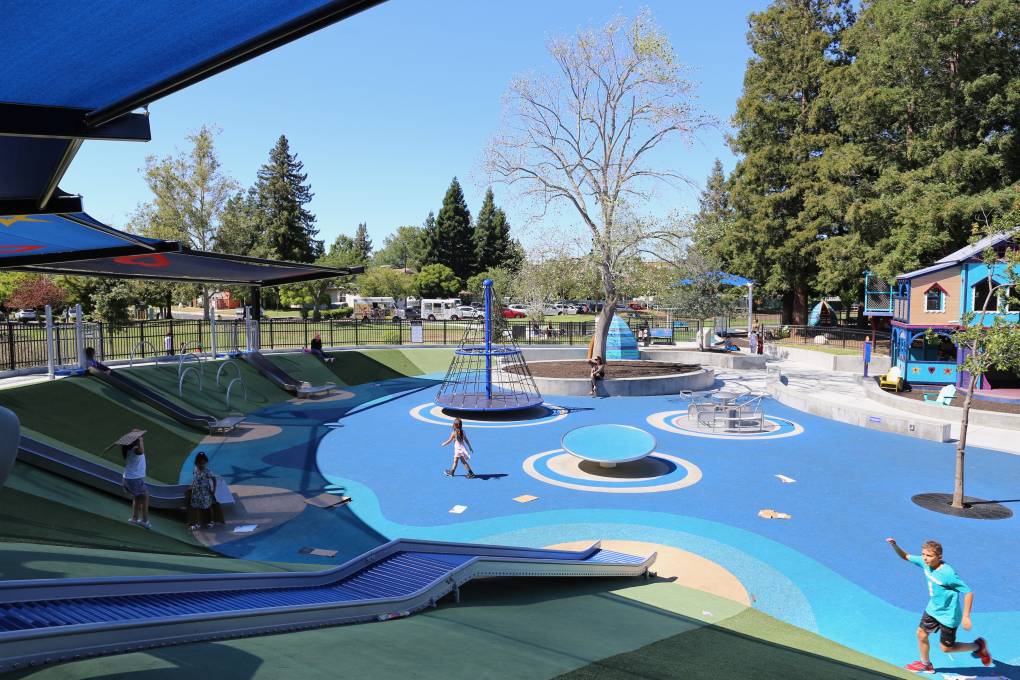
"caption": "Magical Bridge Playground at Red Morton Park in Redwood City, Calif. opened in 2021.",
"description": null,
"title": "Redwood City - Playground 3_MBF",
"credit": "Magical Bridge Foundation",
"status": "inherit",
"altTag": null,
"isLoading": false,
"fetchFailed": false
},
"mindshift_63415": {
"type": "attachments",
"id": "mindshift_63415",
"meta": {
"index": "attachments_1716263798",
"site": "mindshift",
"id": "63415",
"found": true
},
"parent": 63406,
"imgSizes": {
"twentyfourteen-full-width": {
"file": "https://cdn.kqed.org/wp-content/uploads/sites/23/2024/03/Palo-Alto-Carosuel-Wheelchairs_MBF-1038x576.jpeg",
"width": 1038,
"mimeType": "image/jpeg",
"height": 576
},
"thumbnail": {
"file": "https://cdn.kqed.org/wp-content/uploads/sites/23/2024/03/Palo-Alto-Carosuel-Wheelchairs_MBF-160x120.jpeg",
"width": 160,
"mimeType": "image/jpeg",
"height": 120
},
"post-thumbnail": {
"file": "https://cdn.kqed.org/wp-content/uploads/sites/23/2024/03/Palo-Alto-Carosuel-Wheelchairs_MBF-672x372.jpeg",
"width": 672,
"mimeType": "image/jpeg",
"height": 372
},
"kqedFullSize": {
"file": "https://cdn.kqed.org/wp-content/uploads/sites/23/2024/03/Palo-Alto-Carosuel-Wheelchairs_MBF.jpeg",
"width": 1280,
"height": 960
},
"large": {
"file": "https://cdn.kqed.org/wp-content/uploads/sites/23/2024/03/Palo-Alto-Carosuel-Wheelchairs_MBF-1020x765.jpeg",
"width": 1020,
"mimeType": "image/jpeg",
"height": 765
},
"medium": {
"file": "https://cdn.kqed.org/wp-content/uploads/sites/23/2024/03/Palo-Alto-Carosuel-Wheelchairs_MBF-800x600.jpeg",
"width": 800,
"mimeType": "image/jpeg",
"height": 600
},
"medium_large": {
"file": "https://cdn.kqed.org/wp-content/uploads/sites/23/2024/03/Palo-Alto-Carosuel-Wheelchairs_MBF-768x576.jpeg",
"width": 768,
"mimeType": "image/jpeg",
"height": 576
}
},
"publishDate": 1711422823,
"modified": 1711425386,
"caption": "Magical Bridge Playground at Mitchell Park in Palo Alto, California opened in 2015.",
"description": null,
"title": "Palo Alto Carosuel Wheelchairs_MBF",
"credit": "Magical Bridge Foundation",
"status": "inherit",
"altTag": null,
"isLoading": false,
"fetchFailed": false
},
"mindshift_61733": {
"type": "attachments",
"id": "mindshift_61733",
"meta": {
"index": "attachments_1716263798",
"site": "mindshift",
"id": "61733",
"found": true
},
"parent": 61731,
"imgSizes": {
"twentyfourteen-full-width": {
"file": "https://ww2.kqed.org/app/uploads/sites/23/2023/05/UDL-expressway-1038x576.jpg",
"width": 1038,
"mimeType": "image/jpeg",
"height": 576
},
"thumbnail": {
"file": "https://ww2.kqed.org/app/uploads/sites/23/2023/05/UDL-expressway-160x100.jpg",
"width": 160,
"mimeType": "image/jpeg",
"height": 100
},
"post-thumbnail": {
"file": "https://ww2.kqed.org/app/uploads/sites/23/2023/05/UDL-expressway-672x372.jpg",
"width": 672,
"mimeType": "image/jpeg",
"height": 372
},
"kqedFullSize": {
"file": "https://ww2.kqed.org/app/uploads/sites/23/2023/05/UDL-expressway.jpg",
"width": 1920,
"height": 1200
},
"large": {
"file": "https://ww2.kqed.org/app/uploads/sites/23/2023/05/UDL-expressway-1020x638.jpg",
"width": 1020,
"mimeType": "image/jpeg",
"height": 638
},
"1536x1536": {
"file": "https://ww2.kqed.org/app/uploads/sites/23/2023/05/UDL-expressway-1536x960.jpg",
"width": 1536,
"mimeType": "image/jpeg",
"height": 960
},
"medium": {
"file": "https://ww2.kqed.org/app/uploads/sites/23/2023/05/UDL-expressway-800x500.jpg",
"width": 800,
"mimeType": "image/jpeg",
"height": 500
},
"medium_large": {
"file": "https://ww2.kqed.org/app/uploads/sites/23/2023/05/UDL-expressway-768x480.jpg",
"width": 768,
"mimeType": "image/jpeg",
"height": 480
}
},
"publishDate": 1685552048,
"modified": 1685552048,
"caption": null,
"description": null,
"title": "UDL expressway",
"credit": null,
"status": "inherit",
"altTag": null,
"isLoading": false,
"fetchFailed": false
},
"mindshift_56310": {
"type": "attachments",
"id": "mindshift_56310",
"meta": {
"index": "attachments_1716263798",
"site": "mindshift",
"id": "56310",
"found": true
},
"parent": 56309,
"imgSizes": {
"twentyfourteen-full-width": {
"file": "https://ww2.kqed.org/app/uploads/sites/23/2020/07/Marie-Kondo-2-867x576.png",
"width": 867,
"mimeType": "image/png",
"height": 576
},
"thumbnail": {
"file": "https://ww2.kqed.org/app/uploads/sites/23/2020/07/Marie-Kondo-2-160x120.png",
"width": 160,
"mimeType": "image/png",
"height": 120
},
"post-thumbnail": {
"file": "https://ww2.kqed.org/app/uploads/sites/23/2020/07/Marie-Kondo-2-672x372.png",
"width": 672,
"mimeType": "image/png",
"height": 372
},
"kqedFullSize": {
"file": "https://ww2.kqed.org/app/uploads/sites/23/2020/07/Marie-Kondo-2.png",
"width": 867,
"height": 650
},
"medium": {
"file": "https://ww2.kqed.org/app/uploads/sites/23/2020/07/Marie-Kondo-2-800x600.png",
"width": 800,
"mimeType": "image/png",
"height": 600
},
"medium_large": {
"file": "https://ww2.kqed.org/app/uploads/sites/23/2020/07/Marie-Kondo-2-768x576.png",
"width": 768,
"mimeType": "image/png",
"height": 576
}
},
"publishDate": 1595187212,
"modified": 1595187304,
"caption": "Imagining September: Principles and Design Elements for Ambitious Schools During COVID-19",
"description": null,
"title": "Marie Kondo 2",
"credit": null,
"status": "inherit",
"isLoading": false,
"fetchFailed": false
},
"mindshift_48215": {
"type": "attachments",
"id": "mindshift_48215",
"meta": {
"index": "attachments_1716263798",
"site": "mindshift",
"id": "48215",
"found": true
},
"parent": 48185,
"imgSizes": {
"small": {
"file": "https://ww2.kqed.org/app/uploads/sites/23/2017/05/dschool_Retool0117_PatrickBeaudouin-24-520x347.jpg",
"width": 520,
"mimeType": "image/jpeg",
"height": 347
},
"twentyfourteen-full-width": {
"file": "https://ww2.kqed.org/app/uploads/sites/23/2017/05/dschool_Retool0117_PatrickBeaudouin-24-1038x576.jpg",
"width": 1038,
"mimeType": "image/jpeg",
"height": 576
},
"thumbnail": {
"file": "https://ww2.kqed.org/app/uploads/sites/23/2017/05/dschool_Retool0117_PatrickBeaudouin-24-160x107.jpg",
"width": 160,
"mimeType": "image/jpeg",
"height": 107
},
"fd-sm": {
"file": "https://ww2.kqed.org/app/uploads/sites/23/2017/05/dschool_Retool0117_PatrickBeaudouin-24-960x640.jpg",
"width": 960,
"mimeType": "image/jpeg",
"height": 640
},
"post-thumbnail": {
"file": "https://ww2.kqed.org/app/uploads/sites/23/2017/05/dschool_Retool0117_PatrickBeaudouin-24-672x372.jpg",
"width": 672,
"mimeType": "image/jpeg",
"height": 372
},
"xsmall": {
"file": "https://ww2.kqed.org/app/uploads/sites/23/2017/05/dschool_Retool0117_PatrickBeaudouin-24-375x250.jpg",
"width": 375,
"mimeType": "image/jpeg",
"height": 250
},
"kqedFullSize": {
"file": "https://ww2.kqed.org/app/uploads/sites/23/2017/05/dschool_Retool0117_PatrickBeaudouin-24.jpg",
"width": 5526,
"height": 3684
},
"large": {
"file": "https://ww2.kqed.org/app/uploads/sites/23/2017/05/dschool_Retool0117_PatrickBeaudouin-24-1020x680.jpg",
"width": 1020,
"mimeType": "image/jpeg",
"height": 680
},
"xlarge": {
"file": "https://ww2.kqed.org/app/uploads/sites/23/2017/05/dschool_Retool0117_PatrickBeaudouin-24-1180x787.jpg",
"width": 1180,
"mimeType": "image/jpeg",
"height": 787
},
"guest-author-50": {
"file": "https://ww2.kqed.org/app/uploads/sites/23/2017/05/dschool_Retool0117_PatrickBeaudouin-24-50x50.jpg",
"width": 50,
"mimeType": "image/jpeg",
"height": 50
},
"guest-author-96": {
"file": "https://ww2.kqed.org/app/uploads/sites/23/2017/05/dschool_Retool0117_PatrickBeaudouin-24-96x96.jpg",
"width": 96,
"mimeType": "image/jpeg",
"height": 96
},
"medium": {
"file": "https://ww2.kqed.org/app/uploads/sites/23/2017/05/dschool_Retool0117_PatrickBeaudouin-24-800x533.jpg",
"width": 800,
"mimeType": "image/jpeg",
"height": 533
},
"guest-author-64": {
"file": "https://ww2.kqed.org/app/uploads/sites/23/2017/05/dschool_Retool0117_PatrickBeaudouin-24-64x64.jpg",
"width": 64,
"mimeType": "image/jpeg",
"height": 64
},
"guest-author-32": {
"file": "https://ww2.kqed.org/app/uploads/sites/23/2017/05/dschool_Retool0117_PatrickBeaudouin-24-32x32.jpg",
"width": 32,
"mimeType": "image/jpeg",
"height": 32
},
"fd-lrg": {
"file": "https://ww2.kqed.org/app/uploads/sites/23/2017/05/dschool_Retool0117_PatrickBeaudouin-24-1920x1280.jpg",
"width": 1920,
"mimeType": "image/jpeg",
"height": 1280
},
"fd-med": {
"file": "https://ww2.kqed.org/app/uploads/sites/23/2017/05/dschool_Retool0117_PatrickBeaudouin-24-1180x787.jpg",
"width": 1180,
"mimeType": "image/jpeg",
"height": 787
},
"full-width": {
"file": "https://ww2.kqed.org/app/uploads/sites/23/2017/05/dschool_Retool0117_PatrickBeaudouin-24-1920x1280.jpg",
"width": 1920,
"mimeType": "image/jpeg",
"height": 1280
},
"detail": {
"file": "https://ww2.kqed.org/app/uploads/sites/23/2017/05/dschool_Retool0117_PatrickBeaudouin-24-150x150.jpg",
"width": 150,
"mimeType": "image/jpeg",
"height": 150
},
"medium_large": {
"file": "https://ww2.kqed.org/app/uploads/sites/23/2017/05/dschool_Retool0117_PatrickBeaudouin-24-768x512.jpg",
"width": 768,
"mimeType": "image/jpeg",
"height": 512
},
"guest-author-128": {
"file": "https://ww2.kqed.org/app/uploads/sites/23/2017/05/dschool_Retool0117_PatrickBeaudouin-24-128x128.jpg",
"width": 128,
"mimeType": "image/jpeg",
"height": 128
},
"xxsmall": {
"file": "https://ww2.kqed.org/app/uploads/sites/23/2017/05/dschool_Retool0117_PatrickBeaudouin-24-240x160.jpg",
"width": 240,
"mimeType": "image/jpeg",
"height": 160
}
},
"publishDate": 1494285411,
"modified": 1494285470,
"caption": "Principals engage in design challenges as part of the School Retool fellowship.",
"description": null,
"title": "dschool_Retool0117_PatrickBeaudouin-24",
"credit": "Courtesy School Retool",
"status": "inherit",
"isLoading": false,
"fetchFailed": false
},
"mindshift_47260": {
"type": "attachments",
"id": "mindshift_47260",
"meta": {
"index": "attachments_1716263798",
"site": "mindshift",
"id": "47260",
"found": true
},
"parent": 47258,
"imgSizes": {
"small": {
"file": "https://ww2.kqed.org/app/uploads/sites/23/2017/01/design-thinking-520x293.gif",
"width": 520,
"mimeType": "image/gif",
"height": 293
},
"twentyfourteen-full-width": {
"file": "https://ww2.kqed.org/app/uploads/sites/23/2017/01/design-thinking-1038x576.gif",
"width": 1038,
"mimeType": "image/gif",
"height": 576
},
"thumbnail": {
"file": "https://ww2.kqed.org/app/uploads/sites/23/2017/01/design-thinking-160x90.gif",
"width": 160,
"mimeType": "image/gif",
"height": 90
},
"fd-sm": {
"file": "https://ww2.kqed.org/app/uploads/sites/23/2017/01/design-thinking-960x540.gif",
"width": 960,
"mimeType": "image/gif",
"height": 540
},
"post-thumbnail": {
"file": "https://ww2.kqed.org/app/uploads/sites/23/2017/01/design-thinking-672x372.gif",
"width": 672,
"mimeType": "image/gif",
"height": 372
},
"xsmall": {
"file": "https://ww2.kqed.org/app/uploads/sites/23/2017/01/design-thinking-375x211.gif",
"width": 375,
"mimeType": "image/gif",
"height": 211
},
"kqedFullSize": {
"file": "https://ww2.kqed.org/app/uploads/sites/23/2017/01/design-thinking.gif",
"width": 2048,
"height": 1152
},
"large": {
"file": "https://ww2.kqed.org/app/uploads/sites/23/2017/01/design-thinking-1020x574.gif",
"width": 1020,
"mimeType": "image/gif",
"height": 574
},
"xlarge": {
"file": "https://ww2.kqed.org/app/uploads/sites/23/2017/01/design-thinking-1180x664.gif",
"width": 1180,
"mimeType": "image/gif",
"height": 664
},
"guest-author-50": {
"file": "https://ww2.kqed.org/app/uploads/sites/23/2017/01/design-thinking-50x50.gif",
"width": 50,
"mimeType": "image/gif",
"height": 50
},
"guest-author-96": {
"file": "https://ww2.kqed.org/app/uploads/sites/23/2017/01/design-thinking-96x96.gif",
"width": 96,
"mimeType": "image/gif",
"height": 96
},
"medium": {
"file": "https://ww2.kqed.org/app/uploads/sites/23/2017/01/design-thinking-800x450.gif",
"width": 800,
"mimeType": "image/gif",
"height": 450
},
"guest-author-64": {
"file": "https://ww2.kqed.org/app/uploads/sites/23/2017/01/design-thinking-64x64.gif",
"width": 64,
"mimeType": "image/gif",
"height": 64
},
"guest-author-32": {
"file": "https://ww2.kqed.org/app/uploads/sites/23/2017/01/design-thinking-32x32.gif",
"width": 32,
"mimeType": "image/gif",
"height": 32
},
"fd-lrg": {
"file": "https://ww2.kqed.org/app/uploads/sites/23/2017/01/design-thinking-1920x1080.gif",
"width": 1920,
"mimeType": "image/gif",
"height": 1080
},
"fd-med": {
"file": "https://ww2.kqed.org/app/uploads/sites/23/2017/01/design-thinking-1180x664.gif",
"width": 1180,
"mimeType": "image/gif",
"height": 664
},
"full-width": {
"file": "https://ww2.kqed.org/app/uploads/sites/23/2017/01/design-thinking-1920x1080.gif",
"width": 1920,
"mimeType": "image/gif",
"height": 1080
},
"detail": {
"file": "https://ww2.kqed.org/app/uploads/sites/23/2017/01/design-thinking-150x150.gif",
"width": 150,
"mimeType": "image/gif",
"height": 150
},
"medium_large": {
"file": "https://ww2.kqed.org/app/uploads/sites/23/2017/01/design-thinking-768x432.gif",
"width": 768,
"mimeType": "image/gif",
"height": 432
},
"guest-author-128": {
"file": "https://ww2.kqed.org/app/uploads/sites/23/2017/01/design-thinking-128x128.gif",
"width": 128,
"mimeType": "image/gif",
"height": 128
},
"xxsmall": {
"file": "https://ww2.kqed.org/app/uploads/sites/23/2017/01/design-thinking-240x135.gif",
"width": 240,
"mimeType": "image/gif",
"height": 135
}
},
"publishDate": 1483569735,
"modified": 1483569813,
"caption": "A design thinking workshop in Denmark.",
"description": null,
"title": "design-thinking",
"credit": "Ewan McIntosh/\u003ca href=\"https://www.flickr.com/photos/edublogger/15424725203/\">Flickr\u003c/a>",
"status": "inherit",
"isLoading": false,
"fetchFailed": false
},
"mindshift_46263": {
"type": "attachments",
"id": "mindshift_46263",
"meta": {
"index": "attachments_1716263798",
"site": "mindshift",
"id": "46263",
"found": true
},
"parent": 46259,
"imgSizes": {
"twentyfourteen-full-width": {
"file": "https://ww2.kqed.org/app/uploads/sites/23/2016/09/ice-castle-1024x576.jpg",
"width": 1024,
"mimeType": "image/jpeg",
"height": 576
},
"thumbnail": {
"file": "https://ww2.kqed.org/app/uploads/sites/23/2016/09/ice-castle-400x300.jpg",
"width": 400,
"mimeType": "image/jpeg",
"height": 300
},
"fd-sm": {
"file": "https://ww2.kqed.org/app/uploads/sites/23/2016/09/ice-castle-960x720.jpg",
"width": 960,
"mimeType": "image/jpeg",
"height": 720
},
"post-thumbnail": {
"file": "https://ww2.kqed.org/app/uploads/sites/23/2016/09/ice-castle-672x372.jpg",
"width": 672,
"mimeType": "image/jpeg",
"height": 372
},
"kqedFullSize": {
"file": "https://ww2.kqed.org/app/uploads/sites/23/2016/09/ice-castle.jpg",
"width": 1024,
"height": 768
},
"guest-author-50": {
"file": "https://ww2.kqed.org/app/uploads/sites/23/2016/09/ice-castle-50x50.jpg",
"width": 50,
"mimeType": "image/jpeg",
"height": 50
},
"guest-author-96": {
"file": "https://ww2.kqed.org/app/uploads/sites/23/2016/09/ice-castle-96x96.jpg",
"width": 96,
"mimeType": "image/jpeg",
"height": 96
},
"medium": {
"file": "https://ww2.kqed.org/app/uploads/sites/23/2016/09/ice-castle-800x600.jpg",
"width": 800,
"mimeType": "image/jpeg",
"height": 600
},
"guest-author-64": {
"file": "https://ww2.kqed.org/app/uploads/sites/23/2016/09/ice-castle-64x64.jpg",
"width": 64,
"mimeType": "image/jpeg",
"height": 64
},
"guest-author-32": {
"file": "https://ww2.kqed.org/app/uploads/sites/23/2016/09/ice-castle-32x32.jpg",
"width": 32,
"mimeType": "image/jpeg",
"height": 32
},
"cat_post_thumb_sizecategory-posts-2": {
"file": "https://ww2.kqed.org/app/uploads/sites/23/2016/09/ice-castle-50x50.jpg",
"width": 50,
"mimeType": "image/jpeg",
"height": 50
},
"detail": {
"file": "https://ww2.kqed.org/app/uploads/sites/23/2016/09/ice-castle-150x150.jpg",
"width": 150,
"mimeType": "image/jpeg",
"height": 150
},
"medium_large": {
"file": "https://ww2.kqed.org/app/uploads/sites/23/2016/09/ice-castle-768x576.jpg",
"width": 768,
"mimeType": "image/jpeg",
"height": 576
},
"guest-author-128": {
"file": "https://ww2.kqed.org/app/uploads/sites/23/2016/09/ice-castle-128x128.jpg",
"width": 128,
"mimeType": "image/jpeg",
"height": 128
}
},
"publishDate": 1472848203,
"modified": 1472848286,
"caption": "Students designed and built an ice castle window display that was 30 feet deep.",
"description": null,
"title": "ice castle",
"credit": "Courtesy Michael Stone",
"status": "inherit",
"isLoading": false,
"fetchFailed": false
},
"mindshift_42854": {
"type": "attachments",
"id": "mindshift_42854",
"meta": {
"index": "attachments_1716263798",
"site": "mindshift",
"id": "42854",
"found": true
},
"parent": 42853,
"imgSizes": {
"twentyfourteen-full-width": {
"file": "https://ww2.kqed.org/app/uploads/sites/23/2015/11/laser-cutter-1038x576.jpg",
"width": 1038,
"mimeType": "image/jpeg",
"height": 576
},
"thumbnail": {
"file": "https://ww2.kqed.org/app/uploads/sites/23/2015/11/laser-cutter-400x225.jpg",
"width": 400,
"mimeType": "image/jpeg",
"height": 225
},
"fd-sm": {
"file": "https://ww2.kqed.org/app/uploads/sites/23/2015/11/laser-cutter-960x540.jpg",
"width": 960,
"mimeType": "image/jpeg",
"height": 540
},
"post-thumbnail": {
"file": "https://ww2.kqed.org/app/uploads/sites/23/2015/11/laser-cutter-672x372.jpg",
"width": 672,
"mimeType": "image/jpeg",
"height": 372
},
"kqedFullSize": {
"file": "https://ww2.kqed.org/app/uploads/sites/23/2015/11/laser-cutter.jpg",
"width": 5184,
"height": 2916
},
"large": {
"file": "https://ww2.kqed.org/app/uploads/sites/23/2015/11/laser-cutter-1440x810.jpg",
"width": 1440,
"mimeType": "image/jpeg",
"height": 810
},
"guest-author-96": {
"file": "https://ww2.kqed.org/app/uploads/sites/23/2015/11/laser-cutter-96x96.jpg",
"width": 96,
"mimeType": "image/jpeg",
"height": 96
},
"medium": {
"file": "https://ww2.kqed.org/app/uploads/sites/23/2015/11/laser-cutter-800x450.jpg",
"width": 800,
"mimeType": "image/jpeg",
"height": 450
},
"guest-author-64": {
"file": "https://ww2.kqed.org/app/uploads/sites/23/2015/11/laser-cutter-64x64.jpg",
"width": 64,
"mimeType": "image/jpeg",
"height": 64
},
"guest-author-32": {
"file": "https://ww2.kqed.org/app/uploads/sites/23/2015/11/laser-cutter-32x32.jpg",
"width": 32,
"mimeType": "image/jpeg",
"height": 32
},
"cat_post_thumb_sizecategory-posts-2": {
"file": "https://ww2.kqed.org/app/uploads/sites/23/2015/11/laser-cutter-50x50.jpg",
"width": 50,
"mimeType": "image/jpeg",
"height": 50
},
"fd-lrg": {
"file": "https://ww2.kqed.org/app/uploads/sites/23/2015/11/laser-cutter-1920x1080.jpg",
"width": 1920,
"mimeType": "image/jpeg",
"height": 1080
},
"fd-med": {
"file": "https://ww2.kqed.org/app/uploads/sites/23/2015/11/laser-cutter-1180x664.jpg",
"width": 1180,
"mimeType": "image/jpeg",
"height": 664
},
"detail": {
"file": "https://ww2.kqed.org/app/uploads/sites/23/2015/11/laser-cutter-75x75.jpg",
"width": 75,
"mimeType": "image/jpeg",
"height": 75
},
"guest-author-128": {
"file": "https://ww2.kqed.org/app/uploads/sites/23/2015/11/laser-cutter-128x128.jpg",
"width": 128,
"mimeType": "image/jpeg",
"height": 128
}
},
"publishDate": 1447979466,
"modified": 1447979570,
"caption": "Fascinated kids explore how the laser cutter produces the cardboard pieces during the city pilot program.",
"description": null,
"title": "laser-cutter",
"credit": "Courtesy of Bay Area Discovery Museum",
"status": "inherit",
"isLoading": false,
"fetchFailed": false
},
"mindshift_41822": {
"type": "attachments",
"id": "mindshift_41822",
"meta": {
"index": "attachments_1716263798",
"site": "mindshift",
"id": "41822",
"found": true
},
"parent": 41719,
"imgSizes": {
"twentyfourteen-full-width": {
"file": "https://ww2.kqed.org/app/uploads/sites/23/2015/08/lighthouse-1038x576.jpg",
"width": 1038,
"mimeType": "image/jpeg",
"height": 576
},
"thumbnail": {
"file": "https://ww2.kqed.org/app/uploads/sites/23/2015/08/lighthouse-400x225.jpg",
"width": 400,
"mimeType": "image/jpeg",
"height": 225
},
"fd-sm": {
"file": "https://ww2.kqed.org/app/uploads/sites/23/2015/08/lighthouse-960x540.jpg",
"width": 960,
"mimeType": "image/jpeg",
"height": 540
},
"post-thumbnail": {
"file": "https://ww2.kqed.org/app/uploads/sites/23/2015/08/lighthouse-672x372.jpg",
"width": 672,
"mimeType": "image/jpeg",
"height": 372
},
"kqedFullSize": {
"file": "https://ww2.kqed.org/app/uploads/sites/23/2015/08/lighthouse.jpg",
"width": 1920,
"height": 1080
},
"large": {
"file": "https://ww2.kqed.org/app/uploads/sites/23/2015/08/lighthouse-1440x810.jpg",
"width": 1440,
"mimeType": "image/jpeg",
"height": 810
},
"guest-author-96": {
"file": "https://ww2.kqed.org/app/uploads/sites/23/2015/08/lighthouse-96x96.jpg",
"width": 96,
"mimeType": "image/jpeg",
"height": 96
},
"medium": {
"file": "https://ww2.kqed.org/app/uploads/sites/23/2015/08/lighthouse-800x450.jpg",
"width": 800,
"mimeType": "image/jpeg",
"height": 450
},
"guest-author-64": {
"file": "https://ww2.kqed.org/app/uploads/sites/23/2015/08/lighthouse-64x64.jpg",
"width": 64,
"mimeType": "image/jpeg",
"height": 64
},
"guest-author-32": {
"file": "https://ww2.kqed.org/app/uploads/sites/23/2015/08/lighthouse-32x32.jpg",
"width": 32,
"mimeType": "image/jpeg",
"height": 32
},
"cat_post_thumb_sizecategory-posts-2": {
"file": "https://ww2.kqed.org/app/uploads/sites/23/2015/08/lighthouse-50x50.jpg",
"width": 50,
"mimeType": "image/jpeg",
"height": 50
},
"fd-lrg": {
"file": "https://ww2.kqed.org/app/uploads/sites/23/2015/08/lighthouse-1920x1080.jpg",
"width": 1920,
"mimeType": "image/jpeg",
"height": 1080
},
"fd-med": {
"file": "https://ww2.kqed.org/app/uploads/sites/23/2015/08/lighthouse-1180x664.jpg",
"width": 1180,
"mimeType": "image/jpeg",
"height": 664
},
"detail": {
"file": "https://ww2.kqed.org/app/uploads/sites/23/2015/08/lighthouse-75x75.jpg",
"width": 75,
"mimeType": "image/jpeg",
"height": 75
},
"guest-author-128": {
"file": "https://ww2.kqed.org/app/uploads/sites/23/2015/08/lighthouse-128x128.jpg",
"width": 128,
"mimeType": "image/jpeg",
"height": 128
}
},
"publishDate": 1440805859,
"modified": 1440805943,
"caption": "Sixth graders at Lighthouse Community Charter School in East Oakland tinker with Turtle Art as part of a deep dive into the coordinate grid.",
"description": null,
"title": "lighthouse",
"credit": "Katrina Schwartz",
"status": "inherit",
"isLoading": false,
"fetchFailed": false
},
"mindshift_41800": {
"type": "attachments",
"id": "mindshift_41800",
"meta": {
"index": "attachments_1716263798",
"site": "mindshift",
"id": "41800",
"found": true
},
"parent": 41457,
"imgSizes": {
"twentyfourteen-full-width": {
"file": "https://ww2.kqed.org/app/uploads/sites/23/2015/08/future2-1038x576.jpg",
"width": 1038,
"mimeType": "image/jpeg",
"height": 576
},
"thumbnail": {
"file": "https://ww2.kqed.org/app/uploads/sites/23/2015/08/future2-400x234.jpg",
"width": 400,
"mimeType": "image/jpeg",
"height": 234
},
"fd-sm": {
"file": "https://ww2.kqed.org/app/uploads/sites/23/2015/08/future2-960x562.jpg",
"width": 960,
"mimeType": "image/jpeg",
"height": 562
},
"post-thumbnail": {
"file": "https://ww2.kqed.org/app/uploads/sites/23/2015/08/future2-672x372.jpg",
"width": 672,
"mimeType": "image/jpeg",
"height": 372
},
"kqedFullSize": {
"file": "https://ww2.kqed.org/app/uploads/sites/23/2015/08/future2.jpg",
"width": 3186,
"height": 1864
},
"large": {
"file": "https://ww2.kqed.org/app/uploads/sites/23/2015/08/future2-1440x842.jpg",
"width": 1440,
"mimeType": "image/jpeg",
"height": 842
},
"guest-author-96": {
"file": "https://ww2.kqed.org/app/uploads/sites/23/2015/08/future2-96x96.jpg",
"width": 96,
"mimeType": "image/jpeg",
"height": 96
},
"medium": {
"file": "https://ww2.kqed.org/app/uploads/sites/23/2015/08/future2-800x468.jpg",
"width": 800,
"mimeType": "image/jpeg",
"height": 468
},
"guest-author-64": {
"file": "https://ww2.kqed.org/app/uploads/sites/23/2015/08/future2-64x64.jpg",
"width": 64,
"mimeType": "image/jpeg",
"height": 64
},
"guest-author-32": {
"file": "https://ww2.kqed.org/app/uploads/sites/23/2015/08/future2-32x32.jpg",
"width": 32,
"mimeType": "image/jpeg",
"height": 32
},
"cat_post_thumb_sizecategory-posts-2": {
"file": "https://ww2.kqed.org/app/uploads/sites/23/2015/08/future2-50x50.jpg",
"width": 50,
"mimeType": "image/jpeg",
"height": 50
},
"fd-lrg": {
"file": "https://ww2.kqed.org/app/uploads/sites/23/2015/08/future2-1920x1123.jpg",
"width": 1920,
"mimeType": "image/jpeg",
"height": 1123
},
"fd-med": {
"file": "https://ww2.kqed.org/app/uploads/sites/23/2015/08/future2-1180x690.jpg",
"width": 1180,
"mimeType": "image/jpeg",
"height": 690
},
"detail": {
"file": "https://ww2.kqed.org/app/uploads/sites/23/2015/08/future2-75x75.jpg",
"width": 75,
"mimeType": "image/jpeg",
"height": 75
},
"guest-author-128": {
"file": "https://ww2.kqed.org/app/uploads/sites/23/2015/08/future2-128x128.jpg",
"width": 128,
"mimeType": "image/jpeg",
"height": 128
}
},
"publishDate": 1440699048,
"modified": 1440699057,
"caption": null,
"description": null,
"title": "future2",
"credit": "iStock",
"status": "inherit",
"isLoading": false,
"fetchFailed": false
},
"mindshift_39399": {
"type": "attachments",
"id": "mindshift_39399",
"meta": {
"index": "attachments_1716263798",
"site": "mindshift",
"id": "39399",
"found": true
},
"parent": 39397,
"imgSizes": {
"twentyfourteen-full-width": {
"file": "https://ww2.kqed.org/app/uploads/sites/23/2015/02/Alpha-2-1038x576.gif",
"width": 1038,
"mimeType": "image/gif",
"height": 576
},
"thumbnail": {
"file": "https://ww2.kqed.org/app/uploads/sites/23/2015/02/Alpha-2-400x267.gif",
"width": 400,
"mimeType": "image/gif",
"height": 267
},
"fd-sm": {
"file": "https://ww2.kqed.org/app/uploads/sites/23/2015/02/Alpha-2-320x214.gif",
"width": 320,
"mimeType": "image/gif",
"height": 214
},
"post-thumbnail": {
"file": "https://ww2.kqed.org/app/uploads/sites/23/2015/02/Alpha-2-672x372.gif",
"width": 672,
"mimeType": "image/gif",
"height": 372
},
"kqedFullSize": {
"file": "https://ww2.kqed.org/app/uploads/sites/23/2015/02/Alpha-2.gif",
"width": 1438,
"height": 960
},
"fd-lrg": {
"file": "https://ww2.kqed.org/app/uploads/sites/23/2015/02/Alpha-2-1180x788.gif",
"width": 1180,
"mimeType": "image/gif",
"height": 788
},
"fd-med": {
"file": "https://ww2.kqed.org/app/uploads/sites/23/2015/02/Alpha-2-768x513.gif",
"width": 768,
"mimeType": "image/gif",
"height": 513
},
"guest-author-96": {
"file": "https://ww2.kqed.org/app/uploads/sites/23/2015/02/Alpha-2-96x96.gif",
"width": 96,
"mimeType": "image/gif",
"height": 96
},
"medium": {
"file": "https://ww2.kqed.org/app/uploads/sites/23/2015/02/Alpha-2-800x534.gif",
"width": 800,
"mimeType": "image/gif",
"height": 534
},
"guest-author-64": {
"file": "https://ww2.kqed.org/app/uploads/sites/23/2015/02/Alpha-2-64x64.gif",
"width": 64,
"mimeType": "image/gif",
"height": 64
},
"guest-author-32": {
"file": "https://ww2.kqed.org/app/uploads/sites/23/2015/02/Alpha-2-32x32.gif",
"width": 32,
"mimeType": "image/gif",
"height": 32
},
"guest-author-128": {
"file": "https://ww2.kqed.org/app/uploads/sites/23/2015/02/Alpha-2-128x128.gif",
"width": 128,
"mimeType": "image/gif",
"height": 128
}
},
"publishDate": 1424385636,
"modified": 1424385652,
"caption": "High School design team members check out ideas written on post-it notes during a brainstorming session. (Photo: Courtesy of Will Eden)\n",
"description": null,
"title": "Alpha-2",
"credit": null,
"status": "inherit",
"isLoading": false,
"fetchFailed": false
},
"mindshift_39290": {
"type": "attachments",
"id": "mindshift_39290",
"meta": {
"index": "attachments_1716263798",
"site": "mindshift",
"id": "39290",
"found": true
},
"parent": 39286,
"imgSizes": {
"twentyfourteen-full-width": {
"file": "https://ww2.kqed.org/app/uploads/sites/23/2015/02/Christopher-Rodriguez-1038x576.gif",
"width": 1038,
"mimeType": "image/gif",
"height": 576
},
"thumbnail": {
"file": "https://ww2.kqed.org/app/uploads/sites/23/2015/02/Christopher-Rodriguez-400x267.gif",
"width": 400,
"mimeType": "image/gif",
"height": 267
},
"fd-sm": {
"file": "https://ww2.kqed.org/app/uploads/sites/23/2015/02/Christopher-Rodriguez-320x214.gif",
"width": 320,
"mimeType": "image/gif",
"height": 214
},
"post-thumbnail": {
"file": "https://ww2.kqed.org/app/uploads/sites/23/2015/02/Christopher-Rodriguez-672x372.gif",
"width": 672,
"mimeType": "image/gif",
"height": 372
},
"kqedFullSize": {
"file": "https://ww2.kqed.org/app/uploads/sites/23/2015/02/Christopher-Rodriguez.gif",
"width": 1438,
"height": 960
},
"fd-lrg": {
"file": "https://ww2.kqed.org/app/uploads/sites/23/2015/02/Christopher-Rodriguez-1180x788.gif",
"width": 1180,
"mimeType": "image/gif",
"height": 788
},
"fd-med": {
"file": "https://ww2.kqed.org/app/uploads/sites/23/2015/02/Christopher-Rodriguez-768x513.gif",
"width": 768,
"mimeType": "image/gif",
"height": 513
},
"guest-author-96": {
"file": "https://ww2.kqed.org/app/uploads/sites/23/2015/02/Christopher-Rodriguez-96x96.gif",
"width": 96,
"mimeType": "image/gif",
"height": 96
},
"medium": {
"file": "https://ww2.kqed.org/app/uploads/sites/23/2015/02/Christopher-Rodriguez-800x534.gif",
"width": 800,
"mimeType": "image/gif",
"height": 534
},
"guest-author-64": {
"file": "https://ww2.kqed.org/app/uploads/sites/23/2015/02/Christopher-Rodriguez-64x64.gif",
"width": 64,
"mimeType": "image/gif",
"height": 64
},
"guest-author-32": {
"file": "https://ww2.kqed.org/app/uploads/sites/23/2015/02/Christopher-Rodriguez-32x32.gif",
"width": 32,
"mimeType": "image/gif",
"height": 32
},
"guest-author-128": {
"file": "https://ww2.kqed.org/app/uploads/sites/23/2015/02/Christopher-Rodriguez-128x128.gif",
"width": 128,
"mimeType": "image/gif",
"height": 128
}
},
"publishDate": 1423493601,
"modified": 1423493601,
"caption": null,
"description": null,
"title": "Christopher-Rodriguez",
"credit": null,
"status": "inherit",
"isLoading": false,
"fetchFailed": false
},
"mindshift_39232": {
"type": "attachments",
"id": "mindshift_39232",
"meta": {
"index": "attachments_1716263798",
"site": "mindshift",
"id": "39232",
"found": true
},
"parent": 39208,
"imgSizes": {
"twentyfourteen-full-width": {
"file": "https://ww2.kqed.org/app/uploads/sites/23/2015/02/Emily-Neblett-1038x576.gif",
"width": 1038,
"mimeType": "image/gif",
"height": 576
},
"thumbnail": {
"file": "https://ww2.kqed.org/app/uploads/sites/23/2015/02/Emily-Neblett-400x267.gif",
"width": 400,
"mimeType": "image/gif",
"height": 267
},
"fd-sm": {
"file": "https://ww2.kqed.org/app/uploads/sites/23/2015/02/Emily-Neblett-320x213.gif",
"width": 320,
"mimeType": "image/gif",
"height": 213
},
"post-thumbnail": {
"file": "https://ww2.kqed.org/app/uploads/sites/23/2015/02/Emily-Neblett-672x372.gif",
"width": 672,
"mimeType": "image/gif",
"height": 372
},
"kqedFullSize": {
"file": "https://ww2.kqed.org/app/uploads/sites/23/2015/02/Emily-Neblett.gif",
"width": 1440,
"height": 960
},
"large": {
"file": "https://ww2.kqed.org/app/uploads/sites/23/2015/02/Emily-Neblett-1440x960.gif",
"width": 1440,
"mimeType": "image/gif",
"height": 960
},
"guest-author-96": {
"file": "https://ww2.kqed.org/app/uploads/sites/23/2015/02/Emily-Neblett-96x96.gif",
"width": 96,
"mimeType": "image/gif",
"height": 96
},
"medium": {
"file": "https://ww2.kqed.org/app/uploads/sites/23/2015/02/Emily-Neblett-800x533.gif",
"width": 800,
"mimeType": "image/gif",
"height": 533
},
"guest-author-64": {
"file": "https://ww2.kqed.org/app/uploads/sites/23/2015/02/Emily-Neblett-64x64.gif",
"width": 64,
"mimeType": "image/gif",
"height": 64
},
"guest-author-32": {
"file": "https://ww2.kqed.org/app/uploads/sites/23/2015/02/Emily-Neblett-32x32.gif",
"width": 32,
"mimeType": "image/gif",
"height": 32
},
"fd-lrg": {
"file": "https://ww2.kqed.org/app/uploads/sites/23/2015/02/Emily-Neblett-1180x787.gif",
"width": 1180,
"mimeType": "image/gif",
"height": 787
},
"fd-med": {
"file": "https://ww2.kqed.org/app/uploads/sites/23/2015/02/Emily-Neblett-768x512.gif",
"width": 768,
"mimeType": "image/gif",
"height": 512
},
"guest-author-128": {
"file": "https://ww2.kqed.org/app/uploads/sites/23/2015/02/Emily-Neblett-128x128.gif",
"width": 128,
"mimeType": "image/gif",
"height": 128
}
},
"publishDate": 1423033288,
"modified": 1423033629,
"caption": "Emily Neblett stands next to a mobile maker space at at Monroe Caroll Jr. Children's Hospital at Vanderbilt University. Noah Nelson/Youth Radio",
"description": null,
"title": "Emily-Neblett",
"credit": null,
"status": "inherit",
"isLoading": false,
"fetchFailed": false
}
},
"audioPlayerReducer": {
"postId": "stream_live",
"isPaused": true,
"isPlaying": false,
"pfsActive": false,
"pledgeModalIsOpen": true,
"playerDrawerIsOpen": false,
"liveAudioPlayStartedAt": 0,
"liveAudioPlayContext": ""
},
"authorsReducer": {
"katrinaschwartz": {
"type": "authors",
"id": "234",
"meta": {
"index": "authors_1716337520",
"id": "234",
"found": true
},
"name": "Katrina Schwartz",
"firstName": "Katrina",
"lastName": "Schwartz",
"slug": "katrinaschwartz",
"email": "kschwartz@kqed.org",
"display_author_email": false,
"staff_mastheads": [
"news"
],
"title": "Producer",
"bio": "Katrina Schwartz is a journalist based in San Francisco. She's worked at KPCC public radio in LA and has reported on air and online for KQED since 2010. She covered how teaching and learning is changing for MindShift between 2012 and 2020. She is the co-host of the MindShift podcast and now produces KQED's Bay Curious podcast.",
"avatar": "https://secure.gravatar.com/avatar/edb4ee79070447a018538c9aae6eeecf28786515b8a0c30e43b6b7dce5aa44c8?s=600&d=blank&r=g",
"twitter": "kschwart",
"bluesky": null,
"facebook": null,
"instagram": null,
"linkedin": null,
"sites": [
{
"site": "",
"roles": [
"editor"
]
},
{
"site": "news",
"roles": [
"editor"
]
},
{
"site": "mindshift",
"roles": [
"administrator"
]
},
{
"site": "stateofhealth",
"roles": [
"author"
]
},
{
"site": "science",
"roles": [
"editor"
]
}
],
"headData": {
"title": "Katrina Schwartz | KQED",
"description": "Producer",
"ogImgSrc": "https://secure.gravatar.com/avatar/edb4ee79070447a018538c9aae6eeecf28786515b8a0c30e43b6b7dce5aa44c8?s=600&d=blank&r=g",
"twImgSrc": "https://secure.gravatar.com/avatar/edb4ee79070447a018538c9aae6eeecf28786515b8a0c30e43b6b7dce5aa44c8?s=600&d=blank&r=g"
},
"isLoading": false,
"link": "/author/katrinaschwartz"
},
"pauldarvasi": {
"type": "authors",
"id": "11107",
"meta": {
"index": "authors_1716337520",
"id": "11107",
"found": true
},
"name": "Paul Darvasi",
"firstName": "Paul",
"lastName": "Darvasi",
"slug": "pauldarvasi",
"email": "pauldarvasi@gmail.com",
"display_author_email": false,
"staff_mastheads": [],
"title": null,
"bio": "Paul Darvasi is an experienced educator whose research, speaking and writing explore the intersections of learning, technology, narrative and games. You can follow him on Twitter:\u003ca href=\"https://twitter.com/PaulDarvasi\"> @pauldarvasi\u003c/a>",
"avatar": "https://secure.gravatar.com/avatar/df387897a1bf0cd4b720b8175112731a?s=600&d=blank&r=g",
"twitter": "pauldarvasi",
"facebook": null,
"instagram": null,
"linkedin": null,
"sites": [
{
"site": "mindshift",
"roles": [
"contributor"
]
}
],
"headData": {
"title": "Paul Darvasi | KQED",
"description": null,
"ogImgSrc": "https://secure.gravatar.com/avatar/df387897a1bf0cd4b720b8175112731a?s=600&d=blank&r=g",
"twImgSrc": "https://secure.gravatar.com/avatar/df387897a1bf0cd4b720b8175112731a?s=600&d=blank&r=g"
},
"isLoading": false,
"link": "/author/pauldarvasi"
},
"ngobir": {
"type": "authors",
"id": "11721",
"meta": {
"index": "authors_1716337520",
"id": "11721",
"found": true
},
"name": "Nimah Gobir",
"firstName": "Nimah",
"lastName": "Gobir",
"slug": "ngobir",
"email": "ngobir@kqed.org",
"display_author_email": false,
"staff_mastheads": [],
"title": "KQED Contributor",
"bio": null,
"avatar": "https://secure.gravatar.com/avatar/837f5df7045c59f3ec097cdf7ac391373ab75d5ec936dd7099b8cb6f0af1b0e9?s=600&d=blank&r=g",
"twitter": null,
"bluesky": null,
"facebook": null,
"instagram": null,
"linkedin": null,
"sites": [
{
"site": "mindshift",
"roles": [
"editor"
]
}
],
"headData": {
"title": "Nimah Gobir | KQED",
"description": "KQED Contributor",
"ogImgSrc": "https://secure.gravatar.com/avatar/837f5df7045c59f3ec097cdf7ac391373ab75d5ec936dd7099b8cb6f0af1b0e9?s=600&d=blank&r=g",
"twImgSrc": "https://secure.gravatar.com/avatar/837f5df7045c59f3ec097cdf7ac391373ab75d5ec936dd7099b8cb6f0af1b0e9?s=600&d=blank&r=g"
},
"isLoading": false,
"link": "/author/ngobir"
},
"mjacksonretondo": {
"type": "authors",
"id": "11759",
"meta": {
"index": "authors_1716337520",
"id": "11759",
"found": true
},
"name": "Marlena Jackson-Retondo",
"firstName": "Marlena",
"lastName": "Jackson-Retondo",
"slug": "mjacksonretondo",
"email": "mjacksonretondo@kqed.org",
"display_author_email": false,
"staff_mastheads": [],
"title": "Engagement Producer",
"bio": "Marlena Jackson-Retondo is the engagement producer for KQED's \u003cem>Forum \u003c/em>and \u003cem>Mindshift\u003c/em>. Prior to joining the team in 2022, Marlena was an intern with the KQED Digital News Engagement team. She grew up in the Bay Area.\u003cem> \u003c/em>",
"avatar": "https://secure.gravatar.com/avatar/3289a983be008447a8117cf17b43ecf1f5db0adf66817b815e1de414c4c5c704?s=600&d=blank&r=g",
"twitter": null,
"bluesky": null,
"facebook": null,
"instagram": null,
"linkedin": null,
"sites": [
{
"site": "arts",
"roles": [
"editor"
]
},
{
"site": "news",
"roles": [
"contributor"
]
},
{
"site": "mindshift",
"roles": [
"editor"
]
},
{
"site": "forum",
"roles": [
"editor"
]
}
],
"headData": {
"title": "Marlena Jackson-Retondo | KQED",
"description": "Engagement Producer",
"ogImgSrc": "https://secure.gravatar.com/avatar/3289a983be008447a8117cf17b43ecf1f5db0adf66817b815e1de414c4c5c704?s=600&d=blank&r=g",
"twImgSrc": "https://secure.gravatar.com/avatar/3289a983be008447a8117cf17b43ecf1f5db0adf66817b815e1de414c4c5c704?s=600&d=blank&r=g"
},
"isLoading": false,
"link": "/author/mjacksonretondo"
}
},
"pagesReducer": {
"mindshift_category_design-thinking-2": {
"type": "terms",
"id": "mindshift_20523",
"meta": {
"index": "terms_1716263798",
"site": "mindshift",
"id": "20523",
"score": 14.405014
},
"featImg": null,
"name": "Design Thinking",
"description": null,
"taxonomy": "category",
"headData": {
"twImgId": null,
"twTitle": null,
"ogTitle": null,
"ogImgId": null,
"twDescription": null,
"description": null,
"title": "Design Thinking Archives | KQED Mindshift",
"ogDescription": null
},
"ttid": 19800,
"slug": "design-thinking-2",
"isLoading": false,
"title": "Design Thinking",
"pageMeta": {
"site": "mindshift",
"WpPageTemplate": "page-topic-editorial",
"currentPage": 1
},
"blocks": [
{
"blockName": "kqed/post-list",
"attrs": {
"layout": "cardArticle2",
"query": "posts/mindshift?category=design-thinking-2",
"seeMore": false,
"paginated": true,
"page": 1
}
},
{
"blockName": "kqed/ad"
}
]
}
},
"pfsSessionReducer": {},
"postsReducer": {
"stream_live": {
"type": "live",
"id": "stream_live",
"audioUrl": "https://hls.kqed.org/hls/kqed_app/playlist.m3u8",
"title": "Live Stream",
"excerpt": "Live Stream information currently unavailable.",
"link": "/radio",
"featImg": "",
"label": {
"name": "KQED Live",
"link": "/"
}
},
"stream_kqedNewscast": {
"type": "posts",
"id": "stream_kqedNewscast",
"audioUrl": "https://www.kqed.org/.stream/anon/radio/RDnews/newscast.mp3?_=1",
"title": "KQED Newscast",
"featImg": "",
"label": {
"name": "88.5 FM",
"link": "/"
}
},
"mindshift_63406": {
"type": "posts",
"id": "mindshift_63406",
"meta": {
"index": "posts_1716263798",
"site": "mindshift",
"id": "63406",
"score": null,
"sort": [
1711425005000
]
},
"parent": 0,
"labelTerm": {
"site": "mindshift"
},
"blocks": [],
"publishDate": 1711425005,
"format": "standard",
"title": "What Do Truly Accessible and Inclusive Playgrounds Look Like?",
"headTitle": "What Do Truly Accessible and Inclusive Playgrounds Look Like? | KQED",
"content": "\u003cp>\u003cspan style=\"font-weight: 400\">When Natalie Mackay toured her son’s elementary school, she asked how he might be included on the playground. The school suggested that her son, who used a wheelchair, could lay down a blanket on a graveled area to play. This kind of “solution,” in which children with disabilities are left to watch other children play in schools, tells all students that excluding some peers is OK, said Mackay. As a mom, she wanted to see her son and all children have exciting opportunities for \u003ca href=\"https://www.kqed.org/mindshift/60251/want-resilient-and-well-adjusted-kids-let-them-play\">play\u003c/a> and \u003ca href=\"https://www.kqed.org/mindshift/63184/when-parents-know-these-4-phases-of-friendship-they-can-help-their-child-make-friends-more-easily\">socialization\u003c/a>. So she founded \u003ca href=\"https://unlimitedplay.org/\">Unlimited Play\u003c/a>, a nonprofit dedicated to accessible and \u003ca href=\"https://www.kqed.org/mindshift/61143/playground\">inclusive playground design\u003c/a>. Inclusive playgrounds “were the vehicle that I thought would allow kids to get to know my son,” she said.\u003c/span>\u003c/p>\n\u003cp>\u003cspan style=\"font-weight: 400\">Playgrounds are a child’s “first outdoor classroom,” and where “they learn they belong to the community,” said Olenka Villarreal, CEO and founder of \u003ca href=\"https://www.magicalbridge.org/\">Magical Bridge Foundation\u003c/a>, a nonprofit dedicated to universal, community and inclusive design. Playgrounds set the foundation for belonging and social inclusion for kids and adults of all abilities. But according to both Mackay and Villareal, accessibility standards for playgrounds laid out by the Americans with Disabilities Act (ADA) alone don’t encompass the specificities and expansiveness needed to create true inclusion on the playground. Mackay and Villarreal have made it their mission to redefine what it means for a playground to be truly accessible and inclusive of the full spectrum of ability and disability in the communities that the playgrounds serve. To them, playgrounds that are inclusive to all types of play can help to create a sense of belonging for everyone.\u003c/span>\u003c/p>\n\u003cfigure id=\"attachment_63412\" class=\"wp-caption aligncenter\" style=\"max-width: 800px\">\u003cimg loading=\"lazy\" decoding=\"async\" class=\"size-medium wp-image-63412\" src=\"https://cdn.kqed.org/wp-content/uploads/sites/23/2024/03/LT_2018_MO_JakesFieldOfDreams_198-UnlimitedPlay-800x600.jpg\" alt=\"\" width=\"800\" height=\"600\" srcset=\"https://cdn.kqed.org/wp-content/uploads/sites/23/2024/03/LT_2018_MO_JakesFieldOfDreams_198-UnlimitedPlay-800x600.jpg 800w, https://cdn.kqed.org/wp-content/uploads/sites/23/2024/03/LT_2018_MO_JakesFieldOfDreams_198-UnlimitedPlay-1020x765.jpg 1020w, https://cdn.kqed.org/wp-content/uploads/sites/23/2024/03/LT_2018_MO_JakesFieldOfDreams_198-UnlimitedPlay-160x120.jpg 160w, https://cdn.kqed.org/wp-content/uploads/sites/23/2024/03/LT_2018_MO_JakesFieldOfDreams_198-UnlimitedPlay-768x576.jpg 768w, https://cdn.kqed.org/wp-content/uploads/sites/23/2024/03/LT_2018_MO_JakesFieldOfDreams_198-UnlimitedPlay-1536x1152.jpg 1536w, https://cdn.kqed.org/wp-content/uploads/sites/23/2024/03/LT_2018_MO_JakesFieldOfDreams_198-UnlimitedPlay-2048x1536.jpg 2048w, https://cdn.kqed.org/wp-content/uploads/sites/23/2024/03/LT_2018_MO_JakesFieldOfDreams_198-UnlimitedPlay-1920x1440.jpg 1920w\" sizes=\"(max-width: 800px) 100vw, 800px\">\u003cfigcaption class=\"wp-caption-text\">Unlimited Play’s Jake’s Field of Dreams Playground in Wentzville, Missouri opened in 2018. \u003ccite>(Unlimited Play)\u003c/cite>\u003c/figcaption>\u003c/figure>\n\u003cp>\u003cb>What does full accessibility look like?\u003c/b>\u003c/p>\n\u003cp>\u003cspan style=\"font-weight: 400\">For Villarreal, Magical Bridge Foundation was born organically to meet her own family’s needs. “I had one daughter with disabilities and one without, and I was looking for a place to take them both,” she said. Villarreal also acknowledged that abilities may change over time. “I want to be included in the body I live in today and the one I’m going to live in in 30 years,” she said. “When our spaces aren’t welcoming to us in whatever way we show up, it really creates divisions among everyone.” \u003c/span>\u003c/p>\n\u003cp>\u003cspan style=\"font-weight: 400\">According to Mackay, accessibility on playgrounds means removing barriers to play. She said that one of the first suggestions from parents that influenced her understanding of inclusion was to include fencing around play spaces for the safety of children who might \u003c/span>\u003ca href=\"https://www.kennedykrieger.org/patient-care/conditions/elopement\">\u003cspan style=\"font-weight: 400\">elope\u003c/span>\u003c/a>\u003cspan style=\"font-weight: 400\">. Inclusivity on the playground doesn’t begin and end with ramp access to the lower level of a structure or accessible pathways to a gated entrance. There are many more abilities to consider, like vision and hearing loss, sensory needs, and mobility and physical support needs. Social inclusion is also a big part of accessibility on a playground, said Mackay.\u003c/span>\u003c/p>\n\u003cp>[ad fullwidth]\u003c/p>\n\u003cp>\u003cspan style=\"font-weight: 400\">To make playgrounds accessible and inclusive for children and adults with visual impairments, Unlimited Play has used high contrasting colors in their designs. Mackay also emphasized the importance of situating public playgrounds in an area that has visual and auditory landmarks and direct access to public transportation. Villarreal said that it is important for “typically” developing children to play in these inclusive spaces because it exposes them to many different types of people and abilities.\u003c/span>\u003c/p>\n\u003cfigure id=\"attachment_63415\" class=\"wp-caption aligncenter\" style=\"max-width: 800px\">\u003cimg loading=\"lazy\" decoding=\"async\" class=\"size-medium wp-image-63415\" src=\"https://cdn.kqed.org/wp-content/uploads/sites/23/2024/03/Palo-Alto-Carosuel-Wheelchairs_MBF-800x600.jpeg\" alt=\"\" width=\"800\" height=\"600\" srcset=\"https://cdn.kqed.org/wp-content/uploads/sites/23/2024/03/Palo-Alto-Carosuel-Wheelchairs_MBF-800x600.jpeg 800w, https://cdn.kqed.org/wp-content/uploads/sites/23/2024/03/Palo-Alto-Carosuel-Wheelchairs_MBF-1020x765.jpeg 1020w, https://cdn.kqed.org/wp-content/uploads/sites/23/2024/03/Palo-Alto-Carosuel-Wheelchairs_MBF-160x120.jpeg 160w, https://cdn.kqed.org/wp-content/uploads/sites/23/2024/03/Palo-Alto-Carosuel-Wheelchairs_MBF-768x576.jpeg 768w, https://cdn.kqed.org/wp-content/uploads/sites/23/2024/03/Palo-Alto-Carosuel-Wheelchairs_MBF.jpeg 1280w\" sizes=\"(max-width: 800px) 100vw, 800px\">\u003cfigcaption class=\"wp-caption-text\">Magical Bridge Playground at Mitchell Park in Palo Alto, California opened in 2015. \u003ccite>(Magical Bridge Foundation)\u003c/cite>\u003c/figcaption>\u003c/figure>\n\u003cp>\u003cspan style=\"font-weight: 400\">When it comes to safety on accessible playgrounds, Mackay suggested taking into consideration children who have difficulty with balance. For these children, inclusivity might take the form of tunnel slides instead of open ones, or choosing well thought out handholds throughout a structure.\u003c/span>\u003c/p>\n\u003cp>\u003cspan style=\"font-weight: 400\">Making sure that playgrounds are accessible and inclusive to parents and caregivers who have disabilities is also important. Children might miss out on opportunities to play if a playground or play space is not accessible to a parent with disabilities.\u003c/span>\u003c/p>\n\u003cfigure id=\"attachment_63416\" class=\"wp-caption aligncenter\" style=\"max-width: 800px\">\u003cimg loading=\"lazy\" decoding=\"async\" class=\"size-medium wp-image-63416\" src=\"https://cdn.kqed.org/wp-content/uploads/sites/23/2024/03/Redwood-City-Laser-Harp-Wheelchair-Kids_MBF-800x533.jpeg\" alt=\"\" width=\"800\" height=\"533\" srcset=\"https://cdn.kqed.org/wp-content/uploads/sites/23/2024/03/Redwood-City-Laser-Harp-Wheelchair-Kids_MBF-800x533.jpeg 800w, https://cdn.kqed.org/wp-content/uploads/sites/23/2024/03/Redwood-City-Laser-Harp-Wheelchair-Kids_MBF-1020x680.jpeg 1020w, https://cdn.kqed.org/wp-content/uploads/sites/23/2024/03/Redwood-City-Laser-Harp-Wheelchair-Kids_MBF-160x107.jpeg 160w, https://cdn.kqed.org/wp-content/uploads/sites/23/2024/03/Redwood-City-Laser-Harp-Wheelchair-Kids_MBF-768x512.jpeg 768w, https://cdn.kqed.org/wp-content/uploads/sites/23/2024/03/Redwood-City-Laser-Harp-Wheelchair-Kids_MBF-1536x1024.jpeg 1536w, https://cdn.kqed.org/wp-content/uploads/sites/23/2024/03/Redwood-City-Laser-Harp-Wheelchair-Kids_MBF-2048x1365.jpeg 2048w, https://cdn.kqed.org/wp-content/uploads/sites/23/2024/03/Redwood-City-Laser-Harp-Wheelchair-Kids_MBF-1920x1280.jpeg 1920w\" sizes=\"(max-width: 800px) 100vw, 800px\">\u003cfigcaption class=\"wp-caption-text\">Magical Bridge Playground at Red Morton Park in Redwood City, California opened in 2021. \u003ccite>(Magical Bridge Foundation)\u003c/cite>\u003c/figcaption>\u003c/figure>\n\u003cp>\u003cspan style=\"font-weight: 400\">At school playgrounds, most common structures like stairs, slides and swings aren’t designed with inclusion in mind, according to Villarreal. Regardless of ability, there need to be more movement options on playgrounds, she said. This could mean diversifying movement options to include more swinging and spinning elements, which can \u003c/span>\u003ca href=\"https://extension.psu.edu/programs/betterkidcare/news/spinning-rolling-and-swinging-oh-my#:~:text=These%20important%20movement%20experiences%20help,and%20swing%20indoors%20and%20outdoors.\">\u003cspan style=\"font-weight: 400\">help children develop and stimulate their nervous systems\u003c/span>\u003c/a>\u003cspan style=\"font-weight: 400\">. Villarreal also stressed the importance of removing the stigma around what may or may not be seen as age appropriate in a playground because developmental age is not always linked to physical age. \u003c/span>\u003c/p>\n\u003cp>\u003cb>Funding barriers and low-cost solutions\u003c/b>\u003c/p>\n\u003cp>\u003cspan style=\"font-weight: 400\">Funding is one of the biggest hurdles for schools to create accessible playgrounds. For example, Mackay pointed to a recent school project that her organization designed that included three separate accessible and inclusive playgrounds for a total cost of about $900,000, paid for through a school bond. Each individual playground ranged in price from $150,000 to $450,000. Often, when schools have come up with funding to pay for more accessible playgrounds, it doesn’t cover the cost of a full design and installation, said Mackay. Often it means picking pieces that will contribute to more accessibility and inclusivity to an existing space, said Mackay. In Palo Alto, where The Magical Bridge Foundation is based, the Santa Clara County Board of Supervisors has \u003c/span>\u003ca href=\"https://d5.santaclaracounty.gov/press-releases/county-funds-more-all-inclusive-playgrounds#:~:text=Recognizing%20the%20high%20demand%20and,inclusive%20playgrounds%20throughout%20the%20County.\">\u003cspan style=\"font-weight: 400\">offered grants\u003c/span>\u003c/a>\u003cspan style=\"font-weight: 400\"> to public agencies and nonprofits seeking to build inclusive playgrounds.\u003c/span>\u003c/p>\n\u003cfigure id=\"attachment_63411\" class=\"wp-caption aligncenter\" style=\"max-width: 800px\">\u003cimg loading=\"lazy\" decoding=\"async\" class=\"size-medium wp-image-63411\" src=\"https://cdn.kqed.org/wp-content/uploads/sites/23/2024/03/El-Carmelo-School-Slide-Swing_MBF-800x533.jpeg\" alt=\"\" width=\"800\" height=\"533\" srcset=\"https://cdn.kqed.org/wp-content/uploads/sites/23/2024/03/El-Carmelo-School-Slide-Swing_MBF-800x533.jpeg 800w, https://cdn.kqed.org/wp-content/uploads/sites/23/2024/03/El-Carmelo-School-Slide-Swing_MBF-1020x680.jpeg 1020w, https://cdn.kqed.org/wp-content/uploads/sites/23/2024/03/El-Carmelo-School-Slide-Swing_MBF-160x107.jpeg 160w, https://cdn.kqed.org/wp-content/uploads/sites/23/2024/03/El-Carmelo-School-Slide-Swing_MBF-768x512.jpeg 768w, https://cdn.kqed.org/wp-content/uploads/sites/23/2024/03/El-Carmelo-School-Slide-Swing_MBF-1536x1024.jpeg 1536w, https://cdn.kqed.org/wp-content/uploads/sites/23/2024/03/El-Carmelo-School-Slide-Swing_MBF-2048x1365.jpeg 2048w, https://cdn.kqed.org/wp-content/uploads/sites/23/2024/03/El-Carmelo-School-Slide-Swing_MBF-1920x1280.jpeg 1920w\" sizes=\"(max-width: 800px) 100vw, 800px\">\u003cfigcaption class=\"wp-caption-text\">Magical Bridge Playground at El Carmelo Elementary School in Palo Alto, California opened in 2023. \u003ccite>(Magical Bridge Foundation)\u003c/cite>\u003c/figcaption>\u003c/figure>\n\u003cp>\u003cspan style=\"font-weight: 400\">When looking for low-barrier and low-cost solutions to an otherwise inaccessible playground, Mackay recommended creating more \u003c/span>\u003ca href=\"https://www.kqed.org/mindshift/62349/why-schoolyards-are-a-critical-space-for-teaching-about-and-fighting-extreme-heat-and-climate-change\">\u003cspan style=\"font-weight: 400\">shaded spaces\u003c/span>\u003c/a>\u003cspan style=\"font-weight: 400\">, “even if it’s a tree with a bench.” And “if it’s a bench, put a space where somebody in a wheelchair can be there,” she said. According to Mackay, vertical panels with open ended activities like spinning pieces or a steering wheel cost around $1,200 each and can provide an interactive and socially inviting play space for all children. She suggested placing panel pieces in creative ways around the playground to provide more opportunities for different types of play and movement. Adding an adaptive swing with a high back and harness, designed for children with a variety of disabilities, also contributes to a more inclusive environment on the playground.\u003c/span>\u003c/p>\n\u003cp>\u003cspan style=\"font-weight: 400\">The playground at school is one of the places where students can learn about inclusive practices, even when a total playground overhaul isn’t in the current plans. If educators “teach [students] about inclusion in their classroom and then take them out to the playground and let them experience what that looks like,” then students might have a better understanding of how they might be able to be more inclusive in their own play, said Mackay. Unlimited Play offers partnerships with educators and schools to develop classroom curriculum to encourage inclusive play, including lesson plans on social awareness and effective communication. The Magical Bridge Foundation also offers learning materials for \u003c/span>\u003ca href=\"https://www.magicalbridge.org/students\">\u003cspan style=\"font-weight: 400\">students\u003c/span>\u003c/a>\u003cspan style=\"font-weight: 400\">, \u003c/span>\u003ca href=\"https://www.magicalbridge.org/parents\">\u003cspan style=\"font-weight: 400\">parents\u003c/span>\u003c/a>\u003cspan style=\"font-weight: 400\"> and \u003c/span>\u003ca href=\"https://www.magicalbridge.org/educators\">\u003cspan style=\"font-weight: 400\">educators\u003c/span>\u003c/a>\u003cspan style=\"font-weight: 400\"> online.\u003c/span>\u003c/p>\n\u003cfigure id=\"attachment_63414\" class=\"wp-caption aligncenter\" style=\"max-width: 800px\">\u003cimg loading=\"lazy\" decoding=\"async\" class=\"size-medium wp-image-63414\" src=\"https://cdn.kqed.org/wp-content/uploads/sites/23/2024/03/Palo-Alto-Sway-Boat_MBF-800x533.jpeg\" alt=\"\" width=\"800\" height=\"533\" srcset=\"https://cdn.kqed.org/wp-content/uploads/sites/23/2024/03/Palo-Alto-Sway-Boat_MBF-800x533.jpeg 800w, https://cdn.kqed.org/wp-content/uploads/sites/23/2024/03/Palo-Alto-Sway-Boat_MBF-1020x680.jpeg 1020w, https://cdn.kqed.org/wp-content/uploads/sites/23/2024/03/Palo-Alto-Sway-Boat_MBF-160x107.jpeg 160w, https://cdn.kqed.org/wp-content/uploads/sites/23/2024/03/Palo-Alto-Sway-Boat_MBF-768x512.jpeg 768w, https://cdn.kqed.org/wp-content/uploads/sites/23/2024/03/Palo-Alto-Sway-Boat_MBF-1536x1024.jpeg 1536w, https://cdn.kqed.org/wp-content/uploads/sites/23/2024/03/Palo-Alto-Sway-Boat_MBF-2048x1365.jpeg 2048w, https://cdn.kqed.org/wp-content/uploads/sites/23/2024/03/Palo-Alto-Sway-Boat_MBF-1920x1280.jpeg 1920w\" sizes=\"(max-width: 800px) 100vw, 800px\">\u003cfigcaption class=\"wp-caption-text\">Magical Bridge Playground at Mitchell Park in Palo Alto, California opened in 2015. \u003ccite>(Magical Bridge Foundation)\u003c/cite>\u003c/figcaption>\u003c/figure>\n\u003cp>[ad floatright]\u003c/p>\n\u003cp>\u003cspan style=\"font-weight: 400\">Connecting with community partners about providing services can help a project along, said Mackay, who is most often contacted by families looking for inclusive solutions to playgrounds in their areas. She works with those families to establish community connections who might want to be involved in the process of creating an inclusive playground. Some of Mackay’s most successful partnerships have been with other nonprofits that serve children with disabilities. The Magical Bridge Foundation also trains volunteers or \u003c/span>\u003ca href=\"https://www.magicalbridge.org/kindness-ambassadors\">\u003cspan style=\"font-weight: 400\">Kindness Ambassadors\u003c/span>\u003c/a>\u003cspan style=\"font-weight: 400\">, who then offer read-aloud sessions, musical performances and art education at their playgrounds. These volunteers and employees also have varying abilities and disabilities, so that children can experience the diversity that already exists in their community.\u003c/span>\u003c/p>\n\u003cfigure id=\"attachment_63413\" class=\"wp-caption aligncenter\" style=\"max-width: 800px\">\u003cimg loading=\"lazy\" decoding=\"async\" class=\"size-medium wp-image-63413\" src=\"https://cdn.kqed.org/wp-content/uploads/sites/23/2024/03/New-Zealand-Aerial-Slide-Zone-Playhouse_MBF-800x442.jpeg\" alt=\"\" width=\"800\" height=\"442\" srcset=\"https://cdn.kqed.org/wp-content/uploads/sites/23/2024/03/New-Zealand-Aerial-Slide-Zone-Playhouse_MBF-800x442.jpeg 800w, https://cdn.kqed.org/wp-content/uploads/sites/23/2024/03/New-Zealand-Aerial-Slide-Zone-Playhouse_MBF-1020x564.jpeg 1020w, https://cdn.kqed.org/wp-content/uploads/sites/23/2024/03/New-Zealand-Aerial-Slide-Zone-Playhouse_MBF-160x88.jpeg 160w, https://cdn.kqed.org/wp-content/uploads/sites/23/2024/03/New-Zealand-Aerial-Slide-Zone-Playhouse_MBF-768x425.jpeg 768w, https://cdn.kqed.org/wp-content/uploads/sites/23/2024/03/New-Zealand-Aerial-Slide-Zone-Playhouse_MBF-1536x849.jpeg 1536w, https://cdn.kqed.org/wp-content/uploads/sites/23/2024/03/New-Zealand-Aerial-Slide-Zone-Playhouse_MBF-2048x1132.jpeg 2048w, https://cdn.kqed.org/wp-content/uploads/sites/23/2024/03/New-Zealand-Aerial-Slide-Zone-Playhouse_MBF-672x372.jpeg 672w, https://cdn.kqed.org/wp-content/uploads/sites/23/2024/03/New-Zealand-Aerial-Slide-Zone-Playhouse_MBF-1920x1062.jpeg 1920w\" sizes=\"(max-width: 800px) 100vw, 800px\">\u003cfigcaption class=\"wp-caption-text\">Magical Bridge Playground at Claudelands Park in Hamilton, New Zealand opened in 2023. \u003ccite>(Magical Bridge Foundation)\u003c/cite>\u003c/figcaption>\u003c/figure>\n\n",
"stats": {
"hasVideo": false,
"hasChartOrMap": false,
"hasAudio": false,
"hasPolis": false,
"wordCount": 1368,
"hasGoogleForm": false,
"hasGallery": false,
"hasHearkenModule": false,
"iframeSrcs": [],
"paragraphCount": 16
},
"modified": 1711426216,
"excerpt": "Playgrounds set the foundation for belonging and social inclusion for kids and adults of all abilities.",
"headData": {
"twImgId": "mindshift_63415",
"twTitle": "",
"ogTitle": "",
"ogImgId": "mindshift_63415",
"twDescription": "",
"description": "Playgrounds set the foundation for belonging and social inclusion for kids and adults of all abilities.",
"socialDescription": "Playgrounds set the foundation for belonging and social inclusion for kids and adults of all abilities.",
"title": "What Do Truly Accessible and Inclusive Playgrounds Look Like? | KQED",
"ogDescription": "",
"schema": {
"@context": "https://schema.org",
"@type": "Article",
"headline": "What Do Truly Accessible and Inclusive Playgrounds Look Like?",
"datePublished": "2024-03-25T20:50:05-07:00",
"dateModified": "2024-03-25T21:10:16-07:00",
"image": "https://cdn.kqed.org/wp-content/uploads/2020/02/KQED-OG-Image@1x.png"
}
},
"guestAuthors": [],
"slug": "what-do-truly-accessible-and-inclusive-playgrounds-look-like",
"status": "publish",
"excludeFromSiteSearch": "Include",
"sticky": false,
"articleAge": "0",
"path": "/mindshift/63406/what-do-truly-accessible-and-inclusive-playgrounds-look-like",
"audioTrackLength": null,
"parsedContent": [
{
"type": "contentString",
"content": "\u003cdiv class=\"post-body\">\u003cp>\u003cp>\u003cspan style=\"font-weight: 400\">When Natalie Mackay toured her son’s elementary school, she asked how he might be included on the playground. The school suggested that her son, who used a wheelchair, could lay down a blanket on a graveled area to play. This kind of “solution,” in which children with disabilities are left to watch other children play in schools, tells all students that excluding some peers is OK, said Mackay. As a mom, she wanted to see her son and all children have exciting opportunities for \u003ca href=\"https://www.kqed.org/mindshift/60251/want-resilient-and-well-adjusted-kids-let-them-play\">play\u003c/a> and \u003ca href=\"https://www.kqed.org/mindshift/63184/when-parents-know-these-4-phases-of-friendship-they-can-help-their-child-make-friends-more-easily\">socialization\u003c/a>. So she founded \u003ca href=\"https://unlimitedplay.org/\">Unlimited Play\u003c/a>, a nonprofit dedicated to accessible and \u003ca href=\"https://www.kqed.org/mindshift/61143/playground\">inclusive playground design\u003c/a>. Inclusive playgrounds “were the vehicle that I thought would allow kids to get to know my son,” she said.\u003c/span>\u003c/p>\n\u003cp>\u003cspan style=\"font-weight: 400\">Playgrounds are a child’s “first outdoor classroom,” and where “they learn they belong to the community,” said Olenka Villarreal, CEO and founder of \u003ca href=\"https://www.magicalbridge.org/\">Magical Bridge Foundation\u003c/a>, a nonprofit dedicated to universal, community and inclusive design. Playgrounds set the foundation for belonging and social inclusion for kids and adults of all abilities. But according to both Mackay and Villareal, accessibility standards for playgrounds laid out by the Americans with Disabilities Act (ADA) alone don’t encompass the specificities and expansiveness needed to create true inclusion on the playground. Mackay and Villarreal have made it their mission to redefine what it means for a playground to be truly accessible and inclusive of the full spectrum of ability and disability in the communities that the playgrounds serve. To them, playgrounds that are inclusive to all types of play can help to create a sense of belonging for everyone.\u003c/span>\u003c/p>\n\u003cfigure id=\"attachment_63412\" class=\"wp-caption aligncenter\" style=\"max-width: 800px\">\u003cimg loading=\"lazy\" decoding=\"async\" class=\"size-medium wp-image-63412\" src=\"https://cdn.kqed.org/wp-content/uploads/sites/23/2024/03/LT_2018_MO_JakesFieldOfDreams_198-UnlimitedPlay-800x600.jpg\" alt=\"\" width=\"800\" height=\"600\" srcset=\"https://cdn.kqed.org/wp-content/uploads/sites/23/2024/03/LT_2018_MO_JakesFieldOfDreams_198-UnlimitedPlay-800x600.jpg 800w, https://cdn.kqed.org/wp-content/uploads/sites/23/2024/03/LT_2018_MO_JakesFieldOfDreams_198-UnlimitedPlay-1020x765.jpg 1020w, https://cdn.kqed.org/wp-content/uploads/sites/23/2024/03/LT_2018_MO_JakesFieldOfDreams_198-UnlimitedPlay-160x120.jpg 160w, https://cdn.kqed.org/wp-content/uploads/sites/23/2024/03/LT_2018_MO_JakesFieldOfDreams_198-UnlimitedPlay-768x576.jpg 768w, https://cdn.kqed.org/wp-content/uploads/sites/23/2024/03/LT_2018_MO_JakesFieldOfDreams_198-UnlimitedPlay-1536x1152.jpg 1536w, https://cdn.kqed.org/wp-content/uploads/sites/23/2024/03/LT_2018_MO_JakesFieldOfDreams_198-UnlimitedPlay-2048x1536.jpg 2048w, https://cdn.kqed.org/wp-content/uploads/sites/23/2024/03/LT_2018_MO_JakesFieldOfDreams_198-UnlimitedPlay-1920x1440.jpg 1920w\" sizes=\"(max-width: 800px) 100vw, 800px\">\u003cfigcaption class=\"wp-caption-text\">Unlimited Play’s Jake’s Field of Dreams Playground in Wentzville, Missouri opened in 2018. \u003ccite>(Unlimited Play)\u003c/cite>\u003c/figcaption>\u003c/figure>\n\u003cp>\u003cb>What does full accessibility look like?\u003c/b>\u003c/p>\n\u003cp>\u003cspan style=\"font-weight: 400\">For Villarreal, Magical Bridge Foundation was born organically to meet her own family’s needs. “I had one daughter with disabilities and one without, and I was looking for a place to take them both,” she said. Villarreal also acknowledged that abilities may change over time. “I want to be included in the body I live in today and the one I’m going to live in in 30 years,” she said. “When our spaces aren’t welcoming to us in whatever way we show up, it really creates divisions among everyone.” \u003c/span>\u003c/p>\n\u003cp>\u003cspan style=\"font-weight: 400\">According to Mackay, accessibility on playgrounds means removing barriers to play. She said that one of the first suggestions from parents that influenced her understanding of inclusion was to include fencing around play spaces for the safety of children who might \u003c/span>\u003ca href=\"https://www.kennedykrieger.org/patient-care/conditions/elopement\">\u003cspan style=\"font-weight: 400\">elope\u003c/span>\u003c/a>\u003cspan style=\"font-weight: 400\">. Inclusivity on the playground doesn’t begin and end with ramp access to the lower level of a structure or accessible pathways to a gated entrance. There are many more abilities to consider, like vision and hearing loss, sensory needs, and mobility and physical support needs. Social inclusion is also a big part of accessibility on a playground, said Mackay.\u003c/span>\u003c/p>\n\u003cp>\u003c/p>\u003c/div>",
"attributes": {
"named": {},
"numeric": []
}
},
{
"type": "component",
"content": "",
"name": "ad",
"attributes": {
"named": {
"label": "fullwidth"
},
"numeric": [
"fullwidth"
]
}
},
{
"type": "contentString",
"content": "\u003cdiv class=\"post-body\">\u003cp>\u003c/p>\n\u003cp>\u003cspan style=\"font-weight: 400\">To make playgrounds accessible and inclusive for children and adults with visual impairments, Unlimited Play has used high contrasting colors in their designs. Mackay also emphasized the importance of situating public playgrounds in an area that has visual and auditory landmarks and direct access to public transportation. Villarreal said that it is important for “typically” developing children to play in these inclusive spaces because it exposes them to many different types of people and abilities.\u003c/span>\u003c/p>\n\u003cfigure id=\"attachment_63415\" class=\"wp-caption aligncenter\" style=\"max-width: 800px\">\u003cimg loading=\"lazy\" decoding=\"async\" class=\"size-medium wp-image-63415\" src=\"https://cdn.kqed.org/wp-content/uploads/sites/23/2024/03/Palo-Alto-Carosuel-Wheelchairs_MBF-800x600.jpeg\" alt=\"\" width=\"800\" height=\"600\" srcset=\"https://cdn.kqed.org/wp-content/uploads/sites/23/2024/03/Palo-Alto-Carosuel-Wheelchairs_MBF-800x600.jpeg 800w, https://cdn.kqed.org/wp-content/uploads/sites/23/2024/03/Palo-Alto-Carosuel-Wheelchairs_MBF-1020x765.jpeg 1020w, https://cdn.kqed.org/wp-content/uploads/sites/23/2024/03/Palo-Alto-Carosuel-Wheelchairs_MBF-160x120.jpeg 160w, https://cdn.kqed.org/wp-content/uploads/sites/23/2024/03/Palo-Alto-Carosuel-Wheelchairs_MBF-768x576.jpeg 768w, https://cdn.kqed.org/wp-content/uploads/sites/23/2024/03/Palo-Alto-Carosuel-Wheelchairs_MBF.jpeg 1280w\" sizes=\"(max-width: 800px) 100vw, 800px\">\u003cfigcaption class=\"wp-caption-text\">Magical Bridge Playground at Mitchell Park in Palo Alto, California opened in 2015. \u003ccite>(Magical Bridge Foundation)\u003c/cite>\u003c/figcaption>\u003c/figure>\n\u003cp>\u003cspan style=\"font-weight: 400\">When it comes to safety on accessible playgrounds, Mackay suggested taking into consideration children who have difficulty with balance. For these children, inclusivity might take the form of tunnel slides instead of open ones, or choosing well thought out handholds throughout a structure.\u003c/span>\u003c/p>\n\u003cp>\u003cspan style=\"font-weight: 400\">Making sure that playgrounds are accessible and inclusive to parents and caregivers who have disabilities is also important. Children might miss out on opportunities to play if a playground or play space is not accessible to a parent with disabilities.\u003c/span>\u003c/p>\n\u003cfigure id=\"attachment_63416\" class=\"wp-caption aligncenter\" style=\"max-width: 800px\">\u003cimg loading=\"lazy\" decoding=\"async\" class=\"size-medium wp-image-63416\" src=\"https://cdn.kqed.org/wp-content/uploads/sites/23/2024/03/Redwood-City-Laser-Harp-Wheelchair-Kids_MBF-800x533.jpeg\" alt=\"\" width=\"800\" height=\"533\" srcset=\"https://cdn.kqed.org/wp-content/uploads/sites/23/2024/03/Redwood-City-Laser-Harp-Wheelchair-Kids_MBF-800x533.jpeg 800w, https://cdn.kqed.org/wp-content/uploads/sites/23/2024/03/Redwood-City-Laser-Harp-Wheelchair-Kids_MBF-1020x680.jpeg 1020w, https://cdn.kqed.org/wp-content/uploads/sites/23/2024/03/Redwood-City-Laser-Harp-Wheelchair-Kids_MBF-160x107.jpeg 160w, https://cdn.kqed.org/wp-content/uploads/sites/23/2024/03/Redwood-City-Laser-Harp-Wheelchair-Kids_MBF-768x512.jpeg 768w, https://cdn.kqed.org/wp-content/uploads/sites/23/2024/03/Redwood-City-Laser-Harp-Wheelchair-Kids_MBF-1536x1024.jpeg 1536w, https://cdn.kqed.org/wp-content/uploads/sites/23/2024/03/Redwood-City-Laser-Harp-Wheelchair-Kids_MBF-2048x1365.jpeg 2048w, https://cdn.kqed.org/wp-content/uploads/sites/23/2024/03/Redwood-City-Laser-Harp-Wheelchair-Kids_MBF-1920x1280.jpeg 1920w\" sizes=\"(max-width: 800px) 100vw, 800px\">\u003cfigcaption class=\"wp-caption-text\">Magical Bridge Playground at Red Morton Park in Redwood City, California opened in 2021. \u003ccite>(Magical Bridge Foundation)\u003c/cite>\u003c/figcaption>\u003c/figure>\n\u003cp>\u003cspan style=\"font-weight: 400\">At school playgrounds, most common structures like stairs, slides and swings aren’t designed with inclusion in mind, according to Villarreal. Regardless of ability, there need to be more movement options on playgrounds, she said. This could mean diversifying movement options to include more swinging and spinning elements, which can \u003c/span>\u003ca href=\"https://extension.psu.edu/programs/betterkidcare/news/spinning-rolling-and-swinging-oh-my#:~:text=These%20important%20movement%20experiences%20help,and%20swing%20indoors%20and%20outdoors.\">\u003cspan style=\"font-weight: 400\">help children develop and stimulate their nervous systems\u003c/span>\u003c/a>\u003cspan style=\"font-weight: 400\">. Villarreal also stressed the importance of removing the stigma around what may or may not be seen as age appropriate in a playground because developmental age is not always linked to physical age. \u003c/span>\u003c/p>\n\u003cp>\u003cb>Funding barriers and low-cost solutions\u003c/b>\u003c/p>\n\u003cp>\u003cspan style=\"font-weight: 400\">Funding is one of the biggest hurdles for schools to create accessible playgrounds. For example, Mackay pointed to a recent school project that her organization designed that included three separate accessible and inclusive playgrounds for a total cost of about $900,000, paid for through a school bond. Each individual playground ranged in price from $150,000 to $450,000. Often, when schools have come up with funding to pay for more accessible playgrounds, it doesn’t cover the cost of a full design and installation, said Mackay. Often it means picking pieces that will contribute to more accessibility and inclusivity to an existing space, said Mackay. In Palo Alto, where The Magical Bridge Foundation is based, the Santa Clara County Board of Supervisors has \u003c/span>\u003ca href=\"https://d5.santaclaracounty.gov/press-releases/county-funds-more-all-inclusive-playgrounds#:~:text=Recognizing%20the%20high%20demand%20and,inclusive%20playgrounds%20throughout%20the%20County.\">\u003cspan style=\"font-weight: 400\">offered grants\u003c/span>\u003c/a>\u003cspan style=\"font-weight: 400\"> to public agencies and nonprofits seeking to build inclusive playgrounds.\u003c/span>\u003c/p>\n\u003cfigure id=\"attachment_63411\" class=\"wp-caption aligncenter\" style=\"max-width: 800px\">\u003cimg loading=\"lazy\" decoding=\"async\" class=\"size-medium wp-image-63411\" src=\"https://cdn.kqed.org/wp-content/uploads/sites/23/2024/03/El-Carmelo-School-Slide-Swing_MBF-800x533.jpeg\" alt=\"\" width=\"800\" height=\"533\" srcset=\"https://cdn.kqed.org/wp-content/uploads/sites/23/2024/03/El-Carmelo-School-Slide-Swing_MBF-800x533.jpeg 800w, https://cdn.kqed.org/wp-content/uploads/sites/23/2024/03/El-Carmelo-School-Slide-Swing_MBF-1020x680.jpeg 1020w, https://cdn.kqed.org/wp-content/uploads/sites/23/2024/03/El-Carmelo-School-Slide-Swing_MBF-160x107.jpeg 160w, https://cdn.kqed.org/wp-content/uploads/sites/23/2024/03/El-Carmelo-School-Slide-Swing_MBF-768x512.jpeg 768w, https://cdn.kqed.org/wp-content/uploads/sites/23/2024/03/El-Carmelo-School-Slide-Swing_MBF-1536x1024.jpeg 1536w, https://cdn.kqed.org/wp-content/uploads/sites/23/2024/03/El-Carmelo-School-Slide-Swing_MBF-2048x1365.jpeg 2048w, https://cdn.kqed.org/wp-content/uploads/sites/23/2024/03/El-Carmelo-School-Slide-Swing_MBF-1920x1280.jpeg 1920w\" sizes=\"(max-width: 800px) 100vw, 800px\">\u003cfigcaption class=\"wp-caption-text\">Magical Bridge Playground at El Carmelo Elementary School in Palo Alto, California opened in 2023. \u003ccite>(Magical Bridge Foundation)\u003c/cite>\u003c/figcaption>\u003c/figure>\n\u003cp>\u003cspan style=\"font-weight: 400\">When looking for low-barrier and low-cost solutions to an otherwise inaccessible playground, Mackay recommended creating more \u003c/span>\u003ca href=\"https://www.kqed.org/mindshift/62349/why-schoolyards-are-a-critical-space-for-teaching-about-and-fighting-extreme-heat-and-climate-change\">\u003cspan style=\"font-weight: 400\">shaded spaces\u003c/span>\u003c/a>\u003cspan style=\"font-weight: 400\">, “even if it’s a tree with a bench.” And “if it’s a bench, put a space where somebody in a wheelchair can be there,” she said. According to Mackay, vertical panels with open ended activities like spinning pieces or a steering wheel cost around $1,200 each and can provide an interactive and socially inviting play space for all children. She suggested placing panel pieces in creative ways around the playground to provide more opportunities for different types of play and movement. Adding an adaptive swing with a high back and harness, designed for children with a variety of disabilities, also contributes to a more inclusive environment on the playground.\u003c/span>\u003c/p>\n\u003cp>\u003cspan style=\"font-weight: 400\">The playground at school is one of the places where students can learn about inclusive practices, even when a total playground overhaul isn’t in the current plans. If educators “teach [students] about inclusion in their classroom and then take them out to the playground and let them experience what that looks like,” then students might have a better understanding of how they might be able to be more inclusive in their own play, said Mackay. Unlimited Play offers partnerships with educators and schools to develop classroom curriculum to encourage inclusive play, including lesson plans on social awareness and effective communication. The Magical Bridge Foundation also offers learning materials for \u003c/span>\u003ca href=\"https://www.magicalbridge.org/students\">\u003cspan style=\"font-weight: 400\">students\u003c/span>\u003c/a>\u003cspan style=\"font-weight: 400\">, \u003c/span>\u003ca href=\"https://www.magicalbridge.org/parents\">\u003cspan style=\"font-weight: 400\">parents\u003c/span>\u003c/a>\u003cspan style=\"font-weight: 400\"> and \u003c/span>\u003ca href=\"https://www.magicalbridge.org/educators\">\u003cspan style=\"font-weight: 400\">educators\u003c/span>\u003c/a>\u003cspan style=\"font-weight: 400\"> online.\u003c/span>\u003c/p>\n\u003cfigure id=\"attachment_63414\" class=\"wp-caption aligncenter\" style=\"max-width: 800px\">\u003cimg loading=\"lazy\" decoding=\"async\" class=\"size-medium wp-image-63414\" src=\"https://cdn.kqed.org/wp-content/uploads/sites/23/2024/03/Palo-Alto-Sway-Boat_MBF-800x533.jpeg\" alt=\"\" width=\"800\" height=\"533\" srcset=\"https://cdn.kqed.org/wp-content/uploads/sites/23/2024/03/Palo-Alto-Sway-Boat_MBF-800x533.jpeg 800w, https://cdn.kqed.org/wp-content/uploads/sites/23/2024/03/Palo-Alto-Sway-Boat_MBF-1020x680.jpeg 1020w, https://cdn.kqed.org/wp-content/uploads/sites/23/2024/03/Palo-Alto-Sway-Boat_MBF-160x107.jpeg 160w, https://cdn.kqed.org/wp-content/uploads/sites/23/2024/03/Palo-Alto-Sway-Boat_MBF-768x512.jpeg 768w, https://cdn.kqed.org/wp-content/uploads/sites/23/2024/03/Palo-Alto-Sway-Boat_MBF-1536x1024.jpeg 1536w, https://cdn.kqed.org/wp-content/uploads/sites/23/2024/03/Palo-Alto-Sway-Boat_MBF-2048x1365.jpeg 2048w, https://cdn.kqed.org/wp-content/uploads/sites/23/2024/03/Palo-Alto-Sway-Boat_MBF-1920x1280.jpeg 1920w\" sizes=\"(max-width: 800px) 100vw, 800px\">\u003cfigcaption class=\"wp-caption-text\">Magical Bridge Playground at Mitchell Park in Palo Alto, California opened in 2015. \u003ccite>(Magical Bridge Foundation)\u003c/cite>\u003c/figcaption>\u003c/figure>\n\u003cp>\u003c/p>\u003c/div>",
"attributes": {
"named": {},
"numeric": []
}
},
{
"type": "component",
"content": "",
"name": "ad",
"attributes": {
"named": {
"label": "floatright"
},
"numeric": [
"floatright"
]
}
},
{
"type": "contentString",
"content": "\u003cdiv class=\"post-body\">\u003cp>\u003c/p>\n\u003cp>\u003cspan style=\"font-weight: 400\">Connecting with community partners about providing services can help a project along, said Mackay, who is most often contacted by families looking for inclusive solutions to playgrounds in their areas. She works with those families to establish community connections who might want to be involved in the process of creating an inclusive playground. Some of Mackay’s most successful partnerships have been with other nonprofits that serve children with disabilities. The Magical Bridge Foundation also trains volunteers or \u003c/span>\u003ca href=\"https://www.magicalbridge.org/kindness-ambassadors\">\u003cspan style=\"font-weight: 400\">Kindness Ambassadors\u003c/span>\u003c/a>\u003cspan style=\"font-weight: 400\">, who then offer read-aloud sessions, musical performances and art education at their playgrounds. These volunteers and employees also have varying abilities and disabilities, so that children can experience the diversity that already exists in their community.\u003c/span>\u003c/p>\n\u003cfigure id=\"attachment_63413\" class=\"wp-caption aligncenter\" style=\"max-width: 800px\">\u003cimg loading=\"lazy\" decoding=\"async\" class=\"size-medium wp-image-63413\" src=\"https://cdn.kqed.org/wp-content/uploads/sites/23/2024/03/New-Zealand-Aerial-Slide-Zone-Playhouse_MBF-800x442.jpeg\" alt=\"\" width=\"800\" height=\"442\" srcset=\"https://cdn.kqed.org/wp-content/uploads/sites/23/2024/03/New-Zealand-Aerial-Slide-Zone-Playhouse_MBF-800x442.jpeg 800w, https://cdn.kqed.org/wp-content/uploads/sites/23/2024/03/New-Zealand-Aerial-Slide-Zone-Playhouse_MBF-1020x564.jpeg 1020w, https://cdn.kqed.org/wp-content/uploads/sites/23/2024/03/New-Zealand-Aerial-Slide-Zone-Playhouse_MBF-160x88.jpeg 160w, https://cdn.kqed.org/wp-content/uploads/sites/23/2024/03/New-Zealand-Aerial-Slide-Zone-Playhouse_MBF-768x425.jpeg 768w, https://cdn.kqed.org/wp-content/uploads/sites/23/2024/03/New-Zealand-Aerial-Slide-Zone-Playhouse_MBF-1536x849.jpeg 1536w, https://cdn.kqed.org/wp-content/uploads/sites/23/2024/03/New-Zealand-Aerial-Slide-Zone-Playhouse_MBF-2048x1132.jpeg 2048w, https://cdn.kqed.org/wp-content/uploads/sites/23/2024/03/New-Zealand-Aerial-Slide-Zone-Playhouse_MBF-672x372.jpeg 672w, https://cdn.kqed.org/wp-content/uploads/sites/23/2024/03/New-Zealand-Aerial-Slide-Zone-Playhouse_MBF-1920x1062.jpeg 1920w\" sizes=\"(max-width: 800px) 100vw, 800px\">\u003cfigcaption class=\"wp-caption-text\">Magical Bridge Playground at Claudelands Park in Hamilton, New Zealand opened in 2023. \u003ccite>(Magical Bridge Foundation)\u003c/cite>\u003c/figcaption>\u003c/figure>\n\n\u003c/div>\u003c/p>",
"attributes": {
"named": {},
"numeric": []
}
}
],
"link": "/mindshift/63406/what-do-truly-accessible-and-inclusive-playgrounds-look-like",
"authors": [
"11759"
],
"categories": [
"mindshift_194",
"mindshift_20523"
],
"tags": [
"mindshift_388",
"mindshift_21409",
"mindshift_21718",
"mindshift_21117",
"mindshift_498",
"mindshift_21565"
],
"featImg": "mindshift_63417",
"label": "mindshift"
},
"mindshift_61731": {
"type": "posts",
"id": "mindshift_61731",
"meta": {
"index": "posts_1716263798",
"site": "mindshift",
"id": "61731",
"score": null,
"sort": [
1688342418000
]
},
"parent": 0,
"labelTerm": {
"site": "mindshift"
},
"blocks": [],
"publishDate": 1688342418,
"format": "standard",
"title": "How Universal Design for Learning Helps Students Merge Onto the 'Learning Expressway'",
"headTitle": "How Universal Design for Learning Helps Students Merge Onto the ‘Learning Expressway’ | KQED",
"content": "\u003cp>\u003cspan style=\"font-weight: 400\">When Kate Smith’s second grade class finished their virtual field trip to a local farm, her students chose how they wanted to share what they had learned. Some kids created postcards or a poster with crayons. Some wrote a letter about the trip and sent it to a family member. Others scripted commercials and shot a video to present to the class. Universal Design for Learning (UDL), an approach where teachers seek to make learning accessible to all students regardless of their backgrounds, abilities, or learning preferences, is at the root of Smith’s lessons. “You’re getting to know your kids — their abilities, their skill levels, what they struggle with, where they excel, their interests, all those kinds of things. And you’re designing [lessons] with kids in mind,” said the teacher, who works in Westminster, Maryland.\u003c/span>\u003c/p>\n\u003cp>\u003cspan style=\"font-weight: 400\">Developed by the \u003c/span>\u003ca href=\"https://www.cast.org/\">\u003cspan style=\"font-weight: 400\">Center for Applied Special Technology (CAST)\u003c/span>\u003c/a>\u003cspan style=\"font-weight: 400\">, UDL provides a framework for educators to create inclusive learning environments. “It really is about how we design instruction and recognizing that one-size-fits-all experiences, which have been perpetuated by the system forever, have been designed to exclude and oppress some learners,” said \u003c/span>\u003ca href=\"https://twitter.com/KatieNovakUDL\">\u003cspan style=\"font-weight: 400\">Katie Novak\u003c/span>\u003c/a>\u003cspan style=\"font-weight: 400\">, author of \u003c/span>\u003cem>\u003ca href=\"https://www.novakeducation.com/udl-now\">\u003cspan style=\"font-weight: 400\">UDL Now! A Teacher’s Guide to Applying Universal Design for Learning\u003c/span>\u003c/a>\u003c/em>\u003cspan style=\"font-weight: 400\">. \u003c/span>\u003c/p>\n\u003cp>\u003cspan style=\"font-weight: 400\">In UDL, teachers provide students with multiple representations of new information, multiple ways to engage with that information, and multiple avenues for expressing their learning. \u003c/span>\u003ca href=\"https://twitter.com/FritzTesha\">\u003cspan style=\"font-weight: 400\">Andratesha Fritzgerald\u003c/span>\u003c/a>\u003cspan style=\"font-weight: 400\">, an educator and author of \u003c/span>\u003ca href=\"https://publishing.cast.org/catalog/books-products/antiracism-universal-design-for-learning-fritzgerald\">\u003cspan style=\"font-weight: 400\">\u003cem>Antiracism and Universal Design for Learning\u003c/em>\u003c/span>\u003c/a>\u003cspan style=\"font-weight: 400\">\u003cem>,\u003c/em> said UDL can be likened to a learning expressway with multiple means of representation, engagement and expression serving as on-ramps, traffic patterns and off-ramps.\u003c/span>\u003c/p>\n\u003cp>\u003ciframe loading=\"lazy\" title=\"The Myth of Average: Todd Rose at TEDxSonomaCounty\" width=\"640\" height=\"360\" src=\"https://www.youtube.com/embed/4eBmyttcfU4?feature=oembed\" frameborder=\"0\" allow=\"accelerometer; autoplay; clipboard-write; encrypted-media; gyroscope; picture-in-picture; web-share\" allowfullscreen>\u003c/iframe>\u003c/p>\n\u003ch2>\u003cb>On-ramp: Multiple means of representation\u003c/b>\u003c/h2>\n\u003cp>\u003cspan style=\"font-weight: 400\">When teachers provide multiple means of representation, they introduce information in a variety of ways. They may use visual aids, graphic organizers, videos and audio to make information easier for students to understand. “The information that students are supposed to be taking in or learning needs an on ramp,” said Fritzgerald. “It needs something to connect from where you are to where it is that you want to go.”\u003c/span>\u003c/p>\n\u003cp>[ad fullwidth]\u003c/p>\n\u003cp>\u003cspan style=\"font-weight: 400\">For example, if students are learning about different plant types, a teacher could structure the lesson so students read seed packets, meet local gardeners and examine a variety of plant samples. “Multiple means of representation asks, ‘How can we design instruction so that all students can build understanding in ways that are linguistically appropriate and culturally responsive?’” said Novak. \u003c/span>\u003c/p>\n\u003cp>\u003cspan style=\"font-weight: 400\">In her current role as an instructional coach, Smith, the Maryland educator, supports teachers in adapting lessons for students of all abilities. When educators try to make their curriculum more accessible, they’re often worried that changing the curriculum too much, will lower the quality, Smith said. For teachers who are new to UDL, it can be beneficial to connect with \u003c/span>\u003ca href=\"http://udlexchange.cast.org/home/_gl/1*u3k9o7*_ga*MzYzNTQwMzU0LjE2ODQ4NDcwMzg.*_ga_C7LXP5M74W*MTY4NDg0NzAzOC4xLjEuMTY4NDg0NzIwOC4wLjAuMA..\">\u003cspan style=\"font-weight: 400\">other UDL \u003c/span>\u003c/a>\u003cspan style=\"font-weight: 400\">educators\u003c/span>\u003cspan style=\"font-weight: 400\"> in person or online to share materials and ask any questions. With practice, Smith said, teachers get more comfortable identifying how to adapt core content so all students are learning important skills.\u003c/span>\u003c/p>\n\u003ch2>\u003cb>Traffic pattern: Multiple means of engagement\u003c/b>\u003c/h2>\n\u003cp>\u003cspan style=\"font-weight: 400\">Multiple means of engagement is when a teacher gives students a variety of ways to participate in learning tasks, such as project-based learning, games or discussions. “Multiple means of engagement is providing options to build purpose and motivation and help students really commit to these incredibly rigorous learning tasks,” said Novak. \u003c/span>\u003c/p>\n\u003cp>\u003cspan style=\"font-weight: 400\">If multiple means of representation are on-ramps, multiple means of engagement are how students navigate the traffic pattern. “Every time you merge onto an expressway of learning, the traffic pattern is going to be different. You’ll be surrounded by different cars,” said Fritzgerald. “What supports do you lean on? How do you set your GPS?”\u003c/span>\u003c/p>\n\u003cp>\u003cspan style=\"font-weight: 400\">Returning to the example of a lesson on plant types, a teacher could provide different options for students to have a deeper learning experience, such as participating in a community garden, starting a herb garden at home or observing a neighbor’s houseplants.\u003c/span>\u003c/p>\n\u003cp>\u003cspan style=\"font-weight: 400\"> “We provide all of these different options and say, ‘We want you to learn about this because we want you to apply it, and you can work alone or together,” said Novak. “And ultimately, we want you to find a purpose and motivation in this space.” Additionally, each learner is empowered to make decisions about what support they need to participate in classwork, including selecting activities that interest them, determining whether they work alone or in a group, and figuring out how they are physically set up in the classroom.\u003c/span>\u003c/p>\n\u003cp>\u003cspan style=\"font-weight: 400\">At Smith’s school, flexible seating gives students a variety of ways to position themselves so that they are ready to learn. “Instead of desks or tables, we have different choices of seats: wobble stools, cushions, balls, different things that make the room more comfortable for the students,” she said.\u003c/span>\u003c/p>\n\u003ch2>\u003cb>Off-ramp: Multiple means of expression\u003c/b>\u003c/h2>\n\u003cp>\u003cspan style=\"font-weight: 400\">Teachers may offer options for different modes of expression, such as written assignments, oral presentations or art projects and allow students to choose the materials they use to present information. Multiple means of expression are off-ramps, said Fritzgerald: “That’s when I am ready to show you what I know so that I can arrive at the destination that I’ve chosen and then move on to the next destination.”\u003c/span>\u003c/p>\n\u003cp>\u003cspan style=\"font-weight: 400\">For instance, students who have completed activities for a unit about plants may share a series of photos or a video, while others might write a letter about their experience or bring in a physical plant to show the class. Even a student’s dead plant can present opportunities for further learning. “We want to make sure you have the tools and options to share with us your learning so that we can give you feedback and we can find out what barriers you’re facing so we can help you along on your journey,” said Novak.\u003c/span>\u003c/p>\n\u003cp>\u003cspan style=\"font-weight: 400\">Another way some teachers enable students to express what they have learned are communication boards – posters or devices with images and symbols that a person can point to to express themselves. “Communication boards have traditionally been used more with students who have complex communication needs,” said Smith. “But I think teachers are starting to see the value in using it with a broader population – kids who may have English as their second language, have processing problems, and might have behavior or focus issues.” \u003c/span>\u003c/p>\n\u003cp>[ad floatright]\u003c/p>\n\u003cp>\u003cspan style=\"font-weight: 400\">By adopting UDL practices, teachers approach learning from a variety of angles. Providing multiple means of representation, engagement and expression enables teachers to meet a variety of learning needs. “Everyone is capable of working towards mastery of standards. If we get the conditions right we’re really honoring the learner and allowing them to co-create those conditions,” said Novak. \u003c/span>\u003c/p>\n\n",
"stats": {
"hasVideo": true,
"hasChartOrMap": false,
"hasAudio": false,
"hasPolis": false,
"wordCount": 1182,
"hasGoogleForm": false,
"hasGallery": false,
"hasHearkenModule": false,
"iframeSrcs": [],
"paragraphCount": 17
},
"modified": 1715625288,
"excerpt": "By using UDL, teachers can create on-ramps, traffic patterns, and off-ramps that allow students to navigate their learning experience. ",
"headData": {
"twImgId": "",
"twTitle": "",
"ogTitle": "",
"ogImgId": "",
"twDescription": "",
"description": "By using Universal Design for Learning (UDL), a framework developed by the Center for Applied Special Technology (CAST), teachers can create on-ramps, traffic patterns, and off-ramps that allow students to navigate their learning experience.",
"socialDescription": "By using Universal Design for Learning (UDL), a framework developed by the Center for Applied Special Technology (CAST), teachers can create on-ramps, traffic patterns, and off-ramps that allow students to navigate their learning experience.",
"title": "How Universal Design for Learning Helps Students Merge Onto the 'Learning Expressway' | KQED",
"ogDescription": "",
"schema": {
"@context": "https://schema.org",
"@type": "Article",
"headline": "How Universal Design for Learning Helps Students Merge Onto the 'Learning Expressway'",
"datePublished": "2023-07-02T17:00:18-07:00",
"dateModified": "2024-05-13T11:34:48-07:00",
"image": "https://cdn.kqed.org/wp-content/uploads/2020/02/KQED-OG-Image@1x.png"
}
},
"guestAuthors": [],
"slug": "how-universal-design-for-learning-helps-students-merge-onto-the-learning-expressway",
"status": "publish",
"excludeFromSiteSearch": "Include",
"sticky": false,
"articleAge": "0",
"nprStoryId": "kqed-61731",
"path": "/mindshift/61731/how-universal-design-for-learning-helps-students-merge-onto-the-learning-expressway",
"audioTrackLength": null,
"parsedContent": [
{
"type": "contentString",
"content": "\u003cdiv class=\"post-body\">\u003cp>\u003cp>\u003cspan style=\"font-weight: 400\">When Kate Smith’s second grade class finished their virtual field trip to a local farm, her students chose how they wanted to share what they had learned. Some kids created postcards or a poster with crayons. Some wrote a letter about the trip and sent it to a family member. Others scripted commercials and shot a video to present to the class. Universal Design for Learning (UDL), an approach where teachers seek to make learning accessible to all students regardless of their backgrounds, abilities, or learning preferences, is at the root of Smith’s lessons. “You’re getting to know your kids — their abilities, their skill levels, what they struggle with, where they excel, their interests, all those kinds of things. And you’re designing [lessons] with kids in mind,” said the teacher, who works in Westminster, Maryland.\u003c/span>\u003c/p>\n\u003cp>\u003cspan style=\"font-weight: 400\">Developed by the \u003c/span>\u003ca href=\"https://www.cast.org/\">\u003cspan style=\"font-weight: 400\">Center for Applied Special Technology (CAST)\u003c/span>\u003c/a>\u003cspan style=\"font-weight: 400\">, UDL provides a framework for educators to create inclusive learning environments. “It really is about how we design instruction and recognizing that one-size-fits-all experiences, which have been perpetuated by the system forever, have been designed to exclude and oppress some learners,” said \u003c/span>\u003ca href=\"https://twitter.com/KatieNovakUDL\">\u003cspan style=\"font-weight: 400\">Katie Novak\u003c/span>\u003c/a>\u003cspan style=\"font-weight: 400\">, author of \u003c/span>\u003cem>\u003ca href=\"https://www.novakeducation.com/udl-now\">\u003cspan style=\"font-weight: 400\">UDL Now! A Teacher’s Guide to Applying Universal Design for Learning\u003c/span>\u003c/a>\u003c/em>\u003cspan style=\"font-weight: 400\">. \u003c/span>\u003c/p>\n\u003cp>\u003cspan style=\"font-weight: 400\">In UDL, teachers provide students with multiple representations of new information, multiple ways to engage with that information, and multiple avenues for expressing their learning. \u003c/span>\u003ca href=\"https://twitter.com/FritzTesha\">\u003cspan style=\"font-weight: 400\">Andratesha Fritzgerald\u003c/span>\u003c/a>\u003cspan style=\"font-weight: 400\">, an educator and author of \u003c/span>\u003ca href=\"https://publishing.cast.org/catalog/books-products/antiracism-universal-design-for-learning-fritzgerald\">\u003cspan style=\"font-weight: 400\">\u003cem>Antiracism and Universal Design for Learning\u003c/em>\u003c/span>\u003c/a>\u003cspan style=\"font-weight: 400\">\u003cem>,\u003c/em> said UDL can be likened to a learning expressway with multiple means of representation, engagement and expression serving as on-ramps, traffic patterns and off-ramps.\u003c/span>\u003c/p>\n\u003cp>\u003ciframe loading=\"lazy\" title=\"The Myth of Average: Todd Rose at TEDxSonomaCounty\" width=\"640\" height=\"360\" src=\"https://www.youtube.com/embed/4eBmyttcfU4?feature=oembed\" frameborder=\"0\" allow=\"accelerometer; autoplay; clipboard-write; encrypted-media; gyroscope; picture-in-picture; web-share\" allowfullscreen>\u003c/iframe>\u003c/p>\n\u003ch2>\u003cb>On-ramp: Multiple means of representation\u003c/b>\u003c/h2>\n\u003cp>\u003cspan style=\"font-weight: 400\">When teachers provide multiple means of representation, they introduce information in a variety of ways. They may use visual aids, graphic organizers, videos and audio to make information easier for students to understand. “The information that students are supposed to be taking in or learning needs an on ramp,” said Fritzgerald. “It needs something to connect from where you are to where it is that you want to go.”\u003c/span>\u003c/p>\n\u003cp>\u003c/p>\u003c/div>",
"attributes": {
"named": {},
"numeric": []
}
},
{
"type": "component",
"content": "",
"name": "ad",
"attributes": {
"named": {
"label": "fullwidth"
},
"numeric": [
"fullwidth"
]
}
},
{
"type": "contentString",
"content": "\u003cdiv class=\"post-body\">\u003cp>\u003c/p>\n\u003cp>\u003cspan style=\"font-weight: 400\">For example, if students are learning about different plant types, a teacher could structure the lesson so students read seed packets, meet local gardeners and examine a variety of plant samples. “Multiple means of representation asks, ‘How can we design instruction so that all students can build understanding in ways that are linguistically appropriate and culturally responsive?’” said Novak. \u003c/span>\u003c/p>\n\u003cp>\u003cspan style=\"font-weight: 400\">In her current role as an instructional coach, Smith, the Maryland educator, supports teachers in adapting lessons for students of all abilities. When educators try to make their curriculum more accessible, they’re often worried that changing the curriculum too much, will lower the quality, Smith said. For teachers who are new to UDL, it can be beneficial to connect with \u003c/span>\u003ca href=\"http://udlexchange.cast.org/home/_gl/1*u3k9o7*_ga*MzYzNTQwMzU0LjE2ODQ4NDcwMzg.*_ga_C7LXP5M74W*MTY4NDg0NzAzOC4xLjEuMTY4NDg0NzIwOC4wLjAuMA..\">\u003cspan style=\"font-weight: 400\">other UDL \u003c/span>\u003c/a>\u003cspan style=\"font-weight: 400\">educators\u003c/span>\u003cspan style=\"font-weight: 400\"> in person or online to share materials and ask any questions. With practice, Smith said, teachers get more comfortable identifying how to adapt core content so all students are learning important skills.\u003c/span>\u003c/p>\n\u003ch2>\u003cb>Traffic pattern: Multiple means of engagement\u003c/b>\u003c/h2>\n\u003cp>\u003cspan style=\"font-weight: 400\">Multiple means of engagement is when a teacher gives students a variety of ways to participate in learning tasks, such as project-based learning, games or discussions. “Multiple means of engagement is providing options to build purpose and motivation and help students really commit to these incredibly rigorous learning tasks,” said Novak. \u003c/span>\u003c/p>\n\u003cp>\u003cspan style=\"font-weight: 400\">If multiple means of representation are on-ramps, multiple means of engagement are how students navigate the traffic pattern. “Every time you merge onto an expressway of learning, the traffic pattern is going to be different. You’ll be surrounded by different cars,” said Fritzgerald. “What supports do you lean on? How do you set your GPS?”\u003c/span>\u003c/p>\n\u003cp>\u003cspan style=\"font-weight: 400\">Returning to the example of a lesson on plant types, a teacher could provide different options for students to have a deeper learning experience, such as participating in a community garden, starting a herb garden at home or observing a neighbor’s houseplants.\u003c/span>\u003c/p>\n\u003cp>\u003cspan style=\"font-weight: 400\"> “We provide all of these different options and say, ‘We want you to learn about this because we want you to apply it, and you can work alone or together,” said Novak. “And ultimately, we want you to find a purpose and motivation in this space.” Additionally, each learner is empowered to make decisions about what support they need to participate in classwork, including selecting activities that interest them, determining whether they work alone or in a group, and figuring out how they are physically set up in the classroom.\u003c/span>\u003c/p>\n\u003cp>\u003cspan style=\"font-weight: 400\">At Smith’s school, flexible seating gives students a variety of ways to position themselves so that they are ready to learn. “Instead of desks or tables, we have different choices of seats: wobble stools, cushions, balls, different things that make the room more comfortable for the students,” she said.\u003c/span>\u003c/p>\n\u003ch2>\u003cb>Off-ramp: Multiple means of expression\u003c/b>\u003c/h2>\n\u003cp>\u003cspan style=\"font-weight: 400\">Teachers may offer options for different modes of expression, such as written assignments, oral presentations or art projects and allow students to choose the materials they use to present information. Multiple means of expression are off-ramps, said Fritzgerald: “That’s when I am ready to show you what I know so that I can arrive at the destination that I’ve chosen and then move on to the next destination.”\u003c/span>\u003c/p>\n\u003cp>\u003cspan style=\"font-weight: 400\">For instance, students who have completed activities for a unit about plants may share a series of photos or a video, while others might write a letter about their experience or bring in a physical plant to show the class. Even a student’s dead plant can present opportunities for further learning. “We want to make sure you have the tools and options to share with us your learning so that we can give you feedback and we can find out what barriers you’re facing so we can help you along on your journey,” said Novak.\u003c/span>\u003c/p>\n\u003cp>\u003cspan style=\"font-weight: 400\">Another way some teachers enable students to express what they have learned are communication boards – posters or devices with images and symbols that a person can point to to express themselves. “Communication boards have traditionally been used more with students who have complex communication needs,” said Smith. “But I think teachers are starting to see the value in using it with a broader population – kids who may have English as their second language, have processing problems, and might have behavior or focus issues.” \u003c/span>\u003c/p>\n\u003cp>\u003c/p>\u003c/div>",
"attributes": {
"named": {},
"numeric": []
}
},
{
"type": "component",
"content": "",
"name": "ad",
"attributes": {
"named": {
"label": "floatright"
},
"numeric": [
"floatright"
]
}
},
{
"type": "contentString",
"content": "\u003cdiv class=\"post-body\">\u003cp>\u003c/p>\n\u003cp>\u003cspan style=\"font-weight: 400\">By adopting UDL practices, teachers approach learning from a variety of angles. Providing multiple means of representation, engagement and expression enables teachers to meet a variety of learning needs. “Everyone is capable of working towards mastery of standards. If we get the conditions right we’re really honoring the learner and allowing them to co-create those conditions,” said Novak. \u003c/span>\u003c/p>\n\n\u003c/div>\u003c/p>",
"attributes": {
"named": {},
"numeric": []
}
}
],
"link": "/mindshift/61731/how-universal-design-for-learning-helps-students-merge-onto-the-learning-expressway",
"authors": [
"11721"
],
"categories": [
"mindshift_192",
"mindshift_20523"
],
"tags": [
"mindshift_485",
"mindshift_20538",
"mindshift_167",
"mindshift_20792",
"mindshift_20616",
"mindshift_21362",
"mindshift_21050",
"mindshift_828"
],
"featImg": "mindshift_61733",
"label": "mindshift"
},
"mindshift_56309": {
"type": "posts",
"id": "mindshift_56309",
"meta": {
"index": "posts_1716263798",
"site": "mindshift",
"id": "56309",
"score": null,
"sort": [
1595227870000
]
},
"parent": 0,
"labelTerm": {
"site": "mindshift"
},
"blocks": [],
"publishDate": 1595227870,
"format": "standard",
"disqusTitle": "How Giving All Stakeholders a Voice Can Improve School Reopening Plans",
"title": "How Giving All Stakeholders a Voice Can Improve School Reopening Plans",
"headTitle": "MindShift | KQED News",
"content": "\u003cp>\u003cspan style=\"font-weight: 400\">The new school year is around the corner, but many families and educators remain in the dark about what back-to-school will look like. Leaders have no playbook to contend with a developing pandemic that is as unprecedented as it is \u003c/span>\u003ca href=\"https://www.kqed.org/mindshift/56259/as-school-year-approaches-parents-and-educators-struggle-with-uncertainty\">\u003cspan style=\"font-weight: 400\">unpredictable\u003c/span>\u003c/a>\u003cspan style=\"font-weight: 400\">. Matters are further complicated by federal pressure to \u003c/span>\u003ca href=\"https://www.kqed.org/mindshift/56233/top-pediatrician-says-states-shouldnt-force-schools-to-reopen-if-virus-is-surging\">\u003cspan style=\"font-weight: 400\">resume face-to-face classes\u003c/span>\u003c/a>\u003cspan style=\"font-weight: 400\">, and officials at all levels sending \u003c/span>\u003ca href=\"https://time.com/5866524/world-health-organization-mixed-messages-coronavirus/\">\u003cspan style=\"font-weight: 400\">conflicting messages\u003c/span>\u003c/a>\u003cspan style=\"font-weight: 400\">.\u003c/span>\u003c/p>\n\u003cp>\u003cspan style=\"font-weight: 400\">Satisfactory solutions remain elusive on these shifting grounds, but a \u003c/span>\u003ca href=\"https://edarxiv.org/gqa2w\">\u003cspan style=\"font-weight: 400\">new report\u003c/span>\u003c/a>\u003cspan style=\"font-weight: 400\"> authored by Harvard and MIT researchers may offer a way forward.\u003c/span>\u003c/p>\n\u003cp>\u003cspan style=\"font-weight: 400\">Titled \u003c/span>\u003ca href=\"https://edarxiv.org/gqa2w\">\u003ci>\u003cspan style=\"font-weight: 400\">Imagining September: Principles and Design Elements for Ambitious Schools During COVID-19\u003c/span>\u003c/i>\u003c/a>\u003cspan style=\"font-weight: 400\">, the report outlines a participatory design framework to help communities equitably negotiate the challenges of schooling in the foreseeable future. It shares colorful storyboards of implementable ideas distilled from four structured brainstorming sessions carried out in May. A \u003c/span>\u003cspan style=\"font-weight: 400\">companion report,\u003c/span>\u003cem> \u003ca href=\"https://edarxiv.org/ufr4q\">Imagining September: Online Design Charrettes for Fall 2020 Planning with Students and Stakeholders\u003c/a>\u003c/em>,\u003cspan style=\"font-weight: 400\"> provides concise guidelines for districts, schools, teachers and students who want to run their own design charrettes \u003cem>together\u003c/em>.\u003c/span>\u003c/p>\n\u003cp>\u003cspan style=\"font-weight: 400\">“A charrette is a design sprint that puts people together to take on the design of a defined task that encompasses a variety of different people's views, but it also allows for something to be developed in a short period of time,” said \u003ca href=\"https://www.gse.harvard.edu/faculty/jal-mehta\">Jal Mehta\u003c/a>, a professor at the Harvard Graduate School of Education and the report’s co-author. \u003c/span>\u003c/p>\n\u003cp>\u003cspan style=\"font-weight: 400\">Collaborative planning invites parents, principals, district leaders and, importantly, teachers and students to co-construct models that become modular building blocks for the upcoming year.\u003c/span>\u003c/p>\n\u003cp>[ad fullwidth]\u003c/p>\n\u003cp>\u003cspan style=\"font-weight: 400\">“I see a lot of people sitting in district or state offices drawing up plans in their heads,” said \u003ca href=\"https://cmsw.mit.edu/profile/justin-reich/\">Justin Reich\u003c/a>, director of the MIT Teaching Systems Lab and the lead author of the report. “Part of what we're trying to say is, no, if you want to have really good plans, you need to get the people who are closest to the most vital experiences in classrooms involved in the design process, particularly students. Adults know all kinds of things about how schools operate, but there's only one generation of American kids who have gone to school during a pandemic.”\u003c/span>\u003c/p>\n\u003cp>\u003cspan style=\"font-weight: 400\">The approach is grounded in a handful of core concepts, including the premise that complexity and uncertainty are best tackled with modular and adaptable systems. To achieve this, schools can make room for trial and error experimentation and foster a culture of design and innovation.\u003c/span>\u003c/p>\n\u003cp>\u003cspan style=\"font-weight: 400\">“You don’t know exactly what is going to work,” according to the report. “Nor is it clear that what works in one context will work in another. You want to let people closest to the ground innovate and then make sensible adaptations as they see what is working.”\u003c/span>\u003c/p>\n\u003cp>\u003cspan style=\"font-weight: 400\">These localized efforts are developed under “tentpoles,” or core organizational values to ensure that all the moving parts are working in concert towards common goals. Culture, infrastructure and demographics differ from school to school, and this agile design system can generate solutions that are tailored to each institution’s unique needs.\u003c/span>\u003c/p>\n\u003ch2>\u003cb>Student Voice to Marie Kondo School Priorities\u003c/b>\u003c/h2>\n\u003cp>\u003cspan style=\"font-weight: 400\">During the pandemic, Reich and Mehta, his former professor at Harvard, exchanged concerns about schooling and decided to do something about it. They formulated a hybrid charrette framework to digest the views of diverse stakeholders through a format that is both accessible and easily implemented.\u003c/span>\u003c/p>\n\u003cp>\u003cspan style=\"font-weight: 400\">Then, they hosted three charrettes in the spring where participants with a variety of roles and backgrounds were invited to collaboratively generate ideas for the new school year. In one preliminary task, they were asked to write short diary entries from the point of view of a student or a teacher one month into the next school year. These first person accounts leveraged storytelling as a means to explore and concretize possibility spaces. Some proposals that emerged included \u003c/span>\u003ca href=\"https://www.kqed.org/mindshift/56278/how-teacher-looping-can-ease-the-learning-disruptions-caused-by-coronavirus\">\u003cspan style=\"font-weight: 400\">teacher looping\u003c/span>\u003c/a>\u003cspan style=\"font-weight: 400\">, \u003c/span>\u003ca href=\"https://www.npr.org/2020/06/17/878205853/5-radical-schooling-ideas-for-an-uncertain-fall-and-beyond\">\u003cspan style=\"font-weight: 400\">microschooling\u003c/span>\u003c/a>\u003cspan style=\"font-weight: 400\">, trading student contact time for teacher collaboration time, and increasing attention to vulnerable students.\u003c/span>\u003c/p>\n\u003cp>\u003cspan style=\"font-weight: 400\">A fourth charrette was modified to accomodate a group of fifteen Grade 8 students from Neema Avashia’s civics class at the John W. McCormack School in Boston.\u003c/span>\u003c/p>\n\u003cp>https://twitter.com/AvashiaNeema/status/1262808324237598720\u003c/p>\n\u003cp>\u003cspan style=\"font-weight: 400\">“The voices of young people have not really been acknowledged in the policy conversation, and so we decided to run the design charrette with kids, and it was awesome,” said Avashia. “They were able to speak from their experience and not get bogged down by questions of budget or politics or logistics, but just express what's worked for then, what's been hard for them, and what could be done differently in September.”\u003c/span>\u003c/p>\n\u003cp>\u003cspan style=\"font-weight: 400\">The session was documented by a \u003c/span>\u003ca href=\"https://www.kqed.org/mindshift/54655/why-teachers-are-so-excited-about-the-power-of-sketchnoting\">\u003cspan style=\"font-weight: 400\">sketchnote artist\u003c/span>\u003c/a>\u003cspan style=\"font-weight: 400\">, while Avashia’s students reflected on their needs and what schools might do without in September. However the new year looks, schools will operate with significant constraints, so it is vital to reduce clutter and identify what is essential, a process the researchers playfully refer to as \u003c/span>\u003ca href=\"https://www.shankerinstitute.org/blog/marie-kondo-curriculum\">\u003cspan style=\"font-weight: 400\">”Marie Kondo-ing” priorities and curriculum\u003c/span>\u003c/a>\u003cspan style=\"font-weight: 400\">.\u003c/span>\u003c/p>\n\u003cp>\u003cspan style=\"font-weight: 400\">Reich emphasizes that curricular efficiency does not mean concentrating on core standards but, as expressed by student voice, nourishing values like relationships and engagement through opportunities for art, recreation and social connections. For example, some students proposed eSports recreation leagues with blended teacher and student teams; others imagined hosting classes on Minecraft and Fortnite; some students proposed designating home as the place for curriculum, and school as the place for relationships.\u003c/span>\u003c/p>\n\u003cp>\u003cspan style=\"font-weight: 400\">“There are all these great ideas to consider, but if people can only do one thing, it would be to run their own charrette,” said Mehta.\u003c/span>\u003c/p>\n\u003ch2>\u003cb>Values Eat Logistics For Breakfast\u003c/b>\u003c/h2>\n\u003cp>\u003cspan style=\"font-weight: 400\">A pillar of the charrette protocol is to prioritize values over logistics. Early on, participants are asked to identify core values such as relationships, flexibility and an emphasis on social justice. Values are the broth of school culture and should define how schools are structured, rather than the reverse.\u003c/span>\u003c/p>\n\u003cp>\u003cspan style=\"font-weight: 400\">“There is a lot of discussion about how to space the students, which days students will go to school, how to transport students to school, and so forth,” states the report. “These are important discussions and we do not want to minimize the importance of keeping students safe. But if they are not grounded in values or principles about what we want for students and what produces good educational experiences, then they are not likely to work or achieve their best results.”\u003c/span>\u003c/p>\n\u003cp>\u003cspan style=\"font-weight: 400\">Building around core values puts the student at the centre of the experience, which can be particularly beneficial for kids who are underserved or struggling.\u003c/span>\u003c/p>\n\u003cp>\u003cspan style=\"font-weight: 400\">“If you aren't leading with your values, you're leading with politics and you're leading with things that don't acknowledge what kids just went through,” said Avashia. “A lot of my kids have already experienced different kinds of trauma and now we have this collective trauma. We need them to have a strong relationship with an adult who can really help them re-engage with learning and with school. If we started with values, that's where it would lead us, but because we're starting with logistics we're going to end up creating learning environments where kids can't learn because they don’t feel safe.”\u003c/span>\u003c/p>\n\u003ch2>\u003cb>From Ownership to Equity\u003c/b>\u003c/h2>\n\u003cp>\u003cspan style=\"font-weight: 400\">The charrette design protocols generate ideas from those who stand to be most impacted by decisions in regard to pandemic schooling, but their inclusive design also engenders a sense of ownership and buy-in from students and stakeholders. Otherwise, as the report warns, “people will resent what they perceive as constraints imposed from above, whereas they tend to \u003c/span>\u003ca href=\"https://www.margaretwheatley.com/articles/life.html\">\u003cspan style=\"font-weight: 400\">own what they create\u003c/span>\u003c/a>\u003cspan style=\"font-weight: 400\">.”\u003c/span>\u003c/p>\n\u003cp>\u003cspan style=\"font-weight: 400\">“It's more likely that if young people feel like they have voice and ownership and are part of the process of reopening and recreating schools, that they will be more likely to be excited to participate in them,” said Reich.\u003c/span>\u003c/p>\n\u003cp>\u003cspan style=\"font-weight: 400\">And, the sense of ownership produced through participatory design can help engage underserved students. The report underscores that involving diverse learners in design and decision-making is fundamental for establishing genuine equity. \u003c/span>\u003c/p>\n\u003cp>\u003cspan style=\"font-weight: 400\">“We tend not to think about disadvantaged students as if they had agency and thoughts of their own,” said Mehta. “So the more that you design with such students, the more likely the solutions that you're going to devise are going to be the kinds of solutions that are going to work for them.”\u003c/span>\u003c/p>\n\u003cp>\u003cspan style=\"font-weight: 400\"> \u003c/span>\u003cspan style=\"font-weight: 400\">One of the major themes that percolated from the spring sessions is the need for a liberatory approach to equity, which not only encourages academic success for students of color and underserved youth but, as the report recommends, it also involves a need to unpack “existing systems, structures, processes, pedagogies, and culture to see how they can be made more equitable.”\u003c/span>\u003c/p>\n\u003cp>[ad floatright]\u003c/p>\n\u003cp>\u003cspan style=\"font-weight: 400\">“We should be thinking how to create strong mechanisms to engage all kids in learning and really prioritize our most vulnerable kids and our most disengaged kids as the people who we need to listen to the most if we really want learning to work for everybody,” said Avashia. “Then my job – our job – is to figure out how to take those needs that kids are identifying and make them real.”\u003c/span>\u003c/p>\n\n",
"disqusIdentifier": "56309 https://ww2.kqed.org/mindshift/?p=56309",
"disqusUrl": "https://ww2.kqed.org/mindshift/2020/07/19/how-giving-all-stakeholders-a-voice-can-improve-school-reopening-plans/",
"stats": {
"hasVideo": false,
"hasChartOrMap": false,
"hasAudio": false,
"hasPolis": false,
"wordCount": 1574,
"hasGoogleForm": false,
"hasGallery": false,
"hasHearkenModule": false,
"iframeSrcs": [],
"paragraphCount": 27
},
"modified": 1595227870,
"excerpt": "A guide developed by education researchers at MIT and Harvard is helping schools prioritize what's important for reopening schools by listening to those most affected by policies: teachers and students.",
"headData": {
"twImgId": "",
"twTitle": "",
"ogTitle": "",
"ogImgId": "",
"twDescription": "",
"description": "A guide developed by education researchers at MIT and Harvard is helping schools prioritize what's important for reopening schools by listening to those most affected by policies: teachers and students.",
"title": "How Giving All Stakeholders a Voice Can Improve School Reopening Plans - MindShift",
"ogDescription": "",
"schema": {
"@context": "https://schema.org",
"@type": "Article",
"headline": "How Giving All Stakeholders a Voice Can Improve School Reopening Plans",
"datePublished": "2020-07-19T23:51:10-07:00",
"dateModified": "2020-07-19T23:51:10-07:00",
"image": "https://cdn.kqed.org/wp-content/uploads/2020/02/KQED-OG-Image@1x.png"
}
},
"guestAuthors": [],
"slug": "how-giving-all-stakeholders-a-voice-can-improve-school-reopening-plans",
"status": "publish",
"path": "/mindshift/56309/how-giving-all-stakeholders-a-voice-can-improve-school-reopening-plans",
"audioTrackLength": null,
"parsedContent": [
{
"type": "contentString",
"content": "\u003cdiv class=\"post-body\">\u003cp>\u003cp>\u003cspan style=\"font-weight: 400\">The new school year is around the corner, but many families and educators remain in the dark about what back-to-school will look like. Leaders have no playbook to contend with a developing pandemic that is as unprecedented as it is \u003c/span>\u003ca href=\"https://www.kqed.org/mindshift/56259/as-school-year-approaches-parents-and-educators-struggle-with-uncertainty\">\u003cspan style=\"font-weight: 400\">unpredictable\u003c/span>\u003c/a>\u003cspan style=\"font-weight: 400\">. Matters are further complicated by federal pressure to \u003c/span>\u003ca href=\"https://www.kqed.org/mindshift/56233/top-pediatrician-says-states-shouldnt-force-schools-to-reopen-if-virus-is-surging\">\u003cspan style=\"font-weight: 400\">resume face-to-face classes\u003c/span>\u003c/a>\u003cspan style=\"font-weight: 400\">, and officials at all levels sending \u003c/span>\u003ca href=\"https://time.com/5866524/world-health-organization-mixed-messages-coronavirus/\">\u003cspan style=\"font-weight: 400\">conflicting messages\u003c/span>\u003c/a>\u003cspan style=\"font-weight: 400\">.\u003c/span>\u003c/p>\n\u003cp>\u003cspan style=\"font-weight: 400\">Satisfactory solutions remain elusive on these shifting grounds, but a \u003c/span>\u003ca href=\"https://edarxiv.org/gqa2w\">\u003cspan style=\"font-weight: 400\">new report\u003c/span>\u003c/a>\u003cspan style=\"font-weight: 400\"> authored by Harvard and MIT researchers may offer a way forward.\u003c/span>\u003c/p>\n\u003cp>\u003cspan style=\"font-weight: 400\">Titled \u003c/span>\u003ca href=\"https://edarxiv.org/gqa2w\">\u003ci>\u003cspan style=\"font-weight: 400\">Imagining September: Principles and Design Elements for Ambitious Schools During COVID-19\u003c/span>\u003c/i>\u003c/a>\u003cspan style=\"font-weight: 400\">, the report outlines a participatory design framework to help communities equitably negotiate the challenges of schooling in the foreseeable future. It shares colorful storyboards of implementable ideas distilled from four structured brainstorming sessions carried out in May. A \u003c/span>\u003cspan style=\"font-weight: 400\">companion report,\u003c/span>\u003cem> \u003ca href=\"https://edarxiv.org/ufr4q\">Imagining September: Online Design Charrettes for Fall 2020 Planning with Students and Stakeholders\u003c/a>\u003c/em>,\u003cspan style=\"font-weight: 400\"> provides concise guidelines for districts, schools, teachers and students who want to run their own design charrettes \u003cem>together\u003c/em>.\u003c/span>\u003c/p>\n\u003cp>\u003cspan style=\"font-weight: 400\">“A charrette is a design sprint that puts people together to take on the design of a defined task that encompasses a variety of different people's views, but it also allows for something to be developed in a short period of time,” said \u003ca href=\"https://www.gse.harvard.edu/faculty/jal-mehta\">Jal Mehta\u003c/a>, a professor at the Harvard Graduate School of Education and the report’s co-author. \u003c/span>\u003c/p>\n\u003cp>\u003cspan style=\"font-weight: 400\">Collaborative planning invites parents, principals, district leaders and, importantly, teachers and students to co-construct models that become modular building blocks for the upcoming year.\u003c/span>\u003c/p>\n\u003cp>\u003c/p>\u003c/div>",
"attributes": {
"named": {},
"numeric": []
}
},
{
"type": "component",
"content": "",
"name": "ad",
"attributes": {
"named": {
"label": "fullwidth"
},
"numeric": [
"fullwidth"
]
}
},
{
"type": "contentString",
"content": "\u003cdiv class=\"post-body\">\u003cp>\u003c/p>\n\u003cp>\u003cspan style=\"font-weight: 400\">“I see a lot of people sitting in district or state offices drawing up plans in their heads,” said \u003ca href=\"https://cmsw.mit.edu/profile/justin-reich/\">Justin Reich\u003c/a>, director of the MIT Teaching Systems Lab and the lead author of the report. “Part of what we're trying to say is, no, if you want to have really good plans, you need to get the people who are closest to the most vital experiences in classrooms involved in the design process, particularly students. Adults know all kinds of things about how schools operate, but there's only one generation of American kids who have gone to school during a pandemic.”\u003c/span>\u003c/p>\n\u003cp>\u003cspan style=\"font-weight: 400\">The approach is grounded in a handful of core concepts, including the premise that complexity and uncertainty are best tackled with modular and adaptable systems. To achieve this, schools can make room for trial and error experimentation and foster a culture of design and innovation.\u003c/span>\u003c/p>\n\u003cp>\u003cspan style=\"font-weight: 400\">“You don’t know exactly what is going to work,” according to the report. “Nor is it clear that what works in one context will work in another. You want to let people closest to the ground innovate and then make sensible adaptations as they see what is working.”\u003c/span>\u003c/p>\n\u003cp>\u003cspan style=\"font-weight: 400\">These localized efforts are developed under “tentpoles,” or core organizational values to ensure that all the moving parts are working in concert towards common goals. Culture, infrastructure and demographics differ from school to school, and this agile design system can generate solutions that are tailored to each institution’s unique needs.\u003c/span>\u003c/p>\n\u003ch2>\u003cb>Student Voice to Marie Kondo School Priorities\u003c/b>\u003c/h2>\n\u003cp>\u003cspan style=\"font-weight: 400\">During the pandemic, Reich and Mehta, his former professor at Harvard, exchanged concerns about schooling and decided to do something about it. They formulated a hybrid charrette framework to digest the views of diverse stakeholders through a format that is both accessible and easily implemented.\u003c/span>\u003c/p>\n\u003cp>\u003cspan style=\"font-weight: 400\">Then, they hosted three charrettes in the spring where participants with a variety of roles and backgrounds were invited to collaboratively generate ideas for the new school year. In one preliminary task, they were asked to write short diary entries from the point of view of a student or a teacher one month into the next school year. These first person accounts leveraged storytelling as a means to explore and concretize possibility spaces. Some proposals that emerged included \u003c/span>\u003ca href=\"https://www.kqed.org/mindshift/56278/how-teacher-looping-can-ease-the-learning-disruptions-caused-by-coronavirus\">\u003cspan style=\"font-weight: 400\">teacher looping\u003c/span>\u003c/a>\u003cspan style=\"font-weight: 400\">, \u003c/span>\u003ca href=\"https://www.npr.org/2020/06/17/878205853/5-radical-schooling-ideas-for-an-uncertain-fall-and-beyond\">\u003cspan style=\"font-weight: 400\">microschooling\u003c/span>\u003c/a>\u003cspan style=\"font-weight: 400\">, trading student contact time for teacher collaboration time, and increasing attention to vulnerable students.\u003c/span>\u003c/p>\n\u003cp>\u003cspan style=\"font-weight: 400\">A fourth charrette was modified to accomodate a group of fifteen Grade 8 students from Neema Avashia’s civics class at the John W. McCormack School in Boston.\u003c/span>\u003c/p>\u003c/p>\u003c/div>",
"attributes": {
"named": {},
"numeric": []
}
},
{
"type": "component",
"content": "",
"name": "singleTwitterStatus",
"attributes": {
"named": {
"id": "1262808324237598720"
},
"numeric": []
}
},
{
"type": "contentString",
"content": "\u003cdiv class=\"post-body\">\u003cp>\n\u003cp>\u003cspan style=\"font-weight: 400\">“The voices of young people have not really been acknowledged in the policy conversation, and so we decided to run the design charrette with kids, and it was awesome,” said Avashia. “They were able to speak from their experience and not get bogged down by questions of budget or politics or logistics, but just express what's worked for then, what's been hard for them, and what could be done differently in September.”\u003c/span>\u003c/p>\n\u003cp>\u003cspan style=\"font-weight: 400\">The session was documented by a \u003c/span>\u003ca href=\"https://www.kqed.org/mindshift/54655/why-teachers-are-so-excited-about-the-power-of-sketchnoting\">\u003cspan style=\"font-weight: 400\">sketchnote artist\u003c/span>\u003c/a>\u003cspan style=\"font-weight: 400\">, while Avashia’s students reflected on their needs and what schools might do without in September. However the new year looks, schools will operate with significant constraints, so it is vital to reduce clutter and identify what is essential, a process the researchers playfully refer to as \u003c/span>\u003ca href=\"https://www.shankerinstitute.org/blog/marie-kondo-curriculum\">\u003cspan style=\"font-weight: 400\">”Marie Kondo-ing” priorities and curriculum\u003c/span>\u003c/a>\u003cspan style=\"font-weight: 400\">.\u003c/span>\u003c/p>\n\u003cp>\u003cspan style=\"font-weight: 400\">Reich emphasizes that curricular efficiency does not mean concentrating on core standards but, as expressed by student voice, nourishing values like relationships and engagement through opportunities for art, recreation and social connections. For example, some students proposed eSports recreation leagues with blended teacher and student teams; others imagined hosting classes on Minecraft and Fortnite; some students proposed designating home as the place for curriculum, and school as the place for relationships.\u003c/span>\u003c/p>\n\u003cp>\u003cspan style=\"font-weight: 400\">“There are all these great ideas to consider, but if people can only do one thing, it would be to run their own charrette,” said Mehta.\u003c/span>\u003c/p>\n\u003ch2>\u003cb>Values Eat Logistics For Breakfast\u003c/b>\u003c/h2>\n\u003cp>\u003cspan style=\"font-weight: 400\">A pillar of the charrette protocol is to prioritize values over logistics. Early on, participants are asked to identify core values such as relationships, flexibility and an emphasis on social justice. Values are the broth of school culture and should define how schools are structured, rather than the reverse.\u003c/span>\u003c/p>\n\u003cp>\u003cspan style=\"font-weight: 400\">“There is a lot of discussion about how to space the students, which days students will go to school, how to transport students to school, and so forth,” states the report. “These are important discussions and we do not want to minimize the importance of keeping students safe. But if they are not grounded in values or principles about what we want for students and what produces good educational experiences, then they are not likely to work or achieve their best results.”\u003c/span>\u003c/p>\n\u003cp>\u003cspan style=\"font-weight: 400\">Building around core values puts the student at the centre of the experience, which can be particularly beneficial for kids who are underserved or struggling.\u003c/span>\u003c/p>\n\u003cp>\u003cspan style=\"font-weight: 400\">“If you aren't leading with your values, you're leading with politics and you're leading with things that don't acknowledge what kids just went through,” said Avashia. “A lot of my kids have already experienced different kinds of trauma and now we have this collective trauma. We need them to have a strong relationship with an adult who can really help them re-engage with learning and with school. If we started with values, that's where it would lead us, but because we're starting with logistics we're going to end up creating learning environments where kids can't learn because they don’t feel safe.”\u003c/span>\u003c/p>\n\u003ch2>\u003cb>From Ownership to Equity\u003c/b>\u003c/h2>\n\u003cp>\u003cspan style=\"font-weight: 400\">The charrette design protocols generate ideas from those who stand to be most impacted by decisions in regard to pandemic schooling, but their inclusive design also engenders a sense of ownership and buy-in from students and stakeholders. Otherwise, as the report warns, “people will resent what they perceive as constraints imposed from above, whereas they tend to \u003c/span>\u003ca href=\"https://www.margaretwheatley.com/articles/life.html\">\u003cspan style=\"font-weight: 400\">own what they create\u003c/span>\u003c/a>\u003cspan style=\"font-weight: 400\">.”\u003c/span>\u003c/p>\n\u003cp>\u003cspan style=\"font-weight: 400\">“It's more likely that if young people feel like they have voice and ownership and are part of the process of reopening and recreating schools, that they will be more likely to be excited to participate in them,” said Reich.\u003c/span>\u003c/p>\n\u003cp>\u003cspan style=\"font-weight: 400\">And, the sense of ownership produced through participatory design can help engage underserved students. The report underscores that involving diverse learners in design and decision-making is fundamental for establishing genuine equity. \u003c/span>\u003c/p>\n\u003cp>\u003cspan style=\"font-weight: 400\">“We tend not to think about disadvantaged students as if they had agency and thoughts of their own,” said Mehta. “So the more that you design with such students, the more likely the solutions that you're going to devise are going to be the kinds of solutions that are going to work for them.”\u003c/span>\u003c/p>\n\u003cp>\u003cspan style=\"font-weight: 400\"> \u003c/span>\u003cspan style=\"font-weight: 400\">One of the major themes that percolated from the spring sessions is the need for a liberatory approach to equity, which not only encourages academic success for students of color and underserved youth but, as the report recommends, it also involves a need to unpack “existing systems, structures, processes, pedagogies, and culture to see how they can be made more equitable.”\u003c/span>\u003c/p>\n\u003cp>\u003c/p>\u003c/div>",
"attributes": {
"named": {},
"numeric": []
}
},
{
"type": "component",
"content": "",
"name": "ad",
"attributes": {
"named": {
"label": "floatright"
},
"numeric": [
"floatright"
]
}
},
{
"type": "contentString",
"content": "\u003cdiv class=\"post-body\">\u003cp>\u003c/p>\n\u003cp>\u003cspan style=\"font-weight: 400\">“We should be thinking how to create strong mechanisms to engage all kids in learning and really prioritize our most vulnerable kids and our most disengaged kids as the people who we need to listen to the most if we really want learning to work for everybody,” said Avashia. “Then my job – our job – is to figure out how to take those needs that kids are identifying and make them real.”\u003c/span>\u003c/p>\n\n\u003c/div>\u003c/p>",
"attributes": {
"named": {},
"numeric": []
}
}
],
"link": "/mindshift/56309/how-giving-all-stakeholders-a-voice-can-improve-school-reopening-plans",
"authors": [
"11107"
],
"categories": [
"mindshift_20523",
"mindshift_21358"
],
"tags": [
"mindshift_21365",
"mindshift_21344",
"mindshift_21343",
"mindshift_939",
"mindshift_358",
"mindshift_20701",
"mindshift_819",
"mindshift_556",
"mindshift_21069",
"mindshift_21361",
"mindshift_21359",
"mindshift_943"
],
"featImg": "mindshift_56310",
"label": "mindshift"
},
"mindshift_48185": {
"type": "posts",
"id": "mindshift_48185",
"meta": {
"index": "posts_1716263798",
"site": "mindshift",
"id": "48185",
"score": null,
"sort": [
1496923734000
]
},
"parent": 0,
"labelTerm": {
"site": "mindshift"
},
"blocks": [],
"publishDate": 1496923734,
"format": "standard",
"disqusTitle": "Empowering Principals As Designers Capable of Retooling School",
"title": "Empowering Principals As Designers Capable of Retooling School",
"headTitle": "MindShift | KQED News",
"content": "\u003cp>When vice principal Tim Carlin arrived at Everitt Middle School in Jefferson County, Colorado, he wanted to hold a schoolwide assembly, a pretty common activity in most schools. But his principal told him that the school didn't hold assemblies anymore because too many kids were getting suspended for bad behavior when they did. That was the first clue that the school culture was not positive at Everitt, and it was clear the negativity and stress were affecting, students, teachers and staff alike.\u003c/p>\n\u003cp>“I kept hearing our teachers say we’ve got to change culture,” Carlin said. “We can’t have it feel like this at work. I think it really bothered people every day.” But when Carlin got a group together to brainstorm how they might change the school’s culture, the room was silent. “No one knows how to do that just off the top of their head,” Carlin said.\u003c/p>\n\u003caside class=\"pullquote alignright\">'It becomes really empowering to them as principals that they have all those levers of change at their disposal'\u003ccite>Susie Wise, Director K12 Lab Network at Stanford's d.school\u003c/cite>\u003c/aside>\n\u003cp>With the support of his principal, Carlin applied for a \u003ca href=\"http://schoolretool.org/\" target=\"_blank\" rel=\"noopener noreferrer\">School Retool\u003c/a> fellowship led by the Stanford d.school and supported in Colorado by the \u003ca href=\"http://www.coloradoedinitiative.org/\" target=\"_blank\" rel=\"noopener noreferrer\">Colorado Education Initiative\u003c/a>. The program is designed specifically to help school building leaders identify and manipulate design levers like space, time and ritual to make concrete change in schools. The d.school is trying to promote a “hacker” mindset in school leaders, as opposed to a “rollout” mindset.\u003c/p>\n\u003cp>Participating in School Retool was transformative for Carlin, who not only got to try some quick generic hacks, but also had the experience of implementing a small change idea, learning from it and building momentum incrementally. Working in this way makes it much easier to take risks, learn from failures and build grass-roots support within the building for new ideas.\u003c/p>\n\u003cp>[vimeo 132291848 w=640 h=360]\u003c/p>\n\u003cp>\u003cstrong>SCHOOL RETOOL\u003c/strong>\u003c/p>\n\u003cp>[ad fullwidth]\u003c/p>\n\u003cp>Carlin has had a diverse career in education, working mostly with experiential learning programs, then as a classroom teacher and now as an administrator. He has always looked for ways to make school more meaningful to students and that made him a strong candidate for the School Retool fellowship.\u003c/p>\n\u003cp>“It’s for people who are in other contexts, but they are raising their hands to say, what could deeper learning, student-centered learning, personalized learning, student-agency look like at my school?” said Susie Wise, director of the \u003ca href=\"https://dschool.stanford.edu/programs/k12-lab-network\" target=\"_blank\" rel=\"noopener noreferrer\">K12 Lab Network\u003c/a> at Stanford’s d.school. She doesn’t think this program would work as district-mandated professional development or for leaders who are already way down the change road. But she says principals are an overlooked group that can make big changes in schools, but rarely get much guidance on how to lead well.\u003c/p>\n\u003cp>“The thing principals get out of being in the cohort and workshops with us is a change in their mindset of being able to start small with scrappy experiments that get them moving in the right direction instead of thinking about rollouts,” Wise said. Principals contend with a lot of issues from instructional support, to culture building, and parent communication. There are often many areas that could use improvement, but top-down initiatives can be expensive and poorly received by teachers tasked with implementation.\u003c/p>\n\u003cp>[vimeo 132158128 w=640 h=360]\u003c/p>\n\u003cp>In School Retool, facilitators push principals to think of themselves as designers of human spaces. They are uniquely positioned to help all the humans in the building have a more fulfilling and productive experience. Principals control things like the \u003ca href=\"https://ww2.kqed.org/mindshift/2016/10/24/why-a-schools-master-schedule-is-a-powerful-enabler-of-change/\" target=\"_blank\" rel=\"noopener noreferrer\">schedule\u003c/a>, how spaces are used, communication, school rituals and process -- all of which are design levers.\u003c/p>\n\u003cp>“It becomes really empowering to them as principals that they have all those levers of change at their disposal,” Wise said. The School Retool program is built around some basic design tenets that can feel a little overused, but are often missing from schools: a bias toward action, start small, fail forward. Starting small enough is often where principals need the most coaching, Wise said.\u003c/p>\n\u003cp>Principals are asked to try some basic “hacks” to get their feet wet. They might \u003ca href=\"https://ww2.kqed.org/mindshift/2016/03/22/beyond-data-building-empathy-in-adults-with-student-shadow-days/\" target=\"_blank\" rel=\"noopener noreferrer\">shadow a student for the day\u003c/a>, put their desk out in the hallway for a day, or \u003ca href=\"https://ww2.kqed.org/mindshift/2016/07/19/how-teachers-can-see-students-identities-as-learning-strengths/\" target=\"_blank\" rel=\"noopener noreferrer\">ask students for advice\u003c/a>. These are context agnostic, but can help shake principals out of their old ways of doing things.\u003c/p>\n\u003cp>\u003cimg class=\"aligncenter size-large wp-image-48217\" src=\"https://ww2.kqed.org/mindshift/wp-content/uploads/sites/23/2017/05/dschool_Retool0117_PatrickBeaudouin-28-1020x680.jpg\" alt=\"\" width=\"640\" height=\"427\" srcset=\"https://ww2.kqed.org/app/uploads/sites/23/2017/05/dschool_Retool0117_PatrickBeaudouin-28-1020x680.jpg 1020w, https://ww2.kqed.org/app/uploads/sites/23/2017/05/dschool_Retool0117_PatrickBeaudouin-28-160x107.jpg 160w, https://ww2.kqed.org/app/uploads/sites/23/2017/05/dschool_Retool0117_PatrickBeaudouin-28-800x533.jpg 800w, https://ww2.kqed.org/app/uploads/sites/23/2017/05/dschool_Retool0117_PatrickBeaudouin-28-768x512.jpg 768w, https://ww2.kqed.org/app/uploads/sites/23/2017/05/dschool_Retool0117_PatrickBeaudouin-28-1180x787.jpg 1180w, https://ww2.kqed.org/app/uploads/sites/23/2017/05/dschool_Retool0117_PatrickBeaudouin-28-960x640.jpg 960w, https://ww2.kqed.org/app/uploads/sites/23/2017/05/dschool_Retool0117_PatrickBeaudouin-28-240x160.jpg 240w, https://ww2.kqed.org/app/uploads/sites/23/2017/05/dschool_Retool0117_PatrickBeaudouin-28-375x250.jpg 375w, https://ww2.kqed.org/app/uploads/sites/23/2017/05/dschool_Retool0117_PatrickBeaudouin-28-520x347.jpg 520w\" sizes=\"(max-width: 640px) 100vw, 640px\">\u003c/p>\n\u003cp>“The combination of those things tend to shift their perspective enough and open these little cracks,” Wise said. Then they are more willing to think about what small hacks they might try that are specific to their schools.\u003c/p>\n\u003cp>\u003cstrong>STUDENT-CENTERED\u003c/strong>\u003c/p>\n\u003cp>For Carlin, asking students for advice has become a regular part of his practice. This year his staff is looking at how they can provide academic interventions during the school day instead of in an “8th hour” after school. Carlin surveyed students about how many would attend 8th hour if they weren’t made to by staff. Only 4 percent said they would go for extra help, despite the fact that 48 percent of students are failing at least one class. As Carlin thought about that statistic, he asked his student Albert why that was.\u003c/p>\n\u003cp>“He launched into this story about his life,” Carlin said. Audiology appointments, counseling, therapy, family obligations -- in the face of all those commitments, that worksheet for school just doesn’t feel worth his time. “It just gave me that perspective on how students were feeling about the process.” Albert’s input sent Carlin looking to the intervention literature, where he found that the most successful programs built extra support into the regular school day. Now, Carlin almost never proposes an idea to staff without first running it by some students who he knows won’t be shy to share their opinions.\u003c/p>\n\u003cp>[vimeo 118731499 w=640 h=360]\u003c/p>\n\u003cp>The initial School Retool research and design work was supported by the \u003ca href=\"http://www.hewlett.org/strategy/deeper-learning/\" target=\"_blank\" rel=\"noopener noreferrer\">Hewlett Foundation\u003c/a>, which is very interested in spreading \u003ca href=\"http://www.hewlett.org/wp-content/uploads/2016/08/Deeper_Learning_Defined__April_2013.pdf\" target=\"_blank\" rel=\"noopener noreferrer\">“deeper learning” practices\u003c/a> to more schools. But even when educators were inspired by models like \u003ca href=\"https://ww2.kqed.org/mindshift/2014/02/28/how-do-we-create-rich-learning-opportunities-for-all-students/\" target=\"_blank\" rel=\"noopener noreferrer\">High Tech High\u003c/a>, they didn’t feel capable of pushing for similar models back at home. School Retool came out of a desire to support “deeper learning” leaders.\u003c/p>\n\u003cp>Wise thinks the most transformative part of School Retool is not the individual hacks, but rather that school leaders get the chance to experience the deeper learning process. They work on a project back at their schools, fail forward, get advice from other principals in the cohort and generally puzzle their way through something new.\u003c/p>\n\u003cp>“It’s a lot about getting them to move and see their mindsets in action,” Wise said. The principal is the instructional leader in the building, so modeling risk-taking, starting small and learning from things that don’t work sets an example for teachers. When principals are open to new ideas and have experienced the power of the process, they are more likely to open up those same spaces for their teachers.\u003c/p>\n\u003cp>“When you’re always trying to make things better and you’re trying to articulate what better is, to have a framework and a lens to think about it, it makes you feel more normal,” said Elizabeth Domangue, principal of Panorama Middle School in Colorado Springs.\u003c/p>\n\u003cp>Domangue has had an uphill battle. She became the principal at Panorama last year two days before the school year started. The middle school had three different principals in five years and 80 percent of Domangue’s staff were new that year, but she hadn’t hired them. Students were not doing well academically and school climate needed work.\u003c/p>\n\u003cp>Domangue knew it would take time to change all these factors, but she began laying the groundwork for some bigger changes. For example, she’s been trying to use the brainstorming and empathy tools she learned from School Retool to engage and empower her staff. She holds walking meetings with a small group of teachers that include new and old staff to try to think about how they can realistically build in time to make connections with kids outside of academic spaces.\u003c/p>\n\u003cp>“Knowing where we were, I knew if we just started with advisory without any kind of background or framework it would just be another initiative,” Domangue said. Veteran teachers even told her that advisory wouldn’t work -- they had tried it before, got no support from the administration and it ultimately failed. So rather than pushing for something the staff wasn’t ready for, Domangue kept engaging them on what could work.\u003c/p>\n\u003cp>They settled on something they call “Right to Read,” a silent sustained reading time every Monday morning. Teachers aren’t assessing what kids read or doing any formal debriefs. “We want it to be a time to be present in school before things start for the week,” Domangue said.\u003c/p>\n\u003cp>She has also been hustling to bring more funds into her under-resourced school. They recently got a violence prevention grant from Colorado University at Boulder, which will bring training around positive intervention, and will essentially fund advisory twice a week for four years. The trainers will bring toolkits and lesson plans that will help support teachers as they build their skills.\u003c/p>\n\u003cp>“We can’t wait for things to happen to us. We have to make them happen,” Domangue said. She encourages teachers to make connections outside the school, to write grants, and to bring their passions into the building. In her eyes that’s the only way they will be able to create a school that their community and staff deserve.\u003c/p>\n\u003cp>\u003cstrong>CULTURE CHANGE\u003c/strong>\u003c/p>\n\u003cp>To change school culture Carlin wanted to look into bringing an advisory program to his campus, but he knew that many advisories fail because the activities are too canned or there’s so little structure that it becomes a planning burden on teachers. As part of his fellowship he decided to work on the idea with a small group of staff who were also excited about the idea.\u003c/p>\n\u003cp>“I used the same process of going from aspirations to big ideas to small hack,” Carlin said. The aspiration was to have a \u003ca href=\"https://ww2.kqed.org/mindshift/2016/01/12/how-schools-build-a-positive-culture-through-advisory/\" target=\"_blank\" rel=\"noopener noreferrer\">Crew structure\u003c/a>, like EL Education schools, with the big idea that every student would have a trusted adult in the building. To get there, staff members tried lots of small experiments that didn’t cost a lot of money or upend any current systems, just to see what could work. “It was important that there was that structure. It gave us a base to start from,” Carlin said.\u003c/p>\n\u003cp>Carlin likes challenging the stereotype that veteran teachers don’t like to change when he talks about Bill Gold, a 40-year teaching veteran on his staff, as one of his most innovative, collaborative teachers. He was one of three teachers and two counselors who began exploring what elements should be part of an advisory program.\u003c/p>\n\u003cp>“One component we wanted was this practice of counsel with our kids,” Carlin said. Gold decided to try and build a space where students felt safe to talk about their experience of school and their lives outside of it in his existing homeroom. “It was proof of concept. He came back to our group and said I think this should be part of what we do,” Carlin said.\u003c/p>\n\u003cp>\u003cimg class=\"aligncenter size-large wp-image-48216\" src=\"https://ww2.kqed.org/mindshift/wp-content/uploads/sites/23/2017/05/Hacking-1020x821.jpeg\" alt=\"\" width=\"640\" height=\"515\" srcset=\"https://ww2.kqed.org/app/uploads/sites/23/2017/05/Hacking-1020x821.jpeg 1020w, https://ww2.kqed.org/app/uploads/sites/23/2017/05/Hacking-160x129.jpeg 160w, https://ww2.kqed.org/app/uploads/sites/23/2017/05/Hacking-800x644.jpeg 800w, https://ww2.kqed.org/app/uploads/sites/23/2017/05/Hacking-768x618.jpeg 768w, https://ww2.kqed.org/app/uploads/sites/23/2017/05/Hacking-1180x950.jpeg 1180w, https://ww2.kqed.org/app/uploads/sites/23/2017/05/Hacking-960x773.jpeg 960w, https://ww2.kqed.org/app/uploads/sites/23/2017/05/Hacking-240x193.jpeg 240w, https://ww2.kqed.org/app/uploads/sites/23/2017/05/Hacking-375x302.jpeg 375w, https://ww2.kqed.org/app/uploads/sites/23/2017/05/Hacking-520x419.jpeg 520w, https://ww2.kqed.org/app/uploads/sites/23/2017/05/Hacking.jpeg 1500w\" sizes=\"(max-width: 640px) 100vw, 640px\">\u003c/p>\n\u003cp>Over the course of a semester the working group put together a calendar of advisory activities that fell into categories like expeditionary or project-based learning or academic support. Each small group member worked to build out lessons for a category. The planning work took place throughout the spring semester, and when school started this year Everitt Middle had an advisory program.\u003c/p>\n\u003cp>“I’ve heard almost unanimously our staff say that crew is something we should keep at our school,” Carlin said. That doesn’t mean there aren’t ups and downs, or that kids don’t frustrate their advisors, but fairly quickly, taking small steps, Carlin helped guide the staff toward a big change. And, he was finally able to have a whole school assembly, where every person in the building participated in a giant human puzzle.\u003c/p>\n\u003cp>“I think if you lead it first in a small group, then it helps the larger group see that it works, because I think so many educators are hesitant to think anything else is going to work,” Carlin said. He also acknowledges that there are always linchpin people in any organization that hold sway over others. In this case Bill Gold, the veteran teacher, was one of those people, so his excitement helped get everyone fired up.\u003c/p>\n\u003cp>“If it was just on me there’s no way this would happen, but with the team I had, it made it possible,” Carlin said. And the team of people at Everitt who want to be involved in work like this is growing as Carlin builds trust and staff see their ideas taken seriously.\u003c/p>\n\u003cp>School Retool costs $2,500 per principal, but Wise said that many of the first 18 cohorts they’ve done were sponsored by regional funders interested in investing in the school ecosystem. Both Domangue and Carlin received full or partial scholarships to participate, for example. Wise said her team priced the course at $2,500 because that’s the budget many principals have to attend conferences.\u003c/p>\n\u003cp>[ad floatright]\u003c/p>\n\u003cp>Unlike a conference, however, School Retool fellows get the chance to put ideas into practice, get feedback and support from the cohort, and try again.\u003c/p>\n\n",
"disqusIdentifier": "48185 https://ww2.kqed.org/mindshift/?p=48185",
"disqusUrl": "https://ww2.kqed.org/mindshift/2017/06/08/empowering-principals-as-designers-capable-of-retooling-school/",
"stats": {
"hasVideo": true,
"hasChartOrMap": false,
"hasAudio": false,
"hasPolis": false,
"wordCount": 2335,
"hasGoogleForm": false,
"hasGallery": false,
"hasHearkenModule": false,
"iframeSrcs": [],
"paragraphCount": 43
},
"modified": 1496923734,
"excerpt": "Principals feel a lot of pressure to come up with big solutions for problems in their schools, but small, quick ideas that can be done without money or time might move the ball faster.",
"headData": {
"twImgId": "",
"twTitle": "",
"ogTitle": "",
"ogImgId": "",
"twDescription": "",
"description": "Principals feel a lot of pressure to come up with big solutions for problems in their schools, but small, quick ideas that can be done without money or time might move the ball faster.",
"title": "Empowering Principals As Designers Capable of Retooling School | KQED",
"ogDescription": "",
"schema": {
"@context": "https://schema.org",
"@type": "Article",
"headline": "Empowering Principals As Designers Capable of Retooling School",
"datePublished": "2017-06-08T05:08:54-07:00",
"dateModified": "2017-06-08T05:08:54-07:00",
"image": "https://cdn.kqed.org/wp-content/uploads/2020/02/KQED-OG-Image@1x.png"
}
},
"guestAuthors": [],
"slug": "empowering-principals-as-designers-capable-of-retooling-school",
"status": "publish",
"path": "/mindshift/48185/empowering-principals-as-designers-capable-of-retooling-school",
"audioTrackLength": null,
"parsedContent": [
{
"type": "contentString",
"content": "\u003cdiv class=\"post-body\">\u003cp>\u003cp>When vice principal Tim Carlin arrived at Everitt Middle School in Jefferson County, Colorado, he wanted to hold a schoolwide assembly, a pretty common activity in most schools. But his principal told him that the school didn't hold assemblies anymore because too many kids were getting suspended for bad behavior when they did. That was the first clue that the school culture was not positive at Everitt, and it was clear the negativity and stress were affecting, students, teachers and staff alike.\u003c/p>\n\u003cp>“I kept hearing our teachers say we’ve got to change culture,” Carlin said. “We can’t have it feel like this at work. I think it really bothered people every day.” But when Carlin got a group together to brainstorm how they might change the school’s culture, the room was silent. “No one knows how to do that just off the top of their head,” Carlin said.\u003c/p>\n\u003caside class=\"pullquote alignright\">'It becomes really empowering to them as principals that they have all those levers of change at their disposal'\u003ccite>Susie Wise, Director K12 Lab Network at Stanford's d.school\u003c/cite>\u003c/aside>\n\u003cp>With the support of his principal, Carlin applied for a \u003ca href=\"http://schoolretool.org/\" target=\"_blank\" rel=\"noopener noreferrer\">School Retool\u003c/a> fellowship led by the Stanford d.school and supported in Colorado by the \u003ca href=\"http://www.coloradoedinitiative.org/\" target=\"_blank\" rel=\"noopener noreferrer\">Colorado Education Initiative\u003c/a>. The program is designed specifically to help school building leaders identify and manipulate design levers like space, time and ritual to make concrete change in schools. The d.school is trying to promote a “hacker” mindset in school leaders, as opposed to a “rollout” mindset.\u003c/p>\n\u003cp>Participating in School Retool was transformative for Carlin, who not only got to try some quick generic hacks, but also had the experience of implementing a small change idea, learning from it and building momentum incrementally. Working in this way makes it much easier to take risks, learn from failures and build grass-roots support within the building for new ideas.\u003c/p>\n\u003cp>\u003c/p>\u003c/div>",
"attributes": {
"named": {},
"numeric": []
}
},
{
"type": "component",
"content": "",
"name": "vimeo",
"attributes": {
"named": {
"w": "640",
"h": "360",
"label": "132291848"
},
"numeric": [
"132291848"
]
}
},
{
"type": "contentString",
"content": "\u003cdiv class=\"post-body\">\u003cp>\u003c/p>\n\u003cp>\u003cstrong>SCHOOL RETOOL\u003c/strong>\u003c/p>\n\u003cp>\u003c/p>\u003c/div>",
"attributes": {
"named": {},
"numeric": []
}
},
{
"type": "component",
"content": "",
"name": "ad",
"attributes": {
"named": {
"label": "fullwidth"
},
"numeric": [
"fullwidth"
]
}
},
{
"type": "contentString",
"content": "\u003cdiv class=\"post-body\">\u003cp>\u003c/p>\n\u003cp>Carlin has had a diverse career in education, working mostly with experiential learning programs, then as a classroom teacher and now as an administrator. He has always looked for ways to make school more meaningful to students and that made him a strong candidate for the School Retool fellowship.\u003c/p>\n\u003cp>“It’s for people who are in other contexts, but they are raising their hands to say, what could deeper learning, student-centered learning, personalized learning, student-agency look like at my school?” said Susie Wise, director of the \u003ca href=\"https://dschool.stanford.edu/programs/k12-lab-network\" target=\"_blank\" rel=\"noopener noreferrer\">K12 Lab Network\u003c/a> at Stanford’s d.school. She doesn’t think this program would work as district-mandated professional development or for leaders who are already way down the change road. But she says principals are an overlooked group that can make big changes in schools, but rarely get much guidance on how to lead well.\u003c/p>\n\u003cp>“The thing principals get out of being in the cohort and workshops with us is a change in their mindset of being able to start small with scrappy experiments that get them moving in the right direction instead of thinking about rollouts,” Wise said. Principals contend with a lot of issues from instructional support, to culture building, and parent communication. There are often many areas that could use improvement, but top-down initiatives can be expensive and poorly received by teachers tasked with implementation.\u003c/p>\n\u003cp>\u003c/p>\u003c/div>",
"attributes": {
"named": {},
"numeric": []
}
},
{
"type": "component",
"content": "",
"name": "vimeo",
"attributes": {
"named": {
"w": "640",
"h": "360",
"label": "132158128"
},
"numeric": [
"132158128"
]
}
},
{
"type": "contentString",
"content": "\u003cdiv class=\"post-body\">\u003cp>\u003c/p>\n\u003cp>In School Retool, facilitators push principals to think of themselves as designers of human spaces. They are uniquely positioned to help all the humans in the building have a more fulfilling and productive experience. Principals control things like the \u003ca href=\"https://ww2.kqed.org/mindshift/2016/10/24/why-a-schools-master-schedule-is-a-powerful-enabler-of-change/\" target=\"_blank\" rel=\"noopener noreferrer\">schedule\u003c/a>, how spaces are used, communication, school rituals and process -- all of which are design levers.\u003c/p>\n\u003cp>“It becomes really empowering to them as principals that they have all those levers of change at their disposal,” Wise said. The School Retool program is built around some basic design tenets that can feel a little overused, but are often missing from schools: a bias toward action, start small, fail forward. Starting small enough is often where principals need the most coaching, Wise said.\u003c/p>\n\u003cp>Principals are asked to try some basic “hacks” to get their feet wet. They might \u003ca href=\"https://ww2.kqed.org/mindshift/2016/03/22/beyond-data-building-empathy-in-adults-with-student-shadow-days/\" target=\"_blank\" rel=\"noopener noreferrer\">shadow a student for the day\u003c/a>, put their desk out in the hallway for a day, or \u003ca href=\"https://ww2.kqed.org/mindshift/2016/07/19/how-teachers-can-see-students-identities-as-learning-strengths/\" target=\"_blank\" rel=\"noopener noreferrer\">ask students for advice\u003c/a>. These are context agnostic, but can help shake principals out of their old ways of doing things.\u003c/p>\n\u003cp>\u003cimg class=\"aligncenter size-large wp-image-48217\" src=\"https://ww2.kqed.org/mindshift/wp-content/uploads/sites/23/2017/05/dschool_Retool0117_PatrickBeaudouin-28-1020x680.jpg\" alt=\"\" width=\"640\" height=\"427\" srcset=\"https://ww2.kqed.org/app/uploads/sites/23/2017/05/dschool_Retool0117_PatrickBeaudouin-28-1020x680.jpg 1020w, https://ww2.kqed.org/app/uploads/sites/23/2017/05/dschool_Retool0117_PatrickBeaudouin-28-160x107.jpg 160w, https://ww2.kqed.org/app/uploads/sites/23/2017/05/dschool_Retool0117_PatrickBeaudouin-28-800x533.jpg 800w, https://ww2.kqed.org/app/uploads/sites/23/2017/05/dschool_Retool0117_PatrickBeaudouin-28-768x512.jpg 768w, https://ww2.kqed.org/app/uploads/sites/23/2017/05/dschool_Retool0117_PatrickBeaudouin-28-1180x787.jpg 1180w, https://ww2.kqed.org/app/uploads/sites/23/2017/05/dschool_Retool0117_PatrickBeaudouin-28-960x640.jpg 960w, https://ww2.kqed.org/app/uploads/sites/23/2017/05/dschool_Retool0117_PatrickBeaudouin-28-240x160.jpg 240w, https://ww2.kqed.org/app/uploads/sites/23/2017/05/dschool_Retool0117_PatrickBeaudouin-28-375x250.jpg 375w, https://ww2.kqed.org/app/uploads/sites/23/2017/05/dschool_Retool0117_PatrickBeaudouin-28-520x347.jpg 520w\" sizes=\"(max-width: 640px) 100vw, 640px\">\u003c/p>\n\u003cp>“The combination of those things tend to shift their perspective enough and open these little cracks,” Wise said. Then they are more willing to think about what small hacks they might try that are specific to their schools.\u003c/p>\n\u003cp>\u003cstrong>STUDENT-CENTERED\u003c/strong>\u003c/p>\n\u003cp>For Carlin, asking students for advice has become a regular part of his practice. This year his staff is looking at how they can provide academic interventions during the school day instead of in an “8th hour” after school. Carlin surveyed students about how many would attend 8th hour if they weren’t made to by staff. Only 4 percent said they would go for extra help, despite the fact that 48 percent of students are failing at least one class. As Carlin thought about that statistic, he asked his student Albert why that was.\u003c/p>\n\u003cp>“He launched into this story about his life,” Carlin said. Audiology appointments, counseling, therapy, family obligations -- in the face of all those commitments, that worksheet for school just doesn’t feel worth his time. “It just gave me that perspective on how students were feeling about the process.” Albert’s input sent Carlin looking to the intervention literature, where he found that the most successful programs built extra support into the regular school day. Now, Carlin almost never proposes an idea to staff without first running it by some students who he knows won’t be shy to share their opinions.\u003c/p>\n\u003cp>\u003c/p>\u003c/div>",
"attributes": {
"named": {},
"numeric": []
}
},
{
"type": "component",
"content": "",
"name": "vimeo",
"attributes": {
"named": {
"w": "640",
"h": "360",
"label": "118731499"
},
"numeric": [
"118731499"
]
}
},
{
"type": "contentString",
"content": "\u003cdiv class=\"post-body\">\u003cp>\u003c/p>\n\u003cp>The initial School Retool research and design work was supported by the \u003ca href=\"http://www.hewlett.org/strategy/deeper-learning/\" target=\"_blank\" rel=\"noopener noreferrer\">Hewlett Foundation\u003c/a>, which is very interested in spreading \u003ca href=\"http://www.hewlett.org/wp-content/uploads/2016/08/Deeper_Learning_Defined__April_2013.pdf\" target=\"_blank\" rel=\"noopener noreferrer\">“deeper learning” practices\u003c/a> to more schools. But even when educators were inspired by models like \u003ca href=\"https://ww2.kqed.org/mindshift/2014/02/28/how-do-we-create-rich-learning-opportunities-for-all-students/\" target=\"_blank\" rel=\"noopener noreferrer\">High Tech High\u003c/a>, they didn’t feel capable of pushing for similar models back at home. School Retool came out of a desire to support “deeper learning” leaders.\u003c/p>\n\u003cp>Wise thinks the most transformative part of School Retool is not the individual hacks, but rather that school leaders get the chance to experience the deeper learning process. They work on a project back at their schools, fail forward, get advice from other principals in the cohort and generally puzzle their way through something new.\u003c/p>\n\u003cp>“It’s a lot about getting them to move and see their mindsets in action,” Wise said. The principal is the instructional leader in the building, so modeling risk-taking, starting small and learning from things that don’t work sets an example for teachers. When principals are open to new ideas and have experienced the power of the process, they are more likely to open up those same spaces for their teachers.\u003c/p>\n\u003cp>“When you’re always trying to make things better and you’re trying to articulate what better is, to have a framework and a lens to think about it, it makes you feel more normal,” said Elizabeth Domangue, principal of Panorama Middle School in Colorado Springs.\u003c/p>\n\u003cp>Domangue has had an uphill battle. She became the principal at Panorama last year two days before the school year started. The middle school had three different principals in five years and 80 percent of Domangue’s staff were new that year, but she hadn’t hired them. Students were not doing well academically and school climate needed work.\u003c/p>\n\u003cp>Domangue knew it would take time to change all these factors, but she began laying the groundwork for some bigger changes. For example, she’s been trying to use the brainstorming and empathy tools she learned from School Retool to engage and empower her staff. She holds walking meetings with a small group of teachers that include new and old staff to try to think about how they can realistically build in time to make connections with kids outside of academic spaces.\u003c/p>\n\u003cp>“Knowing where we were, I knew if we just started with advisory without any kind of background or framework it would just be another initiative,” Domangue said. Veteran teachers even told her that advisory wouldn’t work -- they had tried it before, got no support from the administration and it ultimately failed. So rather than pushing for something the staff wasn’t ready for, Domangue kept engaging them on what could work.\u003c/p>\n\u003cp>They settled on something they call “Right to Read,” a silent sustained reading time every Monday morning. Teachers aren’t assessing what kids read or doing any formal debriefs. “We want it to be a time to be present in school before things start for the week,” Domangue said.\u003c/p>\n\u003cp>She has also been hustling to bring more funds into her under-resourced school. They recently got a violence prevention grant from Colorado University at Boulder, which will bring training around positive intervention, and will essentially fund advisory twice a week for four years. The trainers will bring toolkits and lesson plans that will help support teachers as they build their skills.\u003c/p>\n\u003cp>“We can’t wait for things to happen to us. We have to make them happen,” Domangue said. She encourages teachers to make connections outside the school, to write grants, and to bring their passions into the building. In her eyes that’s the only way they will be able to create a school that their community and staff deserve.\u003c/p>\n\u003cp>\u003cstrong>CULTURE CHANGE\u003c/strong>\u003c/p>\n\u003cp>To change school culture Carlin wanted to look into bringing an advisory program to his campus, but he knew that many advisories fail because the activities are too canned or there’s so little structure that it becomes a planning burden on teachers. As part of his fellowship he decided to work on the idea with a small group of staff who were also excited about the idea.\u003c/p>\n\u003cp>“I used the same process of going from aspirations to big ideas to small hack,” Carlin said. The aspiration was to have a \u003ca href=\"https://ww2.kqed.org/mindshift/2016/01/12/how-schools-build-a-positive-culture-through-advisory/\" target=\"_blank\" rel=\"noopener noreferrer\">Crew structure\u003c/a>, like EL Education schools, with the big idea that every student would have a trusted adult in the building. To get there, staff members tried lots of small experiments that didn’t cost a lot of money or upend any current systems, just to see what could work. “It was important that there was that structure. It gave us a base to start from,” Carlin said.\u003c/p>\n\u003cp>Carlin likes challenging the stereotype that veteran teachers don’t like to change when he talks about Bill Gold, a 40-year teaching veteran on his staff, as one of his most innovative, collaborative teachers. He was one of three teachers and two counselors who began exploring what elements should be part of an advisory program.\u003c/p>\n\u003cp>“One component we wanted was this practice of counsel with our kids,” Carlin said. Gold decided to try and build a space where students felt safe to talk about their experience of school and their lives outside of it in his existing homeroom. “It was proof of concept. He came back to our group and said I think this should be part of what we do,” Carlin said.\u003c/p>\n\u003cp>\u003cimg class=\"aligncenter size-large wp-image-48216\" src=\"https://ww2.kqed.org/mindshift/wp-content/uploads/sites/23/2017/05/Hacking-1020x821.jpeg\" alt=\"\" width=\"640\" height=\"515\" srcset=\"https://ww2.kqed.org/app/uploads/sites/23/2017/05/Hacking-1020x821.jpeg 1020w, https://ww2.kqed.org/app/uploads/sites/23/2017/05/Hacking-160x129.jpeg 160w, https://ww2.kqed.org/app/uploads/sites/23/2017/05/Hacking-800x644.jpeg 800w, https://ww2.kqed.org/app/uploads/sites/23/2017/05/Hacking-768x618.jpeg 768w, https://ww2.kqed.org/app/uploads/sites/23/2017/05/Hacking-1180x950.jpeg 1180w, https://ww2.kqed.org/app/uploads/sites/23/2017/05/Hacking-960x773.jpeg 960w, https://ww2.kqed.org/app/uploads/sites/23/2017/05/Hacking-240x193.jpeg 240w, https://ww2.kqed.org/app/uploads/sites/23/2017/05/Hacking-375x302.jpeg 375w, https://ww2.kqed.org/app/uploads/sites/23/2017/05/Hacking-520x419.jpeg 520w, https://ww2.kqed.org/app/uploads/sites/23/2017/05/Hacking.jpeg 1500w\" sizes=\"(max-width: 640px) 100vw, 640px\">\u003c/p>\n\u003cp>Over the course of a semester the working group put together a calendar of advisory activities that fell into categories like expeditionary or project-based learning or academic support. Each small group member worked to build out lessons for a category. The planning work took place throughout the spring semester, and when school started this year Everitt Middle had an advisory program.\u003c/p>\n\u003cp>“I’ve heard almost unanimously our staff say that crew is something we should keep at our school,” Carlin said. That doesn’t mean there aren’t ups and downs, or that kids don’t frustrate their advisors, but fairly quickly, taking small steps, Carlin helped guide the staff toward a big change. And, he was finally able to have a whole school assembly, where every person in the building participated in a giant human puzzle.\u003c/p>\n\u003cp>“I think if you lead it first in a small group, then it helps the larger group see that it works, because I think so many educators are hesitant to think anything else is going to work,” Carlin said. He also acknowledges that there are always linchpin people in any organization that hold sway over others. In this case Bill Gold, the veteran teacher, was one of those people, so his excitement helped get everyone fired up.\u003c/p>\n\u003cp>“If it was just on me there’s no way this would happen, but with the team I had, it made it possible,” Carlin said. And the team of people at Everitt who want to be involved in work like this is growing as Carlin builds trust and staff see their ideas taken seriously.\u003c/p>\n\u003cp>School Retool costs $2,500 per principal, but Wise said that many of the first 18 cohorts they’ve done were sponsored by regional funders interested in investing in the school ecosystem. Both Domangue and Carlin received full or partial scholarships to participate, for example. Wise said her team priced the course at $2,500 because that’s the budget many principals have to attend conferences.\u003c/p>\n\u003cp>\u003c/p>\u003c/div>",
"attributes": {
"named": {},
"numeric": []
}
},
{
"type": "component",
"content": "",
"name": "ad",
"attributes": {
"named": {
"label": "floatright"
},
"numeric": [
"floatright"
]
}
},
{
"type": "contentString",
"content": "\u003cdiv class=\"post-body\">\u003cp>\u003c/p>\n\u003cp>Unlike a conference, however, School Retool fellows get the chance to put ideas into practice, get feedback and support from the cohort, and try again.\u003c/p>\n\n\u003c/div>\u003c/p>",
"attributes": {
"named": {},
"numeric": []
}
}
],
"link": "/mindshift/48185/empowering-principals-as-designers-capable-of-retooling-school",
"authors": [
"234"
],
"categories": [
"mindshift_20523",
"mindshift_193"
],
"tags": [
"mindshift_939",
"mindshift_20784",
"mindshift_1040",
"mindshift_1041",
"mindshift_21097",
"mindshift_21096"
],
"featImg": "mindshift_48215",
"label": "mindshift"
},
"mindshift_47258": {
"type": "posts",
"id": "mindshift_47258",
"meta": {
"index": "posts_1716263798",
"site": "mindshift",
"id": "47258",
"score": null,
"sort": [
1483609064000
]
},
"parent": 0,
"labelTerm": {
"site": "mindshift"
},
"blocks": [],
"publishDate": 1483609064,
"format": "standard",
"disqusTitle": "Why Design Thinking In Schools Loses Power When It's Reduced To A Checklist",
"title": "Why Design Thinking In Schools Loses Power When It's Reduced To A Checklist",
"headTitle": "MindShift | KQED News",
"content": "\u003cp>Design thinking has been slowly gathering momentum among educators for the past few years as a way for \u003ca href=\"https://ww2.kqed.org/mindshift/2013/03/04/what-does-design-thinking-look-like-in-school/\">students to engage with real-world problems\u003c/a> and design solutions using interdisciplinary ideas. But, like many trends that catch on quickly, many educators still aren't totally sure \u003ca href=\"http://ww2.kqed.org/mindshift/2013/10/16/design-thinking-deconstructed/\">what design thinking is.\u003c/a>\u003c/p>\n\u003cp>In \u003ca href=\"https://www.theatlantic.com/education/archive/2017/01/how-design-thinking-became-a-buzzword-at-school/512150/\">an article \u003c/a>in \u003cem>The Atlantic\u003c/em>, Jessica Lahey describes attending a design thinking session at a teaching conference where teachers presented on an exciting urban design project students completed. But several teachers in the audience were still confused about design thinking. Lahey reports that it's because design thinking is a complicated interplay of mindsets and philosophies, not a clear-cut lesson plan or an easy-to-follow recipe. Lahey writes:\u003c/p>\n\u003cblockquote>\n\u003cp dir=\"ltr\">Mindsets, grit, and design thinking are all victims of their own massive popularity, and in the rush to incorporate these concepts into existing lesson plans, have sometimes been reduced to checklist items on teachers’ overcrowded to-do lists. When treated as a classroom culture, however, rather than an action, design thinking (as well as mindset and grit) may revolutionize the way teachers and students think about failure, creative problem-solving, and teamwork.\u003c/p>\n\u003cp dir=\"ltr\">Ultimately, design thinking is not a curriculum, advocates like Stevenson say, but a process for problem-solving, a strategy to elicit creativity rooted in empathy and comfort with failure. Teachers can use design thinking to \u003ca href=\"http://www.edutopia.org/blog/design-thinking-and-deskless-classroom-tracy-evans\">create\u003c/a> a classroom layout that conforms to the needs of their students, they say, or to \u003ca href=\"https://www.calacademy.org/educators/lesson-plans/our-hungry-planet-design-thinking-challenge\">plan lessons\u003c/a> that will work best for the students in a given school or classroom. Entire school districts are embracing design thinking to \u003ca href=\"http://www.architecturalrecord.com/articles/12114-riverdale-country-school-by-architecture-research-office\">create spaces\u003c/a> and curricula around the \u003ca href=\"http://ww2.kqed.org/mindshift/2015/08/28/can-design-thinking-help-schools-find-new-solutions-to-old-problems/\">intellectual and emotional needs\u003c/a> of their students. Teachers are also helping students use design thinking to apply what they’ve learned to real-world problems, such as the urban-design project described by those middle-school teachers in Virginia.\u003c/p>\n\u003c/blockquote>\n\u003cp dir=\"ltr\">Lahey describes the loose steps a design thinking process includes and what that might look like in a school setting.\u003c/p>\n\u003cp>https://www.theatlantic.com/education/archive/2017/01/how-design-thinking-became-a-buzzword-at-school/512150/\u003c/p>\n\u003cp>[ad fullwidth]\u003c/p>\u003cp>\u003c/p>\n",
"disqusIdentifier": "47258 http://ww2.kqed.org/mindshift/?p=47258",
"disqusUrl": "https://ww2.kqed.org/mindshift/2017/01/05/why-design-thinking-in-schools-loses-power-when-its-reduced-to-a-checklist/",
"stats": {
"hasVideo": false,
"hasChartOrMap": false,
"hasAudio": false,
"hasPolis": false,
"wordCount": 357,
"hasGoogleForm": false,
"hasGallery": false,
"hasHearkenModule": false,
"iframeSrcs": [],
"paragraphCount": 4
},
"modified": 1483609064,
"excerpt": "Design thinking, which is more of a process than a lesson plan, is in danger of the same misinterpretation and poor implementation as grit and growth mindset before it.",
"headData": {
"twImgId": "",
"twTitle": "",
"ogTitle": "",
"ogImgId": "",
"twDescription": "",
"description": "Design thinking, which is more of a process than a lesson plan, is in danger of the same misinterpretation and poor implementation as grit and growth mindset before it.",
"title": "Why Design Thinking In Schools Loses Power When It's Reduced To A Checklist | KQED",
"ogDescription": "",
"schema": {
"@context": "https://schema.org",
"@type": "Article",
"headline": "Why Design Thinking In Schools Loses Power When It's Reduced To A Checklist",
"datePublished": "2017-01-05T01:37:44-08:00",
"dateModified": "2017-01-05T01:37:44-08:00",
"image": "https://cdn.kqed.org/wp-content/uploads/2020/02/KQED-OG-Image@1x.png"
}
},
"guestAuthors": [],
"slug": "why-design-thinking-in-schools-loses-power-when-its-reduced-to-a-checklist",
"status": "publish",
"path": "/mindshift/47258/why-design-thinking-in-schools-loses-power-when-its-reduced-to-a-checklist",
"audioTrackLength": null,
"parsedContent": [
{
"type": "contentString",
"content": "\u003cdiv class=\"post-body\">\u003cp>\u003cp>Design thinking has been slowly gathering momentum among educators for the past few years as a way for \u003ca href=\"https://ww2.kqed.org/mindshift/2013/03/04/what-does-design-thinking-look-like-in-school/\">students to engage with real-world problems\u003c/a> and design solutions using interdisciplinary ideas. But, like many trends that catch on quickly, many educators still aren't totally sure \u003ca href=\"http://ww2.kqed.org/mindshift/2013/10/16/design-thinking-deconstructed/\">what design thinking is.\u003c/a>\u003c/p>\n\u003cp>In \u003ca href=\"https://www.theatlantic.com/education/archive/2017/01/how-design-thinking-became-a-buzzword-at-school/512150/\">an article \u003c/a>in \u003cem>The Atlantic\u003c/em>, Jessica Lahey describes attending a design thinking session at a teaching conference where teachers presented on an exciting urban design project students completed. But several teachers in the audience were still confused about design thinking. Lahey reports that it's because design thinking is a complicated interplay of mindsets and philosophies, not a clear-cut lesson plan or an easy-to-follow recipe. Lahey writes:\u003c/p>\n\u003cblockquote>\n\u003cp dir=\"ltr\">Mindsets, grit, and design thinking are all victims of their own massive popularity, and in the rush to incorporate these concepts into existing lesson plans, have sometimes been reduced to checklist items on teachers’ overcrowded to-do lists. When treated as a classroom culture, however, rather than an action, design thinking (as well as mindset and grit) may revolutionize the way teachers and students think about failure, creative problem-solving, and teamwork.\u003c/p>\n\u003cp dir=\"ltr\">Ultimately, design thinking is not a curriculum, advocates like Stevenson say, but a process for problem-solving, a strategy to elicit creativity rooted in empathy and comfort with failure. Teachers can use design thinking to \u003ca href=\"http://www.edutopia.org/blog/design-thinking-and-deskless-classroom-tracy-evans\">create\u003c/a> a classroom layout that conforms to the needs of their students, they say, or to \u003ca href=\"https://www.calacademy.org/educators/lesson-plans/our-hungry-planet-design-thinking-challenge\">plan lessons\u003c/a> that will work best for the students in a given school or classroom. Entire school districts are embracing design thinking to \u003ca href=\"http://www.architecturalrecord.com/articles/12114-riverdale-country-school-by-architecture-research-office\">create spaces\u003c/a> and curricula around the \u003ca href=\"http://ww2.kqed.org/mindshift/2015/08/28/can-design-thinking-help-schools-find-new-solutions-to-old-problems/\">intellectual and emotional needs\u003c/a> of their students. Teachers are also helping students use design thinking to apply what they’ve learned to real-world problems, such as the urban-design project described by those middle-school teachers in Virginia.\u003c/p>\n\u003c/blockquote>\n\u003cp dir=\"ltr\">Lahey describes the loose steps a design thinking process includes and what that might look like in a school setting.\u003c/p>\n\u003cp>https://www.theatlantic.com/education/archive/2017/01/how-design-thinking-became-a-buzzword-at-school/512150/\u003c/p>\n\u003cp>\u003c/p>\u003c/div>",
"attributes": {
"named": {},
"numeric": []
}
},
{
"type": "component",
"content": "",
"name": "ad",
"attributes": {
"named": {
"label": "fullwidth"
},
"numeric": [
"fullwidth"
]
}
},
{
"type": "contentString",
"content": "\u003cdiv class=\"post-body\">\u003cp>\u003c/p>\u003cp>\u003c/p>\n\u003c/div>\u003c/p>",
"attributes": {
"named": {},
"numeric": []
}
}
],
"link": "/mindshift/47258/why-design-thinking-in-schools-loses-power-when-its-reduced-to-a-checklist",
"authors": [
"4354"
],
"categories": [
"mindshift_20523",
"mindshift_193"
],
"tags": [
"mindshift_167",
"mindshift_20784",
"mindshift_1040"
],
"featImg": "mindshift_47260",
"label": "mindshift"
},
"mindshift_46259": {
"type": "posts",
"id": "mindshift_46259",
"meta": {
"index": "posts_1716263798",
"site": "mindshift",
"id": "46259",
"score": null,
"sort": [
1473148321000
]
},
"parent": 0,
"labelTerm": {
"site": "mindshift"
},
"blocks": [],
"publishDate": 1473148321,
"format": "standard",
"disqusTitle": "How Failure and Solving Real Problems Help This School Thrive",
"title": "How Failure and Solving Real Problems Help This School Thrive",
"headTitle": "MindShift | KQED News",
"content": "\u003cp>When Michael Stone was considering a job at the \u003ca href=\"http://www.stemschoolchattanooga.net/\" target=\"_blank\">STEM School Chattanooga\u003c/a> he was a little skeptical at first. He had been a successful traditional high school calculus teacher and he wasn’t totally sure he bought into the \u003ca href=\"https://ww2.kqed.org/mindshift/tag/project-based-learning/\">project-based learning \u003c/a>model. Proponents always described it to him as though students should do all the work with no help from him -- something he couldn’t imagine in calculus. But a tour of the school -- led by a student -- was all he needed to see what an education there was all about.\u003c/p>\n\u003cp>The student started off by explaining that the \u003ca href=\"http://www.stemschoolchattanooga.net/?PageName=bc&n=163126\" target=\"_blank\">grading policy\u003c/a> encouraged students to attempt an assignment, mess up, identify the failure points and try again. This same approach was applied to teaching, and students saw how Principal Tony Donen and teachers modeled this same approach in everything they did. The other big emphasis: assessing process skills alongside content knowledge. Stone knew that if a sophomore could \u003ca href=\"http://www.stemschoolchattanooga.net/?PageName=bc&n=188405\" target=\"_blank\">so clearly articulate a vision of education\u003c/a> so different from many traditional high schools, he needed to be there.\u003c/p>\n\u003cp>Stone took a job as the Fab Lab Director and Project-Based Learning Coordinator and became intimately aware of the process skills that formed the foundation for everything happening at the school: collaboration, critical thinking, and innovation. His job was to find partners in the Chattanooga business community who had real problems they needed solved and to coach students as they worked together designing solutions. His main goal directive: grow students into adaptable problem solvers.\u003c/p>\n\u003cp>[vimeo 64830560 w=640 h=360]\u003c/p>\n\u003cp>\u003ca href=\"https://vimeo.com/64830560\">Grading to promote\u003c/a> from \u003ca href=\"https://vimeo.com/user16164848\">PEF STEM Innovation Hub\u003c/a> on \u003ca href=\"https://vimeo.com\">Vimeo\u003c/a>.\u003c/p>\n\u003cp>[ad fullwidth]\u003c/p>\n\u003cp>Stone reached out to businesses and told them all he needed was an authentic problem they needed solved and two hours of their time. He was surprised at how easy it was to build partnerships when he wasn’t asking for money. One of his first big takers was EPB, a big electric utility and telecommunications company in Chattanooga. Every year EPB creates holiday themed displays in their office windows featuring lots of lights. The company asked STEM School Chattanooga students to design prototypes for the window dressings.\u003c/p>\n\u003cp>After nine weeks of developing their ideas and fabricating intricate small scale designs, the six student groups presented in front of a panel of EPB executives. The company wanted to fund each group to make their designs at full scale and wanted it done quickly for the unveiling of the windows.\u003c/p>\n\u003cp>Originally Stone had only wanted an authentic problem and audience for his students, but now the students kicked into overdrive to make their design ideas a reality, some of which were not easy to build at full scale. The most difficult was an ice castle, that when finished was 30 feet deep and made of plexiglass bricks that students engineered on CAD and printed with the 3D printer.\u003c/p>\n\u003cp>Working on these projects with his students helped Stone see some of the magic behind a motivating project like this one. One student on the ice castle team who was not the type of kid to “be in the brochure” realized that when the spires on the castle leaned they would lose some strength. So he pulled out his phone and looked up how to recalculate how much weight they could bear, which involved trigonometry. Later Stone heard him tell a friend, “Hey, that trig stuff is pretty useful.” This student had never been particularly successful in math before, but his dedication to the project created an opportunity for him to discover the content he needed to solve a real problem he faced.\u003c/p>\n\u003cp>Another member of the ice castle team was a typical “good” student. She always turned her homework in on time and demonstrated leadership, but when faced with the prospect of actually building the ice castle they had imagined at scale, she was paralyzed.\u003c/p>\n\u003cp>“ ‘I’m only good at school, I can’t make anything that actually matters,’ ” Stone recalls her saying. He had to coach her through her fear of creating something real and in the process became completely convinced that these kinds of challenges are necessary in today’s schools. And EPB was so delighted with the students’ work that it highlighted the partnership in \u003ca href=\"https://static.epb.com/annual-reports/2015/wp-content/uploads/2015/10/2015-annual-report.pdf\" target=\"_blank\">its annual report\u003c/a>.\u003cbr>\n\u003cstrong>\u003cbr>\nCOACHING STUDENTS TO SUCCESS\u003c/strong>\u003c/p>\n\u003cp>Students don’t enter the STEM School Chattanooga with the skills, experience, and self-confidence to build incredible life-sized window displays for major utilities. They are coached throughout their time at the school in intentional ways. Principal Tony Donen says science, technology, engineering and math (STEM) education is not about having more of those things, it’s about teaching those things through \u003ca href=\"https://ww2.kqed.org/mindshift/2016/08/30/five-ways-to-ensure-real-learning-happens-in-maker-enhanced-projects/\" target=\"_blank\">projects that integrate them and the process skills\u003c/a> required to work together, figure things out and come up with a unique idea in the first place.\u003c/p>\n\u003cblockquote class=\"twitter-tweet\">\n\u003cp dir=\"ltr\" lang=\"en\">Science on the Go cart taking form! Designed and built by \u003ca href=\"https://twitter.com/STEMcha\">@STEMcha\u003c/a> juniors for Spring Creek Elementary School \u003ca href=\"https://t.co/f5PSdIghVJ\">pic.twitter.com/f5PSdIghVJ\u003c/a>\u003c/p>\n\u003cp>— STEM School FabLab (@STEMFabLab) \u003ca href=\"https://twitter.com/STEMFabLab/status/730556534816686080\">May 12, 2016\u003c/a>\u003c/p>\u003c/blockquote>\n\u003cp>“Collaboration is probably one of the most difficult skills for a person to learn because there’s so many facets to it,” Donen said. And, while many schools profess to teach collaboration, Donen said it doesn’t really matter unless educators have thought carefully about how the skill builds as students progress through high school. In other words, what specific things make an 11th grade student better at collaboration than a 10th grade student?\u003c/p>\n\u003cp>Since collaboration is a core value of the school, educators have developed a schema to build up those skills. In ninth grade, students focus on diversity, learning about who they are and how to work with people who are different from themselves. In 10th grade they work on holding one another accountable, a difficult task if you don’t already know them and their patterns well. In 11th grade they focus on time management both individually and as a team. Students work on carving out time and space for different stages of a project to ensure it all gets done. By their last year in high school students are working on collaborating beyond the walls of school, networking and connecting with experts in areas of interest. They are developing an entrepreneurial venture and getting advice from outside “teachers.”\u003c/p>\n\u003cblockquote class=\"twitter-tweet\">\n\u003cp dir=\"ltr\" lang=\"en\">\u003ca href=\"https://twitter.com/STEMcha\">@STEMcha\u003c/a> juniors share their \"smart garden\" projects with \u003ca href=\"https://twitter.com/HATponics\">@HATPonics\u003c/a> \u003ca href=\"https://twitter.com/hashtag/feedthegeese?src=hash\">#feedthegeese\u003c/a> \u003ca href=\"https://t.co/iUhgUDZzps\">pic.twitter.com/iUhgUDZzps\u003c/a>\u003c/p>\n\u003cp>— STEM School FabLab (@STEMFabLab) \u003ca href=\"https://twitter.com/STEMFabLab/status/733507178380726272\">May 20, 2016\u003c/a>\u003c/p>\u003c/blockquote>\n\u003cp>The same clear cut path exists for the other two pillars of the school: critical thinking and innovation. Donen recognizes that kids walk into school with phones that can tell them almost anything, but they also have learned dependence on teachers to tell them the “right way” to do an assignment. The critical thinking progression is about helping them to understand the tools they have and how to apply them to problems they face.\u003c/p>\n\u003cp>“Now they’ve gone from, ‘I can’t do this without my teacher telling me what to do,’ to ‘my teacher’s not even the expert,’ ” Donen said.\u003c/p>\n\u003cp>In their content work, students are doing \u003ca href=\"http://www.stemschoolchattanooga.net/?PageName=bc&n=161924\" target=\"_blank\">projects that often overlap in theme \u003c/a>with other subjects and could even be related to the bigger semester long project they’re working on in the Fab Lab. Students are graded based on mastery, which allows students to try, fail, try again and improve both their understanding and their grades.\u003cbr>\n\u003cstrong>\u003cbr>\nCOACHING TEACHERS TO SUCCESS\u003c/strong>\u003c/p>\n\u003cp>Thriving STEM School Chattanooga teachers weren’t necessarily chosen for their existing knowledge of project-based learning or how to use the equipment in the Fab Lab. Instead, Donen says the one quality he’s looking for in every good teacher is that they like kids and can relate to them. He calls this the “it factor,” the one fundamental quality that he can’t teach an educator. From there he says he can teach educators the classroom management skills to get kids working productively on a task. And once they can do that, he says he can teach them to make the activities they are working on engaging. And after all that he works with them on how to give effective feedback to students so their work goes from good to great.\u003c/p>\n\u003cp>As a coach for teachers, Donen employs many of the same practices he expects teachers to use with students, including recognizing that teachers are individuals with strengths and weaknesses, tendencies and preferences.\u003c/p>\n\u003cp>“I’m really thinking about their personality type when I’m coaching them because that plays into not only their strengths, but also where they need to put in more effort,” Donen said. For example, some people are big picture thinkers. They get excited about ideas and how they connect and can come up with amazing projects that engage kids. But those people are often less detail oriented, so the amazing idea can fall apart in the implementation phase due to lack of planning. When Donen notices that, he’ll try to point it out and help that teacher think ahead about the details so the project turns out as well as he or she imagined it.\u003c/p>\n\u003cblockquote class=\"twitter-tweet\">\n\u003cp dir=\"ltr\" lang=\"en\">In the future robots will entertain kids and help them exercise \u003ca href=\"https://twitter.com/STEMpythons\">@STEMpythons\u003c/a> \u003ca href=\"https://twitter.com/hashtag/LatinFestival?src=hash\">#LatinFestival\u003c/a> \u003ca href=\"https://t.co/JLcAd4vkOY\">pic.twitter.com/JLcAd4vkOY\u003c/a>\u003c/p>\n\u003cp>— STEM School FabLab (@STEMFabLab) \u003ca href=\"https://twitter.com/STEMFabLab/status/726458442794291201\">April 30, 2016\u003c/a>\u003c/p>\u003c/blockquote>\n\u003cp> \u003c/p>\n\u003cp>\u003cstrong>DONEN'S COACHING TIPS\u003c/strong>\u003c/p>\n\u003cp>The number one coaching misstep Donen sees is when education leaders take an effective teacher and try to turn every other teacher in the building into that teacher. That strategy doesn’t work because people are different and what works for one won’t work for another. It’s the same problem the education system has with students: standardization is not the same thing as personalization whether it relates to good teachers or successful students.\u003c/p>\n\u003cp>“You have to be able to highlight [teachers] strengths and make sure their weaknesses aren’t taking away from their strengths,” Donen said. That’s the key to being a good coach. He also says modeling effective collaboration is a big part of ensuring that teachers collaborate well and in turn students collaborate.\u003c/p>\n\u003cp>“When you have a shared vision and it’s embedded in your culture the teachers don’t talk about more work,” Donen said. “The work just becomes different. And the culture becomes less competitive.” At the STEM School Chattanooga, Donen has all the traditional jobs of a principal, so he can’t be the only person giving teacher feedback. Instead, every teacher is a resource for other teachers in the areas where they are strong. And, the kids get to see teachers working together, running into disagreements, struggling to find answers and compromising.\u003c/p>\n\u003cp>[ad floatright]\u003c/p>\n\u003cp>“We cannot expect students to collaborate effectively if we’re not trying to do the same thing,” Donen said. This equitable stance and lack of hierarchy extends all the way to the simplest things in the school like dress code. Students and staff have the same dress code, a small way of indicating that everyone in the building is on the same level.\u003c/p>\n\n",
"disqusIdentifier": "46259 http://ww2.kqed.org/mindshift/?p=46259",
"disqusUrl": "https://ww2.kqed.org/mindshift/2016/09/06/how-failure-and-solving-real-problems-helps-this-school-thrive/",
"stats": {
"hasVideo": true,
"hasChartOrMap": false,
"hasAudio": false,
"hasPolis": false,
"wordCount": 1897,
"hasGoogleForm": false,
"hasGallery": false,
"hasHearkenModule": false,
"iframeSrcs": [],
"paragraphCount": 30
},
"modified": 1486683751,
"excerpt": "Teachers at the STEM School Chattanooga push students to do their best work through questioning strategies that they've often learned by being coached.",
"headData": {
"twImgId": "",
"twTitle": "",
"ogTitle": "",
"ogImgId": "",
"twDescription": "",
"description": "Teachers at the STEM School Chattanooga push students to do their best work through questioning strategies that they've often learned by being coached.",
"title": "How Failure and Solving Real Problems Help This School Thrive | KQED",
"ogDescription": "",
"schema": {
"@context": "https://schema.org",
"@type": "Article",
"headline": "How Failure and Solving Real Problems Help This School Thrive",
"datePublished": "2016-09-06T00:52:01-07:00",
"dateModified": "2017-02-09T15:42:31-08:00",
"image": "https://cdn.kqed.org/wp-content/uploads/2020/02/KQED-OG-Image@1x.png"
}
},
"guestAuthors": [],
"slug": "how-failure-and-solving-real-problems-helps-this-school-thrive",
"status": "publish",
"path": "/mindshift/46259/how-failure-and-solving-real-problems-helps-this-school-thrive",
"audioTrackLength": null,
"parsedContent": [
{
"type": "contentString",
"content": "\u003cdiv class=\"post-body\">\u003cp>\u003cp>When Michael Stone was considering a job at the \u003ca href=\"http://www.stemschoolchattanooga.net/\" target=\"_blank\">STEM School Chattanooga\u003c/a> he was a little skeptical at first. He had been a successful traditional high school calculus teacher and he wasn’t totally sure he bought into the \u003ca href=\"https://ww2.kqed.org/mindshift/tag/project-based-learning/\">project-based learning \u003c/a>model. Proponents always described it to him as though students should do all the work with no help from him -- something he couldn’t imagine in calculus. But a tour of the school -- led by a student -- was all he needed to see what an education there was all about.\u003c/p>\n\u003cp>The student started off by explaining that the \u003ca href=\"http://www.stemschoolchattanooga.net/?PageName=bc&n=163126\" target=\"_blank\">grading policy\u003c/a> encouraged students to attempt an assignment, mess up, identify the failure points and try again. This same approach was applied to teaching, and students saw how Principal Tony Donen and teachers modeled this same approach in everything they did. The other big emphasis: assessing process skills alongside content knowledge. Stone knew that if a sophomore could \u003ca href=\"http://www.stemschoolchattanooga.net/?PageName=bc&n=188405\" target=\"_blank\">so clearly articulate a vision of education\u003c/a> so different from many traditional high schools, he needed to be there.\u003c/p>\n\u003cp>Stone took a job as the Fab Lab Director and Project-Based Learning Coordinator and became intimately aware of the process skills that formed the foundation for everything happening at the school: collaboration, critical thinking, and innovation. His job was to find partners in the Chattanooga business community who had real problems they needed solved and to coach students as they worked together designing solutions. His main goal directive: grow students into adaptable problem solvers.\u003c/p>\n\u003cp>\u003c/p>\u003c/div>",
"attributes": {
"named": {},
"numeric": []
}
},
{
"type": "component",
"content": "",
"name": "vimeo",
"attributes": {
"named": {
"w": "640",
"h": "360",
"label": "64830560"
},
"numeric": [
"64830560"
]
}
},
{
"type": "contentString",
"content": "\u003cdiv class=\"post-body\">\u003cp>\u003c/p>\n\u003cp>\u003ca href=\"https://vimeo.com/64830560\">Grading to promote\u003c/a> from \u003ca href=\"https://vimeo.com/user16164848\">PEF STEM Innovation Hub\u003c/a> on \u003ca href=\"https://vimeo.com\">Vimeo\u003c/a>.\u003c/p>\n\u003cp>\u003c/p>\u003c/div>",
"attributes": {
"named": {},
"numeric": []
}
},
{
"type": "component",
"content": "",
"name": "ad",
"attributes": {
"named": {
"label": "fullwidth"
},
"numeric": [
"fullwidth"
]
}
},
{
"type": "contentString",
"content": "\u003cdiv class=\"post-body\">\u003cp>\u003c/p>\n\u003cp>Stone reached out to businesses and told them all he needed was an authentic problem they needed solved and two hours of their time. He was surprised at how easy it was to build partnerships when he wasn’t asking for money. One of his first big takers was EPB, a big electric utility and telecommunications company in Chattanooga. Every year EPB creates holiday themed displays in their office windows featuring lots of lights. The company asked STEM School Chattanooga students to design prototypes for the window dressings.\u003c/p>\n\u003cp>After nine weeks of developing their ideas and fabricating intricate small scale designs, the six student groups presented in front of a panel of EPB executives. The company wanted to fund each group to make their designs at full scale and wanted it done quickly for the unveiling of the windows.\u003c/p>\n\u003cp>Originally Stone had only wanted an authentic problem and audience for his students, but now the students kicked into overdrive to make their design ideas a reality, some of which were not easy to build at full scale. The most difficult was an ice castle, that when finished was 30 feet deep and made of plexiglass bricks that students engineered on CAD and printed with the 3D printer.\u003c/p>\n\u003cp>Working on these projects with his students helped Stone see some of the magic behind a motivating project like this one. One student on the ice castle team who was not the type of kid to “be in the brochure” realized that when the spires on the castle leaned they would lose some strength. So he pulled out his phone and looked up how to recalculate how much weight they could bear, which involved trigonometry. Later Stone heard him tell a friend, “Hey, that trig stuff is pretty useful.” This student had never been particularly successful in math before, but his dedication to the project created an opportunity for him to discover the content he needed to solve a real problem he faced.\u003c/p>\n\u003cp>Another member of the ice castle team was a typical “good” student. She always turned her homework in on time and demonstrated leadership, but when faced with the prospect of actually building the ice castle they had imagined at scale, she was paralyzed.\u003c/p>\n\u003cp>“ ‘I’m only good at school, I can’t make anything that actually matters,’ ” Stone recalls her saying. He had to coach her through her fear of creating something real and in the process became completely convinced that these kinds of challenges are necessary in today’s schools. And EPB was so delighted with the students’ work that it highlighted the partnership in \u003ca href=\"https://static.epb.com/annual-reports/2015/wp-content/uploads/2015/10/2015-annual-report.pdf\" target=\"_blank\">its annual report\u003c/a>.\u003cbr>\n\u003cstrong>\u003cbr>\nCOACHING STUDENTS TO SUCCESS\u003c/strong>\u003c/p>\n\u003cp>Students don’t enter the STEM School Chattanooga with the skills, experience, and self-confidence to build incredible life-sized window displays for major utilities. They are coached throughout their time at the school in intentional ways. Principal Tony Donen says science, technology, engineering and math (STEM) education is not about having more of those things, it’s about teaching those things through \u003ca href=\"https://ww2.kqed.org/mindshift/2016/08/30/five-ways-to-ensure-real-learning-happens-in-maker-enhanced-projects/\" target=\"_blank\">projects that integrate them and the process skills\u003c/a> required to work together, figure things out and come up with a unique idea in the first place.\u003c/p>\n\u003cblockquote class=\"twitter-tweet\">\n\u003cp dir=\"ltr\" lang=\"en\">Science on the Go cart taking form! Designed and built by \u003ca href=\"https://twitter.com/STEMcha\">@STEMcha\u003c/a> juniors for Spring Creek Elementary School \u003ca href=\"https://t.co/f5PSdIghVJ\">pic.twitter.com/f5PSdIghVJ\u003c/a>\u003c/p>\n\u003cp>— STEM School FabLab (@STEMFabLab) \u003ca href=\"https://twitter.com/STEMFabLab/status/730556534816686080\">May 12, 2016\u003c/a>\u003c/p>\u003c/blockquote>\n\u003cp>“Collaboration is probably one of the most difficult skills for a person to learn because there’s so many facets to it,” Donen said. And, while many schools profess to teach collaboration, Donen said it doesn’t really matter unless educators have thought carefully about how the skill builds as students progress through high school. In other words, what specific things make an 11th grade student better at collaboration than a 10th grade student?\u003c/p>\n\u003cp>Since collaboration is a core value of the school, educators have developed a schema to build up those skills. In ninth grade, students focus on diversity, learning about who they are and how to work with people who are different from themselves. In 10th grade they work on holding one another accountable, a difficult task if you don’t already know them and their patterns well. In 11th grade they focus on time management both individually and as a team. Students work on carving out time and space for different stages of a project to ensure it all gets done. By their last year in high school students are working on collaborating beyond the walls of school, networking and connecting with experts in areas of interest. They are developing an entrepreneurial venture and getting advice from outside “teachers.”\u003c/p>\n\u003cblockquote class=\"twitter-tweet\">\n\u003cp dir=\"ltr\" lang=\"en\">\u003ca href=\"https://twitter.com/STEMcha\">@STEMcha\u003c/a> juniors share their \"smart garden\" projects with \u003ca href=\"https://twitter.com/HATponics\">@HATPonics\u003c/a> \u003ca href=\"https://twitter.com/hashtag/feedthegeese?src=hash\">#feedthegeese\u003c/a> \u003ca href=\"https://t.co/iUhgUDZzps\">pic.twitter.com/iUhgUDZzps\u003c/a>\u003c/p>\n\u003cp>— STEM School FabLab (@STEMFabLab) \u003ca href=\"https://twitter.com/STEMFabLab/status/733507178380726272\">May 20, 2016\u003c/a>\u003c/p>\u003c/blockquote>\n\u003cp>The same clear cut path exists for the other two pillars of the school: critical thinking and innovation. Donen recognizes that kids walk into school with phones that can tell them almost anything, but they also have learned dependence on teachers to tell them the “right way” to do an assignment. The critical thinking progression is about helping them to understand the tools they have and how to apply them to problems they face.\u003c/p>\n\u003cp>“Now they’ve gone from, ‘I can’t do this without my teacher telling me what to do,’ to ‘my teacher’s not even the expert,’ ” Donen said.\u003c/p>\n\u003cp>In their content work, students are doing \u003ca href=\"http://www.stemschoolchattanooga.net/?PageName=bc&n=161924\" target=\"_blank\">projects that often overlap in theme \u003c/a>with other subjects and could even be related to the bigger semester long project they’re working on in the Fab Lab. Students are graded based on mastery, which allows students to try, fail, try again and improve both their understanding and their grades.\u003cbr>\n\u003cstrong>\u003cbr>\nCOACHING TEACHERS TO SUCCESS\u003c/strong>\u003c/p>\n\u003cp>Thriving STEM School Chattanooga teachers weren’t necessarily chosen for their existing knowledge of project-based learning or how to use the equipment in the Fab Lab. Instead, Donen says the one quality he’s looking for in every good teacher is that they like kids and can relate to them. He calls this the “it factor,” the one fundamental quality that he can’t teach an educator. From there he says he can teach educators the classroom management skills to get kids working productively on a task. And once they can do that, he says he can teach them to make the activities they are working on engaging. And after all that he works with them on how to give effective feedback to students so their work goes from good to great.\u003c/p>\n\u003cp>As a coach for teachers, Donen employs many of the same practices he expects teachers to use with students, including recognizing that teachers are individuals with strengths and weaknesses, tendencies and preferences.\u003c/p>\n\u003cp>“I’m really thinking about their personality type when I’m coaching them because that plays into not only their strengths, but also where they need to put in more effort,” Donen said. For example, some people are big picture thinkers. They get excited about ideas and how they connect and can come up with amazing projects that engage kids. But those people are often less detail oriented, so the amazing idea can fall apart in the implementation phase due to lack of planning. When Donen notices that, he’ll try to point it out and help that teacher think ahead about the details so the project turns out as well as he or she imagined it.\u003c/p>\n\u003cblockquote class=\"twitter-tweet\">\n\u003cp dir=\"ltr\" lang=\"en\">In the future robots will entertain kids and help them exercise \u003ca href=\"https://twitter.com/STEMpythons\">@STEMpythons\u003c/a> \u003ca href=\"https://twitter.com/hashtag/LatinFestival?src=hash\">#LatinFestival\u003c/a> \u003ca href=\"https://t.co/JLcAd4vkOY\">pic.twitter.com/JLcAd4vkOY\u003c/a>\u003c/p>\n\u003cp>— STEM School FabLab (@STEMFabLab) \u003ca href=\"https://twitter.com/STEMFabLab/status/726458442794291201\">April 30, 2016\u003c/a>\u003c/p>\u003c/blockquote>\n\u003cp> \u003c/p>\n\u003cp>\u003cstrong>DONEN'S COACHING TIPS\u003c/strong>\u003c/p>\n\u003cp>The number one coaching misstep Donen sees is when education leaders take an effective teacher and try to turn every other teacher in the building into that teacher. That strategy doesn’t work because people are different and what works for one won’t work for another. It’s the same problem the education system has with students: standardization is not the same thing as personalization whether it relates to good teachers or successful students.\u003c/p>\n\u003cp>“You have to be able to highlight [teachers] strengths and make sure their weaknesses aren’t taking away from their strengths,” Donen said. That’s the key to being a good coach. He also says modeling effective collaboration is a big part of ensuring that teachers collaborate well and in turn students collaborate.\u003c/p>\n\u003cp>“When you have a shared vision and it’s embedded in your culture the teachers don’t talk about more work,” Donen said. “The work just becomes different. And the culture becomes less competitive.” At the STEM School Chattanooga, Donen has all the traditional jobs of a principal, so he can’t be the only person giving teacher feedback. Instead, every teacher is a resource for other teachers in the areas where they are strong. And, the kids get to see teachers working together, running into disagreements, struggling to find answers and compromising.\u003c/p>\n\u003cp>\u003c/p>\u003c/div>",
"attributes": {
"named": {},
"numeric": []
}
},
{
"type": "component",
"content": "",
"name": "ad",
"attributes": {
"named": {
"label": "floatright"
},
"numeric": [
"floatright"
]
}
},
{
"type": "contentString",
"content": "\u003cdiv class=\"post-body\">\u003cp>\u003c/p>\n\u003cp>“We cannot expect students to collaborate effectively if we’re not trying to do the same thing,” Donen said. This equitable stance and lack of hierarchy extends all the way to the simplest things in the school like dress code. Students and staff have the same dress code, a small way of indicating that everyone in the building is on the same level.\u003c/p>\n\n\u003c/div>\u003c/p>",
"attributes": {
"named": {},
"numeric": []
}
}
],
"link": "/mindshift/46259/how-failure-and-solving-real-problems-helps-this-school-thrive",
"authors": [
"234"
],
"categories": [
"mindshift_192",
"mindshift_20523",
"mindshift_193"
],
"tags": [
"mindshift_20951",
"mindshift_20784",
"mindshift_1040",
"mindshift_256",
"mindshift_391"
],
"featImg": "mindshift_46263",
"label": "mindshift"
},
"mindshift_42853": {
"type": "posts",
"id": "mindshift_42853",
"meta": {
"index": "posts_1716263798",
"site": "mindshift",
"id": "42853",
"score": null,
"sort": [
1449557819000
]
},
"parent": 0,
"labelTerm": {
"site": "mindshift"
},
"blocks": [],
"publishDate": 1449557819,
"format": "standard",
"disqusTitle": "Can Kids As Young As Three Learn to Design and Create In Fab Labs?",
"title": "Can Kids As Young As Three Learn to Design and Create In Fab Labs?",
"headTitle": "MindShift | KQED News",
"content": "\u003cp>Screen time for young children has been a \u003ca href=\"http://ww2.kqed.org/mindshift/2011/03/11/screen-time-for-kids-is-it-learning-or-a-brain-drain/\" target=\"_blank\">hotly contested debate\u003c/a> among parents for years. Many worry that passive consumption of media through screens harms young children’s brain development, or at the very least means they are getting less interaction with caregivers, other children and hands-on play. On the other hand, most children under the age of 8 have access to a mobile device in the home and it can be hard to enforce an absolutely-no-screen-time rule. The \u003ca href=\"https://www.baykidsmuseum.org/\" target=\"_blank\">Bay Area Discovery Museum\u003c/a>, which focuses on hands-on, play-based learning, is trying to introduce a more active kind of technology use with the first Fab Lab for kids ages 3 and up.\u003c/p>\n\u003cp>The Discovery Museum is open to families and \u003ca href=\"https://www.baykidsmuseum.org/programs-and-events/programs-for-schools-teachers/program-offerings/\" target=\"_blank\">partners with schools\u003c/a> to bring schoolchildren to the museum in coordination with a multi-part visiting structure to help bring hands-on, creative learning back into the classroom. In contrast to a makerspace, which is a more free-form experience of making, the Fab Lab that museum educators are designing is explicitly connected to the ideas of design and engineering and connects to the \u003ca href=\"http://ww2.kqed.org/mindshift/2013/04/10/new-science-standards-aim-to-relate-concepts-to-students-lives/\" target=\"_blank\">Next Generation Science Standards\u003c/a>.\u003c/p>\n\u003caside class=\"pullquote alignright\">'What’s exciting about this is it offers a different way of using technology that’s much more active.'\u003c/aside>\n\u003cp>“In many ways it’s very connected to the maker movement, but there is more of an intentional focus on some of the skills connected to engineering, electrical engineering and more of an intentional draw back to math concepts,” said Elizabeth Rood, vice president of education strategy for the museum. Rood says young kids have always been fascinated by building things, and educators at the museum hope to help even the youngest kids begin to understand that the built world is designed by people. It doesn’t appear by magic.\u003c/p>\n\u003cp>“It’s really trying to take away the black box and helping kids understand the made-world around them,” Rood said.\u003c/p>\n\u003cp>The museum will be one of the first institutions in the country to pilot a Fab Lab for kids this young, and they are doing a lot of learning along the way. They’ve already started bringing in test groups and will start inviting classes to participate in the spring. All along, they are taking video, watching how interactions take place in the space and modifying activities, materials and curriculum based on what they see.\u003c/p>\n\u003cp>[ad fullwidth]\u003c/p>\n\u003cp>\u003cstrong>WHAT DOES A FAB LAB FOR 3-YEAR OLDS LOOK LIKE?\u003c/strong>\u003c/p>\n\u003cp>Rood said the space is designed with multiple age groups in mind. If a family brings their 8-year-old and their 3-year-old, both kids should have developmentally appropriate activities available to them. The space has a laser cutter, 3-D printer, vinyl cutter (fun for little guys, making stickers), software, and soon hopefully an industrial sewing machine, which automatically sews based on a digital design. The Discovery Museum Fab Lab is three rooms, one room with the more complicated machines requiring more adult facilitation, and two rooms requiring less adult supervision and lots of materials at kid height.\u003c/p>\n\u003cp>In a recent test of the space, museum staff set up activities related to building a city. They had precut cardboard pieces that kids could use to construct buildings, and the laser cutter ran in a corner so kids could see where those pieces came from (although in this activity they didn’t get to cut pieces themselves). They also had a circuitry table so older kids could wire up lighting for the buildings and streets, along with programmable cars. Little kids had access to lots of stickers, tape and paint to beautify the city.\u003c/p>\n\u003cfigure id=\"attachment_42857\" class=\"wp-caption aligncenter\" style=\"max-width: 640px\">\u003cimg class=\"size-large wp-image-42857\" src=\"http://ww2.kqed.org/mindshift/wp-content/uploads/sites/23/2015/11/city-beautification-1440x810.jpg\" alt=\"A dad and son beautify the building they built with pre-cut cardboard pieces.\" width=\"640\" height=\"360\" srcset=\"https://ww2.kqed.org/app/uploads/sites/23/2015/11/city-beautification-1440x810.jpg 1440w, https://ww2.kqed.org/app/uploads/sites/23/2015/11/city-beautification-400x225.jpg 400w, https://ww2.kqed.org/app/uploads/sites/23/2015/11/city-beautification-800x450.jpg 800w, https://ww2.kqed.org/app/uploads/sites/23/2015/11/city-beautification-1180x664.jpg 1180w, https://ww2.kqed.org/app/uploads/sites/23/2015/11/city-beautification-960x540.jpg 960w\" sizes=\"(max-width: 640px) 100vw, 640px\">\u003cfigcaption class=\"wp-caption-text\">A dad and son beautify the building they built with precut cardboard pieces. \u003ccite>(Courtesy Bay Area Discovery Museum)\u003c/cite>\u003c/figcaption>\u003c/figure>\n\u003cp>“It’s all very hands-on, even with the kids who are at the point where they can interact with the software, it’s very hands-on,” Rood said.\u003c/p>\n\u003cp>She imagines the space as a place where kids can experiment with moving from three dimensions to two dimensions and back again. Perhaps children will build something with Play-Doh or clay first and then try to replicate what they’ve built using design software. That 2-D design can then be sent to the laser cutter for cutting. Inevitably the first design won’t work, so they’ll go back and tweak, in the process learning about iteration, trial and error, proportions and other engineering and math concepts.\u003c/p>\n\u003cp>“One of the things we’re really grappling with now is that a major limiting factor is the software,” Rood said. Most design software isn’t appropriate for kids younger than 6 or 7. The museum is committed to keeping the Fab Lab child-centered, where parents are encouraged to interact with their kids, but activities are explicitly designed to be child-led. Most of the commercially available software would require lots of one-on-one adult-to-child attention, so the museum is looking into commissioning its own software.\u003c/p>\n\u003cp>The museum already has a strong focus on science, technology, engineering and math (STEM) activities, and often trains teachers on ways to bring more hands-on approaches into the classroom. Some of those activities, like “fairytale engineering,” could easily be taken a step further with access to the Fab Lab. The activity is designed for kids ages 4 to 6. The educator begins by reading a version of \"The Three Little Pigs\" story, but with a focus on designing and engineering stronger houses. The story introduces the idea of prototyping. Then they read parts of the \"Three Billy Goats Gruff\" story and ask kids what they would design to get the goats across the bridge safely.\u003c/p>\n\u003cp>The kids come up with lots of creative ideas and then they get to play with designing and prototyping their ideas. Often that starts with cardboard, but in the Fab Lab, kids could take their exploration of materials further, printing the same design in plastic or wood and experimenting with how the same design works differently when made in different materials.\u003c/p>\n\u003cp>\u003cstrong>DEVELOPMENTALLY APPROPRIATE?\u003c/strong>\u003c/p>\n\u003cp>There’s been a lot of concern from \u003ca href=\"http://ww2.kqed.org/mindshift/2014/01/23/how-do-parents-think-educational-media-affects-learning/\" target=\"_blank\">parents and early education teachers\u003c/a> about the encroachment of screens into young children’s lives. There are tons of apps and gadgets marketed to parents of young children, many of which require the child only to passively consume content on a device. Rood agrees that kind of passive screen time can be a concern and that parents will ultimately make those decisions for their children.\u003c/p>\n\u003cp>“What’s exciting about this is it offers a different way of using technology that’s much more active,” Rood said. Her goal is to make technology use in the Fab Lab all about creating, with clear tie-ins to what’s happening in the material world. Even the lead curriculum designer was a little unsure that technology would be appropriate for young children.\u003c/p>\n\u003cfigure id=\"attachment_42871\" class=\"wp-caption aligncenter\" style=\"max-width: 640px\">\u003cimg class=\"size-large wp-image-42871\" src=\"http://ww2.kqed.org/mindshift/wp-content/uploads/sites/23/2015/11/programmable-car-1440x810.jpg\" alt=\"A facilitator helps kids figure out how to program one of the cars in the Fab Lab.\" width=\"640\" height=\"360\" srcset=\"https://ww2.kqed.org/app/uploads/sites/23/2015/11/programmable-car-1440x810.jpg 1440w, https://ww2.kqed.org/app/uploads/sites/23/2015/11/programmable-car-400x225.jpg 400w, https://ww2.kqed.org/app/uploads/sites/23/2015/11/programmable-car-800x450.jpg 800w, https://ww2.kqed.org/app/uploads/sites/23/2015/11/programmable-car-1180x664.jpg 1180w, https://ww2.kqed.org/app/uploads/sites/23/2015/11/programmable-car-960x540.jpg 960w\" sizes=\"(max-width: 640px) 100vw, 640px\">\u003cfigcaption class=\"wp-caption-text\">A facilitator helps kids figure out how to program one of the cars in the Fab Lab. \u003ccite>(Courtesy of Bay Area Discovery Museum)\u003c/cite>\u003c/figcaption>\u003c/figure>\n\u003cp>“I was a teacher who really strongly pushed back against introducing technology into the classroom,” said Sara Norris, associate director of STEM education and partnerships. Most of the technology she saw being pushed on classrooms was passive, or limited to keyboarding or projecting things onto a smartboard. She wanted her kindergarten classroom to stay focused on interactive, interpersonal learning. So she was skeptical in her new job with the museum when they started talking about Fab Lab software for very young learners.\u003c/p>\n\u003cp>“I felt that experiential learning couldn’t mean time with screens,” Norris said. “It felt counterintuitive to me.”\u003c/p>\n\u003cp>As the museum has built out the idea over the past several months, Norris has come to see the technology in the Fab Lab as just another tool, equal to any other tool in the space. The museum is working hard to make any technology time active time and Norris is watching how kids interact with the space to make sure it remains developmentally appropriate. She’s open to the idea that they may discover that 3 is too young for the technology side of things. She’s looking to see how long the little kids stick with the technology, whether they’re able to create what they wanted and if it sparks curiosity. All those things would be good signs.\u003c/p>\n\u003caside class=\"pullquote alignleft\">'We want to not only hit things they need to address anyway, but enrich the experience and introduce new and creative ways for how to teach.'\u003c/aside>\n\u003cp>“It’s also about equity and empowering kids so they feel they can shape the world around them,” Norris said. Both she and Rood are passionate about bringing their design-thinking, creative, hands-on approach to kids from all backgrounds. As they experiment with the Fab Lab space, they’ve tried to bring in students from many backgrounds to make sure the space works for all learners.\u003c/p>\n\u003cp>“We are seeing that these tools and this kind of technology is popping up in schools that serve affluent kids,” Rood said. “It is not happening in our public schools. I’m deeply concerned that there’s a divide not only in access, but I worry the answer will be putting technology in without understanding how we’re really going to use it.”\u003c/p>\n\u003cp>When visiting less affluent schools, Rood sees a focus on reproducing knowledge instead of creating it, a gap she hopes the museum can help correct.\u003c/p>\n\u003cp>For the past year, the museum has been piloting a multivisit program. Museum educators visit the classroom and teach about design thinking before bringing the class to the museum, where they get to work with hands-on materials. In the Fab Lab, that hands-on time will mean using the software to design prototypes and using the machines to make their designs real. Then, back in the classroom, the museum educators continue to work with teachers to apply the same ideas to the rest of the curriculum, drawing direct parallels to the standards teachers are required to cover.\u003c/p>\n\u003cp>“We’ve made it really explicit to teachers that all of our projects are connected to the standards,” Norris said. For example, the lessons look at more hands-on and creative ways to think about form and function, or cause and effect.\u003c/p>\n\u003cp>“We want to not only hit things they need to address anyway, but enrich the experience and introduce new and creative ways for how to teach,” Norris said. Bay Area teachers they’ve worked with have been appreciative of this work, asking for more resources and lessons to extend the learning beyond the three-visit structure.\u003c/p>\n\u003cp>Norris said a lot of her time with teachers is spent helping them recognize the creative work they are doing daily in the classroom.\u003c/p>\n\u003cp>“Classroom teachers are constantly involved in design-thinking process all the time, whether they know it or not,” Norris said. They design lessons, see how their “end user” -- students -- respond, and tweak the idea. Norris says more and more public school teachers are seeing how creativity ties into the STEM subjects they are teaching, and are hungry for more resources and training in this model.\u003c/p>\n\u003cp>\u003cstrong>LEARNINGS SO FAR\u003c/strong>\u003c/p>\n\u003cp>While the museum Fab Lab is in a “soft opening” phase right now, museum staff are already seeing some interesting things. “The most exciting thing for me was the collaboration I saw between younger and older children,” Norris said. Parents were also excited about the new space and many were down on the floor with their kids, instead of on their phones or having side conversations with other parents.\u003c/p>\n\u003cp>Rood is excited about how the Fab Lab can push forward the museum’s mission to improve math education. “We really feel strongly that early math learning is the gateway to so many next steps,” Rood said. “We are working a lot in trying to help teachers make mathematics more visual, more conceptual and less performance based.”\u003c/p>\n\u003cp>The interplay between building and designing is a great way to help make \u003ca href=\"http://ww2.kqed.org/mindshift/2015/11/19/how-turning-math-into-a-maker-workshop-can-bring-calculations-to-life/\" target=\"_blank\">theoretical concepts more concrete and visual\u003c/a>. “The FabLab is a great way to build math learning in the early years especially as we think about shapes, proportionality, how shapes fit together, angles and going from two dimensions to three dimensions,” Rood said. “There is so much you can teach in a FabLab using the equipment that’s so engaging and hands-on that is also so rich with math.”\u003c/p>\n\u003cp>As the museum continues to invite families and classes into the space to test their activities, they will be reporting back to a \u003ca href=\"http://www.tiesteach.org/solutions/fab-labs/\" target=\"_blank\">global network\u003c/a> of educators interested in replicating any promising practices that come out of this pilot. The museum will also be commissioning a third-party evaluation of the program after it is formally up and running and has found its feet.\u003c/p>\n\u003cp>[ad floatright]\u003c/p>\n\u003cp> \u003c/p>\n\n",
"disqusIdentifier": "42853 http://ww2.kqed.org/mindshift/?p=42853",
"disqusUrl": "https://ww2.kqed.org/mindshift/2015/12/07/can-kids-as-young-as-three-learn-to-design-and-create-in-fab-labs/",
"stats": {
"hasVideo": false,
"hasChartOrMap": false,
"hasAudio": false,
"hasPolis": false,
"wordCount": 2215,
"hasGoogleForm": false,
"hasGallery": false,
"hasHearkenModule": false,
"iframeSrcs": [],
"paragraphCount": 34
},
"modified": 1449698016,
"excerpt": "A children's museum in the San Francisco Bay Area hopes a new space will bring design and engineering concepts to life with hands-on activities.",
"headData": {
"twImgId": "",
"twTitle": "",
"ogTitle": "",
"ogImgId": "",
"twDescription": "",
"description": "A children's museum in the San Francisco Bay Area hopes a new space will bring design and engineering concepts to life with hands-on activities.",
"title": "Can Kids As Young As Three Learn to Design and Create In Fab Labs? | KQED",
"ogDescription": "",
"schema": {
"@context": "https://schema.org",
"@type": "Article",
"headline": "Can Kids As Young As Three Learn to Design and Create In Fab Labs?",
"datePublished": "2015-12-07T22:56:59-08:00",
"dateModified": "2015-12-09T13:53:36-08:00",
"image": "https://cdn.kqed.org/wp-content/uploads/2020/02/KQED-OG-Image@1x.png"
}
},
"guestAuthors": [],
"slug": "can-kids-as-young-as-three-learn-to-design-and-create-in-fab-labs",
"status": "publish",
"path": "/mindshift/42853/can-kids-as-young-as-three-learn-to-design-and-create-in-fab-labs",
"audioTrackLength": null,
"parsedContent": [
{
"type": "contentString",
"content": "\u003cdiv class=\"post-body\">\u003cp>\u003cp>Screen time for young children has been a \u003ca href=\"http://ww2.kqed.org/mindshift/2011/03/11/screen-time-for-kids-is-it-learning-or-a-brain-drain/\" target=\"_blank\">hotly contested debate\u003c/a> among parents for years. Many worry that passive consumption of media through screens harms young children’s brain development, or at the very least means they are getting less interaction with caregivers, other children and hands-on play. On the other hand, most children under the age of 8 have access to a mobile device in the home and it can be hard to enforce an absolutely-no-screen-time rule. The \u003ca href=\"https://www.baykidsmuseum.org/\" target=\"_blank\">Bay Area Discovery Museum\u003c/a>, which focuses on hands-on, play-based learning, is trying to introduce a more active kind of technology use with the first Fab Lab for kids ages 3 and up.\u003c/p>\n\u003cp>The Discovery Museum is open to families and \u003ca href=\"https://www.baykidsmuseum.org/programs-and-events/programs-for-schools-teachers/program-offerings/\" target=\"_blank\">partners with schools\u003c/a> to bring schoolchildren to the museum in coordination with a multi-part visiting structure to help bring hands-on, creative learning back into the classroom. In contrast to a makerspace, which is a more free-form experience of making, the Fab Lab that museum educators are designing is explicitly connected to the ideas of design and engineering and connects to the \u003ca href=\"http://ww2.kqed.org/mindshift/2013/04/10/new-science-standards-aim-to-relate-concepts-to-students-lives/\" target=\"_blank\">Next Generation Science Standards\u003c/a>.\u003c/p>\n\u003caside class=\"pullquote alignright\">'What’s exciting about this is it offers a different way of using technology that’s much more active.'\u003c/aside>\n\u003cp>“In many ways it’s very connected to the maker movement, but there is more of an intentional focus on some of the skills connected to engineering, electrical engineering and more of an intentional draw back to math concepts,” said Elizabeth Rood, vice president of education strategy for the museum. Rood says young kids have always been fascinated by building things, and educators at the museum hope to help even the youngest kids begin to understand that the built world is designed by people. It doesn’t appear by magic.\u003c/p>\n\u003cp>“It’s really trying to take away the black box and helping kids understand the made-world around them,” Rood said.\u003c/p>\n\u003cp>The museum will be one of the first institutions in the country to pilot a Fab Lab for kids this young, and they are doing a lot of learning along the way. They’ve already started bringing in test groups and will start inviting classes to participate in the spring. All along, they are taking video, watching how interactions take place in the space and modifying activities, materials and curriculum based on what they see.\u003c/p>\n\u003cp>\u003c/p>\u003c/div>",
"attributes": {
"named": {},
"numeric": []
}
},
{
"type": "component",
"content": "",
"name": "ad",
"attributes": {
"named": {
"label": "fullwidth"
},
"numeric": [
"fullwidth"
]
}
},
{
"type": "contentString",
"content": "\u003cdiv class=\"post-body\">\u003cp>\u003c/p>\n\u003cp>\u003cstrong>WHAT DOES A FAB LAB FOR 3-YEAR OLDS LOOK LIKE?\u003c/strong>\u003c/p>\n\u003cp>Rood said the space is designed with multiple age groups in mind. If a family brings their 8-year-old and their 3-year-old, both kids should have developmentally appropriate activities available to them. The space has a laser cutter, 3-D printer, vinyl cutter (fun for little guys, making stickers), software, and soon hopefully an industrial sewing machine, which automatically sews based on a digital design. The Discovery Museum Fab Lab is three rooms, one room with the more complicated machines requiring more adult facilitation, and two rooms requiring less adult supervision and lots of materials at kid height.\u003c/p>\n\u003cp>In a recent test of the space, museum staff set up activities related to building a city. They had precut cardboard pieces that kids could use to construct buildings, and the laser cutter ran in a corner so kids could see where those pieces came from (although in this activity they didn’t get to cut pieces themselves). They also had a circuitry table so older kids could wire up lighting for the buildings and streets, along with programmable cars. Little kids had access to lots of stickers, tape and paint to beautify the city.\u003c/p>\n\u003cfigure id=\"attachment_42857\" class=\"wp-caption aligncenter\" style=\"max-width: 640px\">\u003cimg class=\"size-large wp-image-42857\" src=\"http://ww2.kqed.org/mindshift/wp-content/uploads/sites/23/2015/11/city-beautification-1440x810.jpg\" alt=\"A dad and son beautify the building they built with pre-cut cardboard pieces.\" width=\"640\" height=\"360\" srcset=\"https://ww2.kqed.org/app/uploads/sites/23/2015/11/city-beautification-1440x810.jpg 1440w, https://ww2.kqed.org/app/uploads/sites/23/2015/11/city-beautification-400x225.jpg 400w, https://ww2.kqed.org/app/uploads/sites/23/2015/11/city-beautification-800x450.jpg 800w, https://ww2.kqed.org/app/uploads/sites/23/2015/11/city-beautification-1180x664.jpg 1180w, https://ww2.kqed.org/app/uploads/sites/23/2015/11/city-beautification-960x540.jpg 960w\" sizes=\"(max-width: 640px) 100vw, 640px\">\u003cfigcaption class=\"wp-caption-text\">A dad and son beautify the building they built with precut cardboard pieces. \u003ccite>(Courtesy Bay Area Discovery Museum)\u003c/cite>\u003c/figcaption>\u003c/figure>\n\u003cp>“It’s all very hands-on, even with the kids who are at the point where they can interact with the software, it’s very hands-on,” Rood said.\u003c/p>\n\u003cp>She imagines the space as a place where kids can experiment with moving from three dimensions to two dimensions and back again. Perhaps children will build something with Play-Doh or clay first and then try to replicate what they’ve built using design software. That 2-D design can then be sent to the laser cutter for cutting. Inevitably the first design won’t work, so they’ll go back and tweak, in the process learning about iteration, trial and error, proportions and other engineering and math concepts.\u003c/p>\n\u003cp>“One of the things we’re really grappling with now is that a major limiting factor is the software,” Rood said. Most design software isn’t appropriate for kids younger than 6 or 7. The museum is committed to keeping the Fab Lab child-centered, where parents are encouraged to interact with their kids, but activities are explicitly designed to be child-led. Most of the commercially available software would require lots of one-on-one adult-to-child attention, so the museum is looking into commissioning its own software.\u003c/p>\n\u003cp>The museum already has a strong focus on science, technology, engineering and math (STEM) activities, and often trains teachers on ways to bring more hands-on approaches into the classroom. Some of those activities, like “fairytale engineering,” could easily be taken a step further with access to the Fab Lab. The activity is designed for kids ages 4 to 6. The educator begins by reading a version of \"The Three Little Pigs\" story, but with a focus on designing and engineering stronger houses. The story introduces the idea of prototyping. Then they read parts of the \"Three Billy Goats Gruff\" story and ask kids what they would design to get the goats across the bridge safely.\u003c/p>\n\u003cp>The kids come up with lots of creative ideas and then they get to play with designing and prototyping their ideas. Often that starts with cardboard, but in the Fab Lab, kids could take their exploration of materials further, printing the same design in plastic or wood and experimenting with how the same design works differently when made in different materials.\u003c/p>\n\u003cp>\u003cstrong>DEVELOPMENTALLY APPROPRIATE?\u003c/strong>\u003c/p>\n\u003cp>There’s been a lot of concern from \u003ca href=\"http://ww2.kqed.org/mindshift/2014/01/23/how-do-parents-think-educational-media-affects-learning/\" target=\"_blank\">parents and early education teachers\u003c/a> about the encroachment of screens into young children’s lives. There are tons of apps and gadgets marketed to parents of young children, many of which require the child only to passively consume content on a device. Rood agrees that kind of passive screen time can be a concern and that parents will ultimately make those decisions for their children.\u003c/p>\n\u003cp>“What’s exciting about this is it offers a different way of using technology that’s much more active,” Rood said. Her goal is to make technology use in the Fab Lab all about creating, with clear tie-ins to what’s happening in the material world. Even the lead curriculum designer was a little unsure that technology would be appropriate for young children.\u003c/p>\n\u003cfigure id=\"attachment_42871\" class=\"wp-caption aligncenter\" style=\"max-width: 640px\">\u003cimg class=\"size-large wp-image-42871\" src=\"http://ww2.kqed.org/mindshift/wp-content/uploads/sites/23/2015/11/programmable-car-1440x810.jpg\" alt=\"A facilitator helps kids figure out how to program one of the cars in the Fab Lab.\" width=\"640\" height=\"360\" srcset=\"https://ww2.kqed.org/app/uploads/sites/23/2015/11/programmable-car-1440x810.jpg 1440w, https://ww2.kqed.org/app/uploads/sites/23/2015/11/programmable-car-400x225.jpg 400w, https://ww2.kqed.org/app/uploads/sites/23/2015/11/programmable-car-800x450.jpg 800w, https://ww2.kqed.org/app/uploads/sites/23/2015/11/programmable-car-1180x664.jpg 1180w, https://ww2.kqed.org/app/uploads/sites/23/2015/11/programmable-car-960x540.jpg 960w\" sizes=\"(max-width: 640px) 100vw, 640px\">\u003cfigcaption class=\"wp-caption-text\">A facilitator helps kids figure out how to program one of the cars in the Fab Lab. \u003ccite>(Courtesy of Bay Area Discovery Museum)\u003c/cite>\u003c/figcaption>\u003c/figure>\n\u003cp>“I was a teacher who really strongly pushed back against introducing technology into the classroom,” said Sara Norris, associate director of STEM education and partnerships. Most of the technology she saw being pushed on classrooms was passive, or limited to keyboarding or projecting things onto a smartboard. She wanted her kindergarten classroom to stay focused on interactive, interpersonal learning. So she was skeptical in her new job with the museum when they started talking about Fab Lab software for very young learners.\u003c/p>\n\u003cp>“I felt that experiential learning couldn’t mean time with screens,” Norris said. “It felt counterintuitive to me.”\u003c/p>\n\u003cp>As the museum has built out the idea over the past several months, Norris has come to see the technology in the Fab Lab as just another tool, equal to any other tool in the space. The museum is working hard to make any technology time active time and Norris is watching how kids interact with the space to make sure it remains developmentally appropriate. She’s open to the idea that they may discover that 3 is too young for the technology side of things. She’s looking to see how long the little kids stick with the technology, whether they’re able to create what they wanted and if it sparks curiosity. All those things would be good signs.\u003c/p>\n\u003caside class=\"pullquote alignleft\">'We want to not only hit things they need to address anyway, but enrich the experience and introduce new and creative ways for how to teach.'\u003c/aside>\n\u003cp>“It’s also about equity and empowering kids so they feel they can shape the world around them,” Norris said. Both she and Rood are passionate about bringing their design-thinking, creative, hands-on approach to kids from all backgrounds. As they experiment with the Fab Lab space, they’ve tried to bring in students from many backgrounds to make sure the space works for all learners.\u003c/p>\n\u003cp>“We are seeing that these tools and this kind of technology is popping up in schools that serve affluent kids,” Rood said. “It is not happening in our public schools. I’m deeply concerned that there’s a divide not only in access, but I worry the answer will be putting technology in without understanding how we’re really going to use it.”\u003c/p>\n\u003cp>When visiting less affluent schools, Rood sees a focus on reproducing knowledge instead of creating it, a gap she hopes the museum can help correct.\u003c/p>\n\u003cp>For the past year, the museum has been piloting a multivisit program. Museum educators visit the classroom and teach about design thinking before bringing the class to the museum, where they get to work with hands-on materials. In the Fab Lab, that hands-on time will mean using the software to design prototypes and using the machines to make their designs real. Then, back in the classroom, the museum educators continue to work with teachers to apply the same ideas to the rest of the curriculum, drawing direct parallels to the standards teachers are required to cover.\u003c/p>\n\u003cp>“We’ve made it really explicit to teachers that all of our projects are connected to the standards,” Norris said. For example, the lessons look at more hands-on and creative ways to think about form and function, or cause and effect.\u003c/p>\n\u003cp>“We want to not only hit things they need to address anyway, but enrich the experience and introduce new and creative ways for how to teach,” Norris said. Bay Area teachers they’ve worked with have been appreciative of this work, asking for more resources and lessons to extend the learning beyond the three-visit structure.\u003c/p>\n\u003cp>Norris said a lot of her time with teachers is spent helping them recognize the creative work they are doing daily in the classroom.\u003c/p>\n\u003cp>“Classroom teachers are constantly involved in design-thinking process all the time, whether they know it or not,” Norris said. They design lessons, see how their “end user” -- students -- respond, and tweak the idea. Norris says more and more public school teachers are seeing how creativity ties into the STEM subjects they are teaching, and are hungry for more resources and training in this model.\u003c/p>\n\u003cp>\u003cstrong>LEARNINGS SO FAR\u003c/strong>\u003c/p>\n\u003cp>While the museum Fab Lab is in a “soft opening” phase right now, museum staff are already seeing some interesting things. “The most exciting thing for me was the collaboration I saw between younger and older children,” Norris said. Parents were also excited about the new space and many were down on the floor with their kids, instead of on their phones or having side conversations with other parents.\u003c/p>\n\u003cp>Rood is excited about how the Fab Lab can push forward the museum’s mission to improve math education. “We really feel strongly that early math learning is the gateway to so many next steps,” Rood said. “We are working a lot in trying to help teachers make mathematics more visual, more conceptual and less performance based.”\u003c/p>\n\u003cp>The interplay between building and designing is a great way to help make \u003ca href=\"http://ww2.kqed.org/mindshift/2015/11/19/how-turning-math-into-a-maker-workshop-can-bring-calculations-to-life/\" target=\"_blank\">theoretical concepts more concrete and visual\u003c/a>. “The FabLab is a great way to build math learning in the early years especially as we think about shapes, proportionality, how shapes fit together, angles and going from two dimensions to three dimensions,” Rood said. “There is so much you can teach in a FabLab using the equipment that’s so engaging and hands-on that is also so rich with math.”\u003c/p>\n\u003cp>As the museum continues to invite families and classes into the space to test their activities, they will be reporting back to a \u003ca href=\"http://www.tiesteach.org/solutions/fab-labs/\" target=\"_blank\">global network\u003c/a> of educators interested in replicating any promising practices that come out of this pilot. The museum will also be commissioning a third-party evaluation of the program after it is formally up and running and has found its feet.\u003c/p>\n\u003cp>\u003c/p>\u003c/div>",
"attributes": {
"named": {},
"numeric": []
}
},
{
"type": "component",
"content": "",
"name": "ad",
"attributes": {
"named": {
"label": "floatright"
},
"numeric": [
"floatright"
]
}
},
{
"type": "contentString",
"content": "\u003cdiv class=\"post-body\">\u003cp>\u003c/p>\n\u003cp> \u003c/p>\n\n\u003c/div>\u003c/p>",
"attributes": {
"named": {},
"numeric": []
}
}
],
"link": "/mindshift/42853/can-kids-as-young-as-three-learn-to-design-and-create-in-fab-labs",
"authors": [
"234"
],
"categories": [
"mindshift_20579",
"mindshift_20523",
"mindshift_193"
],
"tags": [
"mindshift_1004",
"mindshift_20720",
"mindshift_20951",
"mindshift_20784",
"mindshift_1040",
"mindshift_20797",
"mindshift_20945",
"mindshift_20946",
"mindshift_391"
],
"featImg": "mindshift_42854",
"label": "mindshift"
},
"mindshift_41719": {
"type": "posts",
"id": "mindshift_41719",
"meta": {
"index": "posts_1716263798",
"site": "mindshift",
"id": "41719",
"score": null,
"sort": [
1442488153000
]
},
"parent": 0,
"labelTerm": {
"site": "mindshift"
},
"blocks": [],
"publishDate": 1442488153,
"format": "standard",
"disqusTitle": "How to Incubate Creativity in School Through Making and Discovery",
"title": "How to Incubate Creativity in School Through Making and Discovery",
"headTitle": "MindShift | KQED News",
"content": "\u003cp>Sixth-grade students at Lighthouse Community Charter in Oakland, California, eagerly pull laptops off a cart and settle down with a partner to experiment with \u003ca href=\"http://turtleart.org/\" target=\"_blank\">Turtle Art\u003c/a>, a program meant to \u003ca href=\"https://drive.google.com/file/d/0BxEFcim8OtLXWnVRNUx2TmRUbWM/view\" target=\"_blank\">introduce them to the basics of programming and some math concepts\u003c/a>.\u003c/p>\n\u003cp>Math teacher Laura Kretschmar gave students a rubric with specific goals around collaboration, communication and instructions to use various functions in the program, but not a lot else. She’s intentionally giving them a lot of freedom to play with the program, create cool designs and figure out what the functions do.\u003c/p>\n\u003cp>“I think “y” means, like, going up,” says Juritzy Maldonado. “So to pull it up, I’m going to try to change the number.” She punches in 200 for “y” and watches the image she’s creating shift upward. Another group discovers that if they hit “repeat” multiple times, they can create a parachute-like design that they’ve figured out how to color in various ways. That wasn’t their original plan, but they’re running with it now.\u003c/p>\n\u003caside class=\"pullquote alignright\">'Our goal is not to create more scientists and engineers; it’s to leave doors open for kids.'\u003c/aside>\n\u003cp>“Pretty much everything we were doing is trying one-by-one and seeing what we got, and then we put them all together,” said Guadalupe Pena. She and her partner realize they haven’t used a crucial function to set \"xy\" but they’re not worried. “We still don’t know how to use [it] very well,” Guadalupe admits. “Since we’ve already got everything written down, we can take the risk to make it to see what it does to our parachute.”\u003c/p>\n\u003cp>This blind exploration using Turtle Art is part of a two-week deep dive Kretschmar is doing on the coordinate grid. She says it can be a tricky concept for a lot of kids, and it's more fun for them to uncover the intricacies using Turtle Art. Having the context of their experience with the program makes the math concepts more relevant when the time comes to teach them. She also likes that while kids are exploring they’re working together, helping each other and building a visual reference point.\u003c/p>\n\u003cfigure id=\"attachment_41722\" class=\"wp-caption alignright\" style=\"max-width: 800px\">\u003cimg class=\"size-medium wp-image-41722\" src=\"http://ww2.kqed.org/mindshift/wp-content/uploads/sites/23/2015/08/turtle-art-800x450.jpg\" alt=\"Turtle Art demo\" width=\"800\" height=\"450\" srcset=\"https://ww2.kqed.org/app/uploads/sites/23/2015/08/turtle-art-800x450.jpg 800w, https://ww2.kqed.org/app/uploads/sites/23/2015/08/turtle-art-400x225.jpg 400w, https://ww2.kqed.org/app/uploads/sites/23/2015/08/turtle-art-1440x810.jpg 1440w, https://ww2.kqed.org/app/uploads/sites/23/2015/08/turtle-art-1180x664.jpg 1180w, https://ww2.kqed.org/app/uploads/sites/23/2015/08/turtle-art-960x540.jpg 960w\" sizes=\"(max-width: 800px) 100vw, 800px\">\u003cfigcaption class=\"wp-caption-text\">Turtle Art demo \u003ccite>(Turtle Art)\u003c/cite>\u003c/figcaption>\u003c/figure>\n\u003cp>The Turtle Art project, and the concept of “doing” or “making” before any explicit instruction has been given, is part of the school’s attempt to shake up its teaching. \u003ca href=\"https://lighthousecharter.org/\" target=\"_blank\">Lighthouse Community Charter\u003c/a> has to cover the same standard curriculum as district schools, so teachers have to choose carefully the times when they’ll spend a little more time and creativity on a difficult subject.\u003c/p>\n\u003cp>[ad fullwidth]\u003c/p>\n\u003cp>Student should stumble around a little bit noticing patterns and eventually walk away with some basics, says Aaron Vanderwerff. He’s the \u003ca href=\"http://lighthousecreativitylab.org/\" target=\"_blank\">Creativity Lab\u003c/a> and Science director at Lighthouse. He’s been coaching teachers on how to incorporate “making” into their curriculum when it’s appropriate. He says about 70 percent of the staff ask for help from the Creativity Lab each year.\u003c/p>\n\u003cp>“Core teachers are interested in trying to integrate this,” Vanderwerff said. “The concept of the coaching is that if we help someone with one or two projects, they may do \u003ca href=\"http://lighthousecreativitylab.org/projects-2/your-projects/\" target=\"_blank\">more on their own\u003c/a>.”\u003c/p>\n\u003cp>He runs workshops for teachers designed to give them the experience of learning through making and inquiry, so they understand how the framework can help their students. And it's working. The high school physics teacher had students build a mousetrap car to learn about forces. Fourth-graders studying westward expansion built their own version of the Transcontinental Railroad, including engineering a way to get their trains over the mountains.\u003c/p>\n\u003cp>The school has built a makerspace that high school students use for robotics, a scientific inquiry class and even some art classes. Six years ago, Vanderwerff was the robotics class teacher. His success with a more hands-on, student-driven curriculum inspired the school to expand that work into the Creativity Lab and to \u003ca href=\"http://ww2.kqed.org/mindshift/2014/09/04/how-to-turn-your-school-into-a-maker-haven/\" target=\"_blank\">incorporate “making”\u003c/a> into all K-12 classes.\u003c/p>\n\u003cfigure id=\"attachment_41723\" class=\"wp-caption aligncenter\" style=\"max-width: 1920px\">\u003cimg class=\"size-full wp-image-41723\" src=\"http://ww2.kqed.org/mindshift/wp-content/uploads/sites/23/2015/08/noise-levels.jpg\" alt=\"A noise-o-meter lets kids know what activity is going on in the Creativity Lab.\" width=\"1920\" height=\"1080\" srcset=\"https://ww2.kqed.org/app/uploads/sites/23/2015/08/noise-levels.jpg 1920w, https://ww2.kqed.org/app/uploads/sites/23/2015/08/noise-levels-400x225.jpg 400w, https://ww2.kqed.org/app/uploads/sites/23/2015/08/noise-levels-800x450.jpg 800w, https://ww2.kqed.org/app/uploads/sites/23/2015/08/noise-levels-1440x810.jpg 1440w, https://ww2.kqed.org/app/uploads/sites/23/2015/08/noise-levels-1180x664.jpg 1180w, https://ww2.kqed.org/app/uploads/sites/23/2015/08/noise-levels-960x540.jpg 960w\" sizes=\"(max-width: 1920px) 100vw, 1920px\">\u003cfigcaption class=\"wp-caption-text\">A noise-o-meter lets kids know what activity is going on in the Creativity Lab. \u003ccite>(Katrina Schwartz)\u003c/cite>\u003c/figcaption>\u003c/figure>\n\u003cp>“We’re seeing that making really helps kids with that STEM (science, technology, engineering and math) piece of things if that’s something they’re excited about,” Vanderwerff said. While Lighthouse has only just recently graduated its first class of seniors, Vanderwerff and his colleagues were concerned as they watched other Oakland high school students attend college, encounter difficult STEM courses and give up.\u003c/p>\n\u003cp>In Lighthouse robotics and making classes, students work on the same project for six months. They naturally encounter obstacles, develop solutions and keep working. The class also gives students some hands-on experience with concepts they’d otherwise only learn about more traditionally. Suddenly, physics has a point, geometry comes alive and computer programming doesn’t seem so boring.\u003c/p>\n\u003cp>“Our goal is not to create more scientists and engineers,” Vanderwerff said. “It’s to leave doors open for kids.” He’s painfully aware that not many schools in the East Oakland neighborhood that Lighthouse Charter serves have makerspaces. The Creativity Lab and infusion of making into the curriculum schoolwide is a larger attempt to even the playing field and provide kids in this low-income urban neighborhood access to creative spaces.\u003c/p>\n\u003cp>“My students in their communities are not exposed to designers and engineers as much,” Vanderwerff said. His students have told him that his robotics class changed their plans for the future, not because he told them they should be an engineer or a computer programmer, but because they experienced the power of designing and making something.\u003c/p>\n\u003cfigure id=\"attachment_41725\" class=\"wp-caption aligncenter\" style=\"max-width: 1920px\">\u003cimg class=\"size-full wp-image-41725\" src=\"http://ww2.kqed.org/mindshift/wp-content/uploads/sites/23/2015/08/making-tools.jpg\" alt=\"Materials to create all sorts of projects are stored creatively in the Creativity Lab at Lighthouse Community Charter.\" width=\"1920\" height=\"1080\" srcset=\"https://ww2.kqed.org/app/uploads/sites/23/2015/08/making-tools.jpg 1920w, https://ww2.kqed.org/app/uploads/sites/23/2015/08/making-tools-400x225.jpg 400w, https://ww2.kqed.org/app/uploads/sites/23/2015/08/making-tools-800x450.jpg 800w, https://ww2.kqed.org/app/uploads/sites/23/2015/08/making-tools-1440x810.jpg 1440w, https://ww2.kqed.org/app/uploads/sites/23/2015/08/making-tools-1180x664.jpg 1180w, https://ww2.kqed.org/app/uploads/sites/23/2015/08/making-tools-960x540.jpg 960w\" sizes=\"(max-width: 1920px) 100vw, 1920px\">\u003cfigcaption class=\"wp-caption-text\">Materials to create all sorts of projects are stored creatively in the Creativity Lab at Lighthouse Community Charter. \u003ccite>(Katrina Schwartz)\u003c/cite>\u003c/figcaption>\u003c/figure>\n\u003cp>“I would much rather push for this kind of curriculum in schools serving low-income communities than in other schools because I think it will help students to gain their own voice, and a lot of the kind of character-building aspects that are intrinsic in this, but also to be exposed to new possibilities for the future,” Vanderwerff said.\u003c/p>\n\u003cp>He’s disappointed that the maker movement isn’t more diverse, but says when he takes his mostly African-American and Latino kids to \u003ca href=\"http://makerfaire.com/\">Maker Faire\u003c/a> each year, they hardly notice. They are on fire with the ideas on display and proud of their accomplishments.\u003c/p>\n\u003cp>[ad floatright]\u003c/p>\n\u003cp>Vanderwerff is working with educators from around the country to promote making and design thinking in the classroom. He runs workshops open to public and private school teachers alike, hoping to spread some of these ideas beyond the likely suspects. The Creativity Lab has lots of \u003ca href=\"http://lighthousecreativitylab.org/projects-2/projects/\" target=\"_blank\">project guides\u003c/a> on its website, along with examples of student work.\u003c/p>\n\n",
"disqusIdentifier": "41719 http://ww2.kqed.org/mindshift/?p=41719",
"disqusUrl": "https://ww2.kqed.org/mindshift/2015/09/17/how-to-incubate-creativity-in-school-through-making-and-discovery/",
"stats": {
"hasVideo": false,
"hasChartOrMap": false,
"hasAudio": false,
"hasPolis": false,
"wordCount": 1187,
"hasGoogleForm": false,
"hasGallery": false,
"hasHearkenModule": false,
"iframeSrcs": [],
"paragraphCount": 19
},
"modified": 1442489833,
"excerpt": "The makerspace in one inner-city school is helping infuse hands-on learning into all core classes.",
"headData": {
"twImgId": "",
"twTitle": "",
"ogTitle": "",
"ogImgId": "",
"twDescription": "",
"description": "The makerspace in one inner-city school is helping infuse hands-on learning into all core classes.",
"title": "How to Incubate Creativity in School Through Making and Discovery | KQED",
"ogDescription": "",
"schema": {
"@context": "https://schema.org",
"@type": "Article",
"headline": "How to Incubate Creativity in School Through Making and Discovery",
"datePublished": "2015-09-17T04:09:13-07:00",
"dateModified": "2015-09-17T04:37:13-07:00",
"image": "https://cdn.kqed.org/wp-content/uploads/2020/02/KQED-OG-Image@1x.png"
}
},
"guestAuthors": [],
"slug": "how-to-incubate-creativity-in-school-through-making-and-discovery",
"status": "publish",
"path": "/mindshift/41719/how-to-incubate-creativity-in-school-through-making-and-discovery",
"audioTrackLength": null,
"parsedContent": [
{
"type": "contentString",
"content": "\u003cdiv class=\"post-body\">\u003cp>\u003cp>Sixth-grade students at Lighthouse Community Charter in Oakland, California, eagerly pull laptops off a cart and settle down with a partner to experiment with \u003ca href=\"http://turtleart.org/\" target=\"_blank\">Turtle Art\u003c/a>, a program meant to \u003ca href=\"https://drive.google.com/file/d/0BxEFcim8OtLXWnVRNUx2TmRUbWM/view\" target=\"_blank\">introduce them to the basics of programming and some math concepts\u003c/a>.\u003c/p>\n\u003cp>Math teacher Laura Kretschmar gave students a rubric with specific goals around collaboration, communication and instructions to use various functions in the program, but not a lot else. She’s intentionally giving them a lot of freedom to play with the program, create cool designs and figure out what the functions do.\u003c/p>\n\u003cp>“I think “y” means, like, going up,” says Juritzy Maldonado. “So to pull it up, I’m going to try to change the number.” She punches in 200 for “y” and watches the image she’s creating shift upward. Another group discovers that if they hit “repeat” multiple times, they can create a parachute-like design that they’ve figured out how to color in various ways. That wasn’t their original plan, but they’re running with it now.\u003c/p>\n\u003caside class=\"pullquote alignright\">'Our goal is not to create more scientists and engineers; it’s to leave doors open for kids.'\u003c/aside>\n\u003cp>“Pretty much everything we were doing is trying one-by-one and seeing what we got, and then we put them all together,” said Guadalupe Pena. She and her partner realize they haven’t used a crucial function to set \"xy\" but they’re not worried. “We still don’t know how to use [it] very well,” Guadalupe admits. “Since we’ve already got everything written down, we can take the risk to make it to see what it does to our parachute.”\u003c/p>\n\u003cp>This blind exploration using Turtle Art is part of a two-week deep dive Kretschmar is doing on the coordinate grid. She says it can be a tricky concept for a lot of kids, and it's more fun for them to uncover the intricacies using Turtle Art. Having the context of their experience with the program makes the math concepts more relevant when the time comes to teach them. She also likes that while kids are exploring they’re working together, helping each other and building a visual reference point.\u003c/p>\n\u003cfigure id=\"attachment_41722\" class=\"wp-caption alignright\" style=\"max-width: 800px\">\u003cimg class=\"size-medium wp-image-41722\" src=\"http://ww2.kqed.org/mindshift/wp-content/uploads/sites/23/2015/08/turtle-art-800x450.jpg\" alt=\"Turtle Art demo\" width=\"800\" height=\"450\" srcset=\"https://ww2.kqed.org/app/uploads/sites/23/2015/08/turtle-art-800x450.jpg 800w, https://ww2.kqed.org/app/uploads/sites/23/2015/08/turtle-art-400x225.jpg 400w, https://ww2.kqed.org/app/uploads/sites/23/2015/08/turtle-art-1440x810.jpg 1440w, https://ww2.kqed.org/app/uploads/sites/23/2015/08/turtle-art-1180x664.jpg 1180w, https://ww2.kqed.org/app/uploads/sites/23/2015/08/turtle-art-960x540.jpg 960w\" sizes=\"(max-width: 800px) 100vw, 800px\">\u003cfigcaption class=\"wp-caption-text\">Turtle Art demo \u003ccite>(Turtle Art)\u003c/cite>\u003c/figcaption>\u003c/figure>\n\u003cp>The Turtle Art project, and the concept of “doing” or “making” before any explicit instruction has been given, is part of the school’s attempt to shake up its teaching. \u003ca href=\"https://lighthousecharter.org/\" target=\"_blank\">Lighthouse Community Charter\u003c/a> has to cover the same standard curriculum as district schools, so teachers have to choose carefully the times when they’ll spend a little more time and creativity on a difficult subject.\u003c/p>\n\u003cp>\u003c/p>\u003c/div>",
"attributes": {
"named": {},
"numeric": []
}
},
{
"type": "component",
"content": "",
"name": "ad",
"attributes": {
"named": {
"label": "fullwidth"
},
"numeric": [
"fullwidth"
]
}
},
{
"type": "contentString",
"content": "\u003cdiv class=\"post-body\">\u003cp>\u003c/p>\n\u003cp>Student should stumble around a little bit noticing patterns and eventually walk away with some basics, says Aaron Vanderwerff. He’s the \u003ca href=\"http://lighthousecreativitylab.org/\" target=\"_blank\">Creativity Lab\u003c/a> and Science director at Lighthouse. He’s been coaching teachers on how to incorporate “making” into their curriculum when it’s appropriate. He says about 70 percent of the staff ask for help from the Creativity Lab each year.\u003c/p>\n\u003cp>“Core teachers are interested in trying to integrate this,” Vanderwerff said. “The concept of the coaching is that if we help someone with one or two projects, they may do \u003ca href=\"http://lighthousecreativitylab.org/projects-2/your-projects/\" target=\"_blank\">more on their own\u003c/a>.”\u003c/p>\n\u003cp>He runs workshops for teachers designed to give them the experience of learning through making and inquiry, so they understand how the framework can help their students. And it's working. The high school physics teacher had students build a mousetrap car to learn about forces. Fourth-graders studying westward expansion built their own version of the Transcontinental Railroad, including engineering a way to get their trains over the mountains.\u003c/p>\n\u003cp>The school has built a makerspace that high school students use for robotics, a scientific inquiry class and even some art classes. Six years ago, Vanderwerff was the robotics class teacher. His success with a more hands-on, student-driven curriculum inspired the school to expand that work into the Creativity Lab and to \u003ca href=\"http://ww2.kqed.org/mindshift/2014/09/04/how-to-turn-your-school-into-a-maker-haven/\" target=\"_blank\">incorporate “making”\u003c/a> into all K-12 classes.\u003c/p>\n\u003cfigure id=\"attachment_41723\" class=\"wp-caption aligncenter\" style=\"max-width: 1920px\">\u003cimg class=\"size-full wp-image-41723\" src=\"http://ww2.kqed.org/mindshift/wp-content/uploads/sites/23/2015/08/noise-levels.jpg\" alt=\"A noise-o-meter lets kids know what activity is going on in the Creativity Lab.\" width=\"1920\" height=\"1080\" srcset=\"https://ww2.kqed.org/app/uploads/sites/23/2015/08/noise-levels.jpg 1920w, https://ww2.kqed.org/app/uploads/sites/23/2015/08/noise-levels-400x225.jpg 400w, https://ww2.kqed.org/app/uploads/sites/23/2015/08/noise-levels-800x450.jpg 800w, https://ww2.kqed.org/app/uploads/sites/23/2015/08/noise-levels-1440x810.jpg 1440w, https://ww2.kqed.org/app/uploads/sites/23/2015/08/noise-levels-1180x664.jpg 1180w, https://ww2.kqed.org/app/uploads/sites/23/2015/08/noise-levels-960x540.jpg 960w\" sizes=\"(max-width: 1920px) 100vw, 1920px\">\u003cfigcaption class=\"wp-caption-text\">A noise-o-meter lets kids know what activity is going on in the Creativity Lab. \u003ccite>(Katrina Schwartz)\u003c/cite>\u003c/figcaption>\u003c/figure>\n\u003cp>“We’re seeing that making really helps kids with that STEM (science, technology, engineering and math) piece of things if that’s something they’re excited about,” Vanderwerff said. While Lighthouse has only just recently graduated its first class of seniors, Vanderwerff and his colleagues were concerned as they watched other Oakland high school students attend college, encounter difficult STEM courses and give up.\u003c/p>\n\u003cp>In Lighthouse robotics and making classes, students work on the same project for six months. They naturally encounter obstacles, develop solutions and keep working. The class also gives students some hands-on experience with concepts they’d otherwise only learn about more traditionally. Suddenly, physics has a point, geometry comes alive and computer programming doesn’t seem so boring.\u003c/p>\n\u003cp>“Our goal is not to create more scientists and engineers,” Vanderwerff said. “It’s to leave doors open for kids.” He’s painfully aware that not many schools in the East Oakland neighborhood that Lighthouse Charter serves have makerspaces. The Creativity Lab and infusion of making into the curriculum schoolwide is a larger attempt to even the playing field and provide kids in this low-income urban neighborhood access to creative spaces.\u003c/p>\n\u003cp>“My students in their communities are not exposed to designers and engineers as much,” Vanderwerff said. His students have told him that his robotics class changed their plans for the future, not because he told them they should be an engineer or a computer programmer, but because they experienced the power of designing and making something.\u003c/p>\n\u003cfigure id=\"attachment_41725\" class=\"wp-caption aligncenter\" style=\"max-width: 1920px\">\u003cimg class=\"size-full wp-image-41725\" src=\"http://ww2.kqed.org/mindshift/wp-content/uploads/sites/23/2015/08/making-tools.jpg\" alt=\"Materials to create all sorts of projects are stored creatively in the Creativity Lab at Lighthouse Community Charter.\" width=\"1920\" height=\"1080\" srcset=\"https://ww2.kqed.org/app/uploads/sites/23/2015/08/making-tools.jpg 1920w, https://ww2.kqed.org/app/uploads/sites/23/2015/08/making-tools-400x225.jpg 400w, https://ww2.kqed.org/app/uploads/sites/23/2015/08/making-tools-800x450.jpg 800w, https://ww2.kqed.org/app/uploads/sites/23/2015/08/making-tools-1440x810.jpg 1440w, https://ww2.kqed.org/app/uploads/sites/23/2015/08/making-tools-1180x664.jpg 1180w, https://ww2.kqed.org/app/uploads/sites/23/2015/08/making-tools-960x540.jpg 960w\" sizes=\"(max-width: 1920px) 100vw, 1920px\">\u003cfigcaption class=\"wp-caption-text\">Materials to create all sorts of projects are stored creatively in the Creativity Lab at Lighthouse Community Charter. \u003ccite>(Katrina Schwartz)\u003c/cite>\u003c/figcaption>\u003c/figure>\n\u003cp>“I would much rather push for this kind of curriculum in schools serving low-income communities than in other schools because I think it will help students to gain their own voice, and a lot of the kind of character-building aspects that are intrinsic in this, but also to be exposed to new possibilities for the future,” Vanderwerff said.\u003c/p>\n\u003cp>He’s disappointed that the maker movement isn’t more diverse, but says when he takes his mostly African-American and Latino kids to \u003ca href=\"http://makerfaire.com/\">Maker Faire\u003c/a> each year, they hardly notice. They are on fire with the ideas on display and proud of their accomplishments.\u003c/p>\n\u003cp>\u003c/p>\u003c/div>",
"attributes": {
"named": {},
"numeric": []
}
},
{
"type": "component",
"content": "",
"name": "ad",
"attributes": {
"named": {
"label": "floatright"
},
"numeric": [
"floatright"
]
}
},
{
"type": "contentString",
"content": "\u003cdiv class=\"post-body\">\u003cp>\u003c/p>\n\u003cp>Vanderwerff is working with educators from around the country to promote making and design thinking in the classroom. He runs workshops open to public and private school teachers alike, hoping to spread some of these ideas beyond the likely suspects. The Creativity Lab has lots of \u003ca href=\"http://lighthousecreativitylab.org/projects-2/projects/\" target=\"_blank\">project guides\u003c/a> on its website, along with examples of student work.\u003c/p>\n\n\u003c/div>\u003c/p>",
"attributes": {
"named": {},
"numeric": []
}
}
],
"link": "/mindshift/41719/how-to-incubate-creativity-in-school-through-making-and-discovery",
"authors": [
"234"
],
"categories": [
"mindshift_20523",
"mindshift_193"
],
"tags": [
"mindshift_167",
"mindshift_20784",
"mindshift_1040",
"mindshift_20797",
"mindshift_797",
"mindshift_100",
"mindshift_980",
"mindshift_885"
],
"featImg": "mindshift_41822",
"label": "mindshift"
},
"mindshift_41457": {
"type": "posts",
"id": "mindshift_41457",
"meta": {
"index": "posts_1716263798",
"site": "mindshift",
"id": "41457",
"score": null,
"sort": [
1440764700000
]
},
"parent": 0,
"labelTerm": {
"site": "mindshift"
},
"blocks": [],
"publishDate": 1440764700,
"format": "standard",
"disqusTitle": "Can Design Thinking Help Schools Find New Solutions to Old Problems?",
"title": "Can Design Thinking Help Schools Find New Solutions to Old Problems?",
"headTitle": "MindShift | KQED News",
"content": "\u003cp>Principal Kamar Samuels had a problem: how to reach the most disaffected students at \u003ca href=\"http://schools.nyc.gov/schoolportals/09/x323/default.htm\" target=\"_blank\">Bronx Writing Academy\u003c/a>, a middle school serving mostly low-income students. The usual discipline methods weren’t working and Samuels knew that if he could figure out how to engage his toughest students, he’d have a playbook to reach them all. So, he decided to make those students his focus group, asking them what they liked about school, and really listened to the answers. That technique is part of a \u003ca href=\"http://izonenyc.org/ppc-resources/\" target=\"_blank\">user-centered design \u003c/a>approach he’s trying out in order to tackle some of the age-old problems in education, like low achievement for Latino and African-American boys, with a new lens.\u003c/p>\n\u003cp>“In education we do not typically engage our users -- our students -- to find what is causing them to be disengaged,” Samuels said. Instead, we often make the assumption that their disengagement means they don’t care about school or don’t have long term goals and dreams.\u003c/p>\n\u003cp>“What we began to learn is that they did have those dreams and long term goals, but they weren’t able to sustain themselves in the moment through a difficult situation to get to those goals,” Samuels said. “They didn’t have the regulation skills. They had other things pulling them all the time, even though they cared and wanted to do the right thing.”\u003c/p>\n\u003cp>[contextly_sidebar id=\"jQL9rkqoGjs1ueJ2T3i0qPDbMcM45hXN\"]\u003c/p>\n\u003cp>These insights prompted Samuels to launch a \u003ca href=\"http://www.rtinetwork.org/learn/what/whatisrti\" target=\"_blank\">Response To Intervention (RTI) program \u003c/a>two years ago that has given staff and students a framework for responding to tough situations in ways that make students feel valued and help them build the communication and self-regulation skills they need. He also began soliciting input from students about how to improve the academic experience.\u003c/p>\n\u003cp>[ad fullwidth]\u003c/p>\n\u003cp>The kids weren’t accustomed to adults listening to them seriously. “They were not used to having questions asked of them and opening up, so that took time,” Samuels said. But, once the educators made it clear that student perspectives are valued and that their ideas were going to be prototyped and used in the school, even the most disaffected kids were enthused.\u003c/p>\n\u003cp>Over one summer, Samuels and his staff took “personal inventories” of one challenging group of boys, asking them to bring in items that were important to them. The adults discovered that the boys were lugging around multiple pairs of sneakers for the various after school sports they played and that they felt most engaged during gym and art classes.\u003c/p>\n\u003cp>“Kids were spending the shortest period of time in the things they like the most,” Samuels said. Like many schools struggling to raise test scores, Bronx Writing Academy focuses a lot of academic time on math and English Language Arts classes. The feedback from students prompted educators to think about even those core classes in a new way. They designed a few learning options for the boys to test, focusing on hands-on learning that got them moving.\u003c/p>\n\u003caside class=\"pullquote alignright\">\"In education we do not typically engage our users -- our students -- to find what is causing them to be disengaged.\"\u003c/aside>\n\u003cp>“Obviously, we can’t give you gym for the entire day, but we can say here is a day when you are going to be involved with this organization (The Bronx River Society) and you’re going to be investigating the river,” Samuels said. The focus group also suggested integrating more technology into the school day, something Samuels prototyped in the Spring of 2014.\u003c/p>\n\u003cp>“The technology ideas caught on the most,” Samuels said. “We were simultaneously getting a lot of technology in the school.” Students would come in, check their email and find a list of activities they were responsible for completing online. At first, the school experimented with various kinds of prepackaged software, but soon learned that online lessons put together by actual teachers worked far better. Boys who’d struggled to complete assignments with their teacher looking over their shoulder were thriving with more independence.\u003c/p>\n\u003cp>The technological approach Bronx Writing Academy uses is nothing new; lots of schools are engaging students online, some in even more creative ways. But what is unique about the program is that it was developed with student feedback. Many of the hardest-to-solve problems in schools involve a confluence of actors, including teachers, students, parents and society. Solutions handed down from others rarely work. A few educators are hoping the design-thinking tools used in other industries can be applied in schools to help them better understand and include all stakeholders in the solution.\u003c/p>\n\u003cfigure id=\"attachment_41789\" class=\"wp-caption aligncenter\" style=\"max-width: 1920px\">\u003cimg class=\"size-full wp-image-41789\" src=\"http://ww2.kqed.org/mindshift/wp-content/uploads/sites/23/2015/08/mobile-living-room.jpg\" alt='MS 328 staff in Washington Heights tried to engage with parents in a new way by setting up \"mobile living rooms\" after learning that many parents were hesitant to enter school buildings after negative experiences there.' width=\"1920\" height=\"1080\" srcset=\"https://ww2.kqed.org/app/uploads/sites/23/2015/08/mobile-living-room.jpg 1920w, https://ww2.kqed.org/app/uploads/sites/23/2015/08/mobile-living-room-400x225.jpg 400w, https://ww2.kqed.org/app/uploads/sites/23/2015/08/mobile-living-room-800x450.jpg 800w, https://ww2.kqed.org/app/uploads/sites/23/2015/08/mobile-living-room-1440x810.jpg 1440w, https://ww2.kqed.org/app/uploads/sites/23/2015/08/mobile-living-room-1180x664.jpg 1180w, https://ww2.kqed.org/app/uploads/sites/23/2015/08/mobile-living-room-960x540.jpg 960w\" sizes=\"(max-width: 1920px) 100vw, 1920px\">\u003cfigcaption class=\"wp-caption-text\">MS 328 staff in Washington Heights tried to engage with parents in a new way by setting up \"mobile living rooms\" after learning that many parents were hesitant to enter school buildings after negative experiences there. \u003ccite>(Courtesy New York iZone)\u003c/cite>\u003c/figcaption>\u003c/figure>\n\u003cp>Working off the relative success of his first design-thinking challenge, Samuels began looking at tardiness and truancy issues. One way to deal with a late student is detention, another way is to ask every late student why he is late. Samuels says these mini-interviews are giving him a more holistic understanding of his students’ communities. Some are late because they stayed up too late and had a hard time getting out of bed. Others are late because of the schedule of the homeless shelter where they live. A blanket penalty like detention might work for some kids while pushing others to drop out.\u003c/p>\n\u003cp>“Our view is, you give responses based on the needs of students,” Samuels said. “Equity does not mean that everyone gets the same thing.”\u003c/p>\n\u003cp>\u003cstrong>CHALLENGES TO DESIGN THINKING IN SCHOOLS\u003c/strong>\u003c/p>\n\u003cp>“The biggest challenge is mindset, the mindset of your teachers and staff,” Samuels said. “If they have a traditional mindset, then they’re not going to be willing to learn from the process.” And the process of getting to know stakeholders, thinking outside the box and trying out creative solutions, even if they don’t work, is crucial to success. Learning along the way is just as important as finding a workable solution, Samuels said, but educators haven’t been trained to think like that. They are looking for answers that will make the daily task of teaching students easier.\u003c/p>\n\u003cp>Another challenge is the cyclical nature of the design-thinking process. Schools are not start-ups and finding time to iterate can be a challenge. “The cyclical nature of it and the fact that we don’t always have an immediate answer and that we have to slow ourselves down to make sure we really understand the problem, that’s the biggest challenge,” Samuels said.\u003c/p>\n\u003caside class=\"pullquote alignleft\">\"When educators can be innovators, that means they can approach problems in new ways. They design and iterate, test out solutions in new ways and evaluate how successful those solutions were.\"\u003c/aside>\n\u003cp>He suggests that for schools attempting to use this kind of user-centered design, it helps to get professionals to help design questions that unravel issues below the surface. It’s easy for educators to get bogged down in the details of their work and someone outside the profession can help everyone take a step back and keep the possibilities open.\u003c/p>\n\u003cp>Samuels suggests starting small and being honest about the big challenges in a school. He also says it works best to pick a small group of people who are comfortable with something new and who will offer up crazy ideas. When teachers are included in this work, they buy in, loving the voice it gives them. Over time, that attitude permeates throughout the school.\u003c/p>\n\u003cp>Samuels learned this lesson through experience, initially trying to push through reforms from the top down in his first couple years as principal, but gradually realizing nothing works without teacher support. He sees the design thinking protocols as a way to transfer the change-making attitude over to teachers, beyond himself.\u003c/p>\n\u003cp>“It was hard to get people to buy in and they did because things worked,\" Samuels said, \"but it still remains to a certain extent tied to my personality.” He knows long-lasting changes can’t be tied to one person if they are to be successful and is interested in developing ownership. “I think this will help me to do that because [teachers] can have a voice in the direction of things,” he said.\u003c/p>\n\u003cp>\u003cstrong>iZONE DESIGN THINKING TOOLKIT\u003c/strong>\u003c/p>\n\u003cp>Bronx Writing Academy is one of hundreds of schools that have participated in various \u003ca href=\"http://izonenyc.org/\" target=\"_blank\">New York City iZone\u003c/a> programs. The special office at the New York City Department of Education is trying to build innovation capacity at school sites in three ways: \u003ca href=\"http://izonenyc.org/opportunities/affinity-groups/\" target=\"_blank\">connecting like-minded educators\u003c/a> to share ideas, \u003ca href=\"http://izonenyc.org/initiatives/innovate-nyc-schools/\" target=\"_blank\">influencing the design\u003c/a> of education technology products that fit educator needs and \u003ca href=\"http://izonenyc.org/challenges/\" target=\"_blank\">supporting schools using design thinking\u003c/a> to shift the culture of problem solving at school sites.\u003c/p>\n\u003cp>\u003c!-- iframe plugin v.4.3 wordpress.org/plugins/iframe/ -->\u003cbr>\n\u003ciframe src=\"https://player.vimeo.com/video/83883771?byline=0&portrait=0\" width=\"640\" height=\"360\" frameborder=\"0\" scrolling=\"yes\" class=\"iframe-class\">\u003c/iframe>\u003c/p>\n\u003cp>“When educators can be innovators, that means they can approach problems in new ways,” said Cynthia Warner, senior director for strategy and operations at the NYC DOE Office of Innovation. “They design and iterate, test out solutions in new ways and evaluate how successful those solutions were.”\u003c/p>\n\u003cp>The \"backpack inventory\" Samuels used is a typical early strategy. It gives the interviewer insight into what the user carries around each day and why each item matters to him. The protocol generates empathy for the user, along with insight. “It’s a technique that helps you sit in the problem a little longer,” Warner said. “Being able to unpack a problem is really helpful.”\u003c/p>\n\u003cp>The iZone uses several other \u003ca href=\"https://drive.google.com/folderview?id=0B10R_cVbSS2WUnRJbEVGZ081V2M&usp=drive_web&tid=0B1qacHNBtpQ_VEpYbkRRU1FfWlE\" target=\"_blank\">design thinking protocols \u003c/a>adapted to the educator's context from \u003ca href=\"http://dschool.stanford.edu/\" target=\"_blank\">Stanford d.school\u003c/a> and \u003ca href=\"http://www.thedesigngym.com/\" target=\"_blank\">Design Gym\u003c/a> materials. Some of the techniques are:\u003c/p>\n\u003cp>\u003cstrong>Shadow a stakeholder\u003c/strong> to understand their needs in the flow of the problem they are having. Again, this builds empathy, but also another pair of eyes may see dimensions to a problem that a simple interview doesn’t unearth.\u003c/p>\n\u003cp>\u003cstrong>Intercepts:\u003c/strong> this protocol involves quickly interviewing people with the problem in mind. For example, an interviewer might ask “can you tell me a little more about x issue.” Several middle schools used this model to discuss parent engagement with the school. Teachers went to places where parents were, away from the school building, to ask about their lives and the obstacles to participation. Getting off school grounds made parents more comfortable and they opened up.\u003c/p>\n\u003cp>\u003cstrong>Insight Mad Libs:\u003c/strong> Using a silly game like the fill-in-the-blank Mad Libs can bring out some of the subliminal thoughts people have and generate candid insights.\u003c/p>\n\u003cp>\u003cstrong>Creating an Issues Map:\u003c/strong> Sometimes it helps to cluster everything about a problem before creating a research map. Put the issue at the center and draw lots of notes stemming from it.\u003c/p>\n\u003cp>\u003cstrong>Create or build a low-resolution prototype:\u003c/strong> sometimes a physical resolution of a tool or solution can help crystalize thinking and move the process forward.\u003c/p>\n\u003cp>While these tools are common in the business world and somewhat simple to execute, they aren’t always easy to implement in educational contexts. For those unfamiliar with these processes, it’s hard to build the intuition of what tool best suits a particular problem.\u003c/p>\n\u003cp>“How do we relate a specific tool to a larger process and know how to deploy it,” Warner asked. “And how do we build a common language so these tools don’t feel foreign, but feel like something we can understand and use.” That’s the challenge the iZone is trying to tackle through repetition, guided workshops and in-school support.\u003c/p>\n\u003cp>For his part, Samuels says he’s building buy-in when an intervention developed out of user-centered design works. For example, the technology program and emphasis on learner choice is paying off in his sixth graders. “They work with more independence and are able to ask questions that make you feel as though they have a higher expectation of us,” Samuels said. They are becoming advocates for their own learning.\u003c/p>\n\u003cp>[ad floatright]\u003c/p>\n\u003cp>Samuels hopes that user-centered design will soon trickle down into classrooms, where teachers will use it to tailor their instruction. He’s modeling listening and learning from his students, parents and teachers at the school level in hopes that his staff does the same with their students. “Eventually they will have to do it; this is what the career demands,” Samuels said. It will take time and won’t be easy, but Samuels is encouraged by the small steps his staff takes everyday.\u003c/p>\n\n",
"disqusIdentifier": "41457 http://ww2.kqed.org/mindshift/?p=41457",
"disqusUrl": "https://ww2.kqed.org/mindshift/2015/08/28/can-design-thinking-help-schools-find-new-solutions-to-old-problems/",
"stats": {
"hasVideo": true,
"hasChartOrMap": true,
"hasAudio": false,
"hasPolis": false,
"wordCount": 2148,
"hasGoogleForm": false,
"hasGallery": false,
"hasHearkenModule": false,
"iframeSrcs": [
"https://player.vimeo.com/video/83883771"
],
"paragraphCount": 37
},
"modified": 1440764700,
"excerpt": "Some schools are tackling the toughest problems like truancy and parent engagement by thinking outside the box.",
"headData": {
"twImgId": "",
"twTitle": "",
"ogTitle": "",
"ogImgId": "",
"twDescription": "",
"description": "Some schools are tackling the toughest problems like truancy and parent engagement by thinking outside the box.",
"title": "Can Design Thinking Help Schools Find New Solutions to Old Problems? | KQED",
"ogDescription": "",
"schema": {
"@context": "https://schema.org",
"@type": "Article",
"headline": "Can Design Thinking Help Schools Find New Solutions to Old Problems?",
"datePublished": "2015-08-28T05:25:00-07:00",
"dateModified": "2015-08-28T05:25:00-07:00",
"image": "https://cdn.kqed.org/wp-content/uploads/2020/02/KQED-OG-Image@1x.png"
}
},
"guestAuthors": [],
"slug": "can-design-thinking-help-schools-find-new-solutions-to-old-problems",
"status": "publish",
"path": "/mindshift/41457/can-design-thinking-help-schools-find-new-solutions-to-old-problems",
"audioTrackLength": null,
"parsedContent": [
{
"type": "contentString",
"content": "\u003cdiv class=\"post-body\">\u003cp>\u003cp>Principal Kamar Samuels had a problem: how to reach the most disaffected students at \u003ca href=\"http://schools.nyc.gov/schoolportals/09/x323/default.htm\" target=\"_blank\">Bronx Writing Academy\u003c/a>, a middle school serving mostly low-income students. The usual discipline methods weren’t working and Samuels knew that if he could figure out how to engage his toughest students, he’d have a playbook to reach them all. So, he decided to make those students his focus group, asking them what they liked about school, and really listened to the answers. That technique is part of a \u003ca href=\"http://izonenyc.org/ppc-resources/\" target=\"_blank\">user-centered design \u003c/a>approach he’s trying out in order to tackle some of the age-old problems in education, like low achievement for Latino and African-American boys, with a new lens.\u003c/p>\n\u003cp>“In education we do not typically engage our users -- our students -- to find what is causing them to be disengaged,” Samuels said. Instead, we often make the assumption that their disengagement means they don’t care about school or don’t have long term goals and dreams.\u003c/p>\n\u003cp>“What we began to learn is that they did have those dreams and long term goals, but they weren’t able to sustain themselves in the moment through a difficult situation to get to those goals,” Samuels said. “They didn’t have the regulation skills. They had other things pulling them all the time, even though they cared and wanted to do the right thing.”\u003c/p>\n\u003cp>\u003c/p>\u003cp>\u003c/p>\u003cp>\u003c/p>\n\u003cp>These insights prompted Samuels to launch a \u003ca href=\"http://www.rtinetwork.org/learn/what/whatisrti\" target=\"_blank\">Response To Intervention (RTI) program \u003c/a>two years ago that has given staff and students a framework for responding to tough situations in ways that make students feel valued and help them build the communication and self-regulation skills they need. He also began soliciting input from students about how to improve the academic experience.\u003c/p>\n\u003cp>\u003c/p>\u003c/div>",
"attributes": {
"named": {},
"numeric": []
}
},
{
"type": "component",
"content": "",
"name": "ad",
"attributes": {
"named": {
"label": "fullwidth"
},
"numeric": [
"fullwidth"
]
}
},
{
"type": "contentString",
"content": "\u003cdiv class=\"post-body\">\u003cp>\u003c/p>\n\u003cp>The kids weren’t accustomed to adults listening to them seriously. “They were not used to having questions asked of them and opening up, so that took time,” Samuels said. But, once the educators made it clear that student perspectives are valued and that their ideas were going to be prototyped and used in the school, even the most disaffected kids were enthused.\u003c/p>\n\u003cp>Over one summer, Samuels and his staff took “personal inventories” of one challenging group of boys, asking them to bring in items that were important to them. The adults discovered that the boys were lugging around multiple pairs of sneakers for the various after school sports they played and that they felt most engaged during gym and art classes.\u003c/p>\n\u003cp>“Kids were spending the shortest period of time in the things they like the most,” Samuels said. Like many schools struggling to raise test scores, Bronx Writing Academy focuses a lot of academic time on math and English Language Arts classes. The feedback from students prompted educators to think about even those core classes in a new way. They designed a few learning options for the boys to test, focusing on hands-on learning that got them moving.\u003c/p>\n\u003caside class=\"pullquote alignright\">\"In education we do not typically engage our users -- our students -- to find what is causing them to be disengaged.\"\u003c/aside>\n\u003cp>“Obviously, we can’t give you gym for the entire day, but we can say here is a day when you are going to be involved with this organization (The Bronx River Society) and you’re going to be investigating the river,” Samuels said. The focus group also suggested integrating more technology into the school day, something Samuels prototyped in the Spring of 2014.\u003c/p>\n\u003cp>“The technology ideas caught on the most,” Samuels said. “We were simultaneously getting a lot of technology in the school.” Students would come in, check their email and find a list of activities they were responsible for completing online. At first, the school experimented with various kinds of prepackaged software, but soon learned that online lessons put together by actual teachers worked far better. Boys who’d struggled to complete assignments with their teacher looking over their shoulder were thriving with more independence.\u003c/p>\n\u003cp>The technological approach Bronx Writing Academy uses is nothing new; lots of schools are engaging students online, some in even more creative ways. But what is unique about the program is that it was developed with student feedback. Many of the hardest-to-solve problems in schools involve a confluence of actors, including teachers, students, parents and society. Solutions handed down from others rarely work. A few educators are hoping the design-thinking tools used in other industries can be applied in schools to help them better understand and include all stakeholders in the solution.\u003c/p>\n\u003cfigure id=\"attachment_41789\" class=\"wp-caption aligncenter\" style=\"max-width: 1920px\">\u003cimg class=\"size-full wp-image-41789\" src=\"http://ww2.kqed.org/mindshift/wp-content/uploads/sites/23/2015/08/mobile-living-room.jpg\" alt='MS 328 staff in Washington Heights tried to engage with parents in a new way by setting up \"mobile living rooms\" after learning that many parents were hesitant to enter school buildings after negative experiences there.' width=\"1920\" height=\"1080\" srcset=\"https://ww2.kqed.org/app/uploads/sites/23/2015/08/mobile-living-room.jpg 1920w, https://ww2.kqed.org/app/uploads/sites/23/2015/08/mobile-living-room-400x225.jpg 400w, https://ww2.kqed.org/app/uploads/sites/23/2015/08/mobile-living-room-800x450.jpg 800w, https://ww2.kqed.org/app/uploads/sites/23/2015/08/mobile-living-room-1440x810.jpg 1440w, https://ww2.kqed.org/app/uploads/sites/23/2015/08/mobile-living-room-1180x664.jpg 1180w, https://ww2.kqed.org/app/uploads/sites/23/2015/08/mobile-living-room-960x540.jpg 960w\" sizes=\"(max-width: 1920px) 100vw, 1920px\">\u003cfigcaption class=\"wp-caption-text\">MS 328 staff in Washington Heights tried to engage with parents in a new way by setting up \"mobile living rooms\" after learning that many parents were hesitant to enter school buildings after negative experiences there. \u003ccite>(Courtesy New York iZone)\u003c/cite>\u003c/figcaption>\u003c/figure>\n\u003cp>Working off the relative success of his first design-thinking challenge, Samuels began looking at tardiness and truancy issues. One way to deal with a late student is detention, another way is to ask every late student why he is late. Samuels says these mini-interviews are giving him a more holistic understanding of his students’ communities. Some are late because they stayed up too late and had a hard time getting out of bed. Others are late because of the schedule of the homeless shelter where they live. A blanket penalty like detention might work for some kids while pushing others to drop out.\u003c/p>\n\u003cp>“Our view is, you give responses based on the needs of students,” Samuels said. “Equity does not mean that everyone gets the same thing.”\u003c/p>\n\u003cp>\u003cstrong>CHALLENGES TO DESIGN THINKING IN SCHOOLS\u003c/strong>\u003c/p>\n\u003cp>“The biggest challenge is mindset, the mindset of your teachers and staff,” Samuels said. “If they have a traditional mindset, then they’re not going to be willing to learn from the process.” And the process of getting to know stakeholders, thinking outside the box and trying out creative solutions, even if they don’t work, is crucial to success. Learning along the way is just as important as finding a workable solution, Samuels said, but educators haven’t been trained to think like that. They are looking for answers that will make the daily task of teaching students easier.\u003c/p>\n\u003cp>Another challenge is the cyclical nature of the design-thinking process. Schools are not start-ups and finding time to iterate can be a challenge. “The cyclical nature of it and the fact that we don’t always have an immediate answer and that we have to slow ourselves down to make sure we really understand the problem, that’s the biggest challenge,” Samuels said.\u003c/p>\n\u003caside class=\"pullquote alignleft\">\"When educators can be innovators, that means they can approach problems in new ways. They design and iterate, test out solutions in new ways and evaluate how successful those solutions were.\"\u003c/aside>\n\u003cp>He suggests that for schools attempting to use this kind of user-centered design, it helps to get professionals to help design questions that unravel issues below the surface. It’s easy for educators to get bogged down in the details of their work and someone outside the profession can help everyone take a step back and keep the possibilities open.\u003c/p>\n\u003cp>Samuels suggests starting small and being honest about the big challenges in a school. He also says it works best to pick a small group of people who are comfortable with something new and who will offer up crazy ideas. When teachers are included in this work, they buy in, loving the voice it gives them. Over time, that attitude permeates throughout the school.\u003c/p>\n\u003cp>Samuels learned this lesson through experience, initially trying to push through reforms from the top down in his first couple years as principal, but gradually realizing nothing works without teacher support. He sees the design thinking protocols as a way to transfer the change-making attitude over to teachers, beyond himself.\u003c/p>\n\u003cp>“It was hard to get people to buy in and they did because things worked,\" Samuels said, \"but it still remains to a certain extent tied to my personality.” He knows long-lasting changes can’t be tied to one person if they are to be successful and is interested in developing ownership. “I think this will help me to do that because [teachers] can have a voice in the direction of things,” he said.\u003c/p>\n\u003cp>\u003cstrong>iZONE DESIGN THINKING TOOLKIT\u003c/strong>\u003c/p>\n\u003cp>Bronx Writing Academy is one of hundreds of schools that have participated in various \u003ca href=\"http://izonenyc.org/\" target=\"_blank\">New York City iZone\u003c/a> programs. The special office at the New York City Department of Education is trying to build innovation capacity at school sites in three ways: \u003ca href=\"http://izonenyc.org/opportunities/affinity-groups/\" target=\"_blank\">connecting like-minded educators\u003c/a> to share ideas, \u003ca href=\"http://izonenyc.org/initiatives/innovate-nyc-schools/\" target=\"_blank\">influencing the design\u003c/a> of education technology products that fit educator needs and \u003ca href=\"http://izonenyc.org/challenges/\" target=\"_blank\">supporting schools using design thinking\u003c/a> to shift the culture of problem solving at school sites.\u003c/p>\n\u003cp>\u003c!-- iframe plugin v.4.3 wordpress.org/plugins/iframe/ -->\u003cbr>\n\u003ciframe src=\"https://player.vimeo.com/video/83883771?byline=0&portrait=0\" width=\"640\" height=\"360\" frameborder=\"0\" scrolling=\"yes\" class=\"iframe-class\">\u003c/iframe>\u003c/p>\n\u003cp>“When educators can be innovators, that means they can approach problems in new ways,” said Cynthia Warner, senior director for strategy and operations at the NYC DOE Office of Innovation. “They design and iterate, test out solutions in new ways and evaluate how successful those solutions were.”\u003c/p>\n\u003cp>The \"backpack inventory\" Samuels used is a typical early strategy. It gives the interviewer insight into what the user carries around each day and why each item matters to him. The protocol generates empathy for the user, along with insight. “It’s a technique that helps you sit in the problem a little longer,” Warner said. “Being able to unpack a problem is really helpful.”\u003c/p>\n\u003cp>The iZone uses several other \u003ca href=\"https://drive.google.com/folderview?id=0B10R_cVbSS2WUnRJbEVGZ081V2M&usp=drive_web&tid=0B1qacHNBtpQ_VEpYbkRRU1FfWlE\" target=\"_blank\">design thinking protocols \u003c/a>adapted to the educator's context from \u003ca href=\"http://dschool.stanford.edu/\" target=\"_blank\">Stanford d.school\u003c/a> and \u003ca href=\"http://www.thedesigngym.com/\" target=\"_blank\">Design Gym\u003c/a> materials. Some of the techniques are:\u003c/p>\n\u003cp>\u003cstrong>Shadow a stakeholder\u003c/strong> to understand their needs in the flow of the problem they are having. Again, this builds empathy, but also another pair of eyes may see dimensions to a problem that a simple interview doesn’t unearth.\u003c/p>\n\u003cp>\u003cstrong>Intercepts:\u003c/strong> this protocol involves quickly interviewing people with the problem in mind. For example, an interviewer might ask “can you tell me a little more about x issue.” Several middle schools used this model to discuss parent engagement with the school. Teachers went to places where parents were, away from the school building, to ask about their lives and the obstacles to participation. Getting off school grounds made parents more comfortable and they opened up.\u003c/p>\n\u003cp>\u003cstrong>Insight Mad Libs:\u003c/strong> Using a silly game like the fill-in-the-blank Mad Libs can bring out some of the subliminal thoughts people have and generate candid insights.\u003c/p>\n\u003cp>\u003cstrong>Creating an Issues Map:\u003c/strong> Sometimes it helps to cluster everything about a problem before creating a research map. Put the issue at the center and draw lots of notes stemming from it.\u003c/p>\n\u003cp>\u003cstrong>Create or build a low-resolution prototype:\u003c/strong> sometimes a physical resolution of a tool or solution can help crystalize thinking and move the process forward.\u003c/p>\n\u003cp>While these tools are common in the business world and somewhat simple to execute, they aren’t always easy to implement in educational contexts. For those unfamiliar with these processes, it’s hard to build the intuition of what tool best suits a particular problem.\u003c/p>\n\u003cp>“How do we relate a specific tool to a larger process and know how to deploy it,” Warner asked. “And how do we build a common language so these tools don’t feel foreign, but feel like something we can understand and use.” That’s the challenge the iZone is trying to tackle through repetition, guided workshops and in-school support.\u003c/p>\n\u003cp>For his part, Samuels says he’s building buy-in when an intervention developed out of user-centered design works. For example, the technology program and emphasis on learner choice is paying off in his sixth graders. “They work with more independence and are able to ask questions that make you feel as though they have a higher expectation of us,” Samuels said. They are becoming advocates for their own learning.\u003c/p>\n\u003cp>\u003c/p>\u003c/div>",
"attributes": {
"named": {},
"numeric": []
}
},
{
"type": "component",
"content": "",
"name": "ad",
"attributes": {
"named": {
"label": "floatright"
},
"numeric": [
"floatright"
]
}
},
{
"type": "contentString",
"content": "\u003cdiv class=\"post-body\">\u003cp>\u003c/p>\n\u003cp>Samuels hopes that user-centered design will soon trickle down into classrooms, where teachers will use it to tailor their instruction. He’s modeling listening and learning from his students, parents and teachers at the school level in hopes that his staff does the same with their students. “Eventually they will have to do it; this is what the career demands,” Samuels said. It will take time and won’t be easy, but Samuels is encouraged by the small steps his staff takes everyday.\u003c/p>\n\n\u003c/div>\u003c/p>",
"attributes": {
"named": {},
"numeric": []
}
}
],
"link": "/mindshift/41457/can-design-thinking-help-schools-find-new-solutions-to-old-problems",
"authors": [
"234"
],
"categories": [
"mindshift_192",
"mindshift_20523"
],
"tags": [
"mindshift_167",
"mindshift_20784",
"mindshift_1040",
"mindshift_326",
"mindshift_231"
],
"featImg": "mindshift_41800",
"label": "mindshift"
},
"mindshift_39397": {
"type": "posts",
"id": "mindshift_39397",
"meta": {
"index": "posts_1716263798",
"site": "mindshift",
"id": "39397",
"score": null,
"sort": [
1424697546000
]
},
"parent": 0,
"labelTerm": {
"site": "mindshift"
},
"blocks": [],
"publishDate": 1424697546,
"format": "aside",
"disqusTitle": "Steps for Applying Design Thinking to Build and Evolve Schools",
"title": "Steps for Applying Design Thinking to Build and Evolve Schools",
"headTitle": "MindShift | KQED News",
"content": "\u003cfigure id=\"attachment_39399\" class=\"wp-caption alignnone\" style=\"max-width: 640px\">\u003ca href=\"http://ww2.kqed.org/mindshift/2015/02/steps-for-applying-design-thinking-to-build-and-evolve-schools/alpha-2/\" rel=\"attachment wp-att-39399\">\u003cimg class=\"size-full wp-image-39399\" src=\"http://ww2.kqed.org/mindshift/wp-content/uploads/sites/23/2015/02/Alpha-2.gif\" alt=\"High School design team members check out ideas written on post-it notes during a brainstorming session. (Photo: Courtesy of Will Eden) \" width=\"640\" height=\"960\">\u003c/a>\u003cfigcaption class=\"wp-caption-text\">High School design team members check out ideas written on post-it notes during a brainstorming session. (Photo: Courtesy of Will Eden)\u003c/figcaption>\u003c/figure>\n\u003cp>\u003cstrong>By Lillian Mongeau, \u003ca href=\"http://hechingerreport.org/\">The Hechinger Report\u003c/a>\u003c/strong>\u003c/p>\n\u003cp class=\"dropcap-serif\">Students don’t usually get to design their own high schools. Neither do parents or community members who lack experience in education. But, in what could become a national model, all of these people have been asked to weigh in on the plan for a new high school in San Jose, Calif.\u003c/p>\n\u003cp>That’s because the school, soon to be the first high school in the \u003ca href=\"http://www.alphapublicschools.org/\">Alpha Public Schools charter network\u003c/a>, is using a process called “design thinking,” which puts the user’s needs first. In this case, the users will be students and parents.\u003c/p>\n\u003cp>“Every community is unique and presents unique assets and unique challenges and we needed to be ready to leverage those assets and address those challenges,” said Will Eden, who will be the principal of Alpha: Cindy Avitia High School.\u003c/p>\n\u003cp>Design thinking is a method of problem solving developed largely by Stanford University professors who sought to codify a product design process that emphasized creative solutions to meet users’ needs. Since its conception under the tiled roofs of Stanford, the idea has spread across the country and across disciplines. Eden first heard about design thinking in an undergraduate class on urban planning at the University of Virginia. As a teacher, he used the process with his students to develop a disciplinary system that made sense to them. When he was hired to launch Alpha’s first high school, in the heart of Silicon Valley, he decided to apply design thinking to the entire process.\u003c/p>\n\u003cp>[ad fullwidth]\u003c/p>\n\u003cp>“I heard it’s never been used for a whole high school,” he said.\u003c/p>\n\u003cp>The steps of design thinking can be described in several ways, but a basic list asks that designers:\u003c/p>\n\u003col>\n\u003cli>Understand the users.\u003c/li>\n\u003cli>Observe the current status quo.\u003c/li>\n\u003cli>Define the problem.\u003c/li>\n\u003cli>Brainstorm solutions.\u003c/li>\n\u003cli>Sketch or build a model of a rough plan.\u003c/li>\n\u003cli>Test new solutions.\u003c/li>\n\u003c/ol>\n\u003cp>In San Jose, Eden said following the process meant conducting dozens of student and parent interviews, holding extended discussions on how to define the problems with current high school offerings in the neighborhood, brainstorming long lists of possible solutions and, finally, pulling all that work together into a cohesive plan that will, it is hoped, successfully educate the school’s inaugural class of ninth graders next school year.\u003c/p>\n\u003cp>Using design thinking to solve education problems may not come naturally, said Susie Wise, director of the \u003ca href=\"http://www.k12lab.org/\">K12 Lab\u003c/a> at the Hasso Plattner Institute of Design at Stanford, known on campus as the d.school.\u003c/p>\n\u003cp>“Education is not that nimble,” Wise said. But she thinks it can be.\u003c/p>\n\u003cp>[contextly_sidebar id=\"DAmfkdjvJfWRdgautBoyBcfVUfcKQ9ER\"]\u003c/p>\n\u003cp>Wise said she and her team at the d.school’s K12 Lab, which focuses on helping teachers apply design thinking in their classrooms, were already experimenting with the idea of expanding this training to school leaders when they heard about Eden’s school design project.\u003c/p>\n\u003cp>At the time, Wise said she thought, “Oh, here’s someone already using it. I wonder what we can learn from him?”\u003c/p>\n\u003cp>Intrigued, Wise invited Eden to participate in a one-day d.school seminar for school leaders that her team conducted last October. Wise said Eden’s participation in the seminar may have helped the other Bay Area school leaders in attendance more than it helped him. He was already a year into his two-year planning process for Cindy Avitia High School, so he was able to explain to other principals how the somewhat esoteric methods of design thinking could be applied to real life issues at schools.\u003c/p>\n\u003cp>Wise was so pleased with the response she received from school leaders at the October seminar, and at a few other one-day seminars held at the d.school, that she’s now expanding the program. A three-month fellowship, dubbed “\u003ca href=\"http://www.schoolretool.org/\">School Retool\u003c/a>” will launch this month with 20 Bay Area principals. The idea is to help leaders change the way their schools operate by making small, transformative changes, called “hacks” in d.school parlance, without overhauling the whole system at once—something Wise sees far too often.\u003c/p>\n\u003cp>“[Principals] start to create these huge programs and we’re like, ‘No, no, what could you do next week?’” Wise said.\u003c/p>\n\u003cp>For example, one middle school principal who attended the seminars wanted to hear more student voices on campus, not just those of the kids on the student council. Rather than create a new student association or attempt to survey all of her students or some other “huge program,” she tried a hack. The principal asked a random selection of students from different social groups to join her for snacks and a movie after school, Wise said. Conversation flowed naturally after that. The next day, a student who had attended came to the principal and asked for help improving study habits -- something the principal told Wise wouldn’t have happened otherwise.\u003c/p>\n\u003cp>“It was a very different way of working for her,” Wise said. “It was a whole new way of thinking about what role she could have at her school. We fundamentally changed her perspective on many things.”\u003c/p>\n\u003cp>Principals participating in the upcoming School Retool fellowship will meet at the K12 Lab for five days of training and collaboration over the course of the program. In the meantime, they’ll be putting their new hacks into practice at their schools.\u003c/p>\n\u003cp>If it’s a success, Wise said she will consider expanding again, to a national program with locally funded fellowships for regional groups of principals.\u003c/p>\n\u003cp>Eden said the most powerful part of the process was the early effort he and his team made to understand where local students and parents were coming from. Before making any plans about how the San Jose high school would be run, the design team interviewed 80 community members about what they needed from a neighborhood high school.\u003c/p>\n\u003cp>Gloria Sermeno, a member of the design team and the mother of an eighth grader at one of Alpha’s middle schools, said this was an opportunity for parents and others to talk openly about problems.\u003c/p>\n\u003cp>“[People] have such a low expectation of Latinos here in our community,” Sermeno said. “We have minds. We have smart kids. And that was the purpose of planning for a high school -- to show that our kids are going to go to college.”\u003c/p>\n\u003cp>Sermeno was one of a group of \u003ca href=\"http://www.mercurynews.com/ci_18874407\">parents who petitioned in 2010 for the Alpha middle schools\u003c/a> as an alternative to the traditional public school available in her low-income, largely Hispanic neighborhood. The first Alpha school opened in 2012 with a focus on blended learning, using digital and online media in the classroom. Set to open at the beginning of the 2015-2016 school year, Cindy Avitia High will be the first high school in the Alpha charter network.\u003c/p>\n\u003cfigure id=\"attachment_39420\" class=\"wp-caption alignnone\" style=\"max-width: 640px\">\u003ca href=\"http://ww2.kqed.org/mindshift/2015/02/steps-for-applying-design-thinking-to-build-and-evolve-schools/alpha-2-2/\" rel=\"attachment wp-att-39420\">\u003cimg src=\"http://ww2.kqed.org/mindshift/wp-content/uploads/sites/23/2015/02/Alpha-2.2.gif\" alt=\"Soon-to-be principal Will Eden, left, and student Ana Wallace, a member of the Alpha: Cindy Avitia High School design team, stand outside one of two Alpha middle schools in East San Jose, Calif. (Photo: Lillian Mongeau)\" width=\"640\" height=\"960\" class=\"size-full wp-image-39420\">\u003c/a>\u003cfigcaption class=\"wp-caption-text\">Soon-to-be principal Will Eden, left, and student Ana Wallace, a member of the Alpha: Cindy Avitia High School design team, stand outside one of two Alpha middle schools in East San Jose, Calif. (Photo by Lillian Mongeau)\u003c/figcaption>\u003c/figure>\n\u003cp>Eden said he wasn’t surprised to hear in design team discussions that getting kids to attend and then stick with college was an issue. But he was surprised to find out he didn’t really understand the crux of the problem as local parents understood it.\u003c/p>\n\u003cp>For one thing, it turned out many parents completely misunderstood what their children needed to accomplish in high school to qualify for a state college or university. A shortage of high school counselors in California has resulted in many students completing high school without sufficient credits to move on to college, often to the bewilderment of their parents.\u003c/p>\n\u003cp>“Some parents come here and they are farmers and they trust you blind,” Sermeno said. “They assume the school is going to take care of their kid.”\u003c/p>\n\u003cp>And then there’s the problem of students who get into to college but flounder soon after arriving on campus. Many of the families Eden and his team interviewed told stories of college freshmen they knew who “called home to ask for help, and mom or dad told them they should [quit school and] come home,” Eden said. “Even when the financial end was in place, when the academic end was in place, that emotional end was frequently what stifled the success of these kids.”\u003c/p>\n\u003cp>Eden and his team realized offering families a few sessions that explain financial aid options for college would not be enough. Parents and families need support earlier, and more of it. That realization led to the creation of the Cindy Avitia High School Parent Center, which will provide parents with information on things like required credits and financial aid forms, as well as guidance on how to deal with the sudden physical separation from their children. The center is to be staffed primarily by parent volunteers who understand the process and can help teach other parents how to help their children navigate the system.\u003c/p>\n\u003cp>The details of how the parent center will work are still being hammered out, but that’s part of the process. With design thinking, the goal is to try things that might work on a small scale and then quickly ditch the ideas that don’t work.\u003c/p>\n\u003cp>Charter schools have often been slammed for using similar small-change processes. Some educators argue the frequent changes can be disruptive for students, who can start to feel like lab rats. Ana Wallace, a student member of the Alpha design team who attended school in a different charter system, said she wouldn’t use that term exactly, but she knows what it’s like to be “experimented” on.\u003c/p>\n\u003cp>“I saw what didn’t work and what was working at my school because they were basically trying out all these different models on us,” Wallace said.\u003c/p>\n\u003cp>Wallace, 18, is too old to have attended an Alpha middle school. She’s a senior at a nearby Summit Academy charter school. Wallace said that despite the rough start, she’s loved her time at Summit and, overall, feels she’s received a strong education. Her brother Jesus, 13, now attends an Alpha middle school; Wallace is glad she can contribute her thoughts on how his high school should be run.\u003c/p>\n\u003cp>“At my school and at Alpha they want to know, ‘What is working for you? What can we do to make it better?’” she said. “Finally, students have that voice and parents have that voice, which is fantastic.”\u003c/p>\n\u003cp>[ad floatright]\u003c/p>\n\u003cp>\u003cem>This story was written by \u003c/em>\u003ca href=\"http://hechingerreport.org/\">The Hechinger Report\u003c/a>\u003cem>, a nonprofit, independent news organization focused on inequality and innovation in education. Read more about \u003c/em>\u003ca href=\"http://hechingerreport.org/special-reports/california/\">\u003cem>California schools.\u003c/em>\u003c/a>\u003c/p>\n\n",
"disqusIdentifier": "39397 http://blogs.kqed.org/mindshift/?p=39397",
"disqusUrl": "https://ww2.kqed.org/mindshift/2015/02/23/steps-for-applying-design-thinking-to-build-and-evolve-schools/",
"stats": {
"hasVideo": false,
"hasChartOrMap": false,
"hasAudio": false,
"hasPolis": false,
"wordCount": 1866,
"hasGoogleForm": false,
"hasGallery": false,
"hasHearkenModule": false,
"iframeSrcs": [],
"paragraphCount": 36
},
"modified": 1424697549,
"excerpt": "Asking users about their needs can open up the possibilities of what can be addressed by schools. As a result of design thinking, one school created a separate parents' center. ",
"headData": {
"twImgId": "",
"twTitle": "",
"ogTitle": "",
"ogImgId": "",
"twDescription": "",
"description": "Asking users about their needs can open up the possibilities of what can be addressed by schools. As a result of design thinking, one school created a separate parents' center. ",
"title": "Steps for Applying Design Thinking to Build and Evolve Schools | KQED",
"ogDescription": "",
"schema": {
"@context": "https://schema.org",
"@type": "Article",
"headline": "Steps for Applying Design Thinking to Build and Evolve Schools",
"datePublished": "2015-02-23T05:19:06-08:00",
"dateModified": "2015-02-23T05:19:09-08:00",
"image": "https://cdn.kqed.org/wp-content/uploads/2020/02/KQED-OG-Image@1x.png"
}
},
"guestAuthors": [],
"slug": "steps-for-applying-design-thinking-to-build-and-evolve-schools",
"status": "publish",
"path": "/mindshift/39397/steps-for-applying-design-thinking-to-build-and-evolve-schools",
"audioTrackLength": null,
"parsedContent": [
{
"type": "contentString",
"content": "\u003cdiv class=\"post-body\">\u003cp>\u003cfigure id=\"attachment_39399\" class=\"wp-caption alignnone\" style=\"max-width: 640px\">\u003ca href=\"http://ww2.kqed.org/mindshift/2015/02/steps-for-applying-design-thinking-to-build-and-evolve-schools/alpha-2/\" rel=\"attachment wp-att-39399\">\u003cimg class=\"size-full wp-image-39399\" src=\"http://ww2.kqed.org/mindshift/wp-content/uploads/sites/23/2015/02/Alpha-2.gif\" alt=\"High School design team members check out ideas written on post-it notes during a brainstorming session. (Photo: Courtesy of Will Eden) \" width=\"640\" height=\"960\">\u003c/a>\u003cfigcaption class=\"wp-caption-text\">High School design team members check out ideas written on post-it notes during a brainstorming session. (Photo: Courtesy of Will Eden)\u003c/figcaption>\u003c/figure>\n\u003cp>\u003cstrong>By Lillian Mongeau, \u003ca href=\"http://hechingerreport.org/\">The Hechinger Report\u003c/a>\u003c/strong>\u003c/p>\n\u003cp class=\"dropcap-serif\">Students don’t usually get to design their own high schools. Neither do parents or community members who lack experience in education. But, in what could become a national model, all of these people have been asked to weigh in on the plan for a new high school in San Jose, Calif.\u003c/p>\n\u003cp>That’s because the school, soon to be the first high school in the \u003ca href=\"http://www.alphapublicschools.org/\">Alpha Public Schools charter network\u003c/a>, is using a process called “design thinking,” which puts the user’s needs first. In this case, the users will be students and parents.\u003c/p>\n\u003cp>“Every community is unique and presents unique assets and unique challenges and we needed to be ready to leverage those assets and address those challenges,” said Will Eden, who will be the principal of Alpha: Cindy Avitia High School.\u003c/p>\n\u003cp>Design thinking is a method of problem solving developed largely by Stanford University professors who sought to codify a product design process that emphasized creative solutions to meet users’ needs. Since its conception under the tiled roofs of Stanford, the idea has spread across the country and across disciplines. Eden first heard about design thinking in an undergraduate class on urban planning at the University of Virginia. As a teacher, he used the process with his students to develop a disciplinary system that made sense to them. When he was hired to launch Alpha’s first high school, in the heart of Silicon Valley, he decided to apply design thinking to the entire process.\u003c/p>\n\u003cp>\u003c/p>\u003c/div>",
"attributes": {
"named": {},
"numeric": []
}
},
{
"type": "component",
"content": "",
"name": "ad",
"attributes": {
"named": {
"label": "fullwidth"
},
"numeric": [
"fullwidth"
]
}
},
{
"type": "contentString",
"content": "\u003cdiv class=\"post-body\">\u003cp>\u003c/p>\n\u003cp>“I heard it’s never been used for a whole high school,” he said.\u003c/p>\n\u003cp>The steps of design thinking can be described in several ways, but a basic list asks that designers:\u003c/p>\n\u003col>\n\u003cli>Understand the users.\u003c/li>\n\u003cli>Observe the current status quo.\u003c/li>\n\u003cli>Define the problem.\u003c/li>\n\u003cli>Brainstorm solutions.\u003c/li>\n\u003cli>Sketch or build a model of a rough plan.\u003c/li>\n\u003cli>Test new solutions.\u003c/li>\n\u003c/ol>\n\u003cp>In San Jose, Eden said following the process meant conducting dozens of student and parent interviews, holding extended discussions on how to define the problems with current high school offerings in the neighborhood, brainstorming long lists of possible solutions and, finally, pulling all that work together into a cohesive plan that will, it is hoped, successfully educate the school’s inaugural class of ninth graders next school year.\u003c/p>\n\u003cp>Using design thinking to solve education problems may not come naturally, said Susie Wise, director of the \u003ca href=\"http://www.k12lab.org/\">K12 Lab\u003c/a> at the Hasso Plattner Institute of Design at Stanford, known on campus as the d.school.\u003c/p>\n\u003cp>“Education is not that nimble,” Wise said. But she thinks it can be.\u003c/p>\n\u003cp>\u003c/p>\u003cp>\u003c/p>\u003cp>\u003c/p>\n\u003cp>Wise said she and her team at the d.school’s K12 Lab, which focuses on helping teachers apply design thinking in their classrooms, were already experimenting with the idea of expanding this training to school leaders when they heard about Eden’s school design project.\u003c/p>\n\u003cp>At the time, Wise said she thought, “Oh, here’s someone already using it. I wonder what we can learn from him?”\u003c/p>\n\u003cp>Intrigued, Wise invited Eden to participate in a one-day d.school seminar for school leaders that her team conducted last October. Wise said Eden’s participation in the seminar may have helped the other Bay Area school leaders in attendance more than it helped him. He was already a year into his two-year planning process for Cindy Avitia High School, so he was able to explain to other principals how the somewhat esoteric methods of design thinking could be applied to real life issues at schools.\u003c/p>\n\u003cp>Wise was so pleased with the response she received from school leaders at the October seminar, and at a few other one-day seminars held at the d.school, that she’s now expanding the program. A three-month fellowship, dubbed “\u003ca href=\"http://www.schoolretool.org/\">School Retool\u003c/a>” will launch this month with 20 Bay Area principals. The idea is to help leaders change the way their schools operate by making small, transformative changes, called “hacks” in d.school parlance, without overhauling the whole system at once—something Wise sees far too often.\u003c/p>\n\u003cp>“[Principals] start to create these huge programs and we’re like, ‘No, no, what could you do next week?’” Wise said.\u003c/p>\n\u003cp>For example, one middle school principal who attended the seminars wanted to hear more student voices on campus, not just those of the kids on the student council. Rather than create a new student association or attempt to survey all of her students or some other “huge program,” she tried a hack. The principal asked a random selection of students from different social groups to join her for snacks and a movie after school, Wise said. Conversation flowed naturally after that. The next day, a student who had attended came to the principal and asked for help improving study habits -- something the principal told Wise wouldn’t have happened otherwise.\u003c/p>\n\u003cp>“It was a very different way of working for her,” Wise said. “It was a whole new way of thinking about what role she could have at her school. We fundamentally changed her perspective on many things.”\u003c/p>\n\u003cp>Principals participating in the upcoming School Retool fellowship will meet at the K12 Lab for five days of training and collaboration over the course of the program. In the meantime, they’ll be putting their new hacks into practice at their schools.\u003c/p>\n\u003cp>If it’s a success, Wise said she will consider expanding again, to a national program with locally funded fellowships for regional groups of principals.\u003c/p>\n\u003cp>Eden said the most powerful part of the process was the early effort he and his team made to understand where local students and parents were coming from. Before making any plans about how the San Jose high school would be run, the design team interviewed 80 community members about what they needed from a neighborhood high school.\u003c/p>\n\u003cp>Gloria Sermeno, a member of the design team and the mother of an eighth grader at one of Alpha’s middle schools, said this was an opportunity for parents and others to talk openly about problems.\u003c/p>\n\u003cp>“[People] have such a low expectation of Latinos here in our community,” Sermeno said. “We have minds. We have smart kids. And that was the purpose of planning for a high school -- to show that our kids are going to go to college.”\u003c/p>\n\u003cp>Sermeno was one of a group of \u003ca href=\"http://www.mercurynews.com/ci_18874407\">parents who petitioned in 2010 for the Alpha middle schools\u003c/a> as an alternative to the traditional public school available in her low-income, largely Hispanic neighborhood. The first Alpha school opened in 2012 with a focus on blended learning, using digital and online media in the classroom. Set to open at the beginning of the 2015-2016 school year, Cindy Avitia High will be the first high school in the Alpha charter network.\u003c/p>\n\u003cfigure id=\"attachment_39420\" class=\"wp-caption alignnone\" style=\"max-width: 640px\">\u003ca href=\"http://ww2.kqed.org/mindshift/2015/02/steps-for-applying-design-thinking-to-build-and-evolve-schools/alpha-2-2/\" rel=\"attachment wp-att-39420\">\u003cimg src=\"http://ww2.kqed.org/mindshift/wp-content/uploads/sites/23/2015/02/Alpha-2.2.gif\" alt=\"Soon-to-be principal Will Eden, left, and student Ana Wallace, a member of the Alpha: Cindy Avitia High School design team, stand outside one of two Alpha middle schools in East San Jose, Calif. (Photo: Lillian Mongeau)\" width=\"640\" height=\"960\" class=\"size-full wp-image-39420\">\u003c/a>\u003cfigcaption class=\"wp-caption-text\">Soon-to-be principal Will Eden, left, and student Ana Wallace, a member of the Alpha: Cindy Avitia High School design team, stand outside one of two Alpha middle schools in East San Jose, Calif. (Photo by Lillian Mongeau)\u003c/figcaption>\u003c/figure>\n\u003cp>Eden said he wasn’t surprised to hear in design team discussions that getting kids to attend and then stick with college was an issue. But he was surprised to find out he didn’t really understand the crux of the problem as local parents understood it.\u003c/p>\n\u003cp>For one thing, it turned out many parents completely misunderstood what their children needed to accomplish in high school to qualify for a state college or university. A shortage of high school counselors in California has resulted in many students completing high school without sufficient credits to move on to college, often to the bewilderment of their parents.\u003c/p>\n\u003cp>“Some parents come here and they are farmers and they trust you blind,” Sermeno said. “They assume the school is going to take care of their kid.”\u003c/p>\n\u003cp>And then there’s the problem of students who get into to college but flounder soon after arriving on campus. Many of the families Eden and his team interviewed told stories of college freshmen they knew who “called home to ask for help, and mom or dad told them they should [quit school and] come home,” Eden said. “Even when the financial end was in place, when the academic end was in place, that emotional end was frequently what stifled the success of these kids.”\u003c/p>\n\u003cp>Eden and his team realized offering families a few sessions that explain financial aid options for college would not be enough. Parents and families need support earlier, and more of it. That realization led to the creation of the Cindy Avitia High School Parent Center, which will provide parents with information on things like required credits and financial aid forms, as well as guidance on how to deal with the sudden physical separation from their children. The center is to be staffed primarily by parent volunteers who understand the process and can help teach other parents how to help their children navigate the system.\u003c/p>\n\u003cp>The details of how the parent center will work are still being hammered out, but that’s part of the process. With design thinking, the goal is to try things that might work on a small scale and then quickly ditch the ideas that don’t work.\u003c/p>\n\u003cp>Charter schools have often been slammed for using similar small-change processes. Some educators argue the frequent changes can be disruptive for students, who can start to feel like lab rats. Ana Wallace, a student member of the Alpha design team who attended school in a different charter system, said she wouldn’t use that term exactly, but she knows what it’s like to be “experimented” on.\u003c/p>\n\u003cp>“I saw what didn’t work and what was working at my school because they were basically trying out all these different models on us,” Wallace said.\u003c/p>\n\u003cp>Wallace, 18, is too old to have attended an Alpha middle school. She’s a senior at a nearby Summit Academy charter school. Wallace said that despite the rough start, she’s loved her time at Summit and, overall, feels she’s received a strong education. Her brother Jesus, 13, now attends an Alpha middle school; Wallace is glad she can contribute her thoughts on how his high school should be run.\u003c/p>\n\u003cp>“At my school and at Alpha they want to know, ‘What is working for you? What can we do to make it better?’” she said. “Finally, students have that voice and parents have that voice, which is fantastic.”\u003c/p>\n\u003cp>\u003c/p>\u003c/div>",
"attributes": {
"named": {},
"numeric": []
}
},
{
"type": "component",
"content": "",
"name": "ad",
"attributes": {
"named": {
"label": "floatright"
},
"numeric": [
"floatright"
]
}
},
{
"type": "contentString",
"content": "\u003cdiv class=\"post-body\">\u003cp>\u003c/p>\n\u003cp>\u003cem>This story was written by \u003c/em>\u003ca href=\"http://hechingerreport.org/\">The Hechinger Report\u003c/a>\u003cem>, a nonprofit, independent news organization focused on inequality and innovation in education. Read more about \u003c/em>\u003ca href=\"http://hechingerreport.org/special-reports/california/\">\u003cem>California schools.\u003c/em>\u003c/a>\u003c/p>\n\n\u003c/div>\u003c/p>",
"attributes": {
"named": {},
"numeric": []
}
}
],
"link": "/mindshift/39397/steps-for-applying-design-thinking-to-build-and-evolve-schools",
"authors": [
"4354"
],
"categories": [
"mindshift_20523"
],
"tags": [
"mindshift_167",
"mindshift_20784",
"mindshift_1040"
],
"featImg": "mindshift_39399",
"label": "mindshift"
},
"mindshift_39286": {
"type": "posts",
"id": "mindshift_39286",
"meta": {
"index": "posts_1716263798",
"site": "mindshift",
"id": "39286",
"score": null,
"sort": [
1423493802000
]
},
"parent": 0,
"labelTerm": {
"site": "mindshift"
},
"blocks": [],
"publishDate": 1423493802,
"format": "aside",
"disqusTitle": "The Benefits of Paper Prototypes in Games and Learning",
"title": "The Benefits of Paper Prototypes in Games and Learning",
"headTitle": "MindShift | KQED News",
"content": "\u003cfigure id=\"attachment_39292\" class=\"wp-caption alignnone\" style=\"max-width: 640px\">\u003ca href=\"http://ww2.kqed.org/mindshift/2015/02/the-benefits-of-paper-prototypes-in-games-and-learning/christopher-rodriguez-3/\" rel=\"attachment wp-att-39292\">\u003cimg src=\"http://ww2.kqed.org/mindshift/wp-content/uploads/sites/23/2015/02/Christopher-Rodriguez2.gif\" alt=\"Flickr/Christopher Rodriguez\" width=\"640\" height=\"960\" class=\"size-full wp-image-39292\">\u003c/a>\u003cfigcaption class=\"wp-caption-text\">\u003ca href=\"https://www.flickr.com/photos/32607104@N08/6591972143\">Flickr/Christopher Rodriguez\u003c/a>\u003c/figcaption>\u003c/figure>\n\u003cp>\u003cem>The excerpt below is from the book “\u003ca href=\"http://peterlang.com/index.cfm?event=cmp.ccc.seitenstruktur.detailseiten&seitentyp=produkt&pk=80594&cid=5&concordeid=312670\">Gamify Your Classroom: A Field Guide to Game-Based Learning\u003c/a>,” by Matthew Farber. This excerpt is from the chapter entitled “Iterative Design.”\u003c/em>\u003c/p>\n\u003cp>\u003cstrong>Paper Prototyping\u003c/strong>\u003c/p>\n\u003cp>Tracy Fullerton, director of the University of Southern California’s Game Innovation Lab, wrote the textbook Game Design Workshop, now in its 3rd edition. Paper prototyping and iterative design is something that The Game Innovation Lab has done for over a decade. Many academic institutions use the methodology to create innovative games. In March 2014 I asked Fullerton how teachers could apply techniques such as paper prototyping and iterative design in the classroom. She pointed out how similar the process was to constructivism, or learning from doing. She said, “It’s a version of constructivist education, more focused on systems thinking than just making.”\u003c/p>\n\u003cp>Digital games are sometimes paper prototyped as collectible trading card games. Pokémon, Magic: The Gathering, and Yu-Gi-Oh! are examples of this. In 2013 Barry Joseph, at the Museum of Natural History in New York City, co-designed dinosaur trading cards with Nick Fortugno. The deck is called Pterosaurs: The Card Game. There is also a category of trading card game apps on iTunes. One example of a digital card game is Calculords, which features several decks to collect. The strategy game depends on the player’s arithmetic skills.\u003c/p>\n\u003cp>GlassLab’s Erin Hoffman explained the design process in creating its first tablet game, Mars Generation One: Argubot Academy (2014). We initially spoke about the app in January 2014. It went from trading cards to interactive fiction (covered later in this chapter) to digital. The mechanics of play were worked out first using paper before any money was spent on graphical renderings. The mechanic of argumentation was modeled on Pokémon card duels. “For the argument game [Mars Generation One], we did a paper prototype,” she explained. “We got cards, played Pokémon to get the feel for what would work, the phases of battle. We paper prototyped the map exploration.”\u003c/p>\n\u003cp>[ad fullwidth]\u003c/p>\n\u003cp>[contextly_sidebar id=\"9texwCxnBNhQROBW6atg5hSD66H3KT8W\"]\u003c/p>\n\u003cp>Because paper-based games seem readily easy to make and modify, I wanted to learn more about the process. In August 2013 I had the opportunity to playtest a nondigital game called Socratic Smackdown. It is an “energetic discussion-based humanities game” called Socratic Smackdown (Institute of Play, 2014). Teams of four or six students engage in a gamified Socratic discussion. Textual evidence must be made to support claims. The game builds argumentative thinking skills—a Common Core State Standard for English language arts. Mission Lab at the Quest to Learn school designed the game in collaboration with teacher Rebecca Grodner. She even used it for her school’s “boss level” (end of trimester challenge) as a method for discussing dystopian novels in small reading groups. The rules were changed, with limits restricting what students could do or say. The remix was dubbed Socratic Crackdown, and hosted by Grodner dressed as the Hunger Games’s Effie Trinket. I was curious about how Mission Lab designed game-like learning experiences. Katie Salen, founder of the Institute of Play and Quest to Learn, explained the process to me. She said:\u003c/p>\n\u003cblockquote>\u003cp>It starts with the learning outcomes, the kinds of actions of “doing.” If you see a kid doing something, you say, “Ah! They get this. They understand this concept.” Start there. Ask what are the types of situations or actions I could get a kid to do that? Ask what would provide a practice space for ways of doing, ways of thinking. Socratic Smackdown came out of that early vision. When we see kids making arguments and debating, we ask what situations can they be put in to arrive at that? That’s how you make games and map out the experiences.\u003c/p>\u003c/blockquote>\n\u003cp>I spoke at length with Mission Lab’s Shula Ehrlich, co-designer of Socratic Smackdown. We spoke in January 2014. Ehrlich first heard about Quest to Learn and Institute of Play while taking classes at Parsons the New School for Design in New York City (Katie Salen taught at Parsons prior to her current position at DePaul University in Chicago). She saw the power of games in engaging students and she wanted to be part of that initiative. After 4 years at the Institute, she became a lead designer. A lot of what she designs is close to project-based learning; some of the designs are more game-like than others.\u003c/p>\n\u003cp>\u003ca href=\"http://ww2.kqed.org/mindshift/2015/02/the-benefits-of-paper-prototypes-in-games-and-learning/gamify-your-classroom/\" rel=\"attachment wp-att-39287\">\u003cimg src=\"http://ww2.kqed.org/mindshift/wp-content/uploads/sites/23/2015/02/Gamify-Your-Classroom-300x461.png\" alt=\"Gamify Your Classroom\" width=\"300\" height=\"461\" class=\"alignleft size-medium wp-image-39287\">\u003c/a>Quest to Learn uses about 95% paper-based games, although they are moving more towards digital. They do have a MinecraftEdu server, and teach digital game design and systems thinking with Gamestar Mechanic. Mission Lab is the Institute of Play’s design studio situated within its Quest to Learn school. The team is comprised of game and learning designers. They give full- time support to the game-like curriculum. Mission Lab works collaboratively with teachers; each teacher is paired with one learning designer and one game designer. They meet once or twice a week to develop a curriculum and to develop games to be used in the classroom. Most of the original games are nondigital, and often involve cards, dice and/or game boards. Ehrlich told me that they “really like paper-based because teachers and students can modify the games; digital is a black box to most people.” Teachers with little to no background knowledge of game design can modify or adapt a nondigital game more easily than a video game. Paper-based games have a low barrier to use, allowing for iteration from year to year. Mission Lab games offer students different possible scenarios. Ehrlich described the process:\u003c/p>\n\u003cblockquote>\u003cp>We call it exploding the game. Stretching out the capacity of the game as a teaching tool. I think it’s more powerful than playing a game once. The important thing is what surrounds a game. It’s not one discrete thing you play and that’s it. A game is situated in a larger learning trajectory. There are lessons before, related activities, and a period of rolling out pieces of the game.\u003c/p>\u003c/blockquote>\n\u003cp>Ehrlich gave me an example of “exploding a game.” She described the 7th-grade math game Absolute Blast. It is a card game about rockets that teaches the concept of absolute value. In the game, every player has three rockets and needs the highest absolute value to shoot into space. It teaches adding, subtracting, multiplying, and dividing integers, as well as negative and positive numbers. Ehrlich explained:\u003c/p>\n\u003cblockquote>\u003cp>To explode it, the teacher rolls out a simplified version: just one rocket instead of three. You only play the cards on your own board, not others. This gets students acclimated to the rules, the basic structure of the gameplay, and math concepts. Then there is more teaching and related activities, and then back to the game, which becomes more complicated. After that the kids reflect until, finally, the full version.\u003c/p>\u003c/blockquote>\n\u003cp>Once a game is exploded, Quest teachers—like other educators—assess student learning. The teacher gives the class a piece of paper with a picture of a frozen game state and asks, “What would you do in this scenario? What would each player do in this scenario? Explain your reasoning.” Here the teacher is asking the student to reflect on game strategy as well as underlying skills. Both are higher-order challenges; the game-related question puts the learning in an authentic context. Ehrlich summed it up concisely: “We think of exploding the game as before gameplay, during gameplay, and after gameplay.”\u003c/p>\n\u003cp>After researching paper prototyping, I was inspired to create a student center. After all, student-created games meet many Common Core State Standards—plus, it is a fun activity! I purchased inexpensive plastic drawers and filled them with different game artifacts. The station currently contains several inexpensive items:\u003c/p>\n\u003cp>• Dry erase spinners \u003cbr>\n• Dry erase whiteboards\u003cbr>\n• Plastic poker chips (for game tokens—not gambling)\u003cbr>\n• Novelty eraser caps (useful as game pieces)\u003cbr>\n• Different sizes of blank index cards\u003cbr>\n• Color folders, to be used as game boards\u003cbr>\n• Hourglasses\u003cbr>\n• Toy money\u003cbr>\n• Rulers\u003cbr>\n• Several sets of dice—and not just 6-sided\u003c/p>\n\u003cp>[ad floatright]\u003c/p>\n\u003cp>\u003cem>\u003ca href=\"http://matthewfarber.com/\">Matthew Farber\u003c/a> teaches social studies at Valleyview Middle School, in Denville, New Jersey, and is currently a Doctoral Candidate in Educational Technology Leadership at New Jersey City University. His book, \u003ca href=\"http://peterlang.com/index.cfm?event=cmp.ccc.seitenstruktur.detailseiten&seitentyp=produkt&pk=80594&cid=5&concordeid=312670\">Gamify Your Classroom: A Field Guide to Game-Based Learning\u003c/a>, is available from Peter Lang Publishing. You can follow him on Twitter \u003ca href=\"https://twitter.com/matthewfarber\">@MatthewFarber\u003c/a>.\u003c/em>\u003c/p>\n\n",
"disqusIdentifier": "39286 http://blogs.kqed.org/mindshift/?p=39286",
"disqusUrl": "https://ww2.kqed.org/mindshift/2015/02/09/the-benefits-of-paper-prototypes-in-games-and-learning/",
"stats": {
"hasVideo": false,
"hasChartOrMap": false,
"hasAudio": false,
"hasPolis": false,
"wordCount": 1469,
"hasGoogleForm": false,
"hasGallery": false,
"hasHearkenModule": false,
"iframeSrcs": [],
"paragraphCount": 19
},
"modified": 1423495607,
"excerpt": "Most games, including digital ones, start with a paper prototype. Students and educators can learn from the process of planning, drawing and creating a game on paper. ",
"headData": {
"twImgId": "",
"twTitle": "",
"ogTitle": "",
"ogImgId": "",
"twDescription": "",
"description": "Most games, including digital ones, start with a paper prototype. Students and educators can learn from the process of planning, drawing and creating a game on paper. ",
"title": "The Benefits of Paper Prototypes in Games and Learning | KQED",
"ogDescription": "",
"schema": {
"@context": "https://schema.org",
"@type": "Article",
"headline": "The Benefits of Paper Prototypes in Games and Learning",
"datePublished": "2015-02-09T06:56:42-08:00",
"dateModified": "2015-02-09T07:26:47-08:00",
"image": "https://cdn.kqed.org/wp-content/uploads/2020/02/KQED-OG-Image@1x.png"
}
},
"guestAuthors": [],
"slug": "the-benefits-of-paper-prototypes-in-games-and-learning",
"status": "publish",
"path": "/mindshift/39286/the-benefits-of-paper-prototypes-in-games-and-learning",
"audioTrackLength": null,
"parsedContent": [
{
"type": "contentString",
"content": "\u003cdiv class=\"post-body\">\u003cp>\u003cfigure id=\"attachment_39292\" class=\"wp-caption alignnone\" style=\"max-width: 640px\">\u003ca href=\"http://ww2.kqed.org/mindshift/2015/02/the-benefits-of-paper-prototypes-in-games-and-learning/christopher-rodriguez-3/\" rel=\"attachment wp-att-39292\">\u003cimg src=\"http://ww2.kqed.org/mindshift/wp-content/uploads/sites/23/2015/02/Christopher-Rodriguez2.gif\" alt=\"Flickr/Christopher Rodriguez\" width=\"640\" height=\"960\" class=\"size-full wp-image-39292\">\u003c/a>\u003cfigcaption class=\"wp-caption-text\">\u003ca href=\"https://www.flickr.com/photos/32607104@N08/6591972143\">Flickr/Christopher Rodriguez\u003c/a>\u003c/figcaption>\u003c/figure>\n\u003cp>\u003cem>The excerpt below is from the book “\u003ca href=\"http://peterlang.com/index.cfm?event=cmp.ccc.seitenstruktur.detailseiten&seitentyp=produkt&pk=80594&cid=5&concordeid=312670\">Gamify Your Classroom: A Field Guide to Game-Based Learning\u003c/a>,” by Matthew Farber. This excerpt is from the chapter entitled “Iterative Design.”\u003c/em>\u003c/p>\n\u003cp>\u003cstrong>Paper Prototyping\u003c/strong>\u003c/p>\n\u003cp>Tracy Fullerton, director of the University of Southern California’s Game Innovation Lab, wrote the textbook Game Design Workshop, now in its 3rd edition. Paper prototyping and iterative design is something that The Game Innovation Lab has done for over a decade. Many academic institutions use the methodology to create innovative games. In March 2014 I asked Fullerton how teachers could apply techniques such as paper prototyping and iterative design in the classroom. She pointed out how similar the process was to constructivism, or learning from doing. She said, “It’s a version of constructivist education, more focused on systems thinking than just making.”\u003c/p>\n\u003cp>Digital games are sometimes paper prototyped as collectible trading card games. Pokémon, Magic: The Gathering, and Yu-Gi-Oh! are examples of this. In 2013 Barry Joseph, at the Museum of Natural History in New York City, co-designed dinosaur trading cards with Nick Fortugno. The deck is called Pterosaurs: The Card Game. There is also a category of trading card game apps on iTunes. One example of a digital card game is Calculords, which features several decks to collect. The strategy game depends on the player’s arithmetic skills.\u003c/p>\n\u003cp>GlassLab’s Erin Hoffman explained the design process in creating its first tablet game, Mars Generation One: Argubot Academy (2014). We initially spoke about the app in January 2014. It went from trading cards to interactive fiction (covered later in this chapter) to digital. The mechanics of play were worked out first using paper before any money was spent on graphical renderings. The mechanic of argumentation was modeled on Pokémon card duels. “For the argument game [Mars Generation One], we did a paper prototype,” she explained. “We got cards, played Pokémon to get the feel for what would work, the phases of battle. We paper prototyped the map exploration.”\u003c/p>\n\u003cp>\u003c/p>\u003c/div>",
"attributes": {
"named": {},
"numeric": []
}
},
{
"type": "component",
"content": "",
"name": "ad",
"attributes": {
"named": {
"label": "fullwidth"
},
"numeric": [
"fullwidth"
]
}
},
{
"type": "contentString",
"content": "\u003cdiv class=\"post-body\">\u003cp>\u003c/p>\n\u003cp>\u003c/p>\u003cp>\u003c/p>\u003cp>\u003c/p>\n\u003cp>Because paper-based games seem readily easy to make and modify, I wanted to learn more about the process. In August 2013 I had the opportunity to playtest a nondigital game called Socratic Smackdown. It is an “energetic discussion-based humanities game” called Socratic Smackdown (Institute of Play, 2014). Teams of four or six students engage in a gamified Socratic discussion. Textual evidence must be made to support claims. The game builds argumentative thinking skills—a Common Core State Standard for English language arts. Mission Lab at the Quest to Learn school designed the game in collaboration with teacher Rebecca Grodner. She even used it for her school’s “boss level” (end of trimester challenge) as a method for discussing dystopian novels in small reading groups. The rules were changed, with limits restricting what students could do or say. The remix was dubbed Socratic Crackdown, and hosted by Grodner dressed as the Hunger Games’s Effie Trinket. I was curious about how Mission Lab designed game-like learning experiences. Katie Salen, founder of the Institute of Play and Quest to Learn, explained the process to me. She said:\u003c/p>\n\u003cblockquote>\u003cp>It starts with the learning outcomes, the kinds of actions of “doing.” If you see a kid doing something, you say, “Ah! They get this. They understand this concept.” Start there. Ask what are the types of situations or actions I could get a kid to do that? Ask what would provide a practice space for ways of doing, ways of thinking. Socratic Smackdown came out of that early vision. When we see kids making arguments and debating, we ask what situations can they be put in to arrive at that? That’s how you make games and map out the experiences.\u003c/p>\u003c/blockquote>\n\u003cp>I spoke at length with Mission Lab’s Shula Ehrlich, co-designer of Socratic Smackdown. We spoke in January 2014. Ehrlich first heard about Quest to Learn and Institute of Play while taking classes at Parsons the New School for Design in New York City (Katie Salen taught at Parsons prior to her current position at DePaul University in Chicago). She saw the power of games in engaging students and she wanted to be part of that initiative. After 4 years at the Institute, she became a lead designer. A lot of what she designs is close to project-based learning; some of the designs are more game-like than others.\u003c/p>\n\u003cp>\u003ca href=\"http://ww2.kqed.org/mindshift/2015/02/the-benefits-of-paper-prototypes-in-games-and-learning/gamify-your-classroom/\" rel=\"attachment wp-att-39287\">\u003cimg src=\"http://ww2.kqed.org/mindshift/wp-content/uploads/sites/23/2015/02/Gamify-Your-Classroom-300x461.png\" alt=\"Gamify Your Classroom\" width=\"300\" height=\"461\" class=\"alignleft size-medium wp-image-39287\">\u003c/a>Quest to Learn uses about 95% paper-based games, although they are moving more towards digital. They do have a MinecraftEdu server, and teach digital game design and systems thinking with Gamestar Mechanic. Mission Lab is the Institute of Play’s design studio situated within its Quest to Learn school. The team is comprised of game and learning designers. They give full- time support to the game-like curriculum. Mission Lab works collaboratively with teachers; each teacher is paired with one learning designer and one game designer. They meet once or twice a week to develop a curriculum and to develop games to be used in the classroom. Most of the original games are nondigital, and often involve cards, dice and/or game boards. Ehrlich told me that they “really like paper-based because teachers and students can modify the games; digital is a black box to most people.” Teachers with little to no background knowledge of game design can modify or adapt a nondigital game more easily than a video game. Paper-based games have a low barrier to use, allowing for iteration from year to year. Mission Lab games offer students different possible scenarios. Ehrlich described the process:\u003c/p>\n\u003cblockquote>\u003cp>We call it exploding the game. Stretching out the capacity of the game as a teaching tool. I think it’s more powerful than playing a game once. The important thing is what surrounds a game. It’s not one discrete thing you play and that’s it. A game is situated in a larger learning trajectory. There are lessons before, related activities, and a period of rolling out pieces of the game.\u003c/p>\u003c/blockquote>\n\u003cp>Ehrlich gave me an example of “exploding a game.” She described the 7th-grade math game Absolute Blast. It is a card game about rockets that teaches the concept of absolute value. In the game, every player has three rockets and needs the highest absolute value to shoot into space. It teaches adding, subtracting, multiplying, and dividing integers, as well as negative and positive numbers. Ehrlich explained:\u003c/p>\n\u003cblockquote>\u003cp>To explode it, the teacher rolls out a simplified version: just one rocket instead of three. You only play the cards on your own board, not others. This gets students acclimated to the rules, the basic structure of the gameplay, and math concepts. Then there is more teaching and related activities, and then back to the game, which becomes more complicated. After that the kids reflect until, finally, the full version.\u003c/p>\u003c/blockquote>\n\u003cp>Once a game is exploded, Quest teachers—like other educators—assess student learning. The teacher gives the class a piece of paper with a picture of a frozen game state and asks, “What would you do in this scenario? What would each player do in this scenario? Explain your reasoning.” Here the teacher is asking the student to reflect on game strategy as well as underlying skills. Both are higher-order challenges; the game-related question puts the learning in an authentic context. Ehrlich summed it up concisely: “We think of exploding the game as before gameplay, during gameplay, and after gameplay.”\u003c/p>\n\u003cp>After researching paper prototyping, I was inspired to create a student center. After all, student-created games meet many Common Core State Standards—plus, it is a fun activity! I purchased inexpensive plastic drawers and filled them with different game artifacts. The station currently contains several inexpensive items:\u003c/p>\n\u003cp>• Dry erase spinners \u003cbr>\n• Dry erase whiteboards\u003cbr>\n• Plastic poker chips (for game tokens—not gambling)\u003cbr>\n• Novelty eraser caps (useful as game pieces)\u003cbr>\n• Different sizes of blank index cards\u003cbr>\n• Color folders, to be used as game boards\u003cbr>\n• Hourglasses\u003cbr>\n• Toy money\u003cbr>\n• Rulers\u003cbr>\n• Several sets of dice—and not just 6-sided\u003c/p>\n\u003cp>\u003c/p>\u003c/div>",
"attributes": {
"named": {},
"numeric": []
}
},
{
"type": "component",
"content": "",
"name": "ad",
"attributes": {
"named": {
"label": "floatright"
},
"numeric": [
"floatright"
]
}
},
{
"type": "contentString",
"content": "\u003cdiv class=\"post-body\">\u003cp>\u003c/p>\n\u003cp>\u003cem>\u003ca href=\"http://matthewfarber.com/\">Matthew Farber\u003c/a> teaches social studies at Valleyview Middle School, in Denville, New Jersey, and is currently a Doctoral Candidate in Educational Technology Leadership at New Jersey City University. His book, \u003ca href=\"http://peterlang.com/index.cfm?event=cmp.ccc.seitenstruktur.detailseiten&seitentyp=produkt&pk=80594&cid=5&concordeid=312670\">Gamify Your Classroom: A Field Guide to Game-Based Learning\u003c/a>, is available from Peter Lang Publishing. You can follow him on Twitter \u003ca href=\"https://twitter.com/matthewfarber\">@MatthewFarber\u003c/a>.\u003c/em>\u003c/p>\n\n\u003c/div>\u003c/p>",
"attributes": {
"named": {},
"numeric": []
}
}
],
"link": "/mindshift/39286/the-benefits-of-paper-prototypes-in-games-and-learning",
"authors": [
"4354"
],
"categories": [
"mindshift_20579",
"mindshift_20523"
],
"tags": [
"mindshift_20809",
"mindshift_20784",
"mindshift_1040",
"mindshift_282",
"mindshift_548"
],
"featImg": "mindshift_39290",
"label": "mindshift"
},
"mindshift_39208": {
"type": "posts",
"id": "mindshift_39208",
"meta": {
"index": "posts_1716263798",
"site": "mindshift",
"id": "39208",
"score": null,
"sort": [
1423059316000
]
},
"parent": 0,
"labelTerm": {
"site": "mindshift"
},
"blocks": [],
"publishDate": 1423059316,
"format": "aside",
"disqusTitle": "A Maker Space That Helps Kids Create During Long Hospital Stays",
"title": "A Maker Space That Helps Kids Create During Long Hospital Stays",
"headTitle": "MindShift | KQED News",
"content": "\u003cfigure id=\"attachment_39232\" class=\"wp-caption alignnone\" style=\"max-width: 640px\">\u003ca href=\"http://ww2.kqed.org/mindshift/2015/02/a-maker-space-that-helps-kids-learn-during-long-hospital-stays/emily-neblett/\" rel=\"attachment wp-att-39232\">\u003cimg class=\"size-full wp-image-39232\" src=\"http://ww2.kqed.org/mindshift/wp-content/uploads/sites/23/2015/02/Emily-Neblett.gif\" alt=\"Emily Neblett stands next to a mobile maker space at at Monroe Caroll Jr. Children's Hospital at Vanderbilt University. Noah Nelson/Youth Radio\" width=\"640\" height=\"960\">\u003c/a>\u003cfigcaption class=\"wp-caption-text\">Emily Neblett stands next to a mobile maker space at at Monroe Caroll Jr. Children's Hospital at Vanderbilt University. Noah Nelson/Youth Radio\u003c/figcaption>\u003c/figure>\n\u003cp>\u003cstrong>By Noah Nelson, \u003ca href=\"https://youthradio.org/\">Youth Radio\u003c/a> \u003c/strong>\u003c/p>\n\u003cp class=\"dropcap-serif\">For students, the benefit of tinkering with tools and developing hands-on creative projects is that they get concrete lessons in what can otherwise feel like remote theoretical topics, especially in STEM (science, technology, engineering and math). While maker-based approaches are no longer new inside educational settings, an unexpected maker space is now being piloted at a children’s hospital, where patients can routinely experience long hospital stays, often in isolation.\u003c/p>\n\u003cp>“Many patients who have chronic illnesses are not allowed to leave their room, due to safety reasons and cross-contamination issues,” said Gokul Krishnan. “That’s why we bring the mobile maker space into the patient’s room.” He’s a Ph.D. student at Vanderbilt University’s Peabody College of Education who created the mobile maker space project to help patients learn STEM skills. He’s testing the project at Monroe Carell Jr. Children's Hospital at Vanderbilt University in Nashville, Tennessee.\u003c/p>\n\u003cp>The maker space is a rolling metal cart, filled with the equipment and materials needed for small-scale engineering projects. Cubbyholes full of wires and circuit boards are lined by lights that can cycle through the rainbow. A sleek 3-D printer is the heart of the cart, which is topped by a tablet computer on a swivel arm. The tablet is there for communicating with Krishnan and fellow patients.\u003c/p>\n\u003cp>\u003cstrong>Learning in the Hospital Room\u003c/strong>\u003c/p>\n\u003cp>[ad fullwidth]\u003c/p>\n\u003cp>Emily Neblett, 17, is one such patient who’s in and out of the hospital a lot. She has cystic fibrosis, which means that she has to come in every so often for what she calls her “two-week tuneup.” During that time, for medical reasons, she is pretty much isolated in her room.\u003c/p>\n\u003cp>“There’s not really much to see from around the hospital from the room,” said Emily. “It’s just sick kids and nurses and doctors. That’s really it.”\u003c/p>\n\u003cp>Walking around the hallways of the hospital confirms Emily’s take. It is quiet, save for the murmur of medical students making their rounds, the beep of machinery and the occasional sound of a cartoon leaking out from behind a door. Some of those doors have warning signs that say the room should not be entered without protective gear, to shield the patient inside from infection.\u003c/p>\n\u003cp>Emily first encountered an early version of the mobile maker space while visiting her cousin — who also has cystic fibrosis — in the hospital. That’s when she ran into Krishnan, who talked her into giving the cart a try.\u003c/p>\n\u003cp>“My little cousin and I started working on it together, and we made a design and everything.”\u003c/p>\n\u003cfigure id=\"attachment_39233\" class=\"wp-caption alignnone\" style=\"max-width: 640px\">\u003ca href=\"http://ww2.kqed.org/mindshift/2015/02/a-maker-space-that-helps-kids-learn-during-long-hospital-stays/mobile-maker-space-bins/\" rel=\"attachment wp-att-39233\">\u003cimg class=\"size-full wp-image-39233\" src=\"http://ww2.kqed.org/mindshift/wp-content/uploads/sites/23/2015/02/Mobile-Maker-Space-Bins.gif\" alt=\"A 3D printer and space bins offer creative possibilities for kids with long hospital stays. Noah Nelson/Youth Radio\" width=\"640\" height=\"960\">\u003c/a>\u003cfigcaption class=\"wp-caption-text\">A 3D printer and space bins offer creative possibilities for kids with long hospital stays. Noah Nelson/Youth Radio\u003c/figcaption>\u003c/figure>\n\u003cp>\u003cstrong>Creating Solutions to Real Problems\u003c/strong>\u003c/p>\n\u003cp>What sets the program that Krishnan has devised apart from an “arts and crafts” approach to hands-on learning is that he encourages the patients to identify real problems that they have in the hospital and come up with creative engineering solutions for them. For Emily, that need was a sense of control over her environment.\u003c/p>\n\u003cp>“I decided to make the doorbell just because my nurses would never knock. And it would drive me insane just having somebody walk in. So I put a sign on my door that said: Ring My Doorbell.”\u003c/p>\n\u003cp>[contextly_sidebar id=\"ZmJKflP7WWvOkuUkU2b3JrskCLLEWph8\"]\u003c/p>\n\u003cp>That doorbell was a modest affair: a tissue-paper box outfitted with wires and switches. Simple as it was, though, it worked, and gave Emily something to be proud of — and something to focus on other than the two weeks that would otherwise crawl by.\u003c/p>\n\u003cp>The mobile maker space project started when Krishnan met Brandon Bradley in September 2013. Brandon was 17 at the time and in the hospital getting treatment for leukemia.\u003c/p>\n\u003cp>“The first project he gave me was a shoebox full of just random stuff,” Brandon said of Krishnan. “I think it was string, wire ... random stuff, and he told me to make something out of it. I wound up making the Nurse Night Light that would just light up the toilet and trash areas. So, if the nurses came in at night and opened up the door and flipped the lights on, it wouldn’t wake up the child that was asleep.”\u003c/p>\n\u003cp>Krishnan credits Brandon as a co-founder of the project, now named Project M@CH, which started a serious trial this winter at the Nashville hospital. One cart has become two, and pre-med students are being trained to expand the project further. Krishnan’s next step is to publish findings from his pilot program, in hopes that it will expand beyond the halls of the Vanderbilt Children’s Hospital.\u003c/p>\n\u003cp> \u003c/p>\n\u003cp>\u003cem>\u003cimg class=\"alignleft wp-image-36186 size-thumbnail\" src=\"http://ww2.kqed.org/mindshift/wp-content/uploads/sites/23/2014/06/logo-e1402352439180-140x65.jpg\" alt=\"logo\" width=\"140\" height=\"65\">\u003c/em>\u003c/p>\n\u003cp>\u003cem>This piece was produced by \u003ca href=\"https://youthradio.org/\" target=\"_blank\">Youth Radio\u003c/a>.\u003cbr>\n\u003c/em>\u003c/p>\n\u003cp>\u003c/p>\n\u003cp> \u003c/p>\n\n",
"disqusIdentifier": "39208 http://blogs.kqed.org/mindshift/?p=39208",
"disqusUrl": "https://ww2.kqed.org/mindshift/2015/02/04/a-maker-space-that-helps-kids-learn-during-long-hospital-stays/",
"stats": {
"hasVideo": false,
"hasChartOrMap": false,
"hasAudio": false,
"hasPolis": false,
"wordCount": 858,
"hasGoogleForm": false,
"hasGallery": false,
"hasHearkenModule": false,
"iframeSrcs": [],
"paragraphCount": 21
},
"modified": 1423076348,
"excerpt": "Many young patients resort to tv to pass the time during long hospital stays. A mobile maker project aims to ignite creativity, while helping kids solve problems they face during their visits. ",
"headData": {
"twImgId": "",
"twTitle": "",
"ogTitle": "",
"ogImgId": "",
"twDescription": "",
"description": "Many young patients resort to tv to pass the time during long hospital stays. A mobile maker project aims to ignite creativity, while helping kids solve problems they face during their visits. ",
"title": "A Maker Space That Helps Kids Create During Long Hospital Stays | KQED",
"ogDescription": "",
"schema": {
"@context": "https://schema.org",
"@type": "Article",
"headline": "A Maker Space That Helps Kids Create During Long Hospital Stays",
"datePublished": "2015-02-04T06:15:16-08:00",
"dateModified": "2015-02-04T10:59:08-08:00",
"image": "https://cdn.kqed.org/wp-content/uploads/2020/02/KQED-OG-Image@1x.png"
}
},
"guestAuthors": [],
"slug": "a-maker-space-that-helps-kids-learn-during-long-hospital-stays",
"status": "publish",
"path": "/mindshift/39208/a-maker-space-that-helps-kids-learn-during-long-hospital-stays",
"audioTrackLength": null,
"parsedContent": [
{
"type": "contentString",
"content": "\u003cdiv class=\"post-body\">\u003cp>\u003cfigure id=\"attachment_39232\" class=\"wp-caption alignnone\" style=\"max-width: 640px\">\u003ca href=\"http://ww2.kqed.org/mindshift/2015/02/a-maker-space-that-helps-kids-learn-during-long-hospital-stays/emily-neblett/\" rel=\"attachment wp-att-39232\">\u003cimg class=\"size-full wp-image-39232\" src=\"http://ww2.kqed.org/mindshift/wp-content/uploads/sites/23/2015/02/Emily-Neblett.gif\" alt=\"Emily Neblett stands next to a mobile maker space at at Monroe Caroll Jr. Children's Hospital at Vanderbilt University. Noah Nelson/Youth Radio\" width=\"640\" height=\"960\">\u003c/a>\u003cfigcaption class=\"wp-caption-text\">Emily Neblett stands next to a mobile maker space at at Monroe Caroll Jr. Children's Hospital at Vanderbilt University. Noah Nelson/Youth Radio\u003c/figcaption>\u003c/figure>\n\u003cp>\u003cstrong>By Noah Nelson, \u003ca href=\"https://youthradio.org/\">Youth Radio\u003c/a> \u003c/strong>\u003c/p>\n\u003cp class=\"dropcap-serif\">For students, the benefit of tinkering with tools and developing hands-on creative projects is that they get concrete lessons in what can otherwise feel like remote theoretical topics, especially in STEM (science, technology, engineering and math). While maker-based approaches are no longer new inside educational settings, an unexpected maker space is now being piloted at a children’s hospital, where patients can routinely experience long hospital stays, often in isolation.\u003c/p>\n\u003cp>“Many patients who have chronic illnesses are not allowed to leave their room, due to safety reasons and cross-contamination issues,” said Gokul Krishnan. “That’s why we bring the mobile maker space into the patient’s room.” He’s a Ph.D. student at Vanderbilt University’s Peabody College of Education who created the mobile maker space project to help patients learn STEM skills. He’s testing the project at Monroe Carell Jr. Children's Hospital at Vanderbilt University in Nashville, Tennessee.\u003c/p>\n\u003cp>The maker space is a rolling metal cart, filled with the equipment and materials needed for small-scale engineering projects. Cubbyholes full of wires and circuit boards are lined by lights that can cycle through the rainbow. A sleek 3-D printer is the heart of the cart, which is topped by a tablet computer on a swivel arm. The tablet is there for communicating with Krishnan and fellow patients.\u003c/p>\n\u003cp>\u003cstrong>Learning in the Hospital Room\u003c/strong>\u003c/p>\n\u003cp>\u003c/p>\u003c/div>",
"attributes": {
"named": {},
"numeric": []
}
},
{
"type": "component",
"content": "",
"name": "ad",
"attributes": {
"named": {
"label": "fullwidth"
},
"numeric": [
"fullwidth"
]
}
},
{
"type": "contentString",
"content": "\u003cdiv class=\"post-body\">\u003cp>\u003c/p>\n\u003cp>Emily Neblett, 17, is one such patient who’s in and out of the hospital a lot. She has cystic fibrosis, which means that she has to come in every so often for what she calls her “two-week tuneup.” During that time, for medical reasons, she is pretty much isolated in her room.\u003c/p>\n\u003cp>“There’s not really much to see from around the hospital from the room,” said Emily. “It’s just sick kids and nurses and doctors. That’s really it.”\u003c/p>\n\u003cp>Walking around the hallways of the hospital confirms Emily’s take. It is quiet, save for the murmur of medical students making their rounds, the beep of machinery and the occasional sound of a cartoon leaking out from behind a door. Some of those doors have warning signs that say the room should not be entered without protective gear, to shield the patient inside from infection.\u003c/p>\n\u003cp>Emily first encountered an early version of the mobile maker space while visiting her cousin — who also has cystic fibrosis — in the hospital. That’s when she ran into Krishnan, who talked her into giving the cart a try.\u003c/p>\n\u003cp>“My little cousin and I started working on it together, and we made a design and everything.”\u003c/p>\n\u003cfigure id=\"attachment_39233\" class=\"wp-caption alignnone\" style=\"max-width: 640px\">\u003ca href=\"http://ww2.kqed.org/mindshift/2015/02/a-maker-space-that-helps-kids-learn-during-long-hospital-stays/mobile-maker-space-bins/\" rel=\"attachment wp-att-39233\">\u003cimg class=\"size-full wp-image-39233\" src=\"http://ww2.kqed.org/mindshift/wp-content/uploads/sites/23/2015/02/Mobile-Maker-Space-Bins.gif\" alt=\"A 3D printer and space bins offer creative possibilities for kids with long hospital stays. Noah Nelson/Youth Radio\" width=\"640\" height=\"960\">\u003c/a>\u003cfigcaption class=\"wp-caption-text\">A 3D printer and space bins offer creative possibilities for kids with long hospital stays. Noah Nelson/Youth Radio\u003c/figcaption>\u003c/figure>\n\u003cp>\u003cstrong>Creating Solutions to Real Problems\u003c/strong>\u003c/p>\n\u003cp>What sets the program that Krishnan has devised apart from an “arts and crafts” approach to hands-on learning is that he encourages the patients to identify real problems that they have in the hospital and come up with creative engineering solutions for them. For Emily, that need was a sense of control over her environment.\u003c/p>\n\u003cp>“I decided to make the doorbell just because my nurses would never knock. And it would drive me insane just having somebody walk in. So I put a sign on my door that said: Ring My Doorbell.”\u003c/p>\n\u003cp>\u003c/p>\u003cp>\u003c/p>\u003cp>\u003c/p>\n\u003cp>That doorbell was a modest affair: a tissue-paper box outfitted with wires and switches. Simple as it was, though, it worked, and gave Emily something to be proud of — and something to focus on other than the two weeks that would otherwise crawl by.\u003c/p>\n\u003cp>The mobile maker space project started when Krishnan met Brandon Bradley in September 2013. Brandon was 17 at the time and in the hospital getting treatment for leukemia.\u003c/p>\n\u003cp>“The first project he gave me was a shoebox full of just random stuff,” Brandon said of Krishnan. “I think it was string, wire ... random stuff, and he told me to make something out of it. I wound up making the Nurse Night Light that would just light up the toilet and trash areas. So, if the nurses came in at night and opened up the door and flipped the lights on, it wouldn’t wake up the child that was asleep.”\u003c/p>\n\u003cp>Krishnan credits Brandon as a co-founder of the project, now named Project M@CH, which started a serious trial this winter at the Nashville hospital. One cart has become two, and pre-med students are being trained to expand the project further. Krishnan’s next step is to publish findings from his pilot program, in hopes that it will expand beyond the halls of the Vanderbilt Children’s Hospital.\u003c/p>\n\u003cp> \u003c/p>\n\u003cp>\u003cem>\u003cimg class=\"alignleft wp-image-36186 size-thumbnail\" src=\"http://ww2.kqed.org/mindshift/wp-content/uploads/sites/23/2014/06/logo-e1402352439180-140x65.jpg\" alt=\"logo\" width=\"140\" height=\"65\">\u003c/em>\u003c/p>\n\u003cp>\u003cem>This piece was produced by \u003ca href=\"https://youthradio.org/\" target=\"_blank\">Youth Radio\u003c/a>.\u003cbr>\n\u003c/em>\u003c/p>\n\u003cp>\u003c/p>\n\u003cp> \u003c/p>\n\n\u003c/div>\u003c/p>",
"attributes": {
"named": {},
"numeric": []
}
}
],
"link": "/mindshift/39208/a-maker-space-that-helps-kids-learn-during-long-hospital-stays",
"authors": [
"4354"
],
"categories": [
"mindshift_20579",
"mindshift_20523"
],
"tags": [
"mindshift_20784",
"mindshift_1040",
"mindshift_980",
"mindshift_47",
"mindshift_241"
],
"featImg": "mindshift_39232",
"label": "mindshift"
}
},
"podcastsReducer": {
"isFetching": false,
"fetchFailed": false,
"hasFetched": false,
"podcasts": {}
},
"radioProgramsReducer": {
"isFetching": false,
"fetchFailed": false,
"hasFetched": false,
"radioPrograms": {}
},
"radioSearchSegmentsReducer": {},
"programsReducer": {
"all-things-considered": {
"id": "all-things-considered",
"title": "All Things Considered",
"info": "Every weekday, \u003cem>All Things Considered\u003c/em> hosts Robert Siegel, Audie Cornish, Ari Shapiro, and Kelly McEvers present the program's trademark mix of news, interviews, commentaries, reviews, and offbeat features. Michel Martin hosts on the weekends.",
"airtime": "MON-FRI 1pm-2pm, 4:30pm-6:30pm\u003cbr />SAT-SUN 5pm-6pm",
"imageSrc": "https://cdn.kqed.org/wp-content/uploads/2024/04/All-Things-Considered-Podcast-Tile-360x360-1.jpg",
"officialWebsiteLink": "https://www.npr.org/programs/all-things-considered/",
"meta": {
"site": "news",
"source": "npr"
},
"link": "/radio/program/all-things-considered"
},
"american-suburb-podcast": {
"id": "american-suburb-podcast",
"title": "American Suburb: The Podcast",
"tagline": "The flip side of gentrification, told through one town",
"info": "Gentrification is changing cities across America, forcing people from neighborhoods they have long called home. Call them the displaced. Now those priced out of the Bay Area are looking for a better life in an unlikely place. American Suburb follows this migration to one California town along the Delta, 45 miles from San Francisco. But is this once sleepy suburb ready for them?",
"imageSrc": "https://cdn.kqed.org/wp-content/uploads/2024/04/American-Suburb-Podcast-Tile-703x703-1.jpg",
"officialWebsiteLink": "/news/series/american-suburb-podcast",
"meta": {
"site": "news",
"source": "kqed",
"order": 19
},
"link": "/news/series/american-suburb-podcast/",
"subscribe": {
"npr": "https://rpb3r.app.goo.gl/RBrW",
"apple": "https://itunes.apple.com/WebObjects/MZStore.woa/wa/viewPodcast?mt=2&id=1287748328",
"tuneIn": "https://tunein.com/radio/American-Suburb-p1086805/",
"rss": "https://ww2.kqed.org/news/series/american-suburb-podcast/feed/podcast",
"google": "https://podcasts.google.com/feed/aHR0cHM6Ly9mZWVkcy5tZWdhcGhvbmUuZm0vS1FJTkMzMDExODgxNjA5"
}
},
"baycurious": {
"id": "baycurious",
"title": "Bay Curious",
"tagline": "Exploring the Bay Area, one question at a time",
"info": "KQED’s new podcast, Bay Curious, gets to the bottom of the mysteries — both profound and peculiar — that give the Bay Area its unique identity. And we’ll do it with your help! You ask the questions. You decide what Bay Curious investigates. And you join us on the journey to find the answers.",
"imageSrc": "https://cdn.kqed.org/wp-content/uploads/2024/04/Bay-Curious-Podcast-Tile-703x703-1.jpg",
"imageAlt": "KQED Bay Curious",
"officialWebsiteLink": "/news/series/baycurious",
"meta": {
"site": "news",
"source": "kqed",
"order": 3
},
"link": "/podcasts/baycurious",
"subscribe": {
"apple": "https://podcasts.apple.com/us/podcast/bay-curious/id1172473406",
"npr": "https://www.npr.org/podcasts/500557090/bay-curious",
"rss": "https://ww2.kqed.org/news/category/bay-curious-podcast/feed/podcast",
"amazon": "https://music.amazon.com/podcasts/9a90d476-aa04-455d-9a4c-0871ed6216d4/bay-curious",
"stitcher": "https://www.stitcher.com/podcast/kqed/bay-curious",
"spotify": "https://open.spotify.com/show/6O76IdmhixfijmhTZLIJ8k"
}
},
"bbc-world-service": {
"id": "bbc-world-service",
"title": "BBC World Service",
"info": "The day's top stories from BBC News compiled twice daily in the week, once at weekends.",
"airtime": "MON-FRI 9pm-10pm, TUE-FRI 1am-2am",
"imageSrc": "https://cdn.kqed.org/wp-content/uploads/2024/04/BBC-World-Service-Podcast-Tile-360x360-1.jpg",
"officialWebsiteLink": "https://www.bbc.co.uk/sounds/play/live:bbc_world_service",
"meta": {
"site": "news",
"source": "BBC World Service"
},
"link": "/radio/program/bbc-world-service",
"subscribe": {
"apple": "https://itunes.apple.com/us/podcast/global-news-podcast/id135067274?mt=2",
"tuneIn": "https://tunein.com/radio/BBC-World-Service-p455581/",
"rss": "https://podcasts.files.bbci.co.uk/p02nq0gn.rss"
}
},
"californiareport": {
"id": "californiareport",
"title": "The California Report",
"tagline": "California, day by day",
"info": "KQED’s statewide radio news program providing daily coverage of issues, trends and public policy decisions.",
"imageSrc": "https://cdn.kqed.org/wp-content/uploads/2024/04/The-California-Report-Podcast-Tile-703x703-1.jpg",
"imageAlt": "KQED The California Report",
"officialWebsiteLink": "/californiareport",
"meta": {
"site": "news",
"source": "kqed",
"order": 8
},
"link": "/californiareport",
"subscribe": {
"apple": "https://podcasts.apple.com/us/podcast/kqeds-the-california-report/id79681292",
"amazon": "https://music.amazon.com/podcasts/26099305-72af-4542-9dde-ac1807fe36d5/kqed-s-the-california-report",
"npr": "https://www.npr.org/podcasts/432285393/the-california-report",
"stitcher": "https://www.stitcher.com/podcast/kqedfm-kqeds-the-california-report-podcast-8838",
"rss": "https://ww2.kqed.org/news/tag/tcram/feed/podcast"
}
},
"californiareportmagazine": {
"id": "californiareportmagazine",
"title": "The California Report Magazine",
"tagline": "Your state, your stories",
"info": "Every week, The California Report Magazine takes you on a road trip for the ears: to visit the places and meet the people who make California unique. The in-depth storytelling podcast from the California Report.",
"airtime": "FRI 4:30pm-5pm, 6:30pm-7pm, 11pm-11:30pm",
"imageSrc": "https://cdn.kqed.org/wp-content/uploads/2024/04/The-California-Report-Magazine-Podcast-Tile-703x703-1.jpg",
"imageAlt": "KQED The California Report Magazine",
"officialWebsiteLink": "/californiareportmagazine",
"meta": {
"site": "news",
"source": "kqed",
"order": 10
},
"link": "/californiareportmagazine",
"subscribe": {
"apple": "https://podcasts.apple.com/us/podcast/the-california-report-magazine/id1314750545",
"google": "https://podcasts.google.com/feed/aHR0cHM6Ly9mZWVkcy5tZWdhcGhvbmUuZm0vS1FJTkM3NjkwNjk1OTAz",
"npr": "https://www.npr.org/podcasts/564733126/the-california-report-magazine",
"stitcher": "https://www.stitcher.com/podcast/kqed/the-california-report-magazine",
"rss": "https://ww2.kqed.org/news/tag/tcrmag/feed/podcast"
}
},
"city-arts": {
"id": "city-arts",
"title": "City Arts & Lectures",
"info": "A one-hour radio program to hear celebrated writers, artists and thinkers address contemporary ideas and values, often discussing the creative process. Please note: tapes or transcripts are not available",
"imageSrc": "https://ww2.kqed.org/radio/wp-content/uploads/sites/50/2018/05/cityartsandlecture-300x300.jpg",
"officialWebsiteLink": "https://www.cityarts.net/",
"airtime": "SUN 1pm-2pm, TUE 10pm, WED 1am",
"meta": {
"site": "news",
"source": "City Arts & Lectures"
},
"link": "https://www.cityarts.net",
"subscribe": {
"tuneIn": "https://tunein.com/radio/City-Arts-and-Lectures-p692/",
"rss": "https://www.cityarts.net/feed/"
}
},
"closealltabs": {
"id": "closealltabs",
"title": "Close All Tabs",
"tagline": "Your irreverent guide to the trends redefining our world",
"info": "Close All Tabs breaks down how digital culture shapes our world through thoughtful insights and irreverent humor.",
"imageSrc": "https://cdn.kqed.org/wp-content/uploads/2025/02/CAT_2_Tile-scaled.jpg",
"imageAlt": "KQED Close All Tabs",
"officialWebsiteLink": "/podcasts/closealltabs",
"meta": {
"site": "news",
"source": "kqed",
"order": 1
},
"link": "/podcasts/closealltabs",
"subscribe": {
"apple": "https://podcasts.apple.com/us/podcast/close-all-tabs/id214663465",
"rss": "https://feeds.megaphone.fm/KQINC6993880386",
"amazon": "https://music.amazon.com/podcasts/92d9d4ac-67a3-4eed-b10a-fb45d45b1ef2/close-all-tabs",
"spotify": "https://open.spotify.com/show/6LAJFHnGK1pYXYzv6SIol6?si=deb0cae19813417c"
}
},
"code-switch-life-kit": {
"id": "code-switch-life-kit",
"title": "Code Switch / Life Kit",
"info": "\u003cem>Code Switch\u003c/em>, which listeners will hear in the first part of the hour, has fearless and much-needed conversations about race. Hosted by journalists of color, the show tackles the subject of race head-on, exploring how it impacts every part of society — from politics and pop culture to history, sports and more.\u003cbr />\u003cbr />\u003cem>Life Kit\u003c/em>, which will be in the second part of the hour, guides you through spaces and feelings no one prepares you for — from finances to mental health, from workplace microaggressions to imposter syndrome, from relationships to parenting. The show features experts with real world experience and shares their knowledge. Because everyone needs a little help being human.\u003cbr />\u003cbr />\u003ca href=\"https://www.npr.org/podcasts/510312/codeswitch\">\u003cem>Code Switch\u003c/em> offical site and podcast\u003c/a>\u003cbr />\u003ca href=\"https://www.npr.org/lifekit\">\u003cem>Life Kit\u003c/em> offical site and podcast\u003c/a>\u003cbr />",
"airtime": "SUN 9pm-10pm",
"imageSrc": "https://cdn.kqed.org/wp-content/uploads/2024/04/Code-Switch-Life-Kit-Podcast-Tile-360x360-1.jpg",
"meta": {
"site": "radio",
"source": "npr"
},
"link": "/radio/program/code-switch-life-kit",
"subscribe": {
"apple": "https://podcasts.apple.com/podcast/1112190608?mt=2&at=11l79Y&ct=nprdirectory",
"google": "https://podcasts.google.com/feed/aHR0cHM6Ly93d3cubnByLm9yZy9yc3MvcG9kY2FzdC5waHA_aWQ9NTEwMzEy",
"spotify": "https://open.spotify.com/show/3bExJ9JQpkwNhoHvaIIuyV",
"rss": "https://feeds.npr.org/510312/podcast.xml"
}
},
"commonwealth-club": {
"id": "commonwealth-club",
"title": "Commonwealth Club of California Podcast",
"info": "The Commonwealth Club of California is the nation's oldest and largest public affairs forum. As a non-partisan forum, The Club brings to the public airwaves diverse viewpoints on important topics. The Club's weekly radio broadcast - the oldest in the U.S., dating back to 1924 - is carried across the nation on public radio stations and is now podcasting. Our website archive features audio of our recent programs, as well as selected speeches from our long and distinguished history. This podcast feed is usually updated twice a week and is always un-edited.",
"airtime": "THU 10pm, FRI 1am",
"imageSrc": "https://cdn.kqed.org/wp-content/uploads/2024/04/Commonwealth-Club-Podcast-Tile-360x360-1.jpg",
"officialWebsiteLink": "https://www.commonwealthclub.org/podcasts",
"meta": {
"site": "news",
"source": "Commonwealth Club of California"
},
"link": "/radio/program/commonwealth-club",
"subscribe": {
"apple": "https://itunes.apple.com/us/podcast/commonwealth-club-of-california-podcast/id976334034?mt=2",
"google": "https://podcasts.google.com/feed/aHR0cDovL3d3dy5jb21tb253ZWFsdGhjbHViLm9yZy9hdWRpby9wb2RjYXN0L3dlZWtseS54bWw",
"tuneIn": "https://tunein.com/radio/Commonwealth-Club-of-California-p1060/"
}
},
"forum": {
"id": "forum",
"title": "Forum",
"tagline": "The conversation starts here",
"info": "KQED’s live call-in program discussing local, state, national and international issues, as well as in-depth interviews.",
"airtime": "MON-FRI 9am-11am, 10pm-11pm",
"imageSrc": "https://cdn.kqed.org/wp-content/uploads/2024/04/Forum-Podcast-Tile-703x703-1.jpg",
"imageAlt": "KQED Forum with Mina Kim and Alexis Madrigal",
"officialWebsiteLink": "/forum",
"meta": {
"site": "news",
"source": "kqed",
"order": 9
},
"link": "/forum",
"subscribe": {
"apple": "https://podcasts.apple.com/us/podcast/kqeds-forum/id73329719",
"google": "https://podcasts.google.com/feed/aHR0cHM6Ly9mZWVkcy5tZWdhcGhvbmUuZm0vS1FJTkM5NTU3MzgxNjMz",
"npr": "https://www.npr.org/podcasts/432307980/forum",
"stitcher": "https://www.stitcher.com/podcast/kqedfm-kqeds-forum-podcast",
"rss": "https://feeds.megaphone.fm/KQINC9557381633"
}
},
"freakonomics-radio": {
"id": "freakonomics-radio",
"title": "Freakonomics Radio",
"info": "Freakonomics Radio is a one-hour award-winning podcast and public-radio project hosted by Stephen Dubner, with co-author Steve Levitt as a regular guest. It is produced in partnership with WNYC.",
"imageSrc": "https://ww2.kqed.org/news/wp-content/uploads/sites/10/2018/05/freakonomicsRadio.png",
"officialWebsiteLink": "http://freakonomics.com/",
"airtime": "SUN 1am-2am, SAT 3pm-4pm",
"meta": {
"site": "radio",
"source": "WNYC"
},
"link": "/radio/program/freakonomics-radio",
"subscribe": {
"npr": "https://rpb3r.app.goo.gl/4s8b",
"apple": "https://itunes.apple.com/us/podcast/freakonomics-radio/id354668519",
"tuneIn": "https://tunein.com/podcasts/WNYC-Podcasts/Freakonomics-Radio-p272293/",
"rss": "https://feeds.feedburner.com/freakonomicsradio"
}
},
"fresh-air": {
"id": "fresh-air",
"title": "Fresh Air",
"info": "Hosted by Terry Gross, \u003cem>Fresh Air from WHYY\u003c/em> is the Peabody Award-winning weekday magazine of contemporary arts and issues. One of public radio's most popular programs, Fresh Air features intimate conversations with today's biggest luminaries.",
"airtime": "MON-FRI 7pm-8pm",
"imageSrc": "https://cdn.kqed.org/wp-content/uploads/2024/04/Fresh-Air-Podcast-Tile-360x360-1.jpg",
"officialWebsiteLink": "https://www.npr.org/programs/fresh-air/",
"meta": {
"site": "radio",
"source": "npr"
},
"link": "/radio/program/fresh-air",
"subscribe": {
"npr": "https://rpb3r.app.goo.gl/4s8b",
"apple": "https://itunes.apple.com/WebObjects/MZStore.woa/wa/viewPodcast?s=143441&mt=2&id=214089682&at=11l79Y&ct=nprdirectory",
"tuneIn": "https://tunein.com/radio/Fresh-Air-p17/",
"rss": "https://feeds.npr.org/381444908/podcast.xml"
}
},
"here-and-now": {
"id": "here-and-now",
"title": "Here & Now",
"info": "A live production of NPR and WBUR Boston, in collaboration with stations across the country, Here & Now reflects the fluid world of news as it's happening in the middle of the day, with timely, in-depth news, interviews and conversation. Hosted by Robin Young, Jeremy Hobson and Tonya Mosley.",
"airtime": "MON-THU 11am-12pm",
"imageSrc": "https://cdn.kqed.org/wp-content/uploads/2024/04/Here-And-Now-Podcast-Tile-360x360-1.jpg",
"officialWebsiteLink": "http://www.wbur.org/hereandnow",
"meta": {
"site": "news",
"source": "npr"
},
"link": "/radio/program/here-and-now",
"subsdcribe": {
"apple": "https://itunes.apple.com/WebObjects/MZStore.woa/wa/viewPodcast?mt=2&id=426698661",
"tuneIn": "https://tunein.com/radio/Here--Now-p211/",
"rss": "https://feeds.npr.org/510051/podcast.xml"
}
},
"hidden-brain": {
"id": "hidden-brain",
"title": "Hidden Brain",
"info": "Shankar Vedantam uses science and storytelling to reveal the unconscious patterns that drive human behavior, shape our choices and direct our relationships.",
"imageSrc": "https://ww2.kqed.org/radio/wp-content/uploads/sites/50/2018/05/hiddenbrain.jpg",
"officialWebsiteLink": "https://www.npr.org/series/423302056/hidden-brain",
"airtime": "SUN 7pm-8pm",
"meta": {
"site": "news",
"source": "NPR"
},
"link": "/radio/program/hidden-brain",
"subscribe": {
"apple": "https://itunes.apple.com/us/podcast/hidden-brain/id1028908750?mt=2",
"tuneIn": "https://tunein.com/podcasts/Science-Podcasts/Hidden-Brain-p787503/",
"rss": "https://feeds.npr.org/510308/podcast.xml"
}
},
"how-i-built-this": {
"id": "how-i-built-this",
"title": "How I Built This with Guy Raz",
"info": "Guy Raz dives into the stories behind some of the world's best known companies. How I Built This weaves a narrative journey about innovators, entrepreneurs and idealists—and the movements they built.",
"imageSrc": "https://ww2.kqed.org/news/wp-content/uploads/sites/10/2018/05/howIBuiltThis.png",
"officialWebsiteLink": "https://www.npr.org/podcasts/510313/how-i-built-this",
"airtime": "SUN 7:30pm-8pm",
"meta": {
"site": "news",
"source": "npr"
},
"link": "/radio/program/how-i-built-this",
"subscribe": {
"npr": "https://rpb3r.app.goo.gl/3zxy",
"apple": "https://itunes.apple.com/us/podcast/how-i-built-this-with-guy-raz/id1150510297?mt=2",
"tuneIn": "https://tunein.com/podcasts/Arts--Culture-Podcasts/How-I-Built-This-p910896/",
"rss": "https://feeds.npr.org/510313/podcast.xml"
}
},
"hyphenacion": {
"id": "hyphenacion",
"title": "Hyphenación",
"tagline": "Where conversation and cultura meet",
"info": "What kind of no sabo word is Hyphenación? For us, it’s about living within a hyphenation. Like being a third-gen Mexican-American from the Texas border now living that Bay Area Chicano life. Like Xorje! Each week we bring together a couple of hyphenated Latinos to talk all about personal life choices: family, careers, relationships, belonging … everything is on the table. ",
"imageSrc": "https://cdn.kqed.org/wp-content/uploads/2025/03/Hyphenacion_FinalAssets_PodcastTile.png",
"imageAlt": "KQED Hyphenación",
"officialWebsiteLink": "/podcasts/hyphenacion",
"meta": {
"site": "news",
"source": "kqed",
"order": 15
},
"link": "/podcasts/hyphenacion",
"subscribe": {
"apple": "https://podcasts.apple.com/us/podcast/hyphenaci%C3%B3n/id1191591838",
"spotify": "https://open.spotify.com/show/2p3Fifq96nw9BPcmFdIq0o?si=39209f7b25774f38",
"youtube": "https://www.youtube.com/c/kqedarts",
"amazon": "https://music.amazon.com/podcasts/6c3dd23c-93fb-4aab-97ba-1725fa6315f1/hyphenaci%C3%B3n",
"rss": "https://feeds.megaphone.fm/KQINC2275451163"
}
},
"jerrybrown": {
"id": "jerrybrown",
"title": "The Political Mind of Jerry Brown",
"tagline": "Lessons from a lifetime in politics",
"info": "The Political Mind of Jerry Brown brings listeners the wisdom of the former Governor, Mayor, and presidential candidate. Scott Shafer interviewed Brown for more than 40 hours, covering the former governor's life and half-century in the political game – and Brown has some lessons he'd like to share. ",
"imageSrc": "https://cdn.kqed.org/wp-content/uploads/2024/04/The-Political-Mind-of-Jerry-Brown-Podcast-Tile-703x703-1.jpg",
"imageAlt": "KQED The Political Mind of Jerry Brown",
"officialWebsiteLink": "/podcasts/jerrybrown",
"meta": {
"site": "news",
"source": "kqed",
"order": 18
},
"link": "/podcasts/jerrybrown",
"subscribe": {
"npr": "https://www.npr.org/podcasts/790253322/the-political-mind-of-jerry-brown",
"apple": "https://itunes.apple.com/us/podcast/id1492194549",
"rss": "https://ww2.kqed.org/news/series/jerrybrown/feed/podcast/",
"tuneIn": "http://tun.in/pjGcK",
"stitcher": "https://www.stitcher.com/podcast/kqed/the-political-mind-of-jerry-brown",
"spotify": "https://open.spotify.com/show/54C1dmuyFyKMFttY6X2j6r?si=K8SgRCoISNK6ZbjpXrX5-w",
"amazon": "https://music.amazon.com/podcasts/44420f75-3b0e-4301-ab3b-16da6b09e543/the-political-mind-of-jerry-brown"
}
},
"latino-usa": {
"id": "latino-usa",
"title": "Latino USA",
"airtime": "MON 1am-2am, SUN 6pm-7pm",
"info": "Latino USA, the radio journal of news and culture, is the only national, English-language radio program produced from a Latino perspective.",
"imageSrc": "https://ww2.kqed.org/radio/wp-content/uploads/sites/50/2018/04/latinoUsa.jpg",
"officialWebsiteLink": "http://latinousa.org/",
"meta": {
"site": "news",
"source": "npr"
},
"link": "/radio/program/latino-usa",
"subscribe": {
"npr": "https://rpb3r.app.goo.gl/xtTd",
"apple": "https://itunes.apple.com/WebObjects/MZStore.woa/wa/viewPodcast?s=143441&mt=2&id=79681317&at=11l79Y&ct=nprdirectory",
"tuneIn": "https://tunein.com/radio/Latino-USA-p621/",
"rss": "https://feeds.npr.org/510016/podcast.xml"
}
},
"marketplace": {
"id": "marketplace",
"title": "Marketplace",
"info": "Our flagship program, helmed by Kai Ryssdal, examines what the day in money delivered, through stories, conversations, newsworthy numbers and more. Updated Monday through Friday at about 3:30 p.m. PT.",
"airtime": "MON-FRI 4pm-4:30pm, MON-WED 6:30pm-7pm",
"imageSrc": "https://cdn.kqed.org/wp-content/uploads/2024/04/Marketplace-Podcast-Tile-360x360-1.jpg",
"officialWebsiteLink": "https://www.marketplace.org/",
"meta": {
"site": "news",
"source": "American Public Media"
},
"link": "/radio/program/marketplace",
"subscribe": {
"apple": "https://itunes.apple.com/WebObjects/MZStore.woa/wa/viewPodcast?s=143441&mt=2&id=201853034&at=11l79Y&ct=nprdirectory",
"tuneIn": "https://tunein.com/radio/APM-Marketplace-p88/",
"rss": "https://feeds.publicradio.org/public_feeds/marketplace-pm/rss/rss"
}
},
"masters-of-scale": {
"id": "masters-of-scale",
"title": "Masters of Scale",
"info": "Masters of Scale is an original podcast in which LinkedIn co-founder and Greylock Partner Reid Hoffman sets out to describe and prove theories that explain how great entrepreneurs take their companies from zero to a gazillion in ingenious fashion.",
"airtime": "Every other Wednesday June 12 through October 16 at 8pm (repeats Thursdays at 2am)",
"imageSrc": "https://cdn.kqed.org/wp-content/uploads/2024/04/Masters-of-Scale-Podcast-Tile-360x360-1.jpg",
"officialWebsiteLink": "https://mastersofscale.com/",
"meta": {
"site": "radio",
"source": "WaitWhat"
},
"link": "/radio/program/masters-of-scale",
"subscribe": {
"apple": "http://mastersofscale.app.link/",
"rss": "https://rss.art19.com/masters-of-scale"
}
},
"mindshift": {
"id": "mindshift",
"title": "MindShift",
"tagline": "A podcast about the future of learning and how we raise our kids",
"info": "The MindShift podcast explores the innovations in education that are shaping how kids learn. Hosts Ki Sung and Katrina Schwartz introduce listeners to educators, researchers, parents and students who are developing effective ways to improve how kids learn. We cover topics like how fed-up administrators are developing surprising tactics to deal with classroom disruptions; how listening to podcasts are helping kids develop reading skills; the consequences of overparenting; and why interdisciplinary learning can engage students on all ends of the traditional achievement spectrum. This podcast is part of the MindShift education site, a division of KQED News. KQED is an NPR/PBS member station based in San Francisco. You can also visit the MindShift website for episodes and supplemental blog posts or tweet us \u003ca href=\"https://twitter.com/MindShiftKQED\">@MindShiftKQED\u003c/a> or visit us at \u003ca href=\"/mindshift\">MindShift.KQED.org\u003c/a>",
"imageSrc": "https://cdn.kqed.org/wp-content/uploads/2024/04/Mindshift-Podcast-Tile-703x703-1.jpg",
"imageAlt": "KQED MindShift: How We Will Learn",
"officialWebsiteLink": "/mindshift/",
"meta": {
"site": "news",
"source": "kqed",
"order": 12
},
"link": "/podcasts/mindshift",
"subscribe": {
"apple": "https://podcasts.apple.com/us/podcast/mindshift-podcast/id1078765985",
"google": "https://podcasts.google.com/feed/aHR0cHM6Ly9mZWVkcy5tZWdhcGhvbmUuZm0vS1FJTkM1NzY0NjAwNDI5",
"npr": "https://www.npr.org/podcasts/464615685/mind-shift-podcast",
"stitcher": "https://www.stitcher.com/podcast/kqed/stories-teachers-share",
"spotify": "https://open.spotify.com/show/0MxSpNYZKNprFLCl7eEtyx"
}
},
"morning-edition": {
"id": "morning-edition",
"title": "Morning Edition",
"info": "\u003cem>Morning Edition\u003c/em> takes listeners around the country and the world with multi-faceted stories and commentaries every weekday. Hosts Steve Inskeep, David Greene and Rachel Martin bring you the latest breaking news and features to prepare you for the day.",
"airtime": "MON-FRI 3am-9am",
"imageSrc": "https://cdn.kqed.org/wp-content/uploads/2024/04/Morning-Edition-Podcast-Tile-360x360-1.jpg",
"officialWebsiteLink": "https://www.npr.org/programs/morning-edition/",
"meta": {
"site": "news",
"source": "npr"
},
"link": "/radio/program/morning-edition"
},
"onourwatch": {
"id": "onourwatch",
"title": "On Our Watch",
"tagline": "Deeply-reported investigative journalism",
"info": "For decades, the process for how police police themselves has been inconsistent – if not opaque. In some states, like California, these proceedings were completely hidden. After a new police transparency law unsealed scores of internal affairs files, our reporters set out to examine these cases and the shadow world of police discipline. On Our Watch brings listeners into the rooms where officers are questioned and witnesses are interrogated to find out who this system is really protecting. Is it the officers, or the public they've sworn to serve?",
"imageSrc": "https://cdn.kqed.org/wp-content/uploads/2024/04/On-Our-Watch-Podcast-Tile-703x703-1.jpg",
"imageAlt": "On Our Watch from NPR and KQED",
"officialWebsiteLink": "/podcasts/onourwatch",
"meta": {
"site": "news",
"source": "kqed",
"order": 11
},
"link": "/podcasts/onourwatch",
"subscribe": {
"apple": "https://podcasts.apple.com/podcast/id1567098962",
"google": "https://podcasts.google.com/feed/aHR0cHM6Ly9mZWVkcy5ucHIub3JnLzUxMDM2MC9wb2RjYXN0LnhtbD9zYz1nb29nbGVwb2RjYXN0cw",
"npr": "https://rpb3r.app.goo.gl/onourwatch",
"spotify": "https://open.spotify.com/show/0OLWoyizopu6tY1XiuX70x",
"tuneIn": "https://tunein.com/radio/On-Our-Watch-p1436229/",
"stitcher": "https://www.stitcher.com/show/on-our-watch",
"rss": "https://feeds.npr.org/510360/podcast.xml"
}
},
"on-the-media": {
"id": "on-the-media",
"title": "On The Media",
"info": "Our weekly podcast explores how the media 'sausage' is made, casts an incisive eye on fluctuations in the marketplace of ideas, and examines threats to the freedom of information and expression in America and abroad. For one hour a week, the show tries to lift the veil from the process of \"making media,\" especially news media, because it's through that lens that we see the world and the world sees us",
"airtime": "SUN 2pm-3pm, MON 12am-1am",
"imageSrc": "https://ww2.kqed.org/radio/wp-content/uploads/sites/50/2018/04/onTheMedia.png",
"officialWebsiteLink": "https://www.wnycstudios.org/shows/otm",
"meta": {
"site": "news",
"source": "wnyc"
},
"link": "/radio/program/on-the-media",
"subscribe": {
"apple": "https://itunes.apple.com/us/podcast/on-the-media/id73330715?mt=2",
"tuneIn": "https://tunein.com/radio/On-the-Media-p69/",
"rss": "http://feeds.wnyc.org/onthemedia"
}
},
"pbs-newshour": {
"id": "pbs-newshour",
"title": "PBS NewsHour",
"info": "Analysis, background reports and updates from the PBS NewsHour putting today's news in context.",
"airtime": "MON-FRI 3pm-4pm",
"imageSrc": "https://cdn.kqed.org/wp-content/uploads/2024/04/PBS-News-Hour-Podcast-Tile-360x360-1.jpg",
"officialWebsiteLink": "https://www.pbs.org/newshour/",
"meta": {
"site": "news",
"source": "pbs"
},
"link": "/radio/program/pbs-newshour",
"subscribe": {
"apple": "https://itunes.apple.com/us/podcast/pbs-newshour-full-show/id394432287?mt=2",
"tuneIn": "https://tunein.com/radio/PBS-NewsHour---Full-Show-p425698/",
"rss": "https://www.pbs.org/newshour/feeds/rss/podcasts/show"
}
},
"perspectives": {
"id": "perspectives",
"title": "Perspectives",
"tagline": "KQED's series of daily listener commentaries since 1991",
"info": "KQED's series of daily listener commentaries since 1991.",
"imageSrc": "https://cdn.kqed.org/wp-content/uploads/2025/01/Perspectives_Tile_Final.jpg",
"imageAlt": "KQED Perspectives",
"officialWebsiteLink": "/perspectives/",
"meta": {
"site": "radio",
"source": "kqed",
"order": 14
},
"link": "/perspectives",
"subscribe": {
"apple": "https://podcasts.apple.com/us/podcast/id73801135",
"npr": "https://www.npr.org/podcasts/432309616/perspectives",
"rss": "https://ww2.kqed.org/perspectives/category/perspectives/feed/",
"google": "https://podcasts.google.com/feed/aHR0cHM6Ly93dzIua3FlZC5vcmcvcGVyc3BlY3RpdmVzL2NhdGVnb3J5L3BlcnNwZWN0aXZlcy9mZWVkLw"
}
},
"planet-money": {
"id": "planet-money",
"title": "Planet Money",
"info": "The economy explained. Imagine you could call up a friend and say, Meet me at the bar and tell me what's going on with the economy. Now imagine that's actually a fun evening.",
"airtime": "SUN 3pm-4pm",
"imageSrc": "https://ww2.kqed.org/radio/wp-content/uploads/sites/50/2018/04/planetmoney.jpg",
"officialWebsiteLink": "https://www.npr.org/sections/money/",
"meta": {
"site": "news",
"source": "npr"
},
"link": "/radio/program/planet-money",
"subscribe": {
"npr": "https://rpb3r.app.goo.gl/M4f5",
"apple": "https://itunes.apple.com/us/podcast/planet-money/id290783428?mt=2",
"tuneIn": "https://tunein.com/podcasts/Business--Economics-Podcasts/Planet-Money-p164680/",
"rss": "https://feeds.npr.org/510289/podcast.xml"
}
},
"politicalbreakdown": {
"id": "politicalbreakdown",
"title": "Political Breakdown",
"tagline": "Politics from a personal perspective",
"info": "Political Breakdown is a new series that explores the political intersection of California and the nation. Each week hosts Scott Shafer and Marisa Lagos are joined with a new special guest to unpack politics -- with personality — and offer an insider’s glimpse at how politics happens.",
"airtime": "THU 6:30pm-7pm",
"imageSrc": "https://cdn.kqed.org/wp-content/uploads/2024/04/Political-Breakdown-2024-Podcast-Tile-703x703-1.jpg",
"imageAlt": "KQED Political Breakdown",
"officialWebsiteLink": "/podcasts/politicalbreakdown",
"meta": {
"site": "radio",
"source": "kqed",
"order": 5
},
"link": "/podcasts/politicalbreakdown",
"subscribe": {
"apple": "https://podcasts.apple.com/us/podcast/political-breakdown/id1327641087",
"amazon": "https://music.amazon.com/podcasts/e0c2d153-ad36-4c8d-901d-f1da6a724824/political-breakdown",
"npr": "https://www.npr.org/podcasts/572155894/political-breakdown",
"stitcher": "https://www.stitcher.com/podcast/kqed/political-breakdown",
"spotify": "https://open.spotify.com/show/07RVyIjIdk2WDuVehvBMoN",
"rss": "https://ww2.kqed.org/news/tag/political-breakdown/feed/podcast"
}
},
"possible": {
"id": "possible",
"title": "Possible",
"info": "Possible is hosted by entrepreneur Reid Hoffman and writer Aria Finger. Together in Possible, Hoffman and Finger lead enlightening discussions about building a brighter collective future. The show features interviews with visionary guests like Trevor Noah, Sam Altman and Janette Sadik-Khan. Possible paints an optimistic portrait of the world we can create through science, policy, business, art and our shared humanity. It asks: What if everything goes right for once? How can we get there? Each episode also includes a short fiction story generated by advanced AI GPT-4, serving as a thought-provoking springboard to speculate how humanity could leverage technology for good.",
"airtime": "SUN 2pm",
"imageSrc": "https://cdn.kqed.org/wp-content/uploads/2024/04/Possible-Podcast-Tile-360x360-1.jpg",
"officialWebsiteLink": "https://www.possible.fm/",
"meta": {
"site": "news",
"source": "Possible"
},
"link": "/radio/program/possible",
"subscribe": {
"apple": "https://podcasts.apple.com/us/podcast/possible/id1677184070",
"spotify": "https://open.spotify.com/show/730YpdUSNlMyPQwNnyjp4k"
}
},
"pri-the-world": {
"id": "pri-the-world",
"title": "PRI's The World: Latest Edition",
"info": "Each weekday, host Marco Werman and his team of producers bring you the world's most interesting stories in an hour of radio that reminds us just how small our planet really is.",
"airtime": "MON-FRI 2pm-3pm",
"imageSrc": "https://cdn.kqed.org/wp-content/uploads/2024/04/The-World-Podcast-Tile-360x360-1.jpg",
"officialWebsiteLink": "https://www.pri.org/programs/the-world",
"meta": {
"site": "news",
"source": "PRI"
},
"link": "/radio/program/pri-the-world",
"subscribe": {
"apple": "https://itunes.apple.com/us/podcast/pris-the-world-latest-edition/id278196007?mt=2",
"tuneIn": "https://tunein.com/podcasts/News--Politics-Podcasts/PRIs-The-World-p24/",
"rss": "http://feeds.feedburner.com/pri/theworld"
}
},
"radiolab": {
"id": "radiolab",
"title": "Radiolab",
"info": "A two-time Peabody Award-winner, Radiolab is an investigation told through sounds and stories, and centered around one big idea. In the Radiolab world, information sounds like music and science and culture collide. Hosted by Jad Abumrad and Robert Krulwich, the show is designed for listeners who demand skepticism, but appreciate wonder. WNYC Studios is the producer of other leading podcasts including Freakonomics Radio, Death, Sex & Money, On the Media and many more.",
"airtime": "SUN 12am-1am, SAT 2pm-3pm",
"imageSrc": "https://ww2.kqed.org/radio/wp-content/uploads/sites/50/2018/04/radiolab1400.png",
"officialWebsiteLink": "https://www.wnycstudios.org/shows/radiolab/",
"meta": {
"site": "science",
"source": "WNYC"
},
"link": "/radio/program/radiolab",
"subscribe": {
"apple": "https://itunes.apple.com/us/podcast/radiolab/id152249110?mt=2",
"tuneIn": "https://tunein.com/radio/RadioLab-p68032/",
"rss": "https://feeds.wnyc.org/radiolab"
}
},
"reveal": {
"id": "reveal",
"title": "Reveal",
"info": "Created by The Center for Investigative Reporting and PRX, Reveal is public radios first one-hour weekly radio show and podcast dedicated to investigative reporting. Credible, fact based and without a partisan agenda, Reveal combines the power and artistry of driveway moment storytelling with data-rich reporting on critically important issues. The result is stories that inform and inspire, arming our listeners with information to right injustices, hold the powerful accountable and improve lives.Reveal is hosted by Al Letson and showcases the award-winning work of CIR and newsrooms large and small across the nation. In a radio and podcast market crowded with choices, Reveal focuses on important and often surprising stories that illuminate the world for our listeners.",
"airtime": "SAT 4pm-5pm",
"imageSrc": "https://ww2.kqed.org/radio/wp-content/uploads/sites/50/2018/04/reveal300px.png",
"officialWebsiteLink": "https://www.revealnews.org/episodes/",
"meta": {
"site": "news",
"source": "npr"
},
"link": "/radio/program/reveal",
"subscribe": {
"apple": "https://itunes.apple.com/us/podcast/reveal/id886009669",
"tuneIn": "https://tunein.com/radio/Reveal-p679597/",
"rss": "http://feeds.revealradio.org/revealpodcast"
}
},
"rightnowish": {
"id": "rightnowish",
"title": "Rightnowish",
"tagline": "Art is where you find it",
"info": "Rightnowish digs into life in the Bay Area right now… ish. Journalist Pendarvis Harshaw takes us to galleries painted on the sides of liquor stores in West Oakland. We'll dance in warehouses in the Bayview, make smoothies with kids in South Berkeley, and listen to classical music in a 1984 Cutlass Supreme in Richmond. Every week, Pen talks to movers and shakers about how the Bay Area shapes what they create, and how they shape the place we call home.",
"imageSrc": "https://cdn.kqed.org/wp-content/uploads/2024/04/Rightnowish-Podcast-Tile-500x500-1.jpg",
"imageAlt": "KQED Rightnowish with Pendarvis Harshaw",
"officialWebsiteLink": "/podcasts/rightnowish",
"meta": {
"site": "arts",
"source": "kqed",
"order": 16
},
"link": "/podcasts/rightnowish",
"subscribe": {
"npr": "https://www.npr.org/podcasts/721590300/rightnowish",
"rss": "https://ww2.kqed.org/arts/programs/rightnowish/feed/podcast",
"apple": "https://podcasts.apple.com/us/podcast/rightnowish/id1482187648",
"stitcher": "https://www.stitcher.com/podcast/kqed/rightnowish",
"google": "https://podcasts.google.com/feed/aHR0cHM6Ly9mZWVkcy5tZWdhcGhvbmUuZm0vS1FJTkMxMjU5MTY3NDc4",
"spotify": "https://open.spotify.com/show/7kEJuafTzTVan7B78ttz1I"
}
},
"science-friday": {
"id": "science-friday",
"title": "Science Friday",
"info": "Science Friday is a weekly science talk show, broadcast live over public radio stations nationwide. Each week, the show focuses on science topics that are in the news and tries to bring an educated, balanced discussion to bear on the scientific issues at hand. Panels of expert guests join host Ira Flatow, a veteran science journalist, to discuss science and to take questions from listeners during the call-in portion of the program.",
"airtime": "FRI 11am-1pm",
"imageSrc": "https://cdn.kqed.org/wp-content/uploads/2024/04/Science-Friday-Podcast-Tile-360x360-1.jpg",
"officialWebsiteLink": "https://www.wnycstudios.org/shows/science-friday",
"meta": {
"site": "news",
"source": "npr"
},
"link": "/radio/program/science-friday",
"subscribe": {
"apple": "https://itunes.apple.com/WebObjects/MZStore.woa/wa/viewPodcast?s=143441&mt=2&id=73329284&at=11l79Y&ct=nprdirectory",
"tuneIn": "https://tunein.com/radio/Science-Friday-p394/",
"rss": "http://feeds.wnyc.org/science-friday"
}
},
"snap-judgment": {
"id": "snap-judgment",
"title": "Snap Judgment",
"tagline": "Real stories with killer beats",
"info": "The Snap Judgment radio show and podcast mixes real stories with killer beats to produce cinematic, dramatic radio. Snap's musical brand of storytelling dares listeners to see the world through the eyes of another. This is storytelling... with a BEAT!! Snap first aired on public radio stations nationwide in July 2010. Today, Snap Judgment airs on over 450 public radio stations and is brought to the airwaves by KQED & PRX.",
"airtime": "SAT 1pm-2pm, 9pm-10pm",
"imageSrc": "https://cdn.kqed.org/wp-content/uploads/2024/05/Snap-Judgment-Podcast-Tile-703x703-1.jpg",
"imageAlt": "KQED Snap Judgment",
"officialWebsiteLink": "https://snapjudgment.org",
"meta": {
"site": "arts",
"source": "kqed",
"order": 4
},
"link": "https://snapjudgment.org",
"subscribe": {
"apple": "https://podcasts.apple.com/us/podcast/snap-judgment/id283657561",
"npr": "https://www.npr.org/podcasts/449018144/snap-judgment",
"stitcher": "https://www.pandora.com/podcast/snap-judgment/PC:241?source=stitcher-sunset",
"spotify": "https://open.spotify.com/show/3Cct7ZWmxHNAtLgBTqjC5v",
"rss": "https://snap.feed.snapjudgment.org/"
}
},
"soldout": {
"id": "soldout",
"title": "SOLD OUT: Rethinking Housing in America",
"tagline": "A new future for housing",
"info": "Sold Out: Rethinking Housing in America",
"imageSrc": "https://cdn.kqed.org/wp-content/uploads/2024/04/Sold-Out-Podcast-Tile-703x703-1.jpg",
"imageAlt": "KQED Sold Out: Rethinking Housing in America",
"officialWebsiteLink": "/podcasts/soldout",
"meta": {
"site": "news",
"source": "kqed",
"order": 13
},
"link": "/podcasts/soldout",
"subscribe": {
"npr": "https://www.npr.org/podcasts/911586047/s-o-l-d-o-u-t-a-new-future-for-housing",
"apple": "https://podcasts.apple.com/us/podcast/introducing-sold-out-rethinking-housing-in-america/id1531354937",
"rss": "https://feeds.megaphone.fm/soldout",
"spotify": "https://open.spotify.com/show/38dTBSk2ISFoPiyYNoKn1X",
"stitcher": "https://www.stitcher.com/podcast/kqed/sold-out-rethinking-housing-in-america",
"tunein": "https://tunein.com/radio/SOLD-OUT-Rethinking-Housing-in-America-p1365871/"
}
},
"spooked": {
"id": "spooked",
"title": "Spooked",
"tagline": "True-life supernatural stories",
"info": "",
"imageSrc": "https://cdn.kqed.org/wp-content/uploads/2024/10/Spooked-Podcast-Tile-703x703-1.jpg",
"imageAlt": "KQED Spooked",
"officialWebsiteLink": "https://spookedpodcast.org/",
"meta": {
"site": "news",
"source": "kqed",
"order": 7
},
"link": "https://spookedpodcast.org/",
"subscribe": {
"apple": "https://podcasts.apple.com/us/podcast/spooked/id1279361017",
"npr": "https://www.npr.org/podcasts/549547848/snap-judgment-presents-spooked",
"spotify": "https://open.spotify.com/show/76571Rfl3m7PLJQZKQIGCT",
"rss": "https://feeds.simplecast.com/TBotaapn"
}
},
"tech-nation": {
"id": "tech-nation",
"title": "Tech Nation Radio Podcast",
"info": "Tech Nation is a weekly public radio program, hosted by Dr. Moira Gunn. Founded in 1993, it has grown from a simple interview show to a multi-faceted production, featuring conversations with noted technology and science leaders, and a weekly science and technology-related commentary.",
"airtime": "FRI 10pm",
"imageSrc": "https://cdn.kqed.org/wp-content/uploads/2024/04/Tech-Nation-Radio-Podcast-Tile-360x360-1.jpg",
"officialWebsiteLink": "http://technation.podomatic.com/",
"meta": {
"site": "science",
"source": "Tech Nation Media"
},
"link": "/radio/program/tech-nation",
"subscribe": {
"rss": "https://technation.podomatic.com/rss2.xml"
}
},
"ted-radio-hour": {
"id": "ted-radio-hour",
"title": "TED Radio Hour",
"info": "The TED Radio Hour is a journey through fascinating ideas, astonishing inventions, fresh approaches to old problems, and new ways to think and create.",
"airtime": "SUN 3pm-4pm, SAT 10pm-11pm",
"imageSrc": "https://ww2.kqed.org/radio/wp-content/uploads/sites/50/2018/04/tedRadioHour.jpg",
"officialWebsiteLink": "https://www.npr.org/programs/ted-radio-hour/?showDate=2018-06-22",
"meta": {
"site": "news",
"source": "npr"
},
"link": "/radio/program/ted-radio-hour",
"subscribe": {
"npr": "https://rpb3r.app.goo.gl/8vsS",
"apple": "https://itunes.apple.com/WebObjects/MZStore.woa/wa/viewPodcast?s=143441&mt=2&id=523121474&at=11l79Y&ct=nprdirectory",
"tuneIn": "https://tunein.com/radio/TED-Radio-Hour-p418021/",
"rss": "https://feeds.npr.org/510298/podcast.xml"
}
},
"thebay": {
"id": "thebay",
"title": "The Bay",
"tagline": "Local news to keep you rooted",
"info": "Host Devin Katayama walks you through the biggest story of the day with reporters and newsmakers.",
"imageSrc": "https://cdn.kqed.org/wp-content/uploads/2024/04/The-Bay-Podcast-Tile-703x703-1.jpg",
"imageAlt": "KQED The Bay",
"officialWebsiteLink": "/podcasts/thebay",
"meta": {
"site": "radio",
"source": "kqed",
"order": 2
},
"link": "/podcasts/thebay",
"subscribe": {
"apple": "https://podcasts.apple.com/us/podcast/the-bay/id1350043452",
"amazon": "https://music.amazon.com/podcasts/d800ea4c-7a2c-42f2-b861-edaf78a5db0b/the-bay",
"npr": "https://www.npr.org/podcasts/586725995/the-bay",
"stitcher": "https://www.stitcher.com/podcast/kqed/the-bay",
"spotify": "https://open.spotify.com/show/4BIKBKIujizLHlIlBNaAqQ",
"rss": "https://feeds.megaphone.fm/KQINC8259786327"
}
},
"thelatest": {
"id": "thelatest",
"title": "The Latest",
"tagline": "Trusted local news in real time",
"info": "",
"imageSrc": "https://cdn.kqed.org/wp-content/uploads/2025/05/The-Latest-2025-Podcast-Tile-703x703-1.jpg",
"imageAlt": "KQED The Latest",
"officialWebsiteLink": "/thelatest",
"meta": {
"site": "news",
"source": "kqed",
"order": 6
},
"link": "/thelatest",
"subscribe": {
"apple": "https://podcasts.apple.com/us/podcast/the-latest-from-kqed/id1197721799",
"npr": "https://www.npr.org/podcasts/1257949365/the-latest-from-k-q-e-d",
"spotify": "https://open.spotify.com/show/5KIIXMgM9GTi5AepwOYvIZ?si=bd3053fec7244dba",
"rss": "https://feeds.megaphone.fm/KQINC9137121918"
}
},
"theleap": {
"id": "theleap",
"title": "The Leap",
"tagline": "What if you closed your eyes, and jumped?",
"info": "Stories about people making dramatic, risky changes, told by award-winning public radio reporter Judy Campbell.",
"imageSrc": "https://cdn.kqed.org/wp-content/uploads/2024/04/The-Leap-Podcast-Tile-703x703-1.jpg",
"imageAlt": "KQED The Leap",
"officialWebsiteLink": "/podcasts/theleap",
"meta": {
"site": "news",
"source": "kqed",
"order": 17
},
"link": "/podcasts/theleap",
"subscribe": {
"apple": "https://podcasts.apple.com/us/podcast/the-leap/id1046668171",
"npr": "https://www.npr.org/podcasts/447248267/the-leap",
"stitcher": "https://www.stitcher.com/podcast/kqed/the-leap",
"spotify": "https://open.spotify.com/show/3sSlVHHzU0ytLwuGs1SD1U",
"rss": "https://ww2.kqed.org/news/programs/the-leap/feed/podcast"
}
},
"the-moth-radio-hour": {
"id": "the-moth-radio-hour",
"title": "The Moth Radio Hour",
"info": "Since its launch in 1997, The Moth has presented thousands of true stories, told live and without notes, to standing-room-only crowds worldwide. Moth storytellers stand alone, under a spotlight, with only a microphone and a roomful of strangers. The storyteller and the audience embark on a high-wire act of shared experience which is both terrifying and exhilarating. Since 2008, The Moth podcast has featured many of our favorite stories told live on Moth stages around the country. For information on all of our programs and live events, visit themoth.org.",
"airtime": "SAT 8pm-9pm and SUN 11am-12pm",
"imageSrc": "https://ww2.kqed.org/radio/wp-content/uploads/sites/50/2018/04/theMoth.jpg",
"officialWebsiteLink": "https://themoth.org/",
"meta": {
"site": "arts",
"source": "prx"
},
"link": "/radio/program/the-moth-radio-hour",
"subscribe": {
"apple": "https://itunes.apple.com/us/podcast/the-moth-podcast/id275699983?mt=2",
"tuneIn": "https://tunein.com/radio/The-Moth-p273888/",
"rss": "http://feeds.themoth.org/themothpodcast"
}
},
"the-new-yorker-radio-hour": {
"id": "the-new-yorker-radio-hour",
"title": "The New Yorker Radio Hour",
"info": "The New Yorker Radio Hour is a weekly program presented by the magazine's editor, David Remnick, and produced by WNYC Studios and The New Yorker. Each episode features a diverse mix of interviews, profiles, storytelling, and an occasional burst of humor inspired by the magazine, and shaped by its writers, artists, and editors. This isn't a radio version of a magazine, but something all its own, reflecting the rich possibilities of audio storytelling and conversation. Theme music for the show was composed and performed by Merrill Garbus of tUnE-YArDs.",
"airtime": "SAT 10am-11am",
"imageSrc": "https://cdn.kqed.org/wp-content/uploads/2024/04/The-New-Yorker-Podcast-Tile-360x360-1.jpg",
"officialWebsiteLink": "https://www.wnycstudios.org/shows/tnyradiohour",
"meta": {
"site": "arts",
"source": "WNYC"
},
"link": "/radio/program/the-new-yorker-radio-hour",
"subscribe": {
"apple": "https://itunes.apple.com/us/podcast/id1050430296",
"tuneIn": "https://tunein.com/podcasts/WNYC-Podcasts/New-Yorker-Radio-Hour-p803804/",
"rss": "https://feeds.feedburner.com/newyorkerradiohour"
}
},
"the-sam-sanders-show": {
"id": "the-sam-sanders-show",
"title": "The Sam Sanders Show",
"info": "One of public radio's most dynamic voices, Sam Sanders helped launch The NPR Politics Podcast and hosted NPR's hit show It's Been A Minute. Now, the award-winning host returns with something brand new, The Sam Sanders Show. Every week, Sam Sanders and friends dig into the culture that shapes our lives: what's driving the biggest trends, how artists really think, and even the memes you can't stop scrolling past. Sam is beloved for his way of unpacking the world and bringing you up close to fresh currents and engaging conversations. The Sam Sanders Show is smart, funny and always a good time.",
"airtime": "FRI 12-1pm AND SAT 11am-12pm",
"imageSrc": "https://cdn.kqed.org/wp-content/uploads/2025/11/The-Sam-Sanders-Show-Podcast-Tile-400x400-1.jpg",
"officialWebsiteLink": "https://www.kcrw.com/shows/the-sam-sanders-show/latest",
"meta": {
"site": "arts",
"source": "KCRW"
},
"link": "https://www.kcrw.com/shows/the-sam-sanders-show/latest",
"subscribe": {
"rss": "https://feed.cdnstream1.com/zjb/feed/download/ac/28/59/ac28594c-e1d0-4231-8728-61865cdc80e8.xml"
}
},
"the-splendid-table": {
"id": "the-splendid-table",
"title": "The Splendid Table",
"info": "\u003cem>The Splendid Table\u003c/em> hosts our nation's conversations about cooking, sustainability and food culture.",
"imageSrc": "https://cdn.kqed.org/wp-content/uploads/2024/04/The-Splendid-Table-Podcast-Tile-360x360-1.jpg",
"officialWebsiteLink": "https://www.splendidtable.org/",
"airtime": "SUN 10-11 pm",
"meta": {
"site": "radio",
"source": "npr"
},
"link": "/radio/program/the-splendid-table"
},
"this-american-life": {
"id": "this-american-life",
"title": "This American Life",
"info": "This American Life is a weekly public radio show, heard by 2.2 million people on more than 500 stations. Another 2.5 million people download the weekly podcast. It is hosted by Ira Glass, produced in collaboration with Chicago Public Media, delivered to stations by PRX The Public Radio Exchange, and has won all of the major broadcasting awards.",
"airtime": "SAT 12pm-1pm, 7pm-8pm",
"imageSrc": "https://ww2.kqed.org/radio/wp-content/uploads/sites/50/2018/04/thisAmericanLife.png",
"officialWebsiteLink": "https://www.thisamericanlife.org/",
"meta": {
"site": "news",
"source": "wbez"
},
"link": "/radio/program/this-american-life",
"subscribe": {
"apple": "https://itunes.apple.com/WebObjects/MZStore.woa/wa/viewPodcast?s=143441&mt=2&id=201671138&at=11l79Y&ct=nprdirectory",
"rss": "https://www.thisamericanlife.org/podcast/rss.xml"
}
},
"tinydeskradio": {
"id": "tinydeskradio",
"title": "Tiny Desk Radio",
"info": "We're bringing the best of Tiny Desk to the airwaves, only on public radio.",
"airtime": "SUN 8pm and SAT 9pm",
"imageSrc": "https://cdn.kqed.org/wp-content/uploads/2025/04/300x300-For-Member-Station-Logo-Tiny-Desk-Radio-@2x.png",
"officialWebsiteLink": "https://www.npr.org/series/g-s1-52030/tiny-desk-radio",
"meta": {
"site": "news",
"source": "npr"
},
"link": "/radio/program/tinydeskradio",
"subscribe": {
"rss": "https://feeds.npr.org/g-s1-52030/rss.xml"
}
},
"wait-wait-dont-tell-me": {
"id": "wait-wait-dont-tell-me",
"title": "Wait Wait... Don't Tell Me!",
"info": "Peter Sagal and Bill Kurtis host the weekly NPR News quiz show alongside some of the best and brightest news and entertainment personalities.",
"airtime": "SUN 10am-11am, SAT 11am-12pm, SAT 6pm-7pm",
"imageSrc": "https://cdn.kqed.org/wp-content/uploads/2024/04/Wait-Wait-Podcast-Tile-300x300-1.jpg",
"officialWebsiteLink": "https://www.npr.org/programs/wait-wait-dont-tell-me/",
"meta": {
"site": "news",
"source": "npr"
},
"link": "/radio/program/wait-wait-dont-tell-me",
"subscribe": {
"npr": "https://rpb3r.app.goo.gl/Xogv",
"apple": "https://itunes.apple.com/WebObjects/MZStore.woa/wa/viewPodcast?s=143441&mt=2&id=121493804&at=11l79Y&ct=nprdirectory",
"tuneIn": "https://tunein.com/radio/Wait-Wait-Dont-Tell-Me-p46/",
"rss": "https://feeds.npr.org/344098539/podcast.xml"
}
},
"weekend-edition-saturday": {
"id": "weekend-edition-saturday",
"title": "Weekend Edition Saturday",
"info": "Weekend Edition Saturday wraps up the week's news and offers a mix of analysis and features on a wide range of topics, including arts, sports, entertainment, and human interest stories. The two-hour program is hosted by NPR's Peabody Award-winning Scott Simon.",
"airtime": "SAT 5am-10am",
"imageSrc": "https://cdn.kqed.org/wp-content/uploads/2024/04/Weekend-Edition-Podcast-Tile-360x360-1.jpg",
"officialWebsiteLink": "https://www.npr.org/programs/weekend-edition-saturday/",
"meta": {
"site": "news",
"source": "npr"
},
"link": "/radio/program/weekend-edition-saturday"
},
"weekend-edition-sunday": {
"id": "weekend-edition-sunday",
"title": "Weekend Edition Sunday",
"info": "Weekend Edition Sunday features interviews with newsmakers, artists, scientists, politicians, musicians, writers, theologians and historians. The program has covered news events from Nelson Mandela's 1990 release from a South African prison to the capture of Saddam Hussein.",
"airtime": "SUN 5am-10am",
"imageSrc": "https://cdn.kqed.org/wp-content/uploads/2024/04/Weekend-Edition-Podcast-Tile-360x360-1.jpg",
"officialWebsiteLink": "https://www.npr.org/programs/weekend-edition-sunday/",
"meta": {
"site": "news",
"source": "npr"
},
"link": "/radio/program/weekend-edition-sunday"
}
},
"racesReducer": {},
"racesGenElectionReducer": {},
"racesGenElection2026Reducer": {},
"racesGeneralEl2026Reducer": {},
"radioSchedulesReducer": {},
"listsReducer": {
"posts/mindshift?category=design-thinking-2": {
"isFetching": false,
"latestQuery": {
"from": 0,
"size": 12
},
"vitalsOnly": false,
"totalRequested": 12,
"isLoading": false,
"isLoadingMore": true,
"total": {
"value": 24,
"relation": "eq"
},
"items": [
"mindshift_63406",
"mindshift_61731",
"mindshift_56309",
"mindshift_48185",
"mindshift_47258",
"mindshift_46259",
"mindshift_42853",
"mindshift_41719",
"mindshift_41457",
"mindshift_39397",
"mindshift_39286",
"mindshift_39208"
],
"complete": true
}
},
"recallGuideReducer": {
"intros": {},
"policy": {},
"candidates": {}
},
"savedArticleReducer": {
"articles": [],
"status": {}
},
"newslettersReducer": {
"isFetching": false,
"fetchFailed": false,
"hasFetched": false,
"newsletters": {},
"isSubscribing": false,
"isUnsubscribing": false,
"subscribedNewsletters": {}
},
"termsReducer": {
"about": {
"name": "About",
"type": "terms",
"id": "about",
"slug": "about",
"link": "/about",
"taxonomy": "site"
},
"arts": {
"name": "Arts & Culture",
"grouping": [
"arts",
"pop",
"trulyca"
],
"description": "KQED Arts provides daily in-depth coverage of the Bay Area's music, art, film, performing arts, literature and arts news, as well as cultural commentary and criticism.",
"type": "terms",
"id": "arts",
"slug": "arts",
"link": "/arts",
"taxonomy": "site"
},
"artschool": {
"name": "Art School",
"parent": "arts",
"type": "terms",
"id": "artschool",
"slug": "artschool",
"link": "/artschool",
"taxonomy": "site"
},
"bayareabites": {
"name": "KQED food",
"grouping": [
"food",
"bayareabites",
"checkplease"
],
"parent": "food",
"type": "terms",
"id": "bayareabites",
"slug": "bayareabites",
"link": "/food",
"taxonomy": "site"
},
"bayareahiphop": {
"name": "Bay Area Hiphop",
"type": "terms",
"id": "bayareahiphop",
"slug": "bayareahiphop",
"link": "/bayareahiphop",
"taxonomy": "site"
},
"campaign21": {
"name": "Campaign 21",
"type": "terms",
"id": "campaign21",
"slug": "campaign21",
"link": "/campaign21",
"taxonomy": "site"
},
"careers": {
"name": "Careers",
"type": "terms",
"id": "careers",
"slug": "careers",
"link": "/careers",
"taxonomy": "site"
},
"checkplease": {
"name": "KQED food",
"grouping": [
"food",
"bayareabites",
"checkplease"
],
"parent": "food",
"type": "terms",
"id": "checkplease",
"slug": "checkplease",
"link": "/food",
"taxonomy": "site"
},
"education": {
"name": "Education",
"grouping": [
"education"
],
"type": "terms",
"id": "education",
"slug": "education",
"link": "/education",
"taxonomy": "site"
},
"elections": {
"name": "Elections",
"type": "terms",
"id": "elections",
"slug": "elections",
"link": "/elections",
"taxonomy": "site"
},
"events": {
"name": "Events",
"type": "terms",
"id": "events",
"slug": "events",
"link": "/events",
"taxonomy": "site"
},
"event": {
"name": "Event",
"alias": "events",
"type": "terms",
"id": "event",
"slug": "event",
"link": "/event",
"taxonomy": "site"
},
"filmschoolshorts": {
"name": "Film School Shorts",
"type": "terms",
"id": "filmschoolshorts",
"slug": "filmschoolshorts",
"link": "/filmschoolshorts",
"taxonomy": "site"
},
"food": {
"name": "KQED food",
"grouping": [
"food",
"bayareabites",
"checkplease"
],
"type": "terms",
"id": "food",
"slug": "food",
"link": "/food",
"taxonomy": "site"
},
"forum": {
"name": "Forum",
"relatedContentQuery": "posts/forum?",
"parent": "news",
"type": "terms",
"id": "forum",
"slug": "forum",
"link": "/forum",
"taxonomy": "site"
},
"futureofyou": {
"name": "Future of You",
"grouping": [
"science",
"futureofyou"
],
"parent": "science",
"type": "terms",
"id": "futureofyou",
"slug": "futureofyou",
"link": "/futureofyou",
"taxonomy": "site"
},
"jpepinheart": {
"name": "KQED food",
"relatedContentQuery": "posts/food,bayareabites,checkplease",
"parent": "food",
"type": "terms",
"id": "jpepinheart",
"slug": "jpepinheart",
"link": "/food",
"taxonomy": "site"
},
"liveblog": {
"name": "Live Blog",
"type": "terms",
"id": "liveblog",
"slug": "liveblog",
"link": "/liveblog",
"taxonomy": "site"
},
"livetv": {
"name": "Live TV",
"parent": "tv",
"type": "terms",
"id": "livetv",
"slug": "livetv",
"link": "/livetv",
"taxonomy": "site"
},
"lowdown": {
"name": "The Lowdown",
"relatedContentQuery": "posts/lowdown?",
"parent": "news",
"type": "terms",
"id": "lowdown",
"slug": "lowdown",
"link": "/lowdown",
"taxonomy": "site"
},
"mindshift": {
"name": "Mindshift",
"parent": "news",
"description": "MindShift explores the future of education by highlighting the innovative – and sometimes counterintuitive – ways educators and parents are helping all children succeed.",
"type": "terms",
"id": "mindshift",
"slug": "mindshift",
"link": "/mindshift",
"taxonomy": "site"
},
"news": {
"name": "News",
"grouping": [
"news",
"forum"
],
"type": "terms",
"id": "news",
"slug": "news",
"link": "/news",
"taxonomy": "site"
},
"newsletters": {
"name": "newsletters",
"type": "terms",
"id": "newsletters",
"slug": "newsletters",
"link": "/newsletters",
"taxonomy": "site"
},
"perspectives": {
"name": "Perspectives",
"parent": "radio",
"type": "terms",
"id": "perspectives",
"slug": "perspectives",
"link": "/perspectives",
"taxonomy": "site"
},
"podcasts": {
"name": "Podcasts",
"type": "terms",
"id": "podcasts",
"slug": "podcasts",
"link": "/podcasts",
"taxonomy": "site"
},
"pop": {
"name": "Pop",
"parent": "arts",
"type": "terms",
"id": "pop",
"slug": "pop",
"link": "/pop",
"taxonomy": "site"
},
"pressroom": {
"name": "Pressroom",
"type": "terms",
"id": "pressroom",
"slug": "pressroom",
"link": "/pressroom",
"taxonomy": "site"
},
"quest": {
"name": "Quest",
"parent": "science",
"type": "terms",
"id": "quest",
"slug": "quest",
"link": "/quest",
"taxonomy": "site"
},
"radio": {
"name": "Radio",
"grouping": [
"forum",
"perspectives"
],
"description": "Listen to KQED Public Radio – home of Forum and The California Report – on 88.5 FM in San Francisco, 89.3 FM in Sacramento, 88.3 FM in Santa Rosa and 88.1 FM in Martinez.",
"type": "terms",
"id": "radio",
"slug": "radio",
"link": "/radio",
"taxonomy": "site"
},
"root": {
"name": "KQED",
"image": "https://ww2.kqed.org/app/uploads/2020/02/KQED-OG-Image@1x.png",
"imageWidth": 1200,
"imageHeight": 630,
"headData": {
"title": "KQED | News, Radio, Podcasts, TV | Public Media for Northern California",
"description": "KQED provides public radio, television, and independent reporting on issues that matter to the Bay Area. We’re the NPR and PBS member station for Northern California."
},
"type": "terms",
"id": "root",
"slug": "root",
"link": "/root",
"taxonomy": "site"
},
"science": {
"name": "Science",
"grouping": [
"science",
"futureofyou"
],
"description": "KQED Science brings you award-winning science and environment coverage from the Bay Area and beyond.",
"type": "terms",
"id": "science",
"slug": "science",
"link": "/science",
"taxonomy": "site"
},
"stateofhealth": {
"name": "State of Health",
"parent": "science",
"type": "terms",
"id": "stateofhealth",
"slug": "stateofhealth",
"link": "/stateofhealth",
"taxonomy": "site"
},
"support": {
"name": "Support",
"type": "terms",
"id": "support",
"slug": "support",
"link": "/support",
"taxonomy": "site"
},
"thedolist": {
"name": "The Do List",
"parent": "arts",
"type": "terms",
"id": "thedolist",
"slug": "thedolist",
"link": "/thedolist",
"taxonomy": "site"
},
"trulyca": {
"name": "Truly CA",
"grouping": [
"arts",
"pop",
"trulyca"
],
"parent": "arts",
"type": "terms",
"id": "trulyca",
"slug": "trulyca",
"link": "/trulyca",
"taxonomy": "site"
},
"tv": {
"name": "TV",
"type": "terms",
"id": "tv",
"slug": "tv",
"link": "/tv",
"taxonomy": "site"
},
"voterguide": {
"name": "Voter Guide",
"parent": "elections",
"alias": "elections",
"type": "terms",
"id": "voterguide",
"slug": "voterguide",
"link": "/voterguide",
"taxonomy": "site"
},
"guiaelectoral": {
"name": "Guia Electoral",
"parent": "elections",
"alias": "elections",
"type": "terms",
"id": "guiaelectoral",
"slug": "guiaelectoral",
"link": "/guiaelectoral",
"taxonomy": "site"
},
"mindshift_category_design-thinking-2": {
"isLoading": true
},
"mindshift_20523": {
"type": "terms",
"id": "mindshift_20523",
"meta": {
"index": "terms_1716263798",
"site": "mindshift",
"id": "20523",
"found": true
},
"relationships": {},
"featImg": null,
"name": "Design Thinking",
"description": null,
"taxonomy": "category",
"headData": {
"twImgId": null,
"twTitle": null,
"ogTitle": null,
"ogImgId": null,
"twDescription": null,
"description": null,
"title": "Design Thinking Archives | KQED Mindshift",
"ogDescription": null
},
"ttid": 19800,
"slug": "design-thinking-2",
"isLoading": false,
"link": "/mindshift/category/design-thinking-2"
},
"mindshift_194": {
"type": "terms",
"id": "mindshift_194",
"meta": {
"index": "terms_1716263798",
"site": "mindshift",
"id": "194",
"found": true
},
"relationships": {},
"featImg": null,
"name": "Culture",
"description": "How trends in technology – social networks, Internet privacy, cyberbullying – influence education.",
"taxonomy": "category",
"headData": {
"twImgId": null,
"twTitle": null,
"ogTitle": null,
"ogImgId": null,
"twDescription": null,
"description": "How trends in technology – social networks, Internet privacy, cyberbullying – influence education.",
"title": "Culture Archives | KQED Mindshift",
"ogDescription": null
},
"ttid": 194,
"slug": "culture",
"isLoading": false,
"link": "/mindshift/category/culture"
},
"mindshift_388": {
"type": "terms",
"id": "mindshift_388",
"meta": {
"index": "terms_1716263798",
"site": "mindshift",
"id": "388",
"found": true
},
"relationships": {},
"featImg": null,
"name": "accessibility",
"description": null,
"taxonomy": "tag",
"headData": {
"twImgId": null,
"twTitle": null,
"ogTitle": null,
"ogImgId": null,
"twDescription": null,
"description": null,
"title": "accessibility Archives | KQED Mindshift",
"ogDescription": null
},
"ttid": 389,
"slug": "accessibility",
"isLoading": false,
"link": "/mindshift/tag/accessibility"
},
"mindshift_21409": {
"type": "terms",
"id": "mindshift_21409",
"meta": {
"index": "terms_1716263798",
"site": "mindshift",
"id": "21409",
"found": true
},
"relationships": {},
"featImg": null,
"name": "Americans with Disabilities Act",
"description": null,
"taxonomy": "tag",
"headData": {
"twImgId": null,
"twTitle": null,
"ogTitle": null,
"ogImgId": null,
"twDescription": null,
"description": null,
"title": "Americans with Disabilities Act Archives | KQED Mindshift",
"ogDescription": null
},
"ttid": 20681,
"slug": "americans-with-disabilities-act",
"isLoading": false,
"link": "/mindshift/tag/americans-with-disabilities-act"
},
"mindshift_21718": {
"type": "terms",
"id": "mindshift_21718",
"meta": {
"index": "terms_1716263798",
"site": "mindshift",
"id": "21718",
"found": true
},
"relationships": {},
"featImg": null,
"name": "disability",
"description": null,
"taxonomy": "tag",
"headData": {
"twImgId": null,
"twTitle": null,
"ogTitle": null,
"ogImgId": null,
"twDescription": null,
"description": null,
"title": "disability Archives - KQED Mindshift",
"ogDescription": null
},
"ttid": 20990,
"slug": "disability",
"isLoading": false,
"link": "/mindshift/tag/disability"
},
"mindshift_21117": {
"type": "terms",
"id": "mindshift_21117",
"meta": {
"index": "terms_1716263798",
"site": "mindshift",
"id": "21117",
"found": true
},
"relationships": {},
"featImg": null,
"name": "outdoor education",
"description": null,
"taxonomy": "tag",
"headData": {
"twImgId": null,
"twTitle": null,
"ogTitle": null,
"ogImgId": null,
"twDescription": null,
"description": null,
"title": "outdoor education Archives | KQED Mindshift",
"ogDescription": null
},
"ttid": 20389,
"slug": "outdoor-education",
"isLoading": false,
"link": "/mindshift/tag/outdoor-education"
},
"mindshift_498": {
"type": "terms",
"id": "mindshift_498",
"meta": {
"index": "terms_1716263798",
"site": "mindshift",
"id": "498",
"found": true
},
"relationships": {},
"featImg": null,
"name": "play",
"description": null,
"taxonomy": "tag",
"headData": {
"twImgId": null,
"twTitle": null,
"ogTitle": null,
"ogImgId": null,
"twDescription": null,
"description": null,
"title": "play Archives | KQED Mindshift",
"ogDescription": null
},
"ttid": 501,
"slug": "play",
"isLoading": false,
"link": "/mindshift/tag/play"
},
"mindshift_21565": {
"type": "terms",
"id": "mindshift_21565",
"meta": {
"index": "terms_1716263798",
"site": "mindshift",
"id": "21565",
"found": true
},
"relationships": {},
"featImg": null,
"name": "playground",
"description": null,
"taxonomy": "tag",
"headData": {
"twImgId": null,
"twTitle": null,
"ogTitle": null,
"ogImgId": null,
"twDescription": null,
"description": null,
"title": "playground Archives - KQED Mindshift",
"ogDescription": null
},
"ttid": 20837,
"slug": "playground",
"isLoading": false,
"link": "/mindshift/tag/playground"
},
"mindshift_21892": {
"type": "terms",
"id": "mindshift_21892",
"meta": {
"index": "terms_1716263798",
"site": "mindshift",
"id": "21892",
"found": true
},
"relationships": {},
"featImg": null,
"name": "Education",
"description": null,
"taxonomy": "interest",
"headData": {
"twImgId": null,
"twTitle": null,
"ogTitle": null,
"ogImgId": null,
"twDescription": null,
"description": null,
"title": "Education Archives - MindShift",
"ogDescription": null
},
"ttid": 21164,
"slug": "education",
"isLoading": false,
"link": "/mindshift/interest/education"
},
"mindshift_192": {
"type": "terms",
"id": "mindshift_192",
"meta": {
"index": "terms_1716263798",
"site": "mindshift",
"id": "192",
"found": true
},
"relationships": {},
"featImg": null,
"name": "Big Ideas",
"description": "The latest findings from experts in the field related to the future of learning.",
"taxonomy": "category",
"headData": {
"twImgId": null,
"twTitle": null,
"ogTitle": null,
"ogImgId": null,
"twDescription": null,
"description": "The latest findings from experts in the field related to the future of learning.",
"title": "Big Ideas Archives | KQED Mindshift",
"ogDescription": null
},
"ttid": 192,
"slug": "big-ideas",
"isLoading": false,
"link": "/mindshift/category/big-ideas"
},
"mindshift_485": {
"type": "terms",
"id": "mindshift_485",
"meta": {
"index": "terms_1716263798",
"site": "mindshift",
"id": "485",
"found": true
},
"relationships": {},
"featImg": null,
"name": "adaptive",
"description": null,
"taxonomy": "tag",
"headData": {
"twImgId": null,
"twTitle": null,
"ogTitle": null,
"ogImgId": null,
"twDescription": null,
"description": null,
"title": "adaptive Archives | KQED Mindshift",
"ogDescription": null
},
"ttid": 487,
"slug": "adaptive",
"isLoading": false,
"link": "/mindshift/tag/adaptive"
},
"mindshift_20538": {
"type": "terms",
"id": "mindshift_20538",
"meta": {
"index": "terms_1716263798",
"site": "mindshift",
"id": "20538",
"found": true
},
"relationships": {},
"featImg": null,
"name": "classroom design",
"description": null,
"taxonomy": "tag",
"headData": {
"twImgId": null,
"twTitle": null,
"ogTitle": null,
"ogImgId": null,
"twDescription": null,
"description": null,
"title": "classroom design Archives | KQED Mindshift",
"ogDescription": null
},
"ttid": 19815,
"slug": "classroom-design",
"isLoading": false,
"link": "/mindshift/tag/classroom-design"
},
"mindshift_167": {
"type": "terms",
"id": "mindshift_167",
"meta": {
"index": "terms_1716263798",
"site": "mindshift",
"id": "167",
"found": true
},
"relationships": {},
"featImg": null,
"name": "design thinking",
"description": null,
"taxonomy": "tag",
"headData": {
"twImgId": null,
"twTitle": null,
"ogTitle": null,
"ogImgId": null,
"twDescription": null,
"description": null,
"title": "design thinking Archives | KQED Mindshift",
"ogDescription": null
},
"ttid": 167,
"slug": "design-thinking",
"isLoading": false,
"link": "/mindshift/tag/design-thinking"
},
"mindshift_20792": {
"type": "terms",
"id": "mindshift_20792",
"meta": {
"index": "terms_1716263798",
"site": "mindshift",
"id": "20792",
"found": true
},
"relationships": {},
"featImg": null,
"name": "field trips",
"description": null,
"taxonomy": "tag",
"headData": {
"twImgId": null,
"twTitle": null,
"ogTitle": null,
"ogImgId": null,
"twDescription": null,
"description": null,
"title": "field trips Archives | KQED Mindshift",
"ogDescription": null
},
"ttid": 20069,
"slug": "field-trips",
"isLoading": false,
"link": "/mindshift/tag/field-trips"
},
"mindshift_20616": {
"type": "terms",
"id": "mindshift_20616",
"meta": {
"index": "terms_1716263798",
"site": "mindshift",
"id": "20616",
"found": true
},
"relationships": {},
"featImg": null,
"name": "student engagement",
"description": null,
"taxonomy": "tag",
"headData": {
"twImgId": null,
"twTitle": null,
"ogTitle": null,
"ogImgId": null,
"twDescription": null,
"description": null,
"title": "student engagement Archives | KQED Mindshift",
"ogDescription": null
},
"ttid": 19893,
"slug": "student-engagement",
"isLoading": false,
"link": "/mindshift/tag/student-engagement"
},
"mindshift_21362": {
"type": "terms",
"id": "mindshift_21362",
"meta": {
"index": "terms_1716263798",
"site": "mindshift",
"id": "21362",
"found": true
},
"relationships": {},
"featImg": null,
"name": "universal design",
"description": null,
"taxonomy": "tag",
"headData": {
"twImgId": null,
"twTitle": null,
"ogTitle": null,
"ogImgId": null,
"twDescription": null,
"description": null,
"title": "universal design Archives | KQED Mindshift",
"ogDescription": null
},
"ttid": 20634,
"slug": "universal-design",
"isLoading": false,
"link": "/mindshift/tag/universal-design"
},
"mindshift_21050": {
"type": "terms",
"id": "mindshift_21050",
"meta": {
"index": "terms_1716263798",
"site": "mindshift",
"id": "21050",
"found": true
},
"relationships": {},
"featImg": null,
"name": "universal design for learning",
"description": null,
"taxonomy": "tag",
"headData": {
"twImgId": null,
"twTitle": null,
"ogTitle": null,
"ogImgId": null,
"twDescription": null,
"description": null,
"title": "universal design for learning Archives | KQED Mindshift",
"ogDescription": null
},
"ttid": 20322,
"slug": "universal-design-for-learning",
"isLoading": false,
"link": "/mindshift/tag/universal-design-for-learning"
},
"mindshift_828": {
"type": "terms",
"id": "mindshift_828",
"meta": {
"index": "terms_1716263798",
"site": "mindshift",
"id": "828",
"found": true
},
"relationships": {},
"featImg": null,
"name": "virtual field trip",
"description": null,
"taxonomy": "tag",
"headData": {
"twImgId": null,
"twTitle": null,
"ogTitle": null,
"ogImgId": null,
"twDescription": null,
"description": null,
"title": "virtual field trip Archives | KQED Mindshift",
"ogDescription": null
},
"ttid": 831,
"slug": "virtual-field-trip",
"isLoading": false,
"link": "/mindshift/tag/virtual-field-trip"
},
"mindshift_21358": {
"type": "terms",
"id": "mindshift_21358",
"meta": {
"index": "terms_1716263798",
"site": "mindshift",
"id": "21358",
"found": true
},
"relationships": {},
"featImg": null,
"name": "Distance Learning",
"description": null,
"taxonomy": "category",
"headData": {
"twImgId": null,
"twTitle": null,
"ogTitle": null,
"ogImgId": null,
"twDescription": null,
"description": "Learn about the benefits and challenges of online learning and the future of distance education through our archive, \"Distance Learning\".",
"title": "Distance Learning - Education News and Updates | KQED",
"ogDescription": null
},
"ttid": 20630,
"slug": "distance-learning",
"isLoading": false,
"link": "/mindshift/category/distance-learning"
},
"mindshift_21365": {
"type": "terms",
"id": "mindshift_21365",
"meta": {
"index": "terms_1716263798",
"site": "mindshift",
"id": "21365",
"found": true
},
"relationships": {},
"featImg": null,
"name": "charrette",
"description": null,
"taxonomy": "tag",
"headData": {
"twImgId": null,
"twTitle": null,
"ogTitle": null,
"ogImgId": null,
"twDescription": null,
"description": null,
"title": "charrette Archives | KQED Mindshift",
"ogDescription": null
},
"ttid": 20637,
"slug": "charrette",
"isLoading": false,
"link": "/mindshift/tag/charrette"
},
"mindshift_21344": {
"type": "terms",
"id": "mindshift_21344",
"meta": {
"index": "terms_1716263798",
"site": "mindshift",
"id": "21344",
"found": true
},
"relationships": {},
"featImg": null,
"name": "coronavirus",
"description": null,
"taxonomy": "tag",
"headData": {
"twImgId": null,
"twTitle": null,
"ogTitle": null,
"ogImgId": null,
"twDescription": null,
"description": null,
"title": "coronavirus Archives | KQED Mindshift",
"ogDescription": null
},
"ttid": 20616,
"slug": "coronavirus",
"isLoading": false,
"link": "/mindshift/tag/coronavirus"
},
"mindshift_21343": {
"type": "terms",
"id": "mindshift_21343",
"meta": {
"index": "terms_1716263798",
"site": "mindshift",
"id": "21343",
"found": true
},
"relationships": {},
"featImg": null,
"name": "COVID-19",
"description": null,
"taxonomy": "tag",
"headData": {
"twImgId": null,
"twTitle": null,
"ogTitle": null,
"ogImgId": null,
"twDescription": null,
"description": null,
"title": "COVID-19 Archives - KQED Mindshift",
"ogDescription": null
},
"ttid": 20615,
"slug": "covid-19",
"isLoading": false,
"link": "/mindshift/tag/covid-19"
},
"mindshift_939": {
"type": "terms",
"id": "mindshift_939",
"meta": {
"index": "terms_1716263798",
"site": "mindshift",
"id": "939",
"found": true
},
"relationships": {},
"featImg": null,
"name": "deeper learning",
"description": null,
"taxonomy": "tag",
"headData": {
"twImgId": null,
"twTitle": null,
"ogTitle": null,
"ogImgId": null,
"twDescription": null,
"description": null,
"title": "deeper learning Archives | KQED Mindshift",
"ogDescription": null
},
"ttid": 944,
"slug": "deeper-learning",
"isLoading": false,
"link": "/mindshift/tag/deeper-learning"
},
"mindshift_358": {
"type": "terms",
"id": "mindshift_358",
"meta": {
"index": "terms_1716263798",
"site": "mindshift",
"id": "358",
"found": true
},
"relationships": {},
"featImg": null,
"name": "distance learning",
"description": null,
"taxonomy": "tag",
"headData": {
"twImgId": null,
"twTitle": null,
"ogTitle": null,
"ogImgId": null,
"twDescription": null,
"description": null,
"title": "distance learning Archives - KQED Mindshift",
"ogDescription": null
},
"ttid": 359,
"slug": "distance-learning",
"isLoading": false,
"link": "/mindshift/tag/distance-learning"
},
"mindshift_20701": {
"type": "terms",
"id": "mindshift_20701",
"meta": {
"index": "terms_1716263798",
"site": "mindshift",
"id": "20701",
"found": true
},
"relationships": {},
"featImg": null,
"name": "equity",
"description": null,
"taxonomy": "tag",
"headData": {
"twImgId": null,
"twTitle": null,
"ogTitle": null,
"ogImgId": null,
"twDescription": null,
"description": null,
"title": "equity Archives - KQED Mindshift",
"ogDescription": null
},
"ttid": 19978,
"slug": "equity",
"isLoading": false,
"link": "/mindshift/tag/equity"
},
"mindshift_819": {
"type": "terms",
"id": "mindshift_819",
"meta": {
"index": "terms_1716263798",
"site": "mindshift",
"id": "819",
"found": true
},
"relationships": {},
"featImg": null,
"name": "Harvard",
"description": null,
"taxonomy": "tag",
"headData": {
"twImgId": null,
"twTitle": null,
"ogTitle": null,
"ogImgId": null,
"twDescription": null,
"description": null,
"title": "Harvard Archives | KQED Mindshift",
"ogDescription": null
},
"ttid": 822,
"slug": "harvard",
"isLoading": false,
"link": "/mindshift/tag/harvard"
},
"mindshift_556": {
"type": "terms",
"id": "mindshift_556",
"meta": {
"index": "terms_1716263798",
"site": "mindshift",
"id": "556",
"found": true
},
"relationships": {},
"featImg": null,
"name": "MIT",
"description": null,
"taxonomy": "tag",
"headData": {
"twImgId": null,
"twTitle": null,
"ogTitle": null,
"ogImgId": null,
"twDescription": null,
"description": null,
"title": "MIT Archives | KQED Mindshift",
"ogDescription": null
},
"ttid": 559,
"slug": "mit",
"isLoading": false,
"link": "/mindshift/tag/mit"
},
"mindshift_21069": {
"type": "terms",
"id": "mindshift_21069",
"meta": {
"index": "terms_1716263798",
"site": "mindshift",
"id": "21069",
"found": true
},
"relationships": {},
"featImg": null,
"name": "school design",
"description": null,
"taxonomy": "tag",
"headData": {
"twImgId": null,
"twTitle": null,
"ogTitle": null,
"ogImgId": null,
"twDescription": null,
"description": null,
"title": "school design Archives | KQED Mindshift",
"ogDescription": null
},
"ttid": 20341,
"slug": "school-design",
"isLoading": false,
"link": "/mindshift/tag/school-design"
},
"mindshift_21361": {
"type": "terms",
"id": "mindshift_21361",
"meta": {
"index": "terms_1716263798",
"site": "mindshift",
"id": "21361",
"found": true
},
"relationships": {},
"featImg": null,
"name": "school reopening",
"description": null,
"taxonomy": "tag",
"headData": {
"twImgId": null,
"twTitle": null,
"ogTitle": null,
"ogImgId": null,
"twDescription": null,
"description": null,
"title": "school reopening Archives | KQED Mindshift",
"ogDescription": null
},
"ttid": 20633,
"slug": "school-reopening",
"isLoading": false,
"link": "/mindshift/tag/school-reopening"
},
"mindshift_21359": {
"type": "terms",
"id": "mindshift_21359",
"meta": {
"index": "terms_1716263798",
"site": "mindshift",
"id": "21359",
"found": true
},
"relationships": {},
"featImg": null,
"name": "social distancing",
"description": null,
"taxonomy": "tag",
"headData": {
"twImgId": null,
"twTitle": null,
"ogTitle": null,
"ogImgId": null,
"twDescription": null,
"description": null,
"title": "social distancing Archives | KQED Mindshift",
"ogDescription": null
},
"ttid": 20631,
"slug": "social-distancing",
"isLoading": false,
"link": "/mindshift/tag/social-distancing"
},
"mindshift_943": {
"type": "terms",
"id": "mindshift_943",
"meta": {
"index": "terms_1716263798",
"site": "mindshift",
"id": "943",
"found": true
},
"relationships": {},
"featImg": null,
"name": "social emotional learning",
"description": null,
"taxonomy": "tag",
"headData": {
"twImgId": null,
"twTitle": null,
"ogTitle": null,
"ogImgId": null,
"twDescription": null,
"description": null,
"title": "social emotional learning Archives - KQED Mindshift",
"ogDescription": null
},
"ttid": 948,
"slug": "social-emotional-learning",
"isLoading": false,
"link": "/mindshift/tag/social-emotional-learning"
},
"mindshift_193": {
"type": "terms",
"id": "mindshift_193",
"meta": {
"index": "terms_1716263798",
"site": "mindshift",
"id": "193",
"found": true
},
"relationships": {},
"featImg": null,
"name": "Teaching Strategies",
"description": "Innovative ideas - projects, processes, curricula, and more - that are transforming how we teach and learn.",
"taxonomy": "category",
"headData": {
"twImgId": null,
"twTitle": null,
"ogTitle": null,
"ogImgId": null,
"twDescription": null,
"description": "Innovative ideas - projects, processes, curricula, and more - that are transforming how we teach and learn.",
"title": "Teaching Strategies Archives | KQED Mindshift",
"ogDescription": null
},
"ttid": 193,
"slug": "teaching-strategies",
"isLoading": false,
"link": "/mindshift/category/teaching-strategies"
},
"mindshift_20784": {
"type": "terms",
"id": "mindshift_20784",
"meta": {
"index": "terms_1716263798",
"site": "mindshift",
"id": "20784",
"found": true
},
"relationships": {},
"featImg": null,
"name": "featured",
"description": null,
"taxonomy": "tag",
"headData": {
"twImgId": null,
"twTitle": null,
"ogTitle": null,
"ogImgId": null,
"twDescription": null,
"description": null,
"title": "featured Archives | KQED Mindshift",
"ogDescription": null
},
"ttid": 20061,
"slug": "featured",
"isLoading": false,
"link": "/mindshift/tag/featured"
},
"mindshift_1040": {
"type": "terms",
"id": "mindshift_1040",
"meta": {
"index": "terms_1716263798",
"site": "mindshift",
"id": "1040",
"found": true
},
"relationships": {},
"featImg": null,
"name": "full-image",
"description": null,
"taxonomy": "tag",
"headData": {
"twImgId": null,
"twTitle": null,
"ogTitle": null,
"ogImgId": null,
"twDescription": null,
"description": null,
"title": "full-image Archives | KQED Mindshift",
"ogDescription": null
},
"ttid": 1045,
"slug": "full-image",
"isLoading": false,
"link": "/mindshift/tag/full-image"
},
"mindshift_1041": {
"type": "terms",
"id": "mindshift_1041",
"meta": {
"index": "terms_1716263798",
"site": "mindshift",
"id": "1041",
"found": true
},
"relationships": {},
"featImg": null,
"name": "leadership",
"description": null,
"taxonomy": "tag",
"headData": {
"twImgId": null,
"twTitle": null,
"ogTitle": null,
"ogImgId": null,
"twDescription": null,
"description": null,
"title": "leadership Archives | KQED Mindshift",
"ogDescription": null
},
"ttid": 1046,
"slug": "leadership",
"isLoading": false,
"link": "/mindshift/tag/leadership"
},
"mindshift_21097": {
"type": "terms",
"id": "mindshift_21097",
"meta": {
"index": "terms_1716263798",
"site": "mindshift",
"id": "21097",
"found": true
},
"relationships": {},
"featImg": null,
"name": "principals",
"description": null,
"taxonomy": "tag",
"headData": {
"twImgId": null,
"twTitle": null,
"ogTitle": null,
"ogImgId": null,
"twDescription": null,
"description": null,
"title": "principals Archives | KQED Mindshift",
"ogDescription": null
},
"ttid": 20369,
"slug": "principals",
"isLoading": false,
"link": "/mindshift/tag/principals"
},
"mindshift_21096": {
"type": "terms",
"id": "mindshift_21096",
"meta": {
"index": "terms_1716263798",
"site": "mindshift",
"id": "21096",
"found": true
},
"relationships": {},
"featImg": null,
"name": "School Retool",
"description": null,
"taxonomy": "tag",
"headData": {
"twImgId": null,
"twTitle": null,
"ogTitle": null,
"ogImgId": null,
"twDescription": null,
"description": null,
"title": "School Retool Archives | KQED Mindshift",
"ogDescription": null
},
"ttid": 20368,
"slug": "school-retool",
"isLoading": false,
"link": "/mindshift/tag/school-retool"
},
"mindshift_20951": {
"type": "terms",
"id": "mindshift_20951",
"meta": {
"index": "terms_1716263798",
"site": "mindshift",
"id": "20951",
"found": true
},
"relationships": {},
"featImg": null,
"name": "Fab Lab",
"description": null,
"taxonomy": "tag",
"headData": {
"twImgId": null,
"twTitle": null,
"ogTitle": null,
"ogImgId": null,
"twDescription": null,
"description": null,
"title": "Fab Lab Archives | KQED Mindshift",
"ogDescription": null
},
"ttid": 20223,
"slug": "fab-lab",
"isLoading": false,
"link": "/mindshift/tag/fab-lab"
},
"mindshift_256": {
"type": "terms",
"id": "mindshift_256",
"meta": {
"index": "terms_1716263798",
"site": "mindshift",
"id": "256",
"found": true
},
"relationships": {},
"featImg": null,
"name": "Project Based Learning",
"description": "Educators use Project Based Learning to allow students to make projects as they learn certain subjects.",
"taxonomy": "tag",
"headData": {
"twImgId": null,
"twTitle": null,
"ogTitle": null,
"ogImgId": null,
"twDescription": null,
"description": "Educators use Project Based Learning to allow students to make projects as they learn certain subjects.",
"title": "Project Based Learning Archives - KQED Mindshift",
"ogDescription": null
},
"ttid": 256,
"slug": "project-based-learning",
"isLoading": false,
"link": "/mindshift/tag/project-based-learning"
},
"mindshift_391": {
"type": "terms",
"id": "mindshift_391",
"meta": {
"index": "terms_1716263798",
"site": "mindshift",
"id": "391",
"found": true
},
"relationships": {},
"featImg": null,
"name": "STEM education",
"description": null,
"taxonomy": "tag",
"headData": {
"twImgId": null,
"twTitle": null,
"ogTitle": null,
"ogImgId": null,
"twDescription": null,
"description": null,
"title": "STEM education Archives | KQED Mindshift",
"ogDescription": null
},
"ttid": 392,
"slug": "stem-education",
"isLoading": false,
"link": "/mindshift/tag/stem-education"
},
"mindshift_20579": {
"type": "terms",
"id": "mindshift_20579",
"meta": {
"index": "terms_1716263798",
"site": "mindshift",
"id": "20579",
"found": true
},
"relationships": {},
"featImg": null,
"name": "Creativity",
"description": null,
"taxonomy": "category",
"headData": {
"twImgId": null,
"twTitle": null,
"ogTitle": null,
"ogImgId": null,
"twDescription": null,
"description": null,
"title": "Creativity Archives | KQED Mindshift",
"ogDescription": null
},
"ttid": 19856,
"slug": "creativity-3",
"isLoading": false,
"link": "/mindshift/category/creativity-3"
},
"mindshift_1004": {
"type": "terms",
"id": "mindshift_1004",
"meta": {
"index": "terms_1716263798",
"site": "mindshift",
"id": "1004",
"found": true
},
"relationships": {},
"featImg": null,
"name": "Common Core State Standards",
"description": null,
"taxonomy": "tag",
"headData": {
"twImgId": null,
"twTitle": null,
"ogTitle": null,
"ogImgId": null,
"twDescription": null,
"description": null,
"title": "Common Core State Standards Archives | KQED Mindshift",
"ogDescription": null
},
"ttid": 1009,
"slug": "common-core",
"isLoading": false,
"link": "/mindshift/tag/common-core"
},
"mindshift_20720": {
"type": "terms",
"id": "mindshift_20720",
"meta": {
"index": "terms_1716263798",
"site": "mindshift",
"id": "20720",
"found": true
},
"relationships": {},
"featImg": null,
"name": "early childhood education",
"description": null,
"taxonomy": "tag",
"headData": {
"twImgId": null,
"twTitle": null,
"ogTitle": null,
"ogImgId": null,
"twDescription": null,
"description": null,
"title": "early childhood education Archives | KQED Mindshift",
"ogDescription": null
},
"ttid": 19997,
"slug": "early-childhood-education",
"isLoading": false,
"link": "/mindshift/tag/early-childhood-education"
},
"mindshift_20797": {
"type": "terms",
"id": "mindshift_20797",
"meta": {
"index": "terms_1716263798",
"site": "mindshift",
"id": "20797",
"found": true
},
"relationships": {},
"featImg": null,
"name": "hands-on learning",
"description": null,
"taxonomy": "tag",
"headData": {
"twImgId": null,
"twTitle": null,
"ogTitle": null,
"ogImgId": null,
"twDescription": null,
"description": null,
"title": "hands-on learning Archives | KQED Mindshift",
"ogDescription": null
},
"ttid": 20074,
"slug": "hands-on-learning",
"isLoading": false,
"link": "/mindshift/tag/hands-on-learning"
},
"mindshift_20945": {
"type": "terms",
"id": "mindshift_20945",
"meta": {
"index": "terms_1716263798",
"site": "mindshift",
"id": "20945",
"found": true
},
"relationships": {},
"featImg": null,
"name": "maker education",
"description": null,
"taxonomy": "tag",
"headData": {
"twImgId": null,
"twTitle": null,
"ogTitle": null,
"ogImgId": null,
"twDescription": null,
"description": null,
"title": "maker education Archives | KQED Mindshift",
"ogDescription": null
},
"ttid": 20217,
"slug": "maker-education",
"isLoading": false,
"link": "/mindshift/tag/maker-education"
},
"mindshift_20946": {
"type": "terms",
"id": "mindshift_20946",
"meta": {
"index": "terms_1716263798",
"site": "mindshift",
"id": "20946",
"found": true
},
"relationships": {},
"featImg": null,
"name": "Next Generation Science Standards",
"description": null,
"taxonomy": "tag",
"headData": {
"twImgId": null,
"twTitle": null,
"ogTitle": null,
"ogImgId": null,
"twDescription": null,
"description": null,
"title": "Next Generation Science Standards Archives | KQED Mindshift",
"ogDescription": null
},
"ttid": 20218,
"slug": "next-generation-science-standards",
"isLoading": false,
"link": "/mindshift/tag/next-generation-science-standards"
},
"mindshift_797": {
"type": "terms",
"id": "mindshift_797",
"meta": {
"index": "terms_1716263798",
"site": "mindshift",
"id": "797",
"found": true
},
"relationships": {},
"featImg": null,
"name": "inquiry learning",
"description": null,
"taxonomy": "tag",
"headData": {
"twImgId": null,
"twTitle": null,
"ogTitle": null,
"ogImgId": null,
"twDescription": null,
"description": null,
"title": "inquiry learning Archives - KQED Mindshift",
"ogDescription": null
},
"ttid": 800,
"slug": "inquiry-learning",
"isLoading": false,
"link": "/mindshift/tag/inquiry-learning"
},
"mindshift_100": {
"type": "terms",
"id": "mindshift_100",
"meta": {
"index": "terms_1716263798",
"site": "mindshift",
"id": "100",
"found": true
},
"relationships": {},
"featImg": null,
"name": "Maker Faire",
"description": null,
"taxonomy": "tag",
"headData": {
"twImgId": null,
"twTitle": null,
"ogTitle": null,
"ogImgId": null,
"twDescription": null,
"description": null,
"title": "Maker Faire Archives | KQED Mindshift",
"ogDescription": null
},
"ttid": 100,
"slug": "maker-faire",
"isLoading": false,
"link": "/mindshift/tag/maker-faire"
},
"mindshift_980": {
"type": "terms",
"id": "mindshift_980",
"meta": {
"index": "terms_1716263798",
"site": "mindshift",
"id": "980",
"found": true
},
"relationships": {},
"featImg": null,
"name": "maker movement",
"description": null,
"taxonomy": "tag",
"headData": {
"twImgId": null,
"twTitle": null,
"ogTitle": null,
"ogImgId": null,
"twDescription": null,
"description": null,
"title": "maker movement Archives | KQED Mindshift",
"ogDescription": null
},
"ttid": 985,
"slug": "maker-movement",
"isLoading": false,
"link": "/mindshift/tag/maker-movement"
},
"mindshift_885": {
"type": "terms",
"id": "mindshift_885",
"meta": {
"index": "terms_1716263798",
"site": "mindshift",
"id": "885",
"found": true
},
"relationships": {},
"featImg": null,
"name": "Maker Space",
"description": null,
"taxonomy": "tag",
"headData": {
"twImgId": null,
"twTitle": null,
"ogTitle": null,
"ogImgId": null,
"twDescription": null,
"description": null,
"title": "Maker Space Archives | KQED Mindshift",
"ogDescription": null
},
"ttid": 888,
"slug": "maker-space",
"isLoading": false,
"link": "/mindshift/tag/maker-space"
},
"mindshift_326": {
"type": "terms",
"id": "mindshift_326",
"meta": {
"index": "terms_1716263798",
"site": "mindshift",
"id": "326",
"found": true
},
"relationships": {},
"featImg": null,
"name": "iZone",
"description": null,
"taxonomy": "tag",
"headData": {
"twImgId": null,
"twTitle": null,
"ogTitle": null,
"ogImgId": null,
"twDescription": null,
"description": null,
"title": "iZone Archives | KQED Mindshift",
"ogDescription": null
},
"ttid": 327,
"slug": "izone",
"isLoading": false,
"link": "/mindshift/tag/izone"
},
"mindshift_231": {
"type": "terms",
"id": "mindshift_231",
"meta": {
"index": "terms_1716263798",
"site": "mindshift",
"id": "231",
"found": true
},
"relationships": {},
"featImg": null,
"name": "parent communication",
"description": null,
"taxonomy": "tag",
"headData": {
"twImgId": null,
"twTitle": null,
"ogTitle": null,
"ogImgId": null,
"twDescription": null,
"description": null,
"title": "parent communication Archives | KQED Mindshift",
"ogDescription": null
},
"ttid": 231,
"slug": "parent-communication",
"isLoading": false,
"link": "/mindshift/tag/parent-communication"
},
"mindshift_20809": {
"type": "terms",
"id": "mindshift_20809",
"meta": {
"index": "terms_1716263798",
"site": "mindshift",
"id": "20809",
"found": true
},
"relationships": {},
"featImg": null,
"name": "board games",
"description": null,
"taxonomy": "tag",
"headData": {
"twImgId": null,
"twTitle": null,
"ogTitle": null,
"ogImgId": null,
"twDescription": null,
"description": null,
"title": "board games Archives | KQED Mindshift",
"ogDescription": null
},
"ttid": 20086,
"slug": "board-games",
"isLoading": false,
"link": "/mindshift/tag/board-games"
},
"mindshift_282": {
"type": "terms",
"id": "mindshift_282",
"meta": {
"index": "terms_1716263798",
"site": "mindshift",
"id": "282",
"found": true
},
"relationships": {},
"featImg": null,
"name": "game design",
"description": null,
"taxonomy": "tag",
"headData": {
"twImgId": null,
"twTitle": null,
"ogTitle": null,
"ogImgId": null,
"twDescription": null,
"description": null,
"title": "game design Archives | KQED Mindshift",
"ogDescription": null
},
"ttid": 283,
"slug": "game-design",
"isLoading": false,
"link": "/mindshift/tag/game-design"
},
"mindshift_548": {
"type": "terms",
"id": "mindshift_548",
"meta": {
"index": "terms_1716263798",
"site": "mindshift",
"id": "548",
"found": true
},
"relationships": {},
"featImg": null,
"name": "game-based learning",
"description": null,
"taxonomy": "tag",
"headData": {
"twImgId": null,
"twTitle": null,
"ogTitle": null,
"ogImgId": null,
"twDescription": null,
"description": null,
"title": "game-based learning Archives | KQED Mindshift",
"ogDescription": null
},
"ttid": 551,
"slug": "game-based-learning",
"isLoading": false,
"link": "/mindshift/tag/game-based-learning"
},
"mindshift_47": {
"type": "terms",
"id": "mindshift_47",
"meta": {
"index": "terms_1716263798",
"site": "mindshift",
"id": "47",
"found": true
},
"relationships": {},
"featImg": null,
"name": "STEM",
"description": null,
"taxonomy": "tag",
"headData": {
"twImgId": null,
"twTitle": null,
"ogTitle": null,
"ogImgId": null,
"twDescription": null,
"description": null,
"title": "STEM Archives - KQED Mindshift",
"ogDescription": null
},
"ttid": 47,
"slug": "stem",
"isLoading": false,
"link": "/mindshift/tag/stem"
},
"mindshift_241": {
"type": "terms",
"id": "mindshift_241",
"meta": {
"index": "terms_1716263798",
"site": "mindshift",
"id": "241",
"found": true
},
"relationships": {},
"featImg": null,
"name": "youth media",
"description": null,
"taxonomy": "tag",
"headData": {
"twImgId": null,
"twTitle": null,
"ogTitle": null,
"ogImgId": null,
"twDescription": null,
"description": null,
"title": "youth media Archives | KQED Mindshift",
"ogDescription": null
},
"ttid": 241,
"slug": "youth-media",
"isLoading": false,
"link": "/mindshift/tag/youth-media"
}
},
"userPermissionsReducer": {
"wpLoggedIn": false
},
"eventsReducer": {},
"fssReducer": {},
"tvDailyScheduleReducer": {},
"tvWeeklyScheduleReducer": {},
"tvPrimetimeScheduleReducer": {},
"tvMonthlyScheduleReducer": {},
"userAccountReducer": {
"user": {
"email": null,
"emailStatus": "EMAIL_UNVALIDATED",
"loggedStatus": "LOGGED_OUT",
"loggingChecked": false,
"articles": [],
"firstName": null,
"lastName": null,
"phoneNumber": null,
"fetchingMembership": false,
"membershipError": false,
"memberships": [
{
"id": null,
"startDate": null,
"firstName": null,
"lastName": null,
"familyNumber": null,
"memberNumber": null,
"memberSince": null,
"expirationDate": null,
"pfsEligible": false,
"isSustaining": false,
"membershipLevel": "Prospect",
"membershipStatus": "Non Member",
"lastGiftDate": null,
"renewalDate": null,
"lastDonationAmount": null
}
]
},
"authModal": {
"isOpen": false,
"view": "LANDING_VIEW"
},
"error": null
},
"youthMediaReducer": {},
"checkPleaseReducer": {
"filterData": {
"region": {
"key": "Restaurant Region",
"filters": [
"Any Region"
]
},
"cuisine": {
"key": "Restaurant Cuisine",
"filters": [
"Any Cuisine"
]
}
},
"restaurantDataById": {},
"restaurantIdsSorted": [],
"error": null
},
"userAgentReducer": {
"userAgent": "Mozilla/5.0 AppleWebKit/537.36 (KHTML, like Gecko; compatible; ClaudeBot/1.0; +claudebot@anthropic.com)",
"isBot": true
},
"requestOutcomesReducer": {
"notFound": []
},
"navPromosReducer": {
"isFetching": false,
"fetchFailed": false,
"hasFetched": true,
"promos": {
"news": {},
"podcasts-radio": {},
"video-tv": {},
"events": {},
"support": {
"name": "Shop exclusive Bay Area offers",
"link": "https://shop.kqed.org/",
"imageURL": "https://cdn.kqed.org/wp-content/uploads/2026/11/Nav-Support-KQED-Marketplace@2x-e29b8111.png",
"description": "100% of net proceeds go to support KQED’s mission."
}
}
}
}