window.__IS_SSR__=true
window.__INITIAL_STATE__={
"attachmentsReducer": {
"audio_0": {
"type": "attachments",
"id": "audio_0",
"imgSizes": {
"kqedFullSize": {
"file": "https://ww2.kqed.org/news/wp-content/themes/KQED-unified/img/audio_bgs/background0.jpg"
}
}
},
"audio_1": {
"type": "attachments",
"id": "audio_1",
"imgSizes": {
"kqedFullSize": {
"file": "https://ww2.kqed.org/news/wp-content/themes/KQED-unified/img/audio_bgs/background1.jpg"
}
}
},
"audio_2": {
"type": "attachments",
"id": "audio_2",
"imgSizes": {
"kqedFullSize": {
"file": "https://ww2.kqed.org/news/wp-content/themes/KQED-unified/img/audio_bgs/background2.jpg"
}
}
},
"audio_3": {
"type": "attachments",
"id": "audio_3",
"imgSizes": {
"kqedFullSize": {
"file": "https://ww2.kqed.org/news/wp-content/themes/KQED-unified/img/audio_bgs/background3.jpg"
}
}
},
"audio_4": {
"type": "attachments",
"id": "audio_4",
"imgSizes": {
"kqedFullSize": {
"file": "https://ww2.kqed.org/news/wp-content/themes/KQED-unified/img/audio_bgs/background4.jpg"
}
}
},
"placeholder": {
"type": "attachments",
"id": "placeholder",
"imgSizes": {
"thumbnail": {
"file": "https://cdn.kqed.org/wp-content/uploads/2024/12/KQED-Default-Image-816638274-2000x1333-1-160x107.jpg",
"width": 160,
"height": 107,
"mimeType": "image/jpeg"
},
"medium": {
"file": "https://cdn.kqed.org/wp-content/uploads/2024/12/KQED-Default-Image-816638274-2000x1333-1-800x533.jpg",
"width": 800,
"height": 533,
"mimeType": "image/jpeg"
},
"medium_large": {
"file": "https://cdn.kqed.org/wp-content/uploads/2024/12/KQED-Default-Image-816638274-2000x1333-1-768x512.jpg",
"width": 768,
"height": 512,
"mimeType": "image/jpeg"
},
"large": {
"file": "https://cdn.kqed.org/wp-content/uploads/2024/12/KQED-Default-Image-816638274-2000x1333-1-1020x680.jpg",
"width": 1020,
"height": 680,
"mimeType": "image/jpeg"
},
"1536x1536": {
"file": "https://cdn.kqed.org/wp-content/uploads/2024/12/KQED-Default-Image-816638274-2000x1333-1-1536x1024.jpg",
"width": 1536,
"height": 1024,
"mimeType": "image/jpeg"
},
"fd-lrg": {
"file": "https://cdn.kqed.org/wp-content/uploads/2024/12/KQED-Default-Image-816638274-2000x1333-1-1536x1024.jpg",
"width": 1536,
"height": 1024,
"mimeType": "image/jpeg"
},
"fd-med": {
"file": "https://cdn.kqed.org/wp-content/uploads/2024/12/KQED-Default-Image-816638274-2000x1333-1-1020x680.jpg",
"width": 1020,
"height": 680,
"mimeType": "image/jpeg"
},
"fd-sm": {
"file": "https://cdn.kqed.org/wp-content/uploads/2024/12/KQED-Default-Image-816638274-2000x1333-1-800x533.jpg",
"width": 800,
"height": 533,
"mimeType": "image/jpeg"
},
"post-thumbnail": {
"file": "https://cdn.kqed.org/wp-content/uploads/2024/12/KQED-Default-Image-816638274-2000x1333-1-672x372.jpg",
"width": 672,
"height": 372,
"mimeType": "image/jpeg"
},
"twentyfourteen-full-width": {
"file": "https://cdn.kqed.org/wp-content/uploads/2024/12/KQED-Default-Image-816638274-2000x1333-1-1038x576.jpg",
"width": 1038,
"height": 576,
"mimeType": "image/jpeg"
},
"xxsmall": {
"file": "https://cdn.kqed.org/wp-content/uploads/2024/12/KQED-Default-Image-816638274-2000x1333-1-160x107.jpg",
"width": 160,
"height": 107,
"mimeType": "image/jpeg"
},
"xsmall": {
"file": "https://cdn.kqed.org/wp-content/uploads/2024/12/KQED-Default-Image-816638274-2000x1333-1-672x372.jpg",
"width": 672,
"height": 372,
"mimeType": "image/jpeg"
},
"small": {
"file": "https://cdn.kqed.org/wp-content/uploads/2024/12/KQED-Default-Image-816638274-2000x1333-1-672x372.jpg",
"width": 672,
"height": 372,
"mimeType": "image/jpeg"
},
"xlarge": {
"file": "https://cdn.kqed.org/wp-content/uploads/2024/12/KQED-Default-Image-816638274-2000x1333-1-1020x680.jpg",
"width": 1020,
"height": 680,
"mimeType": "image/jpeg"
},
"full-width": {
"file": "https://cdn.kqed.org/wp-content/uploads/2024/12/KQED-Default-Image-816638274-2000x1333-1-1920x1280.jpg",
"width": 1920,
"height": 1280,
"mimeType": "image/jpeg"
},
"guest-author-32": {
"file": "https://cdn.kqed.org/wp-content/uploads/2025/01/KQED-Default-Image-816638274-1333x1333-1-160x160.jpg",
"width": 32,
"height": 32,
"mimeType": "image/jpeg"
},
"guest-author-50": {
"file": "https://cdn.kqed.org/wp-content/uploads/2025/01/KQED-Default-Image-816638274-1333x1333-1-160x160.jpg",
"width": 50,
"height": 50,
"mimeType": "image/jpeg"
},
"guest-author-64": {
"file": "https://cdn.kqed.org/wp-content/uploads/2025/01/KQED-Default-Image-816638274-1333x1333-1-160x160.jpg",
"width": 64,
"height": 64,
"mimeType": "image/jpeg"
},
"guest-author-96": {
"file": "https://cdn.kqed.org/wp-content/uploads/2025/01/KQED-Default-Image-816638274-1333x1333-1-160x160.jpg",
"width": 96,
"height": 96,
"mimeType": "image/jpeg"
},
"guest-author-128": {
"file": "https://cdn.kqed.org/wp-content/uploads/2025/01/KQED-Default-Image-816638274-1333x1333-1-160x160.jpg",
"width": 128,
"height": 128,
"mimeType": "image/jpeg"
},
"detail": {
"file": "https://cdn.kqed.org/wp-content/uploads/2025/01/KQED-Default-Image-816638274-1333x1333-1-160x160.jpg",
"width": 160,
"height": 160,
"mimeType": "image/jpeg"
},
"kqedFullSize": {
"file": "https://cdn.kqed.org/wp-content/uploads/2024/12/KQED-Default-Image-816638274-2000x1333-1.jpg",
"width": 2000,
"height": 1333
}
}
},
"mindshift_54215": {
"type": "attachments",
"id": "mindshift_54215",
"meta": {
"index": "attachments_1716263798",
"site": "mindshift",
"id": "54215",
"found": true
},
"parent": 54206,
"imgSizes": {
"twentyfourteen-full-width": {
"file": "https://ww2.kqed.org/app/uploads/sites/23/2019/08/parent-advice-special-education-services-1038x576.jpg",
"width": 1038,
"mimeType": "image/jpeg",
"height": 576
},
"thumbnail": {
"file": "https://ww2.kqed.org/app/uploads/sites/23/2019/08/parent-advice-special-education-services-160x107.jpg",
"width": 160,
"mimeType": "image/jpeg",
"height": 107
},
"post-thumbnail": {
"file": "https://ww2.kqed.org/app/uploads/sites/23/2019/08/parent-advice-special-education-services-672x372.jpg",
"width": 672,
"mimeType": "image/jpeg",
"height": 372
},
"kqedFullSize": {
"file": "https://ww2.kqed.org/app/uploads/sites/23/2019/08/parent-advice-special-education-services.jpg",
"width": 2121,
"height": 1414
},
"large": {
"file": "https://ww2.kqed.org/app/uploads/sites/23/2019/08/parent-advice-special-education-services-1020x680.jpg",
"width": 1020,
"mimeType": "image/jpeg",
"height": 680
},
"complete_open_graph": {
"file": "https://ww2.kqed.org/app/uploads/sites/23/2019/08/parent-advice-special-education-services-1200x800.jpg",
"width": 1200,
"mimeType": "image/jpeg",
"height": 800
},
"full-width": {
"file": "https://ww2.kqed.org/app/uploads/sites/23/2019/08/parent-advice-special-education-services-1920x1280.jpg",
"width": 1920,
"mimeType": "image/jpeg",
"height": 1280
},
"medium": {
"file": "https://ww2.kqed.org/app/uploads/sites/23/2019/08/parent-advice-special-education-services-800x533.jpg",
"width": 800,
"mimeType": "image/jpeg",
"height": 533
},
"medium_large": {
"file": "https://ww2.kqed.org/app/uploads/sites/23/2019/08/parent-advice-special-education-services-768x512.jpg",
"width": 768,
"mimeType": "image/jpeg",
"height": 512
}
},
"publishDate": 1566344495,
"modified": 1566344567,
"caption": "Navigating a complicated special education system in the U.S. leaves many parents looking for advice from peers online.",
"description": "Navigating a complicated special education system in the U.S. leaves many parents looking for advice from peers online.",
"title": "Prayer",
"credit": "PredragImages/iStock",
"status": "inherit",
"isLoading": false,
"fetchFailed": false
},
"mindshift_53666": {
"type": "attachments",
"id": "mindshift_53666",
"meta": {
"index": "attachments_1716263798",
"site": "mindshift",
"id": "53666",
"found": true
},
"parent": 53665,
"imgSizes": {
"twentyfourteen-full-width": {
"file": "https://ww2.kqed.org/app/uploads/sites/23/2019/05/sm2_190502nadworny_bronx602_slide-42e360523cde5ee0d119d50294a8491fe47d6d96-1038x576.jpg",
"width": 1038,
"mimeType": "image/jpeg",
"height": 576
},
"thumbnail": {
"file": "https://ww2.kqed.org/app/uploads/sites/23/2019/05/sm2_190502nadworny_bronx602_slide-42e360523cde5ee0d119d50294a8491fe47d6d96-160x107.jpg",
"width": 160,
"mimeType": "image/jpeg",
"height": 107
},
"post-thumbnail": {
"file": "https://ww2.kqed.org/app/uploads/sites/23/2019/05/sm2_190502nadworny_bronx602_slide-42e360523cde5ee0d119d50294a8491fe47d6d96-672x372.jpg",
"width": 672,
"mimeType": "image/jpeg",
"height": 372
},
"kqedFullSize": {
"file": "https://ww2.kqed.org/app/uploads/sites/23/2019/05/sm2_190502nadworny_bronx602_slide-42e360523cde5ee0d119d50294a8491fe47d6d96-e1557940973892.jpg",
"width": 1920,
"height": 1279
},
"large": {
"file": "https://ww2.kqed.org/app/uploads/sites/23/2019/05/sm2_190502nadworny_bronx602_slide-42e360523cde5ee0d119d50294a8491fe47d6d96-1020x680.jpg",
"width": 1020,
"mimeType": "image/jpeg",
"height": 680
},
"complete_open_graph": {
"file": "https://ww2.kqed.org/app/uploads/sites/23/2019/05/sm2_190502nadworny_bronx602_slide-42e360523cde5ee0d119d50294a8491fe47d6d96-1200x800.jpg",
"width": 1200,
"mimeType": "image/jpeg",
"height": 800
},
"full-width": {
"file": "https://ww2.kqed.org/app/uploads/sites/23/2019/05/sm2_190502nadworny_bronx602_slide-42e360523cde5ee0d119d50294a8491fe47d6d96-1920x1279.jpg",
"width": 1920,
"mimeType": "image/jpeg",
"height": 1279
},
"medium": {
"file": "https://ww2.kqed.org/app/uploads/sites/23/2019/05/sm2_190502nadworny_bronx602_slide-42e360523cde5ee0d119d50294a8491fe47d6d96-800x533.jpg",
"width": 800,
"mimeType": "image/jpeg",
"height": 533
},
"medium_large": {
"file": "https://ww2.kqed.org/app/uploads/sites/23/2019/05/sm2_190502nadworny_bronx602_slide-42e360523cde5ee0d119d50294a8491fe47d6d96-768x512.jpg",
"width": 768,
"mimeType": "image/jpeg",
"height": 512
}
},
"publishDate": 1557940934,
"modified": 1557940994,
"caption": "English teacher Shehtaz Huq and the eighth-graders at Bronx Prep Middle School behind the winning podcast -- \u003cem>Sssh! Periods\u003c/em>.",
"description": "English teacher Shehtaz Huq and the eighth-graders at Bronx Prep Middle School behind the winning podcast -- \u003cem>Sssh! Periods\u003c/em>.",
"title": "English teacher Shehtaz Huq and the eighth-graders at Bronx Prep Middle School behind the winning podcast — Sssh! Periods.",
"credit": "Elissa Nadworny/NPR",
"status": "inherit",
"isLoading": false,
"fetchFailed": false
},
"mindshift_53631": {
"type": "attachments",
"id": "mindshift_53631",
"meta": {
"index": "attachments_1716263798",
"site": "mindshift",
"id": "53631",
"found": true
},
"parent": 53194,
"imgSizes": {
"twentyfourteen-full-width": {
"file": "https://ww2.kqed.org/app/uploads/sites/23/2019/05/IMG_2839-768x1024v2-1038x576.png",
"width": 1038,
"mimeType": "image/png",
"height": 576
},
"thumbnail": {
"file": "https://ww2.kqed.org/app/uploads/sites/23/2019/05/IMG_2839-768x1024v2-160x165.png",
"width": 160,
"mimeType": "image/png",
"height": 165
},
"post-thumbnail": {
"file": "https://ww2.kqed.org/app/uploads/sites/23/2019/05/IMG_2839-768x1024v2-672x372.png",
"width": 672,
"mimeType": "image/png",
"height": 372
},
"kqedFullSize": {
"file": "https://ww2.kqed.org/app/uploads/sites/23/2019/05/IMG_2839-768x1024v2.png",
"width": 1920,
"height": 1975
},
"large": {
"file": "https://ww2.kqed.org/app/uploads/sites/23/2019/05/IMG_2839-768x1024v2-1020x1049.png",
"width": 1020,
"mimeType": "image/png",
"height": 1049
},
"complete_open_graph": {
"file": "https://ww2.kqed.org/app/uploads/sites/23/2019/05/IMG_2839-768x1024v2-1167x1200.png",
"width": 1167,
"mimeType": "image/png",
"height": 1200
},
"full-width": {
"file": "https://ww2.kqed.org/app/uploads/sites/23/2019/05/IMG_2839-768x1024v2-1920x1975.png",
"width": 1920,
"mimeType": "image/png",
"height": 1975
},
"medium": {
"file": "https://ww2.kqed.org/app/uploads/sites/23/2019/05/IMG_2839-768x1024v2-800x823.png",
"width": 800,
"mimeType": "image/png",
"height": 823
},
"medium_large": {
"file": "https://ww2.kqed.org/app/uploads/sites/23/2019/05/IMG_2839-768x1024v2-768x790.png",
"width": 768,
"mimeType": "image/png",
"height": 790
}
},
"publishDate": 1557294645,
"modified": 1557294686,
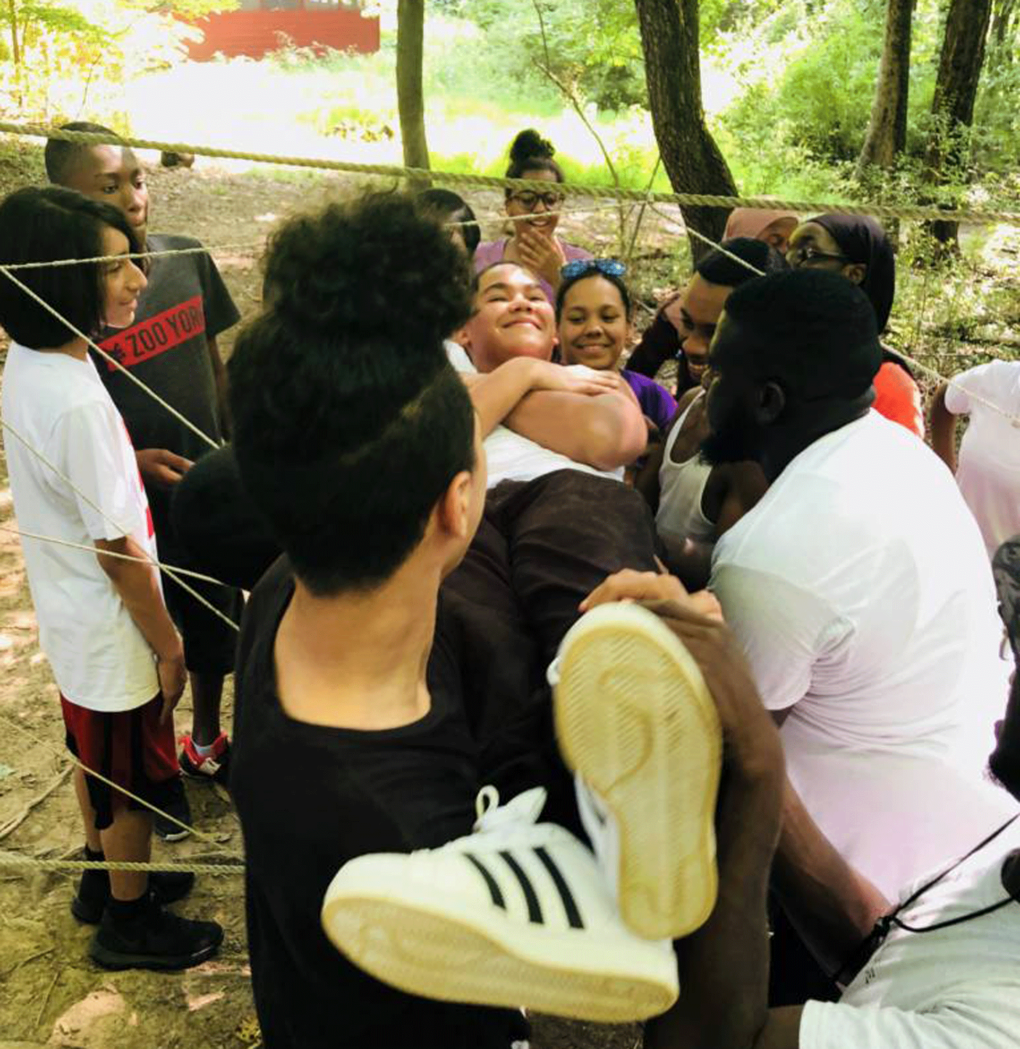
"caption": "Incoming ninth-graders do trust activities as part of the ropes-course day. ",
"description": null,
"title": "IMG_2839-768x1024v2",
"credit": "Courtesy of South Bronx Community Charter",
"status": "inherit",
"isLoading": false,
"fetchFailed": false
},
"mindshift_53518": {
"type": "attachments",
"id": "mindshift_53518",
"meta": {
"index": "attachments_1716263798",
"site": "mindshift",
"id": "53518",
"found": true
},
"parent": 53512,
"imgSizes": {
"twentyfourteen-full-width": {
"file": "https://ww2.kqed.org/app/uploads/sites/23/2019/04/kate-flock-20190329_Hechinger_Bias_012-1038x576.jpg",
"width": 1038,
"mimeType": "image/jpeg",
"height": 576
},
"thumbnail": {
"file": "https://ww2.kqed.org/app/uploads/sites/23/2019/04/kate-flock-20190329_Hechinger_Bias_012-160x107.jpg",
"width": 160,
"mimeType": "image/jpeg",
"height": 107
},
"post-thumbnail": {
"file": "https://ww2.kqed.org/app/uploads/sites/23/2019/04/kate-flock-20190329_Hechinger_Bias_012-672x372.jpg",
"width": 672,
"mimeType": "image/jpeg",
"height": 372
},
"kqedFullSize": {
"file": "https://ww2.kqed.org/app/uploads/sites/23/2019/04/kate-flock-20190329_Hechinger_Bias_012-e1556542633441.jpg",
"width": 1920,
"height": 1282
},
"large": {
"file": "https://ww2.kqed.org/app/uploads/sites/23/2019/04/kate-flock-20190329_Hechinger_Bias_012-1020x681.jpg",
"width": 1020,
"mimeType": "image/jpeg",
"height": 681
},
"complete_open_graph": {
"file": "https://ww2.kqed.org/app/uploads/sites/23/2019/04/kate-flock-20190329_Hechinger_Bias_012-1200x801.jpg",
"width": 1200,
"mimeType": "image/jpeg",
"height": 801
},
"full-width": {
"file": "https://ww2.kqed.org/app/uploads/sites/23/2019/04/kate-flock-20190329_Hechinger_Bias_012-1920x1282.jpg",
"width": 1920,
"mimeType": "image/jpeg",
"height": 1282
},
"medium": {
"file": "https://ww2.kqed.org/app/uploads/sites/23/2019/04/kate-flock-20190329_Hechinger_Bias_012-800x534.jpg",
"width": 800,
"mimeType": "image/jpeg",
"height": 534
},
"medium_large": {
"file": "https://ww2.kqed.org/app/uploads/sites/23/2019/04/kate-flock-20190329_Hechinger_Bias_012-768x513.jpg",
"width": 768,
"mimeType": "image/jpeg",
"height": 513
}
},
"publishDate": 1556542540,
"modified": 1556542667,
"caption": "Cambridge Street Upper School math teacher Kendal Schwarz works with students, March 29, 2019, in Cambridge, MA.",
"description": null,
"title": "kate flock - 20190329_Hechinger_Bias_012",
"credit": "Kate Flock for The Hechinger Report ",
"status": "inherit",
"isLoading": false,
"fetchFailed": false
},
"mindshift_53447": {
"type": "attachments",
"id": "mindshift_53447",
"meta": {
"index": "attachments_1716263798",
"site": "mindshift",
"id": "53447",
"found": true
},
"parent": 53446,
"imgSizes": {
"twentyfourteen-full-width": {
"file": "https://ww2.kqed.org/app/uploads/sites/23/2019/04/essay-cheating-update_wide-1102fe4cde89372d0bd1a4266bea303c6431a0d4-1038x576.jpg",
"width": 1038,
"mimeType": "image/jpeg",
"height": 576
},
"thumbnail": {
"file": "https://ww2.kqed.org/app/uploads/sites/23/2019/04/essay-cheating-update_wide-1102fe4cde89372d0bd1a4266bea303c6431a0d4-160x90.jpg",
"width": 160,
"mimeType": "image/jpeg",
"height": 90
},
"post-thumbnail": {
"file": "https://ww2.kqed.org/app/uploads/sites/23/2019/04/essay-cheating-update_wide-1102fe4cde89372d0bd1a4266bea303c6431a0d4-672x372.jpg",
"width": 672,
"mimeType": "image/jpeg",
"height": 372
},
"kqedFullSize": {
"file": "https://ww2.kqed.org/app/uploads/sites/23/2019/04/essay-cheating-update_wide-1102fe4cde89372d0bd1a4266bea303c6431a0d4.jpg",
"width": 4793,
"height": 2696
},
"large": {
"file": "https://ww2.kqed.org/app/uploads/sites/23/2019/04/essay-cheating-update_wide-1102fe4cde89372d0bd1a4266bea303c6431a0d4-1020x574.jpg",
"width": 1020,
"mimeType": "image/jpeg",
"height": 574
},
"complete_open_graph": {
"file": "https://ww2.kqed.org/app/uploads/sites/23/2019/04/essay-cheating-update_wide-1102fe4cde89372d0bd1a4266bea303c6431a0d4-1200x675.jpg",
"width": 1200,
"mimeType": "image/jpeg",
"height": 675
},
"guest-author-50": {
"file": "https://ww2.kqed.org/app/uploads/sites/23/2019/04/essay-cheating-update_wide-1102fe4cde89372d0bd1a4266bea303c6431a0d4-50x50.jpg",
"width": 50,
"mimeType": "image/jpeg",
"height": 50
},
"guest-author-96": {
"file": "https://ww2.kqed.org/app/uploads/sites/23/2019/04/essay-cheating-update_wide-1102fe4cde89372d0bd1a4266bea303c6431a0d4-96x96.jpg",
"width": 96,
"mimeType": "image/jpeg",
"height": 96
},
"medium": {
"file": "https://ww2.kqed.org/app/uploads/sites/23/2019/04/essay-cheating-update_wide-1102fe4cde89372d0bd1a4266bea303c6431a0d4-800x450.jpg",
"width": 800,
"mimeType": "image/jpeg",
"height": 450
},
"guest-author-64": {
"file": "https://ww2.kqed.org/app/uploads/sites/23/2019/04/essay-cheating-update_wide-1102fe4cde89372d0bd1a4266bea303c6431a0d4-64x64.jpg",
"width": 64,
"mimeType": "image/jpeg",
"height": 64
},
"guest-author-32": {
"file": "https://ww2.kqed.org/app/uploads/sites/23/2019/04/essay-cheating-update_wide-1102fe4cde89372d0bd1a4266bea303c6431a0d4-32x32.jpg",
"width": 32,
"mimeType": "image/jpeg",
"height": 32
},
"full-width": {
"file": "https://ww2.kqed.org/app/uploads/sites/23/2019/04/essay-cheating-update_wide-1102fe4cde89372d0bd1a4266bea303c6431a0d4-1920x1080.jpg",
"width": 1920,
"mimeType": "image/jpeg",
"height": 1080
},
"medium_large": {
"file": "https://ww2.kqed.org/app/uploads/sites/23/2019/04/essay-cheating-update_wide-1102fe4cde89372d0bd1a4266bea303c6431a0d4-768x432.jpg",
"width": 768,
"mimeType": "image/jpeg",
"height": 432
},
"guest-author-128": {
"file": "https://ww2.kqed.org/app/uploads/sites/23/2019/04/essay-cheating-update_wide-1102fe4cde89372d0bd1a4266bea303c6431a0d4-128x128.jpg",
"width": 128,
"mimeType": "image/jpeg",
"height": 128
}
},
"publishDate": 1554947456,
"modified": 1554947533,
"caption": "Concern is growing about a burgeoning online market for essays that students can buy and turn in as their own work. And schools are trying new tools to catch it.",
"description": "Concern is growing about a burgeoning online market for essays that students can buy and turn in as their own work. And schools are trying new tools to catch it.",
"title": "Concern is growing about a burgeoning online market for essays that students can buy and turn in as their own work. And schools are trying new tools to catch it.",
"credit": "Angela Hsieh/NPR",
"status": "inherit",
"isLoading": false,
"fetchFailed": false
},
"mindshift_53388": {
"type": "attachments",
"id": "mindshift_53388",
"meta": {
"index": "attachments_1716263798",
"site": "mindshift",
"id": "53388",
"found": true
},
"parent": 53384,
"imgSizes": {
"twentyfourteen-full-width": {
"file": "https://ww2.kqed.org/app/uploads/sites/23/2019/04/iStock-1096636196-1038x576.jpg",
"width": 1038,
"mimeType": "image/jpeg",
"height": 576
},
"thumbnail": {
"file": "https://ww2.kqed.org/app/uploads/sites/23/2019/04/iStock-1096636196-160x108.jpg",
"width": 160,
"mimeType": "image/jpeg",
"height": 108
},
"post-thumbnail": {
"file": "https://ww2.kqed.org/app/uploads/sites/23/2019/04/iStock-1096636196-672x372.jpg",
"width": 672,
"mimeType": "image/jpeg",
"height": 372
},
"kqedFullSize": {
"file": "https://ww2.kqed.org/app/uploads/sites/23/2019/04/iStock-1096636196-e1554275776859.jpg",
"width": 1920,
"height": 1295
},
"large": {
"file": "https://ww2.kqed.org/app/uploads/sites/23/2019/04/iStock-1096636196-1020x688.jpg",
"width": 1020,
"mimeType": "image/jpeg",
"height": 688
},
"complete_open_graph": {
"file": "https://ww2.kqed.org/app/uploads/sites/23/2019/04/iStock-1096636196-1200x809.jpg",
"width": 1200,
"mimeType": "image/jpeg",
"height": 809
},
"guest-author-50": {
"file": "https://ww2.kqed.org/app/uploads/sites/23/2019/04/iStock-1096636196-50x50.jpg",
"width": 50,
"mimeType": "image/jpeg",
"height": 50
},
"guest-author-96": {
"file": "https://ww2.kqed.org/app/uploads/sites/23/2019/04/iStock-1096636196-96x96.jpg",
"width": 96,
"mimeType": "image/jpeg",
"height": 96
},
"medium": {
"file": "https://ww2.kqed.org/app/uploads/sites/23/2019/04/iStock-1096636196-800x539.jpg",
"width": 800,
"mimeType": "image/jpeg",
"height": 539
},
"guest-author-64": {
"file": "https://ww2.kqed.org/app/uploads/sites/23/2019/04/iStock-1096636196-64x64.jpg",
"width": 64,
"mimeType": "image/jpeg",
"height": 64
},
"guest-author-32": {
"file": "https://ww2.kqed.org/app/uploads/sites/23/2019/04/iStock-1096636196-32x32.jpg",
"width": 32,
"mimeType": "image/jpeg",
"height": 32
},
"full-width": {
"file": "https://ww2.kqed.org/app/uploads/sites/23/2019/04/iStock-1096636196-1920x1295.jpg",
"width": 1920,
"mimeType": "image/jpeg",
"height": 1295
},
"medium_large": {
"file": "https://ww2.kqed.org/app/uploads/sites/23/2019/04/iStock-1096636196-768x518.jpg",
"width": 768,
"mimeType": "image/jpeg",
"height": 518
},
"guest-author-128": {
"file": "https://ww2.kqed.org/app/uploads/sites/23/2019/04/iStock-1096636196-128x128.jpg",
"width": 128,
"mimeType": "image/jpeg",
"height": 128
}
},
"publishDate": 1554275764,
"modified": 1554275800,
"caption": null,
"description": null,
"title": null,
"credit": "iStock/Andrii Yalanskyi",
"status": "inherit",
"isLoading": false,
"fetchFailed": false
},
"mindshift_52988": {
"type": "attachments",
"id": "mindshift_52988",
"meta": {
"index": "attachments_1716263798",
"site": "mindshift",
"id": "52988",
"found": true
},
"parent": 52987,
"imgSizes": {
"twentyfourteen-full-width": {
"file": "https://ww2.kqed.org/app/uploads/sites/23/2019/02/anger_3_final2_wide-eb9cd2dd357c04758f28980b7ff7fc4b0e17f79e-1038x576.jpe",
"width": 1038,
"mimeType": "image/jpeg",
"height": 576
},
"thumbnail": {
"file": "https://ww2.kqed.org/app/uploads/sites/23/2019/02/anger_3_final2_wide-eb9cd2dd357c04758f28980b7ff7fc4b0e17f79e-160x90.jpe",
"width": 160,
"mimeType": "image/jpeg",
"height": 90
},
"post-thumbnail": {
"file": "https://ww2.kqed.org/app/uploads/sites/23/2019/02/anger_3_final2_wide-eb9cd2dd357c04758f28980b7ff7fc4b0e17f79e-672x372.jpe",
"width": 672,
"mimeType": "image/jpeg",
"height": 372
},
"kqedFullSize": {
"file": "https://ww2.kqed.org/app/uploads/sites/23/2019/02/anger_3_final2_wide-eb9cd2dd357c04758f28980b7ff7fc4b0e17f79e-e1549437151126.jpe",
"width": 1920,
"height": 1080
},
"large": {
"file": "https://ww2.kqed.org/app/uploads/sites/23/2019/02/anger_3_final2_wide-eb9cd2dd357c04758f28980b7ff7fc4b0e17f79e-1020x574.jpe",
"width": 1020,
"mimeType": "image/jpeg",
"height": 574
},
"complete_open_graph": {
"file": "https://ww2.kqed.org/app/uploads/sites/23/2019/02/anger_3_final2_wide-eb9cd2dd357c04758f28980b7ff7fc4b0e17f79e-1200x675.jpe",
"width": 1200,
"mimeType": "image/jpeg",
"height": 675
},
"guest-author-50": {
"file": "https://ww2.kqed.org/app/uploads/sites/23/2019/02/anger_3_final2_wide-eb9cd2dd357c04758f28980b7ff7fc4b0e17f79e-50x50.jpe",
"width": 50,
"mimeType": "image/jpeg",
"height": 50
},
"guest-author-96": {
"file": "https://ww2.kqed.org/app/uploads/sites/23/2019/02/anger_3_final2_wide-eb9cd2dd357c04758f28980b7ff7fc4b0e17f79e-96x96.jpe",
"width": 96,
"mimeType": "image/jpeg",
"height": 96
},
"medium": {
"file": "https://ww2.kqed.org/app/uploads/sites/23/2019/02/anger_3_final2_wide-eb9cd2dd357c04758f28980b7ff7fc4b0e17f79e-800x450.jpe",
"width": 800,
"mimeType": "image/jpeg",
"height": 450
},
"guest-author-64": {
"file": "https://ww2.kqed.org/app/uploads/sites/23/2019/02/anger_3_final2_wide-eb9cd2dd357c04758f28980b7ff7fc4b0e17f79e-64x64.jpe",
"width": 64,
"mimeType": "image/jpeg",
"height": 64
},
"guest-author-32": {
"file": "https://ww2.kqed.org/app/uploads/sites/23/2019/02/anger_3_final2_wide-eb9cd2dd357c04758f28980b7ff7fc4b0e17f79e-32x32.jpe",
"width": 32,
"mimeType": "image/jpeg",
"height": 32
},
"full-width": {
"file": "https://ww2.kqed.org/app/uploads/sites/23/2019/02/anger_3_final2_wide-eb9cd2dd357c04758f28980b7ff7fc4b0e17f79e-1920x1080.jpe",
"width": 1920,
"mimeType": "image/jpeg",
"height": 1080
},
"detail": {
"file": "https://ww2.kqed.org/app/uploads/sites/23/2019/02/anger_3_final2_wide-eb9cd2dd357c04758f28980b7ff7fc4b0e17f79e-150x150.jpe",
"width": 150,
"mimeType": "image/jpeg",
"height": 150
},
"medium_large": {
"file": "https://ww2.kqed.org/app/uploads/sites/23/2019/02/anger_3_final2_wide-eb9cd2dd357c04758f28980b7ff7fc4b0e17f79e-768x432.jpe",
"width": 768,
"mimeType": "image/jpeg",
"height": 432
},
"guest-author-128": {
"file": "https://ww2.kqed.org/app/uploads/sites/23/2019/02/anger_3_final2_wide-eb9cd2dd357c04758f28980b7ff7fc4b0e17f79e-128x128.jpe",
"width": 128,
"mimeType": "image/jpeg",
"height": 128
}
},
"publishDate": 1549437120,
"modified": 1549437175,
"caption": "Physicians have been taught to look for signs of hopelessness, sadness and lack of motivation to help them diagnose depression. But anger as a depression symptom is less noticed or addressed.",
"description": "Physicians have been taught to look for signs of hopelessness, sadness and lack of motivation to help them diagnose depression. But anger as a depression symptom is less noticed or addressed.",
"title": "Physicians have been taught to look for signs of hopelessness, sadness and lack of motivation to help them diagnose depression. But anger as a depression symptom is less noticed or addressed.",
"credit": "NPR/Ariel Davis",
"status": "inherit",
"isLoading": false,
"fetchFailed": false
},
"mindshift_52846": {
"type": "attachments",
"id": "mindshift_52846",
"meta": {
"index": "attachments_1716263798",
"site": "mindshift",
"id": "52846",
"found": true
},
"parent": 52845,
"imgSizes": {
"small": {
"file": "https://ww2.kqed.org/app/uploads/sites/23/2019/01/ryanjohnson-bullying_custom-1954906d4259cdc6caeaaa4d294c7e6d9626232a-520x341.jpg",
"width": 520,
"mimeType": "image/jpeg",
"height": 341
},
"twentyfourteen-full-width": {
"file": "https://ww2.kqed.org/app/uploads/sites/23/2019/01/ryanjohnson-bullying_custom-1954906d4259cdc6caeaaa4d294c7e6d9626232a-1038x576.jpg",
"width": 1038,
"mimeType": "image/jpeg",
"height": 576
},
"thumbnail": {
"file": "https://ww2.kqed.org/app/uploads/sites/23/2019/01/ryanjohnson-bullying_custom-1954906d4259cdc6caeaaa4d294c7e6d9626232a-160x105.jpg",
"width": 160,
"mimeType": "image/jpeg",
"height": 105
},
"fd-sm": {
"file": "https://ww2.kqed.org/app/uploads/sites/23/2019/01/ryanjohnson-bullying_custom-1954906d4259cdc6caeaaa4d294c7e6d9626232a-960x629.jpg",
"width": 960,
"mimeType": "image/jpeg",
"height": 629
},
"post-thumbnail": {
"file": "https://ww2.kqed.org/app/uploads/sites/23/2019/01/ryanjohnson-bullying_custom-1954906d4259cdc6caeaaa4d294c7e6d9626232a-672x372.jpg",
"width": 672,
"mimeType": "image/jpeg",
"height": 372
},
"xsmall": {
"file": "https://ww2.kqed.org/app/uploads/sites/23/2019/01/ryanjohnson-bullying_custom-1954906d4259cdc6caeaaa4d294c7e6d9626232a-375x246.jpg",
"width": 375,
"mimeType": "image/jpeg",
"height": 246
},
"kqedFullSize": {
"file": "https://ww2.kqed.org/app/uploads/sites/23/2019/01/ryanjohnson-bullying_custom-1954906d4259cdc6caeaaa4d294c7e6d9626232a.jpg",
"width": 3200,
"height": 2098
},
"large": {
"file": "https://ww2.kqed.org/app/uploads/sites/23/2019/01/ryanjohnson-bullying_custom-1954906d4259cdc6caeaaa4d294c7e6d9626232a-1020x669.jpg",
"width": 1020,
"mimeType": "image/jpeg",
"height": 669
},
"xlarge": {
"file": "https://ww2.kqed.org/app/uploads/sites/23/2019/01/ryanjohnson-bullying_custom-1954906d4259cdc6caeaaa4d294c7e6d9626232a-1180x774.jpg",
"width": 1180,
"mimeType": "image/jpeg",
"height": 774
},
"complete_open_graph": {
"file": "https://ww2.kqed.org/app/uploads/sites/23/2019/01/ryanjohnson-bullying_custom-1954906d4259cdc6caeaaa4d294c7e6d9626232a-1200x787.jpg",
"width": 1200,
"mimeType": "image/jpeg",
"height": 787
},
"guest-author-50": {
"file": "https://ww2.kqed.org/app/uploads/sites/23/2019/01/ryanjohnson-bullying_custom-1954906d4259cdc6caeaaa4d294c7e6d9626232a-50x50.jpg",
"width": 50,
"mimeType": "image/jpeg",
"height": 50
},
"guest-author-96": {
"file": "https://ww2.kqed.org/app/uploads/sites/23/2019/01/ryanjohnson-bullying_custom-1954906d4259cdc6caeaaa4d294c7e6d9626232a-96x96.jpg",
"width": 96,
"mimeType": "image/jpeg",
"height": 96
},
"medium": {
"file": "https://ww2.kqed.org/app/uploads/sites/23/2019/01/ryanjohnson-bullying_custom-1954906d4259cdc6caeaaa4d294c7e6d9626232a-800x525.jpg",
"width": 800,
"mimeType": "image/jpeg",
"height": 525
},
"guest-author-64": {
"file": "https://ww2.kqed.org/app/uploads/sites/23/2019/01/ryanjohnson-bullying_custom-1954906d4259cdc6caeaaa4d294c7e6d9626232a-64x64.jpg",
"width": 64,
"mimeType": "image/jpeg",
"height": 64
},
"guest-author-32": {
"file": "https://ww2.kqed.org/app/uploads/sites/23/2019/01/ryanjohnson-bullying_custom-1954906d4259cdc6caeaaa4d294c7e6d9626232a-32x32.jpg",
"width": 32,
"mimeType": "image/jpeg",
"height": 32
},
"fd-lrg": {
"file": "https://ww2.kqed.org/app/uploads/sites/23/2019/01/ryanjohnson-bullying_custom-1954906d4259cdc6caeaaa4d294c7e6d9626232a-1920x1259.jpg",
"width": 1920,
"mimeType": "image/jpeg",
"height": 1259
},
"fd-med": {
"file": "https://ww2.kqed.org/app/uploads/sites/23/2019/01/ryanjohnson-bullying_custom-1954906d4259cdc6caeaaa4d294c7e6d9626232a-1180x774.jpg",
"width": 1180,
"mimeType": "image/jpeg",
"height": 774
},
"full-width": {
"file": "https://ww2.kqed.org/app/uploads/sites/23/2019/01/ryanjohnson-bullying_custom-1954906d4259cdc6caeaaa4d294c7e6d9626232a-1920x1259.jpg",
"width": 1920,
"mimeType": "image/jpeg",
"height": 1259
},
"detail": {
"file": "https://ww2.kqed.org/app/uploads/sites/23/2019/01/ryanjohnson-bullying_custom-1954906d4259cdc6caeaaa4d294c7e6d9626232a-150x150.jpg",
"width": 150,
"mimeType": "image/jpeg",
"height": 150
},
"medium_large": {
"file": "https://ww2.kqed.org/app/uploads/sites/23/2019/01/ryanjohnson-bullying_custom-1954906d4259cdc6caeaaa4d294c7e6d9626232a-768x504.jpg",
"width": 768,
"mimeType": "image/jpeg",
"height": 504
},
"guest-author-128": {
"file": "https://ww2.kqed.org/app/uploads/sites/23/2019/01/ryanjohnson-bullying_custom-1954906d4259cdc6caeaaa4d294c7e6d9626232a-128x128.jpg",
"width": 128,
"mimeType": "image/jpeg",
"height": 128
},
"xxsmall": {
"file": "https://ww2.kqed.org/app/uploads/sites/23/2019/01/ryanjohnson-bullying_custom-1954906d4259cdc6caeaaa4d294c7e6d9626232a-240x157.jpg",
"width": 240,
"mimeType": "image/jpeg",
"height": 157
}
},
"publishDate": 1547110144,
"modified": 1547110144,
"caption": null,
"description": "Bullying in schools comes in all forms.",
"title": "Bullying in schools comes in all forms.",
"credit": null,
"status": "inherit",
"isLoading": false,
"fetchFailed": false
},
"mindshift_52759": {
"type": "attachments",
"id": "mindshift_52759",
"meta": {
"index": "attachments_1716263798",
"site": "mindshift",
"id": "52759",
"found": true
},
"parent": 52758,
"imgSizes": {
"small": {
"file": "https://ww2.kqed.org/app/uploads/sites/23/2018/12/paigevickers_nprfinal_10-17_custom-b3e1ef6f8a52c24cf088a809d3349975ce5580c3-520x325.jpe",
"width": 520,
"mimeType": "image/jpeg",
"height": 325
},
"twentyfourteen-full-width": {
"file": "https://ww2.kqed.org/app/uploads/sites/23/2018/12/paigevickers_nprfinal_10-17_custom-b3e1ef6f8a52c24cf088a809d3349975ce5580c3-1038x576.jpe",
"width": 1038,
"mimeType": "image/jpeg",
"height": 576
},
"thumbnail": {
"file": "https://ww2.kqed.org/app/uploads/sites/23/2018/12/paigevickers_nprfinal_10-17_custom-b3e1ef6f8a52c24cf088a809d3349975ce5580c3-160x100.jpe",
"width": 160,
"mimeType": "image/jpeg",
"height": 100
},
"fd-sm": {
"file": "https://ww2.kqed.org/app/uploads/sites/23/2018/12/paigevickers_nprfinal_10-17_custom-b3e1ef6f8a52c24cf088a809d3349975ce5580c3-960x599.jpe",
"width": 960,
"mimeType": "image/jpeg",
"height": 599
},
"post-thumbnail": {
"file": "https://ww2.kqed.org/app/uploads/sites/23/2018/12/paigevickers_nprfinal_10-17_custom-b3e1ef6f8a52c24cf088a809d3349975ce5580c3-672x372.jpe",
"width": 672,
"mimeType": "image/jpeg",
"height": 372
},
"xsmall": {
"file": "https://ww2.kqed.org/app/uploads/sites/23/2018/12/paigevickers_nprfinal_10-17_custom-b3e1ef6f8a52c24cf088a809d3349975ce5580c3-375x234.jpe",
"width": 375,
"mimeType": "image/jpeg",
"height": 234
},
"kqedFullSize": {
"file": "https://ww2.kqed.org/app/uploads/sites/23/2018/12/paigevickers_nprfinal_10-17_custom-b3e1ef6f8a52c24cf088a809d3349975ce5580c3-e1545376535319.jpe",
"width": 1920,
"height": 1198
},
"large": {
"file": "https://ww2.kqed.org/app/uploads/sites/23/2018/12/paigevickers_nprfinal_10-17_custom-b3e1ef6f8a52c24cf088a809d3349975ce5580c3-1020x637.jpe",
"width": 1020,
"mimeType": "image/jpeg",
"height": 637
},
"xlarge": {
"file": "https://ww2.kqed.org/app/uploads/sites/23/2018/12/paigevickers_nprfinal_10-17_custom-b3e1ef6f8a52c24cf088a809d3349975ce5580c3-1180x736.jpe",
"width": 1180,
"mimeType": "image/jpeg",
"height": 736
},
"complete_open_graph": {
"file": "https://ww2.kqed.org/app/uploads/sites/23/2018/12/paigevickers_nprfinal_10-17_custom-b3e1ef6f8a52c24cf088a809d3349975ce5580c3-1200x749.jpe",
"width": 1200,
"mimeType": "image/jpeg",
"height": 749
},
"guest-author-50": {
"file": "https://ww2.kqed.org/app/uploads/sites/23/2018/12/paigevickers_nprfinal_10-17_custom-b3e1ef6f8a52c24cf088a809d3349975ce5580c3-50x50.jpe",
"width": 50,
"mimeType": "image/jpeg",
"height": 50
},
"guest-author-96": {
"file": "https://ww2.kqed.org/app/uploads/sites/23/2018/12/paigevickers_nprfinal_10-17_custom-b3e1ef6f8a52c24cf088a809d3349975ce5580c3-96x96.jpe",
"width": 96,
"mimeType": "image/jpeg",
"height": 96
},
"medium": {
"file": "https://ww2.kqed.org/app/uploads/sites/23/2018/12/paigevickers_nprfinal_10-17_custom-b3e1ef6f8a52c24cf088a809d3349975ce5580c3-800x499.jpe",
"width": 800,
"mimeType": "image/jpeg",
"height": 499
},
"guest-author-64": {
"file": "https://ww2.kqed.org/app/uploads/sites/23/2018/12/paigevickers_nprfinal_10-17_custom-b3e1ef6f8a52c24cf088a809d3349975ce5580c3-64x64.jpe",
"width": 64,
"mimeType": "image/jpeg",
"height": 64
},
"guest-author-32": {
"file": "https://ww2.kqed.org/app/uploads/sites/23/2018/12/paigevickers_nprfinal_10-17_custom-b3e1ef6f8a52c24cf088a809d3349975ce5580c3-32x32.jpe",
"width": 32,
"mimeType": "image/jpeg",
"height": 32
},
"fd-lrg": {
"file": "https://ww2.kqed.org/app/uploads/sites/23/2018/12/paigevickers_nprfinal_10-17_custom-b3e1ef6f8a52c24cf088a809d3349975ce5580c3-1920x1198.jpe",
"width": 1920,
"mimeType": "image/jpeg",
"height": 1198
},
"fd-med": {
"file": "https://ww2.kqed.org/app/uploads/sites/23/2018/12/paigevickers_nprfinal_10-17_custom-b3e1ef6f8a52c24cf088a809d3349975ce5580c3-1180x736.jpe",
"width": 1180,
"mimeType": "image/jpeg",
"height": 736
},
"full-width": {
"file": "https://ww2.kqed.org/app/uploads/sites/23/2018/12/paigevickers_nprfinal_10-17_custom-b3e1ef6f8a52c24cf088a809d3349975ce5580c3-1920x1198.jpe",
"width": 1920,
"mimeType": "image/jpeg",
"height": 1198
},
"detail": {
"file": "https://ww2.kqed.org/app/uploads/sites/23/2018/12/paigevickers_nprfinal_10-17_custom-b3e1ef6f8a52c24cf088a809d3349975ce5580c3-150x150.jpe",
"width": 150,
"mimeType": "image/jpeg",
"height": 150
},
"medium_large": {
"file": "https://ww2.kqed.org/app/uploads/sites/23/2018/12/paigevickers_nprfinal_10-17_custom-b3e1ef6f8a52c24cf088a809d3349975ce5580c3-768x479.jpe",
"width": 768,
"mimeType": "image/jpeg",
"height": 479
},
"guest-author-128": {
"file": "https://ww2.kqed.org/app/uploads/sites/23/2018/12/paigevickers_nprfinal_10-17_custom-b3e1ef6f8a52c24cf088a809d3349975ce5580c3-128x128.jpe",
"width": 128,
"mimeType": "image/jpeg",
"height": 128
},
"xxsmall": {
"file": "https://ww2.kqed.org/app/uploads/sites/23/2018/12/paigevickers_nprfinal_10-17_custom-b3e1ef6f8a52c24cf088a809d3349975ce5580c3-240x150.jpe",
"width": 240,
"mimeType": "image/jpeg",
"height": 150
}
},
"publishDate": 1545376503,
"modified": 1545376556,
"caption": "Teachers share their most memorable gifts from students.",
"description": "Teachers share their most memorable gifts from students.",
"title": "Teachers share their most memorable gifts from students.",
"credit": "Paige Vickers for NPR",
"status": "inherit",
"isLoading": false,
"fetchFailed": false
},
"mindshift_52498": {
"type": "attachments",
"id": "mindshift_52498",
"meta": {
"index": "attachments_1716263798",
"site": "mindshift",
"id": "52498",
"found": true
},
"parent": 52497,
"imgSizes": {
"small": {
"file": "https://ww2.kqed.org/app/uploads/sites/23/2018/11/gracekim_teachingconsent_custom-b713afab0637faf5675a7e8c141065bae0f9abe1-520x325.jpe",
"width": 520,
"mimeType": "image/jpeg",
"height": 325
},
"twentyfourteen-full-width": {
"file": "https://ww2.kqed.org/app/uploads/sites/23/2018/11/gracekim_teachingconsent_custom-b713afab0637faf5675a7e8c141065bae0f9abe1-1038x576.jpe",
"width": 1038,
"mimeType": "image/jpeg",
"height": 576
},
"thumbnail": {
"file": "https://ww2.kqed.org/app/uploads/sites/23/2018/11/gracekim_teachingconsent_custom-b713afab0637faf5675a7e8c141065bae0f9abe1-160x100.jpe",
"width": 160,
"mimeType": "image/jpeg",
"height": 100
},
"fd-sm": {
"file": "https://ww2.kqed.org/app/uploads/sites/23/2018/11/gracekim_teachingconsent_custom-b713afab0637faf5675a7e8c141065bae0f9abe1-960x599.jpe",
"width": 960,
"mimeType": "image/jpeg",
"height": 599
},
"post-thumbnail": {
"file": "https://ww2.kqed.org/app/uploads/sites/23/2018/11/gracekim_teachingconsent_custom-b713afab0637faf5675a7e8c141065bae0f9abe1-672x372.jpe",
"width": 672,
"mimeType": "image/jpeg",
"height": 372
},
"xsmall": {
"file": "https://ww2.kqed.org/app/uploads/sites/23/2018/11/gracekim_teachingconsent_custom-b713afab0637faf5675a7e8c141065bae0f9abe1-375x234.jpe",
"width": 375,
"mimeType": "image/jpeg",
"height": 234
},
"kqedFullSize": {
"file": "https://ww2.kqed.org/app/uploads/sites/23/2018/11/gracekim_teachingconsent_custom-b713afab0637faf5675a7e8c141065bae0f9abe1.jpe",
"width": 3200,
"height": 1997
},
"large": {
"file": "https://ww2.kqed.org/app/uploads/sites/23/2018/11/gracekim_teachingconsent_custom-b713afab0637faf5675a7e8c141065bae0f9abe1-1020x637.jpe",
"width": 1020,
"mimeType": "image/jpeg",
"height": 637
},
"xlarge": {
"file": "https://ww2.kqed.org/app/uploads/sites/23/2018/11/gracekim_teachingconsent_custom-b713afab0637faf5675a7e8c141065bae0f9abe1-1180x736.jpe",
"width": 1180,
"mimeType": "image/jpeg",
"height": 736
},
"complete_open_graph": {
"file": "https://ww2.kqed.org/app/uploads/sites/23/2018/11/gracekim_teachingconsent_custom-b713afab0637faf5675a7e8c141065bae0f9abe1-1200x749.jpe",
"width": 1200,
"mimeType": "image/jpeg",
"height": 749
},
"guest-author-50": {
"file": "https://ww2.kqed.org/app/uploads/sites/23/2018/11/gracekim_teachingconsent_custom-b713afab0637faf5675a7e8c141065bae0f9abe1-50x50.jpe",
"width": 50,
"mimeType": "image/jpeg",
"height": 50
},
"guest-author-96": {
"file": "https://ww2.kqed.org/app/uploads/sites/23/2018/11/gracekim_teachingconsent_custom-b713afab0637faf5675a7e8c141065bae0f9abe1-96x96.jpe",
"width": 96,
"mimeType": "image/jpeg",
"height": 96
},
"medium": {
"file": "https://ww2.kqed.org/app/uploads/sites/23/2018/11/gracekim_teachingconsent_custom-b713afab0637faf5675a7e8c141065bae0f9abe1-800x499.jpe",
"width": 800,
"mimeType": "image/jpeg",
"height": 499
},
"guest-author-64": {
"file": "https://ww2.kqed.org/app/uploads/sites/23/2018/11/gracekim_teachingconsent_custom-b713afab0637faf5675a7e8c141065bae0f9abe1-64x64.jpe",
"width": 64,
"mimeType": "image/jpeg",
"height": 64
},
"guest-author-32": {
"file": "https://ww2.kqed.org/app/uploads/sites/23/2018/11/gracekim_teachingconsent_custom-b713afab0637faf5675a7e8c141065bae0f9abe1-32x32.jpe",
"width": 32,
"mimeType": "image/jpeg",
"height": 32
},
"fd-lrg": {
"file": "https://ww2.kqed.org/app/uploads/sites/23/2018/11/gracekim_teachingconsent_custom-b713afab0637faf5675a7e8c141065bae0f9abe1-1920x1198.jpe",
"width": 1920,
"mimeType": "image/jpeg",
"height": 1198
},
"fd-med": {
"file": "https://ww2.kqed.org/app/uploads/sites/23/2018/11/gracekim_teachingconsent_custom-b713afab0637faf5675a7e8c141065bae0f9abe1-1180x736.jpe",
"width": 1180,
"mimeType": "image/jpeg",
"height": 736
},
"full-width": {
"file": "https://ww2.kqed.org/app/uploads/sites/23/2018/11/gracekim_teachingconsent_custom-b713afab0637faf5675a7e8c141065bae0f9abe1-1920x1198.jpe",
"width": 1920,
"mimeType": "image/jpeg",
"height": 1198
},
"detail": {
"file": "https://ww2.kqed.org/app/uploads/sites/23/2018/11/gracekim_teachingconsent_custom-b713afab0637faf5675a7e8c141065bae0f9abe1-150x150.jpe",
"width": 150,
"mimeType": "image/jpeg",
"height": 150
},
"medium_large": {
"file": "https://ww2.kqed.org/app/uploads/sites/23/2018/11/gracekim_teachingconsent_custom-b713afab0637faf5675a7e8c141065bae0f9abe1-768x479.jpe",
"width": 768,
"mimeType": "image/jpeg",
"height": 479
},
"guest-author-128": {
"file": "https://ww2.kqed.org/app/uploads/sites/23/2018/11/gracekim_teachingconsent_custom-b713afab0637faf5675a7e8c141065bae0f9abe1-128x128.jpe",
"width": 128,
"mimeType": "image/jpeg",
"height": 128
},
"xxsmall": {
"file": "https://ww2.kqed.org/app/uploads/sites/23/2018/11/gracekim_teachingconsent_custom-b713afab0637faf5675a7e8c141065bae0f9abe1-240x150.jpe",
"width": 240,
"mimeType": "image/jpeg",
"height": 150
}
},
"publishDate": 1542146444,
"modified": 1542146967,
"caption": null,
"description": "Consent Education",
"title": "Consent Education",
"credit": "Grace HeeJung Kim ",
"status": "inherit",
"isLoading": false,
"fetchFailed": false
},
"mindshift_65129": {
"type": "attachments",
"id": "mindshift_65129",
"meta": {
"index": "attachments_1716263798",
"site": "mindshift",
"id": "65129",
"found": true
},
"title": "Young boy resting on mother's shoulder",
"publishDate": 1737140211,
"status": "inherit",
"parent": 52493,
"modified": 1737140240,
"caption": null,
"credit": "Christopher Hopefitch/Getty Images",
"altTag": "Parent holding child",
"description": null,
"imgSizes": {
"medium": {
"file": "https://cdn.kqed.org/wp-content/uploads/sites/23/2018/11/GettyImages-502384359-800x533.jpg",
"width": 800,
"height": 533,
"mimeType": "image/jpeg"
},
"large": {
"file": "https://cdn.kqed.org/wp-content/uploads/sites/23/2018/11/GettyImages-502384359-1020x680.jpg",
"width": 1020,
"height": 680,
"mimeType": "image/jpeg"
},
"thumbnail": {
"file": "https://cdn.kqed.org/wp-content/uploads/sites/23/2018/11/GettyImages-502384359-160x107.jpg",
"width": 160,
"height": 107,
"mimeType": "image/jpeg"
},
"medium_large": {
"file": "https://cdn.kqed.org/wp-content/uploads/sites/23/2018/11/GettyImages-502384359-768x512.jpg",
"width": 768,
"height": 512,
"mimeType": "image/jpeg"
},
"1536x1536": {
"file": "https://cdn.kqed.org/wp-content/uploads/sites/23/2018/11/GettyImages-502384359-1536x1024.jpg",
"width": 1536,
"height": 1024,
"mimeType": "image/jpeg"
},
"2048x2048": {
"file": "https://cdn.kqed.org/wp-content/uploads/sites/23/2018/11/GettyImages-502384359-2048x1365.jpg",
"width": 2048,
"height": 1365,
"mimeType": "image/jpeg"
},
"post-thumbnail": {
"file": "https://cdn.kqed.org/wp-content/uploads/sites/23/2018/11/GettyImages-502384359-672x372.jpg",
"width": 672,
"height": 372,
"mimeType": "image/jpeg"
},
"twentyfourteen-full-width": {
"file": "https://cdn.kqed.org/wp-content/uploads/sites/23/2018/11/GettyImages-502384359-1038x576.jpg",
"width": 1038,
"height": 576,
"mimeType": "image/jpeg"
},
"full-width": {
"file": "https://cdn.kqed.org/wp-content/uploads/sites/23/2018/11/GettyImages-502384359-1920x1280.jpg",
"width": 1920,
"height": 1280,
"mimeType": "image/jpeg"
},
"kqedFullSize": {
"file": "https://cdn.kqed.org/wp-content/uploads/sites/23/2018/11/GettyImages-502384359.jpg",
"width": 2121,
"height": 1414
}
},
"isLoading": false,
"fetchFailed": false
},
"mindshift_52380": {
"type": "attachments",
"id": "mindshift_52380",
"meta": {
"index": "attachments_1716263798",
"site": "mindshift",
"id": "52380",
"found": true
},
"parent": 52379,
"imgSizes": {
"small": {
"file": "https://ww2.kqed.org/app/uploads/sites/23/2018/10/glam_lgbtqclassroomfinal_custom-fe8bbdfac44a21005ffa9377aea514c0df50757a-520x325.jpe",
"width": 520,
"mimeType": "image/jpeg",
"height": 325
},
"twentyfourteen-full-width": {
"file": "https://ww2.kqed.org/app/uploads/sites/23/2018/10/glam_lgbtqclassroomfinal_custom-fe8bbdfac44a21005ffa9377aea514c0df50757a-1038x576.jpe",
"width": 1038,
"mimeType": "image/jpeg",
"height": 576
},
"thumbnail": {
"file": "https://ww2.kqed.org/app/uploads/sites/23/2018/10/glam_lgbtqclassroomfinal_custom-fe8bbdfac44a21005ffa9377aea514c0df50757a-160x100.jpe",
"width": 160,
"mimeType": "image/jpeg",
"height": 100
},
"fd-sm": {
"file": "https://ww2.kqed.org/app/uploads/sites/23/2018/10/glam_lgbtqclassroomfinal_custom-fe8bbdfac44a21005ffa9377aea514c0df50757a-960x599.jpe",
"width": 960,
"mimeType": "image/jpeg",
"height": 599
},
"post-thumbnail": {
"file": "https://ww2.kqed.org/app/uploads/sites/23/2018/10/glam_lgbtqclassroomfinal_custom-fe8bbdfac44a21005ffa9377aea514c0df50757a-672x372.jpe",
"width": 672,
"mimeType": "image/jpeg",
"height": 372
},
"xsmall": {
"file": "https://ww2.kqed.org/app/uploads/sites/23/2018/10/glam_lgbtqclassroomfinal_custom-fe8bbdfac44a21005ffa9377aea514c0df50757a-375x234.jpe",
"width": 375,
"mimeType": "image/jpeg",
"height": 234
},
"kqedFullSize": {
"file": "https://ww2.kqed.org/app/uploads/sites/23/2018/10/glam_lgbtqclassroomfinal_custom-fe8bbdfac44a21005ffa9377aea514c0df50757a.jpe",
"width": 3200,
"height": 1997
},
"large": {
"file": "https://ww2.kqed.org/app/uploads/sites/23/2018/10/glam_lgbtqclassroomfinal_custom-fe8bbdfac44a21005ffa9377aea514c0df50757a-1020x637.jpe",
"width": 1020,
"mimeType": "image/jpeg",
"height": 637
},
"xlarge": {
"file": "https://ww2.kqed.org/app/uploads/sites/23/2018/10/glam_lgbtqclassroomfinal_custom-fe8bbdfac44a21005ffa9377aea514c0df50757a-1180x736.jpe",
"width": 1180,
"mimeType": "image/jpeg",
"height": 736
},
"complete_open_graph": {
"file": "https://ww2.kqed.org/app/uploads/sites/23/2018/10/glam_lgbtqclassroomfinal_custom-fe8bbdfac44a21005ffa9377aea514c0df50757a-1200x749.jpe",
"width": 1200,
"mimeType": "image/jpeg",
"height": 749
},
"guest-author-50": {
"file": "https://ww2.kqed.org/app/uploads/sites/23/2018/10/glam_lgbtqclassroomfinal_custom-fe8bbdfac44a21005ffa9377aea514c0df50757a-50x50.jpe",
"width": 50,
"mimeType": "image/jpeg",
"height": 50
},
"guest-author-96": {
"file": "https://ww2.kqed.org/app/uploads/sites/23/2018/10/glam_lgbtqclassroomfinal_custom-fe8bbdfac44a21005ffa9377aea514c0df50757a-96x96.jpe",
"width": 96,
"mimeType": "image/jpeg",
"height": 96
},
"medium": {
"file": "https://ww2.kqed.org/app/uploads/sites/23/2018/10/glam_lgbtqclassroomfinal_custom-fe8bbdfac44a21005ffa9377aea514c0df50757a-800x499.jpe",
"width": 800,
"mimeType": "image/jpeg",
"height": 499
},
"guest-author-64": {
"file": "https://ww2.kqed.org/app/uploads/sites/23/2018/10/glam_lgbtqclassroomfinal_custom-fe8bbdfac44a21005ffa9377aea514c0df50757a-64x64.jpe",
"width": 64,
"mimeType": "image/jpeg",
"height": 64
},
"guest-author-32": {
"file": "https://ww2.kqed.org/app/uploads/sites/23/2018/10/glam_lgbtqclassroomfinal_custom-fe8bbdfac44a21005ffa9377aea514c0df50757a-32x32.jpe",
"width": 32,
"mimeType": "image/jpeg",
"height": 32
},
"fd-lrg": {
"file": "https://ww2.kqed.org/app/uploads/sites/23/2018/10/glam_lgbtqclassroomfinal_custom-fe8bbdfac44a21005ffa9377aea514c0df50757a-1920x1198.jpe",
"width": 1920,
"mimeType": "image/jpeg",
"height": 1198
},
"fd-med": {
"file": "https://ww2.kqed.org/app/uploads/sites/23/2018/10/glam_lgbtqclassroomfinal_custom-fe8bbdfac44a21005ffa9377aea514c0df50757a-1180x736.jpe",
"width": 1180,
"mimeType": "image/jpeg",
"height": 736
},
"full-width": {
"file": "https://ww2.kqed.org/app/uploads/sites/23/2018/10/glam_lgbtqclassroomfinal_custom-fe8bbdfac44a21005ffa9377aea514c0df50757a-1920x1198.jpe",
"width": 1920,
"mimeType": "image/jpeg",
"height": 1198
},
"detail": {
"file": "https://ww2.kqed.org/app/uploads/sites/23/2018/10/glam_lgbtqclassroomfinal_custom-fe8bbdfac44a21005ffa9377aea514c0df50757a-150x150.jpe",
"width": 150,
"mimeType": "image/jpeg",
"height": 150
},
"medium_large": {
"file": "https://ww2.kqed.org/app/uploads/sites/23/2018/10/glam_lgbtqclassroomfinal_custom-fe8bbdfac44a21005ffa9377aea514c0df50757a-768x479.jpe",
"width": 768,
"mimeType": "image/jpeg",
"height": 479
},
"guest-author-128": {
"file": "https://ww2.kqed.org/app/uploads/sites/23/2018/10/glam_lgbtqclassroomfinal_custom-fe8bbdfac44a21005ffa9377aea514c0df50757a-128x128.jpe",
"width": 128,
"mimeType": "image/jpeg",
"height": 128
},
"xxsmall": {
"file": "https://ww2.kqed.org/app/uploads/sites/23/2018/10/glam_lgbtqclassroomfinal_custom-fe8bbdfac44a21005ffa9377aea514c0df50757a-240x150.jpe",
"width": 240,
"mimeType": "image/jpeg",
"height": 150
}
},
"publishDate": 1540574897,
"modified": 1540595524,
"caption": null,
"description": "Creating a safe space to talk about LGBTQ issues.",
"title": "Creating a safe space to talk about LGBTQ issues.",
"credit": "Gracia Lam for NPR ",
"status": "inherit",
"isLoading": false,
"fetchFailed": false
}
},
"audioPlayerReducer": {
"postId": "stream_live",
"isPaused": true,
"isPlaying": false,
"pfsActive": false,
"pledgeModalIsOpen": true,
"playerDrawerIsOpen": false,
"liveAudioPlayStartedAt": 0,
"liveAudioPlayContext": ""
},
"authorsReducer": {
"byline_mindshift_53665": {
"type": "authors",
"id": "byline_mindshift_53665",
"meta": {
"override": true
},
"slug": "byline_mindshift_53665",
"name": "Elissa Nadworny and Clare Lombardo",
"isLoading": false
},
"byline_mindshift_53512": {
"type": "authors",
"id": "byline_mindshift_53512",
"meta": {
"override": true
},
"slug": "byline_mindshift_53512",
"name": "\u003ca href=\"https://hechingerreport.org/\">Amadou Diallo, The Hechinger Report\u003c/a>",
"isLoading": false
},
"byline_mindshift_53446": {
"type": "authors",
"id": "byline_mindshift_53446",
"meta": {
"override": true
},
"slug": "byline_mindshift_53446",
"name": "Tovia Smith",
"isLoading": false
},
"byline_mindshift_53384": {
"type": "authors",
"id": "byline_mindshift_53384",
"meta": {
"override": true
},
"slug": "byline_mindshift_53384",
"name": "\u003ca href=\"https://twitter.com/LoriGottlieb1\">Lori Gottlieb\u003c/a>",
"isLoading": false
},
"byline_mindshift_52987": {
"type": "authors",
"id": "byline_mindshift_52987",
"meta": {
"override": true
},
"slug": "byline_mindshift_52987",
"name": "Nell Greenfieldboyce",
"isLoading": false
},
"byline_mindshift_52845": {
"type": "authors",
"id": "byline_mindshift_52845",
"meta": {
"override": true
},
"slug": "byline_mindshift_52845",
"name": "Clare Lombardo",
"isLoading": false
},
"byline_mindshift_52758": {
"type": "authors",
"id": "byline_mindshift_52758",
"meta": {
"override": true
},
"slug": "byline_mindshift_52758",
"name": "Ryan Delaney",
"isLoading": false
},
"byline_mindshift_52497": {
"type": "authors",
"id": "byline_mindshift_52497",
"meta": {
"override": true
},
"slug": "byline_mindshift_52497",
"name": "Anya Kamenetz",
"isLoading": false
},
"byline_mindshift_52493": {
"type": "authors",
"id": "byline_mindshift_52493",
"meta": {
"override": true
},
"slug": "byline_mindshift_52493",
"name": "Lulu Garcia-Navarro",
"isLoading": false
},
"byline_mindshift_52379": {
"type": "authors",
"id": "byline_mindshift_52379",
"meta": {
"override": true
},
"slug": "byline_mindshift_52379",
"name": "Jenny Brundin",
"isLoading": false
},
"katrinaschwartz": {
"type": "authors",
"id": "234",
"meta": {
"index": "authors_1716337520",
"id": "234",
"found": true
},
"name": "Katrina Schwartz",
"firstName": "Katrina",
"lastName": "Schwartz",
"slug": "katrinaschwartz",
"email": "kschwartz@kqed.org",
"display_author_email": false,
"staff_mastheads": [
"news"
],
"title": "Producer",
"bio": "Katrina Schwartz is a journalist based in San Francisco. She's worked at KPCC public radio in LA and has reported on air and online for KQED since 2010. She covered how teaching and learning is changing for MindShift between 2012 and 2020. She is the co-host of the MindShift podcast and now produces KQED's Bay Curious podcast.",
"avatar": "https://secure.gravatar.com/avatar/edb4ee79070447a018538c9aae6eeecf28786515b8a0c30e43b6b7dce5aa44c8?s=600&d=blank&r=g",
"twitter": "kschwart",
"bluesky": null,
"facebook": null,
"instagram": null,
"linkedin": null,
"sites": [
{
"site": "",
"roles": [
"editor"
]
},
{
"site": "news",
"roles": [
"editor"
]
},
{
"site": "mindshift",
"roles": [
"administrator"
]
},
{
"site": "stateofhealth",
"roles": [
"author"
]
},
{
"site": "science",
"roles": [
"editor"
]
}
],
"headData": {
"title": "Katrina Schwartz | KQED",
"description": "Producer",
"ogImgSrc": "https://secure.gravatar.com/avatar/edb4ee79070447a018538c9aae6eeecf28786515b8a0c30e43b6b7dce5aa44c8?s=600&d=blank&r=g",
"twImgSrc": "https://secure.gravatar.com/avatar/edb4ee79070447a018538c9aae6eeecf28786515b8a0c30e43b6b7dce5aa44c8?s=600&d=blank&r=g"
},
"isLoading": false,
"link": "/author/katrinaschwartz"
}
},
"pagesReducer": {
"mindshift_category_culture": {
"type": "terms",
"id": "mindshift_194",
"meta": {
"index": "terms_1716263798",
"site": "mindshift",
"id": "194",
"score": 12.371086
},
"featImg": null,
"name": "Culture",
"description": "How trends in technology – social networks, Internet privacy, cyberbullying – influence education.",
"taxonomy": "category",
"headData": {
"twImgId": null,
"twTitle": null,
"ogTitle": null,
"ogImgId": null,
"twDescription": null,
"description": "How trends in technology – social networks, Internet privacy, cyberbullying – influence education.",
"title": "Culture Archives | KQED Mindshift",
"ogDescription": null
},
"ttid": 194,
"slug": "culture",
"isLoading": false,
"title": "Culture",
"pageMeta": {
"site": "mindshift",
"WpPageTemplate": "page-topic-editorial",
"currentPage": 7
},
"blocks": [
{
"blockName": "kqed/company-paragraph",
"content": "How trends in technology – social networks, Internet privacy, cyberbullying – influence education."
},
{
"blockName": "kqed/post-list",
"attrs": {
"layout": "cardArticle2",
"query": "posts/mindshift?category=culture",
"seeMore": false,
"paginated": true,
"page": 7
}
},
{
"blockName": "kqed/ad"
}
]
}
},
"pfsSessionReducer": {},
"postsReducer": {
"stream_live": {
"type": "live",
"id": "stream_live",
"audioUrl": "https://streams.kqed.org/kqedradio",
"title": "Live Stream",
"excerpt": "Live Stream information currently unavailable.",
"link": "/radio",
"featImg": "",
"label": {
"name": "KQED Live",
"link": "/"
}
},
"stream_kqedNewscast": {
"type": "posts",
"id": "stream_kqedNewscast",
"audioUrl": "https://www.kqed.org/.stream/anon/radio/RDnews/newscast.mp3?_=1",
"title": "KQED Newscast",
"featImg": "",
"label": {
"name": "88.5 FM",
"link": "/"
}
},
"mindshift_54206": {
"type": "posts",
"id": "mindshift_54206",
"meta": {
"index": "posts_1716263798",
"site": "mindshift",
"id": "54206",
"score": null,
"sort": [
1566368086000
]
},
"parent": 0,
"labelTerm": {
"site": "mindshift"
},
"blocks": [],
"publishDate": 1566368086,
"format": "standard",
"disqusTitle": "Parents of Kids With Special Needs Find Advice Navigating The System Online",
"title": "Parents of Kids With Special Needs Find Advice Navigating The System Online",
"headTitle": "MindShift | KQED News",
"content": "\u003cp>\u003cem>This article was originally published on \u003ca href=\"https://www.the74million.org/article/in-the-crazy-complicated-world-of-special-education-parents-turn-to-one-another-for-help-on-the-internet/\">The74million.org\u003c/a> and is republished here with permission.\u003c/em>\u003c/p>\n\u003ch4>By Laura McKenna\u003c/h4>\n\u003cp> \u003cbr>\nWhen Stasi Webber decided it was time to uproot her family from their Michigan home to find a better school for her 11-year-old son with autism, she turned to the internet for answers.\u003c/p>\n\u003cp>The public schools in her state don’t provide the specialized behavioral and life skills training, known as \u003ca href=\"https://www.autismspeaks.org/applied-behavior-analysis-aba-0\">ABA therapy\u003c/a>, that her son needs; he skips school every Tuesday and Thursday to receive these essential services. But recently, Webber learned from parents on social media that her son could get both academics and ABA training in schools in New Jersey, where she grew up.\u003c/p>\n\u003cp>With a tentative plan of returning to her childhood home in Mahwah, she found three or four local social media sites run by special education parents and asked about ABA services at the local district, its willingness to send students to specialized schools and comparisons with nearby towns. She put her house on the market.\u003c/p>\n\u003cp>“I knew I had to reach out to the internet, because moms are willing to help other moms,” Webber said. “You find out the most information that way.”\u003c/p>\n\u003cp>[ad fullwidth]\u003c/p>\n\u003cp>To properly advocate for their special-needs children, parents must become experts on a wide range of legal, medical and educational matters. They have to manage paperwork, monitor their kids’ reactions to medication, master the intricacies of both their children’s rights and their school’s responsibilities, and learn how to determine whether their kids are getting the proper supports — and what to do if they’re not.\u003c/p>\n\u003cp>But this information isn’t readily available in books or on official web pages. Services vary widely from state to state and from district to district — even from school to school — and most do not post details about their programs and special services online. Other information is buried in impenetrable legalese on various state and federal websites. Without official or user-friendly sources of information about schools, parents have to learn on the fly. So they turn to one another for help online.\u003c/p>\n\u003cp>Though even some leaders of these virtual communities say there’s no guarantee the information given out is accurate, special ed parents burdened with the task of educating themselves find the internet the best — if not the only — place to go.\u003c/p>\n\u003ch4>Online support and information\u003c/h4>\n\u003cp> \u003c/p>\n\u003cp>As part of her research, Webber connected with Barb Strate, who runs a listserv called \u003ca href=\"https://groups.yahoo.com/neo/groups/Mosaic-List/info?guccounter=1&guce_referrer=aHR0cHM6Ly93d3cudGhlNzRtaWxsaW9uLm9yZy9hcnRpY2xlL2luLXRoZS1jcmF6eS1jb21wbGljYXRlZC13b3JsZC1vZi1zcGVjaWFsLWVkdWNhdGlvbi1wYXJlbnRzLXR1cm4tdG8tb25lLWFub3RoZXItZm9yLWhlbHAtb24tdGhlLWludGVybmV0Lw&guce_referrer_sig=AQAAALXbt1XzaL8qgf0wQTKY3H098GD2hMZ7qdncWRV1PKdXkb0k541sPzZLvx0sredsI1edxNPke4YKVhoLgPjUuQwbE-ccZbqSzYumOwe1r1mn3ouET8m8go7lWaBxUsXMRcfQE0MhTktWfWBjBn2tzBlOEHGtJVtvF-StaFkH9WQH\">MOSAIC\u003c/a> for parents of children with autism in northern New Jersey. Strate said she started the group 20 years ago with other moms and dads who had met in a Manhattan doctor’s office. The group, with more than 2,000 members, is just one of countless \u003ca href=\"https://www.dcurbanmom.com/jforum/forums/show/36.page\">listservs\u003c/a>, \u003ca href=\"https://www.facebook.com/groups/IDEATIPS/\">Facebook pages\u003c/a> and \u003ca href=\"https://www.wrightslaw.com/blog/community-helpline/\">websites\u003c/a> set up across the country by parents for parents of special-needs children.\u003c/p>\n\u003cp>[mindshift-podcast]\u003c/p>\n\u003cp>Broad topics include applying for government benefits when kids turn 18 and pushing a school to evaluate a child’s speech. There are questions about education-related issues (“Are These IEP Goals Adequate?”), requests for emotional support (“Heartbroken After Likely Autism DX”) and concerns about medication side effects (“Terrible Constipation With Starting Strattera — Help”).\u003c/p>\n\u003cp>Locally, conversations revolve around specific schools, activities and therapists, particularly for parents of children with rare disabilities, according to Tawfiq Ammari, a doctoral candidate at the University of Michigan’s School of Information and \u003ca href=\"https://dl.acm.org/citation.cfm?id=2702324\">the author\u003c/a> of several \u003ca href=\"https://www.aaai.org/ocs/index.php/ICWSM/ICWSM14/paper/viewPaper/8032\">research papers\u003c/a> on the topic.\u003c/p>\n\u003cp>Initially, parents of newly diagnosed children join these groups looking for other families struggling with the same emotions and problems. “These forums can make you feel that you are not alone in the world,” Ammari said. Those social supports can be lifesavers for parents who can’t take advantage of community activities that center on typical children and who may be extremely isolated due to their kids’ behavioral or medical needs.\u003c/p>\n\u003cp>“They’re going to get information about specific parenting problems, like what do you do about a temper tantrum in the supermarket. And then they’re also going there because the school system is very complex in the United States. So they’re looking for tips and tricks\" — like how to go to a meeting to discuss a child’s Individualized Education Program — \"how do you behave, what do you do. There’s the information about private schools, too,\" Ammari said.\u003c/p>\n\u003cp>Amanda Morin, a writer at \u003ca href=\"https://www.understood.org/en\">Understood.org\u003c/a>, a nonprofit group that advocates for special ed kids and their families, said she discovered online groups when her oldest child was 1 or 2 and started having significant meltdowns and was using lines from the \u003cem>Thomas the Tank Engine\u003c/em> books to communicate. Morin needed help finding a good evaluator and getting a proper diagnosis. “It’s powerful to be in a space where you don’t have to explain yourself,” she said.\u003c/p>\n\u003cp>[aside postID='mindshift_53602,mindshift_44795,mindshift_50874' label='More Info For Parents']\u003c/p>\n\u003cp>Beyond serving as a social outlet, these groups provide families with vital information to help their kids, particularly around public schools, Morin said. Parents discuss legal matters; curricula, such as the best methods for teaching children with \u003ca href=\"https://www.kqed.org/mindshift/41997/who-helps-kids-with-dyslexia-gain-reading-fluency\">dyslexia\u003c/a>; effective communication with school personnel; recommended outside experts who can challenge school decisions; and her primary interest, inclusion practices.\u003c/p>\n\u003cp>In addition, parents have to learn how to maintain cordial day-to-day interactions with teachers and therapists, and about the latest research on teaching methods, so they can most effectively advocate for their children.\u003c/p>\n\u003cp>Families must learn about pedagogical matters in these groups because, in some places, teachers and nurses aren’t trained to work with children who have learning and health differences. “A \u003ca href=\"https://www.ncld.org/wp-content/uploads/2019/05/Forward-Together_NCLD-report.pdf\">recent study found\u003c/a> that only 17 percent of teachers feel really prepared to support kids with disabilities in their classroom,” Morin said.\u003c/p>\n\u003ch4>A legal necessity\u003c/h4>\n\u003cp> \u003c/p>\n\u003cp>Families also rely on these forums for legal help, because the special education process in the United States is so complicated. Just navigating the 20-plus-page legal document that formally lists the special services a child will receive every year — the IEP — involves understanding the tangle of laws, from the federal government down to localities, outlining very specific processes for helping students.\u003c/p>\n\u003cp>These include evaluations, sit-downs between parents and teachers, and the interventions themselves. Parents who believe school evaluations of their child are not accurate have the right to ask for an outside assessment. If there is a disagreement between the school and the parent, the parent has the right to hire outside counsel to represent the child.\u003c/p>\n\u003cp>“Every step along the way brings its own questions and confusion, forms to be filled out, meetings to attend and rights to be aware of,” explained Maggie Moroff, special education coordinator at \u003ca href=\"https://www.advocatesforchildren.org/\">Advocates for Children of New York\u003c/a>.\u003c/p>\n\u003cp>She described special ed as “a crazy, complicated system where parents are forced to be their own advocates.”\u003c/p>\n\u003cp>[aside tag='dyslexia' label='More on Dyslexia']\u003c/p>\n\u003cp>“It becomes almost a full-time job,” said Denise Marshall, executive director of the \u003ca href=\"https://www.copaa.org/\">Council of Parent Attorneys and Advocates\u003c/a>. “They need to research not only the laws but, many times, they need to research curriculum and strategies, such as applied behavioral analysis for children with autism or other types of interventions for students with dyslexia.”\u003c/p>\n\u003cp>Said Moroff, “Our support line got around 3,000 calls just last year from parents who are struggling, who have questions, who don’t know where to start, don’t know where to turn, don’t know what their next steps are, don’t understand why their school isn’t seeing their kids' needs the same way.\"\u003c/p>\n\u003ch4>Imbalance of power\u003c/h4>\n\u003cp> \u003c/p>\n\u003cp>Since education is locally controlled, every school district has its own priorities and funding abilities. Some districts’ administrators have no problem creating specialized programs for high-needs students, while administrators in a nearby town might be more concerned with saving money. Even within a district, there can be major differences, as individual principals play a big role in shaping the culture of a school.\u003c/p>\n\u003cp>Marshall said that even though parents are supposed to be equal partners in their children’s education, the school holds all the power in determining a student’s placement and education.\u003c/p>\n\u003cp>Accommodations for the estimated 7 million K-12 students with disabilities across the country are generally worked out in small meetings at their schools, and only a tiny percentage end up in a serious dispute, she said. Still, if a parent disagrees with the school’s determination, what is supposed to be a collaborative relationship can get tense.\u003c/p>\n\u003cp>Wealthier families can hire experts to intervene on their children’s behalf and have the time and money to spend advocating for their kids; students in more privileged neighborhoods are \u003ca href=\"https://www.nytimes.com/interactive/2019/06/17/upshot/nyc-schools-shsat-504.html?rref=collection%2Fbyline%2Feliza-shapiro&action=click&contentCollection=undefined®ion=stream&module=stream_unit&version=latest&contentPlacement=2&pgtype=collection\">more likely to get extra time on exams\u003c/a> and other special ed modifications. But for some, less privileged, parents, just going to an IEP meeting during school hours can be a heavy lift; children from low-income families are \u003ca href=\"https://hechingerreport.org/special-educations-hidden-racial-gap/\">more likely to be shunted into more restrictive classrooms\u003c/a>, separated from typical peers.\u003c/p>\n\u003cp>“One big factor is definitely time as it relates to being able to interact with the school, go to meetings, do all the things that you need to do for your child during the day,” Marshall said. “Not everybody can afford to have one parent make this their full-time job. … Sometimes they lose their jobs over needing to deal with the school system and issues that are related to their child with a disability.”\u003c/p>\n\u003cp>For these families, social media can be a great leveler. Parents needing to educate themselves can get the information they need right on their phones — which is especially important for low-income families and parents for whom English is not their first language, and who may not have access to computers and internet connections.\u003c/p>\n\u003cp>Strate said she used to see more affluent people on her website, but now there’s a greater mix. She also sees people from overseas popping in to ask questions because they’re moving to this country to get help for their kids — which she finds concerning.\u003c/p>\n\u003cp>“Social media — it’s a wonderful thing,” she said, “but it can create big problems. If people pick up and move based on what they read on social media, they might be in for a nasty surprise. Programs can change overnight. Classrooms can fill up. … Parents should do their own research.”\u003c/p>\n\u003cp>Morin agreed, saying, “I worry that they’re not always getting accurate advice.”\u003c/p>\n\u003cp>But, she added, “I think there are some really good moderated groups where there are people who are trained and understand the system to be able to really gently jump in and say, ‘I really understand that, that’s your experience, and I think that’s really helpful to share. But here’s some other information you should check out about the law and for guidance for the things that you can do when you go into a school.’ Or, ‘Sure, this is how qualification eligibility works in this state versus that state.’ And I think that’s when it’s most helpful, when you have somebody who’s sort of moderating to make sure that people are getting accurate information. Because the last thing I want to do when I see these kinds of conversations is set somebody up for failure, because they already feel like they might be failing.”\u003c/p>\n\u003cp>Said Strate, “I tell people, go to your town’s Board of Ed meetings and read the minutes to see what they say about special education. Most towns post their minutes on the internet. I also tell parents to go to an administrative-law website. If due-process suits were not settled, it will be listed there. Google the town and write in ‘autism.’”\u003c/p>\n\u003ch4>Comparison shopping\u003c/h4>\n\u003cp> \u003c/p>\n\u003cp>Most listserv users chat about offerings in nearby towns — information that can come in handy when looking for out-of-district placements or when negotiating with their local district.\u003c/p>\n\u003cp>But for others, like Webber, that information may lead to bigger changes; what she learned online made moving halfway across the country seem like the best option for her son, whom she described as “a 5-year-old in an 11-year-old body.”\u003c/p>\n\u003cp>By consulting with parents on these forums, she learned that schools in New Jersey provide ABA services, while schools in Michigan do not. “I did all my research, and to me, it just sounds like there’s better services out there for [students with autism], especially when they get older,” she said.\u003c/p>\n\u003cp>Moving with her 13-year-old daughter and her son across the country would be no simple matter. Webber’s husband passed away two years ago, so she’d be making this move on her own. Her parents, who joined her in Michigan a decade ago, will remain there until she’s settled. She’s worried about her children’s adjustment to the move, especially her daughter.\u003c/p>\n\u003cp>[ad floatright]\u003c/p>\n\u003cp>Still, Webber is hopeful that a new school district will benefit the entire family. “I’m excited, because I think we need a big change,” she said.\u003c/p>\n\n",
"disqusIdentifier": "54206 https://ww2.kqed.org/mindshift/?p=54206",
"disqusUrl": "https://ww2.kqed.org/mindshift/2019/08/20/parents-of-kids-with-special-needs-find-advice-navigating-the-system-online/",
"stats": {
"hasVideo": false,
"hasChartOrMap": false,
"hasAudio": false,
"hasPolis": false,
"wordCount": 2298,
"hasGoogleForm": false,
"hasGallery": false,
"hasHearkenModule": false,
"iframeSrcs": [],
"paragraphCount": 43
},
"modified": 1566368086,
"excerpt": "How can I find the support my child with special needs requires at school? To answer that question, and more, many parents look to online forums where parents share advice.",
"headData": {
"twImgId": "",
"twTitle": "",
"ogTitle": "",
"ogImgId": "",
"twDescription": "",
"description": "How can I find the support my child with special needs requires at school? To answer that question, and more, many parents look to online forums where parents share advice.",
"title": "Parents of Kids With Special Needs Find Advice Navigating The System Online | KQED",
"ogDescription": "",
"schema": {
"@context": "https://schema.org",
"@type": "Article",
"headline": "Parents of Kids With Special Needs Find Advice Navigating The System Online",
"datePublished": "2019-08-20T23:14:46-07:00",
"dateModified": "2019-08-20T23:14:46-07:00",
"image": "https://cdn.kqed.org/wp-content/uploads/2020/02/KQED-OG-Image@1x.png"
}
},
"guestAuthors": [],
"slug": "parents-of-kids-with-special-needs-find-advice-navigating-the-system-online",
"status": "publish",
"path": "/mindshift/54206/parents-of-kids-with-special-needs-find-advice-navigating-the-system-online",
"audioTrackLength": null,
"parsedContent": [
{
"type": "contentString",
"content": "\u003cdiv class=\"post-body\">\u003cp>\u003cp>\u003cem>This article was originally published on \u003ca href=\"https://www.the74million.org/article/in-the-crazy-complicated-world-of-special-education-parents-turn-to-one-another-for-help-on-the-internet/\">The74million.org\u003c/a> and is republished here with permission.\u003c/em>\u003c/p>\n\u003ch4>By Laura McKenna\u003c/h4>\n\u003cp> \u003cbr>\nWhen Stasi Webber decided it was time to uproot her family from their Michigan home to find a better school for her 11-year-old son with autism, she turned to the internet for answers.\u003c/p>\n\u003cp>The public schools in her state don’t provide the specialized behavioral and life skills training, known as \u003ca href=\"https://www.autismspeaks.org/applied-behavior-analysis-aba-0\">ABA therapy\u003c/a>, that her son needs; he skips school every Tuesday and Thursday to receive these essential services. But recently, Webber learned from parents on social media that her son could get both academics and ABA training in schools in New Jersey, where she grew up.\u003c/p>\n\u003cp>With a tentative plan of returning to her childhood home in Mahwah, she found three or four local social media sites run by special education parents and asked about ABA services at the local district, its willingness to send students to specialized schools and comparisons with nearby towns. She put her house on the market.\u003c/p>\n\u003cp>“I knew I had to reach out to the internet, because moms are willing to help other moms,” Webber said. “You find out the most information that way.”\u003c/p>\n\u003cp>\u003c/p>\u003c/div>",
"attributes": {
"named": {},
"numeric": []
}
},
{
"type": "component",
"content": "",
"name": "ad",
"attributes": {
"named": {
"label": "fullwidth"
},
"numeric": [
"fullwidth"
]
}
},
{
"type": "contentString",
"content": "\u003cdiv class=\"post-body\">\u003cp>\u003c/p>\n\u003cp>To properly advocate for their special-needs children, parents must become experts on a wide range of legal, medical and educational matters. They have to manage paperwork, monitor their kids’ reactions to medication, master the intricacies of both their children’s rights and their school’s responsibilities, and learn how to determine whether their kids are getting the proper supports — and what to do if they’re not.\u003c/p>\n\u003cp>But this information isn’t readily available in books or on official web pages. Services vary widely from state to state and from district to district — even from school to school — and most do not post details about their programs and special services online. Other information is buried in impenetrable legalese on various state and federal websites. Without official or user-friendly sources of information about schools, parents have to learn on the fly. So they turn to one another for help online.\u003c/p>\n\u003cp>Though even some leaders of these virtual communities say there’s no guarantee the information given out is accurate, special ed parents burdened with the task of educating themselves find the internet the best — if not the only — place to go.\u003c/p>\n\u003ch4>Online support and information\u003c/h4>\n\u003cp> \u003c/p>\n\u003cp>As part of her research, Webber connected with Barb Strate, who runs a listserv called \u003ca href=\"https://groups.yahoo.com/neo/groups/Mosaic-List/info?guccounter=1&guce_referrer=aHR0cHM6Ly93d3cudGhlNzRtaWxsaW9uLm9yZy9hcnRpY2xlL2luLXRoZS1jcmF6eS1jb21wbGljYXRlZC13b3JsZC1vZi1zcGVjaWFsLWVkdWNhdGlvbi1wYXJlbnRzLXR1cm4tdG8tb25lLWFub3RoZXItZm9yLWhlbHAtb24tdGhlLWludGVybmV0Lw&guce_referrer_sig=AQAAALXbt1XzaL8qgf0wQTKY3H098GD2hMZ7qdncWRV1PKdXkb0k541sPzZLvx0sredsI1edxNPke4YKVhoLgPjUuQwbE-ccZbqSzYumOwe1r1mn3ouET8m8go7lWaBxUsXMRcfQE0MhTktWfWBjBn2tzBlOEHGtJVtvF-StaFkH9WQH\">MOSAIC\u003c/a> for parents of children with autism in northern New Jersey. Strate said she started the group 20 years ago with other moms and dads who had met in a Manhattan doctor’s office. The group, with more than 2,000 members, is just one of countless \u003ca href=\"https://www.dcurbanmom.com/jforum/forums/show/36.page\">listservs\u003c/a>, \u003ca href=\"https://www.facebook.com/groups/IDEATIPS/\">Facebook pages\u003c/a> and \u003ca href=\"https://www.wrightslaw.com/blog/community-helpline/\">websites\u003c/a> set up across the country by parents for parents of special-needs children.\u003c/p>\n\u003cp>\u003c/p>\u003cp>\u003caside class=\"alignleft utils-parseShortcode-shortcodes-__mindshiftPodcastShortcode__mindshift\">\u003cimg src=https://cdn.kqed.org/wp-content/uploads/2023/02/mindshiftLogo.png alt=\"Bay Curious Podcast\" loading=\"lazy\" />\n \u003ca href=\"/mindshift/category/mindshiftpodcast\">MindShift\u003c/a> has a podcast! Listen on Apple Podcasts, Google Podcasts, NPR One or your favorite podcast app.\n Subscribe on \u003ca href=\"https://podcasts.apple.com/us/podcast/stories-teachers-share-mindshift/id1078765985\" target=\"_blank\" rel=\"noopener noreferrer\">Apple Podcasts\u003c/a>,\n \u003ca href=\"https://play.google.com/music/listen?u=0#/ps/I4hhfs3azg3avjzbuowzeal5sze\" target=\"_blank\" rel=\"noopener noreferrer\">Google Podcasts\u003c/a>,\n \u003ca href=\"https://one.npr.org/?sharedMediaId=669511148:669511150\" target=\"_blank\" rel=\"noopener noreferrer\">NPR One\u003c/a>,\n \u003ca href=\"https://www.stitcher.com/podcast/kqed/stories-teachers-share\" target=\"_blank\" rel=\"noopener noreferrer\">Stitcher\u003c/a>,\n \u003ca href=\"https://open.spotify.com/show/0MxSpNYZKNprFLCl7eEtyx\" target=\"_blank\" rel=\"noopener noreferrer\">Spotify\u003c/a> or your favorite podcast platform.\u003c/aside>\u003c/p>\u003cp>\u003c/p>\n\u003cp>Broad topics include applying for government benefits when kids turn 18 and pushing a school to evaluate a child’s speech. There are questions about education-related issues (“Are These IEP Goals Adequate?”), requests for emotional support (“Heartbroken After Likely Autism DX”) and concerns about medication side effects (“Terrible Constipation With Starting Strattera — Help”).\u003c/p>\n\u003cp>Locally, conversations revolve around specific schools, activities and therapists, particularly for parents of children with rare disabilities, according to Tawfiq Ammari, a doctoral candidate at the University of Michigan’s School of Information and \u003ca href=\"https://dl.acm.org/citation.cfm?id=2702324\">the author\u003c/a> of several \u003ca href=\"https://www.aaai.org/ocs/index.php/ICWSM/ICWSM14/paper/viewPaper/8032\">research papers\u003c/a> on the topic.\u003c/p>\n\u003cp>Initially, parents of newly diagnosed children join these groups looking for other families struggling with the same emotions and problems. “These forums can make you feel that you are not alone in the world,” Ammari said. Those social supports can be lifesavers for parents who can’t take advantage of community activities that center on typical children and who may be extremely isolated due to their kids’ behavioral or medical needs.\u003c/p>\n\u003cp>“They’re going to get information about specific parenting problems, like what do you do about a temper tantrum in the supermarket. And then they’re also going there because the school system is very complex in the United States. So they’re looking for tips and tricks\" — like how to go to a meeting to discuss a child’s Individualized Education Program — \"how do you behave, what do you do. There’s the information about private schools, too,\" Ammari said.\u003c/p>\n\u003cp>Amanda Morin, a writer at \u003ca href=\"https://www.understood.org/en\">Understood.org\u003c/a>, a nonprofit group that advocates for special ed kids and their families, said she discovered online groups when her oldest child was 1 or 2 and started having significant meltdowns and was using lines from the \u003cem>Thomas the Tank Engine\u003c/em> books to communicate. Morin needed help finding a good evaluator and getting a proper diagnosis. “It’s powerful to be in a space where you don’t have to explain yourself,” she said.\u003c/p>\n\u003cp>\u003c/p>\u003c/div>",
"attributes": {
"named": {},
"numeric": []
}
},
{
"type": "component",
"content": "",
"name": "aside",
"attributes": {
"named": {
"postid": "mindshift_53602,mindshift_44795,mindshift_50874",
"label": "More Info For Parents "
},
"numeric": []
}
},
{
"type": "contentString",
"content": "\u003cdiv class=\"post-body\">\u003cp>\u003c/p>\n\u003cp>Beyond serving as a social outlet, these groups provide families with vital information to help their kids, particularly around public schools, Morin said. Parents discuss legal matters; curricula, such as the best methods for teaching children with \u003ca href=\"https://www.kqed.org/mindshift/41997/who-helps-kids-with-dyslexia-gain-reading-fluency\">dyslexia\u003c/a>; effective communication with school personnel; recommended outside experts who can challenge school decisions; and her primary interest, inclusion practices.\u003c/p>\n\u003cp>In addition, parents have to learn how to maintain cordial day-to-day interactions with teachers and therapists, and about the latest research on teaching methods, so they can most effectively advocate for their children.\u003c/p>\n\u003cp>Families must learn about pedagogical matters in these groups because, in some places, teachers and nurses aren’t trained to work with children who have learning and health differences. “A \u003ca href=\"https://www.ncld.org/wp-content/uploads/2019/05/Forward-Together_NCLD-report.pdf\">recent study found\u003c/a> that only 17 percent of teachers feel really prepared to support kids with disabilities in their classroom,” Morin said.\u003c/p>\n\u003ch4>A legal necessity\u003c/h4>\n\u003cp> \u003c/p>\n\u003cp>Families also rely on these forums for legal help, because the special education process in the United States is so complicated. Just navigating the 20-plus-page legal document that formally lists the special services a child will receive every year — the IEP — involves understanding the tangle of laws, from the federal government down to localities, outlining very specific processes for helping students.\u003c/p>\n\u003cp>These include evaluations, sit-downs between parents and teachers, and the interventions themselves. Parents who believe school evaluations of their child are not accurate have the right to ask for an outside assessment. If there is a disagreement between the school and the parent, the parent has the right to hire outside counsel to represent the child.\u003c/p>\n\u003cp>“Every step along the way brings its own questions and confusion, forms to be filled out, meetings to attend and rights to be aware of,” explained Maggie Moroff, special education coordinator at \u003ca href=\"https://www.advocatesforchildren.org/\">Advocates for Children of New York\u003c/a>.\u003c/p>\n\u003cp>She described special ed as “a crazy, complicated system where parents are forced to be their own advocates.”\u003c/p>\n\u003cp>\u003c/p>\u003c/div>",
"attributes": {
"named": {},
"numeric": []
}
},
{
"type": "component",
"content": "",
"name": "aside",
"attributes": {
"named": {
"tag": "dyslexia",
"label": "More on Dyslexia "
},
"numeric": []
}
},
{
"type": "contentString",
"content": "\u003cdiv class=\"post-body\">\u003cp>\u003c/p>\n\u003cp>“It becomes almost a full-time job,” said Denise Marshall, executive director of the \u003ca href=\"https://www.copaa.org/\">Council of Parent Attorneys and Advocates\u003c/a>. “They need to research not only the laws but, many times, they need to research curriculum and strategies, such as applied behavioral analysis for children with autism or other types of interventions for students with dyslexia.”\u003c/p>\n\u003cp>Said Moroff, “Our support line got around 3,000 calls just last year from parents who are struggling, who have questions, who don’t know where to start, don’t know where to turn, don’t know what their next steps are, don’t understand why their school isn’t seeing their kids' needs the same way.\"\u003c/p>\n\u003ch4>Imbalance of power\u003c/h4>\n\u003cp> \u003c/p>\n\u003cp>Since education is locally controlled, every school district has its own priorities and funding abilities. Some districts’ administrators have no problem creating specialized programs for high-needs students, while administrators in a nearby town might be more concerned with saving money. Even within a district, there can be major differences, as individual principals play a big role in shaping the culture of a school.\u003c/p>\n\u003cp>Marshall said that even though parents are supposed to be equal partners in their children’s education, the school holds all the power in determining a student’s placement and education.\u003c/p>\n\u003cp>Accommodations for the estimated 7 million K-12 students with disabilities across the country are generally worked out in small meetings at their schools, and only a tiny percentage end up in a serious dispute, she said. Still, if a parent disagrees with the school’s determination, what is supposed to be a collaborative relationship can get tense.\u003c/p>\n\u003cp>Wealthier families can hire experts to intervene on their children’s behalf and have the time and money to spend advocating for their kids; students in more privileged neighborhoods are \u003ca href=\"https://www.nytimes.com/interactive/2019/06/17/upshot/nyc-schools-shsat-504.html?rref=collection%2Fbyline%2Feliza-shapiro&action=click&contentCollection=undefined®ion=stream&module=stream_unit&version=latest&contentPlacement=2&pgtype=collection\">more likely to get extra time on exams\u003c/a> and other special ed modifications. But for some, less privileged, parents, just going to an IEP meeting during school hours can be a heavy lift; children from low-income families are \u003ca href=\"https://hechingerreport.org/special-educations-hidden-racial-gap/\">more likely to be shunted into more restrictive classrooms\u003c/a>, separated from typical peers.\u003c/p>\n\u003cp>“One big factor is definitely time as it relates to being able to interact with the school, go to meetings, do all the things that you need to do for your child during the day,” Marshall said. “Not everybody can afford to have one parent make this their full-time job. … Sometimes they lose their jobs over needing to deal with the school system and issues that are related to their child with a disability.”\u003c/p>\n\u003cp>For these families, social media can be a great leveler. Parents needing to educate themselves can get the information they need right on their phones — which is especially important for low-income families and parents for whom English is not their first language, and who may not have access to computers and internet connections.\u003c/p>\n\u003cp>Strate said she used to see more affluent people on her website, but now there’s a greater mix. She also sees people from overseas popping in to ask questions because they’re moving to this country to get help for their kids — which she finds concerning.\u003c/p>\n\u003cp>“Social media — it’s a wonderful thing,” she said, “but it can create big problems. If people pick up and move based on what they read on social media, they might be in for a nasty surprise. Programs can change overnight. Classrooms can fill up. … Parents should do their own research.”\u003c/p>\n\u003cp>Morin agreed, saying, “I worry that they’re not always getting accurate advice.”\u003c/p>\n\u003cp>But, she added, “I think there are some really good moderated groups where there are people who are trained and understand the system to be able to really gently jump in and say, ‘I really understand that, that’s your experience, and I think that’s really helpful to share. But here’s some other information you should check out about the law and for guidance for the things that you can do when you go into a school.’ Or, ‘Sure, this is how qualification eligibility works in this state versus that state.’ And I think that’s when it’s most helpful, when you have somebody who’s sort of moderating to make sure that people are getting accurate information. Because the last thing I want to do when I see these kinds of conversations is set somebody up for failure, because they already feel like they might be failing.”\u003c/p>\n\u003cp>Said Strate, “I tell people, go to your town’s Board of Ed meetings and read the minutes to see what they say about special education. Most towns post their minutes on the internet. I also tell parents to go to an administrative-law website. If due-process suits were not settled, it will be listed there. Google the town and write in ‘autism.’”\u003c/p>\n\u003ch4>Comparison shopping\u003c/h4>\n\u003cp> \u003c/p>\n\u003cp>Most listserv users chat about offerings in nearby towns — information that can come in handy when looking for out-of-district placements or when negotiating with their local district.\u003c/p>\n\u003cp>But for others, like Webber, that information may lead to bigger changes; what she learned online made moving halfway across the country seem like the best option for her son, whom she described as “a 5-year-old in an 11-year-old body.”\u003c/p>\n\u003cp>By consulting with parents on these forums, she learned that schools in New Jersey provide ABA services, while schools in Michigan do not. “I did all my research, and to me, it just sounds like there’s better services out there for [students with autism], especially when they get older,” she said.\u003c/p>\n\u003cp>Moving with her 13-year-old daughter and her son across the country would be no simple matter. Webber’s husband passed away two years ago, so she’d be making this move on her own. Her parents, who joined her in Michigan a decade ago, will remain there until she’s settled. She’s worried about her children’s adjustment to the move, especially her daughter.\u003c/p>\n\u003cp>\u003c/p>\u003c/div>",
"attributes": {
"named": {},
"numeric": []
}
},
{
"type": "component",
"content": "",
"name": "ad",
"attributes": {
"named": {
"label": "floatright"
},
"numeric": [
"floatright"
]
}
},
{
"type": "contentString",
"content": "\u003cdiv class=\"post-body\">\u003cp>\u003c/p>\n\u003cp>Still, Webber is hopeful that a new school district will benefit the entire family. “I’m excited, because I think we need a big change,” she said.\u003c/p>\n\n\u003c/div>\u003c/p>",
"attributes": {
"named": {},
"numeric": []
}
}
],
"link": "/mindshift/54206/parents-of-kids-with-special-needs-find-advice-navigating-the-system-online",
"authors": [
"4354"
],
"categories": [
"mindshift_194"
],
"tags": [
"mindshift_20784",
"mindshift_1040",
"mindshift_290",
"mindshift_223",
"mindshift_20934"
],
"featImg": "mindshift_54215",
"label": "mindshift"
},
"mindshift_53665": {
"type": "posts",
"id": "mindshift_53665",
"meta": {
"index": "posts_1716263798",
"site": "mindshift",
"id": "53665",
"score": null,
"sort": [
1557941492000
]
},
"parent": 0,
"labelTerm": {
"site": "mindshift"
},
"blocks": [],
"publishDate": 1557941492,
"format": "standard",
"disqusTitle": "Periods! Why These 8th-Graders Aren't Afraid To Talk About Them",
"title": "Periods! Why These 8th-Graders Aren't Afraid To Talk About Them",
"headTitle": "MindShift | KQED News",
"content": "\u003cp>In the second-floor girls' restroom at Bronx Prep Middle School in New York, there's a sign taped to the back of the toilet stall doors. It's a guide on how to \"properly dispose feminine products.\" On the list? \"Make sure that no one views or handles product.\"\u003c/p>\n\u003cp>\"It's not even saying the word pad. It just says product!\" explains Kathaleen Restitullo, 13. \"Just, like, don't let anyone see that you are on your period.\"\u003c/p>\n\u003cp>But Kathaleen and six of her fellow female eighth-graders decided they're tired of NOT talking about periods. So they made a podcast about it — called \u003cem>Sssh! Periods\u003c/em> — and it's the middle school grand prize winner in the first-ever NPR Student Podcast Challenge.\u003c/p>\n\u003cp>[soundcloud url=\"https://api.soundcloud.com/tracks/598440468\" params=\"color=#ff5500&auto_play=false&hide_related=false&show_comments=true&show_user=true&show_reposts=false&show_teaser=true\" width=\"100%\" height=\"166\" iframe=\"true\" /]\u003c/p>\n\u003cp>\"We wanted to shine a light on this subject because it's something that's kind of hidden away,\" says Raizel Febles, 14. \"You kind of are ashamed for having it, which sucks because it's something so natural and so normal.\"\u003c/p>\n\u003cp>[ad fullwidth]\u003c/p>\n\u003cp>The seven girls (Raizel Febles, Kathaleen Restitullo, Kassy Abad, Caroline Abreu, Jasmin Acosta, Ashley Amankwah and Litzy Encarnacion) met every Thursday after school this spring to write, record and edit their podcast.\u003c/p>\n\u003cp>For them, the conversation about periods flowed naturally. \"It was easy to record it,\" says Caroline Abreu, 13. \"It was like the mic wasn't even there. We were just having a conversation.\"\u003c/p>\n\u003cp>They would commiserate about trying to hide a tampon in their tight jean pockets, or bleeding through their pants. (\"I'm literally the queen of bleeding out,\" says Caroline. \"It's not usually my fault; it's because I can't go to the bathroom during class.\")\u003c/p>\n\u003cp>When they were making the podcast, the girls say, some of their teachers would make a face or get squirmy when they learned the topic, so the girls constantly moved to different classrooms, trying to find quiet spaces where they could talk openly without making staff members uncomfortable.\u003c/p>\n\u003cp>Their middle school, nestled among apartment buildings in the South Bronx, about 2 miles from Yankee Stadium, is not the most period-friendly place, they say.\u003c/p>\n\u003cp>\"Sixty-seven percent of female students polled at Bronx Prep Middle School said that they the feel uncomfortable discussing their periods at school because it's not anybody's business,\" Jasmin Acosta says in the podcast. \"Thirty-three percent of students said periods were a dirty topic. Young girls carry this stigma into adulthood.\"\u003c/p>\n\u003cp>\"We're still in middle school at this point,\" Litzy Encarnacion says in the podcast, \"but the problem gets even larger when we take it out in the community, when it's grown women trying to support their families.\"\u003c/p>\n\u003cp>In their podcast, they talk about the many code words for period and the stress of the \"pink tax\" (that's when products geared toward women are more expensive).\u003c/p>\n\u003cp>Not all of the girls were always this open about the topic. \"When I heard we were gonna talk about periods, at first I was disgusted and uncomfortable because that's just how I am,\" says Kassy Abad. \"But once we got to talk about it, and I learned that what happens to me happens to all these other girls, it made me feel more comfortable. It made me feel safe.\"\u003c/p>\n\u003cp>Kathaleen agrees. Once they got started, she says, and the more they learned about the stigma around periods, \"we just wanted to keep talking about it. It's not a state secret or anything.\"\u003c/p>\n\u003cp>When Shehtaz Huq, who teaches sixth-grade English, suggested the girls work on a podcast for the NPR challenge, most of them had never heard of a podcast. A few assumed podcasts would be boring. After all, wasn't it just the \"people talking on the radio, trying to interrupt the good music?\"\u003c/p>\n\u003cp>But once they realized they'd get to be the ones talking — their voices and thoughts and ideas — they were hooked.\u003c/p>\n\u003cp>\"I got the NPR app and I started to listen to some of their podcasts,\" says Kathaleen. \"I was just like, 'Hey, I'm doing a podcast, might as well know what a podcast is!' \"\u003c/p>\n\u003cp>Now that they've won, they say they hope their podcast sends a message to other young girls that period talk is great. And when they grow up and have kids of their own, they're hoping it won't be a big deal to say, \"I'm on my period!\" or to openly borrow a tampon or pad from a friend in class.\u003c/p>\n\u003cp>Maybe schools will even supply girls' restrooms with free pads and tampons. That's just one of the many suggestions they have for how to make their own middle school better.\u003c/p>\n\u003cp>Here's another: If the the boys learned about periods, too, it would be way less awkward. \"When we have those yearly talks about hygiene and stuff, they always separate the girls and the boys,\" Litzy explains. \"We're never informed about the opposite sex.\"\u003c/p>\n\u003cp>And this is all on top of the stress and confusion of just being 13- and 14-year-olds, a time the girls describe as being \"lost and insecure.\" Plus, they say, people don't ask middle-schoolers what they think.\u003c/p>\n\u003cp>\"I'm not even going to lie, though. That was my first reaction when we were doing this,\" says Litzy. \"No one's gonna listen to us because we're still young. They probably think that we don't know what we're talking about.\"\u003c/p>\n\u003cp>Then they won, beating out nearly 6,000 entries from all 50 states and Washington, D.C.\u003c/p>\n\u003cp>\u003c/p>\n\u003cp>When their teacher gathered them in the hall and announced the big news, the girls screamed and hugged and cried. Litzy was shocked: \"I was like, 'Whoa!' So they actually do listen.\"\u003c/p>\n\u003cdiv class=\"fullattribution\">Copyright 2019 NPR. To see more, visit https://www.npr.org.\u003cimg src=\"https://www.google-analytics.com/__utm.gif?utmac=UA-5828686-4&utmdt=Periods%21+Why+These+8th-Graders+Aren%27t+Afraid+To+Talk+About+Them&utme=8(APIKey)9(MDAxOTAwOTE4MDEyMTkxMDAzNjczZDljZA004)\">\u003c/div>\n\n",
"disqusIdentifier": "53665 https://ww2.kqed.org/mindshift/?p=53665",
"disqusUrl": "https://ww2.kqed.org/mindshift/2019/05/15/periods-why-these-8th-graders-arent-afraid-to-talk-about-them/",
"stats": {
"hasVideo": false,
"hasChartOrMap": false,
"hasAudio": false,
"hasPolis": false,
"wordCount": 1016,
"hasGoogleForm": false,
"hasGallery": false,
"hasHearkenModule": false,
"iframeSrcs": [],
"paragraphCount": 27
},
"modified": 1557941492,
"excerpt": "The middle school winners of the NPR Student Podcast Challenge offer their perspective on why talking about something so natural is so taboo — and why that's silly.",
"headData": {
"twImgId": "",
"twTitle": "",
"ogTitle": "",
"ogImgId": "",
"twDescription": "",
"description": "The middle school winners of the NPR Student Podcast Challenge offer their perspective on why talking about something so natural is so taboo — and why that's silly.",
"title": "Periods! Why These 8th-Graders Aren't Afraid To Talk About Them | KQED",
"ogDescription": "",
"schema": {
"@context": "https://schema.org",
"@type": "Article",
"headline": "Periods! Why These 8th-Graders Aren't Afraid To Talk About Them",
"datePublished": "2019-05-15T10:31:32-07:00",
"dateModified": "2019-05-15T10:31:32-07:00",
"image": "https://cdn.kqed.org/wp-content/uploads/2020/02/KQED-OG-Image@1x.png"
}
},
"guestAuthors": [],
"slug": "periods-why-these-8th-graders-arent-afraid-to-talk-about-them",
"status": "publish",
"nprApiLink": "http://api.npr.org/query?id=721729850&apiKey=MDAxOTAwOTE4MDEyMTkxMDAzNjczZDljZA004",
"nprStoryDate": "Wed, 15 May 2019 05:02:00 -0400",
"nprLastModifiedDate": "Wed, 15 May 2019 10:30:17 -0400",
"nprHtmlLink": "https://www.npr.org/2019/05/15/721729850/periods-why-these-eighth-graders-arent-afraid-to-talk-about-them?ft=nprml&f=721729850",
"nprAudio": "https://ondemand.npr.org/anon.npr-mp3/npr/me/2019/05/20190515_me_periods_why_these_eighth_graders_arent_afraid_to_talk_about_them.mp3?orgId=1&topicId=1013&aggIds=662609200&d=400&p=3&story=721729850&ft=nprml&f=721729850",
"nprImageAgency": "NPR",
"nprAudioM3u": "http://api.npr.org/m3u/1723466529-db9086.m3u?orgId=1&topicId=1013&aggIds=662609200&d=400&p=3&story=721729850&ft=nprml&f=721729850",
"nprStoryId": "721729850",
"nprByline": "Elissa Nadworny and Clare Lombardo",
"audioTrackLength": 400,
"nprImageCredit": "Elissa Nadworny",
"nprRetrievedStory": "1",
"nprPubDate": "Wed, 15 May 2019 10:00:00 -0400",
"path": "/mindshift/53665/periods-why-these-8th-graders-arent-afraid-to-talk-about-them",
"audioUrl": "https://ondemand.npr.org/anon.npr-mp3/npr/me/2019/05/20190515_me_periods_why_these_eighth_graders_arent_afraid_to_talk_about_them.mp3?orgId=1&topicId=1013&aggIds=662609200&d=400&p=3&story=721729850&ft=nprml&f=721729850",
"parsedContent": [
{
"type": "contentString",
"content": "\u003cdiv class=\"post-body\">\u003cp>\u003cp>In the second-floor girls' restroom at Bronx Prep Middle School in New York, there's a sign taped to the back of the toilet stall doors. It's a guide on how to \"properly dispose feminine products.\" On the list? \"Make sure that no one views or handles product.\"\u003c/p>\n\u003cp>\"It's not even saying the word pad. It just says product!\" explains Kathaleen Restitullo, 13. \"Just, like, don't let anyone see that you are on your period.\"\u003c/p>\n\u003cp>But Kathaleen and six of her fellow female eighth-graders decided they're tired of NOT talking about periods. So they made a podcast about it — called \u003cem>Sssh! Periods\u003c/em> — and it's the middle school grand prize winner in the first-ever NPR Student Podcast Challenge.\u003c/p>\n\u003cp>\u003c/p>\u003cp>\u003cdiv class='utils-parseShortcode-shortcodes-__shortcodes__shortcodeWrapper'>\n \u003ciframe width='100%' height='166'\n scrolling='no' frameborder='no'\n src='https://w.soundcloud.com/player/?url=https://api.soundcloud.com/tracks/598440468&visual=true&color=#ff5500&auto_play=false&hide_related=false&show_comments=true&show_user=true&show_reposts=false&show_teaser=true'\n title='https://api.soundcloud.com/tracks/598440468'>\n \u003c/iframe>\n \u003c/div>\u003c/p>\u003cp>\u003c/p>\n\u003cp>\"We wanted to shine a light on this subject because it's something that's kind of hidden away,\" says Raizel Febles, 14. \"You kind of are ashamed for having it, which sucks because it's something so natural and so normal.\"\u003c/p>\n\u003cp>\u003c/p>\u003c/div>",
"attributes": {
"named": {},
"numeric": []
}
},
{
"type": "component",
"content": "",
"name": "ad",
"attributes": {
"named": {
"label": "fullwidth"
},
"numeric": [
"fullwidth"
]
}
},
{
"type": "contentString",
"content": "\u003cdiv class=\"post-body\">\u003cp>\u003c/p>\n\u003cp>The seven girls (Raizel Febles, Kathaleen Restitullo, Kassy Abad, Caroline Abreu, Jasmin Acosta, Ashley Amankwah and Litzy Encarnacion) met every Thursday after school this spring to write, record and edit their podcast.\u003c/p>\n\u003cp>For them, the conversation about periods flowed naturally. \"It was easy to record it,\" says Caroline Abreu, 13. \"It was like the mic wasn't even there. We were just having a conversation.\"\u003c/p>\n\u003cp>They would commiserate about trying to hide a tampon in their tight jean pockets, or bleeding through their pants. (\"I'm literally the queen of bleeding out,\" says Caroline. \"It's not usually my fault; it's because I can't go to the bathroom during class.\")\u003c/p>\n\u003cp>When they were making the podcast, the girls say, some of their teachers would make a face or get squirmy when they learned the topic, so the girls constantly moved to different classrooms, trying to find quiet spaces where they could talk openly without making staff members uncomfortable.\u003c/p>\n\u003cp>Their middle school, nestled among apartment buildings in the South Bronx, about 2 miles from Yankee Stadium, is not the most period-friendly place, they say.\u003c/p>\n\u003cp>\"Sixty-seven percent of female students polled at Bronx Prep Middle School said that they the feel uncomfortable discussing their periods at school because it's not anybody's business,\" Jasmin Acosta says in the podcast. \"Thirty-three percent of students said periods were a dirty topic. Young girls carry this stigma into adulthood.\"\u003c/p>\n\u003cp>\"We're still in middle school at this point,\" Litzy Encarnacion says in the podcast, \"but the problem gets even larger when we take it out in the community, when it's grown women trying to support their families.\"\u003c/p>\n\u003cp>In their podcast, they talk about the many code words for period and the stress of the \"pink tax\" (that's when products geared toward women are more expensive).\u003c/p>\n\u003cp>Not all of the girls were always this open about the topic. \"When I heard we were gonna talk about periods, at first I was disgusted and uncomfortable because that's just how I am,\" says Kassy Abad. \"But once we got to talk about it, and I learned that what happens to me happens to all these other girls, it made me feel more comfortable. It made me feel safe.\"\u003c/p>\n\u003cp>Kathaleen agrees. Once they got started, she says, and the more they learned about the stigma around periods, \"we just wanted to keep talking about it. It's not a state secret or anything.\"\u003c/p>\n\u003cp>When Shehtaz Huq, who teaches sixth-grade English, suggested the girls work on a podcast for the NPR challenge, most of them had never heard of a podcast. A few assumed podcasts would be boring. After all, wasn't it just the \"people talking on the radio, trying to interrupt the good music?\"\u003c/p>\n\u003cp>But once they realized they'd get to be the ones talking — their voices and thoughts and ideas — they were hooked.\u003c/p>\n\u003cp>\"I got the NPR app and I started to listen to some of their podcasts,\" says Kathaleen. \"I was just like, 'Hey, I'm doing a podcast, might as well know what a podcast is!' \"\u003c/p>\n\u003cp>Now that they've won, they say they hope their podcast sends a message to other young girls that period talk is great. And when they grow up and have kids of their own, they're hoping it won't be a big deal to say, \"I'm on my period!\" or to openly borrow a tampon or pad from a friend in class.\u003c/p>\n\u003cp>Maybe schools will even supply girls' restrooms with free pads and tampons. That's just one of the many suggestions they have for how to make their own middle school better.\u003c/p>\n\u003cp>Here's another: If the the boys learned about periods, too, it would be way less awkward. \"When we have those yearly talks about hygiene and stuff, they always separate the girls and the boys,\" Litzy explains. \"We're never informed about the opposite sex.\"\u003c/p>\n\u003cp>And this is all on top of the stress and confusion of just being 13- and 14-year-olds, a time the girls describe as being \"lost and insecure.\" Plus, they say, people don't ask middle-schoolers what they think.\u003c/p>\n\u003cp>\"I'm not even going to lie, though. That was my first reaction when we were doing this,\" says Litzy. \"No one's gonna listen to us because we're still young. They probably think that we don't know what we're talking about.\"\u003c/p>\n\u003cp>Then they won, beating out nearly 6,000 entries from all 50 states and Washington, D.C.\u003c/p>\n\u003cp>\u003c/p>\n\u003cp>When their teacher gathered them in the hall and announced the big news, the girls screamed and hugged and cried. Litzy was shocked: \"I was like, 'Whoa!' So they actually do listen.\"\u003c/p>\n\u003cdiv class=\"fullattribution\">Copyright 2019 NPR. To see more, visit https://www.npr.org.\u003cimg src=\"https://www.google-analytics.com/__utm.gif?utmac=UA-5828686-4&utmdt=Periods%21+Why+These+8th-Graders+Aren%27t+Afraid+To+Talk+About+Them&utme=8(APIKey)9(MDAxOTAwOTE4MDEyMTkxMDAzNjczZDljZA004)\">\u003c/div>\n\n\u003c/div>\u003c/p>",
"attributes": {
"named": {},
"numeric": []
}
}
],
"link": "/mindshift/53665/periods-why-these-8th-graders-arent-afraid-to-talk-about-them",
"authors": [
"byline_mindshift_53665"
],
"categories": [
"mindshift_192",
"mindshift_194"
],
"tags": [
"mindshift_21093",
"mindshift_268",
"mindshift_21265",
"mindshift_21159"
],
"featImg": "mindshift_53666",
"label": "mindshift"
},
"mindshift_53194": {
"type": "posts",
"id": "mindshift_53194",
"meta": {
"index": "posts_1716263798",
"site": "mindshift",
"id": "53194",
"score": null,
"sort": [
1557294092000
]
},
"parent": 0,
"labelTerm": {
"site": "mindshift"
},
"blocks": [],
"publishDate": 1557294092,
"format": "standard",
"disqusTitle": "How Schools Can Use Life Transitions To Help Students Feel They Belong",
"title": "How Schools Can Use Life Transitions To Help Students Feel They Belong",
"headTitle": "MindShift | KQED News",
"content": "\u003cp>Transitions are important in the lives of young people. Moving from elementary school to middle school, or from middle school to high school, represents a big change in academic expectations, schedules, and social lives. These powerful moments of transition are also times when schools can focus on building a sense of belonging among incoming students that could make a lasting impact on their ability to achieve academically. When students feel like they \u003ca href=\"http://mindsetscholarsnetwork.org/learning-mindsets/belonging/#\" target=\"_blank\" rel=\"noopener\">belong to a community\u003c/a>, that they are in the right place, they are more likely to succeed academically. And they’re more likely to stay in school.\u003c/p>\n\u003cp>Universities know \u003ca href=\"https://www.edweek.org/ew/articles/2017/06/21/students-sense-of-belonging-what-the-research.html\" target=\"_blank\" rel=\"noopener\">this research\u003c/a>. That’s why the first week at many colleges is full of bonding activities, chances to make social connections, and intentional planning to heighten the emotional power of an already exhilarating moment in a young person’s life.\u003c/p>\n\u003cp>In their book \u003cem>\u003ca href=\"https://www.amazon.com/Power-Moments-Certain-Experiences-Extraordinary/dp/1501147765\" target=\"_blank\" rel=\"noopener\">The Power of Moments\u003c/a>\u003c/em>, Chip and Dan Heath write:\u003c/p>\n\u003cblockquote>\u003cp>\"What’s indisputable is that when we assess our experiences, we don’t average our minute-by-minute sensations. Rather, we tend to remember flagship moments: the peaks, the pits, and the transitions.\"\u003c/p>\u003c/blockquote>\n\u003cp>The Heaths argue that leaders can learn to spot these powerful moments and plan to heighten their memorableness by shaping them so participants feel they’ve gained new insights, and feel more connected and proud of themselves and their community.\u003c/p>\n\u003cp>Chris De La Cruz knew all this research from working with \u003ca href=\"http://www1.cuny.edu/sites/cunystart/\" target=\"_blank\" rel=\"noopener\">CUNY Start\u003c/a>, a program designed to help incoming community college students who had failed the subject area entrance exams. He knew that when white students struggle in college they assume it is because they don’t know enough, but when students of color struggle they \u003ca href=\"http://lmcreadinglist.pbworks.com/f/Walton+%26+Cohen+(2007).pdf\" target=\"_blank\" rel=\"noopener\">assume there is something wrong with them\u003c/a>. He knew it was important those students feel that they belong in college, that they were valued in the community.\u003c/p>\n\u003cp>[ad fullwidth]\u003c/p>\n\u003cp>So when De La Cruz started working at \u003ca href=\"http://www.southbronxcommunity.org/\" target=\"_blank\" rel=\"noopener\">South Bronx Community Charter\u003c/a>, a high school in New York City, he thought they should use this research to help their freshmen transition to high school. The school was designed to change the outcomes for the young black men and women in the neighborhood. Instruction is entirely project-based, the commitment to restorative discipline practices is extreme, and relationships are at the core of the model. It always had a summer orientation program, what they call Summer Bridge, but it struggled to meet two competing demands: foster a community and introduce students to project-based learning. In the summer before the school’s third year, De La Cruz decided to try focusing purely on belonging for a better experience.\u003c/p>\n\u003cp>On the first day, students were placed in small groups with a Learning Coach. These groups helped students get to know each other and open up in a smaller setting, like an advisory. A Learning Coach at South Bronx Community Charter is not a credentialed teacher, but rather someone skilled in youth development. Often these folks have experience leading after-school programs or working in the community. During the school year, they co-teach with credentialed teachers, sharing their expertise on relationship building and how to make topics engaging for young people. They also teach some elective classes and lead the school’s advisory curriculum.\u003c/p>\n\u003cp>De La Cruz subscribes to the \u003ca href=\"https://ideas.ted.com/finding-our-way-to-true-belonging/\" target=\"_blank\" rel=\"noopener\">Brené Brown definition of belonging\u003c/a>. She says: “True belonging only happens when we present our authentic, imperfect selves to the world.” He knew from experience that at the start of high school most students are primarily worried about what they’re going to wear and how they’ll fit in. After going through Summer Bridge, he wanted them to know school is a place where they can share their authentic selves and be celebrated.\u003c/p>\n\u003cp>The first activity called on students to talk about a happy memory, something that makes them angry, and something or someone that inspires them with their Summer Bridge small groups. No one was forced to share, but many did, following the example of the learning coaches who modeled being vulnerable and respectful.\u003c/p>\n\u003cp>“I was shocked at the amount they opened up,” De La Cruz said. “And of course there were some students who were resistant. Sometimes you get students who are angry resistant, but it was more like a quiet resistance.”\u003c/p>\n\u003cp>Leaders also introduced students to a self-portrait activity that students worked on throughout the week. They drew outlines of their profiles and filled them in with images and words they felt represented who they are as people.\u003c/p>\n\u003cfigure id=\"attachment_53205\" class=\"wp-caption alignnone\" style=\"max-width: 1920px\">\u003cimg class=\"size-full wp-image-53205\" src=\"https://ww2.kqed.org/mindshift/wp-content/uploads/sites/23/2019/03/wall-e1557292903987.jpg\" alt=\"Students cultivate teamwork at a ropes course outside the city.\" width=\"1920\" height=\"2560\">\u003cfigcaption class=\"wp-caption-text\">Students cultivate teamwork at a ropes course outside the city. \u003ccite>(Courtesy South Bronx Community Charter)\u003c/cite>\u003c/figcaption>\u003c/figure>\n\u003cp>On the second day, leaders took the incoming ninth-graders out of the city to a ropes course where they worked together in groups to overcome challenges. For many students this was a favorite moment of the week. Everyone was out of their comfort zone and their neighborhood, playing together.\u003c/p>\n\u003cp>“It was some challenges, but as a team we seemed to overcome them,” said freshman Rhaming Williams.\u003c/p>\n\u003cp>Day 3 activities assumed some trust had been built by this point. In the same small groups, students wrote letters to themselves from the perspective of a caregiver (mom/dad/grandparent), saying what they’d like to hear from that person. They shared parts of these letters with the group.\u003c/p>\n\u003cp>“I was hesitant because I didn’t really know these people,” said freshman Hailey Miranda about sharing personal things with the group. But ultimately she decided she felt safe because of the vulnerability her group leader modeled. “She was really opening and she was helping us, even though she didn't really know us,” Miranda said.\u003c/p>\n\u003cp>Adult authenticity and vulnerability is an important part of creating the space for this type of community-building work. De La Cruz acknowledges it can be a tricky balance to strike for teachers. He and his staff did the Summer Bridge activities together before leading students in them, so they had the opportunity to feel out the edges of their own experiences.\u003c/p>\n\u003cp>“You want to share a scar, not a wound,” De La Cruz said. “You want to share something, but something you’ve got a handle on in some way.” When adult mentors share like this with students they demonstrate their trust in them, but don’t inadvertently lean on students for support in an inappropriate way.\u003c/p>\n\u003cp>The intention behind Day 4 was to connect students to the broader freshmen class community beyond their small groups, and to recognize some of the similarities in experiences they all face. In the morning, they played a game called “Cross the Line,” in which students cross the line if the statement applies to them. The statements started out light, but became heavier, including topics like bullying or experiencing trauma. Again, honesty and modeling from leaders helped students feel confident to bravely share.\u003c/p>\n\u003cp>On the afternoon of the fourth day, the school held a graduation ceremony, inviting students’ families to be part of the transition into high school. Students hung their finished self-portraits on the wall, and families did a gallery walk through them. Learning Coaches had also reached out to parents ahead of time, asking them to write an artist bio of their student highlighting their good qualities. Reading these was an emotional experience for many students.\u003c/p>\n\u003cfigure id=\"attachment_53201\" class=\"wp-caption alignnone\" style=\"max-width: 640px\">\u003cimg class=\"size-large wp-image-53201\" src=\"https://ww2.kqed.org/mindshift/wp-content/uploads/sites/23/2019/03/gallery-walk-1020x677.jpg\" alt='A family member looks at the gallery of student portraits portrayed on \"graduation day\" of Summer Bridge.' width=\"640\" height=\"425\" srcset=\"https://ww2.kqed.org/app/uploads/sites/23/2019/03/gallery-walk-1020x677.jpg 1020w, https://ww2.kqed.org/app/uploads/sites/23/2019/03/gallery-walk-160x106.jpg 160w, https://ww2.kqed.org/app/uploads/sites/23/2019/03/gallery-walk-800x531.jpg 800w, https://ww2.kqed.org/app/uploads/sites/23/2019/03/gallery-walk-768x510.jpg 768w, https://ww2.kqed.org/app/uploads/sites/23/2019/03/gallery-walk-1200x797.jpg 1200w\" sizes=\"(max-width: 640px) 100vw, 640px\">\u003cfigcaption class=\"wp-caption-text\">A family member looks at the gallery of student portraits portrayed on \"graduation day\" of Summer Bridge. \u003ccite>(Courtesy South Bronx Community Charter)\u003c/cite>\u003c/figcaption>\u003c/figure>\n\u003cp>“My family is big so we don’t have that one-on-one time with our parents that much,” said Rhaming Williams. He said he rarely gets written letters, so it felt extra special. “Reading the letter, being able to feel emotions from my parents, was amazing.”\u003c/p>\n\u003cp>Another student, Marilyn Valentin, said “it was enlightening” to get that letter. “It was a good experience. I felt great to read that.”\u003c/p>\n\u003cp>Students also discovered on the last day of Summer Bridge that the small groups they’d spent all week cultivating would be their advisory groups all year. They'd be entering the first day of school with solid friendships already formed. It took some of the pressure off.\u003c/p>\n\u003cp>“Everybody in this group ended up being really close friends and we share our feelings and thoughts,” Valentin said. She’s learned that when she’s hurt by the actions of a peer, she can go to them and talk about it. She gets support from her advisory group when these issues come up, something she never felt in middle school. There, everyone felt fake, even when they were apologizing. “Before I didn’t know how to handle things like that and it would actually affect me a lot, but now I can handle those things and talk to people more,” she said.\u003c/p>\n\u003cp>\u003cstrong>CONTINUING INTO THE SCHOOL YEAR\u003c/strong>\u003c/p>\n\u003cp>Treating the transition to high school with an emphasis on fostering a sense of belonging has served the school well. The emotional foundation of their advisory groups -- what they call CORE groups (short for Creativity Opportunity Risk and Experience) -- has allowed students to adapt to learning through projects. Knowing their teachers and Learning Coaches care about who they are as people has allowed students to be more vulnerable in academic settings as well. Many students at South Bronx Community Charter start high school behind grade level, but teachers have the attitude that it’s not the kids’ fault when that happens. As teachers they see it as their job to boost students’ skills.\u003c/p>\n\u003cp>The co-teaching model has also allowed the school to benefit from the strengths of every staff member in the building. Teachers are learning ways to build relationships with students, engagement tactics, and how to be effective advisers from Learning Coaches. On the flip side, Learning Coaches are learning strong teaching techniques from teachers, often moving to get their own credentials with a small stipend from the school. And since many of the Learning Coaches are people of color, this model has the added benefit of making sure students have mentors that look like them in school, while helping people up a career ladder toward credentialed teaching.\u003c/p>\n\u003cp>\u003c!-- iframe plugin v.4.3 wordpress.org/plugins/iframe/ -->\u003cbr>\n\u003ciframe width=\"700\" height=\"400\" src=\"https://www.youtube.com/embed/mvsw-kze3QU?start=1752\" frameborder=\"0\" allow=\"accelerometer; autoplay; encrypted-media; gyroscope; picture-in-picture\" scrolling=\"yes\" class=\"iframe-class\">\u003c/iframe>\u003c/p>\n\u003cp>“Within the communities we are serving there are a tremendous number of talented people working with youth in effective ways,” said John Clemente, executive director and co-founder of South Bronx Community Charter School. “We saw there’s a need if we can bring those folks into the classroom and we can offer them a career pathway, that’s going to be very appealing for them, and we think it’s going to be really effective for our young people.”\u003c/p>\n\u003cp>Clemente participated in a New York Department of Education fellowship to design a “breakthrough model” school. He and a cohort of other educators designed a model they thought would create radically different outcomes for low-income teens. They planned to implement the model in four district schools and four charter schools.\u003c/p>\n\u003cp>“Every team member was excited about schools opening in both policy environments, Clemente said. \"The idea was to surface the policy constraints that arise in each and to leverage the strengths in each.”\u003c/p>\n\u003cp>In the end, they were only able to open three district schools, Nelson Mandela School for Social Justice, Epic North, and Epic South, and one charter school -- South Bronx Community Charter. Clemente says his goal is to return to the original mission of charters, incubating ideas that can be spread to district schools.\u003c/p>\n\u003cfigure id=\"attachment_53198\" class=\"wp-caption alignnone\" style=\"max-width: 1920px\">\u003cimg class=\"size-full wp-image-53198\" src=\"https://ww2.kqed.org/mindshift/wp-content/uploads/sites/23/2019/03/student-portraits.jpg\" alt=\"Examples of self-portraits incoming ninth graders made to depict who they are.\" width=\"1920\" height=\"1280\" srcset=\"https://ww2.kqed.org/app/uploads/sites/23/2019/03/student-portraits.jpg 1920w, https://ww2.kqed.org/app/uploads/sites/23/2019/03/student-portraits-160x107.jpg 160w, https://ww2.kqed.org/app/uploads/sites/23/2019/03/student-portraits-800x533.jpg 800w, https://ww2.kqed.org/app/uploads/sites/23/2019/03/student-portraits-768x512.jpg 768w, https://ww2.kqed.org/app/uploads/sites/23/2019/03/student-portraits-1020x680.jpg 1020w, https://ww2.kqed.org/app/uploads/sites/23/2019/03/student-portraits-1200x800.jpg 1200w\" sizes=\"(max-width: 1920px) 100vw, 1920px\">\u003cfigcaption class=\"wp-caption-text\">Examples of self-portraits that incoming ninth-graders made to depict who they are. \u003ccite>(Courtesy South Bronx Community Charter)\u003c/cite>\u003c/figcaption>\u003c/figure>\n\u003cp>Perhaps one of the most radical aspects of the school is its commitment to restorative practices. Clemente noted that on a \u003ca href=\"https://www.chalkbeat.org/posts/ny/2018/12/03/new-york-city-suspension-heat-map/\" target=\"_blank\" rel=\"noopener\">heat map of suspensions \u003c/a>published by Chalkbeat, the South Bronx is deep purple. Students and families expect to be suspended, but educators at this school have worked hard to change the narrative and show with their actions that they want every child to stay in school.\u003c/p>\n\u003cp>“Our students come in with a lot of trauma that’s coming in from the community,” Clemente said. “It takes a lot for us to build community with them so they can trust school as an institution.”\u003c/p>\n\u003cp>In the first week, in their first year as a school, a student got jumped by a group of other students for throwing a gang sign. That was the first test of the school’s commitment to restorative practices. The mother of the kid who was attacked wanted the perpetrators suspended. Clemente told her that wasn’t off the table, but he wanted to try something else first.\u003c/p>\n\u003cp>They asked the boys to write apology letters to both the kid they jumped and his mother. Then they had to stand in the middle of a circle of their entire grade, explain what they did, and ask the community for forgiveness. At this point the whole school was just one grade, 100 kids, small enough that everyone discussed the incident together. Each student had the chance to express how it made them feel. “And we never had another fight that year,” Clemente said.\u003c/p>\n\u003cp>Chris De La Cruz knows the impact of that moment went even deeper. One of the main perpetrators was one of his advisees. When the leadership handled the incident restoratively, the student saw they were committed to him. Now he’s the one spreading the message among peers not to fight, that conflicts can be handled nonviolently.\u003c/p>\n\u003cp>“A lot of aggression happens because there’s been a lot of aggression towards them,” De La Cruz said. He doesn’t think schools acknowledge often enough the structural influences and systemic oppression that students experience throughout their lives.\u003c/p>\n\u003cp>[ad floatright]\u003c/p>\n\u003cp>“It’s not that we’re saying you’ve made mistakes, it’s OK,” De La Cruz said. “It’s more like, you’ve made a mistake and we’re not going to kick you out of the school. That’s where real learning happens.”\u003c/p>\n\n",
"disqusIdentifier": "53194 https://ww2.kqed.org/mindshift/?p=53194",
"disqusUrl": "https://ww2.kqed.org/mindshift/2019/05/07/how-schools-can-use-life-transitions-to-help-students-feel-they-belong/",
"stats": {
"hasVideo": true,
"hasChartOrMap": true,
"hasAudio": false,
"hasPolis": false,
"wordCount": 2412,
"hasGoogleForm": false,
"hasGallery": false,
"hasHearkenModule": false,
"iframeSrcs": [
"https://www.youtube.com/embed/mvsw-kze3QU"
],
"paragraphCount": 41
},
"modified": 1557347064,
"excerpt": "In order to help ease the transition into ninth grade, South Bronx Community Charter has developed a summer program that focuses on helping students bond with one another. That relationship-building work helped students better resolve conflicts and feel a sense of belonging once school started. ",
"headData": {
"twImgId": "",
"twTitle": "",
"ogTitle": "",
"ogImgId": "",
"twDescription": "",
"description": "In order to help ease the transition into ninth grade, South Bronx Community Charter has developed a summer program that focuses on helping students bond with one another. That relationship-building work helped students better resolve conflicts and feel a sense of belonging once school started. ",
"title": "How Schools Can Use Life Transitions To Help Students Feel They Belong | KQED",
"ogDescription": "",
"schema": {
"@context": "https://schema.org",
"@type": "Article",
"headline": "How Schools Can Use Life Transitions To Help Students Feel They Belong",
"datePublished": "2019-05-07T22:41:32-07:00",
"dateModified": "2019-05-08T13:24:24-07:00",
"image": "https://cdn.kqed.org/wp-content/uploads/2020/02/KQED-OG-Image@1x.png"
}
},
"guestAuthors": [],
"slug": "how-schools-can-use-life-transitions-to-help-students-feel-they-belong",
"status": "publish",
"path": "/mindshift/53194/how-schools-can-use-life-transitions-to-help-students-feel-they-belong",
"audioTrackLength": null,
"parsedContent": [
{
"type": "contentString",
"content": "\u003cdiv class=\"post-body\">\u003cp>\u003cp>Transitions are important in the lives of young people. Moving from elementary school to middle school, or from middle school to high school, represents a big change in academic expectations, schedules, and social lives. These powerful moments of transition are also times when schools can focus on building a sense of belonging among incoming students that could make a lasting impact on their ability to achieve academically. When students feel like they \u003ca href=\"http://mindsetscholarsnetwork.org/learning-mindsets/belonging/#\" target=\"_blank\" rel=\"noopener\">belong to a community\u003c/a>, that they are in the right place, they are more likely to succeed academically. And they’re more likely to stay in school.\u003c/p>\n\u003cp>Universities know \u003ca href=\"https://www.edweek.org/ew/articles/2017/06/21/students-sense-of-belonging-what-the-research.html\" target=\"_blank\" rel=\"noopener\">this research\u003c/a>. That’s why the first week at many colleges is full of bonding activities, chances to make social connections, and intentional planning to heighten the emotional power of an already exhilarating moment in a young person’s life.\u003c/p>\n\u003cp>In their book \u003cem>\u003ca href=\"https://www.amazon.com/Power-Moments-Certain-Experiences-Extraordinary/dp/1501147765\" target=\"_blank\" rel=\"noopener\">The Power of Moments\u003c/a>\u003c/em>, Chip and Dan Heath write:\u003c/p>\n\u003cblockquote>\u003cp>\"What’s indisputable is that when we assess our experiences, we don’t average our minute-by-minute sensations. Rather, we tend to remember flagship moments: the peaks, the pits, and the transitions.\"\u003c/p>\u003c/blockquote>\n\u003cp>The Heaths argue that leaders can learn to spot these powerful moments and plan to heighten their memorableness by shaping them so participants feel they’ve gained new insights, and feel more connected and proud of themselves and their community.\u003c/p>\n\u003cp>Chris De La Cruz knew all this research from working with \u003ca href=\"http://www1.cuny.edu/sites/cunystart/\" target=\"_blank\" rel=\"noopener\">CUNY Start\u003c/a>, a program designed to help incoming community college students who had failed the subject area entrance exams. He knew that when white students struggle in college they assume it is because they don’t know enough, but when students of color struggle they \u003ca href=\"http://lmcreadinglist.pbworks.com/f/Walton+%26+Cohen+(2007).pdf\" target=\"_blank\" rel=\"noopener\">assume there is something wrong with them\u003c/a>. He knew it was important those students feel that they belong in college, that they were valued in the community.\u003c/p>\n\u003cp>\u003c/p>\u003c/div>",
"attributes": {
"named": {},
"numeric": []
}
},
{
"type": "component",
"content": "",
"name": "ad",
"attributes": {
"named": {
"label": "fullwidth"
},
"numeric": [
"fullwidth"
]
}
},
{
"type": "contentString",
"content": "\u003cdiv class=\"post-body\">\u003cp>\u003c/p>\n\u003cp>So when De La Cruz started working at \u003ca href=\"http://www.southbronxcommunity.org/\" target=\"_blank\" rel=\"noopener\">South Bronx Community Charter\u003c/a>, a high school in New York City, he thought they should use this research to help their freshmen transition to high school. The school was designed to change the outcomes for the young black men and women in the neighborhood. Instruction is entirely project-based, the commitment to restorative discipline practices is extreme, and relationships are at the core of the model. It always had a summer orientation program, what they call Summer Bridge, but it struggled to meet two competing demands: foster a community and introduce students to project-based learning. In the summer before the school’s third year, De La Cruz decided to try focusing purely on belonging for a better experience.\u003c/p>\n\u003cp>On the first day, students were placed in small groups with a Learning Coach. These groups helped students get to know each other and open up in a smaller setting, like an advisory. A Learning Coach at South Bronx Community Charter is not a credentialed teacher, but rather someone skilled in youth development. Often these folks have experience leading after-school programs or working in the community. During the school year, they co-teach with credentialed teachers, sharing their expertise on relationship building and how to make topics engaging for young people. They also teach some elective classes and lead the school’s advisory curriculum.\u003c/p>\n\u003cp>De La Cruz subscribes to the \u003ca href=\"https://ideas.ted.com/finding-our-way-to-true-belonging/\" target=\"_blank\" rel=\"noopener\">Brené Brown definition of belonging\u003c/a>. She says: “True belonging only happens when we present our authentic, imperfect selves to the world.” He knew from experience that at the start of high school most students are primarily worried about what they’re going to wear and how they’ll fit in. After going through Summer Bridge, he wanted them to know school is a place where they can share their authentic selves and be celebrated.\u003c/p>\n\u003cp>The first activity called on students to talk about a happy memory, something that makes them angry, and something or someone that inspires them with their Summer Bridge small groups. No one was forced to share, but many did, following the example of the learning coaches who modeled being vulnerable and respectful.\u003c/p>\n\u003cp>“I was shocked at the amount they opened up,” De La Cruz said. “And of course there were some students who were resistant. Sometimes you get students who are angry resistant, but it was more like a quiet resistance.”\u003c/p>\n\u003cp>Leaders also introduced students to a self-portrait activity that students worked on throughout the week. They drew outlines of their profiles and filled them in with images and words they felt represented who they are as people.\u003c/p>\n\u003cfigure id=\"attachment_53205\" class=\"wp-caption alignnone\" style=\"max-width: 1920px\">\u003cimg class=\"size-full wp-image-53205\" src=\"https://ww2.kqed.org/mindshift/wp-content/uploads/sites/23/2019/03/wall-e1557292903987.jpg\" alt=\"Students cultivate teamwork at a ropes course outside the city.\" width=\"1920\" height=\"2560\">\u003cfigcaption class=\"wp-caption-text\">Students cultivate teamwork at a ropes course outside the city. \u003ccite>(Courtesy South Bronx Community Charter)\u003c/cite>\u003c/figcaption>\u003c/figure>\n\u003cp>On the second day, leaders took the incoming ninth-graders out of the city to a ropes course where they worked together in groups to overcome challenges. For many students this was a favorite moment of the week. Everyone was out of their comfort zone and their neighborhood, playing together.\u003c/p>\n\u003cp>“It was some challenges, but as a team we seemed to overcome them,” said freshman Rhaming Williams.\u003c/p>\n\u003cp>Day 3 activities assumed some trust had been built by this point. In the same small groups, students wrote letters to themselves from the perspective of a caregiver (mom/dad/grandparent), saying what they’d like to hear from that person. They shared parts of these letters with the group.\u003c/p>\n\u003cp>“I was hesitant because I didn’t really know these people,” said freshman Hailey Miranda about sharing personal things with the group. But ultimately she decided she felt safe because of the vulnerability her group leader modeled. “She was really opening and she was helping us, even though she didn't really know us,” Miranda said.\u003c/p>\n\u003cp>Adult authenticity and vulnerability is an important part of creating the space for this type of community-building work. De La Cruz acknowledges it can be a tricky balance to strike for teachers. He and his staff did the Summer Bridge activities together before leading students in them, so they had the opportunity to feel out the edges of their own experiences.\u003c/p>\n\u003cp>“You want to share a scar, not a wound,” De La Cruz said. “You want to share something, but something you’ve got a handle on in some way.” When adult mentors share like this with students they demonstrate their trust in them, but don’t inadvertently lean on students for support in an inappropriate way.\u003c/p>\n\u003cp>The intention behind Day 4 was to connect students to the broader freshmen class community beyond their small groups, and to recognize some of the similarities in experiences they all face. In the morning, they played a game called “Cross the Line,” in which students cross the line if the statement applies to them. The statements started out light, but became heavier, including topics like bullying or experiencing trauma. Again, honesty and modeling from leaders helped students feel confident to bravely share.\u003c/p>\n\u003cp>On the afternoon of the fourth day, the school held a graduation ceremony, inviting students’ families to be part of the transition into high school. Students hung their finished self-portraits on the wall, and families did a gallery walk through them. Learning Coaches had also reached out to parents ahead of time, asking them to write an artist bio of their student highlighting their good qualities. Reading these was an emotional experience for many students.\u003c/p>\n\u003cfigure id=\"attachment_53201\" class=\"wp-caption alignnone\" style=\"max-width: 640px\">\u003cimg class=\"size-large wp-image-53201\" src=\"https://ww2.kqed.org/mindshift/wp-content/uploads/sites/23/2019/03/gallery-walk-1020x677.jpg\" alt='A family member looks at the gallery of student portraits portrayed on \"graduation day\" of Summer Bridge.' width=\"640\" height=\"425\" srcset=\"https://ww2.kqed.org/app/uploads/sites/23/2019/03/gallery-walk-1020x677.jpg 1020w, https://ww2.kqed.org/app/uploads/sites/23/2019/03/gallery-walk-160x106.jpg 160w, https://ww2.kqed.org/app/uploads/sites/23/2019/03/gallery-walk-800x531.jpg 800w, https://ww2.kqed.org/app/uploads/sites/23/2019/03/gallery-walk-768x510.jpg 768w, https://ww2.kqed.org/app/uploads/sites/23/2019/03/gallery-walk-1200x797.jpg 1200w\" sizes=\"(max-width: 640px) 100vw, 640px\">\u003cfigcaption class=\"wp-caption-text\">A family member looks at the gallery of student portraits portrayed on \"graduation day\" of Summer Bridge. \u003ccite>(Courtesy South Bronx Community Charter)\u003c/cite>\u003c/figcaption>\u003c/figure>\n\u003cp>“My family is big so we don’t have that one-on-one time with our parents that much,” said Rhaming Williams. He said he rarely gets written letters, so it felt extra special. “Reading the letter, being able to feel emotions from my parents, was amazing.”\u003c/p>\n\u003cp>Another student, Marilyn Valentin, said “it was enlightening” to get that letter. “It was a good experience. I felt great to read that.”\u003c/p>\n\u003cp>Students also discovered on the last day of Summer Bridge that the small groups they’d spent all week cultivating would be their advisory groups all year. They'd be entering the first day of school with solid friendships already formed. It took some of the pressure off.\u003c/p>\n\u003cp>“Everybody in this group ended up being really close friends and we share our feelings and thoughts,” Valentin said. She’s learned that when she’s hurt by the actions of a peer, she can go to them and talk about it. She gets support from her advisory group when these issues come up, something she never felt in middle school. There, everyone felt fake, even when they were apologizing. “Before I didn’t know how to handle things like that and it would actually affect me a lot, but now I can handle those things and talk to people more,” she said.\u003c/p>\n\u003cp>\u003cstrong>CONTINUING INTO THE SCHOOL YEAR\u003c/strong>\u003c/p>\n\u003cp>Treating the transition to high school with an emphasis on fostering a sense of belonging has served the school well. The emotional foundation of their advisory groups -- what they call CORE groups (short for Creativity Opportunity Risk and Experience) -- has allowed students to adapt to learning through projects. Knowing their teachers and Learning Coaches care about who they are as people has allowed students to be more vulnerable in academic settings as well. Many students at South Bronx Community Charter start high school behind grade level, but teachers have the attitude that it’s not the kids’ fault when that happens. As teachers they see it as their job to boost students’ skills.\u003c/p>\n\u003cp>The co-teaching model has also allowed the school to benefit from the strengths of every staff member in the building. Teachers are learning ways to build relationships with students, engagement tactics, and how to be effective advisers from Learning Coaches. On the flip side, Learning Coaches are learning strong teaching techniques from teachers, often moving to get their own credentials with a small stipend from the school. And since many of the Learning Coaches are people of color, this model has the added benefit of making sure students have mentors that look like them in school, while helping people up a career ladder toward credentialed teaching.\u003c/p>\n\u003cp>\u003c!-- iframe plugin v.4.3 wordpress.org/plugins/iframe/ -->\u003cbr>\n\u003ciframe width=\"700\" height=\"400\" src=\"https://www.youtube.com/embed/mvsw-kze3QU?start=1752\" frameborder=\"0\" allow=\"accelerometer; autoplay; encrypted-media; gyroscope; picture-in-picture\" scrolling=\"yes\" class=\"iframe-class\">\u003c/iframe>\u003c/p>\n\u003cp>“Within the communities we are serving there are a tremendous number of talented people working with youth in effective ways,” said John Clemente, executive director and co-founder of South Bronx Community Charter School. “We saw there’s a need if we can bring those folks into the classroom and we can offer them a career pathway, that’s going to be very appealing for them, and we think it’s going to be really effective for our young people.”\u003c/p>\n\u003cp>Clemente participated in a New York Department of Education fellowship to design a “breakthrough model” school. He and a cohort of other educators designed a model they thought would create radically different outcomes for low-income teens. They planned to implement the model in four district schools and four charter schools.\u003c/p>\n\u003cp>“Every team member was excited about schools opening in both policy environments, Clemente said. \"The idea was to surface the policy constraints that arise in each and to leverage the strengths in each.”\u003c/p>\n\u003cp>In the end, they were only able to open three district schools, Nelson Mandela School for Social Justice, Epic North, and Epic South, and one charter school -- South Bronx Community Charter. Clemente says his goal is to return to the original mission of charters, incubating ideas that can be spread to district schools.\u003c/p>\n\u003cfigure id=\"attachment_53198\" class=\"wp-caption alignnone\" style=\"max-width: 1920px\">\u003cimg class=\"size-full wp-image-53198\" src=\"https://ww2.kqed.org/mindshift/wp-content/uploads/sites/23/2019/03/student-portraits.jpg\" alt=\"Examples of self-portraits incoming ninth graders made to depict who they are.\" width=\"1920\" height=\"1280\" srcset=\"https://ww2.kqed.org/app/uploads/sites/23/2019/03/student-portraits.jpg 1920w, https://ww2.kqed.org/app/uploads/sites/23/2019/03/student-portraits-160x107.jpg 160w, https://ww2.kqed.org/app/uploads/sites/23/2019/03/student-portraits-800x533.jpg 800w, https://ww2.kqed.org/app/uploads/sites/23/2019/03/student-portraits-768x512.jpg 768w, https://ww2.kqed.org/app/uploads/sites/23/2019/03/student-portraits-1020x680.jpg 1020w, https://ww2.kqed.org/app/uploads/sites/23/2019/03/student-portraits-1200x800.jpg 1200w\" sizes=\"(max-width: 1920px) 100vw, 1920px\">\u003cfigcaption class=\"wp-caption-text\">Examples of self-portraits that incoming ninth-graders made to depict who they are. \u003ccite>(Courtesy South Bronx Community Charter)\u003c/cite>\u003c/figcaption>\u003c/figure>\n\u003cp>Perhaps one of the most radical aspects of the school is its commitment to restorative practices. Clemente noted that on a \u003ca href=\"https://www.chalkbeat.org/posts/ny/2018/12/03/new-york-city-suspension-heat-map/\" target=\"_blank\" rel=\"noopener\">heat map of suspensions \u003c/a>published by Chalkbeat, the South Bronx is deep purple. Students and families expect to be suspended, but educators at this school have worked hard to change the narrative and show with their actions that they want every child to stay in school.\u003c/p>\n\u003cp>“Our students come in with a lot of trauma that’s coming in from the community,” Clemente said. “It takes a lot for us to build community with them so they can trust school as an institution.”\u003c/p>\n\u003cp>In the first week, in their first year as a school, a student got jumped by a group of other students for throwing a gang sign. That was the first test of the school’s commitment to restorative practices. The mother of the kid who was attacked wanted the perpetrators suspended. Clemente told her that wasn’t off the table, but he wanted to try something else first.\u003c/p>\n\u003cp>They asked the boys to write apology letters to both the kid they jumped and his mother. Then they had to stand in the middle of a circle of their entire grade, explain what they did, and ask the community for forgiveness. At this point the whole school was just one grade, 100 kids, small enough that everyone discussed the incident together. Each student had the chance to express how it made them feel. “And we never had another fight that year,” Clemente said.\u003c/p>\n\u003cp>Chris De La Cruz knows the impact of that moment went even deeper. One of the main perpetrators was one of his advisees. When the leadership handled the incident restoratively, the student saw they were committed to him. Now he’s the one spreading the message among peers not to fight, that conflicts can be handled nonviolently.\u003c/p>\n\u003cp>“A lot of aggression happens because there’s been a lot of aggression towards them,” De La Cruz said. He doesn’t think schools acknowledge often enough the structural influences and systemic oppression that students experience throughout their lives.\u003c/p>\n\u003cp>\u003c/p>\u003c/div>",
"attributes": {
"named": {},
"numeric": []
}
},
{
"type": "component",
"content": "",
"name": "ad",
"attributes": {
"named": {
"label": "floatright"
},
"numeric": [
"floatright"
]
}
},
{
"type": "contentString",
"content": "\u003cdiv class=\"post-body\">\u003cp>\u003c/p>\n\u003cp>“It’s not that we’re saying you’ve made mistakes, it’s OK,” De La Cruz said. “It’s more like, you’ve made a mistake and we’re not going to kick you out of the school. That’s where real learning happens.”\u003c/p>\n\n\u003c/div>\u003c/p>",
"attributes": {
"named": {},
"numeric": []
}
}
],
"link": "/mindshift/53194/how-schools-can-use-life-transitions-to-help-students-feel-they-belong",
"authors": [
"234"
],
"categories": [
"mindshift_194",
"mindshift_193"
],
"tags": [
"mindshift_20784",
"mindshift_1040",
"mindshift_146",
"mindshift_20877",
"mindshift_256",
"mindshift_20793",
"mindshift_634"
],
"featImg": "mindshift_53631",
"label": "mindshift"
},
"mindshift_53512": {
"type": "posts",
"id": "mindshift_53512",
"meta": {
"index": "posts_1716263798",
"site": "mindshift",
"id": "53512",
"score": null,
"sort": [
1556544002000
]
},
"parent": 0,
"labelTerm": {
"site": "mindshift"
},
"blocks": [],
"publishDate": 1556544002,
"format": "standard",
"disqusTitle": "How Schools Can Help Teachers Understand and Address Racial Bias",
"title": "How Schools Can Help Teachers Understand and Address Racial Bias",
"headTitle": "MindShift | KQED News",
"content": "\u003cp>CAMBRIDGE, Mass. — As first period gets underway at Cambridge Street Upper School, veteran math teacher Stephen Abreu leads a small-group discussion. But the conversation isn’t about middle school algebra, and Abreu isn’t talking to students. Seven of his fellow teachers, nearly all of them white women, are sitting across from each other talking about race, white privilege and how their own biases affect their relationships with students.\u003c/p>\n\u003cp>“Am I just always going to be wrong?” one teacher wonders about her interactions with students of color.\u003c/p>\n\u003cp>“Black kids need to know they’re not being singled out,” says another, during a conversation about making sure that her students see she isn’t playing favorites when it comes to classroom discipline.\u003c/p>\n\u003cp>Another colleague confesses her surprise at how often teachers of color have reported experiencing racial bias in their own interactions in the building.\u003c/p>\n\u003cp>Each of Cambridge Street’s staff members participate in meetings just like this one every week. They’re known as cultural proficiency seminars and attendance is mandatory. Teachers describe these 45-minute sessions as candid and, more often than not, uncomfortable. But they say the discussions are helping them to become better educators within a system in which \u003ca href=\"http://profiles.doe.mass.edu/profiles/teacher.aspx?orgcode=00490000&orgtypecode=5&leftNavId=817&\">predominantly white staff\u003c/a> teach in schools with significant numbers of \u003ca href=\"http://profiles.doe.mass.edu/profiles/student.aspx?orgcode=00490000&orgtypecode=5&\">black and Latino students\u003c/a>.\u003c/p>\n\u003cp>[ad fullwidth]\u003c/p>\n\u003cp>The move toward cultural proficiency, also known as culturally relevant education or culturally responsive teaching, has been gaining momentum in urban school districts throughout the country. The goal is to better serve low-income students of color by acknowledging and addressing inequities built into aspects of curriculum design, classroom discipline and even student-teacher relationships. Many educators cite these as contributing factors in the long-standing \u003ca href=\"https://cepa.stanford.edu/educational-opportunity-monitoring-project/achievement-gaps/race/\">academic achievement gap\u003c/a> between low-income students of color and their more affluent white peers. The first step, cultural proficiency proponents say, is for white teachers simply to acknowledge the role that racial and cultural bias plays inside the building and classrooms. It’s a step that doesn’t come easily.\u003c/p>\n\u003cfigure id=\"attachment_53519\" class=\"wp-caption alignnone\" style=\"max-width: 1920px\">\u003cimg class=\"size-full wp-image-53519\" src=\"https://ww2.kqed.org/mindshift/wp-content/uploads/sites/23/2019/04/kate-flock-20190329_Hechinger_Bias_005-e1556542572977.jpg\" alt=\"Cambridge Street Upper school math teacher Stephen Abreu is also a trained facilitator for weekly discussions among teachers about race and bias.\" width=\"1920\" height=\"1282\">\u003cfigcaption class=\"wp-caption-text\">Cambridge Street Upper school math teacher Stephen Abreu is also a trained facilitator for weekly discussions among teachers about race and bias. \u003ccite>(Kate Flock for The Hechinger Report)\u003c/cite>\u003c/figcaption>\u003c/figure>\n\u003cp>In New York City, the nation’s largest public school system, a \u003ca href=\"https://www.nydailynews.com/new-york/city-shelling-23m-anti-bias-training-public-schools-article-1.3956566?utm_content=bufferff6f0&utm_medium=social&utm_source=twitter.com&utm_campaign=bchapman+twitter\">$23 million initiative\u003c/a> is underway to combat implicit bias, the unconscious attitudes formed about racial and cultural groups different from one’s own. The centerpiece of the effort, as it has been outlined by the department to date, is a mandatory daylong implicit bias training for every teacher and administrator. But even advocates for such trainings caution that all they can really do is raise awareness of educators’ personal biases. Mitigating the effects of implicit bias on student behavior and performance requires teachers working closely with their peers, and school leaders making those efforts a priority. This isn’t a quick fix. The effort must be ongoing.\u003c/p>\n\u003cp>“There’s no evidence to show that a one-day training for teachers and staff will foster change,” says Circe Stumbo, president of West Wind Education Policy, an Iowa-based group that provides analysis of school equity policies. What’s needed, she says, is a schoolwide commitment to making cultural proficiency a priority, with systems in place for continual personal reflection and accountability.\u003c/p>\n\u003cp>That’s precisely what’s taking place at Cambridge Street, a diverse neighborhood school in which nearly 60 percent of its roughly 250 students identify as black, Latino or multiracial and more than half of all students qualify for free or reduced-priced lunch, a national measure of poverty. Attendance is nearly 95 percent, the number of students meeting or exceeding academic standards in English is on par with statewide levels and the school reported zero suspensions in 2018.\u003c/p>\n\u003cp>These successes are happening largely due, teachers say, to the persistent efforts of school principal Manuel Fernandez, who draws from his own experiences as a student of color in all-white schools.\u003c/p>\n\u003cp>“Being the only black kid in school … nobody saw my intellectual potential,” says Fernandez of his childhood in Brockton, a Boston suburb. “Everything I had ever been told about myself was that I was intellectually inferior to white folk.”\u003c/p>\n\u003cfigure id=\"attachment_53517\" class=\"wp-caption alignnone\" style=\"max-width: 1920px\">\u003cimg class=\"size-full wp-image-53517\" src=\"https://ww2.kqed.org/mindshift/wp-content/uploads/sites/23/2019/04/kate-flock-20190329_Hechinger_Bias_030_1-e1556542683830.jpg\" alt=\"Cambridge Street Upper School principal Manuel J. Fernandez talks with students between classes, March 29, 2019, in Cambridge, MA.\" width=\"1920\" height=\"1282\">\u003cfigcaption class=\"wp-caption-text\">Cambridge Street Upper School principal Manuel J. Fernandez talks with students between classes, March 29, 2019, in Cambridge, MA.f \u003ccite>(Kate Flock for The Hechinger Report )\u003c/cite>\u003c/figcaption>\u003c/figure>\n\u003cp>In a career that spanned both community organizing and stints in the corporate world before becoming a school administrator, Fernandez always looked to make racial and social equity a priority. And when the chance presented itself to lead Cambridge Street in 2012, he made his intentions clear.\u003c/p>\n\u003cp>“I told the superintendent we’re going to deal with issues of race and culture. We’re going to deal with it every day. We’re going to deal with it in every way possible,” he says.\u003c/p>\n\u003cp>From the start of his tenure, Cambridge Street’s professional development sessions were peppered with cultural proficiency topics and activities. Teachers were reading books on race and education, listening to guest speakers and meeting regularly in sessions led by Fernandez. While some teachers embraced the approach, results at the school were limited, Fernandez says. He came to realize that his role in facilitating those meetings, not just as the principal but as a black man addressing a largely white staff about a topic as fraught as race, was inhibiting the type of honest and fruitful discussion necessary for meaningful change. The solution, he realized, was for teachers to be guided by their peers. Today, Fernandez says that 14 members of the school’s staff serve as facilitators in the weekly cultural proficiency meetings.\u003c/p>\n\u003cp>That has made the discussions more productive, teachers say, and often more difficult. Voices crack, faces flush with emotion and tears are not uncommon.\u003c/p>\n\u003cp>“Acknowledging as a white person that you have caused harm at some point and that you also remind a lot of our scholars of everyone who has caused harm to them up until this point, it’s hard,” says Karolyn Maws, a 20-year teaching veteran who took a job at Cambridge Street precisely because of its work around cultural proficiency.\u003c/p>\n\u003cp>“What we’re trying to have teachers see here,” says school counselor and cultural proficiency facilitator Kini Udovicki, “is that white people have benefited their whole lives from white supremacy and now they’re in a position of power in a classroom setting and so you have to recognize what that dynamic looks like.”\u003c/p>\n\u003cp>While these conversations can be awkward, teachers say they play an essential role in helping them become better at their jobs.\u003c/p>\n\u003cp>“In our meetings we talk about real stuff that happens around race because it happens all the time in the classroom,” says math teacher Kendal Schwarz. “Teachers want and need a space to talk about this. It feels useful. You feel the practicality of it.” This kind of dialogue, she said, was largely absent from her graduate school teacher-training program, where issues of race and bias were rarely mentioned.\u003c/p>\n\u003cfigure id=\"attachment_53515\" class=\"wp-caption alignnone\" style=\"max-width: 1920px\">\u003cimg class=\"size-full wp-image-53515\" src=\"https://ww2.kqed.org/mindshift/wp-content/uploads/sites/23/2019/04/kate-flock-20190329_Hechinger_Bias_038-e1556542781608.jpg\" alt=\"\" width=\"1920\" height=\"1282\">\u003cfigcaption class=\"wp-caption-text\">Henderson Inclusion School statistics teacher Russell Thompson works with students Keran Torres (l) and Briana Manning, March 29, 2019 in Boston, MA. \u003ccite>(Kate Flock for The Hechinger Report )\u003c/cite>\u003c/figcaption>\u003c/figure>\n\u003cp>The discussions have prompted teachers to change the way they plan classes and how they interact with students. Autism specialist Rebecca Flanagan says she makes sure that the images and photographs she uses as teaching aids reflect the diversity of her students. School librarian Norah Connolly recalls learning from a group of students about their interest in Japanese manga. Recognizing the dearth of literature written from a nonwhite perspective, Connolly was quick to add dozens of titles to the library.\u003c/p>\n\u003cp>When science teacher Donna Peruzzi has the opportunity to bring in guest speakers, she makes a conscious choice to seek out people from a range of different backgrounds, “so the kids can see that science is not just a white male thing.”\u003c/p>\n\u003cp>The payoffs are perhaps most evident in how students feel and talk about their school.\u003c/p>\n\u003cp>“Just walking around the halls, the energy you feel here is that no matter your background, religion, skin tone, sexuality, it doesn’t matter because we’ll love and accept you anyways,” says eighth-grader Clio Bildman. She recalls a much different experience at a previous middle school she attended that was nearly all white. “One of the boys I was friends with, he was African-American. I would see him walk into school and his facial expression would change. That’s how toxic the environment was.”\u003c/p>\n\u003cp>Students also say they’ve been able to build strong relationships with teachers based on trust, not simply whether they share the same background or culture.\u003c/p>\n\u003cp>“Kids at other schools talk about how their teachers are a little bit racist, or they don’t get help from their teachers,” says eighth-grader Mariam Ziro, who is originally from Kenya. “We get the same amount of help as a white student.”\u003c/p>\n\u003cp>That isn’t to say that the school has magically bridged what can be significant gaps in cultural and life experiences. Teachers recall recent incidents when their comments or actions made students feel they were being singled out, often because of race. But now when these incidents occur, teachers say they feel better equipped to respond.\u003c/p>\n\u003cp>“Before we really focused on this, I think when students would say ‘That’s racist’ or ‘You’re saying that because I’m black,’ I would have jumped to defensive mode,” says Peruzzi. “These [cultural proficiency] conversations have helped us really reflect on what our biases are.”\u003c/p>\n\u003cp>Viewing education through a racial and cultural lens is not new. Carter G. Woodson’s 1933 work, “The Mis-Education of the Negro,” was an early critique of the education system’s exclusive reliance on dominant white culture to design curriculum and set standards. Afrocentric schools that began to form in the decades that followed were built on the idea that black children are best served by black educators.\u003c/p>\n\u003cp>Yet, urban districts serving primarily black and Latino children still face a \u003ca href=\"https://www.nytimes.com/2018/09/10/upshot/teacher-diversity-effect-students-learning.html\">lack of diversity in their teacher force\u003c/a>. A growing number of schools are looking for ways to build stronger student-teacher relationships, a prerequisite, they assert, to narrowing achievement gaps in academic performance. A push is underway that draws on growing, if \u003ca href=\"https://qz.com/1144504/the-world-is-relying-on-a-flawed-psychological-test-to-fight-racism/\">contested\u003c/a>, research around implicit bias. Studies have examined the role of racial bias in everything from higher incidents of \u003ca href=\"https://www.researchgate.net/publication/318733728_Disproportionate_Use_of_Lethal_Force_in_Policing_Is_Associated_With_Regional_Racial_Biases_of_Residents\">lethal force by police officers\u003c/a>, to \u003ca href=\"https://www.ncbi.nlm.nih.gov/pubmed/29728309\">disparities in health care spending\u003c/a>, to \u003ca href=\"https://www.brookings.edu/research/devaluation-of-assets-in-black-neighborhoods/\">home valuations in black neighborhoods\u003c/a>.\u003c/p>\n\u003cp>Across the Charles River from Cambridge Street, Boston Public Schools is now at the forefront of efforts to take a districtwide approach to fighting cultural insensitivity and bias. Three years ago, the school system’s Office of Opportunity Gaps — created to boost the academic performance of low-income students of color — began to ramp up its work around cultural proficiency. Today, with a nine-person staff and a budget of more than $4 million, it offers cultural proficiency training to every school principal and a small but growing share of the city’s teachers. Beginning in 2017, the office’s leader, Colin Rose, made cultural proficiency a component of every school’s annual accountability reports — essentially forcing schools to address bias and inequity.\u003c/p>\n\u003cp>Maureen Costello, director at Teaching Tolerance, an Alabama-based nonprofit that provides anti-bias training for schools, says the district’s approach to equity is “one of the most systematic” in the country. She says by making cultural proficiency mandatory, “leadership is signaling that this work is important. You can’t have it only be voluntary or else you’re only preaching to the choir.”\u003c/p>\n\u003cp>But the district leaves it up to individual schools to figure out how they’ll achieve cultural proficiency. School leaders say they appreciate that flexibility, but it can also translate into extra work.\u003c/p>\n\u003cp>“I was really unhappy with Colin when he did not give us the ‘how,’ ” says Patricia Lampron, principal of Boston Public Schools’ Henderson K-12 Inclusion School. “But what it forced us as a school to do is to think. It’s the process that’s the real important part of this work as opposed to just checking off boxes. It’s the thinking, it’s the ownership of cultural proficiency work that really forced the change.”\u003c/p>\n\u003cp>But she says progress hasn’t always come easily in her school, where \u003ca href=\"http://reportcards.doe.mass.edu/2018/00350426\">two-thirds of students are black or Latino\u003c/a> and the \u003ca href=\"http://profiles.doe.mass.edu/profiles/teacher.aspx?orgcode=00350426&orgtypecode=6&leftNavId=817&\">majority of its teachers are white\u003c/a>.\u003c/p>\n\u003cp>There are teachers who just aren’t ready to challenge their assumptions about race, privilege and culture, Lampron says. But she doesn’t let that stop the work: “I didn’t ask anyone if they were on board. I said you’re either on the bus or you’re under the bus.”\u003c/p>\n\u003cfigure id=\"attachment_53516\" class=\"wp-caption alignnone\" style=\"max-width: 1920px\">\u003cimg class=\"size-full wp-image-53516\" src=\"https://ww2.kqed.org/mindshift/wp-content/uploads/sites/23/2019/04/kate-flock-20190329_Hechinger_Bias_036-e1556542722256.jpg\" alt=\"History teacher Samuel Texeira has been a mentor for young black students at Henderson K-12 Inclusion School.\" width=\"1920\" height=\"1282\">\u003cfigcaption class=\"wp-caption-text\">History teacher Samuel Texeira has been a mentor for young black students at Henderson K-12 Inclusion School. \u003ccite>(Kate Flock for The Hechinger Report )\u003c/cite>\u003c/figcaption>\u003c/figure>\n\u003cp>As at Cambridge Street, Henderson K-12 began its cultural proficiency work with teacher discussions on race and privilege. One immediate result was that teachers began going through titles in their classroom libraries, adding books they felt were more reflective of their students’ experiences and interests. A mentoring program for young men of color, spearheaded by history teacher Samuel Texeira, has become a source of pride for school leaders. The school has adopted a curriculum framework designed by author and educator Zaretta Hammond, a pioneer of culturally responsive teaching practices.\u003c/p>\n\u003cp>“Cultural proficiency is no longer a separate thing we do once a month. It’s at the center of what we do,” Lampron says.\u003c/p>\n\u003cp>With the emphasis on creating awareness of racial bias and privilege among white teachers, a big challenge for Cambridge Street and Henderson K-12 is not to neglect the needs of their nonwhite teachers.\u003c/p>\n\u003cp>“I’m a woman of color so I feel like intuitively, culturally I already understood a lot of those things,” says Stephanie Okwudi, who teaches math at Henderson.\u003c/p>\n\u003cp>It’s a sentiment shared by other teachers of color.\u003c/p>\n\u003cp>“Do I think that diversity discussions are geared and targeted towards white people? Absolutely,” says Ariel Carmichael, a music teacher at Cambridge Street. “Do they help black people? For me they have not because I already know what it’s like,” she says of a childhood often spent as the only black kid in all-white classrooms.\u003c/p>\n\u003cp>But teachers at both schools say that the focus on implicit bias has made it easier for them to speak candidly with colleagues when they witness or experience racist incidents in their buildings. And at Cambridge Street, in addition to their weekly cultural proficiency meetings, teachers also meet monthly in affinity groups, organized by race. While that may seem antithetical to the whole idea of cultural proficiency, teachers of color say this gives them the opportunity to focus on their needs and concerns, which are less about building awareness of privilege and more about navigating a system that is still overwhelmingly white.\u003c/p>\n\u003cp>“It is an uphill battle,” says Carmichael. “Sometimes you move back five steps to move forward one. But there’s been tremendous growth. I love this school.”\u003c/p>\n\u003cp>[ad floatright]\u003c/p>\n\u003cp>\u003cem>This story about \u003c/em>\u003ca href=\"https://hechingerreport.org/teachers-go-to-school-on-racial-bias/\">\u003cem>culturally responsive teaching \u003c/em>\u003c/a>\u003cem>was produced by \u003c/em>\u003ca href=\"http://hechingerreport.org/\">\u003cem>The Hechinger Report\u003c/em>\u003c/a>\u003cem>, a nonprofit, independent news organization focused on inequality and innovation in education. Sign up for \u003c/em>\u003ca href=\"http://eepurl.com/c36ixT\">\u003cem>Hechinger’s newsletter\u003c/em>\u003c/a>\u003cem>.\u003c/em>\u003c/p>\n\n",
"disqusIdentifier": "53512 https://ww2.kqed.org/mindshift/?p=53512",
"disqusUrl": "https://ww2.kqed.org/mindshift/2019/04/29/how-schools-can-help-teachers-understand-and-address-racial-bias/",
"stats": {
"hasVideo": false,
"hasChartOrMap": false,
"hasAudio": false,
"hasPolis": false,
"wordCount": 2695,
"hasGoogleForm": false,
"hasGallery": false,
"hasHearkenModule": false,
"iframeSrcs": [],
"paragraphCount": 46
},
"modified": 1556544002,
"excerpt": "Boston-area schools are leading a shift toward culturally responsive teaching. Educators say the resulting conversations about race are difficult, uncomfortable — and absolutely necessary.\r\n\r\n",
"headData": {
"twImgId": "",
"twTitle": "",
"ogTitle": "",
"ogImgId": "",
"twDescription": "",
"description": "Boston-area schools are leading a shift toward culturally responsive teaching. Educators say the resulting conversations about race are difficult, uncomfortable — and absolutely necessary.\r\n\r\n",
"title": "How Schools Can Help Teachers Understand and Address Racial Bias | KQED",
"ogDescription": "",
"schema": {
"@context": "https://schema.org",
"@type": "Article",
"headline": "How Schools Can Help Teachers Understand and Address Racial Bias",
"datePublished": "2019-04-29T06:20:02-07:00",
"dateModified": "2019-04-29T06:20:02-07:00",
"image": "https://cdn.kqed.org/wp-content/uploads/2020/02/KQED-OG-Image@1x.png"
}
},
"guestAuthors": [],
"slug": "how-schools-can-help-teachers-understand-and-address-racial-bias",
"status": "publish",
"nprByline": "\u003ca href=\"https://hechingerreport.org/\">Amadou Diallo, The Hechinger Report\u003c/a>",
"path": "/mindshift/53512/how-schools-can-help-teachers-understand-and-address-racial-bias",
"audioTrackLength": null,
"parsedContent": [
{
"type": "contentString",
"content": "\u003cdiv class=\"post-body\">\u003cp>\u003cp>CAMBRIDGE, Mass. — As first period gets underway at Cambridge Street Upper School, veteran math teacher Stephen Abreu leads a small-group discussion. But the conversation isn’t about middle school algebra, and Abreu isn’t talking to students. Seven of his fellow teachers, nearly all of them white women, are sitting across from each other talking about race, white privilege and how their own biases affect their relationships with students.\u003c/p>\n\u003cp>“Am I just always going to be wrong?” one teacher wonders about her interactions with students of color.\u003c/p>\n\u003cp>“Black kids need to know they’re not being singled out,” says another, during a conversation about making sure that her students see she isn’t playing favorites when it comes to classroom discipline.\u003c/p>\n\u003cp>Another colleague confesses her surprise at how often teachers of color have reported experiencing racial bias in their own interactions in the building.\u003c/p>\n\u003cp>Each of Cambridge Street’s staff members participate in meetings just like this one every week. They’re known as cultural proficiency seminars and attendance is mandatory. Teachers describe these 45-minute sessions as candid and, more often than not, uncomfortable. But they say the discussions are helping them to become better educators within a system in which \u003ca href=\"http://profiles.doe.mass.edu/profiles/teacher.aspx?orgcode=00490000&orgtypecode=5&leftNavId=817&\">predominantly white staff\u003c/a> teach in schools with significant numbers of \u003ca href=\"http://profiles.doe.mass.edu/profiles/student.aspx?orgcode=00490000&orgtypecode=5&\">black and Latino students\u003c/a>.\u003c/p>\n\u003cp>\u003c/p>\u003c/div>",
"attributes": {
"named": {},
"numeric": []
}
},
{
"type": "component",
"content": "",
"name": "ad",
"attributes": {
"named": {
"label": "fullwidth"
},
"numeric": [
"fullwidth"
]
}
},
{
"type": "contentString",
"content": "\u003cdiv class=\"post-body\">\u003cp>\u003c/p>\n\u003cp>The move toward cultural proficiency, also known as culturally relevant education or culturally responsive teaching, has been gaining momentum in urban school districts throughout the country. The goal is to better serve low-income students of color by acknowledging and addressing inequities built into aspects of curriculum design, classroom discipline and even student-teacher relationships. Many educators cite these as contributing factors in the long-standing \u003ca href=\"https://cepa.stanford.edu/educational-opportunity-monitoring-project/achievement-gaps/race/\">academic achievement gap\u003c/a> between low-income students of color and their more affluent white peers. The first step, cultural proficiency proponents say, is for white teachers simply to acknowledge the role that racial and cultural bias plays inside the building and classrooms. It’s a step that doesn’t come easily.\u003c/p>\n\u003cfigure id=\"attachment_53519\" class=\"wp-caption alignnone\" style=\"max-width: 1920px\">\u003cimg class=\"size-full wp-image-53519\" src=\"https://ww2.kqed.org/mindshift/wp-content/uploads/sites/23/2019/04/kate-flock-20190329_Hechinger_Bias_005-e1556542572977.jpg\" alt=\"Cambridge Street Upper school math teacher Stephen Abreu is also a trained facilitator for weekly discussions among teachers about race and bias.\" width=\"1920\" height=\"1282\">\u003cfigcaption class=\"wp-caption-text\">Cambridge Street Upper school math teacher Stephen Abreu is also a trained facilitator for weekly discussions among teachers about race and bias. \u003ccite>(Kate Flock for The Hechinger Report)\u003c/cite>\u003c/figcaption>\u003c/figure>\n\u003cp>In New York City, the nation’s largest public school system, a \u003ca href=\"https://www.nydailynews.com/new-york/city-shelling-23m-anti-bias-training-public-schools-article-1.3956566?utm_content=bufferff6f0&utm_medium=social&utm_source=twitter.com&utm_campaign=bchapman+twitter\">$23 million initiative\u003c/a> is underway to combat implicit bias, the unconscious attitudes formed about racial and cultural groups different from one’s own. The centerpiece of the effort, as it has been outlined by the department to date, is a mandatory daylong implicit bias training for every teacher and administrator. But even advocates for such trainings caution that all they can really do is raise awareness of educators’ personal biases. Mitigating the effects of implicit bias on student behavior and performance requires teachers working closely with their peers, and school leaders making those efforts a priority. This isn’t a quick fix. The effort must be ongoing.\u003c/p>\n\u003cp>“There’s no evidence to show that a one-day training for teachers and staff will foster change,” says Circe Stumbo, president of West Wind Education Policy, an Iowa-based group that provides analysis of school equity policies. What’s needed, she says, is a schoolwide commitment to making cultural proficiency a priority, with systems in place for continual personal reflection and accountability.\u003c/p>\n\u003cp>That’s precisely what’s taking place at Cambridge Street, a diverse neighborhood school in which nearly 60 percent of its roughly 250 students identify as black, Latino or multiracial and more than half of all students qualify for free or reduced-priced lunch, a national measure of poverty. Attendance is nearly 95 percent, the number of students meeting or exceeding academic standards in English is on par with statewide levels and the school reported zero suspensions in 2018.\u003c/p>\n\u003cp>These successes are happening largely due, teachers say, to the persistent efforts of school principal Manuel Fernandez, who draws from his own experiences as a student of color in all-white schools.\u003c/p>\n\u003cp>“Being the only black kid in school … nobody saw my intellectual potential,” says Fernandez of his childhood in Brockton, a Boston suburb. “Everything I had ever been told about myself was that I was intellectually inferior to white folk.”\u003c/p>\n\u003cfigure id=\"attachment_53517\" class=\"wp-caption alignnone\" style=\"max-width: 1920px\">\u003cimg class=\"size-full wp-image-53517\" src=\"https://ww2.kqed.org/mindshift/wp-content/uploads/sites/23/2019/04/kate-flock-20190329_Hechinger_Bias_030_1-e1556542683830.jpg\" alt=\"Cambridge Street Upper School principal Manuel J. Fernandez talks with students between classes, March 29, 2019, in Cambridge, MA.\" width=\"1920\" height=\"1282\">\u003cfigcaption class=\"wp-caption-text\">Cambridge Street Upper School principal Manuel J. Fernandez talks with students between classes, March 29, 2019, in Cambridge, MA.f \u003ccite>(Kate Flock for The Hechinger Report )\u003c/cite>\u003c/figcaption>\u003c/figure>\n\u003cp>In a career that spanned both community organizing and stints in the corporate world before becoming a school administrator, Fernandez always looked to make racial and social equity a priority. And when the chance presented itself to lead Cambridge Street in 2012, he made his intentions clear.\u003c/p>\n\u003cp>“I told the superintendent we’re going to deal with issues of race and culture. We’re going to deal with it every day. We’re going to deal with it in every way possible,” he says.\u003c/p>\n\u003cp>From the start of his tenure, Cambridge Street’s professional development sessions were peppered with cultural proficiency topics and activities. Teachers were reading books on race and education, listening to guest speakers and meeting regularly in sessions led by Fernandez. While some teachers embraced the approach, results at the school were limited, Fernandez says. He came to realize that his role in facilitating those meetings, not just as the principal but as a black man addressing a largely white staff about a topic as fraught as race, was inhibiting the type of honest and fruitful discussion necessary for meaningful change. The solution, he realized, was for teachers to be guided by their peers. Today, Fernandez says that 14 members of the school’s staff serve as facilitators in the weekly cultural proficiency meetings.\u003c/p>\n\u003cp>That has made the discussions more productive, teachers say, and often more difficult. Voices crack, faces flush with emotion and tears are not uncommon.\u003c/p>\n\u003cp>“Acknowledging as a white person that you have caused harm at some point and that you also remind a lot of our scholars of everyone who has caused harm to them up until this point, it’s hard,” says Karolyn Maws, a 20-year teaching veteran who took a job at Cambridge Street precisely because of its work around cultural proficiency.\u003c/p>\n\u003cp>“What we’re trying to have teachers see here,” says school counselor and cultural proficiency facilitator Kini Udovicki, “is that white people have benefited their whole lives from white supremacy and now they’re in a position of power in a classroom setting and so you have to recognize what that dynamic looks like.”\u003c/p>\n\u003cp>While these conversations can be awkward, teachers say they play an essential role in helping them become better at their jobs.\u003c/p>\n\u003cp>“In our meetings we talk about real stuff that happens around race because it happens all the time in the classroom,” says math teacher Kendal Schwarz. “Teachers want and need a space to talk about this. It feels useful. You feel the practicality of it.” This kind of dialogue, she said, was largely absent from her graduate school teacher-training program, where issues of race and bias were rarely mentioned.\u003c/p>\n\u003cfigure id=\"attachment_53515\" class=\"wp-caption alignnone\" style=\"max-width: 1920px\">\u003cimg class=\"size-full wp-image-53515\" src=\"https://ww2.kqed.org/mindshift/wp-content/uploads/sites/23/2019/04/kate-flock-20190329_Hechinger_Bias_038-e1556542781608.jpg\" alt=\"\" width=\"1920\" height=\"1282\">\u003cfigcaption class=\"wp-caption-text\">Henderson Inclusion School statistics teacher Russell Thompson works with students Keran Torres (l) and Briana Manning, March 29, 2019 in Boston, MA. \u003ccite>(Kate Flock for The Hechinger Report )\u003c/cite>\u003c/figcaption>\u003c/figure>\n\u003cp>The discussions have prompted teachers to change the way they plan classes and how they interact with students. Autism specialist Rebecca Flanagan says she makes sure that the images and photographs she uses as teaching aids reflect the diversity of her students. School librarian Norah Connolly recalls learning from a group of students about their interest in Japanese manga. Recognizing the dearth of literature written from a nonwhite perspective, Connolly was quick to add dozens of titles to the library.\u003c/p>\n\u003cp>When science teacher Donna Peruzzi has the opportunity to bring in guest speakers, she makes a conscious choice to seek out people from a range of different backgrounds, “so the kids can see that science is not just a white male thing.”\u003c/p>\n\u003cp>The payoffs are perhaps most evident in how students feel and talk about their school.\u003c/p>\n\u003cp>“Just walking around the halls, the energy you feel here is that no matter your background, religion, skin tone, sexuality, it doesn’t matter because we’ll love and accept you anyways,” says eighth-grader Clio Bildman. She recalls a much different experience at a previous middle school she attended that was nearly all white. “One of the boys I was friends with, he was African-American. I would see him walk into school and his facial expression would change. That’s how toxic the environment was.”\u003c/p>\n\u003cp>Students also say they’ve been able to build strong relationships with teachers based on trust, not simply whether they share the same background or culture.\u003c/p>\n\u003cp>“Kids at other schools talk about how their teachers are a little bit racist, or they don’t get help from their teachers,” says eighth-grader Mariam Ziro, who is originally from Kenya. “We get the same amount of help as a white student.”\u003c/p>\n\u003cp>That isn’t to say that the school has magically bridged what can be significant gaps in cultural and life experiences. Teachers recall recent incidents when their comments or actions made students feel they were being singled out, often because of race. But now when these incidents occur, teachers say they feel better equipped to respond.\u003c/p>\n\u003cp>“Before we really focused on this, I think when students would say ‘That’s racist’ or ‘You’re saying that because I’m black,’ I would have jumped to defensive mode,” says Peruzzi. “These [cultural proficiency] conversations have helped us really reflect on what our biases are.”\u003c/p>\n\u003cp>Viewing education through a racial and cultural lens is not new. Carter G. Woodson’s 1933 work, “The Mis-Education of the Negro,” was an early critique of the education system’s exclusive reliance on dominant white culture to design curriculum and set standards. Afrocentric schools that began to form in the decades that followed were built on the idea that black children are best served by black educators.\u003c/p>\n\u003cp>Yet, urban districts serving primarily black and Latino children still face a \u003ca href=\"https://www.nytimes.com/2018/09/10/upshot/teacher-diversity-effect-students-learning.html\">lack of diversity in their teacher force\u003c/a>. A growing number of schools are looking for ways to build stronger student-teacher relationships, a prerequisite, they assert, to narrowing achievement gaps in academic performance. A push is underway that draws on growing, if \u003ca href=\"https://qz.com/1144504/the-world-is-relying-on-a-flawed-psychological-test-to-fight-racism/\">contested\u003c/a>, research around implicit bias. Studies have examined the role of racial bias in everything from higher incidents of \u003ca href=\"https://www.researchgate.net/publication/318733728_Disproportionate_Use_of_Lethal_Force_in_Policing_Is_Associated_With_Regional_Racial_Biases_of_Residents\">lethal force by police officers\u003c/a>, to \u003ca href=\"https://www.ncbi.nlm.nih.gov/pubmed/29728309\">disparities in health care spending\u003c/a>, to \u003ca href=\"https://www.brookings.edu/research/devaluation-of-assets-in-black-neighborhoods/\">home valuations in black neighborhoods\u003c/a>.\u003c/p>\n\u003cp>Across the Charles River from Cambridge Street, Boston Public Schools is now at the forefront of efforts to take a districtwide approach to fighting cultural insensitivity and bias. Three years ago, the school system’s Office of Opportunity Gaps — created to boost the academic performance of low-income students of color — began to ramp up its work around cultural proficiency. Today, with a nine-person staff and a budget of more than $4 million, it offers cultural proficiency training to every school principal and a small but growing share of the city’s teachers. Beginning in 2017, the office’s leader, Colin Rose, made cultural proficiency a component of every school’s annual accountability reports — essentially forcing schools to address bias and inequity.\u003c/p>\n\u003cp>Maureen Costello, director at Teaching Tolerance, an Alabama-based nonprofit that provides anti-bias training for schools, says the district’s approach to equity is “one of the most systematic” in the country. She says by making cultural proficiency mandatory, “leadership is signaling that this work is important. You can’t have it only be voluntary or else you’re only preaching to the choir.”\u003c/p>\n\u003cp>But the district leaves it up to individual schools to figure out how they’ll achieve cultural proficiency. School leaders say they appreciate that flexibility, but it can also translate into extra work.\u003c/p>\n\u003cp>“I was really unhappy with Colin when he did not give us the ‘how,’ ” says Patricia Lampron, principal of Boston Public Schools’ Henderson K-12 Inclusion School. “But what it forced us as a school to do is to think. It’s the process that’s the real important part of this work as opposed to just checking off boxes. It’s the thinking, it’s the ownership of cultural proficiency work that really forced the change.”\u003c/p>\n\u003cp>But she says progress hasn’t always come easily in her school, where \u003ca href=\"http://reportcards.doe.mass.edu/2018/00350426\">two-thirds of students are black or Latino\u003c/a> and the \u003ca href=\"http://profiles.doe.mass.edu/profiles/teacher.aspx?orgcode=00350426&orgtypecode=6&leftNavId=817&\">majority of its teachers are white\u003c/a>.\u003c/p>\n\u003cp>There are teachers who just aren’t ready to challenge their assumptions about race, privilege and culture, Lampron says. But she doesn’t let that stop the work: “I didn’t ask anyone if they were on board. I said you’re either on the bus or you’re under the bus.”\u003c/p>\n\u003cfigure id=\"attachment_53516\" class=\"wp-caption alignnone\" style=\"max-width: 1920px\">\u003cimg class=\"size-full wp-image-53516\" src=\"https://ww2.kqed.org/mindshift/wp-content/uploads/sites/23/2019/04/kate-flock-20190329_Hechinger_Bias_036-e1556542722256.jpg\" alt=\"History teacher Samuel Texeira has been a mentor for young black students at Henderson K-12 Inclusion School.\" width=\"1920\" height=\"1282\">\u003cfigcaption class=\"wp-caption-text\">History teacher Samuel Texeira has been a mentor for young black students at Henderson K-12 Inclusion School. \u003ccite>(Kate Flock for The Hechinger Report )\u003c/cite>\u003c/figcaption>\u003c/figure>\n\u003cp>As at Cambridge Street, Henderson K-12 began its cultural proficiency work with teacher discussions on race and privilege. One immediate result was that teachers began going through titles in their classroom libraries, adding books they felt were more reflective of their students’ experiences and interests. A mentoring program for young men of color, spearheaded by history teacher Samuel Texeira, has become a source of pride for school leaders. The school has adopted a curriculum framework designed by author and educator Zaretta Hammond, a pioneer of culturally responsive teaching practices.\u003c/p>\n\u003cp>“Cultural proficiency is no longer a separate thing we do once a month. It’s at the center of what we do,” Lampron says.\u003c/p>\n\u003cp>With the emphasis on creating awareness of racial bias and privilege among white teachers, a big challenge for Cambridge Street and Henderson K-12 is not to neglect the needs of their nonwhite teachers.\u003c/p>\n\u003cp>“I’m a woman of color so I feel like intuitively, culturally I already understood a lot of those things,” says Stephanie Okwudi, who teaches math at Henderson.\u003c/p>\n\u003cp>It’s a sentiment shared by other teachers of color.\u003c/p>\n\u003cp>“Do I think that diversity discussions are geared and targeted towards white people? Absolutely,” says Ariel Carmichael, a music teacher at Cambridge Street. “Do they help black people? For me they have not because I already know what it’s like,” she says of a childhood often spent as the only black kid in all-white classrooms.\u003c/p>\n\u003cp>But teachers at both schools say that the focus on implicit bias has made it easier for them to speak candidly with colleagues when they witness or experience racist incidents in their buildings. And at Cambridge Street, in addition to their weekly cultural proficiency meetings, teachers also meet monthly in affinity groups, organized by race. While that may seem antithetical to the whole idea of cultural proficiency, teachers of color say this gives them the opportunity to focus on their needs and concerns, which are less about building awareness of privilege and more about navigating a system that is still overwhelmingly white.\u003c/p>\n\u003cp>“It is an uphill battle,” says Carmichael. “Sometimes you move back five steps to move forward one. But there’s been tremendous growth. I love this school.”\u003c/p>\n\u003cp>\u003c/p>\u003c/div>",
"attributes": {
"named": {},
"numeric": []
}
},
{
"type": "component",
"content": "",
"name": "ad",
"attributes": {
"named": {
"label": "floatright"
},
"numeric": [
"floatright"
]
}
},
{
"type": "contentString",
"content": "\u003cdiv class=\"post-body\">\u003cp>\u003c/p>\n\u003cp>\u003cem>This story about \u003c/em>\u003ca href=\"https://hechingerreport.org/teachers-go-to-school-on-racial-bias/\">\u003cem>culturally responsive teaching \u003c/em>\u003c/a>\u003cem>was produced by \u003c/em>\u003ca href=\"http://hechingerreport.org/\">\u003cem>The Hechinger Report\u003c/em>\u003c/a>\u003cem>, a nonprofit, independent news organization focused on inequality and innovation in education. Sign up for \u003c/em>\u003ca href=\"http://eepurl.com/c36ixT\">\u003cem>Hechinger’s newsletter\u003c/em>\u003c/a>\u003cem>.\u003c/em>\u003c/p>\n\n\u003c/div>\u003c/p>",
"attributes": {
"named": {},
"numeric": []
}
}
],
"link": "/mindshift/53512/how-schools-can-help-teachers-understand-and-address-racial-bias",
"authors": [
"byline_mindshift_53512"
],
"categories": [
"mindshift_192",
"mindshift_194",
"mindshift_193"
],
"tags": [
"mindshift_20818",
"mindshift_21126",
"mindshift_20701",
"mindshift_20784",
"mindshift_1040"
],
"featImg": "mindshift_53518",
"label": "mindshift"
},
"mindshift_53446": {
"type": "posts",
"id": "mindshift_53446",
"meta": {
"index": "posts_1716263798",
"site": "mindshift",
"id": "53446",
"score": null,
"sort": [
1554961276000
]
},
"parent": 0,
"labelTerm": {
"site": "mindshift"
},
"blocks": [],
"publishDate": 1554961276,
"format": "standard",
"disqusTitle": "Buying College Essays Is Now Easier Than Ever. But Buyer Beware",
"title": "Buying College Essays Is Now Easier Than Ever. But Buyer Beware",
"headTitle": "MindShift | KQED News",
"content": "\u003cp>As the recent \u003ca href=\"https://www.npr.org/2019/04/08/711136472/felicity-huffman-and-12-other-parents-to-plead-guilty-in-college-cheating-scanda\" target=\"_blank\" rel=\"noopener\">college admissions scandal\u003c/a> is shedding light on how parents are cheating and bribing their children's way into college, schools are also focusing on how some students may be cheating their way through college. Concern is growing about a burgeoning online market that makes it easier than ever for students to buy essays written by others to turn in as their own work. And schools are trying new tools to catch it.\u003c/p>\n\u003cp>It's not hard to understand the temptation for students. The pressure is enormous, the stakes are high and, for some, writing at a college level is a huge leap.\u003c/p>\n\u003cp>\"We didn't really have a format to follow, so I was kind of lost on what to do,\" says one college freshman, who struggled recently with an English assignment. One night, when she was feeling particularly overwhelmed, she tweeted her frustration.\u003c/p>\n\u003cp>\"It was like, 'Someone, please help me write my essay!' \" she recalls. She ended her tweet with a crying emoji. Within a few minutes, she had a half-dozen offers of help.\u003c/p>\n\u003cp>\"I can write it for you,\" they tweeted back. \"Send us the prompt!\"\u003c/p>\n\u003cp>[ad fullwidth]\u003c/p>\n\u003cp>The student, who asked that her name not be used for fear of repercussions at school, chose one that asked for $10 per page, and she breathed a sigh of relief.\u003c/p>\n\u003cp>\"For me, it was just that the work was piling up,\" she explains. \"As soon as I finish some big assignment, I get assigned more things, more homework for math, more homework for English. Some papers have to be six or 10 pages long. ... And even though I do my best to manage, the deadlines come closer and closer, and it's just ... the pressure.\"\u003c/p>\n\u003cp>In the cat-and-mouse game of academic cheating, students these days know that if they plagiarize, they're likely to get caught by computer programs that automatically compare essays against a massive database of other writings. So now, buying an original essay can seem like a good workaround.\u003c/p>\n\u003cp>\"Technically, I don't think it's cheating,\" the student says. \"Because you're paying someone to write an essay, which they don't plagiarize, and they write everything on their own.\"\u003c/p>\n\u003cp>Her logic, of course, ignores the question of whether \u003cem>she's\u003c/em> plagiarizing. When pressed, she begins to stammer.\u003c/p>\n\u003cp>\"That's just a difficult question to answer,\" she says. \"I don't know how to feel about that. It's kind of like a gray area. It's maybe on the edge, kind of?\"\u003c/p>\n\u003cp>Besides she adds, she probably won't use all of it.\u003c/p>\n\u003cp>Other students justify essay buying as the only way to keep up. They figure that everyone is doing it one way or another — whether they're purchasing help online or getting it from family or friends.\u003c/p>\n\u003cp>\"Oh yeah, collaboration at its finest,\" cracks Boston University freshman Grace Saathoff. While she says she would never do it herself, she's not really fazed by others doing it. She agrees with her friends that it has pretty much become socially acceptable.\u003c/p>\n\u003cp>\"I have a friend who writes essays and sells them,\" says Danielle Delafuente, another Boston University freshman. \"And my other friend buys them. He's just like, 'I can't handle it. I have five papers at once. I need her to do two of them, and I'll do the other three.' It's a time management thing.\"\u003c/p>\n\u003cp>\u003cstrong>The war on contract cheating\u003c/strong>\u003c/p>\n\u003cp>\"It breaks my heart that this is where we're at,\" sighs Ashley Finley, senior adviser to the president for the Association of American Colleges and Universities. She says campuses are abuzz about how to curb the rise in what they call contract cheating. Obviously, students buying essays is not new, but Finley says that what used to be mostly limited to small-scale side hustles has mushroomed on the internet to become a global industry of so-called essay mills. Hard numbers are difficult to come by, but \u003ca href=\"https://www.frontiersin.org/articles/10.3389/feduc.2018.00067/full\" target=\"_blank\" rel=\"noopener\">research suggests\u003c/a> that up to 16 percent of students have paid someone to do their work and that the number is rising.\u003c/p>\n\u003cp>\"Definitely, this is really getting more and more serious,\" Finley says. \"It's part of the brave new world for sure.\"\u003c/p>\n\u003cp>The essay mills market aggressively online, with slickly produced videos inviting students to \"Get instant help with your assignment\" and imploring them: \"Don't lag behind,\" \"Join the majority\" and \"Don't worry, be happy.\"\u003c/p>\n\u003cp>\"They're very crafty,\" says Tricia Bertram Gallant, director of the Academic Integrity Office at the University of California in San Diego and a board member of the International Center for Academic Integrity.\u003c/p>\n\u003cp>The companies are equally brazen offline — leafleting on campuses, posting flyers in toilet stalls and flying banners over Florida beaches during spring break. Companies have also been known to bait students with emails that look like they're from official college help centers. And they pay social media influencers to sing the praises of their services, and they post testimonials from people they say are happy customers.\u003c/p>\n\u003cp>\"I hired a service to write my paper and I got a 90 on it!\" gloats one. \"Save your time, and have extra time to party!\" advises another.\u003c/p>\n\u003cp>\"It's very much a seduction,\" says Bertram Gallant. \"So you can maybe see why students could get drawn into the contract cheating world.\"\u003c/p>\n\u003cp>YouTube has been cracking down on essay mills; it says it has pulled thousands of videos that violate its policies against promoting dishonest behavior.\u003c/p>\n\u003cp>But new videos constantly pop up, and their hard sell flies in the face of their small-print warnings that their essays should be used only as a guide, not a final product.\u003c/p>\n\u003cp>Several essay mills declined or didn't respond to requests to be interviewed by NPR. But one answered questions by email and offered up one of its writers to explain her role in the company, called EduBirdie.\u003c/p>\n\u003cp>\"Yes, just like the little birdie that's there to help you in your education,\" explains April Short, a former grade school teacher from Australia who's now based in Philadelphia. She has been writing for a year and a half for the company, which bills itself as a \"professional essay writing service for students who can't even.\"\u003c/p>\n\u003cp>Some students just want some \"foundational research\" to get started or a little \"polish\" to finish up, Short says. But the idea that many others may be taking a paper written completely by her and turning it in as their own doesn't keep her up at night.\u003c/p>\n\u003cp>\"These kids are so time poor,\" she says, and they're \"missing out on opportunities of travel and internships because they're studying and writing papers.\" Relieving students of some of that burden, she figures, allows them to become more \"well-rounded.\"\u003c/p>\n\u003cp>\"I don't necessarily think that being able to create an essay is going to be a defining factor in a very long career, so it's not something that bothers me,\" says Short. Indeed, she thinks students who hire writers are demonstrating resourcefulness and creativity. \"I actually applaud students that look for options to get the job done and get it done well,\" she says.\u003c/p>\n\u003cp>\"This just shows you the extent of our ability to rationalize all kinds of bad things we do,\" sighs Dan Ariely, professor of psychology and behavioral economics at Duke University. The rise in contract cheating is especially worrisome, he says, because when it comes to dishonest behavior, more begets more. As he puts it, it's not just about \"a few bad apples.\"\u003c/p>\n\u003cp>\"Instead, what we have is a lot ... of blemished apples, and we take our cues for our behavior from the social world around us,\" he says. \"We know officially what is right and what's wrong. But really what's driving our behavior is what we see others around us doing\" or, Ariely adds, what we perceive them to be doing. So even the proliferation of advertising for essays mills can have a pernicious effect, he says, by fueling the perception that \"everyone's doing it.\"\u003c/p>\n\u003cp>A few nations have recently proposed or passed laws outlawing essay mills, and more than a dozen U.S. states have laws on the books against them. But prosecuting essay mills, which are often based overseas in Pakistan, Kenya and Ukraine, for example, is complicated. And most educators are loath to criminalize students' behavior.\u003c/p>\n\u003cp>\"Yes, they're serious mistakes. They're egregious mistakes,\" says Cath Ellis, an associate dean and integrity officer at the University of New South Wales, where students were among the hundreds alleged to have bought essays in a massive scandal in Australia in 2014.\u003c/p>\n\u003cp>\"But we're educational institutions,\" she adds. \"We've got to give students the opportunity to learn from these mistakes. That's our responsibility. And that's better in our hands than in the hands of the police and the courts.\"\u003c/p>\n\u003cp>\u003cstrong>Staying one step ahead\u003c/strong>\u003c/p>\n\u003cp>In the war on contract cheating, some schools see new technology as their best weapon and their best shot to stay one step ahead of unscrupulous students. The company that makes the Turnitin plagiarism detection software has just upped its game with a new program called Authorship Investigate.\u003c/p>\n\u003cp>The software first inspects a document's metadata, like when it was created, by whom it was created and how many times it was reopened and re-edited. Turnitin's vice president for product management, Bill Loller, says sometimes it's as simple as looking at the document's name. Essay mills typically name their documents something like \"Order Number 123,\" and students have been known to actually submit it that way. \"You would be amazed at how frequently that happens,\" says Loller.\u003c/p>\n\u003cp>Using cutting-edge linguistic forensics, the software also evaluates the level of writing and its style.\u003c/p>\n\u003cp>\"Think of it as a writing fingerprint,\" Loller says. The software looks at hundreds of telltale characteristics of an essay, like whether the author double spaces after a period or writes with Oxford commas or semicolons. It all gets instantly compared against a student's other work, and, Loller says, suspicions can be confirmed — or alleviated — in minutes.\u003c/p>\n\u003cp>\"At the end of the day, you get to a really good determination on whether the student wrote what they submitted or not,\" he says, \"and you get it really quickly.\"\u003c/p>\n\u003cp>Coventry University in the U.K. has been testing out a beta version of the software, and Irene Glendinning, the school's academic manager for student experience, agrees that the software has the potential to give schools a leg up on cheating students. After the software is officially adopted, \"we'll see a spike in the number of cases we find, and we'll have a very hard few years,\" she says. \"But then the message will get through to students that we've got the tools now to find these things out.\" Then, Glendinning hopes, students might consider contract cheating to be as risky as plagiarizing.\u003c/p>\n\u003cp>In the meantime, schools are trying to spread the word that buying essays is risky in other ways as well.\u003c/p>\n\u003cp>Professor Ariely says that when he posed as a student and ordered papers from several companies, much of it was \"gibberish\" and about a third of it was actually plagiarized.\u003c/p>\n\u003cp>Even worse, when he complained to the company and demanded his money back, they resorted to blackmail. Still believing him to be a student, the company threatened to tell his school he was cheating. Others say companies have also attempted to shake down students for more money, threatening to rat them out if they didn't pay up.\u003c/p>\n\u003cp>The lesson, Ariely says, is \"buyer beware.\"\u003c/p>\n\u003cp>But ultimately, experts say, many desperate students may not be deterred by the risks — whether from shady businesses or from new technology.\u003c/p>\n\u003cp>Bertram Gallant, of UC San Diego, says the right way to dissuade students from buying essays is to remind them why it's wrong.\u003c/p>\n\u003cp>\"If we engage in a technological arms race with the students, we won't win,\" she says. \"What are we going to do when Google glasses start to look like regular glasses and a student wears them into an exam? Are we going to tell them they can't wear their glasses because we're afraid they might be sending the exam out to someone else who is sending them back the answers?\"\u003c/p>\n\u003cp>[ad floatright]\u003c/p>\n\u003cp>The solution, Bertram Gallant says, has to be about \"creating a culture where integrity and ethics matter\" and where education is valued more than grades. Only then will students believe that cheating on essays is only cheating themselves.\u003c/p>\n\u003cdiv class=\"fullattribution\">Copyright 2019 NPR. To see more, visit https://www.npr.org.\u003cimg src=\"https://www.google-analytics.com/__utm.gif?utmac=UA-5828686-4&utmdt=Buying+College+Essays+Is+Now+Easier+Than+Ever.+But+Buyer+Beware+&utme=8(APIKey)9(MDAxOTAwOTE4MDEyMTkxMDAzNjczZDljZA004)\">\u003c/div>\n\n",
"disqusIdentifier": "53446 https://ww2.kqed.org/mindshift/?p=53446",
"disqusUrl": "https://ww2.kqed.org/mindshift/2019/04/10/buying-college-essays-is-now-easier-than-ever-but-buyer-beware/",
"stats": {
"hasVideo": false,
"hasChartOrMap": false,
"hasAudio": false,
"hasPolis": false,
"wordCount": 2131,
"hasGoogleForm": false,
"hasGallery": false,
"hasHearkenModule": false,
"iframeSrcs": [],
"paragraphCount": 52
},
"modified": 1554961276,
"excerpt": "What was once limited to small-scale side hustles has mushroomed into so-called essay mills on the Internet, becoming a global industry.",
"headData": {
"twImgId": "",
"twTitle": "",
"ogTitle": "",
"ogImgId": "",
"twDescription": "",
"description": "What was once limited to small-scale side hustles has mushroomed into so-called essay mills on the Internet, becoming a global industry.",
"title": "Buying College Essays Is Now Easier Than Ever. But Buyer Beware | KQED",
"ogDescription": "",
"schema": {
"@context": "https://schema.org",
"@type": "Article",
"headline": "Buying College Essays Is Now Easier Than Ever. But Buyer Beware",
"datePublished": "2019-04-10T22:41:16-07:00",
"dateModified": "2019-04-10T22:41:16-07:00",
"image": "https://cdn.kqed.org/wp-content/uploads/2020/02/KQED-OG-Image@1x.png"
}
},
"guestAuthors": [],
"slug": "buying-college-essays-is-now-easier-than-ever-but-buyer-beware",
"status": "publish",
"nprApiLink": "http://api.npr.org/query?id=710985799&apiKey=MDAxOTAwOTE4MDEyMTkxMDAzNjczZDljZA004",
"nprStoryDate": "Wed, 10 Apr 2019 05:00:53 -0400",
"nprLastModifiedDate": "Wed, 10 Apr 2019 16:22:47 -0400",
"nprHtmlLink": "https://www.npr.org/2019/04/10/710985799/contract-cheating-colleges-crack-down-on-ghostwritten-essays?ft=nprml&f=710985799",
"nprAudio": "https://ondemand.npr.org/anon.npr-mp3/npr/me/2019/04/20190408_me_schools_focus_on_how_students_may_be_cheating_their_way_through_college.mp3?orgId=1&topicId=1003&d=347&story=710985799&ft=nprml&f=710985799",
"nprImageAgency": "NPR",
"nprAudioM3u": "http://api.npr.org/m3u/1711724487-46d223.m3u?orgId=1&topicId=1003&d=347&story=710985799&ft=nprml&f=710985799",
"nprStoryId": "710985799",
"nprByline": "Tovia Smith",
"audioTrackLength": 347,
"nprImageCredit": "Angela Hsieh",
"nprRetrievedStory": "1",
"nprPubDate": "Wed, 10 Apr 2019 16:22:00 -0400",
"path": "/mindshift/53446/buying-college-essays-is-now-easier-than-ever-but-buyer-beware",
"audioUrl": "https://ondemand.npr.org/anon.npr-mp3/npr/me/2019/04/20190408_me_schools_focus_on_how_students_may_be_cheating_their_way_through_college.mp3?orgId=1&topicId=1003&d=347&story=710985799&ft=nprml&f=710985799",
"parsedContent": [
{
"type": "contentString",
"content": "\u003cdiv class=\"post-body\">\u003cp>\u003cp>As the recent \u003ca href=\"https://www.npr.org/2019/04/08/711136472/felicity-huffman-and-12-other-parents-to-plead-guilty-in-college-cheating-scanda\" target=\"_blank\" rel=\"noopener\">college admissions scandal\u003c/a> is shedding light on how parents are cheating and bribing their children's way into college, schools are also focusing on how some students may be cheating their way through college. Concern is growing about a burgeoning online market that makes it easier than ever for students to buy essays written by others to turn in as their own work. And schools are trying new tools to catch it.\u003c/p>\n\u003cp>It's not hard to understand the temptation for students. The pressure is enormous, the stakes are high and, for some, writing at a college level is a huge leap.\u003c/p>\n\u003cp>\"We didn't really have a format to follow, so I was kind of lost on what to do,\" says one college freshman, who struggled recently with an English assignment. One night, when she was feeling particularly overwhelmed, she tweeted her frustration.\u003c/p>\n\u003cp>\"It was like, 'Someone, please help me write my essay!' \" she recalls. She ended her tweet with a crying emoji. Within a few minutes, she had a half-dozen offers of help.\u003c/p>\n\u003cp>\"I can write it for you,\" they tweeted back. \"Send us the prompt!\"\u003c/p>\n\u003cp>\u003c/p>\u003c/div>",
"attributes": {
"named": {},
"numeric": []
}
},
{
"type": "component",
"content": "",
"name": "ad",
"attributes": {
"named": {
"label": "fullwidth"
},
"numeric": [
"fullwidth"
]
}
},
{
"type": "contentString",
"content": "\u003cdiv class=\"post-body\">\u003cp>\u003c/p>\n\u003cp>The student, who asked that her name not be used for fear of repercussions at school, chose one that asked for $10 per page, and she breathed a sigh of relief.\u003c/p>\n\u003cp>\"For me, it was just that the work was piling up,\" she explains. \"As soon as I finish some big assignment, I get assigned more things, more homework for math, more homework for English. Some papers have to be six or 10 pages long. ... And even though I do my best to manage, the deadlines come closer and closer, and it's just ... the pressure.\"\u003c/p>\n\u003cp>In the cat-and-mouse game of academic cheating, students these days know that if they plagiarize, they're likely to get caught by computer programs that automatically compare essays against a massive database of other writings. So now, buying an original essay can seem like a good workaround.\u003c/p>\n\u003cp>\"Technically, I don't think it's cheating,\" the student says. \"Because you're paying someone to write an essay, which they don't plagiarize, and they write everything on their own.\"\u003c/p>\n\u003cp>Her logic, of course, ignores the question of whether \u003cem>she's\u003c/em> plagiarizing. When pressed, she begins to stammer.\u003c/p>\n\u003cp>\"That's just a difficult question to answer,\" she says. \"I don't know how to feel about that. It's kind of like a gray area. It's maybe on the edge, kind of?\"\u003c/p>\n\u003cp>Besides she adds, she probably won't use all of it.\u003c/p>\n\u003cp>Other students justify essay buying as the only way to keep up. They figure that everyone is doing it one way or another — whether they're purchasing help online or getting it from family or friends.\u003c/p>\n\u003cp>\"Oh yeah, collaboration at its finest,\" cracks Boston University freshman Grace Saathoff. While she says she would never do it herself, she's not really fazed by others doing it. She agrees with her friends that it has pretty much become socially acceptable.\u003c/p>\n\u003cp>\"I have a friend who writes essays and sells them,\" says Danielle Delafuente, another Boston University freshman. \"And my other friend buys them. He's just like, 'I can't handle it. I have five papers at once. I need her to do two of them, and I'll do the other three.' It's a time management thing.\"\u003c/p>\n\u003cp>\u003cstrong>The war on contract cheating\u003c/strong>\u003c/p>\n\u003cp>\"It breaks my heart that this is where we're at,\" sighs Ashley Finley, senior adviser to the president for the Association of American Colleges and Universities. She says campuses are abuzz about how to curb the rise in what they call contract cheating. Obviously, students buying essays is not new, but Finley says that what used to be mostly limited to small-scale side hustles has mushroomed on the internet to become a global industry of so-called essay mills. Hard numbers are difficult to come by, but \u003ca href=\"https://www.frontiersin.org/articles/10.3389/feduc.2018.00067/full\" target=\"_blank\" rel=\"noopener\">research suggests\u003c/a> that up to 16 percent of students have paid someone to do their work and that the number is rising.\u003c/p>\n\u003cp>\"Definitely, this is really getting more and more serious,\" Finley says. \"It's part of the brave new world for sure.\"\u003c/p>\n\u003cp>The essay mills market aggressively online, with slickly produced videos inviting students to \"Get instant help with your assignment\" and imploring them: \"Don't lag behind,\" \"Join the majority\" and \"Don't worry, be happy.\"\u003c/p>\n\u003cp>\"They're very crafty,\" says Tricia Bertram Gallant, director of the Academic Integrity Office at the University of California in San Diego and a board member of the International Center for Academic Integrity.\u003c/p>\n\u003cp>The companies are equally brazen offline — leafleting on campuses, posting flyers in toilet stalls and flying banners over Florida beaches during spring break. Companies have also been known to bait students with emails that look like they're from official college help centers. And they pay social media influencers to sing the praises of their services, and they post testimonials from people they say are happy customers.\u003c/p>\n\u003cp>\"I hired a service to write my paper and I got a 90 on it!\" gloats one. \"Save your time, and have extra time to party!\" advises another.\u003c/p>\n\u003cp>\"It's very much a seduction,\" says Bertram Gallant. \"So you can maybe see why students could get drawn into the contract cheating world.\"\u003c/p>\n\u003cp>YouTube has been cracking down on essay mills; it says it has pulled thousands of videos that violate its policies against promoting dishonest behavior.\u003c/p>\n\u003cp>But new videos constantly pop up, and their hard sell flies in the face of their small-print warnings that their essays should be used only as a guide, not a final product.\u003c/p>\n\u003cp>Several essay mills declined or didn't respond to requests to be interviewed by NPR. But one answered questions by email and offered up one of its writers to explain her role in the company, called EduBirdie.\u003c/p>\n\u003cp>\"Yes, just like the little birdie that's there to help you in your education,\" explains April Short, a former grade school teacher from Australia who's now based in Philadelphia. She has been writing for a year and a half for the company, which bills itself as a \"professional essay writing service for students who can't even.\"\u003c/p>\n\u003cp>Some students just want some \"foundational research\" to get started or a little \"polish\" to finish up, Short says. But the idea that many others may be taking a paper written completely by her and turning it in as their own doesn't keep her up at night.\u003c/p>\n\u003cp>\"These kids are so time poor,\" she says, and they're \"missing out on opportunities of travel and internships because they're studying and writing papers.\" Relieving students of some of that burden, she figures, allows them to become more \"well-rounded.\"\u003c/p>\n\u003cp>\"I don't necessarily think that being able to create an essay is going to be a defining factor in a very long career, so it's not something that bothers me,\" says Short. Indeed, she thinks students who hire writers are demonstrating resourcefulness and creativity. \"I actually applaud students that look for options to get the job done and get it done well,\" she says.\u003c/p>\n\u003cp>\"This just shows you the extent of our ability to rationalize all kinds of bad things we do,\" sighs Dan Ariely, professor of psychology and behavioral economics at Duke University. The rise in contract cheating is especially worrisome, he says, because when it comes to dishonest behavior, more begets more. As he puts it, it's not just about \"a few bad apples.\"\u003c/p>\n\u003cp>\"Instead, what we have is a lot ... of blemished apples, and we take our cues for our behavior from the social world around us,\" he says. \"We know officially what is right and what's wrong. But really what's driving our behavior is what we see others around us doing\" or, Ariely adds, what we perceive them to be doing. So even the proliferation of advertising for essays mills can have a pernicious effect, he says, by fueling the perception that \"everyone's doing it.\"\u003c/p>\n\u003cp>A few nations have recently proposed or passed laws outlawing essay mills, and more than a dozen U.S. states have laws on the books against them. But prosecuting essay mills, which are often based overseas in Pakistan, Kenya and Ukraine, for example, is complicated. And most educators are loath to criminalize students' behavior.\u003c/p>\n\u003cp>\"Yes, they're serious mistakes. They're egregious mistakes,\" says Cath Ellis, an associate dean and integrity officer at the University of New South Wales, where students were among the hundreds alleged to have bought essays in a massive scandal in Australia in 2014.\u003c/p>\n\u003cp>\"But we're educational institutions,\" she adds. \"We've got to give students the opportunity to learn from these mistakes. That's our responsibility. And that's better in our hands than in the hands of the police and the courts.\"\u003c/p>\n\u003cp>\u003cstrong>Staying one step ahead\u003c/strong>\u003c/p>\n\u003cp>In the war on contract cheating, some schools see new technology as their best weapon and their best shot to stay one step ahead of unscrupulous students. The company that makes the Turnitin plagiarism detection software has just upped its game with a new program called Authorship Investigate.\u003c/p>\n\u003cp>The software first inspects a document's metadata, like when it was created, by whom it was created and how many times it was reopened and re-edited. Turnitin's vice president for product management, Bill Loller, says sometimes it's as simple as looking at the document's name. Essay mills typically name their documents something like \"Order Number 123,\" and students have been known to actually submit it that way. \"You would be amazed at how frequently that happens,\" says Loller.\u003c/p>\n\u003cp>Using cutting-edge linguistic forensics, the software also evaluates the level of writing and its style.\u003c/p>\n\u003cp>\"Think of it as a writing fingerprint,\" Loller says. The software looks at hundreds of telltale characteristics of an essay, like whether the author double spaces after a period or writes with Oxford commas or semicolons. It all gets instantly compared against a student's other work, and, Loller says, suspicions can be confirmed — or alleviated — in minutes.\u003c/p>\n\u003cp>\"At the end of the day, you get to a really good determination on whether the student wrote what they submitted or not,\" he says, \"and you get it really quickly.\"\u003c/p>\n\u003cp>Coventry University in the U.K. has been testing out a beta version of the software, and Irene Glendinning, the school's academic manager for student experience, agrees that the software has the potential to give schools a leg up on cheating students. After the software is officially adopted, \"we'll see a spike in the number of cases we find, and we'll have a very hard few years,\" she says. \"But then the message will get through to students that we've got the tools now to find these things out.\" Then, Glendinning hopes, students might consider contract cheating to be as risky as plagiarizing.\u003c/p>\n\u003cp>In the meantime, schools are trying to spread the word that buying essays is risky in other ways as well.\u003c/p>\n\u003cp>Professor Ariely says that when he posed as a student and ordered papers from several companies, much of it was \"gibberish\" and about a third of it was actually plagiarized.\u003c/p>\n\u003cp>Even worse, when he complained to the company and demanded his money back, they resorted to blackmail. Still believing him to be a student, the company threatened to tell his school he was cheating. Others say companies have also attempted to shake down students for more money, threatening to rat them out if they didn't pay up.\u003c/p>\n\u003cp>The lesson, Ariely says, is \"buyer beware.\"\u003c/p>\n\u003cp>But ultimately, experts say, many desperate students may not be deterred by the risks — whether from shady businesses or from new technology.\u003c/p>\n\u003cp>Bertram Gallant, of UC San Diego, says the right way to dissuade students from buying essays is to remind them why it's wrong.\u003c/p>\n\u003cp>\"If we engage in a technological arms race with the students, we won't win,\" she says. \"What are we going to do when Google glasses start to look like regular glasses and a student wears them into an exam? Are we going to tell them they can't wear their glasses because we're afraid they might be sending the exam out to someone else who is sending them back the answers?\"\u003c/p>\n\u003cp>\u003c/p>\u003c/div>",
"attributes": {
"named": {},
"numeric": []
}
},
{
"type": "component",
"content": "",
"name": "ad",
"attributes": {
"named": {
"label": "floatright"
},
"numeric": [
"floatright"
]
}
},
{
"type": "contentString",
"content": "\u003cdiv class=\"post-body\">\u003cp>\u003c/p>\n\u003cp>The solution, Bertram Gallant says, has to be about \"creating a culture where integrity and ethics matter\" and where education is valued more than grades. Only then will students believe that cheating on essays is only cheating themselves.\u003c/p>\n\u003cdiv class=\"fullattribution\">Copyright 2019 NPR. To see more, visit https://www.npr.org.\u003cimg src=\"https://www.google-analytics.com/__utm.gif?utmac=UA-5828686-4&utmdt=Buying+College+Essays+Is+Now+Easier+Than+Ever.+But+Buyer+Beware+&utme=8(APIKey)9(MDAxOTAwOTE4MDEyMTkxMDAzNjczZDljZA004)\">\u003c/div>\n\n\u003c/div>\u003c/p>",
"attributes": {
"named": {},
"numeric": []
}
}
],
"link": "/mindshift/53446/buying-college-essays-is-now-easier-than-ever-but-buyer-beware",
"authors": [
"byline_mindshift_53446"
],
"categories": [
"mindshift_194"
],
"tags": [
"mindshift_739",
"mindshift_21261",
"mindshift_20784",
"mindshift_1040",
"mindshift_68"
],
"featImg": "mindshift_53447",
"label": "mindshift"
},
"mindshift_53384": {
"type": "posts",
"id": "mindshift_53384",
"meta": {
"index": "posts_1716263798",
"site": "mindshift",
"id": "53384",
"score": null,
"sort": [
1554276010000
]
},
"parent": 0,
"labelTerm": {
"site": "mindshift"
},
"blocks": [],
"publishDate": 1554276010,
"format": "standard",
"disqusTitle": "How to Help Kids Grieve When Adult Relationships End",
"title": "How to Help Kids Grieve When Adult Relationships End",
"headTitle": "MindShift | KQED News",
"content": "\u003cp class=\"p1\">In my mid-forties, I was a single parent with an 8-year-old son and a boyfriend when rather unexpectedly, the relationship ended. My boyfriend realized—about two years after we met—that with his own kids leaving for college soon, he wanted freedom, not the busy rhythm of raising another child.\u003c/p>\n\u003cp class=\"p1\">So there I was, in shock and grieving, but I knew that my son, who had become attached to my boyfriend, would be experiencing his own version of grief. I dreaded telling him, but of course, I would have to.\u003c/p>\n\u003cp class=\"p1\">I did it while we were eating dinner, and I tried to keep it simple: Boyfriend and I had both decided (poetic license) that we weren’t going to be together after all.\u003c/p>\n\u003cp class=\"p1\">His face fell. He looked both surprised and confused. (Welcome to the club! I thought.)\u003c/p>\n\u003cp class=\"p1\">“Why?” he asked. I told him that before two people got married, they needed to figure out if they’d make good partners, not just for the moment, but for the rest of their lives, and even though Boyfriend and I loved each other, both of us realized (again, poetic license) that we wouldn’t and that it was better for us to find other people who would.\u003c/p>\n\u003cp>[ad fullwidth]\u003c/p>\n\u003cp class=\"p1\">This was, basically, the truth—minus some details and plus a few pronoun changes.\u003c/p>\n\u003cp class=\"p1\">“Why?” Zach asked again. “Why wouldn’t you be good partners?” His face was a wrinkle. My heart ached for him.\u003c/p>\n\u003cp class=\"p1\">“Well,” I said. “You know how you used to hang out with Asher and then he got really into soccer and you got really into basketball?”\u003c/p>\n\u003cp class=\"p1\">He nodded.\u003c/p>\n\u003cp class=\"p1\">“You guys still like each other, but now you spend more time with people who have similar interests.”\u003c/p>\n\u003cp class=\"p1\">“So you like different things?”\u003c/p>\n\u003cp class=\"p1\">“Yeah,” I said. I like kids, and he… doesn’t?\u003c/p>\n\u003cp class=\"p1\">“What things?”\u003c/p>\n\u003cp class=\"p1\">I took a breath. “Well, things like I want to be home more and he wants to travel more.”\u003c/p>\n\u003cp class=\"p1\">“Well,” Zach said, brightening, “Why can’t you both compromise? Why can’t sometimes you stay home and sometimes you go traveling?”\u003c/p>\n\u003cp class=\"p1\">I mulled this over. “Maybe we could, but it’s like that time you were assigned to work with Sonja on that poster and she wanted to put pink butterflies all over it, and you wanted it to have Clone troopers, and in the end, you ended up with yellow dragons, which was pretty cool, but not really what either of you wanted. Then on the next project you worked with Theo and even though you had different ideas, they were similar enough, and you still both compromised, but not as much as you had to do with Sonja.”\u003c/p>\n\u003cp class=\"p1\">He was staring at the table.\u003c/p>\n\u003cp class=\"p1\">“Everyone has to compromise to get along,” I said, “but if you have to compromise too much, it might be hard to be married to each other. If one of us wanted to travel a lot and one of us wanted to stay home a lot, we both might get frustrated a lot. Does that make sense?”\u003c/p>\n\u003cp class=\"p1\">“Yeah,” he said. We sat together for a minute, and then suddenly he looked up and blurted out, “Are we killing a banana if we eat it?”\u003c/p>\n\u003cp class=\"p1\">“What?” I said, thrown by the non sequitur.\u003c/p>\n\u003cp class=\"p1\">“You know how you kill a cow to get the meat and that’s why vegetarians don’t eat meat?”\u003c/p>\n\u003cp class=\"p1\">“Uh-huh.”\u003c/p>\n\u003cp class=\"p1\">“Well,” he continued, “if we pull the banana off the tree, aren’t we also killing the banana?”\u003c/p>\n\u003cp class=\"p1\">“I guess it’s like hair,” I said. “Hair falls off our heads when it’s ready to die, and then new hair grows in its place. New bananas grow where the old ones used to be.”\u003c/p>\n\u003cp class=\"p1\">Zach leaned forward in his chair. “But we pull the bananas before they fall off, when they’re still alive. What if somebody PULLED YOUR HAIR OUT before it was ready to fall off? So doesn’t it kill the banana? And doesn’t it hurt the tree when we pull the banana off?”\u003c/p>\n\u003cp class=\"p1\">Oh. This was Zach’s way of dealing with the news. He was the tree here. Or the banana. Either way, he was hurting.\u003c/p>\n\u003cp class=\"p1\">“I don’t know,” I said. “Maybe we don’t intend to hurt the tree or the banana, but it’s possible that sometimes we hurt it anyway, even though we really, really don’t want to.”\u003c/p>\n\u003cp class=\"p1\">He went quiet for a while. Then: “Am I going to see him again?”\u003c/p>\n\u003cp class=\"p1\">I told him I didn’t think so.\u003c/p>\n\u003cp class=\"p1\">“So we’re not going to play Goblet anymore?” Goblet was a board game that belonged to Boyfriend’s kids when they were young, and Zach and Boyfriend sometimes played it together.\u003c/p>\n\u003cp class=\"p1\">I told him no, not with Boyfriend. But if he felt like it, I’d play it with him.\u003c/p>\n\u003cp class=\"p1\">“Maybe,” he said quietly. “But he was really good at it.”\u003c/p>\n\u003cp class=\"p1\">“He was really good at it,” I agreed. “I know this is a big change,” I added, and then I stopped talking because nothing I said would help him right then. He was going to have to feel sad. I knew that over the next few days and weeks and even months, we’d have many conversations to help him through this (the upside of being a therapist’s child is that nothing gets shoved under the rug; the downside is that you’ll be totally screwed up anyway). Meanwhile, the news would have to marinate.\u003c/p>\n\u003cp class=\"p1\">“Okay,” Zach mumbled. Then he got up from the table, walked over to the fruit bowl on the counter, picked up a banana, ripped it open, and with dramatic flair, sunk his teeth into it.\u003c/p>\n\u003cp class=\"p1\">“Yummmm,” he said, a strangely gleeful look on his face. Was he murdering the banana? He devoured the entire thing in three big bites and then went to his room.\u003c/p>\n\u003cp class=\"p1\">Five minutes later, he came out carrying the Goblet game.\u003c/p>\n\u003cp class=\"p1\">“Let’s give this to Goodwill,” he said, placing the box by the door. Then he came over to me for a hug. “I don’t like it anymore anyway.”\u003c/p>\n\u003cp class=\"p1\">As a psychotherapist, I’m no stranger to grief—adult grief, that is. I know what it’s like to sit with adults who are reeling from the loss of a parent or child or partner or best friend. But I knew from my training that just as depression often looks different in children, so does loss.\u003c/p>\n\u003cp class=\"p1\">I didn’t have my therapist hat on when my son went through his grief—I was just his mom, muddling through it alongside him. But I did know to look out for certain signs that he might be suffering: being quieter than usual; saying nothing at all about Boyfriend, as if he’d vanished from my son’s mind as quickly as he’d vanished from our lives; being extra sensitive or becoming unusually angry at little things or for no apparent reason (the reason being: grief).\u003c/p>\n\u003cp class=\"p1\">I also knew it was important for me to check in with him about this big change in his life, but also not to hover, not to inquire about every facial expression or mood.\u003c/p>\n\u003cp class=\"p1\">And while there was no way around the fact that he’d feel sad at times, there were also steps I could take to make the process easier, such as making sure our family rituals—pizza night, movie night, Saturday basketball—gave him the predictability he needed to feel safe.\u003c/p>\n\u003cp class=\"p1\">Of course, we both moved forward, but we also took our time, and in the end, that was the gift that many kids need. Yes, it’s hard to see your child suffer, but trying to hurry it away (“Hey, let’s go to Disneyland!”) often makes it last longer.\u003c/p>\n\u003cp class=\"p1\">Now that Zach is older, he probably wouldn’t use trees or bananas to express his grief were he to experience another loss. He has more tools that come with age. But he also has this earlier experience to lean on, to know that even when something seems painful or hard, he will feel his feelings and also, when he’s ready, get through it.\u003c/p>\n\u003cp>[ad floatright]\u003c/p>\n\u003cp class=\"p1\">\u003cem>\u003ca href=\"https://twitter.com/LoriGottlieb1\">Lori Gottlieb\u003c/a> writes The Atlantic’s “\u003ca href=\"https://www.theatlantic.com/category/dear-therapist/\">Dear Therapist\u003c/a>” column and is the author of \u003ca href=\"https://lorigottlieb.com/books/maybe-you-should-talk-to-someone/\">MAYBE YOU SHOULD TALK TO SOMEONE: A THERAPIST, HER THERAPIST, AND OUR \u003c/a>\u003cspan class=\"s1\">LIVES REVEALED, \u003c/span>from which this is adapted.\u003c/em>\u003c/p>\n\n",
"disqusIdentifier": "53384 https://ww2.kqed.org/mindshift/?p=53384",
"disqusUrl": "https://ww2.kqed.org/mindshift/2019/04/03/how-to-help-kids-grieve-when-adult-relationships-end/",
"stats": {
"hasVideo": false,
"hasChartOrMap": false,
"hasAudio": false,
"hasPolis": false,
"wordCount": 1532,
"hasGoogleForm": false,
"hasGallery": false,
"hasHearkenModule": false,
"iframeSrcs": [],
"paragraphCount": 2
},
"modified": 1554276010,
"excerpt": "When adult relationships end, the loss can be difficult for kids, but adults need to let kids grieve in their own way. Therapist and columnist Lori Gottlieb explains how she behaved towards her son after her relationship with her partner ended.",
"headData": {
"twImgId": "",
"twTitle": "",
"ogTitle": "",
"ogImgId": "",
"twDescription": "",
"description": "When adult relationships end, the loss can be difficult for kids, but adults need to let kids grieve in their own way. Therapist and columnist Lori Gottlieb explains how she behaved towards her son after her relationship with her partner ended.",
"title": "How to Help Kids Grieve When Adult Relationships End | KQED",
"ogDescription": "",
"schema": {
"@context": "https://schema.org",
"@type": "Article",
"headline": "How to Help Kids Grieve When Adult Relationships End",
"datePublished": "2019-04-03T00:20:10-07:00",
"dateModified": "2019-04-03T00:20:10-07:00",
"image": "https://cdn.kqed.org/wp-content/uploads/2020/02/KQED-OG-Image@1x.png"
}
},
"guestAuthors": [],
"slug": "how-to-help-kids-grieve-when-adult-relationships-end",
"status": "publish",
"nprByline": "\u003ca href=\"https://twitter.com/LoriGottlieb1\">Lori Gottlieb\u003c/a>",
"path": "/mindshift/53384/how-to-help-kids-grieve-when-adult-relationships-end",
"audioTrackLength": null,
"parsedContent": [
{
"type": "contentString",
"content": "\u003cdiv class=\"post-body\">\u003cp>\u003cp class=\"p1\">In my mid-forties, I was a single parent with an 8-year-old son and a boyfriend when rather unexpectedly, the relationship ended. My boyfriend realized—about two years after we met—that with his own kids leaving for college soon, he wanted freedom, not the busy rhythm of raising another child.\u003c/p>\n\u003cp class=\"p1\">So there I was, in shock and grieving, but I knew that my son, who had become attached to my boyfriend, would be experiencing his own version of grief. I dreaded telling him, but of course, I would have to.\u003c/p>\n\u003cp class=\"p1\">I did it while we were eating dinner, and I tried to keep it simple: Boyfriend and I had both decided (poetic license) that we weren’t going to be together after all.\u003c/p>\n\u003cp class=\"p1\">His face fell. He looked both surprised and confused. (Welcome to the club! I thought.)\u003c/p>\n\u003cp class=\"p1\">“Why?” he asked. I told him that before two people got married, they needed to figure out if they’d make good partners, not just for the moment, but for the rest of their lives, and even though Boyfriend and I loved each other, both of us realized (again, poetic license) that we wouldn’t and that it was better for us to find other people who would.\u003c/p>\n\u003cp>\u003c/p>\u003c/div>",
"attributes": {
"named": {},
"numeric": []
}
},
{
"type": "component",
"content": "",
"name": "ad",
"attributes": {
"named": {
"label": "fullwidth"
},
"numeric": [
"fullwidth"
]
}
},
{
"type": "contentString",
"content": "\u003cdiv class=\"post-body\">\u003cp>\u003c/p>\n\u003cp class=\"p1\">This was, basically, the truth—minus some details and plus a few pronoun changes.\u003c/p>\n\u003cp class=\"p1\">“Why?” Zach asked again. “Why wouldn’t you be good partners?” His face was a wrinkle. My heart ached for him.\u003c/p>\n\u003cp class=\"p1\">“Well,” I said. “You know how you used to hang out with Asher and then he got really into soccer and you got really into basketball?”\u003c/p>\n\u003cp class=\"p1\">He nodded.\u003c/p>\n\u003cp class=\"p1\">“You guys still like each other, but now you spend more time with people who have similar interests.”\u003c/p>\n\u003cp class=\"p1\">“So you like different things?”\u003c/p>\n\u003cp class=\"p1\">“Yeah,” I said. I like kids, and he… doesn’t?\u003c/p>\n\u003cp class=\"p1\">“What things?”\u003c/p>\n\u003cp class=\"p1\">I took a breath. “Well, things like I want to be home more and he wants to travel more.”\u003c/p>\n\u003cp class=\"p1\">“Well,” Zach said, brightening, “Why can’t you both compromise? Why can’t sometimes you stay home and sometimes you go traveling?”\u003c/p>\n\u003cp class=\"p1\">I mulled this over. “Maybe we could, but it’s like that time you were assigned to work with Sonja on that poster and she wanted to put pink butterflies all over it, and you wanted it to have Clone troopers, and in the end, you ended up with yellow dragons, which was pretty cool, but not really what either of you wanted. Then on the next project you worked with Theo and even though you had different ideas, they were similar enough, and you still both compromised, but not as much as you had to do with Sonja.”\u003c/p>\n\u003cp class=\"p1\">He was staring at the table.\u003c/p>\n\u003cp class=\"p1\">“Everyone has to compromise to get along,” I said, “but if you have to compromise too much, it might be hard to be married to each other. If one of us wanted to travel a lot and one of us wanted to stay home a lot, we both might get frustrated a lot. Does that make sense?”\u003c/p>\n\u003cp class=\"p1\">“Yeah,” he said. We sat together for a minute, and then suddenly he looked up and blurted out, “Are we killing a banana if we eat it?”\u003c/p>\n\u003cp class=\"p1\">“What?” I said, thrown by the non sequitur.\u003c/p>\n\u003cp class=\"p1\">“You know how you kill a cow to get the meat and that’s why vegetarians don’t eat meat?”\u003c/p>\n\u003cp class=\"p1\">“Uh-huh.”\u003c/p>\n\u003cp class=\"p1\">“Well,” he continued, “if we pull the banana off the tree, aren’t we also killing the banana?”\u003c/p>\n\u003cp class=\"p1\">“I guess it’s like hair,” I said. “Hair falls off our heads when it’s ready to die, and then new hair grows in its place. New bananas grow where the old ones used to be.”\u003c/p>\n\u003cp class=\"p1\">Zach leaned forward in his chair. “But we pull the bananas before they fall off, when they’re still alive. What if somebody PULLED YOUR HAIR OUT before it was ready to fall off? So doesn’t it kill the banana? And doesn’t it hurt the tree when we pull the banana off?”\u003c/p>\n\u003cp class=\"p1\">Oh. This was Zach’s way of dealing with the news. He was the tree here. Or the banana. Either way, he was hurting.\u003c/p>\n\u003cp class=\"p1\">“I don’t know,” I said. “Maybe we don’t intend to hurt the tree or the banana, but it’s possible that sometimes we hurt it anyway, even though we really, really don’t want to.”\u003c/p>\n\u003cp class=\"p1\">He went quiet for a while. Then: “Am I going to see him again?”\u003c/p>\n\u003cp class=\"p1\">I told him I didn’t think so.\u003c/p>\n\u003cp class=\"p1\">“So we’re not going to play Goblet anymore?” Goblet was a board game that belonged to Boyfriend’s kids when they were young, and Zach and Boyfriend sometimes played it together.\u003c/p>\n\u003cp class=\"p1\">I told him no, not with Boyfriend. But if he felt like it, I’d play it with him.\u003c/p>\n\u003cp class=\"p1\">“Maybe,” he said quietly. “But he was really good at it.”\u003c/p>\n\u003cp class=\"p1\">“He was really good at it,” I agreed. “I know this is a big change,” I added, and then I stopped talking because nothing I said would help him right then. He was going to have to feel sad. I knew that over the next few days and weeks and even months, we’d have many conversations to help him through this (the upside of being a therapist’s child is that nothing gets shoved under the rug; the downside is that you’ll be totally screwed up anyway). Meanwhile, the news would have to marinate.\u003c/p>\n\u003cp class=\"p1\">“Okay,” Zach mumbled. Then he got up from the table, walked over to the fruit bowl on the counter, picked up a banana, ripped it open, and with dramatic flair, sunk his teeth into it.\u003c/p>\n\u003cp class=\"p1\">“Yummmm,” he said, a strangely gleeful look on his face. Was he murdering the banana? He devoured the entire thing in three big bites and then went to his room.\u003c/p>\n\u003cp class=\"p1\">Five minutes later, he came out carrying the Goblet game.\u003c/p>\n\u003cp class=\"p1\">“Let’s give this to Goodwill,” he said, placing the box by the door. Then he came over to me for a hug. “I don’t like it anymore anyway.”\u003c/p>\n\u003cp class=\"p1\">As a psychotherapist, I’m no stranger to grief—adult grief, that is. I know what it’s like to sit with adults who are reeling from the loss of a parent or child or partner or best friend. But I knew from my training that just as depression often looks different in children, so does loss.\u003c/p>\n\u003cp class=\"p1\">I didn’t have my therapist hat on when my son went through his grief—I was just his mom, muddling through it alongside him. But I did know to look out for certain signs that he might be suffering: being quieter than usual; saying nothing at all about Boyfriend, as if he’d vanished from my son’s mind as quickly as he’d vanished from our lives; being extra sensitive or becoming unusually angry at little things or for no apparent reason (the reason being: grief).\u003c/p>\n\u003cp class=\"p1\">I also knew it was important for me to check in with him about this big change in his life, but also not to hover, not to inquire about every facial expression or mood.\u003c/p>\n\u003cp class=\"p1\">And while there was no way around the fact that he’d feel sad at times, there were also steps I could take to make the process easier, such as making sure our family rituals—pizza night, movie night, Saturday basketball—gave him the predictability he needed to feel safe.\u003c/p>\n\u003cp class=\"p1\">Of course, we both moved forward, but we also took our time, and in the end, that was the gift that many kids need. Yes, it’s hard to see your child suffer, but trying to hurry it away (“Hey, let’s go to Disneyland!”) often makes it last longer.\u003c/p>\n\u003cp class=\"p1\">Now that Zach is older, he probably wouldn’t use trees or bananas to express his grief were he to experience another loss. He has more tools that come with age. But he also has this earlier experience to lean on, to know that even when something seems painful or hard, he will feel his feelings and also, when he’s ready, get through it.\u003c/p>\n\u003cp>\u003c/p>\u003c/div>",
"attributes": {
"named": {},
"numeric": []
}
},
{
"type": "component",
"content": "",
"name": "ad",
"attributes": {
"named": {
"label": "floatright"
},
"numeric": [
"floatright"
]
}
},
{
"type": "contentString",
"content": "\u003cdiv class=\"post-body\">\u003cp>\u003c/p>\n\u003cp class=\"p1\">\u003cem>\u003ca href=\"https://twitter.com/LoriGottlieb1\">Lori Gottlieb\u003c/a> writes The Atlantic’s “\u003ca href=\"https://www.theatlantic.com/category/dear-therapist/\">Dear Therapist\u003c/a>” column and is the author of \u003ca href=\"https://lorigottlieb.com/books/maybe-you-should-talk-to-someone/\">MAYBE YOU SHOULD TALK TO SOMEONE: A THERAPIST, HER THERAPIST, AND OUR \u003c/a>\u003cspan class=\"s1\">LIVES REVEALED, \u003c/span>from which this is adapted.\u003c/em>\u003c/p>\n\n\u003c/div>\u003c/p>",
"attributes": {
"named": {},
"numeric": []
}
}
],
"link": "/mindshift/53384/how-to-help-kids-grieve-when-adult-relationships-end",
"authors": [
"byline_mindshift_53384"
],
"categories": [
"mindshift_194"
],
"tags": [
"mindshift_20784",
"mindshift_1040",
"mindshift_20870",
"mindshift_20568"
],
"featImg": "mindshift_53388",
"label": "mindshift"
},
"mindshift_52987": {
"type": "posts",
"id": "mindshift_52987",
"meta": {
"index": "posts_1716263798",
"site": "mindshift",
"id": "52987",
"score": null,
"sort": [
1549437314000
]
},
"parent": 0,
"labelTerm": {
"site": "mindshift"
},
"blocks": [],
"publishDate": 1549437314,
"format": "standard",
"disqusTitle": "If You're Often Angry Or Irritable, You May Be Depressed",
"title": "If You're Often Angry Or Irritable, You May Be Depressed",
"headTitle": "MindShift | KQED News",
"content": "\u003cp>Registered nurse Ebony Monroe of Houston recently went through a period of being quick to anger about every little thing. She didn't realize then what it might mean for her health.\u003c/p>\n\u003cp>\"If you had told me in the beginning that my irritability was related to depression, I would probably be livid,\" Monroe says with a laugh. \"I did not think irritability aligned with depression.\"\u003c/p>\n\u003cp>She's not alone. Many people — including physicians — associate depression with feelings of hopelessness, sadness and a lack of motivation or concentration, but not anger. Some researchers say that's a problem, given that there appears to be a strong link between irritability and depression.\u003c/p>\n\u003cp>If you pick up what is often called the \"bible of psychiatry,\" the \u003ca href=\"https://www.psychiatry.org/psychiatrists/practice/dsm\">Diagnostic and Statistical Manual of Mental Disorders\u003c/a>, you'll find that the list of core symptoms for major depression doesn't include anger.\u003c/p>\n\u003cp>\"It's not included at all in the adult classification of depression,\" says \u003ca href=\"https://www.massgeneral.org/doctors/doctor.aspx?id=16784\">Dr. Maurizio Fava\u003c/a>, a psychiatrist at Massachusetts General Hospital and a professor at Harvard Medical School.\u003c/p>\n\u003cp>[ad fullwidth]\u003c/p>\n\u003cp>But he points out that irritability — a reduced control over one's temper that results in angry outbursts — \u003cem>is\u003c/em> listed as a core symptom of depression for children and adolescents. It has never made sense to him that it's not included for adults. \"Why would someone who happens to be irritable and angry when depressed as an adolescent suddenly stop being angry at age 18?\" he asks.\u003c/p>\n\u003cp>Anger is an emotional and physical feeling that makes people want to warn, intimidate or attack a person who is perceived as threatening. Fava says a depressed adult with lots of anger is often assumed to have bipolar disorder or a personality disorder.\u003c/p>\n\u003cp>\"We see in our clinics patients who are labeled as having other diagnoses because people think, 'Well, you shouldn't be so angry if you are depressed,' \" says Fava. The diagnosis matters because it affects the kind of treatment people get.\u003c/p>\n\u003cp>Back when he was trained decades ago, Fava says, he was taught that in depression, anger is projected inward — that depressed people would be angry at themselves but not at others. That didn't match what he was seeing in a lot of his patients with depression.\u003c/p>\n\u003cp>\"I would say 1 in 3 patients would report to me that they would lose their temper, they would get angry, they would throw things or yell and scream or slam the door,\" says Fava. Afterward, these people would be filled with remorse.\u003c/p>\n\u003cp>Fava thinks these \"\u003ca href=\"https://www.ncbi.nlm.nih.gov/pubmed/10418810\">anger attacks\u003c/a>\" may be a phenomenon that is similar to panic attacks. His \u003ca href=\"https://www.ncbi.nlm.nih.gov/pubmed/9840194\">research\u003c/a> found that this kind of anger subsided in the majority of patients treated with antidepressants.\u003c/p>\n\u003cp>Psychiatry has carefully studied how anxiety and depressed mood are experienced by patients, notes Fava, but anger has been relatively neglected. \"I don't think that we have really examined all the variables and all the levels of anger dysregulation that people experience,\" he says.\u003c/p>\n\u003cp>That view is shared by \u003ca href=\"https://vivo.brown.edu/display/mzimmerm\">Dr. Mark Zimmerman\u003c/a>, a professor of psychiatry at Brown University. \"The field has not sufficiently attended to problems with anger,\" says Zimmerman.\u003c/p>\n\u003cp>\"The most frequently used scales to evaluate whether or not medications work for treating depression don't have any anger-specific items,\" he notes.\u003c/p>\n\u003cp>Yet Zimmerman says clinicians frequently see increased anger in people who come to doctors seeking help. \"Irritability is not that much less frequent than sadness and anxiety in patients who are presenting for psychiatric treatment,\" he says.\u003c/p>\n\u003cp>Zimmerman and some colleagues recently \u003ca href=\"https://psycnet.apa.org/record/2017-06653-007\">surveyed\u003c/a> thousands of patients who were making their first visit to the Rhode Island Hospital's outpatient psychiatric practice. All were asked about the level of anger they had felt or expressed in the preceding week.\u003c/p>\n\u003cp>\"Two-thirds of individuals reported notable irritability and anger,\" he says, \"and approximately half reported it at a moderate or severe level.\"\u003c/p>\n\u003cp>Another large \u003ca href=\"https://jamanetwork.com/journals/jamapsychiatry/fullarticle/1737169\">study\u003c/a> by a different research group looked at more than 500 people who had been diagnosed with major depression. It found that more than half showed \"overt irritability/anger,\" and that this anger and irritability appeared to be associated with more severe, chronic depression.\u003c/p>\n\u003cp>Monroe, the nurse, was lucky enough to have a concerned friend who gently suggested that maybe she should talk to someone. \"The way that she approached me decreased that wall of anger and anxiety,\" says Monroe, \"and that's when I decided to seek the help.\"\u003c/p>\n\u003cp>Monroe came to realize that traumatic events from her childhood had left her depressed and full of unresolved anger. With nowhere for that anger to go, she was lashing out at loved ones like her sister and husband. \"So they caught the back end of my irritability when, in fact, they had nothing to do with the source of it,\" she says.\u003c/p>\n\u003cp>After about a year of counseling, her life has improved a lot, Monroe says. She now works with a group called \u003ca href=\"https://www.familyaware.org/\">Families for Depression Awareness\u003c/a> to help others recognize the signs of depression. Its list of symptoms that families should watch for includes \"picking fights, being irritable, critical, or mean.\"\u003c/p>\n\u003cp>Still, people with depression can have a hard time recognizing this in their own lives.\u003c/p>\n\u003cp>When I called up the \u003ca href=\"https://secure2.convio.net/dabsa/site/SPageServer/?pagename=home\">Depression and Bipolar Support Alliance\u003c/a> to ask about anger, I reached its communications person, Kevin Einbinder. He initially thought to himself, \"I'm sure somebody else certainly deals with anger, but I don't have anger issues associated with depression.\"\u003c/p>\n\u003cp>Then he started reflecting on his life with depression over the past three decades. \"I thought of all the people in my life who have interacted with me — my family, the counselors, psychiatrists, even employers, significant others,\" he says, \"and I realized that anger was an underlying factor in all those relationships.\"\u003c/p>\n\u003cp>For example, he used to use caustic, sarcastic humor to put people down. \"This really drove people away,\" says Einbinder. He also recalls sending angry emails late at night after lying awake and ruminating about things that had happened during the day. A counselor helped him see why this wasn't such a good way to handle problems.\u003c/p>\n\u003cp>Overall, though, he and his caregivers never focused on anger.\u003c/p>\n\u003cp>In hindsight, he says, he really wishes they had.\u003c/p>\n\u003cp>\"I think that would have provided a tremendous amount of context for what's adding to my depression and in helping me, early on in my life, with more effective coping mechanisms,\" Einbinder says.\u003c/p>\n\u003cp>[ad floatright]\u003c/p>\n\u003cp>With medication and therapy, he is doing much better now. Einbinder hopes that sharing his experiences will help people understand that if they're dealing with depression and anger, \"they're not alone and there's loads of resources out there.\"\u003c/p>\n\u003cdiv class=\"fullattribution\">Copyright 2019 NPR. To see more, visit https://www.npr.org.\u003cimg src=\"https://www.google-analytics.com/__utm.gif?utmac=UA-5828686-4&utmdt=If+You%27re+Often+Angry+Or+Irritable%2C+You+May+Be+Depressed&utme=8(APIKey)9(MDAxOTAwOTE4MDEyMTkxMDAzNjczZDljZA004)\">\u003c/div>\n\n",
"disqusIdentifier": "52987 https://ww2.kqed.org/mindshift/?p=52987",
"disqusUrl": "https://ww2.kqed.org/mindshift/2019/02/05/if-youre-often-angry-or-irritable-you-may-be-depressed/",
"stats": {
"hasVideo": false,
"hasChartOrMap": false,
"hasAudio": false,
"hasPolis": false,
"wordCount": 1134,
"hasGoogleForm": false,
"hasGallery": false,
"hasHearkenModule": false,
"iframeSrcs": [],
"paragraphCount": 31
},
"modified": 1599842457,
"excerpt": "Physicians have been taught to look for signs of hopelessness, sadness and lack of motivation to help them diagnose depression. But anger as a depression symptom is less often noticed or addressed.",
"headData": {
"twImgId": "",
"twTitle": "",
"ogTitle": "",
"ogImgId": "",
"twDescription": "",
"description": "Physicians have been taught to look for signs of hopelessness, sadness and lack of motivation to help them diagnose depression. But anger as a depression symptom is less often noticed or addressed.",
"title": "If You're Often Angry Or Irritable, You May Be Depressed - MindShift",
"ogDescription": "",
"schema": {
"@context": "https://schema.org",
"@type": "Article",
"headline": "If You're Often Angry Or Irritable, You May Be Depressed",
"datePublished": "2019-02-05T23:15:14-08:00",
"dateModified": "2020-09-11T09:40:57-07:00",
"image": "https://cdn.kqed.org/wp-content/uploads/2020/02/KQED-OG-Image@1x.png"
}
},
"guestAuthors": [],
"slug": "if-youre-often-angry-or-irritable-you-may-be-depressed",
"status": "publish",
"nprApiLink": "http://api.npr.org/query?id=689747637&apiKey=MDAxOTAwOTE4MDEyMTkxMDAzNjczZDljZA004",
"nprByline": "Nell Greenfieldboyce",
"nprStoryDate": "Mon, 04 Feb 2019 05:03:00 -0500",
"nprLastModifiedDate": "Tue, 05 Feb 2019 12:43:50 -0500",
"nprHtmlLink": "https://www.npr.org/sections/health-shots/2019/02/04/689747637/if-youre-often-angry-or-irritable-you-may-be-depressed?ft=nprml&f=689747637",
"nprAudio": "https://ondemand.npr.org/anon.npr-mp3/npr/me/2019/02/20190204_me_if_youre_often_angry_or_irritable_you_may_be_depressed.mp3?orgId=1&topicId=1128&aggIds=688838187&d=397&p=3&story=689747637&ft=nprml&f=689747637",
"audioTrackLength": 397,
"nprImageAgency": "Ariel Davis for NPR",
"nprAudioM3u": "http://api.npr.org/m3u/1691221630-06d422.m3u?orgId=1&topicId=1128&aggIds=688838187&d=397&p=3&story=689747637&ft=nprml&f=689747637",
"nprStoryId": "689747637",
"nprRetrievedStory": "1",
"nprPubDate": "Tue, 05 Feb 2019 12:43:00 -0500",
"path": "/mindshift/52987/if-youre-often-angry-or-irritable-you-may-be-depressed",
"audioUrl": "https://ondemand.npr.org/anon.npr-mp3/npr/me/2019/02/20190204_me_if_youre_often_angry_or_irritable_you_may_be_depressed.mp3?orgId=1&topicId=1128&aggIds=688838187&d=397&p=3&story=689747637&ft=nprml&f=689747637",
"parsedContent": [
{
"type": "contentString",
"content": "\u003cdiv class=\"post-body\">\u003cp>\u003cp>Registered nurse Ebony Monroe of Houston recently went through a period of being quick to anger about every little thing. She didn't realize then what it might mean for her health.\u003c/p>\n\u003cp>\"If you had told me in the beginning that my irritability was related to depression, I would probably be livid,\" Monroe says with a laugh. \"I did not think irritability aligned with depression.\"\u003c/p>\n\u003cp>She's not alone. Many people — including physicians — associate depression with feelings of hopelessness, sadness and a lack of motivation or concentration, but not anger. Some researchers say that's a problem, given that there appears to be a strong link between irritability and depression.\u003c/p>\n\u003cp>If you pick up what is often called the \"bible of psychiatry,\" the \u003ca href=\"https://www.psychiatry.org/psychiatrists/practice/dsm\">Diagnostic and Statistical Manual of Mental Disorders\u003c/a>, you'll find that the list of core symptoms for major depression doesn't include anger.\u003c/p>\n\u003cp>\"It's not included at all in the adult classification of depression,\" says \u003ca href=\"https://www.massgeneral.org/doctors/doctor.aspx?id=16784\">Dr. Maurizio Fava\u003c/a>, a psychiatrist at Massachusetts General Hospital and a professor at Harvard Medical School.\u003c/p>\n\u003cp>\u003c/p>\u003c/div>",
"attributes": {
"named": {},
"numeric": []
}
},
{
"type": "component",
"content": "",
"name": "ad",
"attributes": {
"named": {
"label": "fullwidth"
},
"numeric": [
"fullwidth"
]
}
},
{
"type": "contentString",
"content": "\u003cdiv class=\"post-body\">\u003cp>\u003c/p>\n\u003cp>But he points out that irritability — a reduced control over one's temper that results in angry outbursts — \u003cem>is\u003c/em> listed as a core symptom of depression for children and adolescents. It has never made sense to him that it's not included for adults. \"Why would someone who happens to be irritable and angry when depressed as an adolescent suddenly stop being angry at age 18?\" he asks.\u003c/p>\n\u003cp>Anger is an emotional and physical feeling that makes people want to warn, intimidate or attack a person who is perceived as threatening. Fava says a depressed adult with lots of anger is often assumed to have bipolar disorder or a personality disorder.\u003c/p>\n\u003cp>\"We see in our clinics patients who are labeled as having other diagnoses because people think, 'Well, you shouldn't be so angry if you are depressed,' \" says Fava. The diagnosis matters because it affects the kind of treatment people get.\u003c/p>\n\u003cp>Back when he was trained decades ago, Fava says, he was taught that in depression, anger is projected inward — that depressed people would be angry at themselves but not at others. That didn't match what he was seeing in a lot of his patients with depression.\u003c/p>\n\u003cp>\"I would say 1 in 3 patients would report to me that they would lose their temper, they would get angry, they would throw things or yell and scream or slam the door,\" says Fava. Afterward, these people would be filled with remorse.\u003c/p>\n\u003cp>Fava thinks these \"\u003ca href=\"https://www.ncbi.nlm.nih.gov/pubmed/10418810\">anger attacks\u003c/a>\" may be a phenomenon that is similar to panic attacks. His \u003ca href=\"https://www.ncbi.nlm.nih.gov/pubmed/9840194\">research\u003c/a> found that this kind of anger subsided in the majority of patients treated with antidepressants.\u003c/p>\n\u003cp>Psychiatry has carefully studied how anxiety and depressed mood are experienced by patients, notes Fava, but anger has been relatively neglected. \"I don't think that we have really examined all the variables and all the levels of anger dysregulation that people experience,\" he says.\u003c/p>\n\u003cp>That view is shared by \u003ca href=\"https://vivo.brown.edu/display/mzimmerm\">Dr. Mark Zimmerman\u003c/a>, a professor of psychiatry at Brown University. \"The field has not sufficiently attended to problems with anger,\" says Zimmerman.\u003c/p>\n\u003cp>\"The most frequently used scales to evaluate whether or not medications work for treating depression don't have any anger-specific items,\" he notes.\u003c/p>\n\u003cp>Yet Zimmerman says clinicians frequently see increased anger in people who come to doctors seeking help. \"Irritability is not that much less frequent than sadness and anxiety in patients who are presenting for psychiatric treatment,\" he says.\u003c/p>\n\u003cp>Zimmerman and some colleagues recently \u003ca href=\"https://psycnet.apa.org/record/2017-06653-007\">surveyed\u003c/a> thousands of patients who were making their first visit to the Rhode Island Hospital's outpatient psychiatric practice. All were asked about the level of anger they had felt or expressed in the preceding week.\u003c/p>\n\u003cp>\"Two-thirds of individuals reported notable irritability and anger,\" he says, \"and approximately half reported it at a moderate or severe level.\"\u003c/p>\n\u003cp>Another large \u003ca href=\"https://jamanetwork.com/journals/jamapsychiatry/fullarticle/1737169\">study\u003c/a> by a different research group looked at more than 500 people who had been diagnosed with major depression. It found that more than half showed \"overt irritability/anger,\" and that this anger and irritability appeared to be associated with more severe, chronic depression.\u003c/p>\n\u003cp>Monroe, the nurse, was lucky enough to have a concerned friend who gently suggested that maybe she should talk to someone. \"The way that she approached me decreased that wall of anger and anxiety,\" says Monroe, \"and that's when I decided to seek the help.\"\u003c/p>\n\u003cp>Monroe came to realize that traumatic events from her childhood had left her depressed and full of unresolved anger. With nowhere for that anger to go, she was lashing out at loved ones like her sister and husband. \"So they caught the back end of my irritability when, in fact, they had nothing to do with the source of it,\" she says.\u003c/p>\n\u003cp>After about a year of counseling, her life has improved a lot, Monroe says. She now works with a group called \u003ca href=\"https://www.familyaware.org/\">Families for Depression Awareness\u003c/a> to help others recognize the signs of depression. Its list of symptoms that families should watch for includes \"picking fights, being irritable, critical, or mean.\"\u003c/p>\n\u003cp>Still, people with depression can have a hard time recognizing this in their own lives.\u003c/p>\n\u003cp>When I called up the \u003ca href=\"https://secure2.convio.net/dabsa/site/SPageServer/?pagename=home\">Depression and Bipolar Support Alliance\u003c/a> to ask about anger, I reached its communications person, Kevin Einbinder. He initially thought to himself, \"I'm sure somebody else certainly deals with anger, but I don't have anger issues associated with depression.\"\u003c/p>\n\u003cp>Then he started reflecting on his life with depression over the past three decades. \"I thought of all the people in my life who have interacted with me — my family, the counselors, psychiatrists, even employers, significant others,\" he says, \"and I realized that anger was an underlying factor in all those relationships.\"\u003c/p>\n\u003cp>For example, he used to use caustic, sarcastic humor to put people down. \"This really drove people away,\" says Einbinder. He also recalls sending angry emails late at night after lying awake and ruminating about things that had happened during the day. A counselor helped him see why this wasn't such a good way to handle problems.\u003c/p>\n\u003cp>Overall, though, he and his caregivers never focused on anger.\u003c/p>\n\u003cp>In hindsight, he says, he really wishes they had.\u003c/p>\n\u003cp>\"I think that would have provided a tremendous amount of context for what's adding to my depression and in helping me, early on in my life, with more effective coping mechanisms,\" Einbinder says.\u003c/p>\n\u003cp>\u003c/p>\u003c/div>",
"attributes": {
"named": {},
"numeric": []
}
},
{
"type": "component",
"content": "",
"name": "ad",
"attributes": {
"named": {
"label": "floatright"
},
"numeric": [
"floatright"
]
}
},
{
"type": "contentString",
"content": "\u003cdiv class=\"post-body\">\u003cp>\u003c/p>\n\u003cp>With medication and therapy, he is doing much better now. Einbinder hopes that sharing his experiences will help people understand that if they're dealing with depression and anger, \"they're not alone and there's loads of resources out there.\"\u003c/p>\n\u003cdiv class=\"fullattribution\">Copyright 2019 NPR. To see more, visit https://www.npr.org.\u003cimg src=\"https://www.google-analytics.com/__utm.gif?utmac=UA-5828686-4&utmdt=If+You%27re+Often+Angry+Or+Irritable%2C+You+May+Be+Depressed&utme=8(APIKey)9(MDAxOTAwOTE4MDEyMTkxMDAzNjczZDljZA004)\">\u003c/div>\n\n\u003c/div>\u003c/p>",
"attributes": {
"named": {},
"numeric": []
}
}
],
"link": "/mindshift/52987/if-youre-often-angry-or-irritable-you-may-be-depressed",
"authors": [
"byline_mindshift_52987"
],
"categories": [
"mindshift_194"
],
"tags": [
"mindshift_20589",
"mindshift_21070",
"mindshift_20784",
"mindshift_1040",
"mindshift_20865"
],
"featImg": "mindshift_52988",
"label": "mindshift"
},
"mindshift_52845": {
"type": "posts",
"id": "mindshift_52845",
"meta": {
"index": "posts_1716263798",
"site": "mindshift",
"id": "52845",
"score": null,
"sort": [
1547110230000
]
},
"parent": 0,
"labelTerm": {
"site": "mindshift"
},
"blocks": [],
"publishDate": 1547110230,
"format": "standard",
"disqusTitle": "Virginia Study Finds Increased School Bullying In Areas That Voted For Trump",
"title": "Virginia Study Finds Increased School Bullying In Areas That Voted For Trump",
"headTitle": "MindShift | KQED News",
"content": "\u003cp>After the 2016 presidential election, teachers across the country reported they were seeing increased name-calling and bullying in their classrooms. Now, \u003ca href=\"https://www.aera.net/Newsroom/School-Teasing-and-Bullying-After-the-Presidential-Election\">research \u003c/a>shows that those stories — at least in one state — are confirmed by student surveys.\u003c/p>\n\u003cp>Francis Huang of the University of Missouri and Dewey Cornell of the University of Virginia used data from a school climate survey taken by over 150,000 students across Virginia. They looked at student responses to questions about bullying and teasing from 2015 and 2017. Their findings were published Wednesday in \u003cem>Educational Researcher\u003c/em>, a peer-reviewed journal of the American Educational Research Association.\u003c/p>\n\u003cp>In the 2017 responses, Huang and Cornell found higher rates of bullying and certain types of teasing in areas where voters favored Donald Trump over Hillary Clinton in the 2016 election.\u003c/p>\n\u003cp>Seventh- and eighth-graders in areas that favored Trump reported bullying rates in spring 2017 that were 18 percent higher than students living in areas that went for Clinton. They were also 9 percent more likely to report that kids at their schools were teased because of their race or ethnicity.\u003c/p>\n\u003cp>In the 2015 data, there were \"no meaningful differences\" in those findings across communities, the researchers wrote.\u003c/p>\n\u003cp>[ad fullwidth]\u003c/p>\n\u003cp>These findings come at a time when school bullying rates nationally have remained relatively flat, according to \u003ca href=\"https://www.cdc.gov/healthyyouth/data/yrbs/pdf/trendsreport.pdf\">the Centers for Disease Control and Prevention\u003c/a>. Findings from the CDC's Youth Risk Behavior Survey show that about 1 in 5 students were bullied at school in 2017.\u003c/p>\n\u003cp>Huang, an associate professor of education, says the overall stable number fits with the state-level findings from his research with Cornell: While bullying rates in areas of Virginia that voted Republican went up in 2017, rates went down in places that favored Clinton.\u003c/p>\n\u003cp>\"If, in one area, bullying rates go up, and, in another area, your bullying rates go down, what do you get?\" he asks. \"You get an average of no change.\"\u003c/p>\n\u003cp>The researchers took pains to note that their research does not conclude that President Trump's election caused an increase in bullying. Instead, they found a correlation between voter preference and bullying, and they observed teasing across one state.\u003c/p>\n\u003cp>Their findings could lend credence to the anecdotal reports from teachers around the country after the election, says Dorothy Espelage, a psychology professor at the University of Florida who researches bullying and school safety in middle and high schools.\u003c/p>\n\u003cp>\"Anybody that's in the schools is picking up on this,\" she says. \"You don't have to be a psychologist or a sociologist to understand that if these conversations are happening on the TV and at the dinner table that these kids will take this perspective and they're going to play out in the schools.\"\u003c/p>\n\u003cp>A \u003ca href=\"https://static1.squarespace.com/static/5ba15befec4eb7899898240d/t/5ba2728470a6adc9298cc644/1537372814921/CN_Stop_Bullying_Survey_Report_FINAL%281%29.pdf\">nationally representative survey conducted in the fall of 2017\u003c/a> showed that just 14 percent of 9- to 11-year-olds believe that the country's leaders model how to treat others with kindness — and 70 percent said it would help kids their age to be kinder if adults in charge of the country set a better example.\u003c/p>\n\u003cp>\"Parents should be mindful of how their reactions to the presidential election, or the reactions of others, could influence their children,\" Cornell, a psychologist and professor of education at UVA, said in a statement. \"And politicians should be mindful of the potential impact of their campaign rhetoric and behavior on their supporters and indirectly on youth.\"\u003c/p>\n\u003cp>\u003c/p>\n\u003cp>Regardless of where and how it happens, adds Francis Huang, \"bullying is something that can still be addressed and brought down in schools.\"\u003c/p>\n\u003cdiv class=\"fullattribution\">Copyright 2019 NPR. To see more, visit https://www.npr.org.\u003cimg src=\"https://www.google-analytics.com/__utm.gif?utmac=UA-5828686-4&utmdt=Virginia+Study+Finds+Increased+School+Bullying+In+Areas+That+Voted+For+Trump&utme=8(APIKey)9(MDAxOTAwOTE4MDEyMTkxMDAzNjczZDljZA004)\">\u003c/div>\n\n",
"disqusIdentifier": "52845 https://ww2.kqed.org/mindshift/?p=52845",
"disqusUrl": "https://ww2.kqed.org/mindshift/2019/01/10/virginia-study-finds-increased-school-bullying-in-areas-that-voted-for-trump/",
"stats": {
"hasVideo": false,
"hasChartOrMap": false,
"hasAudio": false,
"hasPolis": false,
"wordCount": 607,
"hasGoogleForm": false,
"hasGallery": false,
"hasHearkenModule": false,
"iframeSrcs": [],
"paragraphCount": 16
},
"modified": 1547110230,
"excerpt": "Researchers found higher rates of bullying and certain teasing in areas where voters favored Donald Trump over Hillary Clinton in the 2016 election.",
"headData": {
"twImgId": "",
"twTitle": "",
"ogTitle": "",
"ogImgId": "",
"twDescription": "",
"description": "Researchers found higher rates of bullying and certain teasing in areas where voters favored Donald Trump over Hillary Clinton in the 2016 election.",
"title": "Virginia Study Finds Increased School Bullying In Areas That Voted For Trump | KQED",
"ogDescription": "",
"schema": {
"@context": "https://schema.org",
"@type": "Article",
"headline": "Virginia Study Finds Increased School Bullying In Areas That Voted For Trump",
"datePublished": "2019-01-10T00:50:30-08:00",
"dateModified": "2019-01-10T00:50:30-08:00",
"image": "https://cdn.kqed.org/wp-content/uploads/2020/02/KQED-OG-Image@1x.png"
}
},
"guestAuthors": [],
"slug": "virginia-study-finds-increased-school-bullying-in-areas-that-voted-for-trump",
"status": "publish",
"nprApiLink": "http://api.npr.org/query?id=683177489&apiKey=MDAxOTAwOTE4MDEyMTkxMDAzNjczZDljZA004",
"nprByline": "Clare Lombardo",
"nprStoryDate": "Wed, 09 Jan 2019 15:32:03 -0500",
"nprLastModifiedDate": "Wed, 09 Jan 2019 16:35:53 -0500",
"nprHtmlLink": "https://www.npr.org/2019/01/09/683177489/virginia-study-finds-increased-school-bullying-in-areas-that-voted-for-trump?ft=nprml&f=683177489",
"nprImageAgency": "Ryan Johnson for NPR",
"nprStoryId": "683177489",
"nprRetrievedStory": "1",
"nprPubDate": "Wed, 09 Jan 2019 16:35:00 -0500",
"path": "/mindshift/52845/virginia-study-finds-increased-school-bullying-in-areas-that-voted-for-trump",
"audioTrackLength": null,
"parsedContent": [
{
"type": "contentString",
"content": "\u003cdiv class=\"post-body\">\u003cp>\u003cp>After the 2016 presidential election, teachers across the country reported they were seeing increased name-calling and bullying in their classrooms. Now, \u003ca href=\"https://www.aera.net/Newsroom/School-Teasing-and-Bullying-After-the-Presidential-Election\">research \u003c/a>shows that those stories — at least in one state — are confirmed by student surveys.\u003c/p>\n\u003cp>Francis Huang of the University of Missouri and Dewey Cornell of the University of Virginia used data from a school climate survey taken by over 150,000 students across Virginia. They looked at student responses to questions about bullying and teasing from 2015 and 2017. Their findings were published Wednesday in \u003cem>Educational Researcher\u003c/em>, a peer-reviewed journal of the American Educational Research Association.\u003c/p>\n\u003cp>In the 2017 responses, Huang and Cornell found higher rates of bullying and certain types of teasing in areas where voters favored Donald Trump over Hillary Clinton in the 2016 election.\u003c/p>\n\u003cp>Seventh- and eighth-graders in areas that favored Trump reported bullying rates in spring 2017 that were 18 percent higher than students living in areas that went for Clinton. They were also 9 percent more likely to report that kids at their schools were teased because of their race or ethnicity.\u003c/p>\n\u003cp>In the 2015 data, there were \"no meaningful differences\" in those findings across communities, the researchers wrote.\u003c/p>\n\u003cp>\u003c/p>\u003c/div>",
"attributes": {
"named": {},
"numeric": []
}
},
{
"type": "component",
"content": "",
"name": "ad",
"attributes": {
"named": {
"label": "fullwidth"
},
"numeric": [
"fullwidth"
]
}
},
{
"type": "contentString",
"content": "\u003cdiv class=\"post-body\">\u003cp>\u003c/p>\n\u003cp>These findings come at a time when school bullying rates nationally have remained relatively flat, according to \u003ca href=\"https://www.cdc.gov/healthyyouth/data/yrbs/pdf/trendsreport.pdf\">the Centers for Disease Control and Prevention\u003c/a>. Findings from the CDC's Youth Risk Behavior Survey show that about 1 in 5 students were bullied at school in 2017.\u003c/p>\n\u003cp>Huang, an associate professor of education, says the overall stable number fits with the state-level findings from his research with Cornell: While bullying rates in areas of Virginia that voted Republican went up in 2017, rates went down in places that favored Clinton.\u003c/p>\n\u003cp>\"If, in one area, bullying rates go up, and, in another area, your bullying rates go down, what do you get?\" he asks. \"You get an average of no change.\"\u003c/p>\n\u003cp>The researchers took pains to note that their research does not conclude that President Trump's election caused an increase in bullying. Instead, they found a correlation between voter preference and bullying, and they observed teasing across one state.\u003c/p>\n\u003cp>Their findings could lend credence to the anecdotal reports from teachers around the country after the election, says Dorothy Espelage, a psychology professor at the University of Florida who researches bullying and school safety in middle and high schools.\u003c/p>\n\u003cp>\"Anybody that's in the schools is picking up on this,\" she says. \"You don't have to be a psychologist or a sociologist to understand that if these conversations are happening on the TV and at the dinner table that these kids will take this perspective and they're going to play out in the schools.\"\u003c/p>\n\u003cp>A \u003ca href=\"https://static1.squarespace.com/static/5ba15befec4eb7899898240d/t/5ba2728470a6adc9298cc644/1537372814921/CN_Stop_Bullying_Survey_Report_FINAL%281%29.pdf\">nationally representative survey conducted in the fall of 2017\u003c/a> showed that just 14 percent of 9- to 11-year-olds believe that the country's leaders model how to treat others with kindness — and 70 percent said it would help kids their age to be kinder if adults in charge of the country set a better example.\u003c/p>\n\u003cp>\"Parents should be mindful of how their reactions to the presidential election, or the reactions of others, could influence their children,\" Cornell, a psychologist and professor of education at UVA, said in a statement. \"And politicians should be mindful of the potential impact of their campaign rhetoric and behavior on their supporters and indirectly on youth.\"\u003c/p>\n\u003cp>\u003c/p>\n\u003cp>Regardless of where and how it happens, adds Francis Huang, \"bullying is something that can still be addressed and brought down in schools.\"\u003c/p>\n\u003cdiv class=\"fullattribution\">Copyright 2019 NPR. To see more, visit https://www.npr.org.\u003cimg src=\"https://www.google-analytics.com/__utm.gif?utmac=UA-5828686-4&utmdt=Virginia+Study+Finds+Increased+School+Bullying+In+Areas+That+Voted+For+Trump&utme=8(APIKey)9(MDAxOTAwOTE4MDEyMTkxMDAzNjczZDljZA004)\">\u003c/div>\n\n\u003c/div>\u003c/p>",
"attributes": {
"named": {},
"numeric": []
}
}
],
"link": "/mindshift/52845/virginia-study-finds-increased-school-bullying-in-areas-that-voted-for-trump",
"authors": [
"byline_mindshift_52845"
],
"categories": [
"mindshift_194"
],
"tags": [
"mindshift_377",
"mindshift_20784",
"mindshift_1040",
"mindshift_21049",
"mindshift_486"
],
"featImg": "mindshift_52846",
"label": "mindshift"
},
"mindshift_52758": {
"type": "posts",
"id": "mindshift_52758",
"meta": {
"index": "posts_1716263798",
"site": "mindshift",
"id": "52758",
"score": null,
"sort": [
1545376635000
]
},
"parent": 0,
"labelTerm": {
"site": "mindshift"
},
"blocks": [],
"publishDate": 1545376635,
"format": "standard",
"disqusTitle": "A Snake, A Sandwich And A Glass Eye: Teachers Share Memorable Gifts From Students",
"title": "A Snake, A Sandwich And A Glass Eye: Teachers Share Memorable Gifts From Students",
"headTitle": "MindShift | KQED News",
"content": "\u003cp>It's the time of year when schoolchildren and, let's be honest, sometimes their parents, face a big decision: what gift to give their teacher for the holidays. There's the old standby, an apple on the desk. Gift cards are also convenient; and homemade cookies can earn bonus points. But many students get far more creative.\u003c/p>\n\u003cp>In November, the NPR Ed team \u003ca href=\"https://www.npr.org/2018/11/20/667878962/teachers-whats-your-most-memorable-gift-from-a-student\">asked teachers around the country\u003c/a> to share their stories of memorable gifts from students. We received more than 800 responses, ranging from laugh-out-loud funny to touching and thoughtful to just plain weird. Here are a few of our favorites.\u003c/p>\n\u003cp>\u003cstrong>\"All she had to give\"\u003c/strong>\u003c/p>\n\u003cp>Pamela Brashear set up the story just like any other Christmas tale. It was Dec. 17, 1999, \"the last day of school before Christmas break.\"\u003c/p>\n\u003cp>Brashear was just a few years into her teaching career at an elementary school in Viper, Ky., and a quiet girl from a tough home presented her with a gift: a small, faded purse with a single penny in inside.\u003c/p>\n\u003cp>[ad fullwidth]\u003c/p>\n\u003cp>\"I knew in my heart that this gift was most likely all she had to give,\" Brashear said. She tried not to tear up as the student insisted she keep it.\u003c/p>\n\u003cp>Over two decades of teaching, Brashear said she's kept all her gifts from students. \"But this one has a place of honor under my Christmas tree every year. It reminds me of why we give gifts to others.\"\u003c/p>\n\u003cp>\u003cstrong>50 pounds of spuds \u003c/strong>\u003c/p>\n\u003cp>After Margaret Johnson moved to Idaho for a job as a professor, she learned about the state's hospitality by way of russet potatoes — 50 pounds of them. Johnson told us that a senior in her English class at Idaho State University had a family farm and gave her a share of the bounty.\u003c/p>\n\u003cp>\"The mere volume of potatoes was amazing, and more than I would eat in a couple of years,\" she wrote. \"I shared the box with all the faculty in my department.\"\u003c/p>\n\u003cp>\u003cstrong>\"Michelle The Pig\"\u003c/strong>\u003c/p>\n\u003cp>Michelle Fyfe is a high school English teacher and cross-country coach in Fayetteville, Ark. At the beginning of one season, she said, a runner on her team named his pig after her. That fall, \"Michelle The Pig\" won a blue ribbon at the county fair. And at the team's end-of-season banquet, the student presented Fyfe with a gift: 15 pounds of bacon and pork cuts.\u003c/p>\n\u003cp>\"Since your pig won,\" the student said, \"you get to keep her.\"\u003c/p>\n\u003cp>While it was odd to eat something named after her, Fyfe gave the gift top marks.\u003c/p>\n\u003cp>\"No one has ever really thought out that long of a gift,\" she said. \"That was what was so touching about it.\"\u003c/p>\n\u003cp>\u003cstrong>The gift of crude oil\u003c/strong>\u003c/p>\n\u003cp>Elementary school teacher Susan Zell once received a jar of crude oil from a fourth-grade student. \"This gift made me smile with gratitude,\" she wrote to us.\u003c/p>\n\u003cp>The student's parent worked in oil drilling, and the crude perfectly complemented Zell's lessons on natural resources. She cherishes it to this day.\u003c/p>\n\u003cp>\"It is sitting in my fine china cupboard,\" she wrote. \"That's how special it is to me.\"\u003c/p>\n\u003cp>\u003cstrong>Literal eye-poppers\u003c/strong>\u003c/p>\n\u003cp>Two teachers sent stories that take eye-popping to the literal.\u003c/p>\n\u003cp>The first is from special education teacher Denise Breyne. It was her final year teaching at an alternative school in suburban Chicago, and her students had gathered around to say goodbye. Breyne said one of those students had a glass eye from a childhood accident. When it was his turn to talk, he told her, \"'Denise, you know that song that goes, 'Every time you go away, you take a piece of me with you'? Well, here.\"\u003c/p>\n\u003cp>He walked over and popped out his glass eye. Luckily, Breyne already had tissues in her hand.\u003c/p>\n\u003cp>\"It was kind of gross but really kind of wonderful,\" she told us.\u003c/p>\n\u003cp>He had taken his eye out in class before, and while it distressed his classmates, Breyne said it made her laugh so hard she cried.\u003c/p>\n\u003cp>For her, the glass eye gift represents the power of acceptance. And, yes, if you're wondering, she kept it.\u003c/p>\n\u003cp>\"Yeah, it just sits in a box in a drawer.\"\u003c/p>\n\u003cp>Shannon Morago sent in a strangely similar story from Arcata, Calif. But this time, the eye was real.\u003c/p>\n\u003cp>According to Morago, when her biology student had to have an eye surgically removed for a medical condition, the student insisted on saving it for Morago. The student brought the eye to class in a small specimen jar filled with clear liquid. It made her \"a little bit squirmy,\" Morago told us, but she kept her composure as students passed the eye around.\u003c/p>\n\u003cp>Morago didn't keep the eye, but her student did. And years later, that student became a biology teacher herself — a biology teacher who sometimes uses her old eye in class.\u003c/p>\n\u003cp>\u003cstrong>A giving student gifts \u003c/strong>\u003cem>\u003cstrong>The Giving Tree\u003c/strong>\u003c/em>\u003c/p>\n\u003cp>Several years ago, Keira Durrett taught a preschooler in Easthampton, Mass., who was learning to read.\u003c/p>\n\u003cp>Durrett told us that before moving on to kindergarten, the student and her family gave her a copy of Shel Silverstein's \u003cem>The Giving Tree.\u003c/em> The student had signed the inside with red crayon. Also inside was a CD — a recording of the student reading the book.\u003c/p>\n\u003cp>Durrett recently listened to that CD for the first time in years.\u003c/p>\n\u003cp>\"This child is now a senior in high school,\" Durrett wrote us. \"But in my mind she will always be a 5-year-old with an enthusiasm for learning.\"\u003c/p>\n\u003cp>\u003cstrong>An envelope with a tasty surprise \u003c/strong>\u003c/p>\n\u003cp>Jill Lowery, a grade school teacher in Des Moines, Iowa, sent a simple, sweet story: \"I was given a peanut butter and jelly sandwich made with one slice of bread, folded in half, stuffed in a plain white envelope.\"\u003c/p>\n\u003cp>It was from a first-grader, and the bread was a little crusty by the time Lowery got home. But she wrote, \"I was amazed by his ability to think so sweetly of me.\"\u003c/p>\n\u003cp>\u003cstrong>A memorable set of teeth \u003c/strong>\u003c/p>\n\u003cp>Shannon Swain told us about a student she had at a correctional facility near Danville, Calif. She described the student as \"gray and grizzled, gruff and grumpy\" and told us he rarely smiled because he was embarrassed about his missing teeth.\u003c/p>\n\u003cp>\"That began a bureaucratic adventure and a far-ranging search for free or very low-cost dental care, which we finally arranged at a dental college nearby,\" Swain wrote.\u003c/p>\n\u003cp>Swain ultimately succeeded in getting that student a set of dentures, turning his scowls into beaming smiles.\u003c/p>\n\u003cp>Years after she left that job, a small, puzzling package arrived at Swain's parents' house, where she had been living when she worked at the correctional facility. It included a set of dentures, along with a note: \"Dear Teach. I got some new teeth and thought you might like to have these, cuz it was the best present I ever got.\"\u003c/p>\n\u003cp>\u003cstrong>A snake for a science lover \u003c/strong>\u003c/p>\n\u003cp>The way to elementary school teacher Lori Renner's heart is with dead snakes. Renner told us that several years ago, a third-grade student returned from a family vacation in Florida with a dried-up dead snake in a plastic bag — just for her.\u003c/p>\n\u003cp>Renner wrote, \"The fact that this student ... found a dead snake fascinating enough to bring home from a vacation, and then pass on to me, because she knew I would love it, makes me so so happy.\"\u003c/p>\n\u003cp>The snake has followed Renner to three different schools around Seattle.\u003c/p>\n\u003cp>[ad floatright]\u003c/p>\n\u003cp>\"I treasure it because it reminds me of how wonderfully thoughtful young children are.\"\u003c/p>\n\u003cdiv class=\"fullattribution\">Copyright 2018 St. Louis Public Radio. To see more, visit \u003ca href=\"http://www.stlpublicradio.org\">St. Louis Public Radio\u003c/a>.\u003cimg src=\"https://www.google-analytics.com/__utm.gif?utmac=UA-5828686-4&utmdt=A+Snake%2C+A+Sandwich+And+A+Glass+Eye%3A+Teachers+Share+Memorable+Gifts+From+Students&utme=8(APIKey)9(MDAxOTAwOTE4MDEyMTkxMDAzNjczZDljZA004)\">\u003c/div>\n\n",
"disqusIdentifier": "52758 https://ww2.kqed.org/mindshift/?p=52758",
"disqusUrl": "https://ww2.kqed.org/mindshift/2018/12/20/a-snake-a-sandwich-and-a-glass-eye-teachers-share-memorable-gifts-from-students/",
"stats": {
"hasVideo": false,
"hasChartOrMap": false,
"hasAudio": false,
"hasPolis": false,
"wordCount": 1299,
"hasGoogleForm": false,
"hasGallery": false,
"hasHearkenModule": false,
"iframeSrcs": [],
"paragraphCount": 50
},
"modified": 1545376635,
"excerpt": "NPR asked teachers for stories of standout gifts — and they delivered. From laugh-out-loud funny to touching and thoughtful to just plain weird, here are a few of our favorites.",
"headData": {
"twImgId": "",
"twTitle": "",
"ogTitle": "",
"ogImgId": "",
"twDescription": "",
"description": "NPR asked teachers for stories of standout gifts — and they delivered. From laugh-out-loud funny to touching and thoughtful to just plain weird, here are a few of our favorites.",
"title": "A Snake, A Sandwich And A Glass Eye: Teachers Share Memorable Gifts From Students | KQED",
"ogDescription": "",
"schema": {
"@context": "https://schema.org",
"@type": "Article",
"headline": "A Snake, A Sandwich And A Glass Eye: Teachers Share Memorable Gifts From Students",
"datePublished": "2018-12-20T23:17:15-08:00",
"dateModified": "2018-12-20T23:17:15-08:00",
"image": "https://cdn.kqed.org/wp-content/uploads/2020/02/KQED-OG-Image@1x.png"
}
},
"guestAuthors": [],
"slug": "a-snake-a-sandwich-and-a-glass-eye-teachers-share-memorable-gifts-from-students",
"status": "publish",
"nprApiLink": "http://api.npr.org/query?id=677374785&apiKey=MDAxOTAwOTE4MDEyMTkxMDAzNjczZDljZA004",
"nprByline": "Ryan Delaney",
"nprStoryDate": "Thu, 20 Dec 2018 13:00:48 -0500",
"nprLastModifiedDate": "Thu, 20 Dec 2018 19:22:05 -0500",
"nprHtmlLink": "https://www.npr.org/2018/12/20/677374785/a-snake-a-sandwich-and-a-glass-eye-teachers-share-memorable-gifts-from-students?ft=nprml&f=677374785",
"nprImageAgency": "Paige Vickers for NPR",
"nprStoryId": "677374785",
"nprRetrievedStory": "1",
"nprPubDate": "Thu, 20 Dec 2018 19:22:00 -0500",
"path": "/mindshift/52758/a-snake-a-sandwich-and-a-glass-eye-teachers-share-memorable-gifts-from-students",
"audioTrackLength": null,
"parsedContent": [
{
"type": "contentString",
"content": "\u003cdiv class=\"post-body\">\u003cp>\u003cp>It's the time of year when schoolchildren and, let's be honest, sometimes their parents, face a big decision: what gift to give their teacher for the holidays. There's the old standby, an apple on the desk. Gift cards are also convenient; and homemade cookies can earn bonus points. But many students get far more creative.\u003c/p>\n\u003cp>In November, the NPR Ed team \u003ca href=\"https://www.npr.org/2018/11/20/667878962/teachers-whats-your-most-memorable-gift-from-a-student\">asked teachers around the country\u003c/a> to share their stories of memorable gifts from students. We received more than 800 responses, ranging from laugh-out-loud funny to touching and thoughtful to just plain weird. Here are a few of our favorites.\u003c/p>\n\u003cp>\u003cstrong>\"All she had to give\"\u003c/strong>\u003c/p>\n\u003cp>Pamela Brashear set up the story just like any other Christmas tale. It was Dec. 17, 1999, \"the last day of school before Christmas break.\"\u003c/p>\n\u003cp>Brashear was just a few years into her teaching career at an elementary school in Viper, Ky., and a quiet girl from a tough home presented her with a gift: a small, faded purse with a single penny in inside.\u003c/p>\n\u003cp>\u003c/p>\u003c/div>",
"attributes": {
"named": {},
"numeric": []
}
},
{
"type": "component",
"content": "",
"name": "ad",
"attributes": {
"named": {
"label": "fullwidth"
},
"numeric": [
"fullwidth"
]
}
},
{
"type": "contentString",
"content": "\u003cdiv class=\"post-body\">\u003cp>\u003c/p>\n\u003cp>\"I knew in my heart that this gift was most likely all she had to give,\" Brashear said. She tried not to tear up as the student insisted she keep it.\u003c/p>\n\u003cp>Over two decades of teaching, Brashear said she's kept all her gifts from students. \"But this one has a place of honor under my Christmas tree every year. It reminds me of why we give gifts to others.\"\u003c/p>\n\u003cp>\u003cstrong>50 pounds of spuds \u003c/strong>\u003c/p>\n\u003cp>After Margaret Johnson moved to Idaho for a job as a professor, she learned about the state's hospitality by way of russet potatoes — 50 pounds of them. Johnson told us that a senior in her English class at Idaho State University had a family farm and gave her a share of the bounty.\u003c/p>\n\u003cp>\"The mere volume of potatoes was amazing, and more than I would eat in a couple of years,\" she wrote. \"I shared the box with all the faculty in my department.\"\u003c/p>\n\u003cp>\u003cstrong>\"Michelle The Pig\"\u003c/strong>\u003c/p>\n\u003cp>Michelle Fyfe is a high school English teacher and cross-country coach in Fayetteville, Ark. At the beginning of one season, she said, a runner on her team named his pig after her. That fall, \"Michelle The Pig\" won a blue ribbon at the county fair. And at the team's end-of-season banquet, the student presented Fyfe with a gift: 15 pounds of bacon and pork cuts.\u003c/p>\n\u003cp>\"Since your pig won,\" the student said, \"you get to keep her.\"\u003c/p>\n\u003cp>While it was odd to eat something named after her, Fyfe gave the gift top marks.\u003c/p>\n\u003cp>\"No one has ever really thought out that long of a gift,\" she said. \"That was what was so touching about it.\"\u003c/p>\n\u003cp>\u003cstrong>The gift of crude oil\u003c/strong>\u003c/p>\n\u003cp>Elementary school teacher Susan Zell once received a jar of crude oil from a fourth-grade student. \"This gift made me smile with gratitude,\" she wrote to us.\u003c/p>\n\u003cp>The student's parent worked in oil drilling, and the crude perfectly complemented Zell's lessons on natural resources. She cherishes it to this day.\u003c/p>\n\u003cp>\"It is sitting in my fine china cupboard,\" she wrote. \"That's how special it is to me.\"\u003c/p>\n\u003cp>\u003cstrong>Literal eye-poppers\u003c/strong>\u003c/p>\n\u003cp>Two teachers sent stories that take eye-popping to the literal.\u003c/p>\n\u003cp>The first is from special education teacher Denise Breyne. It was her final year teaching at an alternative school in suburban Chicago, and her students had gathered around to say goodbye. Breyne said one of those students had a glass eye from a childhood accident. When it was his turn to talk, he told her, \"'Denise, you know that song that goes, 'Every time you go away, you take a piece of me with you'? Well, here.\"\u003c/p>\n\u003cp>He walked over and popped out his glass eye. Luckily, Breyne already had tissues in her hand.\u003c/p>\n\u003cp>\"It was kind of gross but really kind of wonderful,\" she told us.\u003c/p>\n\u003cp>He had taken his eye out in class before, and while it distressed his classmates, Breyne said it made her laugh so hard she cried.\u003c/p>\n\u003cp>For her, the glass eye gift represents the power of acceptance. And, yes, if you're wondering, she kept it.\u003c/p>\n\u003cp>\"Yeah, it just sits in a box in a drawer.\"\u003c/p>\n\u003cp>Shannon Morago sent in a strangely similar story from Arcata, Calif. But this time, the eye was real.\u003c/p>\n\u003cp>According to Morago, when her biology student had to have an eye surgically removed for a medical condition, the student insisted on saving it for Morago. The student brought the eye to class in a small specimen jar filled with clear liquid. It made her \"a little bit squirmy,\" Morago told us, but she kept her composure as students passed the eye around.\u003c/p>\n\u003cp>Morago didn't keep the eye, but her student did. And years later, that student became a biology teacher herself — a biology teacher who sometimes uses her old eye in class.\u003c/p>\n\u003cp>\u003cstrong>A giving student gifts \u003c/strong>\u003cem>\u003cstrong>The Giving Tree\u003c/strong>\u003c/em>\u003c/p>\n\u003cp>Several years ago, Keira Durrett taught a preschooler in Easthampton, Mass., who was learning to read.\u003c/p>\n\u003cp>Durrett told us that before moving on to kindergarten, the student and her family gave her a copy of Shel Silverstein's \u003cem>The Giving Tree.\u003c/em> The student had signed the inside with red crayon. Also inside was a CD — a recording of the student reading the book.\u003c/p>\n\u003cp>Durrett recently listened to that CD for the first time in years.\u003c/p>\n\u003cp>\"This child is now a senior in high school,\" Durrett wrote us. \"But in my mind she will always be a 5-year-old with an enthusiasm for learning.\"\u003c/p>\n\u003cp>\u003cstrong>An envelope with a tasty surprise \u003c/strong>\u003c/p>\n\u003cp>Jill Lowery, a grade school teacher in Des Moines, Iowa, sent a simple, sweet story: \"I was given a peanut butter and jelly sandwich made with one slice of bread, folded in half, stuffed in a plain white envelope.\"\u003c/p>\n\u003cp>It was from a first-grader, and the bread was a little crusty by the time Lowery got home. But she wrote, \"I was amazed by his ability to think so sweetly of me.\"\u003c/p>\n\u003cp>\u003cstrong>A memorable set of teeth \u003c/strong>\u003c/p>\n\u003cp>Shannon Swain told us about a student she had at a correctional facility near Danville, Calif. She described the student as \"gray and grizzled, gruff and grumpy\" and told us he rarely smiled because he was embarrassed about his missing teeth.\u003c/p>\n\u003cp>\"That began a bureaucratic adventure and a far-ranging search for free or very low-cost dental care, which we finally arranged at a dental college nearby,\" Swain wrote.\u003c/p>\n\u003cp>Swain ultimately succeeded in getting that student a set of dentures, turning his scowls into beaming smiles.\u003c/p>\n\u003cp>Years after she left that job, a small, puzzling package arrived at Swain's parents' house, where she had been living when she worked at the correctional facility. It included a set of dentures, along with a note: \"Dear Teach. I got some new teeth and thought you might like to have these, cuz it was the best present I ever got.\"\u003c/p>\n\u003cp>\u003cstrong>A snake for a science lover \u003c/strong>\u003c/p>\n\u003cp>The way to elementary school teacher Lori Renner's heart is with dead snakes. Renner told us that several years ago, a third-grade student returned from a family vacation in Florida with a dried-up dead snake in a plastic bag — just for her.\u003c/p>\n\u003cp>Renner wrote, \"The fact that this student ... found a dead snake fascinating enough to bring home from a vacation, and then pass on to me, because she knew I would love it, makes me so so happy.\"\u003c/p>\n\u003cp>The snake has followed Renner to three different schools around Seattle.\u003c/p>\n\u003cp>\u003c/p>\u003c/div>",
"attributes": {
"named": {},
"numeric": []
}
},
{
"type": "component",
"content": "",
"name": "ad",
"attributes": {
"named": {
"label": "floatright"
},
"numeric": [
"floatright"
]
}
},
{
"type": "contentString",
"content": "\u003cdiv class=\"post-body\">\u003cp>\u003c/p>\n\u003cp>\"I treasure it because it reminds me of how wonderfully thoughtful young children are.\"\u003c/p>\n\u003cdiv class=\"fullattribution\">Copyright 2018 St. Louis Public Radio. To see more, visit \u003ca href=\"http://www.stlpublicradio.org\">St. Louis Public Radio\u003c/a>.\u003cimg src=\"https://www.google-analytics.com/__utm.gif?utmac=UA-5828686-4&utmdt=A+Snake%2C+A+Sandwich+And+A+Glass+Eye%3A+Teachers+Share+Memorable+Gifts+From+Students&utme=8(APIKey)9(MDAxOTAwOTE4MDEyMTkxMDAzNjczZDljZA004)\">\u003c/div>\n\n\u003c/div>\u003c/p>",
"attributes": {
"named": {},
"numeric": []
}
}
],
"link": "/mindshift/52758/a-snake-a-sandwich-and-a-glass-eye-teachers-share-memorable-gifts-from-students",
"authors": [
"byline_mindshift_52758"
],
"categories": [
"mindshift_194"
],
"tags": [
"mindshift_20784",
"mindshift_1040",
"mindshift_21239"
],
"featImg": "mindshift_52759",
"label": "mindshift"
},
"mindshift_52497": {
"type": "posts",
"id": "mindshift_52497",
"meta": {
"index": "posts_1716263798",
"site": "mindshift",
"id": "52497",
"score": null,
"sort": [
1542156329000
]
},
"parent": 0,
"labelTerm": {
"site": "mindshift"
},
"blocks": [],
"publishDate": 1542156329,
"format": "standard",
"disqusTitle": "Peers Are Powerful: Using Positive Social Norms to Tackle Unhealthy Behaviors",
"title": "Peers Are Powerful: Using Positive Social Norms to Tackle Unhealthy Behaviors",
"headTitle": "MindShift | KQED News",
"content": "\u003cp>No one ever shows up at brunch and says, \"Oh my gosh, I was so sober last night!\"\u003c/p>\n\u003cp>Risky behavior draws attention. As a result, people tend to assume that everyone else is doing it more than they really are.\u003c/p>\n\u003cp>But, over the last two decades, research on college campuses has shown that giving students the real facts about their peers reduces unsafe drinking. This approach is called positive social norms. It works because of a basic truth of human nature: People want to do what others are doing.\u003c/p>\n\u003cp>Now, that research is starting to be applied to a novel area: preventing sexual assault and harassment. From an unwanted comment on the street to groping in the hallways at school, \u003ca href=\"https://www.aauw.org/files/2013/02/crossing-the-line-sexual-harassment-at-school-executive-summary.pdf\">surveys suggest\u003c/a> more than half of young women and almost half of young men have experienced sexual harassment before age 18.\u003c/p>\n\u003cp>And \u003ca href=\"https://www.cdc.gov/violenceprevention/pdf/2012FindingsonSVinYouth.pdf\">about 8 percent\u003c/a> of girls experience rape or attempted rape by this young age.\u003c/p>\n\u003cp>[ad fullwidth]\u003c/p>\n\u003cp>Since the #MeToo movement, six states have \u003ca href=\"https://www.npr.org/2018/09/28/652203139/should-we-teach-about-consent-in-k-12-brett-kavanaughs-home-state-says-yes\">introduced or passed bills\u003c/a> to require the teaching of consent in their sex ed classes in K-12. But there's not yet much research on what kind of education actually works to shift teens' attitudes and actions.\u003c/p>\n\u003cp>Sandra Malone directs prevention and training at Day One, a nonprofit in Providence, R.I., which offers both education and rape crisis services. Her program has been among the first to try to move teens to seek consent and build healthier sexual relationships by harnessing an unlikely force: peer pressure.\u003c/p>\n\u003cp>She says she can remember from her own teenage years: \"Their peers are so important to them. Those are powerful years where you don't want to make yourself vulnerable and stand out.\"\u003c/p>\n\u003cp>In its workshops at high schools, Day One uses a version of the positive social norms approach adapted from alcohol education programs.\u003c/p>\n\u003cp>\"Peers are very, very influential, and people of any age who want to fit in will try and behave according to what they perceive as the group norm,\" explains Alan Berkowitz, a psychologist and expert on preventing sexual assault. But when you're talking about transgressive behavior, like underage drinking, drug use or nonconsensual sexual behavior, there's often a \"misperception of the norm.\"\u003c/p>\n\u003cp>Social norms approaches start by surveying a population to get accurate information, which is then used to correct that misperception. \"One of the most effective and powerful ways of encouraging young people to make healthy decisions is to know the truth about their friends,\" Berkowitz explains. \"Because in fact most of their friends are healthy.\"\u003c/p>\n\u003cp>This message doesn't necessarily fit on a poster.\u003c/p>\n\u003cp>Wes Perkins, a professor of sociology at Hobart and William Smith Colleges, was one of the originators of social norms education for alcohol. On his campus in Geneva, N.Y., they do things like setting up a voluntary random Breathalyzer to test students on a Saturday night, proving that they're just as likely to be in the library as at a frat party.\u003c/p>\n\u003cp>Yet, compared to drinking, Perkins says that sexual behavior is \"politically a little more tricky.\" By publicizing the fact that \"most men\" don't commit or condone sexual violence, you don't want to sound like you're downplaying the issue. \"It can easily be misunderstood as trying to whitewash the problem.\"\u003c/p>\n\u003cp>However, with plenty of conversation, perhaps in a workshop setting, \"in the long run you can get men to act more as allies.\"\u003c/p>\n\u003cp>To see how the Day One program works, I visited a consent workshop at The Metropolitan Regional Career and Technical Center, a high school in Providence. Leslie, a studious 10th-grader, was one of the participants. (We're not using the students' last names to protect their privacy.)\u003c/p>\n\u003cp>She explains that the workshop leaders started with survey questions. For example: Would you care if a girl at your school was being verbally harassed? Do you think others at your school would care?\u003c/p>\n\u003cp>\"We could see that everybody thought nobody would care,\" Leslie says. But in fact, \"everybody saw, oh, a lot of people \u003cem>do\u003c/em> care, which is something a lot of people don't know.\"\u003c/p>\n\u003cp>Lindsay Orchowski at Brown University and her team worked with Day One to survey nearly 8,000 students at 26 high schools across Rhode Island, in research funded by the Centers for Disease and Prevention. They shared their as-yet-unpublished data with us, which found trends similar to what Leslie learned:\u003c/p>\n\u003cul>\n\u003cli>87 percent of students said that they, personally, would believe someone who reported a sexual assault. But only 51 percent of students thought their peers would believe such a report.\u003c/li>\n\u003cli>92 percent of students personally agreed that bystanders can help prevent sexual violence. But only 55 percent thought their peers would agree on the power of bystanders.\u003c/li>\n\u003c/ul>\n\u003cp>To correct these kinds of misperceptions, the four one-hour sessions in Day One's program cover scenarios like street harassment, groping, sexual assault by an acquaintance and cyberbullying.\u003c/p>\n\u003cp>Sadly, these are all common, says Kevin, a 15-year-old with curly hair.\u003c/p>\n\u003cp>\"I've been cyberbullied in eighth grade and that was a horrible experience,\" he says. \"And I remember the first time I got catcalled. It was kind of weird ... good thing I was with a friend, I was shook.\"\u003c/p>\n\u003cp>Once they learn that their fellow students agree on things like supporting survivors, the next step is to make that positive social norm more visible.\u003c/p>\n\u003cp>Alan Berkowitz, the sexual assault prevention expert, lays out a common scenario: A young man makes a sexist remark or even gropes a woman in front of his friends. Most of them probably feel uncomfortable, yet they say nothing, or even laugh along.\u003c/p>\n\u003cp>As a result, \"You have a silent majority that thinks it's a minority,\" he says. Publicizing the social norms lets that majority know that they have numbers on their side.\u003c/p>\n\u003cp>But even so, it can feel scary to speak up. Day One's final workshop session focuses on how and when to intervene if students witness something like a boy trying to maneuver an obviously intoxicated girl into a bedroom at a party.\u003c/p>\n\u003cp>Anyla, one of the more outspoken members of the class, says, \"What I learned today is, you not saying anything is making it look like it's OK, and it will continue.\"\u003c/p>\n\u003cp>Sandra Malone adds that, in every group of students, you're not just speaking to potential bystanders or potential victims. There are potential perpetrators as well. She says the social norms approach works for them too.\u003c/p>\n\u003cp>\u003cem>\"\u003c/em>I think it stops a good percentage of kids from maybe participating in those behaviors because they're seeing that most of their peers aren't OK with that,\" she adds. \"You can see the light bulb go off.\"\u003c/p>\n\u003cp>Stopping offenders, not just empowering survivors and bystanders, is obviously central to sexual violence prevention. Perkins, at Hobart and William Smith Colleges, says research shows the vast majority of campus sex offenses involve a heavily intoxicated assaulter. While social norms education may not work for a motivated repeat abuser, he says it can be successful to \"discourage the men who might think about carelessly stepping over the line.\"\u003c/p>\n\u003cp>But, he emphasizes that most men, in high school and college, prefer to seek consent. \"'Boys will be boys,' is not true.\"\u003c/p>\n\u003cp>Alan Berkowitz and Lindsay Orchowksi are currently evaluating the effectiveness of Day One's program on students' attitudes and behaviors, an analysis that will be released in several months.\u003c/p>\n\u003cp>Fifteen-year-old Anyla says that for her, it's definitely made a difference.\u003c/p>\n\u003cp>[ad floatright]\u003c/p>\n\u003cp>She owned up that, since elementary school, she and her friends would grab each other's rear ends to be funny. But now? \"After taking this class? No. Absolutely not.\" She tells her classmates, \"If you catch me doing that, honestly, tell me to stop, please.\"\u003c/p>\n\u003cdiv class=\"fullattribution\">Copyright 2018 NPR. To see more, visit http://www.npr.org/.\u003cimg src=\"https://www.google-analytics.com/__utm.gif?utmac=UA-5828686-4&utmdt=How+Schools+Can+Reduce+Sexual+Violence&utme=8(APIKey)9(MDAxOTAwOTE4MDEyMTkxMDAzNjczZDljZA004)\">\u003c/div>\n\n",
"disqusIdentifier": "52497 https://ww2.kqed.org/mindshift/?p=52497",
"disqusUrl": "https://ww2.kqed.org/mindshift/2018/11/13/peers-are-powerful-using-positive-social-norms-to-tackle-unhealthy-behaviors/",
"stats": {
"hasVideo": false,
"hasChartOrMap": false,
"hasAudio": false,
"hasPolis": false,
"wordCount": 1322,
"hasGoogleForm": false,
"hasGallery": false,
"hasHearkenModule": false,
"iframeSrcs": [],
"paragraphCount": 36
},
"modified": 1590077121,
"excerpt": "Teaching teens what their peers are really up to is a new evidence-based way to promote less risky behavior around sex and alcohol.",
"headData": {
"twImgId": "",
"twTitle": "",
"ogTitle": "",
"ogImgId": "",
"twDescription": "",
"description": "Teaching teens what their peers are really up to is a new evidence-based way to promote less risky behavior around sex and alcohol.",
"title": "Peers Are Powerful: Using Positive Social Norms to Tackle Unhealthy Behaviors | KQED",
"ogDescription": "",
"schema": {
"@context": "https://schema.org",
"@type": "Article",
"headline": "Peers Are Powerful: Using Positive Social Norms to Tackle Unhealthy Behaviors",
"datePublished": "2018-11-13T16:45:29-08:00",
"dateModified": "2020-05-21T09:05:21-07:00",
"image": "https://cdn.kqed.org/wp-content/uploads/2020/02/KQED-OG-Image@1x.png"
}
},
"guestAuthors": [],
"slug": "peers-are-powerful-using-positive-social-norms-to-tackle-unhealthy-behaviors",
"status": "publish",
"nprApiLink": "http://api.npr.org/query?id=660644128&apiKey=MDAxOTAwOTE4MDEyMTkxMDAzNjczZDljZA004",
"nprByline": "Anya Kamenetz",
"nprStoryDate": "Tue, 13 Nov 2018 05:06:00 -0500",
"nprLastModifiedDate": "Tue, 13 Nov 2018 06:21:18 -0500",
"nprHtmlLink": "https://www.npr.org/2018/11/13/660644128/how-schools-can-reduce-sexual-violence?ft=nprml&f=660644128",
"nprAudio": "https://ondemand.npr.org/anon.npr-mp3/npr/me/2018/11/20181113_me_how_schools_can_reduce_sexual_violence.mp3?orgId=1&topicId=1013&d=174&p=3&story=660644128&ft=nprml&f=660644128",
"audioTrackLength": 174,
"nprImageAgency": "Grace HeeJung Kim",
"nprAudioM3u": "http://api.npr.org/m3u/1667285029-1ebe10.m3u?orgId=1&topicId=1013&d=174&p=3&story=660644128&ft=nprml&f=660644128",
"nprStoryId": "660644128",
"nprRetrievedStory": "1",
"nprPubDate": "Tue, 13 Nov 2018 07:16:00 -0500",
"path": "/mindshift/52497/peers-are-powerful-using-positive-social-norms-to-tackle-unhealthy-behaviors",
"audioUrl": "https://ondemand.npr.org/anon.npr-mp3/npr/me/2018/11/20181113_me_how_schools_can_reduce_sexual_violence.mp3?orgId=1&topicId=1013&d=174&p=3&story=660644128&ft=nprml&f=660644128",
"parsedContent": [
{
"type": "contentString",
"content": "\u003cdiv class=\"post-body\">\u003cp>\u003cp>No one ever shows up at brunch and says, \"Oh my gosh, I was so sober last night!\"\u003c/p>\n\u003cp>Risky behavior draws attention. As a result, people tend to assume that everyone else is doing it more than they really are.\u003c/p>\n\u003cp>But, over the last two decades, research on college campuses has shown that giving students the real facts about their peers reduces unsafe drinking. This approach is called positive social norms. It works because of a basic truth of human nature: People want to do what others are doing.\u003c/p>\n\u003cp>Now, that research is starting to be applied to a novel area: preventing sexual assault and harassment. From an unwanted comment on the street to groping in the hallways at school, \u003ca href=\"https://www.aauw.org/files/2013/02/crossing-the-line-sexual-harassment-at-school-executive-summary.pdf\">surveys suggest\u003c/a> more than half of young women and almost half of young men have experienced sexual harassment before age 18.\u003c/p>\n\u003cp>And \u003ca href=\"https://www.cdc.gov/violenceprevention/pdf/2012FindingsonSVinYouth.pdf\">about 8 percent\u003c/a> of girls experience rape or attempted rape by this young age.\u003c/p>\n\u003cp>\u003c/p>\u003c/div>",
"attributes": {
"named": {},
"numeric": []
}
},
{
"type": "component",
"content": "",
"name": "ad",
"attributes": {
"named": {
"label": "fullwidth"
},
"numeric": [
"fullwidth"
]
}
},
{
"type": "contentString",
"content": "\u003cdiv class=\"post-body\">\u003cp>\u003c/p>\n\u003cp>Since the #MeToo movement, six states have \u003ca href=\"https://www.npr.org/2018/09/28/652203139/should-we-teach-about-consent-in-k-12-brett-kavanaughs-home-state-says-yes\">introduced or passed bills\u003c/a> to require the teaching of consent in their sex ed classes in K-12. But there's not yet much research on what kind of education actually works to shift teens' attitudes and actions.\u003c/p>\n\u003cp>Sandra Malone directs prevention and training at Day One, a nonprofit in Providence, R.I., which offers both education and rape crisis services. Her program has been among the first to try to move teens to seek consent and build healthier sexual relationships by harnessing an unlikely force: peer pressure.\u003c/p>\n\u003cp>She says she can remember from her own teenage years: \"Their peers are so important to them. Those are powerful years where you don't want to make yourself vulnerable and stand out.\"\u003c/p>\n\u003cp>In its workshops at high schools, Day One uses a version of the positive social norms approach adapted from alcohol education programs.\u003c/p>\n\u003cp>\"Peers are very, very influential, and people of any age who want to fit in will try and behave according to what they perceive as the group norm,\" explains Alan Berkowitz, a psychologist and expert on preventing sexual assault. But when you're talking about transgressive behavior, like underage drinking, drug use or nonconsensual sexual behavior, there's often a \"misperception of the norm.\"\u003c/p>\n\u003cp>Social norms approaches start by surveying a population to get accurate information, which is then used to correct that misperception. \"One of the most effective and powerful ways of encouraging young people to make healthy decisions is to know the truth about their friends,\" Berkowitz explains. \"Because in fact most of their friends are healthy.\"\u003c/p>\n\u003cp>This message doesn't necessarily fit on a poster.\u003c/p>\n\u003cp>Wes Perkins, a professor of sociology at Hobart and William Smith Colleges, was one of the originators of social norms education for alcohol. On his campus in Geneva, N.Y., they do things like setting up a voluntary random Breathalyzer to test students on a Saturday night, proving that they're just as likely to be in the library as at a frat party.\u003c/p>\n\u003cp>Yet, compared to drinking, Perkins says that sexual behavior is \"politically a little more tricky.\" By publicizing the fact that \"most men\" don't commit or condone sexual violence, you don't want to sound like you're downplaying the issue. \"It can easily be misunderstood as trying to whitewash the problem.\"\u003c/p>\n\u003cp>However, with plenty of conversation, perhaps in a workshop setting, \"in the long run you can get men to act more as allies.\"\u003c/p>\n\u003cp>To see how the Day One program works, I visited a consent workshop at The Metropolitan Regional Career and Technical Center, a high school in Providence. Leslie, a studious 10th-grader, was one of the participants. (We're not using the students' last names to protect their privacy.)\u003c/p>\n\u003cp>She explains that the workshop leaders started with survey questions. For example: Would you care if a girl at your school was being verbally harassed? Do you think others at your school would care?\u003c/p>\n\u003cp>\"We could see that everybody thought nobody would care,\" Leslie says. But in fact, \"everybody saw, oh, a lot of people \u003cem>do\u003c/em> care, which is something a lot of people don't know.\"\u003c/p>\n\u003cp>Lindsay Orchowski at Brown University and her team worked with Day One to survey nearly 8,000 students at 26 high schools across Rhode Island, in research funded by the Centers for Disease and Prevention. They shared their as-yet-unpublished data with us, which found trends similar to what Leslie learned:\u003c/p>\n\u003cul>\n\u003cli>87 percent of students said that they, personally, would believe someone who reported a sexual assault. But only 51 percent of students thought their peers would believe such a report.\u003c/li>\n\u003cli>92 percent of students personally agreed that bystanders can help prevent sexual violence. But only 55 percent thought their peers would agree on the power of bystanders.\u003c/li>\n\u003c/ul>\n\u003cp>To correct these kinds of misperceptions, the four one-hour sessions in Day One's program cover scenarios like street harassment, groping, sexual assault by an acquaintance and cyberbullying.\u003c/p>\n\u003cp>Sadly, these are all common, says Kevin, a 15-year-old with curly hair.\u003c/p>\n\u003cp>\"I've been cyberbullied in eighth grade and that was a horrible experience,\" he says. \"And I remember the first time I got catcalled. It was kind of weird ... good thing I was with a friend, I was shook.\"\u003c/p>\n\u003cp>Once they learn that their fellow students agree on things like supporting survivors, the next step is to make that positive social norm more visible.\u003c/p>\n\u003cp>Alan Berkowitz, the sexual assault prevention expert, lays out a common scenario: A young man makes a sexist remark or even gropes a woman in front of his friends. Most of them probably feel uncomfortable, yet they say nothing, or even laugh along.\u003c/p>\n\u003cp>As a result, \"You have a silent majority that thinks it's a minority,\" he says. Publicizing the social norms lets that majority know that they have numbers on their side.\u003c/p>\n\u003cp>But even so, it can feel scary to speak up. Day One's final workshop session focuses on how and when to intervene if students witness something like a boy trying to maneuver an obviously intoxicated girl into a bedroom at a party.\u003c/p>\n\u003cp>Anyla, one of the more outspoken members of the class, says, \"What I learned today is, you not saying anything is making it look like it's OK, and it will continue.\"\u003c/p>\n\u003cp>Sandra Malone adds that, in every group of students, you're not just speaking to potential bystanders or potential victims. There are potential perpetrators as well. She says the social norms approach works for them too.\u003c/p>\n\u003cp>\u003cem>\"\u003c/em>I think it stops a good percentage of kids from maybe participating in those behaviors because they're seeing that most of their peers aren't OK with that,\" she adds. \"You can see the light bulb go off.\"\u003c/p>\n\u003cp>Stopping offenders, not just empowering survivors and bystanders, is obviously central to sexual violence prevention. Perkins, at Hobart and William Smith Colleges, says research shows the vast majority of campus sex offenses involve a heavily intoxicated assaulter. While social norms education may not work for a motivated repeat abuser, he says it can be successful to \"discourage the men who might think about carelessly stepping over the line.\"\u003c/p>\n\u003cp>But, he emphasizes that most men, in high school and college, prefer to seek consent. \"'Boys will be boys,' is not true.\"\u003c/p>\n\u003cp>Alan Berkowitz and Lindsay Orchowksi are currently evaluating the effectiveness of Day One's program on students' attitudes and behaviors, an analysis that will be released in several months.\u003c/p>\n\u003cp>Fifteen-year-old Anyla says that for her, it's definitely made a difference.\u003c/p>\n\u003cp>\u003c/p>\u003c/div>",
"attributes": {
"named": {},
"numeric": []
}
},
{
"type": "component",
"content": "",
"name": "ad",
"attributes": {
"named": {
"label": "floatright"
},
"numeric": [
"floatright"
]
}
},
{
"type": "contentString",
"content": "\u003cdiv class=\"post-body\">\u003cp>\u003c/p>\n\u003cp>She owned up that, since elementary school, she and her friends would grab each other's rear ends to be funny. But now? \"After taking this class? No. Absolutely not.\" She tells her classmates, \"If you catch me doing that, honestly, tell me to stop, please.\"\u003c/p>\n\u003cdiv class=\"fullattribution\">Copyright 2018 NPR. To see more, visit http://www.npr.org/.\u003cimg src=\"https://www.google-analytics.com/__utm.gif?utmac=UA-5828686-4&utmdt=How+Schools+Can+Reduce+Sexual+Violence&utme=8(APIKey)9(MDAxOTAwOTE4MDEyMTkxMDAzNjczZDljZA004)\">\u003c/div>\n\n\u003c/div>\u003c/p>",
"attributes": {
"named": {},
"numeric": []
}
}
],
"link": "/mindshift/52497/peers-are-powerful-using-positive-social-norms-to-tackle-unhealthy-behaviors",
"authors": [
"byline_mindshift_52497"
],
"categories": [
"mindshift_194"
],
"tags": [
"mindshift_21231",
"mindshift_1040",
"mindshift_146",
"mindshift_20761",
"mindshift_20963"
],
"featImg": "mindshift_52498",
"label": "mindshift"
},
"mindshift_52493": {
"type": "posts",
"id": "mindshift_52493",
"meta": {
"index": "posts_1716263798",
"site": "mindshift",
"id": "52493",
"score": null,
"sort": [
1542091213000
]
},
"guestAuthors": [],
"slug": "the-american-academy-of-pediatrics-on-spanking-children-dont-do-it-ever",
"title": "The American Academy Of Pediatrics On Spanking Children: Don't Do It, Ever.",
"publishDate": 1542091213,
"format": "standard",
"headTitle": "The American Academy Of Pediatrics On Spanking Children: Don’t Do It, Ever. | KQED",
"labelTerm": {
"site": "mindshift"
},
"content": "\u003cp>Twenty years after \u003ca href=\"http://pediatrics.aappublications.org/content/101/4/723.long\">urging caution\u003c/a> among parents who choose to discipline their children with spankings, \u003ca href=\"http://pediatrics.aappublications.org/content/early/2018/11/01/peds.2018-3112\">the American Academy of Pediatrics has updated its stance. \u003c/a>Now, its overwhelming consensus for parents: Do not do it.\u003c/p>\n\u003cp>In a new policy statement issued earlier this month, the group warns that “Aversive disciplinary strategies, including all forms of corporal punishment and yelling at or shaming children, are minimally effective in the short-term and not effective in the long-term. With new evidence, researchers link corporal punishment to an increased risk of negative behavioral, cognitive, psychosocial, and emotional outcomes for children.”\u003c/p>\n\u003cp>The advisory for parents and adults “to avoid physical punishment and verbal abuse of children” comes at a time when support of such discipline is on the decline. As the AAP detailed in its policy statement:\u003c/p>\n\u003cblockquote>\u003cp>An analysis of a 2016 national survey conducted by yougov.com revealed that respondents with young children in the home, regardless of race and ethnicity, did not support corporal punishment, “suggesting the possibility that a generational shift in social norms [about corporal punishment] may be taking place.”\u003c/p>\u003c/blockquote>\n\u003cp>Despite these shifting attitudes, several states continue to have laws that explicitly allow schools to perform corporal punishment, as\u003ca href=\"https://www.npr.org/sections/ed/2017/04/12/521944429/where-corporal-punishment-is-still-used-its-roots-go-deep\"> NPR reported just last year\u003c/a>.\u003c/p>\n\u003cp>“But the majority of states do not, and I would hope that we would continue to shift in the direction of encouraging nonphysical punishment,” said Dr. Jennifer Shu, pediatrician and author of \u003cem>Baby and Child Health: The Essential Guide from Birth to 11 Years, \u003c/em>in an interview with NPR’s Lulu Garcia-Navarro.\u003c/p>\n\u003cp>[ad fullwidth]\u003c/p>\n\u003cp>Shu presented the AAP’s findings alongside Dr. Robert Sege, an author of the updated policy \u003cem>Effective Discipline to Raise Healthy Children\u003c/em>. She said the evidence shows that spankings do more harm than good when it comes to a child’s development.\u003c/p>\n\u003cp>“We know that the brain does not grow and develop as well once there has been physical punishment to the point where it can cause learning problems, problems with vocabulary and memory, as well as aggressive behavior,” Shu said.\u003c/p>\n\u003cp>Verbal reprimands were found by the AAP to be detrimental to a child’s health as well.\u003c/p>\n\u003cp>“Anything that’s verbally abusive in addition to being physically abusive can change the brain architecture,” Shu said. “Basically, these are adverse childhood events that can cause toxic stress that can lead to health problems as well as emotional problems as a child reaches the preteen and teen years.”\u003c/p>\n\u003cp>A less harmful way to discipline children effectively would be to reward good behavior and stay consistent with expectations, Shu said.\u003c/p>\n\u003cp>“Some children might respond to timeouts, a minute per year of age for ages 2 to 5 basically,” Shu said. “So sometimes having that timeout to take a break and regroup can help them calm down and then see why that behavior was not good.”\u003c/p>\n\u003cp>Though physical discipline has been part of American culture for generations, Shu said the research is clear — it is time for change.\u003c/p>\n\u003cp>“I think it’s great that so many parents did get spanked growing up and turned out what seems to be OK, but knowing what we do now, we really need to avoid physical punishment because we know that can be harmful,” Shu said.\u003c/p>\n\u003cp>And what does Shu think about the argument that people who received spankings as kids turned out fine? She compares it to growing up at a time when car seats weren’t required for young children.\u003c/p>\n\u003cp>“There weren’t any car seats, for example, when I grew up, [and] we turned out fine — those of us who lived to tell about it,” Shu said. “But now that we have safety information and car seats, we do recommend that everybody use them all the time.”\u003c/p>\n\u003cp>\u003c/p>\n\u003cp>\u003cem>Sarah Handel and Cindy Johnston produced and edited this story for broadcast. \u003c/em>\u003c/p>\n\u003cdiv class=\"fullattribution\">Copyright 2018 NPR. To see more, visit http://www.npr.org/.\u003cimg decoding=\"async\" src=\"https://www.google-analytics.com/__utm.gif?utmac=UA-5828686-4&utmdt=The+American+Academy+Of+Pediatrics+On+Spanking+Children%3A+Don%27t+Do+It%2C+Ever.&utme=8(APIKey)9(MDAxOTAwOTE4MDEyMTkxMDAzNjczZDljZA004)\">\u003c/div>\n\n",
"blocks": [],
"excerpt": "According to the AAP, research shows that spanking is harmful to child development in the long run. The AAP also says to avoid nonphysical punishment that is humiliating, scary or threatening. ",
"status": "publish",
"parent": 0,
"modified": 1737140247,
"stats": {
"hasAudio": false,
"hasVideo": false,
"hasChartOrMap": false,
"iframeSrcs": [],
"hasGoogleForm": false,
"hasGallery": false,
"hasHearkenModule": false,
"hasPolis": false,
"paragraphCount": 19,
"wordCount": 679
},
"headData": {
"title": "The American Academy Of Pediatrics On Spanking Children: Don't Do It, Ever. | KQED",
"description": "According to the AAP, research shows that spanking is harmful to child development in the long run. The AAP also says to avoid nonphysical punishment that is humiliating, scary or threatening. ",
"ogTitle": "",
"ogDescription": "",
"ogImgId": "",
"twTitle": "",
"twDescription": "",
"twImgId": "",
"schema": {
"@context": "https://schema.org",
"@type": "Article",
"headline": "The American Academy Of Pediatrics On Spanking Children: Don't Do It, Ever.",
"datePublished": "2018-11-12T22:40:13-08:00",
"dateModified": "2025-01-17T10:57:27-08:00",
"image": "https://cdn.kqed.org/wp-content/uploads/2020/02/KQED-OG-Image@1x.png"
}
},
"sticky": false,
"nprImageCredit": "PhotoAlto/Sandro Di Carlo Darsa",
"nprByline": "Lulu Garcia-Navarro",
"nprImageAgency": "Getty Images",
"nprStoryId": "666646403",
"nprApiLink": "http://api.npr.org/query?id=666646403&apiKey=MDAxOTAwOTE4MDEyMTkxMDAzNjczZDljZA004",
"nprHtmlLink": "https://www.npr.org/2018/11/11/666646403/the-american-academy-of-pediatrics-on-spanking-children-dont-do-it-ever?ft=nprml&f=666646403",
"nprRetrievedStory": "1",
"nprPubDate": "Mon, 12 Nov 2018 13:30:00 -0500",
"nprStoryDate": "Sun, 11 Nov 2018 07:45:00 -0500",
"nprLastModifiedDate": "Mon, 12 Nov 2018 13:30:47 -0500",
"nprAudio": "https://ondemand.npr.org/anon.npr-mp3/npr/wesun/2018/11/20181111_wesun_spanking_guidelines.mp3?orgId=1&topicId=1030&d=237&p=10&story=666646403&ft=nprml&f=666646403",
"nprAudioM3u": "http://api.npr.org/m3u/1666646407-80ea5d.m3u?orgId=1&topicId=1030&d=237&p=10&story=666646403&ft=nprml&f=666646403",
"audioTrackLength": 237,
"excludeFromSiteSearch": "Include",
"showOnAuthorArchivePages": "No",
"articleAge": "0",
"path": "/mindshift/52493/the-american-academy-of-pediatrics-on-spanking-children-dont-do-it-ever",
"audioUrl": "https://ondemand.npr.org/anon.npr-mp3/npr/wesun/2018/11/20181111_wesun_spanking_guidelines.mp3?orgId=1&topicId=1030&d=237&p=10&story=666646403&ft=nprml&f=666646403",
"parsedContent": [
{
"type": "contentString",
"content": "\u003cdiv class=\"post-body\">\u003cp>\u003cp>Twenty years after \u003ca href=\"http://pediatrics.aappublications.org/content/101/4/723.long\">urging caution\u003c/a> among parents who choose to discipline their children with spankings, \u003ca href=\"http://pediatrics.aappublications.org/content/early/2018/11/01/peds.2018-3112\">the American Academy of Pediatrics has updated its stance. \u003c/a>Now, its overwhelming consensus for parents: Do not do it.\u003c/p>\n\u003cp>In a new policy statement issued earlier this month, the group warns that “Aversive disciplinary strategies, including all forms of corporal punishment and yelling at or shaming children, are minimally effective in the short-term and not effective in the long-term. With new evidence, researchers link corporal punishment to an increased risk of negative behavioral, cognitive, psychosocial, and emotional outcomes for children.”\u003c/p>\n\u003cp>The advisory for parents and adults “to avoid physical punishment and verbal abuse of children” comes at a time when support of such discipline is on the decline. As the AAP detailed in its policy statement:\u003c/p>\n\u003cblockquote>\u003cp>An analysis of a 2016 national survey conducted by yougov.com revealed that respondents with young children in the home, regardless of race and ethnicity, did not support corporal punishment, “suggesting the possibility that a generational shift in social norms [about corporal punishment] may be taking place.”\u003c/p>\u003c/blockquote>\n\u003cp>Despite these shifting attitudes, several states continue to have laws that explicitly allow schools to perform corporal punishment, as\u003ca href=\"https://www.npr.org/sections/ed/2017/04/12/521944429/where-corporal-punishment-is-still-used-its-roots-go-deep\"> NPR reported just last year\u003c/a>.\u003c/p>\n\u003cp>“But the majority of states do not, and I would hope that we would continue to shift in the direction of encouraging nonphysical punishment,” said Dr. Jennifer Shu, pediatrician and author of \u003cem>Baby and Child Health: The Essential Guide from Birth to 11 Years, \u003c/em>in an interview with NPR’s Lulu Garcia-Navarro.\u003c/p>\n\u003cp>\u003c/p>\u003c/div>",
"attributes": {
"named": {},
"numeric": []
}
},
{
"type": "component",
"content": "",
"name": "ad",
"attributes": {
"named": {
"label": "fullwidth"
},
"numeric": [
"fullwidth"
]
}
},
{
"type": "contentString",
"content": "\u003cdiv class=\"post-body\">\u003cp>\u003c/p>\n\u003cp>Shu presented the AAP’s findings alongside Dr. Robert Sege, an author of the updated policy \u003cem>Effective Discipline to Raise Healthy Children\u003c/em>. She said the evidence shows that spankings do more harm than good when it comes to a child’s development.\u003c/p>\n\u003cp>“We know that the brain does not grow and develop as well once there has been physical punishment to the point where it can cause learning problems, problems with vocabulary and memory, as well as aggressive behavior,” Shu said.\u003c/p>\n\u003cp>Verbal reprimands were found by the AAP to be detrimental to a child’s health as well.\u003c/p>\n\u003cp>“Anything that’s verbally abusive in addition to being physically abusive can change the brain architecture,” Shu said. “Basically, these are adverse childhood events that can cause toxic stress that can lead to health problems as well as emotional problems as a child reaches the preteen and teen years.”\u003c/p>\n\u003cp>A less harmful way to discipline children effectively would be to reward good behavior and stay consistent with expectations, Shu said.\u003c/p>\n\u003cp>“Some children might respond to timeouts, a minute per year of age for ages 2 to 5 basically,” Shu said. “So sometimes having that timeout to take a break and regroup can help them calm down and then see why that behavior was not good.”\u003c/p>\n\u003cp>Though physical discipline has been part of American culture for generations, Shu said the research is clear — it is time for change.\u003c/p>\n\u003cp>“I think it’s great that so many parents did get spanked growing up and turned out what seems to be OK, but knowing what we do now, we really need to avoid physical punishment because we know that can be harmful,” Shu said.\u003c/p>\n\u003cp>And what does Shu think about the argument that people who received spankings as kids turned out fine? She compares it to growing up at a time when car seats weren’t required for young children.\u003c/p>\n\u003cp>“There weren’t any car seats, for example, when I grew up, [and] we turned out fine — those of us who lived to tell about it,” Shu said. “But now that we have safety information and car seats, we do recommend that everybody use them all the time.”\u003c/p>\n\u003cp>\u003c/p>\n\u003cp>\u003cem>Sarah Handel and Cindy Johnston produced and edited this story for broadcast. \u003c/em>\u003c/p>\n\u003cdiv class=\"fullattribution\">Copyright 2018 NPR. To see more, visit http://www.npr.org/.\u003cimg decoding=\"async\" src=\"https://www.google-analytics.com/__utm.gif?utmac=UA-5828686-4&utmdt=The+American+Academy+Of+Pediatrics+On+Spanking+Children%3A+Don%27t+Do+It%2C+Ever.&utme=8(APIKey)9(MDAxOTAwOTE4MDEyMTkxMDAzNjczZDljZA004)\">\u003c/div>\n\n\u003c/div>\u003c/p>",
"attributes": {
"named": {},
"numeric": []
}
}
],
"link": "/mindshift/52493/the-american-academy-of-pediatrics-on-spanking-children-dont-do-it-ever",
"authors": [
"byline_mindshift_52493"
],
"categories": [
"mindshift_194",
"mindshift_21848"
],
"tags": [
"mindshift_20784",
"mindshift_1040",
"mindshift_20568",
"mindshift_943"
],
"featImg": "mindshift_65129",
"label": "mindshift"
},
"mindshift_52379": {
"type": "posts",
"id": "mindshift_52379",
"meta": {
"index": "posts_1716263798",
"site": "mindshift",
"id": "52379",
"score": null,
"sort": [
1540593122000
]
},
"parent": 0,
"labelTerm": {
"site": "mindshift"
},
"blocks": [],
"publishDate": 1540593122,
"format": "standard",
"disqusTitle": "What Teachers Can Do To Be More Inclusive Of LGBTQ Students",
"title": "What Teachers Can Do To Be More Inclusive Of LGBTQ Students",
"headTitle": "MindShift | KQED News",
"content": "\u003cp>Back in September, teacher Mary Gilreath's first-grade class was asked to wear blue for Peace Day. An adult worried the girls might not \u003cem>own \u003c/em>blue shirts, and Gilreath saw an opportunity for her Boulder classroom. She shared the story with her students.\u003c/p>\n\u003cp>\"What do you all think about that?\" Gilreath asks them.\u003c/p>\n\u003cp>\"Maybe it's because girls mostly wear dresses?\" a girl wonders.\u003c/p>\n\u003cp>\"Oh, is that true?\" Gilreath replies. \"What do you all think?\"\u003c/p>\n\u003cp>The first graders erupt in a chorus of \"No!\"\u003c/p>\n\u003cp>[ad fullwidth]\u003c/p>\n\u003cp>Gilreath goes out of her way to address gender identity in her classroom. She says it's \"a safety issue and a mental health issue for kids,\" pointing to\u003ca href=\"https://www.denverpost.com/2018/08/27/denver-elementary-student-suicide/\"> the recent suicide\u003c/a> of a 9-year-old Denver boy who was bullied after he came out to his classmates.\u003c/p>\n\u003cp>\u003ca href=\"https://www.rti.org/sites/default/files/rti_violence_and_lgbtq_communities.pdf\">Studies have shown\u003c/a> LGBTQ students are more likely to be bullied at school, which can lead to missed classes and a higher risk of suicide. For those kids, a teacher who knows how to be inclusive — or how to \"queer\" the classroom, as some refer to it — can make a big difference. But many teachers aren't sure how to do that. Over the years, gender and sexual identity have evolved, and not everyone has kept up.\u003c/p>\n\u003cp>\"When they [teachers] realize, 'I don't know what I'm doing,' you know how vulnerable it feels? It's a big deal. They need support,\" says Bethy Leonardi, co-founder of \u003ca href=\"http://aqueerendeavor.org/\">A Queer Endeavor\u003c/a>, an initiative of University of Colorado Boulder School of Education. A Queer Endeavor helps teachers navigate questions like how to intervene when they see anti-LGBTQ bullying, how to be there for students who identify as gender-fluid and how to address kids who use gender-neutral pronouns like \"they.\"\u003c/p>\n\u003cp>The organization has put out a list of \u003ca href=\"http://aqueerendeavor.org/wp-content/uploads/2015/06/AQE-tips-for-launching-the-new-year.pdf\">tips\u003c/a> for making classrooms more LGBTQ-friendly. They include:\u003c/p>\n\u003cul>\n\u003cli>Let students identify themselves on the first day of class. Ask them to fill out index cards with their preferred name and pronouns, then be sure to update the class list and share that list when there's a substitute teacher.\u003c/li>\n\u003cli>Avoid using gendered language to address students (\"ladies and gentlemen,\" \"boys/girls\"). Instead, use words like \"scientists,\" \"readers,\" \"athletes,\" \"writers,\" \"artists,\" \"scholars,\" etc.\u003c/li>\n\u003cli>Avoid grouping students by gender. Instead, use birthdays, ice cream preferences, pet preferences, etc.\u003c/li>\n\u003cli>If there are all-gender bathrooms, make sure students know where they are and that they are for everyone.\u003c/li>\n\u003cli>Make your ally status known by hanging a rainbow flag, sharing your own pronouns and/or supporting the school's LGBTQ groups.\u003c/li>\n\u003c/ul>\n\u003cp>\u003cstrong>\"I just didn't know the questions to ask\"\u003c/strong>\u003c/p>\n\u003cp>Lisa Durant teaches health and physical education at a high school outside Denver. She says when she started hearing students use words like \"asexual\" and \"gender-fluid,\" \"I had no idea what they were talking about.\"\u003c/p>\n\u003cp>Then in June, Durant attended A Queer Endeavor's teacher training. She learned some new terminology (\"C-I-S; binary, non-binary; the umbrella of transgender, pangender\") and reconsidered an interaction with a student who transitioned from male to female while at Durant's school. She remembers talking to that student about which pronouns to use and the lesson material she'd missed. But Durant now looks back at that conversation with regret.\u003c/p>\n\u003cp>She says she didn't ask, \" 'How can I support you? What do I need to do to make you feel more comfortable in a group setting in this classroom?' I just didn't know the questions to ask.\"\u003c/p>\n\u003cp>A Queer Endeavor also encourages teachers to validate who their students are. Before the training, Denver high school teacher Kari Allerton had always lived the mantra that it doesn't matter who you love or how you identify: \"You're all my students and I love you all.\" But the training gave her an insight.\u003c/p>\n\u003cp>\"Saying [to a teenager] that I don't care if you're gay or straight or trans, it's almost like when people say, 'I don't see color,' \" she explains. It's dismissing them instead of \"validating the beautiful people that they blossom into at our school.\"\u003c/p>\n\u003cp>She remembers a student who, by the end of the year, had dyed his hair pink and started wearing earrings and lipstick. \"I didn't say anything to him,\" Allerton says — she didn't know \u003cem>what \u003c/em>to say. At the training, a fellow teacher made a suggestion: \"It's so much fun watching you become who you are.\"\u003c/p>\n\u003cp>\u003cstrong>\"We don't talk like that in my classroom\"\u003c/strong>\u003c/p>\n\u003cp>As an LGBTQ teacher, Meghan Mosher brings a different perspective to her Louisville classroom. She says she works hard to make her high school science class a place where kids feel free to ask uncomfortable questions. Once, during a lesson about chromosomes, she heard a student put one such question to his classmate.\u003c/p>\n\u003cp>\"He was whispering across the table and said, 'Is that what makes you gay?' \"\u003c/p>\n\u003cp>For Mosher, it was a chance to clarify that many factors determine sexual orientation and gender identity.\u003c/p>\n\u003cp>But Mosher has also struggled with how to address slurs like \"That's so gay.\" In the past, she talked to kids individually; but that didn't stop other students from uttering the same slurs. Then one day she heard it in the middle of a lab.\u003c/p>\n\u003cp>\"And I stopped everybody. And it was dead silent. And I said, 'It's not OK to use someone's identity as an insult.' And I finally brought my own identity into it.\"\u003c/p>\n\u003cp>The slurs stopped after that. She knows not all teachers can bring their personal lives into the classroom, but she says it's important to tell kids what's appropriate and what's not.\u003c/p>\n\u003cp>Asher Cutler agrees. A recent Denver high school graduate, Cutler identifies as gender-fluid. At the training, they said they know it can be uncomfortable to intervene, but, \"Don't fear that. Go for it, please. Your role as an authoritative figure means that you can save someone's life. ... These comments are the little things that build up over time, and you have to, as a teacher say, 'No, we don't talk like that in my classroom.' \"\u003c/p>\n\u003cp>[ad floatright]\u003c/p>\n\u003cp>When a teacher makes their classroom a safe place where a student isn't bullied for an hour out of the day, \"That is so important,\" Cutler said. \u003c/p>\n\u003cdiv class=\"fullattribution\">Copyright 2018 CPR News. To see more, visit \u003ca href=\"http://www.cpr.org/news\">CPR News\u003c/a>.\u003cimg src=\"https://www.google-analytics.com/__utm.gif?utmac=UA-5828686-4&utmdt=5+Ways+To+Make+Classrooms+More+Inclusive&utme=8(APIKey)9(MDAxOTAwOTE4MDEyMTkxMDAzNjczZDljZA004)\">\u003c/div>\n\n",
"disqusIdentifier": "52379 https://ww2.kqed.org/mindshift/?p=52379",
"disqusUrl": "https://ww2.kqed.org/mindshift/2018/10/26/what-teachers-can-do-to-be-more-inclusive-of-lgbtq-students/",
"stats": {
"hasVideo": false,
"hasChartOrMap": false,
"hasAudio": false,
"hasPolis": false,
"wordCount": 1081,
"hasGoogleForm": false,
"hasGallery": false,
"hasHearkenModule": false,
"iframeSrcs": [],
"paragraphCount": 27
},
"modified": 1540595529,
"excerpt": "LGBTQ students are more likely to be bullied, which can lead to missed classes and a higher risk of suicide. For them, a teacher who knows how to create a welcoming classroom can make a big difference.",
"headData": {
"twImgId": "",
"twTitle": "",
"ogTitle": "",
"ogImgId": "",
"twDescription": "",
"description": "LGBTQ students are more likely to be bullied, which can lead to missed classes and a higher risk of suicide. For them, a teacher who knows how to create a welcoming classroom can make a big difference.",
"title": "What Teachers Can Do To Be More Inclusive Of LGBTQ Students | KQED",
"ogDescription": "",
"schema": {
"@context": "https://schema.org",
"@type": "Article",
"headline": "What Teachers Can Do To Be More Inclusive Of LGBTQ Students",
"datePublished": "2018-10-26T15:32:02-07:00",
"dateModified": "2018-10-26T16:12:09-07:00",
"image": "https://cdn.kqed.org/wp-content/uploads/2020/02/KQED-OG-Image@1x.png"
}
},
"guestAuthors": [],
"slug": "what-teachers-can-do-to-be-more-inclusive-of-lgbtq-students",
"status": "publish",
"nprApiLink": "http://api.npr.org/query?id=659571443&apiKey=MDAxOTAwOTE4MDEyMTkxMDAzNjczZDljZA004",
"nprByline": "Jenny Brundin",
"nprStoryDate": "Fri, 26 Oct 2018 06:01:07 -0400",
"nprLastModifiedDate": "Fri, 26 Oct 2018 08:26:02 -0400",
"nprHtmlLink": "https://www.npr.org/2018/10/26/659571443/5-ways-to-make-classrooms-more-inclusive?ft=nprml&f=659571443",
"nprImageAgency": "Gracia Lam for NPR",
"nprStoryId": "659571443",
"nprRetrievedStory": "1",
"nprPubDate": "Fri, 26 Oct 2018 08:25:00 -0400",
"path": "/mindshift/52379/what-teachers-can-do-to-be-more-inclusive-of-lgbtq-students",
"audioTrackLength": null,
"parsedContent": [
{
"type": "contentString",
"content": "\u003cdiv class=\"post-body\">\u003cp>\u003cp>Back in September, teacher Mary Gilreath's first-grade class was asked to wear blue for Peace Day. An adult worried the girls might not \u003cem>own \u003c/em>blue shirts, and Gilreath saw an opportunity for her Boulder classroom. She shared the story with her students.\u003c/p>\n\u003cp>\"What do you all think about that?\" Gilreath asks them.\u003c/p>\n\u003cp>\"Maybe it's because girls mostly wear dresses?\" a girl wonders.\u003c/p>\n\u003cp>\"Oh, is that true?\" Gilreath replies. \"What do you all think?\"\u003c/p>\n\u003cp>The first graders erupt in a chorus of \"No!\"\u003c/p>\n\u003cp>\u003c/p>\u003c/div>",
"attributes": {
"named": {},
"numeric": []
}
},
{
"type": "component",
"content": "",
"name": "ad",
"attributes": {
"named": {
"label": "fullwidth"
},
"numeric": [
"fullwidth"
]
}
},
{
"type": "contentString",
"content": "\u003cdiv class=\"post-body\">\u003cp>\u003c/p>\n\u003cp>Gilreath goes out of her way to address gender identity in her classroom. She says it's \"a safety issue and a mental health issue for kids,\" pointing to\u003ca href=\"https://www.denverpost.com/2018/08/27/denver-elementary-student-suicide/\"> the recent suicide\u003c/a> of a 9-year-old Denver boy who was bullied after he came out to his classmates.\u003c/p>\n\u003cp>\u003ca href=\"https://www.rti.org/sites/default/files/rti_violence_and_lgbtq_communities.pdf\">Studies have shown\u003c/a> LGBTQ students are more likely to be bullied at school, which can lead to missed classes and a higher risk of suicide. For those kids, a teacher who knows how to be inclusive — or how to \"queer\" the classroom, as some refer to it — can make a big difference. But many teachers aren't sure how to do that. Over the years, gender and sexual identity have evolved, and not everyone has kept up.\u003c/p>\n\u003cp>\"When they [teachers] realize, 'I don't know what I'm doing,' you know how vulnerable it feels? It's a big deal. They need support,\" says Bethy Leonardi, co-founder of \u003ca href=\"http://aqueerendeavor.org/\">A Queer Endeavor\u003c/a>, an initiative of University of Colorado Boulder School of Education. A Queer Endeavor helps teachers navigate questions like how to intervene when they see anti-LGBTQ bullying, how to be there for students who identify as gender-fluid and how to address kids who use gender-neutral pronouns like \"they.\"\u003c/p>\n\u003cp>The organization has put out a list of \u003ca href=\"http://aqueerendeavor.org/wp-content/uploads/2015/06/AQE-tips-for-launching-the-new-year.pdf\">tips\u003c/a> for making classrooms more LGBTQ-friendly. They include:\u003c/p>\n\u003cul>\n\u003cli>Let students identify themselves on the first day of class. Ask them to fill out index cards with their preferred name and pronouns, then be sure to update the class list and share that list when there's a substitute teacher.\u003c/li>\n\u003cli>Avoid using gendered language to address students (\"ladies and gentlemen,\" \"boys/girls\"). Instead, use words like \"scientists,\" \"readers,\" \"athletes,\" \"writers,\" \"artists,\" \"scholars,\" etc.\u003c/li>\n\u003cli>Avoid grouping students by gender. Instead, use birthdays, ice cream preferences, pet preferences, etc.\u003c/li>\n\u003cli>If there are all-gender bathrooms, make sure students know where they are and that they are for everyone.\u003c/li>\n\u003cli>Make your ally status known by hanging a rainbow flag, sharing your own pronouns and/or supporting the school's LGBTQ groups.\u003c/li>\n\u003c/ul>\n\u003cp>\u003cstrong>\"I just didn't know the questions to ask\"\u003c/strong>\u003c/p>\n\u003cp>Lisa Durant teaches health and physical education at a high school outside Denver. She says when she started hearing students use words like \"asexual\" and \"gender-fluid,\" \"I had no idea what they were talking about.\"\u003c/p>\n\u003cp>Then in June, Durant attended A Queer Endeavor's teacher training. She learned some new terminology (\"C-I-S; binary, non-binary; the umbrella of transgender, pangender\") and reconsidered an interaction with a student who transitioned from male to female while at Durant's school. She remembers talking to that student about which pronouns to use and the lesson material she'd missed. But Durant now looks back at that conversation with regret.\u003c/p>\n\u003cp>She says she didn't ask, \" 'How can I support you? What do I need to do to make you feel more comfortable in a group setting in this classroom?' I just didn't know the questions to ask.\"\u003c/p>\n\u003cp>A Queer Endeavor also encourages teachers to validate who their students are. Before the training, Denver high school teacher Kari Allerton had always lived the mantra that it doesn't matter who you love or how you identify: \"You're all my students and I love you all.\" But the training gave her an insight.\u003c/p>\n\u003cp>\"Saying [to a teenager] that I don't care if you're gay or straight or trans, it's almost like when people say, 'I don't see color,' \" she explains. It's dismissing them instead of \"validating the beautiful people that they blossom into at our school.\"\u003c/p>\n\u003cp>She remembers a student who, by the end of the year, had dyed his hair pink and started wearing earrings and lipstick. \"I didn't say anything to him,\" Allerton says — she didn't know \u003cem>what \u003c/em>to say. At the training, a fellow teacher made a suggestion: \"It's so much fun watching you become who you are.\"\u003c/p>\n\u003cp>\u003cstrong>\"We don't talk like that in my classroom\"\u003c/strong>\u003c/p>\n\u003cp>As an LGBTQ teacher, Meghan Mosher brings a different perspective to her Louisville classroom. She says she works hard to make her high school science class a place where kids feel free to ask uncomfortable questions. Once, during a lesson about chromosomes, she heard a student put one such question to his classmate.\u003c/p>\n\u003cp>\"He was whispering across the table and said, 'Is that what makes you gay?' \"\u003c/p>\n\u003cp>For Mosher, it was a chance to clarify that many factors determine sexual orientation and gender identity.\u003c/p>\n\u003cp>But Mosher has also struggled with how to address slurs like \"That's so gay.\" In the past, she talked to kids individually; but that didn't stop other students from uttering the same slurs. Then one day she heard it in the middle of a lab.\u003c/p>\n\u003cp>\"And I stopped everybody. And it was dead silent. And I said, 'It's not OK to use someone's identity as an insult.' And I finally brought my own identity into it.\"\u003c/p>\n\u003cp>The slurs stopped after that. She knows not all teachers can bring their personal lives into the classroom, but she says it's important to tell kids what's appropriate and what's not.\u003c/p>\n\u003cp>Asher Cutler agrees. A recent Denver high school graduate, Cutler identifies as gender-fluid. At the training, they said they know it can be uncomfortable to intervene, but, \"Don't fear that. Go for it, please. Your role as an authoritative figure means that you can save someone's life. ... These comments are the little things that build up over time, and you have to, as a teacher say, 'No, we don't talk like that in my classroom.' \"\u003c/p>\n\u003cp>\u003c/p>\u003c/div>",
"attributes": {
"named": {},
"numeric": []
}
},
{
"type": "component",
"content": "",
"name": "ad",
"attributes": {
"named": {
"label": "floatright"
},
"numeric": [
"floatright"
]
}
},
{
"type": "contentString",
"content": "\u003cdiv class=\"post-body\">\u003cp>\u003c/p>\n\u003cp>When a teacher makes their classroom a safe place where a student isn't bullied for an hour out of the day, \"That is so important,\" Cutler said. \u003c/p>\n\u003cdiv class=\"fullattribution\">Copyright 2018 CPR News. To see more, visit \u003ca href=\"http://www.cpr.org/news\">CPR News\u003c/a>.\u003cimg src=\"https://www.google-analytics.com/__utm.gif?utmac=UA-5828686-4&utmdt=5+Ways+To+Make+Classrooms+More+Inclusive&utme=8(APIKey)9(MDAxOTAwOTE4MDEyMTkxMDAzNjczZDljZA004)\">\u003c/div>\n\n\u003c/div>\u003c/p>",
"attributes": {
"named": {},
"numeric": []
}
}
],
"link": "/mindshift/52379/what-teachers-can-do-to-be-more-inclusive-of-lgbtq-students",
"authors": [
"byline_mindshift_52379"
],
"categories": [
"mindshift_194"
],
"tags": [
"mindshift_1040",
"mindshift_21223",
"mindshift_513",
"mindshift_20865"
],
"featImg": "mindshift_52380",
"label": "mindshift"
}
},
"podcastsReducer": {
"isFetching": false,
"fetchFailed": false,
"hasFetched": false,
"podcasts": {}
},
"radioProgramsReducer": {
"isFetching": false,
"fetchFailed": false,
"hasFetched": false,
"radioPrograms": {}
},
"radioSearchSegmentsReducer": {},
"programsReducer": {
"all-things-considered": {
"id": "all-things-considered",
"title": "All Things Considered",
"info": "Every weekday, \u003cem>All Things Considered\u003c/em> hosts Robert Siegel, Audie Cornish, Ari Shapiro, and Kelly McEvers present the program's trademark mix of news, interviews, commentaries, reviews, and offbeat features. Michel Martin hosts on the weekends.",
"airtime": "MON-FRI 1pm-2pm, 4:30pm-6:30pm\u003cbr />SAT-SUN 5pm-6pm",
"imageSrc": "https://cdn.kqed.org/wp-content/uploads/2024/04/All-Things-Considered-Podcast-Tile-360x360-1.jpg",
"officialWebsiteLink": "https://www.npr.org/programs/all-things-considered/",
"meta": {
"site": "news",
"source": "npr"
},
"link": "/radio/program/all-things-considered"
},
"american-suburb-podcast": {
"id": "american-suburb-podcast",
"title": "American Suburb: The Podcast",
"tagline": "The flip side of gentrification, told through one town",
"info": "Gentrification is changing cities across America, forcing people from neighborhoods they have long called home. Call them the displaced. Now those priced out of the Bay Area are looking for a better life in an unlikely place. American Suburb follows this migration to one California town along the Delta, 45 miles from San Francisco. But is this once sleepy suburb ready for them?",
"imageSrc": "https://cdn.kqed.org/wp-content/uploads/2024/04/American-Suburb-Podcast-Tile-703x703-1.jpg",
"officialWebsiteLink": "/news/series/american-suburb-podcast",
"meta": {
"site": "news",
"source": "kqed",
"order": 19
},
"link": "/news/series/american-suburb-podcast/",
"subscribe": {
"npr": "https://rpb3r.app.goo.gl/RBrW",
"apple": "https://itunes.apple.com/WebObjects/MZStore.woa/wa/viewPodcast?mt=2&id=1287748328",
"tuneIn": "https://tunein.com/radio/American-Suburb-p1086805/",
"rss": "https://ww2.kqed.org/news/series/american-suburb-podcast/feed/podcast",
"google": "https://podcasts.google.com/feed/aHR0cHM6Ly9mZWVkcy5tZWdhcGhvbmUuZm0vS1FJTkMzMDExODgxNjA5"
}
},
"baycurious": {
"id": "baycurious",
"title": "Bay Curious",
"tagline": "Exploring the Bay Area, one question at a time",
"info": "KQED’s new podcast, Bay Curious, gets to the bottom of the mysteries — both profound and peculiar — that give the Bay Area its unique identity. And we’ll do it with your help! You ask the questions. You decide what Bay Curious investigates. And you join us on the journey to find the answers.",
"imageSrc": "https://cdn.kqed.org/wp-content/uploads/2024/04/Bay-Curious-Podcast-Tile-703x703-1.jpg",
"imageAlt": "KQED Bay Curious",
"officialWebsiteLink": "/news/series/baycurious",
"meta": {
"site": "news",
"source": "kqed",
"order": 3
},
"link": "/podcasts/baycurious",
"subscribe": {
"apple": "https://podcasts.apple.com/us/podcast/bay-curious/id1172473406",
"npr": "https://www.npr.org/podcasts/500557090/bay-curious",
"rss": "https://ww2.kqed.org/news/category/bay-curious-podcast/feed/podcast",
"amazon": "https://music.amazon.com/podcasts/9a90d476-aa04-455d-9a4c-0871ed6216d4/bay-curious",
"stitcher": "https://www.stitcher.com/podcast/kqed/bay-curious",
"spotify": "https://open.spotify.com/show/6O76IdmhixfijmhTZLIJ8k"
}
},
"bbc-world-service": {
"id": "bbc-world-service",
"title": "BBC World Service",
"info": "The day's top stories from BBC News compiled twice daily in the week, once at weekends.",
"airtime": "MON-FRI 9pm-10pm, TUE-FRI 1am-2am",
"imageSrc": "https://cdn.kqed.org/wp-content/uploads/2024/04/BBC-World-Service-Podcast-Tile-360x360-1.jpg",
"officialWebsiteLink": "https://www.bbc.co.uk/sounds/play/live:bbc_world_service",
"meta": {
"site": "news",
"source": "BBC World Service"
},
"link": "/radio/program/bbc-world-service",
"subscribe": {
"apple": "https://itunes.apple.com/us/podcast/global-news-podcast/id135067274?mt=2",
"tuneIn": "https://tunein.com/radio/BBC-World-Service-p455581/",
"rss": "https://podcasts.files.bbci.co.uk/p02nq0gn.rss"
}
},
"californiareport": {
"id": "californiareport",
"title": "The California Report",
"tagline": "California, day by day",
"info": "KQED’s statewide radio news program providing daily coverage of issues, trends and public policy decisions.",
"imageSrc": "https://cdn.kqed.org/wp-content/uploads/2024/04/The-California-Report-Podcast-Tile-703x703-1.jpg",
"imageAlt": "KQED The California Report",
"officialWebsiteLink": "/californiareport",
"meta": {
"site": "news",
"source": "kqed",
"order": 8
},
"link": "/californiareport",
"subscribe": {
"apple": "https://podcasts.apple.com/us/podcast/kqeds-the-california-report/id79681292",
"amazon": "https://music.amazon.com/podcasts/26099305-72af-4542-9dde-ac1807fe36d5/kqed-s-the-california-report",
"npr": "https://www.npr.org/podcasts/432285393/the-california-report",
"stitcher": "https://www.stitcher.com/podcast/kqedfm-kqeds-the-california-report-podcast-8838",
"rss": "https://ww2.kqed.org/news/tag/tcram/feed/podcast"
}
},
"californiareportmagazine": {
"id": "californiareportmagazine",
"title": "The California Report Magazine",
"tagline": "Your state, your stories",
"info": "Every week, The California Report Magazine takes you on a road trip for the ears: to visit the places and meet the people who make California unique. The in-depth storytelling podcast from the California Report.",
"airtime": "FRI 4:30pm-5pm, 6:30pm-7pm, 11pm-11:30pm",
"imageSrc": "https://cdn.kqed.org/wp-content/uploads/2024/04/The-California-Report-Magazine-Podcast-Tile-703x703-1.jpg",
"imageAlt": "KQED The California Report Magazine",
"officialWebsiteLink": "/californiareportmagazine",
"meta": {
"site": "news",
"source": "kqed",
"order": 10
},
"link": "/californiareportmagazine",
"subscribe": {
"apple": "https://podcasts.apple.com/us/podcast/the-california-report-magazine/id1314750545",
"google": "https://podcasts.google.com/feed/aHR0cHM6Ly9mZWVkcy5tZWdhcGhvbmUuZm0vS1FJTkM3NjkwNjk1OTAz",
"npr": "https://www.npr.org/podcasts/564733126/the-california-report-magazine",
"stitcher": "https://www.stitcher.com/podcast/kqed/the-california-report-magazine",
"rss": "https://ww2.kqed.org/news/tag/tcrmag/feed/podcast"
}
},
"city-arts": {
"id": "city-arts",
"title": "City Arts & Lectures",
"info": "A one-hour radio program to hear celebrated writers, artists and thinkers address contemporary ideas and values, often discussing the creative process. Please note: tapes or transcripts are not available",
"imageSrc": "https://ww2.kqed.org/radio/wp-content/uploads/sites/50/2018/05/cityartsandlecture-300x300.jpg",
"officialWebsiteLink": "https://www.cityarts.net/",
"airtime": "SUN 1pm-2pm, TUE 10pm, WED 1am",
"meta": {
"site": "news",
"source": "City Arts & Lectures"
},
"link": "https://www.cityarts.net",
"subscribe": {
"tuneIn": "https://tunein.com/radio/City-Arts-and-Lectures-p692/",
"rss": "https://www.cityarts.net/feed/"
}
},
"closealltabs": {
"id": "closealltabs",
"title": "Close All Tabs",
"tagline": "Your irreverent guide to the trends redefining our world",
"info": "Close All Tabs breaks down how digital culture shapes our world through thoughtful insights and irreverent humor.",
"imageSrc": "https://cdn.kqed.org/wp-content/uploads/2025/02/CAT_2_Tile-scaled.jpg",
"imageAlt": "KQED Close All Tabs",
"officialWebsiteLink": "/podcasts/closealltabs",
"meta": {
"site": "news",
"source": "kqed",
"order": 1
},
"link": "/podcasts/closealltabs",
"subscribe": {
"apple": "https://podcasts.apple.com/us/podcast/close-all-tabs/id214663465",
"rss": "https://feeds.megaphone.fm/KQINC6993880386",
"amazon": "https://music.amazon.com/podcasts/92d9d4ac-67a3-4eed-b10a-fb45d45b1ef2/close-all-tabs",
"spotify": "https://open.spotify.com/show/6LAJFHnGK1pYXYzv6SIol6?si=deb0cae19813417c"
}
},
"code-switch-life-kit": {
"id": "code-switch-life-kit",
"title": "Code Switch / Life Kit",
"info": "\u003cem>Code Switch\u003c/em>, which listeners will hear in the first part of the hour, has fearless and much-needed conversations about race. Hosted by journalists of color, the show tackles the subject of race head-on, exploring how it impacts every part of society — from politics and pop culture to history, sports and more.\u003cbr />\u003cbr />\u003cem>Life Kit\u003c/em>, which will be in the second part of the hour, guides you through spaces and feelings no one prepares you for — from finances to mental health, from workplace microaggressions to imposter syndrome, from relationships to parenting. The show features experts with real world experience and shares their knowledge. Because everyone needs a little help being human.\u003cbr />\u003cbr />\u003ca href=\"https://www.npr.org/podcasts/510312/codeswitch\">\u003cem>Code Switch\u003c/em> offical site and podcast\u003c/a>\u003cbr />\u003ca href=\"https://www.npr.org/lifekit\">\u003cem>Life Kit\u003c/em> offical site and podcast\u003c/a>\u003cbr />",
"airtime": "SUN 9pm-10pm",
"imageSrc": "https://cdn.kqed.org/wp-content/uploads/2024/04/Code-Switch-Life-Kit-Podcast-Tile-360x360-1.jpg",
"meta": {
"site": "radio",
"source": "npr"
},
"link": "/radio/program/code-switch-life-kit",
"subscribe": {
"apple": "https://podcasts.apple.com/podcast/1112190608?mt=2&at=11l79Y&ct=nprdirectory",
"google": "https://podcasts.google.com/feed/aHR0cHM6Ly93d3cubnByLm9yZy9yc3MvcG9kY2FzdC5waHA_aWQ9NTEwMzEy",
"spotify": "https://open.spotify.com/show/3bExJ9JQpkwNhoHvaIIuyV",
"rss": "https://feeds.npr.org/510312/podcast.xml"
}
},
"commonwealth-club": {
"id": "commonwealth-club",
"title": "Commonwealth Club of California Podcast",
"info": "The Commonwealth Club of California is the nation's oldest and largest public affairs forum. As a non-partisan forum, The Club brings to the public airwaves diverse viewpoints on important topics. The Club's weekly radio broadcast - the oldest in the U.S., dating back to 1924 - is carried across the nation on public radio stations and is now podcasting. Our website archive features audio of our recent programs, as well as selected speeches from our long and distinguished history. This podcast feed is usually updated twice a week and is always un-edited.",
"airtime": "THU 10pm, FRI 1am",
"imageSrc": "https://cdn.kqed.org/wp-content/uploads/2024/04/Commonwealth-Club-Podcast-Tile-360x360-1.jpg",
"officialWebsiteLink": "https://www.commonwealthclub.org/podcasts",
"meta": {
"site": "news",
"source": "Commonwealth Club of California"
},
"link": "/radio/program/commonwealth-club",
"subscribe": {
"apple": "https://itunes.apple.com/us/podcast/commonwealth-club-of-california-podcast/id976334034?mt=2",
"google": "https://podcasts.google.com/feed/aHR0cDovL3d3dy5jb21tb253ZWFsdGhjbHViLm9yZy9hdWRpby9wb2RjYXN0L3dlZWtseS54bWw",
"tuneIn": "https://tunein.com/radio/Commonwealth-Club-of-California-p1060/"
}
},
"forum": {
"id": "forum",
"title": "Forum",
"tagline": "The conversation starts here",
"info": "KQED’s live call-in program discussing local, state, national and international issues, as well as in-depth interviews.",
"airtime": "MON-FRI 9am-11am, 10pm-11pm",
"imageSrc": "https://cdn.kqed.org/wp-content/uploads/2024/04/Forum-Podcast-Tile-703x703-1.jpg",
"imageAlt": "KQED Forum with Mina Kim and Alexis Madrigal",
"officialWebsiteLink": "/forum",
"meta": {
"site": "news",
"source": "kqed",
"order": 9
},
"link": "/forum",
"subscribe": {
"apple": "https://podcasts.apple.com/us/podcast/kqeds-forum/id73329719",
"google": "https://podcasts.google.com/feed/aHR0cHM6Ly9mZWVkcy5tZWdhcGhvbmUuZm0vS1FJTkM5NTU3MzgxNjMz",
"npr": "https://www.npr.org/podcasts/432307980/forum",
"stitcher": "https://www.stitcher.com/podcast/kqedfm-kqeds-forum-podcast",
"rss": "https://feeds.megaphone.fm/KQINC9557381633"
}
},
"freakonomics-radio": {
"id": "freakonomics-radio",
"title": "Freakonomics Radio",
"info": "Freakonomics Radio is a one-hour award-winning podcast and public-radio project hosted by Stephen Dubner, with co-author Steve Levitt as a regular guest. It is produced in partnership with WNYC.",
"imageSrc": "https://ww2.kqed.org/news/wp-content/uploads/sites/10/2018/05/freakonomicsRadio.png",
"officialWebsiteLink": "http://freakonomics.com/",
"airtime": "SUN 1am-2am, SAT 3pm-4pm",
"meta": {
"site": "radio",
"source": "WNYC"
},
"link": "/radio/program/freakonomics-radio",
"subscribe": {
"npr": "https://rpb3r.app.goo.gl/4s8b",
"apple": "https://itunes.apple.com/us/podcast/freakonomics-radio/id354668519",
"tuneIn": "https://tunein.com/podcasts/WNYC-Podcasts/Freakonomics-Radio-p272293/",
"rss": "https://feeds.feedburner.com/freakonomicsradio"
}
},
"fresh-air": {
"id": "fresh-air",
"title": "Fresh Air",
"info": "Hosted by Terry Gross, \u003cem>Fresh Air from WHYY\u003c/em> is the Peabody Award-winning weekday magazine of contemporary arts and issues. One of public radio's most popular programs, Fresh Air features intimate conversations with today's biggest luminaries.",
"airtime": "MON-FRI 7pm-8pm",
"imageSrc": "https://cdn.kqed.org/wp-content/uploads/2024/04/Fresh-Air-Podcast-Tile-360x360-1.jpg",
"officialWebsiteLink": "https://www.npr.org/programs/fresh-air/",
"meta": {
"site": "radio",
"source": "npr"
},
"link": "/radio/program/fresh-air",
"subscribe": {
"npr": "https://rpb3r.app.goo.gl/4s8b",
"apple": "https://itunes.apple.com/WebObjects/MZStore.woa/wa/viewPodcast?s=143441&mt=2&id=214089682&at=11l79Y&ct=nprdirectory",
"tuneIn": "https://tunein.com/radio/Fresh-Air-p17/",
"rss": "https://feeds.npr.org/381444908/podcast.xml"
}
},
"here-and-now": {
"id": "here-and-now",
"title": "Here & Now",
"info": "A live production of NPR and WBUR Boston, in collaboration with stations across the country, Here & Now reflects the fluid world of news as it's happening in the middle of the day, with timely, in-depth news, interviews and conversation. Hosted by Robin Young, Jeremy Hobson and Tonya Mosley.",
"airtime": "MON-THU 11am-12pm",
"imageSrc": "https://cdn.kqed.org/wp-content/uploads/2024/04/Here-And-Now-Podcast-Tile-360x360-1.jpg",
"officialWebsiteLink": "http://www.wbur.org/hereandnow",
"meta": {
"site": "news",
"source": "npr"
},
"link": "/radio/program/here-and-now",
"subsdcribe": {
"apple": "https://itunes.apple.com/WebObjects/MZStore.woa/wa/viewPodcast?mt=2&id=426698661",
"tuneIn": "https://tunein.com/radio/Here--Now-p211/",
"rss": "https://feeds.npr.org/510051/podcast.xml"
}
},
"hidden-brain": {
"id": "hidden-brain",
"title": "Hidden Brain",
"info": "Shankar Vedantam uses science and storytelling to reveal the unconscious patterns that drive human behavior, shape our choices and direct our relationships.",
"imageSrc": "https://ww2.kqed.org/radio/wp-content/uploads/sites/50/2018/05/hiddenbrain.jpg",
"officialWebsiteLink": "https://www.npr.org/series/423302056/hidden-brain",
"airtime": "SUN 7pm-8pm",
"meta": {
"site": "news",
"source": "NPR"
},
"link": "/radio/program/hidden-brain",
"subscribe": {
"apple": "https://itunes.apple.com/us/podcast/hidden-brain/id1028908750?mt=2",
"tuneIn": "https://tunein.com/podcasts/Science-Podcasts/Hidden-Brain-p787503/",
"rss": "https://feeds.npr.org/510308/podcast.xml"
}
},
"how-i-built-this": {
"id": "how-i-built-this",
"title": "How I Built This with Guy Raz",
"info": "Guy Raz dives into the stories behind some of the world's best known companies. How I Built This weaves a narrative journey about innovators, entrepreneurs and idealists—and the movements they built.",
"imageSrc": "https://ww2.kqed.org/news/wp-content/uploads/sites/10/2018/05/howIBuiltThis.png",
"officialWebsiteLink": "https://www.npr.org/podcasts/510313/how-i-built-this",
"airtime": "SUN 7:30pm-8pm",
"meta": {
"site": "news",
"source": "npr"
},
"link": "/radio/program/how-i-built-this",
"subscribe": {
"npr": "https://rpb3r.app.goo.gl/3zxy",
"apple": "https://itunes.apple.com/us/podcast/how-i-built-this-with-guy-raz/id1150510297?mt=2",
"tuneIn": "https://tunein.com/podcasts/Arts--Culture-Podcasts/How-I-Built-This-p910896/",
"rss": "https://feeds.npr.org/510313/podcast.xml"
}
},
"hyphenacion": {
"id": "hyphenacion",
"title": "Hyphenación",
"tagline": "Where conversation and cultura meet",
"info": "What kind of no sabo word is Hyphenación? For us, it’s about living within a hyphenation. Like being a third-gen Mexican-American from the Texas border now living that Bay Area Chicano life. Like Xorje! Each week we bring together a couple of hyphenated Latinos to talk all about personal life choices: family, careers, relationships, belonging … everything is on the table. ",
"imageSrc": "https://cdn.kqed.org/wp-content/uploads/2025/03/Hyphenacion_FinalAssets_PodcastTile.png",
"imageAlt": "KQED Hyphenación",
"officialWebsiteLink": "/podcasts/hyphenacion",
"meta": {
"site": "news",
"source": "kqed",
"order": 15
},
"link": "/podcasts/hyphenacion",
"subscribe": {
"apple": "https://podcasts.apple.com/us/podcast/hyphenaci%C3%B3n/id1191591838",
"spotify": "https://open.spotify.com/show/2p3Fifq96nw9BPcmFdIq0o?si=39209f7b25774f38",
"youtube": "https://www.youtube.com/c/kqedarts",
"amazon": "https://music.amazon.com/podcasts/6c3dd23c-93fb-4aab-97ba-1725fa6315f1/hyphenaci%C3%B3n",
"rss": "https://feeds.megaphone.fm/KQINC2275451163"
}
},
"jerrybrown": {
"id": "jerrybrown",
"title": "The Political Mind of Jerry Brown",
"tagline": "Lessons from a lifetime in politics",
"info": "The Political Mind of Jerry Brown brings listeners the wisdom of the former Governor, Mayor, and presidential candidate. Scott Shafer interviewed Brown for more than 40 hours, covering the former governor's life and half-century in the political game – and Brown has some lessons he'd like to share. ",
"imageSrc": "https://cdn.kqed.org/wp-content/uploads/2024/04/The-Political-Mind-of-Jerry-Brown-Podcast-Tile-703x703-1.jpg",
"imageAlt": "KQED The Political Mind of Jerry Brown",
"officialWebsiteLink": "/podcasts/jerrybrown",
"meta": {
"site": "news",
"source": "kqed",
"order": 18
},
"link": "/podcasts/jerrybrown",
"subscribe": {
"npr": "https://www.npr.org/podcasts/790253322/the-political-mind-of-jerry-brown",
"apple": "https://itunes.apple.com/us/podcast/id1492194549",
"rss": "https://ww2.kqed.org/news/series/jerrybrown/feed/podcast/",
"tuneIn": "http://tun.in/pjGcK",
"stitcher": "https://www.stitcher.com/podcast/kqed/the-political-mind-of-jerry-brown",
"spotify": "https://open.spotify.com/show/54C1dmuyFyKMFttY6X2j6r?si=K8SgRCoISNK6ZbjpXrX5-w",
"amazon": "https://music.amazon.com/podcasts/44420f75-3b0e-4301-ab3b-16da6b09e543/the-political-mind-of-jerry-brown"
}
},
"latino-usa": {
"id": "latino-usa",
"title": "Latino USA",
"airtime": "MON 1am-2am, SUN 6pm-7pm",
"info": "Latino USA, the radio journal of news and culture, is the only national, English-language radio program produced from a Latino perspective.",
"imageSrc": "https://ww2.kqed.org/radio/wp-content/uploads/sites/50/2018/04/latinoUsa.jpg",
"officialWebsiteLink": "http://latinousa.org/",
"meta": {
"site": "news",
"source": "npr"
},
"link": "/radio/program/latino-usa",
"subscribe": {
"npr": "https://rpb3r.app.goo.gl/xtTd",
"apple": "https://itunes.apple.com/WebObjects/MZStore.woa/wa/viewPodcast?s=143441&mt=2&id=79681317&at=11l79Y&ct=nprdirectory",
"tuneIn": "https://tunein.com/radio/Latino-USA-p621/",
"rss": "https://feeds.npr.org/510016/podcast.xml"
}
},
"marketplace": {
"id": "marketplace",
"title": "Marketplace",
"info": "Our flagship program, helmed by Kai Ryssdal, examines what the day in money delivered, through stories, conversations, newsworthy numbers and more. Updated Monday through Friday at about 3:30 p.m. PT.",
"airtime": "MON-FRI 4pm-4:30pm, MON-WED 6:30pm-7pm",
"imageSrc": "https://cdn.kqed.org/wp-content/uploads/2024/04/Marketplace-Podcast-Tile-360x360-1.jpg",
"officialWebsiteLink": "https://www.marketplace.org/",
"meta": {
"site": "news",
"source": "American Public Media"
},
"link": "/radio/program/marketplace",
"subscribe": {
"apple": "https://itunes.apple.com/WebObjects/MZStore.woa/wa/viewPodcast?s=143441&mt=2&id=201853034&at=11l79Y&ct=nprdirectory",
"tuneIn": "https://tunein.com/radio/APM-Marketplace-p88/",
"rss": "https://feeds.publicradio.org/public_feeds/marketplace-pm/rss/rss"
}
},
"masters-of-scale": {
"id": "masters-of-scale",
"title": "Masters of Scale",
"info": "Masters of Scale is an original podcast in which LinkedIn co-founder and Greylock Partner Reid Hoffman sets out to describe and prove theories that explain how great entrepreneurs take their companies from zero to a gazillion in ingenious fashion.",
"airtime": "Every other Wednesday June 12 through October 16 at 8pm (repeats Thursdays at 2am)",
"imageSrc": "https://cdn.kqed.org/wp-content/uploads/2024/04/Masters-of-Scale-Podcast-Tile-360x360-1.jpg",
"officialWebsiteLink": "https://mastersofscale.com/",
"meta": {
"site": "radio",
"source": "WaitWhat"
},
"link": "/radio/program/masters-of-scale",
"subscribe": {
"apple": "http://mastersofscale.app.link/",
"rss": "https://rss.art19.com/masters-of-scale"
}
},
"mindshift": {
"id": "mindshift",
"title": "MindShift",
"tagline": "A podcast about the future of learning and how we raise our kids",
"info": "The MindShift podcast explores the innovations in education that are shaping how kids learn. Hosts Ki Sung and Katrina Schwartz introduce listeners to educators, researchers, parents and students who are developing effective ways to improve how kids learn. We cover topics like how fed-up administrators are developing surprising tactics to deal with classroom disruptions; how listening to podcasts are helping kids develop reading skills; the consequences of overparenting; and why interdisciplinary learning can engage students on all ends of the traditional achievement spectrum. This podcast is part of the MindShift education site, a division of KQED News. KQED is an NPR/PBS member station based in San Francisco. You can also visit the MindShift website for episodes and supplemental blog posts or tweet us \u003ca href=\"https://twitter.com/MindShiftKQED\">@MindShiftKQED\u003c/a> or visit us at \u003ca href=\"/mindshift\">MindShift.KQED.org\u003c/a>",
"imageSrc": "https://cdn.kqed.org/wp-content/uploads/2024/04/Mindshift-Podcast-Tile-703x703-1.jpg",
"imageAlt": "KQED MindShift: How We Will Learn",
"officialWebsiteLink": "/mindshift/",
"meta": {
"site": "news",
"source": "kqed",
"order": 12
},
"link": "/podcasts/mindshift",
"subscribe": {
"apple": "https://podcasts.apple.com/us/podcast/mindshift-podcast/id1078765985",
"google": "https://podcasts.google.com/feed/aHR0cHM6Ly9mZWVkcy5tZWdhcGhvbmUuZm0vS1FJTkM1NzY0NjAwNDI5",
"npr": "https://www.npr.org/podcasts/464615685/mind-shift-podcast",
"stitcher": "https://www.stitcher.com/podcast/kqed/stories-teachers-share",
"spotify": "https://open.spotify.com/show/0MxSpNYZKNprFLCl7eEtyx"
}
},
"morning-edition": {
"id": "morning-edition",
"title": "Morning Edition",
"info": "\u003cem>Morning Edition\u003c/em> takes listeners around the country and the world with multi-faceted stories and commentaries every weekday. Hosts Steve Inskeep, David Greene and Rachel Martin bring you the latest breaking news and features to prepare you for the day.",
"airtime": "MON-FRI 3am-9am",
"imageSrc": "https://cdn.kqed.org/wp-content/uploads/2024/04/Morning-Edition-Podcast-Tile-360x360-1.jpg",
"officialWebsiteLink": "https://www.npr.org/programs/morning-edition/",
"meta": {
"site": "news",
"source": "npr"
},
"link": "/radio/program/morning-edition"
},
"onourwatch": {
"id": "onourwatch",
"title": "On Our Watch",
"tagline": "Deeply-reported investigative journalism",
"info": "For decades, the process for how police police themselves has been inconsistent – if not opaque. In some states, like California, these proceedings were completely hidden. After a new police transparency law unsealed scores of internal affairs files, our reporters set out to examine these cases and the shadow world of police discipline. On Our Watch brings listeners into the rooms where officers are questioned and witnesses are interrogated to find out who this system is really protecting. Is it the officers, or the public they've sworn to serve?",
"imageSrc": "https://cdn.kqed.org/wp-content/uploads/2024/04/On-Our-Watch-Podcast-Tile-703x703-1.jpg",
"imageAlt": "On Our Watch from NPR and KQED",
"officialWebsiteLink": "/podcasts/onourwatch",
"meta": {
"site": "news",
"source": "kqed",
"order": 11
},
"link": "/podcasts/onourwatch",
"subscribe": {
"apple": "https://podcasts.apple.com/podcast/id1567098962",
"google": "https://podcasts.google.com/feed/aHR0cHM6Ly9mZWVkcy5ucHIub3JnLzUxMDM2MC9wb2RjYXN0LnhtbD9zYz1nb29nbGVwb2RjYXN0cw",
"npr": "https://rpb3r.app.goo.gl/onourwatch",
"spotify": "https://open.spotify.com/show/0OLWoyizopu6tY1XiuX70x",
"tuneIn": "https://tunein.com/radio/On-Our-Watch-p1436229/",
"stitcher": "https://www.stitcher.com/show/on-our-watch",
"rss": "https://feeds.npr.org/510360/podcast.xml"
}
},
"on-the-media": {
"id": "on-the-media",
"title": "On The Media",
"info": "Our weekly podcast explores how the media 'sausage' is made, casts an incisive eye on fluctuations in the marketplace of ideas, and examines threats to the freedom of information and expression in America and abroad. For one hour a week, the show tries to lift the veil from the process of \"making media,\" especially news media, because it's through that lens that we see the world and the world sees us",
"airtime": "SUN 2pm-3pm, MON 12am-1am",
"imageSrc": "https://ww2.kqed.org/radio/wp-content/uploads/sites/50/2018/04/onTheMedia.png",
"officialWebsiteLink": "https://www.wnycstudios.org/shows/otm",
"meta": {
"site": "news",
"source": "wnyc"
},
"link": "/radio/program/on-the-media",
"subscribe": {
"apple": "https://itunes.apple.com/us/podcast/on-the-media/id73330715?mt=2",
"tuneIn": "https://tunein.com/radio/On-the-Media-p69/",
"rss": "http://feeds.wnyc.org/onthemedia"
}
},
"pbs-newshour": {
"id": "pbs-newshour",
"title": "PBS NewsHour",
"info": "Analysis, background reports and updates from the PBS NewsHour putting today's news in context.",
"airtime": "MON-FRI 3pm-4pm",
"imageSrc": "https://cdn.kqed.org/wp-content/uploads/2024/04/PBS-News-Hour-Podcast-Tile-360x360-1.jpg",
"officialWebsiteLink": "https://www.pbs.org/newshour/",
"meta": {
"site": "news",
"source": "pbs"
},
"link": "/radio/program/pbs-newshour",
"subscribe": {
"apple": "https://itunes.apple.com/us/podcast/pbs-newshour-full-show/id394432287?mt=2",
"tuneIn": "https://tunein.com/radio/PBS-NewsHour---Full-Show-p425698/",
"rss": "https://www.pbs.org/newshour/feeds/rss/podcasts/show"
}
},
"perspectives": {
"id": "perspectives",
"title": "Perspectives",
"tagline": "KQED's series of daily listener commentaries since 1991",
"info": "KQED's series of daily listener commentaries since 1991.",
"imageSrc": "https://cdn.kqed.org/wp-content/uploads/2025/01/Perspectives_Tile_Final.jpg",
"imageAlt": "KQED Perspectives",
"officialWebsiteLink": "/perspectives/",
"meta": {
"site": "radio",
"source": "kqed",
"order": 14
},
"link": "/perspectives",
"subscribe": {
"apple": "https://podcasts.apple.com/us/podcast/id73801135",
"npr": "https://www.npr.org/podcasts/432309616/perspectives",
"rss": "https://ww2.kqed.org/perspectives/category/perspectives/feed/",
"google": "https://podcasts.google.com/feed/aHR0cHM6Ly93dzIua3FlZC5vcmcvcGVyc3BlY3RpdmVzL2NhdGVnb3J5L3BlcnNwZWN0aXZlcy9mZWVkLw"
}
},
"planet-money": {
"id": "planet-money",
"title": "Planet Money",
"info": "The economy explained. Imagine you could call up a friend and say, Meet me at the bar and tell me what's going on with the economy. Now imagine that's actually a fun evening.",
"airtime": "SUN 3pm-4pm",
"imageSrc": "https://ww2.kqed.org/radio/wp-content/uploads/sites/50/2018/04/planetmoney.jpg",
"officialWebsiteLink": "https://www.npr.org/sections/money/",
"meta": {
"site": "news",
"source": "npr"
},
"link": "/radio/program/planet-money",
"subscribe": {
"npr": "https://rpb3r.app.goo.gl/M4f5",
"apple": "https://itunes.apple.com/us/podcast/planet-money/id290783428?mt=2",
"tuneIn": "https://tunein.com/podcasts/Business--Economics-Podcasts/Planet-Money-p164680/",
"rss": "https://feeds.npr.org/510289/podcast.xml"
}
},
"politicalbreakdown": {
"id": "politicalbreakdown",
"title": "Political Breakdown",
"tagline": "Politics from a personal perspective",
"info": "Political Breakdown is a new series that explores the political intersection of California and the nation. Each week hosts Scott Shafer and Marisa Lagos are joined with a new special guest to unpack politics -- with personality — and offer an insider’s glimpse at how politics happens.",
"airtime": "THU 6:30pm-7pm",
"imageSrc": "https://cdn.kqed.org/wp-content/uploads/2024/04/Political-Breakdown-2024-Podcast-Tile-703x703-1.jpg",
"imageAlt": "KQED Political Breakdown",
"officialWebsiteLink": "/podcasts/politicalbreakdown",
"meta": {
"site": "radio",
"source": "kqed",
"order": 5
},
"link": "/podcasts/politicalbreakdown",
"subscribe": {
"apple": "https://podcasts.apple.com/us/podcast/political-breakdown/id1327641087",
"amazon": "https://music.amazon.com/podcasts/e0c2d153-ad36-4c8d-901d-f1da6a724824/political-breakdown",
"npr": "https://www.npr.org/podcasts/572155894/political-breakdown",
"stitcher": "https://www.stitcher.com/podcast/kqed/political-breakdown",
"spotify": "https://open.spotify.com/show/07RVyIjIdk2WDuVehvBMoN",
"rss": "https://ww2.kqed.org/news/tag/political-breakdown/feed/podcast"
}
},
"possible": {
"id": "possible",
"title": "Possible",
"info": "Possible is hosted by entrepreneur Reid Hoffman and writer Aria Finger. Together in Possible, Hoffman and Finger lead enlightening discussions about building a brighter collective future. The show features interviews with visionary guests like Trevor Noah, Sam Altman and Janette Sadik-Khan. Possible paints an optimistic portrait of the world we can create through science, policy, business, art and our shared humanity. It asks: What if everything goes right for once? How can we get there? Each episode also includes a short fiction story generated by advanced AI GPT-4, serving as a thought-provoking springboard to speculate how humanity could leverage technology for good.",
"airtime": "SUN 2pm",
"imageSrc": "https://cdn.kqed.org/wp-content/uploads/2024/04/Possible-Podcast-Tile-360x360-1.jpg",
"officialWebsiteLink": "https://www.possible.fm/",
"meta": {
"site": "news",
"source": "Possible"
},
"link": "/radio/program/possible",
"subscribe": {
"apple": "https://podcasts.apple.com/us/podcast/possible/id1677184070",
"spotify": "https://open.spotify.com/show/730YpdUSNlMyPQwNnyjp4k"
}
},
"pri-the-world": {
"id": "pri-the-world",
"title": "PRI's The World: Latest Edition",
"info": "Each weekday, host Marco Werman and his team of producers bring you the world's most interesting stories in an hour of radio that reminds us just how small our planet really is.",
"airtime": "MON-FRI 2pm-3pm",
"imageSrc": "https://cdn.kqed.org/wp-content/uploads/2024/04/The-World-Podcast-Tile-360x360-1.jpg",
"officialWebsiteLink": "https://www.pri.org/programs/the-world",
"meta": {
"site": "news",
"source": "PRI"
},
"link": "/radio/program/pri-the-world",
"subscribe": {
"apple": "https://itunes.apple.com/us/podcast/pris-the-world-latest-edition/id278196007?mt=2",
"tuneIn": "https://tunein.com/podcasts/News--Politics-Podcasts/PRIs-The-World-p24/",
"rss": "http://feeds.feedburner.com/pri/theworld"
}
},
"radiolab": {
"id": "radiolab",
"title": "Radiolab",
"info": "A two-time Peabody Award-winner, Radiolab is an investigation told through sounds and stories, and centered around one big idea. In the Radiolab world, information sounds like music and science and culture collide. Hosted by Jad Abumrad and Robert Krulwich, the show is designed for listeners who demand skepticism, but appreciate wonder. WNYC Studios is the producer of other leading podcasts including Freakonomics Radio, Death, Sex & Money, On the Media and many more.",
"airtime": "SUN 12am-1am, SAT 2pm-3pm",
"imageSrc": "https://ww2.kqed.org/radio/wp-content/uploads/sites/50/2018/04/radiolab1400.png",
"officialWebsiteLink": "https://www.wnycstudios.org/shows/radiolab/",
"meta": {
"site": "science",
"source": "WNYC"
},
"link": "/radio/program/radiolab",
"subscribe": {
"apple": "https://itunes.apple.com/us/podcast/radiolab/id152249110?mt=2",
"tuneIn": "https://tunein.com/radio/RadioLab-p68032/",
"rss": "https://feeds.wnyc.org/radiolab"
}
},
"reveal": {
"id": "reveal",
"title": "Reveal",
"info": "Created by The Center for Investigative Reporting and PRX, Reveal is public radios first one-hour weekly radio show and podcast dedicated to investigative reporting. Credible, fact based and without a partisan agenda, Reveal combines the power and artistry of driveway moment storytelling with data-rich reporting on critically important issues. The result is stories that inform and inspire, arming our listeners with information to right injustices, hold the powerful accountable and improve lives.Reveal is hosted by Al Letson and showcases the award-winning work of CIR and newsrooms large and small across the nation. In a radio and podcast market crowded with choices, Reveal focuses on important and often surprising stories that illuminate the world for our listeners.",
"airtime": "SAT 4pm-5pm",
"imageSrc": "https://ww2.kqed.org/radio/wp-content/uploads/sites/50/2018/04/reveal300px.png",
"officialWebsiteLink": "https://www.revealnews.org/episodes/",
"meta": {
"site": "news",
"source": "npr"
},
"link": "/radio/program/reveal",
"subscribe": {
"apple": "https://itunes.apple.com/us/podcast/reveal/id886009669",
"tuneIn": "https://tunein.com/radio/Reveal-p679597/",
"rss": "http://feeds.revealradio.org/revealpodcast"
}
},
"rightnowish": {
"id": "rightnowish",
"title": "Rightnowish",
"tagline": "Art is where you find it",
"info": "Rightnowish digs into life in the Bay Area right now… ish. Journalist Pendarvis Harshaw takes us to galleries painted on the sides of liquor stores in West Oakland. We'll dance in warehouses in the Bayview, make smoothies with kids in South Berkeley, and listen to classical music in a 1984 Cutlass Supreme in Richmond. Every week, Pen talks to movers and shakers about how the Bay Area shapes what they create, and how they shape the place we call home.",
"imageSrc": "https://cdn.kqed.org/wp-content/uploads/2024/04/Rightnowish-Podcast-Tile-500x500-1.jpg",
"imageAlt": "KQED Rightnowish with Pendarvis Harshaw",
"officialWebsiteLink": "/podcasts/rightnowish",
"meta": {
"site": "arts",
"source": "kqed",
"order": 16
},
"link": "/podcasts/rightnowish",
"subscribe": {
"npr": "https://www.npr.org/podcasts/721590300/rightnowish",
"rss": "https://ww2.kqed.org/arts/programs/rightnowish/feed/podcast",
"apple": "https://podcasts.apple.com/us/podcast/rightnowish/id1482187648",
"stitcher": "https://www.stitcher.com/podcast/kqed/rightnowish",
"google": "https://podcasts.google.com/feed/aHR0cHM6Ly9mZWVkcy5tZWdhcGhvbmUuZm0vS1FJTkMxMjU5MTY3NDc4",
"spotify": "https://open.spotify.com/show/7kEJuafTzTVan7B78ttz1I"
}
},
"science-friday": {
"id": "science-friday",
"title": "Science Friday",
"info": "Science Friday is a weekly science talk show, broadcast live over public radio stations nationwide. Each week, the show focuses on science topics that are in the news and tries to bring an educated, balanced discussion to bear on the scientific issues at hand. Panels of expert guests join host Ira Flatow, a veteran science journalist, to discuss science and to take questions from listeners during the call-in portion of the program.",
"airtime": "FRI 11am-1pm",
"imageSrc": "https://cdn.kqed.org/wp-content/uploads/2024/04/Science-Friday-Podcast-Tile-360x360-1.jpg",
"officialWebsiteLink": "https://www.wnycstudios.org/shows/science-friday",
"meta": {
"site": "news",
"source": "npr"
},
"link": "/radio/program/science-friday",
"subscribe": {
"apple": "https://itunes.apple.com/WebObjects/MZStore.woa/wa/viewPodcast?s=143441&mt=2&id=73329284&at=11l79Y&ct=nprdirectory",
"tuneIn": "https://tunein.com/radio/Science-Friday-p394/",
"rss": "http://feeds.wnyc.org/science-friday"
}
},
"snap-judgment": {
"id": "snap-judgment",
"title": "Snap Judgment",
"tagline": "Real stories with killer beats",
"info": "The Snap Judgment radio show and podcast mixes real stories with killer beats to produce cinematic, dramatic radio. Snap's musical brand of storytelling dares listeners to see the world through the eyes of another. This is storytelling... with a BEAT!! Snap first aired on public radio stations nationwide in July 2010. Today, Snap Judgment airs on over 450 public radio stations and is brought to the airwaves by KQED & PRX.",
"airtime": "SAT 1pm-2pm, 9pm-10pm",
"imageSrc": "https://cdn.kqed.org/wp-content/uploads/2024/05/Snap-Judgment-Podcast-Tile-703x703-1.jpg",
"imageAlt": "KQED Snap Judgment",
"officialWebsiteLink": "https://snapjudgment.org",
"meta": {
"site": "arts",
"source": "kqed",
"order": 4
},
"link": "https://snapjudgment.org",
"subscribe": {
"apple": "https://podcasts.apple.com/us/podcast/snap-judgment/id283657561",
"npr": "https://www.npr.org/podcasts/449018144/snap-judgment",
"stitcher": "https://www.pandora.com/podcast/snap-judgment/PC:241?source=stitcher-sunset",
"spotify": "https://open.spotify.com/show/3Cct7ZWmxHNAtLgBTqjC5v",
"rss": "https://snap.feed.snapjudgment.org/"
}
},
"soldout": {
"id": "soldout",
"title": "SOLD OUT: Rethinking Housing in America",
"tagline": "A new future for housing",
"info": "Sold Out: Rethinking Housing in America",
"imageSrc": "https://cdn.kqed.org/wp-content/uploads/2024/04/Sold-Out-Podcast-Tile-703x703-1.jpg",
"imageAlt": "KQED Sold Out: Rethinking Housing in America",
"officialWebsiteLink": "/podcasts/soldout",
"meta": {
"site": "news",
"source": "kqed",
"order": 13
},
"link": "/podcasts/soldout",
"subscribe": {
"npr": "https://www.npr.org/podcasts/911586047/s-o-l-d-o-u-t-a-new-future-for-housing",
"apple": "https://podcasts.apple.com/us/podcast/introducing-sold-out-rethinking-housing-in-america/id1531354937",
"rss": "https://feeds.megaphone.fm/soldout",
"spotify": "https://open.spotify.com/show/38dTBSk2ISFoPiyYNoKn1X",
"stitcher": "https://www.stitcher.com/podcast/kqed/sold-out-rethinking-housing-in-america",
"tunein": "https://tunein.com/radio/SOLD-OUT-Rethinking-Housing-in-America-p1365871/"
}
},
"spooked": {
"id": "spooked",
"title": "Spooked",
"tagline": "True-life supernatural stories",
"info": "",
"imageSrc": "https://cdn.kqed.org/wp-content/uploads/2024/10/Spooked-Podcast-Tile-703x703-1.jpg",
"imageAlt": "KQED Spooked",
"officialWebsiteLink": "https://spookedpodcast.org/",
"meta": {
"site": "news",
"source": "kqed",
"order": 7
},
"link": "https://spookedpodcast.org/",
"subscribe": {
"apple": "https://podcasts.apple.com/us/podcast/spooked/id1279361017",
"npr": "https://www.npr.org/podcasts/549547848/snap-judgment-presents-spooked",
"spotify": "https://open.spotify.com/show/76571Rfl3m7PLJQZKQIGCT",
"rss": "https://feeds.simplecast.com/TBotaapn"
}
},
"tech-nation": {
"id": "tech-nation",
"title": "Tech Nation Radio Podcast",
"info": "Tech Nation is a weekly public radio program, hosted by Dr. Moira Gunn. Founded in 1993, it has grown from a simple interview show to a multi-faceted production, featuring conversations with noted technology and science leaders, and a weekly science and technology-related commentary.",
"airtime": "FRI 10pm",
"imageSrc": "https://cdn.kqed.org/wp-content/uploads/2024/04/Tech-Nation-Radio-Podcast-Tile-360x360-1.jpg",
"officialWebsiteLink": "http://technation.podomatic.com/",
"meta": {
"site": "science",
"source": "Tech Nation Media"
},
"link": "/radio/program/tech-nation",
"subscribe": {
"rss": "https://technation.podomatic.com/rss2.xml"
}
},
"ted-radio-hour": {
"id": "ted-radio-hour",
"title": "TED Radio Hour",
"info": "The TED Radio Hour is a journey through fascinating ideas, astonishing inventions, fresh approaches to old problems, and new ways to think and create.",
"airtime": "SUN 3pm-4pm, SAT 10pm-11pm",
"imageSrc": "https://ww2.kqed.org/radio/wp-content/uploads/sites/50/2018/04/tedRadioHour.jpg",
"officialWebsiteLink": "https://www.npr.org/programs/ted-radio-hour/?showDate=2018-06-22",
"meta": {
"site": "news",
"source": "npr"
},
"link": "/radio/program/ted-radio-hour",
"subscribe": {
"npr": "https://rpb3r.app.goo.gl/8vsS",
"apple": "https://itunes.apple.com/WebObjects/MZStore.woa/wa/viewPodcast?s=143441&mt=2&id=523121474&at=11l79Y&ct=nprdirectory",
"tuneIn": "https://tunein.com/radio/TED-Radio-Hour-p418021/",
"rss": "https://feeds.npr.org/510298/podcast.xml"
}
},
"thebay": {
"id": "thebay",
"title": "The Bay",
"tagline": "Local news to keep you rooted",
"info": "Host Devin Katayama walks you through the biggest story of the day with reporters and newsmakers.",
"imageSrc": "https://cdn.kqed.org/wp-content/uploads/2024/04/The-Bay-Podcast-Tile-703x703-1.jpg",
"imageAlt": "KQED The Bay",
"officialWebsiteLink": "/podcasts/thebay",
"meta": {
"site": "radio",
"source": "kqed",
"order": 2
},
"link": "/podcasts/thebay",
"subscribe": {
"apple": "https://podcasts.apple.com/us/podcast/the-bay/id1350043452",
"amazon": "https://music.amazon.com/podcasts/d800ea4c-7a2c-42f2-b861-edaf78a5db0b/the-bay",
"npr": "https://www.npr.org/podcasts/586725995/the-bay",
"stitcher": "https://www.stitcher.com/podcast/kqed/the-bay",
"spotify": "https://open.spotify.com/show/4BIKBKIujizLHlIlBNaAqQ",
"rss": "https://feeds.megaphone.fm/KQINC8259786327"
}
},
"thelatest": {
"id": "thelatest",
"title": "The Latest",
"tagline": "Trusted local news in real time",
"info": "",
"imageSrc": "https://cdn.kqed.org/wp-content/uploads/2025/05/The-Latest-2025-Podcast-Tile-703x703-1.jpg",
"imageAlt": "KQED The Latest",
"officialWebsiteLink": "/thelatest",
"meta": {
"site": "news",
"source": "kqed",
"order": 6
},
"link": "/thelatest",
"subscribe": {
"apple": "https://podcasts.apple.com/us/podcast/the-latest-from-kqed/id1197721799",
"npr": "https://www.npr.org/podcasts/1257949365/the-latest-from-k-q-e-d",
"spotify": "https://open.spotify.com/show/5KIIXMgM9GTi5AepwOYvIZ?si=bd3053fec7244dba",
"rss": "https://feeds.megaphone.fm/KQINC9137121918"
}
},
"theleap": {
"id": "theleap",
"title": "The Leap",
"tagline": "What if you closed your eyes, and jumped?",
"info": "Stories about people making dramatic, risky changes, told by award-winning public radio reporter Judy Campbell.",
"imageSrc": "https://cdn.kqed.org/wp-content/uploads/2024/04/The-Leap-Podcast-Tile-703x703-1.jpg",
"imageAlt": "KQED The Leap",
"officialWebsiteLink": "/podcasts/theleap",
"meta": {
"site": "news",
"source": "kqed",
"order": 17
},
"link": "/podcasts/theleap",
"subscribe": {
"apple": "https://podcasts.apple.com/us/podcast/the-leap/id1046668171",
"npr": "https://www.npr.org/podcasts/447248267/the-leap",
"stitcher": "https://www.stitcher.com/podcast/kqed/the-leap",
"spotify": "https://open.spotify.com/show/3sSlVHHzU0ytLwuGs1SD1U",
"rss": "https://ww2.kqed.org/news/programs/the-leap/feed/podcast"
}
},
"the-moth-radio-hour": {
"id": "the-moth-radio-hour",
"title": "The Moth Radio Hour",
"info": "Since its launch in 1997, The Moth has presented thousands of true stories, told live and without notes, to standing-room-only crowds worldwide. Moth storytellers stand alone, under a spotlight, with only a microphone and a roomful of strangers. The storyteller and the audience embark on a high-wire act of shared experience which is both terrifying and exhilarating. Since 2008, The Moth podcast has featured many of our favorite stories told live on Moth stages around the country. For information on all of our programs and live events, visit themoth.org.",
"airtime": "SAT 8pm-9pm and SUN 11am-12pm",
"imageSrc": "https://ww2.kqed.org/radio/wp-content/uploads/sites/50/2018/04/theMoth.jpg",
"officialWebsiteLink": "https://themoth.org/",
"meta": {
"site": "arts",
"source": "prx"
},
"link": "/radio/program/the-moth-radio-hour",
"subscribe": {
"apple": "https://itunes.apple.com/us/podcast/the-moth-podcast/id275699983?mt=2",
"tuneIn": "https://tunein.com/radio/The-Moth-p273888/",
"rss": "http://feeds.themoth.org/themothpodcast"
}
},
"the-new-yorker-radio-hour": {
"id": "the-new-yorker-radio-hour",
"title": "The New Yorker Radio Hour",
"info": "The New Yorker Radio Hour is a weekly program presented by the magazine's editor, David Remnick, and produced by WNYC Studios and The New Yorker. Each episode features a diverse mix of interviews, profiles, storytelling, and an occasional burst of humor inspired by the magazine, and shaped by its writers, artists, and editors. This isn't a radio version of a magazine, but something all its own, reflecting the rich possibilities of audio storytelling and conversation. Theme music for the show was composed and performed by Merrill Garbus of tUnE-YArDs.",
"airtime": "SAT 10am-11am",
"imageSrc": "https://cdn.kqed.org/wp-content/uploads/2024/04/The-New-Yorker-Podcast-Tile-360x360-1.jpg",
"officialWebsiteLink": "https://www.wnycstudios.org/shows/tnyradiohour",
"meta": {
"site": "arts",
"source": "WNYC"
},
"link": "/radio/program/the-new-yorker-radio-hour",
"subscribe": {
"apple": "https://itunes.apple.com/us/podcast/id1050430296",
"tuneIn": "https://tunein.com/podcasts/WNYC-Podcasts/New-Yorker-Radio-Hour-p803804/",
"rss": "https://feeds.feedburner.com/newyorkerradiohour"
}
},
"the-sam-sanders-show": {
"id": "the-sam-sanders-show",
"title": "The Sam Sanders Show",
"info": "One of public radio's most dynamic voices, Sam Sanders helped launch The NPR Politics Podcast and hosted NPR's hit show It's Been A Minute. Now, the award-winning host returns with something brand new, The Sam Sanders Show. Every week, Sam Sanders and friends dig into the culture that shapes our lives: what's driving the biggest trends, how artists really think, and even the memes you can't stop scrolling past. Sam is beloved for his way of unpacking the world and bringing you up close to fresh currents and engaging conversations. The Sam Sanders Show is smart, funny and always a good time.",
"airtime": "FRI 12-1pm AND SAT 11am-12pm",
"imageSrc": "https://cdn.kqed.org/wp-content/uploads/2025/11/The-Sam-Sanders-Show-Podcast-Tile-400x400-1.jpg",
"officialWebsiteLink": "https://www.kcrw.com/shows/the-sam-sanders-show/latest",
"meta": {
"site": "arts",
"source": "KCRW"
},
"link": "https://www.kcrw.com/shows/the-sam-sanders-show/latest",
"subscribe": {
"rss": "https://feed.cdnstream1.com/zjb/feed/download/ac/28/59/ac28594c-e1d0-4231-8728-61865cdc80e8.xml"
}
},
"the-splendid-table": {
"id": "the-splendid-table",
"title": "The Splendid Table",
"info": "\u003cem>The Splendid Table\u003c/em> hosts our nation's conversations about cooking, sustainability and food culture.",
"imageSrc": "https://cdn.kqed.org/wp-content/uploads/2024/04/The-Splendid-Table-Podcast-Tile-360x360-1.jpg",
"officialWebsiteLink": "https://www.splendidtable.org/",
"airtime": "SUN 10-11 pm",
"meta": {
"site": "radio",
"source": "npr"
},
"link": "/radio/program/the-splendid-table"
},
"this-american-life": {
"id": "this-american-life",
"title": "This American Life",
"info": "This American Life is a weekly public radio show, heard by 2.2 million people on more than 500 stations. Another 2.5 million people download the weekly podcast. It is hosted by Ira Glass, produced in collaboration with Chicago Public Media, delivered to stations by PRX The Public Radio Exchange, and has won all of the major broadcasting awards.",
"airtime": "SAT 12pm-1pm, 7pm-8pm",
"imageSrc": "https://ww2.kqed.org/radio/wp-content/uploads/sites/50/2018/04/thisAmericanLife.png",
"officialWebsiteLink": "https://www.thisamericanlife.org/",
"meta": {
"site": "news",
"source": "wbez"
},
"link": "/radio/program/this-american-life",
"subscribe": {
"apple": "https://itunes.apple.com/WebObjects/MZStore.woa/wa/viewPodcast?s=143441&mt=2&id=201671138&at=11l79Y&ct=nprdirectory",
"rss": "https://www.thisamericanlife.org/podcast/rss.xml"
}
},
"tinydeskradio": {
"id": "tinydeskradio",
"title": "Tiny Desk Radio",
"info": "We're bringing the best of Tiny Desk to the airwaves, only on public radio.",
"airtime": "SUN 8pm and SAT 9pm",
"imageSrc": "https://cdn.kqed.org/wp-content/uploads/2025/04/300x300-For-Member-Station-Logo-Tiny-Desk-Radio-@2x.png",
"officialWebsiteLink": "https://www.npr.org/series/g-s1-52030/tiny-desk-radio",
"meta": {
"site": "news",
"source": "npr"
},
"link": "/radio/program/tinydeskradio",
"subscribe": {
"rss": "https://feeds.npr.org/g-s1-52030/rss.xml"
}
},
"wait-wait-dont-tell-me": {
"id": "wait-wait-dont-tell-me",
"title": "Wait Wait... Don't Tell Me!",
"info": "Peter Sagal and Bill Kurtis host the weekly NPR News quiz show alongside some of the best and brightest news and entertainment personalities.",
"airtime": "SUN 10am-11am, SAT 11am-12pm, SAT 6pm-7pm",
"imageSrc": "https://cdn.kqed.org/wp-content/uploads/2024/04/Wait-Wait-Podcast-Tile-300x300-1.jpg",
"officialWebsiteLink": "https://www.npr.org/programs/wait-wait-dont-tell-me/",
"meta": {
"site": "news",
"source": "npr"
},
"link": "/radio/program/wait-wait-dont-tell-me",
"subscribe": {
"npr": "https://rpb3r.app.goo.gl/Xogv",
"apple": "https://itunes.apple.com/WebObjects/MZStore.woa/wa/viewPodcast?s=143441&mt=2&id=121493804&at=11l79Y&ct=nprdirectory",
"tuneIn": "https://tunein.com/radio/Wait-Wait-Dont-Tell-Me-p46/",
"rss": "https://feeds.npr.org/344098539/podcast.xml"
}
},
"weekend-edition-saturday": {
"id": "weekend-edition-saturday",
"title": "Weekend Edition Saturday",
"info": "Weekend Edition Saturday wraps up the week's news and offers a mix of analysis and features on a wide range of topics, including arts, sports, entertainment, and human interest stories. The two-hour program is hosted by NPR's Peabody Award-winning Scott Simon.",
"airtime": "SAT 5am-10am",
"imageSrc": "https://cdn.kqed.org/wp-content/uploads/2024/04/Weekend-Edition-Podcast-Tile-360x360-1.jpg",
"officialWebsiteLink": "https://www.npr.org/programs/weekend-edition-saturday/",
"meta": {
"site": "news",
"source": "npr"
},
"link": "/radio/program/weekend-edition-saturday"
},
"weekend-edition-sunday": {
"id": "weekend-edition-sunday",
"title": "Weekend Edition Sunday",
"info": "Weekend Edition Sunday features interviews with newsmakers, artists, scientists, politicians, musicians, writers, theologians and historians. The program has covered news events from Nelson Mandela's 1990 release from a South African prison to the capture of Saddam Hussein.",
"airtime": "SUN 5am-10am",
"imageSrc": "https://cdn.kqed.org/wp-content/uploads/2024/04/Weekend-Edition-Podcast-Tile-360x360-1.jpg",
"officialWebsiteLink": "https://www.npr.org/programs/weekend-edition-sunday/",
"meta": {
"site": "news",
"source": "npr"
},
"link": "/radio/program/weekend-edition-sunday"
}
},
"racesReducer": {},
"racesGenElectionReducer": {},
"racesGenElection2026Reducer": {},
"racesGenElection2026PresidentialReducer": {},
"radioSchedulesReducer": {},
"listsReducer": {
"posts/mindshift?category=culture": {
"isFetching": false,
"latestQuery": {
"from": 72,
"size": 12
},
"vitalsOnly": false,
"totalRequested": 12,
"isLoading": false,
"isLoadingMore": true,
"total": {
"value": 550,
"relation": "eq"
},
"items": [
"mindshift_54206",
"mindshift_53665",
"mindshift_53194",
"mindshift_53512",
"mindshift_53446",
"mindshift_53384",
"mindshift_52987",
"mindshift_52845",
"mindshift_52758",
"mindshift_52497",
"mindshift_52493",
"mindshift_52379"
],
"complete": true
}
},
"recallGuideReducer": {
"intros": {},
"policy": {},
"candidates": {}
},
"savedArticleReducer": {
"articles": [],
"status": {}
},
"newslettersReducer": {
"isFetching": false,
"fetchFailed": false,
"hasFetched": false,
"newsletters": {},
"isSubscribing": false,
"isUnsubscribing": false,
"subscribedNewsletters": {}
},
"termsReducer": {
"about": {
"name": "About",
"type": "terms",
"id": "about",
"slug": "about",
"link": "/about",
"taxonomy": "site"
},
"arts": {
"name": "Arts & Culture",
"grouping": [
"arts",
"pop",
"trulyca"
],
"description": "KQED Arts provides daily in-depth coverage of the Bay Area's music, art, film, performing arts, literature and arts news, as well as cultural commentary and criticism.",
"type": "terms",
"id": "arts",
"slug": "arts",
"link": "/arts",
"taxonomy": "site"
},
"artschool": {
"name": "Art School",
"parent": "arts",
"type": "terms",
"id": "artschool",
"slug": "artschool",
"link": "/artschool",
"taxonomy": "site"
},
"bayareabites": {
"name": "KQED food",
"grouping": [
"food",
"bayareabites",
"checkplease"
],
"parent": "food",
"type": "terms",
"id": "bayareabites",
"slug": "bayareabites",
"link": "/food",
"taxonomy": "site"
},
"bayareahiphop": {
"name": "Bay Area Hiphop",
"type": "terms",
"id": "bayareahiphop",
"slug": "bayareahiphop",
"link": "/bayareahiphop",
"taxonomy": "site"
},
"campaign21": {
"name": "Campaign 21",
"type": "terms",
"id": "campaign21",
"slug": "campaign21",
"link": "/campaign21",
"taxonomy": "site"
},
"careers": {
"name": "Careers",
"type": "terms",
"id": "careers",
"slug": "careers",
"link": "/careers",
"taxonomy": "site"
},
"checkplease": {
"name": "KQED food",
"grouping": [
"food",
"bayareabites",
"checkplease"
],
"parent": "food",
"type": "terms",
"id": "checkplease",
"slug": "checkplease",
"link": "/food",
"taxonomy": "site"
},
"education": {
"name": "Education",
"grouping": [
"education"
],
"type": "terms",
"id": "education",
"slug": "education",
"link": "/education",
"taxonomy": "site"
},
"elections": {
"name": "Elections",
"type": "terms",
"id": "elections",
"slug": "elections",
"link": "/elections",
"taxonomy": "site"
},
"events": {
"name": "Events",
"type": "terms",
"id": "events",
"slug": "events",
"link": "/events",
"taxonomy": "site"
},
"event": {
"name": "Event",
"alias": "events",
"type": "terms",
"id": "event",
"slug": "event",
"link": "/event",
"taxonomy": "site"
},
"filmschoolshorts": {
"name": "Film School Shorts",
"type": "terms",
"id": "filmschoolshorts",
"slug": "filmschoolshorts",
"link": "/filmschoolshorts",
"taxonomy": "site"
},
"food": {
"name": "KQED food",
"grouping": [
"food",
"bayareabites",
"checkplease"
],
"type": "terms",
"id": "food",
"slug": "food",
"link": "/food",
"taxonomy": "site"
},
"forum": {
"name": "Forum",
"relatedContentQuery": "posts/forum?",
"parent": "news",
"type": "terms",
"id": "forum",
"slug": "forum",
"link": "/forum",
"taxonomy": "site"
},
"futureofyou": {
"name": "Future of You",
"grouping": [
"science",
"futureofyou"
],
"parent": "science",
"type": "terms",
"id": "futureofyou",
"slug": "futureofyou",
"link": "/futureofyou",
"taxonomy": "site"
},
"jpepinheart": {
"name": "KQED food",
"relatedContentQuery": "posts/food,bayareabites,checkplease",
"parent": "food",
"type": "terms",
"id": "jpepinheart",
"slug": "jpepinheart",
"link": "/food",
"taxonomy": "site"
},
"liveblog": {
"name": "Live Blog",
"type": "terms",
"id": "liveblog",
"slug": "liveblog",
"link": "/liveblog",
"taxonomy": "site"
},
"livetv": {
"name": "Live TV",
"parent": "tv",
"type": "terms",
"id": "livetv",
"slug": "livetv",
"link": "/livetv",
"taxonomy": "site"
},
"lowdown": {
"name": "The Lowdown",
"relatedContentQuery": "posts/lowdown?",
"parent": "news",
"type": "terms",
"id": "lowdown",
"slug": "lowdown",
"link": "/lowdown",
"taxonomy": "site"
},
"mindshift": {
"name": "Mindshift",
"parent": "news",
"description": "MindShift explores the future of education by highlighting the innovative – and sometimes counterintuitive – ways educators and parents are helping all children succeed.",
"type": "terms",
"id": "mindshift",
"slug": "mindshift",
"link": "/mindshift",
"taxonomy": "site"
},
"news": {
"name": "News",
"grouping": [
"news",
"forum"
],
"type": "terms",
"id": "news",
"slug": "news",
"link": "/news",
"taxonomy": "site"
},
"newsletters": {
"name": "newsletters",
"type": "terms",
"id": "newsletters",
"slug": "newsletters",
"link": "/newsletters",
"taxonomy": "site"
},
"perspectives": {
"name": "Perspectives",
"parent": "radio",
"type": "terms",
"id": "perspectives",
"slug": "perspectives",
"link": "/perspectives",
"taxonomy": "site"
},
"podcasts": {
"name": "Podcasts",
"type": "terms",
"id": "podcasts",
"slug": "podcasts",
"link": "/podcasts",
"taxonomy": "site"
},
"pop": {
"name": "Pop",
"parent": "arts",
"type": "terms",
"id": "pop",
"slug": "pop",
"link": "/pop",
"taxonomy": "site"
},
"pressroom": {
"name": "Pressroom",
"type": "terms",
"id": "pressroom",
"slug": "pressroom",
"link": "/pressroom",
"taxonomy": "site"
},
"quest": {
"name": "Quest",
"parent": "science",
"type": "terms",
"id": "quest",
"slug": "quest",
"link": "/quest",
"taxonomy": "site"
},
"radio": {
"name": "Radio",
"grouping": [
"forum",
"perspectives"
],
"description": "Listen to KQED Public Radio – home of Forum and The California Report – on 88.5 FM in San Francisco, 89.3 FM in Sacramento, 88.3 FM in Santa Rosa and 88.1 FM in Martinez.",
"type": "terms",
"id": "radio",
"slug": "radio",
"link": "/radio",
"taxonomy": "site"
},
"root": {
"name": "KQED",
"image": "https://ww2.kqed.org/app/uploads/2020/02/KQED-OG-Image@1x.png",
"imageWidth": 1200,
"imageHeight": 630,
"headData": {
"title": "KQED | News, Radio, Podcasts, TV | Public Media for Northern California",
"description": "KQED provides public radio, television, and independent reporting on issues that matter to the Bay Area. We’re the NPR and PBS member station for Northern California."
},
"type": "terms",
"id": "root",
"slug": "root",
"link": "/root",
"taxonomy": "site"
},
"science": {
"name": "Science",
"grouping": [
"science",
"futureofyou"
],
"description": "KQED Science brings you award-winning science and environment coverage from the Bay Area and beyond.",
"type": "terms",
"id": "science",
"slug": "science",
"link": "/science",
"taxonomy": "site"
},
"stateofhealth": {
"name": "State of Health",
"parent": "science",
"type": "terms",
"id": "stateofhealth",
"slug": "stateofhealth",
"link": "/stateofhealth",
"taxonomy": "site"
},
"support": {
"name": "Support",
"type": "terms",
"id": "support",
"slug": "support",
"link": "/support",
"taxonomy": "site"
},
"thedolist": {
"name": "The Do List",
"parent": "arts",
"type": "terms",
"id": "thedolist",
"slug": "thedolist",
"link": "/thedolist",
"taxonomy": "site"
},
"trulyca": {
"name": "Truly CA",
"grouping": [
"arts",
"pop",
"trulyca"
],
"parent": "arts",
"type": "terms",
"id": "trulyca",
"slug": "trulyca",
"link": "/trulyca",
"taxonomy": "site"
},
"tv": {
"name": "TV",
"type": "terms",
"id": "tv",
"slug": "tv",
"link": "/tv",
"taxonomy": "site"
},
"voterguide": {
"name": "Voter Guide",
"parent": "elections",
"alias": "elections",
"type": "terms",
"id": "voterguide",
"slug": "voterguide",
"link": "/voterguide",
"taxonomy": "site"
},
"guiaelectoral": {
"name": "Guia Electoral",
"parent": "elections",
"alias": "elections",
"type": "terms",
"id": "guiaelectoral",
"slug": "guiaelectoral",
"link": "/guiaelectoral",
"taxonomy": "site"
},
"mindshift_category_culture": {
"isLoading": true
},
"mindshift_194": {
"type": "terms",
"id": "mindshift_194",
"meta": {
"index": "terms_1716263798",
"site": "mindshift",
"id": "194",
"found": true
},
"relationships": {},
"featImg": null,
"name": "Culture",
"description": "How trends in technology – social networks, Internet privacy, cyberbullying – influence education.",
"taxonomy": "category",
"headData": {
"twImgId": null,
"twTitle": null,
"ogTitle": null,
"ogImgId": null,
"twDescription": null,
"description": "How trends in technology – social networks, Internet privacy, cyberbullying – influence education.",
"title": "Culture Archives | KQED Mindshift",
"ogDescription": null
},
"ttid": 194,
"slug": "culture",
"isLoading": false,
"link": "/mindshift/category/culture"
},
"mindshift_20784": {
"type": "terms",
"id": "mindshift_20784",
"meta": {
"index": "terms_1716263798",
"site": "mindshift",
"id": "20784",
"found": true
},
"relationships": {},
"featImg": null,
"name": "featured",
"description": null,
"taxonomy": "tag",
"headData": {
"twImgId": null,
"twTitle": null,
"ogTitle": null,
"ogImgId": null,
"twDescription": null,
"description": null,
"title": "featured Archives | KQED Mindshift",
"ogDescription": null
},
"ttid": 20061,
"slug": "featured",
"isLoading": false,
"link": "/mindshift/tag/featured"
},
"mindshift_1040": {
"type": "terms",
"id": "mindshift_1040",
"meta": {
"index": "terms_1716263798",
"site": "mindshift",
"id": "1040",
"found": true
},
"relationships": {},
"featImg": null,
"name": "full-image",
"description": null,
"taxonomy": "tag",
"headData": {
"twImgId": null,
"twTitle": null,
"ogTitle": null,
"ogImgId": null,
"twDescription": null,
"description": null,
"title": "full-image Archives | KQED Mindshift",
"ogDescription": null
},
"ttid": 1045,
"slug": "full-image",
"isLoading": false,
"link": "/mindshift/tag/full-image"
},
"mindshift_290": {
"type": "terms",
"id": "mindshift_290",
"meta": {
"index": "terms_1716263798",
"site": "mindshift",
"id": "290",
"found": true
},
"relationships": {},
"featImg": null,
"name": "parents",
"description": null,
"taxonomy": "tag",
"headData": {
"twImgId": null,
"twTitle": null,
"ogTitle": null,
"ogImgId": null,
"twDescription": null,
"description": null,
"title": "parents Archives | KQED Mindshift",
"ogDescription": null
},
"ttid": 291,
"slug": "parents",
"isLoading": false,
"link": "/mindshift/tag/parents"
},
"mindshift_223": {
"type": "terms",
"id": "mindshift_223",
"meta": {
"index": "terms_1716263798",
"site": "mindshift",
"id": "223",
"found": true
},
"relationships": {},
"featImg": null,
"name": "social networking",
"description": null,
"taxonomy": "tag",
"headData": {
"twImgId": null,
"twTitle": null,
"ogTitle": null,
"ogImgId": null,
"twDescription": null,
"description": null,
"title": "social networking Archives | KQED Mindshift",
"ogDescription": null
},
"ttid": 223,
"slug": "social-networking",
"isLoading": false,
"link": "/mindshift/tag/social-networking"
},
"mindshift_20934": {
"type": "terms",
"id": "mindshift_20934",
"meta": {
"index": "terms_1716263798",
"site": "mindshift",
"id": "20934",
"found": true
},
"relationships": {},
"featImg": null,
"name": "special education",
"description": null,
"taxonomy": "tag",
"headData": {
"twImgId": null,
"twTitle": null,
"ogTitle": null,
"ogImgId": null,
"twDescription": null,
"description": null,
"title": "special education Archives | KQED Mindshift",
"ogDescription": null
},
"ttid": 20206,
"slug": "special-education",
"isLoading": false,
"link": "/mindshift/tag/special-education"
},
"mindshift_192": {
"type": "terms",
"id": "mindshift_192",
"meta": {
"index": "terms_1716263798",
"site": "mindshift",
"id": "192",
"found": true
},
"relationships": {},
"featImg": null,
"name": "Big Ideas",
"description": "The latest findings from experts in the field related to the future of learning.",
"taxonomy": "category",
"headData": {
"twImgId": null,
"twTitle": null,
"ogTitle": null,
"ogImgId": null,
"twDescription": null,
"description": "The latest findings from experts in the field related to the future of learning.",
"title": "Big Ideas Archives | KQED Mindshift",
"ogDescription": null
},
"ttid": 192,
"slug": "big-ideas",
"isLoading": false,
"link": "/mindshift/category/big-ideas"
},
"mindshift_21093": {
"type": "terms",
"id": "mindshift_21093",
"meta": {
"index": "terms_1716263798",
"site": "mindshift",
"id": "21093",
"found": true
},
"relationships": {},
"featImg": null,
"name": "adolescence",
"description": null,
"taxonomy": "tag",
"headData": {
"twImgId": null,
"twTitle": null,
"ogTitle": null,
"ogImgId": null,
"twDescription": null,
"description": null,
"title": "adolescence Archives | KQED Mindshift",
"ogDescription": null
},
"ttid": 20365,
"slug": "adolescence",
"isLoading": false,
"link": "/mindshift/tag/adolescence"
},
"mindshift_268": {
"type": "terms",
"id": "mindshift_268",
"meta": {
"index": "terms_1716263798",
"site": "mindshift",
"id": "268",
"found": true
},
"relationships": {},
"featImg": null,
"name": "health",
"description": null,
"taxonomy": "tag",
"headData": {
"twImgId": null,
"twTitle": null,
"ogTitle": null,
"ogImgId": null,
"twDescription": null,
"description": null,
"title": "health Archives | KQED Mindshift",
"ogDescription": null
},
"ttid": 269,
"slug": "health",
"isLoading": false,
"link": "/mindshift/tag/health"
},
"mindshift_21265": {
"type": "terms",
"id": "mindshift_21265",
"meta": {
"index": "terms_1716263798",
"site": "mindshift",
"id": "21265",
"found": true
},
"relationships": {},
"featImg": null,
"name": "menstruation",
"description": null,
"taxonomy": "tag",
"headData": {
"twImgId": null,
"twTitle": null,
"ogTitle": null,
"ogImgId": null,
"twDescription": null,
"description": null,
"title": "menstruation Archives | KQED Mindshift",
"ogDescription": null
},
"ttid": 20537,
"slug": "menstruation",
"isLoading": false,
"link": "/mindshift/tag/menstruation"
},
"mindshift_21159": {
"type": "terms",
"id": "mindshift_21159",
"meta": {
"index": "terms_1716263798",
"site": "mindshift",
"id": "21159",
"found": true
},
"relationships": {},
"featImg": null,
"name": "teenage brain",
"description": null,
"taxonomy": "tag",
"headData": {
"twImgId": null,
"twTitle": null,
"ogTitle": null,
"ogImgId": null,
"twDescription": null,
"description": null,
"title": "teenage brain Archives | KQED Mindshift",
"ogDescription": null
},
"ttid": 20431,
"slug": "teenage-brain",
"isLoading": false,
"link": "/mindshift/tag/teenage-brain"
},
"mindshift_193": {
"type": "terms",
"id": "mindshift_193",
"meta": {
"index": "terms_1716263798",
"site": "mindshift",
"id": "193",
"found": true
},
"relationships": {},
"featImg": null,
"name": "Teaching Strategies",
"description": "Innovative ideas - projects, processes, curricula, and more - that are transforming how we teach and learn.",
"taxonomy": "category",
"headData": {
"twImgId": null,
"twTitle": null,
"ogTitle": null,
"ogImgId": null,
"twDescription": null,
"description": "Innovative ideas - projects, processes, curricula, and more - that are transforming how we teach and learn.",
"title": "Teaching Strategies Archives | KQED Mindshift",
"ogDescription": null
},
"ttid": 193,
"slug": "teaching-strategies",
"isLoading": false,
"link": "/mindshift/category/teaching-strategies"
},
"mindshift_146": {
"type": "terms",
"id": "mindshift_146",
"meta": {
"index": "terms_1716263798",
"site": "mindshift",
"id": "146",
"found": true
},
"relationships": {},
"featImg": null,
"name": "High School",
"description": null,
"taxonomy": "tag",
"headData": {
"twImgId": null,
"twTitle": null,
"ogTitle": null,
"ogImgId": null,
"twDescription": null,
"description": null,
"title": "High School Archives | KQED Mindshift",
"ogDescription": null
},
"ttid": 146,
"slug": "high-school",
"isLoading": false,
"link": "/mindshift/tag/high-school"
},
"mindshift_20877": {
"type": "terms",
"id": "mindshift_20877",
"meta": {
"index": "terms_1716263798",
"site": "mindshift",
"id": "20877",
"found": true
},
"relationships": {},
"featImg": null,
"name": "Ninth Grade",
"description": null,
"taxonomy": "tag",
"headData": {
"twImgId": null,
"twTitle": null,
"ogTitle": null,
"ogImgId": null,
"twDescription": null,
"description": null,
"title": "Ninth Grade Archives | KQED Mindshift",
"ogDescription": null
},
"ttid": 20155,
"slug": "ninth-grade",
"isLoading": false,
"link": "/mindshift/tag/ninth-grade"
},
"mindshift_256": {
"type": "terms",
"id": "mindshift_256",
"meta": {
"index": "terms_1716263798",
"site": "mindshift",
"id": "256",
"found": true
},
"relationships": {},
"featImg": null,
"name": "Project Based Learning",
"description": "Educators use Project Based Learning to allow students to make projects as they learn certain subjects.",
"taxonomy": "tag",
"headData": {
"twImgId": null,
"twTitle": null,
"ogTitle": null,
"ogImgId": null,
"twDescription": null,
"description": "Educators use Project Based Learning to allow students to make projects as they learn certain subjects.",
"title": "Project Based Learning Archives - KQED Mindshift",
"ogDescription": null
},
"ttid": 256,
"slug": "project-based-learning",
"isLoading": false,
"link": "/mindshift/tag/project-based-learning"
},
"mindshift_20793": {
"type": "terms",
"id": "mindshift_20793",
"meta": {
"index": "terms_1716263798",
"site": "mindshift",
"id": "20793",
"found": true
},
"relationships": {},
"featImg": null,
"name": "restorative justice",
"description": null,
"taxonomy": "tag",
"headData": {
"twImgId": null,
"twTitle": null,
"ogTitle": null,
"ogImgId": null,
"twDescription": null,
"description": null,
"title": "restorative justice Archives | KQED Mindshift",
"ogDescription": null
},
"ttid": 20070,
"slug": "restorative-justice",
"isLoading": false,
"link": "/mindshift/tag/restorative-justice"
},
"mindshift_634": {
"type": "terms",
"id": "mindshift_634",
"meta": {
"index": "terms_1716263798",
"site": "mindshift",
"id": "634",
"found": true
},
"relationships": {},
"featImg": null,
"name": "summer",
"description": null,
"taxonomy": "tag",
"headData": {
"twImgId": null,
"twTitle": null,
"ogTitle": null,
"ogImgId": null,
"twDescription": null,
"description": null,
"title": "summer Archives | KQED Mindshift",
"ogDescription": null
},
"ttid": 637,
"slug": "summer",
"isLoading": false,
"link": "/mindshift/tag/summer"
},
"mindshift_20818": {
"type": "terms",
"id": "mindshift_20818",
"meta": {
"index": "terms_1716263798",
"site": "mindshift",
"id": "20818",
"found": true
},
"relationships": {},
"featImg": null,
"name": "bias",
"description": null,
"taxonomy": "tag",
"headData": {
"twImgId": null,
"twTitle": null,
"ogTitle": null,
"ogImgId": null,
"twDescription": null,
"description": null,
"title": "bias Archives | KQED Mindshift",
"ogDescription": null
},
"ttid": 20095,
"slug": "bias",
"isLoading": false,
"link": "/mindshift/tag/bias"
},
"mindshift_21126": {
"type": "terms",
"id": "mindshift_21126",
"meta": {
"index": "terms_1716263798",
"site": "mindshift",
"id": "21126",
"found": true
},
"relationships": {},
"featImg": null,
"name": "culturally responsive teaching",
"description": null,
"taxonomy": "tag",
"headData": {
"twImgId": null,
"twTitle": null,
"ogTitle": null,
"ogImgId": null,
"twDescription": null,
"description": null,
"title": "culturally responsive teaching Archives | KQED Mindshift",
"ogDescription": null
},
"ttid": 20398,
"slug": "culturally-responsive-teaching",
"isLoading": false,
"link": "/mindshift/tag/culturally-responsive-teaching"
},
"mindshift_20701": {
"type": "terms",
"id": "mindshift_20701",
"meta": {
"index": "terms_1716263798",
"site": "mindshift",
"id": "20701",
"found": true
},
"relationships": {},
"featImg": null,
"name": "equity",
"description": null,
"taxonomy": "tag",
"headData": {
"twImgId": null,
"twTitle": null,
"ogTitle": null,
"ogImgId": null,
"twDescription": null,
"description": null,
"title": "equity Archives - KQED Mindshift",
"ogDescription": null
},
"ttid": 19978,
"slug": "equity",
"isLoading": false,
"link": "/mindshift/tag/equity"
},
"mindshift_739": {
"type": "terms",
"id": "mindshift_739",
"meta": {
"index": "terms_1716263798",
"site": "mindshift",
"id": "739",
"found": true
},
"relationships": {},
"featImg": null,
"name": "cheating",
"description": null,
"taxonomy": "tag",
"headData": {
"twImgId": null,
"twTitle": null,
"ogTitle": null,
"ogImgId": null,
"twDescription": null,
"description": null,
"title": "cheating Archives | KQED Mindshift",
"ogDescription": null
},
"ttid": 742,
"slug": "cheating",
"isLoading": false,
"link": "/mindshift/tag/cheating"
},
"mindshift_21261": {
"type": "terms",
"id": "mindshift_21261",
"meta": {
"index": "terms_1716263798",
"site": "mindshift",
"id": "21261",
"found": true
},
"relationships": {},
"featImg": null,
"name": "college",
"description": null,
"taxonomy": "tag",
"headData": {
"twImgId": null,
"twTitle": null,
"ogTitle": null,
"ogImgId": null,
"twDescription": null,
"description": null,
"title": "college Archives | KQED Mindshift",
"ogDescription": null
},
"ttid": 20533,
"slug": "college",
"isLoading": false,
"link": "/mindshift/tag/college"
},
"mindshift_68": {
"type": "terms",
"id": "mindshift_68",
"meta": {
"index": "terms_1716263798",
"site": "mindshift",
"id": "68",
"found": true
},
"relationships": {},
"featImg": null,
"name": "Higher Education",
"description": null,
"taxonomy": "tag",
"headData": {
"twImgId": null,
"twTitle": null,
"ogTitle": null,
"ogImgId": null,
"twDescription": null,
"description": null,
"title": "Higher Education Archives - KQED Mindshift",
"ogDescription": null
},
"ttid": 68,
"slug": "higher-education",
"isLoading": false,
"link": "/mindshift/tag/higher-education"
},
"mindshift_20870": {
"type": "terms",
"id": "mindshift_20870",
"meta": {
"index": "terms_1716263798",
"site": "mindshift",
"id": "20870",
"found": true
},
"relationships": {},
"featImg": null,
"name": "overparenting",
"description": null,
"taxonomy": "tag",
"headData": {
"twImgId": null,
"twTitle": null,
"ogTitle": null,
"ogImgId": null,
"twDescription": null,
"description": null,
"title": "overparenting Archives | KQED Mindshift",
"ogDescription": null
},
"ttid": 20148,
"slug": "overparenting",
"isLoading": false,
"link": "/mindshift/tag/overparenting"
},
"mindshift_20568": {
"type": "terms",
"id": "mindshift_20568",
"meta": {
"index": "terms_1716263798",
"site": "mindshift",
"id": "20568",
"found": true
},
"relationships": {},
"featImg": null,
"name": "parenting",
"description": null,
"taxonomy": "tag",
"headData": {
"twImgId": null,
"twTitle": null,
"ogTitle": null,
"ogImgId": null,
"twDescription": null,
"description": null,
"title": "parenting Archives - KQED Mindshift",
"ogDescription": null
},
"ttid": 19845,
"slug": "parenting",
"isLoading": false,
"link": "/mindshift/tag/parenting"
},
"mindshift_20589": {
"type": "terms",
"id": "mindshift_20589",
"meta": {
"index": "terms_1716263798",
"site": "mindshift",
"id": "20589",
"found": true
},
"relationships": {},
"featImg": null,
"name": "anxiety",
"description": null,
"taxonomy": "tag",
"headData": {
"twImgId": null,
"twTitle": null,
"ogTitle": null,
"ogImgId": null,
"twDescription": null,
"description": null,
"title": "anxiety Archives | KQED Mindshift",
"ogDescription": null
},
"ttid": 19866,
"slug": "anxiety",
"isLoading": false,
"link": "/mindshift/tag/anxiety"
},
"mindshift_21070": {
"type": "terms",
"id": "mindshift_21070",
"meta": {
"index": "terms_1716263798",
"site": "mindshift",
"id": "21070",
"found": true
},
"relationships": {},
"featImg": null,
"name": "depression",
"description": null,
"taxonomy": "tag",
"headData": {
"twImgId": null,
"twTitle": null,
"ogTitle": null,
"ogImgId": null,
"twDescription": null,
"description": null,
"title": "depression Archives | KQED Mindshift",
"ogDescription": null
},
"ttid": 20342,
"slug": "depression",
"isLoading": false,
"link": "/mindshift/tag/depression"
},
"mindshift_20865": {
"type": "terms",
"id": "mindshift_20865",
"meta": {
"index": "terms_1716263798",
"site": "mindshift",
"id": "20865",
"found": true
},
"relationships": {},
"featImg": null,
"name": "mental health",
"description": null,
"taxonomy": "tag",
"headData": {
"twImgId": null,
"twTitle": null,
"ogTitle": null,
"ogImgId": null,
"twDescription": null,
"description": null,
"title": "mental health Archives - KQED Mindshift",
"ogDescription": null
},
"ttid": 20143,
"slug": "mental-health",
"isLoading": false,
"link": "/mindshift/tag/mental-health"
},
"mindshift_377": {
"type": "terms",
"id": "mindshift_377",
"meta": {
"index": "terms_1716263798",
"site": "mindshift",
"id": "377",
"found": true
},
"relationships": {},
"featImg": null,
"name": "bullying",
"description": null,
"taxonomy": "tag",
"headData": {
"twImgId": null,
"twTitle": null,
"ogTitle": null,
"ogImgId": null,
"twDescription": null,
"description": null,
"title": "bullying Archives | KQED Mindshift",
"ogDescription": null
},
"ttid": 378,
"slug": "bullying",
"isLoading": false,
"link": "/mindshift/tag/bullying"
},
"mindshift_21049": {
"type": "terms",
"id": "mindshift_21049",
"meta": {
"index": "terms_1716263798",
"site": "mindshift",
"id": "21049",
"found": true
},
"relationships": {},
"featImg": null,
"name": "school climate",
"description": null,
"taxonomy": "tag",
"headData": {
"twImgId": null,
"twTitle": null,
"ogTitle": null,
"ogImgId": null,
"twDescription": null,
"description": null,
"title": "school climate Archives | KQED Mindshift",
"ogDescription": null
},
"ttid": 20321,
"slug": "school-climate",
"isLoading": false,
"link": "/mindshift/tag/school-climate"
},
"mindshift_486": {
"type": "terms",
"id": "mindshift_486",
"meta": {
"index": "terms_1716263798",
"site": "mindshift",
"id": "486",
"found": true
},
"relationships": {},
"featImg": null,
"name": "school culture",
"description": null,
"taxonomy": "tag",
"headData": {
"twImgId": null,
"twTitle": null,
"ogTitle": null,
"ogImgId": null,
"twDescription": null,
"description": null,
"title": "school culture Archives | KQED Mindshift",
"ogDescription": null
},
"ttid": 489,
"slug": "school-culture",
"isLoading": false,
"link": "/mindshift/tag/school-culture"
},
"mindshift_21239": {
"type": "terms",
"id": "mindshift_21239",
"meta": {
"index": "terms_1716263798",
"site": "mindshift",
"id": "21239",
"found": true
},
"relationships": {},
"featImg": null,
"name": "teacher appreciation",
"description": null,
"taxonomy": "tag",
"headData": {
"twImgId": null,
"twTitle": null,
"ogTitle": null,
"ogImgId": null,
"twDescription": null,
"description": null,
"title": "teacher appreciation Archives | KQED Mindshift",
"ogDescription": null
},
"ttid": 20511,
"slug": "teacher-appreciation",
"isLoading": false,
"link": "/mindshift/tag/teacher-appreciation"
},
"mindshift_21231": {
"type": "terms",
"id": "mindshift_21231",
"meta": {
"index": "terms_1716263798",
"site": "mindshift",
"id": "21231",
"found": true
},
"relationships": {},
"featImg": null,
"name": "consent education",
"description": null,
"taxonomy": "tag",
"headData": {
"twImgId": null,
"twTitle": null,
"ogTitle": null,
"ogImgId": null,
"twDescription": null,
"description": null,
"title": "consent education Archives | KQED Mindshift",
"ogDescription": null
},
"ttid": 20503,
"slug": "consent-education",
"isLoading": false,
"link": "/mindshift/tag/consent-education"
},
"mindshift_20761": {
"type": "terms",
"id": "mindshift_20761",
"meta": {
"index": "terms_1716263798",
"site": "mindshift",
"id": "20761",
"found": true
},
"relationships": {},
"featImg": null,
"name": "peer pressure",
"description": null,
"taxonomy": "tag",
"headData": {
"twImgId": null,
"twTitle": null,
"ogTitle": null,
"ogImgId": null,
"twDescription": null,
"description": null,
"title": "peer pressure Archives | KQED Mindshift",
"ogDescription": null
},
"ttid": 20038,
"slug": "peer-pressure",
"isLoading": false,
"link": "/mindshift/tag/peer-pressure"
},
"mindshift_20963": {
"type": "terms",
"id": "mindshift_20963",
"meta": {
"index": "terms_1716263798",
"site": "mindshift",
"id": "20963",
"found": true
},
"relationships": {},
"featImg": null,
"name": "sex education",
"description": null,
"taxonomy": "tag",
"headData": {
"twImgId": null,
"twTitle": null,
"ogTitle": null,
"ogImgId": null,
"twDescription": null,
"description": null,
"title": "sex education Archives | KQED Mindshift",
"ogDescription": null
},
"ttid": 20235,
"slug": "sex-education",
"isLoading": false,
"link": "/mindshift/tag/sex-education"
},
"mindshift_21848": {
"type": "terms",
"id": "mindshift_21848",
"meta": {
"index": "terms_1716263798",
"site": "mindshift",
"id": "21848",
"found": true
},
"relationships": {},
"featImg": null,
"name": "Podcast",
"description": null,
"taxonomy": "category",
"headData": {
"twImgId": null,
"twTitle": null,
"ogTitle": null,
"ogImgId": null,
"twDescription": null,
"description": null,
"title": "Podcast Archives - KQED Mindshift",
"ogDescription": null
},
"ttid": 21120,
"slug": "podcast",
"isLoading": false,
"link": "/mindshift/category/podcast"
},
"mindshift_943": {
"type": "terms",
"id": "mindshift_943",
"meta": {
"index": "terms_1716263798",
"site": "mindshift",
"id": "943",
"found": true
},
"relationships": {},
"featImg": null,
"name": "social emotional learning",
"description": null,
"taxonomy": "tag",
"headData": {
"twImgId": null,
"twTitle": null,
"ogTitle": null,
"ogImgId": null,
"twDescription": null,
"description": null,
"title": "social emotional learning Archives - KQED Mindshift",
"ogDescription": null
},
"ttid": 948,
"slug": "social-emotional-learning",
"isLoading": false,
"link": "/mindshift/tag/social-emotional-learning"
},
"mindshift_21223": {
"type": "terms",
"id": "mindshift_21223",
"meta": {
"index": "terms_1716263798",
"site": "mindshift",
"id": "21223",
"found": true
},
"relationships": {},
"featImg": null,
"name": "inclusion",
"description": null,
"taxonomy": "tag",
"headData": {
"twImgId": null,
"twTitle": null,
"ogTitle": null,
"ogImgId": null,
"twDescription": null,
"description": null,
"title": "inclusion Archives | KQED Mindshift",
"ogDescription": null
},
"ttid": 20495,
"slug": "inclusion",
"isLoading": false,
"link": "/mindshift/tag/inclusion"
},
"mindshift_513": {
"type": "terms",
"id": "mindshift_513",
"meta": {
"index": "terms_1716263798",
"site": "mindshift",
"id": "513",
"found": true
},
"relationships": {},
"featImg": null,
"name": "LGBT",
"description": null,
"taxonomy": "tag",
"headData": {
"twImgId": null,
"twTitle": null,
"ogTitle": null,
"ogImgId": null,
"twDescription": null,
"description": null,
"title": "LGBT Archives | KQED Mindshift",
"ogDescription": null
},
"ttid": 516,
"slug": "lgbt",
"isLoading": false,
"link": "/mindshift/tag/lgbt"
}
},
"userPermissionsReducer": {
"wpLoggedIn": false
},
"eventsReducer": {},
"fssReducer": {},
"tvDailyScheduleReducer": {},
"tvWeeklyScheduleReducer": {},
"tvPrimetimeScheduleReducer": {},
"tvMonthlyScheduleReducer": {},
"userAccountReducer": {
"user": {
"email": null,
"emailStatus": "EMAIL_UNVALIDATED",
"loggedStatus": "LOGGED_OUT",
"loggingChecked": false,
"articles": [],
"firstName": null,
"lastName": null,
"phoneNumber": null,
"fetchingMembership": false,
"membershipError": false,
"memberships": [
{
"id": null,
"startDate": null,
"firstName": null,
"lastName": null,
"familyNumber": null,
"memberNumber": null,
"memberSince": null,
"expirationDate": null,
"pfsEligible": false,
"isSustaining": false,
"membershipLevel": "Prospect",
"membershipStatus": "Non Member",
"lastGiftDate": null,
"renewalDate": null,
"lastDonationAmount": null
}
]
},
"authModal": {
"isOpen": false,
"view": "LANDING_VIEW"
},
"error": null
},
"youthMediaReducer": {},
"checkPleaseReducer": {
"filterData": {
"region": {
"key": "Restaurant Region",
"filters": [
"Any Region"
]
},
"cuisine": {
"key": "Restaurant Cuisine",
"filters": [
"Any Cuisine"
]
}
},
"restaurantDataById": {},
"restaurantIdsSorted": [],
"error": null
},
"userAgentReducer": {
"userAgent": "Mozilla/5.0 AppleWebKit/537.36 (KHTML, like Gecko; compatible; ClaudeBot/1.0; +claudebot@anthropic.com)",
"isBot": true
},
"requestOutcomesReducer": {
"notFound": []
}
}