window.__IS_SSR__=true
window.__INITIAL_STATE__={
"attachmentsReducer": {
"audio_0": {
"type": "attachments",
"id": "audio_0",
"imgSizes": {
"kqedFullSize": {
"file": "https://ww2.kqed.org/news/wp-content/themes/KQED-unified/img/audio_bgs/background0.jpg"
}
}
},
"audio_1": {
"type": "attachments",
"id": "audio_1",
"imgSizes": {
"kqedFullSize": {
"file": "https://ww2.kqed.org/news/wp-content/themes/KQED-unified/img/audio_bgs/background1.jpg"
}
}
},
"audio_2": {
"type": "attachments",
"id": "audio_2",
"imgSizes": {
"kqedFullSize": {
"file": "https://ww2.kqed.org/news/wp-content/themes/KQED-unified/img/audio_bgs/background2.jpg"
}
}
},
"audio_3": {
"type": "attachments",
"id": "audio_3",
"imgSizes": {
"kqedFullSize": {
"file": "https://ww2.kqed.org/news/wp-content/themes/KQED-unified/img/audio_bgs/background3.jpg"
}
}
},
"audio_4": {
"type": "attachments",
"id": "audio_4",
"imgSizes": {
"kqedFullSize": {
"file": "https://ww2.kqed.org/news/wp-content/themes/KQED-unified/img/audio_bgs/background4.jpg"
}
}
},
"placeholder": {
"type": "attachments",
"id": "placeholder",
"imgSizes": {
"thumbnail": {
"file": "https://cdn.kqed.org/wp-content/uploads/2024/12/KQED-Default-Image-816638274-2000x1333-1-160x107.jpg",
"width": 160,
"height": 107,
"mimeType": "image/jpeg"
},
"medium": {
"file": "https://cdn.kqed.org/wp-content/uploads/2024/12/KQED-Default-Image-816638274-2000x1333-1-800x533.jpg",
"width": 800,
"height": 533,
"mimeType": "image/jpeg"
},
"medium_large": {
"file": "https://cdn.kqed.org/wp-content/uploads/2024/12/KQED-Default-Image-816638274-2000x1333-1-768x512.jpg",
"width": 768,
"height": 512,
"mimeType": "image/jpeg"
},
"large": {
"file": "https://cdn.kqed.org/wp-content/uploads/2024/12/KQED-Default-Image-816638274-2000x1333-1-1020x680.jpg",
"width": 1020,
"height": 680,
"mimeType": "image/jpeg"
},
"1536x1536": {
"file": "https://cdn.kqed.org/wp-content/uploads/2024/12/KQED-Default-Image-816638274-2000x1333-1-1536x1024.jpg",
"width": 1536,
"height": 1024,
"mimeType": "image/jpeg"
},
"fd-lrg": {
"file": "https://cdn.kqed.org/wp-content/uploads/2024/12/KQED-Default-Image-816638274-2000x1333-1-1536x1024.jpg",
"width": 1536,
"height": 1024,
"mimeType": "image/jpeg"
},
"fd-med": {
"file": "https://cdn.kqed.org/wp-content/uploads/2024/12/KQED-Default-Image-816638274-2000x1333-1-1020x680.jpg",
"width": 1020,
"height": 680,
"mimeType": "image/jpeg"
},
"fd-sm": {
"file": "https://cdn.kqed.org/wp-content/uploads/2024/12/KQED-Default-Image-816638274-2000x1333-1-800x533.jpg",
"width": 800,
"height": 533,
"mimeType": "image/jpeg"
},
"post-thumbnail": {
"file": "https://cdn.kqed.org/wp-content/uploads/2024/12/KQED-Default-Image-816638274-2000x1333-1-672x372.jpg",
"width": 672,
"height": 372,
"mimeType": "image/jpeg"
},
"twentyfourteen-full-width": {
"file": "https://cdn.kqed.org/wp-content/uploads/2024/12/KQED-Default-Image-816638274-2000x1333-1-1038x576.jpg",
"width": 1038,
"height": 576,
"mimeType": "image/jpeg"
},
"xxsmall": {
"file": "https://cdn.kqed.org/wp-content/uploads/2024/12/KQED-Default-Image-816638274-2000x1333-1-160x107.jpg",
"width": 160,
"height": 107,
"mimeType": "image/jpeg"
},
"xsmall": {
"file": "https://cdn.kqed.org/wp-content/uploads/2024/12/KQED-Default-Image-816638274-2000x1333-1-672x372.jpg",
"width": 672,
"height": 372,
"mimeType": "image/jpeg"
},
"small": {
"file": "https://cdn.kqed.org/wp-content/uploads/2024/12/KQED-Default-Image-816638274-2000x1333-1-672x372.jpg",
"width": 672,
"height": 372,
"mimeType": "image/jpeg"
},
"xlarge": {
"file": "https://cdn.kqed.org/wp-content/uploads/2024/12/KQED-Default-Image-816638274-2000x1333-1-1020x680.jpg",
"width": 1020,
"height": 680,
"mimeType": "image/jpeg"
},
"full-width": {
"file": "https://cdn.kqed.org/wp-content/uploads/2024/12/KQED-Default-Image-816638274-2000x1333-1-1920x1280.jpg",
"width": 1920,
"height": 1280,
"mimeType": "image/jpeg"
},
"guest-author-32": {
"file": "https://cdn.kqed.org/wp-content/uploads/2025/01/KQED-Default-Image-816638274-1333x1333-1-160x160.jpg",
"width": 32,
"height": 32,
"mimeType": "image/jpeg"
},
"guest-author-50": {
"file": "https://cdn.kqed.org/wp-content/uploads/2025/01/KQED-Default-Image-816638274-1333x1333-1-160x160.jpg",
"width": 50,
"height": 50,
"mimeType": "image/jpeg"
},
"guest-author-64": {
"file": "https://cdn.kqed.org/wp-content/uploads/2025/01/KQED-Default-Image-816638274-1333x1333-1-160x160.jpg",
"width": 64,
"height": 64,
"mimeType": "image/jpeg"
},
"guest-author-96": {
"file": "https://cdn.kqed.org/wp-content/uploads/2025/01/KQED-Default-Image-816638274-1333x1333-1-160x160.jpg",
"width": 96,
"height": 96,
"mimeType": "image/jpeg"
},
"guest-author-128": {
"file": "https://cdn.kqed.org/wp-content/uploads/2025/01/KQED-Default-Image-816638274-1333x1333-1-160x160.jpg",
"width": 128,
"height": 128,
"mimeType": "image/jpeg"
},
"detail": {
"file": "https://cdn.kqed.org/wp-content/uploads/2025/01/KQED-Default-Image-816638274-1333x1333-1-160x160.jpg",
"width": 160,
"height": 160,
"mimeType": "image/jpeg"
},
"kqedFullSize": {
"file": "https://cdn.kqed.org/wp-content/uploads/2024/12/KQED-Default-Image-816638274-2000x1333-1.jpg",
"width": 2000,
"height": 1333
}
}
},
"mindshift_17011": {
"type": "attachments",
"id": "mindshift_17011",
"meta": {
"index": "attachments_1716263798",
"site": "mindshift",
"id": "17011",
"found": true
},
"parent": 16933,
"imgSizes": {
"twentyfourteen-full-width": {
"file": "https://ww2.kqed.org/app/uploads/sites/23/2011/11/ipad-1038x576.jpg",
"width": 1038,
"mimeType": "image/jpeg",
"height": 576
},
"thumbnail": {
"file": "https://ww2.kqed.org/app/uploads/sites/23/2011/11/ipad-400x299.jpg",
"width": 400,
"mimeType": "image/jpeg",
"height": 299
},
"fd-sm": {
"file": "https://ww2.kqed.org/app/uploads/sites/23/2011/11/ipad-320x239.jpg",
"width": 320,
"mimeType": "image/jpeg",
"height": 239
},
"post-thumbnail": {
"file": "https://ww2.kqed.org/app/uploads/sites/23/2011/11/ipad-672x372.jpg",
"width": 672,
"mimeType": "image/jpeg",
"height": 372
},
"kqedFullSize": {
"file": "https://ww2.kqed.org/app/uploads/sites/23/2011/11/ipad.jpg",
"width": 1296,
"height": 968
},
"guest-author-96": {
"file": "https://ww2.kqed.org/app/uploads/sites/23/2011/11/ipad-96x96.jpg",
"width": 96,
"mimeType": "image/jpeg",
"height": 96
},
"medium": {
"file": "https://ww2.kqed.org/app/uploads/sites/23/2011/11/ipad-800x598.jpg",
"width": 800,
"mimeType": "image/jpeg",
"height": 598
},
"guest-author-64": {
"file": "https://ww2.kqed.org/app/uploads/sites/23/2011/11/ipad-64x64.jpg",
"width": 64,
"mimeType": "image/jpeg",
"height": 64
},
"guest-author-32": {
"file": "https://ww2.kqed.org/app/uploads/sites/23/2011/11/ipad-32x32.jpg",
"width": 32,
"mimeType": "image/jpeg",
"height": 32
},
"fd-lrg": {
"file": "https://ww2.kqed.org/app/uploads/sites/23/2011/11/ipad-1180x881.jpg",
"width": 1180,
"mimeType": "image/jpeg",
"height": 881
},
"fd-med": {
"file": "https://ww2.kqed.org/app/uploads/sites/23/2011/11/ipad-768x574.jpg",
"width": 768,
"mimeType": "image/jpeg",
"height": 574
},
"detail": {
"file": "https://ww2.kqed.org/app/uploads/sites/23/2011/11/ipad-75x75.jpg",
"width": 75,
"mimeType": "image/jpeg",
"height": 75
},
"guest-author-128": {
"file": "https://ww2.kqed.org/app/uploads/sites/23/2011/11/ipad-128x128.jpg",
"width": 128,
"mimeType": "image/jpeg",
"height": 128
}
},
"publishDate": 1321644647,
"modified": 1321644647,
"caption": "The vast discprency in the prices of apps doesn't always reflect their quality.",
"description": null,
"title": "ipad",
"credit": null,
"status": "inherit",
"isLoading": false,
"fetchFailed": false
},
"mindshift_16954": {
"type": "attachments",
"id": "mindshift_16954",
"meta": {
"index": "attachments_1716263798",
"site": "mindshift",
"id": "16954",
"found": true
},
"parent": 16945,
"imgSizes": {
"thumbnail": {
"file": "https://ww2.kqed.org/app/uploads/sites/23/2011/11/Screen-shot-2011-11-17-at-12.20.33-PM-400x301.png",
"width": 400,
"mimeType": "image/png",
"height": 301
},
"fd-sm": {
"file": "https://ww2.kqed.org/app/uploads/sites/23/2011/11/Screen-shot-2011-11-17-at-12.20.33-PM-320x241.png",
"width": 320,
"mimeType": "image/png",
"height": 241
},
"kqedFullSize": {
"file": "https://ww2.kqed.org/app/uploads/sites/23/2011/11/Screen-shot-2011-11-17-at-12.20.33-PM.png",
"width": 464,
"height": 349
},
"guest-author-96": {
"file": "https://ww2.kqed.org/app/uploads/sites/23/2011/11/Screen-shot-2011-11-17-at-12.20.33-PM-96x96.png",
"width": 96,
"mimeType": "image/png",
"height": 96
},
"guest-author-64": {
"file": "https://ww2.kqed.org/app/uploads/sites/23/2011/11/Screen-shot-2011-11-17-at-12.20.33-PM-64x64.png",
"width": 64,
"mimeType": "image/png",
"height": 64
},
"detail": {
"file": "https://ww2.kqed.org/app/uploads/sites/23/2011/11/Screen-shot-2011-11-17-at-12.20.33-PM-75x75.png",
"width": 75,
"mimeType": "image/png",
"height": 75
},
"guest-author-32": {
"file": "https://ww2.kqed.org/app/uploads/sites/23/2011/11/Screen-shot-2011-11-17-at-12.20.33-PM-32x32.png",
"width": 32,
"mimeType": "image/png",
"height": 32
},
"guest-author-128": {
"file": "https://ww2.kqed.org/app/uploads/sites/23/2011/11/Screen-shot-2011-11-17-at-12.20.33-PM-128x128.png",
"width": 128,
"mimeType": "image/png",
"height": 128
}
},
"publishDate": 1321561309,
"modified": 1321561309,
"caption": null,
"description": null,
"title": "Screen shot 2011-11-17 at 12.20.33 PM",
"credit": null,
"status": "inherit",
"isLoading": false,
"fetchFailed": false
},
"mindshift_16916": {
"type": "attachments",
"id": "mindshift_16916",
"meta": {
"index": "attachments_1716263798",
"site": "mindshift",
"id": "16916",
"found": true
},
"parent": 16902,
"imgSizes": {
"twentyfourteen-full-width": {
"file": "https://ww2.kqed.org/app/uploads/sites/23/2011/11/10_11.15_newtech_0654-1038x576.jpg",
"width": 1038,
"mimeType": "image/jpeg",
"height": 576
},
"thumbnail": {
"file": "https://ww2.kqed.org/app/uploads/sites/23/2011/11/10_11.15_newtech_0654-400x266.jpg",
"width": 400,
"mimeType": "image/jpeg",
"height": 266
},
"fd-sm": {
"file": "https://ww2.kqed.org/app/uploads/sites/23/2011/11/10_11.15_newtech_0654-320x213.jpg",
"width": 320,
"mimeType": "image/jpeg",
"height": 213
},
"post-thumbnail": {
"file": "https://ww2.kqed.org/app/uploads/sites/23/2011/11/10_11.15_newtech_0654-672x372.jpg",
"width": 672,
"mimeType": "image/jpeg",
"height": 372
},
"kqedFullSize": {
"file": "https://ww2.kqed.org/app/uploads/sites/23/2011/11/10_11.15_newtech_0654.jpg",
"width": 1440,
"height": 958
},
"large": {
"file": "https://ww2.kqed.org/app/uploads/sites/23/2011/11/10_11.15_newtech_0654-1440x958.jpg",
"width": 1440,
"mimeType": "image/jpeg",
"height": 958
},
"guest-author-96": {
"file": "https://ww2.kqed.org/app/uploads/sites/23/2011/11/10_11.15_newtech_0654-96x96.jpg",
"width": 96,
"mimeType": "image/jpeg",
"height": 96
},
"medium": {
"file": "https://ww2.kqed.org/app/uploads/sites/23/2011/11/10_11.15_newtech_0654-800x532.jpg",
"width": 800,
"mimeType": "image/jpeg",
"height": 532
},
"guest-author-64": {
"file": "https://ww2.kqed.org/app/uploads/sites/23/2011/11/10_11.15_newtech_0654-64x64.jpg",
"width": 64,
"mimeType": "image/jpeg",
"height": 64
},
"guest-author-32": {
"file": "https://ww2.kqed.org/app/uploads/sites/23/2011/11/10_11.15_newtech_0654-32x32.jpg",
"width": 32,
"mimeType": "image/jpeg",
"height": 32
},
"fd-lrg": {
"file": "https://ww2.kqed.org/app/uploads/sites/23/2011/11/10_11.15_newtech_0654-1180x785.jpg",
"width": 1180,
"mimeType": "image/jpeg",
"height": 785
},
"fd-med": {
"file": "https://ww2.kqed.org/app/uploads/sites/23/2011/11/10_11.15_newtech_0654-768x511.jpg",
"width": 768,
"mimeType": "image/jpeg",
"height": 511
},
"detail": {
"file": "https://ww2.kqed.org/app/uploads/sites/23/2011/11/10_11.15_newtech_0654-75x75.jpg",
"width": 75,
"mimeType": "image/jpeg",
"height": 75
},
"guest-author-128": {
"file": "https://ww2.kqed.org/app/uploads/sites/23/2011/11/10_11.15_newtech_0654-128x128.jpg",
"width": 128,
"mimeType": "image/jpeg",
"height": 128
}
},
"publishDate": 1321473663,
"modified": 1321473663,
"caption": null,
"description": null,
"title": "10_11.15_newtech_0654",
"credit": null,
"status": "inherit",
"isLoading": false,
"fetchFailed": false
},
"mindshift_16888": {
"type": "attachments",
"id": "mindshift_16888",
"meta": {
"index": "attachments_1716263798",
"site": "mindshift",
"id": "16888",
"found": true
},
"parent": 16876,
"imgSizes": {
"kqedFullSize": {
"file": "https://ww2.kqed.org/app/uploads/sites/23/2011/11/lull_ladybug1.jpg",
"width": 300,
"height": 300
},
"guest-author-96": {
"file": "https://ww2.kqed.org/app/uploads/sites/23/2011/11/lull_ladybug1-96x96.jpg",
"width": 96,
"mimeType": "image/jpeg",
"height": 96
},
"guest-author-64": {
"file": "https://ww2.kqed.org/app/uploads/sites/23/2011/11/lull_ladybug1-64x64.jpg",
"width": 64,
"mimeType": "image/jpeg",
"height": 64
},
"detail": {
"file": "https://ww2.kqed.org/app/uploads/sites/23/2011/11/lull_ladybug1-75x75.jpg",
"width": 75,
"mimeType": "image/jpeg",
"height": 75
},
"guest-author-32": {
"file": "https://ww2.kqed.org/app/uploads/sites/23/2011/11/lull_ladybug1-32x32.jpg",
"width": 32,
"mimeType": "image/jpeg",
"height": 32
},
"guest-author-128": {
"file": "https://ww2.kqed.org/app/uploads/sites/23/2011/11/lull_ladybug1-128x128.jpg",
"width": 128,
"mimeType": "image/jpeg",
"height": 128
}
},
"publishDate": 1321393406,
"modified": 1321393406,
"caption": null,
"description": null,
"title": "lull_ladybug",
"credit": null,
"status": "inherit",
"isLoading": false,
"fetchFailed": false
},
"mindshift_16873": {
"type": "attachments",
"id": "mindshift_16873",
"meta": {
"index": "attachments_1716263798",
"site": "mindshift",
"id": "16873",
"found": true
},
"parent": 16869,
"imgSizes": {
"thumbnail": {
"file": "https://ww2.kqed.org/app/uploads/sites/23/2011/11/3120877348_5130705a52-400x246.jpg",
"width": 400,
"mimeType": "image/jpeg",
"height": 246
},
"fd-sm": {
"file": "https://ww2.kqed.org/app/uploads/sites/23/2011/11/3120877348_5130705a52-320x196.jpg",
"width": 320,
"mimeType": "image/jpeg",
"height": 196
},
"kqedFullSize": {
"file": "https://ww2.kqed.org/app/uploads/sites/23/2011/11/3120877348_5130705a52.jpg",
"width": 500,
"height": 307
},
"guest-author-96": {
"file": "https://ww2.kqed.org/app/uploads/sites/23/2011/11/3120877348_5130705a52-96x96.jpg",
"width": 96,
"mimeType": "image/jpeg",
"height": 96
},
"guest-author-64": {
"file": "https://ww2.kqed.org/app/uploads/sites/23/2011/11/3120877348_5130705a52-64x64.jpg",
"width": 64,
"mimeType": "image/jpeg",
"height": 64
},
"detail": {
"file": "https://ww2.kqed.org/app/uploads/sites/23/2011/11/3120877348_5130705a52-75x75.jpg",
"width": 75,
"mimeType": "image/jpeg",
"height": 75
},
"guest-author-32": {
"file": "https://ww2.kqed.org/app/uploads/sites/23/2011/11/3120877348_5130705a52-32x32.jpg",
"width": 32,
"mimeType": "image/jpeg",
"height": 32
},
"guest-author-128": {
"file": "https://ww2.kqed.org/app/uploads/sites/23/2011/11/3120877348_5130705a52-128x128.jpg",
"width": 128,
"mimeType": "image/jpeg",
"height": 128
}
},
"publishDate": 1321321374,
"modified": 1321321374,
"caption": null,
"description": null,
"title": "3120877348_5130705a52",
"credit": null,
"status": "inherit",
"isLoading": false,
"fetchFailed": false
},
"mindshift_16853": {
"type": "attachments",
"id": "mindshift_16853",
"meta": {
"index": "attachments_1716263798",
"site": "mindshift",
"id": "16853",
"found": true
},
"parent": 16850,
"imgSizes": {
"twentyfourteen-full-width": {
"file": "https://ww2.kqed.org/app/uploads/sites/23/2011/11/11_1.21_Ipad_Algebra_0238-1038x576.jpg",
"width": 1038,
"mimeType": "image/jpeg",
"height": 576
},
"thumbnail": {
"file": "https://ww2.kqed.org/app/uploads/sites/23/2011/11/11_1.21_Ipad_Algebra_0238-400x266.jpg",
"width": 400,
"mimeType": "image/jpeg",
"height": 266
},
"fd-sm": {
"file": "https://ww2.kqed.org/app/uploads/sites/23/2011/11/11_1.21_Ipad_Algebra_0238-320x213.jpg",
"width": 320,
"mimeType": "image/jpeg",
"height": 213
},
"post-thumbnail": {
"file": "https://ww2.kqed.org/app/uploads/sites/23/2011/11/11_1.21_Ipad_Algebra_0238-672x372.jpg",
"width": 672,
"mimeType": "image/jpeg",
"height": 372
},
"kqedFullSize": {
"file": "https://ww2.kqed.org/app/uploads/sites/23/2011/11/11_1.21_Ipad_Algebra_0238.jpg",
"width": 1440,
"height": 958
},
"large": {
"file": "https://ww2.kqed.org/app/uploads/sites/23/2011/11/11_1.21_Ipad_Algebra_0238-1440x958.jpg",
"width": 1440,
"mimeType": "image/jpeg",
"height": 958
},
"guest-author-96": {
"file": "https://ww2.kqed.org/app/uploads/sites/23/2011/11/11_1.21_Ipad_Algebra_0238-96x96.jpg",
"width": 96,
"mimeType": "image/jpeg",
"height": 96
},
"medium": {
"file": "https://ww2.kqed.org/app/uploads/sites/23/2011/11/11_1.21_Ipad_Algebra_0238-800x532.jpg",
"width": 800,
"mimeType": "image/jpeg",
"height": 532
},
"guest-author-64": {
"file": "https://ww2.kqed.org/app/uploads/sites/23/2011/11/11_1.21_Ipad_Algebra_0238-64x64.jpg",
"width": 64,
"mimeType": "image/jpeg",
"height": 64
},
"guest-author-32": {
"file": "https://ww2.kqed.org/app/uploads/sites/23/2011/11/11_1.21_Ipad_Algebra_0238-32x32.jpg",
"width": 32,
"mimeType": "image/jpeg",
"height": 32
},
"fd-lrg": {
"file": "https://ww2.kqed.org/app/uploads/sites/23/2011/11/11_1.21_Ipad_Algebra_0238-1180x785.jpg",
"width": 1180,
"mimeType": "image/jpeg",
"height": 785
},
"fd-med": {
"file": "https://ww2.kqed.org/app/uploads/sites/23/2011/11/11_1.21_Ipad_Algebra_0238-768x511.jpg",
"width": 768,
"mimeType": "image/jpeg",
"height": 511
},
"detail": {
"file": "https://ww2.kqed.org/app/uploads/sites/23/2011/11/11_1.21_Ipad_Algebra_0238-75x75.jpg",
"width": 75,
"mimeType": "image/jpeg",
"height": 75
},
"guest-author-128": {
"file": "https://ww2.kqed.org/app/uploads/sites/23/2011/11/11_1.21_Ipad_Algebra_0238-128x128.jpg",
"width": 128,
"mimeType": "image/jpeg",
"height": 128
}
},
"publishDate": 1321302698,
"modified": 1321302698,
"caption": null,
"description": null,
"title": "11_1.21_Ipad_Algebra_0238",
"credit": null,
"status": "inherit",
"isLoading": false,
"fetchFailed": false
},
"mindshift_16734": {
"type": "attachments",
"id": "mindshift_16734",
"meta": {
"index": "attachments_1716263798",
"site": "mindshift",
"id": "16734",
"found": true
},
"parent": 16730,
"imgSizes": {
"kqedFullSize": {
"file": "https://ww2.kqed.org/app/uploads/sites/23/2011/11/GA_community2.jpg",
"width": 300,
"height": 225
},
"guest-author-96": {
"file": "https://ww2.kqed.org/app/uploads/sites/23/2011/11/GA_community2-96x96.jpg",
"width": 96,
"mimeType": "image/jpeg",
"height": 96
},
"guest-author-64": {
"file": "https://ww2.kqed.org/app/uploads/sites/23/2011/11/GA_community2-64x64.jpg",
"width": 64,
"mimeType": "image/jpeg",
"height": 64
},
"detail": {
"file": "https://ww2.kqed.org/app/uploads/sites/23/2011/11/GA_community2-75x75.jpg",
"width": 75,
"mimeType": "image/jpeg",
"height": 75
},
"guest-author-32": {
"file": "https://ww2.kqed.org/app/uploads/sites/23/2011/11/GA_community2-32x32.jpg",
"width": 32,
"mimeType": "image/jpeg",
"height": 32
},
"guest-author-128": {
"file": "https://ww2.kqed.org/app/uploads/sites/23/2011/11/GA_community2-128x128.jpg",
"width": 128,
"mimeType": "image/jpeg",
"height": 128
}
},
"publishDate": 1320715152,
"modified": 1320715152,
"caption": null,
"description": null,
"title": "GA_community2",
"credit": null,
"status": "inherit",
"isLoading": false,
"fetchFailed": false
},
"mindshift_13509": {
"type": "attachments",
"id": "mindshift_13509",
"meta": {
"index": "attachments_1716263798",
"site": "mindshift",
"id": "13509",
"found": true
},
"parent": 13503,
"imgSizes": {
"kqedFullSize": {
"file": "https://ww2.kqed.org/app/uploads/sites/23/2011/07/textbooks_digital.jpg",
"width": 300,
"height": 199
},
"guest-author-96": {
"file": "https://ww2.kqed.org/app/uploads/sites/23/2011/07/textbooks_digital-96x96.jpg",
"width": 96,
"mimeType": "image/jpeg",
"height": 96
},
"guest-author-64": {
"file": "https://ww2.kqed.org/app/uploads/sites/23/2011/07/textbooks_digital-64x64.jpg",
"width": 64,
"mimeType": "image/jpeg",
"height": 64
},
"detail": {
"file": "https://ww2.kqed.org/app/uploads/sites/23/2011/07/textbooks_digital-75x75.jpg",
"width": 75,
"mimeType": "image/jpeg",
"height": 75
},
"guest-author-32": {
"file": "https://ww2.kqed.org/app/uploads/sites/23/2011/07/textbooks_digital-32x32.jpg",
"width": 32,
"mimeType": "image/jpeg",
"height": 32
},
"guest-author-128": {
"file": "https://ww2.kqed.org/app/uploads/sites/23/2011/07/textbooks_digital-128x128.jpg",
"width": 128,
"mimeType": "image/jpeg",
"height": 128
}
},
"publishDate": 1310062119,
"modified": 1310062119,
"caption": null,
"description": null,
"title": "textbooks_digital",
"credit": null,
"status": "inherit",
"isLoading": false,
"fetchFailed": false
},
"mindshift_16689": {
"type": "attachments",
"id": "mindshift_16689",
"meta": {
"index": "attachments_1716263798",
"site": "mindshift",
"id": "16689",
"found": true
},
"parent": 16647,
"imgSizes": {
"thumbnail": {
"file": "https://ww2.kqed.org/app/uploads/sites/23/2011/11/2461246945_d9ba5b1d04-400x325.jpg",
"width": 400,
"mimeType": "image/jpeg",
"height": 325
},
"fd-sm": {
"file": "https://ww2.kqed.org/app/uploads/sites/23/2011/11/2461246945_d9ba5b1d04-320x260.jpg",
"width": 320,
"mimeType": "image/jpeg",
"height": 260
},
"post-thumbnail": {
"file": "https://ww2.kqed.org/app/uploads/sites/23/2011/11/2461246945_d9ba5b1d04-500x372.jpg",
"width": 500,
"mimeType": "image/jpeg",
"height": 372
},
"kqedFullSize": {
"file": "https://ww2.kqed.org/app/uploads/sites/23/2011/11/2461246945_d9ba5b1d04.jpg",
"width": 500,
"height": 406
},
"guest-author-96": {
"file": "https://ww2.kqed.org/app/uploads/sites/23/2011/11/2461246945_d9ba5b1d04-96x96.jpg",
"width": 96,
"mimeType": "image/jpeg",
"height": 96
},
"guest-author-64": {
"file": "https://ww2.kqed.org/app/uploads/sites/23/2011/11/2461246945_d9ba5b1d04-64x64.jpg",
"width": 64,
"mimeType": "image/jpeg",
"height": 64
},
"detail": {
"file": "https://ww2.kqed.org/app/uploads/sites/23/2011/11/2461246945_d9ba5b1d04-75x75.jpg",
"width": 75,
"mimeType": "image/jpeg",
"height": 75
},
"guest-author-32": {
"file": "https://ww2.kqed.org/app/uploads/sites/23/2011/11/2461246945_d9ba5b1d04-32x32.jpg",
"width": 32,
"mimeType": "image/jpeg",
"height": 32
},
"guest-author-128": {
"file": "https://ww2.kqed.org/app/uploads/sites/23/2011/11/2461246945_d9ba5b1d04-128x128.jpg",
"width": 128,
"mimeType": "image/jpeg",
"height": 128
}
},
"publishDate": 1320431994,
"modified": 1320431994,
"caption": "Recent studies question the theory of native intelligences. If it's difficult for you, does that mean you're not naturally good at it?",
"description": null,
"title": "2461246945_d9ba5b1d04",
"credit": null,
"status": "inherit",
"isLoading": false,
"fetchFailed": false
},
"mindshift_15979": {
"type": "attachments",
"id": "mindshift_15979",
"meta": {
"index": "attachments_1716263798",
"site": "mindshift",
"id": "15979",
"found": true
},
"parent": 15978,
"imgSizes": {
"kqedFullSize": {
"file": "https://ww2.kqed.org/app/uploads/sites/23/2011/10/chemistry_homework.jpg",
"width": 300,
"height": 225
},
"guest-author-96": {
"file": "https://ww2.kqed.org/app/uploads/sites/23/2011/10/chemistry_homework-96x96.jpg",
"width": 96,
"mimeType": "image/jpeg",
"height": 96
},
"guest-author-64": {
"file": "https://ww2.kqed.org/app/uploads/sites/23/2011/10/chemistry_homework-64x64.jpg",
"width": 64,
"mimeType": "image/jpeg",
"height": 64
},
"detail": {
"file": "https://ww2.kqed.org/app/uploads/sites/23/2011/10/chemistry_homework-75x75.jpg",
"width": 75,
"mimeType": "image/jpeg",
"height": 75
},
"guest-author-32": {
"file": "https://ww2.kqed.org/app/uploads/sites/23/2011/10/chemistry_homework-32x32.jpg",
"width": 32,
"mimeType": "image/jpeg",
"height": 32
},
"guest-author-128": {
"file": "https://ww2.kqed.org/app/uploads/sites/23/2011/10/chemistry_homework-128x128.jpg",
"width": 128,
"mimeType": "image/jpeg",
"height": 128
}
},
"publishDate": 1318358489,
"modified": 1318358489,
"caption": null,
"description": null,
"title": "chemistry_homework",
"credit": null,
"status": "inherit",
"isLoading": false,
"fetchFailed": false
},
"mindshift_16590": {
"type": "attachments",
"id": "mindshift_16590",
"meta": {
"index": "attachments_1716263798",
"site": "mindshift",
"id": "16590",
"found": true
},
"parent": 16588,
"imgSizes": {
"thumbnail": {
"file": "https://ww2.kqed.org/app/uploads/sites/23/2011/11/5359644291_71c5afe6e4-400x402.jpg",
"width": 400,
"mimeType": "image/jpeg",
"height": 402
},
"fd-sm": {
"file": "https://ww2.kqed.org/app/uploads/sites/23/2011/11/5359644291_71c5afe6e4-320x322.jpg",
"width": 320,
"mimeType": "image/jpeg",
"height": 322
},
"post-thumbnail": {
"file": "https://ww2.kqed.org/app/uploads/sites/23/2011/11/5359644291_71c5afe6e4-497x372.jpg",
"width": 497,
"mimeType": "image/jpeg",
"height": 372
},
"kqedFullSize": {
"file": "https://ww2.kqed.org/app/uploads/sites/23/2011/11/5359644291_71c5afe6e4.jpg",
"width": 497,
"height": 500
},
"guest-author-96": {
"file": "https://ww2.kqed.org/app/uploads/sites/23/2011/11/5359644291_71c5afe6e4-96x96.jpg",
"width": 96,
"mimeType": "image/jpeg",
"height": 96
},
"guest-author-64": {
"file": "https://ww2.kqed.org/app/uploads/sites/23/2011/11/5359644291_71c5afe6e4-64x64.jpg",
"width": 64,
"mimeType": "image/jpeg",
"height": 64
},
"detail": {
"file": "https://ww2.kqed.org/app/uploads/sites/23/2011/11/5359644291_71c5afe6e4-75x75.jpg",
"width": 75,
"mimeType": "image/jpeg",
"height": 75
},
"guest-author-32": {
"file": "https://ww2.kqed.org/app/uploads/sites/23/2011/11/5359644291_71c5afe6e4-32x32.jpg",
"width": 32,
"mimeType": "image/jpeg",
"height": 32
},
"guest-author-128": {
"file": "https://ww2.kqed.org/app/uploads/sites/23/2011/11/5359644291_71c5afe6e4-128x128.jpg",
"width": 128,
"mimeType": "image/jpeg",
"height": 128
}
},
"publishDate": 1320252856,
"modified": 1320252856,
"caption": null,
"description": null,
"title": "5359644291_71c5afe6e4",
"credit": null,
"status": "inherit",
"isLoading": false,
"fetchFailed": false
}
},
"audioPlayerReducer": {
"postId": "stream_live",
"isPaused": true,
"isPlaying": false,
"pfsActive": false,
"pledgeModalIsOpen": true,
"playerDrawerIsOpen": false,
"liveAudioPlayStartedAt": 0,
"liveAudioPlayContext": ""
},
"authorsReducer": {
"tbarseghian": {
"type": "authors",
"id": "180",
"meta": {
"index": "authors_1716337520",
"id": "180",
"found": true
},
"name": "Tina Barseghian",
"firstName": "Tina",
"lastName": "Barseghian",
"slug": "tbarseghian",
"email": "tbarseghian@kqed.org",
"display_author_email": false,
"staff_mastheads": [],
"title": null,
"bio": null,
"avatar": "https://secure.gravatar.com/avatar/de7e6ced1239b7018fe4d2b61f723c90?s=600&d=blank&r=g",
"twitter": null,
"facebook": null,
"instagram": null,
"linkedin": null,
"sites": [
{
"site": "styleguide",
"roles": [
"contributor"
]
},
{
"site": "news",
"roles": [
"subscriber"
]
},
{
"site": "mindshift",
"roles": [
"subscriber"
]
},
{
"site": "bayareabites",
"roles": [
"subscriber"
]
}
],
"headData": {
"title": "Tina Barseghian | KQED",
"description": null,
"ogImgSrc": "https://secure.gravatar.com/avatar/de7e6ced1239b7018fe4d2b61f723c90?s=600&d=blank&r=g",
"twImgSrc": "https://secure.gravatar.com/avatar/de7e6ced1239b7018fe4d2b61f723c90?s=600&d=blank&r=g"
},
"isLoading": false,
"link": "/author/tbarseghian"
},
"awatters": {
"type": "authors",
"id": "4352",
"meta": {
"index": "authors_1716337520",
"id": "4352",
"found": true
},
"name": "Audrey Watters",
"firstName": "Audrey",
"lastName": "Watters",
"slug": "awatters",
"email": "awatters@kqed.org",
"display_author_email": false,
"staff_mastheads": [],
"title": null,
"bio": null,
"avatar": "https://secure.gravatar.com/avatar/fb6ac91bb93632725bfa683c1de71bee?s=600&d=blank&r=g",
"twitter": null,
"facebook": null,
"instagram": null,
"linkedin": null,
"sites": [
{
"site": "mindshift",
"roles": [
"subscriber"
]
}
],
"headData": {
"title": "Audrey Watters | KQED",
"description": null,
"ogImgSrc": "https://secure.gravatar.com/avatar/fb6ac91bb93632725bfa683c1de71bee?s=600&d=blank&r=g",
"twImgSrc": "https://secure.gravatar.com/avatar/fb6ac91bb93632725bfa683c1de71bee?s=600&d=blank&r=g"
},
"isLoading": false,
"link": "/author/awatters"
}
},
"pagesReducer": {
"mindshift_category_culture": {
"type": "terms",
"id": "mindshift_194",
"meta": {
"index": "terms_1716263798",
"site": "mindshift",
"id": "194",
"score": 12.371043
},
"featImg": null,
"name": "Culture",
"description": "How trends in technology – social networks, Internet privacy, cyberbullying – influence education.",
"taxonomy": "category",
"headData": {
"twImgId": null,
"twTitle": null,
"ogTitle": null,
"ogImgId": null,
"twDescription": null,
"description": "How trends in technology – social networks, Internet privacy, cyberbullying – influence education.",
"title": "Culture Archives | KQED Mindshift",
"ogDescription": null
},
"ttid": 194,
"slug": "culture",
"isLoading": false,
"title": "Culture",
"pageMeta": {
"site": "mindshift",
"WpPageTemplate": "page-topic-editorial",
"currentPage": 35
},
"blocks": [
{
"blockName": "kqed/company-paragraph",
"content": "How trends in technology – social networks, Internet privacy, cyberbullying – influence education."
},
{
"blockName": "kqed/post-list",
"attrs": {
"layout": "cardArticle2",
"query": "posts/mindshift?category=culture",
"seeMore": false,
"paginated": true,
"page": 35
}
},
{
"blockName": "kqed/ad"
}
]
}
},
"pfsSessionReducer": {},
"postsReducer": {
"stream_live": {
"type": "live",
"id": "stream_live",
"audioUrl": "https://streams.kqed.org/kqedradio",
"title": "Live Stream",
"excerpt": "Live Stream information currently unavailable.",
"link": "/radio",
"featImg": "",
"label": {
"name": "KQED Live",
"link": "/"
}
},
"stream_kqedNewscast": {
"type": "posts",
"id": "stream_kqedNewscast",
"audioUrl": "https://www.kqed.org/.stream/anon/radio/RDnews/newscast.mp3?_=1",
"title": "KQED Newscast",
"featImg": "",
"label": {
"name": "88.5 FM",
"link": "/"
}
},
"mindshift_16933": {
"type": "posts",
"id": "mindshift_16933",
"meta": {
"index": "posts_1716263798",
"site": "mindshift",
"id": "16933",
"score": null,
"sort": [
1321645131000
]
},
"parent": 0,
"labelTerm": {
"site": "mindshift"
},
"blocks": [],
"publishDate": 1321645131,
"format": "aside",
"disqusTitle": "What Would You Pay for a Great Educational App?",
"title": "What Would You Pay for a Great Educational App?",
"headTitle": "MindShift | KQED News",
"content": "\u003cfigure id=\"attachment_17011\" class=\"wp-caption alignright\" style=\"max-width: 300px\">\u003cimg class=\"size-medium wp-image-17011\" src=\"http://ww2.kqed.org/mindshift/wp-content/uploads/sites/23/2011/11/ipad-300x224.jpg\" alt=\"\" width=\"300\" height=\"224\">\u003cfigcaption class=\"wp-caption-text\">The vast discrepancy in the price of apps doesn't always reflect quality.\u003c/figcaption>\u003c/figure>\n\u003cp>Walk the aisles of any toy store and you'll see miles of shelves lined with $20-$30 board games and toys.\u003c/p>\n\u003cp>We're accustomed to paying that amount because that's where that the market set the price years ago. It's predicated on production costs, overhead for toy manufacturers, distribution, and the store's cut of the margin, among many other factors.\u003c/p>\n\u003cp>But with apps, it's been a different story. Combine the freedom from marketing-oriented design restrictions with the power of new digital tools like the iPad, and the result is an explosion in excellent, interactive, educational games that allow kids to explore and create -- not just consume or destroy -- and at a far cheaper price.\u003c/p>\n\u003caside class=\"pullquote alignleft\">Would parents be willing to make the ideological jump to paying more for a quality educational app?\u003c/aside>\n\u003cp>Straight out of the gate, consumers are used to paying just a buck or two for most apps -- and many of the \"lite\" versions are free. Even the apps that most agree have educational value vary in range from free to $7. Most would balk at the idea of paying $20 or $30 for an app when it's available for so much less.\u003c/p>\n\u003cp>But there's one thing app users have discovered: there are apps and there are apps. Some will invariably be single-function duds. At $1, it's not much of a risk (though it does add up if \u003c!--more-->apps are indiscriminately charged). The bigger question is this: Would consumers (parents) be willing to make the ideological jump to paying more for a quality educational app? Maybe -- if they knew what goes into making it.\u003c/p>\n\u003cp>[ad fullwidth]\u003c/p>\n\u003cp>It's true that educational app developers no longer need to worry about the high costs of distribution to brick-and-mortar stores. They no longer need to design their toys around the demands for \"shelf appeal.\" But the investment they make in research and development and new and innovative tools aren't necessarily offset by the $1 or $2 price tag. There are success stories for app developers who price their software that low, but they're typically rare exceptions, and have little to do with the quality of the app, especially in the educational market, which is still arguably small.\u003c/p>\n\u003cp>\u003ca href=\"http://ww2.kqed.org/mindshift/2011/11/what-would-you-pay-for-a-great-educational-app/screen-shot-2011-11-18-at-11-21-51-am/\" rel=\"attachment wp-att-17012\">\u003cimg class=\"alignright size-medium wp-image-17012\" src=\"http://ww2.kqed.org/mindshift/wp-content/uploads/sites/23/2011/11/Screen-shot-2011-11-18-at-11.21.51-AM-300x308.png\" alt=\"\" width=\"300\" height=\"308\">\u003c/a>These are the questions raised this week by the \u003ca href=\"http://www.childrensappmanifesto.net/\">Children's App Manifesto\u003c/a>, a call-to-action -- or at least a call-to-conversation -- about the best road forward in helping sustain high-quality educational apps. It's written by Andy Russell, who's behind \u003ca href=\"http://www.launchpadtoys.com/\">Launchpad Toys\u003c/a> -- maker of the \u003ca href=\"http://ww2.kqed.org/mindshift/2011/01/digital-storytelling-comes-to-life-on-the-ipad/\">Toontastic storytelling app\u003c/a>, and Daniel Donahoo, who's a \u003ca href=\"wired.com/geekdad\">GeekDad\u003c/a> contributor, author and researcher.\u003c/p>\n\u003cp>From their perspective, the onus is on everyone who has a vested interest in children's media.\"Parents need to support exceptional content by looking beyond $.99 apps, publishers need to keep their prices accessible, developers need to avoid the temptation of selling game-play consumables, and investors need to maintain reasonable expectations for returns. In short, we all need to strike a balance between our respective interests and what's best for the long-term viability of the market and for our children to play, learn, create, and grow (hint: it's one and the same),\" writes Donahoo in \u003ca href=\"http://www.huffingtonpost.com/daniel-donahoo/the-critical-juncture-in-_b_1091947.html\">The Huffington Post\u003c/a>.\u003c/p>\n\u003cp>Donahoo and Russell have looked at some of the various revenue models used by developers to price children's app, assessing which ones provide the most benefit to both parents and kids. They say their goal isn't to arbitrarily raise the price of all apps. And it's particularly important that kids aren't exploited -- a charge often leveraged at apps that require in-app purchases, such as the infamous Smurf Village app, whereby a special Smurfberry item cost $99, much to the \u003ca href=\"http://www.escapistmagazine.com/news/view/107662-Eight-Year-Old-Girl-Blows-1400-on-Smurfberries\">shock of parents who received the bills\u003c/a> when their kids made these purchases.\u003c/p>\n\u003cp>Donahoo and Russell propose there's a better way: subscriptions and content expansion packs. Launchpad Toys follows the latter tact. The initial price the Toontastic app for $3 (though it's currently free). Users can use that fully functioning app, or choose to add additional characters and themes with $.99 expansion packs. This way, they contend, costs are controlled; it's cheap for parents and children to evaluate an app, and the model encourages regular updates.\u003c/p>\n\u003cp>As more high-quality, sophisticated educational apps become available, consumers will ultimately decide what the market will bear.\u003c/p>\n\u003cp>\u003c/p>\n\u003cp>\u003cem>- With Tina Barseghian\u003c/em>\u003c/p>\n\n",
"disqusIdentifier": "16933 http://blogs.kqed.org/mindshift/?p=16933",
"disqusUrl": "https://ww2.kqed.org/mindshift/2011/11/18/what-would-you-pay-for-a-great-educational-app/",
"stats": {
"hasVideo": false,
"hasChartOrMap": false,
"hasAudio": false,
"hasPolis": false,
"wordCount": 754,
"hasGoogleForm": false,
"hasGallery": false,
"hasHearkenModule": false,
"iframeSrcs": [],
"paragraphCount": 14
},
"modified": 1321646138,
"excerpt": null,
"headData": {
"twImgId": "",
"twTitle": "",
"ogTitle": "",
"ogImgId": "",
"twDescription": "",
"description": "Walk the aisles of any toy store and you'll see miles of shelves lined with $20-$30 board games and toys. We're accustomed to paying that amount because that's where that the market set the price years ago. It's predicated on production costs, overhead for toy manufacturers, distribution, and the store's cut of the margin, among",
"title": "What Would You Pay for a Great Educational App? | KQED",
"ogDescription": "",
"schema": {
"@context": "https://schema.org",
"@type": "Article",
"headline": "What Would You Pay for a Great Educational App?",
"datePublished": "2011-11-18T11:38:51-08:00",
"dateModified": "2011-11-18T11:55:38-08:00",
"image": "https://cdn.kqed.org/wp-content/uploads/2020/02/KQED-OG-Image@1x.png"
}
},
"guestAuthors": [],
"slug": "what-would-you-pay-for-a-great-educational-app",
"status": "publish",
"path": "/mindshift/16933/what-would-you-pay-for-a-great-educational-app",
"audioTrackLength": null,
"parsedContent": [
{
"type": "contentString",
"content": "\u003cdiv class=\"post-body\">\u003cp>\u003cfigure id=\"attachment_17011\" class=\"wp-caption alignright\" style=\"max-width: 300px\">\u003cimg class=\"size-medium wp-image-17011\" src=\"http://ww2.kqed.org/mindshift/wp-content/uploads/sites/23/2011/11/ipad-300x224.jpg\" alt=\"\" width=\"300\" height=\"224\">\u003cfigcaption class=\"wp-caption-text\">The vast discrepancy in the price of apps doesn't always reflect quality.\u003c/figcaption>\u003c/figure>\n\u003cp>Walk the aisles of any toy store and you'll see miles of shelves lined with $20-$30 board games and toys.\u003c/p>\n\u003cp>We're accustomed to paying that amount because that's where that the market set the price years ago. It's predicated on production costs, overhead for toy manufacturers, distribution, and the store's cut of the margin, among many other factors.\u003c/p>\n\u003cp>But with apps, it's been a different story. Combine the freedom from marketing-oriented design restrictions with the power of new digital tools like the iPad, and the result is an explosion in excellent, interactive, educational games that allow kids to explore and create -- not just consume or destroy -- and at a far cheaper price.\u003c/p>\n\u003caside class=\"pullquote alignleft\">Would parents be willing to make the ideological jump to paying more for a quality educational app?\u003c/aside>\n\u003cp>Straight out of the gate, consumers are used to paying just a buck or two for most apps -- and many of the \"lite\" versions are free. Even the apps that most agree have educational value vary in range from free to $7. Most would balk at the idea of paying $20 or $30 for an app when it's available for so much less.\u003c/p>\n\u003cp>But there's one thing app users have discovered: there are apps and there are apps. Some will invariably be single-function duds. At $1, it's not much of a risk (though it does add up if \u003c!--more-->apps are indiscriminately charged). The bigger question is this: Would consumers (parents) be willing to make the ideological jump to paying more for a quality educational app? Maybe -- if they knew what goes into making it.\u003c/p>\n\u003cp>\u003c/p>\u003c/div>",
"attributes": {
"named": {},
"numeric": []
}
},
{
"type": "component",
"content": "",
"name": "ad",
"attributes": {
"named": {
"label": "fullwidth"
},
"numeric": [
"fullwidth"
]
}
},
{
"type": "contentString",
"content": "\u003cdiv class=\"post-body\">\u003cp>\u003c/p>\n\u003cp>It's true that educational app developers no longer need to worry about the high costs of distribution to brick-and-mortar stores. They no longer need to design their toys around the demands for \"shelf appeal.\" But the investment they make in research and development and new and innovative tools aren't necessarily offset by the $1 or $2 price tag. There are success stories for app developers who price their software that low, but they're typically rare exceptions, and have little to do with the quality of the app, especially in the educational market, which is still arguably small.\u003c/p>\n\u003cp>\u003ca href=\"http://ww2.kqed.org/mindshift/2011/11/what-would-you-pay-for-a-great-educational-app/screen-shot-2011-11-18-at-11-21-51-am/\" rel=\"attachment wp-att-17012\">\u003cimg class=\"alignright size-medium wp-image-17012\" src=\"http://ww2.kqed.org/mindshift/wp-content/uploads/sites/23/2011/11/Screen-shot-2011-11-18-at-11.21.51-AM-300x308.png\" alt=\"\" width=\"300\" height=\"308\">\u003c/a>These are the questions raised this week by the \u003ca href=\"http://www.childrensappmanifesto.net/\">Children's App Manifesto\u003c/a>, a call-to-action -- or at least a call-to-conversation -- about the best road forward in helping sustain high-quality educational apps. It's written by Andy Russell, who's behind \u003ca href=\"http://www.launchpadtoys.com/\">Launchpad Toys\u003c/a> -- maker of the \u003ca href=\"http://ww2.kqed.org/mindshift/2011/01/digital-storytelling-comes-to-life-on-the-ipad/\">Toontastic storytelling app\u003c/a>, and Daniel Donahoo, who's a \u003ca href=\"wired.com/geekdad\">GeekDad\u003c/a> contributor, author and researcher.\u003c/p>\n\u003cp>From their perspective, the onus is on everyone who has a vested interest in children's media.\"Parents need to support exceptional content by looking beyond $.99 apps, publishers need to keep their prices accessible, developers need to avoid the temptation of selling game-play consumables, and investors need to maintain reasonable expectations for returns. In short, we all need to strike a balance between our respective interests and what's best for the long-term viability of the market and for our children to play, learn, create, and grow (hint: it's one and the same),\" writes Donahoo in \u003ca href=\"http://www.huffingtonpost.com/daniel-donahoo/the-critical-juncture-in-_b_1091947.html\">The Huffington Post\u003c/a>.\u003c/p>\n\u003cp>Donahoo and Russell have looked at some of the various revenue models used by developers to price children's app, assessing which ones provide the most benefit to both parents and kids. They say their goal isn't to arbitrarily raise the price of all apps. And it's particularly important that kids aren't exploited -- a charge often leveraged at apps that require in-app purchases, such as the infamous Smurf Village app, whereby a special Smurfberry item cost $99, much to the \u003ca href=\"http://www.escapistmagazine.com/news/view/107662-Eight-Year-Old-Girl-Blows-1400-on-Smurfberries\">shock of parents who received the bills\u003c/a> when their kids made these purchases.\u003c/p>\n\u003cp>Donahoo and Russell propose there's a better way: subscriptions and content expansion packs. Launchpad Toys follows the latter tact. The initial price the Toontastic app for $3 (though it's currently free). Users can use that fully functioning app, or choose to add additional characters and themes with $.99 expansion packs. This way, they contend, costs are controlled; it's cheap for parents and children to evaluate an app, and the model encourages regular updates.\u003c/p>\n\u003cp>As more high-quality, sophisticated educational apps become available, consumers will ultimately decide what the market will bear.\u003c/p>\n\u003cp>\u003c/p>\n\u003cp>\u003cem>- With Tina Barseghian\u003c/em>\u003c/p>\n\n\u003c/div>\u003c/p>",
"attributes": {
"named": {},
"numeric": []
}
}
],
"link": "/mindshift/16933/what-would-you-pay-for-a-great-educational-app",
"authors": [
"4352"
],
"categories": [
"mindshift_194",
"mindshift_195"
],
"tags": [
"mindshift_134",
"mindshift_20902"
],
"featImg": "mindshift_17011",
"label": "mindshift"
},
"mindshift_16945": {
"type": "posts",
"id": "mindshift_16945",
"meta": {
"index": "posts_1716263798",
"site": "mindshift",
"id": "16945",
"score": null,
"sort": [
1321561417000
]
},
"parent": 0,
"labelTerm": {
"site": "mindshift"
},
"blocks": [],
"publishDate": 1321561417,
"format": "aside",
"disqusTitle": "Khan Academy: Out of the Screen, Into the Physical World",
"title": "Khan Academy: Out of the Screen, Into the Physical World",
"headTitle": "MindShift | KQED News",
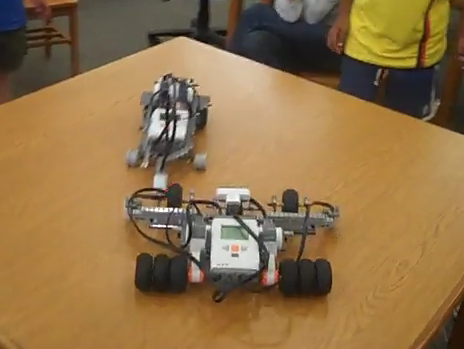
"content": "\u003cdiv class=\"module image alignright mceTemp\" style=\"width: 300px\">\u003cimg class=\"size-medium wp-image-16954\" src=\"http://ww2.kqed.org/mindshift/wp-content/uploads/sites/23/2011/11/Screen-shot-2011-11-17-at-12.20.33-PM-300x225.png\" alt=\"\" width=\"300\" height=\"225\">\n\u003cp class=\"wp-media-credit\">Khan Academy\u003c/p>\n\u003c/div>\n\u003cp>In just the past couple of years, Salman Khan has built a huge following for the\u003ca href=\"http://www.khanacademy.org/\"> Khan Academy\u003c/a>. He's created more than 2,700 educational videos that have been viewed tens of millions of times over. He’s been on \u003ca href=\"http://www.youtube.com/watch?v=PY5VKiG_IXE\">CNN\u003c/a>, \u003ca href=\"http://www.khanacademy.org/video/khan-academy-on-nightly-news?playlist=Khan+Academy-Related+Talks+and+Interviews\">NBC Nightly News,\u003c/a> \u003ca href=\"http://www.khanacademy.org/video/khan-academy-on-pbs-newshour--edited?playlist=Khan+Academy-Related+Talks+and+Interviews\">PBS News Hour\u003c/a>, and other major media. His videos are being incorporated into school curricula across the country.\u003c/p>\n\u003cp>But the videos are just the beginning. Using part of a \u003ca href=\"http://www.marketwatch.com/story/khan-academy-receives-5-million-to-accelerate-the-reinvention-of-education-2011-11-04\">$5 million grant from the O'Sullivan Foundation\u003c/a>, Khan is planning the next iteration of the Khan Academy, which will soon find its place in the physical world. This summer, he will run a camp for kids very similar to the program he co-organized at the \u003ca href=\"http://weteachscience.org\">We Teach Science\u003c/a> camp in Silicon Valley two years ago.\u003c/p>\n\u003caside class=\"pullquote alignleft\">“One of the things I hope these kids will have is a more visceral, ingrained, intuitive sense of analytical thinking about world around them than even most adults do.”\u003c/aside>\n\u003cp>Far from just watching videos, kids at the We Teach Science camp got their hands on a slew of math, science, and engineering projects. They organized a Sumo wrestling match between Lego robots they’d built using Lego NXT kits. “Whichever robot falls off loses. If no robots fall off, it’s a draw after three minutes,” Khan said.\u003c/p>\n\u003cp>They played a “paranoia” version of the game Risk to understand the theory of probabilities using Monopoly money, where kids trade securities based on the outcome of the game. “Some of the kids couldn’t see the board, which is indicative of what a lot of traders are doing right now,” Khan said.\u003c/p>\n\u003cp>They orchestrated a crowd-sourcing project to test the wisdom of the crowds by posting a one-day online photo contest that drew more than 1,000 participants. The kids put together a pile of objects, took a picture of it, posted it on \u003ca href=\"https://www.mturk.com/mturk/welcome\">Mechanical Turk\u003c/a>, and asked players to guess the \u003c!--more-->measurements. What happened? “The people who guessed online did better than any of our experts,” he said. \"We didn’t know how it would turn out because it was totally open-ended. We had a fun discussion about wisdom of the crowds, when it works, when it doesn’t work, why does it works.\"\u003c/p>\n\u003cp>[ad fullwidth]\u003c/p>\n\u003cp>The upcoming summer camp will be similar to We Teach Science. “It lets you rethink what the physical experience should be like, what I’d call deeper, higher order type of stuff that most schools don’t touch on right now,” he said. “The videos are great for learning things at an academic level. You can learn intuition for what a derivative is and about Newtonian mechanics through the online exercises, but this is another level of learning.”\u003c/p>\n\u003cp>Kids will learn a little about probability, modeling, negotiating skills, game theory, and once they go through it, “maybe they’ll look at the stock market or the housing market differently,” he said. “One of the things I hope these kids will have is a more visceral, ingrained, intuitive sense of science and analytical thinking about the world around them than even most adults do.”\u003c/p>\n\u003cp>At this early stage, it’ll be a bit of an experiment, too. Khan wants to see which of the exercises engage students best, which they’re really learning from, and which might be replicable for other teachers. “Maybe we can build software that can help others replicate the proejct,” he said. “That’s where it’s valuable to our mission as a whole.”\u003c/p>\n\u003cp>But the details are still fuzzy about logistics. At the moment, one person is dedicated to organizing the camp, but if the demand is high enough, Khan will allot more resources. It should be noted that the first year of We Teach Science in 2009, Khan brought a total of seven kids – three of whom were his cousins (the now-famous Nadia, for whom he created the very first YouTube video was one of them). The second year, 26 kids signed up. No doubt the demand will be somewhat higher this year.\u003c/p>\n\u003cp>Khan can confirm that it will take place somewhere between Portola Valley and Sunnyvale in Silicon Valley and will not be organized by grade level. They’ll probably target middle- and high-school students, but wouldn’t turn away the enthusiastic fifth-grader who showed initiative. Those interested can sign on to be considered \u003ca href=\"https://khanacademy.wufoo.com/forms/k7x2z1/\">here\u003c/a>.\u003c/p>\n\u003cp>Beyond this coming summer, a physical, brick-and-mortar Khan Academy school is well within the realm of possibility. But when or if it were to come to fruition, it would be attractive to kids and parents who are comfortable with open-ended learning, he said. “People who don’t want predictable answers. It’s not about writing a lesson plan where after 45 minutes, you know what the outcome will be.”\u003c/p>\n\u003cp>Right now, Khan is focusing on building a full curriculum online first. “We have a long way to go before we can do a full curriculum,” he said. “I don’t know if there will be a physical school called the Khan Academy. I would like for something like that to happen.\"\u003c/p>\n\u003cp>He added: “If nothing else, I’d like a kid who’s gone through the Khan Academy to be able to say, ‘I’ve learned accounting, law, and I can write as well as someone who’s graduated from Andover. That’s empowering.”\u003c/p>\n\u003cp>\u003ca href=\"http://ww2.kqed.org/mindshift/2011/11/the-khan-academy-opens-its-virtual-doors-carefully/\">Read more about\u003c/a> Khan's plans to allow educators to upload their own videos and create their own curriculum using the Khan Academy's analytics and reporting tools.\u003c/p>\n\u003cp>Take a look at a clip the Lego Robot Sumo Wrestling at the We Teach Science camp:\u003c/p>\n\u003cp>http://youtu.be/PcebYbQ31RA\u003c/p>\n\u003cp>\u003c/p>\n\u003cp> \u003c/p>\n\n",
"disqusIdentifier": "16945 http://blogs.kqed.org/mindshift/?p=16945",
"disqusUrl": "https://ww2.kqed.org/mindshift/2011/11/17/khan-academys-physical-iteration/",
"stats": {
"hasVideo": false,
"hasChartOrMap": false,
"hasAudio": false,
"hasPolis": false,
"wordCount": 1007,
"hasGoogleForm": false,
"hasGallery": false,
"hasHearkenModule": false,
"iframeSrcs": [],
"paragraphCount": 17
},
"modified": 1321638761,
"excerpt": null,
"headData": {
"twImgId": "",
"twTitle": "",
"ogTitle": "",
"ogImgId": "",
"twDescription": "",
"description": "Khan Academy In just the past couple of years, Salman Khan has built a huge following for the Khan Academy. He's created more than 2,700 educational videos that have been viewed tens of millions of times over. He’s been on CNN, NBC Nightly News, PBS News Hour, and other major media. His videos are being",
"title": "Khan Academy: Out of the Screen, Into the Physical World | KQED",
"ogDescription": "",
"schema": {
"@context": "https://schema.org",
"@type": "Article",
"headline": "Khan Academy: Out of the Screen, Into the Physical World",
"datePublished": "2011-11-17T12:23:37-08:00",
"dateModified": "2011-11-18T09:52:41-08:00",
"image": "https://cdn.kqed.org/wp-content/uploads/2020/02/KQED-OG-Image@1x.png"
}
},
"guestAuthors": [],
"slug": "khan-academys-physical-iteration",
"status": "publish",
"path": "/mindshift/16945/khan-academys-physical-iteration",
"audioTrackLength": null,
"parsedContent": [
{
"type": "contentString",
"content": "\u003cdiv class=\"post-body\">\u003cp>\u003cdiv class=\"module image alignright mceTemp\" style=\"width: 300px\">\u003cimg class=\"size-medium wp-image-16954\" src=\"http://ww2.kqed.org/mindshift/wp-content/uploads/sites/23/2011/11/Screen-shot-2011-11-17-at-12.20.33-PM-300x225.png\" alt=\"\" width=\"300\" height=\"225\">\n\u003cp class=\"wp-media-credit\">Khan Academy\u003c/p>\n\u003c/div>\n\u003cp>In just the past couple of years, Salman Khan has built a huge following for the\u003ca href=\"http://www.khanacademy.org/\"> Khan Academy\u003c/a>. He's created more than 2,700 educational videos that have been viewed tens of millions of times over. He’s been on \u003ca href=\"http://www.youtube.com/watch?v=PY5VKiG_IXE\">CNN\u003c/a>, \u003ca href=\"http://www.khanacademy.org/video/khan-academy-on-nightly-news?playlist=Khan+Academy-Related+Talks+and+Interviews\">NBC Nightly News,\u003c/a> \u003ca href=\"http://www.khanacademy.org/video/khan-academy-on-pbs-newshour--edited?playlist=Khan+Academy-Related+Talks+and+Interviews\">PBS News Hour\u003c/a>, and other major media. His videos are being incorporated into school curricula across the country.\u003c/p>\n\u003cp>But the videos are just the beginning. Using part of a \u003ca href=\"http://www.marketwatch.com/story/khan-academy-receives-5-million-to-accelerate-the-reinvention-of-education-2011-11-04\">$5 million grant from the O'Sullivan Foundation\u003c/a>, Khan is planning the next iteration of the Khan Academy, which will soon find its place in the physical world. This summer, he will run a camp for kids very similar to the program he co-organized at the \u003ca href=\"http://weteachscience.org\">We Teach Science\u003c/a> camp in Silicon Valley two years ago.\u003c/p>\n\u003caside class=\"pullquote alignleft\">“One of the things I hope these kids will have is a more visceral, ingrained, intuitive sense of analytical thinking about world around them than even most adults do.”\u003c/aside>\n\u003cp>Far from just watching videos, kids at the We Teach Science camp got their hands on a slew of math, science, and engineering projects. They organized a Sumo wrestling match between Lego robots they’d built using Lego NXT kits. “Whichever robot falls off loses. If no robots fall off, it’s a draw after three minutes,” Khan said.\u003c/p>\n\u003cp>They played a “paranoia” version of the game Risk to understand the theory of probabilities using Monopoly money, where kids trade securities based on the outcome of the game. “Some of the kids couldn’t see the board, which is indicative of what a lot of traders are doing right now,” Khan said.\u003c/p>\n\u003cp>They orchestrated a crowd-sourcing project to test the wisdom of the crowds by posting a one-day online photo contest that drew more than 1,000 participants. The kids put together a pile of objects, took a picture of it, posted it on \u003ca href=\"https://www.mturk.com/mturk/welcome\">Mechanical Turk\u003c/a>, and asked players to guess the \u003c!--more-->measurements. What happened? “The people who guessed online did better than any of our experts,” he said. \"We didn’t know how it would turn out because it was totally open-ended. We had a fun discussion about wisdom of the crowds, when it works, when it doesn’t work, why does it works.\"\u003c/p>\n\u003cp>\u003c/p>\u003c/div>",
"attributes": {
"named": {},
"numeric": []
}
},
{
"type": "component",
"content": "",
"name": "ad",
"attributes": {
"named": {
"label": "fullwidth"
},
"numeric": [
"fullwidth"
]
}
},
{
"type": "contentString",
"content": "\u003cdiv class=\"post-body\">\u003cp>\u003c/p>\n\u003cp>The upcoming summer camp will be similar to We Teach Science. “It lets you rethink what the physical experience should be like, what I’d call deeper, higher order type of stuff that most schools don’t touch on right now,” he said. “The videos are great for learning things at an academic level. You can learn intuition for what a derivative is and about Newtonian mechanics through the online exercises, but this is another level of learning.”\u003c/p>\n\u003cp>Kids will learn a little about probability, modeling, negotiating skills, game theory, and once they go through it, “maybe they’ll look at the stock market or the housing market differently,” he said. “One of the things I hope these kids will have is a more visceral, ingrained, intuitive sense of science and analytical thinking about the world around them than even most adults do.”\u003c/p>\n\u003cp>At this early stage, it’ll be a bit of an experiment, too. Khan wants to see which of the exercises engage students best, which they’re really learning from, and which might be replicable for other teachers. “Maybe we can build software that can help others replicate the proejct,” he said. “That’s where it’s valuable to our mission as a whole.”\u003c/p>\n\u003cp>But the details are still fuzzy about logistics. At the moment, one person is dedicated to organizing the camp, but if the demand is high enough, Khan will allot more resources. It should be noted that the first year of We Teach Science in 2009, Khan brought a total of seven kids – three of whom were his cousins (the now-famous Nadia, for whom he created the very first YouTube video was one of them). The second year, 26 kids signed up. No doubt the demand will be somewhat higher this year.\u003c/p>\n\u003cp>Khan can confirm that it will take place somewhere between Portola Valley and Sunnyvale in Silicon Valley and will not be organized by grade level. They’ll probably target middle- and high-school students, but wouldn’t turn away the enthusiastic fifth-grader who showed initiative. Those interested can sign on to be considered \u003ca href=\"https://khanacademy.wufoo.com/forms/k7x2z1/\">here\u003c/a>.\u003c/p>\n\u003cp>Beyond this coming summer, a physical, brick-and-mortar Khan Academy school is well within the realm of possibility. But when or if it were to come to fruition, it would be attractive to kids and parents who are comfortable with open-ended learning, he said. “People who don’t want predictable answers. It’s not about writing a lesson plan where after 45 minutes, you know what the outcome will be.”\u003c/p>\n\u003cp>Right now, Khan is focusing on building a full curriculum online first. “We have a long way to go before we can do a full curriculum,” he said. “I don’t know if there will be a physical school called the Khan Academy. I would like for something like that to happen.\"\u003c/p>\n\u003cp>He added: “If nothing else, I’d like a kid who’s gone through the Khan Academy to be able to say, ‘I’ve learned accounting, law, and I can write as well as someone who’s graduated from Andover. That’s empowering.”\u003c/p>\n\u003cp>\u003ca href=\"http://ww2.kqed.org/mindshift/2011/11/the-khan-academy-opens-its-virtual-doors-carefully/\">Read more about\u003c/a> Khan's plans to allow educators to upload their own videos and create their own curriculum using the Khan Academy's analytics and reporting tools.\u003c/p>\n\u003cp>Take a look at a clip the Lego Robot Sumo Wrestling at the We Teach Science camp:\u003c/p>\u003c/p>\u003cp>\u003cspan class='utils-parseShortcode-shortcodes-__youtubeShortcode__embedYoutube'>\n \u003cspan class='utils-parseShortcode-shortcodes-__youtubeShortcode__embedYoutubeInside'>\n \u003ciframe\n loading='lazy'\n class='utils-parseShortcode-shortcodes-__youtubeShortcode__youtubePlayer'\n type='text/html'\n src='//www.youtube.com/embed/PcebYbQ31RA'\n title='//www.youtube.com/embed/PcebYbQ31RA'\n allowfullscreen='true'\n style='border:0;'>\u003c/iframe>\n \u003c/span>\n \u003c/span>\u003c/p>\u003cp>\u003cp>\u003c/p>\n\u003cp> \u003c/p>\n\n\u003c/div>\u003c/p>",
"attributes": {
"named": {},
"numeric": []
}
}
],
"link": "/mindshift/16945/khan-academys-physical-iteration",
"authors": [
"180"
],
"categories": [
"mindshift_194",
"mindshift_193"
],
"tags": [
"mindshift_295"
],
"featImg": "mindshift_16954",
"label": "mindshift"
},
"mindshift_16928": {
"type": "posts",
"id": "mindshift_16928",
"meta": {
"index": "posts_1716263798",
"site": "mindshift",
"id": "16928",
"score": null,
"sort": [
1321552840000
]
},
"parent": 0,
"labelTerm": {
"site": "mindshift"
},
"blocks": [],
"publishDate": 1321552840,
"format": "aside",
"disqusTitle": "Goodnight, iPad",
"title": "Goodnight, iPad",
"headTitle": "MindShift | KQED News",
"content": "\u003cp>A hilarious sendup of the classic children's book \u003cem>Goodnight Moon\u003c/em>. With the perfect ironic twist -- it's also available as a \u003ca href=\"http://www.amazon.com/Goodnight-iPad-Parody-next-generation/dp/0399158561\">print book\u003c/a>.\u003c/p>\n\u003cp>http://youtu.be/-ouOwpYQqic\u003c/p>\n\u003cp>[ad fullwidth]\u003c/p>\u003cp>\u003c/p>\n",
"disqusIdentifier": "16928 http://blogs.kqed.org/mindshift/?p=16928",
"disqusUrl": "https://ww2.kqed.org/mindshift/2011/11/17/goodnight-ipad/",
"stats": {
"hasVideo": false,
"hasChartOrMap": false,
"hasAudio": false,
"hasPolis": false,
"wordCount": 30,
"hasGoogleForm": false,
"hasGallery": false,
"hasHearkenModule": false,
"iframeSrcs": [],
"paragraphCount": 3
},
"modified": 1321551814,
"excerpt": null,
"headData": {
"twImgId": "",
"twTitle": "",
"ogTitle": "",
"ogImgId": "",
"twDescription": "",
"description": "A hilarious sendup of the classic children's book Goodnight Moon. With the perfect ironic twist -- it's also available as a print book. http://youtu.be/-ouOwpYQqic",
"title": "Goodnight, iPad | KQED",
"ogDescription": "",
"schema": {
"@context": "https://schema.org",
"@type": "Article",
"headline": "Goodnight, iPad",
"datePublished": "2011-11-17T10:00:40-08:00",
"dateModified": "2011-11-17T09:43:34-08:00",
"image": "https://cdn.kqed.org/wp-content/uploads/2020/02/KQED-OG-Image@1x.png"
}
},
"guestAuthors": [],
"slug": "goodnight-ipad",
"status": "publish",
"path": "/mindshift/16928/goodnight-ipad",
"audioTrackLength": null,
"parsedContent": [
{
"type": "contentString",
"content": "\u003cdiv class=\"post-body\">\u003cp>\u003cp>A hilarious sendup of the classic children's book \u003cem>Goodnight Moon\u003c/em>. With the perfect ironic twist -- it's also available as a \u003ca href=\"http://www.amazon.com/Goodnight-iPad-Parody-next-generation/dp/0399158561\">print book\u003c/a>.\u003c/p>\u003c/p>\u003cp>\u003cspan class='utils-parseShortcode-shortcodes-__youtubeShortcode__embedYoutube'>\n \u003cspan class='utils-parseShortcode-shortcodes-__youtubeShortcode__embedYoutubeInside'>\n \u003ciframe\n loading='lazy'\n class='utils-parseShortcode-shortcodes-__youtubeShortcode__youtubePlayer'\n type='text/html'\n src='//www.youtube.com/embed/-ouOwpYQqic'\n title='//www.youtube.com/embed/-ouOwpYQqic'\n allowfullscreen='true'\n style='border:0;'>\u003c/iframe>\n \u003c/span>\n \u003c/span>\u003c/p>\u003cp>\u003cp>\u003c/p>\u003c/div>",
"attributes": {
"named": {},
"numeric": []
}
},
{
"type": "component",
"content": "",
"name": "ad",
"attributes": {
"named": {
"label": "fullwidth"
},
"numeric": [
"fullwidth"
]
}
},
{
"type": "contentString",
"content": "\u003cdiv class=\"post-body\">\u003cp>\u003c/p>\u003cp>\u003c/p>\n\u003c/div>\u003c/p>",
"attributes": {
"named": {},
"numeric": []
}
}
],
"link": "/mindshift/16928/goodnight-ipad",
"authors": [
"180"
],
"categories": [
"mindshift_194"
],
"tags": [
"mindshift_768",
"mindshift_81"
],
"label": "mindshift"
},
"mindshift_16902": {
"type": "posts",
"id": "mindshift_16902",
"meta": {
"index": "posts_1716263798",
"site": "mindshift",
"id": "16902",
"score": null,
"sort": [
1321473773000
]
},
"parent": 0,
"labelTerm": {
"site": "mindshift"
},
"blocks": [],
"publishDate": 1321473773,
"format": "aside",
"disqusTitle": "Scratching that (Incessant) Technology Itch",
"title": "Scratching that (Incessant) Technology Itch",
"headTitle": "MindShift | KQED News",
"content": "\u003cdiv class=\"module image alignright mceTemp\" style=\"width: 300px\">\u003cimg class=\"size-medium wp-image-16916\" src=\"http://ww2.kqed.org/mindshift/wp-content/uploads/sites/23/2011/11/10_11.15_newtech_0654-300x199.jpg\" alt=\"\" width=\"300\" height=\"199\">\n\u003cp class=\"wp-media-credit\">Lenny Gonzales\u003c/p>\n\u003c/div>\n\u003cp>Our love-hate relationship with technology is the subject of research psychologist Dr. Larry D. Rosen's new book \u003cem>iDisorder\u003c/em>. From his perspective, \"tech gadgets and applications are turning us into basket-cases suffering from versions of obsessive-compulsive disorder and attention-deficit syndrome,\" according to a recent \u003ca href=\"http://hechingered.org/content/how-a-tech-break-can-help-students-refocus_4556/\">HechingerEd blog\u003c/a>.\u003c/p>\n\u003cp>Rosen also spoke at last year's \u003ca href=\"http://www.learningandthebrain.com/\">Learning & the Brain Conference,\u003c/a> along with Dr. Gary Small, author of the book \u003cem>\u003ca href=\"http://www.amazon.com/iBrain-Surviving-Technological-Alteration-Modern/dp/0061340332\">iBrain\u003c/a>\u003c/em>:\u003ca href=\"http://www.amazon.com/iBrain-Surviving-Technological-Alteration-Modern/dp/0061340332\"> \u003cem>Surviving the Technological Alteration of the Modern Mind.\u003c/em>\u003c/a> (Yes, the similarity of the titles are noted.)\u003c/p>\n\u003cp>The two authors bring their own experiences and perspectives to the table, some on opposite spectrums, but some quite similar. \u003ca href=\"http://ww2.kqed.org/mindshift/2011/02/how-technology-wires-the-learning-brain/\">This MindShift article, How Technology Wires the Learning Brain\u003c/a> describes Small's point of view about one specific tactic he agrees with Rosen: scratch the technology itch in intervals, then set it aside.\u003c/p>\n\u003cp>Here's that original post:\u003c/p>\n\u003cp>Kids between the ages of 8 and 18 spend 11.5 hours a day using technology -- whether that’s computers, television, mobile phones, or video games – and usually more than one at a time. That’s a big chunk of their 15 or 16 waking hours.\u003c/p>\n\u003caside class=\"pullquote alignleft\">“The technology train has left. You have to deal with it, understand it, and get some perspective.”\u003c/aside>\n\u003cp>But does that spell doom for the next generation? Not necessarily, according to \u003ca href=\"http://drgarysmall.com/\">Dr. Gary Small,\u003c/a> a neuroscientist and professor at UCLA, who spoke at the \u003ca href=\"http://www.learningandthebrain.com/\">Learning & the Brain Conference\u003c/a>.\u003c/p>\n\u003cp>[ad fullwidth]\u003c/p>\n\u003cp>“Young people are born into technology, and they’re used to using it 24/7,” Small said. “Their brains are wired to use it elegantly.”\u003c!--more-->\u003c/p>\n\u003cp>The downside of such immersion in technological devices, he said, is that they’re not having conversations, looking people in the eye, or noticing verbal cues. “These are important 'technologies,' so to speak, that have evolved over centuries and are tremendously powerful.”\u003c/p>\n\u003cp>But that’s not the headline here. Small’s main point was this: “The technology train has left. You have to deal with it, understand it, and get some perspective.”\u003c/p>\n\u003cp>Video games, for example, aren’t just about repetitive tasks – many of them have built-in social components that allow kids to communicate. Texting isn’t about using a gadget -- it’s about connecting with someone else.\u003c/p>\n\u003cp>“Texting is an expression of what it means to be human,” Small said. “We love being connected to other people. It’s a very compelling emotional urge, and it’s hard to give up moment to moment.”\u003c/p>\n\u003cp>\u003cstrong>That’s why one well-liked teacher Small knows gives her students a five-minute texting break in the middle of class. Educators also use \u003ca href=\"http://www.abcactionnews.com/dpp/news/region_pasco/wesley_chapel/teacher-welcomes-texting-in-class\">texting in class \u003c/a>as a means to gauge understanding of the subject and take instant polls, for example.\u003c/strong>\u003c/p>\n\u003cp>It might seem odd, but Small suggests also carving out time for face-to-face emotional exercises and in-person conversations to counterbalance all the inevitable gadget-communication.\u003c/p>\n\u003cp>“We \u003cem>can\u003c/em> train empathic behavior,” he said.\u003c/p>\n\u003ch5>\u003cstrong>TECH AND CREATIVITY\u003c/strong>\u003c/h5>\n\u003cp>Is technology making us less creative? Parents and educators have been worried about this issue, wondering whether hours of playing video games will zap their inclination to write or paint or sing.\u003c/p>\n\u003cp>Small said the Internet trains our minds to have a “staccato” train of thought, jumping from idea to idea, like we do from Web site to Web site. But is that the most creative way to think? Do we have time to sit back and be thoughtful?\u003c/p>\n\u003caside class=\"pullquote alignleft\">There is an undeniable Pavlovian response to certain stimulus – and the Internet happens to be the medium for gratifying the urge.\u003c/aside>\n\u003cp>On one hand, we’re trained not to think deeply about subjects when we text quick snippets, Tweet short thoughts, or click on a simple thumbs up or thumbs down on a link. We experience information overload and have no time for reflection or problem solving.\u003c/p>\n\u003cp>On the other hand, technology trains the brain to be nimble and to process new ideas quickly. We become more open to new ideas, and communicate more freely and frequently.\u003c/p>\n\u003cp>“The brain is complex,” he said. “The answers are not straightforward.”\u003c/p>\n\u003ch5>\u003cstrong>IS THE INTERNET MAKING US SMARTER?\u003c/strong>\u003c/h5>\n\u003cp>In a study called \u003ca href=\"http://journals.lww.com/ajgponline/Abstract/2009/02000/Your_Brain_on_Google__Patterns_of_Cerebral.4.aspx\">“Your Brain on Google,”\u003c/a> Small and his peers tested the brain activity of two groups -- “Internet-naïve” (mostly 65 and older who had very little experience online) and “Internet smart”-- while reading a book versus conducting a Google search.\u003c/p>\n\u003cp>In the “Internet savvy” group, there was twice as much brain activity in all parts of the brain while they were conducting a Google search than while they were reading a book. And in the “Internet-naïve” group, after a week of Googling subjects online, there was a significant burst in frontal lobe activity, which controls short-term memory and decision-making.\u003c/p>\n\u003cp>Small’s conclusion? “Google is making us smart,” he said. “Searching online is brain exercise.”\u003c/p>\n\u003cp>Technology can train our brains in positive ways, he added. Surgeons who play video games, for example, make fewer surgical errors. Those who play video games have improved reaction time, better peripheral vision.\u003c/p>\n\u003cp>[ad floatright]\u003c/p>\n\u003cp>“It’s a matter of finding balance,” he said. “Upgrade the technology skills of older ‘digital immigrants,’ and help young kids improve social skills.”\u003c/p>\n\u003ch5>Other interesting nuggets from Small’s talk:\u003c/h5>\n\u003cul>\n\u003cli>Is technology addictive? Another complex question. Small said the American Psychiatric Group doesn’t think so. But there is an undeniable Pavlovian response to certain stimulus – and the Internet happens to be the medium for gratifying the urge. For example, if you’re addicted to shopping, is e-Bay to blame? When triggered, dopamine creates powerful urges to keep it flowing. “The consequence of a certain behavior reinforces a behavior,” Small said.\u003c/li>\n\u003cli>Brains are malleable, much like computers. If we spend a lot of time engaged in a repeated mental task, the neural circuits will strengthen. Conversely, if we neglect those tasks, the neural circuits will weaken.\u003c/li>\n\u003cli>The “thinking brain” – seeing the big picture – is not fully developed in children. Empathy and the ability to perceive and understand emotional point of view and communicate that understanding has not kicked in.\u003c/li>\n\u003cli>The term “use it or lose it” applies to brain functions: 60% of synaptic connections are pruned away when not used.\u003c/li>\n\u003cli>What will happen to brain development as result of the evolution of the handheld tool? Genetic variants that adapt best to environment are most likely to survive.\u003c/li>\n\u003c/ul>\n\n",
"disqusIdentifier": "16902 http://blogs.kqed.org/mindshift/?p=16902",
"disqusUrl": "https://ww2.kqed.org/mindshift/2011/11/16/scratching-that-incessant-technology-itch/",
"stats": {
"hasVideo": false,
"hasChartOrMap": false,
"hasAudio": false,
"hasPolis": false,
"wordCount": 1139,
"hasGoogleForm": false,
"hasGallery": false,
"hasHearkenModule": false,
"iframeSrcs": [],
"paragraphCount": 26
},
"modified": 1321473773,
"excerpt": null,
"headData": {
"twImgId": "",
"twTitle": "",
"ogTitle": "",
"ogImgId": "",
"twDescription": "",
"description": "Lenny Gonzales Our love-hate relationship with technology is the subject of research psychologist Dr. Larry D. Rosen's new book iDisorder. From his perspective, "tech gadgets and applications are turning us into basket-cases suffering from versions of obsessive-compulsive disorder and attention-deficit syndrome," according to a recent HechingerEd blog. Rosen also spoke at last year's Learning &",
"title": "Scratching that (Incessant) Technology Itch | KQED",
"ogDescription": "",
"schema": {
"@context": "https://schema.org",
"@type": "Article",
"headline": "Scratching that (Incessant) Technology Itch",
"datePublished": "2011-11-16T12:02:53-08:00",
"dateModified": "2011-11-16T12:02:53-08:00",
"image": "https://cdn.kqed.org/wp-content/uploads/2020/02/KQED-OG-Image@1x.png"
}
},
"guestAuthors": [],
"slug": "scratching-that-incessant-technology-itch",
"status": "publish",
"path": "/mindshift/16902/scratching-that-incessant-technology-itch",
"audioTrackLength": null,
"parsedContent": [
{
"type": "contentString",
"content": "\u003cdiv class=\"post-body\">\u003cp>\u003cdiv class=\"module image alignright mceTemp\" style=\"width: 300px\">\u003cimg class=\"size-medium wp-image-16916\" src=\"http://ww2.kqed.org/mindshift/wp-content/uploads/sites/23/2011/11/10_11.15_newtech_0654-300x199.jpg\" alt=\"\" width=\"300\" height=\"199\">\n\u003cp class=\"wp-media-credit\">Lenny Gonzales\u003c/p>\n\u003c/div>\n\u003cp>Our love-hate relationship with technology is the subject of research psychologist Dr. Larry D. Rosen's new book \u003cem>iDisorder\u003c/em>. From his perspective, \"tech gadgets and applications are turning us into basket-cases suffering from versions of obsessive-compulsive disorder and attention-deficit syndrome,\" according to a recent \u003ca href=\"http://hechingered.org/content/how-a-tech-break-can-help-students-refocus_4556/\">HechingerEd blog\u003c/a>.\u003c/p>\n\u003cp>Rosen also spoke at last year's \u003ca href=\"http://www.learningandthebrain.com/\">Learning & the Brain Conference,\u003c/a> along with Dr. Gary Small, author of the book \u003cem>\u003ca href=\"http://www.amazon.com/iBrain-Surviving-Technological-Alteration-Modern/dp/0061340332\">iBrain\u003c/a>\u003c/em>:\u003ca href=\"http://www.amazon.com/iBrain-Surviving-Technological-Alteration-Modern/dp/0061340332\"> \u003cem>Surviving the Technological Alteration of the Modern Mind.\u003c/em>\u003c/a> (Yes, the similarity of the titles are noted.)\u003c/p>\n\u003cp>The two authors bring their own experiences and perspectives to the table, some on opposite spectrums, but some quite similar. \u003ca href=\"http://ww2.kqed.org/mindshift/2011/02/how-technology-wires-the-learning-brain/\">This MindShift article, How Technology Wires the Learning Brain\u003c/a> describes Small's point of view about one specific tactic he agrees with Rosen: scratch the technology itch in intervals, then set it aside.\u003c/p>\n\u003cp>Here's that original post:\u003c/p>\n\u003cp>Kids between the ages of 8 and 18 spend 11.5 hours a day using technology -- whether that’s computers, television, mobile phones, or video games – and usually more than one at a time. That’s a big chunk of their 15 or 16 waking hours.\u003c/p>\n\u003caside class=\"pullquote alignleft\">“The technology train has left. You have to deal with it, understand it, and get some perspective.”\u003c/aside>\n\u003cp>But does that spell doom for the next generation? Not necessarily, according to \u003ca href=\"http://drgarysmall.com/\">Dr. Gary Small,\u003c/a> a neuroscientist and professor at UCLA, who spoke at the \u003ca href=\"http://www.learningandthebrain.com/\">Learning & the Brain Conference\u003c/a>.\u003c/p>\n\u003cp>\u003c/p>\u003c/div>",
"attributes": {
"named": {},
"numeric": []
}
},
{
"type": "component",
"content": "",
"name": "ad",
"attributes": {
"named": {
"label": "fullwidth"
},
"numeric": [
"fullwidth"
]
}
},
{
"type": "contentString",
"content": "\u003cdiv class=\"post-body\">\u003cp>\u003c/p>\n\u003cp>“Young people are born into technology, and they’re used to using it 24/7,” Small said. “Their brains are wired to use it elegantly.”\u003c!--more-->\u003c/p>\n\u003cp>The downside of such immersion in technological devices, he said, is that they’re not having conversations, looking people in the eye, or noticing verbal cues. “These are important 'technologies,' so to speak, that have evolved over centuries and are tremendously powerful.”\u003c/p>\n\u003cp>But that’s not the headline here. Small’s main point was this: “The technology train has left. You have to deal with it, understand it, and get some perspective.”\u003c/p>\n\u003cp>Video games, for example, aren’t just about repetitive tasks – many of them have built-in social components that allow kids to communicate. Texting isn’t about using a gadget -- it’s about connecting with someone else.\u003c/p>\n\u003cp>“Texting is an expression of what it means to be human,” Small said. “We love being connected to other people. It’s a very compelling emotional urge, and it’s hard to give up moment to moment.”\u003c/p>\n\u003cp>\u003cstrong>That’s why one well-liked teacher Small knows gives her students a five-minute texting break in the middle of class. Educators also use \u003ca href=\"http://www.abcactionnews.com/dpp/news/region_pasco/wesley_chapel/teacher-welcomes-texting-in-class\">texting in class \u003c/a>as a means to gauge understanding of the subject and take instant polls, for example.\u003c/strong>\u003c/p>\n\u003cp>It might seem odd, but Small suggests also carving out time for face-to-face emotional exercises and in-person conversations to counterbalance all the inevitable gadget-communication.\u003c/p>\n\u003cp>“We \u003cem>can\u003c/em> train empathic behavior,” he said.\u003c/p>\n\u003ch5>\u003cstrong>TECH AND CREATIVITY\u003c/strong>\u003c/h5>\n\u003cp>Is technology making us less creative? Parents and educators have been worried about this issue, wondering whether hours of playing video games will zap their inclination to write or paint or sing.\u003c/p>\n\u003cp>Small said the Internet trains our minds to have a “staccato” train of thought, jumping from idea to idea, like we do from Web site to Web site. But is that the most creative way to think? Do we have time to sit back and be thoughtful?\u003c/p>\n\u003caside class=\"pullquote alignleft\">There is an undeniable Pavlovian response to certain stimulus – and the Internet happens to be the medium for gratifying the urge.\u003c/aside>\n\u003cp>On one hand, we’re trained not to think deeply about subjects when we text quick snippets, Tweet short thoughts, or click on a simple thumbs up or thumbs down on a link. We experience information overload and have no time for reflection or problem solving.\u003c/p>\n\u003cp>On the other hand, technology trains the brain to be nimble and to process new ideas quickly. We become more open to new ideas, and communicate more freely and frequently.\u003c/p>\n\u003cp>“The brain is complex,” he said. “The answers are not straightforward.”\u003c/p>\n\u003ch5>\u003cstrong>IS THE INTERNET MAKING US SMARTER?\u003c/strong>\u003c/h5>\n\u003cp>In a study called \u003ca href=\"http://journals.lww.com/ajgponline/Abstract/2009/02000/Your_Brain_on_Google__Patterns_of_Cerebral.4.aspx\">“Your Brain on Google,”\u003c/a> Small and his peers tested the brain activity of two groups -- “Internet-naïve” (mostly 65 and older who had very little experience online) and “Internet smart”-- while reading a book versus conducting a Google search.\u003c/p>\n\u003cp>In the “Internet savvy” group, there was twice as much brain activity in all parts of the brain while they were conducting a Google search than while they were reading a book. And in the “Internet-naïve” group, after a week of Googling subjects online, there was a significant burst in frontal lobe activity, which controls short-term memory and decision-making.\u003c/p>\n\u003cp>Small’s conclusion? “Google is making us smart,” he said. “Searching online is brain exercise.”\u003c/p>\n\u003cp>Technology can train our brains in positive ways, he added. Surgeons who play video games, for example, make fewer surgical errors. Those who play video games have improved reaction time, better peripheral vision.\u003c/p>\n\u003cp>\u003c/p>\u003c/div>",
"attributes": {
"named": {},
"numeric": []
}
},
{
"type": "component",
"content": "",
"name": "ad",
"attributes": {
"named": {
"label": "floatright"
},
"numeric": [
"floatright"
]
}
},
{
"type": "contentString",
"content": "\u003cdiv class=\"post-body\">\u003cp>\u003c/p>\n\u003cp>“It’s a matter of finding balance,” he said. “Upgrade the technology skills of older ‘digital immigrants,’ and help young kids improve social skills.”\u003c/p>\n\u003ch5>Other interesting nuggets from Small’s talk:\u003c/h5>\n\u003cul>\n\u003cli>Is technology addictive? Another complex question. Small said the American Psychiatric Group doesn’t think so. But there is an undeniable Pavlovian response to certain stimulus – and the Internet happens to be the medium for gratifying the urge. For example, if you’re addicted to shopping, is e-Bay to blame? When triggered, dopamine creates powerful urges to keep it flowing. “The consequence of a certain behavior reinforces a behavior,” Small said.\u003c/li>\n\u003cli>Brains are malleable, much like computers. If we spend a lot of time engaged in a repeated mental task, the neural circuits will strengthen. Conversely, if we neglect those tasks, the neural circuits will weaken.\u003c/li>\n\u003cli>The “thinking brain” – seeing the big picture – is not fully developed in children. Empathy and the ability to perceive and understand emotional point of view and communicate that understanding has not kicked in.\u003c/li>\n\u003cli>The term “use it or lose it” applies to brain functions: 60% of synaptic connections are pruned away when not used.\u003c/li>\n\u003cli>What will happen to brain development as result of the evolution of the handheld tool? Genetic variants that adapt best to environment are most likely to survive.\u003c/li>\n\u003c/ul>\n\n\u003c/div>\u003c/p>",
"attributes": {
"named": {},
"numeric": []
}
}
],
"link": "/mindshift/16902/scratching-that-incessant-technology-itch",
"authors": [
"180"
],
"categories": [
"mindshift_192",
"mindshift_194",
"mindshift_195",
"mindshift_193"
],
"tags": [
"mindshift_767",
"mindshift_46",
"mindshift_345"
],
"featImg": "mindshift_16916",
"label": "mindshift"
},
"mindshift_16876": {
"type": "posts",
"id": "mindshift_16876",
"meta": {
"index": "posts_1716263798",
"site": "mindshift",
"id": "16876",
"score": null,
"sort": [
1321393515000
]
},
"parent": 0,
"labelTerm": {
"site": "mindshift"
},
"blocks": [],
"publishDate": 1321393515,
"format": "aside",
"disqusTitle": "Teaching Kids About Entrepreneurship, One Ladybug at a Time",
"title": "Teaching Kids About Entrepreneurship, One Ladybug at a Time",
"headTitle": "MindShift | KQED News",
"content": "\u003cp>\u003cimg class=\"alignleft size-full wp-image-16888\" src=\"http://ww2.kqed.org/mindshift/wp-content/uploads/sites/23/2011/11/lull_ladybug1.jpg\" alt=\"\" width=\"300\" height=\"300\" srcset=\"https://ww2.kqed.org/app/uploads/sites/23/2011/11/lull_ladybug1.jpg 300w, https://ww2.kqed.org/app/uploads/sites/23/2011/11/lull_ladybug1-32x32.jpg 32w, https://ww2.kqed.org/app/uploads/sites/23/2011/11/lull_ladybug1-64x64.jpg 64w, https://ww2.kqed.org/app/uploads/sites/23/2011/11/lull_ladybug1-96x96.jpg 96w, https://ww2.kqed.org/app/uploads/sites/23/2011/11/lull_ladybug1-128x128.jpg 128w, https://ww2.kqed.org/app/uploads/sites/23/2011/11/lull_ladybug1-75x75.jpg 75w\" sizes=\"(max-width: 300px) 100vw, 300px\">We start teaching kids about jobs and professions at an early age. By elementary school, they know what doctors, scientists, farmers and firefighters do. In some cases, there are supporting programs to help kids gain knowledge and hands-on experience needed for those careers and to put them in touch with those who work in the field.\u003c/p>\n\u003cp>That's not always the case when it comes to entrepreneurship, even though the skills necessary to build and run one's own company can be relevant to anyone: financial literacy, responsibility, problem-solving, creative thinking, collaboration and independence. Add to that list \"technical skills,\" and we have not just an outline for a curriculum for career-readiness, but also the building blocks for what has become -- and will probably become more so -- a crucial driving force for economic growth in the country.\u003c/p>\n\u003cp>So how do you explain \"entrepreneurship\" to kids? How do you explain business models, business plans, and basic economics?\u003c/p>\n\u003cp>Lull Mengesha argues that many elementary school-age kids already have an understanding of bartering, and that's where he starts the first book in his series \"\u003cem>Building an Entrepreneur\u003c/em>.\" \u003cem>\u003ca href=\"http://www.amazon.com/Lull-his-ladybugs-Fostering-Entrepreneurial/dp/098357250X\">Lull and \u003c!--more-->His Ladybugs\u003c/a>\u003c/em> is based off of Mengesha's own experiences growing up and developing his own business sensibilities.\u003c/p>\n\u003cp>Born in Khartoum, Sudan, Mengesha came to the U.S. as an infant and grew up in a low-income neighborhood outside of San Diego. He was bussed into a school in a different part of town, where he and his friends would stare at their school-provided meals and wish they had the sack lunches -- full of snack-cakes and juice-boxes and chips -- their wealthier classmates would bring to school.\u003c/p>\n\u003cp>[ad fullwidth]\u003c/p>\n\u003cp>\u003cem>Lull and the Ladybugs\u003c/em> describes how young Mengesha comes up with a way to get one of these coveted sack lunches, which his mom tells him she can't afford. Since he can't buy the contents of a sack lunch, Mengesha realizes he can try trading. In doing so, he taps into the bartering culture young students are already familiar with (in his case, trading Silly Bands). But what does a poor kid have to offer a wealthier one? Mengesha comes up with the innovative idea to catch ladybugs in jars, as well as a clever way to \"pitch\" the proposed trade to the other kids in the cafeteria.\u003c/p>\n\u003cp>Mengesha has shared this story in his talks with students, and says he's noticed that it creates valuable discussion centered around economics, entrepreneurship and culture. Mengesha also the wrote the book \u003cem>\u003ca href=\"http://www.amazon.com/The-Only-Black-Student-ebook/dp/B003980XG6/ref=ntt_at_ep_dpt_2\">The Only Black Student\u003c/a>\u003c/em> about his experiences at a \"PWI\" (predominantly white institution), which has been frequently assigned in college classrooms to discuss race, academics, and achievement.\u003c/p>\n\u003cp>But \u003cem>Lull and the Ladybugs\u003c/em> is aimed at the 6 to 8 year age range, a recognition that the message about building one's own future needs to start far earlier than college. \"I worked with several elementary classes and the biggest challenge was explaining what an entrepreneur is,\" says Mengesha. \"However kids intuitively understand bartering the first day they hit the cafeteria trying to trade up for more awesome snacks. Instead of trying to teach terminology I became more focused on teaching the experiences and lessons of an entrepreneur.\"\u003c/p>\n\u003cp>Mengesha plans on writing a whole series of \"Building an Entrepreneur\" books to teach lessons to kids \"as early and as intuitively as possible.\" He also wants to focus on students who culturally and economically don't necessarily come from a business-oriented or an economically privileged background.\u003c/p>\n\u003cp>Although Mengesha himself now has a Bachelors degree in economics, a Masters in Information Management, and a job at Boeing, he is himself a serial entrepreneur. That's evident in his book-publishing work (all his books are self-published), his plans to develop educational curriculum around entrepreneurship, as well as several other projects he's involved in.\u003c/p>\n\u003cp>\"If you talk to any successful entrepreneur, they usually have a history of entrepreneurship starting at an early age involving available goods or services\" -- selling lemonade, for example, or mowing lawns, Mengesha says. Sometimes students are punished for this sort of thing when it happens on school grounds.\u003c/p>\n\u003cp>\u003c/p>\n\u003cp>So how can we encourage students to explore their own entrepreneurial ideas (not those necessarily imposed or dictated by schools or that only feed the school coffers)? How can we create a space for students to explore and grow their business acumen? If indeed these skills about building a business are crucial -- for students' future as for the country's economy -- how can we better support them in and out of school? The story of Lull's ladybugs suggests that students are already thinking about these endeavors. How can we build on that?\u003c/p>\n\n",
"disqusIdentifier": "16876 http://blogs.kqed.org/mindshift/?p=16876",
"disqusUrl": "https://ww2.kqed.org/mindshift/2011/11/15/teaching-kids-about-entrepreneurship-one-ladybug-at-a-time/",
"stats": {
"hasVideo": false,
"hasChartOrMap": false,
"hasAudio": false,
"hasPolis": false,
"wordCount": 790,
"hasGoogleForm": false,
"hasGallery": false,
"hasHearkenModule": false,
"iframeSrcs": [],
"paragraphCount": 14
},
"modified": 1321400132,
"excerpt": null,
"headData": {
"twImgId": "",
"twTitle": "",
"ogTitle": "",
"ogImgId": "",
"twDescription": "",
"description": "We start teaching kids about jobs and professions at an early age. By elementary school, they know what doctors, scientists, farmers and firefighters do. In some cases, there are supporting programs to help kids gain knowledge and hands-on experience needed for those careers and to put them in touch with those who work in the",
"title": "Teaching Kids About Entrepreneurship, One Ladybug at a Time | KQED",
"ogDescription": "",
"schema": {
"@context": "https://schema.org",
"@type": "Article",
"headline": "Teaching Kids About Entrepreneurship, One Ladybug at a Time",
"datePublished": "2011-11-15T13:45:15-08:00",
"dateModified": "2011-11-15T15:35:32-08:00",
"image": "https://cdn.kqed.org/wp-content/uploads/2020/02/KQED-OG-Image@1x.png"
}
},
"guestAuthors": [],
"slug": "teaching-kids-about-entrepreneurship-one-ladybug-at-a-time",
"status": "publish",
"path": "/mindshift/16876/teaching-kids-about-entrepreneurship-one-ladybug-at-a-time",
"audioTrackLength": null,
"parsedContent": [
{
"type": "contentString",
"content": "\u003cdiv class=\"post-body\">\u003cp>\u003cp>\u003cimg class=\"alignleft size-full wp-image-16888\" src=\"http://ww2.kqed.org/mindshift/wp-content/uploads/sites/23/2011/11/lull_ladybug1.jpg\" alt=\"\" width=\"300\" height=\"300\" srcset=\"https://ww2.kqed.org/app/uploads/sites/23/2011/11/lull_ladybug1.jpg 300w, https://ww2.kqed.org/app/uploads/sites/23/2011/11/lull_ladybug1-32x32.jpg 32w, https://ww2.kqed.org/app/uploads/sites/23/2011/11/lull_ladybug1-64x64.jpg 64w, https://ww2.kqed.org/app/uploads/sites/23/2011/11/lull_ladybug1-96x96.jpg 96w, https://ww2.kqed.org/app/uploads/sites/23/2011/11/lull_ladybug1-128x128.jpg 128w, https://ww2.kqed.org/app/uploads/sites/23/2011/11/lull_ladybug1-75x75.jpg 75w\" sizes=\"(max-width: 300px) 100vw, 300px\">We start teaching kids about jobs and professions at an early age. By elementary school, they know what doctors, scientists, farmers and firefighters do. In some cases, there are supporting programs to help kids gain knowledge and hands-on experience needed for those careers and to put them in touch with those who work in the field.\u003c/p>\n\u003cp>That's not always the case when it comes to entrepreneurship, even though the skills necessary to build and run one's own company can be relevant to anyone: financial literacy, responsibility, problem-solving, creative thinking, collaboration and independence. Add to that list \"technical skills,\" and we have not just an outline for a curriculum for career-readiness, but also the building blocks for what has become -- and will probably become more so -- a crucial driving force for economic growth in the country.\u003c/p>\n\u003cp>So how do you explain \"entrepreneurship\" to kids? How do you explain business models, business plans, and basic economics?\u003c/p>\n\u003cp>Lull Mengesha argues that many elementary school-age kids already have an understanding of bartering, and that's where he starts the first book in his series \"\u003cem>Building an Entrepreneur\u003c/em>.\" \u003cem>\u003ca href=\"http://www.amazon.com/Lull-his-ladybugs-Fostering-Entrepreneurial/dp/098357250X\">Lull and \u003c!--more-->His Ladybugs\u003c/a>\u003c/em> is based off of Mengesha's own experiences growing up and developing his own business sensibilities.\u003c/p>\n\u003cp>Born in Khartoum, Sudan, Mengesha came to the U.S. as an infant and grew up in a low-income neighborhood outside of San Diego. He was bussed into a school in a different part of town, where he and his friends would stare at their school-provided meals and wish they had the sack lunches -- full of snack-cakes and juice-boxes and chips -- their wealthier classmates would bring to school.\u003c/p>\n\u003cp>\u003c/p>\u003c/div>",
"attributes": {
"named": {},
"numeric": []
}
},
{
"type": "component",
"content": "",
"name": "ad",
"attributes": {
"named": {
"label": "fullwidth"
},
"numeric": [
"fullwidth"
]
}
},
{
"type": "contentString",
"content": "\u003cdiv class=\"post-body\">\u003cp>\u003c/p>\n\u003cp>\u003cem>Lull and the Ladybugs\u003c/em> describes how young Mengesha comes up with a way to get one of these coveted sack lunches, which his mom tells him she can't afford. Since he can't buy the contents of a sack lunch, Mengesha realizes he can try trading. In doing so, he taps into the bartering culture young students are already familiar with (in his case, trading Silly Bands). But what does a poor kid have to offer a wealthier one? Mengesha comes up with the innovative idea to catch ladybugs in jars, as well as a clever way to \"pitch\" the proposed trade to the other kids in the cafeteria.\u003c/p>\n\u003cp>Mengesha has shared this story in his talks with students, and says he's noticed that it creates valuable discussion centered around economics, entrepreneurship and culture. Mengesha also the wrote the book \u003cem>\u003ca href=\"http://www.amazon.com/The-Only-Black-Student-ebook/dp/B003980XG6/ref=ntt_at_ep_dpt_2\">The Only Black Student\u003c/a>\u003c/em> about his experiences at a \"PWI\" (predominantly white institution), which has been frequently assigned in college classrooms to discuss race, academics, and achievement.\u003c/p>\n\u003cp>But \u003cem>Lull and the Ladybugs\u003c/em> is aimed at the 6 to 8 year age range, a recognition that the message about building one's own future needs to start far earlier than college. \"I worked with several elementary classes and the biggest challenge was explaining what an entrepreneur is,\" says Mengesha. \"However kids intuitively understand bartering the first day they hit the cafeteria trying to trade up for more awesome snacks. Instead of trying to teach terminology I became more focused on teaching the experiences and lessons of an entrepreneur.\"\u003c/p>\n\u003cp>Mengesha plans on writing a whole series of \"Building an Entrepreneur\" books to teach lessons to kids \"as early and as intuitively as possible.\" He also wants to focus on students who culturally and economically don't necessarily come from a business-oriented or an economically privileged background.\u003c/p>\n\u003cp>Although Mengesha himself now has a Bachelors degree in economics, a Masters in Information Management, and a job at Boeing, he is himself a serial entrepreneur. That's evident in his book-publishing work (all his books are self-published), his plans to develop educational curriculum around entrepreneurship, as well as several other projects he's involved in.\u003c/p>\n\u003cp>\"If you talk to any successful entrepreneur, they usually have a history of entrepreneurship starting at an early age involving available goods or services\" -- selling lemonade, for example, or mowing lawns, Mengesha says. Sometimes students are punished for this sort of thing when it happens on school grounds.\u003c/p>\n\u003cp>\u003c/p>\n\u003cp>So how can we encourage students to explore their own entrepreneurial ideas (not those necessarily imposed or dictated by schools or that only feed the school coffers)? How can we create a space for students to explore and grow their business acumen? If indeed these skills about building a business are crucial -- for students' future as for the country's economy -- how can we better support them in and out of school? The story of Lull's ladybugs suggests that students are already thinking about these endeavors. How can we build on that?\u003c/p>\n\n\u003c/div>\u003c/p>",
"attributes": {
"named": {},
"numeric": []
}
}
],
"link": "/mindshift/16876/teaching-kids-about-entrepreneurship-one-ladybug-at-a-time",
"authors": [
"4352"
],
"categories": [
"mindshift_194",
"mindshift_193"
],
"featImg": "mindshift_16888",
"label": "mindshift"
},
"mindshift_16869": {
"type": "posts",
"id": "mindshift_16869",
"meta": {
"index": "posts_1716263798",
"site": "mindshift",
"id": "16869",
"score": null,
"sort": [
1321372803000
]
},
"parent": 0,
"labelTerm": {
"site": "mindshift"
},
"blocks": [],
"publishDate": 1321372803,
"format": "aside",
"disqusTitle": "What to Say When Praising Effort and Process",
"title": "What to Say When Praising Effort and Process",
"headTitle": "MindShift | KQED News",
"content": "\u003cdiv class=\"module image alignleft mceTemp\" style=\"width: 300px\">\u003ca href=\"http://ww2.kqed.org/mindshift/2011/11/what-to-say-when-praising-effort-and-process/3120877348_5130705a52/\" rel=\"attachment wp-att-16873\">\u003cimg class=\"size-medium wp-image-16873\" src=\"http://ww2.kqed.org/mindshift/wp-content/uploads/sites/23/2011/11/3120877348_5130705a52-300x184.jpg\" alt=\"\" width=\"300\" height=\"184\">\u003c/a>\n\u003cp class=\"wp-media-credit\">Flickr:SarahReido\u003c/p>\n\u003c/div>\n\u003ch5>By \u003ca href=\"http://ascd.typepad.com/blog/2011/11/what-is-process-praise-why-should-you-use-it.html\">ASCD\u003c/a>\u003c/h5>\n\u003cp>Last week's \u003ca href=\"../2011/11/can-everyone-be-smart-at-everything/\" target=\"_blank\">most-clicked ASCD SmartBrief story\u003c/a>, \u003ca href=\"http://ww2.kqed.org/mindshift/2011/11/can-everyone-be-smart-at-everything/\">\u003cem>Can Everyone Be Smart at Everything?\u003c/em>\u003c/a> underscored the importance of praising students for effort and the processes they use to learn. This cultivates what Carol Dweck calls a \"\u003ca href=\"http://ascd.typepad.com/blog/2010/08/even-geniuses-work-hard.html\" target=\"_blank\">growth mindset\u003c/a>,\" and helps kids identify the practices that develop their knowledge and skills, and supports their perseverance toward goals, by acknowledging hard work over so-called innate talent.\u003c/p>\n\u003cp>Being smart means learning comes easy is one of the \u003ca href=\"http://ascd.typepad.com/blog/2008/03/myths-that-haun.html\" target=\"_blank\">myths that haunt students\u003c/a>. This fixed mindset leads students to avoid challenges for fear of looking stupid. Dweck says teachers can challenge students' fixed mindset beliefs by using effort or \"process\" praise -- for engagement, perseverance, strategies, improvement, and the like. She provides some examples of process praise in her \u003cem>Educational Leadership\u003c/em> article, \"\u003ca href=\"http://www.ascd.org/publications/educational-leadership/oct07/vol65/num02/The-Perils-and-Promises-of-Praise.aspx\" target=\"_blank\">The Perils and Promises of Praise\u003c/a>\":\u003c/p>\n\u003cul>\n\u003cul>\n\u003cli>You really studied for your English test, and your improvement shows it. You read the material over several times, outlined it, and tested yourself on it. That really worked!\u003c/li>\n\u003c/ul>\n\u003c/ul>\n\u003cul>\n\u003cul>\n\u003cli>I like the way you tried all kinds of strategies on that math problem until you finally got it.\u003c/li>\n\u003c/ul>\n\u003c/ul>\n\u003cul>\n\u003cul>\n\u003cli>It was a long, hard assignment, but you stuck to it and got it done. You stayed at your desk, kept up your concentration, and kept working. That's great!\u003c!--more-->\u003c/li>\n\u003c/ul>\n\u003c/ul>\n\u003cul>\n\u003cul>\n\u003cli>I like that you took on that challenging project for your science class. It will take a lot of work—doing the research, designing the machine, buying the parts, and building it. You're going to learn a lot of great things.\u003c/li>\n\u003c/ul>\n\u003c/ul>\n\u003cul>\n\u003cul>\n\u003cli>For the student who gets an \u003cem>A\u003c/em> without trying: \"All right, that was too easy for you. Let's do something more challenging that you can learn from.\"\u003c/li>\n\u003c/ul>\n\u003c/ul>\n\u003cul>\n\u003cli>For the student who works hard and \u003cem>doesn't\u003c/em> do well: \"I liked the effort you put in. Let's work together some more and figure out what you don't understand.\"\u003c/li>\n\u003c/ul>\n\u003cp>Any other ideas from parents and educators?\u003c/p>\n\u003cp>\u003cem>This post originally appeared on \u003ca href=\"http://ascd.typepad.com/blog/2011/11/what-is-process-praise-why-should-you-use-it.html\" target=\"_blank\">ASCD blog In Service\u003c/a>.\u003c/em>\u003c/p>\n\u003cp>[ad fullwidth]\u003c/p>\u003cp>\u003c/p>\n",
"disqusIdentifier": "16869 http://blogs.kqed.org/mindshift/?p=16869",
"disqusUrl": "https://ww2.kqed.org/mindshift/2011/11/15/what-to-say-when-praising-effort-and-process/",
"stats": {
"hasVideo": false,
"hasChartOrMap": false,
"hasAudio": false,
"hasPolis": false,
"wordCount": 340,
"hasGoogleForm": false,
"hasGallery": false,
"hasHearkenModule": false,
"iframeSrcs": [],
"paragraphCount": 6
},
"modified": 1321321456,
"excerpt": null,
"headData": {
"twImgId": "",
"twTitle": "",
"ogTitle": "",
"ogImgId": "",
"twDescription": "",
"description": "Flickr:SarahReido By ASCD Last week's most-clicked ASCD SmartBrief story, Can Everyone Be Smart at Everything? underscored the importance of praising students for effort and the processes they use to learn. This cultivates what Carol Dweck calls a "growth mindset," and helps kids identify the practices that develop their knowledge and skills, and supports their perseverance",
"title": "What to Say When Praising Effort and Process | KQED",
"ogDescription": "",
"schema": {
"@context": "https://schema.org",
"@type": "Article",
"headline": "What to Say When Praising Effort and Process",
"datePublished": "2011-11-15T08:00:03-08:00",
"dateModified": "2011-11-14T17:44:16-08:00",
"image": "https://cdn.kqed.org/wp-content/uploads/2020/02/KQED-OG-Image@1x.png"
}
},
"guestAuthors": [],
"slug": "what-to-say-when-praising-effort-and-process",
"status": "publish",
"path": "/mindshift/16869/what-to-say-when-praising-effort-and-process",
"audioTrackLength": null,
"parsedContent": [
{
"type": "contentString",
"content": "\u003cdiv class=\"post-body\">\u003cp>\u003cdiv class=\"module image alignleft mceTemp\" style=\"width: 300px\">\u003ca href=\"http://ww2.kqed.org/mindshift/2011/11/what-to-say-when-praising-effort-and-process/3120877348_5130705a52/\" rel=\"attachment wp-att-16873\">\u003cimg class=\"size-medium wp-image-16873\" src=\"http://ww2.kqed.org/mindshift/wp-content/uploads/sites/23/2011/11/3120877348_5130705a52-300x184.jpg\" alt=\"\" width=\"300\" height=\"184\">\u003c/a>\n\u003cp class=\"wp-media-credit\">Flickr:SarahReido\u003c/p>\n\u003c/div>\n\u003ch5>By \u003ca href=\"http://ascd.typepad.com/blog/2011/11/what-is-process-praise-why-should-you-use-it.html\">ASCD\u003c/a>\u003c/h5>\n\u003cp>Last week's \u003ca href=\"../2011/11/can-everyone-be-smart-at-everything/\" target=\"_blank\">most-clicked ASCD SmartBrief story\u003c/a>, \u003ca href=\"http://ww2.kqed.org/mindshift/2011/11/can-everyone-be-smart-at-everything/\">\u003cem>Can Everyone Be Smart at Everything?\u003c/em>\u003c/a> underscored the importance of praising students for effort and the processes they use to learn. This cultivates what Carol Dweck calls a \"\u003ca href=\"http://ascd.typepad.com/blog/2010/08/even-geniuses-work-hard.html\" target=\"_blank\">growth mindset\u003c/a>,\" and helps kids identify the practices that develop their knowledge and skills, and supports their perseverance toward goals, by acknowledging hard work over so-called innate talent.\u003c/p>\n\u003cp>Being smart means learning comes easy is one of the \u003ca href=\"http://ascd.typepad.com/blog/2008/03/myths-that-haun.html\" target=\"_blank\">myths that haunt students\u003c/a>. This fixed mindset leads students to avoid challenges for fear of looking stupid. Dweck says teachers can challenge students' fixed mindset beliefs by using effort or \"process\" praise -- for engagement, perseverance, strategies, improvement, and the like. She provides some examples of process praise in her \u003cem>Educational Leadership\u003c/em> article, \"\u003ca href=\"http://www.ascd.org/publications/educational-leadership/oct07/vol65/num02/The-Perils-and-Promises-of-Praise.aspx\" target=\"_blank\">The Perils and Promises of Praise\u003c/a>\":\u003c/p>\n\u003cul>\n\u003cul>\n\u003cli>You really studied for your English test, and your improvement shows it. You read the material over several times, outlined it, and tested yourself on it. That really worked!\u003c/li>\n\u003c/ul>\n\u003c/ul>\n\u003cul>\n\u003cul>\n\u003cli>I like the way you tried all kinds of strategies on that math problem until you finally got it.\u003c/li>\n\u003c/ul>\n\u003c/ul>\n\u003cul>\n\u003cul>\n\u003cli>It was a long, hard assignment, but you stuck to it and got it done. You stayed at your desk, kept up your concentration, and kept working. That's great!\u003c!--more-->\u003c/li>\n\u003c/ul>\n\u003c/ul>\n\u003cul>\n\u003cul>\n\u003cli>I like that you took on that challenging project for your science class. It will take a lot of work—doing the research, designing the machine, buying the parts, and building it. You're going to learn a lot of great things.\u003c/li>\n\u003c/ul>\n\u003c/ul>\n\u003cul>\n\u003cul>\n\u003cli>For the student who gets an \u003cem>A\u003c/em> without trying: \"All right, that was too easy for you. Let's do something more challenging that you can learn from.\"\u003c/li>\n\u003c/ul>\n\u003c/ul>\n\u003cul>\n\u003cli>For the student who works hard and \u003cem>doesn't\u003c/em> do well: \"I liked the effort you put in. Let's work together some more and figure out what you don't understand.\"\u003c/li>\n\u003c/ul>\n\u003cp>Any other ideas from parents and educators?\u003c/p>\n\u003cp>\u003cem>This post originally appeared on \u003ca href=\"http://ascd.typepad.com/blog/2011/11/what-is-process-praise-why-should-you-use-it.html\" target=\"_blank\">ASCD blog In Service\u003c/a>.\u003c/em>\u003c/p>\n\u003cp>\u003c/p>\u003c/div>",
"attributes": {
"named": {},
"numeric": []
}
},
{
"type": "component",
"content": "",
"name": "ad",
"attributes": {
"named": {
"label": "fullwidth"
},
"numeric": [
"fullwidth"
]
}
},
{
"type": "contentString",
"content": "\u003cdiv class=\"post-body\">\u003cp>\u003c/p>\u003cp>\u003c/p>\n\u003c/div>\u003c/p>",
"attributes": {
"named": {},
"numeric": []
}
}
],
"link": "/mindshift/16869/what-to-say-when-praising-effort-and-process",
"authors": [
"180"
],
"categories": [
"mindshift_194",
"mindshift_193"
],
"featImg": "mindshift_16873",
"label": "mindshift"
},
"mindshift_16850": {
"type": "posts",
"id": "mindshift_16850",
"meta": {
"index": "posts_1716263798",
"site": "mindshift",
"id": "16850",
"score": null,
"sort": [
1321304266000
]
},
"parent": 0,
"labelTerm": {
"site": "mindshift"
},
"blocks": [],
"publishDate": 1321304266,
"format": "aside",
"disqusTitle": "Teaching Without Technology? ",
"title": "Teaching Without Technology? ",
"headTitle": "MindShift | KQED News",
"content": "\u003cdiv class=\"module image alignright mceTemp\" style=\"width: 300px\">\u003cimg class=\"size-medium wp-image-16853\" src=\"http://ww2.kqed.org/mindshift/wp-content/uploads/sites/23/2011/11/11_1.21_Ipad_Algebra_0238-300x199.jpg\" alt=\"\" width=\"300\" height=\"199\">\n\u003cp class=\"wp-media-credit\">Lenny Gonzales\u003c/p>\n\u003c/div>\n\u003ch5>By \u003ca href=\"http://www.pbs.org/mediashift/aran-levasseur-1/\">Aran Levasseur\u003c/a>\u003c/h5>\n\u003cp>New technology is a lightning rod and polarizing force because it not only begins to influence what we see and how we see it, but, over time, who we are, writes Nicholas Carr in his book, \"\u003ca href=\"http://www.amazon.com/Shallows-What-Internet-Doing-Brains/dp/0393072223\">The Shallows: What the Internet is Doing to Our Brains\u003c/a>.\"\u003c/p>\n\u003cp>It makes sense then, that debate of digital technology's role in society is naturally being played out in microcosmic form within schools. Education is designed to transmit a culture's history, values and theories of knowledge while also preparing students for the world of tomorrow. Yet, in times like ours, when the gulf between the past and future stretches light years, cognitive dissonance ensues when students, teachers and parents try to figure out what technology should be used to bridge this timeline.\u003c/p>\n\u003ch4>Anti-Tech in America's Tech Capital\u003c/h4>\n\u003cp>While critique of new technology within schools is healthy and to be expected, a recent \u003cem>New York Times\u003c/em> article revealed an unexpected source: Silicon Valley. The essence of the article, \"\u003ca href=\"http://www.nytimes.com/2011/10/23/technology/at-waldorf-school-in-silicon-valley-technology-can-wait.html?pagewanted=all\">A Silicon Valley School That Doesn't Compute\u003c/a>,\" can be found in the third paragraph:\u003c/p>\n\u003caside class=\"pullquote alignleft\">Students who do best within the current system are those who can capture the transmission -- as unfiltered as possible -- and mirror back to the teacher what they have delineated. \u003c/aside>\n\u003cp>\"Schools nationwide have rushed to supply their classrooms with computers, and many policy makers say it is foolish to do otherwise. But the contrarian point of view can be found at the epicenter of the tech economy, where some parents and educators have a message: computers and schools don't mix.\"\u003c/p>\n\u003cp>The conflict between computers and schools is really a conflict between educational paradigms. The traditional and dominant paradigm is rooted in the book and the pedagogy is one of \u003c!--more-->transmission. Teachers, who have presumably read more books than their students and listened to more scholarly lectures, transmit what they've learned to their students in a similar fashion.\u003c/p>\n\u003cp>[ad fullwidth]\u003c/p>\n\u003cp>The students who do best within this system are those who can capture the transmission -- as unfiltered as possible -- and mirror back to the teacher what they have delineated. Within this model, digital technology can provide improvements, but they are cosmetic.\u003c/p>\n\u003cp>Teachers can enhance their lectures with presentation software, videos and other forms of multimedia, but the methods stay the same. For teachers who don't understand how these new tools can enhance what they are teaching, then technology can be a distraction.\u003c/p>\n\u003ch4>Inquiry-Based Learning and Technology\u003c/h4>\n\u003cp>The pedagogy that's emerging to deliver 21st-century skills is student-centered and inquiry-based. In the inquiry-based approach, student interest drives the learning process and the teacher shifts from the sage on the stage into more of a coaching role. Within this system of learning, there is real value in having the widest range of technological tools for not only consuming information in all its multimodal forms, but for creatively demonstrating what one has learned.\u003c/p>\n\u003caside class=\"pullquote alignright\">We need to learn how digital tools can augment our thinking and discover what new kinds of cognitive and social capacities they yield.\u003c/aside>\n\u003cp>Within an inquiry model, in addition to keeping an eye on content, teachers should be focused on what kinds of skills they want their students to cultivate -- such as critical thinking, communication and collaboration -- and then from this baseline determine what kinds of tools are best for developing those skills. Some will be digital, some won't. But to eliminate digital tools from the classroom toolkit completely is a sign of the confusion and fear people are feeling as the gravitational pull of digital technology bends our culture.\u003c/p>\n\u003cp>Technology shapes habits of mind. Different tools allow for varying kinds of experiences. Modern neuroscience has revealed that different experiences lead to other kinds of brain structures. As a result, perception and thinking are altered by the technology we use.\u003c/p>\n\u003ch4>Integrating Tech Tools\u003c/h4>\n\u003cp>For those of us who have been wired to learn in specific ways and with certain tools, when new ways and tools come along that undo that wiring, it's understandable why many might think that the gold standard of learning is being attacked. Socrates felt the same way about the technology of literacy. But this is why it's so critical to integrate digital tools into a learning environment.\u003c/p>\n\u003cp>If schools don't train students to use and think about digital tools in a thoughtful way, where else is it going to happen? A recent article by Clive Thompson in Wired on \"\u003ca href=\"http://www.wired.com/magazine/2011/11/st_thompson_searchresults/\">Why Students Can't Search\u003c/a>\" underscores this point. The crux of the article states that \"students aren't assessing information sources on their own merit -- they're putting too much trust in the machine.\" Just because students are at ease inputting words or phrases into a search engine doesn't mean they know how to engage in critical research and judge sources. This kind of critical thinking takes training.\u003c/p>\n\u003cp>To say digital literacy is something that students can learn once they are older is akin to an oral culture saying reading can be taught only once students have mastered the oral tradition. As a society, we need to learn to not only know how to use digital tools but, perhaps more importantly, learn how they can augment our thinking and discover what new kinds of cognitive and social capacities they yield.\u003c/p>\n\u003cp>This is a process of discovery -- and like all discovery, it's filled with trial and error. Our current educational system stigmatizes mistakes. To understand how digital technology can enhance teaching and learning in the 21st century we'll need to embrace James Joyce's philosophy: \"A man of genius makes no mistakes; his errors are volitional and are portals of discovery.\"\u003c/p>\n\u003cp>\u003cem>Aran Levasseur has an eclectic background that ranges from outdoor education to life coaching, and from habitat restoration to video production. For the last five years he's taught middle school history and science. From the beginning he's been integrating technology into his classes to enhance his teaching and student learning. He recently gave \u003ca href=\"http://vimeo.com/22398353\">a talk at TEDxSFED on videogames and learning\u003c/a>. Currently he's the Academic Technology Coordinator at San Francisco University High School.\u003c/em>\u003c/p>\n\u003cp>\u003cem>\u003ca href=\"http://ww2.kqed.org/mindshift/2011/11/teaching-without-technology/pbs-mediashift-logo-final-9/\" rel=\"attachment wp-att-16856\">\u003cimg class=\"alignleft size-thumbnail wp-image-16856\" src=\"http://ww2.kqed.org/mindshift/wp-content/uploads/sites/23/2011/11/pbs-mediashift-logo-final-140x140.jpg\" alt=\"\" width=\"52\" height=\"52\">\u003c/a>This story was originally published by\u003ca href=\"http://www.pbs.org/mediashift/2011/05/childrens-magazines-cater-to-true-early-adopters-with-mobile-apps137.html\"> PBS MediaShift\u003c/a>, covering the intersection of \u003c/em>\u003cem> \u003c/em>\u003cem>media and technology. Follow \u003ca href=\"http://twitter.com/#%21/pbsmediashift\">@PBSMediaShift\u003c/a> for Twitter updates, or join us on \u003ca href=\"https://www.facebook.com/mediashift\">Facebook\u003c/a>\u003c/em>\u003c/p>\n\u003cp>[ad floatright]\u003c/p>\n\u003cp> \u003c/p>\n\n",
"disqusIdentifier": "16850 http://blogs.kqed.org/mindshift/?p=16850",
"disqusUrl": "https://ww2.kqed.org/mindshift/2011/11/14/teaching-without-technology/",
"stats": {
"hasVideo": false,
"hasChartOrMap": false,
"hasAudio": false,
"hasPolis": false,
"wordCount": 1056,
"hasGoogleForm": false,
"hasGallery": false,
"hasHearkenModule": false,
"iframeSrcs": [],
"paragraphCount": 18
},
"modified": 1321304268,
"excerpt": null,
"headData": {
"twImgId": "",
"twTitle": "",
"ogTitle": "",
"ogImgId": "",
"twDescription": "",
"description": "Lenny Gonzales By Aran Levasseur New technology is a lightning rod and polarizing force because it not only begins to influence what we see and how we see it, but, over time, who we are, writes Nicholas Carr in his book, "The Shallows: What the Internet is Doing to Our Brains." It makes sense then,",
"title": "Teaching Without Technology? | KQED",
"ogDescription": "",
"schema": {
"@context": "https://schema.org",
"@type": "Article",
"headline": "Teaching Without Technology? ",
"datePublished": "2011-11-14T12:57:46-08:00",
"dateModified": "2011-11-14T12:57:48-08:00",
"image": "https://cdn.kqed.org/wp-content/uploads/2020/02/KQED-OG-Image@1x.png"
}
},
"guestAuthors": [],
"slug": "teaching-without-technology",
"status": "publish",
"path": "/mindshift/16850/teaching-without-technology",
"audioTrackLength": null,
"parsedContent": [
{
"type": "contentString",
"content": "\u003cdiv class=\"post-body\">\u003cp>\u003cdiv class=\"module image alignright mceTemp\" style=\"width: 300px\">\u003cimg class=\"size-medium wp-image-16853\" src=\"http://ww2.kqed.org/mindshift/wp-content/uploads/sites/23/2011/11/11_1.21_Ipad_Algebra_0238-300x199.jpg\" alt=\"\" width=\"300\" height=\"199\">\n\u003cp class=\"wp-media-credit\">Lenny Gonzales\u003c/p>\n\u003c/div>\n\u003ch5>By \u003ca href=\"http://www.pbs.org/mediashift/aran-levasseur-1/\">Aran Levasseur\u003c/a>\u003c/h5>\n\u003cp>New technology is a lightning rod and polarizing force because it not only begins to influence what we see and how we see it, but, over time, who we are, writes Nicholas Carr in his book, \"\u003ca href=\"http://www.amazon.com/Shallows-What-Internet-Doing-Brains/dp/0393072223\">The Shallows: What the Internet is Doing to Our Brains\u003c/a>.\"\u003c/p>\n\u003cp>It makes sense then, that debate of digital technology's role in society is naturally being played out in microcosmic form within schools. Education is designed to transmit a culture's history, values and theories of knowledge while also preparing students for the world of tomorrow. Yet, in times like ours, when the gulf between the past and future stretches light years, cognitive dissonance ensues when students, teachers and parents try to figure out what technology should be used to bridge this timeline.\u003c/p>\n\u003ch4>Anti-Tech in America's Tech Capital\u003c/h4>\n\u003cp>While critique of new technology within schools is healthy and to be expected, a recent \u003cem>New York Times\u003c/em> article revealed an unexpected source: Silicon Valley. The essence of the article, \"\u003ca href=\"http://www.nytimes.com/2011/10/23/technology/at-waldorf-school-in-silicon-valley-technology-can-wait.html?pagewanted=all\">A Silicon Valley School That Doesn't Compute\u003c/a>,\" can be found in the third paragraph:\u003c/p>\n\u003caside class=\"pullquote alignleft\">Students who do best within the current system are those who can capture the transmission -- as unfiltered as possible -- and mirror back to the teacher what they have delineated. \u003c/aside>\n\u003cp>\"Schools nationwide have rushed to supply their classrooms with computers, and many policy makers say it is foolish to do otherwise. But the contrarian point of view can be found at the epicenter of the tech economy, where some parents and educators have a message: computers and schools don't mix.\"\u003c/p>\n\u003cp>The conflict between computers and schools is really a conflict between educational paradigms. The traditional and dominant paradigm is rooted in the book and the pedagogy is one of \u003c!--more-->transmission. Teachers, who have presumably read more books than their students and listened to more scholarly lectures, transmit what they've learned to their students in a similar fashion.\u003c/p>\n\u003cp>\u003c/p>\u003c/div>",
"attributes": {
"named": {},
"numeric": []
}
},
{
"type": "component",
"content": "",
"name": "ad",
"attributes": {
"named": {
"label": "fullwidth"
},
"numeric": [
"fullwidth"
]
}
},
{
"type": "contentString",
"content": "\u003cdiv class=\"post-body\">\u003cp>\u003c/p>\n\u003cp>The students who do best within this system are those who can capture the transmission -- as unfiltered as possible -- and mirror back to the teacher what they have delineated. Within this model, digital technology can provide improvements, but they are cosmetic.\u003c/p>\n\u003cp>Teachers can enhance their lectures with presentation software, videos and other forms of multimedia, but the methods stay the same. For teachers who don't understand how these new tools can enhance what they are teaching, then technology can be a distraction.\u003c/p>\n\u003ch4>Inquiry-Based Learning and Technology\u003c/h4>\n\u003cp>The pedagogy that's emerging to deliver 21st-century skills is student-centered and inquiry-based. In the inquiry-based approach, student interest drives the learning process and the teacher shifts from the sage on the stage into more of a coaching role. Within this system of learning, there is real value in having the widest range of technological tools for not only consuming information in all its multimodal forms, but for creatively demonstrating what one has learned.\u003c/p>\n\u003caside class=\"pullquote alignright\">We need to learn how digital tools can augment our thinking and discover what new kinds of cognitive and social capacities they yield.\u003c/aside>\n\u003cp>Within an inquiry model, in addition to keeping an eye on content, teachers should be focused on what kinds of skills they want their students to cultivate -- such as critical thinking, communication and collaboration -- and then from this baseline determine what kinds of tools are best for developing those skills. Some will be digital, some won't. But to eliminate digital tools from the classroom toolkit completely is a sign of the confusion and fear people are feeling as the gravitational pull of digital technology bends our culture.\u003c/p>\n\u003cp>Technology shapes habits of mind. Different tools allow for varying kinds of experiences. Modern neuroscience has revealed that different experiences lead to other kinds of brain structures. As a result, perception and thinking are altered by the technology we use.\u003c/p>\n\u003ch4>Integrating Tech Tools\u003c/h4>\n\u003cp>For those of us who have been wired to learn in specific ways and with certain tools, when new ways and tools come along that undo that wiring, it's understandable why many might think that the gold standard of learning is being attacked. Socrates felt the same way about the technology of literacy. But this is why it's so critical to integrate digital tools into a learning environment.\u003c/p>\n\u003cp>If schools don't train students to use and think about digital tools in a thoughtful way, where else is it going to happen? A recent article by Clive Thompson in Wired on \"\u003ca href=\"http://www.wired.com/magazine/2011/11/st_thompson_searchresults/\">Why Students Can't Search\u003c/a>\" underscores this point. The crux of the article states that \"students aren't assessing information sources on their own merit -- they're putting too much trust in the machine.\" Just because students are at ease inputting words or phrases into a search engine doesn't mean they know how to engage in critical research and judge sources. This kind of critical thinking takes training.\u003c/p>\n\u003cp>To say digital literacy is something that students can learn once they are older is akin to an oral culture saying reading can be taught only once students have mastered the oral tradition. As a society, we need to learn to not only know how to use digital tools but, perhaps more importantly, learn how they can augment our thinking and discover what new kinds of cognitive and social capacities they yield.\u003c/p>\n\u003cp>This is a process of discovery -- and like all discovery, it's filled with trial and error. Our current educational system stigmatizes mistakes. To understand how digital technology can enhance teaching and learning in the 21st century we'll need to embrace James Joyce's philosophy: \"A man of genius makes no mistakes; his errors are volitional and are portals of discovery.\"\u003c/p>\n\u003cp>\u003cem>Aran Levasseur has an eclectic background that ranges from outdoor education to life coaching, and from habitat restoration to video production. For the last five years he's taught middle school history and science. From the beginning he's been integrating technology into his classes to enhance his teaching and student learning. He recently gave \u003ca href=\"http://vimeo.com/22398353\">a talk at TEDxSFED on videogames and learning\u003c/a>. Currently he's the Academic Technology Coordinator at San Francisco University High School.\u003c/em>\u003c/p>\n\u003cp>\u003cem>\u003ca href=\"http://ww2.kqed.org/mindshift/2011/11/teaching-without-technology/pbs-mediashift-logo-final-9/\" rel=\"attachment wp-att-16856\">\u003cimg class=\"alignleft size-thumbnail wp-image-16856\" src=\"http://ww2.kqed.org/mindshift/wp-content/uploads/sites/23/2011/11/pbs-mediashift-logo-final-140x140.jpg\" alt=\"\" width=\"52\" height=\"52\">\u003c/a>This story was originally published by\u003ca href=\"http://www.pbs.org/mediashift/2011/05/childrens-magazines-cater-to-true-early-adopters-with-mobile-apps137.html\"> PBS MediaShift\u003c/a>, covering the intersection of \u003c/em>\u003cem> \u003c/em>\u003cem>media and technology. Follow \u003ca href=\"http://twitter.com/#%21/pbsmediashift\">@PBSMediaShift\u003c/a> for Twitter updates, or join us on \u003ca href=\"https://www.facebook.com/mediashift\">Facebook\u003c/a>\u003c/em>\u003c/p>\n\u003cp>\u003c/p>\u003c/div>",
"attributes": {
"named": {},
"numeric": []
}
},
{
"type": "component",
"content": "",
"name": "ad",
"attributes": {
"named": {
"label": "floatright"
},
"numeric": [
"floatright"
]
}
},
{
"type": "contentString",
"content": "\u003cdiv class=\"post-body\">\u003cp>\u003c/p>\n\u003cp> \u003c/p>\n\n\u003c/div>\u003c/p>",
"attributes": {
"named": {},
"numeric": []
}
}
],
"link": "/mindshift/16850/teaching-without-technology",
"authors": [
"180"
],
"categories": [
"mindshift_194",
"mindshift_195",
"mindshift_193"
],
"tags": [
"mindshift_65"
],
"featImg": "mindshift_16853",
"label": "mindshift"
},
"mindshift_16730": {
"type": "posts",
"id": "mindshift_16730",
"meta": {
"index": "posts_1716263798",
"site": "mindshift",
"id": "16730",
"score": null,
"sort": [
1320786001000
]
},
"parent": 0,
"labelTerm": {
"site": "mindshift"
},
"blocks": [],
"publishDate": 1320786001,
"format": "aside",
"disqusTitle": "Is New York City's General Assembly the University of the Future?",
"title": "Is New York City's General Assembly the University of the Future?",
"headTitle": "MindShift | KQED News",
"content": "\u003cp>\u003ca href=\"http://ww2.kqed.org/mindshift/2011/11/new-york-citys-general-assembly-the-university-of-the-future/ga_community2/\" rel=\"attachment wp-att-16734\">\u003cimg class=\"alignright size-full wp-image-16734\" src=\"http://ww2.kqed.org/mindshift/wp-content/uploads/sites/23/2011/11/GA_community2.jpg\" alt=\"\" width=\"300\" height=\"225\">\u003c/a>What is a university? There's a legal answer to that question, of course, as well as historical, philosophical, instructional, and civic. And strictly by some of these definitions, \u003ca href=\"http://www.generalassemb.ly/\">General Assembly\u003c/a> doesn't qualify as a university. There are no degrees awarded. There is no .edu Web domain. There is no football team.\u003c/p>\n\u003cp>And yet the New York City-based organization has a \"campus.\" It offers classes in engineering and entrepreneurship. It even offers \u003ca href=\"http://www.generalassemb.ly/frontendwebprogram\">certification\u003c/a>. And by \u003ca href=\"http://www.geekwire.com/2011/dave-schappell-power-general-assembly-love-seattle\">some accounts\u003c/a> at least, what General Assembly offers the New York City community (and soon \u003ca href=\"http://www.businessinsider.com/general-assembly-london-2011-11\">London\u003c/a>, too) is very possibly the future of higher education. At the very least, it could be the future of more informal, lifelong learning.\u003c/p>\n\u003cp>General Assembly officially \u003ca href=\"http://bits.blogs.nytimes.com/2011/01/24/a-place-for-techies-to-gather/\">opened\u003c/a> at the beginning of the year, a self-professed \"campus to the public.\" That campus offers classes on topics like Web design, startup accounting, and product \u003c!--more-->design, tapping into the growing interest -- in New York City as elsewhere -- in technology and entrepreneurship.\u003c/p>\n\u003cp>But the classes offer something a little different than what you'd find in a traditional university or city college course catalog. Take, for example, Alexis Ohanian's class \u003ca href=\"http://makingsomethingpeoplelove.eventbrite.com/\">Making Something People Love\u003c/a>. The class will cost you $30 for just one evening's worth of instruction. But for those who are familiar with Ohanian's work -- he's the co-founder of \u003ca href=\"http://reddit.com\">Reddit\u003c/a> and \u003ca href=\"http://hipmunk.com\">Hipmunk\u003c/a> -- one evening is a huge opportunity not just for learning from an iconic entrepreneur, but to make important intellectual, professional, and social connections.\u003c/p>\n\u003cp>\u003ca href=\"http://ww2.kqed.org/mindshift/2011/11/new-york-citys-general-assembly-the-university-of-the-future/ga_signage1/\" rel=\"attachment wp-att-16733\">\u003cimg class=\"alignright size-full wp-image-16733\" src=\"http://ww2.kqed.org/mindshift/wp-content/uploads/sites/23/2011/11/GA_signage1.jpg\" alt=\"\" width=\"300\" height=\"225\">\u003c/a>Another factor that makes General Assembly unique is that it offers more than classes. General Assembly has some of the resources you'd expect from a traditional campus -- seminar rooms, classrooms, a media room, a library. But there's also a large communal working area and for a monthly membership fee, students can have access round-the-clock to the work-space. Some startups and entrepreneurs pay an additional fee to rent \"office\" space (desks really) there. For them, General Assembly is more akin to a startup incubator.\u003c/p>\n\u003cp>[ad fullwidth]\u003c/p>\n\u003cp>Some of those startups, in turn, help teach the different classes. It's an interesting blend of startups and community, which is what helps make General Assembly into a hands-on laboratory for building a startup -- for programming, for business and product development, and for networking.\u003c/p>\n\u003cp>That important networking piece might appeal to learners who want to be surrounded by other like-minded people taking on the same or similar educational (as well as entrepreneurial and engineering) challenges.\u003c/p>\n\u003cp>In addition to learning how-to concepts about launching a business or learning computer science, those who are part of the General Assembly community are actually doing those very things. And while the courses that General Assembly offers aren't free, they're far cheaper than college tuition and with far less of a time commitment.\u003c/p>\n\u003cp>General Assembly has announced its plans to expand to London, and there is talk about making the courses available online, as well. But as it expands into these new geographies -- both virtual and physical -- it will have to work to maintain that focus on a committed community of teachers and learners, wanting hands-on, practical learning experiences.\u003c/p>\n\u003cp>\u003c/p>\n\u003cp>With recent doubts about the \u003ca href=\"http://ww2.kqed.org/mindshift/2011/05/how-valuable-is-a-college-degree/\">value of a college degree\u003c/a>, the idea of a learning hub like the General Assembly seems like it might have legs.\u003c/p>\n\n",
"disqusIdentifier": "16730 http://blogs.kqed.org/mindshift/?p=16730",
"disqusUrl": "https://ww2.kqed.org/mindshift/2011/11/08/new-york-citys-general-assembly-the-university-of-the-future/",
"stats": {
"hasVideo": false,
"hasChartOrMap": false,
"hasAudio": false,
"hasPolis": false,
"wordCount": 558,
"hasGoogleForm": false,
"hasGallery": false,
"hasHearkenModule": false,
"iframeSrcs": [],
"paragraphCount": 12
},
"modified": 1320777517,
"excerpt": null,
"headData": {
"twImgId": "",
"twTitle": "",
"ogTitle": "",
"ogImgId": "",
"twDescription": "",
"description": "What is a university? There's a legal answer to that question, of course, as well as historical, philosophical, instructional, and civic. And strictly by some of these definitions, General Assembly doesn't qualify as a university. There are no degrees awarded. There is no .edu Web domain. There is no football team. And yet the New",
"title": "Is New York City's General Assembly the University of the Future? | KQED",
"ogDescription": "",
"schema": {
"@context": "https://schema.org",
"@type": "Article",
"headline": "Is New York City's General Assembly the University of the Future?",
"datePublished": "2011-11-08T13:00:01-08:00",
"dateModified": "2011-11-08T10:38:37-08:00",
"image": "https://cdn.kqed.org/wp-content/uploads/2020/02/KQED-OG-Image@1x.png"
}
},
"guestAuthors": [],
"slug": "new-york-citys-general-assembly-the-university-of-the-future",
"status": "publish",
"path": "/mindshift/16730/new-york-citys-general-assembly-the-university-of-the-future",
"audioTrackLength": null,
"parsedContent": [
{
"type": "contentString",
"content": "\u003cdiv class=\"post-body\">\u003cp>\u003cp>\u003ca href=\"http://ww2.kqed.org/mindshift/2011/11/new-york-citys-general-assembly-the-university-of-the-future/ga_community2/\" rel=\"attachment wp-att-16734\">\u003cimg class=\"alignright size-full wp-image-16734\" src=\"http://ww2.kqed.org/mindshift/wp-content/uploads/sites/23/2011/11/GA_community2.jpg\" alt=\"\" width=\"300\" height=\"225\">\u003c/a>What is a university? There's a legal answer to that question, of course, as well as historical, philosophical, instructional, and civic. And strictly by some of these definitions, \u003ca href=\"http://www.generalassemb.ly/\">General Assembly\u003c/a> doesn't qualify as a university. There are no degrees awarded. There is no .edu Web domain. There is no football team.\u003c/p>\n\u003cp>And yet the New York City-based organization has a \"campus.\" It offers classes in engineering and entrepreneurship. It even offers \u003ca href=\"http://www.generalassemb.ly/frontendwebprogram\">certification\u003c/a>. And by \u003ca href=\"http://www.geekwire.com/2011/dave-schappell-power-general-assembly-love-seattle\">some accounts\u003c/a> at least, what General Assembly offers the New York City community (and soon \u003ca href=\"http://www.businessinsider.com/general-assembly-london-2011-11\">London\u003c/a>, too) is very possibly the future of higher education. At the very least, it could be the future of more informal, lifelong learning.\u003c/p>\n\u003cp>General Assembly officially \u003ca href=\"http://bits.blogs.nytimes.com/2011/01/24/a-place-for-techies-to-gather/\">opened\u003c/a> at the beginning of the year, a self-professed \"campus to the public.\" That campus offers classes on topics like Web design, startup accounting, and product \u003c!--more-->design, tapping into the growing interest -- in New York City as elsewhere -- in technology and entrepreneurship.\u003c/p>\n\u003cp>But the classes offer something a little different than what you'd find in a traditional university or city college course catalog. Take, for example, Alexis Ohanian's class \u003ca href=\"http://makingsomethingpeoplelove.eventbrite.com/\">Making Something People Love\u003c/a>. The class will cost you $30 for just one evening's worth of instruction. But for those who are familiar with Ohanian's work -- he's the co-founder of \u003ca href=\"http://reddit.com\">Reddit\u003c/a> and \u003ca href=\"http://hipmunk.com\">Hipmunk\u003c/a> -- one evening is a huge opportunity not just for learning from an iconic entrepreneur, but to make important intellectual, professional, and social connections.\u003c/p>\n\u003cp>\u003ca href=\"http://ww2.kqed.org/mindshift/2011/11/new-york-citys-general-assembly-the-university-of-the-future/ga_signage1/\" rel=\"attachment wp-att-16733\">\u003cimg class=\"alignright size-full wp-image-16733\" src=\"http://ww2.kqed.org/mindshift/wp-content/uploads/sites/23/2011/11/GA_signage1.jpg\" alt=\"\" width=\"300\" height=\"225\">\u003c/a>Another factor that makes General Assembly unique is that it offers more than classes. General Assembly has some of the resources you'd expect from a traditional campus -- seminar rooms, classrooms, a media room, a library. But there's also a large communal working area and for a monthly membership fee, students can have access round-the-clock to the work-space. Some startups and entrepreneurs pay an additional fee to rent \"office\" space (desks really) there. For them, General Assembly is more akin to a startup incubator.\u003c/p>\n\u003cp>\u003c/p>\u003c/div>",
"attributes": {
"named": {},
"numeric": []
}
},
{
"type": "component",
"content": "",
"name": "ad",
"attributes": {
"named": {
"label": "fullwidth"
},
"numeric": [
"fullwidth"
]
}
},
{
"type": "contentString",
"content": "\u003cdiv class=\"post-body\">\u003cp>\u003c/p>\n\u003cp>Some of those startups, in turn, help teach the different classes. It's an interesting blend of startups and community, which is what helps make General Assembly into a hands-on laboratory for building a startup -- for programming, for business and product development, and for networking.\u003c/p>\n\u003cp>That important networking piece might appeal to learners who want to be surrounded by other like-minded people taking on the same or similar educational (as well as entrepreneurial and engineering) challenges.\u003c/p>\n\u003cp>In addition to learning how-to concepts about launching a business or learning computer science, those who are part of the General Assembly community are actually doing those very things. And while the courses that General Assembly offers aren't free, they're far cheaper than college tuition and with far less of a time commitment.\u003c/p>\n\u003cp>General Assembly has announced its plans to expand to London, and there is talk about making the courses available online, as well. But as it expands into these new geographies -- both virtual and physical -- it will have to work to maintain that focus on a committed community of teachers and learners, wanting hands-on, practical learning experiences.\u003c/p>\n\u003cp>\u003c/p>\n\u003cp>With recent doubts about the \u003ca href=\"http://ww2.kqed.org/mindshift/2011/05/how-valuable-is-a-college-degree/\">value of a college degree\u003c/a>, the idea of a learning hub like the General Assembly seems like it might have legs.\u003c/p>\n\n\u003c/div>\u003c/p>",
"attributes": {
"named": {},
"numeric": []
}
}
],
"link": "/mindshift/16730/new-york-citys-general-assembly-the-university-of-the-future",
"authors": [
"4352"
],
"categories": [
"mindshift_194",
"mindshift_193"
],
"tags": [
"mindshift_764"
],
"featImg": "mindshift_16734",
"label": "mindshift"
},
"mindshift_16710": {
"type": "posts",
"id": "mindshift_16710",
"meta": {
"index": "posts_1716263798",
"site": "mindshift",
"id": "16710",
"score": null,
"sort": [
1320698628000
]
},
"parent": 0,
"labelTerm": {
"site": "mindshift"
},
"blocks": [],
"publishDate": 1320698628,
"format": "aside",
"disqusTitle": "Why Aren't Students Using E-Books?",
"title": "Why Aren't Students Using E-Books?",
"headTitle": "MindShift | KQED News",
"content": "\u003cdiv class=\"module image alignleft mceTemp\" style=\"width: 300px\">\u003ca href=\"http://ww2.kqed.org/mindshift/2011/07/south-korean-schools-go-paperless-can-others-follow/textbooks_digital/\" rel=\"attachment wp-att-13509\">\u003cimg class=\"size-full wp-image-13509\" src=\"http://ww2.kqed.org/mindshift/wp-content/uploads/sites/23/2011/07/textbooks_digital.jpg\" alt=\"\" width=\"300\" height=\"199\">\u003c/a>\n\u003cp class=\"wp-media-credit\">Kathryn\u003c/p>\n\u003c/div>\n\u003cp>Though we keep hearing about a huge increase in sales of e-books, a recent survey shows that, for students, that needle has not really moved much.\u003c/p>\n\u003cp>The library e-book provider \u003ca href=\"http://ebrary.com\">eBrary\u003c/a> released some of the preliminary results from its 2011 Global Student E-Book Survey last week. Among its findings: that students' e-book usage has not increased significantly in the past 3 years.\u003c/p>\n\u003cp>That's contrary to other reports about consumers using e-books. Back in May, Amazon said that it was \u003ca href=\"http://www.nytimes.com/2011/05/20/technology/20amazon.html\">selling more e-books than print\u003c/a>, ad the \u003ca href=\"http://www.pcworld.com/article/243129/ebooks_vs_print_books.html\">Association of American Publishers\u003c/a> says that for the first half of the year, e-book sales are up 160% while hardcover and paperback sales were both down nearly 20%.\u003c/p>\n\u003cp>So why are students' buying habits different? Why aren't they buying more e-books?\u003c/p>\n\u003caside class=\"pullquote alignleft\">\"The vast majority of students would choose electronic over print if it were available and if better tools along with fewer restrictions were offered.\"\u003c/aside>\n\u003cp>Part of the answer lies in the fact that the books they need -- textbooks at least -- are not always available in digital format. Even if some titles are available, many students opt to buy all their books at the same time from the same location (whether that retailer is online or a traditional brick-and-mortar bookstore or a textbook rental company). As different e-readers and e-reader apps \u003c!--more-->have access to different catalogs, there isn't really a seamless shopping experience for digital textbooks.\u003c/p>\n\u003cp>[ad fullwidth]\u003c/p>\n\u003cp>It's not as though students aren't interested in e-books. According to the eBrary survey, \"the vast majority of students would choose electronic over print if it were available and if better tools along with fewer restrictions were offered.\" Those latter points are key: better tools and fewer restrictions. Despite some of the improvements to note-taking in textbook apps like \u003ca href=\"http://inkling.com\">Inkling\u003c/a> and \u003ca href=\"http://kno.com\">Kno\u003c/a>, it's still not quite as easy to mark up a digital text as it is a printed one. And oftentimes the content in these books is \"locked down,\" so students can't share their notes or share their books with another.\u003c/p>\n\u003cp>That sharing aspect is important. Students want to be able to utilize social media as they do their reading and research, and according to those surveyed by eBrary, they want their textbooks integrated with social tools. Again, many apps are recognizing the importance of \u003ca href=\"http://ww2.kqed.org/mindshift/2011/08/how-social-networks-might-change-the-way-we-read-books/\">social reading\u003c/a>, whether it's shared highlighting via the Kindle or a dedicated e-reader or via a Web-based tool like \u003ca href=\"http://highlighter.com\">Highlighter\u003c/a>.\u003c/p>\n\u003cp>But students also share their textbooks because they are so incredibly expensive. And as the digital rights management (DRM) restrictions on e-books makes lending someone your copy difficult if not impossible, students are likely steering away from e-books because they simply don't work for them -- practically or economically. After all, there is little savings to be found in many digital textbooks. They cost roughly the same as print, but come without the ability to sell back a used copy at the end of the semester.\u003c/p>\n\u003cp>The slow adoption of digital textbooks by students doesn't necessarily mean that textbooks will be the last bastion of print. But it does highlight the ways in which students' needs aren't being met yet by digital content providers. That means there's still a huge opportunity here to reshape what the textbooks of the future look like. Openly licensed content, for example, could address students' concerns about sharing. Better social tools could help meet their needs for social reading and learning. Open educational resources could provide free content, while an iTunes model of sorts -- one that sold the \"song\" (or rather the chapter) rather than the \"album\" (the whole book) could save students money.\u003c/p>\n\u003cp>\u003c/p>\n\u003cp>Students' reluctance to move to digital textbooks should also be an indication that we have to make sure we're building learning tools that meet the needs of learners. Despite all the promises about lighter backpacks, students' purchasing habits here indicate that they're making decisions about what works best for how they study.\u003c/p>\n\n",
"disqusIdentifier": "16710 http://blogs.kqed.org/mindshift/?p=16710",
"disqusUrl": "https://ww2.kqed.org/mindshift/2011/11/07/why-arent-students-using-e-books/",
"stats": {
"hasVideo": false,
"hasChartOrMap": false,
"hasAudio": false,
"hasPolis": false,
"wordCount": 683,
"hasGoogleForm": false,
"hasGallery": false,
"hasHearkenModule": false,
"iframeSrcs": [],
"paragraphCount": 12
},
"modified": 1320698630,
"excerpt": null,
"headData": {
"twImgId": "",
"twTitle": "",
"ogTitle": "",
"ogImgId": "",
"twDescription": "",
"description": "Kathryn Though we keep hearing about a huge increase in sales of e-books, a recent survey shows that, for students, that needle has not really moved much. The library e-book provider eBrary released some of the preliminary results from its 2011 Global Student E-Book Survey last week. Among its findings: that students' e-book usage has",
"title": "Why Aren't Students Using E-Books? | KQED",
"ogDescription": "",
"schema": {
"@context": "https://schema.org",
"@type": "Article",
"headline": "Why Aren't Students Using E-Books?",
"datePublished": "2011-11-07T12:43:48-08:00",
"dateModified": "2011-11-07T12:43:50-08:00",
"image": "https://cdn.kqed.org/wp-content/uploads/2020/02/KQED-OG-Image@1x.png"
}
},
"guestAuthors": [],
"slug": "why-arent-students-using-e-books",
"status": "publish",
"path": "/mindshift/16710/why-arent-students-using-e-books",
"audioTrackLength": null,
"parsedContent": [
{
"type": "contentString",
"content": "\u003cdiv class=\"post-body\">\u003cp>\u003cdiv class=\"module image alignleft mceTemp\" style=\"width: 300px\">\u003ca href=\"http://ww2.kqed.org/mindshift/2011/07/south-korean-schools-go-paperless-can-others-follow/textbooks_digital/\" rel=\"attachment wp-att-13509\">\u003cimg class=\"size-full wp-image-13509\" src=\"http://ww2.kqed.org/mindshift/wp-content/uploads/sites/23/2011/07/textbooks_digital.jpg\" alt=\"\" width=\"300\" height=\"199\">\u003c/a>\n\u003cp class=\"wp-media-credit\">Kathryn\u003c/p>\n\u003c/div>\n\u003cp>Though we keep hearing about a huge increase in sales of e-books, a recent survey shows that, for students, that needle has not really moved much.\u003c/p>\n\u003cp>The library e-book provider \u003ca href=\"http://ebrary.com\">eBrary\u003c/a> released some of the preliminary results from its 2011 Global Student E-Book Survey last week. Among its findings: that students' e-book usage has not increased significantly in the past 3 years.\u003c/p>\n\u003cp>That's contrary to other reports about consumers using e-books. Back in May, Amazon said that it was \u003ca href=\"http://www.nytimes.com/2011/05/20/technology/20amazon.html\">selling more e-books than print\u003c/a>, ad the \u003ca href=\"http://www.pcworld.com/article/243129/ebooks_vs_print_books.html\">Association of American Publishers\u003c/a> says that for the first half of the year, e-book sales are up 160% while hardcover and paperback sales were both down nearly 20%.\u003c/p>\n\u003cp>So why are students' buying habits different? Why aren't they buying more e-books?\u003c/p>\n\u003caside class=\"pullquote alignleft\">\"The vast majority of students would choose electronic over print if it were available and if better tools along with fewer restrictions were offered.\"\u003c/aside>\n\u003cp>Part of the answer lies in the fact that the books they need -- textbooks at least -- are not always available in digital format. Even if some titles are available, many students opt to buy all their books at the same time from the same location (whether that retailer is online or a traditional brick-and-mortar bookstore or a textbook rental company). As different e-readers and e-reader apps \u003c!--more-->have access to different catalogs, there isn't really a seamless shopping experience for digital textbooks.\u003c/p>\n\u003cp>\u003c/p>\u003c/div>",
"attributes": {
"named": {},
"numeric": []
}
},
{
"type": "component",
"content": "",
"name": "ad",
"attributes": {
"named": {
"label": "fullwidth"
},
"numeric": [
"fullwidth"
]
}
},
{
"type": "contentString",
"content": "\u003cdiv class=\"post-body\">\u003cp>\u003c/p>\n\u003cp>It's not as though students aren't interested in e-books. According to the eBrary survey, \"the vast majority of students would choose electronic over print if it were available and if better tools along with fewer restrictions were offered.\" Those latter points are key: better tools and fewer restrictions. Despite some of the improvements to note-taking in textbook apps like \u003ca href=\"http://inkling.com\">Inkling\u003c/a> and \u003ca href=\"http://kno.com\">Kno\u003c/a>, it's still not quite as easy to mark up a digital text as it is a printed one. And oftentimes the content in these books is \"locked down,\" so students can't share their notes or share their books with another.\u003c/p>\n\u003cp>That sharing aspect is important. Students want to be able to utilize social media as they do their reading and research, and according to those surveyed by eBrary, they want their textbooks integrated with social tools. Again, many apps are recognizing the importance of \u003ca href=\"http://ww2.kqed.org/mindshift/2011/08/how-social-networks-might-change-the-way-we-read-books/\">social reading\u003c/a>, whether it's shared highlighting via the Kindle or a dedicated e-reader or via a Web-based tool like \u003ca href=\"http://highlighter.com\">Highlighter\u003c/a>.\u003c/p>\n\u003cp>But students also share their textbooks because they are so incredibly expensive. And as the digital rights management (DRM) restrictions on e-books makes lending someone your copy difficult if not impossible, students are likely steering away from e-books because they simply don't work for them -- practically or economically. After all, there is little savings to be found in many digital textbooks. They cost roughly the same as print, but come without the ability to sell back a used copy at the end of the semester.\u003c/p>\n\u003cp>The slow adoption of digital textbooks by students doesn't necessarily mean that textbooks will be the last bastion of print. But it does highlight the ways in which students' needs aren't being met yet by digital content providers. That means there's still a huge opportunity here to reshape what the textbooks of the future look like. Openly licensed content, for example, could address students' concerns about sharing. Better social tools could help meet their needs for social reading and learning. Open educational resources could provide free content, while an iTunes model of sorts -- one that sold the \"song\" (or rather the chapter) rather than the \"album\" (the whole book) could save students money.\u003c/p>\n\u003cp>\u003c/p>\n\u003cp>Students' reluctance to move to digital textbooks should also be an indication that we have to make sure we're building learning tools that meet the needs of learners. Despite all the promises about lighter backpacks, students' purchasing habits here indicate that they're making decisions about what works best for how they study.\u003c/p>\n\n\u003c/div>\u003c/p>",
"attributes": {
"named": {},
"numeric": []
}
}
],
"link": "/mindshift/16710/why-arent-students-using-e-books",
"authors": [
"4352"
],
"categories": [
"mindshift_192",
"mindshift_194",
"mindshift_195",
"mindshift_193"
],
"tags": [
"mindshift_360",
"mindshift_762"
],
"featImg": "mindshift_13509",
"label": "mindshift"
},
"mindshift_16647": {
"type": "posts",
"id": "mindshift_16647",
"meta": {
"index": "posts_1716263798",
"site": "mindshift",
"id": "16647",
"score": null,
"sort": [
1320432689000
]
},
"parent": 0,
"labelTerm": {
"site": "mindshift"
},
"blocks": [],
"publishDate": 1320432689,
"format": "aside",
"disqusTitle": "Can Everyone Be Smart at Everything?",
"title": "Can Everyone Be Smart at Everything?",
"headTitle": "MindShift | KQED News",
"content": "\u003cfigure id=\"attachment_16689\" class=\"wp-caption left\" style=\"max-width: 300px\">\u003ca href=\"http://www.flickr.com/photos/saxtouri/2461246945/sizes/m/in/photostream/\">\u003cimg class=\"size-medium wp-image-16689\" src=\"http://ww2.kqed.org/mindshift/wp-content/uploads/sites/23/2011/11/2461246945_d9ba5b1d04-300x243.jpg\" alt=\"\" width=\"300\" height=\"243\">\u003c/a>\u003cfigcaption class=\"wp-caption-text\">Recent studies question the theory of native intelligences. If they have to work hard, does that mean they're not smart?\u003c/figcaption>\u003c/figure>\n\u003cp>When a student gets a good grade, wins an award, or proudly holds up a painting, we all know by now that we're not supposed to say, \"Good job!\" Praising the achievement rather than the effort will backfire.\u003c/p>\n\u003cp>To a kid, \"Good job\" means \"You're smart\" or \"You're talented\" -- the praise goes to inherent, natural-born abilities or intelligence. But that immediate spark of self-pride will turn into deep self-doubt when the child invariably comes across a bigger challenge and doesn't immediately succeed.\u003c/p>\n\u003cp>Kids who are praised for their intelligence end up caring more about grades, trophies, and awards than those who are praised for their effort, according to the famous 1998 Stanford report \"Effects of Intelligence and Effort Praise\" by Claudia Mueller and Carol Dweck. The study showed that \"after failure, [kids] also displayed less task persistence, less task enjoyment, more low-ability attributions, and worse task performance than children praised for effort.\"\u003c/p>\n\u003caside class=\"pullquote alignleft\">Kids might think that if they have to work hard at something, that must mean they're not smart. \"It’s a theory about how the world works.\"\u003c/aside>\n\u003cp>But there's another byproduct: children praised for intelligence \"described it as a \u003cem>fixed trait\u003c/em> more than children praised for hard work, who believed it to be subject to improvement.\"\u003c/p>\n\u003cp>Why is that such a bad thing? Because telling kids they're smart when they get good grades encourages them to continue focusing on the grade rather than the learning process. They just want to keep being smart.\u003c/p>\n\u003cp>[ad fullwidth]\u003c/p>\n\u003cp>\u003cstrong>BEYOND SMARTS\u003c/strong>\u003c/p>\n\u003cp>In more recent years, research on \u003cem>how \u003c/em>the brain learns is building on those studies. \"How we learn shapes what we know and what we can do,\" writes author Annie Murphy Paul \u003ca href=\"http://ideas.time.com/2011/10/12/the-science-of-how-we-learn/#ixzz1cl1QGIPI\">in a recent \u003cem>Time \u003c/em>column\u003c/a>. \"Our knowledge and our abilities are largely determined not by our IQ or some other fixed \u003c!--more-->measure of intelligence, but by the effectiveness of our learning process: call it our learning quotient.\"\u003c/p>\n\u003cp>The idea that anyone can learn, regardless of their inherent IQ -- with emphasis on the process, the work, the effort -- is at the heart of the work of \u003ca href=\"http://blogs.berkeley.edu/author/rmendoza-denton/\">Rodolfo Mendoza-Denton\u003c/a>, associate professor of psychology at UC Berkeley.\u003c/p>\n\u003cp>Mendoza-Denton extends the idea that what's harmful about emphasis on achievement and intelligence can also be applied to emphasis on learning styles (audio, visual) or \"\u003ca href=\"http://pzweb.harvard.edu/pis/hg_mi_after_20_years.pdf\">multiple intelligences\u003c/a>,\" a theory by Harvard professor \u003ca href=\"http://www.howardgardner.com/http://www.howardgardner.com/\">Howard Gardner\u003c/a> who distinguishes between different kinds of learners: spatial, linguistic, logical-mathematical, and so on.\u003c/p>\n\u003cp>Mendoza-Denton believes that emphasizing \"native intelligences\" reinforces the belief that kids are good at some things and, conversely, bad at others.\u003c/p>\n\u003cp>\"It’s pervasive in our cultural narrative,\" Mendoza-Denton said at the recent \u003ca href=\"http://www.innovativelearningconference.org/\">Innovative Learning Conference\u003c/a>. \"'I'm not this kind of learner or that kind of learner. I'm good at words, but not math.'\"\u003c/p>\n\u003cp>Taking that idea one step further, kids might think that if they have to work hard at something, that must mean they're not smart. \"It’s a theory about how the world works,\" he said.\u003c/p>\n\u003cp>A \u003ca href=\"http://www.npr.org/blogs/health/2011/08/29/139973743/think-youre-an-auditory-or-visual-learner-scientists-say-its-unlikely\">recent story on NPR\u003c/a> somewhat backs up Mendoza-Denton's theories. Although \"an entire industry has sprouted based on learning styles,\" a review of learning style studies led psychologist Doug Rohrer to believe that there is \"no scientific evidence backing up the idea.\"\u003c/p>\n\u003cp>\"We have not found evidence from a randomized control trial supporting any of these, and until such evidence exists, we don't recommend that they be used,\" he \u003ca href=\"http://www.npr.org/blogs/health/2011/08/29/139973743/think-youre-an-auditory-or-visual-learner-scientists-say-its-unlikely\">told NPR\u003c/a>.\u003c/p>\n\u003cp>Another researcher added more nuance. In a \u003ca href=\"http://californiawatch.org/dailyreport/researchers-question-learning-styles-theory-12734\">recent story by California Watch\u003c/a>, a researcher questions the effects of calling out native abilities. “Clearly, people have distinctive abilities and aptitudes. Some people have higher visual ability, and some have higher auditory ability,” said UCSD professor Hal Pashler, lead author on the report. “But the question is whether that predicts anything about the most effective way to teach them. … There is a complete lack of evidence of the sort.”\u003c/p>\n\u003cp>This has caused a \u003ca href=\"http://fwd.pearson.com/blog/2011/09/01/npr-says-learning-styles-are-a-myth/\">big debate\u003c/a> in education circles by those who question the motivation of those debunking learning styles. But Mendoza-Denton maintains that reinforcing the idea that effort and elbow grease are as important or more than innate smarts will place kids on the best path of learning.\u003c/p>\n\u003cp>\"Instead of saying, 'I’m not good at math, why bother trying,' she'll say, 'I didn’t study enough, so I should try harder,'\" Mendoza-Denton said. \"The meaning of difficulty changes. Difficulty means trying harder, trying a different strategy. They understand that change is possible, and progress occurs over time.\"\u003c/p>\n\u003caside class=\"pullquote alignright\">\"The meaning of difficulty changes. Difficulty means trying harder, trying a different strategy. They understand that change is possible, and progress occurs over time.\"\u003c/aside>\n\u003cp>And just as importantly, that mistakes are \u003cem>part\u003c/em> of good learning. As a \u003ca href=\"http://www.wired.com/wiredscience/2011/10/why-do-some-people-learn-faster-2/\">Wired article\u003c/a> recently reported about why some are more effective at learning from mistakes, \"the important part is what happens next.\" People with a \"growth mindset\" -- those who \"believe that we can get better at almost anything, provided we invest the necessary time and energy\" -- were significantly better at learning from their mistakes.\u003c/p>\n\u003cp>This also touches on social justice issues, of course, that bring up stereotype beliefs about gender and race -- Asians are better at math, girls are worse at math, African Americans don't do well on tests like the SAT. Mendoza-Denton cited a number of studies that showed students live up (or down) to the expectations set for them. It's a self-fulfilling prophecy.\u003c/p>\n\u003cp>All of this is not to say that people don't have specific talents, he said. \"People have aptitudes that are undeniable,\" he said. \"We can’t all be geniuses, but we can all access learning.\"\u003c/p>\n\u003cp>[ad floatright]\u003c/p>\n\u003cp>So what should parents and teachers take away from this? What we might consider ancillary to learning -- things like bonding with the teacher or mentor, words of praise about working hard over good grades -- are actually crucial to achievement. \"Simple things can affect achievement in a deep way,\" he said.\u003c/p>\n\u003cdiv>All of this raises further questions. What values about learning do we want for our kids? Is it important for them to be naturally smart to be ultimately successful? What does this say about our school assessments? How do we measure and define \"achievement\" without grades? More food for thought.\u003c/div>\n\n",
"disqusIdentifier": "16647 http://blogs.kqed.org/mindshift/?p=16647",
"disqusUrl": "https://ww2.kqed.org/mindshift/2011/11/04/can-everyone-be-smart-at-everything/",
"stats": {
"hasVideo": false,
"hasChartOrMap": false,
"hasAudio": false,
"hasPolis": false,
"wordCount": 1089,
"hasGoogleForm": false,
"hasGallery": false,
"hasHearkenModule": false,
"iframeSrcs": [],
"paragraphCount": 23
},
"modified": 1359583257,
"excerpt": null,
"headData": {
"twImgId": "",
"twTitle": "",
"ogTitle": "",
"ogImgId": "",
"twDescription": "",
"description": "When a student gets a good grade, wins an award, or proudly holds up a painting, we all know by now that we're not supposed to say, "Good job!" Praising the achievement rather than the effort will backfire. To a kid, "Good job" means "You're smart" or "You're talented" -- the praise goes to inherent,",
"title": "Can Everyone Be Smart at Everything? | KQED",
"ogDescription": "",
"schema": {
"@context": "https://schema.org",
"@type": "Article",
"headline": "Can Everyone Be Smart at Everything?",
"datePublished": "2011-11-04T11:51:29-07:00",
"dateModified": "2013-01-30T14:00:57-08:00",
"image": "https://cdn.kqed.org/wp-content/uploads/2020/02/KQED-OG-Image@1x.png"
}
},
"guestAuthors": [],
"slug": "can-everyone-be-smart-at-everything",
"status": "publish",
"path": "/mindshift/16647/can-everyone-be-smart-at-everything",
"audioTrackLength": null,
"parsedContent": [
{
"type": "contentString",
"content": "\u003cdiv class=\"post-body\">\u003cp>\u003cfigure id=\"attachment_16689\" class=\"wp-caption left\" style=\"max-width: 300px\">\u003ca href=\"http://www.flickr.com/photos/saxtouri/2461246945/sizes/m/in/photostream/\">\u003cimg class=\"size-medium wp-image-16689\" src=\"http://ww2.kqed.org/mindshift/wp-content/uploads/sites/23/2011/11/2461246945_d9ba5b1d04-300x243.jpg\" alt=\"\" width=\"300\" height=\"243\">\u003c/a>\u003cfigcaption class=\"wp-caption-text\">Recent studies question the theory of native intelligences. If they have to work hard, does that mean they're not smart?\u003c/figcaption>\u003c/figure>\n\u003cp>When a student gets a good grade, wins an award, or proudly holds up a painting, we all know by now that we're not supposed to say, \"Good job!\" Praising the achievement rather than the effort will backfire.\u003c/p>\n\u003cp>To a kid, \"Good job\" means \"You're smart\" or \"You're talented\" -- the praise goes to inherent, natural-born abilities or intelligence. But that immediate spark of self-pride will turn into deep self-doubt when the child invariably comes across a bigger challenge and doesn't immediately succeed.\u003c/p>\n\u003cp>Kids who are praised for their intelligence end up caring more about grades, trophies, and awards than those who are praised for their effort, according to the famous 1998 Stanford report \"Effects of Intelligence and Effort Praise\" by Claudia Mueller and Carol Dweck. The study showed that \"after failure, [kids] also displayed less task persistence, less task enjoyment, more low-ability attributions, and worse task performance than children praised for effort.\"\u003c/p>\n\u003caside class=\"pullquote alignleft\">Kids might think that if they have to work hard at something, that must mean they're not smart. \"It’s a theory about how the world works.\"\u003c/aside>\n\u003cp>But there's another byproduct: children praised for intelligence \"described it as a \u003cem>fixed trait\u003c/em> more than children praised for hard work, who believed it to be subject to improvement.\"\u003c/p>\n\u003cp>Why is that such a bad thing? Because telling kids they're smart when they get good grades encourages them to continue focusing on the grade rather than the learning process. They just want to keep being smart.\u003c/p>\n\u003cp>\u003c/p>\u003c/div>",
"attributes": {
"named": {},
"numeric": []
}
},
{
"type": "component",
"content": "",
"name": "ad",
"attributes": {
"named": {
"label": "fullwidth"
},
"numeric": [
"fullwidth"
]
}
},
{
"type": "contentString",
"content": "\u003cdiv class=\"post-body\">\u003cp>\u003c/p>\n\u003cp>\u003cstrong>BEYOND SMARTS\u003c/strong>\u003c/p>\n\u003cp>In more recent years, research on \u003cem>how \u003c/em>the brain learns is building on those studies. \"How we learn shapes what we know and what we can do,\" writes author Annie Murphy Paul \u003ca href=\"http://ideas.time.com/2011/10/12/the-science-of-how-we-learn/#ixzz1cl1QGIPI\">in a recent \u003cem>Time \u003c/em>column\u003c/a>. \"Our knowledge and our abilities are largely determined not by our IQ or some other fixed \u003c!--more-->measure of intelligence, but by the effectiveness of our learning process: call it our learning quotient.\"\u003c/p>\n\u003cp>The idea that anyone can learn, regardless of their inherent IQ -- with emphasis on the process, the work, the effort -- is at the heart of the work of \u003ca href=\"http://blogs.berkeley.edu/author/rmendoza-denton/\">Rodolfo Mendoza-Denton\u003c/a>, associate professor of psychology at UC Berkeley.\u003c/p>\n\u003cp>Mendoza-Denton extends the idea that what's harmful about emphasis on achievement and intelligence can also be applied to emphasis on learning styles (audio, visual) or \"\u003ca href=\"http://pzweb.harvard.edu/pis/hg_mi_after_20_years.pdf\">multiple intelligences\u003c/a>,\" a theory by Harvard professor \u003ca href=\"http://www.howardgardner.com/http://www.howardgardner.com/\">Howard Gardner\u003c/a> who distinguishes between different kinds of learners: spatial, linguistic, logical-mathematical, and so on.\u003c/p>\n\u003cp>Mendoza-Denton believes that emphasizing \"native intelligences\" reinforces the belief that kids are good at some things and, conversely, bad at others.\u003c/p>\n\u003cp>\"It’s pervasive in our cultural narrative,\" Mendoza-Denton said at the recent \u003ca href=\"http://www.innovativelearningconference.org/\">Innovative Learning Conference\u003c/a>. \"'I'm not this kind of learner or that kind of learner. I'm good at words, but not math.'\"\u003c/p>\n\u003cp>Taking that idea one step further, kids might think that if they have to work hard at something, that must mean they're not smart. \"It’s a theory about how the world works,\" he said.\u003c/p>\n\u003cp>A \u003ca href=\"http://www.npr.org/blogs/health/2011/08/29/139973743/think-youre-an-auditory-or-visual-learner-scientists-say-its-unlikely\">recent story on NPR\u003c/a> somewhat backs up Mendoza-Denton's theories. Although \"an entire industry has sprouted based on learning styles,\" a review of learning style studies led psychologist Doug Rohrer to believe that there is \"no scientific evidence backing up the idea.\"\u003c/p>\n\u003cp>\"We have not found evidence from a randomized control trial supporting any of these, and until such evidence exists, we don't recommend that they be used,\" he \u003ca href=\"http://www.npr.org/blogs/health/2011/08/29/139973743/think-youre-an-auditory-or-visual-learner-scientists-say-its-unlikely\">told NPR\u003c/a>.\u003c/p>\n\u003cp>Another researcher added more nuance. In a \u003ca href=\"http://californiawatch.org/dailyreport/researchers-question-learning-styles-theory-12734\">recent story by California Watch\u003c/a>, a researcher questions the effects of calling out native abilities. “Clearly, people have distinctive abilities and aptitudes. Some people have higher visual ability, and some have higher auditory ability,” said UCSD professor Hal Pashler, lead author on the report. “But the question is whether that predicts anything about the most effective way to teach them. … There is a complete lack of evidence of the sort.”\u003c/p>\n\u003cp>This has caused a \u003ca href=\"http://fwd.pearson.com/blog/2011/09/01/npr-says-learning-styles-are-a-myth/\">big debate\u003c/a> in education circles by those who question the motivation of those debunking learning styles. But Mendoza-Denton maintains that reinforcing the idea that effort and elbow grease are as important or more than innate smarts will place kids on the best path of learning.\u003c/p>\n\u003cp>\"Instead of saying, 'I’m not good at math, why bother trying,' she'll say, 'I didn’t study enough, so I should try harder,'\" Mendoza-Denton said. \"The meaning of difficulty changes. Difficulty means trying harder, trying a different strategy. They understand that change is possible, and progress occurs over time.\"\u003c/p>\n\u003caside class=\"pullquote alignright\">\"The meaning of difficulty changes. Difficulty means trying harder, trying a different strategy. They understand that change is possible, and progress occurs over time.\"\u003c/aside>\n\u003cp>And just as importantly, that mistakes are \u003cem>part\u003c/em> of good learning. As a \u003ca href=\"http://www.wired.com/wiredscience/2011/10/why-do-some-people-learn-faster-2/\">Wired article\u003c/a> recently reported about why some are more effective at learning from mistakes, \"the important part is what happens next.\" People with a \"growth mindset\" -- those who \"believe that we can get better at almost anything, provided we invest the necessary time and energy\" -- were significantly better at learning from their mistakes.\u003c/p>\n\u003cp>This also touches on social justice issues, of course, that bring up stereotype beliefs about gender and race -- Asians are better at math, girls are worse at math, African Americans don't do well on tests like the SAT. Mendoza-Denton cited a number of studies that showed students live up (or down) to the expectations set for them. It's a self-fulfilling prophecy.\u003c/p>\n\u003cp>All of this is not to say that people don't have specific talents, he said. \"People have aptitudes that are undeniable,\" he said. \"We can’t all be geniuses, but we can all access learning.\"\u003c/p>\n\u003cp>\u003c/p>\u003c/div>",
"attributes": {
"named": {},
"numeric": []
}
},
{
"type": "component",
"content": "",
"name": "ad",
"attributes": {
"named": {
"label": "floatright"
},
"numeric": [
"floatright"
]
}
},
{
"type": "contentString",
"content": "\u003cdiv class=\"post-body\">\u003cp>\u003c/p>\n\u003cp>So what should parents and teachers take away from this? What we might consider ancillary to learning -- things like bonding with the teacher or mentor, words of praise about working hard over good grades -- are actually crucial to achievement. \"Simple things can affect achievement in a deep way,\" he said.\u003c/p>\n\u003cdiv>All of this raises further questions. What values about learning do we want for our kids? Is it important for them to be naturally smart to be ultimately successful? What does this say about our school assessments? How do we measure and define \"achievement\" without grades? More food for thought.\u003c/div>\n\n\u003c/div>\u003c/p>",
"attributes": {
"named": {},
"numeric": []
}
}
],
"link": "/mindshift/16647/can-everyone-be-smart-at-everything",
"authors": [
"180"
],
"categories": [
"mindshift_192",
"mindshift_194",
"mindshift_193"
],
"featImg": "mindshift_16689",
"label": "mindshift"
},
"mindshift_16612": {
"type": "posts",
"id": "mindshift_16612",
"meta": {
"index": "posts_1716263798",
"site": "mindshift",
"id": "16612",
"score": null,
"sort": [
1320347555000
]
},
"parent": 0,
"labelTerm": {
"site": "mindshift"
},
"blocks": [],
"publishDate": 1320347555,
"format": "aside",
"disqusTitle": "Plagiarism Differences in High School and College Students",
"title": "Plagiarism Differences in High School and College Students",
"headTitle": "MindShift | KQED News",
"content": "\u003cfigure id=\"attachment_15979\" class=\"wp-caption left\" style=\"max-width: 300px\">\u003ca href=\"http://ww2.kqed.org/mindshift/2011/10/whats-behind-the-culture-of-academic-dishonesty/chemistry_homework/\" rel=\"attachment wp-att-15979\">\u003cimg class=\"size-full wp-image-15979\" src=\"http://ww2.kqed.org/mindshift/wp-content/uploads/sites/23/2011/10/chemistry_homework.jpg\" alt=\"\" width=\"300\" height=\"225\">\u003c/a>\u003cfigcaption class=\"wp-caption-text\"> \u003c/figcaption>\u003c/figure>\n\u003cp>A report released today by the plagiarism-detection tool \u003ca href=\"https://turnitin.com/static/index.php\">TurnItIn \u003c/a>confirms what a lot of teachers already know: that students are copying content from online sources. According to the report, for both high school and college students, \u003ca href=\"http://wikipedia.org\">Wikipedia\u003c/a> and \u003ca href=\"http://answers.yahoo.com\">Yahoo Answers\u003c/a> were the top two most popular sources of lifted copy.\u003c/p>\n\u003cp>But another interesting fact emerged from the report about the difference between high school and college students. While 31% of content matches for high school students came from social and \"content-sharing\" sites (like Facebook or Yahoo Answers), just 26% of the matches for college students originated there.\u003c/p>\n\u003cp>College students were more likely to use content from cheat sites and paper mills, the report finds: 19.6% of content matches in college students' papers came from those sites, whereas just 14.1% of matches to high school students' papers. College students were also more likely to turn to news sites -- 16.6% versus 12.3% of college students. And even though \u003c!--more-->Wikipedia was the most popular source for copied content, encyclopedias in general constituted roughly 11-12% of content for both populations.\u003c/p>\n\u003cp>The data from this report comes from TurnItIn's own business: some 128 million content matches from 33 million student papers (24 million from higher education and nine million from high school) over a one-year period. That is, when students' papers were submitted to TurnItIn, its system found passages from those papers matched content available on the open Web.\u003c/p>\n\u003cp>The report doesn't indicate whether or not students cited these sources (it's likely that many did). And TurnItIn doesn't always catch plagiarized material from behind paywalls -- sites that require subscriptions, for example, like many academic journals may not be included in what TurnItIn indexes.\u003c/p>\n\u003cp>[ad fullwidth]\u003c/p>\n\u003cp>TurnItIn's report backs up a recent \u003ca href=\"http://www.pewinternet.org/Media-Mentions/2011/Steal-this-report-College-plagiarism-up-says-Pew-report.aspx\">Pew Research Center\u003c/a> survey, which showed that more than half of college presidents said that they believe plagiarism has increased among their students over the course of the last decade. None of this is surprising, of course. The \"copy-and-paste\" functionality and the massive amount of online material available makes it a lot easier to take whole sections of a Web site and plop it into one's assignment. As long as the source is cited, of course, it's not necessarily considered plagiarism.\u003c/p>\n\u003cp>To help combat plagiarism, TurnItIn makes a number of suggestions for educators: make your assignments plagiarism-proof, the company suggests. Help students better understand citations. And -- of course -- the company recommends schools use a service like TurnItIn.\u003c/p>\n\u003cp>Recently we looked at some of the factors that may be behind our \"\u003ca href=\"http://ww2.kqed.org/mindshift/2011/10/whats-behind-the-culture-of-academic-dishonesty/\">culture of academic dishonesty\u003c/a>.\" Is it simply that students are taking advantage of easier copy-and-paste technology and online resources, or are there other issues at play? For example, what are the pressures on college students that make them far more likely to turn to cheating sites than high school students? What are the reasons why high schoolers turn more to social sites? How can we take advantage of their interest in working with their peers while helping them learn not to simply copy from them?\u003c/p>\n\u003cp>\u003c/p>\n\u003cp>How can we address these factors, while creating better assignments -- ones that reward creative thinking -- and offering better instruction about citation?\u003c/p>\n\n",
"disqusIdentifier": "16612 http://blogs.kqed.org/mindshift/?p=16612",
"disqusUrl": "https://ww2.kqed.org/mindshift/2011/11/03/plagiarism-tactics-differ-between-high-school-and-college-students/",
"stats": {
"hasVideo": false,
"hasChartOrMap": false,
"hasAudio": false,
"hasPolis": false,
"wordCount": 543,
"hasGoogleForm": false,
"hasGallery": false,
"hasHearkenModule": false,
"iframeSrcs": [],
"paragraphCount": 11
},
"modified": 1320347705,
"excerpt": null,
"headData": {
"twImgId": "",
"twTitle": "",
"ogTitle": "",
"ogImgId": "",
"twDescription": "",
"description": "A report released today by the plagiarism-detection tool TurnItIn confirms what a lot of teachers already know: that students are copying content from online sources. According to the report, for both high school and college students, Wikipedia and Yahoo Answers were the top two most popular sources of lifted copy. But another interesting fact emerged",
"title": "Plagiarism Differences in High School and College Students | KQED",
"ogDescription": "",
"schema": {
"@context": "https://schema.org",
"@type": "Article",
"headline": "Plagiarism Differences in High School and College Students",
"datePublished": "2011-11-03T12:12:35-07:00",
"dateModified": "2011-11-03T12:15:05-07:00",
"image": "https://cdn.kqed.org/wp-content/uploads/2020/02/KQED-OG-Image@1x.png"
}
},
"guestAuthors": [],
"slug": "plagiarism-tactics-differ-between-high-school-and-college-students",
"status": "publish",
"path": "/mindshift/16612/plagiarism-tactics-differ-between-high-school-and-college-students",
"audioTrackLength": null,
"parsedContent": [
{
"type": "contentString",
"content": "\u003cdiv class=\"post-body\">\u003cp>\u003cfigure id=\"attachment_15979\" class=\"wp-caption left\" style=\"max-width: 300px\">\u003ca href=\"http://ww2.kqed.org/mindshift/2011/10/whats-behind-the-culture-of-academic-dishonesty/chemistry_homework/\" rel=\"attachment wp-att-15979\">\u003cimg class=\"size-full wp-image-15979\" src=\"http://ww2.kqed.org/mindshift/wp-content/uploads/sites/23/2011/10/chemistry_homework.jpg\" alt=\"\" width=\"300\" height=\"225\">\u003c/a>\u003cfigcaption class=\"wp-caption-text\"> \u003c/figcaption>\u003c/figure>\n\u003cp>A report released today by the plagiarism-detection tool \u003ca href=\"https://turnitin.com/static/index.php\">TurnItIn \u003c/a>confirms what a lot of teachers already know: that students are copying content from online sources. According to the report, for both high school and college students, \u003ca href=\"http://wikipedia.org\">Wikipedia\u003c/a> and \u003ca href=\"http://answers.yahoo.com\">Yahoo Answers\u003c/a> were the top two most popular sources of lifted copy.\u003c/p>\n\u003cp>But another interesting fact emerged from the report about the difference between high school and college students. While 31% of content matches for high school students came from social and \"content-sharing\" sites (like Facebook or Yahoo Answers), just 26% of the matches for college students originated there.\u003c/p>\n\u003cp>College students were more likely to use content from cheat sites and paper mills, the report finds: 19.6% of content matches in college students' papers came from those sites, whereas just 14.1% of matches to high school students' papers. College students were also more likely to turn to news sites -- 16.6% versus 12.3% of college students. And even though \u003c!--more-->Wikipedia was the most popular source for copied content, encyclopedias in general constituted roughly 11-12% of content for both populations.\u003c/p>\n\u003cp>The data from this report comes from TurnItIn's own business: some 128 million content matches from 33 million student papers (24 million from higher education and nine million from high school) over a one-year period. That is, when students' papers were submitted to TurnItIn, its system found passages from those papers matched content available on the open Web.\u003c/p>\n\u003cp>The report doesn't indicate whether or not students cited these sources (it's likely that many did). And TurnItIn doesn't always catch plagiarized material from behind paywalls -- sites that require subscriptions, for example, like many academic journals may not be included in what TurnItIn indexes.\u003c/p>\n\u003cp>\u003c/p>\u003c/div>",
"attributes": {
"named": {},
"numeric": []
}
},
{
"type": "component",
"content": "",
"name": "ad",
"attributes": {
"named": {
"label": "fullwidth"
},
"numeric": [
"fullwidth"
]
}
},
{
"type": "contentString",
"content": "\u003cdiv class=\"post-body\">\u003cp>\u003c/p>\n\u003cp>TurnItIn's report backs up a recent \u003ca href=\"http://www.pewinternet.org/Media-Mentions/2011/Steal-this-report-College-plagiarism-up-says-Pew-report.aspx\">Pew Research Center\u003c/a> survey, which showed that more than half of college presidents said that they believe plagiarism has increased among their students over the course of the last decade. None of this is surprising, of course. The \"copy-and-paste\" functionality and the massive amount of online material available makes it a lot easier to take whole sections of a Web site and plop it into one's assignment. As long as the source is cited, of course, it's not necessarily considered plagiarism.\u003c/p>\n\u003cp>To help combat plagiarism, TurnItIn makes a number of suggestions for educators: make your assignments plagiarism-proof, the company suggests. Help students better understand citations. And -- of course -- the company recommends schools use a service like TurnItIn.\u003c/p>\n\u003cp>Recently we looked at some of the factors that may be behind our \"\u003ca href=\"http://ww2.kqed.org/mindshift/2011/10/whats-behind-the-culture-of-academic-dishonesty/\">culture of academic dishonesty\u003c/a>.\" Is it simply that students are taking advantage of easier copy-and-paste technology and online resources, or are there other issues at play? For example, what are the pressures on college students that make them far more likely to turn to cheating sites than high school students? What are the reasons why high schoolers turn more to social sites? How can we take advantage of their interest in working with their peers while helping them learn not to simply copy from them?\u003c/p>\n\u003cp>\u003c/p>\n\u003cp>How can we address these factors, while creating better assignments -- ones that reward creative thinking -- and offering better instruction about citation?\u003c/p>\n\n\u003c/div>\u003c/p>",
"attributes": {
"named": {},
"numeric": []
}
}
],
"link": "/mindshift/16612/plagiarism-tactics-differ-between-high-school-and-college-students",
"authors": [
"4352"
],
"categories": [
"mindshift_194"
],
"tags": [
"mindshift_739",
"mindshift_482"
],
"featImg": "mindshift_15979",
"label": "mindshift"
},
"mindshift_16588": {
"type": "posts",
"id": "mindshift_16588",
"meta": {
"index": "posts_1716263798",
"site": "mindshift",
"id": "16588",
"score": null,
"sort": [
1320252966000
]
},
"parent": 0,
"labelTerm": {
"site": "mindshift"
},
"blocks": [],
"publishDate": 1320252966,
"format": "aside",
"disqusTitle": "Students Contribute to Wikipedia Content and Credibility",
"title": "Students Contribute to Wikipedia Content and Credibility",
"headTitle": "MindShift | KQED News",
"content": "\u003cdiv class=\"module image alignright mceTemp\" style=\"width: 300px\">\u003ca href=\"http://www.flickr.com/photos/akhilsunnithan/5359644291/sizes/m/in/photostream/\">\u003cimg class=\"size-medium wp-image-16590\" src=\"http://ww2.kqed.org/mindshift/wp-content/uploads/sites/23/2011/11/5359644291_71c5afe6e4-300x301.jpg\" alt=\"\" width=\"300\" height=\"301\">\u003c/a>\n\u003cp class=\"wp-media-credit\">Flickr:Akhilsunnithan\u003c/p>\n\u003c/div>\n\u003ch5>By \u003ca title=\"View user profile.\" href=\"http://californiawatch.org/user/eleanor-yang-su\">Eleanor Yang Su, \u003c/a>\u003ca href=\"http://californiawatch.org/\">California Watch\u003c/a>\u003c/h5>\n\u003cp>Teachers who once shunned the idea of students citing Wikipedia on class assignments now are embracing the Web site as a teaching tool.\u003c/p>\n\u003cp>Dozens of teachers at high schools and universities – including several in California – are assigning their students to write and edit entries for the online encyclopedia. The projects are designed to help students improve their research and writing skills, while adding to the public knowledge.\u003c/p>\n\u003cp>Sheldon Gen, an associate professor at San Francisco State University, asked students to write Wikipedia entries for an environmental policy class. His graduate students chose topics ranging from Mendocino County’s ban of genetically modified organisms to recent amendments to the Clean Air Act. Gen said some students initially were skeptical of Wikipedia and the assignment.\u003c/p>\n\u003caside class=\"pullquote alignleft\">\"One thing they truly appreciated is they published articles that are now part of the public dialogue.”\u003c/aside>\n\u003cp>“The perception among a lot of people is that Wikipedia is not a particularly good source for newsworthy, policy-worthy information. My students shared that skepticism,” Gen said. “But all of them said at the end that they really liked the project. One thing they truly appreciated is they published articles that are now part of the public dialogue.”\u003c/p>\n\u003cp>Eric Goldman, an associate professor at the Santa Clara University School of Law, said he warned his students that the editing process for Wikipedia entries could be ruthless.\u003c!--more-->\u003c/p>\n\u003cp>[ad fullwidth]\u003c/p>\n\u003cp>“The students felt a lot of stress that their entries would be edited into nonsense,” Goldman said. “As it turned out, in the second course I taught, the students were almost disappointed that they got virtually no feedback at all.”\u003c/p>\n\u003cp>The Wikimedia Foundation, which operates Wikipedia, has worked with 24 universities in \u003ca href=\"http://en.wikipedia.org/wiki/Wikipedia:WikiProject_United_States_Public_Policy/Courses\" target=\"_blank\">an initiative\u003c/a> to improve the U.S. public policy entries on the site. Professors at UC Berkeley, the University of San Francisco and USC also participated.\u003c/p>\n\u003cp>The Wikimedia Foundation recently announced that it is \u003ca href=\"http://blog.wikimedia.org/2011/07/29/for-wikipedia-in-education-the-future-is-now/\" target=\"_blank\">expanding the project\u003c/a> to all topic areas and countries. Foundation spokesman Frank Schulenburg said teachers began assigning students Wikipedia entries in the early days of the site, and the foundation liked the idea and decided to support it. The foundation has not always been able to keep up with the demand for sufficient support and help in navigating Wikipedia’s technical aspects.\u003c/p>\n\u003cp>In fact, some professors say they have opted out of projects because they lacked adequate support from Wikipedia to keep students on track. Goldman acknowledged that while rewarding, the project took considerably more time than expected, and he’s not sure he will do it again.\u003c/p>\n\u003cp>Next spring, the Wikimedia Foundation plans to begin a pilot program with a high school teacher in Virginia to see how younger students do. Some high school teachers already have experimented with assignments on their own.\u003c/p>\n\u003cp>James Butler, a high school teacher in North Carolina, has been assigning Wikipedia projects to his Advanced Placement biology students for three years and says the experience has been “profoundly beneficial.”\u003c/p>\n\u003cp>One of Butler’s students, Timothy Hatfield Jr., 17, spent months combing through scientific journals, articles and books to help write and edit \u003ca href=\"http://en.wikipedia.org/wiki/Loggerhead_sea_turtle\" target=\"_blank\">a 5,200-word article\u003c/a> on the loggerhead sea turtle. He analyzed reference material from several countries and attained permission from photographers to publish their work on the site.\u003c/p>\n\u003cp>Hatfield made 476 edits to the article, all tracked on the Web site, and the article eventually earned featured status, a designation fewer than 1 percent of all entries receive.\u003c/p>\n\u003cp>“I learned how to truly research and find reputable sources,” Hatfield said. “There’s always going to be someone that challenges you. You can’t leave room for assumptions.”\u003c/p>\n\u003cp>\u003c/p>\n\u003cp>\u003cem>Eleanor Yang Su is a contributor for \u003ca href=\"http://www.californiawatch.org\">California Watch\u003c/a>, the state’s largest investigative reporting team and part of the Center for Investigative Reporting. Learn more at \u003ca href=\"http://www.californiawatch.org\">www.californiawatch.org\u003c/a>.\u003c/em>\u003c/p>\n\n",
"disqusIdentifier": "16588 http://blogs.kqed.org/mindshift/?p=16588",
"disqusUrl": "https://ww2.kqed.org/mindshift/2011/11/02/students-contribute-to-wikipedia-content-and-credibility/",
"stats": {
"hasVideo": false,
"hasChartOrMap": false,
"hasAudio": false,
"hasPolis": false,
"wordCount": 665,
"hasGoogleForm": false,
"hasGallery": false,
"hasHearkenModule": false,
"iframeSrcs": [],
"paragraphCount": 17
},
"modified": 1320252966,
"excerpt": null,
"headData": {
"twImgId": "",
"twTitle": "",
"ogTitle": "",
"ogImgId": "",
"twDescription": "",
"description": "Flickr:Akhilsunnithan By Eleanor Yang Su, California Watch Teachers who once shunned the idea of students citing Wikipedia on class assignments now are embracing the Web site as a teaching tool. Dozens of teachers at high schools and universities – including several in California – are assigning their students to write and edit entries for the",
"title": "Students Contribute to Wikipedia Content and Credibility | KQED",
"ogDescription": "",
"schema": {
"@context": "https://schema.org",
"@type": "Article",
"headline": "Students Contribute to Wikipedia Content and Credibility",
"datePublished": "2011-11-02T09:56:06-07:00",
"dateModified": "2011-11-02T09:56:06-07:00",
"image": "https://cdn.kqed.org/wp-content/uploads/2020/02/KQED-OG-Image@1x.png"
}
},
"guestAuthors": [],
"slug": "students-contribute-to-wikipedia-content-and-credibility",
"status": "publish",
"path": "/mindshift/16588/students-contribute-to-wikipedia-content-and-credibility",
"audioTrackLength": null,
"parsedContent": [
{
"type": "contentString",
"content": "\u003cdiv class=\"post-body\">\u003cp>\u003cdiv class=\"module image alignright mceTemp\" style=\"width: 300px\">\u003ca href=\"http://www.flickr.com/photos/akhilsunnithan/5359644291/sizes/m/in/photostream/\">\u003cimg class=\"size-medium wp-image-16590\" src=\"http://ww2.kqed.org/mindshift/wp-content/uploads/sites/23/2011/11/5359644291_71c5afe6e4-300x301.jpg\" alt=\"\" width=\"300\" height=\"301\">\u003c/a>\n\u003cp class=\"wp-media-credit\">Flickr:Akhilsunnithan\u003c/p>\n\u003c/div>\n\u003ch5>By \u003ca title=\"View user profile.\" href=\"http://californiawatch.org/user/eleanor-yang-su\">Eleanor Yang Su, \u003c/a>\u003ca href=\"http://californiawatch.org/\">California Watch\u003c/a>\u003c/h5>\n\u003cp>Teachers who once shunned the idea of students citing Wikipedia on class assignments now are embracing the Web site as a teaching tool.\u003c/p>\n\u003cp>Dozens of teachers at high schools and universities – including several in California – are assigning their students to write and edit entries for the online encyclopedia. The projects are designed to help students improve their research and writing skills, while adding to the public knowledge.\u003c/p>\n\u003cp>Sheldon Gen, an associate professor at San Francisco State University, asked students to write Wikipedia entries for an environmental policy class. His graduate students chose topics ranging from Mendocino County’s ban of genetically modified organisms to recent amendments to the Clean Air Act. Gen said some students initially were skeptical of Wikipedia and the assignment.\u003c/p>\n\u003caside class=\"pullquote alignleft\">\"One thing they truly appreciated is they published articles that are now part of the public dialogue.”\u003c/aside>\n\u003cp>“The perception among a lot of people is that Wikipedia is not a particularly good source for newsworthy, policy-worthy information. My students shared that skepticism,” Gen said. “But all of them said at the end that they really liked the project. One thing they truly appreciated is they published articles that are now part of the public dialogue.”\u003c/p>\n\u003cp>Eric Goldman, an associate professor at the Santa Clara University School of Law, said he warned his students that the editing process for Wikipedia entries could be ruthless.\u003c!--more-->\u003c/p>\n\u003cp>\u003c/p>\u003c/div>",
"attributes": {
"named": {},
"numeric": []
}
},
{
"type": "component",
"content": "",
"name": "ad",
"attributes": {
"named": {
"label": "fullwidth"
},
"numeric": [
"fullwidth"
]
}
},
{
"type": "contentString",
"content": "\u003cdiv class=\"post-body\">\u003cp>\u003c/p>\n\u003cp>“The students felt a lot of stress that their entries would be edited into nonsense,” Goldman said. “As it turned out, in the second course I taught, the students were almost disappointed that they got virtually no feedback at all.”\u003c/p>\n\u003cp>The Wikimedia Foundation, which operates Wikipedia, has worked with 24 universities in \u003ca href=\"http://en.wikipedia.org/wiki/Wikipedia:WikiProject_United_States_Public_Policy/Courses\" target=\"_blank\">an initiative\u003c/a> to improve the U.S. public policy entries on the site. Professors at UC Berkeley, the University of San Francisco and USC also participated.\u003c/p>\n\u003cp>The Wikimedia Foundation recently announced that it is \u003ca href=\"http://blog.wikimedia.org/2011/07/29/for-wikipedia-in-education-the-future-is-now/\" target=\"_blank\">expanding the project\u003c/a> to all topic areas and countries. Foundation spokesman Frank Schulenburg said teachers began assigning students Wikipedia entries in the early days of the site, and the foundation liked the idea and decided to support it. The foundation has not always been able to keep up with the demand for sufficient support and help in navigating Wikipedia’s technical aspects.\u003c/p>\n\u003cp>In fact, some professors say they have opted out of projects because they lacked adequate support from Wikipedia to keep students on track. Goldman acknowledged that while rewarding, the project took considerably more time than expected, and he’s not sure he will do it again.\u003c/p>\n\u003cp>Next spring, the Wikimedia Foundation plans to begin a pilot program with a high school teacher in Virginia to see how younger students do. Some high school teachers already have experimented with assignments on their own.\u003c/p>\n\u003cp>James Butler, a high school teacher in North Carolina, has been assigning Wikipedia projects to his Advanced Placement biology students for three years and says the experience has been “profoundly beneficial.”\u003c/p>\n\u003cp>One of Butler’s students, Timothy Hatfield Jr., 17, spent months combing through scientific journals, articles and books to help write and edit \u003ca href=\"http://en.wikipedia.org/wiki/Loggerhead_sea_turtle\" target=\"_blank\">a 5,200-word article\u003c/a> on the loggerhead sea turtle. He analyzed reference material from several countries and attained permission from photographers to publish their work on the site.\u003c/p>\n\u003cp>Hatfield made 476 edits to the article, all tracked on the Web site, and the article eventually earned featured status, a designation fewer than 1 percent of all entries receive.\u003c/p>\n\u003cp>“I learned how to truly research and find reputable sources,” Hatfield said. “There’s always going to be someone that challenges you. You can’t leave room for assumptions.”\u003c/p>\n\u003cp>\u003c/p>\n\u003cp>\u003cem>Eleanor Yang Su is a contributor for \u003ca href=\"http://www.californiawatch.org\">California Watch\u003c/a>, the state’s largest investigative reporting team and part of the Center for Investigative Reporting. Learn more at \u003ca href=\"http://www.californiawatch.org\">www.californiawatch.org\u003c/a>.\u003c/em>\u003c/p>\n\n\u003c/div>\u003c/p>",
"attributes": {
"named": {},
"numeric": []
}
}
],
"link": "/mindshift/16588/students-contribute-to-wikipedia-content-and-credibility",
"authors": [
"180"
],
"categories": [
"mindshift_194",
"mindshift_193"
],
"tags": [
"mindshift_761",
"mindshift_455"
],
"featImg": "mindshift_16590",
"label": "mindshift"
}
},
"podcastsReducer": {
"isFetching": false,
"fetchFailed": false,
"hasFetched": false,
"podcasts": {}
},
"radioProgramsReducer": {
"isFetching": false,
"fetchFailed": false,
"hasFetched": false,
"radioPrograms": {}
},
"radioSearchSegmentsReducer": {},
"programsReducer": {
"all-things-considered": {
"id": "all-things-considered",
"title": "All Things Considered",
"info": "Every weekday, \u003cem>All Things Considered\u003c/em> hosts Robert Siegel, Audie Cornish, Ari Shapiro, and Kelly McEvers present the program's trademark mix of news, interviews, commentaries, reviews, and offbeat features. Michel Martin hosts on the weekends.",
"airtime": "MON-FRI 1pm-2pm, 4:30pm-6:30pm\u003cbr />SAT-SUN 5pm-6pm",
"imageSrc": "https://cdn.kqed.org/wp-content/uploads/2024/04/All-Things-Considered-Podcast-Tile-360x360-1.jpg",
"officialWebsiteLink": "https://www.npr.org/programs/all-things-considered/",
"meta": {
"site": "news",
"source": "npr"
},
"link": "/radio/program/all-things-considered"
},
"american-suburb-podcast": {
"id": "american-suburb-podcast",
"title": "American Suburb: The Podcast",
"tagline": "The flip side of gentrification, told through one town",
"info": "Gentrification is changing cities across America, forcing people from neighborhoods they have long called home. Call them the displaced. Now those priced out of the Bay Area are looking for a better life in an unlikely place. American Suburb follows this migration to one California town along the Delta, 45 miles from San Francisco. But is this once sleepy suburb ready for them?",
"imageSrc": "https://cdn.kqed.org/wp-content/uploads/2024/04/American-Suburb-Podcast-Tile-703x703-1.jpg",
"officialWebsiteLink": "/news/series/american-suburb-podcast",
"meta": {
"site": "news",
"source": "kqed",
"order": 19
},
"link": "/news/series/american-suburb-podcast/",
"subscribe": {
"npr": "https://rpb3r.app.goo.gl/RBrW",
"apple": "https://itunes.apple.com/WebObjects/MZStore.woa/wa/viewPodcast?mt=2&id=1287748328",
"tuneIn": "https://tunein.com/radio/American-Suburb-p1086805/",
"rss": "https://ww2.kqed.org/news/series/american-suburb-podcast/feed/podcast",
"google": "https://podcasts.google.com/feed/aHR0cHM6Ly9mZWVkcy5tZWdhcGhvbmUuZm0vS1FJTkMzMDExODgxNjA5"
}
},
"baycurious": {
"id": "baycurious",
"title": "Bay Curious",
"tagline": "Exploring the Bay Area, one question at a time",
"info": "KQED’s new podcast, Bay Curious, gets to the bottom of the mysteries — both profound and peculiar — that give the Bay Area its unique identity. And we’ll do it with your help! You ask the questions. You decide what Bay Curious investigates. And you join us on the journey to find the answers.",
"imageSrc": "https://cdn.kqed.org/wp-content/uploads/2024/04/Bay-Curious-Podcast-Tile-703x703-1.jpg",
"imageAlt": "KQED Bay Curious",
"officialWebsiteLink": "/news/series/baycurious",
"meta": {
"site": "news",
"source": "kqed",
"order": 3
},
"link": "/podcasts/baycurious",
"subscribe": {
"apple": "https://podcasts.apple.com/us/podcast/bay-curious/id1172473406",
"npr": "https://www.npr.org/podcasts/500557090/bay-curious",
"rss": "https://ww2.kqed.org/news/category/bay-curious-podcast/feed/podcast",
"amazon": "https://music.amazon.com/podcasts/9a90d476-aa04-455d-9a4c-0871ed6216d4/bay-curious",
"stitcher": "https://www.stitcher.com/podcast/kqed/bay-curious",
"spotify": "https://open.spotify.com/show/6O76IdmhixfijmhTZLIJ8k"
}
},
"bbc-world-service": {
"id": "bbc-world-service",
"title": "BBC World Service",
"info": "The day's top stories from BBC News compiled twice daily in the week, once at weekends.",
"airtime": "MON-FRI 9pm-10pm, TUE-FRI 1am-2am",
"imageSrc": "https://cdn.kqed.org/wp-content/uploads/2024/04/BBC-World-Service-Podcast-Tile-360x360-1.jpg",
"officialWebsiteLink": "https://www.bbc.co.uk/sounds/play/live:bbc_world_service",
"meta": {
"site": "news",
"source": "BBC World Service"
},
"link": "/radio/program/bbc-world-service",
"subscribe": {
"apple": "https://itunes.apple.com/us/podcast/global-news-podcast/id135067274?mt=2",
"tuneIn": "https://tunein.com/radio/BBC-World-Service-p455581/",
"rss": "https://podcasts.files.bbci.co.uk/p02nq0gn.rss"
}
},
"californiareport": {
"id": "californiareport",
"title": "The California Report",
"tagline": "California, day by day",
"info": "KQED’s statewide radio news program providing daily coverage of issues, trends and public policy decisions.",
"imageSrc": "https://cdn.kqed.org/wp-content/uploads/2024/04/The-California-Report-Podcast-Tile-703x703-1.jpg",
"imageAlt": "KQED The California Report",
"officialWebsiteLink": "/californiareport",
"meta": {
"site": "news",
"source": "kqed",
"order": 8
},
"link": "/californiareport",
"subscribe": {
"apple": "https://podcasts.apple.com/us/podcast/kqeds-the-california-report/id79681292",
"amazon": "https://music.amazon.com/podcasts/26099305-72af-4542-9dde-ac1807fe36d5/kqed-s-the-california-report",
"npr": "https://www.npr.org/podcasts/432285393/the-california-report",
"stitcher": "https://www.stitcher.com/podcast/kqedfm-kqeds-the-california-report-podcast-8838",
"rss": "https://ww2.kqed.org/news/tag/tcram/feed/podcast"
}
},
"californiareportmagazine": {
"id": "californiareportmagazine",
"title": "The California Report Magazine",
"tagline": "Your state, your stories",
"info": "Every week, The California Report Magazine takes you on a road trip for the ears: to visit the places and meet the people who make California unique. The in-depth storytelling podcast from the California Report.",
"airtime": "FRI 4:30pm-5pm, 6:30pm-7pm, 11pm-11:30pm",
"imageSrc": "https://cdn.kqed.org/wp-content/uploads/2024/04/The-California-Report-Magazine-Podcast-Tile-703x703-1.jpg",
"imageAlt": "KQED The California Report Magazine",
"officialWebsiteLink": "/californiareportmagazine",
"meta": {
"site": "news",
"source": "kqed",
"order": 10
},
"link": "/californiareportmagazine",
"subscribe": {
"apple": "https://podcasts.apple.com/us/podcast/the-california-report-magazine/id1314750545",
"google": "https://podcasts.google.com/feed/aHR0cHM6Ly9mZWVkcy5tZWdhcGhvbmUuZm0vS1FJTkM3NjkwNjk1OTAz",
"npr": "https://www.npr.org/podcasts/564733126/the-california-report-magazine",
"stitcher": "https://www.stitcher.com/podcast/kqed/the-california-report-magazine",
"rss": "https://ww2.kqed.org/news/tag/tcrmag/feed/podcast"
}
},
"city-arts": {
"id": "city-arts",
"title": "City Arts & Lectures",
"info": "A one-hour radio program to hear celebrated writers, artists and thinkers address contemporary ideas and values, often discussing the creative process. Please note: tapes or transcripts are not available",
"imageSrc": "https://ww2.kqed.org/radio/wp-content/uploads/sites/50/2018/05/cityartsandlecture-300x300.jpg",
"officialWebsiteLink": "https://www.cityarts.net/",
"airtime": "SUN 1pm-2pm, TUE 10pm, WED 1am",
"meta": {
"site": "news",
"source": "City Arts & Lectures"
},
"link": "https://www.cityarts.net",
"subscribe": {
"tuneIn": "https://tunein.com/radio/City-Arts-and-Lectures-p692/",
"rss": "https://www.cityarts.net/feed/"
}
},
"closealltabs": {
"id": "closealltabs",
"title": "Close All Tabs",
"tagline": "Your irreverent guide to the trends redefining our world",
"info": "Close All Tabs breaks down how digital culture shapes our world through thoughtful insights and irreverent humor.",
"imageSrc": "https://cdn.kqed.org/wp-content/uploads/2025/02/CAT_2_Tile-scaled.jpg",
"imageAlt": "KQED Close All Tabs",
"officialWebsiteLink": "/podcasts/closealltabs",
"meta": {
"site": "news",
"source": "kqed",
"order": 1
},
"link": "/podcasts/closealltabs",
"subscribe": {
"apple": "https://podcasts.apple.com/us/podcast/close-all-tabs/id214663465",
"rss": "https://feeds.megaphone.fm/KQINC6993880386",
"amazon": "https://music.amazon.com/podcasts/92d9d4ac-67a3-4eed-b10a-fb45d45b1ef2/close-all-tabs",
"spotify": "https://open.spotify.com/show/6LAJFHnGK1pYXYzv6SIol6?si=deb0cae19813417c"
}
},
"code-switch-life-kit": {
"id": "code-switch-life-kit",
"title": "Code Switch / Life Kit",
"info": "\u003cem>Code Switch\u003c/em>, which listeners will hear in the first part of the hour, has fearless and much-needed conversations about race. Hosted by journalists of color, the show tackles the subject of race head-on, exploring how it impacts every part of society — from politics and pop culture to history, sports and more.\u003cbr />\u003cbr />\u003cem>Life Kit\u003c/em>, which will be in the second part of the hour, guides you through spaces and feelings no one prepares you for — from finances to mental health, from workplace microaggressions to imposter syndrome, from relationships to parenting. The show features experts with real world experience and shares their knowledge. Because everyone needs a little help being human.\u003cbr />\u003cbr />\u003ca href=\"https://www.npr.org/podcasts/510312/codeswitch\">\u003cem>Code Switch\u003c/em> offical site and podcast\u003c/a>\u003cbr />\u003ca href=\"https://www.npr.org/lifekit\">\u003cem>Life Kit\u003c/em> offical site and podcast\u003c/a>\u003cbr />",
"airtime": "SUN 9pm-10pm",
"imageSrc": "https://cdn.kqed.org/wp-content/uploads/2024/04/Code-Switch-Life-Kit-Podcast-Tile-360x360-1.jpg",
"meta": {
"site": "radio",
"source": "npr"
},
"link": "/radio/program/code-switch-life-kit",
"subscribe": {
"apple": "https://podcasts.apple.com/podcast/1112190608?mt=2&at=11l79Y&ct=nprdirectory",
"google": "https://podcasts.google.com/feed/aHR0cHM6Ly93d3cubnByLm9yZy9yc3MvcG9kY2FzdC5waHA_aWQ9NTEwMzEy",
"spotify": "https://open.spotify.com/show/3bExJ9JQpkwNhoHvaIIuyV",
"rss": "https://feeds.npr.org/510312/podcast.xml"
}
},
"commonwealth-club": {
"id": "commonwealth-club",
"title": "Commonwealth Club of California Podcast",
"info": "The Commonwealth Club of California is the nation's oldest and largest public affairs forum. As a non-partisan forum, The Club brings to the public airwaves diverse viewpoints on important topics. The Club's weekly radio broadcast - the oldest in the U.S., dating back to 1924 - is carried across the nation on public radio stations and is now podcasting. Our website archive features audio of our recent programs, as well as selected speeches from our long and distinguished history. This podcast feed is usually updated twice a week and is always un-edited.",
"airtime": "THU 10pm, FRI 1am",
"imageSrc": "https://cdn.kqed.org/wp-content/uploads/2024/04/Commonwealth-Club-Podcast-Tile-360x360-1.jpg",
"officialWebsiteLink": "https://www.commonwealthclub.org/podcasts",
"meta": {
"site": "news",
"source": "Commonwealth Club of California"
},
"link": "/radio/program/commonwealth-club",
"subscribe": {
"apple": "https://itunes.apple.com/us/podcast/commonwealth-club-of-california-podcast/id976334034?mt=2",
"google": "https://podcasts.google.com/feed/aHR0cDovL3d3dy5jb21tb253ZWFsdGhjbHViLm9yZy9hdWRpby9wb2RjYXN0L3dlZWtseS54bWw",
"tuneIn": "https://tunein.com/radio/Commonwealth-Club-of-California-p1060/"
}
},
"forum": {
"id": "forum",
"title": "Forum",
"tagline": "The conversation starts here",
"info": "KQED’s live call-in program discussing local, state, national and international issues, as well as in-depth interviews.",
"airtime": "MON-FRI 9am-11am, 10pm-11pm",
"imageSrc": "https://cdn.kqed.org/wp-content/uploads/2024/04/Forum-Podcast-Tile-703x703-1.jpg",
"imageAlt": "KQED Forum with Mina Kim and Alexis Madrigal",
"officialWebsiteLink": "/forum",
"meta": {
"site": "news",
"source": "kqed",
"order": 9
},
"link": "/forum",
"subscribe": {
"apple": "https://podcasts.apple.com/us/podcast/kqeds-forum/id73329719",
"google": "https://podcasts.google.com/feed/aHR0cHM6Ly9mZWVkcy5tZWdhcGhvbmUuZm0vS1FJTkM5NTU3MzgxNjMz",
"npr": "https://www.npr.org/podcasts/432307980/forum",
"stitcher": "https://www.stitcher.com/podcast/kqedfm-kqeds-forum-podcast",
"rss": "https://feeds.megaphone.fm/KQINC9557381633"
}
},
"freakonomics-radio": {
"id": "freakonomics-radio",
"title": "Freakonomics Radio",
"info": "Freakonomics Radio is a one-hour award-winning podcast and public-radio project hosted by Stephen Dubner, with co-author Steve Levitt as a regular guest. It is produced in partnership with WNYC.",
"imageSrc": "https://ww2.kqed.org/news/wp-content/uploads/sites/10/2018/05/freakonomicsRadio.png",
"officialWebsiteLink": "http://freakonomics.com/",
"airtime": "SUN 1am-2am, SAT 3pm-4pm",
"meta": {
"site": "radio",
"source": "WNYC"
},
"link": "/radio/program/freakonomics-radio",
"subscribe": {
"npr": "https://rpb3r.app.goo.gl/4s8b",
"apple": "https://itunes.apple.com/us/podcast/freakonomics-radio/id354668519",
"tuneIn": "https://tunein.com/podcasts/WNYC-Podcasts/Freakonomics-Radio-p272293/",
"rss": "https://feeds.feedburner.com/freakonomicsradio"
}
},
"fresh-air": {
"id": "fresh-air",
"title": "Fresh Air",
"info": "Hosted by Terry Gross, \u003cem>Fresh Air from WHYY\u003c/em> is the Peabody Award-winning weekday magazine of contemporary arts and issues. One of public radio's most popular programs, Fresh Air features intimate conversations with today's biggest luminaries.",
"airtime": "MON-FRI 7pm-8pm",
"imageSrc": "https://cdn.kqed.org/wp-content/uploads/2024/04/Fresh-Air-Podcast-Tile-360x360-1.jpg",
"officialWebsiteLink": "https://www.npr.org/programs/fresh-air/",
"meta": {
"site": "radio",
"source": "npr"
},
"link": "/radio/program/fresh-air",
"subscribe": {
"npr": "https://rpb3r.app.goo.gl/4s8b",
"apple": "https://itunes.apple.com/WebObjects/MZStore.woa/wa/viewPodcast?s=143441&mt=2&id=214089682&at=11l79Y&ct=nprdirectory",
"tuneIn": "https://tunein.com/radio/Fresh-Air-p17/",
"rss": "https://feeds.npr.org/381444908/podcast.xml"
}
},
"here-and-now": {
"id": "here-and-now",
"title": "Here & Now",
"info": "A live production of NPR and WBUR Boston, in collaboration with stations across the country, Here & Now reflects the fluid world of news as it's happening in the middle of the day, with timely, in-depth news, interviews and conversation. Hosted by Robin Young, Jeremy Hobson and Tonya Mosley.",
"airtime": "MON-THU 11am-12pm",
"imageSrc": "https://cdn.kqed.org/wp-content/uploads/2024/04/Here-And-Now-Podcast-Tile-360x360-1.jpg",
"officialWebsiteLink": "http://www.wbur.org/hereandnow",
"meta": {
"site": "news",
"source": "npr"
},
"link": "/radio/program/here-and-now",
"subsdcribe": {
"apple": "https://itunes.apple.com/WebObjects/MZStore.woa/wa/viewPodcast?mt=2&id=426698661",
"tuneIn": "https://tunein.com/radio/Here--Now-p211/",
"rss": "https://feeds.npr.org/510051/podcast.xml"
}
},
"hidden-brain": {
"id": "hidden-brain",
"title": "Hidden Brain",
"info": "Shankar Vedantam uses science and storytelling to reveal the unconscious patterns that drive human behavior, shape our choices and direct our relationships.",
"imageSrc": "https://ww2.kqed.org/radio/wp-content/uploads/sites/50/2018/05/hiddenbrain.jpg",
"officialWebsiteLink": "https://www.npr.org/series/423302056/hidden-brain",
"airtime": "SUN 7pm-8pm",
"meta": {
"site": "news",
"source": "NPR"
},
"link": "/radio/program/hidden-brain",
"subscribe": {
"apple": "https://itunes.apple.com/us/podcast/hidden-brain/id1028908750?mt=2",
"tuneIn": "https://tunein.com/podcasts/Science-Podcasts/Hidden-Brain-p787503/",
"rss": "https://feeds.npr.org/510308/podcast.xml"
}
},
"how-i-built-this": {
"id": "how-i-built-this",
"title": "How I Built This with Guy Raz",
"info": "Guy Raz dives into the stories behind some of the world's best known companies. How I Built This weaves a narrative journey about innovators, entrepreneurs and idealists—and the movements they built.",
"imageSrc": "https://ww2.kqed.org/news/wp-content/uploads/sites/10/2018/05/howIBuiltThis.png",
"officialWebsiteLink": "https://www.npr.org/podcasts/510313/how-i-built-this",
"airtime": "SUN 7:30pm-8pm",
"meta": {
"site": "news",
"source": "npr"
},
"link": "/radio/program/how-i-built-this",
"subscribe": {
"npr": "https://rpb3r.app.goo.gl/3zxy",
"apple": "https://itunes.apple.com/us/podcast/how-i-built-this-with-guy-raz/id1150510297?mt=2",
"tuneIn": "https://tunein.com/podcasts/Arts--Culture-Podcasts/How-I-Built-This-p910896/",
"rss": "https://feeds.npr.org/510313/podcast.xml"
}
},
"hyphenacion": {
"id": "hyphenacion",
"title": "Hyphenación",
"tagline": "Where conversation and cultura meet",
"info": "What kind of no sabo word is Hyphenación? For us, it’s about living within a hyphenation. Like being a third-gen Mexican-American from the Texas border now living that Bay Area Chicano life. Like Xorje! Each week we bring together a couple of hyphenated Latinos to talk all about personal life choices: family, careers, relationships, belonging … everything is on the table. ",
"imageSrc": "https://cdn.kqed.org/wp-content/uploads/2025/03/Hyphenacion_FinalAssets_PodcastTile.png",
"imageAlt": "KQED Hyphenación",
"officialWebsiteLink": "/podcasts/hyphenacion",
"meta": {
"site": "news",
"source": "kqed",
"order": 15
},
"link": "/podcasts/hyphenacion",
"subscribe": {
"apple": "https://podcasts.apple.com/us/podcast/hyphenaci%C3%B3n/id1191591838",
"spotify": "https://open.spotify.com/show/2p3Fifq96nw9BPcmFdIq0o?si=39209f7b25774f38",
"youtube": "https://www.youtube.com/c/kqedarts",
"amazon": "https://music.amazon.com/podcasts/6c3dd23c-93fb-4aab-97ba-1725fa6315f1/hyphenaci%C3%B3n",
"rss": "https://feeds.megaphone.fm/KQINC2275451163"
}
},
"jerrybrown": {
"id": "jerrybrown",
"title": "The Political Mind of Jerry Brown",
"tagline": "Lessons from a lifetime in politics",
"info": "The Political Mind of Jerry Brown brings listeners the wisdom of the former Governor, Mayor, and presidential candidate. Scott Shafer interviewed Brown for more than 40 hours, covering the former governor's life and half-century in the political game – and Brown has some lessons he'd like to share. ",
"imageSrc": "https://cdn.kqed.org/wp-content/uploads/2024/04/The-Political-Mind-of-Jerry-Brown-Podcast-Tile-703x703-1.jpg",
"imageAlt": "KQED The Political Mind of Jerry Brown",
"officialWebsiteLink": "/podcasts/jerrybrown",
"meta": {
"site": "news",
"source": "kqed",
"order": 18
},
"link": "/podcasts/jerrybrown",
"subscribe": {
"npr": "https://www.npr.org/podcasts/790253322/the-political-mind-of-jerry-brown",
"apple": "https://itunes.apple.com/us/podcast/id1492194549",
"rss": "https://ww2.kqed.org/news/series/jerrybrown/feed/podcast/",
"tuneIn": "http://tun.in/pjGcK",
"stitcher": "https://www.stitcher.com/podcast/kqed/the-political-mind-of-jerry-brown",
"spotify": "https://open.spotify.com/show/54C1dmuyFyKMFttY6X2j6r?si=K8SgRCoISNK6ZbjpXrX5-w",
"amazon": "https://music.amazon.com/podcasts/44420f75-3b0e-4301-ab3b-16da6b09e543/the-political-mind-of-jerry-brown"
}
},
"latino-usa": {
"id": "latino-usa",
"title": "Latino USA",
"airtime": "MON 1am-2am, SUN 6pm-7pm",
"info": "Latino USA, the radio journal of news and culture, is the only national, English-language radio program produced from a Latino perspective.",
"imageSrc": "https://ww2.kqed.org/radio/wp-content/uploads/sites/50/2018/04/latinoUsa.jpg",
"officialWebsiteLink": "http://latinousa.org/",
"meta": {
"site": "news",
"source": "npr"
},
"link": "/radio/program/latino-usa",
"subscribe": {
"npr": "https://rpb3r.app.goo.gl/xtTd",
"apple": "https://itunes.apple.com/WebObjects/MZStore.woa/wa/viewPodcast?s=143441&mt=2&id=79681317&at=11l79Y&ct=nprdirectory",
"tuneIn": "https://tunein.com/radio/Latino-USA-p621/",
"rss": "https://feeds.npr.org/510016/podcast.xml"
}
},
"marketplace": {
"id": "marketplace",
"title": "Marketplace",
"info": "Our flagship program, helmed by Kai Ryssdal, examines what the day in money delivered, through stories, conversations, newsworthy numbers and more. Updated Monday through Friday at about 3:30 p.m. PT.",
"airtime": "MON-FRI 4pm-4:30pm, MON-WED 6:30pm-7pm",
"imageSrc": "https://cdn.kqed.org/wp-content/uploads/2024/04/Marketplace-Podcast-Tile-360x360-1.jpg",
"officialWebsiteLink": "https://www.marketplace.org/",
"meta": {
"site": "news",
"source": "American Public Media"
},
"link": "/radio/program/marketplace",
"subscribe": {
"apple": "https://itunes.apple.com/WebObjects/MZStore.woa/wa/viewPodcast?s=143441&mt=2&id=201853034&at=11l79Y&ct=nprdirectory",
"tuneIn": "https://tunein.com/radio/APM-Marketplace-p88/",
"rss": "https://feeds.publicradio.org/public_feeds/marketplace-pm/rss/rss"
}
},
"masters-of-scale": {
"id": "masters-of-scale",
"title": "Masters of Scale",
"info": "Masters of Scale is an original podcast in which LinkedIn co-founder and Greylock Partner Reid Hoffman sets out to describe and prove theories that explain how great entrepreneurs take their companies from zero to a gazillion in ingenious fashion.",
"airtime": "Every other Wednesday June 12 through October 16 at 8pm (repeats Thursdays at 2am)",
"imageSrc": "https://cdn.kqed.org/wp-content/uploads/2024/04/Masters-of-Scale-Podcast-Tile-360x360-1.jpg",
"officialWebsiteLink": "https://mastersofscale.com/",
"meta": {
"site": "radio",
"source": "WaitWhat"
},
"link": "/radio/program/masters-of-scale",
"subscribe": {
"apple": "http://mastersofscale.app.link/",
"rss": "https://rss.art19.com/masters-of-scale"
}
},
"mindshift": {
"id": "mindshift",
"title": "MindShift",
"tagline": "A podcast about the future of learning and how we raise our kids",
"info": "The MindShift podcast explores the innovations in education that are shaping how kids learn. Hosts Ki Sung and Katrina Schwartz introduce listeners to educators, researchers, parents and students who are developing effective ways to improve how kids learn. We cover topics like how fed-up administrators are developing surprising tactics to deal with classroom disruptions; how listening to podcasts are helping kids develop reading skills; the consequences of overparenting; and why interdisciplinary learning can engage students on all ends of the traditional achievement spectrum. This podcast is part of the MindShift education site, a division of KQED News. KQED is an NPR/PBS member station based in San Francisco. You can also visit the MindShift website for episodes and supplemental blog posts or tweet us \u003ca href=\"https://twitter.com/MindShiftKQED\">@MindShiftKQED\u003c/a> or visit us at \u003ca href=\"/mindshift\">MindShift.KQED.org\u003c/a>",
"imageSrc": "https://cdn.kqed.org/wp-content/uploads/2024/04/Mindshift-Podcast-Tile-703x703-1.jpg",
"imageAlt": "KQED MindShift: How We Will Learn",
"officialWebsiteLink": "/mindshift/",
"meta": {
"site": "news",
"source": "kqed",
"order": 12
},
"link": "/podcasts/mindshift",
"subscribe": {
"apple": "https://podcasts.apple.com/us/podcast/mindshift-podcast/id1078765985",
"google": "https://podcasts.google.com/feed/aHR0cHM6Ly9mZWVkcy5tZWdhcGhvbmUuZm0vS1FJTkM1NzY0NjAwNDI5",
"npr": "https://www.npr.org/podcasts/464615685/mind-shift-podcast",
"stitcher": "https://www.stitcher.com/podcast/kqed/stories-teachers-share",
"spotify": "https://open.spotify.com/show/0MxSpNYZKNprFLCl7eEtyx"
}
},
"morning-edition": {
"id": "morning-edition",
"title": "Morning Edition",
"info": "\u003cem>Morning Edition\u003c/em> takes listeners around the country and the world with multi-faceted stories and commentaries every weekday. Hosts Steve Inskeep, David Greene and Rachel Martin bring you the latest breaking news and features to prepare you for the day.",
"airtime": "MON-FRI 3am-9am",
"imageSrc": "https://cdn.kqed.org/wp-content/uploads/2024/04/Morning-Edition-Podcast-Tile-360x360-1.jpg",
"officialWebsiteLink": "https://www.npr.org/programs/morning-edition/",
"meta": {
"site": "news",
"source": "npr"
},
"link": "/radio/program/morning-edition"
},
"onourwatch": {
"id": "onourwatch",
"title": "On Our Watch",
"tagline": "Deeply-reported investigative journalism",
"info": "For decades, the process for how police police themselves has been inconsistent – if not opaque. In some states, like California, these proceedings were completely hidden. After a new police transparency law unsealed scores of internal affairs files, our reporters set out to examine these cases and the shadow world of police discipline. On Our Watch brings listeners into the rooms where officers are questioned and witnesses are interrogated to find out who this system is really protecting. Is it the officers, or the public they've sworn to serve?",
"imageSrc": "https://cdn.kqed.org/wp-content/uploads/2024/04/On-Our-Watch-Podcast-Tile-703x703-1.jpg",
"imageAlt": "On Our Watch from NPR and KQED",
"officialWebsiteLink": "/podcasts/onourwatch",
"meta": {
"site": "news",
"source": "kqed",
"order": 11
},
"link": "/podcasts/onourwatch",
"subscribe": {
"apple": "https://podcasts.apple.com/podcast/id1567098962",
"google": "https://podcasts.google.com/feed/aHR0cHM6Ly9mZWVkcy5ucHIub3JnLzUxMDM2MC9wb2RjYXN0LnhtbD9zYz1nb29nbGVwb2RjYXN0cw",
"npr": "https://rpb3r.app.goo.gl/onourwatch",
"spotify": "https://open.spotify.com/show/0OLWoyizopu6tY1XiuX70x",
"tuneIn": "https://tunein.com/radio/On-Our-Watch-p1436229/",
"stitcher": "https://www.stitcher.com/show/on-our-watch",
"rss": "https://feeds.npr.org/510360/podcast.xml"
}
},
"on-the-media": {
"id": "on-the-media",
"title": "On The Media",
"info": "Our weekly podcast explores how the media 'sausage' is made, casts an incisive eye on fluctuations in the marketplace of ideas, and examines threats to the freedom of information and expression in America and abroad. For one hour a week, the show tries to lift the veil from the process of \"making media,\" especially news media, because it's through that lens that we see the world and the world sees us",
"airtime": "SUN 2pm-3pm, MON 12am-1am",
"imageSrc": "https://ww2.kqed.org/radio/wp-content/uploads/sites/50/2018/04/onTheMedia.png",
"officialWebsiteLink": "https://www.wnycstudios.org/shows/otm",
"meta": {
"site": "news",
"source": "wnyc"
},
"link": "/radio/program/on-the-media",
"subscribe": {
"apple": "https://itunes.apple.com/us/podcast/on-the-media/id73330715?mt=2",
"tuneIn": "https://tunein.com/radio/On-the-Media-p69/",
"rss": "http://feeds.wnyc.org/onthemedia"
}
},
"pbs-newshour": {
"id": "pbs-newshour",
"title": "PBS NewsHour",
"info": "Analysis, background reports and updates from the PBS NewsHour putting today's news in context.",
"airtime": "MON-FRI 3pm-4pm",
"imageSrc": "https://cdn.kqed.org/wp-content/uploads/2024/04/PBS-News-Hour-Podcast-Tile-360x360-1.jpg",
"officialWebsiteLink": "https://www.pbs.org/newshour/",
"meta": {
"site": "news",
"source": "pbs"
},
"link": "/radio/program/pbs-newshour",
"subscribe": {
"apple": "https://itunes.apple.com/us/podcast/pbs-newshour-full-show/id394432287?mt=2",
"tuneIn": "https://tunein.com/radio/PBS-NewsHour---Full-Show-p425698/",
"rss": "https://www.pbs.org/newshour/feeds/rss/podcasts/show"
}
},
"perspectives": {
"id": "perspectives",
"title": "Perspectives",
"tagline": "KQED's series of daily listener commentaries since 1991",
"info": "KQED's series of daily listener commentaries since 1991.",
"imageSrc": "https://cdn.kqed.org/wp-content/uploads/2025/01/Perspectives_Tile_Final.jpg",
"imageAlt": "KQED Perspectives",
"officialWebsiteLink": "/perspectives/",
"meta": {
"site": "radio",
"source": "kqed",
"order": 14
},
"link": "/perspectives",
"subscribe": {
"apple": "https://podcasts.apple.com/us/podcast/id73801135",
"npr": "https://www.npr.org/podcasts/432309616/perspectives",
"rss": "https://ww2.kqed.org/perspectives/category/perspectives/feed/",
"google": "https://podcasts.google.com/feed/aHR0cHM6Ly93dzIua3FlZC5vcmcvcGVyc3BlY3RpdmVzL2NhdGVnb3J5L3BlcnNwZWN0aXZlcy9mZWVkLw"
}
},
"planet-money": {
"id": "planet-money",
"title": "Planet Money",
"info": "The economy explained. Imagine you could call up a friend and say, Meet me at the bar and tell me what's going on with the economy. Now imagine that's actually a fun evening.",
"airtime": "SUN 3pm-4pm",
"imageSrc": "https://ww2.kqed.org/radio/wp-content/uploads/sites/50/2018/04/planetmoney.jpg",
"officialWebsiteLink": "https://www.npr.org/sections/money/",
"meta": {
"site": "news",
"source": "npr"
},
"link": "/radio/program/planet-money",
"subscribe": {
"npr": "https://rpb3r.app.goo.gl/M4f5",
"apple": "https://itunes.apple.com/us/podcast/planet-money/id290783428?mt=2",
"tuneIn": "https://tunein.com/podcasts/Business--Economics-Podcasts/Planet-Money-p164680/",
"rss": "https://feeds.npr.org/510289/podcast.xml"
}
},
"politicalbreakdown": {
"id": "politicalbreakdown",
"title": "Political Breakdown",
"tagline": "Politics from a personal perspective",
"info": "Political Breakdown is a new series that explores the political intersection of California and the nation. Each week hosts Scott Shafer and Marisa Lagos are joined with a new special guest to unpack politics -- with personality — and offer an insider’s glimpse at how politics happens.",
"airtime": "THU 6:30pm-7pm",
"imageSrc": "https://cdn.kqed.org/wp-content/uploads/2024/04/Political-Breakdown-2024-Podcast-Tile-703x703-1.jpg",
"imageAlt": "KQED Political Breakdown",
"officialWebsiteLink": "/podcasts/politicalbreakdown",
"meta": {
"site": "radio",
"source": "kqed",
"order": 5
},
"link": "/podcasts/politicalbreakdown",
"subscribe": {
"apple": "https://podcasts.apple.com/us/podcast/political-breakdown/id1327641087",
"amazon": "https://music.amazon.com/podcasts/e0c2d153-ad36-4c8d-901d-f1da6a724824/political-breakdown",
"npr": "https://www.npr.org/podcasts/572155894/political-breakdown",
"stitcher": "https://www.stitcher.com/podcast/kqed/political-breakdown",
"spotify": "https://open.spotify.com/show/07RVyIjIdk2WDuVehvBMoN",
"rss": "https://ww2.kqed.org/news/tag/political-breakdown/feed/podcast"
}
},
"possible": {
"id": "possible",
"title": "Possible",
"info": "Possible is hosted by entrepreneur Reid Hoffman and writer Aria Finger. Together in Possible, Hoffman and Finger lead enlightening discussions about building a brighter collective future. The show features interviews with visionary guests like Trevor Noah, Sam Altman and Janette Sadik-Khan. Possible paints an optimistic portrait of the world we can create through science, policy, business, art and our shared humanity. It asks: What if everything goes right for once? How can we get there? Each episode also includes a short fiction story generated by advanced AI GPT-4, serving as a thought-provoking springboard to speculate how humanity could leverage technology for good.",
"airtime": "SUN 2pm",
"imageSrc": "https://cdn.kqed.org/wp-content/uploads/2024/04/Possible-Podcast-Tile-360x360-1.jpg",
"officialWebsiteLink": "https://www.possible.fm/",
"meta": {
"site": "news",
"source": "Possible"
},
"link": "/radio/program/possible",
"subscribe": {
"apple": "https://podcasts.apple.com/us/podcast/possible/id1677184070",
"spotify": "https://open.spotify.com/show/730YpdUSNlMyPQwNnyjp4k"
}
},
"pri-the-world": {
"id": "pri-the-world",
"title": "PRI's The World: Latest Edition",
"info": "Each weekday, host Marco Werman and his team of producers bring you the world's most interesting stories in an hour of radio that reminds us just how small our planet really is.",
"airtime": "MON-FRI 2pm-3pm",
"imageSrc": "https://cdn.kqed.org/wp-content/uploads/2024/04/The-World-Podcast-Tile-360x360-1.jpg",
"officialWebsiteLink": "https://www.pri.org/programs/the-world",
"meta": {
"site": "news",
"source": "PRI"
},
"link": "/radio/program/pri-the-world",
"subscribe": {
"apple": "https://itunes.apple.com/us/podcast/pris-the-world-latest-edition/id278196007?mt=2",
"tuneIn": "https://tunein.com/podcasts/News--Politics-Podcasts/PRIs-The-World-p24/",
"rss": "http://feeds.feedburner.com/pri/theworld"
}
},
"radiolab": {
"id": "radiolab",
"title": "Radiolab",
"info": "A two-time Peabody Award-winner, Radiolab is an investigation told through sounds and stories, and centered around one big idea. In the Radiolab world, information sounds like music and science and culture collide. Hosted by Jad Abumrad and Robert Krulwich, the show is designed for listeners who demand skepticism, but appreciate wonder. WNYC Studios is the producer of other leading podcasts including Freakonomics Radio, Death, Sex & Money, On the Media and many more.",
"airtime": "SUN 12am-1am, SAT 2pm-3pm",
"imageSrc": "https://ww2.kqed.org/radio/wp-content/uploads/sites/50/2018/04/radiolab1400.png",
"officialWebsiteLink": "https://www.wnycstudios.org/shows/radiolab/",
"meta": {
"site": "science",
"source": "WNYC"
},
"link": "/radio/program/radiolab",
"subscribe": {
"apple": "https://itunes.apple.com/us/podcast/radiolab/id152249110?mt=2",
"tuneIn": "https://tunein.com/radio/RadioLab-p68032/",
"rss": "https://feeds.wnyc.org/radiolab"
}
},
"reveal": {
"id": "reveal",
"title": "Reveal",
"info": "Created by The Center for Investigative Reporting and PRX, Reveal is public radios first one-hour weekly radio show and podcast dedicated to investigative reporting. Credible, fact based and without a partisan agenda, Reveal combines the power and artistry of driveway moment storytelling with data-rich reporting on critically important issues. The result is stories that inform and inspire, arming our listeners with information to right injustices, hold the powerful accountable and improve lives.Reveal is hosted by Al Letson and showcases the award-winning work of CIR and newsrooms large and small across the nation. In a radio and podcast market crowded with choices, Reveal focuses on important and often surprising stories that illuminate the world for our listeners.",
"airtime": "SAT 4pm-5pm",
"imageSrc": "https://ww2.kqed.org/radio/wp-content/uploads/sites/50/2018/04/reveal300px.png",
"officialWebsiteLink": "https://www.revealnews.org/episodes/",
"meta": {
"site": "news",
"source": "npr"
},
"link": "/radio/program/reveal",
"subscribe": {
"apple": "https://itunes.apple.com/us/podcast/reveal/id886009669",
"tuneIn": "https://tunein.com/radio/Reveal-p679597/",
"rss": "http://feeds.revealradio.org/revealpodcast"
}
},
"rightnowish": {
"id": "rightnowish",
"title": "Rightnowish",
"tagline": "Art is where you find it",
"info": "Rightnowish digs into life in the Bay Area right now… ish. Journalist Pendarvis Harshaw takes us to galleries painted on the sides of liquor stores in West Oakland. We'll dance in warehouses in the Bayview, make smoothies with kids in South Berkeley, and listen to classical music in a 1984 Cutlass Supreme in Richmond. Every week, Pen talks to movers and shakers about how the Bay Area shapes what they create, and how they shape the place we call home.",
"imageSrc": "https://cdn.kqed.org/wp-content/uploads/2024/04/Rightnowish-Podcast-Tile-500x500-1.jpg",
"imageAlt": "KQED Rightnowish with Pendarvis Harshaw",
"officialWebsiteLink": "/podcasts/rightnowish",
"meta": {
"site": "arts",
"source": "kqed",
"order": 16
},
"link": "/podcasts/rightnowish",
"subscribe": {
"npr": "https://www.npr.org/podcasts/721590300/rightnowish",
"rss": "https://ww2.kqed.org/arts/programs/rightnowish/feed/podcast",
"apple": "https://podcasts.apple.com/us/podcast/rightnowish/id1482187648",
"stitcher": "https://www.stitcher.com/podcast/kqed/rightnowish",
"google": "https://podcasts.google.com/feed/aHR0cHM6Ly9mZWVkcy5tZWdhcGhvbmUuZm0vS1FJTkMxMjU5MTY3NDc4",
"spotify": "https://open.spotify.com/show/7kEJuafTzTVan7B78ttz1I"
}
},
"science-friday": {
"id": "science-friday",
"title": "Science Friday",
"info": "Science Friday is a weekly science talk show, broadcast live over public radio stations nationwide. Each week, the show focuses on science topics that are in the news and tries to bring an educated, balanced discussion to bear on the scientific issues at hand. Panels of expert guests join host Ira Flatow, a veteran science journalist, to discuss science and to take questions from listeners during the call-in portion of the program.",
"airtime": "FRI 11am-1pm",
"imageSrc": "https://cdn.kqed.org/wp-content/uploads/2024/04/Science-Friday-Podcast-Tile-360x360-1.jpg",
"officialWebsiteLink": "https://www.wnycstudios.org/shows/science-friday",
"meta": {
"site": "news",
"source": "npr"
},
"link": "/radio/program/science-friday",
"subscribe": {
"apple": "https://itunes.apple.com/WebObjects/MZStore.woa/wa/viewPodcast?s=143441&mt=2&id=73329284&at=11l79Y&ct=nprdirectory",
"tuneIn": "https://tunein.com/radio/Science-Friday-p394/",
"rss": "http://feeds.wnyc.org/science-friday"
}
},
"snap-judgment": {
"id": "snap-judgment",
"title": "Snap Judgment",
"tagline": "Real stories with killer beats",
"info": "The Snap Judgment radio show and podcast mixes real stories with killer beats to produce cinematic, dramatic radio. Snap's musical brand of storytelling dares listeners to see the world through the eyes of another. This is storytelling... with a BEAT!! Snap first aired on public radio stations nationwide in July 2010. Today, Snap Judgment airs on over 450 public radio stations and is brought to the airwaves by KQED & PRX.",
"airtime": "SAT 1pm-2pm, 9pm-10pm",
"imageSrc": "https://cdn.kqed.org/wp-content/uploads/2024/05/Snap-Judgment-Podcast-Tile-703x703-1.jpg",
"imageAlt": "KQED Snap Judgment",
"officialWebsiteLink": "https://snapjudgment.org",
"meta": {
"site": "arts",
"source": "kqed",
"order": 4
},
"link": "https://snapjudgment.org",
"subscribe": {
"apple": "https://podcasts.apple.com/us/podcast/snap-judgment/id283657561",
"npr": "https://www.npr.org/podcasts/449018144/snap-judgment",
"stitcher": "https://www.pandora.com/podcast/snap-judgment/PC:241?source=stitcher-sunset",
"spotify": "https://open.spotify.com/show/3Cct7ZWmxHNAtLgBTqjC5v",
"rss": "https://snap.feed.snapjudgment.org/"
}
},
"soldout": {
"id": "soldout",
"title": "SOLD OUT: Rethinking Housing in America",
"tagline": "A new future for housing",
"info": "Sold Out: Rethinking Housing in America",
"imageSrc": "https://cdn.kqed.org/wp-content/uploads/2024/04/Sold-Out-Podcast-Tile-703x703-1.jpg",
"imageAlt": "KQED Sold Out: Rethinking Housing in America",
"officialWebsiteLink": "/podcasts/soldout",
"meta": {
"site": "news",
"source": "kqed",
"order": 13
},
"link": "/podcasts/soldout",
"subscribe": {
"npr": "https://www.npr.org/podcasts/911586047/s-o-l-d-o-u-t-a-new-future-for-housing",
"apple": "https://podcasts.apple.com/us/podcast/introducing-sold-out-rethinking-housing-in-america/id1531354937",
"rss": "https://feeds.megaphone.fm/soldout",
"spotify": "https://open.spotify.com/show/38dTBSk2ISFoPiyYNoKn1X",
"stitcher": "https://www.stitcher.com/podcast/kqed/sold-out-rethinking-housing-in-america",
"tunein": "https://tunein.com/radio/SOLD-OUT-Rethinking-Housing-in-America-p1365871/"
}
},
"spooked": {
"id": "spooked",
"title": "Spooked",
"tagline": "True-life supernatural stories",
"info": "",
"imageSrc": "https://cdn.kqed.org/wp-content/uploads/2024/10/Spooked-Podcast-Tile-703x703-1.jpg",
"imageAlt": "KQED Spooked",
"officialWebsiteLink": "https://spookedpodcast.org/",
"meta": {
"site": "news",
"source": "kqed",
"order": 7
},
"link": "https://spookedpodcast.org/",
"subscribe": {
"apple": "https://podcasts.apple.com/us/podcast/spooked/id1279361017",
"npr": "https://www.npr.org/podcasts/549547848/snap-judgment-presents-spooked",
"spotify": "https://open.spotify.com/show/76571Rfl3m7PLJQZKQIGCT",
"rss": "https://feeds.simplecast.com/TBotaapn"
}
},
"tech-nation": {
"id": "tech-nation",
"title": "Tech Nation Radio Podcast",
"info": "Tech Nation is a weekly public radio program, hosted by Dr. Moira Gunn. Founded in 1993, it has grown from a simple interview show to a multi-faceted production, featuring conversations with noted technology and science leaders, and a weekly science and technology-related commentary.",
"airtime": "FRI 10pm",
"imageSrc": "https://cdn.kqed.org/wp-content/uploads/2024/04/Tech-Nation-Radio-Podcast-Tile-360x360-1.jpg",
"officialWebsiteLink": "http://technation.podomatic.com/",
"meta": {
"site": "science",
"source": "Tech Nation Media"
},
"link": "/radio/program/tech-nation",
"subscribe": {
"rss": "https://technation.podomatic.com/rss2.xml"
}
},
"ted-radio-hour": {
"id": "ted-radio-hour",
"title": "TED Radio Hour",
"info": "The TED Radio Hour is a journey through fascinating ideas, astonishing inventions, fresh approaches to old problems, and new ways to think and create.",
"airtime": "SUN 3pm-4pm, SAT 10pm-11pm",
"imageSrc": "https://ww2.kqed.org/radio/wp-content/uploads/sites/50/2018/04/tedRadioHour.jpg",
"officialWebsiteLink": "https://www.npr.org/programs/ted-radio-hour/?showDate=2018-06-22",
"meta": {
"site": "news",
"source": "npr"
},
"link": "/radio/program/ted-radio-hour",
"subscribe": {
"npr": "https://rpb3r.app.goo.gl/8vsS",
"apple": "https://itunes.apple.com/WebObjects/MZStore.woa/wa/viewPodcast?s=143441&mt=2&id=523121474&at=11l79Y&ct=nprdirectory",
"tuneIn": "https://tunein.com/radio/TED-Radio-Hour-p418021/",
"rss": "https://feeds.npr.org/510298/podcast.xml"
}
},
"thebay": {
"id": "thebay",
"title": "The Bay",
"tagline": "Local news to keep you rooted",
"info": "Host Devin Katayama walks you through the biggest story of the day with reporters and newsmakers.",
"imageSrc": "https://cdn.kqed.org/wp-content/uploads/2024/04/The-Bay-Podcast-Tile-703x703-1.jpg",
"imageAlt": "KQED The Bay",
"officialWebsiteLink": "/podcasts/thebay",
"meta": {
"site": "radio",
"source": "kqed",
"order": 2
},
"link": "/podcasts/thebay",
"subscribe": {
"apple": "https://podcasts.apple.com/us/podcast/the-bay/id1350043452",
"amazon": "https://music.amazon.com/podcasts/d800ea4c-7a2c-42f2-b861-edaf78a5db0b/the-bay",
"npr": "https://www.npr.org/podcasts/586725995/the-bay",
"stitcher": "https://www.stitcher.com/podcast/kqed/the-bay",
"spotify": "https://open.spotify.com/show/4BIKBKIujizLHlIlBNaAqQ",
"rss": "https://feeds.megaphone.fm/KQINC8259786327"
}
},
"thelatest": {
"id": "thelatest",
"title": "The Latest",
"tagline": "Trusted local news in real time",
"info": "",
"imageSrc": "https://cdn.kqed.org/wp-content/uploads/2025/05/The-Latest-2025-Podcast-Tile-703x703-1.jpg",
"imageAlt": "KQED The Latest",
"officialWebsiteLink": "/thelatest",
"meta": {
"site": "news",
"source": "kqed",
"order": 6
},
"link": "/thelatest",
"subscribe": {
"apple": "https://podcasts.apple.com/us/podcast/the-latest-from-kqed/id1197721799",
"npr": "https://www.npr.org/podcasts/1257949365/the-latest-from-k-q-e-d",
"spotify": "https://open.spotify.com/show/5KIIXMgM9GTi5AepwOYvIZ?si=bd3053fec7244dba",
"rss": "https://feeds.megaphone.fm/KQINC9137121918"
}
},
"theleap": {
"id": "theleap",
"title": "The Leap",
"tagline": "What if you closed your eyes, and jumped?",
"info": "Stories about people making dramatic, risky changes, told by award-winning public radio reporter Judy Campbell.",
"imageSrc": "https://cdn.kqed.org/wp-content/uploads/2024/04/The-Leap-Podcast-Tile-703x703-1.jpg",
"imageAlt": "KQED The Leap",
"officialWebsiteLink": "/podcasts/theleap",
"meta": {
"site": "news",
"source": "kqed",
"order": 17
},
"link": "/podcasts/theleap",
"subscribe": {
"apple": "https://podcasts.apple.com/us/podcast/the-leap/id1046668171",
"npr": "https://www.npr.org/podcasts/447248267/the-leap",
"stitcher": "https://www.stitcher.com/podcast/kqed/the-leap",
"spotify": "https://open.spotify.com/show/3sSlVHHzU0ytLwuGs1SD1U",
"rss": "https://ww2.kqed.org/news/programs/the-leap/feed/podcast"
}
},
"the-moth-radio-hour": {
"id": "the-moth-radio-hour",
"title": "The Moth Radio Hour",
"info": "Since its launch in 1997, The Moth has presented thousands of true stories, told live and without notes, to standing-room-only crowds worldwide. Moth storytellers stand alone, under a spotlight, with only a microphone and a roomful of strangers. The storyteller and the audience embark on a high-wire act of shared experience which is both terrifying and exhilarating. Since 2008, The Moth podcast has featured many of our favorite stories told live on Moth stages around the country. For information on all of our programs and live events, visit themoth.org.",
"airtime": "SAT 8pm-9pm and SUN 11am-12pm",
"imageSrc": "https://ww2.kqed.org/radio/wp-content/uploads/sites/50/2018/04/theMoth.jpg",
"officialWebsiteLink": "https://themoth.org/",
"meta": {
"site": "arts",
"source": "prx"
},
"link": "/radio/program/the-moth-radio-hour",
"subscribe": {
"apple": "https://itunes.apple.com/us/podcast/the-moth-podcast/id275699983?mt=2",
"tuneIn": "https://tunein.com/radio/The-Moth-p273888/",
"rss": "http://feeds.themoth.org/themothpodcast"
}
},
"the-new-yorker-radio-hour": {
"id": "the-new-yorker-radio-hour",
"title": "The New Yorker Radio Hour",
"info": "The New Yorker Radio Hour is a weekly program presented by the magazine's editor, David Remnick, and produced by WNYC Studios and The New Yorker. Each episode features a diverse mix of interviews, profiles, storytelling, and an occasional burst of humor inspired by the magazine, and shaped by its writers, artists, and editors. This isn't a radio version of a magazine, but something all its own, reflecting the rich possibilities of audio storytelling and conversation. Theme music for the show was composed and performed by Merrill Garbus of tUnE-YArDs.",
"airtime": "SAT 10am-11am",
"imageSrc": "https://cdn.kqed.org/wp-content/uploads/2024/04/The-New-Yorker-Podcast-Tile-360x360-1.jpg",
"officialWebsiteLink": "https://www.wnycstudios.org/shows/tnyradiohour",
"meta": {
"site": "arts",
"source": "WNYC"
},
"link": "/radio/program/the-new-yorker-radio-hour",
"subscribe": {
"apple": "https://itunes.apple.com/us/podcast/id1050430296",
"tuneIn": "https://tunein.com/podcasts/WNYC-Podcasts/New-Yorker-Radio-Hour-p803804/",
"rss": "https://feeds.feedburner.com/newyorkerradiohour"
}
},
"the-sam-sanders-show": {
"id": "the-sam-sanders-show",
"title": "The Sam Sanders Show",
"info": "One of public radio's most dynamic voices, Sam Sanders helped launch The NPR Politics Podcast and hosted NPR's hit show It's Been A Minute. Now, the award-winning host returns with something brand new, The Sam Sanders Show. Every week, Sam Sanders and friends dig into the culture that shapes our lives: what's driving the biggest trends, how artists really think, and even the memes you can't stop scrolling past. Sam is beloved for his way of unpacking the world and bringing you up close to fresh currents and engaging conversations. The Sam Sanders Show is smart, funny and always a good time.",
"airtime": "FRI 12-1pm AND SAT 11am-12pm",
"imageSrc": "https://cdn.kqed.org/wp-content/uploads/2025/11/The-Sam-Sanders-Show-Podcast-Tile-400x400-1.jpg",
"officialWebsiteLink": "https://www.kcrw.com/shows/the-sam-sanders-show/latest",
"meta": {
"site": "arts",
"source": "KCRW"
},
"link": "https://www.kcrw.com/shows/the-sam-sanders-show/latest",
"subscribe": {
"rss": "https://feed.cdnstream1.com/zjb/feed/download/ac/28/59/ac28594c-e1d0-4231-8728-61865cdc80e8.xml"
}
},
"the-splendid-table": {
"id": "the-splendid-table",
"title": "The Splendid Table",
"info": "\u003cem>The Splendid Table\u003c/em> hosts our nation's conversations about cooking, sustainability and food culture.",
"imageSrc": "https://cdn.kqed.org/wp-content/uploads/2024/04/The-Splendid-Table-Podcast-Tile-360x360-1.jpg",
"officialWebsiteLink": "https://www.splendidtable.org/",
"airtime": "SUN 10-11 pm",
"meta": {
"site": "radio",
"source": "npr"
},
"link": "/radio/program/the-splendid-table"
},
"this-american-life": {
"id": "this-american-life",
"title": "This American Life",
"info": "This American Life is a weekly public radio show, heard by 2.2 million people on more than 500 stations. Another 2.5 million people download the weekly podcast. It is hosted by Ira Glass, produced in collaboration with Chicago Public Media, delivered to stations by PRX The Public Radio Exchange, and has won all of the major broadcasting awards.",
"airtime": "SAT 12pm-1pm, 7pm-8pm",
"imageSrc": "https://ww2.kqed.org/radio/wp-content/uploads/sites/50/2018/04/thisAmericanLife.png",
"officialWebsiteLink": "https://www.thisamericanlife.org/",
"meta": {
"site": "news",
"source": "wbez"
},
"link": "/radio/program/this-american-life",
"subscribe": {
"apple": "https://itunes.apple.com/WebObjects/MZStore.woa/wa/viewPodcast?s=143441&mt=2&id=201671138&at=11l79Y&ct=nprdirectory",
"rss": "https://www.thisamericanlife.org/podcast/rss.xml"
}
},
"tinydeskradio": {
"id": "tinydeskradio",
"title": "Tiny Desk Radio",
"info": "We're bringing the best of Tiny Desk to the airwaves, only on public radio.",
"airtime": "SUN 8pm and SAT 9pm",
"imageSrc": "https://cdn.kqed.org/wp-content/uploads/2025/04/300x300-For-Member-Station-Logo-Tiny-Desk-Radio-@2x.png",
"officialWebsiteLink": "https://www.npr.org/series/g-s1-52030/tiny-desk-radio",
"meta": {
"site": "news",
"source": "npr"
},
"link": "/radio/program/tinydeskradio",
"subscribe": {
"rss": "https://feeds.npr.org/g-s1-52030/rss.xml"
}
},
"wait-wait-dont-tell-me": {
"id": "wait-wait-dont-tell-me",
"title": "Wait Wait... Don't Tell Me!",
"info": "Peter Sagal and Bill Kurtis host the weekly NPR News quiz show alongside some of the best and brightest news and entertainment personalities.",
"airtime": "SUN 10am-11am, SAT 11am-12pm, SAT 6pm-7pm",
"imageSrc": "https://cdn.kqed.org/wp-content/uploads/2024/04/Wait-Wait-Podcast-Tile-300x300-1.jpg",
"officialWebsiteLink": "https://www.npr.org/programs/wait-wait-dont-tell-me/",
"meta": {
"site": "news",
"source": "npr"
},
"link": "/radio/program/wait-wait-dont-tell-me",
"subscribe": {
"npr": "https://rpb3r.app.goo.gl/Xogv",
"apple": "https://itunes.apple.com/WebObjects/MZStore.woa/wa/viewPodcast?s=143441&mt=2&id=121493804&at=11l79Y&ct=nprdirectory",
"tuneIn": "https://tunein.com/radio/Wait-Wait-Dont-Tell-Me-p46/",
"rss": "https://feeds.npr.org/344098539/podcast.xml"
}
},
"weekend-edition-saturday": {
"id": "weekend-edition-saturday",
"title": "Weekend Edition Saturday",
"info": "Weekend Edition Saturday wraps up the week's news and offers a mix of analysis and features on a wide range of topics, including arts, sports, entertainment, and human interest stories. The two-hour program is hosted by NPR's Peabody Award-winning Scott Simon.",
"airtime": "SAT 5am-10am",
"imageSrc": "https://cdn.kqed.org/wp-content/uploads/2024/04/Weekend-Edition-Podcast-Tile-360x360-1.jpg",
"officialWebsiteLink": "https://www.npr.org/programs/weekend-edition-saturday/",
"meta": {
"site": "news",
"source": "npr"
},
"link": "/radio/program/weekend-edition-saturday"
},
"weekend-edition-sunday": {
"id": "weekend-edition-sunday",
"title": "Weekend Edition Sunday",
"info": "Weekend Edition Sunday features interviews with newsmakers, artists, scientists, politicians, musicians, writers, theologians and historians. The program has covered news events from Nelson Mandela's 1990 release from a South African prison to the capture of Saddam Hussein.",
"airtime": "SUN 5am-10am",
"imageSrc": "https://cdn.kqed.org/wp-content/uploads/2024/04/Weekend-Edition-Podcast-Tile-360x360-1.jpg",
"officialWebsiteLink": "https://www.npr.org/programs/weekend-edition-sunday/",
"meta": {
"site": "news",
"source": "npr"
},
"link": "/radio/program/weekend-edition-sunday"
}
},
"racesReducer": {},
"racesGenElectionReducer": {},
"racesGenElection2026Reducer": {},
"racesGenElection2026PresidentialReducer": {},
"radioSchedulesReducer": {},
"listsReducer": {
"posts/mindshift?category=culture": {
"isFetching": false,
"latestQuery": {
"from": 408,
"size": 12
},
"vitalsOnly": false,
"totalRequested": 12,
"isLoading": false,
"isLoadingMore": true,
"total": {
"value": 550,
"relation": "eq"
},
"items": [
"mindshift_16933",
"mindshift_16945",
"mindshift_16928",
"mindshift_16902",
"mindshift_16876",
"mindshift_16869",
"mindshift_16850",
"mindshift_16730",
"mindshift_16710",
"mindshift_16647",
"mindshift_16612",
"mindshift_16588"
],
"complete": true
}
},
"recallGuideReducer": {
"intros": {},
"policy": {},
"candidates": {}
},
"savedArticleReducer": {
"articles": [],
"status": {}
},
"newslettersReducer": {
"isFetching": false,
"fetchFailed": false,
"hasFetched": false,
"newsletters": {},
"isSubscribing": false,
"isUnsubscribing": false,
"subscribedNewsletters": {}
},
"termsReducer": {
"about": {
"name": "About",
"type": "terms",
"id": "about",
"slug": "about",
"link": "/about",
"taxonomy": "site"
},
"arts": {
"name": "Arts & Culture",
"grouping": [
"arts",
"pop",
"trulyca"
],
"description": "KQED Arts provides daily in-depth coverage of the Bay Area's music, art, film, performing arts, literature and arts news, as well as cultural commentary and criticism.",
"type": "terms",
"id": "arts",
"slug": "arts",
"link": "/arts",
"taxonomy": "site"
},
"artschool": {
"name": "Art School",
"parent": "arts",
"type": "terms",
"id": "artschool",
"slug": "artschool",
"link": "/artschool",
"taxonomy": "site"
},
"bayareabites": {
"name": "KQED food",
"grouping": [
"food",
"bayareabites",
"checkplease"
],
"parent": "food",
"type": "terms",
"id": "bayareabites",
"slug": "bayareabites",
"link": "/food",
"taxonomy": "site"
},
"bayareahiphop": {
"name": "Bay Area Hiphop",
"type": "terms",
"id": "bayareahiphop",
"slug": "bayareahiphop",
"link": "/bayareahiphop",
"taxonomy": "site"
},
"campaign21": {
"name": "Campaign 21",
"type": "terms",
"id": "campaign21",
"slug": "campaign21",
"link": "/campaign21",
"taxonomy": "site"
},
"careers": {
"name": "Careers",
"type": "terms",
"id": "careers",
"slug": "careers",
"link": "/careers",
"taxonomy": "site"
},
"checkplease": {
"name": "KQED food",
"grouping": [
"food",
"bayareabites",
"checkplease"
],
"parent": "food",
"type": "terms",
"id": "checkplease",
"slug": "checkplease",
"link": "/food",
"taxonomy": "site"
},
"education": {
"name": "Education",
"grouping": [
"education"
],
"type": "terms",
"id": "education",
"slug": "education",
"link": "/education",
"taxonomy": "site"
},
"elections": {
"name": "Elections",
"type": "terms",
"id": "elections",
"slug": "elections",
"link": "/elections",
"taxonomy": "site"
},
"events": {
"name": "Events",
"type": "terms",
"id": "events",
"slug": "events",
"link": "/events",
"taxonomy": "site"
},
"event": {
"name": "Event",
"alias": "events",
"type": "terms",
"id": "event",
"slug": "event",
"link": "/event",
"taxonomy": "site"
},
"filmschoolshorts": {
"name": "Film School Shorts",
"type": "terms",
"id": "filmschoolshorts",
"slug": "filmschoolshorts",
"link": "/filmschoolshorts",
"taxonomy": "site"
},
"food": {
"name": "KQED food",
"grouping": [
"food",
"bayareabites",
"checkplease"
],
"type": "terms",
"id": "food",
"slug": "food",
"link": "/food",
"taxonomy": "site"
},
"forum": {
"name": "Forum",
"relatedContentQuery": "posts/forum?",
"parent": "news",
"type": "terms",
"id": "forum",
"slug": "forum",
"link": "/forum",
"taxonomy": "site"
},
"futureofyou": {
"name": "Future of You",
"grouping": [
"science",
"futureofyou"
],
"parent": "science",
"type": "terms",
"id": "futureofyou",
"slug": "futureofyou",
"link": "/futureofyou",
"taxonomy": "site"
},
"jpepinheart": {
"name": "KQED food",
"relatedContentQuery": "posts/food,bayareabites,checkplease",
"parent": "food",
"type": "terms",
"id": "jpepinheart",
"slug": "jpepinheart",
"link": "/food",
"taxonomy": "site"
},
"liveblog": {
"name": "Live Blog",
"type": "terms",
"id": "liveblog",
"slug": "liveblog",
"link": "/liveblog",
"taxonomy": "site"
},
"livetv": {
"name": "Live TV",
"parent": "tv",
"type": "terms",
"id": "livetv",
"slug": "livetv",
"link": "/livetv",
"taxonomy": "site"
},
"lowdown": {
"name": "The Lowdown",
"relatedContentQuery": "posts/lowdown?",
"parent": "news",
"type": "terms",
"id": "lowdown",
"slug": "lowdown",
"link": "/lowdown",
"taxonomy": "site"
},
"mindshift": {
"name": "Mindshift",
"parent": "news",
"description": "MindShift explores the future of education by highlighting the innovative – and sometimes counterintuitive – ways educators and parents are helping all children succeed.",
"type": "terms",
"id": "mindshift",
"slug": "mindshift",
"link": "/mindshift",
"taxonomy": "site"
},
"news": {
"name": "News",
"grouping": [
"news",
"forum"
],
"type": "terms",
"id": "news",
"slug": "news",
"link": "/news",
"taxonomy": "site"
},
"newsletters": {
"name": "newsletters",
"type": "terms",
"id": "newsletters",
"slug": "newsletters",
"link": "/newsletters",
"taxonomy": "site"
},
"perspectives": {
"name": "Perspectives",
"parent": "radio",
"type": "terms",
"id": "perspectives",
"slug": "perspectives",
"link": "/perspectives",
"taxonomy": "site"
},
"podcasts": {
"name": "Podcasts",
"type": "terms",
"id": "podcasts",
"slug": "podcasts",
"link": "/podcasts",
"taxonomy": "site"
},
"pop": {
"name": "Pop",
"parent": "arts",
"type": "terms",
"id": "pop",
"slug": "pop",
"link": "/pop",
"taxonomy": "site"
},
"pressroom": {
"name": "Pressroom",
"type": "terms",
"id": "pressroom",
"slug": "pressroom",
"link": "/pressroom",
"taxonomy": "site"
},
"quest": {
"name": "Quest",
"parent": "science",
"type": "terms",
"id": "quest",
"slug": "quest",
"link": "/quest",
"taxonomy": "site"
},
"radio": {
"name": "Radio",
"grouping": [
"forum",
"perspectives"
],
"description": "Listen to KQED Public Radio – home of Forum and The California Report – on 88.5 FM in San Francisco, 89.3 FM in Sacramento, 88.3 FM in Santa Rosa and 88.1 FM in Martinez.",
"type": "terms",
"id": "radio",
"slug": "radio",
"link": "/radio",
"taxonomy": "site"
},
"root": {
"name": "KQED",
"image": "https://ww2.kqed.org/app/uploads/2020/02/KQED-OG-Image@1x.png",
"imageWidth": 1200,
"imageHeight": 630,
"headData": {
"title": "KQED | News, Radio, Podcasts, TV | Public Media for Northern California",
"description": "KQED provides public radio, television, and independent reporting on issues that matter to the Bay Area. We’re the NPR and PBS member station for Northern California."
},
"type": "terms",
"id": "root",
"slug": "root",
"link": "/root",
"taxonomy": "site"
},
"science": {
"name": "Science",
"grouping": [
"science",
"futureofyou"
],
"description": "KQED Science brings you award-winning science and environment coverage from the Bay Area and beyond.",
"type": "terms",
"id": "science",
"slug": "science",
"link": "/science",
"taxonomy": "site"
},
"stateofhealth": {
"name": "State of Health",
"parent": "science",
"type": "terms",
"id": "stateofhealth",
"slug": "stateofhealth",
"link": "/stateofhealth",
"taxonomy": "site"
},
"support": {
"name": "Support",
"type": "terms",
"id": "support",
"slug": "support",
"link": "/support",
"taxonomy": "site"
},
"thedolist": {
"name": "The Do List",
"parent": "arts",
"type": "terms",
"id": "thedolist",
"slug": "thedolist",
"link": "/thedolist",
"taxonomy": "site"
},
"trulyca": {
"name": "Truly CA",
"grouping": [
"arts",
"pop",
"trulyca"
],
"parent": "arts",
"type": "terms",
"id": "trulyca",
"slug": "trulyca",
"link": "/trulyca",
"taxonomy": "site"
},
"tv": {
"name": "TV",
"type": "terms",
"id": "tv",
"slug": "tv",
"link": "/tv",
"taxonomy": "site"
},
"voterguide": {
"name": "Voter Guide",
"parent": "elections",
"alias": "elections",
"type": "terms",
"id": "voterguide",
"slug": "voterguide",
"link": "/voterguide",
"taxonomy": "site"
},
"guiaelectoral": {
"name": "Guia Electoral",
"parent": "elections",
"alias": "elections",
"type": "terms",
"id": "guiaelectoral",
"slug": "guiaelectoral",
"link": "/guiaelectoral",
"taxonomy": "site"
},
"mindshift_category_culture": {
"isLoading": true
},
"mindshift_194": {
"type": "terms",
"id": "mindshift_194",
"meta": {
"index": "terms_1716263798",
"site": "mindshift",
"id": "194",
"found": true
},
"relationships": {},
"featImg": null,
"name": "Culture",
"description": "How trends in technology – social networks, Internet privacy, cyberbullying – influence education.",
"taxonomy": "category",
"headData": {
"twImgId": null,
"twTitle": null,
"ogTitle": null,
"ogImgId": null,
"twDescription": null,
"description": "How trends in technology – social networks, Internet privacy, cyberbullying – influence education.",
"title": "Culture Archives | KQED Mindshift",
"ogDescription": null
},
"ttid": 194,
"slug": "culture",
"isLoading": false,
"link": "/mindshift/category/culture"
},
"mindshift_195": {
"type": "terms",
"id": "mindshift_195",
"meta": {
"index": "terms_1716263798",
"site": "mindshift",
"id": "195",
"found": true
},
"relationships": {},
"featImg": null,
"name": "Digital Tools",
"description": "How devices, software, and the Internet are changing the classroom dynamic.",
"taxonomy": "category",
"headData": {
"twImgId": null,
"twTitle": null,
"ogTitle": null,
"ogImgId": null,
"twDescription": null,
"description": "How devices, software, and the Internet are changing the classroom dynamic.",
"title": "Digital Tools Archives | KQED Mindshift",
"ogDescription": null
},
"ttid": 195,
"slug": "digital-tools",
"isLoading": false,
"link": "/mindshift/category/digital-tools"
},
"mindshift_134": {
"type": "terms",
"id": "mindshift_134",
"meta": {
"index": "terms_1716263798",
"site": "mindshift",
"id": "134",
"found": true
},
"relationships": {},
"featImg": null,
"name": "apps",
"description": null,
"taxonomy": "tag",
"headData": {
"twImgId": null,
"twTitle": null,
"ogTitle": null,
"ogImgId": null,
"twDescription": null,
"description": null,
"title": "apps Archives | KQED Mindshift",
"ogDescription": null
},
"ttid": 134,
"slug": "apps",
"isLoading": false,
"link": "/mindshift/tag/apps"
},
"mindshift_20902": {
"type": "terms",
"id": "mindshift_20902",
"meta": {
"index": "terms_1716263798",
"site": "mindshift",
"id": "20902",
"found": true
},
"relationships": {},
"featImg": null,
"name": "Games",
"description": null,
"taxonomy": "tag",
"headData": {
"twImgId": null,
"twTitle": null,
"ogTitle": null,
"ogImgId": null,
"twDescription": null,
"description": null,
"title": "Games Archives - KQED Mindshift",
"ogDescription": null
},
"ttid": 67,
"slug": "games",
"isLoading": false,
"link": "/mindshift/tag/games"
},
"mindshift_193": {
"type": "terms",
"id": "mindshift_193",
"meta": {
"index": "terms_1716263798",
"site": "mindshift",
"id": "193",
"found": true
},
"relationships": {},
"featImg": null,
"name": "Teaching Strategies",
"description": "Innovative ideas - projects, processes, curricula, and more - that are transforming how we teach and learn.",
"taxonomy": "category",
"headData": {
"twImgId": null,
"twTitle": null,
"ogTitle": null,
"ogImgId": null,
"twDescription": null,
"description": "Innovative ideas - projects, processes, curricula, and more - that are transforming how we teach and learn.",
"title": "Teaching Strategies Archives | KQED Mindshift",
"ogDescription": null
},
"ttid": 193,
"slug": "teaching-strategies",
"isLoading": false,
"link": "/mindshift/category/teaching-strategies"
},
"mindshift_295": {
"type": "terms",
"id": "mindshift_295",
"meta": {
"index": "terms_1716263798",
"site": "mindshift",
"id": "295",
"found": true
},
"relationships": {},
"featImg": null,
"name": "Khan Academy",
"description": null,
"taxonomy": "tag",
"headData": {
"twImgId": null,
"twTitle": null,
"ogTitle": null,
"ogImgId": null,
"twDescription": null,
"description": null,
"title": "Khan Academy Archives | KQED Mindshift",
"ogDescription": null
},
"ttid": 296,
"slug": "khan-academy",
"isLoading": false,
"link": "/mindshift/tag/khan-academy"
},
"mindshift_768": {
"type": "terms",
"id": "mindshift_768",
"meta": {
"index": "terms_1716263798",
"site": "mindshift",
"id": "768",
"found": true
},
"relationships": {},
"featImg": null,
"name": "Goodnight iPad",
"description": null,
"taxonomy": "tag",
"headData": {
"twImgId": null,
"twTitle": null,
"ogTitle": null,
"ogImgId": null,
"twDescription": null,
"description": null,
"title": "Goodnight iPad Archives | KQED Mindshift",
"ogDescription": null
},
"ttid": 771,
"slug": "goodnight-ipad",
"isLoading": false,
"link": "/mindshift/tag/goodnight-ipad"
},
"mindshift_81": {
"type": "terms",
"id": "mindshift_81",
"meta": {
"index": "terms_1716263798",
"site": "mindshift",
"id": "81",
"found": true
},
"relationships": {},
"featImg": null,
"name": "iPad",
"description": null,
"taxonomy": "tag",
"headData": {
"twImgId": null,
"twTitle": null,
"ogTitle": null,
"ogImgId": null,
"twDescription": null,
"description": null,
"title": "iPad Archives | KQED Mindshift",
"ogDescription": null
},
"ttid": 81,
"slug": "ipad",
"isLoading": false,
"link": "/mindshift/tag/ipad"
},
"mindshift_192": {
"type": "terms",
"id": "mindshift_192",
"meta": {
"index": "terms_1716263798",
"site": "mindshift",
"id": "192",
"found": true
},
"relationships": {},
"featImg": null,
"name": "Big Ideas",
"description": "The latest findings from experts in the field related to the future of learning.",
"taxonomy": "category",
"headData": {
"twImgId": null,
"twTitle": null,
"ogTitle": null,
"ogImgId": null,
"twDescription": null,
"description": "The latest findings from experts in the field related to the future of learning.",
"title": "Big Ideas Archives | KQED Mindshift",
"ogDescription": null
},
"ttid": 192,
"slug": "big-ideas",
"isLoading": false,
"link": "/mindshift/category/big-ideas"
},
"mindshift_767": {
"type": "terms",
"id": "mindshift_767",
"meta": {
"index": "terms_1716263798",
"site": "mindshift",
"id": "767",
"found": true
},
"relationships": {},
"featImg": null,
"name": "brain research",
"description": null,
"taxonomy": "tag",
"headData": {
"twImgId": null,
"twTitle": null,
"ogTitle": null,
"ogImgId": null,
"twDescription": null,
"description": null,
"title": "brain research Archives | KQED Mindshift",
"ogDescription": null
},
"ttid": 770,
"slug": "brain-research",
"isLoading": false,
"link": "/mindshift/tag/brain-research"
},
"mindshift_46": {
"type": "terms",
"id": "mindshift_46",
"meta": {
"index": "terms_1716263798",
"site": "mindshift",
"id": "46",
"found": true
},
"relationships": {},
"featImg": null,
"name": "Neuroscience",
"description": null,
"taxonomy": "tag",
"headData": {
"twImgId": null,
"twTitle": null,
"ogTitle": null,
"ogImgId": null,
"twDescription": null,
"description": null,
"title": "Neuroscience Archives | KQED Mindshift",
"ogDescription": null
},
"ttid": 46,
"slug": "neuroscience",
"isLoading": false,
"link": "/mindshift/tag/neuroscience"
},
"mindshift_345": {
"type": "terms",
"id": "mindshift_345",
"meta": {
"index": "terms_1716263798",
"site": "mindshift",
"id": "345",
"found": true
},
"relationships": {},
"featImg": null,
"name": "text",
"description": null,
"taxonomy": "tag",
"headData": {
"twImgId": null,
"twTitle": null,
"ogTitle": null,
"ogImgId": null,
"twDescription": null,
"description": null,
"title": "text Archives | KQED Mindshift",
"ogDescription": null
},
"ttid": 346,
"slug": "text",
"isLoading": false,
"link": "/mindshift/tag/text"
},
"mindshift_65": {
"type": "terms",
"id": "mindshift_65",
"meta": {
"index": "terms_1716263798",
"site": "mindshift",
"id": "65",
"found": true
},
"relationships": {},
"featImg": null,
"name": "Technology in Schools",
"description": null,
"taxonomy": "tag",
"headData": {
"twImgId": null,
"twTitle": null,
"ogTitle": null,
"ogImgId": null,
"twDescription": null,
"description": null,
"title": "Technology in Schools Archives - KQED Mindshift",
"ogDescription": null
},
"ttid": 65,
"slug": "technology-in-schools",
"isLoading": false,
"link": "/mindshift/tag/technology-in-schools"
},
"mindshift_764": {
"type": "terms",
"id": "mindshift_764",
"meta": {
"index": "terms_1716263798",
"site": "mindshift",
"id": "764",
"found": true
},
"relationships": {},
"featImg": null,
"name": "General Assembly",
"description": null,
"taxonomy": "tag",
"headData": {
"twImgId": null,
"twTitle": null,
"ogTitle": null,
"ogImgId": null,
"twDescription": null,
"description": null,
"title": "General Assembly Archives | KQED Mindshift",
"ogDescription": null
},
"ttid": 767,
"slug": "general-assembly",
"isLoading": false,
"link": "/mindshift/tag/general-assembly"
},
"mindshift_360": {
"type": "terms",
"id": "mindshift_360",
"meta": {
"index": "terms_1716263798",
"site": "mindshift",
"id": "360",
"found": true
},
"relationships": {},
"featImg": null,
"name": "e-books",
"description": null,
"taxonomy": "tag",
"headData": {
"twImgId": null,
"twTitle": null,
"ogTitle": null,
"ogImgId": null,
"twDescription": null,
"description": null,
"title": "e-books Archives | KQED Mindshift",
"ogDescription": null
},
"ttid": 361,
"slug": "e-books",
"isLoading": false,
"link": "/mindshift/tag/e-books"
},
"mindshift_762": {
"type": "terms",
"id": "mindshift_762",
"meta": {
"index": "terms_1716263798",
"site": "mindshift",
"id": "762",
"found": true
},
"relationships": {},
"featImg": null,
"name": "e-Brary",
"description": null,
"taxonomy": "tag",
"headData": {
"twImgId": null,
"twTitle": null,
"ogTitle": null,
"ogImgId": null,
"twDescription": null,
"description": null,
"title": "e-Brary Archives | KQED Mindshift",
"ogDescription": null
},
"ttid": 765,
"slug": "e-brary",
"isLoading": false,
"link": "/mindshift/tag/e-brary"
},
"mindshift_739": {
"type": "terms",
"id": "mindshift_739",
"meta": {
"index": "terms_1716263798",
"site": "mindshift",
"id": "739",
"found": true
},
"relationships": {},
"featImg": null,
"name": "cheating",
"description": null,
"taxonomy": "tag",
"headData": {
"twImgId": null,
"twTitle": null,
"ogTitle": null,
"ogImgId": null,
"twDescription": null,
"description": null,
"title": "cheating Archives | KQED Mindshift",
"ogDescription": null
},
"ttid": 742,
"slug": "cheating",
"isLoading": false,
"link": "/mindshift/tag/cheating"
},
"mindshift_482": {
"type": "terms",
"id": "mindshift_482",
"meta": {
"index": "terms_1716263798",
"site": "mindshift",
"id": "482",
"found": true
},
"relationships": {},
"featImg": null,
"name": "plagiarism",
"description": null,
"taxonomy": "tag",
"headData": {
"twImgId": null,
"twTitle": null,
"ogTitle": null,
"ogImgId": null,
"twDescription": null,
"description": null,
"title": "plagiarism Archives | KQED Mindshift",
"ogDescription": null
},
"ttid": 484,
"slug": "plagiarism",
"isLoading": false,
"link": "/mindshift/tag/plagiarism"
},
"mindshift_761": {
"type": "terms",
"id": "mindshift_761",
"meta": {
"index": "terms_1716263798",
"site": "mindshift",
"id": "761",
"found": true
},
"relationships": {},
"featImg": null,
"name": "Wikimedia",
"description": null,
"taxonomy": "tag",
"headData": {
"twImgId": null,
"twTitle": null,
"ogTitle": null,
"ogImgId": null,
"twDescription": null,
"description": null,
"title": "Wikimedia Archives | KQED Mindshift",
"ogDescription": null
},
"ttid": 764,
"slug": "wikimedia",
"isLoading": false,
"link": "/mindshift/tag/wikimedia"
},
"mindshift_455": {
"type": "terms",
"id": "mindshift_455",
"meta": {
"index": "terms_1716263798",
"site": "mindshift",
"id": "455",
"found": true
},
"relationships": {},
"featImg": null,
"name": "Wikipedia",
"description": null,
"taxonomy": "tag",
"headData": {
"twImgId": null,
"twTitle": null,
"ogTitle": null,
"ogImgId": null,
"twDescription": null,
"description": null,
"title": "Wikipedia Archives | KQED Mindshift",
"ogDescription": null
},
"ttid": 457,
"slug": "wikipedia",
"isLoading": false,
"link": "/mindshift/tag/wikipedia"
}
},
"userPermissionsReducer": {
"wpLoggedIn": false
},
"eventsReducer": {},
"fssReducer": {},
"tvDailyScheduleReducer": {},
"tvWeeklyScheduleReducer": {},
"tvPrimetimeScheduleReducer": {},
"tvMonthlyScheduleReducer": {},
"userAccountReducer": {
"user": {
"email": null,
"emailStatus": "EMAIL_UNVALIDATED",
"loggedStatus": "LOGGED_OUT",
"loggingChecked": false,
"articles": [],
"firstName": null,
"lastName": null,
"phoneNumber": null,
"fetchingMembership": false,
"membershipError": false,
"memberships": [
{
"id": null,
"startDate": null,
"firstName": null,
"lastName": null,
"familyNumber": null,
"memberNumber": null,
"memberSince": null,
"expirationDate": null,
"pfsEligible": false,
"isSustaining": false,
"membershipLevel": "Prospect",
"membershipStatus": "Non Member",
"lastGiftDate": null,
"renewalDate": null,
"lastDonationAmount": null
}
]
},
"authModal": {
"isOpen": false,
"view": "LANDING_VIEW"
},
"error": null
},
"youthMediaReducer": {},
"checkPleaseReducer": {
"filterData": {
"region": {
"key": "Restaurant Region",
"filters": [
"Any Region"
]
},
"cuisine": {
"key": "Restaurant Cuisine",
"filters": [
"Any Cuisine"
]
}
},
"restaurantDataById": {},
"restaurantIdsSorted": [],
"error": null
},
"userAgentReducer": {
"userAgent": "Mozilla/5.0 AppleWebKit/537.36 (KHTML, like Gecko; compatible; ClaudeBot/1.0; +claudebot@anthropic.com)",
"isBot": true
},
"requestOutcomesReducer": {
"notFound": []
}
}