window.__IS_SSR__=true
window.__INITIAL_STATE__={
"attachmentsReducer": {
"audio_0": {
"type": "attachments",
"id": "audio_0",
"imgSizes": {
"kqedFullSize": {
"file": "https://ww2.kqed.org/news/wp-content/themes/KQED-unified/img/audio_bgs/background0.jpg"
}
}
},
"audio_1": {
"type": "attachments",
"id": "audio_1",
"imgSizes": {
"kqedFullSize": {
"file": "https://ww2.kqed.org/news/wp-content/themes/KQED-unified/img/audio_bgs/background1.jpg"
}
}
},
"audio_2": {
"type": "attachments",
"id": "audio_2",
"imgSizes": {
"kqedFullSize": {
"file": "https://ww2.kqed.org/news/wp-content/themes/KQED-unified/img/audio_bgs/background2.jpg"
}
}
},
"audio_3": {
"type": "attachments",
"id": "audio_3",
"imgSizes": {
"kqedFullSize": {
"file": "https://ww2.kqed.org/news/wp-content/themes/KQED-unified/img/audio_bgs/background3.jpg"
}
}
},
"audio_4": {
"type": "attachments",
"id": "audio_4",
"imgSizes": {
"kqedFullSize": {
"file": "https://ww2.kqed.org/news/wp-content/themes/KQED-unified/img/audio_bgs/background4.jpg"
}
}
},
"placeholder": {
"type": "attachments",
"id": "placeholder",
"imgSizes": {
"thumbnail": {
"file": "https://cdn.kqed.org/wp-content/uploads/2024/12/KQED-Default-Image-816638274-2000x1333-1-160x107.jpg",
"width": 160,
"height": 107,
"mimeType": "image/jpeg"
},
"medium": {
"file": "https://cdn.kqed.org/wp-content/uploads/2024/12/KQED-Default-Image-816638274-2000x1333-1-800x533.jpg",
"width": 800,
"height": 533,
"mimeType": "image/jpeg"
},
"medium_large": {
"file": "https://cdn.kqed.org/wp-content/uploads/2024/12/KQED-Default-Image-816638274-2000x1333-1-768x512.jpg",
"width": 768,
"height": 512,
"mimeType": "image/jpeg"
},
"large": {
"file": "https://cdn.kqed.org/wp-content/uploads/2024/12/KQED-Default-Image-816638274-2000x1333-1-1020x680.jpg",
"width": 1020,
"height": 680,
"mimeType": "image/jpeg"
},
"1536x1536": {
"file": "https://cdn.kqed.org/wp-content/uploads/2024/12/KQED-Default-Image-816638274-2000x1333-1-1536x1024.jpg",
"width": 1536,
"height": 1024,
"mimeType": "image/jpeg"
},
"fd-lrg": {
"file": "https://cdn.kqed.org/wp-content/uploads/2024/12/KQED-Default-Image-816638274-2000x1333-1-1536x1024.jpg",
"width": 1536,
"height": 1024,
"mimeType": "image/jpeg"
},
"fd-med": {
"file": "https://cdn.kqed.org/wp-content/uploads/2024/12/KQED-Default-Image-816638274-2000x1333-1-1020x680.jpg",
"width": 1020,
"height": 680,
"mimeType": "image/jpeg"
},
"fd-sm": {
"file": "https://cdn.kqed.org/wp-content/uploads/2024/12/KQED-Default-Image-816638274-2000x1333-1-800x533.jpg",
"width": 800,
"height": 533,
"mimeType": "image/jpeg"
},
"post-thumbnail": {
"file": "https://cdn.kqed.org/wp-content/uploads/2024/12/KQED-Default-Image-816638274-2000x1333-1-672x372.jpg",
"width": 672,
"height": 372,
"mimeType": "image/jpeg"
},
"twentyfourteen-full-width": {
"file": "https://cdn.kqed.org/wp-content/uploads/2024/12/KQED-Default-Image-816638274-2000x1333-1-1038x576.jpg",
"width": 1038,
"height": 576,
"mimeType": "image/jpeg"
},
"xxsmall": {
"file": "https://cdn.kqed.org/wp-content/uploads/2024/12/KQED-Default-Image-816638274-2000x1333-1-160x107.jpg",
"width": 160,
"height": 107,
"mimeType": "image/jpeg"
},
"xsmall": {
"file": "https://cdn.kqed.org/wp-content/uploads/2024/12/KQED-Default-Image-816638274-2000x1333-1-672x372.jpg",
"width": 672,
"height": 372,
"mimeType": "image/jpeg"
},
"small": {
"file": "https://cdn.kqed.org/wp-content/uploads/2024/12/KQED-Default-Image-816638274-2000x1333-1-672x372.jpg",
"width": 672,
"height": 372,
"mimeType": "image/jpeg"
},
"xlarge": {
"file": "https://cdn.kqed.org/wp-content/uploads/2024/12/KQED-Default-Image-816638274-2000x1333-1-1020x680.jpg",
"width": 1020,
"height": 680,
"mimeType": "image/jpeg"
},
"full-width": {
"file": "https://cdn.kqed.org/wp-content/uploads/2024/12/KQED-Default-Image-816638274-2000x1333-1-1920x1280.jpg",
"width": 1920,
"height": 1280,
"mimeType": "image/jpeg"
},
"guest-author-32": {
"file": "https://cdn.kqed.org/wp-content/uploads/2025/01/KQED-Default-Image-816638274-1333x1333-1-160x160.jpg",
"width": 32,
"height": 32,
"mimeType": "image/jpeg"
},
"guest-author-50": {
"file": "https://cdn.kqed.org/wp-content/uploads/2025/01/KQED-Default-Image-816638274-1333x1333-1-160x160.jpg",
"width": 50,
"height": 50,
"mimeType": "image/jpeg"
},
"guest-author-64": {
"file": "https://cdn.kqed.org/wp-content/uploads/2025/01/KQED-Default-Image-816638274-1333x1333-1-160x160.jpg",
"width": 64,
"height": 64,
"mimeType": "image/jpeg"
},
"guest-author-96": {
"file": "https://cdn.kqed.org/wp-content/uploads/2025/01/KQED-Default-Image-816638274-1333x1333-1-160x160.jpg",
"width": 96,
"height": 96,
"mimeType": "image/jpeg"
},
"guest-author-128": {
"file": "https://cdn.kqed.org/wp-content/uploads/2025/01/KQED-Default-Image-816638274-1333x1333-1-160x160.jpg",
"width": 128,
"height": 128,
"mimeType": "image/jpeg"
},
"detail": {
"file": "https://cdn.kqed.org/wp-content/uploads/2025/01/KQED-Default-Image-816638274-1333x1333-1-160x160.jpg",
"width": 160,
"height": 160,
"mimeType": "image/jpeg"
},
"kqedFullSize": {
"file": "https://cdn.kqed.org/wp-content/uploads/2024/12/KQED-Default-Image-816638274-2000x1333-1.jpg",
"width": 2000,
"height": 1333
}
}
},
"mindshift_64078": {
"type": "attachments",
"id": "mindshift_64078",
"meta": {
"index": "attachments_1716263798",
"site": "mindshift",
"id": "64078",
"found": true
},
"title": null,
"publishDate": 1719238229,
"status": "inherit",
"parent": 64077,
"modified": 1719239264,
"caption": null,
"credit": "Janice Chang for NPR",
"altTag": null,
"description": null,
"imgSizes": {
"medium": {
"file": "https://cdn.kqed.org/wp-content/uploads/sites/23/2024/06/jchang_studentloans_final_v01-3530864fad9be1c757709e491bb14f91a79ee687-800x600.jpeg",
"width": 800,
"height": 600,
"mimeType": "image/jpeg"
},
"large": {
"file": "https://cdn.kqed.org/wp-content/uploads/sites/23/2024/06/jchang_studentloans_final_v01-3530864fad9be1c757709e491bb14f91a79ee687-1020x765.jpeg",
"width": 1020,
"height": 765,
"mimeType": "image/jpeg"
},
"thumbnail": {
"file": "https://cdn.kqed.org/wp-content/uploads/sites/23/2024/06/jchang_studentloans_final_v01-3530864fad9be1c757709e491bb14f91a79ee687-160x120.jpeg",
"width": 160,
"height": 120,
"mimeType": "image/jpeg"
},
"medium_large": {
"file": "https://cdn.kqed.org/wp-content/uploads/sites/23/2024/06/jchang_studentloans_final_v01-3530864fad9be1c757709e491bb14f91a79ee687-768x576.jpeg",
"width": 768,
"height": 576,
"mimeType": "image/jpeg"
},
"1536x1536": {
"file": "https://cdn.kqed.org/wp-content/uploads/sites/23/2024/06/jchang_studentloans_final_v01-3530864fad9be1c757709e491bb14f91a79ee687-1536x1152.jpeg",
"width": 1536,
"height": 1152,
"mimeType": "image/jpeg"
},
"2048x2048": {
"file": "https://cdn.kqed.org/wp-content/uploads/sites/23/2024/06/jchang_studentloans_final_v01-3530864fad9be1c757709e491bb14f91a79ee687-2048x1536.jpeg",
"width": 2048,
"height": 1536,
"mimeType": "image/jpeg"
},
"post-thumbnail": {
"file": "https://cdn.kqed.org/wp-content/uploads/sites/23/2024/06/jchang_studentloans_final_v01-3530864fad9be1c757709e491bb14f91a79ee687-672x372.jpeg",
"width": 672,
"height": 372,
"mimeType": "image/jpeg"
},
"twentyfourteen-full-width": {
"file": "https://cdn.kqed.org/wp-content/uploads/sites/23/2024/06/jchang_studentloans_final_v01-3530864fad9be1c757709e491bb14f91a79ee687-1038x576.jpeg",
"width": 1038,
"height": 576,
"mimeType": "image/jpeg"
},
"full-width": {
"file": "https://cdn.kqed.org/wp-content/uploads/sites/23/2024/06/jchang_studentloans_final_v01-3530864fad9be1c757709e491bb14f91a79ee687-1920x1440.jpeg",
"width": 1920,
"height": 1440,
"mimeType": "image/jpeg"
},
"kqedFullSize": {
"file": "https://cdn.kqed.org/wp-content/uploads/sites/23/2024/06/jchang_studentloans_final_v01-3530864fad9be1c757709e491bb14f91a79ee687-scaled.jpeg",
"width": 2560,
"height": 1920
}
},
"isLoading": false,
"fetchFailed": false
},
"mindshift_63996": {
"type": "attachments",
"id": "mindshift_63996",
"meta": {
"index": "attachments_1716263798",
"site": "mindshift",
"id": "63996",
"found": true
},
"title": "20240517_NPR_kindergarten_pg07A.JPG",
"publishDate": 1718374569,
"status": "inherit",
"parent": 63995,
"modified": 1718375221,
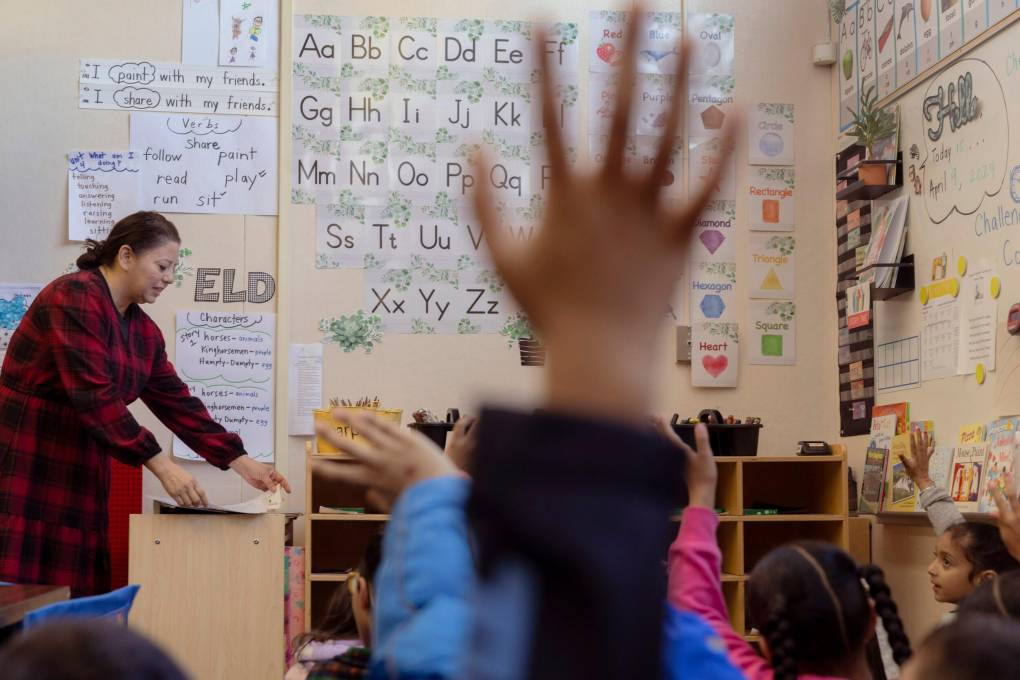
"caption": "Selma Herndon Elementary School kindergarten teacher Diana Dickey starts the day each morning by asking students to share how they are feeling. ",
"credit": "Preston Gannaway for NPR",
"altTag": null,
"description": null,
"imgSizes": {
"medium": {
"file": "https://cdn.kqed.org/wp-content/uploads/sites/23/2024/06/20240517-npr-kindergarten-pg07a-800x533.jpeg",
"width": 800,
"height": 533,
"mimeType": "image/jpeg"
},
"large": {
"file": "https://cdn.kqed.org/wp-content/uploads/sites/23/2024/06/20240517-npr-kindergarten-pg07a-1020x680.jpeg",
"width": 1020,
"height": 680,
"mimeType": "image/jpeg"
},
"thumbnail": {
"file": "https://cdn.kqed.org/wp-content/uploads/sites/23/2024/06/20240517-npr-kindergarten-pg07a-160x107.jpeg",
"width": 160,
"height": 107,
"mimeType": "image/jpeg"
},
"medium_large": {
"file": "https://cdn.kqed.org/wp-content/uploads/sites/23/2024/06/20240517-npr-kindergarten-pg07a-768x512.jpeg",
"width": 768,
"height": 512,
"mimeType": "image/jpeg"
},
"1536x1536": {
"file": "https://cdn.kqed.org/wp-content/uploads/sites/23/2024/06/20240517-npr-kindergarten-pg07a-1536x1024.jpeg",
"width": 1536,
"height": 1024,
"mimeType": "image/jpeg"
},
"2048x2048": {
"file": "https://cdn.kqed.org/wp-content/uploads/sites/23/2024/06/20240517-npr-kindergarten-pg07a-2048x1366.jpeg",
"width": 2048,
"height": 1366,
"mimeType": "image/jpeg"
},
"post-thumbnail": {
"file": "https://cdn.kqed.org/wp-content/uploads/sites/23/2024/06/20240517-npr-kindergarten-pg07a-672x372.jpeg",
"width": 672,
"height": 372,
"mimeType": "image/jpeg"
},
"twentyfourteen-full-width": {
"file": "https://cdn.kqed.org/wp-content/uploads/sites/23/2024/06/20240517-npr-kindergarten-pg07a-1038x576.jpeg",
"width": 1038,
"height": 576,
"mimeType": "image/jpeg"
},
"full-width": {
"file": "https://cdn.kqed.org/wp-content/uploads/sites/23/2024/06/20240517-npr-kindergarten-pg07a-1920x1280.jpeg",
"width": 1920,
"height": 1280,
"mimeType": "image/jpeg"
},
"kqedFullSize": {
"file": "https://cdn.kqed.org/wp-content/uploads/sites/23/2024/06/20240517-npr-kindergarten-pg07a.jpeg",
"width": 2500,
"height": 1667
}
},
"isLoading": false,
"fetchFailed": false
},
"mindshift_63999": {
"type": "attachments",
"id": "mindshift_63999",
"meta": {
"index": "attachments_1716263798",
"site": "mindshift",
"id": "63999",
"found": true
},
"title": "kinder5",
"publishDate": 1718374914,
"status": "inherit",
"parent": 63995,
"modified": 1718375068,
"caption": "Students head to class at Selma Herndon Elementary in Livingston, Calif.",
"credit": " Preston Gannaway for NPR",
"altTag": null,
"description": null,
"imgSizes": {
"thumbnail": {
"file": "https://cdn.kqed.org/wp-content/uploads/sites/23/2024/06/kinder5-160x107.jpeg",
"width": 160,
"height": 107,
"mimeType": "image/jpeg"
},
"post-thumbnail": {
"file": "https://cdn.kqed.org/wp-content/uploads/sites/23/2024/06/kinder5-672x372.jpeg",
"width": 672,
"height": 372,
"mimeType": "image/jpeg"
},
"kqedFullSize": {
"file": "https://cdn.kqed.org/wp-content/uploads/sites/23/2024/06/kinder5.jpeg",
"width": 700,
"height": 467
}
},
"isLoading": false,
"fetchFailed": false
},
"mindshift_63953": {
"type": "attachments",
"id": "mindshift_63953",
"meta": {
"index": "attachments_1716263798",
"site": "mindshift",
"id": "63953",
"found": true
},
"title": "Schoolgirl holding her fathers hand on the way to school",
"publishDate": 1717694465,
"status": "inherit",
"parent": 63951,
"modified": 1717694498,
"caption": null,
"credit": "chameleonseye/ iStock",
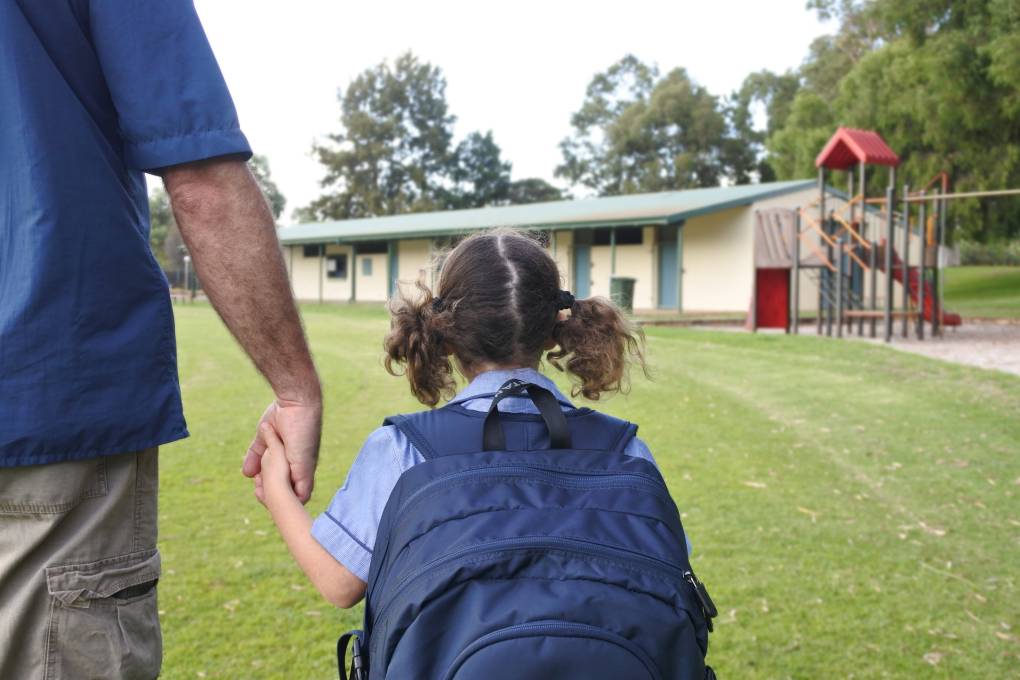
"altTag": "Rear view of schoolgirl holding her fathers hand on the way to school. Real people. Copy space",
"description": null,
"imgSizes": {
"medium": {
"file": "https://cdn.kqed.org/wp-content/uploads/sites/23/2024/06/walking-to-school-with-dad-800x533.jpg",
"width": 800,
"height": 533,
"mimeType": "image/jpeg"
},
"large": {
"file": "https://cdn.kqed.org/wp-content/uploads/sites/23/2024/06/walking-to-school-with-dad-1020x680.jpg",
"width": 1020,
"height": 680,
"mimeType": "image/jpeg"
},
"thumbnail": {
"file": "https://cdn.kqed.org/wp-content/uploads/sites/23/2024/06/walking-to-school-with-dad-160x107.jpg",
"width": 160,
"height": 107,
"mimeType": "image/jpeg"
},
"medium_large": {
"file": "https://cdn.kqed.org/wp-content/uploads/sites/23/2024/06/walking-to-school-with-dad-768x512.jpg",
"width": 768,
"height": 512,
"mimeType": "image/jpeg"
},
"1536x1536": {
"file": "https://cdn.kqed.org/wp-content/uploads/sites/23/2024/06/walking-to-school-with-dad-1536x1024.jpg",
"width": 1536,
"height": 1024,
"mimeType": "image/jpeg"
},
"2048x2048": {
"file": "https://cdn.kqed.org/wp-content/uploads/sites/23/2024/06/walking-to-school-with-dad-2048x1365.jpg",
"width": 2048,
"height": 1365,
"mimeType": "image/jpeg"
},
"post-thumbnail": {
"file": "https://cdn.kqed.org/wp-content/uploads/sites/23/2024/06/walking-to-school-with-dad-672x372.jpg",
"width": 672,
"height": 372,
"mimeType": "image/jpeg"
},
"twentyfourteen-full-width": {
"file": "https://cdn.kqed.org/wp-content/uploads/sites/23/2024/06/walking-to-school-with-dad-1038x576.jpg",
"width": 1038,
"height": 576,
"mimeType": "image/jpeg"
},
"full-width": {
"file": "https://cdn.kqed.org/wp-content/uploads/sites/23/2024/06/walking-to-school-with-dad-1920x1280.jpg",
"width": 1920,
"height": 1280,
"mimeType": "image/jpeg"
},
"kqedFullSize": {
"file": "https://cdn.kqed.org/wp-content/uploads/sites/23/2024/06/walking-to-school-with-dad-scaled.jpg",
"width": 2560,
"height": 1707
}
},
"isLoading": false,
"fetchFailed": false
},
"mindshift_63946": {
"type": "attachments",
"id": "mindshift_63946",
"meta": {
"index": "attachments_1716263798",
"site": "mindshift",
"id": "63946",
"found": true
},
"title": "screens",
"publishDate": 1717676575,
"status": "inherit",
"parent": 63944,
"modified": 1717676617,
"caption": "The biggest predictor of screen time for kids is how much their parents use their devices, a new study finds.",
"credit": "Kathleen Finlay/Getty Images/Image Source",
"altTag": null,
"description": null,
"imgSizes": {
"medium": {
"file": "https://cdn.kqed.org/wp-content/uploads/sites/23/2024/06/screens-800x600.jpeg",
"width": 800,
"height": 600,
"mimeType": "image/jpeg"
},
"large": {
"file": "https://cdn.kqed.org/wp-content/uploads/sites/23/2024/06/screens-1020x765.jpeg",
"width": 1020,
"height": 765,
"mimeType": "image/jpeg"
},
"thumbnail": {
"file": "https://cdn.kqed.org/wp-content/uploads/sites/23/2024/06/screens-160x120.jpeg",
"width": 160,
"height": 120,
"mimeType": "image/jpeg"
},
"medium_large": {
"file": "https://cdn.kqed.org/wp-content/uploads/sites/23/2024/06/screens-768x576.jpeg",
"width": 768,
"height": 576,
"mimeType": "image/jpeg"
},
"post-thumbnail": {
"file": "https://cdn.kqed.org/wp-content/uploads/sites/23/2024/06/screens-672x372.jpeg",
"width": 672,
"height": 372,
"mimeType": "image/jpeg"
},
"twentyfourteen-full-width": {
"file": "https://cdn.kqed.org/wp-content/uploads/sites/23/2024/06/screens-1038x576.jpeg",
"width": 1038,
"height": 576,
"mimeType": "image/jpeg"
},
"kqedFullSize": {
"file": "https://cdn.kqed.org/wp-content/uploads/sites/23/2024/06/screens.jpeg",
"width": 1300,
"height": 975
}
},
"isLoading": false,
"fetchFailed": false
},
"mindshift_63834": {
"type": "attachments",
"id": "mindshift_63834",
"meta": {
"index": "attachments_1716263798",
"site": "mindshift",
"id": "63834",
"found": true
},
"parent": 63833,
"imgSizes": {
"twentyfourteen-full-width": {
"file": "https://cdn.kqed.org/wp-content/uploads/sites/23/2024/05/53723210381_772a33bb53_o-b93ab3e83ecdedef3747a31403b9217306d3aa68-1038x576.jpg",
"width": 1038,
"mimeType": "image/jpeg",
"height": 576
},
"thumbnail": {
"file": "https://cdn.kqed.org/wp-content/uploads/sites/23/2024/05/53723210381_772a33bb53_o-b93ab3e83ecdedef3747a31403b9217306d3aa68-160x120.jpg",
"width": 160,
"mimeType": "image/jpeg",
"height": 120
},
"post-thumbnail": {
"file": "https://cdn.kqed.org/wp-content/uploads/sites/23/2024/05/53723210381_772a33bb53_o-b93ab3e83ecdedef3747a31403b9217306d3aa68-672x372.jpg",
"width": 672,
"mimeType": "image/jpeg",
"height": 372
},
"kqedFullSize": {
"file": "https://cdn.kqed.org/wp-content/uploads/sites/23/2024/05/53723210381_772a33bb53_o-b93ab3e83ecdedef3747a31403b9217306d3aa68-scaled.jpg",
"width": 2560,
"height": 1920
},
"2048x2048": {
"file": "https://cdn.kqed.org/wp-content/uploads/sites/23/2024/05/53723210381_772a33bb53_o-b93ab3e83ecdedef3747a31403b9217306d3aa68-2048x1536.jpg",
"width": 2048,
"mimeType": "image/jpeg",
"height": 1536
},
"large": {
"file": "https://cdn.kqed.org/wp-content/uploads/sites/23/2024/05/53723210381_772a33bb53_o-b93ab3e83ecdedef3747a31403b9217306d3aa68-1020x765.jpg",
"width": 1020,
"mimeType": "image/jpeg",
"height": 765
},
"1536x1536": {
"file": "https://cdn.kqed.org/wp-content/uploads/sites/23/2024/05/53723210381_772a33bb53_o-b93ab3e83ecdedef3747a31403b9217306d3aa68-1536x1152.jpg",
"width": 1536,
"mimeType": "image/jpeg",
"height": 1152
},
"full-width": {
"file": "https://cdn.kqed.org/wp-content/uploads/sites/23/2024/05/53723210381_772a33bb53_o-b93ab3e83ecdedef3747a31403b9217306d3aa68-1920x1440.jpg",
"width": 1920,
"mimeType": "image/jpeg",
"height": 1440
},
"medium": {
"file": "https://cdn.kqed.org/wp-content/uploads/sites/23/2024/05/53723210381_772a33bb53_o-b93ab3e83ecdedef3747a31403b9217306d3aa68-800x600.jpg",
"width": 800,
"mimeType": "image/jpeg",
"height": 600
},
"medium_large": {
"file": "https://cdn.kqed.org/wp-content/uploads/sites/23/2024/05/53723210381_772a33bb53_o-b93ab3e83ecdedef3747a31403b9217306d3aa68-768x576.jpg",
"width": 768,
"mimeType": "image/jpeg",
"height": 576
}
},
"publishDate": 1716219030,
"modified": 1716219115,
"caption": "Des Moines Superintendent Ian Roberts races students on an Iowa track.",
"description": null,
"title": "Des Moines Superintendent Ian Roberts races students on an Iowa track.",
"credit": "Phil Roeder/Des Moines Public Schools",
"status": "inherit",
"altTag": null,
"isLoading": false,
"fetchFailed": false
},
"mindshift_63686": {
"type": "attachments",
"id": "mindshift_63686",
"meta": {
"index": "attachments_1716263798",
"site": "mindshift",
"id": "63686",
"found": true
},
"parent": 63685,
"imgSizes": {
"twentyfourteen-full-width": {
"file": "https://cdn.kqed.org/wp-content/uploads/sites/23/2024/04/gettyimages-2149598859-e3cb5d9ec08fb1422b7fe1a5471613d01240a26a-1038x576.jpg",
"width": 1038,
"mimeType": "image/jpeg",
"height": 576
},
"thumbnail": {
"file": "https://cdn.kqed.org/wp-content/uploads/sites/23/2024/04/gettyimages-2149598859-e3cb5d9ec08fb1422b7fe1a5471613d01240a26a-160x120.jpg",
"width": 160,
"mimeType": "image/jpeg",
"height": 120
},
"post-thumbnail": {
"file": "https://cdn.kqed.org/wp-content/uploads/sites/23/2024/04/gettyimages-2149598859-e3cb5d9ec08fb1422b7fe1a5471613d01240a26a-672x372.jpg",
"width": 672,
"mimeType": "image/jpeg",
"height": 372
},
"kqedFullSize": {
"file": "https://cdn.kqed.org/wp-content/uploads/sites/23/2024/04/gettyimages-2149598859-e3cb5d9ec08fb1422b7fe1a5471613d01240a26a-scaled.jpg",
"width": 2560,
"height": 1920
},
"2048x2048": {
"file": "https://cdn.kqed.org/wp-content/uploads/sites/23/2024/04/gettyimages-2149598859-e3cb5d9ec08fb1422b7fe1a5471613d01240a26a-2048x1536.jpg",
"width": 2048,
"mimeType": "image/jpeg",
"height": 1536
},
"large": {
"file": "https://cdn.kqed.org/wp-content/uploads/sites/23/2024/04/gettyimages-2149598859-e3cb5d9ec08fb1422b7fe1a5471613d01240a26a-1020x765.jpg",
"width": 1020,
"mimeType": "image/jpeg",
"height": 765
},
"1536x1536": {
"file": "https://cdn.kqed.org/wp-content/uploads/sites/23/2024/04/gettyimages-2149598859-e3cb5d9ec08fb1422b7fe1a5471613d01240a26a-1536x1152.jpg",
"width": 1536,
"mimeType": "image/jpeg",
"height": 1152
},
"full-width": {
"file": "https://cdn.kqed.org/wp-content/uploads/sites/23/2024/04/gettyimages-2149598859-e3cb5d9ec08fb1422b7fe1a5471613d01240a26a-1920x1440.jpg",
"width": 1920,
"mimeType": "image/jpeg",
"height": 1440
},
"medium": {
"file": "https://cdn.kqed.org/wp-content/uploads/sites/23/2024/04/gettyimages-2149598859-e3cb5d9ec08fb1422b7fe1a5471613d01240a26a-800x600.jpg",
"width": 800,
"mimeType": "image/jpeg",
"height": 600
},
"medium_large": {
"file": "https://cdn.kqed.org/wp-content/uploads/sites/23/2024/04/gettyimages-2149598859-e3cb5d9ec08fb1422b7fe1a5471613d01240a26a-768x576.jpg",
"width": 768,
"mimeType": "image/jpeg",
"height": 576
}
},
"publishDate": 1714525409,
"modified": 1714525409,
"caption": null,
"description": "A pro-Palestinian protester stands among tents and a Palestinian flag at an encampment at Columbia University campus in New York on April 25, 2024. College campuses across the US braced for fresh protests by pro-Palestinian students, extending a week of increasingly confrontational standoffs with police, mass arrests and accusations of anti-Semitism. (Photo by Leonardo Munoz / AFP) (Photo by LEONARDO MUNOZ/AFP via Getty Images)",
"title": "A pro-Palestinian protester stands among tents and a Palestinian flag at an encampment at Columbia University campus in New York earlier this month.",
"credit": null,
"status": "inherit",
"altTag": null,
"isLoading": false,
"fetchFailed": false
},
"mindshift_63511": {
"type": "attachments",
"id": "mindshift_63511",
"meta": {
"index": "attachments_1716263798",
"site": "mindshift",
"id": "63511",
"found": true
},
"parent": 63506,
"imgSizes": {
"twentyfourteen-full-width": {
"file": "https://cdn.kqed.org/wp-content/uploads/sites/23/2024/04/safeplace-1038x576.jpg",
"width": 1038,
"mimeType": "image/jpeg",
"height": 576
},
"thumbnail": {
"file": "https://cdn.kqed.org/wp-content/uploads/sites/23/2024/04/safeplace-160x118.jpg",
"width": 160,
"mimeType": "image/jpeg",
"height": 118
},
"post-thumbnail": {
"file": "https://cdn.kqed.org/wp-content/uploads/sites/23/2024/04/safeplace-672x372.jpg",
"width": 672,
"mimeType": "image/jpeg",
"height": 372
},
"kqedFullSize": {
"file": "https://cdn.kqed.org/wp-content/uploads/sites/23/2024/04/safeplace.jpg",
"width": 1170,
"height": 865
},
"large": {
"file": "https://cdn.kqed.org/wp-content/uploads/sites/23/2024/04/safeplace-1020x754.jpg",
"width": 1020,
"mimeType": "image/jpeg",
"height": 754
},
"medium": {
"file": "https://cdn.kqed.org/wp-content/uploads/sites/23/2024/04/safeplace-800x591.jpg",
"width": 800,
"mimeType": "image/jpeg",
"height": 591
},
"medium_large": {
"file": "https://cdn.kqed.org/wp-content/uploads/sites/23/2024/04/safeplace-768x568.jpg",
"width": 768,
"mimeType": "image/jpeg",
"height": 568
}
},
"publishDate": 1712611463,
"modified": 1712611661,
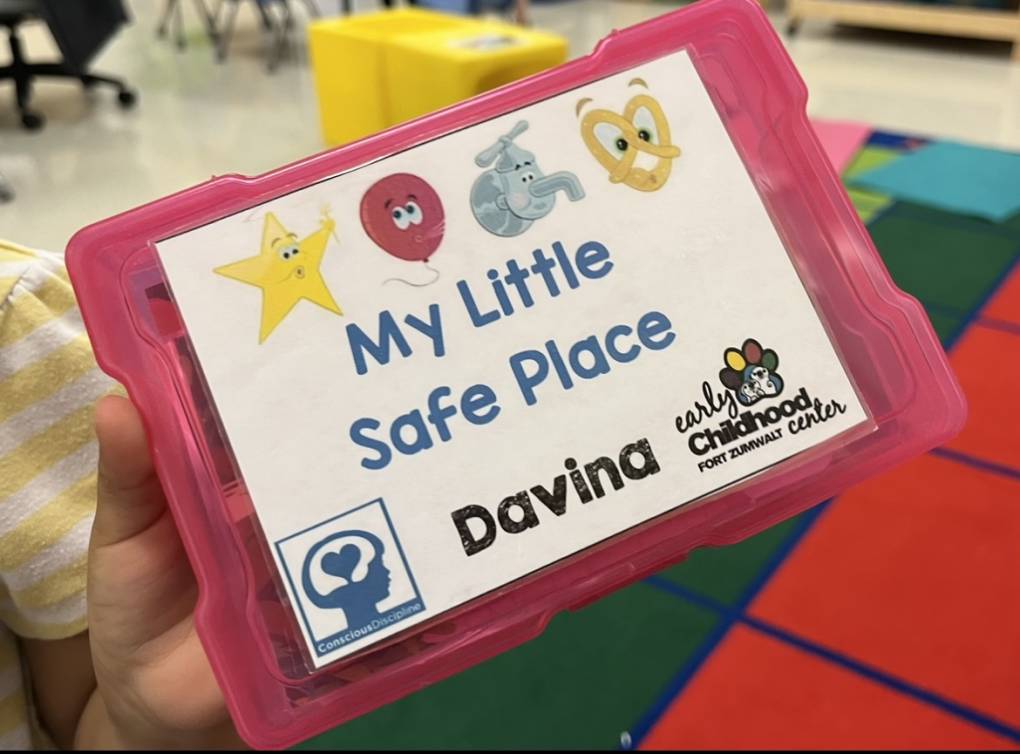
"caption": "In Jenny Kist's preschool classroom in St. Peters Missouri, \"Little Safe Space\" boxes contain tools to help students practice self-regulation and emotional identification throughout the day.",
"description": null,
"title": "safeplace",
"credit": "Courtesy of Jenny Kist",
"status": "inherit",
"altTag": null,
"isLoading": false,
"fetchFailed": false
},
"mindshift_63549": {
"type": "attachments",
"id": "mindshift_63549",
"meta": {
"index": "attachments_1716263798",
"site": "mindshift",
"id": "63549",
"found": true
},
"parent": 63547,
"imgSizes": {
"twentyfourteen-full-width": {
"file": "https://cdn.kqed.org/wp-content/uploads/sites/23/2024/04/maces-lane-1-1038x576.jpg",
"width": 1038,
"mimeType": "image/jpeg",
"height": 576
},
"thumbnail": {
"file": "https://cdn.kqed.org/wp-content/uploads/sites/23/2024/04/maces-lane-1-160x120.jpg",
"width": 160,
"mimeType": "image/jpeg",
"height": 120
},
"post-thumbnail": {
"file": "https://cdn.kqed.org/wp-content/uploads/sites/23/2024/04/maces-lane-1-672x372.jpg",
"width": 672,
"mimeType": "image/jpeg",
"height": 372
},
"kqedFullSize": {
"file": "https://cdn.kqed.org/wp-content/uploads/sites/23/2024/04/maces-lane-1-scaled.jpg",
"width": 2560,
"height": 1920
},
"2048x2048": {
"file": "https://cdn.kqed.org/wp-content/uploads/sites/23/2024/04/maces-lane-1-2048x1536.jpg",
"width": 2048,
"mimeType": "image/jpeg",
"height": 1536
},
"large": {
"file": "https://cdn.kqed.org/wp-content/uploads/sites/23/2024/04/maces-lane-1-1020x765.jpg",
"width": 1020,
"mimeType": "image/jpeg",
"height": 765
},
"1536x1536": {
"file": "https://cdn.kqed.org/wp-content/uploads/sites/23/2024/04/maces-lane-1-1536x1152.jpg",
"width": 1536,
"mimeType": "image/jpeg",
"height": 1152
},
"full-width": {
"file": "https://cdn.kqed.org/wp-content/uploads/sites/23/2024/04/maces-lane-1-1920x1440.jpg",
"width": 1920,
"mimeType": "image/jpeg",
"height": 1440
},
"medium": {
"file": "https://cdn.kqed.org/wp-content/uploads/sites/23/2024/04/maces-lane-1-800x600.jpg",
"width": 800,
"mimeType": "image/jpeg",
"height": 600
},
"medium_large": {
"file": "https://cdn.kqed.org/wp-content/uploads/sites/23/2024/04/maces-lane-1-768x576.jpg",
"width": 768,
"mimeType": "image/jpeg",
"height": 576
}
},
"publishDate": 1713026765,
"modified": 1713026816,
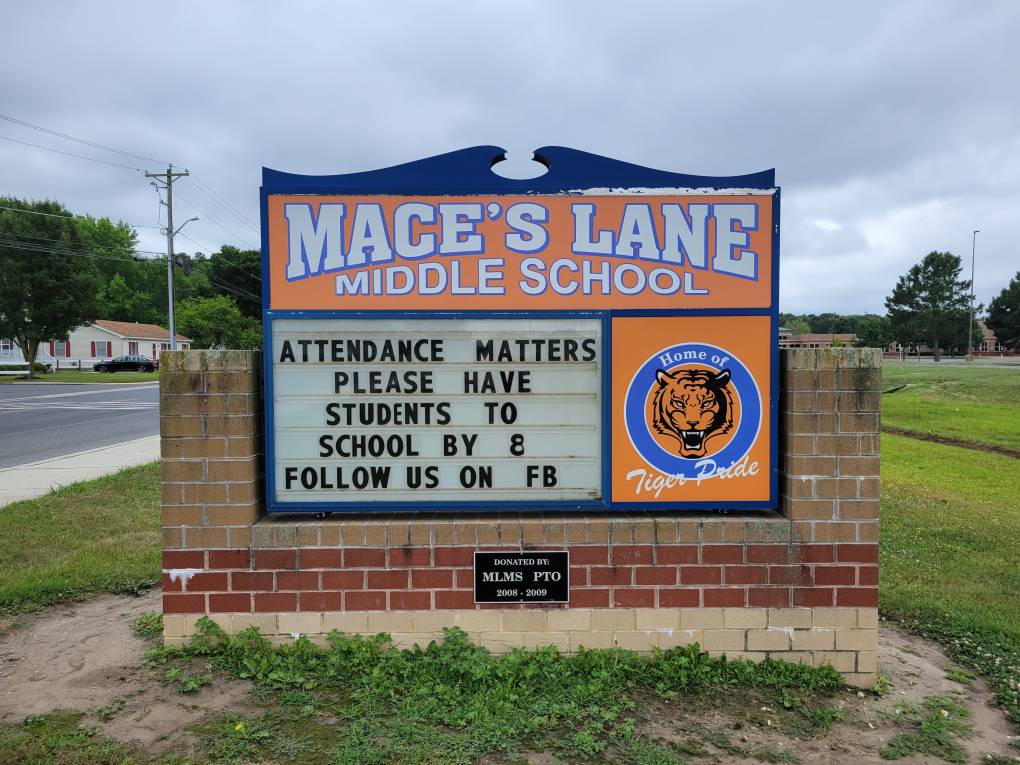
"caption": "In 2021-22, 38% of suspensions and expulsions in Maryland’s Dorchester County Public Schools were assigned for disrespect and disruption.",
"description": null,
"title": "mace's lane",
"credit": "Sarah Butrymowicz/The Hechinger Report",
"status": "inherit",
"altTag": null,
"isLoading": false,
"fetchFailed": false
},
"mindshift_63458": {
"type": "attachments",
"id": "mindshift_63458",
"meta": {
"index": "attachments_1716263798",
"site": "mindshift",
"id": "63458",
"found": true
},
"parent": 63456,
"imgSizes": {
"twentyfourteen-full-width": {
"file": "https://cdn.kqed.org/wp-content/uploads/sites/23/2024/04/iStock-1200483034-1038x576.jpg",
"width": 1038,
"mimeType": "image/jpeg",
"height": 576
},
"thumbnail": {
"file": "https://cdn.kqed.org/wp-content/uploads/sites/23/2024/04/iStock-1200483034-160x107.jpg",
"width": 160,
"mimeType": "image/jpeg",
"height": 107
},
"post-thumbnail": {
"file": "https://cdn.kqed.org/wp-content/uploads/sites/23/2024/04/iStock-1200483034-672x372.jpg",
"width": 672,
"mimeType": "image/jpeg",
"height": 372
},
"kqedFullSize": {
"file": "https://cdn.kqed.org/wp-content/uploads/sites/23/2024/04/iStock-1200483034.jpg",
"width": 2121,
"height": 1414
},
"2048x2048": {
"file": "https://cdn.kqed.org/wp-content/uploads/sites/23/2024/04/iStock-1200483034-2048x1365.jpg",
"width": 2048,
"mimeType": "image/jpeg",
"height": 1365
},
"large": {
"file": "https://cdn.kqed.org/wp-content/uploads/sites/23/2024/04/iStock-1200483034-1020x680.jpg",
"width": 1020,
"mimeType": "image/jpeg",
"height": 680
},
"1536x1536": {
"file": "https://cdn.kqed.org/wp-content/uploads/sites/23/2024/04/iStock-1200483034-1536x1024.jpg",
"width": 1536,
"mimeType": "image/jpeg",
"height": 1024
},
"full-width": {
"file": "https://cdn.kqed.org/wp-content/uploads/sites/23/2024/04/iStock-1200483034-1920x1280.jpg",
"width": 1920,
"mimeType": "image/jpeg",
"height": 1280
},
"medium": {
"file": "https://cdn.kqed.org/wp-content/uploads/sites/23/2024/04/iStock-1200483034-800x533.jpg",
"width": 800,
"mimeType": "image/jpeg",
"height": 533
},
"medium_large": {
"file": "https://cdn.kqed.org/wp-content/uploads/sites/23/2024/04/iStock-1200483034-768x512.jpg",
"width": 768,
"mimeType": "image/jpeg",
"height": 512
}
},
"publishDate": 1712103964,
"modified": 1712104188,
"caption": null,
"description": null,
"title": null,
"credit": "Fabio Principe/iStock",
"status": "inherit",
"altTag": "Two young boys hit high five. One boy wears a helmet. A skateboard rests between them ont he edge of a ledge. They are at the top of a structure in a skate park.",
"isLoading": false,
"fetchFailed": false
},
"mindshift_63417": {
"type": "attachments",
"id": "mindshift_63417",
"meta": {
"index": "attachments_1716263798",
"site": "mindshift",
"id": "63417",
"found": true
},
"parent": 63406,
"imgSizes": {
"twentyfourteen-full-width": {
"file": "https://cdn.kqed.org/wp-content/uploads/sites/23/2024/03/Redwood-City-Playground-3_MBF-1038x576.jpeg",
"width": 1038,
"mimeType": "image/jpeg",
"height": 576
},
"thumbnail": {
"file": "https://cdn.kqed.org/wp-content/uploads/sites/23/2024/03/Redwood-City-Playground-3_MBF-160x107.jpeg",
"width": 160,
"mimeType": "image/jpeg",
"height": 107
},
"post-thumbnail": {
"file": "https://cdn.kqed.org/wp-content/uploads/sites/23/2024/03/Redwood-City-Playground-3_MBF-672x372.jpeg",
"width": 672,
"mimeType": "image/jpeg",
"height": 372
},
"kqedFullSize": {
"file": "https://cdn.kqed.org/wp-content/uploads/sites/23/2024/03/Redwood-City-Playground-3_MBF-scaled.jpeg",
"width": 2560,
"height": 1707
},
"2048x2048": {
"file": "https://cdn.kqed.org/wp-content/uploads/sites/23/2024/03/Redwood-City-Playground-3_MBF-2048x1365.jpeg",
"width": 2048,
"mimeType": "image/jpeg",
"height": 1365
},
"large": {
"file": "https://cdn.kqed.org/wp-content/uploads/sites/23/2024/03/Redwood-City-Playground-3_MBF-1020x680.jpeg",
"width": 1020,
"mimeType": "image/jpeg",
"height": 680
},
"1536x1536": {
"file": "https://cdn.kqed.org/wp-content/uploads/sites/23/2024/03/Redwood-City-Playground-3_MBF-1536x1024.jpeg",
"width": 1536,
"mimeType": "image/jpeg",
"height": 1024
},
"full-width": {
"file": "https://cdn.kqed.org/wp-content/uploads/sites/23/2024/03/Redwood-City-Playground-3_MBF-1920x1280.jpeg",
"width": 1920,
"mimeType": "image/jpeg",
"height": 1280
},
"medium": {
"file": "https://cdn.kqed.org/wp-content/uploads/sites/23/2024/03/Redwood-City-Playground-3_MBF-800x533.jpeg",
"width": 800,
"mimeType": "image/jpeg",
"height": 533
},
"medium_large": {
"file": "https://cdn.kqed.org/wp-content/uploads/sites/23/2024/03/Redwood-City-Playground-3_MBF-768x512.jpeg",
"width": 768,
"mimeType": "image/jpeg",
"height": 512
}
},
"publishDate": 1711422836,
"modified": 1711423426,
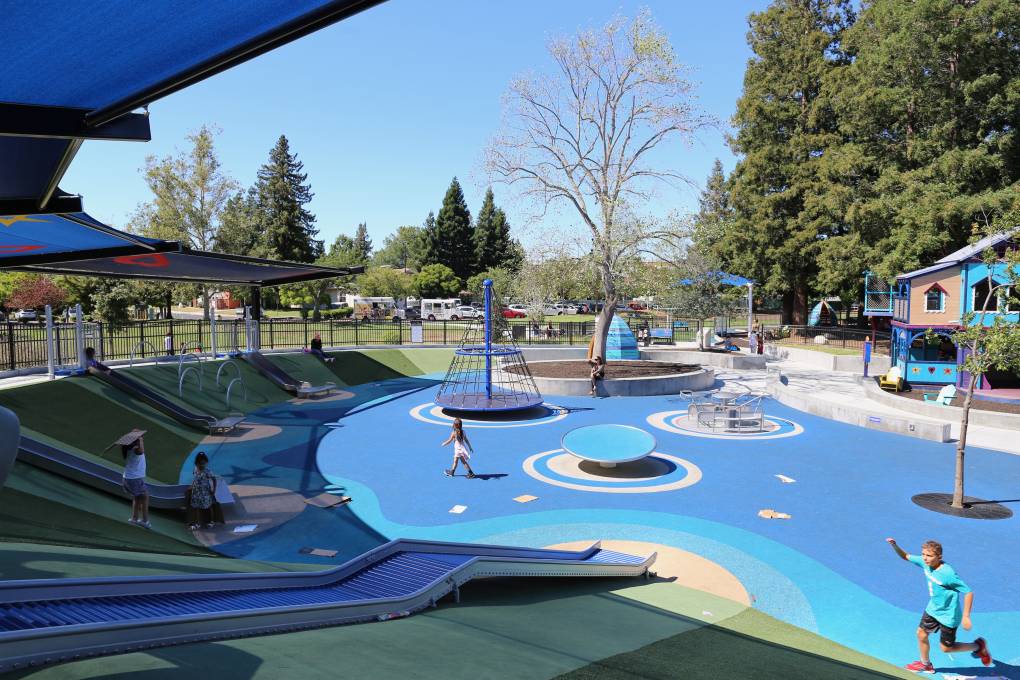
"caption": "Magical Bridge Playground at Red Morton Park in Redwood City, Calif. opened in 2021.",
"description": null,
"title": "Redwood City - Playground 3_MBF",
"credit": "Magical Bridge Foundation",
"status": "inherit",
"altTag": null,
"isLoading": false,
"fetchFailed": false
},
"mindshift_63415": {
"type": "attachments",
"id": "mindshift_63415",
"meta": {
"index": "attachments_1716263798",
"site": "mindshift",
"id": "63415",
"found": true
},
"parent": 63406,
"imgSizes": {
"twentyfourteen-full-width": {
"file": "https://cdn.kqed.org/wp-content/uploads/sites/23/2024/03/Palo-Alto-Carosuel-Wheelchairs_MBF-1038x576.jpeg",
"width": 1038,
"mimeType": "image/jpeg",
"height": 576
},
"thumbnail": {
"file": "https://cdn.kqed.org/wp-content/uploads/sites/23/2024/03/Palo-Alto-Carosuel-Wheelchairs_MBF-160x120.jpeg",
"width": 160,
"mimeType": "image/jpeg",
"height": 120
},
"post-thumbnail": {
"file": "https://cdn.kqed.org/wp-content/uploads/sites/23/2024/03/Palo-Alto-Carosuel-Wheelchairs_MBF-672x372.jpeg",
"width": 672,
"mimeType": "image/jpeg",
"height": 372
},
"kqedFullSize": {
"file": "https://cdn.kqed.org/wp-content/uploads/sites/23/2024/03/Palo-Alto-Carosuel-Wheelchairs_MBF.jpeg",
"width": 1280,
"height": 960
},
"large": {
"file": "https://cdn.kqed.org/wp-content/uploads/sites/23/2024/03/Palo-Alto-Carosuel-Wheelchairs_MBF-1020x765.jpeg",
"width": 1020,
"mimeType": "image/jpeg",
"height": 765
},
"medium": {
"file": "https://cdn.kqed.org/wp-content/uploads/sites/23/2024/03/Palo-Alto-Carosuel-Wheelchairs_MBF-800x600.jpeg",
"width": 800,
"mimeType": "image/jpeg",
"height": 600
},
"medium_large": {
"file": "https://cdn.kqed.org/wp-content/uploads/sites/23/2024/03/Palo-Alto-Carosuel-Wheelchairs_MBF-768x576.jpeg",
"width": 768,
"mimeType": "image/jpeg",
"height": 576
}
},
"publishDate": 1711422823,
"modified": 1711425386,
"caption": "Magical Bridge Playground at Mitchell Park in Palo Alto, California opened in 2015.",
"description": null,
"title": "Palo Alto Carosuel Wheelchairs_MBF",
"credit": "Magical Bridge Foundation",
"status": "inherit",
"altTag": null,
"isLoading": false,
"fetchFailed": false
},
"mindshift_63402": {
"type": "attachments",
"id": "mindshift_63402",
"meta": {
"index": "attachments_1716263798",
"site": "mindshift",
"id": "63402",
"found": true
},
"parent": 63399,
"imgSizes": {
"twentyfourteen-full-width": {
"file": "https://cdn.kqed.org/wp-content/uploads/sites/23/2024/03/iStock-1217540156-1038x576.jpg",
"width": 1038,
"mimeType": "image/jpeg",
"height": 576
},
"thumbnail": {
"file": "https://cdn.kqed.org/wp-content/uploads/sites/23/2024/03/iStock-1217540156-160x100.jpg",
"width": 160,
"mimeType": "image/jpeg",
"height": 100
},
"post-thumbnail": {
"file": "https://cdn.kqed.org/wp-content/uploads/sites/23/2024/03/iStock-1217540156-672x372.jpg",
"width": 672,
"mimeType": "image/jpeg",
"height": 372
},
"kqedFullSize": {
"file": "https://cdn.kqed.org/wp-content/uploads/sites/23/2024/03/iStock-1217540156.jpg",
"width": 2190,
"height": 1369
},
"2048x2048": {
"file": "https://cdn.kqed.org/wp-content/uploads/sites/23/2024/03/iStock-1217540156-2048x1280.jpg",
"width": 2048,
"mimeType": "image/jpeg",
"height": 1280
},
"large": {
"file": "https://cdn.kqed.org/wp-content/uploads/sites/23/2024/03/iStock-1217540156-1020x638.jpg",
"width": 1020,
"mimeType": "image/jpeg",
"height": 638
},
"1536x1536": {
"file": "https://cdn.kqed.org/wp-content/uploads/sites/23/2024/03/iStock-1217540156-1536x960.jpg",
"width": 1536,
"mimeType": "image/jpeg",
"height": 960
},
"full-width": {
"file": "https://cdn.kqed.org/wp-content/uploads/sites/23/2024/03/iStock-1217540156-1920x1200.jpg",
"width": 1920,
"mimeType": "image/jpeg",
"height": 1200
},
"medium": {
"file": "https://cdn.kqed.org/wp-content/uploads/sites/23/2024/03/iStock-1217540156-800x500.jpg",
"width": 800,
"mimeType": "image/jpeg",
"height": 500
},
"medium_large": {
"file": "https://cdn.kqed.org/wp-content/uploads/sites/23/2024/03/iStock-1217540156-768x480.jpg",
"width": 768,
"mimeType": "image/jpeg",
"height": 480
}
},
"publishDate": 1711060098,
"modified": 1711060114,
"caption": null,
"description": null,
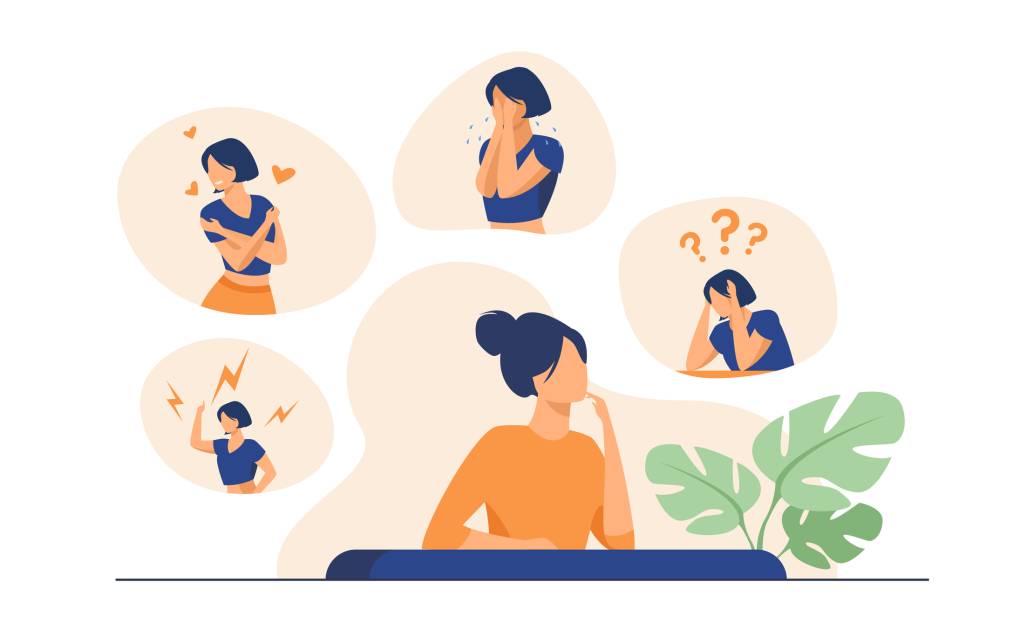
"title": "Woman expressing strong various feelings and emotions",
"credit": "SurfUpVector/iStock",
"status": "inherit",
"altTag": null,
"isLoading": false,
"fetchFailed": false
},
"mindshift_63331": {
"type": "attachments",
"id": "mindshift_63331",
"meta": {
"index": "attachments_1716263798",
"site": "mindshift",
"id": "63331",
"found": true
},
"parent": 63329,
"imgSizes": {
"twentyfourteen-full-width": {
"file": "https://cdn.kqed.org/wp-content/uploads/sites/23/2024/03/prageru-streit_custom-1c38364ce0327ac35079c5c360c636f450ef06af-1038x576.jpg",
"width": 1038,
"mimeType": "image/jpeg",
"height": 576
},
"thumbnail": {
"file": "https://cdn.kqed.org/wp-content/uploads/sites/23/2024/03/prageru-streit_custom-1c38364ce0327ac35079c5c360c636f450ef06af-160x86.jpg",
"width": 160,
"mimeType": "image/jpeg",
"height": 86
},
"post-thumbnail": {
"file": "https://cdn.kqed.org/wp-content/uploads/sites/23/2024/03/prageru-streit_custom-1c38364ce0327ac35079c5c360c636f450ef06af-672x372.jpg",
"width": 672,
"mimeType": "image/jpeg",
"height": 372
},
"kqedFullSize": {
"file": "https://cdn.kqed.org/wp-content/uploads/sites/23/2024/03/prageru-streit_custom-1c38364ce0327ac35079c5c360c636f450ef06af-scaled.jpg",
"width": 2560,
"height": 1375
},
"2048x2048": {
"file": "https://cdn.kqed.org/wp-content/uploads/sites/23/2024/03/prageru-streit_custom-1c38364ce0327ac35079c5c360c636f450ef06af-2048x1100.jpg",
"width": 2048,
"mimeType": "image/jpeg",
"height": 1100
},
"large": {
"file": "https://cdn.kqed.org/wp-content/uploads/sites/23/2024/03/prageru-streit_custom-1c38364ce0327ac35079c5c360c636f450ef06af-1020x548.jpg",
"width": 1020,
"mimeType": "image/jpeg",
"height": 548
},
"1536x1536": {
"file": "https://cdn.kqed.org/wp-content/uploads/sites/23/2024/03/prageru-streit_custom-1c38364ce0327ac35079c5c360c636f450ef06af-1536x825.jpg",
"width": 1536,
"mimeType": "image/jpeg",
"height": 825
},
"full-width": {
"file": "https://cdn.kqed.org/wp-content/uploads/sites/23/2024/03/prageru-streit_custom-1c38364ce0327ac35079c5c360c636f450ef06af-1920x1031.jpg",
"width": 1920,
"mimeType": "image/jpeg",
"height": 1031
},
"medium": {
"file": "https://cdn.kqed.org/wp-content/uploads/sites/23/2024/03/prageru-streit_custom-1c38364ce0327ac35079c5c360c636f450ef06af-800x430.jpg",
"width": 800,
"mimeType": "image/jpeg",
"height": 430
},
"medium_large": {
"file": "https://cdn.kqed.org/wp-content/uploads/sites/23/2024/03/prageru-streit_custom-1c38364ce0327ac35079c5c360c636f450ef06af-768x413.jpg",
"width": 768,
"mimeType": "image/jpeg",
"height": 413
}
},
"publishDate": 1710131422,
"modified": 1710163356,
"caption": "PragerU CEO Marissa Streit speaks at a news conference with Arizona state Sen. Jake Hoffman, State Superintendent of Schools Tom Horne and Scottsdale Unified School District Board Member Carine Werner at the Arizona State Capitol.",
"description": null,
"title": null,
"credit": "PragerU/Screenshot by NPR",
"status": "inherit",
"altTag": null,
"isLoading": false,
"fetchFailed": false
}
},
"audioPlayerReducer": {
"postId": "stream_live",
"isPaused": true,
"isPlaying": false,
"pfsActive": false,
"pledgeModalIsOpen": true,
"playerDrawerIsOpen": false,
"liveAudioPlayStartedAt": 0,
"liveAudioPlayContext": ""
},
"authorsReducer": {
"byline_mindshift_64077": {
"type": "authors",
"id": "byline_mindshift_64077",
"meta": {
"override": true
},
"slug": "byline_mindshift_64077",
"name": "Sequoia Carrillo",
"isLoading": false
},
"byline_mindshift_63995": {
"type": "authors",
"id": "byline_mindshift_63995",
"meta": {
"override": true
},
"slug": "byline_mindshift_63995",
"name": "Cory Turner",
"isLoading": false
},
"byline_mindshift_63944": {
"type": "authors",
"id": "byline_mindshift_63944",
"meta": {
"override": true
},
"slug": "byline_mindshift_63944",
"name": "Maria Godoy",
"isLoading": false
},
"byline_mindshift_63833": {
"type": "authors",
"id": "byline_mindshift_63833",
"meta": {
"override": true
},
"slug": "byline_mindshift_63833",
"name": "Alana Wise",
"isLoading": false
},
"byline_mindshift_63685": {
"type": "authors",
"id": "byline_mindshift_63685",
"meta": {
"override": true
},
"slug": "byline_mindshift_63685",
"name": "Consider This from NPR",
"isLoading": false
},
"byline_mindshift_63547": {
"type": "authors",
"id": "byline_mindshift_63547",
"meta": {
"override": true
},
"slug": "byline_mindshift_63547",
"name": "Fazil Khan and Sarah Butrymowicz, The Hechinger Report",
"isLoading": false
},
"byline_mindshift_63456": {
"type": "authors",
"id": "byline_mindshift_63456",
"meta": {
"override": true
},
"slug": "byline_mindshift_63456",
"name": "Phyllis L. Fagell",
"isLoading": false
},
"byline_mindshift_63399": {
"type": "authors",
"id": "byline_mindshift_63399",
"meta": {
"override": true
},
"slug": "byline_mindshift_63399",
"name": "Allison Aubrey",
"isLoading": false
},
"byline_mindshift_63329": {
"type": "authors",
"id": "byline_mindshift_63329",
"meta": {
"override": true
},
"slug": "byline_mindshift_63329",
"name": "Lisa Hagen",
"isLoading": false
},
"ngobir": {
"type": "authors",
"id": "11721",
"meta": {
"index": "authors_1716337520",
"id": "11721",
"found": true
},
"name": "Nimah Gobir",
"firstName": "Nimah",
"lastName": "Gobir",
"slug": "ngobir",
"email": "ngobir@kqed.org",
"display_author_email": false,
"staff_mastheads": [],
"title": "KQED Contributor",
"bio": null,
"avatar": "https://secure.gravatar.com/avatar/837f5df7045c59f3ec097cdf7ac391373ab75d5ec936dd7099b8cb6f0af1b0e9?s=600&d=blank&r=g",
"twitter": null,
"bluesky": null,
"facebook": null,
"instagram": null,
"linkedin": null,
"sites": [
{
"site": "mindshift",
"roles": [
"editor"
]
}
],
"headData": {
"title": "Nimah Gobir | KQED",
"description": "KQED Contributor",
"ogImgSrc": "https://secure.gravatar.com/avatar/837f5df7045c59f3ec097cdf7ac391373ab75d5ec936dd7099b8cb6f0af1b0e9?s=600&d=blank&r=g",
"twImgSrc": "https://secure.gravatar.com/avatar/837f5df7045c59f3ec097cdf7ac391373ab75d5ec936dd7099b8cb6f0af1b0e9?s=600&d=blank&r=g"
},
"isLoading": false,
"link": "/author/ngobir"
},
"mjacksonretondo": {
"type": "authors",
"id": "11759",
"meta": {
"index": "authors_1716337520",
"id": "11759",
"found": true
},
"name": "Marlena Jackson-Retondo",
"firstName": "Marlena",
"lastName": "Jackson-Retondo",
"slug": "mjacksonretondo",
"email": "mjacksonretondo@kqed.org",
"display_author_email": false,
"staff_mastheads": [],
"title": "Engagement Producer",
"bio": "Marlena Jackson-Retondo is the engagement producer for KQED's \u003cem>Forum \u003c/em>and \u003cem>Mindshift\u003c/em>. Prior to joining the team in 2022, Marlena was an intern with the KQED Digital News Engagement team. She grew up in the Bay Area.\u003cem> \u003c/em>",
"avatar": "https://secure.gravatar.com/avatar/94ab429312e9a676559e31d1894130df?s=600&d=blank&r=g",
"twitter": null,
"facebook": null,
"instagram": null,
"linkedin": null,
"sites": [
{
"site": "arts",
"roles": [
"editor"
]
},
{
"site": "news",
"roles": [
"contributor"
]
},
{
"site": "mindshift",
"roles": [
"editor"
]
},
{
"site": "forum",
"roles": [
"editor"
]
}
],
"headData": {
"title": "Marlena Jackson-Retondo | KQED",
"description": "Engagement Producer",
"ogImgSrc": "https://secure.gravatar.com/avatar/94ab429312e9a676559e31d1894130df?s=600&d=blank&r=g",
"twImgSrc": "https://secure.gravatar.com/avatar/94ab429312e9a676559e31d1894130df?s=600&d=blank&r=g"
},
"isLoading": false,
"link": "/author/mjacksonretondo"
}
},
"pagesReducer": {
"mindshift_category_culture": {
"type": "terms",
"id": "mindshift_194",
"meta": {
"index": "terms_1716263798",
"site": "mindshift",
"id": "194",
"score": 12.3707485
},
"featImg": null,
"name": "Culture",
"description": "How trends in technology – social networks, Internet privacy, cyberbullying – influence education.",
"taxonomy": "category",
"headData": {
"twImgId": null,
"twTitle": null,
"ogTitle": null,
"ogImgId": null,
"twDescription": null,
"description": "How trends in technology – social networks, Internet privacy, cyberbullying – influence education.",
"title": "Culture Archives | KQED Mindshift",
"ogDescription": null
},
"ttid": 194,
"slug": "culture",
"isLoading": false,
"title": "Culture",
"pageMeta": {
"site": "mindshift",
"WpPageTemplate": "page-topic-editorial",
"currentPage": 2
},
"blocks": [
{
"blockName": "kqed/company-paragraph",
"content": "How trends in technology – social networks, Internet privacy, cyberbullying – influence education."
},
{
"blockName": "kqed/post-list",
"attrs": {
"layout": "cardArticle2",
"query": "posts/mindshift?category=culture",
"seeMore": false,
"paginated": true,
"page": 2
}
},
{
"blockName": "kqed/ad"
}
]
}
},
"pfsSessionReducer": {},
"postsReducer": {
"stream_live": {
"type": "live",
"id": "stream_live",
"audioUrl": "https://streams.kqed.org/kqedradio",
"title": "Live Stream",
"excerpt": "Live Stream information currently unavailable.",
"link": "/radio",
"featImg": "",
"label": {
"name": "KQED Live",
"link": "/"
}
},
"stream_kqedNewscast": {
"type": "posts",
"id": "stream_kqedNewscast",
"audioUrl": "https://www.kqed.org/.stream/anon/radio/RDnews/newscast.mp3?_=1",
"title": "KQED Newscast",
"featImg": "",
"label": {
"name": "88.5 FM",
"link": "/"
}
},
"mindshift_64077": {
"type": "posts",
"id": "mindshift_64077",
"meta": {
"index": "posts_1716263798",
"site": "mindshift",
"id": "64077",
"score": null,
"sort": [
1718893818000
]
},
"guestAuthors": [],
"slug": "3-things-you-need-to-know-about-student-loans-this-summer",
"title": "3 Things You Need to Know About Student Loans This Summer",
"publishDate": 1718893818,
"format": "standard",
"headTitle": "3 Things You Need to Know About Student Loans This Summer | KQED",
"labelTerm": {
"site": "mindshift"
},
"content": "\u003cp>Student loan borrowers should keep an eye on their balances this summer, as big changes are coming. On July 1, millions of borrowers could see their monthly payments cut in half, but only if they’re enrolled in the correct plan.\u003c/p>\n\u003cp>Here are three things you need to know about what’s coming:\u003c/p>\n\u003ch3>1. If you’re not enrolled in the SAVE plan yet, think about signing up\u003c/h3>\n\u003cp>The SAVE plan is the administration’s revamped income-driven repayment, or IDR, plan. It was announced last summer and has already been a vehicle for the administration to \u003ca href=\"https://www.npr.org/2024/01/12/1224265472/student-loan-forgiveness-save-plan\">deliver targeted forgiveness to some borrowers.\u003c/a>\u003c/p>\n\u003cp>The SAVE plan exempts more of a borrower’s income from the monthly payment than previous plans. And, under this program, interest no longer accumulates beyond what a borrower can afford to pay each month. Under previous plans, borrowers with low or $0 payments — too low to cover their monthly interest — still saw that interest grow. With SAVE, that stops.\u003c/p>\n\u003cp>Also, unlike past IDR plans, there is no eligibility \u003ca href=\"https://studentaid.gov/help-center/answers/article/eligible-for-the-save-plan\">income limit, and it works for many types of loans\u003c/a>.\u003c/p>\n\u003cp>[ad fullwidth]\u003c/p>\n\u003cp>In July, borrowers with loans from their undergraduate education will see their payments cut in half. Monthly payments are currently calculated to be \u003ca href=\"https://studentaid.gov/announcements-events/save-plan\">10% of your discretionary income\u003c/a> (above 225% of the poverty line), but in July that number will drop to 5%. Payments will be paused in July while the department does all the recalculations, but borrowers should see the new payment amount reflected in August.\u003c/p>\n\u003cp>Many borrowers will end up paying far less over time on SAVE than they would have on old plans. In fact, the department itself acknowledges that, under a previous plan for low-income borrowers, borrowers repaid, on average, $10,956 for every $10,000 they borrowed. Under SAVE, they will pay back just $6,121.\u003c/p>\n\u003cp>Not everyone agrees that the federal government should be forgiving that much debt. Republicans in Congress have been fighting to stop SAVE and, recently, some states have jumped in.\u003c/p>\n\u003ch3>2. Court cases are hoping to dismantle the program. Keep an eye on Missouri\u003c/h3>\n\u003cp>There’s a lawsuit in Texas and one in Missouri hoping to overturn this program. The cases argue that student loan servicers are being denied interest on certain types of loans.\u003c/p>\n\u003cp>The Missouri one makes a similar legal argument to that used in the case that saw the Supreme Court strike down the administration’s debt forgiveness plan in 2022. In talks with experts, it sounds like it’s possible this Missouri case will gain traction. But given the timing, it most likely won’t get in the way of this payment drop in July.\u003c/p>\n\u003ch3>3. The Biden administration has already canceled billions of dollars in student debt\u003c/h3>\n\u003cp>Though broad debt forgiveness failed in 2022, the administration has been chipping away at the nation’s $1.5 trillion student loan debt.\u003c/p>\n\u003cp>And much of that has been without application or action from borrowers. Often, borrowers logging in to their portal have seen their loan balance slashed or, in some cases, completely erased.\u003c/p>\n\u003cp>[ad floatright]\u003c/p>\n\u003cp>So keep an eye on your balance as always – millions of people have seen movement. It hasn’t been as flashy as the administration initially intended, but there has been targeted relief for borrowers with older loans, those with a heavy interest burden, people with lower incomes, those with disabilities, and public servants – close to 5 million people so far.\u003c/p>\n\u003cdiv class=\"npr-transcript\">\n\u003cp>\u003cstrong>Transcript:\u003c/strong>\u003c/p>\n\u003cp>LEILA FADEL, HOST:\u003c/p>\n\u003cp>School may be out, but student loan borrowers should keep an eye on their balances this summer. On July 1, millions of borrowers could see their monthly payments cut in half. NPR’s Sequoia Carrillo joins us to talk about this update to the Biden administration’s SAVE program and some possible legal challenges. Good morning, Sequoia.\u003c/p>\n\u003cp>SEQUOIA CARRILLO, BYLINE: Good morning, Leila.\u003c/p>\n\u003cp>FADEL: So let’s start with the positive – monthly payments cut in half. Whose bills are going to change?\u003c/p>\n\u003cp>CARRILLO: This is a huge shake-up, and it’s one that’s been planned for a while. Student loan borrowers who are already enrolled in the SAVE plan will see this change for their undergraduate debt. It’s a program that benefits many low-income borrowers, but these changes will apply to all borrowers enrolled in the program.\u003c/p>\n\u003cp>Monthly payments are currently calculated to be 10% of your discretionary income, but in July, that number will drop to 5%. So no matter your income level, the payments will become more affordable. This only applies to borrowers with undergraduate debt, but it still should impact millions of people.\u003c/p>\n\u003cp>FADEL: Is there anything that borrowers need to do to qualify?\u003c/p>\n\u003cp>CARRILLO: No. If you’re one of the 8.5 million people already enrolled in the SAVE plan, you should have actually already received an email that your payments are paused in July while the department does all these recalculations. So just sit tight, and your August payment should reflect the new math. But if you aren’t enrolled in the program, you may still be eligible. Borrowers can enroll in the plan now before things are recalculated. The administration says that millions more people qualify for this plan than are enrolled.\u003c/p>\n\u003cp>FADEL: But – there’s always a but, right?\u003c/p>\n\u003cp>CARRILLO: Yep.\u003c/p>\n\u003cp>FADEL: In the form here of court cases challenging the plan?\u003c/p>\n\u003cp>CARRILLO: That’s right. Republicans in Congress have been fighting to stop SAVE. And recently, some states have jumped in. Many borrowers will end up paying far less over time on SAVE than they would have in old plans. Under this plan, borrowers pay back about $6,000 for every $10,000 they borrowed. And that’s a lot of savings for borrowers. And not everyone agrees that the federal government should be forgiving that much debt.\u003c/p>\n\u003cp>There’s a lawsuit in Texas and one in Missouri. The cases argue that student loan servicers are being denied interest on certain types of loans. The Missouri one is almost like deja vu. It’s the exact same legal argument that killed the administration’s debt relief plan back in 2022. And in talks with experts, it sounds like it’s possible the Missouri case will gain traction. But given the timing, it most likely won’t get in the way of this payment drop in July.\u003c/p>\n\u003cp>FADEL: So Sequoia, this is just a piece of what the administration has done to alleviate student debt, right?\u003c/p>\n\u003cp>CARRILLO: Yes. The Education Department says it’s already wiped away more than $7 billion in loans over the past few years. Even though broad debt forgiveness did fail in 2022, the administration has been chipping away at the nation’s $1.5 trillion student loan debt slowly but surely. Much of that has been without application or action from borrowers. Often borrowers would just log into their portal and see that the number had been slashed or, in some cases, was completely erased. So keep an eye on your balance, as always.\u003c/p>\n\u003cp>But there’s definitely been movement. It hasn’t been as flashy as the administration initially intended, but the targeted relief – so for borrowers with older loans, lots of interest or lower incomes, also borrowers with disabilities or who work in public service – they’ve helped close to 5 million people so far. So it’s not insignificant progress by any means.\u003c/p>\n\u003cp>FADEL: That’s NPR’s Sequoia Carrillo. Thanks, Sequoia.\u003c/p>\n\u003cp>CARRILLO: Thank you.\u003c/p>\n\u003cp>Copyright 2024 NPR. To see more, visit https://www.npr.org.\u003c/p>\n\u003c/div>\n\n",
"blocks": [],
"excerpt": "The Biden administration's student loan relief program, SAVE, is set to reduce payments this summer for many borrowers, but there are legal challenges looming.",
"status": "publish",
"parent": 0,
"modified": 1719239606,
"stats": {
"hasAudio": false,
"hasVideo": false,
"hasChartOrMap": false,
"iframeSrcs": [],
"hasGoogleForm": false,
"hasGallery": false,
"hasHearkenModule": false,
"hasPolis": false,
"paragraphCount": 35,
"wordCount": 1295
},
"headData": {
"title": "3 Things You Need to Know About Student Loans This Summer | KQED",
"description": "The Biden administration's student loan relief program, SAVE, is set to reduce payments this summer for many borrowers, but there are legal challenges looming.",
"ogTitle": "",
"ogDescription": "",
"ogImgId": "mindshift_64078",
"twTitle": "",
"twDescription": "",
"twImgId": "mindshift_64078",
"socialDescription": "The Biden administration's student loan relief program, SAVE, is set to reduce payments this summer for many borrowers, but there are legal challenges looming.",
"schema": {
"@context": "https://schema.org",
"@type": "Article",
"headline": "3 Things You Need to Know About Student Loans This Summer",
"datePublished": "2024-06-20T07:30:18-07:00",
"dateModified": "2024-06-24T07:33:26-07:00",
"image": "https://cdn.kqed.org/wp-content/uploads/2020/02/KQED-OG-Image@1x.png"
}
},
"sticky": false,
"nprByline": "Sequoia Carrillo",
"nprStoryId": "nx-s1-5009179",
"nprHtmlLink": "https://www.npr.org/2024/06/20/nx-s1-5009179/3-things-lower-payments-student-loans-this-summer",
"nprRetrievedStory": "1",
"nprPubDate": "2024-06-20T05:00:00-04:00",
"nprStoryDate": "2024-06-20T05:00:00-04:00",
"nprLastModifiedDate": "2024-06-21T15:50:52.572-04:00",
"nprAudio": "https://ondemand.npr.org/anon.npr-mp3/npr/me/2024/06/20240621_me_3_things_you_need_to_know_about_student_loans_this_summer.mp3?size=3274755&d=204619&e=nx-s1-5009179",
"excludeFromSiteSearch": "Include",
"showOnAuthorArchivePages": "No",
"articleAge": "0",
"path": "/mindshift/64077/3-things-you-need-to-know-about-student-loans-this-summer",
"audioUrl": "https://ondemand.npr.org/anon.npr-mp3/npr/me/2024/06/20240621_me_3_things_you_need_to_know_about_student_loans_this_summer.mp3?size=3274755&d=204619&e=nx-s1-5009179",
"audioTrackLength": null,
"parsedContent": [
{
"type": "contentString",
"content": "\u003cdiv class=\"post-body\">\u003cp>\u003cp>Student loan borrowers should keep an eye on their balances this summer, as big changes are coming. On July 1, millions of borrowers could see their monthly payments cut in half, but only if they’re enrolled in the correct plan.\u003c/p>\n\u003cp>Here are three things you need to know about what’s coming:\u003c/p>\n\u003ch3>1. If you’re not enrolled in the SAVE plan yet, think about signing up\u003c/h3>\n\u003cp>The SAVE plan is the administration’s revamped income-driven repayment, or IDR, plan. It was announced last summer and has already been a vehicle for the administration to \u003ca href=\"https://www.npr.org/2024/01/12/1224265472/student-loan-forgiveness-save-plan\">deliver targeted forgiveness to some borrowers.\u003c/a>\u003c/p>\n\u003cp>The SAVE plan exempts more of a borrower’s income from the monthly payment than previous plans. And, under this program, interest no longer accumulates beyond what a borrower can afford to pay each month. Under previous plans, borrowers with low or $0 payments — too low to cover their monthly interest — still saw that interest grow. With SAVE, that stops.\u003c/p>\n\u003cp>Also, unlike past IDR plans, there is no eligibility \u003ca href=\"https://studentaid.gov/help-center/answers/article/eligible-for-the-save-plan\">income limit, and it works for many types of loans\u003c/a>.\u003c/p>\n\u003cp>\u003c/p>\u003c/div>",
"attributes": {
"named": {},
"numeric": []
}
},
{
"type": "component",
"content": "",
"name": "ad",
"attributes": {
"named": {
"label": "fullwidth"
},
"numeric": [
"fullwidth"
]
}
},
{
"type": "contentString",
"content": "\u003cdiv class=\"post-body\">\u003cp>\u003c/p>\n\u003cp>In July, borrowers with loans from their undergraduate education will see their payments cut in half. Monthly payments are currently calculated to be \u003ca href=\"https://studentaid.gov/announcements-events/save-plan\">10% of your discretionary income\u003c/a> (above 225% of the poverty line), but in July that number will drop to 5%. Payments will be paused in July while the department does all the recalculations, but borrowers should see the new payment amount reflected in August.\u003c/p>\n\u003cp>Many borrowers will end up paying far less over time on SAVE than they would have on old plans. In fact, the department itself acknowledges that, under a previous plan for low-income borrowers, borrowers repaid, on average, $10,956 for every $10,000 they borrowed. Under SAVE, they will pay back just $6,121.\u003c/p>\n\u003cp>Not everyone agrees that the federal government should be forgiving that much debt. Republicans in Congress have been fighting to stop SAVE and, recently, some states have jumped in.\u003c/p>\n\u003ch3>2. Court cases are hoping to dismantle the program. Keep an eye on Missouri\u003c/h3>\n\u003cp>There’s a lawsuit in Texas and one in Missouri hoping to overturn this program. The cases argue that student loan servicers are being denied interest on certain types of loans.\u003c/p>\n\u003cp>The Missouri one makes a similar legal argument to that used in the case that saw the Supreme Court strike down the administration’s debt forgiveness plan in 2022. In talks with experts, it sounds like it’s possible this Missouri case will gain traction. But given the timing, it most likely won’t get in the way of this payment drop in July.\u003c/p>\n\u003ch3>3. The Biden administration has already canceled billions of dollars in student debt\u003c/h3>\n\u003cp>Though broad debt forgiveness failed in 2022, the administration has been chipping away at the nation’s $1.5 trillion student loan debt.\u003c/p>\n\u003cp>And much of that has been without application or action from borrowers. Often, borrowers logging in to their portal have seen their loan balance slashed or, in some cases, completely erased.\u003c/p>\n\u003cp>\u003c/p>\u003c/div>",
"attributes": {
"named": {},
"numeric": []
}
},
{
"type": "component",
"content": "",
"name": "ad",
"attributes": {
"named": {
"label": "floatright"
},
"numeric": [
"floatright"
]
}
},
{
"type": "contentString",
"content": "\u003cdiv class=\"post-body\">\u003cp>\u003c/p>\n\u003cp>So keep an eye on your balance as always – millions of people have seen movement. It hasn’t been as flashy as the administration initially intended, but there has been targeted relief for borrowers with older loans, those with a heavy interest burden, people with lower incomes, those with disabilities, and public servants – close to 5 million people so far.\u003c/p>\n\u003cdiv class=\"npr-transcript\">\n\u003cp>\u003cstrong>Transcript:\u003c/strong>\u003c/p>\n\u003cp>LEILA FADEL, HOST:\u003c/p>\n\u003cp>School may be out, but student loan borrowers should keep an eye on their balances this summer. On July 1, millions of borrowers could see their monthly payments cut in half. NPR’s Sequoia Carrillo joins us to talk about this update to the Biden administration’s SAVE program and some possible legal challenges. Good morning, Sequoia.\u003c/p>\n\u003cp>SEQUOIA CARRILLO, BYLINE: Good morning, Leila.\u003c/p>\n\u003cp>FADEL: So let’s start with the positive – monthly payments cut in half. Whose bills are going to change?\u003c/p>\n\u003cp>CARRILLO: This is a huge shake-up, and it’s one that’s been planned for a while. Student loan borrowers who are already enrolled in the SAVE plan will see this change for their undergraduate debt. It’s a program that benefits many low-income borrowers, but these changes will apply to all borrowers enrolled in the program.\u003c/p>\n\u003cp>Monthly payments are currently calculated to be 10% of your discretionary income, but in July, that number will drop to 5%. So no matter your income level, the payments will become more affordable. This only applies to borrowers with undergraduate debt, but it still should impact millions of people.\u003c/p>\n\u003cp>FADEL: Is there anything that borrowers need to do to qualify?\u003c/p>\n\u003cp>CARRILLO: No. If you’re one of the 8.5 million people already enrolled in the SAVE plan, you should have actually already received an email that your payments are paused in July while the department does all these recalculations. So just sit tight, and your August payment should reflect the new math. But if you aren’t enrolled in the program, you may still be eligible. Borrowers can enroll in the plan now before things are recalculated. The administration says that millions more people qualify for this plan than are enrolled.\u003c/p>\n\u003cp>FADEL: But – there’s always a but, right?\u003c/p>\n\u003cp>CARRILLO: Yep.\u003c/p>\n\u003cp>FADEL: In the form here of court cases challenging the plan?\u003c/p>\n\u003cp>CARRILLO: That’s right. Republicans in Congress have been fighting to stop SAVE. And recently, some states have jumped in. Many borrowers will end up paying far less over time on SAVE than they would have in old plans. Under this plan, borrowers pay back about $6,000 for every $10,000 they borrowed. And that’s a lot of savings for borrowers. And not everyone agrees that the federal government should be forgiving that much debt.\u003c/p>\n\u003cp>There’s a lawsuit in Texas and one in Missouri. The cases argue that student loan servicers are being denied interest on certain types of loans. The Missouri one is almost like deja vu. It’s the exact same legal argument that killed the administration’s debt relief plan back in 2022. And in talks with experts, it sounds like it’s possible the Missouri case will gain traction. But given the timing, it most likely won’t get in the way of this payment drop in July.\u003c/p>\n\u003cp>FADEL: So Sequoia, this is just a piece of what the administration has done to alleviate student debt, right?\u003c/p>\n\u003cp>CARRILLO: Yes. The Education Department says it’s already wiped away more than $7 billion in loans over the past few years. Even though broad debt forgiveness did fail in 2022, the administration has been chipping away at the nation’s $1.5 trillion student loan debt slowly but surely. Much of that has been without application or action from borrowers. Often borrowers would just log into their portal and see that the number had been slashed or, in some cases, was completely erased. So keep an eye on your balance, as always.\u003c/p>\n\u003cp>But there’s definitely been movement. It hasn’t been as flashy as the administration initially intended, but the targeted relief – so for borrowers with older loans, lots of interest or lower incomes, also borrowers with disabilities or who work in public service – they’ve helped close to 5 million people so far. So it’s not insignificant progress by any means.\u003c/p>\n\u003cp>FADEL: That’s NPR’s Sequoia Carrillo. Thanks, Sequoia.\u003c/p>\n\u003cp>CARRILLO: Thank you.\u003c/p>\n\u003cp>Copyright 2024 NPR. To see more, visit https://www.npr.org.\u003c/p>\n\u003c/div>\n\n\u003c/div>\u003c/p>",
"attributes": {
"named": {},
"numeric": []
}
}
],
"link": "/mindshift/64077/3-things-you-need-to-know-about-student-loans-this-summer",
"authors": [
"byline_mindshift_64077"
],
"categories": [
"mindshift_194"
],
"tags": [
"mindshift_21811",
"mindshift_21484",
"mindshift_21376",
"mindshift_21408"
],
"featImg": "mindshift_64078",
"label": "mindshift"
},
"mindshift_63995": {
"type": "posts",
"id": "mindshift_63995",
"meta": {
"index": "posts_1716263798",
"site": "mindshift",
"id": "63995",
"score": null,
"sort": [
1718376613000
]
},
"guestAuthors": [],
"slug": "kindergartners-are-missing-a-lot-of-school-this-district-has-a-fix",
"title": "Kindergartners Are Missing a Lot of School. This District Has a Fix",
"publishDate": 1718376613,
"format": "standard",
"headTitle": "Kindergartners Are Missing a Lot of School. This District Has a Fix | KQED",
"labelTerm": {
"site": "mindshift"
},
"content": "\u003cp>In rural Livingston, Calif., where people are vastly outnumbered by sweet potatoes, something remarkable is happening in the public schools.\u003c/p>\n\u003cp>When kindergarten teacher Lupe Fuentes tells her class they have perfect attendance for the day, the roomful of children cheer, “Hip, hip hooray, everybody’s here today!”\u003c/p>\n\u003cp>Nearby, gathered on the learning rug in teacher Diana Dickey’s classroom, the kindergartners aren’t cheering: They’ve just been told one of their classmates is absent. Sick, perhaps – though Dickey isn’t sure yet. A few children seem concerned.\u003c/p>\n\u003cp>Dickey reminds them to keep the absent boy in their hearts. On the whiteboard, she has drawn a large, dry-erase heart. Above it is a gallery of small, magnetized photos – one for every child in the class. Dickey and the class then move the absent boy’s photo \u003cem>inside\u003c/em> the heart.\u003c/p>\n\u003cp>“Boom, boom, pow,” they sing together, to the absent boy. “We miss you, and we wish you well.”\u003c/p>\n\u003cfigure id=\"attachment_64002\" class=\"wp-caption aligncenter\" style=\"max-width: 700px\">\u003cimg loading=\"lazy\" decoding=\"async\" class=\"size-full wp-image-64002\" src=\"https://cdn.kqed.org/wp-content/uploads/sites/23/2024/06/kinder2.jpeg\" alt=\"\" width=\"700\" height=\"467\" srcset=\"https://cdn.kqed.org/wp-content/uploads/sites/23/2024/06/kinder2.jpeg 700w, https://cdn.kqed.org/wp-content/uploads/sites/23/2024/06/kinder2-160x107.jpeg 160w\" sizes=\"(max-width: 700px) 100vw, 700px\">\u003cfigcaption class=\"wp-caption-text\">On the whiteboard, kindergarten teacher Diana Dickey has drawn a large, dry-erase heart. Above it is a gallery of small, magnetized photos – one for every child in the class. When a student is absent, their photo is moved into the heart. \u003ccite>(Preston Gannaway for NPR)\u003c/cite>\u003c/figcaption>\u003c/figure>\n\u003cp>These attendance ceremonies may seem small, but they send a powerful message to every child in class: In Livingston, when you miss school, you’re not just absent – you’re \u003cem>missed\u003c/em>.\u003c/p>\n\u003cp>[ad fullwidth]\u003c/p>\n\u003cp>In many K-12 schools across the country, an alarming number of children have been chronically absent – an old problem that COVID-19 made much, much worse. To be considered chronically absent, a \u003ca href=\"https://www.kqed.org/mindshift/63984/as-chronic-absenteeism-soars-in-schools-most-parents-arent-sure-what-it-is\">student must miss at least 10% of the school year\u003c/a>, usually around 18 school days. According to \u003ca href=\"https://www.npr.org/2024/02/09/1228441120/covid-schools-students-learning\">an analysis by the American Enterprise Institute\u003c/a>, more than 1 in 4 students across the U.S. was chronically absent during the 2022-23 school year.\u003c/p>\n\u003cp>One of the hardest-hit grades might surprise you: kindergarten.\u003c/p>\n\u003cfigure id=\"attachment_64001\" class=\"wp-caption aligncenter\" style=\"max-width: 700px\">\u003cimg loading=\"lazy\" decoding=\"async\" class=\"size-full wp-image-64001\" src=\"https://cdn.kqed.org/wp-content/uploads/sites/23/2024/06/kinder3.jpeg\" alt=\"\" width=\"700\" height=\"467\" srcset=\"https://cdn.kqed.org/wp-content/uploads/sites/23/2024/06/kinder3.jpeg 700w, https://cdn.kqed.org/wp-content/uploads/sites/23/2024/06/kinder3-160x107.jpeg 160w\" sizes=\"(max-width: 700px) 100vw, 700px\">\u003cfigcaption class=\"wp-caption-text\">Kindergarten teacher Lupe Fuentes waits with students for class to start at Selma Herndon Elementary. \u003ccite>(Preston Gannaway for NPR)\u003c/cite>\u003c/figcaption>\u003c/figure>\n\u003cp>In California, for example, more than 1 in 3 kindergartners was chronically absent. But the tiny town of Livingston, in California’s sprawling Central Valley, is an outlier – and a powerful lesson in the ways a district can proactively \u003ca href=\"https://www.kqed.org/mindshift/63142/early-warning-systems-fall-short-in-combating-absenteeism-at-school\">prevent wide-scale absenteeism.\u003c/a>\u003c/p>\n\u003cp>“We were just wowed by what we saw the moment we set foot on Livingston’s campuses,” says Sujie Shin with the California Collaborative for Educational Excellence.\u003c/p>\n\u003cp>Shin reviewed attendance data for all of California’s roughly 1,000 school districts, searching for solutions to the absenteeism crisis. She noticed Livingston’s kindergarten absenteeism rate was much lower – nearly 10 percentage points lower – than the state average. She wondered what they were doing that was so \u003cem>right\u003c/em>?\u003c/p>\n\u003cp>The short answer is: a lot. Here are three things.\u003c/p>\n\u003ch3>1. Teaching young parents that kindergarten attendance matters\u003c/h3>\n\u003cp>During the pandemic, many parents didn’t send their children to preschool or day care, which means they weren’t forming consistent attendance habits until kindergarten.\u003c/p>\n\u003cp>\u003cimg loading=\"lazy\" decoding=\"async\" class=\"aligncenter size-full wp-image-64000\" src=\"https://cdn.kqed.org/wp-content/uploads/sites/23/2024/06/kinder4.jpeg\" alt=\"\" width=\"1300\" height=\"867\" srcset=\"https://cdn.kqed.org/wp-content/uploads/sites/23/2024/06/kinder4.jpeg 1300w, https://cdn.kqed.org/wp-content/uploads/sites/23/2024/06/kinder4-800x534.jpeg 800w, https://cdn.kqed.org/wp-content/uploads/sites/23/2024/06/kinder4-1020x680.jpeg 1020w, https://cdn.kqed.org/wp-content/uploads/sites/23/2024/06/kinder4-160x107.jpeg 160w, https://cdn.kqed.org/wp-content/uploads/sites/23/2024/06/kinder4-768x512.jpeg 768w\" sizes=\"(max-width: 1300px) 100vw, 1300px\">\u003c/p>\n\u003cp>“For many families, especially post-pandemic, this is the first time you’re actually sharing the responsibility of nurturing and raising your child with another human being,” says Hedy Chang, who founded the nonprofit initiative Attendance Works. She’s considered one of the smartest people in the country when it comes to understanding chronic absenteeism.\u003c/p>\n\u003cp>Chang says some kindergarten families simply don’t understand how important it is to be consistent.\u003c/p>\n\u003cp>“Attendance is a lot about laying down the line and saying, ‘Hey, we’re gonna get my kid to school every day. And I’m gonna partner with my teacher so this is both engaging and we have the supports we need,’” Chang says. “When we have that experience in kindergarten, we lay the foundation for our future.”\u003c/p>\n\u003cp>The opposite is also true. Chang warns that poor attendance can have a long-term impact. “Chronic absence in kindergarten is associated with not being as likely to read or count proficiently in third grade.\u003cstrong>”\u003c/strong>\u003c/p>\n\u003cp>Mayte Ramírez, a principal at one of Livingston’s elementary schools, will often \u003ca href=\"https://www.kqed.org/mindshift/63920/building-parent-teacher-relationships-can-be-hard-positive-phone-calls-home-can-help\">pick up the phone and call the families\u003c/a> of absent kindergartners with a warning: Missing one day of kindergarten is like missing three.\u003c/p>\n\u003cp>“The day that they were absent,” Ramírez says, “that’s a whole day.” The second day, they may come back, but they’re so busy catching up, they miss new material. “On the third day, they’re still trying to catch up! So they’re missing three days of instruction. And for littles, that’s huge.”\u003c/p>\n\u003cfigure id=\"attachment_63999\" class=\"wp-caption aligncenter\" style=\"max-width: 700px\">\u003cimg loading=\"lazy\" decoding=\"async\" class=\"size-full wp-image-63999\" src=\"https://cdn.kqed.org/wp-content/uploads/sites/23/2024/06/kinder5.jpeg\" alt=\"\" width=\"700\" height=\"467\" srcset=\"https://cdn.kqed.org/wp-content/uploads/sites/23/2024/06/kinder5.jpeg 700w, https://cdn.kqed.org/wp-content/uploads/sites/23/2024/06/kinder5-160x107.jpeg 160w\" sizes=\"(max-width: 700px) 100vw, 700px\">\u003cfigcaption class=\"wp-caption-text\">Students head to class at Selma Herndon Elementary in Livingston, Calif. \u003ccite>( Preston Gannaway for NPR)\u003c/cite>\u003c/figcaption>\u003c/figure>\n\u003cp>One Livingston mom, Yolanda, says she learned this lesson the hard way. We agreed to only use Yolanda’s first name because it can be hard to talk about absenteeism. She says that two years ago, when her daughter was in kindergarten, Yolanda let her miss a lot of school. Her daughter wasn’t necessarily sick; there were times she simply didn’t want to go. By the time her daughter got to first grade, she struggled with reading and writing.\u003c/p>\n\u003cp>“I realized I shouldn’t have [let her miss class],” Yolanda says. “Now that I have my 5-year-old [son] in kindergarten, I do not let him miss school. He’s only missed one day. So that he doesn’t struggle like his sister.”\u003c/p>\n\u003ch3>2. Helping parents make sense of pandemic health rules\u003c/h3>\n\u003cp>During COVID, families were often told: If your child seems sick, keep them home.\u003c/p>\n\u003cp>Now though, \u003cem>absenteeism \u003c/em>has become an epidemic, and schools are telling families: Unless your child is really sick (fever, vomiting or diarrhea), they should be in class. It’s a big change, says Rafael Bautista, the father of another Livingston kindergartner.\u003c/p>\n\u003cfigure id=\"attachment_64003\" class=\"wp-caption aligncenter\" style=\"max-width: 1300px\">\u003cimg loading=\"lazy\" decoding=\"async\" class=\"size-full wp-image-64003\" src=\"https://cdn.kqed.org/wp-content/uploads/sites/23/2024/06/kinder-extra.jpeg\" alt=\"\" width=\"1300\" height=\"867\" srcset=\"https://cdn.kqed.org/wp-content/uploads/sites/23/2024/06/kinder-extra.jpeg 1300w, https://cdn.kqed.org/wp-content/uploads/sites/23/2024/06/kinder-extra-800x534.jpeg 800w, https://cdn.kqed.org/wp-content/uploads/sites/23/2024/06/kinder-extra-1020x680.jpeg 1020w, https://cdn.kqed.org/wp-content/uploads/sites/23/2024/06/kinder-extra-160x107.jpeg 160w, https://cdn.kqed.org/wp-content/uploads/sites/23/2024/06/kinder-extra-768x512.jpeg 768w\" sizes=\"(max-width: 1300px) 100vw, 1300px\">\u003cfigcaption class=\"wp-caption-text\">Diana Dickey greets students on their way into class. \u003ccite>(Preston Gannaway for NPR)\u003c/cite>\u003c/figcaption>\u003c/figure>\n\u003cp>When one of his kids gets the sniffles, he wonders, “Should I send them to school like that? Or should I just make sure he is fine? You know? And also, I mean, allergies … you don’t know! Our kids get sick very often.”\u003c/p>\n\u003cp>Livingston has a fix for all this confusion. Her name is Lori Morgan, and she’s the district’s top nurse. She gives families her personal cell number and tells them, if in doubt, call her.\u003c/p>\n\u003cp>“I was on vacation [recently],” Morgan says with a smile. “I was on the phone and on email with a dozen parents. Yeah, I’m never really \u003cem>off\u003c/em>.”\u003c/p>\n\u003cp>In Livingston, Nurse Lori, as she’s known, tells families they don’t have to decide if their child is too sick for school. Just meet her or a member of her health staff in the school parking lot.\u003c/p>\n\u003cp>“You don’t even have to get out of the car. Just stay in the car,” Morgan tells families. “We’ll come out and check your child out.”\u003c/p>\n\u003cp>She may take their temperature, ask a few questions. If a child is truly sick, Morgan says, she helps families get a quick doctor’s appointment at the local health clinic. But, she laughs, “99% of the time they’re well enough to stay.” And so she walks them to class.\u003c/p>\n\u003cp>In Livingston schools, \u003ca href=\"https://www.kqed.org/mindshift/63951/3-strategies-for-encouraging-dads-involvement-in-schools\">building relationships with families\u003c/a> isn’t a side project. It’s fundamental. And it isn’t just Morgan. Each school site employs a dedicated parent liaison. And at morning drop-off, kindergarten parents are allowed to enter the closed campus and walk their children to a waiting teacher.\u003c/p>\n\u003cp>“Our families have a close connection to our schools\u003cem>,\u003c/em>” says Superintendent Andres Zamora, who is wrapping up his 15th year in Livingston.\u003c/p>\n\u003ch3>3. Making school a place children want to be\u003c/h3>\n\u003cp>Helping parents see the value of kindergarten and understand post-pandemic health rules can boost attendance, sure. But the most important thing schools can do is make sure kids \u003cem>want\u003c/em> to be there.\u003c/p>\n\u003cp>\u003cem>“\u003c/em>She is excited for school every morning,” says Erika Zurita, whose daughter is in kindergarten in Livingston. “This spring break, she kept asking me, ‘Are we going to school tomorrow? I miss my teacher, my school, my classmates.’ She loves it.”\u003c/p>\n\u003cfigure id=\"attachment_63998\" class=\"wp-caption aligncenter\" style=\"max-width: 1300px\">\u003cimg loading=\"lazy\" decoding=\"async\" class=\"size-full wp-image-63998\" src=\"https://cdn.kqed.org/wp-content/uploads/sites/23/2024/06/kinder6.jpeg\" alt=\"\" width=\"1300\" height=\"867\" srcset=\"https://cdn.kqed.org/wp-content/uploads/sites/23/2024/06/kinder6.jpeg 1300w, https://cdn.kqed.org/wp-content/uploads/sites/23/2024/06/kinder6-800x534.jpeg 800w, https://cdn.kqed.org/wp-content/uploads/sites/23/2024/06/kinder6-1020x680.jpeg 1020w, https://cdn.kqed.org/wp-content/uploads/sites/23/2024/06/kinder6-160x107.jpeg 160w, https://cdn.kqed.org/wp-content/uploads/sites/23/2024/06/kinder6-768x512.jpeg 768w\" sizes=\"(max-width: 1300px) 100vw, 1300px\">\u003cfigcaption class=\"wp-caption-text\">Lupe Fuentes (left) and Yesenia Covarrubias teach a lesson on courage. \u003ccite>(Preston Gannaway for NPR)\u003c/cite>\u003c/figcaption>\u003c/figure>\n\u003cp>How in the world do you do that? Sujie Shin, with the California Collaborative for Educational Excellence, says the research is clear: One of the best predictors of a child’s success in school is how they answer one, simple question.\u003c/p>\n\u003cp>“Is there an adult at school that cares about you? Yes or no? That’s it,” Shin says. “That’s the question that can tell you everything.”\u003c/p>\n\u003cp>And in Livingston, Shin says, it’s clear that teachers and school leaders share “this real intense focus on \u003ca href=\"https://www.kqed.org/mindshift/63861/how-to-build-mutually-respectful-relationships-with-students-from-day-1\">creating and maintaining relationships\u003c/a> every single moment possible.”\u003c/p>\n\u003cp>At her school, Principal Mayte Ramírez waits outside during morning drop-off, the first face many kids see as they emerge from the bus or idling cars. She flits easily between English and Spanish, which puts many families at ease as more than 80% of the district’s children are Hispanic. It’s not uncommon to hear Ramírez call a child “my heart” or “mi corazón.”\u003c/p>\n\u003cp>When an SUV pulls up a few minutes late, Ramírez finds a little boy in the back seat, folded into a ball of anxiety. He does not want to go to school, and his mother isn’t sure what to do. But Principal Ramírez knows him – and the boy knows her. She opens the rear door, leans all the way in and gently extends her hand to the little boy.\u003c/p>\n\u003cp>“Come and help me, my love,” Ramírez says.\u003c/p>\n\u003cp>The little boy unfolds himself, takes his principal’s hand and steps out of the car. Ramírez repays his trust by walking him through the front gates and all the way to his classroom.\u003c/p>\n\u003cp>On the way, she assures him, “You’re gonna have a great day.”\u003c/p>\n\u003cp>\u003cem>Audio stories produced by Lauren Migaki\u003c/em>\u003c/p>\n\u003cp>[ad floatright]\u003c/p>\n\u003cp>Copyright 2024 NPR. To see more, visit https://www.npr.org.\u003c/p>\n\n",
"blocks": [],
"excerpt": "In many places, kindergarteners are as likely to be chronically absent as high school seniors, but one school district in rural California is doing something about it.",
"status": "publish",
"parent": 0,
"modified": 1718376787,
"stats": {
"hasAudio": false,
"hasVideo": false,
"hasChartOrMap": false,
"iframeSrcs": [],
"hasGoogleForm": false,
"hasGallery": false,
"hasHearkenModule": false,
"hasPolis": false,
"paragraphCount": 46,
"wordCount": 1826
},
"headData": {
"title": "Kindergartners Are Missing a Lot of School. This District Has a Fix | KQED",
"description": "In many places, kindergarteners are as likely to be chronically absent as high school seniors. One rural school district is doing something about it.",
"ogTitle": "",
"ogDescription": "",
"ogImgId": "mindshift_63999",
"twTitle": "",
"twDescription": "",
"twImgId": "mindshift_63999",
"socialDescription": "In many places, kindergarteners are as likely to be chronically absent as high school seniors. One rural school district is doing something about it.",
"schema": {
"@context": "https://schema.org",
"@type": "Article",
"headline": "Kindergartners Are Missing a Lot of School. This District Has a Fix",
"datePublished": "2024-06-14T07:50:13-07:00",
"dateModified": "2024-06-14T07:53:07-07:00",
"image": "https://cdn.kqed.org/wp-content/uploads/2020/02/KQED-OG-Image@1x.png"
}
},
"sticky": false,
"nprByline": "Cory Turner",
"nprStoryId": "1247805147",
"nprHtmlLink": "https://www.npr.org/2024/06/14/1247805147/solutions-kindergarten-attendance",
"nprRetrievedStory": "1",
"nprPubDate": "2024-06-14T07:00:00-04:00",
"nprStoryDate": "2024-06-14T07:00:00-04:00",
"nprLastModifiedDate": "2024-06-14T07:00:39.275-04:00",
"nprAudio": "https://ondemand.npr.org/anon.npr-mp3/npr/wesat/2024/05/20240525_wesat_a_california_school_is_addressing_chronic_absenteeism_at_the_root.mp3?size=6534836&d=408373&e=1247805147",
"excludeFromSiteSearch": "Include",
"showOnAuthorArchivePages": "No",
"articleAge": "0",
"path": "/mindshift/63995/kindergartners-are-missing-a-lot-of-school-this-district-has-a-fix",
"audioUrl": "https://ondemand.npr.org/anon.npr-mp3/npr/wesat/2024/05/20240525_wesat_a_california_school_is_addressing_chronic_absenteeism_at_the_root.mp3?size=6534836&d=408373&e=1247805147",
"audioTrackLength": null,
"parsedContent": [
{
"type": "contentString",
"content": "\u003cdiv class=\"post-body\">\u003cp>\u003cp>In rural Livingston, Calif., where people are vastly outnumbered by sweet potatoes, something remarkable is happening in the public schools.\u003c/p>\n\u003cp>When kindergarten teacher Lupe Fuentes tells her class they have perfect attendance for the day, the roomful of children cheer, “Hip, hip hooray, everybody’s here today!”\u003c/p>\n\u003cp>Nearby, gathered on the learning rug in teacher Diana Dickey’s classroom, the kindergartners aren’t cheering: They’ve just been told one of their classmates is absent. Sick, perhaps – though Dickey isn’t sure yet. A few children seem concerned.\u003c/p>\n\u003cp>Dickey reminds them to keep the absent boy in their hearts. On the whiteboard, she has drawn a large, dry-erase heart. Above it is a gallery of small, magnetized photos – one for every child in the class. Dickey and the class then move the absent boy’s photo \u003cem>inside\u003c/em> the heart.\u003c/p>\n\u003cp>“Boom, boom, pow,” they sing together, to the absent boy. “We miss you, and we wish you well.”\u003c/p>\n\u003cfigure id=\"attachment_64002\" class=\"wp-caption aligncenter\" style=\"max-width: 700px\">\u003cimg loading=\"lazy\" decoding=\"async\" class=\"size-full wp-image-64002\" src=\"https://cdn.kqed.org/wp-content/uploads/sites/23/2024/06/kinder2.jpeg\" alt=\"\" width=\"700\" height=\"467\" srcset=\"https://cdn.kqed.org/wp-content/uploads/sites/23/2024/06/kinder2.jpeg 700w, https://cdn.kqed.org/wp-content/uploads/sites/23/2024/06/kinder2-160x107.jpeg 160w\" sizes=\"(max-width: 700px) 100vw, 700px\">\u003cfigcaption class=\"wp-caption-text\">On the whiteboard, kindergarten teacher Diana Dickey has drawn a large, dry-erase heart. Above it is a gallery of small, magnetized photos – one for every child in the class. When a student is absent, their photo is moved into the heart. \u003ccite>(Preston Gannaway for NPR)\u003c/cite>\u003c/figcaption>\u003c/figure>\n\u003cp>These attendance ceremonies may seem small, but they send a powerful message to every child in class: In Livingston, when you miss school, you’re not just absent – you’re \u003cem>missed\u003c/em>.\u003c/p>\n\u003cp>\u003c/p>\u003c/div>",
"attributes": {
"named": {},
"numeric": []
}
},
{
"type": "component",
"content": "",
"name": "ad",
"attributes": {
"named": {
"label": "fullwidth"
},
"numeric": [
"fullwidth"
]
}
},
{
"type": "contentString",
"content": "\u003cdiv class=\"post-body\">\u003cp>\u003c/p>\n\u003cp>In many K-12 schools across the country, an alarming number of children have been chronically absent – an old problem that COVID-19 made much, much worse. To be considered chronically absent, a \u003ca href=\"https://www.kqed.org/mindshift/63984/as-chronic-absenteeism-soars-in-schools-most-parents-arent-sure-what-it-is\">student must miss at least 10% of the school year\u003c/a>, usually around 18 school days. According to \u003ca href=\"https://www.npr.org/2024/02/09/1228441120/covid-schools-students-learning\">an analysis by the American Enterprise Institute\u003c/a>, more than 1 in 4 students across the U.S. was chronically absent during the 2022-23 school year.\u003c/p>\n\u003cp>One of the hardest-hit grades might surprise you: kindergarten.\u003c/p>\n\u003cfigure id=\"attachment_64001\" class=\"wp-caption aligncenter\" style=\"max-width: 700px\">\u003cimg loading=\"lazy\" decoding=\"async\" class=\"size-full wp-image-64001\" src=\"https://cdn.kqed.org/wp-content/uploads/sites/23/2024/06/kinder3.jpeg\" alt=\"\" width=\"700\" height=\"467\" srcset=\"https://cdn.kqed.org/wp-content/uploads/sites/23/2024/06/kinder3.jpeg 700w, https://cdn.kqed.org/wp-content/uploads/sites/23/2024/06/kinder3-160x107.jpeg 160w\" sizes=\"(max-width: 700px) 100vw, 700px\">\u003cfigcaption class=\"wp-caption-text\">Kindergarten teacher Lupe Fuentes waits with students for class to start at Selma Herndon Elementary. \u003ccite>(Preston Gannaway for NPR)\u003c/cite>\u003c/figcaption>\u003c/figure>\n\u003cp>In California, for example, more than 1 in 3 kindergartners was chronically absent. But the tiny town of Livingston, in California’s sprawling Central Valley, is an outlier – and a powerful lesson in the ways a district can proactively \u003ca href=\"https://www.kqed.org/mindshift/63142/early-warning-systems-fall-short-in-combating-absenteeism-at-school\">prevent wide-scale absenteeism.\u003c/a>\u003c/p>\n\u003cp>“We were just wowed by what we saw the moment we set foot on Livingston’s campuses,” says Sujie Shin with the California Collaborative for Educational Excellence.\u003c/p>\n\u003cp>Shin reviewed attendance data for all of California’s roughly 1,000 school districts, searching for solutions to the absenteeism crisis. She noticed Livingston’s kindergarten absenteeism rate was much lower – nearly 10 percentage points lower – than the state average. She wondered what they were doing that was so \u003cem>right\u003c/em>?\u003c/p>\n\u003cp>The short answer is: a lot. Here are three things.\u003c/p>\n\u003ch3>1. Teaching young parents that kindergarten attendance matters\u003c/h3>\n\u003cp>During the pandemic, many parents didn’t send their children to preschool or day care, which means they weren’t forming consistent attendance habits until kindergarten.\u003c/p>\n\u003cp>\u003cimg loading=\"lazy\" decoding=\"async\" class=\"aligncenter size-full wp-image-64000\" src=\"https://cdn.kqed.org/wp-content/uploads/sites/23/2024/06/kinder4.jpeg\" alt=\"\" width=\"1300\" height=\"867\" srcset=\"https://cdn.kqed.org/wp-content/uploads/sites/23/2024/06/kinder4.jpeg 1300w, https://cdn.kqed.org/wp-content/uploads/sites/23/2024/06/kinder4-800x534.jpeg 800w, https://cdn.kqed.org/wp-content/uploads/sites/23/2024/06/kinder4-1020x680.jpeg 1020w, https://cdn.kqed.org/wp-content/uploads/sites/23/2024/06/kinder4-160x107.jpeg 160w, https://cdn.kqed.org/wp-content/uploads/sites/23/2024/06/kinder4-768x512.jpeg 768w\" sizes=\"(max-width: 1300px) 100vw, 1300px\">\u003c/p>\n\u003cp>“For many families, especially post-pandemic, this is the first time you’re actually sharing the responsibility of nurturing and raising your child with another human being,” says Hedy Chang, who founded the nonprofit initiative Attendance Works. She’s considered one of the smartest people in the country when it comes to understanding chronic absenteeism.\u003c/p>\n\u003cp>Chang says some kindergarten families simply don’t understand how important it is to be consistent.\u003c/p>\n\u003cp>“Attendance is a lot about laying down the line and saying, ‘Hey, we’re gonna get my kid to school every day. And I’m gonna partner with my teacher so this is both engaging and we have the supports we need,’” Chang says. “When we have that experience in kindergarten, we lay the foundation for our future.”\u003c/p>\n\u003cp>The opposite is also true. Chang warns that poor attendance can have a long-term impact. “Chronic absence in kindergarten is associated with not being as likely to read or count proficiently in third grade.\u003cstrong>”\u003c/strong>\u003c/p>\n\u003cp>Mayte Ramírez, a principal at one of Livingston’s elementary schools, will often \u003ca href=\"https://www.kqed.org/mindshift/63920/building-parent-teacher-relationships-can-be-hard-positive-phone-calls-home-can-help\">pick up the phone and call the families\u003c/a> of absent kindergartners with a warning: Missing one day of kindergarten is like missing three.\u003c/p>\n\u003cp>“The day that they were absent,” Ramírez says, “that’s a whole day.” The second day, they may come back, but they’re so busy catching up, they miss new material. “On the third day, they’re still trying to catch up! So they’re missing three days of instruction. And for littles, that’s huge.”\u003c/p>\n\u003cfigure id=\"attachment_63999\" class=\"wp-caption aligncenter\" style=\"max-width: 700px\">\u003cimg loading=\"lazy\" decoding=\"async\" class=\"size-full wp-image-63999\" src=\"https://cdn.kqed.org/wp-content/uploads/sites/23/2024/06/kinder5.jpeg\" alt=\"\" width=\"700\" height=\"467\" srcset=\"https://cdn.kqed.org/wp-content/uploads/sites/23/2024/06/kinder5.jpeg 700w, https://cdn.kqed.org/wp-content/uploads/sites/23/2024/06/kinder5-160x107.jpeg 160w\" sizes=\"(max-width: 700px) 100vw, 700px\">\u003cfigcaption class=\"wp-caption-text\">Students head to class at Selma Herndon Elementary in Livingston, Calif. \u003ccite>( Preston Gannaway for NPR)\u003c/cite>\u003c/figcaption>\u003c/figure>\n\u003cp>One Livingston mom, Yolanda, says she learned this lesson the hard way. We agreed to only use Yolanda’s first name because it can be hard to talk about absenteeism. She says that two years ago, when her daughter was in kindergarten, Yolanda let her miss a lot of school. Her daughter wasn’t necessarily sick; there were times she simply didn’t want to go. By the time her daughter got to first grade, she struggled with reading and writing.\u003c/p>\n\u003cp>“I realized I shouldn’t have [let her miss class],” Yolanda says. “Now that I have my 5-year-old [son] in kindergarten, I do not let him miss school. He’s only missed one day. So that he doesn’t struggle like his sister.”\u003c/p>\n\u003ch3>2. Helping parents make sense of pandemic health rules\u003c/h3>\n\u003cp>During COVID, families were often told: If your child seems sick, keep them home.\u003c/p>\n\u003cp>Now though, \u003cem>absenteeism \u003c/em>has become an epidemic, and schools are telling families: Unless your child is really sick (fever, vomiting or diarrhea), they should be in class. It’s a big change, says Rafael Bautista, the father of another Livingston kindergartner.\u003c/p>\n\u003cfigure id=\"attachment_64003\" class=\"wp-caption aligncenter\" style=\"max-width: 1300px\">\u003cimg loading=\"lazy\" decoding=\"async\" class=\"size-full wp-image-64003\" src=\"https://cdn.kqed.org/wp-content/uploads/sites/23/2024/06/kinder-extra.jpeg\" alt=\"\" width=\"1300\" height=\"867\" srcset=\"https://cdn.kqed.org/wp-content/uploads/sites/23/2024/06/kinder-extra.jpeg 1300w, https://cdn.kqed.org/wp-content/uploads/sites/23/2024/06/kinder-extra-800x534.jpeg 800w, https://cdn.kqed.org/wp-content/uploads/sites/23/2024/06/kinder-extra-1020x680.jpeg 1020w, https://cdn.kqed.org/wp-content/uploads/sites/23/2024/06/kinder-extra-160x107.jpeg 160w, https://cdn.kqed.org/wp-content/uploads/sites/23/2024/06/kinder-extra-768x512.jpeg 768w\" sizes=\"(max-width: 1300px) 100vw, 1300px\">\u003cfigcaption class=\"wp-caption-text\">Diana Dickey greets students on their way into class. \u003ccite>(Preston Gannaway for NPR)\u003c/cite>\u003c/figcaption>\u003c/figure>\n\u003cp>When one of his kids gets the sniffles, he wonders, “Should I send them to school like that? Or should I just make sure he is fine? You know? And also, I mean, allergies … you don’t know! Our kids get sick very often.”\u003c/p>\n\u003cp>Livingston has a fix for all this confusion. Her name is Lori Morgan, and she’s the district’s top nurse. She gives families her personal cell number and tells them, if in doubt, call her.\u003c/p>\n\u003cp>“I was on vacation [recently],” Morgan says with a smile. “I was on the phone and on email with a dozen parents. Yeah, I’m never really \u003cem>off\u003c/em>.”\u003c/p>\n\u003cp>In Livingston, Nurse Lori, as she’s known, tells families they don’t have to decide if their child is too sick for school. Just meet her or a member of her health staff in the school parking lot.\u003c/p>\n\u003cp>“You don’t even have to get out of the car. Just stay in the car,” Morgan tells families. “We’ll come out and check your child out.”\u003c/p>\n\u003cp>She may take their temperature, ask a few questions. If a child is truly sick, Morgan says, she helps families get a quick doctor’s appointment at the local health clinic. But, she laughs, “99% of the time they’re well enough to stay.” And so she walks them to class.\u003c/p>\n\u003cp>In Livingston schools, \u003ca href=\"https://www.kqed.org/mindshift/63951/3-strategies-for-encouraging-dads-involvement-in-schools\">building relationships with families\u003c/a> isn’t a side project. It’s fundamental. And it isn’t just Morgan. Each school site employs a dedicated parent liaison. And at morning drop-off, kindergarten parents are allowed to enter the closed campus and walk their children to a waiting teacher.\u003c/p>\n\u003cp>“Our families have a close connection to our schools\u003cem>,\u003c/em>” says Superintendent Andres Zamora, who is wrapping up his 15th year in Livingston.\u003c/p>\n\u003ch3>3. Making school a place children want to be\u003c/h3>\n\u003cp>Helping parents see the value of kindergarten and understand post-pandemic health rules can boost attendance, sure. But the most important thing schools can do is make sure kids \u003cem>want\u003c/em> to be there.\u003c/p>\n\u003cp>\u003cem>“\u003c/em>She is excited for school every morning,” says Erika Zurita, whose daughter is in kindergarten in Livingston. “This spring break, she kept asking me, ‘Are we going to school tomorrow? I miss my teacher, my school, my classmates.’ She loves it.”\u003c/p>\n\u003cfigure id=\"attachment_63998\" class=\"wp-caption aligncenter\" style=\"max-width: 1300px\">\u003cimg loading=\"lazy\" decoding=\"async\" class=\"size-full wp-image-63998\" src=\"https://cdn.kqed.org/wp-content/uploads/sites/23/2024/06/kinder6.jpeg\" alt=\"\" width=\"1300\" height=\"867\" srcset=\"https://cdn.kqed.org/wp-content/uploads/sites/23/2024/06/kinder6.jpeg 1300w, https://cdn.kqed.org/wp-content/uploads/sites/23/2024/06/kinder6-800x534.jpeg 800w, https://cdn.kqed.org/wp-content/uploads/sites/23/2024/06/kinder6-1020x680.jpeg 1020w, https://cdn.kqed.org/wp-content/uploads/sites/23/2024/06/kinder6-160x107.jpeg 160w, https://cdn.kqed.org/wp-content/uploads/sites/23/2024/06/kinder6-768x512.jpeg 768w\" sizes=\"(max-width: 1300px) 100vw, 1300px\">\u003cfigcaption class=\"wp-caption-text\">Lupe Fuentes (left) and Yesenia Covarrubias teach a lesson on courage. \u003ccite>(Preston Gannaway for NPR)\u003c/cite>\u003c/figcaption>\u003c/figure>\n\u003cp>How in the world do you do that? Sujie Shin, with the California Collaborative for Educational Excellence, says the research is clear: One of the best predictors of a child’s success in school is how they answer one, simple question.\u003c/p>\n\u003cp>“Is there an adult at school that cares about you? Yes or no? That’s it,” Shin says. “That’s the question that can tell you everything.”\u003c/p>\n\u003cp>And in Livingston, Shin says, it’s clear that teachers and school leaders share “this real intense focus on \u003ca href=\"https://www.kqed.org/mindshift/63861/how-to-build-mutually-respectful-relationships-with-students-from-day-1\">creating and maintaining relationships\u003c/a> every single moment possible.”\u003c/p>\n\u003cp>At her school, Principal Mayte Ramírez waits outside during morning drop-off, the first face many kids see as they emerge from the bus or idling cars. She flits easily between English and Spanish, which puts many families at ease as more than 80% of the district’s children are Hispanic. It’s not uncommon to hear Ramírez call a child “my heart” or “mi corazón.”\u003c/p>\n\u003cp>When an SUV pulls up a few minutes late, Ramírez finds a little boy in the back seat, folded into a ball of anxiety. He does not want to go to school, and his mother isn’t sure what to do. But Principal Ramírez knows him – and the boy knows her. She opens the rear door, leans all the way in and gently extends her hand to the little boy.\u003c/p>\n\u003cp>“Come and help me, my love,” Ramírez says.\u003c/p>\n\u003cp>The little boy unfolds himself, takes his principal’s hand and steps out of the car. Ramírez repays his trust by walking him through the front gates and all the way to his classroom.\u003c/p>\n\u003cp>On the way, she assures him, “You’re gonna have a great day.”\u003c/p>\n\u003cp>\u003cem>Audio stories produced by Lauren Migaki\u003c/em>\u003c/p>\n\u003cp>\u003c/p>\u003c/div>",
"attributes": {
"named": {},
"numeric": []
}
},
{
"type": "component",
"content": "",
"name": "ad",
"attributes": {
"named": {
"label": "floatright"
},
"numeric": [
"floatright"
]
}
},
{
"type": "contentString",
"content": "\u003cdiv class=\"post-body\">\u003cp>\u003c/p>\n\u003cp>Copyright 2024 NPR. To see more, visit https://www.npr.org.\u003c/p>\n\n\u003c/div>\u003c/p>",
"attributes": {
"named": {},
"numeric": []
}
}
],
"link": "/mindshift/63995/kindergartners-are-missing-a-lot-of-school-this-district-has-a-fix",
"authors": [
"byline_mindshift_63995"
],
"categories": [
"mindshift_21345",
"mindshift_194",
"mindshift_21385",
"mindshift_21579"
],
"tags": [
"mindshift_21146",
"mindshift_790",
"mindshift_21030"
],
"featImg": "mindshift_63996",
"label": "mindshift"
},
"mindshift_63951": {
"type": "posts",
"id": "mindshift_63951",
"meta": {
"index": "posts_1716263798",
"site": "mindshift",
"id": "63951",
"score": null,
"sort": [
1718186416000
]
},
"guestAuthors": [],
"slug": "3-strategies-for-encouraging-dads-involvement-in-schools",
"title": "3 Strategies for Encouraging Dads’ Involvement in Schools",
"publishDate": 1718186416,
"format": "standard",
"headTitle": "3 Strategies for Encouraging Dads’ Involvement in Schools | KQED",
"labelTerm": {
"site": "mindshift"
},
"content": "\u003cp>\u003ca href=\"https://www.kqed.org/mindshift/63920/building-parent-teacher-relationships-can-be-hard-positive-phone-calls-home-can-help\">\u003cspan style=\"font-weight: 400\">Engaging parents in their children’s education\u003c/span>\u003c/a>\u003cspan style=\"font-weight: 400\"> is one of the keys to unlocking academic success and overall development. Fathers often remain an untapped resource in the parent-school partnership, according to certified parenting coach and trainer \u003c/span>\u003ca href=\"https://www.dionchavis.com/\">\u003cspan style=\"font-weight: 400\">Dion Chavis\u003c/span>\u003c/a>\u003cspan style=\"font-weight: 400\">. \u003c/span>\u003cspan style=\"font-weight: 400\">“I’ve seen the low turnout when it comes to [educators] trying to get fathers engaged in the education of their kids,”\u003c/span>\u003cspan style=\"font-weight: 400\"> Chavis said during a session at the 2024 \u003c/span>\u003ca href=\"https://web.cvent.com/event/eebbe1af-9e83-42bd-a491-ee5652c090a3/websitePage:5fba2b2c-2fea-4fdf-9166-3e66c1e3f556\">\u003cspan style=\"font-weight: 400\">National Community Schools and Family Engagement Conference\u003c/span>\u003c/a>\u003cspan style=\"font-weight: 400\">. “Dads are needed. We need dads to make a difference not just in school, but in our societies.” \u003c/span>\u003c/p>\n\u003cp>\u003cspan style=\"font-weight: 400\">Research shows that when fathers are actively involved in their children’s education, students experience \u003c/span>\u003ca href=\"https://www.sciencedaily.com/releases/2023/09/230920111234.htm#:~:text=Dads'%20involvement%20impacted%20positively%20on,with%20their%20children%20each%20week.\">\u003cspan style=\"font-weight: 400\">higher academic achievement\u003c/span>\u003c/a>\u003cspan style=\"font-weight: 400\"> and \u003c/span>\u003ca href=\"https://www.irp.wisc.edu/resource/involved-fathers-play-an-important-role-in-childrens-lives/#:~:text=A%20growing%20body%20of%20research,actively%20involved%20in%20their%20life.\">\u003cspan style=\"font-weight: 400\">fewer behavioral problems\u003c/span>\u003c/a>\u003cspan style=\"font-weight: 400\">. Nearly half of dads wish they were more involved in their kids’ education, according to a \u003c/span>\u003ca href=\"https://www.pewresearch.org/social-trends/2015/12/17/4-child-care-and-education-quality-availability-and-parental-involvement/\">\u003cspan style=\"font-weight: 400\">2015 Pew Research Center\u003c/span>\u003c/a>\u003cspan style=\"font-weight: 400\"> survey. Oftentimes dads need support navigating the school system, Chavis said, but they “might not even know how to ask for that help.” By implementing strategies that cater to the needs and interests of fathers, schools can foster stronger school-family connections. In his presentation, Chavis shared best practices to boost fathers’ engagement. \u003c/span>\u003c/p>\n\u003ch2>\u003cb>Address bias and stereotypes about fathers\u003c/b>\u003c/h2>\n\u003cp>\u003cspan style=\"font-weight: 400\">Common stereotypes about dads include that they are always working, unnurturing and uninterested in their child’s education and. As a result, dads often feel judged, said Chavis. For instance, Chavis recalled that his daughter’s teacher was surprised to learn he was the one who taught her double-digit multiplication before she learned it at school. To him, this interaction was a prime example of how stereotypes can affect educators’ perceptions of and interactions with fathers. “That was an opportunity for her to uplift me and to create a space for me to feel appreciated for the work that I’ve done in my child’s life,” said Chavis. “Instead, she took the opportunity to embed her notions and her thoughts about fathers’ engagement into that conversation.”\u003c/span>\u003c/p>\n\u003cp>\u003cspan style=\"font-weight: 400\">Over time, dads may internalize these stereotypes, a phenomenon known as \u003c/span>\u003ca href=\"https://www.kqed.org/mindshift/49230/how-a-stereotype-threat-intervention-can-help-students-in-stem-fields\">\u003cspan style=\"font-weight: 400\">stereotype threat\u003c/span>\u003c/a>\u003cspan style=\"font-weight: 400\">. \u003c/span>\u003cspan style=\"font-weight: 400\">“That’s going to cause them to withdraw,” Chavis said. “We have to ensure that we are making that father feel like he has a place in that classroom.” \u003c/span>\u003c/p>\n\u003ch2>\u003cb>Tailor communication and outreach \u003c/b>\u003c/h2>\n\u003cp>\u003cspan style=\"font-weight: 400\">Recently, Chavis attended a meeting at his son’s school without his wife . He asked for extra resources to support his son, and when he followed up later, he was told the resources had been sent to his wife, despite him providing his contact information. Other dads who Chavis has worked with have had similar experiences where materials sent home were automatically addressed to a mom. A \u003c/span>\u003ca href=\"https://news.byu.edu/intellect/who-you-gonna-call-if-youre-a-school-principal-mom-before-dad-according-to-byu-study#:~:text=A%20study%20from%20BYU%2C%20Syracuse,contact%20information%20for%20both%20parents.&text=When%20a%20sick%20child%20needs,the%20call%2C%20Mom%20or%20Dad%3F\">\u003cspan style=\"font-weight: 400\">2023 study \u003c/span>\u003c/a>\u003cspan style=\"font-weight: 400\">found that mothers were 1.4 times more likely to receive a call from their child’s school than fathers.\u003c/span>\u003c/p>\n\u003cp>[ad fullwidth]\u003c/p>\n\u003cp>\u003cspan style=\"font-weight: 400\">“We have to take steps to ensure that dads are being seen and heard,” said Chavis. A simple solution is to send all school correspondence to both parents. Chavis noted that accurately communicating with a child’s caregivers can be harder with divorced parents or blended families because it’s challenging to avoid making assumptions about the family structure.\u003c/span>\u003c/p>\n\u003cp>\u003cspan style=\"font-weight: 400\">Schools can go further by tailoring some outreach directly to dads. For example, a class newsletter could include a section specifically for dads, or the school can have father-focused events and programs. During Chavis’s talk, a teacher from Baltimore shared one such activity from her school: one day early in the year, dads and male caregivers are invited to line the halls and welcome kids to school. Encouraging students to invite other male role models such as uncles, big brothers, mentors and pastors \u003c/span>\u003ca href=\"https://www.kqed.org/mindshift/63086/when-family-tree-projects-frustrate-students-community-maps-are-an-inclusive-alternative\">\u003cspan style=\"font-weight: 400\">makes this activity more inclusive for varied family structures\u003c/span>\u003c/a>\u003cspan style=\"font-weight: 400\">.\u003c/span>\u003c/p>\n\u003ch2>\u003cb>Leverage pop culture\u003c/b>\u003c/h2>\n\u003cp>\u003cspan style=\"font-weight: 400\">According to Chavis, pop culture is rich with low stakes ways for dads to interact with their kids’ learning. \u003c/span>\u003ca href=\"https://www.jstor.org/stable/26836195?seq=1\">\u003cspan style=\"font-weight: 400\">Many educators \u003c/span>\u003c/a>\u003cspan style=\"font-weight: 400\">have found that incorporating pop culture into academics increases student engagement.\u003c/span>\u003c/p>\n\u003cp>\u003cspan style=\"font-weight: 400\">During Chavis’ session, an educator from Buffalo, New York, shared an idea called a “reverse gift card.” Parents are asked to write their interests, hobbies and skills — such as favorite TV shows, movies, sports or music — on a small card with their availability. Parents are called on to volunteer for specific activities according to their interests as their “gift” to the school. For example, if a dad says he’s a fan of superhero movies, he might be asked to chaperone a school visit to a museum exhibit on the history and impact of comic books. “It shows that we pay attention and we’re asking things instead of just blanket messages all the time,” said the educator. \u003c/span>\u003c/p>\n\u003cp>\u003cspan style=\"font-weight: 400\">Pop culture can also offer a way for dads to connect with each other. \u003c/span>\u003cspan style=\"font-weight: 400\">Chavis mentioned an event for dads and their kids at a school in Bakersfield, California, where they broadcasted Monday Night Football and provided food. While s\u003c/span>\u003cspan style=\"font-weight: 400\">ports events can be a great way to bring dads together, connections can be formed around a range of interests. \u003c/span>\u003c/p>\n\u003cp>\u003c/p>\n\u003cp>\u003cspan style=\"font-weight: 400\">Chavis likened engaging fathers to a dance, with the school taking the lead. Schools will likely need to initiate changes to jumpstart dads’ engagement. “Let them know how important they are, how needed they are, how valued they are, and create that space where you begin to lift up the importance of dads being engaged,” Chavis said.\u003c/span>\u003c/p>\n\n",
"blocks": [],
"excerpt": "Boosting dads' engagement in schools can improve student outcomes. A parenting coach shares strategies to involve fathers.",
"status": "publish",
"parent": 0,
"modified": 1718118093,
"stats": {
"hasAudio": false,
"hasVideo": false,
"hasChartOrMap": false,
"iframeSrcs": [],
"hasGoogleForm": false,
"hasGallery": false,
"hasHearkenModule": false,
"hasPolis": false,
"paragraphCount": 13,
"wordCount": 938
},
"headData": {
"title": "3 Strategies for Encouraging Dads’ Involvement in Schools | KQED",
"description": "Boosting dads' engagement in schools can improve student outcomes. A parenting coach shares strategies to involve fathers.",
"ogTitle": "",
"ogDescription": "",
"ogImgId": "",
"twTitle": "",
"twDescription": "",
"twImgId": "",
"socialDescription": "Boosting dads' engagement in schools can improve student outcomes. A parenting coach shares strategies to involve fathers.",
"schema": {
"@context": "https://schema.org",
"@type": "Article",
"headline": "3 Strategies for Encouraging Dads’ Involvement in Schools",
"datePublished": "2024-06-12T03:00:16-07:00",
"dateModified": "2024-06-11T08:01:33-07:00",
"image": "https://cdn.kqed.org/wp-content/uploads/2020/02/KQED-OG-Image@1x.png"
}
},
"sticky": false,
"excludeFromSiteSearch": "Include",
"articleAge": "0",
"path": "/mindshift/63951/3-strategies-for-encouraging-dads-involvement-in-schools",
"audioTrackLength": null,
"parsedContent": [
{
"type": "contentString",
"content": "\u003cdiv class=\"post-body\">\u003cp>\u003cp>\u003ca href=\"https://www.kqed.org/mindshift/63920/building-parent-teacher-relationships-can-be-hard-positive-phone-calls-home-can-help\">\u003cspan style=\"font-weight: 400\">Engaging parents in their children’s education\u003c/span>\u003c/a>\u003cspan style=\"font-weight: 400\"> is one of the keys to unlocking academic success and overall development. Fathers often remain an untapped resource in the parent-school partnership, according to certified parenting coach and trainer \u003c/span>\u003ca href=\"https://www.dionchavis.com/\">\u003cspan style=\"font-weight: 400\">Dion Chavis\u003c/span>\u003c/a>\u003cspan style=\"font-weight: 400\">. \u003c/span>\u003cspan style=\"font-weight: 400\">“I’ve seen the low turnout when it comes to [educators] trying to get fathers engaged in the education of their kids,”\u003c/span>\u003cspan style=\"font-weight: 400\"> Chavis said during a session at the 2024 \u003c/span>\u003ca href=\"https://web.cvent.com/event/eebbe1af-9e83-42bd-a491-ee5652c090a3/websitePage:5fba2b2c-2fea-4fdf-9166-3e66c1e3f556\">\u003cspan style=\"font-weight: 400\">National Community Schools and Family Engagement Conference\u003c/span>\u003c/a>\u003cspan style=\"font-weight: 400\">. “Dads are needed. We need dads to make a difference not just in school, but in our societies.” \u003c/span>\u003c/p>\n\u003cp>\u003cspan style=\"font-weight: 400\">Research shows that when fathers are actively involved in their children’s education, students experience \u003c/span>\u003ca href=\"https://www.sciencedaily.com/releases/2023/09/230920111234.htm#:~:text=Dads'%20involvement%20impacted%20positively%20on,with%20their%20children%20each%20week.\">\u003cspan style=\"font-weight: 400\">higher academic achievement\u003c/span>\u003c/a>\u003cspan style=\"font-weight: 400\"> and \u003c/span>\u003ca href=\"https://www.irp.wisc.edu/resource/involved-fathers-play-an-important-role-in-childrens-lives/#:~:text=A%20growing%20body%20of%20research,actively%20involved%20in%20their%20life.\">\u003cspan style=\"font-weight: 400\">fewer behavioral problems\u003c/span>\u003c/a>\u003cspan style=\"font-weight: 400\">. Nearly half of dads wish they were more involved in their kids’ education, according to a \u003c/span>\u003ca href=\"https://www.pewresearch.org/social-trends/2015/12/17/4-child-care-and-education-quality-availability-and-parental-involvement/\">\u003cspan style=\"font-weight: 400\">2015 Pew Research Center\u003c/span>\u003c/a>\u003cspan style=\"font-weight: 400\"> survey. Oftentimes dads need support navigating the school system, Chavis said, but they “might not even know how to ask for that help.” By implementing strategies that cater to the needs and interests of fathers, schools can foster stronger school-family connections. In his presentation, Chavis shared best practices to boost fathers’ engagement. \u003c/span>\u003c/p>\n\u003ch2>\u003cb>Address bias and stereotypes about fathers\u003c/b>\u003c/h2>\n\u003cp>\u003cspan style=\"font-weight: 400\">Common stereotypes about dads include that they are always working, unnurturing and uninterested in their child’s education and. As a result, dads often feel judged, said Chavis. For instance, Chavis recalled that his daughter’s teacher was surprised to learn he was the one who taught her double-digit multiplication before she learned it at school. To him, this interaction was a prime example of how stereotypes can affect educators’ perceptions of and interactions with fathers. “That was an opportunity for her to uplift me and to create a space for me to feel appreciated for the work that I’ve done in my child’s life,” said Chavis. “Instead, she took the opportunity to embed her notions and her thoughts about fathers’ engagement into that conversation.”\u003c/span>\u003c/p>\n\u003cp>\u003cspan style=\"font-weight: 400\">Over time, dads may internalize these stereotypes, a phenomenon known as \u003c/span>\u003ca href=\"https://www.kqed.org/mindshift/49230/how-a-stereotype-threat-intervention-can-help-students-in-stem-fields\">\u003cspan style=\"font-weight: 400\">stereotype threat\u003c/span>\u003c/a>\u003cspan style=\"font-weight: 400\">. \u003c/span>\u003cspan style=\"font-weight: 400\">“That’s going to cause them to withdraw,” Chavis said. “We have to ensure that we are making that father feel like he has a place in that classroom.” \u003c/span>\u003c/p>\n\u003ch2>\u003cb>Tailor communication and outreach \u003c/b>\u003c/h2>\n\u003cp>\u003cspan style=\"font-weight: 400\">Recently, Chavis attended a meeting at his son’s school without his wife . He asked for extra resources to support his son, and when he followed up later, he was told the resources had been sent to his wife, despite him providing his contact information. Other dads who Chavis has worked with have had similar experiences where materials sent home were automatically addressed to a mom. A \u003c/span>\u003ca href=\"https://news.byu.edu/intellect/who-you-gonna-call-if-youre-a-school-principal-mom-before-dad-according-to-byu-study#:~:text=A%20study%20from%20BYU%2C%20Syracuse,contact%20information%20for%20both%20parents.&text=When%20a%20sick%20child%20needs,the%20call%2C%20Mom%20or%20Dad%3F\">\u003cspan style=\"font-weight: 400\">2023 study \u003c/span>\u003c/a>\u003cspan style=\"font-weight: 400\">found that mothers were 1.4 times more likely to receive a call from their child’s school than fathers.\u003c/span>\u003c/p>\n\u003cp>\u003c/p>\u003c/div>",
"attributes": {
"named": {},
"numeric": []
}
},
{
"type": "component",
"content": "",
"name": "ad",
"attributes": {
"named": {
"label": "fullwidth"
},
"numeric": [
"fullwidth"
]
}
},
{
"type": "contentString",
"content": "\u003cdiv class=\"post-body\">\u003cp>\u003c/p>\n\u003cp>\u003cspan style=\"font-weight: 400\">“We have to take steps to ensure that dads are being seen and heard,” said Chavis. A simple solution is to send all school correspondence to both parents. Chavis noted that accurately communicating with a child’s caregivers can be harder with divorced parents or blended families because it’s challenging to avoid making assumptions about the family structure.\u003c/span>\u003c/p>\n\u003cp>\u003cspan style=\"font-weight: 400\">Schools can go further by tailoring some outreach directly to dads. For example, a class newsletter could include a section specifically for dads, or the school can have father-focused events and programs. During Chavis’s talk, a teacher from Baltimore shared one such activity from her school: one day early in the year, dads and male caregivers are invited to line the halls and welcome kids to school. Encouraging students to invite other male role models such as uncles, big brothers, mentors and pastors \u003c/span>\u003ca href=\"https://www.kqed.org/mindshift/63086/when-family-tree-projects-frustrate-students-community-maps-are-an-inclusive-alternative\">\u003cspan style=\"font-weight: 400\">makes this activity more inclusive for varied family structures\u003c/span>\u003c/a>\u003cspan style=\"font-weight: 400\">.\u003c/span>\u003c/p>\n\u003ch2>\u003cb>Leverage pop culture\u003c/b>\u003c/h2>\n\u003cp>\u003cspan style=\"font-weight: 400\">According to Chavis, pop culture is rich with low stakes ways for dads to interact with their kids’ learning. \u003c/span>\u003ca href=\"https://www.jstor.org/stable/26836195?seq=1\">\u003cspan style=\"font-weight: 400\">Many educators \u003c/span>\u003c/a>\u003cspan style=\"font-weight: 400\">have found that incorporating pop culture into academics increases student engagement.\u003c/span>\u003c/p>\n\u003cp>\u003cspan style=\"font-weight: 400\">During Chavis’ session, an educator from Buffalo, New York, shared an idea called a “reverse gift card.” Parents are asked to write their interests, hobbies and skills — such as favorite TV shows, movies, sports or music — on a small card with their availability. Parents are called on to volunteer for specific activities according to their interests as their “gift” to the school. For example, if a dad says he’s a fan of superhero movies, he might be asked to chaperone a school visit to a museum exhibit on the history and impact of comic books. “It shows that we pay attention and we’re asking things instead of just blanket messages all the time,” said the educator. \u003c/span>\u003c/p>\n\u003cp>\u003cspan style=\"font-weight: 400\">Pop culture can also offer a way for dads to connect with each other. \u003c/span>\u003cspan style=\"font-weight: 400\">Chavis mentioned an event for dads and their kids at a school in Bakersfield, California, where they broadcasted Monday Night Football and provided food. While s\u003c/span>\u003cspan style=\"font-weight: 400\">ports events can be a great way to bring dads together, connections can be formed around a range of interests. \u003c/span>\u003c/p>\n\u003cp>\u003c/p>\n\u003cp>\u003cspan style=\"font-weight: 400\">Chavis likened engaging fathers to a dance, with the school taking the lead. Schools will likely need to initiate changes to jumpstart dads’ engagement. “Let them know how important they are, how needed they are, how valued they are, and create that space where you begin to lift up the importance of dads being engaged,” Chavis said.\u003c/span>\u003c/p>\n\n\u003c/div>\u003c/p>",
"attributes": {
"named": {},
"numeric": []
}
}
],
"link": "/mindshift/63951/3-strategies-for-encouraging-dads-involvement-in-schools",
"authors": [
"11721"
],
"categories": [
"mindshift_194",
"mindshift_21385",
"mindshift_21579"
],
"tags": [
"mindshift_21230",
"mindshift_21289",
"mindshift_20568",
"mindshift_290"
],
"featImg": "mindshift_63953",
"label": "mindshift"
},
"mindshift_63944": {
"type": "posts",
"id": "mindshift_63944",
"meta": {
"index": "posts_1716263798",
"site": "mindshift",
"id": "63944",
"score": null,
"sort": [
1717676823000
]
},
"guestAuthors": [],
"slug": "worried-about-your-kids-screen-time-limit-your-own",
"title": "Worried About Your Kid's Screen Time? Limit Your Own",
"publishDate": 1717676823,
"format": "standard",
"headTitle": "Worried About Your Kid’s Screen Time? Limit Your Own | KQED",
"labelTerm": {
"site": "mindshift"
},
"content": "\u003cp>It’s me. Hi. I’m the problem. It’s me.\u003c/p>\n\u003cp>As the parent of a tween and a young teenager, I couldn’t help but think of these Taylor Swift lyrics when reading the \u003ca href=\"https://www.nature.com/articles/s41390-024-03243-y\">findings of a new study\u003c/a> that looks at the links between parenting strategies and screen use among young adolescents.\u003c/p>\n\u003cp>The study looked at data from more than 10,000 12- and 13-year-olds and their parents, who were asked about their screen-use habits, including texting, social media, video chatting, watching videos and browsing the internet. The researchers also asked whether their screen use was problematic — for example, whether kids wanted to quit using screens but felt they couldn’t or whether their screen habits interfered with school work or daily life.\u003c/p>\n\u003cp>One key finding that jumped out at me: One of the biggest predictors of how much time kids spend on screens — and whether that use is problematic — is how much parents themselves use their screens when they are around their kids.\u003c/p>\n\u003cp>\u003cem>“\u003c/em>It’s really important to role-model screen behaviors for your children,” says \u003ca href=\"https://profiles.ucsf.edu/jason.nagata\">Jason Nagata\u003c/a>, a pediatrician at the University of California, San Francisco and the lead author of the study, which appears in the journal \u003cem>Pediatric Research\u003c/em>. “Even if teens say that they don’t get influenced by their parents, the data does show that, actually, parents are a bigger influence than they may think.”\u003c/p>\n\u003cp>[ad fullwidth]\u003c/p>\n\u003cp>It’s very common for parents like myself to feel guilty about their own screen use, says \u003ca href=\"https://midas.umich.edu/faculty-member/jenny-radesky/\">Jenny Radesky\u003c/a>, a developmental behavioral pediatrician and media researcher at the University of Michigan.\u003c/p>\n\u003cp>But instead of beating ourselves up about it, she says, it’s important for parents to realize that just like kids, we too are vulnerable to the draws of technology that is deliberately designed to keep us scrolling.\u003c/p>\n\u003cp>“We have been asked to parent around an increasingly complex digital ecosystem that’s actively working against our limit-setting” — for ourselves and our kids, she says.\u003c/p>\n\u003cp>But even if parents are fighting against bigger forces designed to keep us glued to screens, that doesn’t mean we are completely helpless. Nagata’s research looked at parenting strategies that worked best to curb screen use specifically among early adolescents because, he notes, this is a time when kids are seeking more independence and “because we tend to see kids spending a lot more time on media once they hit their teenage years.”\u003c/p>\n\u003cp>So, what does work?\u003c/p>\n\u003cp>Some of the study’s findings seem fairly obvious: Keeping meal times and bedtime screen-free are strategies strongly linked to kids spending less time on screens and exhibiting less problematic screen use. And \u003ca href=\"https://www.sleephealthjournal.org/article/S2352-7218(23)00034-7/fulltext\">Nagata’s prior research\u003c/a> has found that keeping screens out of the bedroom is a good strategy, because having a device in the bedroom was linked to trouble falling and staying asleep in preteens.\u003c/p>\n\u003cp>As for that finding that parental screen use also really matters, Radesky says it echoes what she often hears from teens in her work as co-medical director of the American Academy of Pediatrics’ \u003ca href=\"https://www.aap.org/en/patient-care/media-and-children/center-of-excellence-on-social-media-and-youth-mental-health/\">Center of Excellence on Social Media and Youth Mental Health\u003c/a>.\u003c/p>\n\u003cp>“We’ve heard a lot from teenagers that when their parents are using their phones, they’re really stuck on their own social media accounts — they just look unavailable,” Radesky says. “They don’t look like they’re ready and available for a teen to come up and talk and be a sounding board.”\u003c/p>\n\u003cp>Given the addictive design of technology, Radesky says the message shouldn’t be to blame the parents. The message should be to talk with your kids about why you feel so pulled in by screens. Ask, “Why do I spend so much time on this app? Is it time that I feel is really meaningful and adding to my day? Or is it time that I’d love to replace with other things?”\u003c/p>\n\u003cp>She says she favors this collaborative approach to setting boundaries around screen use for young tweens and teens, rather than using screens as a reward or punishment to control behavior. In fact, the new study shows that, at least with this age group, using screens as a reward or punishment can actually backfire — it was linked to kids spending more time on their devices.\u003c/p>\n\u003cp>Instead, Radesky says it’s better to set consistent family guidelines around screen use, so kids know when they can and can’t use them without obsessing about “earning” screen time.\u003c/p>\n\u003cp>And when it comes to tweens and teens, coming up with these rules together can be a good way to get kids to buy into boundaries — and to help both them and their parents break bad screen habits.\u003c/p>\n\u003cp>\u003cem>This story was edited by Jane Greenhalgh.\u003c/em>\u003c/p>\n\u003cp>\u003c/p>\n\u003cp>Copyright 2024 NPR. To see more, visit https://www.npr.org.\u003cimg decoding=\"async\" src=\"https://www.google-analytics.com/__utm.gif?utmac=UA-5828686-4&utmdt=What+we+do+%28and+don%27t%29+know+about+teacher+shortages%2C+and+what+can+be+done+about+them&utme=8(APIKey)9(MDAxOTAwOTE4MDEyMTkxMDAzNjczZDljZA004)\">\u003c/p>\n\n",
"blocks": [],
"excerpt": "A new study finds that one of the biggest predictors of how much time teens and tweens spend on screens is how much parents use their screens when they are around their kids.",
"status": "publish",
"parent": 0,
"modified": 1717678650,
"stats": {
"hasAudio": false,
"hasVideo": false,
"hasChartOrMap": false,
"iframeSrcs": [],
"hasGoogleForm": false,
"hasGallery": false,
"hasHearkenModule": false,
"hasPolis": false,
"paragraphCount": 21,
"wordCount": 848
},
"headData": {
"title": "Worried About Your Kid's Screen Time? Limit Your Own | KQED",
"description": "A new study finds that parent screen usage is one of the biggest predictors of how much time teens and tweens spend on digital devices.",
"ogTitle": "",
"ogDescription": "",
"ogImgId": "",
"twTitle": "",
"twDescription": "",
"twImgId": "",
"socialDescription": "A new study finds that parent screen usage is one of the biggest predictors of how much time teens and tweens spend on digital devices.",
"schema": {
"@context": "https://schema.org",
"@type": "Article",
"headline": "Worried About Your Kid's Screen Time? Limit Your Own",
"datePublished": "2024-06-06T05:27:03-07:00",
"dateModified": "2024-06-06T05:57:30-07:00",
"image": "https://cdn.kqed.org/wp-content/uploads/2020/02/KQED-OG-Image@1x.png"
}
},
"sticky": false,
"nprByline": "Maria Godoy",
"nprStoryId": "nx-s1-4993778",
"nprHtmlLink": "https://www.npr.org/sections/shots-health-news/2024/06/06/nx-s1-4993778/give-yourself-your-kids-break-from-screen-time-guilt",
"nprRetrievedStory": "1",
"nprPubDate": "2024-06-06T05:00:00-04:00",
"nprStoryDate": "2024-06-06T05:00:00-04:00",
"nprLastModifiedDate": "2024-06-06T05:02:12.376-04:00",
"excludeFromSiteSearch": "Include",
"showOnAuthorArchivePages": "No",
"articleAge": "0",
"path": "/mindshift/63944/worried-about-your-kids-screen-time-limit-your-own",
"audioTrackLength": null,
"parsedContent": [
{
"type": "contentString",
"content": "\u003cdiv class=\"post-body\">\u003cp>\u003cp>It’s me. Hi. I’m the problem. It’s me.\u003c/p>\n\u003cp>As the parent of a tween and a young teenager, I couldn’t help but think of these Taylor Swift lyrics when reading the \u003ca href=\"https://www.nature.com/articles/s41390-024-03243-y\">findings of a new study\u003c/a> that looks at the links between parenting strategies and screen use among young adolescents.\u003c/p>\n\u003cp>The study looked at data from more than 10,000 12- and 13-year-olds and their parents, who were asked about their screen-use habits, including texting, social media, video chatting, watching videos and browsing the internet. The researchers also asked whether their screen use was problematic — for example, whether kids wanted to quit using screens but felt they couldn’t or whether their screen habits interfered with school work or daily life.\u003c/p>\n\u003cp>One key finding that jumped out at me: One of the biggest predictors of how much time kids spend on screens — and whether that use is problematic — is how much parents themselves use their screens when they are around their kids.\u003c/p>\n\u003cp>\u003cem>“\u003c/em>It’s really important to role-model screen behaviors for your children,” says \u003ca href=\"https://profiles.ucsf.edu/jason.nagata\">Jason Nagata\u003c/a>, a pediatrician at the University of California, San Francisco and the lead author of the study, which appears in the journal \u003cem>Pediatric Research\u003c/em>. “Even if teens say that they don’t get influenced by their parents, the data does show that, actually, parents are a bigger influence than they may think.”\u003c/p>\n\u003cp>\u003c/p>\u003c/div>",
"attributes": {
"named": {},
"numeric": []
}
},
{
"type": "component",
"content": "",
"name": "ad",
"attributes": {
"named": {
"label": "fullwidth"
},
"numeric": [
"fullwidth"
]
}
},
{
"type": "contentString",
"content": "\u003cdiv class=\"post-body\">\u003cp>\u003c/p>\n\u003cp>It’s very common for parents like myself to feel guilty about their own screen use, says \u003ca href=\"https://midas.umich.edu/faculty-member/jenny-radesky/\">Jenny Radesky\u003c/a>, a developmental behavioral pediatrician and media researcher at the University of Michigan.\u003c/p>\n\u003cp>But instead of beating ourselves up about it, she says, it’s important for parents to realize that just like kids, we too are vulnerable to the draws of technology that is deliberately designed to keep us scrolling.\u003c/p>\n\u003cp>“We have been asked to parent around an increasingly complex digital ecosystem that’s actively working against our limit-setting” — for ourselves and our kids, she says.\u003c/p>\n\u003cp>But even if parents are fighting against bigger forces designed to keep us glued to screens, that doesn’t mean we are completely helpless. Nagata’s research looked at parenting strategies that worked best to curb screen use specifically among early adolescents because, he notes, this is a time when kids are seeking more independence and “because we tend to see kids spending a lot more time on media once they hit their teenage years.”\u003c/p>\n\u003cp>So, what does work?\u003c/p>\n\u003cp>Some of the study’s findings seem fairly obvious: Keeping meal times and bedtime screen-free are strategies strongly linked to kids spending less time on screens and exhibiting less problematic screen use. And \u003ca href=\"https://www.sleephealthjournal.org/article/S2352-7218(23)00034-7/fulltext\">Nagata’s prior research\u003c/a> has found that keeping screens out of the bedroom is a good strategy, because having a device in the bedroom was linked to trouble falling and staying asleep in preteens.\u003c/p>\n\u003cp>As for that finding that parental screen use also really matters, Radesky says it echoes what she often hears from teens in her work as co-medical director of the American Academy of Pediatrics’ \u003ca href=\"https://www.aap.org/en/patient-care/media-and-children/center-of-excellence-on-social-media-and-youth-mental-health/\">Center of Excellence on Social Media and Youth Mental Health\u003c/a>.\u003c/p>\n\u003cp>“We’ve heard a lot from teenagers that when their parents are using their phones, they’re really stuck on their own social media accounts — they just look unavailable,” Radesky says. “They don’t look like they’re ready and available for a teen to come up and talk and be a sounding board.”\u003c/p>\n\u003cp>Given the addictive design of technology, Radesky says the message shouldn’t be to blame the parents. The message should be to talk with your kids about why you feel so pulled in by screens. Ask, “Why do I spend so much time on this app? Is it time that I feel is really meaningful and adding to my day? Or is it time that I’d love to replace with other things?”\u003c/p>\n\u003cp>She says she favors this collaborative approach to setting boundaries around screen use for young tweens and teens, rather than using screens as a reward or punishment to control behavior. In fact, the new study shows that, at least with this age group, using screens as a reward or punishment can actually backfire — it was linked to kids spending more time on their devices.\u003c/p>\n\u003cp>Instead, Radesky says it’s better to set consistent family guidelines around screen use, so kids know when they can and can’t use them without obsessing about “earning” screen time.\u003c/p>\n\u003cp>And when it comes to tweens and teens, coming up with these rules together can be a good way to get kids to buy into boundaries — and to help both them and their parents break bad screen habits.\u003c/p>\n\u003cp>\u003cem>This story was edited by Jane Greenhalgh.\u003c/em>\u003c/p>\n\u003cp>\u003c/p>\n\u003cp>Copyright 2024 NPR. To see more, visit https://www.npr.org.\u003cimg decoding=\"async\" src=\"https://www.google-analytics.com/__utm.gif?utmac=UA-5828686-4&utmdt=What+we+do+%28and+don%27t%29+know+about+teacher+shortages%2C+and+what+can+be+done+about+them&utme=8(APIKey)9(MDAxOTAwOTE4MDEyMTkxMDAzNjczZDljZA004)\">\u003c/p>\n\n\u003c/div>\u003c/p>",
"attributes": {
"named": {},
"numeric": []
}
}
],
"link": "/mindshift/63944/worried-about-your-kids-screen-time-limit-your-own",
"authors": [
"byline_mindshift_63944"
],
"categories": [
"mindshift_21445",
"mindshift_194",
"mindshift_195",
"mindshift_21504",
"mindshift_21385",
"mindshift_20874"
],
"tags": [
"mindshift_21093",
"mindshift_866",
"mindshift_21473",
"mindshift_20568",
"mindshift_20816"
],
"featImg": "mindshift_63946",
"label": "mindshift"
},
"mindshift_63833": {
"type": "posts",
"id": "mindshift_63833",
"meta": {
"index": "posts_1716263798",
"site": "mindshift",
"id": "63833",
"score": null,
"sort": [
1716046254000
]
},
"parent": 0,
"labelTerm": {
"site": "mindshift"
},
"blocks": [],
"publishDate": 1716046254,
"format": "standard",
"title": "Iowa Superintendent and Former Olympian Bested in Footrace by 5th-Grader",
"headTitle": "Iowa Superintendent and Former Olympian Bested in Footrace by 5th-Grader | KQED",
"content": "\u003cp>It seemed like it should be an easy win for Des Moines Superintendent Ian Roberts to dust off his racing shoes and compete against a team of elementary schoolers.\u003c/p>\n\u003cp>The 47-year-old Guyanese runner’s skills had taken him around the globe, after all, even competing in the 2000 Summer Olympic Games in Sydney.\u003c/p>\n\u003cp>“I showed up to the school, and I’m waiting there. And I saw the principal and teachers and they brought the entire school out to the track. And I’m thinking, ‘oh,'” Roberts recalled with a laugh.\u003c/p>\n\u003cp>What was initially going to be a race between Roberts and Everett Clark, a lucky second-grader who won the chance to race Roberts in a raffle, had grown as more students decided to join. Soon the student body flanked the track.\u003c/p>\n\u003cfigure id=\"attachment_63836\" class=\"wp-caption aligncenter\" style=\"max-width: 1300px\">\u003cimg loading=\"lazy\" decoding=\"async\" class=\"size-full wp-image-63836\" src=\"https://cdn.kqed.org/wp-content/uploads/sites/23/2024/05/sup1.jpeg\" alt=\"\" width=\"1300\" height=\"974\" srcset=\"https://cdn.kqed.org/wp-content/uploads/sites/23/2024/05/sup1.jpeg 1300w, https://cdn.kqed.org/wp-content/uploads/sites/23/2024/05/sup1-800x599.jpeg 800w, https://cdn.kqed.org/wp-content/uploads/sites/23/2024/05/sup1-1020x764.jpeg 1020w, https://cdn.kqed.org/wp-content/uploads/sites/23/2024/05/sup1-160x120.jpeg 160w, https://cdn.kqed.org/wp-content/uploads/sites/23/2024/05/sup1-768x575.jpeg 768w\" sizes=\"(max-width: 1300px) 100vw, 1300px\">\u003cfigcaption class=\"wp-caption-text\">Des Moines Superintendent Ian Roberts autographs a sign for a student. \u003ccite>(Phil Roeder/Des Moines Public Schools)\u003c/cite>\u003c/figcaption>\u003c/figure>\n\u003cp>Roberts keeps himself in shape, running several miles, five to six days a week. Before the race, he ran drills with the students, teaching them how to stretch and showing them proper running form.\u003c/p>\n\u003cp>[ad fullwidth]\u003c/p>\n\u003cp>Phil Roeder, the district’s director of public affairs who captured photos of the event, said he could tell how excited the students were to have the chance to race against a serious athlete.\u003c/p>\n\u003cp>“The little boy who won the raffle recruited a few other students to join him in the race. He did not necessarily want to race solo against the superintendent,” Roeder said.\u003c/p>\n\u003cp>“One of the girls proved to be a pretty darn good athlete in her own right,” he added, noting that Roberts didn’t seem to be “going easy” on the students.\u003c/p>\n\u003cp>The day of the event, Roberts was in a maroon three-piece suit and a matching pair of tennis shoes. Roeder said the suit might have been a handicap, but the sneakers should have covered the gap.\u003c/p>\n\u003cp>As Roberts, the superintendent, sheepishly put it: “I decided, you know, I can do this in my suit. Why not? So here I am in my suit and my bow tie and some Nike Air Force One tennis shoes, and I felt that would be sufficient.”\u003c/p>\n\u003cp>Instead, when the 100 meter dash began, Roberts saw how committed the students were to the race – and his eventual loss was all but decided.\u003c/p>\n\u003cp>“The most important part of that day for me was the recognition that our young people, our elementary school students, were taking this very seriously. You can see in their demeanor and disposition, and I’m so happy that they competed in the way that they did,” Roberts said.\u003c/p>\n\u003cfigure id=\"attachment_63837\" class=\"wp-caption aligncenter\" style=\"max-width: 1300px\">\u003cimg loading=\"lazy\" decoding=\"async\" class=\"size-full wp-image-63837\" src=\"https://cdn.kqed.org/wp-content/uploads/sites/23/2024/05/sup2.jpeg\" alt=\"\" width=\"1300\" height=\"974\" srcset=\"https://cdn.kqed.org/wp-content/uploads/sites/23/2024/05/sup2.jpeg 1300w, https://cdn.kqed.org/wp-content/uploads/sites/23/2024/05/sup2-800x599.jpeg 800w, https://cdn.kqed.org/wp-content/uploads/sites/23/2024/05/sup2-1020x764.jpeg 1020w, https://cdn.kqed.org/wp-content/uploads/sites/23/2024/05/sup2-160x120.jpeg 160w, https://cdn.kqed.org/wp-content/uploads/sites/23/2024/05/sup2-768x575.jpeg 768w\" sizes=\"(max-width: 1300px) 100vw, 1300px\">\u003cfigcaption class=\"wp-caption-text\">Des Moines Superintendent Ian Roberts stands with students. \u003ccite>(Phil Roeder/Des Moines Public Schools)\u003c/cite>\u003c/figcaption>\u003c/figure>\n\u003cp>It was fifth-grader Amayah Vilmael who sailed to victory, crossing the finish line with her eyes straight ahead as her former Olympian competition trailed steps behind.\u003c/p>\n\u003cp>“All of those students, especially Amayah, who – based on her form, based on her stride length – she definitely has a really promising career in track and field if she so chooses,” Roberts said.\u003c/p>\n\u003cp>The superintendent has had a chance to speak with the parents of Amayah and Everett, and he said both of them are overjoyed to have gotten to race the former track and field star.\u003c/p>\n\u003cp>“Everett, for example, yesterday and even today, he is still walking around the house talking about his race. Amayah is still on cloud nine because she beat an Olympian,” Roberts said.\u003c/p>\n\u003cp>\u003c/p>\n\u003cp>“I am humbled and I stand proud in defeat to elementary school students, all of whom have very promising careers academically and athletically. And I will do it all over again if I can.”\u003c/p>\n\n",
"stats": {
"hasVideo": false,
"hasChartOrMap": false,
"hasAudio": false,
"hasPolis": false,
"wordCount": 642,
"hasGoogleForm": false,
"hasGallery": false,
"hasHearkenModule": false,
"iframeSrcs": [],
"paragraphCount": 19
},
"modified": 1716219472,
"excerpt": "Ian Roberts has competed in some of the most high-profile races in the world. But his biggest competition to date was a determined fifth-grader in jean shorts and Nike tennis shoes.",
"headData": {
"twImgId": "",
"twTitle": "",
"ogTitle": "",
"ogImgId": "",
"twDescription": "",
"description": "Ian Roberts has competed in some of the most high-profile races in the world. But his biggest competition to date was a determined fifth-grader in jean shorts and Nike tennis shoes.",
"socialDescription": "Ian Roberts has competed in some of the most high-profile races in the world. But his biggest competition to date was a determined fifth-grader in jean shorts and Nike tennis shoes.",
"title": "Iowa Superintendent and Former Olympian Bested in Footrace by 5th-Grader | KQED",
"ogDescription": "",
"schema": {
"@context": "https://schema.org",
"@type": "Article",
"headline": "Iowa Superintendent and Former Olympian Bested in Footrace by 5th-Grader",
"datePublished": "2024-05-18T08:30:54-07:00",
"dateModified": "2024-05-20T08:37:52-07:00",
"image": "https://cdn.kqed.org/wp-content/uploads/2020/02/KQED-OG-Image@1x.png"
}
},
"guestAuthors": [],
"slug": "iowa-superintendent-and-former-olympian-bested-in-footrace-by-5th-grader",
"status": "publish",
"nprByline": "Alana Wise",
"nprStoryDate": "2024-05-18T05:01:09-04:00",
"excludeFromSiteSearch": "Include",
"nprLastModifiedDate": "2024-05-18T12:36:21-04:00",
"sticky": false,
"nprHtmlLink": "https://www.npr.org/2024/05/18/1252245744/iowa-superintendent-and-former-olympian-bested-in-footrace-by-5th-grader",
"showOnAuthorArchivePages": "No",
"articleAge": "0",
"nprStoryId": "1252245744",
"nprRetrievedStory": "1",
"nprPubDate": "2024-05-18T05:01:09-04:00",
"path": "/mindshift/63833/iowa-superintendent-and-former-olympian-bested-in-footrace-by-5th-grader",
"audioTrackLength": null,
"parsedContent": [
{
"type": "contentString",
"content": "\u003cdiv class=\"post-body\">\u003cp>\u003cp>It seemed like it should be an easy win for Des Moines Superintendent Ian Roberts to dust off his racing shoes and compete against a team of elementary schoolers.\u003c/p>\n\u003cp>The 47-year-old Guyanese runner’s skills had taken him around the globe, after all, even competing in the 2000 Summer Olympic Games in Sydney.\u003c/p>\n\u003cp>“I showed up to the school, and I’m waiting there. And I saw the principal and teachers and they brought the entire school out to the track. And I’m thinking, ‘oh,'” Roberts recalled with a laugh.\u003c/p>\n\u003cp>What was initially going to be a race between Roberts and Everett Clark, a lucky second-grader who won the chance to race Roberts in a raffle, had grown as more students decided to join. Soon the student body flanked the track.\u003c/p>\n\u003cfigure id=\"attachment_63836\" class=\"wp-caption aligncenter\" style=\"max-width: 1300px\">\u003cimg loading=\"lazy\" decoding=\"async\" class=\"size-full wp-image-63836\" src=\"https://cdn.kqed.org/wp-content/uploads/sites/23/2024/05/sup1.jpeg\" alt=\"\" width=\"1300\" height=\"974\" srcset=\"https://cdn.kqed.org/wp-content/uploads/sites/23/2024/05/sup1.jpeg 1300w, https://cdn.kqed.org/wp-content/uploads/sites/23/2024/05/sup1-800x599.jpeg 800w, https://cdn.kqed.org/wp-content/uploads/sites/23/2024/05/sup1-1020x764.jpeg 1020w, https://cdn.kqed.org/wp-content/uploads/sites/23/2024/05/sup1-160x120.jpeg 160w, https://cdn.kqed.org/wp-content/uploads/sites/23/2024/05/sup1-768x575.jpeg 768w\" sizes=\"(max-width: 1300px) 100vw, 1300px\">\u003cfigcaption class=\"wp-caption-text\">Des Moines Superintendent Ian Roberts autographs a sign for a student. \u003ccite>(Phil Roeder/Des Moines Public Schools)\u003c/cite>\u003c/figcaption>\u003c/figure>\n\u003cp>Roberts keeps himself in shape, running several miles, five to six days a week. Before the race, he ran drills with the students, teaching them how to stretch and showing them proper running form.\u003c/p>\n\u003cp>\u003c/p>\u003c/div>",
"attributes": {
"named": {},
"numeric": []
}
},
{
"type": "component",
"content": "",
"name": "ad",
"attributes": {
"named": {
"label": "fullwidth"
},
"numeric": [
"fullwidth"
]
}
},
{
"type": "contentString",
"content": "\u003cdiv class=\"post-body\">\u003cp>\u003c/p>\n\u003cp>Phil Roeder, the district’s director of public affairs who captured photos of the event, said he could tell how excited the students were to have the chance to race against a serious athlete.\u003c/p>\n\u003cp>“The little boy who won the raffle recruited a few other students to join him in the race. He did not necessarily want to race solo against the superintendent,” Roeder said.\u003c/p>\n\u003cp>“One of the girls proved to be a pretty darn good athlete in her own right,” he added, noting that Roberts didn’t seem to be “going easy” on the students.\u003c/p>\n\u003cp>The day of the event, Roberts was in a maroon three-piece suit and a matching pair of tennis shoes. Roeder said the suit might have been a handicap, but the sneakers should have covered the gap.\u003c/p>\n\u003cp>As Roberts, the superintendent, sheepishly put it: “I decided, you know, I can do this in my suit. Why not? So here I am in my suit and my bow tie and some Nike Air Force One tennis shoes, and I felt that would be sufficient.”\u003c/p>\n\u003cp>Instead, when the 100 meter dash began, Roberts saw how committed the students were to the race – and his eventual loss was all but decided.\u003c/p>\n\u003cp>“The most important part of that day for me was the recognition that our young people, our elementary school students, were taking this very seriously. You can see in their demeanor and disposition, and I’m so happy that they competed in the way that they did,” Roberts said.\u003c/p>\n\u003cfigure id=\"attachment_63837\" class=\"wp-caption aligncenter\" style=\"max-width: 1300px\">\u003cimg loading=\"lazy\" decoding=\"async\" class=\"size-full wp-image-63837\" src=\"https://cdn.kqed.org/wp-content/uploads/sites/23/2024/05/sup2.jpeg\" alt=\"\" width=\"1300\" height=\"974\" srcset=\"https://cdn.kqed.org/wp-content/uploads/sites/23/2024/05/sup2.jpeg 1300w, https://cdn.kqed.org/wp-content/uploads/sites/23/2024/05/sup2-800x599.jpeg 800w, https://cdn.kqed.org/wp-content/uploads/sites/23/2024/05/sup2-1020x764.jpeg 1020w, https://cdn.kqed.org/wp-content/uploads/sites/23/2024/05/sup2-160x120.jpeg 160w, https://cdn.kqed.org/wp-content/uploads/sites/23/2024/05/sup2-768x575.jpeg 768w\" sizes=\"(max-width: 1300px) 100vw, 1300px\">\u003cfigcaption class=\"wp-caption-text\">Des Moines Superintendent Ian Roberts stands with students. \u003ccite>(Phil Roeder/Des Moines Public Schools)\u003c/cite>\u003c/figcaption>\u003c/figure>\n\u003cp>It was fifth-grader Amayah Vilmael who sailed to victory, crossing the finish line with her eyes straight ahead as her former Olympian competition trailed steps behind.\u003c/p>\n\u003cp>“All of those students, especially Amayah, who – based on her form, based on her stride length – she definitely has a really promising career in track and field if she so chooses,” Roberts said.\u003c/p>\n\u003cp>The superintendent has had a chance to speak with the parents of Amayah and Everett, and he said both of them are overjoyed to have gotten to race the former track and field star.\u003c/p>\n\u003cp>“Everett, for example, yesterday and even today, he is still walking around the house talking about his race. Amayah is still on cloud nine because she beat an Olympian,” Roberts said.\u003c/p>\n\u003cp>\u003c/p>\n\u003cp>“I am humbled and I stand proud in defeat to elementary school students, all of whom have very promising careers academically and athletically. And I will do it all over again if I can.”\u003c/p>\n\n\u003c/div>\u003c/p>",
"attributes": {
"named": {},
"numeric": []
}
}
],
"link": "/mindshift/63833/iowa-superintendent-and-former-olympian-bested-in-footrace-by-5th-grader",
"authors": [
"byline_mindshift_63833"
],
"categories": [
"mindshift_194"
],
"tags": [
"mindshift_20775",
"mindshift_21650"
],
"featImg": "mindshift_63834",
"label": "mindshift"
},
"mindshift_63685": {
"type": "posts",
"id": "mindshift_63685",
"meta": {
"index": "posts_1716263798",
"site": "mindshift",
"id": "63685",
"score": null,
"sort": [
1714439016000
]
},
"parent": 0,
"labelTerm": {
"site": "mindshift"
},
"blocks": [],
"publishDate": 1714439016,
"format": "standard",
"title": "How Today's College Protests Echo History",
"headTitle": "How Today’s College Protests Echo History | KQED",
"content": "\u003cp>\u003cem>You’re reading the Consider This newsletter, which unpacks one major news story each day. \u003c/em>\u003ca href=\"https://www.npr.org/newsletter/consider-this\">\u003cem>Subscribe here\u003c/em>\u003c/a>\u003cem> to get it delivered to your inbox, and listen to more from the \u003c/em>\u003ca href=\"https://www.npr.org/podcasts/510355/considerthis\">\u003cem>Consider This podcast\u003c/em>\u003c/a>\u003cem>.\u003c/em>\u003c/p>\n\u003cfigure class=\"wp-block-image size-large\">\u003c/figure>\n\u003ch3>\u003cstrong>1. The 2024 protests have an “uncanny” resemblance to the 1968 student protests.\u003c/strong>\u003c/h3>\n\u003cp>From coast to coast, dozens of universities are seeing pro-Palestinian protests and encampments on campuses across the U.S.:\u003c/p>\n\u003cul>\n\u003cli>Boston police took down a pro-Palestinian encampment at Emerson College, clashing with protesters and taking more than 100 into custody.\u003c/li>\n\u003cli>In just the past two weeks, at least\u003cstrong> 800 people have been arrested\u003c/strong> on college campuses, with \u003cstrong>some students facing suspension.\u003c/strong> Some universities are grappling with whether to proceed with upcoming graduation ceremonies.\u003c/li>\n\u003cli>The University of Southern California put out a statement recently canceling its main graduation ceremony due to “safety measures.”\u003c/li>\n\u003c/ul>\n\u003cp>The last time the U.S. saw such fervor over protests on college campuses was some five decades ago.\u003c/p>\n\u003cp>Frank Guridy is a professor of history at Columbia University, where roughly a hundred students have been arrested.\u003c/p>\n\u003cp>Guridy teaches a class about the 1968 protests against the Vietnam war that took place on Columbia’s campus. He teaches in one of the buildings that students occupied in 1968 – Fayerweather Hall.\u003c/p>\n\u003cp>[ad fullwidth]\u003c/p>\n\u003cp>“As in 1968, the Columbia students of 2024 are absolutely galvanized by what’s transpiring in Gaza, in the Middle East,” Guridy said in an interview with NPR.\u003c/p>\n\u003cp>“In that sense, it is an uncanny resemblance to what transpired in the late sixties in this country, where U.S. students and other people in this country were inspired to speak out and mobilize against what they saw as an unjust war in Vietnam.”\u003c/p>\n\u003ch3>\u003cstrong>2. Parallels and differences.\u003c/strong>\u003c/h3>\n\u003cp>In Guridy’s class, students read historical texts that put the 1968 protests in a larger historical context. Students visit archives at Columbia and other parts of the city. At the end of the semester, they complete a research paper on what they’ve learned about the 1968 student protests.\u003c/p>\n\u003cp>“Students on this campus, a generation of students who have no direct connection to ’68. Yet what they see in it is as a source of inspiration,” Guridy said.\u003c/p>\n\u003cp>A key similarity between the protests of 1968 and 2024 are the calls for divestment.\u003cstrong> In the ’60s, students at college campuses tried to get their administrations to divest from the defense industry or anything connected to the war in Vietnam.\u003c/strong>\u003c/p>\n\u003cp>Guridy adds that the strategy of divestment has a long history that can even be traced back to the 1930s, when people were calling for the boycotting of Nazi Germany.\u003c/p>\n\u003cp>Today’s students are also targeting the financial choices made by their administrations.\u003c/p>\n\u003cp>Two of the main differences: the U.S. doesn’t have boots on the ground in Gaza, and American college students aren’t facing the draft.\u003c/p>\n\u003cp>“The draft was a real reality, including for privileged college students in the late 1960s. And so the sense of urgency was slightly different for the college students and the antiwar movement at that time,” says Guridy.\u003c/p>\n\u003ch3>\u003cstrong>3. Lessons learned from 1968 protests.\u003c/strong>\u003c/h3>\n\u003cp>Several student activists who spoke to NPR cited the organizing of students in 1968 as \u003cstrong>inspiration for their own movements.\u003c/strong>\u003c/p>\n\u003cp>Matthew Vickers, a junior at Occidental College in Los Angeles is one of the many students to set up encampments protesting Israel’s war in Gaza.\u003c/p>\n\u003cp>“Most of the Palestinian solidarity movement has taken direct tactical and moral inspiration from the movements of the sixties. I think the parallels cannot be more obvious,” said Vickers.\u003c/p>\n\u003cp>Alifa Chowdhury is a junior at the University of Michigan, and one of the protest organizers on her campus. \u003cstrong>Their encampment on the Diag is on the exact spot where students in the Sixties marched against the Vietnam War.\u003c/strong>\u003c/p>\n\u003cp>[ad floatright]\u003c/p>\n\u003cp>“So we’re building on things that have been done before, this is not a new phenomenon. We stand on that protest history today,\u003cem>” \u003c/em>said Chowdhury.\u003c/p>\n\u003cdiv class=\"npr-transcript\">\n\u003cp>\u003cstrong>Transcript:\u003c/strong>\u003c/p>\n\u003cp>MARY LOUISE KELLY, HOST:\u003c/p>\n\u003cp>Early this morning, the quad at the center of Occidental College got some new residents.\u003c/p>\n\u003cp>MATTHEW VICKERS: And here at this side of the encampment we have 17 four-person tents. There are a lot of people out here – I would say over 30 people already here at 5:14 a.m. It’s very optimistic.\u003c/p>\n\u003cp>KELLY: Matthew Vickers is a junior at Occidental, a small college in LA. He’s one of many students on dozens of campuses all over the country to set up encampments protesting Israel’s war in Gaza. Well, the protests only grew over the weekend, and so did the police response, with more than 200 people arrested nationwide on Saturday. Now, these protests are very much of this moment, and yet they echo another moment of political upheaval more than 50 years ago.\u003c/p>\n\u003cp>VICKERS: Most of the Palestinian solidarity movement have taken direct tactical and sort of moral inspiration from the movements of the ’60s. I think the parallels cannot be more obvious.\u003c/p>\n\u003cp>KELLY: Matthew Vickers again at Occidental College, which, like so many campuses, saw major protests during the Vietnam War. In April of 1969, hundreds of students protested military recruiters on Occidental’s campus, and dozens occupied an administration building just a stone’s throw from the current encampment. Vickers says he also drew inspiration from another moment the following year.\u003c/p>\n\u003cp>(SOUNDBITE OF ARCHIVED RECORDING)\u003c/p>\n\u003cp>RICHARD NIXON: Good evening, my fellow Americans.\u003c/p>\n\u003cp>KELLY: This is Richard Nixon in 1970, announcing that the Vietnam War would be expanded into Cambodia.\u003c/p>\n\u003cp>(SOUNDBITE OF ARCHIVED RECORDING)\u003c/p>\n\u003cp>NIXON: In cooperation with the armed forces of South Vietnam, attacks are being launched this week to clean out major enemy sanctuaries on the Cambodian-Vietnam Border.\u003c/p>\n\u003cp>KELLY: In the following days, millions of students on campuses nationwide protested Nixon’s decision. It was during these demonstrations that four students were killed by the Ohio National Guard at Kent State University.\u003c/p>\n\u003cp>VICKERS: And that was followed by thousands of arrests, similar to this moment. That goes to show that if we are willing to do something for others, for Palestinians, we can do it.\u003c/p>\n\u003cp>KELLY: This parallel between today’s protests and those of the late ’60s – it’s being repeated over and over across the country. At the University of Michigan, pro-Palestinian protesters are camped out on an open space called the Diag, and they do not plan on leaving.\u003c/p>\n\u003cp>ALIFA CHOWDHURY: It’s like, are you camping forever? And we’re like, I guess.\u003c/p>\n\u003cp>KELLY: Alifa Chowdhury is a junior at Michigan, one of the protest’s organizers. Their encampment on the Diag is on the exact spot where students in the ’60s marched against the Vietnam War.\u003c/p>\n\u003cp>CHOWDHURY: So we’re building on things that have been done before. This is not a new phenomenon. We stand on that protest issue today.\u003c/p>\n\u003cp>KELLY: Same goes for students at UNC Chapel Hill.\u003c/p>\n\u003cp>LILY: Just like during Vietnam right now is this, like, unearthing moment where we’re turning over the topsoil, and we’re getting to see the ideology that lives within university administration.\u003c/p>\n\u003cp>KELLY: Lily is a senior at UNC who’s helping to organize students on campus, and she asked that we use just her first name for security concerns. There have been reasons for students to be careful.\u003c/p>\n\u003cp>(CROSSTALK)\u003c/p>\n\u003cp>KELLY: That’s the sound of police clashing with protesters at USC, UT Austin and Emory University.\u003c/p>\n\u003cp>(SOUNDBITE OF MUSIC)\u003c/p>\n\u003cp>KELLY: CONSIDER THIS – American college campuses are seeing the biggest student protests since the Vietnam War. So what do campus protests of today have in common with those of the ’60s, and what might we learn from the way that movement played out?\u003c/p>\n\u003cp>(SOUNDBITE OF MUSIC)\u003c/p>\n\u003cp>KELLY: From NPR, I’m Mary Louise Kelly.\u003c/p>\n\u003cp>(SOUNDBITE OF MUSIC)\u003c/p>\n\u003cp>KELLY: It’s CONSIDER THIS FROM NPR. Over the past two weeks, at least 800 people have been arrested on college campuses around the country. That police response is familiar for those who experienced the campus protests of the late 1960s.\u003c/p>\n\u003cp>TOM HORWITZ: They felt that the way to get us out of the buildings was to beat us up on the way out. So there was a lot of blood and a lot of hurt people.\u003c/p>\n\u003cp>KELLY: Tom Horwitz was a student at Columbia University in the spring of 1968, when that campus got turned upside down by student protests. He spent six days occupying the mathematics building with fellow students before police violently cleared out the protesters.\u003c/p>\n\u003cp>(SOUNDBITE OF ARCHIVED RECORDING)\u003c/p>\n\u003cp>UNIDENTIFIED GROUP: (Chanting) No violence, no violence.\u003c/p>\n\u003cp>KELLY: The protests at Columbia that year became a flashpoint for the student activist movement around the country. And this spring, too, Columbia was one of the first sparks of the broader student movement we are seeing now after an encampment on Columbia’s campus was dispersed by police and then reassembled by students. Horwitz sees his generation’s campus protest reflected in current students, and he has this advice for them.\u003c/p>\n\u003cp>HORWITZ: It’s important to keep key simple truths of your position and say it clearly and articulately and nonviolently – the simple truth that the projection of military might in order to solve problems is almost always a terrible thing. And we see it in Gaza, and we saw it in Vietnam.\u003c/p>\n\u003cp>KELLY: There is one place in particular where the protests of the ’60s and the protests of today collide – inside the classroom of Professor Frank Guridy.\u003c/p>\n\u003cp>FRANK GURIDY: The parallels and the comparisons are inevitable.\u003c/p>\n\u003cp>KELLY: Guridy is a professor of history at Columbia. He’s currently teaching an undergrad research seminar about the 1968 protests on campus and in a fitting setting.\u003c/p>\n\u003cp>GURIDY: Yes, I teach the course at Fayerweather Hall, which was one of the buildings that was occupied in 1968 by students.\u003c/p>\n\u003cp>KELLY: And not far from the encampment on campus today.\u003c/p>\n\u003cp>GURIDY: As in 1968, the Columbia students of 2024 are absolutely galvanized by what’s transpiring in Gaza in the Middle East. And in that sense, it is uncanny resemblance to what transpired in the late ’60s in this country, where U.S. students and other people in this country were inspired to speak out and mobilize against what they saw as an unjust war in Vietnam.\u003c/p>\n\u003cp>KELLY: You just described students as absolutely galvanized. And I am curious how cohesive or not student views today versus then are. You know, of course, today we’re seeing counterprotests at some campuses, including Columbia – range of student views all over the place. It was the same during Vietnam.\u003c/p>\n\u003cp>GURIDY: No doubt. I think that’s the thing. I mean, I think, as we get distant from Vietnam, I think there’s this growing perception I detect that somehow there was a widespread support for the antiwar movement. And there was not. So in that sense, this campus, just like the country, was absolutely polarized in 1968 as it is in 2024, and I think that’s an absolute similarity.\u003c/p>\n\u003cp>KELLY: I have been struck by another similarity between ’68 and today, and this is the calls for universities to divest. In the ’60s, students were trying to get their administrations to divest from the defense industry or anything connected to the war in Vietnam. Today’s students are also targeting the financial choices made by their institutions. What do you see as similarities, parallels there?\u003c/p>\n\u003cp>GURIDY: No question, right? So in ’68, the students were galvanized against the war, were targeting all sorts of things – everything from CIA recruitment and military recruitment on campus to the university’s affiliation with the Institute for Defense Analysis, which was a research arm that was facilitating military research at the time. And so yes, they were very much directed towards – one of the major goals of the protest was to get Columbia to disaffiliate with defense research at that time.\u003c/p>\n\u003cp>And yet divestment is a strategy that predates ’68, as we know. I mean, any historian of social movements would tell you that it was very active in the movement against the Nazis around the world in the 1930s. People were calling for boycotting Nazi Germany at that time, including on this campus. So there’s a longer history of divestment. And, of course, that goes after ’68 – when we look at the antiapartheid movement in South Africa in the 1980s – that, you know, Columbia has a long history of divestment activism.\u003c/p>\n\u003cp>KELLY: So let me raise the perhaps starkest difference between now and then, which is the U.S. doesn’t have boots on the ground in Gaza. There’s no American college student facing a draft. It doesn’t exist. How does that change the conversation?\u003c/p>\n\u003cp>GURIDY: Yeah. No, that’s a huge difference. The draft was a real reality, including for privileged college students in the late 1960s. And so, you know, the sense of urgency was slightly different for the college students in the antiwar movement at that time. And so yes – but I think because the U.S. is directly involved in both wars – in the Gaza War, supporting Israel and, of course, in supporting the South Vietnamese government against the Northern Vietnam communist government – you know, in some ways, that strikes me as being more similar than different.\u003c/p>\n\u003cp>So even if the prospect of troops landing in the Middle East is not evident, at least not at this point, I think the sense of urgency is very much there because of the way in which the Gaza-Israel question, you know, plays out domestically here and on this campus in particular.\u003c/p>\n\u003cp>KELLY: As someone teaching the history to current students, I am curious. Is there consensus that the 1968 protests directly influenced U.S. policy when the U.S., as we know, didn’t get out of Vietnam until 1975 – seven years after the 1968 protests?\u003c/p>\n\u003cp>GURIDY: Yes. You’re stepping into a long debate about what ’68 means – a debate that we historians still have now. In fact, when we had our 50th anniversary conference in 2018, we had a panel looking back at ’68. And one of my colleagues was saying, like, wow, you know, ’68 didn’t really deliver the things that the protesters wanted. That’s a fair point. I think that’s absolutely true. But as a social movement historian, you’d be hard-pressed to find any case of a dramatic political social change that didn’t have a social movement behind it. And so even though it took five more years or so for the Vietnam War to end, you know, the power of those social movements is undeniable.\u003c/p>\n\u003cp>And so in my mind, the ’68 protests at Columbia were overwhelmingly positive. Now, I know there are many alums who would disagree with me (laughter). But I think that, as a whole, the university, you know, turned out to be a more welcoming place even though there are plenty of people who really lamented what transpired and felt that the students were really trying to destroy the university. I happen to disagree with that argument. But I think that, for Colombia, you know, even though the central administration really has never publicly acknowledged ’68 in any significant way, I would argue that it actually produced a better campus environment for the students – subsequent generation of students than what existed before.\u003c/p>\n\u003cp>KELLY: Are you optimistic that that may be the case for 2024 – that these protests may ultimately result in a better Columbia and better colleges and universities across the country?\u003c/p>\n\u003cp>GURIDY: I’m not so sure, Mary Louise, I have to say, because I’m a little worried about the way in which our university leadership has responded to the protests. I mean, right now, our campus is still on edge, you know, and it’s not clear how this is going to wind up. But for the institution, I think it’s going to take us a while to recover from what’s transpired here.\u003c/p>\n\u003cp>(SOUNDBITE OF MUSIC)\u003c/p>\n\u003cp>KELLY: That was Columbia University professor of history Frank Guridy. He teaches a class on the legacy of the campus protests of the late 1960s.\u003c/p>\n\u003cp>This episode was produced by Noah Caldwell and Brianna Scott. It was edited by Courtney Dorning. Our executive producer is Sami Yenigun.\u003c/p>\n\u003cp>(SOUNDBITE OF MUSIC)\u003c/p>\n\u003cp>KELLY: It’s CONSIDER THIS FROM NPR. I’m Mary Louise Kelly.\u003c/p>\n\u003c/div>\n\n",
"stats": {
"hasVideo": false,
"hasChartOrMap": false,
"hasAudio": false,
"hasPolis": false,
"wordCount": 2849,
"hasGoogleForm": false,
"hasGallery": false,
"hasHearkenModule": false,
"iframeSrcs": [],
"paragraphCount": 80
},
"modified": 1714525821,
"excerpt": "Protests against Israel's war in Gaza on college campuses are the biggest student protests since college students demonstrated against the Vietnam war in the late sixties and early seventies.",
"headData": {
"twImgId": "",
"twTitle": "",
"ogTitle": "",
"ogImgId": "",
"twDescription": "",
"description": "Protests against Israel's war in Gaza on college campuses are the biggest student protests since college students demonstrated against the Vietnam war.",
"socialDescription": "Protests against Israel's war in Gaza on college campuses are the biggest student protests since college students demonstrated against the Vietnam war.",
"title": "How Today's College Protests Echo History | KQED",
"ogDescription": "",
"schema": {
"@context": "https://schema.org",
"@type": "Article",
"headline": "How Today's College Protests Echo History",
"datePublished": "2024-04-29T18:03:36-07:00",
"dateModified": "2024-04-30T18:10:21-07:00",
"image": "https://cdn.kqed.org/wp-content/uploads/2020/02/KQED-OG-Image@1x.png"
}
},
"guestAuthors": [],
"slug": "how-todays-college-protests-echo-history",
"status": "publish",
"nprByline": "Consider This from NPR",
"nprStoryDate": "2024-04-29T18:17:45-04:00",
"excludeFromSiteSearch": "Include",
"nprLastModifiedDate": "2024-04-30T14:33:13-04:00",
"sticky": false,
"nprHtmlLink": "https://www.npr.org/2024/04/29/1198911364/student-protests-palestine-israel-vietnam-compared-history-1968-columbia-campus",
"nprAudio": "https://chrt.fm/track/138C95/prfx.byspotify.com/e/play.podtrac.com/npr-510355/traffic.megaphone.fm/NPR5952124905.mp3?d=727&size=11648567&e=1198911364&t=podcast&p=510355",
"showOnAuthorArchivePages": "No",
"articleAge": "0",
"nprStoryId": "1198911364",
"nprRetrievedStory": "1",
"nprPubDate": "2024-04-29T18:17:45-04:00",
"path": "/mindshift/63685/how-todays-college-protests-echo-history",
"audioUrl": "https://chrt.fm/track/138C95/prfx.byspotify.com/e/play.podtrac.com/npr-510355/traffic.megaphone.fm/NPR5952124905.mp3?d=727&size=11648567&e=1198911364&t=podcast&p=510355",
"audioTrackLength": null,
"parsedContent": [
{
"type": "contentString",
"content": "\u003cdiv class=\"post-body\">\u003cp>\u003cp>\u003cem>You’re reading the Consider This newsletter, which unpacks one major news story each day. \u003c/em>\u003ca href=\"https://www.npr.org/newsletter/consider-this\">\u003cem>Subscribe here\u003c/em>\u003c/a>\u003cem> to get it delivered to your inbox, and listen to more from the \u003c/em>\u003ca href=\"https://www.npr.org/podcasts/510355/considerthis\">\u003cem>Consider This podcast\u003c/em>\u003c/a>\u003cem>.\u003c/em>\u003c/p>\n\u003cfigure class=\"wp-block-image size-large\">\u003c/figure>\n\u003ch3>\u003cstrong>1. The 2024 protests have an “uncanny” resemblance to the 1968 student protests.\u003c/strong>\u003c/h3>\n\u003cp>From coast to coast, dozens of universities are seeing pro-Palestinian protests and encampments on campuses across the U.S.:\u003c/p>\n\u003cul>\n\u003cli>Boston police took down a pro-Palestinian encampment at Emerson College, clashing with protesters and taking more than 100 into custody.\u003c/li>\n\u003cli>In just the past two weeks, at least\u003cstrong> 800 people have been arrested\u003c/strong> on college campuses, with \u003cstrong>some students facing suspension.\u003c/strong> Some universities are grappling with whether to proceed with upcoming graduation ceremonies.\u003c/li>\n\u003cli>The University of Southern California put out a statement recently canceling its main graduation ceremony due to “safety measures.”\u003c/li>\n\u003c/ul>\n\u003cp>The last time the U.S. saw such fervor over protests on college campuses was some five decades ago.\u003c/p>\n\u003cp>Frank Guridy is a professor of history at Columbia University, where roughly a hundred students have been arrested.\u003c/p>\n\u003cp>Guridy teaches a class about the 1968 protests against the Vietnam war that took place on Columbia’s campus. He teaches in one of the buildings that students occupied in 1968 – Fayerweather Hall.\u003c/p>\n\u003cp>\u003c/p>\u003c/div>",
"attributes": {
"named": {},
"numeric": []
}
},
{
"type": "component",
"content": "",
"name": "ad",
"attributes": {
"named": {
"label": "fullwidth"
},
"numeric": [
"fullwidth"
]
}
},
{
"type": "contentString",
"content": "\u003cdiv class=\"post-body\">\u003cp>\u003c/p>\n\u003cp>“As in 1968, the Columbia students of 2024 are absolutely galvanized by what’s transpiring in Gaza, in the Middle East,” Guridy said in an interview with NPR.\u003c/p>\n\u003cp>“In that sense, it is an uncanny resemblance to what transpired in the late sixties in this country, where U.S. students and other people in this country were inspired to speak out and mobilize against what they saw as an unjust war in Vietnam.”\u003c/p>\n\u003ch3>\u003cstrong>2. Parallels and differences.\u003c/strong>\u003c/h3>\n\u003cp>In Guridy’s class, students read historical texts that put the 1968 protests in a larger historical context. Students visit archives at Columbia and other parts of the city. At the end of the semester, they complete a research paper on what they’ve learned about the 1968 student protests.\u003c/p>\n\u003cp>“Students on this campus, a generation of students who have no direct connection to ’68. Yet what they see in it is as a source of inspiration,” Guridy said.\u003c/p>\n\u003cp>A key similarity between the protests of 1968 and 2024 are the calls for divestment.\u003cstrong> In the ’60s, students at college campuses tried to get their administrations to divest from the defense industry or anything connected to the war in Vietnam.\u003c/strong>\u003c/p>\n\u003cp>Guridy adds that the strategy of divestment has a long history that can even be traced back to the 1930s, when people were calling for the boycotting of Nazi Germany.\u003c/p>\n\u003cp>Today’s students are also targeting the financial choices made by their administrations.\u003c/p>\n\u003cp>Two of the main differences: the U.S. doesn’t have boots on the ground in Gaza, and American college students aren’t facing the draft.\u003c/p>\n\u003cp>“The draft was a real reality, including for privileged college students in the late 1960s. And so the sense of urgency was slightly different for the college students and the antiwar movement at that time,” says Guridy.\u003c/p>\n\u003ch3>\u003cstrong>3. Lessons learned from 1968 protests.\u003c/strong>\u003c/h3>\n\u003cp>Several student activists who spoke to NPR cited the organizing of students in 1968 as \u003cstrong>inspiration for their own movements.\u003c/strong>\u003c/p>\n\u003cp>Matthew Vickers, a junior at Occidental College in Los Angeles is one of the many students to set up encampments protesting Israel’s war in Gaza.\u003c/p>\n\u003cp>“Most of the Palestinian solidarity movement has taken direct tactical and moral inspiration from the movements of the sixties. I think the parallels cannot be more obvious,” said Vickers.\u003c/p>\n\u003cp>Alifa Chowdhury is a junior at the University of Michigan, and one of the protest organizers on her campus. \u003cstrong>Their encampment on the Diag is on the exact spot where students in the Sixties marched against the Vietnam War.\u003c/strong>\u003c/p>\n\u003cp>\u003c/p>\u003c/div>",
"attributes": {
"named": {},
"numeric": []
}
},
{
"type": "component",
"content": "",
"name": "ad",
"attributes": {
"named": {
"label": "floatright"
},
"numeric": [
"floatright"
]
}
},
{
"type": "contentString",
"content": "\u003cdiv class=\"post-body\">\u003cp>\u003c/p>\n\u003cp>“So we’re building on things that have been done before, this is not a new phenomenon. We stand on that protest history today,\u003cem>” \u003c/em>said Chowdhury.\u003c/p>\n\u003cdiv class=\"npr-transcript\">\n\u003cp>\u003cstrong>Transcript:\u003c/strong>\u003c/p>\n\u003cp>MARY LOUISE KELLY, HOST:\u003c/p>\n\u003cp>Early this morning, the quad at the center of Occidental College got some new residents.\u003c/p>\n\u003cp>MATTHEW VICKERS: And here at this side of the encampment we have 17 four-person tents. There are a lot of people out here – I would say over 30 people already here at 5:14 a.m. It’s very optimistic.\u003c/p>\n\u003cp>KELLY: Matthew Vickers is a junior at Occidental, a small college in LA. He’s one of many students on dozens of campuses all over the country to set up encampments protesting Israel’s war in Gaza. Well, the protests only grew over the weekend, and so did the police response, with more than 200 people arrested nationwide on Saturday. Now, these protests are very much of this moment, and yet they echo another moment of political upheaval more than 50 years ago.\u003c/p>\n\u003cp>VICKERS: Most of the Palestinian solidarity movement have taken direct tactical and sort of moral inspiration from the movements of the ’60s. I think the parallels cannot be more obvious.\u003c/p>\n\u003cp>KELLY: Matthew Vickers again at Occidental College, which, like so many campuses, saw major protests during the Vietnam War. In April of 1969, hundreds of students protested military recruiters on Occidental’s campus, and dozens occupied an administration building just a stone’s throw from the current encampment. Vickers says he also drew inspiration from another moment the following year.\u003c/p>\n\u003cp>(SOUNDBITE OF ARCHIVED RECORDING)\u003c/p>\n\u003cp>RICHARD NIXON: Good evening, my fellow Americans.\u003c/p>\n\u003cp>KELLY: This is Richard Nixon in 1970, announcing that the Vietnam War would be expanded into Cambodia.\u003c/p>\n\u003cp>(SOUNDBITE OF ARCHIVED RECORDING)\u003c/p>\n\u003cp>NIXON: In cooperation with the armed forces of South Vietnam, attacks are being launched this week to clean out major enemy sanctuaries on the Cambodian-Vietnam Border.\u003c/p>\n\u003cp>KELLY: In the following days, millions of students on campuses nationwide protested Nixon’s decision. It was during these demonstrations that four students were killed by the Ohio National Guard at Kent State University.\u003c/p>\n\u003cp>VICKERS: And that was followed by thousands of arrests, similar to this moment. That goes to show that if we are willing to do something for others, for Palestinians, we can do it.\u003c/p>\n\u003cp>KELLY: This parallel between today’s protests and those of the late ’60s – it’s being repeated over and over across the country. At the University of Michigan, pro-Palestinian protesters are camped out on an open space called the Diag, and they do not plan on leaving.\u003c/p>\n\u003cp>ALIFA CHOWDHURY: It’s like, are you camping forever? And we’re like, I guess.\u003c/p>\n\u003cp>KELLY: Alifa Chowdhury is a junior at Michigan, one of the protest’s organizers. Their encampment on the Diag is on the exact spot where students in the ’60s marched against the Vietnam War.\u003c/p>\n\u003cp>CHOWDHURY: So we’re building on things that have been done before. This is not a new phenomenon. We stand on that protest issue today.\u003c/p>\n\u003cp>KELLY: Same goes for students at UNC Chapel Hill.\u003c/p>\n\u003cp>LILY: Just like during Vietnam right now is this, like, unearthing moment where we’re turning over the topsoil, and we’re getting to see the ideology that lives within university administration.\u003c/p>\n\u003cp>KELLY: Lily is a senior at UNC who’s helping to organize students on campus, and she asked that we use just her first name for security concerns. There have been reasons for students to be careful.\u003c/p>\n\u003cp>(CROSSTALK)\u003c/p>\n\u003cp>KELLY: That’s the sound of police clashing with protesters at USC, UT Austin and Emory University.\u003c/p>\n\u003cp>(SOUNDBITE OF MUSIC)\u003c/p>\n\u003cp>KELLY: CONSIDER THIS – American college campuses are seeing the biggest student protests since the Vietnam War. So what do campus protests of today have in common with those of the ’60s, and what might we learn from the way that movement played out?\u003c/p>\n\u003cp>(SOUNDBITE OF MUSIC)\u003c/p>\n\u003cp>KELLY: From NPR, I’m Mary Louise Kelly.\u003c/p>\n\u003cp>(SOUNDBITE OF MUSIC)\u003c/p>\n\u003cp>KELLY: It’s CONSIDER THIS FROM NPR. Over the past two weeks, at least 800 people have been arrested on college campuses around the country. That police response is familiar for those who experienced the campus protests of the late 1960s.\u003c/p>\n\u003cp>TOM HORWITZ: They felt that the way to get us out of the buildings was to beat us up on the way out. So there was a lot of blood and a lot of hurt people.\u003c/p>\n\u003cp>KELLY: Tom Horwitz was a student at Columbia University in the spring of 1968, when that campus got turned upside down by student protests. He spent six days occupying the mathematics building with fellow students before police violently cleared out the protesters.\u003c/p>\n\u003cp>(SOUNDBITE OF ARCHIVED RECORDING)\u003c/p>\n\u003cp>UNIDENTIFIED GROUP: (Chanting) No violence, no violence.\u003c/p>\n\u003cp>KELLY: The protests at Columbia that year became a flashpoint for the student activist movement around the country. And this spring, too, Columbia was one of the first sparks of the broader student movement we are seeing now after an encampment on Columbia’s campus was dispersed by police and then reassembled by students. Horwitz sees his generation’s campus protest reflected in current students, and he has this advice for them.\u003c/p>\n\u003cp>HORWITZ: It’s important to keep key simple truths of your position and say it clearly and articulately and nonviolently – the simple truth that the projection of military might in order to solve problems is almost always a terrible thing. And we see it in Gaza, and we saw it in Vietnam.\u003c/p>\n\u003cp>KELLY: There is one place in particular where the protests of the ’60s and the protests of today collide – inside the classroom of Professor Frank Guridy.\u003c/p>\n\u003cp>FRANK GURIDY: The parallels and the comparisons are inevitable.\u003c/p>\n\u003cp>KELLY: Guridy is a professor of history at Columbia. He’s currently teaching an undergrad research seminar about the 1968 protests on campus and in a fitting setting.\u003c/p>\n\u003cp>GURIDY: Yes, I teach the course at Fayerweather Hall, which was one of the buildings that was occupied in 1968 by students.\u003c/p>\n\u003cp>KELLY: And not far from the encampment on campus today.\u003c/p>\n\u003cp>GURIDY: As in 1968, the Columbia students of 2024 are absolutely galvanized by what’s transpiring in Gaza in the Middle East. And in that sense, it is uncanny resemblance to what transpired in the late ’60s in this country, where U.S. students and other people in this country were inspired to speak out and mobilize against what they saw as an unjust war in Vietnam.\u003c/p>\n\u003cp>KELLY: You just described students as absolutely galvanized. And I am curious how cohesive or not student views today versus then are. You know, of course, today we’re seeing counterprotests at some campuses, including Columbia – range of student views all over the place. It was the same during Vietnam.\u003c/p>\n\u003cp>GURIDY: No doubt. I think that’s the thing. I mean, I think, as we get distant from Vietnam, I think there’s this growing perception I detect that somehow there was a widespread support for the antiwar movement. And there was not. So in that sense, this campus, just like the country, was absolutely polarized in 1968 as it is in 2024, and I think that’s an absolute similarity.\u003c/p>\n\u003cp>KELLY: I have been struck by another similarity between ’68 and today, and this is the calls for universities to divest. In the ’60s, students were trying to get their administrations to divest from the defense industry or anything connected to the war in Vietnam. Today’s students are also targeting the financial choices made by their institutions. What do you see as similarities, parallels there?\u003c/p>\n\u003cp>GURIDY: No question, right? So in ’68, the students were galvanized against the war, were targeting all sorts of things – everything from CIA recruitment and military recruitment on campus to the university’s affiliation with the Institute for Defense Analysis, which was a research arm that was facilitating military research at the time. And so yes, they were very much directed towards – one of the major goals of the protest was to get Columbia to disaffiliate with defense research at that time.\u003c/p>\n\u003cp>And yet divestment is a strategy that predates ’68, as we know. I mean, any historian of social movements would tell you that it was very active in the movement against the Nazis around the world in the 1930s. People were calling for boycotting Nazi Germany at that time, including on this campus. So there’s a longer history of divestment. And, of course, that goes after ’68 – when we look at the antiapartheid movement in South Africa in the 1980s – that, you know, Columbia has a long history of divestment activism.\u003c/p>\n\u003cp>KELLY: So let me raise the perhaps starkest difference between now and then, which is the U.S. doesn’t have boots on the ground in Gaza. There’s no American college student facing a draft. It doesn’t exist. How does that change the conversation?\u003c/p>\n\u003cp>GURIDY: Yeah. No, that’s a huge difference. The draft was a real reality, including for privileged college students in the late 1960s. And so, you know, the sense of urgency was slightly different for the college students in the antiwar movement at that time. And so yes – but I think because the U.S. is directly involved in both wars – in the Gaza War, supporting Israel and, of course, in supporting the South Vietnamese government against the Northern Vietnam communist government – you know, in some ways, that strikes me as being more similar than different.\u003c/p>\n\u003cp>So even if the prospect of troops landing in the Middle East is not evident, at least not at this point, I think the sense of urgency is very much there because of the way in which the Gaza-Israel question, you know, plays out domestically here and on this campus in particular.\u003c/p>\n\u003cp>KELLY: As someone teaching the history to current students, I am curious. Is there consensus that the 1968 protests directly influenced U.S. policy when the U.S., as we know, didn’t get out of Vietnam until 1975 – seven years after the 1968 protests?\u003c/p>\n\u003cp>GURIDY: Yes. You’re stepping into a long debate about what ’68 means – a debate that we historians still have now. In fact, when we had our 50th anniversary conference in 2018, we had a panel looking back at ’68. And one of my colleagues was saying, like, wow, you know, ’68 didn’t really deliver the things that the protesters wanted. That’s a fair point. I think that’s absolutely true. But as a social movement historian, you’d be hard-pressed to find any case of a dramatic political social change that didn’t have a social movement behind it. And so even though it took five more years or so for the Vietnam War to end, you know, the power of those social movements is undeniable.\u003c/p>\n\u003cp>And so in my mind, the ’68 protests at Columbia were overwhelmingly positive. Now, I know there are many alums who would disagree with me (laughter). But I think that, as a whole, the university, you know, turned out to be a more welcoming place even though there are plenty of people who really lamented what transpired and felt that the students were really trying to destroy the university. I happen to disagree with that argument. But I think that, for Colombia, you know, even though the central administration really has never publicly acknowledged ’68 in any significant way, I would argue that it actually produced a better campus environment for the students – subsequent generation of students than what existed before.\u003c/p>\n\u003cp>KELLY: Are you optimistic that that may be the case for 2024 – that these protests may ultimately result in a better Columbia and better colleges and universities across the country?\u003c/p>\n\u003cp>GURIDY: I’m not so sure, Mary Louise, I have to say, because I’m a little worried about the way in which our university leadership has responded to the protests. I mean, right now, our campus is still on edge, you know, and it’s not clear how this is going to wind up. But for the institution, I think it’s going to take us a while to recover from what’s transpired here.\u003c/p>\n\u003cp>(SOUNDBITE OF MUSIC)\u003c/p>\n\u003cp>KELLY: That was Columbia University professor of history Frank Guridy. He teaches a class on the legacy of the campus protests of the late 1960s.\u003c/p>\n\u003cp>This episode was produced by Noah Caldwell and Brianna Scott. It was edited by Courtney Dorning. Our executive producer is Sami Yenigun.\u003c/p>\n\u003cp>(SOUNDBITE OF MUSIC)\u003c/p>\n\u003cp>KELLY: It’s CONSIDER THIS FROM NPR. I’m Mary Louise Kelly.\u003c/p>\n\u003c/div>\n\n\u003c/div>\u003c/p>",
"attributes": {
"named": {},
"numeric": []
}
}
],
"link": "/mindshift/63685/how-todays-college-protests-echo-history",
"authors": [
"byline_mindshift_63685"
],
"categories": [
"mindshift_194",
"mindshift_21694"
],
"tags": [
"mindshift_21911",
"mindshift_1013",
"mindshift_21278"
],
"featImg": "mindshift_63686",
"label": "mindshift"
},
"mindshift_63506": {
"type": "posts",
"id": "mindshift_63506",
"meta": {
"index": "posts_1716263798",
"site": "mindshift",
"id": "63506",
"score": null,
"sort": [
1713261628000
]
},
"parent": 0,
"labelTerm": {
"site": "mindshift"
},
"blocks": [],
"publishDate": 1713261628,
"format": "standard",
"title": "Young Children Need Help Identifying Emotions. 'Little Safe Place' Boxes Give Them Tools.",
"headTitle": "Young Children Need Help Identifying Emotions. ‘Little Safe Place’ Boxes Give Them Tools. | KQED",
"content": "\u003cp>\u003cspan style=\"font-weight: 400;\">When Jenny Kist’s students walk through the classroom door every morning, they take out their “little safe place” boxes. Made to be a portable version of a calming physical space in Kist’s early childhood education classroom, these small plastic pencil boxes hold everything Kist’s students need throughout the day to practice \u003c/span>\u003ca href=\"https://www.kqed.org/mindshift/62194/is-social-emotional-learning-effective-new-meta-analysis-adds-to-evidence-but-debate-persists\">\u003cspan style=\"font-weight: 400;\">self-regulation and emotional identification\u003c/span>\u003c/a>\u003cspan style=\"font-weight: 400;\">.\u003c/span>\u003c/p>\n\u003cp>\u003cspan style=\"font-weight: 400;\">Developed when Kist’s classroom went virtual after the onset of covid, “little safe place” boxes are now a mainstay for Kist’s three to five year-old students. Each student is provided with their own box and practices self-regulating breathing techniques, \u003c/span>\u003ca href=\"https://www.kqed.org/mindshift/58790/why-kindness-and-emotional-literacy-matters-in-raising-kids\">\u003cspan style=\"font-weight: 400;\">providing compassion and empathy towards others\u003c/span>\u003c/a>\u003cspan style=\"font-weight: 400;\">, and labeling and expressing their emotions throughout the school day.\u003c/span>\u003c/p>\n\u003cp>\u003cspan style=\"font-weight: 400;\">Kist, an early childhood educator with 27 years of experience, works at a school that follows the \u003c/span>\u003ca href=\"https://consciousdiscipline.com/\">\u003cspan style=\"font-weight: 400;\">Conscious Discipline\u003c/span>\u003c/a>\u003cspan style=\"font-weight: 400;\"> framework, which is rooted in social-emotional learning and trauma-informed practices, and \u003c/span>\u003ca href=\"https://teachingstrategies.com/product/the-creative-curriculum-for-preschool/\">\u003cspan style=\"font-weight: 400;\">Creative Curriculum\u003c/span>\u003c/a>\u003cspan style=\"font-weight: 400;\">, a project-based early learning framework. Her school also encourages building a “school family” in order to foster safety and connection among the students, faculty and staff. For Kist, a big part of providing safety and connection in her classroom comes from \u003c/span>\u003ca href=\"https://www.kqed.org/mindshift/61233/why-cultivating-emotional-intelligence-among-toddlers-has-become-more-urgent\">\u003cspan style=\"font-weight: 400;\">helping young learners identify and process their emotions\u003c/span>\u003c/a>\u003cspan style=\"font-weight: 400;\">, and “little safe place” boxes are a tool for that.\u003c/span>\u003c/p>\n\u003cp>\u003cspan style=\"font-weight: 400;\">“Being aware of your emotions is the first step in learning how to regulate them,” said \u003c/span>\u003ca href=\"https://parentingtranslator.substack.com/\">\u003cspan style=\"font-weight: 400;\">Cara Goodwin\u003c/span>\u003c/a>\u003cspan style=\"font-weight: 400;\">, a child psychologist and author of the \u003c/span>\u003ca href=\"https://www.kqed.org/mindshift/tag/parenting-translator\">\u003cspan style=\"font-weight: 400;\">Parenting Translator newsletter\u003c/span>\u003c/a>\u003cspan style=\"font-weight: 400;\">. Identifying and \u003c/span>\u003ca href=\"https://www.kqed.org/mindshift/62501/want-your-kids-to-be-happier-and-healthier-start-talking-with-them-about-uncomfortable-emotions\">\u003cspan style=\"font-weight: 400;\">expressing emotions\u003c/span>\u003c/a>\u003cspan style=\"font-weight: 400;\"> are “essential for the development of empathy and for maintaining healthy social relationships,” Goodwin continued.\u003c/span>\u003c/p>\n\u003ch2>\u003cb>“Little safe place” boxes\u003c/b>\u003c/h2>\n\u003cp>\u003cspan style=\"font-weight: 400;\">Kist starts the school year by introducing her young students to the four basic emotions: happy, sad, angry and scared. She spends a week on each one, starting with happiness, and uses books, songs, and other classroom visuals as learning aids. Kist continues like this until students are well acquainted with the concepts inside of the “little safe place” boxes. Then she distributes a box to each child.\u003c/span>\u003c/p>\n\u003cfigure id=\"attachment_63571\" class=\"wp-caption alignnone\" style=\"max-width: 800px\">\u003cimg loading=\"lazy\" decoding=\"async\" class=\"size-medium wp-image-63571\" src=\"https://cdn.kqed.org/wp-content/uploads/sites/23/2024/04/safeplace5-800x1067.jpg\" alt=\"\" width=\"800\" height=\"1067\" srcset=\"https://cdn.kqed.org/wp-content/uploads/sites/23/2024/04/safeplace5-800x1067.jpg 800w, https://cdn.kqed.org/wp-content/uploads/sites/23/2024/04/safeplace5-1020x1360.jpg 1020w, https://cdn.kqed.org/wp-content/uploads/sites/23/2024/04/safeplace5-160x213.jpg 160w, https://cdn.kqed.org/wp-content/uploads/sites/23/2024/04/safeplace5-768x1024.jpg 768w, https://cdn.kqed.org/wp-content/uploads/sites/23/2024/04/safeplace5-1152x1536.jpg 1152w, https://cdn.kqed.org/wp-content/uploads/sites/23/2024/04/safeplace5-1536x2048.jpg 1536w, https://cdn.kqed.org/wp-content/uploads/sites/23/2024/04/safeplace5-scaled.jpg 1920w\" sizes=\"(max-width: 800px) 100vw, 800px\">\u003cfigcaption class=\"wp-caption-text\">Jenny Kist created a “My Little Safe Place” box for every student in her early childhood classroom. It contains tools for emotional identification and regulation. \u003ccite>(Courtesy of Jenny Kist)\u003c/cite>\u003c/figcaption>\u003c/figure>\n\u003cp>\u003cspan style=\"font-weight: 400;\">After that, each morning Kist guides students through using the different tools in their boxes. They take out a card that has faces for the four basic feelings and mark which feeling they identify with that morning. Then, the children take out their breathing strategy card, which has four different icons that indicate different breathing strategies that they have learned. The boxes also have a card in them that remind the students of what Kist calls “I love you” rituals – nursery rhymes with the lyrics changed and designed to help students with attachment and connection. Students practice an “I love you” ritual one-on-one with a classroom adult each morning.\u003c/span>\u003c/p>\n\u003cp>[ad fullwidth]\u003c/p>\n\u003cp>\u003cspan style=\"font-weight: 400;\">Kist’s “little safe place” boxes are modeled from the self-regulation and emotional identification tools in the “safe place” corner of her classroom, an area that also contains a rug and pillows to comfort students. In a moment of dysregulation, whether the student is using the box or the safe place corner, a classroom adult can guide them to use these tools to recognize and move through their emotions. Each student also has a family photo in their box. “\u003c/span>\u003ca href=\"https://www.kqed.org/mindshift/63086/when-family-tree-projects-frustrate-students-community-maps-are-an-inclusive-alternative\">\u003cspan style=\"font-weight: 400;\">Connections to home\u003c/span>\u003c/a>\u003cspan style=\"font-weight: 400;\"> are just so helpful if they’re upset about anything,” said Kist.\u003c/span>\u003c/p>\n\u003ch2>\u003cb>Learning to identify emotions\u003c/b>\u003c/h2>\n\u003cp>\u003cspan style=\"font-weight: 400;\">Identifying emotions is a complex process. For young children the first steps in this process are learning to recognize facial expressions, tone of voice and body language, according to Goodwin, the child psychologist. They also need to learn to label those context clues with language.\u003c/span>\u003c/p>\n\u003cp>\u003cspan style=\"font-weight: 400;\">According to Goodwin, children should be able to identify emotions by around three or four years old. Although most children will learn how to identify emotions naturally through social interaction, parents and educators can facilitate that learning. “The biggest thing you can do is just talk about emotions,” she said. Taking opportunities to talk about and label your own emotions or the emotions expressed in a children’s TV show or book can be helpful. It is also helpful for parents and educators to label emotions that a child is expressing for them so that “in the future they can then learn to label it themselves,” Goodwin said.\u003c/span>\u003c/p>\n\u003cp>\u003cspan style=\"font-weight: 400;\">To help students \u003c/span>\u003ca href=\"https://www.kqed.org/mindshift/62290/teaching-kids-the-right-way-to-say-im-sorry\">\u003cspan style=\"font-weight: 400;\">build empathy\u003c/span>\u003c/a>\u003cspan style=\"font-weight: 400;\">, Goodwin recommends parents and educators ask young children what a character in a book or tv show might be feeling, and why they might be feeling that way. One activity that Goodwin has found useful in her personal and professional life is “\u003c/span>\u003ca href=\"https://rainbowdays.org/wp-content/uploads/2020/04/Rainbow-Days-SEL-Resource-Feelings-Charades-on-website.pdf\">\u003cspan style=\"font-weight: 400;\">feeling charades\u003c/span>\u003c/a>\u003cspan style=\"font-weight: 400;\">.” In this game, both children and adults act out a feeling, while the other participants guess what feeling they are expressing. Feeling charades can also be played with puppets or toys.\u003c/span>\u003c/p>\n\u003ch2>\u003cb>Learning to regulate emotions\u003c/b>\u003c/h2>\n\u003cp>\u003cspan style=\"font-weight: 400;\">In Kist’s classroom, students practice emotional regulation strategies throughout the day, not just when there’s a peer conflict or an individual child is distressed. “You can’t teach it when they’re in the middle of it,” Kist said. When a child is upset, she takes time to acknowledge the student’s feelings, reflect back to them what their face is expressing and suggest an emotion that they might be feeling. \u003c/span>\u003c/p>\n\u003cp>\u003cspan style=\"font-weight: 400;\">Kist’s students also practice different breathing techniques throughout the day. \u003c/span>\u003ca href=\"https://www.kqed.org/mindshift/63039/to-help-students-deal-with-trauma-this-school-holds-mindfulness-lessons-over-the-loudspeaker\">\u003cspan style=\"font-weight: 400;\">Breathing exercises can be helpful for self-regulation\u003c/span>\u003c/a>\u003cspan style=\"font-weight: 400;\">, but young children need concrete explanations, so the techniques Kist uses have a symbol, such as a star or a balloon. The visual reminders are printed on a small laminated page in their “little safe place” box. When a student needs to access deep breathing, they can pull out their breathing card and choose an exercise. Kist and her students also make up their own breathing exercises, always involving a physical aspect like deep breathing while swinging their leg to kick an imaginary ball.\u003c/span>\u003c/p>\n\u003cfigure id=\"attachment_63512\" class=\"wp-caption aligncenter\" style=\"max-width: 800px\">\u003cimg loading=\"lazy\" decoding=\"async\" class=\"wp-image-63512 size-medium\" src=\"https://cdn.kqed.org/wp-content/uploads/sites/23/2024/04/safeplace3-800x600.jpg\" alt=\"\" width=\"800\" height=\"600\" srcset=\"https://cdn.kqed.org/wp-content/uploads/sites/23/2024/04/safeplace3-800x600.jpg 800w, https://cdn.kqed.org/wp-content/uploads/sites/23/2024/04/safeplace3-1020x765.jpg 1020w, https://cdn.kqed.org/wp-content/uploads/sites/23/2024/04/safeplace3-160x120.jpg 160w, https://cdn.kqed.org/wp-content/uploads/sites/23/2024/04/safeplace3-768x576.jpg 768w, https://cdn.kqed.org/wp-content/uploads/sites/23/2024/04/safeplace3-1536x1152.jpg 1536w, https://cdn.kqed.org/wp-content/uploads/sites/23/2024/04/safeplace3-2048x1536.jpg 2048w, https://cdn.kqed.org/wp-content/uploads/sites/23/2024/04/safeplace3-1920x1440.jpg 1920w\" sizes=\"(max-width: 800px) 100vw, 800px\">\u003cfigcaption class=\"wp-caption-text\">The “safe place” corner of Jenny Kist’s classroom contains a rug and pillows to comfort students, as well as tools to help them identify and process their feelings. \u003ccite>(Courtesy of Jenny Kist)\u003c/cite>\u003c/figcaption>\u003c/figure>\n\u003cp>\u003cspan style=\"font-weight: 400;\">Goodwin suggested encouraging children to breathe in through their nose and out through their mouth by pretending to smell a flower and blow out a candle. This can be given as a verbal explanation, but can also be helped by using fake flowers and candles, or even drawings for children to reference. \u003c/span>\u003c/p>\n\u003cp>\u003cspan style=\"font-weight: 400;\">Goodwin also uses \u003c/span>\u003ca href=\"https://www.youtube.com/watch?v=RiMb2Bw4Ae8\">\u003cspan style=\"font-weight: 400;\">belly breathing\u003c/span>\u003c/a>\u003cspan style=\"font-weight: 400;\">, where young children put their hands on their bellies as they breathe to feel how their abdomen expands and contracts with each breath, as well as \u003c/span>\u003ca href=\"https://www.youtube.com/watch?v=FKdApTxsDP0\">\u003cspan style=\"font-weight: 400;\">five-finger breathing\u003c/span>\u003c/a>\u003cspan style=\"font-weight: 400;\">, where children trace their fingers on one hand with the index finger on their other hand as they take slow breaths, one per finger. Teaching these techniques can be frustrating because kids at this age are easily distracted and learning these skills for the first time. It “just takes like a lot of modeling,” and “a lot of reminding,” said Goodwin.\u003c/span>\u003c/p>\n\u003ch2>\u003cb>COVID-19 origins and ongoing impact\u003c/b>\u003c/h2>\n\u003cp>\u003cspan style=\"font-weight: 400;\">Kist originally created the “my little safe place” boxes when the early learning center went virtual in spring 2020 because of the COVID-19 pandemic. During the unfamiliar experience of virtual learning, she wanted to find a way to provide a portable and accessible version of the safe space corner for each student.\u003c/span>\u003c/p>\n\u003cp>\u003cspan style=\"font-weight: 400;\">Initially, not every student was given a “little safe place” box. But as she saw how helpful they were to the students that she had given them to during at home learning, Kist decided that every student in her classroom should have one. Since incorporating the boxes in her in-person classroom, she has seen students bring other students their boxes in moments of dysregulation. She has also seen some of her young learners singing their “I love you” nursery rhymes with each other unprompted.\u003c/span>\u003c/p>\n\u003cp>[ad floatright]\u003c/p>\n\u003cp>\u003cspan style=\"font-weight: 400;\">According to Goodwin, we don’t yet have enough data to determine if distance learning had \u003c/span>\u003ca href=\"https://www.kqed.org/mindshift/61310/are-the-pandemic-babies-and-kids-ok\">\u003cspan style=\"font-weight: 400;\">any long-term effects\u003c/span>\u003c/a>\u003cspan style=\"font-weight: 400;\"> on young children’s ability to identify and process emotions, but she is encouraged by the knowledge that children’s brains are very plastic. There is a sensitive period for developing the skills to process emotions, but that “doesn’t mean that’s the only time you can learn those skills,” Goodwin said. At the same time, she added, it doesn’t hurt for parents and educators to focus on educating young children on emotional and social emotional skills that they may have missed out on during the early years of the pandemic.\u003c/span>\u003c/p>\n\n",
"stats": {
"hasVideo": false,
"hasChartOrMap": false,
"hasAudio": false,
"hasPolis": false,
"wordCount": 1500,
"hasGoogleForm": false,
"hasGallery": false,
"hasHearkenModule": false,
"iframeSrcs": [],
"paragraphCount": 19
},
"modified": 1714405946,
"excerpt": "In Jenny Kist's preschool classroom, small plastic pencil boxes hold everything kids need to practice self-regulation and emotional identification.",
"headData": {
"twImgId": "",
"twTitle": "",
"ogTitle": "",
"ogImgId": "",
"twDescription": "",
"description": "In Jenny Kist's preschool classroom, small plastic pencil boxes hold everything kids need to practice self-regulation and emotional identification.",
"socialDescription": "In Jenny Kist's preschool classroom, small plastic pencil boxes hold everything kids need to practice self-regulation and emotional identification.",
"title": "Young Children Need Help Identifying Emotions. 'Little Safe Place' Boxes Give Them Tools. | KQED",
"ogDescription": "",
"schema": {
"@context": "https://schema.org",
"@type": "Article",
"headline": "Young Children Need Help Identifying Emotions. 'Little Safe Place' Boxes Give Them Tools.",
"datePublished": "2024-04-16T03:00:28-07:00",
"dateModified": "2024-04-29T08:52:26-07:00",
"image": "https://cdn.kqed.org/wp-content/uploads/2020/02/KQED-OG-Image@1x.png"
}
},
"guestAuthors": [],
"slug": "young-children-need-help-identifying-emotions-little-safe-place-boxes-give-them-tools",
"status": "publish",
"excludeFromSiteSearch": "Include",
"sticky": false,
"articleAge": "0",
"path": "/mindshift/63506/young-children-need-help-identifying-emotions-little-safe-place-boxes-give-them-tools",
"audioTrackLength": null,
"parsedContent": [
{
"type": "contentString",
"content": "\u003cdiv class=\"post-body\">\u003cp>\u003cp>\u003cspan style=\"font-weight: 400;\">When Jenny Kist’s students walk through the classroom door every morning, they take out their “little safe place” boxes. Made to be a portable version of a calming physical space in Kist’s early childhood education classroom, these small plastic pencil boxes hold everything Kist’s students need throughout the day to practice \u003c/span>\u003ca href=\"https://www.kqed.org/mindshift/62194/is-social-emotional-learning-effective-new-meta-analysis-adds-to-evidence-but-debate-persists\">\u003cspan style=\"font-weight: 400;\">self-regulation and emotional identification\u003c/span>\u003c/a>\u003cspan style=\"font-weight: 400;\">.\u003c/span>\u003c/p>\n\u003cp>\u003cspan style=\"font-weight: 400;\">Developed when Kist’s classroom went virtual after the onset of covid, “little safe place” boxes are now a mainstay for Kist’s three to five year-old students. Each student is provided with their own box and practices self-regulating breathing techniques, \u003c/span>\u003ca href=\"https://www.kqed.org/mindshift/58790/why-kindness-and-emotional-literacy-matters-in-raising-kids\">\u003cspan style=\"font-weight: 400;\">providing compassion and empathy towards others\u003c/span>\u003c/a>\u003cspan style=\"font-weight: 400;\">, and labeling and expressing their emotions throughout the school day.\u003c/span>\u003c/p>\n\u003cp>\u003cspan style=\"font-weight: 400;\">Kist, an early childhood educator with 27 years of experience, works at a school that follows the \u003c/span>\u003ca href=\"https://consciousdiscipline.com/\">\u003cspan style=\"font-weight: 400;\">Conscious Discipline\u003c/span>\u003c/a>\u003cspan style=\"font-weight: 400;\"> framework, which is rooted in social-emotional learning and trauma-informed practices, and \u003c/span>\u003ca href=\"https://teachingstrategies.com/product/the-creative-curriculum-for-preschool/\">\u003cspan style=\"font-weight: 400;\">Creative Curriculum\u003c/span>\u003c/a>\u003cspan style=\"font-weight: 400;\">, a project-based early learning framework. Her school also encourages building a “school family” in order to foster safety and connection among the students, faculty and staff. For Kist, a big part of providing safety and connection in her classroom comes from \u003c/span>\u003ca href=\"https://www.kqed.org/mindshift/61233/why-cultivating-emotional-intelligence-among-toddlers-has-become-more-urgent\">\u003cspan style=\"font-weight: 400;\">helping young learners identify and process their emotions\u003c/span>\u003c/a>\u003cspan style=\"font-weight: 400;\">, and “little safe place” boxes are a tool for that.\u003c/span>\u003c/p>\n\u003cp>\u003cspan style=\"font-weight: 400;\">“Being aware of your emotions is the first step in learning how to regulate them,” said \u003c/span>\u003ca href=\"https://parentingtranslator.substack.com/\">\u003cspan style=\"font-weight: 400;\">Cara Goodwin\u003c/span>\u003c/a>\u003cspan style=\"font-weight: 400;\">, a child psychologist and author of the \u003c/span>\u003ca href=\"https://www.kqed.org/mindshift/tag/parenting-translator\">\u003cspan style=\"font-weight: 400;\">Parenting Translator newsletter\u003c/span>\u003c/a>\u003cspan style=\"font-weight: 400;\">. Identifying and \u003c/span>\u003ca href=\"https://www.kqed.org/mindshift/62501/want-your-kids-to-be-happier-and-healthier-start-talking-with-them-about-uncomfortable-emotions\">\u003cspan style=\"font-weight: 400;\">expressing emotions\u003c/span>\u003c/a>\u003cspan style=\"font-weight: 400;\"> are “essential for the development of empathy and for maintaining healthy social relationships,” Goodwin continued.\u003c/span>\u003c/p>\n\u003ch2>\u003cb>“Little safe place” boxes\u003c/b>\u003c/h2>\n\u003cp>\u003cspan style=\"font-weight: 400;\">Kist starts the school year by introducing her young students to the four basic emotions: happy, sad, angry and scared. She spends a week on each one, starting with happiness, and uses books, songs, and other classroom visuals as learning aids. Kist continues like this until students are well acquainted with the concepts inside of the “little safe place” boxes. Then she distributes a box to each child.\u003c/span>\u003c/p>\n\u003cfigure id=\"attachment_63571\" class=\"wp-caption alignnone\" style=\"max-width: 800px\">\u003cimg loading=\"lazy\" decoding=\"async\" class=\"size-medium wp-image-63571\" src=\"https://cdn.kqed.org/wp-content/uploads/sites/23/2024/04/safeplace5-800x1067.jpg\" alt=\"\" width=\"800\" height=\"1067\" srcset=\"https://cdn.kqed.org/wp-content/uploads/sites/23/2024/04/safeplace5-800x1067.jpg 800w, https://cdn.kqed.org/wp-content/uploads/sites/23/2024/04/safeplace5-1020x1360.jpg 1020w, https://cdn.kqed.org/wp-content/uploads/sites/23/2024/04/safeplace5-160x213.jpg 160w, https://cdn.kqed.org/wp-content/uploads/sites/23/2024/04/safeplace5-768x1024.jpg 768w, https://cdn.kqed.org/wp-content/uploads/sites/23/2024/04/safeplace5-1152x1536.jpg 1152w, https://cdn.kqed.org/wp-content/uploads/sites/23/2024/04/safeplace5-1536x2048.jpg 1536w, https://cdn.kqed.org/wp-content/uploads/sites/23/2024/04/safeplace5-scaled.jpg 1920w\" sizes=\"(max-width: 800px) 100vw, 800px\">\u003cfigcaption class=\"wp-caption-text\">Jenny Kist created a “My Little Safe Place” box for every student in her early childhood classroom. It contains tools for emotional identification and regulation. \u003ccite>(Courtesy of Jenny Kist)\u003c/cite>\u003c/figcaption>\u003c/figure>\n\u003cp>\u003cspan style=\"font-weight: 400;\">After that, each morning Kist guides students through using the different tools in their boxes. They take out a card that has faces for the four basic feelings and mark which feeling they identify with that morning. Then, the children take out their breathing strategy card, which has four different icons that indicate different breathing strategies that they have learned. The boxes also have a card in them that remind the students of what Kist calls “I love you” rituals – nursery rhymes with the lyrics changed and designed to help students with attachment and connection. Students practice an “I love you” ritual one-on-one with a classroom adult each morning.\u003c/span>\u003c/p>\n\u003cp>\u003c/p>\u003c/div>",
"attributes": {
"named": {},
"numeric": []
}
},
{
"type": "component",
"content": "",
"name": "ad",
"attributes": {
"named": {
"label": "fullwidth"
},
"numeric": [
"fullwidth"
]
}
},
{
"type": "contentString",
"content": "\u003cdiv class=\"post-body\">\u003cp>\u003c/p>\n\u003cp>\u003cspan style=\"font-weight: 400;\">Kist’s “little safe place” boxes are modeled from the self-regulation and emotional identification tools in the “safe place” corner of her classroom, an area that also contains a rug and pillows to comfort students. In a moment of dysregulation, whether the student is using the box or the safe place corner, a classroom adult can guide them to use these tools to recognize and move through their emotions. Each student also has a family photo in their box. “\u003c/span>\u003ca href=\"https://www.kqed.org/mindshift/63086/when-family-tree-projects-frustrate-students-community-maps-are-an-inclusive-alternative\">\u003cspan style=\"font-weight: 400;\">Connections to home\u003c/span>\u003c/a>\u003cspan style=\"font-weight: 400;\"> are just so helpful if they’re upset about anything,” said Kist.\u003c/span>\u003c/p>\n\u003ch2>\u003cb>Learning to identify emotions\u003c/b>\u003c/h2>\n\u003cp>\u003cspan style=\"font-weight: 400;\">Identifying emotions is a complex process. For young children the first steps in this process are learning to recognize facial expressions, tone of voice and body language, according to Goodwin, the child psychologist. They also need to learn to label those context clues with language.\u003c/span>\u003c/p>\n\u003cp>\u003cspan style=\"font-weight: 400;\">According to Goodwin, children should be able to identify emotions by around three or four years old. Although most children will learn how to identify emotions naturally through social interaction, parents and educators can facilitate that learning. “The biggest thing you can do is just talk about emotions,” she said. Taking opportunities to talk about and label your own emotions or the emotions expressed in a children’s TV show or book can be helpful. It is also helpful for parents and educators to label emotions that a child is expressing for them so that “in the future they can then learn to label it themselves,” Goodwin said.\u003c/span>\u003c/p>\n\u003cp>\u003cspan style=\"font-weight: 400;\">To help students \u003c/span>\u003ca href=\"https://www.kqed.org/mindshift/62290/teaching-kids-the-right-way-to-say-im-sorry\">\u003cspan style=\"font-weight: 400;\">build empathy\u003c/span>\u003c/a>\u003cspan style=\"font-weight: 400;\">, Goodwin recommends parents and educators ask young children what a character in a book or tv show might be feeling, and why they might be feeling that way. One activity that Goodwin has found useful in her personal and professional life is “\u003c/span>\u003ca href=\"https://rainbowdays.org/wp-content/uploads/2020/04/Rainbow-Days-SEL-Resource-Feelings-Charades-on-website.pdf\">\u003cspan style=\"font-weight: 400;\">feeling charades\u003c/span>\u003c/a>\u003cspan style=\"font-weight: 400;\">.” In this game, both children and adults act out a feeling, while the other participants guess what feeling they are expressing. Feeling charades can also be played with puppets or toys.\u003c/span>\u003c/p>\n\u003ch2>\u003cb>Learning to regulate emotions\u003c/b>\u003c/h2>\n\u003cp>\u003cspan style=\"font-weight: 400;\">In Kist’s classroom, students practice emotional regulation strategies throughout the day, not just when there’s a peer conflict or an individual child is distressed. “You can’t teach it when they’re in the middle of it,” Kist said. When a child is upset, she takes time to acknowledge the student’s feelings, reflect back to them what their face is expressing and suggest an emotion that they might be feeling. \u003c/span>\u003c/p>\n\u003cp>\u003cspan style=\"font-weight: 400;\">Kist’s students also practice different breathing techniques throughout the day. \u003c/span>\u003ca href=\"https://www.kqed.org/mindshift/63039/to-help-students-deal-with-trauma-this-school-holds-mindfulness-lessons-over-the-loudspeaker\">\u003cspan style=\"font-weight: 400;\">Breathing exercises can be helpful for self-regulation\u003c/span>\u003c/a>\u003cspan style=\"font-weight: 400;\">, but young children need concrete explanations, so the techniques Kist uses have a symbol, such as a star or a balloon. The visual reminders are printed on a small laminated page in their “little safe place” box. When a student needs to access deep breathing, they can pull out their breathing card and choose an exercise. Kist and her students also make up their own breathing exercises, always involving a physical aspect like deep breathing while swinging their leg to kick an imaginary ball.\u003c/span>\u003c/p>\n\u003cfigure id=\"attachment_63512\" class=\"wp-caption aligncenter\" style=\"max-width: 800px\">\u003cimg loading=\"lazy\" decoding=\"async\" class=\"wp-image-63512 size-medium\" src=\"https://cdn.kqed.org/wp-content/uploads/sites/23/2024/04/safeplace3-800x600.jpg\" alt=\"\" width=\"800\" height=\"600\" srcset=\"https://cdn.kqed.org/wp-content/uploads/sites/23/2024/04/safeplace3-800x600.jpg 800w, https://cdn.kqed.org/wp-content/uploads/sites/23/2024/04/safeplace3-1020x765.jpg 1020w, https://cdn.kqed.org/wp-content/uploads/sites/23/2024/04/safeplace3-160x120.jpg 160w, https://cdn.kqed.org/wp-content/uploads/sites/23/2024/04/safeplace3-768x576.jpg 768w, https://cdn.kqed.org/wp-content/uploads/sites/23/2024/04/safeplace3-1536x1152.jpg 1536w, https://cdn.kqed.org/wp-content/uploads/sites/23/2024/04/safeplace3-2048x1536.jpg 2048w, https://cdn.kqed.org/wp-content/uploads/sites/23/2024/04/safeplace3-1920x1440.jpg 1920w\" sizes=\"(max-width: 800px) 100vw, 800px\">\u003cfigcaption class=\"wp-caption-text\">The “safe place” corner of Jenny Kist’s classroom contains a rug and pillows to comfort students, as well as tools to help them identify and process their feelings. \u003ccite>(Courtesy of Jenny Kist)\u003c/cite>\u003c/figcaption>\u003c/figure>\n\u003cp>\u003cspan style=\"font-weight: 400;\">Goodwin suggested encouraging children to breathe in through their nose and out through their mouth by pretending to smell a flower and blow out a candle. This can be given as a verbal explanation, but can also be helped by using fake flowers and candles, or even drawings for children to reference. \u003c/span>\u003c/p>\n\u003cp>\u003cspan style=\"font-weight: 400;\">Goodwin also uses \u003c/span>\u003ca href=\"https://www.youtube.com/watch?v=RiMb2Bw4Ae8\">\u003cspan style=\"font-weight: 400;\">belly breathing\u003c/span>\u003c/a>\u003cspan style=\"font-weight: 400;\">, where young children put their hands on their bellies as they breathe to feel how their abdomen expands and contracts with each breath, as well as \u003c/span>\u003ca href=\"https://www.youtube.com/watch?v=FKdApTxsDP0\">\u003cspan style=\"font-weight: 400;\">five-finger breathing\u003c/span>\u003c/a>\u003cspan style=\"font-weight: 400;\">, where children trace their fingers on one hand with the index finger on their other hand as they take slow breaths, one per finger. Teaching these techniques can be frustrating because kids at this age are easily distracted and learning these skills for the first time. It “just takes like a lot of modeling,” and “a lot of reminding,” said Goodwin.\u003c/span>\u003c/p>\n\u003ch2>\u003cb>COVID-19 origins and ongoing impact\u003c/b>\u003c/h2>\n\u003cp>\u003cspan style=\"font-weight: 400;\">Kist originally created the “my little safe place” boxes when the early learning center went virtual in spring 2020 because of the COVID-19 pandemic. During the unfamiliar experience of virtual learning, she wanted to find a way to provide a portable and accessible version of the safe space corner for each student.\u003c/span>\u003c/p>\n\u003cp>\u003cspan style=\"font-weight: 400;\">Initially, not every student was given a “little safe place” box. But as she saw how helpful they were to the students that she had given them to during at home learning, Kist decided that every student in her classroom should have one. Since incorporating the boxes in her in-person classroom, she has seen students bring other students their boxes in moments of dysregulation. She has also seen some of her young learners singing their “I love you” nursery rhymes with each other unprompted.\u003c/span>\u003c/p>\n\u003cp>\u003c/p>\u003c/div>",
"attributes": {
"named": {},
"numeric": []
}
},
{
"type": "component",
"content": "",
"name": "ad",
"attributes": {
"named": {
"label": "floatright"
},
"numeric": [
"floatright"
]
}
},
{
"type": "contentString",
"content": "\u003cdiv class=\"post-body\">\u003cp>\u003c/p>\n\u003cp>\u003cspan style=\"font-weight: 400;\">According to Goodwin, we don’t yet have enough data to determine if distance learning had \u003c/span>\u003ca href=\"https://www.kqed.org/mindshift/61310/are-the-pandemic-babies-and-kids-ok\">\u003cspan style=\"font-weight: 400;\">any long-term effects\u003c/span>\u003c/a>\u003cspan style=\"font-weight: 400;\"> on young children’s ability to identify and process emotions, but she is encouraged by the knowledge that children’s brains are very plastic. There is a sensitive period for developing the skills to process emotions, but that “doesn’t mean that’s the only time you can learn those skills,” Goodwin said. At the same time, she added, it doesn’t hurt for parents and educators to focus on educating young children on emotional and social emotional skills that they may have missed out on during the early years of the pandemic.\u003c/span>\u003c/p>\n\n\u003c/div>\u003c/p>",
"attributes": {
"named": {},
"numeric": []
}
}
],
"link": "/mindshift/63506/young-children-need-help-identifying-emotions-little-safe-place-boxes-give-them-tools",
"authors": [
"11759"
],
"categories": [
"mindshift_194",
"mindshift_21280",
"mindshift_21385",
"mindshift_193"
],
"tags": [
"mindshift_20720",
"mindshift_21157",
"mindshift_20699",
"mindshift_841",
"mindshift_152",
"mindshift_943"
],
"featImg": "mindshift_63511",
"label": "mindshift"
},
"mindshift_63547": {
"type": "posts",
"id": "mindshift_63547",
"meta": {
"index": "posts_1716263798",
"site": "mindshift",
"id": "63547",
"score": null,
"sort": [
1713175200000
]
},
"parent": 0,
"labelTerm": {
"site": "mindshift"
},
"blocks": [],
"publishDate": 1713175200,
"format": "standard",
"title": "4 Things a Mountain of School Discipline Records Taught Us About Student Suspensions",
"headTitle": "4 Things a Mountain of School Discipline Records Taught Us About Student Suspensions | KQED",
"content": "\u003cp>\u003cspan style=\"font-weight: 400\">Every school day, thousands of students are suspended for vague, subjective reasons, such as defiance and disorderly conduct. The Hechinger Report’s investigative team recently took a deep dive into these punishments, based on 20 states for which we were able to obtain data. Our analysis revealed \u003c/span>\u003ca href=\"https://hechingerreport.org/vague-school-rules-at-the-root-of-millions-of-student-suspensions/\">\u003cspan style=\"font-weight: 400\">more than 2.8 million\u003c/span>\u003c/a>\u003cspan style=\"font-weight: 400\"> suspensions and expulsions from 2017-18 to 2021-22 under these ambiguous categories. \u003c/span>\u003c/p>\n\u003cp>\u003cspan style=\"font-weight: 400\">Here’s a closer look at some of what we found:\u003c/span>\u003c/p>\n\u003ch2>1. Suspensions for these categories of behavior are incredibly common.\u003c/h2>\n\u003cp>\u003cspan style=\"font-weight: 400\">Our \u003c/span>\u003ca href=\"https://hechingerreport.org/hechingers-school-discipline-project-how-we-did-it/\">\u003cspan style=\"font-weight: 400\">analysis\u003c/span>\u003c/a>\u003cspan style=\"font-weight: 400\"> found that nearly a third of suspensions and expulsions reported by states was meted out under these types of categories, which also included insubordination, disruptive behavior, and disobedience. \u003c/span>\u003c/p>\n\u003cp>\u003cspan style=\"font-weight: 400\">In Alabama, educators have 56 categories to choose from as justification for student punishment; a full third in our sample were assigned for one of four vague violations. This is what the state calls them: “defiance of authority,” “disorderly conduct — other,” “disruptive demonstrations,” and “disobedience — persistent, willful.” \u003c/span>\u003c/p>\n\u003cp>\u003cspan style=\"font-weight: 400\">In North Carolina, Ohio and Oregon, about half or more of all suspensions were classified in similar categories.\u003c/span>\u003c/p>\n\u003cdiv>\n\u003c!-- iframe plugin v.4.3 wordpress.org/plugins/iframe/ -->\u003cbr>\n\u003ciframe src class=\"OWAAutoLink\" height=\"“800”\" width=\"100%\" scrolling=\"yes\" frameborder=\"0\">\u003c/iframe>\n\u003c/div>\n\u003cp>\u003cspan style=\"font-weight: 400\">There are a few reasons why these categories are so widely used. For one, they often capture the low-level infractions that are most common in schools, such as ignoring a teacher’s direction, yelling in class or swearing. By comparison, more clearcut and serious violations, such as those involving weapons or illegal substances, are rarer. They made up only 2% and 9% of the discipline records, respectively. \u003c/span>\u003c/p>\n\u003cp>[ad fullwidth]\u003c/p>\n\u003cp>\u003cspan style=\"font-weight: 400\">But experts also say that terms such as disorder or defiance are so broad and subject to interpretation that they can quickly become a catchall. For instance, in Oregon, the umbrella category of disruptive behavior includes insubordination and disorderly conduct, as well as harassment, obscene behavior, minor physical altercations, and “other” rule violations.\u003c/span>\u003c/p>\n\u003ch2>2. Educators classify a huge range of behavior as insubordination or disruption.\u003c/h2>\n\u003cp>\u003cspan style=\"font-weight: 400\">As part of our reporting, we obtained more than 7,000 discipline records from a dozen school districts across eight states to see what specific behavior was leading to suspensions labeled this way. It was a wide range, sometimes even within a single school district. Sometimes students were suspended for behavior as minor as being late to class; others, because they punched someone. And it was all called the same thing, which experts say prevents school discipline decisions from being transparent to students and the greater public. \u003c/span>\u003c/p>\n\u003cp>\u003cspan style=\"font-weight: 400\">There were some common themes though, behaviors like yelling at peers, throwing things in a classroom or refusing to do work. We developed a list of 15 commonly repeated behaviors and coded about 3,000 incidents by hand, marking whether they described that type of conduct. We used machine learning to analyze the rest. \u003c/span>\u003c/p>\n\u003cp>\u003cspan style=\"font-weight: 400\">In fewer than 15% of cases, students got in trouble for using profanity, or for talking back, or for yelling at school staff. In at least 20% of cases, students refused a direct order and in 6%, they were punished for misusing technology, including being on their cell phones during class or using school computers inappropriately.\u003c/span>\u003c/p>\n\u003ch2>\u003cb>3. Inequities can be even more pronounced in these ambiguous categories. \u003c/b>\u003c/h2>\n\u003cp>\u003cspan style=\"font-weight: 400\">We know from decades of research and federal data collection that \u003c/span>\u003ca href=\"https://hechingerreport.org/disobedience-discipline-and-racial-disparity/\">\u003cspan style=\"font-weight: 400\">Black students\u003c/span>\u003c/a>\u003cspan style=\"font-weight: 400\"> are more likely to be suspended from school than their white peers. In many places, that is especially true when it comes to categories like insubordination.\u003c/span>\u003c/p>\n\u003cp>\u003cspan style=\"font-weight: 400\">In Indiana, for example, Black students were suspended or expelled for defiance at four times the rate of white students on average. In 2021-22, eight Black students received this punishment per 100 students, compared with just two white students. In all other categories, the difference was three times the rate.\u003c/span>\u003cbr>\n\u003cspan style=\"font-weight: 400\">Research suggests that teachers sometimes react to the same behavior differently depending on a child’s race. A \u003c/span>\u003ca href=\"https://edens.berkeley.edu/PDF/2strikes.pdf\">\u003cspan style=\"font-weight: 400\">2015 study\u003c/span>\u003c/a>\u003cspan style=\"font-weight: 400\"> found that when teachers were presented with school records describing two instances of misbehavior by a student, teachers felt more troubled when they believed\u003c/span>\u003cspan style=\"font-weight: 400\"> a Black student repeatedly misbehaved rather than a white student.\u003c/span>\u003c/p>\n\u003cp>\u003c!-- iframe plugin v.4.3 wordpress.org/plugins/iframe/ -->\u003cbr>\n\u003ciframe loading=\"lazy\" src=\"%E2%80%9Chttps://flo.uri.sh/visualisation/17094851/embed%E2%80%9D\" height=\"“800”\" width=\"100%\" scrolling=\"yes\" class=\"iframe-class\" frameborder=\"0\">\u003c/iframe>\u003c/p>\n\u003cp>\u003cspan style=\"font-weight: 400\">They “are more likely to be seen as ‘troublemakers’ when they misbehave in some way than their white peers,” said Jason Okonofua, assistant professor at University of California-Berkeley and a co-author of the study. Teachers are usually making quick decisions in situations where they are removing a child from the classroom, he said, and biases tend to “rear their heads” under those circumstances.\u003c/span>\u003c/p>\n\u003cp>\u003cspan style=\"font-weight: 400\">Similar disparities exist for \u003c/span>\u003ca href=\"https://hechingerreport.org/students-with-disabilities-often-snared-by-subjective-discipline-rules/\">\u003cspan style=\"font-weight: 400\">students with disabilities\u003c/span>\u003c/a>\u003cspan style=\"font-weight: 400\">. In all states for which we had demographic data, these students were more likely to be suspended for insubordination or disorderly conduct violations than their peers. In many states, those differences were larger than for other suspensions.\u003c/span>\u003c/p>\n\u003ch2>\u003cb>4. Suspension rates vary widely within states.\u003c/b>\u003c/h2>\n\u003cp>\u003cspan style=\"font-weight: 400\">Further underscoring how much educator discretion exists in determining when or whether to suspend a student, individual districts report hugely different suspension rates. \u003c/span>\u003c/p>\n\u003cp>\u003cspan style=\"font-weight: 400\">Take Georgia, for instance, which allows for students to be punished for disorderly conduct and “student incivility.” In 2021-22, the 3,300-student McDuffie County School System cited these two reasons for suspensions more than 1,250 times, according to state data. That’s nearly 40 times per 100 students. Similarly sized Appling County issued so few suspensions for disorderly conduct and student incivility that the numbers were redacted to protect student privacy. \u003c/span>\u003c/p>\n\u003cp>\u003ci>\u003cspan style=\"font-weight: 400\">Editors’ note: The Hechinger Report’s\u003c/span>\u003c/i> \u003ca href=\"https://hechingerreport.org/remembering-our-friend-and-colleague-fazil-khan/\">\u003ci>\u003cspan style=\"font-weight: 400\">Fazil Khan\u003c/span>\u003c/i>\u003c/a>\u003ci>\u003cspan style=\"font-weight: 400\"> had nearly completed the data analysis and reporting for this project when he died in a fire in his apartment building. Read about the\u003c/span>\u003c/i> \u003ca href=\"https://hechingerreport.org/fazil-khan-internship-fund/\">\u003ci>\u003cspan style=\"font-weight: 400\">internship fund\u003c/span>\u003c/i>\u003c/a>\u003ci>\u003cspan style=\"font-weight: 400\"> created to honor his legacy as a data reporter. USA TODAY Senior Data Editor Doug Caruso completed data visualizations for this project based on Khan’s work.\u003c/span>\u003c/i>\u003c/p>\n\u003cp>\u003c/p>\n\u003cp>\u003ci>\u003cspan style=\"font-weight: 400\">This story about \u003c/span>\u003c/i>\u003ca href=\"https://hechingerreport.org/proof-points-four-things-a-mountain-of-school-discipline-records-taught-us\">\u003ci>\u003cspan style=\"font-weight: 400\">school discipline data\u003c/span>\u003c/i>\u003c/a>\u003ci>\u003cspan style=\"font-weight: 400\"> was produced by \u003c/span>\u003c/i>\u003cspan style=\"font-weight: 400\">The Hechinger Report\u003c/span>\u003ci>\u003cspan style=\"font-weight: 400\">, a nonprofit, independent news organization focused on inequality and innovation in education. Sign up for the \u003c/span>\u003c/i>\u003ca href=\"https://hechingerreport.org/proofpoints/\">\u003ci>\u003cspan style=\"font-weight: 400\">Proof Points newsletter\u003c/span>\u003c/i>\u003c/a>\u003ci>\u003cspan style=\"font-weight: 400\">.\u003c/span>\u003c/i>\u003c/p>\n\n",
"stats": {
"hasVideo": false,
"hasChartOrMap": true,
"hasAudio": false,
"hasPolis": false,
"wordCount": 1011,
"hasGoogleForm": false,
"hasGallery": false,
"hasHearkenModule": false,
"iframeSrcs": [
"%E2%80%9Chttps://flo.uri.sh/visualisation/17094851/embed%E2%80%9D"
],
"paragraphCount": 21
},
"modified": 1713209269,
"excerpt": "Thousands of students are suspended for vague, subjective reasons, such as defiance and disorderly conduct.",
"headData": {
"twImgId": "",
"twTitle": "",
"ogTitle": "",
"ogImgId": "",
"twDescription": "",
"description": "Thousands of students are suspended for vague, subjective reasons, such as defiance and disorderly conduct.",
"socialDescription": "Thousands of students are suspended for vague, subjective reasons, such as defiance and disorderly conduct.",
"title": "4 Things a Mountain of School Discipline Records Taught Us About Student Suspensions | KQED",
"ogDescription": "",
"schema": {
"@context": "https://schema.org",
"@type": "Article",
"headline": "4 Things a Mountain of School Discipline Records Taught Us About Student Suspensions",
"datePublished": "2024-04-15T03:00:00-07:00",
"dateModified": "2024-04-15T12:27:49-07:00",
"image": "https://cdn.kqed.org/wp-content/uploads/2020/02/KQED-OG-Image@1x.png"
}
},
"guestAuthors": [],
"slug": "4-things-a-mountain-of-school-discipline-records-taught-us-about-student-suspensions",
"status": "publish",
"nprByline": "Fazil Khan and Sarah Butrymowicz, The Hechinger Report",
"excludeFromSiteSearch": "Include",
"sticky": false,
"showOnAuthorArchivePages": "No",
"articleAge": "0",
"path": "/mindshift/63547/4-things-a-mountain-of-school-discipline-records-taught-us-about-student-suspensions",
"audioTrackLength": null,
"parsedContent": [
{
"type": "contentString",
"content": "\u003cdiv class=\"post-body\">\u003cp>\u003cp>\u003cspan style=\"font-weight: 400\">Every school day, thousands of students are suspended for vague, subjective reasons, such as defiance and disorderly conduct. The Hechinger Report’s investigative team recently took a deep dive into these punishments, based on 20 states for which we were able to obtain data. Our analysis revealed \u003c/span>\u003ca href=\"https://hechingerreport.org/vague-school-rules-at-the-root-of-millions-of-student-suspensions/\">\u003cspan style=\"font-weight: 400\">more than 2.8 million\u003c/span>\u003c/a>\u003cspan style=\"font-weight: 400\"> suspensions and expulsions from 2017-18 to 2021-22 under these ambiguous categories. \u003c/span>\u003c/p>\n\u003cp>\u003cspan style=\"font-weight: 400\">Here’s a closer look at some of what we found:\u003c/span>\u003c/p>\n\u003ch2>1. Suspensions for these categories of behavior are incredibly common.\u003c/h2>\n\u003cp>\u003cspan style=\"font-weight: 400\">Our \u003c/span>\u003ca href=\"https://hechingerreport.org/hechingers-school-discipline-project-how-we-did-it/\">\u003cspan style=\"font-weight: 400\">analysis\u003c/span>\u003c/a>\u003cspan style=\"font-weight: 400\"> found that nearly a third of suspensions and expulsions reported by states was meted out under these types of categories, which also included insubordination, disruptive behavior, and disobedience. \u003c/span>\u003c/p>\n\u003cp>\u003cspan style=\"font-weight: 400\">In Alabama, educators have 56 categories to choose from as justification for student punishment; a full third in our sample were assigned for one of four vague violations. This is what the state calls them: “defiance of authority,” “disorderly conduct — other,” “disruptive demonstrations,” and “disobedience — persistent, willful.” \u003c/span>\u003c/p>\n\u003cp>\u003cspan style=\"font-weight: 400\">In North Carolina, Ohio and Oregon, about half or more of all suspensions were classified in similar categories.\u003c/span>\u003c/p>\n\u003cdiv>\n\u003c!-- iframe plugin v.4.3 wordpress.org/plugins/iframe/ -->\u003cbr>\n\u003ciframe src class=\"OWAAutoLink\" height=\"“800”\" width=\"100%\" scrolling=\"yes\" frameborder=\"0\">\u003c/iframe>\n\u003c/div>\n\u003cp>\u003cspan style=\"font-weight: 400\">There are a few reasons why these categories are so widely used. For one, they often capture the low-level infractions that are most common in schools, such as ignoring a teacher’s direction, yelling in class or swearing. By comparison, more clearcut and serious violations, such as those involving weapons or illegal substances, are rarer. They made up only 2% and 9% of the discipline records, respectively. \u003c/span>\u003c/p>\n\u003cp>\u003c/p>\u003c/div>",
"attributes": {
"named": {},
"numeric": []
}
},
{
"type": "component",
"content": "",
"name": "ad",
"attributes": {
"named": {
"label": "fullwidth"
},
"numeric": [
"fullwidth"
]
}
},
{
"type": "contentString",
"content": "\u003cdiv class=\"post-body\">\u003cp>\u003c/p>\n\u003cp>\u003cspan style=\"font-weight: 400\">But experts also say that terms such as disorder or defiance are so broad and subject to interpretation that they can quickly become a catchall. For instance, in Oregon, the umbrella category of disruptive behavior includes insubordination and disorderly conduct, as well as harassment, obscene behavior, minor physical altercations, and “other” rule violations.\u003c/span>\u003c/p>\n\u003ch2>2. Educators classify a huge range of behavior as insubordination or disruption.\u003c/h2>\n\u003cp>\u003cspan style=\"font-weight: 400\">As part of our reporting, we obtained more than 7,000 discipline records from a dozen school districts across eight states to see what specific behavior was leading to suspensions labeled this way. It was a wide range, sometimes even within a single school district. Sometimes students were suspended for behavior as minor as being late to class; others, because they punched someone. And it was all called the same thing, which experts say prevents school discipline decisions from being transparent to students and the greater public. \u003c/span>\u003c/p>\n\u003cp>\u003cspan style=\"font-weight: 400\">There were some common themes though, behaviors like yelling at peers, throwing things in a classroom or refusing to do work. We developed a list of 15 commonly repeated behaviors and coded about 3,000 incidents by hand, marking whether they described that type of conduct. We used machine learning to analyze the rest. \u003c/span>\u003c/p>\n\u003cp>\u003cspan style=\"font-weight: 400\">In fewer than 15% of cases, students got in trouble for using profanity, or for talking back, or for yelling at school staff. In at least 20% of cases, students refused a direct order and in 6%, they were punished for misusing technology, including being on their cell phones during class or using school computers inappropriately.\u003c/span>\u003c/p>\n\u003ch2>\u003cb>3. Inequities can be even more pronounced in these ambiguous categories. \u003c/b>\u003c/h2>\n\u003cp>\u003cspan style=\"font-weight: 400\">We know from decades of research and federal data collection that \u003c/span>\u003ca href=\"https://hechingerreport.org/disobedience-discipline-and-racial-disparity/\">\u003cspan style=\"font-weight: 400\">Black students\u003c/span>\u003c/a>\u003cspan style=\"font-weight: 400\"> are more likely to be suspended from school than their white peers. In many places, that is especially true when it comes to categories like insubordination.\u003c/span>\u003c/p>\n\u003cp>\u003cspan style=\"font-weight: 400\">In Indiana, for example, Black students were suspended or expelled for defiance at four times the rate of white students on average. In 2021-22, eight Black students received this punishment per 100 students, compared with just two white students. In all other categories, the difference was three times the rate.\u003c/span>\u003cbr>\n\u003cspan style=\"font-weight: 400\">Research suggests that teachers sometimes react to the same behavior differently depending on a child’s race. A \u003c/span>\u003ca href=\"https://edens.berkeley.edu/PDF/2strikes.pdf\">\u003cspan style=\"font-weight: 400\">2015 study\u003c/span>\u003c/a>\u003cspan style=\"font-weight: 400\"> found that when teachers were presented with school records describing two instances of misbehavior by a student, teachers felt more troubled when they believed\u003c/span>\u003cspan style=\"font-weight: 400\"> a Black student repeatedly misbehaved rather than a white student.\u003c/span>\u003c/p>\n\u003cp>\u003c!-- iframe plugin v.4.3 wordpress.org/plugins/iframe/ -->\u003cbr>\n\u003ciframe loading=\"lazy\" src=\"%E2%80%9Chttps://flo.uri.sh/visualisation/17094851/embed%E2%80%9D\" height=\"“800”\" width=\"100%\" scrolling=\"yes\" class=\"iframe-class\" frameborder=\"0\">\u003c/iframe>\u003c/p>\n\u003cp>\u003cspan style=\"font-weight: 400\">They “are more likely to be seen as ‘troublemakers’ when they misbehave in some way than their white peers,” said Jason Okonofua, assistant professor at University of California-Berkeley and a co-author of the study. Teachers are usually making quick decisions in situations where they are removing a child from the classroom, he said, and biases tend to “rear their heads” under those circumstances.\u003c/span>\u003c/p>\n\u003cp>\u003cspan style=\"font-weight: 400\">Similar disparities exist for \u003c/span>\u003ca href=\"https://hechingerreport.org/students-with-disabilities-often-snared-by-subjective-discipline-rules/\">\u003cspan style=\"font-weight: 400\">students with disabilities\u003c/span>\u003c/a>\u003cspan style=\"font-weight: 400\">. In all states for which we had demographic data, these students were more likely to be suspended for insubordination or disorderly conduct violations than their peers. In many states, those differences were larger than for other suspensions.\u003c/span>\u003c/p>\n\u003ch2>\u003cb>4. Suspension rates vary widely within states.\u003c/b>\u003c/h2>\n\u003cp>\u003cspan style=\"font-weight: 400\">Further underscoring how much educator discretion exists in determining when or whether to suspend a student, individual districts report hugely different suspension rates. \u003c/span>\u003c/p>\n\u003cp>\u003cspan style=\"font-weight: 400\">Take Georgia, for instance, which allows for students to be punished for disorderly conduct and “student incivility.” In 2021-22, the 3,300-student McDuffie County School System cited these two reasons for suspensions more than 1,250 times, according to state data. That’s nearly 40 times per 100 students. Similarly sized Appling County issued so few suspensions for disorderly conduct and student incivility that the numbers were redacted to protect student privacy. \u003c/span>\u003c/p>\n\u003cp>\u003ci>\u003cspan style=\"font-weight: 400\">Editors’ note: The Hechinger Report’s\u003c/span>\u003c/i> \u003ca href=\"https://hechingerreport.org/remembering-our-friend-and-colleague-fazil-khan/\">\u003ci>\u003cspan style=\"font-weight: 400\">Fazil Khan\u003c/span>\u003c/i>\u003c/a>\u003ci>\u003cspan style=\"font-weight: 400\"> had nearly completed the data analysis and reporting for this project when he died in a fire in his apartment building. Read about the\u003c/span>\u003c/i> \u003ca href=\"https://hechingerreport.org/fazil-khan-internship-fund/\">\u003ci>\u003cspan style=\"font-weight: 400\">internship fund\u003c/span>\u003c/i>\u003c/a>\u003ci>\u003cspan style=\"font-weight: 400\"> created to honor his legacy as a data reporter. USA TODAY Senior Data Editor Doug Caruso completed data visualizations for this project based on Khan’s work.\u003c/span>\u003c/i>\u003c/p>\n\u003cp>\u003c/p>\n\u003cp>\u003ci>\u003cspan style=\"font-weight: 400\">This story about \u003c/span>\u003c/i>\u003ca href=\"https://hechingerreport.org/proof-points-four-things-a-mountain-of-school-discipline-records-taught-us\">\u003ci>\u003cspan style=\"font-weight: 400\">school discipline data\u003c/span>\u003c/i>\u003c/a>\u003ci>\u003cspan style=\"font-weight: 400\"> was produced by \u003c/span>\u003c/i>\u003cspan style=\"font-weight: 400\">The Hechinger Report\u003c/span>\u003ci>\u003cspan style=\"font-weight: 400\">, a nonprofit, independent news organization focused on inequality and innovation in education. Sign up for the \u003c/span>\u003c/i>\u003ca href=\"https://hechingerreport.org/proofpoints/\">\u003ci>\u003cspan style=\"font-weight: 400\">Proof Points newsletter\u003c/span>\u003c/i>\u003c/a>\u003ci>\u003cspan style=\"font-weight: 400\">.\u003c/span>\u003c/i>\u003c/p>\n\n\u003c/div>\u003c/p>",
"attributes": {
"named": {},
"numeric": []
}
}
],
"link": "/mindshift/63547/4-things-a-mountain-of-school-discipline-records-taught-us-about-student-suspensions",
"authors": [
"byline_mindshift_63547"
],
"categories": [
"mindshift_194",
"mindshift_21504"
],
"featImg": "mindshift_63549",
"label": "mindshift"
},
"mindshift_63456": {
"type": "posts",
"id": "mindshift_63456",
"meta": {
"index": "posts_1716263798",
"site": "mindshift",
"id": "63456",
"score": null,
"sort": [
1712106598000
]
},
"parent": 0,
"labelTerm": {
"site": "mindshift"
},
"blocks": [],
"publishDate": 1712106598,
"format": "standard",
"title": "6 Ways Educators Can Bolster Boys’ Social Skills",
"headTitle": "6 Ways Educators Can Bolster Boys’ Social Skills | KQED",
"content": "\u003cp>\u003cspan style=\"font-weight: 400\">On a Thursday evening in January, parents sat at cafeteria tables with sixth-graders, eating pasta and discussing scripted questions, including “How does someone earn your trust?” and “What makes a good friend?” \u003c/span>\u003c/p>\n\u003cp>\u003cspan style=\"font-weight: 400\">“So many boys describe feelings of loneliness, of having friends but longing for someone they can confide in about hard feelings,” said Adam Diaz, a school counselor and my colleague at Landon School, an independent boys school in Bethesda, Maryland. We designed this activity at the school’s annual spaghetti dinner to encourage conversation among caregivers and students about \u003ca href=\"https://www.kqed.org/mindshift/63184/when-parents-know-these-4-phases-of-friendship-they-can-help-their-child-make-friends-more-easily\">healthy friendships\u003c/a>. “This was an opportunity for the boys to practice social skills and for parents to model being honest and vulnerable,” Diaz continued.\u003c/span>\u003c/p>\n\u003cp>\u003cspan style=\"font-weight: 400\">At a time when \u003c/span>\u003ca href=\"https://pubmed.ncbi.nlm.nih.gov/34898234/\">\u003cspan style=\"font-weight: 400\">rates of loneliness\u003c/span>\u003c/a>\u003cspan style=\"font-weight: 400\"> are rising among young adults and researchers report that 15- to 24-year-olds spend nearly \u003c/span>\u003ca href=\"https://www.hhs.gov/sites/default/files/surgeon-general-social-connection-advisory.pdf\">\u003cspan style=\"font-weight: 400\">70% less time\u003c/span>\u003c/a>\u003cspan style=\"font-weight: 400\"> socializing in-person with friends than they did two decades ago, boys face some distinct challenges.\u003c/span>\u003c/p>\n\u003cp>\u003cspan style=\"font-weight: 400\">For instance, in their 2021 report, “\u003c/span>\u003ca href=\"https://www.boyhoodinitiative.org/sites/default/files/2023-06/State-of-American-Boys-Report.pdf\">\u003cspan style=\"font-weight: 400\">The State of America’s Boys: An Urgent Case for a More Connected Boyhood\u003c/span>\u003c/a>\u003cspan style=\"font-weight: 400\">,” researchers Michael Reichert and Joseph Derrick Nelson note that boys feel \u003ca href=\"https://www.kqed.org/mindshift/57024/for-adolescent-boys-maintaining-masculinity-can-stymie-genuine-connections\">pressure to conform to societal expectations about masculinity\u003c/a>, such as being stoic, dominant and competitive. That may help explain why boys are more likely to experience physical and verbal bullying and why they’re less academically engaged than girls.\u003c/span>\u003c/p>\n\u003cp>\u003cspan style=\"font-weight: 400\">Here are six ways \u003ca href=\"https://www.kqed.org/mindshift/54878/how-strengthening-relationships-with-boys-can-help-them-learn\">educators can help boys\u003c/a> acquire the skills and traits they need to strengthen their relationships and \u003ca href=\"https://www.kqed.org/mindshift/56979/what-the-research-says-about-the-academic-power-of-friendship\">thrive at school\u003c/a>.\u003c/span>\u003c/p>\n\u003ch2>\u003cb>1. Connect the dots between self-regulation and reputation \u003c/b>\u003c/h2>\n\u003cp>\u003cspan style=\"font-weight: 400\">Boys can turn off peers by calling out in class or elbowing a classmate. To \u003ca href=\"https://www.kqed.org/mindshift/53132/concrete-ways-to-help-students-self-regulate-and-prioritize-work\">help them self-regulate\u003c/a>, Diaz prompts boys to consider questions such as, “Can I sit next to someone whose presence calms me down?” and “Can I write down any questions I have before raising my hand?”\u003c/span>\u003c/p>\n\u003cp>[ad fullwidth]\u003c/p>\n\u003cp>\u003ca href=\"https://news.fullerton.edu/press-release/child-development-expert-why-boys-are-falling-behind-in-education/\">\u003cspan style=\"font-weight: 400\">Ioakim Boutakidis\u003c/span>\u003c/a>\u003cspan style=\"font-weight: 400\">, professor of child and adolescent studies at California State University, Fullerton, notes that t\u003c/span>\u003cspan style=\"font-weight: 400\">he self-regulatory components of the brain aren’t integrated as quickly in boys as in girls\u003c/span>\u003cspan style=\"font-weight: 400\">, and “boys \u003c/span>\u003cspan style=\"font-weight: 400\">that have a harder time picking up on social cues are often the most aggressive because they misinterpret accidental gestures as malicious intent.” \u003c/span>\u003c/p>\n\u003cp>\u003cspan style=\"font-weight: 400\">“Scripts are created,” Boutakidis said, and students pick up on teachers’ attitudes toward students, too. To help repair a struggling student’s reputation, try to set them up for success and praise them publicly.\u003c/span>\u003c/p>\n\u003ch2>\u003cb>2. Distinguish between “funny, mean and in-between” comments\u003c/b>\u003c/h2>\n\u003cp>\u003cspan style=\"font-weight: 400\">Boys are more likely to make a comment like, “‘You’re such an idiot; I can’t believe I hang out with you’ – said while smiling and patting them on the back,” said \u003ca href=\"https://twitter.com/mitchprinstein\">Mitch Prinstein\u003c/a>, chief s\u003c/span>\u003cspan style=\"font-weight: 400\">cience officer for the American Psychological Association\u003c/span>\u003cspan style=\"font-weight: 400\">. “It’s a way to express vulnerability but also be dominant.” \u003c/span>\u003c/p>\n\u003cp>\u003cspan style=\"font-weight: 400\">“Joking can be misinterpreted and lead to fights,” added \u003c/span>\u003ca href=\"https://www.mrhealthteacher.com/\">\u003cspan style=\"font-weight: 400\">Christopher Pepper\u003c/span>\u003c/a>\u003cspan style=\"font-weight: 400\">, a teacher who coordinates boys’ groups in San Francisco Public Schools. \u003c/span>\u003cspan style=\"font-weight: 400\">He encourages boys to “lean into sincerity rather than hide behind ‘can’t you take a joke?’” \u003c/span>\u003c/p>\n\u003cp>\u003cspan style=\"font-weight: 400\">\u003ca href=\"https://twitter.com/ryanwexelblatt\">Ryan Wexelblatt\u003c/a>, the director of ADHD Dude, which offers in-person \u003c/span>\u003ca href=\"https://www.adhddude.com/social-programs\">\u003cspan style=\"font-weight: 400\">social skills programs\u003c/span>\u003c/a>\u003cspan style=\"font-weight: 400\"> for boys in Tucson, Arizona, teaches boys that there are some things you shouldn’t joke about, such as\u003c/span>\u003cspan style=\"font-weight: 400\"> physical appearance and race.\u003c/span>\u003c/p>\n\u003cp>\u003cspan style=\"font-weight: 400\">When I teach health and wellness in schools, I have students act out comments like “Oh, you got a haircut” or “We already have enough players on our team,” then determine whether it’s “nice, mean or in-between.” They quickly realize that the same comment can be perceived as mean or inoffensive depending on someone’s word choice, tone and past interactions with you.\u003c/span>\u003c/p>\n\u003cp>\u003cb style=\"font-size: 24px\">3. Provide structured social opportunities \u003c/b>\u003c/p>\n\u003cp>\u003cspan style=\"font-weight: 400\">“Adults have to take responsibility for creating structured engagement with young folks,” said \u003c/span>\u003cspan style=\"font-weight: 400\">\u003ca href=\"https://twitter.com/darylhowardphd\">Daryl Howard\u003c/a>, director of the \u003c/span>\u003ca href=\"https://bondeducators.org/\">\u003cspan style=\"font-weight: 400\">Building Our Network of Diversity (BOND) Project\u003c/span>\u003c/a> \u003cspan style=\"font-weight: 400\">and chair of the Maryland department of education’s \u003c/span>\u003ca href=\"https://marylandpublicschools.org/programs/Pages/AAEEBB/index.aspx\">\u003cspan style=\"font-weight: 400\">Advisory Council on Achieving Academic Equity and Excellence for Black Boys\u003c/span>\u003c/a>\u003cspan style=\"font-weight: 400\">.\u003c/span>\u003c/p>\n\u003cp>\u003cspan style=\"font-weight: 400\">When Howard facilitates BOND boys groups, he starts each session with a community circle “so no one can sit by themselves or play on devices.” The boys introduce themselves and share a personal update, with the goal of helping them find connection points so they can interact more comfortably on their own, he explained.\u003c/span>\u003c/p>\n\u003cp>\u003cspan style=\"font-weight: 400\">At Sterling Hall, a boys school in Toronto, Ontario, students can join a group tailored to their needs or sign up to eat lunch with a “mystery teacher,” said Catriona Gallienne, the school’s director of student success. All students start the day with a 30-minute period designated for social-emotional learning, such as an assembly, health class or community circles.\u003c/span>\u003c/p>\n\u003cp>\u003cspan style=\"font-weight: 400\">During circle time, boys might talk about a challenge at home or express frustration over how teams are picked at recess, said Rick Parsons, principal of Sterling Hall. “Inevitably, someone will validate their experience or share, ‘This is what happened to me.’” \u003c/span>\u003c/p>\n\u003cp>\u003cspan style=\"font-weight: 400\">The circles normalize boys’ experiences and combat harmful stereotypes about needing to “go it alone,” said Andrew Reiner, \u003c/span>\u003cspan style=\"font-weight: 400\">author of \u003c/span>\u003ca href=\"https://www.harpercollins.com/products/better-boys-better-men-andrew-reiner\">\u003ci>\u003cspan style=\"font-weight: 400\">Better Boys, Better Men: The New Masculinity That Creates Greater Courage and Emotional Resiliency\u003c/span>\u003c/i>\u003c/a>\u003cspan style=\"font-weight: 400\">. “They see that they not only have permission to open up, but it’s going to be met with support.”\u003c/span>\u003c/p>\n\u003ch2>\u003cb>4. Help boys socialize informally\u003c/b>\u003c/h2>\n\u003cp>\u003cspan style=\"font-weight: 400\">Boys who feel awkward might opt out of recess, lunch and other unstructured social time. To ease their discomfort, schools can add Spikeball games or extra balls to outdoor areas, designate a board game table in the cafeteria, or hold chess club meetings during lunch.\u003c/span>\u003c/p>\n\u003cp>\u003cspan style=\"font-weight: 400\">“I tell elementary schools, ‘have a Lego cart outside,’ but some \u003ca href=\"https://www.kqed.org/mindshift/60253/play-is-crucial-for-middle-schoolers-too\">teenagers like that too\u003c/a>,” said \u003ca href=\"https://twitter.com/katiefhurley\">Katie Hurley\u003c/a>, \u003c/span>\u003cspan style=\"font-weight: 400\">a child and adolescent psychotherapist and \u003c/span>\u003ca href=\"https://jedfoundation.org/\">\u003cspan style=\"font-weight: 400\">The Jed Foundation’s\u003c/span>\u003c/a>\u003cspan style=\"font-weight: 400\"> senior clinical adviser for external affairs.\u003c/span>\u003c/p>\n\u003cp>\u003cspan style=\"font-weight: 400\">View spaces with an eye to optimizing interaction. For instance, Hurley visited a school where students gather on couches in the hallway.\u003c/span>\u003c/p>\n\u003ch2>\u003cb>5. Recognize that some boys need more help\u003c/b>\u003c/h2>\n\u003cp>\u003cspan style=\"font-weight: 400\">Some students may need more help understanding the unwritten rules of socializing, \u003ca href=\"https://www.kqed.org/mindshift/61966/how-parents-can-help-children-with-adhd-thrive-in-friendships\">including boys with ADHD\u003c/a>. “Some kids with an inattentive profile are what I call the stick collectors,” Wexelblatt said. “They get caught up in their own world and walk around the perimeter collecting sticks.”\u003c/span>\u003c/p>\n\u003cp>\u003cspan style=\"font-weight: 400\">Boys with an impulsive profile can be more emotionally reactive, he said. “They might think they’re being bullied, but other kids find them controlling or just don’t want to do what they’re doing.”\u003c/span>\u003c/p>\n\u003cp>\u003cspan style=\"font-weight: 400\">Praise boys for being flexible or showing interest in peers’ ideas. Diaz prompts students to ponder questions such as\u003c/span>\u003cspan style=\"font-weight: 400\">, “How close do you stand to someone? How do you ask a question? What’s okay to ask?” \u003c/span>\u003c/p>\n\u003ch2>\u003cb>6. Make caring for others a shared responsibility\u003c/b>\u003c/h2>\n\u003cp>\u003cspan style=\"font-weight: 400\">At Sterling Hall, Parsons said, educators have a saying: “Big boys look out for themselves; bigger boys look out for others.” To that end, older students mentor younger students, and eighth-grade boys partner with younger students to paint a buddy bench on the playground. If a student has no one to play with, they sit on the buddy bench.\u003c/span>\u003c/p>\n\u003cp>\u003cspan style=\"font-weight: 400\">“Every boy is responsible for making sure no one is sitting on the buddy bench,” Parsons explained, adding that no one sits there for more than 60 seconds. As he noted, “boys want to be leaders, to be good, to look out for others and to get affirmation for that. Belonging is everything.” \u003c/span>\u003c/p>\n\u003cp>[ad floatright]\u003c/p>\n\u003cp>\u003ca href=\"https://phyllisfagell.com/\">\u003ci>\u003cspan style=\"font-weight: 400\">Phyllis L. Fagell\u003c/span>\u003c/i>\u003c/a>\u003ci>\u003cspan style=\"font-weight: 400\">, a licensed clinical professional counselor and professional school counselor, is the author of \u003c/span>\u003c/i>\u003ca href=\"https://www.hachettebookgroup.com/titles/phyllis-l-fagell/middle-school-matters/9780738235080/\">\u003ci>\u003cspan style=\"font-weight: 400\">Middle School Matters\u003c/span>\u003c/i>\u003c/a>\u003ci>\u003cspan style=\"font-weight: 400\"> and \u003c/span>\u003c/i>\u003ca href=\"https://www.hachettebookgroup.com/titles/phyllis-l-fagell/middle-school-superpowers/9780306829758/\">\u003ci>\u003cspan style=\"font-weight: 400\">Middle School Superpowers: Raising Resilient Tweens in Turbulent Times\u003c/span>\u003c/i>\u003c/a>\u003ci>\u003cspan style=\"font-weight: 400\">.\u003c/span>\u003c/i>\u003c/p>\n\n",
"stats": {
"hasVideo": false,
"hasChartOrMap": false,
"hasAudio": false,
"hasPolis": false,
"wordCount": 1360,
"hasGoogleForm": false,
"hasGallery": false,
"hasHearkenModule": false,
"iframeSrcs": [],
"paragraphCount": 29
},
"modified": 1712151777,
"excerpt": "Young adults spend nearly 70% less time socializing in-person with friends than they did two decades ago, and boys face some distinct challenges.",
"headData": {
"twImgId": "",
"twTitle": "",
"ogTitle": "",
"ogImgId": "",
"twDescription": "",
"description": "Young adults spend nearly 70% less time socializing in-person with friends than they did two decades ago, and boys face some distinct challenges.",
"socialDescription": "Young adults spend nearly 70% less time socializing in-person with friends than they did two decades ago, and boys face some distinct challenges.",
"title": "6 Ways Educators Can Bolster Boys’ Social Skills | KQED",
"ogDescription": "",
"schema": {
"@context": "https://schema.org",
"@type": "Article",
"headline": "6 Ways Educators Can Bolster Boys’ Social Skills",
"datePublished": "2024-04-02T18:09:58-07:00",
"dateModified": "2024-04-03T06:42:57-07:00",
"image": "https://cdn.kqed.org/wp-content/uploads/2020/02/KQED-OG-Image@1x.png"
}
},
"guestAuthors": [],
"slug": "6-ways-educators-can-bolster-boys-social-skills",
"status": "publish",
"nprByline": "Phyllis L. Fagell",
"excludeFromSiteSearch": "Include",
"sticky": false,
"showOnAuthorArchivePages": "No",
"articleAge": "0",
"path": "/mindshift/63456/6-ways-educators-can-bolster-boys-social-skills",
"audioTrackLength": null,
"parsedContent": [
{
"type": "contentString",
"content": "\u003cdiv class=\"post-body\">\u003cp>\u003cp>\u003cspan style=\"font-weight: 400\">On a Thursday evening in January, parents sat at cafeteria tables with sixth-graders, eating pasta and discussing scripted questions, including “How does someone earn your trust?” and “What makes a good friend?” \u003c/span>\u003c/p>\n\u003cp>\u003cspan style=\"font-weight: 400\">“So many boys describe feelings of loneliness, of having friends but longing for someone they can confide in about hard feelings,” said Adam Diaz, a school counselor and my colleague at Landon School, an independent boys school in Bethesda, Maryland. We designed this activity at the school’s annual spaghetti dinner to encourage conversation among caregivers and students about \u003ca href=\"https://www.kqed.org/mindshift/63184/when-parents-know-these-4-phases-of-friendship-they-can-help-their-child-make-friends-more-easily\">healthy friendships\u003c/a>. “This was an opportunity for the boys to practice social skills and for parents to model being honest and vulnerable,” Diaz continued.\u003c/span>\u003c/p>\n\u003cp>\u003cspan style=\"font-weight: 400\">At a time when \u003c/span>\u003ca href=\"https://pubmed.ncbi.nlm.nih.gov/34898234/\">\u003cspan style=\"font-weight: 400\">rates of loneliness\u003c/span>\u003c/a>\u003cspan style=\"font-weight: 400\"> are rising among young adults and researchers report that 15- to 24-year-olds spend nearly \u003c/span>\u003ca href=\"https://www.hhs.gov/sites/default/files/surgeon-general-social-connection-advisory.pdf\">\u003cspan style=\"font-weight: 400\">70% less time\u003c/span>\u003c/a>\u003cspan style=\"font-weight: 400\"> socializing in-person with friends than they did two decades ago, boys face some distinct challenges.\u003c/span>\u003c/p>\n\u003cp>\u003cspan style=\"font-weight: 400\">For instance, in their 2021 report, “\u003c/span>\u003ca href=\"https://www.boyhoodinitiative.org/sites/default/files/2023-06/State-of-American-Boys-Report.pdf\">\u003cspan style=\"font-weight: 400\">The State of America’s Boys: An Urgent Case for a More Connected Boyhood\u003c/span>\u003c/a>\u003cspan style=\"font-weight: 400\">,” researchers Michael Reichert and Joseph Derrick Nelson note that boys feel \u003ca href=\"https://www.kqed.org/mindshift/57024/for-adolescent-boys-maintaining-masculinity-can-stymie-genuine-connections\">pressure to conform to societal expectations about masculinity\u003c/a>, such as being stoic, dominant and competitive. That may help explain why boys are more likely to experience physical and verbal bullying and why they’re less academically engaged than girls.\u003c/span>\u003c/p>\n\u003cp>\u003cspan style=\"font-weight: 400\">Here are six ways \u003ca href=\"https://www.kqed.org/mindshift/54878/how-strengthening-relationships-with-boys-can-help-them-learn\">educators can help boys\u003c/a> acquire the skills and traits they need to strengthen their relationships and \u003ca href=\"https://www.kqed.org/mindshift/56979/what-the-research-says-about-the-academic-power-of-friendship\">thrive at school\u003c/a>.\u003c/span>\u003c/p>\n\u003ch2>\u003cb>1. Connect the dots between self-regulation and reputation \u003c/b>\u003c/h2>\n\u003cp>\u003cspan style=\"font-weight: 400\">Boys can turn off peers by calling out in class or elbowing a classmate. To \u003ca href=\"https://www.kqed.org/mindshift/53132/concrete-ways-to-help-students-self-regulate-and-prioritize-work\">help them self-regulate\u003c/a>, Diaz prompts boys to consider questions such as, “Can I sit next to someone whose presence calms me down?” and “Can I write down any questions I have before raising my hand?”\u003c/span>\u003c/p>\n\u003cp>\u003c/p>\u003c/div>",
"attributes": {
"named": {},
"numeric": []
}
},
{
"type": "component",
"content": "",
"name": "ad",
"attributes": {
"named": {
"label": "fullwidth"
},
"numeric": [
"fullwidth"
]
}
},
{
"type": "contentString",
"content": "\u003cdiv class=\"post-body\">\u003cp>\u003c/p>\n\u003cp>\u003ca href=\"https://news.fullerton.edu/press-release/child-development-expert-why-boys-are-falling-behind-in-education/\">\u003cspan style=\"font-weight: 400\">Ioakim Boutakidis\u003c/span>\u003c/a>\u003cspan style=\"font-weight: 400\">, professor of child and adolescent studies at California State University, Fullerton, notes that t\u003c/span>\u003cspan style=\"font-weight: 400\">he self-regulatory components of the brain aren’t integrated as quickly in boys as in girls\u003c/span>\u003cspan style=\"font-weight: 400\">, and “boys \u003c/span>\u003cspan style=\"font-weight: 400\">that have a harder time picking up on social cues are often the most aggressive because they misinterpret accidental gestures as malicious intent.” \u003c/span>\u003c/p>\n\u003cp>\u003cspan style=\"font-weight: 400\">“Scripts are created,” Boutakidis said, and students pick up on teachers’ attitudes toward students, too. To help repair a struggling student’s reputation, try to set them up for success and praise them publicly.\u003c/span>\u003c/p>\n\u003ch2>\u003cb>2. Distinguish between “funny, mean and in-between” comments\u003c/b>\u003c/h2>\n\u003cp>\u003cspan style=\"font-weight: 400\">Boys are more likely to make a comment like, “‘You’re such an idiot; I can’t believe I hang out with you’ – said while smiling and patting them on the back,” said \u003ca href=\"https://twitter.com/mitchprinstein\">Mitch Prinstein\u003c/a>, chief s\u003c/span>\u003cspan style=\"font-weight: 400\">cience officer for the American Psychological Association\u003c/span>\u003cspan style=\"font-weight: 400\">. “It’s a way to express vulnerability but also be dominant.” \u003c/span>\u003c/p>\n\u003cp>\u003cspan style=\"font-weight: 400\">“Joking can be misinterpreted and lead to fights,” added \u003c/span>\u003ca href=\"https://www.mrhealthteacher.com/\">\u003cspan style=\"font-weight: 400\">Christopher Pepper\u003c/span>\u003c/a>\u003cspan style=\"font-weight: 400\">, a teacher who coordinates boys’ groups in San Francisco Public Schools. \u003c/span>\u003cspan style=\"font-weight: 400\">He encourages boys to “lean into sincerity rather than hide behind ‘can’t you take a joke?’” \u003c/span>\u003c/p>\n\u003cp>\u003cspan style=\"font-weight: 400\">\u003ca href=\"https://twitter.com/ryanwexelblatt\">Ryan Wexelblatt\u003c/a>, the director of ADHD Dude, which offers in-person \u003c/span>\u003ca href=\"https://www.adhddude.com/social-programs\">\u003cspan style=\"font-weight: 400\">social skills programs\u003c/span>\u003c/a>\u003cspan style=\"font-weight: 400\"> for boys in Tucson, Arizona, teaches boys that there are some things you shouldn’t joke about, such as\u003c/span>\u003cspan style=\"font-weight: 400\"> physical appearance and race.\u003c/span>\u003c/p>\n\u003cp>\u003cspan style=\"font-weight: 400\">When I teach health and wellness in schools, I have students act out comments like “Oh, you got a haircut” or “We already have enough players on our team,” then determine whether it’s “nice, mean or in-between.” They quickly realize that the same comment can be perceived as mean or inoffensive depending on someone’s word choice, tone and past interactions with you.\u003c/span>\u003c/p>\n\u003cp>\u003cb style=\"font-size: 24px\">3. Provide structured social opportunities \u003c/b>\u003c/p>\n\u003cp>\u003cspan style=\"font-weight: 400\">“Adults have to take responsibility for creating structured engagement with young folks,” said \u003c/span>\u003cspan style=\"font-weight: 400\">\u003ca href=\"https://twitter.com/darylhowardphd\">Daryl Howard\u003c/a>, director of the \u003c/span>\u003ca href=\"https://bondeducators.org/\">\u003cspan style=\"font-weight: 400\">Building Our Network of Diversity (BOND) Project\u003c/span>\u003c/a> \u003cspan style=\"font-weight: 400\">and chair of the Maryland department of education’s \u003c/span>\u003ca href=\"https://marylandpublicschools.org/programs/Pages/AAEEBB/index.aspx\">\u003cspan style=\"font-weight: 400\">Advisory Council on Achieving Academic Equity and Excellence for Black Boys\u003c/span>\u003c/a>\u003cspan style=\"font-weight: 400\">.\u003c/span>\u003c/p>\n\u003cp>\u003cspan style=\"font-weight: 400\">When Howard facilitates BOND boys groups, he starts each session with a community circle “so no one can sit by themselves or play on devices.” The boys introduce themselves and share a personal update, with the goal of helping them find connection points so they can interact more comfortably on their own, he explained.\u003c/span>\u003c/p>\n\u003cp>\u003cspan style=\"font-weight: 400\">At Sterling Hall, a boys school in Toronto, Ontario, students can join a group tailored to their needs or sign up to eat lunch with a “mystery teacher,” said Catriona Gallienne, the school’s director of student success. All students start the day with a 30-minute period designated for social-emotional learning, such as an assembly, health class or community circles.\u003c/span>\u003c/p>\n\u003cp>\u003cspan style=\"font-weight: 400\">During circle time, boys might talk about a challenge at home or express frustration over how teams are picked at recess, said Rick Parsons, principal of Sterling Hall. “Inevitably, someone will validate their experience or share, ‘This is what happened to me.’” \u003c/span>\u003c/p>\n\u003cp>\u003cspan style=\"font-weight: 400\">The circles normalize boys’ experiences and combat harmful stereotypes about needing to “go it alone,” said Andrew Reiner, \u003c/span>\u003cspan style=\"font-weight: 400\">author of \u003c/span>\u003ca href=\"https://www.harpercollins.com/products/better-boys-better-men-andrew-reiner\">\u003ci>\u003cspan style=\"font-weight: 400\">Better Boys, Better Men: The New Masculinity That Creates Greater Courage and Emotional Resiliency\u003c/span>\u003c/i>\u003c/a>\u003cspan style=\"font-weight: 400\">. “They see that they not only have permission to open up, but it’s going to be met with support.”\u003c/span>\u003c/p>\n\u003ch2>\u003cb>4. Help boys socialize informally\u003c/b>\u003c/h2>\n\u003cp>\u003cspan style=\"font-weight: 400\">Boys who feel awkward might opt out of recess, lunch and other unstructured social time. To ease their discomfort, schools can add Spikeball games or extra balls to outdoor areas, designate a board game table in the cafeteria, or hold chess club meetings during lunch.\u003c/span>\u003c/p>\n\u003cp>\u003cspan style=\"font-weight: 400\">“I tell elementary schools, ‘have a Lego cart outside,’ but some \u003ca href=\"https://www.kqed.org/mindshift/60253/play-is-crucial-for-middle-schoolers-too\">teenagers like that too\u003c/a>,” said \u003ca href=\"https://twitter.com/katiefhurley\">Katie Hurley\u003c/a>, \u003c/span>\u003cspan style=\"font-weight: 400\">a child and adolescent psychotherapist and \u003c/span>\u003ca href=\"https://jedfoundation.org/\">\u003cspan style=\"font-weight: 400\">The Jed Foundation’s\u003c/span>\u003c/a>\u003cspan style=\"font-weight: 400\"> senior clinical adviser for external affairs.\u003c/span>\u003c/p>\n\u003cp>\u003cspan style=\"font-weight: 400\">View spaces with an eye to optimizing interaction. For instance, Hurley visited a school where students gather on couches in the hallway.\u003c/span>\u003c/p>\n\u003ch2>\u003cb>5. Recognize that some boys need more help\u003c/b>\u003c/h2>\n\u003cp>\u003cspan style=\"font-weight: 400\">Some students may need more help understanding the unwritten rules of socializing, \u003ca href=\"https://www.kqed.org/mindshift/61966/how-parents-can-help-children-with-adhd-thrive-in-friendships\">including boys with ADHD\u003c/a>. “Some kids with an inattentive profile are what I call the stick collectors,” Wexelblatt said. “They get caught up in their own world and walk around the perimeter collecting sticks.”\u003c/span>\u003c/p>\n\u003cp>\u003cspan style=\"font-weight: 400\">Boys with an impulsive profile can be more emotionally reactive, he said. “They might think they’re being bullied, but other kids find them controlling or just don’t want to do what they’re doing.”\u003c/span>\u003c/p>\n\u003cp>\u003cspan style=\"font-weight: 400\">Praise boys for being flexible or showing interest in peers’ ideas. Diaz prompts students to ponder questions such as\u003c/span>\u003cspan style=\"font-weight: 400\">, “How close do you stand to someone? How do you ask a question? What’s okay to ask?” \u003c/span>\u003c/p>\n\u003ch2>\u003cb>6. Make caring for others a shared responsibility\u003c/b>\u003c/h2>\n\u003cp>\u003cspan style=\"font-weight: 400\">At Sterling Hall, Parsons said, educators have a saying: “Big boys look out for themselves; bigger boys look out for others.” To that end, older students mentor younger students, and eighth-grade boys partner with younger students to paint a buddy bench on the playground. If a student has no one to play with, they sit on the buddy bench.\u003c/span>\u003c/p>\n\u003cp>\u003cspan style=\"font-weight: 400\">“Every boy is responsible for making sure no one is sitting on the buddy bench,” Parsons explained, adding that no one sits there for more than 60 seconds. As he noted, “boys want to be leaders, to be good, to look out for others and to get affirmation for that. Belonging is everything.” \u003c/span>\u003c/p>\n\u003cp>\u003c/p>\u003c/div>",
"attributes": {
"named": {},
"numeric": []
}
},
{
"type": "component",
"content": "",
"name": "ad",
"attributes": {
"named": {
"label": "floatright"
},
"numeric": [
"floatright"
]
}
},
{
"type": "contentString",
"content": "\u003cdiv class=\"post-body\">\u003cp>\u003c/p>\n\u003cp>\u003ca href=\"https://phyllisfagell.com/\">\u003ci>\u003cspan style=\"font-weight: 400\">Phyllis L. Fagell\u003c/span>\u003c/i>\u003c/a>\u003ci>\u003cspan style=\"font-weight: 400\">, a licensed clinical professional counselor and professional school counselor, is the author of \u003c/span>\u003c/i>\u003ca href=\"https://www.hachettebookgroup.com/titles/phyllis-l-fagell/middle-school-matters/9780738235080/\">\u003ci>\u003cspan style=\"font-weight: 400\">Middle School Matters\u003c/span>\u003c/i>\u003c/a>\u003ci>\u003cspan style=\"font-weight: 400\"> and \u003c/span>\u003c/i>\u003ca href=\"https://www.hachettebookgroup.com/titles/phyllis-l-fagell/middle-school-superpowers/9780306829758/\">\u003ci>\u003cspan style=\"font-weight: 400\">Middle School Superpowers: Raising Resilient Tweens in Turbulent Times\u003c/span>\u003c/i>\u003c/a>\u003ci>\u003cspan style=\"font-weight: 400\">.\u003c/span>\u003c/i>\u003c/p>\n\n\u003c/div>\u003c/p>",
"attributes": {
"named": {},
"numeric": []
}
}
],
"link": "/mindshift/63456/6-ways-educators-can-bolster-boys-social-skills",
"authors": [
"byline_mindshift_63456"
],
"categories": [
"mindshift_21445",
"mindshift_194",
"mindshift_21385",
"mindshift_193"
],
"tags": [
"mindshift_20698",
"mindshift_21336",
"mindshift_20568",
"mindshift_21252",
"mindshift_943"
],
"featImg": "mindshift_63458",
"label": "mindshift"
},
"mindshift_63406": {
"type": "posts",
"id": "mindshift_63406",
"meta": {
"index": "posts_1716263798",
"site": "mindshift",
"id": "63406",
"score": null,
"sort": [
1711425005000
]
},
"parent": 0,
"labelTerm": {
"site": "mindshift"
},
"blocks": [],
"publishDate": 1711425005,
"format": "standard",
"title": "What Do Truly Accessible and Inclusive Playgrounds Look Like?",
"headTitle": "What Do Truly Accessible and Inclusive Playgrounds Look Like? | KQED",
"content": "\u003cp>\u003cspan style=\"font-weight: 400\">When Natalie Mackay toured her son’s elementary school, she asked how he might be included on the playground. The school suggested that her son, who used a wheelchair, could lay down a blanket on a graveled area to play. This kind of “solution,” in which children with disabilities are left to watch other children play in schools, tells all students that excluding some peers is OK, said Mackay. As a mom, she wanted to see her son and all children have exciting opportunities for \u003ca href=\"https://www.kqed.org/mindshift/60251/want-resilient-and-well-adjusted-kids-let-them-play\">play\u003c/a> and \u003ca href=\"https://www.kqed.org/mindshift/63184/when-parents-know-these-4-phases-of-friendship-they-can-help-their-child-make-friends-more-easily\">socialization\u003c/a>. So she founded \u003ca href=\"https://unlimitedplay.org/\">Unlimited Play\u003c/a>, a nonprofit dedicated to accessible and \u003ca href=\"https://www.kqed.org/mindshift/61143/playground\">inclusive playground design\u003c/a>. Inclusive playgrounds “were the vehicle that I thought would allow kids to get to know my son,” she said.\u003c/span>\u003c/p>\n\u003cp>\u003cspan style=\"font-weight: 400\">Playgrounds are a child’s “first outdoor classroom,” and where “they learn they belong to the community,” said Olenka Villarreal, CEO and founder of \u003ca href=\"https://www.magicalbridge.org/\">Magical Bridge Foundation\u003c/a>, a nonprofit dedicated to universal, community and inclusive design. Playgrounds set the foundation for belonging and social inclusion for kids and adults of all abilities. But according to both Mackay and Villareal, accessibility standards for playgrounds laid out by the Americans with Disabilities Act (ADA) alone don’t encompass the specificities and expansiveness needed to create true inclusion on the playground. Mackay and Villarreal have made it their mission to redefine what it means for a playground to be truly accessible and inclusive of the full spectrum of ability and disability in the communities that the playgrounds serve. To them, playgrounds that are inclusive to all types of play can help to create a sense of belonging for everyone.\u003c/span>\u003c/p>\n\u003cfigure id=\"attachment_63412\" class=\"wp-caption aligncenter\" style=\"max-width: 800px\">\u003cimg loading=\"lazy\" decoding=\"async\" class=\"size-medium wp-image-63412\" src=\"https://cdn.kqed.org/wp-content/uploads/sites/23/2024/03/LT_2018_MO_JakesFieldOfDreams_198-UnlimitedPlay-800x600.jpg\" alt=\"\" width=\"800\" height=\"600\" srcset=\"https://cdn.kqed.org/wp-content/uploads/sites/23/2024/03/LT_2018_MO_JakesFieldOfDreams_198-UnlimitedPlay-800x600.jpg 800w, https://cdn.kqed.org/wp-content/uploads/sites/23/2024/03/LT_2018_MO_JakesFieldOfDreams_198-UnlimitedPlay-1020x765.jpg 1020w, https://cdn.kqed.org/wp-content/uploads/sites/23/2024/03/LT_2018_MO_JakesFieldOfDreams_198-UnlimitedPlay-160x120.jpg 160w, https://cdn.kqed.org/wp-content/uploads/sites/23/2024/03/LT_2018_MO_JakesFieldOfDreams_198-UnlimitedPlay-768x576.jpg 768w, https://cdn.kqed.org/wp-content/uploads/sites/23/2024/03/LT_2018_MO_JakesFieldOfDreams_198-UnlimitedPlay-1536x1152.jpg 1536w, https://cdn.kqed.org/wp-content/uploads/sites/23/2024/03/LT_2018_MO_JakesFieldOfDreams_198-UnlimitedPlay-2048x1536.jpg 2048w, https://cdn.kqed.org/wp-content/uploads/sites/23/2024/03/LT_2018_MO_JakesFieldOfDreams_198-UnlimitedPlay-1920x1440.jpg 1920w\" sizes=\"(max-width: 800px) 100vw, 800px\">\u003cfigcaption class=\"wp-caption-text\">Unlimited Play’s Jake’s Field of Dreams Playground in Wentzville, Missouri opened in 2018. \u003ccite>(Unlimited Play)\u003c/cite>\u003c/figcaption>\u003c/figure>\n\u003cp>\u003cb>What does full accessibility look like?\u003c/b>\u003c/p>\n\u003cp>\u003cspan style=\"font-weight: 400\">For Villarreal, Magical Bridge Foundation was born organically to meet her own family’s needs. “I had one daughter with disabilities and one without, and I was looking for a place to take them both,” she said. Villarreal also acknowledged that abilities may change over time. “I want to be included in the body I live in today and the one I’m going to live in in 30 years,” she said. “When our spaces aren’t welcoming to us in whatever way we show up, it really creates divisions among everyone.” \u003c/span>\u003c/p>\n\u003cp>\u003cspan style=\"font-weight: 400\">According to Mackay, accessibility on playgrounds means removing barriers to play. She said that one of the first suggestions from parents that influenced her understanding of inclusion was to include fencing around play spaces for the safety of children who might \u003c/span>\u003ca href=\"https://www.kennedykrieger.org/patient-care/conditions/elopement\">\u003cspan style=\"font-weight: 400\">elope\u003c/span>\u003c/a>\u003cspan style=\"font-weight: 400\">. Inclusivity on the playground doesn’t begin and end with ramp access to the lower level of a structure or accessible pathways to a gated entrance. There are many more abilities to consider, like vision and hearing loss, sensory needs, and mobility and physical support needs. Social inclusion is also a big part of accessibility on a playground, said Mackay.\u003c/span>\u003c/p>\n\u003cp>[ad fullwidth]\u003c/p>\n\u003cp>\u003cspan style=\"font-weight: 400\">To make playgrounds accessible and inclusive for children and adults with visual impairments, Unlimited Play has used high contrasting colors in their designs. Mackay also emphasized the importance of situating public playgrounds in an area that has visual and auditory landmarks and direct access to public transportation. Villarreal said that it is important for “typically” developing children to play in these inclusive spaces because it exposes them to many different types of people and abilities.\u003c/span>\u003c/p>\n\u003cfigure id=\"attachment_63415\" class=\"wp-caption aligncenter\" style=\"max-width: 800px\">\u003cimg loading=\"lazy\" decoding=\"async\" class=\"size-medium wp-image-63415\" src=\"https://cdn.kqed.org/wp-content/uploads/sites/23/2024/03/Palo-Alto-Carosuel-Wheelchairs_MBF-800x600.jpeg\" alt=\"\" width=\"800\" height=\"600\" srcset=\"https://cdn.kqed.org/wp-content/uploads/sites/23/2024/03/Palo-Alto-Carosuel-Wheelchairs_MBF-800x600.jpeg 800w, https://cdn.kqed.org/wp-content/uploads/sites/23/2024/03/Palo-Alto-Carosuel-Wheelchairs_MBF-1020x765.jpeg 1020w, https://cdn.kqed.org/wp-content/uploads/sites/23/2024/03/Palo-Alto-Carosuel-Wheelchairs_MBF-160x120.jpeg 160w, https://cdn.kqed.org/wp-content/uploads/sites/23/2024/03/Palo-Alto-Carosuel-Wheelchairs_MBF-768x576.jpeg 768w, https://cdn.kqed.org/wp-content/uploads/sites/23/2024/03/Palo-Alto-Carosuel-Wheelchairs_MBF.jpeg 1280w\" sizes=\"(max-width: 800px) 100vw, 800px\">\u003cfigcaption class=\"wp-caption-text\">Magical Bridge Playground at Mitchell Park in Palo Alto, California opened in 2015. \u003ccite>(Magical Bridge Foundation)\u003c/cite>\u003c/figcaption>\u003c/figure>\n\u003cp>\u003cspan style=\"font-weight: 400\">When it comes to safety on accessible playgrounds, Mackay suggested taking into consideration children who have difficulty with balance. For these children, inclusivity might take the form of tunnel slides instead of open ones, or choosing well thought out handholds throughout a structure.\u003c/span>\u003c/p>\n\u003cp>\u003cspan style=\"font-weight: 400\">Making sure that playgrounds are accessible and inclusive to parents and caregivers who have disabilities is also important. Children might miss out on opportunities to play if a playground or play space is not accessible to a parent with disabilities.\u003c/span>\u003c/p>\n\u003cfigure id=\"attachment_63416\" class=\"wp-caption aligncenter\" style=\"max-width: 800px\">\u003cimg loading=\"lazy\" decoding=\"async\" class=\"size-medium wp-image-63416\" src=\"https://cdn.kqed.org/wp-content/uploads/sites/23/2024/03/Redwood-City-Laser-Harp-Wheelchair-Kids_MBF-800x533.jpeg\" alt=\"\" width=\"800\" height=\"533\" srcset=\"https://cdn.kqed.org/wp-content/uploads/sites/23/2024/03/Redwood-City-Laser-Harp-Wheelchair-Kids_MBF-800x533.jpeg 800w, https://cdn.kqed.org/wp-content/uploads/sites/23/2024/03/Redwood-City-Laser-Harp-Wheelchair-Kids_MBF-1020x680.jpeg 1020w, https://cdn.kqed.org/wp-content/uploads/sites/23/2024/03/Redwood-City-Laser-Harp-Wheelchair-Kids_MBF-160x107.jpeg 160w, https://cdn.kqed.org/wp-content/uploads/sites/23/2024/03/Redwood-City-Laser-Harp-Wheelchair-Kids_MBF-768x512.jpeg 768w, https://cdn.kqed.org/wp-content/uploads/sites/23/2024/03/Redwood-City-Laser-Harp-Wheelchair-Kids_MBF-1536x1024.jpeg 1536w, https://cdn.kqed.org/wp-content/uploads/sites/23/2024/03/Redwood-City-Laser-Harp-Wheelchair-Kids_MBF-2048x1365.jpeg 2048w, https://cdn.kqed.org/wp-content/uploads/sites/23/2024/03/Redwood-City-Laser-Harp-Wheelchair-Kids_MBF-1920x1280.jpeg 1920w\" sizes=\"(max-width: 800px) 100vw, 800px\">\u003cfigcaption class=\"wp-caption-text\">Magical Bridge Playground at Red Morton Park in Redwood City, California opened in 2021. \u003ccite>(Magical Bridge Foundation)\u003c/cite>\u003c/figcaption>\u003c/figure>\n\u003cp>\u003cspan style=\"font-weight: 400\">At school playgrounds, most common structures like stairs, slides and swings aren’t designed with inclusion in mind, according to Villarreal. Regardless of ability, there need to be more movement options on playgrounds, she said. This could mean diversifying movement options to include more swinging and spinning elements, which can \u003c/span>\u003ca href=\"https://extension.psu.edu/programs/betterkidcare/news/spinning-rolling-and-swinging-oh-my#:~:text=These%20important%20movement%20experiences%20help,and%20swing%20indoors%20and%20outdoors.\">\u003cspan style=\"font-weight: 400\">help children develop and stimulate their nervous systems\u003c/span>\u003c/a>\u003cspan style=\"font-weight: 400\">. Villarreal also stressed the importance of removing the stigma around what may or may not be seen as age appropriate in a playground because developmental age is not always linked to physical age. \u003c/span>\u003c/p>\n\u003cp>\u003cb>Funding barriers and low-cost solutions\u003c/b>\u003c/p>\n\u003cp>\u003cspan style=\"font-weight: 400\">Funding is one of the biggest hurdles for schools to create accessible playgrounds. For example, Mackay pointed to a recent school project that her organization designed that included three separate accessible and inclusive playgrounds for a total cost of about $900,000, paid for through a school bond. Each individual playground ranged in price from $150,000 to $450,000. Often, when schools have come up with funding to pay for more accessible playgrounds, it doesn’t cover the cost of a full design and installation, said Mackay. Often it means picking pieces that will contribute to more accessibility and inclusivity to an existing space, said Mackay. In Palo Alto, where The Magical Bridge Foundation is based, the Santa Clara County Board of Supervisors has \u003c/span>\u003ca href=\"https://d5.santaclaracounty.gov/press-releases/county-funds-more-all-inclusive-playgrounds#:~:text=Recognizing%20the%20high%20demand%20and,inclusive%20playgrounds%20throughout%20the%20County.\">\u003cspan style=\"font-weight: 400\">offered grants\u003c/span>\u003c/a>\u003cspan style=\"font-weight: 400\"> to public agencies and nonprofits seeking to build inclusive playgrounds.\u003c/span>\u003c/p>\n\u003cfigure id=\"attachment_63411\" class=\"wp-caption aligncenter\" style=\"max-width: 800px\">\u003cimg loading=\"lazy\" decoding=\"async\" class=\"size-medium wp-image-63411\" src=\"https://cdn.kqed.org/wp-content/uploads/sites/23/2024/03/El-Carmelo-School-Slide-Swing_MBF-800x533.jpeg\" alt=\"\" width=\"800\" height=\"533\" srcset=\"https://cdn.kqed.org/wp-content/uploads/sites/23/2024/03/El-Carmelo-School-Slide-Swing_MBF-800x533.jpeg 800w, https://cdn.kqed.org/wp-content/uploads/sites/23/2024/03/El-Carmelo-School-Slide-Swing_MBF-1020x680.jpeg 1020w, https://cdn.kqed.org/wp-content/uploads/sites/23/2024/03/El-Carmelo-School-Slide-Swing_MBF-160x107.jpeg 160w, https://cdn.kqed.org/wp-content/uploads/sites/23/2024/03/El-Carmelo-School-Slide-Swing_MBF-768x512.jpeg 768w, https://cdn.kqed.org/wp-content/uploads/sites/23/2024/03/El-Carmelo-School-Slide-Swing_MBF-1536x1024.jpeg 1536w, https://cdn.kqed.org/wp-content/uploads/sites/23/2024/03/El-Carmelo-School-Slide-Swing_MBF-2048x1365.jpeg 2048w, https://cdn.kqed.org/wp-content/uploads/sites/23/2024/03/El-Carmelo-School-Slide-Swing_MBF-1920x1280.jpeg 1920w\" sizes=\"(max-width: 800px) 100vw, 800px\">\u003cfigcaption class=\"wp-caption-text\">Magical Bridge Playground at El Carmelo Elementary School in Palo Alto, California opened in 2023. \u003ccite>(Magical Bridge Foundation)\u003c/cite>\u003c/figcaption>\u003c/figure>\n\u003cp>\u003cspan style=\"font-weight: 400\">When looking for low-barrier and low-cost solutions to an otherwise inaccessible playground, Mackay recommended creating more \u003c/span>\u003ca href=\"https://www.kqed.org/mindshift/62349/why-schoolyards-are-a-critical-space-for-teaching-about-and-fighting-extreme-heat-and-climate-change\">\u003cspan style=\"font-weight: 400\">shaded spaces\u003c/span>\u003c/a>\u003cspan style=\"font-weight: 400\">, “even if it’s a tree with a bench.” And “if it’s a bench, put a space where somebody in a wheelchair can be there,” she said. According to Mackay, vertical panels with open ended activities like spinning pieces or a steering wheel cost around $1,200 each and can provide an interactive and socially inviting play space for all children. She suggested placing panel pieces in creative ways around the playground to provide more opportunities for different types of play and movement. Adding an adaptive swing with a high back and harness, designed for children with a variety of disabilities, also contributes to a more inclusive environment on the playground.\u003c/span>\u003c/p>\n\u003cp>\u003cspan style=\"font-weight: 400\">The playground at school is one of the places where students can learn about inclusive practices, even when a total playground overhaul isn’t in the current plans. If educators “teach [students] about inclusion in their classroom and then take them out to the playground and let them experience what that looks like,” then students might have a better understanding of how they might be able to be more inclusive in their own play, said Mackay. Unlimited Play offers partnerships with educators and schools to develop classroom curriculum to encourage inclusive play, including lesson plans on social awareness and effective communication. The Magical Bridge Foundation also offers learning materials for \u003c/span>\u003ca href=\"https://www.magicalbridge.org/students\">\u003cspan style=\"font-weight: 400\">students\u003c/span>\u003c/a>\u003cspan style=\"font-weight: 400\">, \u003c/span>\u003ca href=\"https://www.magicalbridge.org/parents\">\u003cspan style=\"font-weight: 400\">parents\u003c/span>\u003c/a>\u003cspan style=\"font-weight: 400\"> and \u003c/span>\u003ca href=\"https://www.magicalbridge.org/educators\">\u003cspan style=\"font-weight: 400\">educators\u003c/span>\u003c/a>\u003cspan style=\"font-weight: 400\"> online.\u003c/span>\u003c/p>\n\u003cfigure id=\"attachment_63414\" class=\"wp-caption aligncenter\" style=\"max-width: 800px\">\u003cimg loading=\"lazy\" decoding=\"async\" class=\"size-medium wp-image-63414\" src=\"https://cdn.kqed.org/wp-content/uploads/sites/23/2024/03/Palo-Alto-Sway-Boat_MBF-800x533.jpeg\" alt=\"\" width=\"800\" height=\"533\" srcset=\"https://cdn.kqed.org/wp-content/uploads/sites/23/2024/03/Palo-Alto-Sway-Boat_MBF-800x533.jpeg 800w, https://cdn.kqed.org/wp-content/uploads/sites/23/2024/03/Palo-Alto-Sway-Boat_MBF-1020x680.jpeg 1020w, https://cdn.kqed.org/wp-content/uploads/sites/23/2024/03/Palo-Alto-Sway-Boat_MBF-160x107.jpeg 160w, https://cdn.kqed.org/wp-content/uploads/sites/23/2024/03/Palo-Alto-Sway-Boat_MBF-768x512.jpeg 768w, https://cdn.kqed.org/wp-content/uploads/sites/23/2024/03/Palo-Alto-Sway-Boat_MBF-1536x1024.jpeg 1536w, https://cdn.kqed.org/wp-content/uploads/sites/23/2024/03/Palo-Alto-Sway-Boat_MBF-2048x1365.jpeg 2048w, https://cdn.kqed.org/wp-content/uploads/sites/23/2024/03/Palo-Alto-Sway-Boat_MBF-1920x1280.jpeg 1920w\" sizes=\"(max-width: 800px) 100vw, 800px\">\u003cfigcaption class=\"wp-caption-text\">Magical Bridge Playground at Mitchell Park in Palo Alto, California opened in 2015. \u003ccite>(Magical Bridge Foundation)\u003c/cite>\u003c/figcaption>\u003c/figure>\n\u003cp>[ad floatright]\u003c/p>\n\u003cp>\u003cspan style=\"font-weight: 400\">Connecting with community partners about providing services can help a project along, said Mackay, who is most often contacted by families looking for inclusive solutions to playgrounds in their areas. She works with those families to establish community connections who might want to be involved in the process of creating an inclusive playground. Some of Mackay’s most successful partnerships have been with other nonprofits that serve children with disabilities. The Magical Bridge Foundation also trains volunteers or \u003c/span>\u003ca href=\"https://www.magicalbridge.org/kindness-ambassadors\">\u003cspan style=\"font-weight: 400\">Kindness Ambassadors\u003c/span>\u003c/a>\u003cspan style=\"font-weight: 400\">, who then offer read-aloud sessions, musical performances and art education at their playgrounds. These volunteers and employees also have varying abilities and disabilities, so that children can experience the diversity that already exists in their community.\u003c/span>\u003c/p>\n\u003cfigure id=\"attachment_63413\" class=\"wp-caption aligncenter\" style=\"max-width: 800px\">\u003cimg loading=\"lazy\" decoding=\"async\" class=\"size-medium wp-image-63413\" src=\"https://cdn.kqed.org/wp-content/uploads/sites/23/2024/03/New-Zealand-Aerial-Slide-Zone-Playhouse_MBF-800x442.jpeg\" alt=\"\" width=\"800\" height=\"442\" srcset=\"https://cdn.kqed.org/wp-content/uploads/sites/23/2024/03/New-Zealand-Aerial-Slide-Zone-Playhouse_MBF-800x442.jpeg 800w, https://cdn.kqed.org/wp-content/uploads/sites/23/2024/03/New-Zealand-Aerial-Slide-Zone-Playhouse_MBF-1020x564.jpeg 1020w, https://cdn.kqed.org/wp-content/uploads/sites/23/2024/03/New-Zealand-Aerial-Slide-Zone-Playhouse_MBF-160x88.jpeg 160w, https://cdn.kqed.org/wp-content/uploads/sites/23/2024/03/New-Zealand-Aerial-Slide-Zone-Playhouse_MBF-768x425.jpeg 768w, https://cdn.kqed.org/wp-content/uploads/sites/23/2024/03/New-Zealand-Aerial-Slide-Zone-Playhouse_MBF-1536x849.jpeg 1536w, https://cdn.kqed.org/wp-content/uploads/sites/23/2024/03/New-Zealand-Aerial-Slide-Zone-Playhouse_MBF-2048x1132.jpeg 2048w, https://cdn.kqed.org/wp-content/uploads/sites/23/2024/03/New-Zealand-Aerial-Slide-Zone-Playhouse_MBF-672x372.jpeg 672w, https://cdn.kqed.org/wp-content/uploads/sites/23/2024/03/New-Zealand-Aerial-Slide-Zone-Playhouse_MBF-1920x1062.jpeg 1920w\" sizes=\"(max-width: 800px) 100vw, 800px\">\u003cfigcaption class=\"wp-caption-text\">Magical Bridge Playground at Claudelands Park in Hamilton, New Zealand opened in 2023. \u003ccite>(Magical Bridge Foundation)\u003c/cite>\u003c/figcaption>\u003c/figure>\n\n",
"stats": {
"hasVideo": false,
"hasChartOrMap": false,
"hasAudio": false,
"hasPolis": false,
"wordCount": 1368,
"hasGoogleForm": false,
"hasGallery": false,
"hasHearkenModule": false,
"iframeSrcs": [],
"paragraphCount": 16
},
"modified": 1711426216,
"excerpt": "Playgrounds set the foundation for belonging and social inclusion for kids and adults of all abilities.",
"headData": {
"twImgId": "mindshift_63415",
"twTitle": "",
"ogTitle": "",
"ogImgId": "mindshift_63415",
"twDescription": "",
"description": "Playgrounds set the foundation for belonging and social inclusion for kids and adults of all abilities.",
"socialDescription": "Playgrounds set the foundation for belonging and social inclusion for kids and adults of all abilities.",
"title": "What Do Truly Accessible and Inclusive Playgrounds Look Like? | KQED",
"ogDescription": "",
"schema": {
"@context": "https://schema.org",
"@type": "Article",
"headline": "What Do Truly Accessible and Inclusive Playgrounds Look Like?",
"datePublished": "2024-03-25T20:50:05-07:00",
"dateModified": "2024-03-25T21:10:16-07:00",
"image": "https://cdn.kqed.org/wp-content/uploads/2020/02/KQED-OG-Image@1x.png"
}
},
"guestAuthors": [],
"slug": "what-do-truly-accessible-and-inclusive-playgrounds-look-like",
"status": "publish",
"excludeFromSiteSearch": "Include",
"sticky": false,
"articleAge": "0",
"path": "/mindshift/63406/what-do-truly-accessible-and-inclusive-playgrounds-look-like",
"audioTrackLength": null,
"parsedContent": [
{
"type": "contentString",
"content": "\u003cdiv class=\"post-body\">\u003cp>\u003cp>\u003cspan style=\"font-weight: 400\">When Natalie Mackay toured her son’s elementary school, she asked how he might be included on the playground. The school suggested that her son, who used a wheelchair, could lay down a blanket on a graveled area to play. This kind of “solution,” in which children with disabilities are left to watch other children play in schools, tells all students that excluding some peers is OK, said Mackay. As a mom, she wanted to see her son and all children have exciting opportunities for \u003ca href=\"https://www.kqed.org/mindshift/60251/want-resilient-and-well-adjusted-kids-let-them-play\">play\u003c/a> and \u003ca href=\"https://www.kqed.org/mindshift/63184/when-parents-know-these-4-phases-of-friendship-they-can-help-their-child-make-friends-more-easily\">socialization\u003c/a>. So she founded \u003ca href=\"https://unlimitedplay.org/\">Unlimited Play\u003c/a>, a nonprofit dedicated to accessible and \u003ca href=\"https://www.kqed.org/mindshift/61143/playground\">inclusive playground design\u003c/a>. Inclusive playgrounds “were the vehicle that I thought would allow kids to get to know my son,” she said.\u003c/span>\u003c/p>\n\u003cp>\u003cspan style=\"font-weight: 400\">Playgrounds are a child’s “first outdoor classroom,” and where “they learn they belong to the community,” said Olenka Villarreal, CEO and founder of \u003ca href=\"https://www.magicalbridge.org/\">Magical Bridge Foundation\u003c/a>, a nonprofit dedicated to universal, community and inclusive design. Playgrounds set the foundation for belonging and social inclusion for kids and adults of all abilities. But according to both Mackay and Villareal, accessibility standards for playgrounds laid out by the Americans with Disabilities Act (ADA) alone don’t encompass the specificities and expansiveness needed to create true inclusion on the playground. Mackay and Villarreal have made it their mission to redefine what it means for a playground to be truly accessible and inclusive of the full spectrum of ability and disability in the communities that the playgrounds serve. To them, playgrounds that are inclusive to all types of play can help to create a sense of belonging for everyone.\u003c/span>\u003c/p>\n\u003cfigure id=\"attachment_63412\" class=\"wp-caption aligncenter\" style=\"max-width: 800px\">\u003cimg loading=\"lazy\" decoding=\"async\" class=\"size-medium wp-image-63412\" src=\"https://cdn.kqed.org/wp-content/uploads/sites/23/2024/03/LT_2018_MO_JakesFieldOfDreams_198-UnlimitedPlay-800x600.jpg\" alt=\"\" width=\"800\" height=\"600\" srcset=\"https://cdn.kqed.org/wp-content/uploads/sites/23/2024/03/LT_2018_MO_JakesFieldOfDreams_198-UnlimitedPlay-800x600.jpg 800w, https://cdn.kqed.org/wp-content/uploads/sites/23/2024/03/LT_2018_MO_JakesFieldOfDreams_198-UnlimitedPlay-1020x765.jpg 1020w, https://cdn.kqed.org/wp-content/uploads/sites/23/2024/03/LT_2018_MO_JakesFieldOfDreams_198-UnlimitedPlay-160x120.jpg 160w, https://cdn.kqed.org/wp-content/uploads/sites/23/2024/03/LT_2018_MO_JakesFieldOfDreams_198-UnlimitedPlay-768x576.jpg 768w, https://cdn.kqed.org/wp-content/uploads/sites/23/2024/03/LT_2018_MO_JakesFieldOfDreams_198-UnlimitedPlay-1536x1152.jpg 1536w, https://cdn.kqed.org/wp-content/uploads/sites/23/2024/03/LT_2018_MO_JakesFieldOfDreams_198-UnlimitedPlay-2048x1536.jpg 2048w, https://cdn.kqed.org/wp-content/uploads/sites/23/2024/03/LT_2018_MO_JakesFieldOfDreams_198-UnlimitedPlay-1920x1440.jpg 1920w\" sizes=\"(max-width: 800px) 100vw, 800px\">\u003cfigcaption class=\"wp-caption-text\">Unlimited Play’s Jake’s Field of Dreams Playground in Wentzville, Missouri opened in 2018. \u003ccite>(Unlimited Play)\u003c/cite>\u003c/figcaption>\u003c/figure>\n\u003cp>\u003cb>What does full accessibility look like?\u003c/b>\u003c/p>\n\u003cp>\u003cspan style=\"font-weight: 400\">For Villarreal, Magical Bridge Foundation was born organically to meet her own family’s needs. “I had one daughter with disabilities and one without, and I was looking for a place to take them both,” she said. Villarreal also acknowledged that abilities may change over time. “I want to be included in the body I live in today and the one I’m going to live in in 30 years,” she said. “When our spaces aren’t welcoming to us in whatever way we show up, it really creates divisions among everyone.” \u003c/span>\u003c/p>\n\u003cp>\u003cspan style=\"font-weight: 400\">According to Mackay, accessibility on playgrounds means removing barriers to play. She said that one of the first suggestions from parents that influenced her understanding of inclusion was to include fencing around play spaces for the safety of children who might \u003c/span>\u003ca href=\"https://www.kennedykrieger.org/patient-care/conditions/elopement\">\u003cspan style=\"font-weight: 400\">elope\u003c/span>\u003c/a>\u003cspan style=\"font-weight: 400\">. Inclusivity on the playground doesn’t begin and end with ramp access to the lower level of a structure or accessible pathways to a gated entrance. There are many more abilities to consider, like vision and hearing loss, sensory needs, and mobility and physical support needs. Social inclusion is also a big part of accessibility on a playground, said Mackay.\u003c/span>\u003c/p>\n\u003cp>\u003c/p>\u003c/div>",
"attributes": {
"named": {},
"numeric": []
}
},
{
"type": "component",
"content": "",
"name": "ad",
"attributes": {
"named": {
"label": "fullwidth"
},
"numeric": [
"fullwidth"
]
}
},
{
"type": "contentString",
"content": "\u003cdiv class=\"post-body\">\u003cp>\u003c/p>\n\u003cp>\u003cspan style=\"font-weight: 400\">To make playgrounds accessible and inclusive for children and adults with visual impairments, Unlimited Play has used high contrasting colors in their designs. Mackay also emphasized the importance of situating public playgrounds in an area that has visual and auditory landmarks and direct access to public transportation. Villarreal said that it is important for “typically” developing children to play in these inclusive spaces because it exposes them to many different types of people and abilities.\u003c/span>\u003c/p>\n\u003cfigure id=\"attachment_63415\" class=\"wp-caption aligncenter\" style=\"max-width: 800px\">\u003cimg loading=\"lazy\" decoding=\"async\" class=\"size-medium wp-image-63415\" src=\"https://cdn.kqed.org/wp-content/uploads/sites/23/2024/03/Palo-Alto-Carosuel-Wheelchairs_MBF-800x600.jpeg\" alt=\"\" width=\"800\" height=\"600\" srcset=\"https://cdn.kqed.org/wp-content/uploads/sites/23/2024/03/Palo-Alto-Carosuel-Wheelchairs_MBF-800x600.jpeg 800w, https://cdn.kqed.org/wp-content/uploads/sites/23/2024/03/Palo-Alto-Carosuel-Wheelchairs_MBF-1020x765.jpeg 1020w, https://cdn.kqed.org/wp-content/uploads/sites/23/2024/03/Palo-Alto-Carosuel-Wheelchairs_MBF-160x120.jpeg 160w, https://cdn.kqed.org/wp-content/uploads/sites/23/2024/03/Palo-Alto-Carosuel-Wheelchairs_MBF-768x576.jpeg 768w, https://cdn.kqed.org/wp-content/uploads/sites/23/2024/03/Palo-Alto-Carosuel-Wheelchairs_MBF.jpeg 1280w\" sizes=\"(max-width: 800px) 100vw, 800px\">\u003cfigcaption class=\"wp-caption-text\">Magical Bridge Playground at Mitchell Park in Palo Alto, California opened in 2015. \u003ccite>(Magical Bridge Foundation)\u003c/cite>\u003c/figcaption>\u003c/figure>\n\u003cp>\u003cspan style=\"font-weight: 400\">When it comes to safety on accessible playgrounds, Mackay suggested taking into consideration children who have difficulty with balance. For these children, inclusivity might take the form of tunnel slides instead of open ones, or choosing well thought out handholds throughout a structure.\u003c/span>\u003c/p>\n\u003cp>\u003cspan style=\"font-weight: 400\">Making sure that playgrounds are accessible and inclusive to parents and caregivers who have disabilities is also important. Children might miss out on opportunities to play if a playground or play space is not accessible to a parent with disabilities.\u003c/span>\u003c/p>\n\u003cfigure id=\"attachment_63416\" class=\"wp-caption aligncenter\" style=\"max-width: 800px\">\u003cimg loading=\"lazy\" decoding=\"async\" class=\"size-medium wp-image-63416\" src=\"https://cdn.kqed.org/wp-content/uploads/sites/23/2024/03/Redwood-City-Laser-Harp-Wheelchair-Kids_MBF-800x533.jpeg\" alt=\"\" width=\"800\" height=\"533\" srcset=\"https://cdn.kqed.org/wp-content/uploads/sites/23/2024/03/Redwood-City-Laser-Harp-Wheelchair-Kids_MBF-800x533.jpeg 800w, https://cdn.kqed.org/wp-content/uploads/sites/23/2024/03/Redwood-City-Laser-Harp-Wheelchair-Kids_MBF-1020x680.jpeg 1020w, https://cdn.kqed.org/wp-content/uploads/sites/23/2024/03/Redwood-City-Laser-Harp-Wheelchair-Kids_MBF-160x107.jpeg 160w, https://cdn.kqed.org/wp-content/uploads/sites/23/2024/03/Redwood-City-Laser-Harp-Wheelchair-Kids_MBF-768x512.jpeg 768w, https://cdn.kqed.org/wp-content/uploads/sites/23/2024/03/Redwood-City-Laser-Harp-Wheelchair-Kids_MBF-1536x1024.jpeg 1536w, https://cdn.kqed.org/wp-content/uploads/sites/23/2024/03/Redwood-City-Laser-Harp-Wheelchair-Kids_MBF-2048x1365.jpeg 2048w, https://cdn.kqed.org/wp-content/uploads/sites/23/2024/03/Redwood-City-Laser-Harp-Wheelchair-Kids_MBF-1920x1280.jpeg 1920w\" sizes=\"(max-width: 800px) 100vw, 800px\">\u003cfigcaption class=\"wp-caption-text\">Magical Bridge Playground at Red Morton Park in Redwood City, California opened in 2021. \u003ccite>(Magical Bridge Foundation)\u003c/cite>\u003c/figcaption>\u003c/figure>\n\u003cp>\u003cspan style=\"font-weight: 400\">At school playgrounds, most common structures like stairs, slides and swings aren’t designed with inclusion in mind, according to Villarreal. Regardless of ability, there need to be more movement options on playgrounds, she said. This could mean diversifying movement options to include more swinging and spinning elements, which can \u003c/span>\u003ca href=\"https://extension.psu.edu/programs/betterkidcare/news/spinning-rolling-and-swinging-oh-my#:~:text=These%20important%20movement%20experiences%20help,and%20swing%20indoors%20and%20outdoors.\">\u003cspan style=\"font-weight: 400\">help children develop and stimulate their nervous systems\u003c/span>\u003c/a>\u003cspan style=\"font-weight: 400\">. Villarreal also stressed the importance of removing the stigma around what may or may not be seen as age appropriate in a playground because developmental age is not always linked to physical age. \u003c/span>\u003c/p>\n\u003cp>\u003cb>Funding barriers and low-cost solutions\u003c/b>\u003c/p>\n\u003cp>\u003cspan style=\"font-weight: 400\">Funding is one of the biggest hurdles for schools to create accessible playgrounds. For example, Mackay pointed to a recent school project that her organization designed that included three separate accessible and inclusive playgrounds for a total cost of about $900,000, paid for through a school bond. Each individual playground ranged in price from $150,000 to $450,000. Often, when schools have come up with funding to pay for more accessible playgrounds, it doesn’t cover the cost of a full design and installation, said Mackay. Often it means picking pieces that will contribute to more accessibility and inclusivity to an existing space, said Mackay. In Palo Alto, where The Magical Bridge Foundation is based, the Santa Clara County Board of Supervisors has \u003c/span>\u003ca href=\"https://d5.santaclaracounty.gov/press-releases/county-funds-more-all-inclusive-playgrounds#:~:text=Recognizing%20the%20high%20demand%20and,inclusive%20playgrounds%20throughout%20the%20County.\">\u003cspan style=\"font-weight: 400\">offered grants\u003c/span>\u003c/a>\u003cspan style=\"font-weight: 400\"> to public agencies and nonprofits seeking to build inclusive playgrounds.\u003c/span>\u003c/p>\n\u003cfigure id=\"attachment_63411\" class=\"wp-caption aligncenter\" style=\"max-width: 800px\">\u003cimg loading=\"lazy\" decoding=\"async\" class=\"size-medium wp-image-63411\" src=\"https://cdn.kqed.org/wp-content/uploads/sites/23/2024/03/El-Carmelo-School-Slide-Swing_MBF-800x533.jpeg\" alt=\"\" width=\"800\" height=\"533\" srcset=\"https://cdn.kqed.org/wp-content/uploads/sites/23/2024/03/El-Carmelo-School-Slide-Swing_MBF-800x533.jpeg 800w, https://cdn.kqed.org/wp-content/uploads/sites/23/2024/03/El-Carmelo-School-Slide-Swing_MBF-1020x680.jpeg 1020w, https://cdn.kqed.org/wp-content/uploads/sites/23/2024/03/El-Carmelo-School-Slide-Swing_MBF-160x107.jpeg 160w, https://cdn.kqed.org/wp-content/uploads/sites/23/2024/03/El-Carmelo-School-Slide-Swing_MBF-768x512.jpeg 768w, https://cdn.kqed.org/wp-content/uploads/sites/23/2024/03/El-Carmelo-School-Slide-Swing_MBF-1536x1024.jpeg 1536w, https://cdn.kqed.org/wp-content/uploads/sites/23/2024/03/El-Carmelo-School-Slide-Swing_MBF-2048x1365.jpeg 2048w, https://cdn.kqed.org/wp-content/uploads/sites/23/2024/03/El-Carmelo-School-Slide-Swing_MBF-1920x1280.jpeg 1920w\" sizes=\"(max-width: 800px) 100vw, 800px\">\u003cfigcaption class=\"wp-caption-text\">Magical Bridge Playground at El Carmelo Elementary School in Palo Alto, California opened in 2023. \u003ccite>(Magical Bridge Foundation)\u003c/cite>\u003c/figcaption>\u003c/figure>\n\u003cp>\u003cspan style=\"font-weight: 400\">When looking for low-barrier and low-cost solutions to an otherwise inaccessible playground, Mackay recommended creating more \u003c/span>\u003ca href=\"https://www.kqed.org/mindshift/62349/why-schoolyards-are-a-critical-space-for-teaching-about-and-fighting-extreme-heat-and-climate-change\">\u003cspan style=\"font-weight: 400\">shaded spaces\u003c/span>\u003c/a>\u003cspan style=\"font-weight: 400\">, “even if it’s a tree with a bench.” And “if it’s a bench, put a space where somebody in a wheelchair can be there,” she said. According to Mackay, vertical panels with open ended activities like spinning pieces or a steering wheel cost around $1,200 each and can provide an interactive and socially inviting play space for all children. She suggested placing panel pieces in creative ways around the playground to provide more opportunities for different types of play and movement. Adding an adaptive swing with a high back and harness, designed for children with a variety of disabilities, also contributes to a more inclusive environment on the playground.\u003c/span>\u003c/p>\n\u003cp>\u003cspan style=\"font-weight: 400\">The playground at school is one of the places where students can learn about inclusive practices, even when a total playground overhaul isn’t in the current plans. If educators “teach [students] about inclusion in their classroom and then take them out to the playground and let them experience what that looks like,” then students might have a better understanding of how they might be able to be more inclusive in their own play, said Mackay. Unlimited Play offers partnerships with educators and schools to develop classroom curriculum to encourage inclusive play, including lesson plans on social awareness and effective communication. The Magical Bridge Foundation also offers learning materials for \u003c/span>\u003ca href=\"https://www.magicalbridge.org/students\">\u003cspan style=\"font-weight: 400\">students\u003c/span>\u003c/a>\u003cspan style=\"font-weight: 400\">, \u003c/span>\u003ca href=\"https://www.magicalbridge.org/parents\">\u003cspan style=\"font-weight: 400\">parents\u003c/span>\u003c/a>\u003cspan style=\"font-weight: 400\"> and \u003c/span>\u003ca href=\"https://www.magicalbridge.org/educators\">\u003cspan style=\"font-weight: 400\">educators\u003c/span>\u003c/a>\u003cspan style=\"font-weight: 400\"> online.\u003c/span>\u003c/p>\n\u003cfigure id=\"attachment_63414\" class=\"wp-caption aligncenter\" style=\"max-width: 800px\">\u003cimg loading=\"lazy\" decoding=\"async\" class=\"size-medium wp-image-63414\" src=\"https://cdn.kqed.org/wp-content/uploads/sites/23/2024/03/Palo-Alto-Sway-Boat_MBF-800x533.jpeg\" alt=\"\" width=\"800\" height=\"533\" srcset=\"https://cdn.kqed.org/wp-content/uploads/sites/23/2024/03/Palo-Alto-Sway-Boat_MBF-800x533.jpeg 800w, https://cdn.kqed.org/wp-content/uploads/sites/23/2024/03/Palo-Alto-Sway-Boat_MBF-1020x680.jpeg 1020w, https://cdn.kqed.org/wp-content/uploads/sites/23/2024/03/Palo-Alto-Sway-Boat_MBF-160x107.jpeg 160w, https://cdn.kqed.org/wp-content/uploads/sites/23/2024/03/Palo-Alto-Sway-Boat_MBF-768x512.jpeg 768w, https://cdn.kqed.org/wp-content/uploads/sites/23/2024/03/Palo-Alto-Sway-Boat_MBF-1536x1024.jpeg 1536w, https://cdn.kqed.org/wp-content/uploads/sites/23/2024/03/Palo-Alto-Sway-Boat_MBF-2048x1365.jpeg 2048w, https://cdn.kqed.org/wp-content/uploads/sites/23/2024/03/Palo-Alto-Sway-Boat_MBF-1920x1280.jpeg 1920w\" sizes=\"(max-width: 800px) 100vw, 800px\">\u003cfigcaption class=\"wp-caption-text\">Magical Bridge Playground at Mitchell Park in Palo Alto, California opened in 2015. \u003ccite>(Magical Bridge Foundation)\u003c/cite>\u003c/figcaption>\u003c/figure>\n\u003cp>\u003c/p>\u003c/div>",
"attributes": {
"named": {},
"numeric": []
}
},
{
"type": "component",
"content": "",
"name": "ad",
"attributes": {
"named": {
"label": "floatright"
},
"numeric": [
"floatright"
]
}
},
{
"type": "contentString",
"content": "\u003cdiv class=\"post-body\">\u003cp>\u003c/p>\n\u003cp>\u003cspan style=\"font-weight: 400\">Connecting with community partners about providing services can help a project along, said Mackay, who is most often contacted by families looking for inclusive solutions to playgrounds in their areas. She works with those families to establish community connections who might want to be involved in the process of creating an inclusive playground. Some of Mackay’s most successful partnerships have been with other nonprofits that serve children with disabilities. The Magical Bridge Foundation also trains volunteers or \u003c/span>\u003ca href=\"https://www.magicalbridge.org/kindness-ambassadors\">\u003cspan style=\"font-weight: 400\">Kindness Ambassadors\u003c/span>\u003c/a>\u003cspan style=\"font-weight: 400\">, who then offer read-aloud sessions, musical performances and art education at their playgrounds. These volunteers and employees also have varying abilities and disabilities, so that children can experience the diversity that already exists in their community.\u003c/span>\u003c/p>\n\u003cfigure id=\"attachment_63413\" class=\"wp-caption aligncenter\" style=\"max-width: 800px\">\u003cimg loading=\"lazy\" decoding=\"async\" class=\"size-medium wp-image-63413\" src=\"https://cdn.kqed.org/wp-content/uploads/sites/23/2024/03/New-Zealand-Aerial-Slide-Zone-Playhouse_MBF-800x442.jpeg\" alt=\"\" width=\"800\" height=\"442\" srcset=\"https://cdn.kqed.org/wp-content/uploads/sites/23/2024/03/New-Zealand-Aerial-Slide-Zone-Playhouse_MBF-800x442.jpeg 800w, https://cdn.kqed.org/wp-content/uploads/sites/23/2024/03/New-Zealand-Aerial-Slide-Zone-Playhouse_MBF-1020x564.jpeg 1020w, https://cdn.kqed.org/wp-content/uploads/sites/23/2024/03/New-Zealand-Aerial-Slide-Zone-Playhouse_MBF-160x88.jpeg 160w, https://cdn.kqed.org/wp-content/uploads/sites/23/2024/03/New-Zealand-Aerial-Slide-Zone-Playhouse_MBF-768x425.jpeg 768w, https://cdn.kqed.org/wp-content/uploads/sites/23/2024/03/New-Zealand-Aerial-Slide-Zone-Playhouse_MBF-1536x849.jpeg 1536w, https://cdn.kqed.org/wp-content/uploads/sites/23/2024/03/New-Zealand-Aerial-Slide-Zone-Playhouse_MBF-2048x1132.jpeg 2048w, https://cdn.kqed.org/wp-content/uploads/sites/23/2024/03/New-Zealand-Aerial-Slide-Zone-Playhouse_MBF-672x372.jpeg 672w, https://cdn.kqed.org/wp-content/uploads/sites/23/2024/03/New-Zealand-Aerial-Slide-Zone-Playhouse_MBF-1920x1062.jpeg 1920w\" sizes=\"(max-width: 800px) 100vw, 800px\">\u003cfigcaption class=\"wp-caption-text\">Magical Bridge Playground at Claudelands Park in Hamilton, New Zealand opened in 2023. \u003ccite>(Magical Bridge Foundation)\u003c/cite>\u003c/figcaption>\u003c/figure>\n\n\u003c/div>\u003c/p>",
"attributes": {
"named": {},
"numeric": []
}
}
],
"link": "/mindshift/63406/what-do-truly-accessible-and-inclusive-playgrounds-look-like",
"authors": [
"11759"
],
"categories": [
"mindshift_194",
"mindshift_20523"
],
"tags": [
"mindshift_388",
"mindshift_21409",
"mindshift_21718",
"mindshift_21117",
"mindshift_498",
"mindshift_21565"
],
"featImg": "mindshift_63417",
"label": "mindshift"
},
"mindshift_63399": {
"type": "posts",
"id": "mindshift_63399",
"meta": {
"index": "posts_1716263798",
"site": "mindshift",
"id": "63399",
"score": null,
"sort": [
1710961241000
]
},
"parent": 0,
"labelTerm": {
"site": "mindshift"
},
"blocks": [],
"publishDate": 1710961241,
"format": "standard",
"title": "There's another generational divide in the U.S., and it's happiness",
"headTitle": "There’s another generational divide in the U.S., and it’s happiness | KQED",
"content": "\u003cp>How happy are you? \u003ca href=\"https://www.gallup.com/analytics/247355/gallup-world-happiness-report.aspx\">The Gallup World Poll \u003c/a>has a simple way to gauge well-being around the globe.\u003c/p>\n\u003cp>Imagine a ladder, and think about your current life. The top rung, 10, represents the best possible life and the bottom rung, 0, represents the worst. Pick your number.\u003c/p>\n\u003cp>Researchers use the responses to rank happiness in countries around the globe, and the\u003ca href=\"https://worldhappiness.report/\"> 2024 results \u003c/a>have just been released.\u003c/p>\n\u003cp>This year, Finland is at the top of the list. Researchers point to factors including high levels of social support and healthy life expectancy, to explain the top perch of several Scandinavian countries.\u003c/p>\n\u003cp>North America does not fare as well overall. As a nation, the United States dropped in the global ranking from 15th to 23rd. But researchers point to striking generational divides.\u003c/p>\n\u003cp>[ad fullwidth]\u003c/p>\n\u003cp>People aged 60 and older in the U.S. reported high levels of well-being compared to younger people. In fact, the United States ranks in the top 10 countries for happiness in this age group.\u003c/p>\n\u003cp>Conversely, there’s a decline in happiness among younger adolescents and young adults in the U.S. “The report finds there’s a dramatic decrease in the self-reported well-being of people aged 30 and below,” says \u003ca href=\"https://www.sbs.ox.ac.uk/about-us/people/jan-emmanuel-de-neve\">editor Jan-Emmanuel De Neve\u003c/a>, a professor of economics and behavioral science, and the director of the\u003ca href=\"https://wellbeing.hmc.ox.ac.uk/\"> Wellbeing Research Centre\u003c/a> at Oxford University.\u003c/p>\n\u003cp>This drop among young adults is also evident in Canada, Australia and, to a lesser extent in parts of western Europe and Britain, too. “We knew that a relationship existed between age and happiness, but the biggest surprise is that it is more nuanced than we previously thought, and it is changing,” says\u003ca href=\"https://www.gallup.com/people/185219/ilana-ron-levey.aspx\"> Ilana Ron-Levey\u003c/a>, managing director at Gallup.\u003c/p>\n\u003cp>“In North America, youth happiness has dropped below that of older adults,” Ron-Levey says. The rankings are based on responses from a representative sample of about 1,000 respondents in each country.\u003c/p>\n\u003cp>There are a range of factors that likely explain these shifts.\u003c/p>\n\u003cp>De Neve and his collaborators say the relatively high level of well-being among older adults is not too surprising. Researchers have long seen a U-shaped curve to happiness.\u003c/p>\n\u003cp>Children are typically happy, and people tend to hit the bottom (of the U) of well-being in middle age. By 60, life can feel more secure, especially for people with good health, financial stability and strong social connections. Living in a country with a strong social safety net can also help.\u003c/p>\n\u003cp>“The big pressures in life, [such as] having small children, a mortgage to pay, and work, have likely tapered off a bit,” De Neve says. But what’s so unexpected he says is the extent to which well-being has fallen among young adults.\u003c/p>\n\u003cp>“We would expect youth to actually start out at a higher level of well-being than middle-age individuals,” De Neve says.\u003c/p>\n\u003cp>“People are hearing that the world is going to hell in a handbasket and the young especially are feeling more threatened by it,” says \u003ca href=\"https://economics.ubc.ca/profile/john-helliwell/\">John Helliwell\u003c/a>, Professor Emeritus at the University of British Columbia, and a co-author of the study.\u003c/p>\n\u003cp>He says many younger people may feel the weight of climate change, social inequities, and political polarization which can all be amplified on social media.\u003c/p>\n\u003cp>But hope is not lost, Helliwell says.\u003c/p>\n\u003cp>He points to countries in eastern Europe where levels of well-being are on the rise among young people.\u003c/p>\n\u003cp>He says the older generations in the countries that make up the former Yugoslavia, tend to be less happy. “They are bearing the scars of genocide and conflict,” he says.\u003c/p>\n\u003cp>But he says the younger people are looking beyond this history. “A new generation can put it in the past and think of building a better future and feel that they can be part of that,” Helliwell says.\u003c/p>\n\u003cp>\u003c/p>\n\u003cp>\u003cem>This story was edited by Jane Greenhalgh\u003c/em>\u003c/p>\n\u003cdiv class=\"fullattribution\">Copyright 2024 NPR. To see more, visit https://www.npr.org.\u003cimg decoding=\"async\" src=\"https://www.google-analytics.com/__utm.gif?utmac=UA-5828686-4&utmdt=U.S.+drops+in+new+global+happiness+ranking.+One+age+group+bucks+the+trend&utme=8(APIKey)9(MDAxOTAwOTE4MDEyMTkxMDAzNjczZDljZA004)\">\u003c/div>\n\n",
"stats": {
"hasVideo": false,
"hasChartOrMap": false,
"hasAudio": false,
"hasPolis": false,
"wordCount": 678,
"hasGoogleForm": false,
"hasGallery": false,
"hasHearkenModule": false,
"iframeSrcs": [],
"paragraphCount": 23
},
"modified": 1711060970,
"excerpt": "A new report finds sharp declines in well-being among adolescents and young adults in the U.S., while people 60 and older are happier than others.",
"headData": {
"twImgId": "mindshift_63402",
"twTitle": "",
"ogTitle": "",
"ogImgId": "mindshift_63402",
"twDescription": "",
"description": "A new report finds sharp declines in well-being among adolescents and young adults in the U.S., while people 60 and older are happier than others.",
"socialDescription": "A new report finds sharp declines in well-being among adolescents and young adults in the U.S., while people 60 and older are happier than others.",
"title": "There's another generational divide in the U.S., and it's happiness | KQED",
"ogDescription": "",
"schema": {
"@context": "https://schema.org",
"@type": "Article",
"headline": "There's another generational divide in the U.S., and it's happiness",
"datePublished": "2024-03-20T12:00:41-07:00",
"dateModified": "2024-03-21T15:42:50-07:00",
"image": "https://cdn.kqed.org/wp-content/uploads/2020/02/KQED-OG-Image@1x.png"
}
},
"guestAuthors": [],
"slug": "theres-another-generational-divide-in-the-u-s-and-its-happiness",
"status": "publish",
"nprApiLink": "http://api.npr.org/query?id=1239537074&apiKey=MDAxOTAwOTE4MDEyMTkxMDAzNjczZDljZA004",
"nprStoryDate": "Wed, 20 Mar 2024 05:00:40 -0400",
"excludeFromSiteSearch": "Include",
"nprLastModifiedDate": "Wed, 20 Mar 2024 08:45:28 -0400",
"nprHtmlLink": "https://www.npr.org/sections/health-shots/2024/03/20/1239537074/u-s-drops-in-new-global-happiness-ranking-one-age-group-bucks-the-trend?ft=nprml&f=1239537074",
"nprAudio": "https://play.podtrac.com/npr-191676894/ondemand.npr.org/anon.npr-mp3/npr/me/2024/03/20240320_me_us_drops_in_new_global_happiness_ranking_one_age_group_bucks_the_trend.mp3?orgId=1&topicId=1066&aggIds=1225474023&d=138&p=3&story=1239537074&ft=nprml&f=1239537074",
"nprImageAgency": "Getty Images",
"nprAudioM3u": "http://api.npr.org/m3u/11239609190-dae1d3.m3u?orgId=1&topicId=1066&aggIds=1225474023&d=138&p=3&story=1239537074&ft=nprml&f=1239537074",
"nprStoryId": "1239537074",
"nprByline": "Allison Aubrey",
"sticky": false,
"nprImageCredit": "Thomas Barwick",
"showOnAuthorArchivePages": "No",
"articleAge": "0",
"nprRetrievedStory": "1",
"nprPubDate": "Wed, 20 Mar 2024 08:45:00 -0400",
"path": "/mindshift/63399/theres-another-generational-divide-in-the-u-s-and-its-happiness",
"audioUrl": "https://play.podtrac.com/npr-191676894/ondemand.npr.org/anon.npr-mp3/npr/me/2024/03/20240320_me_us_drops_in_new_global_happiness_ranking_one_age_group_bucks_the_trend.mp3?orgId=1&topicId=1066&aggIds=1225474023&d=138&p=3&story=1239537074&ft=nprml&f=1239537074",
"audioTrackLength": null,
"parsedContent": [
{
"type": "contentString",
"content": "\u003cdiv class=\"post-body\">\u003cp>\u003cp>How happy are you? \u003ca href=\"https://www.gallup.com/analytics/247355/gallup-world-happiness-report.aspx\">The Gallup World Poll \u003c/a>has a simple way to gauge well-being around the globe.\u003c/p>\n\u003cp>Imagine a ladder, and think about your current life. The top rung, 10, represents the best possible life and the bottom rung, 0, represents the worst. Pick your number.\u003c/p>\n\u003cp>Researchers use the responses to rank happiness in countries around the globe, and the\u003ca href=\"https://worldhappiness.report/\"> 2024 results \u003c/a>have just been released.\u003c/p>\n\u003cp>This year, Finland is at the top of the list. Researchers point to factors including high levels of social support and healthy life expectancy, to explain the top perch of several Scandinavian countries.\u003c/p>\n\u003cp>North America does not fare as well overall. As a nation, the United States dropped in the global ranking from 15th to 23rd. But researchers point to striking generational divides.\u003c/p>\n\u003cp>\u003c/p>\u003c/div>",
"attributes": {
"named": {},
"numeric": []
}
},
{
"type": "component",
"content": "",
"name": "ad",
"attributes": {
"named": {
"label": "fullwidth"
},
"numeric": [
"fullwidth"
]
}
},
{
"type": "contentString",
"content": "\u003cdiv class=\"post-body\">\u003cp>\u003c/p>\n\u003cp>People aged 60 and older in the U.S. reported high levels of well-being compared to younger people. In fact, the United States ranks in the top 10 countries for happiness in this age group.\u003c/p>\n\u003cp>Conversely, there’s a decline in happiness among younger adolescents and young adults in the U.S. “The report finds there’s a dramatic decrease in the self-reported well-being of people aged 30 and below,” says \u003ca href=\"https://www.sbs.ox.ac.uk/about-us/people/jan-emmanuel-de-neve\">editor Jan-Emmanuel De Neve\u003c/a>, a professor of economics and behavioral science, and the director of the\u003ca href=\"https://wellbeing.hmc.ox.ac.uk/\"> Wellbeing Research Centre\u003c/a> at Oxford University.\u003c/p>\n\u003cp>This drop among young adults is also evident in Canada, Australia and, to a lesser extent in parts of western Europe and Britain, too. “We knew that a relationship existed between age and happiness, but the biggest surprise is that it is more nuanced than we previously thought, and it is changing,” says\u003ca href=\"https://www.gallup.com/people/185219/ilana-ron-levey.aspx\"> Ilana Ron-Levey\u003c/a>, managing director at Gallup.\u003c/p>\n\u003cp>“In North America, youth happiness has dropped below that of older adults,” Ron-Levey says. The rankings are based on responses from a representative sample of about 1,000 respondents in each country.\u003c/p>\n\u003cp>There are a range of factors that likely explain these shifts.\u003c/p>\n\u003cp>De Neve and his collaborators say the relatively high level of well-being among older adults is not too surprising. Researchers have long seen a U-shaped curve to happiness.\u003c/p>\n\u003cp>Children are typically happy, and people tend to hit the bottom (of the U) of well-being in middle age. By 60, life can feel more secure, especially for people with good health, financial stability and strong social connections. Living in a country with a strong social safety net can also help.\u003c/p>\n\u003cp>“The big pressures in life, [such as] having small children, a mortgage to pay, and work, have likely tapered off a bit,” De Neve says. But what’s so unexpected he says is the extent to which well-being has fallen among young adults.\u003c/p>\n\u003cp>“We would expect youth to actually start out at a higher level of well-being than middle-age individuals,” De Neve says.\u003c/p>\n\u003cp>“People are hearing that the world is going to hell in a handbasket and the young especially are feeling more threatened by it,” says \u003ca href=\"https://economics.ubc.ca/profile/john-helliwell/\">John Helliwell\u003c/a>, Professor Emeritus at the University of British Columbia, and a co-author of the study.\u003c/p>\n\u003cp>He says many younger people may feel the weight of climate change, social inequities, and political polarization which can all be amplified on social media.\u003c/p>\n\u003cp>But hope is not lost, Helliwell says.\u003c/p>\n\u003cp>He points to countries in eastern Europe where levels of well-being are on the rise among young people.\u003c/p>\n\u003cp>He says the older generations in the countries that make up the former Yugoslavia, tend to be less happy. “They are bearing the scars of genocide and conflict,” he says.\u003c/p>\n\u003cp>But he says the younger people are looking beyond this history. “A new generation can put it in the past and think of building a better future and feel that they can be part of that,” Helliwell says.\u003c/p>\n\u003cp>\u003c/p>\n\u003cp>\u003cem>This story was edited by Jane Greenhalgh\u003c/em>\u003c/p>\n\u003cdiv class=\"fullattribution\">Copyright 2024 NPR. To see more, visit https://www.npr.org.\u003cimg decoding=\"async\" src=\"https://www.google-analytics.com/__utm.gif?utmac=UA-5828686-4&utmdt=U.S.+drops+in+new+global+happiness+ranking.+One+age+group+bucks+the+trend&utme=8(APIKey)9(MDAxOTAwOTE4MDEyMTkxMDAzNjczZDljZA004)\">\u003c/div>\n\n\u003c/div>\u003c/p>",
"attributes": {
"named": {},
"numeric": []
}
}
],
"link": "/mindshift/63399/theres-another-generational-divide-in-the-u-s-and-its-happiness",
"authors": [
"byline_mindshift_63399"
],
"categories": [
"mindshift_194"
],
"tags": [
"mindshift_21702",
"mindshift_21903"
],
"featImg": "mindshift_63402",
"label": "mindshift"
},
"mindshift_63329": {
"type": "posts",
"id": "mindshift_63329",
"meta": {
"index": "posts_1716263798",
"site": "mindshift",
"id": "63329",
"score": null,
"sort": [
1709832252000
]
},
"parent": 0,
"labelTerm": {
"site": "mindshift"
},
"blocks": [],
"publishDate": 1709832252,
"format": "standard",
"title": "PragerU is a conservative video giant. Here's why it's trying to get into schools",
"headTitle": "PragerU is a conservative video giant. Here’s why it’s trying to get into schools | KQED",
"content": "\u003cp>Despite the suggestive sound of its name, PragerU is not a university. It’s a content creator. The conservative media nonprofit makes short, well-produced videos crafted to appeal to college students and young people. It has polished animations and titles like “What Radical Islam and the Woke Have in Common” and “Is There Really a Climate Emergency?”\u003c/p>\n\u003cp>Recently, news headlines have focused on its PragerU Kids content.\u003c/p>\n\u003cp>Arizona recently became the \u003ca href=\"https://www.fox10phoenix.com/news/prageru-arizonas-education-department-teams-up-with-controversial-conservative-group\">latest state\u003c/a> where education officials have embraced online videos produced by PragerU. It follows at least \u003ca href=\"https://www.npr.org/2023/08/11/1193534564/videos-by-prageru-a-conservative-media-company-can-be-played-in-florida-classroo\">four\u003c/a> other \u003ca href=\"https://www.npr.org/2023/09/08/1198525663/oklahoma-is-promoting-a-history-curriculum-using-videos-by-conservative-group-pr\">states\u003c/a> that \u003ca href=\"https://www.nhpr.org/nh-news/2023-09-14/conservative-group-prageru-wins-approval-to-offer-online-course-to-nh-students\">approved\u003c/a> Prager’s material for use in \u003ca href=\"https://www.npr.org/2023/08/14/1193557432/florida-education-private-schools-prageru-desantis\">public school classrooms\u003c/a> last year, though it’s unclear how many students have watched these videos.\u003c/p>\n\u003cp>In a podcast \u003ca href=\"https://www.donorstrust.org/giving-ventures-podcast-making-history-and-civics-fun-and-factual/\">interview\u003c/a> last fall, the group’s CEO, Marissa Streit, argued that the U.S. education system is “a left-wing propaganda machine” that teaches students to hate America. PragerU Kids, she says, is the supposed inoculation.\u003c/p>\n\u003cp>“PragerU shows up everywhere with medicine for the mind so that we can cure and help people think clearly,” said Streit.\u003c/p>\n\u003cp>[ad fullwidth]\u003c/p>\n\u003cp>\u003ca href=\"https://www.wlrn.org/education/2023-08-09/prageru-videos-florida-schools\">Educators have voiced alarms\u003c/a> about the tone and accuracy of some of PragerU’s videos, such as one that \u003ca href=\"https://www.youtube.com/watch?v=ux54IJ06uHg\">features an animated Christopher Columbus\u003c/a> saying: “Being taken as a slave is better than being killed, no? I don’t see the problem.”\u003c/p>\n\u003cfigure id=\"attachment_63330\" class=\"wp-caption aligncenter\" style=\"max-width: 640px\">\u003cimg loading=\"lazy\" decoding=\"async\" class=\"size-large wp-image-63330\" src=\"https://cdn.kqed.org/wp-content/uploads/sites/23/2024/03/prageru_custom-ee643184578fcf2eb642af46d90356b585743d9a-1020x600.jpg\" alt=\"\" width=\"640\" height=\"376\" srcset=\"https://cdn.kqed.org/wp-content/uploads/sites/23/2024/03/prageru_custom-ee643184578fcf2eb642af46d90356b585743d9a-1020x600.jpg 1020w, https://cdn.kqed.org/wp-content/uploads/sites/23/2024/03/prageru_custom-ee643184578fcf2eb642af46d90356b585743d9a-800x470.jpg 800w, https://cdn.kqed.org/wp-content/uploads/sites/23/2024/03/prageru_custom-ee643184578fcf2eb642af46d90356b585743d9a-160x94.jpg 160w, https://cdn.kqed.org/wp-content/uploads/sites/23/2024/03/prageru_custom-ee643184578fcf2eb642af46d90356b585743d9a-768x451.jpg 768w, https://cdn.kqed.org/wp-content/uploads/sites/23/2024/03/prageru_custom-ee643184578fcf2eb642af46d90356b585743d9a-1536x903.jpg 1536w, https://cdn.kqed.org/wp-content/uploads/sites/23/2024/03/prageru_custom-ee643184578fcf2eb642af46d90356b585743d9a-2048x1204.jpg 2048w, https://cdn.kqed.org/wp-content/uploads/sites/23/2024/03/prageru_custom-ee643184578fcf2eb642af46d90356b585743d9a-1920x1129.jpg 1920w\" sizes=\"(max-width: 640px) 100vw, 640px\">\u003cfigcaption class=\"wp-caption-text\">PragerU videos frequently focus, with a conservative bent, on topics including history, economics, values and wellness. Videos such as this one, about Christopher Columbus, have been criticized for how historical events have been depicted. \u003ccite>(PragerU/Screenshot by NPR)\u003c/cite>\u003c/figcaption>\u003c/figure>\n\u003cp>PragerU officials have said the video accurately portrays what Columbus would have felt about slavery. Cartoon Columbus goes on to scold two time-traveling kids for judging him based on current-day thinking about slavery.\u003c/p>\n\u003cp>The group markets its thousands of videos as nonpartisan explorations of big ideas. But that’s a misleading framing, according to \u003ca href=\"https://jrws.berkeley.edu/people/eliah-bures\">Eliah Bures\u003c/a> with the University of California, Berkeley’s Center for Right-Wing Studies.\u003c/p>\n\u003cp>“It’s always tilted relentlessly in a single ideological direction,” said Bures. “You would come away from it thinking that the position that’s just been laid out is the only one that reasonable, sane people could ever possibly hold.”\u003c/p>\n\u003cp>In a statement to NPR, PragerU responded to critics who question its neutrality: “It appears that any material that contradicts the left’s narrative cannot be permitted because their arguments don’t stand up to scrutiny, even just five minutes’ worth.”\u003c/p>\n\u003cfigure id=\"attachment_63332\" class=\"wp-caption aligncenter\" style=\"max-width: 640px\">\u003cimg loading=\"lazy\" decoding=\"async\" class=\"size-large wp-image-63332\" src=\"https://cdn.kqed.org/wp-content/uploads/sites/23/2024/03/gettyimages-824665056_sq-4d7619195d521bd686daff30a7628c29365c8d40-1020x1020.jpg\" alt=\"\" width=\"640\" height=\"640\" srcset=\"https://cdn.kqed.org/wp-content/uploads/sites/23/2024/03/gettyimages-824665056_sq-4d7619195d521bd686daff30a7628c29365c8d40-1020x1020.jpg 1020w, https://cdn.kqed.org/wp-content/uploads/sites/23/2024/03/gettyimages-824665056_sq-4d7619195d521bd686daff30a7628c29365c8d40-800x800.jpg 800w, https://cdn.kqed.org/wp-content/uploads/sites/23/2024/03/gettyimages-824665056_sq-4d7619195d521bd686daff30a7628c29365c8d40-160x160.jpg 160w, https://cdn.kqed.org/wp-content/uploads/sites/23/2024/03/gettyimages-824665056_sq-4d7619195d521bd686daff30a7628c29365c8d40-768x768.jpg 768w, https://cdn.kqed.org/wp-content/uploads/sites/23/2024/03/gettyimages-824665056_sq-4d7619195d521bd686daff30a7628c29365c8d40-1536x1536.jpg 1536w, https://cdn.kqed.org/wp-content/uploads/sites/23/2024/03/gettyimages-824665056_sq-4d7619195d521bd686daff30a7628c29365c8d40-2048x2048.jpg 2048w, https://cdn.kqed.org/wp-content/uploads/sites/23/2024/03/gettyimages-824665056_sq-4d7619195d521bd686daff30a7628c29365c8d40-1920x1920.jpg 1920w\" sizes=\"(max-width: 640px) 100vw, 640px\">\u003cfigcaption class=\"wp-caption-text\">Talk radio host Dennis Prager, seen here in 2017, is the namesake of PragerU, a conservative media nonprofit that creates short videos. \u003ccite>(John Sciulli/Getty Images)\u003c/cite>\u003c/figcaption>\u003c/figure>\n\u003ch3>Running a nonprofit like a business\u003c/h3>\n\u003cp>PragerU’s namesake is Dennis Prager, a longtime conservative radio host from Los Angeles. The idea to start a “university” came from Prager’s \u003ca href=\"https://www.facebook.com/watch/?v=431214214466836\">wealthy fans\u003c/a> on a cruise he held with listeners, but that was an expensive prospect and would graduate only small classes of students. Instead, PragerU’s founders opted to reach people with short videos.\u003c/p>\n\u003cp>Within a few years, the nonprofit was getting multimillion-dollar donations from funders including \u003ca href=\"https://www.vice.com/en/article/y3p33j/fracking-farris-dan-wilks-prageru-climate-crisis-denial-shapiro\">Dan and Farris Wilks\u003c/a>, brothers who made billions from natural gas fracking and who argue that climate change is God’s will.\u003c/p>\n\u003cp>In 2022, tax records show, PragerU pulled in more than \u003ca href=\"https://projects.propublica.org/nonprofits/organizations/271763901/202331029349300123/full\">$65 million \u003c/a>in donations. Streit, in the podcast interview, said she runs PragerU more like a business than a nonprofit.\u003c/p>\n\u003cp>She said it’s a model that has led her to pour millions of dollars into advertising. In recent years, PragerU’s marketing budget has hovered at about half of its expenses.\u003c/p>\n\u003cp>“And that is our secret sauce. We realized very early on that what is the point of building a beautiful car if you never put any gasoline in it?” Streit said.\u003c/p>\n\u003ch3>Influencers or educators?\u003c/h3>\n\u003cp>Last year, that strategy grew to include \u003ca href=\"https://montanafreepress.org/2023/10/06/prager-university-obtains-textbook-dealer-license/#:~:text=According%20to%20the%20Office%20of,talk%20show%20host%20Dennis%20Prager.\">partnering\u003c/a> with conservative state education officials. In Florida and Texas, wealthy supporters helped facilitate these introductions, according to email records NPR obtained.\u003c/p>\n\u003cp>“I’d like to introduce you to Manny Diaz, Jr., Florida Commissioner of Education. I met Manny and his wife Jennifer at the inaugural for Governor DeSantis. The Diaz family are big PragerU fans, so we had a very positive conversation about a potential opportunity to bring some of the PragerU content into Florida public K-12 schools (and perhaps colleges?),” wrote investor David Blumberg to Streit in January 2023.\u003c/p>\n\u003cp>In a June 2023 email, real estate investor Richard Weekley introduced Streit to Texas education officials. “PragerU would love to show your team how they have made their high-quality content be standards-aligned and user-friendly for teachers to easily access and implement in their K-10th classrooms.”\u003c/p>\n\u003cp>Neither Blumberg nor Weekley responded to NPR’s interview requests about their emails to state officials.\u003c/p>\n\u003cp>PragerU has \u003ca href=\"https://www.nbcnews.com/news/education/prageru-conservative-videos-classrooms-republican-officials-help-rcna131613\">invited\u003c/a> public officials to its studios to \u003ca href=\"https://www.nhpr.org/nh-news/2023-10-06/while-prageru-sought-state-approval-education-commissioner-provided-support-behind-the-scenes\">film ads\u003c/a> and approve its kids videos for classroom use, according to reporting by NBC News and New Hampshire Public Radio.\u003c/p>\n\u003cp>“If you think of groups like PragerU as influencers instead of educators, their main goal, their claim to fame, is eyeballs. The number of views, the number of followers, the number of clicks,” said \u003ca href=\"https://www.binghamton.edu/history/faculty/profile.html?id=alaats\">Adam Laats\u003c/a>, a former schoolteacher turned professor at Binghamton University whose research focuses on the history of American education.\u003c/p>\n\u003cp>He says that’s a fundamentally different approach than the one most educational publishers take.\u003c/p>\n\u003cp>Generally, Laats said, \u003ca href=\"https://www.npr.org/2024/03/01/1235100280/west-virginia-senate-passes-bill-requiring-schools-show-a-fetal-development-vide\">conservatives have been regaining influence\u003c/a> over education policy, but he’s skeptical PragerU’s material will make it into many public school classrooms.\u003c/p>\n\u003cp>He says the group’s real accomplishment may be in building up a brand that \u003ca href=\"https://www.kulr8.com/elections/montana-state-superintendent-elsie-arntzen-files-to-run-for-congress/article_c8683c5c-37d7-11ee-a611-6bf6ff7dc494.html\">ambitious\u003c/a>, conservative \u003ca href=\"https://www.oklahoman.com/restricted/?return=https%3A%2F%2Fwww.oklahoman.com%2Fstory%2Fnews%2Feducation%2F2024%2F01%2F11%2Fryan-walters-state-schools-superintendent-cuts-ties-ossba-ccosa-opsrc-oklahoma%2F72177389007%2F\">officials\u003c/a> want to be seen \u003ca href=\"https://tucson.com/news/local/education/precollegiate/arizona-schools-republican-tomhorne-prageru-curriculum/article_fc169fa4-c075-11ee-9a1c-3fc1b1d0b20d.html\">supporting\u003c/a>. In Arizona recently, PragerU held a \u003ca href=\"https://www.prageru.com/video/prageru-kids-is-now-in-arizona-schools\">news conference with local lawmakers\u003c/a> and education officials who lined up to praise the nonprofit.\u003c/p>\n\u003cp>“This partnership is about supporting the children of this state, and it furthers Arizona Republicans’ commitment to fighting for the futures of every child that calls this state home,” said Arizona state Sen. Jake Hoffman.\u003c/p>\n\u003cp>Actually reshaping what students learn in schools is a notoriously difficult process, said Laats, even for conservative curriculum developers who’ve spent decades building relationships with state education systems.\u003c/p>\n\u003cp>What these state partnerships do succeed in, Laats said, is generating headlines. That coverage gives both PragerU and public officials something to show donors and supporters, but this mutual reinforcement, Laats said, is less helpful for students.\u003c/p>\n\u003cp>“You know, it’d be like if a state approved, you know, Snickers bars as healthy food. Even if no students ate it, it’s important for us to agree that that doesn’t count as healthy food,” said Laats.\u003c/p>\n\u003cp>PragerU is likely to announce more partnerships in as many states as it can. In a statement to NPR, it said it’s working on a new early-literacy show.\u003c/p>\n\u003cp>[ad floatright]\u003c/p>\n\u003cp>The group also continues to try out new formats. Its recent short \u003ca href=\"https://www.nbcnews.com/nbc-out/out-news/prageru-buys-takeover-ad-x-part-1m-campaign-promote-polarizing-detrans-rcna123351\">documentary debut\u003c/a> was 20 minutes on a central preoccupation of the right: gender-affirming care.\u003c/p>\n\u003cdiv class=\"fullattribution\">Copyright 2024 NPR. To see more, visit https://www.npr.org.\u003cimg decoding=\"async\" src=\"https://www.google-analytics.com/__utm.gif?utmac=UA-5828686-4&utmdt=PragerU+is+a+conservative+video+giant.+Here%27s+why+it%27s+trying+to+get+into+schools&utme=8(APIKey)9(MDAxOTAwOTE4MDEyMTkxMDAzNjczZDljZA004)\">\u003c/div>\n\n",
"stats": {
"hasVideo": false,
"hasChartOrMap": false,
"hasAudio": false,
"hasPolis": false,
"wordCount": 1234,
"hasGoogleForm": false,
"hasGallery": false,
"hasHearkenModule": false,
"iframeSrcs": [],
"paragraphCount": 32
},
"modified": 1710163511,
"excerpt": "Despite its name, PragerU is a content creator, not a university. Its short, well-produced videos appeal to college students and young people. And it has big plans to grow.",
"headData": {
"twImgId": "",
"twTitle": "",
"ogTitle": "",
"ogImgId": "",
"twDescription": "",
"description": "Despite its name, PragerU is a content creator, not a university. Its short, well-produced videos appeal to college students and young people. And it has big plans to grow.",
"socialDescription": "Despite its name, PragerU is a content creator, not a university. Its short, well-produced videos appeal to college students and young people. And it has big plans to grow.",
"title": "PragerU is a conservative video giant. Here's why it's trying to get into schools | KQED",
"ogDescription": "",
"schema": {
"@context": "https://schema.org",
"@type": "Article",
"headline": "PragerU is a conservative video giant. Here's why it's trying to get into schools",
"datePublished": "2024-03-07T09:24:12-08:00",
"dateModified": "2024-03-11T06:25:11-07:00",
"image": "https://cdn.kqed.org/wp-content/uploads/2020/02/KQED-OG-Image@1x.png"
}
},
"guestAuthors": [],
"slug": "prageru-is-a-conservative-video-giant-heres-why-its-trying-to-get-into-schools",
"status": "publish",
"nprApiLink": "http://api.npr.org/query?id=1234491074&apiKey=MDAxOTAwOTE4MDEyMTkxMDAzNjczZDljZA004",
"nprStoryDate": "Thu, 07 Mar 2024 05:00:49 -0500",
"excludeFromSiteSearch": "Include",
"nprLastModifiedDate": "Thu, 07 Mar 2024 05:00:49 -0500",
"nprHtmlLink": "https://www.npr.org/2024/03/07/1234491074/prageru-schools-videos-growth?ft=nprml&f=1234491074",
"nprAudio": "https://play.podtrac.com/npr-191676894/ondemand.npr.org/anon.npr-mp3/npr/atc/2024/03/20240307_atc_prageru_is_a_conservative_video_giant_heres_why_its_trying_to_get_into_schools.mp3?orgId=1&topicId=1013&aggIds=973275370&d=250&p=2&story=1234491074&ft=nprml&f=1234491074",
"nprImageAgency": "Screenshot by NPR",
"nprAudioM3u": "http://api.npr.org/m3u/11236721076-8b021f.m3u?orgId=1&topicId=1013&aggIds=973275370&d=250&p=2&story=1234491074&ft=nprml&f=1234491074",
"nprStoryId": "1234491074",
"nprByline": "Lisa Hagen",
"sticky": false,
"nprImageCredit": "PragerU",
"showOnAuthorArchivePages": "No",
"articleAge": "0",
"nprRetrievedStory": "1",
"nprPubDate": "Thu, 07 Mar 2024 18:15:00 -0500",
"path": "/mindshift/63329/prageru-is-a-conservative-video-giant-heres-why-its-trying-to-get-into-schools",
"audioUrl": "https://play.podtrac.com/npr-191676894/ondemand.npr.org/anon.npr-mp3/npr/atc/2024/03/20240307_atc_prageru_is_a_conservative_video_giant_heres_why_its_trying_to_get_into_schools.mp3?orgId=1&topicId=1013&aggIds=973275370&d=250&p=2&story=1234491074&ft=nprml&f=1234491074",
"audioTrackLength": null,
"parsedContent": [
{
"type": "contentString",
"content": "\u003cdiv class=\"post-body\">\u003cp>\u003cp>Despite the suggestive sound of its name, PragerU is not a university. It’s a content creator. The conservative media nonprofit makes short, well-produced videos crafted to appeal to college students and young people. It has polished animations and titles like “What Radical Islam and the Woke Have in Common” and “Is There Really a Climate Emergency?”\u003c/p>\n\u003cp>Recently, news headlines have focused on its PragerU Kids content.\u003c/p>\n\u003cp>Arizona recently became the \u003ca href=\"https://www.fox10phoenix.com/news/prageru-arizonas-education-department-teams-up-with-controversial-conservative-group\">latest state\u003c/a> where education officials have embraced online videos produced by PragerU. It follows at least \u003ca href=\"https://www.npr.org/2023/08/11/1193534564/videos-by-prageru-a-conservative-media-company-can-be-played-in-florida-classroo\">four\u003c/a> other \u003ca href=\"https://www.npr.org/2023/09/08/1198525663/oklahoma-is-promoting-a-history-curriculum-using-videos-by-conservative-group-pr\">states\u003c/a> that \u003ca href=\"https://www.nhpr.org/nh-news/2023-09-14/conservative-group-prageru-wins-approval-to-offer-online-course-to-nh-students\">approved\u003c/a> Prager’s material for use in \u003ca href=\"https://www.npr.org/2023/08/14/1193557432/florida-education-private-schools-prageru-desantis\">public school classrooms\u003c/a> last year, though it’s unclear how many students have watched these videos.\u003c/p>\n\u003cp>In a podcast \u003ca href=\"https://www.donorstrust.org/giving-ventures-podcast-making-history-and-civics-fun-and-factual/\">interview\u003c/a> last fall, the group’s CEO, Marissa Streit, argued that the U.S. education system is “a left-wing propaganda machine” that teaches students to hate America. PragerU Kids, she says, is the supposed inoculation.\u003c/p>\n\u003cp>“PragerU shows up everywhere with medicine for the mind so that we can cure and help people think clearly,” said Streit.\u003c/p>\n\u003cp>\u003c/p>\u003c/div>",
"attributes": {
"named": {},
"numeric": []
}
},
{
"type": "component",
"content": "",
"name": "ad",
"attributes": {
"named": {
"label": "fullwidth"
},
"numeric": [
"fullwidth"
]
}
},
{
"type": "contentString",
"content": "\u003cdiv class=\"post-body\">\u003cp>\u003c/p>\n\u003cp>\u003ca href=\"https://www.wlrn.org/education/2023-08-09/prageru-videos-florida-schools\">Educators have voiced alarms\u003c/a> about the tone and accuracy of some of PragerU’s videos, such as one that \u003ca href=\"https://www.youtube.com/watch?v=ux54IJ06uHg\">features an animated Christopher Columbus\u003c/a> saying: “Being taken as a slave is better than being killed, no? I don’t see the problem.”\u003c/p>\n\u003cfigure id=\"attachment_63330\" class=\"wp-caption aligncenter\" style=\"max-width: 640px\">\u003cimg loading=\"lazy\" decoding=\"async\" class=\"size-large wp-image-63330\" src=\"https://cdn.kqed.org/wp-content/uploads/sites/23/2024/03/prageru_custom-ee643184578fcf2eb642af46d90356b585743d9a-1020x600.jpg\" alt=\"\" width=\"640\" height=\"376\" srcset=\"https://cdn.kqed.org/wp-content/uploads/sites/23/2024/03/prageru_custom-ee643184578fcf2eb642af46d90356b585743d9a-1020x600.jpg 1020w, https://cdn.kqed.org/wp-content/uploads/sites/23/2024/03/prageru_custom-ee643184578fcf2eb642af46d90356b585743d9a-800x470.jpg 800w, https://cdn.kqed.org/wp-content/uploads/sites/23/2024/03/prageru_custom-ee643184578fcf2eb642af46d90356b585743d9a-160x94.jpg 160w, https://cdn.kqed.org/wp-content/uploads/sites/23/2024/03/prageru_custom-ee643184578fcf2eb642af46d90356b585743d9a-768x451.jpg 768w, https://cdn.kqed.org/wp-content/uploads/sites/23/2024/03/prageru_custom-ee643184578fcf2eb642af46d90356b585743d9a-1536x903.jpg 1536w, https://cdn.kqed.org/wp-content/uploads/sites/23/2024/03/prageru_custom-ee643184578fcf2eb642af46d90356b585743d9a-2048x1204.jpg 2048w, https://cdn.kqed.org/wp-content/uploads/sites/23/2024/03/prageru_custom-ee643184578fcf2eb642af46d90356b585743d9a-1920x1129.jpg 1920w\" sizes=\"(max-width: 640px) 100vw, 640px\">\u003cfigcaption class=\"wp-caption-text\">PragerU videos frequently focus, with a conservative bent, on topics including history, economics, values and wellness. Videos such as this one, about Christopher Columbus, have been criticized for how historical events have been depicted. \u003ccite>(PragerU/Screenshot by NPR)\u003c/cite>\u003c/figcaption>\u003c/figure>\n\u003cp>PragerU officials have said the video accurately portrays what Columbus would have felt about slavery. Cartoon Columbus goes on to scold two time-traveling kids for judging him based on current-day thinking about slavery.\u003c/p>\n\u003cp>The group markets its thousands of videos as nonpartisan explorations of big ideas. But that’s a misleading framing, according to \u003ca href=\"https://jrws.berkeley.edu/people/eliah-bures\">Eliah Bures\u003c/a> with the University of California, Berkeley’s Center for Right-Wing Studies.\u003c/p>\n\u003cp>“It’s always tilted relentlessly in a single ideological direction,” said Bures. “You would come away from it thinking that the position that’s just been laid out is the only one that reasonable, sane people could ever possibly hold.”\u003c/p>\n\u003cp>In a statement to NPR, PragerU responded to critics who question its neutrality: “It appears that any material that contradicts the left’s narrative cannot be permitted because their arguments don’t stand up to scrutiny, even just five minutes’ worth.”\u003c/p>\n\u003cfigure id=\"attachment_63332\" class=\"wp-caption aligncenter\" style=\"max-width: 640px\">\u003cimg loading=\"lazy\" decoding=\"async\" class=\"size-large wp-image-63332\" src=\"https://cdn.kqed.org/wp-content/uploads/sites/23/2024/03/gettyimages-824665056_sq-4d7619195d521bd686daff30a7628c29365c8d40-1020x1020.jpg\" alt=\"\" width=\"640\" height=\"640\" srcset=\"https://cdn.kqed.org/wp-content/uploads/sites/23/2024/03/gettyimages-824665056_sq-4d7619195d521bd686daff30a7628c29365c8d40-1020x1020.jpg 1020w, https://cdn.kqed.org/wp-content/uploads/sites/23/2024/03/gettyimages-824665056_sq-4d7619195d521bd686daff30a7628c29365c8d40-800x800.jpg 800w, https://cdn.kqed.org/wp-content/uploads/sites/23/2024/03/gettyimages-824665056_sq-4d7619195d521bd686daff30a7628c29365c8d40-160x160.jpg 160w, https://cdn.kqed.org/wp-content/uploads/sites/23/2024/03/gettyimages-824665056_sq-4d7619195d521bd686daff30a7628c29365c8d40-768x768.jpg 768w, https://cdn.kqed.org/wp-content/uploads/sites/23/2024/03/gettyimages-824665056_sq-4d7619195d521bd686daff30a7628c29365c8d40-1536x1536.jpg 1536w, https://cdn.kqed.org/wp-content/uploads/sites/23/2024/03/gettyimages-824665056_sq-4d7619195d521bd686daff30a7628c29365c8d40-2048x2048.jpg 2048w, https://cdn.kqed.org/wp-content/uploads/sites/23/2024/03/gettyimages-824665056_sq-4d7619195d521bd686daff30a7628c29365c8d40-1920x1920.jpg 1920w\" sizes=\"(max-width: 640px) 100vw, 640px\">\u003cfigcaption class=\"wp-caption-text\">Talk radio host Dennis Prager, seen here in 2017, is the namesake of PragerU, a conservative media nonprofit that creates short videos. \u003ccite>(John Sciulli/Getty Images)\u003c/cite>\u003c/figcaption>\u003c/figure>\n\u003ch3>Running a nonprofit like a business\u003c/h3>\n\u003cp>PragerU’s namesake is Dennis Prager, a longtime conservative radio host from Los Angeles. The idea to start a “university” came from Prager’s \u003ca href=\"https://www.facebook.com/watch/?v=431214214466836\">wealthy fans\u003c/a> on a cruise he held with listeners, but that was an expensive prospect and would graduate only small classes of students. Instead, PragerU’s founders opted to reach people with short videos.\u003c/p>\n\u003cp>Within a few years, the nonprofit was getting multimillion-dollar donations from funders including \u003ca href=\"https://www.vice.com/en/article/y3p33j/fracking-farris-dan-wilks-prageru-climate-crisis-denial-shapiro\">Dan and Farris Wilks\u003c/a>, brothers who made billions from natural gas fracking and who argue that climate change is God’s will.\u003c/p>\n\u003cp>In 2022, tax records show, PragerU pulled in more than \u003ca href=\"https://projects.propublica.org/nonprofits/organizations/271763901/202331029349300123/full\">$65 million \u003c/a>in donations. Streit, in the podcast interview, said she runs PragerU more like a business than a nonprofit.\u003c/p>\n\u003cp>She said it’s a model that has led her to pour millions of dollars into advertising. In recent years, PragerU’s marketing budget has hovered at about half of its expenses.\u003c/p>\n\u003cp>“And that is our secret sauce. We realized very early on that what is the point of building a beautiful car if you never put any gasoline in it?” Streit said.\u003c/p>\n\u003ch3>Influencers or educators?\u003c/h3>\n\u003cp>Last year, that strategy grew to include \u003ca href=\"https://montanafreepress.org/2023/10/06/prager-university-obtains-textbook-dealer-license/#:~:text=According%20to%20the%20Office%20of,talk%20show%20host%20Dennis%20Prager.\">partnering\u003c/a> with conservative state education officials. In Florida and Texas, wealthy supporters helped facilitate these introductions, according to email records NPR obtained.\u003c/p>\n\u003cp>“I’d like to introduce you to Manny Diaz, Jr., Florida Commissioner of Education. I met Manny and his wife Jennifer at the inaugural for Governor DeSantis. The Diaz family are big PragerU fans, so we had a very positive conversation about a potential opportunity to bring some of the PragerU content into Florida public K-12 schools (and perhaps colleges?),” wrote investor David Blumberg to Streit in January 2023.\u003c/p>\n\u003cp>In a June 2023 email, real estate investor Richard Weekley introduced Streit to Texas education officials. “PragerU would love to show your team how they have made their high-quality content be standards-aligned and user-friendly for teachers to easily access and implement in their K-10th classrooms.”\u003c/p>\n\u003cp>Neither Blumberg nor Weekley responded to NPR’s interview requests about their emails to state officials.\u003c/p>\n\u003cp>PragerU has \u003ca href=\"https://www.nbcnews.com/news/education/prageru-conservative-videos-classrooms-republican-officials-help-rcna131613\">invited\u003c/a> public officials to its studios to \u003ca href=\"https://www.nhpr.org/nh-news/2023-10-06/while-prageru-sought-state-approval-education-commissioner-provided-support-behind-the-scenes\">film ads\u003c/a> and approve its kids videos for classroom use, according to reporting by NBC News and New Hampshire Public Radio.\u003c/p>\n\u003cp>“If you think of groups like PragerU as influencers instead of educators, their main goal, their claim to fame, is eyeballs. The number of views, the number of followers, the number of clicks,” said \u003ca href=\"https://www.binghamton.edu/history/faculty/profile.html?id=alaats\">Adam Laats\u003c/a>, a former schoolteacher turned professor at Binghamton University whose research focuses on the history of American education.\u003c/p>\n\u003cp>He says that’s a fundamentally different approach than the one most educational publishers take.\u003c/p>\n\u003cp>Generally, Laats said, \u003ca href=\"https://www.npr.org/2024/03/01/1235100280/west-virginia-senate-passes-bill-requiring-schools-show-a-fetal-development-vide\">conservatives have been regaining influence\u003c/a> over education policy, but he’s skeptical PragerU’s material will make it into many public school classrooms.\u003c/p>\n\u003cp>He says the group’s real accomplishment may be in building up a brand that \u003ca href=\"https://www.kulr8.com/elections/montana-state-superintendent-elsie-arntzen-files-to-run-for-congress/article_c8683c5c-37d7-11ee-a611-6bf6ff7dc494.html\">ambitious\u003c/a>, conservative \u003ca href=\"https://www.oklahoman.com/restricted/?return=https%3A%2F%2Fwww.oklahoman.com%2Fstory%2Fnews%2Feducation%2F2024%2F01%2F11%2Fryan-walters-state-schools-superintendent-cuts-ties-ossba-ccosa-opsrc-oklahoma%2F72177389007%2F\">officials\u003c/a> want to be seen \u003ca href=\"https://tucson.com/news/local/education/precollegiate/arizona-schools-republican-tomhorne-prageru-curriculum/article_fc169fa4-c075-11ee-9a1c-3fc1b1d0b20d.html\">supporting\u003c/a>. In Arizona recently, PragerU held a \u003ca href=\"https://www.prageru.com/video/prageru-kids-is-now-in-arizona-schools\">news conference with local lawmakers\u003c/a> and education officials who lined up to praise the nonprofit.\u003c/p>\n\u003cp>“This partnership is about supporting the children of this state, and it furthers Arizona Republicans’ commitment to fighting for the futures of every child that calls this state home,” said Arizona state Sen. Jake Hoffman.\u003c/p>\n\u003cp>Actually reshaping what students learn in schools is a notoriously difficult process, said Laats, even for conservative curriculum developers who’ve spent decades building relationships with state education systems.\u003c/p>\n\u003cp>What these state partnerships do succeed in, Laats said, is generating headlines. That coverage gives both PragerU and public officials something to show donors and supporters, but this mutual reinforcement, Laats said, is less helpful for students.\u003c/p>\n\u003cp>“You know, it’d be like if a state approved, you know, Snickers bars as healthy food. Even if no students ate it, it’s important for us to agree that that doesn’t count as healthy food,” said Laats.\u003c/p>\n\u003cp>PragerU is likely to announce more partnerships in as many states as it can. In a statement to NPR, it said it’s working on a new early-literacy show.\u003c/p>\n\u003cp>\u003c/p>\u003c/div>",
"attributes": {
"named": {},
"numeric": []
}
},
{
"type": "component",
"content": "",
"name": "ad",
"attributes": {
"named": {
"label": "floatright"
},
"numeric": [
"floatright"
]
}
},
{
"type": "contentString",
"content": "\u003cdiv class=\"post-body\">\u003cp>\u003c/p>\n\u003cp>The group also continues to try out new formats. Its recent short \u003ca href=\"https://www.nbcnews.com/nbc-out/out-news/prageru-buys-takeover-ad-x-part-1m-campaign-promote-polarizing-detrans-rcna123351\">documentary debut\u003c/a> was 20 minutes on a central preoccupation of the right: gender-affirming care.\u003c/p>\n\u003cdiv class=\"fullattribution\">Copyright 2024 NPR. To see more, visit https://www.npr.org.\u003cimg decoding=\"async\" src=\"https://www.google-analytics.com/__utm.gif?utmac=UA-5828686-4&utmdt=PragerU+is+a+conservative+video+giant.+Here%27s+why+it%27s+trying+to+get+into+schools&utme=8(APIKey)9(MDAxOTAwOTE4MDEyMTkxMDAzNjczZDljZA004)\">\u003c/div>\n\n\u003c/div>\u003c/p>",
"attributes": {
"named": {},
"numeric": []
}
}
],
"link": "/mindshift/63329/prageru-is-a-conservative-video-giant-heres-why-its-trying-to-get-into-schools",
"authors": [
"byline_mindshift_63329"
],
"categories": [
"mindshift_194"
],
"tags": [
"mindshift_21753",
"mindshift_21902"
],
"featImg": "mindshift_63331",
"label": "mindshift"
}
},
"podcastsReducer": {
"isFetching": false,
"fetchFailed": false,
"hasFetched": false,
"podcasts": {}
},
"radioProgramsReducer": {
"isFetching": false,
"fetchFailed": false,
"hasFetched": false,
"radioPrograms": {}
},
"radioSearchSegmentsReducer": {},
"programsReducer": {
"all-things-considered": {
"id": "all-things-considered",
"title": "All Things Considered",
"info": "Every weekday, \u003cem>All Things Considered\u003c/em> hosts Robert Siegel, Audie Cornish, Ari Shapiro, and Kelly McEvers present the program's trademark mix of news, interviews, commentaries, reviews, and offbeat features. Michel Martin hosts on the weekends.",
"airtime": "MON-FRI 1pm-2pm, 4:30pm-6:30pm\u003cbr />SAT-SUN 5pm-6pm",
"imageSrc": "https://cdn.kqed.org/wp-content/uploads/2024/04/All-Things-Considered-Podcast-Tile-360x360-1.jpg",
"officialWebsiteLink": "https://www.npr.org/programs/all-things-considered/",
"meta": {
"site": "news",
"source": "npr"
},
"link": "/radio/program/all-things-considered"
},
"american-suburb-podcast": {
"id": "american-suburb-podcast",
"title": "American Suburb: The Podcast",
"tagline": "The flip side of gentrification, told through one town",
"info": "Gentrification is changing cities across America, forcing people from neighborhoods they have long called home. Call them the displaced. Now those priced out of the Bay Area are looking for a better life in an unlikely place. American Suburb follows this migration to one California town along the Delta, 45 miles from San Francisco. But is this once sleepy suburb ready for them?",
"imageSrc": "https://cdn.kqed.org/wp-content/uploads/2024/04/American-Suburb-Podcast-Tile-703x703-1.jpg",
"officialWebsiteLink": "/news/series/american-suburb-podcast",
"meta": {
"site": "news",
"source": "kqed",
"order": 19
},
"link": "/news/series/american-suburb-podcast/",
"subscribe": {
"npr": "https://rpb3r.app.goo.gl/RBrW",
"apple": "https://itunes.apple.com/WebObjects/MZStore.woa/wa/viewPodcast?mt=2&id=1287748328",
"tuneIn": "https://tunein.com/radio/American-Suburb-p1086805/",
"rss": "https://ww2.kqed.org/news/series/american-suburb-podcast/feed/podcast",
"google": "https://podcasts.google.com/feed/aHR0cHM6Ly9mZWVkcy5tZWdhcGhvbmUuZm0vS1FJTkMzMDExODgxNjA5"
}
},
"baycurious": {
"id": "baycurious",
"title": "Bay Curious",
"tagline": "Exploring the Bay Area, one question at a time",
"info": "KQED’s new podcast, Bay Curious, gets to the bottom of the mysteries — both profound and peculiar — that give the Bay Area its unique identity. And we’ll do it with your help! You ask the questions. You decide what Bay Curious investigates. And you join us on the journey to find the answers.",
"imageSrc": "https://cdn.kqed.org/wp-content/uploads/2024/04/Bay-Curious-Podcast-Tile-703x703-1.jpg",
"imageAlt": "KQED Bay Curious",
"officialWebsiteLink": "/news/series/baycurious",
"meta": {
"site": "news",
"source": "kqed",
"order": 3
},
"link": "/podcasts/baycurious",
"subscribe": {
"apple": "https://podcasts.apple.com/us/podcast/bay-curious/id1172473406",
"npr": "https://www.npr.org/podcasts/500557090/bay-curious",
"rss": "https://ww2.kqed.org/news/category/bay-curious-podcast/feed/podcast",
"amazon": "https://music.amazon.com/podcasts/9a90d476-aa04-455d-9a4c-0871ed6216d4/bay-curious",
"stitcher": "https://www.stitcher.com/podcast/kqed/bay-curious",
"spotify": "https://open.spotify.com/show/6O76IdmhixfijmhTZLIJ8k"
}
},
"bbc-world-service": {
"id": "bbc-world-service",
"title": "BBC World Service",
"info": "The day's top stories from BBC News compiled twice daily in the week, once at weekends.",
"airtime": "MON-FRI 9pm-10pm, TUE-FRI 1am-2am",
"imageSrc": "https://cdn.kqed.org/wp-content/uploads/2024/04/BBC-World-Service-Podcast-Tile-360x360-1.jpg",
"officialWebsiteLink": "https://www.bbc.co.uk/sounds/play/live:bbc_world_service",
"meta": {
"site": "news",
"source": "BBC World Service"
},
"link": "/radio/program/bbc-world-service",
"subscribe": {
"apple": "https://itunes.apple.com/us/podcast/global-news-podcast/id135067274?mt=2",
"tuneIn": "https://tunein.com/radio/BBC-World-Service-p455581/",
"rss": "https://podcasts.files.bbci.co.uk/p02nq0gn.rss"
}
},
"californiareport": {
"id": "californiareport",
"title": "The California Report",
"tagline": "California, day by day",
"info": "KQED’s statewide radio news program providing daily coverage of issues, trends and public policy decisions.",
"imageSrc": "https://cdn.kqed.org/wp-content/uploads/2024/04/The-California-Report-Podcast-Tile-703x703-1.jpg",
"imageAlt": "KQED The California Report",
"officialWebsiteLink": "/californiareport",
"meta": {
"site": "news",
"source": "kqed",
"order": 8
},
"link": "/californiareport",
"subscribe": {
"apple": "https://podcasts.apple.com/us/podcast/kqeds-the-california-report/id79681292",
"amazon": "https://music.amazon.com/podcasts/26099305-72af-4542-9dde-ac1807fe36d5/kqed-s-the-california-report",
"npr": "https://www.npr.org/podcasts/432285393/the-california-report",
"stitcher": "https://www.stitcher.com/podcast/kqedfm-kqeds-the-california-report-podcast-8838",
"rss": "https://ww2.kqed.org/news/tag/tcram/feed/podcast"
}
},
"californiareportmagazine": {
"id": "californiareportmagazine",
"title": "The California Report Magazine",
"tagline": "Your state, your stories",
"info": "Every week, The California Report Magazine takes you on a road trip for the ears: to visit the places and meet the people who make California unique. The in-depth storytelling podcast from the California Report.",
"airtime": "FRI 4:30pm-5pm, 6:30pm-7pm, 11pm-11:30pm",
"imageSrc": "https://cdn.kqed.org/wp-content/uploads/2024/04/The-California-Report-Magazine-Podcast-Tile-703x703-1.jpg",
"imageAlt": "KQED The California Report Magazine",
"officialWebsiteLink": "/californiareportmagazine",
"meta": {
"site": "news",
"source": "kqed",
"order": 10
},
"link": "/californiareportmagazine",
"subscribe": {
"apple": "https://podcasts.apple.com/us/podcast/the-california-report-magazine/id1314750545",
"google": "https://podcasts.google.com/feed/aHR0cHM6Ly9mZWVkcy5tZWdhcGhvbmUuZm0vS1FJTkM3NjkwNjk1OTAz",
"npr": "https://www.npr.org/podcasts/564733126/the-california-report-magazine",
"stitcher": "https://www.stitcher.com/podcast/kqed/the-california-report-magazine",
"rss": "https://ww2.kqed.org/news/tag/tcrmag/feed/podcast"
}
},
"city-arts": {
"id": "city-arts",
"title": "City Arts & Lectures",
"info": "A one-hour radio program to hear celebrated writers, artists and thinkers address contemporary ideas and values, often discussing the creative process. Please note: tapes or transcripts are not available",
"imageSrc": "https://ww2.kqed.org/radio/wp-content/uploads/sites/50/2018/05/cityartsandlecture-300x300.jpg",
"officialWebsiteLink": "https://www.cityarts.net/",
"airtime": "SUN 1pm-2pm, TUE 10pm, WED 1am",
"meta": {
"site": "news",
"source": "City Arts & Lectures"
},
"link": "https://www.cityarts.net",
"subscribe": {
"tuneIn": "https://tunein.com/radio/City-Arts-and-Lectures-p692/",
"rss": "https://www.cityarts.net/feed/"
}
},
"closealltabs": {
"id": "closealltabs",
"title": "Close All Tabs",
"tagline": "Your irreverent guide to the trends redefining our world",
"info": "Close All Tabs breaks down how digital culture shapes our world through thoughtful insights and irreverent humor.",
"imageSrc": "https://cdn.kqed.org/wp-content/uploads/2025/02/CAT_2_Tile-scaled.jpg",
"imageAlt": "KQED Close All Tabs",
"officialWebsiteLink": "/podcasts/closealltabs",
"meta": {
"site": "news",
"source": "kqed",
"order": 1
},
"link": "/podcasts/closealltabs",
"subscribe": {
"apple": "https://podcasts.apple.com/us/podcast/close-all-tabs/id214663465",
"rss": "https://feeds.megaphone.fm/KQINC6993880386",
"amazon": "https://music.amazon.com/podcasts/92d9d4ac-67a3-4eed-b10a-fb45d45b1ef2/close-all-tabs",
"spotify": "https://open.spotify.com/show/6LAJFHnGK1pYXYzv6SIol6?si=deb0cae19813417c"
}
},
"code-switch-life-kit": {
"id": "code-switch-life-kit",
"title": "Code Switch / Life Kit",
"info": "\u003cem>Code Switch\u003c/em>, which listeners will hear in the first part of the hour, has fearless and much-needed conversations about race. Hosted by journalists of color, the show tackles the subject of race head-on, exploring how it impacts every part of society — from politics and pop culture to history, sports and more.\u003cbr />\u003cbr />\u003cem>Life Kit\u003c/em>, which will be in the second part of the hour, guides you through spaces and feelings no one prepares you for — from finances to mental health, from workplace microaggressions to imposter syndrome, from relationships to parenting. The show features experts with real world experience and shares their knowledge. Because everyone needs a little help being human.\u003cbr />\u003cbr />\u003ca href=\"https://www.npr.org/podcasts/510312/codeswitch\">\u003cem>Code Switch\u003c/em> offical site and podcast\u003c/a>\u003cbr />\u003ca href=\"https://www.npr.org/lifekit\">\u003cem>Life Kit\u003c/em> offical site and podcast\u003c/a>\u003cbr />",
"airtime": "SUN 9pm-10pm",
"imageSrc": "https://cdn.kqed.org/wp-content/uploads/2024/04/Code-Switch-Life-Kit-Podcast-Tile-360x360-1.jpg",
"meta": {
"site": "radio",
"source": "npr"
},
"link": "/radio/program/code-switch-life-kit",
"subscribe": {
"apple": "https://podcasts.apple.com/podcast/1112190608?mt=2&at=11l79Y&ct=nprdirectory",
"google": "https://podcasts.google.com/feed/aHR0cHM6Ly93d3cubnByLm9yZy9yc3MvcG9kY2FzdC5waHA_aWQ9NTEwMzEy",
"spotify": "https://open.spotify.com/show/3bExJ9JQpkwNhoHvaIIuyV",
"rss": "https://feeds.npr.org/510312/podcast.xml"
}
},
"commonwealth-club": {
"id": "commonwealth-club",
"title": "Commonwealth Club of California Podcast",
"info": "The Commonwealth Club of California is the nation's oldest and largest public affairs forum. As a non-partisan forum, The Club brings to the public airwaves diverse viewpoints on important topics. The Club's weekly radio broadcast - the oldest in the U.S., dating back to 1924 - is carried across the nation on public radio stations and is now podcasting. Our website archive features audio of our recent programs, as well as selected speeches from our long and distinguished history. This podcast feed is usually updated twice a week and is always un-edited.",
"airtime": "THU 10pm, FRI 1am",
"imageSrc": "https://cdn.kqed.org/wp-content/uploads/2024/04/Commonwealth-Club-Podcast-Tile-360x360-1.jpg",
"officialWebsiteLink": "https://www.commonwealthclub.org/podcasts",
"meta": {
"site": "news",
"source": "Commonwealth Club of California"
},
"link": "/radio/program/commonwealth-club",
"subscribe": {
"apple": "https://itunes.apple.com/us/podcast/commonwealth-club-of-california-podcast/id976334034?mt=2",
"google": "https://podcasts.google.com/feed/aHR0cDovL3d3dy5jb21tb253ZWFsdGhjbHViLm9yZy9hdWRpby9wb2RjYXN0L3dlZWtseS54bWw",
"tuneIn": "https://tunein.com/radio/Commonwealth-Club-of-California-p1060/"
}
},
"forum": {
"id": "forum",
"title": "Forum",
"tagline": "The conversation starts here",
"info": "KQED’s live call-in program discussing local, state, national and international issues, as well as in-depth interviews.",
"airtime": "MON-FRI 9am-11am, 10pm-11pm",
"imageSrc": "https://cdn.kqed.org/wp-content/uploads/2024/04/Forum-Podcast-Tile-703x703-1.jpg",
"imageAlt": "KQED Forum with Mina Kim and Alexis Madrigal",
"officialWebsiteLink": "/forum",
"meta": {
"site": "news",
"source": "kqed",
"order": 9
},
"link": "/forum",
"subscribe": {
"apple": "https://podcasts.apple.com/us/podcast/kqeds-forum/id73329719",
"google": "https://podcasts.google.com/feed/aHR0cHM6Ly9mZWVkcy5tZWdhcGhvbmUuZm0vS1FJTkM5NTU3MzgxNjMz",
"npr": "https://www.npr.org/podcasts/432307980/forum",
"stitcher": "https://www.stitcher.com/podcast/kqedfm-kqeds-forum-podcast",
"rss": "https://feeds.megaphone.fm/KQINC9557381633"
}
},
"freakonomics-radio": {
"id": "freakonomics-radio",
"title": "Freakonomics Radio",
"info": "Freakonomics Radio is a one-hour award-winning podcast and public-radio project hosted by Stephen Dubner, with co-author Steve Levitt as a regular guest. It is produced in partnership with WNYC.",
"imageSrc": "https://ww2.kqed.org/news/wp-content/uploads/sites/10/2018/05/freakonomicsRadio.png",
"officialWebsiteLink": "http://freakonomics.com/",
"airtime": "SUN 1am-2am, SAT 3pm-4pm",
"meta": {
"site": "radio",
"source": "WNYC"
},
"link": "/radio/program/freakonomics-radio",
"subscribe": {
"npr": "https://rpb3r.app.goo.gl/4s8b",
"apple": "https://itunes.apple.com/us/podcast/freakonomics-radio/id354668519",
"tuneIn": "https://tunein.com/podcasts/WNYC-Podcasts/Freakonomics-Radio-p272293/",
"rss": "https://feeds.feedburner.com/freakonomicsradio"
}
},
"fresh-air": {
"id": "fresh-air",
"title": "Fresh Air",
"info": "Hosted by Terry Gross, \u003cem>Fresh Air from WHYY\u003c/em> is the Peabody Award-winning weekday magazine of contemporary arts and issues. One of public radio's most popular programs, Fresh Air features intimate conversations with today's biggest luminaries.",
"airtime": "MON-FRI 7pm-8pm",
"imageSrc": "https://cdn.kqed.org/wp-content/uploads/2024/04/Fresh-Air-Podcast-Tile-360x360-1.jpg",
"officialWebsiteLink": "https://www.npr.org/programs/fresh-air/",
"meta": {
"site": "radio",
"source": "npr"
},
"link": "/radio/program/fresh-air",
"subscribe": {
"npr": "https://rpb3r.app.goo.gl/4s8b",
"apple": "https://itunes.apple.com/WebObjects/MZStore.woa/wa/viewPodcast?s=143441&mt=2&id=214089682&at=11l79Y&ct=nprdirectory",
"tuneIn": "https://tunein.com/radio/Fresh-Air-p17/",
"rss": "https://feeds.npr.org/381444908/podcast.xml"
}
},
"here-and-now": {
"id": "here-and-now",
"title": "Here & Now",
"info": "A live production of NPR and WBUR Boston, in collaboration with stations across the country, Here & Now reflects the fluid world of news as it's happening in the middle of the day, with timely, in-depth news, interviews and conversation. Hosted by Robin Young, Jeremy Hobson and Tonya Mosley.",
"airtime": "MON-THU 11am-12pm",
"imageSrc": "https://cdn.kqed.org/wp-content/uploads/2024/04/Here-And-Now-Podcast-Tile-360x360-1.jpg",
"officialWebsiteLink": "http://www.wbur.org/hereandnow",
"meta": {
"site": "news",
"source": "npr"
},
"link": "/radio/program/here-and-now",
"subsdcribe": {
"apple": "https://itunes.apple.com/WebObjects/MZStore.woa/wa/viewPodcast?mt=2&id=426698661",
"tuneIn": "https://tunein.com/radio/Here--Now-p211/",
"rss": "https://feeds.npr.org/510051/podcast.xml"
}
},
"hidden-brain": {
"id": "hidden-brain",
"title": "Hidden Brain",
"info": "Shankar Vedantam uses science and storytelling to reveal the unconscious patterns that drive human behavior, shape our choices and direct our relationships.",
"imageSrc": "https://ww2.kqed.org/radio/wp-content/uploads/sites/50/2018/05/hiddenbrain.jpg",
"officialWebsiteLink": "https://www.npr.org/series/423302056/hidden-brain",
"airtime": "SUN 7pm-8pm",
"meta": {
"site": "news",
"source": "NPR"
},
"link": "/radio/program/hidden-brain",
"subscribe": {
"apple": "https://itunes.apple.com/us/podcast/hidden-brain/id1028908750?mt=2",
"tuneIn": "https://tunein.com/podcasts/Science-Podcasts/Hidden-Brain-p787503/",
"rss": "https://feeds.npr.org/510308/podcast.xml"
}
},
"how-i-built-this": {
"id": "how-i-built-this",
"title": "How I Built This with Guy Raz",
"info": "Guy Raz dives into the stories behind some of the world's best known companies. How I Built This weaves a narrative journey about innovators, entrepreneurs and idealists—and the movements they built.",
"imageSrc": "https://ww2.kqed.org/news/wp-content/uploads/sites/10/2018/05/howIBuiltThis.png",
"officialWebsiteLink": "https://www.npr.org/podcasts/510313/how-i-built-this",
"airtime": "SUN 7:30pm-8pm",
"meta": {
"site": "news",
"source": "npr"
},
"link": "/radio/program/how-i-built-this",
"subscribe": {
"npr": "https://rpb3r.app.goo.gl/3zxy",
"apple": "https://itunes.apple.com/us/podcast/how-i-built-this-with-guy-raz/id1150510297?mt=2",
"tuneIn": "https://tunein.com/podcasts/Arts--Culture-Podcasts/How-I-Built-This-p910896/",
"rss": "https://feeds.npr.org/510313/podcast.xml"
}
},
"hyphenacion": {
"id": "hyphenacion",
"title": "Hyphenación",
"tagline": "Where conversation and cultura meet",
"info": "What kind of no sabo word is Hyphenación? For us, it’s about living within a hyphenation. Like being a third-gen Mexican-American from the Texas border now living that Bay Area Chicano life. Like Xorje! Each week we bring together a couple of hyphenated Latinos to talk all about personal life choices: family, careers, relationships, belonging … everything is on the table. ",
"imageSrc": "https://cdn.kqed.org/wp-content/uploads/2025/03/Hyphenacion_FinalAssets_PodcastTile.png",
"imageAlt": "KQED Hyphenación",
"officialWebsiteLink": "/podcasts/hyphenacion",
"meta": {
"site": "news",
"source": "kqed",
"order": 15
},
"link": "/podcasts/hyphenacion",
"subscribe": {
"apple": "https://podcasts.apple.com/us/podcast/hyphenaci%C3%B3n/id1191591838",
"spotify": "https://open.spotify.com/show/2p3Fifq96nw9BPcmFdIq0o?si=39209f7b25774f38",
"youtube": "https://www.youtube.com/c/kqedarts",
"amazon": "https://music.amazon.com/podcasts/6c3dd23c-93fb-4aab-97ba-1725fa6315f1/hyphenaci%C3%B3n",
"rss": "https://feeds.megaphone.fm/KQINC2275451163"
}
},
"jerrybrown": {
"id": "jerrybrown",
"title": "The Political Mind of Jerry Brown",
"tagline": "Lessons from a lifetime in politics",
"info": "The Political Mind of Jerry Brown brings listeners the wisdom of the former Governor, Mayor, and presidential candidate. Scott Shafer interviewed Brown for more than 40 hours, covering the former governor's life and half-century in the political game – and Brown has some lessons he'd like to share. ",
"imageSrc": "https://cdn.kqed.org/wp-content/uploads/2024/04/The-Political-Mind-of-Jerry-Brown-Podcast-Tile-703x703-1.jpg",
"imageAlt": "KQED The Political Mind of Jerry Brown",
"officialWebsiteLink": "/podcasts/jerrybrown",
"meta": {
"site": "news",
"source": "kqed",
"order": 18
},
"link": "/podcasts/jerrybrown",
"subscribe": {
"npr": "https://www.npr.org/podcasts/790253322/the-political-mind-of-jerry-brown",
"apple": "https://itunes.apple.com/us/podcast/id1492194549",
"rss": "https://ww2.kqed.org/news/series/jerrybrown/feed/podcast/",
"tuneIn": "http://tun.in/pjGcK",
"stitcher": "https://www.stitcher.com/podcast/kqed/the-political-mind-of-jerry-brown",
"spotify": "https://open.spotify.com/show/54C1dmuyFyKMFttY6X2j6r?si=K8SgRCoISNK6ZbjpXrX5-w",
"amazon": "https://music.amazon.com/podcasts/44420f75-3b0e-4301-ab3b-16da6b09e543/the-political-mind-of-jerry-brown"
}
},
"latino-usa": {
"id": "latino-usa",
"title": "Latino USA",
"airtime": "MON 1am-2am, SUN 6pm-7pm",
"info": "Latino USA, the radio journal of news and culture, is the only national, English-language radio program produced from a Latino perspective.",
"imageSrc": "https://ww2.kqed.org/radio/wp-content/uploads/sites/50/2018/04/latinoUsa.jpg",
"officialWebsiteLink": "http://latinousa.org/",
"meta": {
"site": "news",
"source": "npr"
},
"link": "/radio/program/latino-usa",
"subscribe": {
"npr": "https://rpb3r.app.goo.gl/xtTd",
"apple": "https://itunes.apple.com/WebObjects/MZStore.woa/wa/viewPodcast?s=143441&mt=2&id=79681317&at=11l79Y&ct=nprdirectory",
"tuneIn": "https://tunein.com/radio/Latino-USA-p621/",
"rss": "https://feeds.npr.org/510016/podcast.xml"
}
},
"marketplace": {
"id": "marketplace",
"title": "Marketplace",
"info": "Our flagship program, helmed by Kai Ryssdal, examines what the day in money delivered, through stories, conversations, newsworthy numbers and more. Updated Monday through Friday at about 3:30 p.m. PT.",
"airtime": "MON-FRI 4pm-4:30pm, MON-WED 6:30pm-7pm",
"imageSrc": "https://cdn.kqed.org/wp-content/uploads/2024/04/Marketplace-Podcast-Tile-360x360-1.jpg",
"officialWebsiteLink": "https://www.marketplace.org/",
"meta": {
"site": "news",
"source": "American Public Media"
},
"link": "/radio/program/marketplace",
"subscribe": {
"apple": "https://itunes.apple.com/WebObjects/MZStore.woa/wa/viewPodcast?s=143441&mt=2&id=201853034&at=11l79Y&ct=nprdirectory",
"tuneIn": "https://tunein.com/radio/APM-Marketplace-p88/",
"rss": "https://feeds.publicradio.org/public_feeds/marketplace-pm/rss/rss"
}
},
"masters-of-scale": {
"id": "masters-of-scale",
"title": "Masters of Scale",
"info": "Masters of Scale is an original podcast in which LinkedIn co-founder and Greylock Partner Reid Hoffman sets out to describe and prove theories that explain how great entrepreneurs take their companies from zero to a gazillion in ingenious fashion.",
"airtime": "Every other Wednesday June 12 through October 16 at 8pm (repeats Thursdays at 2am)",
"imageSrc": "https://cdn.kqed.org/wp-content/uploads/2024/04/Masters-of-Scale-Podcast-Tile-360x360-1.jpg",
"officialWebsiteLink": "https://mastersofscale.com/",
"meta": {
"site": "radio",
"source": "WaitWhat"
},
"link": "/radio/program/masters-of-scale",
"subscribe": {
"apple": "http://mastersofscale.app.link/",
"rss": "https://rss.art19.com/masters-of-scale"
}
},
"mindshift": {
"id": "mindshift",
"title": "MindShift",
"tagline": "A podcast about the future of learning and how we raise our kids",
"info": "The MindShift podcast explores the innovations in education that are shaping how kids learn. Hosts Ki Sung and Katrina Schwartz introduce listeners to educators, researchers, parents and students who are developing effective ways to improve how kids learn. We cover topics like how fed-up administrators are developing surprising tactics to deal with classroom disruptions; how listening to podcasts are helping kids develop reading skills; the consequences of overparenting; and why interdisciplinary learning can engage students on all ends of the traditional achievement spectrum. This podcast is part of the MindShift education site, a division of KQED News. KQED is an NPR/PBS member station based in San Francisco. You can also visit the MindShift website for episodes and supplemental blog posts or tweet us \u003ca href=\"https://twitter.com/MindShiftKQED\">@MindShiftKQED\u003c/a> or visit us at \u003ca href=\"/mindshift\">MindShift.KQED.org\u003c/a>",
"imageSrc": "https://cdn.kqed.org/wp-content/uploads/2024/04/Mindshift-Podcast-Tile-703x703-1.jpg",
"imageAlt": "KQED MindShift: How We Will Learn",
"officialWebsiteLink": "/mindshift/",
"meta": {
"site": "news",
"source": "kqed",
"order": 12
},
"link": "/podcasts/mindshift",
"subscribe": {
"apple": "https://podcasts.apple.com/us/podcast/mindshift-podcast/id1078765985",
"google": "https://podcasts.google.com/feed/aHR0cHM6Ly9mZWVkcy5tZWdhcGhvbmUuZm0vS1FJTkM1NzY0NjAwNDI5",
"npr": "https://www.npr.org/podcasts/464615685/mind-shift-podcast",
"stitcher": "https://www.stitcher.com/podcast/kqed/stories-teachers-share",
"spotify": "https://open.spotify.com/show/0MxSpNYZKNprFLCl7eEtyx"
}
},
"morning-edition": {
"id": "morning-edition",
"title": "Morning Edition",
"info": "\u003cem>Morning Edition\u003c/em> takes listeners around the country and the world with multi-faceted stories and commentaries every weekday. Hosts Steve Inskeep, David Greene and Rachel Martin bring you the latest breaking news and features to prepare you for the day.",
"airtime": "MON-FRI 3am-9am",
"imageSrc": "https://cdn.kqed.org/wp-content/uploads/2024/04/Morning-Edition-Podcast-Tile-360x360-1.jpg",
"officialWebsiteLink": "https://www.npr.org/programs/morning-edition/",
"meta": {
"site": "news",
"source": "npr"
},
"link": "/radio/program/morning-edition"
},
"onourwatch": {
"id": "onourwatch",
"title": "On Our Watch",
"tagline": "Deeply-reported investigative journalism",
"info": "For decades, the process for how police police themselves has been inconsistent – if not opaque. In some states, like California, these proceedings were completely hidden. After a new police transparency law unsealed scores of internal affairs files, our reporters set out to examine these cases and the shadow world of police discipline. On Our Watch brings listeners into the rooms where officers are questioned and witnesses are interrogated to find out who this system is really protecting. Is it the officers, or the public they've sworn to serve?",
"imageSrc": "https://cdn.kqed.org/wp-content/uploads/2024/04/On-Our-Watch-Podcast-Tile-703x703-1.jpg",
"imageAlt": "On Our Watch from NPR and KQED",
"officialWebsiteLink": "/podcasts/onourwatch",
"meta": {
"site": "news",
"source": "kqed",
"order": 11
},
"link": "/podcasts/onourwatch",
"subscribe": {
"apple": "https://podcasts.apple.com/podcast/id1567098962",
"google": "https://podcasts.google.com/feed/aHR0cHM6Ly9mZWVkcy5ucHIub3JnLzUxMDM2MC9wb2RjYXN0LnhtbD9zYz1nb29nbGVwb2RjYXN0cw",
"npr": "https://rpb3r.app.goo.gl/onourwatch",
"spotify": "https://open.spotify.com/show/0OLWoyizopu6tY1XiuX70x",
"tuneIn": "https://tunein.com/radio/On-Our-Watch-p1436229/",
"stitcher": "https://www.stitcher.com/show/on-our-watch",
"rss": "https://feeds.npr.org/510360/podcast.xml"
}
},
"on-the-media": {
"id": "on-the-media",
"title": "On The Media",
"info": "Our weekly podcast explores how the media 'sausage' is made, casts an incisive eye on fluctuations in the marketplace of ideas, and examines threats to the freedom of information and expression in America and abroad. For one hour a week, the show tries to lift the veil from the process of \"making media,\" especially news media, because it's through that lens that we see the world and the world sees us",
"airtime": "SUN 2pm-3pm, MON 12am-1am",
"imageSrc": "https://ww2.kqed.org/radio/wp-content/uploads/sites/50/2018/04/onTheMedia.png",
"officialWebsiteLink": "https://www.wnycstudios.org/shows/otm",
"meta": {
"site": "news",
"source": "wnyc"
},
"link": "/radio/program/on-the-media",
"subscribe": {
"apple": "https://itunes.apple.com/us/podcast/on-the-media/id73330715?mt=2",
"tuneIn": "https://tunein.com/radio/On-the-Media-p69/",
"rss": "http://feeds.wnyc.org/onthemedia"
}
},
"pbs-newshour": {
"id": "pbs-newshour",
"title": "PBS NewsHour",
"info": "Analysis, background reports and updates from the PBS NewsHour putting today's news in context.",
"airtime": "MON-FRI 3pm-4pm",
"imageSrc": "https://cdn.kqed.org/wp-content/uploads/2024/04/PBS-News-Hour-Podcast-Tile-360x360-1.jpg",
"officialWebsiteLink": "https://www.pbs.org/newshour/",
"meta": {
"site": "news",
"source": "pbs"
},
"link": "/radio/program/pbs-newshour",
"subscribe": {
"apple": "https://itunes.apple.com/us/podcast/pbs-newshour-full-show/id394432287?mt=2",
"tuneIn": "https://tunein.com/radio/PBS-NewsHour---Full-Show-p425698/",
"rss": "https://www.pbs.org/newshour/feeds/rss/podcasts/show"
}
},
"perspectives": {
"id": "perspectives",
"title": "Perspectives",
"tagline": "KQED's series of daily listener commentaries since 1991",
"info": "KQED's series of daily listener commentaries since 1991.",
"imageSrc": "https://cdn.kqed.org/wp-content/uploads/2025/01/Perspectives_Tile_Final.jpg",
"imageAlt": "KQED Perspectives",
"officialWebsiteLink": "/perspectives/",
"meta": {
"site": "radio",
"source": "kqed",
"order": 14
},
"link": "/perspectives",
"subscribe": {
"apple": "https://podcasts.apple.com/us/podcast/id73801135",
"npr": "https://www.npr.org/podcasts/432309616/perspectives",
"rss": "https://ww2.kqed.org/perspectives/category/perspectives/feed/",
"google": "https://podcasts.google.com/feed/aHR0cHM6Ly93dzIua3FlZC5vcmcvcGVyc3BlY3RpdmVzL2NhdGVnb3J5L3BlcnNwZWN0aXZlcy9mZWVkLw"
}
},
"planet-money": {
"id": "planet-money",
"title": "Planet Money",
"info": "The economy explained. Imagine you could call up a friend and say, Meet me at the bar and tell me what's going on with the economy. Now imagine that's actually a fun evening.",
"airtime": "SUN 3pm-4pm",
"imageSrc": "https://ww2.kqed.org/radio/wp-content/uploads/sites/50/2018/04/planetmoney.jpg",
"officialWebsiteLink": "https://www.npr.org/sections/money/",
"meta": {
"site": "news",
"source": "npr"
},
"link": "/radio/program/planet-money",
"subscribe": {
"npr": "https://rpb3r.app.goo.gl/M4f5",
"apple": "https://itunes.apple.com/us/podcast/planet-money/id290783428?mt=2",
"tuneIn": "https://tunein.com/podcasts/Business--Economics-Podcasts/Planet-Money-p164680/",
"rss": "https://feeds.npr.org/510289/podcast.xml"
}
},
"politicalbreakdown": {
"id": "politicalbreakdown",
"title": "Political Breakdown",
"tagline": "Politics from a personal perspective",
"info": "Political Breakdown is a new series that explores the political intersection of California and the nation. Each week hosts Scott Shafer and Marisa Lagos are joined with a new special guest to unpack politics -- with personality — and offer an insider’s glimpse at how politics happens.",
"airtime": "THU 6:30pm-7pm",
"imageSrc": "https://cdn.kqed.org/wp-content/uploads/2024/04/Political-Breakdown-2024-Podcast-Tile-703x703-1.jpg",
"imageAlt": "KQED Political Breakdown",
"officialWebsiteLink": "/podcasts/politicalbreakdown",
"meta": {
"site": "radio",
"source": "kqed",
"order": 5
},
"link": "/podcasts/politicalbreakdown",
"subscribe": {
"apple": "https://podcasts.apple.com/us/podcast/political-breakdown/id1327641087",
"amazon": "https://music.amazon.com/podcasts/e0c2d153-ad36-4c8d-901d-f1da6a724824/political-breakdown",
"npr": "https://www.npr.org/podcasts/572155894/political-breakdown",
"stitcher": "https://www.stitcher.com/podcast/kqed/political-breakdown",
"spotify": "https://open.spotify.com/show/07RVyIjIdk2WDuVehvBMoN",
"rss": "https://ww2.kqed.org/news/tag/political-breakdown/feed/podcast"
}
},
"possible": {
"id": "possible",
"title": "Possible",
"info": "Possible is hosted by entrepreneur Reid Hoffman and writer Aria Finger. Together in Possible, Hoffman and Finger lead enlightening discussions about building a brighter collective future. The show features interviews with visionary guests like Trevor Noah, Sam Altman and Janette Sadik-Khan. Possible paints an optimistic portrait of the world we can create through science, policy, business, art and our shared humanity. It asks: What if everything goes right for once? How can we get there? Each episode also includes a short fiction story generated by advanced AI GPT-4, serving as a thought-provoking springboard to speculate how humanity could leverage technology for good.",
"airtime": "SUN 2pm",
"imageSrc": "https://cdn.kqed.org/wp-content/uploads/2024/04/Possible-Podcast-Tile-360x360-1.jpg",
"officialWebsiteLink": "https://www.possible.fm/",
"meta": {
"site": "news",
"source": "Possible"
},
"link": "/radio/program/possible",
"subscribe": {
"apple": "https://podcasts.apple.com/us/podcast/possible/id1677184070",
"spotify": "https://open.spotify.com/show/730YpdUSNlMyPQwNnyjp4k"
}
},
"pri-the-world": {
"id": "pri-the-world",
"title": "PRI's The World: Latest Edition",
"info": "Each weekday, host Marco Werman and his team of producers bring you the world's most interesting stories in an hour of radio that reminds us just how small our planet really is.",
"airtime": "MON-FRI 2pm-3pm",
"imageSrc": "https://cdn.kqed.org/wp-content/uploads/2024/04/The-World-Podcast-Tile-360x360-1.jpg",
"officialWebsiteLink": "https://www.pri.org/programs/the-world",
"meta": {
"site": "news",
"source": "PRI"
},
"link": "/radio/program/pri-the-world",
"subscribe": {
"apple": "https://itunes.apple.com/us/podcast/pris-the-world-latest-edition/id278196007?mt=2",
"tuneIn": "https://tunein.com/podcasts/News--Politics-Podcasts/PRIs-The-World-p24/",
"rss": "http://feeds.feedburner.com/pri/theworld"
}
},
"radiolab": {
"id": "radiolab",
"title": "Radiolab",
"info": "A two-time Peabody Award-winner, Radiolab is an investigation told through sounds and stories, and centered around one big idea. In the Radiolab world, information sounds like music and science and culture collide. Hosted by Jad Abumrad and Robert Krulwich, the show is designed for listeners who demand skepticism, but appreciate wonder. WNYC Studios is the producer of other leading podcasts including Freakonomics Radio, Death, Sex & Money, On the Media and many more.",
"airtime": "SUN 12am-1am, SAT 2pm-3pm",
"imageSrc": "https://ww2.kqed.org/radio/wp-content/uploads/sites/50/2018/04/radiolab1400.png",
"officialWebsiteLink": "https://www.wnycstudios.org/shows/radiolab/",
"meta": {
"site": "science",
"source": "WNYC"
},
"link": "/radio/program/radiolab",
"subscribe": {
"apple": "https://itunes.apple.com/us/podcast/radiolab/id152249110?mt=2",
"tuneIn": "https://tunein.com/radio/RadioLab-p68032/",
"rss": "https://feeds.wnyc.org/radiolab"
}
},
"reveal": {
"id": "reveal",
"title": "Reveal",
"info": "Created by The Center for Investigative Reporting and PRX, Reveal is public radios first one-hour weekly radio show and podcast dedicated to investigative reporting. Credible, fact based and without a partisan agenda, Reveal combines the power and artistry of driveway moment storytelling with data-rich reporting on critically important issues. The result is stories that inform and inspire, arming our listeners with information to right injustices, hold the powerful accountable and improve lives.Reveal is hosted by Al Letson and showcases the award-winning work of CIR and newsrooms large and small across the nation. In a radio and podcast market crowded with choices, Reveal focuses on important and often surprising stories that illuminate the world for our listeners.",
"airtime": "SAT 4pm-5pm",
"imageSrc": "https://ww2.kqed.org/radio/wp-content/uploads/sites/50/2018/04/reveal300px.png",
"officialWebsiteLink": "https://www.revealnews.org/episodes/",
"meta": {
"site": "news",
"source": "npr"
},
"link": "/radio/program/reveal",
"subscribe": {
"apple": "https://itunes.apple.com/us/podcast/reveal/id886009669",
"tuneIn": "https://tunein.com/radio/Reveal-p679597/",
"rss": "http://feeds.revealradio.org/revealpodcast"
}
},
"rightnowish": {
"id": "rightnowish",
"title": "Rightnowish",
"tagline": "Art is where you find it",
"info": "Rightnowish digs into life in the Bay Area right now… ish. Journalist Pendarvis Harshaw takes us to galleries painted on the sides of liquor stores in West Oakland. We'll dance in warehouses in the Bayview, make smoothies with kids in South Berkeley, and listen to classical music in a 1984 Cutlass Supreme in Richmond. Every week, Pen talks to movers and shakers about how the Bay Area shapes what they create, and how they shape the place we call home.",
"imageSrc": "https://cdn.kqed.org/wp-content/uploads/2024/04/Rightnowish-Podcast-Tile-500x500-1.jpg",
"imageAlt": "KQED Rightnowish with Pendarvis Harshaw",
"officialWebsiteLink": "/podcasts/rightnowish",
"meta": {
"site": "arts",
"source": "kqed",
"order": 16
},
"link": "/podcasts/rightnowish",
"subscribe": {
"npr": "https://www.npr.org/podcasts/721590300/rightnowish",
"rss": "https://ww2.kqed.org/arts/programs/rightnowish/feed/podcast",
"apple": "https://podcasts.apple.com/us/podcast/rightnowish/id1482187648",
"stitcher": "https://www.stitcher.com/podcast/kqed/rightnowish",
"google": "https://podcasts.google.com/feed/aHR0cHM6Ly9mZWVkcy5tZWdhcGhvbmUuZm0vS1FJTkMxMjU5MTY3NDc4",
"spotify": "https://open.spotify.com/show/7kEJuafTzTVan7B78ttz1I"
}
},
"science-friday": {
"id": "science-friday",
"title": "Science Friday",
"info": "Science Friday is a weekly science talk show, broadcast live over public radio stations nationwide. Each week, the show focuses on science topics that are in the news and tries to bring an educated, balanced discussion to bear on the scientific issues at hand. Panels of expert guests join host Ira Flatow, a veteran science journalist, to discuss science and to take questions from listeners during the call-in portion of the program.",
"airtime": "FRI 11am-1pm",
"imageSrc": "https://cdn.kqed.org/wp-content/uploads/2024/04/Science-Friday-Podcast-Tile-360x360-1.jpg",
"officialWebsiteLink": "https://www.wnycstudios.org/shows/science-friday",
"meta": {
"site": "news",
"source": "npr"
},
"link": "/radio/program/science-friday",
"subscribe": {
"apple": "https://itunes.apple.com/WebObjects/MZStore.woa/wa/viewPodcast?s=143441&mt=2&id=73329284&at=11l79Y&ct=nprdirectory",
"tuneIn": "https://tunein.com/radio/Science-Friday-p394/",
"rss": "http://feeds.wnyc.org/science-friday"
}
},
"snap-judgment": {
"id": "snap-judgment",
"title": "Snap Judgment",
"tagline": "Real stories with killer beats",
"info": "The Snap Judgment radio show and podcast mixes real stories with killer beats to produce cinematic, dramatic radio. Snap's musical brand of storytelling dares listeners to see the world through the eyes of another. This is storytelling... with a BEAT!! Snap first aired on public radio stations nationwide in July 2010. Today, Snap Judgment airs on over 450 public radio stations and is brought to the airwaves by KQED & PRX.",
"airtime": "SAT 1pm-2pm, 9pm-10pm",
"imageSrc": "https://cdn.kqed.org/wp-content/uploads/2024/05/Snap-Judgment-Podcast-Tile-703x703-1.jpg",
"imageAlt": "KQED Snap Judgment",
"officialWebsiteLink": "https://snapjudgment.org",
"meta": {
"site": "arts",
"source": "kqed",
"order": 4
},
"link": "https://snapjudgment.org",
"subscribe": {
"apple": "https://podcasts.apple.com/us/podcast/snap-judgment/id283657561",
"npr": "https://www.npr.org/podcasts/449018144/snap-judgment",
"stitcher": "https://www.pandora.com/podcast/snap-judgment/PC:241?source=stitcher-sunset",
"spotify": "https://open.spotify.com/show/3Cct7ZWmxHNAtLgBTqjC5v",
"rss": "https://snap.feed.snapjudgment.org/"
}
},
"soldout": {
"id": "soldout",
"title": "SOLD OUT: Rethinking Housing in America",
"tagline": "A new future for housing",
"info": "Sold Out: Rethinking Housing in America",
"imageSrc": "https://cdn.kqed.org/wp-content/uploads/2024/04/Sold-Out-Podcast-Tile-703x703-1.jpg",
"imageAlt": "KQED Sold Out: Rethinking Housing in America",
"officialWebsiteLink": "/podcasts/soldout",
"meta": {
"site": "news",
"source": "kqed",
"order": 13
},
"link": "/podcasts/soldout",
"subscribe": {
"npr": "https://www.npr.org/podcasts/911586047/s-o-l-d-o-u-t-a-new-future-for-housing",
"apple": "https://podcasts.apple.com/us/podcast/introducing-sold-out-rethinking-housing-in-america/id1531354937",
"rss": "https://feeds.megaphone.fm/soldout",
"spotify": "https://open.spotify.com/show/38dTBSk2ISFoPiyYNoKn1X",
"stitcher": "https://www.stitcher.com/podcast/kqed/sold-out-rethinking-housing-in-america",
"tunein": "https://tunein.com/radio/SOLD-OUT-Rethinking-Housing-in-America-p1365871/"
}
},
"spooked": {
"id": "spooked",
"title": "Spooked",
"tagline": "True-life supernatural stories",
"info": "",
"imageSrc": "https://cdn.kqed.org/wp-content/uploads/2024/10/Spooked-Podcast-Tile-703x703-1.jpg",
"imageAlt": "KQED Spooked",
"officialWebsiteLink": "https://spookedpodcast.org/",
"meta": {
"site": "news",
"source": "kqed",
"order": 7
},
"link": "https://spookedpodcast.org/",
"subscribe": {
"apple": "https://podcasts.apple.com/us/podcast/spooked/id1279361017",
"npr": "https://www.npr.org/podcasts/549547848/snap-judgment-presents-spooked",
"spotify": "https://open.spotify.com/show/76571Rfl3m7PLJQZKQIGCT",
"rss": "https://feeds.simplecast.com/TBotaapn"
}
},
"tech-nation": {
"id": "tech-nation",
"title": "Tech Nation Radio Podcast",
"info": "Tech Nation is a weekly public radio program, hosted by Dr. Moira Gunn. Founded in 1993, it has grown from a simple interview show to a multi-faceted production, featuring conversations with noted technology and science leaders, and a weekly science and technology-related commentary.",
"airtime": "FRI 10pm",
"imageSrc": "https://cdn.kqed.org/wp-content/uploads/2024/04/Tech-Nation-Radio-Podcast-Tile-360x360-1.jpg",
"officialWebsiteLink": "http://technation.podomatic.com/",
"meta": {
"site": "science",
"source": "Tech Nation Media"
},
"link": "/radio/program/tech-nation",
"subscribe": {
"rss": "https://technation.podomatic.com/rss2.xml"
}
},
"ted-radio-hour": {
"id": "ted-radio-hour",
"title": "TED Radio Hour",
"info": "The TED Radio Hour is a journey through fascinating ideas, astonishing inventions, fresh approaches to old problems, and new ways to think and create.",
"airtime": "SUN 3pm-4pm, SAT 10pm-11pm",
"imageSrc": "https://ww2.kqed.org/radio/wp-content/uploads/sites/50/2018/04/tedRadioHour.jpg",
"officialWebsiteLink": "https://www.npr.org/programs/ted-radio-hour/?showDate=2018-06-22",
"meta": {
"site": "news",
"source": "npr"
},
"link": "/radio/program/ted-radio-hour",
"subscribe": {
"npr": "https://rpb3r.app.goo.gl/8vsS",
"apple": "https://itunes.apple.com/WebObjects/MZStore.woa/wa/viewPodcast?s=143441&mt=2&id=523121474&at=11l79Y&ct=nprdirectory",
"tuneIn": "https://tunein.com/radio/TED-Radio-Hour-p418021/",
"rss": "https://feeds.npr.org/510298/podcast.xml"
}
},
"thebay": {
"id": "thebay",
"title": "The Bay",
"tagline": "Local news to keep you rooted",
"info": "Host Devin Katayama walks you through the biggest story of the day with reporters and newsmakers.",
"imageSrc": "https://cdn.kqed.org/wp-content/uploads/2024/04/The-Bay-Podcast-Tile-703x703-1.jpg",
"imageAlt": "KQED The Bay",
"officialWebsiteLink": "/podcasts/thebay",
"meta": {
"site": "radio",
"source": "kqed",
"order": 2
},
"link": "/podcasts/thebay",
"subscribe": {
"apple": "https://podcasts.apple.com/us/podcast/the-bay/id1350043452",
"amazon": "https://music.amazon.com/podcasts/d800ea4c-7a2c-42f2-b861-edaf78a5db0b/the-bay",
"npr": "https://www.npr.org/podcasts/586725995/the-bay",
"stitcher": "https://www.stitcher.com/podcast/kqed/the-bay",
"spotify": "https://open.spotify.com/show/4BIKBKIujizLHlIlBNaAqQ",
"rss": "https://feeds.megaphone.fm/KQINC8259786327"
}
},
"thelatest": {
"id": "thelatest",
"title": "The Latest",
"tagline": "Trusted local news in real time",
"info": "",
"imageSrc": "https://cdn.kqed.org/wp-content/uploads/2025/05/The-Latest-2025-Podcast-Tile-703x703-1.jpg",
"imageAlt": "KQED The Latest",
"officialWebsiteLink": "/thelatest",
"meta": {
"site": "news",
"source": "kqed",
"order": 6
},
"link": "/thelatest",
"subscribe": {
"apple": "https://podcasts.apple.com/us/podcast/the-latest-from-kqed/id1197721799",
"npr": "https://www.npr.org/podcasts/1257949365/the-latest-from-k-q-e-d",
"spotify": "https://open.spotify.com/show/5KIIXMgM9GTi5AepwOYvIZ?si=bd3053fec7244dba",
"rss": "https://feeds.megaphone.fm/KQINC9137121918"
}
},
"theleap": {
"id": "theleap",
"title": "The Leap",
"tagline": "What if you closed your eyes, and jumped?",
"info": "Stories about people making dramatic, risky changes, told by award-winning public radio reporter Judy Campbell.",
"imageSrc": "https://cdn.kqed.org/wp-content/uploads/2024/04/The-Leap-Podcast-Tile-703x703-1.jpg",
"imageAlt": "KQED The Leap",
"officialWebsiteLink": "/podcasts/theleap",
"meta": {
"site": "news",
"source": "kqed",
"order": 17
},
"link": "/podcasts/theleap",
"subscribe": {
"apple": "https://podcasts.apple.com/us/podcast/the-leap/id1046668171",
"npr": "https://www.npr.org/podcasts/447248267/the-leap",
"stitcher": "https://www.stitcher.com/podcast/kqed/the-leap",
"spotify": "https://open.spotify.com/show/3sSlVHHzU0ytLwuGs1SD1U",
"rss": "https://ww2.kqed.org/news/programs/the-leap/feed/podcast"
}
},
"the-moth-radio-hour": {
"id": "the-moth-radio-hour",
"title": "The Moth Radio Hour",
"info": "Since its launch in 1997, The Moth has presented thousands of true stories, told live and without notes, to standing-room-only crowds worldwide. Moth storytellers stand alone, under a spotlight, with only a microphone and a roomful of strangers. The storyteller and the audience embark on a high-wire act of shared experience which is both terrifying and exhilarating. Since 2008, The Moth podcast has featured many of our favorite stories told live on Moth stages around the country. For information on all of our programs and live events, visit themoth.org.",
"airtime": "SAT 8pm-9pm and SUN 11am-12pm",
"imageSrc": "https://ww2.kqed.org/radio/wp-content/uploads/sites/50/2018/04/theMoth.jpg",
"officialWebsiteLink": "https://themoth.org/",
"meta": {
"site": "arts",
"source": "prx"
},
"link": "/radio/program/the-moth-radio-hour",
"subscribe": {
"apple": "https://itunes.apple.com/us/podcast/the-moth-podcast/id275699983?mt=2",
"tuneIn": "https://tunein.com/radio/The-Moth-p273888/",
"rss": "http://feeds.themoth.org/themothpodcast"
}
},
"the-new-yorker-radio-hour": {
"id": "the-new-yorker-radio-hour",
"title": "The New Yorker Radio Hour",
"info": "The New Yorker Radio Hour is a weekly program presented by the magazine's editor, David Remnick, and produced by WNYC Studios and The New Yorker. Each episode features a diverse mix of interviews, profiles, storytelling, and an occasional burst of humor inspired by the magazine, and shaped by its writers, artists, and editors. This isn't a radio version of a magazine, but something all its own, reflecting the rich possibilities of audio storytelling and conversation. Theme music for the show was composed and performed by Merrill Garbus of tUnE-YArDs.",
"airtime": "SAT 10am-11am",
"imageSrc": "https://cdn.kqed.org/wp-content/uploads/2024/04/The-New-Yorker-Podcast-Tile-360x360-1.jpg",
"officialWebsiteLink": "https://www.wnycstudios.org/shows/tnyradiohour",
"meta": {
"site": "arts",
"source": "WNYC"
},
"link": "/radio/program/the-new-yorker-radio-hour",
"subscribe": {
"apple": "https://itunes.apple.com/us/podcast/id1050430296",
"tuneIn": "https://tunein.com/podcasts/WNYC-Podcasts/New-Yorker-Radio-Hour-p803804/",
"rss": "https://feeds.feedburner.com/newyorkerradiohour"
}
},
"the-sam-sanders-show": {
"id": "the-sam-sanders-show",
"title": "The Sam Sanders Show",
"info": "One of public radio's most dynamic voices, Sam Sanders helped launch The NPR Politics Podcast and hosted NPR's hit show It's Been A Minute. Now, the award-winning host returns with something brand new, The Sam Sanders Show. Every week, Sam Sanders and friends dig into the culture that shapes our lives: what's driving the biggest trends, how artists really think, and even the memes you can't stop scrolling past. Sam is beloved for his way of unpacking the world and bringing you up close to fresh currents and engaging conversations. The Sam Sanders Show is smart, funny and always a good time.",
"airtime": "FRI 12-1pm AND SAT 11am-12pm",
"imageSrc": "https://cdn.kqed.org/wp-content/uploads/2025/11/The-Sam-Sanders-Show-Podcast-Tile-400x400-1.jpg",
"officialWebsiteLink": "https://www.kcrw.com/shows/the-sam-sanders-show/latest",
"meta": {
"site": "arts",
"source": "KCRW"
},
"link": "https://www.kcrw.com/shows/the-sam-sanders-show/latest",
"subscribe": {
"rss": "https://feed.cdnstream1.com/zjb/feed/download/ac/28/59/ac28594c-e1d0-4231-8728-61865cdc80e8.xml"
}
},
"the-splendid-table": {
"id": "the-splendid-table",
"title": "The Splendid Table",
"info": "\u003cem>The Splendid Table\u003c/em> hosts our nation's conversations about cooking, sustainability and food culture.",
"imageSrc": "https://cdn.kqed.org/wp-content/uploads/2024/04/The-Splendid-Table-Podcast-Tile-360x360-1.jpg",
"officialWebsiteLink": "https://www.splendidtable.org/",
"airtime": "SUN 10-11 pm",
"meta": {
"site": "radio",
"source": "npr"
},
"link": "/radio/program/the-splendid-table"
},
"this-american-life": {
"id": "this-american-life",
"title": "This American Life",
"info": "This American Life is a weekly public radio show, heard by 2.2 million people on more than 500 stations. Another 2.5 million people download the weekly podcast. It is hosted by Ira Glass, produced in collaboration with Chicago Public Media, delivered to stations by PRX The Public Radio Exchange, and has won all of the major broadcasting awards.",
"airtime": "SAT 12pm-1pm, 7pm-8pm",
"imageSrc": "https://ww2.kqed.org/radio/wp-content/uploads/sites/50/2018/04/thisAmericanLife.png",
"officialWebsiteLink": "https://www.thisamericanlife.org/",
"meta": {
"site": "news",
"source": "wbez"
},
"link": "/radio/program/this-american-life",
"subscribe": {
"apple": "https://itunes.apple.com/WebObjects/MZStore.woa/wa/viewPodcast?s=143441&mt=2&id=201671138&at=11l79Y&ct=nprdirectory",
"rss": "https://www.thisamericanlife.org/podcast/rss.xml"
}
},
"tinydeskradio": {
"id": "tinydeskradio",
"title": "Tiny Desk Radio",
"info": "We're bringing the best of Tiny Desk to the airwaves, only on public radio.",
"airtime": "SUN 8pm and SAT 9pm",
"imageSrc": "https://cdn.kqed.org/wp-content/uploads/2025/04/300x300-For-Member-Station-Logo-Tiny-Desk-Radio-@2x.png",
"officialWebsiteLink": "https://www.npr.org/series/g-s1-52030/tiny-desk-radio",
"meta": {
"site": "news",
"source": "npr"
},
"link": "/radio/program/tinydeskradio",
"subscribe": {
"rss": "https://feeds.npr.org/g-s1-52030/rss.xml"
}
},
"wait-wait-dont-tell-me": {
"id": "wait-wait-dont-tell-me",
"title": "Wait Wait... Don't Tell Me!",
"info": "Peter Sagal and Bill Kurtis host the weekly NPR News quiz show alongside some of the best and brightest news and entertainment personalities.",
"airtime": "SUN 10am-11am, SAT 11am-12pm, SAT 6pm-7pm",
"imageSrc": "https://cdn.kqed.org/wp-content/uploads/2024/04/Wait-Wait-Podcast-Tile-300x300-1.jpg",
"officialWebsiteLink": "https://www.npr.org/programs/wait-wait-dont-tell-me/",
"meta": {
"site": "news",
"source": "npr"
},
"link": "/radio/program/wait-wait-dont-tell-me",
"subscribe": {
"npr": "https://rpb3r.app.goo.gl/Xogv",
"apple": "https://itunes.apple.com/WebObjects/MZStore.woa/wa/viewPodcast?s=143441&mt=2&id=121493804&at=11l79Y&ct=nprdirectory",
"tuneIn": "https://tunein.com/radio/Wait-Wait-Dont-Tell-Me-p46/",
"rss": "https://feeds.npr.org/344098539/podcast.xml"
}
},
"weekend-edition-saturday": {
"id": "weekend-edition-saturday",
"title": "Weekend Edition Saturday",
"info": "Weekend Edition Saturday wraps up the week's news and offers a mix of analysis and features on a wide range of topics, including arts, sports, entertainment, and human interest stories. The two-hour program is hosted by NPR's Peabody Award-winning Scott Simon.",
"airtime": "SAT 5am-10am",
"imageSrc": "https://cdn.kqed.org/wp-content/uploads/2024/04/Weekend-Edition-Podcast-Tile-360x360-1.jpg",
"officialWebsiteLink": "https://www.npr.org/programs/weekend-edition-saturday/",
"meta": {
"site": "news",
"source": "npr"
},
"link": "/radio/program/weekend-edition-saturday"
},
"weekend-edition-sunday": {
"id": "weekend-edition-sunday",
"title": "Weekend Edition Sunday",
"info": "Weekend Edition Sunday features interviews with newsmakers, artists, scientists, politicians, musicians, writers, theologians and historians. The program has covered news events from Nelson Mandela's 1990 release from a South African prison to the capture of Saddam Hussein.",
"airtime": "SUN 5am-10am",
"imageSrc": "https://cdn.kqed.org/wp-content/uploads/2024/04/Weekend-Edition-Podcast-Tile-360x360-1.jpg",
"officialWebsiteLink": "https://www.npr.org/programs/weekend-edition-sunday/",
"meta": {
"site": "news",
"source": "npr"
},
"link": "/radio/program/weekend-edition-sunday"
}
},
"racesReducer": {},
"racesGenElectionReducer": {},
"racesGenElection2026Reducer": {},
"racesGenElection2026PresidentialReducer": {},
"radioSchedulesReducer": {},
"listsReducer": {
"posts/mindshift?category=culture": {
"isFetching": false,
"latestQuery": {
"from": 12,
"size": 12
},
"vitalsOnly": false,
"totalRequested": 12,
"isLoading": false,
"isLoadingMore": true,
"total": {
"value": 550,
"relation": "eq"
},
"items": [
"mindshift_64077",
"mindshift_63995",
"mindshift_63951",
"mindshift_63944",
"mindshift_63833",
"mindshift_63685",
"mindshift_63506",
"mindshift_63547",
"mindshift_63456",
"mindshift_63406",
"mindshift_63399",
"mindshift_63329"
],
"complete": true
}
},
"recallGuideReducer": {
"intros": {},
"policy": {},
"candidates": {}
},
"savedArticleReducer": {
"articles": [],
"status": {}
},
"newslettersReducer": {
"isFetching": false,
"fetchFailed": false,
"hasFetched": false,
"newsletters": {},
"isSubscribing": false,
"isUnsubscribing": false,
"subscribedNewsletters": {}
},
"termsReducer": {
"about": {
"name": "About",
"type": "terms",
"id": "about",
"slug": "about",
"link": "/about",
"taxonomy": "site"
},
"arts": {
"name": "Arts & Culture",
"grouping": [
"arts",
"pop",
"trulyca"
],
"description": "KQED Arts provides daily in-depth coverage of the Bay Area's music, art, film, performing arts, literature and arts news, as well as cultural commentary and criticism.",
"type": "terms",
"id": "arts",
"slug": "arts",
"link": "/arts",
"taxonomy": "site"
},
"artschool": {
"name": "Art School",
"parent": "arts",
"type": "terms",
"id": "artschool",
"slug": "artschool",
"link": "/artschool",
"taxonomy": "site"
},
"bayareabites": {
"name": "KQED food",
"grouping": [
"food",
"bayareabites",
"checkplease"
],
"parent": "food",
"type": "terms",
"id": "bayareabites",
"slug": "bayareabites",
"link": "/food",
"taxonomy": "site"
},
"bayareahiphop": {
"name": "Bay Area Hiphop",
"type": "terms",
"id": "bayareahiphop",
"slug": "bayareahiphop",
"link": "/bayareahiphop",
"taxonomy": "site"
},
"campaign21": {
"name": "Campaign 21",
"type": "terms",
"id": "campaign21",
"slug": "campaign21",
"link": "/campaign21",
"taxonomy": "site"
},
"careers": {
"name": "Careers",
"type": "terms",
"id": "careers",
"slug": "careers",
"link": "/careers",
"taxonomy": "site"
},
"checkplease": {
"name": "KQED food",
"grouping": [
"food",
"bayareabites",
"checkplease"
],
"parent": "food",
"type": "terms",
"id": "checkplease",
"slug": "checkplease",
"link": "/food",
"taxonomy": "site"
},
"education": {
"name": "Education",
"grouping": [
"education"
],
"type": "terms",
"id": "education",
"slug": "education",
"link": "/education",
"taxonomy": "site"
},
"elections": {
"name": "Elections",
"type": "terms",
"id": "elections",
"slug": "elections",
"link": "/elections",
"taxonomy": "site"
},
"events": {
"name": "Events",
"type": "terms",
"id": "events",
"slug": "events",
"link": "/events",
"taxonomy": "site"
},
"event": {
"name": "Event",
"alias": "events",
"type": "terms",
"id": "event",
"slug": "event",
"link": "/event",
"taxonomy": "site"
},
"filmschoolshorts": {
"name": "Film School Shorts",
"type": "terms",
"id": "filmschoolshorts",
"slug": "filmschoolshorts",
"link": "/filmschoolshorts",
"taxonomy": "site"
},
"food": {
"name": "KQED food",
"grouping": [
"food",
"bayareabites",
"checkplease"
],
"type": "terms",
"id": "food",
"slug": "food",
"link": "/food",
"taxonomy": "site"
},
"forum": {
"name": "Forum",
"relatedContentQuery": "posts/forum?",
"parent": "news",
"type": "terms",
"id": "forum",
"slug": "forum",
"link": "/forum",
"taxonomy": "site"
},
"futureofyou": {
"name": "Future of You",
"grouping": [
"science",
"futureofyou"
],
"parent": "science",
"type": "terms",
"id": "futureofyou",
"slug": "futureofyou",
"link": "/futureofyou",
"taxonomy": "site"
},
"jpepinheart": {
"name": "KQED food",
"relatedContentQuery": "posts/food,bayareabites,checkplease",
"parent": "food",
"type": "terms",
"id": "jpepinheart",
"slug": "jpepinheart",
"link": "/food",
"taxonomy": "site"
},
"liveblog": {
"name": "Live Blog",
"type": "terms",
"id": "liveblog",
"slug": "liveblog",
"link": "/liveblog",
"taxonomy": "site"
},
"livetv": {
"name": "Live TV",
"parent": "tv",
"type": "terms",
"id": "livetv",
"slug": "livetv",
"link": "/livetv",
"taxonomy": "site"
},
"lowdown": {
"name": "The Lowdown",
"relatedContentQuery": "posts/lowdown?",
"parent": "news",
"type": "terms",
"id": "lowdown",
"slug": "lowdown",
"link": "/lowdown",
"taxonomy": "site"
},
"mindshift": {
"name": "Mindshift",
"parent": "news",
"description": "MindShift explores the future of education by highlighting the innovative – and sometimes counterintuitive – ways educators and parents are helping all children succeed.",
"type": "terms",
"id": "mindshift",
"slug": "mindshift",
"link": "/mindshift",
"taxonomy": "site"
},
"news": {
"name": "News",
"grouping": [
"news",
"forum"
],
"type": "terms",
"id": "news",
"slug": "news",
"link": "/news",
"taxonomy": "site"
},
"newsletters": {
"name": "newsletters",
"type": "terms",
"id": "newsletters",
"slug": "newsletters",
"link": "/newsletters",
"taxonomy": "site"
},
"perspectives": {
"name": "Perspectives",
"parent": "radio",
"type": "terms",
"id": "perspectives",
"slug": "perspectives",
"link": "/perspectives",
"taxonomy": "site"
},
"podcasts": {
"name": "Podcasts",
"type": "terms",
"id": "podcasts",
"slug": "podcasts",
"link": "/podcasts",
"taxonomy": "site"
},
"pop": {
"name": "Pop",
"parent": "arts",
"type": "terms",
"id": "pop",
"slug": "pop",
"link": "/pop",
"taxonomy": "site"
},
"pressroom": {
"name": "Pressroom",
"type": "terms",
"id": "pressroom",
"slug": "pressroom",
"link": "/pressroom",
"taxonomy": "site"
},
"quest": {
"name": "Quest",
"parent": "science",
"type": "terms",
"id": "quest",
"slug": "quest",
"link": "/quest",
"taxonomy": "site"
},
"radio": {
"name": "Radio",
"grouping": [
"forum",
"perspectives"
],
"description": "Listen to KQED Public Radio – home of Forum and The California Report – on 88.5 FM in San Francisco, 89.3 FM in Sacramento, 88.3 FM in Santa Rosa and 88.1 FM in Martinez.",
"type": "terms",
"id": "radio",
"slug": "radio",
"link": "/radio",
"taxonomy": "site"
},
"root": {
"name": "KQED",
"image": "https://ww2.kqed.org/app/uploads/2020/02/KQED-OG-Image@1x.png",
"imageWidth": 1200,
"imageHeight": 630,
"headData": {
"title": "KQED | News, Radio, Podcasts, TV | Public Media for Northern California",
"description": "KQED provides public radio, television, and independent reporting on issues that matter to the Bay Area. We’re the NPR and PBS member station for Northern California."
},
"type": "terms",
"id": "root",
"slug": "root",
"link": "/root",
"taxonomy": "site"
},
"science": {
"name": "Science",
"grouping": [
"science",
"futureofyou"
],
"description": "KQED Science brings you award-winning science and environment coverage from the Bay Area and beyond.",
"type": "terms",
"id": "science",
"slug": "science",
"link": "/science",
"taxonomy": "site"
},
"stateofhealth": {
"name": "State of Health",
"parent": "science",
"type": "terms",
"id": "stateofhealth",
"slug": "stateofhealth",
"link": "/stateofhealth",
"taxonomy": "site"
},
"support": {
"name": "Support",
"type": "terms",
"id": "support",
"slug": "support",
"link": "/support",
"taxonomy": "site"
},
"thedolist": {
"name": "The Do List",
"parent": "arts",
"type": "terms",
"id": "thedolist",
"slug": "thedolist",
"link": "/thedolist",
"taxonomy": "site"
},
"trulyca": {
"name": "Truly CA",
"grouping": [
"arts",
"pop",
"trulyca"
],
"parent": "arts",
"type": "terms",
"id": "trulyca",
"slug": "trulyca",
"link": "/trulyca",
"taxonomy": "site"
},
"tv": {
"name": "TV",
"type": "terms",
"id": "tv",
"slug": "tv",
"link": "/tv",
"taxonomy": "site"
},
"voterguide": {
"name": "Voter Guide",
"parent": "elections",
"alias": "elections",
"type": "terms",
"id": "voterguide",
"slug": "voterguide",
"link": "/voterguide",
"taxonomy": "site"
},
"guiaelectoral": {
"name": "Guia Electoral",
"parent": "elections",
"alias": "elections",
"type": "terms",
"id": "guiaelectoral",
"slug": "guiaelectoral",
"link": "/guiaelectoral",
"taxonomy": "site"
},
"mindshift_category_culture": {
"isLoading": true
},
"mindshift_194": {
"type": "terms",
"id": "mindshift_194",
"meta": {
"index": "terms_1716263798",
"site": "mindshift",
"id": "194",
"found": true
},
"relationships": {},
"featImg": null,
"name": "Culture",
"description": "How trends in technology – social networks, Internet privacy, cyberbullying – influence education.",
"taxonomy": "category",
"headData": {
"twImgId": null,
"twTitle": null,
"ogTitle": null,
"ogImgId": null,
"twDescription": null,
"description": "How trends in technology – social networks, Internet privacy, cyberbullying – influence education.",
"title": "Culture Archives | KQED Mindshift",
"ogDescription": null
},
"ttid": 194,
"slug": "culture",
"isLoading": false,
"link": "/mindshift/category/culture"
},
"mindshift_21811": {
"type": "terms",
"id": "mindshift_21811",
"meta": {
"index": "terms_1716263798",
"site": "mindshift",
"id": "21811",
"found": true
},
"relationships": {},
"featImg": null,
"name": "college debt",
"description": null,
"taxonomy": "tag",
"headData": {
"twImgId": null,
"twTitle": null,
"ogTitle": null,
"ogImgId": null,
"twDescription": null,
"description": null,
"title": "college debt Archives - KQED Mindshift",
"ogDescription": null
},
"ttid": 21083,
"slug": "college-debt",
"isLoading": false,
"link": "/mindshift/tag/college-debt"
},
"mindshift_21484": {
"type": "terms",
"id": "mindshift_21484",
"meta": {
"index": "terms_1716263798",
"site": "mindshift",
"id": "21484",
"found": true
},
"relationships": {},
"featImg": null,
"name": "Public Service Loan Forgiveness",
"description": null,
"taxonomy": "tag",
"headData": {
"twImgId": null,
"twTitle": null,
"ogTitle": null,
"ogImgId": null,
"twDescription": null,
"description": null,
"title": "Public Service Loan Forgiveness Archives | KQED Mindshift",
"ogDescription": null
},
"ttid": 20756,
"slug": "public-service-loan-forgiveness",
"isLoading": false,
"link": "/mindshift/tag/public-service-loan-forgiveness"
},
"mindshift_21376": {
"type": "terms",
"id": "mindshift_21376",
"meta": {
"index": "terms_1716263798",
"site": "mindshift",
"id": "21376",
"found": true
},
"relationships": {},
"featImg": null,
"name": "student debt",
"description": null,
"taxonomy": "tag",
"headData": {
"twImgId": null,
"twTitle": null,
"ogTitle": null,
"ogImgId": null,
"twDescription": null,
"description": null,
"title": "student debt Archives | KQED Mindshift",
"ogDescription": null
},
"ttid": 20648,
"slug": "student-debt",
"isLoading": false,
"link": "/mindshift/tag/student-debt"
},
"mindshift_21408": {
"type": "terms",
"id": "mindshift_21408",
"meta": {
"index": "terms_1716263798",
"site": "mindshift",
"id": "21408",
"found": true
},
"relationships": {},
"featImg": null,
"name": "student loans",
"description": null,
"taxonomy": "tag",
"headData": {
"twImgId": null,
"twTitle": null,
"ogTitle": null,
"ogImgId": null,
"twDescription": null,
"description": null,
"title": "student loans Archives | KQED Mindshift",
"ogDescription": null
},
"ttid": 20680,
"slug": "student-loans",
"isLoading": false,
"link": "/mindshift/tag/student-loans"
},
"mindshift_21892": {
"type": "terms",
"id": "mindshift_21892",
"meta": {
"index": "terms_1716263798",
"site": "mindshift",
"id": "21892",
"found": true
},
"relationships": {},
"featImg": null,
"name": "Education",
"description": null,
"taxonomy": "interest",
"headData": {
"twImgId": null,
"twTitle": null,
"ogTitle": null,
"ogImgId": null,
"twDescription": null,
"description": null,
"title": "Education Archives - MindShift",
"ogDescription": null
},
"ttid": 21164,
"slug": "education",
"isLoading": false,
"link": "/mindshift/interest/education"
},
"mindshift_21345": {
"type": "terms",
"id": "mindshift_21345",
"meta": {
"index": "terms_1716263798",
"site": "mindshift",
"id": "21345",
"found": true
},
"relationships": {},
"featImg": null,
"name": "COVID-19",
"description": null,
"taxonomy": "category",
"headData": {
"twImgId": null,
"twTitle": null,
"ogTitle": null,
"ogImgId": null,
"twDescription": null,
"description": null,
"title": "COVID-19 Archives | KQED Mindshift",
"ogDescription": null
},
"ttid": 20617,
"slug": "covid-19",
"isLoading": false,
"link": "/mindshift/category/covid-19"
},
"mindshift_21385": {
"type": "terms",
"id": "mindshift_21385",
"meta": {
"index": "terms_1716263798",
"site": "mindshift",
"id": "21385",
"found": true
},
"relationships": {},
"featImg": null,
"name": "Parenting",
"description": null,
"taxonomy": "category",
"headData": {
"twImgId": null,
"twTitle": null,
"ogTitle": null,
"ogImgId": null,
"twDescription": null,
"description": null,
"title": "Parenting Archives | KQED Mindshift",
"ogDescription": null
},
"ttid": 20657,
"slug": "parenting",
"isLoading": false,
"link": "/mindshift/category/parenting"
},
"mindshift_21579": {
"type": "terms",
"id": "mindshift_21579",
"meta": {
"index": "terms_1716263798",
"site": "mindshift",
"id": "21579",
"found": true
},
"relationships": {},
"featImg": null,
"name": "Schoolwide Solutions",
"description": null,
"taxonomy": "category",
"headData": {
"twImgId": null,
"twTitle": null,
"ogTitle": null,
"ogImgId": null,
"twDescription": null,
"description": null,
"title": "Schoolwide Solutions Archives - KQED Mindshift",
"ogDescription": null
},
"ttid": 20851,
"slug": "schoolwide-solutions",
"isLoading": false,
"link": "/mindshift/category/schoolwide-solutions"
},
"mindshift_21146": {
"type": "terms",
"id": "mindshift_21146",
"meta": {
"index": "terms_1716263798",
"site": "mindshift",
"id": "21146",
"found": true
},
"relationships": {},
"featImg": null,
"name": "chronic absenteeism",
"description": null,
"taxonomy": "tag",
"headData": {
"twImgId": null,
"twTitle": null,
"ogTitle": null,
"ogImgId": null,
"twDescription": null,
"description": null,
"title": "chronic absenteeism Archives | KQED Mindshift",
"ogDescription": null
},
"ttid": 20418,
"slug": "chronic-absenteeism",
"isLoading": false,
"link": "/mindshift/tag/chronic-absenteeism"
},
"mindshift_790": {
"type": "terms",
"id": "mindshift_790",
"meta": {
"index": "terms_1716263798",
"site": "mindshift",
"id": "790",
"found": true
},
"relationships": {},
"featImg": null,
"name": "Kindergarten",
"description": null,
"taxonomy": "tag",
"headData": {
"twImgId": null,
"twTitle": null,
"ogTitle": null,
"ogImgId": null,
"twDescription": null,
"description": null,
"title": "Kindergarten Archives | KQED Mindshift",
"ogDescription": null
},
"ttid": 793,
"slug": "kindergarten",
"isLoading": false,
"link": "/mindshift/tag/kindergarten"
},
"mindshift_21030": {
"type": "terms",
"id": "mindshift_21030",
"meta": {
"index": "terms_1716263798",
"site": "mindshift",
"id": "21030",
"found": true
},
"relationships": {},
"featImg": null,
"name": "school attendance",
"description": null,
"taxonomy": "tag",
"headData": {
"twImgId": null,
"twTitle": null,
"ogTitle": null,
"ogImgId": null,
"twDescription": null,
"description": null,
"title": "school attendance Archives | KQED Mindshift",
"ogDescription": null
},
"ttid": 20302,
"slug": "school-attendance",
"isLoading": false,
"link": "/mindshift/tag/school-attendance"
},
"mindshift_21884": {
"type": "terms",
"id": "mindshift_21884",
"meta": {
"index": "terms_1716263798",
"site": "mindshift",
"id": "21884",
"found": true
},
"relationships": {},
"featImg": null,
"name": "California",
"description": null,
"taxonomy": "interest",
"headData": {
"twImgId": null,
"twTitle": null,
"ogTitle": null,
"ogImgId": null,
"twDescription": null,
"description": null,
"title": "California Archives - MindShift",
"ogDescription": null
},
"ttid": 21156,
"slug": "california",
"isLoading": false,
"link": "/mindshift/interest/california"
},
"mindshift_21230": {
"type": "terms",
"id": "mindshift_21230",
"meta": {
"index": "terms_1716263798",
"site": "mindshift",
"id": "21230",
"found": true
},
"relationships": {},
"featImg": null,
"name": "family engagement",
"description": null,
"taxonomy": "tag",
"headData": {
"twImgId": null,
"twTitle": null,
"ogTitle": null,
"ogImgId": null,
"twDescription": null,
"description": null,
"title": "family engagement Archives | KQED Mindshift",
"ogDescription": null
},
"ttid": 20502,
"slug": "family-engagement",
"isLoading": false,
"link": "/mindshift/tag/family-engagement"
},
"mindshift_21289": {
"type": "terms",
"id": "mindshift_21289",
"meta": {
"index": "terms_1716263798",
"site": "mindshift",
"id": "21289",
"found": true
},
"relationships": {},
"featImg": null,
"name": "fatherhood",
"description": null,
"taxonomy": "tag",
"headData": {
"twImgId": null,
"twTitle": null,
"ogTitle": null,
"ogImgId": null,
"twDescription": null,
"description": null,
"title": "fatherhood Archives | KQED Mindshift",
"ogDescription": null
},
"ttid": 20561,
"slug": "fatherhood",
"isLoading": false,
"link": "/mindshift/tag/fatherhood"
},
"mindshift_20568": {
"type": "terms",
"id": "mindshift_20568",
"meta": {
"index": "terms_1716263798",
"site": "mindshift",
"id": "20568",
"found": true
},
"relationships": {},
"featImg": null,
"name": "parenting",
"description": null,
"taxonomy": "tag",
"headData": {
"twImgId": null,
"twTitle": null,
"ogTitle": null,
"ogImgId": null,
"twDescription": null,
"description": null,
"title": "parenting Archives - KQED Mindshift",
"ogDescription": null
},
"ttid": 19845,
"slug": "parenting",
"isLoading": false,
"link": "/mindshift/tag/parenting"
},
"mindshift_290": {
"type": "terms",
"id": "mindshift_290",
"meta": {
"index": "terms_1716263798",
"site": "mindshift",
"id": "290",
"found": true
},
"relationships": {},
"featImg": null,
"name": "parents",
"description": null,
"taxonomy": "tag",
"headData": {
"twImgId": null,
"twTitle": null,
"ogTitle": null,
"ogImgId": null,
"twDescription": null,
"description": null,
"title": "parents Archives | KQED Mindshift",
"ogDescription": null
},
"ttid": 291,
"slug": "parents",
"isLoading": false,
"link": "/mindshift/tag/parents"
},
"mindshift_21445": {
"type": "terms",
"id": "mindshift_21445",
"meta": {
"index": "terms_1716263798",
"site": "mindshift",
"id": "21445",
"found": true
},
"relationships": {},
"featImg": null,
"name": "Adolescence",
"description": null,
"taxonomy": "category",
"headData": {
"twImgId": null,
"twTitle": null,
"ogTitle": null,
"ogImgId": null,
"twDescription": null,
"description": null,
"title": "Adolescence Archives | KQED Mindshift",
"ogDescription": null
},
"ttid": 20717,
"slug": "adolescence",
"isLoading": false,
"link": "/mindshift/category/adolescence"
},
"mindshift_195": {
"type": "terms",
"id": "mindshift_195",
"meta": {
"index": "terms_1716263798",
"site": "mindshift",
"id": "195",
"found": true
},
"relationships": {},
"featImg": null,
"name": "Digital Tools",
"description": "How devices, software, and the Internet are changing the classroom dynamic.",
"taxonomy": "category",
"headData": {
"twImgId": null,
"twTitle": null,
"ogTitle": null,
"ogImgId": null,
"twDescription": null,
"description": "How devices, software, and the Internet are changing the classroom dynamic.",
"title": "Digital Tools Archives | KQED Mindshift",
"ogDescription": null
},
"ttid": 195,
"slug": "digital-tools",
"isLoading": false,
"link": "/mindshift/category/digital-tools"
},
"mindshift_21504": {
"type": "terms",
"id": "mindshift_21504",
"meta": {
"index": "terms_1716263798",
"site": "mindshift",
"id": "21504",
"found": true
},
"relationships": {},
"featImg": null,
"name": "Education research",
"description": null,
"taxonomy": "category",
"headData": {
"twImgId": null,
"twTitle": null,
"ogTitle": null,
"ogImgId": null,
"twDescription": null,
"description": null,
"title": "Education research Archives | KQED Mindshift",
"ogDescription": null
},
"ttid": 20776,
"slug": "education-research",
"isLoading": false,
"link": "/mindshift/category/education-research"
},
"mindshift_20874": {
"type": "terms",
"id": "mindshift_20874",
"meta": {
"index": "terms_1716263798",
"site": "mindshift",
"id": "20874",
"found": true
},
"relationships": {},
"featImg": null,
"name": "Teenage Years",
"description": null,
"taxonomy": "category",
"headData": {
"twImgId": null,
"twTitle": null,
"ogTitle": null,
"ogImgId": null,
"twDescription": null,
"description": null,
"title": "Teenage Years Archives | KQED Mindshift",
"ogDescription": null
},
"ttid": 20152,
"slug": "teenage-years",
"isLoading": false,
"link": "/mindshift/category/teenage-years"
},
"mindshift_21093": {
"type": "terms",
"id": "mindshift_21093",
"meta": {
"index": "terms_1716263798",
"site": "mindshift",
"id": "21093",
"found": true
},
"relationships": {},
"featImg": null,
"name": "adolescence",
"description": null,
"taxonomy": "tag",
"headData": {
"twImgId": null,
"twTitle": null,
"ogTitle": null,
"ogImgId": null,
"twDescription": null,
"description": null,
"title": "adolescence Archives | KQED Mindshift",
"ogDescription": null
},
"ttid": 20365,
"slug": "adolescence",
"isLoading": false,
"link": "/mindshift/tag/adolescence"
},
"mindshift_866": {
"type": "terms",
"id": "mindshift_866",
"meta": {
"index": "terms_1716263798",
"site": "mindshift",
"id": "866",
"found": true
},
"relationships": {},
"featImg": null,
"name": "cell phones",
"description": null,
"taxonomy": "tag",
"headData": {
"twImgId": null,
"twTitle": null,
"ogTitle": null,
"ogImgId": null,
"twDescription": null,
"description": null,
"title": "cell phones Archives | KQED Mindshift",
"ogDescription": null
},
"ttid": 869,
"slug": "cell-phones",
"isLoading": false,
"link": "/mindshift/tag/cell-phones"
},
"mindshift_21473": {
"type": "terms",
"id": "mindshift_21473",
"meta": {
"index": "terms_1716263798",
"site": "mindshift",
"id": "21473",
"found": true
},
"relationships": {},
"featImg": null,
"name": "early adolescence",
"description": null,
"taxonomy": "tag",
"headData": {
"twImgId": null,
"twTitle": null,
"ogTitle": null,
"ogImgId": null,
"twDescription": null,
"description": null,
"title": "early adolescence Archives | KQED Mindshift",
"ogDescription": null
},
"ttid": 20745,
"slug": "early-adolescence",
"isLoading": false,
"link": "/mindshift/tag/early-adolescence"
},
"mindshift_20816": {
"type": "terms",
"id": "mindshift_20816",
"meta": {
"index": "terms_1716263798",
"site": "mindshift",
"id": "20816",
"found": true
},
"relationships": {},
"featImg": null,
"name": "screen time",
"description": null,
"taxonomy": "tag",
"headData": {
"twImgId": null,
"twTitle": null,
"ogTitle": null,
"ogImgId": null,
"twDescription": null,
"description": null,
"title": "screen time Archives | KQED Mindshift",
"ogDescription": null
},
"ttid": 20093,
"slug": "screen-time",
"isLoading": false,
"link": "/mindshift/tag/screen-time"
},
"mindshift_20775": {
"type": "terms",
"id": "mindshift_20775",
"meta": {
"index": "terms_1716263798",
"site": "mindshift",
"id": "20775",
"found": true
},
"relationships": {},
"featImg": null,
"name": "school administrators",
"description": null,
"taxonomy": "tag",
"headData": {
"twImgId": null,
"twTitle": null,
"ogTitle": null,
"ogImgId": null,
"twDescription": null,
"description": null,
"title": "school administrators Archives | KQED Mindshift",
"ogDescription": null
},
"ttid": 20052,
"slug": "school-administrators",
"isLoading": false,
"link": "/mindshift/tag/school-administrators"
},
"mindshift_21650": {
"type": "terms",
"id": "mindshift_21650",
"meta": {
"index": "terms_1716263798",
"site": "mindshift",
"id": "21650",
"found": true
},
"relationships": {},
"featImg": null,
"name": "sports",
"description": null,
"taxonomy": "tag",
"headData": {
"twImgId": null,
"twTitle": null,
"ogTitle": null,
"ogImgId": null,
"twDescription": null,
"description": null,
"title": "sports Archives - KQED Mindshift",
"ogDescription": null
},
"ttid": 20922,
"slug": "sports",
"isLoading": false,
"link": "/mindshift/tag/sports"
},
"mindshift_21694": {
"type": "terms",
"id": "mindshift_21694",
"meta": {
"index": "terms_1716263798",
"site": "mindshift",
"id": "21694",
"found": true
},
"relationships": {},
"featImg": null,
"name": "Higher Education",
"description": null,
"taxonomy": "category",
"headData": {
"twImgId": null,
"twTitle": null,
"ogTitle": null,
"ogImgId": null,
"twDescription": null,
"description": null,
"title": "Higher Education Archives - KQED Mindshift",
"ogDescription": null
},
"ttid": 20966,
"slug": "higher-education",
"isLoading": false,
"link": "/mindshift/category/higher-education"
},
"mindshift_21911": {
"type": "terms",
"id": "mindshift_21911",
"meta": {
"index": "terms_1716263798",
"site": "mindshift",
"id": "21911",
"found": true
},
"relationships": {},
"featImg": null,
"name": "Hamas-Israel war",
"description": null,
"taxonomy": "tag",
"headData": {
"twImgId": null,
"twTitle": null,
"ogTitle": null,
"ogImgId": null,
"twDescription": null,
"description": null,
"title": "Hamas-Israel war Archives - KQED Mindshift",
"ogDescription": null
},
"ttid": 21183,
"slug": "hamas-israel-war",
"isLoading": false,
"link": "/mindshift/tag/hamas-israel-war"
},
"mindshift_1013": {
"type": "terms",
"id": "mindshift_1013",
"meta": {
"index": "terms_1716263798",
"site": "mindshift",
"id": "1013",
"found": true
},
"relationships": {},
"featImg": null,
"name": "history",
"description": null,
"taxonomy": "tag",
"headData": {
"twImgId": null,
"twTitle": null,
"ogTitle": null,
"ogImgId": null,
"twDescription": null,
"description": null,
"title": "history Archives | KQED Mindshift",
"ogDescription": null
},
"ttid": 1018,
"slug": "history",
"isLoading": false,
"link": "/mindshift/tag/history"
},
"mindshift_21278": {
"type": "terms",
"id": "mindshift_21278",
"meta": {
"index": "terms_1716263798",
"site": "mindshift",
"id": "21278",
"found": true
},
"relationships": {},
"featImg": null,
"name": "student activism",
"description": null,
"taxonomy": "tag",
"headData": {
"twImgId": null,
"twTitle": null,
"ogTitle": null,
"ogImgId": null,
"twDescription": null,
"description": null,
"title": "student activism Archives | KQED Mindshift",
"ogDescription": null
},
"ttid": 20550,
"slug": "student-activism",
"isLoading": false,
"link": "/mindshift/tag/student-activism"
},
"mindshift_21280": {
"type": "terms",
"id": "mindshift_21280",
"meta": {
"index": "terms_1716263798",
"site": "mindshift",
"id": "21280",
"found": true
},
"relationships": {},
"featImg": null,
"name": "Mental Health",
"description": null,
"taxonomy": "category",
"headData": {
"twImgId": null,
"twTitle": null,
"ogTitle": null,
"ogImgId": null,
"twDescription": null,
"description": null,
"title": "Mental Health Archives | KQED Mindshift",
"ogDescription": null
},
"ttid": 20552,
"slug": "mental-health",
"isLoading": false,
"link": "/mindshift/category/mental-health"
},
"mindshift_193": {
"type": "terms",
"id": "mindshift_193",
"meta": {
"index": "terms_1716263798",
"site": "mindshift",
"id": "193",
"found": true
},
"relationships": {},
"featImg": null,
"name": "Teaching Strategies",
"description": "Innovative ideas - projects, processes, curricula, and more - that are transforming how we teach and learn.",
"taxonomy": "category",
"headData": {
"twImgId": null,
"twTitle": null,
"ogTitle": null,
"ogImgId": null,
"twDescription": null,
"description": "Innovative ideas - projects, processes, curricula, and more - that are transforming how we teach and learn.",
"title": "Teaching Strategies Archives | KQED Mindshift",
"ogDescription": null
},
"ttid": 193,
"slug": "teaching-strategies",
"isLoading": false,
"link": "/mindshift/category/teaching-strategies"
},
"mindshift_20720": {
"type": "terms",
"id": "mindshift_20720",
"meta": {
"index": "terms_1716263798",
"site": "mindshift",
"id": "20720",
"found": true
},
"relationships": {},
"featImg": null,
"name": "early childhood education",
"description": null,
"taxonomy": "tag",
"headData": {
"twImgId": null,
"twTitle": null,
"ogTitle": null,
"ogImgId": null,
"twDescription": null,
"description": null,
"title": "early childhood education Archives | KQED Mindshift",
"ogDescription": null
},
"ttid": 19997,
"slug": "early-childhood-education",
"isLoading": false,
"link": "/mindshift/tag/early-childhood-education"
},
"mindshift_21157": {
"type": "terms",
"id": "mindshift_21157",
"meta": {
"index": "terms_1716263798",
"site": "mindshift",
"id": "21157",
"found": true
},
"relationships": {},
"featImg": null,
"name": "emotional intelligence",
"description": null,
"taxonomy": "tag",
"headData": {
"twImgId": null,
"twTitle": null,
"ogTitle": null,
"ogImgId": null,
"twDescription": null,
"description": null,
"title": "emotional intelligence Archives | KQED Mindshift",
"ogDescription": null
},
"ttid": 20429,
"slug": "emotional-intelligence",
"isLoading": false,
"link": "/mindshift/tag/emotional-intelligence"
},
"mindshift_20699": {
"type": "terms",
"id": "mindshift_20699",
"meta": {
"index": "terms_1716263798",
"site": "mindshift",
"id": "20699",
"found": true
},
"relationships": {},
"featImg": null,
"name": "empathy",
"description": null,
"taxonomy": "tag",
"headData": {
"twImgId": null,
"twTitle": null,
"ogTitle": null,
"ogImgId": null,
"twDescription": null,
"description": null,
"title": "empathy Archives | KQED Mindshift",
"ogDescription": null
},
"ttid": 19976,
"slug": "empathy",
"isLoading": false,
"link": "/mindshift/tag/empathy"
},
"mindshift_841": {
"type": "terms",
"id": "mindshift_841",
"meta": {
"index": "terms_1716263798",
"site": "mindshift",
"id": "841",
"found": true
},
"relationships": {},
"featImg": null,
"name": "mindfulness",
"description": null,
"taxonomy": "tag",
"headData": {
"twImgId": null,
"twTitle": null,
"ogTitle": null,
"ogImgId": null,
"twDescription": null,
"description": null,
"title": "mindfulness Archives - KQED Mindshift",
"ogDescription": null
},
"ttid": 844,
"slug": "mindfulness",
"isLoading": false,
"link": "/mindshift/tag/mindfulness"
},
"mindshift_152": {
"type": "terms",
"id": "mindshift_152",
"meta": {
"index": "terms_1716263798",
"site": "mindshift",
"id": "152",
"found": true
},
"relationships": {},
"featImg": null,
"name": "preschool",
"description": null,
"taxonomy": "tag",
"headData": {
"twImgId": null,
"twTitle": null,
"ogTitle": null,
"ogImgId": null,
"twDescription": null,
"description": null,
"title": "preschool Archives | KQED Mindshift",
"ogDescription": null
},
"ttid": 152,
"slug": "preschool",
"isLoading": false,
"link": "/mindshift/tag/preschool"
},
"mindshift_943": {
"type": "terms",
"id": "mindshift_943",
"meta": {
"index": "terms_1716263798",
"site": "mindshift",
"id": "943",
"found": true
},
"relationships": {},
"featImg": null,
"name": "social emotional learning",
"description": null,
"taxonomy": "tag",
"headData": {
"twImgId": null,
"twTitle": null,
"ogTitle": null,
"ogImgId": null,
"twDescription": null,
"description": null,
"title": "social emotional learning Archives - KQED Mindshift",
"ogDescription": null
},
"ttid": 948,
"slug": "social-emotional-learning",
"isLoading": false,
"link": "/mindshift/tag/social-emotional-learning"
},
"mindshift_20698": {
"type": "terms",
"id": "mindshift_20698",
"meta": {
"index": "terms_1716263798",
"site": "mindshift",
"id": "20698",
"found": true
},
"relationships": {},
"featImg": null,
"name": "boys",
"description": null,
"taxonomy": "tag",
"headData": {
"twImgId": null,
"twTitle": null,
"ogTitle": null,
"ogImgId": null,
"twDescription": null,
"description": null,
"title": "boys Archives | KQED Mindshift",
"ogDescription": null
},
"ttid": 19975,
"slug": "boys",
"isLoading": false,
"link": "/mindshift/tag/boys"
},
"mindshift_21336": {
"type": "terms",
"id": "mindshift_21336",
"meta": {
"index": "terms_1716263798",
"site": "mindshift",
"id": "21336",
"found": true
},
"relationships": {},
"featImg": null,
"name": "friendships",
"description": null,
"taxonomy": "tag",
"headData": {
"twImgId": null,
"twTitle": null,
"ogTitle": null,
"ogImgId": null,
"twDescription": null,
"description": null,
"title": "friendships Archives - KQED Mindshift",
"ogDescription": null
},
"ttid": 20608,
"slug": "friendships",
"isLoading": false,
"link": "/mindshift/tag/friendships"
},
"mindshift_21252": {
"type": "terms",
"id": "mindshift_21252",
"meta": {
"index": "terms_1716263798",
"site": "mindshift",
"id": "21252",
"found": true
},
"relationships": {},
"featImg": null,
"name": "self-regulation",
"description": null,
"taxonomy": "tag",
"headData": {
"twImgId": null,
"twTitle": null,
"ogTitle": null,
"ogImgId": null,
"twDescription": null,
"description": null,
"title": "self-regulation Archives | KQED Mindshift",
"ogDescription": null
},
"ttid": 20524,
"slug": "self-regulation",
"isLoading": false,
"link": "/mindshift/tag/self-regulation"
},
"mindshift_20523": {
"type": "terms",
"id": "mindshift_20523",
"meta": {
"index": "terms_1716263798",
"site": "mindshift",
"id": "20523",
"found": true
},
"relationships": {},
"featImg": null,
"name": "Design Thinking",
"description": null,
"taxonomy": "category",
"headData": {
"twImgId": null,
"twTitle": null,
"ogTitle": null,
"ogImgId": null,
"twDescription": null,
"description": null,
"title": "Design Thinking Archives | KQED Mindshift",
"ogDescription": null
},
"ttid": 19800,
"slug": "design-thinking-2",
"isLoading": false,
"link": "/mindshift/category/design-thinking-2"
},
"mindshift_388": {
"type": "terms",
"id": "mindshift_388",
"meta": {
"index": "terms_1716263798",
"site": "mindshift",
"id": "388",
"found": true
},
"relationships": {},
"featImg": null,
"name": "accessibility",
"description": null,
"taxonomy": "tag",
"headData": {
"twImgId": null,
"twTitle": null,
"ogTitle": null,
"ogImgId": null,
"twDescription": null,
"description": null,
"title": "accessibility Archives | KQED Mindshift",
"ogDescription": null
},
"ttid": 389,
"slug": "accessibility",
"isLoading": false,
"link": "/mindshift/tag/accessibility"
},
"mindshift_21409": {
"type": "terms",
"id": "mindshift_21409",
"meta": {
"index": "terms_1716263798",
"site": "mindshift",
"id": "21409",
"found": true
},
"relationships": {},
"featImg": null,
"name": "Americans with Disabilities Act",
"description": null,
"taxonomy": "tag",
"headData": {
"twImgId": null,
"twTitle": null,
"ogTitle": null,
"ogImgId": null,
"twDescription": null,
"description": null,
"title": "Americans with Disabilities Act Archives | KQED Mindshift",
"ogDescription": null
},
"ttid": 20681,
"slug": "americans-with-disabilities-act",
"isLoading": false,
"link": "/mindshift/tag/americans-with-disabilities-act"
},
"mindshift_21718": {
"type": "terms",
"id": "mindshift_21718",
"meta": {
"index": "terms_1716263798",
"site": "mindshift",
"id": "21718",
"found": true
},
"relationships": {},
"featImg": null,
"name": "disability",
"description": null,
"taxonomy": "tag",
"headData": {
"twImgId": null,
"twTitle": null,
"ogTitle": null,
"ogImgId": null,
"twDescription": null,
"description": null,
"title": "disability Archives - KQED Mindshift",
"ogDescription": null
},
"ttid": 20990,
"slug": "disability",
"isLoading": false,
"link": "/mindshift/tag/disability"
},
"mindshift_21117": {
"type": "terms",
"id": "mindshift_21117",
"meta": {
"index": "terms_1716263798",
"site": "mindshift",
"id": "21117",
"found": true
},
"relationships": {},
"featImg": null,
"name": "outdoor education",
"description": null,
"taxonomy": "tag",
"headData": {
"twImgId": null,
"twTitle": null,
"ogTitle": null,
"ogImgId": null,
"twDescription": null,
"description": null,
"title": "outdoor education Archives | KQED Mindshift",
"ogDescription": null
},
"ttid": 20389,
"slug": "outdoor-education",
"isLoading": false,
"link": "/mindshift/tag/outdoor-education"
},
"mindshift_498": {
"type": "terms",
"id": "mindshift_498",
"meta": {
"index": "terms_1716263798",
"site": "mindshift",
"id": "498",
"found": true
},
"relationships": {},
"featImg": null,
"name": "play",
"description": null,
"taxonomy": "tag",
"headData": {
"twImgId": null,
"twTitle": null,
"ogTitle": null,
"ogImgId": null,
"twDescription": null,
"description": null,
"title": "play Archives | KQED Mindshift",
"ogDescription": null
},
"ttid": 501,
"slug": "play",
"isLoading": false,
"link": "/mindshift/tag/play"
},
"mindshift_21565": {
"type": "terms",
"id": "mindshift_21565",
"meta": {
"index": "terms_1716263798",
"site": "mindshift",
"id": "21565",
"found": true
},
"relationships": {},
"featImg": null,
"name": "playground",
"description": null,
"taxonomy": "tag",
"headData": {
"twImgId": null,
"twTitle": null,
"ogTitle": null,
"ogImgId": null,
"twDescription": null,
"description": null,
"title": "playground Archives - KQED Mindshift",
"ogDescription": null
},
"ttid": 20837,
"slug": "playground",
"isLoading": false,
"link": "/mindshift/tag/playground"
},
"mindshift_21702": {
"type": "terms",
"id": "mindshift_21702",
"meta": {
"index": "terms_1716263798",
"site": "mindshift",
"id": "21702",
"found": true
},
"relationships": {},
"featImg": null,
"name": "generations",
"description": null,
"taxonomy": "tag",
"headData": {
"twImgId": null,
"twTitle": null,
"ogTitle": null,
"ogImgId": null,
"twDescription": null,
"description": null,
"title": "generations Archives - KQED Mindshift",
"ogDescription": null
},
"ttid": 20974,
"slug": "generations",
"isLoading": false,
"link": "/mindshift/tag/generations"
},
"mindshift_21903": {
"type": "terms",
"id": "mindshift_21903",
"meta": {
"index": "terms_1716263798",
"site": "mindshift",
"id": "21903",
"found": true
},
"relationships": {},
"featImg": null,
"name": "happiness",
"description": null,
"taxonomy": "tag",
"headData": {
"twImgId": null,
"twTitle": null,
"ogTitle": null,
"ogImgId": null,
"twDescription": null,
"description": null,
"title": "happiness Archives - KQED Mindshift",
"ogDescription": null
},
"ttid": 21175,
"slug": "happiness",
"isLoading": false,
"link": "/mindshift/tag/happiness"
},
"mindshift_21753": {
"type": "terms",
"id": "mindshift_21753",
"meta": {
"index": "terms_1716263798",
"site": "mindshift",
"id": "21753",
"found": true
},
"relationships": {},
"featImg": null,
"name": "culture wars",
"description": null,
"taxonomy": "tag",
"headData": {
"twImgId": null,
"twTitle": null,
"ogTitle": null,
"ogImgId": null,
"twDescription": null,
"description": null,
"title": "culture wars Archives - KQED Mindshift",
"ogDescription": null
},
"ttid": 21025,
"slug": "culture-wars",
"isLoading": false,
"link": "/mindshift/tag/culture-wars"
},
"mindshift_21902": {
"type": "terms",
"id": "mindshift_21902",
"meta": {
"index": "terms_1716263798",
"site": "mindshift",
"id": "21902",
"found": true
},
"relationships": {},
"featImg": null,
"name": "PragerU",
"description": null,
"taxonomy": "tag",
"headData": {
"twImgId": null,
"twTitle": null,
"ogTitle": null,
"ogImgId": null,
"twDescription": null,
"description": null,
"title": "PragerU Archives - KQED Mindshift",
"ogDescription": null
},
"ttid": 21174,
"slug": "prageru",
"isLoading": false,
"link": "/mindshift/tag/prageru"
}
},
"userPermissionsReducer": {
"wpLoggedIn": false
},
"eventsReducer": {},
"fssReducer": {},
"tvDailyScheduleReducer": {},
"tvWeeklyScheduleReducer": {},
"tvPrimetimeScheduleReducer": {},
"tvMonthlyScheduleReducer": {},
"userAccountReducer": {
"user": {
"email": null,
"emailStatus": "EMAIL_UNVALIDATED",
"loggedStatus": "LOGGED_OUT",
"loggingChecked": false,
"articles": [],
"firstName": null,
"lastName": null,
"phoneNumber": null,
"fetchingMembership": false,
"membershipError": false,
"memberships": [
{
"id": null,
"startDate": null,
"firstName": null,
"lastName": null,
"familyNumber": null,
"memberNumber": null,
"memberSince": null,
"expirationDate": null,
"pfsEligible": false,
"isSustaining": false,
"membershipLevel": "Prospect",
"membershipStatus": "Non Member",
"lastGiftDate": null,
"renewalDate": null,
"lastDonationAmount": null
}
]
},
"authModal": {
"isOpen": false,
"view": "LANDING_VIEW"
},
"error": null
},
"youthMediaReducer": {},
"checkPleaseReducer": {
"filterData": {
"region": {
"key": "Restaurant Region",
"filters": [
"Any Region"
]
},
"cuisine": {
"key": "Restaurant Cuisine",
"filters": [
"Any Cuisine"
]
}
},
"restaurantDataById": {},
"restaurantIdsSorted": [],
"error": null
},
"userAgentReducer": {
"userAgent": "Mozilla/5.0 AppleWebKit/537.36 (KHTML, like Gecko; compatible; ClaudeBot/1.0; +claudebot@anthropic.com)",
"isBot": true
},
"requestOutcomesReducer": {
"notFound": []
}
}