window.__IS_SSR__=true
window.__INITIAL_STATE__={
"attachmentsReducer": {
"audio_0": {
"type": "attachments",
"id": "audio_0",
"imgSizes": {
"kqedFullSize": {
"file": "https://ww2.kqed.org/news/wp-content/themes/KQED-unified/img/audio_bgs/background0.jpg"
}
}
},
"audio_1": {
"type": "attachments",
"id": "audio_1",
"imgSizes": {
"kqedFullSize": {
"file": "https://ww2.kqed.org/news/wp-content/themes/KQED-unified/img/audio_bgs/background1.jpg"
}
}
},
"audio_2": {
"type": "attachments",
"id": "audio_2",
"imgSizes": {
"kqedFullSize": {
"file": "https://ww2.kqed.org/news/wp-content/themes/KQED-unified/img/audio_bgs/background2.jpg"
}
}
},
"audio_3": {
"type": "attachments",
"id": "audio_3",
"imgSizes": {
"kqedFullSize": {
"file": "https://ww2.kqed.org/news/wp-content/themes/KQED-unified/img/audio_bgs/background3.jpg"
}
}
},
"audio_4": {
"type": "attachments",
"id": "audio_4",
"imgSizes": {
"kqedFullSize": {
"file": "https://ww2.kqed.org/news/wp-content/themes/KQED-unified/img/audio_bgs/background4.jpg"
}
}
},
"placeholder": {
"type": "attachments",
"id": "placeholder",
"imgSizes": {
"thumbnail": {
"file": "https://cdn.kqed.org/wp-content/uploads/2024/12/KQED-Default-Image-816638274-2000x1333-1-160x107.jpg",
"width": 160,
"height": 107,
"mimeType": "image/jpeg"
},
"medium": {
"file": "https://cdn.kqed.org/wp-content/uploads/2024/12/KQED-Default-Image-816638274-2000x1333-1-800x533.jpg",
"width": 800,
"height": 533,
"mimeType": "image/jpeg"
},
"medium_large": {
"file": "https://cdn.kqed.org/wp-content/uploads/2024/12/KQED-Default-Image-816638274-2000x1333-1-768x512.jpg",
"width": 768,
"height": 512,
"mimeType": "image/jpeg"
},
"large": {
"file": "https://cdn.kqed.org/wp-content/uploads/2024/12/KQED-Default-Image-816638274-2000x1333-1-1020x680.jpg",
"width": 1020,
"height": 680,
"mimeType": "image/jpeg"
},
"1536x1536": {
"file": "https://cdn.kqed.org/wp-content/uploads/2024/12/KQED-Default-Image-816638274-2000x1333-1-1536x1024.jpg",
"width": 1536,
"height": 1024,
"mimeType": "image/jpeg"
},
"fd-lrg": {
"file": "https://cdn.kqed.org/wp-content/uploads/2024/12/KQED-Default-Image-816638274-2000x1333-1-1536x1024.jpg",
"width": 1536,
"height": 1024,
"mimeType": "image/jpeg"
},
"fd-med": {
"file": "https://cdn.kqed.org/wp-content/uploads/2024/12/KQED-Default-Image-816638274-2000x1333-1-1020x680.jpg",
"width": 1020,
"height": 680,
"mimeType": "image/jpeg"
},
"fd-sm": {
"file": "https://cdn.kqed.org/wp-content/uploads/2024/12/KQED-Default-Image-816638274-2000x1333-1-800x533.jpg",
"width": 800,
"height": 533,
"mimeType": "image/jpeg"
},
"post-thumbnail": {
"file": "https://cdn.kqed.org/wp-content/uploads/2024/12/KQED-Default-Image-816638274-2000x1333-1-672x372.jpg",
"width": 672,
"height": 372,
"mimeType": "image/jpeg"
},
"twentyfourteen-full-width": {
"file": "https://cdn.kqed.org/wp-content/uploads/2024/12/KQED-Default-Image-816638274-2000x1333-1-1038x576.jpg",
"width": 1038,
"height": 576,
"mimeType": "image/jpeg"
},
"xxsmall": {
"file": "https://cdn.kqed.org/wp-content/uploads/2024/12/KQED-Default-Image-816638274-2000x1333-1-160x107.jpg",
"width": 160,
"height": 107,
"mimeType": "image/jpeg"
},
"xsmall": {
"file": "https://cdn.kqed.org/wp-content/uploads/2024/12/KQED-Default-Image-816638274-2000x1333-1-672x372.jpg",
"width": 672,
"height": 372,
"mimeType": "image/jpeg"
},
"small": {
"file": "https://cdn.kqed.org/wp-content/uploads/2024/12/KQED-Default-Image-816638274-2000x1333-1-672x372.jpg",
"width": 672,
"height": 372,
"mimeType": "image/jpeg"
},
"xlarge": {
"file": "https://cdn.kqed.org/wp-content/uploads/2024/12/KQED-Default-Image-816638274-2000x1333-1-1020x680.jpg",
"width": 1020,
"height": 680,
"mimeType": "image/jpeg"
},
"full-width": {
"file": "https://cdn.kqed.org/wp-content/uploads/2024/12/KQED-Default-Image-816638274-2000x1333-1-1920x1280.jpg",
"width": 1920,
"height": 1280,
"mimeType": "image/jpeg"
},
"guest-author-32": {
"file": "https://cdn.kqed.org/wp-content/uploads/2025/01/KQED-Default-Image-816638274-1333x1333-1-160x160.jpg",
"width": 32,
"height": 32,
"mimeType": "image/jpeg"
},
"guest-author-50": {
"file": "https://cdn.kqed.org/wp-content/uploads/2025/01/KQED-Default-Image-816638274-1333x1333-1-160x160.jpg",
"width": 50,
"height": 50,
"mimeType": "image/jpeg"
},
"guest-author-64": {
"file": "https://cdn.kqed.org/wp-content/uploads/2025/01/KQED-Default-Image-816638274-1333x1333-1-160x160.jpg",
"width": 64,
"height": 64,
"mimeType": "image/jpeg"
},
"guest-author-96": {
"file": "https://cdn.kqed.org/wp-content/uploads/2025/01/KQED-Default-Image-816638274-1333x1333-1-160x160.jpg",
"width": 96,
"height": 96,
"mimeType": "image/jpeg"
},
"guest-author-128": {
"file": "https://cdn.kqed.org/wp-content/uploads/2025/01/KQED-Default-Image-816638274-1333x1333-1-160x160.jpg",
"width": 128,
"height": 128,
"mimeType": "image/jpeg"
},
"detail": {
"file": "https://cdn.kqed.org/wp-content/uploads/2025/01/KQED-Default-Image-816638274-1333x1333-1-160x160.jpg",
"width": 160,
"height": 160,
"mimeType": "image/jpeg"
},
"kqedFullSize": {
"file": "https://cdn.kqed.org/wp-content/uploads/2024/12/KQED-Default-Image-816638274-2000x1333-1.jpg",
"width": 2000,
"height": 1333
}
}
},
"mindshift_39164": {
"type": "attachments",
"id": "mindshift_39164",
"meta": {
"index": "attachments_1716263798",
"site": "mindshift",
"id": "39164",
"found": true
},
"parent": 39161,
"imgSizes": {
"twentyfourteen-full-width": {
"file": "https://ww2.kqed.org/app/uploads/sites/23/2015/01/Teenage-Brain-1038x576.gif",
"width": 1038,
"mimeType": "image/gif",
"height": 576
},
"thumbnail": {
"file": "https://ww2.kqed.org/app/uploads/sites/23/2015/01/Teenage-Brain-400x267.gif",
"width": 400,
"mimeType": "image/gif",
"height": 267
},
"fd-sm": {
"file": "https://ww2.kqed.org/app/uploads/sites/23/2015/01/Teenage-Brain-320x213.gif",
"width": 320,
"mimeType": "image/gif",
"height": 213
},
"post-thumbnail": {
"file": "https://ww2.kqed.org/app/uploads/sites/23/2015/01/Teenage-Brain-672x372.gif",
"width": 672,
"mimeType": "image/gif",
"height": 372
},
"kqedFullSize": {
"file": "https://ww2.kqed.org/app/uploads/sites/23/2015/01/Teenage-Brain.gif",
"width": 1440,
"height": 960
},
"large": {
"file": "https://ww2.kqed.org/app/uploads/sites/23/2015/01/Teenage-Brain-1440x960.gif",
"width": 1440,
"mimeType": "image/gif",
"height": 960
},
"guest-author-96": {
"file": "https://ww2.kqed.org/app/uploads/sites/23/2015/01/Teenage-Brain-96x96.gif",
"width": 96,
"mimeType": "image/gif",
"height": 96
},
"medium": {
"file": "https://ww2.kqed.org/app/uploads/sites/23/2015/01/Teenage-Brain-800x533.gif",
"width": 800,
"mimeType": "image/gif",
"height": 533
},
"guest-author-64": {
"file": "https://ww2.kqed.org/app/uploads/sites/23/2015/01/Teenage-Brain-64x64.gif",
"width": 64,
"mimeType": "image/gif",
"height": 64
},
"guest-author-32": {
"file": "https://ww2.kqed.org/app/uploads/sites/23/2015/01/Teenage-Brain-32x32.gif",
"width": 32,
"mimeType": "image/gif",
"height": 32
},
"fd-lrg": {
"file": "https://ww2.kqed.org/app/uploads/sites/23/2015/01/Teenage-Brain-1180x787.gif",
"width": 1180,
"mimeType": "image/gif",
"height": 787
},
"fd-med": {
"file": "https://ww2.kqed.org/app/uploads/sites/23/2015/01/Teenage-Brain-768x512.gif",
"width": 768,
"mimeType": "image/gif",
"height": 512
},
"guest-author-128": {
"file": "https://ww2.kqed.org/app/uploads/sites/23/2015/01/Teenage-Brain-128x128.gif",
"width": 128,
"mimeType": "image/gif",
"height": 128
}
},
"publishDate": 1422574119,
"modified": 1422574128,
"caption": "iStock",
"description": null,
"title": "Teenage-Brain",
"credit": null,
"status": "inherit",
"isLoading": false,
"fetchFailed": false
},
"mindshift_39639": {
"type": "attachments",
"id": "mindshift_39639",
"meta": {
"index": "attachments_1716263798",
"site": "mindshift",
"id": "39639",
"found": true
},
"parent": 39629,
"imgSizes": {
"twentyfourteen-full-width": {
"file": "https://ww2.kqed.org/app/uploads/sites/23/2015/03/Swan-Hans-Pama-1038x576.jpg",
"width": 1038,
"mimeType": "image/jpeg",
"height": 576
},
"thumbnail": {
"file": "https://ww2.kqed.org/app/uploads/sites/23/2015/03/Swan-Hans-Pama-400x267.jpg",
"width": 400,
"mimeType": "image/jpeg",
"height": 267
},
"fd-sm": {
"file": "https://ww2.kqed.org/app/uploads/sites/23/2015/03/Swan-Hans-Pama-320x213.jpg",
"width": 320,
"mimeType": "image/jpeg",
"height": 213
},
"post-thumbnail": {
"file": "https://ww2.kqed.org/app/uploads/sites/23/2015/03/Swan-Hans-Pama-672x372.jpg",
"width": 672,
"mimeType": "image/jpeg",
"height": 372
},
"kqedFullSize": {
"file": "https://ww2.kqed.org/app/uploads/sites/23/2015/03/Swan-Hans-Pama.jpg",
"width": 1440,
"height": 960
},
"large": {
"file": "https://ww2.kqed.org/app/uploads/sites/23/2015/03/Swan-Hans-Pama-1440x960.jpg",
"width": 1440,
"mimeType": "image/jpeg",
"height": 960
},
"guest-author-96": {
"file": "https://ww2.kqed.org/app/uploads/sites/23/2015/03/Swan-Hans-Pama-96x96.jpg",
"width": 96,
"mimeType": "image/jpeg",
"height": 96
},
"medium": {
"file": "https://ww2.kqed.org/app/uploads/sites/23/2015/03/Swan-Hans-Pama-800x533.jpg",
"width": 800,
"mimeType": "image/jpeg",
"height": 533
},
"guest-author-64": {
"file": "https://ww2.kqed.org/app/uploads/sites/23/2015/03/Swan-Hans-Pama-64x64.jpg",
"width": 64,
"mimeType": "image/jpeg",
"height": 64
},
"guest-author-32": {
"file": "https://ww2.kqed.org/app/uploads/sites/23/2015/03/Swan-Hans-Pama-32x32.jpg",
"width": 32,
"mimeType": "image/jpeg",
"height": 32
},
"fd-lrg": {
"file": "https://ww2.kqed.org/app/uploads/sites/23/2015/03/Swan-Hans-Pama-1180x787.jpg",
"width": 1180,
"mimeType": "image/jpeg",
"height": 787
},
"fd-med": {
"file": "https://ww2.kqed.org/app/uploads/sites/23/2015/03/Swan-Hans-Pama-768x512.jpg",
"width": 768,
"mimeType": "image/jpeg",
"height": 512
},
"guest-author-128": {
"file": "https://ww2.kqed.org/app/uploads/sites/23/2015/03/Swan-Hans-Pama-128x128.jpg",
"width": 128,
"mimeType": "image/jpeg",
"height": 128
}
},
"publishDate": 1425963059,
"modified": 1425963071,
"caption": "Hans Pama/Flickr",
"description": null,
"title": "Swan-Hans-Pama",
"credit": null,
"status": "inherit",
"isLoading": false,
"fetchFailed": false
},
"mindshift_39625": {
"type": "attachments",
"id": "mindshift_39625",
"meta": {
"index": "attachments_1716263798",
"site": "mindshift",
"id": "39625",
"found": true
},
"parent": 39612,
"imgSizes": {
"twentyfourteen-full-width": {
"file": "https://ww2.kqed.org/app/uploads/sites/23/2015/03/School-kids-1038x576.jpg",
"width": 1038,
"mimeType": "image/jpeg",
"height": 576
},
"thumbnail": {
"file": "https://ww2.kqed.org/app/uploads/sites/23/2015/03/School-kids-400x267.jpg",
"width": 400,
"mimeType": "image/jpeg",
"height": 267
},
"fd-sm": {
"file": "https://ww2.kqed.org/app/uploads/sites/23/2015/03/School-kids-320x213.jpg",
"width": 320,
"mimeType": "image/jpeg",
"height": 213
},
"post-thumbnail": {
"file": "https://ww2.kqed.org/app/uploads/sites/23/2015/03/School-kids-672x372.jpg",
"width": 672,
"mimeType": "image/jpeg",
"height": 372
},
"kqedFullSize": {
"file": "https://ww2.kqed.org/app/uploads/sites/23/2015/03/School-kids.jpg",
"width": 1440,
"height": 960
},
"large": {
"file": "https://ww2.kqed.org/app/uploads/sites/23/2015/03/School-kids-1440x960.jpg",
"width": 1440,
"mimeType": "image/jpeg",
"height": 960
},
"guest-author-96": {
"file": "https://ww2.kqed.org/app/uploads/sites/23/2015/03/School-kids-96x96.jpg",
"width": 96,
"mimeType": "image/jpeg",
"height": 96
},
"medium": {
"file": "https://ww2.kqed.org/app/uploads/sites/23/2015/03/School-kids-800x533.jpg",
"width": 800,
"mimeType": "image/jpeg",
"height": 533
},
"guest-author-64": {
"file": "https://ww2.kqed.org/app/uploads/sites/23/2015/03/School-kids-64x64.jpg",
"width": 64,
"mimeType": "image/jpeg",
"height": 64
},
"guest-author-32": {
"file": "https://ww2.kqed.org/app/uploads/sites/23/2015/03/School-kids-32x32.jpg",
"width": 32,
"mimeType": "image/jpeg",
"height": 32
},
"fd-lrg": {
"file": "https://ww2.kqed.org/app/uploads/sites/23/2015/03/School-kids-1180x787.jpg",
"width": 1180,
"mimeType": "image/jpeg",
"height": 787
},
"fd-med": {
"file": "https://ww2.kqed.org/app/uploads/sites/23/2015/03/School-kids-768x512.jpg",
"width": 768,
"mimeType": "image/jpeg",
"height": 512
},
"guest-author-128": {
"file": "https://ww2.kqed.org/app/uploads/sites/23/2015/03/School-kids-128x128.jpg",
"width": 128,
"mimeType": "image/jpeg",
"height": 128
}
},
"publishDate": 1425905947,
"modified": 1425905964,
"caption": "Spyros Papaspyropoulos/Flickr",
"description": null,
"title": "School-kids",
"credit": null,
"status": "inherit",
"isLoading": false,
"fetchFailed": false
},
"mindshift_39578": {
"type": "attachments",
"id": "mindshift_39578",
"meta": {
"index": "attachments_1716263798",
"site": "mindshift",
"id": "39578",
"found": true
},
"parent": 39556,
"imgSizes": {
"twentyfourteen-full-width": {
"file": "https://ww2.kqed.org/app/uploads/sites/23/2015/03/Pencil-tree-1038x576.jpg",
"width": 1038,
"mimeType": "image/jpeg",
"height": 576
},
"thumbnail": {
"file": "https://ww2.kqed.org/app/uploads/sites/23/2015/03/Pencil-tree-400x267.jpg",
"width": 400,
"mimeType": "image/jpeg",
"height": 267
},
"fd-sm": {
"file": "https://ww2.kqed.org/app/uploads/sites/23/2015/03/Pencil-tree-320x213.jpg",
"width": 320,
"mimeType": "image/jpeg",
"height": 213
},
"post-thumbnail": {
"file": "https://ww2.kqed.org/app/uploads/sites/23/2015/03/Pencil-tree-672x372.jpg",
"width": 672,
"mimeType": "image/jpeg",
"height": 372
},
"kqedFullSize": {
"file": "https://ww2.kqed.org/app/uploads/sites/23/2015/03/Pencil-tree.jpg",
"width": 1440,
"height": 960
},
"large": {
"file": "https://ww2.kqed.org/app/uploads/sites/23/2015/03/Pencil-tree-1440x960.jpg",
"width": 1440,
"mimeType": "image/jpeg",
"height": 960
},
"guest-author-96": {
"file": "https://ww2.kqed.org/app/uploads/sites/23/2015/03/Pencil-tree-96x96.jpg",
"width": 96,
"mimeType": "image/jpeg",
"height": 96
},
"medium": {
"file": "https://ww2.kqed.org/app/uploads/sites/23/2015/03/Pencil-tree-800x533.jpg",
"width": 800,
"mimeType": "image/jpeg",
"height": 533
},
"guest-author-64": {
"file": "https://ww2.kqed.org/app/uploads/sites/23/2015/03/Pencil-tree-64x64.jpg",
"width": 64,
"mimeType": "image/jpeg",
"height": 64
},
"guest-author-32": {
"file": "https://ww2.kqed.org/app/uploads/sites/23/2015/03/Pencil-tree-32x32.jpg",
"width": 32,
"mimeType": "image/jpeg",
"height": 32
},
"fd-lrg": {
"file": "https://ww2.kqed.org/app/uploads/sites/23/2015/03/Pencil-tree-1180x787.jpg",
"width": 1180,
"mimeType": "image/jpeg",
"height": 787
},
"fd-med": {
"file": "https://ww2.kqed.org/app/uploads/sites/23/2015/03/Pencil-tree-768x512.jpg",
"width": 768,
"mimeType": "image/jpeg",
"height": 512
},
"guest-author-128": {
"file": "https://ww2.kqed.org/app/uploads/sites/23/2015/03/Pencil-tree-128x128.jpg",
"width": 128,
"mimeType": "image/jpeg",
"height": 128
}
},
"publishDate": 1425565160,
"modified": 1425565160,
"caption": null,
"description": null,
"title": "Pencil-tree",
"credit": null,
"status": "inherit",
"isLoading": false,
"fetchFailed": false
},
"mindshift_39511": {
"type": "attachments",
"id": "mindshift_39511",
"meta": {
"index": "attachments_1716263798",
"site": "mindshift",
"id": "39511",
"found": true
},
"parent": 39491,
"imgSizes": {
"twentyfourteen-full-width": {
"file": "https://ww2.kqed.org/app/uploads/sites/23/2015/02/lego-collaboration-1038x576.jpg",
"width": 1038,
"mimeType": "image/jpeg",
"height": 576
},
"thumbnail": {
"file": "https://ww2.kqed.org/app/uploads/sites/23/2015/02/lego-collaboration-400x225.jpg",
"width": 400,
"mimeType": "image/jpeg",
"height": 225
},
"fd-sm": {
"file": "https://ww2.kqed.org/app/uploads/sites/23/2015/02/lego-collaboration-320x180.jpg",
"width": 320,
"mimeType": "image/jpeg",
"height": 180
},
"post-thumbnail": {
"file": "https://ww2.kqed.org/app/uploads/sites/23/2015/02/lego-collaboration-672x372.jpg",
"width": 672,
"mimeType": "image/jpeg",
"height": 372
},
"kqedFullSize": {
"file": "https://ww2.kqed.org/app/uploads/sites/23/2015/02/lego-collaboration.jpg",
"width": 1920,
"height": 1080
},
"large": {
"file": "https://ww2.kqed.org/app/uploads/sites/23/2015/02/lego-collaboration-1440x810.jpg",
"width": 1440,
"mimeType": "image/jpeg",
"height": 810
},
"guest-author-96": {
"file": "https://ww2.kqed.org/app/uploads/sites/23/2015/02/lego-collaboration-96x96.jpg",
"width": 96,
"mimeType": "image/jpeg",
"height": 96
},
"medium": {
"file": "https://ww2.kqed.org/app/uploads/sites/23/2015/02/lego-collaboration-800x450.jpg",
"width": 800,
"mimeType": "image/jpeg",
"height": 450
},
"guest-author-64": {
"file": "https://ww2.kqed.org/app/uploads/sites/23/2015/02/lego-collaboration-64x64.jpg",
"width": 64,
"mimeType": "image/jpeg",
"height": 64
},
"guest-author-32": {
"file": "https://ww2.kqed.org/app/uploads/sites/23/2015/02/lego-collaboration-32x32.jpg",
"width": 32,
"mimeType": "image/jpeg",
"height": 32
},
"fd-lrg": {
"file": "https://ww2.kqed.org/app/uploads/sites/23/2015/02/lego-collaboration-1180x664.jpg",
"width": 1180,
"mimeType": "image/jpeg",
"height": 664
},
"fd-med": {
"file": "https://ww2.kqed.org/app/uploads/sites/23/2015/02/lego-collaboration-768x432.jpg",
"width": 768,
"mimeType": "image/jpeg",
"height": 432
},
"guest-author-128": {
"file": "https://ww2.kqed.org/app/uploads/sites/23/2015/02/lego-collaboration-128x128.jpg",
"width": 128,
"mimeType": "image/jpeg",
"height": 128
}
},
"publishDate": 1425001907,
"modified": 1425001977,
"caption": "Lollyman/Flickr",
"description": null,
"title": "lego-collaboration",
"credit": null,
"status": "inherit",
"isLoading": false,
"fetchFailed": false
},
"mindshift_39523": {
"type": "attachments",
"id": "mindshift_39523",
"meta": {
"index": "attachments_1716263798",
"site": "mindshift",
"id": "39523",
"found": true
},
"parent": 39489,
"imgSizes": {
"twentyfourteen-full-width": {
"file": "https://ww2.kqed.org/app/uploads/sites/23/2015/02/Desktop-ipads-1038x576.jpg",
"width": 1038,
"mimeType": "image/jpeg",
"height": 576
},
"thumbnail": {
"file": "https://ww2.kqed.org/app/uploads/sites/23/2015/02/Desktop-ipads-400x267.jpg",
"width": 400,
"mimeType": "image/jpeg",
"height": 267
},
"fd-sm": {
"file": "https://ww2.kqed.org/app/uploads/sites/23/2015/02/Desktop-ipads-320x214.jpg",
"width": 320,
"mimeType": "image/jpeg",
"height": 214
},
"post-thumbnail": {
"file": "https://ww2.kqed.org/app/uploads/sites/23/2015/02/Desktop-ipads-672x372.jpg",
"width": 672,
"mimeType": "image/jpeg",
"height": 372
},
"kqedFullSize": {
"file": "https://ww2.kqed.org/app/uploads/sites/23/2015/02/Desktop-ipads.jpg",
"width": 1438,
"height": 960
},
"fd-lrg": {
"file": "https://ww2.kqed.org/app/uploads/sites/23/2015/02/Desktop-ipads-1180x788.jpg",
"width": 1180,
"mimeType": "image/jpeg",
"height": 788
},
"fd-med": {
"file": "https://ww2.kqed.org/app/uploads/sites/23/2015/02/Desktop-ipads-768x513.jpg",
"width": 768,
"mimeType": "image/jpeg",
"height": 513
},
"guest-author-96": {
"file": "https://ww2.kqed.org/app/uploads/sites/23/2015/02/Desktop-ipads-96x96.jpg",
"width": 96,
"mimeType": "image/jpeg",
"height": 96
},
"medium": {
"file": "https://ww2.kqed.org/app/uploads/sites/23/2015/02/Desktop-ipads-800x534.jpg",
"width": 800,
"mimeType": "image/jpeg",
"height": 534
},
"guest-author-64": {
"file": "https://ww2.kqed.org/app/uploads/sites/23/2015/02/Desktop-ipads-64x64.jpg",
"width": 64,
"mimeType": "image/jpeg",
"height": 64
},
"guest-author-32": {
"file": "https://ww2.kqed.org/app/uploads/sites/23/2015/02/Desktop-ipads-32x32.jpg",
"width": 32,
"mimeType": "image/jpeg",
"height": 32
},
"guest-author-128": {
"file": "https://ww2.kqed.org/app/uploads/sites/23/2015/02/Desktop-ipads-128x128.jpg",
"width": 128,
"mimeType": "image/jpeg",
"height": 128
}
},
"publishDate": 1425065535,
"modified": 1425065546,
"caption": "Getty Images",
"description": null,
"title": "Desktop-ipads",
"credit": null,
"status": "inherit",
"isLoading": false,
"fetchFailed": false
},
"mindshift_39448": {
"type": "attachments",
"id": "mindshift_39448",
"meta": {
"index": "attachments_1716263798",
"site": "mindshift",
"id": "39448",
"found": true
},
"parent": 39446,
"imgSizes": {
"twentyfourteen-full-width": {
"file": "https://ww2.kqed.org/app/uploads/sites/23/2015/02/teachers-pet_slide-e5b6b0ba34a365514b5f5ae913a1e1e1d0df22d0-1038x576.jpg",
"width": 1038,
"mimeType": "image/jpeg",
"height": 576
},
"thumbnail": {
"file": "https://ww2.kqed.org/app/uploads/sites/23/2015/02/teachers-pet_slide-e5b6b0ba34a365514b5f5ae913a1e1e1d0df22d0-400x267.jpg",
"width": 400,
"mimeType": "image/jpeg",
"height": 267
},
"fd-sm": {
"file": "https://ww2.kqed.org/app/uploads/sites/23/2015/02/teachers-pet_slide-e5b6b0ba34a365514b5f5ae913a1e1e1d0df22d0-320x213.jpg",
"width": 320,
"mimeType": "image/jpeg",
"height": 213
},
"post-thumbnail": {
"file": "https://ww2.kqed.org/app/uploads/sites/23/2015/02/teachers-pet_slide-e5b6b0ba34a365514b5f5ae913a1e1e1d0df22d0-672x372.jpg",
"width": 672,
"mimeType": "image/jpeg",
"height": 372
},
"kqedFullSize": {
"file": "https://ww2.kqed.org/app/uploads/sites/23/2015/02/teachers-pet_slide-e5b6b0ba34a365514b5f5ae913a1e1e1d0df22d0.jpg",
"width": 2997,
"height": 1998
},
"large": {
"file": "https://ww2.kqed.org/app/uploads/sites/23/2015/02/teachers-pet_slide-e5b6b0ba34a365514b5f5ae913a1e1e1d0df22d0-1440x960.jpg",
"width": 1440,
"mimeType": "image/jpeg",
"height": 960
},
"guest-author-96": {
"file": "https://ww2.kqed.org/app/uploads/sites/23/2015/02/teachers-pet_slide-e5b6b0ba34a365514b5f5ae913a1e1e1d0df22d0-96x96.jpg",
"width": 96,
"mimeType": "image/jpeg",
"height": 96
},
"medium": {
"file": "https://ww2.kqed.org/app/uploads/sites/23/2015/02/teachers-pet_slide-e5b6b0ba34a365514b5f5ae913a1e1e1d0df22d0-800x533.jpg",
"width": 800,
"mimeType": "image/jpeg",
"height": 533
},
"guest-author-64": {
"file": "https://ww2.kqed.org/app/uploads/sites/23/2015/02/teachers-pet_slide-e5b6b0ba34a365514b5f5ae913a1e1e1d0df22d0-64x64.jpg",
"width": 64,
"mimeType": "image/jpeg",
"height": 64
},
"guest-author-32": {
"file": "https://ww2.kqed.org/app/uploads/sites/23/2015/02/teachers-pet_slide-e5b6b0ba34a365514b5f5ae913a1e1e1d0df22d0-32x32.jpg",
"width": 32,
"mimeType": "image/jpeg",
"height": 32
},
"fd-lrg": {
"file": "https://ww2.kqed.org/app/uploads/sites/23/2015/02/teachers-pet_slide-e5b6b0ba34a365514b5f5ae913a1e1e1d0df22d0-1180x787.jpg",
"width": 1180,
"mimeType": "image/jpeg",
"height": 787
},
"fd-med": {
"file": "https://ww2.kqed.org/app/uploads/sites/23/2015/02/teachers-pet_slide-e5b6b0ba34a365514b5f5ae913a1e1e1d0df22d0-768x512.jpg",
"width": 768,
"mimeType": "image/jpeg",
"height": 512
},
"guest-author-128": {
"file": "https://ww2.kqed.org/app/uploads/sites/23/2015/02/teachers-pet_slide-e5b6b0ba34a365514b5f5ae913a1e1e1d0df22d0-128x128.jpg",
"width": 128,
"mimeType": "image/jpeg",
"height": 128
}
},
"publishDate": 1424805363,
"modified": 1424805363,
"caption": null,
"description": "The Teacher's Pet",
"title": "The Teacher's Pet",
"credit": null,
"status": "inherit",
"isLoading": false,
"fetchFailed": false
},
"mindshift_39082": {
"type": "attachments",
"id": "mindshift_39082",
"meta": {
"index": "attachments_1716263798",
"site": "mindshift",
"id": "39082",
"found": true
},
"parent": 39079,
"imgSizes": {
"twentyfourteen-full-width": {
"file": "https://ww2.kqed.org/app/uploads/sites/23/2015/01/Bible-Truth-Ministries-Academy-1038x576.gif",
"width": 1038,
"mimeType": "image/gif",
"height": 576
},
"thumbnail": {
"file": "https://ww2.kqed.org/app/uploads/sites/23/2015/01/Bible-Truth-Ministries-Academy-400x267.gif",
"width": 400,
"mimeType": "image/gif",
"height": 267
},
"fd-sm": {
"file": "https://ww2.kqed.org/app/uploads/sites/23/2015/01/Bible-Truth-Ministries-Academy-320x213.gif",
"width": 320,
"mimeType": "image/gif",
"height": 213
},
"post-thumbnail": {
"file": "https://ww2.kqed.org/app/uploads/sites/23/2015/01/Bible-Truth-Ministries-Academy-672x372.gif",
"width": 672,
"mimeType": "image/gif",
"height": 372
},
"kqedFullSize": {
"file": "https://ww2.kqed.org/app/uploads/sites/23/2015/01/Bible-Truth-Ministries-Academy.gif",
"width": 1440,
"height": 960
},
"large": {
"file": "https://ww2.kqed.org/app/uploads/sites/23/2015/01/Bible-Truth-Ministries-Academy-1440x960.gif",
"width": 1440,
"mimeType": "image/gif",
"height": 960
},
"guest-author-96": {
"file": "https://ww2.kqed.org/app/uploads/sites/23/2015/01/Bible-Truth-Ministries-Academy-96x96.gif",
"width": 96,
"mimeType": "image/gif",
"height": 96
},
"medium": {
"file": "https://ww2.kqed.org/app/uploads/sites/23/2015/01/Bible-Truth-Ministries-Academy-800x533.gif",
"width": 800,
"mimeType": "image/gif",
"height": 533
},
"guest-author-64": {
"file": "https://ww2.kqed.org/app/uploads/sites/23/2015/01/Bible-Truth-Ministries-Academy-64x64.gif",
"width": 64,
"mimeType": "image/gif",
"height": 64
},
"guest-author-32": {
"file": "https://ww2.kqed.org/app/uploads/sites/23/2015/01/Bible-Truth-Ministries-Academy-32x32.gif",
"width": 32,
"mimeType": "image/gif",
"height": 32
},
"fd-lrg": {
"file": "https://ww2.kqed.org/app/uploads/sites/23/2015/01/Bible-Truth-Ministries-Academy-1180x787.gif",
"width": 1180,
"mimeType": "image/gif",
"height": 787
},
"fd-med": {
"file": "https://ww2.kqed.org/app/uploads/sites/23/2015/01/Bible-Truth-Ministries-Academy-768x512.gif",
"width": 768,
"mimeType": "image/gif",
"height": 512
},
"guest-author-128": {
"file": "https://ww2.kqed.org/app/uploads/sites/23/2015/01/Bible-Truth-Ministries-Academy-128x128.gif",
"width": 128,
"mimeType": "image/gif",
"height": 128
}
},
"publishDate": 1422315802,
"modified": 1422315826,
"caption": "Courtesy of Bible Truth Ministries Academy.",
"description": null,
"title": "Bible-Truth-Ministries-Academy",
"credit": null,
"status": "inherit",
"isLoading": false,
"fetchFailed": false
},
"mindshift_39389": {
"type": "attachments",
"id": "mindshift_39389",
"meta": {
"index": "attachments_1716263798",
"site": "mindshift",
"id": "39389",
"found": true
},
"parent": 39385,
"imgSizes": {
"twentyfourteen-full-width": {
"file": "https://ww2.kqed.org/app/uploads/sites/23/2015/02/Hands-1038x576.gif",
"width": 1038,
"mimeType": "image/gif",
"height": 576
},
"thumbnail": {
"file": "https://ww2.kqed.org/app/uploads/sites/23/2015/02/Hands-400x267.gif",
"width": 400,
"mimeType": "image/gif",
"height": 267
},
"fd-sm": {
"file": "https://ww2.kqed.org/app/uploads/sites/23/2015/02/Hands-320x214.gif",
"width": 320,
"mimeType": "image/gif",
"height": 214
},
"post-thumbnail": {
"file": "https://ww2.kqed.org/app/uploads/sites/23/2015/02/Hands-672x372.gif",
"width": 672,
"mimeType": "image/gif",
"height": 372
},
"kqedFullSize": {
"file": "https://ww2.kqed.org/app/uploads/sites/23/2015/02/Hands.gif",
"width": 1438,
"height": 960
},
"fd-lrg": {
"file": "https://ww2.kqed.org/app/uploads/sites/23/2015/02/Hands-1180x788.gif",
"width": 1180,
"mimeType": "image/gif",
"height": 788
},
"fd-med": {
"file": "https://ww2.kqed.org/app/uploads/sites/23/2015/02/Hands-768x513.gif",
"width": 768,
"mimeType": "image/gif",
"height": 513
},
"guest-author-96": {
"file": "https://ww2.kqed.org/app/uploads/sites/23/2015/02/Hands-96x96.gif",
"width": 96,
"mimeType": "image/gif",
"height": 96
},
"medium": {
"file": "https://ww2.kqed.org/app/uploads/sites/23/2015/02/Hands-800x534.gif",
"width": 800,
"mimeType": "image/gif",
"height": 534
},
"guest-author-64": {
"file": "https://ww2.kqed.org/app/uploads/sites/23/2015/02/Hands-64x64.gif",
"width": 64,
"mimeType": "image/gif",
"height": 64
},
"guest-author-32": {
"file": "https://ww2.kqed.org/app/uploads/sites/23/2015/02/Hands-32x32.gif",
"width": 32,
"mimeType": "image/gif",
"height": 32
},
"guest-author-128": {
"file": "https://ww2.kqed.org/app/uploads/sites/23/2015/02/Hands-128x128.gif",
"width": 128,
"mimeType": "image/gif",
"height": 128
}
},
"publishDate": 1424265578,
"modified": 1424265586,
"caption": "iStock",
"description": null,
"title": "Hands",
"credit": null,
"status": "inherit",
"isLoading": false,
"fetchFailed": false
},
"mindshift_40703": {
"type": "attachments",
"id": "mindshift_40703",
"meta": {
"index": "attachments_1716263798",
"site": "mindshift",
"id": "40703",
"found": true
},
"parent": 39375,
"imgSizes": {
"twentyfourteen-full-width": {
"file": "https://ww2.kqed.org/app/uploads/sites/23/2015/02/Closed-Eye-1038x576.jpg",
"width": 1038,
"mimeType": "image/jpeg",
"height": 576
},
"thumbnail": {
"file": "https://ww2.kqed.org/app/uploads/sites/23/2015/02/Closed-Eye-400x225.jpg",
"width": 400,
"mimeType": "image/jpeg",
"height": 225
},
"fd-sm": {
"file": "https://ww2.kqed.org/app/uploads/sites/23/2015/02/Closed-Eye-960x540.jpg",
"width": 960,
"mimeType": "image/jpeg",
"height": 540
},
"post-thumbnail": {
"file": "https://ww2.kqed.org/app/uploads/sites/23/2015/02/Closed-Eye-672x372.jpg",
"width": 672,
"mimeType": "image/jpeg",
"height": 372
},
"kqedFullSize": {
"file": "https://ww2.kqed.org/app/uploads/sites/23/2015/02/Closed-Eye.jpg",
"width": 1920,
"height": 1080
},
"large": {
"file": "https://ww2.kqed.org/app/uploads/sites/23/2015/02/Closed-Eye-1440x810.jpg",
"width": 1440,
"mimeType": "image/jpeg",
"height": 810
},
"guest-author-96": {
"file": "https://ww2.kqed.org/app/uploads/sites/23/2015/02/Closed-Eye-96x96.jpg",
"width": 96,
"mimeType": "image/jpeg",
"height": 96
},
"medium": {
"file": "https://ww2.kqed.org/app/uploads/sites/23/2015/02/Closed-Eye-800x450.jpg",
"width": 800,
"mimeType": "image/jpeg",
"height": 450
},
"guest-author-64": {
"file": "https://ww2.kqed.org/app/uploads/sites/23/2015/02/Closed-Eye-64x64.jpg",
"width": 64,
"mimeType": "image/jpeg",
"height": 64
},
"guest-author-32": {
"file": "https://ww2.kqed.org/app/uploads/sites/23/2015/02/Closed-Eye-32x32.jpg",
"width": 32,
"mimeType": "image/jpeg",
"height": 32
},
"cat_post_thumb_sizecategory-posts-2": {
"file": "https://ww2.kqed.org/app/uploads/sites/23/2015/02/Closed-Eye-50x50.jpg",
"width": 50,
"mimeType": "image/jpeg",
"height": 50
},
"fd-med": {
"file": "https://ww2.kqed.org/app/uploads/sites/23/2015/02/Closed-Eye-1180x664.jpg",
"width": 1180,
"mimeType": "image/jpeg",
"height": 664
},
"detail": {
"file": "https://ww2.kqed.org/app/uploads/sites/23/2015/02/Closed-Eye-75x75.jpg",
"width": 75,
"mimeType": "image/jpeg",
"height": 75
},
"guest-author-128": {
"file": "https://ww2.kqed.org/app/uploads/sites/23/2015/02/Closed-Eye-128x128.jpg",
"width": 128,
"mimeType": "image/jpeg",
"height": 128
}
},
"publishDate": 1432919550,
"modified": 1432919559,
"caption": null,
"description": null,
"title": "Closed-Eye",
"credit": "Getty Images",
"status": "inherit",
"isLoading": false,
"fetchFailed": false
},
"mindshift_39363": {
"type": "attachments",
"id": "mindshift_39363",
"meta": {
"index": "attachments_1716263798",
"site": "mindshift",
"id": "39363",
"found": true
},
"parent": 39332,
"imgSizes": {
"twentyfourteen-full-width": {
"file": "https://ww2.kqed.org/app/uploads/sites/23/2015/02/Pipes-1038x576.gif",
"width": 1038,
"mimeType": "image/gif",
"height": 576
},
"thumbnail": {
"file": "https://ww2.kqed.org/app/uploads/sites/23/2015/02/Pipes-400x267.gif",
"width": 400,
"mimeType": "image/gif",
"height": 267
},
"fd-sm": {
"file": "https://ww2.kqed.org/app/uploads/sites/23/2015/02/Pipes-320x214.gif",
"width": 320,
"mimeType": "image/gif",
"height": 214
},
"post-thumbnail": {
"file": "https://ww2.kqed.org/app/uploads/sites/23/2015/02/Pipes-672x372.gif",
"width": 672,
"mimeType": "image/gif",
"height": 372
},
"kqedFullSize": {
"file": "https://ww2.kqed.org/app/uploads/sites/23/2015/02/Pipes.gif",
"width": 1438,
"height": 960
},
"fd-lrg": {
"file": "https://ww2.kqed.org/app/uploads/sites/23/2015/02/Pipes-1180x788.gif",
"width": 1180,
"mimeType": "image/gif",
"height": 788
},
"fd-med": {
"file": "https://ww2.kqed.org/app/uploads/sites/23/2015/02/Pipes-768x513.gif",
"width": 768,
"mimeType": "image/gif",
"height": 513
},
"guest-author-96": {
"file": "https://ww2.kqed.org/app/uploads/sites/23/2015/02/Pipes-96x96.gif",
"width": 96,
"mimeType": "image/gif",
"height": 96
},
"medium": {
"file": "https://ww2.kqed.org/app/uploads/sites/23/2015/02/Pipes-800x534.gif",
"width": 800,
"mimeType": "image/gif",
"height": 534
},
"guest-author-64": {
"file": "https://ww2.kqed.org/app/uploads/sites/23/2015/02/Pipes-64x64.gif",
"width": 64,
"mimeType": "image/gif",
"height": 64
},
"guest-author-32": {
"file": "https://ww2.kqed.org/app/uploads/sites/23/2015/02/Pipes-32x32.gif",
"width": 32,
"mimeType": "image/gif",
"height": 32
},
"guest-author-128": {
"file": "https://ww2.kqed.org/app/uploads/sites/23/2015/02/Pipes-128x128.gif",
"width": 128,
"mimeType": "image/gif",
"height": 128
}
},
"publishDate": 1423835408,
"modified": 1423835444,
"caption": "Ari Moore/Flickr",
"description": null,
"title": "Pipes",
"credit": null,
"status": "inherit",
"isLoading": false,
"fetchFailed": false
},
"mindshift_39355": {
"type": "attachments",
"id": "mindshift_39355",
"meta": {
"index": "attachments_1716263798",
"site": "mindshift",
"id": "39355",
"found": true
},
"parent": 39354,
"imgSizes": {
"twentyfourteen-full-width": {
"file": "https://ww2.kqed.org/app/uploads/sites/23/2015/02/blocks-eric_slide-cc1dd10e93ab4ad8c77646065cd72055e10e8145-1038x576.jpg",
"width": 1038,
"mimeType": "image/jpeg",
"height": 576
},
"thumbnail": {
"file": "https://ww2.kqed.org/app/uploads/sites/23/2015/02/blocks-eric_slide-cc1dd10e93ab4ad8c77646065cd72055e10e8145-400x267.jpg",
"width": 400,
"mimeType": "image/jpeg",
"height": 267
},
"fd-sm": {
"file": "https://ww2.kqed.org/app/uploads/sites/23/2015/02/blocks-eric_slide-cc1dd10e93ab4ad8c77646065cd72055e10e8145-320x213.jpg",
"width": 320,
"mimeType": "image/jpeg",
"height": 213
},
"post-thumbnail": {
"file": "https://ww2.kqed.org/app/uploads/sites/23/2015/02/blocks-eric_slide-cc1dd10e93ab4ad8c77646065cd72055e10e8145-672x372.jpg",
"width": 672,
"mimeType": "image/jpeg",
"height": 372
},
"kqedFullSize": {
"file": "https://ww2.kqed.org/app/uploads/sites/23/2015/02/blocks-eric_slide-cc1dd10e93ab4ad8c77646065cd72055e10e8145.jpg",
"width": 1079,
"height": 719
},
"fd-med": {
"file": "https://ww2.kqed.org/app/uploads/sites/23/2015/02/blocks-eric_slide-cc1dd10e93ab4ad8c77646065cd72055e10e8145-768x512.jpg",
"width": 768,
"mimeType": "image/jpeg",
"height": 512
},
"guest-author-96": {
"file": "https://ww2.kqed.org/app/uploads/sites/23/2015/02/blocks-eric_slide-cc1dd10e93ab4ad8c77646065cd72055e10e8145-96x96.jpg",
"width": 96,
"mimeType": "image/jpeg",
"height": 96
},
"medium": {
"file": "https://ww2.kqed.org/app/uploads/sites/23/2015/02/blocks-eric_slide-cc1dd10e93ab4ad8c77646065cd72055e10e8145-800x533.jpg",
"width": 800,
"mimeType": "image/jpeg",
"height": 533
},
"guest-author-64": {
"file": "https://ww2.kqed.org/app/uploads/sites/23/2015/02/blocks-eric_slide-cc1dd10e93ab4ad8c77646065cd72055e10e8145-64x64.jpg",
"width": 64,
"mimeType": "image/jpeg",
"height": 64
},
"guest-author-32": {
"file": "https://ww2.kqed.org/app/uploads/sites/23/2015/02/blocks-eric_slide-cc1dd10e93ab4ad8c77646065cd72055e10e8145-32x32.jpg",
"width": 32,
"mimeType": "image/jpeg",
"height": 32
},
"guest-author-128": {
"file": "https://ww2.kqed.org/app/uploads/sites/23/2015/02/blocks-eric_slide-cc1dd10e93ab4ad8c77646065cd72055e10e8145-128x128.jpg",
"width": 128,
"mimeType": "image/jpeg",
"height": 128
}
},
"publishDate": 1423747583,
"modified": 1423747715,
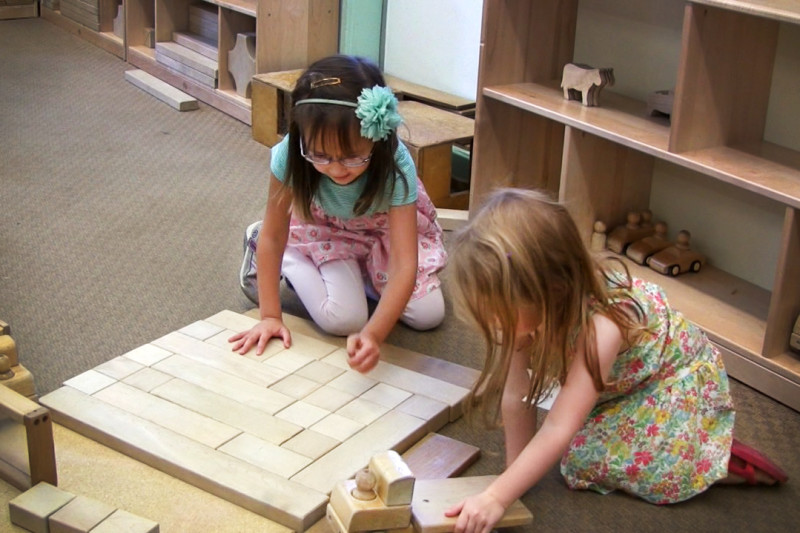
"caption": "Two girls play with blocks at Bing Nursery School at Stanford University. (Courtesy of Bing Nursery School)",
"description": "Two girls play with blocks at Bing Nursery School at Stanford University",
"title": "Two girls play with blocks at Bing Nursery School at Stanford University",
"credit": null,
"status": "inherit",
"isLoading": false,
"fetchFailed": false
}
},
"audioPlayerReducer": {
"postId": "stream_live",
"isPaused": true,
"isPlaying": false,
"pfsActive": false,
"pledgeModalIsOpen": true,
"playerDrawerIsOpen": false,
"liveAudioPlayStartedAt": 0,
"liveAudioPlayContext": ""
},
"authorsReducer": {
"byline_mindshift_39694": {
"type": "authors",
"id": "byline_mindshift_39694",
"meta": {
"override": true
},
"slug": "byline_mindshift_39694",
"name": "Cory Turner, \u003ca href=\"http://www.npr.org/sections/ed/2015/03/11/391864852/the-teenage-brain-spock-vs-captain-kirk\">NPR\u003c/a>",
"isLoading": false
},
"byline_mindshift_39629": {
"type": "authors",
"id": "byline_mindshift_39629",
"meta": {
"override": true
},
"slug": "byline_mindshift_39629",
"name": "Poncie Rutsch",
"isLoading": false
},
"byline_mindshift_39446": {
"type": "authors",
"id": "byline_mindshift_39446",
"meta": {
"override": true
},
"slug": "byline_mindshift_39446",
"name": "Anya Kamenetz",
"isLoading": false
},
"byline_mindshift_39354": {
"type": "authors",
"id": "byline_mindshift_39354",
"meta": {
"override": true
},
"slug": "byline_mindshift_39354",
"name": "Eric Westervelt",
"isLoading": false
},
"katrinaschwartz": {
"type": "authors",
"id": "234",
"meta": {
"index": "authors_1716337520",
"id": "234",
"found": true
},
"name": "Katrina Schwartz",
"firstName": "Katrina",
"lastName": "Schwartz",
"slug": "katrinaschwartz",
"email": "kschwartz@kqed.org",
"display_author_email": false,
"staff_mastheads": [
"news"
],
"title": "Producer",
"bio": "Katrina Schwartz is a journalist based in San Francisco. She's worked at KPCC public radio in LA and has reported on air and online for KQED since 2010. She covered how teaching and learning is changing for MindShift between 2012 and 2020. She is the co-host of the MindShift podcast and now produces KQED's Bay Curious podcast.",
"avatar": "https://secure.gravatar.com/avatar/edb4ee79070447a018538c9aae6eeecf28786515b8a0c30e43b6b7dce5aa44c8?s=600&d=blank&r=g",
"twitter": "kschwart",
"bluesky": null,
"facebook": null,
"instagram": null,
"linkedin": null,
"sites": [
{
"site": "",
"roles": [
"editor"
]
},
{
"site": "news",
"roles": [
"editor"
]
},
{
"site": "mindshift",
"roles": [
"administrator"
]
},
{
"site": "stateofhealth",
"roles": [
"author"
]
},
{
"site": "science",
"roles": [
"editor"
]
}
],
"headData": {
"title": "Katrina Schwartz | KQED",
"description": "Producer",
"ogImgSrc": "https://secure.gravatar.com/avatar/edb4ee79070447a018538c9aae6eeecf28786515b8a0c30e43b6b7dce5aa44c8?s=600&d=blank&r=g",
"twImgSrc": "https://secure.gravatar.com/avatar/edb4ee79070447a018538c9aae6eeecf28786515b8a0c30e43b6b7dce5aa44c8?s=600&d=blank&r=g"
},
"isLoading": false,
"link": "/author/katrinaschwartz"
},
"luba": {
"type": "authors",
"id": "4537",
"meta": {
"index": "authors_1716337520",
"id": "4537",
"found": true
},
"name": "Luba Vangelova",
"firstName": "Luba",
"lastName": "Vangelova",
"slug": "luba",
"email": "luba@catalystcommunicationsllc.com",
"display_author_email": false,
"staff_mastheads": [],
"title": null,
"bio": "Luba Vangelova’s work has appeared in numerous print, online and broadcast media outlets, including The New York Times, Smithsonian, The Atlantic, and Salon. She is also working on a book about self-directed learning. Her web site is \u003ca title=\"Luba Vangelova\" href=\"http://www.LubaVangelova.com\" target=\"_blank\">www.LubaVangelova.com\u003c/a>. She also posts on \u003ca title=\"@LubaSays\" href=\"http://www.twitter.com/LubaSays\" target=\"_blank\">Twitter\u003c/a> and on her official \u003ca title=\"Facebook - Luba Vangelova\" href=\"http://www.facebook.com/LubaSays\" target=\"_blank\">Facebook\u003c/a> page.",
"avatar": "https://secure.gravatar.com/avatar/0c49027042bcd2ffbce1f5f200e2172e?s=600&d=blank&r=g",
"twitter": "LubaSays",
"facebook": null,
"instagram": null,
"linkedin": "lvangelova",
"sites": [
{
"site": "mindshift",
"roles": [
"contributor"
]
}
],
"headData": {
"title": "Luba Vangelova | KQED",
"description": null,
"ogImgSrc": "https://secure.gravatar.com/avatar/0c49027042bcd2ffbce1f5f200e2172e?s=600&d=blank&r=g",
"twImgSrc": "https://secure.gravatar.com/avatar/0c49027042bcd2ffbce1f5f200e2172e?s=600&d=blank&r=g"
},
"isLoading": false,
"link": "/author/luba"
},
"ksung": {
"type": "authors",
"id": "4596",
"meta": {
"index": "authors_1716337520",
"id": "4596",
"found": true
},
"name": "Ki Sung",
"firstName": "Ki",
"lastName": "Sung",
"slug": "ksung",
"email": "ksung@kqed.org",
"display_author_email": false,
"staff_mastheads": [
"news"
],
"title": "KQED Contributor",
"bio": "Ki Sung is Managing Editor of Digital News at KQED. She is former Senior Editor of MindShift and worked at NPR before joining KQED in 2014.",
"avatar": "https://secure.gravatar.com/avatar/64271e01dc95486c133be56937739045b7c00c990525bf9add12d3dd4f0433c9?s=600&d=blank&r=g",
"twitter": null,
"bluesky": null,
"facebook": null,
"instagram": null,
"linkedin": null,
"sites": [
{
"site": "arts",
"roles": [
"administrator"
]
},
{
"site": "news",
"roles": [
"administrator"
]
},
{
"site": "mindshift",
"roles": [
"administrator"
]
},
{
"site": "science",
"roles": [
"administrator"
]
},
{
"site": "forum",
"roles": [
"administrator"
]
},
{
"site": "perspectives",
"roles": [
"administrator"
]
},
{
"site": "elections",
"roles": [
"administrator"
]
}
],
"headData": {
"title": "Ki Sung | KQED",
"description": "KQED Contributor",
"ogImgSrc": "https://secure.gravatar.com/avatar/64271e01dc95486c133be56937739045b7c00c990525bf9add12d3dd4f0433c9?s=600&d=blank&r=g",
"twImgSrc": "https://secure.gravatar.com/avatar/64271e01dc95486c133be56937739045b7c00c990525bf9add12d3dd4f0433c9?s=600&d=blank&r=g"
},
"isLoading": false,
"link": "/author/ksung"
}
},
"pagesReducer": {
"mindshift_category_big-ideas": {
"type": "terms",
"id": "mindshift_192",
"meta": {
"index": "terms_1716263798",
"site": "mindshift",
"id": "192",
"score": 14.406914
},
"featImg": null,
"name": "Big Ideas",
"description": "The latest findings from experts in the field related to the future of learning.",
"taxonomy": "category",
"headData": {
"twImgId": null,
"twTitle": null,
"ogTitle": null,
"ogImgId": null,
"twDescription": null,
"description": "The latest findings from experts in the field related to the future of learning.",
"title": "Big Ideas Archives | KQED Mindshift",
"ogDescription": null
},
"ttid": 192,
"slug": "big-ideas",
"isLoading": false,
"title": "Big Ideas",
"pageMeta": {
"site": "mindshift",
"WpPageTemplate": "page-topic-editorial",
"currentPage": 56
},
"blocks": [
{
"blockName": "kqed/company-paragraph",
"content": "The latest findings from experts in the field related to the future of learning."
},
{
"blockName": "kqed/post-list",
"attrs": {
"layout": "cardArticle2",
"query": "posts/mindshift?category=big-ideas",
"seeMore": false,
"paginated": true,
"page": 56
}
},
{
"blockName": "kqed/ad"
}
]
}
},
"pfsSessionReducer": {},
"postsReducer": {
"stream_live": {
"type": "live",
"id": "stream_live",
"audioUrl": "https://streams.kqed.org/kqedradio",
"title": "Live Stream",
"excerpt": "Live Stream information currently unavailable.",
"link": "/radio",
"featImg": "",
"label": {
"name": "KQED Live",
"link": "/"
}
},
"stream_kqedNewscast": {
"type": "posts",
"id": "stream_kqedNewscast",
"audioUrl": "https://www.kqed.org/.stream/anon/radio/RDnews/newscast.mp3?_=1",
"title": "KQED Newscast",
"featImg": "",
"label": {
"name": "88.5 FM",
"link": "/"
}
},
"mindshift_39694": {
"type": "posts",
"id": "mindshift_39694",
"meta": {
"index": "posts_1716263798",
"site": "mindshift",
"id": "39694",
"score": null,
"sort": [
1426191183000
]
},
"parent": 0,
"labelTerm": {
"site": "mindshift"
},
"blocks": [],
"publishDate": 1426191183,
"format": "aside",
"disqusTitle": "What’s an Adolescent Brain’s Weakness? Other Tweens",
"title": "What’s an Adolescent Brain’s Weakness? Other Tweens",
"headTitle": "MindShift | KQED News",
"content": "\u003cfigure id=\"attachment_39164\" class=\"wp-caption alignnone\" style=\"max-width: 640px\">\u003ca href=\"http://ww2.kqed.org/mindshift/2015/01/why-teens-are-impulsive-addiction-prone-and-should-protect-their-brains/teenage-brain/\" rel=\"attachment wp-att-39164\">\u003cimg class=\"size-full wp-image-39164\" src=\"http://ww2.kqed.org/mindshift/wp-content/uploads/sites/23/2015/01/Teenage-Brain.gif\" alt=\"iStock\" width=\"640\" height=\"960\">\u003c/a>\u003cfigcaption class=\"wp-caption-text\">iStock\u003c/figcaption>\u003c/figure>\n\u003cp>\u003cem>This story was written for \u003ca href=\"http://www.wnyc.org/series/being-12/\">the series\u003c/a>, \"Being 12: The Year Everything Changes,\" from member station WNYC.\u003c/em>\u003c/p>\n\u003cp>If adolescence has a poster child, it's a teenager. In a car. Smoking, drinking, and driving badly while also, somehow, having sex in the back seat.\u003c/p>\n\u003cp>But changes in the brain that lead to the famously bad choices of adolescence don't start at 16 or 17 years old. They start around 11 or 12 and the beginning of puberty.\u003c/p>\n\u003cp>This is the dirty little secret of adolescence: The cloudy judgment and risky behavior may not last a year or two. Try a decade.\u003c/p>\n\u003cp>[contextly_sidebar id=\"NYkvaxvWRuYRvGGq13PlH6hmLeyT1FlI\"]\u003c/p>\n\u003cp>To understand why, let's start with an experiment. At Temple University, psychology professor\u003ca href=\"http://www.npr.org/blogs/ed/2014/10/04/351187049/q-a-plumbing-the-mysteries-of-the-teenage-brain\"> Laurence Steinberg \u003c/a>and his team put a bunch of adolescents into an FMRI machine — a brain scanner — and asked them to play a driving game.\u003c/p>\n\u003cp>[ad fullwidth]\u003c/p>\n\u003cp>\"Your perspective is that of a person behind the wheel,\" Steinberg says, describing the set-up. \"And you come to a series of intersections, and the lights turn yellow. And you have to decide whether to put the brakes on or not.\"\u003c/p>\n\u003cp>Now, what do you think the adolescents did in this situation?\u003c/p>\n\u003cp>Wrong.\u003c/p>\n\u003cp>They did not blow through the yellow every time.\u003c/p>\n\u003cp>\"When adolescents are playing this game by themselves, they don't take any more chances than adults do when they're playing it by themselves,\" Steinberg says.\u003c/p>\n\u003cp>And that's a big deal. Because the adolescent brain gets a bad rep for being consistently impulsive. Steinberg hopes his latest book, \u003cem>Age of Opportunity\u003c/em>, will help set the record straight: Being 12 (or 17) doesn't mean a kid's hard-wired to always make bad choices.\u003c/p>\n\u003cp>Why, then, do adolescents still make so many bad choices? To find out, Steinberg added a twist to his experiment.\u003c/p>\n\u003cp>He gave his subjects an adolescent crowd.\u003c/p>\n\u003cp>\"This doubles the number of chances that adolescents take,\" Steinberg says, \"but has no effect on the number of chances adults take.\"\u003c/p>\n\u003cp>In short, an adolescent's weakness is other adolescents. And we're not just talking about peer pressure. The mere presence of peers makes them less cautious.\u003c/p>\n\u003cp>One reason, says B.J. Casey, a neuroscientist at Weill Cornell Medical College, is that \"the brain is being marinated in gonadal hormones\" during adolescence. Another big reason: The prefrontal cortex is still a work-in-progress. And it serves a vital role in our decision-making.\u003c/p>\n\u003cp>The prefrontal cortex \"helps to link past experiences to the current situation,\" Casey says, \"and, at the same time, consider what the future consequences are of choices and actions that are made.\"\u003c/p>\n\u003cp>The prefrontal cortex is our voice of reason. Steinberg calls it the brain's CEO. Casey likens it to Mr. Spock from \u003cem>Star Trek\u003c/em>, coldly calculating a life's worth of cost-benefit analyses.\u003c/p>\n\u003cp>Casey's analogy doesn't stop there. To her, Captain Kirk is the limbic system — the emotional center of the brain that's always on the lookout for threats and rewards. When it spots either, it sends a message to the prefrontal cortex. Because the limbic system can't make sense of these things on its own. It needs the prefrontal cortex.\u003c/p>\n\u003cp>Kirk needs Spock.\u003c/p>\n\u003cp>Here's the problem. For kids in adolescence, the prefrontal cortex is still developing, and it can't keep up with the limbic system as it goes into reward-seeking warp speed.\u003c/p>\n\u003cp>\"It's as if these emotional regions hijack the prefrontal systems,\" Casey says, \"and it leads to a choice that they make that's a bad one. And they even know it's a bad one.\"\u003c/p>\n\u003cp>Which brings us full-circle to Steinberg's driving experiment. The limbic system doesn't just flag rewards in things like alcohol and sex. A 12-year-old gets a kind of high simply by being around other adolescents. They're wired to seek each other out and develop the skills they'll need to leave their parents, feed and protect themselves, and raise children.\u003c/p>\n\u003cp>In the short-term, that means cloudy judgment and risky behavior.\u003c/p>\n\u003cp>\u003c/p>\n\u003cp>But adolescence is all about the long view.\u003c/p>\n\u003cdiv class=\"fullattribution\">Copyright 2015 NPR. To see more, visit http://www.npr.org/.\u003cimg src=\"http://www.google-analytics.com/__utm.gif?utmac=UA-5828686-4&utmdt=The+Teenage+Brain%3A+Spock+Vs.+Captain+Kirk+&utme=8(APIKey)9(MDAxOTAwOTE4MDEyMTkxMDAzNjczZDljZA004)\" alt=\"\">\u003c/div>\n\n",
"disqusIdentifier": "39694 http://blogs.kqed.org/mindshift/?p=39694",
"disqusUrl": "https://ww2.kqed.org/mindshift/2015/03/12/whats-an-adolescent-brains-weakness-other-tweens/",
"stats": {
"hasVideo": false,
"hasChartOrMap": false,
"hasAudio": false,
"hasPolis": false,
"wordCount": 706,
"hasGoogleForm": false,
"hasGallery": false,
"hasHearkenModule": false,
"iframeSrcs": [],
"paragraphCount": 28
},
"modified": 1434497021,
"excerpt": "Adolescents get a bad rep for being irrational. The bad news: It's kinda deserved. The good news: Teen brains come equipped with an internal Mr. Spock, trying to keep them safe.",
"headData": {
"twImgId": "",
"twTitle": "",
"ogTitle": "",
"ogImgId": "",
"twDescription": "",
"description": "Adolescents get a bad rep for being irrational. The bad news: It's kinda deserved. The good news: Teen brains come equipped with an internal Mr. Spock, trying to keep them safe.",
"title": "What’s an Adolescent Brain’s Weakness? Other Tweens | KQED",
"ogDescription": "",
"schema": {
"@context": "https://schema.org",
"@type": "Article",
"headline": "What’s an Adolescent Brain’s Weakness? Other Tweens",
"datePublished": "2015-03-12T13:13:03-07:00",
"dateModified": "2015-06-16T16:23:41-07:00",
"image": "https://cdn.kqed.org/wp-content/uploads/2020/02/KQED-OG-Image@1x.png"
}
},
"guestAuthors": [],
"slug": "whats-an-adolescent-brains-weakness-other-tweens",
"status": "publish",
"nprApiLink": "http://api.npr.org/query?id=391864852&apiKey=MDAxOTAwOTE4MDEyMTkxMDAzNjczZDljZA004",
"nprByline": "Cory Turner, \u003ca href=\"http://www.npr.org/sections/ed/2015/03/11/391864852/the-teenage-brain-spock-vs-captain-kirk\">NPR\u003c/a>",
"nprStoryDate": "Wed, 11 Mar 2015 09:23:00 -0400",
"nprLastModifiedDate": "Wed, 11 Mar 2015 13:23:57 -0400",
"nprHtmlLink": "http://www.npr.org/blogs/ed/2015/03/11/391864852/the-teenage-brain-spock-vs-captain-kirk?ft=nprml&f=391864852",
"nprStoryId": "391864852",
"nprRetrievedStory": "1",
"nprPubDate": "Wed, 11 Mar 2015 13:23:00 -0400",
"path": "/mindshift/39694/whats-an-adolescent-brains-weakness-other-tweens",
"audioTrackLength": null,
"parsedContent": [
{
"type": "contentString",
"content": "\u003cdiv class=\"post-body\">\u003cp>\u003cfigure id=\"attachment_39164\" class=\"wp-caption alignnone\" style=\"max-width: 640px\">\u003ca href=\"http://ww2.kqed.org/mindshift/2015/01/why-teens-are-impulsive-addiction-prone-and-should-protect-their-brains/teenage-brain/\" rel=\"attachment wp-att-39164\">\u003cimg class=\"size-full wp-image-39164\" src=\"http://ww2.kqed.org/mindshift/wp-content/uploads/sites/23/2015/01/Teenage-Brain.gif\" alt=\"iStock\" width=\"640\" height=\"960\">\u003c/a>\u003cfigcaption class=\"wp-caption-text\">iStock\u003c/figcaption>\u003c/figure>\n\u003cp>\u003cem>This story was written for \u003ca href=\"http://www.wnyc.org/series/being-12/\">the series\u003c/a>, \"Being 12: The Year Everything Changes,\" from member station WNYC.\u003c/em>\u003c/p>\n\u003cp>If adolescence has a poster child, it's a teenager. In a car. Smoking, drinking, and driving badly while also, somehow, having sex in the back seat.\u003c/p>\n\u003cp>But changes in the brain that lead to the famously bad choices of adolescence don't start at 16 or 17 years old. They start around 11 or 12 and the beginning of puberty.\u003c/p>\n\u003cp>This is the dirty little secret of adolescence: The cloudy judgment and risky behavior may not last a year or two. Try a decade.\u003c/p>\n\u003cp>\u003c/p>\u003cp>\u003c/p>\u003cp>\u003c/p>\n\u003cp>To understand why, let's start with an experiment. At Temple University, psychology professor\u003ca href=\"http://www.npr.org/blogs/ed/2014/10/04/351187049/q-a-plumbing-the-mysteries-of-the-teenage-brain\"> Laurence Steinberg \u003c/a>and his team put a bunch of adolescents into an FMRI machine — a brain scanner — and asked them to play a driving game.\u003c/p>\n\u003cp>\u003c/p>\u003c/div>",
"attributes": {
"named": {},
"numeric": []
}
},
{
"type": "component",
"content": "",
"name": "ad",
"attributes": {
"named": {
"label": "fullwidth"
},
"numeric": [
"fullwidth"
]
}
},
{
"type": "contentString",
"content": "\u003cdiv class=\"post-body\">\u003cp>\u003c/p>\n\u003cp>\"Your perspective is that of a person behind the wheel,\" Steinberg says, describing the set-up. \"And you come to a series of intersections, and the lights turn yellow. And you have to decide whether to put the brakes on or not.\"\u003c/p>\n\u003cp>Now, what do you think the adolescents did in this situation?\u003c/p>\n\u003cp>Wrong.\u003c/p>\n\u003cp>They did not blow through the yellow every time.\u003c/p>\n\u003cp>\"When adolescents are playing this game by themselves, they don't take any more chances than adults do when they're playing it by themselves,\" Steinberg says.\u003c/p>\n\u003cp>And that's a big deal. Because the adolescent brain gets a bad rep for being consistently impulsive. Steinberg hopes his latest book, \u003cem>Age of Opportunity\u003c/em>, will help set the record straight: Being 12 (or 17) doesn't mean a kid's hard-wired to always make bad choices.\u003c/p>\n\u003cp>Why, then, do adolescents still make so many bad choices? To find out, Steinberg added a twist to his experiment.\u003c/p>\n\u003cp>He gave his subjects an adolescent crowd.\u003c/p>\n\u003cp>\"This doubles the number of chances that adolescents take,\" Steinberg says, \"but has no effect on the number of chances adults take.\"\u003c/p>\n\u003cp>In short, an adolescent's weakness is other adolescents. And we're not just talking about peer pressure. The mere presence of peers makes them less cautious.\u003c/p>\n\u003cp>One reason, says B.J. Casey, a neuroscientist at Weill Cornell Medical College, is that \"the brain is being marinated in gonadal hormones\" during adolescence. Another big reason: The prefrontal cortex is still a work-in-progress. And it serves a vital role in our decision-making.\u003c/p>\n\u003cp>The prefrontal cortex \"helps to link past experiences to the current situation,\" Casey says, \"and, at the same time, consider what the future consequences are of choices and actions that are made.\"\u003c/p>\n\u003cp>The prefrontal cortex is our voice of reason. Steinberg calls it the brain's CEO. Casey likens it to Mr. Spock from \u003cem>Star Trek\u003c/em>, coldly calculating a life's worth of cost-benefit analyses.\u003c/p>\n\u003cp>Casey's analogy doesn't stop there. To her, Captain Kirk is the limbic system — the emotional center of the brain that's always on the lookout for threats and rewards. When it spots either, it sends a message to the prefrontal cortex. Because the limbic system can't make sense of these things on its own. It needs the prefrontal cortex.\u003c/p>\n\u003cp>Kirk needs Spock.\u003c/p>\n\u003cp>Here's the problem. For kids in adolescence, the prefrontal cortex is still developing, and it can't keep up with the limbic system as it goes into reward-seeking warp speed.\u003c/p>\n\u003cp>\"It's as if these emotional regions hijack the prefrontal systems,\" Casey says, \"and it leads to a choice that they make that's a bad one. And they even know it's a bad one.\"\u003c/p>\n\u003cp>Which brings us full-circle to Steinberg's driving experiment. The limbic system doesn't just flag rewards in things like alcohol and sex. A 12-year-old gets a kind of high simply by being around other adolescents. They're wired to seek each other out and develop the skills they'll need to leave their parents, feed and protect themselves, and raise children.\u003c/p>\n\u003cp>In the short-term, that means cloudy judgment and risky behavior.\u003c/p>\n\u003cp>\u003c/p>\n\u003cp>But adolescence is all about the long view.\u003c/p>\n\u003cdiv class=\"fullattribution\">Copyright 2015 NPR. To see more, visit http://www.npr.org/.\u003cimg src=\"http://www.google-analytics.com/__utm.gif?utmac=UA-5828686-4&utmdt=The+Teenage+Brain%3A+Spock+Vs.+Captain+Kirk+&utme=8(APIKey)9(MDAxOTAwOTE4MDEyMTkxMDAzNjczZDljZA004)\" alt=\"\">\u003c/div>\n\n\u003c/div>\u003c/p>",
"attributes": {
"named": {},
"numeric": []
}
}
],
"link": "/mindshift/39694/whats-an-adolescent-brains-weakness-other-tweens",
"authors": [
"byline_mindshift_39694"
],
"categories": [
"mindshift_192"
],
"tags": [
"mindshift_20811",
"mindshift_767",
"mindshift_20784",
"mindshift_1040",
"mindshift_1038"
],
"featImg": "mindshift_39164",
"label": "mindshift"
},
"mindshift_39629": {
"type": "posts",
"id": "mindshift_39629",
"meta": {
"index": "posts_1716263798",
"site": "mindshift",
"id": "39629",
"score": null,
"sort": [
1425991000000
]
},
"parent": 0,
"labelTerm": {
"site": "mindshift"
},
"blocks": [],
"publishDate": 1425991000,
"format": "aside",
"disqusTitle": "The Difference Between Praise That Promotes Narcissism vs. Healthy Self-Esteem",
"title": "The Difference Between Praise That Promotes Narcissism vs. Healthy Self-Esteem",
"headTitle": "MindShift | KQED News",
"content": "\u003cfigure id=\"attachment_39639\" class=\"wp-caption alignnone\" style=\"max-width: 640px\">\u003ca href=\"http://ww2.kqed.org/mindshift/2015/03/the-difference-between-praise-that-promotes-narcissism-vs-healthy-self-esteem/swan-hans-pama/\" rel=\"attachment wp-att-39639\">\u003cimg src=\"http://ww2.kqed.org/mindshift/wp-content/uploads/sites/23/2015/03/Swan-Hans-Pama.jpg\" alt=\"Hans Pama/Flickr\" width=\"640\" height=\"960\" class=\"size-full wp-image-39639\">\u003c/a>\u003cfigcaption class=\"wp-caption-text\">\u003ca href=\"https://www.flickr.com/photos/hanspama/4018316043\">Hans Pama/Flickr\u003c/a>\u003c/figcaption>\u003c/figure>\n\u003cp>\u003cstrong>By Poncie Rutsch, \u003ca href=\"http://www.npr.org/blogs/health/2015/03/09/391874530/do-parents-nurture-narcissists-by-pouring-on-the-praise\">NPR\u003c/a>\u003c/strong>\u003c/p>\n\u003cp>When a kid does something amazing, you want to tell her so. You might tell her that she's very smart. You might tell her that she's a very special kid. Or you might say that she must have worked really hard.\u003c/p>\n\u003cp>On the surface, they all sound like the same compliments. But according to \u003ca href=\"http://www.comm.ohio-state.edu/people/faculty/userprofile/67.html\">Brad Bushman\u003c/a>, a communications and psychology professor at Ohio State University, the first two increase the child's chances of becoming a narcissist. Only the last one raises the child's self-esteem and keeps her ego in check.\u003c/p>\n\u003cp>Bushman and a group of collaborators surveyed parents to see how they show warmth and value their child's accomplishments. They then compared those findings to the children's levels of self-esteem and narcissism. The \u003ca href=\"http://www.pnas.org/content/early/2015/03/05/1420870112.abstract\">results\u003c/a> were published Monday in the \u003ca href=\"http://www.pnas.org/\">\u003cem>Proceedings of the National Academy of Sciences\u003c/em>\u003c/a>.\u003c/p>\n\u003cp>Of course, self-esteem and narcissism are two very different things. The difference has to do with how you value yourself compared to other people. \"Self-esteem basically means you're a person of worth equal with other people,\" Bushman tells Shots. \"Narcissism means you think you're better than other people.\"\u003c/p>\n\u003cp>[ad fullwidth]\u003c/p>\n\u003cp>And not in a good way.\u003c/p>\n\u003cp>\"Narcissism is a somewhat toxic personality trait,\" \u003ca href=\"http://www.psychology.sdsu.edu/people/jean-twenge/\">Jean Twenge\u003c/a>, author of \u003ca href=\"http://www.narcissismepidemic.com/\">\u003cem>The Narcissism Epidemic\u003c/em>\u003c/a> and psychology professor at San Diego State University, tells Shots. Narcissists tend to overestimate their abilities, take too many risks and mess up their relationships, she says. Some people see narcissists hurting the people and society around them, but they hurt themselves, too. \"In the long term it tends to lead to failure,\" Twenge says.\u003c/p>\n\u003cp>[contextly_sidebar id=\"rbjAu54Llm9Kf3FGEzVgdzKCF9dKWX6e\"]\u003c/p>\n\u003cp>While narcissists tend to have high self-esteem, not all people with high self-esteem are narcissists. Bushman needed to separate the two. So he asked children ages 7 to 12 years old how they felt about statements like \"Some kids like the kind of person they are,\" or \"Kids like me deserve something extra.\" The first statement measures self-esteem; the second, narcissism.\u003c/p>\n\u003cp>Bushman made sure to focus on children between 7 and 12 years old, so that by the time the study finished all of them would be older than 8. \"You can't measure narcissism in children before age 8, because every child is a narcissist,\" he says. If you ask younger kids in a classroom if they are good at math or good at baseball, Bushman says all the kids will raise their hands.\u003c/p>\n\u003cp>Then he surveyed the children's parents, asking them to respond to statements to determine whether they overvalued their children. For example, \"I would not be surprised to learn that my child has extraordinary talents and abilities,\" or \"Without my child, his/her class would be much less fun.\" And he asked how they expressed warmth toward their child by measuring how strongly they agreed with statements like \"I let my child know I love him/her.\"\u003c/p>\n\u003cp>When he analyzed the results from the surveys, Bushman found that the more narcissistic children had parents who consistently overvalued their accomplishments. He ran additional tests to make sure that the parents weren't narcissists, too — after all, it's possible that the children could be mirroring narcissistic behavior. But statistically, the children of narcissists aren't more likely to be narcissists themselves.\u003c/p>\n\u003cp>The research team continued to survey the same group of 565 children and their parents for a year and a half. They watched the children develop, and they could link each child's tendency toward self-esteem or narcissism back to what the parents had told them six months earlier.\u003c/p>\n\u003cp>\"We're not just measuring their narcissism at time one; we're using these measures to predict the behavior a year and a half later,\" says Bushman. \"Parental warmth doesn't predict it. Parental narcissism alone doesn't predict it. But parental overvaluation alone does predict it.\"\u003c/p>\n\u003cp>Bushman is particularly worried about narcissism because both he and other researchers have linked it to \u003ca href=\"http://www.ncbi.nlm.nih.gov/pubmed/9686460\">aggressive and violent behavior\u003c/a>. He thinks it's partly because narcissists are less likely to feel empathy toward others.\u003c/p>\n\u003cp>\"Empathy involves putting yourselves in other people's shoes, but narcissists have a very difficult time putting themselves in other people's shoes,\" Bushman says. Plus, he says that narcissists respond poorly when they don't get special treatment. \"Whenever people have this sense of superiority, then they lash out at others in an aggressive way.\"\u003c/p>\n\u003cp>Of course, someone who appears more narcissistic at age 10 isn't necessarily going to grow up to be a narcissistic adult, let alone aggressive. And the results of this study hinge on a handful of short surveys — no extensive personality testing here.\u003c/p>\n\u003cp>\"There are definitely going to be things that influence the personality after that stage,\" says Twenge. \"Those [narcissistic] tendencies may start to show up around then, but will continue to be influenced by parenting and environment throughout adolescence.\"\u003c/p>\n\u003cp>But this study has Bushman thinking about the way he praises his own children. \"It's a lot better to say 'You worked really hard' than 'You must be really smart,' \" he says, \"because if you tell the kid that they're smart and then if they fail they think 'Oh I'm stupid.' \" If the praise relates to effort, a child who fails will work harder next time.\u003c/p>\n\u003cp>Bushman is also trying to cultivate self-esteem in his children, because people with high self-esteem tend to have \u003ca href=\"http://www.ncbi.nlm.nih.gov/pubmed/22730921\">lower levels of anxiety\u003c/a> and depression over time. Based on Bushman's research, parents can raise their children's self-esteem just by expressing more warmth.\u003c/p>\n\u003cp>\u003c/p>\n\u003cp>Both researchers agree that voicing the connection you feel to your children really helps. \"If you want to look for a substitute for 'You're special,' just say 'I love you,' \" says Twenge. \"It's what you mean, and it's a much better message.\" \u003c/p>\n\u003cdiv class=\"fullattribution\">Copyright 2015 NPR. To see more, visit http://www.npr.org/.\u003cimg src=\"http://www.google-analytics.com/__utm.gif?utmac=UA-5828686-4&utmdt=Do+Parents+Nurture+Narcissists+By+Pouring+On+The+Praise%3F&utme=8(APIKey)9(MDAxOTAwOTE4MDEyMTkxMDAzNjczZDljZA004)\">\u003c/div>\n\n",
"disqusIdentifier": "39629 http://blogs.kqed.org/mindshift/?p=39629",
"disqusUrl": "https://ww2.kqed.org/mindshift/2015/03/10/the-difference-between-praise-that-promotes-narcissism-vs-healthy-self-esteem/",
"stats": {
"hasVideo": false,
"hasChartOrMap": false,
"hasAudio": false,
"hasPolis": false,
"wordCount": 1003,
"hasGoogleForm": false,
"hasGallery": false,
"hasHearkenModule": false,
"iframeSrcs": [],
"paragraphCount": 23
},
"modified": 1427322585,
"excerpt": "Telling your kids that they're superfabulous encourages narcissistic thinking, researchers say. And that doesn't bode well for their future happiness. Better to recognize effort and express warmth.",
"headData": {
"twImgId": "",
"twTitle": "",
"ogTitle": "",
"ogImgId": "",
"twDescription": "",
"description": "Telling your kids that they're superfabulous encourages narcissistic thinking, researchers say. And that doesn't bode well for their future happiness. Better to recognize effort and express warmth.",
"title": "The Difference Between Praise That Promotes Narcissism vs. Healthy Self-Esteem | KQED",
"ogDescription": "",
"schema": {
"@context": "https://schema.org",
"@type": "Article",
"headline": "The Difference Between Praise That Promotes Narcissism vs. Healthy Self-Esteem",
"datePublished": "2015-03-10T05:36:40-07:00",
"dateModified": "2015-03-25T15:29:45-07:00",
"image": "https://cdn.kqed.org/wp-content/uploads/2020/02/KQED-OG-Image@1x.png"
}
},
"guestAuthors": [],
"slug": "the-difference-between-praise-that-promotes-narcissism-vs-healthy-self-esteem",
"status": "publish",
"nprApiLink": "http://api.npr.org/query?id=391874530&apiKey=MDAxOTAwOTE4MDEyMTkxMDAzNjczZDljZA004",
"nprByline": "Poncie Rutsch",
"nprStoryDate": "Mon, 09 Mar 2015 15:41:00 -0400",
"nprLastModifiedDate": "Mon, 09 Mar 2015 18:12:33 -0400",
"nprHtmlLink": "http://www.npr.org/blogs/health/2015/03/09/391874530/do-parents-nurture-narcissists-by-pouring-on-the-praise?ft=nprml&f=391874530",
"nprAudio": "http://pd.npr.org/anon.npr-mp3/npr/atc/2015/03/20150309_atc_do_parents_nurture_narcissists_by_pouring_on_the_praise.mp3?orgId=1&topicId=1128&e=391874530&d=265&ft=nprml&f=391874530",
"nprAudioM3u": "http://api.npr.org/m3u/1391915193-1bf0bc.m3u?orgId=1&topicId=1128&e=391874530&d=265&ft=nprml&f=391874530",
"nprStoryId": "391874530",
"nprRetrievedStory": "1",
"nprPubDate": "Mon, 09 Mar 2015 18:12:00 -0400",
"path": "/mindshift/39629/the-difference-between-praise-that-promotes-narcissism-vs-healthy-self-esteem",
"audioUrl": "http://pd.npr.org/anon.npr-mp3/npr/atc/2015/03/20150309_atc_do_parents_nurture_narcissists_by_pouring_on_the_praise.mp3?orgId=1&topicId=1128&e=391874530&d=265&ft=nprml&f=391874530",
"audioTrackLength": null,
"parsedContent": [
{
"type": "contentString",
"content": "\u003cdiv class=\"post-body\">\u003cp>\u003cfigure id=\"attachment_39639\" class=\"wp-caption alignnone\" style=\"max-width: 640px\">\u003ca href=\"http://ww2.kqed.org/mindshift/2015/03/the-difference-between-praise-that-promotes-narcissism-vs-healthy-self-esteem/swan-hans-pama/\" rel=\"attachment wp-att-39639\">\u003cimg src=\"http://ww2.kqed.org/mindshift/wp-content/uploads/sites/23/2015/03/Swan-Hans-Pama.jpg\" alt=\"Hans Pama/Flickr\" width=\"640\" height=\"960\" class=\"size-full wp-image-39639\">\u003c/a>\u003cfigcaption class=\"wp-caption-text\">\u003ca href=\"https://www.flickr.com/photos/hanspama/4018316043\">Hans Pama/Flickr\u003c/a>\u003c/figcaption>\u003c/figure>\n\u003cp>\u003cstrong>By Poncie Rutsch, \u003ca href=\"http://www.npr.org/blogs/health/2015/03/09/391874530/do-parents-nurture-narcissists-by-pouring-on-the-praise\">NPR\u003c/a>\u003c/strong>\u003c/p>\n\u003cp>When a kid does something amazing, you want to tell her so. You might tell her that she's very smart. You might tell her that she's a very special kid. Or you might say that she must have worked really hard.\u003c/p>\n\u003cp>On the surface, they all sound like the same compliments. But according to \u003ca href=\"http://www.comm.ohio-state.edu/people/faculty/userprofile/67.html\">Brad Bushman\u003c/a>, a communications and psychology professor at Ohio State University, the first two increase the child's chances of becoming a narcissist. Only the last one raises the child's self-esteem and keeps her ego in check.\u003c/p>\n\u003cp>Bushman and a group of collaborators surveyed parents to see how they show warmth and value their child's accomplishments. They then compared those findings to the children's levels of self-esteem and narcissism. The \u003ca href=\"http://www.pnas.org/content/early/2015/03/05/1420870112.abstract\">results\u003c/a> were published Monday in the \u003ca href=\"http://www.pnas.org/\">\u003cem>Proceedings of the National Academy of Sciences\u003c/em>\u003c/a>.\u003c/p>\n\u003cp>Of course, self-esteem and narcissism are two very different things. The difference has to do with how you value yourself compared to other people. \"Self-esteem basically means you're a person of worth equal with other people,\" Bushman tells Shots. \"Narcissism means you think you're better than other people.\"\u003c/p>\n\u003cp>\u003c/p>\u003c/div>",
"attributes": {
"named": {},
"numeric": []
}
},
{
"type": "component",
"content": "",
"name": "ad",
"attributes": {
"named": {
"label": "fullwidth"
},
"numeric": [
"fullwidth"
]
}
},
{
"type": "contentString",
"content": "\u003cdiv class=\"post-body\">\u003cp>\u003c/p>\n\u003cp>And not in a good way.\u003c/p>\n\u003cp>\"Narcissism is a somewhat toxic personality trait,\" \u003ca href=\"http://www.psychology.sdsu.edu/people/jean-twenge/\">Jean Twenge\u003c/a>, author of \u003ca href=\"http://www.narcissismepidemic.com/\">\u003cem>The Narcissism Epidemic\u003c/em>\u003c/a> and psychology professor at San Diego State University, tells Shots. Narcissists tend to overestimate their abilities, take too many risks and mess up their relationships, she says. Some people see narcissists hurting the people and society around them, but they hurt themselves, too. \"In the long term it tends to lead to failure,\" Twenge says.\u003c/p>\n\u003cp>\u003c/p>\u003cp>\u003c/p>\u003cp>\u003c/p>\n\u003cp>While narcissists tend to have high self-esteem, not all people with high self-esteem are narcissists. Bushman needed to separate the two. So he asked children ages 7 to 12 years old how they felt about statements like \"Some kids like the kind of person they are,\" or \"Kids like me deserve something extra.\" The first statement measures self-esteem; the second, narcissism.\u003c/p>\n\u003cp>Bushman made sure to focus on children between 7 and 12 years old, so that by the time the study finished all of them would be older than 8. \"You can't measure narcissism in children before age 8, because every child is a narcissist,\" he says. If you ask younger kids in a classroom if they are good at math or good at baseball, Bushman says all the kids will raise their hands.\u003c/p>\n\u003cp>Then he surveyed the children's parents, asking them to respond to statements to determine whether they overvalued their children. For example, \"I would not be surprised to learn that my child has extraordinary talents and abilities,\" or \"Without my child, his/her class would be much less fun.\" And he asked how they expressed warmth toward their child by measuring how strongly they agreed with statements like \"I let my child know I love him/her.\"\u003c/p>\n\u003cp>When he analyzed the results from the surveys, Bushman found that the more narcissistic children had parents who consistently overvalued their accomplishments. He ran additional tests to make sure that the parents weren't narcissists, too — after all, it's possible that the children could be mirroring narcissistic behavior. But statistically, the children of narcissists aren't more likely to be narcissists themselves.\u003c/p>\n\u003cp>The research team continued to survey the same group of 565 children and their parents for a year and a half. They watched the children develop, and they could link each child's tendency toward self-esteem or narcissism back to what the parents had told them six months earlier.\u003c/p>\n\u003cp>\"We're not just measuring their narcissism at time one; we're using these measures to predict the behavior a year and a half later,\" says Bushman. \"Parental warmth doesn't predict it. Parental narcissism alone doesn't predict it. But parental overvaluation alone does predict it.\"\u003c/p>\n\u003cp>Bushman is particularly worried about narcissism because both he and other researchers have linked it to \u003ca href=\"http://www.ncbi.nlm.nih.gov/pubmed/9686460\">aggressive and violent behavior\u003c/a>. He thinks it's partly because narcissists are less likely to feel empathy toward others.\u003c/p>\n\u003cp>\"Empathy involves putting yourselves in other people's shoes, but narcissists have a very difficult time putting themselves in other people's shoes,\" Bushman says. Plus, he says that narcissists respond poorly when they don't get special treatment. \"Whenever people have this sense of superiority, then they lash out at others in an aggressive way.\"\u003c/p>\n\u003cp>Of course, someone who appears more narcissistic at age 10 isn't necessarily going to grow up to be a narcissistic adult, let alone aggressive. And the results of this study hinge on a handful of short surveys — no extensive personality testing here.\u003c/p>\n\u003cp>\"There are definitely going to be things that influence the personality after that stage,\" says Twenge. \"Those [narcissistic] tendencies may start to show up around then, but will continue to be influenced by parenting and environment throughout adolescence.\"\u003c/p>\n\u003cp>But this study has Bushman thinking about the way he praises his own children. \"It's a lot better to say 'You worked really hard' than 'You must be really smart,' \" he says, \"because if you tell the kid that they're smart and then if they fail they think 'Oh I'm stupid.' \" If the praise relates to effort, a child who fails will work harder next time.\u003c/p>\n\u003cp>Bushman is also trying to cultivate self-esteem in his children, because people with high self-esteem tend to have \u003ca href=\"http://www.ncbi.nlm.nih.gov/pubmed/22730921\">lower levels of anxiety\u003c/a> and depression over time. Based on Bushman's research, parents can raise their children's self-esteem just by expressing more warmth.\u003c/p>\n\u003cp>\u003c/p>\n\u003cp>Both researchers agree that voicing the connection you feel to your children really helps. \"If you want to look for a substitute for 'You're special,' just say 'I love you,' \" says Twenge. \"It's what you mean, and it's a much better message.\" \u003c/p>\n\u003cdiv class=\"fullattribution\">Copyright 2015 NPR. To see more, visit http://www.npr.org/.\u003cimg src=\"http://www.google-analytics.com/__utm.gif?utmac=UA-5828686-4&utmdt=Do+Parents+Nurture+Narcissists+By+Pouring+On+The+Praise%3F&utme=8(APIKey)9(MDAxOTAwOTE4MDEyMTkxMDAzNjczZDljZA004)\">\u003c/div>\n\n\u003c/div>\u003c/p>",
"attributes": {
"named": {},
"numeric": []
}
}
],
"link": "/mindshift/39629/the-difference-between-praise-that-promotes-narcissism-vs-healthy-self-esteem",
"authors": [
"byline_mindshift_39629"
],
"categories": [
"mindshift_192",
"mindshift_20827"
],
"tags": [
"mindshift_20784",
"mindshift_1040",
"mindshift_20512",
"mindshift_20772",
"mindshift_20660"
],
"featImg": "mindshift_39639",
"label": "mindshift"
},
"mindshift_39612": {
"type": "posts",
"id": "mindshift_39612",
"meta": {
"index": "posts_1716263798",
"site": "mindshift",
"id": "39612",
"score": null,
"sort": [
1425906571000
]
},
"parent": 0,
"labelTerm": {
"site": "mindshift"
},
"blocks": [],
"publishDate": 1425906571,
"format": "aside",
"disqusTitle": "Standards: Why Realizing the Full Promise of Education Requires a Fresh Approach",
"title": "Standards: Why Realizing the Full Promise of Education Requires a Fresh Approach",
"headTitle": "MindShift | KQED News",
"content": "\u003cfigure id=\"attachment_39625\" class=\"wp-caption alignnone\" style=\"max-width: 640px\">\u003ca href=\"http://ww2.kqed.org/mindshift/2015/03/standards-why-realizing-the-full-promise-of-education-requires-a-fresh-approach/school-kids/\" rel=\"attachment wp-att-39625\">\u003cimg class=\"size-full wp-image-39625\" src=\"http://ww2.kqed.org/mindshift/wp-content/uploads/sites/23/2015/03/School-kids.jpg\" alt=\"Spyros Papaspyropoulos/Flickr\" width=\"640\" height=\"960\">\u003c/a>\u003cfigcaption class=\"wp-caption-text\">\u003ca href=\"https://www.flickr.com/photos/spyrospapaspyropoulos/10887384263\">Spyros Papaspyropoulos/Flickr\u003c/a>\u003c/figcaption>\u003c/figure>\n\u003cp>\u003cem>This is the first of a \u003ca href=\"http://ww2.kqed.org/mindshift/2015/03/how-should-learning-be-assessed/\">two-part conversation\u003c/a> with Yong Zhao about standards, testing and other core elements of the modern system of education, and the assumptions that may be standing in the way of meeting the real learning needs of all children. He is a professor in the college of education at the University of Oregon and author of \u003ca href=\"http://www.amazon.com/Whos-Afraid-Big-Bad-Dragon/dp/1118487133\">Who's Afraid of the Big Bad Dragon: Why China Has the Best (and Worst) Education System in the World\u003c/a> and \u003ca href=\"http://zhaolearning.com/world-class-learners-my-new-book/\">World Class Learners: Educating Creative and Entrepreneurial Students\u003c/a>.\u003c/em>\u003c/p>\n\u003cp class=\"dropcap-serif\">Education is not “omnipotent,” says Yong Zhao, education professor at the University of Oregon, but it can change the trajectory of people’s lives. Most recent education policies, such as No Child Left Behind and Common Core, have sought to better realize this potential by aiming for parity in outcomes, as indicated by standardized test scores. Proponents, including \u003ca href=\"http://www.civilrights.org/press/2015/esea-reauthorization-principles.html\">many civil rights groups\u003c/a>, see such initiatives as a way to shine a light on inequality in education and pressure schools to help disadvantaged students graduate with the same knowledge and skills as their more advantaged peers, with the goal of better preparing them for colleges and careers.\u003c/p>\n\u003cp>Zhao says he embraces the underlying goal—to even the playing field for all children—but notes that inequities have been apparent for a long time. Furthermore, he believes that serving the best interest of all students requires a very different approach that starts with a paradigm shift in how we view education. Attempts to standardize individual student outcomes are an unhelpful, if not downright harmful, way to promote the development of human beings, he says. Instead, “we need to start with the individual child, instead of what others think [that child] should become.\"\u003c/p>\n\u003cp>[contextly_sidebar id=\"xurMSIFAZOvVuhZbOVOIUROoqFhVcA9j\"]\u003c/p>\n\u003cp>After researching different educational approaches over the years (his findings are \u003ca href=\"http://www.amazon.com/Yong-Zhao/e/B001K1BSE0/ref=dp_byline_cont_book_1\">summarized in several books\u003c/a>) Zhao has concluded that the most fruitful form of education—and the one with the best chance of empowering children to overcome poverty and other disadvantages—offers each child the opportunity to pursue his or her own goals, \u003ca href=\"http://ww2.kqed.org/mindshift/2015/01/can-schools-cultivate-a-students-ability-to-think-differently/\">in a stimulating and supportive environment\u003c/a>. Unfortunately, low-income students are least likely to have any of these elements in their schools. It’s this “opportunity gap,” rather than any “achievement gap,” that characterizes unequal education and is fully within the power of schools (and their funders) to remedy, Zhao says.\u003c/p>\n\u003cp>[ad fullwidth]\u003c/p>\n\u003cp>In the alternate vision, individual differences are not flaws to be fixed; the emphasis instead is on helping all students to identify and develop their areas of interest, and to build on their strengths. Standards, curricula and tests would play a very minor role, as tools to be deployed only when they can help a particular student to progress. Learning would be organized around individuals, instead of classes and grades. And rather than looking to schools and teachers to manage students’ learning, we should “give children autonomy, trust that they want to learn, and let them become owners of their learning enterprise.”\u003c/p>\n\u003cp>This also means redefining excellence to focus on how well educators support individual pursuits. “Look at what children are interested in or can do, and plan education with that in mind, rather than trying to fix them,” Zhao writes in his book, “Who's Afraid of the Big Bad Dragon: Why China Has the Best (and Worst) Education System in the World.” “Expect everyone to be great, and start educating from that angle, and things can be very different.”\u003c/p>\n\u003cp>\u003cstrong>Whose Standards, and to What End?\u003c/strong>\u003c/p>\n\u003cp>Academic standards—whether part of Common Core or not—are subjective, Zhao says, and don’t account for the fact that children naturally develop at different rates, or that learning is more haphazard than linear. He also doesn’t buy the argument that they benefit disadvantaged children by setting a high bar. “Being able to pass a prescribed test is not a high expectation,” Zhao says. “To become exceptional in an area that you want to pursue—that is a high expectation, and it is about having dreams. By imposing standards, we are not elevating expectations, but perhaps driving down expectations, especially for poor communities. … We are depriving them of the chance to dream.”\u003c/p>\n\u003cp>Even worse, standards can “cause psychological damage to those not judged as good,” Zhao says. This can set off a vicious cycle, creating feelings of low self-efficacy and disengagement that undermine further learning, because “few people want to stick to a place where they are constantly told that they are not good.” A system based on punitive consequences for not meeting expectations can also backfire: If it gets children decoding letters or adding numbers sooner rather than later, but diminishes their interest in reading and leads them to hate math, Zhao asks, “is it worth it?”\u003c/p>\n\u003cp>Last but not least, “standards describe the past, not the future,” and reflect the notion that children must “fit into the world as it is,” he says. “We forget that our children are the creators and owners of the future.”\u003c/p>\n\u003cp>That said, certain types of standards (used with caveats) can be helpful in two ways, Zhao says. They can guide learners, by suggesting a sequence to follow, and describing the knowledge and skills needed in a given field. Such information is dynamic, subjective and personal—those interested in becoming mathematicians might benefit from different math standards than their otherwise inclined peers, for instance. Each individual should therefore be free to decide which standard he or she wants to pursue, whether that means using an established math program such as Singapore math, or the Common Core standards, or developing their own set of standards, Zhao says.\u003c/p>\n\u003cp>The other useful application of standards is broader, but it is for schools rather than learners, Zhao says: Standards can be developed to define the educational opportunities schools should provide to all students.\u003c/p>\n\u003cp>\u003cstrong>Does a Mandated Curriculum Help or Hinder Learning?\u003c/strong>\u003c/p>\n\u003cp>Standards (and their associated tests) often drive the design of a curriculum. Placing a lot of weight on test scores in a few subjects has led to “curriculum narrowing,” especially in schools that are under pressure to boost their aggregate scores or else lose funding or face closure. These are usually schools serving low-income students, meaning that “disadvantaged children experience a much less rich education than their advantaged counterparts,” Zhao says, and are therefore less likely to feel a connection to what they’re learning or to view it as relevant to their lives.\u003c/p>\n\u003cp>But there’s an even deeper problem, he adds: Any set curriculum is counterproductive and also discriminatory, along a dimension that affects people of all incomes and races.\u003c/p>\n\u003cp>It is counterproductive because the notion that following a set curriculum will make students “college and career ready” is misguided, he says. Not only is college acceptance “an artificial goal, as if life ends at college,” but there are many types of colleges and majors, requiring different sets of knowledge and skills. That is even more true of careers, especially in a rapidly changing world in which \u003ca href=\"http://www.economist.com/news/special-report/21621156-first-two-industrial-revolutions-inflicted-plenty-pain-ultimately-benefited\">many professions will soon become obsolete and others have yet to be invented\u003c/a>. “It is very difficult, if not impossible, to predict which course of study will give one a better chance of employment,” Zhao says. “If you want to be ready for a career, you’d better be the one to create that career yourself.” The best preparation for that, he adds, is for students to \u003ca href=\"http://ww2.kqed.org/mindshift/2015/01/can-schools-cultivate-a-students-ability-to-think-differently/\">develop an entrepreneurial mindset\u003c/a> and chart their own educational paths.\u003c/p>\n\u003cp>The second issue is that schools that are only oriented toward strengthening students in certain academic areas are imposing subjective and narrow definitions of success on all students and effectively discriminating against those whose interests and strengths lie in other areas, such as music, art, sports and crafts, Zhao says.\u003c/p>\n\u003cp>Even the basics—the knowledge that everyone needs in order to function in our society—don’t justify a mandated curriculum, he contends. A broad, flexible curriculum that supports children's individual interests and strengths is more likely to engage them and promote learning, so that truly essential knowledge becomes “difficult to escape—when individuals want to pursue anything, they must learn the basics, so the basics are sought after, instead of imposed.”\u003c/p>\n\u003cp>\u003cstrong>A Different Mindset\u003c/strong>\u003c/p>\n\u003cp>What all this adds up to is a need to “re-imagine education,” Zhao says. His ideal educational environment (detailed \u003ca href=\"http://ww2.kqed.org/mindshift/2015/01/can-schools-cultivate-a-students-ability-to-think-differently/\">here\u003c/a>) would combine the essential elements of \u003ca href=\"http://ww2.kqed.org/mindshift/2014/10/students-lead-the-learning-experience-at-democratic-schools/\">democratic schools\u003c/a> and certain types of project-based learning programs. This can be accomplished even on modest budgets, he notes; what matters more is mindset.\u003c/p>\n\u003cp>He recommends questioning all basic assumptions. For example: “Is the teacher the only instructor, or can students help? How about using resources beyond the school, like the community or parents?” (A \u003ca href=\"http://ww2.kqed.org/mindshift/2015/02/how-neighbors-can-grow-a-community-centered-school-to-teach-kids-and-adults/\">recent article\u003c/a> shows how one school is leveraging such resources.) Technology can also expand access to resources within the wider community.\u003c/p>\n\u003cp>Another thing to bear in mind, Zhao says, is that schools that provide a learning environment that supports individual needs benefit greatly from \u003ca href=\"http://ww2.kqed.org/mindshift/2013/10/harnessing-childrens-natural-ways-of-learning/\">harnessing their students’ intrinsic motivation\u003c/a>, because they don’t have to work hard to try to overcome resistance to learning. All human beings are born with the capacity and desire to learn, he says, but their environment can either suppress or encourage that drive. “If people are driven by their own goals, that are meaningful to them, and feel a sense of accomplishment and self efficacy, then they really want to learn.”\u003c/p>\n\u003cp>\u003cem>The second part of this conversation with Yong Zhao about standards is \u003ca href=\"http://ww2.kqed.org/mindshift/2015/03/16/how-should-learning-be-assessed/\">available here\u003c/a>.\u003c/em>\u003c/p>\n\u003cp>[ad floatright]\u003c/p>\n\u003cp> \u003c/p>\n\n",
"disqusIdentifier": "39612 http://blogs.kqed.org/mindshift/?p=39612",
"disqusUrl": "https://ww2.kqed.org/mindshift/2015/03/09/standards-why-realizing-the-full-promise-of-education-requires-a-fresh-approach/",
"stats": {
"hasVideo": false,
"hasChartOrMap": false,
"hasAudio": false,
"hasPolis": false,
"wordCount": 1671,
"hasGoogleForm": false,
"hasGallery": false,
"hasHearkenModule": false,
"iframeSrcs": [],
"paragraphCount": 25
},
"modified": 1430481036,
"excerpt": "Yong Zhao takes a critical eye to standards and the purposes they serve. ",
"headData": {
"twImgId": "",
"twTitle": "",
"ogTitle": "",
"ogImgId": "",
"twDescription": "",
"description": "Yong Zhao takes a critical eye to standards and the purposes they serve. ",
"title": "Standards: Why Realizing the Full Promise of Education Requires a Fresh Approach | KQED",
"ogDescription": "",
"schema": {
"@context": "https://schema.org",
"@type": "Article",
"headline": "Standards: Why Realizing the Full Promise of Education Requires a Fresh Approach",
"datePublished": "2015-03-09T06:09:31-07:00",
"dateModified": "2015-05-01T04:50:36-07:00",
"image": "https://cdn.kqed.org/wp-content/uploads/2020/02/KQED-OG-Image@1x.png"
}
},
"guestAuthors": [],
"slug": "standards-why-realizing-the-full-promise-of-education-requires-a-fresh-approach",
"status": "publish",
"path": "/mindshift/39612/standards-why-realizing-the-full-promise-of-education-requires-a-fresh-approach",
"audioTrackLength": null,
"parsedContent": [
{
"type": "contentString",
"content": "\u003cdiv class=\"post-body\">\u003cp>\u003cfigure id=\"attachment_39625\" class=\"wp-caption alignnone\" style=\"max-width: 640px\">\u003ca href=\"http://ww2.kqed.org/mindshift/2015/03/standards-why-realizing-the-full-promise-of-education-requires-a-fresh-approach/school-kids/\" rel=\"attachment wp-att-39625\">\u003cimg class=\"size-full wp-image-39625\" src=\"http://ww2.kqed.org/mindshift/wp-content/uploads/sites/23/2015/03/School-kids.jpg\" alt=\"Spyros Papaspyropoulos/Flickr\" width=\"640\" height=\"960\">\u003c/a>\u003cfigcaption class=\"wp-caption-text\">\u003ca href=\"https://www.flickr.com/photos/spyrospapaspyropoulos/10887384263\">Spyros Papaspyropoulos/Flickr\u003c/a>\u003c/figcaption>\u003c/figure>\n\u003cp>\u003cem>This is the first of a \u003ca href=\"http://ww2.kqed.org/mindshift/2015/03/how-should-learning-be-assessed/\">two-part conversation\u003c/a> with Yong Zhao about standards, testing and other core elements of the modern system of education, and the assumptions that may be standing in the way of meeting the real learning needs of all children. He is a professor in the college of education at the University of Oregon and author of \u003ca href=\"http://www.amazon.com/Whos-Afraid-Big-Bad-Dragon/dp/1118487133\">Who's Afraid of the Big Bad Dragon: Why China Has the Best (and Worst) Education System in the World\u003c/a> and \u003ca href=\"http://zhaolearning.com/world-class-learners-my-new-book/\">World Class Learners: Educating Creative and Entrepreneurial Students\u003c/a>.\u003c/em>\u003c/p>\n\u003cp class=\"dropcap-serif\">Education is not “omnipotent,” says Yong Zhao, education professor at the University of Oregon, but it can change the trajectory of people’s lives. Most recent education policies, such as No Child Left Behind and Common Core, have sought to better realize this potential by aiming for parity in outcomes, as indicated by standardized test scores. Proponents, including \u003ca href=\"http://www.civilrights.org/press/2015/esea-reauthorization-principles.html\">many civil rights groups\u003c/a>, see such initiatives as a way to shine a light on inequality in education and pressure schools to help disadvantaged students graduate with the same knowledge and skills as their more advantaged peers, with the goal of better preparing them for colleges and careers.\u003c/p>\n\u003cp>Zhao says he embraces the underlying goal—to even the playing field for all children—but notes that inequities have been apparent for a long time. Furthermore, he believes that serving the best interest of all students requires a very different approach that starts with a paradigm shift in how we view education. Attempts to standardize individual student outcomes are an unhelpful, if not downright harmful, way to promote the development of human beings, he says. Instead, “we need to start with the individual child, instead of what others think [that child] should become.\"\u003c/p>\n\u003cp>\u003c/p>\u003cp>\u003c/p>\u003cp>\u003c/p>\n\u003cp>After researching different educational approaches over the years (his findings are \u003ca href=\"http://www.amazon.com/Yong-Zhao/e/B001K1BSE0/ref=dp_byline_cont_book_1\">summarized in several books\u003c/a>) Zhao has concluded that the most fruitful form of education—and the one with the best chance of empowering children to overcome poverty and other disadvantages—offers each child the opportunity to pursue his or her own goals, \u003ca href=\"http://ww2.kqed.org/mindshift/2015/01/can-schools-cultivate-a-students-ability-to-think-differently/\">in a stimulating and supportive environment\u003c/a>. Unfortunately, low-income students are least likely to have any of these elements in their schools. It’s this “opportunity gap,” rather than any “achievement gap,” that characterizes unequal education and is fully within the power of schools (and their funders) to remedy, Zhao says.\u003c/p>\n\u003cp>\u003c/p>\u003c/div>",
"attributes": {
"named": {},
"numeric": []
}
},
{
"type": "component",
"content": "",
"name": "ad",
"attributes": {
"named": {
"label": "fullwidth"
},
"numeric": [
"fullwidth"
]
}
},
{
"type": "contentString",
"content": "\u003cdiv class=\"post-body\">\u003cp>\u003c/p>\n\u003cp>In the alternate vision, individual differences are not flaws to be fixed; the emphasis instead is on helping all students to identify and develop their areas of interest, and to build on their strengths. Standards, curricula and tests would play a very minor role, as tools to be deployed only when they can help a particular student to progress. Learning would be organized around individuals, instead of classes and grades. And rather than looking to schools and teachers to manage students’ learning, we should “give children autonomy, trust that they want to learn, and let them become owners of their learning enterprise.”\u003c/p>\n\u003cp>This also means redefining excellence to focus on how well educators support individual pursuits. “Look at what children are interested in or can do, and plan education with that in mind, rather than trying to fix them,” Zhao writes in his book, “Who's Afraid of the Big Bad Dragon: Why China Has the Best (and Worst) Education System in the World.” “Expect everyone to be great, and start educating from that angle, and things can be very different.”\u003c/p>\n\u003cp>\u003cstrong>Whose Standards, and to What End?\u003c/strong>\u003c/p>\n\u003cp>Academic standards—whether part of Common Core or not—are subjective, Zhao says, and don’t account for the fact that children naturally develop at different rates, or that learning is more haphazard than linear. He also doesn’t buy the argument that they benefit disadvantaged children by setting a high bar. “Being able to pass a prescribed test is not a high expectation,” Zhao says. “To become exceptional in an area that you want to pursue—that is a high expectation, and it is about having dreams. By imposing standards, we are not elevating expectations, but perhaps driving down expectations, especially for poor communities. … We are depriving them of the chance to dream.”\u003c/p>\n\u003cp>Even worse, standards can “cause psychological damage to those not judged as good,” Zhao says. This can set off a vicious cycle, creating feelings of low self-efficacy and disengagement that undermine further learning, because “few people want to stick to a place where they are constantly told that they are not good.” A system based on punitive consequences for not meeting expectations can also backfire: If it gets children decoding letters or adding numbers sooner rather than later, but diminishes their interest in reading and leads them to hate math, Zhao asks, “is it worth it?”\u003c/p>\n\u003cp>Last but not least, “standards describe the past, not the future,” and reflect the notion that children must “fit into the world as it is,” he says. “We forget that our children are the creators and owners of the future.”\u003c/p>\n\u003cp>That said, certain types of standards (used with caveats) can be helpful in two ways, Zhao says. They can guide learners, by suggesting a sequence to follow, and describing the knowledge and skills needed in a given field. Such information is dynamic, subjective and personal—those interested in becoming mathematicians might benefit from different math standards than their otherwise inclined peers, for instance. Each individual should therefore be free to decide which standard he or she wants to pursue, whether that means using an established math program such as Singapore math, or the Common Core standards, or developing their own set of standards, Zhao says.\u003c/p>\n\u003cp>The other useful application of standards is broader, but it is for schools rather than learners, Zhao says: Standards can be developed to define the educational opportunities schools should provide to all students.\u003c/p>\n\u003cp>\u003cstrong>Does a Mandated Curriculum Help or Hinder Learning?\u003c/strong>\u003c/p>\n\u003cp>Standards (and their associated tests) often drive the design of a curriculum. Placing a lot of weight on test scores in a few subjects has led to “curriculum narrowing,” especially in schools that are under pressure to boost their aggregate scores or else lose funding or face closure. These are usually schools serving low-income students, meaning that “disadvantaged children experience a much less rich education than their advantaged counterparts,” Zhao says, and are therefore less likely to feel a connection to what they’re learning or to view it as relevant to their lives.\u003c/p>\n\u003cp>But there’s an even deeper problem, he adds: Any set curriculum is counterproductive and also discriminatory, along a dimension that affects people of all incomes and races.\u003c/p>\n\u003cp>It is counterproductive because the notion that following a set curriculum will make students “college and career ready” is misguided, he says. Not only is college acceptance “an artificial goal, as if life ends at college,” but there are many types of colleges and majors, requiring different sets of knowledge and skills. That is even more true of careers, especially in a rapidly changing world in which \u003ca href=\"http://www.economist.com/news/special-report/21621156-first-two-industrial-revolutions-inflicted-plenty-pain-ultimately-benefited\">many professions will soon become obsolete and others have yet to be invented\u003c/a>. “It is very difficult, if not impossible, to predict which course of study will give one a better chance of employment,” Zhao says. “If you want to be ready for a career, you’d better be the one to create that career yourself.” The best preparation for that, he adds, is for students to \u003ca href=\"http://ww2.kqed.org/mindshift/2015/01/can-schools-cultivate-a-students-ability-to-think-differently/\">develop an entrepreneurial mindset\u003c/a> and chart their own educational paths.\u003c/p>\n\u003cp>The second issue is that schools that are only oriented toward strengthening students in certain academic areas are imposing subjective and narrow definitions of success on all students and effectively discriminating against those whose interests and strengths lie in other areas, such as music, art, sports and crafts, Zhao says.\u003c/p>\n\u003cp>Even the basics—the knowledge that everyone needs in order to function in our society—don’t justify a mandated curriculum, he contends. A broad, flexible curriculum that supports children's individual interests and strengths is more likely to engage them and promote learning, so that truly essential knowledge becomes “difficult to escape—when individuals want to pursue anything, they must learn the basics, so the basics are sought after, instead of imposed.”\u003c/p>\n\u003cp>\u003cstrong>A Different Mindset\u003c/strong>\u003c/p>\n\u003cp>What all this adds up to is a need to “re-imagine education,” Zhao says. His ideal educational environment (detailed \u003ca href=\"http://ww2.kqed.org/mindshift/2015/01/can-schools-cultivate-a-students-ability-to-think-differently/\">here\u003c/a>) would combine the essential elements of \u003ca href=\"http://ww2.kqed.org/mindshift/2014/10/students-lead-the-learning-experience-at-democratic-schools/\">democratic schools\u003c/a> and certain types of project-based learning programs. This can be accomplished even on modest budgets, he notes; what matters more is mindset.\u003c/p>\n\u003cp>He recommends questioning all basic assumptions. For example: “Is the teacher the only instructor, or can students help? How about using resources beyond the school, like the community or parents?” (A \u003ca href=\"http://ww2.kqed.org/mindshift/2015/02/how-neighbors-can-grow-a-community-centered-school-to-teach-kids-and-adults/\">recent article\u003c/a> shows how one school is leveraging such resources.) Technology can also expand access to resources within the wider community.\u003c/p>\n\u003cp>Another thing to bear in mind, Zhao says, is that schools that provide a learning environment that supports individual needs benefit greatly from \u003ca href=\"http://ww2.kqed.org/mindshift/2013/10/harnessing-childrens-natural-ways-of-learning/\">harnessing their students’ intrinsic motivation\u003c/a>, because they don’t have to work hard to try to overcome resistance to learning. All human beings are born with the capacity and desire to learn, he says, but their environment can either suppress or encourage that drive. “If people are driven by their own goals, that are meaningful to them, and feel a sense of accomplishment and self efficacy, then they really want to learn.”\u003c/p>\n\u003cp>\u003cem>The second part of this conversation with Yong Zhao about standards is \u003ca href=\"http://ww2.kqed.org/mindshift/2015/03/16/how-should-learning-be-assessed/\">available here\u003c/a>.\u003c/em>\u003c/p>\n\u003cp>\u003c/p>\u003c/div>",
"attributes": {
"named": {},
"numeric": []
}
},
{
"type": "component",
"content": "",
"name": "ad",
"attributes": {
"named": {
"label": "floatright"
},
"numeric": [
"floatright"
]
}
},
{
"type": "contentString",
"content": "\u003cdiv class=\"post-body\">\u003cp>\u003c/p>\n\u003cp> \u003c/p>\n\n\u003c/div>\u003c/p>",
"attributes": {
"named": {},
"numeric": []
}
}
],
"link": "/mindshift/39612/standards-why-realizing-the-full-promise-of-education-requires-a-fresh-approach",
"authors": [
"4537"
],
"categories": [
"mindshift_192"
],
"tags": [
"mindshift_1004",
"mindshift_20763",
"mindshift_20784",
"mindshift_1040",
"mindshift_91"
],
"featImg": "mindshift_39625",
"label": "mindshift"
},
"mindshift_39556": {
"type": "posts",
"id": "mindshift_39556",
"meta": {
"index": "posts_1716263798",
"site": "mindshift",
"id": "39556",
"score": null,
"sort": [
1425565919000
]
},
"parent": 0,
"labelTerm": {
"site": "mindshift"
},
"blocks": [],
"publishDate": 1425565919,
"format": "aside",
"disqusTitle": "How to Grow a Classroom Culture That Supports Blended Learning",
"title": "How to Grow a Classroom Culture That Supports Blended Learning",
"headTitle": "MindShift | KQED News",
"content": "\u003cp>\u003ca href=\"http://ww2.kqed.org/mindshift/2015/03/how-to-grow-a-classroom-culture-that-supports-blended-learning/pencil-tree/\" rel=\"attachment wp-att-39578\">\u003cimg src=\"http://ww2.kqed.org/mindshift/wp-content/uploads/sites/23/2015/03/Pencil-tree.jpg\" alt=\"Pencil-tree\" width=\"640\" height=\"960\" class=\"alignnone size-full wp-image-39578\">\u003c/a>\u003c/p>\n\u003cp>\u003cem>The excerpt below is from the book “\u003ca href=\"http://www.amazon.com/Moonshots-Education-Launching-Learning-Classroom/dp/1934276200\">Moonshots in Education: Launching Blended Learning in the Classroom\u003c/a>,” by Esther Wojcicki, Lance Izumi and Alicia Chang. This excerpt is from the chapter entitled “Trick in the Blended Classroom,” written by Wojcicki.\u003c/em> \u003c/p>\n\u003cp class=\"dropcap-serif\">It all started in 1987, when I got a grant from the State of California. The state sent me eight Macintosh computers, never asking if I knew how to use them, and when they arrived I had no idea how to even turn them on. I realized then that I was going to fail if I didn’t get some help quickly. I looked around for colleagues who could help, but none of them had any idea. Our school had no IT department. So I took a leap of faith and confessed to my students that I had no idea how to use the new computers and that I needed help. This turned out to be a stroke of good luck, even though I did not see it that way at the time. It was the beginning of my new teaching methodology.\u003c/p>\n\u003cp>The students were absolutely thrilled to help me (can you imagine being asked to help a teacher?!), and that was the beginning of my collaborative teaching model. Only, at that point, it did not have a name, and in fact I had to hide it from other teachers who might have frowned on what I was doing. The students and I ended up spending hours after school and on weekends figuring out the computers and how to network them. I had never even heard the word “network” in a computer context. I was one of the first teachers in California to use computers in the classroom, and possibly the first in the nation to use computers in a journalism classroom.\u003c/p>\n\u003cp>I was soon sold on the idea of collaboration, respect, and trust in the classroom. And it turns out that building a culture of collaboration, respect, and trust is key to a successful blended classroom. The first action a teacher needs to take in the fall when school starts is to set up the culture. On the surface, this may sound like a waste of time, but in fact its importance cannot be overemphasized. Part of such a culture is understanding that the teacher is not the only expert in the room; in fact, students can know more than the teacher about some aspects of what they will be doing together.\u003c/p>\n\u003cp>[ad fullwidth]\u003c/p>\n\u003cp>Computers, tablets, and other electronic devices alone are not going to change the classroom. It is the change in culture that will make the difference.\u003c/p>\n\u003cp>To help everyone remember what it takes to set up a culture that works, I have come up with an acronym, TRICK. Each letter stands for an important part of the culture.\u003c/p>\n\u003cp>T = trust \u003cbr>\nR = respect\u003cbr>\n I = independence\u003cbr>\nC = collaboration\u003cbr>\nK = kindness\u003c/p>\n\u003cp>\u003cstrong>Trust\u003c/strong>\u003cbr>\nThe first thing to establish in the classroom is a culture of trust. That does not mean the students are given complete freedom to run wild and do what they want; it means the students trust each other to help in the learning process and the teacher trusts the students. The boundaries need to be established early in the semester. There are a variety of exercises to build trust that a teacher can use, ranging from the blind man’s game to walking into walls.\u003c/p>\n\u003cp>Since the teacher is the one in control, it is he or she who must take the initiative. Teachers need to put themselves into situations that require students to be trustworthy. Opportunities arise every day. For example, having students work in teams and be responsible to the team teaches trust. Creating a group blog or website gives students a natural way to develop trust in the team, and, if the teacher trusts the team, it builds a community of trust in the classroom.\u003c/p>\n\u003cp>[contextly_sidebar id=\"UAYTedL6j1TwtBx1ziBdjUJipSmnwzQO\"]\u003c/p>\n\u003cp>However, the key to building trust is to actually trust the students. While that may seem counterintuitive to many teachers, it is really the only way to effectively build trust. For example, in my advanced journalism class, the students each have an individual story assignment, so no two students are doing the same thing. Some of the stories are particularly sensitive about issues in the school, the district, or the city. It takes a leap of faith on my part to trust students to get the information right and to write it up in an objective way. We publish the results online— typically garnering thousands of views—and in hard copy for three thousand local residents. Students have told me that trusting them to write the stories is significant in building their self-esteem.\u003c/p>\n\u003cp>The students also put out a newspaper or magazine. The newspaper class has an enrollment of seventy students, who work in teams on the paper. Six editors-in-chief are in charge of the class, giving the students critical leadership experience and a sense of control over the publication. The magazine classes have an enrollment of thirty-five and an editorial board of three editors. Each student in each class has a title that correlates to his or her responsibilities. Examples are news editor, editorial-page editor, feature-page editor, or reporter.\u003c/p>\n\u003cp>Besides having the students produce actual publications, a second suggestion is to allow the students to teach the class on a regular basis. For example, the teacher can designate one day a week when the kids take over the class for an hour or so. Having kids teach each other in small groups on a regular basis also creates a sense of trust in the class.\u003c/p>\n\u003cp>I also encourage the students to help with the technological side of the program. I use Google Docs to create documents and Adobe software to publish. New products come out daily, and many of those might be useful for me, but I have little time to investigate them. Thus, I ask my students to watch out for new software that might be useful for the program, tell me about it, and, if it seems appropriate, learn how to use it. They then share it with the rest of the class.\u003c/p>\n\u003cp>A third suggestion to enhance trust is to give students your home phone number, cell number, and e-mail and tell them to contact you when they have problems, but not later than a specified time in the evening. Just giving out that information provides for a culture of trust and caring. All students also have the same contact information for all other students including home phones, cell phones and addresses as well as my contact information.\u003c/p>\n\u003cp>A fourth suggestion is for the teacher to laugh at his or her own mistakes on a regular basis. We all make mistakes, and teaching students that mistakes are part of life is an important lesson in helping them accept themselves. I do that every day in class, and the mistakes are not difficult to find: Every day there is something that does not go as planned. Teachers who are willing to show that they are not perfect, don’t know everything, and can laugh at themselves can more easily develop trust.\u003c/p>\n\u003cp>Finally, and perhaps most important, is to put students in situations requiring them to think for themselves. They may stumble and have difficulties, but the key is to support them in their efforts while letting them solve the problem themselves. This builds trust in themselves, in the class as a whole, and between teacher and students.\u003c/p>\n\u003cp>\u003cstrong>Respect\u003c/strong>\u003cbr>\nTeachers need to have sincere respect for their students, especially in today’s world, where the members of a class may come from very different backgrounds and experiences. But each one has unique gifts even if he or she also has unique problems. As a teacher I know how difficult it can be to respect students who create problems in the classroom, but it is up to the teacher to show respect. It goes a long way in making the student feel better about themselves.\u003c/p>\n\u003cp>Respect is part of trust. I trust the kids and respect them, and in turn they trust and respect me. Someone has to start the process, and it cannot be the students, since the teacher is in charge.\u003c/p>\n\u003cp>Giving students respect does not mean letting go of expectations. In fact, it means the opposite.\u003c/p>\n\u003cfigure id=\"attachment_39560\" class=\"wp-caption alignright\" style=\"max-width: 300px\">\u003ca href=\"http://ww2.kqed.org/mindshift/2015/03/how-to-grow-a-classroom-culture-that-supports-blended-learning/esther-wojcicki-joi-ito/\" rel=\"attachment wp-att-39560\">\u003cimg src=\"http://ww2.kqed.org/mindshift/wp-content/uploads/sites/23/2015/03/Esther-Wojcicki-Joi-Ito-300x300.jpg\" alt=\"Esther Wojcicki (Credit: Joi Ito/Flickr)\" width=\"300\" height=\"300\" class=\"size-medium wp-image-39560\">\u003c/a>\u003cfigcaption class=\"wp-caption-text\">Esther Wojcicki (Credit: \u003ca href=\"https://www.flickr.com/photos/joi/2593396471/in/photolist-anWWLG-aoRV5G-aoRUpE-cv31m1-4XaQqg-4X97qF-7X231d-anLvZq-q6QteJ-iw3kqX-6Fg42Y-cveWoU-anXjzj-5CEgTq-inW4pR-4Xehjt-inW2Zh-5CEfH3-5CzY3i\">Joi Ito/Flickr\u003c/a>)\u003c/figcaption>\u003c/figure>\n\u003cp>Teachers need to respect them as individuals and expect them to achieve at a high level. My expectations are high and I encourage my students to reach those standards by giving them the opportunity to revise their work on a regular basis. I use the mastery system model (which means students work on a skill until they master it) and grade only when students have finally mastered the standard. An innovative internet company called MasteryConnect.com has software that sup- ports this pedagogy. Grades can be very discouraging for kids but if teachers return an assignment with suggestions on how to improve or correct the errors and kids understand it is part of the process of learning, they will still be excited to learn.\u003c/p>\n\u003cp>Famed psychologists Albert Bandura talks about the power of self-efficacy and how a student’s self image determines how they feel about themselves. He defines self-efficacy as a person’s belief in their ability to succeed in specific situations and says that self efficacy plays a major role in how people (especially students) approaches goals, tasks, and challenges. According to Bandura’s theory, people with high self-efficacy—that is, those who believe they can perform well—are more likely to view difficult tasks as something to be mastered rather than something to be avoided.\u003c/p>\n\u003cp>http://en.wikipedia.org/wiki/Albert_Bandura\u003c/p>\n\u003cp>David Kelley, CEO of IDEO and head of Stanford University’s d.school, has a similar philosophy which he calls Creative Confidence. He says the key to being creative and achieving is “believing in your ability to create change in the world around you. It is the conviction that you can achieve what you set out to do. We think this self-assurance, this belief in your creative capacity, lies at the heart of innovation. Creative confidence is like a muscle--it can be strengthened and nurtured through effort and experience.”\u003c/p>\n\u003cp>http://en.wikipedia.org/wiki/David_M._Kelley\u003c/p>\n\u003cp>Carol Dweck, social psychologist from Stanford University, talks about the power of “mindset” and how if people think their intelligence is flexible and can grow, they will achieve, but if they think it is fixed and there is nothing they can do about it, they tend to be afraid to try. People with a growth mindset understand that their talents and abilities can be developed through effort, good teaching and persistence. They think that if they persevere, (mastery learning concept) they will succeed.\u003c/p>\n\u003cp>http://en.wikipedia.org/wiki/Carol_Dweck\u003c/p>\n\u003cp>This is nothing new, but it is harder to do than to say. Students will rise to meet the expectations of their teachers and parents. By giving students the respect and having the expectation, teachers will be empowering kids. In my experience, students will achieve at levels far beyond what is expected if you give them the opportunity. Just believing in them helps them believe in themselves.\u003c/p>\n\u003cp>\u003cstrong>Independence\u003c/strong>\u003c/p>\n\u003cp>We all like independence; it is the foundation of our nation. For most children it starts when they are two years old and want to do everything themselves—to the chagrin of their parents. In elementary school, students want to be independent too, but as they progress through the system, they become more dependent on the teacher. By the time they are in high school—if they have been taught according to the old model—they are waiting to be told what to do. However, high school is a time when the students’ drive for independence should be at its peak. One way teachers can encourage this drive is to give students an opportunity to come up with their own projects within defined guidelines. For example, students could have a writing assignment, but one in which they pick the topic. It could be a restaurant review, with each student reviewing a restaurant of his or her choice.\u003c/p>\n\u003cp>\u003ca href=\"http://ww2.kqed.org/mindshift/2015/03/how-to-grow-a-classroom-culture-that-supports-blended-learning/moonshots-cover/\" rel=\"attachment wp-att-39581\">\u003cimg src=\"http://ww2.kqed.org/mindshift/wp-content/uploads/sites/23/2015/03/moonshots-cover-300x368.png\" alt=\"moonshots cover\" width=\"300\" height=\"368\" class=\"alignleft size-medium wp-image-39581\">\u003c/a>\u003cstrong>Collaboration\u003c/strong>\u003c/p>\n\u003cp>Collaboration is an important part of the culture of the blended classroom. Students love to work with their peers, especially if they are working on a project they selected themselves. In fact, the main attraction of school for most students is being with their peers. So if teachers can make the environment a friendly, collaborative work space in which students feel comfortable, more learning will take place.\u003c/p>\n\u003cp>This type of learning is important for several reasons: 1) most workplaces today require collaboration and students need to practice those skills at school 2) students learn more when they are responsible for another students work 3) collaboration increases student interest in learning especially if it is on a common project such as a newspaper, magazine, video, or website.\u003c/p>\n\u003cp>\u003cstrong>Kindness\u003c/strong>\u003c/p>\n\u003cp>Kindness is self-evident. If students feel that the teacher is kind, they want to learn. I can remember many instances of being kind to students who had made mistakes. It paid off a hundred times, because the students were so grateful, it made them feel relaxed and accepted. Being kind not only in school, but in life in general, makes the difference. As the American religious leader William J. H. Boetcker (1873–1962) put it: “Your greatness is measured by your kindness; your education and intellect by your modesty; your ignorance is betrayed by your suspicions and prejudices, and your real caliber is measured by the consideration and tolerance you have for others.”\u003c/p>\n\u003cp>[ad floatright]\u003c/p>\n\u003cp>\u003cem>\u003ca href=\"http://en.wikipedia.org/wiki/Esther_Wojcicki\">Esther Wojcicki\u003c/a> teaches journalism and English at Palo Alto High School in California. She served as Chair of Creative Commons and is currently a vice-chair of Creative Commons and an advisor to The University of the People, a global online non-profit free university. You can follower her on Twitter \u003ca href=\"https://twitter.com/estherwojcicki\">@EstherWojcicki\u003c/a>.\u003cbr>\n\u003c/em>\u003c/p>\n\n",
"disqusIdentifier": "39556 http://blogs.kqed.org/mindshift/?p=39556",
"disqusUrl": "https://ww2.kqed.org/mindshift/2015/03/05/how-to-grow-a-classroom-culture-that-supports-blended-learning/",
"stats": {
"hasVideo": false,
"hasChartOrMap": false,
"hasAudio": false,
"hasPolis": false,
"wordCount": 2372,
"hasGoogleForm": false,
"hasGallery": false,
"hasHearkenModule": false,
"iframeSrcs": [],
"paragraphCount": 35
},
"modified": 1425565922,
"excerpt": "Palo Alto High School teacher Esther Wojcicki shares her guidelines on creating a culture of trust, respect and independence for blended learning. ",
"headData": {
"twImgId": "",
"twTitle": "",
"ogTitle": "",
"ogImgId": "",
"twDescription": "",
"description": "Palo Alto High School teacher Esther Wojcicki shares her guidelines on creating a culture of trust, respect and independence for blended learning. ",
"title": "How to Grow a Classroom Culture That Supports Blended Learning | KQED",
"ogDescription": "",
"schema": {
"@context": "https://schema.org",
"@type": "Article",
"headline": "How to Grow a Classroom Culture That Supports Blended Learning",
"datePublished": "2015-03-05T06:31:59-08:00",
"dateModified": "2015-03-05T06:32:02-08:00",
"image": "https://cdn.kqed.org/wp-content/uploads/2020/02/KQED-OG-Image@1x.png"
}
},
"guestAuthors": [],
"slug": "how-to-grow-a-classroom-culture-that-supports-blended-learning",
"status": "publish",
"path": "/mindshift/39556/how-to-grow-a-classroom-culture-that-supports-blended-learning",
"audioTrackLength": null,
"parsedContent": [
{
"type": "contentString",
"content": "\u003cdiv class=\"post-body\">\u003cp>\u003cp>\u003ca href=\"http://ww2.kqed.org/mindshift/2015/03/how-to-grow-a-classroom-culture-that-supports-blended-learning/pencil-tree/\" rel=\"attachment wp-att-39578\">\u003cimg src=\"http://ww2.kqed.org/mindshift/wp-content/uploads/sites/23/2015/03/Pencil-tree.jpg\" alt=\"Pencil-tree\" width=\"640\" height=\"960\" class=\"alignnone size-full wp-image-39578\">\u003c/a>\u003c/p>\n\u003cp>\u003cem>The excerpt below is from the book “\u003ca href=\"http://www.amazon.com/Moonshots-Education-Launching-Learning-Classroom/dp/1934276200\">Moonshots in Education: Launching Blended Learning in the Classroom\u003c/a>,” by Esther Wojcicki, Lance Izumi and Alicia Chang. This excerpt is from the chapter entitled “Trick in the Blended Classroom,” written by Wojcicki.\u003c/em> \u003c/p>\n\u003cp class=\"dropcap-serif\">It all started in 1987, when I got a grant from the State of California. The state sent me eight Macintosh computers, never asking if I knew how to use them, and when they arrived I had no idea how to even turn them on. I realized then that I was going to fail if I didn’t get some help quickly. I looked around for colleagues who could help, but none of them had any idea. Our school had no IT department. So I took a leap of faith and confessed to my students that I had no idea how to use the new computers and that I needed help. This turned out to be a stroke of good luck, even though I did not see it that way at the time. It was the beginning of my new teaching methodology.\u003c/p>\n\u003cp>The students were absolutely thrilled to help me (can you imagine being asked to help a teacher?!), and that was the beginning of my collaborative teaching model. Only, at that point, it did not have a name, and in fact I had to hide it from other teachers who might have frowned on what I was doing. The students and I ended up spending hours after school and on weekends figuring out the computers and how to network them. I had never even heard the word “network” in a computer context. I was one of the first teachers in California to use computers in the classroom, and possibly the first in the nation to use computers in a journalism classroom.\u003c/p>\n\u003cp>I was soon sold on the idea of collaboration, respect, and trust in the classroom. And it turns out that building a culture of collaboration, respect, and trust is key to a successful blended classroom. The first action a teacher needs to take in the fall when school starts is to set up the culture. On the surface, this may sound like a waste of time, but in fact its importance cannot be overemphasized. Part of such a culture is understanding that the teacher is not the only expert in the room; in fact, students can know more than the teacher about some aspects of what they will be doing together.\u003c/p>\n\u003cp>\u003c/p>\u003c/div>",
"attributes": {
"named": {},
"numeric": []
}
},
{
"type": "component",
"content": "",
"name": "ad",
"attributes": {
"named": {
"label": "fullwidth"
},
"numeric": [
"fullwidth"
]
}
},
{
"type": "contentString",
"content": "\u003cdiv class=\"post-body\">\u003cp>\u003c/p>\n\u003cp>Computers, tablets, and other electronic devices alone are not going to change the classroom. It is the change in culture that will make the difference.\u003c/p>\n\u003cp>To help everyone remember what it takes to set up a culture that works, I have come up with an acronym, TRICK. Each letter stands for an important part of the culture.\u003c/p>\n\u003cp>T = trust \u003cbr>\nR = respect\u003cbr>\n I = independence\u003cbr>\nC = collaboration\u003cbr>\nK = kindness\u003c/p>\n\u003cp>\u003cstrong>Trust\u003c/strong>\u003cbr>\nThe first thing to establish in the classroom is a culture of trust. That does not mean the students are given complete freedom to run wild and do what they want; it means the students trust each other to help in the learning process and the teacher trusts the students. The boundaries need to be established early in the semester. There are a variety of exercises to build trust that a teacher can use, ranging from the blind man’s game to walking into walls.\u003c/p>\n\u003cp>Since the teacher is the one in control, it is he or she who must take the initiative. Teachers need to put themselves into situations that require students to be trustworthy. Opportunities arise every day. For example, having students work in teams and be responsible to the team teaches trust. Creating a group blog or website gives students a natural way to develop trust in the team, and, if the teacher trusts the team, it builds a community of trust in the classroom.\u003c/p>\n\u003cp>\u003c/p>\u003cp>\u003c/p>\u003cp>\u003c/p>\n\u003cp>However, the key to building trust is to actually trust the students. While that may seem counterintuitive to many teachers, it is really the only way to effectively build trust. For example, in my advanced journalism class, the students each have an individual story assignment, so no two students are doing the same thing. Some of the stories are particularly sensitive about issues in the school, the district, or the city. It takes a leap of faith on my part to trust students to get the information right and to write it up in an objective way. We publish the results online— typically garnering thousands of views—and in hard copy for three thousand local residents. Students have told me that trusting them to write the stories is significant in building their self-esteem.\u003c/p>\n\u003cp>The students also put out a newspaper or magazine. The newspaper class has an enrollment of seventy students, who work in teams on the paper. Six editors-in-chief are in charge of the class, giving the students critical leadership experience and a sense of control over the publication. The magazine classes have an enrollment of thirty-five and an editorial board of three editors. Each student in each class has a title that correlates to his or her responsibilities. Examples are news editor, editorial-page editor, feature-page editor, or reporter.\u003c/p>\n\u003cp>Besides having the students produce actual publications, a second suggestion is to allow the students to teach the class on a regular basis. For example, the teacher can designate one day a week when the kids take over the class for an hour or so. Having kids teach each other in small groups on a regular basis also creates a sense of trust in the class.\u003c/p>\n\u003cp>I also encourage the students to help with the technological side of the program. I use Google Docs to create documents and Adobe software to publish. New products come out daily, and many of those might be useful for me, but I have little time to investigate them. Thus, I ask my students to watch out for new software that might be useful for the program, tell me about it, and, if it seems appropriate, learn how to use it. They then share it with the rest of the class.\u003c/p>\n\u003cp>A third suggestion to enhance trust is to give students your home phone number, cell number, and e-mail and tell them to contact you when they have problems, but not later than a specified time in the evening. Just giving out that information provides for a culture of trust and caring. All students also have the same contact information for all other students including home phones, cell phones and addresses as well as my contact information.\u003c/p>\n\u003cp>A fourth suggestion is for the teacher to laugh at his or her own mistakes on a regular basis. We all make mistakes, and teaching students that mistakes are part of life is an important lesson in helping them accept themselves. I do that every day in class, and the mistakes are not difficult to find: Every day there is something that does not go as planned. Teachers who are willing to show that they are not perfect, don’t know everything, and can laugh at themselves can more easily develop trust.\u003c/p>\n\u003cp>Finally, and perhaps most important, is to put students in situations requiring them to think for themselves. They may stumble and have difficulties, but the key is to support them in their efforts while letting them solve the problem themselves. This builds trust in themselves, in the class as a whole, and between teacher and students.\u003c/p>\n\u003cp>\u003cstrong>Respect\u003c/strong>\u003cbr>\nTeachers need to have sincere respect for their students, especially in today’s world, where the members of a class may come from very different backgrounds and experiences. But each one has unique gifts even if he or she also has unique problems. As a teacher I know how difficult it can be to respect students who create problems in the classroom, but it is up to the teacher to show respect. It goes a long way in making the student feel better about themselves.\u003c/p>\n\u003cp>Respect is part of trust. I trust the kids and respect them, and in turn they trust and respect me. Someone has to start the process, and it cannot be the students, since the teacher is in charge.\u003c/p>\n\u003cp>Giving students respect does not mean letting go of expectations. In fact, it means the opposite.\u003c/p>\n\u003cfigure id=\"attachment_39560\" class=\"wp-caption alignright\" style=\"max-width: 300px\">\u003ca href=\"http://ww2.kqed.org/mindshift/2015/03/how-to-grow-a-classroom-culture-that-supports-blended-learning/esther-wojcicki-joi-ito/\" rel=\"attachment wp-att-39560\">\u003cimg src=\"http://ww2.kqed.org/mindshift/wp-content/uploads/sites/23/2015/03/Esther-Wojcicki-Joi-Ito-300x300.jpg\" alt=\"Esther Wojcicki (Credit: Joi Ito/Flickr)\" width=\"300\" height=\"300\" class=\"size-medium wp-image-39560\">\u003c/a>\u003cfigcaption class=\"wp-caption-text\">Esther Wojcicki (Credit: \u003ca href=\"https://www.flickr.com/photos/joi/2593396471/in/photolist-anWWLG-aoRV5G-aoRUpE-cv31m1-4XaQqg-4X97qF-7X231d-anLvZq-q6QteJ-iw3kqX-6Fg42Y-cveWoU-anXjzj-5CEgTq-inW4pR-4Xehjt-inW2Zh-5CEfH3-5CzY3i\">Joi Ito/Flickr\u003c/a>)\u003c/figcaption>\u003c/figure>\n\u003cp>Teachers need to respect them as individuals and expect them to achieve at a high level. My expectations are high and I encourage my students to reach those standards by giving them the opportunity to revise their work on a regular basis. I use the mastery system model (which means students work on a skill until they master it) and grade only when students have finally mastered the standard. An innovative internet company called MasteryConnect.com has software that sup- ports this pedagogy. Grades can be very discouraging for kids but if teachers return an assignment with suggestions on how to improve or correct the errors and kids understand it is part of the process of learning, they will still be excited to learn.\u003c/p>\n\u003cp>Famed psychologists Albert Bandura talks about the power of self-efficacy and how a student’s self image determines how they feel about themselves. He defines self-efficacy as a person’s belief in their ability to succeed in specific situations and says that self efficacy plays a major role in how people (especially students) approaches goals, tasks, and challenges. According to Bandura’s theory, people with high self-efficacy—that is, those who believe they can perform well—are more likely to view difficult tasks as something to be mastered rather than something to be avoided.\u003c/p>\n\u003cp>http://en.wikipedia.org/wiki/Albert_Bandura\u003c/p>\n\u003cp>David Kelley, CEO of IDEO and head of Stanford University’s d.school, has a similar philosophy which he calls Creative Confidence. He says the key to being creative and achieving is “believing in your ability to create change in the world around you. It is the conviction that you can achieve what you set out to do. We think this self-assurance, this belief in your creative capacity, lies at the heart of innovation. Creative confidence is like a muscle--it can be strengthened and nurtured through effort and experience.”\u003c/p>\n\u003cp>http://en.wikipedia.org/wiki/David_M._Kelley\u003c/p>\n\u003cp>Carol Dweck, social psychologist from Stanford University, talks about the power of “mindset” and how if people think their intelligence is flexible and can grow, they will achieve, but if they think it is fixed and there is nothing they can do about it, they tend to be afraid to try. People with a growth mindset understand that their talents and abilities can be developed through effort, good teaching and persistence. They think that if they persevere, (mastery learning concept) they will succeed.\u003c/p>\n\u003cp>http://en.wikipedia.org/wiki/Carol_Dweck\u003c/p>\n\u003cp>This is nothing new, but it is harder to do than to say. Students will rise to meet the expectations of their teachers and parents. By giving students the respect and having the expectation, teachers will be empowering kids. In my experience, students will achieve at levels far beyond what is expected if you give them the opportunity. Just believing in them helps them believe in themselves.\u003c/p>\n\u003cp>\u003cstrong>Independence\u003c/strong>\u003c/p>\n\u003cp>We all like independence; it is the foundation of our nation. For most children it starts when they are two years old and want to do everything themselves—to the chagrin of their parents. In elementary school, students want to be independent too, but as they progress through the system, they become more dependent on the teacher. By the time they are in high school—if they have been taught according to the old model—they are waiting to be told what to do. However, high school is a time when the students’ drive for independence should be at its peak. One way teachers can encourage this drive is to give students an opportunity to come up with their own projects within defined guidelines. For example, students could have a writing assignment, but one in which they pick the topic. It could be a restaurant review, with each student reviewing a restaurant of his or her choice.\u003c/p>\n\u003cp>\u003ca href=\"http://ww2.kqed.org/mindshift/2015/03/how-to-grow-a-classroom-culture-that-supports-blended-learning/moonshots-cover/\" rel=\"attachment wp-att-39581\">\u003cimg src=\"http://ww2.kqed.org/mindshift/wp-content/uploads/sites/23/2015/03/moonshots-cover-300x368.png\" alt=\"moonshots cover\" width=\"300\" height=\"368\" class=\"alignleft size-medium wp-image-39581\">\u003c/a>\u003cstrong>Collaboration\u003c/strong>\u003c/p>\n\u003cp>Collaboration is an important part of the culture of the blended classroom. Students love to work with their peers, especially if they are working on a project they selected themselves. In fact, the main attraction of school for most students is being with their peers. So if teachers can make the environment a friendly, collaborative work space in which students feel comfortable, more learning will take place.\u003c/p>\n\u003cp>This type of learning is important for several reasons: 1) most workplaces today require collaboration and students need to practice those skills at school 2) students learn more when they are responsible for another students work 3) collaboration increases student interest in learning especially if it is on a common project such as a newspaper, magazine, video, or website.\u003c/p>\n\u003cp>\u003cstrong>Kindness\u003c/strong>\u003c/p>\n\u003cp>Kindness is self-evident. If students feel that the teacher is kind, they want to learn. I can remember many instances of being kind to students who had made mistakes. It paid off a hundred times, because the students were so grateful, it made them feel relaxed and accepted. Being kind not only in school, but in life in general, makes the difference. As the American religious leader William J. H. Boetcker (1873–1962) put it: “Your greatness is measured by your kindness; your education and intellect by your modesty; your ignorance is betrayed by your suspicions and prejudices, and your real caliber is measured by the consideration and tolerance you have for others.”\u003c/p>\n\u003cp>\u003c/p>\u003c/div>",
"attributes": {
"named": {},
"numeric": []
}
},
{
"type": "component",
"content": "",
"name": "ad",
"attributes": {
"named": {
"label": "floatright"
},
"numeric": [
"floatright"
]
}
},
{
"type": "contentString",
"content": "\u003cdiv class=\"post-body\">\u003cp>\u003c/p>\n\u003cp>\u003cem>\u003ca href=\"http://en.wikipedia.org/wiki/Esther_Wojcicki\">Esther Wojcicki\u003c/a> teaches journalism and English at Palo Alto High School in California. She served as Chair of Creative Commons and is currently a vice-chair of Creative Commons and an advisor to The University of the People, a global online non-profit free university. You can follower her on Twitter \u003ca href=\"https://twitter.com/estherwojcicki\">@EstherWojcicki\u003c/a>.\u003cbr>\n\u003c/em>\u003c/p>\n\n\u003c/div>\u003c/p>",
"attributes": {
"named": {},
"numeric": []
}
}
],
"link": "/mindshift/39556/how-to-grow-a-classroom-culture-that-supports-blended-learning",
"authors": [
"4354"
],
"categories": [
"mindshift_192",
"mindshift_20546"
],
"tags": [
"mindshift_399",
"mindshift_20784",
"mindshift_1040"
],
"featImg": "mindshift_39578",
"label": "mindshift"
},
"mindshift_39491": {
"type": "posts",
"id": "mindshift_39491",
"meta": {
"index": "posts_1716263798",
"site": "mindshift",
"id": "39491",
"score": null,
"sort": [
1425390919000
]
},
"parent": 0,
"labelTerm": {
"site": "mindshift"
},
"blocks": [],
"publishDate": 1425390919,
"format": "aside",
"disqusTitle": "When School Leaders Empower Teachers, Better Ideas Emerge",
"title": "When School Leaders Empower Teachers, Better Ideas Emerge",
"headTitle": "MindShift | KQED News",
"content": "\u003cfigure id=\"attachment_39511\" class=\"wp-caption aligncenter\" style=\"max-width: 640px\">\u003ca href=\"https://www.flickr.com/photos/lollyman/4424552903\">\u003cimg class=\"size-large wp-image-39511\" src=\"http://ww2.kqed.org/mindshift/wp-content/uploads/sites/23/2015/02/lego-collaboration-640x360.jpg\" alt=\"Lollyman/Flickr\" width=\"640\" height=\"360\">\u003c/a>\u003cfigcaption class=\"wp-caption-text\">Lollyman/Flickr\u003c/figcaption>\u003c/figure>\n\u003cp class=\"dropcap-serif\">Teachers are increasingly being pushed into new roles as their ability to connect online opens up new opportunities. Educators are \u003ca href=\"http://ww2.kqed.org/mindshift/2012/08/can-twitter-replace-traditional-professional-development/\" target=\"_blank\">finding their own professional development\u003c/a>, sharing lesson plans and teaching tips with colleagues around the world, and have often become \u003ca href=\"http://ww2.kqed.org/mindshift/2014/02/how-opening-up-classroom-doors-can-push-education-forward/\" target=\"_blank\">ambassadors to the public on new approaches to teaching and learning\u003c/a>. Easy access to information has empowered many educators to think and teach differently, but often those innovations remain isolated inside classrooms. Without a school leader who trusts his or her teachers, it is difficult to convert pockets of innovation into a \u003ca href=\"http://ww2.kqed.org/mindshift/2014/05/how-transparency-can-transform-school-culture/\" target=\"_blank\">school culture of empowered teachers\u003c/a>.\u003c/p>\n\u003cp>One way of building that kind of unified school culture is through distributed leadership, the idea that no one person at the top of the hierarchy makes all the decisions that will affect the work lives of the adults in the building. Instead, the school principal or district superintendent empowers teachers and staff to run crucial aspects of a school, such as admissions, professional development and new teacher mentoring.\u003c/p>\n\u003caside class=\"pullquote alignleft\">'You can seek to control or you can seek to support, but very rarely can you do both'\u003c/aside>\n\u003cp>“Distributed leadership is not ‘I empower you to do exactly what I say,’ ” said Chris Lehmann, principal of Science Leadership Academy in an \u003ca href=\"http://2015.educon.org/\" target=\"_blank\">EduCon\u003c/a> session about how to effectively distribute power. Often leaders believe they are distributing power, but they are actually just delegating. For teachers to buy into a system like this, which asks more of their time outside class, they must feel they are professionals trusted by leadership.\u003c/p>\n\u003cp>“Teachers have to really own what they are in charge of,” said Aaron Gerwer, intern principal at SLA. “They have to be invested in what they’re doing.” To get that investment, teachers have to know that support from leadership won’t be pulled away at the first bump or disagreement. There has to be space for different perspectives.\u003c/p>\n\u003cp>“It is a shared belief in the big ideas,” Lehmann said. “However, within the manifestation of the big ideas there’s a lot of room.” It’s the leader’s job to listen and include different viewpoints in a school’s vision statement, and once that structure is set it should guide every decision. If school staff are constantly re-examining core beliefs, there is \u003ca href=\"http://ww2.kqed.org/mindshift/2014/01/why-some-teachers-may-question-new-education-trends/\" target=\"_blank\">no time to get good\u003c/a> at anything. Through flexibility and distributed leadership, staff can work together to improve the teaching practices that help them reach those big goals.\u003c/p>\n\u003cp>[ad fullwidth]\u003c/p>\n\u003cp>[contextly_sidebar id=\"Kpnhh6NInn9YfLu2Od9bQRUWFmz3Cj2h\"]\u003c/p>\n\u003cp>“Just because you are empowered to take responsibility, there’s still that need for support,” said educator Lisa Williams. “That has to come from on top, on bottom and from left and right.” Other educators acknowledged that when power is distributed and then ripped away, it often results in disenchanted teachers disinclined to participate again.\u003c/p>\n\u003cp>When teachers are part of the decision-making process, it also makes it \u003ca href=\"http://ww2.kqed.org/mindshift/2014/09/what-if-teachers-were-charged-with-setting-school-direction/\" target=\"_blank\">harder to complain\u003c/a>. And while not everyone in a school is going to agree on how to approach every problem, if the process is consistent, individuals can trust that even when they don’t get their way it will be OK. However, it is just as important for a strong leader to recognize when certain difficult decisions must be made solo -- like layoffs, for example. In a community like SLA, Lehmann has to take responsibility for that decision to preserve the working relationships of the rest of his staff.\u003c/p>\n\u003cp>\u003cstrong>HABITS OF MIND OF A DISTRIBUTED LEADER\u003c/strong>\u003c/p>\n\u003cp>Educators at EduCon had a lot of ideas about how leaders can gain the trust of their staff and genuinely hand over some decision-making power. Good leaders are out in the hallways and classrooms, staying connected to the real work in schools. Leaders model vulnerability, making it OK for their staff to admit a unit didn’t work as well as they’d planned or to ask for help supporting a difficult student. And, while many leaders want to be visible and timely, sometimes taking in information and reflecting before making a decision is the best course of action. Strong leaders try not to say “no” to ideas from teachers, but rather push them to refine their ideas until they are actionable.\u003c/p>\n\u003cp>“You have to be a planner and you have to be strategic,” Lehmann said. As with teaching, if a leader is constantly in crisis mode there won’t be the time and space to make the most strategic decisions or the strongest lessons. “Planning doesn’t mean having the answers,” Lehmann said. “It often means having the questions.” It also means anticipating the challenges and sticking with the hard work it takes to lead in this unconventional way.\u003c/p>\n\u003cp>\u003cstrong>IF IT’S SO HARD, WHY DO IT?\u003c/strong>\u003c/p>\n\u003cp>When done well, distributing leadership creates a community of people on the same page, working hard toward defined goals. And \u003ca href=\"http://ww2.kqed.org/mindshift/2013/06/how-leadership-can-make-or-break-classroom-innovation/\" target=\"_blank\">when teachers feel valued and trusted\u003c/a>, they are more likely to trust and empower their students. “The way that SLA is led by Chris is the way that teachers teach,” said SLA teacher Tim Best. And when students are empowered to lead, they not only learn to trust their own capabilities -- they also produce their best work.\u003c/p>\n\u003cp>Shifting school culture is not easy or quick. Often it is impossible to keep all the original staff and still make a culture change. “The people make the culture, so people are either going to come on board with you or you’ll have to coach them out,” Lehmann said. It takes careful and strategic scaffolding over a number of years (as many as seven) to shift and sustain a new school culture, he said.\u003c/p>\n\u003cp>Setting up the systems is the easy part. “The years it takes to get buy-in to make sure the change stays is the hard part,” Lehmann said. And ultimately, as with so many things in education, the success of a leader comes down to the strength of relationships.\u003c/p>\n\u003cp>[ad floatright]\u003c/p>\n\u003cp>“You can seek to control or you can seek to support, but very rarely can you do both,” Lehmann said. One underrated quality he says leaders need is the ability to say, “I’m sorry,” and mean it.\u003c/p>\n\n",
"disqusIdentifier": "39491 http://blogs.kqed.org/mindshift/?p=39491",
"disqusUrl": "https://ww2.kqed.org/mindshift/2015/03/03/when-school-leaders-empower-teachers-better-ideas-emerge/",
"stats": {
"hasVideo": false,
"hasChartOrMap": false,
"hasAudio": false,
"hasPolis": false,
"wordCount": 1076,
"hasGoogleForm": false,
"hasGallery": false,
"hasHearkenModule": false,
"iframeSrcs": [],
"paragraphCount": 17
},
"modified": 1425488956,
"excerpt": "Distributed leadership is not about delegating tasks, but giving individuals ownership over outcomes and creating a culture of innovation. ",
"headData": {
"twImgId": "",
"twTitle": "",
"ogTitle": "",
"ogImgId": "",
"twDescription": "",
"description": "Distributed leadership is not about delegating tasks, but giving individuals ownership over outcomes and creating a culture of innovation. ",
"title": "When School Leaders Empower Teachers, Better Ideas Emerge | KQED",
"ogDescription": "",
"schema": {
"@context": "https://schema.org",
"@type": "Article",
"headline": "When School Leaders Empower Teachers, Better Ideas Emerge",
"datePublished": "2015-03-03T05:55:19-08:00",
"dateModified": "2015-03-04T09:09:16-08:00",
"image": "https://cdn.kqed.org/wp-content/uploads/2020/02/KQED-OG-Image@1x.png"
}
},
"guestAuthors": [],
"slug": "when-school-leaders-empower-teachers-better-ideas-emerge",
"status": "publish",
"path": "/mindshift/39491/when-school-leaders-empower-teachers-better-ideas-emerge",
"audioTrackLength": null,
"parsedContent": [
{
"type": "contentString",
"content": "\u003cdiv class=\"post-body\">\u003cp>\u003cfigure id=\"attachment_39511\" class=\"wp-caption aligncenter\" style=\"max-width: 640px\">\u003ca href=\"https://www.flickr.com/photos/lollyman/4424552903\">\u003cimg class=\"size-large wp-image-39511\" src=\"http://ww2.kqed.org/mindshift/wp-content/uploads/sites/23/2015/02/lego-collaboration-640x360.jpg\" alt=\"Lollyman/Flickr\" width=\"640\" height=\"360\">\u003c/a>\u003cfigcaption class=\"wp-caption-text\">Lollyman/Flickr\u003c/figcaption>\u003c/figure>\n\u003cp class=\"dropcap-serif\">Teachers are increasingly being pushed into new roles as their ability to connect online opens up new opportunities. Educators are \u003ca href=\"http://ww2.kqed.org/mindshift/2012/08/can-twitter-replace-traditional-professional-development/\" target=\"_blank\">finding their own professional development\u003c/a>, sharing lesson plans and teaching tips with colleagues around the world, and have often become \u003ca href=\"http://ww2.kqed.org/mindshift/2014/02/how-opening-up-classroom-doors-can-push-education-forward/\" target=\"_blank\">ambassadors to the public on new approaches to teaching and learning\u003c/a>. Easy access to information has empowered many educators to think and teach differently, but often those innovations remain isolated inside classrooms. Without a school leader who trusts his or her teachers, it is difficult to convert pockets of innovation into a \u003ca href=\"http://ww2.kqed.org/mindshift/2014/05/how-transparency-can-transform-school-culture/\" target=\"_blank\">school culture of empowered teachers\u003c/a>.\u003c/p>\n\u003cp>One way of building that kind of unified school culture is through distributed leadership, the idea that no one person at the top of the hierarchy makes all the decisions that will affect the work lives of the adults in the building. Instead, the school principal or district superintendent empowers teachers and staff to run crucial aspects of a school, such as admissions, professional development and new teacher mentoring.\u003c/p>\n\u003caside class=\"pullquote alignleft\">'You can seek to control or you can seek to support, but very rarely can you do both'\u003c/aside>\n\u003cp>“Distributed leadership is not ‘I empower you to do exactly what I say,’ ” said Chris Lehmann, principal of Science Leadership Academy in an \u003ca href=\"http://2015.educon.org/\" target=\"_blank\">EduCon\u003c/a> session about how to effectively distribute power. Often leaders believe they are distributing power, but they are actually just delegating. For teachers to buy into a system like this, which asks more of their time outside class, they must feel they are professionals trusted by leadership.\u003c/p>\n\u003cp>“Teachers have to really own what they are in charge of,” said Aaron Gerwer, intern principal at SLA. “They have to be invested in what they’re doing.” To get that investment, teachers have to know that support from leadership won’t be pulled away at the first bump or disagreement. There has to be space for different perspectives.\u003c/p>\n\u003cp>“It is a shared belief in the big ideas,” Lehmann said. “However, within the manifestation of the big ideas there’s a lot of room.” It’s the leader’s job to listen and include different viewpoints in a school’s vision statement, and once that structure is set it should guide every decision. If school staff are constantly re-examining core beliefs, there is \u003ca href=\"http://ww2.kqed.org/mindshift/2014/01/why-some-teachers-may-question-new-education-trends/\" target=\"_blank\">no time to get good\u003c/a> at anything. Through flexibility and distributed leadership, staff can work together to improve the teaching practices that help them reach those big goals.\u003c/p>\n\u003cp>\u003c/p>\u003c/div>",
"attributes": {
"named": {},
"numeric": []
}
},
{
"type": "component",
"content": "",
"name": "ad",
"attributes": {
"named": {
"label": "fullwidth"
},
"numeric": [
"fullwidth"
]
}
},
{
"type": "contentString",
"content": "\u003cdiv class=\"post-body\">\u003cp>\u003c/p>\n\u003cp>\u003c/p>\u003cp>\u003c/p>\u003cp>\u003c/p>\n\u003cp>“Just because you are empowered to take responsibility, there’s still that need for support,” said educator Lisa Williams. “That has to come from on top, on bottom and from left and right.” Other educators acknowledged that when power is distributed and then ripped away, it often results in disenchanted teachers disinclined to participate again.\u003c/p>\n\u003cp>When teachers are part of the decision-making process, it also makes it \u003ca href=\"http://ww2.kqed.org/mindshift/2014/09/what-if-teachers-were-charged-with-setting-school-direction/\" target=\"_blank\">harder to complain\u003c/a>. And while not everyone in a school is going to agree on how to approach every problem, if the process is consistent, individuals can trust that even when they don’t get their way it will be OK. However, it is just as important for a strong leader to recognize when certain difficult decisions must be made solo -- like layoffs, for example. In a community like SLA, Lehmann has to take responsibility for that decision to preserve the working relationships of the rest of his staff.\u003c/p>\n\u003cp>\u003cstrong>HABITS OF MIND OF A DISTRIBUTED LEADER\u003c/strong>\u003c/p>\n\u003cp>Educators at EduCon had a lot of ideas about how leaders can gain the trust of their staff and genuinely hand over some decision-making power. Good leaders are out in the hallways and classrooms, staying connected to the real work in schools. Leaders model vulnerability, making it OK for their staff to admit a unit didn’t work as well as they’d planned or to ask for help supporting a difficult student. And, while many leaders want to be visible and timely, sometimes taking in information and reflecting before making a decision is the best course of action. Strong leaders try not to say “no” to ideas from teachers, but rather push them to refine their ideas until they are actionable.\u003c/p>\n\u003cp>“You have to be a planner and you have to be strategic,” Lehmann said. As with teaching, if a leader is constantly in crisis mode there won’t be the time and space to make the most strategic decisions or the strongest lessons. “Planning doesn’t mean having the answers,” Lehmann said. “It often means having the questions.” It also means anticipating the challenges and sticking with the hard work it takes to lead in this unconventional way.\u003c/p>\n\u003cp>\u003cstrong>IF IT’S SO HARD, WHY DO IT?\u003c/strong>\u003c/p>\n\u003cp>When done well, distributing leadership creates a community of people on the same page, working hard toward defined goals. And \u003ca href=\"http://ww2.kqed.org/mindshift/2013/06/how-leadership-can-make-or-break-classroom-innovation/\" target=\"_blank\">when teachers feel valued and trusted\u003c/a>, they are more likely to trust and empower their students. “The way that SLA is led by Chris is the way that teachers teach,” said SLA teacher Tim Best. And when students are empowered to lead, they not only learn to trust their own capabilities -- they also produce their best work.\u003c/p>\n\u003cp>Shifting school culture is not easy or quick. Often it is impossible to keep all the original staff and still make a culture change. “The people make the culture, so people are either going to come on board with you or you’ll have to coach them out,” Lehmann said. It takes careful and strategic scaffolding over a number of years (as many as seven) to shift and sustain a new school culture, he said.\u003c/p>\n\u003cp>Setting up the systems is the easy part. “The years it takes to get buy-in to make sure the change stays is the hard part,” Lehmann said. And ultimately, as with so many things in education, the success of a leader comes down to the strength of relationships.\u003c/p>\n\u003cp>\u003c/p>\u003c/div>",
"attributes": {
"named": {},
"numeric": []
}
},
{
"type": "component",
"content": "",
"name": "ad",
"attributes": {
"named": {
"label": "floatright"
},
"numeric": [
"floatright"
]
}
},
{
"type": "contentString",
"content": "\u003cdiv class=\"post-body\">\u003cp>\u003c/p>\n\u003cp>“You can seek to control or you can seek to support, but very rarely can you do both,” Lehmann said. One underrated quality he says leaders need is the ability to say, “I’m sorry,” and mean it.\u003c/p>\n\n\u003c/div>\u003c/p>",
"attributes": {
"named": {},
"numeric": []
}
}
],
"link": "/mindshift/39491/when-school-leaders-empower-teachers-better-ideas-emerge",
"authors": [
"234"
],
"categories": [
"mindshift_192"
],
"tags": [
"mindshift_997",
"mindshift_20784",
"mindshift_1040",
"mindshift_1041"
],
"featImg": "mindshift_39511",
"label": "mindshift"
},
"mindshift_39489": {
"type": "posts",
"id": "mindshift_39489",
"meta": {
"index": "posts_1716263798",
"site": "mindshift",
"id": "39489",
"score": null,
"sort": [
1425066542000
]
},
"parent": 0,
"labelTerm": {
"site": "mindshift"
},
"blocks": [],
"publishDate": 1425066542,
"format": "aside",
"disqusTitle": "How Latino Families Use Educational Content and What That Means for Communities",
"title": "How Latino Families Use Educational Content and What That Means for Communities",
"headTitle": "MindShift | KQED News",
"content": "\u003cfigure id=\"attachment_39523\" class=\"wp-caption alignnone\" style=\"max-width: 640px\">\u003ca href=\"http://ww2.kqed.org/mindshift/2015/02/how-latino-families-use-educational-content-and-what-that-means-for-communities/desktop-ipads/\" rel=\"attachment wp-att-39523\">\u003cimg src=\"http://ww2.kqed.org/mindshift/wp-content/uploads/sites/23/2015/02/Desktop-ipads.jpg\" alt=\"Getty Images\" width=\"640\" height=\"960\" class=\"size-full wp-image-39523\">\u003c/a>\u003cfigcaption class=\"wp-caption-text\">Getty Images\u003c/figcaption>\u003c/figure>\n\u003cp class=\"dropcap-serif\">Technology has enabled the spread of options for how children can learn, but in many cases, the research has yet to catch up. When it comes to educational content, not all families consume media in the same way and differences can exist within ethnic and socioeconomic groups. \u003c/p>\n\u003cp>The \u003ca href=\"http://www.joanganzcooneycenter.org/\">Joan Ganz Cooney Center at Sesame Workshop\u003c/a> released the results of a survey that takes a deeper dive into how Hispanic-Latino families use educational content and the platforms by which they experience it. The Cooney Center surveyed 682 Hispanic-Latino parents of children ages 2-10, and the results may inform the development of educational content, policy and technology.\u003c/p>\n\u003cp>According to the survey, “educational content was defined for the parent as ‘products that teach a child some type of lesson, such as an academic or social skill, or are good for a child’s learning or growth.’ ”\u003c/p>\n\u003cp> The survey was part of a larger nationally representative survey of family media use of 1,577 parents. Hispanic-Latino respondents were categorized as English-only, bilingual and Spanish-only. Here are some of the findings:\u003c/p>\n\u003cp>\u003cstrong>Spanish-only families had the least access to digital technologies.\u003cbr>\n\u003c/strong>Among Hispanic-Latino populations, 43 percent of Spanish-only parents had computers versus 98 percent English-only and 73 percent bilingual. High-speed Internet, which is crucial to connecting the devices, was used by 43 percent of Spanish-only parents versus 86 percent English-only and 68 percent bilingual. Television ownership was nearly ubiquitous at 98 percent, and that was the dominant platform for Spanish-only families to get educational content. Of those surveyed, 71 percent of Spanish-only parents had less than a high school education, compared with 30 percent of bilingual respondents and 10 percent of English-only speakers.\u003c/p>\n\u003cp>[ad fullwidth]\u003c/p>\n\u003cp>\u003cstrong>Educational television is engaging.\u003c/strong>\u003cbr>\nContrary to its perception as a passive medium (versus phones, tablets and computers that often require physical interaction with the content), educational television can be highly engaging because of the opportunities for families to sit together to talk about what they’re seeing and experiencing.\u003c/p>\n\u003cp>Through joint media engagement, families can talk about what the children are viewing and discuss how it relates to their lives. This stands in contrast to electronic devices, which can often be a solitary experience, though some activities can be shared. According to the survey, 76 percent of children who watched educational TV with a parent did so for an average of 104 minutes. On the computer, 47 percent of children shared that time with a parent for an average of 64 minutes.\u003c/p>\n\u003cp>“TV viewing looks passive. People are sitting in front of the TV and the children are not physically interactive. But it is certainly not cognitively passive,” said report co-author June Lee, describing what happens when children are watching educational content with engaged adults. \u003c/p>\n\u003cfigure id=\"attachment_39515\" class=\"wp-caption alignnone\" style=\"max-width: 1118px\">\u003ca href=\"http://ww2.kqed.org/mindshift/2015/02/how-latino-families-use-educational-content-and-what-that-means-for-communities/figure-7-aprendiendo/\" rel=\"attachment wp-att-39515\">\u003cimg src=\"http://ww2.kqed.org/mindshift/wp-content/uploads/sites/23/2015/02/Figure-7-Aprendiendo.png\" alt=\"From Aprendiendo en Casa: Media as a Resource for Learning Among Hispanic-Latino Families. \" width=\"1118\" height=\"541\" class=\"size-full wp-image-39515\" srcset=\"https://ww2.kqed.org/app/uploads/sites/23/2015/02/Figure-7-Aprendiendo.png 1118w, https://ww2.kqed.org/app/uploads/sites/23/2015/02/Figure-7-Aprendiendo-400x194.png 400w, https://ww2.kqed.org/app/uploads/sites/23/2015/02/Figure-7-Aprendiendo-800x387.png 800w, https://ww2.kqed.org/app/uploads/sites/23/2015/02/Figure-7-Aprendiendo-768x372.png 768w, https://ww2.kqed.org/app/uploads/sites/23/2015/02/Figure-7-Aprendiendo-320x155.png 320w\" sizes=\"(max-width: 1118px) 100vw, 1118px\">\u003c/a>\u003cfigcaption class=\"wp-caption-text\">From Aprendiendo en Casa: Media as a Resource for Learning Among Hispanic-Latino Families.\u003c/figcaption>\u003c/figure>\n\u003cp>\u003cstrong>Parental engagement is platform agnostic.\u003c/strong>\u003cbr>\nFor all households, discussing what is being viewed can open up opportunities to talk about language and learn new words. This can also lead to imaginative play because kids create stories out of what they saw.\u003c/p>\n\u003cp>“What we’re finding more broadly is that when there’s a common interest, there’s more conversation, and activity that’s sparked by doing that activity together,” said report co-author Brigid Barron. But the results around TV viewing don’t mean that there aren’t opportunities for families to interact on other devices. There’s a great range of resources that are available for imaginative play. People can search and find things that are aligned with their interests, according to Barron. “YouTube leads to real-world activities.”\u003c/p>\n\u003cfigure id=\"attachment_39516\" class=\"wp-caption alignnone\" style=\"max-width: 1104px\">\u003ca href=\"http://ww2.kqed.org/mindshift/2015/02/how-latino-families-use-educational-content-and-what-that-means-for-communities/cooney-figure-13-aprendiendo/\" rel=\"attachment wp-att-39516\">\u003cimg src=\"http://ww2.kqed.org/mindshift/wp-content/uploads/sites/23/2015/02/Cooney-figure-13-Aprendiendo.png\" alt=\"From Aprendiendo en Casa: Media as a Resource for Learning Among Hispanic-Latino Families.\" width=\"1104\" height=\"485\" class=\"size-full wp-image-39516\" srcset=\"https://ww2.kqed.org/app/uploads/sites/23/2015/02/Cooney-figure-13-Aprendiendo.png 1104w, https://ww2.kqed.org/app/uploads/sites/23/2015/02/Cooney-figure-13-Aprendiendo-400x176.png 400w, https://ww2.kqed.org/app/uploads/sites/23/2015/02/Cooney-figure-13-Aprendiendo-800x351.png 800w, https://ww2.kqed.org/app/uploads/sites/23/2015/02/Cooney-figure-13-Aprendiendo-768x337.png 768w, https://ww2.kqed.org/app/uploads/sites/23/2015/02/Cooney-figure-13-Aprendiendo-320x141.png 320w\" sizes=\"(max-width: 1104px) 100vw, 1104px\">\u003c/a>\u003cfigcaption class=\"wp-caption-text\">From Aprendiendo en Casa: Media as a Resource for Learning Among Hispanic-Latino Families.\u003c/figcaption>\u003c/figure>\n\u003cp>\u003cstrong>Strong desire for resources for finding educational content and understanding technology.\u003c/strong>\u003cbr>\nLatino parents are looking for help in finding educational content for their kids on all platforms. About 79 percent of Hispanic-Latino respondents said they were looking for how to find good educational content, versus 49 percent of white parents and 69 percent of black parents. Among the Hispanic-Latino respondents, 91 percent of Spanish-only speakers are looking for that help, versus 55 percent of English-only respondents.\u003c/p>\n\u003cp>On digital platforms, parents may not have the experience to judge what makes an app educational. \u003cspan style=\"line-height: 1.5\">Apps are often self-described as educational, so what constitutes educational is dependent on the company that creates the app.\u003c/span>\u003c/p>\n\u003cp>“Parents are trained to know the educational value of TV over time,” said Cooney Center executive director Michael Levine, but they may not be as experienced with evaluating apps. “The level of mistrust is well placed because a lot of the stuff that’s being developed in the apps market is not connected to the research process or an intentional educational process.”\u003c/p>\n\u003cp>Parents can turn to several educational content curation sites, such as \u003ca href=\"https://www.commonsensemedia.org\">Common Sense Media\u003c/a>, \u003ca href=\"https://www.graphite.org/\">Graphite\u003c/a> or \u003ca href=\"http://childrenstech.com/\">Children’s Technology Review\u003c/a> for guidance, according to an \u003ca href=\"http://www.joanganzcooneycenter.org/publication/digital-media-and-latino-families-new-channels-for-learning-parenting-and-organizing/\">additional report published by the Cooney Center\u003c/a>, authored by Bruce Fuller, Jose Ramon Lizarraga and James H. Gray. However, while sites offer search results in Spanish, the services are not specifically tailored to Latino students, parents or educators.\u003c/p>\n\u003cp>In addition to websites, researchers identified the role community organizations can play in sharing what content is educational and provide an opening for greater learning opportunities. “One of the things we talk about is the implications for community organizations and libraries to find ways to help everyone by learning and always being reflective of what the choices are,” said Brigid Barron. “There’s a lot of high-quality media and there’s a lot of junk.”\u003c/p>\n\u003cp>You can find the detailed reports and recommendations below:\u003c/p>\n\u003cp>\u003cstrong>\u003ca href=\"http://www.joanganzcooneycenter.org/publication/digital-media-and-latino-families-new-channels-for-learning-parenting-and-organizing/\">Digital Media and Latino Families: New Channels for Learning, Parenting, and Local Organizing\u003cbr>\n\u003c/a>\u003c/strong>\u003c/p>\n\u003cp>\u003cstrong>\u003ca href=\"http://www.joanganzcooneycenter.org/publication/aprendiendo-en-casa-media-as-a-learning-tool-among-hispanic-latino-families/\">Aprendiendo en Casa: Media as a Resource for Learning Among Hispanic-Latino Families\u003c/a>\u003c/strong>\u003c/p>\n\u003cp>\u003c/p>\n\u003cp>\u003cstrong>\u003ca href=\"http://www.joanganzcooneycenter.org/publication/connecting-to-learn-promoting-digital-equity-for-americas-hispanic-families/\">Connecting to Learn: Promoting Digital Equity for America’s Hispanic Families\u003cbr>\n\u003c/a>\u003cbr>\n\u003c/strong>\u003cstrong>\u003ca href=\"http://www.joanganzcooneycenter.org/publication/learning-at-home/\">Learning at Home: Families’ Educational Media Use in America\u003cbr>\n\u003c/a>\u003c/strong>\u003c/p>\n\n",
"disqusIdentifier": "39489 http://blogs.kqed.org/mindshift/?p=39489",
"disqusUrl": "https://ww2.kqed.org/mindshift/2015/02/27/how-latino-families-use-educational-content-and-what-that-means-for-communities/",
"stats": {
"hasVideo": false,
"hasChartOrMap": false,
"hasAudio": false,
"hasPolis": false,
"wordCount": 1049,
"hasGoogleForm": false,
"hasGallery": false,
"hasHearkenModule": false,
"iframeSrcs": [],
"paragraphCount": 20
},
"modified": 1425066545,
"excerpt": "Learning more about how Hispanic-Latino families use educational content can help inform the development of content, policy and tools. ",
"headData": {
"twImgId": "",
"twTitle": "",
"ogTitle": "",
"ogImgId": "",
"twDescription": "",
"description": "Learning more about how Hispanic-Latino families use educational content can help inform the development of content, policy and tools. ",
"title": "How Latino Families Use Educational Content and What That Means for Communities | KQED",
"ogDescription": "",
"schema": {
"@context": "https://schema.org",
"@type": "Article",
"headline": "How Latino Families Use Educational Content and What That Means for Communities",
"datePublished": "2015-02-27T11:49:02-08:00",
"dateModified": "2015-02-27T11:49:05-08:00",
"image": "https://cdn.kqed.org/wp-content/uploads/2020/02/KQED-OG-Image@1x.png"
}
},
"guestAuthors": [],
"slug": "how-latino-families-use-educational-content-and-what-that-means-for-communities",
"status": "publish",
"path": "/mindshift/39489/how-latino-families-use-educational-content-and-what-that-means-for-communities",
"audioTrackLength": null,
"parsedContent": [
{
"type": "contentString",
"content": "\u003cdiv class=\"post-body\">\u003cp>\u003cfigure id=\"attachment_39523\" class=\"wp-caption alignnone\" style=\"max-width: 640px\">\u003ca href=\"http://ww2.kqed.org/mindshift/2015/02/how-latino-families-use-educational-content-and-what-that-means-for-communities/desktop-ipads/\" rel=\"attachment wp-att-39523\">\u003cimg src=\"http://ww2.kqed.org/mindshift/wp-content/uploads/sites/23/2015/02/Desktop-ipads.jpg\" alt=\"Getty Images\" width=\"640\" height=\"960\" class=\"size-full wp-image-39523\">\u003c/a>\u003cfigcaption class=\"wp-caption-text\">Getty Images\u003c/figcaption>\u003c/figure>\n\u003cp class=\"dropcap-serif\">Technology has enabled the spread of options for how children can learn, but in many cases, the research has yet to catch up. When it comes to educational content, not all families consume media in the same way and differences can exist within ethnic and socioeconomic groups. \u003c/p>\n\u003cp>The \u003ca href=\"http://www.joanganzcooneycenter.org/\">Joan Ganz Cooney Center at Sesame Workshop\u003c/a> released the results of a survey that takes a deeper dive into how Hispanic-Latino families use educational content and the platforms by which they experience it. The Cooney Center surveyed 682 Hispanic-Latino parents of children ages 2-10, and the results may inform the development of educational content, policy and technology.\u003c/p>\n\u003cp>According to the survey, “educational content was defined for the parent as ‘products that teach a child some type of lesson, such as an academic or social skill, or are good for a child’s learning or growth.’ ”\u003c/p>\n\u003cp> The survey was part of a larger nationally representative survey of family media use of 1,577 parents. Hispanic-Latino respondents were categorized as English-only, bilingual and Spanish-only. Here are some of the findings:\u003c/p>\n\u003cp>\u003cstrong>Spanish-only families had the least access to digital technologies.\u003cbr>\n\u003c/strong>Among Hispanic-Latino populations, 43 percent of Spanish-only parents had computers versus 98 percent English-only and 73 percent bilingual. High-speed Internet, which is crucial to connecting the devices, was used by 43 percent of Spanish-only parents versus 86 percent English-only and 68 percent bilingual. Television ownership was nearly ubiquitous at 98 percent, and that was the dominant platform for Spanish-only families to get educational content. Of those surveyed, 71 percent of Spanish-only parents had less than a high school education, compared with 30 percent of bilingual respondents and 10 percent of English-only speakers.\u003c/p>\n\u003cp>\u003c/p>\u003c/div>",
"attributes": {
"named": {},
"numeric": []
}
},
{
"type": "component",
"content": "",
"name": "ad",
"attributes": {
"named": {
"label": "fullwidth"
},
"numeric": [
"fullwidth"
]
}
},
{
"type": "contentString",
"content": "\u003cdiv class=\"post-body\">\u003cp>\u003c/p>\n\u003cp>\u003cstrong>Educational television is engaging.\u003c/strong>\u003cbr>\nContrary to its perception as a passive medium (versus phones, tablets and computers that often require physical interaction with the content), educational television can be highly engaging because of the opportunities for families to sit together to talk about what they’re seeing and experiencing.\u003c/p>\n\u003cp>Through joint media engagement, families can talk about what the children are viewing and discuss how it relates to their lives. This stands in contrast to electronic devices, which can often be a solitary experience, though some activities can be shared. According to the survey, 76 percent of children who watched educational TV with a parent did so for an average of 104 minutes. On the computer, 47 percent of children shared that time with a parent for an average of 64 minutes.\u003c/p>\n\u003cp>“TV viewing looks passive. People are sitting in front of the TV and the children are not physically interactive. But it is certainly not cognitively passive,” said report co-author June Lee, describing what happens when children are watching educational content with engaged adults. \u003c/p>\n\u003cfigure id=\"attachment_39515\" class=\"wp-caption alignnone\" style=\"max-width: 1118px\">\u003ca href=\"http://ww2.kqed.org/mindshift/2015/02/how-latino-families-use-educational-content-and-what-that-means-for-communities/figure-7-aprendiendo/\" rel=\"attachment wp-att-39515\">\u003cimg src=\"http://ww2.kqed.org/mindshift/wp-content/uploads/sites/23/2015/02/Figure-7-Aprendiendo.png\" alt=\"From Aprendiendo en Casa: Media as a Resource for Learning Among Hispanic-Latino Families. \" width=\"1118\" height=\"541\" class=\"size-full wp-image-39515\" srcset=\"https://ww2.kqed.org/app/uploads/sites/23/2015/02/Figure-7-Aprendiendo.png 1118w, https://ww2.kqed.org/app/uploads/sites/23/2015/02/Figure-7-Aprendiendo-400x194.png 400w, https://ww2.kqed.org/app/uploads/sites/23/2015/02/Figure-7-Aprendiendo-800x387.png 800w, https://ww2.kqed.org/app/uploads/sites/23/2015/02/Figure-7-Aprendiendo-768x372.png 768w, https://ww2.kqed.org/app/uploads/sites/23/2015/02/Figure-7-Aprendiendo-320x155.png 320w\" sizes=\"(max-width: 1118px) 100vw, 1118px\">\u003c/a>\u003cfigcaption class=\"wp-caption-text\">From Aprendiendo en Casa: Media as a Resource for Learning Among Hispanic-Latino Families.\u003c/figcaption>\u003c/figure>\n\u003cp>\u003cstrong>Parental engagement is platform agnostic.\u003c/strong>\u003cbr>\nFor all households, discussing what is being viewed can open up opportunities to talk about language and learn new words. This can also lead to imaginative play because kids create stories out of what they saw.\u003c/p>\n\u003cp>“What we’re finding more broadly is that when there’s a common interest, there’s more conversation, and activity that’s sparked by doing that activity together,” said report co-author Brigid Barron. But the results around TV viewing don’t mean that there aren’t opportunities for families to interact on other devices. There’s a great range of resources that are available for imaginative play. People can search and find things that are aligned with their interests, according to Barron. “YouTube leads to real-world activities.”\u003c/p>\n\u003cfigure id=\"attachment_39516\" class=\"wp-caption alignnone\" style=\"max-width: 1104px\">\u003ca href=\"http://ww2.kqed.org/mindshift/2015/02/how-latino-families-use-educational-content-and-what-that-means-for-communities/cooney-figure-13-aprendiendo/\" rel=\"attachment wp-att-39516\">\u003cimg src=\"http://ww2.kqed.org/mindshift/wp-content/uploads/sites/23/2015/02/Cooney-figure-13-Aprendiendo.png\" alt=\"From Aprendiendo en Casa: Media as a Resource for Learning Among Hispanic-Latino Families.\" width=\"1104\" height=\"485\" class=\"size-full wp-image-39516\" srcset=\"https://ww2.kqed.org/app/uploads/sites/23/2015/02/Cooney-figure-13-Aprendiendo.png 1104w, https://ww2.kqed.org/app/uploads/sites/23/2015/02/Cooney-figure-13-Aprendiendo-400x176.png 400w, https://ww2.kqed.org/app/uploads/sites/23/2015/02/Cooney-figure-13-Aprendiendo-800x351.png 800w, https://ww2.kqed.org/app/uploads/sites/23/2015/02/Cooney-figure-13-Aprendiendo-768x337.png 768w, https://ww2.kqed.org/app/uploads/sites/23/2015/02/Cooney-figure-13-Aprendiendo-320x141.png 320w\" sizes=\"(max-width: 1104px) 100vw, 1104px\">\u003c/a>\u003cfigcaption class=\"wp-caption-text\">From Aprendiendo en Casa: Media as a Resource for Learning Among Hispanic-Latino Families.\u003c/figcaption>\u003c/figure>\n\u003cp>\u003cstrong>Strong desire for resources for finding educational content and understanding technology.\u003c/strong>\u003cbr>\nLatino parents are looking for help in finding educational content for their kids on all platforms. About 79 percent of Hispanic-Latino respondents said they were looking for how to find good educational content, versus 49 percent of white parents and 69 percent of black parents. Among the Hispanic-Latino respondents, 91 percent of Spanish-only speakers are looking for that help, versus 55 percent of English-only respondents.\u003c/p>\n\u003cp>On digital platforms, parents may not have the experience to judge what makes an app educational. \u003cspan style=\"line-height: 1.5\">Apps are often self-described as educational, so what constitutes educational is dependent on the company that creates the app.\u003c/span>\u003c/p>\n\u003cp>“Parents are trained to know the educational value of TV over time,” said Cooney Center executive director Michael Levine, but they may not be as experienced with evaluating apps. “The level of mistrust is well placed because a lot of the stuff that’s being developed in the apps market is not connected to the research process or an intentional educational process.”\u003c/p>\n\u003cp>Parents can turn to several educational content curation sites, such as \u003ca href=\"https://www.commonsensemedia.org\">Common Sense Media\u003c/a>, \u003ca href=\"https://www.graphite.org/\">Graphite\u003c/a> or \u003ca href=\"http://childrenstech.com/\">Children’s Technology Review\u003c/a> for guidance, according to an \u003ca href=\"http://www.joanganzcooneycenter.org/publication/digital-media-and-latino-families-new-channels-for-learning-parenting-and-organizing/\">additional report published by the Cooney Center\u003c/a>, authored by Bruce Fuller, Jose Ramon Lizarraga and James H. Gray. However, while sites offer search results in Spanish, the services are not specifically tailored to Latino students, parents or educators.\u003c/p>\n\u003cp>In addition to websites, researchers identified the role community organizations can play in sharing what content is educational and provide an opening for greater learning opportunities. “One of the things we talk about is the implications for community organizations and libraries to find ways to help everyone by learning and always being reflective of what the choices are,” said Brigid Barron. “There’s a lot of high-quality media and there’s a lot of junk.”\u003c/p>\n\u003cp>You can find the detailed reports and recommendations below:\u003c/p>\n\u003cp>\u003cstrong>\u003ca href=\"http://www.joanganzcooneycenter.org/publication/digital-media-and-latino-families-new-channels-for-learning-parenting-and-organizing/\">Digital Media and Latino Families: New Channels for Learning, Parenting, and Local Organizing\u003cbr>\n\u003c/a>\u003c/strong>\u003c/p>\n\u003cp>\u003cstrong>\u003ca href=\"http://www.joanganzcooneycenter.org/publication/aprendiendo-en-casa-media-as-a-learning-tool-among-hispanic-latino-families/\">Aprendiendo en Casa: Media as a Resource for Learning Among Hispanic-Latino Families\u003c/a>\u003c/strong>\u003c/p>\n\u003cp>\u003c/p>\n\u003cp>\u003cstrong>\u003ca href=\"http://www.joanganzcooneycenter.org/publication/connecting-to-learn-promoting-digital-equity-for-americas-hispanic-families/\">Connecting to Learn: Promoting Digital Equity for America’s Hispanic Families\u003cbr>\n\u003c/a>\u003cbr>\n\u003c/strong>\u003cstrong>\u003ca href=\"http://www.joanganzcooneycenter.org/publication/learning-at-home/\">Learning at Home: Families’ Educational Media Use in America\u003cbr>\n\u003c/a>\u003c/strong>\u003c/p>\n\n\u003c/div>\u003c/p>",
"attributes": {
"named": {},
"numeric": []
}
}
],
"link": "/mindshift/39489/how-latino-families-use-educational-content-and-what-that-means-for-communities",
"authors": [
"4596"
],
"categories": [
"mindshift_192",
"mindshift_195"
],
"tags": [
"mindshift_252",
"mindshift_397",
"mindshift_20784",
"mindshift_1040",
"mindshift_20819",
"mindshift_498"
],
"featImg": "mindshift_39523",
"label": "mindshift"
},
"mindshift_39446": {
"type": "posts",
"id": "mindshift_39446",
"meta": {
"index": "posts_1716263798",
"site": "mindshift",
"id": "39446",
"score": null,
"sort": [
1424805933000
]
},
"parent": 0,
"labelTerm": {
"site": "mindshift"
},
"blocks": [],
"publishDate": 1424805933,
"format": "aside",
"disqusTitle": "Why The Teacher’s Pet Resembles The Teacher",
"title": "Why The Teacher’s Pet Resembles The Teacher",
"headTitle": "MindShift | KQED News",
"content": "\u003cfigure id=\"attachment_39450\" class=\"wp-caption alignnone\" style=\"max-width: 640px\">\u003ca href=\"http://ww2.kqed.org/mindshift/2015/02/if-your-teacher-likes-you-you-might-get-a-better-grade/the-teachers-pet-2/\" rel=\"attachment wp-att-39450\">\u003cimg class=\"size-full wp-image-39450\" src=\"http://ww2.kqed.org/mindshift/wp-content/uploads/sites/23/2015/02/teachers-pet_slide-e5b6b0ba34a365514b5f5ae913a1e1e1d0df22d01-e1424805430496.jpg\" alt=\"LA Johnson/NPR\" width=\"640\" height=\"960\">\u003c/a>\u003cfigcaption class=\"wp-caption-text\">LA Johnson/NPR\u003c/figcaption>\u003c/figure>\n\u003cp>Were you ever the teacher's pet? Or did you just sit behind the teacher's pet and roll your eyes from time to time?\u003c/p>\n\u003cp>A \u003ca href=\"http://www.tandfonline.com/doi/full/10.1080/01443410.2014.998629#abstract\">newly published paper\u003c/a> suggests that personality similarity affects teachers' estimation of student achievement. That is, how much you are like your teacher contributes to his or her feelings about you — and your abilities.\u003c/p>\n\u003cp>\"Astonishingly, little is known about the formation of teacher judgments and therefore about the biases in judgments,\" says Tobias Rausch, an author of the study and a research scientist at the Otto-Friedrich-Universität Bamberg in Germany. \"However, research tells us that teacher judgments often are not accurate.\"\u003c/p>\n\u003cp>This study looked at a group of 93 teachers and 294 students in eighth grade in Germany. Everyone took a short test to establish basic features of their personalities: extraversion, agreeableness and the like.\u003c/p>\n\u003cp>[contextly_sidebar id=\"HQHsDSgEarIyJHxKuYeHM9gUqNEpjn0H\"]\u003c/p>\n\u003cp>They gave the students reading and math tests too, sharing the test items with the teachers. Then they asked the teachers two questions: How good is this student compared to an average eighth grader? How well will this student do on this test?\u003c/p>\n\u003cp>[ad fullwidth]\u003c/p>\n\u003cp>In other words, the first question asked the teacher to give a global judgment; the second asked for a task-specific judgment.\u003c/p>\n\u003cp>The study found that when teachers and students were peas in a pod, the teachers overestimated the students' general abilities. Conversely, students who were dissimilar from their teachers were judged less positively.\u003c/p>\n\u003cp>But when the judgment was grounded to a specific test, the effect disappeared.\u003c/p>\n\u003cp>This finding is maybe not that surprising. But it's important for two reasons.\u003c/p>\n\u003cp>First, there's concern that teacher bias of many kinds may unfairly hold back groups of students.\u003c/p>\n\u003cp>For example, a \u003ca href=\"http://www.slate.com/blogs/xx_factor/2015/02/10/teacher_bias_in_math_new_study_finds_teachers_grade_boys_more_generously.html\">recent study from Israel\u003c/a> showed that teachers gave girls lower grades on math tests when they knew their gender. And lots of researchers have looked at the importance of having teachers who share the racial and socio-economic backgrounds of their students.\u003c/p>\n\u003cp>If teachers give students who are similar to them better grades, or even just maintain higher expectations of those students, what does that do for the students who don't look or act like their teachers?\u003c/p>\n\u003cp>Second, as Rausch, the co-author, points out, this study points to the importance of balancing teachers' \"holistic\" evaluations with standardized assessments, or at least assessments that aren't graded by a student's own teacher.\u003c/p>\n\u003cp>\u003c/p>\n\u003cp>Rausch also says it might be a good idea to spend more time training teachers to notice their biases. \"The best way to control for is probably raising teachers' awareness concerning the way they assess their students' competencies and their awareness concerning typical judgment biases and tendencies,\" he says.Human judgment, after all, is only human.\u003c/p>\n\u003cdiv class=\"fullattribution\">Copyright 2015 NPR. To see more, visit http://www.npr.org/.\u003cimg src=\"http://www.google-analytics.com/__utm.gif?utmac=UA-5828686-4&utmdt=If+Your+Teacher+Likes+You%2C+You+Might+Get+A+Better+Grade+&utme=8(APIKey)9(MDAxOTAwOTE4MDEyMTkxMDAzNjczZDljZA004)\" alt=\"\">\u003c/div>\n\n",
"disqusIdentifier": "39446 http://blogs.kqed.org/mindshift/?p=39446",
"disqusUrl": "https://ww2.kqed.org/mindshift/2015/02/24/why-the-teachers-pet-often-resembles-the-teacher/",
"stats": {
"hasVideo": false,
"hasChartOrMap": false,
"hasAudio": false,
"hasPolis": false,
"wordCount": 477,
"hasGoogleForm": false,
"hasGallery": false,
"hasHearkenModule": false,
"iframeSrcs": [],
"paragraphCount": 17
},
"modified": 1519759566,
"excerpt": "Students who are viewed as having a lot in common with their teachers can have an advantage in the classroom. ",
"headData": {
"twImgId": "",
"twTitle": "",
"ogTitle": "",
"ogImgId": "",
"twDescription": "",
"description": "Students who are viewed as having a lot in common with their teachers can have an advantage in the classroom. ",
"title": "Why The Teacher’s Pet Resembles The Teacher | KQED",
"ogDescription": "",
"schema": {
"@context": "https://schema.org",
"@type": "Article",
"headline": "Why The Teacher’s Pet Resembles The Teacher",
"datePublished": "2015-02-24T11:25:33-08:00",
"dateModified": "2018-02-27T11:26:06-08:00",
"image": "https://cdn.kqed.org/wp-content/uploads/2020/02/KQED-OG-Image@1x.png"
}
},
"guestAuthors": [],
"slug": "why-the-teachers-pet-often-resembles-the-teacher",
"status": "publish",
"nprApiLink": "http://api.npr.org/query?id=387481854&apiKey=MDAxOTAwOTE4MDEyMTkxMDAzNjczZDljZA004",
"nprByline": "Anya Kamenetz",
"nprStoryDate": "Sun, 22 Feb 2015 05:55:00 -0500",
"nprLastModifiedDate": "Mon, 23 Feb 2015 10:59:18 -0500",
"nprHtmlLink": "http://www.npr.org/blogs/ed/2015/02/22/387481854/if-your-teacher-likes-you-you-might-get-a-better-grade?ft=nprml&f=387481854",
"nprStoryId": "387481854",
"nprRetrievedStory": "1",
"nprPubDate": "Mon, 23 Feb 2015 10:59:00 -0500",
"path": "/mindshift/39446/why-the-teachers-pet-often-resembles-the-teacher",
"audioTrackLength": null,
"parsedContent": [
{
"type": "contentString",
"content": "\u003cdiv class=\"post-body\">\u003cp>\u003cfigure id=\"attachment_39450\" class=\"wp-caption alignnone\" style=\"max-width: 640px\">\u003ca href=\"http://ww2.kqed.org/mindshift/2015/02/if-your-teacher-likes-you-you-might-get-a-better-grade/the-teachers-pet-2/\" rel=\"attachment wp-att-39450\">\u003cimg class=\"size-full wp-image-39450\" src=\"http://ww2.kqed.org/mindshift/wp-content/uploads/sites/23/2015/02/teachers-pet_slide-e5b6b0ba34a365514b5f5ae913a1e1e1d0df22d01-e1424805430496.jpg\" alt=\"LA Johnson/NPR\" width=\"640\" height=\"960\">\u003c/a>\u003cfigcaption class=\"wp-caption-text\">LA Johnson/NPR\u003c/figcaption>\u003c/figure>\n\u003cp>Were you ever the teacher's pet? Or did you just sit behind the teacher's pet and roll your eyes from time to time?\u003c/p>\n\u003cp>A \u003ca href=\"http://www.tandfonline.com/doi/full/10.1080/01443410.2014.998629#abstract\">newly published paper\u003c/a> suggests that personality similarity affects teachers' estimation of student achievement. That is, how much you are like your teacher contributes to his or her feelings about you — and your abilities.\u003c/p>\n\u003cp>\"Astonishingly, little is known about the formation of teacher judgments and therefore about the biases in judgments,\" says Tobias Rausch, an author of the study and a research scientist at the Otto-Friedrich-Universität Bamberg in Germany. \"However, research tells us that teacher judgments often are not accurate.\"\u003c/p>\n\u003cp>This study looked at a group of 93 teachers and 294 students in eighth grade in Germany. Everyone took a short test to establish basic features of their personalities: extraversion, agreeableness and the like.\u003c/p>\n\u003cp>\u003c/p>\u003cp>\u003c/p>\u003cp>\u003c/p>\n\u003cp>They gave the students reading and math tests too, sharing the test items with the teachers. Then they asked the teachers two questions: How good is this student compared to an average eighth grader? How well will this student do on this test?\u003c/p>\n\u003cp>\u003c/p>\u003c/div>",
"attributes": {
"named": {},
"numeric": []
}
},
{
"type": "component",
"content": "",
"name": "ad",
"attributes": {
"named": {
"label": "fullwidth"
},
"numeric": [
"fullwidth"
]
}
},
{
"type": "contentString",
"content": "\u003cdiv class=\"post-body\">\u003cp>\u003c/p>\n\u003cp>In other words, the first question asked the teacher to give a global judgment; the second asked for a task-specific judgment.\u003c/p>\n\u003cp>The study found that when teachers and students were peas in a pod, the teachers overestimated the students' general abilities. Conversely, students who were dissimilar from their teachers were judged less positively.\u003c/p>\n\u003cp>But when the judgment was grounded to a specific test, the effect disappeared.\u003c/p>\n\u003cp>This finding is maybe not that surprising. But it's important for two reasons.\u003c/p>\n\u003cp>First, there's concern that teacher bias of many kinds may unfairly hold back groups of students.\u003c/p>\n\u003cp>For example, a \u003ca href=\"http://www.slate.com/blogs/xx_factor/2015/02/10/teacher_bias_in_math_new_study_finds_teachers_grade_boys_more_generously.html\">recent study from Israel\u003c/a> showed that teachers gave girls lower grades on math tests when they knew their gender. And lots of researchers have looked at the importance of having teachers who share the racial and socio-economic backgrounds of their students.\u003c/p>\n\u003cp>If teachers give students who are similar to them better grades, or even just maintain higher expectations of those students, what does that do for the students who don't look or act like their teachers?\u003c/p>\n\u003cp>Second, as Rausch, the co-author, points out, this study points to the importance of balancing teachers' \"holistic\" evaluations with standardized assessments, or at least assessments that aren't graded by a student's own teacher.\u003c/p>\n\u003cp>\u003c/p>\n\u003cp>Rausch also says it might be a good idea to spend more time training teachers to notice their biases. \"The best way to control for is probably raising teachers' awareness concerning the way they assess their students' competencies and their awareness concerning typical judgment biases and tendencies,\" he says.Human judgment, after all, is only human.\u003c/p>\n\u003cdiv class=\"fullattribution\">Copyright 2015 NPR. To see more, visit http://www.npr.org/.\u003cimg src=\"http://www.google-analytics.com/__utm.gif?utmac=UA-5828686-4&utmdt=If+Your+Teacher+Likes+You%2C+You+Might+Get+A+Better+Grade+&utme=8(APIKey)9(MDAxOTAwOTE4MDEyMTkxMDAzNjczZDljZA004)\" alt=\"\">\u003c/div>\n\n\u003c/div>\u003c/p>",
"attributes": {
"named": {},
"numeric": []
}
}
],
"link": "/mindshift/39446/why-the-teachers-pet-often-resembles-the-teacher",
"authors": [
"byline_mindshift_39446"
],
"categories": [
"mindshift_192",
"mindshift_194"
],
"tags": [
"mindshift_20818",
"mindshift_20784",
"mindshift_1040",
"mindshift_943"
],
"featImg": "mindshift_39448",
"label": "mindshift"
},
"mindshift_39079": {
"type": "posts",
"id": "mindshift_39079",
"meta": {
"index": "posts_1716263798",
"site": "mindshift",
"id": "39079",
"score": null,
"sort": [
1424441986000
]
},
"parent": 0,
"labelTerm": {
"site": "mindshift"
},
"blocks": [],
"publishDate": 1424441986,
"format": "aside",
"disqusTitle": "How Neighbors Can Grow a Community-Centered School to Teach Kids and Adults",
"title": "How Neighbors Can Grow a Community-Centered School to Teach Kids and Adults",
"headTitle": "MindShift | KQED News",
"content": "\u003cfigure id=\"attachment_39082\" class=\"wp-caption alignnone\" style=\"max-width: 640px\">\u003ca href=\"http://ww2.kqed.org/mindshift/2015/02/how-neighbors-can-grow-a-community-centered-school-to-teach-kids-and-adults/bible-truth-ministries-academy/\" rel=\"attachment wp-att-39082\">\u003cimg class=\"size-full wp-image-39082\" src=\"http://ww2.kqed.org/mindshift/wp-content/uploads/sites/23/2015/01/Bible-Truth-Ministries-Academy.gif\" alt=\"Courtesy of Bible Truth Ministries Academy.\" width=\"640\" height=\"960\">\u003c/a>\u003cfigcaption class=\"wp-caption-text\">Students working in the community garden alongside David Whitwam of Whitwam Organics. Courtesy of Bible Truth Ministries Academy.\u003c/figcaption>\u003c/figure>\n\u003cp class=\"dropcap-serif\">Suzette Dean’s tutoring sessions -- which she provided free of charge to children in an economically depressed section of Tampa, Florida -- were known for two things: a warm, nurturing environment, and the strides the children made, despite their struggles in conventional schools. After seeing her impact with the kids, the families urged Dean and her husband Daniel, who is a pastor, to start their own school, the \u003ca href=\"http://www.btministry.com/\">Bible Truth Ministries Academy\u003c/a>. The preK - 12 school opened in 1999 with Suzette Dean serving as principal and Daniel as administrator.\u003c/p>\n\u003cp>The Deans say they’ve taken good ideas wherever they’ve found them, so long as they can help empower children to succeed in life. The result is that the school’s two primary guiding philosophies are the behavior code of the Bible, plus evolutionary science findings about how humans are wired to learn. The two approaches may stem from different foundations, but they have a lot of common ground and build on each other very effectively, says Jerry Lieberman, one of the members of the Evolution Institute think tank who has worked with the Deans over the years.\u003c/p>\n\u003cp>Both approaches emphasize collaboration and community, so it’s no accident that the academy feels more like a home than an institution, Lieberman says. And the students and their parents feel ownership of the school, in part because families requested it and have continued to be involved. Some even helped the Deans to build it, in exchange for tuition credit.\u003c/p>\n\u003cp>But the Deans take the community service ethos even further. Instead of being an island unto itself that caters to only one segment of the population, the academy has expanded into a larger complex that serves the entire community. In addition to the school, the complex includes day care, as well as a church and the H.O.P.E. community center, learning center and community garden, which are open to all.\u003c/p>\n\u003cp>“While we are helping the child [at the school], some of the social issues parents struggle with, they can come to the [community center] and benefit from that,” Daniel Dean says. For example, residents of all ages go there to work on their GEDs, get help with food stamps, use the computers and search for jobs. Public school students also stop by the center after school to work in the community garden, play chess or pursue other hobbies.\u003c/p>\n\u003cp>[ad fullwidth]\u003c/p>\n\u003cp>\u003cstrong>It Takes a Village\u003c/strong>\u003c/p>\n\u003cp>The school, which employs four teachers and two administrative staffers, is private but caters to a mostly low-income population. It keeps its costs low and its community ties strong by relying on volunteers. All parents are expected to volunteer at the school for at least five hours per year, and many of the older students fulfill their state-mandated community service requirements by helping out with day care, cleaning up, or doing other tasks in the afternoons.\u003c/p>\n\u003cp>The school also uses volunteers, vetted by Suzette Dean, from the wider community. They include students from nearby public schools who choose to carry out their community service at the academy; young adults who are reciprocating with labor in exchange for receiving government benefits while they try to make the transition to independent living; and numerous others -- whether retirees or working men and women — who want to contribute in some way. Similarly, the community center was built with volunteer labor and is staffed almost entirely by volunteers.\u003c/p>\n\u003cp>“When people see we give of ourselves, it inspires many to do the same,” Suzette Dean says. “It’s an opportunity to be part of something.”\u003c/p>\n\u003cp>Reciprocity and a focus on the greater good are evident in other ways too. Most of the school’s 100 students cannot afford the $4,700 annual tuition and attend with the help of public money, including the Florida Tax Credit Scholarship for low- and middle-income families to pay for private school. Most of the money is drawn from a fund for disadvantaged children who haven’t been successful in school. Some of the kids have been labeled as special needs, but that doesn’t deter the Deans, except in severe cases they are not equipped to handle, even with the help of state-funded special education aides. However Daniel Dean says one of their first tasks is “to decondition the parents that if their kid has a special need, they just get [government] checks -- no, they still have to play a role in society.”\u003c/p>\n\u003cp>\u003cstrong>Creating an Empowering Environment\u003c/strong>\u003c/p>\n\u003cfigure id=\"attachment_39084\" class=\"wp-caption alignright\" style=\"max-width: 300px\">\u003ca href=\"http://ww2.kqed.org/mindshift/2015/02/how-neighbors-can-grow-a-community-centered-school-to-teach-kids-and-adults/suzette-dean-img_0195/\" rel=\"attachment wp-att-39084\">\u003cimg class=\"size-medium wp-image-39084\" src=\"http://ww2.kqed.org/mindshift/wp-content/uploads/sites/23/2015/01/Suzette-Dean-IMG_0195-300x225.jpg\" alt=\"Courtesy of Bible Truth Ministries Academy. \" width=\"300\" height=\"225\">\u003c/a>\u003cfigcaption class=\"wp-caption-text\">Courtesy of Bible Truth Ministries Academy.\u003c/figcaption>\u003c/figure>\n\u003cp>The Deans are hoping not only to empower the children to grow up to provide for themselves and their dependents to the best of their abilities, but also to fulfill their greater purpose. “Our motto is that we need to make a difference in this world,” says Suzette Dean. “That is what we tell the kids: Your purpose is not just to eat, sleep and die. Find out what your purpose is and start working to achieve it.”\u003c/p>\n\u003cp>Undergirding this journey is a strict code of behavior whose essence is “people respecting each other,” Daniel Dean says. Although the school’s code is Biblically based, “our emphasis is not on religion, but more on the discipline of the Bible. … As long as students don’t use their position to condemn or change our school, through confrontation or argument, it doesn’t matter what religion they are, or if they are atheist.”\u003c/p>\n\u003cp>This meshes with the circumstances in which evolutionary scientists say humans learn best -- in an environment where there is respect for personal differences and choices, within a larger context that emphasizes collaboration rather than competition. The academy has mixed-age classrooms, lets students work at their own pace and encourages peer-to-peer learning. At the recommendation of the Evolution Institute, it has also introduced more opportunities for unstructured play into each day because of its beneficial effects on both academic learning and social development, and has added a science laboratory.\u003c/p>\n\u003cp>\u003cstrong>Inspiring Progress\u003c/strong>\u003c/p>\n\u003cp>The academy’s “main selection criteria is not where [the child] came from, but the commitment of the parents and the child,” Daniel Dean explains. “If the parents and child are willing to do what they need to do, it’s the beginning of a new day.”\u003c/p>\n\u003cp>Mentors and instructors can exert a strong influence on children’s lives, he says, but the nature of the effect hinges on their attitude. “A negative approach breeds resistance, but if the approach is positive, effort will follow.” As a result, children at the academy who are not learning according to state mandates are not held back, because “that is not coming up with a solution for that child,” Daniel Dean notes. “We’re here for the child to do better, not to reinforce the darkness already in them.” Punitive policies tend to precipitate a downward spiral of kids acting out their frustrations, then being pawned off to detention centers that lack inspiring influences or the expectation of a better future. It’s a path that all too typically ends in a very grim place: prison.\u003c/p>\n\u003cp>[contextly_sidebar id=\"DLgIE5iT0GhcXEXK8fJOlmPuHNgUO9gF\"]\u003c/p>\n\u003cp>On the other hand, “the mere fact that they now have respect [at the academy] makes them a better person,” he continues. That’s not to say there aren’t problems. “If they become complacent, we may give a warning. But at the end of the day, we are there to protect the quality of education for all, not just for one person. If they pose a threat to that, we have to ask them to move on.”\u003c/p>\n\u003cp>One way the academy seeks to provide solutions rather than punishment is by harnessing the power of peer-to-peer learning (another key element of how humans learned effectively through the millenia, Lieberman says). Students who are behind their same-age peers in reading are given opportunities to read to younger children. “They become more inspired, and they become a source of inspiration to the other kids,” Daniel Dean says. “Now they don’t look at reading as something that reflects inadequacy, but as a source of motivation because they’re helping someone else.” The younger children also “learn things quicker, because they have the older child as a source of inspiration. It develops a community sense of learning.”\u003c/p>\n\u003cp>Same-age peers are also encouraged to help each other. This generates additional benefits, Dean says. “It’s difficult to create bullying situations, because they see each other as mentor or mentee.”\u003c/p>\n\u003cp>\u003cstrong>A Holistic View of Outcomes \u003c/strong>\u003c/p>\n\u003cp>Daniel Dean says the school evaluates outcomes based on both academic and social behavior benchmarks. “We look at [the students] in terms of their history -- how they were noted to act in their other school, what they got in trouble for, and how often. When they leave our school with a better transcript, that is a benchmark. Also, every year we have the students take the Stanford Achievement Test, which lets us know what grade level they are on.”\u003c/p>\n\u003cp>“They do very well compared to schools in the region with similar populations,” Lieberman notes. More significantly, he has personally witnessed many instances of children who were not performing well elsewhere become “much more cognitively successful, and healthier, both mentally and physically,” after a few years at the academy.\u003c/p>\n\u003cp>Keisha Thomas, whose two daughters attend the academy, says the self-paced system also benefits children who are ostensibly doing well in a conventional school. Her older daughter easily earned A’s in her previous school and was bored in her classes. At the academy, “she’s definitely challenged; they’re not held back,” Thomas says. “The greatest thing is that they can grow in this school.” The downside is that because of the school’s small size, it can’t offer all the sports and other extracurricular activities her daughter enjoyed in her larger school.\u003c/p>\n\u003cp>Boston College professor and author Peter Gray, another member of the Evolution Institute who has advised the Deans, says the academy has also greatly impressed him, even though it’s not a \u003ca href=\"http://ww2.kqed.org/mindshift/tag/democratic-school/\">democratic school\u003c/a> of the sort he typically favors. “The kids seem happy and very much alive at the school,” he says. “It is a school that works in this neighborhood, because it was started by people in this neighborhood, people who knew what they wanted. … The school works, I think, because the families themselves are behind it and feel ownership for it.”\u003c/p>\n\u003cp>“Ms. Dean loves all those children like they’re hers, and she looks out for them,” Thomas says. “That makes a difference. They have to live up to their responsibilities, and take consequences for their actions.”\u003c/p>\n\u003cp>\u003cstrong>Lessons Learned\u003c/strong>\u003c/p>\n\u003cp>The Deans and the Evolution Institute had both been working in the area for many years before the Deans started the school, establishing relationships and earning the trust of the community. “I’m like family to these folks,” Daniel Dean says, “but that takes a while. One thing people are used to in this community is quick changes -- people coming in and out of their lives fast. When they see consistency, then they feel more secure.”\u003c/p>\n\u003cp>Similar schools could be established elsewhere, he says, by “individuals who understand that it requires a commitment over days, weeks and months.” Another success factor, he adds, is that “it must be driven more by the community’s purpose than by its problems. If you focus on the problems, you won’t fulfill the purpose.”\u003c/p>\n\u003cp>Lieberman, who has prepared a report on what ideal schools should look like, has similar advice. “It should be a really well thought-out community endeavor,” he says. “The most important thing is to engage people in the community first and foremost, not last — not to create it and then invite them to come and just be part of the PTA. They should help design the school and understand the choices. This raises the expectations about what they can contribute, and how they can help themselves. The school should also be concerned about the parents; there should be no boundary between the school and community.” This includes employing only residents of the community, “so it’s not a bunch of outsiders coming in.”\u003c/p>\n\u003cp>[ad floatright]\u003c/p>\n\u003cp>Schools that already exist should have a “real conversation” with the community about what changes might be needed, he continues. A place that “is open from 7 a.m. to 4 p.m., with sign-in sheets and appointments, is in the community physically, but not there for people in the community to look at as a resource. It’s not fully used, and not used creatively. People should think about how assets in the community can be assets to the school, and vice versa.”\u003c/p>\n\n",
"disqusIdentifier": "39079 http://blogs.kqed.org/mindshift/?p=39079",
"disqusUrl": "https://ww2.kqed.org/mindshift/2015/02/20/how-neighbors-can-grow-a-community-centered-school-to-teach-kids-and-adults/",
"stats": {
"hasVideo": false,
"hasChartOrMap": false,
"hasAudio": false,
"hasPolis": false,
"wordCount": 2246,
"hasGoogleForm": false,
"hasGallery": false,
"hasHearkenModule": false,
"iframeSrcs": [],
"paragraphCount": 33
},
"modified": 1424459345,
"excerpt": "A school in a low-income neighborhood in Tampa is tapping into community members to be a part of the learning experience for the children and the adults. ",
"headData": {
"twImgId": "",
"twTitle": "",
"ogTitle": "",
"ogImgId": "",
"twDescription": "",
"description": "A school in a low-income neighborhood in Tampa is tapping into community members to be a part of the learning experience for the children and the adults. ",
"title": "How Neighbors Can Grow a Community-Centered School to Teach Kids and Adults | KQED",
"ogDescription": "",
"schema": {
"@context": "https://schema.org",
"@type": "Article",
"headline": "How Neighbors Can Grow a Community-Centered School to Teach Kids and Adults",
"datePublished": "2015-02-20T06:19:46-08:00",
"dateModified": "2015-02-20T11:09:05-08:00",
"image": "https://cdn.kqed.org/wp-content/uploads/2020/02/KQED-OG-Image@1x.png"
}
},
"guestAuthors": [],
"slug": "how-neighbors-can-grow-a-community-centered-school-to-teach-kids-and-adults",
"status": "publish",
"path": "/mindshift/39079/how-neighbors-can-grow-a-community-centered-school-to-teach-kids-and-adults",
"audioTrackLength": null,
"parsedContent": [
{
"type": "contentString",
"content": "\u003cdiv class=\"post-body\">\u003cp>\u003cfigure id=\"attachment_39082\" class=\"wp-caption alignnone\" style=\"max-width: 640px\">\u003ca href=\"http://ww2.kqed.org/mindshift/2015/02/how-neighbors-can-grow-a-community-centered-school-to-teach-kids-and-adults/bible-truth-ministries-academy/\" rel=\"attachment wp-att-39082\">\u003cimg class=\"size-full wp-image-39082\" src=\"http://ww2.kqed.org/mindshift/wp-content/uploads/sites/23/2015/01/Bible-Truth-Ministries-Academy.gif\" alt=\"Courtesy of Bible Truth Ministries Academy.\" width=\"640\" height=\"960\">\u003c/a>\u003cfigcaption class=\"wp-caption-text\">Students working in the community garden alongside David Whitwam of Whitwam Organics. Courtesy of Bible Truth Ministries Academy.\u003c/figcaption>\u003c/figure>\n\u003cp class=\"dropcap-serif\">Suzette Dean’s tutoring sessions -- which she provided free of charge to children in an economically depressed section of Tampa, Florida -- were known for two things: a warm, nurturing environment, and the strides the children made, despite their struggles in conventional schools. After seeing her impact with the kids, the families urged Dean and her husband Daniel, who is a pastor, to start their own school, the \u003ca href=\"http://www.btministry.com/\">Bible Truth Ministries Academy\u003c/a>. The preK - 12 school opened in 1999 with Suzette Dean serving as principal and Daniel as administrator.\u003c/p>\n\u003cp>The Deans say they’ve taken good ideas wherever they’ve found them, so long as they can help empower children to succeed in life. The result is that the school’s two primary guiding philosophies are the behavior code of the Bible, plus evolutionary science findings about how humans are wired to learn. The two approaches may stem from different foundations, but they have a lot of common ground and build on each other very effectively, says Jerry Lieberman, one of the members of the Evolution Institute think tank who has worked with the Deans over the years.\u003c/p>\n\u003cp>Both approaches emphasize collaboration and community, so it’s no accident that the academy feels more like a home than an institution, Lieberman says. And the students and their parents feel ownership of the school, in part because families requested it and have continued to be involved. Some even helped the Deans to build it, in exchange for tuition credit.\u003c/p>\n\u003cp>But the Deans take the community service ethos even further. Instead of being an island unto itself that caters to only one segment of the population, the academy has expanded into a larger complex that serves the entire community. In addition to the school, the complex includes day care, as well as a church and the H.O.P.E. community center, learning center and community garden, which are open to all.\u003c/p>\n\u003cp>“While we are helping the child [at the school], some of the social issues parents struggle with, they can come to the [community center] and benefit from that,” Daniel Dean says. For example, residents of all ages go there to work on their GEDs, get help with food stamps, use the computers and search for jobs. Public school students also stop by the center after school to work in the community garden, play chess or pursue other hobbies.\u003c/p>\n\u003cp>\u003c/p>\u003c/div>",
"attributes": {
"named": {},
"numeric": []
}
},
{
"type": "component",
"content": "",
"name": "ad",
"attributes": {
"named": {
"label": "fullwidth"
},
"numeric": [
"fullwidth"
]
}
},
{
"type": "contentString",
"content": "\u003cdiv class=\"post-body\">\u003cp>\u003c/p>\n\u003cp>\u003cstrong>It Takes a Village\u003c/strong>\u003c/p>\n\u003cp>The school, which employs four teachers and two administrative staffers, is private but caters to a mostly low-income population. It keeps its costs low and its community ties strong by relying on volunteers. All parents are expected to volunteer at the school for at least five hours per year, and many of the older students fulfill their state-mandated community service requirements by helping out with day care, cleaning up, or doing other tasks in the afternoons.\u003c/p>\n\u003cp>The school also uses volunteers, vetted by Suzette Dean, from the wider community. They include students from nearby public schools who choose to carry out their community service at the academy; young adults who are reciprocating with labor in exchange for receiving government benefits while they try to make the transition to independent living; and numerous others -- whether retirees or working men and women — who want to contribute in some way. Similarly, the community center was built with volunteer labor and is staffed almost entirely by volunteers.\u003c/p>\n\u003cp>“When people see we give of ourselves, it inspires many to do the same,” Suzette Dean says. “It’s an opportunity to be part of something.”\u003c/p>\n\u003cp>Reciprocity and a focus on the greater good are evident in other ways too. Most of the school’s 100 students cannot afford the $4,700 annual tuition and attend with the help of public money, including the Florida Tax Credit Scholarship for low- and middle-income families to pay for private school. Most of the money is drawn from a fund for disadvantaged children who haven’t been successful in school. Some of the kids have been labeled as special needs, but that doesn’t deter the Deans, except in severe cases they are not equipped to handle, even with the help of state-funded special education aides. However Daniel Dean says one of their first tasks is “to decondition the parents that if their kid has a special need, they just get [government] checks -- no, they still have to play a role in society.”\u003c/p>\n\u003cp>\u003cstrong>Creating an Empowering Environment\u003c/strong>\u003c/p>\n\u003cfigure id=\"attachment_39084\" class=\"wp-caption alignright\" style=\"max-width: 300px\">\u003ca href=\"http://ww2.kqed.org/mindshift/2015/02/how-neighbors-can-grow-a-community-centered-school-to-teach-kids-and-adults/suzette-dean-img_0195/\" rel=\"attachment wp-att-39084\">\u003cimg class=\"size-medium wp-image-39084\" src=\"http://ww2.kqed.org/mindshift/wp-content/uploads/sites/23/2015/01/Suzette-Dean-IMG_0195-300x225.jpg\" alt=\"Courtesy of Bible Truth Ministries Academy. \" width=\"300\" height=\"225\">\u003c/a>\u003cfigcaption class=\"wp-caption-text\">Courtesy of Bible Truth Ministries Academy.\u003c/figcaption>\u003c/figure>\n\u003cp>The Deans are hoping not only to empower the children to grow up to provide for themselves and their dependents to the best of their abilities, but also to fulfill their greater purpose. “Our motto is that we need to make a difference in this world,” says Suzette Dean. “That is what we tell the kids: Your purpose is not just to eat, sleep and die. Find out what your purpose is and start working to achieve it.”\u003c/p>\n\u003cp>Undergirding this journey is a strict code of behavior whose essence is “people respecting each other,” Daniel Dean says. Although the school’s code is Biblically based, “our emphasis is not on religion, but more on the discipline of the Bible. … As long as students don’t use their position to condemn or change our school, through confrontation or argument, it doesn’t matter what religion they are, or if they are atheist.”\u003c/p>\n\u003cp>This meshes with the circumstances in which evolutionary scientists say humans learn best -- in an environment where there is respect for personal differences and choices, within a larger context that emphasizes collaboration rather than competition. The academy has mixed-age classrooms, lets students work at their own pace and encourages peer-to-peer learning. At the recommendation of the Evolution Institute, it has also introduced more opportunities for unstructured play into each day because of its beneficial effects on both academic learning and social development, and has added a science laboratory.\u003c/p>\n\u003cp>\u003cstrong>Inspiring Progress\u003c/strong>\u003c/p>\n\u003cp>The academy’s “main selection criteria is not where [the child] came from, but the commitment of the parents and the child,” Daniel Dean explains. “If the parents and child are willing to do what they need to do, it’s the beginning of a new day.”\u003c/p>\n\u003cp>Mentors and instructors can exert a strong influence on children’s lives, he says, but the nature of the effect hinges on their attitude. “A negative approach breeds resistance, but if the approach is positive, effort will follow.” As a result, children at the academy who are not learning according to state mandates are not held back, because “that is not coming up with a solution for that child,” Daniel Dean notes. “We’re here for the child to do better, not to reinforce the darkness already in them.” Punitive policies tend to precipitate a downward spiral of kids acting out their frustrations, then being pawned off to detention centers that lack inspiring influences or the expectation of a better future. It’s a path that all too typically ends in a very grim place: prison.\u003c/p>\n\u003cp>\u003c/p>\u003cp>\u003c/p>\u003cp>\u003c/p>\n\u003cp>On the other hand, “the mere fact that they now have respect [at the academy] makes them a better person,” he continues. That’s not to say there aren’t problems. “If they become complacent, we may give a warning. But at the end of the day, we are there to protect the quality of education for all, not just for one person. If they pose a threat to that, we have to ask them to move on.”\u003c/p>\n\u003cp>One way the academy seeks to provide solutions rather than punishment is by harnessing the power of peer-to-peer learning (another key element of how humans learned effectively through the millenia, Lieberman says). Students who are behind their same-age peers in reading are given opportunities to read to younger children. “They become more inspired, and they become a source of inspiration to the other kids,” Daniel Dean says. “Now they don’t look at reading as something that reflects inadequacy, but as a source of motivation because they’re helping someone else.” The younger children also “learn things quicker, because they have the older child as a source of inspiration. It develops a community sense of learning.”\u003c/p>\n\u003cp>Same-age peers are also encouraged to help each other. This generates additional benefits, Dean says. “It’s difficult to create bullying situations, because they see each other as mentor or mentee.”\u003c/p>\n\u003cp>\u003cstrong>A Holistic View of Outcomes \u003c/strong>\u003c/p>\n\u003cp>Daniel Dean says the school evaluates outcomes based on both academic and social behavior benchmarks. “We look at [the students] in terms of their history -- how they were noted to act in their other school, what they got in trouble for, and how often. When they leave our school with a better transcript, that is a benchmark. Also, every year we have the students take the Stanford Achievement Test, which lets us know what grade level they are on.”\u003c/p>\n\u003cp>“They do very well compared to schools in the region with similar populations,” Lieberman notes. More significantly, he has personally witnessed many instances of children who were not performing well elsewhere become “much more cognitively successful, and healthier, both mentally and physically,” after a few years at the academy.\u003c/p>\n\u003cp>Keisha Thomas, whose two daughters attend the academy, says the self-paced system also benefits children who are ostensibly doing well in a conventional school. Her older daughter easily earned A’s in her previous school and was bored in her classes. At the academy, “she’s definitely challenged; they’re not held back,” Thomas says. “The greatest thing is that they can grow in this school.” The downside is that because of the school’s small size, it can’t offer all the sports and other extracurricular activities her daughter enjoyed in her larger school.\u003c/p>\n\u003cp>Boston College professor and author Peter Gray, another member of the Evolution Institute who has advised the Deans, says the academy has also greatly impressed him, even though it’s not a \u003ca href=\"http://ww2.kqed.org/mindshift/tag/democratic-school/\">democratic school\u003c/a> of the sort he typically favors. “The kids seem happy and very much alive at the school,” he says. “It is a school that works in this neighborhood, because it was started by people in this neighborhood, people who knew what they wanted. … The school works, I think, because the families themselves are behind it and feel ownership for it.”\u003c/p>\n\u003cp>“Ms. Dean loves all those children like they’re hers, and she looks out for them,” Thomas says. “That makes a difference. They have to live up to their responsibilities, and take consequences for their actions.”\u003c/p>\n\u003cp>\u003cstrong>Lessons Learned\u003c/strong>\u003c/p>\n\u003cp>The Deans and the Evolution Institute had both been working in the area for many years before the Deans started the school, establishing relationships and earning the trust of the community. “I’m like family to these folks,” Daniel Dean says, “but that takes a while. One thing people are used to in this community is quick changes -- people coming in and out of their lives fast. When they see consistency, then they feel more secure.”\u003c/p>\n\u003cp>Similar schools could be established elsewhere, he says, by “individuals who understand that it requires a commitment over days, weeks and months.” Another success factor, he adds, is that “it must be driven more by the community’s purpose than by its problems. If you focus on the problems, you won’t fulfill the purpose.”\u003c/p>\n\u003cp>Lieberman, who has prepared a report on what ideal schools should look like, has similar advice. “It should be a really well thought-out community endeavor,” he says. “The most important thing is to engage people in the community first and foremost, not last — not to create it and then invite them to come and just be part of the PTA. They should help design the school and understand the choices. This raises the expectations about what they can contribute, and how they can help themselves. The school should also be concerned about the parents; there should be no boundary between the school and community.” This includes employing only residents of the community, “so it’s not a bunch of outsiders coming in.”\u003c/p>\n\u003cp>\u003c/p>\u003c/div>",
"attributes": {
"named": {},
"numeric": []
}
},
{
"type": "component",
"content": "",
"name": "ad",
"attributes": {
"named": {
"label": "floatright"
},
"numeric": [
"floatright"
]
}
},
{
"type": "contentString",
"content": "\u003cdiv class=\"post-body\">\u003cp>\u003c/p>\n\u003cp>Schools that already exist should have a “real conversation” with the community about what changes might be needed, he continues. A place that “is open from 7 a.m. to 4 p.m., with sign-in sheets and appointments, is in the community physically, but not there for people in the community to look at as a resource. It’s not fully used, and not used creatively. People should think about how assets in the community can be assets to the school, and vice versa.”\u003c/p>\n\n\u003c/div>\u003c/p>",
"attributes": {
"named": {},
"numeric": []
}
}
],
"link": "/mindshift/39079/how-neighbors-can-grow-a-community-centered-school-to-teach-kids-and-adults",
"authors": [
"4537"
],
"categories": [
"mindshift_192"
],
"tags": [
"mindshift_20808",
"mindshift_20806",
"mindshift_20807",
"mindshift_20784",
"mindshift_1040"
],
"featImg": "mindshift_39082",
"label": "mindshift"
},
"mindshift_39385": {
"type": "posts",
"id": "mindshift_39385",
"meta": {
"index": "posts_1716263798",
"site": "mindshift",
"id": "39385",
"score": null,
"sort": [
1424265664000
]
},
"parent": 0,
"labelTerm": {
"site": "mindshift"
},
"blocks": [],
"publishDate": 1424265664,
"format": "aside",
"disqusTitle": "Why More African American Families Are Choosing Homeschool",
"title": "Why More African American Families Are Choosing Homeschool",
"headTitle": "MindShift | KQED News",
"content": "\u003cp>Parents choose to homeschool their kids for a variety of reasons: religion, dissatisfaction with existing options, more personalized instruction. But according to the \u003ca href=\"http://hechingerreport.org/black-parents-homeschooling-children/\">Hechinger Report\u003c/a>, for some African American families, racism, a school culture of low expectations for their kids and the poor treatment of boys in particular, are contributing to their growing exit from the public school system. This shift has created some tension for those who have struggled for greater inclusion within schools as part of their civil rights. Jessica Huseman's report includes the work of Ama Mazama, an African American Studies professor at Temple University: \u003c/p>\n\u003cblockquote>\u003cp>In a 2012 report published in the Journal of Black Studies, she surveyed black homeschooling families from around the country and found most chose to educate their children at home, at least in part, to avoid school-related racism. Mazama calls this rationale “racial protectionism” and said it is a response to the inability of schools to meet the needs of black students.\u003c/p>\n\u003cp>“We have all heard that the American education system is not the best and is falling behind in terms of international standards,” she said. “But this is compounded for black children, who are treated as though they are not as intelligent and cannot perform as well, and therefore the standards for them should be lower.”\n\u003c/p>\u003c/blockquote>\n\u003cp>\u003ca class=\"embedly-card\" href=\"http://hechingerreport.org/black-parents-homeschooling-children/\">Why more black parents are homeschooling their children - The Hechinger Report\u003c/a>\u003c/p>\n\u003cp>[ad fullwidth]\u003c/p>\u003cp>\u003c/p>\n",
"disqusIdentifier": "39385 http://blogs.kqed.org/mindshift/?p=39385",
"disqusUrl": "https://ww2.kqed.org/mindshift/2015/02/18/why-more-african-american-families-are-choosing-homeschool/",
"stats": {
"hasVideo": false,
"hasChartOrMap": false,
"hasAudio": false,
"hasPolis": false,
"wordCount": 236,
"hasGoogleForm": false,
"hasGallery": false,
"hasHearkenModule": false,
"iframeSrcs": [],
"paragraphCount": 6
},
"modified": 1424267921,
"excerpt": "A survey of African American homeschooling families found that most left traditional school to avoid racism. ",
"headData": {
"twImgId": "",
"twTitle": "",
"ogTitle": "",
"ogImgId": "",
"twDescription": "",
"description": "A survey of African American homeschooling families found that most left traditional school to avoid racism. ",
"title": "Why More African American Families Are Choosing Homeschool | KQED",
"ogDescription": "",
"schema": {
"@context": "https://schema.org",
"@type": "Article",
"headline": "Why More African American Families Are Choosing Homeschool",
"datePublished": "2015-02-18T05:21:04-08:00",
"dateModified": "2015-02-18T05:58:41-08:00",
"image": "https://cdn.kqed.org/wp-content/uploads/2020/02/KQED-OG-Image@1x.png"
}
},
"guestAuthors": [],
"slug": "why-more-african-american-families-are-choosing-homeschool",
"status": "publish",
"path": "/mindshift/39385/why-more-african-american-families-are-choosing-homeschool",
"audioTrackLength": null,
"parsedContent": [
{
"type": "contentString",
"content": "\u003cdiv class=\"post-body\">\u003cp>\u003cp>Parents choose to homeschool their kids for a variety of reasons: religion, dissatisfaction with existing options, more personalized instruction. But according to the \u003ca href=\"http://hechingerreport.org/black-parents-homeschooling-children/\">Hechinger Report\u003c/a>, for some African American families, racism, a school culture of low expectations for their kids and the poor treatment of boys in particular, are contributing to their growing exit from the public school system. This shift has created some tension for those who have struggled for greater inclusion within schools as part of their civil rights. Jessica Huseman's report includes the work of Ama Mazama, an African American Studies professor at Temple University: \u003c/p>\n\u003cblockquote>\u003cp>In a 2012 report published in the Journal of Black Studies, she surveyed black homeschooling families from around the country and found most chose to educate their children at home, at least in part, to avoid school-related racism. Mazama calls this rationale “racial protectionism” and said it is a response to the inability of schools to meet the needs of black students.\u003c/p>\n\u003cp>“We have all heard that the American education system is not the best and is falling behind in terms of international standards,” she said. “But this is compounded for black children, who are treated as though they are not as intelligent and cannot perform as well, and therefore the standards for them should be lower.”\n\u003c/p>\u003c/blockquote>\n\u003cp>\u003ca class=\"embedly-card\" href=\"http://hechingerreport.org/black-parents-homeschooling-children/\">Why more black parents are homeschooling their children - The Hechinger Report\u003c/a>\u003c/p>\n\u003cp>\u003c/p>\u003c/div>",
"attributes": {
"named": {},
"numeric": []
}
},
{
"type": "component",
"content": "",
"name": "ad",
"attributes": {
"named": {
"label": "fullwidth"
},
"numeric": [
"fullwidth"
]
}
},
{
"type": "contentString",
"content": "\u003cdiv class=\"post-body\">\u003cp>\u003c/p>\u003cp>\u003c/p>\n\u003c/div>\u003c/p>",
"attributes": {
"named": {},
"numeric": []
}
}
],
"link": "/mindshift/39385/why-more-african-american-families-are-choosing-homeschool",
"authors": [
"4354"
],
"categories": [
"mindshift_192",
"mindshift_194"
],
"tags": [
"mindshift_20701",
"mindshift_20784",
"mindshift_1040",
"mindshift_289"
],
"featImg": "mindshift_39389",
"label": "mindshift"
},
"mindshift_39375": {
"type": "posts",
"id": "mindshift_39375",
"meta": {
"index": "posts_1716263798",
"site": "mindshift",
"id": "39375",
"score": null,
"sort": [
1424185776000
]
},
"parent": 0,
"labelTerm": {
"site": "mindshift"
},
"blocks": [],
"publishDate": 1424185776,
"format": "aside",
"disqusTitle": "Slowing Down to Learn: Mindful Pauses That Can Help Student Engagement",
"title": "Slowing Down to Learn: Mindful Pauses That Can Help Student Engagement",
"headTitle": "MindShift | KQED News",
"content": "\u003cp>\u003ca href=\"http://ww2.kqed.org/mindshift/wp-content/uploads/sites/23/2015/02/Closed-Eye.jpg\">\u003cimg class=\"alignnone size-full wp-image-40703\" src=\"http://ww2.kqed.org/mindshift/wp-content/uploads/sites/23/2015/02/Closed-Eye.jpg\" alt=\"Closed-Eye\" width=\"1920\" height=\"1080\" srcset=\"https://ww2.kqed.org/app/uploads/sites/23/2015/02/Closed-Eye.jpg 1920w, https://ww2.kqed.org/app/uploads/sites/23/2015/02/Closed-Eye-400x225.jpg 400w, https://ww2.kqed.org/app/uploads/sites/23/2015/02/Closed-Eye-800x450.jpg 800w, https://ww2.kqed.org/app/uploads/sites/23/2015/02/Closed-Eye-1440x810.jpg 1440w, https://ww2.kqed.org/app/uploads/sites/23/2015/02/Closed-Eye-1180x664.jpg 1180w, https://ww2.kqed.org/app/uploads/sites/23/2015/02/Closed-Eye-960x540.jpg 960w\" sizes=\"(max-width: 1920px) 100vw, 1920px\">\u003c/a>\u003c/p>\n\u003cp>\u003cem>The excerpt below is from the book “\u003ca href=\"http://books.wwnorton.com/books/Mindfulness-for-Teachers/\">Mindfulness for Teachers: Simple Skills for Peace and Productivity in the Classroom\u003c/a>,” by Patricia A. Jennings. This section is from the chapter entitled \"Orchestrating Classroom Dynamics.\"\u003c/em>\u003c/p>\n\u003cp>\u003cstrong>Mindful Wait Time\u003c/strong>\u003c/p>\n\u003cp class=\"p2\">One way to promote engagement and learning is to consciously create pauses throughout the day. We can create a sense of spaciousness in our classroom by slowing down the pace of our speech and punctuating our lessons with silence. Introduced well, this practice can improve classroom discourse.\u003c/p>\n\u003cp class=\"p2\">The speed at which we can process information varies from person to person (Droit-Volet, Meck, & Penney, 2007). Some people process auditory information very quickly, while others tend to have more visual or sensorimotor strengths. In any case, when we have more time to process information, the quality of our thinking and learning improves. Younger children require more time to process than do older children, and adults often forget this as they zoom through content as if they were speaking to other adults. No matter what their ages, when we give our students just a little more time to process information, they learn better.\u003c/p>\n\u003cp>[ad fullwidth]\u003c/p>\n\u003cp class=\"p2\">When I introduce this idea to teachers, I often hear concerns that they will be wasting valuable time doing nothing. It’s important to recognize that during the pauses, you and your students are not “doing nothing.” Your students may be considering several alternatives; they may be mulling a picture over in their mind; they may be making associations, comparisons, and contrasts. They may be trying to drudge up the right word from their vocabulary. When we give them this time, their processing becomes richer, deeper, and more abstract. When you rush through a lesson, you may deliver content more quickly and efficiently, but your students may not absorb the content very well, if at all.\u003c/p>\n\u003cp>[contextly_sidebar id=\"6U200PQEeF6bShcsDF9b3wsW0AV2R0SI\"]\u003c/p>\n\u003cp class=\"p2\">The added bonus of these pause punctuations is that they give us as teachers a few moments to practice mindfulness. When this becomes an intentional part of our lessons, we can take the time to notice our body in space, the whole classroom, each student, and the small details that surrounds us, in the present moment. We give ourselves a short break—a micro-vacation from the constant activity of a busy classroom.\u003c/p>\n\u003cp class=\"p2\">We can use the time to tune in to ourselves and our students. We can ask ourselves, “How am I feeling right now? How are the students feeling? What’s happening right now? What do my students need? How can I explain this better?” By taking mindful pauses, we are modeling mindful behavior for our students and letting us all have some time to process the information we are exploring together.\u003c/p>\n\u003cp class=\"p2\">Typically we pause after we ask a question and before we call on someone to answer. Most of the time, this pause is only about one second long. Students who process information quickly are at an advantage under these conditions. They tend to be the ones who always raise their hands immediately. While the speedy students are answering the question, the slower students are still trying to process the question, so they may not hear and comprehend the answer or be able to assimilate it into their existing knowledge. If the quick pace of the session continues, some students may feel left behind.\u003c/p>\n\u003cp class=\"p2\">However, educational researchers have discovered that if the pause between the teacher’s question and the student’s answer lasts between three and five seconds, significant changes occur in student behavior (Rowe, 1987). Students are more likely to respond appropriately to the questions, answer the questions correctly, and offer longer and more complex answers. There are fewer “I don’t know” or non-answer responses. Over time, many more students show higher levels of engagement (Honea, 1982; Swift & Gooding, 1983) and achievement test scores and school retention levels increase (Tobin & Capie, 1982).\u003c/p>\n\u003cp class=\"p2\">Wait time has a positive effect on teachers as well. With conscious use of wait time, teachers’ questioning strategies become more varied and flexible, and they ask follow-up questions that require more complex information processing and higher-order thinking (Casteel & Stahl, 1973; Rowe, 1972; Stahl, 1990; Tobin, 1987).\u003c/p>\n\u003cp class=\"p2\">Robert Stahl (1990) identified eight categories of wait time. When we formally introduce wait time, these periods of silence are trans- formed from periods of awkwardness into valuable moments of silence. The first category is the type of wait time we’ve already discussed: the time between a teacher’s question and the student’s answer. The other seven are as follows:\u003c/p>\n\u003cp class=\"p2\">\u003ci>Within-student’s-response pause time\u003c/i>. This is a three-second or longer pause that occurs when a student pauses or hesitates during the process of delivering a response to a teacher’s question. Teachers tend to interrupt students when they are thinking through their answers and take time to pause. However, when given the time, students often follow these periods of silence by successfully completing their responses.\u003c/p>\n\u003cp class=\"p2\">\u003ci>Post-student’s-response wait time\u003c/i>. This is a pause after a student has finished a response and other students are considering adding comments or reactions. This gives the other students time to think about what was said and to decide if they have anything to add.\u003c/p>\n\u003cp class=\"p2\">\u003ci>Student pause time\u003c/i>. This is a pause after a student has initiated a question, statement, or comment but doesn’t complete the thought. It may seem strange to formalize this type of pause, but this situation arises more often than we might realize because the tendency is to ignore the question rather than allow for a pause. This happens to me a lot. I have a thought, idea, or question. I’m getting ready to tell someone, and my mind goes blank. I can’t remember what I was going to say. When this happens to one of our students, we can give ourselves and the student a little time to recover, rather than just letting it drop.\u003c/p>\n\u003cp class=\"p2\">\u003ci>Teacher pause time\u003c/i>. This is a pause that the teacher intentionally initiates to consider what is happening, appraise the situation, and consider the best course of action. A particularly beneficial time for a teacher to pause is when a student has asked a question and the answer requires a complex answer. Taking time to consider how to frame the answer can improve student learning.\u003c/p>\n\u003cp class=\"p2\">\u003ci>Within-teacher-presentation pause time\u003c/i>. This is a pause that the teacher intentionally initiates during lecture presentations or other extended periods of content output. The teacher intentionally stops the flow of information to give students three to five seconds of silence to absorb the information and to consolidate their thinking. This type of pause requires no response from the students; it’s simply processing time. Using silence this way, teachers can chunk their content into bite-sized pieces to help students absorb and process the information better.\u003c/p>\n\u003cp class=\"p2\">\u003ci>Student task completion work time\u003c/i>. This is pause time intended to allow students to complete an academic task that demands undivided attention. The length of the pause should be related to the time it takes to complete a task. The challenge involved in this type of pause is how to handle the variation in completion time among students. If students learn the value of pausing and some of them finish early, they can use the time to extend their thinking about the subject in some way.\u003c/p>\n\u003cp class=\"p2\">\u003ci>Impact pause time\u003c/i>. This is the use of pause time to create impact or drama. When we pause, we can create a mood of anticipation. A dramatic pause can generate feelings of suspense and expectation.\u003c/p>\n\u003cp class=\"p2\">Wait time can be challenging. Many of us get so excited about sharing our own thoughts and ideas that we tend to interrupt students, leaving no space in the discussion for students to process information and respond thoughtfully. In the skill-building practices at the end of this chapter, you will learn more about how to apply wait time in your classroom.\u003c/p>\n\u003cp>[ad floatright]\u003c/p>\n\u003cp>\u003cem>\u003ca href=\"https://twitter.com/tishjennings\">Patricia A. Jennings\u003c/a> is an associate professor at the \u003ca href=\"http://curry.virginia.edu/about/directory/patricia-a.-jennings\">Curry School of Education at the University of Virginia\u003c/a>.\u003c/em>\u003c/p>\n\n",
"disqusIdentifier": "39375 http://blogs.kqed.org/mindshift/?p=39375",
"disqusUrl": "https://ww2.kqed.org/mindshift/2015/02/17/slowing-down-to-learn-mindful-pauses-that-can-help-student-engagement/",
"stats": {
"hasVideo": false,
"hasChartOrMap": false,
"hasAudio": false,
"hasPolis": false,
"wordCount": 1376,
"hasGoogleForm": false,
"hasGallery": false,
"hasHearkenModule": false,
"iframeSrcs": [],
"paragraphCount": 7
},
"modified": 1432919730,
"excerpt": "Inserting longer pauses throughout classroom instruction time can help students and educators open up to greater possibilities. ",
"headData": {
"twImgId": "",
"twTitle": "",
"ogTitle": "",
"ogImgId": "",
"twDescription": "",
"description": "Inserting longer pauses throughout classroom instruction time can help students and educators open up to greater possibilities. ",
"title": "Slowing Down to Learn: Mindful Pauses That Can Help Student Engagement | KQED",
"ogDescription": "",
"schema": {
"@context": "https://schema.org",
"@type": "Article",
"headline": "Slowing Down to Learn: Mindful Pauses That Can Help Student Engagement",
"datePublished": "2015-02-17T07:09:36-08:00",
"dateModified": "2015-05-29T10:15:30-07:00",
"image": "https://cdn.kqed.org/wp-content/uploads/2020/02/KQED-OG-Image@1x.png"
}
},
"guestAuthors": [],
"slug": "slowing-down-to-learn-mindful-pauses-that-can-help-student-engagement",
"status": "publish",
"path": "/mindshift/39375/slowing-down-to-learn-mindful-pauses-that-can-help-student-engagement",
"audioTrackLength": null,
"parsedContent": [
{
"type": "contentString",
"content": "\u003cdiv class=\"post-body\">\u003cp>\u003cp>\u003ca href=\"http://ww2.kqed.org/mindshift/wp-content/uploads/sites/23/2015/02/Closed-Eye.jpg\">\u003cimg class=\"alignnone size-full wp-image-40703\" src=\"http://ww2.kqed.org/mindshift/wp-content/uploads/sites/23/2015/02/Closed-Eye.jpg\" alt=\"Closed-Eye\" width=\"1920\" height=\"1080\" srcset=\"https://ww2.kqed.org/app/uploads/sites/23/2015/02/Closed-Eye.jpg 1920w, https://ww2.kqed.org/app/uploads/sites/23/2015/02/Closed-Eye-400x225.jpg 400w, https://ww2.kqed.org/app/uploads/sites/23/2015/02/Closed-Eye-800x450.jpg 800w, https://ww2.kqed.org/app/uploads/sites/23/2015/02/Closed-Eye-1440x810.jpg 1440w, https://ww2.kqed.org/app/uploads/sites/23/2015/02/Closed-Eye-1180x664.jpg 1180w, https://ww2.kqed.org/app/uploads/sites/23/2015/02/Closed-Eye-960x540.jpg 960w\" sizes=\"(max-width: 1920px) 100vw, 1920px\">\u003c/a>\u003c/p>\n\u003cp>\u003cem>The excerpt below is from the book “\u003ca href=\"http://books.wwnorton.com/books/Mindfulness-for-Teachers/\">Mindfulness for Teachers: Simple Skills for Peace and Productivity in the Classroom\u003c/a>,” by Patricia A. Jennings. This section is from the chapter entitled \"Orchestrating Classroom Dynamics.\"\u003c/em>\u003c/p>\n\u003cp>\u003cstrong>Mindful Wait Time\u003c/strong>\u003c/p>\n\u003cp class=\"p2\">One way to promote engagement and learning is to consciously create pauses throughout the day. We can create a sense of spaciousness in our classroom by slowing down the pace of our speech and punctuating our lessons with silence. Introduced well, this practice can improve classroom discourse.\u003c/p>\n\u003cp class=\"p2\">The speed at which we can process information varies from person to person (Droit-Volet, Meck, & Penney, 2007). Some people process auditory information very quickly, while others tend to have more visual or sensorimotor strengths. In any case, when we have more time to process information, the quality of our thinking and learning improves. Younger children require more time to process than do older children, and adults often forget this as they zoom through content as if they were speaking to other adults. No matter what their ages, when we give our students just a little more time to process information, they learn better.\u003c/p>\n\u003cp>\u003c/p>\u003c/div>",
"attributes": {
"named": {},
"numeric": []
}
},
{
"type": "component",
"content": "",
"name": "ad",
"attributes": {
"named": {
"label": "fullwidth"
},
"numeric": [
"fullwidth"
]
}
},
{
"type": "contentString",
"content": "\u003cdiv class=\"post-body\">\u003cp>\u003c/p>\n\u003cp class=\"p2\">When I introduce this idea to teachers, I often hear concerns that they will be wasting valuable time doing nothing. It’s important to recognize that during the pauses, you and your students are not “doing nothing.” Your students may be considering several alternatives; they may be mulling a picture over in their mind; they may be making associations, comparisons, and contrasts. They may be trying to drudge up the right word from their vocabulary. When we give them this time, their processing becomes richer, deeper, and more abstract. When you rush through a lesson, you may deliver content more quickly and efficiently, but your students may not absorb the content very well, if at all.\u003c/p>\n\u003cp>\u003c/p>\u003cp>\u003c/p>\u003cp>\u003c/p>\n\u003cp class=\"p2\">The added bonus of these pause punctuations is that they give us as teachers a few moments to practice mindfulness. When this becomes an intentional part of our lessons, we can take the time to notice our body in space, the whole classroom, each student, and the small details that surrounds us, in the present moment. We give ourselves a short break—a micro-vacation from the constant activity of a busy classroom.\u003c/p>\n\u003cp class=\"p2\">We can use the time to tune in to ourselves and our students. We can ask ourselves, “How am I feeling right now? How are the students feeling? What’s happening right now? What do my students need? How can I explain this better?” By taking mindful pauses, we are modeling mindful behavior for our students and letting us all have some time to process the information we are exploring together.\u003c/p>\n\u003cp class=\"p2\">Typically we pause after we ask a question and before we call on someone to answer. Most of the time, this pause is only about one second long. Students who process information quickly are at an advantage under these conditions. They tend to be the ones who always raise their hands immediately. While the speedy students are answering the question, the slower students are still trying to process the question, so they may not hear and comprehend the answer or be able to assimilate it into their existing knowledge. If the quick pace of the session continues, some students may feel left behind.\u003c/p>\n\u003cp class=\"p2\">However, educational researchers have discovered that if the pause between the teacher’s question and the student’s answer lasts between three and five seconds, significant changes occur in student behavior (Rowe, 1987). Students are more likely to respond appropriately to the questions, answer the questions correctly, and offer longer and more complex answers. There are fewer “I don’t know” or non-answer responses. Over time, many more students show higher levels of engagement (Honea, 1982; Swift & Gooding, 1983) and achievement test scores and school retention levels increase (Tobin & Capie, 1982).\u003c/p>\n\u003cp class=\"p2\">Wait time has a positive effect on teachers as well. With conscious use of wait time, teachers’ questioning strategies become more varied and flexible, and they ask follow-up questions that require more complex information processing and higher-order thinking (Casteel & Stahl, 1973; Rowe, 1972; Stahl, 1990; Tobin, 1987).\u003c/p>\n\u003cp class=\"p2\">Robert Stahl (1990) identified eight categories of wait time. When we formally introduce wait time, these periods of silence are trans- formed from periods of awkwardness into valuable moments of silence. The first category is the type of wait time we’ve already discussed: the time between a teacher’s question and the student’s answer. The other seven are as follows:\u003c/p>\n\u003cp class=\"p2\">\u003ci>Within-student’s-response pause time\u003c/i>. This is a three-second or longer pause that occurs when a student pauses or hesitates during the process of delivering a response to a teacher’s question. Teachers tend to interrupt students when they are thinking through their answers and take time to pause. However, when given the time, students often follow these periods of silence by successfully completing their responses.\u003c/p>\n\u003cp class=\"p2\">\u003ci>Post-student’s-response wait time\u003c/i>. This is a pause after a student has finished a response and other students are considering adding comments or reactions. This gives the other students time to think about what was said and to decide if they have anything to add.\u003c/p>\n\u003cp class=\"p2\">\u003ci>Student pause time\u003c/i>. This is a pause after a student has initiated a question, statement, or comment but doesn’t complete the thought. It may seem strange to formalize this type of pause, but this situation arises more often than we might realize because the tendency is to ignore the question rather than allow for a pause. This happens to me a lot. I have a thought, idea, or question. I’m getting ready to tell someone, and my mind goes blank. I can’t remember what I was going to say. When this happens to one of our students, we can give ourselves and the student a little time to recover, rather than just letting it drop.\u003c/p>\n\u003cp class=\"p2\">\u003ci>Teacher pause time\u003c/i>. This is a pause that the teacher intentionally initiates to consider what is happening, appraise the situation, and consider the best course of action. A particularly beneficial time for a teacher to pause is when a student has asked a question and the answer requires a complex answer. Taking time to consider how to frame the answer can improve student learning.\u003c/p>\n\u003cp class=\"p2\">\u003ci>Within-teacher-presentation pause time\u003c/i>. This is a pause that the teacher intentionally initiates during lecture presentations or other extended periods of content output. The teacher intentionally stops the flow of information to give students three to five seconds of silence to absorb the information and to consolidate their thinking. This type of pause requires no response from the students; it’s simply processing time. Using silence this way, teachers can chunk their content into bite-sized pieces to help students absorb and process the information better.\u003c/p>\n\u003cp class=\"p2\">\u003ci>Student task completion work time\u003c/i>. This is pause time intended to allow students to complete an academic task that demands undivided attention. The length of the pause should be related to the time it takes to complete a task. The challenge involved in this type of pause is how to handle the variation in completion time among students. If students learn the value of pausing and some of them finish early, they can use the time to extend their thinking about the subject in some way.\u003c/p>\n\u003cp class=\"p2\">\u003ci>Impact pause time\u003c/i>. This is the use of pause time to create impact or drama. When we pause, we can create a mood of anticipation. A dramatic pause can generate feelings of suspense and expectation.\u003c/p>\n\u003cp class=\"p2\">Wait time can be challenging. Many of us get so excited about sharing our own thoughts and ideas that we tend to interrupt students, leaving no space in the discussion for students to process information and respond thoughtfully. In the skill-building practices at the end of this chapter, you will learn more about how to apply wait time in your classroom.\u003c/p>\n\u003cp>\u003c/p>\u003c/div>",
"attributes": {
"named": {},
"numeric": []
}
},
{
"type": "component",
"content": "",
"name": "ad",
"attributes": {
"named": {
"label": "floatright"
},
"numeric": [
"floatright"
]
}
},
{
"type": "contentString",
"content": "\u003cdiv class=\"post-body\">\u003cp>\u003c/p>\n\u003cp>\u003cem>\u003ca href=\"https://twitter.com/tishjennings\">Patricia A. Jennings\u003c/a> is an associate professor at the \u003ca href=\"http://curry.virginia.edu/about/directory/patricia-a.-jennings\">Curry School of Education at the University of Virginia\u003c/a>.\u003c/em>\u003c/p>\n\n\u003c/div>\u003c/p>",
"attributes": {
"named": {},
"numeric": []
}
}
],
"link": "/mindshift/39375/slowing-down-to-learn-mindful-pauses-that-can-help-student-engagement",
"authors": [
"4354"
],
"categories": [
"mindshift_192"
],
"tags": [
"mindshift_20784",
"mindshift_1040",
"mindshift_841"
],
"featImg": "mindshift_40703",
"label": "mindshift"
},
"mindshift_39332": {
"type": "posts",
"id": "mindshift_39332",
"meta": {
"index": "posts_1716263798",
"site": "mindshift",
"id": "39332",
"score": null,
"sort": [
1423837909000
]
},
"parent": 0,
"labelTerm": {
"site": "mindshift"
},
"blocks": [],
"publishDate": 1423837909,
"format": "aside",
"disqusTitle": "Techniques for Unleashing Student Work from Learning Management Systems",
"title": "Techniques for Unleashing Student Work from Learning Management Systems",
"headTitle": "MindShift | KQED News",
"content": "\u003cfigure id=\"attachment_39363\" class=\"wp-caption alignnone\" style=\"max-width: 640px\">\u003ca href=\"http://ww2.kqed.org/mindshift/2015/02/techniques-for-unleashing-student-work-from-learning-management-systems/pipes/\" rel=\"attachment wp-att-39363\">\u003cimg src=\"http://ww2.kqed.org/mindshift/wp-content/uploads/sites/23/2015/02/Pipes.gif\" alt=\"Ari Moore/Flickr\" width=\"640\" height=\"960\" class=\"size-full wp-image-39363\">\u003c/a>\u003cfigcaption class=\"wp-caption-text\">Ari Moore/Flickr\u003c/figcaption>\u003c/figure>\n\u003cp>\u003cstrong>By Justin Reich\u003c/strong>\u003c/p>\n\u003cp>Helping students become networked learners begins by thinking carefully about where we conduct our online learning. Most online learning in higher education and in K-12 takes place in Learning Management Systems (LMS) such as Canvas, Moodle or Blackboard. In higher education in particular, these LMS are designed to scale up the distribution of course materials — by default they are configured to distribute syllabi, course readings and assignments. Student contributions are usually limited to discussion forums and assignment submissions.\u003c/p>\n\u003cp>Since these are institutionally managed spaces, students can lose control over what they submit to the LMS. At many universities, after three or six months, the sites are deleted, and all of the intellectual contributions that students are asked to make to forums or assessments are washed away. While LMS offer certain advantages for scaling standard experiences, these spaces are homogenized, transient and disempowering. As Jim Groom and Brian Lamb argue in \"\u003ca href=\"http://www.educause.edu/visuals/shared/er/extras/2014/ReclaimingInnovation/default.html\">Reclaiming Innovation\u003c/a>,\" their critique of learning management systems, the fundamental problem is that learning management systems are ultimately about serving the needs of institutions, not individual students.\u003c/p>\n\u003cp>\u003cstrong>Breaking Out of the LMS\u003c/strong>\u003c/p>\n\u003cp>Last fall, I taught \u003cem>T509- Massive: The Future of Learning at Scale\u003c/em>, a course at the Harvard Graduate School of Education that examined a variety of large-scale learning environments with many learners and few instructors. The course design was inspired by the values of other educators who have congregated under the banner of \u003ca href=\"http://www.connectivistmoocs.org/\">Connectivist\u003c/a> or \u003ca href=\"http://connectedcourses.net/\">Connected Courses\u003c/a>. In these kinds of courses, \u003cem>how \u003c/em>students learn is as important as \u003cem>what \u003c/em>students learn. An explicit goal is for students to learn to build networks of learning resources — people, readings, websites and communities—that can help them continue learning in a domain long after a course ends.\u003c/p>\n\u003cp>[ad fullwidth]\u003c/p>\n\u003cp>This is a different and potentially quite radical vision of the purposes of schooling. In \u003ca href=\"http://www.itdl.org/journal/jan_05/article01.htm\">his manifesto on Connectivism\u003c/a>, George Siemens writes that in Connectivist learning environments, the “pipes” of a course are more important than what flows through those pipes. The networks that students build are durable structures of lifelong learning, and they are more important than whatever I could teach students about large-scale learning in the 12 three-hour sessions that we had together.\u003c/p>\n\u003cp>Stephen Downes, a co-creator of the first Connectivist learning environments, offers an even more radical framing: he argues that \u003ca href=\"https://www.insidehighered.com/blogs/hack-higher-education/ed-tech-macguffin\">the content is a MacGuffin\u003c/a>, the plot device in a Hitchcock movie that starts the story but ultimately proves unimportant. For many professors and teachers, the notion that the content is a trick to get people to start learning together is an affront to the profession. But these kinds of provocations are wonderful places to rethink what teaching and learning can look like in a networked world.\u003c/p>\n\u003cp>\u003cstrong>Tools for Connected Learning\u003c/strong>\u003c/p>\n\u003cp>For \u003cem>Massive\u003c/em>, then, we needed to develop a technology-mediated learning environment that could support connected learning. This begins by having students own their learning spaces and democratize the means of production. Rather than forcing students to log in to an institutional LMS, I asked them to create their own websites, blogs, Twitter accounts and spaces on the open Web. In these spaces, students could curate links and connections and share their evolving ideas. Whatever they create is owned and maintained by them, not by me or by Harvard. They can keep their content for three months, three years, or the rest of their lives, so long as they continue to curate and move their published content as platforms change. \u003c/p>\n\u003cp>[contextly_sidebar id=\"wXvBkIDekrx5HlzzdpQreGtxwxId6X2B\"]\u003c/p>\n\u003cp>While empowering, the challenge of this model is that everyone’s creations are spread across the open Web. The way that most courses deal with the problem of distributed production is by forcing all students to post in the same place, in the password-walled, institutionally controlled LMS. The way that Connected Courses deal with this challenge is by \u003ca href=\"http://cogdogblog.com/2014/07/14/feed-wordpress-101/\">aggregation\u003c/a>, sometimes also called syndication. All of the content produced on student blogs, websites, Twitter accounts and other social media accounts is syndicated to a single website.\u003c/p>\n\u003cp>For \u003cem>Massive\u003c/em>, we had a website, \u003ca href=\"http://t509massive.org\">t509massive.org\u003c/a>, where student contributions flowed together. When students created posts tagged with the hashtag \u003ca href=\"https://twitter.com/search?f=realtime&q=%23t509massive&src=typd\">#t509massive\u003c/a>, their content was aggregated together on the t509massive.org site. On the \u003ca href=\"http://t509massive.org/flow/\">Flow\u003c/a> page, every piece of content created by students, myself and teaching staff was aggregated into one place. We also had \u003ca href=\"http://t509massive.org/category/blog-hub/\">Blog\u003c/a> and \u003ca href=\"http://t509massive.org/category/twitter-hub/\">Twitter Hubs\u003c/a> that displayed only long-form writing from blogs or microposts from Twitter. A \u003ca href=\"http://t509massive.org/category/spotlight/\">Spotlight\u003c/a> page highlighted some of the best writings from students.\u003c/p>\n\u003cp>\u003cstrong>Some Advantages\u003c/strong>\u003c/p>\n\u003cp>This online learning environment had three important advantages. First, students owned their means of production. They weren’t writing in discussion forums in order to get 2 points for posting to the weekly prompt. They wrote to communicate with audiences within the class and beyond. Second, everyone’s thinking could be found in the same place, by looking at hashtags and our syndication engines on \u003ca href=\"http://t509massive.org\">t509massive.org\u003c/a>. Finally, this design allows our learning to be permeable to the outside world. Students could write for audiences they cared about: fellow librarians or English teachers or education technologists working in developing countries. And as our networks grew, colleagues form outside our classroom could share with us, by posting links or thoughts to the #t509massive hashtag.\u003c/p>\n\u003cp>Even though the class has ended, students still share on the hashtag, still write on their blogs and still enjoy the benefits of the connections that we’ve built together. As a teacher, it’s thrilling to look at the Blog Hub a month after class has ended and to see that people are still posting and sharing.\u003c/p>\n\u003cp>So what did students do with all of these spaces and connections? My students come from all over the world, geographically and intellectually. After their one-year master's program, they are going back to classrooms, libraries, district offices, policy shops, edtech startups, engineering firms, medical schools, divisions of continuing education, community colleges and more. It would be impossible to design assignments that served all of them well. Rather than proscribe specific assignments for students, I asked them to take up the challenge of determining what would be useful to them, to their classmates and to the wider world.\u003c/p>\n\u003cp>I gave students \u003ca href=\"http://t509massive.org/participation-rubric/\">structures\u003c/a> for doing so: students wrote and then revised a rubric that defined how they would contribute to our networked learning commons and what excellent work in this space might look like. But ultimately, the students determined what and how they wanted to write. For some, this was the greatest challenge of all. Accustomed to trying to figure out what “the teacher wanted to hear,” many of my students struggled to figure out what they might want to say in their own voice, and what kinds of contributions they could make to their own learning, their classmates and to the wider world.\u003c/p>\n\u003cp>In my mind, this is exactly what the future of lifelong learning looks like. We will be learning constantly throughout our careers as workers and citizens, and once young people graduate from formal institutions, much of that learning will be self-directed and unstructured. What I hope that students could take away from my Connected Course were the skill sets to participate in that kind of learning out on the open Web, and the belief that lifelong learning can be most powerful when we intentionally build networks of people to learn with us.\u003c/p>\n\u003cp>On the first day of my course, I tell students that they have three responsibilities: to advance their own learning, to advance the learning of their classmates and to advance the learning of their wider communities. If they are successful as students, they’ll benefit not only themselves, but their classmates and colleagues beyond.\u003c/p>\n\u003cp>[ad floatright]\u003c/p>\n\u003cp>\u003cem>Justin Reich is the Richard L. Menschel HarvardX Research Fellow, and an Adjunct Lecturer in the Technology, Innovation, and Education program at the Harvard Graduate School of Education. \u003c/em>\u003c/p>\n\n",
"disqusIdentifier": "39332 http://blogs.kqed.org/mindshift/?p=39332",
"disqusUrl": "https://ww2.kqed.org/mindshift/2015/02/13/techniques-for-unleashing-student-work-from-learning-management-systems/",
"stats": {
"hasVideo": false,
"hasChartOrMap": false,
"hasAudio": false,
"hasPolis": false,
"wordCount": 1338,
"hasGoogleForm": false,
"hasGallery": false,
"hasHearkenModule": false,
"iframeSrcs": [],
"paragraphCount": 22
},
"modified": 1423837916,
"excerpt": "Learning management systems, like Blackboard and Moodle, have helped educators manage assignments. However, the LMS can be an obstacle to letting students take their work with them while connecting to the greater world. ",
"headData": {
"twImgId": "",
"twTitle": "",
"ogTitle": "",
"ogImgId": "",
"twDescription": "",
"description": "Learning management systems, like Blackboard and Moodle, have helped educators manage assignments. However, the LMS can be an obstacle to letting students take their work with them while connecting to the greater world. ",
"title": "Techniques for Unleashing Student Work from Learning Management Systems | KQED",
"ogDescription": "",
"schema": {
"@context": "https://schema.org",
"@type": "Article",
"headline": "Techniques for Unleashing Student Work from Learning Management Systems",
"datePublished": "2015-02-13T06:31:49-08:00",
"dateModified": "2015-02-13T06:31:56-08:00",
"image": "https://cdn.kqed.org/wp-content/uploads/2020/02/KQED-OG-Image@1x.png"
}
},
"guestAuthors": [],
"slug": "techniques-for-unleashing-student-work-from-learning-management-systems",
"status": "publish",
"path": "/mindshift/39332/techniques-for-unleashing-student-work-from-learning-management-systems",
"audioTrackLength": null,
"parsedContent": [
{
"type": "contentString",
"content": "\u003cdiv class=\"post-body\">\u003cp>\u003cfigure id=\"attachment_39363\" class=\"wp-caption alignnone\" style=\"max-width: 640px\">\u003ca href=\"http://ww2.kqed.org/mindshift/2015/02/techniques-for-unleashing-student-work-from-learning-management-systems/pipes/\" rel=\"attachment wp-att-39363\">\u003cimg src=\"http://ww2.kqed.org/mindshift/wp-content/uploads/sites/23/2015/02/Pipes.gif\" alt=\"Ari Moore/Flickr\" width=\"640\" height=\"960\" class=\"size-full wp-image-39363\">\u003c/a>\u003cfigcaption class=\"wp-caption-text\">Ari Moore/Flickr\u003c/figcaption>\u003c/figure>\n\u003cp>\u003cstrong>By Justin Reich\u003c/strong>\u003c/p>\n\u003cp>Helping students become networked learners begins by thinking carefully about where we conduct our online learning. Most online learning in higher education and in K-12 takes place in Learning Management Systems (LMS) such as Canvas, Moodle or Blackboard. In higher education in particular, these LMS are designed to scale up the distribution of course materials — by default they are configured to distribute syllabi, course readings and assignments. Student contributions are usually limited to discussion forums and assignment submissions.\u003c/p>\n\u003cp>Since these are institutionally managed spaces, students can lose control over what they submit to the LMS. At many universities, after three or six months, the sites are deleted, and all of the intellectual contributions that students are asked to make to forums or assessments are washed away. While LMS offer certain advantages for scaling standard experiences, these spaces are homogenized, transient and disempowering. As Jim Groom and Brian Lamb argue in \"\u003ca href=\"http://www.educause.edu/visuals/shared/er/extras/2014/ReclaimingInnovation/default.html\">Reclaiming Innovation\u003c/a>,\" their critique of learning management systems, the fundamental problem is that learning management systems are ultimately about serving the needs of institutions, not individual students.\u003c/p>\n\u003cp>\u003cstrong>Breaking Out of the LMS\u003c/strong>\u003c/p>\n\u003cp>Last fall, I taught \u003cem>T509- Massive: The Future of Learning at Scale\u003c/em>, a course at the Harvard Graduate School of Education that examined a variety of large-scale learning environments with many learners and few instructors. The course design was inspired by the values of other educators who have congregated under the banner of \u003ca href=\"http://www.connectivistmoocs.org/\">Connectivist\u003c/a> or \u003ca href=\"http://connectedcourses.net/\">Connected Courses\u003c/a>. In these kinds of courses, \u003cem>how \u003c/em>students learn is as important as \u003cem>what \u003c/em>students learn. An explicit goal is for students to learn to build networks of learning resources — people, readings, websites and communities—that can help them continue learning in a domain long after a course ends.\u003c/p>\n\u003cp>\u003c/p>\u003c/div>",
"attributes": {
"named": {},
"numeric": []
}
},
{
"type": "component",
"content": "",
"name": "ad",
"attributes": {
"named": {
"label": "fullwidth"
},
"numeric": [
"fullwidth"
]
}
},
{
"type": "contentString",
"content": "\u003cdiv class=\"post-body\">\u003cp>\u003c/p>\n\u003cp>This is a different and potentially quite radical vision of the purposes of schooling. In \u003ca href=\"http://www.itdl.org/journal/jan_05/article01.htm\">his manifesto on Connectivism\u003c/a>, George Siemens writes that in Connectivist learning environments, the “pipes” of a course are more important than what flows through those pipes. The networks that students build are durable structures of lifelong learning, and they are more important than whatever I could teach students about large-scale learning in the 12 three-hour sessions that we had together.\u003c/p>\n\u003cp>Stephen Downes, a co-creator of the first Connectivist learning environments, offers an even more radical framing: he argues that \u003ca href=\"https://www.insidehighered.com/blogs/hack-higher-education/ed-tech-macguffin\">the content is a MacGuffin\u003c/a>, the plot device in a Hitchcock movie that starts the story but ultimately proves unimportant. For many professors and teachers, the notion that the content is a trick to get people to start learning together is an affront to the profession. But these kinds of provocations are wonderful places to rethink what teaching and learning can look like in a networked world.\u003c/p>\n\u003cp>\u003cstrong>Tools for Connected Learning\u003c/strong>\u003c/p>\n\u003cp>For \u003cem>Massive\u003c/em>, then, we needed to develop a technology-mediated learning environment that could support connected learning. This begins by having students own their learning spaces and democratize the means of production. Rather than forcing students to log in to an institutional LMS, I asked them to create their own websites, blogs, Twitter accounts and spaces on the open Web. In these spaces, students could curate links and connections and share their evolving ideas. Whatever they create is owned and maintained by them, not by me or by Harvard. They can keep their content for three months, three years, or the rest of their lives, so long as they continue to curate and move their published content as platforms change. \u003c/p>\n\u003cp>\u003c/p>\u003cp>\u003c/p>\u003cp>\u003c/p>\n\u003cp>While empowering, the challenge of this model is that everyone’s creations are spread across the open Web. The way that most courses deal with the problem of distributed production is by forcing all students to post in the same place, in the password-walled, institutionally controlled LMS. The way that Connected Courses deal with this challenge is by \u003ca href=\"http://cogdogblog.com/2014/07/14/feed-wordpress-101/\">aggregation\u003c/a>, sometimes also called syndication. All of the content produced on student blogs, websites, Twitter accounts and other social media accounts is syndicated to a single website.\u003c/p>\n\u003cp>For \u003cem>Massive\u003c/em>, we had a website, \u003ca href=\"http://t509massive.org\">t509massive.org\u003c/a>, where student contributions flowed together. When students created posts tagged with the hashtag \u003ca href=\"https://twitter.com/search?f=realtime&q=%23t509massive&src=typd\">#t509massive\u003c/a>, their content was aggregated together on the t509massive.org site. On the \u003ca href=\"http://t509massive.org/flow/\">Flow\u003c/a> page, every piece of content created by students, myself and teaching staff was aggregated into one place. We also had \u003ca href=\"http://t509massive.org/category/blog-hub/\">Blog\u003c/a> and \u003ca href=\"http://t509massive.org/category/twitter-hub/\">Twitter Hubs\u003c/a> that displayed only long-form writing from blogs or microposts from Twitter. A \u003ca href=\"http://t509massive.org/category/spotlight/\">Spotlight\u003c/a> page highlighted some of the best writings from students.\u003c/p>\n\u003cp>\u003cstrong>Some Advantages\u003c/strong>\u003c/p>\n\u003cp>This online learning environment had three important advantages. First, students owned their means of production. They weren’t writing in discussion forums in order to get 2 points for posting to the weekly prompt. They wrote to communicate with audiences within the class and beyond. Second, everyone’s thinking could be found in the same place, by looking at hashtags and our syndication engines on \u003ca href=\"http://t509massive.org\">t509massive.org\u003c/a>. Finally, this design allows our learning to be permeable to the outside world. Students could write for audiences they cared about: fellow librarians or English teachers or education technologists working in developing countries. And as our networks grew, colleagues form outside our classroom could share with us, by posting links or thoughts to the #t509massive hashtag.\u003c/p>\n\u003cp>Even though the class has ended, students still share on the hashtag, still write on their blogs and still enjoy the benefits of the connections that we’ve built together. As a teacher, it’s thrilling to look at the Blog Hub a month after class has ended and to see that people are still posting and sharing.\u003c/p>\n\u003cp>So what did students do with all of these spaces and connections? My students come from all over the world, geographically and intellectually. After their one-year master's program, they are going back to classrooms, libraries, district offices, policy shops, edtech startups, engineering firms, medical schools, divisions of continuing education, community colleges and more. It would be impossible to design assignments that served all of them well. Rather than proscribe specific assignments for students, I asked them to take up the challenge of determining what would be useful to them, to their classmates and to the wider world.\u003c/p>\n\u003cp>I gave students \u003ca href=\"http://t509massive.org/participation-rubric/\">structures\u003c/a> for doing so: students wrote and then revised a rubric that defined how they would contribute to our networked learning commons and what excellent work in this space might look like. But ultimately, the students determined what and how they wanted to write. For some, this was the greatest challenge of all. Accustomed to trying to figure out what “the teacher wanted to hear,” many of my students struggled to figure out what they might want to say in their own voice, and what kinds of contributions they could make to their own learning, their classmates and to the wider world.\u003c/p>\n\u003cp>In my mind, this is exactly what the future of lifelong learning looks like. We will be learning constantly throughout our careers as workers and citizens, and once young people graduate from formal institutions, much of that learning will be self-directed and unstructured. What I hope that students could take away from my Connected Course were the skill sets to participate in that kind of learning out on the open Web, and the belief that lifelong learning can be most powerful when we intentionally build networks of people to learn with us.\u003c/p>\n\u003cp>On the first day of my course, I tell students that they have three responsibilities: to advance their own learning, to advance the learning of their classmates and to advance the learning of their wider communities. If they are successful as students, they’ll benefit not only themselves, but their classmates and colleagues beyond.\u003c/p>\n\u003cp>\u003c/p>\u003c/div>",
"attributes": {
"named": {},
"numeric": []
}
},
{
"type": "component",
"content": "",
"name": "ad",
"attributes": {
"named": {
"label": "floatright"
},
"numeric": [
"floatright"
]
}
},
{
"type": "contentString",
"content": "\u003cdiv class=\"post-body\">\u003cp>\u003c/p>\n\u003cp>\u003cem>Justin Reich is the Richard L. Menschel HarvardX Research Fellow, and an Adjunct Lecturer in the Technology, Innovation, and Education program at the Harvard Graduate School of Education. \u003c/em>\u003c/p>\n\n\u003c/div>\u003c/p>",
"attributes": {
"named": {},
"numeric": []
}
}
],
"link": "/mindshift/39332/techniques-for-unleashing-student-work-from-learning-management-systems",
"authors": [
"4354"
],
"categories": [
"mindshift_192",
"mindshift_20746"
],
"tags": [
"mindshift_1015",
"mindshift_20784",
"mindshift_1040",
"mindshift_20814"
],
"featImg": "mindshift_39363",
"label": "mindshift"
},
"mindshift_39354": {
"type": "posts",
"id": "mindshift_39354",
"meta": {
"index": "posts_1716263798",
"site": "mindshift",
"id": "39354",
"score": null,
"sort": [
1423750327000
]
},
"parent": 0,
"labelTerm": {
"site": "mindshift"
},
"blocks": [],
"publishDate": 1423750327,
"format": "aside",
"disqusTitle": "Why Slowing Down Stimuli to Real Time Helps a Child’s Brain",
"title": "Why Slowing Down Stimuli to Real Time Helps a Child’s Brain",
"headTitle": "MindShift | KQED News",
"content": "\u003cfigure id=\"attachment_39355\" class=\"wp-caption alignnone\" style=\"max-width: 1079px\">\u003ca href=\"http://ww2.kqed.org/mindshift/2015/02/why-slowing-down-stimuli-to-real-time-helps-a-childs-brain/two-girls-play-with-blocks-at-bing-nursery-school-at-stanford-university/\" rel=\"attachment wp-att-39355\">\u003cimg class=\"size-full wp-image-39355\" src=\"http://ww2.kqed.org/mindshift/wp-content/uploads/sites/23/2015/02/blocks-eric_slide-cc1dd10e93ab4ad8c77646065cd72055e10e8145.jpg\" alt=\"Two girls play with blocks at Bing Nursery School at Stanford University. (Courtesy of Bing Nursery School)\" width=\"1079\" height=\"719\" srcset=\"https://ww2.kqed.org/app/uploads/sites/23/2015/02/blocks-eric_slide-cc1dd10e93ab4ad8c77646065cd72055e10e8145.jpg 1079w, https://ww2.kqed.org/app/uploads/sites/23/2015/02/blocks-eric_slide-cc1dd10e93ab4ad8c77646065cd72055e10e8145-400x267.jpg 400w, https://ww2.kqed.org/app/uploads/sites/23/2015/02/blocks-eric_slide-cc1dd10e93ab4ad8c77646065cd72055e10e8145-800x533.jpg 800w, https://ww2.kqed.org/app/uploads/sites/23/2015/02/blocks-eric_slide-cc1dd10e93ab4ad8c77646065cd72055e10e8145-768x512.jpg 768w, https://ww2.kqed.org/app/uploads/sites/23/2015/02/blocks-eric_slide-cc1dd10e93ab4ad8c77646065cd72055e10e8145-320x213.jpg 320w\" sizes=\"(max-width: 1079px) 100vw, 1079px\">\u003c/a>\u003cfigcaption class=\"wp-caption-text\">Two girls play with blocks at Bing Nursery School at Stanford University. (Courtesy of Bing Nursery School)\u003c/figcaption>\u003c/figure>\n\u003cp>\u003cstrong>By Eric Westervelt, \u003ca href=\"http://www.npr.org/blogs/ed/2015/02/12/385264747/q-a-blocks-play-screen-time-and-the-infant-mind\">NPR\u003c/a>\u003c/strong>\u003c/p>\n\u003cp>Our \"Tools of the Trade\" series is taking a look at some of the iconic objects that form a vital part of our educational lives. For an upcoming piece, I'm reporting on how young children learn through that most basic of preschool education tools: simple wooden blocks.\u003c/p>\n\u003cp>\u003cstrong>Dr. Dimitri Christakis \u003c/strong> has done \u003ca href=\"http://www.imaginationplayground.com/images/content/2/9/2965/Effect-of-Block-Play-On-Language-Acquisition.pdf\">done extensive research\u003c/a> on blocks and play and \u003ca href=\"https://www.youtube.com/watch?v=BoT7qH_uVNo\">lectured on media and children\u003c/a>. He is the Director of the Center for Child Health, Behavior and Development at Seattle Children's Research Institute. He's also a pediatrician at Seattle Children's Hospital and a professor of pediatrics at the University of Washington School of Medicine.\u003c/p>\n\u003cp>And so we talked about the way young children learn and how their minds develop. He's not against digital education tools. But he says they have to be the right kind and age-appropriate. He is raising alarms that Americans are over-charging their infant's developing brains.\u003c/p>\n\u003cp>\u003cstrong>In a broad sense your research seems to point to the fact that over-stimulation in children's brain is having a negative effect when it comes to fast paced media. Is that accurate?\u003cbr>\n\u003c/strong>\u003c/p>\n\u003cp>[ad fullwidth]\u003c/p>\n\u003cp>Right. Our brains evolved over millennia to process things that happen in real time. And by definition, anything that happens in the real world happens in real time. It wasn't really until the advent of modern media that we were able to speed things up and make them happen at a pace that is surreal. And even early media didn't do that. That's a relatively new phenomenon. In the case of infants there was no infant television viewing prior to about 10 years ago. And we've seen an explosion since then. Today, 90 percent of children watch TV on a regular basis before the age of 2. In spite of the fact that the American Academy of Pediatrics \u003ca href=\"http://www.aap.org/en-us/advocacy-and-policy/aap-health-initiatives/Pages/Media-and-Children.aspx\">advises strongly against that.\u003c/a>\u003c/p>\n\u003cp>And they do that, in a sense, and displace activities they previously did. In research we've done, the typical preschool child in the United States watches about four and a half hours of television a day and they're only awake for about 12 hours a day. So somewhere between 20 and 30 percent of their time is spent in front of a screen, [raising] the question of, What are they not doing that they would otherwise be doing? What activities are being displaced? And much of those activities are traditional means of interacting with the environment and with adults. And blocks are a classic example of that.\u003c/p>\n\u003cp>\u003cstrong>Four and a half hours a day! That's from research you guys have done, or others have?\u003c/strong>\u003c/p>\n\u003cp>No, it's from research we've done. It combines screen time at home and screen time in day care. Most of the studies to date have asked parents about how much their children watch at home. And of course, most children in the United States are cared for during the day outside of their home. So, you're missing all of that time. In fact, in the average home-based day care, children watch an additional two hours a day.\u003c/p>\n\u003cp>\u003cstrong>That seems alarming. And the idea that for an infant, lots of television and all the digital media options really are only a phenomenon of the last 10, 12 years?\u003c/strong>\u003c/p>\n\u003cp>That's right.\u003c/p>\n\u003cp>\u003cstrong>Can you compare children's television as it first started out versus what it is today? Are we getting that much more fast-paced? Are we getting much more digitally distracted?\u003c/strong>\u003c/p>\n\u003cp>We are. The pacing of all programs, both adult and child, has sped up considerably. Part of the reason for that is that the more rapidly sequenced the scenes, the more distracting it is. It's taxing to the brain to process things that happen so fast even though were capable of doing it. And there's emerging science now in older children that watching such fast-paced programs diminishes what we call \"executive function\" immediately afterwards. It tires the mind out and makes it not function as well immediately after viewing it.\u003c/p>\n\u003cp>\u003cstrong>It makes the mind not function as well in what sense? In making decisions? Processing information?\u003c/strong>\u003c/p>\n\u003cp>Processing information. The evaluations that are done afterwards are of one's executive function which is the measurement of high cortical functioning. Things like, remembering sequences of numbers which requires you to concentrate. We see that after watching fast-paced shows, at least immediately afterwards, children don't function as well. We don't see that with things like block play, reading or drawing. All of which happen in real time.\u003c/p>\n\u003cp>[contextly_sidebar id=\"iAlpIu5XFplNAVy7hf64OFPOq7lLC4nc\"]\u003c/p>\n\u003cp>\u003cstrong>You did a randomized trial on building blocks and you linked it to language assessment. Tell us about that.\u003c/strong>\u003c/p>\n\u003cp>In that experiment we took 200 children, from a low-income environment, and we randomized them to two groups. One group got a set of large building blocks, that are intended for young children, at the beginning of study. And one got them at the end of the study six months later. In the group that got the blocks at the beginning we also gave parents a list of what we call \"blocktivities.\" So these were simple ways to play with your child with blocks. Stack the blocks, sort the blocks, divide them by color, etc. We had them keep daily diaries so we know how many kids played with blocks in a typical day.\u003c/p>\n\u003cp>Sixty-five of the children in the block group played with blocks on a typical day compared with 9 percent in the control group. And most importantly, at 6 months, we looked at their language development.\u003c/p>\n\u003cp>And what we found was that the control group, those that did not get the blocks, scored in the 42\u003csup>nd\u003c/sup> percentile — meaning they were slightly below average. Which is unfortunately not uncommon for a low-income population. But the group that got the blocks scored in the 52\u003csup>nd\u003c/sup> percentile. So slightly above average and significantly and clinically different from the control group.\u003c/p>\n\u003cp>So having blocks — and more importantly having activities that promote caregiver and child interaction — resulted in significant improvements in language over just a six-month period.\u003c/p>\n\u003cp>\u003cstrong>Is there something special about blocks? Or could it be any activity where the parent and child have to work together in simple, basic creation?\u003c/strong>\u003c/p>\n\u003cp>There is nothing special about blocks insofar as they provide an excellent platform for parents and children to engage with one another. But what is somewhat unique about blocks is that they're a great venue! Children love them and like to play with them both with their parents and on their own. In fact, in our study of blocks, what we found is that children played with their fathers much more with blocks than with their mothers.\u003c/p>\n\u003cp>The interesting thing about blocks is that, in one way shape or form, they've probably existed for millennia. Long before anyone marketed such things, children probably built things with sticks and stones and some children do that now anyways.\u003c/p>\n\u003cp>Blocks have never, ever, marketed themselves as an educational toy. For most parents they've simply been something that was fun to do. And it's interesting because in today's climate there are literally hundreds, if not thousands, of toys that make explicit claims that they are educational, that they will make your child smarter, or a young engineer or a poet. And the overwhelming majority of those products have no evidence whatsoever to make those assertions.\u003c/p>\n\u003cp>\u003cstrong>You're making a call to go back to old school blocks and other creative play, but what about these digital tools? What do you say to skeptical, digitally savvy parents?\u003c/strong>\u003c/p>\n\u003cp>[ad floatright]\u003c/p>\n\u003cp>In medicine we have a saying which says, \"First do no harm,\" and I apply that to parenting as well. I'm a scientist as well as a parent and I really believe that there is such a thing as evidence-based parenting. There are some things that we know that are good, and there are many things we have no information on at all. And there we have to rely on our best judgment. In the case of over-stimulation of digital media, this bombarding of young brains, we do have both a theoretical and an empirical foundation now to say that it is not good for children. At the same time we have a very large body of literature that shows very clearly that traditional means of interacting with your child is exactly what they need for both the short term and the long term.\u003c/p>\n\u003cdiv class=\"fullattribution\">Copyright 2015 NPR. To see more, visit http://www.npr.org/.\u003cimg src=\"http://www.google-analytics.com/__utm.gif?utmac=UA-5828686-4&utmdt=Q%26A%3A+Blocks%2C+Play%2C+Screen+Time+And+The+Infant+Mind&utme=8(APIKey)9(MDAxOTAwOTE4MDEyMTkxMDAzNjczZDljZA004)\" alt=\"\">\u003c/div>\n\n",
"disqusIdentifier": "39354 http://blogs.kqed.org/mindshift/?p=39354",
"disqusUrl": "https://ww2.kqed.org/mindshift/2015/02/12/why-slowing-down-stimuli-to-real-time-helps-a-childs-brain/",
"stats": {
"hasVideo": false,
"hasChartOrMap": false,
"hasAudio": false,
"hasPolis": false,
"wordCount": 1468,
"hasGoogleForm": false,
"hasGallery": false,
"hasHearkenModule": false,
"iframeSrcs": [],
"paragraphCount": 29
},
"modified": 1423750377,
"excerpt": "Studies with wooden blocks show \"that children who play with blocks learn language better and have better cognition.\"",
"headData": {
"twImgId": "",
"twTitle": "",
"ogTitle": "",
"ogImgId": "",
"twDescription": "",
"description": "Studies with wooden blocks show "that children who play with blocks learn language better and have better cognition."",
"title": "Why Slowing Down Stimuli to Real Time Helps a Child’s Brain | KQED",
"ogDescription": "",
"schema": {
"@context": "https://schema.org",
"@type": "Article",
"headline": "Why Slowing Down Stimuli to Real Time Helps a Child’s Brain",
"datePublished": "2015-02-12T06:12:07-08:00",
"dateModified": "2015-02-12T06:12:57-08:00",
"image": "https://cdn.kqed.org/wp-content/uploads/2020/02/KQED-OG-Image@1x.png"
}
},
"guestAuthors": [],
"slug": "why-slowing-down-stimuli-to-real-time-helps-a-childs-brain",
"status": "publish",
"nprApiLink": "http://api.npr.org/query?id=385264747&apiKey=MDAxOTAwOTE4MDEyMTkxMDAzNjczZDljZA004",
"nprByline": "Eric Westervelt",
"nprStoryDate": "Thu, 12 Feb 2015 06:40:05 -0500",
"nprLastModifiedDate": "Thu, 12 Feb 2015 06:40:05 -0500",
"nprHtmlLink": "http://www.npr.org/blogs/ed/2015/02/12/385264747/q-a-blocks-play-screen-time-and-the-infant-mind?ft=nprml&f=385264747",
"nprStoryId": "385264747",
"nprRetrievedStory": "1",
"nprPubDate": "Thu, 12 Feb 2015 06:40:00 -0500",
"path": "/mindshift/39354/why-slowing-down-stimuli-to-real-time-helps-a-childs-brain",
"audioTrackLength": null,
"parsedContent": [
{
"type": "contentString",
"content": "\u003cdiv class=\"post-body\">\u003cp>\u003cfigure id=\"attachment_39355\" class=\"wp-caption alignnone\" style=\"max-width: 1079px\">\u003ca href=\"http://ww2.kqed.org/mindshift/2015/02/why-slowing-down-stimuli-to-real-time-helps-a-childs-brain/two-girls-play-with-blocks-at-bing-nursery-school-at-stanford-university/\" rel=\"attachment wp-att-39355\">\u003cimg class=\"size-full wp-image-39355\" src=\"http://ww2.kqed.org/mindshift/wp-content/uploads/sites/23/2015/02/blocks-eric_slide-cc1dd10e93ab4ad8c77646065cd72055e10e8145.jpg\" alt=\"Two girls play with blocks at Bing Nursery School at Stanford University. (Courtesy of Bing Nursery School)\" width=\"1079\" height=\"719\" srcset=\"https://ww2.kqed.org/app/uploads/sites/23/2015/02/blocks-eric_slide-cc1dd10e93ab4ad8c77646065cd72055e10e8145.jpg 1079w, https://ww2.kqed.org/app/uploads/sites/23/2015/02/blocks-eric_slide-cc1dd10e93ab4ad8c77646065cd72055e10e8145-400x267.jpg 400w, https://ww2.kqed.org/app/uploads/sites/23/2015/02/blocks-eric_slide-cc1dd10e93ab4ad8c77646065cd72055e10e8145-800x533.jpg 800w, https://ww2.kqed.org/app/uploads/sites/23/2015/02/blocks-eric_slide-cc1dd10e93ab4ad8c77646065cd72055e10e8145-768x512.jpg 768w, https://ww2.kqed.org/app/uploads/sites/23/2015/02/blocks-eric_slide-cc1dd10e93ab4ad8c77646065cd72055e10e8145-320x213.jpg 320w\" sizes=\"(max-width: 1079px) 100vw, 1079px\">\u003c/a>\u003cfigcaption class=\"wp-caption-text\">Two girls play with blocks at Bing Nursery School at Stanford University. (Courtesy of Bing Nursery School)\u003c/figcaption>\u003c/figure>\n\u003cp>\u003cstrong>By Eric Westervelt, \u003ca href=\"http://www.npr.org/blogs/ed/2015/02/12/385264747/q-a-blocks-play-screen-time-and-the-infant-mind\">NPR\u003c/a>\u003c/strong>\u003c/p>\n\u003cp>Our \"Tools of the Trade\" series is taking a look at some of the iconic objects that form a vital part of our educational lives. For an upcoming piece, I'm reporting on how young children learn through that most basic of preschool education tools: simple wooden blocks.\u003c/p>\n\u003cp>\u003cstrong>Dr. Dimitri Christakis \u003c/strong> has done \u003ca href=\"http://www.imaginationplayground.com/images/content/2/9/2965/Effect-of-Block-Play-On-Language-Acquisition.pdf\">done extensive research\u003c/a> on blocks and play and \u003ca href=\"https://www.youtube.com/watch?v=BoT7qH_uVNo\">lectured on media and children\u003c/a>. He is the Director of the Center for Child Health, Behavior and Development at Seattle Children's Research Institute. He's also a pediatrician at Seattle Children's Hospital and a professor of pediatrics at the University of Washington School of Medicine.\u003c/p>\n\u003cp>And so we talked about the way young children learn and how their minds develop. He's not against digital education tools. But he says they have to be the right kind and age-appropriate. He is raising alarms that Americans are over-charging their infant's developing brains.\u003c/p>\n\u003cp>\u003cstrong>In a broad sense your research seems to point to the fact that over-stimulation in children's brain is having a negative effect when it comes to fast paced media. Is that accurate?\u003cbr>\n\u003c/strong>\u003c/p>\n\u003cp>\u003c/p>\u003c/div>",
"attributes": {
"named": {},
"numeric": []
}
},
{
"type": "component",
"content": "",
"name": "ad",
"attributes": {
"named": {
"label": "fullwidth"
},
"numeric": [
"fullwidth"
]
}
},
{
"type": "contentString",
"content": "\u003cdiv class=\"post-body\">\u003cp>\u003c/p>\n\u003cp>Right. Our brains evolved over millennia to process things that happen in real time. And by definition, anything that happens in the real world happens in real time. It wasn't really until the advent of modern media that we were able to speed things up and make them happen at a pace that is surreal. And even early media didn't do that. That's a relatively new phenomenon. In the case of infants there was no infant television viewing prior to about 10 years ago. And we've seen an explosion since then. Today, 90 percent of children watch TV on a regular basis before the age of 2. In spite of the fact that the American Academy of Pediatrics \u003ca href=\"http://www.aap.org/en-us/advocacy-and-policy/aap-health-initiatives/Pages/Media-and-Children.aspx\">advises strongly against that.\u003c/a>\u003c/p>\n\u003cp>And they do that, in a sense, and displace activities they previously did. In research we've done, the typical preschool child in the United States watches about four and a half hours of television a day and they're only awake for about 12 hours a day. So somewhere between 20 and 30 percent of their time is spent in front of a screen, [raising] the question of, What are they not doing that they would otherwise be doing? What activities are being displaced? And much of those activities are traditional means of interacting with the environment and with adults. And blocks are a classic example of that.\u003c/p>\n\u003cp>\u003cstrong>Four and a half hours a day! That's from research you guys have done, or others have?\u003c/strong>\u003c/p>\n\u003cp>No, it's from research we've done. It combines screen time at home and screen time in day care. Most of the studies to date have asked parents about how much their children watch at home. And of course, most children in the United States are cared for during the day outside of their home. So, you're missing all of that time. In fact, in the average home-based day care, children watch an additional two hours a day.\u003c/p>\n\u003cp>\u003cstrong>That seems alarming. And the idea that for an infant, lots of television and all the digital media options really are only a phenomenon of the last 10, 12 years?\u003c/strong>\u003c/p>\n\u003cp>That's right.\u003c/p>\n\u003cp>\u003cstrong>Can you compare children's television as it first started out versus what it is today? Are we getting that much more fast-paced? Are we getting much more digitally distracted?\u003c/strong>\u003c/p>\n\u003cp>We are. The pacing of all programs, both adult and child, has sped up considerably. Part of the reason for that is that the more rapidly sequenced the scenes, the more distracting it is. It's taxing to the brain to process things that happen so fast even though were capable of doing it. And there's emerging science now in older children that watching such fast-paced programs diminishes what we call \"executive function\" immediately afterwards. It tires the mind out and makes it not function as well immediately after viewing it.\u003c/p>\n\u003cp>\u003cstrong>It makes the mind not function as well in what sense? In making decisions? Processing information?\u003c/strong>\u003c/p>\n\u003cp>Processing information. The evaluations that are done afterwards are of one's executive function which is the measurement of high cortical functioning. Things like, remembering sequences of numbers which requires you to concentrate. We see that after watching fast-paced shows, at least immediately afterwards, children don't function as well. We don't see that with things like block play, reading or drawing. All of which happen in real time.\u003c/p>\n\u003cp>\u003c/p>\u003cp>\u003c/p>\u003cp>\u003c/p>\n\u003cp>\u003cstrong>You did a randomized trial on building blocks and you linked it to language assessment. Tell us about that.\u003c/strong>\u003c/p>\n\u003cp>In that experiment we took 200 children, from a low-income environment, and we randomized them to two groups. One group got a set of large building blocks, that are intended for young children, at the beginning of study. And one got them at the end of the study six months later. In the group that got the blocks at the beginning we also gave parents a list of what we call \"blocktivities.\" So these were simple ways to play with your child with blocks. Stack the blocks, sort the blocks, divide them by color, etc. We had them keep daily diaries so we know how many kids played with blocks in a typical day.\u003c/p>\n\u003cp>Sixty-five of the children in the block group played with blocks on a typical day compared with 9 percent in the control group. And most importantly, at 6 months, we looked at their language development.\u003c/p>\n\u003cp>And what we found was that the control group, those that did not get the blocks, scored in the 42\u003csup>nd\u003c/sup> percentile — meaning they were slightly below average. Which is unfortunately not uncommon for a low-income population. But the group that got the blocks scored in the 52\u003csup>nd\u003c/sup> percentile. So slightly above average and significantly and clinically different from the control group.\u003c/p>\n\u003cp>So having blocks — and more importantly having activities that promote caregiver and child interaction — resulted in significant improvements in language over just a six-month period.\u003c/p>\n\u003cp>\u003cstrong>Is there something special about blocks? Or could it be any activity where the parent and child have to work together in simple, basic creation?\u003c/strong>\u003c/p>\n\u003cp>There is nothing special about blocks insofar as they provide an excellent platform for parents and children to engage with one another. But what is somewhat unique about blocks is that they're a great venue! Children love them and like to play with them both with their parents and on their own. In fact, in our study of blocks, what we found is that children played with their fathers much more with blocks than with their mothers.\u003c/p>\n\u003cp>The interesting thing about blocks is that, in one way shape or form, they've probably existed for millennia. Long before anyone marketed such things, children probably built things with sticks and stones and some children do that now anyways.\u003c/p>\n\u003cp>Blocks have never, ever, marketed themselves as an educational toy. For most parents they've simply been something that was fun to do. And it's interesting because in today's climate there are literally hundreds, if not thousands, of toys that make explicit claims that they are educational, that they will make your child smarter, or a young engineer or a poet. And the overwhelming majority of those products have no evidence whatsoever to make those assertions.\u003c/p>\n\u003cp>\u003cstrong>You're making a call to go back to old school blocks and other creative play, but what about these digital tools? What do you say to skeptical, digitally savvy parents?\u003c/strong>\u003c/p>\n\u003cp>\u003c/p>\u003c/div>",
"attributes": {
"named": {},
"numeric": []
}
},
{
"type": "component",
"content": "",
"name": "ad",
"attributes": {
"named": {
"label": "floatright"
},
"numeric": [
"floatright"
]
}
},
{
"type": "contentString",
"content": "\u003cdiv class=\"post-body\">\u003cp>\u003c/p>\n\u003cp>In medicine we have a saying which says, \"First do no harm,\" and I apply that to parenting as well. I'm a scientist as well as a parent and I really believe that there is such a thing as evidence-based parenting. There are some things that we know that are good, and there are many things we have no information on at all. And there we have to rely on our best judgment. In the case of over-stimulation of digital media, this bombarding of young brains, we do have both a theoretical and an empirical foundation now to say that it is not good for children. At the same time we have a very large body of literature that shows very clearly that traditional means of interacting with your child is exactly what they need for both the short term and the long term.\u003c/p>\n\u003cdiv class=\"fullattribution\">Copyright 2015 NPR. To see more, visit http://www.npr.org/.\u003cimg src=\"http://www.google-analytics.com/__utm.gif?utmac=UA-5828686-4&utmdt=Q%26A%3A+Blocks%2C+Play%2C+Screen+Time+And+The+Infant+Mind&utme=8(APIKey)9(MDAxOTAwOTE4MDEyMTkxMDAzNjczZDljZA004)\" alt=\"\">\u003c/div>\n\n\u003c/div>\u003c/p>",
"attributes": {
"named": {},
"numeric": []
}
}
],
"link": "/mindshift/39354/why-slowing-down-stimuli-to-real-time-helps-a-childs-brain",
"authors": [
"byline_mindshift_39354"
],
"categories": [
"mindshift_192"
],
"tags": [
"mindshift_49",
"mindshift_20817",
"mindshift_20565",
"mindshift_20784",
"mindshift_1040",
"mindshift_20816"
],
"featImg": "mindshift_39355",
"label": "mindshift"
}
},
"podcastsReducer": {
"isFetching": false,
"fetchFailed": false,
"hasFetched": false,
"podcasts": {}
},
"radioProgramsReducer": {
"isFetching": false,
"fetchFailed": false,
"hasFetched": false,
"radioPrograms": {}
},
"radioSearchSegmentsReducer": {},
"programsReducer": {
"all-things-considered": {
"id": "all-things-considered",
"title": "All Things Considered",
"info": "Every weekday, \u003cem>All Things Considered\u003c/em> hosts Robert Siegel, Audie Cornish, Ari Shapiro, and Kelly McEvers present the program's trademark mix of news, interviews, commentaries, reviews, and offbeat features. Michel Martin hosts on the weekends.",
"airtime": "MON-FRI 1pm-2pm, 4:30pm-6:30pm\u003cbr />SAT-SUN 5pm-6pm",
"imageSrc": "https://cdn.kqed.org/wp-content/uploads/2024/04/All-Things-Considered-Podcast-Tile-360x360-1.jpg",
"officialWebsiteLink": "https://www.npr.org/programs/all-things-considered/",
"meta": {
"site": "news",
"source": "npr"
},
"link": "/radio/program/all-things-considered"
},
"american-suburb-podcast": {
"id": "american-suburb-podcast",
"title": "American Suburb: The Podcast",
"tagline": "The flip side of gentrification, told through one town",
"info": "Gentrification is changing cities across America, forcing people from neighborhoods they have long called home. Call them the displaced. Now those priced out of the Bay Area are looking for a better life in an unlikely place. American Suburb follows this migration to one California town along the Delta, 45 miles from San Francisco. But is this once sleepy suburb ready for them?",
"imageSrc": "https://cdn.kqed.org/wp-content/uploads/2024/04/American-Suburb-Podcast-Tile-703x703-1.jpg",
"officialWebsiteLink": "/news/series/american-suburb-podcast",
"meta": {
"site": "news",
"source": "kqed",
"order": 19
},
"link": "/news/series/american-suburb-podcast/",
"subscribe": {
"npr": "https://rpb3r.app.goo.gl/RBrW",
"apple": "https://itunes.apple.com/WebObjects/MZStore.woa/wa/viewPodcast?mt=2&id=1287748328",
"tuneIn": "https://tunein.com/radio/American-Suburb-p1086805/",
"rss": "https://ww2.kqed.org/news/series/american-suburb-podcast/feed/podcast",
"google": "https://podcasts.google.com/feed/aHR0cHM6Ly9mZWVkcy5tZWdhcGhvbmUuZm0vS1FJTkMzMDExODgxNjA5"
}
},
"baycurious": {
"id": "baycurious",
"title": "Bay Curious",
"tagline": "Exploring the Bay Area, one question at a time",
"info": "KQED’s new podcast, Bay Curious, gets to the bottom of the mysteries — both profound and peculiar — that give the Bay Area its unique identity. And we’ll do it with your help! You ask the questions. You decide what Bay Curious investigates. And you join us on the journey to find the answers.",
"imageSrc": "https://cdn.kqed.org/wp-content/uploads/2024/04/Bay-Curious-Podcast-Tile-703x703-1.jpg",
"imageAlt": "KQED Bay Curious",
"officialWebsiteLink": "/news/series/baycurious",
"meta": {
"site": "news",
"source": "kqed",
"order": 3
},
"link": "/podcasts/baycurious",
"subscribe": {
"apple": "https://podcasts.apple.com/us/podcast/bay-curious/id1172473406",
"npr": "https://www.npr.org/podcasts/500557090/bay-curious",
"rss": "https://ww2.kqed.org/news/category/bay-curious-podcast/feed/podcast",
"amazon": "https://music.amazon.com/podcasts/9a90d476-aa04-455d-9a4c-0871ed6216d4/bay-curious",
"stitcher": "https://www.stitcher.com/podcast/kqed/bay-curious",
"spotify": "https://open.spotify.com/show/6O76IdmhixfijmhTZLIJ8k"
}
},
"bbc-world-service": {
"id": "bbc-world-service",
"title": "BBC World Service",
"info": "The day's top stories from BBC News compiled twice daily in the week, once at weekends.",
"airtime": "MON-FRI 9pm-10pm, TUE-FRI 1am-2am",
"imageSrc": "https://cdn.kqed.org/wp-content/uploads/2024/04/BBC-World-Service-Podcast-Tile-360x360-1.jpg",
"officialWebsiteLink": "https://www.bbc.co.uk/sounds/play/live:bbc_world_service",
"meta": {
"site": "news",
"source": "BBC World Service"
},
"link": "/radio/program/bbc-world-service",
"subscribe": {
"apple": "https://itunes.apple.com/us/podcast/global-news-podcast/id135067274?mt=2",
"tuneIn": "https://tunein.com/radio/BBC-World-Service-p455581/",
"rss": "https://podcasts.files.bbci.co.uk/p02nq0gn.rss"
}
},
"californiareport": {
"id": "californiareport",
"title": "The California Report",
"tagline": "California, day by day",
"info": "KQED’s statewide radio news program providing daily coverage of issues, trends and public policy decisions.",
"imageSrc": "https://cdn.kqed.org/wp-content/uploads/2024/04/The-California-Report-Podcast-Tile-703x703-1.jpg",
"imageAlt": "KQED The California Report",
"officialWebsiteLink": "/californiareport",
"meta": {
"site": "news",
"source": "kqed",
"order": 8
},
"link": "/californiareport",
"subscribe": {
"apple": "https://podcasts.apple.com/us/podcast/kqeds-the-california-report/id79681292",
"amazon": "https://music.amazon.com/podcasts/26099305-72af-4542-9dde-ac1807fe36d5/kqed-s-the-california-report",
"npr": "https://www.npr.org/podcasts/432285393/the-california-report",
"stitcher": "https://www.stitcher.com/podcast/kqedfm-kqeds-the-california-report-podcast-8838",
"rss": "https://ww2.kqed.org/news/tag/tcram/feed/podcast"
}
},
"californiareportmagazine": {
"id": "californiareportmagazine",
"title": "The California Report Magazine",
"tagline": "Your state, your stories",
"info": "Every week, The California Report Magazine takes you on a road trip for the ears: to visit the places and meet the people who make California unique. The in-depth storytelling podcast from the California Report.",
"airtime": "FRI 4:30pm-5pm, 6:30pm-7pm, 11pm-11:30pm",
"imageSrc": "https://cdn.kqed.org/wp-content/uploads/2024/04/The-California-Report-Magazine-Podcast-Tile-703x703-1.jpg",
"imageAlt": "KQED The California Report Magazine",
"officialWebsiteLink": "/californiareportmagazine",
"meta": {
"site": "news",
"source": "kqed",
"order": 10
},
"link": "/californiareportmagazine",
"subscribe": {
"apple": "https://podcasts.apple.com/us/podcast/the-california-report-magazine/id1314750545",
"google": "https://podcasts.google.com/feed/aHR0cHM6Ly9mZWVkcy5tZWdhcGhvbmUuZm0vS1FJTkM3NjkwNjk1OTAz",
"npr": "https://www.npr.org/podcasts/564733126/the-california-report-magazine",
"stitcher": "https://www.stitcher.com/podcast/kqed/the-california-report-magazine",
"rss": "https://ww2.kqed.org/news/tag/tcrmag/feed/podcast"
}
},
"city-arts": {
"id": "city-arts",
"title": "City Arts & Lectures",
"info": "A one-hour radio program to hear celebrated writers, artists and thinkers address contemporary ideas and values, often discussing the creative process. Please note: tapes or transcripts are not available",
"imageSrc": "https://ww2.kqed.org/radio/wp-content/uploads/sites/50/2018/05/cityartsandlecture-300x300.jpg",
"officialWebsiteLink": "https://www.cityarts.net/",
"airtime": "SUN 1pm-2pm, TUE 10pm, WED 1am",
"meta": {
"site": "news",
"source": "City Arts & Lectures"
},
"link": "https://www.cityarts.net",
"subscribe": {
"tuneIn": "https://tunein.com/radio/City-Arts-and-Lectures-p692/",
"rss": "https://www.cityarts.net/feed/"
}
},
"closealltabs": {
"id": "closealltabs",
"title": "Close All Tabs",
"tagline": "Your irreverent guide to the trends redefining our world",
"info": "Close All Tabs breaks down how digital culture shapes our world through thoughtful insights and irreverent humor.",
"imageSrc": "https://cdn.kqed.org/wp-content/uploads/2025/02/CAT_2_Tile-scaled.jpg",
"imageAlt": "KQED Close All Tabs",
"officialWebsiteLink": "/podcasts/closealltabs",
"meta": {
"site": "news",
"source": "kqed",
"order": 1
},
"link": "/podcasts/closealltabs",
"subscribe": {
"apple": "https://podcasts.apple.com/us/podcast/close-all-tabs/id214663465",
"rss": "https://feeds.megaphone.fm/KQINC6993880386",
"amazon": "https://music.amazon.com/podcasts/92d9d4ac-67a3-4eed-b10a-fb45d45b1ef2/close-all-tabs",
"spotify": "https://open.spotify.com/show/6LAJFHnGK1pYXYzv6SIol6?si=deb0cae19813417c"
}
},
"code-switch-life-kit": {
"id": "code-switch-life-kit",
"title": "Code Switch / Life Kit",
"info": "\u003cem>Code Switch\u003c/em>, which listeners will hear in the first part of the hour, has fearless and much-needed conversations about race. Hosted by journalists of color, the show tackles the subject of race head-on, exploring how it impacts every part of society — from politics and pop culture to history, sports and more.\u003cbr />\u003cbr />\u003cem>Life Kit\u003c/em>, which will be in the second part of the hour, guides you through spaces and feelings no one prepares you for — from finances to mental health, from workplace microaggressions to imposter syndrome, from relationships to parenting. The show features experts with real world experience and shares their knowledge. Because everyone needs a little help being human.\u003cbr />\u003cbr />\u003ca href=\"https://www.npr.org/podcasts/510312/codeswitch\">\u003cem>Code Switch\u003c/em> offical site and podcast\u003c/a>\u003cbr />\u003ca href=\"https://www.npr.org/lifekit\">\u003cem>Life Kit\u003c/em> offical site and podcast\u003c/a>\u003cbr />",
"airtime": "SUN 9pm-10pm",
"imageSrc": "https://cdn.kqed.org/wp-content/uploads/2024/04/Code-Switch-Life-Kit-Podcast-Tile-360x360-1.jpg",
"meta": {
"site": "radio",
"source": "npr"
},
"link": "/radio/program/code-switch-life-kit",
"subscribe": {
"apple": "https://podcasts.apple.com/podcast/1112190608?mt=2&at=11l79Y&ct=nprdirectory",
"google": "https://podcasts.google.com/feed/aHR0cHM6Ly93d3cubnByLm9yZy9yc3MvcG9kY2FzdC5waHA_aWQ9NTEwMzEy",
"spotify": "https://open.spotify.com/show/3bExJ9JQpkwNhoHvaIIuyV",
"rss": "https://feeds.npr.org/510312/podcast.xml"
}
},
"commonwealth-club": {
"id": "commonwealth-club",
"title": "Commonwealth Club of California Podcast",
"info": "The Commonwealth Club of California is the nation's oldest and largest public affairs forum. As a non-partisan forum, The Club brings to the public airwaves diverse viewpoints on important topics. The Club's weekly radio broadcast - the oldest in the U.S., dating back to 1924 - is carried across the nation on public radio stations and is now podcasting. Our website archive features audio of our recent programs, as well as selected speeches from our long and distinguished history. This podcast feed is usually updated twice a week and is always un-edited.",
"airtime": "THU 10pm, FRI 1am",
"imageSrc": "https://cdn.kqed.org/wp-content/uploads/2024/04/Commonwealth-Club-Podcast-Tile-360x360-1.jpg",
"officialWebsiteLink": "https://www.commonwealthclub.org/podcasts",
"meta": {
"site": "news",
"source": "Commonwealth Club of California"
},
"link": "/radio/program/commonwealth-club",
"subscribe": {
"apple": "https://itunes.apple.com/us/podcast/commonwealth-club-of-california-podcast/id976334034?mt=2",
"google": "https://podcasts.google.com/feed/aHR0cDovL3d3dy5jb21tb253ZWFsdGhjbHViLm9yZy9hdWRpby9wb2RjYXN0L3dlZWtseS54bWw",
"tuneIn": "https://tunein.com/radio/Commonwealth-Club-of-California-p1060/"
}
},
"forum": {
"id": "forum",
"title": "Forum",
"tagline": "The conversation starts here",
"info": "KQED’s live call-in program discussing local, state, national and international issues, as well as in-depth interviews.",
"airtime": "MON-FRI 9am-11am, 10pm-11pm",
"imageSrc": "https://cdn.kqed.org/wp-content/uploads/2024/04/Forum-Podcast-Tile-703x703-1.jpg",
"imageAlt": "KQED Forum with Mina Kim and Alexis Madrigal",
"officialWebsiteLink": "/forum",
"meta": {
"site": "news",
"source": "kqed",
"order": 9
},
"link": "/forum",
"subscribe": {
"apple": "https://podcasts.apple.com/us/podcast/kqeds-forum/id73329719",
"google": "https://podcasts.google.com/feed/aHR0cHM6Ly9mZWVkcy5tZWdhcGhvbmUuZm0vS1FJTkM5NTU3MzgxNjMz",
"npr": "https://www.npr.org/podcasts/432307980/forum",
"stitcher": "https://www.stitcher.com/podcast/kqedfm-kqeds-forum-podcast",
"rss": "https://feeds.megaphone.fm/KQINC9557381633"
}
},
"freakonomics-radio": {
"id": "freakonomics-radio",
"title": "Freakonomics Radio",
"info": "Freakonomics Radio is a one-hour award-winning podcast and public-radio project hosted by Stephen Dubner, with co-author Steve Levitt as a regular guest. It is produced in partnership with WNYC.",
"imageSrc": "https://ww2.kqed.org/news/wp-content/uploads/sites/10/2018/05/freakonomicsRadio.png",
"officialWebsiteLink": "http://freakonomics.com/",
"airtime": "SUN 1am-2am, SAT 3pm-4pm",
"meta": {
"site": "radio",
"source": "WNYC"
},
"link": "/radio/program/freakonomics-radio",
"subscribe": {
"npr": "https://rpb3r.app.goo.gl/4s8b",
"apple": "https://itunes.apple.com/us/podcast/freakonomics-radio/id354668519",
"tuneIn": "https://tunein.com/podcasts/WNYC-Podcasts/Freakonomics-Radio-p272293/",
"rss": "https://feeds.feedburner.com/freakonomicsradio"
}
},
"fresh-air": {
"id": "fresh-air",
"title": "Fresh Air",
"info": "Hosted by Terry Gross, \u003cem>Fresh Air from WHYY\u003c/em> is the Peabody Award-winning weekday magazine of contemporary arts and issues. One of public radio's most popular programs, Fresh Air features intimate conversations with today's biggest luminaries.",
"airtime": "MON-FRI 7pm-8pm",
"imageSrc": "https://cdn.kqed.org/wp-content/uploads/2024/04/Fresh-Air-Podcast-Tile-360x360-1.jpg",
"officialWebsiteLink": "https://www.npr.org/programs/fresh-air/",
"meta": {
"site": "radio",
"source": "npr"
},
"link": "/radio/program/fresh-air",
"subscribe": {
"npr": "https://rpb3r.app.goo.gl/4s8b",
"apple": "https://itunes.apple.com/WebObjects/MZStore.woa/wa/viewPodcast?s=143441&mt=2&id=214089682&at=11l79Y&ct=nprdirectory",
"tuneIn": "https://tunein.com/radio/Fresh-Air-p17/",
"rss": "https://feeds.npr.org/381444908/podcast.xml"
}
},
"here-and-now": {
"id": "here-and-now",
"title": "Here & Now",
"info": "A live production of NPR and WBUR Boston, in collaboration with stations across the country, Here & Now reflects the fluid world of news as it's happening in the middle of the day, with timely, in-depth news, interviews and conversation. Hosted by Robin Young, Jeremy Hobson and Tonya Mosley.",
"airtime": "MON-THU 11am-12pm",
"imageSrc": "https://cdn.kqed.org/wp-content/uploads/2024/04/Here-And-Now-Podcast-Tile-360x360-1.jpg",
"officialWebsiteLink": "http://www.wbur.org/hereandnow",
"meta": {
"site": "news",
"source": "npr"
},
"link": "/radio/program/here-and-now",
"subsdcribe": {
"apple": "https://itunes.apple.com/WebObjects/MZStore.woa/wa/viewPodcast?mt=2&id=426698661",
"tuneIn": "https://tunein.com/radio/Here--Now-p211/",
"rss": "https://feeds.npr.org/510051/podcast.xml"
}
},
"hidden-brain": {
"id": "hidden-brain",
"title": "Hidden Brain",
"info": "Shankar Vedantam uses science and storytelling to reveal the unconscious patterns that drive human behavior, shape our choices and direct our relationships.",
"imageSrc": "https://ww2.kqed.org/radio/wp-content/uploads/sites/50/2018/05/hiddenbrain.jpg",
"officialWebsiteLink": "https://www.npr.org/series/423302056/hidden-brain",
"airtime": "SUN 7pm-8pm",
"meta": {
"site": "news",
"source": "NPR"
},
"link": "/radio/program/hidden-brain",
"subscribe": {
"apple": "https://itunes.apple.com/us/podcast/hidden-brain/id1028908750?mt=2",
"tuneIn": "https://tunein.com/podcasts/Science-Podcasts/Hidden-Brain-p787503/",
"rss": "https://feeds.npr.org/510308/podcast.xml"
}
},
"how-i-built-this": {
"id": "how-i-built-this",
"title": "How I Built This with Guy Raz",
"info": "Guy Raz dives into the stories behind some of the world's best known companies. How I Built This weaves a narrative journey about innovators, entrepreneurs and idealists—and the movements they built.",
"imageSrc": "https://ww2.kqed.org/news/wp-content/uploads/sites/10/2018/05/howIBuiltThis.png",
"officialWebsiteLink": "https://www.npr.org/podcasts/510313/how-i-built-this",
"airtime": "SUN 7:30pm-8pm",
"meta": {
"site": "news",
"source": "npr"
},
"link": "/radio/program/how-i-built-this",
"subscribe": {
"npr": "https://rpb3r.app.goo.gl/3zxy",
"apple": "https://itunes.apple.com/us/podcast/how-i-built-this-with-guy-raz/id1150510297?mt=2",
"tuneIn": "https://tunein.com/podcasts/Arts--Culture-Podcasts/How-I-Built-This-p910896/",
"rss": "https://feeds.npr.org/510313/podcast.xml"
}
},
"hyphenacion": {
"id": "hyphenacion",
"title": "Hyphenación",
"tagline": "Where conversation and cultura meet",
"info": "What kind of no sabo word is Hyphenación? For us, it’s about living within a hyphenation. Like being a third-gen Mexican-American from the Texas border now living that Bay Area Chicano life. Like Xorje! Each week we bring together a couple of hyphenated Latinos to talk all about personal life choices: family, careers, relationships, belonging … everything is on the table. ",
"imageSrc": "https://cdn.kqed.org/wp-content/uploads/2025/03/Hyphenacion_FinalAssets_PodcastTile.png",
"imageAlt": "KQED Hyphenación",
"officialWebsiteLink": "/podcasts/hyphenacion",
"meta": {
"site": "news",
"source": "kqed",
"order": 15
},
"link": "/podcasts/hyphenacion",
"subscribe": {
"apple": "https://podcasts.apple.com/us/podcast/hyphenaci%C3%B3n/id1191591838",
"spotify": "https://open.spotify.com/show/2p3Fifq96nw9BPcmFdIq0o?si=39209f7b25774f38",
"youtube": "https://www.youtube.com/c/kqedarts",
"amazon": "https://music.amazon.com/podcasts/6c3dd23c-93fb-4aab-97ba-1725fa6315f1/hyphenaci%C3%B3n",
"rss": "https://feeds.megaphone.fm/KQINC2275451163"
}
},
"jerrybrown": {
"id": "jerrybrown",
"title": "The Political Mind of Jerry Brown",
"tagline": "Lessons from a lifetime in politics",
"info": "The Political Mind of Jerry Brown brings listeners the wisdom of the former Governor, Mayor, and presidential candidate. Scott Shafer interviewed Brown for more than 40 hours, covering the former governor's life and half-century in the political game – and Brown has some lessons he'd like to share. ",
"imageSrc": "https://cdn.kqed.org/wp-content/uploads/2024/04/The-Political-Mind-of-Jerry-Brown-Podcast-Tile-703x703-1.jpg",
"imageAlt": "KQED The Political Mind of Jerry Brown",
"officialWebsiteLink": "/podcasts/jerrybrown",
"meta": {
"site": "news",
"source": "kqed",
"order": 18
},
"link": "/podcasts/jerrybrown",
"subscribe": {
"npr": "https://www.npr.org/podcasts/790253322/the-political-mind-of-jerry-brown",
"apple": "https://itunes.apple.com/us/podcast/id1492194549",
"rss": "https://ww2.kqed.org/news/series/jerrybrown/feed/podcast/",
"tuneIn": "http://tun.in/pjGcK",
"stitcher": "https://www.stitcher.com/podcast/kqed/the-political-mind-of-jerry-brown",
"spotify": "https://open.spotify.com/show/54C1dmuyFyKMFttY6X2j6r?si=K8SgRCoISNK6ZbjpXrX5-w",
"amazon": "https://music.amazon.com/podcasts/44420f75-3b0e-4301-ab3b-16da6b09e543/the-political-mind-of-jerry-brown"
}
},
"latino-usa": {
"id": "latino-usa",
"title": "Latino USA",
"airtime": "MON 1am-2am, SUN 6pm-7pm",
"info": "Latino USA, the radio journal of news and culture, is the only national, English-language radio program produced from a Latino perspective.",
"imageSrc": "https://ww2.kqed.org/radio/wp-content/uploads/sites/50/2018/04/latinoUsa.jpg",
"officialWebsiteLink": "http://latinousa.org/",
"meta": {
"site": "news",
"source": "npr"
},
"link": "/radio/program/latino-usa",
"subscribe": {
"npr": "https://rpb3r.app.goo.gl/xtTd",
"apple": "https://itunes.apple.com/WebObjects/MZStore.woa/wa/viewPodcast?s=143441&mt=2&id=79681317&at=11l79Y&ct=nprdirectory",
"tuneIn": "https://tunein.com/radio/Latino-USA-p621/",
"rss": "https://feeds.npr.org/510016/podcast.xml"
}
},
"marketplace": {
"id": "marketplace",
"title": "Marketplace",
"info": "Our flagship program, helmed by Kai Ryssdal, examines what the day in money delivered, through stories, conversations, newsworthy numbers and more. Updated Monday through Friday at about 3:30 p.m. PT.",
"airtime": "MON-FRI 4pm-4:30pm, MON-WED 6:30pm-7pm",
"imageSrc": "https://cdn.kqed.org/wp-content/uploads/2024/04/Marketplace-Podcast-Tile-360x360-1.jpg",
"officialWebsiteLink": "https://www.marketplace.org/",
"meta": {
"site": "news",
"source": "American Public Media"
},
"link": "/radio/program/marketplace",
"subscribe": {
"apple": "https://itunes.apple.com/WebObjects/MZStore.woa/wa/viewPodcast?s=143441&mt=2&id=201853034&at=11l79Y&ct=nprdirectory",
"tuneIn": "https://tunein.com/radio/APM-Marketplace-p88/",
"rss": "https://feeds.publicradio.org/public_feeds/marketplace-pm/rss/rss"
}
},
"masters-of-scale": {
"id": "masters-of-scale",
"title": "Masters of Scale",
"info": "Masters of Scale is an original podcast in which LinkedIn co-founder and Greylock Partner Reid Hoffman sets out to describe and prove theories that explain how great entrepreneurs take their companies from zero to a gazillion in ingenious fashion.",
"airtime": "Every other Wednesday June 12 through October 16 at 8pm (repeats Thursdays at 2am)",
"imageSrc": "https://cdn.kqed.org/wp-content/uploads/2024/04/Masters-of-Scale-Podcast-Tile-360x360-1.jpg",
"officialWebsiteLink": "https://mastersofscale.com/",
"meta": {
"site": "radio",
"source": "WaitWhat"
},
"link": "/radio/program/masters-of-scale",
"subscribe": {
"apple": "http://mastersofscale.app.link/",
"rss": "https://rss.art19.com/masters-of-scale"
}
},
"mindshift": {
"id": "mindshift",
"title": "MindShift",
"tagline": "A podcast about the future of learning and how we raise our kids",
"info": "The MindShift podcast explores the innovations in education that are shaping how kids learn. Hosts Ki Sung and Katrina Schwartz introduce listeners to educators, researchers, parents and students who are developing effective ways to improve how kids learn. We cover topics like how fed-up administrators are developing surprising tactics to deal with classroom disruptions; how listening to podcasts are helping kids develop reading skills; the consequences of overparenting; and why interdisciplinary learning can engage students on all ends of the traditional achievement spectrum. This podcast is part of the MindShift education site, a division of KQED News. KQED is an NPR/PBS member station based in San Francisco. You can also visit the MindShift website for episodes and supplemental blog posts or tweet us \u003ca href=\"https://twitter.com/MindShiftKQED\">@MindShiftKQED\u003c/a> or visit us at \u003ca href=\"/mindshift\">MindShift.KQED.org\u003c/a>",
"imageSrc": "https://cdn.kqed.org/wp-content/uploads/2024/04/Mindshift-Podcast-Tile-703x703-1.jpg",
"imageAlt": "KQED MindShift: How We Will Learn",
"officialWebsiteLink": "/mindshift/",
"meta": {
"site": "news",
"source": "kqed",
"order": 12
},
"link": "/podcasts/mindshift",
"subscribe": {
"apple": "https://podcasts.apple.com/us/podcast/mindshift-podcast/id1078765985",
"google": "https://podcasts.google.com/feed/aHR0cHM6Ly9mZWVkcy5tZWdhcGhvbmUuZm0vS1FJTkM1NzY0NjAwNDI5",
"npr": "https://www.npr.org/podcasts/464615685/mind-shift-podcast",
"stitcher": "https://www.stitcher.com/podcast/kqed/stories-teachers-share",
"spotify": "https://open.spotify.com/show/0MxSpNYZKNprFLCl7eEtyx"
}
},
"morning-edition": {
"id": "morning-edition",
"title": "Morning Edition",
"info": "\u003cem>Morning Edition\u003c/em> takes listeners around the country and the world with multi-faceted stories and commentaries every weekday. Hosts Steve Inskeep, David Greene and Rachel Martin bring you the latest breaking news and features to prepare you for the day.",
"airtime": "MON-FRI 3am-9am",
"imageSrc": "https://cdn.kqed.org/wp-content/uploads/2024/04/Morning-Edition-Podcast-Tile-360x360-1.jpg",
"officialWebsiteLink": "https://www.npr.org/programs/morning-edition/",
"meta": {
"site": "news",
"source": "npr"
},
"link": "/radio/program/morning-edition"
},
"onourwatch": {
"id": "onourwatch",
"title": "On Our Watch",
"tagline": "Deeply-reported investigative journalism",
"info": "For decades, the process for how police police themselves has been inconsistent – if not opaque. In some states, like California, these proceedings were completely hidden. After a new police transparency law unsealed scores of internal affairs files, our reporters set out to examine these cases and the shadow world of police discipline. On Our Watch brings listeners into the rooms where officers are questioned and witnesses are interrogated to find out who this system is really protecting. Is it the officers, or the public they've sworn to serve?",
"imageSrc": "https://cdn.kqed.org/wp-content/uploads/2024/04/On-Our-Watch-Podcast-Tile-703x703-1.jpg",
"imageAlt": "On Our Watch from NPR and KQED",
"officialWebsiteLink": "/podcasts/onourwatch",
"meta": {
"site": "news",
"source": "kqed",
"order": 11
},
"link": "/podcasts/onourwatch",
"subscribe": {
"apple": "https://podcasts.apple.com/podcast/id1567098962",
"google": "https://podcasts.google.com/feed/aHR0cHM6Ly9mZWVkcy5ucHIub3JnLzUxMDM2MC9wb2RjYXN0LnhtbD9zYz1nb29nbGVwb2RjYXN0cw",
"npr": "https://rpb3r.app.goo.gl/onourwatch",
"spotify": "https://open.spotify.com/show/0OLWoyizopu6tY1XiuX70x",
"tuneIn": "https://tunein.com/radio/On-Our-Watch-p1436229/",
"stitcher": "https://www.stitcher.com/show/on-our-watch",
"rss": "https://feeds.npr.org/510360/podcast.xml"
}
},
"on-the-media": {
"id": "on-the-media",
"title": "On The Media",
"info": "Our weekly podcast explores how the media 'sausage' is made, casts an incisive eye on fluctuations in the marketplace of ideas, and examines threats to the freedom of information and expression in America and abroad. For one hour a week, the show tries to lift the veil from the process of \"making media,\" especially news media, because it's through that lens that we see the world and the world sees us",
"airtime": "SUN 2pm-3pm, MON 12am-1am",
"imageSrc": "https://ww2.kqed.org/radio/wp-content/uploads/sites/50/2018/04/onTheMedia.png",
"officialWebsiteLink": "https://www.wnycstudios.org/shows/otm",
"meta": {
"site": "news",
"source": "wnyc"
},
"link": "/radio/program/on-the-media",
"subscribe": {
"apple": "https://itunes.apple.com/us/podcast/on-the-media/id73330715?mt=2",
"tuneIn": "https://tunein.com/radio/On-the-Media-p69/",
"rss": "http://feeds.wnyc.org/onthemedia"
}
},
"pbs-newshour": {
"id": "pbs-newshour",
"title": "PBS NewsHour",
"info": "Analysis, background reports and updates from the PBS NewsHour putting today's news in context.",
"airtime": "MON-FRI 3pm-4pm",
"imageSrc": "https://cdn.kqed.org/wp-content/uploads/2024/04/PBS-News-Hour-Podcast-Tile-360x360-1.jpg",
"officialWebsiteLink": "https://www.pbs.org/newshour/",
"meta": {
"site": "news",
"source": "pbs"
},
"link": "/radio/program/pbs-newshour",
"subscribe": {
"apple": "https://itunes.apple.com/us/podcast/pbs-newshour-full-show/id394432287?mt=2",
"tuneIn": "https://tunein.com/radio/PBS-NewsHour---Full-Show-p425698/",
"rss": "https://www.pbs.org/newshour/feeds/rss/podcasts/show"
}
},
"perspectives": {
"id": "perspectives",
"title": "Perspectives",
"tagline": "KQED's series of daily listener commentaries since 1991",
"info": "KQED's series of daily listener commentaries since 1991.",
"imageSrc": "https://cdn.kqed.org/wp-content/uploads/2025/01/Perspectives_Tile_Final.jpg",
"imageAlt": "KQED Perspectives",
"officialWebsiteLink": "/perspectives/",
"meta": {
"site": "radio",
"source": "kqed",
"order": 14
},
"link": "/perspectives",
"subscribe": {
"apple": "https://podcasts.apple.com/us/podcast/id73801135",
"npr": "https://www.npr.org/podcasts/432309616/perspectives",
"rss": "https://ww2.kqed.org/perspectives/category/perspectives/feed/",
"google": "https://podcasts.google.com/feed/aHR0cHM6Ly93dzIua3FlZC5vcmcvcGVyc3BlY3RpdmVzL2NhdGVnb3J5L3BlcnNwZWN0aXZlcy9mZWVkLw"
}
},
"planet-money": {
"id": "planet-money",
"title": "Planet Money",
"info": "The economy explained. Imagine you could call up a friend and say, Meet me at the bar and tell me what's going on with the economy. Now imagine that's actually a fun evening.",
"airtime": "SUN 3pm-4pm",
"imageSrc": "https://ww2.kqed.org/radio/wp-content/uploads/sites/50/2018/04/planetmoney.jpg",
"officialWebsiteLink": "https://www.npr.org/sections/money/",
"meta": {
"site": "news",
"source": "npr"
},
"link": "/radio/program/planet-money",
"subscribe": {
"npr": "https://rpb3r.app.goo.gl/M4f5",
"apple": "https://itunes.apple.com/us/podcast/planet-money/id290783428?mt=2",
"tuneIn": "https://tunein.com/podcasts/Business--Economics-Podcasts/Planet-Money-p164680/",
"rss": "https://feeds.npr.org/510289/podcast.xml"
}
},
"politicalbreakdown": {
"id": "politicalbreakdown",
"title": "Political Breakdown",
"tagline": "Politics from a personal perspective",
"info": "Political Breakdown is a new series that explores the political intersection of California and the nation. Each week hosts Scott Shafer and Marisa Lagos are joined with a new special guest to unpack politics -- with personality — and offer an insider’s glimpse at how politics happens.",
"airtime": "THU 6:30pm-7pm",
"imageSrc": "https://cdn.kqed.org/wp-content/uploads/2024/04/Political-Breakdown-2024-Podcast-Tile-703x703-1.jpg",
"imageAlt": "KQED Political Breakdown",
"officialWebsiteLink": "/podcasts/politicalbreakdown",
"meta": {
"site": "radio",
"source": "kqed",
"order": 5
},
"link": "/podcasts/politicalbreakdown",
"subscribe": {
"apple": "https://podcasts.apple.com/us/podcast/political-breakdown/id1327641087",
"amazon": "https://music.amazon.com/podcasts/e0c2d153-ad36-4c8d-901d-f1da6a724824/political-breakdown",
"npr": "https://www.npr.org/podcasts/572155894/political-breakdown",
"stitcher": "https://www.stitcher.com/podcast/kqed/political-breakdown",
"spotify": "https://open.spotify.com/show/07RVyIjIdk2WDuVehvBMoN",
"rss": "https://ww2.kqed.org/news/tag/political-breakdown/feed/podcast"
}
},
"possible": {
"id": "possible",
"title": "Possible",
"info": "Possible is hosted by entrepreneur Reid Hoffman and writer Aria Finger. Together in Possible, Hoffman and Finger lead enlightening discussions about building a brighter collective future. The show features interviews with visionary guests like Trevor Noah, Sam Altman and Janette Sadik-Khan. Possible paints an optimistic portrait of the world we can create through science, policy, business, art and our shared humanity. It asks: What if everything goes right for once? How can we get there? Each episode also includes a short fiction story generated by advanced AI GPT-4, serving as a thought-provoking springboard to speculate how humanity could leverage technology for good.",
"airtime": "SUN 2pm",
"imageSrc": "https://cdn.kqed.org/wp-content/uploads/2024/04/Possible-Podcast-Tile-360x360-1.jpg",
"officialWebsiteLink": "https://www.possible.fm/",
"meta": {
"site": "news",
"source": "Possible"
},
"link": "/radio/program/possible",
"subscribe": {
"apple": "https://podcasts.apple.com/us/podcast/possible/id1677184070",
"spotify": "https://open.spotify.com/show/730YpdUSNlMyPQwNnyjp4k"
}
},
"pri-the-world": {
"id": "pri-the-world",
"title": "PRI's The World: Latest Edition",
"info": "Each weekday, host Marco Werman and his team of producers bring you the world's most interesting stories in an hour of radio that reminds us just how small our planet really is.",
"airtime": "MON-FRI 2pm-3pm",
"imageSrc": "https://cdn.kqed.org/wp-content/uploads/2024/04/The-World-Podcast-Tile-360x360-1.jpg",
"officialWebsiteLink": "https://www.pri.org/programs/the-world",
"meta": {
"site": "news",
"source": "PRI"
},
"link": "/radio/program/pri-the-world",
"subscribe": {
"apple": "https://itunes.apple.com/us/podcast/pris-the-world-latest-edition/id278196007?mt=2",
"tuneIn": "https://tunein.com/podcasts/News--Politics-Podcasts/PRIs-The-World-p24/",
"rss": "http://feeds.feedburner.com/pri/theworld"
}
},
"radiolab": {
"id": "radiolab",
"title": "Radiolab",
"info": "A two-time Peabody Award-winner, Radiolab is an investigation told through sounds and stories, and centered around one big idea. In the Radiolab world, information sounds like music and science and culture collide. Hosted by Jad Abumrad and Robert Krulwich, the show is designed for listeners who demand skepticism, but appreciate wonder. WNYC Studios is the producer of other leading podcasts including Freakonomics Radio, Death, Sex & Money, On the Media and many more.",
"airtime": "SUN 12am-1am, SAT 2pm-3pm",
"imageSrc": "https://ww2.kqed.org/radio/wp-content/uploads/sites/50/2018/04/radiolab1400.png",
"officialWebsiteLink": "https://www.wnycstudios.org/shows/radiolab/",
"meta": {
"site": "science",
"source": "WNYC"
},
"link": "/radio/program/radiolab",
"subscribe": {
"apple": "https://itunes.apple.com/us/podcast/radiolab/id152249110?mt=2",
"tuneIn": "https://tunein.com/radio/RadioLab-p68032/",
"rss": "https://feeds.wnyc.org/radiolab"
}
},
"reveal": {
"id": "reveal",
"title": "Reveal",
"info": "Created by The Center for Investigative Reporting and PRX, Reveal is public radios first one-hour weekly radio show and podcast dedicated to investigative reporting. Credible, fact based and without a partisan agenda, Reveal combines the power and artistry of driveway moment storytelling with data-rich reporting on critically important issues. The result is stories that inform and inspire, arming our listeners with information to right injustices, hold the powerful accountable and improve lives.Reveal is hosted by Al Letson and showcases the award-winning work of CIR and newsrooms large and small across the nation. In a radio and podcast market crowded with choices, Reveal focuses on important and often surprising stories that illuminate the world for our listeners.",
"airtime": "SAT 4pm-5pm",
"imageSrc": "https://ww2.kqed.org/radio/wp-content/uploads/sites/50/2018/04/reveal300px.png",
"officialWebsiteLink": "https://www.revealnews.org/episodes/",
"meta": {
"site": "news",
"source": "npr"
},
"link": "/radio/program/reveal",
"subscribe": {
"apple": "https://itunes.apple.com/us/podcast/reveal/id886009669",
"tuneIn": "https://tunein.com/radio/Reveal-p679597/",
"rss": "http://feeds.revealradio.org/revealpodcast"
}
},
"rightnowish": {
"id": "rightnowish",
"title": "Rightnowish",
"tagline": "Art is where you find it",
"info": "Rightnowish digs into life in the Bay Area right now… ish. Journalist Pendarvis Harshaw takes us to galleries painted on the sides of liquor stores in West Oakland. We'll dance in warehouses in the Bayview, make smoothies with kids in South Berkeley, and listen to classical music in a 1984 Cutlass Supreme in Richmond. Every week, Pen talks to movers and shakers about how the Bay Area shapes what they create, and how they shape the place we call home.",
"imageSrc": "https://cdn.kqed.org/wp-content/uploads/2024/04/Rightnowish-Podcast-Tile-500x500-1.jpg",
"imageAlt": "KQED Rightnowish with Pendarvis Harshaw",
"officialWebsiteLink": "/podcasts/rightnowish",
"meta": {
"site": "arts",
"source": "kqed",
"order": 16
},
"link": "/podcasts/rightnowish",
"subscribe": {
"npr": "https://www.npr.org/podcasts/721590300/rightnowish",
"rss": "https://ww2.kqed.org/arts/programs/rightnowish/feed/podcast",
"apple": "https://podcasts.apple.com/us/podcast/rightnowish/id1482187648",
"stitcher": "https://www.stitcher.com/podcast/kqed/rightnowish",
"google": "https://podcasts.google.com/feed/aHR0cHM6Ly9mZWVkcy5tZWdhcGhvbmUuZm0vS1FJTkMxMjU5MTY3NDc4",
"spotify": "https://open.spotify.com/show/7kEJuafTzTVan7B78ttz1I"
}
},
"science-friday": {
"id": "science-friday",
"title": "Science Friday",
"info": "Science Friday is a weekly science talk show, broadcast live over public radio stations nationwide. Each week, the show focuses on science topics that are in the news and tries to bring an educated, balanced discussion to bear on the scientific issues at hand. Panels of expert guests join host Ira Flatow, a veteran science journalist, to discuss science and to take questions from listeners during the call-in portion of the program.",
"airtime": "FRI 11am-1pm",
"imageSrc": "https://cdn.kqed.org/wp-content/uploads/2024/04/Science-Friday-Podcast-Tile-360x360-1.jpg",
"officialWebsiteLink": "https://www.wnycstudios.org/shows/science-friday",
"meta": {
"site": "news",
"source": "npr"
},
"link": "/radio/program/science-friday",
"subscribe": {
"apple": "https://itunes.apple.com/WebObjects/MZStore.woa/wa/viewPodcast?s=143441&mt=2&id=73329284&at=11l79Y&ct=nprdirectory",
"tuneIn": "https://tunein.com/radio/Science-Friday-p394/",
"rss": "http://feeds.wnyc.org/science-friday"
}
},
"snap-judgment": {
"id": "snap-judgment",
"title": "Snap Judgment",
"tagline": "Real stories with killer beats",
"info": "The Snap Judgment radio show and podcast mixes real stories with killer beats to produce cinematic, dramatic radio. Snap's musical brand of storytelling dares listeners to see the world through the eyes of another. This is storytelling... with a BEAT!! Snap first aired on public radio stations nationwide in July 2010. Today, Snap Judgment airs on over 450 public radio stations and is brought to the airwaves by KQED & PRX.",
"airtime": "SAT 1pm-2pm, 9pm-10pm",
"imageSrc": "https://cdn.kqed.org/wp-content/uploads/2024/05/Snap-Judgment-Podcast-Tile-703x703-1.jpg",
"imageAlt": "KQED Snap Judgment",
"officialWebsiteLink": "https://snapjudgment.org",
"meta": {
"site": "arts",
"source": "kqed",
"order": 4
},
"link": "https://snapjudgment.org",
"subscribe": {
"apple": "https://podcasts.apple.com/us/podcast/snap-judgment/id283657561",
"npr": "https://www.npr.org/podcasts/449018144/snap-judgment",
"stitcher": "https://www.pandora.com/podcast/snap-judgment/PC:241?source=stitcher-sunset",
"spotify": "https://open.spotify.com/show/3Cct7ZWmxHNAtLgBTqjC5v",
"rss": "https://snap.feed.snapjudgment.org/"
}
},
"soldout": {
"id": "soldout",
"title": "SOLD OUT: Rethinking Housing in America",
"tagline": "A new future for housing",
"info": "Sold Out: Rethinking Housing in America",
"imageSrc": "https://cdn.kqed.org/wp-content/uploads/2024/04/Sold-Out-Podcast-Tile-703x703-1.jpg",
"imageAlt": "KQED Sold Out: Rethinking Housing in America",
"officialWebsiteLink": "/podcasts/soldout",
"meta": {
"site": "news",
"source": "kqed",
"order": 13
},
"link": "/podcasts/soldout",
"subscribe": {
"npr": "https://www.npr.org/podcasts/911586047/s-o-l-d-o-u-t-a-new-future-for-housing",
"apple": "https://podcasts.apple.com/us/podcast/introducing-sold-out-rethinking-housing-in-america/id1531354937",
"rss": "https://feeds.megaphone.fm/soldout",
"spotify": "https://open.spotify.com/show/38dTBSk2ISFoPiyYNoKn1X",
"stitcher": "https://www.stitcher.com/podcast/kqed/sold-out-rethinking-housing-in-america",
"tunein": "https://tunein.com/radio/SOLD-OUT-Rethinking-Housing-in-America-p1365871/"
}
},
"spooked": {
"id": "spooked",
"title": "Spooked",
"tagline": "True-life supernatural stories",
"info": "",
"imageSrc": "https://cdn.kqed.org/wp-content/uploads/2024/10/Spooked-Podcast-Tile-703x703-1.jpg",
"imageAlt": "KQED Spooked",
"officialWebsiteLink": "https://spookedpodcast.org/",
"meta": {
"site": "news",
"source": "kqed",
"order": 7
},
"link": "https://spookedpodcast.org/",
"subscribe": {
"apple": "https://podcasts.apple.com/us/podcast/spooked/id1279361017",
"npr": "https://www.npr.org/podcasts/549547848/snap-judgment-presents-spooked",
"spotify": "https://open.spotify.com/show/76571Rfl3m7PLJQZKQIGCT",
"rss": "https://feeds.simplecast.com/TBotaapn"
}
},
"tech-nation": {
"id": "tech-nation",
"title": "Tech Nation Radio Podcast",
"info": "Tech Nation is a weekly public radio program, hosted by Dr. Moira Gunn. Founded in 1993, it has grown from a simple interview show to a multi-faceted production, featuring conversations with noted technology and science leaders, and a weekly science and technology-related commentary.",
"airtime": "FRI 10pm",
"imageSrc": "https://cdn.kqed.org/wp-content/uploads/2024/04/Tech-Nation-Radio-Podcast-Tile-360x360-1.jpg",
"officialWebsiteLink": "http://technation.podomatic.com/",
"meta": {
"site": "science",
"source": "Tech Nation Media"
},
"link": "/radio/program/tech-nation",
"subscribe": {
"rss": "https://technation.podomatic.com/rss2.xml"
}
},
"ted-radio-hour": {
"id": "ted-radio-hour",
"title": "TED Radio Hour",
"info": "The TED Radio Hour is a journey through fascinating ideas, astonishing inventions, fresh approaches to old problems, and new ways to think and create.",
"airtime": "SUN 3pm-4pm, SAT 10pm-11pm",
"imageSrc": "https://ww2.kqed.org/radio/wp-content/uploads/sites/50/2018/04/tedRadioHour.jpg",
"officialWebsiteLink": "https://www.npr.org/programs/ted-radio-hour/?showDate=2018-06-22",
"meta": {
"site": "news",
"source": "npr"
},
"link": "/radio/program/ted-radio-hour",
"subscribe": {
"npr": "https://rpb3r.app.goo.gl/8vsS",
"apple": "https://itunes.apple.com/WebObjects/MZStore.woa/wa/viewPodcast?s=143441&mt=2&id=523121474&at=11l79Y&ct=nprdirectory",
"tuneIn": "https://tunein.com/radio/TED-Radio-Hour-p418021/",
"rss": "https://feeds.npr.org/510298/podcast.xml"
}
},
"thebay": {
"id": "thebay",
"title": "The Bay",
"tagline": "Local news to keep you rooted",
"info": "Host Devin Katayama walks you through the biggest story of the day with reporters and newsmakers.",
"imageSrc": "https://cdn.kqed.org/wp-content/uploads/2024/04/The-Bay-Podcast-Tile-703x703-1.jpg",
"imageAlt": "KQED The Bay",
"officialWebsiteLink": "/podcasts/thebay",
"meta": {
"site": "radio",
"source": "kqed",
"order": 2
},
"link": "/podcasts/thebay",
"subscribe": {
"apple": "https://podcasts.apple.com/us/podcast/the-bay/id1350043452",
"amazon": "https://music.amazon.com/podcasts/d800ea4c-7a2c-42f2-b861-edaf78a5db0b/the-bay",
"npr": "https://www.npr.org/podcasts/586725995/the-bay",
"stitcher": "https://www.stitcher.com/podcast/kqed/the-bay",
"spotify": "https://open.spotify.com/show/4BIKBKIujizLHlIlBNaAqQ",
"rss": "https://feeds.megaphone.fm/KQINC8259786327"
}
},
"thelatest": {
"id": "thelatest",
"title": "The Latest",
"tagline": "Trusted local news in real time",
"info": "",
"imageSrc": "https://cdn.kqed.org/wp-content/uploads/2025/05/The-Latest-2025-Podcast-Tile-703x703-1.jpg",
"imageAlt": "KQED The Latest",
"officialWebsiteLink": "/thelatest",
"meta": {
"site": "news",
"source": "kqed",
"order": 6
},
"link": "/thelatest",
"subscribe": {
"apple": "https://podcasts.apple.com/us/podcast/the-latest-from-kqed/id1197721799",
"npr": "https://www.npr.org/podcasts/1257949365/the-latest-from-k-q-e-d",
"spotify": "https://open.spotify.com/show/5KIIXMgM9GTi5AepwOYvIZ?si=bd3053fec7244dba",
"rss": "https://feeds.megaphone.fm/KQINC9137121918"
}
},
"theleap": {
"id": "theleap",
"title": "The Leap",
"tagline": "What if you closed your eyes, and jumped?",
"info": "Stories about people making dramatic, risky changes, told by award-winning public radio reporter Judy Campbell.",
"imageSrc": "https://cdn.kqed.org/wp-content/uploads/2024/04/The-Leap-Podcast-Tile-703x703-1.jpg",
"imageAlt": "KQED The Leap",
"officialWebsiteLink": "/podcasts/theleap",
"meta": {
"site": "news",
"source": "kqed",
"order": 17
},
"link": "/podcasts/theleap",
"subscribe": {
"apple": "https://podcasts.apple.com/us/podcast/the-leap/id1046668171",
"npr": "https://www.npr.org/podcasts/447248267/the-leap",
"stitcher": "https://www.stitcher.com/podcast/kqed/the-leap",
"spotify": "https://open.spotify.com/show/3sSlVHHzU0ytLwuGs1SD1U",
"rss": "https://ww2.kqed.org/news/programs/the-leap/feed/podcast"
}
},
"the-moth-radio-hour": {
"id": "the-moth-radio-hour",
"title": "The Moth Radio Hour",
"info": "Since its launch in 1997, The Moth has presented thousands of true stories, told live and without notes, to standing-room-only crowds worldwide. Moth storytellers stand alone, under a spotlight, with only a microphone and a roomful of strangers. The storyteller and the audience embark on a high-wire act of shared experience which is both terrifying and exhilarating. Since 2008, The Moth podcast has featured many of our favorite stories told live on Moth stages around the country. For information on all of our programs and live events, visit themoth.org.",
"airtime": "SAT 8pm-9pm and SUN 11am-12pm",
"imageSrc": "https://ww2.kqed.org/radio/wp-content/uploads/sites/50/2018/04/theMoth.jpg",
"officialWebsiteLink": "https://themoth.org/",
"meta": {
"site": "arts",
"source": "prx"
},
"link": "/radio/program/the-moth-radio-hour",
"subscribe": {
"apple": "https://itunes.apple.com/us/podcast/the-moth-podcast/id275699983?mt=2",
"tuneIn": "https://tunein.com/radio/The-Moth-p273888/",
"rss": "http://feeds.themoth.org/themothpodcast"
}
},
"the-new-yorker-radio-hour": {
"id": "the-new-yorker-radio-hour",
"title": "The New Yorker Radio Hour",
"info": "The New Yorker Radio Hour is a weekly program presented by the magazine's editor, David Remnick, and produced by WNYC Studios and The New Yorker. Each episode features a diverse mix of interviews, profiles, storytelling, and an occasional burst of humor inspired by the magazine, and shaped by its writers, artists, and editors. This isn't a radio version of a magazine, but something all its own, reflecting the rich possibilities of audio storytelling and conversation. Theme music for the show was composed and performed by Merrill Garbus of tUnE-YArDs.",
"airtime": "SAT 10am-11am",
"imageSrc": "https://cdn.kqed.org/wp-content/uploads/2024/04/The-New-Yorker-Podcast-Tile-360x360-1.jpg",
"officialWebsiteLink": "https://www.wnycstudios.org/shows/tnyradiohour",
"meta": {
"site": "arts",
"source": "WNYC"
},
"link": "/radio/program/the-new-yorker-radio-hour",
"subscribe": {
"apple": "https://itunes.apple.com/us/podcast/id1050430296",
"tuneIn": "https://tunein.com/podcasts/WNYC-Podcasts/New-Yorker-Radio-Hour-p803804/",
"rss": "https://feeds.feedburner.com/newyorkerradiohour"
}
},
"the-sam-sanders-show": {
"id": "the-sam-sanders-show",
"title": "The Sam Sanders Show",
"info": "One of public radio's most dynamic voices, Sam Sanders helped launch The NPR Politics Podcast and hosted NPR's hit show It's Been A Minute. Now, the award-winning host returns with something brand new, The Sam Sanders Show. Every week, Sam Sanders and friends dig into the culture that shapes our lives: what's driving the biggest trends, how artists really think, and even the memes you can't stop scrolling past. Sam is beloved for his way of unpacking the world and bringing you up close to fresh currents and engaging conversations. The Sam Sanders Show is smart, funny and always a good time.",
"airtime": "FRI 12-1pm AND SAT 11am-12pm",
"imageSrc": "https://cdn.kqed.org/wp-content/uploads/2025/11/The-Sam-Sanders-Show-Podcast-Tile-400x400-1.jpg",
"officialWebsiteLink": "https://www.kcrw.com/shows/the-sam-sanders-show/latest",
"meta": {
"site": "arts",
"source": "KCRW"
},
"link": "https://www.kcrw.com/shows/the-sam-sanders-show/latest",
"subscribe": {
"rss": "https://feed.cdnstream1.com/zjb/feed/download/ac/28/59/ac28594c-e1d0-4231-8728-61865cdc80e8.xml"
}
},
"the-splendid-table": {
"id": "the-splendid-table",
"title": "The Splendid Table",
"info": "\u003cem>The Splendid Table\u003c/em> hosts our nation's conversations about cooking, sustainability and food culture.",
"imageSrc": "https://cdn.kqed.org/wp-content/uploads/2024/04/The-Splendid-Table-Podcast-Tile-360x360-1.jpg",
"officialWebsiteLink": "https://www.splendidtable.org/",
"airtime": "SUN 10-11 pm",
"meta": {
"site": "radio",
"source": "npr"
},
"link": "/radio/program/the-splendid-table"
},
"this-american-life": {
"id": "this-american-life",
"title": "This American Life",
"info": "This American Life is a weekly public radio show, heard by 2.2 million people on more than 500 stations. Another 2.5 million people download the weekly podcast. It is hosted by Ira Glass, produced in collaboration with Chicago Public Media, delivered to stations by PRX The Public Radio Exchange, and has won all of the major broadcasting awards.",
"airtime": "SAT 12pm-1pm, 7pm-8pm",
"imageSrc": "https://ww2.kqed.org/radio/wp-content/uploads/sites/50/2018/04/thisAmericanLife.png",
"officialWebsiteLink": "https://www.thisamericanlife.org/",
"meta": {
"site": "news",
"source": "wbez"
},
"link": "/radio/program/this-american-life",
"subscribe": {
"apple": "https://itunes.apple.com/WebObjects/MZStore.woa/wa/viewPodcast?s=143441&mt=2&id=201671138&at=11l79Y&ct=nprdirectory",
"rss": "https://www.thisamericanlife.org/podcast/rss.xml"
}
},
"tinydeskradio": {
"id": "tinydeskradio",
"title": "Tiny Desk Radio",
"info": "We're bringing the best of Tiny Desk to the airwaves, only on public radio.",
"airtime": "SUN 8pm and SAT 9pm",
"imageSrc": "https://cdn.kqed.org/wp-content/uploads/2025/04/300x300-For-Member-Station-Logo-Tiny-Desk-Radio-@2x.png",
"officialWebsiteLink": "https://www.npr.org/series/g-s1-52030/tiny-desk-radio",
"meta": {
"site": "news",
"source": "npr"
},
"link": "/radio/program/tinydeskradio",
"subscribe": {
"rss": "https://feeds.npr.org/g-s1-52030/rss.xml"
}
},
"wait-wait-dont-tell-me": {
"id": "wait-wait-dont-tell-me",
"title": "Wait Wait... Don't Tell Me!",
"info": "Peter Sagal and Bill Kurtis host the weekly NPR News quiz show alongside some of the best and brightest news and entertainment personalities.",
"airtime": "SUN 10am-11am, SAT 11am-12pm, SAT 6pm-7pm",
"imageSrc": "https://cdn.kqed.org/wp-content/uploads/2024/04/Wait-Wait-Podcast-Tile-300x300-1.jpg",
"officialWebsiteLink": "https://www.npr.org/programs/wait-wait-dont-tell-me/",
"meta": {
"site": "news",
"source": "npr"
},
"link": "/radio/program/wait-wait-dont-tell-me",
"subscribe": {
"npr": "https://rpb3r.app.goo.gl/Xogv",
"apple": "https://itunes.apple.com/WebObjects/MZStore.woa/wa/viewPodcast?s=143441&mt=2&id=121493804&at=11l79Y&ct=nprdirectory",
"tuneIn": "https://tunein.com/radio/Wait-Wait-Dont-Tell-Me-p46/",
"rss": "https://feeds.npr.org/344098539/podcast.xml"
}
},
"weekend-edition-saturday": {
"id": "weekend-edition-saturday",
"title": "Weekend Edition Saturday",
"info": "Weekend Edition Saturday wraps up the week's news and offers a mix of analysis and features on a wide range of topics, including arts, sports, entertainment, and human interest stories. The two-hour program is hosted by NPR's Peabody Award-winning Scott Simon.",
"airtime": "SAT 5am-10am",
"imageSrc": "https://cdn.kqed.org/wp-content/uploads/2024/04/Weekend-Edition-Podcast-Tile-360x360-1.jpg",
"officialWebsiteLink": "https://www.npr.org/programs/weekend-edition-saturday/",
"meta": {
"site": "news",
"source": "npr"
},
"link": "/radio/program/weekend-edition-saturday"
},
"weekend-edition-sunday": {
"id": "weekend-edition-sunday",
"title": "Weekend Edition Sunday",
"info": "Weekend Edition Sunday features interviews with newsmakers, artists, scientists, politicians, musicians, writers, theologians and historians. The program has covered news events from Nelson Mandela's 1990 release from a South African prison to the capture of Saddam Hussein.",
"airtime": "SUN 5am-10am",
"imageSrc": "https://cdn.kqed.org/wp-content/uploads/2024/04/Weekend-Edition-Podcast-Tile-360x360-1.jpg",
"officialWebsiteLink": "https://www.npr.org/programs/weekend-edition-sunday/",
"meta": {
"site": "news",
"source": "npr"
},
"link": "/radio/program/weekend-edition-sunday"
}
},
"racesReducer": {},
"racesGenElectionReducer": {},
"racesGenElection2026Reducer": {},
"racesGenElection2026PresidentialReducer": {},
"radioSchedulesReducer": {},
"listsReducer": {
"posts/mindshift?category=big-ideas": {
"isFetching": false,
"latestQuery": {
"from": 660,
"size": 12
},
"vitalsOnly": false,
"totalRequested": 12,
"isLoading": false,
"isLoadingMore": true,
"total": {
"value": 993,
"relation": "eq"
},
"items": [
"mindshift_39694",
"mindshift_39629",
"mindshift_39612",
"mindshift_39556",
"mindshift_39491",
"mindshift_39489",
"mindshift_39446",
"mindshift_39079",
"mindshift_39385",
"mindshift_39375",
"mindshift_39332",
"mindshift_39354"
],
"complete": true
}
},
"recallGuideReducer": {
"intros": {},
"policy": {},
"candidates": {}
},
"savedArticleReducer": {
"articles": [],
"status": {}
},
"newslettersReducer": {
"isFetching": false,
"fetchFailed": false,
"hasFetched": false,
"newsletters": {},
"isSubscribing": false,
"isUnsubscribing": false,
"subscribedNewsletters": {}
},
"termsReducer": {
"about": {
"name": "About",
"type": "terms",
"id": "about",
"slug": "about",
"link": "/about",
"taxonomy": "site"
},
"arts": {
"name": "Arts & Culture",
"grouping": [
"arts",
"pop",
"trulyca"
],
"description": "KQED Arts provides daily in-depth coverage of the Bay Area's music, art, film, performing arts, literature and arts news, as well as cultural commentary and criticism.",
"type": "terms",
"id": "arts",
"slug": "arts",
"link": "/arts",
"taxonomy": "site"
},
"artschool": {
"name": "Art School",
"parent": "arts",
"type": "terms",
"id": "artschool",
"slug": "artschool",
"link": "/artschool",
"taxonomy": "site"
},
"bayareabites": {
"name": "KQED food",
"grouping": [
"food",
"bayareabites",
"checkplease"
],
"parent": "food",
"type": "terms",
"id": "bayareabites",
"slug": "bayareabites",
"link": "/food",
"taxonomy": "site"
},
"bayareahiphop": {
"name": "Bay Area Hiphop",
"type": "terms",
"id": "bayareahiphop",
"slug": "bayareahiphop",
"link": "/bayareahiphop",
"taxonomy": "site"
},
"campaign21": {
"name": "Campaign 21",
"type": "terms",
"id": "campaign21",
"slug": "campaign21",
"link": "/campaign21",
"taxonomy": "site"
},
"careers": {
"name": "Careers",
"type": "terms",
"id": "careers",
"slug": "careers",
"link": "/careers",
"taxonomy": "site"
},
"checkplease": {
"name": "KQED food",
"grouping": [
"food",
"bayareabites",
"checkplease"
],
"parent": "food",
"type": "terms",
"id": "checkplease",
"slug": "checkplease",
"link": "/food",
"taxonomy": "site"
},
"education": {
"name": "Education",
"grouping": [
"education"
],
"type": "terms",
"id": "education",
"slug": "education",
"link": "/education",
"taxonomy": "site"
},
"elections": {
"name": "Elections",
"type": "terms",
"id": "elections",
"slug": "elections",
"link": "/elections",
"taxonomy": "site"
},
"events": {
"name": "Events",
"type": "terms",
"id": "events",
"slug": "events",
"link": "/events",
"taxonomy": "site"
},
"event": {
"name": "Event",
"alias": "events",
"type": "terms",
"id": "event",
"slug": "event",
"link": "/event",
"taxonomy": "site"
},
"filmschoolshorts": {
"name": "Film School Shorts",
"type": "terms",
"id": "filmschoolshorts",
"slug": "filmschoolshorts",
"link": "/filmschoolshorts",
"taxonomy": "site"
},
"food": {
"name": "KQED food",
"grouping": [
"food",
"bayareabites",
"checkplease"
],
"type": "terms",
"id": "food",
"slug": "food",
"link": "/food",
"taxonomy": "site"
},
"forum": {
"name": "Forum",
"relatedContentQuery": "posts/forum?",
"parent": "news",
"type": "terms",
"id": "forum",
"slug": "forum",
"link": "/forum",
"taxonomy": "site"
},
"futureofyou": {
"name": "Future of You",
"grouping": [
"science",
"futureofyou"
],
"parent": "science",
"type": "terms",
"id": "futureofyou",
"slug": "futureofyou",
"link": "/futureofyou",
"taxonomy": "site"
},
"jpepinheart": {
"name": "KQED food",
"relatedContentQuery": "posts/food,bayareabites,checkplease",
"parent": "food",
"type": "terms",
"id": "jpepinheart",
"slug": "jpepinheart",
"link": "/food",
"taxonomy": "site"
},
"liveblog": {
"name": "Live Blog",
"type": "terms",
"id": "liveblog",
"slug": "liveblog",
"link": "/liveblog",
"taxonomy": "site"
},
"livetv": {
"name": "Live TV",
"parent": "tv",
"type": "terms",
"id": "livetv",
"slug": "livetv",
"link": "/livetv",
"taxonomy": "site"
},
"lowdown": {
"name": "The Lowdown",
"relatedContentQuery": "posts/lowdown?",
"parent": "news",
"type": "terms",
"id": "lowdown",
"slug": "lowdown",
"link": "/lowdown",
"taxonomy": "site"
},
"mindshift": {
"name": "Mindshift",
"parent": "news",
"description": "MindShift explores the future of education by highlighting the innovative – and sometimes counterintuitive – ways educators and parents are helping all children succeed.",
"type": "terms",
"id": "mindshift",
"slug": "mindshift",
"link": "/mindshift",
"taxonomy": "site"
},
"news": {
"name": "News",
"grouping": [
"news",
"forum"
],
"type": "terms",
"id": "news",
"slug": "news",
"link": "/news",
"taxonomy": "site"
},
"newsletters": {
"name": "newsletters",
"type": "terms",
"id": "newsletters",
"slug": "newsletters",
"link": "/newsletters",
"taxonomy": "site"
},
"perspectives": {
"name": "Perspectives",
"parent": "radio",
"type": "terms",
"id": "perspectives",
"slug": "perspectives",
"link": "/perspectives",
"taxonomy": "site"
},
"podcasts": {
"name": "Podcasts",
"type": "terms",
"id": "podcasts",
"slug": "podcasts",
"link": "/podcasts",
"taxonomy": "site"
},
"pop": {
"name": "Pop",
"parent": "arts",
"type": "terms",
"id": "pop",
"slug": "pop",
"link": "/pop",
"taxonomy": "site"
},
"pressroom": {
"name": "Pressroom",
"type": "terms",
"id": "pressroom",
"slug": "pressroom",
"link": "/pressroom",
"taxonomy": "site"
},
"quest": {
"name": "Quest",
"parent": "science",
"type": "terms",
"id": "quest",
"slug": "quest",
"link": "/quest",
"taxonomy": "site"
},
"radio": {
"name": "Radio",
"grouping": [
"forum",
"perspectives"
],
"description": "Listen to KQED Public Radio – home of Forum and The California Report – on 88.5 FM in San Francisco, 89.3 FM in Sacramento, 88.3 FM in Santa Rosa and 88.1 FM in Martinez.",
"type": "terms",
"id": "radio",
"slug": "radio",
"link": "/radio",
"taxonomy": "site"
},
"root": {
"name": "KQED",
"image": "https://ww2.kqed.org/app/uploads/2020/02/KQED-OG-Image@1x.png",
"imageWidth": 1200,
"imageHeight": 630,
"headData": {
"title": "KQED | News, Radio, Podcasts, TV | Public Media for Northern California",
"description": "KQED provides public radio, television, and independent reporting on issues that matter to the Bay Area. We’re the NPR and PBS member station for Northern California."
},
"type": "terms",
"id": "root",
"slug": "root",
"link": "/root",
"taxonomy": "site"
},
"science": {
"name": "Science",
"grouping": [
"science",
"futureofyou"
],
"description": "KQED Science brings you award-winning science and environment coverage from the Bay Area and beyond.",
"type": "terms",
"id": "science",
"slug": "science",
"link": "/science",
"taxonomy": "site"
},
"stateofhealth": {
"name": "State of Health",
"parent": "science",
"type": "terms",
"id": "stateofhealth",
"slug": "stateofhealth",
"link": "/stateofhealth",
"taxonomy": "site"
},
"support": {
"name": "Support",
"type": "terms",
"id": "support",
"slug": "support",
"link": "/support",
"taxonomy": "site"
},
"thedolist": {
"name": "The Do List",
"parent": "arts",
"type": "terms",
"id": "thedolist",
"slug": "thedolist",
"link": "/thedolist",
"taxonomy": "site"
},
"trulyca": {
"name": "Truly CA",
"grouping": [
"arts",
"pop",
"trulyca"
],
"parent": "arts",
"type": "terms",
"id": "trulyca",
"slug": "trulyca",
"link": "/trulyca",
"taxonomy": "site"
},
"tv": {
"name": "TV",
"type": "terms",
"id": "tv",
"slug": "tv",
"link": "/tv",
"taxonomy": "site"
},
"voterguide": {
"name": "Voter Guide",
"parent": "elections",
"alias": "elections",
"type": "terms",
"id": "voterguide",
"slug": "voterguide",
"link": "/voterguide",
"taxonomy": "site"
},
"guiaelectoral": {
"name": "Guia Electoral",
"parent": "elections",
"alias": "elections",
"type": "terms",
"id": "guiaelectoral",
"slug": "guiaelectoral",
"link": "/guiaelectoral",
"taxonomy": "site"
},
"mindshift_category_big-ideas": {
"isLoading": true
},
"mindshift_192": {
"type": "terms",
"id": "mindshift_192",
"meta": {
"index": "terms_1716263798",
"site": "mindshift",
"id": "192",
"found": true
},
"relationships": {},
"featImg": null,
"name": "Big Ideas",
"description": "The latest findings from experts in the field related to the future of learning.",
"taxonomy": "category",
"headData": {
"twImgId": null,
"twTitle": null,
"ogTitle": null,
"ogImgId": null,
"twDescription": null,
"description": "The latest findings from experts in the field related to the future of learning.",
"title": "Big Ideas Archives | KQED Mindshift",
"ogDescription": null
},
"ttid": 192,
"slug": "big-ideas",
"isLoading": false,
"link": "/mindshift/category/big-ideas"
},
"mindshift_20811": {
"type": "terms",
"id": "mindshift_20811",
"meta": {
"index": "terms_1716263798",
"site": "mindshift",
"id": "20811",
"found": true
},
"relationships": {},
"featImg": null,
"name": "adolescents",
"description": null,
"taxonomy": "tag",
"headData": {
"twImgId": null,
"twTitle": null,
"ogTitle": null,
"ogImgId": null,
"twDescription": null,
"description": null,
"title": "adolescents Archives | KQED Mindshift",
"ogDescription": null
},
"ttid": 20088,
"slug": "adolescents",
"isLoading": false,
"link": "/mindshift/tag/adolescents"
},
"mindshift_767": {
"type": "terms",
"id": "mindshift_767",
"meta": {
"index": "terms_1716263798",
"site": "mindshift",
"id": "767",
"found": true
},
"relationships": {},
"featImg": null,
"name": "brain research",
"description": null,
"taxonomy": "tag",
"headData": {
"twImgId": null,
"twTitle": null,
"ogTitle": null,
"ogImgId": null,
"twDescription": null,
"description": null,
"title": "brain research Archives | KQED Mindshift",
"ogDescription": null
},
"ttid": 770,
"slug": "brain-research",
"isLoading": false,
"link": "/mindshift/tag/brain-research"
},
"mindshift_20784": {
"type": "terms",
"id": "mindshift_20784",
"meta": {
"index": "terms_1716263798",
"site": "mindshift",
"id": "20784",
"found": true
},
"relationships": {},
"featImg": null,
"name": "featured",
"description": null,
"taxonomy": "tag",
"headData": {
"twImgId": null,
"twTitle": null,
"ogTitle": null,
"ogImgId": null,
"twDescription": null,
"description": null,
"title": "featured Archives | KQED Mindshift",
"ogDescription": null
},
"ttid": 20061,
"slug": "featured",
"isLoading": false,
"link": "/mindshift/tag/featured"
},
"mindshift_1040": {
"type": "terms",
"id": "mindshift_1040",
"meta": {
"index": "terms_1716263798",
"site": "mindshift",
"id": "1040",
"found": true
},
"relationships": {},
"featImg": null,
"name": "full-image",
"description": null,
"taxonomy": "tag",
"headData": {
"twImgId": null,
"twTitle": null,
"ogTitle": null,
"ogImgId": null,
"twDescription": null,
"description": null,
"title": "full-image Archives | KQED Mindshift",
"ogDescription": null
},
"ttid": 1045,
"slug": "full-image",
"isLoading": false,
"link": "/mindshift/tag/full-image"
},
"mindshift_1038": {
"type": "terms",
"id": "mindshift_1038",
"meta": {
"index": "terms_1716263798",
"site": "mindshift",
"id": "1038",
"found": true
},
"relationships": {},
"featImg": null,
"name": "teens",
"description": null,
"taxonomy": "tag",
"headData": {
"twImgId": null,
"twTitle": null,
"ogTitle": null,
"ogImgId": null,
"twDescription": null,
"description": null,
"title": "teens Archives | KQED Mindshift",
"ogDescription": null
},
"ttid": 1043,
"slug": "teens",
"isLoading": false,
"link": "/mindshift/tag/teens"
},
"mindshift_20827": {
"type": "terms",
"id": "mindshift_20827",
"meta": {
"index": "terms_1716263798",
"site": "mindshift",
"id": "20827",
"found": true
},
"relationships": {},
"featImg": null,
"name": "Motivation",
"description": null,
"taxonomy": "category",
"headData": {
"twImgId": null,
"twTitle": null,
"ogTitle": null,
"ogImgId": null,
"twDescription": null,
"description": null,
"title": "Motivation Archives | KQED Mindshift",
"ogDescription": null
},
"ttid": 20105,
"slug": "motivation",
"isLoading": false,
"link": "/mindshift/category/motivation"
},
"mindshift_20512": {
"type": "terms",
"id": "mindshift_20512",
"meta": {
"index": "terms_1716263798",
"site": "mindshift",
"id": "20512",
"found": true
},
"relationships": {},
"featImg": null,
"name": "growth mindset",
"description": null,
"taxonomy": "tag",
"headData": {
"twImgId": null,
"twTitle": null,
"ogTitle": null,
"ogImgId": null,
"twDescription": null,
"description": null,
"title": "growth mindset Archives - KQED Mindshift",
"ogDescription": null
},
"ttid": 19789,
"slug": "growth-mindset",
"isLoading": false,
"link": "/mindshift/tag/growth-mindset"
},
"mindshift_20772": {
"type": "terms",
"id": "mindshift_20772",
"meta": {
"index": "terms_1716263798",
"site": "mindshift",
"id": "20772",
"found": true
},
"relationships": {},
"featImg": null,
"name": "intrinsic motivation",
"description": null,
"taxonomy": "tag",
"headData": {
"twImgId": null,
"twTitle": null,
"ogTitle": null,
"ogImgId": null,
"twDescription": null,
"description": null,
"title": "intrinsic motivation Archives | KQED Mindshift",
"ogDescription": null
},
"ttid": 20049,
"slug": "intrinsic-motivation",
"isLoading": false,
"link": "/mindshift/tag/intrinsic-motivation"
},
"mindshift_20660": {
"type": "terms",
"id": "mindshift_20660",
"meta": {
"index": "terms_1716263798",
"site": "mindshift",
"id": "20660",
"found": true
},
"relationships": {},
"featImg": null,
"name": "praise",
"description": null,
"taxonomy": "tag",
"headData": {
"twImgId": null,
"twTitle": null,
"ogTitle": null,
"ogImgId": null,
"twDescription": null,
"description": null,
"title": "praise Archives | KQED Mindshift",
"ogDescription": null
},
"ttid": 19937,
"slug": "praise",
"isLoading": false,
"link": "/mindshift/tag/praise"
},
"mindshift_1004": {
"type": "terms",
"id": "mindshift_1004",
"meta": {
"index": "terms_1716263798",
"site": "mindshift",
"id": "1004",
"found": true
},
"relationships": {},
"featImg": null,
"name": "Common Core State Standards",
"description": null,
"taxonomy": "tag",
"headData": {
"twImgId": null,
"twTitle": null,
"ogTitle": null,
"ogImgId": null,
"twDescription": null,
"description": null,
"title": "Common Core State Standards Archives | KQED Mindshift",
"ogDescription": null
},
"ttid": 1009,
"slug": "common-core",
"isLoading": false,
"link": "/mindshift/tag/common-core"
},
"mindshift_20763": {
"type": "terms",
"id": "mindshift_20763",
"meta": {
"index": "terms_1716263798",
"site": "mindshift",
"id": "20763",
"found": true
},
"relationships": {},
"featImg": null,
"name": "democratic school",
"description": null,
"taxonomy": "tag",
"headData": {
"twImgId": null,
"twTitle": null,
"ogTitle": null,
"ogImgId": null,
"twDescription": null,
"description": null,
"title": "democratic school Archives | KQED Mindshift",
"ogDescription": null
},
"ttid": 20040,
"slug": "democratic-school",
"isLoading": false,
"link": "/mindshift/tag/democratic-school"
},
"mindshift_91": {
"type": "terms",
"id": "mindshift_91",
"meta": {
"index": "terms_1716263798",
"site": "mindshift",
"id": "91",
"found": true
},
"relationships": {},
"featImg": null,
"name": "standards",
"description": null,
"taxonomy": "tag",
"headData": {
"twImgId": null,
"twTitle": null,
"ogTitle": null,
"ogImgId": null,
"twDescription": null,
"description": null,
"title": "standards Archives | KQED Mindshift",
"ogDescription": null
},
"ttid": 91,
"slug": "standards",
"isLoading": false,
"link": "/mindshift/tag/standards"
},
"mindshift_20546": {
"type": "terms",
"id": "mindshift_20546",
"meta": {
"index": "terms_1716263798",
"site": "mindshift",
"id": "20546",
"found": true
},
"relationships": {},
"featImg": null,
"name": "Blended Learning",
"description": null,
"taxonomy": "category",
"headData": {
"twImgId": null,
"twTitle": null,
"ogTitle": null,
"ogImgId": null,
"twDescription": null,
"description": null,
"title": "Blended Learning Archives | KQED Mindshift",
"ogDescription": null
},
"ttid": 19823,
"slug": "blended-learning-2",
"isLoading": false,
"link": "/mindshift/category/blended-learning-2"
},
"mindshift_399": {
"type": "terms",
"id": "mindshift_399",
"meta": {
"index": "terms_1716263798",
"site": "mindshift",
"id": "399",
"found": true
},
"relationships": {},
"featImg": null,
"name": "blended learning",
"description": null,
"taxonomy": "tag",
"headData": {
"twImgId": null,
"twTitle": null,
"ogTitle": null,
"ogImgId": null,
"twDescription": null,
"description": null,
"title": "blended learning Archives | KQED Mindshift",
"ogDescription": null
},
"ttid": 400,
"slug": "blended-learning",
"isLoading": false,
"link": "/mindshift/tag/blended-learning"
},
"mindshift_997": {
"type": "terms",
"id": "mindshift_997",
"meta": {
"index": "terms_1716263798",
"site": "mindshift",
"id": "997",
"found": true
},
"relationships": {},
"featImg": null,
"name": "Educon",
"description": null,
"taxonomy": "tag",
"headData": {
"twImgId": null,
"twTitle": null,
"ogTitle": null,
"ogImgId": null,
"twDescription": null,
"description": null,
"title": "Educon Archives | KQED Mindshift",
"ogDescription": null
},
"ttid": 1002,
"slug": "educon",
"isLoading": false,
"link": "/mindshift/tag/educon"
},
"mindshift_1041": {
"type": "terms",
"id": "mindshift_1041",
"meta": {
"index": "terms_1716263798",
"site": "mindshift",
"id": "1041",
"found": true
},
"relationships": {},
"featImg": null,
"name": "leadership",
"description": null,
"taxonomy": "tag",
"headData": {
"twImgId": null,
"twTitle": null,
"ogTitle": null,
"ogImgId": null,
"twDescription": null,
"description": null,
"title": "leadership Archives | KQED Mindshift",
"ogDescription": null
},
"ttid": 1046,
"slug": "leadership",
"isLoading": false,
"link": "/mindshift/tag/leadership"
},
"mindshift_195": {
"type": "terms",
"id": "mindshift_195",
"meta": {
"index": "terms_1716263798",
"site": "mindshift",
"id": "195",
"found": true
},
"relationships": {},
"featImg": null,
"name": "Digital Tools",
"description": "How devices, software, and the Internet are changing the classroom dynamic.",
"taxonomy": "category",
"headData": {
"twImgId": null,
"twTitle": null,
"ogTitle": null,
"ogImgId": null,
"twDescription": null,
"description": "How devices, software, and the Internet are changing the classroom dynamic.",
"title": "Digital Tools Archives | KQED Mindshift",
"ogDescription": null
},
"ttid": 195,
"slug": "digital-tools",
"isLoading": false,
"link": "/mindshift/category/digital-tools"
},
"mindshift_252": {
"type": "terms",
"id": "mindshift_252",
"meta": {
"index": "terms_1716263798",
"site": "mindshift",
"id": "252",
"found": true
},
"relationships": {},
"featImg": null,
"name": "digital-divide",
"description": null,
"taxonomy": "tag",
"headData": {
"twImgId": null,
"twTitle": null,
"ogTitle": null,
"ogImgId": null,
"twDescription": null,
"description": null,
"title": "digital-divide Archives | KQED Mindshift",
"ogDescription": null
},
"ttid": 252,
"slug": "digital-divide",
"isLoading": false,
"link": "/mindshift/tag/digital-divide"
},
"mindshift_397": {
"type": "terms",
"id": "mindshift_397",
"meta": {
"index": "terms_1716263798",
"site": "mindshift",
"id": "397",
"found": true
},
"relationships": {},
"featImg": null,
"name": "English language learning",
"description": null,
"taxonomy": "tag",
"headData": {
"twImgId": null,
"twTitle": null,
"ogTitle": null,
"ogImgId": null,
"twDescription": null,
"description": null,
"title": "English language learning Archives | KQED Mindshift",
"ogDescription": null
},
"ttid": 398,
"slug": "english-language-learning",
"isLoading": false,
"link": "/mindshift/tag/english-language-learning"
},
"mindshift_20819": {
"type": "terms",
"id": "mindshift_20819",
"meta": {
"index": "terms_1716263798",
"site": "mindshift",
"id": "20819",
"found": true
},
"relationships": {},
"featImg": null,
"name": "latino",
"description": null,
"taxonomy": "tag",
"headData": {
"twImgId": null,
"twTitle": null,
"ogTitle": null,
"ogImgId": null,
"twDescription": null,
"description": null,
"title": "latino Archives | KQED Mindshift",
"ogDescription": null
},
"ttid": 20096,
"slug": "latino",
"isLoading": false,
"link": "/mindshift/tag/latino"
},
"mindshift_498": {
"type": "terms",
"id": "mindshift_498",
"meta": {
"index": "terms_1716263798",
"site": "mindshift",
"id": "498",
"found": true
},
"relationships": {},
"featImg": null,
"name": "play",
"description": null,
"taxonomy": "tag",
"headData": {
"twImgId": null,
"twTitle": null,
"ogTitle": null,
"ogImgId": null,
"twDescription": null,
"description": null,
"title": "play Archives | KQED Mindshift",
"ogDescription": null
},
"ttid": 501,
"slug": "play",
"isLoading": false,
"link": "/mindshift/tag/play"
},
"mindshift_194": {
"type": "terms",
"id": "mindshift_194",
"meta": {
"index": "terms_1716263798",
"site": "mindshift",
"id": "194",
"found": true
},
"relationships": {},
"featImg": null,
"name": "Culture",
"description": "How trends in technology – social networks, Internet privacy, cyberbullying – influence education.",
"taxonomy": "category",
"headData": {
"twImgId": null,
"twTitle": null,
"ogTitle": null,
"ogImgId": null,
"twDescription": null,
"description": "How trends in technology – social networks, Internet privacy, cyberbullying – influence education.",
"title": "Culture Archives | KQED Mindshift",
"ogDescription": null
},
"ttid": 194,
"slug": "culture",
"isLoading": false,
"link": "/mindshift/category/culture"
},
"mindshift_20818": {
"type": "terms",
"id": "mindshift_20818",
"meta": {
"index": "terms_1716263798",
"site": "mindshift",
"id": "20818",
"found": true
},
"relationships": {},
"featImg": null,
"name": "bias",
"description": null,
"taxonomy": "tag",
"headData": {
"twImgId": null,
"twTitle": null,
"ogTitle": null,
"ogImgId": null,
"twDescription": null,
"description": null,
"title": "bias Archives | KQED Mindshift",
"ogDescription": null
},
"ttid": 20095,
"slug": "bias",
"isLoading": false,
"link": "/mindshift/tag/bias"
},
"mindshift_943": {
"type": "terms",
"id": "mindshift_943",
"meta": {
"index": "terms_1716263798",
"site": "mindshift",
"id": "943",
"found": true
},
"relationships": {},
"featImg": null,
"name": "social emotional learning",
"description": null,
"taxonomy": "tag",
"headData": {
"twImgId": null,
"twTitle": null,
"ogTitle": null,
"ogImgId": null,
"twDescription": null,
"description": null,
"title": "social emotional learning Archives - KQED Mindshift",
"ogDescription": null
},
"ttid": 948,
"slug": "social-emotional-learning",
"isLoading": false,
"link": "/mindshift/tag/social-emotional-learning"
},
"mindshift_20808": {
"type": "terms",
"id": "mindshift_20808",
"meta": {
"index": "terms_1716263798",
"site": "mindshift",
"id": "20808",
"found": true
},
"relationships": {},
"featImg": null,
"name": "Bible",
"description": null,
"taxonomy": "tag",
"headData": {
"twImgId": null,
"twTitle": null,
"ogTitle": null,
"ogImgId": null,
"twDescription": null,
"description": null,
"title": "Bible Archives | KQED Mindshift",
"ogDescription": null
},
"ttid": 20085,
"slug": "bible",
"isLoading": false,
"link": "/mindshift/tag/bible"
},
"mindshift_20806": {
"type": "terms",
"id": "mindshift_20806",
"meta": {
"index": "terms_1716263798",
"site": "mindshift",
"id": "20806",
"found": true
},
"relationships": {},
"featImg": null,
"name": "community school",
"description": null,
"taxonomy": "tag",
"headData": {
"twImgId": null,
"twTitle": null,
"ogTitle": null,
"ogImgId": null,
"twDescription": null,
"description": null,
"title": "community school Archives | KQED Mindshift",
"ogDescription": null
},
"ttid": 20083,
"slug": "community-school",
"isLoading": false,
"link": "/mindshift/tag/community-school"
},
"mindshift_20807": {
"type": "terms",
"id": "mindshift_20807",
"meta": {
"index": "terms_1716263798",
"site": "mindshift",
"id": "20807",
"found": true
},
"relationships": {},
"featImg": null,
"name": "evolution",
"description": null,
"taxonomy": "tag",
"headData": {
"twImgId": null,
"twTitle": null,
"ogTitle": null,
"ogImgId": null,
"twDescription": null,
"description": null,
"title": "evolution Archives | KQED Mindshift",
"ogDescription": null
},
"ttid": 20084,
"slug": "evolution",
"isLoading": false,
"link": "/mindshift/tag/evolution"
},
"mindshift_20701": {
"type": "terms",
"id": "mindshift_20701",
"meta": {
"index": "terms_1716263798",
"site": "mindshift",
"id": "20701",
"found": true
},
"relationships": {},
"featImg": null,
"name": "equity",
"description": null,
"taxonomy": "tag",
"headData": {
"twImgId": null,
"twTitle": null,
"ogTitle": null,
"ogImgId": null,
"twDescription": null,
"description": null,
"title": "equity Archives - KQED Mindshift",
"ogDescription": null
},
"ttid": 19978,
"slug": "equity",
"isLoading": false,
"link": "/mindshift/tag/equity"
},
"mindshift_289": {
"type": "terms",
"id": "mindshift_289",
"meta": {
"index": "terms_1716263798",
"site": "mindshift",
"id": "289",
"found": true
},
"relationships": {},
"featImg": null,
"name": "homeschool",
"description": null,
"taxonomy": "tag",
"headData": {
"twImgId": null,
"twTitle": null,
"ogTitle": null,
"ogImgId": null,
"twDescription": null,
"description": null,
"title": "homeschool Archives | KQED Mindshift",
"ogDescription": null
},
"ttid": 290,
"slug": "homeschool",
"isLoading": false,
"link": "/mindshift/tag/homeschool"
},
"mindshift_841": {
"type": "terms",
"id": "mindshift_841",
"meta": {
"index": "terms_1716263798",
"site": "mindshift",
"id": "841",
"found": true
},
"relationships": {},
"featImg": null,
"name": "mindfulness",
"description": null,
"taxonomy": "tag",
"headData": {
"twImgId": null,
"twTitle": null,
"ogTitle": null,
"ogImgId": null,
"twDescription": null,
"description": null,
"title": "mindfulness Archives - KQED Mindshift",
"ogDescription": null
},
"ttid": 844,
"slug": "mindfulness",
"isLoading": false,
"link": "/mindshift/tag/mindfulness"
},
"mindshift_20746": {
"type": "terms",
"id": "mindshift_20746",
"meta": {
"index": "terms_1716263798",
"site": "mindshift",
"id": "20746",
"found": true
},
"relationships": {},
"featImg": null,
"name": "CONNECTED EDUCATORS",
"description": null,
"taxonomy": "category",
"headData": {
"twImgId": null,
"twTitle": null,
"ogTitle": null,
"ogImgId": null,
"twDescription": null,
"description": null,
"title": "CONNECTED EDUCATORS Archives | KQED Mindshift",
"ogDescription": null
},
"ttid": 20023,
"slug": "connected-educators",
"isLoading": false,
"link": "/mindshift/category/connected-educators"
},
"mindshift_1015": {
"type": "terms",
"id": "mindshift_1015",
"meta": {
"index": "terms_1716263798",
"site": "mindshift",
"id": "1015",
"found": true
},
"relationships": {},
"featImg": null,
"name": "connected learning",
"description": null,
"taxonomy": "tag",
"headData": {
"twImgId": null,
"twTitle": null,
"ogTitle": null,
"ogImgId": null,
"twDescription": null,
"description": null,
"title": "connected learning Archives | KQED Mindshift",
"ogDescription": null
},
"ttid": 1020,
"slug": "connected-learning",
"isLoading": false,
"link": "/mindshift/tag/connected-learning"
},
"mindshift_20814": {
"type": "terms",
"id": "mindshift_20814",
"meta": {
"index": "terms_1716263798",
"site": "mindshift",
"id": "20814",
"found": true
},
"relationships": {},
"featImg": null,
"name": "learning management system",
"description": null,
"taxonomy": "tag",
"headData": {
"twImgId": null,
"twTitle": null,
"ogTitle": null,
"ogImgId": null,
"twDescription": null,
"description": null,
"title": "learning management system Archives | KQED Mindshift",
"ogDescription": null
},
"ttid": 20091,
"slug": "learning-management-system",
"isLoading": false,
"link": "/mindshift/tag/learning-management-system"
},
"mindshift_49": {
"type": "terms",
"id": "mindshift_49",
"meta": {
"index": "terms_1716263798",
"site": "mindshift",
"id": "49",
"found": true
},
"relationships": {},
"featImg": null,
"name": "1-1",
"description": null,
"taxonomy": "tag",
"headData": {
"twImgId": null,
"twTitle": null,
"ogTitle": null,
"ogImgId": null,
"twDescription": null,
"description": null,
"title": "1-1 Archives | KQED Mindshift",
"ogDescription": null
},
"ttid": 49,
"slug": "1-1",
"isLoading": false,
"link": "/mindshift/tag/1-1"
},
"mindshift_20817": {
"type": "terms",
"id": "mindshift_20817",
"meta": {
"index": "terms_1716263798",
"site": "mindshift",
"id": "20817",
"found": true
},
"relationships": {},
"featImg": null,
"name": "blocks",
"description": null,
"taxonomy": "tag",
"headData": {
"twImgId": null,
"twTitle": null,
"ogTitle": null,
"ogImgId": null,
"twDescription": null,
"description": null,
"title": "blocks Archives | KQED Mindshift",
"ogDescription": null
},
"ttid": 20094,
"slug": "blocks",
"isLoading": false,
"link": "/mindshift/tag/blocks"
},
"mindshift_20565": {
"type": "terms",
"id": "mindshift_20565",
"meta": {
"index": "terms_1716263798",
"site": "mindshift",
"id": "20565",
"found": true
},
"relationships": {},
"featImg": null,
"name": "children and media",
"description": null,
"taxonomy": "tag",
"headData": {
"twImgId": null,
"twTitle": null,
"ogTitle": null,
"ogImgId": null,
"twDescription": null,
"description": null,
"title": "children and media Archives | KQED Mindshift",
"ogDescription": null
},
"ttid": 19842,
"slug": "children-and-media",
"isLoading": false,
"link": "/mindshift/tag/children-and-media"
},
"mindshift_20816": {
"type": "terms",
"id": "mindshift_20816",
"meta": {
"index": "terms_1716263798",
"site": "mindshift",
"id": "20816",
"found": true
},
"relationships": {},
"featImg": null,
"name": "screen time",
"description": null,
"taxonomy": "tag",
"headData": {
"twImgId": null,
"twTitle": null,
"ogTitle": null,
"ogImgId": null,
"twDescription": null,
"description": null,
"title": "screen time Archives | KQED Mindshift",
"ogDescription": null
},
"ttid": 20093,
"slug": "screen-time",
"isLoading": false,
"link": "/mindshift/tag/screen-time"
}
},
"userPermissionsReducer": {
"wpLoggedIn": false
},
"eventsReducer": {},
"fssReducer": {},
"tvDailyScheduleReducer": {},
"tvWeeklyScheduleReducer": {},
"tvPrimetimeScheduleReducer": {},
"tvMonthlyScheduleReducer": {},
"userAccountReducer": {
"user": {
"email": null,
"emailStatus": "EMAIL_UNVALIDATED",
"loggedStatus": "LOGGED_OUT",
"loggingChecked": false,
"articles": [],
"firstName": null,
"lastName": null,
"phoneNumber": null,
"fetchingMembership": false,
"membershipError": false,
"memberships": [
{
"id": null,
"startDate": null,
"firstName": null,
"lastName": null,
"familyNumber": null,
"memberNumber": null,
"memberSince": null,
"expirationDate": null,
"pfsEligible": false,
"isSustaining": false,
"membershipLevel": "Prospect",
"membershipStatus": "Non Member",
"lastGiftDate": null,
"renewalDate": null,
"lastDonationAmount": null
}
]
},
"authModal": {
"isOpen": false,
"view": "LANDING_VIEW"
},
"error": null
},
"youthMediaReducer": {},
"checkPleaseReducer": {
"filterData": {
"region": {
"key": "Restaurant Region",
"filters": [
"Any Region"
]
},
"cuisine": {
"key": "Restaurant Cuisine",
"filters": [
"Any Cuisine"
]
}
},
"restaurantDataById": {},
"restaurantIdsSorted": [],
"error": null
},
"userAgentReducer": {
"userAgent": "Mozilla/5.0 AppleWebKit/537.36 (KHTML, like Gecko; compatible; ClaudeBot/1.0; +claudebot@anthropic.com)",
"isBot": true
},
"requestOutcomesReducer": {
"notFound": []
}
}