window.__IS_SSR__=true
window.__INITIAL_STATE__={
"attachmentsReducer": {
"audio_0": {
"type": "attachments",
"id": "audio_0",
"imgSizes": {
"kqedFullSize": {
"file": "https://ww2.kqed.org/news/wp-content/themes/KQED-unified/img/audio_bgs/background0.jpg"
}
}
},
"audio_1": {
"type": "attachments",
"id": "audio_1",
"imgSizes": {
"kqedFullSize": {
"file": "https://ww2.kqed.org/news/wp-content/themes/KQED-unified/img/audio_bgs/background1.jpg"
}
}
},
"audio_2": {
"type": "attachments",
"id": "audio_2",
"imgSizes": {
"kqedFullSize": {
"file": "https://ww2.kqed.org/news/wp-content/themes/KQED-unified/img/audio_bgs/background2.jpg"
}
}
},
"audio_3": {
"type": "attachments",
"id": "audio_3",
"imgSizes": {
"kqedFullSize": {
"file": "https://ww2.kqed.org/news/wp-content/themes/KQED-unified/img/audio_bgs/background3.jpg"
}
}
},
"audio_4": {
"type": "attachments",
"id": "audio_4",
"imgSizes": {
"kqedFullSize": {
"file": "https://ww2.kqed.org/news/wp-content/themes/KQED-unified/img/audio_bgs/background4.jpg"
}
}
},
"placeholder": {
"type": "attachments",
"id": "placeholder",
"imgSizes": {
"thumbnail": {
"file": "https://cdn.kqed.org/wp-content/uploads/2024/12/KQED-Default-Image-816638274-2000x1333-1-160x107.jpg",
"width": 160,
"height": 107,
"mimeType": "image/jpeg"
},
"medium": {
"file": "https://cdn.kqed.org/wp-content/uploads/2024/12/KQED-Default-Image-816638274-2000x1333-1-800x533.jpg",
"width": 800,
"height": 533,
"mimeType": "image/jpeg"
},
"medium_large": {
"file": "https://cdn.kqed.org/wp-content/uploads/2024/12/KQED-Default-Image-816638274-2000x1333-1-768x512.jpg",
"width": 768,
"height": 512,
"mimeType": "image/jpeg"
},
"large": {
"file": "https://cdn.kqed.org/wp-content/uploads/2024/12/KQED-Default-Image-816638274-2000x1333-1-1020x680.jpg",
"width": 1020,
"height": 680,
"mimeType": "image/jpeg"
},
"1536x1536": {
"file": "https://cdn.kqed.org/wp-content/uploads/2024/12/KQED-Default-Image-816638274-2000x1333-1-1536x1024.jpg",
"width": 1536,
"height": 1024,
"mimeType": "image/jpeg"
},
"fd-lrg": {
"file": "https://cdn.kqed.org/wp-content/uploads/2024/12/KQED-Default-Image-816638274-2000x1333-1-1536x1024.jpg",
"width": 1536,
"height": 1024,
"mimeType": "image/jpeg"
},
"fd-med": {
"file": "https://cdn.kqed.org/wp-content/uploads/2024/12/KQED-Default-Image-816638274-2000x1333-1-1020x680.jpg",
"width": 1020,
"height": 680,
"mimeType": "image/jpeg"
},
"fd-sm": {
"file": "https://cdn.kqed.org/wp-content/uploads/2024/12/KQED-Default-Image-816638274-2000x1333-1-800x533.jpg",
"width": 800,
"height": 533,
"mimeType": "image/jpeg"
},
"post-thumbnail": {
"file": "https://cdn.kqed.org/wp-content/uploads/2024/12/KQED-Default-Image-816638274-2000x1333-1-672x372.jpg",
"width": 672,
"height": 372,
"mimeType": "image/jpeg"
},
"twentyfourteen-full-width": {
"file": "https://cdn.kqed.org/wp-content/uploads/2024/12/KQED-Default-Image-816638274-2000x1333-1-1038x576.jpg",
"width": 1038,
"height": 576,
"mimeType": "image/jpeg"
},
"xxsmall": {
"file": "https://cdn.kqed.org/wp-content/uploads/2024/12/KQED-Default-Image-816638274-2000x1333-1-160x107.jpg",
"width": 160,
"height": 107,
"mimeType": "image/jpeg"
},
"xsmall": {
"file": "https://cdn.kqed.org/wp-content/uploads/2024/12/KQED-Default-Image-816638274-2000x1333-1-672x372.jpg",
"width": 672,
"height": 372,
"mimeType": "image/jpeg"
},
"small": {
"file": "https://cdn.kqed.org/wp-content/uploads/2024/12/KQED-Default-Image-816638274-2000x1333-1-672x372.jpg",
"width": 672,
"height": 372,
"mimeType": "image/jpeg"
},
"xlarge": {
"file": "https://cdn.kqed.org/wp-content/uploads/2024/12/KQED-Default-Image-816638274-2000x1333-1-1020x680.jpg",
"width": 1020,
"height": 680,
"mimeType": "image/jpeg"
},
"full-width": {
"file": "https://cdn.kqed.org/wp-content/uploads/2024/12/KQED-Default-Image-816638274-2000x1333-1-1920x1280.jpg",
"width": 1920,
"height": 1280,
"mimeType": "image/jpeg"
},
"guest-author-32": {
"file": "https://cdn.kqed.org/wp-content/uploads/2025/01/KQED-Default-Image-816638274-1333x1333-1-160x160.jpg",
"width": 32,
"height": 32,
"mimeType": "image/jpeg"
},
"guest-author-50": {
"file": "https://cdn.kqed.org/wp-content/uploads/2025/01/KQED-Default-Image-816638274-1333x1333-1-160x160.jpg",
"width": 50,
"height": 50,
"mimeType": "image/jpeg"
},
"guest-author-64": {
"file": "https://cdn.kqed.org/wp-content/uploads/2025/01/KQED-Default-Image-816638274-1333x1333-1-160x160.jpg",
"width": 64,
"height": 64,
"mimeType": "image/jpeg"
},
"guest-author-96": {
"file": "https://cdn.kqed.org/wp-content/uploads/2025/01/KQED-Default-Image-816638274-1333x1333-1-160x160.jpg",
"width": 96,
"height": 96,
"mimeType": "image/jpeg"
},
"guest-author-128": {
"file": "https://cdn.kqed.org/wp-content/uploads/2025/01/KQED-Default-Image-816638274-1333x1333-1-160x160.jpg",
"width": 128,
"height": 128,
"mimeType": "image/jpeg"
},
"detail": {
"file": "https://cdn.kqed.org/wp-content/uploads/2025/01/KQED-Default-Image-816638274-1333x1333-1-160x160.jpg",
"width": 160,
"height": 160,
"mimeType": "image/jpeg"
},
"kqedFullSize": {
"file": "https://cdn.kqed.org/wp-content/uploads/2024/12/KQED-Default-Image-816638274-2000x1333-1.jpg",
"width": 2000,
"height": 1333
}
}
},
"mindshift_49502": {
"type": "attachments",
"id": "mindshift_49502",
"meta": {
"index": "attachments_1716263798",
"site": "mindshift",
"id": "49502",
"found": true
},
"parent": 49486,
"imgSizes": {
"small": {
"file": "https://ww2.kqed.org/app/uploads/sites/23/2017/10/iStock-542332410-520x295.jpg",
"width": 520,
"mimeType": "image/jpeg",
"height": 295
},
"twentyfourteen-full-width": {
"file": "https://ww2.kqed.org/app/uploads/sites/23/2017/10/iStock-542332410-1038x576.jpg",
"width": 1038,
"mimeType": "image/jpeg",
"height": 576
},
"thumbnail": {
"file": "https://ww2.kqed.org/app/uploads/sites/23/2017/10/iStock-542332410-160x91.jpg",
"width": 160,
"mimeType": "image/jpeg",
"height": 91
},
"fd-sm": {
"file": "https://ww2.kqed.org/app/uploads/sites/23/2017/10/iStock-542332410-960x544.jpg",
"width": 960,
"mimeType": "image/jpeg",
"height": 544
},
"post-thumbnail": {
"file": "https://ww2.kqed.org/app/uploads/sites/23/2017/10/iStock-542332410-672x372.jpg",
"width": 672,
"mimeType": "image/jpeg",
"height": 372
},
"xsmall": {
"file": "https://ww2.kqed.org/app/uploads/sites/23/2017/10/iStock-542332410-375x212.jpg",
"width": 375,
"mimeType": "image/jpeg",
"height": 212
},
"kqedFullSize": {
"file": "https://ww2.kqed.org/app/uploads/sites/23/2017/10/iStock-542332410.jpg",
"width": 4192,
"height": 2375
},
"large": {
"file": "https://ww2.kqed.org/app/uploads/sites/23/2017/10/iStock-542332410-1020x578.jpg",
"width": 1020,
"mimeType": "image/jpeg",
"height": 578
},
"xlarge": {
"file": "https://ww2.kqed.org/app/uploads/sites/23/2017/10/iStock-542332410-1180x669.jpg",
"width": 1180,
"mimeType": "image/jpeg",
"height": 669
},
"guest-author-50": {
"file": "https://ww2.kqed.org/app/uploads/sites/23/2017/10/iStock-542332410-50x50.jpg",
"width": 50,
"mimeType": "image/jpeg",
"height": 50
},
"guest-author-96": {
"file": "https://ww2.kqed.org/app/uploads/sites/23/2017/10/iStock-542332410-96x96.jpg",
"width": 96,
"mimeType": "image/jpeg",
"height": 96
},
"medium": {
"file": "https://ww2.kqed.org/app/uploads/sites/23/2017/10/iStock-542332410-800x453.jpg",
"width": 800,
"mimeType": "image/jpeg",
"height": 453
},
"guest-author-64": {
"file": "https://ww2.kqed.org/app/uploads/sites/23/2017/10/iStock-542332410-64x64.jpg",
"width": 64,
"mimeType": "image/jpeg",
"height": 64
},
"guest-author-32": {
"file": "https://ww2.kqed.org/app/uploads/sites/23/2017/10/iStock-542332410-32x32.jpg",
"width": 32,
"mimeType": "image/jpeg",
"height": 32
},
"fd-lrg": {
"file": "https://ww2.kqed.org/app/uploads/sites/23/2017/10/iStock-542332410-1920x1088.jpg",
"width": 1920,
"mimeType": "image/jpeg",
"height": 1088
},
"fd-med": {
"file": "https://ww2.kqed.org/app/uploads/sites/23/2017/10/iStock-542332410-1180x669.jpg",
"width": 1180,
"mimeType": "image/jpeg",
"height": 669
},
"full-width": {
"file": "https://ww2.kqed.org/app/uploads/sites/23/2017/10/iStock-542332410-1920x1088.jpg",
"width": 1920,
"mimeType": "image/jpeg",
"height": 1088
},
"detail": {
"file": "https://ww2.kqed.org/app/uploads/sites/23/2017/10/iStock-542332410-150x150.jpg",
"width": 150,
"mimeType": "image/jpeg",
"height": 150
},
"medium_large": {
"file": "https://ww2.kqed.org/app/uploads/sites/23/2017/10/iStock-542332410-768x435.jpg",
"width": 768,
"mimeType": "image/jpeg",
"height": 435
},
"guest-author-128": {
"file": "https://ww2.kqed.org/app/uploads/sites/23/2017/10/iStock-542332410-128x128.jpg",
"width": 128,
"mimeType": "image/jpeg",
"height": 128
},
"xxsmall": {
"file": "https://ww2.kqed.org/app/uploads/sites/23/2017/10/iStock-542332410-240x136.jpg",
"width": 240,
"mimeType": "image/jpeg",
"height": 136
}
},
"publishDate": 1508366353,
"modified": 1508366441,
"caption": null,
"description": null,
"title": "cartoon businessmen - optimistic and pessimistic",
"credit": "iStock",
"status": "inherit",
"isLoading": false,
"fetchFailed": false
},
"mindshift_49471": {
"type": "attachments",
"id": "mindshift_49471",
"meta": {
"index": "attachments_1716263798",
"site": "mindshift",
"id": "49471",
"found": true
},
"parent": 49468,
"imgSizes": {
"small": {
"file": "https://ww2.kqed.org/app/uploads/sites/23/2017/10/iStock-176115811-520x347.jpg",
"width": 520,
"mimeType": "image/jpeg",
"height": 347
},
"twentyfourteen-full-width": {
"file": "https://ww2.kqed.org/app/uploads/sites/23/2017/10/iStock-176115811-1038x576.jpg",
"width": 1038,
"mimeType": "image/jpeg",
"height": 576
},
"thumbnail": {
"file": "https://ww2.kqed.org/app/uploads/sites/23/2017/10/iStock-176115811-160x107.jpg",
"width": 160,
"mimeType": "image/jpeg",
"height": 107
},
"fd-sm": {
"file": "https://ww2.kqed.org/app/uploads/sites/23/2017/10/iStock-176115811-960x640.jpg",
"width": 960,
"mimeType": "image/jpeg",
"height": 640
},
"post-thumbnail": {
"file": "https://ww2.kqed.org/app/uploads/sites/23/2017/10/iStock-176115811-672x372.jpg",
"width": 672,
"mimeType": "image/jpeg",
"height": 372
},
"xsmall": {
"file": "https://ww2.kqed.org/app/uploads/sites/23/2017/10/iStock-176115811-375x250.jpg",
"width": 375,
"mimeType": "image/jpeg",
"height": 250
},
"kqedFullSize": {
"file": "https://ww2.kqed.org/app/uploads/sites/23/2017/10/iStock-176115811.jpg",
"width": 2121,
"height": 1414
},
"large": {
"file": "https://ww2.kqed.org/app/uploads/sites/23/2017/10/iStock-176115811-1020x680.jpg",
"width": 1020,
"mimeType": "image/jpeg",
"height": 680
},
"xlarge": {
"file": "https://ww2.kqed.org/app/uploads/sites/23/2017/10/iStock-176115811-1180x787.jpg",
"width": 1180,
"mimeType": "image/jpeg",
"height": 787
},
"guest-author-50": {
"file": "https://ww2.kqed.org/app/uploads/sites/23/2017/10/iStock-176115811-50x50.jpg",
"width": 50,
"mimeType": "image/jpeg",
"height": 50
},
"guest-author-96": {
"file": "https://ww2.kqed.org/app/uploads/sites/23/2017/10/iStock-176115811-96x96.jpg",
"width": 96,
"mimeType": "image/jpeg",
"height": 96
},
"medium": {
"file": "https://ww2.kqed.org/app/uploads/sites/23/2017/10/iStock-176115811-800x533.jpg",
"width": 800,
"mimeType": "image/jpeg",
"height": 533
},
"guest-author-64": {
"file": "https://ww2.kqed.org/app/uploads/sites/23/2017/10/iStock-176115811-64x64.jpg",
"width": 64,
"mimeType": "image/jpeg",
"height": 64
},
"guest-author-32": {
"file": "https://ww2.kqed.org/app/uploads/sites/23/2017/10/iStock-176115811-32x32.jpg",
"width": 32,
"mimeType": "image/jpeg",
"height": 32
},
"fd-lrg": {
"file": "https://ww2.kqed.org/app/uploads/sites/23/2017/10/iStock-176115811-1920x1280.jpg",
"width": 1920,
"mimeType": "image/jpeg",
"height": 1280
},
"fd-med": {
"file": "https://ww2.kqed.org/app/uploads/sites/23/2017/10/iStock-176115811-1180x787.jpg",
"width": 1180,
"mimeType": "image/jpeg",
"height": 787
},
"full-width": {
"file": "https://ww2.kqed.org/app/uploads/sites/23/2017/10/iStock-176115811-1920x1280.jpg",
"width": 1920,
"mimeType": "image/jpeg",
"height": 1280
},
"detail": {
"file": "https://ww2.kqed.org/app/uploads/sites/23/2017/10/iStock-176115811-150x150.jpg",
"width": 150,
"mimeType": "image/jpeg",
"height": 150
},
"medium_large": {
"file": "https://ww2.kqed.org/app/uploads/sites/23/2017/10/iStock-176115811-768x512.jpg",
"width": 768,
"mimeType": "image/jpeg",
"height": 512
},
"guest-author-128": {
"file": "https://ww2.kqed.org/app/uploads/sites/23/2017/10/iStock-176115811-128x128.jpg",
"width": 128,
"mimeType": "image/jpeg",
"height": 128
},
"xxsmall": {
"file": "https://ww2.kqed.org/app/uploads/sites/23/2017/10/iStock-176115811-240x160.jpg",
"width": 240,
"mimeType": "image/jpeg",
"height": 160
}
},
"publishDate": 1508212088,
"modified": 1508212116,
"caption": null,
"description": null,
"title": "early morning start",
"credit": "iStock/dorioconnell",
"status": "inherit",
"isLoading": false,
"fetchFailed": false
},
"mindshift_49413": {
"type": "attachments",
"id": "mindshift_49413",
"meta": {
"index": "attachments_1716263798",
"site": "mindshift",
"id": "49413",
"found": true
},
"parent": 49412,
"imgSizes": {
"small": {
"file": "https://ww2.kqed.org/app/uploads/sites/23/2017/10/ssic4_slide-83239dc0b27346668ae142e91c7da3752290248b-520x347.jpg",
"width": 520,
"mimeType": "image/jpeg",
"height": 347
},
"twentyfourteen-full-width": {
"file": "https://ww2.kqed.org/app/uploads/sites/23/2017/10/ssic4_slide-83239dc0b27346668ae142e91c7da3752290248b-1038x576.jpg",
"width": 1038,
"mimeType": "image/jpeg",
"height": 576
},
"thumbnail": {
"file": "https://ww2.kqed.org/app/uploads/sites/23/2017/10/ssic4_slide-83239dc0b27346668ae142e91c7da3752290248b-160x107.jpg",
"width": 160,
"mimeType": "image/jpeg",
"height": 107
},
"fd-sm": {
"file": "https://ww2.kqed.org/app/uploads/sites/23/2017/10/ssic4_slide-83239dc0b27346668ae142e91c7da3752290248b-960x640.jpg",
"width": 960,
"mimeType": "image/jpeg",
"height": 640
},
"post-thumbnail": {
"file": "https://ww2.kqed.org/app/uploads/sites/23/2017/10/ssic4_slide-83239dc0b27346668ae142e91c7da3752290248b-672x372.jpg",
"width": 672,
"mimeType": "image/jpeg",
"height": 372
},
"xsmall": {
"file": "https://ww2.kqed.org/app/uploads/sites/23/2017/10/ssic4_slide-83239dc0b27346668ae142e91c7da3752290248b-375x250.jpg",
"width": 375,
"mimeType": "image/jpeg",
"height": 250
},
"kqedFullSize": {
"file": "https://ww2.kqed.org/app/uploads/sites/23/2017/10/ssic4_slide-83239dc0b27346668ae142e91c7da3752290248b-e1507639677453.jpg",
"width": 1920,
"height": 1280
},
"large": {
"file": "https://ww2.kqed.org/app/uploads/sites/23/2017/10/ssic4_slide-83239dc0b27346668ae142e91c7da3752290248b-1020x680.jpg",
"width": 1020,
"mimeType": "image/jpeg",
"height": 680
},
"xlarge": {
"file": "https://ww2.kqed.org/app/uploads/sites/23/2017/10/ssic4_slide-83239dc0b27346668ae142e91c7da3752290248b-1180x787.jpg",
"width": 1180,
"mimeType": "image/jpeg",
"height": 787
},
"guest-author-50": {
"file": "https://ww2.kqed.org/app/uploads/sites/23/2017/10/ssic4_slide-83239dc0b27346668ae142e91c7da3752290248b-50x50.jpg",
"width": 50,
"mimeType": "image/jpeg",
"height": 50
},
"guest-author-96": {
"file": "https://ww2.kqed.org/app/uploads/sites/23/2017/10/ssic4_slide-83239dc0b27346668ae142e91c7da3752290248b-96x96.jpg",
"width": 96,
"mimeType": "image/jpeg",
"height": 96
},
"medium": {
"file": "https://ww2.kqed.org/app/uploads/sites/23/2017/10/ssic4_slide-83239dc0b27346668ae142e91c7da3752290248b-800x533.jpg",
"width": 800,
"mimeType": "image/jpeg",
"height": 533
},
"guest-author-64": {
"file": "https://ww2.kqed.org/app/uploads/sites/23/2017/10/ssic4_slide-83239dc0b27346668ae142e91c7da3752290248b-64x64.jpg",
"width": 64,
"mimeType": "image/jpeg",
"height": 64
},
"guest-author-32": {
"file": "https://ww2.kqed.org/app/uploads/sites/23/2017/10/ssic4_slide-83239dc0b27346668ae142e91c7da3752290248b-32x32.jpg",
"width": 32,
"mimeType": "image/jpeg",
"height": 32
},
"fd-lrg": {
"file": "https://ww2.kqed.org/app/uploads/sites/23/2017/10/ssic4_slide-83239dc0b27346668ae142e91c7da3752290248b-1920x1280.jpg",
"width": 1920,
"mimeType": "image/jpeg",
"height": 1280
},
"fd-med": {
"file": "https://ww2.kqed.org/app/uploads/sites/23/2017/10/ssic4_slide-83239dc0b27346668ae142e91c7da3752290248b-1180x787.jpg",
"width": 1180,
"mimeType": "image/jpeg",
"height": 787
},
"full-width": {
"file": "https://ww2.kqed.org/app/uploads/sites/23/2017/10/ssic4_slide-83239dc0b27346668ae142e91c7da3752290248b-1920x1280.jpg",
"width": 1920,
"mimeType": "image/jpeg",
"height": 1280
},
"detail": {
"file": "https://ww2.kqed.org/app/uploads/sites/23/2017/10/ssic4_slide-83239dc0b27346668ae142e91c7da3752290248b-150x150.jpg",
"width": 150,
"mimeType": "image/jpeg",
"height": 150
},
"medium_large": {
"file": "https://ww2.kqed.org/app/uploads/sites/23/2017/10/ssic4_slide-83239dc0b27346668ae142e91c7da3752290248b-768x512.jpg",
"width": 768,
"mimeType": "image/jpeg",
"height": 512
},
"guest-author-128": {
"file": "https://ww2.kqed.org/app/uploads/sites/23/2017/10/ssic4_slide-83239dc0b27346668ae142e91c7da3752290248b-128x128.jpg",
"width": 128,
"mimeType": "image/jpeg",
"height": 128
},
"xxsmall": {
"file": "https://ww2.kqed.org/app/uploads/sites/23/2017/10/ssic4_slide-83239dc0b27346668ae142e91c7da3752290248b-240x160.jpg",
"width": 240,
"mimeType": "image/jpeg",
"height": 160
}
},
"publishDate": 1507566767,
"modified": 1507639694,
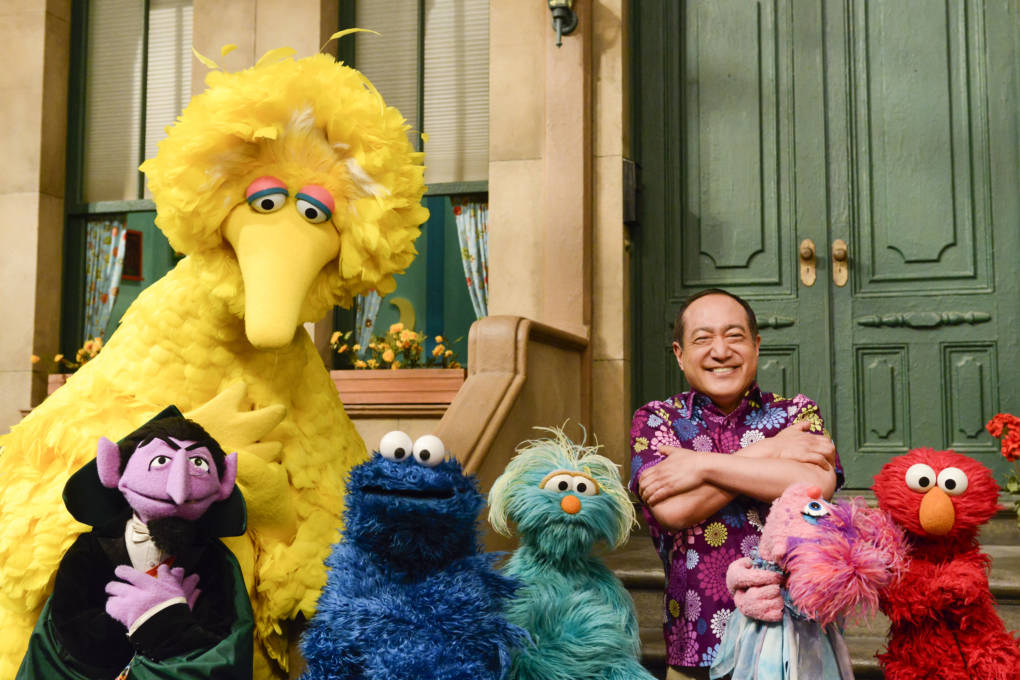
"caption": "Give yourself a hug.",
"description": null,
"title": "Give yourself a hug.",
"credit": "Zach Hyman/Sesame Workshop",
"status": "inherit",
"isLoading": false,
"fetchFailed": false
},
"mindshift_49404": {
"type": "attachments",
"id": "mindshift_49404",
"meta": {
"index": "attachments_1716263798",
"site": "mindshift",
"id": "49404",
"found": true
},
"parent": 49402,
"imgSizes": {
"small": {
"file": "https://ww2.kqed.org/app/uploads/sites/23/2017/10/shreyasrkrishnan_preschoolsuspensions_9-4_01_slide-596ed81ed6f3be785ade60f6c04d10b7267d44ed-520x347.jpg",
"width": 520,
"mimeType": "image/jpeg",
"height": 347
},
"twentyfourteen-full-width": {
"file": "https://ww2.kqed.org/app/uploads/sites/23/2017/10/shreyasrkrishnan_preschoolsuspensions_9-4_01_slide-596ed81ed6f3be785ade60f6c04d10b7267d44ed-1038x576.jpg",
"width": 1038,
"mimeType": "image/jpeg",
"height": 576
},
"thumbnail": {
"file": "https://ww2.kqed.org/app/uploads/sites/23/2017/10/shreyasrkrishnan_preschoolsuspensions_9-4_01_slide-596ed81ed6f3be785ade60f6c04d10b7267d44ed-160x107.jpg",
"width": 160,
"mimeType": "image/jpeg",
"height": 107
},
"fd-sm": {
"file": "https://ww2.kqed.org/app/uploads/sites/23/2017/10/shreyasrkrishnan_preschoolsuspensions_9-4_01_slide-596ed81ed6f3be785ade60f6c04d10b7267d44ed-960x640.jpg",
"width": 960,
"mimeType": "image/jpeg",
"height": 640
},
"post-thumbnail": {
"file": "https://ww2.kqed.org/app/uploads/sites/23/2017/10/shreyasrkrishnan_preschoolsuspensions_9-4_01_slide-596ed81ed6f3be785ade60f6c04d10b7267d44ed-672x372.jpg",
"width": 672,
"mimeType": "image/jpeg",
"height": 372
},
"xsmall": {
"file": "https://ww2.kqed.org/app/uploads/sites/23/2017/10/shreyasrkrishnan_preschoolsuspensions_9-4_01_slide-596ed81ed6f3be785ade60f6c04d10b7267d44ed-375x250.jpg",
"width": 375,
"mimeType": "image/jpeg",
"height": 250
},
"kqedFullSize": {
"file": "https://ww2.kqed.org/app/uploads/sites/23/2017/10/shreyasrkrishnan_preschoolsuspensions_9-4_01_slide-596ed81ed6f3be785ade60f6c04d10b7267d44ed-e1507204696584.jpg",
"width": 1920,
"height": 1280
},
"large": {
"file": "https://ww2.kqed.org/app/uploads/sites/23/2017/10/shreyasrkrishnan_preschoolsuspensions_9-4_01_slide-596ed81ed6f3be785ade60f6c04d10b7267d44ed-1020x680.jpg",
"width": 1020,
"mimeType": "image/jpeg",
"height": 680
},
"xlarge": {
"file": "https://ww2.kqed.org/app/uploads/sites/23/2017/10/shreyasrkrishnan_preschoolsuspensions_9-4_01_slide-596ed81ed6f3be785ade60f6c04d10b7267d44ed-1180x787.jpg",
"width": 1180,
"mimeType": "image/jpeg",
"height": 787
},
"guest-author-50": {
"file": "https://ww2.kqed.org/app/uploads/sites/23/2017/10/shreyasrkrishnan_preschoolsuspensions_9-4_01_slide-596ed81ed6f3be785ade60f6c04d10b7267d44ed-50x50.jpg",
"width": 50,
"mimeType": "image/jpeg",
"height": 50
},
"guest-author-96": {
"file": "https://ww2.kqed.org/app/uploads/sites/23/2017/10/shreyasrkrishnan_preschoolsuspensions_9-4_01_slide-596ed81ed6f3be785ade60f6c04d10b7267d44ed-96x96.jpg",
"width": 96,
"mimeType": "image/jpeg",
"height": 96
},
"medium": {
"file": "https://ww2.kqed.org/app/uploads/sites/23/2017/10/shreyasrkrishnan_preschoolsuspensions_9-4_01_slide-596ed81ed6f3be785ade60f6c04d10b7267d44ed-800x533.jpg",
"width": 800,
"mimeType": "image/jpeg",
"height": 533
},
"guest-author-64": {
"file": "https://ww2.kqed.org/app/uploads/sites/23/2017/10/shreyasrkrishnan_preschoolsuspensions_9-4_01_slide-596ed81ed6f3be785ade60f6c04d10b7267d44ed-64x64.jpg",
"width": 64,
"mimeType": "image/jpeg",
"height": 64
},
"guest-author-32": {
"file": "https://ww2.kqed.org/app/uploads/sites/23/2017/10/shreyasrkrishnan_preschoolsuspensions_9-4_01_slide-596ed81ed6f3be785ade60f6c04d10b7267d44ed-32x32.jpg",
"width": 32,
"mimeType": "image/jpeg",
"height": 32
},
"fd-lrg": {
"file": "https://ww2.kqed.org/app/uploads/sites/23/2017/10/shreyasrkrishnan_preschoolsuspensions_9-4_01_slide-596ed81ed6f3be785ade60f6c04d10b7267d44ed-1920x1280.jpg",
"width": 1920,
"mimeType": "image/jpeg",
"height": 1280
},
"fd-med": {
"file": "https://ww2.kqed.org/app/uploads/sites/23/2017/10/shreyasrkrishnan_preschoolsuspensions_9-4_01_slide-596ed81ed6f3be785ade60f6c04d10b7267d44ed-1180x787.jpg",
"width": 1180,
"mimeType": "image/jpeg",
"height": 787
},
"full-width": {
"file": "https://ww2.kqed.org/app/uploads/sites/23/2017/10/shreyasrkrishnan_preschoolsuspensions_9-4_01_slide-596ed81ed6f3be785ade60f6c04d10b7267d44ed-1920x1280.jpg",
"width": 1920,
"mimeType": "image/jpeg",
"height": 1280
},
"detail": {
"file": "https://ww2.kqed.org/app/uploads/sites/23/2017/10/shreyasrkrishnan_preschoolsuspensions_9-4_01_slide-596ed81ed6f3be785ade60f6c04d10b7267d44ed-150x150.jpg",
"width": 150,
"mimeType": "image/jpeg",
"height": 150
},
"medium_large": {
"file": "https://ww2.kqed.org/app/uploads/sites/23/2017/10/shreyasrkrishnan_preschoolsuspensions_9-4_01_slide-596ed81ed6f3be785ade60f6c04d10b7267d44ed-768x512.jpg",
"width": 768,
"mimeType": "image/jpeg",
"height": 512
},
"guest-author-128": {
"file": "https://ww2.kqed.org/app/uploads/sites/23/2017/10/shreyasrkrishnan_preschoolsuspensions_9-4_01_slide-596ed81ed6f3be785ade60f6c04d10b7267d44ed-128x128.jpg",
"width": 128,
"mimeType": "image/jpeg",
"height": 128
},
"xxsmall": {
"file": "https://ww2.kqed.org/app/uploads/sites/23/2017/10/shreyasrkrishnan_preschoolsuspensions_9-4_01_slide-596ed81ed6f3be785ade60f6c04d10b7267d44ed-240x160.jpg",
"width": 240,
"mimeType": "image/jpeg",
"height": 160
}
},
"publishDate": 1507204577,
"modified": 1507204724,
"caption": null,
"description": "preschool trauma",
"title": "preschool trauma",
"credit": "Shreyas R. Krishnan for NPR",
"status": "inherit",
"isLoading": false,
"fetchFailed": false
},
"mindshift_49396": {
"type": "attachments",
"id": "mindshift_49396",
"meta": {
"index": "attachments_1716263798",
"site": "mindshift",
"id": "49396",
"found": true
},
"parent": 49395,
"imgSizes": {
"small": {
"file": "https://ww2.kqed.org/app/uploads/sites/23/2017/10/npr_ed_suharuogawa_10.03.2017_wide-b098102a21e24d943777f1f1f8ce85a41a6f1bee-520x292.jpg",
"width": 520,
"mimeType": "image/jpeg",
"height": 292
},
"twentyfourteen-full-width": {
"file": "https://ww2.kqed.org/app/uploads/sites/23/2017/10/npr_ed_suharuogawa_10.03.2017_wide-b098102a21e24d943777f1f1f8ce85a41a6f1bee-1038x576.jpg",
"width": 1038,
"mimeType": "image/jpeg",
"height": 576
},
"thumbnail": {
"file": "https://ww2.kqed.org/app/uploads/sites/23/2017/10/npr_ed_suharuogawa_10.03.2017_wide-b098102a21e24d943777f1f1f8ce85a41a6f1bee-160x90.jpg",
"width": 160,
"mimeType": "image/jpeg",
"height": 90
},
"fd-sm": {
"file": "https://ww2.kqed.org/app/uploads/sites/23/2017/10/npr_ed_suharuogawa_10.03.2017_wide-b098102a21e24d943777f1f1f8ce85a41a6f1bee-960x540.jpg",
"width": 960,
"mimeType": "image/jpeg",
"height": 540
},
"post-thumbnail": {
"file": "https://ww2.kqed.org/app/uploads/sites/23/2017/10/npr_ed_suharuogawa_10.03.2017_wide-b098102a21e24d943777f1f1f8ce85a41a6f1bee-672x372.jpg",
"width": 672,
"mimeType": "image/jpeg",
"height": 372
},
"xsmall": {
"file": "https://ww2.kqed.org/app/uploads/sites/23/2017/10/npr_ed_suharuogawa_10.03.2017_wide-b098102a21e24d943777f1f1f8ce85a41a6f1bee-375x211.jpg",
"width": 375,
"mimeType": "image/jpeg",
"height": 211
},
"kqedFullSize": {
"file": "https://ww2.kqed.org/app/uploads/sites/23/2017/10/npr_ed_suharuogawa_10.03.2017_wide-b098102a21e24d943777f1f1f8ce85a41a6f1bee.jpg",
"width": 1597,
"height": 898
},
"large": {
"file": "https://ww2.kqed.org/app/uploads/sites/23/2017/10/npr_ed_suharuogawa_10.03.2017_wide-b098102a21e24d943777f1f1f8ce85a41a6f1bee-1020x574.jpg",
"width": 1020,
"mimeType": "image/jpeg",
"height": 574
},
"xlarge": {
"file": "https://ww2.kqed.org/app/uploads/sites/23/2017/10/npr_ed_suharuogawa_10.03.2017_wide-b098102a21e24d943777f1f1f8ce85a41a6f1bee-1180x664.jpg",
"width": 1180,
"mimeType": "image/jpeg",
"height": 664
},
"guest-author-50": {
"file": "https://ww2.kqed.org/app/uploads/sites/23/2017/10/npr_ed_suharuogawa_10.03.2017_wide-b098102a21e24d943777f1f1f8ce85a41a6f1bee-50x50.jpg",
"width": 50,
"mimeType": "image/jpeg",
"height": 50
},
"guest-author-96": {
"file": "https://ww2.kqed.org/app/uploads/sites/23/2017/10/npr_ed_suharuogawa_10.03.2017_wide-b098102a21e24d943777f1f1f8ce85a41a6f1bee-96x96.jpg",
"width": 96,
"mimeType": "image/jpeg",
"height": 96
},
"medium": {
"file": "https://ww2.kqed.org/app/uploads/sites/23/2017/10/npr_ed_suharuogawa_10.03.2017_wide-b098102a21e24d943777f1f1f8ce85a41a6f1bee-800x450.jpg",
"width": 800,
"mimeType": "image/jpeg",
"height": 450
},
"guest-author-64": {
"file": "https://ww2.kqed.org/app/uploads/sites/23/2017/10/npr_ed_suharuogawa_10.03.2017_wide-b098102a21e24d943777f1f1f8ce85a41a6f1bee-64x64.jpg",
"width": 64,
"mimeType": "image/jpeg",
"height": 64
},
"guest-author-32": {
"file": "https://ww2.kqed.org/app/uploads/sites/23/2017/10/npr_ed_suharuogawa_10.03.2017_wide-b098102a21e24d943777f1f1f8ce85a41a6f1bee-32x32.jpg",
"width": 32,
"mimeType": "image/jpeg",
"height": 32
},
"fd-med": {
"file": "https://ww2.kqed.org/app/uploads/sites/23/2017/10/npr_ed_suharuogawa_10.03.2017_wide-b098102a21e24d943777f1f1f8ce85a41a6f1bee-1180x664.jpg",
"width": 1180,
"mimeType": "image/jpeg",
"height": 664
},
"detail": {
"file": "https://ww2.kqed.org/app/uploads/sites/23/2017/10/npr_ed_suharuogawa_10.03.2017_wide-b098102a21e24d943777f1f1f8ce85a41a6f1bee-150x150.jpg",
"width": 150,
"mimeType": "image/jpeg",
"height": 150
},
"medium_large": {
"file": "https://ww2.kqed.org/app/uploads/sites/23/2017/10/npr_ed_suharuogawa_10.03.2017_wide-b098102a21e24d943777f1f1f8ce85a41a6f1bee-768x432.jpg",
"width": 768,
"mimeType": "image/jpeg",
"height": 432
},
"guest-author-128": {
"file": "https://ww2.kqed.org/app/uploads/sites/23/2017/10/npr_ed_suharuogawa_10.03.2017_wide-b098102a21e24d943777f1f1f8ce85a41a6f1bee-128x128.jpg",
"width": 128,
"mimeType": "image/jpeg",
"height": 128
},
"xxsmall": {
"file": "https://ww2.kqed.org/app/uploads/sites/23/2017/10/npr_ed_suharuogawa_10.03.2017_wide-b098102a21e24d943777f1f1f8ce85a41a6f1bee-240x135.jpg",
"width": 240,
"mimeType": "image/jpeg",
"height": 135
}
},
"publishDate": 1507133723,
"modified": 1507134877,
"caption": null,
"description": "Global innovation in education",
"title": "Global innovation in education",
"credit": "Suharu Ogawa for NPR ",
"status": "inherit",
"isLoading": false,
"fetchFailed": false
},
"mindshift_49014": {
"type": "attachments",
"id": "mindshift_49014",
"meta": {
"index": "attachments_1716263798",
"site": "mindshift",
"id": "49014",
"found": true
},
"parent": 49012,
"imgSizes": {
"small": {
"file": "https://ww2.kqed.org/app/uploads/sites/23/2017/08/Wayfinder-520x293.jpg",
"width": 520,
"mimeType": "image/jpeg",
"height": 293
},
"twentyfourteen-full-width": {
"file": "https://ww2.kqed.org/app/uploads/sites/23/2017/08/Wayfinder-1038x576.jpg",
"width": 1038,
"mimeType": "image/jpeg",
"height": 576
},
"thumbnail": {
"file": "https://ww2.kqed.org/app/uploads/sites/23/2017/08/Wayfinder-160x90.jpg",
"width": 160,
"mimeType": "image/jpeg",
"height": 90
},
"fd-sm": {
"file": "https://ww2.kqed.org/app/uploads/sites/23/2017/08/Wayfinder-960x540.jpg",
"width": 960,
"mimeType": "image/jpeg",
"height": 540
},
"post-thumbnail": {
"file": "https://ww2.kqed.org/app/uploads/sites/23/2017/08/Wayfinder-672x372.jpg",
"width": 672,
"mimeType": "image/jpeg",
"height": 372
},
"xsmall": {
"file": "https://ww2.kqed.org/app/uploads/sites/23/2017/08/Wayfinder-375x211.jpg",
"width": 375,
"mimeType": "image/jpeg",
"height": 211
},
"kqedFullSize": {
"file": "https://ww2.kqed.org/app/uploads/sites/23/2017/08/Wayfinder.jpg",
"width": 1920,
"height": 1080
},
"large": {
"file": "https://ww2.kqed.org/app/uploads/sites/23/2017/08/Wayfinder-1020x574.jpg",
"width": 1020,
"mimeType": "image/jpeg",
"height": 574
},
"xlarge": {
"file": "https://ww2.kqed.org/app/uploads/sites/23/2017/08/Wayfinder-1180x664.jpg",
"width": 1180,
"mimeType": "image/jpeg",
"height": 664
},
"guest-author-50": {
"file": "https://ww2.kqed.org/app/uploads/sites/23/2017/08/Wayfinder-50x50.jpg",
"width": 50,
"mimeType": "image/jpeg",
"height": 50
},
"guest-author-96": {
"file": "https://ww2.kqed.org/app/uploads/sites/23/2017/08/Wayfinder-96x96.jpg",
"width": 96,
"mimeType": "image/jpeg",
"height": 96
},
"medium": {
"file": "https://ww2.kqed.org/app/uploads/sites/23/2017/08/Wayfinder-800x450.jpg",
"width": 800,
"mimeType": "image/jpeg",
"height": 450
},
"guest-author-64": {
"file": "https://ww2.kqed.org/app/uploads/sites/23/2017/08/Wayfinder-64x64.jpg",
"width": 64,
"mimeType": "image/jpeg",
"height": 64
},
"guest-author-32": {
"file": "https://ww2.kqed.org/app/uploads/sites/23/2017/08/Wayfinder-32x32.jpg",
"width": 32,
"mimeType": "image/jpeg",
"height": 32
},
"fd-lrg": {
"file": "https://ww2.kqed.org/app/uploads/sites/23/2017/08/Wayfinder-1920x1080.jpg",
"width": 1920,
"mimeType": "image/jpeg",
"height": 1080
},
"fd-med": {
"file": "https://ww2.kqed.org/app/uploads/sites/23/2017/08/Wayfinder-1180x664.jpg",
"width": 1180,
"mimeType": "image/jpeg",
"height": 664
},
"full-width": {
"file": "https://ww2.kqed.org/app/uploads/sites/23/2017/08/Wayfinder-1920x1080.jpg",
"width": 1920,
"mimeType": "image/jpeg",
"height": 1080
},
"detail": {
"file": "https://ww2.kqed.org/app/uploads/sites/23/2017/08/Wayfinder-150x150.jpg",
"width": 150,
"mimeType": "image/jpeg",
"height": 150
},
"medium_large": {
"file": "https://ww2.kqed.org/app/uploads/sites/23/2017/08/Wayfinder-768x432.jpg",
"width": 768,
"mimeType": "image/jpeg",
"height": 432
},
"guest-author-128": {
"file": "https://ww2.kqed.org/app/uploads/sites/23/2017/08/Wayfinder-128x128.jpg",
"width": 128,
"mimeType": "image/jpeg",
"height": 128
},
"xxsmall": {
"file": "https://ww2.kqed.org/app/uploads/sites/23/2017/08/Wayfinder-240x135.jpg",
"width": 240,
"mimeType": "image/jpeg",
"height": 135
}
},
"publishDate": 1502829783,
"modified": 1502829918,
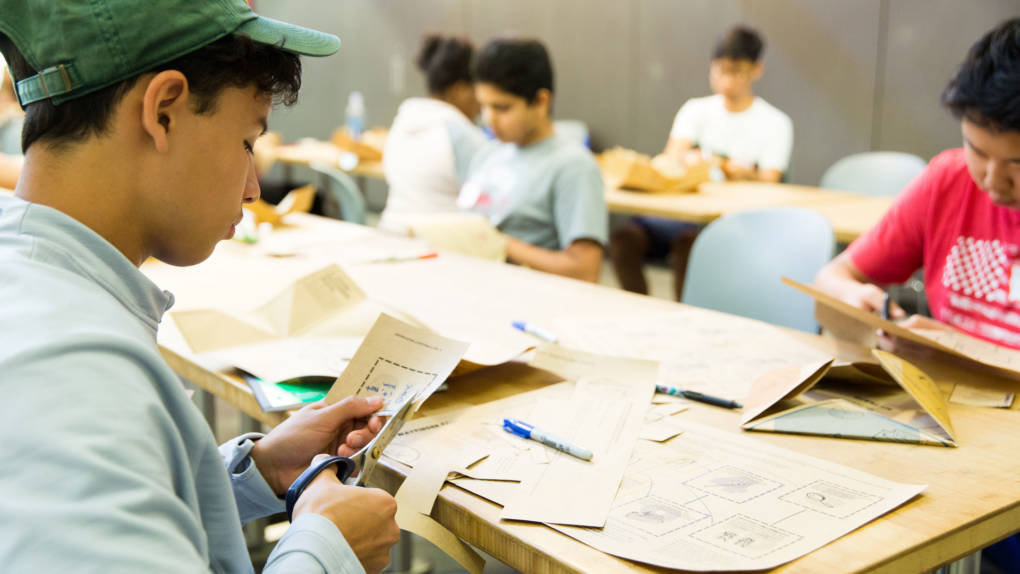
"caption": "Students at the Project Wayfinder retreat use the kit to think through the qualities they embody.",
"description": null,
"title": "Wayfinder",
"credit": "Patrick Beaudouin/Project Wayfinder",
"status": "inherit",
"isLoading": false,
"fetchFailed": false
},
"mindshift_49249": {
"type": "attachments",
"id": "mindshift_49249",
"meta": {
"index": "attachments_1716263798",
"site": "mindshift",
"id": "49249",
"found": true
},
"parent": 0,
"imgSizes": {
"small": {
"file": "https://ww2.kqed.org/app/uploads/sites/23/2017/08/iStock-510159416-e1518544863324-520x346.jpg",
"width": 520,
"mimeType": "image/jpeg",
"height": 346
},
"twentyfourteen-full-width": {
"file": "https://ww2.kqed.org/app/uploads/sites/23/2017/08/iStock-510159416-e1518544863324-1038x576.jpg",
"width": 1038,
"mimeType": "image/jpeg",
"height": 576
},
"thumbnail": {
"file": "https://ww2.kqed.org/app/uploads/sites/23/2017/08/iStock-510159416-e1518544863324-160x107.jpg",
"width": 160,
"mimeType": "image/jpeg",
"height": 107
},
"fd-sm": {
"file": "https://ww2.kqed.org/app/uploads/sites/23/2017/08/iStock-510159416-e1518544863324-960x640.jpg",
"width": 960,
"mimeType": "image/jpeg",
"height": 640
},
"post-thumbnail": {
"file": "https://ww2.kqed.org/app/uploads/sites/23/2017/08/iStock-510159416-e1518544863324-672x372.jpg",
"width": 672,
"mimeType": "image/jpeg",
"height": 372
},
"xsmall": {
"file": "https://ww2.kqed.org/app/uploads/sites/23/2017/08/iStock-510159416-e1518544863324-375x250.jpg",
"width": 375,
"mimeType": "image/jpeg",
"height": 250
},
"kqedFullSize": {
"file": "https://ww2.kqed.org/app/uploads/sites/23/2017/08/iStock-510159416-e1518544863324.jpg",
"width": 1933,
"height": 1288
},
"large": {
"file": "https://ww2.kqed.org/app/uploads/sites/23/2017/08/iStock-510159416-e1518544863324-1020x680.jpg",
"width": 1020,
"mimeType": "image/jpeg",
"height": 680
},
"xlarge": {
"file": "https://ww2.kqed.org/app/uploads/sites/23/2017/08/iStock-510159416-e1518544863324-1180x786.jpg",
"width": 1180,
"mimeType": "image/jpeg",
"height": 786
},
"guest-author-50": {
"file": "https://ww2.kqed.org/app/uploads/sites/23/2017/08/iStock-510159416-e1518544863324-50x50.jpg",
"width": 50,
"mimeType": "image/jpeg",
"height": 50
},
"guest-author-96": {
"file": "https://ww2.kqed.org/app/uploads/sites/23/2017/08/iStock-510159416-e1518544863324-96x96.jpg",
"width": 96,
"mimeType": "image/jpeg",
"height": 96
},
"medium": {
"file": "https://ww2.kqed.org/app/uploads/sites/23/2017/08/iStock-510159416-e1518544863324-800x533.jpg",
"width": 800,
"mimeType": "image/jpeg",
"height": 533
},
"guest-author-64": {
"file": "https://ww2.kqed.org/app/uploads/sites/23/2017/08/iStock-510159416-e1518544863324-64x64.jpg",
"width": 64,
"mimeType": "image/jpeg",
"height": 64
},
"guest-author-32": {
"file": "https://ww2.kqed.org/app/uploads/sites/23/2017/08/iStock-510159416-e1518544863324-32x32.jpg",
"width": 32,
"mimeType": "image/jpeg",
"height": 32
},
"fd-lrg": {
"file": "https://ww2.kqed.org/app/uploads/sites/23/2017/08/iStock-510159416-e1518544863324-1920x1279.jpg",
"width": 1920,
"mimeType": "image/jpeg",
"height": 1279
},
"fd-med": {
"file": "https://ww2.kqed.org/app/uploads/sites/23/2017/08/iStock-510159416-e1518544863324-1180x786.jpg",
"width": 1180,
"mimeType": "image/jpeg",
"height": 786
},
"full-width": {
"file": "https://ww2.kqed.org/app/uploads/sites/23/2017/08/iStock-510159416-e1518544863324-1920x1279.jpg",
"width": 1920,
"mimeType": "image/jpeg",
"height": 1279
},
"detail": {
"file": "https://ww2.kqed.org/app/uploads/sites/23/2017/08/iStock-510159416-e1518544863324-150x150.jpg",
"width": 150,
"mimeType": "image/jpeg",
"height": 150
},
"medium_large": {
"file": "https://ww2.kqed.org/app/uploads/sites/23/2017/08/iStock-510159416-e1518544863324-768x512.jpg",
"width": 768,
"mimeType": "image/jpeg",
"height": 512
},
"guest-author-128": {
"file": "https://ww2.kqed.org/app/uploads/sites/23/2017/08/iStock-510159416-e1518544863324-128x128.jpg",
"width": 128,
"mimeType": "image/jpeg",
"height": 128
},
"xxsmall": {
"file": "https://ww2.kqed.org/app/uploads/sites/23/2017/08/iStock-510159416-e1518544863324-240x160.jpg",
"width": 240,
"mimeType": "image/jpeg",
"height": 160
}
},
"publishDate": 1505795123,
"modified": 1505795193,
"caption": null,
"description": null,
"title": "Circle of teenage girls",
"credit": "iStock/mikanaka",
"status": "inherit",
"isLoading": false,
"fetchFailed": false
},
"mindshift_49231": {
"type": "attachments",
"id": "mindshift_49231",
"meta": {
"index": "attachments_1716263798",
"site": "mindshift",
"id": "49231",
"found": true
},
"parent": 49230,
"imgSizes": {
"small": {
"file": "https://ww2.kqed.org/app/uploads/sites/23/2017/09/biomedicine-final-web_custom-ea28a702b4465e0cbccd77be12dc6715deb4add8-520x292.jpg",
"width": 520,
"mimeType": "image/jpeg",
"height": 292
},
"twentyfourteen-full-width": {
"file": "https://ww2.kqed.org/app/uploads/sites/23/2017/09/biomedicine-final-web_custom-ea28a702b4465e0cbccd77be12dc6715deb4add8-1038x576.jpg",
"width": 1038,
"mimeType": "image/jpeg",
"height": 576
},
"thumbnail": {
"file": "https://ww2.kqed.org/app/uploads/sites/23/2017/09/biomedicine-final-web_custom-ea28a702b4465e0cbccd77be12dc6715deb4add8-160x90.jpg",
"width": 160,
"mimeType": "image/jpeg",
"height": 90
},
"fd-sm": {
"file": "https://ww2.kqed.org/app/uploads/sites/23/2017/09/biomedicine-final-web_custom-ea28a702b4465e0cbccd77be12dc6715deb4add8-960x539.jpg",
"width": 960,
"mimeType": "image/jpeg",
"height": 539
},
"post-thumbnail": {
"file": "https://ww2.kqed.org/app/uploads/sites/23/2017/09/biomedicine-final-web_custom-ea28a702b4465e0cbccd77be12dc6715deb4add8-672x372.jpg",
"width": 672,
"mimeType": "image/jpeg",
"height": 372
},
"xsmall": {
"file": "https://ww2.kqed.org/app/uploads/sites/23/2017/09/biomedicine-final-web_custom-ea28a702b4465e0cbccd77be12dc6715deb4add8-375x211.jpg",
"width": 375,
"mimeType": "image/jpeg",
"height": 211
},
"kqedFullSize": {
"file": "https://ww2.kqed.org/app/uploads/sites/23/2017/09/biomedicine-final-web_custom-ea28a702b4465e0cbccd77be12dc6715deb4add8-e1505709540451.jpg",
"width": 1920,
"height": 1078
},
"large": {
"file": "https://ww2.kqed.org/app/uploads/sites/23/2017/09/biomedicine-final-web_custom-ea28a702b4465e0cbccd77be12dc6715deb4add8-1020x573.jpg",
"width": 1020,
"mimeType": "image/jpeg",
"height": 573
},
"xlarge": {
"file": "https://ww2.kqed.org/app/uploads/sites/23/2017/09/biomedicine-final-web_custom-ea28a702b4465e0cbccd77be12dc6715deb4add8-1180x663.jpg",
"width": 1180,
"mimeType": "image/jpeg",
"height": 663
},
"guest-author-50": {
"file": "https://ww2.kqed.org/app/uploads/sites/23/2017/09/biomedicine-final-web_custom-ea28a702b4465e0cbccd77be12dc6715deb4add8-50x50.jpg",
"width": 50,
"mimeType": "image/jpeg",
"height": 50
},
"guest-author-96": {
"file": "https://ww2.kqed.org/app/uploads/sites/23/2017/09/biomedicine-final-web_custom-ea28a702b4465e0cbccd77be12dc6715deb4add8-96x96.jpg",
"width": 96,
"mimeType": "image/jpeg",
"height": 96
},
"medium": {
"file": "https://ww2.kqed.org/app/uploads/sites/23/2017/09/biomedicine-final-web_custom-ea28a702b4465e0cbccd77be12dc6715deb4add8-800x449.jpg",
"width": 800,
"mimeType": "image/jpeg",
"height": 449
},
"guest-author-64": {
"file": "https://ww2.kqed.org/app/uploads/sites/23/2017/09/biomedicine-final-web_custom-ea28a702b4465e0cbccd77be12dc6715deb4add8-64x64.jpg",
"width": 64,
"mimeType": "image/jpeg",
"height": 64
},
"guest-author-32": {
"file": "https://ww2.kqed.org/app/uploads/sites/23/2017/09/biomedicine-final-web_custom-ea28a702b4465e0cbccd77be12dc6715deb4add8-32x32.jpg",
"width": 32,
"mimeType": "image/jpeg",
"height": 32
},
"fd-lrg": {
"file": "https://ww2.kqed.org/app/uploads/sites/23/2017/09/biomedicine-final-web_custom-ea28a702b4465e0cbccd77be12dc6715deb4add8-1920x1078.jpg",
"width": 1920,
"mimeType": "image/jpeg",
"height": 1078
},
"fd-med": {
"file": "https://ww2.kqed.org/app/uploads/sites/23/2017/09/biomedicine-final-web_custom-ea28a702b4465e0cbccd77be12dc6715deb4add8-1180x663.jpg",
"width": 1180,
"mimeType": "image/jpeg",
"height": 663
},
"full-width": {
"file": "https://ww2.kqed.org/app/uploads/sites/23/2017/09/biomedicine-final-web_custom-ea28a702b4465e0cbccd77be12dc6715deb4add8-1920x1078.jpg",
"width": 1920,
"mimeType": "image/jpeg",
"height": 1078
},
"detail": {
"file": "https://ww2.kqed.org/app/uploads/sites/23/2017/09/biomedicine-final-web_custom-ea28a702b4465e0cbccd77be12dc6715deb4add8-150x150.jpg",
"width": 150,
"mimeType": "image/jpeg",
"height": 150
},
"medium_large": {
"file": "https://ww2.kqed.org/app/uploads/sites/23/2017/09/biomedicine-final-web_custom-ea28a702b4465e0cbccd77be12dc6715deb4add8-768x431.jpg",
"width": 768,
"mimeType": "image/jpeg",
"height": 431
},
"guest-author-128": {
"file": "https://ww2.kqed.org/app/uploads/sites/23/2017/09/biomedicine-final-web_custom-ea28a702b4465e0cbccd77be12dc6715deb4add8-128x128.jpg",
"width": 128,
"mimeType": "image/jpeg",
"height": 128
},
"xxsmall": {
"file": "https://ww2.kqed.org/app/uploads/sites/23/2017/09/biomedicine-final-web_custom-ea28a702b4465e0cbccd77be12dc6715deb4add8-240x135.jpg",
"width": 240,
"mimeType": "image/jpeg",
"height": 135
}
},
"publishDate": 1505709364,
"modified": 1505709551,
"caption": null,
"description": null,
"title": "biomedicine-final-web_custom-ea28a702b4465e0cbccd77be12dc6715deb4add8",
"credit": "Shannon Wright for NPR",
"status": "inherit",
"isLoading": false,
"fetchFailed": false
},
"mindshift_49214": {
"type": "attachments",
"id": "mindshift_49214",
"meta": {
"index": "attachments_1716263798",
"site": "mindshift",
"id": "49214",
"found": true
},
"parent": 49205,
"imgSizes": {
"small": {
"file": "https://ww2.kqed.org/app/uploads/sites/23/2017/09/iStock-538346254-520x347.jpg",
"width": 520,
"mimeType": "image/jpeg",
"height": 347
},
"twentyfourteen-full-width": {
"file": "https://ww2.kqed.org/app/uploads/sites/23/2017/09/iStock-538346254-1038x576.jpg",
"width": 1038,
"mimeType": "image/jpeg",
"height": 576
},
"thumbnail": {
"file": "https://ww2.kqed.org/app/uploads/sites/23/2017/09/iStock-538346254-160x107.jpg",
"width": 160,
"mimeType": "image/jpeg",
"height": 107
},
"fd-sm": {
"file": "https://ww2.kqed.org/app/uploads/sites/23/2017/09/iStock-538346254-960x640.jpg",
"width": 960,
"mimeType": "image/jpeg",
"height": 640
},
"post-thumbnail": {
"file": "https://ww2.kqed.org/app/uploads/sites/23/2017/09/iStock-538346254-672x372.jpg",
"width": 672,
"mimeType": "image/jpeg",
"height": 372
},
"xsmall": {
"file": "https://ww2.kqed.org/app/uploads/sites/23/2017/09/iStock-538346254-375x250.jpg",
"width": 375,
"mimeType": "image/jpeg",
"height": 250
},
"kqedFullSize": {
"file": "https://ww2.kqed.org/app/uploads/sites/23/2017/09/iStock-538346254-e1505342916135.jpg",
"width": 1920,
"height": 1281
},
"large": {
"file": "https://ww2.kqed.org/app/uploads/sites/23/2017/09/iStock-538346254-1020x680.jpg",
"width": 1020,
"mimeType": "image/jpeg",
"height": 680
},
"xlarge": {
"file": "https://ww2.kqed.org/app/uploads/sites/23/2017/09/iStock-538346254-1180x787.jpg",
"width": 1180,
"mimeType": "image/jpeg",
"height": 787
},
"guest-author-50": {
"file": "https://ww2.kqed.org/app/uploads/sites/23/2017/09/iStock-538346254-50x50.jpg",
"width": 50,
"mimeType": "image/jpeg",
"height": 50
},
"guest-author-96": {
"file": "https://ww2.kqed.org/app/uploads/sites/23/2017/09/iStock-538346254-96x96.jpg",
"width": 96,
"mimeType": "image/jpeg",
"height": 96
},
"medium": {
"file": "https://ww2.kqed.org/app/uploads/sites/23/2017/09/iStock-538346254-800x534.jpg",
"width": 800,
"mimeType": "image/jpeg",
"height": 534
},
"guest-author-64": {
"file": "https://ww2.kqed.org/app/uploads/sites/23/2017/09/iStock-538346254-64x64.jpg",
"width": 64,
"mimeType": "image/jpeg",
"height": 64
},
"guest-author-32": {
"file": "https://ww2.kqed.org/app/uploads/sites/23/2017/09/iStock-538346254-32x32.jpg",
"width": 32,
"mimeType": "image/jpeg",
"height": 32
},
"fd-lrg": {
"file": "https://ww2.kqed.org/app/uploads/sites/23/2017/09/iStock-538346254-1920x1281.jpg",
"width": 1920,
"mimeType": "image/jpeg",
"height": 1281
},
"fd-med": {
"file": "https://ww2.kqed.org/app/uploads/sites/23/2017/09/iStock-538346254-1180x787.jpg",
"width": 1180,
"mimeType": "image/jpeg",
"height": 787
},
"full-width": {
"file": "https://ww2.kqed.org/app/uploads/sites/23/2017/09/iStock-538346254-1920x1281.jpg",
"width": 1920,
"mimeType": "image/jpeg",
"height": 1281
},
"detail": {
"file": "https://ww2.kqed.org/app/uploads/sites/23/2017/09/iStock-538346254-150x150.jpg",
"width": 150,
"mimeType": "image/jpeg",
"height": 150
},
"medium_large": {
"file": "https://ww2.kqed.org/app/uploads/sites/23/2017/09/iStock-538346254-768x512.jpg",
"width": 768,
"mimeType": "image/jpeg",
"height": 512
},
"guest-author-128": {
"file": "https://ww2.kqed.org/app/uploads/sites/23/2017/09/iStock-538346254-128x128.jpg",
"width": 128,
"mimeType": "image/jpeg",
"height": 128
},
"xxsmall": {
"file": "https://ww2.kqed.org/app/uploads/sites/23/2017/09/iStock-538346254-240x160.jpg",
"width": 240,
"mimeType": "image/jpeg",
"height": 160
}
},
"publishDate": 1505342890,
"modified": 1505342944,
"caption": null,
"description": null,
"title": "preschool",
"credit": "iStock/gpointstudio",
"status": "inherit",
"isLoading": false,
"fetchFailed": false
},
"mindshift_49208": {
"type": "attachments",
"id": "mindshift_49208",
"meta": {
"index": "attachments_1716263798",
"site": "mindshift",
"id": "49208",
"found": true
},
"parent": 49207,
"imgSizes": {
"small": {
"file": "https://ww2.kqed.org/app/uploads/sites/23/2017/09/sam_rowe_slide-e6d8d91af10a225a09d64f407ff4f15246b34004-520x347.jpg",
"width": 520,
"mimeType": "image/jpeg",
"height": 347
},
"twentyfourteen-full-width": {
"file": "https://ww2.kqed.org/app/uploads/sites/23/2017/09/sam_rowe_slide-e6d8d91af10a225a09d64f407ff4f15246b34004-1038x576.jpg",
"width": 1038,
"mimeType": "image/jpeg",
"height": 576
},
"thumbnail": {
"file": "https://ww2.kqed.org/app/uploads/sites/23/2017/09/sam_rowe_slide-e6d8d91af10a225a09d64f407ff4f15246b34004-160x107.jpg",
"width": 160,
"mimeType": "image/jpeg",
"height": 107
},
"fd-sm": {
"file": "https://ww2.kqed.org/app/uploads/sites/23/2017/09/sam_rowe_slide-e6d8d91af10a225a09d64f407ff4f15246b34004-960x640.jpg",
"width": 960,
"mimeType": "image/jpeg",
"height": 640
},
"post-thumbnail": {
"file": "https://ww2.kqed.org/app/uploads/sites/23/2017/09/sam_rowe_slide-e6d8d91af10a225a09d64f407ff4f15246b34004-672x372.jpg",
"width": 672,
"mimeType": "image/jpeg",
"height": 372
},
"xsmall": {
"file": "https://ww2.kqed.org/app/uploads/sites/23/2017/09/sam_rowe_slide-e6d8d91af10a225a09d64f407ff4f15246b34004-375x250.jpg",
"width": 375,
"mimeType": "image/jpeg",
"height": 250
},
"kqedFullSize": {
"file": "https://ww2.kqed.org/app/uploads/sites/23/2017/09/sam_rowe_slide-e6d8d91af10a225a09d64f407ff4f15246b34004.jpg",
"width": 2997,
"height": 1998
},
"large": {
"file": "https://ww2.kqed.org/app/uploads/sites/23/2017/09/sam_rowe_slide-e6d8d91af10a225a09d64f407ff4f15246b34004-1020x680.jpg",
"width": 1020,
"mimeType": "image/jpeg",
"height": 680
},
"xlarge": {
"file": "https://ww2.kqed.org/app/uploads/sites/23/2017/09/sam_rowe_slide-e6d8d91af10a225a09d64f407ff4f15246b34004-1180x787.jpg",
"width": 1180,
"mimeType": "image/jpeg",
"height": 787
},
"guest-author-50": {
"file": "https://ww2.kqed.org/app/uploads/sites/23/2017/09/sam_rowe_slide-e6d8d91af10a225a09d64f407ff4f15246b34004-50x50.jpg",
"width": 50,
"mimeType": "image/jpeg",
"height": 50
},
"guest-author-96": {
"file": "https://ww2.kqed.org/app/uploads/sites/23/2017/09/sam_rowe_slide-e6d8d91af10a225a09d64f407ff4f15246b34004-96x96.jpg",
"width": 96,
"mimeType": "image/jpeg",
"height": 96
},
"medium": {
"file": "https://ww2.kqed.org/app/uploads/sites/23/2017/09/sam_rowe_slide-e6d8d91af10a225a09d64f407ff4f15246b34004-800x533.jpg",
"width": 800,
"mimeType": "image/jpeg",
"height": 533
},
"guest-author-64": {
"file": "https://ww2.kqed.org/app/uploads/sites/23/2017/09/sam_rowe_slide-e6d8d91af10a225a09d64f407ff4f15246b34004-64x64.jpg",
"width": 64,
"mimeType": "image/jpeg",
"height": 64
},
"guest-author-32": {
"file": "https://ww2.kqed.org/app/uploads/sites/23/2017/09/sam_rowe_slide-e6d8d91af10a225a09d64f407ff4f15246b34004-32x32.jpg",
"width": 32,
"mimeType": "image/jpeg",
"height": 32
},
"fd-lrg": {
"file": "https://ww2.kqed.org/app/uploads/sites/23/2017/09/sam_rowe_slide-e6d8d91af10a225a09d64f407ff4f15246b34004-1920x1280.jpg",
"width": 1920,
"mimeType": "image/jpeg",
"height": 1280
},
"fd-med": {
"file": "https://ww2.kqed.org/app/uploads/sites/23/2017/09/sam_rowe_slide-e6d8d91af10a225a09d64f407ff4f15246b34004-1180x787.jpg",
"width": 1180,
"mimeType": "image/jpeg",
"height": 787
},
"full-width": {
"file": "https://ww2.kqed.org/app/uploads/sites/23/2017/09/sam_rowe_slide-e6d8d91af10a225a09d64f407ff4f15246b34004-1920x1280.jpg",
"width": 1920,
"mimeType": "image/jpeg",
"height": 1280
},
"detail": {
"file": "https://ww2.kqed.org/app/uploads/sites/23/2017/09/sam_rowe_slide-e6d8d91af10a225a09d64f407ff4f15246b34004-150x150.jpg",
"width": 150,
"mimeType": "image/jpeg",
"height": 150
},
"medium_large": {
"file": "https://ww2.kqed.org/app/uploads/sites/23/2017/09/sam_rowe_slide-e6d8d91af10a225a09d64f407ff4f15246b34004-768x512.jpg",
"width": 768,
"mimeType": "image/jpeg",
"height": 512
},
"guest-author-128": {
"file": "https://ww2.kqed.org/app/uploads/sites/23/2017/09/sam_rowe_slide-e6d8d91af10a225a09d64f407ff4f15246b34004-128x128.jpg",
"width": 128,
"mimeType": "image/jpeg",
"height": 128
},
"xxsmall": {
"file": "https://ww2.kqed.org/app/uploads/sites/23/2017/09/sam_rowe_slide-e6d8d91af10a225a09d64f407ff4f15246b34004-240x160.jpg",
"width": 240,
"mimeType": "image/jpeg",
"height": 160
}
},
"publishDate": 1505303678,
"modified": 1505303678,
"caption": null,
"description": "Student connecting dots of constellations in the sky",
"title": "Student connecting dots of constellations in the sky",
"credit": null,
"status": "inherit",
"isLoading": false,
"fetchFailed": false
},
"mindshift_49191": {
"type": "attachments",
"id": "mindshift_49191",
"meta": {
"index": "attachments_1716263798",
"site": "mindshift",
"id": "49191",
"found": true
},
"parent": 49190,
"imgSizes": {
"small": {
"file": "https://ww2.kqed.org/app/uploads/sites/23/2017/09/jenn-liv-illustration-npr-depression-web1_custom-23f9c98a276314e17429facabbb7cb17f807e284-520x292.jpg",
"width": 520,
"mimeType": "image/jpeg",
"height": 292
},
"twentyfourteen-full-width": {
"file": "https://ww2.kqed.org/app/uploads/sites/23/2017/09/jenn-liv-illustration-npr-depression-web1_custom-23f9c98a276314e17429facabbb7cb17f807e284-1038x576.jpg",
"width": 1038,
"mimeType": "image/jpeg",
"height": 576
},
"thumbnail": {
"file": "https://ww2.kqed.org/app/uploads/sites/23/2017/09/jenn-liv-illustration-npr-depression-web1_custom-23f9c98a276314e17429facabbb7cb17f807e284-160x90.jpg",
"width": 160,
"mimeType": "image/jpeg",
"height": 90
},
"fd-sm": {
"file": "https://ww2.kqed.org/app/uploads/sites/23/2017/09/jenn-liv-illustration-npr-depression-web1_custom-23f9c98a276314e17429facabbb7cb17f807e284-960x539.jpg",
"width": 960,
"mimeType": "image/jpeg",
"height": 539
},
"post-thumbnail": {
"file": "https://ww2.kqed.org/app/uploads/sites/23/2017/09/jenn-liv-illustration-npr-depression-web1_custom-23f9c98a276314e17429facabbb7cb17f807e284-672x372.jpg",
"width": 672,
"mimeType": "image/jpeg",
"height": 372
},
"xsmall": {
"file": "https://ww2.kqed.org/app/uploads/sites/23/2017/09/jenn-liv-illustration-npr-depression-web1_custom-23f9c98a276314e17429facabbb7cb17f807e284-375x211.jpg",
"width": 375,
"mimeType": "image/jpeg",
"height": 211
},
"kqedFullSize": {
"file": "https://ww2.kqed.org/app/uploads/sites/23/2017/09/jenn-liv-illustration-npr-depression-web1_custom-23f9c98a276314e17429facabbb7cb17f807e284-e1505135883585.jpg",
"width": 1920,
"height": 1078
},
"large": {
"file": "https://ww2.kqed.org/app/uploads/sites/23/2017/09/jenn-liv-illustration-npr-depression-web1_custom-23f9c98a276314e17429facabbb7cb17f807e284-1020x573.jpg",
"width": 1020,
"mimeType": "image/jpeg",
"height": 573
},
"xlarge": {
"file": "https://ww2.kqed.org/app/uploads/sites/23/2017/09/jenn-liv-illustration-npr-depression-web1_custom-23f9c98a276314e17429facabbb7cb17f807e284-1180x663.jpg",
"width": 1180,
"mimeType": "image/jpeg",
"height": 663
},
"guest-author-50": {
"file": "https://ww2.kqed.org/app/uploads/sites/23/2017/09/jenn-liv-illustration-npr-depression-web1_custom-23f9c98a276314e17429facabbb7cb17f807e284-50x50.jpg",
"width": 50,
"mimeType": "image/jpeg",
"height": 50
},
"guest-author-96": {
"file": "https://ww2.kqed.org/app/uploads/sites/23/2017/09/jenn-liv-illustration-npr-depression-web1_custom-23f9c98a276314e17429facabbb7cb17f807e284-96x96.jpg",
"width": 96,
"mimeType": "image/jpeg",
"height": 96
},
"medium": {
"file": "https://ww2.kqed.org/app/uploads/sites/23/2017/09/jenn-liv-illustration-npr-depression-web1_custom-23f9c98a276314e17429facabbb7cb17f807e284-800x449.jpg",
"width": 800,
"mimeType": "image/jpeg",
"height": 449
},
"guest-author-64": {
"file": "https://ww2.kqed.org/app/uploads/sites/23/2017/09/jenn-liv-illustration-npr-depression-web1_custom-23f9c98a276314e17429facabbb7cb17f807e284-64x64.jpg",
"width": 64,
"mimeType": "image/jpeg",
"height": 64
},
"guest-author-32": {
"file": "https://ww2.kqed.org/app/uploads/sites/23/2017/09/jenn-liv-illustration-npr-depression-web1_custom-23f9c98a276314e17429facabbb7cb17f807e284-32x32.jpg",
"width": 32,
"mimeType": "image/jpeg",
"height": 32
},
"fd-lrg": {
"file": "https://ww2.kqed.org/app/uploads/sites/23/2017/09/jenn-liv-illustration-npr-depression-web1_custom-23f9c98a276314e17429facabbb7cb17f807e284-1920x1078.jpg",
"width": 1920,
"mimeType": "image/jpeg",
"height": 1078
},
"fd-med": {
"file": "https://ww2.kqed.org/app/uploads/sites/23/2017/09/jenn-liv-illustration-npr-depression-web1_custom-23f9c98a276314e17429facabbb7cb17f807e284-1180x663.jpg",
"width": 1180,
"mimeType": "image/jpeg",
"height": 663
},
"full-width": {
"file": "https://ww2.kqed.org/app/uploads/sites/23/2017/09/jenn-liv-illustration-npr-depression-web1_custom-23f9c98a276314e17429facabbb7cb17f807e284-1920x1078.jpg",
"width": 1920,
"mimeType": "image/jpeg",
"height": 1078
},
"detail": {
"file": "https://ww2.kqed.org/app/uploads/sites/23/2017/09/jenn-liv-illustration-npr-depression-web1_custom-23f9c98a276314e17429facabbb7cb17f807e284-150x150.jpg",
"width": 150,
"mimeType": "image/jpeg",
"height": 150
},
"medium_large": {
"file": "https://ww2.kqed.org/app/uploads/sites/23/2017/09/jenn-liv-illustration-npr-depression-web1_custom-23f9c98a276314e17429facabbb7cb17f807e284-768x431.jpg",
"width": 768,
"mimeType": "image/jpeg",
"height": 431
},
"guest-author-128": {
"file": "https://ww2.kqed.org/app/uploads/sites/23/2017/09/jenn-liv-illustration-npr-depression-web1_custom-23f9c98a276314e17429facabbb7cb17f807e284-128x128.jpg",
"width": 128,
"mimeType": "image/jpeg",
"height": 128
},
"xxsmall": {
"file": "https://ww2.kqed.org/app/uploads/sites/23/2017/09/jenn-liv-illustration-npr-depression-web1_custom-23f9c98a276314e17429facabbb7cb17f807e284-240x135.jpg",
"width": 240,
"mimeType": "image/jpeg",
"height": 135
}
},
"publishDate": 1505135784,
"modified": 1505135893,
"caption": null,
"description": "Teen Negativity art",
"title": "Teen Negativity art",
"credit": "Jenn Liv for NPR",
"status": "inherit",
"isLoading": false,
"fetchFailed": false
},
"mindshift_49178": {
"type": "attachments",
"id": "mindshift_49178",
"meta": {
"index": "attachments_1716263798",
"site": "mindshift",
"id": "49178",
"found": true
},
"parent": 49177,
"imgSizes": {
"small": {
"file": "https://ww2.kqed.org/app/uploads/sites/23/2017/09/npr_final2_3_custom-a7570222896f6461b8c99a67ce4ce5b34794005f-520x341.jpg",
"width": 520,
"mimeType": "image/jpeg",
"height": 341
},
"twentyfourteen-full-width": {
"file": "https://ww2.kqed.org/app/uploads/sites/23/2017/09/npr_final2_3_custom-a7570222896f6461b8c99a67ce4ce5b34794005f-1038x576.jpg",
"width": 1038,
"mimeType": "image/jpeg",
"height": 576
},
"thumbnail": {
"file": "https://ww2.kqed.org/app/uploads/sites/23/2017/09/npr_final2_3_custom-a7570222896f6461b8c99a67ce4ce5b34794005f-160x105.jpg",
"width": 160,
"mimeType": "image/jpeg",
"height": 105
},
"fd-sm": {
"file": "https://ww2.kqed.org/app/uploads/sites/23/2017/09/npr_final2_3_custom-a7570222896f6461b8c99a67ce4ce5b34794005f-960x629.jpg",
"width": 960,
"mimeType": "image/jpeg",
"height": 629
},
"post-thumbnail": {
"file": "https://ww2.kqed.org/app/uploads/sites/23/2017/09/npr_final2_3_custom-a7570222896f6461b8c99a67ce4ce5b34794005f-672x372.jpg",
"width": 672,
"mimeType": "image/jpeg",
"height": 372
},
"xsmall": {
"file": "https://ww2.kqed.org/app/uploads/sites/23/2017/09/npr_final2_3_custom-a7570222896f6461b8c99a67ce4ce5b34794005f-375x246.jpg",
"width": 375,
"mimeType": "image/jpeg",
"height": 246
},
"kqedFullSize": {
"file": "https://ww2.kqed.org/app/uploads/sites/23/2017/09/npr_final2_3_custom-a7570222896f6461b8c99a67ce4ce5b34794005f-e1504785507185.jpg",
"width": 1920,
"height": 1259
},
"large": {
"file": "https://ww2.kqed.org/app/uploads/sites/23/2017/09/npr_final2_3_custom-a7570222896f6461b8c99a67ce4ce5b34794005f-1020x669.jpg",
"width": 1020,
"mimeType": "image/jpeg",
"height": 669
},
"xlarge": {
"file": "https://ww2.kqed.org/app/uploads/sites/23/2017/09/npr_final2_3_custom-a7570222896f6461b8c99a67ce4ce5b34794005f-1180x774.jpg",
"width": 1180,
"mimeType": "image/jpeg",
"height": 774
},
"guest-author-50": {
"file": "https://ww2.kqed.org/app/uploads/sites/23/2017/09/npr_final2_3_custom-a7570222896f6461b8c99a67ce4ce5b34794005f-50x50.jpg",
"width": 50,
"mimeType": "image/jpeg",
"height": 50
},
"guest-author-96": {
"file": "https://ww2.kqed.org/app/uploads/sites/23/2017/09/npr_final2_3_custom-a7570222896f6461b8c99a67ce4ce5b34794005f-96x96.jpg",
"width": 96,
"mimeType": "image/jpeg",
"height": 96
},
"medium": {
"file": "https://ww2.kqed.org/app/uploads/sites/23/2017/09/npr_final2_3_custom-a7570222896f6461b8c99a67ce4ce5b34794005f-800x525.jpg",
"width": 800,
"mimeType": "image/jpeg",
"height": 525
},
"guest-author-64": {
"file": "https://ww2.kqed.org/app/uploads/sites/23/2017/09/npr_final2_3_custom-a7570222896f6461b8c99a67ce4ce5b34794005f-64x64.jpg",
"width": 64,
"mimeType": "image/jpeg",
"height": 64
},
"guest-author-32": {
"file": "https://ww2.kqed.org/app/uploads/sites/23/2017/09/npr_final2_3_custom-a7570222896f6461b8c99a67ce4ce5b34794005f-32x32.jpg",
"width": 32,
"mimeType": "image/jpeg",
"height": 32
},
"fd-lrg": {
"file": "https://ww2.kqed.org/app/uploads/sites/23/2017/09/npr_final2_3_custom-a7570222896f6461b8c99a67ce4ce5b34794005f-1920x1259.jpg",
"width": 1920,
"mimeType": "image/jpeg",
"height": 1259
},
"fd-med": {
"file": "https://ww2.kqed.org/app/uploads/sites/23/2017/09/npr_final2_3_custom-a7570222896f6461b8c99a67ce4ce5b34794005f-1180x774.jpg",
"width": 1180,
"mimeType": "image/jpeg",
"height": 774
},
"full-width": {
"file": "https://ww2.kqed.org/app/uploads/sites/23/2017/09/npr_final2_3_custom-a7570222896f6461b8c99a67ce4ce5b34794005f-1920x1259.jpg",
"width": 1920,
"mimeType": "image/jpeg",
"height": 1259
},
"detail": {
"file": "https://ww2.kqed.org/app/uploads/sites/23/2017/09/npr_final2_3_custom-a7570222896f6461b8c99a67ce4ce5b34794005f-150x150.jpg",
"width": 150,
"mimeType": "image/jpeg",
"height": 150
},
"medium_large": {
"file": "https://ww2.kqed.org/app/uploads/sites/23/2017/09/npr_final2_3_custom-a7570222896f6461b8c99a67ce4ce5b34794005f-768x504.jpg",
"width": 768,
"mimeType": "image/jpeg",
"height": 504
},
"guest-author-128": {
"file": "https://ww2.kqed.org/app/uploads/sites/23/2017/09/npr_final2_3_custom-a7570222896f6461b8c99a67ce4ce5b34794005f-128x128.jpg",
"width": 128,
"mimeType": "image/jpeg",
"height": 128
},
"xxsmall": {
"file": "https://ww2.kqed.org/app/uploads/sites/23/2017/09/npr_final2_3_custom-a7570222896f6461b8c99a67ce4ce5b34794005f-240x157.jpg",
"width": 240,
"mimeType": "image/jpeg",
"height": 157
}
},
"publishDate": 1504785487,
"modified": 1504785521,
"caption": "Many students worry about the cost of college and end up not going freshman year.",
"description": "Many students worry about the cost of college and end up not going freshman year.",
"title": "Many students worry about the cost of college and end up not going freshman year.",
"credit": "Sam Octigan for NPR",
"status": "inherit",
"isLoading": false,
"fetchFailed": false
}
},
"audioPlayerReducer": {
"postId": "stream_live",
"isPaused": true,
"isPlaying": false,
"pfsActive": false,
"pledgeModalIsOpen": true,
"playerDrawerIsOpen": false,
"liveAudioPlayStartedAt": 0,
"liveAudioPlayContext": ""
},
"authorsReducer": {
"byline_mindshift_49468": {
"type": "authors",
"id": "byline_mindshift_49468",
"meta": {
"override": true
},
"slug": "byline_mindshift_49468",
"name": "Terry Gross",
"isLoading": false
},
"byline_mindshift_49412": {
"type": "authors",
"id": "byline_mindshift_49412",
"meta": {
"override": true
},
"slug": "byline_mindshift_49412",
"name": "Anya Kamenetz",
"isLoading": false
},
"byline_mindshift_49402": {
"type": "authors",
"id": "byline_mindshift_49402",
"meta": {
"override": true
},
"slug": "byline_mindshift_49402",
"name": "Anya Kamenetz",
"isLoading": false
},
"byline_mindshift_49395": {
"type": "authors",
"id": "byline_mindshift_49395",
"meta": {
"override": true
},
"slug": "byline_mindshift_49395",
"name": "Anya Kamenetz",
"isLoading": false
},
"byline_mindshift_49230": {
"type": "authors",
"id": "byline_mindshift_49230",
"meta": {
"override": true
},
"slug": "byline_mindshift_49230",
"name": "Esther Landhuis",
"isLoading": false
},
"byline_mindshift_49207": {
"type": "authors",
"id": "byline_mindshift_49207",
"meta": {
"override": true
},
"slug": "byline_mindshift_49207",
"name": "Anya Kamenetz",
"isLoading": false
},
"byline_mindshift_49190": {
"type": "authors",
"id": "byline_mindshift_49190",
"meta": {
"override": true
},
"slug": "byline_mindshift_49190",
"name": "Mary Alvord",
"isLoading": false
},
"byline_mindshift_49177": {
"type": "authors",
"id": "byline_mindshift_49177",
"meta": {
"override": true
},
"slug": "byline_mindshift_49177",
"name": "Elissa Nadworny",
"isLoading": false
},
"katrinaschwartz": {
"type": "authors",
"id": "234",
"meta": {
"index": "authors_1716337520",
"id": "234",
"found": true
},
"name": "Katrina Schwartz",
"firstName": "Katrina",
"lastName": "Schwartz",
"slug": "katrinaschwartz",
"email": "kschwartz@kqed.org",
"display_author_email": false,
"staff_mastheads": [
"news"
],
"title": "Producer",
"bio": "Katrina Schwartz is a journalist based in San Francisco. She's worked at KPCC public radio in LA and has reported on air and online for KQED since 2010. She covered how teaching and learning is changing for MindShift between 2012 and 2020. She is the co-host of the MindShift podcast and now produces KQED's Bay Curious podcast.",
"avatar": "https://secure.gravatar.com/avatar/edb4ee79070447a018538c9aae6eeecf28786515b8a0c30e43b6b7dce5aa44c8?s=600&d=blank&r=g",
"twitter": "kschwart",
"bluesky": null,
"facebook": null,
"instagram": null,
"linkedin": null,
"sites": [
{
"site": "",
"roles": [
"editor"
]
},
{
"site": "news",
"roles": [
"editor"
]
},
{
"site": "mindshift",
"roles": [
"administrator"
]
},
{
"site": "stateofhealth",
"roles": [
"author"
]
},
{
"site": "science",
"roles": [
"editor"
]
}
],
"headData": {
"title": "Katrina Schwartz | KQED",
"description": "Producer",
"ogImgSrc": "https://secure.gravatar.com/avatar/edb4ee79070447a018538c9aae6eeecf28786515b8a0c30e43b6b7dce5aa44c8?s=600&d=blank&r=g",
"twImgSrc": "https://secure.gravatar.com/avatar/edb4ee79070447a018538c9aae6eeecf28786515b8a0c30e43b6b7dce5aa44c8?s=600&d=blank&r=g"
},
"isLoading": false,
"link": "/author/katrinaschwartz"
},
"dfkris": {
"type": "authors",
"id": "11087",
"meta": {
"index": "authors_1716337520",
"id": "11087",
"found": true
},
"name": "Deborah Farmer Kris",
"firstName": "Deborah Farmer",
"lastName": "Kris",
"slug": "dfkris",
"email": "dfkris@gmail.com",
"display_author_email": false,
"staff_mastheads": [],
"title": null,
"bio": "\u003cem>\u003ca href=\"https://twitter.com/@dfkris\">Deborah Farmer Kris\u003c/a> has taught elementary, middle and high school and served as a charter school administrator. She spent a decade as an associate at Boston University’s \u003c/em>\u003cem>\u003ca href=\"http://www.bu.edu/ccsr/about-us/\">Center for Character and Social Responsibility\u003c/a>, \u003c/em>\u003cem>researching, writing, and consulting with schools. She is the mother of two young children. You can follower her on Twitter \u003ca href=\"https://twitter.com/@dfkris\">@dfkris\u003c/a>.\u003c/em>",
"avatar": "https://secure.gravatar.com/avatar/48efe6f17031ed31222b74af9605fe5a?s=600&d=blank&r=g",
"twitter": "dfkris",
"facebook": null,
"instagram": null,
"linkedin": null,
"sites": [
{
"site": "mindshift",
"roles": [
"author"
]
}
],
"headData": {
"title": "Deborah Farmer Kris | KQED",
"description": null,
"ogImgSrc": "https://secure.gravatar.com/avatar/48efe6f17031ed31222b74af9605fe5a?s=600&d=blank&r=g",
"twImgSrc": "https://secure.gravatar.com/avatar/48efe6f17031ed31222b74af9605fe5a?s=600&d=blank&r=g"
},
"isLoading": false,
"link": "/author/dfkris"
}
},
"pagesReducer": {
"mindshift_category_big-ideas": {
"type": "terms",
"id": "mindshift_192",
"meta": {
"index": "terms_1716263798",
"site": "mindshift",
"id": "192",
"score": 14.406956
},
"featImg": null,
"name": "Big Ideas",
"description": "The latest findings from experts in the field related to the future of learning.",
"taxonomy": "category",
"headData": {
"twImgId": null,
"twTitle": null,
"ogTitle": null,
"ogImgId": null,
"twDescription": null,
"description": "The latest findings from experts in the field related to the future of learning.",
"title": "Big Ideas Archives | KQED Mindshift",
"ogDescription": null
},
"ttid": 192,
"slug": "big-ideas",
"isLoading": false,
"title": "Big Ideas",
"pageMeta": {
"site": "mindshift",
"WpPageTemplate": "page-topic-editorial",
"currentPage": 33
},
"blocks": [
{
"blockName": "kqed/company-paragraph",
"content": "The latest findings from experts in the field related to the future of learning."
},
{
"blockName": "kqed/post-list",
"attrs": {
"layout": "cardArticle2",
"query": "posts/mindshift?category=big-ideas",
"seeMore": false,
"paginated": true,
"page": 33
}
},
{
"blockName": "kqed/ad"
}
]
}
},
"pfsSessionReducer": {},
"postsReducer": {
"stream_live": {
"type": "live",
"id": "stream_live",
"audioUrl": "https://streams.kqed.org/kqedradio",
"title": "Live Stream",
"excerpt": "Live Stream information currently unavailable.",
"link": "/radio",
"featImg": "",
"label": {
"name": "KQED Live",
"link": "/"
}
},
"stream_kqedNewscast": {
"type": "posts",
"id": "stream_kqedNewscast",
"audioUrl": "https://www.kqed.org/.stream/anon/radio/RDnews/newscast.mp3?_=1",
"title": "KQED Newscast",
"featImg": "",
"label": {
"name": "88.5 FM",
"link": "/"
}
},
"mindshift_49486": {
"type": "posts",
"id": "mindshift_49486",
"meta": {
"index": "posts_1716263798",
"site": "mindshift",
"id": "49486",
"score": null,
"sort": [
1508741078000
]
},
"parent": 0,
"labelTerm": {
"site": "mindshift"
},
"blocks": [],
"publishDate": 1508741078,
"format": "standard",
"disqusTitle": "How School Leaders Can Attend to the Emotional Side of Change",
"title": "How School Leaders Can Attend to the Emotional Side of Change",
"headTitle": "MindShift | KQED News",
"content": "\u003cp>During his work consulting with school leaders around change strategies, psychologist \u003ca href=\"http://www.robevans.org/Pages/about.htm\">Robert Evans\u003c/a> has found it tremendously important for leaders to understand that for many people, change -- at least at first -- isn’t about growth or capacity building or learning; it’s about loss.\u003c/p>\n\u003cp>“All of us respond to a change that someone says or does not because of what it is, but in terms of what it means to us,” said Evans during a keynote speech at the \u003ca href=\"http://novemberlearning.com/blc-education-conference-2017/\">Building Learning Communities\u003c/a> conference in Boston.\u003c/p>\n\u003cp>“Resistance to change is normal and necessary,” Evans said. “If you are part of some big change in your school and you aren’t expecting resistance, there’s something wrong with your plan.” But he also points out that resistance can be overcome when leaders understand its source and empathize with teachers.\u003c/p>\n\u003cp>It’s rare for anyone’s first reaction to a call for change to be all positive. Much more often those pushing for change don’t realize that they are devaluing everything colleagues hold dear. Sometimes the call for change makes people feel like everything they’ve been doing up to that point has been wrong and bad for students. Worse, it can sound like a devaluation of how the teacher learned and, by extension, those who taught her. That’s a personal loss. Educators react negatively when they are asked to change not because they don’t want to do what’s best for kids, but because they feel bereaved.\u003c/p>\n\u003cp>It doesn’t help that education is full of tensions. Teachers are supposed to prepare students for the future, but by default they have to teach the past because they haven’t yet experienced the future. And, while innovation may be the watchword, there are many good qualities inherent to school that educators don’t want to lose.\u003c/p>\n\u003cp>[ad fullwidth]\u003c/p>\n\u003cp>“It’s a conservator’s occupation,” Evans said. “Tons of what we do in school are about values that don’t, we hope, change. It’s not just about things that do change.”\u003c/p>\n\u003cp>These tensions inherent to the system mean that what educators most need is not constant change, which can be off-putting and stressful if sustained for too long, but creativity. There is value in much of what schools currently teach, but there’s also plenty of room for creative teaching strategies to reach all students.\u003c/p>\n\u003cp>\u003cstrong>CHANGE BEGETS CONFLICT\u003c/strong>\u003c/p>\n\u003cp>One of the most difficult things about leading change in schools, according to Evans, is that there often aren’t clear structures to deal with conflict or disagreement. Leaders usually try to sell change as though it will be good for everyone, but that isn’t true. At first, there are winners and losers. In other professions people hash out these types of conflicts, addressing them head-on, but that’s rarely the case in schools. The maxim, “it’s not personal, it’s business,” doesn’t work in schools because teaching is a very personal profession.\u003c/p>\n\u003cp>“In school, everything is personal, which is how we want it,” Evans said. Many of the most powerful aspects of school community, relationship-building and support develop out of a work environment that is, and must be, personal. “But when it’s only personal it’s very hard to talk about, is it working out, is it not working.” The result is a lot of conflict avoidance.\u003c/p>\n\u003cp>Evans draws on \u003ca href=\"http://www.ascd.org/publications/educational-leadership/mar06/vol63/num06/Improving-Relationships-Within-the-Schoolhouse.aspx\">the work of Roland Barth\u003c/a>, who describes the difference between congeniality and collegiality. Barth says congenial relationships are personal and friendly. Positive interactions with colleagues are a crucial part of why teachers come to school each day. And congeniality is a requirement for the even more important, and elusive, collegial relationships that indicate the educators in the building are working together.\u003c/p>\n\u003cp>“If you take the congenial out of the school, you strip it of all the connective tissue that makes it a decent place to be,” Evans said. “But you can be the most congenial school in America and not talk about teaching and learning.”\u003c/p>\n\u003cp>Evans acknowledges that creating a school culture that encourages productive conflict, the hashing out of ideas and differing opinions, is particularly hard because the qualities that make someone a great teacher -- nurturing, extending beyond themselves, pulling out the best in people -- are not typically the characteristics of someone who is skilled at adult conflict. And yet, Evans encourages change leaders to think about structures that allow adults to disagree constructively. Without a forum for disagreement, grumbling about change moves underground and can undermine the whole project.\u003c/p>\n\u003cp>But no matter how productively colleagues can disagree or how much they work to improve, schools are only one part of the achievement puzzle. Evans wants education leaders, policymakers and the public to be aware that educators can only change so much about a child’s life. What happens outside of school and at home is as important, if not more important, for educational outcomes than anything within the control of teachers.\u003c/p>\n\u003cp>“The correlation between money and scores is tighter than it has ever been,” Evans said. How well students will perform on standardized tests is much \u003ca href=\"https://cepa.stanford.edu/sites/default/files/reardon%20whither%20opportunity%20-%20chapter%205.pdf\">more correlated to income\u003c/a> than what school they attend. “It’s possible to be a school that’s doing lots of really amazing things for kids and see slower progress than anyone who is busting a gut hopes for.”\u003c/p>\n\u003cp>While Evans doesn’t pull punches about the challenge of effectively leading and implementing lasting changes in schools, he has seen it happen. He’s well aware that most school leaders have an “overloaded change agenda,” and that they are trying to implement it on a ridiculously short time line. He advises leaders to choose one big thing to change at a time, and to think carefully about what other things will compete for colleagues’ time.\u003c/p>\n\u003cp>\u003cstrong>COPING WITH THE HUMAN SIDE OF CHANGE\u003c/strong>\u003c/p>\n\u003cp>Evans shared several tips on how to manage change.\u003c/p>\n\u003cp>\u003cstrong>Have a set of non-negotiables.\u003c/strong> There will always be resistance from staff, but when they understand what is negotiable and what isn’t, it’s much easier to move on and actually start making change. “As long as people imagine that if we keep talking about this it won’t really happen, they don’t have any motivation to do anything,” Evans said.\u003c/p>\n\u003cp>\u003cstrong>Change requires the deft use of both pressure and support.\u003c/strong> Without pressure no one will change; without support all the resistance will go underground, where it often lives in schools. Getting buy-in is important, but it can’t hold up action. “Buy-in is an end state, not a beginning condition,” Evans said. “The bigger the change you want to promote and the more loss it will cause, the less likely people will voluntarily bereave themselves to get into it.”\u003c/p>\n\u003cp>Evans cites a headmaster he worked with at an elite private school who struck a good balance between pressure and support. The headmaster decided that in order to attract more students the school would start a mini-term between semesters, but he wanted staff input on how to do it well. At first all the meetings focused on whether they should do a mini-term, but the headmaster quickly stepped in and made it clear the school was implementing the change -- that was a non-negotiable.\u003c/p>\n\u003cp>“Almost all of us would rather work with someone who disagrees with us, but who is clear, than with someone who seems to agree with us, but isn’t clear,” Evans said. That’s why it’s important for the leader to draw clear lines and then back them up. He also noted that far too often the people tasked to lead change in schools don’t actually have the authority to apply pressure, which isn’t fair or effective.\u003c/p>\n\u003cp>\u003cstrong>Leaders need to tell teachers they are asking to change what, how and why.\u003c/strong> Evans has watched many leaders explain what staff will be expected to do and how they will do it without offering any explanation of why it is important. “The why is far and away the most important because this is what bears on the motivation of people,” he said. However, it’s also what causes loss, a necessary condition to begin making change. Evans advises leaders be direct and honest about why change is imperative, but to do so in ways that don’t demonize or humiliate those who are experiencing a loss. Leaders can’t let them off the hook, but they can be respectful.\u003c/p>\n\u003cp>\u003cstrong>Recognize that flexibility is required.\u003c/strong> Evans likes to cite a retired school superintendent from Massachusetts, Matt King, who says there’s a difference between problems and dilemmas. Problems can be solved, but dilemmas are revisited. The issues educators face in schools are more akin to dilemmas than problems with easy fixes.\u003c/p>\n\u003cp>“Most things we’re trying to fix in American education were once the solution to something else,” Evans said. The issues are often cyclical and require patience. And, because the work is difficult and stressful, it’s even more important that change leaders celebrate small successes and compliment staff along the way.\u003c/p>\n\u003cp>“The evidence is clear that the most productive, the most successful, the most engaged and happiest people are those who have someone who cares about their development, and people who get to do every day what they’re best at instead of dwelling on what they need to change,” Evans said.\u003c/p>\n\u003cp>A positive school climate helps teachers feel like change is possible. And when school leaders can help teachers build on their strengths, instead of only remediating weaknesses, everyone will feel more competent and able to continue pushing for change.\u003c/p>\n\u003cp>[ad floatright]\u003c/p>\n\u003cp>\u003cem>Robert Evans in the author of two books, \"\u003ca href=\"http://robevans.org/Pages/pubBook_SchoolChange.htm\">The Human Side of School Change: Reform, Resistance, and the Real-Life Problems of Innovation\u003c/a>\" and \"\u003ca href=\"http://robevans.org/Pages/pubBook_SevenSecrets.htm\">Seven Secrets of the Savvy School Leader: A Guide to Surviving and Thriving\u003c/a>.\"\u003c/em>\u003c/p>\n\n",
"disqusIdentifier": "49486 https://ww2.kqed.org/mindshift/?p=49486",
"disqusUrl": "https://ww2.kqed.org/mindshift/2017/10/22/how-school-leaders-can-attend-to-the-emotional-side-of-change/",
"stats": {
"hasVideo": false,
"hasChartOrMap": false,
"hasAudio": false,
"hasPolis": false,
"wordCount": 1739,
"hasGoogleForm": false,
"hasGallery": false,
"hasHearkenModule": false,
"iframeSrcs": [],
"paragraphCount": 30
},
"modified": 1508741078,
"excerpt": "When teachers, parents and students are asked to change how they have been doing things, it often involves an element of loss that doesn't get recognized in the push for \"innovation.\"",
"headData": {
"twImgId": "",
"twTitle": "",
"ogTitle": "",
"ogImgId": "",
"twDescription": "",
"description": "When teachers, parents and students are asked to change how they have been doing things, it often involves an element of loss that doesn't get recognized in the push for "innovation."",
"title": "How School Leaders Can Attend to the Emotional Side of Change | KQED",
"ogDescription": "",
"schema": {
"@context": "https://schema.org",
"@type": "Article",
"headline": "How School Leaders Can Attend to the Emotional Side of Change",
"datePublished": "2017-10-22T23:44:38-07:00",
"dateModified": "2017-10-22T23:44:38-07:00",
"image": "https://cdn.kqed.org/wp-content/uploads/2020/02/KQED-OG-Image@1x.png"
}
},
"guestAuthors": [],
"slug": "how-school-leaders-can-attend-to-the-emotional-side-of-change",
"status": "publish",
"path": "/mindshift/49486/how-school-leaders-can-attend-to-the-emotional-side-of-change",
"audioTrackLength": null,
"parsedContent": [
{
"type": "contentString",
"content": "\u003cdiv class=\"post-body\">\u003cp>\u003cp>During his work consulting with school leaders around change strategies, psychologist \u003ca href=\"http://www.robevans.org/Pages/about.htm\">Robert Evans\u003c/a> has found it tremendously important for leaders to understand that for many people, change -- at least at first -- isn’t about growth or capacity building or learning; it’s about loss.\u003c/p>\n\u003cp>“All of us respond to a change that someone says or does not because of what it is, but in terms of what it means to us,” said Evans during a keynote speech at the \u003ca href=\"http://novemberlearning.com/blc-education-conference-2017/\">Building Learning Communities\u003c/a> conference in Boston.\u003c/p>\n\u003cp>“Resistance to change is normal and necessary,” Evans said. “If you are part of some big change in your school and you aren’t expecting resistance, there’s something wrong with your plan.” But he also points out that resistance can be overcome when leaders understand its source and empathize with teachers.\u003c/p>\n\u003cp>It’s rare for anyone’s first reaction to a call for change to be all positive. Much more often those pushing for change don’t realize that they are devaluing everything colleagues hold dear. Sometimes the call for change makes people feel like everything they’ve been doing up to that point has been wrong and bad for students. Worse, it can sound like a devaluation of how the teacher learned and, by extension, those who taught her. That’s a personal loss. Educators react negatively when they are asked to change not because they don’t want to do what’s best for kids, but because they feel bereaved.\u003c/p>\n\u003cp>It doesn’t help that education is full of tensions. Teachers are supposed to prepare students for the future, but by default they have to teach the past because they haven’t yet experienced the future. And, while innovation may be the watchword, there are many good qualities inherent to school that educators don’t want to lose.\u003c/p>\n\u003cp>\u003c/p>\u003c/div>",
"attributes": {
"named": {},
"numeric": []
}
},
{
"type": "component",
"content": "",
"name": "ad",
"attributes": {
"named": {
"label": "fullwidth"
},
"numeric": [
"fullwidth"
]
}
},
{
"type": "contentString",
"content": "\u003cdiv class=\"post-body\">\u003cp>\u003c/p>\n\u003cp>“It’s a conservator’s occupation,” Evans said. “Tons of what we do in school are about values that don’t, we hope, change. It’s not just about things that do change.”\u003c/p>\n\u003cp>These tensions inherent to the system mean that what educators most need is not constant change, which can be off-putting and stressful if sustained for too long, but creativity. There is value in much of what schools currently teach, but there’s also plenty of room for creative teaching strategies to reach all students.\u003c/p>\n\u003cp>\u003cstrong>CHANGE BEGETS CONFLICT\u003c/strong>\u003c/p>\n\u003cp>One of the most difficult things about leading change in schools, according to Evans, is that there often aren’t clear structures to deal with conflict or disagreement. Leaders usually try to sell change as though it will be good for everyone, but that isn’t true. At first, there are winners and losers. In other professions people hash out these types of conflicts, addressing them head-on, but that’s rarely the case in schools. The maxim, “it’s not personal, it’s business,” doesn’t work in schools because teaching is a very personal profession.\u003c/p>\n\u003cp>“In school, everything is personal, which is how we want it,” Evans said. Many of the most powerful aspects of school community, relationship-building and support develop out of a work environment that is, and must be, personal. “But when it’s only personal it’s very hard to talk about, is it working out, is it not working.” The result is a lot of conflict avoidance.\u003c/p>\n\u003cp>Evans draws on \u003ca href=\"http://www.ascd.org/publications/educational-leadership/mar06/vol63/num06/Improving-Relationships-Within-the-Schoolhouse.aspx\">the work of Roland Barth\u003c/a>, who describes the difference between congeniality and collegiality. Barth says congenial relationships are personal and friendly. Positive interactions with colleagues are a crucial part of why teachers come to school each day. And congeniality is a requirement for the even more important, and elusive, collegial relationships that indicate the educators in the building are working together.\u003c/p>\n\u003cp>“If you take the congenial out of the school, you strip it of all the connective tissue that makes it a decent place to be,” Evans said. “But you can be the most congenial school in America and not talk about teaching and learning.”\u003c/p>\n\u003cp>Evans acknowledges that creating a school culture that encourages productive conflict, the hashing out of ideas and differing opinions, is particularly hard because the qualities that make someone a great teacher -- nurturing, extending beyond themselves, pulling out the best in people -- are not typically the characteristics of someone who is skilled at adult conflict. And yet, Evans encourages change leaders to think about structures that allow adults to disagree constructively. Without a forum for disagreement, grumbling about change moves underground and can undermine the whole project.\u003c/p>\n\u003cp>But no matter how productively colleagues can disagree or how much they work to improve, schools are only one part of the achievement puzzle. Evans wants education leaders, policymakers and the public to be aware that educators can only change so much about a child’s life. What happens outside of school and at home is as important, if not more important, for educational outcomes than anything within the control of teachers.\u003c/p>\n\u003cp>“The correlation between money and scores is tighter than it has ever been,” Evans said. How well students will perform on standardized tests is much \u003ca href=\"https://cepa.stanford.edu/sites/default/files/reardon%20whither%20opportunity%20-%20chapter%205.pdf\">more correlated to income\u003c/a> than what school they attend. “It’s possible to be a school that’s doing lots of really amazing things for kids and see slower progress than anyone who is busting a gut hopes for.”\u003c/p>\n\u003cp>While Evans doesn’t pull punches about the challenge of effectively leading and implementing lasting changes in schools, he has seen it happen. He’s well aware that most school leaders have an “overloaded change agenda,” and that they are trying to implement it on a ridiculously short time line. He advises leaders to choose one big thing to change at a time, and to think carefully about what other things will compete for colleagues’ time.\u003c/p>\n\u003cp>\u003cstrong>COPING WITH THE HUMAN SIDE OF CHANGE\u003c/strong>\u003c/p>\n\u003cp>Evans shared several tips on how to manage change.\u003c/p>\n\u003cp>\u003cstrong>Have a set of non-negotiables.\u003c/strong> There will always be resistance from staff, but when they understand what is negotiable and what isn’t, it’s much easier to move on and actually start making change. “As long as people imagine that if we keep talking about this it won’t really happen, they don’t have any motivation to do anything,” Evans said.\u003c/p>\n\u003cp>\u003cstrong>Change requires the deft use of both pressure and support.\u003c/strong> Without pressure no one will change; without support all the resistance will go underground, where it often lives in schools. Getting buy-in is important, but it can’t hold up action. “Buy-in is an end state, not a beginning condition,” Evans said. “The bigger the change you want to promote and the more loss it will cause, the less likely people will voluntarily bereave themselves to get into it.”\u003c/p>\n\u003cp>Evans cites a headmaster he worked with at an elite private school who struck a good balance between pressure and support. The headmaster decided that in order to attract more students the school would start a mini-term between semesters, but he wanted staff input on how to do it well. At first all the meetings focused on whether they should do a mini-term, but the headmaster quickly stepped in and made it clear the school was implementing the change -- that was a non-negotiable.\u003c/p>\n\u003cp>“Almost all of us would rather work with someone who disagrees with us, but who is clear, than with someone who seems to agree with us, but isn’t clear,” Evans said. That’s why it’s important for the leader to draw clear lines and then back them up. He also noted that far too often the people tasked to lead change in schools don’t actually have the authority to apply pressure, which isn’t fair or effective.\u003c/p>\n\u003cp>\u003cstrong>Leaders need to tell teachers they are asking to change what, how and why.\u003c/strong> Evans has watched many leaders explain what staff will be expected to do and how they will do it without offering any explanation of why it is important. “The why is far and away the most important because this is what bears on the motivation of people,” he said. However, it’s also what causes loss, a necessary condition to begin making change. Evans advises leaders be direct and honest about why change is imperative, but to do so in ways that don’t demonize or humiliate those who are experiencing a loss. Leaders can’t let them off the hook, but they can be respectful.\u003c/p>\n\u003cp>\u003cstrong>Recognize that flexibility is required.\u003c/strong> Evans likes to cite a retired school superintendent from Massachusetts, Matt King, who says there’s a difference between problems and dilemmas. Problems can be solved, but dilemmas are revisited. The issues educators face in schools are more akin to dilemmas than problems with easy fixes.\u003c/p>\n\u003cp>“Most things we’re trying to fix in American education were once the solution to something else,” Evans said. The issues are often cyclical and require patience. And, because the work is difficult and stressful, it’s even more important that change leaders celebrate small successes and compliment staff along the way.\u003c/p>\n\u003cp>“The evidence is clear that the most productive, the most successful, the most engaged and happiest people are those who have someone who cares about their development, and people who get to do every day what they’re best at instead of dwelling on what they need to change,” Evans said.\u003c/p>\n\u003cp>A positive school climate helps teachers feel like change is possible. And when school leaders can help teachers build on their strengths, instead of only remediating weaknesses, everyone will feel more competent and able to continue pushing for change.\u003c/p>\n\u003cp>\u003c/p>\u003c/div>",
"attributes": {
"named": {},
"numeric": []
}
},
{
"type": "component",
"content": "",
"name": "ad",
"attributes": {
"named": {
"label": "floatright"
},
"numeric": [
"floatright"
]
}
},
{
"type": "contentString",
"content": "\u003cdiv class=\"post-body\">\u003cp>\u003c/p>\n\u003cp>\u003cem>Robert Evans in the author of two books, \"\u003ca href=\"http://robevans.org/Pages/pubBook_SchoolChange.htm\">The Human Side of School Change: Reform, Resistance, and the Real-Life Problems of Innovation\u003c/a>\" and \"\u003ca href=\"http://robevans.org/Pages/pubBook_SevenSecrets.htm\">Seven Secrets of the Savvy School Leader: A Guide to Surviving and Thriving\u003c/a>.\"\u003c/em>\u003c/p>\n\n\u003c/div>\u003c/p>",
"attributes": {
"named": {},
"numeric": []
}
}
],
"link": "/mindshift/49486/how-school-leaders-can-attend-to-the-emotional-side-of-change",
"authors": [
"234"
],
"categories": [
"mindshift_192"
],
"tags": [
"mindshift_20784",
"mindshift_1040",
"mindshift_70",
"mindshift_1041",
"mindshift_21147"
],
"featImg": "mindshift_49502",
"label": "mindshift"
},
"mindshift_49468": {
"type": "posts",
"id": "mindshift_49468",
"meta": {
"index": "posts_1716263798",
"site": "mindshift",
"id": "49468",
"score": null,
"sort": [
1508212738000
]
},
"parent": 0,
"labelTerm": {
"site": "mindshift"
},
"blocks": [],
"publishDate": 1508212738,
"format": "standard",
"disqusTitle": "The Importance of Sleep and Strategies For Sleeping Better",
"title": "The Importance of Sleep and Strategies For Sleeping Better",
"headTitle": "MindShift | KQED News",
"content": "\u003cp>The National Sleep Foundation recommends \u003ca href=\"https://sleepfoundation.org/press-release/national-sleep-foundation-recommends-new-sleep-times\">an average of eight hours\u003c/a> of sleep per night for adults, but sleep scientist Matthew Walker says that too many people are falling short of the mark.\u003c/p>\n\u003cp>\"Human beings are the only species that deliberately deprive themselves of sleep for no apparent gain,\" Walker says. \"Many people walk through their lives in an underslept state, not realizing it.\"\u003c/p>\n\u003cp>Walker is the director of the Center for Human Sleep Science at the University of California, Berkeley. He points out that lack of sleep — defined as six hours or fewer — can have serious consequences. Sleep deficiency is associated with problems in concentration, memory and the immune system, and may even shorten life span.\u003c/p>\n\u003cp>\"Every disease that is killing us in developed nations has causal and significant links to a lack of sleep,\" he says. \"So that classic maxim that you may [have] heard that you can sleep when you're dead, it's actually mortally unwise advice from a very serious standpoint.\"\u003c/p>\n\u003cp>Walker discusses the importance of sleep — and offers strategies for getting the recommended eight hours — in his new book, \u003cem>Why We Sleep.\u003c/em>\u003c/p>\n\u003cp>[ad fullwidth]\u003c/p>\n\u003cp>\u003ca href=\"http://www.npr.org/sections/health-shots/2017/10/16/558058812/sleep-scientist-warns-against-walking-through-life-in-an-underslept-state\">\u003cstrong>Interview Highlights\u003c/strong>\u003c/a>\u003c/p>\n\u003cp>\u003cstrong>On what you should do if you can't sleep\u003c/strong>\u003c/p>\n\u003cp>You should not actually stay in bed for very long awake, because your brain is this remarkably associative device and it quickly learns that the bed is about being awake. So you should go to another room — a room that's dim. Just read a book — no screens, no phones — and only when you're sleepy return to the bed. And that way your brain relearns the association with your bedroom being about sleep rather than wakefulness. ...\u003c/p>\n\u003cp>\u003ca href=\"http://www.npr.org/books/titles/558061359/why-we-sleep-unlocking-the-power-of-sleep-and-dreams\">\u003cimg class=\"alignright wp-image-49472\" src=\"https://ww2.kqed.org/mindshift/wp-content/uploads/sites/23/2017/10/Walker.jpg\" alt=\"\" width=\"250\" height=\"377\" srcset=\"https://ww2.kqed.org/app/uploads/sites/23/2017/10/Walker.jpg 300w, https://ww2.kqed.org/app/uploads/sites/23/2017/10/Walker-160x242.jpg 160w, https://ww2.kqed.org/app/uploads/sites/23/2017/10/Walker-240x362.jpg 240w\" sizes=\"(max-width: 250px) 100vw, 250px\">\u003c/a>Another thing that people can do if you don't want to get up and go to a different room is actually try meditating. ... Being quite a stoic, hard-nosed scientist, I actually didn't really believe the data [about meditation as a sleep aid], even though the data is very strong. And I started doing it myself, particularly when I was traveling with jet lag, and I found it to be very effective. ...\u003c/p>\n\u003cp>It just quiets the mind and it dampens down what we call the \"fight or flight\" branch of the nervous system, which is one of the key features of insomnia. And that can really have some efficacious benefits too. So that's another solution if people would choose not to go to a different room.\u003c/p>\n\u003cp>\u003cstrong>On whether you can make up for a sleep deficit by sleeping longer another day\u003c/strong>\u003c/p>\n\u003cp>You're trying to sleep off a debt that you've lumbered your brain and body with during the week, and wouldn't it be lovely if sleep worked like that? Sadly it doesn't. Sleep is not like the bank, so you can't accumulate a debt and then try and pay it off at a later point in time. And the reason is this: We know that if I were to deprive you of sleep for an entire night — take away eight hours — and then in the subsequent night I give you all of the sleep that you want, however much you wish to consume, you never get back all that you lost. You will sleep longer, but you will never achieve that full eight-hour repayment, as it were. So the brain has no capacity to get back that lost sleep that you've been lumbering it with during the week in terms of a debt.\u003c/p>\n\u003cp>\u003cstrong>On letting teenagers sleep on weekends\u003c/strong>\u003c/p>\n\u003cp>Parents will often pull the covers off their teenager [on] weekends and say, \"It's daylight out! It's noon! You're wasting the day!\" And that's wrong for two reasons. ... It's not their fault; it's their biology that wants them to be asleep at that time. But it's more than that, because it also turns out that they are trying to sleep off a debt that we have actually saddled them with by way of this incessant model of early school start times. We have to abandon that attitude and we also have to change the educational practice as well.\u003c/p>\n\u003cp>\u003cstrong>On how the quantity and quality of sleep decreases with age \u003c/strong>\u003c/p>\n\u003cp>The amount of sleep — the total amount of sleep that you get — starts to decrease the older that we get. I think one of the myths out there is that we simply need less sleep as we age, and that's not true, in fact. We need just as much sleep in our 60s, 70s [and] 80s, as we do when we're in our 40s. It's simply that the brain is not capable of generating that sleep, which it still needs, and the body still needs. So, total amount of sleep actually decreases.\u003c/p>\n\u003cp>We also know that the continuity of sleep also starts to fall apart. Sleep becomes much more fragmented. There are many more awakenings throughout the night — pain, bathroom trips, etc. But we also know that it's not the quantity of sleep that changes with aging, it's also the quality of sleep.\u003c/p>\n\u003cp>It seems to be particularly the deepest stage of sleep — something that we call non-rapid-eye-movement sleep, or non-REM sleep, the very deepest stages of non-REM sleep — those are selectively eroded by the aging process. By the time you're in your 50s, you've perhaps lost almost 40 to 50 percent of that deep sleep you were having, for example, when you were a teenager. By age 70, you may have lost almost 90 percent of that deep sleep.\u003c/p>\n\u003cp>\u003cstrong>On using sleeping pills, like \u003c/strong>\u003ca href=\"http://www.npr.org/tags/169044285/ambien\">\u003cstrong>Ambien\u003c/strong>\u003c/a>\u003cstrong>, to sleep \u003c/strong>\u003c/p>\n\u003cp>Unfortunately the current set or classes of sleeping pills that we have do not produce naturalistic sleep. So they are all a broad set of chemicals that we call the sedative hypnotics, and sedation is not sleep, it's very different. It doesn't give you the restorative natural benefits of sleep. ... If you look at the electrical signature of sleep that you have when you're taking those medications, it's not the same as a normal night of sleep.\u003c/p>\n\u003cp>\u003cstrong>On how caffeine affects sleep \u003c/strong>\u003c/p>\n\u003cp>First, and most obvious for some people, is that it stops you falling asleep. Some people, however, say, \"I can have a cup of coffee after dinner and I fall asleep just fine, so I'm not one of those people that is sensitive to caffeine.\" And that's quite dangerous, because we also know that even if you can fall asleep, the depth of the sleep that you have when caffeine is swilling around within the brain is not going to be as deep anymore.\u003c/p>\n\u003cp>So people may wake up the next morning, they'll feel unrefreshed. They'll start to reach for the coffeepot earlier. They'll drink more caffeine, never having realized that it was the cup of coffee last night that has left you feeling underslept, because they didn't wake up during the night, they didn't have problems falling asleep, but caffeine can still have that deleterious impact.\u003c/p>\n\u003cp>\u003cstrong>On alcohol's effect on sleep \u003c/strong>\u003c/p>\n\u003cp>Alcohol ... is a sedative drug, and what you're doing there is simply knocking yourself out. You are removing consciousness quickly from the brain by way of having alcohol, but you're not putting yourself into naturalistic sleep. The other issue is that alcohol will fragment your sleep — it will litter it and punctuate it with many more awakenings throughout the night, so short ... that you tend not to remember them. So, once again, you're not quite aware of how bad your sleep was when you had alcohol in the system. The final aspect of alcohol is that it is very good at blocking your REM sleep, or your dream sleep, which is critical for aspects of mental health within the brain and emotional restitution too. So alcohol [is a] very misunderstood drug when it comes to sleep — not helpful.\u003c/p>\n\u003cp>[ad floatright]\u003c/p>\n\u003cp>\u003cem>Heidi Saman and Thea Chaloner produced and edited the audio of this interview. Bridget Bentz and Molly Seavy-Nesper adapted it for the Web.\u003c/em>\u003c/p>\n\u003cdiv class=\"fullattribution\">Copyright 2017 Fresh Air. To see more, visit \u003ca href=\"http://www.npr.org/programs/fresh-air/\">Fresh Air\u003c/a>.\u003cimg src=\"https://www.google-analytics.com/__utm.gif?utmac=UA-5828686-4&utmdt=Sleep+Scientist+Warns+Against+Walking+Through+Life+%27In+An+Underslept+State%27&utme=8(APIKey)9(MDAxOTAwOTE4MDEyMTkxMDAzNjczZDljZA004)\">\u003c/div>\n\n",
"disqusIdentifier": "49468 https://ww2.kqed.org/mindshift/?p=49468",
"disqusUrl": "https://ww2.kqed.org/mindshift/2017/10/16/the-importance-of-sleep-and-strategies-for-sleeping-better/",
"stats": {
"hasVideo": false,
"hasChartOrMap": false,
"hasAudio": false,
"hasPolis": false,
"wordCount": 1382,
"hasGoogleForm": false,
"hasGallery": false,
"hasHearkenModule": false,
"iframeSrcs": [],
"paragraphCount": 28
},
"modified": 1508212738,
"excerpt": "\"Human beings are the only species that deliberately deprive themselves of sleep for no apparent gain,\" says sleep scientist Matthew Walker. His new book is \u003cem>Why We Sleep. \u003c/em>",
"headData": {
"twImgId": "",
"twTitle": "",
"ogTitle": "",
"ogImgId": "",
"twDescription": "",
"description": ""Human beings are the only species that deliberately deprive themselves of sleep for no apparent gain," says sleep scientist Matthew Walker. His new book is Why We Sleep. ",
"title": "The Importance of Sleep and Strategies For Sleeping Better | KQED",
"ogDescription": "",
"schema": {
"@context": "https://schema.org",
"@type": "Article",
"headline": "The Importance of Sleep and Strategies For Sleeping Better",
"datePublished": "2017-10-16T20:58:58-07:00",
"dateModified": "2017-10-16T20:58:58-07:00",
"image": "https://cdn.kqed.org/wp-content/uploads/2020/02/KQED-OG-Image@1x.png"
}
},
"guestAuthors": [],
"slug": "the-importance-of-sleep-and-strategies-for-sleeping-better",
"status": "publish",
"nprApiLink": "http://api.npr.org/query?id=558058812&apiKey=MDAxOTAwOTE4MDEyMTkxMDAzNjczZDljZA004",
"nprByline": "Terry Gross",
"nprStoryDate": "Mon, 16 Oct 2017 15:04:00 -0400",
"nprLastModifiedDate": "Mon, 16 Oct 2017 16:51:30 -0400",
"nprHtmlLink": "http://www.npr.org/sections/health-shots/2017/10/16/558058812/sleep-scientist-warns-against-walking-through-life-in-an-underslept-state?ft=nprml&f=558058812",
"nprAudio": "https://ondemand.npr.org/anon.npr-mp3/npr/fa/2017/10/20171016_fa_01.mp3?orgId=427869011&topicId=1128&d=2300&p=13&story=558058812&t=progseg&e=558089339&seg=1&ft=nprml&f=558058812",
"nprImageAgency": "Getty Images/Imagezoo",
"nprImageCredit": "MCKIBILLO",
"nprAudioM3u": "http://api.npr.org/m3u/1558127369-f03a0c.m3u?orgId=427869011&topicId=1128&d=2300&p=13&story=558058812&t=progseg&e=558089339&seg=1&ft=nprml&f=558058812",
"nprStoryId": "558058812",
"nprRetrievedStory": "1",
"nprPubDate": "Mon, 16 Oct 2017 16:45:00 -0400",
"path": "/mindshift/49468/the-importance-of-sleep-and-strategies-for-sleeping-better",
"audioUrl": "https://ondemand.npr.org/anon.npr-mp3/npr/fa/2017/10/20171016_fa_01.mp3?orgId=427869011&topicId=1128&d=2300&p=13&story=558058812&t=progseg&e=558089339&seg=1&ft=nprml&f=558058812",
"audioTrackLength": null,
"parsedContent": [
{
"type": "contentString",
"content": "\u003cdiv class=\"post-body\">\u003cp>\u003cp>The National Sleep Foundation recommends \u003ca href=\"https://sleepfoundation.org/press-release/national-sleep-foundation-recommends-new-sleep-times\">an average of eight hours\u003c/a> of sleep per night for adults, but sleep scientist Matthew Walker says that too many people are falling short of the mark.\u003c/p>\n\u003cp>\"Human beings are the only species that deliberately deprive themselves of sleep for no apparent gain,\" Walker says. \"Many people walk through their lives in an underslept state, not realizing it.\"\u003c/p>\n\u003cp>Walker is the director of the Center for Human Sleep Science at the University of California, Berkeley. He points out that lack of sleep — defined as six hours or fewer — can have serious consequences. Sleep deficiency is associated with problems in concentration, memory and the immune system, and may even shorten life span.\u003c/p>\n\u003cp>\"Every disease that is killing us in developed nations has causal and significant links to a lack of sleep,\" he says. \"So that classic maxim that you may [have] heard that you can sleep when you're dead, it's actually mortally unwise advice from a very serious standpoint.\"\u003c/p>\n\u003cp>Walker discusses the importance of sleep — and offers strategies for getting the recommended eight hours — in his new book, \u003cem>Why We Sleep.\u003c/em>\u003c/p>\n\u003cp>\u003c/p>\u003c/div>",
"attributes": {
"named": {},
"numeric": []
}
},
{
"type": "component",
"content": "",
"name": "ad",
"attributes": {
"named": {
"label": "fullwidth"
},
"numeric": [
"fullwidth"
]
}
},
{
"type": "contentString",
"content": "\u003cdiv class=\"post-body\">\u003cp>\u003c/p>\n\u003cp>\u003ca href=\"http://www.npr.org/sections/health-shots/2017/10/16/558058812/sleep-scientist-warns-against-walking-through-life-in-an-underslept-state\">\u003cstrong>Interview Highlights\u003c/strong>\u003c/a>\u003c/p>\n\u003cp>\u003cstrong>On what you should do if you can't sleep\u003c/strong>\u003c/p>\n\u003cp>You should not actually stay in bed for very long awake, because your brain is this remarkably associative device and it quickly learns that the bed is about being awake. So you should go to another room — a room that's dim. Just read a book — no screens, no phones — and only when you're sleepy return to the bed. And that way your brain relearns the association with your bedroom being about sleep rather than wakefulness. ...\u003c/p>\n\u003cp>\u003ca href=\"http://www.npr.org/books/titles/558061359/why-we-sleep-unlocking-the-power-of-sleep-and-dreams\">\u003cimg class=\"alignright wp-image-49472\" src=\"https://ww2.kqed.org/mindshift/wp-content/uploads/sites/23/2017/10/Walker.jpg\" alt=\"\" width=\"250\" height=\"377\" srcset=\"https://ww2.kqed.org/app/uploads/sites/23/2017/10/Walker.jpg 300w, https://ww2.kqed.org/app/uploads/sites/23/2017/10/Walker-160x242.jpg 160w, https://ww2.kqed.org/app/uploads/sites/23/2017/10/Walker-240x362.jpg 240w\" sizes=\"(max-width: 250px) 100vw, 250px\">\u003c/a>Another thing that people can do if you don't want to get up and go to a different room is actually try meditating. ... Being quite a stoic, hard-nosed scientist, I actually didn't really believe the data [about meditation as a sleep aid], even though the data is very strong. And I started doing it myself, particularly when I was traveling with jet lag, and I found it to be very effective. ...\u003c/p>\n\u003cp>It just quiets the mind and it dampens down what we call the \"fight or flight\" branch of the nervous system, which is one of the key features of insomnia. And that can really have some efficacious benefits too. So that's another solution if people would choose not to go to a different room.\u003c/p>\n\u003cp>\u003cstrong>On whether you can make up for a sleep deficit by sleeping longer another day\u003c/strong>\u003c/p>\n\u003cp>You're trying to sleep off a debt that you've lumbered your brain and body with during the week, and wouldn't it be lovely if sleep worked like that? Sadly it doesn't. Sleep is not like the bank, so you can't accumulate a debt and then try and pay it off at a later point in time. And the reason is this: We know that if I were to deprive you of sleep for an entire night — take away eight hours — and then in the subsequent night I give you all of the sleep that you want, however much you wish to consume, you never get back all that you lost. You will sleep longer, but you will never achieve that full eight-hour repayment, as it were. So the brain has no capacity to get back that lost sleep that you've been lumbering it with during the week in terms of a debt.\u003c/p>\n\u003cp>\u003cstrong>On letting teenagers sleep on weekends\u003c/strong>\u003c/p>\n\u003cp>Parents will often pull the covers off their teenager [on] weekends and say, \"It's daylight out! It's noon! You're wasting the day!\" And that's wrong for two reasons. ... It's not their fault; it's their biology that wants them to be asleep at that time. But it's more than that, because it also turns out that they are trying to sleep off a debt that we have actually saddled them with by way of this incessant model of early school start times. We have to abandon that attitude and we also have to change the educational practice as well.\u003c/p>\n\u003cp>\u003cstrong>On how the quantity and quality of sleep decreases with age \u003c/strong>\u003c/p>\n\u003cp>The amount of sleep — the total amount of sleep that you get — starts to decrease the older that we get. I think one of the myths out there is that we simply need less sleep as we age, and that's not true, in fact. We need just as much sleep in our 60s, 70s [and] 80s, as we do when we're in our 40s. It's simply that the brain is not capable of generating that sleep, which it still needs, and the body still needs. So, total amount of sleep actually decreases.\u003c/p>\n\u003cp>We also know that the continuity of sleep also starts to fall apart. Sleep becomes much more fragmented. There are many more awakenings throughout the night — pain, bathroom trips, etc. But we also know that it's not the quantity of sleep that changes with aging, it's also the quality of sleep.\u003c/p>\n\u003cp>It seems to be particularly the deepest stage of sleep — something that we call non-rapid-eye-movement sleep, or non-REM sleep, the very deepest stages of non-REM sleep — those are selectively eroded by the aging process. By the time you're in your 50s, you've perhaps lost almost 40 to 50 percent of that deep sleep you were having, for example, when you were a teenager. By age 70, you may have lost almost 90 percent of that deep sleep.\u003c/p>\n\u003cp>\u003cstrong>On using sleeping pills, like \u003c/strong>\u003ca href=\"http://www.npr.org/tags/169044285/ambien\">\u003cstrong>Ambien\u003c/strong>\u003c/a>\u003cstrong>, to sleep \u003c/strong>\u003c/p>\n\u003cp>Unfortunately the current set or classes of sleeping pills that we have do not produce naturalistic sleep. So they are all a broad set of chemicals that we call the sedative hypnotics, and sedation is not sleep, it's very different. It doesn't give you the restorative natural benefits of sleep. ... If you look at the electrical signature of sleep that you have when you're taking those medications, it's not the same as a normal night of sleep.\u003c/p>\n\u003cp>\u003cstrong>On how caffeine affects sleep \u003c/strong>\u003c/p>\n\u003cp>First, and most obvious for some people, is that it stops you falling asleep. Some people, however, say, \"I can have a cup of coffee after dinner and I fall asleep just fine, so I'm not one of those people that is sensitive to caffeine.\" And that's quite dangerous, because we also know that even if you can fall asleep, the depth of the sleep that you have when caffeine is swilling around within the brain is not going to be as deep anymore.\u003c/p>\n\u003cp>So people may wake up the next morning, they'll feel unrefreshed. They'll start to reach for the coffeepot earlier. They'll drink more caffeine, never having realized that it was the cup of coffee last night that has left you feeling underslept, because they didn't wake up during the night, they didn't have problems falling asleep, but caffeine can still have that deleterious impact.\u003c/p>\n\u003cp>\u003cstrong>On alcohol's effect on sleep \u003c/strong>\u003c/p>\n\u003cp>Alcohol ... is a sedative drug, and what you're doing there is simply knocking yourself out. You are removing consciousness quickly from the brain by way of having alcohol, but you're not putting yourself into naturalistic sleep. The other issue is that alcohol will fragment your sleep — it will litter it and punctuate it with many more awakenings throughout the night, so short ... that you tend not to remember them. So, once again, you're not quite aware of how bad your sleep was when you had alcohol in the system. The final aspect of alcohol is that it is very good at blocking your REM sleep, or your dream sleep, which is critical for aspects of mental health within the brain and emotional restitution too. So alcohol [is a] very misunderstood drug when it comes to sleep — not helpful.\u003c/p>\n\u003cp>\u003c/p>\u003c/div>",
"attributes": {
"named": {},
"numeric": []
}
},
{
"type": "component",
"content": "",
"name": "ad",
"attributes": {
"named": {
"label": "floatright"
},
"numeric": [
"floatright"
]
}
},
{
"type": "contentString",
"content": "\u003cdiv class=\"post-body\">\u003cp>\u003c/p>\n\u003cp>\u003cem>Heidi Saman and Thea Chaloner produced and edited the audio of this interview. Bridget Bentz and Molly Seavy-Nesper adapted it for the Web.\u003c/em>\u003c/p>\n\u003cdiv class=\"fullattribution\">Copyright 2017 Fresh Air. To see more, visit \u003ca href=\"http://www.npr.org/programs/fresh-air/\">Fresh Air\u003c/a>.\u003cimg src=\"https://www.google-analytics.com/__utm.gif?utmac=UA-5828686-4&utmdt=Sleep+Scientist+Warns+Against+Walking+Through+Life+%27In+An+Underslept+State%27&utme=8(APIKey)9(MDAxOTAwOTE4MDEyMTkxMDAzNjczZDljZA004)\">\u003c/div>\n\n\u003c/div>\u003c/p>",
"attributes": {
"named": {},
"numeric": []
}
}
],
"link": "/mindshift/49468/the-importance-of-sleep-and-strategies-for-sleeping-better",
"authors": [
"byline_mindshift_49468"
],
"categories": [
"mindshift_192",
"mindshift_20874"
],
"tags": [
"mindshift_767",
"mindshift_20784",
"mindshift_1040",
"mindshift_991",
"mindshift_990",
"mindshift_1038"
],
"featImg": "mindshift_49471",
"label": "mindshift"
},
"mindshift_49412": {
"type": "posts",
"id": "mindshift_49412",
"meta": {
"index": "posts_1716263798",
"site": "mindshift",
"id": "49412",
"score": null,
"sort": [
1507294011000
]
},
"parent": 0,
"labelTerm": {
"site": "mindshift"
},
"blocks": [],
"publishDate": 1507294011,
"format": "standard",
"disqusTitle": "For Traumatized Children, An Offer Of Help From Sesame Street in Communities",
"title": "For Traumatized Children, An Offer Of Help From Sesame Street in Communities",
"headTitle": "MindShift | KQED News",
"content": "\u003cp>Cookie Monster is all wound up. The Count has him hold up his furry blue fingers, count them (of course), and blow on each one in turn as if he were blowing out a birthday candle. Afterward, Cookie declares, in his familiar growly voice, that he feels much better.\u003c/p>\n\u003cp>\"Hey! Me feel terrific! Me calm. Me relaxed.\"\u003c/p>\n\u003cp>You won't be catching this scene on HBO or PBS. It's part of a special initiative called Sesame Street in Communities. Free materials, including videos, books and games, will be \u003ca href=\"https://sesamestreetincommunities.org/topics/traumatic-experiences/\">released today \u003c/a>to help parents and caregivers, in turn, help young children cope with traumatic experiences.\u003c/p>\n\u003cp>The science of adverse childhood experiences, or ACEs for short, is beginning to transform education and social services. ACEs include poverty, abuse and neglect, domestic violence, divorce, and mental illness or substance abuse on the part of a caregiver.\u003c/p>\n\u003cp>A new analysis of the 2016 National Survey of Children's Health, released today, shows that nearly half of American children experience at least one of these adversities, and 1 in 5 have had at least two. Research shows that growing up with more ACEs negatively affects children's development, education, and even later in life, chronic disease and longevity. But children's brains are also resilient, and they can recover with the right kind of responsive care.\u003c/p>\n\u003cp>[ad fullwidth]\u003c/p>\n\u003cp>https://www.youtube.com/watch?v=VVhkPAge_TY&feature=youtu.be\u003c/p>\n\u003cp>Sesame is better known for teaching preschoolers letters and numbers. But those familiar furry characters are also taking on tougher topics, says Jeanette Betancourt of Sesame Workshop. In the past two years, Sesame in Communities has addressed the incarceration of a parent and bereavement, partnering with local organizations to share directly with families affected.\u003c/p>\n\u003cp>The new trauma material focuses on simple coping skills for what many in the field call \"big feelings\" — like anger, anxiety and sadness. The goal, says Betancourt, \"is to provide positive ways to connect children and the adults around them regardless of what the situation is.\"\u003c/p>\n\u003cp>In one short video, Big Bird imagines himself in his comfy, cozy nest. In another, Rosita, a green monster Muppet, punches a pillow to let out her anger. Sesame's human characters, Alan and Sophia, play the roles of nurturing, encouraging adults. Sophia tells Rosita, \"It's OK to let your feelings out. There are safe ways to let your feelings out.\"\u003c/p>\n\u003cp>\u003cstrong>\"Really hard starts in life\"\u003c/strong>\u003c/p>\n\u003cp>Ann Thomas is CEO of The Children's Place in Kansas City. It's a full-day therapeutic program for children who, on average, have experienced five traumatic events before the age of 6. \"They've had some really hard starts in life,\" she says. \"That does impact their development.\"\u003c/p>\n\u003cp>Thomas consulted on the new material, even visiting the set when the Muppets were filming.\u003c/p>\n\u003cp>She applauds the focus on skills to manage emotion, rather than having Muppets delve into what caused the emotions. This mirrors the course of treatment for children moving beyond trauma.\u003c/p>\n\u003cp>\"Teaching these coping skills first, creating a sense of safety, consistency and predictability — that is the No. 1 step,\" she says. \"It doesn't matter if it was sexual abuse or a house fire. You're scared, you're not trusting, you're not sleeping.\"\u003c/p>\n\u003cp>Though the videos speak directly to children, Thomas thinks they can also help adults. \"I think one of the biggest values of this material is as a bridge for adults to take grownup issues and put them in developmentally appropriate words to help children heal,\" she says.\u003c/p>\n\u003cp>This is a skill that even the most well-intentioned grandparent, teacher or foster parent may not have. \"When it's your child, you don't want them to hurt,\" she says. \"Sometimes we want to say, 'get over it.' It's hard to be with a child in that pain.\"\u003c/p>\n\u003cp>She notes that it can be comforting in itself for children to see familiar characters dealing with these emotions. Traumatic experiences are sadly common, but not much talked about in most kids' media.\u003c/p>\n\u003cp>\"When it's done by Sesame it gives it credibility,\" she says. \"If Sesame is doing it you're not alone.\"\u003c/p>\n\u003cp>\u003c/p>\n\u003cp>Therapists at her organization, The Children's Place, will share the videos with families in the hope that caregivers will follow the lead of characters like the Count, find the words to reassure children feeling big feelings, and teach them how to create their own safe places.\u003c/p>\n\u003cdiv class=\"fullattribution\">Copyright 2017 NPR. To see more, visit http://www.npr.org/.\u003cimg src=\"https://www.google-analytics.com/__utm.gif?utmac=UA-5828686-4&utmdt=For+Traumatized+Children%2C+An+Offer+Of+Help+From+The+Muppets+&utme=8(APIKey)9(MDAxOTAwOTE4MDEyMTkxMDAzNjczZDljZA004)\">\u003c/div>\n\n",
"disqusIdentifier": "49412 https://ww2.kqed.org/mindshift/?p=49412",
"disqusUrl": "https://ww2.kqed.org/mindshift/2017/10/06/for-traumatized-children-an-offer-of-help-from-sesame-street-in-communities/",
"stats": {
"hasVideo": true,
"hasChartOrMap": false,
"hasAudio": false,
"hasPolis": false,
"wordCount": 754,
"hasGoogleForm": false,
"hasGallery": false,
"hasHearkenModule": false,
"iframeSrcs": [],
"paragraphCount": 20
},
"modified": 1507640085,
"excerpt": "Sesame Street in Communities aims to teach emotional coping skills to the youngest survivors of adversity, using characters familiar to millions.",
"headData": {
"twImgId": "",
"twTitle": "",
"ogTitle": "",
"ogImgId": "",
"twDescription": "",
"description": "Sesame Street in Communities aims to teach emotional coping skills to the youngest survivors of adversity, using characters familiar to millions.",
"title": "For Traumatized Children, An Offer Of Help From Sesame Street in Communities | KQED",
"ogDescription": "",
"schema": {
"@context": "https://schema.org",
"@type": "Article",
"headline": "For Traumatized Children, An Offer Of Help From Sesame Street in Communities",
"datePublished": "2017-10-06T05:46:51-07:00",
"dateModified": "2017-10-10T05:54:45-07:00",
"image": "https://cdn.kqed.org/wp-content/uploads/2020/02/KQED-OG-Image@1x.png"
}
},
"guestAuthors": [],
"slug": "for-traumatized-children-an-offer-of-help-from-sesame-street-in-communities",
"status": "publish",
"nprApiLink": "http://api.npr.org/query?id=555363108&apiKey=MDAxOTAwOTE4MDEyMTkxMDAzNjczZDljZA004",
"nprByline": "Anya Kamenetz",
"nprStoryDate": "Fri, 06 Oct 2017 06:02:19 -0400",
"nprLastModifiedDate": "Fri, 06 Oct 2017 06:02:19 -0400",
"nprHtmlLink": "http://www.npr.org/sections/ed/2017/10/06/555363108/for-traumatized-children-an-offer-of-help-from-the-muppets?ft=nprml&f=555363108",
"nprImageAgency": "Zach Hyman/Sesame Workshop",
"nprStoryId": "555363108",
"nprRetrievedStory": "1",
"nprPubDate": "Fri, 06 Oct 2017 06:02:00 -0400",
"path": "/mindshift/49412/for-traumatized-children-an-offer-of-help-from-sesame-street-in-communities",
"audioTrackLength": null,
"parsedContent": [
{
"type": "contentString",
"content": "\u003cdiv class=\"post-body\">\u003cp>\u003cp>Cookie Monster is all wound up. The Count has him hold up his furry blue fingers, count them (of course), and blow on each one in turn as if he were blowing out a birthday candle. Afterward, Cookie declares, in his familiar growly voice, that he feels much better.\u003c/p>\n\u003cp>\"Hey! Me feel terrific! Me calm. Me relaxed.\"\u003c/p>\n\u003cp>You won't be catching this scene on HBO or PBS. It's part of a special initiative called Sesame Street in Communities. Free materials, including videos, books and games, will be \u003ca href=\"https://sesamestreetincommunities.org/topics/traumatic-experiences/\">released today \u003c/a>to help parents and caregivers, in turn, help young children cope with traumatic experiences.\u003c/p>\n\u003cp>The science of adverse childhood experiences, or ACEs for short, is beginning to transform education and social services. ACEs include poverty, abuse and neglect, domestic violence, divorce, and mental illness or substance abuse on the part of a caregiver.\u003c/p>\n\u003cp>A new analysis of the 2016 National Survey of Children's Health, released today, shows that nearly half of American children experience at least one of these adversities, and 1 in 5 have had at least two. Research shows that growing up with more ACEs negatively affects children's development, education, and even later in life, chronic disease and longevity. But children's brains are also resilient, and they can recover with the right kind of responsive care.\u003c/p>\n\u003cp>\u003c/p>\u003c/div>",
"attributes": {
"named": {},
"numeric": []
}
},
{
"type": "component",
"content": "",
"name": "ad",
"attributes": {
"named": {
"label": "fullwidth"
},
"numeric": [
"fullwidth"
]
}
},
{
"type": "contentString",
"content": "\u003cdiv class=\"post-body\">\u003cp>\u003c/p>\u003c/p>\u003cp>\u003cspan class='utils-parseShortcode-shortcodes-__youtubeShortcode__embedYoutube'>\n \u003cspan class='utils-parseShortcode-shortcodes-__youtubeShortcode__embedYoutubeInside'>\n \u003ciframe\n loading='lazy'\n class='utils-parseShortcode-shortcodes-__youtubeShortcode__youtubePlayer'\n type='text/html'\n src='//www.youtube.com/embed/VVhkPAge_TY'\n title='//www.youtube.com/embed/VVhkPAge_TY'\n allowfullscreen='true'\n style='border:0;'>\u003c/iframe>\n \u003c/span>\n \u003c/span>\u003c/p>\u003cp>\u003cp>Sesame is better known for teaching preschoolers letters and numbers. But those familiar furry characters are also taking on tougher topics, says Jeanette Betancourt of Sesame Workshop. In the past two years, Sesame in Communities has addressed the incarceration of a parent and bereavement, partnering with local organizations to share directly with families affected.\u003c/p>\n\u003cp>The new trauma material focuses on simple coping skills for what many in the field call \"big feelings\" — like anger, anxiety and sadness. The goal, says Betancourt, \"is to provide positive ways to connect children and the adults around them regardless of what the situation is.\"\u003c/p>\n\u003cp>In one short video, Big Bird imagines himself in his comfy, cozy nest. In another, Rosita, a green monster Muppet, punches a pillow to let out her anger. Sesame's human characters, Alan and Sophia, play the roles of nurturing, encouraging adults. Sophia tells Rosita, \"It's OK to let your feelings out. There are safe ways to let your feelings out.\"\u003c/p>\n\u003cp>\u003cstrong>\"Really hard starts in life\"\u003c/strong>\u003c/p>\n\u003cp>Ann Thomas is CEO of The Children's Place in Kansas City. It's a full-day therapeutic program for children who, on average, have experienced five traumatic events before the age of 6. \"They've had some really hard starts in life,\" she says. \"That does impact their development.\"\u003c/p>\n\u003cp>Thomas consulted on the new material, even visiting the set when the Muppets were filming.\u003c/p>\n\u003cp>She applauds the focus on skills to manage emotion, rather than having Muppets delve into what caused the emotions. This mirrors the course of treatment for children moving beyond trauma.\u003c/p>\n\u003cp>\"Teaching these coping skills first, creating a sense of safety, consistency and predictability — that is the No. 1 step,\" she says. \"It doesn't matter if it was sexual abuse or a house fire. You're scared, you're not trusting, you're not sleeping.\"\u003c/p>\n\u003cp>Though the videos speak directly to children, Thomas thinks they can also help adults. \"I think one of the biggest values of this material is as a bridge for adults to take grownup issues and put them in developmentally appropriate words to help children heal,\" she says.\u003c/p>\n\u003cp>This is a skill that even the most well-intentioned grandparent, teacher or foster parent may not have. \"When it's your child, you don't want them to hurt,\" she says. \"Sometimes we want to say, 'get over it.' It's hard to be with a child in that pain.\"\u003c/p>\n\u003cp>She notes that it can be comforting in itself for children to see familiar characters dealing with these emotions. Traumatic experiences are sadly common, but not much talked about in most kids' media.\u003c/p>\n\u003cp>\"When it's done by Sesame it gives it credibility,\" she says. \"If Sesame is doing it you're not alone.\"\u003c/p>\n\u003cp>\u003c/p>\n\u003cp>Therapists at her organization, The Children's Place, will share the videos with families in the hope that caregivers will follow the lead of characters like the Count, find the words to reassure children feeling big feelings, and teach them how to create their own safe places.\u003c/p>\n\u003cdiv class=\"fullattribution\">Copyright 2017 NPR. To see more, visit http://www.npr.org/.\u003cimg src=\"https://www.google-analytics.com/__utm.gif?utmac=UA-5828686-4&utmdt=For+Traumatized+Children%2C+An+Offer+Of+Help+From+The+Muppets+&utme=8(APIKey)9(MDAxOTAwOTE4MDEyMTkxMDAzNjczZDljZA004)\">\u003c/div>\n\n\u003c/div>\u003c/p>",
"attributes": {
"named": {},
"numeric": []
}
}
],
"link": "/mindshift/49412/for-traumatized-children-an-offer-of-help-from-sesame-street-in-communities",
"authors": [
"byline_mindshift_49412"
],
"categories": [
"mindshift_192"
],
"tags": [
"mindshift_21143",
"mindshift_20784",
"mindshift_1040",
"mindshift_422",
"mindshift_21105"
],
"featImg": "mindshift_49413",
"label": "mindshift"
},
"mindshift_49402": {
"type": "posts",
"id": "mindshift_49402",
"meta": {
"index": "posts_1716263798",
"site": "mindshift",
"id": "49402",
"score": null,
"sort": [
1507204813000
]
},
"parent": 0,
"labelTerm": {
"site": "mindshift"
},
"blocks": [],
"publishDate": 1507204813,
"format": "standard",
"disqusTitle": "How Teachers And Schools Can Help When Bad Stuff Happens",
"title": "How Teachers And Schools Can Help When Bad Stuff Happens",
"headTitle": "MindShift | KQED News",
"content": "\u003cp>Fred Rogers, the beloved children's television host, used to tell a story about when he would see scary things in the news as a child. His mother would reassure him by saying: \"Look for the helpers. You will always find people who are helping.\"\u003c/p>\n\u003cp>Lately, there's been a surfeit of scary news: Charlottesville, Texas, Florida, Puerto Rico, and now Las Vegas.\u003c/p>\n\u003cp>And unfortunately, the stress of children's daily lives doesn't go away with all that's happening in the world around us. The National Survey of Children's Health consistently finds that nearly half of American children experience at least one adversity such as physical abuse or food insecurity, and 1 in 5 experience at least two.\u003c/p>\n\u003cp>At NPR Ed we've covered many of the ways that teachers can be helpers, whether the disaster of the day is affecting your students directly or not: trauma-informed education, mindfulness, and yoga to name a few.\u003c/p>\n\u003cp>It seemed like a good time to share some of the reminders and starting points (listed alphabetically):\u003c/p>\n\u003cp>[ad fullwidth]\u003c/p>\n\u003cp>\u003cstrong>Back to school after a natural disaster \u003c/strong>\u003c/p>\n\u003cp>\u003ca href=\"http://www.npr.org/2017/09/11/550218492/in-houston-children-are-likely-to-experience-trauma-from-hurricane-harvey\">Joy Osofsky, professor of pediatrics and psychiatry at Louisiana State University:\u003c/a>\u003c/p>\n\u003cp>\"I would recommend that they address issues from the beginning. Talk to the students about: You know, we've all been through a difficult experience. I know that some of you may have lost your home. Some of you been in a shelter and been in very unusual circumstances.\u003c/p>\n\u003cp>And we're here to be supportive of you and understand the kinds of things that you've gone through. And we're going to work to establish the routines in school that you're used to, which we know is very important in adapting to the new situation. But we also want you to know that we're available to listen to you if that would be helpful.\"\u003c/p>\n\u003cp>\u003ca href=\"http://www.npr.org/sections/ed/2017/09/08/548648307/houston-students-are-heading-back-what-they-find-could-change-schools-nationwide\">Belva Parrish\u003c/a>, school counselor at Woodrow Wilson Montessori School in Houston:\u003c/p>\n\u003cp>\"Trauma stems from not having any control of your situation. ... Banding together, being a place where students feel safe and they know they have a voice to be heard, will go a long way towards helping them.\"\u003c/p>\n\u003cp>\u003cstrong>Bereavement\u003c/strong>\u003c/p>\n\u003cp>Many students will at some point experience the loss of a loved one or family member. \u003ca href=\"http://www.grievingstudents.org/\">GrievingStudents.org\u003c/a> is a database of \u003ca href=\"http://www.npr.org/sections/ed/2015/01/13/376720559/grieving-in-the-classroom\">fact sheets, advice and videos\u003c/a>. Seven out of 10 teachers have a student currently in their classroom who is grieving, according to research by the New York Life Foundation and the American Federation of Teachers.\u003c/p>\n\u003cp>\u003cstrong>Breaking news\u003c/strong>\u003c/p>\n\u003cp>\u003ca href=\"http://www.npr.org/sections/ed/2015/08/06/415498760/the-role-of-politics-in-the-classroom\"> Diana E. Hess, \u003c/a>author of \u003cem>The Political Classroom: Evidence and Ethics in Democratic Education: \u003c/em>\u003c/p>\n\u003cp>\"One of the problems with discussing events that just happened is that often we don't know enough about what happened. There's a distinction between current events ... and discussions about controversial political issues where kids are preparing in advance and being deliberative. In the best-case scenario, teachers are able to take advantage of current events and use them as opportunities to get kids to talk about controversial political issues. There's a big difference in talking about, 'What do you think happened?' and talking about a policy issue ... \"\u003c/p>\n\u003cp>\u003ca href=\"http://www.npr.org/sections/ed/2017/08/14/543390148/resources-for-educators-to-use-the-wake-of-charlottesville\">Roger Brooks,\u003c/a> president and CEO of the nonprofit Facing History and Ourselves, which trains teachers to confront racism and bigotry: \"There's a whole lot teachers can \u003ca href=\"http://facingtoday.facinghistory.org/3-angles-to-the-confederate-monument-controversy\">slow down and unpack\u003c/a> with their students rather than get completely caught up in the emotion of the moment.\"\u003c/p>\n\u003cp>\u003cstrong>Here's how trauma shows up in children\u003c/strong>\u003c/p>\n\u003cp>Joy Osofsky of Louisiana State University says it can look like this: \"More difficulty concentrating, not being able to sit still, some acting out, not being able to be cooperative in class. You also will get some children who may withdraw ...\"\u003c/p>\n\u003cp>Belva Parrish, the counselor at Wilson Montessori in Houston, says watch for: \"Excessive daydreaming ... Not getting enough sleep because they're having nightmares, so sleeping in class. You see a flat effect on the face. Or anger — acting out can often be a result of trauma.\"\u003c/p>\n\u003cp>For all of it, she says, \"our teachers are our front line.\"\u003c/p>\n\u003cp>\u003cstrong>Mindfulness \u003c/strong>\u003c/p>\n\u003cp>If teachers are a calm, steady presence, that may help their students relax, too.\u003c/p>\n\u003cp>\u003ca href=\"http://www.npr.org/sections/ed/2016/08/19/488866975/when-teachers-take-a-breath-students-can-bloom\">CARE for Teachers\u003c/a> teaches what's called mindfulness: calming the body and mind through breathing and movement, and using insights from psychology to better regulate your emotions.\u003c/p>\n\u003cp>When teachers were more mindful, \"yelling went down,\" says the founder of the program, Patricia Jennings. Classrooms were rated more emotionally positive and productive. Students were more engaged.\u003c/p>\n\u003cp>Participants reported that their anxiety, depression, feelings of burnout, being rushed and perceived stress all went down compared with a control group. Their sleep improved, and the teachers said they felt less judgmental.\u003c/p>\n\u003cp>\u003ca href=\"https://www.facebook.com/NPR/videos/vb.10643211755/10154718038411756/?type=2&theater\" target=\"_blank\" rel=\"noopener\">Here's a video with Jennings\u003c/a> demonstrating mindfulness techniques for use in the classroom.\u003c/p>\n\u003cp>\u003cstrong>Trauma-informed education\u003c/strong>\u003c/p>\n\u003cp>While the young brain is impressionable to trauma, it \u003ca href=\"http://www.npr.org/sections/ed/2017/06/12/530893427/how-to-apply-the-brain-science-of-resilience-to-the-classroom\" target=\"_blank\" rel=\"noopener\">can also be resilient\u003c/a>, says Pamela Cantor, the founder of a nonprofit called Turnaround for Children.\u003c/p>\n\u003cp>In a safe and orderly environment full of caring adults, Cantor explains, children can find calm. They can build relationships. If they are given a chance to make better choices when they act out, rather than being punished, they learn that they can exert self-control.\u003c/p>\n\u003cp>Trauma-informed education seeks to address the root causes of acting out, including the \u003ca href=\"http://www.npr.org/sections/ed/2017/06/12/530893427/how-to-apply-the-brain-science-of-resilience-to-the-classroom\">emerging brain science\u003c/a> of trauma and resilience, explains Paulette Carter, president and CEO of the \u003ca href=\"http://www.childrens-bureau.com/\">Children's Bureau of New Orleans\u003c/a>, a mental health agency for kids and families.\u003c/p>\n\u003cp>While still enforcing accountability for behavior, Carter says, a \"trauma-aware\" teacher tries to help students identify their triggers and build skills for managing emotions. The teacher understands that sometimes, \"that kid had a bad day and you need to give them a little bit of room to calm down.\"\u003c/p>\n\u003cp>Here's \u003ca href=\"http://www.npr.org/sections/ed/2017/05/30/524554109/when-schools-meet-trauma-with-understanding-not-discipline\">more on trauma-informed education\u003c/a> in action.\u003c/p>\n\u003cp>\u003cstrong>Yoga\u003c/strong>\u003c/p>\n\u003cp>Two Georgetown University pilot studies found that \u003ca href=\"http://www.npr.org/sections/ed/2017/06/02/527570310/the-role-of-yoga-in-healing-trauma\">girls and young women\u003c/a> [who had been through trauma and] who did yoga reported better self-esteem and developed skills that they could use in stressful situations — taking care of their own children, for example.\u003c/p>\n\u003cp>A former student in juvenile hall spoke about the impact of yoga: \"Most of us [in juvenile hall] come from traumatic childhoods,\" she says. \"It was the only time you experienced a quiet time, when everything was so chaotic.\"\u003c/p>\n\u003cp>\u003cstrong>And, finally\u003c/strong>\u003c/p>\n\u003cp>\u003ca href=\"http://www.npr.org/sections/ed/2017/09/20/552296582/miami-fourth-graders-write-about-their-experiences-with-hurricanes\">Here's some advice \u003c/a>on weathering the storm from a fourth-grader in Miami, 9-year-old Antonio Santamaria:\u003c/p>\n\u003cp>[ad floatright]\u003c/p>\n\u003cp>\"Always try to remember that, even if it seems like the world is all darkness, it's always gonna be a way out. Always. You may not see it, but it's there.\"\u003c/p>\n\u003cdiv class=\"fullattribution\">Copyright 2017 NPR. To see more, visit http://www.npr.org/.\u003cimg src=\"https://www.google-analytics.com/__utm.gif?utmac=UA-5828686-4&utmdt=How+Teachers+And+Schools+Can+Help+When+Bad+Stuff+Happens&utme=8(APIKey)9(MDAxOTAwOTE4MDEyMTkxMDAzNjczZDljZA004)\">\u003c/div>\n\n",
"disqusIdentifier": "49402 https://ww2.kqed.org/mindshift/?p=49402",
"disqusUrl": "https://ww2.kqed.org/mindshift/2017/10/05/how-teachers-and-schools-can-help-when-bad-stuff-happens/",
"stats": {
"hasVideo": false,
"hasChartOrMap": false,
"hasAudio": false,
"hasPolis": false,
"wordCount": 1123,
"hasGoogleForm": false,
"hasGallery": false,
"hasHearkenModule": false,
"iframeSrcs": [],
"paragraphCount": 41
},
"modified": 1507204813,
"excerpt": "Whether it's a hurricane, a mass shooting, racial and political violence or family trauma closer to home, teachers can be helpers. Here's our roundup of what you can do in these difficult situations.",
"headData": {
"twImgId": "",
"twTitle": "",
"ogTitle": "",
"ogImgId": "",
"twDescription": "",
"description": "Whether it's a hurricane, a mass shooting, racial and political violence or family trauma closer to home, teachers can be helpers. Here's our roundup of what you can do in these difficult situations.",
"title": "How Teachers And Schools Can Help When Bad Stuff Happens | KQED",
"ogDescription": "",
"schema": {
"@context": "https://schema.org",
"@type": "Article",
"headline": "How Teachers And Schools Can Help When Bad Stuff Happens",
"datePublished": "2017-10-05T05:00:13-07:00",
"dateModified": "2017-10-05T05:00:13-07:00",
"image": "https://cdn.kqed.org/wp-content/uploads/2020/02/KQED-OG-Image@1x.png"
}
},
"guestAuthors": [],
"slug": "how-teachers-and-schools-can-help-when-bad-stuff-happens",
"status": "publish",
"nprApiLink": "http://api.npr.org/query?id=555373187&apiKey=MDAxOTAwOTE4MDEyMTkxMDAzNjczZDljZA004",
"nprByline": "Anya Kamenetz",
"nprStoryDate": "Thu, 05 Oct 2017 06:00:17 -0400",
"nprLastModifiedDate": "Thu, 05 Oct 2017 06:00:17 -0400",
"nprHtmlLink": "http://www.npr.org/sections/ed/2017/10/05/555373187/how-teachers-and-schools-can-help-when-bad-stuff-happens?ft=nprml&f=555373187",
"nprImageAgency": "Cornelia Li for NPR",
"nprStoryId": "555373187",
"nprRetrievedStory": "1",
"nprPubDate": "Thu, 05 Oct 2017 06:00:00 -0400",
"path": "/mindshift/49402/how-teachers-and-schools-can-help-when-bad-stuff-happens",
"audioTrackLength": null,
"parsedContent": [
{
"type": "contentString",
"content": "\u003cdiv class=\"post-body\">\u003cp>\u003cp>Fred Rogers, the beloved children's television host, used to tell a story about when he would see scary things in the news as a child. His mother would reassure him by saying: \"Look for the helpers. You will always find people who are helping.\"\u003c/p>\n\u003cp>Lately, there's been a surfeit of scary news: Charlottesville, Texas, Florida, Puerto Rico, and now Las Vegas.\u003c/p>\n\u003cp>And unfortunately, the stress of children's daily lives doesn't go away with all that's happening in the world around us. The National Survey of Children's Health consistently finds that nearly half of American children experience at least one adversity such as physical abuse or food insecurity, and 1 in 5 experience at least two.\u003c/p>\n\u003cp>At NPR Ed we've covered many of the ways that teachers can be helpers, whether the disaster of the day is affecting your students directly or not: trauma-informed education, mindfulness, and yoga to name a few.\u003c/p>\n\u003cp>It seemed like a good time to share some of the reminders and starting points (listed alphabetically):\u003c/p>\n\u003cp>\u003c/p>\u003c/div>",
"attributes": {
"named": {},
"numeric": []
}
},
{
"type": "component",
"content": "",
"name": "ad",
"attributes": {
"named": {
"label": "fullwidth"
},
"numeric": [
"fullwidth"
]
}
},
{
"type": "contentString",
"content": "\u003cdiv class=\"post-body\">\u003cp>\u003c/p>\n\u003cp>\u003cstrong>Back to school after a natural disaster \u003c/strong>\u003c/p>\n\u003cp>\u003ca href=\"http://www.npr.org/2017/09/11/550218492/in-houston-children-are-likely-to-experience-trauma-from-hurricane-harvey\">Joy Osofsky, professor of pediatrics and psychiatry at Louisiana State University:\u003c/a>\u003c/p>\n\u003cp>\"I would recommend that they address issues from the beginning. Talk to the students about: You know, we've all been through a difficult experience. I know that some of you may have lost your home. Some of you been in a shelter and been in very unusual circumstances.\u003c/p>\n\u003cp>And we're here to be supportive of you and understand the kinds of things that you've gone through. And we're going to work to establish the routines in school that you're used to, which we know is very important in adapting to the new situation. But we also want you to know that we're available to listen to you if that would be helpful.\"\u003c/p>\n\u003cp>\u003ca href=\"http://www.npr.org/sections/ed/2017/09/08/548648307/houston-students-are-heading-back-what-they-find-could-change-schools-nationwide\">Belva Parrish\u003c/a>, school counselor at Woodrow Wilson Montessori School in Houston:\u003c/p>\n\u003cp>\"Trauma stems from not having any control of your situation. ... Banding together, being a place where students feel safe and they know they have a voice to be heard, will go a long way towards helping them.\"\u003c/p>\n\u003cp>\u003cstrong>Bereavement\u003c/strong>\u003c/p>\n\u003cp>Many students will at some point experience the loss of a loved one or family member. \u003ca href=\"http://www.grievingstudents.org/\">GrievingStudents.org\u003c/a> is a database of \u003ca href=\"http://www.npr.org/sections/ed/2015/01/13/376720559/grieving-in-the-classroom\">fact sheets, advice and videos\u003c/a>. Seven out of 10 teachers have a student currently in their classroom who is grieving, according to research by the New York Life Foundation and the American Federation of Teachers.\u003c/p>\n\u003cp>\u003cstrong>Breaking news\u003c/strong>\u003c/p>\n\u003cp>\u003ca href=\"http://www.npr.org/sections/ed/2015/08/06/415498760/the-role-of-politics-in-the-classroom\"> Diana E. Hess, \u003c/a>author of \u003cem>The Political Classroom: Evidence and Ethics in Democratic Education: \u003c/em>\u003c/p>\n\u003cp>\"One of the problems with discussing events that just happened is that often we don't know enough about what happened. There's a distinction between current events ... and discussions about controversial political issues where kids are preparing in advance and being deliberative. In the best-case scenario, teachers are able to take advantage of current events and use them as opportunities to get kids to talk about controversial political issues. There's a big difference in talking about, 'What do you think happened?' and talking about a policy issue ... \"\u003c/p>\n\u003cp>\u003ca href=\"http://www.npr.org/sections/ed/2017/08/14/543390148/resources-for-educators-to-use-the-wake-of-charlottesville\">Roger Brooks,\u003c/a> president and CEO of the nonprofit Facing History and Ourselves, which trains teachers to confront racism and bigotry: \"There's a whole lot teachers can \u003ca href=\"http://facingtoday.facinghistory.org/3-angles-to-the-confederate-monument-controversy\">slow down and unpack\u003c/a> with their students rather than get completely caught up in the emotion of the moment.\"\u003c/p>\n\u003cp>\u003cstrong>Here's how trauma shows up in children\u003c/strong>\u003c/p>\n\u003cp>Joy Osofsky of Louisiana State University says it can look like this: \"More difficulty concentrating, not being able to sit still, some acting out, not being able to be cooperative in class. You also will get some children who may withdraw ...\"\u003c/p>\n\u003cp>Belva Parrish, the counselor at Wilson Montessori in Houston, says watch for: \"Excessive daydreaming ... Not getting enough sleep because they're having nightmares, so sleeping in class. You see a flat effect on the face. Or anger — acting out can often be a result of trauma.\"\u003c/p>\n\u003cp>For all of it, she says, \"our teachers are our front line.\"\u003c/p>\n\u003cp>\u003cstrong>Mindfulness \u003c/strong>\u003c/p>\n\u003cp>If teachers are a calm, steady presence, that may help their students relax, too.\u003c/p>\n\u003cp>\u003ca href=\"http://www.npr.org/sections/ed/2016/08/19/488866975/when-teachers-take-a-breath-students-can-bloom\">CARE for Teachers\u003c/a> teaches what's called mindfulness: calming the body and mind through breathing and movement, and using insights from psychology to better regulate your emotions.\u003c/p>\n\u003cp>When teachers were more mindful, \"yelling went down,\" says the founder of the program, Patricia Jennings. Classrooms were rated more emotionally positive and productive. Students were more engaged.\u003c/p>\n\u003cp>Participants reported that their anxiety, depression, feelings of burnout, being rushed and perceived stress all went down compared with a control group. Their sleep improved, and the teachers said they felt less judgmental.\u003c/p>\n\u003cp>\u003ca href=\"https://www.facebook.com/NPR/videos/vb.10643211755/10154718038411756/?type=2&theater\" target=\"_blank\" rel=\"noopener\">Here's a video with Jennings\u003c/a> demonstrating mindfulness techniques for use in the classroom.\u003c/p>\n\u003cp>\u003cstrong>Trauma-informed education\u003c/strong>\u003c/p>\n\u003cp>While the young brain is impressionable to trauma, it \u003ca href=\"http://www.npr.org/sections/ed/2017/06/12/530893427/how-to-apply-the-brain-science-of-resilience-to-the-classroom\" target=\"_blank\" rel=\"noopener\">can also be resilient\u003c/a>, says Pamela Cantor, the founder of a nonprofit called Turnaround for Children.\u003c/p>\n\u003cp>In a safe and orderly environment full of caring adults, Cantor explains, children can find calm. They can build relationships. If they are given a chance to make better choices when they act out, rather than being punished, they learn that they can exert self-control.\u003c/p>\n\u003cp>Trauma-informed education seeks to address the root causes of acting out, including the \u003ca href=\"http://www.npr.org/sections/ed/2017/06/12/530893427/how-to-apply-the-brain-science-of-resilience-to-the-classroom\">emerging brain science\u003c/a> of trauma and resilience, explains Paulette Carter, president and CEO of the \u003ca href=\"http://www.childrens-bureau.com/\">Children's Bureau of New Orleans\u003c/a>, a mental health agency for kids and families.\u003c/p>\n\u003cp>While still enforcing accountability for behavior, Carter says, a \"trauma-aware\" teacher tries to help students identify their triggers and build skills for managing emotions. The teacher understands that sometimes, \"that kid had a bad day and you need to give them a little bit of room to calm down.\"\u003c/p>\n\u003cp>Here's \u003ca href=\"http://www.npr.org/sections/ed/2017/05/30/524554109/when-schools-meet-trauma-with-understanding-not-discipline\">more on trauma-informed education\u003c/a> in action.\u003c/p>\n\u003cp>\u003cstrong>Yoga\u003c/strong>\u003c/p>\n\u003cp>Two Georgetown University pilot studies found that \u003ca href=\"http://www.npr.org/sections/ed/2017/06/02/527570310/the-role-of-yoga-in-healing-trauma\">girls and young women\u003c/a> [who had been through trauma and] who did yoga reported better self-esteem and developed skills that they could use in stressful situations — taking care of their own children, for example.\u003c/p>\n\u003cp>A former student in juvenile hall spoke about the impact of yoga: \"Most of us [in juvenile hall] come from traumatic childhoods,\" she says. \"It was the only time you experienced a quiet time, when everything was so chaotic.\"\u003c/p>\n\u003cp>\u003cstrong>And, finally\u003c/strong>\u003c/p>\n\u003cp>\u003ca href=\"http://www.npr.org/sections/ed/2017/09/20/552296582/miami-fourth-graders-write-about-their-experiences-with-hurricanes\">Here's some advice \u003c/a>on weathering the storm from a fourth-grader in Miami, 9-year-old Antonio Santamaria:\u003c/p>\n\u003cp>\u003c/p>\u003c/div>",
"attributes": {
"named": {},
"numeric": []
}
},
{
"type": "component",
"content": "",
"name": "ad",
"attributes": {
"named": {
"label": "floatright"
},
"numeric": [
"floatright"
]
}
},
{
"type": "contentString",
"content": "\u003cdiv class=\"post-body\">\u003cp>\u003c/p>\n\u003cp>\"Always try to remember that, even if it seems like the world is all darkness, it's always gonna be a way out. Always. You may not see it, but it's there.\"\u003c/p>\n\u003cdiv class=\"fullattribution\">Copyright 2017 NPR. To see more, visit http://www.npr.org/.\u003cimg src=\"https://www.google-analytics.com/__utm.gif?utmac=UA-5828686-4&utmdt=How+Teachers+And+Schools+Can+Help+When+Bad+Stuff+Happens&utme=8(APIKey)9(MDAxOTAwOTE4MDEyMTkxMDAzNjczZDljZA004)\">\u003c/div>\n\n\u003c/div>\u003c/p>",
"attributes": {
"named": {},
"numeric": []
}
}
],
"link": "/mindshift/49402/how-teachers-and-schools-can-help-when-bad-stuff-happens",
"authors": [
"byline_mindshift_49402"
],
"categories": [
"mindshift_192"
],
"tags": [
"mindshift_20784",
"mindshift_1040",
"mindshift_20865",
"mindshift_21105",
"mindshift_20999"
],
"featImg": "mindshift_49404",
"label": "mindshift"
},
"mindshift_49395": {
"type": "posts",
"id": "mindshift_49395",
"meta": {
"index": "posts_1716263798",
"site": "mindshift",
"id": "49395",
"score": null,
"sort": [
1507134320000
]
},
"parent": 0,
"labelTerm": {
"site": "mindshift"
},
"blocks": [],
"publishDate": 1507134320,
"format": "standard",
"disqusTitle": "Want Change In Education? Look Beyond The Usual Suspects (Like Finland)",
"title": "Want Change In Education? Look Beyond The Usual Suspects (Like Finland)",
"headTitle": "MindShift | KQED News",
"content": "\u003cp>In a tiny hamlet in Tanzania, children who have never been to school, and can't recognize a single letter in any language, are about to start learning basic math and reading. They'll do this with the help of a cutting-edge, artificially intelligent \"tutor\" who can hear what they are saying in Swahili and respond meaningfully.\u003c/p>\n\u003cp>In the slums of Bogota, Colombia, children play with special board games, dominoes and dice games that can teach them math and reading in a matter of months. Youth volunteers in the community help bring the games to younger children.\u003c/p>\n\u003cp>On the outskirts of Tokyo, a kindergarten is built more like a giant playground. There is a circular park on the roof. You can reach classrooms by climbing a tree. A slide that goes from top to bottom of the building and the furniture is made of lightweight wooden boxes that the children can reconfigure themselves.\u003c/p>\n\u003cp>These three ideas have something in common. Each is part of a distinct global effort underway right now to identify important innovations in education and to help them spread.\u003c/p>\n\u003cp>The first project, \u003ca href=\"http://www.cmu.edu/scs/robotutor/\">RoboTutor \u003c/a>from Carnegie Mellon University, is one of the just-announced finalists in the \u003ca href=\"https://learning.xprize.org\">Global Learning Xprize\u003c/a>, a $15 million innovation competition sponsored by Tesla founder and visionary Elon Musk. Mission: Create a software application that will enable children to learn basic math and reading independently.\u003c/p>\n\u003cp>[ad fullwidth]\u003c/p>\n\u003cp>The second, \u003ca href=\"http://www.educationinnovations.org/program/literacy-education-and-math-lab-lema\">Literacy Education and Math Lab\u003c/a> or LEMA, was highlighted in a \u003ca href=\"https://www.brookings.edu/wp-content/uploads/2017/09/can-we-leapfrog_web.pdf\">recent report \u003c/a>from the Brookings Institution's Center for Universal Education titled \"Can We Leapfrog? The Potential of Education Innovations to Rapidly Accelerate Progress.\" Brookings has cataloged 3,000 innovations from 166 countries so far.\u003c/p>\n\u003cp>The third, known as \u003ca href=\"https://www.architonic.com/en/project/tezuka-architects-fuji-kindergarten/5100019\">Fuji Kindergarten\u003c/a>, was picked by a \u003ca href=\"https://hundred.org/en#header\">Finnish nonprofit\u003c/a> called HundrED dedicated, again, to spreading the top educational innovations from the world, around the world. Today they announced their first global group of 100 ideas from 42 countries.\u003c/p>\n\u003cp>Something big is happening here. Governments, nonprofits, donors and educators are gearing up to try to solve two intractable, and seemingly disparate, problems — at the same time.\u003c/p>\n\u003cp>The first one is that not enough children are learning the basics. The second is that the basics are no longer enough. And to solve these two problems, they are working hard to spotlight and spread innovations that go far beyond Silicon Valley.\u003c/p>\n\u003cp>\u003cstrong>100 years behind\u003c/strong>\u003c/p>\n\u003cp>The first problem, and likely the most familiar, is inequality. More than a quarter of a billion kids worldwide \u003ca href=\"http://unesdoc.unesco.org/images/0021/002193/219349E.pdf\">don't attend school\u003c/a>, and that number hasn't budged for a decade. The Global Learning Xprize challenge is addressed specifically at these children, who may never see the inside of a schoolhouse or meet a trained teacher.\u003c/p>\n\u003cp>For those who are in school, meanwhile, there is a massive gap in basic skills between the richest and the poorest. You can express this as points on a standardized test: in the United States, for example, that gap is almost 40 percentage points in math at the highest level.\u003c/p>\n\u003cp>Or, you can express it in years: Adults living in the poorest countries in the world are about as educated as the average for adults in rich countries 100 years ago. And, at the rate they're going, it would take another century to catch up.\u003c/p>\n\u003cp>But there's a second problem. Just learning reading and math the way it was done 100 years ago \u003ca href=\"http://www.npr.org/sections/ed/2016/08/02/479187579/3-things-people-can-do-in-the-classroom-that-robots-cant\">is not going to prepare anyone for the future\u003c/a>. Up to 70 percent of the tasks in most jobs are on track to be automated, leaving only the most creative, empathetic, technically fluent, collaborative work for humans.\u003c/p>\n\u003cp>Students need to find motivation and meaning, and take a playful attitude that makes it safe to try and fail.\u003c/p>\n\u003cp>It's as though half the world's children were 100 years behind on learning to walk, but everyone now needs to dance.\u003c/p>\n\u003cp>\u003cstrong>From walking to dancing\u003c/strong>\u003c/p>\n\u003cp>That's why Rebecca Winthrop of Brookings asked the question \"Can We Leapfrog?\" In other words, she says, \"How quickly can we transform both what and how children learn?\"\u003c/p>\n\u003cp>Leapfrogging as a concept is often associated with technology. Countries in sub-Saharan Africa, southeast Asia and elsewhere adopted mobile communications without ever having extensive landline or telegraph networks. Kenya is a world leader in mobile payments because the system came in before people had formal bank accounts or credit cards. Social goals like sustainability can leap forward, too. This summer the nation of India, where car ownership is far behind the U.S., \u003ca href=\"https://www.fastcompany.com/40422065/inside-indias-plans-to-leapfrog-the-western-model-of-car-ownership\">announced a goal \u003c/a>to sell only electric vehicles by 2030. China is leading the world in both production and installation of solar power.\u003c/p>\n\u003cp>But schooling is fundamentally a human enterprise.\u003c/p>\n\u003cp>Change can't just be a matter of mass-producing some technological marvel and pushing it to market. And there are many in the development world, says Winthrop, who argue that poor countries should master the basics before trying to address 21st century skills. Can you really take people who can't walk and show them \u003ca href=\"https://www.youtube.com/watch?v=b6pomaq30Gg\">the moonwalk\u003c/a>?\u003c/p>\n\u003cp>Her work argues that it has to be both/and.\u003c/p>\n\u003cp>\"From the learning sciences literature we know that kids can learn small things,\" like addition and subtraction, \"on the way to big things\" — like creativity and collaboration, she says. \"We're not doing poor kids any favors by the drill-and-kill method.\" Projects like LEMA, the board game project that started in Latin America and is now in 16 countries, bring a playful attitude to learning, which is part of cultivating what Winthrop calls a 21st century \"breadth of skills.\"\u003c/p>\n\u003cp>Leapfrogging isn't about supplanting traditional schools, Winthrop explains, but it does address the need to change how they do business. Even in rich countries with high literacy rates, like the United States for example, there's a great deal of dissatisfaction expressed about education. And here's where leapfrogging really gets interesting: Some of the places with the fewest resources can become sources for huge inspiration.\u003c/p>\n\u003cp>Identifying great ideas is one thing, but getting them to spread is another. It requires overcoming a silo effect, says Saku Tuominen, the Finnish innovation expert who is the creative director of HundrED.\u003c/p>\n\u003cp>\"If you think of a teacher in Helsinki, New York, New Delhi, Stockholm, Buenos Aires, they haven't got the faintest idea what is happening in another city on the classroom level,\" he says. In fact, they often don't even know much about what the teacher down the hall is doing.\u003c/p>\n\u003cp>One theme he's identified among the innovations highlighted so far has to do with exactly that problem: thinking about new ways for teachers to collaborate and co-teach. Other professions are increasingly evolving in a collaborative direction, he notes; why not teaching?\u003c/p>\n\u003cp>[ad floatright]\u003c/p>\n\u003cp>His nonprofit offers free support in PR and consulting to educators with ideas worth sharing, and it helps identify schools that want to adopt the ideas. \"We're moving to a global world and it's time to make education global as well.\"\u003c/p>\n\u003cdiv class=\"fullattribution\">Copyright 2017 NPR. To see more, visit http://www.npr.org/.\u003cimg src=\"https://www.google-analytics.com/__utm.gif?utmac=UA-5828686-4&utmdt=Want+Change+In+Education%3F+Look+Beyond+The+Usual+Suspects+%28Like+Finland%29&utme=8(APIKey)9(MDAxOTAwOTE4MDEyMTkxMDAzNjczZDljZA004)\">\u003c/div>\n\n",
"disqusIdentifier": "49395 https://ww2.kqed.org/mindshift/?p=49395",
"disqusUrl": "https://ww2.kqed.org/mindshift/2017/10/04/want-change-in-education-look-beyond-the-usual-suspects-like-finland/",
"stats": {
"hasVideo": false,
"hasChartOrMap": false,
"hasAudio": false,
"hasPolis": false,
"wordCount": 1187,
"hasGoogleForm": false,
"hasGallery": false,
"hasHearkenModule": false,
"iframeSrcs": [],
"paragraphCount": 30
},
"modified": 1507134882,
"excerpt": "New ideas for learning are found in the most unexpected places. Three new projects are helping them spread.",
"headData": {
"twImgId": "",
"twTitle": "",
"ogTitle": "",
"ogImgId": "",
"twDescription": "",
"description": "New ideas for learning are found in the most unexpected places. Three new projects are helping them spread.",
"title": "Want Change In Education? Look Beyond The Usual Suspects (Like Finland) | KQED",
"ogDescription": "",
"schema": {
"@context": "https://schema.org",
"@type": "Article",
"headline": "Want Change In Education? Look Beyond The Usual Suspects (Like Finland)",
"datePublished": "2017-10-04T09:25:20-07:00",
"dateModified": "2017-10-04T09:34:42-07:00",
"image": "https://cdn.kqed.org/wp-content/uploads/2020/02/KQED-OG-Image@1x.png"
}
},
"guestAuthors": [],
"slug": "want-change-in-education-look-beyond-the-usual-suspects-like-finland",
"status": "publish",
"nprApiLink": "http://api.npr.org/query?id=554316261&apiKey=MDAxOTAwOTE4MDEyMTkxMDAzNjczZDljZA004",
"nprByline": "Anya Kamenetz",
"nprStoryDate": "Wed, 04 Oct 2017 06:02:16 -0400",
"nprLastModifiedDate": "Wed, 04 Oct 2017 11:11:39 -0400",
"nprHtmlLink": "http://www.npr.org/sections/ed/2017/10/04/554316261/want-change-in-education-look-beyond-the-usual-suspects-like-finland?ft=nprml&f=554316261",
"nprImageAgency": "Suharu Ogawa for NPR",
"nprStoryId": "554316261",
"nprRetrievedStory": "1",
"nprPubDate": "Wed, 04 Oct 2017 11:11:00 -0400",
"path": "/mindshift/49395/want-change-in-education-look-beyond-the-usual-suspects-like-finland",
"audioTrackLength": null,
"parsedContent": [
{
"type": "contentString",
"content": "\u003cdiv class=\"post-body\">\u003cp>\u003cp>In a tiny hamlet in Tanzania, children who have never been to school, and can't recognize a single letter in any language, are about to start learning basic math and reading. They'll do this with the help of a cutting-edge, artificially intelligent \"tutor\" who can hear what they are saying in Swahili and respond meaningfully.\u003c/p>\n\u003cp>In the slums of Bogota, Colombia, children play with special board games, dominoes and dice games that can teach them math and reading in a matter of months. Youth volunteers in the community help bring the games to younger children.\u003c/p>\n\u003cp>On the outskirts of Tokyo, a kindergarten is built more like a giant playground. There is a circular park on the roof. You can reach classrooms by climbing a tree. A slide that goes from top to bottom of the building and the furniture is made of lightweight wooden boxes that the children can reconfigure themselves.\u003c/p>\n\u003cp>These three ideas have something in common. Each is part of a distinct global effort underway right now to identify important innovations in education and to help them spread.\u003c/p>\n\u003cp>The first project, \u003ca href=\"http://www.cmu.edu/scs/robotutor/\">RoboTutor \u003c/a>from Carnegie Mellon University, is one of the just-announced finalists in the \u003ca href=\"https://learning.xprize.org\">Global Learning Xprize\u003c/a>, a $15 million innovation competition sponsored by Tesla founder and visionary Elon Musk. Mission: Create a software application that will enable children to learn basic math and reading independently.\u003c/p>\n\u003cp>\u003c/p>\u003c/div>",
"attributes": {
"named": {},
"numeric": []
}
},
{
"type": "component",
"content": "",
"name": "ad",
"attributes": {
"named": {
"label": "fullwidth"
},
"numeric": [
"fullwidth"
]
}
},
{
"type": "contentString",
"content": "\u003cdiv class=\"post-body\">\u003cp>\u003c/p>\n\u003cp>The second, \u003ca href=\"http://www.educationinnovations.org/program/literacy-education-and-math-lab-lema\">Literacy Education and Math Lab\u003c/a> or LEMA, was highlighted in a \u003ca href=\"https://www.brookings.edu/wp-content/uploads/2017/09/can-we-leapfrog_web.pdf\">recent report \u003c/a>from the Brookings Institution's Center for Universal Education titled \"Can We Leapfrog? The Potential of Education Innovations to Rapidly Accelerate Progress.\" Brookings has cataloged 3,000 innovations from 166 countries so far.\u003c/p>\n\u003cp>The third, known as \u003ca href=\"https://www.architonic.com/en/project/tezuka-architects-fuji-kindergarten/5100019\">Fuji Kindergarten\u003c/a>, was picked by a \u003ca href=\"https://hundred.org/en#header\">Finnish nonprofit\u003c/a> called HundrED dedicated, again, to spreading the top educational innovations from the world, around the world. Today they announced their first global group of 100 ideas from 42 countries.\u003c/p>\n\u003cp>Something big is happening here. Governments, nonprofits, donors and educators are gearing up to try to solve two intractable, and seemingly disparate, problems — at the same time.\u003c/p>\n\u003cp>The first one is that not enough children are learning the basics. The second is that the basics are no longer enough. And to solve these two problems, they are working hard to spotlight and spread innovations that go far beyond Silicon Valley.\u003c/p>\n\u003cp>\u003cstrong>100 years behind\u003c/strong>\u003c/p>\n\u003cp>The first problem, and likely the most familiar, is inequality. More than a quarter of a billion kids worldwide \u003ca href=\"http://unesdoc.unesco.org/images/0021/002193/219349E.pdf\">don't attend school\u003c/a>, and that number hasn't budged for a decade. The Global Learning Xprize challenge is addressed specifically at these children, who may never see the inside of a schoolhouse or meet a trained teacher.\u003c/p>\n\u003cp>For those who are in school, meanwhile, there is a massive gap in basic skills between the richest and the poorest. You can express this as points on a standardized test: in the United States, for example, that gap is almost 40 percentage points in math at the highest level.\u003c/p>\n\u003cp>Or, you can express it in years: Adults living in the poorest countries in the world are about as educated as the average for adults in rich countries 100 years ago. And, at the rate they're going, it would take another century to catch up.\u003c/p>\n\u003cp>But there's a second problem. Just learning reading and math the way it was done 100 years ago \u003ca href=\"http://www.npr.org/sections/ed/2016/08/02/479187579/3-things-people-can-do-in-the-classroom-that-robots-cant\">is not going to prepare anyone for the future\u003c/a>. Up to 70 percent of the tasks in most jobs are on track to be automated, leaving only the most creative, empathetic, technically fluent, collaborative work for humans.\u003c/p>\n\u003cp>Students need to find motivation and meaning, and take a playful attitude that makes it safe to try and fail.\u003c/p>\n\u003cp>It's as though half the world's children were 100 years behind on learning to walk, but everyone now needs to dance.\u003c/p>\n\u003cp>\u003cstrong>From walking to dancing\u003c/strong>\u003c/p>\n\u003cp>That's why Rebecca Winthrop of Brookings asked the question \"Can We Leapfrog?\" In other words, she says, \"How quickly can we transform both what and how children learn?\"\u003c/p>\n\u003cp>Leapfrogging as a concept is often associated with technology. Countries in sub-Saharan Africa, southeast Asia and elsewhere adopted mobile communications without ever having extensive landline or telegraph networks. Kenya is a world leader in mobile payments because the system came in before people had formal bank accounts or credit cards. Social goals like sustainability can leap forward, too. This summer the nation of India, where car ownership is far behind the U.S., \u003ca href=\"https://www.fastcompany.com/40422065/inside-indias-plans-to-leapfrog-the-western-model-of-car-ownership\">announced a goal \u003c/a>to sell only electric vehicles by 2030. China is leading the world in both production and installation of solar power.\u003c/p>\n\u003cp>But schooling is fundamentally a human enterprise.\u003c/p>\n\u003cp>Change can't just be a matter of mass-producing some technological marvel and pushing it to market. And there are many in the development world, says Winthrop, who argue that poor countries should master the basics before trying to address 21st century skills. Can you really take people who can't walk and show them \u003ca href=\"https://www.youtube.com/watch?v=b6pomaq30Gg\">the moonwalk\u003c/a>?\u003c/p>\n\u003cp>Her work argues that it has to be both/and.\u003c/p>\n\u003cp>\"From the learning sciences literature we know that kids can learn small things,\" like addition and subtraction, \"on the way to big things\" — like creativity and collaboration, she says. \"We're not doing poor kids any favors by the drill-and-kill method.\" Projects like LEMA, the board game project that started in Latin America and is now in 16 countries, bring a playful attitude to learning, which is part of cultivating what Winthrop calls a 21st century \"breadth of skills.\"\u003c/p>\n\u003cp>Leapfrogging isn't about supplanting traditional schools, Winthrop explains, but it does address the need to change how they do business. Even in rich countries with high literacy rates, like the United States for example, there's a great deal of dissatisfaction expressed about education. And here's where leapfrogging really gets interesting: Some of the places with the fewest resources can become sources for huge inspiration.\u003c/p>\n\u003cp>Identifying great ideas is one thing, but getting them to spread is another. It requires overcoming a silo effect, says Saku Tuominen, the Finnish innovation expert who is the creative director of HundrED.\u003c/p>\n\u003cp>\"If you think of a teacher in Helsinki, New York, New Delhi, Stockholm, Buenos Aires, they haven't got the faintest idea what is happening in another city on the classroom level,\" he says. In fact, they often don't even know much about what the teacher down the hall is doing.\u003c/p>\n\u003cp>One theme he's identified among the innovations highlighted so far has to do with exactly that problem: thinking about new ways for teachers to collaborate and co-teach. Other professions are increasingly evolving in a collaborative direction, he notes; why not teaching?\u003c/p>\n\u003cp>\u003c/p>\u003c/div>",
"attributes": {
"named": {},
"numeric": []
}
},
{
"type": "component",
"content": "",
"name": "ad",
"attributes": {
"named": {
"label": "floatright"
},
"numeric": [
"floatright"
]
}
},
{
"type": "contentString",
"content": "\u003cdiv class=\"post-body\">\u003cp>\u003c/p>\n\u003cp>His nonprofit offers free support in PR and consulting to educators with ideas worth sharing, and it helps identify schools that want to adopt the ideas. \"We're moving to a global world and it's time to make education global as well.\"\u003c/p>\n\u003cdiv class=\"fullattribution\">Copyright 2017 NPR. To see more, visit http://www.npr.org/.\u003cimg src=\"https://www.google-analytics.com/__utm.gif?utmac=UA-5828686-4&utmdt=Want+Change+In+Education%3F+Look+Beyond+The+Usual+Suspects+%28Like+Finland%29&utme=8(APIKey)9(MDAxOTAwOTE4MDEyMTkxMDAzNjczZDljZA004)\">\u003c/div>\n\n\u003c/div>\u003c/p>",
"attributes": {
"named": {},
"numeric": []
}
}
],
"link": "/mindshift/49395/want-change-in-education-look-beyond-the-usual-suspects-like-finland",
"authors": [
"byline_mindshift_49395"
],
"categories": [
"mindshift_192"
],
"tags": [
"mindshift_20678",
"mindshift_20784",
"mindshift_1040",
"mindshift_85",
"mindshift_70",
"mindshift_498"
],
"featImg": "mindshift_49396",
"label": "mindshift"
},
"mindshift_49012": {
"type": "posts",
"id": "mindshift_49012",
"meta": {
"index": "posts_1716263798",
"site": "mindshift",
"id": "49012",
"score": null,
"sort": [
1506322884000
]
},
"parent": 0,
"labelTerm": {
"site": "mindshift"
},
"blocks": [],
"publishDate": 1506322884,
"format": "standard",
"disqusTitle": "Helping Teens Find Purpose: A Tool For Educators To Support Students' Discovery",
"title": "Helping Teens Find Purpose: A Tool For Educators To Support Students' Discovery",
"headTitle": "MindShift | KQED News",
"content": "\u003cp>\u003cem>This post has been edited*\u003c/em>\u003c/p>\n\u003cp>Classroom educators know better than anyone else how much of learning is built on the strength of relationships in the room. When students like and trust their teacher, they learn better. That’s why large class sizes and a focus on standardized test scores -- to the exclusion of other things -- frustrate many veteran teachers. They know those factors often hinder teachers’ ability to form relationships. But a slow shift may be coming as some school leaders are starting to recognize that the health and happiness of teachers, students and staff depend on making space in school for relationship-building.\u003c/p>\n\u003cp>\u003ca href=\"https://ww2.kqed.org/mindshift/2016/01/12/how-schools-build-a-positive-culture-through-advisory/\" target=\"_blank\" rel=\"noopener noreferrer\">Advisory programs\u003c/a> are a popular way school leaders are trying to shift school culture toward relationships. Advisory programs set aside time in the week for a smaller group of students to meet with an adult mentor in a casual setting and with the intent of building relationships. While that sounds like a good idea, too often advisories are glorified study halls; that time isn’t used well because content teachers aren’t always comfortable in the role of adviser. Leading a productive advisory takes thought and training, just like teaching, and strong relationships don’t magically form without work.\u003c/p>\n\u003caside class=\"pullquote alignright\">'It was born out of a question about how you get students to develop a sense of purpose in their lives, which for the most part high school doesn't really do.'\u003ccite>Patrick Cook-Deegan, co-director Project Wayfinder\u003c/cite>\u003c/aside>\n\u003cp>“There’s not a lot of resources for advisers that work well,” said Patrick Cook-Deegan, co-director and lead program designer of \u003ca href=\"http://projectwayfinder.com/\" target=\"_blank\" rel=\"noopener noreferrer\">Project Wayfinder\u003c/a>. Advisers are usually teachers with many other demands on their time, so some advisory support goes a long way to gain their buy-in. On the flip side, prepackaged curricula can feel canned and inauthentic, the worst possible combination when asking students to be vulnerable about their life, worries and dreams. \u003ca href=\"http://projectwayfinder.com/who-we-are-old/\" target=\"_blank\" rel=\"noopener noreferrer\">Cook-Deegan and his co-director, Kelly Schmutte\u003c/a>, think about their Project Wayfinder tools as a supportive structure for open-ended conversations. The focus is on \u003ca href=\"https://ww2.kqed.org/mindshift/2017/05/02/how-schools-can-help-students-develop-a-greater-sense-of-purpose/\" target=\"_blank\" rel=\"noopener noreferrer\">helping adolescents find purpose\u003c/a>.\u003c/p>\n\u003cp>“Project Wayfinder was born out of trying to make advisory more meaningful,” Cook-Deegan said. “And it was born out of a question about how you get students to develop a sense of purpose in their lives, which for the most part high school doesn’t really do.” Cook-Deegan believes purpose is a critical component of adolescent development that is utterly lacking from traditional high schools. His theory is based largely on the work of \u003ca href=\"https://coa.stanford.edu/people/william-damon\" target=\"_blank\" rel=\"noopener noreferrer\">Stanford psychologist William Damon\u003c/a>, who says a sense of purpose is “the long-term, number one motivator in life.”\u003c/p>\n\u003cp>[ad fullwidth]\u003c/p>\n\u003cp>“For you to have a sense of purpose you need two things: One, you need to know what’s important to you and what you care about,” Cook-Deegan said. “And two, you need to know how your work is going to have consequence in the world.” Many high school students go through four years of school doing exactly what they are told to do. The work often feels divorced from the real world -- a prescriptive set of “shoulds” that adults say will lead to a happy life. But for many students, the end goal of all that work -- college or a career -- is a hazy future, not a tangible one.\u003c/p>\n\u003cfigure id=\"attachment_49018\" class=\"wp-caption aligncenter\" style=\"max-width: 640px\">\u003cimg class=\"size-large wp-image-49018\" src=\"https://ww2.kqed.org/mindshift/wp-content/uploads/sites/23/2017/08/WayfinderEG-1020x574.jpg\" alt=\"\" width=\"640\" height=\"360\" srcset=\"https://ww2.kqed.org/app/uploads/sites/23/2017/08/WayfinderEG-1020x574.jpg 1020w, https://ww2.kqed.org/app/uploads/sites/23/2017/08/WayfinderEG-160x90.jpg 160w, https://ww2.kqed.org/app/uploads/sites/23/2017/08/WayfinderEG-800x450.jpg 800w, https://ww2.kqed.org/app/uploads/sites/23/2017/08/WayfinderEG-768x432.jpg 768w, https://ww2.kqed.org/app/uploads/sites/23/2017/08/WayfinderEG-1180x664.jpg 1180w, https://ww2.kqed.org/app/uploads/sites/23/2017/08/WayfinderEG-960x540.jpg 960w, https://ww2.kqed.org/app/uploads/sites/23/2017/08/WayfinderEG-240x135.jpg 240w, https://ww2.kqed.org/app/uploads/sites/23/2017/08/WayfinderEG-375x211.jpg 375w, https://ww2.kqed.org/app/uploads/sites/23/2017/08/WayfinderEG-520x293.jpg 520w\" sizes=\"(max-width: 640px) 100vw, 640px\">\u003cfigcaption class=\"wp-caption-text\">Example of a Wayfinding activity. \u003ccite>(Project Wayfinder)\u003c/cite>\u003c/figcaption>\u003c/figure>\n\u003cp>At a Project Wayfinder \u003ca href=\"https://dschool.stanford.edu/events/wayfinder-5-day-summer-program-for-high-schoolers\" target=\"_blank\" rel=\"noopener noreferrer\">summer program\u003c/a>, students expressed similar sentiments. Many of them had joined the one-week camp at Stanford because their parents encouraged them to, and most thought it was a camp about \u003ca href=\"https://ww2.kqed.org/mindshift/tag/design-thinking/\" target=\"_blank\" rel=\"noopener noreferrer\">design thinking\u003c/a>, but they were glad it turned out to be more than that.\u003c/p>\n\u003cp>“I want to do something meaningful in life, that’s going to have an impact on everyone,” said DeShun Smith, a senior at San Lorenzo High School. “It’s just going deeper in myself and finding out what my life is about.” Smith said he’s been thinking about what he wants to do with his life for the past five years, but the way has never seemed clear. He was excited about a Wayfinder activity he’d just completed in which he listed his skills and passions, as well as needs he saw in the world. Then he thought about all the ways he could combine those things. He’s thinking about writing a book about his life.\u003c/p>\n\u003cfigure id=\"attachment_49015\" class=\"wp-caption aligncenter\" style=\"max-width: 640px\">\u003cimg class=\"size-large wp-image-49015\" src=\"https://ww2.kqed.org/mindshift/wp-content/uploads/sites/23/2017/08/IMG_2356-1020x680.jpg\" alt=\"\" width=\"640\" height=\"427\" srcset=\"https://ww2.kqed.org/app/uploads/sites/23/2017/08/IMG_2356-1020x680.jpg 1020w, https://ww2.kqed.org/app/uploads/sites/23/2017/08/IMG_2356-160x107.jpg 160w, https://ww2.kqed.org/app/uploads/sites/23/2017/08/IMG_2356-800x533.jpg 800w, https://ww2.kqed.org/app/uploads/sites/23/2017/08/IMG_2356-768x512.jpg 768w, https://ww2.kqed.org/app/uploads/sites/23/2017/08/IMG_2356-1180x787.jpg 1180w, https://ww2.kqed.org/app/uploads/sites/23/2017/08/IMG_2356-960x640.jpg 960w, https://ww2.kqed.org/app/uploads/sites/23/2017/08/IMG_2356-240x160.jpg 240w, https://ww2.kqed.org/app/uploads/sites/23/2017/08/IMG_2356-375x250.jpg 375w, https://ww2.kqed.org/app/uploads/sites/23/2017/08/IMG_2356-520x347.jpg 520w\" sizes=\"(max-width: 640px) 100vw, 640px\">\u003cfigcaption class=\"wp-caption-text\">A student's \"backpack\" of Wayfinding qualities filled with traits the student finds valuable, as well as ones that are valued externally by the world, to help the student determine who they want to be. \u003ccite>(Patrick Beaudouin/Project Wayfinder)\u003c/cite>\u003c/figcaption>\u003c/figure>\n\u003cp>“I think it’s kind of cool to slow down and think and reflect about what you do,” said Maya Holton, a senior at Los Gatos High School who said many of the experiences connected to Wayfinding were new to her. As a senior she feels a lot of pressure to pick a college and a career – and it feels like whatever she decides will determine the rest of her life. But through conversations with mentors over the week she’s realized her path might be more of a zigzag than a straight line, and that’s helped relieve some of the pressure.\u003c/p>\n\u003cp>“My school is very traditional,” Holton said. “We just go to math and then English and they don’t teach us these new broader ideas about social awareness within the classes, which I think is very important.” During the camp she thought a lot about her passion for helping people with special needs, something she’s dabbled in, but never put a lot of time into. “You never really think about what you’re good at, or what you love to do,” she said. She’s trying to design a project to help kids with special needs learn life skills in silly and fun ways.\u003c/p>\n\u003cp>Cook-Deegan, who’s helping to run the weeklong retreat, is encouraging students to broadly outline a project they might pursue with their insights after they leave the retreat. He thinks \u003ca href=\"https://ww2.kqed.org/mindshift/tag/project-based-learning/\" target=\"_blank\" rel=\"noopener noreferrer\">project-based learning\u003c/a> could be powerful avenue for educators to help students discover purpose, if they allow enough time and structure for students to think through what holds meaning for them.\u003c/p>\n\u003cfigure id=\"attachment_49016\" class=\"wp-caption aligncenter\" style=\"max-width: 640px\">\u003cimg class=\"size-large wp-image-49016\" src=\"https://ww2.kqed.org/mindshift/wp-content/uploads/sites/23/2017/08/IMG_3267-1020x680.jpg\" alt=\"\" width=\"640\" height=\"427\" srcset=\"https://ww2.kqed.org/app/uploads/sites/23/2017/08/IMG_3267-1020x680.jpg 1020w, https://ww2.kqed.org/app/uploads/sites/23/2017/08/IMG_3267-160x107.jpg 160w, https://ww2.kqed.org/app/uploads/sites/23/2017/08/IMG_3267-800x533.jpg 800w, https://ww2.kqed.org/app/uploads/sites/23/2017/08/IMG_3267-768x512.jpg 768w, https://ww2.kqed.org/app/uploads/sites/23/2017/08/IMG_3267-1180x787.jpg 1180w, https://ww2.kqed.org/app/uploads/sites/23/2017/08/IMG_3267-960x640.jpg 960w, https://ww2.kqed.org/app/uploads/sites/23/2017/08/IMG_3267-240x160.jpg 240w, https://ww2.kqed.org/app/uploads/sites/23/2017/08/IMG_3267-375x250.jpg 375w, https://ww2.kqed.org/app/uploads/sites/23/2017/08/IMG_3267-520x347.jpg 520w\" sizes=\"(max-width: 640px) 100vw, 640px\">\u003cfigcaption class=\"wp-caption-text\">Several Wayfinder activities happen outside. Students at the retreat said hiking and chatting with mentors was some of the most productive relationship-building time during the week. \u003ccite>(Patrick Beaudouin/Project Wayfinder)\u003c/cite>\u003c/figcaption>\u003c/figure>\n\u003cp>\u003cstrong>CONNECTING STUDENTS TO WORLD BEYOND SCHOOL\u003c/strong>\u003c/p>\n\u003cp>The \u003ca href=\"https://district.bluevalleyk12.org/Pages/Home.aspx\" target=\"_blank\" rel=\"noopener noreferrer\">Blue Valley Schools\u003c/a> in Kansas are high-performing and generally serve a fairly affluent community. The graduation rate is 97 percent and most of those students go to four-year colleges. But administrators there know these impressive numbers aren’t enough. They were concerned that while the district was winning the traditional accountability game, it wasn’t helping students to think about who they are, where they want to go, and how they’ll successfully meet their goals. So in 2009 they started the \u003ca href=\"http://bvcaps.yourcapsnetwork.org/\" target=\"_blank\" rel=\"noopener noreferrer\">Center for Advanced Professional Studies (CAPS)\u003c/a> to help connect students to real-world experiences in careers they might be interested in pursuing.\u003c/p>\n\u003cp>“If we’re really going to make a huge difference in terms of preparing students not just for college or career, but for life, we need to tap into something that feels like a calling for them and not just a job,” said Cory Mohn, executive director of CAPS.\u003c/p>\n\u003cp>The CAPS program partners with local industry to identify strands like bioscience, human services, engineering and health care, where there are rich community resources. Mentors work with students to identify their personal interests and connect them to real-world challenges that local businesses put forward. About 30 percent of Blue Valley graduates end up doing a semester with CAPS, where they spend half the school day immersed in a passion-driven project with mentors at the center or with community partners. When students aren’t at CAPS, they return to their home high school where they take more traditional classes.\u003c/p>\n\u003cp>Despite being a well-resourced, innovative program, CAPS mentors still struggle to help students identify their passions. Often the question “what do you want to be when you grow up?” is too broad and open-ended for students. Students end up gravitating toward fields where they’ve received external validation. But the CAPS mentors want students to find their own purpose, and they’ve partnered with Project Wayfinder to help students think through their goals.\u003c/p>\n\u003caside class=\"pullquote alignright\">'I think there's also a fear with students that they think if they miss one of those hoops then they're done, they've crashed and burned.'\u003ccite>Erin Hayes, CAPS teacher\u003c/cite>\u003c/aside>\n\u003cp>“The teachers appreciate the ability to have those guiding conversations with students,” said Scott Kreshel, director of program development for CAPS. “We want this to be an exciting path,” not just another hoop to jump through. The Wayfinder toolkit has helped students think not just about the most lucrative careers or even about their own strengths, but to look at the intersection of need, passion and strengths to find something that might be more fulfilling.\u003c/p>\n\u003cp>“A lot of times they don’t know where to begin,” said Erin Hayes, a foundations of medicine instructor for CAPS. “Sometimes it’s hard for those high-achieving students to do that piece because they’re looking for the check boxes.” She tries to weave Wayfinding activities throughout her curriculum when she thinks students need a moment to reflect or a tool to help them gain clarity.\u003c/p>\n\u003cp>Hayes also uses the tools to help individual students. One student came to Hayes with a dilemma: She thought she’d found her passion and was excited to pursue it, but knew her parents thought she should become a doctor. She felt \u003ca href=\"https://ww2.kqed.org/mindshift/2017/05/18/how-parents-can-help-kids-develop-a-sense-of-purpose/\" target=\"_blank\" rel=\"noopener noreferrer\">weighed down by their expectations\u003c/a>, as well as anxious that they might be right. Hayes gave her the “Islands and Buoys” exercise.\u003c/p>\n\u003cp>The activity asks the student to think about all buoys in life -- the “should dos.” Then the student brainstorms the islands, the things she would love to do. Sometimes the buoys can help a person reach their island, so the activity leads the student through a reflection process about which buoys might help them reach their goal and which ones may be in contention with the goal.\u003c/p>\n\u003cp>“For her I think it was so helpful to lay it all out on the table,” Hayes said. Her ultimate goal was to affect change on a global scale and she felt tension with the “should” of becoming a doctor. But the activity helped her see the idea of becoming a doctor differently, as a potential route to global change.\u003c/p>\n\u003cp>“What I liked about it was, even as the instructor, I was looking at what’s the end goal here,” Hayes said. It wasn’t prescriptive. There are lots of potential solutions to the student’s problem, but it offered a structured way to deal with the tensions she was feeling. “It was a tool you might reflect on and then you might come back to it,” she said.\u003c/p>\n\u003cp>Hayes has found the activities personally helpful as well. There are 10 Wayfinding traits, many of which are in direct tension with others. Students think about “packing their backpack” with the traits that they find valuable, as well as ones that are valued externally by the world. It’s really asking students who they want to be, a question Hayes has also asked herself. She used to be a biomedical cancer researcher at Kansas University before realizing that benchwork wasn’t her passion. That’s when she switched to teaching. Her roundabout life path has helped her empathize with the stress students feel.\u003c/p>\n\u003cp>“I think there’s also a fear with students that they think if they miss one of those hoops then they’re done, they’ve crashed and burned.” Hayes said. “I don’t think that’s true at all. You just have to twist and turn a little.” Life is rarely exactly as one expects, even if the goal remains the same. Helping students to see the twists and turns as normal also helps them be more resilient when they hit bumps.\u003c/p>\n\u003cp>[ad floatright]\u003c/p>\n\u003cp>\u003cem>\u003cstrong>*Correction: September 29, 2017\u003cbr>\n\u003c/strong>\u003c/em>\u003cem>An earlier version of this story included information that overstated Henry M. Gunn High School’s involvement with Project Wayfinder. While some teachers helped test some activities in the past, Gunn is not currently affiliated with Project Wayfinder. We regret this error.\u003c/em>\u003c/p>\n\n",
"disqusIdentifier": "49012 https://ww2.kqed.org/mindshift/?p=49012",
"disqusUrl": "https://ww2.kqed.org/mindshift/2017/09/25/helping-teens-find-purpose-a-tool-for-educators-to-support-students-discovery/",
"stats": {
"hasVideo": false,
"hasChartOrMap": false,
"hasAudio": false,
"hasPolis": false,
"wordCount": 2180,
"hasGoogleForm": false,
"hasGallery": false,
"hasHearkenModule": false,
"iframeSrcs": [],
"paragraphCount": 27
},
"modified": 1506708466,
"excerpt": "Helping students to find purpose in their lives could not only motivate them in school, but help them be resilient to life's bumps.",
"headData": {
"twImgId": "",
"twTitle": "",
"ogTitle": "",
"ogImgId": "",
"twDescription": "",
"description": "Helping students to find purpose in their lives could not only motivate them in school, but help them be resilient to life's bumps.",
"title": "Helping Teens Find Purpose: A Tool For Educators To Support Students' Discovery | KQED",
"ogDescription": "",
"schema": {
"@context": "https://schema.org",
"@type": "Article",
"headline": "Helping Teens Find Purpose: A Tool For Educators To Support Students' Discovery",
"datePublished": "2017-09-25T00:01:24-07:00",
"dateModified": "2017-09-29T11:07:46-07:00",
"image": "https://cdn.kqed.org/wp-content/uploads/2020/02/KQED-OG-Image@1x.png"
}
},
"guestAuthors": [],
"slug": "helping-teens-find-purpose-a-tool-for-educators-to-support-students-discovery",
"status": "publish",
"path": "/mindshift/49012/helping-teens-find-purpose-a-tool-for-educators-to-support-students-discovery",
"audioTrackLength": null,
"parsedContent": [
{
"type": "contentString",
"content": "\u003cdiv class=\"post-body\">\u003cp>\u003cp>\u003cem>This post has been edited*\u003c/em>\u003c/p>\n\u003cp>Classroom educators know better than anyone else how much of learning is built on the strength of relationships in the room. When students like and trust their teacher, they learn better. That’s why large class sizes and a focus on standardized test scores -- to the exclusion of other things -- frustrate many veteran teachers. They know those factors often hinder teachers’ ability to form relationships. But a slow shift may be coming as some school leaders are starting to recognize that the health and happiness of teachers, students and staff depend on making space in school for relationship-building.\u003c/p>\n\u003cp>\u003ca href=\"https://ww2.kqed.org/mindshift/2016/01/12/how-schools-build-a-positive-culture-through-advisory/\" target=\"_blank\" rel=\"noopener noreferrer\">Advisory programs\u003c/a> are a popular way school leaders are trying to shift school culture toward relationships. Advisory programs set aside time in the week for a smaller group of students to meet with an adult mentor in a casual setting and with the intent of building relationships. While that sounds like a good idea, too often advisories are glorified study halls; that time isn’t used well because content teachers aren’t always comfortable in the role of adviser. Leading a productive advisory takes thought and training, just like teaching, and strong relationships don’t magically form without work.\u003c/p>\n\u003caside class=\"pullquote alignright\">'It was born out of a question about how you get students to develop a sense of purpose in their lives, which for the most part high school doesn't really do.'\u003ccite>Patrick Cook-Deegan, co-director Project Wayfinder\u003c/cite>\u003c/aside>\n\u003cp>“There’s not a lot of resources for advisers that work well,” said Patrick Cook-Deegan, co-director and lead program designer of \u003ca href=\"http://projectwayfinder.com/\" target=\"_blank\" rel=\"noopener noreferrer\">Project Wayfinder\u003c/a>. Advisers are usually teachers with many other demands on their time, so some advisory support goes a long way to gain their buy-in. On the flip side, prepackaged curricula can feel canned and inauthentic, the worst possible combination when asking students to be vulnerable about their life, worries and dreams. \u003ca href=\"http://projectwayfinder.com/who-we-are-old/\" target=\"_blank\" rel=\"noopener noreferrer\">Cook-Deegan and his co-director, Kelly Schmutte\u003c/a>, think about their Project Wayfinder tools as a supportive structure for open-ended conversations. The focus is on \u003ca href=\"https://ww2.kqed.org/mindshift/2017/05/02/how-schools-can-help-students-develop-a-greater-sense-of-purpose/\" target=\"_blank\" rel=\"noopener noreferrer\">helping adolescents find purpose\u003c/a>.\u003c/p>\n\u003cp>“Project Wayfinder was born out of trying to make advisory more meaningful,” Cook-Deegan said. “And it was born out of a question about how you get students to develop a sense of purpose in their lives, which for the most part high school doesn’t really do.” Cook-Deegan believes purpose is a critical component of adolescent development that is utterly lacking from traditional high schools. His theory is based largely on the work of \u003ca href=\"https://coa.stanford.edu/people/william-damon\" target=\"_blank\" rel=\"noopener noreferrer\">Stanford psychologist William Damon\u003c/a>, who says a sense of purpose is “the long-term, number one motivator in life.”\u003c/p>\n\u003cp>\u003c/p>\u003c/div>",
"attributes": {
"named": {},
"numeric": []
}
},
{
"type": "component",
"content": "",
"name": "ad",
"attributes": {
"named": {
"label": "fullwidth"
},
"numeric": [
"fullwidth"
]
}
},
{
"type": "contentString",
"content": "\u003cdiv class=\"post-body\">\u003cp>\u003c/p>\n\u003cp>“For you to have a sense of purpose you need two things: One, you need to know what’s important to you and what you care about,” Cook-Deegan said. “And two, you need to know how your work is going to have consequence in the world.” Many high school students go through four years of school doing exactly what they are told to do. The work often feels divorced from the real world -- a prescriptive set of “shoulds” that adults say will lead to a happy life. But for many students, the end goal of all that work -- college or a career -- is a hazy future, not a tangible one.\u003c/p>\n\u003cfigure id=\"attachment_49018\" class=\"wp-caption aligncenter\" style=\"max-width: 640px\">\u003cimg class=\"size-large wp-image-49018\" src=\"https://ww2.kqed.org/mindshift/wp-content/uploads/sites/23/2017/08/WayfinderEG-1020x574.jpg\" alt=\"\" width=\"640\" height=\"360\" srcset=\"https://ww2.kqed.org/app/uploads/sites/23/2017/08/WayfinderEG-1020x574.jpg 1020w, https://ww2.kqed.org/app/uploads/sites/23/2017/08/WayfinderEG-160x90.jpg 160w, https://ww2.kqed.org/app/uploads/sites/23/2017/08/WayfinderEG-800x450.jpg 800w, https://ww2.kqed.org/app/uploads/sites/23/2017/08/WayfinderEG-768x432.jpg 768w, https://ww2.kqed.org/app/uploads/sites/23/2017/08/WayfinderEG-1180x664.jpg 1180w, https://ww2.kqed.org/app/uploads/sites/23/2017/08/WayfinderEG-960x540.jpg 960w, https://ww2.kqed.org/app/uploads/sites/23/2017/08/WayfinderEG-240x135.jpg 240w, https://ww2.kqed.org/app/uploads/sites/23/2017/08/WayfinderEG-375x211.jpg 375w, https://ww2.kqed.org/app/uploads/sites/23/2017/08/WayfinderEG-520x293.jpg 520w\" sizes=\"(max-width: 640px) 100vw, 640px\">\u003cfigcaption class=\"wp-caption-text\">Example of a Wayfinding activity. \u003ccite>(Project Wayfinder)\u003c/cite>\u003c/figcaption>\u003c/figure>\n\u003cp>At a Project Wayfinder \u003ca href=\"https://dschool.stanford.edu/events/wayfinder-5-day-summer-program-for-high-schoolers\" target=\"_blank\" rel=\"noopener noreferrer\">summer program\u003c/a>, students expressed similar sentiments. Many of them had joined the one-week camp at Stanford because their parents encouraged them to, and most thought it was a camp about \u003ca href=\"https://ww2.kqed.org/mindshift/tag/design-thinking/\" target=\"_blank\" rel=\"noopener noreferrer\">design thinking\u003c/a>, but they were glad it turned out to be more than that.\u003c/p>\n\u003cp>“I want to do something meaningful in life, that’s going to have an impact on everyone,” said DeShun Smith, a senior at San Lorenzo High School. “It’s just going deeper in myself and finding out what my life is about.” Smith said he’s been thinking about what he wants to do with his life for the past five years, but the way has never seemed clear. He was excited about a Wayfinder activity he’d just completed in which he listed his skills and passions, as well as needs he saw in the world. Then he thought about all the ways he could combine those things. He’s thinking about writing a book about his life.\u003c/p>\n\u003cfigure id=\"attachment_49015\" class=\"wp-caption aligncenter\" style=\"max-width: 640px\">\u003cimg class=\"size-large wp-image-49015\" src=\"https://ww2.kqed.org/mindshift/wp-content/uploads/sites/23/2017/08/IMG_2356-1020x680.jpg\" alt=\"\" width=\"640\" height=\"427\" srcset=\"https://ww2.kqed.org/app/uploads/sites/23/2017/08/IMG_2356-1020x680.jpg 1020w, https://ww2.kqed.org/app/uploads/sites/23/2017/08/IMG_2356-160x107.jpg 160w, https://ww2.kqed.org/app/uploads/sites/23/2017/08/IMG_2356-800x533.jpg 800w, https://ww2.kqed.org/app/uploads/sites/23/2017/08/IMG_2356-768x512.jpg 768w, https://ww2.kqed.org/app/uploads/sites/23/2017/08/IMG_2356-1180x787.jpg 1180w, https://ww2.kqed.org/app/uploads/sites/23/2017/08/IMG_2356-960x640.jpg 960w, https://ww2.kqed.org/app/uploads/sites/23/2017/08/IMG_2356-240x160.jpg 240w, https://ww2.kqed.org/app/uploads/sites/23/2017/08/IMG_2356-375x250.jpg 375w, https://ww2.kqed.org/app/uploads/sites/23/2017/08/IMG_2356-520x347.jpg 520w\" sizes=\"(max-width: 640px) 100vw, 640px\">\u003cfigcaption class=\"wp-caption-text\">A student's \"backpack\" of Wayfinding qualities filled with traits the student finds valuable, as well as ones that are valued externally by the world, to help the student determine who they want to be. \u003ccite>(Patrick Beaudouin/Project Wayfinder)\u003c/cite>\u003c/figcaption>\u003c/figure>\n\u003cp>“I think it’s kind of cool to slow down and think and reflect about what you do,” said Maya Holton, a senior at Los Gatos High School who said many of the experiences connected to Wayfinding were new to her. As a senior she feels a lot of pressure to pick a college and a career – and it feels like whatever she decides will determine the rest of her life. But through conversations with mentors over the week she’s realized her path might be more of a zigzag than a straight line, and that’s helped relieve some of the pressure.\u003c/p>\n\u003cp>“My school is very traditional,” Holton said. “We just go to math and then English and they don’t teach us these new broader ideas about social awareness within the classes, which I think is very important.” During the camp she thought a lot about her passion for helping people with special needs, something she’s dabbled in, but never put a lot of time into. “You never really think about what you’re good at, or what you love to do,” she said. She’s trying to design a project to help kids with special needs learn life skills in silly and fun ways.\u003c/p>\n\u003cp>Cook-Deegan, who’s helping to run the weeklong retreat, is encouraging students to broadly outline a project they might pursue with their insights after they leave the retreat. He thinks \u003ca href=\"https://ww2.kqed.org/mindshift/tag/project-based-learning/\" target=\"_blank\" rel=\"noopener noreferrer\">project-based learning\u003c/a> could be powerful avenue for educators to help students discover purpose, if they allow enough time and structure for students to think through what holds meaning for them.\u003c/p>\n\u003cfigure id=\"attachment_49016\" class=\"wp-caption aligncenter\" style=\"max-width: 640px\">\u003cimg class=\"size-large wp-image-49016\" src=\"https://ww2.kqed.org/mindshift/wp-content/uploads/sites/23/2017/08/IMG_3267-1020x680.jpg\" alt=\"\" width=\"640\" height=\"427\" srcset=\"https://ww2.kqed.org/app/uploads/sites/23/2017/08/IMG_3267-1020x680.jpg 1020w, https://ww2.kqed.org/app/uploads/sites/23/2017/08/IMG_3267-160x107.jpg 160w, https://ww2.kqed.org/app/uploads/sites/23/2017/08/IMG_3267-800x533.jpg 800w, https://ww2.kqed.org/app/uploads/sites/23/2017/08/IMG_3267-768x512.jpg 768w, https://ww2.kqed.org/app/uploads/sites/23/2017/08/IMG_3267-1180x787.jpg 1180w, https://ww2.kqed.org/app/uploads/sites/23/2017/08/IMG_3267-960x640.jpg 960w, https://ww2.kqed.org/app/uploads/sites/23/2017/08/IMG_3267-240x160.jpg 240w, https://ww2.kqed.org/app/uploads/sites/23/2017/08/IMG_3267-375x250.jpg 375w, https://ww2.kqed.org/app/uploads/sites/23/2017/08/IMG_3267-520x347.jpg 520w\" sizes=\"(max-width: 640px) 100vw, 640px\">\u003cfigcaption class=\"wp-caption-text\">Several Wayfinder activities happen outside. Students at the retreat said hiking and chatting with mentors was some of the most productive relationship-building time during the week. \u003ccite>(Patrick Beaudouin/Project Wayfinder)\u003c/cite>\u003c/figcaption>\u003c/figure>\n\u003cp>\u003cstrong>CONNECTING STUDENTS TO WORLD BEYOND SCHOOL\u003c/strong>\u003c/p>\n\u003cp>The \u003ca href=\"https://district.bluevalleyk12.org/Pages/Home.aspx\" target=\"_blank\" rel=\"noopener noreferrer\">Blue Valley Schools\u003c/a> in Kansas are high-performing and generally serve a fairly affluent community. The graduation rate is 97 percent and most of those students go to four-year colleges. But administrators there know these impressive numbers aren’t enough. They were concerned that while the district was winning the traditional accountability game, it wasn’t helping students to think about who they are, where they want to go, and how they’ll successfully meet their goals. So in 2009 they started the \u003ca href=\"http://bvcaps.yourcapsnetwork.org/\" target=\"_blank\" rel=\"noopener noreferrer\">Center for Advanced Professional Studies (CAPS)\u003c/a> to help connect students to real-world experiences in careers they might be interested in pursuing.\u003c/p>\n\u003cp>“If we’re really going to make a huge difference in terms of preparing students not just for college or career, but for life, we need to tap into something that feels like a calling for them and not just a job,” said Cory Mohn, executive director of CAPS.\u003c/p>\n\u003cp>The CAPS program partners with local industry to identify strands like bioscience, human services, engineering and health care, where there are rich community resources. Mentors work with students to identify their personal interests and connect them to real-world challenges that local businesses put forward. About 30 percent of Blue Valley graduates end up doing a semester with CAPS, where they spend half the school day immersed in a passion-driven project with mentors at the center or with community partners. When students aren’t at CAPS, they return to their home high school where they take more traditional classes.\u003c/p>\n\u003cp>Despite being a well-resourced, innovative program, CAPS mentors still struggle to help students identify their passions. Often the question “what do you want to be when you grow up?” is too broad and open-ended for students. Students end up gravitating toward fields where they’ve received external validation. But the CAPS mentors want students to find their own purpose, and they’ve partnered with Project Wayfinder to help students think through their goals.\u003c/p>\n\u003caside class=\"pullquote alignright\">'I think there's also a fear with students that they think if they miss one of those hoops then they're done, they've crashed and burned.'\u003ccite>Erin Hayes, CAPS teacher\u003c/cite>\u003c/aside>\n\u003cp>“The teachers appreciate the ability to have those guiding conversations with students,” said Scott Kreshel, director of program development for CAPS. “We want this to be an exciting path,” not just another hoop to jump through. The Wayfinder toolkit has helped students think not just about the most lucrative careers or even about their own strengths, but to look at the intersection of need, passion and strengths to find something that might be more fulfilling.\u003c/p>\n\u003cp>“A lot of times they don’t know where to begin,” said Erin Hayes, a foundations of medicine instructor for CAPS. “Sometimes it’s hard for those high-achieving students to do that piece because they’re looking for the check boxes.” She tries to weave Wayfinding activities throughout her curriculum when she thinks students need a moment to reflect or a tool to help them gain clarity.\u003c/p>\n\u003cp>Hayes also uses the tools to help individual students. One student came to Hayes with a dilemma: She thought she’d found her passion and was excited to pursue it, but knew her parents thought she should become a doctor. She felt \u003ca href=\"https://ww2.kqed.org/mindshift/2017/05/18/how-parents-can-help-kids-develop-a-sense-of-purpose/\" target=\"_blank\" rel=\"noopener noreferrer\">weighed down by their expectations\u003c/a>, as well as anxious that they might be right. Hayes gave her the “Islands and Buoys” exercise.\u003c/p>\n\u003cp>The activity asks the student to think about all buoys in life -- the “should dos.” Then the student brainstorms the islands, the things she would love to do. Sometimes the buoys can help a person reach their island, so the activity leads the student through a reflection process about which buoys might help them reach their goal and which ones may be in contention with the goal.\u003c/p>\n\u003cp>“For her I think it was so helpful to lay it all out on the table,” Hayes said. Her ultimate goal was to affect change on a global scale and she felt tension with the “should” of becoming a doctor. But the activity helped her see the idea of becoming a doctor differently, as a potential route to global change.\u003c/p>\n\u003cp>“What I liked about it was, even as the instructor, I was looking at what’s the end goal here,” Hayes said. It wasn’t prescriptive. There are lots of potential solutions to the student’s problem, but it offered a structured way to deal with the tensions she was feeling. “It was a tool you might reflect on and then you might come back to it,” she said.\u003c/p>\n\u003cp>Hayes has found the activities personally helpful as well. There are 10 Wayfinding traits, many of which are in direct tension with others. Students think about “packing their backpack” with the traits that they find valuable, as well as ones that are valued externally by the world. It’s really asking students who they want to be, a question Hayes has also asked herself. She used to be a biomedical cancer researcher at Kansas University before realizing that benchwork wasn’t her passion. That’s when she switched to teaching. Her roundabout life path has helped her empathize with the stress students feel.\u003c/p>\n\u003cp>“I think there’s also a fear with students that they think if they miss one of those hoops then they’re done, they’ve crashed and burned.” Hayes said. “I don’t think that’s true at all. You just have to twist and turn a little.” Life is rarely exactly as one expects, even if the goal remains the same. Helping students to see the twists and turns as normal also helps them be more resilient when they hit bumps.\u003c/p>\n\u003cp>\u003c/p>\u003c/div>",
"attributes": {
"named": {},
"numeric": []
}
},
{
"type": "component",
"content": "",
"name": "ad",
"attributes": {
"named": {
"label": "floatright"
},
"numeric": [
"floatright"
]
}
},
{
"type": "contentString",
"content": "\u003cdiv class=\"post-body\">\u003cp>\u003c/p>\n\u003cp>\u003cem>\u003cstrong>*Correction: September 29, 2017\u003cbr>\n\u003c/strong>\u003c/em>\u003cem>An earlier version of this story included information that overstated Henry M. Gunn High School’s involvement with Project Wayfinder. While some teachers helped test some activities in the past, Gunn is not currently affiliated with Project Wayfinder. We regret this error.\u003c/em>\u003c/p>\n\n\u003c/div>\u003c/p>",
"attributes": {
"named": {},
"numeric": []
}
}
],
"link": "/mindshift/49012/helping-teens-find-purpose-a-tool-for-educators-to-support-students-discovery",
"authors": [
"234"
],
"categories": [
"mindshift_192",
"mindshift_20874"
],
"tags": [
"mindshift_20957",
"mindshift_167",
"mindshift_20784",
"mindshift_1040",
"mindshift_20772",
"mindshift_21092"
],
"featImg": "mindshift_49014",
"label": "mindshift"
},
"mindshift_50556": {
"type": "posts",
"id": "mindshift_50556",
"meta": {
"index": "posts_1716263798",
"site": "mindshift",
"id": "50556",
"score": null,
"sort": [
1505840105000
]
},
"parent": 0,
"labelTerm": {
"site": "mindshift"
},
"blocks": [],
"publishDate": 1505840105,
"format": "standard",
"disqusTitle": "Being Popular: Why it Consumes Teens and Continues to Affect Adults",
"title": "Being Popular: Why it Consumes Teens and Continues to Affect Adults",
"headTitle": "MindShift | KQED News",
"content": "\u003cp>Popularity is a loaded word. For many adults, it evokes powerful memories of jockeying for position in high school cafeterias and hallways.\u003c/p>\n\u003cp>These memories are salient for a reason, said \u003ca href=\"http://mitch.web.unc.edu/\">Mitch Prinstein\u003c/a>, a professor of psychology and author of \u003ca href=\"https://www.amazon.com/Popular-Power-Likability-Status-Obsessed-World/dp/0399563733\">“Popular: The Power of Likability in a Status-Obsessed World.”\u003c/a> The urge to be popular among our peers reaches its zenith in adolescence, “at just the same time we are developing a stable personality,” said Prinstein. “So the messages you get at age 14 about who you are and how the world works will affect how you behave when you are 40.”\u003c/p>\n\u003cp>But popularity has paradoxes. Sometimes the most popular students are also widely disliked by their peers — even when those same peers seek to emulate them. And although we are hardwired to seek popularity, it isn’t always healthy for us, said Prinstein. In fact, one form of popularity puts teens at risk for long-term consequences.\u003c/p>\n\u003cp>To make sense of these biological impulses and their social implications, Prinstein’s research focuses on two distinct types of popularity: likability and status.\u003c/p>\n\u003cp>The type of popularity that brings back memories of the middle school pecking order is related to \u003ci>status\u003c/i>. Status, said Prinstein, “is not a measure of how well a person is liked.” Rather, it reflects a person’s visibility, dominance and influence on the group.\u003c/p>\n\u003cp>[ad fullwidth]\u003c/p>\n\u003cp>But there is another type of popularity that reflects a person’s \u003ci>likability. \u003c/i>This is the first form of popularity that kids experience. “At the age of 3, you can go in and ask kids who they like most and least. The popular kids are the ones everyone likes the most,” said Prinstein. Again and again, children are drawn to peers who treat others with respect, who know how to share and cooperate, and who make other members of the group feel good about themselves.\u003c/p>\n\u003cp>But as children enter middle school, the equation changes. “In adolescence, something happens in our brains – the neurochemical cocktail of oxytocin and dopamine,” said Prinstein. Oxytocin (sometimes called the “love hormone”) promotes a need to connect and bond with others; dopamine activates the brain’s pleasure center and is commonly associated with the high people feel from drugs. As a result, said Prinstein, teens “become almost addicted to any type of attention from peers.”\u003c/p>\n\u003cp>Unfortunately, one of the fastest ways to get attention from peers is to exercise “dominance, aggression, and power, and that is where the second form of popularity — status — is formed.” Prinstein likens status-seeking to a primate beating its chest to show dominance: “The non-human part of our brains — or rather the part of our brain that resembles other animal species — makes us attuned to that type of popularity.”\u003c/p>\n\u003cp>\u003cb>Adolescents at Risk\u003c/b>\u003c/p>\n\u003cp>Prinstein notes that “the ability to interact with peers and remain emotionally regulated predicts addiction, dropout rates, relationships issues and even child-rearing ability.” Researchers have found that two groups of teens are most at risk for long-term consequences related to their social status.\u003c/p>\n\u003cp>The first group is those who experience repeated rejection from peers. “We often interpret situations based on past, not current, experiences,” said Prinstein, so teens who experience rejection in high school come to “expect rejection” as adults, coloring their interactions with others and their self-perception.\u003c/p>\n\u003cp>But high-status popularity also carries with it long-term risk factors. People whose popularity is grounded in status “grow up and believe that the way you get what you want is to be aggressive toward others and constantly attend to your social status,” repeating patterns that seemed to work in high school, said Prinstein. High-status teens are less likely to have satisfying friendships and romantic relationships later in life. They are also at higher risk for substance abuse problems, including DUIs.\u003c/p>\n\u003cp>Prinstein’s research points to a few ways that adults can help students navigate these two types of popularity, giving teenagers valuable context for what is happening in their brains and in the hallways at school.\u003c/p>\n\u003cp>\u003cb>Teach Social and Leadership Skills\u003c/b>\u003c/p>\n\u003cp>Data suggest that even after accounting for factors such as IQ and socioeconomic status, “it is our \u003ci>likability\u003c/i> that predicts so many outcomes decades later,” said Prinstein. “It’s key to how to be successful in a modern-day world. But it’s an area we spend so little time teaching and monitoring — to everybody’s detriment.”\u003c/p>\n\u003cp>For example, when assigning group work, teachers shouldn’t assume that teenagers have the skills to work together effectively, said Prinstein. Small groups are often a microcosm of larger social dynamics — and can be both powerful and potentially painful for participants. Teachers can prepare students for more effective group work by helping them identify and practice effective leadership skills. Prinstein’s research finds that “likable leaders lead differently than high-status leaders,” giving teachers an opportunity to explicitly promote the qualities of likable leaders.\u003c/p>\n\u003cp>“Likable leaders do a really good job of making everyone on the team feel valued. They do a lot of listening and not as much talking. They help create group norms and a group harmony. They make sure everyone feels heard and that the end product has a piece of what each person contributed,” said Prinstein. “In contrast, high-status leaders insert themselves into that position and exert dominance. It’s a different mindset. [Ultimately], likable leaders are the best leaders.”\u003c/p>\n\u003cp>\u003cb>Provide Scaffolded Support\u003c/b>\u003c/p>\n\u003cp>\u003ca href=\"https://asu.pure.elsevier.com/en/publications/creating-informal-play-opportunities-are-parents-and-preschoolers\">Evidence suggests\u003c/a> that parents can effectively support their preschoolers’ social learning and likability through “scaffolding”: providing structure and modeling of positive social behavior and then stepping back as they grow more capable.\u003c/p>\n\u003cp>In middle and high school, parents can \u003ca href=\"https://ww2.kqed.org/mindshift/2015/06/23/as-teens-push-away-what-can-parents-do-to-support-success/\">still provide valuable social support\u003c/a>, said Prinstein. Instead of “How do I share my toys?” the question might be “How do I turn down an invitation gracefully?” or “How do I express my feelings to a friend who has hurt me?” According to \u003ca href=\"http://www.jstor.org/stable/585374?seq=1#page_scan_tab_contents\">one study\u003c/a>, when parents talked with their children about social skills — including what to look for in a friend or how to interact positively with others — they developed stronger peer relationships.\u003c/p>\n\u003cp>\u003cb>Help Teens Navigate Social Media\u003c/b>\u003c/p>\n\u003cp>Social media feeds our primal desire for peer attention, said Prinstein. Likes, followers and retweets provide what feels like measurable data about one’s social status. “We are in a status-seeking crisis as a society. There are kids who feel that their experiences haven’t really happened until they have shared them and seen how many responses they get. It erodes our ability to make our own judgments in alignment with our values.”\u003c/p>\n\u003cp>As Prinstein said, “Every media outlet tells them, ‘Gain as many followers as you can!’ But every piece of data says that this will make them lonely, depressed and at risk for relationship problems. Social media is serving some of our social needs but not all of our social needs.”\u003c/p>\n\u003cp>Prinstein said that, based on his research, he would offer this advice to teens: “You know that momentary high you might get by making yourself seem higher in status by disparaging others? It might feel good in the short term, but it’s not only damaging to others, it is damaging to \u003ci>you\u003c/i> in the long run. ”\u003c/p>\n\u003cp>Instead, he said\u003cb>, \u003c/b>“Spend your time learning how to be empathic and forge genuine relationships. Connect with people. Become a better listener. Focus on developing good friendships and being likable — caring and connected with others.”\u003c/p>\n\u003cp>[ad floatright]\u003c/p>\n\u003cp>In the end, he said, “you may be better off if you are \u003ci>not\u003c/i> the most popular teen in your school.”\u003c/p>\n\n",
"disqusIdentifier": "50556 https://ww2.kqed.org/mindshift/?p=50556",
"disqusUrl": "https://ww2.kqed.org/mindshift/2017/09/19/being-popular-why-it-consumes-teens-and-continues-to-affect-adults/",
"stats": {
"hasVideo": false,
"hasChartOrMap": false,
"hasAudio": false,
"hasPolis": false,
"wordCount": 1364,
"hasGoogleForm": false,
"hasGallery": false,
"hasHearkenModule": false,
"iframeSrcs": [],
"paragraphCount": 28
},
"modified": 1518544975,
"excerpt": "The kinds of popularity adolescents and teens experience can affect the relationships they have later as adults, according to Mitch Prinstein.",
"headData": {
"twImgId": "",
"twTitle": "",
"ogTitle": "",
"ogImgId": "",
"twDescription": "",
"description": "The kinds of popularity adolescents and teens experience can affect the relationships they have later as adults, according to Mitch Prinstein.",
"title": "Being Popular: Why it Consumes Teens and Continues to Affect Adults | KQED",
"ogDescription": "",
"schema": {
"@context": "https://schema.org",
"@type": "Article",
"headline": "Being Popular: Why it Consumes Teens and Continues to Affect Adults",
"datePublished": "2017-09-19T09:55:05-07:00",
"dateModified": "2018-02-13T10:02:55-08:00",
"image": "https://cdn.kqed.org/wp-content/uploads/2020/02/KQED-OG-Image@1x.png"
}
},
"guestAuthors": [],
"slug": "being-popular-why-it-consumes-teens-and-continues-to-affect-adults",
"status": "publish",
"path": "/mindshift/50556/being-popular-why-it-consumes-teens-and-continues-to-affect-adults",
"audioTrackLength": null,
"parsedContent": [
{
"type": "contentString",
"content": "\u003cdiv class=\"post-body\">\u003cp>\u003cp>Popularity is a loaded word. For many adults, it evokes powerful memories of jockeying for position in high school cafeterias and hallways.\u003c/p>\n\u003cp>These memories are salient for a reason, said \u003ca href=\"http://mitch.web.unc.edu/\">Mitch Prinstein\u003c/a>, a professor of psychology and author of \u003ca href=\"https://www.amazon.com/Popular-Power-Likability-Status-Obsessed-World/dp/0399563733\">“Popular: The Power of Likability in a Status-Obsessed World.”\u003c/a> The urge to be popular among our peers reaches its zenith in adolescence, “at just the same time we are developing a stable personality,” said Prinstein. “So the messages you get at age 14 about who you are and how the world works will affect how you behave when you are 40.”\u003c/p>\n\u003cp>But popularity has paradoxes. Sometimes the most popular students are also widely disliked by their peers — even when those same peers seek to emulate them. And although we are hardwired to seek popularity, it isn’t always healthy for us, said Prinstein. In fact, one form of popularity puts teens at risk for long-term consequences.\u003c/p>\n\u003cp>To make sense of these biological impulses and their social implications, Prinstein’s research focuses on two distinct types of popularity: likability and status.\u003c/p>\n\u003cp>The type of popularity that brings back memories of the middle school pecking order is related to \u003ci>status\u003c/i>. Status, said Prinstein, “is not a measure of how well a person is liked.” Rather, it reflects a person’s visibility, dominance and influence on the group.\u003c/p>\n\u003cp>\u003c/p>\u003c/div>",
"attributes": {
"named": {},
"numeric": []
}
},
{
"type": "component",
"content": "",
"name": "ad",
"attributes": {
"named": {
"label": "fullwidth"
},
"numeric": [
"fullwidth"
]
}
},
{
"type": "contentString",
"content": "\u003cdiv class=\"post-body\">\u003cp>\u003c/p>\n\u003cp>But there is another type of popularity that reflects a person’s \u003ci>likability. \u003c/i>This is the first form of popularity that kids experience. “At the age of 3, you can go in and ask kids who they like most and least. The popular kids are the ones everyone likes the most,” said Prinstein. Again and again, children are drawn to peers who treat others with respect, who know how to share and cooperate, and who make other members of the group feel good about themselves.\u003c/p>\n\u003cp>But as children enter middle school, the equation changes. “In adolescence, something happens in our brains – the neurochemical cocktail of oxytocin and dopamine,” said Prinstein. Oxytocin (sometimes called the “love hormone”) promotes a need to connect and bond with others; dopamine activates the brain’s pleasure center and is commonly associated with the high people feel from drugs. As a result, said Prinstein, teens “become almost addicted to any type of attention from peers.”\u003c/p>\n\u003cp>Unfortunately, one of the fastest ways to get attention from peers is to exercise “dominance, aggression, and power, and that is where the second form of popularity — status — is formed.” Prinstein likens status-seeking to a primate beating its chest to show dominance: “The non-human part of our brains — or rather the part of our brain that resembles other animal species — makes us attuned to that type of popularity.”\u003c/p>\n\u003cp>\u003cb>Adolescents at Risk\u003c/b>\u003c/p>\n\u003cp>Prinstein notes that “the ability to interact with peers and remain emotionally regulated predicts addiction, dropout rates, relationships issues and even child-rearing ability.” Researchers have found that two groups of teens are most at risk for long-term consequences related to their social status.\u003c/p>\n\u003cp>The first group is those who experience repeated rejection from peers. “We often interpret situations based on past, not current, experiences,” said Prinstein, so teens who experience rejection in high school come to “expect rejection” as adults, coloring their interactions with others and their self-perception.\u003c/p>\n\u003cp>But high-status popularity also carries with it long-term risk factors. People whose popularity is grounded in status “grow up and believe that the way you get what you want is to be aggressive toward others and constantly attend to your social status,” repeating patterns that seemed to work in high school, said Prinstein. High-status teens are less likely to have satisfying friendships and romantic relationships later in life. They are also at higher risk for substance abuse problems, including DUIs.\u003c/p>\n\u003cp>Prinstein’s research points to a few ways that adults can help students navigate these two types of popularity, giving teenagers valuable context for what is happening in their brains and in the hallways at school.\u003c/p>\n\u003cp>\u003cb>Teach Social and Leadership Skills\u003c/b>\u003c/p>\n\u003cp>Data suggest that even after accounting for factors such as IQ and socioeconomic status, “it is our \u003ci>likability\u003c/i> that predicts so many outcomes decades later,” said Prinstein. “It’s key to how to be successful in a modern-day world. But it’s an area we spend so little time teaching and monitoring — to everybody’s detriment.”\u003c/p>\n\u003cp>For example, when assigning group work, teachers shouldn’t assume that teenagers have the skills to work together effectively, said Prinstein. Small groups are often a microcosm of larger social dynamics — and can be both powerful and potentially painful for participants. Teachers can prepare students for more effective group work by helping them identify and practice effective leadership skills. Prinstein’s research finds that “likable leaders lead differently than high-status leaders,” giving teachers an opportunity to explicitly promote the qualities of likable leaders.\u003c/p>\n\u003cp>“Likable leaders do a really good job of making everyone on the team feel valued. They do a lot of listening and not as much talking. They help create group norms and a group harmony. They make sure everyone feels heard and that the end product has a piece of what each person contributed,” said Prinstein. “In contrast, high-status leaders insert themselves into that position and exert dominance. It’s a different mindset. [Ultimately], likable leaders are the best leaders.”\u003c/p>\n\u003cp>\u003cb>Provide Scaffolded Support\u003c/b>\u003c/p>\n\u003cp>\u003ca href=\"https://asu.pure.elsevier.com/en/publications/creating-informal-play-opportunities-are-parents-and-preschoolers\">Evidence suggests\u003c/a> that parents can effectively support their preschoolers’ social learning and likability through “scaffolding”: providing structure and modeling of positive social behavior and then stepping back as they grow more capable.\u003c/p>\n\u003cp>In middle and high school, parents can \u003ca href=\"https://ww2.kqed.org/mindshift/2015/06/23/as-teens-push-away-what-can-parents-do-to-support-success/\">still provide valuable social support\u003c/a>, said Prinstein. Instead of “How do I share my toys?” the question might be “How do I turn down an invitation gracefully?” or “How do I express my feelings to a friend who has hurt me?” According to \u003ca href=\"http://www.jstor.org/stable/585374?seq=1#page_scan_tab_contents\">one study\u003c/a>, when parents talked with their children about social skills — including what to look for in a friend or how to interact positively with others — they developed stronger peer relationships.\u003c/p>\n\u003cp>\u003cb>Help Teens Navigate Social Media\u003c/b>\u003c/p>\n\u003cp>Social media feeds our primal desire for peer attention, said Prinstein. Likes, followers and retweets provide what feels like measurable data about one’s social status. “We are in a status-seeking crisis as a society. There are kids who feel that their experiences haven’t really happened until they have shared them and seen how many responses they get. It erodes our ability to make our own judgments in alignment with our values.”\u003c/p>\n\u003cp>As Prinstein said, “Every media outlet tells them, ‘Gain as many followers as you can!’ But every piece of data says that this will make them lonely, depressed and at risk for relationship problems. Social media is serving some of our social needs but not all of our social needs.”\u003c/p>\n\u003cp>Prinstein said that, based on his research, he would offer this advice to teens: “You know that momentary high you might get by making yourself seem higher in status by disparaging others? It might feel good in the short term, but it’s not only damaging to others, it is damaging to \u003ci>you\u003c/i> in the long run. ”\u003c/p>\n\u003cp>Instead, he said\u003cb>, \u003c/b>“Spend your time learning how to be empathic and forge genuine relationships. Connect with people. Become a better listener. Focus on developing good friendships and being likable — caring and connected with others.”\u003c/p>\n\u003cp>\u003c/p>\u003c/div>",
"attributes": {
"named": {},
"numeric": []
}
},
{
"type": "component",
"content": "",
"name": "ad",
"attributes": {
"named": {
"label": "floatright"
},
"numeric": [
"floatright"
]
}
},
{
"type": "contentString",
"content": "\u003cdiv class=\"post-body\">\u003cp>\u003c/p>\n\u003cp>In the end, he said, “you may be better off if you are \u003ci>not\u003c/i> the most popular teen in your school.”\u003c/p>\n\n\u003c/div>\u003c/p>",
"attributes": {
"named": {},
"numeric": []
}
}
],
"link": "/mindshift/50556/being-popular-why-it-consumes-teens-and-continues-to-affect-adults",
"authors": [
"11087"
],
"categories": [
"mindshift_192"
],
"tags": [
"mindshift_21093",
"mindshift_21078",
"mindshift_46",
"mindshift_21139",
"mindshift_30",
"mindshift_21159",
"mindshift_1038"
],
"featImg": "mindshift_49249",
"label": "mindshift"
},
"mindshift_49230": {
"type": "posts",
"id": "mindshift_49230",
"meta": {
"index": "posts_1716263798",
"site": "mindshift",
"id": "49230",
"score": null,
"sort": [
1505710336000
]
},
"parent": 0,
"labelTerm": {
"site": "mindshift"
},
"blocks": [],
"publishDate": 1505710336,
"format": "standard",
"disqusTitle": "How A Stereotype Threat Intervention Can Help Students in STEM Fields",
"title": "How A Stereotype Threat Intervention Can Help Students in STEM Fields",
"headTitle": "MindShift | KQED News",
"content": "\u003cp>When he came to the United States 12 years ago, Edgar Velazquez hardly spoke a word of English. Most days of his first year, the 14-year-old Mexican immigrant went to the library after school to read the dictionary, determined to learn 250 words — the minimum for basic conversation.\u003c/p>\n\u003cp>At home, Velazquez often did his homework in the bathroom. It was the quietest spot in his family's 500 square-foot studio in the Tenderloin, a San Francisco neighborhood with \"needles on the ground and a lot of homeless on the streets,\" he recalls.\u003c/p>\n\u003cp>His hard work paid off. Velazquez graduated from San Francisco State University last year with a bachelor's degree in biology. He's now applying to medical school. Over coffee at the student center on a recent Monday morning, he spoke about his journey with calm fluency.\u003c/p>\n\u003cp>Still, Velazquez recalls that when meeting with school instructors or lab mentors, he worried about his accent and stressed over what they might think of him, the rare Latino pursuing a biomedical career. At times \"I was so nervous,\" he says, \"I could barely put a sentence together.\"\u003c/p>\n\u003cp>Psychologists call this type of worry \"stereotype threat\"\u003cem> — \u003c/em>the fear of confirming a negative stereotype about one's social group. \"It's unconscious most of the time, but it takes up energy,\" says SFSU biology professor \u003ca href=\"http://biology.sfsu.edu/people/leti\">Leticia Márquez-Magaña\u003c/a>.\u003c/p>\n\u003cp>[ad fullwidth]\u003c/p>\n\u003cp>At the time, Velasquez didn't realize his feelings were common among minorities, particularly those who are underrepresented in science and technology fields.\u003c/p>\n\u003cp>Stereotype threat can drive up a person's heart rate, raise stress hormones, and \u003ca href=\"http://onlinelibrary.wiley.com/doi/10.1111/psyp.12580/abstract\">sap working memory\u003c/a>, leaving less brainpower for the task at hand. Studies have shown that such worry can make women and minorities \u003ca href=\"http://journals.sagepub.com/doi/abs/10.1111/1467-9280.00272\">choke on math exams\u003c/a>. These experiences breed feelings of inadequacy and isolation that lead some to drop a course or even \u003ca href=\"http://www.npr.org/2012/07/12/156664337/stereotype-threat-why-women-quit-science-jobs\">leave science\u003c/a>.\u003c/p>\n\u003cp>SFSU researchers developed a short online tutorial to educate students about stereotype threat. They focused on ethnic groups less likely to pursue science and showed, in a recent study, that the program helped these students perform better at school and build mental resilience against future threats.\u003c/p>\n\u003cp>The work is part of the university's larger effort to create a safe, affirming culture where minorities — which make up more than half the student body — can thrive. Márquez-Magaña leads this program, called \u003ca href=\"https://sfbuild.sfsu.edu/home\">SF BUILD\u003c/a> (Building Infrastructure Leading to Diversity).\u003c/p>\n\u003cp>The university launched the initiative in fall 2014 with a $17 million grant from the National Institutes of Health. SF BUILD is one of 10 \u003ca href=\"https://diversityprogramconsortium.org/pages/build\">NIH-funded sites\u003c/a> testing strategies to expand the pool of students who choose biomedical careers.\u003c/p>\n\u003cp>Of course, diversity initiatives aren't new. For decades the NIH has used them in hopes of recruiting more minority researchers. But until recently, the agency hadn't rolled out the programs in a coordinated way to see if they were making a difference, says cardiologist \u003ca href=\"https://www.nhlbi.nih.gov/research/intramural/researchers/pi/valantine-hannah\">Hannah Valantine\u003c/a>, the chief officer of scientific workforce diversity at NIH.\u003c/p>\n\u003cp>After the Institutes reviewed a 2011 analysis that found African Americans significantly \u003ca href=\"http://www.npr.org/2011/08/22/139850480/blacks-at-disadvantage-in-winning-research-grants\">less likely\u003c/a> than white applicants to win NIH research grants, it pushed for a deeper look. It formed a committee to address \"this big question of how we enhance diversity in the scientific workforce,\" Valantine says, \"... to understand what kinds of programs work, how they work and for whom they work.\"\u003c/p>\n\u003cp>When the NIH asked universities to propose new strategies to boost diversity in biomedicine, Márquez-Magaña went to her colleague, \u003ca href=\"http://online.sfsu.edu/abenzeev/abenzeev/Avi_Ben-Zeev.html\">Avi Ben-Zeev\u003c/a>, a cognitive psychologist. Ben-Zeev studies stereotype threat. The two worked together to build and test the web-based tutorial for students. Those findings appear in the June issue of \u003ca href=\"http://www.mdpi.com/2227-7102/7/2/65\">\u003cem>Education Sciences\u003c/em>\u003c/a>.\u003c/p>\n\u003cp>The results indicate that directly discussing the phenomena of stereotype threat appears to help students of ethnic groups underrepresented in science as well, if not better, than traditional approaches that bolster students without specifically talking about stereotypes.\u003c/p>\n\u003cp>Past research shows minority students can be helped by being prompted to think about things they care about like sports, friends, or religion. It's called affirmation training. Asking students to recall these values nurtures a broader sense of self and makes individual threats, such as a math test, seem less daunting, says Stanford psychologist \u003ca href=\"http://gregorywalton-stanford.weebly.com/\">Greg Walton\u003c/a>. Indeed, a \u003ca href=\"https://diversity.llnl.gov/content/pages/docs/walton.pdf\">study\u003c/a> by Walton and colleagues showed that so-called affirmation training can improve women's attitudes about school and raise their science GPAs.\u003c/p>\n\u003cp>But sometimes relying on affirmation falls short. \"There's no acknowledgment or overt discussion of stereotypes that can affect you,\" says Ben-Zeev.\u003c/p>\n\u003cp>He and colleagues came up with a more direct approach, teaching students what stereotype threat is, then having them develop coping strategies based on how they've successfully dealt with past threats. The online tutorial they developed is called Speaking Truth to EmPower (STEP).\u003c/p>\n\u003cp>To test it, the researchers recruited 670 undergraduates in science, technology, engineering and math majors of all races and gave them a set of abstract reasoning puzzles. They told the students these were hard puzzles designed to measure intelligence. It's a subtle comment, but powerful enough to prime stereotype threat in vulnerable groups.\u003c/p>\n\u003cp>Participants were randomly assigned to receive no intervention, affirmation training, or the new STEP tutorial. For each, researchers noted their score on the puzzles and checked their grades at the end of the semester.\u003c/p>\n\u003cp>On puzzle solving, both affirmation and STEP essentially erased the performance deficit of Black, Latino, Latina, and Native American students. To some extent STEP also raised math and science grades in these underrepresented minorities. The results were encouraging \"because some people thought speaking truth might actually make people do worse,\" says Ben-Zeev.\u003c/p>\n\u003cp>The analysis had a third component — a survey that gauges how much a person cares about being judged through stereotypes. \"To open yourself to caring about something you never thought you would do, or that your group is not supposed to be doing ... that's a vulnerability,\" says Ben-Zeev, who feels a personal connection to his research. He grew up in Israel with working-class parents who didn't expect him to go to college.\u003c/p>\n\u003cp>Measuring stereotype concern is important because it predicts how easily someone succumbs to these threats, he says. In the study, STEP reduced stereotype concern in vulnerable groups — but the affirmation intervention did not.\u003c/p>\n\u003cp>So, while both interventions improved test performance, STEP seemed better at creating resilience. \"If people are experiencing threats on a regular basis,\" says Walton, \"it may be that the more direct approach of talking about stereotype threat and starting people thinking about how to respond is necessary.\"\u003c/p>\n\u003cp>In addition to creating the student intervention, Márquez-Magaña and colleagues lead workshops on stereotype threat at faculty retreats and orientation programs. They also discuss these topics when training older students to lead study sessions for STEM classes.\u003c/p>\n\u003cp>It was at one of those trainings that Velazquez first heard the term stereotype threat several years ago. \"It finally made sense,\" he recalls. Thinking about his own path in science, \"this was exactly how I'd felt in so many occasions.\"\u003c/p>\n\u003cp>[ad floatright]\u003c/p>\n\u003cp>\u003ca href=\"http://www.estherlandhuis.com/\">Esther Landhuis\u003c/a>\u003cem> is a freelance science journalist in the San Francisco Bay Area. Follow her at \u003c/em>\u003ca href=\"https://twitter.com/elandhuis\">\u003cem>@elandhuis\u003c/em>\u003c/a>\u003cem>.\u003c/em>\u003c/p>\n\u003cdiv class=\"fullattribution\">Copyright 2017 NPR. To see more, visit http://www.npr.org/.\u003cimg src=\"https://www.google-analytics.com/__utm.gif?utmac=UA-5828686-4&utmdt=Tackle+Negative+Thinking+Head-On+To+Boost+Diversity+In+Biomedicine&utme=8(APIKey)9(MDAxOTAwOTE4MDEyMTkxMDAzNjczZDljZA004)\">\u003c/div>\n\n",
"disqusIdentifier": "49230 https://ww2.kqed.org/mindshift/?p=49230",
"disqusUrl": "https://ww2.kqed.org/mindshift/2017/09/17/how-a-stereotype-threat-intervention-can-help-students-in-stem-fields/",
"stats": {
"hasVideo": false,
"hasChartOrMap": false,
"hasAudio": false,
"hasPolis": false,
"wordCount": 1231,
"hasGoogleForm": false,
"hasGallery": false,
"hasHearkenModule": false,
"iframeSrcs": [],
"paragraphCount": 28
},
"modified": 1505710336,
"excerpt": "One California university is trying a new strategy to help minority students perform better in STEM classes and develop the mental resilience to face future challenges.",
"headData": {
"twImgId": "",
"twTitle": "",
"ogTitle": "",
"ogImgId": "",
"twDescription": "",
"description": "One California university is trying a new strategy to help minority students perform better in STEM classes and develop the mental resilience to face future challenges.",
"title": "How A Stereotype Threat Intervention Can Help Students in STEM Fields | KQED",
"ogDescription": "",
"schema": {
"@context": "https://schema.org",
"@type": "Article",
"headline": "How A Stereotype Threat Intervention Can Help Students in STEM Fields",
"datePublished": "2017-09-17T21:52:16-07:00",
"dateModified": "2017-09-17T21:52:16-07:00",
"image": "https://cdn.kqed.org/wp-content/uploads/2020/02/KQED-OG-Image@1x.png"
}
},
"guestAuthors": [],
"slug": "how-a-stereotype-threat-intervention-can-help-students-in-stem-fields",
"status": "publish",
"nprApiLink": "http://api.npr.org/query?id=550192727&apiKey=MDAxOTAwOTE4MDEyMTkxMDAzNjczZDljZA004",
"nprByline": "Esther Landhuis",
"nprStoryDate": "Sat, 16 Sep 2017 05:09:27 -0400",
"nprLastModifiedDate": "Sat, 16 Sep 2017 05:09:27 -0400",
"nprHtmlLink": "http://www.npr.org/sections/health-shots/2017/09/16/550192727/tackle-negative-thinking-head-on-to-boost-diversity-in-biomedicine?ft=nprml&f=550192727",
"nprImageAgency": "Shannon Wright for NPR",
"nprStoryId": "550192727",
"nprRetrievedStory": "1",
"nprPubDate": "Sat, 16 Sep 2017 05:09:00 -0400",
"path": "/mindshift/49230/how-a-stereotype-threat-intervention-can-help-students-in-stem-fields",
"audioTrackLength": null,
"parsedContent": [
{
"type": "contentString",
"content": "\u003cdiv class=\"post-body\">\u003cp>\u003cp>When he came to the United States 12 years ago, Edgar Velazquez hardly spoke a word of English. Most days of his first year, the 14-year-old Mexican immigrant went to the library after school to read the dictionary, determined to learn 250 words — the minimum for basic conversation.\u003c/p>\n\u003cp>At home, Velazquez often did his homework in the bathroom. It was the quietest spot in his family's 500 square-foot studio in the Tenderloin, a San Francisco neighborhood with \"needles on the ground and a lot of homeless on the streets,\" he recalls.\u003c/p>\n\u003cp>His hard work paid off. Velazquez graduated from San Francisco State University last year with a bachelor's degree in biology. He's now applying to medical school. Over coffee at the student center on a recent Monday morning, he spoke about his journey with calm fluency.\u003c/p>\n\u003cp>Still, Velazquez recalls that when meeting with school instructors or lab mentors, he worried about his accent and stressed over what they might think of him, the rare Latino pursuing a biomedical career. At times \"I was so nervous,\" he says, \"I could barely put a sentence together.\"\u003c/p>\n\u003cp>Psychologists call this type of worry \"stereotype threat\"\u003cem> — \u003c/em>the fear of confirming a negative stereotype about one's social group. \"It's unconscious most of the time, but it takes up energy,\" says SFSU biology professor \u003ca href=\"http://biology.sfsu.edu/people/leti\">Leticia Márquez-Magaña\u003c/a>.\u003c/p>\n\u003cp>\u003c/p>\u003c/div>",
"attributes": {
"named": {},
"numeric": []
}
},
{
"type": "component",
"content": "",
"name": "ad",
"attributes": {
"named": {
"label": "fullwidth"
},
"numeric": [
"fullwidth"
]
}
},
{
"type": "contentString",
"content": "\u003cdiv class=\"post-body\">\u003cp>\u003c/p>\n\u003cp>At the time, Velasquez didn't realize his feelings were common among minorities, particularly those who are underrepresented in science and technology fields.\u003c/p>\n\u003cp>Stereotype threat can drive up a person's heart rate, raise stress hormones, and \u003ca href=\"http://onlinelibrary.wiley.com/doi/10.1111/psyp.12580/abstract\">sap working memory\u003c/a>, leaving less brainpower for the task at hand. Studies have shown that such worry can make women and minorities \u003ca href=\"http://journals.sagepub.com/doi/abs/10.1111/1467-9280.00272\">choke on math exams\u003c/a>. These experiences breed feelings of inadequacy and isolation that lead some to drop a course or even \u003ca href=\"http://www.npr.org/2012/07/12/156664337/stereotype-threat-why-women-quit-science-jobs\">leave science\u003c/a>.\u003c/p>\n\u003cp>SFSU researchers developed a short online tutorial to educate students about stereotype threat. They focused on ethnic groups less likely to pursue science and showed, in a recent study, that the program helped these students perform better at school and build mental resilience against future threats.\u003c/p>\n\u003cp>The work is part of the university's larger effort to create a safe, affirming culture where minorities — which make up more than half the student body — can thrive. Márquez-Magaña leads this program, called \u003ca href=\"https://sfbuild.sfsu.edu/home\">SF BUILD\u003c/a> (Building Infrastructure Leading to Diversity).\u003c/p>\n\u003cp>The university launched the initiative in fall 2014 with a $17 million grant from the National Institutes of Health. SF BUILD is one of 10 \u003ca href=\"https://diversityprogramconsortium.org/pages/build\">NIH-funded sites\u003c/a> testing strategies to expand the pool of students who choose biomedical careers.\u003c/p>\n\u003cp>Of course, diversity initiatives aren't new. For decades the NIH has used them in hopes of recruiting more minority researchers. But until recently, the agency hadn't rolled out the programs in a coordinated way to see if they were making a difference, says cardiologist \u003ca href=\"https://www.nhlbi.nih.gov/research/intramural/researchers/pi/valantine-hannah\">Hannah Valantine\u003c/a>, the chief officer of scientific workforce diversity at NIH.\u003c/p>\n\u003cp>After the Institutes reviewed a 2011 analysis that found African Americans significantly \u003ca href=\"http://www.npr.org/2011/08/22/139850480/blacks-at-disadvantage-in-winning-research-grants\">less likely\u003c/a> than white applicants to win NIH research grants, it pushed for a deeper look. It formed a committee to address \"this big question of how we enhance diversity in the scientific workforce,\" Valantine says, \"... to understand what kinds of programs work, how they work and for whom they work.\"\u003c/p>\n\u003cp>When the NIH asked universities to propose new strategies to boost diversity in biomedicine, Márquez-Magaña went to her colleague, \u003ca href=\"http://online.sfsu.edu/abenzeev/abenzeev/Avi_Ben-Zeev.html\">Avi Ben-Zeev\u003c/a>, a cognitive psychologist. Ben-Zeev studies stereotype threat. The two worked together to build and test the web-based tutorial for students. Those findings appear in the June issue of \u003ca href=\"http://www.mdpi.com/2227-7102/7/2/65\">\u003cem>Education Sciences\u003c/em>\u003c/a>.\u003c/p>\n\u003cp>The results indicate that directly discussing the phenomena of stereotype threat appears to help students of ethnic groups underrepresented in science as well, if not better, than traditional approaches that bolster students without specifically talking about stereotypes.\u003c/p>\n\u003cp>Past research shows minority students can be helped by being prompted to think about things they care about like sports, friends, or religion. It's called affirmation training. Asking students to recall these values nurtures a broader sense of self and makes individual threats, such as a math test, seem less daunting, says Stanford psychologist \u003ca href=\"http://gregorywalton-stanford.weebly.com/\">Greg Walton\u003c/a>. Indeed, a \u003ca href=\"https://diversity.llnl.gov/content/pages/docs/walton.pdf\">study\u003c/a> by Walton and colleagues showed that so-called affirmation training can improve women's attitudes about school and raise their science GPAs.\u003c/p>\n\u003cp>But sometimes relying on affirmation falls short. \"There's no acknowledgment or overt discussion of stereotypes that can affect you,\" says Ben-Zeev.\u003c/p>\n\u003cp>He and colleagues came up with a more direct approach, teaching students what stereotype threat is, then having them develop coping strategies based on how they've successfully dealt with past threats. The online tutorial they developed is called Speaking Truth to EmPower (STEP).\u003c/p>\n\u003cp>To test it, the researchers recruited 670 undergraduates in science, technology, engineering and math majors of all races and gave them a set of abstract reasoning puzzles. They told the students these were hard puzzles designed to measure intelligence. It's a subtle comment, but powerful enough to prime stereotype threat in vulnerable groups.\u003c/p>\n\u003cp>Participants were randomly assigned to receive no intervention, affirmation training, or the new STEP tutorial. For each, researchers noted their score on the puzzles and checked their grades at the end of the semester.\u003c/p>\n\u003cp>On puzzle solving, both affirmation and STEP essentially erased the performance deficit of Black, Latino, Latina, and Native American students. To some extent STEP also raised math and science grades in these underrepresented minorities. The results were encouraging \"because some people thought speaking truth might actually make people do worse,\" says Ben-Zeev.\u003c/p>\n\u003cp>The analysis had a third component — a survey that gauges how much a person cares about being judged through stereotypes. \"To open yourself to caring about something you never thought you would do, or that your group is not supposed to be doing ... that's a vulnerability,\" says Ben-Zeev, who feels a personal connection to his research. He grew up in Israel with working-class parents who didn't expect him to go to college.\u003c/p>\n\u003cp>Measuring stereotype concern is important because it predicts how easily someone succumbs to these threats, he says. In the study, STEP reduced stereotype concern in vulnerable groups — but the affirmation intervention did not.\u003c/p>\n\u003cp>So, while both interventions improved test performance, STEP seemed better at creating resilience. \"If people are experiencing threats on a regular basis,\" says Walton, \"it may be that the more direct approach of talking about stereotype threat and starting people thinking about how to respond is necessary.\"\u003c/p>\n\u003cp>In addition to creating the student intervention, Márquez-Magaña and colleagues lead workshops on stereotype threat at faculty retreats and orientation programs. They also discuss these topics when training older students to lead study sessions for STEM classes.\u003c/p>\n\u003cp>It was at one of those trainings that Velazquez first heard the term stereotype threat several years ago. \"It finally made sense,\" he recalls. Thinking about his own path in science, \"this was exactly how I'd felt in so many occasions.\"\u003c/p>\n\u003cp>\u003c/p>\u003c/div>",
"attributes": {
"named": {},
"numeric": []
}
},
{
"type": "component",
"content": "",
"name": "ad",
"attributes": {
"named": {
"label": "floatright"
},
"numeric": [
"floatright"
]
}
},
{
"type": "contentString",
"content": "\u003cdiv class=\"post-body\">\u003cp>\u003c/p>\n\u003cp>\u003ca href=\"http://www.estherlandhuis.com/\">Esther Landhuis\u003c/a>\u003cem> is a freelance science journalist in the San Francisco Bay Area. Follow her at \u003c/em>\u003ca href=\"https://twitter.com/elandhuis\">\u003cem>@elandhuis\u003c/em>\u003c/a>\u003cem>.\u003c/em>\u003c/p>\n\u003cdiv class=\"fullattribution\">Copyright 2017 NPR. To see more, visit http://www.npr.org/.\u003cimg src=\"https://www.google-analytics.com/__utm.gif?utmac=UA-5828686-4&utmdt=Tackle+Negative+Thinking+Head-On+To+Boost+Diversity+In+Biomedicine&utme=8(APIKey)9(MDAxOTAwOTE4MDEyMTkxMDAzNjczZDljZA004)\">\u003c/div>\n\n\u003c/div>\u003c/p>",
"attributes": {
"named": {},
"numeric": []
}
}
],
"link": "/mindshift/49230/how-a-stereotype-threat-intervention-can-help-students-in-stem-fields",
"authors": [
"byline_mindshift_49230"
],
"categories": [
"mindshift_192"
],
"tags": [
"mindshift_20610",
"mindshift_20784",
"mindshift_1040",
"mindshift_21038",
"mindshift_47",
"mindshift_21138",
"mindshift_21053"
],
"featImg": "mindshift_49231",
"label": "mindshift"
},
"mindshift_49205": {
"type": "posts",
"id": "mindshift_49205",
"meta": {
"index": "posts_1716263798",
"site": "mindshift",
"id": "49205",
"score": null,
"sort": [
1505479244000
]
},
"parent": 0,
"labelTerm": {
"site": "mindshift"
},
"blocks": [],
"publishDate": 1505479244,
"format": "standard",
"disqusTitle": "Why Preschool is the 'Most Important Year' In a Child's Development",
"title": "Why Preschool is the 'Most Important Year' In a Child's Development",
"headTitle": "MindShift | KQED News",
"content": "\u003cp>\u003cb>\u003ci>\u003c/i>\u003c/b>\u003cspan style=\"font-weight: 400\">Publicly funded pre-K programs enjoy \u003c/span>\u003ca href=\"https://www.theatlantic.com/education/archive/2015/10/pre-k-vs-college/412048/\">\u003cspan style=\"font-weight: 400\">broad\u003c/span>\u003c/a>\u003cspan style=\"font-weight: 400\"> public and political support, largely because of research suggesting that preschool graduates enjoy both short-term and long-term benefits, including \u003c/span>\u003ca href=\"http://www.npr.org/sections/ed/2017/05/03/524907739/pre-k-decades-worth-of-studies-one-strong-message\">\u003cspan style=\"font-weight: 400\">improved academic and school readiness\u003c/span>\u003c/a>\u003cspan style=\"font-weight: 400\">, \u003c/span>\u003ca href=\"http://www.centerforpubliceducation.org/Main-Menu/Pre-kindergarten/Pre-Kindergarten\">\u003cspan style=\"font-weight: 400\">higher graduation rates\u003c/span>\u003c/a>\u003cspan style=\"font-weight: 400\">, and \u003c/span>\u003ca href=\"http://www.epi.org/publication/book_enriching/\">\u003cspan style=\"font-weight: 400\">lower incarceration rates.\u003c/span>\u003c/a>\u003cspan style=\"font-weight: 400\"> Public preschool is also a financial benefit to lower- and middle-class parents, as quality pre-K \u003c/span>\u003ca href=\"http://time.com/money/4289032/pre-k-costs-more-than-college-in-23-states/\">\u003cspan style=\"font-weight: 400\">can cost as much as a college tuition\u003c/span>\u003c/a>\u003cspan style=\"font-weight: 400\">. \u003c/span>\u003c/p>\n\u003cp>\u003cspan style=\"font-weight: 400\">“We are at a really critical moment for pre-K in the United States,” said Suzanne Bouffard, an education researcher and author of the newly published book \u003c/span>\u003ca href=\"http://www.penguinrandomhouse.com/books/534830/the-most-important-year-by-suzanne-bouffard/9780399184949/\">\u003ci>\u003cspan style=\"font-weight: 400\">The Most Important Year: Pre-Kindergarten and the Future of Our Children.\u003c/span>\u003c/i>\u003c/a>\u003ci>\u003cspan style=\"font-weight: 400\"> \u003c/span>\u003c/i>\u003cspan style=\"font-weight: 400\">In 2016,\u003c/span>\u003cspan style=\"font-weight: 400\"> enrollment in \u003c/span>\u003cspan style=\"font-weight: 400\">state-funded preschool programs \u003c/span>\u003ca href=\"http://nieer.org/state-preschool-yearbooks/yearbook2016\">\u003cspan style=\"font-weight: 400\">reached an all-time high\u003c/span>\u003c/a>\u003cspan style=\"font-weight: 400\"> of nearly 1.5 million children in 43 states. \u003c/span>\u003c/p>\n\u003cp>\u003cspan style=\"font-weight: 400\">While Bouffard applauds the momentum to make pre-K more accessible, she said policy makers are not paying enough attention to what is happening in these classrooms. \u003c/span>\u003c/p>\n\u003cp>\u003cspan style=\"font-weight: 400\">“We need to look at \u003c/span>\u003ci>\u003cspan style=\"font-weight: 400\">how \u003c/span>\u003c/i>\u003cspan style=\"font-weight: 400\">we do pre-K, not just \u003c/span>\u003ci>\u003cspan style=\"font-weight: 400\">whether\u003c/span>\u003c/i>\u003cspan style=\"font-weight: 400\"> we do it\u003c/span>\u003ci>\u003cspan style=\"font-weight: 400\">,” \u003c/span>\u003c/i>\u003cspan style=\"font-weight: 400\">said Bouffard. Without this vision, not only will students be poorly served, lawmakers may ultimately say, “Well, we tried that, we funded it, and it didn’t work.”\u003c/span>\u003c/p>\n\u003cp>\u003cspan style=\"font-weight: 400\">“Quality,” she said, “really matters.” \u003c/span>\u003c/p>\n\u003cp>[ad fullwidth]\u003c/p>\n\u003cp>\u003cb>The Most Important Year\u003c/b>\u003c/p>\n\u003cp>\u003cspan style=\"font-weight: 400\">Pre-K is a foundational year because, for most children, it provides their initial exposure to school and sets the tone for their educational career. “They develop certain feelings, perceptions, and ideas about school. It’s a great opportunity to get kids off on the right foot,” said Bouffard. Conversely, she noted, a sub-par experience in pre-K has the potential to create “enduring negative emotions about school.”\u003c/span>\u003c/p>\n\u003cp>\u003cspan style=\"font-weight: 400\">According to Bouffard, \u003c/span>\u003ca href=\"https://cepa.stanford.edu/content/will-public-pre-k-really-close-achievement-gaps-gaps-prekindergarten-quality-between-students-and-across-states\">\u003cspan style=\"font-weight: 400\">researchers\u003c/span>\u003c/a>\u003cspan style=\"font-weight: 400\"> have found that few pre-K are truly poor quality, and few are truly excellent. Most are stuck in the middle “with considerable room for improvement.” \u003c/span>\u003c/p>\n\u003cp>\u003cspan style=\"font-weight: 400\">She argues that many parents and lawmakers don’t know what to look for in a pre-K classroom -- and that even elementary school administrators may not be well-versed in the distinct needs of this developmental age.\u003c/span>\u003c/p>\n\u003cp>\u003cspan style=\"font-weight: 400\">When Bouffard talks to parents, she tells them, “Don’t worry about a gorgeous facility. The most important things to look for is how the adults interact with children. You want to see them engage with children in a way that is positive, nurturing and genuinely curious.” \u003c/span>\u003c/p>\n\u003cp>\u003cspan style=\"font-weight: 400\">In fact, according to her research, the best pre-K programs are staffed by trained teachers who know how to build students’ self-regulation skills; nurture their creativity and curiosity; and foster an environment of playful learning.\u003c/span>\u003c/p>\n\u003cp>\u003cb>Building Self-Regulation Skills\u003c/b>\u003c/p>\n\u003cp>\u003cspan style=\"font-weight: 400\">According to Bouffard, \u003c/span>\u003ca href=\"https://childmind.org/article/can-help-kids-self-regulation/\">\u003cspan style=\"font-weight: 400\">self-regulation\u003c/span>\u003c/a>\u003cspan style=\"font-weight: 400\"> -- the ability to manage one’s behavior and emotions in a given situation -- is the the most important skill to foster at this age.\u003c/span>\u003c/p>\n\u003cp>\u003cspan style=\"font-weight: 400\">“Good pre-K programs effectively build students’ self-regulation skills that will help them experience success in pre-K and beyond,” said Bouffard. These classrooms teach children “how to be learners,” including how to deal with difficult emotions, how to pay attention, and how to be peers who listen to and interact positively with their classmates.\u003c/span>\u003c/p>\n\u003cp>\u003cspan style=\"font-weight: 400\">“You want to teach children how and why to behave. What \u003c/span>\u003ci>\u003cspan style=\"font-weight: 400\">to do\u003c/span>\u003c/i>\u003cspan style=\"font-weight: 400\"> instead of just what \u003c/span>\u003ci>\u003cspan style=\"font-weight: 400\">not\u003c/span>\u003c/i>\u003cspan style=\"font-weight: 400\"> to do,” said Bouffard. Effective pre-K classrooms teach self-regulation through songs and routines; picture prompts can remind children of the steps in a process. Skilled preschool teachers have strategies for redirecting student behavior and use language that provides instruction. “It’s the difference between, ‘Be quiet – I’m reading’ and ‘I know you are excited to share. Can you hold that and tell me after we finish story time?'”\u003c/span>\u003c/p>\n\u003cp>\u003cspan style=\"font-weight: 400\">Bouffard said that rewards and punishment are not effective tools because they do not teach kids how or why to behave. Rather, “it just emphasizes that \u003c/span>\u003ci>\u003cspan style=\"font-weight: 400\">you\u003c/span>\u003c/i>\u003cspan style=\"font-weight: 400\"> want them to do something.” Ironically, she said, “Kids who have the biggest struggle with self-regulation are those most damaged by these strategies.” When they are unable to earn the reward, they may feel frustration or shame or simply decide to stop trying.\u003c/span>\u003c/p>\n\u003cp>\u003cb>Nurturing Creativity and Curiosity\u003c/b>\u003c/p>\n\u003cp>Effective pre-K classrooms also engage students’ natural curiosity and creativity. In these classrooms, said Bouffard, you will hear teachers using open-ended inquiries such as:\u003c/p>\n\u003cul>\n\u003cli style=\"font-weight: 400\">\u003cspan style=\"font-weight: 400\">“How do you know that?” \u003c/span>\u003c/li>\n\u003cli style=\"font-weight: 400\">\u003cspan style=\"font-weight: 400\">“How did you figure that out?”\u003c/span>\u003c/li>\n\u003cli style=\"font-weight: 400\">\u003cspan style=\"font-weight: 400\">“Explain to me what you are doing.”\u003c/span>\u003c/li>\n\u003cli style=\"font-weight: 400\">\u003cspan style=\"font-weight: 400\">“What do you think will happen if we . . . ?”\u003c/span>\u003c/li>\n\u003c/ul>\n\u003cp>\u003cspan style=\"font-weight: 400\">This dialogue between teacher and student focuses on the \u003c/span>\u003ci>\u003cspan style=\"font-weight: 400\">process\u003c/span>\u003c/i>\u003cspan style=\"font-weight: 400\"> of learning. “In pre-K everything should be process focused and not outcome focused.” For example, art projects should be more about exploring materials and techniques than about producing a replica of what the teacher made. \u003c/span>\u003c/p>\n\u003cp>\u003cb>Fostering Playful Learning \u003c/b>\u003c/p>\n\u003cp>\u003cspan style=\"font-weight: 400\">Much of the public debate around early childhood education comes down to which matters more: academics or play. That’s a false dichotomy, said Bouffard. “Play is really the way that young children learn. It’s a way that they experience the world, and it engages them and helps them learn more deeply.”\u003c/span>\u003c/p>\n\u003cp>\u003cspan style=\"font-weight: 400\">Bouffard is concerned that the “skill and drill” approach to teaching academics is most frequently used in classrooms serving at-risk preschoolers, in an attempt to close the gap on school readiness. Unfortunately, these teaching methods can “turn young kids off to school and introduces the possibility of shame and anxiety. [Skill and drill] doesn’t teach kids the curiosity and critical thinking skills that they need to develop in early childhood.”\u003c/span>\u003c/p>\n\u003cp>\u003cspan style=\"font-weight: 400\">However, pure free play -- an approach she hears advocated more frequently by wealthier cohorts -- also misses the mark. “I hear a lot about just ‘free play classrooms.” But, Bouffard said, if it only involves setting out materials and not thinking about learning goals, there’s a real missed opportunity. For example, she said, researchers have found that children used more sophisticated language about building activity when they had a goal in mind. \u003c/span>\u003c/p>\n\u003cp>What effective preschools aim for is “guided play” or “scaffolded play,” in which adults create a purposeful play environment that encourages student exploration. “For example, in setting up blocks, a teacher might put up pictures of buildings to inspire kids. They may ask students, ‘What are you doing?’ and gently push kids’ thinking by offering new information or nudging them to experiment,” said Bouffard.\u003c/p>\n\u003cp>\u003cspan style=\"font-weight: 400\">Of course, the ability to find this balance rests with teachers. “Good teachers make it look really easy. That’s why it’s really important that we invest in teachers and give them the training to find that middle ground -- to guide play without overly controlling it and to encourage kids to develop an understanding of letters and numbers without ‘skill and drill.’”\u003c/span>\u003c/p>\n\u003cp>\u003cb>Investing in Teacher Training\u003c/b>\u003c/p>\n\u003cp>\u003cspan style=\"font-weight: 400\">As states and cities make a commitment to fund early childhood education, they must also invest in support and training for pre-K teachers, said Bouffard. “We need coaches or mentors for early childhood teachers, particularly in the first few years of their career.” Teachers also need support in the form of other specialists, especially in responding to students with trauma and special needs. She calls for more cooperation between state agencies to make sure pre-K students are set up for success: “This is a time when kids age out of early intervention, so a lot of kids at community-based centers aren’t getting the help they need.”\u003c/span>\u003c/p>\n\u003cp>\u003cspan style=\"font-weight: 400\">And it’s not just teachers who need research-based training: “Everyone involved in the fate of these kids needs to have information about what developmentally appropriate practices look like,” including principals, site-managers and lawmakers.\u003c/span>\u003c/p>\n\u003cp>[ad floatright]\u003c/p>\n\u003cp>\u003cspan style=\"font-weight: 400\">Bouffard hopes this “critical period” of expansion leads to a more systematic review of the early childhood education glide path. “Sometimes policymakers view pre-K as \u003c/span>\u003ci>\u003cspan style=\"font-weight: 400\">the\u003c/span>\u003c/i>\u003cspan style=\"font-weight: 400\"> answer for closing the achievement gap,” she said. “We need to think about our whole system of care from birth to school.” \u003c/span>\u003c/p>\n\n",
"disqusIdentifier": "49205 https://ww2.kqed.org/mindshift/?p=49205",
"disqusUrl": "https://ww2.kqed.org/mindshift/2017/09/15/why-preschool-is-the-most-important-year-in-a-childs-development/",
"stats": {
"hasVideo": false,
"hasChartOrMap": false,
"hasAudio": false,
"hasPolis": false,
"wordCount": 1415,
"hasGoogleForm": false,
"hasGallery": false,
"hasHearkenModule": false,
"iframeSrcs": [],
"paragraphCount": 31
},
"modified": 1505479244,
"excerpt": "A child's experience in preschool sets the foundation for her educational journey, but not all schools know how to deliver what's best, according to author Suzanne Bouffard. ",
"headData": {
"twImgId": "",
"twTitle": "",
"ogTitle": "",
"ogImgId": "",
"twDescription": "",
"description": "A child's experience in preschool sets the foundation for her educational journey, but not all schools know how to deliver what's best, according to author Suzanne Bouffard. ",
"title": "Why Preschool is the 'Most Important Year' In a Child's Development | KQED",
"ogDescription": "",
"schema": {
"@context": "https://schema.org",
"@type": "Article",
"headline": "Why Preschool is the 'Most Important Year' In a Child's Development",
"datePublished": "2017-09-15T05:40:44-07:00",
"dateModified": "2017-09-15T05:40:44-07:00",
"image": "https://cdn.kqed.org/wp-content/uploads/2020/02/KQED-OG-Image@1x.png"
}
},
"guestAuthors": [],
"slug": "why-preschool-is-the-most-important-year-in-a-childs-development",
"status": "publish",
"path": "/mindshift/49205/why-preschool-is-the-most-important-year-in-a-childs-development",
"audioTrackLength": null,
"parsedContent": [
{
"type": "contentString",
"content": "\u003cdiv class=\"post-body\">\u003cp>\u003cp>\u003cb>\u003ci>\u003c/i>\u003c/b>\u003cspan style=\"font-weight: 400\">Publicly funded pre-K programs enjoy \u003c/span>\u003ca href=\"https://www.theatlantic.com/education/archive/2015/10/pre-k-vs-college/412048/\">\u003cspan style=\"font-weight: 400\">broad\u003c/span>\u003c/a>\u003cspan style=\"font-weight: 400\"> public and political support, largely because of research suggesting that preschool graduates enjoy both short-term and long-term benefits, including \u003c/span>\u003ca href=\"http://www.npr.org/sections/ed/2017/05/03/524907739/pre-k-decades-worth-of-studies-one-strong-message\">\u003cspan style=\"font-weight: 400\">improved academic and school readiness\u003c/span>\u003c/a>\u003cspan style=\"font-weight: 400\">, \u003c/span>\u003ca href=\"http://www.centerforpubliceducation.org/Main-Menu/Pre-kindergarten/Pre-Kindergarten\">\u003cspan style=\"font-weight: 400\">higher graduation rates\u003c/span>\u003c/a>\u003cspan style=\"font-weight: 400\">, and \u003c/span>\u003ca href=\"http://www.epi.org/publication/book_enriching/\">\u003cspan style=\"font-weight: 400\">lower incarceration rates.\u003c/span>\u003c/a>\u003cspan style=\"font-weight: 400\"> Public preschool is also a financial benefit to lower- and middle-class parents, as quality pre-K \u003c/span>\u003ca href=\"http://time.com/money/4289032/pre-k-costs-more-than-college-in-23-states/\">\u003cspan style=\"font-weight: 400\">can cost as much as a college tuition\u003c/span>\u003c/a>\u003cspan style=\"font-weight: 400\">. \u003c/span>\u003c/p>\n\u003cp>\u003cspan style=\"font-weight: 400\">“We are at a really critical moment for pre-K in the United States,” said Suzanne Bouffard, an education researcher and author of the newly published book \u003c/span>\u003ca href=\"http://www.penguinrandomhouse.com/books/534830/the-most-important-year-by-suzanne-bouffard/9780399184949/\">\u003ci>\u003cspan style=\"font-weight: 400\">The Most Important Year: Pre-Kindergarten and the Future of Our Children.\u003c/span>\u003c/i>\u003c/a>\u003ci>\u003cspan style=\"font-weight: 400\"> \u003c/span>\u003c/i>\u003cspan style=\"font-weight: 400\">In 2016,\u003c/span>\u003cspan style=\"font-weight: 400\"> enrollment in \u003c/span>\u003cspan style=\"font-weight: 400\">state-funded preschool programs \u003c/span>\u003ca href=\"http://nieer.org/state-preschool-yearbooks/yearbook2016\">\u003cspan style=\"font-weight: 400\">reached an all-time high\u003c/span>\u003c/a>\u003cspan style=\"font-weight: 400\"> of nearly 1.5 million children in 43 states. \u003c/span>\u003c/p>\n\u003cp>\u003cspan style=\"font-weight: 400\">While Bouffard applauds the momentum to make pre-K more accessible, she said policy makers are not paying enough attention to what is happening in these classrooms. \u003c/span>\u003c/p>\n\u003cp>\u003cspan style=\"font-weight: 400\">“We need to look at \u003c/span>\u003ci>\u003cspan style=\"font-weight: 400\">how \u003c/span>\u003c/i>\u003cspan style=\"font-weight: 400\">we do pre-K, not just \u003c/span>\u003ci>\u003cspan style=\"font-weight: 400\">whether\u003c/span>\u003c/i>\u003cspan style=\"font-weight: 400\"> we do it\u003c/span>\u003ci>\u003cspan style=\"font-weight: 400\">,” \u003c/span>\u003c/i>\u003cspan style=\"font-weight: 400\">said Bouffard. Without this vision, not only will students be poorly served, lawmakers may ultimately say, “Well, we tried that, we funded it, and it didn’t work.”\u003c/span>\u003c/p>\n\u003cp>\u003cspan style=\"font-weight: 400\">“Quality,” she said, “really matters.” \u003c/span>\u003c/p>\n\u003cp>\u003c/p>\u003c/div>",
"attributes": {
"named": {},
"numeric": []
}
},
{
"type": "component",
"content": "",
"name": "ad",
"attributes": {
"named": {
"label": "fullwidth"
},
"numeric": [
"fullwidth"
]
}
},
{
"type": "contentString",
"content": "\u003cdiv class=\"post-body\">\u003cp>\u003c/p>\n\u003cp>\u003cb>The Most Important Year\u003c/b>\u003c/p>\n\u003cp>\u003cspan style=\"font-weight: 400\">Pre-K is a foundational year because, for most children, it provides their initial exposure to school and sets the tone for their educational career. “They develop certain feelings, perceptions, and ideas about school. It’s a great opportunity to get kids off on the right foot,” said Bouffard. Conversely, she noted, a sub-par experience in pre-K has the potential to create “enduring negative emotions about school.”\u003c/span>\u003c/p>\n\u003cp>\u003cspan style=\"font-weight: 400\">According to Bouffard, \u003c/span>\u003ca href=\"https://cepa.stanford.edu/content/will-public-pre-k-really-close-achievement-gaps-gaps-prekindergarten-quality-between-students-and-across-states\">\u003cspan style=\"font-weight: 400\">researchers\u003c/span>\u003c/a>\u003cspan style=\"font-weight: 400\"> have found that few pre-K are truly poor quality, and few are truly excellent. Most are stuck in the middle “with considerable room for improvement.” \u003c/span>\u003c/p>\n\u003cp>\u003cspan style=\"font-weight: 400\">She argues that many parents and lawmakers don’t know what to look for in a pre-K classroom -- and that even elementary school administrators may not be well-versed in the distinct needs of this developmental age.\u003c/span>\u003c/p>\n\u003cp>\u003cspan style=\"font-weight: 400\">When Bouffard talks to parents, she tells them, “Don’t worry about a gorgeous facility. The most important things to look for is how the adults interact with children. You want to see them engage with children in a way that is positive, nurturing and genuinely curious.” \u003c/span>\u003c/p>\n\u003cp>\u003cspan style=\"font-weight: 400\">In fact, according to her research, the best pre-K programs are staffed by trained teachers who know how to build students’ self-regulation skills; nurture their creativity and curiosity; and foster an environment of playful learning.\u003c/span>\u003c/p>\n\u003cp>\u003cb>Building Self-Regulation Skills\u003c/b>\u003c/p>\n\u003cp>\u003cspan style=\"font-weight: 400\">According to Bouffard, \u003c/span>\u003ca href=\"https://childmind.org/article/can-help-kids-self-regulation/\">\u003cspan style=\"font-weight: 400\">self-regulation\u003c/span>\u003c/a>\u003cspan style=\"font-weight: 400\"> -- the ability to manage one’s behavior and emotions in a given situation -- is the the most important skill to foster at this age.\u003c/span>\u003c/p>\n\u003cp>\u003cspan style=\"font-weight: 400\">“Good pre-K programs effectively build students’ self-regulation skills that will help them experience success in pre-K and beyond,” said Bouffard. These classrooms teach children “how to be learners,” including how to deal with difficult emotions, how to pay attention, and how to be peers who listen to and interact positively with their classmates.\u003c/span>\u003c/p>\n\u003cp>\u003cspan style=\"font-weight: 400\">“You want to teach children how and why to behave. What \u003c/span>\u003ci>\u003cspan style=\"font-weight: 400\">to do\u003c/span>\u003c/i>\u003cspan style=\"font-weight: 400\"> instead of just what \u003c/span>\u003ci>\u003cspan style=\"font-weight: 400\">not\u003c/span>\u003c/i>\u003cspan style=\"font-weight: 400\"> to do,” said Bouffard. Effective pre-K classrooms teach self-regulation through songs and routines; picture prompts can remind children of the steps in a process. Skilled preschool teachers have strategies for redirecting student behavior and use language that provides instruction. “It’s the difference between, ‘Be quiet – I’m reading’ and ‘I know you are excited to share. Can you hold that and tell me after we finish story time?'”\u003c/span>\u003c/p>\n\u003cp>\u003cspan style=\"font-weight: 400\">Bouffard said that rewards and punishment are not effective tools because they do not teach kids how or why to behave. Rather, “it just emphasizes that \u003c/span>\u003ci>\u003cspan style=\"font-weight: 400\">you\u003c/span>\u003c/i>\u003cspan style=\"font-weight: 400\"> want them to do something.” Ironically, she said, “Kids who have the biggest struggle with self-regulation are those most damaged by these strategies.” When they are unable to earn the reward, they may feel frustration or shame or simply decide to stop trying.\u003c/span>\u003c/p>\n\u003cp>\u003cb>Nurturing Creativity and Curiosity\u003c/b>\u003c/p>\n\u003cp>Effective pre-K classrooms also engage students’ natural curiosity and creativity. In these classrooms, said Bouffard, you will hear teachers using open-ended inquiries such as:\u003c/p>\n\u003cul>\n\u003cli style=\"font-weight: 400\">\u003cspan style=\"font-weight: 400\">“How do you know that?” \u003c/span>\u003c/li>\n\u003cli style=\"font-weight: 400\">\u003cspan style=\"font-weight: 400\">“How did you figure that out?”\u003c/span>\u003c/li>\n\u003cli style=\"font-weight: 400\">\u003cspan style=\"font-weight: 400\">“Explain to me what you are doing.”\u003c/span>\u003c/li>\n\u003cli style=\"font-weight: 400\">\u003cspan style=\"font-weight: 400\">“What do you think will happen if we . . . ?”\u003c/span>\u003c/li>\n\u003c/ul>\n\u003cp>\u003cspan style=\"font-weight: 400\">This dialogue between teacher and student focuses on the \u003c/span>\u003ci>\u003cspan style=\"font-weight: 400\">process\u003c/span>\u003c/i>\u003cspan style=\"font-weight: 400\"> of learning. “In pre-K everything should be process focused and not outcome focused.” For example, art projects should be more about exploring materials and techniques than about producing a replica of what the teacher made. \u003c/span>\u003c/p>\n\u003cp>\u003cb>Fostering Playful Learning \u003c/b>\u003c/p>\n\u003cp>\u003cspan style=\"font-weight: 400\">Much of the public debate around early childhood education comes down to which matters more: academics or play. That’s a false dichotomy, said Bouffard. “Play is really the way that young children learn. It’s a way that they experience the world, and it engages them and helps them learn more deeply.”\u003c/span>\u003c/p>\n\u003cp>\u003cspan style=\"font-weight: 400\">Bouffard is concerned that the “skill and drill” approach to teaching academics is most frequently used in classrooms serving at-risk preschoolers, in an attempt to close the gap on school readiness. Unfortunately, these teaching methods can “turn young kids off to school and introduces the possibility of shame and anxiety. [Skill and drill] doesn’t teach kids the curiosity and critical thinking skills that they need to develop in early childhood.”\u003c/span>\u003c/p>\n\u003cp>\u003cspan style=\"font-weight: 400\">However, pure free play -- an approach she hears advocated more frequently by wealthier cohorts -- also misses the mark. “I hear a lot about just ‘free play classrooms.” But, Bouffard said, if it only involves setting out materials and not thinking about learning goals, there’s a real missed opportunity. For example, she said, researchers have found that children used more sophisticated language about building activity when they had a goal in mind. \u003c/span>\u003c/p>\n\u003cp>What effective preschools aim for is “guided play” or “scaffolded play,” in which adults create a purposeful play environment that encourages student exploration. “For example, in setting up blocks, a teacher might put up pictures of buildings to inspire kids. They may ask students, ‘What are you doing?’ and gently push kids’ thinking by offering new information or nudging them to experiment,” said Bouffard.\u003c/p>\n\u003cp>\u003cspan style=\"font-weight: 400\">Of course, the ability to find this balance rests with teachers. “Good teachers make it look really easy. That’s why it’s really important that we invest in teachers and give them the training to find that middle ground -- to guide play without overly controlling it and to encourage kids to develop an understanding of letters and numbers without ‘skill and drill.’”\u003c/span>\u003c/p>\n\u003cp>\u003cb>Investing in Teacher Training\u003c/b>\u003c/p>\n\u003cp>\u003cspan style=\"font-weight: 400\">As states and cities make a commitment to fund early childhood education, they must also invest in support and training for pre-K teachers, said Bouffard. “We need coaches or mentors for early childhood teachers, particularly in the first few years of their career.” Teachers also need support in the form of other specialists, especially in responding to students with trauma and special needs. She calls for more cooperation between state agencies to make sure pre-K students are set up for success: “This is a time when kids age out of early intervention, so a lot of kids at community-based centers aren’t getting the help they need.”\u003c/span>\u003c/p>\n\u003cp>\u003cspan style=\"font-weight: 400\">And it’s not just teachers who need research-based training: “Everyone involved in the fate of these kids needs to have information about what developmentally appropriate practices look like,” including principals, site-managers and lawmakers.\u003c/span>\u003c/p>\n\u003cp>\u003c/p>\u003c/div>",
"attributes": {
"named": {},
"numeric": []
}
},
{
"type": "component",
"content": "",
"name": "ad",
"attributes": {
"named": {
"label": "floatright"
},
"numeric": [
"floatright"
]
}
},
{
"type": "contentString",
"content": "\u003cdiv class=\"post-body\">\u003cp>\u003c/p>\n\u003cp>\u003cspan style=\"font-weight: 400\">Bouffard hopes this “critical period” of expansion leads to a more systematic review of the early childhood education glide path. “Sometimes policymakers view pre-K as \u003c/span>\u003ci>\u003cspan style=\"font-weight: 400\">the\u003c/span>\u003c/i>\u003cspan style=\"font-weight: 400\"> answer for closing the achievement gap,” she said. “We need to think about our whole system of care from birth to school.” \u003c/span>\u003c/p>\n\n\u003c/div>\u003c/p>",
"attributes": {
"named": {},
"numeric": []
}
}
],
"link": "/mindshift/49205/why-preschool-is-the-most-important-year-in-a-childs-development",
"authors": [
"11087"
],
"categories": [
"mindshift_192"
],
"tags": [
"mindshift_20720",
"mindshift_20784",
"mindshift_1040",
"mindshift_498",
"mindshift_152"
],
"featImg": "mindshift_49214",
"label": "mindshift"
},
"mindshift_49207": {
"type": "posts",
"id": "mindshift_49207",
"meta": {
"index": "posts_1716263798",
"site": "mindshift",
"id": "49207",
"score": null,
"sort": [
1505303915000
]
},
"parent": 0,
"labelTerm": {
"site": "mindshift"
},
"blocks": [],
"publishDate": 1505303915,
"format": "standard",
"disqusTitle": "A Future-Forward Look At Higher Ed",
"title": "A Future-Forward Look At Higher Ed",
"headTitle": "MindShift | KQED News",
"content": "\u003cp>\"What would it mean to redesign higher education for the intellectual space travel students need to thrive in the world we live in now?\"\u003c/p>\n\u003cp>That's one of the provocative questions that opens Cathy Davidson's latest book, \u003cem>The New Education\u003c/em>. And unlike some of the journalists and business figures who have taken previous swings at that pinata, Davidson has a full career of research and practice to inform her abundance of answers.\u003c/p>\n\u003cp>Davidson spent more than two decades as a professor at Duke University. She taught English and humanities, but with the advent of the internet, she saw the need for a new kind of interdisciplinary and student-centered learning. She opened up her classrooms, beginning in simple ways, to try to get more people to participate and collaborate — while lecturing less. She's even been known to interrupt her own keynote addresses to get people in the audience talking to each other.\u003c/p>\n\u003cp>In 1998 she became the university's Vice Provost of Interdisciplinary Studies. And in 2002, Davidson cofounded the \u003ca href=\"https://www.hastac.org/about/history\" target=\"_blank\" rel=\"noopener noreferrer\">Humanities, Arts, Science, and Technology Alliance and Collaboratory\u003c/a>, which has grown to an international network of more than 15,000 scholars, artists and technologists working on teaching, learning, technology, innovation and much more.\u003c/p>\n\u003cfigure id=\"attachment_49209\" class=\"wp-caption alignright\" style=\"max-width: 200px\">\u003cimg class=\"size-full wp-image-49209\" src=\"https://ww2.kqed.org/mindshift/wp-content/uploads/sites/23/2017/09/davidson-cathy-the-news-and-observer-john-rottet-_custom-e17f8f3620e473cd3126bdb6e8ad363d6b48c15f.jpg\" alt=\"\" width=\"200\" height=\"274\" srcset=\"https://ww2.kqed.org/app/uploads/sites/23/2017/09/davidson-cathy-the-news-and-observer-john-rottet-_custom-e17f8f3620e473cd3126bdb6e8ad363d6b48c15f.jpg 200w, https://ww2.kqed.org/app/uploads/sites/23/2017/09/davidson-cathy-the-news-and-observer-john-rottet-_custom-e17f8f3620e473cd3126bdb6e8ad363d6b48c15f-160x219.jpg 160w\" sizes=\"(max-width: 200px) 100vw, 200px\">\u003cfigcaption class=\"wp-caption-text\">Cultural historian and technologist Cathy Davidson finds the seeds of necessary innovation in unexpected places, like her home institution, the City University of New York. \u003ccite>(John Rottet/Courtesy of Hachette Book Group)\u003c/cite>\u003c/figcaption>\u003c/figure>\n\u003cp>\u003cem>The New Education's\u003c/em> title is taken \u003ca href=\"https://www.theatlantic.com/magazine/archive/1869/02/the-new-education/309049/\">from Charles Eliot,\u003c/a> Harvard University's president for 40 years, beginning in 1869. He is credited for laying the framework that we now recognize as fundamental to formal education, such as credit hours, majors and distribution requirements.\u003c/p>\n\u003cp>[ad fullwidth]\u003c/p>\n\u003cp>It's time to rethink all of that, Davidson argues. And, the examples are already out there.\u003c/p>\n\u003cp>Our conversation has been edited for length and clarity.\u003c/p>\n\u003cp>\u003cstrong>What led you to write this book now? \u003c/strong>\u003c/p>\n\u003cp>I've probably been thinking about it for about 20 years — getting more and more agitated and feeling like so much of what people say about higher ed is governed by that less-than-1 percent of students who go to the most elite private institutions. We have to break that apart and realize there are different goals for different institutions.\u003c/p>\n\u003cp>\u003cstrong>You put your money where your mouth is by leaving one of those elite institutions, Duke, for the City University of New York Graduate Center, where you direct something called the Futures Initiative. Tell me why? \u003c/strong>\u003c/p>\n\u003cp>First of all, it's the largest public urban institutional system in the country. And it's kind of a metaphor for all of higher education. Some of the CUNY campuses have acceptance rates and test scores on a par with NYU down the street, where the tuition is $50,000, not $6,000.\u003c/p>\n\u003cp>And, quoting Gail Mellow, the president of LaGuardia Community College: Our mission is to reach the top 100 percent. And if you think that's easier than reaching the top 4 percent, you're far off.\u003c/p>\n\u003cp>We have to constantly think, who are we meeting and how are we finding those people? A sex worker, a gang member, someone getting out of prison, someone with severe handicaps, an elderly person retraining, immigrants who don't speak English as a first language.\u003c/p>\n\u003cp>It's an amazing system to be part of. I'm often frustrated, I often feel like a failure, but I've never met more inspiring students, teachers or administrators.\u003c/p>\n\u003cp>I have students who walk two hours one way to get to a class, and back two hours for a minimum-wage job. And do that every day because they don't want to take money for MetroCards.\u003c/p>\n\u003cp>\u003cstrong>So speaking of money, you talk about when you were in the hospital with a health crisis, and got in a conversation with the doctors who saved your life about their crushing medical school debt. And essentially you say that if we are going to bring down the cost of college for students, we need to spend more money. Is that likely? \u003c/strong>\u003c/p>\n\u003cp>I think one reason college costs so much is because we've tacitly said college is for the 1 percent or 10 or 20 percent. I do think we have to do better at targeting money to the classroom.\u003c/p>\n\u003cp>In the best of all possible worlds, I want free tuition to everybody. In reality, I think a more calibrated solution is better. That's why I talk about the system in Australia [\u003ca href=\"https://www.theatlantic.com/education/archive/2016/03/australia-college-payment-model-exposes-shortcomings-of-new-american-version/473919/\" target=\"_blank\" rel=\"noopener noreferrer\">where you pay nothing up front and repay a percentage based on income\u003c/a>].\u003c/p>\n\u003cp>\u003cstrong>\u003ca href=\"http://www.npr.org/books/titles/547292607/the-new-education-how-to-revolutionize-the-university-to-prepare-students-for-a-\">\u003cimg class=\"alignright size-thumbnail wp-image-49212\" src=\"https://ww2.kqed.org/mindshift/wp-content/uploads/sites/23/2017/09/The-New-Education-160x248.jpg\" alt=\"\" width=\"160\" height=\"248\" srcset=\"https://ww2.kqed.org/app/uploads/sites/23/2017/09/The-New-Education-160x248.jpg 160w, https://ww2.kqed.org/app/uploads/sites/23/2017/09/The-New-Education.jpg 200w\" sizes=\"(max-width: 160px) 100vw, 160px\">\u003c/a>You write,\u003c/strong> \u003cstrong>\"The new twenty-first-century education makes the academic periphery the core.\" What does this mean? \u003c/strong>\u003c/p>\n\u003cp>The basic structure of academe is the major. But the major is what's most ossified — the least likely to be a good match for anything out in the real world. Back in the late 1990s at Duke, I tried to get our computer science program to do something about the web. They said no, this isn't computer science. So I created something now called Information Science + Studies.\u003c/p>\n\u003cp>At every university there are cool professors doing amazing work antithetical to their real work — and overseeing collaborations too big for any one person. But rarely is it the major. It's often electives or a certificate.\u003c/p>\n\u003cp>This, plus experiential learning, community-based learning, co-curricular, study abroad programs, independent research projects and capstones ...\u003c/p>\n\u003cp>All those things on the outside are what people really remember.\u003c/p>\n\u003cp>\u003cstrong>You include a list of tips at the back of the book — for students, on getting the most out of their college experience, and for professors and teachers, on making their classes more participatory and more of a level playing field for people of all gender identities and minorities. What are you hoping that people will take away from this book? \u003c/strong>\u003c/p>\n\u003cp>That there are things you can do tomorrow that will make an instant difference in how your students learn. And, if you do this, it will make you feel less impotent.\u003c/p>\n\u003cp>It's an Occupy or Indivisible approach.\u003c/p>\n\u003cp>And the same thing for administrators and accreditors. They don't want to be bureaucrats who are just doing evil.\u003c/p>\n\u003cp>[ad floatright]\u003c/p>\n\u003cp>I wish every person who reads this felt like it was their job to make a change in their classroom tomorrow.\u003c/p>\n\u003cdiv class=\"fullattribution\">Copyright 2017 NPR. To see more, visit http://www.npr.org/.\u003cimg src=\"https://www.google-analytics.com/__utm.gif?utmac=UA-5828686-4&utmdt=A+Future-Forward+Look+At+Higher+Ed&utme=8(APIKey)9(MDAxOTAwOTE4MDEyMTkxMDAzNjczZDljZA004)\">\u003c/div>\n\n",
"disqusIdentifier": "49207 https://ww2.kqed.org/mindshift/?p=49207",
"disqusUrl": "https://ww2.kqed.org/mindshift/2017/09/13/a-future-forward-look-at-higher-ed/",
"stats": {
"hasVideo": false,
"hasChartOrMap": false,
"hasAudio": false,
"hasPolis": false,
"wordCount": 1074,
"hasGoogleForm": false,
"hasGallery": false,
"hasHearkenModule": false,
"iframeSrcs": [],
"paragraphCount": 30
},
"modified": 1505303915,
"excerpt": "Cathy Davidson is a historian of technology who finds the seeds of necessary innovation in unexpected places, like her home institution, the City University of New York.",
"headData": {
"twImgId": "",
"twTitle": "",
"ogTitle": "",
"ogImgId": "",
"twDescription": "",
"description": "Cathy Davidson is a historian of technology who finds the seeds of necessary innovation in unexpected places, like her home institution, the City University of New York.",
"title": "A Future-Forward Look At Higher Ed | KQED",
"ogDescription": "",
"schema": {
"@context": "https://schema.org",
"@type": "Article",
"headline": "A Future-Forward Look At Higher Ed",
"datePublished": "2017-09-13T04:58:35-07:00",
"dateModified": "2017-09-13T04:58:35-07:00",
"image": "https://cdn.kqed.org/wp-content/uploads/2020/02/KQED-OG-Image@1x.png"
}
},
"guestAuthors": [],
"slug": "a-future-forward-look-at-higher-ed",
"status": "publish",
"nprApiLink": "http://api.npr.org/query?id=547037211&apiKey=MDAxOTAwOTE4MDEyMTkxMDAzNjczZDljZA004",
"nprByline": "Anya Kamenetz",
"nprStoryDate": "Wed, 13 Sep 2017 06:01:26 -0400",
"nprLastModifiedDate": "Wed, 13 Sep 2017 06:01:26 -0400",
"nprHtmlLink": "http://www.npr.org/sections/ed/2017/09/13/547037211/a-future-forward-look-at-higher-ed?ft=nprml&f=547037211",
"nprImageAgency": "Sam Rowe for NPR",
"nprStoryId": "547037211",
"nprRetrievedStory": "1",
"nprPubDate": "Wed, 13 Sep 2017 06:01:00 -0400",
"path": "/mindshift/49207/a-future-forward-look-at-higher-ed",
"audioTrackLength": null,
"parsedContent": [
{
"type": "contentString",
"content": "\u003cdiv class=\"post-body\">\u003cp>\u003cp>\"What would it mean to redesign higher education for the intellectual space travel students need to thrive in the world we live in now?\"\u003c/p>\n\u003cp>That's one of the provocative questions that opens Cathy Davidson's latest book, \u003cem>The New Education\u003c/em>. And unlike some of the journalists and business figures who have taken previous swings at that pinata, Davidson has a full career of research and practice to inform her abundance of answers.\u003c/p>\n\u003cp>Davidson spent more than two decades as a professor at Duke University. She taught English and humanities, but with the advent of the internet, she saw the need for a new kind of interdisciplinary and student-centered learning. She opened up her classrooms, beginning in simple ways, to try to get more people to participate and collaborate — while lecturing less. She's even been known to interrupt her own keynote addresses to get people in the audience talking to each other.\u003c/p>\n\u003cp>In 1998 she became the university's Vice Provost of Interdisciplinary Studies. And in 2002, Davidson cofounded the \u003ca href=\"https://www.hastac.org/about/history\" target=\"_blank\" rel=\"noopener noreferrer\">Humanities, Arts, Science, and Technology Alliance and Collaboratory\u003c/a>, which has grown to an international network of more than 15,000 scholars, artists and technologists working on teaching, learning, technology, innovation and much more.\u003c/p>\n\u003cfigure id=\"attachment_49209\" class=\"wp-caption alignright\" style=\"max-width: 200px\">\u003cimg class=\"size-full wp-image-49209\" src=\"https://ww2.kqed.org/mindshift/wp-content/uploads/sites/23/2017/09/davidson-cathy-the-news-and-observer-john-rottet-_custom-e17f8f3620e473cd3126bdb6e8ad363d6b48c15f.jpg\" alt=\"\" width=\"200\" height=\"274\" srcset=\"https://ww2.kqed.org/app/uploads/sites/23/2017/09/davidson-cathy-the-news-and-observer-john-rottet-_custom-e17f8f3620e473cd3126bdb6e8ad363d6b48c15f.jpg 200w, https://ww2.kqed.org/app/uploads/sites/23/2017/09/davidson-cathy-the-news-and-observer-john-rottet-_custom-e17f8f3620e473cd3126bdb6e8ad363d6b48c15f-160x219.jpg 160w\" sizes=\"(max-width: 200px) 100vw, 200px\">\u003cfigcaption class=\"wp-caption-text\">Cultural historian and technologist Cathy Davidson finds the seeds of necessary innovation in unexpected places, like her home institution, the City University of New York. \u003ccite>(John Rottet/Courtesy of Hachette Book Group)\u003c/cite>\u003c/figcaption>\u003c/figure>\n\u003cp>\u003cem>The New Education's\u003c/em> title is taken \u003ca href=\"https://www.theatlantic.com/magazine/archive/1869/02/the-new-education/309049/\">from Charles Eliot,\u003c/a> Harvard University's president for 40 years, beginning in 1869. He is credited for laying the framework that we now recognize as fundamental to formal education, such as credit hours, majors and distribution requirements.\u003c/p>\n\u003cp>\u003c/p>\u003c/div>",
"attributes": {
"named": {},
"numeric": []
}
},
{
"type": "component",
"content": "",
"name": "ad",
"attributes": {
"named": {
"label": "fullwidth"
},
"numeric": [
"fullwidth"
]
}
},
{
"type": "contentString",
"content": "\u003cdiv class=\"post-body\">\u003cp>\u003c/p>\n\u003cp>It's time to rethink all of that, Davidson argues. And, the examples are already out there.\u003c/p>\n\u003cp>Our conversation has been edited for length and clarity.\u003c/p>\n\u003cp>\u003cstrong>What led you to write this book now? \u003c/strong>\u003c/p>\n\u003cp>I've probably been thinking about it for about 20 years — getting more and more agitated and feeling like so much of what people say about higher ed is governed by that less-than-1 percent of students who go to the most elite private institutions. We have to break that apart and realize there are different goals for different institutions.\u003c/p>\n\u003cp>\u003cstrong>You put your money where your mouth is by leaving one of those elite institutions, Duke, for the City University of New York Graduate Center, where you direct something called the Futures Initiative. Tell me why? \u003c/strong>\u003c/p>\n\u003cp>First of all, it's the largest public urban institutional system in the country. And it's kind of a metaphor for all of higher education. Some of the CUNY campuses have acceptance rates and test scores on a par with NYU down the street, where the tuition is $50,000, not $6,000.\u003c/p>\n\u003cp>And, quoting Gail Mellow, the president of LaGuardia Community College: Our mission is to reach the top 100 percent. And if you think that's easier than reaching the top 4 percent, you're far off.\u003c/p>\n\u003cp>We have to constantly think, who are we meeting and how are we finding those people? A sex worker, a gang member, someone getting out of prison, someone with severe handicaps, an elderly person retraining, immigrants who don't speak English as a first language.\u003c/p>\n\u003cp>It's an amazing system to be part of. I'm often frustrated, I often feel like a failure, but I've never met more inspiring students, teachers or administrators.\u003c/p>\n\u003cp>I have students who walk two hours one way to get to a class, and back two hours for a minimum-wage job. And do that every day because they don't want to take money for MetroCards.\u003c/p>\n\u003cp>\u003cstrong>So speaking of money, you talk about when you were in the hospital with a health crisis, and got in a conversation with the doctors who saved your life about their crushing medical school debt. And essentially you say that if we are going to bring down the cost of college for students, we need to spend more money. Is that likely? \u003c/strong>\u003c/p>\n\u003cp>I think one reason college costs so much is because we've tacitly said college is for the 1 percent or 10 or 20 percent. I do think we have to do better at targeting money to the classroom.\u003c/p>\n\u003cp>In the best of all possible worlds, I want free tuition to everybody. In reality, I think a more calibrated solution is better. That's why I talk about the system in Australia [\u003ca href=\"https://www.theatlantic.com/education/archive/2016/03/australia-college-payment-model-exposes-shortcomings-of-new-american-version/473919/\" target=\"_blank\" rel=\"noopener noreferrer\">where you pay nothing up front and repay a percentage based on income\u003c/a>].\u003c/p>\n\u003cp>\u003cstrong>\u003ca href=\"http://www.npr.org/books/titles/547292607/the-new-education-how-to-revolutionize-the-university-to-prepare-students-for-a-\">\u003cimg class=\"alignright size-thumbnail wp-image-49212\" src=\"https://ww2.kqed.org/mindshift/wp-content/uploads/sites/23/2017/09/The-New-Education-160x248.jpg\" alt=\"\" width=\"160\" height=\"248\" srcset=\"https://ww2.kqed.org/app/uploads/sites/23/2017/09/The-New-Education-160x248.jpg 160w, https://ww2.kqed.org/app/uploads/sites/23/2017/09/The-New-Education.jpg 200w\" sizes=\"(max-width: 160px) 100vw, 160px\">\u003c/a>You write,\u003c/strong> \u003cstrong>\"The new twenty-first-century education makes the academic periphery the core.\" What does this mean? \u003c/strong>\u003c/p>\n\u003cp>The basic structure of academe is the major. But the major is what's most ossified — the least likely to be a good match for anything out in the real world. Back in the late 1990s at Duke, I tried to get our computer science program to do something about the web. They said no, this isn't computer science. So I created something now called Information Science + Studies.\u003c/p>\n\u003cp>At every university there are cool professors doing amazing work antithetical to their real work — and overseeing collaborations too big for any one person. But rarely is it the major. It's often electives or a certificate.\u003c/p>\n\u003cp>This, plus experiential learning, community-based learning, co-curricular, study abroad programs, independent research projects and capstones ...\u003c/p>\n\u003cp>All those things on the outside are what people really remember.\u003c/p>\n\u003cp>\u003cstrong>You include a list of tips at the back of the book — for students, on getting the most out of their college experience, and for professors and teachers, on making their classes more participatory and more of a level playing field for people of all gender identities and minorities. What are you hoping that people will take away from this book? \u003c/strong>\u003c/p>\n\u003cp>That there are things you can do tomorrow that will make an instant difference in how your students learn. And, if you do this, it will make you feel less impotent.\u003c/p>\n\u003cp>It's an Occupy or Indivisible approach.\u003c/p>\n\u003cp>And the same thing for administrators and accreditors. They don't want to be bureaucrats who are just doing evil.\u003c/p>\n\u003cp>\u003c/p>\u003c/div>",
"attributes": {
"named": {},
"numeric": []
}
},
{
"type": "component",
"content": "",
"name": "ad",
"attributes": {
"named": {
"label": "floatright"
},
"numeric": [
"floatright"
]
}
},
{
"type": "contentString",
"content": "\u003cdiv class=\"post-body\">\u003cp>\u003c/p>\n\u003cp>I wish every person who reads this felt like it was their job to make a change in their classroom tomorrow.\u003c/p>\n\u003cdiv class=\"fullattribution\">Copyright 2017 NPR. To see more, visit http://www.npr.org/.\u003cimg src=\"https://www.google-analytics.com/__utm.gif?utmac=UA-5828686-4&utmdt=A+Future-Forward+Look+At+Higher+Ed&utme=8(APIKey)9(MDAxOTAwOTE4MDEyMTkxMDAzNjczZDljZA004)\">\u003c/div>\n\n\u003c/div>\u003c/p>",
"attributes": {
"named": {},
"numeric": []
}
}
],
"link": "/mindshift/49207/a-future-forward-look-at-higher-ed",
"authors": [
"byline_mindshift_49207"
],
"categories": [
"mindshift_192"
],
"tags": [
"mindshift_20784",
"mindshift_1040",
"mindshift_68"
],
"featImg": "mindshift_49208",
"label": "mindshift"
},
"mindshift_49190": {
"type": "posts",
"id": "mindshift_49190",
"meta": {
"index": "posts_1716263798",
"site": "mindshift",
"id": "49190",
"score": null,
"sort": [
1505135952000
]
},
"parent": 0,
"labelTerm": {
"site": "mindshift"
},
"blocks": [],
"publishDate": 1505135952,
"format": "standard",
"disqusTitle": "For Teens Knee-Deep In Negativity, Reframing Thoughts Can Help",
"title": "For Teens Knee-Deep In Negativity, Reframing Thoughts Can Help",
"headTitle": "MindShift | KQED News",
"content": "\u003cp>\"Why didn't she text me back yet? She doesn't like me anymore!\"\u003c/p>\n\u003cp>\"There's no way I'm trying out for the team. I suck at basketball\"\u003c/p>\n\u003cp>\"It's not fair that I have a curfew!\"\u003c/p>\n\u003cp>Sound familiar? Parents of tweens and teens often shrug off such anxious and gloomy thinking as normal irritability and moodiness — because it is. Still, the beginning of a new school year, with all of the required adjustments, is a good time to consider just how closely the habit of negative, exaggerated \"self-talk\" can affect academic and social success, self-esteem and happiness.\u003c/p>\n\u003cp>Psychological research shows that what we think can have a powerful influence on how we feel emotionally and physically, and on how we behave. Research also shows that our harmful thinking patterns can be changed.\u003c/p>\n\u003cp>[ad fullwidth]\u003c/p>\n\u003cp>You may not be of much help when it comes to sharpening your son's calculus skills. But during my 35-plus years of clinical practice it's become clear to me that parents can play a huge role in helping their children to develop a critical life skill: the ability to take notice of their thoughts, to step back and view the bigger picture, and to decide how to act based on that more realistic perspective.\u003c/p>\n\u003cp>Taking heed of an alarmist or pessimistic inner voice is a universal experience. It has survival value; it often protects people from danger. And it's often true that a worrying thought can act as a motivating force – to study, for example.\u003c/p>\n\u003cp>Still, the insecurities that adolescents feel as they undergo the multiple transitions necessary in growing up make them especially vulnerable to believing the worst. This tendency can lead to chronic anxiety, depression and anger, and can interfere with relationships and success in school.\u003c/p>\n\u003cp>Helping children grasp the importance of thinking more realistically may help protect them later when they make the huge transition to college. A 2016 \u003ca href=\"http://www.acha-ncha.org/docs/NCHA-II_FALL_2016_REFERENCE_GROUP_EXECUTIVE_SUMMARY.pdf\">survey\u003c/a> by the American College Health Association of undergraduates at over 50 colleges and universities found that about 38 percent had felt so depressed at some time during the previous year that it was tough to function. Some 60 percent had experienced an episode of debilitating anxiety.\u003c/p>\n\u003cp>The power of thoughts to affect feelings and behavior is a foundational principle of cognitive behavioral therapy, which is the form of therapy that I practice. CBT teaches people how to recognize faulty negative self-talk, to notice how it makes them feel and act, and to challenge it. Parents can practice this skill themselves, and act as models as they guide their kids to question a thought by looking at the evidence for and against it.\u003c/p>\n\u003cp>If your child often seems withdrawn, sad or angry, you may be able to identify a problematic thinking pattern by listening closely. Here are four key styles of negative self-talk to listen for:\u003c/p>\n\u003cp>\u003cstrong>Catastrophizing.\u003c/strong> One common thought habit is the tendency to jump to the worst-case scenario (\"What if I fail the test? I'm never going to get into college!\") Scanning constantly for disaster ahead acts as a huge contributor to anxiety. And catastrophizing often leads teens to avoid people or become reluctant to try new things.\u003c/p>\n\u003cp>\u003cstrong>Zooming in on the negative.\u003c/strong> Ruminating on a disappointment without taking into account the many positive and neutral aspects of one's experience is often associated with sadness and depression. A missed soccer goal might overshadow everything else that happens one day – the lunch with friends, the good grade on a test, the hilarious TV show – and consume your high-schooler for days.\u003c/p>\n\u003cp>\u003cstrong>It's not fair! \u003c/strong>Interpreting every letdown as a grave injustice – the \"it's not fair!\" habit – often underlies teens' anger and can harm friendships and family relationships.\u003c/p>\n\u003cp>\u003cstrong>I can't!\u003c/strong> Reacting habitually to difficult situations or to new opportunities with \"I can't,\" rather than \"I can try,\" leads to helplessness. Changing the thought to \"I can try!\" encourages problem-solving and a willingness to be proactive, to take positive action — both keys to being successful and resilient.\u003c/p>\n\u003cp>For parents, the idea is not to squelch the negative thought. Research has found that attempted \"thought stopping\" can actually make the idea stickier. Rather, you want your child to face the thought, thoroughly examine it and replace it with a more realistic and helpful perspective.\u003c/p>\n\u003cp>Questions that you might pose to carefully weigh the evidence include: \"You had a group of friends at your old school and at camp – realistically, what are the chances you can't make friends now? What actions can you take to reach out? What would you say to somebody else who worries about this?\"\u003c/p>\n\u003cp>A helpful replacement thought might be: \"It probably will take a few weeks to get to know people, but I've made friends before and there are things I can try. I can sign up for the photography or robotics club and meet people that way.\"\u003c/p>\n\u003cp>More realistic and balanced thinking leads to positive action, which, in turn, tends to bolster confidence, enhance self-esteem and result in greater happiness.\u003c/p>\n\u003cp>\u003c/p>\n\u003cp>\u003cem>Mary K. Alvord, Ph.D., is a psychologist and director of Alvord, Baker & Associates, LLC, in Rockville, Md. She is the co-author of \u003c/em>Conquer Negative Thinking for Teens: A Workbook to Break the Nine Thought Habits That Are Holding You Back\u003cem>, as well as the audio recording \u003c/em>Relaxation and Self-Regulation Techniques for Children and Teens\u003cem>.\u003c/em>\u003c/p>\n\u003cdiv class=\"fullattribution\">Copyright 2017 NPR. To see more, visit http://www.npr.org/.\u003cimg src=\"https://www.google-analytics.com/__utm.gif?utmac=UA-5828686-4&utmdt=For+Teens+Knee-Deep+In+Negativity%2C+Reframing+Thoughts+Can+Help&utme=8(APIKey)9(MDAxOTAwOTE4MDEyMTkxMDAzNjczZDljZA004)\">\u003c/div>\n\n",
"disqusIdentifier": "49190 https://ww2.kqed.org/mindshift/?p=49190",
"disqusUrl": "https://ww2.kqed.org/mindshift/2017/09/11/for-teens-knee-deep-in-negativity-reframing-thoughts-can-help/",
"stats": {
"hasVideo": false,
"hasChartOrMap": false,
"hasAudio": false,
"hasPolis": false,
"wordCount": 927,
"hasGoogleForm": false,
"hasGallery": false,
"hasHearkenModule": false,
"iframeSrcs": [],
"paragraphCount": 22
},
"modified": 1585038385,
"excerpt": "Irritation and gloom may seem like the default mode for teenagers, but parents can help them gain a more realistic and resilient way of thinking. A clinical psychologist explains how.",
"headData": {
"twImgId": "",
"twTitle": "",
"ogTitle": "",
"ogImgId": "",
"twDescription": "",
"description": "Irritation and gloom may seem like the default mode for teenagers, but parents can help them gain a more realistic and resilient way of thinking. A clinical psychologist explains how.",
"title": "For Teens Knee-Deep In Negativity, Reframing Thoughts Can Help | KQED",
"ogDescription": "",
"schema": {
"@context": "https://schema.org",
"@type": "Article",
"headline": "For Teens Knee-Deep In Negativity, Reframing Thoughts Can Help",
"datePublished": "2017-09-11T06:19:12-07:00",
"dateModified": "2020-03-24T01:26:25-07:00",
"image": "https://cdn.kqed.org/wp-content/uploads/2020/02/KQED-OG-Image@1x.png"
}
},
"guestAuthors": [],
"slug": "for-teens-knee-deep-in-negativity-reframing-thoughts-can-help",
"status": "publish",
"nprApiLink": "http://api.npr.org/query?id=549133027&apiKey=MDAxOTAwOTE4MDEyMTkxMDAzNjczZDljZA004",
"nprByline": "Mary Alvord",
"nprStoryDate": "Sat, 09 Sep 2017 05:00:00 -0400",
"nprLastModifiedDate": "Sat, 09 Sep 2017 13:07:26 -0400",
"nprHtmlLink": "http://www.npr.org/sections/health-shots/2017/09/09/549133027/for-teens-knee-deep-in-negativity-reframing-thoughts-can-help?ft=nprml&f=549133027",
"nprImageAgency": "Jenn Liv for NPR",
"nprStoryId": "549133027",
"nprRetrievedStory": "1",
"nprPubDate": "Sat, 09 Sep 2017 05:00:00 -0400",
"path": "/mindshift/49190/for-teens-knee-deep-in-negativity-reframing-thoughts-can-help",
"audioTrackLength": null,
"parsedContent": [
{
"type": "contentString",
"content": "\u003cdiv class=\"post-body\">\u003cp>\u003cp>\"Why didn't she text me back yet? She doesn't like me anymore!\"\u003c/p>\n\u003cp>\"There's no way I'm trying out for the team. I suck at basketball\"\u003c/p>\n\u003cp>\"It's not fair that I have a curfew!\"\u003c/p>\n\u003cp>Sound familiar? Parents of tweens and teens often shrug off such anxious and gloomy thinking as normal irritability and moodiness — because it is. Still, the beginning of a new school year, with all of the required adjustments, is a good time to consider just how closely the habit of negative, exaggerated \"self-talk\" can affect academic and social success, self-esteem and happiness.\u003c/p>\n\u003cp>Psychological research shows that what we think can have a powerful influence on how we feel emotionally and physically, and on how we behave. Research also shows that our harmful thinking patterns can be changed.\u003c/p>\n\u003cp>\u003c/p>\u003c/div>",
"attributes": {
"named": {},
"numeric": []
}
},
{
"type": "component",
"content": "",
"name": "ad",
"attributes": {
"named": {
"label": "fullwidth"
},
"numeric": [
"fullwidth"
]
}
},
{
"type": "contentString",
"content": "\u003cdiv class=\"post-body\">\u003cp>\u003c/p>\n\u003cp>You may not be of much help when it comes to sharpening your son's calculus skills. But during my 35-plus years of clinical practice it's become clear to me that parents can play a huge role in helping their children to develop a critical life skill: the ability to take notice of their thoughts, to step back and view the bigger picture, and to decide how to act based on that more realistic perspective.\u003c/p>\n\u003cp>Taking heed of an alarmist or pessimistic inner voice is a universal experience. It has survival value; it often protects people from danger. And it's often true that a worrying thought can act as a motivating force – to study, for example.\u003c/p>\n\u003cp>Still, the insecurities that adolescents feel as they undergo the multiple transitions necessary in growing up make them especially vulnerable to believing the worst. This tendency can lead to chronic anxiety, depression and anger, and can interfere with relationships and success in school.\u003c/p>\n\u003cp>Helping children grasp the importance of thinking more realistically may help protect them later when they make the huge transition to college. A 2016 \u003ca href=\"http://www.acha-ncha.org/docs/NCHA-II_FALL_2016_REFERENCE_GROUP_EXECUTIVE_SUMMARY.pdf\">survey\u003c/a> by the American College Health Association of undergraduates at over 50 colleges and universities found that about 38 percent had felt so depressed at some time during the previous year that it was tough to function. Some 60 percent had experienced an episode of debilitating anxiety.\u003c/p>\n\u003cp>The power of thoughts to affect feelings and behavior is a foundational principle of cognitive behavioral therapy, which is the form of therapy that I practice. CBT teaches people how to recognize faulty negative self-talk, to notice how it makes them feel and act, and to challenge it. Parents can practice this skill themselves, and act as models as they guide their kids to question a thought by looking at the evidence for and against it.\u003c/p>\n\u003cp>If your child often seems withdrawn, sad or angry, you may be able to identify a problematic thinking pattern by listening closely. Here are four key styles of negative self-talk to listen for:\u003c/p>\n\u003cp>\u003cstrong>Catastrophizing.\u003c/strong> One common thought habit is the tendency to jump to the worst-case scenario (\"What if I fail the test? I'm never going to get into college!\") Scanning constantly for disaster ahead acts as a huge contributor to anxiety. And catastrophizing often leads teens to avoid people or become reluctant to try new things.\u003c/p>\n\u003cp>\u003cstrong>Zooming in on the negative.\u003c/strong> Ruminating on a disappointment without taking into account the many positive and neutral aspects of one's experience is often associated with sadness and depression. A missed soccer goal might overshadow everything else that happens one day – the lunch with friends, the good grade on a test, the hilarious TV show – and consume your high-schooler for days.\u003c/p>\n\u003cp>\u003cstrong>It's not fair! \u003c/strong>Interpreting every letdown as a grave injustice – the \"it's not fair!\" habit – often underlies teens' anger and can harm friendships and family relationships.\u003c/p>\n\u003cp>\u003cstrong>I can't!\u003c/strong> Reacting habitually to difficult situations or to new opportunities with \"I can't,\" rather than \"I can try,\" leads to helplessness. Changing the thought to \"I can try!\" encourages problem-solving and a willingness to be proactive, to take positive action — both keys to being successful and resilient.\u003c/p>\n\u003cp>For parents, the idea is not to squelch the negative thought. Research has found that attempted \"thought stopping\" can actually make the idea stickier. Rather, you want your child to face the thought, thoroughly examine it and replace it with a more realistic and helpful perspective.\u003c/p>\n\u003cp>Questions that you might pose to carefully weigh the evidence include: \"You had a group of friends at your old school and at camp – realistically, what are the chances you can't make friends now? What actions can you take to reach out? What would you say to somebody else who worries about this?\"\u003c/p>\n\u003cp>A helpful replacement thought might be: \"It probably will take a few weeks to get to know people, but I've made friends before and there are things I can try. I can sign up for the photography or robotics club and meet people that way.\"\u003c/p>\n\u003cp>More realistic and balanced thinking leads to positive action, which, in turn, tends to bolster confidence, enhance self-esteem and result in greater happiness.\u003c/p>\n\u003cp>\u003c/p>\n\u003cp>\u003cem>Mary K. Alvord, Ph.D., is a psychologist and director of Alvord, Baker & Associates, LLC, in Rockville, Md. She is the co-author of \u003c/em>Conquer Negative Thinking for Teens: A Workbook to Break the Nine Thought Habits That Are Holding You Back\u003cem>, as well as the audio recording \u003c/em>Relaxation and Self-Regulation Techniques for Children and Teens\u003cem>.\u003c/em>\u003c/p>\n\u003cdiv class=\"fullattribution\">Copyright 2017 NPR. To see more, visit http://www.npr.org/.\u003cimg src=\"https://www.google-analytics.com/__utm.gif?utmac=UA-5828686-4&utmdt=For+Teens+Knee-Deep+In+Negativity%2C+Reframing+Thoughts+Can+Help&utme=8(APIKey)9(MDAxOTAwOTE4MDEyMTkxMDAzNjczZDljZA004)\">\u003c/div>\n\n\u003c/div>\u003c/p>",
"attributes": {
"named": {},
"numeric": []
}
}
],
"link": "/mindshift/49190/for-teens-knee-deep-in-negativity-reframing-thoughts-can-help",
"authors": [
"byline_mindshift_49190"
],
"categories": [
"mindshift_192",
"mindshift_20874"
],
"tags": [
"mindshift_21093",
"mindshift_21137",
"mindshift_20784",
"mindshift_1040",
"mindshift_20865",
"mindshift_1038"
],
"featImg": "mindshift_49191",
"label": "mindshift"
},
"mindshift_49177": {
"type": "posts",
"id": "mindshift_49177",
"meta": {
"index": "posts_1716263798",
"site": "mindshift",
"id": "49177",
"score": null,
"sort": [
1504785724000
]
},
"parent": 0,
"labelTerm": {
"site": "mindshift"
},
"blocks": [],
"publishDate": 1504785724,
"format": "standard",
"disqusTitle": "In The Weeks Before Starting College, Money Worries Aplenty",
"title": "In The Weeks Before Starting College, Money Worries Aplenty",
"headTitle": "MindShift | KQED News",
"content": "\u003cp>During the last few weeks of August, Torri Hayslett's room at McKinley Technology High School feels more like an accountant's office than a college adviser's.\u003c/p>\n\u003cp>\"Thirty-one thousand dollars minus $4,000, minus $2,500,\" she says, saying the numbers out loud before punching them into the calculator. She's sitting with one of her students, who recently graduated from McKinley. They're looking over her first college bill.\u003c/p>\n\u003cp>\"Does the $9,000 include the $3,000?\" Hayslett asks. \"I think that is including,\" the student responds. \"Again, I do not know a lot of logistics right now.\"\u003c/p>\n\u003cp>Hayslett works as a college and career manager, helping nearly 150 seniors at this public high school in Washington, D.C. Nearly 40 percent of McKinley's students come from low-income families.\u003c/p>\n\u003cp>She says this is what happens in July and August: Seniors who've already graduated come to her office (or call or text) trying to get a handle on all these numbers.\u003c/p>\n\u003cp>[ad fullwidth]\u003c/p>\n\u003cp>Many of the students who shuffle into her office ended the school year in celebration. They're going to college! The schools they've picked were pinned up on bulletin boards in the hall; some students even made the local news.\u003c/p>\n\u003cp>And then summer rolls around, bringing with it one big question: Can I actually afford this?\u003c/p>\n\u003cp>\"It still doesn't become a reality until they see those numbers on a piece of paper and it doesn't balance out,\" says Hayslett.\u003c/p>\n\u003cp>This last-minute money scramble is one of the main reasons that nearly a third of low-income students with college-going plans never start freshman year.\u003c/p>\n\u003cp>This past spring, every graduating member of the senior class at McKinley Tech was accepted to college, Hayslett tells me. But she works year-round, so her work didn't stop after graduation. She knows that only about 75 percent of those students will start classes in the fall.\u003c/p>\n\u003cp>Over the summer weeks, I visited Hayslett several times in her office. I saw her solve a range of problems: A homeless student was short several thousand dollars and hadn't yet received housing on campus. Hayslett borrowed a car and drove the student an hour north to Baltimore in order to talk face-to-face with the director of financial aid. While they were there, she helped secure the extra money he needed — plus a year-round dorm, so he won't have to sleep on someone's couch over winter break.\u003c/p>\n\u003cp>Another student's gap — about $6,000 — was filled when Hayslett ran into a local dentist when she was out with some friends. It turned out that one of his employees was that student's mom. The dentist made the connection and asked how the student's college plans were going. When Hayslett mentioned they were applying for last-minute scholarships, the dentist offered to help. He's now paying that $6,000.\u003c/p>\n\u003cp>Sometimes, Hayslett will pay the difference herself. When a student needed just $250 for a housing deposit, she covered it.\u003c/p>\n\u003cp>\"I know I can't do that for every student,\" she says, \"but sometimes it can just make such a big difference.\" She also gets her friends and family to chip in. \"I'm not above asking anyone for college money for these students,\" she says. That includes local celebrities. This year, she helped students needing college money write personal letters, which she mailed to anyone she could find addresses for, including actress Taraji P. Henson.\u003c/p>\n\u003cp>One of her students, Damoni Tolson, planned on going to Johnson & Wales University, a private college in Florida. Ever since he was a kid, he'd wanted to make his way to Florida — he'd gotten a good scholarship in March. (Later it would turn out that he'd gotten the highest amount of scholarship money the school could give, because Johnson & Wales doesn't give full-rides.)\u003c/p>\n\u003cp>And yet, in the last week of August, he was still about $12,000 short. His mom was having trouble getting a loan. And so, with the days counting down, he found himself in Hayslett's office, facing a tough decision.\u003c/p>\n\u003cp>Hayslett turns to Damoni, cutting right to it: Do you want to consider going to another school?\u003c/p>\n\u003cp>\"We can see,\" he says, looking down at his feet. \"I don't really want to switch this decision this late in, but if the loan doesn't go through, I don't really have any other options.\"\u003c/p>\n\u003cp>Most students in Damoni's position have limited options. They can sit out for a semester, while they get finances in order. Or they can see if they can get in somewhere else.\u003c/p>\n\u003cp>Often, spots at local community colleges are still available, and some state programs have rolling admission. Though for both options, much of the scholarship money has already been given out to other students.\u003c/p>\n\u003cp>It can be really disheartening, says Shaquinah Wright, who oversees College Bridge, \u003ca href=\"http://caranyc.org/programs/college-bridge/\">a program in New York City that pairs current college students\u003c/a> with high school seniors in order to support them through the college process.\u003c/p>\n\u003cp>\"These are young people who haven't figured it all out, and they're not supposed to,\" she says. \"The finish line keeps getting further and further away.\"\u003c/p>\n\u003cp>Experts say there are things that can help: High school students can select smarter college choices. Colleges and universities can send clearer financial-award letters. And high schools can support students over the summer with year-round college counselors, like Torri Hayslett.\u003c/p>\n\u003cp>Damoni has some advice for current seniors, too: \"When you're applying to schools, make sure you have an idea of what you're willing to spend,\" he says. \"Come up with a plan with your parents, to make sure everything is good financially, so when the time comes, you're not forced into anything.\"\u003c/p>\n\u003cp>\u003c/p>\n\u003cp>He never made it down to Florida. Instead, he got a football scholarship from St. Augustine's University, a historically black college in North Carolina. He's relieved everything worked out — and pretty excited that his football-playing days aren't over.\u003c/p>\n\u003cdiv class=\"fullattribution\">Copyright 2017 NPR. To see more, visit http://www.npr.org/.\u003cimg src=\"https://www.google-analytics.com/__utm.gif?utmac=UA-5828686-4&utmdt=In+The+Weeks+Before+Freshman+Year%2C+Money+Worries+Aplenty&utme=8(APIKey)9(MDAxOTAwOTE4MDEyMTkxMDAzNjczZDljZA004)\">\u003c/div>\n\n",
"disqusIdentifier": "49177 https://ww2.kqed.org/mindshift/?p=49177",
"disqusUrl": "https://ww2.kqed.org/mindshift/2017/09/07/in-the-weeks-before-start-of-college-money-worries-aplenty/",
"stats": {
"hasVideo": false,
"hasChartOrMap": false,
"hasAudio": false,
"hasPolis": false,
"wordCount": 1039,
"hasGoogleForm": false,
"hasGallery": false,
"hasHearkenModule": false,
"iframeSrcs": [],
"paragraphCount": 27
},
"modified": 1504785766,
"excerpt": "Students often struggle over the summer to make their bills balance out, and it's one of the main reasons that nearly a third of low-income students with college going plans don't show up in the fall.",
"headData": {
"twImgId": "",
"twTitle": "",
"ogTitle": "",
"ogImgId": "",
"twDescription": "",
"description": "Students often struggle over the summer to make their bills balance out, and it's one of the main reasons that nearly a third of low-income students with college going plans don't show up in the fall.",
"title": "In The Weeks Before Starting College, Money Worries Aplenty | KQED",
"ogDescription": "",
"schema": {
"@context": "https://schema.org",
"@type": "Article",
"headline": "In The Weeks Before Starting College, Money Worries Aplenty",
"datePublished": "2017-09-07T05:02:04-07:00",
"dateModified": "2017-09-07T05:02:46-07:00",
"image": "https://cdn.kqed.org/wp-content/uploads/2020/02/KQED-OG-Image@1x.png"
}
},
"guestAuthors": [],
"slug": "in-the-weeks-before-start-of-college-money-worries-aplenty",
"status": "publish",
"nprApiLink": "http://api.npr.org/query?id=542574774&apiKey=MDAxOTAwOTE4MDEyMTkxMDAzNjczZDljZA004",
"nprByline": "Elissa Nadworny",
"nprStoryDate": "Thu, 07 Sep 2017 04:44:00 -0400",
"nprLastModifiedDate": "Thu, 07 Sep 2017 06:00:13 -0400",
"nprHtmlLink": "http://www.npr.org/sections/ed/2017/09/07/542574774/in-the-weeks-before-freshman-year-money-worries-aplenty?ft=nprml&f=542574774",
"nprAudio": "https://ondemand.npr.org/anon.npr-mp3/npr/me/2017/09/20170907_me_in_the_weeks_before_freshman_year_money_worries_a_plenty.mp3?orgId=1&topicId=1013&d=224&p=3&story=542574774&t=progseg&e=549097919&seg=15&ft=nprml&f=542574774",
"nprImageAgency": "Sam Octigan for NPR",
"nprAudioM3u": "http://api.npr.org/m3u/1549098334-b53aa9.m3u?orgId=1&topicId=1013&d=224&p=3&story=542574774&t=progseg&e=549097919&seg=15&ft=nprml&f=542574774",
"nprStoryId": "542574774",
"nprRetrievedStory": "1",
"nprPubDate": "Thu, 07 Sep 2017 07:51:00 -0400",
"path": "/mindshift/49177/in-the-weeks-before-start-of-college-money-worries-aplenty",
"audioUrl": "https://ondemand.npr.org/anon.npr-mp3/npr/me/2017/09/20170907_me_in_the_weeks_before_freshman_year_money_worries_a_plenty.mp3?orgId=1&topicId=1013&d=224&p=3&story=542574774&t=progseg&e=549097919&seg=15&ft=nprml&f=542574774",
"audioTrackLength": null,
"parsedContent": [
{
"type": "contentString",
"content": "\u003cdiv class=\"post-body\">\u003cp>\u003cp>During the last few weeks of August, Torri Hayslett's room at McKinley Technology High School feels more like an accountant's office than a college adviser's.\u003c/p>\n\u003cp>\"Thirty-one thousand dollars minus $4,000, minus $2,500,\" she says, saying the numbers out loud before punching them into the calculator. She's sitting with one of her students, who recently graduated from McKinley. They're looking over her first college bill.\u003c/p>\n\u003cp>\"Does the $9,000 include the $3,000?\" Hayslett asks. \"I think that is including,\" the student responds. \"Again, I do not know a lot of logistics right now.\"\u003c/p>\n\u003cp>Hayslett works as a college and career manager, helping nearly 150 seniors at this public high school in Washington, D.C. Nearly 40 percent of McKinley's students come from low-income families.\u003c/p>\n\u003cp>She says this is what happens in July and August: Seniors who've already graduated come to her office (or call or text) trying to get a handle on all these numbers.\u003c/p>\n\u003cp>\u003c/p>\u003c/div>",
"attributes": {
"named": {},
"numeric": []
}
},
{
"type": "component",
"content": "",
"name": "ad",
"attributes": {
"named": {
"label": "fullwidth"
},
"numeric": [
"fullwidth"
]
}
},
{
"type": "contentString",
"content": "\u003cdiv class=\"post-body\">\u003cp>\u003c/p>\n\u003cp>Many of the students who shuffle into her office ended the school year in celebration. They're going to college! The schools they've picked were pinned up on bulletin boards in the hall; some students even made the local news.\u003c/p>\n\u003cp>And then summer rolls around, bringing with it one big question: Can I actually afford this?\u003c/p>\n\u003cp>\"It still doesn't become a reality until they see those numbers on a piece of paper and it doesn't balance out,\" says Hayslett.\u003c/p>\n\u003cp>This last-minute money scramble is one of the main reasons that nearly a third of low-income students with college-going plans never start freshman year.\u003c/p>\n\u003cp>This past spring, every graduating member of the senior class at McKinley Tech was accepted to college, Hayslett tells me. But she works year-round, so her work didn't stop after graduation. She knows that only about 75 percent of those students will start classes in the fall.\u003c/p>\n\u003cp>Over the summer weeks, I visited Hayslett several times in her office. I saw her solve a range of problems: A homeless student was short several thousand dollars and hadn't yet received housing on campus. Hayslett borrowed a car and drove the student an hour north to Baltimore in order to talk face-to-face with the director of financial aid. While they were there, she helped secure the extra money he needed — plus a year-round dorm, so he won't have to sleep on someone's couch over winter break.\u003c/p>\n\u003cp>Another student's gap — about $6,000 — was filled when Hayslett ran into a local dentist when she was out with some friends. It turned out that one of his employees was that student's mom. The dentist made the connection and asked how the student's college plans were going. When Hayslett mentioned they were applying for last-minute scholarships, the dentist offered to help. He's now paying that $6,000.\u003c/p>\n\u003cp>Sometimes, Hayslett will pay the difference herself. When a student needed just $250 for a housing deposit, she covered it.\u003c/p>\n\u003cp>\"I know I can't do that for every student,\" she says, \"but sometimes it can just make such a big difference.\" She also gets her friends and family to chip in. \"I'm not above asking anyone for college money for these students,\" she says. That includes local celebrities. This year, she helped students needing college money write personal letters, which she mailed to anyone she could find addresses for, including actress Taraji P. Henson.\u003c/p>\n\u003cp>One of her students, Damoni Tolson, planned on going to Johnson & Wales University, a private college in Florida. Ever since he was a kid, he'd wanted to make his way to Florida — he'd gotten a good scholarship in March. (Later it would turn out that he'd gotten the highest amount of scholarship money the school could give, because Johnson & Wales doesn't give full-rides.)\u003c/p>\n\u003cp>And yet, in the last week of August, he was still about $12,000 short. His mom was having trouble getting a loan. And so, with the days counting down, he found himself in Hayslett's office, facing a tough decision.\u003c/p>\n\u003cp>Hayslett turns to Damoni, cutting right to it: Do you want to consider going to another school?\u003c/p>\n\u003cp>\"We can see,\" he says, looking down at his feet. \"I don't really want to switch this decision this late in, but if the loan doesn't go through, I don't really have any other options.\"\u003c/p>\n\u003cp>Most students in Damoni's position have limited options. They can sit out for a semester, while they get finances in order. Or they can see if they can get in somewhere else.\u003c/p>\n\u003cp>Often, spots at local community colleges are still available, and some state programs have rolling admission. Though for both options, much of the scholarship money has already been given out to other students.\u003c/p>\n\u003cp>It can be really disheartening, says Shaquinah Wright, who oversees College Bridge, \u003ca href=\"http://caranyc.org/programs/college-bridge/\">a program in New York City that pairs current college students\u003c/a> with high school seniors in order to support them through the college process.\u003c/p>\n\u003cp>\"These are young people who haven't figured it all out, and they're not supposed to,\" she says. \"The finish line keeps getting further and further away.\"\u003c/p>\n\u003cp>Experts say there are things that can help: High school students can select smarter college choices. Colleges and universities can send clearer financial-award letters. And high schools can support students over the summer with year-round college counselors, like Torri Hayslett.\u003c/p>\n\u003cp>Damoni has some advice for current seniors, too: \"When you're applying to schools, make sure you have an idea of what you're willing to spend,\" he says. \"Come up with a plan with your parents, to make sure everything is good financially, so when the time comes, you're not forced into anything.\"\u003c/p>\n\u003cp>\u003c/p>\n\u003cp>He never made it down to Florida. Instead, he got a football scholarship from St. Augustine's University, a historically black college in North Carolina. He's relieved everything worked out — and pretty excited that his football-playing days aren't over.\u003c/p>\n\u003cdiv class=\"fullattribution\">Copyright 2017 NPR. To see more, visit http://www.npr.org/.\u003cimg src=\"https://www.google-analytics.com/__utm.gif?utmac=UA-5828686-4&utmdt=In+The+Weeks+Before+Freshman+Year%2C+Money+Worries+Aplenty&utme=8(APIKey)9(MDAxOTAwOTE4MDEyMTkxMDAzNjczZDljZA004)\">\u003c/div>\n\n\u003c/div>\u003c/p>",
"attributes": {
"named": {},
"numeric": []
}
}
],
"link": "/mindshift/49177/in-the-weeks-before-start-of-college-money-worries-aplenty",
"authors": [
"byline_mindshift_49177"
],
"categories": [
"mindshift_192"
],
"tags": [
"mindshift_20784",
"mindshift_1040",
"mindshift_68",
"mindshift_21135"
],
"featImg": "mindshift_49178",
"label": "mindshift"
}
},
"podcastsReducer": {
"isFetching": false,
"fetchFailed": false,
"hasFetched": false,
"podcasts": {}
},
"radioProgramsReducer": {
"isFetching": false,
"fetchFailed": false,
"hasFetched": false,
"radioPrograms": {}
},
"radioSearchSegmentsReducer": {},
"programsReducer": {
"all-things-considered": {
"id": "all-things-considered",
"title": "All Things Considered",
"info": "Every weekday, \u003cem>All Things Considered\u003c/em> hosts Robert Siegel, Audie Cornish, Ari Shapiro, and Kelly McEvers present the program's trademark mix of news, interviews, commentaries, reviews, and offbeat features. Michel Martin hosts on the weekends.",
"airtime": "MON-FRI 1pm-2pm, 4:30pm-6:30pm\u003cbr />SAT-SUN 5pm-6pm",
"imageSrc": "https://cdn.kqed.org/wp-content/uploads/2024/04/All-Things-Considered-Podcast-Tile-360x360-1.jpg",
"officialWebsiteLink": "https://www.npr.org/programs/all-things-considered/",
"meta": {
"site": "news",
"source": "npr"
},
"link": "/radio/program/all-things-considered"
},
"american-suburb-podcast": {
"id": "american-suburb-podcast",
"title": "American Suburb: The Podcast",
"tagline": "The flip side of gentrification, told through one town",
"info": "Gentrification is changing cities across America, forcing people from neighborhoods they have long called home. Call them the displaced. Now those priced out of the Bay Area are looking for a better life in an unlikely place. American Suburb follows this migration to one California town along the Delta, 45 miles from San Francisco. But is this once sleepy suburb ready for them?",
"imageSrc": "https://cdn.kqed.org/wp-content/uploads/2024/04/American-Suburb-Podcast-Tile-703x703-1.jpg",
"officialWebsiteLink": "/news/series/american-suburb-podcast",
"meta": {
"site": "news",
"source": "kqed",
"order": 19
},
"link": "/news/series/american-suburb-podcast/",
"subscribe": {
"npr": "https://rpb3r.app.goo.gl/RBrW",
"apple": "https://itunes.apple.com/WebObjects/MZStore.woa/wa/viewPodcast?mt=2&id=1287748328",
"tuneIn": "https://tunein.com/radio/American-Suburb-p1086805/",
"rss": "https://ww2.kqed.org/news/series/american-suburb-podcast/feed/podcast",
"google": "https://podcasts.google.com/feed/aHR0cHM6Ly9mZWVkcy5tZWdhcGhvbmUuZm0vS1FJTkMzMDExODgxNjA5"
}
},
"baycurious": {
"id": "baycurious",
"title": "Bay Curious",
"tagline": "Exploring the Bay Area, one question at a time",
"info": "KQED’s new podcast, Bay Curious, gets to the bottom of the mysteries — both profound and peculiar — that give the Bay Area its unique identity. And we’ll do it with your help! You ask the questions. You decide what Bay Curious investigates. And you join us on the journey to find the answers.",
"imageSrc": "https://cdn.kqed.org/wp-content/uploads/2024/04/Bay-Curious-Podcast-Tile-703x703-1.jpg",
"imageAlt": "KQED Bay Curious",
"officialWebsiteLink": "/news/series/baycurious",
"meta": {
"site": "news",
"source": "kqed",
"order": 3
},
"link": "/podcasts/baycurious",
"subscribe": {
"apple": "https://podcasts.apple.com/us/podcast/bay-curious/id1172473406",
"npr": "https://www.npr.org/podcasts/500557090/bay-curious",
"rss": "https://ww2.kqed.org/news/category/bay-curious-podcast/feed/podcast",
"amazon": "https://music.amazon.com/podcasts/9a90d476-aa04-455d-9a4c-0871ed6216d4/bay-curious",
"stitcher": "https://www.stitcher.com/podcast/kqed/bay-curious",
"spotify": "https://open.spotify.com/show/6O76IdmhixfijmhTZLIJ8k"
}
},
"bbc-world-service": {
"id": "bbc-world-service",
"title": "BBC World Service",
"info": "The day's top stories from BBC News compiled twice daily in the week, once at weekends.",
"airtime": "MON-FRI 9pm-10pm, TUE-FRI 1am-2am",
"imageSrc": "https://cdn.kqed.org/wp-content/uploads/2024/04/BBC-World-Service-Podcast-Tile-360x360-1.jpg",
"officialWebsiteLink": "https://www.bbc.co.uk/sounds/play/live:bbc_world_service",
"meta": {
"site": "news",
"source": "BBC World Service"
},
"link": "/radio/program/bbc-world-service",
"subscribe": {
"apple": "https://itunes.apple.com/us/podcast/global-news-podcast/id135067274?mt=2",
"tuneIn": "https://tunein.com/radio/BBC-World-Service-p455581/",
"rss": "https://podcasts.files.bbci.co.uk/p02nq0gn.rss"
}
},
"californiareport": {
"id": "californiareport",
"title": "The California Report",
"tagline": "California, day by day",
"info": "KQED’s statewide radio news program providing daily coverage of issues, trends and public policy decisions.",
"imageSrc": "https://cdn.kqed.org/wp-content/uploads/2024/04/The-California-Report-Podcast-Tile-703x703-1.jpg",
"imageAlt": "KQED The California Report",
"officialWebsiteLink": "/californiareport",
"meta": {
"site": "news",
"source": "kqed",
"order": 8
},
"link": "/californiareport",
"subscribe": {
"apple": "https://podcasts.apple.com/us/podcast/kqeds-the-california-report/id79681292",
"amazon": "https://music.amazon.com/podcasts/26099305-72af-4542-9dde-ac1807fe36d5/kqed-s-the-california-report",
"npr": "https://www.npr.org/podcasts/432285393/the-california-report",
"stitcher": "https://www.stitcher.com/podcast/kqedfm-kqeds-the-california-report-podcast-8838",
"rss": "https://ww2.kqed.org/news/tag/tcram/feed/podcast"
}
},
"californiareportmagazine": {
"id": "californiareportmagazine",
"title": "The California Report Magazine",
"tagline": "Your state, your stories",
"info": "Every week, The California Report Magazine takes you on a road trip for the ears: to visit the places and meet the people who make California unique. The in-depth storytelling podcast from the California Report.",
"airtime": "FRI 4:30pm-5pm, 6:30pm-7pm, 11pm-11:30pm",
"imageSrc": "https://cdn.kqed.org/wp-content/uploads/2024/04/The-California-Report-Magazine-Podcast-Tile-703x703-1.jpg",
"imageAlt": "KQED The California Report Magazine",
"officialWebsiteLink": "/californiareportmagazine",
"meta": {
"site": "news",
"source": "kqed",
"order": 10
},
"link": "/californiareportmagazine",
"subscribe": {
"apple": "https://podcasts.apple.com/us/podcast/the-california-report-magazine/id1314750545",
"google": "https://podcasts.google.com/feed/aHR0cHM6Ly9mZWVkcy5tZWdhcGhvbmUuZm0vS1FJTkM3NjkwNjk1OTAz",
"npr": "https://www.npr.org/podcasts/564733126/the-california-report-magazine",
"stitcher": "https://www.stitcher.com/podcast/kqed/the-california-report-magazine",
"rss": "https://ww2.kqed.org/news/tag/tcrmag/feed/podcast"
}
},
"city-arts": {
"id": "city-arts",
"title": "City Arts & Lectures",
"info": "A one-hour radio program to hear celebrated writers, artists and thinkers address contemporary ideas and values, often discussing the creative process. Please note: tapes or transcripts are not available",
"imageSrc": "https://ww2.kqed.org/radio/wp-content/uploads/sites/50/2018/05/cityartsandlecture-300x300.jpg",
"officialWebsiteLink": "https://www.cityarts.net/",
"airtime": "SUN 1pm-2pm, TUE 10pm, WED 1am",
"meta": {
"site": "news",
"source": "City Arts & Lectures"
},
"link": "https://www.cityarts.net",
"subscribe": {
"tuneIn": "https://tunein.com/radio/City-Arts-and-Lectures-p692/",
"rss": "https://www.cityarts.net/feed/"
}
},
"closealltabs": {
"id": "closealltabs",
"title": "Close All Tabs",
"tagline": "Your irreverent guide to the trends redefining our world",
"info": "Close All Tabs breaks down how digital culture shapes our world through thoughtful insights and irreverent humor.",
"imageSrc": "https://cdn.kqed.org/wp-content/uploads/2025/02/CAT_2_Tile-scaled.jpg",
"imageAlt": "KQED Close All Tabs",
"officialWebsiteLink": "/podcasts/closealltabs",
"meta": {
"site": "news",
"source": "kqed",
"order": 1
},
"link": "/podcasts/closealltabs",
"subscribe": {
"apple": "https://podcasts.apple.com/us/podcast/close-all-tabs/id214663465",
"rss": "https://feeds.megaphone.fm/KQINC6993880386",
"amazon": "https://music.amazon.com/podcasts/92d9d4ac-67a3-4eed-b10a-fb45d45b1ef2/close-all-tabs",
"spotify": "https://open.spotify.com/show/6LAJFHnGK1pYXYzv6SIol6?si=deb0cae19813417c"
}
},
"code-switch-life-kit": {
"id": "code-switch-life-kit",
"title": "Code Switch / Life Kit",
"info": "\u003cem>Code Switch\u003c/em>, which listeners will hear in the first part of the hour, has fearless and much-needed conversations about race. Hosted by journalists of color, the show tackles the subject of race head-on, exploring how it impacts every part of society — from politics and pop culture to history, sports and more.\u003cbr />\u003cbr />\u003cem>Life Kit\u003c/em>, which will be in the second part of the hour, guides you through spaces and feelings no one prepares you for — from finances to mental health, from workplace microaggressions to imposter syndrome, from relationships to parenting. The show features experts with real world experience and shares their knowledge. Because everyone needs a little help being human.\u003cbr />\u003cbr />\u003ca href=\"https://www.npr.org/podcasts/510312/codeswitch\">\u003cem>Code Switch\u003c/em> offical site and podcast\u003c/a>\u003cbr />\u003ca href=\"https://www.npr.org/lifekit\">\u003cem>Life Kit\u003c/em> offical site and podcast\u003c/a>\u003cbr />",
"airtime": "SUN 9pm-10pm",
"imageSrc": "https://cdn.kqed.org/wp-content/uploads/2024/04/Code-Switch-Life-Kit-Podcast-Tile-360x360-1.jpg",
"meta": {
"site": "radio",
"source": "npr"
},
"link": "/radio/program/code-switch-life-kit",
"subscribe": {
"apple": "https://podcasts.apple.com/podcast/1112190608?mt=2&at=11l79Y&ct=nprdirectory",
"google": "https://podcasts.google.com/feed/aHR0cHM6Ly93d3cubnByLm9yZy9yc3MvcG9kY2FzdC5waHA_aWQ9NTEwMzEy",
"spotify": "https://open.spotify.com/show/3bExJ9JQpkwNhoHvaIIuyV",
"rss": "https://feeds.npr.org/510312/podcast.xml"
}
},
"commonwealth-club": {
"id": "commonwealth-club",
"title": "Commonwealth Club of California Podcast",
"info": "The Commonwealth Club of California is the nation's oldest and largest public affairs forum. As a non-partisan forum, The Club brings to the public airwaves diverse viewpoints on important topics. The Club's weekly radio broadcast - the oldest in the U.S., dating back to 1924 - is carried across the nation on public radio stations and is now podcasting. Our website archive features audio of our recent programs, as well as selected speeches from our long and distinguished history. This podcast feed is usually updated twice a week and is always un-edited.",
"airtime": "THU 10pm, FRI 1am",
"imageSrc": "https://cdn.kqed.org/wp-content/uploads/2024/04/Commonwealth-Club-Podcast-Tile-360x360-1.jpg",
"officialWebsiteLink": "https://www.commonwealthclub.org/podcasts",
"meta": {
"site": "news",
"source": "Commonwealth Club of California"
},
"link": "/radio/program/commonwealth-club",
"subscribe": {
"apple": "https://itunes.apple.com/us/podcast/commonwealth-club-of-california-podcast/id976334034?mt=2",
"google": "https://podcasts.google.com/feed/aHR0cDovL3d3dy5jb21tb253ZWFsdGhjbHViLm9yZy9hdWRpby9wb2RjYXN0L3dlZWtseS54bWw",
"tuneIn": "https://tunein.com/radio/Commonwealth-Club-of-California-p1060/"
}
},
"forum": {
"id": "forum",
"title": "Forum",
"tagline": "The conversation starts here",
"info": "KQED’s live call-in program discussing local, state, national and international issues, as well as in-depth interviews.",
"airtime": "MON-FRI 9am-11am, 10pm-11pm",
"imageSrc": "https://cdn.kqed.org/wp-content/uploads/2024/04/Forum-Podcast-Tile-703x703-1.jpg",
"imageAlt": "KQED Forum with Mina Kim and Alexis Madrigal",
"officialWebsiteLink": "/forum",
"meta": {
"site": "news",
"source": "kqed",
"order": 9
},
"link": "/forum",
"subscribe": {
"apple": "https://podcasts.apple.com/us/podcast/kqeds-forum/id73329719",
"google": "https://podcasts.google.com/feed/aHR0cHM6Ly9mZWVkcy5tZWdhcGhvbmUuZm0vS1FJTkM5NTU3MzgxNjMz",
"npr": "https://www.npr.org/podcasts/432307980/forum",
"stitcher": "https://www.stitcher.com/podcast/kqedfm-kqeds-forum-podcast",
"rss": "https://feeds.megaphone.fm/KQINC9557381633"
}
},
"freakonomics-radio": {
"id": "freakonomics-radio",
"title": "Freakonomics Radio",
"info": "Freakonomics Radio is a one-hour award-winning podcast and public-radio project hosted by Stephen Dubner, with co-author Steve Levitt as a regular guest. It is produced in partnership with WNYC.",
"imageSrc": "https://ww2.kqed.org/news/wp-content/uploads/sites/10/2018/05/freakonomicsRadio.png",
"officialWebsiteLink": "http://freakonomics.com/",
"airtime": "SUN 1am-2am, SAT 3pm-4pm",
"meta": {
"site": "radio",
"source": "WNYC"
},
"link": "/radio/program/freakonomics-radio",
"subscribe": {
"npr": "https://rpb3r.app.goo.gl/4s8b",
"apple": "https://itunes.apple.com/us/podcast/freakonomics-radio/id354668519",
"tuneIn": "https://tunein.com/podcasts/WNYC-Podcasts/Freakonomics-Radio-p272293/",
"rss": "https://feeds.feedburner.com/freakonomicsradio"
}
},
"fresh-air": {
"id": "fresh-air",
"title": "Fresh Air",
"info": "Hosted by Terry Gross, \u003cem>Fresh Air from WHYY\u003c/em> is the Peabody Award-winning weekday magazine of contemporary arts and issues. One of public radio's most popular programs, Fresh Air features intimate conversations with today's biggest luminaries.",
"airtime": "MON-FRI 7pm-8pm",
"imageSrc": "https://cdn.kqed.org/wp-content/uploads/2024/04/Fresh-Air-Podcast-Tile-360x360-1.jpg",
"officialWebsiteLink": "https://www.npr.org/programs/fresh-air/",
"meta": {
"site": "radio",
"source": "npr"
},
"link": "/radio/program/fresh-air",
"subscribe": {
"npr": "https://rpb3r.app.goo.gl/4s8b",
"apple": "https://itunes.apple.com/WebObjects/MZStore.woa/wa/viewPodcast?s=143441&mt=2&id=214089682&at=11l79Y&ct=nprdirectory",
"tuneIn": "https://tunein.com/radio/Fresh-Air-p17/",
"rss": "https://feeds.npr.org/381444908/podcast.xml"
}
},
"here-and-now": {
"id": "here-and-now",
"title": "Here & Now",
"info": "A live production of NPR and WBUR Boston, in collaboration with stations across the country, Here & Now reflects the fluid world of news as it's happening in the middle of the day, with timely, in-depth news, interviews and conversation. Hosted by Robin Young, Jeremy Hobson and Tonya Mosley.",
"airtime": "MON-THU 11am-12pm",
"imageSrc": "https://cdn.kqed.org/wp-content/uploads/2024/04/Here-And-Now-Podcast-Tile-360x360-1.jpg",
"officialWebsiteLink": "http://www.wbur.org/hereandnow",
"meta": {
"site": "news",
"source": "npr"
},
"link": "/radio/program/here-and-now",
"subsdcribe": {
"apple": "https://itunes.apple.com/WebObjects/MZStore.woa/wa/viewPodcast?mt=2&id=426698661",
"tuneIn": "https://tunein.com/radio/Here--Now-p211/",
"rss": "https://feeds.npr.org/510051/podcast.xml"
}
},
"hidden-brain": {
"id": "hidden-brain",
"title": "Hidden Brain",
"info": "Shankar Vedantam uses science and storytelling to reveal the unconscious patterns that drive human behavior, shape our choices and direct our relationships.",
"imageSrc": "https://ww2.kqed.org/radio/wp-content/uploads/sites/50/2018/05/hiddenbrain.jpg",
"officialWebsiteLink": "https://www.npr.org/series/423302056/hidden-brain",
"airtime": "SUN 7pm-8pm",
"meta": {
"site": "news",
"source": "NPR"
},
"link": "/radio/program/hidden-brain",
"subscribe": {
"apple": "https://itunes.apple.com/us/podcast/hidden-brain/id1028908750?mt=2",
"tuneIn": "https://tunein.com/podcasts/Science-Podcasts/Hidden-Brain-p787503/",
"rss": "https://feeds.npr.org/510308/podcast.xml"
}
},
"how-i-built-this": {
"id": "how-i-built-this",
"title": "How I Built This with Guy Raz",
"info": "Guy Raz dives into the stories behind some of the world's best known companies. How I Built This weaves a narrative journey about innovators, entrepreneurs and idealists—and the movements they built.",
"imageSrc": "https://ww2.kqed.org/news/wp-content/uploads/sites/10/2018/05/howIBuiltThis.png",
"officialWebsiteLink": "https://www.npr.org/podcasts/510313/how-i-built-this",
"airtime": "SUN 7:30pm-8pm",
"meta": {
"site": "news",
"source": "npr"
},
"link": "/radio/program/how-i-built-this",
"subscribe": {
"npr": "https://rpb3r.app.goo.gl/3zxy",
"apple": "https://itunes.apple.com/us/podcast/how-i-built-this-with-guy-raz/id1150510297?mt=2",
"tuneIn": "https://tunein.com/podcasts/Arts--Culture-Podcasts/How-I-Built-This-p910896/",
"rss": "https://feeds.npr.org/510313/podcast.xml"
}
},
"hyphenacion": {
"id": "hyphenacion",
"title": "Hyphenación",
"tagline": "Where conversation and cultura meet",
"info": "What kind of no sabo word is Hyphenación? For us, it’s about living within a hyphenation. Like being a third-gen Mexican-American from the Texas border now living that Bay Area Chicano life. Like Xorje! Each week we bring together a couple of hyphenated Latinos to talk all about personal life choices: family, careers, relationships, belonging … everything is on the table. ",
"imageSrc": "https://cdn.kqed.org/wp-content/uploads/2025/03/Hyphenacion_FinalAssets_PodcastTile.png",
"imageAlt": "KQED Hyphenación",
"officialWebsiteLink": "/podcasts/hyphenacion",
"meta": {
"site": "news",
"source": "kqed",
"order": 15
},
"link": "/podcasts/hyphenacion",
"subscribe": {
"apple": "https://podcasts.apple.com/us/podcast/hyphenaci%C3%B3n/id1191591838",
"spotify": "https://open.spotify.com/show/2p3Fifq96nw9BPcmFdIq0o?si=39209f7b25774f38",
"youtube": "https://www.youtube.com/c/kqedarts",
"amazon": "https://music.amazon.com/podcasts/6c3dd23c-93fb-4aab-97ba-1725fa6315f1/hyphenaci%C3%B3n",
"rss": "https://feeds.megaphone.fm/KQINC2275451163"
}
},
"jerrybrown": {
"id": "jerrybrown",
"title": "The Political Mind of Jerry Brown",
"tagline": "Lessons from a lifetime in politics",
"info": "The Political Mind of Jerry Brown brings listeners the wisdom of the former Governor, Mayor, and presidential candidate. Scott Shafer interviewed Brown for more than 40 hours, covering the former governor's life and half-century in the political game – and Brown has some lessons he'd like to share. ",
"imageSrc": "https://cdn.kqed.org/wp-content/uploads/2024/04/The-Political-Mind-of-Jerry-Brown-Podcast-Tile-703x703-1.jpg",
"imageAlt": "KQED The Political Mind of Jerry Brown",
"officialWebsiteLink": "/podcasts/jerrybrown",
"meta": {
"site": "news",
"source": "kqed",
"order": 18
},
"link": "/podcasts/jerrybrown",
"subscribe": {
"npr": "https://www.npr.org/podcasts/790253322/the-political-mind-of-jerry-brown",
"apple": "https://itunes.apple.com/us/podcast/id1492194549",
"rss": "https://ww2.kqed.org/news/series/jerrybrown/feed/podcast/",
"tuneIn": "http://tun.in/pjGcK",
"stitcher": "https://www.stitcher.com/podcast/kqed/the-political-mind-of-jerry-brown",
"spotify": "https://open.spotify.com/show/54C1dmuyFyKMFttY6X2j6r?si=K8SgRCoISNK6ZbjpXrX5-w",
"amazon": "https://music.amazon.com/podcasts/44420f75-3b0e-4301-ab3b-16da6b09e543/the-political-mind-of-jerry-brown"
}
},
"latino-usa": {
"id": "latino-usa",
"title": "Latino USA",
"airtime": "MON 1am-2am, SUN 6pm-7pm",
"info": "Latino USA, the radio journal of news and culture, is the only national, English-language radio program produced from a Latino perspective.",
"imageSrc": "https://ww2.kqed.org/radio/wp-content/uploads/sites/50/2018/04/latinoUsa.jpg",
"officialWebsiteLink": "http://latinousa.org/",
"meta": {
"site": "news",
"source": "npr"
},
"link": "/radio/program/latino-usa",
"subscribe": {
"npr": "https://rpb3r.app.goo.gl/xtTd",
"apple": "https://itunes.apple.com/WebObjects/MZStore.woa/wa/viewPodcast?s=143441&mt=2&id=79681317&at=11l79Y&ct=nprdirectory",
"tuneIn": "https://tunein.com/radio/Latino-USA-p621/",
"rss": "https://feeds.npr.org/510016/podcast.xml"
}
},
"marketplace": {
"id": "marketplace",
"title": "Marketplace",
"info": "Our flagship program, helmed by Kai Ryssdal, examines what the day in money delivered, through stories, conversations, newsworthy numbers and more. Updated Monday through Friday at about 3:30 p.m. PT.",
"airtime": "MON-FRI 4pm-4:30pm, MON-WED 6:30pm-7pm",
"imageSrc": "https://cdn.kqed.org/wp-content/uploads/2024/04/Marketplace-Podcast-Tile-360x360-1.jpg",
"officialWebsiteLink": "https://www.marketplace.org/",
"meta": {
"site": "news",
"source": "American Public Media"
},
"link": "/radio/program/marketplace",
"subscribe": {
"apple": "https://itunes.apple.com/WebObjects/MZStore.woa/wa/viewPodcast?s=143441&mt=2&id=201853034&at=11l79Y&ct=nprdirectory",
"tuneIn": "https://tunein.com/radio/APM-Marketplace-p88/",
"rss": "https://feeds.publicradio.org/public_feeds/marketplace-pm/rss/rss"
}
},
"masters-of-scale": {
"id": "masters-of-scale",
"title": "Masters of Scale",
"info": "Masters of Scale is an original podcast in which LinkedIn co-founder and Greylock Partner Reid Hoffman sets out to describe and prove theories that explain how great entrepreneurs take their companies from zero to a gazillion in ingenious fashion.",
"airtime": "Every other Wednesday June 12 through October 16 at 8pm (repeats Thursdays at 2am)",
"imageSrc": "https://cdn.kqed.org/wp-content/uploads/2024/04/Masters-of-Scale-Podcast-Tile-360x360-1.jpg",
"officialWebsiteLink": "https://mastersofscale.com/",
"meta": {
"site": "radio",
"source": "WaitWhat"
},
"link": "/radio/program/masters-of-scale",
"subscribe": {
"apple": "http://mastersofscale.app.link/",
"rss": "https://rss.art19.com/masters-of-scale"
}
},
"mindshift": {
"id": "mindshift",
"title": "MindShift",
"tagline": "A podcast about the future of learning and how we raise our kids",
"info": "The MindShift podcast explores the innovations in education that are shaping how kids learn. Hosts Ki Sung and Katrina Schwartz introduce listeners to educators, researchers, parents and students who are developing effective ways to improve how kids learn. We cover topics like how fed-up administrators are developing surprising tactics to deal with classroom disruptions; how listening to podcasts are helping kids develop reading skills; the consequences of overparenting; and why interdisciplinary learning can engage students on all ends of the traditional achievement spectrum. This podcast is part of the MindShift education site, a division of KQED News. KQED is an NPR/PBS member station based in San Francisco. You can also visit the MindShift website for episodes and supplemental blog posts or tweet us \u003ca href=\"https://twitter.com/MindShiftKQED\">@MindShiftKQED\u003c/a> or visit us at \u003ca href=\"/mindshift\">MindShift.KQED.org\u003c/a>",
"imageSrc": "https://cdn.kqed.org/wp-content/uploads/2024/04/Mindshift-Podcast-Tile-703x703-1.jpg",
"imageAlt": "KQED MindShift: How We Will Learn",
"officialWebsiteLink": "/mindshift/",
"meta": {
"site": "news",
"source": "kqed",
"order": 12
},
"link": "/podcasts/mindshift",
"subscribe": {
"apple": "https://podcasts.apple.com/us/podcast/mindshift-podcast/id1078765985",
"google": "https://podcasts.google.com/feed/aHR0cHM6Ly9mZWVkcy5tZWdhcGhvbmUuZm0vS1FJTkM1NzY0NjAwNDI5",
"npr": "https://www.npr.org/podcasts/464615685/mind-shift-podcast",
"stitcher": "https://www.stitcher.com/podcast/kqed/stories-teachers-share",
"spotify": "https://open.spotify.com/show/0MxSpNYZKNprFLCl7eEtyx"
}
},
"morning-edition": {
"id": "morning-edition",
"title": "Morning Edition",
"info": "\u003cem>Morning Edition\u003c/em> takes listeners around the country and the world with multi-faceted stories and commentaries every weekday. Hosts Steve Inskeep, David Greene and Rachel Martin bring you the latest breaking news and features to prepare you for the day.",
"airtime": "MON-FRI 3am-9am",
"imageSrc": "https://cdn.kqed.org/wp-content/uploads/2024/04/Morning-Edition-Podcast-Tile-360x360-1.jpg",
"officialWebsiteLink": "https://www.npr.org/programs/morning-edition/",
"meta": {
"site": "news",
"source": "npr"
},
"link": "/radio/program/morning-edition"
},
"onourwatch": {
"id": "onourwatch",
"title": "On Our Watch",
"tagline": "Deeply-reported investigative journalism",
"info": "For decades, the process for how police police themselves has been inconsistent – if not opaque. In some states, like California, these proceedings were completely hidden. After a new police transparency law unsealed scores of internal affairs files, our reporters set out to examine these cases and the shadow world of police discipline. On Our Watch brings listeners into the rooms where officers are questioned and witnesses are interrogated to find out who this system is really protecting. Is it the officers, or the public they've sworn to serve?",
"imageSrc": "https://cdn.kqed.org/wp-content/uploads/2024/04/On-Our-Watch-Podcast-Tile-703x703-1.jpg",
"imageAlt": "On Our Watch from NPR and KQED",
"officialWebsiteLink": "/podcasts/onourwatch",
"meta": {
"site": "news",
"source": "kqed",
"order": 11
},
"link": "/podcasts/onourwatch",
"subscribe": {
"apple": "https://podcasts.apple.com/podcast/id1567098962",
"google": "https://podcasts.google.com/feed/aHR0cHM6Ly9mZWVkcy5ucHIub3JnLzUxMDM2MC9wb2RjYXN0LnhtbD9zYz1nb29nbGVwb2RjYXN0cw",
"npr": "https://rpb3r.app.goo.gl/onourwatch",
"spotify": "https://open.spotify.com/show/0OLWoyizopu6tY1XiuX70x",
"tuneIn": "https://tunein.com/radio/On-Our-Watch-p1436229/",
"stitcher": "https://www.stitcher.com/show/on-our-watch",
"rss": "https://feeds.npr.org/510360/podcast.xml"
}
},
"on-the-media": {
"id": "on-the-media",
"title": "On The Media",
"info": "Our weekly podcast explores how the media 'sausage' is made, casts an incisive eye on fluctuations in the marketplace of ideas, and examines threats to the freedom of information and expression in America and abroad. For one hour a week, the show tries to lift the veil from the process of \"making media,\" especially news media, because it's through that lens that we see the world and the world sees us",
"airtime": "SUN 2pm-3pm, MON 12am-1am",
"imageSrc": "https://ww2.kqed.org/radio/wp-content/uploads/sites/50/2018/04/onTheMedia.png",
"officialWebsiteLink": "https://www.wnycstudios.org/shows/otm",
"meta": {
"site": "news",
"source": "wnyc"
},
"link": "/radio/program/on-the-media",
"subscribe": {
"apple": "https://itunes.apple.com/us/podcast/on-the-media/id73330715?mt=2",
"tuneIn": "https://tunein.com/radio/On-the-Media-p69/",
"rss": "http://feeds.wnyc.org/onthemedia"
}
},
"pbs-newshour": {
"id": "pbs-newshour",
"title": "PBS NewsHour",
"info": "Analysis, background reports and updates from the PBS NewsHour putting today's news in context.",
"airtime": "MON-FRI 3pm-4pm",
"imageSrc": "https://cdn.kqed.org/wp-content/uploads/2024/04/PBS-News-Hour-Podcast-Tile-360x360-1.jpg",
"officialWebsiteLink": "https://www.pbs.org/newshour/",
"meta": {
"site": "news",
"source": "pbs"
},
"link": "/radio/program/pbs-newshour",
"subscribe": {
"apple": "https://itunes.apple.com/us/podcast/pbs-newshour-full-show/id394432287?mt=2",
"tuneIn": "https://tunein.com/radio/PBS-NewsHour---Full-Show-p425698/",
"rss": "https://www.pbs.org/newshour/feeds/rss/podcasts/show"
}
},
"perspectives": {
"id": "perspectives",
"title": "Perspectives",
"tagline": "KQED's series of daily listener commentaries since 1991",
"info": "KQED's series of daily listener commentaries since 1991.",
"imageSrc": "https://cdn.kqed.org/wp-content/uploads/2025/01/Perspectives_Tile_Final.jpg",
"imageAlt": "KQED Perspectives",
"officialWebsiteLink": "/perspectives/",
"meta": {
"site": "radio",
"source": "kqed",
"order": 14
},
"link": "/perspectives",
"subscribe": {
"apple": "https://podcasts.apple.com/us/podcast/id73801135",
"npr": "https://www.npr.org/podcasts/432309616/perspectives",
"rss": "https://ww2.kqed.org/perspectives/category/perspectives/feed/",
"google": "https://podcasts.google.com/feed/aHR0cHM6Ly93dzIua3FlZC5vcmcvcGVyc3BlY3RpdmVzL2NhdGVnb3J5L3BlcnNwZWN0aXZlcy9mZWVkLw"
}
},
"planet-money": {
"id": "planet-money",
"title": "Planet Money",
"info": "The economy explained. Imagine you could call up a friend and say, Meet me at the bar and tell me what's going on with the economy. Now imagine that's actually a fun evening.",
"airtime": "SUN 3pm-4pm",
"imageSrc": "https://ww2.kqed.org/radio/wp-content/uploads/sites/50/2018/04/planetmoney.jpg",
"officialWebsiteLink": "https://www.npr.org/sections/money/",
"meta": {
"site": "news",
"source": "npr"
},
"link": "/radio/program/planet-money",
"subscribe": {
"npr": "https://rpb3r.app.goo.gl/M4f5",
"apple": "https://itunes.apple.com/us/podcast/planet-money/id290783428?mt=2",
"tuneIn": "https://tunein.com/podcasts/Business--Economics-Podcasts/Planet-Money-p164680/",
"rss": "https://feeds.npr.org/510289/podcast.xml"
}
},
"politicalbreakdown": {
"id": "politicalbreakdown",
"title": "Political Breakdown",
"tagline": "Politics from a personal perspective",
"info": "Political Breakdown is a new series that explores the political intersection of California and the nation. Each week hosts Scott Shafer and Marisa Lagos are joined with a new special guest to unpack politics -- with personality — and offer an insider’s glimpse at how politics happens.",
"airtime": "THU 6:30pm-7pm",
"imageSrc": "https://cdn.kqed.org/wp-content/uploads/2024/04/Political-Breakdown-2024-Podcast-Tile-703x703-1.jpg",
"imageAlt": "KQED Political Breakdown",
"officialWebsiteLink": "/podcasts/politicalbreakdown",
"meta": {
"site": "radio",
"source": "kqed",
"order": 5
},
"link": "/podcasts/politicalbreakdown",
"subscribe": {
"apple": "https://podcasts.apple.com/us/podcast/political-breakdown/id1327641087",
"amazon": "https://music.amazon.com/podcasts/e0c2d153-ad36-4c8d-901d-f1da6a724824/political-breakdown",
"npr": "https://www.npr.org/podcasts/572155894/political-breakdown",
"stitcher": "https://www.stitcher.com/podcast/kqed/political-breakdown",
"spotify": "https://open.spotify.com/show/07RVyIjIdk2WDuVehvBMoN",
"rss": "https://ww2.kqed.org/news/tag/political-breakdown/feed/podcast"
}
},
"possible": {
"id": "possible",
"title": "Possible",
"info": "Possible is hosted by entrepreneur Reid Hoffman and writer Aria Finger. Together in Possible, Hoffman and Finger lead enlightening discussions about building a brighter collective future. The show features interviews with visionary guests like Trevor Noah, Sam Altman and Janette Sadik-Khan. Possible paints an optimistic portrait of the world we can create through science, policy, business, art and our shared humanity. It asks: What if everything goes right for once? How can we get there? Each episode also includes a short fiction story generated by advanced AI GPT-4, serving as a thought-provoking springboard to speculate how humanity could leverage technology for good.",
"airtime": "SUN 2pm",
"imageSrc": "https://cdn.kqed.org/wp-content/uploads/2024/04/Possible-Podcast-Tile-360x360-1.jpg",
"officialWebsiteLink": "https://www.possible.fm/",
"meta": {
"site": "news",
"source": "Possible"
},
"link": "/radio/program/possible",
"subscribe": {
"apple": "https://podcasts.apple.com/us/podcast/possible/id1677184070",
"spotify": "https://open.spotify.com/show/730YpdUSNlMyPQwNnyjp4k"
}
},
"pri-the-world": {
"id": "pri-the-world",
"title": "PRI's The World: Latest Edition",
"info": "Each weekday, host Marco Werman and his team of producers bring you the world's most interesting stories in an hour of radio that reminds us just how small our planet really is.",
"airtime": "MON-FRI 2pm-3pm",
"imageSrc": "https://cdn.kqed.org/wp-content/uploads/2024/04/The-World-Podcast-Tile-360x360-1.jpg",
"officialWebsiteLink": "https://www.pri.org/programs/the-world",
"meta": {
"site": "news",
"source": "PRI"
},
"link": "/radio/program/pri-the-world",
"subscribe": {
"apple": "https://itunes.apple.com/us/podcast/pris-the-world-latest-edition/id278196007?mt=2",
"tuneIn": "https://tunein.com/podcasts/News--Politics-Podcasts/PRIs-The-World-p24/",
"rss": "http://feeds.feedburner.com/pri/theworld"
}
},
"radiolab": {
"id": "radiolab",
"title": "Radiolab",
"info": "A two-time Peabody Award-winner, Radiolab is an investigation told through sounds and stories, and centered around one big idea. In the Radiolab world, information sounds like music and science and culture collide. Hosted by Jad Abumrad and Robert Krulwich, the show is designed for listeners who demand skepticism, but appreciate wonder. WNYC Studios is the producer of other leading podcasts including Freakonomics Radio, Death, Sex & Money, On the Media and many more.",
"airtime": "SUN 12am-1am, SAT 2pm-3pm",
"imageSrc": "https://ww2.kqed.org/radio/wp-content/uploads/sites/50/2018/04/radiolab1400.png",
"officialWebsiteLink": "https://www.wnycstudios.org/shows/radiolab/",
"meta": {
"site": "science",
"source": "WNYC"
},
"link": "/radio/program/radiolab",
"subscribe": {
"apple": "https://itunes.apple.com/us/podcast/radiolab/id152249110?mt=2",
"tuneIn": "https://tunein.com/radio/RadioLab-p68032/",
"rss": "https://feeds.wnyc.org/radiolab"
}
},
"reveal": {
"id": "reveal",
"title": "Reveal",
"info": "Created by The Center for Investigative Reporting and PRX, Reveal is public radios first one-hour weekly radio show and podcast dedicated to investigative reporting. Credible, fact based and without a partisan agenda, Reveal combines the power and artistry of driveway moment storytelling with data-rich reporting on critically important issues. The result is stories that inform and inspire, arming our listeners with information to right injustices, hold the powerful accountable and improve lives.Reveal is hosted by Al Letson and showcases the award-winning work of CIR and newsrooms large and small across the nation. In a radio and podcast market crowded with choices, Reveal focuses on important and often surprising stories that illuminate the world for our listeners.",
"airtime": "SAT 4pm-5pm",
"imageSrc": "https://ww2.kqed.org/radio/wp-content/uploads/sites/50/2018/04/reveal300px.png",
"officialWebsiteLink": "https://www.revealnews.org/episodes/",
"meta": {
"site": "news",
"source": "npr"
},
"link": "/radio/program/reveal",
"subscribe": {
"apple": "https://itunes.apple.com/us/podcast/reveal/id886009669",
"tuneIn": "https://tunein.com/radio/Reveal-p679597/",
"rss": "http://feeds.revealradio.org/revealpodcast"
}
},
"rightnowish": {
"id": "rightnowish",
"title": "Rightnowish",
"tagline": "Art is where you find it",
"info": "Rightnowish digs into life in the Bay Area right now… ish. Journalist Pendarvis Harshaw takes us to galleries painted on the sides of liquor stores in West Oakland. We'll dance in warehouses in the Bayview, make smoothies with kids in South Berkeley, and listen to classical music in a 1984 Cutlass Supreme in Richmond. Every week, Pen talks to movers and shakers about how the Bay Area shapes what they create, and how they shape the place we call home.",
"imageSrc": "https://cdn.kqed.org/wp-content/uploads/2024/04/Rightnowish-Podcast-Tile-500x500-1.jpg",
"imageAlt": "KQED Rightnowish with Pendarvis Harshaw",
"officialWebsiteLink": "/podcasts/rightnowish",
"meta": {
"site": "arts",
"source": "kqed",
"order": 16
},
"link": "/podcasts/rightnowish",
"subscribe": {
"npr": "https://www.npr.org/podcasts/721590300/rightnowish",
"rss": "https://ww2.kqed.org/arts/programs/rightnowish/feed/podcast",
"apple": "https://podcasts.apple.com/us/podcast/rightnowish/id1482187648",
"stitcher": "https://www.stitcher.com/podcast/kqed/rightnowish",
"google": "https://podcasts.google.com/feed/aHR0cHM6Ly9mZWVkcy5tZWdhcGhvbmUuZm0vS1FJTkMxMjU5MTY3NDc4",
"spotify": "https://open.spotify.com/show/7kEJuafTzTVan7B78ttz1I"
}
},
"science-friday": {
"id": "science-friday",
"title": "Science Friday",
"info": "Science Friday is a weekly science talk show, broadcast live over public radio stations nationwide. Each week, the show focuses on science topics that are in the news and tries to bring an educated, balanced discussion to bear on the scientific issues at hand. Panels of expert guests join host Ira Flatow, a veteran science journalist, to discuss science and to take questions from listeners during the call-in portion of the program.",
"airtime": "FRI 11am-1pm",
"imageSrc": "https://cdn.kqed.org/wp-content/uploads/2024/04/Science-Friday-Podcast-Tile-360x360-1.jpg",
"officialWebsiteLink": "https://www.wnycstudios.org/shows/science-friday",
"meta": {
"site": "news",
"source": "npr"
},
"link": "/radio/program/science-friday",
"subscribe": {
"apple": "https://itunes.apple.com/WebObjects/MZStore.woa/wa/viewPodcast?s=143441&mt=2&id=73329284&at=11l79Y&ct=nprdirectory",
"tuneIn": "https://tunein.com/radio/Science-Friday-p394/",
"rss": "http://feeds.wnyc.org/science-friday"
}
},
"snap-judgment": {
"id": "snap-judgment",
"title": "Snap Judgment",
"tagline": "Real stories with killer beats",
"info": "The Snap Judgment radio show and podcast mixes real stories with killer beats to produce cinematic, dramatic radio. Snap's musical brand of storytelling dares listeners to see the world through the eyes of another. This is storytelling... with a BEAT!! Snap first aired on public radio stations nationwide in July 2010. Today, Snap Judgment airs on over 450 public radio stations and is brought to the airwaves by KQED & PRX.",
"airtime": "SAT 1pm-2pm, 9pm-10pm",
"imageSrc": "https://cdn.kqed.org/wp-content/uploads/2024/05/Snap-Judgment-Podcast-Tile-703x703-1.jpg",
"imageAlt": "KQED Snap Judgment",
"officialWebsiteLink": "https://snapjudgment.org",
"meta": {
"site": "arts",
"source": "kqed",
"order": 4
},
"link": "https://snapjudgment.org",
"subscribe": {
"apple": "https://podcasts.apple.com/us/podcast/snap-judgment/id283657561",
"npr": "https://www.npr.org/podcasts/449018144/snap-judgment",
"stitcher": "https://www.pandora.com/podcast/snap-judgment/PC:241?source=stitcher-sunset",
"spotify": "https://open.spotify.com/show/3Cct7ZWmxHNAtLgBTqjC5v",
"rss": "https://snap.feed.snapjudgment.org/"
}
},
"soldout": {
"id": "soldout",
"title": "SOLD OUT: Rethinking Housing in America",
"tagline": "A new future for housing",
"info": "Sold Out: Rethinking Housing in America",
"imageSrc": "https://cdn.kqed.org/wp-content/uploads/2024/04/Sold-Out-Podcast-Tile-703x703-1.jpg",
"imageAlt": "KQED Sold Out: Rethinking Housing in America",
"officialWebsiteLink": "/podcasts/soldout",
"meta": {
"site": "news",
"source": "kqed",
"order": 13
},
"link": "/podcasts/soldout",
"subscribe": {
"npr": "https://www.npr.org/podcasts/911586047/s-o-l-d-o-u-t-a-new-future-for-housing",
"apple": "https://podcasts.apple.com/us/podcast/introducing-sold-out-rethinking-housing-in-america/id1531354937",
"rss": "https://feeds.megaphone.fm/soldout",
"spotify": "https://open.spotify.com/show/38dTBSk2ISFoPiyYNoKn1X",
"stitcher": "https://www.stitcher.com/podcast/kqed/sold-out-rethinking-housing-in-america",
"tunein": "https://tunein.com/radio/SOLD-OUT-Rethinking-Housing-in-America-p1365871/"
}
},
"spooked": {
"id": "spooked",
"title": "Spooked",
"tagline": "True-life supernatural stories",
"info": "",
"imageSrc": "https://cdn.kqed.org/wp-content/uploads/2024/10/Spooked-Podcast-Tile-703x703-1.jpg",
"imageAlt": "KQED Spooked",
"officialWebsiteLink": "https://spookedpodcast.org/",
"meta": {
"site": "news",
"source": "kqed",
"order": 7
},
"link": "https://spookedpodcast.org/",
"subscribe": {
"apple": "https://podcasts.apple.com/us/podcast/spooked/id1279361017",
"npr": "https://www.npr.org/podcasts/549547848/snap-judgment-presents-spooked",
"spotify": "https://open.spotify.com/show/76571Rfl3m7PLJQZKQIGCT",
"rss": "https://feeds.simplecast.com/TBotaapn"
}
},
"tech-nation": {
"id": "tech-nation",
"title": "Tech Nation Radio Podcast",
"info": "Tech Nation is a weekly public radio program, hosted by Dr. Moira Gunn. Founded in 1993, it has grown from a simple interview show to a multi-faceted production, featuring conversations with noted technology and science leaders, and a weekly science and technology-related commentary.",
"airtime": "FRI 10pm",
"imageSrc": "https://cdn.kqed.org/wp-content/uploads/2024/04/Tech-Nation-Radio-Podcast-Tile-360x360-1.jpg",
"officialWebsiteLink": "http://technation.podomatic.com/",
"meta": {
"site": "science",
"source": "Tech Nation Media"
},
"link": "/radio/program/tech-nation",
"subscribe": {
"rss": "https://technation.podomatic.com/rss2.xml"
}
},
"ted-radio-hour": {
"id": "ted-radio-hour",
"title": "TED Radio Hour",
"info": "The TED Radio Hour is a journey through fascinating ideas, astonishing inventions, fresh approaches to old problems, and new ways to think and create.",
"airtime": "SUN 3pm-4pm, SAT 10pm-11pm",
"imageSrc": "https://ww2.kqed.org/radio/wp-content/uploads/sites/50/2018/04/tedRadioHour.jpg",
"officialWebsiteLink": "https://www.npr.org/programs/ted-radio-hour/?showDate=2018-06-22",
"meta": {
"site": "news",
"source": "npr"
},
"link": "/radio/program/ted-radio-hour",
"subscribe": {
"npr": "https://rpb3r.app.goo.gl/8vsS",
"apple": "https://itunes.apple.com/WebObjects/MZStore.woa/wa/viewPodcast?s=143441&mt=2&id=523121474&at=11l79Y&ct=nprdirectory",
"tuneIn": "https://tunein.com/radio/TED-Radio-Hour-p418021/",
"rss": "https://feeds.npr.org/510298/podcast.xml"
}
},
"thebay": {
"id": "thebay",
"title": "The Bay",
"tagline": "Local news to keep you rooted",
"info": "Host Devin Katayama walks you through the biggest story of the day with reporters and newsmakers.",
"imageSrc": "https://cdn.kqed.org/wp-content/uploads/2024/04/The-Bay-Podcast-Tile-703x703-1.jpg",
"imageAlt": "KQED The Bay",
"officialWebsiteLink": "/podcasts/thebay",
"meta": {
"site": "radio",
"source": "kqed",
"order": 2
},
"link": "/podcasts/thebay",
"subscribe": {
"apple": "https://podcasts.apple.com/us/podcast/the-bay/id1350043452",
"amazon": "https://music.amazon.com/podcasts/d800ea4c-7a2c-42f2-b861-edaf78a5db0b/the-bay",
"npr": "https://www.npr.org/podcasts/586725995/the-bay",
"stitcher": "https://www.stitcher.com/podcast/kqed/the-bay",
"spotify": "https://open.spotify.com/show/4BIKBKIujizLHlIlBNaAqQ",
"rss": "https://feeds.megaphone.fm/KQINC8259786327"
}
},
"thelatest": {
"id": "thelatest",
"title": "The Latest",
"tagline": "Trusted local news in real time",
"info": "",
"imageSrc": "https://cdn.kqed.org/wp-content/uploads/2025/05/The-Latest-2025-Podcast-Tile-703x703-1.jpg",
"imageAlt": "KQED The Latest",
"officialWebsiteLink": "/thelatest",
"meta": {
"site": "news",
"source": "kqed",
"order": 6
},
"link": "/thelatest",
"subscribe": {
"apple": "https://podcasts.apple.com/us/podcast/the-latest-from-kqed/id1197721799",
"npr": "https://www.npr.org/podcasts/1257949365/the-latest-from-k-q-e-d",
"spotify": "https://open.spotify.com/show/5KIIXMgM9GTi5AepwOYvIZ?si=bd3053fec7244dba",
"rss": "https://feeds.megaphone.fm/KQINC9137121918"
}
},
"theleap": {
"id": "theleap",
"title": "The Leap",
"tagline": "What if you closed your eyes, and jumped?",
"info": "Stories about people making dramatic, risky changes, told by award-winning public radio reporter Judy Campbell.",
"imageSrc": "https://cdn.kqed.org/wp-content/uploads/2024/04/The-Leap-Podcast-Tile-703x703-1.jpg",
"imageAlt": "KQED The Leap",
"officialWebsiteLink": "/podcasts/theleap",
"meta": {
"site": "news",
"source": "kqed",
"order": 17
},
"link": "/podcasts/theleap",
"subscribe": {
"apple": "https://podcasts.apple.com/us/podcast/the-leap/id1046668171",
"npr": "https://www.npr.org/podcasts/447248267/the-leap",
"stitcher": "https://www.stitcher.com/podcast/kqed/the-leap",
"spotify": "https://open.spotify.com/show/3sSlVHHzU0ytLwuGs1SD1U",
"rss": "https://ww2.kqed.org/news/programs/the-leap/feed/podcast"
}
},
"the-moth-radio-hour": {
"id": "the-moth-radio-hour",
"title": "The Moth Radio Hour",
"info": "Since its launch in 1997, The Moth has presented thousands of true stories, told live and without notes, to standing-room-only crowds worldwide. Moth storytellers stand alone, under a spotlight, with only a microphone and a roomful of strangers. The storyteller and the audience embark on a high-wire act of shared experience which is both terrifying and exhilarating. Since 2008, The Moth podcast has featured many of our favorite stories told live on Moth stages around the country. For information on all of our programs and live events, visit themoth.org.",
"airtime": "SAT 8pm-9pm and SUN 11am-12pm",
"imageSrc": "https://ww2.kqed.org/radio/wp-content/uploads/sites/50/2018/04/theMoth.jpg",
"officialWebsiteLink": "https://themoth.org/",
"meta": {
"site": "arts",
"source": "prx"
},
"link": "/radio/program/the-moth-radio-hour",
"subscribe": {
"apple": "https://itunes.apple.com/us/podcast/the-moth-podcast/id275699983?mt=2",
"tuneIn": "https://tunein.com/radio/The-Moth-p273888/",
"rss": "http://feeds.themoth.org/themothpodcast"
}
},
"the-new-yorker-radio-hour": {
"id": "the-new-yorker-radio-hour",
"title": "The New Yorker Radio Hour",
"info": "The New Yorker Radio Hour is a weekly program presented by the magazine's editor, David Remnick, and produced by WNYC Studios and The New Yorker. Each episode features a diverse mix of interviews, profiles, storytelling, and an occasional burst of humor inspired by the magazine, and shaped by its writers, artists, and editors. This isn't a radio version of a magazine, but something all its own, reflecting the rich possibilities of audio storytelling and conversation. Theme music for the show was composed and performed by Merrill Garbus of tUnE-YArDs.",
"airtime": "SAT 10am-11am",
"imageSrc": "https://cdn.kqed.org/wp-content/uploads/2024/04/The-New-Yorker-Podcast-Tile-360x360-1.jpg",
"officialWebsiteLink": "https://www.wnycstudios.org/shows/tnyradiohour",
"meta": {
"site": "arts",
"source": "WNYC"
},
"link": "/radio/program/the-new-yorker-radio-hour",
"subscribe": {
"apple": "https://itunes.apple.com/us/podcast/id1050430296",
"tuneIn": "https://tunein.com/podcasts/WNYC-Podcasts/New-Yorker-Radio-Hour-p803804/",
"rss": "https://feeds.feedburner.com/newyorkerradiohour"
}
},
"the-sam-sanders-show": {
"id": "the-sam-sanders-show",
"title": "The Sam Sanders Show",
"info": "One of public radio's most dynamic voices, Sam Sanders helped launch The NPR Politics Podcast and hosted NPR's hit show It's Been A Minute. Now, the award-winning host returns with something brand new, The Sam Sanders Show. Every week, Sam Sanders and friends dig into the culture that shapes our lives: what's driving the biggest trends, how artists really think, and even the memes you can't stop scrolling past. Sam is beloved for his way of unpacking the world and bringing you up close to fresh currents and engaging conversations. The Sam Sanders Show is smart, funny and always a good time.",
"airtime": "FRI 12-1pm AND SAT 11am-12pm",
"imageSrc": "https://cdn.kqed.org/wp-content/uploads/2025/11/The-Sam-Sanders-Show-Podcast-Tile-400x400-1.jpg",
"officialWebsiteLink": "https://www.kcrw.com/shows/the-sam-sanders-show/latest",
"meta": {
"site": "arts",
"source": "KCRW"
},
"link": "https://www.kcrw.com/shows/the-sam-sanders-show/latest",
"subscribe": {
"rss": "https://feed.cdnstream1.com/zjb/feed/download/ac/28/59/ac28594c-e1d0-4231-8728-61865cdc80e8.xml"
}
},
"the-splendid-table": {
"id": "the-splendid-table",
"title": "The Splendid Table",
"info": "\u003cem>The Splendid Table\u003c/em> hosts our nation's conversations about cooking, sustainability and food culture.",
"imageSrc": "https://cdn.kqed.org/wp-content/uploads/2024/04/The-Splendid-Table-Podcast-Tile-360x360-1.jpg",
"officialWebsiteLink": "https://www.splendidtable.org/",
"airtime": "SUN 10-11 pm",
"meta": {
"site": "radio",
"source": "npr"
},
"link": "/radio/program/the-splendid-table"
},
"this-american-life": {
"id": "this-american-life",
"title": "This American Life",
"info": "This American Life is a weekly public radio show, heard by 2.2 million people on more than 500 stations. Another 2.5 million people download the weekly podcast. It is hosted by Ira Glass, produced in collaboration with Chicago Public Media, delivered to stations by PRX The Public Radio Exchange, and has won all of the major broadcasting awards.",
"airtime": "SAT 12pm-1pm, 7pm-8pm",
"imageSrc": "https://ww2.kqed.org/radio/wp-content/uploads/sites/50/2018/04/thisAmericanLife.png",
"officialWebsiteLink": "https://www.thisamericanlife.org/",
"meta": {
"site": "news",
"source": "wbez"
},
"link": "/radio/program/this-american-life",
"subscribe": {
"apple": "https://itunes.apple.com/WebObjects/MZStore.woa/wa/viewPodcast?s=143441&mt=2&id=201671138&at=11l79Y&ct=nprdirectory",
"rss": "https://www.thisamericanlife.org/podcast/rss.xml"
}
},
"tinydeskradio": {
"id": "tinydeskradio",
"title": "Tiny Desk Radio",
"info": "We're bringing the best of Tiny Desk to the airwaves, only on public radio.",
"airtime": "SUN 8pm and SAT 9pm",
"imageSrc": "https://cdn.kqed.org/wp-content/uploads/2025/04/300x300-For-Member-Station-Logo-Tiny-Desk-Radio-@2x.png",
"officialWebsiteLink": "https://www.npr.org/series/g-s1-52030/tiny-desk-radio",
"meta": {
"site": "news",
"source": "npr"
},
"link": "/radio/program/tinydeskradio",
"subscribe": {
"rss": "https://feeds.npr.org/g-s1-52030/rss.xml"
}
},
"wait-wait-dont-tell-me": {
"id": "wait-wait-dont-tell-me",
"title": "Wait Wait... Don't Tell Me!",
"info": "Peter Sagal and Bill Kurtis host the weekly NPR News quiz show alongside some of the best and brightest news and entertainment personalities.",
"airtime": "SUN 10am-11am, SAT 11am-12pm, SAT 6pm-7pm",
"imageSrc": "https://cdn.kqed.org/wp-content/uploads/2024/04/Wait-Wait-Podcast-Tile-300x300-1.jpg",
"officialWebsiteLink": "https://www.npr.org/programs/wait-wait-dont-tell-me/",
"meta": {
"site": "news",
"source": "npr"
},
"link": "/radio/program/wait-wait-dont-tell-me",
"subscribe": {
"npr": "https://rpb3r.app.goo.gl/Xogv",
"apple": "https://itunes.apple.com/WebObjects/MZStore.woa/wa/viewPodcast?s=143441&mt=2&id=121493804&at=11l79Y&ct=nprdirectory",
"tuneIn": "https://tunein.com/radio/Wait-Wait-Dont-Tell-Me-p46/",
"rss": "https://feeds.npr.org/344098539/podcast.xml"
}
},
"weekend-edition-saturday": {
"id": "weekend-edition-saturday",
"title": "Weekend Edition Saturday",
"info": "Weekend Edition Saturday wraps up the week's news and offers a mix of analysis and features on a wide range of topics, including arts, sports, entertainment, and human interest stories. The two-hour program is hosted by NPR's Peabody Award-winning Scott Simon.",
"airtime": "SAT 5am-10am",
"imageSrc": "https://cdn.kqed.org/wp-content/uploads/2024/04/Weekend-Edition-Podcast-Tile-360x360-1.jpg",
"officialWebsiteLink": "https://www.npr.org/programs/weekend-edition-saturday/",
"meta": {
"site": "news",
"source": "npr"
},
"link": "/radio/program/weekend-edition-saturday"
},
"weekend-edition-sunday": {
"id": "weekend-edition-sunday",
"title": "Weekend Edition Sunday",
"info": "Weekend Edition Sunday features interviews with newsmakers, artists, scientists, politicians, musicians, writers, theologians and historians. The program has covered news events from Nelson Mandela's 1990 release from a South African prison to the capture of Saddam Hussein.",
"airtime": "SUN 5am-10am",
"imageSrc": "https://cdn.kqed.org/wp-content/uploads/2024/04/Weekend-Edition-Podcast-Tile-360x360-1.jpg",
"officialWebsiteLink": "https://www.npr.org/programs/weekend-edition-sunday/",
"meta": {
"site": "news",
"source": "npr"
},
"link": "/radio/program/weekend-edition-sunday"
}
},
"racesReducer": {},
"racesGenElectionReducer": {},
"racesGenElection2026Reducer": {},
"racesGenElection2026PresidentialReducer": {},
"radioSchedulesReducer": {},
"listsReducer": {
"posts/mindshift?category=big-ideas": {
"isFetching": false,
"latestQuery": {
"from": 384,
"size": 12
},
"vitalsOnly": false,
"totalRequested": 12,
"isLoading": false,
"isLoadingMore": true,
"total": {
"value": 993,
"relation": "eq"
},
"items": [
"mindshift_49486",
"mindshift_49468",
"mindshift_49412",
"mindshift_49402",
"mindshift_49395",
"mindshift_49012",
"mindshift_50556",
"mindshift_49230",
"mindshift_49205",
"mindshift_49207",
"mindshift_49190",
"mindshift_49177"
],
"complete": true
}
},
"recallGuideReducer": {
"intros": {},
"policy": {},
"candidates": {}
},
"savedArticleReducer": {
"articles": [],
"status": {}
},
"newslettersReducer": {
"isFetching": false,
"fetchFailed": false,
"hasFetched": false,
"newsletters": {},
"isSubscribing": false,
"isUnsubscribing": false,
"subscribedNewsletters": {}
},
"termsReducer": {
"about": {
"name": "About",
"type": "terms",
"id": "about",
"slug": "about",
"link": "/about",
"taxonomy": "site"
},
"arts": {
"name": "Arts & Culture",
"grouping": [
"arts",
"pop",
"trulyca"
],
"description": "KQED Arts provides daily in-depth coverage of the Bay Area's music, art, film, performing arts, literature and arts news, as well as cultural commentary and criticism.",
"type": "terms",
"id": "arts",
"slug": "arts",
"link": "/arts",
"taxonomy": "site"
},
"artschool": {
"name": "Art School",
"parent": "arts",
"type": "terms",
"id": "artschool",
"slug": "artschool",
"link": "/artschool",
"taxonomy": "site"
},
"bayareabites": {
"name": "KQED food",
"grouping": [
"food",
"bayareabites",
"checkplease"
],
"parent": "food",
"type": "terms",
"id": "bayareabites",
"slug": "bayareabites",
"link": "/food",
"taxonomy": "site"
},
"bayareahiphop": {
"name": "Bay Area Hiphop",
"type": "terms",
"id": "bayareahiphop",
"slug": "bayareahiphop",
"link": "/bayareahiphop",
"taxonomy": "site"
},
"campaign21": {
"name": "Campaign 21",
"type": "terms",
"id": "campaign21",
"slug": "campaign21",
"link": "/campaign21",
"taxonomy": "site"
},
"careers": {
"name": "Careers",
"type": "terms",
"id": "careers",
"slug": "careers",
"link": "/careers",
"taxonomy": "site"
},
"checkplease": {
"name": "KQED food",
"grouping": [
"food",
"bayareabites",
"checkplease"
],
"parent": "food",
"type": "terms",
"id": "checkplease",
"slug": "checkplease",
"link": "/food",
"taxonomy": "site"
},
"education": {
"name": "Education",
"grouping": [
"education"
],
"type": "terms",
"id": "education",
"slug": "education",
"link": "/education",
"taxonomy": "site"
},
"elections": {
"name": "Elections",
"type": "terms",
"id": "elections",
"slug": "elections",
"link": "/elections",
"taxonomy": "site"
},
"events": {
"name": "Events",
"type": "terms",
"id": "events",
"slug": "events",
"link": "/events",
"taxonomy": "site"
},
"event": {
"name": "Event",
"alias": "events",
"type": "terms",
"id": "event",
"slug": "event",
"link": "/event",
"taxonomy": "site"
},
"filmschoolshorts": {
"name": "Film School Shorts",
"type": "terms",
"id": "filmschoolshorts",
"slug": "filmschoolshorts",
"link": "/filmschoolshorts",
"taxonomy": "site"
},
"food": {
"name": "KQED food",
"grouping": [
"food",
"bayareabites",
"checkplease"
],
"type": "terms",
"id": "food",
"slug": "food",
"link": "/food",
"taxonomy": "site"
},
"forum": {
"name": "Forum",
"relatedContentQuery": "posts/forum?",
"parent": "news",
"type": "terms",
"id": "forum",
"slug": "forum",
"link": "/forum",
"taxonomy": "site"
},
"futureofyou": {
"name": "Future of You",
"grouping": [
"science",
"futureofyou"
],
"parent": "science",
"type": "terms",
"id": "futureofyou",
"slug": "futureofyou",
"link": "/futureofyou",
"taxonomy": "site"
},
"jpepinheart": {
"name": "KQED food",
"relatedContentQuery": "posts/food,bayareabites,checkplease",
"parent": "food",
"type": "terms",
"id": "jpepinheart",
"slug": "jpepinheart",
"link": "/food",
"taxonomy": "site"
},
"liveblog": {
"name": "Live Blog",
"type": "terms",
"id": "liveblog",
"slug": "liveblog",
"link": "/liveblog",
"taxonomy": "site"
},
"livetv": {
"name": "Live TV",
"parent": "tv",
"type": "terms",
"id": "livetv",
"slug": "livetv",
"link": "/livetv",
"taxonomy": "site"
},
"lowdown": {
"name": "The Lowdown",
"relatedContentQuery": "posts/lowdown?",
"parent": "news",
"type": "terms",
"id": "lowdown",
"slug": "lowdown",
"link": "/lowdown",
"taxonomy": "site"
},
"mindshift": {
"name": "Mindshift",
"parent": "news",
"description": "MindShift explores the future of education by highlighting the innovative – and sometimes counterintuitive – ways educators and parents are helping all children succeed.",
"type": "terms",
"id": "mindshift",
"slug": "mindshift",
"link": "/mindshift",
"taxonomy": "site"
},
"news": {
"name": "News",
"grouping": [
"news",
"forum"
],
"type": "terms",
"id": "news",
"slug": "news",
"link": "/news",
"taxonomy": "site"
},
"newsletters": {
"name": "newsletters",
"type": "terms",
"id": "newsletters",
"slug": "newsletters",
"link": "/newsletters",
"taxonomy": "site"
},
"perspectives": {
"name": "Perspectives",
"parent": "radio",
"type": "terms",
"id": "perspectives",
"slug": "perspectives",
"link": "/perspectives",
"taxonomy": "site"
},
"podcasts": {
"name": "Podcasts",
"type": "terms",
"id": "podcasts",
"slug": "podcasts",
"link": "/podcasts",
"taxonomy": "site"
},
"pop": {
"name": "Pop",
"parent": "arts",
"type": "terms",
"id": "pop",
"slug": "pop",
"link": "/pop",
"taxonomy": "site"
},
"pressroom": {
"name": "Pressroom",
"type": "terms",
"id": "pressroom",
"slug": "pressroom",
"link": "/pressroom",
"taxonomy": "site"
},
"quest": {
"name": "Quest",
"parent": "science",
"type": "terms",
"id": "quest",
"slug": "quest",
"link": "/quest",
"taxonomy": "site"
},
"radio": {
"name": "Radio",
"grouping": [
"forum",
"perspectives"
],
"description": "Listen to KQED Public Radio – home of Forum and The California Report – on 88.5 FM in San Francisco, 89.3 FM in Sacramento, 88.3 FM in Santa Rosa and 88.1 FM in Martinez.",
"type": "terms",
"id": "radio",
"slug": "radio",
"link": "/radio",
"taxonomy": "site"
},
"root": {
"name": "KQED",
"image": "https://ww2.kqed.org/app/uploads/2020/02/KQED-OG-Image@1x.png",
"imageWidth": 1200,
"imageHeight": 630,
"headData": {
"title": "KQED | News, Radio, Podcasts, TV | Public Media for Northern California",
"description": "KQED provides public radio, television, and independent reporting on issues that matter to the Bay Area. We’re the NPR and PBS member station for Northern California."
},
"type": "terms",
"id": "root",
"slug": "root",
"link": "/root",
"taxonomy": "site"
},
"science": {
"name": "Science",
"grouping": [
"science",
"futureofyou"
],
"description": "KQED Science brings you award-winning science and environment coverage from the Bay Area and beyond.",
"type": "terms",
"id": "science",
"slug": "science",
"link": "/science",
"taxonomy": "site"
},
"stateofhealth": {
"name": "State of Health",
"parent": "science",
"type": "terms",
"id": "stateofhealth",
"slug": "stateofhealth",
"link": "/stateofhealth",
"taxonomy": "site"
},
"support": {
"name": "Support",
"type": "terms",
"id": "support",
"slug": "support",
"link": "/support",
"taxonomy": "site"
},
"thedolist": {
"name": "The Do List",
"parent": "arts",
"type": "terms",
"id": "thedolist",
"slug": "thedolist",
"link": "/thedolist",
"taxonomy": "site"
},
"trulyca": {
"name": "Truly CA",
"grouping": [
"arts",
"pop",
"trulyca"
],
"parent": "arts",
"type": "terms",
"id": "trulyca",
"slug": "trulyca",
"link": "/trulyca",
"taxonomy": "site"
},
"tv": {
"name": "TV",
"type": "terms",
"id": "tv",
"slug": "tv",
"link": "/tv",
"taxonomy": "site"
},
"voterguide": {
"name": "Voter Guide",
"parent": "elections",
"alias": "elections",
"type": "terms",
"id": "voterguide",
"slug": "voterguide",
"link": "/voterguide",
"taxonomy": "site"
},
"guiaelectoral": {
"name": "Guia Electoral",
"parent": "elections",
"alias": "elections",
"type": "terms",
"id": "guiaelectoral",
"slug": "guiaelectoral",
"link": "/guiaelectoral",
"taxonomy": "site"
},
"mindshift_category_big-ideas": {
"isLoading": true
},
"mindshift_192": {
"type": "terms",
"id": "mindshift_192",
"meta": {
"index": "terms_1716263798",
"site": "mindshift",
"id": "192",
"found": true
},
"relationships": {},
"featImg": null,
"name": "Big Ideas",
"description": "The latest findings from experts in the field related to the future of learning.",
"taxonomy": "category",
"headData": {
"twImgId": null,
"twTitle": null,
"ogTitle": null,
"ogImgId": null,
"twDescription": null,
"description": "The latest findings from experts in the field related to the future of learning.",
"title": "Big Ideas Archives | KQED Mindshift",
"ogDescription": null
},
"ttid": 192,
"slug": "big-ideas",
"isLoading": false,
"link": "/mindshift/category/big-ideas"
},
"mindshift_20784": {
"type": "terms",
"id": "mindshift_20784",
"meta": {
"index": "terms_1716263798",
"site": "mindshift",
"id": "20784",
"found": true
},
"relationships": {},
"featImg": null,
"name": "featured",
"description": null,
"taxonomy": "tag",
"headData": {
"twImgId": null,
"twTitle": null,
"ogTitle": null,
"ogImgId": null,
"twDescription": null,
"description": null,
"title": "featured Archives | KQED Mindshift",
"ogDescription": null
},
"ttid": 20061,
"slug": "featured",
"isLoading": false,
"link": "/mindshift/tag/featured"
},
"mindshift_1040": {
"type": "terms",
"id": "mindshift_1040",
"meta": {
"index": "terms_1716263798",
"site": "mindshift",
"id": "1040",
"found": true
},
"relationships": {},
"featImg": null,
"name": "full-image",
"description": null,
"taxonomy": "tag",
"headData": {
"twImgId": null,
"twTitle": null,
"ogTitle": null,
"ogImgId": null,
"twDescription": null,
"description": null,
"title": "full-image Archives | KQED Mindshift",
"ogDescription": null
},
"ttid": 1045,
"slug": "full-image",
"isLoading": false,
"link": "/mindshift/tag/full-image"
},
"mindshift_70": {
"type": "terms",
"id": "mindshift_70",
"meta": {
"index": "terms_1716263798",
"site": "mindshift",
"id": "70",
"found": true
},
"relationships": {},
"featImg": null,
"name": "Innovation",
"description": null,
"taxonomy": "tag",
"headData": {
"twImgId": null,
"twTitle": null,
"ogTitle": null,
"ogImgId": null,
"twDescription": null,
"description": null,
"title": "Innovation Archives | KQED Mindshift",
"ogDescription": null
},
"ttid": 70,
"slug": "innovation",
"isLoading": false,
"link": "/mindshift/tag/innovation"
},
"mindshift_1041": {
"type": "terms",
"id": "mindshift_1041",
"meta": {
"index": "terms_1716263798",
"site": "mindshift",
"id": "1041",
"found": true
},
"relationships": {},
"featImg": null,
"name": "leadership",
"description": null,
"taxonomy": "tag",
"headData": {
"twImgId": null,
"twTitle": null,
"ogTitle": null,
"ogImgId": null,
"twDescription": null,
"description": null,
"title": "leadership Archives | KQED Mindshift",
"ogDescription": null
},
"ttid": 1046,
"slug": "leadership",
"isLoading": false,
"link": "/mindshift/tag/leadership"
},
"mindshift_21147": {
"type": "terms",
"id": "mindshift_21147",
"meta": {
"index": "terms_1716263798",
"site": "mindshift",
"id": "21147",
"found": true
},
"relationships": {},
"featImg": null,
"name": "teacher",
"description": null,
"taxonomy": "tag",
"headData": {
"twImgId": null,
"twTitle": null,
"ogTitle": null,
"ogImgId": null,
"twDescription": null,
"description": null,
"title": "teacher Archives | KQED Mindshift",
"ogDescription": null
},
"ttid": 20419,
"slug": "teacher",
"isLoading": false,
"link": "/mindshift/tag/teacher"
},
"mindshift_20874": {
"type": "terms",
"id": "mindshift_20874",
"meta": {
"index": "terms_1716263798",
"site": "mindshift",
"id": "20874",
"found": true
},
"relationships": {},
"featImg": null,
"name": "Teenage Years",
"description": null,
"taxonomy": "category",
"headData": {
"twImgId": null,
"twTitle": null,
"ogTitle": null,
"ogImgId": null,
"twDescription": null,
"description": null,
"title": "Teenage Years Archives | KQED Mindshift",
"ogDescription": null
},
"ttid": 20152,
"slug": "teenage-years",
"isLoading": false,
"link": "/mindshift/category/teenage-years"
},
"mindshift_767": {
"type": "terms",
"id": "mindshift_767",
"meta": {
"index": "terms_1716263798",
"site": "mindshift",
"id": "767",
"found": true
},
"relationships": {},
"featImg": null,
"name": "brain research",
"description": null,
"taxonomy": "tag",
"headData": {
"twImgId": null,
"twTitle": null,
"ogTitle": null,
"ogImgId": null,
"twDescription": null,
"description": null,
"title": "brain research Archives | KQED Mindshift",
"ogDescription": null
},
"ttid": 770,
"slug": "brain-research",
"isLoading": false,
"link": "/mindshift/tag/brain-research"
},
"mindshift_991": {
"type": "terms",
"id": "mindshift_991",
"meta": {
"index": "terms_1716263798",
"site": "mindshift",
"id": "991",
"found": true
},
"relationships": {},
"featImg": null,
"name": "sleep",
"description": null,
"taxonomy": "tag",
"headData": {
"twImgId": null,
"twTitle": null,
"ogTitle": null,
"ogImgId": null,
"twDescription": null,
"description": null,
"title": "sleep Archives | KQED Mindshift",
"ogDescription": null
},
"ttid": 996,
"slug": "sleep",
"isLoading": false,
"link": "/mindshift/tag/sleep"
},
"mindshift_990": {
"type": "terms",
"id": "mindshift_990",
"meta": {
"index": "terms_1716263798",
"site": "mindshift",
"id": "990",
"found": true
},
"relationships": {},
"featImg": null,
"name": "sleep and learning",
"description": null,
"taxonomy": "tag",
"headData": {
"twImgId": null,
"twTitle": null,
"ogTitle": null,
"ogImgId": null,
"twDescription": null,
"description": null,
"title": "sleep and learning Archives | KQED Mindshift",
"ogDescription": null
},
"ttid": 995,
"slug": "sleep-and-learning",
"isLoading": false,
"link": "/mindshift/tag/sleep-and-learning"
},
"mindshift_1038": {
"type": "terms",
"id": "mindshift_1038",
"meta": {
"index": "terms_1716263798",
"site": "mindshift",
"id": "1038",
"found": true
},
"relationships": {},
"featImg": null,
"name": "teens",
"description": null,
"taxonomy": "tag",
"headData": {
"twImgId": null,
"twTitle": null,
"ogTitle": null,
"ogImgId": null,
"twDescription": null,
"description": null,
"title": "teens Archives | KQED Mindshift",
"ogDescription": null
},
"ttid": 1043,
"slug": "teens",
"isLoading": false,
"link": "/mindshift/tag/teens"
},
"mindshift_21143": {
"type": "terms",
"id": "mindshift_21143",
"meta": {
"index": "terms_1716263798",
"site": "mindshift",
"id": "21143",
"found": true
},
"relationships": {},
"featImg": null,
"name": "adverse childhood experiences",
"description": null,
"taxonomy": "tag",
"headData": {
"twImgId": null,
"twTitle": null,
"ogTitle": null,
"ogImgId": null,
"twDescription": null,
"description": null,
"title": "adverse childhood experiences Archives | KQED Mindshift",
"ogDescription": null
},
"ttid": 20415,
"slug": "adverse-childhood-experiences",
"isLoading": false,
"link": "/mindshift/tag/adverse-childhood-experiences"
},
"mindshift_422": {
"type": "terms",
"id": "mindshift_422",
"meta": {
"index": "terms_1716263798",
"site": "mindshift",
"id": "422",
"found": true
},
"relationships": {},
"featImg": null,
"name": "sesame street",
"description": null,
"taxonomy": "tag",
"headData": {
"twImgId": null,
"twTitle": null,
"ogTitle": null,
"ogImgId": null,
"twDescription": null,
"description": null,
"title": "sesame street Archives | KQED Mindshift",
"ogDescription": null
},
"ttid": 423,
"slug": "sesame-street",
"isLoading": false,
"link": "/mindshift/tag/sesame-street"
},
"mindshift_21105": {
"type": "terms",
"id": "mindshift_21105",
"meta": {
"index": "terms_1716263798",
"site": "mindshift",
"id": "21105",
"found": true
},
"relationships": {},
"featImg": null,
"name": "trauma",
"description": null,
"taxonomy": "tag",
"headData": {
"twImgId": null,
"twTitle": null,
"ogTitle": null,
"ogImgId": null,
"twDescription": null,
"description": null,
"title": "trauma Archives | KQED Mindshift",
"ogDescription": null
},
"ttid": 20377,
"slug": "trauma",
"isLoading": false,
"link": "/mindshift/tag/trauma"
},
"mindshift_20865": {
"type": "terms",
"id": "mindshift_20865",
"meta": {
"index": "terms_1716263798",
"site": "mindshift",
"id": "20865",
"found": true
},
"relationships": {},
"featImg": null,
"name": "mental health",
"description": null,
"taxonomy": "tag",
"headData": {
"twImgId": null,
"twTitle": null,
"ogTitle": null,
"ogImgId": null,
"twDescription": null,
"description": null,
"title": "mental health Archives - KQED Mindshift",
"ogDescription": null
},
"ttid": 20143,
"slug": "mental-health",
"isLoading": false,
"link": "/mindshift/tag/mental-health"
},
"mindshift_20999": {
"type": "terms",
"id": "mindshift_20999",
"meta": {
"index": "terms_1716263798",
"site": "mindshift",
"id": "20999",
"found": true
},
"relationships": {},
"featImg": null,
"name": "trauma-informed teaching",
"description": null,
"taxonomy": "tag",
"headData": {
"twImgId": null,
"twTitle": null,
"ogTitle": null,
"ogImgId": null,
"twDescription": null,
"description": null,
"title": "trauma-informed teaching Archives | KQED Mindshift",
"ogDescription": null
},
"ttid": 20271,
"slug": "trauma-informed-teaching",
"isLoading": false,
"link": "/mindshift/tag/trauma-informed-teaching"
},
"mindshift_20678": {
"type": "terms",
"id": "mindshift_20678",
"meta": {
"index": "terms_1716263798",
"site": "mindshift",
"id": "20678",
"found": true
},
"relationships": {},
"featImg": null,
"name": "education technology",
"description": null,
"taxonomy": "tag",
"headData": {
"twImgId": null,
"twTitle": null,
"ogTitle": null,
"ogImgId": null,
"twDescription": null,
"description": null,
"title": "education technology Archives | KQED Mindshift",
"ogDescription": null
},
"ttid": 19955,
"slug": "education-technology",
"isLoading": false,
"link": "/mindshift/tag/education-technology"
},
"mindshift_85": {
"type": "terms",
"id": "mindshift_85",
"meta": {
"index": "terms_1716263798",
"site": "mindshift",
"id": "85",
"found": true
},
"relationships": {},
"featImg": null,
"name": "global learning",
"description": null,
"taxonomy": "tag",
"headData": {
"twImgId": null,
"twTitle": null,
"ogTitle": null,
"ogImgId": null,
"twDescription": null,
"description": null,
"title": "global learning Archives | KQED Mindshift",
"ogDescription": null
},
"ttid": 85,
"slug": "global-learning",
"isLoading": false,
"link": "/mindshift/tag/global-learning"
},
"mindshift_498": {
"type": "terms",
"id": "mindshift_498",
"meta": {
"index": "terms_1716263798",
"site": "mindshift",
"id": "498",
"found": true
},
"relationships": {},
"featImg": null,
"name": "play",
"description": null,
"taxonomy": "tag",
"headData": {
"twImgId": null,
"twTitle": null,
"ogTitle": null,
"ogImgId": null,
"twDescription": null,
"description": null,
"title": "play Archives | KQED Mindshift",
"ogDescription": null
},
"ttid": 501,
"slug": "play",
"isLoading": false,
"link": "/mindshift/tag/play"
},
"mindshift_20957": {
"type": "terms",
"id": "mindshift_20957",
"meta": {
"index": "terms_1716263798",
"site": "mindshift",
"id": "20957",
"found": true
},
"relationships": {},
"featImg": null,
"name": "advisory",
"description": null,
"taxonomy": "tag",
"headData": {
"twImgId": null,
"twTitle": null,
"ogTitle": null,
"ogImgId": null,
"twDescription": null,
"description": null,
"title": "advisory Archives | KQED Mindshift",
"ogDescription": null
},
"ttid": 20229,
"slug": "advisory",
"isLoading": false,
"link": "/mindshift/tag/advisory"
},
"mindshift_167": {
"type": "terms",
"id": "mindshift_167",
"meta": {
"index": "terms_1716263798",
"site": "mindshift",
"id": "167",
"found": true
},
"relationships": {},
"featImg": null,
"name": "design thinking",
"description": null,
"taxonomy": "tag",
"headData": {
"twImgId": null,
"twTitle": null,
"ogTitle": null,
"ogImgId": null,
"twDescription": null,
"description": null,
"title": "design thinking Archives | KQED Mindshift",
"ogDescription": null
},
"ttid": 167,
"slug": "design-thinking",
"isLoading": false,
"link": "/mindshift/tag/design-thinking"
},
"mindshift_20772": {
"type": "terms",
"id": "mindshift_20772",
"meta": {
"index": "terms_1716263798",
"site": "mindshift",
"id": "20772",
"found": true
},
"relationships": {},
"featImg": null,
"name": "intrinsic motivation",
"description": null,
"taxonomy": "tag",
"headData": {
"twImgId": null,
"twTitle": null,
"ogTitle": null,
"ogImgId": null,
"twDescription": null,
"description": null,
"title": "intrinsic motivation Archives | KQED Mindshift",
"ogDescription": null
},
"ttid": 20049,
"slug": "intrinsic-motivation",
"isLoading": false,
"link": "/mindshift/tag/intrinsic-motivation"
},
"mindshift_21092": {
"type": "terms",
"id": "mindshift_21092",
"meta": {
"index": "terms_1716263798",
"site": "mindshift",
"id": "21092",
"found": true
},
"relationships": {},
"featImg": null,
"name": "purpose",
"description": null,
"taxonomy": "tag",
"headData": {
"twImgId": null,
"twTitle": null,
"ogTitle": null,
"ogImgId": null,
"twDescription": null,
"description": null,
"title": "purpose Archives | KQED Mindshift",
"ogDescription": null
},
"ttid": 20364,
"slug": "purpose",
"isLoading": false,
"link": "/mindshift/tag/purpose"
},
"mindshift_21093": {
"type": "terms",
"id": "mindshift_21093",
"meta": {
"index": "terms_1716263798",
"site": "mindshift",
"id": "21093",
"found": true
},
"relationships": {},
"featImg": null,
"name": "adolescence",
"description": null,
"taxonomy": "tag",
"headData": {
"twImgId": null,
"twTitle": null,
"ogTitle": null,
"ogImgId": null,
"twDescription": null,
"description": null,
"title": "adolescence Archives | KQED Mindshift",
"ogDescription": null
},
"ttid": 20365,
"slug": "adolescence",
"isLoading": false,
"link": "/mindshift/tag/adolescence"
},
"mindshift_21078": {
"type": "terms",
"id": "mindshift_21078",
"meta": {
"index": "terms_1716263798",
"site": "mindshift",
"id": "21078",
"found": true
},
"relationships": {},
"featImg": null,
"name": "cognitive development",
"description": null,
"taxonomy": "tag",
"headData": {
"twImgId": null,
"twTitle": null,
"ogTitle": null,
"ogImgId": null,
"twDescription": null,
"description": null,
"title": "cognitive development Archives | KQED Mindshift",
"ogDescription": null
},
"ttid": 20350,
"slug": "cognitive-development",
"isLoading": false,
"link": "/mindshift/tag/cognitive-development"
},
"mindshift_46": {
"type": "terms",
"id": "mindshift_46",
"meta": {
"index": "terms_1716263798",
"site": "mindshift",
"id": "46",
"found": true
},
"relationships": {},
"featImg": null,
"name": "Neuroscience",
"description": null,
"taxonomy": "tag",
"headData": {
"twImgId": null,
"twTitle": null,
"ogTitle": null,
"ogImgId": null,
"twDescription": null,
"description": null,
"title": "Neuroscience Archives | KQED Mindshift",
"ogDescription": null
},
"ttid": 46,
"slug": "neuroscience",
"isLoading": false,
"link": "/mindshift/tag/neuroscience"
},
"mindshift_21139": {
"type": "terms",
"id": "mindshift_21139",
"meta": {
"index": "terms_1716263798",
"site": "mindshift",
"id": "21139",
"found": true
},
"relationships": {},
"featImg": null,
"name": "popularity",
"description": null,
"taxonomy": "tag",
"headData": {
"twImgId": null,
"twTitle": null,
"ogTitle": null,
"ogImgId": null,
"twDescription": null,
"description": null,
"title": "popularity Archives | KQED Mindshift",
"ogDescription": null
},
"ttid": 20411,
"slug": "popularity",
"isLoading": false,
"link": "/mindshift/tag/popularity"
},
"mindshift_30": {
"type": "terms",
"id": "mindshift_30",
"meta": {
"index": "terms_1716263798",
"site": "mindshift",
"id": "30",
"found": true
},
"relationships": {},
"featImg": null,
"name": "Social Media",
"description": null,
"taxonomy": "tag",
"headData": {
"twImgId": null,
"twTitle": null,
"ogTitle": null,
"ogImgId": null,
"twDescription": null,
"description": null,
"title": "Social Media Archives | KQED Mindshift",
"ogDescription": null
},
"ttid": 30,
"slug": "social-media",
"isLoading": false,
"link": "/mindshift/tag/social-media"
},
"mindshift_21159": {
"type": "terms",
"id": "mindshift_21159",
"meta": {
"index": "terms_1716263798",
"site": "mindshift",
"id": "21159",
"found": true
},
"relationships": {},
"featImg": null,
"name": "teenage brain",
"description": null,
"taxonomy": "tag",
"headData": {
"twImgId": null,
"twTitle": null,
"ogTitle": null,
"ogImgId": null,
"twDescription": null,
"description": null,
"title": "teenage brain Archives | KQED Mindshift",
"ogDescription": null
},
"ttid": 20431,
"slug": "teenage-brain",
"isLoading": false,
"link": "/mindshift/tag/teenage-brain"
},
"mindshift_20610": {
"type": "terms",
"id": "mindshift_20610",
"meta": {
"index": "terms_1716263798",
"site": "mindshift",
"id": "20610",
"found": true
},
"relationships": {},
"featImg": null,
"name": "diversity",
"description": null,
"taxonomy": "tag",
"headData": {
"twImgId": null,
"twTitle": null,
"ogTitle": null,
"ogImgId": null,
"twDescription": null,
"description": null,
"title": "diversity Archives | KQED Mindshift",
"ogDescription": null
},
"ttid": 19887,
"slug": "diversity",
"isLoading": false,
"link": "/mindshift/tag/diversity"
},
"mindshift_21038": {
"type": "terms",
"id": "mindshift_21038",
"meta": {
"index": "terms_1716263798",
"site": "mindshift",
"id": "21038",
"found": true
},
"relationships": {},
"featImg": null,
"name": "resilience",
"description": null,
"taxonomy": "tag",
"headData": {
"twImgId": null,
"twTitle": null,
"ogTitle": null,
"ogImgId": null,
"twDescription": null,
"description": null,
"title": "resilience Archives | KQED Mindshift",
"ogDescription": null
},
"ttid": 20310,
"slug": "resilience",
"isLoading": false,
"link": "/mindshift/tag/resilience"
},
"mindshift_47": {
"type": "terms",
"id": "mindshift_47",
"meta": {
"index": "terms_1716263798",
"site": "mindshift",
"id": "47",
"found": true
},
"relationships": {},
"featImg": null,
"name": "STEM",
"description": null,
"taxonomy": "tag",
"headData": {
"twImgId": null,
"twTitle": null,
"ogTitle": null,
"ogImgId": null,
"twDescription": null,
"description": null,
"title": "STEM Archives - KQED Mindshift",
"ogDescription": null
},
"ttid": 47,
"slug": "stem",
"isLoading": false,
"link": "/mindshift/tag/stem"
},
"mindshift_21138": {
"type": "terms",
"id": "mindshift_21138",
"meta": {
"index": "terms_1716263798",
"site": "mindshift",
"id": "21138",
"found": true
},
"relationships": {},
"featImg": null,
"name": "STEM ed",
"description": null,
"taxonomy": "tag",
"headData": {
"twImgId": null,
"twTitle": null,
"ogTitle": null,
"ogImgId": null,
"twDescription": null,
"description": null,
"title": "STEM ed Archives | KQED Mindshift",
"ogDescription": null
},
"ttid": 20410,
"slug": "stem-ed",
"isLoading": false,
"link": "/mindshift/tag/stem-ed"
},
"mindshift_21053": {
"type": "terms",
"id": "mindshift_21053",
"meta": {
"index": "terms_1716263798",
"site": "mindshift",
"id": "21053",
"found": true
},
"relationships": {},
"featImg": null,
"name": "stereotype threat",
"description": null,
"taxonomy": "tag",
"headData": {
"twImgId": null,
"twTitle": null,
"ogTitle": null,
"ogImgId": null,
"twDescription": null,
"description": null,
"title": "stereotype threat Archives | KQED Mindshift",
"ogDescription": null
},
"ttid": 20325,
"slug": "stereotype-threat",
"isLoading": false,
"link": "/mindshift/tag/stereotype-threat"
},
"mindshift_20720": {
"type": "terms",
"id": "mindshift_20720",
"meta": {
"index": "terms_1716263798",
"site": "mindshift",
"id": "20720",
"found": true
},
"relationships": {},
"featImg": null,
"name": "early childhood education",
"description": null,
"taxonomy": "tag",
"headData": {
"twImgId": null,
"twTitle": null,
"ogTitle": null,
"ogImgId": null,
"twDescription": null,
"description": null,
"title": "early childhood education Archives | KQED Mindshift",
"ogDescription": null
},
"ttid": 19997,
"slug": "early-childhood-education",
"isLoading": false,
"link": "/mindshift/tag/early-childhood-education"
},
"mindshift_152": {
"type": "terms",
"id": "mindshift_152",
"meta": {
"index": "terms_1716263798",
"site": "mindshift",
"id": "152",
"found": true
},
"relationships": {},
"featImg": null,
"name": "preschool",
"description": null,
"taxonomy": "tag",
"headData": {
"twImgId": null,
"twTitle": null,
"ogTitle": null,
"ogImgId": null,
"twDescription": null,
"description": null,
"title": "preschool Archives | KQED Mindshift",
"ogDescription": null
},
"ttid": 152,
"slug": "preschool",
"isLoading": false,
"link": "/mindshift/tag/preschool"
},
"mindshift_68": {
"type": "terms",
"id": "mindshift_68",
"meta": {
"index": "terms_1716263798",
"site": "mindshift",
"id": "68",
"found": true
},
"relationships": {},
"featImg": null,
"name": "Higher Education",
"description": null,
"taxonomy": "tag",
"headData": {
"twImgId": null,
"twTitle": null,
"ogTitle": null,
"ogImgId": null,
"twDescription": null,
"description": null,
"title": "Higher Education Archives - KQED Mindshift",
"ogDescription": null
},
"ttid": 68,
"slug": "higher-education",
"isLoading": false,
"link": "/mindshift/tag/higher-education"
},
"mindshift_21137": {
"type": "terms",
"id": "mindshift_21137",
"meta": {
"index": "terms_1716263798",
"site": "mindshift",
"id": "21137",
"found": true
},
"relationships": {},
"featImg": null,
"name": "cognitive behavioral therapy",
"description": null,
"taxonomy": "tag",
"headData": {
"twImgId": null,
"twTitle": null,
"ogTitle": null,
"ogImgId": null,
"twDescription": null,
"description": null,
"title": "cognitive behavioral therapy Archives | KQED Mindshift",
"ogDescription": null
},
"ttid": 20409,
"slug": "cognitive-behavioral-therapy",
"isLoading": false,
"link": "/mindshift/tag/cognitive-behavioral-therapy"
},
"mindshift_21135": {
"type": "terms",
"id": "mindshift_21135",
"meta": {
"index": "terms_1716263798",
"site": "mindshift",
"id": "21135",
"found": true
},
"relationships": {},
"featImg": null,
"name": "summer melt",
"description": null,
"taxonomy": "tag",
"headData": {
"twImgId": null,
"twTitle": null,
"ogTitle": null,
"ogImgId": null,
"twDescription": null,
"description": null,
"title": "summer melt Archives | KQED Mindshift",
"ogDescription": null
},
"ttid": 20407,
"slug": "summer-melt",
"isLoading": false,
"link": "/mindshift/tag/summer-melt"
}
},
"userPermissionsReducer": {
"wpLoggedIn": false
},
"eventsReducer": {},
"fssReducer": {},
"tvDailyScheduleReducer": {},
"tvWeeklyScheduleReducer": {},
"tvPrimetimeScheduleReducer": {},
"tvMonthlyScheduleReducer": {},
"userAccountReducer": {
"user": {
"email": null,
"emailStatus": "EMAIL_UNVALIDATED",
"loggedStatus": "LOGGED_OUT",
"loggingChecked": false,
"articles": [],
"firstName": null,
"lastName": null,
"phoneNumber": null,
"fetchingMembership": false,
"membershipError": false,
"memberships": [
{
"id": null,
"startDate": null,
"firstName": null,
"lastName": null,
"familyNumber": null,
"memberNumber": null,
"memberSince": null,
"expirationDate": null,
"pfsEligible": false,
"isSustaining": false,
"membershipLevel": "Prospect",
"membershipStatus": "Non Member",
"lastGiftDate": null,
"renewalDate": null,
"lastDonationAmount": null
}
]
},
"authModal": {
"isOpen": false,
"view": "LANDING_VIEW"
},
"error": null
},
"youthMediaReducer": {},
"checkPleaseReducer": {
"filterData": {
"region": {
"key": "Restaurant Region",
"filters": [
"Any Region"
]
},
"cuisine": {
"key": "Restaurant Cuisine",
"filters": [
"Any Cuisine"
]
}
},
"restaurantDataById": {},
"restaurantIdsSorted": [],
"error": null
},
"userAgentReducer": {
"userAgent": "Mozilla/5.0 AppleWebKit/537.36 (KHTML, like Gecko; compatible; ClaudeBot/1.0; +claudebot@anthropic.com)",
"isBot": true
},
"requestOutcomesReducer": {
"notFound": []
}
}