Episode Transcript
Becca Rogers: I was probably crying most days coming to school like ‘How am I going to do this? I have no energy. I’m exhausted.’
Nimah Gobir: A few years ago, kindergarten teacher Becca Rogers thought she might have to leave teaching altogether. She was having serious health issues.
Becca Rogers: I was like having this immune reaction that Western medicine could not figure out. I was losing a ton of weight, I was having these really reactive experiences with food.
Nimah Gobir: And every morning, she still had to walk into a kindergarten classroom full of five-year-olds. Little kids who needed help opening snacks and learning how to stand in line. And while she was trying to care for all of them, she was barely holding herself together.
Becca Rogers: That’s what was going on. I was a hot mess in education.
Nimah Gobir: Welcome to MindShift, where we explore the future of learning and how we raise our kids. I’m Nimah Gobir
Nimah Gobir: When I was little, I thought teachers lived at school. A lot of kids think that. But I think even adults can forget that teachers are carrying entire lives and struggles into the classroom with them. Increasingly, many are burning out.
Nimah Gobir: National surveys have found that teachers report higher rates of burnout than many other professions. And in recent years, schools across the country have struggled to retain educators. That stress doesn’t just affect teachers, it can shape classroom climate, student relationships, and even disciplinary outcomes. In this episode, we look at what happens when schools start treating teacher wellbeing as essential — not extra — and what it takes to support the people who care for kids. People like Becca Rogers
Becca Rogers: It’s easier to show up with a cold and be sick than call the sub.
Nimah Gobir: Calling out sick can sometimes create its own kind of stress. Teachers might need to prepare another lesson plan or be worried about how the day will go without them. For Becca, it was just easier to push through
Becca Rogers: I’m someone who says yes, right? Like I’m a teacher, I’m a union rep. I sit on the board of my child’s preschool. I’m a runner, I am a mom. Like, I have a hard time saying no.
Nimah Gobir: At one point her colleague pulled her aside.
Becca Rogers: And was like, how are you doing? You don’t look good, you don’t sound good.
Becca Rogers: I was like yeah, I’ve been hiding that I don’t feel good.
Lindsey Fuller: We are hemorrhaging educators across this country
Nimah Gobir: This is Lindsey Fuller, executive director of The Teaching Well. The Teaching Well organization works with schools and districts to support educator wellbeing as essential to helping teachers keep teaching.
Lindsey Fuller: We not only want to recruit a diverse workforce, we actually want to retain and sustain them, because when educators are well, kids thrive
Nimah Gobir: Schools are often asked to work with outside consultants and organizations. But teachers can sometimes feel like the people trying to support them don’t fully understand what classrooms are actually like. At The Teaching Well, the staff are all former educators.
Lindsey Fuller: So we get it. That is one of the things that makes us really stand out as an organization. We all have a burnout story. We’re all building the organization we needed to have stayed and we will always fight for kids.
Nimah Gobir: Their team is made up of 13 facilitators and therapists and they approach teacher wellbeing on multiple levels.
Lindsey Fuller: The individual, interpersonal, and systemic level.
Nimah Gobir: In practice, that might mean they provide therapy for one teacher, lead professional development sessions for an entire staff, or coach district leaders trying to improve working conditions.
Nimah Gobir: For some teachers, conversations about “wellness” can feel disconnected from the realities of overcrowded classrooms, staffing shortages, and impossible workloads.
Lindsey Fuller: A lot of folks hear wellness and they think it’s all woo-woo, like yoga, Lululemon on the beach. That is not what we’re talking about. There’s rigor and strategy in workplace wellbeing initiatives.
Nimah Gobir: At Redwood Heights Elementary School in Oakland, the school where Becca works, principal Cynthia Bagby had been watching teachers struggle under increasing pressure. Around the same time Becca was burning out, Cynthia decided to bring in The Teaching Well.
Cynthia Bagby: I’ve always wanted to have a program that would kind of take care of the teachers. And like help them to have balance, but also focusing on how they can manage themselves as teachers. And so when I heard about this organization, I thought, oh it matches my philosophy on taking care of the human that does the work.
Nimah Gobir: She says many teachers enter the profession with deep care for children.
Cynthia Bagby: They really want to make a difference in the world. And then when they get in the classroom, it’s challenging.
Nimah Gobir: Teacher stress is closely tied to high turnover rates, especially in schools serving high-needs communities. Cynthia hoped The Teaching Well could help sustain teachers by giving them the tools to care for themselves and each other.
Cynthia Bagby: When people feel supported, of course they could show up differently. And then you’re not teaching out of fear, but you’re teaching out a love you’re teaching knowing that someone has your back.
Nimah Gobir: Partnerships with the Teaching Well are designed to last 3-5 years. In these long term relationships with schools they’ve been able to retain 85% of teachers they work with.
Nimah Gobir: Lasting change usually depends on whether school and district leaders are willing to shift the conditions teachers are working in. Cynthia was willing to work directly with teaching well staff to be more responsive to teachers
Cynthia Bagby: I also receive coaching with them too. I get to hear their perspective from the like general feedback they get, maybe from the teachers, kind of keep me to see if I’m aligned with what I believe about leading a school.
Nimah Gobir: Improving teacher wellbeing involves buy-in from administrators and a long term commitment. But there is more that can be done to help teachers thrive. We’ll get into what happens at the group and individual level after the break.
Nimah Gobir: Each month the Teaching Well comes to Redwood Heights to do professional development after school. Executive director Lindsey Fuller greets people at the door. About twenty educators come in to sink into chairs arranged in a circle. teacher Becca Rogers is there and so is principal Cynthia Bagby
Marc Anthony Robinson: How y’all feeling? One to five, as five being high, One being a low, can I get a number? I just want to see what I’m dealing with today. Okay.
Marc Anthony Robinson: I’m seeing some twos, threes.
Nimah Gobir: At the front of the room is facilitator Marc Anthony Robinson Robinson. He starts the session with a somatic practice – These are breathing and movement techniques designed to help regulate the nervous system.
Marc Anthony Robinson: We can’t silence stress, right? But we can turn down the value. So the intention today is to find the knob for the volume. How do we turn that down?
Nimah Gobir: He asks teachers to close their eyes.
Marc Anthony Robinson: Place one hand over your heart if you have your hands available and your belly
Marc Anthony Robinson: Now take a slow, steady breath in release. Take another one in through your nose this time and exhale through your mouth like a soft sigh. Now we’re going to begin to notice, starting from the top, going down. Start at your forehead, your jaw.….”
Nimah Gobir: Around the room, shoulders drop. A few teachers lean back in their chairs and exhale deeply. For a couple minutes, nobody is redirecting behavior. Nobody is answering emails or prepping lessons.They’re just paying attention to their own bodies.
Marc Anthony Robinson: See if you could turn the volume down just one more notch….
Nimah Gobir: When the exercise ends, teachers slowly blink their eyes open. A few nod quietly to themselves, almost like they’re saying: okay. I’m here now. The sessions are designed to help teachers recognize how stress shows up physically and emotionally. At one point, educators are handed worksheets with car dashboards printed on them. Lindsey explains what they’ll do with them
Lindsey Fuller: We’re gonna get to do some coloring today, um designing your own dashboard. So we’re going to do a little car metaphor play. Uh and then we’re, we’re gonna help you think about our stress management sequence.
Nimah Gobir: The idea is to think about the warning lights going off internally. She says some stress signals are temporary — like a seatbelt alarm. Others are more serious. The kind you can ignore for a little while, but not forever. She tells the group what is going on in their bodies when this happens.
Lindsey Fuller: The amygdala is a part of your brain that helps alert us when there’s a problem. It says, hey yo… something’s going off.
Lindsey Fuller: We’re gonna take about four minutes here, and then we’re gonna invite you a couple of folks to share out. Okay? So let’s get connected. Feel free to turn and talk.
Nimah Gobir: Teachers sit coloring in dashboards with colored pencils, They’re talking quietly with one another about burnout, frustration, and overload. For teachers like Becca, being asked how they’re doing — and being honest about the answer — was a major shift.
Nimah Gobir: The group sessions are one part of The Teaching Well’s model. But teachers can also receive individual support through one on one mentoring and clinical therapy. Becca has used both.
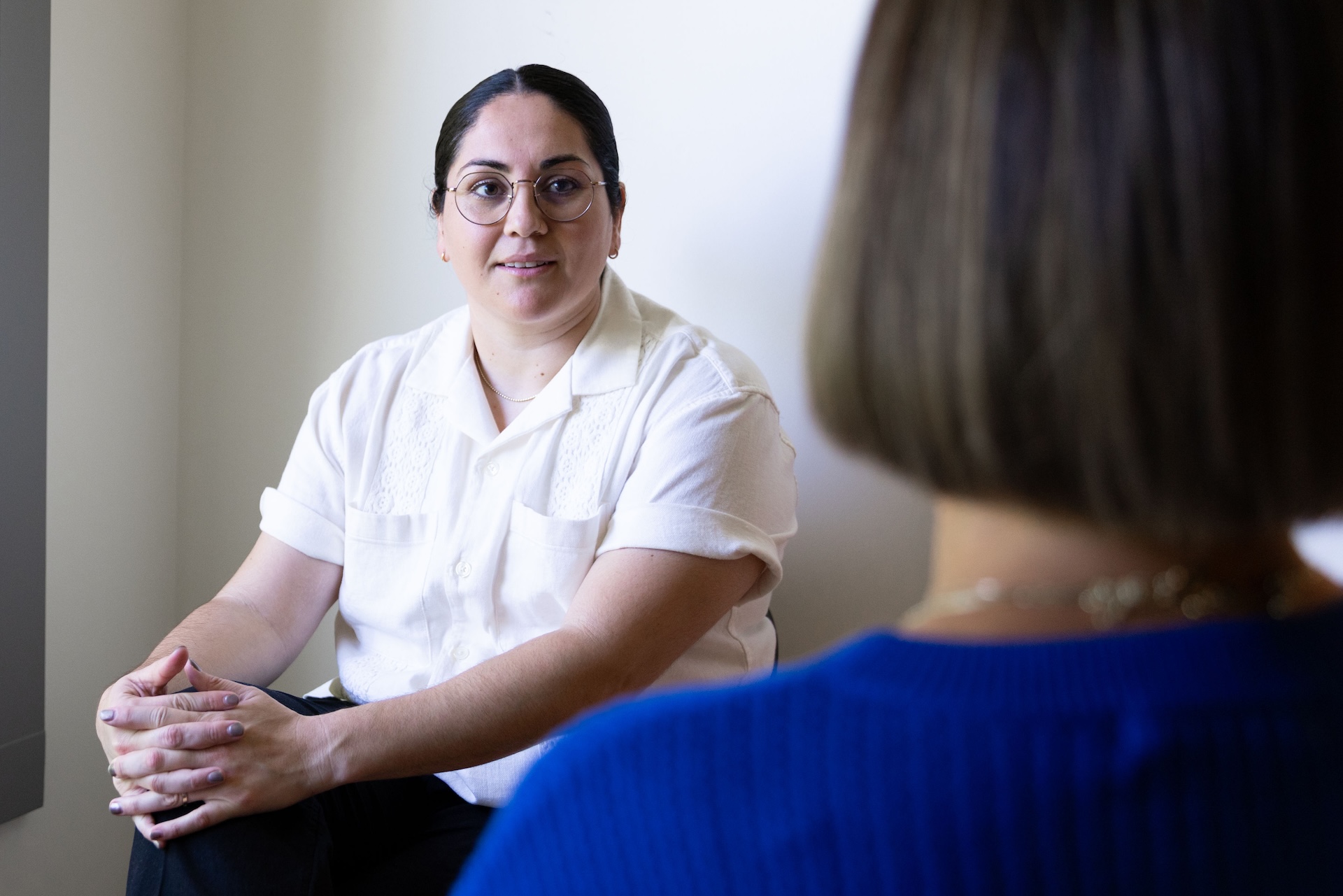
Becca Rogers: It’s a space for me to talk with someone about what’s happening in my life and in my classroom and seeing what they can provide me. We do a lot of somatic practices or just thinking out loud or touching base what’s actually happening.
Nimah Gobir: In one mentoring session, Becca tells Teaching Well’s Marc Anthony Robinson over a video call that it is hard to separate teaching from the rest of her life.
Becca Rogers: It’s just nice to just sit for a moment. And it’s good for me because after this, I’m going straight to another thing. I’m gonna the new families event for kindergarten.
Marc Anthony Robinson: So you gotta be back on in a minute.
Becca Rogers: I do. I do have to do this back on again. I know, it doesn’t stop.
Becca Rogers: All these children I hold in my brain when I leave here. And I’m like showering and trying to go to sleep and eat. And I’m, like, how can I support this kid better? How can I show up in a way that supports what they need
Becca Rogers: I have to like, it’s okay. You do not need to like hold that when you leave, you know?
Marc Anthony Robinson: I’m really just honored to be doing this process and this journey with you because I’ve seen you maneuver through a lot and I’m excited for what this new year is going to bring for you school year wise. It’s like it’s going to feel different.
Becca Rogers: Yeah, no, definitely. Yeah.
Nimah Gobir: In addition to mentoring Becca has also used the therapy services through Teaching Well. Therapy has also been shown to reduce stress and burnout in teachers, but waitlists and cost can make access difficult. Through Teaching Well, teachers can have up to 16 therapy sessions. And if a teacher needs more, Teaching Well helps them get a therapist through their insurance. Lindsey says that mental health services are becoming more available, but oftentimes they’re just for students.
Lindsey Fuller: What no one is funding comprehensively yet, and we are looking for, is who is funding the mental health grants and programs for the educators that receive those students, that work with them day in and day out.
Nimah Gobir: Educators are often absorbing students’ trauma. This is called vicarious or secondary trauma.
Lindsey Fuller: A lot of why people are leaving is burnout or because there’s a tragedy or school community violence and there’s no real outlet to process it.
Nimah Gobir: The clinical therapists at the teaching well are also former educators. Which addresses a pitfall that is common in many free therapy programs for teachers.
Lindsey Fuller: They’re spending so much time trying to explain the context of working in a school that they don’t get to get to the healing. It just cuts to the chase and gets them directly to the service that they need to be able to be retained.
Nimah Gobir: When teachers are well students fare better too.
Lindsey Fuller: We’re seeing a direct correlation between a dysregulated teacher and elevated rates of exclusionary discipline. In other words, when a teacher is unwell, they’re more likely to kick a kid out of class and refer them.
Nimah Gobir: Three years after Becca thought about leaving teaching, she’s still at Redwood Heights. And she says she no longer feels like crying before school every day. Having space to talk about teaching to her mentor and her colleagues helped her reestablish herself and her values
Becca Rogers: It gave me this like opportunity to be very meta and think about myself and my practice. And me as a human in the context of teaching
Nimah Gobir: Now, when stress rises in the classroom, she notices it earlier.
Becca Rogers: When I feel myself getting stressed in the class, I find that’s a time for somatic practice for me and I share that practice with my students
Becca Rogers: We also do a lot of breath work. Whenever we come in from lunch, recess, we know before we do anything, it’s time for breath work so we can help with that transition.
[breathing exercise]
Becca Rogers: I think it’s also allowed me to view my students in a different way, like thinking about a trauma informed response and like what I need, maybe what they need.
Nimah Gobir: Becca has more empathy now. More capacity to stay present through hard moments with her students
Becca Rogers: They’re really navigating something too, right. They’re human, I’m a human and we’re having this experience together.