window.__IS_SSR__=true
window.__INITIAL_STATE__={
"attachmentsReducer": {
"audio_0": {
"type": "attachments",
"id": "audio_0",
"imgSizes": {
"kqedFullSize": {
"file": "https://ww2.kqed.org/news/wp-content/themes/KQED-unified/img/audio_bgs/background0.jpg"
}
}
},
"audio_1": {
"type": "attachments",
"id": "audio_1",
"imgSizes": {
"kqedFullSize": {
"file": "https://ww2.kqed.org/news/wp-content/themes/KQED-unified/img/audio_bgs/background1.jpg"
}
}
},
"audio_2": {
"type": "attachments",
"id": "audio_2",
"imgSizes": {
"kqedFullSize": {
"file": "https://ww2.kqed.org/news/wp-content/themes/KQED-unified/img/audio_bgs/background2.jpg"
}
}
},
"audio_3": {
"type": "attachments",
"id": "audio_3",
"imgSizes": {
"kqedFullSize": {
"file": "https://ww2.kqed.org/news/wp-content/themes/KQED-unified/img/audio_bgs/background3.jpg"
}
}
},
"audio_4": {
"type": "attachments",
"id": "audio_4",
"imgSizes": {
"kqedFullSize": {
"file": "https://ww2.kqed.org/news/wp-content/themes/KQED-unified/img/audio_bgs/background4.jpg"
}
}
},
"placeholder": {
"type": "attachments",
"id": "placeholder",
"imgSizes": {
"thumbnail": {
"file": "https://cdn.kqed.org/wp-content/uploads/2024/12/KQED-Default-Image-816638274-2000x1333-1-160x107.jpg",
"width": 160,
"height": 107,
"mimeType": "image/jpeg"
},
"medium": {
"file": "https://cdn.kqed.org/wp-content/uploads/2024/12/KQED-Default-Image-816638274-2000x1333-1-800x533.jpg",
"width": 800,
"height": 533,
"mimeType": "image/jpeg"
},
"medium_large": {
"file": "https://cdn.kqed.org/wp-content/uploads/2024/12/KQED-Default-Image-816638274-2000x1333-1-768x512.jpg",
"width": 768,
"height": 512,
"mimeType": "image/jpeg"
},
"large": {
"file": "https://cdn.kqed.org/wp-content/uploads/2024/12/KQED-Default-Image-816638274-2000x1333-1-1020x680.jpg",
"width": 1020,
"height": 680,
"mimeType": "image/jpeg"
},
"1536x1536": {
"file": "https://cdn.kqed.org/wp-content/uploads/2024/12/KQED-Default-Image-816638274-2000x1333-1-1536x1024.jpg",
"width": 1536,
"height": 1024,
"mimeType": "image/jpeg"
},
"fd-lrg": {
"file": "https://cdn.kqed.org/wp-content/uploads/2024/12/KQED-Default-Image-816638274-2000x1333-1-1536x1024.jpg",
"width": 1536,
"height": 1024,
"mimeType": "image/jpeg"
},
"fd-med": {
"file": "https://cdn.kqed.org/wp-content/uploads/2024/12/KQED-Default-Image-816638274-2000x1333-1-1020x680.jpg",
"width": 1020,
"height": 680,
"mimeType": "image/jpeg"
},
"fd-sm": {
"file": "https://cdn.kqed.org/wp-content/uploads/2024/12/KQED-Default-Image-816638274-2000x1333-1-800x533.jpg",
"width": 800,
"height": 533,
"mimeType": "image/jpeg"
},
"post-thumbnail": {
"file": "https://cdn.kqed.org/wp-content/uploads/2024/12/KQED-Default-Image-816638274-2000x1333-1-672x372.jpg",
"width": 672,
"height": 372,
"mimeType": "image/jpeg"
},
"twentyfourteen-full-width": {
"file": "https://cdn.kqed.org/wp-content/uploads/2024/12/KQED-Default-Image-816638274-2000x1333-1-1038x576.jpg",
"width": 1038,
"height": 576,
"mimeType": "image/jpeg"
},
"xxsmall": {
"file": "https://cdn.kqed.org/wp-content/uploads/2024/12/KQED-Default-Image-816638274-2000x1333-1-160x107.jpg",
"width": 160,
"height": 107,
"mimeType": "image/jpeg"
},
"xsmall": {
"file": "https://cdn.kqed.org/wp-content/uploads/2024/12/KQED-Default-Image-816638274-2000x1333-1-672x372.jpg",
"width": 672,
"height": 372,
"mimeType": "image/jpeg"
},
"small": {
"file": "https://cdn.kqed.org/wp-content/uploads/2024/12/KQED-Default-Image-816638274-2000x1333-1-672x372.jpg",
"width": 672,
"height": 372,
"mimeType": "image/jpeg"
},
"xlarge": {
"file": "https://cdn.kqed.org/wp-content/uploads/2024/12/KQED-Default-Image-816638274-2000x1333-1-1020x680.jpg",
"width": 1020,
"height": 680,
"mimeType": "image/jpeg"
},
"full-width": {
"file": "https://cdn.kqed.org/wp-content/uploads/2024/12/KQED-Default-Image-816638274-2000x1333-1-1920x1280.jpg",
"width": 1920,
"height": 1280,
"mimeType": "image/jpeg"
},
"guest-author-32": {
"file": "https://cdn.kqed.org/wp-content/uploads/2025/01/KQED-Default-Image-816638274-1333x1333-1-160x160.jpg",
"width": 32,
"height": 32,
"mimeType": "image/jpeg"
},
"guest-author-50": {
"file": "https://cdn.kqed.org/wp-content/uploads/2025/01/KQED-Default-Image-816638274-1333x1333-1-160x160.jpg",
"width": 50,
"height": 50,
"mimeType": "image/jpeg"
},
"guest-author-64": {
"file": "https://cdn.kqed.org/wp-content/uploads/2025/01/KQED-Default-Image-816638274-1333x1333-1-160x160.jpg",
"width": 64,
"height": 64,
"mimeType": "image/jpeg"
},
"guest-author-96": {
"file": "https://cdn.kqed.org/wp-content/uploads/2025/01/KQED-Default-Image-816638274-1333x1333-1-160x160.jpg",
"width": 96,
"height": 96,
"mimeType": "image/jpeg"
},
"guest-author-128": {
"file": "https://cdn.kqed.org/wp-content/uploads/2025/01/KQED-Default-Image-816638274-1333x1333-1-160x160.jpg",
"width": 128,
"height": 128,
"mimeType": "image/jpeg"
},
"detail": {
"file": "https://cdn.kqed.org/wp-content/uploads/2025/01/KQED-Default-Image-816638274-1333x1333-1-160x160.jpg",
"width": 160,
"height": 160,
"mimeType": "image/jpeg"
},
"kqedFullSize": {
"file": "https://cdn.kqed.org/wp-content/uploads/2024/12/KQED-Default-Image-816638274-2000x1333-1.jpg",
"width": 2000,
"height": 1333
}
}
},
"lowdown_17512": {
"type": "attachments",
"id": "lowdown_17512",
"meta": {
"index": "attachments_1716263798",
"site": "lowdown",
"id": "17512",
"found": true
},
"parent": 12800,
"imgSizes": {
"thumbnail": {
"file": "https://ww2.kqed.org/app/uploads/sites/26/2014/05/Capture-1-400x214.jpg",
"width": 400,
"mimeType": "image/jpeg",
"height": 214
},
"post-thumbnail": {
"file": "https://ww2.kqed.org/app/uploads/sites/26/2014/05/Capture-1-672x372.jpg",
"width": 672,
"mimeType": "image/jpeg",
"height": 372
},
"kqedFullSize": {
"file": "https://ww2.kqed.org/app/uploads/sites/26/2014/05/Capture-1.jpg",
"width": 856,
"height": 459
},
"guest-author-96": {
"file": "https://ww2.kqed.org/app/uploads/sites/26/2014/05/Capture-1-96x96.jpg",
"width": 96,
"mimeType": "image/jpeg",
"height": 96
},
"medium": {
"file": "https://ww2.kqed.org/app/uploads/sites/26/2014/05/Capture-1-800x429.jpg",
"width": 800,
"mimeType": "image/jpeg",
"height": 429
},
"guest-author-64": {
"file": "https://ww2.kqed.org/app/uploads/sites/26/2014/05/Capture-1-64x64.jpg",
"width": 64,
"mimeType": "image/jpeg",
"height": 64
},
"detail": {
"file": "https://ww2.kqed.org/app/uploads/sites/26/2014/05/Capture-1-75x75.jpg",
"width": 75,
"mimeType": "image/jpeg",
"height": 75
},
"guest-author-32": {
"file": "https://ww2.kqed.org/app/uploads/sites/26/2014/05/Capture-1-32x32.jpg",
"width": 32,
"mimeType": "image/jpeg",
"height": 32
},
"guest-author-128": {
"file": "https://ww2.kqed.org/app/uploads/sites/26/2014/05/Capture-1-128x128.jpg",
"width": 128,
"mimeType": "image/jpeg",
"height": 128
}
},
"publishDate": 1431450610,
"modified": 1431450610,
"caption": null,
"description": null,
"title": "Capture-1",
"credit": null,
"status": "inherit",
"isLoading": false,
"fetchFailed": false
},
"lowdown_12369": {
"type": "attachments",
"id": "lowdown_12369",
"meta": {
"index": "attachments_1716263798",
"site": "lowdown",
"id": "12369",
"found": true
},
"parent": 12365,
"imgSizes": {
"thumbnail": {
"file": "https://ww2.kqed.org/app/uploads/sites/26/2014/04/Water_ratios_slice1-400x257.gif",
"width": 400,
"mimeType": "image/gif",
"height": 257
},
"fd-sm": {
"file": "https://ww2.kqed.org/app/uploads/sites/26/2014/04/Water_ratios_slice1-320x205.gif",
"width": 320,
"mimeType": "image/gif",
"height": 205
},
"post-thumbnail": {
"file": "https://ww2.kqed.org/app/uploads/sites/26/2014/04/Water_ratios_slice1-620x372.gif",
"width": 620,
"mimeType": "image/gif",
"height": 372
},
"kqedFullSize": {
"file": "https://ww2.kqed.org/app/uploads/sites/26/2014/04/Water_ratios_slice1.gif",
"width": 620,
"height": 398
},
"guest-author-96": {
"file": "https://ww2.kqed.org/app/uploads/sites/26/2014/04/Water_ratios_slice1-96x96.gif",
"width": 96,
"mimeType": "image/gif",
"height": 96
},
"guest-author-64": {
"file": "https://ww2.kqed.org/app/uploads/sites/26/2014/04/Water_ratios_slice1-64x64.gif",
"width": 64,
"mimeType": "image/gif",
"height": 64
},
"detail": {
"file": "https://ww2.kqed.org/app/uploads/sites/26/2014/04/Water_ratios_slice1-75x75.gif",
"width": 75,
"mimeType": "image/gif",
"height": 75
},
"guest-author-32": {
"file": "https://ww2.kqed.org/app/uploads/sites/26/2014/04/Water_ratios_slice1-32x32.gif",
"width": 32,
"mimeType": "image/gif",
"height": 32
},
"guest-author-128": {
"file": "https://ww2.kqed.org/app/uploads/sites/26/2014/04/Water_ratios_slice1-128x128.gif",
"width": 128,
"mimeType": "image/gif",
"height": 128
}
},
"publishDate": 1396909168,
"modified": 1396909168,
"caption": null,
"description": null,
"title": "Water_ratios_slice1",
"credit": null,
"status": "inherit",
"isLoading": false,
"fetchFailed": false
},
"lowdown_12213": {
"type": "attachments",
"id": "lowdown_12213",
"meta": {
"index": "attachments_1716263798",
"site": "lowdown",
"id": "12213",
"found": true
},
"parent": 12205,
"imgSizes": {
"thumbnail": {
"file": "https://ww2.kqed.org/app/uploads/sites/26/2014/03/Water_Agriculture_slice2-400x314.jpg",
"width": 400,
"mimeType": "image/jpeg",
"height": 314
},
"fd-sm": {
"file": "https://ww2.kqed.org/app/uploads/sites/26/2014/03/Water_Agriculture_slice2-320x251.jpg",
"width": 320,
"mimeType": "image/jpeg",
"height": 251
},
"post-thumbnail": {
"file": "https://ww2.kqed.org/app/uploads/sites/26/2014/03/Water_Agriculture_slice2-620x372.jpg",
"width": 620,
"mimeType": "image/jpeg",
"height": 372
},
"kqedFullSize": {
"file": "https://ww2.kqed.org/app/uploads/sites/26/2014/03/Water_Agriculture_slice2.jpg",
"width": 620,
"height": 486
},
"guest-author-96": {
"file": "https://ww2.kqed.org/app/uploads/sites/26/2014/03/Water_Agriculture_slice2-96x96.jpg",
"width": 96,
"mimeType": "image/jpeg",
"height": 96
},
"guest-author-64": {
"file": "https://ww2.kqed.org/app/uploads/sites/26/2014/03/Water_Agriculture_slice2-64x64.jpg",
"width": 64,
"mimeType": "image/jpeg",
"height": 64
},
"detail": {
"file": "https://ww2.kqed.org/app/uploads/sites/26/2014/03/Water_Agriculture_slice2-75x75.jpg",
"width": 75,
"mimeType": "image/jpeg",
"height": 75
},
"guest-author-32": {
"file": "https://ww2.kqed.org/app/uploads/sites/26/2014/03/Water_Agriculture_slice2-32x32.jpg",
"width": 32,
"mimeType": "image/jpeg",
"height": 32
},
"guest-author-128": {
"file": "https://ww2.kqed.org/app/uploads/sites/26/2014/03/Water_Agriculture_slice2-128x128.jpg",
"width": 128,
"mimeType": "image/jpeg",
"height": 128
}
},
"publishDate": 1395882419,
"modified": 1395882419,
"caption": null,
"description": null,
"title": null,
"credit": null,
"status": "inherit",
"isLoading": false,
"fetchFailed": false
},
"lowdown_11651": {
"type": "attachments",
"id": "lowdown_11651",
"meta": {
"index": "attachments_1716263798",
"site": "lowdown",
"id": "11651",
"found": true
},
"parent": 11641,
"imgSizes": {
"thumbnail": {
"file": "https://ww2.kqed.org/app/uploads/sites/26/2014/01/SierraNevada_tmo_2014018-400x267.jpg",
"width": 400,
"mimeType": "image/jpeg",
"height": 267
},
"fd-sm": {
"file": "https://ww2.kqed.org/app/uploads/sites/26/2014/01/SierraNevada_tmo_2014018-320x213.jpg",
"width": 320,
"mimeType": "image/jpeg",
"height": 213
},
"post-thumbnail": {
"file": "https://ww2.kqed.org/app/uploads/sites/26/2014/01/SierraNevada_tmo_2014018-672x372.jpg",
"width": 672,
"mimeType": "image/jpeg",
"height": 372
},
"kqedFullSize": {
"file": "https://ww2.kqed.org/app/uploads/sites/26/2014/01/SierraNevada_tmo_2014018.jpg",
"width": 720,
"height": 480
},
"guest-author-96": {
"file": "https://ww2.kqed.org/app/uploads/sites/26/2014/01/SierraNevada_tmo_2014018-96x96.jpg",
"width": 96,
"mimeType": "image/jpeg",
"height": 96
},
"guest-author-64": {
"file": "https://ww2.kqed.org/app/uploads/sites/26/2014/01/SierraNevada_tmo_2014018-64x64.jpg",
"width": 64,
"mimeType": "image/jpeg",
"height": 64
},
"detail": {
"file": "https://ww2.kqed.org/app/uploads/sites/26/2014/01/SierraNevada_tmo_2014018-75x75.jpg",
"width": 75,
"mimeType": "image/jpeg",
"height": 75
},
"guest-author-32": {
"file": "https://ww2.kqed.org/app/uploads/sites/26/2014/01/SierraNevada_tmo_2014018-32x32.jpg",
"width": 32,
"mimeType": "image/jpeg",
"height": 32
},
"guest-author-128": {
"file": "https://ww2.kqed.org/app/uploads/sites/26/2014/01/SierraNevada_tmo_2014018-128x128.jpg",
"width": 128,
"mimeType": "image/jpeg",
"height": 128
}
},
"publishDate": 1391109450,
"modified": 1391109450,
"caption": "NASA satellite image from Jan. 18, 2014.",
"description": null,
"title": "SierraNevada_tmo_2014018",
"credit": null,
"status": "inherit",
"isLoading": false,
"fetchFailed": false
},
"lowdown_11570": {
"type": "attachments",
"id": "lowdown_11570",
"meta": {
"index": "attachments_1716263798",
"site": "lowdown",
"id": "11570",
"found": true
},
"parent": 11525,
"imgSizes": {
"thumbnail": {
"file": "https://ww2.kqed.org/app/uploads/sites/26/2014/01/folsom_Nat.WeatherService-e1390933037349-400x209.jpg",
"width": 400,
"mimeType": "image/jpeg",
"height": 209
},
"fd-sm": {
"file": "https://ww2.kqed.org/app/uploads/sites/26/2014/01/folsom_Nat.WeatherService-e1390933037349-320x167.jpg",
"width": 320,
"mimeType": "image/jpeg",
"height": 167
},
"kqedFullSize": {
"file": "https://ww2.kqed.org/app/uploads/sites/26/2014/01/folsom_Nat.WeatherService-e1390933037349.jpg",
"width": 600,
"height": 313
},
"guest-author-96": {
"file": "https://ww2.kqed.org/app/uploads/sites/26/2014/01/folsom_Nat.WeatherService-e1390933037349-96x96.jpg",
"width": 96,
"mimeType": "image/jpeg",
"height": 96
},
"guest-author-64": {
"file": "https://ww2.kqed.org/app/uploads/sites/26/2014/01/folsom_Nat.WeatherService-e1390933037349-64x64.jpg",
"width": 64,
"mimeType": "image/jpeg",
"height": 64
},
"detail": {
"file": "https://ww2.kqed.org/app/uploads/sites/26/2014/01/folsom_Nat.WeatherService-e1390933037349-75x75.jpg",
"width": 75,
"mimeType": "image/jpeg",
"height": 75
},
"guest-author-32": {
"file": "https://ww2.kqed.org/app/uploads/sites/26/2014/01/folsom_Nat.WeatherService-e1390933037349-32x32.jpg",
"width": 32,
"mimeType": "image/jpeg",
"height": 32
},
"guest-author-128": {
"file": "https://ww2.kqed.org/app/uploads/sites/26/2014/01/folsom_Nat.WeatherService-e1390933037349-128x128.jpg",
"width": 128,
"mimeType": "image/jpeg",
"height": 128
}
},
"publishDate": 1390869757,
"modified": 1390869757,
"caption": "A parched Folsom Lake, at less than 20 percent of capacity (photo courtesy of National Weather Service).",
"description": null,
"title": "folsom_Nat.WeatherService",
"credit": null,
"status": "inherit",
"isLoading": false,
"fetchFailed": false
},
"lowdown_9637": {
"type": "attachments",
"id": "lowdown_9637",
"meta": {
"index": "attachments_1716263798",
"site": "lowdown",
"id": "9637",
"found": true
},
"parent": 9601,
"imgSizes": {
"twentyfourteen-full-width": {
"file": "https://ww2.kqed.org/app/uploads/sites/26/2013/09/Hydraulic_Fracturing-Related_Activities-920x576.jpg",
"width": 920,
"mimeType": "image/jpeg",
"height": 576
},
"thumbnail": {
"file": "https://ww2.kqed.org/app/uploads/sites/26/2013/09/Hydraulic_Fracturing-Related_Activities-400x327.jpg",
"width": 400,
"mimeType": "image/jpeg",
"height": 327
},
"fd-sm": {
"file": "https://ww2.kqed.org/app/uploads/sites/26/2013/09/Hydraulic_Fracturing-Related_Activities-320x261.jpg",
"width": 320,
"mimeType": "image/jpeg",
"height": 261
},
"post-thumbnail": {
"file": "https://ww2.kqed.org/app/uploads/sites/26/2013/09/Hydraulic_Fracturing-Related_Activities-672x372.jpg",
"width": 672,
"mimeType": "image/jpeg",
"height": 372
},
"kqedFullSize": {
"file": "https://ww2.kqed.org/app/uploads/sites/26/2013/09/Hydraulic_Fracturing-Related_Activities.jpg",
"width": 920,
"height": 751
},
"fd-med": {
"file": "https://ww2.kqed.org/app/uploads/sites/26/2013/09/Hydraulic_Fracturing-Related_Activities-768x627.jpg",
"width": 768,
"mimeType": "image/jpeg",
"height": 627
},
"guest-author-96": {
"file": "https://ww2.kqed.org/app/uploads/sites/26/2013/09/Hydraulic_Fracturing-Related_Activities-96x96.jpg",
"width": 96,
"mimeType": "image/jpeg",
"height": 96
},
"medium": {
"file": "https://ww2.kqed.org/app/uploads/sites/26/2013/09/Hydraulic_Fracturing-Related_Activities-800x653.jpg",
"width": 800,
"mimeType": "image/jpeg",
"height": 653
},
"guest-author-64": {
"file": "https://ww2.kqed.org/app/uploads/sites/26/2013/09/Hydraulic_Fracturing-Related_Activities-64x64.jpg",
"width": 64,
"mimeType": "image/jpeg",
"height": 64
},
"detail": {
"file": "https://ww2.kqed.org/app/uploads/sites/26/2013/09/Hydraulic_Fracturing-Related_Activities-75x75.jpg",
"width": 75,
"mimeType": "image/jpeg",
"height": 75
},
"guest-author-32": {
"file": "https://ww2.kqed.org/app/uploads/sites/26/2013/09/Hydraulic_Fracturing-Related_Activities-32x32.jpg",
"width": 32,
"mimeType": "image/jpeg",
"height": 32
},
"guest-author-128": {
"file": "https://ww2.kqed.org/app/uploads/sites/26/2013/09/Hydraulic_Fracturing-Related_Activities-128x128.jpg",
"width": 128,
"mimeType": "image/jpeg",
"height": 128
}
},
"publishDate": 1380318369,
"modified": 1380318369,
"caption": null,
"description": null,
"title": "Hydraulic_Fracturing-Related_Activities",
"credit": null,
"status": "inherit",
"isLoading": false,
"fetchFailed": false
},
"lowdown_2886": {
"type": "attachments",
"id": "lowdown_2886",
"meta": {
"index": "attachments_1716263798",
"site": "lowdown",
"id": "2886",
"found": true
},
"parent": 2810,
"imgSizes": {
"thumbnail": {
"file": "https://ww2.kqed.org/app/uploads/sites/26/2012/07/Wpdms_usgs_photo_sacramento_delta_2-400x297.jpg",
"width": 400,
"mimeType": "image/jpeg",
"height": 297
},
"fd-sm": {
"file": "https://ww2.kqed.org/app/uploads/sites/26/2012/07/Wpdms_usgs_photo_sacramento_delta_2-320x238.jpg",
"width": 320,
"mimeType": "image/jpeg",
"height": 238
},
"post-thumbnail": {
"file": "https://ww2.kqed.org/app/uploads/sites/26/2012/07/Wpdms_usgs_photo_sacramento_delta_2-672x372.jpg",
"width": 672,
"mimeType": "image/jpeg",
"height": 372
},
"kqedFullSize": {
"file": "https://ww2.kqed.org/app/uploads/sites/26/2012/07/Wpdms_usgs_photo_sacramento_delta_2.jpg",
"width": 700,
"height": 520
},
"guest-author-96": {
"file": "https://ww2.kqed.org/app/uploads/sites/26/2012/07/Wpdms_usgs_photo_sacramento_delta_2-96x96.jpg",
"width": 96,
"mimeType": "image/jpeg",
"height": 96
},
"guest-author-64": {
"file": "https://ww2.kqed.org/app/uploads/sites/26/2012/07/Wpdms_usgs_photo_sacramento_delta_2-64x64.jpg",
"width": 64,
"mimeType": "image/jpeg",
"height": 64
},
"detail": {
"file": "https://ww2.kqed.org/app/uploads/sites/26/2012/07/Wpdms_usgs_photo_sacramento_delta_2-75x75.jpg",
"width": 75,
"mimeType": "image/jpeg",
"height": 75
},
"guest-author-32": {
"file": "https://ww2.kqed.org/app/uploads/sites/26/2012/07/Wpdms_usgs_photo_sacramento_delta_2-32x32.jpg",
"width": 32,
"mimeType": "image/jpeg",
"height": 32
},
"guest-author-128": {
"file": "https://ww2.kqed.org/app/uploads/sites/26/2012/07/Wpdms_usgs_photo_sacramento_delta_2-128x128.jpg",
"width": 128,
"mimeType": "image/jpeg",
"height": 128
}
},
"publishDate": 1342825497,
"modified": 1432226396,
"caption": "Credit: USGS",
"description": null,
"title": "Delta",
"credit": null,
"status": "inherit",
"isLoading": false,
"fetchFailed": false
}
},
"audioPlayerReducer": {
"postId": "stream_live",
"isPaused": true,
"isPlaying": false,
"pfsActive": false,
"pledgeModalIsOpen": true,
"playerDrawerIsOpen": false,
"liveAudioPlayStartedAt": 0,
"liveAudioPlayContext": ""
},
"authorsReducer": {
"matthewgreen": {
"type": "authors",
"id": "1263",
"meta": {
"index": "authors_1716337520",
"id": "1263",
"found": true
},
"name": "Matthew Green",
"firstName": "Matthew",
"lastName": "Green",
"slug": "matthewgreen",
"email": "mgreen@kqed.org",
"display_author_email": false,
"staff_mastheads": [],
"title": "KQED Editor/Reporter",
"bio": "Matthew Green is a digital media producer for KQED News. He previously produced \u003ca href=\"http://www.kqed.org/lowdown\">The Lowdown\u003c/a>, KQED’s multimedia news education blog. Matthew's written for numerous Bay Area publications, including the Oakland Tribune and San Francisco Chronicle. He also taught journalism classes at Fremont High School in East Oakland.\r\n\r\nEmail: mgreen@kqed.org; Twitter: @MGreenKQED",
"avatar": "https://secure.gravatar.com/avatar/3bf498d1267ca02c8494f33d8cfc575e?s=600&d=blank&r=g",
"twitter": "MGreenKQED",
"facebook": null,
"instagram": null,
"linkedin": null,
"sites": [
{
"site": "news",
"roles": []
},
{
"site": "lowdown",
"roles": []
},
{
"site": "science",
"roles": []
},
{
"site": "education",
"roles": []
},
{
"site": "quest",
"roles": []
},
{
"site": "liveblog",
"roles": []
}
],
"headData": {
"title": "Matthew Green | KQED",
"description": "KQED Editor/Reporter",
"ogImgSrc": "https://secure.gravatar.com/avatar/3bf498d1267ca02c8494f33d8cfc575e?s=600&d=blank&r=g",
"twImgSrc": "https://secure.gravatar.com/avatar/3bf498d1267ca02c8494f33d8cfc575e?s=600&d=blank&r=g"
},
"isLoading": false,
"link": "/author/matthewgreen"
},
"andywarner": {
"type": "authors",
"id": "7506",
"meta": {
"index": "authors_1716337520",
"id": "7506",
"found": true
},
"name": "Andy Warner",
"firstName": "Andy",
"lastName": "Warner",
"slug": "andywarner",
"email": "eridisc@gmail.com",
"display_author_email": false,
"staff_mastheads": [],
"title": null,
"bio": "Andy Warner's comic journalism has been published by Symbolia, Slate, \u003ca href=\"http://popsci.com/\">popsci.com\u003c/a>, American Public Media, Campus Progress and more. You can see more of his work at: \u003ca href=\"http://andywarnercomics.com/\">andywarnercomics.com\u003c/a>.",
"avatar": "https://secure.gravatar.com/avatar/2983c68805617a24b2c98bc90911aa2b?s=600&d=blank&r=g",
"twitter": null,
"facebook": null,
"instagram": null,
"linkedin": null,
"sites": [
{
"site": "lowdown",
"roles": [
"author"
]
}
],
"headData": {
"title": "Andy Warner | KQED",
"description": null,
"ogImgSrc": "https://secure.gravatar.com/avatar/2983c68805617a24b2c98bc90911aa2b?s=600&d=blank&r=g",
"twImgSrc": "https://secure.gravatar.com/avatar/2983c68805617a24b2c98bc90911aa2b?s=600&d=blank&r=g"
},
"isLoading": false,
"link": "/author/andywarner"
}
},
"pagesReducer": {
"lowdown_category_california-drought-green-space-2": {
"type": "terms",
"id": "lowdown_514",
"meta": {
"index": "terms_1716263798",
"site": "lowdown",
"id": "514",
"score": 14.405683
},
"featImg": null,
"name": "Water and Drought",
"description": "These are dry times for the Golden State. Explore California's historic drought in this multimedia series.",
"taxonomy": "category",
"headData": {
"twImgId": null,
"twTitle": null,
"ogTitle": null,
"ogImgId": null,
"twDescription": null,
"description": "These are dry times for the Golden State. Explore California's historic drought in this multimedia series.",
"title": "Water and Drought Archives | KQED Arts",
"ogDescription": null
},
"ttid": 519,
"slug": "california-drought-green-space-2",
"isLoading": false,
"title": "Water and Drought",
"pageMeta": {
"site": "lowdown",
"WpPageTemplate": "page-topic-editorial",
"currentPage": 2
},
"blocks": [
{
"blockName": "kqed/company-paragraph",
"content": "These are dry times for the Golden State. Explore California's historic drought in this multimedia series."
},
{
"blockName": "kqed/post-list",
"attrs": {
"layout": "cardArticle2",
"query": "posts/lowdown?category=california-drought-green-space-2",
"seeMore": false,
"paginated": true,
"page": 2
}
},
{
"blockName": "kqed/ad"
}
]
}
},
"pfsSessionReducer": {},
"postsReducer": {
"stream_live": {
"type": "live",
"id": "stream_live",
"audioUrl": "https://hls.kqed.org/hls/kqed_app/playlist.m3u8",
"title": "Live Stream",
"excerpt": "Live Stream information currently unavailable.",
"link": "/radio",
"featImg": "",
"label": {
"name": "KQED Live",
"link": "/"
}
},
"stream_kqedNewscast": {
"type": "posts",
"id": "stream_kqedNewscast",
"audioUrl": "https://www.kqed.org/.stream/anon/radio/RDnews/newscast.mp3?_=1",
"title": "KQED Newscast",
"featImg": "",
"label": {
"name": "88.5 FM",
"link": "/"
}
},
"lowdown_12800": {
"type": "posts",
"id": "lowdown_12800",
"meta": {
"index": "posts_1716263798",
"site": "lowdown",
"id": "12800",
"score": null,
"sort": [
1399899638000
]
},
"parent": 0,
"labelTerm": {
"site": "lowdown"
},
"blocks": [],
"publishDate": 1399899638,
"format": "aside",
"disqusTitle": "What Does Climate Change in California Look Like? [Infographic]",
"title": "What Does Climate Change in California Look Like? [Infographic]",
"headTitle": "The Lowdown | KQED News",
"content": "\u003cfigure id=\"attachment_12864\" class=\"wp-caption alignleft\" style=\"max-width: 191px\">\u003cimg class=\"wp-image-12864 \" src=\"http://ww2.kqed.org/lowdown/wp-content/uploads/sites/26/2014/05/climatechange_CA-300x388.gif\" alt=\"California Environmental Protection Agency (full-size graphic below)\" width=\"191\" height=\"248\">\u003cfigcaption class=\"wp-caption-text\">California Environmental Protection Agency (full-size graphic below)\u003c/figcaption>\u003c/figure>\n\u003cp>Be it torrential rains or severe droughts, huge wildfires or rising sea-levels, every corner of the United States has been -- and will continue to be -- impacted by the effects of human-induced climate change.\u003c/p>\n\u003cp>That's the scenario presented last week by a team of scientists who described a series of sweeping environmental changes of near biblical proportions.\u003c/p>\n\u003cp>The government report, known as the \u003ca href=\"http://nca2014.globalchange.gov/\" target=\"_blank\">National Climate Assessment\u003c/a>, notes that many of these changes have resulted from an average temperature increase of less than 2 degrees Fahrenheit over the last century. It warns that U.S. temperatures could increase by more than 10 degrees by the end of this century if carbon dioxide and other greenhouse gas emissions continue to increase.\u003c!--more-->\u003c/p>\n\u003cp>Prepared by a large team of scientists, the White House released the study in an effort to create a greater sense urgency among Americans and build support for new climate change regulation that President Obama plans to introduce in June. An April \u003ca href=\"http://www.gallup.com/poll/168620/one-four-solidly-skeptical-global-warming.aspx\" target=\"_blank\">Gallup poll\u003c/a> found one in four Americans is still skeptical about the effects of climate change and thinks the seriousness of the issue has been exaggerated by the news media.\u003c/p>\n\u003cp class=\"story-body-text story-content\">The report also describes the significantly varying impacts of climate change across the country, from torrential rains and coastal flooding in the Northeast, to severe droughts and intensifying wildfires in the West.\u003c/p>\n\u003cp>[ad fullwidth]\u003c/p>\n\u003cp id=\"story-continues-5\" class=\"story-body-text story-content\"> \"The contents confirm that climate change is not a distant threat,\" Dr. John Holdren, President Obama's science advisor, said in a \u003ca href=\"https://www.youtube.com/embed/2dIheuvIKDg\" target=\"_blank\">video summary of the report\u003c/a>. \"It is affecting the American people already. On the whole, summers are longer and hotter with longer periods of extended heat. Wildfires start earlier in the spring and continue later into the fall. Rain comes down in heavier downpours. People are experiencing changes in the length and severity of seasonal allergies. And climate disruptions to water resources and agriculture have been increasing.\"\u003c/p>\n\u003cp class=\"story-body-text story-content\">So how does California make out in all of this?\u003c/p>\n\u003cp class=\"story-body-text story-content\">Not so hot, it turns out (or actually, really hot). A \u003ca href=\"http://oehha.ca.gov/multimedia/epic/2013EnvIndicatorReport.html\" target=\"_blank\">separate 2013 study\u003c/a> by the California Environmental Protection Agency, found far-reaching impacts across the state, including severe water shortages, more frequent wildfires, coastal flooding and extreme heat. The infographic below, found in the report, lists some of these key indicators. Mouse over it and click to zoom in on specific areas.\u003c/p>\n\u003cp>\u003c/p>\n\u003cp class=\"story-body-text story-content\">\n\u003c!-- iframe plugin v.4.3 wordpress.org/plugins/iframe/ -->\u003cbr>\n\u003ciframe src=\"http://zoom.it/OYe6#full\" width=\"650\" height=\"850\" frameborder=\"0\" scrolling=\"no\" class=\"iframe-class\">\u003c/iframe>\u003c/p>\n\n",
"disqusIdentifier": "12800 http://blogs.kqed.org/lowdown/?p=12800",
"disqusUrl": "https://ww2.kqed.org/lowdown/2014/05/12/how-is-climate-change-affecting-california-infographic/",
"stats": {
"hasVideo": true,
"hasChartOrMap": true,
"hasAudio": false,
"hasPolis": false,
"wordCount": 414,
"hasGoogleForm": false,
"hasGallery": false,
"hasHearkenModule": false,
"iframeSrcs": [
"http://zoom.it/OYe6#full"
],
"paragraphCount": 6
},
"modified": 1432083234,
"excerpt": null,
"headData": {
"twImgId": "",
"twTitle": "",
"ogTitle": "",
"ogImgId": "",
"twDescription": "",
"description": "Be it torrential rains or severe droughts, huge wildfires or rising sea-levels, every corner of the United States has been -- and will continue to be -- impacted by the effects of human-induced climate change. That's the scenario presented last week by a team of scientists who described a series of sweeping environmental changes of near biblical",
"title": "What Does Climate Change in California Look Like? [Infographic] | KQED",
"ogDescription": "",
"schema": {
"@context": "https://schema.org",
"@type": "Article",
"headline": "What Does Climate Change in California Look Like? [Infographic]",
"datePublished": "2014-05-12T06:00:38-07:00",
"dateModified": "2015-05-19T17:53:54-07:00",
"image": "https://cdn.kqed.org/wp-content/uploads/2020/02/KQED-OG-Image@1x.png"
}
},
"guestAuthors": [],
"slug": "how-is-climate-change-affecting-california-infographic",
"status": "publish",
"customPermalink": "05/12/2014/california-climate-change/",
"path": "/lowdown/12800/how-is-climate-change-affecting-california-infographic",
"audioTrackLength": null,
"parsedContent": [
{
"type": "contentString",
"content": "\u003cdiv class=\"post-body\">\u003cp>\u003cfigure id=\"attachment_12864\" class=\"wp-caption alignleft\" style=\"max-width: 191px\">\u003cimg class=\"wp-image-12864 \" src=\"http://ww2.kqed.org/lowdown/wp-content/uploads/sites/26/2014/05/climatechange_CA-300x388.gif\" alt=\"California Environmental Protection Agency (full-size graphic below)\" width=\"191\" height=\"248\">\u003cfigcaption class=\"wp-caption-text\">California Environmental Protection Agency (full-size graphic below)\u003c/figcaption>\u003c/figure>\n\u003cp>Be it torrential rains or severe droughts, huge wildfires or rising sea-levels, every corner of the United States has been -- and will continue to be -- impacted by the effects of human-induced climate change.\u003c/p>\n\u003cp>That's the scenario presented last week by a team of scientists who described a series of sweeping environmental changes of near biblical proportions.\u003c/p>\n\u003cp>The government report, known as the \u003ca href=\"http://nca2014.globalchange.gov/\" target=\"_blank\">National Climate Assessment\u003c/a>, notes that many of these changes have resulted from an average temperature increase of less than 2 degrees Fahrenheit over the last century. It warns that U.S. temperatures could increase by more than 10 degrees by the end of this century if carbon dioxide and other greenhouse gas emissions continue to increase.\u003c!--more-->\u003c/p>\n\u003cp>Prepared by a large team of scientists, the White House released the study in an effort to create a greater sense urgency among Americans and build support for new climate change regulation that President Obama plans to introduce in June. An April \u003ca href=\"http://www.gallup.com/poll/168620/one-four-solidly-skeptical-global-warming.aspx\" target=\"_blank\">Gallup poll\u003c/a> found one in four Americans is still skeptical about the effects of climate change and thinks the seriousness of the issue has been exaggerated by the news media.\u003c/p>\n\u003cp class=\"story-body-text story-content\">The report also describes the significantly varying impacts of climate change across the country, from torrential rains and coastal flooding in the Northeast, to severe droughts and intensifying wildfires in the West.\u003c/p>\n\u003cp>\u003c/p>\u003c/div>",
"attributes": {
"named": {},
"numeric": []
}
},
{
"type": "component",
"content": "",
"name": "ad",
"attributes": {
"named": {
"label": "fullwidth"
},
"numeric": [
"fullwidth"
]
}
},
{
"type": "contentString",
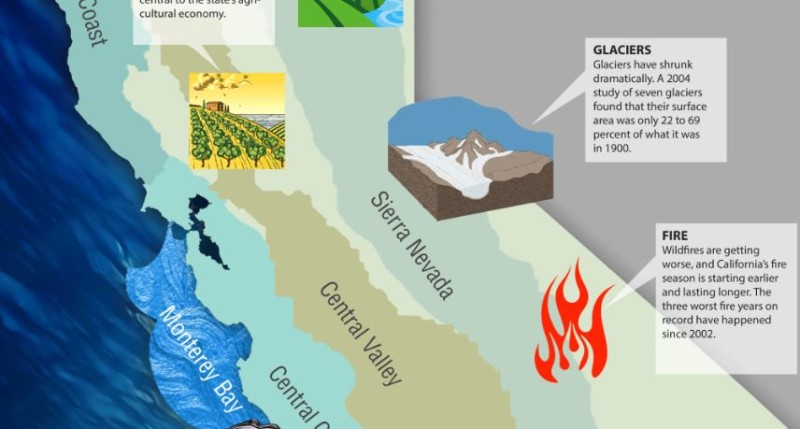
"content": "\u003cdiv class=\"post-body\">\u003cp>\u003c/p>\n\u003cp id=\"story-continues-5\" class=\"story-body-text story-content\"> \"The contents confirm that climate change is not a distant threat,\" Dr. John Holdren, President Obama's science advisor, said in a \u003ca href=\"https://www.youtube.com/embed/2dIheuvIKDg\" target=\"_blank\">video summary of the report\u003c/a>. \"It is affecting the American people already. On the whole, summers are longer and hotter with longer periods of extended heat. Wildfires start earlier in the spring and continue later into the fall. Rain comes down in heavier downpours. People are experiencing changes in the length and severity of seasonal allergies. And climate disruptions to water resources and agriculture have been increasing.\"\u003c/p>\n\u003cp class=\"story-body-text story-content\">So how does California make out in all of this?\u003c/p>\n\u003cp class=\"story-body-text story-content\">Not so hot, it turns out (or actually, really hot). A \u003ca href=\"http://oehha.ca.gov/multimedia/epic/2013EnvIndicatorReport.html\" target=\"_blank\">separate 2013 study\u003c/a> by the California Environmental Protection Agency, found far-reaching impacts across the state, including severe water shortages, more frequent wildfires, coastal flooding and extreme heat. The infographic below, found in the report, lists some of these key indicators. Mouse over it and click to zoom in on specific areas.\u003c/p>\n\u003cp>\u003c/p>\n\u003cp class=\"story-body-text story-content\">\n\u003c!-- iframe plugin v.4.3 wordpress.org/plugins/iframe/ -->\u003cbr>\n\u003ciframe src=\"http://zoom.it/OYe6#full\" width=\"650\" height=\"850\" frameborder=\"0\" scrolling=\"no\" class=\"iframe-class\">\u003c/iframe>\u003c/p>\n\n\u003c/div>\u003c/p>",
"attributes": {
"named": {},
"numeric": []
}
}
],
"link": "/lowdown/12800/how-is-climate-change-affecting-california-infographic",
"authors": [
"1263"
],
"categories": [
"lowdown_256",
"lowdown_2363",
"lowdown_457",
"lowdown_572",
"lowdown_514",
"lowdown_530"
],
"tags": [
"lowdown_394",
"lowdown_254"
],
"featImg": "lowdown_17512",
"label": "lowdown"
},
"lowdown_12365": {
"type": "posts",
"id": "lowdown_12365",
"meta": {
"index": "posts_1716263798",
"site": "lowdown",
"id": "12365",
"score": null,
"sort": [
1396915294000
]
},
"parent": 0,
"labelTerm": {
"site": "lowdown"
},
"blocks": [],
"publishDate": 1396915294,
"format": "aside",
"disqusTitle": "Rationing the Rain: How California Distributes Its Water in Dry Times",
"title": "Rationing the Rain: How California Distributes Its Water in Dry Times",
"headTitle": "The Lowdown | KQED News",
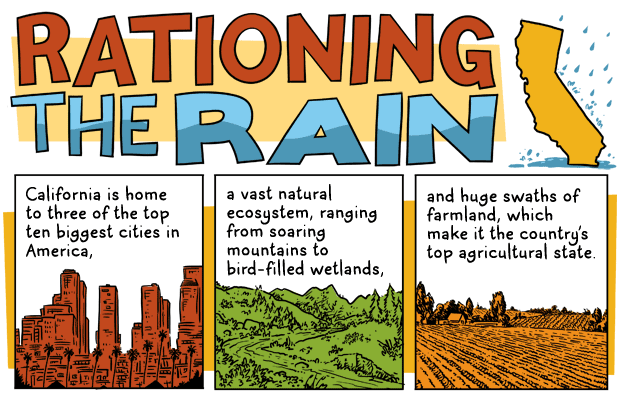
"content": "\u003cp>Distributing enough water to everyone has never been an easy task in perennially thirsty California. But making sure that residents, farms and the environment are all sufficiently hydrated becomes a particularly difficult balancing act during prolonged periods of drought. Simply put, there's just not enough to go around. Cartoon journalist Andy Warner -- whose \u003ca href=\"http://ww2.kqed.org/lowdown/2014/03/26/parched-produce\" target=\"_blank\" rel=\"noopener\">last piece\u003c/a> focused on California agriculture --- explains the complicated math of water distribution in the Golden State. View below as a slideshow or full graphic.\u003c/p>\n\u003cp>\u003ca href=\"https://ww2.kqed.org/lowdown/wp-content/uploads/sites/26/2014/04/Water_ratios_full-1.gif\">\u003cimg src=\"https://ww2.kqed.org/lowdown/wp-content/uploads/sites/26/2014/04/Water_ratios_full-1.gif\" alt=\"\" width=\"620\" height=\"3308\" class=\"alignnone size-full wp-image-30765\">\u003c/a>\u003c/p>\n\u003cp>\u003cstrong>For more on water distribution in California:\u003c/strong>\u003c/p>\n\u003cp>\u003cstrong>\u003ca href=\"http://www.water.ca.gov/swp/watersupply.cfm\" target=\"_blank\" rel=\"noopener\">California Department of Water Resources\u003c/a>\u003c/strong>\u003c/p>\n\u003cp>\u003ca href=\"http://aic.ucdavis.edu/publications/moca/moca_current/moca09/moca09chapter3.pdf\" target=\"_blank\" rel=\"noopener\">UC Davis Agricultural Issues Center: Measure of California Agriculture\u003c/a>\u003c/p>\n\u003cp>[ad fullwidth]\u003c/p>\u003cp>\u003c/p>\n",
"disqusIdentifier": "12365 http://blogs.kqed.org/lowdown/?p=12365",
"disqusUrl": "https://ww2.kqed.org/lowdown/2014/04/07/california-drought-math-the-tricky-task-of-distributing-water-to-a-thirsty-state/",
"stats": {
"hasVideo": false,
"hasChartOrMap": false,
"hasAudio": false,
"hasPolis": false,
"wordCount": 104,
"hasGoogleForm": false,
"hasGallery": false,
"hasHearkenModule": false,
"iframeSrcs": [],
"paragraphCount": 7
},
"modified": 1524513924,
"excerpt": null,
"headData": {
"twImgId": "",
"twTitle": "",
"ogTitle": "",
"ogImgId": "",
"twDescription": "",
"description": "Distributing enough water to everyone has never been an easy task in perennially thirsty California. But making sure that residents, farms and the environment are all sufficiently hydrated becomes a particularly difficult balancing act during prolonged periods of drought. Simply put, there's just not enough to go around. Cartoon journalist Andy Warner -- whose last piece",
"title": "Rationing the Rain: How California Distributes Its Water in Dry Times | KQED",
"ogDescription": "",
"schema": {
"@context": "https://schema.org",
"@type": "Article",
"headline": "Rationing the Rain: How California Distributes Its Water in Dry Times",
"datePublished": "2014-04-07T17:01:34-07:00",
"dateModified": "2018-04-23T13:05:24-07:00",
"image": "https://cdn.kqed.org/wp-content/uploads/2020/02/KQED-OG-Image@1x.png"
}
},
"guestAuthors": [],
"slug": "california-drought-math-the-tricky-task-of-distributing-water-to-a-thirsty-state",
"status": "publish",
"customPermalink": "2014/04/07/california-water/",
"path": "/lowdown/12365/california-drought-math-the-tricky-task-of-distributing-water-to-a-thirsty-state",
"audioTrackLength": null,
"parsedContent": [
{
"type": "contentString",
"content": "\u003cdiv class=\"post-body\">\u003cp>\u003cp>Distributing enough water to everyone has never been an easy task in perennially thirsty California. But making sure that residents, farms and the environment are all sufficiently hydrated becomes a particularly difficult balancing act during prolonged periods of drought. Simply put, there's just not enough to go around. Cartoon journalist Andy Warner -- whose \u003ca href=\"http://ww2.kqed.org/lowdown/2014/03/26/parched-produce\" target=\"_blank\" rel=\"noopener\">last piece\u003c/a> focused on California agriculture --- explains the complicated math of water distribution in the Golden State. View below as a slideshow or full graphic.\u003c/p>\n\u003cp>\u003ca href=\"https://ww2.kqed.org/lowdown/wp-content/uploads/sites/26/2014/04/Water_ratios_full-1.gif\">\u003cimg src=\"https://ww2.kqed.org/lowdown/wp-content/uploads/sites/26/2014/04/Water_ratios_full-1.gif\" alt=\"\" width=\"620\" height=\"3308\" class=\"alignnone size-full wp-image-30765\">\u003c/a>\u003c/p>\n\u003cp>\u003cstrong>For more on water distribution in California:\u003c/strong>\u003c/p>\n\u003cp>\u003cstrong>\u003ca href=\"http://www.water.ca.gov/swp/watersupply.cfm\" target=\"_blank\" rel=\"noopener\">California Department of Water Resources\u003c/a>\u003c/strong>\u003c/p>\n\u003cp>\u003ca href=\"http://aic.ucdavis.edu/publications/moca/moca_current/moca09/moca09chapter3.pdf\" target=\"_blank\" rel=\"noopener\">UC Davis Agricultural Issues Center: Measure of California Agriculture\u003c/a>\u003c/p>\n\u003cp>\u003c/p>\u003c/div>",
"attributes": {
"named": {},
"numeric": []
}
},
{
"type": "component",
"content": "",
"name": "ad",
"attributes": {
"named": {
"label": "fullwidth"
},
"numeric": [
"fullwidth"
]
}
},
{
"type": "contentString",
"content": "\u003cdiv class=\"post-body\">\u003cp>\u003c/p>\u003cp>\u003c/p>\n\u003c/div>\u003c/p>",
"attributes": {
"named": {},
"numeric": []
}
}
],
"link": "/lowdown/12365/california-drought-math-the-tricky-task-of-distributing-water-to-a-thirsty-state",
"authors": [
"7506"
],
"categories": [
"lowdown_391",
"lowdown_256",
"lowdown_588",
"lowdown_457",
"lowdown_514"
],
"tags": [
"lowdown_480",
"lowdown_96"
],
"featImg": "lowdown_12369",
"label": "lowdown"
},
"lowdown_12205": {
"type": "posts",
"id": "lowdown_12205",
"meta": {
"index": "posts_1716263798",
"site": "lowdown",
"id": "12205",
"score": null,
"sort": [
1395936047000
]
},
"parent": 0,
"labelTerm": {
"site": "lowdown"
},
"blocks": [],
"publishDate": 1395936047,
"format": "aside",
"disqusTitle": "Parched Produce: California Agriculture in a State of Drought",
"title": "Parched Produce: California Agriculture in a State of Drought",
"headTitle": "The Lowdown | KQED News",
"content": "\u003cp>These are bone dry times for California. Even with the recent rains, the state is still mired in one of its worst droughts in recorded history. And that spells trouble for the vast agriculture industry here. Cartoon journalist Andy Warner explains. View it as a slideshow or in full-length format below.\u003c!--more-->\u003c/p>\n\u003cp>\u003ca href=\"https://ww2.kqed.org/lowdown/wp-content/uploads/sites/26/2014/03/Water_Agriculture_typocorrection-1.jpg\">\u003cimg src=\"https://ww2.kqed.org/lowdown/wp-content/uploads/sites/26/2014/03/Water_Agriculture_typocorrection-1.jpg\" alt=\"\" width=\"620\" height=\"3418\" class=\"alignnone size-full wp-image-30768\" srcset=\"https://ww2.kqed.org/app/uploads/sites/26/2014/03/Water_Agriculture_typocorrection-1.jpg 620w, https://ww2.kqed.org/app/uploads/sites/26/2014/03/Water_Agriculture_typocorrection-1-160x882.jpg 160w, https://ww2.kqed.org/app/uploads/sites/26/2014/03/Water_Agriculture_typocorrection-1-240x1323.jpg 240w, https://ww2.kqed.org/app/uploads/sites/26/2014/03/Water_Agriculture_typocorrection-1-375x2067.jpg 375w, https://ww2.kqed.org/app/uploads/sites/26/2014/03/Water_Agriculture_typocorrection-1-520x2867.jpg 520w\" sizes=\"(max-width: 620px) 100vw, 620px\">\u003c/a>\u003c/p>\n\u003cp>[ad fullwidth]\u003c/p>\u003cp>\u003c/p>\n",
"disqusIdentifier": "12205 http://blogs.kqed.org/lowdown/?p=12205",
"disqusUrl": "https://ww2.kqed.org/lowdown/2014/03/27/parched-produce-california-agriculture-in-a-state-of-drought/",
"stats": {
"hasVideo": false,
"hasChartOrMap": false,
"hasAudio": false,
"hasPolis": false,
"wordCount": 54,
"hasGoogleForm": false,
"hasGallery": false,
"hasHearkenModule": false,
"iframeSrcs": [],
"paragraphCount": 4
},
"modified": 1524514049,
"excerpt": null,
"headData": {
"twImgId": "",
"twTitle": "",
"ogTitle": "",
"ogImgId": "",
"twDescription": "",
"description": "These are bone dry times for California. Even with the recent rains, the state is still mired in one of its worst droughts in recorded history. And that spells trouble for the vast agriculture industry here. Cartoon journalist Andy Warner explains. View it as a slideshow or in full-length format below.",
"title": "Parched Produce: California Agriculture in a State of Drought | KQED",
"ogDescription": "",
"schema": {
"@context": "https://schema.org",
"@type": "Article",
"headline": "Parched Produce: California Agriculture in a State of Drought",
"datePublished": "2014-03-27T09:00:47-07:00",
"dateModified": "2018-04-23T13:07:29-07:00",
"image": "https://cdn.kqed.org/wp-content/uploads/2020/02/KQED-OG-Image@1x.png"
}
},
"guestAuthors": [],
"slug": "parched-produce-california-agriculture-in-a-state-of-drought",
"status": "publish",
"customPermalink": "2014/03/26/parched-produce/",
"path": "/lowdown/12205/parched-produce-california-agriculture-in-a-state-of-drought",
"audioTrackLength": null,
"parsedContent": [
{
"type": "contentString",
"content": "\u003cdiv class=\"post-body\">\u003cp>\u003cp>These are bone dry times for California. Even with the recent rains, the state is still mired in one of its worst droughts in recorded history. And that spells trouble for the vast agriculture industry here. Cartoon journalist Andy Warner explains. View it as a slideshow or in full-length format below.\u003c!--more-->\u003c/p>\n\u003cp>\u003ca href=\"https://ww2.kqed.org/lowdown/wp-content/uploads/sites/26/2014/03/Water_Agriculture_typocorrection-1.jpg\">\u003cimg src=\"https://ww2.kqed.org/lowdown/wp-content/uploads/sites/26/2014/03/Water_Agriculture_typocorrection-1.jpg\" alt=\"\" width=\"620\" height=\"3418\" class=\"alignnone size-full wp-image-30768\" srcset=\"https://ww2.kqed.org/app/uploads/sites/26/2014/03/Water_Agriculture_typocorrection-1.jpg 620w, https://ww2.kqed.org/app/uploads/sites/26/2014/03/Water_Agriculture_typocorrection-1-160x882.jpg 160w, https://ww2.kqed.org/app/uploads/sites/26/2014/03/Water_Agriculture_typocorrection-1-240x1323.jpg 240w, https://ww2.kqed.org/app/uploads/sites/26/2014/03/Water_Agriculture_typocorrection-1-375x2067.jpg 375w, https://ww2.kqed.org/app/uploads/sites/26/2014/03/Water_Agriculture_typocorrection-1-520x2867.jpg 520w\" sizes=\"(max-width: 620px) 100vw, 620px\">\u003c/a>\u003c/p>\n\u003cp>\u003c/p>\u003c/div>",
"attributes": {
"named": {},
"numeric": []
}
},
{
"type": "component",
"content": "",
"name": "ad",
"attributes": {
"named": {
"label": "fullwidth"
},
"numeric": [
"fullwidth"
]
}
},
{
"type": "contentString",
"content": "\u003cdiv class=\"post-body\">\u003cp>\u003c/p>\u003cp>\u003c/p>\n\u003c/div>\u003c/p>",
"attributes": {
"named": {},
"numeric": []
}
}
],
"link": "/lowdown/12205/parched-produce-california-agriculture-in-a-state-of-drought",
"authors": [
"7506"
],
"categories": [
"lowdown_391",
"lowdown_256",
"lowdown_588",
"lowdown_457",
"lowdown_514"
],
"tags": [
"lowdown_481",
"lowdown_480"
],
"featImg": "lowdown_12213",
"label": "lowdown"
},
"lowdown_11641": {
"type": "posts",
"id": "lowdown_11641",
"meta": {
"index": "posts_1716263798",
"site": "lowdown",
"id": "11641",
"score": null,
"sort": [
1391110231000
]
},
"parent": 0,
"labelTerm": {
"site": "lowdown"
},
"blocks": [],
"publishDate": 1391110231,
"format": "aside",
"disqusTitle": "How Serious Is the California Drought? These Satellite Images Say It All",
"title": "How Serious Is the California Drought? These Satellite Images Say It All",
"headTitle": "The Lowdown | KQED News",
"content": "\u003cfigure id=\"attachment_11642\" class=\"wp-caption alignnone\" style=\"max-width: 540px\">\u003ca href=\"http://ww2.kqed.org/lowdown/wp-content/uploads/sites/26/2014/01/0125-SierraNevada_CA_drought.gif\">\u003cimg class=\"size-full wp-image-11642 \" src=\"http://ww2.kqed.org/lowdown/wp-content/uploads/sites/26/2014/01/0125-SierraNevada_CA_drought.gif\" alt=\"0125-SierraNevada_CA_drought\" width=\"540\" height=\"388\">\u003c/a>\u003cfigcaption class=\"wp-caption-text\">NASA satellite imagery comparing California's snowpack in January 2013 to January 2014. GIF animation created by Rhett A. Butler_Mongabay.com.\u003c/figcaption>\u003c/figure>\n\u003chr>\n\u003cp>If you live in California, snowpack is a pretty crucial part of your existence.\u003c/p>\n\u003cp>That's because about a third of the state's water supply comes from snow that accumulates in the mountains, mostly during the winter months. In fact, California receives roughly half of its entire year's water supply between December and February alone.\u003c!--more-->\u003c/p>\n\u003cp>And that's why there is very reasonable cause for alarm this year, as Gov. Jerry Brown underscored in his recent emergency drought declaration.\u003c/p>\n\u003cp>Although 2013 turned out to be one of California's driest years on record, it began, at least, with a relatively solid layer of snow cover in the mountains. 2014, on the other hand, has started out far less auspiciously, as these NASA satellite images make clear. On the heels of two years of below-normal precipitation in the state, this winter's warm, dry conditions with anemic snow accumulation have given way to bare mountains and brown landscapes. With snowpack this month between 10 and 30 percent of its normal level, January 2014 will likely go down as California's driest January on record.\u003c/p>\n\u003cfigure id=\"attachment_11651\" class=\"wp-caption alignleft\" style=\"max-width: 265px\">\u003ca href=\"http://ww2.kqed.org/lowdown/wp-content/uploads/sites/26/2014/01/SierraNevada_tmo_2014018.jpg\">\u003cimg class=\"size-medium wp-image-11651\" title=\"\" src=\"http://ww2.kqed.org/lowdown/wp-content/uploads/sites/26/2014/01/SierraNevada_tmo_2014018-300x200.jpg\" alt=\"NASA satellite image from Jan. 18, 2014.\" width=\"265\" height=\"176\">\u003c/a>\u003cfigcaption class=\"wp-caption-text\">NASA satellite image from Jan. 18, 2014.\u003c/figcaption>\u003c/figure>\n\u003cfigure id=\"attachment_11650\" class=\"wp-caption alignleft\" style=\"max-width: 265px\">\u003ca href=\"http://ww2.kqed.org/lowdown/wp-content/uploads/sites/26/2014/01/SierraNevada_tmo_2013018.jpg\">\u003cimg class=\"size-medium wp-image-11650\" title=\"\" src=\"http://ww2.kqed.org/lowdown/wp-content/uploads/sites/26/2014/01/SierraNevada_tmo_2013018-300x200.jpg\" alt=\"NASA satellite image from Jan. 18, 2013.\" width=\"265\" height=\"177\">\u003c/a>\u003cfigcaption class=\"wp-caption-text\">NASA satellite image from Jan. 18, 2013.\u003c/figcaption>\u003c/figure>\n\u003cp>Captured from NASA’s \u003ca href=\"http://terra.nasa.gov/\">Terra\u003c/a> satellite and published on the agency's \u003ca href=\"http://earthobservatory.nasa.gov/IOTD/view.php?id=82910\" target=\"_blank\">Earth Observatory site\u003c/a>, the two images contrast conditions from January 18 of this year and last year. The photos speak for themselves: this year, the Sierra Nevada range has only a tiny fraction of the snow it had last year, and the Coast Range and Cascade Mountains are now pretty much dry to the bone.\u003c/p>\n\u003cp>[ad fullwidth]\u003c/p>\n\u003cp>NASA notes, however, that there is room for some optimism, as much of an entire year's snowpack can originate from just a few major weather events (as was the case in 2013). One or two major storms, which could still be in the cards for the remaining months this winter, would likely contribute heartily to the state's dwindling water supply.\u003c/p>\n\u003cp>\u003c/p>\n\u003cp>The images also show a sharp, albeit more subtle, contrast in the condition of the vegetation west of the Sierra Nevada range. As the description on the site explains:\u003c/p>\n\u003cblockquote>\u003cp>In 2013—a year into the drought—the central valley was green with growing crops. The coastal hills were also green from winter rain. In 2014, everything west of the forested mountains is brown. Even irrigated agriculture in the center of the state appears to be limited compared to 2013 ... Under such conditions, California may be prone to water shortages, crop loss and the loss of farm jobs, and increased wildfires, warned the emergency proclamation.\u003c/p>\u003c/blockquote>\n\n",
"disqusIdentifier": "11641 http://blogs.kqed.org/lowdown/?p=11641",
"disqusUrl": "https://ww2.kqed.org/lowdown/2014/01/30/how-serious-is-californias-drought-these-satellite-images-say-it-all/",
"stats": {
"hasVideo": false,
"hasChartOrMap": false,
"hasAudio": false,
"hasPolis": false,
"wordCount": 459,
"hasGoogleForm": false,
"hasGallery": false,
"hasHearkenModule": false,
"iframeSrcs": [],
"paragraphCount": 10
},
"modified": 1408740311,
"excerpt": null,
"headData": {
"twImgId": "",
"twTitle": "",
"ogTitle": "",
"ogImgId": "",
"twDescription": "",
"description": "If you live in California, snowpack is a pretty crucial part of your existence. That's because about a third of the state's water supply comes from snow that accumulates in the mountains, mostly during the winter months. In fact, California receives roughly half of its entire year's water supply between December and February alone.",
"title": "How Serious Is the California Drought? These Satellite Images Say It All | KQED",
"ogDescription": "",
"schema": {
"@context": "https://schema.org",
"@type": "Article",
"headline": "How Serious Is the California Drought? These Satellite Images Say It All",
"datePublished": "2014-01-30T11:30:31-08:00",
"dateModified": "2014-08-22T13:45:11-07:00",
"image": "https://cdn.kqed.org/wp-content/uploads/2020/02/KQED-OG-Image@1x.png"
}
},
"guestAuthors": [],
"slug": "how-serious-is-californias-drought-these-satellite-images-say-it-all",
"status": "publish",
"customPermalink": "2014/01/29/11641/",
"path": "/lowdown/11641/how-serious-is-californias-drought-these-satellite-images-say-it-all",
"audioTrackLength": null,
"parsedContent": [
{
"type": "contentString",
"content": "\u003cdiv class=\"post-body\">\u003cp>\u003cfigure id=\"attachment_11642\" class=\"wp-caption alignnone\" style=\"max-width: 540px\">\u003ca href=\"http://ww2.kqed.org/lowdown/wp-content/uploads/sites/26/2014/01/0125-SierraNevada_CA_drought.gif\">\u003cimg class=\"size-full wp-image-11642 \" src=\"http://ww2.kqed.org/lowdown/wp-content/uploads/sites/26/2014/01/0125-SierraNevada_CA_drought.gif\" alt=\"0125-SierraNevada_CA_drought\" width=\"540\" height=\"388\">\u003c/a>\u003cfigcaption class=\"wp-caption-text\">NASA satellite imagery comparing California's snowpack in January 2013 to January 2014. GIF animation created by Rhett A. Butler_Mongabay.com.\u003c/figcaption>\u003c/figure>\n\u003chr>\n\u003cp>If you live in California, snowpack is a pretty crucial part of your existence.\u003c/p>\n\u003cp>That's because about a third of the state's water supply comes from snow that accumulates in the mountains, mostly during the winter months. In fact, California receives roughly half of its entire year's water supply between December and February alone.\u003c!--more-->\u003c/p>\n\u003cp>And that's why there is very reasonable cause for alarm this year, as Gov. Jerry Brown underscored in his recent emergency drought declaration.\u003c/p>\n\u003cp>Although 2013 turned out to be one of California's driest years on record, it began, at least, with a relatively solid layer of snow cover in the mountains. 2014, on the other hand, has started out far less auspiciously, as these NASA satellite images make clear. On the heels of two years of below-normal precipitation in the state, this winter's warm, dry conditions with anemic snow accumulation have given way to bare mountains and brown landscapes. With snowpack this month between 10 and 30 percent of its normal level, January 2014 will likely go down as California's driest January on record.\u003c/p>\n\u003cfigure id=\"attachment_11651\" class=\"wp-caption alignleft\" style=\"max-width: 265px\">\u003ca href=\"http://ww2.kqed.org/lowdown/wp-content/uploads/sites/26/2014/01/SierraNevada_tmo_2014018.jpg\">\u003cimg class=\"size-medium wp-image-11651\" title=\"\" src=\"http://ww2.kqed.org/lowdown/wp-content/uploads/sites/26/2014/01/SierraNevada_tmo_2014018-300x200.jpg\" alt=\"NASA satellite image from Jan. 18, 2014.\" width=\"265\" height=\"176\">\u003c/a>\u003cfigcaption class=\"wp-caption-text\">NASA satellite image from Jan. 18, 2014.\u003c/figcaption>\u003c/figure>\n\u003cfigure id=\"attachment_11650\" class=\"wp-caption alignleft\" style=\"max-width: 265px\">\u003ca href=\"http://ww2.kqed.org/lowdown/wp-content/uploads/sites/26/2014/01/SierraNevada_tmo_2013018.jpg\">\u003cimg class=\"size-medium wp-image-11650\" title=\"\" src=\"http://ww2.kqed.org/lowdown/wp-content/uploads/sites/26/2014/01/SierraNevada_tmo_2013018-300x200.jpg\" alt=\"NASA satellite image from Jan. 18, 2013.\" width=\"265\" height=\"177\">\u003c/a>\u003cfigcaption class=\"wp-caption-text\">NASA satellite image from Jan. 18, 2013.\u003c/figcaption>\u003c/figure>\n\u003cp>Captured from NASA’s \u003ca href=\"http://terra.nasa.gov/\">Terra\u003c/a> satellite and published on the agency's \u003ca href=\"http://earthobservatory.nasa.gov/IOTD/view.php?id=82910\" target=\"_blank\">Earth Observatory site\u003c/a>, the two images contrast conditions from January 18 of this year and last year. The photos speak for themselves: this year, the Sierra Nevada range has only a tiny fraction of the snow it had last year, and the Coast Range and Cascade Mountains are now pretty much dry to the bone.\u003c/p>\n\u003cp>\u003c/p>\u003c/div>",
"attributes": {
"named": {},
"numeric": []
}
},
{
"type": "component",
"content": "",
"name": "ad",
"attributes": {
"named": {
"label": "fullwidth"
},
"numeric": [
"fullwidth"
]
}
},
{
"type": "contentString",
"content": "\u003cdiv class=\"post-body\">\u003cp>\u003c/p>\n\u003cp>NASA notes, however, that there is room for some optimism, as much of an entire year's snowpack can originate from just a few major weather events (as was the case in 2013). One or two major storms, which could still be in the cards for the remaining months this winter, would likely contribute heartily to the state's dwindling water supply.\u003c/p>\n\u003cp>\u003c/p>\n\u003cp>The images also show a sharp, albeit more subtle, contrast in the condition of the vegetation west of the Sierra Nevada range. As the description on the site explains:\u003c/p>\n\u003cblockquote>\u003cp>In 2013—a year into the drought—the central valley was green with growing crops. The coastal hills were also green from winter rain. In 2014, everything west of the forested mountains is brown. Even irrigated agriculture in the center of the state appears to be limited compared to 2013 ... Under such conditions, California may be prone to water shortages, crop loss and the loss of farm jobs, and increased wildfires, warned the emergency proclamation.\u003c/p>\u003c/blockquote>\n\n\u003c/div>\u003c/p>",
"attributes": {
"named": {},
"numeric": []
}
}
],
"link": "/lowdown/11641/how-serious-is-californias-drought-these-satellite-images-say-it-all",
"authors": [
"1263"
],
"categories": [
"lowdown_514"
],
"tags": [
"lowdown_467",
"lowdown_150"
],
"featImg": "lowdown_11651",
"label": "lowdown"
},
"lowdown_11525": {
"type": "posts",
"id": "lowdown_11525",
"meta": {
"index": "posts_1716263798",
"site": "lowdown",
"id": "11525",
"score": null,
"sort": [
1390917638000
]
},
"parent": 0,
"labelTerm": {
"site": "lowdown"
},
"blocks": [],
"publishDate": 1390917638,
"format": "aside",
"disqusTitle": "How Much Water Do Californians Use and What Does A 20 Percent Cut Look Like?",
"title": "How Much Water Do Californians Use and What Does A 20 Percent Cut Look Like?",
"headTitle": "The Lowdown | KQED News",
"content": "\u003cfigure id=\"attachment_11570\" class=\"wp-caption alignleft\" style=\"max-width: 600px\">\u003ca href=\"http://ww2.kqed.org/lowdown/wp-content/uploads/sites/26/2014/01/folsom_Nat.WeatherService.jpg\">\u003cimg class=\"size-full wp-image-11570\" title=\"\" src=\"http://ww2.kqed.org/lowdown/wp-content/uploads/sites/26/2014/01/folsom_Nat.WeatherService-e1390933037349.jpg\" alt=\"A parched Folsom Lake, at less than 20 percent of capacity (photo courtesy of National Weather Service).\" width=\"600\" height=\"313\" srcset=\"https://ww2.kqed.org/app/uploads/sites/26/2014/01/folsom_Nat.WeatherService-e1390933037349.jpg 600w, https://ww2.kqed.org/app/uploads/sites/26/2014/01/folsom_Nat.WeatherService-e1390933037349-400x209.jpg 400w, https://ww2.kqed.org/app/uploads/sites/26/2014/01/folsom_Nat.WeatherService-e1390933037349-320x167.jpg 320w\" sizes=\"(max-width: 600px) 100vw, 600px\">\u003c/a>\u003cfigcaption class=\"wp-caption-text\">A parched Folsom Lake, at less than 20 percent of capacity (photo courtesy of National Weather Service).\u003c/figcaption>\u003c/figure>\n\u003chr>\n\u003cp>This is not a good time for California's umbrella industry.\u003c/p>\n\u003cp>2013 was one of the driest years on record in the state. And January -- usually among the wettest months -- has failed to provide any relief. With the precipitous drop in reservoir levels, Gov. Jerry Brown recently declared a \u003ca href=\"http://gov.ca.gov/news.php?id=18368\" target=\"_blank\">statewide drought emergency\u003c/a>, calling this \"perhaps the worst drought California has ever seen since records began being kept about 100 years ago.”\u003cbr>\n\u003c!--more-->\u003c/p>\n\u003cp>\u003ca href=\"http://ww2.kqed.org/lowdown/wp-content/uploads/sites/26/2014/01/drought-map-large.jpg\">\u003cimg class=\"alignright size-medium wp-image-11571\" title=\"\" src=\"http://ww2.kqed.org/lowdown/wp-content/uploads/sites/26/2014/01/drought-map-large-300x231.jpg\" alt=\"drought-map-large\" width=\"300\" height=\"231\">\u003c/a>The declaration outlines 20 different drought condition measures, one of which calls for the Department of Water Resources to execute a statewide conservation campaign, urging residents and businesses to voluntarily reduce water consumption by 20 percent.\u003c/p>\n\u003cp>But that begs two important questions: how much water does the average Californian actually consume and what would a 20 percent reduction look like?\u003c/p>\n\u003cp>It's a hard figure to quantify, and estimates vary widely. For one, while indoor residential water use is relatively steady throughout the state, outdoor use -- primarily for landscape irrigation -- varies dramatically, with homes in arid inland regions consuming significantly more water than those in coastal areas.\u003c/p>\n\u003cp>[ad fullwidth]\u003c/p>\n\u003cp>\u003cspan>\"There are large variations across the state,\" notes Peter Bostrom from the California Department of Water Resources. \"O\u003c/span>utdoor use could be 25 percent [of a household's use] in Santa Cruz and 80 percent is Coachella ... 15 percent of users account for 60 percent of overuse in landscape irrigation.\"\u003c/p>\n\u003cfigure id=\"attachment_11527\" class=\"wp-caption alignright\" style=\"max-width: 273px\">\u003ca href=\"http://ww2.kqed.org/lowdown/wp-content/uploads/sites/26/2014/01/statewide-water.png\">\u003cimg class=\"wp-image-11527 size-medium\" src=\"http://ww2.kqed.org/lowdown/wp-content/uploads/sites/26/2014/01/statewide-water-300x330.png\" alt=\"Source: California Dept. of Water Resources_Water Plan (2009)\" width=\"273\" height=\"300\">\u003c/a>\u003cfigcaption class=\"wp-caption-text\">Source: California Dept. of Water Resources; Water Plan (2009)\u003c/figcaption>\u003c/figure>\n\u003cp>Additionally, estimates are typically represented as gallons per capita per day (gcpd), in which water use in each of the state's 10 hydraulic regions is divided by population (see map at right). These calculations, however, generally factor in each region's total water consumption, which includes residential water use as well as commercial and industrial uses.\u003c/p>\n\u003cp>Among the best ways to get a handle on your own household's water consumption is by scrutinizing your water bill, which usually includes the number of gallons used that month. Additionally, a new \u003ca href=\"http://www.saveourh20.org/\" target=\"_blank\">state website\u003c/a> provides a calculator for estimating your personal water.\u003c/p>\n\u003cp>An often-cited 2011 \u003ca href=\"http://www.irwd.com/images/pdf/save-water/CaSingleFamilyWaterUseEfficiencyStudyJune2011.pdf\" target=\"_blank\">study\u003c/a> of California single-family water consumption estimated that the average California household used more than 360 gallons of water per day. To put that in perspective, the typical office water cooler holds 5 gallons, or about 1.4 percent of the study's estimated daily average household use. Given that figure, the average house in California would need to use 72 fewer gallons a day to meet the 20 percent reduction goal.\u003c/p>\n\u003cp>The study, which was sponsored by CDWR and managed by the Irvine Ranch Water District, logged water consumption in the year 2007 for 735 homes spread across the state's 10 hydraulic regions.\u003c/p>\n\u003cp>The study found that about 53 percent of total average household water use -- or more than 190 gallons per household per day -- was used for landscaping and other outdoor uses (remember, this is only the state average -- most cities in the Bay Area use significantly less).\u003c/p>\n\u003cp>Meanwhile, Indoor use accounted for more than 170 gallons per household per day. Not surprisingly, the most in-home water consumption was in toilet flushes. A more shocking finding, however, was the whopping 18 percent lost to leaks inside homes, the study found. Data from the study is represented in the charts below.\u003c/p>\n\u003cp>\u003c!-- iframe plugin v.4.3 wordpress.org/plugins/iframe/ -->\u003cbr>\n\u003ciframe style=\"border: none\" src=\"//e.infogr.am/infographic-76744\" width=\"600\" height=\"800\" frameborder=\"0\" scrolling=\"no\" class=\"iframe-class\">\u003c/iframe>\u003c/p>\n\u003cp>\u003c!-- iframe plugin v.4.3 wordpress.org/plugins/iframe/ -->\u003cbr>\n\u003ciframe style=\"border: none\" src=\"//e.infogr.am/infographic-99131\" width=\"600\" height=\"800\" frameborder=\"0\" scrolling=\"no\" class=\"iframe-class\">\u003c/iframe>\u003c/p>\n\u003cp>\u003cspan>Bostrom from CDWR claims that \u003c/span>voluntary water reduction campaigns have proven to be quite effective during past droughts.\u003c/p>\n\u003cp>\"We've found in general that when the call goes out, people respond very well to drought messaging,\" he says, referring to successful reduction campaigns during the 2007-2009 drought. \"It's gotta be a coordinated message with water suppliers reminding people of the shortage and need for water conservation. And suppliers build that [reduction] into their drought planning.\"\u003c/p>\n\u003cp>\u003c/p>\n\u003cp>For 8 simple tips on conserving water, check out this \u003ca href=\"http://ww2.kqed.org/news/2014/01/20/123932/eight-simple-ways-to-conserve-water/\" target=\"_blank\">recent post on KQED's News Fix\u003c/a>.\u003c/p>\n\n",
"disqusIdentifier": "11525 http://blogs.kqed.org/lowdown/?p=11525",
"disqusUrl": "https://ww2.kqed.org/lowdown/2014/01/28/how-much-water-do-californians-use-and-what-would-20-percent-less-look-like/",
"stats": {
"hasVideo": false,
"hasChartOrMap": true,
"hasAudio": false,
"hasPolis": false,
"wordCount": 675,
"hasGoogleForm": false,
"hasGallery": false,
"hasHearkenModule": false,
"iframeSrcs": [
"//e.infogr.am/infographic-76744",
"//e.infogr.am/infographic-99131"
],
"paragraphCount": 19
},
"modified": 1425669199,
"excerpt": null,
"headData": {
"twImgId": "",
"twTitle": "",
"ogTitle": "",
"ogImgId": "",
"twDescription": "",
"description": "This is not a good time for California's umbrella industry. 2013 was one of the driest years on record in the state. And January -- usually among the wettest months -- has failed to provide any relief. With the precipitous drop in reservoir levels, Gov. Jerry Brown recently declared a statewide drought emergency, calling this "perhaps",
"title": "How Much Water Do Californians Use and What Does A 20 Percent Cut Look Like? | KQED",
"ogDescription": "",
"schema": {
"@context": "https://schema.org",
"@type": "Article",
"headline": "How Much Water Do Californians Use and What Does A 20 Percent Cut Look Like?",
"datePublished": "2014-01-28T06:00:38-08:00",
"dateModified": "2015-03-06T11:13:19-08:00",
"image": "https://cdn.kqed.org/wp-content/uploads/2020/02/KQED-OG-Image@1x.png"
}
},
"guestAuthors": [],
"slug": "how-much-water-do-californians-use-and-what-would-20-percent-less-look-like",
"status": "publish",
"customPermalink": "2014/01/23/how-much-water-do-californians-use-each-day-and-what-does-a-20-reduction-look-like/",
"path": "/lowdown/11525/how-much-water-do-californians-use-and-what-would-20-percent-less-look-like",
"audioTrackLength": null,
"parsedContent": [
{
"type": "contentString",
"content": "\u003cdiv class=\"post-body\">\u003cp>\u003cfigure id=\"attachment_11570\" class=\"wp-caption alignleft\" style=\"max-width: 600px\">\u003ca href=\"http://ww2.kqed.org/lowdown/wp-content/uploads/sites/26/2014/01/folsom_Nat.WeatherService.jpg\">\u003cimg class=\"size-full wp-image-11570\" title=\"\" src=\"http://ww2.kqed.org/lowdown/wp-content/uploads/sites/26/2014/01/folsom_Nat.WeatherService-e1390933037349.jpg\" alt=\"A parched Folsom Lake, at less than 20 percent of capacity (photo courtesy of National Weather Service).\" width=\"600\" height=\"313\" srcset=\"https://ww2.kqed.org/app/uploads/sites/26/2014/01/folsom_Nat.WeatherService-e1390933037349.jpg 600w, https://ww2.kqed.org/app/uploads/sites/26/2014/01/folsom_Nat.WeatherService-e1390933037349-400x209.jpg 400w, https://ww2.kqed.org/app/uploads/sites/26/2014/01/folsom_Nat.WeatherService-e1390933037349-320x167.jpg 320w\" sizes=\"(max-width: 600px) 100vw, 600px\">\u003c/a>\u003cfigcaption class=\"wp-caption-text\">A parched Folsom Lake, at less than 20 percent of capacity (photo courtesy of National Weather Service).\u003c/figcaption>\u003c/figure>\n\u003chr>\n\u003cp>This is not a good time for California's umbrella industry.\u003c/p>\n\u003cp>2013 was one of the driest years on record in the state. And January -- usually among the wettest months -- has failed to provide any relief. With the precipitous drop in reservoir levels, Gov. Jerry Brown recently declared a \u003ca href=\"http://gov.ca.gov/news.php?id=18368\" target=\"_blank\">statewide drought emergency\u003c/a>, calling this \"perhaps the worst drought California has ever seen since records began being kept about 100 years ago.”\u003cbr>\n\u003c!--more-->\u003c/p>\n\u003cp>\u003ca href=\"http://ww2.kqed.org/lowdown/wp-content/uploads/sites/26/2014/01/drought-map-large.jpg\">\u003cimg class=\"alignright size-medium wp-image-11571\" title=\"\" src=\"http://ww2.kqed.org/lowdown/wp-content/uploads/sites/26/2014/01/drought-map-large-300x231.jpg\" alt=\"drought-map-large\" width=\"300\" height=\"231\">\u003c/a>The declaration outlines 20 different drought condition measures, one of which calls for the Department of Water Resources to execute a statewide conservation campaign, urging residents and businesses to voluntarily reduce water consumption by 20 percent.\u003c/p>\n\u003cp>But that begs two important questions: how much water does the average Californian actually consume and what would a 20 percent reduction look like?\u003c/p>\n\u003cp>It's a hard figure to quantify, and estimates vary widely. For one, while indoor residential water use is relatively steady throughout the state, outdoor use -- primarily for landscape irrigation -- varies dramatically, with homes in arid inland regions consuming significantly more water than those in coastal areas.\u003c/p>\n\u003cp>\u003c/p>\u003c/div>",
"attributes": {
"named": {},
"numeric": []
}
},
{
"type": "component",
"content": "",
"name": "ad",
"attributes": {
"named": {
"label": "fullwidth"
},
"numeric": [
"fullwidth"
]
}
},
{
"type": "contentString",
"content": "\u003cdiv class=\"post-body\">\u003cp>\u003c/p>\n\u003cp>\u003cspan>\"There are large variations across the state,\" notes Peter Bostrom from the California Department of Water Resources. \"O\u003c/span>utdoor use could be 25 percent [of a household's use] in Santa Cruz and 80 percent is Coachella ... 15 percent of users account for 60 percent of overuse in landscape irrigation.\"\u003c/p>\n\u003cfigure id=\"attachment_11527\" class=\"wp-caption alignright\" style=\"max-width: 273px\">\u003ca href=\"http://ww2.kqed.org/lowdown/wp-content/uploads/sites/26/2014/01/statewide-water.png\">\u003cimg class=\"wp-image-11527 size-medium\" src=\"http://ww2.kqed.org/lowdown/wp-content/uploads/sites/26/2014/01/statewide-water-300x330.png\" alt=\"Source: California Dept. of Water Resources_Water Plan (2009)\" width=\"273\" height=\"300\">\u003c/a>\u003cfigcaption class=\"wp-caption-text\">Source: California Dept. of Water Resources; Water Plan (2009)\u003c/figcaption>\u003c/figure>\n\u003cp>Additionally, estimates are typically represented as gallons per capita per day (gcpd), in which water use in each of the state's 10 hydraulic regions is divided by population (see map at right). These calculations, however, generally factor in each region's total water consumption, which includes residential water use as well as commercial and industrial uses.\u003c/p>\n\u003cp>Among the best ways to get a handle on your own household's water consumption is by scrutinizing your water bill, which usually includes the number of gallons used that month. Additionally, a new \u003ca href=\"http://www.saveourh20.org/\" target=\"_blank\">state website\u003c/a> provides a calculator for estimating your personal water.\u003c/p>\n\u003cp>An often-cited 2011 \u003ca href=\"http://www.irwd.com/images/pdf/save-water/CaSingleFamilyWaterUseEfficiencyStudyJune2011.pdf\" target=\"_blank\">study\u003c/a> of California single-family water consumption estimated that the average California household used more than 360 gallons of water per day. To put that in perspective, the typical office water cooler holds 5 gallons, or about 1.4 percent of the study's estimated daily average household use. Given that figure, the average house in California would need to use 72 fewer gallons a day to meet the 20 percent reduction goal.\u003c/p>\n\u003cp>The study, which was sponsored by CDWR and managed by the Irvine Ranch Water District, logged water consumption in the year 2007 for 735 homes spread across the state's 10 hydraulic regions.\u003c/p>\n\u003cp>The study found that about 53 percent of total average household water use -- or more than 190 gallons per household per day -- was used for landscaping and other outdoor uses (remember, this is only the state average -- most cities in the Bay Area use significantly less).\u003c/p>\n\u003cp>Meanwhile, Indoor use accounted for more than 170 gallons per household per day. Not surprisingly, the most in-home water consumption was in toilet flushes. A more shocking finding, however, was the whopping 18 percent lost to leaks inside homes, the study found. Data from the study is represented in the charts below.\u003c/p>\n\u003cp>\u003c!-- iframe plugin v.4.3 wordpress.org/plugins/iframe/ -->\u003cbr>\n\u003ciframe style=\"border: none\" src=\"//e.infogr.am/infographic-76744\" width=\"600\" height=\"800\" frameborder=\"0\" scrolling=\"no\" class=\"iframe-class\">\u003c/iframe>\u003c/p>\n\u003cp>\u003c!-- iframe plugin v.4.3 wordpress.org/plugins/iframe/ -->\u003cbr>\n\u003ciframe style=\"border: none\" src=\"//e.infogr.am/infographic-99131\" width=\"600\" height=\"800\" frameborder=\"0\" scrolling=\"no\" class=\"iframe-class\">\u003c/iframe>\u003c/p>\n\u003cp>\u003cspan>Bostrom from CDWR claims that \u003c/span>voluntary water reduction campaigns have proven to be quite effective during past droughts.\u003c/p>\n\u003cp>\"We've found in general that when the call goes out, people respond very well to drought messaging,\" he says, referring to successful reduction campaigns during the 2007-2009 drought. \"It's gotta be a coordinated message with water suppliers reminding people of the shortage and need for water conservation. And suppliers build that [reduction] into their drought planning.\"\u003c/p>\n\u003cp>\u003c/p>\n\u003cp>For 8 simple tips on conserving water, check out this \u003ca href=\"http://ww2.kqed.org/news/2014/01/20/123932/eight-simple-ways-to-conserve-water/\" target=\"_blank\">recent post on KQED's News Fix\u003c/a>.\u003c/p>\n\n\u003c/div>\u003c/p>",
"attributes": {
"named": {},
"numeric": []
}
}
],
"link": "/lowdown/11525/how-much-water-do-californians-use-and-what-would-20-percent-less-look-like",
"authors": [
"1263"
],
"categories": [
"lowdown_391",
"lowdown_1",
"lowdown_514"
],
"tags": [
"lowdown_464",
"lowdown_96",
"lowdown_150"
],
"featImg": "lowdown_11570",
"label": "lowdown"
},
"lowdown_9601": {
"type": "posts",
"id": "lowdown_9601",
"meta": {
"index": "posts_1716263798",
"site": "lowdown",
"id": "9601",
"score": null,
"sort": [
1380313236000
]
},
"parent": 0,
"labelTerm": {
"site": "lowdown"
},
"blocks": [],
"publishDate": 1380313236,
"format": "aside",
"disqusTitle": "Animated Explainer: What's All The Fuss About Fracking in California?",
"title": "Animated Explainer: What's All The Fuss About Fracking in California?",
"headTitle": "The Lowdown | KQED News",
"content": "\u003cp>[youtube=http://www.youtube.com/watch?v=Uti2niW2BRA]\u003c/p>\n\u003cp>Last week, Gov. Jerry Brown signed legislation to create California's first set of regulations on hydraulic fracturing. The controversial extraction technique, commonly known as fracking, involves the high-pressure injection of water, sand and chemicals into deep shale formations in order to create fractures that release reserves of oil or natural gas.\u003c/p>\n\u003cp>While fracking operations in the Northeast generally extract natural gas, in California, oil is the big prize.\u003c!--more-->\u003c/p>\n\u003cfigure id=\"attachment_9607\" class=\"wp-caption alignright\" style=\"max-width: 244px\">\u003ca href=\"http://online.wsj.com/article/SB10001424127887323932604579052933974060844.html#project%3DCalOilPRNT%26articleTabs%3Dinteractive\">\u003cimg class=\"size-full wp-image-9607 \" src=\"http://ww2.kqed.org/lowdown/wp-content/uploads/sites/26/2013/09/wsj_shalemap.jpg\" alt=\"Source: Wall Street Journal\" width=\"244\" height=\"481\">\u003c/a>\u003cfigcaption class=\"wp-caption-text\">Source: Wall Street Journal\u003c/figcaption>\u003c/figure>\n\u003cp>Until now, there have been no specific regulations on the use of fracking in California. \u003ca href=\"http://leginfo.legislature.ca.gov/faces/billVotesClient.xhtml\" target=\"_blank\">Senate Bill 4\u003c/a>, written by Sen. Fran Pavley (D-Agoura Hills), requires drillers to obtain well permits, reveal the chemicals used in the well injection process and notify residents living nearby. The legislation also calls for groundwater testing and an independent study of fracking's impact on the state's environmental quality.\u003c/p>\n\u003cp>The bill, which takes effect in January, has been criticized by a host of environmental and public health groups for being far too lax in its regulation of the industry and containing unnecessary loopholes.\u003c/p>\n\u003cp>[ad fullwidth]\u003c/p>\n\u003cp>In California, drillers have long sought ways to access what is believed to be the mother lode of oil reserves, a deep, hard-to-reach swath known as the Monterey Shale that stretches beneath a massive section in the belly of the state. It's estimated to hold roughly two-thirds of the onshore recoverable shale-oil deposits in the continental United States.\u003c/p>\n\u003cp>For oil drillers, it means black gold ready for the tapping. But for many environmentalists, particularly those concerned with contamination of the California's major aquifers, a fracking boom means opening the door to potential unmitigated ecological and public heath disasters associated with water and air quality. There is also fear that injecting fluids into wells can stimulate earthquakes.\u003c/p>\n\u003cp>Over the next several months, The Lowdown will be digging deep (excuse the pun), into the complex and controversial technique of fracking and its potential impact both in California and nationwide. To get started, the animation above -- created by \u003ca href=\"http://philippdettmer.com/en/\" target=\"_blank\">Phillip Dettmer\u003c/a> -- presents an accurate and balanced take on the science, economic potential and environmental and health concerns involved in the debate. (Note that a \u003ca href=\"http://articles.washingtonpost.com/2013-09-16/politics/42105037_1_natural-gas-methane-texas-study\" target=\"_blank\">recent study\u003c/a> challenges the video's assertion about the significant methane emissions associated with fracking, but other studies have supported the claim).\u003c/p>\n\u003cp>The video below, while less objective, is a brilliantly entertaining musical animation on the topic, created by \u003ca href=\"http://www.explainermusic.com/\">Explainer Music\u003c/a> for an ongoing \u003ca href=\"http://www.propublica.org/series/fracking\">ProPublica series\u003c/a>.\u003c/p>\n\u003cp>For more on the issue:\u003c/p>\n\u003cul>\n\u003cli>An \u003ca href=\"http://exploreshale.org/#\" target=\"_blank\">excellent interactive fracking primer\u003c/a>, created by \u003ca href=\"http://pspb.org/\" target=\"_blank\">Penn State Public Broadcasting\u003c/a>\u003c/li>\n\u003cli>\u003ca href=\"http://www.propublica.org/series/fracking\" target=\"_blank\">ProPublica's\u003c/a> investigation of fracking policies and politics\u003c/li>\n\u003cli>\u003ca href=\"http://online.wsj.com/article/SB10001424127887323932604579052933974060844.html#project%3DCalOilPRNT%26articleTabs%3Dinteractive\" target=\"_blank\">The Wall Street Journal's\u003c/a> series on fracking in California\u003c/li>\n\u003c/ul>\n\u003cp>\u003c/p>\n\u003cp>[youtube=http://www.youtube.com/watch?v=timfvNgr_Q4]\u003c/p>\n\n",
"disqusIdentifier": "9601 http://blogs.kqed.org/lowdown/?p=9601",
"disqusUrl": "https://ww2.kqed.org/lowdown/2013/09/27/animated-explainer-whats-all-the-fuss-about-fracking-in-california/",
"stats": {
"hasVideo": true,
"hasChartOrMap": false,
"hasAudio": false,
"hasPolis": false,
"wordCount": 459,
"hasGoogleForm": false,
"hasGallery": false,
"hasHearkenModule": false,
"iframeSrcs": [],
"paragraphCount": 13
},
"modified": 1432168394,
"excerpt": null,
"headData": {
"twImgId": "",
"twTitle": "",
"ogTitle": "",
"ogImgId": "",
"twDescription": "",
"description": " Last week, Gov. Jerry Brown signed legislation to create California's first set of regulations on hydraulic fracturing. The controversial extraction technique, commonly known as fracking, involves the high-pressure injection of water, sand and chemicals into deep shale formations in order to create fractures that release reserves of oil or natural gas. While fracking operations",
"title": "Animated Explainer: What's All The Fuss About Fracking in California? | KQED",
"ogDescription": "",
"schema": {
"@context": "https://schema.org",
"@type": "Article",
"headline": "Animated Explainer: What's All The Fuss About Fracking in California?",
"datePublished": "2013-09-27T13:20:36-07:00",
"dateModified": "2015-05-20T17:33:14-07:00",
"image": "https://cdn.kqed.org/wp-content/uploads/2020/02/KQED-OG-Image@1x.png"
}
},
"guestAuthors": [],
"slug": "animated-explainer-whats-all-the-fuss-about-fracking-in-california",
"status": "publish",
"path": "/lowdown/9601/animated-explainer-whats-all-the-fuss-about-fracking-in-california",
"audioTrackLength": null,
"parsedContent": [
{
"type": "contentString",
"content": "\u003cdiv class=\"post-body\">\u003cp>\u003cp>\u003c/p>\u003cp>\u003cspan class='utils-parseShortcode-shortcodes-__youtubeShortcode__embedYoutube'>\n \u003cspan class='utils-parseShortcode-shortcodes-__youtubeShortcode__embedYoutubeInside'>\n \u003ciframe\n loading='lazy'\n class='utils-parseShortcode-shortcodes-__youtubeShortcode__youtubePlayer'\n type='text/html'\n src='//www.youtube.com/embed/Uti2niW2BRA'\n title='//www.youtube.com/embed/Uti2niW2BRA'\n allowfullscreen='true'\n style='border:0;'>\u003c/iframe>\n \u003c/span>\n \u003c/span>\u003c/p>\u003cp>\u003c/p>\n\u003cp>Last week, Gov. Jerry Brown signed legislation to create California's first set of regulations on hydraulic fracturing. The controversial extraction technique, commonly known as fracking, involves the high-pressure injection of water, sand and chemicals into deep shale formations in order to create fractures that release reserves of oil or natural gas.\u003c/p>\n\u003cp>While fracking operations in the Northeast generally extract natural gas, in California, oil is the big prize.\u003c!--more-->\u003c/p>\n\u003cfigure id=\"attachment_9607\" class=\"wp-caption alignright\" style=\"max-width: 244px\">\u003ca href=\"http://online.wsj.com/article/SB10001424127887323932604579052933974060844.html#project%3DCalOilPRNT%26articleTabs%3Dinteractive\">\u003cimg class=\"size-full wp-image-9607 \" src=\"http://ww2.kqed.org/lowdown/wp-content/uploads/sites/26/2013/09/wsj_shalemap.jpg\" alt=\"Source: Wall Street Journal\" width=\"244\" height=\"481\">\u003c/a>\u003cfigcaption class=\"wp-caption-text\">Source: Wall Street Journal\u003c/figcaption>\u003c/figure>\n\u003cp>Until now, there have been no specific regulations on the use of fracking in California. \u003ca href=\"http://leginfo.legislature.ca.gov/faces/billVotesClient.xhtml\" target=\"_blank\">Senate Bill 4\u003c/a>, written by Sen. Fran Pavley (D-Agoura Hills), requires drillers to obtain well permits, reveal the chemicals used in the well injection process and notify residents living nearby. The legislation also calls for groundwater testing and an independent study of fracking's impact on the state's environmental quality.\u003c/p>\n\u003cp>The bill, which takes effect in January, has been criticized by a host of environmental and public health groups for being far too lax in its regulation of the industry and containing unnecessary loopholes.\u003c/p>\n\u003cp>\u003c/p>\u003c/div>",
"attributes": {
"named": {},
"numeric": []
}
},
{
"type": "component",
"content": "",
"name": "ad",
"attributes": {
"named": {
"label": "fullwidth"
},
"numeric": [
"fullwidth"
]
}
},
{
"type": "contentString",
"content": "\u003cdiv class=\"post-body\">\u003cp>\u003c/p>\n\u003cp>In California, drillers have long sought ways to access what is believed to be the mother lode of oil reserves, a deep, hard-to-reach swath known as the Monterey Shale that stretches beneath a massive section in the belly of the state. It's estimated to hold roughly two-thirds of the onshore recoverable shale-oil deposits in the continental United States.\u003c/p>\n\u003cp>For oil drillers, it means black gold ready for the tapping. But for many environmentalists, particularly those concerned with contamination of the California's major aquifers, a fracking boom means opening the door to potential unmitigated ecological and public heath disasters associated with water and air quality. There is also fear that injecting fluids into wells can stimulate earthquakes.\u003c/p>\n\u003cp>Over the next several months, The Lowdown will be digging deep (excuse the pun), into the complex and controversial technique of fracking and its potential impact both in California and nationwide. To get started, the animation above -- created by \u003ca href=\"http://philippdettmer.com/en/\" target=\"_blank\">Phillip Dettmer\u003c/a> -- presents an accurate and balanced take on the science, economic potential and environmental and health concerns involved in the debate. (Note that a \u003ca href=\"http://articles.washingtonpost.com/2013-09-16/politics/42105037_1_natural-gas-methane-texas-study\" target=\"_blank\">recent study\u003c/a> challenges the video's assertion about the significant methane emissions associated with fracking, but other studies have supported the claim).\u003c/p>\n\u003cp>The video below, while less objective, is a brilliantly entertaining musical animation on the topic, created by \u003ca href=\"http://www.explainermusic.com/\">Explainer Music\u003c/a> for an ongoing \u003ca href=\"http://www.propublica.org/series/fracking\">ProPublica series\u003c/a>.\u003c/p>\n\u003cp>For more on the issue:\u003c/p>\n\u003cul>\n\u003cli>An \u003ca href=\"http://exploreshale.org/#\" target=\"_blank\">excellent interactive fracking primer\u003c/a>, created by \u003ca href=\"http://pspb.org/\" target=\"_blank\">Penn State Public Broadcasting\u003c/a>\u003c/li>\n\u003cli>\u003ca href=\"http://www.propublica.org/series/fracking\" target=\"_blank\">ProPublica's\u003c/a> investigation of fracking policies and politics\u003c/li>\n\u003cli>\u003ca href=\"http://online.wsj.com/article/SB10001424127887323932604579052933974060844.html#project%3DCalOilPRNT%26articleTabs%3Dinteractive\" target=\"_blank\">The Wall Street Journal's\u003c/a> series on fracking in California\u003c/li>\n\u003c/ul>\n\u003cp>\u003c/p>\n\u003cp>\u003c/p>\u003cp>\u003cspan class='utils-parseShortcode-shortcodes-__youtubeShortcode__embedYoutube'>\n \u003cspan class='utils-parseShortcode-shortcodes-__youtubeShortcode__embedYoutubeInside'>\n \u003ciframe\n loading='lazy'\n class='utils-parseShortcode-shortcodes-__youtubeShortcode__youtubePlayer'\n type='text/html'\n src='//www.youtube.com/embed/timfvNgr_Q4'\n title='//www.youtube.com/embed/timfvNgr_Q4'\n allowfullscreen='true'\n style='border:0;'>\u003c/iframe>\n \u003c/span>\n \u003c/span>\u003c/p>\u003cp>\u003c/p>\n\n\u003c/div>\u003c/p>",
"attributes": {
"named": {},
"numeric": []
}
}
],
"link": "/lowdown/9601/animated-explainer-whats-all-the-fuss-about-fracking-in-california",
"authors": [
"1263"
],
"categories": [
"lowdown_245",
"lowdown_514"
],
"tags": [
"lowdown_411",
"lowdown_410",
"lowdown_38"
],
"featImg": "lowdown_9637",
"label": "lowdown"
},
"lowdown_2810": {
"type": "posts",
"id": "lowdown_2810",
"meta": {
"index": "posts_1716263798",
"site": "lowdown",
"id": "2810",
"score": null,
"sort": [
1343073617000
]
},
"parent": 0,
"labelTerm": {
"site": "lowdown"
},
"blocks": [],
"publishDate": 1343073617,
"format": "standard",
"disqusTitle": "What is the Delta? Explaining California's Massive Watering Hole",
"title": "What is the Delta? Explaining California's Massive Watering Hole",
"headTitle": "The Lowdown | KQED News",
"content": "\u003cp>About two-thirds of Californians drink, bathe, brush their teeth, and flush their toilets with water that comes from the Sacramento-San Joaquin Delta. That's roughly 25 million people who get at least some portion of their hydration from one big triangular watering hole.\u003c/p>\n\u003cp>But ask most folks what the Delta is, and you're guaranteed to get a lot of blank stares. According to one \u003ca href=\"http://www.socalwater.org/news/press-releases/116-californians-largely-unaware-of-the-sacramento-san-joaquin-delta\" target=\"_blank\">recent poll, \u003c/a> roughly four of five Californians are pretty clueless about it.\u003c/p>\n\u003caside class=\"aligncenter\">\n\u003cdiv style=\"width: 640px;\" class=\"wp-video\">\u003c!--[if lt IE 9]>\u003cscript>document.createElement('video');\u003c/script>\u003c![endif]-->\u003cbr>\n\u003cvideo class=\"wp-video-shortcode\" id=\"video-0-1\" width=\"640\" height=\"360\" preload=\"metadata\" controls=\"controls\">\u003csource type=\"video/mp4\" src=\"http://kqed03.streamguys.us/anon.kqed/quest/delta_explainer_overview_yt1280.mp4?_=1\">\u003c/source>\u003ca href=\"http://kqed03.streamguys.us/anon.kqed/quest/delta_explainer_overview_yt1280.mp4\">http://kqed03.streamguys.us/anon.kqed/quest/delta_explainer_overview_yt1280.mp4\u003c/a>\u003c/video>\u003c/div>\n\u003c/aside>\n\u003cp>\u003c!--more-->\u003c/p>\n\u003cp>It's pretty easy to take for granted that water magically pours out of the tap when you turn your faucet on. But chances are, that H20 has gone through a pretty serious journey to reach you - and it's probably worth knowing where it comes from, and how safe the supply is.\u003c/p>\n\u003cp>Here's one of many things that's kind of funky about California: the majority of the population lives in the southern part of the state, but most of the available fresh water supply is in the northern half. So, to hydrate the millions of people living and farming in the state's drier regions, California has had to, ahem, tap the crap out of its available resources, pumping water hundreds of miles over large mountains to reach the populations that rely on it.\u003c/p>\n\u003ch4>So what is the Delta?\u003c/h4>\n\u003cp>Just south of Sacramento on the western edge of the Central Valley is where California's two major rivers meet - the San Joaquin from the south and the Sacramento from the north. Between them, they drain almost half of California's freshwater supply, collecting and concentrating rainfall and snowmelt from the Sierra Nevada and funneling it towards the San Francisco Bay.\u003c/p>\n\u003cp>[ad fullwidth]\u003c/p>\n\u003cp>And this is what makes the Delta: a 700-square-mile inland estuary at the confluence of these two rivers, where fresh water from the mountains mixes with salt water from the Pacific.\u003c/p>\n\u003cp>Think of it as California's big drain.\u003c/p>\n\u003ch4>How it used to be ...\u003c/h4>\n\u003cfigure id=\"attachment_2892\" class=\"wp-caption alignleft\" style=\"max-width: 300px\">\u003ca href=\"http://ww2.kqed.org/lowdown/wp-content/uploads/sites/26/2012/07/delta-past_bay-nature.jpeg\">\u003cimg class=\"size-medium wp-image-2892 \" title=\"delta past_bay nature\" src=\"http://ww2.kqed.org/lowdown/wp-content/uploads/sites/26/2012/07/delta-past_bay-nature-300x138.jpg\" alt=\"\" width=\"300\" height=\"138\">\u003c/a>\u003cfigcaption class=\"wp-caption-text\">Courtesy of Bay Nature Magazine; artist: Laura Cunningham\u003c/figcaption>\u003c/figure>\n\u003cp>Before we started messing with it, the Delta was a vast brackish marsh filled with wetland plants (tules) and winding tidal channels. Much of it was submerged; all the fresh water from mountain snowmelt mixed with salt water from the ocean. In fact, when Spanish explorers first viewed the Delta from the top of Mt. Diablo in the late 1700s, they thought they'd discovered an inland sea. The area teemed with birds and game animals, including elk, antelope, and grizzly bears. Its few human inhabitants – small settlements of Miwok Indians – fished and hunted there only during summer months on small areas of dry land.\u003c/p>\n\u003ch4>And how it is now ...\u003c/h4>\n\u003cp>\u003ca href=\"http://ww2.kqed.org/lowdown/wp-content/uploads/sites/26/2012/07/the-delta1.jpg\">\u003cimg class=\"size-full wp-image-2893 alignright\" title=\"the-delta1\" src=\"http://ww2.kqed.org/lowdown/wp-content/uploads/sites/26/2012/07/the-delta1.jpg\" alt=\"\" width=\"300\" height=\"199\">\u003c/a>As you may have guessed, things are a bit different today. Over the last 150 years, we've dramatically and irreversibly changed the environment and landscape of the Delta, an epic effort to meet the steep demands of California’s increasingly crowded, thirsty population. Today's Delta is dotted with more than 1,000 miles of earthen walls - called levees. Much of the area has been \"reclaimed\" for agricultural use - land that's been drained and cordoned off by the levees. Huge pumps now deliver millions of gallons of fresh water to cities in the East Bay, South Bay, and throughout the lower half of the state, as well as farms in the arid San Joaquin Valley to the south.\u003c/p>\n\u003ch4>A fragile system\u003c/h4>\n\u003cfigure id=\"attachment_2895\" class=\"wp-caption alignleft\" style=\"max-width: 232px\">\u003ca href=\"http://ww2.kqed.org/lowdown/wp-content/uploads/sites/26/2012/07/leveebreak2.jpg\">\u003cimg class=\"size-full wp-image-2895 \" title=\"leveebreak2\" src=\"http://ww2.kqed.org/lowdown/wp-content/uploads/sites/26/2012/07/leveebreak2.jpg\" alt=\"\" width=\"232\" height=\"169\">\u003c/a>\u003cfigcaption class=\"wp-caption-text\">In 2004, a breach in the Upper Jones Tract Levee flooded the surrounding farmlands and residential areas. The probable culprit: a rodent - possibly a beaver. (source: CA Department of Water Resources)\u003c/figcaption>\u003c/figure>\n\u003cp>But the transformation has greatly upset the fragile environmental balance of the region, threatening many of the native fish and plant species that can't survive without steady streams of fresh water. The debate over how much water should be diverted from the Delta has long been a hot button political issue, instigating ongoing battles between northern and southern cities. It's also pitted environmentalists and ocean salmon fisherman against heavy water users, like farmers, who demand large consistent deliveries of fresh water diverted from the Delta.\u003c/p>\n\u003cp>The modern development of the Delta has also created an equally fragile water delivery system that millions of Californians depend on. Most of the levees are old and crumbling. If hit by a big enough earthquake, many would likely be destroyed. And because much of the reclaimed land in the region is below sea level (because of ongoing land subsidence), the area would be flooded, along with the nearly 400,000 people who live there.\u003c/p>\n\u003cfigure id=\"attachment_2896\" class=\"wp-caption alignright\" style=\"max-width: 331px\">\u003ca href=\"http://ww2.kqed.org/lowdown/wp-content/uploads/sites/26/2012/07/6_7_04_image-jones-damage-41d.jpg\">\u003cimg class=\"size-medium wp-image-2896 \" title=\"6_7_04_image-jones damage-41d\" src=\"http://ww2.kqed.org/lowdown/wp-content/uploads/sites/26/2012/07/6_7_04_image-jones-damage-41d-300x199.jpg\" alt=\"\" width=\"331\" height=\"211\">\u003c/a>\u003cfigcaption class=\"wp-caption-text\">Source: CA Dept. of Water Resources\u003c/figcaption>\u003c/figure>\n\u003cp>Perhaps even more catastrophic: because the levees separate fresh water from salt water, if they collapse, the two types of water mix, leaving much of the state high and dry without a major source of fresh water.\u003c/p>\n\u003cp>Pretty serious business.\u003c/p>\n\u003cp>State leaders have been arguing for years about how to deal with this threat. A multibillion dollar water infrastructure ballot measure has repeatedly stalled, and now Governor Jerry Brown is floating the very costly prospect of building peripheral tunnels that would capture and divert fresh water before it even enters the Delta.\u003c/p>\n\u003ch4>Learn and explore more about the Delta\u003c/h4>\n\u003cul>\n\u003cli>\u003ca href=\"http://science.kqed.org/quest/series/californias-deadlocked-delta/\" target=\"_blank\">Check out KQED QUEST's multimedia series on the Delta, including an extensive set of interactive historical maps.\u003c/a>\u003c/li>\n\u003cli>\u003ca href=\"http://www.watereducation.org/watersources/\" target=\"_blank\">Find out where your drinking water comes from (from the Water Education Foundation). \u003c/a>\u003c/li>\n\u003c/ul>\n\u003cp>\u003c/p>\n\u003cp> \u003c/p>\n\n",
"disqusIdentifier": "2810 http://blogs.kqed.org/lowdown/?p=2810",
"disqusUrl": "https://ww2.kqed.org/lowdown/2012/07/23/the-deal-with-the-delta-the-skinny-on-californias-big-water-fountain/",
"stats": {
"hasVideo": false,
"hasChartOrMap": false,
"hasAudio": false,
"hasPolis": false,
"wordCount": 914,
"hasGoogleForm": false,
"hasGallery": false,
"hasHearkenModule": false,
"iframeSrcs": [],
"paragraphCount": 17
},
"modified": 1432227662,
"excerpt": null,
"headData": {
"twImgId": "",
"twTitle": "",
"ogTitle": "",
"ogImgId": "",
"twDescription": "",
"description": "About two-thirds of Californians drink, bathe, brush their teeth, and flush their toilets with water that comes from the Sacramento-San Joaquin Delta. That's roughly 25 million people who get at least some portion of their hydration from one big triangular watering hole. But ask most folks what the Delta is, and you're guaranteed to get",
"title": "What is the Delta? Explaining California's Massive Watering Hole | KQED",
"ogDescription": "",
"schema": {
"@context": "https://schema.org",
"@type": "Article",
"headline": "What is the Delta? Explaining California's Massive Watering Hole",
"datePublished": "2012-07-23T13:00:17-07:00",
"dateModified": "2015-05-21T10:01:02-07:00",
"image": "https://cdn.kqed.org/wp-content/uploads/2020/02/KQED-OG-Image@1x.png"
}
},
"guestAuthors": [],
"slug": "the-deal-with-the-delta-the-skinny-on-californias-big-water-fountain",
"status": "publish",
"path": "/lowdown/2810/the-deal-with-the-delta-the-skinny-on-californias-big-water-fountain",
"audioUrl": "http://kqed03.streamguys.us/anon.kqed/quest/delta_explainer_overview_yt1280.mp4",
"audioDuration": null,
"audioTrackLength": null,
"parsedContent": [
{
"type": "contentString",
"content": "\u003cdiv class=\"post-body\">\u003cp>\u003cp>About two-thirds of Californians drink, bathe, brush their teeth, and flush their toilets with water that comes from the Sacramento-San Joaquin Delta. That's roughly 25 million people who get at least some portion of their hydration from one big triangular watering hole.\u003c/p>\n\u003cp>But ask most folks what the Delta is, and you're guaranteed to get a lot of blank stares. According to one \u003ca href=\"http://www.socalwater.org/news/press-releases/116-californians-largely-unaware-of-the-sacramento-san-joaquin-delta\" target=\"_blank\">recent poll, \u003c/a> roughly four of five Californians are pretty clueless about it.\u003c/p>\n\u003caside class=\"aligncenter\">\n\u003cdiv style=\"width: 640px;\" class=\"wp-video\">\u003c!--[if lt IE 9]>\u003cscript>document.createElement('video');\u003c/script>\u003c![endif]-->\u003cbr>\n\u003cvideo class=\"wp-video-shortcode\" id=\"video-0-1\" width=\"640\" height=\"360\" preload=\"metadata\" controls=\"controls\">\u003csource type=\"video/mp4\" src=\"http://kqed03.streamguys.us/anon.kqed/quest/delta_explainer_overview_yt1280.mp4?_=1\">\u003c/source>\u003ca href=\"http://kqed03.streamguys.us/anon.kqed/quest/delta_explainer_overview_yt1280.mp4\">http://kqed03.streamguys.us/anon.kqed/quest/delta_explainer_overview_yt1280.mp4\u003c/a>\u003c/video>\u003c/div>\n\u003c/aside>\n\u003cp>\u003c!--more-->\u003c/p>\n\u003cp>It's pretty easy to take for granted that water magically pours out of the tap when you turn your faucet on. But chances are, that H20 has gone through a pretty serious journey to reach you - and it's probably worth knowing where it comes from, and how safe the supply is.\u003c/p>\n\u003cp>Here's one of many things that's kind of funky about California: the majority of the population lives in the southern part of the state, but most of the available fresh water supply is in the northern half. So, to hydrate the millions of people living and farming in the state's drier regions, California has had to, ahem, tap the crap out of its available resources, pumping water hundreds of miles over large mountains to reach the populations that rely on it.\u003c/p>\n\u003ch4>So what is the Delta?\u003c/h4>\n\u003cp>Just south of Sacramento on the western edge of the Central Valley is where California's two major rivers meet - the San Joaquin from the south and the Sacramento from the north. Between them, they drain almost half of California's freshwater supply, collecting and concentrating rainfall and snowmelt from the Sierra Nevada and funneling it towards the San Francisco Bay.\u003c/p>\n\u003cp>\u003c/p>\u003c/div>",
"attributes": {
"named": {},
"numeric": []
}
},
{
"type": "component",
"content": "",
"name": "ad",
"attributes": {
"named": {
"label": "fullwidth"
},
"numeric": [
"fullwidth"
]
}
},
{
"type": "contentString",
"content": "\u003cdiv class=\"post-body\">\u003cp>\u003c/p>\n\u003cp>And this is what makes the Delta: a 700-square-mile inland estuary at the confluence of these two rivers, where fresh water from the mountains mixes with salt water from the Pacific.\u003c/p>\n\u003cp>Think of it as California's big drain.\u003c/p>\n\u003ch4>How it used to be ...\u003c/h4>\n\u003cfigure id=\"attachment_2892\" class=\"wp-caption alignleft\" style=\"max-width: 300px\">\u003ca href=\"http://ww2.kqed.org/lowdown/wp-content/uploads/sites/26/2012/07/delta-past_bay-nature.jpeg\">\u003cimg class=\"size-medium wp-image-2892 \" title=\"delta past_bay nature\" src=\"http://ww2.kqed.org/lowdown/wp-content/uploads/sites/26/2012/07/delta-past_bay-nature-300x138.jpg\" alt=\"\" width=\"300\" height=\"138\">\u003c/a>\u003cfigcaption class=\"wp-caption-text\">Courtesy of Bay Nature Magazine; artist: Laura Cunningham\u003c/figcaption>\u003c/figure>\n\u003cp>Before we started messing with it, the Delta was a vast brackish marsh filled with wetland plants (tules) and winding tidal channels. Much of it was submerged; all the fresh water from mountain snowmelt mixed with salt water from the ocean. In fact, when Spanish explorers first viewed the Delta from the top of Mt. Diablo in the late 1700s, they thought they'd discovered an inland sea. The area teemed with birds and game animals, including elk, antelope, and grizzly bears. Its few human inhabitants – small settlements of Miwok Indians – fished and hunted there only during summer months on small areas of dry land.\u003c/p>\n\u003ch4>And how it is now ...\u003c/h4>\n\u003cp>\u003ca href=\"http://ww2.kqed.org/lowdown/wp-content/uploads/sites/26/2012/07/the-delta1.jpg\">\u003cimg class=\"size-full wp-image-2893 alignright\" title=\"the-delta1\" src=\"http://ww2.kqed.org/lowdown/wp-content/uploads/sites/26/2012/07/the-delta1.jpg\" alt=\"\" width=\"300\" height=\"199\">\u003c/a>As you may have guessed, things are a bit different today. Over the last 150 years, we've dramatically and irreversibly changed the environment and landscape of the Delta, an epic effort to meet the steep demands of California’s increasingly crowded, thirsty population. Today's Delta is dotted with more than 1,000 miles of earthen walls - called levees. Much of the area has been \"reclaimed\" for agricultural use - land that's been drained and cordoned off by the levees. Huge pumps now deliver millions of gallons of fresh water to cities in the East Bay, South Bay, and throughout the lower half of the state, as well as farms in the arid San Joaquin Valley to the south.\u003c/p>\n\u003ch4>A fragile system\u003c/h4>\n\u003cfigure id=\"attachment_2895\" class=\"wp-caption alignleft\" style=\"max-width: 232px\">\u003ca href=\"http://ww2.kqed.org/lowdown/wp-content/uploads/sites/26/2012/07/leveebreak2.jpg\">\u003cimg class=\"size-full wp-image-2895 \" title=\"leveebreak2\" src=\"http://ww2.kqed.org/lowdown/wp-content/uploads/sites/26/2012/07/leveebreak2.jpg\" alt=\"\" width=\"232\" height=\"169\">\u003c/a>\u003cfigcaption class=\"wp-caption-text\">In 2004, a breach in the Upper Jones Tract Levee flooded the surrounding farmlands and residential areas. The probable culprit: a rodent - possibly a beaver. (source: CA Department of Water Resources)\u003c/figcaption>\u003c/figure>\n\u003cp>But the transformation has greatly upset the fragile environmental balance of the region, threatening many of the native fish and plant species that can't survive without steady streams of fresh water. The debate over how much water should be diverted from the Delta has long been a hot button political issue, instigating ongoing battles between northern and southern cities. It's also pitted environmentalists and ocean salmon fisherman against heavy water users, like farmers, who demand large consistent deliveries of fresh water diverted from the Delta.\u003c/p>\n\u003cp>The modern development of the Delta has also created an equally fragile water delivery system that millions of Californians depend on. Most of the levees are old and crumbling. If hit by a big enough earthquake, many would likely be destroyed. And because much of the reclaimed land in the region is below sea level (because of ongoing land subsidence), the area would be flooded, along with the nearly 400,000 people who live there.\u003c/p>\n\u003cfigure id=\"attachment_2896\" class=\"wp-caption alignright\" style=\"max-width: 331px\">\u003ca href=\"http://ww2.kqed.org/lowdown/wp-content/uploads/sites/26/2012/07/6_7_04_image-jones-damage-41d.jpg\">\u003cimg class=\"size-medium wp-image-2896 \" title=\"6_7_04_image-jones damage-41d\" src=\"http://ww2.kqed.org/lowdown/wp-content/uploads/sites/26/2012/07/6_7_04_image-jones-damage-41d-300x199.jpg\" alt=\"\" width=\"331\" height=\"211\">\u003c/a>\u003cfigcaption class=\"wp-caption-text\">Source: CA Dept. of Water Resources\u003c/figcaption>\u003c/figure>\n\u003cp>Perhaps even more catastrophic: because the levees separate fresh water from salt water, if they collapse, the two types of water mix, leaving much of the state high and dry without a major source of fresh water.\u003c/p>\n\u003cp>Pretty serious business.\u003c/p>\n\u003cp>State leaders have been arguing for years about how to deal with this threat. A multibillion dollar water infrastructure ballot measure has repeatedly stalled, and now Governor Jerry Brown is floating the very costly prospect of building peripheral tunnels that would capture and divert fresh water before it even enters the Delta.\u003c/p>\n\u003ch4>Learn and explore more about the Delta\u003c/h4>\n\u003cul>\n\u003cli>\u003ca href=\"http://science.kqed.org/quest/series/californias-deadlocked-delta/\" target=\"_blank\">Check out KQED QUEST's multimedia series on the Delta, including an extensive set of interactive historical maps.\u003c/a>\u003c/li>\n\u003cli>\u003ca href=\"http://www.watereducation.org/watersources/\" target=\"_blank\">Find out where your drinking water comes from (from the Water Education Foundation). \u003c/a>\u003c/li>\n\u003c/ul>\n\u003cp>\u003c/p>\n\u003cp> \u003c/p>\n\n\u003c/div>\u003c/p>",
"attributes": {
"named": {},
"numeric": []
}
}
],
"link": "/lowdown/2810/the-deal-with-the-delta-the-skinny-on-californias-big-water-fountain",
"authors": [
"1263"
],
"categories": [
"lowdown_245",
"lowdown_514"
],
"tags": [
"lowdown_153",
"lowdown_259",
"lowdown_154",
"lowdown_265",
"lowdown_150"
],
"featImg": "lowdown_2886",
"label": "lowdown"
}
},
"podcastsReducer": {
"isFetching": false,
"fetchFailed": false,
"hasFetched": false,
"podcasts": {}
},
"radioProgramsReducer": {
"isFetching": false,
"fetchFailed": false,
"hasFetched": false,
"radioPrograms": {}
},
"radioSearchSegmentsReducer": {},
"programsReducer": {
"all-things-considered": {
"id": "all-things-considered",
"title": "All Things Considered",
"info": "Every weekday, \u003cem>All Things Considered\u003c/em> hosts Robert Siegel, Audie Cornish, Ari Shapiro, and Kelly McEvers present the program's trademark mix of news, interviews, commentaries, reviews, and offbeat features. Michel Martin hosts on the weekends.",
"airtime": "MON-FRI 1pm-2pm, 4:30pm-6:30pm\u003cbr />SAT-SUN 5pm-6pm",
"imageSrc": "https://cdn.kqed.org/wp-content/uploads/2024/04/All-Things-Considered-Podcast-Tile-360x360-1.jpg",
"officialWebsiteLink": "https://www.npr.org/programs/all-things-considered/",
"meta": {
"site": "news",
"source": "npr"
},
"link": "/radio/program/all-things-considered"
},
"american-suburb-podcast": {
"id": "american-suburb-podcast",
"title": "American Suburb: The Podcast",
"tagline": "The flip side of gentrification, told through one town",
"info": "Gentrification is changing cities across America, forcing people from neighborhoods they have long called home. Call them the displaced. Now those priced out of the Bay Area are looking for a better life in an unlikely place. American Suburb follows this migration to one California town along the Delta, 45 miles from San Francisco. But is this once sleepy suburb ready for them?",
"imageSrc": "https://cdn.kqed.org/wp-content/uploads/2024/04/American-Suburb-Podcast-Tile-703x703-1.jpg",
"officialWebsiteLink": "/news/series/american-suburb-podcast",
"meta": {
"site": "news",
"source": "kqed",
"order": 19
},
"link": "/news/series/american-suburb-podcast/",
"subscribe": {
"npr": "https://rpb3r.app.goo.gl/RBrW",
"apple": "https://itunes.apple.com/WebObjects/MZStore.woa/wa/viewPodcast?mt=2&id=1287748328",
"tuneIn": "https://tunein.com/radio/American-Suburb-p1086805/",
"rss": "https://ww2.kqed.org/news/series/american-suburb-podcast/feed/podcast",
"google": "https://podcasts.google.com/feed/aHR0cHM6Ly9mZWVkcy5tZWdhcGhvbmUuZm0vS1FJTkMzMDExODgxNjA5"
}
},
"baycurious": {
"id": "baycurious",
"title": "Bay Curious",
"tagline": "Exploring the Bay Area, one question at a time",
"info": "KQED’s new podcast, Bay Curious, gets to the bottom of the mysteries — both profound and peculiar — that give the Bay Area its unique identity. And we’ll do it with your help! You ask the questions. You decide what Bay Curious investigates. And you join us on the journey to find the answers.",
"imageSrc": "https://cdn.kqed.org/wp-content/uploads/2024/04/Bay-Curious-Podcast-Tile-703x703-1.jpg",
"imageAlt": "KQED Bay Curious",
"officialWebsiteLink": "/news/series/baycurious",
"meta": {
"site": "news",
"source": "kqed",
"order": 3
},
"link": "/podcasts/baycurious",
"subscribe": {
"apple": "https://podcasts.apple.com/us/podcast/bay-curious/id1172473406",
"npr": "https://www.npr.org/podcasts/500557090/bay-curious",
"rss": "https://ww2.kqed.org/news/category/bay-curious-podcast/feed/podcast",
"amazon": "https://music.amazon.com/podcasts/9a90d476-aa04-455d-9a4c-0871ed6216d4/bay-curious",
"stitcher": "https://www.stitcher.com/podcast/kqed/bay-curious",
"spotify": "https://open.spotify.com/show/6O76IdmhixfijmhTZLIJ8k"
}
},
"bbc-world-service": {
"id": "bbc-world-service",
"title": "BBC World Service",
"info": "The day's top stories from BBC News compiled twice daily in the week, once at weekends.",
"airtime": "MON-FRI 9pm-10pm, TUE-FRI 1am-2am",
"imageSrc": "https://cdn.kqed.org/wp-content/uploads/2024/04/BBC-World-Service-Podcast-Tile-360x360-1.jpg",
"officialWebsiteLink": "https://www.bbc.co.uk/sounds/play/live:bbc_world_service",
"meta": {
"site": "news",
"source": "BBC World Service"
},
"link": "/radio/program/bbc-world-service",
"subscribe": {
"apple": "https://itunes.apple.com/us/podcast/global-news-podcast/id135067274?mt=2",
"tuneIn": "https://tunein.com/radio/BBC-World-Service-p455581/",
"rss": "https://podcasts.files.bbci.co.uk/p02nq0gn.rss"
}
},
"californiareport": {
"id": "californiareport",
"title": "The California Report",
"tagline": "California, day by day",
"info": "KQED’s statewide radio news program providing daily coverage of issues, trends and public policy decisions.",
"imageSrc": "https://cdn.kqed.org/wp-content/uploads/2024/04/The-California-Report-Podcast-Tile-703x703-1.jpg",
"imageAlt": "KQED The California Report",
"officialWebsiteLink": "/californiareport",
"meta": {
"site": "news",
"source": "kqed",
"order": 8
},
"link": "/californiareport",
"subscribe": {
"apple": "https://podcasts.apple.com/us/podcast/kqeds-the-california-report/id79681292",
"amazon": "https://music.amazon.com/podcasts/26099305-72af-4542-9dde-ac1807fe36d5/kqed-s-the-california-report",
"npr": "https://www.npr.org/podcasts/432285393/the-california-report",
"stitcher": "https://www.stitcher.com/podcast/kqedfm-kqeds-the-california-report-podcast-8838",
"rss": "https://ww2.kqed.org/news/tag/tcram/feed/podcast"
}
},
"californiareportmagazine": {
"id": "californiareportmagazine",
"title": "The California Report Magazine",
"tagline": "Your state, your stories",
"info": "Every week, The California Report Magazine takes you on a road trip for the ears: to visit the places and meet the people who make California unique. The in-depth storytelling podcast from the California Report.",
"airtime": "FRI 4:30pm-5pm, 6:30pm-7pm, 11pm-11:30pm",
"imageSrc": "https://cdn.kqed.org/wp-content/uploads/2024/04/The-California-Report-Magazine-Podcast-Tile-703x703-1.jpg",
"imageAlt": "KQED The California Report Magazine",
"officialWebsiteLink": "/californiareportmagazine",
"meta": {
"site": "news",
"source": "kqed",
"order": 10
},
"link": "/californiareportmagazine",
"subscribe": {
"apple": "https://podcasts.apple.com/us/podcast/the-california-report-magazine/id1314750545",
"google": "https://podcasts.google.com/feed/aHR0cHM6Ly9mZWVkcy5tZWdhcGhvbmUuZm0vS1FJTkM3NjkwNjk1OTAz",
"npr": "https://www.npr.org/podcasts/564733126/the-california-report-magazine",
"stitcher": "https://www.stitcher.com/podcast/kqed/the-california-report-magazine",
"rss": "https://ww2.kqed.org/news/tag/tcrmag/feed/podcast"
}
},
"city-arts": {
"id": "city-arts",
"title": "City Arts & Lectures",
"info": "A one-hour radio program to hear celebrated writers, artists and thinkers address contemporary ideas and values, often discussing the creative process. Please note: tapes or transcripts are not available",
"imageSrc": "https://ww2.kqed.org/radio/wp-content/uploads/sites/50/2018/05/cityartsandlecture-300x300.jpg",
"officialWebsiteLink": "https://www.cityarts.net/",
"airtime": "SUN 1pm-2pm, TUE 10pm, WED 1am",
"meta": {
"site": "news",
"source": "City Arts & Lectures"
},
"link": "https://www.cityarts.net",
"subscribe": {
"tuneIn": "https://tunein.com/radio/City-Arts-and-Lectures-p692/",
"rss": "https://www.cityarts.net/feed/"
}
},
"closealltabs": {
"id": "closealltabs",
"title": "Close All Tabs",
"tagline": "Your irreverent guide to the trends redefining our world",
"info": "Close All Tabs breaks down how digital culture shapes our world through thoughtful insights and irreverent humor.",
"imageSrc": "https://cdn.kqed.org/wp-content/uploads/2025/02/CAT_2_Tile-scaled.jpg",
"imageAlt": "KQED Close All Tabs",
"officialWebsiteLink": "/podcasts/closealltabs",
"meta": {
"site": "news",
"source": "kqed",
"order": 1
},
"link": "/podcasts/closealltabs",
"subscribe": {
"apple": "https://podcasts.apple.com/us/podcast/close-all-tabs/id214663465",
"rss": "https://feeds.megaphone.fm/KQINC6993880386",
"amazon": "https://music.amazon.com/podcasts/92d9d4ac-67a3-4eed-b10a-fb45d45b1ef2/close-all-tabs",
"spotify": "https://open.spotify.com/show/6LAJFHnGK1pYXYzv6SIol6?si=deb0cae19813417c"
}
},
"code-switch-life-kit": {
"id": "code-switch-life-kit",
"title": "Code Switch / Life Kit",
"info": "\u003cem>Code Switch\u003c/em>, which listeners will hear in the first part of the hour, has fearless and much-needed conversations about race. Hosted by journalists of color, the show tackles the subject of race head-on, exploring how it impacts every part of society — from politics and pop culture to history, sports and more.\u003cbr />\u003cbr />\u003cem>Life Kit\u003c/em>, which will be in the second part of the hour, guides you through spaces and feelings no one prepares you for — from finances to mental health, from workplace microaggressions to imposter syndrome, from relationships to parenting. The show features experts with real world experience and shares their knowledge. Because everyone needs a little help being human.\u003cbr />\u003cbr />\u003ca href=\"https://www.npr.org/podcasts/510312/codeswitch\">\u003cem>Code Switch\u003c/em> offical site and podcast\u003c/a>\u003cbr />\u003ca href=\"https://www.npr.org/lifekit\">\u003cem>Life Kit\u003c/em> offical site and podcast\u003c/a>\u003cbr />",
"airtime": "SUN 9pm-10pm",
"imageSrc": "https://cdn.kqed.org/wp-content/uploads/2024/04/Code-Switch-Life-Kit-Podcast-Tile-360x360-1.jpg",
"meta": {
"site": "radio",
"source": "npr"
},
"link": "/radio/program/code-switch-life-kit",
"subscribe": {
"apple": "https://podcasts.apple.com/podcast/1112190608?mt=2&at=11l79Y&ct=nprdirectory",
"google": "https://podcasts.google.com/feed/aHR0cHM6Ly93d3cubnByLm9yZy9yc3MvcG9kY2FzdC5waHA_aWQ9NTEwMzEy",
"spotify": "https://open.spotify.com/show/3bExJ9JQpkwNhoHvaIIuyV",
"rss": "https://feeds.npr.org/510312/podcast.xml"
}
},
"commonwealth-club": {
"id": "commonwealth-club",
"title": "Commonwealth Club of California Podcast",
"info": "The Commonwealth Club of California is the nation's oldest and largest public affairs forum. As a non-partisan forum, The Club brings to the public airwaves diverse viewpoints on important topics. The Club's weekly radio broadcast - the oldest in the U.S., dating back to 1924 - is carried across the nation on public radio stations and is now podcasting. Our website archive features audio of our recent programs, as well as selected speeches from our long and distinguished history. This podcast feed is usually updated twice a week and is always un-edited.",
"airtime": "THU 10pm, FRI 1am",
"imageSrc": "https://cdn.kqed.org/wp-content/uploads/2024/04/Commonwealth-Club-Podcast-Tile-360x360-1.jpg",
"officialWebsiteLink": "https://www.commonwealthclub.org/podcasts",
"meta": {
"site": "news",
"source": "Commonwealth Club of California"
},
"link": "/radio/program/commonwealth-club",
"subscribe": {
"apple": "https://itunes.apple.com/us/podcast/commonwealth-club-of-california-podcast/id976334034?mt=2",
"google": "https://podcasts.google.com/feed/aHR0cDovL3d3dy5jb21tb253ZWFsdGhjbHViLm9yZy9hdWRpby9wb2RjYXN0L3dlZWtseS54bWw",
"tuneIn": "https://tunein.com/radio/Commonwealth-Club-of-California-p1060/"
}
},
"forum": {
"id": "forum",
"title": "Forum",
"tagline": "The conversation starts here",
"info": "KQED’s live call-in program discussing local, state, national and international issues, as well as in-depth interviews.",
"airtime": "MON-FRI 9am-11am, 10pm-11pm",
"imageSrc": "https://cdn.kqed.org/wp-content/uploads/2024/04/Forum-Podcast-Tile-703x703-1.jpg",
"imageAlt": "KQED Forum with Mina Kim and Alexis Madrigal",
"officialWebsiteLink": "/forum",
"meta": {
"site": "news",
"source": "kqed",
"order": 9
},
"link": "/forum",
"subscribe": {
"apple": "https://podcasts.apple.com/us/podcast/kqeds-forum/id73329719",
"google": "https://podcasts.google.com/feed/aHR0cHM6Ly9mZWVkcy5tZWdhcGhvbmUuZm0vS1FJTkM5NTU3MzgxNjMz",
"npr": "https://www.npr.org/podcasts/432307980/forum",
"stitcher": "https://www.stitcher.com/podcast/kqedfm-kqeds-forum-podcast",
"rss": "https://feeds.megaphone.fm/KQINC9557381633"
}
},
"freakonomics-radio": {
"id": "freakonomics-radio",
"title": "Freakonomics Radio",
"info": "Freakonomics Radio is a one-hour award-winning podcast and public-radio project hosted by Stephen Dubner, with co-author Steve Levitt as a regular guest. It is produced in partnership with WNYC.",
"imageSrc": "https://ww2.kqed.org/news/wp-content/uploads/sites/10/2018/05/freakonomicsRadio.png",
"officialWebsiteLink": "http://freakonomics.com/",
"airtime": "SUN 1am-2am, SAT 3pm-4pm",
"meta": {
"site": "radio",
"source": "WNYC"
},
"link": "/radio/program/freakonomics-radio",
"subscribe": {
"npr": "https://rpb3r.app.goo.gl/4s8b",
"apple": "https://itunes.apple.com/us/podcast/freakonomics-radio/id354668519",
"tuneIn": "https://tunein.com/podcasts/WNYC-Podcasts/Freakonomics-Radio-p272293/",
"rss": "https://feeds.feedburner.com/freakonomicsradio"
}
},
"fresh-air": {
"id": "fresh-air",
"title": "Fresh Air",
"info": "Hosted by Terry Gross, \u003cem>Fresh Air from WHYY\u003c/em> is the Peabody Award-winning weekday magazine of contemporary arts and issues. One of public radio's most popular programs, Fresh Air features intimate conversations with today's biggest luminaries.",
"airtime": "MON-FRI 7pm-8pm",
"imageSrc": "https://cdn.kqed.org/wp-content/uploads/2024/04/Fresh-Air-Podcast-Tile-360x360-1.jpg",
"officialWebsiteLink": "https://www.npr.org/programs/fresh-air/",
"meta": {
"site": "radio",
"source": "npr"
},
"link": "/radio/program/fresh-air",
"subscribe": {
"npr": "https://rpb3r.app.goo.gl/4s8b",
"apple": "https://itunes.apple.com/WebObjects/MZStore.woa/wa/viewPodcast?s=143441&mt=2&id=214089682&at=11l79Y&ct=nprdirectory",
"tuneIn": "https://tunein.com/radio/Fresh-Air-p17/",
"rss": "https://feeds.npr.org/381444908/podcast.xml"
}
},
"here-and-now": {
"id": "here-and-now",
"title": "Here & Now",
"info": "A live production of NPR and WBUR Boston, in collaboration with stations across the country, Here & Now reflects the fluid world of news as it's happening in the middle of the day, with timely, in-depth news, interviews and conversation. Hosted by Robin Young, Jeremy Hobson and Tonya Mosley.",
"airtime": "MON-THU 11am-12pm",
"imageSrc": "https://cdn.kqed.org/wp-content/uploads/2024/04/Here-And-Now-Podcast-Tile-360x360-1.jpg",
"officialWebsiteLink": "http://www.wbur.org/hereandnow",
"meta": {
"site": "news",
"source": "npr"
},
"link": "/radio/program/here-and-now",
"subsdcribe": {
"apple": "https://itunes.apple.com/WebObjects/MZStore.woa/wa/viewPodcast?mt=2&id=426698661",
"tuneIn": "https://tunein.com/radio/Here--Now-p211/",
"rss": "https://feeds.npr.org/510051/podcast.xml"
}
},
"hidden-brain": {
"id": "hidden-brain",
"title": "Hidden Brain",
"info": "Shankar Vedantam uses science and storytelling to reveal the unconscious patterns that drive human behavior, shape our choices and direct our relationships.",
"imageSrc": "https://ww2.kqed.org/radio/wp-content/uploads/sites/50/2018/05/hiddenbrain.jpg",
"officialWebsiteLink": "https://www.npr.org/series/423302056/hidden-brain",
"airtime": "SUN 7pm-8pm",
"meta": {
"site": "news",
"source": "NPR"
},
"link": "/radio/program/hidden-brain",
"subscribe": {
"apple": "https://itunes.apple.com/us/podcast/hidden-brain/id1028908750?mt=2",
"tuneIn": "https://tunein.com/podcasts/Science-Podcasts/Hidden-Brain-p787503/",
"rss": "https://feeds.npr.org/510308/podcast.xml"
}
},
"how-i-built-this": {
"id": "how-i-built-this",
"title": "How I Built This with Guy Raz",
"info": "Guy Raz dives into the stories behind some of the world's best known companies. How I Built This weaves a narrative journey about innovators, entrepreneurs and idealists—and the movements they built.",
"imageSrc": "https://ww2.kqed.org/news/wp-content/uploads/sites/10/2018/05/howIBuiltThis.png",
"officialWebsiteLink": "https://www.npr.org/podcasts/510313/how-i-built-this",
"airtime": "SUN 7:30pm-8pm",
"meta": {
"site": "news",
"source": "npr"
},
"link": "/radio/program/how-i-built-this",
"subscribe": {
"npr": "https://rpb3r.app.goo.gl/3zxy",
"apple": "https://itunes.apple.com/us/podcast/how-i-built-this-with-guy-raz/id1150510297?mt=2",
"tuneIn": "https://tunein.com/podcasts/Arts--Culture-Podcasts/How-I-Built-This-p910896/",
"rss": "https://feeds.npr.org/510313/podcast.xml"
}
},
"hyphenacion": {
"id": "hyphenacion",
"title": "Hyphenación",
"tagline": "Where conversation and cultura meet",
"info": "What kind of no sabo word is Hyphenación? For us, it’s about living within a hyphenation. Like being a third-gen Mexican-American from the Texas border now living that Bay Area Chicano life. Like Xorje! Each week we bring together a couple of hyphenated Latinos to talk all about personal life choices: family, careers, relationships, belonging … everything is on the table. ",
"imageSrc": "https://cdn.kqed.org/wp-content/uploads/2025/03/Hyphenacion_FinalAssets_PodcastTile.png",
"imageAlt": "KQED Hyphenación",
"officialWebsiteLink": "/podcasts/hyphenacion",
"meta": {
"site": "news",
"source": "kqed",
"order": 15
},
"link": "/podcasts/hyphenacion",
"subscribe": {
"apple": "https://podcasts.apple.com/us/podcast/hyphenaci%C3%B3n/id1191591838",
"spotify": "https://open.spotify.com/show/2p3Fifq96nw9BPcmFdIq0o?si=39209f7b25774f38",
"youtube": "https://www.youtube.com/c/kqedarts",
"amazon": "https://music.amazon.com/podcasts/6c3dd23c-93fb-4aab-97ba-1725fa6315f1/hyphenaci%C3%B3n",
"rss": "https://feeds.megaphone.fm/KQINC2275451163"
}
},
"jerrybrown": {
"id": "jerrybrown",
"title": "The Political Mind of Jerry Brown",
"tagline": "Lessons from a lifetime in politics",
"info": "The Political Mind of Jerry Brown brings listeners the wisdom of the former Governor, Mayor, and presidential candidate. Scott Shafer interviewed Brown for more than 40 hours, covering the former governor's life and half-century in the political game – and Brown has some lessons he'd like to share. ",
"imageSrc": "https://cdn.kqed.org/wp-content/uploads/2024/04/The-Political-Mind-of-Jerry-Brown-Podcast-Tile-703x703-1.jpg",
"imageAlt": "KQED The Political Mind of Jerry Brown",
"officialWebsiteLink": "/podcasts/jerrybrown",
"meta": {
"site": "news",
"source": "kqed",
"order": 18
},
"link": "/podcasts/jerrybrown",
"subscribe": {
"npr": "https://www.npr.org/podcasts/790253322/the-political-mind-of-jerry-brown",
"apple": "https://itunes.apple.com/us/podcast/id1492194549",
"rss": "https://ww2.kqed.org/news/series/jerrybrown/feed/podcast/",
"tuneIn": "http://tun.in/pjGcK",
"stitcher": "https://www.stitcher.com/podcast/kqed/the-political-mind-of-jerry-brown",
"spotify": "https://open.spotify.com/show/54C1dmuyFyKMFttY6X2j6r?si=K8SgRCoISNK6ZbjpXrX5-w",
"amazon": "https://music.amazon.com/podcasts/44420f75-3b0e-4301-ab3b-16da6b09e543/the-political-mind-of-jerry-brown"
}
},
"latino-usa": {
"id": "latino-usa",
"title": "Latino USA",
"airtime": "MON 1am-2am, SUN 6pm-7pm",
"info": "Latino USA, the radio journal of news and culture, is the only national, English-language radio program produced from a Latino perspective.",
"imageSrc": "https://ww2.kqed.org/radio/wp-content/uploads/sites/50/2018/04/latinoUsa.jpg",
"officialWebsiteLink": "http://latinousa.org/",
"meta": {
"site": "news",
"source": "npr"
},
"link": "/radio/program/latino-usa",
"subscribe": {
"npr": "https://rpb3r.app.goo.gl/xtTd",
"apple": "https://itunes.apple.com/WebObjects/MZStore.woa/wa/viewPodcast?s=143441&mt=2&id=79681317&at=11l79Y&ct=nprdirectory",
"tuneIn": "https://tunein.com/radio/Latino-USA-p621/",
"rss": "https://feeds.npr.org/510016/podcast.xml"
}
},
"marketplace": {
"id": "marketplace",
"title": "Marketplace",
"info": "Our flagship program, helmed by Kai Ryssdal, examines what the day in money delivered, through stories, conversations, newsworthy numbers and more. Updated Monday through Friday at about 3:30 p.m. PT.",
"airtime": "MON-FRI 4pm-4:30pm, MON-WED 6:30pm-7pm",
"imageSrc": "https://cdn.kqed.org/wp-content/uploads/2024/04/Marketplace-Podcast-Tile-360x360-1.jpg",
"officialWebsiteLink": "https://www.marketplace.org/",
"meta": {
"site": "news",
"source": "American Public Media"
},
"link": "/radio/program/marketplace",
"subscribe": {
"apple": "https://itunes.apple.com/WebObjects/MZStore.woa/wa/viewPodcast?s=143441&mt=2&id=201853034&at=11l79Y&ct=nprdirectory",
"tuneIn": "https://tunein.com/radio/APM-Marketplace-p88/",
"rss": "https://feeds.publicradio.org/public_feeds/marketplace-pm/rss/rss"
}
},
"masters-of-scale": {
"id": "masters-of-scale",
"title": "Masters of Scale",
"info": "Masters of Scale is an original podcast in which LinkedIn co-founder and Greylock Partner Reid Hoffman sets out to describe and prove theories that explain how great entrepreneurs take their companies from zero to a gazillion in ingenious fashion.",
"airtime": "Every other Wednesday June 12 through October 16 at 8pm (repeats Thursdays at 2am)",
"imageSrc": "https://cdn.kqed.org/wp-content/uploads/2024/04/Masters-of-Scale-Podcast-Tile-360x360-1.jpg",
"officialWebsiteLink": "https://mastersofscale.com/",
"meta": {
"site": "radio",
"source": "WaitWhat"
},
"link": "/radio/program/masters-of-scale",
"subscribe": {
"apple": "http://mastersofscale.app.link/",
"rss": "https://rss.art19.com/masters-of-scale"
}
},
"mindshift": {
"id": "mindshift",
"title": "MindShift",
"tagline": "A podcast about the future of learning and how we raise our kids",
"info": "The MindShift podcast explores the innovations in education that are shaping how kids learn. Hosts Ki Sung and Katrina Schwartz introduce listeners to educators, researchers, parents and students who are developing effective ways to improve how kids learn. We cover topics like how fed-up administrators are developing surprising tactics to deal with classroom disruptions; how listening to podcasts are helping kids develop reading skills; the consequences of overparenting; and why interdisciplinary learning can engage students on all ends of the traditional achievement spectrum. This podcast is part of the MindShift education site, a division of KQED News. KQED is an NPR/PBS member station based in San Francisco. You can also visit the MindShift website for episodes and supplemental blog posts or tweet us \u003ca href=\"https://twitter.com/MindShiftKQED\">@MindShiftKQED\u003c/a> or visit us at \u003ca href=\"/mindshift\">MindShift.KQED.org\u003c/a>",
"imageSrc": "https://cdn.kqed.org/wp-content/uploads/2024/04/Mindshift-Podcast-Tile-703x703-1.jpg",
"imageAlt": "KQED MindShift: How We Will Learn",
"officialWebsiteLink": "/mindshift/",
"meta": {
"site": "news",
"source": "kqed",
"order": 12
},
"link": "/podcasts/mindshift",
"subscribe": {
"apple": "https://podcasts.apple.com/us/podcast/mindshift-podcast/id1078765985",
"google": "https://podcasts.google.com/feed/aHR0cHM6Ly9mZWVkcy5tZWdhcGhvbmUuZm0vS1FJTkM1NzY0NjAwNDI5",
"npr": "https://www.npr.org/podcasts/464615685/mind-shift-podcast",
"stitcher": "https://www.stitcher.com/podcast/kqed/stories-teachers-share",
"spotify": "https://open.spotify.com/show/0MxSpNYZKNprFLCl7eEtyx"
}
},
"morning-edition": {
"id": "morning-edition",
"title": "Morning Edition",
"info": "\u003cem>Morning Edition\u003c/em> takes listeners around the country and the world with multi-faceted stories and commentaries every weekday. Hosts Steve Inskeep, David Greene and Rachel Martin bring you the latest breaking news and features to prepare you for the day.",
"airtime": "MON-FRI 3am-9am",
"imageSrc": "https://cdn.kqed.org/wp-content/uploads/2024/04/Morning-Edition-Podcast-Tile-360x360-1.jpg",
"officialWebsiteLink": "https://www.npr.org/programs/morning-edition/",
"meta": {
"site": "news",
"source": "npr"
},
"link": "/radio/program/morning-edition"
},
"onourwatch": {
"id": "onourwatch",
"title": "On Our Watch",
"tagline": "Deeply-reported investigative journalism",
"info": "For decades, the process for how police police themselves has been inconsistent – if not opaque. In some states, like California, these proceedings were completely hidden. After a new police transparency law unsealed scores of internal affairs files, our reporters set out to examine these cases and the shadow world of police discipline. On Our Watch brings listeners into the rooms where officers are questioned and witnesses are interrogated to find out who this system is really protecting. Is it the officers, or the public they've sworn to serve?",
"imageSrc": "https://cdn.kqed.org/wp-content/uploads/2024/04/On-Our-Watch-Podcast-Tile-703x703-1.jpg",
"imageAlt": "On Our Watch from NPR and KQED",
"officialWebsiteLink": "/podcasts/onourwatch",
"meta": {
"site": "news",
"source": "kqed",
"order": 11
},
"link": "/podcasts/onourwatch",
"subscribe": {
"apple": "https://podcasts.apple.com/podcast/id1567098962",
"google": "https://podcasts.google.com/feed/aHR0cHM6Ly9mZWVkcy5ucHIub3JnLzUxMDM2MC9wb2RjYXN0LnhtbD9zYz1nb29nbGVwb2RjYXN0cw",
"npr": "https://rpb3r.app.goo.gl/onourwatch",
"spotify": "https://open.spotify.com/show/0OLWoyizopu6tY1XiuX70x",
"tuneIn": "https://tunein.com/radio/On-Our-Watch-p1436229/",
"stitcher": "https://www.stitcher.com/show/on-our-watch",
"rss": "https://feeds.npr.org/510360/podcast.xml"
}
},
"on-the-media": {
"id": "on-the-media",
"title": "On The Media",
"info": "Our weekly podcast explores how the media 'sausage' is made, casts an incisive eye on fluctuations in the marketplace of ideas, and examines threats to the freedom of information and expression in America and abroad. For one hour a week, the show tries to lift the veil from the process of \"making media,\" especially news media, because it's through that lens that we see the world and the world sees us",
"airtime": "SUN 2pm-3pm, MON 12am-1am",
"imageSrc": "https://ww2.kqed.org/radio/wp-content/uploads/sites/50/2018/04/onTheMedia.png",
"officialWebsiteLink": "https://www.wnycstudios.org/shows/otm",
"meta": {
"site": "news",
"source": "wnyc"
},
"link": "/radio/program/on-the-media",
"subscribe": {
"apple": "https://itunes.apple.com/us/podcast/on-the-media/id73330715?mt=2",
"tuneIn": "https://tunein.com/radio/On-the-Media-p69/",
"rss": "http://feeds.wnyc.org/onthemedia"
}
},
"pbs-newshour": {
"id": "pbs-newshour",
"title": "PBS NewsHour",
"info": "Analysis, background reports and updates from the PBS NewsHour putting today's news in context.",
"airtime": "MON-FRI 3pm-4pm",
"imageSrc": "https://cdn.kqed.org/wp-content/uploads/2024/04/PBS-News-Hour-Podcast-Tile-360x360-1.jpg",
"officialWebsiteLink": "https://www.pbs.org/newshour/",
"meta": {
"site": "news",
"source": "pbs"
},
"link": "/radio/program/pbs-newshour",
"subscribe": {
"apple": "https://itunes.apple.com/us/podcast/pbs-newshour-full-show/id394432287?mt=2",
"tuneIn": "https://tunein.com/radio/PBS-NewsHour---Full-Show-p425698/",
"rss": "https://www.pbs.org/newshour/feeds/rss/podcasts/show"
}
},
"perspectives": {
"id": "perspectives",
"title": "Perspectives",
"tagline": "KQED's series of daily listener commentaries since 1991",
"info": "KQED's series of daily listener commentaries since 1991.",
"imageSrc": "https://cdn.kqed.org/wp-content/uploads/2025/01/Perspectives_Tile_Final.jpg",
"imageAlt": "KQED Perspectives",
"officialWebsiteLink": "/perspectives/",
"meta": {
"site": "radio",
"source": "kqed",
"order": 14
},
"link": "/perspectives",
"subscribe": {
"apple": "https://podcasts.apple.com/us/podcast/id73801135",
"npr": "https://www.npr.org/podcasts/432309616/perspectives",
"rss": "https://ww2.kqed.org/perspectives/category/perspectives/feed/",
"google": "https://podcasts.google.com/feed/aHR0cHM6Ly93dzIua3FlZC5vcmcvcGVyc3BlY3RpdmVzL2NhdGVnb3J5L3BlcnNwZWN0aXZlcy9mZWVkLw"
}
},
"planet-money": {
"id": "planet-money",
"title": "Planet Money",
"info": "The economy explained. Imagine you could call up a friend and say, Meet me at the bar and tell me what's going on with the economy. Now imagine that's actually a fun evening.",
"airtime": "SUN 3pm-4pm",
"imageSrc": "https://ww2.kqed.org/radio/wp-content/uploads/sites/50/2018/04/planetmoney.jpg",
"officialWebsiteLink": "https://www.npr.org/sections/money/",
"meta": {
"site": "news",
"source": "npr"
},
"link": "/radio/program/planet-money",
"subscribe": {
"npr": "https://rpb3r.app.goo.gl/M4f5",
"apple": "https://itunes.apple.com/us/podcast/planet-money/id290783428?mt=2",
"tuneIn": "https://tunein.com/podcasts/Business--Economics-Podcasts/Planet-Money-p164680/",
"rss": "https://feeds.npr.org/510289/podcast.xml"
}
},
"politicalbreakdown": {
"id": "politicalbreakdown",
"title": "Political Breakdown",
"tagline": "Politics from a personal perspective",
"info": "Political Breakdown is a new series that explores the political intersection of California and the nation. Each week hosts Scott Shafer and Marisa Lagos are joined with a new special guest to unpack politics -- with personality — and offer an insider’s glimpse at how politics happens.",
"airtime": "THU 6:30pm-7pm",
"imageSrc": "https://cdn.kqed.org/wp-content/uploads/2024/04/Political-Breakdown-2024-Podcast-Tile-703x703-1.jpg",
"imageAlt": "KQED Political Breakdown",
"officialWebsiteLink": "/podcasts/politicalbreakdown",
"meta": {
"site": "radio",
"source": "kqed",
"order": 5
},
"link": "/podcasts/politicalbreakdown",
"subscribe": {
"apple": "https://podcasts.apple.com/us/podcast/political-breakdown/id1327641087",
"amazon": "https://music.amazon.com/podcasts/e0c2d153-ad36-4c8d-901d-f1da6a724824/political-breakdown",
"npr": "https://www.npr.org/podcasts/572155894/political-breakdown",
"stitcher": "https://www.stitcher.com/podcast/kqed/political-breakdown",
"spotify": "https://open.spotify.com/show/07RVyIjIdk2WDuVehvBMoN",
"rss": "https://ww2.kqed.org/news/tag/political-breakdown/feed/podcast"
}
},
"possible": {
"id": "possible",
"title": "Possible",
"info": "Possible is hosted by entrepreneur Reid Hoffman and writer Aria Finger. Together in Possible, Hoffman and Finger lead enlightening discussions about building a brighter collective future. The show features interviews with visionary guests like Trevor Noah, Sam Altman and Janette Sadik-Khan. Possible paints an optimistic portrait of the world we can create through science, policy, business, art and our shared humanity. It asks: What if everything goes right for once? How can we get there? Each episode also includes a short fiction story generated by advanced AI GPT-4, serving as a thought-provoking springboard to speculate how humanity could leverage technology for good.",
"airtime": "SUN 2pm",
"imageSrc": "https://cdn.kqed.org/wp-content/uploads/2024/04/Possible-Podcast-Tile-360x360-1.jpg",
"officialWebsiteLink": "https://www.possible.fm/",
"meta": {
"site": "news",
"source": "Possible"
},
"link": "/radio/program/possible",
"subscribe": {
"apple": "https://podcasts.apple.com/us/podcast/possible/id1677184070",
"spotify": "https://open.spotify.com/show/730YpdUSNlMyPQwNnyjp4k"
}
},
"pri-the-world": {
"id": "pri-the-world",
"title": "PRI's The World: Latest Edition",
"info": "Each weekday, host Marco Werman and his team of producers bring you the world's most interesting stories in an hour of radio that reminds us just how small our planet really is.",
"airtime": "MON-FRI 2pm-3pm",
"imageSrc": "https://cdn.kqed.org/wp-content/uploads/2024/04/The-World-Podcast-Tile-360x360-1.jpg",
"officialWebsiteLink": "https://www.pri.org/programs/the-world",
"meta": {
"site": "news",
"source": "PRI"
},
"link": "/radio/program/pri-the-world",
"subscribe": {
"apple": "https://itunes.apple.com/us/podcast/pris-the-world-latest-edition/id278196007?mt=2",
"tuneIn": "https://tunein.com/podcasts/News--Politics-Podcasts/PRIs-The-World-p24/",
"rss": "http://feeds.feedburner.com/pri/theworld"
}
},
"radiolab": {
"id": "radiolab",
"title": "Radiolab",
"info": "A two-time Peabody Award-winner, Radiolab is an investigation told through sounds and stories, and centered around one big idea. In the Radiolab world, information sounds like music and science and culture collide. Hosted by Jad Abumrad and Robert Krulwich, the show is designed for listeners who demand skepticism, but appreciate wonder. WNYC Studios is the producer of other leading podcasts including Freakonomics Radio, Death, Sex & Money, On the Media and many more.",
"airtime": "SUN 12am-1am, SAT 2pm-3pm",
"imageSrc": "https://ww2.kqed.org/radio/wp-content/uploads/sites/50/2018/04/radiolab1400.png",
"officialWebsiteLink": "https://www.wnycstudios.org/shows/radiolab/",
"meta": {
"site": "science",
"source": "WNYC"
},
"link": "/radio/program/radiolab",
"subscribe": {
"apple": "https://itunes.apple.com/us/podcast/radiolab/id152249110?mt=2",
"tuneIn": "https://tunein.com/radio/RadioLab-p68032/",
"rss": "https://feeds.wnyc.org/radiolab"
}
},
"reveal": {
"id": "reveal",
"title": "Reveal",
"info": "Created by The Center for Investigative Reporting and PRX, Reveal is public radios first one-hour weekly radio show and podcast dedicated to investigative reporting. Credible, fact based and without a partisan agenda, Reveal combines the power and artistry of driveway moment storytelling with data-rich reporting on critically important issues. The result is stories that inform and inspire, arming our listeners with information to right injustices, hold the powerful accountable and improve lives.Reveal is hosted by Al Letson and showcases the award-winning work of CIR and newsrooms large and small across the nation. In a radio and podcast market crowded with choices, Reveal focuses on important and often surprising stories that illuminate the world for our listeners.",
"airtime": "SAT 4pm-5pm",
"imageSrc": "https://ww2.kqed.org/radio/wp-content/uploads/sites/50/2018/04/reveal300px.png",
"officialWebsiteLink": "https://www.revealnews.org/episodes/",
"meta": {
"site": "news",
"source": "npr"
},
"link": "/radio/program/reveal",
"subscribe": {
"apple": "https://itunes.apple.com/us/podcast/reveal/id886009669",
"tuneIn": "https://tunein.com/radio/Reveal-p679597/",
"rss": "http://feeds.revealradio.org/revealpodcast"
}
},
"rightnowish": {
"id": "rightnowish",
"title": "Rightnowish",
"tagline": "Art is where you find it",
"info": "Rightnowish digs into life in the Bay Area right now… ish. Journalist Pendarvis Harshaw takes us to galleries painted on the sides of liquor stores in West Oakland. We'll dance in warehouses in the Bayview, make smoothies with kids in South Berkeley, and listen to classical music in a 1984 Cutlass Supreme in Richmond. Every week, Pen talks to movers and shakers about how the Bay Area shapes what they create, and how they shape the place we call home.",
"imageSrc": "https://cdn.kqed.org/wp-content/uploads/2024/04/Rightnowish-Podcast-Tile-500x500-1.jpg",
"imageAlt": "KQED Rightnowish with Pendarvis Harshaw",
"officialWebsiteLink": "/podcasts/rightnowish",
"meta": {
"site": "arts",
"source": "kqed",
"order": 16
},
"link": "/podcasts/rightnowish",
"subscribe": {
"npr": "https://www.npr.org/podcasts/721590300/rightnowish",
"rss": "https://ww2.kqed.org/arts/programs/rightnowish/feed/podcast",
"apple": "https://podcasts.apple.com/us/podcast/rightnowish/id1482187648",
"stitcher": "https://www.stitcher.com/podcast/kqed/rightnowish",
"google": "https://podcasts.google.com/feed/aHR0cHM6Ly9mZWVkcy5tZWdhcGhvbmUuZm0vS1FJTkMxMjU5MTY3NDc4",
"spotify": "https://open.spotify.com/show/7kEJuafTzTVan7B78ttz1I"
}
},
"science-friday": {
"id": "science-friday",
"title": "Science Friday",
"info": "Science Friday is a weekly science talk show, broadcast live over public radio stations nationwide. Each week, the show focuses on science topics that are in the news and tries to bring an educated, balanced discussion to bear on the scientific issues at hand. Panels of expert guests join host Ira Flatow, a veteran science journalist, to discuss science and to take questions from listeners during the call-in portion of the program.",
"airtime": "FRI 11am-1pm",
"imageSrc": "https://cdn.kqed.org/wp-content/uploads/2024/04/Science-Friday-Podcast-Tile-360x360-1.jpg",
"officialWebsiteLink": "https://www.wnycstudios.org/shows/science-friday",
"meta": {
"site": "news",
"source": "npr"
},
"link": "/radio/program/science-friday",
"subscribe": {
"apple": "https://itunes.apple.com/WebObjects/MZStore.woa/wa/viewPodcast?s=143441&mt=2&id=73329284&at=11l79Y&ct=nprdirectory",
"tuneIn": "https://tunein.com/radio/Science-Friday-p394/",
"rss": "http://feeds.wnyc.org/science-friday"
}
},
"snap-judgment": {
"id": "snap-judgment",
"title": "Snap Judgment",
"tagline": "Real stories with killer beats",
"info": "The Snap Judgment radio show and podcast mixes real stories with killer beats to produce cinematic, dramatic radio. Snap's musical brand of storytelling dares listeners to see the world through the eyes of another. This is storytelling... with a BEAT!! Snap first aired on public radio stations nationwide in July 2010. Today, Snap Judgment airs on over 450 public radio stations and is brought to the airwaves by KQED & PRX.",
"airtime": "SAT 1pm-2pm, 9pm-10pm",
"imageSrc": "https://cdn.kqed.org/wp-content/uploads/2024/05/Snap-Judgment-Podcast-Tile-703x703-1.jpg",
"imageAlt": "KQED Snap Judgment",
"officialWebsiteLink": "https://snapjudgment.org",
"meta": {
"site": "arts",
"source": "kqed",
"order": 4
},
"link": "https://snapjudgment.org",
"subscribe": {
"apple": "https://podcasts.apple.com/us/podcast/snap-judgment/id283657561",
"npr": "https://www.npr.org/podcasts/449018144/snap-judgment",
"stitcher": "https://www.pandora.com/podcast/snap-judgment/PC:241?source=stitcher-sunset",
"spotify": "https://open.spotify.com/show/3Cct7ZWmxHNAtLgBTqjC5v",
"rss": "https://snap.feed.snapjudgment.org/"
}
},
"soldout": {
"id": "soldout",
"title": "SOLD OUT: Rethinking Housing in America",
"tagline": "A new future for housing",
"info": "Sold Out: Rethinking Housing in America",
"imageSrc": "https://cdn.kqed.org/wp-content/uploads/2024/04/Sold-Out-Podcast-Tile-703x703-1.jpg",
"imageAlt": "KQED Sold Out: Rethinking Housing in America",
"officialWebsiteLink": "/podcasts/soldout",
"meta": {
"site": "news",
"source": "kqed",
"order": 13
},
"link": "/podcasts/soldout",
"subscribe": {
"npr": "https://www.npr.org/podcasts/911586047/s-o-l-d-o-u-t-a-new-future-for-housing",
"apple": "https://podcasts.apple.com/us/podcast/introducing-sold-out-rethinking-housing-in-america/id1531354937",
"rss": "https://feeds.megaphone.fm/soldout",
"spotify": "https://open.spotify.com/show/38dTBSk2ISFoPiyYNoKn1X",
"stitcher": "https://www.stitcher.com/podcast/kqed/sold-out-rethinking-housing-in-america",
"tunein": "https://tunein.com/radio/SOLD-OUT-Rethinking-Housing-in-America-p1365871/"
}
},
"spooked": {
"id": "spooked",
"title": "Spooked",
"tagline": "True-life supernatural stories",
"info": "",
"imageSrc": "https://cdn.kqed.org/wp-content/uploads/2024/10/Spooked-Podcast-Tile-703x703-1.jpg",
"imageAlt": "KQED Spooked",
"officialWebsiteLink": "https://spookedpodcast.org/",
"meta": {
"site": "news",
"source": "kqed",
"order": 7
},
"link": "https://spookedpodcast.org/",
"subscribe": {
"apple": "https://podcasts.apple.com/us/podcast/spooked/id1279361017",
"npr": "https://www.npr.org/podcasts/549547848/snap-judgment-presents-spooked",
"spotify": "https://open.spotify.com/show/76571Rfl3m7PLJQZKQIGCT",
"rss": "https://feeds.simplecast.com/TBotaapn"
}
},
"tech-nation": {
"id": "tech-nation",
"title": "Tech Nation Radio Podcast",
"info": "Tech Nation is a weekly public radio program, hosted by Dr. Moira Gunn. Founded in 1993, it has grown from a simple interview show to a multi-faceted production, featuring conversations with noted technology and science leaders, and a weekly science and technology-related commentary.",
"airtime": "FRI 10pm",
"imageSrc": "https://cdn.kqed.org/wp-content/uploads/2024/04/Tech-Nation-Radio-Podcast-Tile-360x360-1.jpg",
"officialWebsiteLink": "http://technation.podomatic.com/",
"meta": {
"site": "science",
"source": "Tech Nation Media"
},
"link": "/radio/program/tech-nation",
"subscribe": {
"rss": "https://technation.podomatic.com/rss2.xml"
}
},
"ted-radio-hour": {
"id": "ted-radio-hour",
"title": "TED Radio Hour",
"info": "The TED Radio Hour is a journey through fascinating ideas, astonishing inventions, fresh approaches to old problems, and new ways to think and create.",
"airtime": "SUN 3pm-4pm, SAT 10pm-11pm",
"imageSrc": "https://ww2.kqed.org/radio/wp-content/uploads/sites/50/2018/04/tedRadioHour.jpg",
"officialWebsiteLink": "https://www.npr.org/programs/ted-radio-hour/?showDate=2018-06-22",
"meta": {
"site": "news",
"source": "npr"
},
"link": "/radio/program/ted-radio-hour",
"subscribe": {
"npr": "https://rpb3r.app.goo.gl/8vsS",
"apple": "https://itunes.apple.com/WebObjects/MZStore.woa/wa/viewPodcast?s=143441&mt=2&id=523121474&at=11l79Y&ct=nprdirectory",
"tuneIn": "https://tunein.com/radio/TED-Radio-Hour-p418021/",
"rss": "https://feeds.npr.org/510298/podcast.xml"
}
},
"thebay": {
"id": "thebay",
"title": "The Bay",
"tagline": "Local news to keep you rooted",
"info": "Host Devin Katayama walks you through the biggest story of the day with reporters and newsmakers.",
"imageSrc": "https://cdn.kqed.org/wp-content/uploads/2024/04/The-Bay-Podcast-Tile-703x703-1.jpg",
"imageAlt": "KQED The Bay",
"officialWebsiteLink": "/podcasts/thebay",
"meta": {
"site": "radio",
"source": "kqed",
"order": 2
},
"link": "/podcasts/thebay",
"subscribe": {
"apple": "https://podcasts.apple.com/us/podcast/the-bay/id1350043452",
"amazon": "https://music.amazon.com/podcasts/d800ea4c-7a2c-42f2-b861-edaf78a5db0b/the-bay",
"npr": "https://www.npr.org/podcasts/586725995/the-bay",
"stitcher": "https://www.stitcher.com/podcast/kqed/the-bay",
"spotify": "https://open.spotify.com/show/4BIKBKIujizLHlIlBNaAqQ",
"rss": "https://feeds.megaphone.fm/KQINC8259786327"
}
},
"thelatest": {
"id": "thelatest",
"title": "The Latest",
"tagline": "Trusted local news in real time",
"info": "",
"imageSrc": "https://cdn.kqed.org/wp-content/uploads/2025/05/The-Latest-2025-Podcast-Tile-703x703-1.jpg",
"imageAlt": "KQED The Latest",
"officialWebsiteLink": "/thelatest",
"meta": {
"site": "news",
"source": "kqed",
"order": 6
},
"link": "/thelatest",
"subscribe": {
"apple": "https://podcasts.apple.com/us/podcast/the-latest-from-kqed/id1197721799",
"npr": "https://www.npr.org/podcasts/1257949365/the-latest-from-k-q-e-d",
"spotify": "https://open.spotify.com/show/5KIIXMgM9GTi5AepwOYvIZ?si=bd3053fec7244dba",
"rss": "https://feeds.megaphone.fm/KQINC9137121918"
}
},
"theleap": {
"id": "theleap",
"title": "The Leap",
"tagline": "What if you closed your eyes, and jumped?",
"info": "Stories about people making dramatic, risky changes, told by award-winning public radio reporter Judy Campbell.",
"imageSrc": "https://cdn.kqed.org/wp-content/uploads/2024/04/The-Leap-Podcast-Tile-703x703-1.jpg",
"imageAlt": "KQED The Leap",
"officialWebsiteLink": "/podcasts/theleap",
"meta": {
"site": "news",
"source": "kqed",
"order": 17
},
"link": "/podcasts/theleap",
"subscribe": {
"apple": "https://podcasts.apple.com/us/podcast/the-leap/id1046668171",
"npr": "https://www.npr.org/podcasts/447248267/the-leap",
"stitcher": "https://www.stitcher.com/podcast/kqed/the-leap",
"spotify": "https://open.spotify.com/show/3sSlVHHzU0ytLwuGs1SD1U",
"rss": "https://ww2.kqed.org/news/programs/the-leap/feed/podcast"
}
},
"the-moth-radio-hour": {
"id": "the-moth-radio-hour",
"title": "The Moth Radio Hour",
"info": "Since its launch in 1997, The Moth has presented thousands of true stories, told live and without notes, to standing-room-only crowds worldwide. Moth storytellers stand alone, under a spotlight, with only a microphone and a roomful of strangers. The storyteller and the audience embark on a high-wire act of shared experience which is both terrifying and exhilarating. Since 2008, The Moth podcast has featured many of our favorite stories told live on Moth stages around the country. For information on all of our programs and live events, visit themoth.org.",
"airtime": "SAT 8pm-9pm and SUN 11am-12pm",
"imageSrc": "https://ww2.kqed.org/radio/wp-content/uploads/sites/50/2018/04/theMoth.jpg",
"officialWebsiteLink": "https://themoth.org/",
"meta": {
"site": "arts",
"source": "prx"
},
"link": "/radio/program/the-moth-radio-hour",
"subscribe": {
"apple": "https://itunes.apple.com/us/podcast/the-moth-podcast/id275699983?mt=2",
"tuneIn": "https://tunein.com/radio/The-Moth-p273888/",
"rss": "http://feeds.themoth.org/themothpodcast"
}
},
"the-new-yorker-radio-hour": {
"id": "the-new-yorker-radio-hour",
"title": "The New Yorker Radio Hour",
"info": "The New Yorker Radio Hour is a weekly program presented by the magazine's editor, David Remnick, and produced by WNYC Studios and The New Yorker. Each episode features a diverse mix of interviews, profiles, storytelling, and an occasional burst of humor inspired by the magazine, and shaped by its writers, artists, and editors. This isn't a radio version of a magazine, but something all its own, reflecting the rich possibilities of audio storytelling and conversation. Theme music for the show was composed and performed by Merrill Garbus of tUnE-YArDs.",
"airtime": "SAT 10am-11am",
"imageSrc": "https://cdn.kqed.org/wp-content/uploads/2024/04/The-New-Yorker-Podcast-Tile-360x360-1.jpg",
"officialWebsiteLink": "https://www.wnycstudios.org/shows/tnyradiohour",
"meta": {
"site": "arts",
"source": "WNYC"
},
"link": "/radio/program/the-new-yorker-radio-hour",
"subscribe": {
"apple": "https://itunes.apple.com/us/podcast/id1050430296",
"tuneIn": "https://tunein.com/podcasts/WNYC-Podcasts/New-Yorker-Radio-Hour-p803804/",
"rss": "https://feeds.feedburner.com/newyorkerradiohour"
}
},
"the-sam-sanders-show": {
"id": "the-sam-sanders-show",
"title": "The Sam Sanders Show",
"info": "One of public radio's most dynamic voices, Sam Sanders helped launch The NPR Politics Podcast and hosted NPR's hit show It's Been A Minute. Now, the award-winning host returns with something brand new, The Sam Sanders Show. Every week, Sam Sanders and friends dig into the culture that shapes our lives: what's driving the biggest trends, how artists really think, and even the memes you can't stop scrolling past. Sam is beloved for his way of unpacking the world and bringing you up close to fresh currents and engaging conversations. The Sam Sanders Show is smart, funny and always a good time.",
"airtime": "FRI 12-1pm AND SAT 11am-12pm",
"imageSrc": "https://cdn.kqed.org/wp-content/uploads/2025/11/The-Sam-Sanders-Show-Podcast-Tile-400x400-1.jpg",
"officialWebsiteLink": "https://www.kcrw.com/shows/the-sam-sanders-show/latest",
"meta": {
"site": "arts",
"source": "KCRW"
},
"link": "https://www.kcrw.com/shows/the-sam-sanders-show/latest",
"subscribe": {
"rss": "https://feed.cdnstream1.com/zjb/feed/download/ac/28/59/ac28594c-e1d0-4231-8728-61865cdc80e8.xml"
}
},
"the-splendid-table": {
"id": "the-splendid-table",
"title": "The Splendid Table",
"info": "\u003cem>The Splendid Table\u003c/em> hosts our nation's conversations about cooking, sustainability and food culture.",
"imageSrc": "https://cdn.kqed.org/wp-content/uploads/2024/04/The-Splendid-Table-Podcast-Tile-360x360-1.jpg",
"officialWebsiteLink": "https://www.splendidtable.org/",
"airtime": "SUN 10-11 pm",
"meta": {
"site": "radio",
"source": "npr"
},
"link": "/radio/program/the-splendid-table"
},
"this-american-life": {
"id": "this-american-life",
"title": "This American Life",
"info": "This American Life is a weekly public radio show, heard by 2.2 million people on more than 500 stations. Another 2.5 million people download the weekly podcast. It is hosted by Ira Glass, produced in collaboration with Chicago Public Media, delivered to stations by PRX The Public Radio Exchange, and has won all of the major broadcasting awards.",
"airtime": "SAT 12pm-1pm, 7pm-8pm",
"imageSrc": "https://ww2.kqed.org/radio/wp-content/uploads/sites/50/2018/04/thisAmericanLife.png",
"officialWebsiteLink": "https://www.thisamericanlife.org/",
"meta": {
"site": "news",
"source": "wbez"
},
"link": "/radio/program/this-american-life",
"subscribe": {
"apple": "https://itunes.apple.com/WebObjects/MZStore.woa/wa/viewPodcast?s=143441&mt=2&id=201671138&at=11l79Y&ct=nprdirectory",
"rss": "https://www.thisamericanlife.org/podcast/rss.xml"
}
},
"tinydeskradio": {
"id": "tinydeskradio",
"title": "Tiny Desk Radio",
"info": "We're bringing the best of Tiny Desk to the airwaves, only on public radio.",
"airtime": "SUN 8pm and SAT 9pm",
"imageSrc": "https://cdn.kqed.org/wp-content/uploads/2025/04/300x300-For-Member-Station-Logo-Tiny-Desk-Radio-@2x.png",
"officialWebsiteLink": "https://www.npr.org/series/g-s1-52030/tiny-desk-radio",
"meta": {
"site": "news",
"source": "npr"
},
"link": "/radio/program/tinydeskradio",
"subscribe": {
"rss": "https://feeds.npr.org/g-s1-52030/rss.xml"
}
},
"wait-wait-dont-tell-me": {
"id": "wait-wait-dont-tell-me",
"title": "Wait Wait... Don't Tell Me!",
"info": "Peter Sagal and Bill Kurtis host the weekly NPR News quiz show alongside some of the best and brightest news and entertainment personalities.",
"airtime": "SUN 10am-11am, SAT 11am-12pm, SAT 6pm-7pm",
"imageSrc": "https://cdn.kqed.org/wp-content/uploads/2024/04/Wait-Wait-Podcast-Tile-300x300-1.jpg",
"officialWebsiteLink": "https://www.npr.org/programs/wait-wait-dont-tell-me/",
"meta": {
"site": "news",
"source": "npr"
},
"link": "/radio/program/wait-wait-dont-tell-me",
"subscribe": {
"npr": "https://rpb3r.app.goo.gl/Xogv",
"apple": "https://itunes.apple.com/WebObjects/MZStore.woa/wa/viewPodcast?s=143441&mt=2&id=121493804&at=11l79Y&ct=nprdirectory",
"tuneIn": "https://tunein.com/radio/Wait-Wait-Dont-Tell-Me-p46/",
"rss": "https://feeds.npr.org/344098539/podcast.xml"
}
},
"weekend-edition-saturday": {
"id": "weekend-edition-saturday",
"title": "Weekend Edition Saturday",
"info": "Weekend Edition Saturday wraps up the week's news and offers a mix of analysis and features on a wide range of topics, including arts, sports, entertainment, and human interest stories. The two-hour program is hosted by NPR's Peabody Award-winning Scott Simon.",
"airtime": "SAT 5am-10am",
"imageSrc": "https://cdn.kqed.org/wp-content/uploads/2024/04/Weekend-Edition-Podcast-Tile-360x360-1.jpg",
"officialWebsiteLink": "https://www.npr.org/programs/weekend-edition-saturday/",
"meta": {
"site": "news",
"source": "npr"
},
"link": "/radio/program/weekend-edition-saturday"
},
"weekend-edition-sunday": {
"id": "weekend-edition-sunday",
"title": "Weekend Edition Sunday",
"info": "Weekend Edition Sunday features interviews with newsmakers, artists, scientists, politicians, musicians, writers, theologians and historians. The program has covered news events from Nelson Mandela's 1990 release from a South African prison to the capture of Saddam Hussein.",
"airtime": "SUN 5am-10am",
"imageSrc": "https://cdn.kqed.org/wp-content/uploads/2024/04/Weekend-Edition-Podcast-Tile-360x360-1.jpg",
"officialWebsiteLink": "https://www.npr.org/programs/weekend-edition-sunday/",
"meta": {
"site": "news",
"source": "npr"
},
"link": "/radio/program/weekend-edition-sunday"
}
},
"racesReducer": {},
"racesGenElectionReducer": {},
"racesGenElection2026Reducer": {},
"racesGeneralEl2026Reducer": {},
"radioSchedulesReducer": {},
"listsReducer": {
"posts/lowdown?category=california-drought-green-space-2": {
"isFetching": false,
"latestQuery": {
"from": 12,
"size": 12
},
"vitalsOnly": false,
"totalRequested": 7,
"isLoading": false,
"isLoadingMore": true,
"total": {
"value": 19,
"relation": "eq"
},
"items": [
"lowdown_12800",
"lowdown_12365",
"lowdown_12205",
"lowdown_11641",
"lowdown_11525",
"lowdown_9601",
"lowdown_2810"
],
"complete": true
}
},
"recallGuideReducer": {
"intros": {},
"policy": {},
"candidates": {}
},
"savedArticleReducer": {
"articles": [],
"status": {}
},
"newslettersReducer": {
"isFetching": false,
"fetchFailed": false,
"hasFetched": false,
"newsletters": {},
"isSubscribing": false,
"isUnsubscribing": false,
"subscribedNewsletters": {}
},
"termsReducer": {
"about": {
"name": "About",
"type": "terms",
"id": "about",
"slug": "about",
"link": "/about",
"taxonomy": "site"
},
"arts": {
"name": "Arts & Culture",
"grouping": [
"arts",
"pop",
"trulyca"
],
"description": "KQED Arts provides daily in-depth coverage of the Bay Area's music, art, film, performing arts, literature and arts news, as well as cultural commentary and criticism.",
"type": "terms",
"id": "arts",
"slug": "arts",
"link": "/arts",
"taxonomy": "site"
},
"artschool": {
"name": "Art School",
"parent": "arts",
"type": "terms",
"id": "artschool",
"slug": "artschool",
"link": "/artschool",
"taxonomy": "site"
},
"bayareabites": {
"name": "KQED food",
"grouping": [
"food",
"bayareabites",
"checkplease"
],
"parent": "food",
"type": "terms",
"id": "bayareabites",
"slug": "bayareabites",
"link": "/food",
"taxonomy": "site"
},
"bayareahiphop": {
"name": "Bay Area Hiphop",
"type": "terms",
"id": "bayareahiphop",
"slug": "bayareahiphop",
"link": "/bayareahiphop",
"taxonomy": "site"
},
"campaign21": {
"name": "Campaign 21",
"type": "terms",
"id": "campaign21",
"slug": "campaign21",
"link": "/campaign21",
"taxonomy": "site"
},
"careers": {
"name": "Careers",
"type": "terms",
"id": "careers",
"slug": "careers",
"link": "/careers",
"taxonomy": "site"
},
"checkplease": {
"name": "KQED food",
"grouping": [
"food",
"bayareabites",
"checkplease"
],
"parent": "food",
"type": "terms",
"id": "checkplease",
"slug": "checkplease",
"link": "/food",
"taxonomy": "site"
},
"education": {
"name": "Education",
"grouping": [
"education"
],
"type": "terms",
"id": "education",
"slug": "education",
"link": "/education",
"taxonomy": "site"
},
"elections": {
"name": "Elections",
"type": "terms",
"id": "elections",
"slug": "elections",
"link": "/elections",
"taxonomy": "site"
},
"events": {
"name": "Events",
"type": "terms",
"id": "events",
"slug": "events",
"link": "/events",
"taxonomy": "site"
},
"event": {
"name": "Event",
"alias": "events",
"type": "terms",
"id": "event",
"slug": "event",
"link": "/event",
"taxonomy": "site"
},
"filmschoolshorts": {
"name": "Film School Shorts",
"type": "terms",
"id": "filmschoolshorts",
"slug": "filmschoolshorts",
"link": "/filmschoolshorts",
"taxonomy": "site"
},
"food": {
"name": "KQED food",
"grouping": [
"food",
"bayareabites",
"checkplease"
],
"type": "terms",
"id": "food",
"slug": "food",
"link": "/food",
"taxonomy": "site"
},
"forum": {
"name": "Forum",
"relatedContentQuery": "posts/forum?",
"parent": "news",
"type": "terms",
"id": "forum",
"slug": "forum",
"link": "/forum",
"taxonomy": "site"
},
"futureofyou": {
"name": "Future of You",
"grouping": [
"science",
"futureofyou"
],
"parent": "science",
"type": "terms",
"id": "futureofyou",
"slug": "futureofyou",
"link": "/futureofyou",
"taxonomy": "site"
},
"jpepinheart": {
"name": "KQED food",
"relatedContentQuery": "posts/food,bayareabites,checkplease",
"parent": "food",
"type": "terms",
"id": "jpepinheart",
"slug": "jpepinheart",
"link": "/food",
"taxonomy": "site"
},
"liveblog": {
"name": "Live Blog",
"type": "terms",
"id": "liveblog",
"slug": "liveblog",
"link": "/liveblog",
"taxonomy": "site"
},
"livetv": {
"name": "Live TV",
"parent": "tv",
"type": "terms",
"id": "livetv",
"slug": "livetv",
"link": "/livetv",
"taxonomy": "site"
},
"lowdown": {
"name": "The Lowdown",
"relatedContentQuery": "posts/lowdown?",
"parent": "news",
"type": "terms",
"id": "lowdown",
"slug": "lowdown",
"link": "/lowdown",
"taxonomy": "site"
},
"mindshift": {
"name": "Mindshift",
"parent": "news",
"description": "MindShift explores the future of education by highlighting the innovative – and sometimes counterintuitive – ways educators and parents are helping all children succeed.",
"type": "terms",
"id": "mindshift",
"slug": "mindshift",
"link": "/mindshift",
"taxonomy": "site"
},
"news": {
"name": "News",
"grouping": [
"news",
"forum"
],
"type": "terms",
"id": "news",
"slug": "news",
"link": "/news",
"taxonomy": "site"
},
"newsletters": {
"name": "newsletters",
"type": "terms",
"id": "newsletters",
"slug": "newsletters",
"link": "/newsletters",
"taxonomy": "site"
},
"perspectives": {
"name": "Perspectives",
"parent": "radio",
"type": "terms",
"id": "perspectives",
"slug": "perspectives",
"link": "/perspectives",
"taxonomy": "site"
},
"podcasts": {
"name": "Podcasts",
"type": "terms",
"id": "podcasts",
"slug": "podcasts",
"link": "/podcasts",
"taxonomy": "site"
},
"pop": {
"name": "Pop",
"parent": "arts",
"type": "terms",
"id": "pop",
"slug": "pop",
"link": "/pop",
"taxonomy": "site"
},
"pressroom": {
"name": "Pressroom",
"type": "terms",
"id": "pressroom",
"slug": "pressroom",
"link": "/pressroom",
"taxonomy": "site"
},
"quest": {
"name": "Quest",
"parent": "science",
"type": "terms",
"id": "quest",
"slug": "quest",
"link": "/quest",
"taxonomy": "site"
},
"radio": {
"name": "Radio",
"grouping": [
"forum",
"perspectives"
],
"description": "Listen to KQED Public Radio – home of Forum and The California Report – on 88.5 FM in San Francisco, 89.3 FM in Sacramento, 88.3 FM in Santa Rosa and 88.1 FM in Martinez.",
"type": "terms",
"id": "radio",
"slug": "radio",
"link": "/radio",
"taxonomy": "site"
},
"root": {
"name": "KQED",
"image": "https://ww2.kqed.org/app/uploads/2020/02/KQED-OG-Image@1x.png",
"imageWidth": 1200,
"imageHeight": 630,
"headData": {
"title": "KQED | News, Radio, Podcasts, TV | Public Media for Northern California",
"description": "KQED provides public radio, television, and independent reporting on issues that matter to the Bay Area. We’re the NPR and PBS member station for Northern California."
},
"type": "terms",
"id": "root",
"slug": "root",
"link": "/root",
"taxonomy": "site"
},
"science": {
"name": "Science",
"grouping": [
"science",
"futureofyou"
],
"description": "KQED Science brings you award-winning science and environment coverage from the Bay Area and beyond.",
"type": "terms",
"id": "science",
"slug": "science",
"link": "/science",
"taxonomy": "site"
},
"stateofhealth": {
"name": "State of Health",
"parent": "science",
"type": "terms",
"id": "stateofhealth",
"slug": "stateofhealth",
"link": "/stateofhealth",
"taxonomy": "site"
},
"support": {
"name": "Support",
"type": "terms",
"id": "support",
"slug": "support",
"link": "/support",
"taxonomy": "site"
},
"thedolist": {
"name": "The Do List",
"parent": "arts",
"type": "terms",
"id": "thedolist",
"slug": "thedolist",
"link": "/thedolist",
"taxonomy": "site"
},
"trulyca": {
"name": "Truly CA",
"grouping": [
"arts",
"pop",
"trulyca"
],
"parent": "arts",
"type": "terms",
"id": "trulyca",
"slug": "trulyca",
"link": "/trulyca",
"taxonomy": "site"
},
"tv": {
"name": "TV",
"type": "terms",
"id": "tv",
"slug": "tv",
"link": "/tv",
"taxonomy": "site"
},
"voterguide": {
"name": "Voter Guide",
"parent": "elections",
"alias": "elections",
"type": "terms",
"id": "voterguide",
"slug": "voterguide",
"link": "/voterguide",
"taxonomy": "site"
},
"guiaelectoral": {
"name": "Guia Electoral",
"parent": "elections",
"alias": "elections",
"type": "terms",
"id": "guiaelectoral",
"slug": "guiaelectoral",
"link": "/guiaelectoral",
"taxonomy": "site"
},
"lowdown_category_california-drought-green-space-2": {
"isLoading": true
},
"lowdown_514": {
"type": "terms",
"id": "lowdown_514",
"meta": {
"index": "terms_1716263798",
"site": "lowdown",
"id": "514",
"found": true
},
"relationships": {},
"featImg": null,
"name": "Water and Drought",
"description": "These are dry times for the Golden State. Explore California's historic drought in this multimedia series.",
"taxonomy": "category",
"headData": {
"twImgId": null,
"twTitle": null,
"ogTitle": null,
"ogImgId": null,
"twDescription": null,
"description": "These are dry times for the Golden State. Explore California's historic drought in this multimedia series.",
"title": "Water and Drought Archives | KQED Arts",
"ogDescription": null
},
"ttid": 519,
"slug": "california-drought-green-space-2",
"isLoading": false,
"link": "/lowdown/category/california-drought-green-space-2"
},
"lowdown_256": {
"type": "terms",
"id": "lowdown_256",
"meta": {
"index": "terms_1716263798",
"site": "lowdown",
"id": "256",
"found": true
},
"relationships": {},
"featImg": null,
"name": "Charts & Infographics",
"description": "Charts and infographics illustrating key statistics",
"taxonomy": "category",
"headData": {
"twImgId": null,
"twTitle": null,
"ogTitle": null,
"ogImgId": null,
"twDescription": null,
"description": "Charts and infographics illustrating key statistics",
"title": "Charts & Infographics Archives | KQED Arts",
"ogDescription": null
},
"ttid": 258,
"slug": "charts",
"isLoading": false,
"link": "/lowdown/category/charts"
},
"lowdown_2363": {
"type": "terms",
"id": "lowdown_2363",
"meta": {
"index": "terms_1716263798",
"site": "lowdown",
"id": "2363",
"found": true
},
"relationships": {},
"featImg": null,
"name": "Golden State of Mind",
"description": null,
"taxonomy": "category",
"headData": {
"twImgId": null,
"twTitle": null,
"ogTitle": null,
"ogImgId": null,
"twDescription": null,
"description": null,
"title": "Golden State of Mind Archives | KQED Arts",
"ogDescription": null
},
"ttid": 2374,
"slug": "california-dreamin",
"isLoading": false,
"link": "/lowdown/category/california-dreamin"
},
"lowdown_457": {
"type": "terms",
"id": "lowdown_457",
"meta": {
"index": "terms_1716263798",
"site": "lowdown",
"id": "457",
"found": true
},
"relationships": {},
"featImg": null,
"name": "Multimedia",
"description": "A collection of original and featured multimedia resources ",
"taxonomy": "category",
"headData": {
"twImgId": null,
"twTitle": null,
"ogTitle": null,
"ogImgId": null,
"twDescription": null,
"description": "A collection of original and featured multimedia resources",
"title": "Multimedia Archives | KQED Arts",
"ogDescription": null
},
"ttid": 462,
"slug": "multimedia",
"isLoading": false,
"link": "/lowdown/category/multimedia"
},
"lowdown_572": {
"type": "terms",
"id": "lowdown_572",
"meta": {
"index": "terms_1716263798",
"site": "lowdown",
"id": "572",
"found": true
},
"relationships": {},
"featImg": null,
"name": "Science and Environment",
"description": null,
"taxonomy": "category",
"headData": {
"twImgId": null,
"twTitle": null,
"ogTitle": null,
"ogImgId": null,
"twDescription": null,
"description": null,
"title": "Science and Environment Archives | KQED Arts",
"ogDescription": null
},
"ttid": 577,
"slug": "climate-change-2",
"isLoading": false,
"link": "/lowdown/category/climate-change-2"
},
"lowdown_530": {
"type": "terms",
"id": "lowdown_530",
"meta": {
"index": "terms_1716263798",
"site": "lowdown",
"id": "530",
"found": true
},
"relationships": {},
"featImg": null,
"name": "Wildfires and Earthquakes",
"description": null,
"taxonomy": "category",
"headData": {
"twImgId": null,
"twTitle": null,
"ogTitle": null,
"ogImgId": null,
"twDescription": null,
"description": null,
"title": "Wildfires and Earthquakes Archives | KQED Arts",
"ogDescription": null
},
"ttid": 535,
"slug": "wildfires-3",
"isLoading": false,
"link": "/lowdown/category/wildfires-3"
},
"lowdown_394": {
"type": "terms",
"id": "lowdown_394",
"meta": {
"index": "terms_1716263798",
"site": "lowdown",
"id": "394",
"found": true
},
"relationships": {},
"featImg": null,
"name": "climate change",
"description": null,
"taxonomy": "tag",
"headData": {
"twImgId": null,
"twTitle": null,
"ogTitle": null,
"ogImgId": null,
"twDescription": null,
"description": null,
"title": "climate change Archives | KQED Arts",
"ogDescription": null
},
"ttid": 397,
"slug": "climate-change",
"isLoading": false,
"link": "/lowdown/tag/climate-change"
},
"lowdown_254": {
"type": "terms",
"id": "lowdown_254",
"meta": {
"index": "terms_1716263798",
"site": "lowdown",
"id": "254",
"found": true
},
"relationships": {},
"featImg": null,
"name": "maps",
"description": null,
"taxonomy": "tag",
"headData": {
"twImgId": null,
"twTitle": null,
"ogTitle": null,
"ogImgId": null,
"twDescription": null,
"description": null,
"title": "maps Archives | KQED Arts",
"ogDescription": null
},
"ttid": 256,
"slug": "maps-2",
"isLoading": false,
"link": "/lowdown/tag/maps-2"
},
"lowdown_391": {
"type": "terms",
"id": "lowdown_391",
"meta": {
"index": "terms_1716263798",
"site": "lowdown",
"id": "391",
"found": true
},
"relationships": {},
"featImg": null,
"name": "By the Numbers",
"description": "Interactive charts and videos explaining the math of news",
"taxonomy": "category",
"headData": {
"twImgId": null,
"twTitle": null,
"ogTitle": null,
"ogImgId": null,
"twDescription": null,
"description": "Interactive charts and videos explaining the math of news",
"title": "By the Numbers Archives | KQED Arts",
"ogDescription": null
},
"ttid": 394,
"slug": "math-assets",
"isLoading": false,
"link": "/lowdown/category/math-assets"
},
"lowdown_588": {
"type": "terms",
"id": "lowdown_588",
"meta": {
"index": "terms_1716263798",
"site": "lowdown",
"id": "588",
"found": true
},
"relationships": {},
"featImg": null,
"name": "Comics",
"description": "A collection of comic journalism pieces by illustrator Andy Warner. ",
"taxonomy": "category",
"headData": {
"twImgId": null,
"twTitle": null,
"ogTitle": null,
"ogImgId": null,
"twDescription": null,
"description": "A collection of comic journalism pieces by illustrator Andy Warner.",
"title": "Comics Archives | KQED Arts",
"ogDescription": null
},
"ttid": 593,
"slug": "comic-journalism",
"isLoading": false,
"link": "/lowdown/category/comic-journalism"
},
"lowdown_480": {
"type": "terms",
"id": "lowdown_480",
"meta": {
"index": "terms_1716263798",
"site": "lowdown",
"id": "480",
"found": true
},
"relationships": {},
"featImg": null,
"name": "Drought Watch 2014",
"description": null,
"taxonomy": "tag",
"headData": {
"twImgId": null,
"twTitle": null,
"ogTitle": null,
"ogImgId": null,
"twDescription": null,
"description": null,
"title": "Drought Watch 2014 Archives | KQED Arts",
"ogDescription": null
},
"ttid": 485,
"slug": "drought-watch-2014",
"isLoading": false,
"link": "/lowdown/tag/drought-watch-2014"
},
"lowdown_96": {
"type": "terms",
"id": "lowdown_96",
"meta": {
"index": "terms_1716263798",
"site": "lowdown",
"id": "96",
"found": true
},
"relationships": {},
"featImg": null,
"name": "state parks",
"description": null,
"taxonomy": "tag",
"headData": {
"twImgId": null,
"twTitle": null,
"ogTitle": null,
"ogImgId": null,
"twDescription": null,
"description": null,
"title": "state parks Archives | KQED Arts",
"ogDescription": null
},
"ttid": 97,
"slug": "state-parks",
"isLoading": false,
"link": "/lowdown/tag/state-parks"
},
"lowdown_481": {
"type": "terms",
"id": "lowdown_481",
"meta": {
"index": "terms_1716263798",
"site": "lowdown",
"id": "481",
"found": true
},
"relationships": {},
"featImg": null,
"name": "California agriculture",
"description": null,
"taxonomy": "tag",
"headData": {
"twImgId": null,
"twTitle": null,
"ogTitle": null,
"ogImgId": null,
"twDescription": null,
"description": null,
"title": "California agriculture Archives | KQED Arts",
"ogDescription": null
},
"ttid": 486,
"slug": "california-agriculture",
"isLoading": false,
"link": "/lowdown/tag/california-agriculture"
},
"lowdown_467": {
"type": "terms",
"id": "lowdown_467",
"meta": {
"index": "terms_1716263798",
"site": "lowdown",
"id": "467",
"found": true
},
"relationships": {},
"featImg": null,
"name": "California drought",
"description": null,
"taxonomy": "tag",
"headData": {
"twImgId": null,
"twTitle": null,
"ogTitle": null,
"ogImgId": null,
"twDescription": null,
"description": null,
"title": "California drought Archives | KQED Arts",
"ogDescription": null
},
"ttid": 472,
"slug": "california-drought",
"isLoading": false,
"link": "/lowdown/tag/california-drought"
},
"lowdown_150": {
"type": "terms",
"id": "lowdown_150",
"meta": {
"index": "terms_1716263798",
"site": "lowdown",
"id": "150",
"found": true
},
"relationships": {},
"featImg": null,
"name": "water",
"description": null,
"taxonomy": "tag",
"headData": {
"twImgId": null,
"twTitle": null,
"ogTitle": null,
"ogImgId": null,
"twDescription": null,
"description": null,
"title": "water Archives | KQED Arts",
"ogDescription": null
},
"ttid": 151,
"slug": "water",
"isLoading": false,
"link": "/lowdown/tag/water"
},
"lowdown_1": {
"type": "terms",
"id": "lowdown_1",
"meta": {
"index": "terms_1716263798",
"site": "lowdown",
"id": "1",
"found": true
},
"relationships": {},
"featImg": null,
"name": "Lowdown",
"description": null,
"taxonomy": "category",
"headData": {
"twImgId": null,
"twTitle": null,
"ogTitle": null,
"ogImgId": null,
"twDescription": null,
"description": null,
"title": "Lowdown Archives | KQED Arts",
"ogDescription": null
},
"ttid": 1,
"slug": "lowdown",
"isLoading": false,
"link": "/lowdown/category/lowdown"
},
"lowdown_464": {
"type": "terms",
"id": "lowdown_464",
"meta": {
"index": "terms_1716263798",
"site": "lowdown",
"id": "464",
"found": true
},
"relationships": {},
"featImg": null,
"name": "drought",
"description": null,
"taxonomy": "tag",
"headData": {
"twImgId": null,
"twTitle": null,
"ogTitle": null,
"ogImgId": null,
"twDescription": null,
"description": null,
"title": "drought Archives | KQED Arts",
"ogDescription": null
},
"ttid": 469,
"slug": "drought",
"isLoading": false,
"link": "/lowdown/tag/drought"
},
"lowdown_245": {
"type": "terms",
"id": "lowdown_245",
"meta": {
"index": "terms_1716263798",
"site": "lowdown",
"id": "245",
"found": true
},
"relationships": {},
"featImg": null,
"name": "All Videos",
"description": "A collection of embedded short news clips, animations, commentary and originally-produced videos ",
"taxonomy": "category",
"headData": {
"twImgId": null,
"twTitle": null,
"ogTitle": null,
"ogImgId": null,
"twDescription": null,
"description": "A collection of embedded short news clips, animations, commentary and originally-produced videos",
"title": "All Videos Archives | KQED Arts",
"ogDescription": null
},
"ttid": 247,
"slug": "video",
"isLoading": false,
"link": "/lowdown/category/video"
},
"lowdown_411": {
"type": "terms",
"id": "lowdown_411",
"meta": {
"index": "terms_1716263798",
"site": "lowdown",
"id": "411",
"found": true
},
"relationships": {},
"featImg": null,
"name": "fracking",
"description": null,
"taxonomy": "tag",
"headData": {
"twImgId": null,
"twTitle": null,
"ogTitle": null,
"ogImgId": null,
"twDescription": null,
"description": null,
"title": "fracking Archives | KQED Arts",
"ogDescription": null
},
"ttid": 414,
"slug": "fracking",
"isLoading": false,
"link": "/lowdown/tag/fracking"
},
"lowdown_410": {
"type": "terms",
"id": "lowdown_410",
"meta": {
"index": "terms_1716263798",
"site": "lowdown",
"id": "410",
"found": true
},
"relationships": {},
"featImg": null,
"name": "hydraulic fracturing",
"description": null,
"taxonomy": "tag",
"headData": {
"twImgId": null,
"twTitle": null,
"ogTitle": null,
"ogImgId": null,
"twDescription": null,
"description": null,
"title": "hydraulic fracturing Archives | KQED Arts",
"ogDescription": null
},
"ttid": 413,
"slug": "hydraulic-fracturing",
"isLoading": false,
"link": "/lowdown/tag/hydraulic-fracturing"
},
"lowdown_38": {
"type": "terms",
"id": "lowdown_38",
"meta": {
"index": "terms_1716263798",
"site": "lowdown",
"id": "38",
"found": true
},
"relationships": {},
"featImg": null,
"name": "six states",
"description": null,
"taxonomy": "tag",
"headData": {
"twImgId": null,
"twTitle": null,
"ogTitle": null,
"ogImgId": null,
"twDescription": null,
"description": null,
"title": "six states Archives | KQED Arts",
"ogDescription": null
},
"ttid": 38,
"slug": "california",
"isLoading": false,
"link": "/lowdown/tag/california"
},
"lowdown_153": {
"type": "terms",
"id": "lowdown_153",
"meta": {
"index": "terms_1716263798",
"site": "lowdown",
"id": "153",
"found": true
},
"relationships": {},
"featImg": null,
"name": "levees",
"description": null,
"taxonomy": "tag",
"headData": {
"twImgId": null,
"twTitle": null,
"ogTitle": null,
"ogImgId": null,
"twDescription": null,
"description": null,
"title": "levees Archives | KQED Arts",
"ogDescription": null
},
"ttid": 154,
"slug": "levees",
"isLoading": false,
"link": "/lowdown/tag/levees"
},
"lowdown_259": {
"type": "terms",
"id": "lowdown_259",
"meta": {
"index": "terms_1716263798",
"site": "lowdown",
"id": "259",
"found": true
},
"relationships": {},
"featImg": null,
"name": "map",
"description": null,
"taxonomy": "tag",
"headData": {
"twImgId": null,
"twTitle": null,
"ogTitle": null,
"ogImgId": null,
"twDescription": null,
"description": null,
"title": "map Archives | KQED Arts",
"ogDescription": null
},
"ttid": 261,
"slug": "map",
"isLoading": false,
"link": "/lowdown/tag/map"
},
"lowdown_154": {
"type": "terms",
"id": "lowdown_154",
"meta": {
"index": "terms_1716263798",
"site": "lowdown",
"id": "154",
"found": true
},
"relationships": {},
"featImg": null,
"name": "Sacramento-San Joaquin Delta",
"description": null,
"taxonomy": "tag",
"headData": {
"twImgId": null,
"twTitle": null,
"ogTitle": null,
"ogImgId": null,
"twDescription": null,
"description": null,
"title": "Sacramento-San Joaquin Delta Archives | KQED Arts",
"ogDescription": null
},
"ttid": 155,
"slug": "sacramento-san-joaquin-delta",
"isLoading": false,
"link": "/lowdown/tag/sacramento-san-joaquin-delta"
},
"lowdown_265": {
"type": "terms",
"id": "lowdown_265",
"meta": {
"index": "terms_1716263798",
"site": "lowdown",
"id": "265",
"found": true
},
"relationships": {},
"featImg": null,
"name": "video",
"description": null,
"taxonomy": "tag",
"headData": {
"twImgId": null,
"twTitle": null,
"ogTitle": null,
"ogImgId": null,
"twDescription": null,
"description": null,
"title": "video Archives | KQED Arts",
"ogDescription": null
},
"ttid": 267,
"slug": "video-2",
"isLoading": false,
"link": "/lowdown/tag/video-2"
}
},
"userPermissionsReducer": {
"wpLoggedIn": false
},
"eventsReducer": {},
"fssReducer": {},
"tvDailyScheduleReducer": {},
"tvWeeklyScheduleReducer": {},
"tvPrimetimeScheduleReducer": {},
"tvMonthlyScheduleReducer": {},
"userAccountReducer": {
"user": {
"email": null,
"emailStatus": "EMAIL_UNVALIDATED",
"loggedStatus": "LOGGED_OUT",
"loggingChecked": false,
"articles": [],
"firstName": null,
"lastName": null,
"phoneNumber": null,
"fetchingMembership": false,
"membershipError": false,
"memberships": [
{
"id": null,
"startDate": null,
"firstName": null,
"lastName": null,
"familyNumber": null,
"memberNumber": null,
"memberSince": null,
"expirationDate": null,
"pfsEligible": false,
"isSustaining": false,
"membershipLevel": "Prospect",
"membershipStatus": "Non Member",
"lastGiftDate": null,
"renewalDate": null,
"lastDonationAmount": null
}
]
},
"authModal": {
"isOpen": false,
"view": "LANDING_VIEW"
},
"error": null
},
"youthMediaReducer": {},
"checkPleaseReducer": {
"filterData": {
"region": {
"key": "Restaurant Region",
"filters": [
"Any Region"
]
},
"cuisine": {
"key": "Restaurant Cuisine",
"filters": [
"Any Cuisine"
]
}
},
"restaurantDataById": {},
"restaurantIdsSorted": [],
"error": null
},
"userAgentReducer": {
"userAgent": "Mozilla/5.0 AppleWebKit/537.36 (KHTML, like Gecko; compatible; ClaudeBot/1.0; +claudebot@anthropic.com)",
"isBot": true
},
"requestOutcomesReducer": {
"notFound": []
},
"navPromosReducer": {
"isFetching": false,
"fetchFailed": false,
"hasFetched": true,
"promos": {
"news": {
"name": "2026 Voter Guide",
"link": "/voterguide",
"imageURL": "https://cdn.kqed.org/wp-content/uploads/2026/10/Nav-News-Nov2026ElectionCoverage@2x-7bd4aad4.png",
"description": "Get informed in minutes with our Voter Guide for California’s November 3 election."
},
"podcasts-radio": {},
"video-tv": {},
"events": {},
"support": {}
}
}
}