window.__IS_SSR__=true
window.__INITIAL_STATE__={
"attachmentsReducer": {
"audio_0": {
"type": "attachments",
"id": "audio_0",
"imgSizes": {
"kqedFullSize": {
"file": "https://ww2.kqed.org/news/wp-content/themes/KQED-unified/img/audio_bgs/background0.jpg"
}
}
},
"audio_1": {
"type": "attachments",
"id": "audio_1",
"imgSizes": {
"kqedFullSize": {
"file": "https://ww2.kqed.org/news/wp-content/themes/KQED-unified/img/audio_bgs/background1.jpg"
}
}
},
"audio_2": {
"type": "attachments",
"id": "audio_2",
"imgSizes": {
"kqedFullSize": {
"file": "https://ww2.kqed.org/news/wp-content/themes/KQED-unified/img/audio_bgs/background2.jpg"
}
}
},
"audio_3": {
"type": "attachments",
"id": "audio_3",
"imgSizes": {
"kqedFullSize": {
"file": "https://ww2.kqed.org/news/wp-content/themes/KQED-unified/img/audio_bgs/background3.jpg"
}
}
},
"audio_4": {
"type": "attachments",
"id": "audio_4",
"imgSizes": {
"kqedFullSize": {
"file": "https://ww2.kqed.org/news/wp-content/themes/KQED-unified/img/audio_bgs/background4.jpg"
}
}
},
"placeholder": {
"type": "attachments",
"id": "placeholder",
"imgSizes": {
"thumbnail": {
"file": "https://cdn.kqed.org/wp-content/uploads/2024/12/KQED-Default-Image-816638274-2000x1333-1-160x107.jpg",
"width": 160,
"height": 107,
"mimeType": "image/jpeg"
},
"medium": {
"file": "https://cdn.kqed.org/wp-content/uploads/2024/12/KQED-Default-Image-816638274-2000x1333-1-800x533.jpg",
"width": 800,
"height": 533,
"mimeType": "image/jpeg"
},
"medium_large": {
"file": "https://cdn.kqed.org/wp-content/uploads/2024/12/KQED-Default-Image-816638274-2000x1333-1-768x512.jpg",
"width": 768,
"height": 512,
"mimeType": "image/jpeg"
},
"large": {
"file": "https://cdn.kqed.org/wp-content/uploads/2024/12/KQED-Default-Image-816638274-2000x1333-1-1020x680.jpg",
"width": 1020,
"height": 680,
"mimeType": "image/jpeg"
},
"1536x1536": {
"file": "https://cdn.kqed.org/wp-content/uploads/2024/12/KQED-Default-Image-816638274-2000x1333-1-1536x1024.jpg",
"width": 1536,
"height": 1024,
"mimeType": "image/jpeg"
},
"fd-lrg": {
"file": "https://cdn.kqed.org/wp-content/uploads/2024/12/KQED-Default-Image-816638274-2000x1333-1-1536x1024.jpg",
"width": 1536,
"height": 1024,
"mimeType": "image/jpeg"
},
"fd-med": {
"file": "https://cdn.kqed.org/wp-content/uploads/2024/12/KQED-Default-Image-816638274-2000x1333-1-1020x680.jpg",
"width": 1020,
"height": 680,
"mimeType": "image/jpeg"
},
"fd-sm": {
"file": "https://cdn.kqed.org/wp-content/uploads/2024/12/KQED-Default-Image-816638274-2000x1333-1-800x533.jpg",
"width": 800,
"height": 533,
"mimeType": "image/jpeg"
},
"post-thumbnail": {
"file": "https://cdn.kqed.org/wp-content/uploads/2024/12/KQED-Default-Image-816638274-2000x1333-1-672x372.jpg",
"width": 672,
"height": 372,
"mimeType": "image/jpeg"
},
"twentyfourteen-full-width": {
"file": "https://cdn.kqed.org/wp-content/uploads/2024/12/KQED-Default-Image-816638274-2000x1333-1-1038x576.jpg",
"width": 1038,
"height": 576,
"mimeType": "image/jpeg"
},
"xxsmall": {
"file": "https://cdn.kqed.org/wp-content/uploads/2024/12/KQED-Default-Image-816638274-2000x1333-1-160x107.jpg",
"width": 160,
"height": 107,
"mimeType": "image/jpeg"
},
"xsmall": {
"file": "https://cdn.kqed.org/wp-content/uploads/2024/12/KQED-Default-Image-816638274-2000x1333-1-672x372.jpg",
"width": 672,
"height": 372,
"mimeType": "image/jpeg"
},
"small": {
"file": "https://cdn.kqed.org/wp-content/uploads/2024/12/KQED-Default-Image-816638274-2000x1333-1-672x372.jpg",
"width": 672,
"height": 372,
"mimeType": "image/jpeg"
},
"xlarge": {
"file": "https://cdn.kqed.org/wp-content/uploads/2024/12/KQED-Default-Image-816638274-2000x1333-1-1020x680.jpg",
"width": 1020,
"height": 680,
"mimeType": "image/jpeg"
},
"full-width": {
"file": "https://cdn.kqed.org/wp-content/uploads/2024/12/KQED-Default-Image-816638274-2000x1333-1-1920x1280.jpg",
"width": 1920,
"height": 1280,
"mimeType": "image/jpeg"
},
"guest-author-32": {
"file": "https://cdn.kqed.org/wp-content/uploads/2025/01/KQED-Default-Image-816638274-1333x1333-1-160x160.jpg",
"width": 32,
"height": 32,
"mimeType": "image/jpeg"
},
"guest-author-50": {
"file": "https://cdn.kqed.org/wp-content/uploads/2025/01/KQED-Default-Image-816638274-1333x1333-1-160x160.jpg",
"width": 50,
"height": 50,
"mimeType": "image/jpeg"
},
"guest-author-64": {
"file": "https://cdn.kqed.org/wp-content/uploads/2025/01/KQED-Default-Image-816638274-1333x1333-1-160x160.jpg",
"width": 64,
"height": 64,
"mimeType": "image/jpeg"
},
"guest-author-96": {
"file": "https://cdn.kqed.org/wp-content/uploads/2025/01/KQED-Default-Image-816638274-1333x1333-1-160x160.jpg",
"width": 96,
"height": 96,
"mimeType": "image/jpeg"
},
"guest-author-128": {
"file": "https://cdn.kqed.org/wp-content/uploads/2025/01/KQED-Default-Image-816638274-1333x1333-1-160x160.jpg",
"width": 128,
"height": 128,
"mimeType": "image/jpeg"
},
"detail": {
"file": "https://cdn.kqed.org/wp-content/uploads/2025/01/KQED-Default-Image-816638274-1333x1333-1-160x160.jpg",
"width": 160,
"height": 160,
"mimeType": "image/jpeg"
},
"kqedFullSize": {
"file": "https://cdn.kqed.org/wp-content/uploads/2024/12/KQED-Default-Image-816638274-2000x1333-1.jpg",
"width": 2000,
"height": 1333
}
}
},
"futureofyou_440096": {
"type": "attachments",
"id": "futureofyou_440096",
"meta": {
"index": "attachments_1716263798",
"site": "futureofyou",
"id": "440096",
"found": true
},
"parent": 440094,
"imgSizes": {
"small": {
"file": "https://ww2.kqed.org/app/uploads/sites/13/2018/03/RS29285_LIBRE_020718_008-520x347.jpg",
"width": 520,
"mimeType": "image/jpeg",
"height": 347
},
"twentyfourteen-full-width": {
"file": "https://ww2.kqed.org/app/uploads/sites/13/2018/03/RS29285_LIBRE_020718_008-1038x576.jpg",
"width": 1038,
"mimeType": "image/jpeg",
"height": 576
},
"thumbnail": {
"file": "https://ww2.kqed.org/app/uploads/sites/13/2018/03/RS29285_LIBRE_020718_008-160x107.jpg",
"width": 160,
"mimeType": "image/jpeg",
"height": 107
},
"fd-sm": {
"file": "https://ww2.kqed.org/app/uploads/sites/13/2018/03/RS29285_LIBRE_020718_008-960x641.jpg",
"width": 960,
"mimeType": "image/jpeg",
"height": 641
},
"post-thumbnail": {
"file": "https://ww2.kqed.org/app/uploads/sites/13/2018/03/RS29285_LIBRE_020718_008-672x372.jpg",
"width": 672,
"mimeType": "image/jpeg",
"height": 372
},
"xsmall": {
"file": "https://ww2.kqed.org/app/uploads/sites/13/2018/03/RS29285_LIBRE_020718_008-375x250.jpg",
"width": 375,
"mimeType": "image/jpeg",
"height": 250
},
"kqedFullSize": {
"file": "https://ww2.kqed.org/app/uploads/sites/13/2018/03/RS29285_LIBRE_020718_008.jpg",
"width": 5056,
"height": 3376
},
"large": {
"file": "https://ww2.kqed.org/app/uploads/sites/13/2018/03/RS29285_LIBRE_020718_008-1020x681.jpg",
"width": 1020,
"mimeType": "image/jpeg",
"height": 681
},
"xlarge": {
"file": "https://ww2.kqed.org/app/uploads/sites/13/2018/03/RS29285_LIBRE_020718_008-1180x788.jpg",
"width": 1180,
"mimeType": "image/jpeg",
"height": 788
},
"guest-author-50": {
"file": "https://ww2.kqed.org/app/uploads/sites/13/2018/03/RS29285_LIBRE_020718_008-50x50.jpg",
"width": 50,
"mimeType": "image/jpeg",
"height": 50
},
"guest-author-96": {
"file": "https://ww2.kqed.org/app/uploads/sites/13/2018/03/RS29285_LIBRE_020718_008-96x96.jpg",
"width": 96,
"mimeType": "image/jpeg",
"height": 96
},
"medium": {
"file": "https://ww2.kqed.org/app/uploads/sites/13/2018/03/RS29285_LIBRE_020718_008-800x534.jpg",
"width": 800,
"mimeType": "image/jpeg",
"height": 534
},
"guest-author-64": {
"file": "https://ww2.kqed.org/app/uploads/sites/13/2018/03/RS29285_LIBRE_020718_008-64x64.jpg",
"width": 64,
"mimeType": "image/jpeg",
"height": 64
},
"guest-author-32": {
"file": "https://ww2.kqed.org/app/uploads/sites/13/2018/03/RS29285_LIBRE_020718_008-32x32.jpg",
"width": 32,
"mimeType": "image/jpeg",
"height": 32
},
"fd-lrg": {
"file": "https://ww2.kqed.org/app/uploads/sites/13/2018/03/RS29285_LIBRE_020718_008-1920x1282.jpg",
"width": 1920,
"mimeType": "image/jpeg",
"height": 1282
},
"fd-med": {
"file": "https://ww2.kqed.org/app/uploads/sites/13/2018/03/RS29285_LIBRE_020718_008-1180x788.jpg",
"width": 1180,
"mimeType": "image/jpeg",
"height": 788
},
"full-width": {
"file": "https://ww2.kqed.org/app/uploads/sites/13/2018/03/RS29285_LIBRE_020718_008-1920x1282.jpg",
"width": 1920,
"mimeType": "image/jpeg",
"height": 1282
},
"detail": {
"file": "https://ww2.kqed.org/app/uploads/sites/13/2018/03/RS29285_LIBRE_020718_008-150x150.jpg",
"width": 150,
"mimeType": "image/jpeg",
"height": 150
},
"medium_large": {
"file": "https://ww2.kqed.org/app/uploads/sites/13/2018/03/RS29285_LIBRE_020718_008-768x513.jpg",
"width": 768,
"mimeType": "image/jpeg",
"height": 513
},
"guest-author-128": {
"file": "https://ww2.kqed.org/app/uploads/sites/13/2018/03/RS29285_LIBRE_020718_008-128x128.jpg",
"width": 128,
"mimeType": "image/jpeg",
"height": 128
},
"xxsmall": {
"file": "https://ww2.kqed.org/app/uploads/sites/13/2018/03/RS29285_LIBRE_020718_008-240x160.jpg",
"width": 240,
"mimeType": "image/jpeg",
"height": 160
}
},
"publishDate": 1520972760,
"modified": 1521487172,
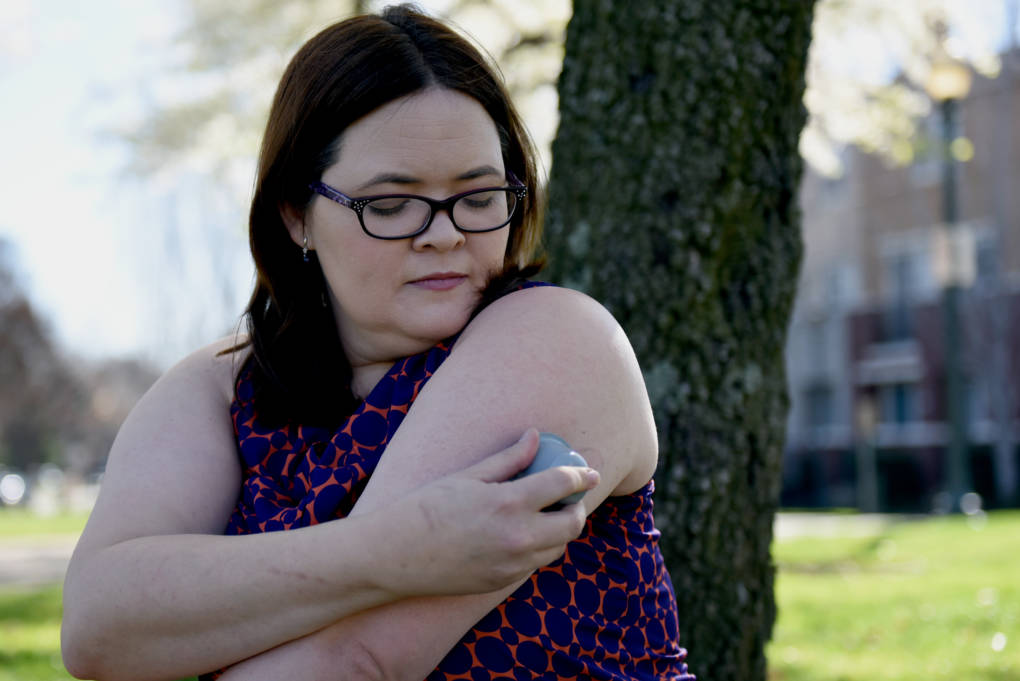
"caption": "Melissa Lee, diagnosed with Type 1 diabetes at 10, models what she says is an easy-to-use continous glucose monitor.",
"description": "Melissa Lee, who when 10 years old was diagnosed with Type 1 diabetes, models what she says is an easy-to-use continous glucose monitor, the FreeStyle Libre. ",
"title": "LIBREDIABETESGLUCOSE",
"credit": "Lauren Hanussak/KQED",
"status": "inherit",
"isLoading": false,
"fetchFailed": false
},
"futureofyou_440232": {
"type": "attachments",
"id": "futureofyou_440232",
"meta": {
"index": "attachments_1716263798",
"site": "futureofyou",
"id": "440232",
"found": true
},
"parent": 440231,
"imgSizes": {
"small": {
"file": "https://ww2.kqed.org/app/uploads/sites/13/2018/02/606_npr_deep_learning_3000px_wide-8ed918393f08414b80c281a835a584d945428d49-520x292.jpg",
"width": 520,
"mimeType": "image/jpeg",
"height": 292
},
"twentyfourteen-full-width": {
"file": "https://ww2.kqed.org/app/uploads/sites/13/2018/02/606_npr_deep_learning_3000px_wide-8ed918393f08414b80c281a835a584d945428d49-1038x576.jpg",
"width": 1038,
"mimeType": "image/jpeg",
"height": 576
},
"thumbnail": {
"file": "https://ww2.kqed.org/app/uploads/sites/13/2018/02/606_npr_deep_learning_3000px_wide-8ed918393f08414b80c281a835a584d945428d49-160x90.jpg",
"width": 160,
"mimeType": "image/jpeg",
"height": 90
},
"fd-sm": {
"file": "https://ww2.kqed.org/app/uploads/sites/13/2018/02/606_npr_deep_learning_3000px_wide-8ed918393f08414b80c281a835a584d945428d49-960x540.jpg",
"width": 960,
"mimeType": "image/jpeg",
"height": 540
},
"post-thumbnail": {
"file": "https://ww2.kqed.org/app/uploads/sites/13/2018/02/606_npr_deep_learning_3000px_wide-8ed918393f08414b80c281a835a584d945428d49-672x372.jpg",
"width": 672,
"mimeType": "image/jpeg",
"height": 372
},
"xsmall": {
"file": "https://ww2.kqed.org/app/uploads/sites/13/2018/02/606_npr_deep_learning_3000px_wide-8ed918393f08414b80c281a835a584d945428d49-375x211.jpg",
"width": 375,
"mimeType": "image/jpeg",
"height": 211
},
"kqedFullSize": {
"file": "https://ww2.kqed.org/app/uploads/sites/13/2018/02/606_npr_deep_learning_3000px_wide-8ed918393f08414b80c281a835a584d945428d49.jpg",
"width": 3000,
"height": 1687
},
"large": {
"file": "https://ww2.kqed.org/app/uploads/sites/13/2018/02/606_npr_deep_learning_3000px_wide-8ed918393f08414b80c281a835a584d945428d49-1020x574.jpg",
"width": 1020,
"mimeType": "image/jpeg",
"height": 574
},
"xlarge": {
"file": "https://ww2.kqed.org/app/uploads/sites/13/2018/02/606_npr_deep_learning_3000px_wide-8ed918393f08414b80c281a835a584d945428d49-1180x664.jpg",
"width": 1180,
"mimeType": "image/jpeg",
"height": 664
},
"guest-author-50": {
"file": "https://ww2.kqed.org/app/uploads/sites/13/2018/02/606_npr_deep_learning_3000px_wide-8ed918393f08414b80c281a835a584d945428d49-50x50.jpg",
"width": 50,
"mimeType": "image/jpeg",
"height": 50
},
"guest-author-96": {
"file": "https://ww2.kqed.org/app/uploads/sites/13/2018/02/606_npr_deep_learning_3000px_wide-8ed918393f08414b80c281a835a584d945428d49-96x96.jpg",
"width": 96,
"mimeType": "image/jpeg",
"height": 96
},
"medium": {
"file": "https://ww2.kqed.org/app/uploads/sites/13/2018/02/606_npr_deep_learning_3000px_wide-8ed918393f08414b80c281a835a584d945428d49-800x450.jpg",
"width": 800,
"mimeType": "image/jpeg",
"height": 450
},
"guest-author-64": {
"file": "https://ww2.kqed.org/app/uploads/sites/13/2018/02/606_npr_deep_learning_3000px_wide-8ed918393f08414b80c281a835a584d945428d49-64x64.jpg",
"width": 64,
"mimeType": "image/jpeg",
"height": 64
},
"guest-author-32": {
"file": "https://ww2.kqed.org/app/uploads/sites/13/2018/02/606_npr_deep_learning_3000px_wide-8ed918393f08414b80c281a835a584d945428d49-32x32.jpg",
"width": 32,
"mimeType": "image/jpeg",
"height": 32
},
"fd-lrg": {
"file": "https://ww2.kqed.org/app/uploads/sites/13/2018/02/606_npr_deep_learning_3000px_wide-8ed918393f08414b80c281a835a584d945428d49-1920x1080.jpg",
"width": 1920,
"mimeType": "image/jpeg",
"height": 1080
},
"fd-med": {
"file": "https://ww2.kqed.org/app/uploads/sites/13/2018/02/606_npr_deep_learning_3000px_wide-8ed918393f08414b80c281a835a584d945428d49-1180x664.jpg",
"width": 1180,
"mimeType": "image/jpeg",
"height": 664
},
"full-width": {
"file": "https://ww2.kqed.org/app/uploads/sites/13/2018/02/606_npr_deep_learning_3000px_wide-8ed918393f08414b80c281a835a584d945428d49-1920x1080.jpg",
"width": 1920,
"mimeType": "image/jpeg",
"height": 1080
},
"detail": {
"file": "https://ww2.kqed.org/app/uploads/sites/13/2018/02/606_npr_deep_learning_3000px_wide-8ed918393f08414b80c281a835a584d945428d49-150x150.jpg",
"width": 150,
"mimeType": "image/jpeg",
"height": 150
},
"medium_large": {
"file": "https://ww2.kqed.org/app/uploads/sites/13/2018/02/606_npr_deep_learning_3000px_wide-8ed918393f08414b80c281a835a584d945428d49-768x432.jpg",
"width": 768,
"mimeType": "image/jpeg",
"height": 432
},
"guest-author-128": {
"file": "https://ww2.kqed.org/app/uploads/sites/13/2018/02/606_npr_deep_learning_3000px_wide-8ed918393f08414b80c281a835a584d945428d49-128x128.jpg",
"width": 128,
"mimeType": "image/jpeg",
"height": 128
},
"xxsmall": {
"file": "https://ww2.kqed.org/app/uploads/sites/13/2018/02/606_npr_deep_learning_3000px_wide-8ed918393f08414b80c281a835a584d945428d49-240x135.jpg",
"width": 240,
"mimeType": "image/jpeg",
"height": 135
}
},
"publishDate": 1521224846,
"modified": 1521224846,
"caption": null,
"description": "Computers use artificial intelligence to do everything from drive cars to pick music we'll like. But what exactly is artificial intelligence? How does it work? What are its limits?",
"title": "Computers use artificial intelligence to do everything from drive cars to pick music we'll like. But what exactly is artificial intelligence? How does it work? What are its limits?",
"credit": null,
"status": "inherit",
"isLoading": false,
"fetchFailed": false
},
"futureofyou_440165": {
"type": "attachments",
"id": "futureofyou_440165",
"meta": {
"index": "attachments_1716263798",
"site": "futureofyou",
"id": "440165",
"found": true
},
"parent": 440163,
"imgSizes": {
"small": {
"file": "https://ww2.kqed.org/app/uploads/sites/13/2018/03/GettyImages-930713836-520x346.jpg",
"width": 520,
"mimeType": "image/jpeg",
"height": 346
},
"twentyfourteen-full-width": {
"file": "https://ww2.kqed.org/app/uploads/sites/13/2018/03/GettyImages-930713836-1038x576.jpg",
"width": 1038,
"mimeType": "image/jpeg",
"height": 576
},
"thumbnail": {
"file": "https://ww2.kqed.org/app/uploads/sites/13/2018/03/GettyImages-930713836-160x106.jpg",
"width": 160,
"mimeType": "image/jpeg",
"height": 106
},
"fd-sm": {
"file": "https://ww2.kqed.org/app/uploads/sites/13/2018/03/GettyImages-930713836-960x638.jpg",
"width": 960,
"mimeType": "image/jpeg",
"height": 638
},
"post-thumbnail": {
"file": "https://ww2.kqed.org/app/uploads/sites/13/2018/03/GettyImages-930713836-672x372.jpg",
"width": 672,
"mimeType": "image/jpeg",
"height": 372
},
"xsmall": {
"file": "https://ww2.kqed.org/app/uploads/sites/13/2018/03/GettyImages-930713836-375x249.jpg",
"width": 375,
"mimeType": "image/jpeg",
"height": 249
},
"kqedFullSize": {
"file": "https://ww2.kqed.org/app/uploads/sites/13/2018/03/GettyImages-930713836.jpg",
"width": 3000,
"height": 1994
},
"large": {
"file": "https://ww2.kqed.org/app/uploads/sites/13/2018/03/GettyImages-930713836-1020x678.jpg",
"width": 1020,
"mimeType": "image/jpeg",
"height": 678
},
"xlarge": {
"file": "https://ww2.kqed.org/app/uploads/sites/13/2018/03/GettyImages-930713836-1180x784.jpg",
"width": 1180,
"mimeType": "image/jpeg",
"height": 784
},
"guest-author-50": {
"file": "https://ww2.kqed.org/app/uploads/sites/13/2018/03/GettyImages-930713836-50x50.jpg",
"width": 50,
"mimeType": "image/jpeg",
"height": 50
},
"guest-author-96": {
"file": "https://ww2.kqed.org/app/uploads/sites/13/2018/03/GettyImages-930713836-96x96.jpg",
"width": 96,
"mimeType": "image/jpeg",
"height": 96
},
"medium": {
"file": "https://ww2.kqed.org/app/uploads/sites/13/2018/03/GettyImages-930713836-800x532.jpg",
"width": 800,
"mimeType": "image/jpeg",
"height": 532
},
"guest-author-64": {
"file": "https://ww2.kqed.org/app/uploads/sites/13/2018/03/GettyImages-930713836-64x64.jpg",
"width": 64,
"mimeType": "image/jpeg",
"height": 64
},
"guest-author-32": {
"file": "https://ww2.kqed.org/app/uploads/sites/13/2018/03/GettyImages-930713836-32x32.jpg",
"width": 32,
"mimeType": "image/jpeg",
"height": 32
},
"fd-lrg": {
"file": "https://ww2.kqed.org/app/uploads/sites/13/2018/03/GettyImages-930713836-1920x1276.jpg",
"width": 1920,
"mimeType": "image/jpeg",
"height": 1276
},
"fd-med": {
"file": "https://ww2.kqed.org/app/uploads/sites/13/2018/03/GettyImages-930713836-1180x784.jpg",
"width": 1180,
"mimeType": "image/jpeg",
"height": 784
},
"full-width": {
"file": "https://ww2.kqed.org/app/uploads/sites/13/2018/03/GettyImages-930713836-1920x1276.jpg",
"width": 1920,
"mimeType": "image/jpeg",
"height": 1276
},
"detail": {
"file": "https://ww2.kqed.org/app/uploads/sites/13/2018/03/GettyImages-930713836-150x150.jpg",
"width": 150,
"mimeType": "image/jpeg",
"height": 150
},
"medium_large": {
"file": "https://ww2.kqed.org/app/uploads/sites/13/2018/03/GettyImages-930713836-768x510.jpg",
"width": 768,
"mimeType": "image/jpeg",
"height": 510
},
"guest-author-128": {
"file": "https://ww2.kqed.org/app/uploads/sites/13/2018/03/GettyImages-930713836-128x128.jpg",
"width": 128,
"mimeType": "image/jpeg",
"height": 128
},
"xxsmall": {
"file": "https://ww2.kqed.org/app/uploads/sites/13/2018/03/GettyImages-930713836-240x160.jpg",
"width": 240,
"mimeType": "image/jpeg",
"height": 160
}
},
"publishDate": 1521068816,
"modified": 1521068878,
"caption": "(Credit: Michael Loccisano/Getty Images for SXSW)",
"description": null,
"title": "\"You Can Choose Your Family\" Premiere - 2018 SXSW Conference and Festivals",
"credit": "(Credit: Michael Loccisano/Getty Images for SXSW)",
"status": "inherit",
"isLoading": false,
"fetchFailed": false
},
"futureofyou_216747": {
"type": "attachments",
"id": "futureofyou_216747",
"meta": {
"index": "attachments_1716263798",
"site": "futureofyou",
"id": "216747",
"found": true
},
"parent": 216744,
"imgSizes": {
"twentyfourteen-full-width": {
"file": "https://ww2.kqed.org/app/uploads/sites/13/2016/08/gettyimages-490567928-7282f8451705f729179fb82532448d09aff6f215-1-1038x576.jpg",
"width": 1038,
"mimeType": "image/jpeg",
"height": 576
},
"thumbnail": {
"file": "https://ww2.kqed.org/app/uploads/sites/13/2016/08/gettyimages-490567928-7282f8451705f729179fb82532448d09aff6f215-1-400x300.jpg",
"width": 400,
"mimeType": "image/jpeg",
"height": 300
},
"fd-sm": {
"file": "https://ww2.kqed.org/app/uploads/sites/13/2016/08/gettyimages-490567928-7282f8451705f729179fb82532448d09aff6f215-1-960x720.jpg",
"width": 960,
"mimeType": "image/jpeg",
"height": 720
},
"post-thumbnail": {
"file": "https://ww2.kqed.org/app/uploads/sites/13/2016/08/gettyimages-490567928-7282f8451705f729179fb82532448d09aff6f215-1-672x372.jpg",
"width": 672,
"mimeType": "image/jpeg",
"height": 372
},
"kqedFullSize": {
"file": "https://ww2.kqed.org/app/uploads/sites/13/2016/08/gettyimages-490567928-7282f8451705f729179fb82532448d09aff6f215-1-e1529097309113.jpg",
"width": 1920,
"height": 1440
},
"large": {
"file": "https://ww2.kqed.org/app/uploads/sites/13/2016/08/gettyimages-490567928-7282f8451705f729179fb82532448d09aff6f215-1-1180x885.jpg",
"width": 1180,
"mimeType": "image/jpeg",
"height": 885
},
"guest-author-50": {
"file": "https://ww2.kqed.org/app/uploads/sites/13/2016/08/gettyimages-490567928-7282f8451705f729179fb82532448d09aff6f215-1-50x50.jpg",
"width": 50,
"mimeType": "image/jpeg",
"height": 50
},
"guest-author-96": {
"file": "https://ww2.kqed.org/app/uploads/sites/13/2016/08/gettyimages-490567928-7282f8451705f729179fb82532448d09aff6f215-1-96x96.jpg",
"width": 96,
"mimeType": "image/jpeg",
"height": 96
},
"medium": {
"file": "https://ww2.kqed.org/app/uploads/sites/13/2016/08/gettyimages-490567928-7282f8451705f729179fb82532448d09aff6f215-1-800x600.jpg",
"width": 800,
"mimeType": "image/jpeg",
"height": 600
},
"guest-author-64": {
"file": "https://ww2.kqed.org/app/uploads/sites/13/2016/08/gettyimages-490567928-7282f8451705f729179fb82532448d09aff6f215-1-64x64.jpg",
"width": 64,
"mimeType": "image/jpeg",
"height": 64
},
"guest-author-32": {
"file": "https://ww2.kqed.org/app/uploads/sites/13/2016/08/gettyimages-490567928-7282f8451705f729179fb82532448d09aff6f215-1-32x32.jpg",
"width": 32,
"mimeType": "image/jpeg",
"height": 32
},
"fd-lrg": {
"file": "https://ww2.kqed.org/app/uploads/sites/13/2016/08/gettyimages-490567928-7282f8451705f729179fb82532448d09aff6f215-1-1920x1440.jpg",
"width": 1920,
"mimeType": "image/jpeg",
"height": 1440
},
"fd-med": {
"file": "https://ww2.kqed.org/app/uploads/sites/13/2016/08/gettyimages-490567928-7282f8451705f729179fb82532448d09aff6f215-1-1180x885.jpg",
"width": 1180,
"mimeType": "image/jpeg",
"height": 885
},
"detail": {
"file": "https://ww2.kqed.org/app/uploads/sites/13/2016/08/gettyimages-490567928-7282f8451705f729179fb82532448d09aff6f215-1-150x150.jpg",
"width": 150,
"mimeType": "image/jpeg",
"height": 150
},
"medium_large": {
"file": "https://ww2.kqed.org/app/uploads/sites/13/2016/08/gettyimages-490567928-7282f8451705f729179fb82532448d09aff6f215-1-768x576.jpg",
"width": 768,
"mimeType": "image/jpeg",
"height": 576
},
"guest-author-128": {
"file": "https://ww2.kqed.org/app/uploads/sites/13/2016/08/gettyimages-490567928-7282f8451705f729179fb82532448d09aff6f215-1-128x128.jpg",
"width": 128,
"mimeType": "image/jpeg",
"height": 128
}
},
"publishDate": 1470352519,
"modified": 1529163904,
"caption": "Elizabeth Holmes in 2015. She and former Theranos COO Ramesh \"Sunny\" Balwani have been indicted on fraud charges.",
"description": "Elizabeth Holmes, founder and CEO of Theranos, speaks at the Clinton Global Initiative in 2015.",
"title": "Elizabeth Holmes, founder and CEO of Theranos, speaks at the Clinton Global Initiative's closing session Sept. 29, 2015, in New York City.",
"credit": "Clinton Global Initiative",
"status": "inherit",
"isLoading": false,
"fetchFailed": false
},
"futureofyou_440007": {
"type": "attachments",
"id": "futureofyou_440007",
"meta": {
"index": "attachments_1716263798",
"site": "futureofyou",
"id": "440007",
"found": true
},
"parent": 440006,
"imgSizes": {
"small": {
"file": "https://ww2.kqed.org/app/uploads/sites/13/2018/03/hyperalgesia_wide-3c4d62bba602a87d1b37af10a6b3f6d86ca2dfbd-520x293.jpg",
"width": 520,
"mimeType": "image/jpeg",
"height": 293
},
"twentyfourteen-full-width": {
"file": "https://ww2.kqed.org/app/uploads/sites/13/2018/03/hyperalgesia_wide-3c4d62bba602a87d1b37af10a6b3f6d86ca2dfbd-1038x576.jpg",
"width": 1038,
"mimeType": "image/jpeg",
"height": 576
},
"thumbnail": {
"file": "https://ww2.kqed.org/app/uploads/sites/13/2018/03/hyperalgesia_wide-3c4d62bba602a87d1b37af10a6b3f6d86ca2dfbd-160x90.jpg",
"width": 160,
"mimeType": "image/jpeg",
"height": 90
},
"fd-sm": {
"file": "https://ww2.kqed.org/app/uploads/sites/13/2018/03/hyperalgesia_wide-3c4d62bba602a87d1b37af10a6b3f6d86ca2dfbd-960x540.jpg",
"width": 960,
"mimeType": "image/jpeg",
"height": 540
},
"post-thumbnail": {
"file": "https://ww2.kqed.org/app/uploads/sites/13/2018/03/hyperalgesia_wide-3c4d62bba602a87d1b37af10a6b3f6d86ca2dfbd-672x372.jpg",
"width": 672,
"mimeType": "image/jpeg",
"height": 372
},
"xsmall": {
"file": "https://ww2.kqed.org/app/uploads/sites/13/2018/03/hyperalgesia_wide-3c4d62bba602a87d1b37af10a6b3f6d86ca2dfbd-375x211.jpg",
"width": 375,
"mimeType": "image/jpeg",
"height": 211
},
"kqedFullSize": {
"file": "https://ww2.kqed.org/app/uploads/sites/13/2018/03/hyperalgesia_wide-3c4d62bba602a87d1b37af10a6b3f6d86ca2dfbd.jpg",
"width": 2000,
"height": 1125
},
"large": {
"file": "https://ww2.kqed.org/app/uploads/sites/13/2018/03/hyperalgesia_wide-3c4d62bba602a87d1b37af10a6b3f6d86ca2dfbd-1020x574.jpg",
"width": 1020,
"mimeType": "image/jpeg",
"height": 574
},
"xlarge": {
"file": "https://ww2.kqed.org/app/uploads/sites/13/2018/03/hyperalgesia_wide-3c4d62bba602a87d1b37af10a6b3f6d86ca2dfbd-1180x664.jpg",
"width": 1180,
"mimeType": "image/jpeg",
"height": 664
},
"guest-author-50": {
"file": "https://ww2.kqed.org/app/uploads/sites/13/2018/03/hyperalgesia_wide-3c4d62bba602a87d1b37af10a6b3f6d86ca2dfbd-50x50.jpg",
"width": 50,
"mimeType": "image/jpeg",
"height": 50
},
"guest-author-96": {
"file": "https://ww2.kqed.org/app/uploads/sites/13/2018/03/hyperalgesia_wide-3c4d62bba602a87d1b37af10a6b3f6d86ca2dfbd-96x96.jpg",
"width": 96,
"mimeType": "image/jpeg",
"height": 96
},
"medium": {
"file": "https://ww2.kqed.org/app/uploads/sites/13/2018/03/hyperalgesia_wide-3c4d62bba602a87d1b37af10a6b3f6d86ca2dfbd-800x450.jpg",
"width": 800,
"mimeType": "image/jpeg",
"height": 450
},
"guest-author-64": {
"file": "https://ww2.kqed.org/app/uploads/sites/13/2018/03/hyperalgesia_wide-3c4d62bba602a87d1b37af10a6b3f6d86ca2dfbd-64x64.jpg",
"width": 64,
"mimeType": "image/jpeg",
"height": 64
},
"guest-author-32": {
"file": "https://ww2.kqed.org/app/uploads/sites/13/2018/03/hyperalgesia_wide-3c4d62bba602a87d1b37af10a6b3f6d86ca2dfbd-32x32.jpg",
"width": 32,
"mimeType": "image/jpeg",
"height": 32
},
"fd-lrg": {
"file": "https://ww2.kqed.org/app/uploads/sites/13/2018/03/hyperalgesia_wide-3c4d62bba602a87d1b37af10a6b3f6d86ca2dfbd-1920x1080.jpg",
"width": 1920,
"mimeType": "image/jpeg",
"height": 1080
},
"fd-med": {
"file": "https://ww2.kqed.org/app/uploads/sites/13/2018/03/hyperalgesia_wide-3c4d62bba602a87d1b37af10a6b3f6d86ca2dfbd-1180x664.jpg",
"width": 1180,
"mimeType": "image/jpeg",
"height": 664
},
"full-width": {
"file": "https://ww2.kqed.org/app/uploads/sites/13/2018/03/hyperalgesia_wide-3c4d62bba602a87d1b37af10a6b3f6d86ca2dfbd-1920x1080.jpg",
"width": 1920,
"mimeType": "image/jpeg",
"height": 1080
},
"detail": {
"file": "https://ww2.kqed.org/app/uploads/sites/13/2018/03/hyperalgesia_wide-3c4d62bba602a87d1b37af10a6b3f6d86ca2dfbd-150x150.jpg",
"width": 150,
"mimeType": "image/jpeg",
"height": 150
},
"medium_large": {
"file": "https://ww2.kqed.org/app/uploads/sites/13/2018/03/hyperalgesia_wide-3c4d62bba602a87d1b37af10a6b3f6d86ca2dfbd-768x432.jpg",
"width": 768,
"mimeType": "image/jpeg",
"height": 432
},
"guest-author-128": {
"file": "https://ww2.kqed.org/app/uploads/sites/13/2018/03/hyperalgesia_wide-3c4d62bba602a87d1b37af10a6b3f6d86ca2dfbd-128x128.jpg",
"width": 128,
"mimeType": "image/jpeg",
"height": 128
},
"xxsmall": {
"file": "https://ww2.kqed.org/app/uploads/sites/13/2018/03/hyperalgesia_wide-3c4d62bba602a87d1b37af10a6b3f6d86ca2dfbd-240x135.jpg",
"width": 240,
"mimeType": "image/jpeg",
"height": 135
}
},
"publishDate": 1520288518,
"modified": 1520288518,
"caption": null,
"description": "Opioids could make some patients' pain worse.",
"title": "Opioids could make some patients' pain worse.",
"credit": null,
"status": "inherit",
"isLoading": false,
"fetchFailed": false
},
"futureofyou_439705": {
"type": "attachments",
"id": "futureofyou_439705",
"meta": {
"index": "attachments_1716263798",
"site": "futureofyou",
"id": "439705",
"found": true
},
"parent": 439584,
"imgSizes": {
"small": {
"file": "https://ww2.kqed.org/app/uploads/sites/13/2018/02/IMG_4100-e1519260279204-520x367.jpg",
"width": 520,
"mimeType": "image/jpeg",
"height": 367
},
"twentyfourteen-full-width": {
"file": "https://ww2.kqed.org/app/uploads/sites/13/2018/02/IMG_4100-e1519260279204-1038x576.jpg",
"width": 1038,
"mimeType": "image/jpeg",
"height": 576
},
"thumbnail": {
"file": "https://ww2.kqed.org/app/uploads/sites/13/2018/02/IMG_4100-e1519260279204-160x113.jpg",
"width": 160,
"mimeType": "image/jpeg",
"height": 113
},
"fd-sm": {
"file": "https://ww2.kqed.org/app/uploads/sites/13/2018/02/IMG_4100-e1519260279204-960x677.jpg",
"width": 960,
"mimeType": "image/jpeg",
"height": 677
},
"post-thumbnail": {
"file": "https://ww2.kqed.org/app/uploads/sites/13/2018/02/IMG_4100-e1519260279204-672x372.jpg",
"width": 672,
"mimeType": "image/jpeg",
"height": 372
},
"xsmall": {
"file": "https://ww2.kqed.org/app/uploads/sites/13/2018/02/IMG_4100-e1519260279204-375x264.jpg",
"width": 375,
"mimeType": "image/jpeg",
"height": 264
},
"kqedFullSize": {
"file": "https://ww2.kqed.org/app/uploads/sites/13/2018/02/IMG_4100-e1519260279204.jpg",
"width": 1627,
"height": 1147
},
"large": {
"file": "https://ww2.kqed.org/app/uploads/sites/13/2018/02/IMG_4100-e1519260279204-1020x719.jpg",
"width": 1020,
"mimeType": "image/jpeg",
"height": 719
},
"xlarge": {
"file": "https://ww2.kqed.org/app/uploads/sites/13/2018/02/IMG_4100-e1519260279204-1180x832.jpg",
"width": 1180,
"mimeType": "image/jpeg",
"height": 832
},
"guest-author-50": {
"file": "https://ww2.kqed.org/app/uploads/sites/13/2018/02/IMG_4100-e1519260279204-50x50.jpg",
"width": 50,
"mimeType": "image/jpeg",
"height": 50
},
"guest-author-96": {
"file": "https://ww2.kqed.org/app/uploads/sites/13/2018/02/IMG_4100-e1519260279204-96x96.jpg",
"width": 96,
"mimeType": "image/jpeg",
"height": 96
},
"medium": {
"file": "https://ww2.kqed.org/app/uploads/sites/13/2018/02/IMG_4100-e1519260279204-800x564.jpg",
"width": 800,
"mimeType": "image/jpeg",
"height": 564
},
"guest-author-64": {
"file": "https://ww2.kqed.org/app/uploads/sites/13/2018/02/IMG_4100-e1519260279204-64x64.jpg",
"width": 64,
"mimeType": "image/jpeg",
"height": 64
},
"guest-author-32": {
"file": "https://ww2.kqed.org/app/uploads/sites/13/2018/02/IMG_4100-e1519260279204-32x32.jpg",
"width": 32,
"mimeType": "image/jpeg",
"height": 32
},
"fd-lrg": {
"file": "https://ww2.kqed.org/app/uploads/sites/13/2018/02/IMG_4100-1920x1440.jpg",
"width": 1920,
"mimeType": "image/jpeg",
"height": 1440
},
"fd-med": {
"file": "https://ww2.kqed.org/app/uploads/sites/13/2018/02/IMG_4100-e1519260279204-1180x832.jpg",
"width": 1180,
"mimeType": "image/jpeg",
"height": 832
},
"full-width": {
"file": "https://ww2.kqed.org/app/uploads/sites/13/2018/02/IMG_4100-1920x1440.jpg",
"width": 1920,
"mimeType": "image/jpeg",
"height": 1440
},
"detail": {
"file": "https://ww2.kqed.org/app/uploads/sites/13/2018/02/IMG_4100-e1519260279204-150x150.jpg",
"width": 150,
"mimeType": "image/jpeg",
"height": 150
},
"medium_large": {
"file": "https://ww2.kqed.org/app/uploads/sites/13/2018/02/IMG_4100-e1519260279204-768x541.jpg",
"width": 768,
"mimeType": "image/jpeg",
"height": 541
},
"guest-author-128": {
"file": "https://ww2.kqed.org/app/uploads/sites/13/2018/02/IMG_4100-e1519260279204-128x128.jpg",
"width": 128,
"mimeType": "image/jpeg",
"height": 128
},
"xxsmall": {
"file": "https://ww2.kqed.org/app/uploads/sites/13/2018/02/IMG_4100-e1519260279204-240x169.jpg",
"width": 240,
"mimeType": "image/jpeg",
"height": 169
}
},
"publishDate": 1519260220,
"modified": 1519662116,
"caption": "13-year-old Shaun Banagan at a check-up to assure his cancer is still in remission. ",
"description": null,
"title": "IMG_4100",
"credit": "Lesley McClurg/ KQED",
"status": "inherit",
"isLoading": false,
"fetchFailed": false
},
"futureofyou_439683": {
"type": "attachments",
"id": "futureofyou_439683",
"meta": {
"index": "attachments_1716263798",
"site": "futureofyou",
"id": "439683",
"found": true
},
"parent": 439593,
"imgSizes": {
"small": {
"file": "https://ww2.kqed.org/app/uploads/sites/13/2018/02/iStock-854725372-520x231.jpg",
"width": 520,
"mimeType": "image/jpeg",
"height": 231
},
"twentyfourteen-full-width": {
"file": "https://ww2.kqed.org/app/uploads/sites/13/2018/02/iStock-854725372-1038x576.jpg",
"width": 1038,
"mimeType": "image/jpeg",
"height": 576
},
"thumbnail": {
"file": "https://ww2.kqed.org/app/uploads/sites/13/2018/02/iStock-854725372-160x71.jpg",
"width": 160,
"mimeType": "image/jpeg",
"height": 71
},
"fd-sm": {
"file": "https://ww2.kqed.org/app/uploads/sites/13/2018/02/iStock-854725372-960x427.jpg",
"width": 960,
"mimeType": "image/jpeg",
"height": 427
},
"post-thumbnail": {
"file": "https://ww2.kqed.org/app/uploads/sites/13/2018/02/iStock-854725372-672x372.jpg",
"width": 672,
"mimeType": "image/jpeg",
"height": 372
},
"xsmall": {
"file": "https://ww2.kqed.org/app/uploads/sites/13/2018/02/iStock-854725372-375x167.jpg",
"width": 375,
"mimeType": "image/jpeg",
"height": 167
},
"kqedFullSize": {
"file": "https://ww2.kqed.org/app/uploads/sites/13/2018/02/iStock-854725372-e1519251131598.jpg",
"width": 1920,
"height": 853
},
"large": {
"file": "https://ww2.kqed.org/app/uploads/sites/13/2018/02/iStock-854725372-1020x453.jpg",
"width": 1020,
"mimeType": "image/jpeg",
"height": 453
},
"xlarge": {
"file": "https://ww2.kqed.org/app/uploads/sites/13/2018/02/iStock-854725372-1180x524.jpg",
"width": 1180,
"mimeType": "image/jpeg",
"height": 524
},
"guest-author-50": {
"file": "https://ww2.kqed.org/app/uploads/sites/13/2018/02/iStock-854725372-50x50.jpg",
"width": 50,
"mimeType": "image/jpeg",
"height": 50
},
"guest-author-96": {
"file": "https://ww2.kqed.org/app/uploads/sites/13/2018/02/iStock-854725372-96x96.jpg",
"width": 96,
"mimeType": "image/jpeg",
"height": 96
},
"medium": {
"file": "https://ww2.kqed.org/app/uploads/sites/13/2018/02/iStock-854725372-800x355.jpg",
"width": 800,
"mimeType": "image/jpeg",
"height": 355
},
"guest-author-64": {
"file": "https://ww2.kqed.org/app/uploads/sites/13/2018/02/iStock-854725372-64x64.jpg",
"width": 64,
"mimeType": "image/jpeg",
"height": 64
},
"guest-author-32": {
"file": "https://ww2.kqed.org/app/uploads/sites/13/2018/02/iStock-854725372-32x32.jpg",
"width": 32,
"mimeType": "image/jpeg",
"height": 32
},
"fd-lrg": {
"file": "https://ww2.kqed.org/app/uploads/sites/13/2018/02/iStock-854725372-1920x853.jpg",
"width": 1920,
"mimeType": "image/jpeg",
"height": 853
},
"fd-med": {
"file": "https://ww2.kqed.org/app/uploads/sites/13/2018/02/iStock-854725372-1180x524.jpg",
"width": 1180,
"mimeType": "image/jpeg",
"height": 524
},
"full-width": {
"file": "https://ww2.kqed.org/app/uploads/sites/13/2018/02/iStock-854725372-1920x853.jpg",
"width": 1920,
"mimeType": "image/jpeg",
"height": 853
},
"detail": {
"file": "https://ww2.kqed.org/app/uploads/sites/13/2018/02/iStock-854725372-150x150.jpg",
"width": 150,
"mimeType": "image/jpeg",
"height": 150
},
"medium_large": {
"file": "https://ww2.kqed.org/app/uploads/sites/13/2018/02/iStock-854725372-768x341.jpg",
"width": 768,
"mimeType": "image/jpeg",
"height": 341
},
"guest-author-128": {
"file": "https://ww2.kqed.org/app/uploads/sites/13/2018/02/iStock-854725372-128x128.jpg",
"width": 128,
"mimeType": "image/jpeg",
"height": 128
},
"xxsmall": {
"file": "https://ww2.kqed.org/app/uploads/sites/13/2018/02/iStock-854725372-240x107.jpg",
"width": 240,
"mimeType": "image/jpeg",
"height": 107
}
},
"publishDate": 1519251103,
"modified": 1519251154,
"caption": null,
"description": null,
"title": "Healthy food clean eating selection",
"credit": "iStock",
"status": "inherit",
"isLoading": false,
"fetchFailed": false
},
"futureofyou_439529": {
"type": "attachments",
"id": "futureofyou_439529",
"meta": {
"index": "attachments_1716263798",
"site": "futureofyou",
"id": "439529",
"found": true
},
"parent": 439513,
"imgSizes": {
"small": {
"file": "https://ww2.kqed.org/app/uploads/sites/13/2018/02/482280004-520x335.jpg",
"width": 520,
"mimeType": "image/jpeg",
"height": 335
},
"twentyfourteen-full-width": {
"file": "https://ww2.kqed.org/app/uploads/sites/13/2018/02/482280004-1024x576.jpg",
"width": 1024,
"mimeType": "image/jpeg",
"height": 576
},
"thumbnail": {
"file": "https://ww2.kqed.org/app/uploads/sites/13/2018/02/482280004-160x103.jpg",
"width": 160,
"mimeType": "image/jpeg",
"height": 103
},
"fd-sm": {
"file": "https://ww2.kqed.org/app/uploads/sites/13/2018/02/482280004-960x619.jpg",
"width": 960,
"mimeType": "image/jpeg",
"height": 619
},
"post-thumbnail": {
"file": "https://ww2.kqed.org/app/uploads/sites/13/2018/02/482280004-672x372.jpg",
"width": 672,
"mimeType": "image/jpeg",
"height": 372
},
"xsmall": {
"file": "https://ww2.kqed.org/app/uploads/sites/13/2018/02/482280004-375x242.jpg",
"width": 375,
"mimeType": "image/jpeg",
"height": 242
},
"kqedFullSize": {
"file": "https://ww2.kqed.org/app/uploads/sites/13/2018/02/482280004.jpg",
"width": 1024,
"height": 660
},
"large": {
"file": "https://ww2.kqed.org/app/uploads/sites/13/2018/02/482280004-1020x657.jpg",
"width": 1020,
"mimeType": "image/jpeg",
"height": 657
},
"guest-author-50": {
"file": "https://ww2.kqed.org/app/uploads/sites/13/2018/02/482280004-50x50.jpg",
"width": 50,
"mimeType": "image/jpeg",
"height": 50
},
"guest-author-96": {
"file": "https://ww2.kqed.org/app/uploads/sites/13/2018/02/482280004-96x96.jpg",
"width": 96,
"mimeType": "image/jpeg",
"height": 96
},
"medium": {
"file": "https://ww2.kqed.org/app/uploads/sites/13/2018/02/482280004-800x516.jpg",
"width": 800,
"mimeType": "image/jpeg",
"height": 516
},
"guest-author-64": {
"file": "https://ww2.kqed.org/app/uploads/sites/13/2018/02/482280004-64x64.jpg",
"width": 64,
"mimeType": "image/jpeg",
"height": 64
},
"guest-author-32": {
"file": "https://ww2.kqed.org/app/uploads/sites/13/2018/02/482280004-32x32.jpg",
"width": 32,
"mimeType": "image/jpeg",
"height": 32
},
"detail": {
"file": "https://ww2.kqed.org/app/uploads/sites/13/2018/02/482280004-150x150.jpg",
"width": 150,
"mimeType": "image/jpeg",
"height": 150
},
"medium_large": {
"file": "https://ww2.kqed.org/app/uploads/sites/13/2018/02/482280004-768x495.jpg",
"width": 768,
"mimeType": "image/jpeg",
"height": 495
},
"guest-author-128": {
"file": "https://ww2.kqed.org/app/uploads/sites/13/2018/02/482280004-128x128.jpg",
"width": 128,
"mimeType": "image/jpeg",
"height": 128
},
"xxsmall": {
"file": "https://ww2.kqed.org/app/uploads/sites/13/2018/02/482280004-240x155.jpg",
"width": 240,
"mimeType": "image/jpeg",
"height": 155
}
},
"publishDate": 1518720782,
"modified": 1518720895,
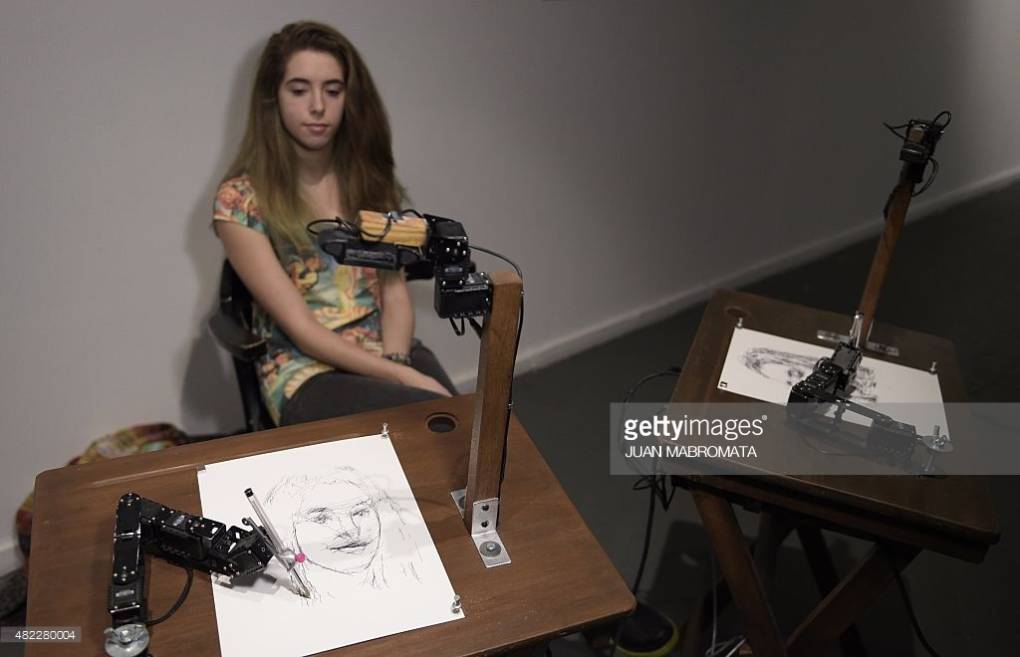
"caption": "A visitor has her portrait done by '3 Robots Named Paul' -- an interactive installation by French artist Patrick Tresset -- at the Borges Cultural Centre in Buenos Aires on July 29, 2015 as part of the International Joint Conference on Artificial Intelligence.",
"description": null,
"title": "482280004",
"credit": "Juan Mabromata/AFP/Getty Images",
"status": "inherit",
"isLoading": false,
"fetchFailed": false
},
"futureofyou_439330": {
"type": "attachments",
"id": "futureofyou_439330",
"meta": {
"index": "attachments_1716263798",
"site": "futureofyou",
"id": "439330",
"found": true
},
"parent": 439285,
"imgSizes": {
"small": {
"file": "https://ww2.kqed.org/app/uploads/sites/13/2018/02/CaptureRobot-520x297.png",
"width": 520,
"mimeType": "image/png",
"height": 297
},
"twentyfourteen-full-width": {
"file": "https://ww2.kqed.org/app/uploads/sites/13/2018/02/CaptureRobot-1038x576.png",
"width": 1038,
"mimeType": "image/png",
"height": 576
},
"thumbnail": {
"file": "https://ww2.kqed.org/app/uploads/sites/13/2018/02/CaptureRobot-160x91.png",
"width": 160,
"mimeType": "image/png",
"height": 91
},
"fd-sm": {
"file": "https://ww2.kqed.org/app/uploads/sites/13/2018/02/CaptureRobot-960x548.png",
"width": 960,
"mimeType": "image/png",
"height": 548
},
"post-thumbnail": {
"file": "https://ww2.kqed.org/app/uploads/sites/13/2018/02/CaptureRobot-672x372.png",
"width": 672,
"mimeType": "image/png",
"height": 372
},
"xsmall": {
"file": "https://ww2.kqed.org/app/uploads/sites/13/2018/02/CaptureRobot-375x214.png",
"width": 375,
"mimeType": "image/png",
"height": 214
},
"kqedFullSize": {
"file": "https://ww2.kqed.org/app/uploads/sites/13/2018/02/CaptureRobot.png",
"width": 1213,
"height": 693
},
"large": {
"file": "https://ww2.kqed.org/app/uploads/sites/13/2018/02/CaptureRobot-1020x583.png",
"width": 1020,
"mimeType": "image/png",
"height": 583
},
"xlarge": {
"file": "https://ww2.kqed.org/app/uploads/sites/13/2018/02/CaptureRobot-1180x674.png",
"width": 1180,
"mimeType": "image/png",
"height": 674
},
"guest-author-50": {
"file": "https://ww2.kqed.org/app/uploads/sites/13/2018/02/CaptureRobot-50x50.png",
"width": 50,
"mimeType": "image/png",
"height": 50
},
"guest-author-96": {
"file": "https://ww2.kqed.org/app/uploads/sites/13/2018/02/CaptureRobot-96x96.png",
"width": 96,
"mimeType": "image/png",
"height": 96
},
"medium": {
"file": "https://ww2.kqed.org/app/uploads/sites/13/2018/02/CaptureRobot-800x457.png",
"width": 800,
"mimeType": "image/png",
"height": 457
},
"guest-author-64": {
"file": "https://ww2.kqed.org/app/uploads/sites/13/2018/02/CaptureRobot-64x64.png",
"width": 64,
"mimeType": "image/png",
"height": 64
},
"guest-author-32": {
"file": "https://ww2.kqed.org/app/uploads/sites/13/2018/02/CaptureRobot-32x32.png",
"width": 32,
"mimeType": "image/png",
"height": 32
},
"fd-med": {
"file": "https://ww2.kqed.org/app/uploads/sites/13/2018/02/CaptureRobot-1180x674.png",
"width": 1180,
"mimeType": "image/png",
"height": 674
},
"detail": {
"file": "https://ww2.kqed.org/app/uploads/sites/13/2018/02/CaptureRobot-150x150.png",
"width": 150,
"mimeType": "image/png",
"height": 150
},
"medium_large": {
"file": "https://ww2.kqed.org/app/uploads/sites/13/2018/02/CaptureRobot-768x439.png",
"width": 768,
"mimeType": "image/png",
"height": 439
},
"guest-author-128": {
"file": "https://ww2.kqed.org/app/uploads/sites/13/2018/02/CaptureRobot-128x128.png",
"width": 128,
"mimeType": "image/png",
"height": 128
},
"xxsmall": {
"file": "https://ww2.kqed.org/app/uploads/sites/13/2018/02/CaptureRobot-240x137.png",
"width": 240,
"mimeType": "image/png",
"height": 137
}
},
"publishDate": 1517966081,
"modified": 1517966143,
"caption": null,
"description": null,
"title": "CaptureRobot",
"credit": "Shiho Fukada for STAT",
"status": "inherit",
"isLoading": false,
"fetchFailed": false
},
"futureofyou_274615": {
"type": "attachments",
"id": "futureofyou_274615",
"meta": {
"index": "attachments_1716263798",
"site": "futureofyou",
"id": "274615",
"found": true
},
"parent": 274449,
"imgSizes": {
"small": {
"file": "https://ww2.kqed.org/app/uploads/sites/13/2016/11/computerdoc-520x347.png",
"width": 520,
"mimeType": "image/png",
"height": 347
},
"twentyfourteen-full-width": {
"file": "https://ww2.kqed.org/app/uploads/sites/13/2016/11/computerdoc-1038x576.png",
"width": 1038,
"mimeType": "image/png",
"height": 576
},
"thumbnail": {
"file": "https://ww2.kqed.org/app/uploads/sites/13/2016/11/computerdoc-160x107.png",
"width": 160,
"mimeType": "image/png",
"height": 107
},
"fd-sm": {
"file": "https://ww2.kqed.org/app/uploads/sites/13/2016/11/computerdoc-960x640.png",
"width": 960,
"mimeType": "image/png",
"height": 640
},
"post-thumbnail": {
"file": "https://ww2.kqed.org/app/uploads/sites/13/2016/11/computerdoc-672x372.png",
"width": 672,
"mimeType": "image/png",
"height": 372
},
"xsmall": {
"file": "https://ww2.kqed.org/app/uploads/sites/13/2016/11/computerdoc-375x250.png",
"width": 375,
"mimeType": "image/png",
"height": 250
},
"kqedFullSize": {
"file": "https://ww2.kqed.org/app/uploads/sites/13/2016/11/computerdoc.png",
"width": 1920,
"height": 1280
},
"large": {
"file": "https://ww2.kqed.org/app/uploads/sites/13/2016/11/computerdoc-1020x680.png",
"width": 1020,
"mimeType": "image/png",
"height": 680
},
"xlarge": {
"file": "https://ww2.kqed.org/app/uploads/sites/13/2016/11/computerdoc-1180x787.png",
"width": 1180,
"mimeType": "image/png",
"height": 787
},
"guest-author-50": {
"file": "https://ww2.kqed.org/app/uploads/sites/13/2016/11/computerdoc-50x50.png",
"width": 50,
"mimeType": "image/png",
"height": 50
},
"guest-author-96": {
"file": "https://ww2.kqed.org/app/uploads/sites/13/2016/11/computerdoc-96x96.png",
"width": 96,
"mimeType": "image/png",
"height": 96
},
"medium": {
"file": "https://ww2.kqed.org/app/uploads/sites/13/2016/11/computerdoc-800x533.png",
"width": 800,
"mimeType": "image/png",
"height": 533
},
"guest-author-64": {
"file": "https://ww2.kqed.org/app/uploads/sites/13/2016/11/computerdoc-64x64.png",
"width": 64,
"mimeType": "image/png",
"height": 64
},
"guest-author-32": {
"file": "https://ww2.kqed.org/app/uploads/sites/13/2016/11/computerdoc-32x32.png",
"width": 32,
"mimeType": "image/png",
"height": 32
},
"fd-lrg": {
"file": "https://ww2.kqed.org/app/uploads/sites/13/2016/11/computerdoc-1920x1280.png",
"width": 1920,
"mimeType": "image/png",
"height": 1280
},
"fd-med": {
"file": "https://ww2.kqed.org/app/uploads/sites/13/2016/11/computerdoc-1180x787.png",
"width": 1180,
"mimeType": "image/png",
"height": 787
},
"full-width": {
"file": "https://ww2.kqed.org/app/uploads/sites/13/2016/11/computerdoc-1920x1280.png",
"width": 1920,
"mimeType": "image/png",
"height": 1280
},
"detail": {
"file": "https://ww2.kqed.org/app/uploads/sites/13/2016/11/computerdoc-150x150.png",
"width": 150,
"mimeType": "image/png",
"height": 150
},
"medium_large": {
"file": "https://ww2.kqed.org/app/uploads/sites/13/2016/11/computerdoc-768x512.png",
"width": 768,
"mimeType": "image/png",
"height": 512
},
"guest-author-128": {
"file": "https://ww2.kqed.org/app/uploads/sites/13/2016/11/computerdoc-128x128.png",
"width": 128,
"mimeType": "image/png",
"height": 128
},
"xxsmall": {
"file": "https://ww2.kqed.org/app/uploads/sites/13/2016/11/computerdoc-240x160.png",
"width": 240,
"mimeType": "image/png",
"height": 160
}
},
"publishDate": 1478041895,
"modified": 1517014076,
"caption": null,
"description": null,
"title": "computerdoc",
"credit": "Illustration by Teodros Hailye/KQED",
"status": "inherit",
"isLoading": false,
"fetchFailed": false
},
"futureofyou_438488": {
"type": "attachments",
"id": "futureofyou_438488",
"meta": {
"index": "attachments_1716263798",
"site": "futureofyou",
"id": "438488",
"found": true
},
"parent": 438487,
"imgSizes": {
"small": {
"file": "https://ww2.kqed.org/app/uploads/sites/13/2018/01/precision-oncology-4_enl-064c142a2cc52cdc2457f537222caf8a10808998-520x343.jpg",
"width": 520,
"mimeType": "image/jpeg",
"height": 343
},
"twentyfourteen-full-width": {
"file": "https://ww2.kqed.org/app/uploads/sites/13/2018/01/precision-oncology-4_enl-064c142a2cc52cdc2457f537222caf8a10808998-1038x576.jpg",
"width": 1038,
"mimeType": "image/jpeg",
"height": 576
},
"thumbnail": {
"file": "https://ww2.kqed.org/app/uploads/sites/13/2018/01/precision-oncology-4_enl-064c142a2cc52cdc2457f537222caf8a10808998-160x106.jpg",
"width": 160,
"mimeType": "image/jpeg",
"height": 106
},
"fd-sm": {
"file": "https://ww2.kqed.org/app/uploads/sites/13/2018/01/precision-oncology-4_enl-064c142a2cc52cdc2457f537222caf8a10808998-960x634.jpg",
"width": 960,
"mimeType": "image/jpeg",
"height": 634
},
"post-thumbnail": {
"file": "https://ww2.kqed.org/app/uploads/sites/13/2018/01/precision-oncology-4_enl-064c142a2cc52cdc2457f537222caf8a10808998-672x372.jpg",
"width": 672,
"mimeType": "image/jpeg",
"height": 372
},
"xsmall": {
"file": "https://ww2.kqed.org/app/uploads/sites/13/2018/01/precision-oncology-4_enl-064c142a2cc52cdc2457f537222caf8a10808998-375x248.jpg",
"width": 375,
"mimeType": "image/jpeg",
"height": 248
},
"kqedFullSize": {
"file": "https://ww2.kqed.org/app/uploads/sites/13/2018/01/precision-oncology-4_enl-064c142a2cc52cdc2457f537222caf8a10808998-e1516295810676.jpg",
"width": 1920,
"height": 1268
},
"large": {
"file": "https://ww2.kqed.org/app/uploads/sites/13/2018/01/precision-oncology-4_enl-064c142a2cc52cdc2457f537222caf8a10808998-1020x674.jpg",
"width": 1020,
"mimeType": "image/jpeg",
"height": 674
},
"xlarge": {
"file": "https://ww2.kqed.org/app/uploads/sites/13/2018/01/precision-oncology-4_enl-064c142a2cc52cdc2457f537222caf8a10808998-1180x779.jpg",
"width": 1180,
"mimeType": "image/jpeg",
"height": 779
},
"guest-author-50": {
"file": "https://ww2.kqed.org/app/uploads/sites/13/2018/01/precision-oncology-4_enl-064c142a2cc52cdc2457f537222caf8a10808998-50x50.jpg",
"width": 50,
"mimeType": "image/jpeg",
"height": 50
},
"guest-author-96": {
"file": "https://ww2.kqed.org/app/uploads/sites/13/2018/01/precision-oncology-4_enl-064c142a2cc52cdc2457f537222caf8a10808998-96x96.jpg",
"width": 96,
"mimeType": "image/jpeg",
"height": 96
},
"medium": {
"file": "https://ww2.kqed.org/app/uploads/sites/13/2018/01/precision-oncology-4_enl-064c142a2cc52cdc2457f537222caf8a10808998-800x528.jpg",
"width": 800,
"mimeType": "image/jpeg",
"height": 528
},
"guest-author-64": {
"file": "https://ww2.kqed.org/app/uploads/sites/13/2018/01/precision-oncology-4_enl-064c142a2cc52cdc2457f537222caf8a10808998-64x64.jpg",
"width": 64,
"mimeType": "image/jpeg",
"height": 64
},
"guest-author-32": {
"file": "https://ww2.kqed.org/app/uploads/sites/13/2018/01/precision-oncology-4_enl-064c142a2cc52cdc2457f537222caf8a10808998-32x32.jpg",
"width": 32,
"mimeType": "image/jpeg",
"height": 32
},
"fd-lrg": {
"file": "https://ww2.kqed.org/app/uploads/sites/13/2018/01/precision-oncology-4_enl-064c142a2cc52cdc2457f537222caf8a10808998-1920x1268.jpg",
"width": 1920,
"mimeType": "image/jpeg",
"height": 1268
},
"fd-med": {
"file": "https://ww2.kqed.org/app/uploads/sites/13/2018/01/precision-oncology-4_enl-064c142a2cc52cdc2457f537222caf8a10808998-1180x779.jpg",
"width": 1180,
"mimeType": "image/jpeg",
"height": 779
},
"full-width": {
"file": "https://ww2.kqed.org/app/uploads/sites/13/2018/01/precision-oncology-4_enl-064c142a2cc52cdc2457f537222caf8a10808998-1920x1268.jpg",
"width": 1920,
"mimeType": "image/jpeg",
"height": 1268
},
"detail": {
"file": "https://ww2.kqed.org/app/uploads/sites/13/2018/01/precision-oncology-4_enl-064c142a2cc52cdc2457f537222caf8a10808998-150x150.jpg",
"width": 150,
"mimeType": "image/jpeg",
"height": 150
},
"medium_large": {
"file": "https://ww2.kqed.org/app/uploads/sites/13/2018/01/precision-oncology-4_enl-064c142a2cc52cdc2457f537222caf8a10808998-768x507.jpg",
"width": 768,
"mimeType": "image/jpeg",
"height": 507
},
"guest-author-128": {
"file": "https://ww2.kqed.org/app/uploads/sites/13/2018/01/precision-oncology-4_enl-064c142a2cc52cdc2457f537222caf8a10808998-128x128.jpg",
"width": 128,
"mimeType": "image/jpeg",
"height": 128
},
"xxsmall": {
"file": "https://ww2.kqed.org/app/uploads/sites/13/2018/01/precision-oncology-4_enl-064c142a2cc52cdc2457f537222caf8a10808998-240x159.jpg",
"width": 240,
"mimeType": "image/jpeg",
"height": 159
}
},
"publishDate": 1516131620,
"modified": 1516295828,
"caption": "Ben and Tara Stern relax at home in Essex, Md. Ben was diagnosed with glioblastoma in 2016. After conventional treatment failed to stop the tumor, Ben tried an experimental drug.\n",
"description": "Ben and Tara Stern relax at home in Essex, Md. Ben was diagnosed with glioblastoma in 2016. After conventional treatment failed to stop the tumor, Ben tried an experimental drug",
"title": "Ben and Tara Stern relax at home in Essex, Md. Ben was diagnosed with glioblastoma in 2016. After conventional treatment failed to stop the tumor, Ben tried an experimental drug.",
"credit": "Meredith Rizzo/NPR",
"status": "inherit",
"isLoading": false,
"fetchFailed": false
},
"futureofyou_438485": {
"type": "attachments",
"id": "futureofyou_438485",
"meta": {
"index": "attachments_1716263798",
"site": "futureofyou",
"id": "438485",
"found": true
},
"parent": 438484,
"imgSizes": {
"small": {
"file": "https://ww2.kqed.org/app/uploads/sites/13/2018/01/3d-mammo-11-a131bc4f2e48eea972c43a344891f1eddf292139-520x390.jpg",
"width": 520,
"mimeType": "image/jpeg",
"height": 390
},
"twentyfourteen-full-width": {
"file": "https://ww2.kqed.org/app/uploads/sites/13/2018/01/3d-mammo-11-a131bc4f2e48eea972c43a344891f1eddf292139-1038x576.jpg",
"width": 1038,
"mimeType": "image/jpeg",
"height": 576
},
"thumbnail": {
"file": "https://ww2.kqed.org/app/uploads/sites/13/2018/01/3d-mammo-11-a131bc4f2e48eea972c43a344891f1eddf292139-160x120.jpg",
"width": 160,
"mimeType": "image/jpeg",
"height": 120
},
"fd-sm": {
"file": "https://ww2.kqed.org/app/uploads/sites/13/2018/01/3d-mammo-11-a131bc4f2e48eea972c43a344891f1eddf292139-960x720.jpg",
"width": 960,
"mimeType": "image/jpeg",
"height": 720
},
"post-thumbnail": {
"file": "https://ww2.kqed.org/app/uploads/sites/13/2018/01/3d-mammo-11-a131bc4f2e48eea972c43a344891f1eddf292139-672x372.jpg",
"width": 672,
"mimeType": "image/jpeg",
"height": 372
},
"xsmall": {
"file": "https://ww2.kqed.org/app/uploads/sites/13/2018/01/3d-mammo-11-a131bc4f2e48eea972c43a344891f1eddf292139-375x281.jpg",
"width": 375,
"mimeType": "image/jpeg",
"height": 281
},
"kqedFullSize": {
"file": "https://ww2.kqed.org/app/uploads/sites/13/2018/01/3d-mammo-11-a131bc4f2e48eea972c43a344891f1eddf292139.jpg",
"width": 2000,
"height": 1500
},
"large": {
"file": "https://ww2.kqed.org/app/uploads/sites/13/2018/01/3d-mammo-11-a131bc4f2e48eea972c43a344891f1eddf292139-1020x765.jpg",
"width": 1020,
"mimeType": "image/jpeg",
"height": 765
},
"xlarge": {
"file": "https://ww2.kqed.org/app/uploads/sites/13/2018/01/3d-mammo-11-a131bc4f2e48eea972c43a344891f1eddf292139-1180x885.jpg",
"width": 1180,
"mimeType": "image/jpeg",
"height": 885
},
"guest-author-50": {
"file": "https://ww2.kqed.org/app/uploads/sites/13/2018/01/3d-mammo-11-a131bc4f2e48eea972c43a344891f1eddf292139-50x50.jpg",
"width": 50,
"mimeType": "image/jpeg",
"height": 50
},
"guest-author-96": {
"file": "https://ww2.kqed.org/app/uploads/sites/13/2018/01/3d-mammo-11-a131bc4f2e48eea972c43a344891f1eddf292139-96x96.jpg",
"width": 96,
"mimeType": "image/jpeg",
"height": 96
},
"medium": {
"file": "https://ww2.kqed.org/app/uploads/sites/13/2018/01/3d-mammo-11-a131bc4f2e48eea972c43a344891f1eddf292139-800x600.jpg",
"width": 800,
"mimeType": "image/jpeg",
"height": 600
},
"guest-author-64": {
"file": "https://ww2.kqed.org/app/uploads/sites/13/2018/01/3d-mammo-11-a131bc4f2e48eea972c43a344891f1eddf292139-64x64.jpg",
"width": 64,
"mimeType": "image/jpeg",
"height": 64
},
"guest-author-32": {
"file": "https://ww2.kqed.org/app/uploads/sites/13/2018/01/3d-mammo-11-a131bc4f2e48eea972c43a344891f1eddf292139-32x32.jpg",
"width": 32,
"mimeType": "image/jpeg",
"height": 32
},
"fd-lrg": {
"file": "https://ww2.kqed.org/app/uploads/sites/13/2018/01/3d-mammo-11-a131bc4f2e48eea972c43a344891f1eddf292139-1920x1440.jpg",
"width": 1920,
"mimeType": "image/jpeg",
"height": 1440
},
"fd-med": {
"file": "https://ww2.kqed.org/app/uploads/sites/13/2018/01/3d-mammo-11-a131bc4f2e48eea972c43a344891f1eddf292139-1180x885.jpg",
"width": 1180,
"mimeType": "image/jpeg",
"height": 885
},
"full-width": {
"file": "https://ww2.kqed.org/app/uploads/sites/13/2018/01/3d-mammo-11-a131bc4f2e48eea972c43a344891f1eddf292139-1920x1440.jpg",
"width": 1920,
"mimeType": "image/jpeg",
"height": 1440
},
"detail": {
"file": "https://ww2.kqed.org/app/uploads/sites/13/2018/01/3d-mammo-11-a131bc4f2e48eea972c43a344891f1eddf292139-150x150.jpg",
"width": 150,
"mimeType": "image/jpeg",
"height": 150
},
"medium_large": {
"file": "https://ww2.kqed.org/app/uploads/sites/13/2018/01/3d-mammo-11-a131bc4f2e48eea972c43a344891f1eddf292139-768x576.jpg",
"width": 768,
"mimeType": "image/jpeg",
"height": 576
},
"guest-author-128": {
"file": "https://ww2.kqed.org/app/uploads/sites/13/2018/01/3d-mammo-11-a131bc4f2e48eea972c43a344891f1eddf292139-128x128.jpg",
"width": 128,
"mimeType": "image/jpeg",
"height": 128
},
"xxsmall": {
"file": "https://ww2.kqed.org/app/uploads/sites/13/2018/01/3d-mammo-11-a131bc4f2e48eea972c43a344891f1eddf292139-240x180.jpg",
"width": 240,
"mimeType": "image/jpeg",
"height": 180
}
},
"publishDate": 1516131591,
"modified": 1516207926,
"caption": "A 3-D mammogram reveals a normal breast.",
"description": "A 3-D mammogram reveals a normal breast.",
"title": "A 3-D mammogram reveals a normal breast.",
"credit": "National Cancer Institute",
"status": "inherit",
"isLoading": false,
"fetchFailed": false
}
},
"audioPlayerReducer": {
"postId": "stream_live",
"isPaused": true,
"isPlaying": false,
"pfsActive": false,
"pledgeModalIsOpen": true,
"playerDrawerIsOpen": false,
"liveAudioPlayStartedAt": 0,
"liveAudioPlayContext": ""
},
"authorsReducer": {
"byline_futureofyou_440094": {
"type": "authors",
"id": "byline_futureofyou_440094",
"meta": {
"override": true
},
"slug": "byline_futureofyou_440094",
"name": "Dana Smith",
"isLoading": false
},
"byline_futureofyou_440231": {
"type": "authors",
"id": "byline_futureofyou_440231",
"meta": {
"override": true
},
"slug": "byline_futureofyou_440231",
"name": "Joe Palca\u003cbr />NPR All Tech Considered",
"isLoading": false
},
"byline_futureofyou_440163": {
"type": "authors",
"id": "byline_futureofyou_440163",
"meta": {
"override": true
},
"slug": "byline_futureofyou_440163",
"name": "Damian Garde\u003cbr />STAT News",
"isLoading": false
},
"byline_futureofyou_440006": {
"type": "authors",
"id": "byline_futureofyou_440006",
"meta": {
"override": true
},
"slug": "byline_futureofyou_440006",
"name": "Clayton Dalton\u003cbr />NPR Shots",
"isLoading": false
},
"byline_futureofyou_439513": {
"type": "authors",
"id": "byline_futureofyou_439513",
"meta": {
"override": true
},
"slug": "byline_futureofyou_439513",
"name": "Marcos Lima\u003cbr />The Conversation",
"isLoading": false
},
"byline_futureofyou_439285": {
"type": "authors",
"id": "byline_futureofyou_439285",
"meta": {
"override": true
},
"slug": "byline_futureofyou_439285",
"name": "Shiho Fukada\u003c/BR>\u003cstrong>\u003ca href=\"https://www.statnews.com/\">STAT\u003c/a>\u003c/strong>",
"isLoading": false
},
"byline_futureofyou_438487": {
"type": "authors",
"id": "byline_futureofyou_438487",
"meta": {
"override": true
},
"slug": "byline_futureofyou_438487",
"name": "Richard Harris\u003cbr />NPR Shots",
"isLoading": false
},
"byline_futureofyou_438484": {
"type": "authors",
"id": "byline_futureofyou_438484",
"meta": {
"override": true
},
"slug": "byline_futureofyou_438484",
"name": "Michelle Andrews\u003cbr />Kaiser Health News",
"isLoading": false
},
"jbrooks": {
"type": "authors",
"id": "80",
"meta": {
"index": "authors_1716337520",
"id": "80",
"found": true
},
"name": "Jon Brooks",
"firstName": "Jon",
"lastName": "Brooks",
"slug": "jbrooks",
"email": "jbrooks@kqed.org",
"display_author_email": true,
"staff_mastheads": [
"science"
],
"title": "Digital Editor",
"bio": "Jon Brooks is a former Digital Editor for KQED Science. He is the former editor of KQED’s daily news blog, News Fix. In 2014, he won a California Journalism Award for his coverage of ride services like Uber and Lyft and the taxi industry. A veteran blogger, he previously worked for Yahoo! in various news writing and editing roles. Jon is also a playwright whose work has been produced in San Francisco, New York, Italy, and around the U.S. He has written about film for his own blog and studied film at Boston University.",
"avatar": "https://secure.gravatar.com/avatar/98887f7ed1c876ed414d4c915e969584?s=600&d=blank&r=g",
"twitter": "jbrooksfoy",
"facebook": null,
"instagram": null,
"linkedin": null,
"sites": [
{
"site": "arts",
"roles": [
"Contributor",
"editor"
]
},
{
"site": "news",
"roles": [
"author"
]
},
{
"site": "futureofyou",
"roles": [
"administrator"
]
},
{
"site": "mindshift",
"roles": [
"editor"
]
},
{
"site": "stateofhealth",
"roles": [
"editor"
]
},
{
"site": "science",
"roles": [
"administrator"
]
},
{
"site": "quest",
"roles": [
"editor"
]
}
],
"headData": {
"title": "Jon Brooks | KQED",
"description": "Digital Editor",
"ogImgSrc": "https://secure.gravatar.com/avatar/98887f7ed1c876ed414d4c915e969584?s=600&d=blank&r=g",
"twImgSrc": "https://secure.gravatar.com/avatar/98887f7ed1c876ed414d4c915e969584?s=600&d=blank&r=g"
},
"isLoading": false,
"link": "/author/jbrooks"
},
"dventon": {
"type": "authors",
"id": "11088",
"meta": {
"index": "authors_1716337520",
"id": "11088",
"found": true
},
"name": "Danielle Venton",
"firstName": "Danielle",
"lastName": "Venton",
"slug": "dventon",
"email": "dventon@kqed.org",
"display_author_email": true,
"staff_mastheads": [
"science"
],
"title": "Science reporter",
"bio": "Danielle Venton is a reporter for KQED Science. She covers wildfires, space and oceans (though she is prone to sea sickness).\r\n\r\nBefore joining KQED in 2015, Danielle was a staff reporter at KRCB in Sonoma County and a freelancer. She studied science communication at UC Santa Cruz and formerly worked at CERN in Geneva, Switzerland where she wrote about computing. She lives in Sonoma County and enjoys backpacking.",
"avatar": "https://secure.gravatar.com/avatar/37b292b5c40c8d93959c4f48d73b5286f41b7abd8588277e941905a3ed4c801c?s=600&d=blank&r=g",
"twitter": "DanielleVenton",
"bluesky": null,
"facebook": null,
"instagram": null,
"linkedin": null,
"sites": [
{
"site": "arts",
"roles": [
"contributor"
]
},
{
"site": "news",
"roles": [
"editor"
]
},
{
"site": "futureofyou",
"roles": [
"editor"
]
},
{
"site": "science",
"roles": [
"editor"
]
},
{
"site": "liveblog",
"roles": [
"contributor"
]
}
],
"headData": {
"title": "Danielle Venton | KQED",
"description": "Science reporter",
"ogImgSrc": "https://secure.gravatar.com/avatar/37b292b5c40c8d93959c4f48d73b5286f41b7abd8588277e941905a3ed4c801c?s=600&d=blank&r=g",
"twImgSrc": "https://secure.gravatar.com/avatar/37b292b5c40c8d93959c4f48d73b5286f41b7abd8588277e941905a3ed4c801c?s=600&d=blank&r=g"
},
"isLoading": false,
"link": "/author/dventon"
},
"lesleymcclurg": {
"type": "authors",
"id": "11229",
"meta": {
"index": "authors_1716337520",
"id": "11229",
"found": true
},
"name": "Lesley McClurg",
"firstName": "Lesley",
"lastName": "McClurg",
"slug": "lesleymcclurg",
"email": "lmcclurg@KQED.org",
"display_author_email": false,
"staff_mastheads": [
"news",
"science"
],
"title": "KQED Health Correspondent",
"bio": "Lesley McClurg is a health correspondent and fill-in host whose work is regularly rebroadcast on NPR and PBS programs. She’s earned multiple regional Emmy awards, a national and a regional Edward R. Murrow award, and was named Best Beat Reporter by the Association of Health Care Journalists. The Society of Professional Journalists has recognized her work several times, and the Society of Environmental Journalists spotlighted her coverage of California’s historic drought.\r\n\r\nBefore joining KQED in 2016, Lesley covered food and sustainability for Capital Public Radio, environmental issues for Colorado Public Radio, and reported for KUOW and KCTS 9 in Seattle. Away from the newsroom, she loves skiing with her daughter, mountain biking with her partner, and playing with Ollie, the family’s goldendoodle. On deadline, she runs almost entirely on chocolate chips.\r\n\r\n ",
"avatar": "https://secure.gravatar.com/avatar/bab49e972ea10c774fe0f5e29dba1722b158f7c0d58a360923d1389d380b2978?s=600&d=blank&r=g",
"twitter": "lesleywmcclurg",
"bluesky": null,
"facebook": null,
"instagram": null,
"linkedin": null,
"sites": [
{
"site": "arts",
"roles": [
"author"
]
},
{
"site": "news",
"roles": [
"editor"
]
},
{
"site": "futureofyou",
"roles": [
"editor"
]
},
{
"site": "stateofhealth",
"roles": [
"author"
]
},
{
"site": "science",
"roles": [
"editor"
]
},
{
"site": "quest",
"roles": [
"subscriber"
]
},
{
"site": "forum",
"roles": [
"administrator"
]
},
{
"site": "liveblog",
"roles": [
"author"
]
}
],
"headData": {
"title": "Lesley McClurg | KQED",
"description": "KQED Health Correspondent",
"ogImgSrc": "https://secure.gravatar.com/avatar/bab49e972ea10c774fe0f5e29dba1722b158f7c0d58a360923d1389d380b2978?s=600&d=blank&r=g",
"twImgSrc": "https://secure.gravatar.com/avatar/bab49e972ea10c774fe0f5e29dba1722b158f7c0d58a360923d1389d380b2978?s=600&d=blank&r=g"
},
"isLoading": false,
"link": "/author/lesleymcclurg"
}
},
"pagesReducer": {
"futureofyou_category_hopehype": {
"type": "terms",
"id": "futureofyou_1062",
"meta": {
"index": "terms_1716263798",
"site": "futureofyou",
"id": "1062",
"score": 13.896425
},
"featImg": null,
"name": "Hope/Hype",
"description": null,
"taxonomy": "category",
"headData": {
"twImgId": null,
"twTitle": null,
"ogTitle": null,
"ogImgId": null,
"twDescription": null,
"description": null,
"title": "Hope/Hype Archives | KQED Arts",
"ogDescription": null
},
"ttid": 1062,
"slug": "hopehype",
"isLoading": false,
"title": "Hope/Hype",
"pageMeta": {
"site": "futureofyou",
"WpPageTemplate": "page-topic-editorial",
"currentPage": 6
},
"blocks": [
{
"blockName": "kqed/post-list",
"attrs": {
"layout": "cardArticle2",
"query": "posts/futureofyou?category=hopehype",
"seeMore": false,
"paginated": true,
"page": 6
}
},
{
"blockName": "kqed/ad"
}
]
}
},
"pfsSessionReducer": {},
"postsReducer": {
"stream_live": {
"type": "live",
"id": "stream_live",
"audioUrl": "https://streams.kqed.org/kqedradio",
"title": "Live Stream",
"excerpt": "Live Stream information currently unavailable.",
"link": "/radio",
"featImg": "",
"label": {
"name": "KQED Live",
"link": "/"
}
},
"stream_kqedNewscast": {
"type": "posts",
"id": "stream_kqedNewscast",
"audioUrl": "https://www.kqed.org/.stream/anon/radio/RDnews/newscast.mp3?_=1",
"title": "KQED Newscast",
"featImg": "",
"label": {
"name": "88.5 FM",
"link": "/"
}
},
"futureofyou_440094": {
"type": "posts",
"id": "futureofyou_440094",
"meta": {
"index": "posts_1716263798",
"site": "futureofyou",
"id": "440094",
"score": null,
"sort": [
1521469806000
]
},
"parent": 0,
"labelTerm": {
"site": "futureofyou"
},
"blocks": [],
"publishDate": 1521469806,
"format": "standard",
"disqusTitle": "New Diabetes Monitors Require Fewer Pricks, Less Guessing",
"title": "New Diabetes Monitors Require Fewer Pricks, Less Guessing",
"headTitle": "KQED Future of You | KQED Science",
"content": "\u003ch3>\u003cem>Continuous glucose monitors have been around for over a decade, but reductions in cost and improvements in quality have enticed more patients and doctors to try them out.\u003c/em>\u003c/h3>\n\u003cp>For Melissa Lee, the worst part of diabetes isn’t pricking her finger to check her glucose level or changing her diet to keep her blood sugar in check. Rather, it’s the constant worry and mental calculations.\u003c/p>\n\u003caside class=\"pullquote alignright\">'In a perfect world, everybody with diabetes would benefit from some form of this technology.'\u003ccite>Kathleen Dungan, Ohio State University\u003c/cite>\u003c/aside>\n\u003cp>“You have to think about what did I eat last, how much insulin did I take for that, where is my blood sugar now, which direction is it trending, and then based on that, what am I going to eat?” she says. “You’re making these educated guesses about how much of a really volatile hormone [insulin] to take, and that is mentally exhausting.”\u003c/p>\n\u003cp>Lee, 38, who was diagnosed with Type 1 diabetes when she was 10, recounts ruined dates, missed flights and abandoned excursions, all because she was worried about her glucose level or forgot to bring a replacement for her insulin pump.\u003c/p>\n\u003cp>“You can go from being okay to being really not okay in a moment’s notice,” says Lee, who lives in Milpitas, California and works as the director of community relations at Bigfoot Biomedical.\u003c/p>\n\u003cp>To relieve some of the burden for the estimated 9.3 million people who use insulin to regulate diabetes, medical device makers have introduced new ways to monitor glucose and administer insulin.\u003c/p>\n\u003cp>[ad fullwidth]\u003c/p>\n\u003cp>\u003cstrong>Better Glucose Management\u003c/strong>\u003c/p>\n\u003cfigure id=\"attachment_440097\" class=\"wp-caption aligncenter\" style=\"max-width: 539px\">\u003cimg class=\"wp-image-440097 size-full\" src=\"https://ww2.kqed.org/futureofyou/wp-content/uploads/sites/13/2018/03/RS29282_LIBRE_020718_002-sfi.jpg\" alt=\"FreeStyle Libre\" width=\"539\" height=\"360\" srcset=\"https://ww2.kqed.org/app/uploads/sites/13/2018/03/RS29282_LIBRE_020718_002-sfi.jpg 539w, https://ww2.kqed.org/app/uploads/sites/13/2018/03/RS29282_LIBRE_020718_002-sfi-160x107.jpg 160w, https://ww2.kqed.org/app/uploads/sites/13/2018/03/RS29282_LIBRE_020718_002-sfi-240x160.jpg 240w, https://ww2.kqed.org/app/uploads/sites/13/2018/03/RS29282_LIBRE_020718_002-sfi-375x250.jpg 375w, https://ww2.kqed.org/app/uploads/sites/13/2018/03/RS29282_LIBRE_020718_002-sfi-520x347.jpg 520w\" sizes=\"(max-width: 539px) 100vw, 539px\">\u003cfigcaption class=\"wp-caption-text\">Melissa Lee displays the components of the FreeStyle Libre, her blood glucose monitor. \u003ccite>(Lauren Hanussak/KQED)\u003c/cite>\u003c/figcaption>\u003c/figure>\n\u003cp>Continuous glucose monitors, or CGMs, have been around for over a decade, but poor quality and high costs have been barriers to use, says Irl Hirsch, who holds the Diabetes Treatment and Teaching Chair at the University of Washington School of Medicine. But improvements on both fronts lead him to believe that CGMs will soon become the standard of care. At his own clinic, 60 percent of patients use one.\u003c/p>\n\u003cp>“The financial impact and the insurance coverage is not the barrier that it used to be,” Hirsch says. What’s more, “The quality and the accuracy of these things have just gotten better.”\u003c/p>\n\u003cp>CGMs measure glucose levels not in blood but in the interstitial fluid, which surrounds the cells just underneath the skin. A sensor sticks onto the body, typically on the upper arm or abdomen, with a small, flexible needle that penetrates the skin. The sensor takes a reading every 5 to 15 minutes and transmits that information to a separate receiver or a smartphone app, which patients can check at any time. The reading shows their current glucose level and a trend graph for the last eight hours. If the number is high and rising, the patient can bring their glucose down using insulin; if it’s low and dropping, they need to eat some sugar, fast.\u003c/p>\n\u003cp>“It's very exciting technology. I think it's really revolutionizing diabetes care,” says Kathleen Dungan, an associate professor of medicine at Ohio State University who runs the school’s endocrine clinical trials unit. “In a perfect world, everybody with diabetes would benefit from some form of this technology.”\u003c/p>\n\u003cp>\u003cstrong>Too Little Insulin\u003c/strong>\u003c/p>\n\u003cp>Every time you eat, your pancreas pumps out insulin to help your cells extract glucose from the blood and use it for fuel. In Type I diabetes, the pancreas stops producing insulin, while in Type II the cells can’t utilize the hormone properly. In either case, too little insulin causes excessive blood glucose levels. Chronic high blood sugar, or hyperglycemia, can lead to heart disease, kidney disease, stroke, nerve damage, blindness and loss of limbs.\u003c/p>\n\u003cfigure id=\"attachment_440099\" class=\"wp-caption aligncenter\" style=\"max-width: 539px\">\u003cimg class=\"size-full wp-image-440099\" src=\"https://ww2.kqed.org/futureofyou/wp-content/uploads/sites/13/2018/03/RS29281_LIBRE_020718_001-sfi.jpg\" alt=\"Melissa Lee, who was diagnosed with type one diabetes at 10 years old, models the FreeStyle Libre in Hayward, Calif.\" width=\"539\" height=\"360\" srcset=\"https://ww2.kqed.org/app/uploads/sites/13/2018/03/RS29281_LIBRE_020718_001-sfi.jpg 539w, https://ww2.kqed.org/app/uploads/sites/13/2018/03/RS29281_LIBRE_020718_001-sfi-160x107.jpg 160w, https://ww2.kqed.org/app/uploads/sites/13/2018/03/RS29281_LIBRE_020718_001-sfi-240x160.jpg 240w, https://ww2.kqed.org/app/uploads/sites/13/2018/03/RS29281_LIBRE_020718_001-sfi-375x250.jpg 375w, https://ww2.kqed.org/app/uploads/sites/13/2018/03/RS29281_LIBRE_020718_001-sfi-520x347.jpg 520w\" sizes=\"(max-width: 539px) 100vw, 539px\">\u003cfigcaption class=\"wp-caption-text\">Melissa Lee, who was diagnosed with Type 1 diabetes at 10 years old, models the FreeStyle Libre, \u003ccite>(Lauren Hanussak/KQED)\u003c/cite>\u003c/figcaption>\u003c/figure>\n\u003cp>In contrast, too much insulin results in low blood sugar, or hypoglycemia, which can cause weakness, dizzy spells, seizures, shaking, fainting and even death.\u003c/p>\n\u003cp>Patients typically use blood glucose meters that measure sugar levels in a drop of blood to determine if they need to take more insulin or not. However, having to prick your finger and draw blood to check your glucose level can be a major hurdle for maintaining normal blood sugar. Some patients may have aversions to needles, while others may have difficulty creating a sterile environment in which to take a reading.\u003c/p>\n\u003cp>\u003cstrong>Popular CGMs\u003c/strong>\u003c/p>\n\u003cp>CGMs aim to ease that pain and inconvenience. Dexcom and Abbott are two of the largest producers of CGMs, with Abbott’s FreeStyle Libre the newest device approved by the FDA, in September 2017.\u003c/p>\n\u003cp>The Libre sensors last for 10 days and cost $59 each. Sensors for Dexcom’s G4 or G5 system are $350 for a pack of four and have to be replaced every seven days. Patients also have to purchase a receiver, about $60 for the Libre versus $465 for the Dexcom G5. Finally, Dexcom requires a separate transmitter to send the glucose information to the receiver, another $595. Both companies’ devices are covered by major insurance providers and Medicare, so the actual cost to patients varies.\u003c/p>\n\u003cfigure id=\"attachment_440100\" class=\"wp-caption aligncenter\" style=\"max-width: 640px\">\u003cimg class=\"size-large wp-image-440100\" src=\"https://ww2.kqed.org/futureofyou/wp-content/uploads/sites/13/2018/03/IMG_0829-1020x680.jpg\" alt=\"Ken Reutell of Petaluma, Calif. displays his MiniMed 670G\" width=\"640\" height=\"427\" srcset=\"https://ww2.kqed.org/app/uploads/sites/13/2018/03/IMG_0829-1020x680.jpg 1020w, https://ww2.kqed.org/app/uploads/sites/13/2018/03/IMG_0829-160x107.jpg 160w, https://ww2.kqed.org/app/uploads/sites/13/2018/03/IMG_0829-800x533.jpg 800w, https://ww2.kqed.org/app/uploads/sites/13/2018/03/IMG_0829-768x512.jpg 768w, https://ww2.kqed.org/app/uploads/sites/13/2018/03/IMG_0829-1920x1280.jpg 1920w, https://ww2.kqed.org/app/uploads/sites/13/2018/03/IMG_0829-1180x787.jpg 1180w, https://ww2.kqed.org/app/uploads/sites/13/2018/03/IMG_0829-960x640.jpg 960w, https://ww2.kqed.org/app/uploads/sites/13/2018/03/IMG_0829-240x160.jpg 240w, https://ww2.kqed.org/app/uploads/sites/13/2018/03/IMG_0829-375x250.jpg 375w, https://ww2.kqed.org/app/uploads/sites/13/2018/03/IMG_0829-520x347.jpg 520w\" sizes=\"(max-width: 640px) 100vw, 640px\">\u003cfigcaption class=\"wp-caption-text\">Ken Reutell of Petaluma, Calif. displays his MiniMed 670G. \u003ccite>(Danielle Venton/KQED)\u003c/cite>\u003c/figcaption>\u003c/figure>\n\u003cp>The Libre is the only monitor that doesn’t have to be calibrated daily with a traditional blood glucose reading, meaning patients never have to prick their fingers.\u003c/p>\n\u003cp>Studies show that patients who use a CGM have \u003ca href=\"http://care.diabetesjournals.org/content/40/Supplement_1/S48\" target=\"_blank\" rel=\"noopener\">better control over their diabetes\u003c/a> than patients who use traditional blood glucose tests. Doctors recommend patients check their glucose between \u003ca href=\"https://www.mayoclinic.org/diseases-conditions/diabetes/in-depth/blood-sugar/art-20046628\" target=\"_blank\" rel=\"noopener\">4 and 10 times per day\u003c/a>, but in reality, only \u003ca href=\"https://www.ncbi.nlm.nih.gov/pubmed/14999899\" target=\"_blank\" rel=\"noopener\">one-third of patients\u003c/a> test themselves as often as they should. Abbott says patients using its device easily exceed this standard, checking on average 16 times a day.\u003c/p>\n\u003cp>Lee, who uses the FreeStyle Libre, says being able to easily check her blood glucose helps her know how it's affected by her diet. “You suddenly have this insight into how actions you took actually affected some kind of diabetes outcome,” she says.\u003c/p>\n\u003cp>Another Type 1 diabetes patient, Lisa Trahan, 33, yses the Dexcom G4 and says it’s “terrific.” Trahan, a clinical psychologist based in San Marcos, Texas, says the frequent readings provide her with more peace of mind, especially before exercising or eating. However, she still doesn’t trust the device enough to forego pricking her finger to double check the numbers.\u003c/p>\n\u003cfigure id=\"attachment_440101\" class=\"wp-caption alignright\" style=\"max-width: 800px\">\u003cimg class=\"size-medium wp-image-440101\" src=\"https://ww2.kqed.org/futureofyou/wp-content/uploads/sites/13/2018/03/IMG_0816-800x533.jpg\" alt=\"A man's hand holds a small gaget.\" width=\"800\" height=\"533\" srcset=\"https://ww2.kqed.org/app/uploads/sites/13/2018/03/IMG_0816-800x533.jpg 800w, https://ww2.kqed.org/app/uploads/sites/13/2018/03/IMG_0816-160x107.jpg 160w, https://ww2.kqed.org/app/uploads/sites/13/2018/03/IMG_0816-768x512.jpg 768w, https://ww2.kqed.org/app/uploads/sites/13/2018/03/IMG_0816-1020x680.jpg 1020w, https://ww2.kqed.org/app/uploads/sites/13/2018/03/IMG_0816-1920x1280.jpg 1920w, https://ww2.kqed.org/app/uploads/sites/13/2018/03/IMG_0816-1180x787.jpg 1180w, https://ww2.kqed.org/app/uploads/sites/13/2018/03/IMG_0816-960x640.jpg 960w, https://ww2.kqed.org/app/uploads/sites/13/2018/03/IMG_0816-240x160.jpg 240w, https://ww2.kqed.org/app/uploads/sites/13/2018/03/IMG_0816-375x250.jpg 375w, https://ww2.kqed.org/app/uploads/sites/13/2018/03/IMG_0816-520x347.jpg 520w\" sizes=\"(max-width: 800px) 100vw, 800px\">\u003cfigcaption class=\"wp-caption-text\">Ken Reutell's MiniMed 670G means he spends less time pricking himself to monitor his blood glucose levels. \u003ccite>(Danielle Venton/KQED)\u003c/cite>\u003c/figcaption>\u003c/figure>\n\u003cp>“I can trust the CGM reading of my Dexcom G4 to be within 20 percent in either direction of my actual blood sugar reading,” she explains. But, she says, that range can make a big difference when tinkering with blood sugar or insulin. “I use the alert as a suggestion to check my blood sugar and go from there.”\u003c/p>\n\u003cp>\u003cstrong>Smarter Insulin Pumps\u003c/strong>\u003c/p>\n\u003cp>Besides checking blood sugar, the other part of managing diabetes is taking insulin, either with an injection or an insulin pump.\u003c/p>\n\u003cp>Traditional insulin pumps are preset to deliver different doses at certain times of the day. However, it can be difficult to match the correct dose to fluctuations in glucose levels that occur naturally throughout the day or because of diet or exercise. A patient or doctor can adjust the levels manually, but it requires complex calculations and typically isn’t done every day.\u003c/p>\n\u003cp>Medtronic’s MiniMed 670G, the first integrated CGM-insulin pump system approved by the FDA in 2016, aims to solve that problem. The 670G can vary the amount of insulin it delivers as often as every five minutes, in response to input from an integrated glucose monitor.\u003c/p>\n\u003cp>The only calculation patients have to make is to manually deliver a boost of insulin every time they eat that is proportionate to the number of carbohydrates in the meal. They also need to prick their fingers three times a day to calibrate the system.\u003c/p>\n\u003cp>Despite the excitement over the 670G, the price can be prohibitive, running between $6,000 and $9,000. Medtronic says some of the cost is covered by insurance.\u003c/p>\n\u003cp>\u003cstrong>A Debate Over Alarms\u003c/strong>\u003c/p>\n\u003cp>Because low glucose levels can be so dangerous, most monitors have built-in alarms that go off when a patient’s glucose has dropped too low. However, Abbott’s FreeStyle Libre does not. Hirsch, the diabetes expert from the University of Washington, says because of this he recommends Dexcom’s CGM, even though the Libre is less expensive and easier to use.\u003c/p>\n\u003cp>The MiniMed 670G also has an alarm, and to patient Ken Reutell, 67, from Petaluma, California, this is a great feature. In the past he’s had to call 911 and has even passed out because his blood sugar had dropped so low. He's used the 670G for six months and says the alarm alerts him well before he gets to that point. Other users, however, have \u003ca href=\"https://www.reddit.com/r/diabetes_t1/comments/7sjpsi/just_placed_on_order_for_the_medtronic_790/dt5oh0l/\" target=\"_blank\" rel=\"noopener\">complained\u003c/a> that the 670G’s alarm is loud and goes off too frequently.\u003c/p>\n\u003cp>And while the device can alert a patient to a dangerously low glucose level, it can’t do anything about it because it doesn’t administer glucose.\u003c/p>\n\u003cp>“(W)hen you get too low, your liver starts pumping out more glucose. That’s something that insulin pumps don’t do yet,” Reutell laments.\u003c/p>\n\u003cp>[ad floatright]\u003c/p>\n\u003cp>Something for the next generation of devices, perhaps.\u003c/p>\n\n",
"disqusIdentifier": "440094 https://ww2.kqed.org/futureofyou/?p=440094",
"disqusUrl": "https://ww2.kqed.org/futureofyou/2018/03/19/new-diabetes-monitors-require-fewer-pricks-less-guessing/",
"stats": {
"hasVideo": false,
"hasChartOrMap": false,
"hasAudio": false,
"hasPolis": false,
"wordCount": 1621,
"hasGoogleForm": false,
"hasGallery": false,
"hasHearkenModule": false,
"iframeSrcs": [],
"paragraphCount": 36
},
"modified": 1521487176,
"excerpt": "Continuous glucose monitors have been around for over a decade, but reductions in cost and improvements in quality have enticed more patients and doctors to try them out.",
"headData": {
"twImgId": "",
"twTitle": "",
"ogTitle": "",
"ogImgId": "",
"twDescription": "",
"description": "Continuous glucose monitors have been around for over a decade, but reductions in cost and improvements in quality have enticed more patients and doctors to try them out.",
"title": "New Diabetes Monitors Require Fewer Pricks, Less Guessing | KQED",
"ogDescription": "",
"schema": {
"@context": "https://schema.org",
"@type": "Article",
"headline": "New Diabetes Monitors Require Fewer Pricks, Less Guessing",
"datePublished": "2018-03-19T07:30:06-07:00",
"dateModified": "2018-03-19T12:19:36-07:00",
"image": "https://cdn.kqed.org/wp-content/uploads/2020/02/KQED-OG-Image@1x.png"
}
},
"guestAuthors": [],
"slug": "new-diabetes-monitors-require-fewer-pricks-less-guessing",
"status": "publish",
"sourceUrl": "DIY Health",
"nprByline": "Dana Smith",
"path": "/futureofyou/440094/new-diabetes-monitors-require-fewer-pricks-less-guessing",
"audioTrackLength": null,
"parsedContent": [
{
"type": "contentString",
"content": "\u003cdiv class=\"post-body\">\u003cp>\u003ch3>\u003cem>Continuous glucose monitors have been around for over a decade, but reductions in cost and improvements in quality have enticed more patients and doctors to try them out.\u003c/em>\u003c/h3>\n\u003cp>For Melissa Lee, the worst part of diabetes isn’t pricking her finger to check her glucose level or changing her diet to keep her blood sugar in check. Rather, it’s the constant worry and mental calculations.\u003c/p>\n\u003caside class=\"pullquote alignright\">'In a perfect world, everybody with diabetes would benefit from some form of this technology.'\u003ccite>Kathleen Dungan, Ohio State University\u003c/cite>\u003c/aside>\n\u003cp>“You have to think about what did I eat last, how much insulin did I take for that, where is my blood sugar now, which direction is it trending, and then based on that, what am I going to eat?” she says. “You’re making these educated guesses about how much of a really volatile hormone [insulin] to take, and that is mentally exhausting.”\u003c/p>\n\u003cp>Lee, 38, who was diagnosed with Type 1 diabetes when she was 10, recounts ruined dates, missed flights and abandoned excursions, all because she was worried about her glucose level or forgot to bring a replacement for her insulin pump.\u003c/p>\n\u003cp>“You can go from being okay to being really not okay in a moment’s notice,” says Lee, who lives in Milpitas, California and works as the director of community relations at Bigfoot Biomedical.\u003c/p>\n\u003cp>To relieve some of the burden for the estimated 9.3 million people who use insulin to regulate diabetes, medical device makers have introduced new ways to monitor glucose and administer insulin.\u003c/p>\n\u003cp>\u003c/p>\u003c/div>",
"attributes": {
"named": {},
"numeric": []
}
},
{
"type": "component",
"content": "",
"name": "ad",
"attributes": {
"named": {
"label": "fullwidth"
},
"numeric": [
"fullwidth"
]
}
},
{
"type": "contentString",
"content": "\u003cdiv class=\"post-body\">\u003cp>\u003c/p>\n\u003cp>\u003cstrong>Better Glucose Management\u003c/strong>\u003c/p>\n\u003cfigure id=\"attachment_440097\" class=\"wp-caption aligncenter\" style=\"max-width: 539px\">\u003cimg class=\"wp-image-440097 size-full\" src=\"https://ww2.kqed.org/futureofyou/wp-content/uploads/sites/13/2018/03/RS29282_LIBRE_020718_002-sfi.jpg\" alt=\"FreeStyle Libre\" width=\"539\" height=\"360\" srcset=\"https://ww2.kqed.org/app/uploads/sites/13/2018/03/RS29282_LIBRE_020718_002-sfi.jpg 539w, https://ww2.kqed.org/app/uploads/sites/13/2018/03/RS29282_LIBRE_020718_002-sfi-160x107.jpg 160w, https://ww2.kqed.org/app/uploads/sites/13/2018/03/RS29282_LIBRE_020718_002-sfi-240x160.jpg 240w, https://ww2.kqed.org/app/uploads/sites/13/2018/03/RS29282_LIBRE_020718_002-sfi-375x250.jpg 375w, https://ww2.kqed.org/app/uploads/sites/13/2018/03/RS29282_LIBRE_020718_002-sfi-520x347.jpg 520w\" sizes=\"(max-width: 539px) 100vw, 539px\">\u003cfigcaption class=\"wp-caption-text\">Melissa Lee displays the components of the FreeStyle Libre, her blood glucose monitor. \u003ccite>(Lauren Hanussak/KQED)\u003c/cite>\u003c/figcaption>\u003c/figure>\n\u003cp>Continuous glucose monitors, or CGMs, have been around for over a decade, but poor quality and high costs have been barriers to use, says Irl Hirsch, who holds the Diabetes Treatment and Teaching Chair at the University of Washington School of Medicine. But improvements on both fronts lead him to believe that CGMs will soon become the standard of care. At his own clinic, 60 percent of patients use one.\u003c/p>\n\u003cp>“The financial impact and the insurance coverage is not the barrier that it used to be,” Hirsch says. What’s more, “The quality and the accuracy of these things have just gotten better.”\u003c/p>\n\u003cp>CGMs measure glucose levels not in blood but in the interstitial fluid, which surrounds the cells just underneath the skin. A sensor sticks onto the body, typically on the upper arm or abdomen, with a small, flexible needle that penetrates the skin. The sensor takes a reading every 5 to 15 minutes and transmits that information to a separate receiver or a smartphone app, which patients can check at any time. The reading shows their current glucose level and a trend graph for the last eight hours. If the number is high and rising, the patient can bring their glucose down using insulin; if it’s low and dropping, they need to eat some sugar, fast.\u003c/p>\n\u003cp>“It's very exciting technology. I think it's really revolutionizing diabetes care,” says Kathleen Dungan, an associate professor of medicine at Ohio State University who runs the school’s endocrine clinical trials unit. “In a perfect world, everybody with diabetes would benefit from some form of this technology.”\u003c/p>\n\u003cp>\u003cstrong>Too Little Insulin\u003c/strong>\u003c/p>\n\u003cp>Every time you eat, your pancreas pumps out insulin to help your cells extract glucose from the blood and use it for fuel. In Type I diabetes, the pancreas stops producing insulin, while in Type II the cells can’t utilize the hormone properly. In either case, too little insulin causes excessive blood glucose levels. Chronic high blood sugar, or hyperglycemia, can lead to heart disease, kidney disease, stroke, nerve damage, blindness and loss of limbs.\u003c/p>\n\u003cfigure id=\"attachment_440099\" class=\"wp-caption aligncenter\" style=\"max-width: 539px\">\u003cimg class=\"size-full wp-image-440099\" src=\"https://ww2.kqed.org/futureofyou/wp-content/uploads/sites/13/2018/03/RS29281_LIBRE_020718_001-sfi.jpg\" alt=\"Melissa Lee, who was diagnosed with type one diabetes at 10 years old, models the FreeStyle Libre in Hayward, Calif.\" width=\"539\" height=\"360\" srcset=\"https://ww2.kqed.org/app/uploads/sites/13/2018/03/RS29281_LIBRE_020718_001-sfi.jpg 539w, https://ww2.kqed.org/app/uploads/sites/13/2018/03/RS29281_LIBRE_020718_001-sfi-160x107.jpg 160w, https://ww2.kqed.org/app/uploads/sites/13/2018/03/RS29281_LIBRE_020718_001-sfi-240x160.jpg 240w, https://ww2.kqed.org/app/uploads/sites/13/2018/03/RS29281_LIBRE_020718_001-sfi-375x250.jpg 375w, https://ww2.kqed.org/app/uploads/sites/13/2018/03/RS29281_LIBRE_020718_001-sfi-520x347.jpg 520w\" sizes=\"(max-width: 539px) 100vw, 539px\">\u003cfigcaption class=\"wp-caption-text\">Melissa Lee, who was diagnosed with Type 1 diabetes at 10 years old, models the FreeStyle Libre, \u003ccite>(Lauren Hanussak/KQED)\u003c/cite>\u003c/figcaption>\u003c/figure>\n\u003cp>In contrast, too much insulin results in low blood sugar, or hypoglycemia, which can cause weakness, dizzy spells, seizures, shaking, fainting and even death.\u003c/p>\n\u003cp>Patients typically use blood glucose meters that measure sugar levels in a drop of blood to determine if they need to take more insulin or not. However, having to prick your finger and draw blood to check your glucose level can be a major hurdle for maintaining normal blood sugar. Some patients may have aversions to needles, while others may have difficulty creating a sterile environment in which to take a reading.\u003c/p>\n\u003cp>\u003cstrong>Popular CGMs\u003c/strong>\u003c/p>\n\u003cp>CGMs aim to ease that pain and inconvenience. Dexcom and Abbott are two of the largest producers of CGMs, with Abbott’s FreeStyle Libre the newest device approved by the FDA, in September 2017.\u003c/p>\n\u003cp>The Libre sensors last for 10 days and cost $59 each. Sensors for Dexcom’s G4 or G5 system are $350 for a pack of four and have to be replaced every seven days. Patients also have to purchase a receiver, about $60 for the Libre versus $465 for the Dexcom G5. Finally, Dexcom requires a separate transmitter to send the glucose information to the receiver, another $595. Both companies’ devices are covered by major insurance providers and Medicare, so the actual cost to patients varies.\u003c/p>\n\u003cfigure id=\"attachment_440100\" class=\"wp-caption aligncenter\" style=\"max-width: 640px\">\u003cimg class=\"size-large wp-image-440100\" src=\"https://ww2.kqed.org/futureofyou/wp-content/uploads/sites/13/2018/03/IMG_0829-1020x680.jpg\" alt=\"Ken Reutell of Petaluma, Calif. displays his MiniMed 670G\" width=\"640\" height=\"427\" srcset=\"https://ww2.kqed.org/app/uploads/sites/13/2018/03/IMG_0829-1020x680.jpg 1020w, https://ww2.kqed.org/app/uploads/sites/13/2018/03/IMG_0829-160x107.jpg 160w, https://ww2.kqed.org/app/uploads/sites/13/2018/03/IMG_0829-800x533.jpg 800w, https://ww2.kqed.org/app/uploads/sites/13/2018/03/IMG_0829-768x512.jpg 768w, https://ww2.kqed.org/app/uploads/sites/13/2018/03/IMG_0829-1920x1280.jpg 1920w, https://ww2.kqed.org/app/uploads/sites/13/2018/03/IMG_0829-1180x787.jpg 1180w, https://ww2.kqed.org/app/uploads/sites/13/2018/03/IMG_0829-960x640.jpg 960w, https://ww2.kqed.org/app/uploads/sites/13/2018/03/IMG_0829-240x160.jpg 240w, https://ww2.kqed.org/app/uploads/sites/13/2018/03/IMG_0829-375x250.jpg 375w, https://ww2.kqed.org/app/uploads/sites/13/2018/03/IMG_0829-520x347.jpg 520w\" sizes=\"(max-width: 640px) 100vw, 640px\">\u003cfigcaption class=\"wp-caption-text\">Ken Reutell of Petaluma, Calif. displays his MiniMed 670G. \u003ccite>(Danielle Venton/KQED)\u003c/cite>\u003c/figcaption>\u003c/figure>\n\u003cp>The Libre is the only monitor that doesn’t have to be calibrated daily with a traditional blood glucose reading, meaning patients never have to prick their fingers.\u003c/p>\n\u003cp>Studies show that patients who use a CGM have \u003ca href=\"http://care.diabetesjournals.org/content/40/Supplement_1/S48\" target=\"_blank\" rel=\"noopener\">better control over their diabetes\u003c/a> than patients who use traditional blood glucose tests. Doctors recommend patients check their glucose between \u003ca href=\"https://www.mayoclinic.org/diseases-conditions/diabetes/in-depth/blood-sugar/art-20046628\" target=\"_blank\" rel=\"noopener\">4 and 10 times per day\u003c/a>, but in reality, only \u003ca href=\"https://www.ncbi.nlm.nih.gov/pubmed/14999899\" target=\"_blank\" rel=\"noopener\">one-third of patients\u003c/a> test themselves as often as they should. Abbott says patients using its device easily exceed this standard, checking on average 16 times a day.\u003c/p>\n\u003cp>Lee, who uses the FreeStyle Libre, says being able to easily check her blood glucose helps her know how it's affected by her diet. “You suddenly have this insight into how actions you took actually affected some kind of diabetes outcome,” she says.\u003c/p>\n\u003cp>Another Type 1 diabetes patient, Lisa Trahan, 33, yses the Dexcom G4 and says it’s “terrific.” Trahan, a clinical psychologist based in San Marcos, Texas, says the frequent readings provide her with more peace of mind, especially before exercising or eating. However, she still doesn’t trust the device enough to forego pricking her finger to double check the numbers.\u003c/p>\n\u003cfigure id=\"attachment_440101\" class=\"wp-caption alignright\" style=\"max-width: 800px\">\u003cimg class=\"size-medium wp-image-440101\" src=\"https://ww2.kqed.org/futureofyou/wp-content/uploads/sites/13/2018/03/IMG_0816-800x533.jpg\" alt=\"A man's hand holds a small gaget.\" width=\"800\" height=\"533\" srcset=\"https://ww2.kqed.org/app/uploads/sites/13/2018/03/IMG_0816-800x533.jpg 800w, https://ww2.kqed.org/app/uploads/sites/13/2018/03/IMG_0816-160x107.jpg 160w, https://ww2.kqed.org/app/uploads/sites/13/2018/03/IMG_0816-768x512.jpg 768w, https://ww2.kqed.org/app/uploads/sites/13/2018/03/IMG_0816-1020x680.jpg 1020w, https://ww2.kqed.org/app/uploads/sites/13/2018/03/IMG_0816-1920x1280.jpg 1920w, https://ww2.kqed.org/app/uploads/sites/13/2018/03/IMG_0816-1180x787.jpg 1180w, https://ww2.kqed.org/app/uploads/sites/13/2018/03/IMG_0816-960x640.jpg 960w, https://ww2.kqed.org/app/uploads/sites/13/2018/03/IMG_0816-240x160.jpg 240w, https://ww2.kqed.org/app/uploads/sites/13/2018/03/IMG_0816-375x250.jpg 375w, https://ww2.kqed.org/app/uploads/sites/13/2018/03/IMG_0816-520x347.jpg 520w\" sizes=\"(max-width: 800px) 100vw, 800px\">\u003cfigcaption class=\"wp-caption-text\">Ken Reutell's MiniMed 670G means he spends less time pricking himself to monitor his blood glucose levels. \u003ccite>(Danielle Venton/KQED)\u003c/cite>\u003c/figcaption>\u003c/figure>\n\u003cp>“I can trust the CGM reading of my Dexcom G4 to be within 20 percent in either direction of my actual blood sugar reading,” she explains. But, she says, that range can make a big difference when tinkering with blood sugar or insulin. “I use the alert as a suggestion to check my blood sugar and go from there.”\u003c/p>\n\u003cp>\u003cstrong>Smarter Insulin Pumps\u003c/strong>\u003c/p>\n\u003cp>Besides checking blood sugar, the other part of managing diabetes is taking insulin, either with an injection or an insulin pump.\u003c/p>\n\u003cp>Traditional insulin pumps are preset to deliver different doses at certain times of the day. However, it can be difficult to match the correct dose to fluctuations in glucose levels that occur naturally throughout the day or because of diet or exercise. A patient or doctor can adjust the levels manually, but it requires complex calculations and typically isn’t done every day.\u003c/p>\n\u003cp>Medtronic’s MiniMed 670G, the first integrated CGM-insulin pump system approved by the FDA in 2016, aims to solve that problem. The 670G can vary the amount of insulin it delivers as often as every five minutes, in response to input from an integrated glucose monitor.\u003c/p>\n\u003cp>The only calculation patients have to make is to manually deliver a boost of insulin every time they eat that is proportionate to the number of carbohydrates in the meal. They also need to prick their fingers three times a day to calibrate the system.\u003c/p>\n\u003cp>Despite the excitement over the 670G, the price can be prohibitive, running between $6,000 and $9,000. Medtronic says some of the cost is covered by insurance.\u003c/p>\n\u003cp>\u003cstrong>A Debate Over Alarms\u003c/strong>\u003c/p>\n\u003cp>Because low glucose levels can be so dangerous, most monitors have built-in alarms that go off when a patient’s glucose has dropped too low. However, Abbott’s FreeStyle Libre does not. Hirsch, the diabetes expert from the University of Washington, says because of this he recommends Dexcom’s CGM, even though the Libre is less expensive and easier to use.\u003c/p>\n\u003cp>The MiniMed 670G also has an alarm, and to patient Ken Reutell, 67, from Petaluma, California, this is a great feature. In the past he’s had to call 911 and has even passed out because his blood sugar had dropped so low. He's used the 670G for six months and says the alarm alerts him well before he gets to that point. Other users, however, have \u003ca href=\"https://www.reddit.com/r/diabetes_t1/comments/7sjpsi/just_placed_on_order_for_the_medtronic_790/dt5oh0l/\" target=\"_blank\" rel=\"noopener\">complained\u003c/a> that the 670G’s alarm is loud and goes off too frequently.\u003c/p>\n\u003cp>And while the device can alert a patient to a dangerously low glucose level, it can’t do anything about it because it doesn’t administer glucose.\u003c/p>\n\u003cp>“(W)hen you get too low, your liver starts pumping out more glucose. That’s something that insulin pumps don’t do yet,” Reutell laments.\u003c/p>\n\u003cp>\u003c/p>\u003c/div>",
"attributes": {
"named": {},
"numeric": []
}
},
{
"type": "component",
"content": "",
"name": "ad",
"attributes": {
"named": {
"label": "floatright"
},
"numeric": [
"floatright"
]
}
},
{
"type": "contentString",
"content": "\u003cdiv class=\"post-body\">\u003cp>\u003c/p>\n\u003cp>Something for the next generation of devices, perhaps.\u003c/p>\n\n\u003c/div>\u003c/p>",
"attributes": {
"named": {},
"numeric": []
}
}
],
"link": "/futureofyou/440094/new-diabetes-monitors-require-fewer-pricks-less-guessing",
"authors": [
"byline_futureofyou_440094"
],
"categories": [
"futureofyou_1060",
"futureofyou_1062",
"futureofyou_1",
"futureofyou_73"
],
"tags": [
"futureofyou_309",
"futureofyou_26",
"futureofyou_128",
"futureofyou_80"
],
"featImg": "futureofyou_440096",
"label": "futureofyou"
},
"futureofyou_440231": {
"type": "posts",
"id": "futureofyou_440231",
"meta": {
"index": "posts_1716263798",
"site": "futureofyou",
"id": "440231",
"score": null,
"sort": [
1521225109000
]
},
"parent": 0,
"labelTerm": {},
"blocks": [],
"publishDate": 1521225109,
"format": "standard",
"disqusTitle": "Can Computers Learn Like Humans?",
"title": "Can Computers Learn Like Humans?",
"headTitle": "KQED Future of You | KQED Science",
"content": "\u003cp>The world of artificial intelligence has exploded in recent years. Computers armed with AI do everything from drive cars to pick movies you'll probably like. Some have warned we're putting too much trust in computers that appear to do wondrous things.\u003c/p>\n\u003cp>But what exactly do people mean when they talk about artificial intelligence?\u003c/p>\n\u003cp>It's hard to find a universally accepted \u003ca href=\"https://ai100.stanford.edu/2016-report/section-i-what-artificial-intelligence/defining-ai\" target=\"_blank\" rel=\"noopener\">definition\u003c/a> of artificial intelligence. Basically it's about getting a computer to be smart — getting it to do something that in the past only humans could do.\u003c/p>\n\u003cp>One key to artificial intelligence is machine learning. Instead of telling a computer how to do something, you write a program that lets the computer figure out how to do something all on its own.\u003c/p>\n\u003cp>For example, let's say you'd like a computer to be able to pick out one conversation in a crowded restaurant.\u003c/p>\n\u003cp>[ad fullwidth]\u003c/p>\n\u003cp>\"This is a problem that's been around for a long time,\" says computer scientist John Hershey, now at Google. \"When people start to lose their hearing this is one of the first things to go — the ability to separate one voice from another.\"\u003c/p>\n\u003cp>Hershey says nobody knows how our brains are able to separate voices, so it's difficult to tell a computer how to do it. But when he worked at the \u003ca href=\"http://www.merl.com/\" target=\"_blank\" rel=\"noopener\">Mitsubishi Electric Research Laboratory\u003c/a> in Cambridge, Mass., Hershey and his colleague Jonathan Le Roux used a technique called deep learning that allowed a computer, over time, to learn how to separate voices.[contextly_sidebar id=\"aSSAepQzkEyDhphKPsyhusdnA5B9qugK\"]\u003c/p>\n\u003cp>\u003ca href=\"https://www.npr.org/sections/alltechconsidered/2014/02/20/280232074/deep-learning-teaching-computers-to-tell-things-apart\">Deep learning\u003c/a> is all the rage in AI these days. It works something like this. You give the computer some input, in this case, the sound of people talking. To the computer, this is at first just meaningless noise. But then you give the computer a transcript of what the people were saying.\u003c/p>\n\u003cp>Like a baby learning new words, the computer figures out what sounds go with what words.\u003c/p>\n\u003cp>Once it has practiced, and practiced, and practiced, it can apply what it has learned to voices it's never heard before.\u003c/p>\n\u003cp>Hershey invited me to send him voices to see if his program could separate them from each other. I sent him a 10-second clip of NPR's Kelly McEvers and Ari Shapiro speaking simultaneously.\u003c/p>\n\u003cp>Here's what I sent.\u003c/p>\n\u003cp>\u003c!-- iframe plugin v.4.3 wordpress.org/plugins/iframe/ -->\u003cbr>\n\u003ciframe src=\"https://www.npr.org/player/embed/583321707/583325732\" width=\"100%\" height=\"290\" frameborder=\"0\" scrolling=\"no\" title=\"NPR embedded audio player\" class=\"iframe-class\">\u003c/iframe>\u003c/p>\n\u003cp>And here's what the computer came up with.\u003c/p>\n\u003cp>\u003c!-- iframe plugin v.4.3 wordpress.org/plugins/iframe/ -->\u003cbr>\n\u003ciframe src=\"https://www.npr.org/player/embed/583321707/583333152\" width=\"100%\" height=\"290\" frameborder=\"0\" scrolling=\"no\" title=\"NPR embedded audio player\" class=\"iframe-class\">\u003c/iframe>\u003c/p>\n\u003cp>In the separated recording you can clearly hear what Kelly is saying, but there's still a bit of Ari's voice in the background.\u003c/p>\n\u003cp>Hershey says the computer's flubs may be because Kelly's and Ari's voices are quite different from the voices used in the computer's training.\u003c/p>\n\u003cp>And that's a problem, according to critics of the deep learning approach.\u003c/p>\n\u003cp>\"You still need a lot of data to make this technique work,\" says New York University psychologist \u003ca href=\"http://www.psych.nyu.edu/gary/\" target=\"_blank\" rel=\"noopener\">Gary Marcus\u003c/a>, who works on artificial intelligence.\u003c/p>\n\u003cp>Deep learning in computers resembles how scientists think the human brain works. The brain is made up of about 100 billion or so neurons. Researchers say the connections among these neurons change as people learn a new task. Something similar is going on inside a computer.\u003c/p>\n\u003cp>But human brains learn a lot of stuff on their own. Marcus says for deep learning, you need a lot of data to train the computer.\u003c/p>\n\u003cp>\"And sometimes you can't find that data,\" he says.\u003c/p>\n\u003cp>Marcus worries people may be too enthralled with this approach to see its limitations.\u003c/p>\n\u003cp>\"One of the key questions right now is how risky is it if I make a crazy error?\" he says.\u003c/p>\n\u003cp>So let's say the computer in a driver-less car sees someone wearing a T-shirt with a picture on it of a highway receding into the distance. It's just possible the computer would be misled that the road on the shirt was a real road.\u003c/p>\n\u003cp>\"They make a mistake. They're not perfect. And the question is how much does that cost you?\" Marcus says.\u003c/p>\n\u003cp>He notes that if you're using artificial intelligence to pick a song people might like, an error is hardly catastrophic. \"But if you made a pedestrian detector that's 99 percent correct that sounds good,\" he says, \"... then you do the math and think about how many people would die every day if you had a fleet of those cars and it's really not very good at all.\"\u003c/p>\n\u003cp>But computer scientist \u003ca href=\"http://www.astroteller.net/\" target=\"_blank\" rel=\"noopener\">Astro Teller\u003c/a> is more positive about what AI can do. He heads a Google spinoff company \u003ca href=\"https://x.company/\" target=\"_blank\" rel=\"noopener\">called X\u003c/a>. First of all, he says, car-driving computers are already getting it right more than 99 percent of the time. He says even if they don't \u003cem>always\u003c/em> get it right, cars equipped with AI computers are likely to do way better than humans in unexpected situations.\u003c/p>\n\u003cp>But he also believes deep learning has its limits.\u003c/p>\n\u003cp>\"Most people in the field of artificial intelligence are excited about deep learning, and the progress that it's making but I think very few of them think that it's going to be the whole nut,\" Teller says.\u003c/p>\n\u003cp>He's convinced that researchers will come up with new AI techniques that will make computers much smarter than they are today.\u003c/p>\n\u003cp>\"I don't think there are any inherent limits in the kinds of problems computers can solve,\" Teller says. \"And I hope that there aren't any limits.\"\u003c/p>\n\u003cp>\u003c/p>\n\u003cp>Of course, having no limits poses its own set of interesting questions.\u003c/p>\n\u003chr>\n\u003cdiv class=\"fullattribution\">Copyright 2018 NPR. To see more, visit http://www.npr.org/.\u003cimg src=\"https://www.google-analytics.com/__utm.gif?utmac=UA-5828686-4&utmdt=Can+Computers+Learn+Like+Humans%3F&utme=8(APIKey)9(MDAxOTAwOTE4MDEyMTkxMDAzNjczZDljZA004)\">\u003c/div>\n\n",
"disqusIdentifier": "440231 https://ww2.kqed.org/futureofyou/?p=440231",
"disqusUrl": "https://ww2.kqed.org/futureofyou/2018/03/16/can-computers-learn-like-humans/",
"stats": {
"hasVideo": false,
"hasChartOrMap": false,
"hasAudio": false,
"hasPolis": false,
"wordCount": 932,
"hasGoogleForm": false,
"hasGallery": false,
"hasHearkenModule": false,
"iframeSrcs": [],
"paragraphCount": 35
},
"modified": 1521225363,
"excerpt": "What exactly is artificial intelligence? How does it work? What are its limits?",
"headData": {
"twImgId": "",
"twTitle": "",
"ogTitle": "",
"ogImgId": "",
"twDescription": "",
"description": "What exactly is artificial intelligence? How does it work? What are its limits?",
"title": "Can Computers Learn Like Humans? | KQED",
"ogDescription": "",
"schema": {
"@context": "https://schema.org",
"@type": "Article",
"headline": "Can Computers Learn Like Humans?",
"datePublished": "2018-03-16T11:31:49-07:00",
"dateModified": "2018-03-16T11:36:03-07:00",
"image": "https://cdn.kqed.org/wp-content/uploads/2020/02/KQED-OG-Image@1x.png"
}
},
"guestAuthors": [],
"slug": "can-computers-learn-like-humans",
"status": "publish",
"nprApiLink": "http://api.npr.org/query?id=583321707&apiKey=MDAxOTAwOTE4MDEyMTkxMDAzNjczZDljZA004",
"nprByline": "Joe Palca\u003cbr />NPR All Tech Considered",
"nprStoryDate": "Mon, 05 Feb 2018 14:46:00 -0500",
"nprLastModifiedDate": "Mon, 19 Feb 2018 07:27:42 -0500",
"nprHtmlLink": "https://www.npr.org/sections/alltechconsidered/2018/02/05/583321707/can-computers-learn-like-humans?ft=nprml&f=583321707",
"nprAudio": "https://ondemand.npr.org/anon.npr-mp3/npr/atc/2018/02/20180205_atc_can_computers_learn_like_humans.mp3?orgId=1&topicId=1007&aggIds=156490415&d=289&p=2&story=583321707&ft=nprml&f=583321707",
"nprImageAgency": "Sam Rowe for NPR",
"source": "Your Brain On Tech",
"nprAudioM3u": "http://api.npr.org/m3u/1583461897-8f4ffb.m3u?orgId=1&topicId=1007&aggIds=156490415&d=289&p=2&story=583321707&ft=nprml&f=583321707",
"nprStoryId": "583321707",
"nprRetrievedStory": "1",
"nprPubDate": "Mon, 05 Feb 2018 21:56:00 -0500",
"path": "/futureofyou/440231/can-computers-learn-like-humans",
"audioUrl": "https://ondemand.npr.org/anon.npr-mp3/npr/atc/2018/02/20180205_atc_can_computers_learn_like_humans.mp3?orgId=1&topicId=1007&aggIds=156490415&d=289&p=2&story=583321707&ft=nprml&f=583321707",
"audioTrackLength": null,
"parsedContent": [
{
"type": "contentString",
"content": "\u003cdiv class=\"post-body\">\u003cp>\u003cp>The world of artificial intelligence has exploded in recent years. Computers armed with AI do everything from drive cars to pick movies you'll probably like. Some have warned we're putting too much trust in computers that appear to do wondrous things.\u003c/p>\n\u003cp>But what exactly do people mean when they talk about artificial intelligence?\u003c/p>\n\u003cp>It's hard to find a universally accepted \u003ca href=\"https://ai100.stanford.edu/2016-report/section-i-what-artificial-intelligence/defining-ai\" target=\"_blank\" rel=\"noopener\">definition\u003c/a> of artificial intelligence. Basically it's about getting a computer to be smart — getting it to do something that in the past only humans could do.\u003c/p>\n\u003cp>One key to artificial intelligence is machine learning. Instead of telling a computer how to do something, you write a program that lets the computer figure out how to do something all on its own.\u003c/p>\n\u003cp>For example, let's say you'd like a computer to be able to pick out one conversation in a crowded restaurant.\u003c/p>\n\u003cp>\u003c/p>\u003c/div>",
"attributes": {
"named": {},
"numeric": []
}
},
{
"type": "component",
"content": "",
"name": "ad",
"attributes": {
"named": {
"label": "fullwidth"
},
"numeric": [
"fullwidth"
]
}
},
{
"type": "contentString",
"content": "\u003cdiv class=\"post-body\">\u003cp>\u003c/p>\n\u003cp>\"This is a problem that's been around for a long time,\" says computer scientist John Hershey, now at Google. \"When people start to lose their hearing this is one of the first things to go — the ability to separate one voice from another.\"\u003c/p>\n\u003cp>Hershey says nobody knows how our brains are able to separate voices, so it's difficult to tell a computer how to do it. But when he worked at the \u003ca href=\"http://www.merl.com/\" target=\"_blank\" rel=\"noopener\">Mitsubishi Electric Research Laboratory\u003c/a> in Cambridge, Mass., Hershey and his colleague Jonathan Le Roux used a technique called deep learning that allowed a computer, over time, to learn how to separate voices.\u003c/p>\u003cp>\u003c/p>\u003cp>\u003c/p>\n\u003cp>\u003ca href=\"https://www.npr.org/sections/alltechconsidered/2014/02/20/280232074/deep-learning-teaching-computers-to-tell-things-apart\">Deep learning\u003c/a> is all the rage in AI these days. It works something like this. You give the computer some input, in this case, the sound of people talking. To the computer, this is at first just meaningless noise. But then you give the computer a transcript of what the people were saying.\u003c/p>\n\u003cp>Like a baby learning new words, the computer figures out what sounds go with what words.\u003c/p>\n\u003cp>Once it has practiced, and practiced, and practiced, it can apply what it has learned to voices it's never heard before.\u003c/p>\n\u003cp>Hershey invited me to send him voices to see if his program could separate them from each other. I sent him a 10-second clip of NPR's Kelly McEvers and Ari Shapiro speaking simultaneously.\u003c/p>\n\u003cp>Here's what I sent.\u003c/p>\n\u003cp>\u003c!-- iframe plugin v.4.3 wordpress.org/plugins/iframe/ -->\u003cbr>\n\u003ciframe src=\"https://www.npr.org/player/embed/583321707/583325732\" width=\"100%\" height=\"290\" frameborder=\"0\" scrolling=\"no\" title=\"NPR embedded audio player\" class=\"iframe-class\">\u003c/iframe>\u003c/p>\n\u003cp>And here's what the computer came up with.\u003c/p>\n\u003cp>\u003c!-- iframe plugin v.4.3 wordpress.org/plugins/iframe/ -->\u003cbr>\n\u003ciframe src=\"https://www.npr.org/player/embed/583321707/583333152\" width=\"100%\" height=\"290\" frameborder=\"0\" scrolling=\"no\" title=\"NPR embedded audio player\" class=\"iframe-class\">\u003c/iframe>\u003c/p>\n\u003cp>In the separated recording you can clearly hear what Kelly is saying, but there's still a bit of Ari's voice in the background.\u003c/p>\n\u003cp>Hershey says the computer's flubs may be because Kelly's and Ari's voices are quite different from the voices used in the computer's training.\u003c/p>\n\u003cp>And that's a problem, according to critics of the deep learning approach.\u003c/p>\n\u003cp>\"You still need a lot of data to make this technique work,\" says New York University psychologist \u003ca href=\"http://www.psych.nyu.edu/gary/\" target=\"_blank\" rel=\"noopener\">Gary Marcus\u003c/a>, who works on artificial intelligence.\u003c/p>\n\u003cp>Deep learning in computers resembles how scientists think the human brain works. The brain is made up of about 100 billion or so neurons. Researchers say the connections among these neurons change as people learn a new task. Something similar is going on inside a computer.\u003c/p>\n\u003cp>But human brains learn a lot of stuff on their own. Marcus says for deep learning, you need a lot of data to train the computer.\u003c/p>\n\u003cp>\"And sometimes you can't find that data,\" he says.\u003c/p>\n\u003cp>Marcus worries people may be too enthralled with this approach to see its limitations.\u003c/p>\n\u003cp>\"One of the key questions right now is how risky is it if I make a crazy error?\" he says.\u003c/p>\n\u003cp>So let's say the computer in a driver-less car sees someone wearing a T-shirt with a picture on it of a highway receding into the distance. It's just possible the computer would be misled that the road on the shirt was a real road.\u003c/p>\n\u003cp>\"They make a mistake. They're not perfect. And the question is how much does that cost you?\" Marcus says.\u003c/p>\n\u003cp>He notes that if you're using artificial intelligence to pick a song people might like, an error is hardly catastrophic. \"But if you made a pedestrian detector that's 99 percent correct that sounds good,\" he says, \"... then you do the math and think about how many people would die every day if you had a fleet of those cars and it's really not very good at all.\"\u003c/p>\n\u003cp>But computer scientist \u003ca href=\"http://www.astroteller.net/\" target=\"_blank\" rel=\"noopener\">Astro Teller\u003c/a> is more positive about what AI can do. He heads a Google spinoff company \u003ca href=\"https://x.company/\" target=\"_blank\" rel=\"noopener\">called X\u003c/a>. First of all, he says, car-driving computers are already getting it right more than 99 percent of the time. He says even if they don't \u003cem>always\u003c/em> get it right, cars equipped with AI computers are likely to do way better than humans in unexpected situations.\u003c/p>\n\u003cp>But he also believes deep learning has its limits.\u003c/p>\n\u003cp>\"Most people in the field of artificial intelligence are excited about deep learning, and the progress that it's making but I think very few of them think that it's going to be the whole nut,\" Teller says.\u003c/p>\n\u003cp>He's convinced that researchers will come up with new AI techniques that will make computers much smarter than they are today.\u003c/p>\n\u003cp>\"I don't think there are any inherent limits in the kinds of problems computers can solve,\" Teller says. \"And I hope that there aren't any limits.\"\u003c/p>\n\u003cp>\u003c/p>\n\u003cp>Of course, having no limits poses its own set of interesting questions.\u003c/p>\n\u003chr>\n\u003cdiv class=\"fullattribution\">Copyright 2018 NPR. To see more, visit http://www.npr.org/.\u003cimg src=\"https://www.google-analytics.com/__utm.gif?utmac=UA-5828686-4&utmdt=Can+Computers+Learn+Like+Humans%3F&utme=8(APIKey)9(MDAxOTAwOTE4MDEyMTkxMDAzNjczZDljZA004)\">\u003c/div>\n\n\u003c/div>\u003c/p>",
"attributes": {
"named": {},
"numeric": []
}
}
],
"link": "/futureofyou/440231/can-computers-learn-like-humans",
"authors": [
"byline_futureofyou_440231"
],
"categories": [
"futureofyou_1062",
"futureofyou_1",
"futureofyou_1061"
],
"tags": [
"futureofyou_849",
"futureofyou_56",
"futureofyou_905",
"futureofyou_131"
],
"featImg": "futureofyou_440232",
"label": "source_futureofyou_440231"
},
"futureofyou_440163": {
"type": "posts",
"id": "futureofyou_440163",
"meta": {
"index": "posts_1716263798",
"site": "futureofyou",
"id": "440163",
"score": null,
"sort": [
1521071132000
]
},
"parent": 0,
"labelTerm": {},
"blocks": [],
"publishDate": 1521071132,
"format": "standard",
"disqusTitle": "Biotech Tries To Break Bread With Silicon Valley’s Disruptors. It’s Awkward.",
"title": "Biotech Tries To Break Bread With Silicon Valley’s Disruptors. It’s Awkward.",
"headTitle": "Startup Culture | KQED Future of You | KQED Science",
"content": "\u003cp>The multitrillion-dollar drug industry is trying to disrupt with the kids, and it’s running into a communications gap.\u003c/p>\n\u003cp>At SXSW, the weeklong TED Talk with a music festival in there somewhere, biotech this week has been trying to elbow its way into a conference that has ceded most of its time to tech, with its promises of a currency revolution, Martian colonization, and a hack for anything that moves.[contextly_sidebar id=\"b3t2Gwn1qYHaRu5v5ezcsHmmU5wc8UBh\"]\u003c/p>\n\u003cp>While Uber and Spotify hosted line-out-the-door events that fit the SXSW ethos, the drug industry’s efforts have mostly amounted to awkward attempts to speak the native language, like when Bristol-Myers Squibb, a 130-year-old pharmaceutical giant, tried to entice conference-goers with a session on “hacking childhood cancer.”\u003c/p>\n\u003cp>There was a biotech-focused panel on drugs to stop aging. And a steeped-in-science discussion of how new technologies might be used to boost brain performance. But each was dwarfed, in interest and attendance, by tech.\u003c/p>\n\u003cp>The reasons for the culture collision may be self-evident. No one told Larry Page he needed a placebo-controlled clinical trial to search the internet, and no one forced Mark Zuckerberg to endure a Food and Drug Administration inspection. Why should the would-be disruptors of biology play by biotech’s rules?\u003c/p>\n\u003cp>[ad fullwidth]\u003c/p>\n\u003cp>At the same time, the culture of Silicon Valley — move quickly, break objects — doesn’t always jibe with the realities of biotech. Investment timelines are painfully long and scientific sparks more often than not go dim on closer inspection. California’s moneyed incumbents didn’t get rich off the life sciences.\u003c/p>\n\u003cp>“That phenomenon exists, pointing out that the tech VCs don’t have Ph.D.s,” said Laura Deming, founder of a biotech venture capital firm called Longevity Fund, based in San Francisco.\u003c/p>\n\u003cfigure id=\"attachment_129\" class=\"wp-caption alignleft\" style=\"max-width: 546px\">\u003cimg class=\" wp-image-129\" src=\"https://ww2.kqed.org/futureofyou/wp-content/uploads/sites/13/2014/09/Wojcicki.jpg\" alt=\"\" width=\"546\" height=\"410\" srcset=\"https://ww2.kqed.org/app/uploads/sites/13/2014/09/Wojcicki.jpg 640w, https://ww2.kqed.org/app/uploads/sites/13/2014/09/Wojcicki-400x300.jpg 400w, https://ww2.kqed.org/app/uploads/sites/13/2014/09/Wojcicki-320x240.jpg 320w\" sizes=\"(max-width: 546px) 100vw, 546px\">\u003cfigcaption class=\"wp-caption-text\">23andMe CEO Anne Wojcicki, speaking at the annual SXSW festival in Austin, Texas in March 2014. (Jenny Oh/KQED)\u003c/figcaption>\u003c/figure>\n\u003cp>But Deming believes the phenomenon is more a reflection of time than seriousness. Not long ago, biotech funds were staffed by investors who made money elsewhere and saw promise in the drug business.\u003c/p>\n\u003cp>“I talk to these biotech VCs and it’s like, ‘Look, guys, your lead partner is an investment banker,’” Deming said.\u003c/p>\n\u003cp>She believes tech investors will catch up.\u003c/p>\n\u003cp>\u003cstrong>‘Hack Your Employees’\u003c/strong>\u003cbr>\nDeming has a foot in both worlds. Her fund, which raised $22 million last year, is focused on biotech companies that do drug development the old-fashioned way, with patented molecules and clinical trials and interminable meetings with the FDA.\u003c/p>\n\u003cp>But her bio reads like Silicon Valley fan fiction.\u003c/p>\n\u003cp>Homeschooled in New Zealand, she became fascinated by the concept of aging when she was 8, wrapping her head around why her elderly grandmother could not do the same things as the rest of her family. At 11, she cold-emailed Cynthia Kenyon, a University of California, San Francisco, scientist renowned for her work in the field, and by 12, she had a job in Kenyon’s lab. Then, at 16, she enrolled at the Massachusetts Institute of Technology, from which she would, of course, drop out after two years in order to return to the Valley and become a VC.[contextly_sidebar id=\"EBaaTzfCuKbBQA4p0bc9SKblWtuWTEfX\"]\u003c/p>\n\u003cp>“Literally, I looked like a preteen, and I couldn’t talk to people,” she said of her early fundraising efforts. Now she’s 23, and Longevity Fund has stakes in five biotech startups.\u003c/p>\n\u003cp>One of them is Unity Biotechnology, a company hoping to blunt the effects of aging by targeting bodily cells that are too old to multiply. Unity President Ned David, in a leather motorcycle jacket and a painted-on Joy Division shirt, delivered a SXSW presentation that, while lively, was not dissimilar to what biotech companies do at investor conferences — here’s how our drug works and here’s how and when we’re going to test it.\u003c/p>\n\u003cp>And yet as David explained the long regulatory road awaiting his company as it worked through clinical trials, a man looked up from his MacBook Air to ask what “biohacks” — diets, sleep schedules, drugs used without a doctor’s OK — might do the exact same thing right now.\u003c/p>\n\u003caside class=\"pullquote alignright\">'Literally, I looked like a preteen, and I couldn’t talk to people.' \u003ccite>Laura Deming, Longevity Fund\u003c/cite>\u003c/aside>\n\u003cp>At SXSW, that’s a popular question. The day before, in a ballroom roughly four times as large as the one that hosted Unity, attendees packed in to ask the same question and hope for a different answer.\u003c/p>\n\u003cp>“I’m here to make the argument that you have a moral imperative, if you’re an employer, to hack your employees,” said Dave Asprey, founder of Bulletproof 360, during a session called “Would You Let Your Boss Biohack You?”\u003c/p>\n\u003cp>Asprey’s company sells products with names like Brain Octane Oil, containing supplements Silicon Valley calls \u003ca href=\"https://www.statnews.com/2016/02/19/brain-hackers-nootropics/\" target=\"_blank\" rel=\"noopener\">nootropics\u003c/a>, which are purported to enhance cognitive function. He is also a biohacker. That means he takes nootropics to improve his performance in life, refuses to ingest a long list of chemicals that includes fluoride, and averages six hours and six minutes of sleep every night. During his talk, Asprey was wearing sienna-toned sunglasses, which, he explained, were hacking the light.\u003c/p>\n\u003cp>At Bulletproof, every employee has access to nootropics and is encouraged to expand his or her mind accordingly.\u003c/p>\n\u003cp>Asprey is particularly fond of modafinil, which he calls “the Limitless drug” in reference to a 2011 movie in which Bradley Cooper finds a pill that makes him a genius. Sold under the brand name Provigil, modafinil got Asprey through the Wharton School, he said, and it has “the safety profile of ibuprofen,” a statement with which the Drug Enforcement Administration would disagree.[contextly_sidebar id=\"qF9rRUa2RjIaBihZWnAUPSxFoiPwZ5DN\"]\u003c/p>\n\u003cp>Hank Greely, a professor of biomedical ethics at Stanford, finds the whole thing a little absurd. Most nootropics are innocuous supplements with insufficient data to back up their claims but no safety risks that should preclude their use, he said.\u003c/p>\n\u003cp>As for modafinil, “it’s great for staying awake, and I guess staying awake is a cognitive enhancement,” Greely said. But clinical trials on stimulants like modafinil have led to mixed or negative results on whether drug-induced wakefulness actually makes people better at using their brains.\u003c/p>\n\u003cp>“The bad news is, right now the best thing we have is pretty much caffeine,” Greely said.\u003c/p>\n\u003cp>\u003cstrong>Meet Dr. Grasshopper\u003c/strong>\u003cbr>\nIf science might turn up its nose at the disruptors, some disruptors are prepared to return the favor.\u003c/p>\n\u003cp>Heshan Illangkoon is a self-diagnosed polymath who divides his time as an entrepreneur in residence at the University of Florida between astrobiology and synthetic biology. He goes by Dr. Grasshopper.\u003c/p>\n\u003cp>Among his scores of business ideas is one derived from surprisingly hairy mice. He and his fellow Ph.D. scientists dosed lab mice with a bunch of insulin and noticed that they began sprouting hair. When they took a look at the follicles, they realized it was the result of a hormone called IG1, which reared up in response to the insulin. Now they’ve got plans to whip up a hormone-laced gel they believe could safely replicate that phenomenon on the bald pates of humans.\u003c/p>\n\u003cp>“That’s a billion-dollar product right there,” Illangkoon said.\u003c/p>\n\u003cp>And what about the years-long process of getting FDA approval?\u003c/p>\n\u003caside class=\"pullquote alignright\">'If science might turn up its nose at the disruptors, some disruptors are prepared to return the favor.'\u003c/aside>\n\u003cp>Illangkoon responded with a not-fit-for-print suggestion for what could be done with the FDA. He then retrieved from the pocket of his pastel pink pants a handheld genome sequencer to demonstrate how new technology has democratized what had once been monopolized by the gatekeepers of Big Science.\u003c/p>\n\u003cp>On the floor of SXSW’s cavernous trade show, biotech wasn’t faring any better.\u003c/p>\n\u003cp>The crowd flocked to demonstrations of augmented reality machines and VR headsets, stepping around carpet-bound robots that promised to broadcast WiFi, stage a lightsaber duel, or just fetch a beer.\u003c/p>\n\u003cp>Away from the hordes, tucked in the southwest corner of the sprawling convention center were SXSW’s “health” exhibitors, a crop of personal genomics companies and medical data startups that attracted a fraction of the onlookers one can get with a dancing robot.\u003c/p>\n\u003cp>[contextly_sidebar id=\"YK3tCyprCw9U67hDxs8Ds6zbFCpwuA0L\"]\u003c/p>\n\u003cp>The only biotech exhibitor was Foregen, a company “promoting genital integrity through regenerative medicine,” according to the business card of Tyler Drozd, its lead director. That means using stem cells to turn foreskins from a donor into transplantable tissues for men who seeking to reverse their circumcisions or just otherwise want a new foreskin.\u003c/p>\n\u003cp>Is there a market for that? Drozd says there are 130 million men who “might be interested” in the U.S. alone.\u003c/p>\n\u003cp>“And there’s 3,000 more every day,” said Drozd, who uses air quotes when speaking the phrase “circumcision for medical reasons.”\u003c/p>\n\u003cp>Foregen is currently crowdfunded, but it’s working with “a Wall Street guy” to raise a Series A and hopes to start human clinical trials in 2019, Drozd said.\u003c/p>\n\u003cp>Outside, a man made laps around the conference on a motorized scooter, wearing a sign with the word “Circumcision” followed by emojis depicting vomiting, being sad, and weeping in agony, and ending with a simple directive: “YouTube that ish.”\u003c/p>\n\u003cp>His work was unrelated to Foregen’s.\u003c/p>\n\u003cp>[ad floatright]\u003c/p>\n\u003cp>\u003cem>This story was originally published by \u003ca href=\"https://www.statnews.com/2018/03/14/sxsw-biotech/\" target=\"_blank\" rel=\"noopener\">STAT\u003c/a>, an online publication of Boston Globe Media that covers health, medicine, and scientific discovery.\u003c/em>\u003c/p>\n\n",
"disqusIdentifier": "440163 https://ww2.kqed.org/futureofyou/?p=440163",
"disqusUrl": "https://ww2.kqed.org/futureofyou/2018/03/14/biotech-tries-to-break-bread-with-silicon-valleys-disruptors-its-awkward/",
"stats": {
"hasVideo": false,
"hasChartOrMap": false,
"hasAudio": false,
"hasPolis": false,
"wordCount": 1654,
"hasGoogleForm": false,
"hasGallery": false,
"hasHearkenModule": false,
"iframeSrcs": [],
"paragraphCount": 43
},
"modified": 1521074455,
"excerpt": "The culture of Silicon Valley doesn’t always jibe with the realities of biotech. ",
"headData": {
"twImgId": "",
"twTitle": "",
"ogTitle": "",
"ogImgId": "",
"twDescription": "",
"description": "The culture of Silicon Valley doesn’t always jibe with the realities of biotech. ",
"title": "Biotech Tries To Break Bread With Silicon Valley’s Disruptors. It’s Awkward. | KQED",
"ogDescription": "",
"schema": {
"@context": "https://schema.org",
"@type": "Article",
"headline": "Biotech Tries To Break Bread With Silicon Valley’s Disruptors. It’s Awkward.",
"datePublished": "2018-03-14T16:45:32-07:00",
"dateModified": "2018-03-14T17:40:55-07:00",
"image": "https://cdn.kqed.org/wp-content/uploads/2020/02/KQED-OG-Image@1x.png"
}
},
"guestAuthors": [],
"slug": "biotech-tries-to-break-bread-with-silicon-valleys-disruptors-its-awkward",
"status": "publish",
"nprByline": "Damian Garde\u003cbr />STAT News",
"source": "Startup Culture",
"path": "/futureofyou/440163/biotech-tries-to-break-bread-with-silicon-valleys-disruptors-its-awkward",
"audioTrackLength": null,
"parsedContent": [
{
"type": "contentString",
"content": "\u003cdiv class=\"post-body\">\u003cp>\u003cp>The multitrillion-dollar drug industry is trying to disrupt with the kids, and it’s running into a communications gap.\u003c/p>\n\u003cp>At SXSW, the weeklong TED Talk with a music festival in there somewhere, biotech this week has been trying to elbow its way into a conference that has ceded most of its time to tech, with its promises of a currency revolution, Martian colonization, and a hack for anything that moves.\u003c/p>\u003cp>\u003c/p>\u003cp>\u003c/p>\n\u003cp>While Uber and Spotify hosted line-out-the-door events that fit the SXSW ethos, the drug industry’s efforts have mostly amounted to awkward attempts to speak the native language, like when Bristol-Myers Squibb, a 130-year-old pharmaceutical giant, tried to entice conference-goers with a session on “hacking childhood cancer.”\u003c/p>\n\u003cp>There was a biotech-focused panel on drugs to stop aging. And a steeped-in-science discussion of how new technologies might be used to boost brain performance. But each was dwarfed, in interest and attendance, by tech.\u003c/p>\n\u003cp>The reasons for the culture collision may be self-evident. No one told Larry Page he needed a placebo-controlled clinical trial to search the internet, and no one forced Mark Zuckerberg to endure a Food and Drug Administration inspection. Why should the would-be disruptors of biology play by biotech’s rules?\u003c/p>\n\u003cp>\u003c/p>\u003c/div>",
"attributes": {
"named": {},
"numeric": []
}
},
{
"type": "component",
"content": "",
"name": "ad",
"attributes": {
"named": {
"label": "fullwidth"
},
"numeric": [
"fullwidth"
]
}
},
{
"type": "contentString",
"content": "\u003cdiv class=\"post-body\">\u003cp>\u003c/p>\n\u003cp>At the same time, the culture of Silicon Valley — move quickly, break objects — doesn’t always jibe with the realities of biotech. Investment timelines are painfully long and scientific sparks more often than not go dim on closer inspection. California’s moneyed incumbents didn’t get rich off the life sciences.\u003c/p>\n\u003cp>“That phenomenon exists, pointing out that the tech VCs don’t have Ph.D.s,” said Laura Deming, founder of a biotech venture capital firm called Longevity Fund, based in San Francisco.\u003c/p>\n\u003cfigure id=\"attachment_129\" class=\"wp-caption alignleft\" style=\"max-width: 546px\">\u003cimg class=\" wp-image-129\" src=\"https://ww2.kqed.org/futureofyou/wp-content/uploads/sites/13/2014/09/Wojcicki.jpg\" alt=\"\" width=\"546\" height=\"410\" srcset=\"https://ww2.kqed.org/app/uploads/sites/13/2014/09/Wojcicki.jpg 640w, https://ww2.kqed.org/app/uploads/sites/13/2014/09/Wojcicki-400x300.jpg 400w, https://ww2.kqed.org/app/uploads/sites/13/2014/09/Wojcicki-320x240.jpg 320w\" sizes=\"(max-width: 546px) 100vw, 546px\">\u003cfigcaption class=\"wp-caption-text\">23andMe CEO Anne Wojcicki, speaking at the annual SXSW festival in Austin, Texas in March 2014. (Jenny Oh/KQED)\u003c/figcaption>\u003c/figure>\n\u003cp>But Deming believes the phenomenon is more a reflection of time than seriousness. Not long ago, biotech funds were staffed by investors who made money elsewhere and saw promise in the drug business.\u003c/p>\n\u003cp>“I talk to these biotech VCs and it’s like, ‘Look, guys, your lead partner is an investment banker,’” Deming said.\u003c/p>\n\u003cp>She believes tech investors will catch up.\u003c/p>\n\u003cp>\u003cstrong>‘Hack Your Employees’\u003c/strong>\u003cbr>\nDeming has a foot in both worlds. Her fund, which raised $22 million last year, is focused on biotech companies that do drug development the old-fashioned way, with patented molecules and clinical trials and interminable meetings with the FDA.\u003c/p>\n\u003cp>But her bio reads like Silicon Valley fan fiction.\u003c/p>\n\u003cp>Homeschooled in New Zealand, she became fascinated by the concept of aging when she was 8, wrapping her head around why her elderly grandmother could not do the same things as the rest of her family. At 11, she cold-emailed Cynthia Kenyon, a University of California, San Francisco, scientist renowned for her work in the field, and by 12, she had a job in Kenyon’s lab. Then, at 16, she enrolled at the Massachusetts Institute of Technology, from which she would, of course, drop out after two years in order to return to the Valley and become a VC.\u003c/p>\u003cp>\u003c/p>\u003cp>\u003c/p>\n\u003cp>“Literally, I looked like a preteen, and I couldn’t talk to people,” she said of her early fundraising efforts. Now she’s 23, and Longevity Fund has stakes in five biotech startups.\u003c/p>\n\u003cp>One of them is Unity Biotechnology, a company hoping to blunt the effects of aging by targeting bodily cells that are too old to multiply. Unity President Ned David, in a leather motorcycle jacket and a painted-on Joy Division shirt, delivered a SXSW presentation that, while lively, was not dissimilar to what biotech companies do at investor conferences — here’s how our drug works and here’s how and when we’re going to test it.\u003c/p>\n\u003cp>And yet as David explained the long regulatory road awaiting his company as it worked through clinical trials, a man looked up from his MacBook Air to ask what “biohacks” — diets, sleep schedules, drugs used without a doctor’s OK — might do the exact same thing right now.\u003c/p>\n\u003caside class=\"pullquote alignright\">'Literally, I looked like a preteen, and I couldn’t talk to people.' \u003ccite>Laura Deming, Longevity Fund\u003c/cite>\u003c/aside>\n\u003cp>At SXSW, that’s a popular question. The day before, in a ballroom roughly four times as large as the one that hosted Unity, attendees packed in to ask the same question and hope for a different answer.\u003c/p>\n\u003cp>“I’m here to make the argument that you have a moral imperative, if you’re an employer, to hack your employees,” said Dave Asprey, founder of Bulletproof 360, during a session called “Would You Let Your Boss Biohack You?”\u003c/p>\n\u003cp>Asprey’s company sells products with names like Brain Octane Oil, containing supplements Silicon Valley calls \u003ca href=\"https://www.statnews.com/2016/02/19/brain-hackers-nootropics/\" target=\"_blank\" rel=\"noopener\">nootropics\u003c/a>, which are purported to enhance cognitive function. He is also a biohacker. That means he takes nootropics to improve his performance in life, refuses to ingest a long list of chemicals that includes fluoride, and averages six hours and six minutes of sleep every night. During his talk, Asprey was wearing sienna-toned sunglasses, which, he explained, were hacking the light.\u003c/p>\n\u003cp>At Bulletproof, every employee has access to nootropics and is encouraged to expand his or her mind accordingly.\u003c/p>\n\u003cp>Asprey is particularly fond of modafinil, which he calls “the Limitless drug” in reference to a 2011 movie in which Bradley Cooper finds a pill that makes him a genius. Sold under the brand name Provigil, modafinil got Asprey through the Wharton School, he said, and it has “the safety profile of ibuprofen,” a statement with which the Drug Enforcement Administration would disagree.\u003c/p>\u003cp>\u003c/p>\u003cp>\u003c/p>\n\u003cp>Hank Greely, a professor of biomedical ethics at Stanford, finds the whole thing a little absurd. Most nootropics are innocuous supplements with insufficient data to back up their claims but no safety risks that should preclude their use, he said.\u003c/p>\n\u003cp>As for modafinil, “it’s great for staying awake, and I guess staying awake is a cognitive enhancement,” Greely said. But clinical trials on stimulants like modafinil have led to mixed or negative results on whether drug-induced wakefulness actually makes people better at using their brains.\u003c/p>\n\u003cp>“The bad news is, right now the best thing we have is pretty much caffeine,” Greely said.\u003c/p>\n\u003cp>\u003cstrong>Meet Dr. Grasshopper\u003c/strong>\u003cbr>\nIf science might turn up its nose at the disruptors, some disruptors are prepared to return the favor.\u003c/p>\n\u003cp>Heshan Illangkoon is a self-diagnosed polymath who divides his time as an entrepreneur in residence at the University of Florida between astrobiology and synthetic biology. He goes by Dr. Grasshopper.\u003c/p>\n\u003cp>Among his scores of business ideas is one derived from surprisingly hairy mice. He and his fellow Ph.D. scientists dosed lab mice with a bunch of insulin and noticed that they began sprouting hair. When they took a look at the follicles, they realized it was the result of a hormone called IG1, which reared up in response to the insulin. Now they’ve got plans to whip up a hormone-laced gel they believe could safely replicate that phenomenon on the bald pates of humans.\u003c/p>\n\u003cp>“That’s a billion-dollar product right there,” Illangkoon said.\u003c/p>\n\u003cp>And what about the years-long process of getting FDA approval?\u003c/p>\n\u003caside class=\"pullquote alignright\">'If science might turn up its nose at the disruptors, some disruptors are prepared to return the favor.'\u003c/aside>\n\u003cp>Illangkoon responded with a not-fit-for-print suggestion for what could be done with the FDA. He then retrieved from the pocket of his pastel pink pants a handheld genome sequencer to demonstrate how new technology has democratized what had once been monopolized by the gatekeepers of Big Science.\u003c/p>\n\u003cp>On the floor of SXSW’s cavernous trade show, biotech wasn’t faring any better.\u003c/p>\n\u003cp>The crowd flocked to demonstrations of augmented reality machines and VR headsets, stepping around carpet-bound robots that promised to broadcast WiFi, stage a lightsaber duel, or just fetch a beer.\u003c/p>\n\u003cp>Away from the hordes, tucked in the southwest corner of the sprawling convention center were SXSW’s “health” exhibitors, a crop of personal genomics companies and medical data startups that attracted a fraction of the onlookers one can get with a dancing robot.\u003c/p>\n\u003cp>\u003c/p>\u003cp>\u003c/p>\u003cp>\u003c/p>\n\u003cp>The only biotech exhibitor was Foregen, a company “promoting genital integrity through regenerative medicine,” according to the business card of Tyler Drozd, its lead director. That means using stem cells to turn foreskins from a donor into transplantable tissues for men who seeking to reverse their circumcisions or just otherwise want a new foreskin.\u003c/p>\n\u003cp>Is there a market for that? Drozd says there are 130 million men who “might be interested” in the U.S. alone.\u003c/p>\n\u003cp>“And there’s 3,000 more every day,” said Drozd, who uses air quotes when speaking the phrase “circumcision for medical reasons.”\u003c/p>\n\u003cp>Foregen is currently crowdfunded, but it’s working with “a Wall Street guy” to raise a Series A and hopes to start human clinical trials in 2019, Drozd said.\u003c/p>\n\u003cp>Outside, a man made laps around the conference on a motorized scooter, wearing a sign with the word “Circumcision” followed by emojis depicting vomiting, being sad, and weeping in agony, and ending with a simple directive: “YouTube that ish.”\u003c/p>\n\u003cp>His work was unrelated to Foregen’s.\u003c/p>\n\u003cp>\u003c/p>\u003c/div>",
"attributes": {
"named": {},
"numeric": []
}
},
{
"type": "component",
"content": "",
"name": "ad",
"attributes": {
"named": {
"label": "floatright"
},
"numeric": [
"floatright"
]
}
},
{
"type": "contentString",
"content": "\u003cdiv class=\"post-body\">\u003cp>\u003c/p>\n\u003cp>\u003cem>This story was originally published by \u003ca href=\"https://www.statnews.com/2018/03/14/sxsw-biotech/\" target=\"_blank\" rel=\"noopener\">STAT\u003c/a>, an online publication of Boston Globe Media that covers health, medicine, and scientific discovery.\u003c/em>\u003c/p>\n\n\u003c/div>\u003c/p>",
"attributes": {
"named": {},
"numeric": []
}
}
],
"link": "/futureofyou/440163/biotech-tries-to-break-bread-with-silicon-valleys-disruptors-its-awkward",
"authors": [
"byline_futureofyou_440163"
],
"series": [
"futureofyou_110"
],
"categories": [
"futureofyou_1062"
],
"tags": [
"futureofyou_1166",
"futureofyou_647",
"futureofyou_509",
"futureofyou_87",
"futureofyou_109",
"futureofyou_35",
"futureofyou_340"
],
"featImg": "futureofyou_440165",
"label": "source_futureofyou_440163"
},
"futureofyou_440127": {
"type": "posts",
"id": "futureofyou_440127",
"meta": {
"index": "posts_1716263798",
"site": "futureofyou",
"id": "440127",
"score": null,
"sort": [
1521047395000
]
},
"parent": 0,
"labelTerm": {},
"blocks": [],
"publishDate": 1521047395,
"format": "standard",
"disqusTitle": "Theranos and Elizabeth Holmes Charged With 'Massive Fraud' by SEC",
"title": "Theranos and Elizabeth Holmes Charged With 'Massive Fraud' by SEC",
"headTitle": "KQED Future of You | KQED Science",
"content": "\u003cp>It started as a massive success story — a wunderkind female college dropout disrupting the blood-testing industry and empowering patients to take charge of their own health.\u003c/p>\n\u003cp>[contextly_sidebar id=\"ga0lyGeskUZhaMZ1G6m0viMzWzc3RBPU\"]It ended as an almost archetypal cautionary tale about Silicon Valley hubris and its incompatibility with the slow developmental cycles of biomedicine.\u003c/p>\n\u003cp>The Securities and Exchange Commission today charged Bay Area-based Theranos, its founder and CEO Elizabeth Holmes, and former president Sunny Balwani with \"massive fraud,\" in the \u003ca href=\"https://www.sec.gov/news/press-release/2018-41\" target=\"_blank\" rel=\"noopener\">words\u003c/a> of the SEC.\u003c/p>\n\u003cp>Theranos' trangressions included \"raising more than $700 million from investors through an elaborate, years-long fraud in which they exaggerated or made false statements about the company's technology, business, and financial performance,\" according to the federal agency.\u003c/p>\n\u003cp>Holmes has agreed to give up her majority voting control of the company and to a reduction in her equity, the SEC said. Holmes also agreed to pay a $500,000 penalty and is now barred from serving as an officer or director of a public company for 10 years. As part of the settlement, both she and the company neither admitted nor denied wrongdoing.\u003c/p>\n\u003cp>[ad fullwidth]\u003c/p>\n\u003cp>Bulwani, apparently, has not settled. The SEC said it will litigate the charges against him in Northern California federal district court. Balwani's attorney told \u003ca href=\"https://www.cnbc.com/2018/03/14/theranos-ceo-holmes-and-former-president-balwani-charged-with-massive-fraud.html\" target=\"_blank\" rel=\"noopener\">CNBC\u003c/a> that the SEC action was \"unwarranted,\" and that Balwani \"accurately represented Theranos to investors to the best of his ability,\" taking on \"significant financial risk.\"\u003c/p>\n\u003cp>Theranos still faces a \u003ca href=\"https://www.nytimes.com/2016/04/19/business/theranos-sec-justice-department-investigation.html\" target=\"_blank\" rel=\"noopener\">criminal investigation\u003c/a> by the U.S. Attorney's Office in San Francisco.\u003c/p>\n\u003cp>\u003cb>Hundreds of Blood Tests From a Few Drops of Blood\u003c/b>\u003c/p>\n\u003cp>The crux of the charges against Theranos are that it made \"numerous false and misleading statements\" to investors that it had found a way to conduct hundreds of blood tests from just a few drops of blood, which would have revolutionized the blood-testing industry. But in reality, according to the SEC, Theranos could only perform a small number of tests this way, with the vast majority completed on standard commercial equipment.\u003c/p>\n\u003cp>The SEC also charges Theranos with claiming its technology was used by the military in Afghanistan, and that it would take in more than $100 million in revenue in 2014.\u003c/p>\n\u003cp>\"In truth, Theranos' technology was never deployed by the U.S. Department of Defense and generated a little more than $100,000 in revenue in 2014,\" the SEC said.\u003c/p>\n\u003cp>Theranos had been flying high that year, with Forbes valuing the company at $9 billion, and Holmes stake worth half that. Holmes had also attracted glowing media attention from the tech and business press.\u003c/p>\n\u003cp>But the story changed abruptly with the publication of a \u003ca href=\"https://www.wsj.com/articles/theranos-has-struggled-with-blood-tests-1444881901\" target=\"_blank\" rel=\"noopener\">Wall Street Journal investigation in 2015\u003c/a>. Reporter John Carreyrou alleged that the company had failed to report tests that showed its proprietary blood-testing equipment may not be accurate, and that it was not using its own technology for most tests, anyway.\u003c/p>\n\u003cp>Theranos responded by stating the Journal's reporting was inaccurate. \"First they think you're crazy. Then they fight you. And then all of a sudden you change the world,\" was Holmes' retort on Jim Cramer's CNBC show.\u003c/p>\n\u003cp>But the Journal's investigation proved to be only the start of Theranos' woes. Soon, the federal government charged that deficiencies at the company's Newark, California lab put patients in \"immediate jeopardy,\" likely to cause \"serious injury or harm, or death.\" The government said that Theranos' own quality control tests had showed alarming rates of failure. The complaint led to Holmes' banishment from owning or operating a lab for two years.\u003c/p>\n\u003cp>Theranos also had to correct tens of thousands of blood tests. A high-profile alliance with Walgreens which put blood-testing centers in dozens of stores, collapsed.\u003c/p>\n\u003cp>The company exited the consumer blood-testing business, lawsuits and more investigations ensued. and Theranos has been treading water ever since.\u003c/p>\n\u003cp>In 2016, Theranos tried to remake itself as the manufacturer of a portable device that could process small volumes of blood remotely and send the data back to a centralized location.\u003c/p>\n\u003cp>But the unveiling of the device, in front of a couple of thousand skeptical laboratory scientists, was mostly a \u003ca href=\"https://www.kqed.org/futureofyou/210797/theranos-elizabeth-holmes-will-face-1000-scientists-monday-can-she-say-anything-to-gain-their-trust\" target=\"_blank\" rel=\"noopener\">dud, \u003c/a>with some expressing the opinion that it was nothing new.\u003c/p>\n\u003cp>The company's \"Newsroom\" page pretty much tells the story at this point. Lots of \u003ca href=\"https://news.theranos.com/\" target=\"_blank\" rel=\"noopener\">press releases\u003c/a> about reaching settlements with various entities — the\u003ca href=\"https://news.theranos.com/2018/03/14/theranos-ceo-reach-settlement-sec/\" target=\"_blank\" rel=\"noopener\"> SEC\u003c/a>, the Centers for Medicare & Medicaid Services, Walgreens, the Arizona attorney general — and nary a word about any product.\u003c/p>\n\u003cp>\u003c/p>\n\u003cp> \u003c/p>\n\n",
"disqusIdentifier": "440127 https://ww2.kqed.org/futureofyou/?p=440127",
"disqusUrl": "https://ww2.kqed.org/futureofyou/2018/03/14/theranos-and-elizabeth-holmes-charged-with-massive-fraud-by-sec/",
"stats": {
"hasVideo": false,
"hasChartOrMap": false,
"hasAudio": false,
"hasPolis": false,
"wordCount": 763,
"hasGoogleForm": false,
"hasGallery": false,
"hasHearkenModule": false,
"iframeSrcs": [],
"paragraphCount": 22
},
"modified": 1561753404,
"excerpt": "The SEC today charged the blood-testing company, its founder and CEO Elizabeth Holmes, and its former Sunny Balwani with raising more than $700 million from investors through 'an elaborate, years-long fraud.'",
"headData": {
"twImgId": "",
"twTitle": "",
"ogTitle": "",
"ogImgId": "",
"twDescription": "",
"description": "The SEC today charged the blood-testing company, its founder and CEO Elizabeth Holmes, and its former Sunny Balwani with raising more than $700 million from investors through 'an elaborate, years-long fraud.'",
"title": "Theranos and Elizabeth Holmes Charged With 'Massive Fraud' by SEC | KQED",
"ogDescription": "",
"schema": {
"@context": "https://schema.org",
"@type": "Article",
"headline": "Theranos and Elizabeth Holmes Charged With 'Massive Fraud' by SEC",
"datePublished": "2018-03-14T10:09:55-07:00",
"dateModified": "2019-06-28T13:23:24-07:00",
"image": "https://cdn.kqed.org/wp-content/uploads/2020/02/KQED-OG-Image@1x.png"
}
},
"guestAuthors": [],
"slug": "theranos-and-elizabeth-holmes-charged-with-massive-fraud-by-sec",
"status": "publish",
"source": "Hope/Hype",
"path": "/futureofyou/440127/theranos-and-elizabeth-holmes-charged-with-massive-fraud-by-sec",
"audioTrackLength": null,
"parsedContent": [
{
"type": "contentString",
"content": "\u003cdiv class=\"post-body\">\u003cp>\u003cp>It started as a massive success story — a wunderkind female college dropout disrupting the blood-testing industry and empowering patients to take charge of their own health.\u003c/p>\n\u003cp>\u003c/p>\u003cp>\u003c/p>\u003cp>It ended as an almost archetypal cautionary tale about Silicon Valley hubris and its incompatibility with the slow developmental cycles of biomedicine.\u003c/p>\n\u003cp>The Securities and Exchange Commission today charged Bay Area-based Theranos, its founder and CEO Elizabeth Holmes, and former president Sunny Balwani with \"massive fraud,\" in the \u003ca href=\"https://www.sec.gov/news/press-release/2018-41\" target=\"_blank\" rel=\"noopener\">words\u003c/a> of the SEC.\u003c/p>\n\u003cp>Theranos' trangressions included \"raising more than $700 million from investors through an elaborate, years-long fraud in which they exaggerated or made false statements about the company's technology, business, and financial performance,\" according to the federal agency.\u003c/p>\n\u003cp>Holmes has agreed to give up her majority voting control of the company and to a reduction in her equity, the SEC said. Holmes also agreed to pay a $500,000 penalty and is now barred from serving as an officer or director of a public company for 10 years. As part of the settlement, both she and the company neither admitted nor denied wrongdoing.\u003c/p>\n\u003cp>\u003c/p>\u003c/div>",
"attributes": {
"named": {},
"numeric": []
}
},
{
"type": "component",
"content": "",
"name": "ad",
"attributes": {
"named": {
"label": "fullwidth"
},
"numeric": [
"fullwidth"
]
}
},
{
"type": "contentString",
"content": "\u003cdiv class=\"post-body\">\u003cp>\u003c/p>\n\u003cp>Bulwani, apparently, has not settled. The SEC said it will litigate the charges against him in Northern California federal district court. Balwani's attorney told \u003ca href=\"https://www.cnbc.com/2018/03/14/theranos-ceo-holmes-and-former-president-balwani-charged-with-massive-fraud.html\" target=\"_blank\" rel=\"noopener\">CNBC\u003c/a> that the SEC action was \"unwarranted,\" and that Balwani \"accurately represented Theranos to investors to the best of his ability,\" taking on \"significant financial risk.\"\u003c/p>\n\u003cp>Theranos still faces a \u003ca href=\"https://www.nytimes.com/2016/04/19/business/theranos-sec-justice-department-investigation.html\" target=\"_blank\" rel=\"noopener\">criminal investigation\u003c/a> by the U.S. Attorney's Office in San Francisco.\u003c/p>\n\u003cp>\u003cb>Hundreds of Blood Tests From a Few Drops of Blood\u003c/b>\u003c/p>\n\u003cp>The crux of the charges against Theranos are that it made \"numerous false and misleading statements\" to investors that it had found a way to conduct hundreds of blood tests from just a few drops of blood, which would have revolutionized the blood-testing industry. But in reality, according to the SEC, Theranos could only perform a small number of tests this way, with the vast majority completed on standard commercial equipment.\u003c/p>\n\u003cp>The SEC also charges Theranos with claiming its technology was used by the military in Afghanistan, and that it would take in more than $100 million in revenue in 2014.\u003c/p>\n\u003cp>\"In truth, Theranos' technology was never deployed by the U.S. Department of Defense and generated a little more than $100,000 in revenue in 2014,\" the SEC said.\u003c/p>\n\u003cp>Theranos had been flying high that year, with Forbes valuing the company at $9 billion, and Holmes stake worth half that. Holmes had also attracted glowing media attention from the tech and business press.\u003c/p>\n\u003cp>But the story changed abruptly with the publication of a \u003ca href=\"https://www.wsj.com/articles/theranos-has-struggled-with-blood-tests-1444881901\" target=\"_blank\" rel=\"noopener\">Wall Street Journal investigation in 2015\u003c/a>. Reporter John Carreyrou alleged that the company had failed to report tests that showed its proprietary blood-testing equipment may not be accurate, and that it was not using its own technology for most tests, anyway.\u003c/p>\n\u003cp>Theranos responded by stating the Journal's reporting was inaccurate. \"First they think you're crazy. Then they fight you. And then all of a sudden you change the world,\" was Holmes' retort on Jim Cramer's CNBC show.\u003c/p>\n\u003cp>But the Journal's investigation proved to be only the start of Theranos' woes. Soon, the federal government charged that deficiencies at the company's Newark, California lab put patients in \"immediate jeopardy,\" likely to cause \"serious injury or harm, or death.\" The government said that Theranos' own quality control tests had showed alarming rates of failure. The complaint led to Holmes' banishment from owning or operating a lab for two years.\u003c/p>\n\u003cp>Theranos also had to correct tens of thousands of blood tests. A high-profile alliance with Walgreens which put blood-testing centers in dozens of stores, collapsed.\u003c/p>\n\u003cp>The company exited the consumer blood-testing business, lawsuits and more investigations ensued. and Theranos has been treading water ever since.\u003c/p>\n\u003cp>In 2016, Theranos tried to remake itself as the manufacturer of a portable device that could process small volumes of blood remotely and send the data back to a centralized location.\u003c/p>\n\u003cp>But the unveiling of the device, in front of a couple of thousand skeptical laboratory scientists, was mostly a \u003ca href=\"https://www.kqed.org/futureofyou/210797/theranos-elizabeth-holmes-will-face-1000-scientists-monday-can-she-say-anything-to-gain-their-trust\" target=\"_blank\" rel=\"noopener\">dud, \u003c/a>with some expressing the opinion that it was nothing new.\u003c/p>\n\u003cp>The company's \"Newsroom\" page pretty much tells the story at this point. Lots of \u003ca href=\"https://news.theranos.com/\" target=\"_blank\" rel=\"noopener\">press releases\u003c/a> about reaching settlements with various entities — the\u003ca href=\"https://news.theranos.com/2018/03/14/theranos-ceo-reach-settlement-sec/\" target=\"_blank\" rel=\"noopener\"> SEC\u003c/a>, the Centers for Medicare & Medicaid Services, Walgreens, the Arizona attorney general — and nary a word about any product.\u003c/p>\n\u003cp>\u003c/p>\n\u003cp> \u003c/p>\n\n\u003c/div>\u003c/p>",
"attributes": {
"named": {},
"numeric": []
}
}
],
"link": "/futureofyou/440127/theranos-and-elizabeth-holmes-charged-with-massive-fraud-by-sec",
"authors": [
"80"
],
"categories": [
"futureofyou_1060",
"futureofyou_452",
"futureofyou_1062",
"futureofyou_1",
"futureofyou_73"
],
"tags": [
"futureofyou_814",
"futureofyou_1275",
"futureofyou_80",
"futureofyou_23",
"futureofyou_1472",
"futureofyou_617"
],
"featImg": "futureofyou_216747",
"label": "source_futureofyou_440127"
},
"futureofyou_440006": {
"type": "posts",
"id": "futureofyou_440006",
"meta": {
"index": "posts_1716263798",
"site": "futureofyou",
"id": "440006",
"score": null,
"sort": [
1520291375000
]
},
"parent": 0,
"labelTerm": {},
"blocks": [],
"publishDate": 1520291375,
"format": "standard",
"disqusTitle": "Does Opioid Use Lower Pain Tolerance?",
"title": "Does Opioid Use Lower Pain Tolerance?",
"headTitle": "Future of You | KQED Future of You | KQED Science",
"content": "\u003cp>When patients arrive in the emergency room, nearly all but those with the most minor complaints get an IV.\u003c/p>\n\u003cp>To draw blood, give medications or administer fluids, the IV is the way doctors and nurses gain access to the body. Putting one in is quick and simple, and it's no more painful than a mild bee sting.\u003c/p>\n\u003cp>Yet for some patients, this routine procedure becomes excruciating. On my shifts as an emergency physician, I began to notice a strange pattern. These hypersensitive patients often had a history of using opioids.\u003c/p>\n\u003cp>Shouldn't these patients be less susceptible to pain, instead of more so?\u003c/p>\n\u003cp>As I looked into it, I found that I was far from the first to notice the paradox of heightened pain sensitivity with opioid use. An English physician in 1870 \u003ca href=\"http://publikationen.ub.uni-frankfurt.de/frontdoor/index/index/year/2013/docId/9551\" target=\"_blank\" rel=\"noopener\">reported\u003c/a> on morphine's tendency to \"encourage the very pain it pretends to relieve.\" In 1880, a German doctor named Rossbach \u003ca href=\"https://academic.oup.com/painmedicine/article/16/suppl_1/S32/2472483\" target=\"_blank\" rel=\"noopener\">described\u003c/a> a similar hypersensitivity to pain with opioid dependence.[contextly_sidebar id=\"JdvyNC50xeYkStqD74JGNEYfNupPuvtu\"]\u003c/p>\n\u003cp>[ad fullwidth]\u003c/p>\n\u003cp>A century passed before the phenomenon received serious scientific attention. That is when American scientists \u003ca href=\"http://jpet.aspetjournals.org/content/177/3/509.long\" target=\"_blank\" rel=\"noopener\">showed\u003c/a> that rats exhibited increased sensitivity to pain after exposure to morphine, a phenomenon that became known as opioid-induced hyperalgesia.\u003c/p>\n\u003cp>By the 1990s, the \u003ca href=\"http://anesthesiology.pubs.asahq.org/article.aspx?articleid=1923441\" target=\"_blank\" rel=\"noopener\">evidence\u003c/a> of this unusual reaction in animals was strong, but whether it occurred in humans wasn't clear.\u003c/p>\n\u003cp>A hint came in 1994, when researchers \u003ca href=\"http://www.jpsmjournal.com/article/0885-3924(94)90203-8/pdf\" target=\"_blank\" rel=\"noopener\">found\u003c/a> that active heroin users were more sensitive to pain than expected. Other investigators took note, and by decade's end, a half-dozen studies had demonstrated similar results among heroin users as well as among recovering users on methadone.\u003c/p>\n\u003cp>But had these people used heroin because they had always been more sensitive to pain, perhaps from birth? The studies couldn't say.\u003c/p>\n\u003cp>In 2006, a group of Stanford researchers \u003ca href=\"http://www.jpain.org/article/S1526-5900(05)00826-6/fulltext\" target=\"_blank\" rel=\"noopener\">attempted\u003c/a> to tease apart this question. The scientists measured pain thresholds in patients with back pain before and after four months of oral morphine. The researchers found that the patients had become significantly more sensitive to pain by the study's end.\u003c/p>\n\u003cp>Another way that scientists have tried to approach the problem is by studying opioids used during surgery. Several \u003ca href=\"http://www.jcvaonline.com/article/S1053-0770(15)00049-X/fulltext\" target=\"_blank\" rel=\"noopener\">studies\u003c/a> have shown that patients randomized to receive higher doses of opioids during operations have worse pain afterward than patients who received smaller doses or a placebo. Similarly, giving short-acting opioids to healthy volunteers has been found to \u003ca href=\"https://insights.ovid.com/pubmed?pmid=14581110\" target=\"_blank\" rel=\"noopener\">heighten\u003c/a> their sensitivity to pain.\u003c/p>\n\u003cp>Taken together, these findings do seem to suggest that exposure to opioids can paradoxically increase pain, but Martin Angst, a Stanford anesthesiologist, points out a problem common to all of these studies: Were these patients just becoming tolerant to the painkillers?\u003c/p>\n\u003cp>\"Is this hyperalgesia? Is this tolerance?\" he told me. \"Nobody can say.\"\u003c/p>\n\u003cp>The questions have plagued much of the research. In pharmacology, tolerance refers to decreasing efficacy of a drug with repeated use. Not all medications are subject to this effect, but opioids certainly are. Over time, they simply don't work as well, and the original pain returns.\u003c/p>\n\u003cp>Doctors often increase the dose to counteract this effect, which works until the patient becomes tolerant to the increased amount of medicine. The result can be an upward spiral, with no clear end in sight.[contextly_sidebar id=\"tYIZr9XqaiXC4XWGHMvv6XDQ7lK72GDt\"]\u003c/p>\n\u003cp>But there is a drawback to this approach. If worsening pain is due to opioid-induced hyperalgesia rather than tolerance, then \"increasing the dose will only make the pain worse,\" explains Caroline Arout, a scientist at the New York State Psychiatric Institute. While tolerance is characterized by desensitization of neural pain pathways, which can be overcome by higher doses, opioid-induced hyperalgesia is the result of hypersensitization of those pathways, she says.\u003c/p>\n\u003cp>\"This could be a major factor in the opioid crisis,\" Arout says. \"People have worsening pain, and so their dose is often increased because they are thought to be tolerant.\" But the result is that some patients may find themselves taking dangerously high doses while their pain continues to intensify.\u003c/p>\n\u003cp>So how common is opioid-induced hyperalgesia? \"This is the million-dollar question,\" Stanford's Angst answers. \"We just don't know.\"\u003c/p>\n\u003cp>Although the current research isn't definitive, Angst says opioid-induced hyperalgesia strikes him as a serious problem. Addressing it may require adopting a new perspective on pain.\u003c/p>\n\u003cp>Pain is a critical adaptation for survival, even in the era of modern medicine. \"Think of pain in a different way, as a very useful thing to the body,\" he says. Pain in the abdomen can sometimes herald appendicitis, or some other dangerous infection. And chest pain is a cardinal symptom of heart attacks.\u003c/p>\n\u003cp>\"When we overwhelm the system with large doses of opioids — does the system fight back?\" Angst asks.\u003c/p>\n\u003cp>\"We have to accept that there are limitations to any biological system, and if you exceed them, then bad things will happen,\" he says. \"And one of those things may be opioid-induced hyperalgesia.\"\u003c/p>\n\u003chr>\n\u003cp>\u003c/p>\n\u003cp>\u003cem>Clayton Dalton is a resident physician at Massachusetts General Hospital in Boston.\u003c/em>\u003c/p>\n\u003cdiv class=\"fullattribution\">Copyright 2018 NPR. To see more, visit \u003ca href=\"http://www.npr.org/\" target=\"_blank\" rel=\"noopener\">http://www.npr.org/\u003c/a>.\u003cimg src=\"https://www.google-analytics.com/__utm.gif?utmac=UA-5828686-4&utmdt=When+Opioids+Make+Pain+Worse+&utme=8(APIKey)9(MDAxOTAwOTE4MDEyMTkxMDAzNjczZDljZA004)\">\u003c/div>\n\n",
"disqusIdentifier": "440006 https://ww2.kqed.org/futureofyou/?p=440006",
"disqusUrl": "https://ww2.kqed.org/futureofyou/2018/03/05/does-opioid-use-lower-pain-tolerance/",
"stats": {
"hasVideo": false,
"hasChartOrMap": false,
"hasAudio": false,
"hasPolis": false,
"wordCount": 847,
"hasGoogleForm": false,
"hasGallery": false,
"hasHearkenModule": false,
"iframeSrcs": [],
"paragraphCount": 25
},
"modified": 1520993591,
"excerpt": "An emergency room doctor noticed that patients with a low pain threshold were regular opioid users.",
"headData": {
"twImgId": "",
"twTitle": "",
"ogTitle": "",
"ogImgId": "",
"twDescription": "",
"description": "An emergency room doctor noticed that patients with a low pain threshold were regular opioid users.",
"title": "Does Opioid Use Lower Pain Tolerance? | KQED",
"ogDescription": "",
"schema": {
"@context": "https://schema.org",
"@type": "Article",
"headline": "Does Opioid Use Lower Pain Tolerance?",
"datePublished": "2018-03-05T15:09:35-08:00",
"dateModified": "2018-03-13T19:13:11-07:00",
"image": "https://cdn.kqed.org/wp-content/uploads/2020/02/KQED-OG-Image@1x.png"
}
},
"guestAuthors": [],
"slug": "does-opioid-use-lower-pain-tolerance",
"status": "publish",
"nprApiLink": "http://api.npr.org/query?id=586621236&apiKey=MDAxOTAwOTE4MDEyMTkxMDAzNjczZDljZA004",
"nprByline": "Clayton Dalton\u003cbr />NPR Shots",
"nprStoryDate": "Sat, 03 Mar 2018 06:00:00 -0500",
"nprLastModifiedDate": "Mon, 05 Mar 2018 15:37:17 -0500",
"nprHtmlLink": "https://www.npr.org/sections/health-shots/2018/03/03/586621236/when-opioids-make-pain-worse?ft=nprml&f=586621236",
"nprImageAgency": "Lorenzo Gritti for NPR",
"source": "Hope/Hype",
"nprStoryId": "586621236",
"nprRetrievedStory": "1",
"nprPubDate": "Mon, 05 Mar 2018 15:37:00 -0500",
"path": "/futureofyou/440006/does-opioid-use-lower-pain-tolerance",
"audioTrackLength": null,
"parsedContent": [
{
"type": "contentString",
"content": "\u003cdiv class=\"post-body\">\u003cp>\u003cp>When patients arrive in the emergency room, nearly all but those with the most minor complaints get an IV.\u003c/p>\n\u003cp>To draw blood, give medications or administer fluids, the IV is the way doctors and nurses gain access to the body. Putting one in is quick and simple, and it's no more painful than a mild bee sting.\u003c/p>\n\u003cp>Yet for some patients, this routine procedure becomes excruciating. On my shifts as an emergency physician, I began to notice a strange pattern. These hypersensitive patients often had a history of using opioids.\u003c/p>\n\u003cp>Shouldn't these patients be less susceptible to pain, instead of more so?\u003c/p>\n\u003cp>As I looked into it, I found that I was far from the first to notice the paradox of heightened pain sensitivity with opioid use. An English physician in 1870 \u003ca href=\"http://publikationen.ub.uni-frankfurt.de/frontdoor/index/index/year/2013/docId/9551\" target=\"_blank\" rel=\"noopener\">reported\u003c/a> on morphine's tendency to \"encourage the very pain it pretends to relieve.\" In 1880, a German doctor named Rossbach \u003ca href=\"https://academic.oup.com/painmedicine/article/16/suppl_1/S32/2472483\" target=\"_blank\" rel=\"noopener\">described\u003c/a> a similar hypersensitivity to pain with opioid dependence.\u003c/p>\u003cp>\u003c/p>\u003cp>\u003c/p>\n\u003cp>\u003c/p>\u003c/div>",
"attributes": {
"named": {},
"numeric": []
}
},
{
"type": "component",
"content": "",
"name": "ad",
"attributes": {
"named": {
"label": "fullwidth"
},
"numeric": [
"fullwidth"
]
}
},
{
"type": "contentString",
"content": "\u003cdiv class=\"post-body\">\u003cp>\u003c/p>\n\u003cp>A century passed before the phenomenon received serious scientific attention. That is when American scientists \u003ca href=\"http://jpet.aspetjournals.org/content/177/3/509.long\" target=\"_blank\" rel=\"noopener\">showed\u003c/a> that rats exhibited increased sensitivity to pain after exposure to morphine, a phenomenon that became known as opioid-induced hyperalgesia.\u003c/p>\n\u003cp>By the 1990s, the \u003ca href=\"http://anesthesiology.pubs.asahq.org/article.aspx?articleid=1923441\" target=\"_blank\" rel=\"noopener\">evidence\u003c/a> of this unusual reaction in animals was strong, but whether it occurred in humans wasn't clear.\u003c/p>\n\u003cp>A hint came in 1994, when researchers \u003ca href=\"http://www.jpsmjournal.com/article/0885-3924(94)90203-8/pdf\" target=\"_blank\" rel=\"noopener\">found\u003c/a> that active heroin users were more sensitive to pain than expected. Other investigators took note, and by decade's end, a half-dozen studies had demonstrated similar results among heroin users as well as among recovering users on methadone.\u003c/p>\n\u003cp>But had these people used heroin because they had always been more sensitive to pain, perhaps from birth? The studies couldn't say.\u003c/p>\n\u003cp>In 2006, a group of Stanford researchers \u003ca href=\"http://www.jpain.org/article/S1526-5900(05)00826-6/fulltext\" target=\"_blank\" rel=\"noopener\">attempted\u003c/a> to tease apart this question. The scientists measured pain thresholds in patients with back pain before and after four months of oral morphine. The researchers found that the patients had become significantly more sensitive to pain by the study's end.\u003c/p>\n\u003cp>Another way that scientists have tried to approach the problem is by studying opioids used during surgery. Several \u003ca href=\"http://www.jcvaonline.com/article/S1053-0770(15)00049-X/fulltext\" target=\"_blank\" rel=\"noopener\">studies\u003c/a> have shown that patients randomized to receive higher doses of opioids during operations have worse pain afterward than patients who received smaller doses or a placebo. Similarly, giving short-acting opioids to healthy volunteers has been found to \u003ca href=\"https://insights.ovid.com/pubmed?pmid=14581110\" target=\"_blank\" rel=\"noopener\">heighten\u003c/a> their sensitivity to pain.\u003c/p>\n\u003cp>Taken together, these findings do seem to suggest that exposure to opioids can paradoxically increase pain, but Martin Angst, a Stanford anesthesiologist, points out a problem common to all of these studies: Were these patients just becoming tolerant to the painkillers?\u003c/p>\n\u003cp>\"Is this hyperalgesia? Is this tolerance?\" he told me. \"Nobody can say.\"\u003c/p>\n\u003cp>The questions have plagued much of the research. In pharmacology, tolerance refers to decreasing efficacy of a drug with repeated use. Not all medications are subject to this effect, but opioids certainly are. Over time, they simply don't work as well, and the original pain returns.\u003c/p>\n\u003cp>Doctors often increase the dose to counteract this effect, which works until the patient becomes tolerant to the increased amount of medicine. The result can be an upward spiral, with no clear end in sight.\u003c/p>\u003cp>\u003c/p>\u003cp>\u003c/p>\n\u003cp>But there is a drawback to this approach. If worsening pain is due to opioid-induced hyperalgesia rather than tolerance, then \"increasing the dose will only make the pain worse,\" explains Caroline Arout, a scientist at the New York State Psychiatric Institute. While tolerance is characterized by desensitization of neural pain pathways, which can be overcome by higher doses, opioid-induced hyperalgesia is the result of hypersensitization of those pathways, she says.\u003c/p>\n\u003cp>\"This could be a major factor in the opioid crisis,\" Arout says. \"People have worsening pain, and so their dose is often increased because they are thought to be tolerant.\" But the result is that some patients may find themselves taking dangerously high doses while their pain continues to intensify.\u003c/p>\n\u003cp>So how common is opioid-induced hyperalgesia? \"This is the million-dollar question,\" Stanford's Angst answers. \"We just don't know.\"\u003c/p>\n\u003cp>Although the current research isn't definitive, Angst says opioid-induced hyperalgesia strikes him as a serious problem. Addressing it may require adopting a new perspective on pain.\u003c/p>\n\u003cp>Pain is a critical adaptation for survival, even in the era of modern medicine. \"Think of pain in a different way, as a very useful thing to the body,\" he says. Pain in the abdomen can sometimes herald appendicitis, or some other dangerous infection. And chest pain is a cardinal symptom of heart attacks.\u003c/p>\n\u003cp>\"When we overwhelm the system with large doses of opioids — does the system fight back?\" Angst asks.\u003c/p>\n\u003cp>\"We have to accept that there are limitations to any biological system, and if you exceed them, then bad things will happen,\" he says. \"And one of those things may be opioid-induced hyperalgesia.\"\u003c/p>\n\u003chr>\n\u003cp>\u003c/p>\n\u003cp>\u003cem>Clayton Dalton is a resident physician at Massachusetts General Hospital in Boston.\u003c/em>\u003c/p>\n\u003cdiv class=\"fullattribution\">Copyright 2018 NPR. To see more, visit \u003ca href=\"http://www.npr.org/\" target=\"_blank\" rel=\"noopener\">http://www.npr.org/\u003c/a>.\u003cimg src=\"https://www.google-analytics.com/__utm.gif?utmac=UA-5828686-4&utmdt=When+Opioids+Make+Pain+Worse+&utme=8(APIKey)9(MDAxOTAwOTE4MDEyMTkxMDAzNjczZDljZA004)\">\u003c/div>\n\n\u003c/div>\u003c/p>",
"attributes": {
"named": {},
"numeric": []
}
}
],
"link": "/futureofyou/440006/does-opioid-use-lower-pain-tolerance",
"authors": [
"byline_futureofyou_440006"
],
"programs": [
"futureofyou_54"
],
"categories": [
"futureofyou_1062",
"futureofyou_1"
],
"tags": [
"futureofyou_952",
"futureofyou_61",
"futureofyou_938",
"futureofyou_379",
"futureofyou_294"
],
"featImg": "futureofyou_440007",
"label": "source_futureofyou_440006"
},
"futureofyou_439584": {
"type": "posts",
"id": "futureofyou_439584",
"meta": {
"index": "posts_1716263798",
"site": "futureofyou",
"id": "439584",
"score": null,
"sort": [
1519659048000
]
},
"parent": 0,
"labelTerm": {},
"blocks": [],
"publishDate": 1519659048,
"format": "audio",
"disqusTitle": "Gene Therapy Was Boy's Last Chance to Stop Leukemia. And It Worked.",
"title": "Gene Therapy Was Boy's Last Chance to Stop Leukemia. And It Worked.",
"headTitle": "KQED Future of You | KQED Science",
"content": "\u003cp>When Shaun Banagan hops up on the exam table in a doctor's office at UCSF Benioff Children’s Hospital his small frame barely crumples the wax paper. The shy 13-year-old has very thin arms and slight wrists.\u003c/p>\n\u003caside class=\"pullquote alignright\">'If this had been a year or two ago we wouldn’t have had this treatment to offer him.'\u003ccite>Dr. Jennifer Willert, UCSF\u003c/cite>\u003c/aside>\n\u003cp>It's October, 2017, and Shaun and his family are waiting anxiously for his oncologist, Dr. Jennifer Willert, to read his latest lab results.\u003c/p>\n\u003cp>“He’s in full remission right now without any detectable disease,\" Willert says. \"So, he’s as negative as you can possibly get!\"\u003c/p>\n\u003cp>The small teen pulls aside his surgical face mask and smiles.\u003c/p>\n\u003cp>\u003cstrong>A Grueling Battle \u003c/strong>\u003c/p>\n\u003cp>[ad fullwidth]\u003c/p>\n\u003cp>Shaun is one of at least 50\u003cstrong> \u003c/strong>children who are in remission because of a breakthrough treatment that engineers the body's own immune system to fight cancer. Last August, the U.S. Food and Drug Administration (FDA) \u003ca href=\"https://www.fda.gov/NewsEvents/Newsroom/PressAnnouncements/ucm574058.htm\" target=\"_blank\" rel=\"noopener\">approved\u003c/a> the treatment -- the first accepted gene therapy in the nation -- based on the success of clinical trials like Shaun's.\u003c/p>\n\u003cp>But Shaun's family didn’t know if this day would ever come. Six years ago, he was diagnosed with a form of leukemia called Acute Lymphoblastic Leukemia (ALL), which is the most common cancer in children. The National Cancer Institute estimates that about 3,100 patients under age 20 are diagnosed with ALL each year in America.\u003c/p>\n\u003cfigure id=\"attachment_439703\" class=\"wp-caption alignright\" style=\"max-width: 800px\">\u003cimg class=\"size-medium wp-image-439703\" src=\"https://ww2.kqed.org/futureofyou/wp-content/uploads/sites/13/2018/02/IMG_4083-e1519260166462-800x511.jpg\" alt=\"\" width=\"800\" height=\"511\" srcset=\"https://ww2.kqed.org/app/uploads/sites/13/2018/02/IMG_4083-e1519260166462-800x511.jpg 800w, https://ww2.kqed.org/app/uploads/sites/13/2018/02/IMG_4083-e1519260166462-160x102.jpg 160w, https://ww2.kqed.org/app/uploads/sites/13/2018/02/IMG_4083-e1519260166462-768x491.jpg 768w, https://ww2.kqed.org/app/uploads/sites/13/2018/02/IMG_4083-e1519260166462-1020x652.jpg 1020w, https://ww2.kqed.org/app/uploads/sites/13/2018/02/IMG_4083-e1519260166462-1180x754.jpg 1180w, https://ww2.kqed.org/app/uploads/sites/13/2018/02/IMG_4083-e1519260166462-960x613.jpg 960w, https://ww2.kqed.org/app/uploads/sites/13/2018/02/IMG_4083-e1519260166462-240x153.jpg 240w, https://ww2.kqed.org/app/uploads/sites/13/2018/02/IMG_4083-e1519260166462-375x240.jpg 375w, https://ww2.kqed.org/app/uploads/sites/13/2018/02/IMG_4083-e1519260166462-520x332.jpg 520w, https://ww2.kqed.org/app/uploads/sites/13/2018/02/IMG_4083-e1519260166462.jpg 1809w\" sizes=\"(max-width: 800px) 100vw, 800px\">\u003cfigcaption class=\"wp-caption-text\">Shaun Banagan with his mom, Sheila, and his dad, Clifford, at a doctor appointment in San Francisco. \u003ccite>(Lesley McClurg/ KQED)\u003c/cite>\u003c/figcaption>\u003c/figure>\n\u003cp>Shaun started chemotherapy for the blood cancer a few weeks after his diagnosis. It was his eighth birthday.\u003c/p>\n\u003cp>Suddenly, playing outside was off limits. Shaun's condition made him prone to bleeding. Shaun's mom, Sheila Banagan, started home schooling him -- that is, when he didn’t have fever or nausea. He spent hours day after day at the hospital, and before long he lost his hair.\u003c/p>\n\u003cp>\u003cstrong>A Flicker of Hope \u003c/strong>\u003c/p>\n\u003cp>Then, after three-and-a-half years, Shaun’s blood tests were normal. His nurses filled the clinic with banners and balloons. They were just about to cut the cake when a doctor interrupted the party.\u003c/p>\n\u003cp>The cancer had returned.\u003c/p>\n\u003cp>“It just crushes your world,\" Sheila Banagan says. \"The littlest tiniest bit of hope was taken away from me.\"\u003c/p>\n\u003cp>Shaun endured a second round of intensified chemotherapy to prepare his system for a bone marrow transplant. The procedure went well, but six months later he relapsed.\u003c/p>\n\u003cdiv class=\"sharedaddy show-for-medium-up\">\u003ca href=\"https://ww2.kqed.org/futureofyou/wp-content/uploads/sites/13/2018/02/CART_DESKTOP_V04_180223.jpg\">\u003cimg class=\"aligncenter size-full wp-image-439753\" src=\"https://ww2.kqed.org/futureofyou/wp-content/uploads/sites/13/2018/02/CART_DESKTOP_V04_180223.jpg\" alt=\"\" width=\"975\" height=\"802\" srcset=\"https://ww2.kqed.org/app/uploads/sites/13/2018/02/CART_DESKTOP_V04_180223.jpg 975w, https://ww2.kqed.org/app/uploads/sites/13/2018/02/CART_DESKTOP_V04_180223-160x132.jpg 160w, https://ww2.kqed.org/app/uploads/sites/13/2018/02/CART_DESKTOP_V04_180223-800x658.jpg 800w, https://ww2.kqed.org/app/uploads/sites/13/2018/02/CART_DESKTOP_V04_180223-768x632.jpg 768w, https://ww2.kqed.org/app/uploads/sites/13/2018/02/CART_DESKTOP_V04_180223-960x790.jpg 960w, https://ww2.kqed.org/app/uploads/sites/13/2018/02/CART_DESKTOP_V04_180223-240x197.jpg 240w, https://ww2.kqed.org/app/uploads/sites/13/2018/02/CART_DESKTOP_V04_180223-375x308.jpg 375w, https://ww2.kqed.org/app/uploads/sites/13/2018/02/CART_DESKTOP_V04_180223-520x428.jpg 520w\" sizes=\"(max-width: 975px) 100vw, 975px\">\u003c/a>\u003c/div>\n\u003cdiv class=\"show-for-small-only\">\u003c/div>\n\u003cp> \u003c/p>\n\u003caside class=\"pullquote alignright\">'The science is exciting. The results have been spectacular for some people.'\u003ccite>Dr. Len Lichtenfeld,\u003cbr>\nAmerican Cancer Society\u003c/cite>\u003c/aside>\n\u003cp>\u003cstrong>Last-Ditch Option\u003c/strong>\u003c/p>\n\u003cp>Dr. Willert knew there was only one possibility left. UCSF was just about to launch its first clinical trial using a breakthrough therapy.\u003c/p>\n\u003cp>“If this had been a year or two ago we wouldn’t have had this treatment to offer him,\" says Willert.\u003c/p>\n\u003cp>The therapy is called \u003ca href=\"https://www.cancer.org/treatment/treatments-and-side-effects/treatment-types/immunotherapy/car-t-cell1.html\" target=\"_blank\" rel=\"noopener\">CAR-T\u003c/a>-- which stands for chimeric antigen receptor (CAR) T-cell therapy -- and it's intended to super-boost the immune system. Doctors try CAR-T when everything else fails.\u003c/p>\n\u003cp>Shaun’s medical team shipped a sample of his blood to a lab. There, scientists genetically engineered his immune cells to detect his cancer cells and destroy them. In other words, they hacked the cells. Technicians multiplied massive numbers of new cells and then sent the reprogrammed blood back to San Francisco where Shaun received an infusion. His blood was now full of virulent cancer killers.\u003c/p>\n\u003cp>\u003cb>'Severe' Side Effects\u003c/b>\u003c/p>\n\u003cp>The key to CAR-T therapy is that it solves a central problem with cancer. Usually the body's immune system doesn't recognize cancer cells as foreign, and that's why they can proliferate without the body's usual defenses. CAR-T therapy is like giving the immune system glasses.\u003c/p>\n\u003cp>\"CAR-T can wake the immune system up so it recognizes cancer cells as abnormal,\" says Dr. Len Lichtenfeld, Deputy Chief Medical Officer for the American Cancer Society. \"Then it goes after the cancer in a very real way, but that attack can sometimes be very vicious. It can cause very severe side effects.\"\u003c/p>\n\u003cp>Shaun fought off high fevers and flu-like symptoms in the Intensive Care Unit for a few weeks.\u003c/p>\n\u003cp>Lennie Sender, an oncologist at Children’s Hospital of Orange County, has dubbed the reprogrammed cells 'Frankenstein molecules' because they don't just go after cancer cells; CAR-T cells kill good immune cells too -- white blood cells called B-cells that destroy viruses and infections in the body.\u003c/p>\n\u003cp>\"You lose your B-cells,\" says Sender. \"So, now you have to give patients monthly transfusions of replacement, and it could be for life.\"\u003c/p>\n\u003cp>\u003cstrong>Thumbs Up from the Federal Government\u003c/strong>\u003c/p>\n\u003cp>But the FDA is convinced the risks are worth it for some patients. A little over a month after the FDA approved CAR-t to treat Shaun's condition, the agency \u003ca href=\"https://www.fda.gov/NewsEvents/Newsroom/PressAnnouncements/ucm581216.htm\" target=\"_blank\" rel=\"noopener\">approved\u003c/a> the therapy for large B-cell lymphoma. This type of lymphoma is one of several types of \u003ca href=\"https://www.cancer.org/cancer/non-hodgkin-lymphoma.html\">non-Hodgkin's lymphoma\u003c/a>.\u003c/p>\n\u003cp>[contextly_sidebar id=\"JGmX60chbAt46mWyiOqoudvsmxPMm9J5\"]The procedure runs about a half million dollars per patient because each treatment has to be individually engineered, but scientists hope technological advancements can change that. Some experts say CAR-T marks a watershed moment in learning how to harness the immune system to fight cancer. Thousands of clinical trials are going on right now to push the science of immunotherapy forward.\u003c/p>\n\u003cp>\u003cstrong>A New Frontier\u003c/strong>\u003c/p>\n\u003cp>\"The science is exciting. The results have been spectacular for some people,\" says Lichtenfeld. \"There's no question.\"\u003c/p>\n\u003cp>He cautions, though, the science is still in early stages. \"Unfortunately, for some people it has not worked. We can never forget that.\"\u003c/p>\n\u003cp>A year after his CAR-T treatment, Shaun’s mom, Sheila, is grateful he's still in remission.\u003c/p>\n\u003cp>“This is really the greatest gift that our family received,\" Sheila says, tears pooling in her eyes. \"It’s a miracle.”\u003c/p>\n\u003cp>\u003c/p>\n\u003cp>Shaun’s life isn’t quite back to normal yet; his immune system is still too fragile for him to play outside with his brother and sister, or attend school. Shaun hopes he'll be back in class next fall.\u003c/p>\n\n",
"disqusIdentifier": "439584 https://ww2.kqed.org/futureofyou/?p=439584",
"disqusUrl": "https://ww2.kqed.org/futureofyou/2018/02/26/new-gene-therapy-gives-teen-a-second-chance-after-cancer/",
"stats": {
"hasVideo": false,
"hasChartOrMap": false,
"hasAudio": false,
"hasPolis": false,
"wordCount": 1069,
"hasGoogleForm": false,
"hasGallery": false,
"hasHearkenModule": false,
"iframeSrcs": [],
"paragraphCount": 36
},
"modified": 1569282806,
"excerpt": "A last-ditch effort to genetically engineer a child's immune system marks a watershed moment in cancer treatment.",
"headData": {
"twImgId": "",
"twTitle": "",
"ogTitle": "",
"ogImgId": "",
"twDescription": "",
"description": "A last-ditch effort to genetically engineer a child's immune system marks a watershed moment in cancer treatment.",
"title": "Gene Therapy Was Boy's Last Chance to Stop Leukemia. And It Worked. | KQED",
"ogDescription": "",
"schema": {
"@context": "https://schema.org",
"@type": "Article",
"headline": "Gene Therapy Was Boy's Last Chance to Stop Leukemia. And It Worked.",
"datePublished": "2018-02-26T07:30:48-08:00",
"dateModified": "2019-09-23T16:53:26-07:00",
"image": "https://cdn.kqed.org/wp-content/uploads/2020/02/KQED-OG-Image@1x.png"
}
},
"guestAuthors": [],
"slug": "new-gene-therapy-gives-teen-a-second-chance-after-cancer",
"status": "publish",
"audioTrackLength": 323,
"source": "Your Genes",
"path": "/futureofyou/439584/new-gene-therapy-gives-teen-a-second-chance-after-cancer",
"audioUrl": "https://www.kqed.org/.stream/anon/radio/science/2018/02/CARTtherapy.mp3",
"audioDuration": 325000,
"parsedContent": [
{
"type": "contentString",
"content": "\u003cdiv class=\"post-body\">\u003cp>\u003cp>When Shaun Banagan hops up on the exam table in a doctor's office at UCSF Benioff Children’s Hospital his small frame barely crumples the wax paper. The shy 13-year-old has very thin arms and slight wrists.\u003c/p>\n\u003caside class=\"pullquote alignright\">'If this had been a year or two ago we wouldn’t have had this treatment to offer him.'\u003ccite>Dr. Jennifer Willert, UCSF\u003c/cite>\u003c/aside>\n\u003cp>It's October, 2017, and Shaun and his family are waiting anxiously for his oncologist, Dr. Jennifer Willert, to read his latest lab results.\u003c/p>\n\u003cp>“He’s in full remission right now without any detectable disease,\" Willert says. \"So, he’s as negative as you can possibly get!\"\u003c/p>\n\u003cp>The small teen pulls aside his surgical face mask and smiles.\u003c/p>\n\u003cp>\u003cstrong>A Grueling Battle \u003c/strong>\u003c/p>\n\u003cp>\u003c/p>\u003c/div>",
"attributes": {
"named": {},
"numeric": []
}
},
{
"type": "component",
"content": "",
"name": "ad",
"attributes": {
"named": {
"label": "fullwidth"
},
"numeric": [
"fullwidth"
]
}
},
{
"type": "contentString",
"content": "\u003cdiv class=\"post-body\">\u003cp>\u003c/p>\n\u003cp>Shaun is one of at least 50\u003cstrong> \u003c/strong>children who are in remission because of a breakthrough treatment that engineers the body's own immune system to fight cancer. Last August, the U.S. Food and Drug Administration (FDA) \u003ca href=\"https://www.fda.gov/NewsEvents/Newsroom/PressAnnouncements/ucm574058.htm\" target=\"_blank\" rel=\"noopener\">approved\u003c/a> the treatment -- the first accepted gene therapy in the nation -- based on the success of clinical trials like Shaun's.\u003c/p>\n\u003cp>But Shaun's family didn’t know if this day would ever come. Six years ago, he was diagnosed with a form of leukemia called Acute Lymphoblastic Leukemia (ALL), which is the most common cancer in children. The National Cancer Institute estimates that about 3,100 patients under age 20 are diagnosed with ALL each year in America.\u003c/p>\n\u003cfigure id=\"attachment_439703\" class=\"wp-caption alignright\" style=\"max-width: 800px\">\u003cimg class=\"size-medium wp-image-439703\" src=\"https://ww2.kqed.org/futureofyou/wp-content/uploads/sites/13/2018/02/IMG_4083-e1519260166462-800x511.jpg\" alt=\"\" width=\"800\" height=\"511\" srcset=\"https://ww2.kqed.org/app/uploads/sites/13/2018/02/IMG_4083-e1519260166462-800x511.jpg 800w, https://ww2.kqed.org/app/uploads/sites/13/2018/02/IMG_4083-e1519260166462-160x102.jpg 160w, https://ww2.kqed.org/app/uploads/sites/13/2018/02/IMG_4083-e1519260166462-768x491.jpg 768w, https://ww2.kqed.org/app/uploads/sites/13/2018/02/IMG_4083-e1519260166462-1020x652.jpg 1020w, https://ww2.kqed.org/app/uploads/sites/13/2018/02/IMG_4083-e1519260166462-1180x754.jpg 1180w, https://ww2.kqed.org/app/uploads/sites/13/2018/02/IMG_4083-e1519260166462-960x613.jpg 960w, https://ww2.kqed.org/app/uploads/sites/13/2018/02/IMG_4083-e1519260166462-240x153.jpg 240w, https://ww2.kqed.org/app/uploads/sites/13/2018/02/IMG_4083-e1519260166462-375x240.jpg 375w, https://ww2.kqed.org/app/uploads/sites/13/2018/02/IMG_4083-e1519260166462-520x332.jpg 520w, https://ww2.kqed.org/app/uploads/sites/13/2018/02/IMG_4083-e1519260166462.jpg 1809w\" sizes=\"(max-width: 800px) 100vw, 800px\">\u003cfigcaption class=\"wp-caption-text\">Shaun Banagan with his mom, Sheila, and his dad, Clifford, at a doctor appointment in San Francisco. \u003ccite>(Lesley McClurg/ KQED)\u003c/cite>\u003c/figcaption>\u003c/figure>\n\u003cp>Shaun started chemotherapy for the blood cancer a few weeks after his diagnosis. It was his eighth birthday.\u003c/p>\n\u003cp>Suddenly, playing outside was off limits. Shaun's condition made him prone to bleeding. Shaun's mom, Sheila Banagan, started home schooling him -- that is, when he didn’t have fever or nausea. He spent hours day after day at the hospital, and before long he lost his hair.\u003c/p>\n\u003cp>\u003cstrong>A Flicker of Hope \u003c/strong>\u003c/p>\n\u003cp>Then, after three-and-a-half years, Shaun’s blood tests were normal. His nurses filled the clinic with banners and balloons. They were just about to cut the cake when a doctor interrupted the party.\u003c/p>\n\u003cp>The cancer had returned.\u003c/p>\n\u003cp>“It just crushes your world,\" Sheila Banagan says. \"The littlest tiniest bit of hope was taken away from me.\"\u003c/p>\n\u003cp>Shaun endured a second round of intensified chemotherapy to prepare his system for a bone marrow transplant. The procedure went well, but six months later he relapsed.\u003c/p>\n\u003cdiv class=\"sharedaddy show-for-medium-up\">\u003ca href=\"https://ww2.kqed.org/futureofyou/wp-content/uploads/sites/13/2018/02/CART_DESKTOP_V04_180223.jpg\">\u003cimg class=\"aligncenter size-full wp-image-439753\" src=\"https://ww2.kqed.org/futureofyou/wp-content/uploads/sites/13/2018/02/CART_DESKTOP_V04_180223.jpg\" alt=\"\" width=\"975\" height=\"802\" srcset=\"https://ww2.kqed.org/app/uploads/sites/13/2018/02/CART_DESKTOP_V04_180223.jpg 975w, https://ww2.kqed.org/app/uploads/sites/13/2018/02/CART_DESKTOP_V04_180223-160x132.jpg 160w, https://ww2.kqed.org/app/uploads/sites/13/2018/02/CART_DESKTOP_V04_180223-800x658.jpg 800w, https://ww2.kqed.org/app/uploads/sites/13/2018/02/CART_DESKTOP_V04_180223-768x632.jpg 768w, https://ww2.kqed.org/app/uploads/sites/13/2018/02/CART_DESKTOP_V04_180223-960x790.jpg 960w, https://ww2.kqed.org/app/uploads/sites/13/2018/02/CART_DESKTOP_V04_180223-240x197.jpg 240w, https://ww2.kqed.org/app/uploads/sites/13/2018/02/CART_DESKTOP_V04_180223-375x308.jpg 375w, https://ww2.kqed.org/app/uploads/sites/13/2018/02/CART_DESKTOP_V04_180223-520x428.jpg 520w\" sizes=\"(max-width: 975px) 100vw, 975px\">\u003c/a>\u003c/div>\n\u003cdiv class=\"show-for-small-only\">\u003c/div>\n\u003cp> \u003c/p>\n\u003caside class=\"pullquote alignright\">'The science is exciting. The results have been spectacular for some people.'\u003ccite>Dr. Len Lichtenfeld,\u003cbr>\nAmerican Cancer Society\u003c/cite>\u003c/aside>\n\u003cp>\u003cstrong>Last-Ditch Option\u003c/strong>\u003c/p>\n\u003cp>Dr. Willert knew there was only one possibility left. UCSF was just about to launch its first clinical trial using a breakthrough therapy.\u003c/p>\n\u003cp>“If this had been a year or two ago we wouldn’t have had this treatment to offer him,\" says Willert.\u003c/p>\n\u003cp>The therapy is called \u003ca href=\"https://www.cancer.org/treatment/treatments-and-side-effects/treatment-types/immunotherapy/car-t-cell1.html\" target=\"_blank\" rel=\"noopener\">CAR-T\u003c/a>-- which stands for chimeric antigen receptor (CAR) T-cell therapy -- and it's intended to super-boost the immune system. Doctors try CAR-T when everything else fails.\u003c/p>\n\u003cp>Shaun’s medical team shipped a sample of his blood to a lab. There, scientists genetically engineered his immune cells to detect his cancer cells and destroy them. In other words, they hacked the cells. Technicians multiplied massive numbers of new cells and then sent the reprogrammed blood back to San Francisco where Shaun received an infusion. His blood was now full of virulent cancer killers.\u003c/p>\n\u003cp>\u003cb>'Severe' Side Effects\u003c/b>\u003c/p>\n\u003cp>The key to CAR-T therapy is that it solves a central problem with cancer. Usually the body's immune system doesn't recognize cancer cells as foreign, and that's why they can proliferate without the body's usual defenses. CAR-T therapy is like giving the immune system glasses.\u003c/p>\n\u003cp>\"CAR-T can wake the immune system up so it recognizes cancer cells as abnormal,\" says Dr. Len Lichtenfeld, Deputy Chief Medical Officer for the American Cancer Society. \"Then it goes after the cancer in a very real way, but that attack can sometimes be very vicious. It can cause very severe side effects.\"\u003c/p>\n\u003cp>Shaun fought off high fevers and flu-like symptoms in the Intensive Care Unit for a few weeks.\u003c/p>\n\u003cp>Lennie Sender, an oncologist at Children’s Hospital of Orange County, has dubbed the reprogrammed cells 'Frankenstein molecules' because they don't just go after cancer cells; CAR-T cells kill good immune cells too -- white blood cells called B-cells that destroy viruses and infections in the body.\u003c/p>\n\u003cp>\"You lose your B-cells,\" says Sender. \"So, now you have to give patients monthly transfusions of replacement, and it could be for life.\"\u003c/p>\n\u003cp>\u003cstrong>Thumbs Up from the Federal Government\u003c/strong>\u003c/p>\n\u003cp>But the FDA is convinced the risks are worth it for some patients. A little over a month after the FDA approved CAR-t to treat Shaun's condition, the agency \u003ca href=\"https://www.fda.gov/NewsEvents/Newsroom/PressAnnouncements/ucm581216.htm\" target=\"_blank\" rel=\"noopener\">approved\u003c/a> the therapy for large B-cell lymphoma. This type of lymphoma is one of several types of \u003ca href=\"https://www.cancer.org/cancer/non-hodgkin-lymphoma.html\">non-Hodgkin's lymphoma\u003c/a>.\u003c/p>\n\u003cp>\u003c/p>\u003cp>\u003c/p>\u003cp>The procedure runs about a half million dollars per patient because each treatment has to be individually engineered, but scientists hope technological advancements can change that. Some experts say CAR-T marks a watershed moment in learning how to harness the immune system to fight cancer. Thousands of clinical trials are going on right now to push the science of immunotherapy forward.\u003c/p>\n\u003cp>\u003cstrong>A New Frontier\u003c/strong>\u003c/p>\n\u003cp>\"The science is exciting. The results have been spectacular for some people,\" says Lichtenfeld. \"There's no question.\"\u003c/p>\n\u003cp>He cautions, though, the science is still in early stages. \"Unfortunately, for some people it has not worked. We can never forget that.\"\u003c/p>\n\u003cp>A year after his CAR-T treatment, Shaun’s mom, Sheila, is grateful he's still in remission.\u003c/p>\n\u003cp>“This is really the greatest gift that our family received,\" Sheila says, tears pooling in her eyes. \"It’s a miracle.”\u003c/p>\n\u003cp>\u003c/p>\n\u003cp>Shaun’s life isn’t quite back to normal yet; his immune system is still too fragile for him to play outside with his brother and sister, or attend school. Shaun hopes he'll be back in class next fall.\u003c/p>\n\n\u003c/div>\u003c/p>",
"attributes": {
"named": {},
"numeric": []
}
}
],
"link": "/futureofyou/439584/new-gene-therapy-gives-teen-a-second-chance-after-cancer",
"authors": [
"11229"
],
"categories": [
"futureofyou_1062",
"futureofyou_1",
"futureofyou_1064"
],
"tags": [
"futureofyou_103",
"futureofyou_1470",
"futureofyou_686",
"futureofyou_80",
"futureofyou_1471"
],
"collections": [
"futureofyou_1097"
],
"featImg": "futureofyou_439705",
"label": "source_futureofyou_439584"
},
"futureofyou_439593": {
"type": "posts",
"id": "futureofyou_439593",
"meta": {
"index": "posts_1716263798",
"site": "futureofyou",
"id": "439593",
"score": null,
"sort": [
1519179879000
]
},
"parent": 0,
"labelTerm": {},
"blocks": [],
"publishDate": 1519179879,
"format": "image",
"disqusTitle": "To Lose Weight, Focus on What You Eat, Not How Much: Study",
"title": "To Lose Weight, Focus on What You Eat, Not How Much: Study",
"headTitle": "KQED Future of You | KQED Science",
"content": "\u003cp>There is not a clear winner in the battle between low-fat or low-carb diets, according to a new \u003ca href=\"https://jamanetwork.com/journals/jama/article-abstract/2673150?redirect=true\" target=\"_blank\" rel=\"noopener\">study\u003c/a> published Tuesday in JAMA. The study, from Stanford University researchers, found that the nutritional value of foods is more important to weight loss than whether you exclude fats or carbohydrates.\u003c/p>\n\u003cp>Researchers monitored the diets of more than 600 overweight adults. Even though the subjects did not focus on cutting calories, they lost an average of about 12 pounds over the course of a year. The weight changes ranged from a reduction of 60 pounds to a gain of 15.\u003c/p>\n\u003cp>The study randomly assigned participants to reduce fat or carbohydrate intake. Subjects were not provided with food. Rather, they sat through 22 health education classes, where they learned how to shop, cook and dine nutritiously. They were also encouraged to be physically active.\u003c/p>\n\u003caside class=\"pullquote alignright\">Those who ate the fewest processed foods, sugary drinks and unhealthy fats while eating the most vegetables lost the most weight, regardless of whether they followed a low-carb or low-fat diet.\u003c/aside>\n\u003cp>The results, based on self-reports from the study subjects, showed that both the low-carb and low-fat groups reduced their daily calorie intake by an average of about 500 calories. Being assigned to the low-carb or low-fat group didn't affect the results.\u003c/p>\n\u003cp>\u003cstrong>Not All Calories Are the Same\u003c/strong>\u003c/p>\n\u003cp>[ad fullwidth]\u003c/p>\n\u003cp>What did matter across both groups was the type of carbohydrates or fats participants consumed: Those who ate the fewest processed foods, sugary drinks and unhealthy fats while eating the most vegetables lost the most weight.\u003c/p>\n\u003cp>“Without focusing on calorie restriction,” said lead author Christopher Gardner in an email, “Our participants reported achieving calorie restriction, and in fact lost weight.”\u003c/p>\n\u003cp>Potentially participants felt more satiated by eating a healthier diet.\u003c/p>\n\u003cp>“If you reduce starch and sugar and you increase minimally processed healthful foods like vegetables, weight will go down naturally,\" said Dariush Mozaffarian, a cardiologist and nutrition expert\u003cstrong> \u003c/strong>at Tufts University who is not connected to the study\u003cstrong>.\" \u003c/strong>About 10 pounds a year, which is pretty substantial.”\u003c/p>\n\u003cp>\u003cstrong>No Silver Bullet\u003c/strong>\u003c/p>\n\u003cp>The results add to a growing body of \u003ca href=\"https://www.ncbi.nlm.nih.gov/pubmed/25182101\">research\u003c/a> calling fad diets into question. Scientists have yet to corroborate any alleged silver bullet for losing weight, and \u003ca href=\"https://www.ncbi.nlm.nih.gov/pubmed/16476868\">studies\u003c/a> have found \u003ca href=\"https://www.ncbi.nlm.nih.gov/pubmed/25182101\">negligible differences\u003c/a> in reducing capabilities between low-carb and low-fat diets.\u003c/p>\n\u003cp>Mozaffarian specifically questions the mantra that all carbs are bad.\u003c/p>\n\u003cp>\"The carbs that we should be avoiding are those that come in high doses and are digested very quickly, what you might call fast carbs,\" he says. He recommends tossing out refined flours, potatoes and sugars and stocking up on fruits, beans and minimally processed whole grains.\u003c/p>\n\u003cp>The health outcomes of the participants also improved by changing what they ate. Body fat, body mass index, waist circumference, triglycerides, blood pressure, fasting glucose and insulin went down for both the low-fat and the low-carb groups.\u003c/p>\n\u003cp>\u003cstrong>Precision Medicine Takes a Hit\u003c/strong>\u003c/p>\n\u003cp>At the beginning of the study, participants underwent analysis to identify genetic variations that are linked to how the body processes fats or carbohydrates, which the researchers thought would make each individual more likely to lose weight on a low-fat or low-carb diet. Previous research had suggested that genes could interact with different types of diets to influence weight loss. The participants' insulin levels were also taken.\u003c/p>\n\u003cp>[contextly_sidebar id=\"lR73EJFQlezW1NDSbIIGP6dv8VCGeXmF\"]But neither their genetic makeup nor insulin resistance mattered in how successful the participants were in losing weight, the study found. These results suggest that “precision medicine is not as important as eating mindfully [and] getting rid of packaged, processed food,” said lead author Christopher Gardner. To achieve the former, he recommends avoiding screens while dining, shopping at farmers markets and sitting down for meals with friends and family.\u003c/p>\n\u003cp>\u003cstrong>Other Experts Weigh In\u003c/strong>\u003c/p>\n\u003cp>The study was well-conducted, says Dr. David Ludwig, a Boston Children’s Hospital obesity researcher. But because participants were not provided with specific foods and self-reported their choices, he says, it wasn’t rigorous enough to disprove the idea that certain genes and insulin levels may affect which types of diets lead to weight loss.\u003c/p>\n\u003cp>Dr. Frank Hu, nutrition chief at Harvard’s School of Public Health who has called precision nutrition a promising approach, says the study wasn’t a comprehensive test of all gene variations that might affect individual responses to weight loss diets.\u003c/p>\n\u003cp>“In any weight loss diets, adherence to the diet and the overall quality of the diet are probably more important than any other factors,” Hu says.\u003c/p>\n\u003cp>\u003cstrong>Still On The Hunt\u003c/strong>\u003c/p>\n\u003cp>Stanford researchers plan to continue combing through the data to see if other biological factors, such as those linked to individual microbiomes or to epigenetics, for example, impacted the results. Gardener has a hunch that one key factor is satiety: Some people might feel full after eating a bowl of steel cut oats for breakfast, for instance, while others still feel hungry. Meanwhile, the same people unsatiated by oatmeal might do better with eggs and an avocado.\u003c/p>\n\u003cp>\"I think the next level of personalization is really thinking about which good carbs and which good fat foods are more satiating for some people than others,\" Gardner says.\u003c/p>\n\u003cp>\u003cem>The Associated Press contributed to this report and the content has been edited.\u003c/em>\u003c/p>\n\u003cp>\u003c/p>\n\u003cp> \u003c/p>\n\n",
"disqusIdentifier": "439593 https://ww2.kqed.org/futureofyou/?p=439593",
"disqusUrl": "https://ww2.kqed.org/futureofyou/2018/02/20/to-lose-weight-what-you-eat-is-more-important-than-how-much-study-finds/",
"stats": {
"hasVideo": false,
"hasChartOrMap": false,
"hasAudio": false,
"hasPolis": false,
"wordCount": 908,
"hasGoogleForm": false,
"hasGallery": false,
"hasHearkenModule": false,
"iframeSrcs": [],
"paragraphCount": 27
},
"modified": 1519695424,
"excerpt": "Eating healthier foods and not following a low-fat or low-carb diet determined dieting success in Stanford study.",
"headData": {
"twImgId": "",
"twTitle": "",
"ogTitle": "",
"ogImgId": "",
"twDescription": "",
"description": "Eating healthier foods and not following a low-fat or low-carb diet determined dieting success in Stanford study.",
"title": "To Lose Weight, Focus on What You Eat, Not How Much: Study | KQED",
"ogDescription": "",
"schema": {
"@context": "https://schema.org",
"@type": "Article",
"headline": "To Lose Weight, Focus on What You Eat, Not How Much: Study",
"datePublished": "2018-02-20T18:24:39-08:00",
"dateModified": "2018-02-26T17:37:04-08:00",
"image": "https://cdn.kqed.org/wp-content/uploads/2020/02/KQED-OG-Image@1x.png"
}
},
"guestAuthors": [],
"slug": "to-lose-weight-what-you-eat-is-more-important-than-how-much-study-finds",
"status": "publish",
"sourceUrl": "KQED Future of You",
"source": "Hope/Hype",
"path": "/futureofyou/439593/to-lose-weight-what-you-eat-is-more-important-than-how-much-study-finds",
"audioTrackLength": null,
"parsedContent": [
{
"type": "contentString",
"content": "\u003cdiv class=\"post-body\">\u003cp>\u003cp>There is not a clear winner in the battle between low-fat or low-carb diets, according to a new \u003ca href=\"https://jamanetwork.com/journals/jama/article-abstract/2673150?redirect=true\" target=\"_blank\" rel=\"noopener\">study\u003c/a> published Tuesday in JAMA. The study, from Stanford University researchers, found that the nutritional value of foods is more important to weight loss than whether you exclude fats or carbohydrates.\u003c/p>\n\u003cp>Researchers monitored the diets of more than 600 overweight adults. Even though the subjects did not focus on cutting calories, they lost an average of about 12 pounds over the course of a year. The weight changes ranged from a reduction of 60 pounds to a gain of 15.\u003c/p>\n\u003cp>The study randomly assigned participants to reduce fat or carbohydrate intake. Subjects were not provided with food. Rather, they sat through 22 health education classes, where they learned how to shop, cook and dine nutritiously. They were also encouraged to be physically active.\u003c/p>\n\u003caside class=\"pullquote alignright\">Those who ate the fewest processed foods, sugary drinks and unhealthy fats while eating the most vegetables lost the most weight, regardless of whether they followed a low-carb or low-fat diet.\u003c/aside>\n\u003cp>The results, based on self-reports from the study subjects, showed that both the low-carb and low-fat groups reduced their daily calorie intake by an average of about 500 calories. Being assigned to the low-carb or low-fat group didn't affect the results.\u003c/p>\n\u003cp>\u003cstrong>Not All Calories Are the Same\u003c/strong>\u003c/p>\n\u003cp>\u003c/p>\u003c/div>",
"attributes": {
"named": {},
"numeric": []
}
},
{
"type": "component",
"content": "",
"name": "ad",
"attributes": {
"named": {
"label": "fullwidth"
},
"numeric": [
"fullwidth"
]
}
},
{
"type": "contentString",
"content": "\u003cdiv class=\"post-body\">\u003cp>\u003c/p>\n\u003cp>What did matter across both groups was the type of carbohydrates or fats participants consumed: Those who ate the fewest processed foods, sugary drinks and unhealthy fats while eating the most vegetables lost the most weight.\u003c/p>\n\u003cp>“Without focusing on calorie restriction,” said lead author Christopher Gardner in an email, “Our participants reported achieving calorie restriction, and in fact lost weight.”\u003c/p>\n\u003cp>Potentially participants felt more satiated by eating a healthier diet.\u003c/p>\n\u003cp>“If you reduce starch and sugar and you increase minimally processed healthful foods like vegetables, weight will go down naturally,\" said Dariush Mozaffarian, a cardiologist and nutrition expert\u003cstrong> \u003c/strong>at Tufts University who is not connected to the study\u003cstrong>.\" \u003c/strong>About 10 pounds a year, which is pretty substantial.”\u003c/p>\n\u003cp>\u003cstrong>No Silver Bullet\u003c/strong>\u003c/p>\n\u003cp>The results add to a growing body of \u003ca href=\"https://www.ncbi.nlm.nih.gov/pubmed/25182101\">research\u003c/a> calling fad diets into question. Scientists have yet to corroborate any alleged silver bullet for losing weight, and \u003ca href=\"https://www.ncbi.nlm.nih.gov/pubmed/16476868\">studies\u003c/a> have found \u003ca href=\"https://www.ncbi.nlm.nih.gov/pubmed/25182101\">negligible differences\u003c/a> in reducing capabilities between low-carb and low-fat diets.\u003c/p>\n\u003cp>Mozaffarian specifically questions the mantra that all carbs are bad.\u003c/p>\n\u003cp>\"The carbs that we should be avoiding are those that come in high doses and are digested very quickly, what you might call fast carbs,\" he says. He recommends tossing out refined flours, potatoes and sugars and stocking up on fruits, beans and minimally processed whole grains.\u003c/p>\n\u003cp>The health outcomes of the participants also improved by changing what they ate. Body fat, body mass index, waist circumference, triglycerides, blood pressure, fasting glucose and insulin went down for both the low-fat and the low-carb groups.\u003c/p>\n\u003cp>\u003cstrong>Precision Medicine Takes a Hit\u003c/strong>\u003c/p>\n\u003cp>At the beginning of the study, participants underwent analysis to identify genetic variations that are linked to how the body processes fats or carbohydrates, which the researchers thought would make each individual more likely to lose weight on a low-fat or low-carb diet. Previous research had suggested that genes could interact with different types of diets to influence weight loss. The participants' insulin levels were also taken.\u003c/p>\n\u003cp>\u003c/p>\u003cp>\u003c/p>\u003cp>But neither their genetic makeup nor insulin resistance mattered in how successful the participants were in losing weight, the study found. These results suggest that “precision medicine is not as important as eating mindfully [and] getting rid of packaged, processed food,” said lead author Christopher Gardner. To achieve the former, he recommends avoiding screens while dining, shopping at farmers markets and sitting down for meals with friends and family.\u003c/p>\n\u003cp>\u003cstrong>Other Experts Weigh In\u003c/strong>\u003c/p>\n\u003cp>The study was well-conducted, says Dr. David Ludwig, a Boston Children’s Hospital obesity researcher. But because participants were not provided with specific foods and self-reported their choices, he says, it wasn’t rigorous enough to disprove the idea that certain genes and insulin levels may affect which types of diets lead to weight loss.\u003c/p>\n\u003cp>Dr. Frank Hu, nutrition chief at Harvard’s School of Public Health who has called precision nutrition a promising approach, says the study wasn’t a comprehensive test of all gene variations that might affect individual responses to weight loss diets.\u003c/p>\n\u003cp>“In any weight loss diets, adherence to the diet and the overall quality of the diet are probably more important than any other factors,” Hu says.\u003c/p>\n\u003cp>\u003cstrong>Still On The Hunt\u003c/strong>\u003c/p>\n\u003cp>Stanford researchers plan to continue combing through the data to see if other biological factors, such as those linked to individual microbiomes or to epigenetics, for example, impacted the results. Gardener has a hunch that one key factor is satiety: Some people might feel full after eating a bowl of steel cut oats for breakfast, for instance, while others still feel hungry. Meanwhile, the same people unsatiated by oatmeal might do better with eggs and an avocado.\u003c/p>\n\u003cp>\"I think the next level of personalization is really thinking about which good carbs and which good fat foods are more satiating for some people than others,\" Gardner says.\u003c/p>\n\u003cp>\u003cem>The Associated Press contributed to this report and the content has been edited.\u003c/em>\u003c/p>\n\u003cp>\u003c/p>\n\u003cp> \u003c/p>\n\n\u003c/div>\u003c/p>",
"attributes": {
"named": {},
"numeric": []
}
}
],
"link": "/futureofyou/439593/to-lose-weight-what-you-eat-is-more-important-than-how-much-study-finds",
"authors": [
"11229"
],
"categories": [
"futureofyou_452",
"futureofyou_1062",
"futureofyou_1",
"futureofyou_73",
"futureofyou_1064"
],
"tags": [
"futureofyou_1461",
"futureofyou_597",
"futureofyou_1462",
"futureofyou_1275",
"futureofyou_426",
"futureofyou_120",
"futureofyou_80",
"futureofyou_1406",
"futureofyou_112",
"futureofyou_1463"
],
"featImg": "futureofyou_439683",
"label": "source_futureofyou_439593"
},
"futureofyou_439513": {
"type": "posts",
"id": "futureofyou_439513",
"meta": {
"index": "posts_1716263798",
"site": "futureofyou",
"id": "439513",
"score": null,
"sort": [
1518734029000
]
},
"parent": 0,
"labelTerm": {},
"blocks": [],
"publishDate": 1518734029,
"format": "standard",
"disqusTitle": "There Will Be Jobs for Your Kids, Despite Artificial Intelligence (Commentary)",
"title": "There Will Be Jobs for Your Kids, Despite Artificial Intelligence (Commentary)",
"headTitle": "KQED Future of You | KQED Science",
"content": "\u003cp>\"Whatever your job is the chances are that one of these machines can do it faster or better than you can.\"\u003c/p>\n\u003cp>No, this is not a 2018 headline about self-driving cars or one of IBM’s new supercomputers. Instead, it was published by the \u003ca href=\"https://issuu.com/bloomsburypublishing/docs/electronic_dreams_extract\" target=\"_blank\" rel=\"noopener\">\u003cem>Daily Mirror\u003c/em> in 1955\u003c/a>, when a computer took as much space as a large kitchen and had less power than a pocket calculator. They were called “electronic brains” back then, and evoked both hope and fear. And more than 20 years later, little had changed: In a \u003ca href=\"http://podplayer.net/#/?id=9183280\" target=\"_blank\" rel=\"noopener\">1978 BBC documentary\u003c/a> about silicon chips, one commentator argued that “They are the reason why Japan is abandoning its shipbuilding and why our children will grow up without jobs to go to.\"\u003c/p>\n\u003ch2>Artificial intelligence hype is not new\u003c/h2>\n\u003cp>If one types “artificial intelligence” (AI) on Google Books’ Ngram Viewer – a tool that allows us to check how often a term was printed in a book between 1800 and 2008 – we can \u003ca href=\"https://books.google.com/ngrams/graph?content=artificial+intelligence\" target=\"_blank\" rel=\"noopener\">clearly see\u003c/a> that our modern-day hype, optimism and deep concern about AI are by no means a novelty.\u003c/p>\n\u003cp>\u003cimg class=\"aligncenter\" src=\"https://images.theconversation.com/files/206209/original/file-20180213-44630-8tobd.png?ixlib=rb-1.1.0&q=45&auto=format&w=754&fit=clip\" alt=\"\" width=\"754\" height=\"333\">\u003c/p>\n\u003cp>The history of AI is a long series of booms and busts. The first “AI spring” took place between 1956 and 1974, with pioneers such as the young \u003ca href=\"https://web.media.mit.edu/%7Eminsky/\" target=\"_blank\" rel=\"noopener\">Marvin Minsky\u003c/a>. This was followed by the “first AI winter” (1974-1980), when disillusion with the gap between \u003ca href=\"https://theconversation.com/what-is-machine-learning-76759\" target=\"_blank\" rel=\"noopener\">machine learning\u003c/a> and human cognitive capacities first led to disinvestment and disinterest in the topic. A second boom (1980-1987) was followed by another “winter” (1987-2001). Since the 2000s we’ve been surfing the third “AI spring”.\u003c/p>\n\u003cp>[ad fullwidth]\u003c/p>\n\u003cp>There’s plenty of reasons to believe this latest wave of interest for AI is going to be more durable. \u003ca href=\"https://www.gartner.com/smarterwithgartner/top-trends-in-the-gartner-hype-cycle-for-emerging-technologies-2017/\" target=\"_blank\" rel=\"noopener\">According to Gartner Research\u003c/a>, technologies typically go from a “peak of inflated expectations” through a “trough of disillusionment” until they finally reach a “plateau of productivity”. AI-intensive technologies such as virtual assistants, the Internet of Things, smart robots and augmented data discovery are about to reach the peak. \u003ca href=\"https://theconversation.com/deep-learning-and-neural-networks-77259\" target=\"_blank\" rel=\"noopener\">Deep learning\u003c/a>, machine learning and cognitive expert advisors are expected to reach the plateau of mainstream applications in two to five years.\u003c/p>\n\u003ch2>Narrow intelligence\u003c/h2>\n\u003cp>We finally seem to have enough computing power to credibly develop what is called “narrow AI”, of which all the aforementioned technologies are an example. These are not to be confused with “artificial general intelligence” (AGI), which scientist and futurologist Ray Kurzweil called \u003ca href=\"http://www.kurzweilai.net/are-we-spiritual-machines-ray-kurzweil-critics-strong-ai\" target=\"_blank\" rel=\"noopener\">“strong AI.”\u003c/a> Some of the most advanced AI systems to date, such as IBM’s Watson supercomputer or \u003ca href=\"https://www.theguardian.com/technology/2017/may/23/alphago-google-ai-beats-ke-jie-china-go\" target=\"_blank\" rel=\"noopener\">Google’s AlphaGo\u003c/a>, are examples of narrow AI. They can be trained to perform complex tasks such as identifying cancerous skin patterns or playing the ancient Chinese strategy game of Go. They are very far, however, from being capable to do everyday general intelligence tasks such as gardening, arguing or inventing a children’s story.\u003c/p>\n\u003cp>The cautionary prophecies of visionaries like \u003ca href=\"https://en.wikipedia.org/wiki/Open_Letter_on_Artificial_Intelligence\" target=\"_blank\" rel=\"noopener\">Elon Musk, Bill Gates and Stephen Hawking\u003c/a> against AI really are meant as an early warning against the dangers of AGI, but that is not something our children will be confronted with. Their immediate partners will be of the narrow AI kind. The future of labor depends on how well we equip them to use computers as cognitive partners .\u003c/p>\n\u003cp>\u003cem>Hype cycle for emerging technologies\u003c/em>\u003c/p>\n\u003cp>\u003cimg class=\"alignnone\" src=\"https://images.theconversation.com/files/206206/original/file-20180213-44627-13cbbah.jpg?ixlib=rb-1.1.0&q=45&auto=format&w=754&fit=clip\" alt=\"\" width=\"754\" height=\"480\">\u003c/p>\n\u003ch2>Better together\u003c/h2>\n\u003cp>Garry Kasparov – the chess grandmaster who was \u003ca href=\"http://www-03.ibm.com/ibm/history/ibm100/us/en/icons/deepblue/\" target=\"_blank\" rel=\"noopener\">defeated by IBM’s Deep Blue computer in 1997\u003c/a> – calls this human-machine cooperation “augmented intelligence.” He compares this “augmentation” to the mythic image of a centaur: combine a quadruped’s horsepower with the intuition of a human mind. To illustrate the potential of centaurs, he describes a freestyle chess tournament in 2005 in which any combination of human-machine teams was possible. \u003ca href=\"http://www.nybooks.com/articles/2010/02/11/the-chess-master-and-the-computer/\">In his words\u003c/a>:\u003c/p>\n\u003cblockquote>\u003cp>“The winner was revealed to be not a grandmaster with a state-of-the-art PC but a pair of amateur American chess players using three computers at the same time. Their skill at manipulating and ‘coaching’ their computers to look very deeply into positions effectively counteracted the superior chess understanding of their grand-master opponents and the greater computational power of other participants. Weak human + machine + better process was superior to a strong computer alone and, more remarkably, superior to a strong human + machine + inferior process. Human strategic guidance combined with the tactical acuity of a computer was overwhelming.”\u003c/p>\u003c/blockquote>\n\u003cp>Human-machine cognitive partnerships can amplify what each partner does best: humans are great at making intuitive and creative decisions based on \u003cem>knowledge\u003c/em> while computers are good at sifting through large amounts of data to produce information that will feed into human knowledge and decision making. We use this combination of narrow AI and human unique cognitive and motor skills every day, often without realising it. A few examples:\u003c/p>\n\u003cul>\n\u003cli>Using Internet search engines to find content (videos, images, articles) that will be helpful in preparing for a school assignment. Then combining them in creative ways in a multimedia slide presentation.\u003c/li>\n\u003cli>Using a translation algorithm to produce a first draft of a document in a different language, then manually improving the style and grammar of the final document.\u003c/li>\n\u003cli>Driving a car to an unknown destination using a smartphone GPS application to navigate through alternative routes based on real-time traffic information;\u003c/li>\n\u003cli>Relying on a movie-streaming platform to shortlist films you are going to appreciate based on your recent history; making the final choice based on mood, social context, serendipity.\u003c/li>\n\u003c/ul>\n\u003cp>Netflix is a \u003ca href=\"https://blog.kissmetrics.com/how-netflix-uses-analytics/\" target=\"_blank\" rel=\"noopener\">great example\u003c/a> of this collaboration at its best. By using machine-learning algorithms to analyze how often and how long people watch their content, they can determine how engaging each story component is to certain audiences. This information is used by screenwriters, producers and directors to better understand what and how to create new content. Virtual-reality technology allows content creators to experiment with different storytelling perspectives before they ever shoot a single scene.\u003c/p>\n\u003cp>Likewise, architects can rely on computers to adjust the functional aspects of their work. Software engineers can focus on the overall systems structure while machines provide ready-to-use code snippets and libraries to speed up the process. Marketers rely on big data and visualisation tools to determine how to better understand customer needs and develop better products and services. None of these tasks could be accomplished by AI without human guidance. Conversely, human creativity and productivity have been enormously leveraged by this AI support, allowing to achieve better quality solutions at lower costs.\u003c/p>\n\u003ch2>Losses and gains\u003c/h2>\n\u003cp>As innovation accelerates, thousands of jobs \u003cem>will\u003c/em> disappear, just as it has happened in the previous cycles of industrial revolutions. Machines powered by narrow AI algorithms can already perform certain 3-D tasks (“dull, dirty and dangerous”) much better than humans. This may create enormous pain for those who are losing their jobs over the next few years, particularly if they don’t acquire the computer-related skills that would enable them to find more creative opportunities. We must learn from the previous waves of creative destruction if we are to mitigate human suffering and increasing inequality.\u003c/p>\n\u003cp>For example, some statistics indicate that as much as \u003ca href=\"https://www.cnbc.com/2016/09/02/driverless-cars-will-kill-the-most-jobs-in-select-us-states.html\">3 percent of the population\u003c/a> in developed countries work as drivers. When automated cars become a reality in the next 15 to 25 years, we must offer people who will be \u003ca href=\"https://en.wikipedia.org/wiki/Structural_unemployment\">“structurally unemployed”\u003c/a> some sort of compensation income, training and repositioning opportunities.\u003c/p>\n\u003cp>Fortunately, the \u003ca href=\"http://www.nytimes.com/2000/06/10/your-money/half-a-century-later-economists-creative-destruction-theory-is.html\" target=\"_blank\" rel=\"noopener\">Schumpeterian waves of destructive innovation\u003c/a> also create jobs. History has shown that disruptive innovations are not always a zero-sum game. On the long run, the loss of low-added-value jobs to machines can have a positive impact in the overall quality of life of most workers. The \u003ca href=\"http://www.aei.org/publication/what-atms-bank-tellers-rise-robots-and-jobs/\" target=\"_blank\" rel=\"noopener\">ATM paradox\u003c/a> is a good example of this. As the use of automatic teller machines spread in the 1980s and ‘90s, many predicted massive unemployment in the banking sector. Instead, ATMs created more jobs as the cost of opening new agencies decreased. The number of agencies multiplied, as did the portfolio of banking products. Thanks to automation, going to the bank offers a much better customer experience than in previous decades. And the jobs in the industry became better paid and were of better quality.\u003c/p>\n\u003cp>A similar phenomenon happened with the textile industry in the 19th century. Better human-machine coordination leveraged productivity and created customer value, increasing the overall market size and creating new employment opportunities. Likewise, we may predict that as low-quality jobs continue to disappear, AI-assisted jobs will emerge to fulfill the increasing demand for more productive, ecological and creative products. More productivity may mean shorter work weeks and more time for family and entertainment, which may lead to more sustainable forms of value creation and, ultimately, more jobs.\u003c/p>\n\u003ch2>Adapting to the future\u003c/h2>\n\u003cp>This optimist scenario assumes, however, that education systems will do a better job of preparing our children to become good at what humans do best: creative and critical thinking. Less learning-by-heart (after all, most information is one Google search away) and more learning-by-doing. Fewer clerical skills and more philosophical insights about human nature and how to cater to its infinite needs for art and culture. As Apple founder and CEO Steve Jobs \u003ca href=\"https://thenextweb.com/apple/2011/09/20/the-top-20-most-inspiring-steve-jobs-quotes/\">famously said\u003c/a>:\u003c/p>\n\u003cblockquote>\u003cp>“What made the Macintosh great was that the people working on it were musicians and poets and artists and zoologists and historians who also happened to be the best computer scientists in the world.”\u003c/p>\u003c/blockquote>\n\u003cp>To become creative and critical thinkers, our children will need knowledge and wisdom more than raw data points. They need to ask “why?”, “how?” and “what if?” more often than “what?”, who?“ and \"when?” And they must construct this knowledge by relying on databases as cognitive partners as soon as they learn how to read and write. Constructivist methods such as the \u003ca href=\"https://theconversation.com/explainer-what-is-the-hybrid-classroom-and-is-it-the-future-of-education-37611\" target=\"_blank\" rel=\"noopener\">“flipped classroom”\u003c/a> approach are a good step in that direction. In flipped classrooms, students are told to search for specific contents on the web at home and to come to class ready to apply what they learned in a collaborative project supervised by the teacher. Thus they do their “homework” (exercise) in class and they have web “lectures” at home, optimising class time to do what computers cannot help them to do: create, develop and apply complex ideas collaboratively with their peers.\u003c/p>\n\u003cp>\u003cimg src=\"https://counter.theconversation.com/content/91672/count.gif?distributor=republish-lightbox-basic\" alt=\"The Conversation\" width=\"1\" height=\"1\">Thus, the future of human-machine collaboration looks less like the scenario in the \u003cem>Terminator\u003c/em> movies and more like a \u003ca href=\"https://www.youtube.com/watch?v=lG7DGMgfOb8\" target=\"_blank\" rel=\"noopener\">\u003cem>Minority Report\u003c/em>\u003c/a>-style of “augmented intelligence”. There will be jobs if we adapt the education system to equip our children to do what humans are good at: to think critically and creatively, to develop knowledge and wisdom, to appreciate and create beautiful works of art. That does not mean it will be a painless transition. Machines and automation will likely take away millions of low-quality jobs as it has happened in the past. But better-quality jobs will likely replace them, requiring less physical effort and shorter hours to deliver better results. At least until artificial general intelligence becomes a reality – then all bets are off. But this will likely be our great-grandchildren’s problem.\u003c/p>\n\u003cp>\u003cem>\u003ca href=\"https://theconversation.com/profiles/marcos-lima-221766\">Marcos Lima\u003c/a>, Responsable de la filière Marketing Innovation and Distribution, EMLV (Ecole de Management Léonard de Vinci), \u003ca href=\"http://theconversation.com/institutions/pole-leonard-de-vinci-ugei-2391\">Pôle Léonard de Vinci – UGEI\u003c/a>\u003c/em>\u003c/p>\n\u003cp>[ad floatright]\u003c/p>\n\u003cp>\u003cem>This article was originally published on \u003ca href=\"http://theconversation.com\">The Conversation\u003c/a>. Read the \u003ca href=\"https://theconversation.com/no-artificial-intelligence-wont-steal-your-childrens-jobs-it-will-make-them-more-creative-and-productive-91672\">original article\u003c/a>.\u003c/em>\u003c/p>\n\n",
"disqusIdentifier": "439513 https://ww2.kqed.org/futureofyou/?p=439513",
"disqusUrl": "https://ww2.kqed.org/futureofyou/2018/02/15/your-kids-will-still-have-jobs-despite-artificial-intelligence-commentary/",
"stats": {
"hasVideo": false,
"hasChartOrMap": false,
"hasAudio": false,
"hasPolis": false,
"wordCount": 1965,
"hasGoogleForm": false,
"hasGallery": false,
"hasHearkenModule": false,
"iframeSrcs": [],
"paragraphCount": 27
},
"modified": 1535389313,
"excerpt": "The future of labor depends on how well we equip the next generation to use computers as cognitive partners.\r\n",
"headData": {
"twImgId": "",
"twTitle": "",
"ogTitle": "",
"ogImgId": "",
"twDescription": "",
"description": "The future of labor depends on how well we equip the next generation to use computers as cognitive partners.\r\n",
"title": "There Will Be Jobs for Your Kids, Despite Artificial Intelligence (Commentary) | KQED",
"ogDescription": "",
"schema": {
"@context": "https://schema.org",
"@type": "Article",
"headline": "There Will Be Jobs for Your Kids, Despite Artificial Intelligence (Commentary)",
"datePublished": "2018-02-15T14:33:49-08:00",
"dateModified": "2018-08-27T10:01:53-07:00",
"image": "https://cdn.kqed.org/wp-content/uploads/2020/02/KQED-OG-Image@1x.png"
}
},
"guestAuthors": [],
"slug": "your-kids-will-still-have-jobs-despite-artificial-intelligence-commentary",
"status": "publish",
"nprByline": "Marcos Lima\u003cbr />The Conversation",
"source": "KQED Future of You",
"path": "/futureofyou/439513/your-kids-will-still-have-jobs-despite-artificial-intelligence-commentary",
"audioTrackLength": null,
"parsedContent": [
{
"type": "contentString",
"content": "\u003cdiv class=\"post-body\">\u003cp>\u003cp>\"Whatever your job is the chances are that one of these machines can do it faster or better than you can.\"\u003c/p>\n\u003cp>No, this is not a 2018 headline about self-driving cars or one of IBM’s new supercomputers. Instead, it was published by the \u003ca href=\"https://issuu.com/bloomsburypublishing/docs/electronic_dreams_extract\" target=\"_blank\" rel=\"noopener\">\u003cem>Daily Mirror\u003c/em> in 1955\u003c/a>, when a computer took as much space as a large kitchen and had less power than a pocket calculator. They were called “electronic brains” back then, and evoked both hope and fear. And more than 20 years later, little had changed: In a \u003ca href=\"http://podplayer.net/#/?id=9183280\" target=\"_blank\" rel=\"noopener\">1978 BBC documentary\u003c/a> about silicon chips, one commentator argued that “They are the reason why Japan is abandoning its shipbuilding and why our children will grow up without jobs to go to.\"\u003c/p>\n\u003ch2>Artificial intelligence hype is not new\u003c/h2>\n\u003cp>If one types “artificial intelligence” (AI) on Google Books’ Ngram Viewer – a tool that allows us to check how often a term was printed in a book between 1800 and 2008 – we can \u003ca href=\"https://books.google.com/ngrams/graph?content=artificial+intelligence\" target=\"_blank\" rel=\"noopener\">clearly see\u003c/a> that our modern-day hype, optimism and deep concern about AI are by no means a novelty.\u003c/p>\n\u003cp>\u003cimg class=\"aligncenter\" src=\"https://images.theconversation.com/files/206209/original/file-20180213-44630-8tobd.png?ixlib=rb-1.1.0&q=45&auto=format&w=754&fit=clip\" alt=\"\" width=\"754\" height=\"333\">\u003c/p>\n\u003cp>The history of AI is a long series of booms and busts. The first “AI spring” took place between 1956 and 1974, with pioneers such as the young \u003ca href=\"https://web.media.mit.edu/%7Eminsky/\" target=\"_blank\" rel=\"noopener\">Marvin Minsky\u003c/a>. This was followed by the “first AI winter” (1974-1980), when disillusion with the gap between \u003ca href=\"https://theconversation.com/what-is-machine-learning-76759\" target=\"_blank\" rel=\"noopener\">machine learning\u003c/a> and human cognitive capacities first led to disinvestment and disinterest in the topic. A second boom (1980-1987) was followed by another “winter” (1987-2001). Since the 2000s we’ve been surfing the third “AI spring”.\u003c/p>\n\u003cp>\u003c/p>\u003c/div>",
"attributes": {
"named": {},
"numeric": []
}
},
{
"type": "component",
"content": "",
"name": "ad",
"attributes": {
"named": {
"label": "fullwidth"
},
"numeric": [
"fullwidth"
]
}
},
{
"type": "contentString",
"content": "\u003cdiv class=\"post-body\">\u003cp>\u003c/p>\n\u003cp>There’s plenty of reasons to believe this latest wave of interest for AI is going to be more durable. \u003ca href=\"https://www.gartner.com/smarterwithgartner/top-trends-in-the-gartner-hype-cycle-for-emerging-technologies-2017/\" target=\"_blank\" rel=\"noopener\">According to Gartner Research\u003c/a>, technologies typically go from a “peak of inflated expectations” through a “trough of disillusionment” until they finally reach a “plateau of productivity”. AI-intensive technologies such as virtual assistants, the Internet of Things, smart robots and augmented data discovery are about to reach the peak. \u003ca href=\"https://theconversation.com/deep-learning-and-neural-networks-77259\" target=\"_blank\" rel=\"noopener\">Deep learning\u003c/a>, machine learning and cognitive expert advisors are expected to reach the plateau of mainstream applications in two to five years.\u003c/p>\n\u003ch2>Narrow intelligence\u003c/h2>\n\u003cp>We finally seem to have enough computing power to credibly develop what is called “narrow AI”, of which all the aforementioned technologies are an example. These are not to be confused with “artificial general intelligence” (AGI), which scientist and futurologist Ray Kurzweil called \u003ca href=\"http://www.kurzweilai.net/are-we-spiritual-machines-ray-kurzweil-critics-strong-ai\" target=\"_blank\" rel=\"noopener\">“strong AI.”\u003c/a> Some of the most advanced AI systems to date, such as IBM’s Watson supercomputer or \u003ca href=\"https://www.theguardian.com/technology/2017/may/23/alphago-google-ai-beats-ke-jie-china-go\" target=\"_blank\" rel=\"noopener\">Google’s AlphaGo\u003c/a>, are examples of narrow AI. They can be trained to perform complex tasks such as identifying cancerous skin patterns or playing the ancient Chinese strategy game of Go. They are very far, however, from being capable to do everyday general intelligence tasks such as gardening, arguing or inventing a children’s story.\u003c/p>\n\u003cp>The cautionary prophecies of visionaries like \u003ca href=\"https://en.wikipedia.org/wiki/Open_Letter_on_Artificial_Intelligence\" target=\"_blank\" rel=\"noopener\">Elon Musk, Bill Gates and Stephen Hawking\u003c/a> against AI really are meant as an early warning against the dangers of AGI, but that is not something our children will be confronted with. Their immediate partners will be of the narrow AI kind. The future of labor depends on how well we equip them to use computers as cognitive partners .\u003c/p>\n\u003cp>\u003cem>Hype cycle for emerging technologies\u003c/em>\u003c/p>\n\u003cp>\u003cimg class=\"alignnone\" src=\"https://images.theconversation.com/files/206206/original/file-20180213-44627-13cbbah.jpg?ixlib=rb-1.1.0&q=45&auto=format&w=754&fit=clip\" alt=\"\" width=\"754\" height=\"480\">\u003c/p>\n\u003ch2>Better together\u003c/h2>\n\u003cp>Garry Kasparov – the chess grandmaster who was \u003ca href=\"http://www-03.ibm.com/ibm/history/ibm100/us/en/icons/deepblue/\" target=\"_blank\" rel=\"noopener\">defeated by IBM’s Deep Blue computer in 1997\u003c/a> – calls this human-machine cooperation “augmented intelligence.” He compares this “augmentation” to the mythic image of a centaur: combine a quadruped’s horsepower with the intuition of a human mind. To illustrate the potential of centaurs, he describes a freestyle chess tournament in 2005 in which any combination of human-machine teams was possible. \u003ca href=\"http://www.nybooks.com/articles/2010/02/11/the-chess-master-and-the-computer/\">In his words\u003c/a>:\u003c/p>\n\u003cblockquote>\u003cp>“The winner was revealed to be not a grandmaster with a state-of-the-art PC but a pair of amateur American chess players using three computers at the same time. Their skill at manipulating and ‘coaching’ their computers to look very deeply into positions effectively counteracted the superior chess understanding of their grand-master opponents and the greater computational power of other participants. Weak human + machine + better process was superior to a strong computer alone and, more remarkably, superior to a strong human + machine + inferior process. Human strategic guidance combined with the tactical acuity of a computer was overwhelming.”\u003c/p>\u003c/blockquote>\n\u003cp>Human-machine cognitive partnerships can amplify what each partner does best: humans are great at making intuitive and creative decisions based on \u003cem>knowledge\u003c/em> while computers are good at sifting through large amounts of data to produce information that will feed into human knowledge and decision making. We use this combination of narrow AI and human unique cognitive and motor skills every day, often without realising it. A few examples:\u003c/p>\n\u003cul>\n\u003cli>Using Internet search engines to find content (videos, images, articles) that will be helpful in preparing for a school assignment. Then combining them in creative ways in a multimedia slide presentation.\u003c/li>\n\u003cli>Using a translation algorithm to produce a first draft of a document in a different language, then manually improving the style and grammar of the final document.\u003c/li>\n\u003cli>Driving a car to an unknown destination using a smartphone GPS application to navigate through alternative routes based on real-time traffic information;\u003c/li>\n\u003cli>Relying on a movie-streaming platform to shortlist films you are going to appreciate based on your recent history; making the final choice based on mood, social context, serendipity.\u003c/li>\n\u003c/ul>\n\u003cp>Netflix is a \u003ca href=\"https://blog.kissmetrics.com/how-netflix-uses-analytics/\" target=\"_blank\" rel=\"noopener\">great example\u003c/a> of this collaboration at its best. By using machine-learning algorithms to analyze how often and how long people watch their content, they can determine how engaging each story component is to certain audiences. This information is used by screenwriters, producers and directors to better understand what and how to create new content. Virtual-reality technology allows content creators to experiment with different storytelling perspectives before they ever shoot a single scene.\u003c/p>\n\u003cp>Likewise, architects can rely on computers to adjust the functional aspects of their work. Software engineers can focus on the overall systems structure while machines provide ready-to-use code snippets and libraries to speed up the process. Marketers rely on big data and visualisation tools to determine how to better understand customer needs and develop better products and services. None of these tasks could be accomplished by AI without human guidance. Conversely, human creativity and productivity have been enormously leveraged by this AI support, allowing to achieve better quality solutions at lower costs.\u003c/p>\n\u003ch2>Losses and gains\u003c/h2>\n\u003cp>As innovation accelerates, thousands of jobs \u003cem>will\u003c/em> disappear, just as it has happened in the previous cycles of industrial revolutions. Machines powered by narrow AI algorithms can already perform certain 3-D tasks (“dull, dirty and dangerous”) much better than humans. This may create enormous pain for those who are losing their jobs over the next few years, particularly if they don’t acquire the computer-related skills that would enable them to find more creative opportunities. We must learn from the previous waves of creative destruction if we are to mitigate human suffering and increasing inequality.\u003c/p>\n\u003cp>For example, some statistics indicate that as much as \u003ca href=\"https://www.cnbc.com/2016/09/02/driverless-cars-will-kill-the-most-jobs-in-select-us-states.html\">3 percent of the population\u003c/a> in developed countries work as drivers. When automated cars become a reality in the next 15 to 25 years, we must offer people who will be \u003ca href=\"https://en.wikipedia.org/wiki/Structural_unemployment\">“structurally unemployed”\u003c/a> some sort of compensation income, training and repositioning opportunities.\u003c/p>\n\u003cp>Fortunately, the \u003ca href=\"http://www.nytimes.com/2000/06/10/your-money/half-a-century-later-economists-creative-destruction-theory-is.html\" target=\"_blank\" rel=\"noopener\">Schumpeterian waves of destructive innovation\u003c/a> also create jobs. History has shown that disruptive innovations are not always a zero-sum game. On the long run, the loss of low-added-value jobs to machines can have a positive impact in the overall quality of life of most workers. The \u003ca href=\"http://www.aei.org/publication/what-atms-bank-tellers-rise-robots-and-jobs/\" target=\"_blank\" rel=\"noopener\">ATM paradox\u003c/a> is a good example of this. As the use of automatic teller machines spread in the 1980s and ‘90s, many predicted massive unemployment in the banking sector. Instead, ATMs created more jobs as the cost of opening new agencies decreased. The number of agencies multiplied, as did the portfolio of banking products. Thanks to automation, going to the bank offers a much better customer experience than in previous decades. And the jobs in the industry became better paid and were of better quality.\u003c/p>\n\u003cp>A similar phenomenon happened with the textile industry in the 19th century. Better human-machine coordination leveraged productivity and created customer value, increasing the overall market size and creating new employment opportunities. Likewise, we may predict that as low-quality jobs continue to disappear, AI-assisted jobs will emerge to fulfill the increasing demand for more productive, ecological and creative products. More productivity may mean shorter work weeks and more time for family and entertainment, which may lead to more sustainable forms of value creation and, ultimately, more jobs.\u003c/p>\n\u003ch2>Adapting to the future\u003c/h2>\n\u003cp>This optimist scenario assumes, however, that education systems will do a better job of preparing our children to become good at what humans do best: creative and critical thinking. Less learning-by-heart (after all, most information is one Google search away) and more learning-by-doing. Fewer clerical skills and more philosophical insights about human nature and how to cater to its infinite needs for art and culture. As Apple founder and CEO Steve Jobs \u003ca href=\"https://thenextweb.com/apple/2011/09/20/the-top-20-most-inspiring-steve-jobs-quotes/\">famously said\u003c/a>:\u003c/p>\n\u003cblockquote>\u003cp>“What made the Macintosh great was that the people working on it were musicians and poets and artists and zoologists and historians who also happened to be the best computer scientists in the world.”\u003c/p>\u003c/blockquote>\n\u003cp>To become creative and critical thinkers, our children will need knowledge and wisdom more than raw data points. They need to ask “why?”, “how?” and “what if?” more often than “what?”, who?“ and \"when?” And they must construct this knowledge by relying on databases as cognitive partners as soon as they learn how to read and write. Constructivist methods such as the \u003ca href=\"https://theconversation.com/explainer-what-is-the-hybrid-classroom-and-is-it-the-future-of-education-37611\" target=\"_blank\" rel=\"noopener\">“flipped classroom”\u003c/a> approach are a good step in that direction. In flipped classrooms, students are told to search for specific contents on the web at home and to come to class ready to apply what they learned in a collaborative project supervised by the teacher. Thus they do their “homework” (exercise) in class and they have web “lectures” at home, optimising class time to do what computers cannot help them to do: create, develop and apply complex ideas collaboratively with their peers.\u003c/p>\n\u003cp>\u003cimg src=\"https://counter.theconversation.com/content/91672/count.gif?distributor=republish-lightbox-basic\" alt=\"The Conversation\" width=\"1\" height=\"1\">Thus, the future of human-machine collaboration looks less like the scenario in the \u003cem>Terminator\u003c/em> movies and more like a \u003ca href=\"https://www.youtube.com/watch?v=lG7DGMgfOb8\" target=\"_blank\" rel=\"noopener\">\u003cem>Minority Report\u003c/em>\u003c/a>-style of “augmented intelligence”. There will be jobs if we adapt the education system to equip our children to do what humans are good at: to think critically and creatively, to develop knowledge and wisdom, to appreciate and create beautiful works of art. That does not mean it will be a painless transition. Machines and automation will likely take away millions of low-quality jobs as it has happened in the past. But better-quality jobs will likely replace them, requiring less physical effort and shorter hours to deliver better results. At least until artificial general intelligence becomes a reality – then all bets are off. But this will likely be our great-grandchildren’s problem.\u003c/p>\n\u003cp>\u003cem>\u003ca href=\"https://theconversation.com/profiles/marcos-lima-221766\">Marcos Lima\u003c/a>, Responsable de la filière Marketing Innovation and Distribution, EMLV (Ecole de Management Léonard de Vinci), \u003ca href=\"http://theconversation.com/institutions/pole-leonard-de-vinci-ugei-2391\">Pôle Léonard de Vinci – UGEI\u003c/a>\u003c/em>\u003c/p>\n\u003cp>\u003c/p>\u003c/div>",
"attributes": {
"named": {},
"numeric": []
}
},
{
"type": "component",
"content": "",
"name": "ad",
"attributes": {
"named": {
"label": "floatright"
},
"numeric": [
"floatright"
]
}
},
{
"type": "contentString",
"content": "\u003cdiv class=\"post-body\">\u003cp>\u003c/p>\n\u003cp>\u003cem>This article was originally published on \u003ca href=\"http://theconversation.com\">The Conversation\u003c/a>. Read the \u003ca href=\"https://theconversation.com/no-artificial-intelligence-wont-steal-your-childrens-jobs-it-will-make-them-more-creative-and-productive-91672\">original article\u003c/a>.\u003c/em>\u003c/p>\n\n\u003c/div>\u003c/p>",
"attributes": {
"named": {},
"numeric": []
}
}
],
"link": "/futureofyou/439513/your-kids-will-still-have-jobs-despite-artificial-intelligence-commentary",
"authors": [
"byline_futureofyou_439513"
],
"categories": [
"futureofyou_1062",
"futureofyou_1",
"futureofyou_73",
"futureofyou_1061"
],
"tags": [
"futureofyou_849",
"futureofyou_1460"
],
"featImg": "futureofyou_439529",
"label": "source_futureofyou_439513"
},
"futureofyou_439285": {
"type": "posts",
"id": "futureofyou_439285",
"meta": {
"index": "posts_1716263798",
"site": "futureofyou",
"id": "439285",
"score": null,
"sort": [
1517961015000
]
},
"parent": 0,
"labelTerm": {
"site": "futureofyou"
},
"blocks": [],
"publishDate": 1517961015,
"format": "aside",
"disqusTitle": "WATCH: In Japan, the Robots Are Already Here, Hanging Out With Older Adults",
"title": "WATCH: In Japan, the Robots Are Already Here, Hanging Out With Older Adults",
"headTitle": "KQED Future of You | KQED Science",
"content": "\u003cp> \u003c/p>\n\u003cp>https://www.youtube.com/watch?v=6buimTAuKKs&feature=youtu.be&ab_channel=STAT\u003c/p>\n\u003cp>TOKYO — The world is getting older. Fast. By 2050, the global population of those age 65 and older is projected to nearly double to 1.6 billion.\u003c/p>\n\u003cp>This global graying has given birth to a new phrase: “super-aging.” A nation is said to be super-aged when more than 1 in 5 of its people are 65 and older.\u003c/p>\n\u003cp>The United States isn’t there yet, but the trend line points that way in decades to come. The number of Americans age 65 and older is expected to more than double from 46 million in 2016 to over 98 million by 2060. (The country will be just one percentage point short of official “super-aged” status.)\u003c/p>\n\u003caside class=\"alignleft\">\n\u003ch3>About This Project\u003c/h3>\n\u003cp>In two intimate video shorts, the journalist Shiho Fukada documents how the Japanese are experimenting with technology to help citizens live longer and healthier. Fukada spent nearly a year conducting interviews in Tokyo to pursue this assignment for STAT, which was produced with the help of a grant from the \u003ca href=\"https://pulitzercenter.org/\" target=\"_blank\" rel=\"noopener\">Pulitzer Center\u003c/a>.\u003c/p>\n\u003c/aside>\n\u003cp>Many of us have aging parents now, or will be getting up there ourselves by 2060. Will the U.S. health care system be able to cope with the gray tide? Where do we look for a glimpse or our aged future?\u003c/p>\n\u003cp>[ad fullwidth]\u003c/p>\n\u003cp>Japan, it turns out, might just be us, as we will be in 40 years.\u003c/p>\n\u003cp>The country has the largest percentage of older people in the world, with 27.3 percent of its citizens 65 years and older. There, necessity might be just the be mother of invention when it comes to approaches to elder care. In this special report, we take a look at how Japan is marrying its demographic shifts with its love of technology to find a way forward.\u003c/p>\n\u003cp>\u003c!-- iframe plugin v.4.3 wordpress.org/plugins/iframe/ -->\u003cbr>\n\u003ciframe width=\"640\" height=\"360\" src=\"//content.jwplatform.com/players/yWvbwAC1-jEuQjxp9.html\" frameborder=\"0\" marginwidth=\"0\" marginheight=\"0\" scrolling=\"auto\" class=\"iframe-class\">\u003c/iframe>\u003c/p>\n\u003cp>\u003cstrong>A Bot to Watch Over Me\u003c/strong>\u003c/p>\n\u003cp>Palro works for free every day and he knows no fatigue. Always cheerful, he wears many hats: dancer, exercise instructor, comedian, and fortune teller. But best of all, his patience never runs thin, no matter how many times seniors request the same things. It helps that he is a robot.\u003c/p>\n\u003cp>At the Flos Higashi-kojiya Senior Care Facility in Tokyo, seniors can keep themselves entertained with various recreational programs, such as crafts, karaoke, and bingo. But one program — called “Let’s play with Palro!” — has been gaining popularity lately.\u003c/p>\n\u003cp>Robots are still expensive. To help bring more robots to the elder care system, the Japanese government budgeted a 5.2 billion yen subsidy ($47.3 million) in 2015. And some Japanese are realizing that a robot is just about the best purchase they can make.\u003c/p>\n\u003cp>\u003cstrong>Virtually able\u003c/strong>\u003c/p>\n\u003cp>Its average life expectancy was the highest in the world, at 83.7 years (86.8 for women and 80.5 for men) in 2015, according to the WHO.\u003c/p>\n\u003cp>But what’s the point of living longer if you are not happy?\u003c/p>\n\u003cp>Kenta Toshima has an idea about that. Happiness can be found on a virtual journey.\u003c/p>\n\u003cp>Toshima is a therapist in Tokyo, and he’s spent most of his savings to travel the world, so that he can bring far-off lands back to his elderly patients.\u003cbr>\n\u003c!-- iframe plugin v.4.3 wordpress.org/plugins/iframe/ -->\u003cbr>\n\u003ciframe width=\"640\" height=\"360\" src=\"//content.jwplatform.com/players/LFAnUODv-jEuQjxp9.html\" frameborder=\"0\" marginwidth=\"0\" marginheight=\"0\" scrolling=\"auto\" class=\"iframe-class\">\u003c/iframe>\u003c/p>\n\u003cp>Will these two technologies make a dent in Japan’s aging problem? It’s hard to say at the moment. What is clear is that super-aging will continue to rise as a major social issue without solution in Japan. And if it doesn’t come up with novel solutions, how will the rest of the aging world?\u003c/p>\n\u003cp>\u003c/p>\n\u003cp>\u003cem>This \u003ca href=\"https://www.statnews.com/2018/02/05/aging-japan-robots-virtual-reality/\" target=\"_blank\" rel=\"noopener\">story\u003c/a> was originally published by STAT, an online publication of Boston Globe Media that covers health, medicine, and scientific discovery.\u003c/em>\u003c/p>\n\n",
"disqusIdentifier": "439285 https://ww2.kqed.org/futureofyou/?p=439285",
"disqusUrl": "https://ww2.kqed.org/futureofyou/2018/02/06/watch-japan-uses-robots-to-care-for-the-elderly/",
"stats": {
"hasVideo": true,
"hasChartOrMap": false,
"hasAudio": false,
"hasPolis": false,
"wordCount": 639,
"hasGoogleForm": false,
"hasGallery": false,
"hasHearkenModule": false,
"iframeSrcs": [],
"paragraphCount": 21
},
"modified": 1518032467,
"excerpt": "Journalist Shiho Fukada documents how the Japanese are experimenting with technology to help citizens live longer and healthier. ",
"headData": {
"twImgId": "",
"twTitle": "",
"ogTitle": "",
"ogImgId": "",
"twDescription": "",
"description": "Journalist Shiho Fukada documents how the Japanese are experimenting with technology to help citizens live longer and healthier. ",
"title": "WATCH: In Japan, the Robots Are Already Here, Hanging Out With Older Adults | KQED",
"ogDescription": "",
"schema": {
"@context": "https://schema.org",
"@type": "Article",
"headline": "WATCH: In Japan, the Robots Are Already Here, Hanging Out With Older Adults",
"datePublished": "2018-02-06T15:50:15-08:00",
"dateModified": "2018-02-07T11:41:07-08:00",
"image": "https://cdn.kqed.org/wp-content/uploads/2020/02/KQED-OG-Image@1x.png"
}
},
"guestAuthors": [],
"slug": "watch-japan-uses-robots-to-care-for-the-elderly",
"status": "publish",
"nprByline": "Shiho Fukada\u003c/BR>\u003cstrong>\u003ca href=\"https://www.statnews.com/\">STAT\u003c/a>\u003c/strong>",
"path": "/futureofyou/439285/watch-japan-uses-robots-to-care-for-the-elderly",
"audioTrackLength": null,
"parsedContent": [
{
"type": "contentString",
"content": "\u003cdiv class=\"post-body\">\u003cp>\u003cp> \u003c/p>\u003c/p>\u003cp>\u003cspan class='utils-parseShortcode-shortcodes-__youtubeShortcode__embedYoutube'>\n \u003cspan class='utils-parseShortcode-shortcodes-__youtubeShortcode__embedYoutubeInside'>\n \u003ciframe\n loading='lazy'\n class='utils-parseShortcode-shortcodes-__youtubeShortcode__youtubePlayer'\n type='text/html'\n src='//www.youtube.com/embed/6buimTAuKKs'\n title='//www.youtube.com/embed/6buimTAuKKs'\n allowfullscreen='true'\n style='border:0;'>\u003c/iframe>\n \u003c/span>\n \u003c/span>\u003c/p>\u003cp>\u003cp>TOKYO — The world is getting older. Fast. By 2050, the global population of those age 65 and older is projected to nearly double to 1.6 billion.\u003c/p>\n\u003cp>This global graying has given birth to a new phrase: “super-aging.” A nation is said to be super-aged when more than 1 in 5 of its people are 65 and older.\u003c/p>\n\u003cp>The United States isn’t there yet, but the trend line points that way in decades to come. The number of Americans age 65 and older is expected to more than double from 46 million in 2016 to over 98 million by 2060. (The country will be just one percentage point short of official “super-aged” status.)\u003c/p>\n\u003caside class=\"alignleft\">\n\u003ch3>About This Project\u003c/h3>\n\u003cp>In two intimate video shorts, the journalist Shiho Fukada documents how the Japanese are experimenting with technology to help citizens live longer and healthier. Fukada spent nearly a year conducting interviews in Tokyo to pursue this assignment for STAT, which was produced with the help of a grant from the \u003ca href=\"https://pulitzercenter.org/\" target=\"_blank\" rel=\"noopener\">Pulitzer Center\u003c/a>.\u003c/p>\n\u003c/aside>\n\u003cp>Many of us have aging parents now, or will be getting up there ourselves by 2060. Will the U.S. health care system be able to cope with the gray tide? Where do we look for a glimpse or our aged future?\u003c/p>\n\u003cp>\u003c/p>\u003c/div>",
"attributes": {
"named": {},
"numeric": []
}
},
{
"type": "component",
"content": "",
"name": "ad",
"attributes": {
"named": {
"label": "fullwidth"
},
"numeric": [
"fullwidth"
]
}
},
{
"type": "contentString",
"content": "\u003cdiv class=\"post-body\">\u003cp>\u003c/p>\n\u003cp>Japan, it turns out, might just be us, as we will be in 40 years.\u003c/p>\n\u003cp>The country has the largest percentage of older people in the world, with 27.3 percent of its citizens 65 years and older. There, necessity might be just the be mother of invention when it comes to approaches to elder care. In this special report, we take a look at how Japan is marrying its demographic shifts with its love of technology to find a way forward.\u003c/p>\n\u003cp>\u003c!-- iframe plugin v.4.3 wordpress.org/plugins/iframe/ -->\u003cbr>\n\u003ciframe width=\"640\" height=\"360\" src=\"//content.jwplatform.com/players/yWvbwAC1-jEuQjxp9.html\" frameborder=\"0\" marginwidth=\"0\" marginheight=\"0\" scrolling=\"auto\" class=\"iframe-class\">\u003c/iframe>\u003c/p>\n\u003cp>\u003cstrong>A Bot to Watch Over Me\u003c/strong>\u003c/p>\n\u003cp>Palro works for free every day and he knows no fatigue. Always cheerful, he wears many hats: dancer, exercise instructor, comedian, and fortune teller. But best of all, his patience never runs thin, no matter how many times seniors request the same things. It helps that he is a robot.\u003c/p>\n\u003cp>At the Flos Higashi-kojiya Senior Care Facility in Tokyo, seniors can keep themselves entertained with various recreational programs, such as crafts, karaoke, and bingo. But one program — called “Let’s play with Palro!” — has been gaining popularity lately.\u003c/p>\n\u003cp>Robots are still expensive. To help bring more robots to the elder care system, the Japanese government budgeted a 5.2 billion yen subsidy ($47.3 million) in 2015. And some Japanese are realizing that a robot is just about the best purchase they can make.\u003c/p>\n\u003cp>\u003cstrong>Virtually able\u003c/strong>\u003c/p>\n\u003cp>Its average life expectancy was the highest in the world, at 83.7 years (86.8 for women and 80.5 for men) in 2015, according to the WHO.\u003c/p>\n\u003cp>But what’s the point of living longer if you are not happy?\u003c/p>\n\u003cp>Kenta Toshima has an idea about that. Happiness can be found on a virtual journey.\u003c/p>\n\u003cp>Toshima is a therapist in Tokyo, and he’s spent most of his savings to travel the world, so that he can bring far-off lands back to his elderly patients.\u003cbr>\n\u003c!-- iframe plugin v.4.3 wordpress.org/plugins/iframe/ -->\u003cbr>\n\u003ciframe width=\"640\" height=\"360\" src=\"//content.jwplatform.com/players/LFAnUODv-jEuQjxp9.html\" frameborder=\"0\" marginwidth=\"0\" marginheight=\"0\" scrolling=\"auto\" class=\"iframe-class\">\u003c/iframe>\u003c/p>\n\u003cp>Will these two technologies make a dent in Japan’s aging problem? It’s hard to say at the moment. What is clear is that super-aging will continue to rise as a major social issue without solution in Japan. And if it doesn’t come up with novel solutions, how will the rest of the aging world?\u003c/p>\n\u003cp>\u003c/p>\n\u003cp>\u003cem>This \u003ca href=\"https://www.statnews.com/2018/02/05/aging-japan-robots-virtual-reality/\" target=\"_blank\" rel=\"noopener\">story\u003c/a> was originally published by STAT, an online publication of Boston Globe Media that covers health, medicine, and scientific discovery.\u003c/em>\u003c/p>\n\n\u003c/div>\u003c/p>",
"attributes": {
"named": {},
"numeric": []
}
}
],
"link": "/futureofyou/439285/watch-japan-uses-robots-to-care-for-the-elderly",
"authors": [
"byline_futureofyou_439285"
],
"categories": [
"futureofyou_1062",
"futureofyou_1"
],
"tags": [
"futureofyou_1009",
"futureofyou_80",
"futureofyou_722",
"futureofyou_643"
],
"featImg": "futureofyou_439330",
"label": "futureofyou"
},
"futureofyou_438782": {
"type": "posts",
"id": "futureofyou_438782",
"meta": {
"index": "posts_1716263798",
"site": "futureofyou",
"id": "438782",
"score": null,
"sort": [
1517252159000
]
},
"parent": 0,
"labelTerm": {},
"blocks": [],
"publishDate": 1517252159,
"format": "standard",
"disqusTitle": "If Digital Health is the Future, the Future is Not Here. Yet.",
"title": "If Digital Health is the Future, the Future is Not Here. Yet.",
"headTitle": "KQED Future of You | KQED Science",
"content": "\u003cp>In 1995, in order to educate its clients on what technology to adopt, the IT consulting firm Gartner \u003ca href=\"https://www.gartner.com/technology/research/methodologies/hype-cycle.jsp\" target=\"_blank\" rel=\"noopener\">released a graph\u003c/a> illustrating the “hype cycle.”\u003c/p>\n\u003cp>The model posits that when a new technology is developed, it creates a frenzy of anticipation, leading to a Peak of Inflated Expectations. \u003ca href=\"https://theconversation.com/fitbits-decline-is-a-reflection-of-the-end-of-the-over-hyped-promise-of-wearables-73823\" target=\"_blank\" rel=\"noopener\">Failing\u003c/a> to live up to its pie-in-the-sky promise, the technology then becomes the butt of \u003ca href=\"https://www.youtube.com/watch?v=9507aK_nBHo&ab_channel=cgmcreative\">jokes and derision\u003c/a> — a Trough of Disillusionment.\u003c/p>\n\u003cfigure id=\"attachment_438726\" class=\"wp-caption aligncenter\" style=\"max-width: 506px\">\u003cimg class=\"wp-image-438726 \" src=\"https://ww2.kqed.org/futureofyou/wp-content/uploads/sites/13/2018/01/gartner-for-marketers-hype-cycle.png\" alt=\"A graph showing the rise, fall, and subsequent rise of new forms of technology\" width=\"506\" height=\"259\">\u003cfigcaption class=\"wp-caption-text\">The Hype Cycle.\u003c/figcaption>\u003c/figure>\n\u003cp>But as it improves, it reaccumulates credibility -- the Slope of Enlightenment. The technology then matures into the mainstream, where the rollercoaster lifecycle finally smooths out along the Plateau of Productivity.\u003c/p>\n\u003cp>And this, says Dr. Robert Wachter, author of \"\u003ca href=\"https://ww2.kqed.org/futureofyou/tag/the-digital-doctor/\">The Digital Doctor\u003c/a>\" and chair of the Department of Medicine at UCSF, “turns out to be a perfect map for digital medicine.”\u003c/p>\n\u003cp>\u003cstrong>Does This Stuff Work? \u003c/strong>\u003c/p>\n\u003caside class=\"pullquote alignright\">'We’re trying to emphasize this is not the end of wearables. [But] we don’t want to overpromise what these can achieve.'\u003ccite>Dr. Brennan Spiegel, Cedars-Sinai Health Services Research\u003c/cite>\u003c/aside>\n\u003cp>A \u003ca href=\"https://www.nature.com/articles/s41746-017-0002-4\" target=\"_blank\" rel=\"noopener\">meta-analysis\u003c/a> published this month in the journal \u003cem>Digital Medicine\u003c/em> would seem to buttress Wachter’s view. The study, conducted mostly by researchers at Cedars-Sinai Medical Center in Los Angeles, takes a broad look at the effectiveness of wearable sensors. The study looked at 16 randomized controlled trials, published from 2000 to 2016, which researchers assessed to be high quality. To be included in the study, devices had to be non-invasive, wearable, and capable of automatically transmitting data to a web portal or mobile app for review by patients or health providers. Among the devices tested were internet-connected weight scales, blood pressure monitors and activity trackers with text-message reminders.\u003c/p>\n\u003cp>[ad fullwidth]\u003c/p>\n\u003cp>The primary question researchers wanted to answer: Do these wearable biosensors make patients healthier?\u003c/p>\n\u003cp>Not very much, was the conclusion. The analysis found no significant difference in health outcomes like weight or blood pressure between patients who used the devices and those who didn't.\u003c/p>\n\u003cp>The researchers say they were not surprised, and they hope the work will pave the way for better development and use of remote health monitoring.\u003c/p>\n\u003cp>“We’re trying to emphasize this is not the end of wearables,” says co-author Dr. Brennan Spiegel, director of Cedars-Sinai Health Services Research in Los Angeles. “[But] we don’t want to overpromise what these can achieve.”\u003c/p>\n\u003cp>The authors did note some positive effect in certain cases. For instance, \u003ca href=\"http://www.mdpi.com/1424-8220/14/4/6229/htm\">a study\u003c/a> looking at Parkinson’s patients found a positive effect when physical therapy included devices that gave feedback about gaits; and in some trials patients did lose weight.\u003c/p>\n\u003cfigure id=\"attachment_438738\" class=\"wp-caption alignleft\" style=\"max-width: 640px\">\u003cimg class=\"wp-image-438738 size-large\" src=\"https://ww2.kqed.org/futureofyou/wp-content/uploads/sites/13/2018/01/6905654506_5ac041bada_k-1020x752.jpg\" alt=\"Three joggers near a body of water.\" width=\"640\" height=\"472\">\u003cfigcaption class=\"wp-caption-text\">Wearing an activity tracker does not necessarily lead to more activity.\u003c/figcaption>\u003c/figure>\n\u003cp>“The most successful studies tend to be coupled with some behavioral intervention,” Spiegel says. This added component sometimes took the form of a health coach or cognitive behavioral therapy, in addition to use of the device.\u003c/p>\n\u003cp>That means the greatest hurdles to efficacy in the digital health revolution may not be technical, but human.\u003c/p>\n\u003cp>“What we conclude in the study is that digital health is not a computer science or an engineering science; it’s a social and behavioral science.\"\u003c/p>\n\u003caside class=\"pullquote alignright\">'Medicine is probably the last field to be touched by technology.'\u003ccite>Dr. Bob Wachter, author of 'The Digital Doctor'\u003c/cite>\u003c/aside>\n\u003cp>Other recently published research, a \u003ca href=\"http://mhealth.jmir.org/2018/1/e23/\" target=\"_blank\" rel=\"noopener\">systematic review\u003c/a> of systematic reviews, focused on mobile health interventions, most frequently involving text messaging. The analysis, published in the\u003cem> Journal of Medical Internet Research mHealth and uHealth\u003c/em>, looked at 371 studies published between 2009 and 2016, comprised of nearly 80,000 patients. The studied interventions included apps to manage chronic disease, increase treatment adherence and modify behavior. The analysis found evidence that mobile health apps helped with a variety of conditions, including symptom improvement in chronic pulmonary disease and heart failure; glycemic control in diabetes patients; and blood pressure in those with hypertension. There was also evidence that text reminders improved adherence to tuberculosis and HIV therapies.\u003c/p>\n\u003cp>[contextly_sidebar id=\"cJJOGi35mjmKyVRrfPXWGXPW5fc4Gdks\"]However, the quality of the evidence for many studies was rated as generally low. Among the more rigorous studies were those that found good evidence for improvement in asthma symptoms, appointment attendance and smoking cessation rates.\u003c/p>\n\u003cp>\u003cstrong>Medicine Needs to do Better. Will Technology Help?\u003c/strong>\u003c/p>\n\u003cp>Wachter ticked off the ways medicine is \"coming up short in what we want from it.\"\u003c/p>\n\u003cp>\"Safety is not very good,\" he says. \"We harm and kill a lot of people because of medical mistakes. People are not very satisfied ... . Access is often quite bad. And the costs are bankrupting local governments, national governments, and businesses and individuals.”\u003c/p>\n\u003caside class=\"pullquote alignright\">'[Investors] wanted a quick win, but now they realize there aren’t a lot of quick wins in health care.'\u003ccite>Melissa Buckley, California Health Care Foundation\u003c/cite>\u003c/aside>\n\u003cp>And yet, “Medicine is probably the last field to be touched by technology,\" he says. \"Think about how manufacturing, retail, financial services, travel, journalism, pretty much every field has been overtaken by technology.”\u003c/p>\n\u003cp>These manifold inefficiencies present a natural target for technologists, Wachter says.\u003c/p>\n\u003cp>“You have the technology trigger, a massive uptick in expectation. Then, of course, studies like [the one in \u003cem>Digital Medicine\u003c/em>] come out and it leads to a rapid downslope, that Trough of Disillusionment.\"\u003c/p>\n\u003cp>Still, Wachter, as well as many other experts, believe remote sensors, mobile health and tech-enhanced medical services will play an important role in the future of medicine, because there are so many people who need help monitoring chronic disease and guidance on diet and exercise. It’s just too time-consuming and costly to always get these directly from medical professionals, Wachter says.\u003c/p>\n\u003cp>“Right now many people take a half-day off work to go to a 15- minute visit to see the doctor. That’s crazy. How can that be the model over time?”\u003c/p>\n\u003cp>Wachter predicts digital health devices will eventually become as indispensable as smartphones and personal assistants.\u003c/p>\n\u003cp>“That has not happened yet in remote patient monitoring. My suspicion is that over time it probably will, but we have to learn a lot.”\u003c/p>\n\u003cp>Melissa Buckley is director of the Health Innovation Fund for the California Health Care Foundation, which is dedicated to improving health care for low-income state residents. The fund invests in technology and service companies it hopes will help in that mission.\u003c/p>\n\u003cp>Buckley says she’s seen companies only in the last two years try to shorten the hype cycle, which they're doing by becoming more realistic and intentional in the design and deployment of technology. She points out that some of the studies cited in the \u003cem>Digital Health \u003c/em>analysis date back to 2000, when devices were relatively primitive.\u003c/p>\n\u003cp>During the initial phase of excitement over using technology to solve health problems, she says, many investors put money into simple concepts. “They wanted a quick win, but now they realize there aren’t a lot of quick wins in health care.”\u003c/p>\n\u003cp>The field is learning, she believes, to be more attuned to what patients really need.\u003c/p>\n\u003cp>[ad floatright]\u003c/p>\n\u003cp>“But just because [some tool] is digital, we shouldn’t think it will be magically effective.”\u003c/p>\n\n",
"disqusIdentifier": "438782 https://ww2.kqed.org/futureofyou/?p=438782",
"disqusUrl": "https://ww2.kqed.org/futureofyou/2018/01/29/digital-medicine-may-have-just-hit-the-trough-of-disillusionment/",
"stats": {
"hasVideo": false,
"hasChartOrMap": false,
"hasAudio": false,
"hasPolis": false,
"wordCount": 1223,
"hasGoogleForm": false,
"hasGallery": false,
"hasHearkenModule": false,
"iframeSrcs": [],
"paragraphCount": 33
},
"modified": 1517528450,
"excerpt": "Studies of wearable biosensors for patients found they made patients healthier very occasionally, with most interventions showing no benefit over conventional treatment.\r\n",
"headData": {
"twImgId": "",
"twTitle": "",
"ogTitle": "",
"ogImgId": "",
"twDescription": "",
"description": "Studies of wearable biosensors for patients found they made patients healthier very occasionally, with most interventions showing no benefit over conventional treatment.\r\n",
"title": "If Digital Health is the Future, the Future is Not Here. Yet. | KQED",
"ogDescription": "",
"schema": {
"@context": "https://schema.org",
"@type": "Article",
"headline": "If Digital Health is the Future, the Future is Not Here. Yet.",
"datePublished": "2018-01-29T10:55:59-08:00",
"dateModified": "2018-02-01T15:40:50-08:00",
"image": "https://cdn.kqed.org/wp-content/uploads/2020/02/KQED-OG-Image@1x.png"
}
},
"guestAuthors": [],
"slug": "digital-medicine-may-have-just-hit-the-trough-of-disillusionment",
"status": "publish",
"source": "KQED Future of You",
"path": "/futureofyou/438782/digital-medicine-may-have-just-hit-the-trough-of-disillusionment",
"audioTrackLength": null,
"parsedContent": [
{
"type": "contentString",
"content": "\u003cdiv class=\"post-body\">\u003cp>\u003cp>In 1995, in order to educate its clients on what technology to adopt, the IT consulting firm Gartner \u003ca href=\"https://www.gartner.com/technology/research/methodologies/hype-cycle.jsp\" target=\"_blank\" rel=\"noopener\">released a graph\u003c/a> illustrating the “hype cycle.”\u003c/p>\n\u003cp>The model posits that when a new technology is developed, it creates a frenzy of anticipation, leading to a Peak of Inflated Expectations. \u003ca href=\"https://theconversation.com/fitbits-decline-is-a-reflection-of-the-end-of-the-over-hyped-promise-of-wearables-73823\" target=\"_blank\" rel=\"noopener\">Failing\u003c/a> to live up to its pie-in-the-sky promise, the technology then becomes the butt of \u003ca href=\"https://www.youtube.com/watch?v=9507aK_nBHo&ab_channel=cgmcreative\">jokes and derision\u003c/a> — a Trough of Disillusionment.\u003c/p>\n\u003cfigure id=\"attachment_438726\" class=\"wp-caption aligncenter\" style=\"max-width: 506px\">\u003cimg class=\"wp-image-438726 \" src=\"https://ww2.kqed.org/futureofyou/wp-content/uploads/sites/13/2018/01/gartner-for-marketers-hype-cycle.png\" alt=\"A graph showing the rise, fall, and subsequent rise of new forms of technology\" width=\"506\" height=\"259\">\u003cfigcaption class=\"wp-caption-text\">The Hype Cycle.\u003c/figcaption>\u003c/figure>\n\u003cp>But as it improves, it reaccumulates credibility -- the Slope of Enlightenment. The technology then matures into the mainstream, where the rollercoaster lifecycle finally smooths out along the Plateau of Productivity.\u003c/p>\n\u003cp>And this, says Dr. Robert Wachter, author of \"\u003ca href=\"https://ww2.kqed.org/futureofyou/tag/the-digital-doctor/\">The Digital Doctor\u003c/a>\" and chair of the Department of Medicine at UCSF, “turns out to be a perfect map for digital medicine.”\u003c/p>\n\u003cp>\u003cstrong>Does This Stuff Work? \u003c/strong>\u003c/p>\n\u003caside class=\"pullquote alignright\">'We’re trying to emphasize this is not the end of wearables. [But] we don’t want to overpromise what these can achieve.'\u003ccite>Dr. Brennan Spiegel, Cedars-Sinai Health Services Research\u003c/cite>\u003c/aside>\n\u003cp>A \u003ca href=\"https://www.nature.com/articles/s41746-017-0002-4\" target=\"_blank\" rel=\"noopener\">meta-analysis\u003c/a> published this month in the journal \u003cem>Digital Medicine\u003c/em> would seem to buttress Wachter’s view. The study, conducted mostly by researchers at Cedars-Sinai Medical Center in Los Angeles, takes a broad look at the effectiveness of wearable sensors. The study looked at 16 randomized controlled trials, published from 2000 to 2016, which researchers assessed to be high quality. To be included in the study, devices had to be non-invasive, wearable, and capable of automatically transmitting data to a web portal or mobile app for review by patients or health providers. Among the devices tested were internet-connected weight scales, blood pressure monitors and activity trackers with text-message reminders.\u003c/p>\n\u003cp>\u003c/p>\u003c/div>",
"attributes": {
"named": {},
"numeric": []
}
},
{
"type": "component",
"content": "",
"name": "ad",
"attributes": {
"named": {
"label": "fullwidth"
},
"numeric": [
"fullwidth"
]
}
},
{
"type": "contentString",
"content": "\u003cdiv class=\"post-body\">\u003cp>\u003c/p>\n\u003cp>The primary question researchers wanted to answer: Do these wearable biosensors make patients healthier?\u003c/p>\n\u003cp>Not very much, was the conclusion. The analysis found no significant difference in health outcomes like weight or blood pressure between patients who used the devices and those who didn't.\u003c/p>\n\u003cp>The researchers say they were not surprised, and they hope the work will pave the way for better development and use of remote health monitoring.\u003c/p>\n\u003cp>“We’re trying to emphasize this is not the end of wearables,” says co-author Dr. Brennan Spiegel, director of Cedars-Sinai Health Services Research in Los Angeles. “[But] we don’t want to overpromise what these can achieve.”\u003c/p>\n\u003cp>The authors did note some positive effect in certain cases. For instance, \u003ca href=\"http://www.mdpi.com/1424-8220/14/4/6229/htm\">a study\u003c/a> looking at Parkinson’s patients found a positive effect when physical therapy included devices that gave feedback about gaits; and in some trials patients did lose weight.\u003c/p>\n\u003cfigure id=\"attachment_438738\" class=\"wp-caption alignleft\" style=\"max-width: 640px\">\u003cimg class=\"wp-image-438738 size-large\" src=\"https://ww2.kqed.org/futureofyou/wp-content/uploads/sites/13/2018/01/6905654506_5ac041bada_k-1020x752.jpg\" alt=\"Three joggers near a body of water.\" width=\"640\" height=\"472\">\u003cfigcaption class=\"wp-caption-text\">Wearing an activity tracker does not necessarily lead to more activity.\u003c/figcaption>\u003c/figure>\n\u003cp>“The most successful studies tend to be coupled with some behavioral intervention,” Spiegel says. This added component sometimes took the form of a health coach or cognitive behavioral therapy, in addition to use of the device.\u003c/p>\n\u003cp>That means the greatest hurdles to efficacy in the digital health revolution may not be technical, but human.\u003c/p>\n\u003cp>“What we conclude in the study is that digital health is not a computer science or an engineering science; it’s a social and behavioral science.\"\u003c/p>\n\u003caside class=\"pullquote alignright\">'Medicine is probably the last field to be touched by technology.'\u003ccite>Dr. Bob Wachter, author of 'The Digital Doctor'\u003c/cite>\u003c/aside>\n\u003cp>Other recently published research, a \u003ca href=\"http://mhealth.jmir.org/2018/1/e23/\" target=\"_blank\" rel=\"noopener\">systematic review\u003c/a> of systematic reviews, focused on mobile health interventions, most frequently involving text messaging. The analysis, published in the\u003cem> Journal of Medical Internet Research mHealth and uHealth\u003c/em>, looked at 371 studies published between 2009 and 2016, comprised of nearly 80,000 patients. The studied interventions included apps to manage chronic disease, increase treatment adherence and modify behavior. The analysis found evidence that mobile health apps helped with a variety of conditions, including symptom improvement in chronic pulmonary disease and heart failure; glycemic control in diabetes patients; and blood pressure in those with hypertension. There was also evidence that text reminders improved adherence to tuberculosis and HIV therapies.\u003c/p>\n\u003cp>\u003c/p>\u003cp>\u003c/p>\u003cp>However, the quality of the evidence for many studies was rated as generally low. Among the more rigorous studies were those that found good evidence for improvement in asthma symptoms, appointment attendance and smoking cessation rates.\u003c/p>\n\u003cp>\u003cstrong>Medicine Needs to do Better. Will Technology Help?\u003c/strong>\u003c/p>\n\u003cp>Wachter ticked off the ways medicine is \"coming up short in what we want from it.\"\u003c/p>\n\u003cp>\"Safety is not very good,\" he says. \"We harm and kill a lot of people because of medical mistakes. People are not very satisfied ... . Access is often quite bad. And the costs are bankrupting local governments, national governments, and businesses and individuals.”\u003c/p>\n\u003caside class=\"pullquote alignright\">'[Investors] wanted a quick win, but now they realize there aren’t a lot of quick wins in health care.'\u003ccite>Melissa Buckley, California Health Care Foundation\u003c/cite>\u003c/aside>\n\u003cp>And yet, “Medicine is probably the last field to be touched by technology,\" he says. \"Think about how manufacturing, retail, financial services, travel, journalism, pretty much every field has been overtaken by technology.”\u003c/p>\n\u003cp>These manifold inefficiencies present a natural target for technologists, Wachter says.\u003c/p>\n\u003cp>“You have the technology trigger, a massive uptick in expectation. Then, of course, studies like [the one in \u003cem>Digital Medicine\u003c/em>] come out and it leads to a rapid downslope, that Trough of Disillusionment.\"\u003c/p>\n\u003cp>Still, Wachter, as well as many other experts, believe remote sensors, mobile health and tech-enhanced medical services will play an important role in the future of medicine, because there are so many people who need help monitoring chronic disease and guidance on diet and exercise. It’s just too time-consuming and costly to always get these directly from medical professionals, Wachter says.\u003c/p>\n\u003cp>“Right now many people take a half-day off work to go to a 15- minute visit to see the doctor. That’s crazy. How can that be the model over time?”\u003c/p>\n\u003cp>Wachter predicts digital health devices will eventually become as indispensable as smartphones and personal assistants.\u003c/p>\n\u003cp>“That has not happened yet in remote patient monitoring. My suspicion is that over time it probably will, but we have to learn a lot.”\u003c/p>\n\u003cp>Melissa Buckley is director of the Health Innovation Fund for the California Health Care Foundation, which is dedicated to improving health care for low-income state residents. The fund invests in technology and service companies it hopes will help in that mission.\u003c/p>\n\u003cp>Buckley says she’s seen companies only in the last two years try to shorten the hype cycle, which they're doing by becoming more realistic and intentional in the design and deployment of technology. She points out that some of the studies cited in the \u003cem>Digital Health \u003c/em>analysis date back to 2000, when devices were relatively primitive.\u003c/p>\n\u003cp>During the initial phase of excitement over using technology to solve health problems, she says, many investors put money into simple concepts. “They wanted a quick win, but now they realize there aren’t a lot of quick wins in health care.”\u003c/p>\n\u003cp>The field is learning, she believes, to be more attuned to what patients really need.\u003c/p>\n\u003cp>\u003c/p>\u003c/div>",
"attributes": {
"named": {},
"numeric": []
}
},
{
"type": "component",
"content": "",
"name": "ad",
"attributes": {
"named": {
"label": "floatright"
},
"numeric": [
"floatright"
]
}
},
{
"type": "contentString",
"content": "\u003cdiv class=\"post-body\">\u003cp>\u003c/p>\n\u003cp>“But just because [some tool] is digital, we shouldn’t think it will be magically effective.”\u003c/p>\n\n\u003c/div>\u003c/p>",
"attributes": {
"named": {},
"numeric": []
}
}
],
"link": "/futureofyou/438782/digital-medicine-may-have-just-hit-the-trough-of-disillusionment",
"authors": [
"11088"
],
"categories": [
"futureofyou_1060",
"futureofyou_452",
"futureofyou_1062",
"futureofyou_73"
],
"tags": [
"futureofyou_717",
"futureofyou_26",
"futureofyou_1275",
"futureofyou_80",
"futureofyou_145",
"futureofyou_25"
],
"featImg": "futureofyou_274615",
"label": "source_futureofyou_438782"
},
"futureofyou_438487": {
"type": "posts",
"id": "futureofyou_438487",
"meta": {
"index": "posts_1716263798",
"site": "futureofyou",
"id": "438487",
"score": null,
"sort": [
1516295603000
]
},
"parent": 0,
"labelTerm": {
"site": "futureofyou"
},
"blocks": [],
"publishDate": 1516295603,
"format": "standard",
"disqusTitle": "Precision Medicine in Cancer Treatment Has Yet to Show Much Benefit for Patients",
"title": "Precision Medicine in Cancer Treatment Has Yet to Show Much Benefit for Patients",
"headTitle": "KQED Future of You | KQED Science",
"content": "\u003cp>People diagnosed with cancer understandably reach for the very best that medical science has to offer. That motivation is increasingly driving people to ask to have the DNA of their tumors sequenced. And while that's useful for some malignancies, the hype of precision medicine for cancer is getting far ahead of the facts.\u003c/p>\n\u003cp>It's easy to understand why that's the case. When you hear stories about the use of DNA sequencing to create individualized cancer treatment, chances are they are uplifting stories. Like that of Ben Stern.\u003c/p>\n\u003cp>In the spring of 2016, Stern was diagnosed with a deadly brain cancer, \u003ca href=\"http://www.abta.org/brain-tumor-information/types-of-tumors/glioblastoma.html\">glioblastoma\u003c/a>. His doctors at the Sidney Kimmel Comprehensive Cancer Center at Johns Hopkins promptly treated him with surgery, then over the months, chemotherapy and radiation. He even got on a clinical trial to see if a leading edge drug called a checkpoint inhibitor would work.\u003c/p>\n\u003cp>Ben Stern found out abruptly that wasn't doing the trick either, when he was struck with a seizure. \"My whole right side clenched up and [my wife] Tara had called 911 in the middle of it.\"\u003c/p>\n\u003cp>The tumor had grown back, so surgeons went in again to remove what they could. Tara said the next month's appointment showed the surgery hadn't worked, either.\u003c/p>\n\u003cp>[ad fullwidth]\u003c/p>\n\u003cp>\"The tumor had already grown back and it was already bigger than the original size tumor that we had found the previous May,\" Tara Stern says. This staggering regrowth took only five weeks.\u003c/p>\n\u003cp>Stern's doctor got a sample of the tumor and sent a genetic analysis of it to what Hopkins calls its \"molecular tumor board.\" It's a small group of doctors who meet Mondays to review these genetic tests. They found an overactive gene in his tumor that's only rarely associated with brain cancer. But that mutation in other cancers sometimes responds to a particular drug. So Ben went on it as part of his ongoing treatment.\u003c/p>\n\u003cp>\"He started his next round of chemotherapy that Monday but he didn't seem to get weaker,\" Tara says, \"He was getting stronger almost every day. It was almost miraculous.\"\u003c/p>\n\u003cp>Ben says the drug even reversed his deteriorating mental state brought on by the brain tumor. At the next monthly appointment, following a brain scan, Ben and Tara got more good news.\u003c/p>\n\u003cp>\"The tumor was immeasurable on that next MRI,\" Tara says. \"It wasn't there, to put it bluntly.\"\u003c/p>\n\u003cp>Ben's eyes well up as he hears his wife telling the story. \"I was basically as I am now, which is in tears.\"\u003c/p>\n\u003cp>Eight months later, Ben was thinking ahead about his future, rather than wondering whether his life is ending.\u003c/p>\n\u003cp>\"We have to use this result with caution because we don't know how long this effect might wear on, but for the time being this is a clinically very meaningful benefit,\" says his doctor at Hopkins, medical oncologist \u003ca href=\"https://www.hopkinsmedicine.org/profiles/results/directory/profile/5037896/matthias-holdhoff\">Matthias Holdhoff\u003c/a>.\u003c/p>\n\u003cp>And while it's a good-news story for the field of precision medicine, it is also not the way most of these stories end.\u003c/p>\n\u003cp>\"We're getting better, but like many things in life, there's hope and hype. And that's also the reality with precision medicine right now,\" says \u003ca href=\"https://www.hopkinsmedicine.org/kimmel_cancer_center/centers/breast_cancer_program/our_breast_cancer_experts/ben_parks.html\">Ben Park\u003c/a>, an oncology professor at the Sidney Kimmel Comprehensive Cancer Center at Hopkins. After noticing how much confusing genetic information was flooding doctors at Hopkins, he founded the molecular tumor board there.\u003c/p>\n\u003cp>\"The reason I started this tumor board [in 2013]... was simply because there was a patient, a young woman who had metastatic breast cancer who had a mutation on one of these reports and decided to forego standard-of-care therapies, which have been proven to actually prolong life in this setting,\" Park says. Instead, the woman enrolled in a clinical trial that didn't really make sense for her particular type of cancer and \"she almost died. She had really bad toxicity from the experimental drug.\"\u003c/p>\n\u003cp>She was drawn, Park says, by the allure of precision medicine. Patients and doctors alike are clamoring for these tests. But interpreting the results isn't easy because different companies offer these tests \u003ca href=\"https://www.ncbi.nlm.nih.gov/pmc/articles/PMC5323161/\">and interpret the DNA signatures differently\u003c/a>, \"and that can make a huge difference,\" Park says.\u003c/p>\n\u003cp>\"That's where we're having difficulty right now as a field,\" he says, harmonizing test results that often disagree with each other.\u003c/p>\n\u003cp>At Hopkins, the genomic tests usually don't offer any suggestion for treatment. Only \u003ca href=\"http://ascopubs.org/doi/abs/10.1200/PO.16.00046\">about one quarter\u003c/a> of patients at Hopkins are steered toward particular drugs or toward ongoing clinical trials. Other top medical centers find they can identify potential treatments only about 10 percent of the time.\u003c/p>\n\u003cp>So far there's only been one randomized study of this approach to precision cancer care — and it \u003ca href=\"http://www.thelancet.com/journals/lanonc/article/PIIS1470-2045(15)00188-6/abstract\">did not show a survival advantage\u003c/a> for people who went through all this genetic testing.\u003c/p>\n\u003cp>\"If you have this knowledge, it's not enough,\" Park says. \"You have to prove that acting on that knowledge — some medical intervention — will actually afford benefit for patients. That's the trickiest, toughest part about looking at all these types of genomic tests, to really prove that this is making a difference in the lives of our patients.\"\u003c/p>\n\u003cp>Park has since passed on leadership of the molecular tumor board to his colleague, oncologist \u003ca href=\"https://www.hopkinsmedicine.org/awomansjourney/baltimore/2017_conference/lauring.html\">Josh Lauring\u003c/a>. Lauring says there are a few cancers where DNA analysis does make a clear difference, say in melanoma and certain types of lung cancer.\u003c/p>\n\u003cp>\"In other cancers, it's really kind of an open question. At the same time, this testing is available commercially as well as at academic medical centers, and is being done. Patients want it, providers want it.\"\u003c/p>\n\u003cp>So what's happening, in effect, is a huge, unorganized experiment, involving real patients, treated differently in all sorts of settings. Lauring and colleagues at Hopkins are trying to keep track of all their patients: what treatment they got, how long it was successful, and how long the patients lived.\u003c/p>\n\u003cp>\"We think it's really important to capture that information as well, to try to learn from it,\" Lauring says, \"because in many cases it's not going to be effective, but in some it is, and it's important for us to figure that out.\"\u003c/p>\n\u003cp>Therapies that target specific genetic patterns are appealing because medical scientists have some sense of the biology underlying their drugs — they aren't just killing fast-growing cells, as conventional chemotherapy does.\u003c/p>\n\u003cp>\"Unfortunately in many cases these responses, if they occur, are relatively brief.\"\u003c/p>\n\u003cp>That unfortunately turned out to be the case for Ben Stern as well. Five months after his remarkable response, Ben started feeling weaker again. An MRI suggested the cancer might be on the move. So he went back to the hospital for another round of chemotherapy and radiation.\u003c/p>\n\u003cp>They're hoping for the best.\u003c/p>\n\u003cp>[ad floatright]\u003c/p>\n\u003cp>\u003cem>Contact Richard Harris at \u003ca href=\"mailto:rharris@npr.org\">rharris@npr.org\u003c/a>.\u003c/em>\u003c/p>\n\u003cdiv class=\"fullattribution\">Copyright 2018 NPR. To see more, visit http://www.npr.org/.\u003cimg src=\"https://www.google-analytics.com/__utm.gif?utmac=UA-5828686-4&utmdt=For+Now%2C+Sequencing+Cancer+Tumors+Holds+More+Promise+Than+Proof&utme=8(APIKey)9(MDAxOTAwOTE4MDEyMTkxMDAzNjczZDljZA004)\">\u003c/div>\n\n",
"disqusIdentifier": "438487 https://ww2.kqed.org/futureofyou/?p=438487",
"disqusUrl": "https://ww2.kqed.org/futureofyou/2018/01/18/precision-medicine-in-cancer-treatment-has-yet-to-show-much-benefit-for-patients/",
"stats": {
"hasVideo": false,
"hasChartOrMap": false,
"hasAudio": false,
"hasPolis": false,
"wordCount": 1169,
"hasGoogleForm": false,
"hasGallery": false,
"hasHearkenModule": false,
"iframeSrcs": [],
"paragraphCount": 32
},
"modified": 1516295838,
"excerpt": "Sequencing the DNA of cancer tumors to help pinpoint treatment is an emerging element of precision medicine. While patients and doctors alike want these tests, they often don't benefit patients.",
"headData": {
"twImgId": "",
"twTitle": "",
"ogTitle": "",
"ogImgId": "",
"twDescription": "",
"description": "Sequencing the DNA of cancer tumors to help pinpoint treatment is an emerging element of precision medicine. While patients and doctors alike want these tests, they often don't benefit patients.",
"title": "Precision Medicine in Cancer Treatment Has Yet to Show Much Benefit for Patients | KQED",
"ogDescription": "",
"schema": {
"@context": "https://schema.org",
"@type": "Article",
"headline": "Precision Medicine in Cancer Treatment Has Yet to Show Much Benefit for Patients",
"datePublished": "2018-01-18T09:13:23-08:00",
"dateModified": "2018-01-18T09:17:18-08:00",
"image": "https://cdn.kqed.org/wp-content/uploads/2020/02/KQED-OG-Image@1x.png"
}
},
"guestAuthors": [],
"slug": "precision-medicine-in-cancer-treatment-has-yet-to-show-much-benefit-for-patients",
"status": "publish",
"nprApiLink": "http://api.npr.org/query?id=572940706&apiKey=MDAxOTAwOTE4MDEyMTkxMDAzNjczZDljZA004",
"nprByline": "Richard Harris\u003cbr />NPR Shots",
"nprStoryDate": "Mon, 15 Jan 2018 04:44:00 -0500",
"nprLastModifiedDate": "Tue, 16 Jan 2018 08:12:12 -0500",
"nprHtmlLink": "https://www.npr.org/sections/health-shots/2018/01/15/572940706/for-now-sequencing-cancer-tumors-holds-more-promise-than-proof?ft=nprml&f=572940706",
"nprAudio": "https://ondemand.npr.org/anon.npr-mp3/npr/me/2018/01/20180115_me_for_now_sequencing_cancer_tumors_holds_more_promise_than_proof.mp3?orgId=1&topicId=1128&aggIds=577610728&d=388&p=3&story=572940706&ft=nprml&f=572940706",
"nprImageAgency": "Meredith Rizzo/NPR",
"nprAudioM3u": "http://api.npr.org/m3u/1578083266-81ed15.m3u?orgId=1&topicId=1128&aggIds=577610728&d=388&p=3&story=572940706&ft=nprml&f=572940706",
"nprStoryId": "572940706",
"nprRetrievedStory": "1",
"nprPubDate": "Mon, 15 Jan 2018 15:17:00 -0500",
"path": "/futureofyou/438487/precision-medicine-in-cancer-treatment-has-yet-to-show-much-benefit-for-patients",
"audioUrl": "https://ondemand.npr.org/anon.npr-mp3/npr/me/2018/01/20180115_me_for_now_sequencing_cancer_tumors_holds_more_promise_than_proof.mp3?orgId=1&topicId=1128&aggIds=577610728&d=388&p=3&story=572940706&ft=nprml&f=572940706",
"audioTrackLength": null,
"parsedContent": [
{
"type": "contentString",
"content": "\u003cdiv class=\"post-body\">\u003cp>\u003cp>People diagnosed with cancer understandably reach for the very best that medical science has to offer. That motivation is increasingly driving people to ask to have the DNA of their tumors sequenced. And while that's useful for some malignancies, the hype of precision medicine for cancer is getting far ahead of the facts.\u003c/p>\n\u003cp>It's easy to understand why that's the case. When you hear stories about the use of DNA sequencing to create individualized cancer treatment, chances are they are uplifting stories. Like that of Ben Stern.\u003c/p>\n\u003cp>In the spring of 2016, Stern was diagnosed with a deadly brain cancer, \u003ca href=\"http://www.abta.org/brain-tumor-information/types-of-tumors/glioblastoma.html\">glioblastoma\u003c/a>. His doctors at the Sidney Kimmel Comprehensive Cancer Center at Johns Hopkins promptly treated him with surgery, then over the months, chemotherapy and radiation. He even got on a clinical trial to see if a leading edge drug called a checkpoint inhibitor would work.\u003c/p>\n\u003cp>Ben Stern found out abruptly that wasn't doing the trick either, when he was struck with a seizure. \"My whole right side clenched up and [my wife] Tara had called 911 in the middle of it.\"\u003c/p>\n\u003cp>The tumor had grown back, so surgeons went in again to remove what they could. Tara said the next month's appointment showed the surgery hadn't worked, either.\u003c/p>\n\u003cp>\u003c/p>\u003c/div>",
"attributes": {
"named": {},
"numeric": []
}
},
{
"type": "component",
"content": "",
"name": "ad",
"attributes": {
"named": {
"label": "fullwidth"
},
"numeric": [
"fullwidth"
]
}
},
{
"type": "contentString",
"content": "\u003cdiv class=\"post-body\">\u003cp>\u003c/p>\n\u003cp>\"The tumor had already grown back and it was already bigger than the original size tumor that we had found the previous May,\" Tara Stern says. This staggering regrowth took only five weeks.\u003c/p>\n\u003cp>Stern's doctor got a sample of the tumor and sent a genetic analysis of it to what Hopkins calls its \"molecular tumor board.\" It's a small group of doctors who meet Mondays to review these genetic tests. They found an overactive gene in his tumor that's only rarely associated with brain cancer. But that mutation in other cancers sometimes responds to a particular drug. So Ben went on it as part of his ongoing treatment.\u003c/p>\n\u003cp>\"He started his next round of chemotherapy that Monday but he didn't seem to get weaker,\" Tara says, \"He was getting stronger almost every day. It was almost miraculous.\"\u003c/p>\n\u003cp>Ben says the drug even reversed his deteriorating mental state brought on by the brain tumor. At the next monthly appointment, following a brain scan, Ben and Tara got more good news.\u003c/p>\n\u003cp>\"The tumor was immeasurable on that next MRI,\" Tara says. \"It wasn't there, to put it bluntly.\"\u003c/p>\n\u003cp>Ben's eyes well up as he hears his wife telling the story. \"I was basically as I am now, which is in tears.\"\u003c/p>\n\u003cp>Eight months later, Ben was thinking ahead about his future, rather than wondering whether his life is ending.\u003c/p>\n\u003cp>\"We have to use this result with caution because we don't know how long this effect might wear on, but for the time being this is a clinically very meaningful benefit,\" says his doctor at Hopkins, medical oncologist \u003ca href=\"https://www.hopkinsmedicine.org/profiles/results/directory/profile/5037896/matthias-holdhoff\">Matthias Holdhoff\u003c/a>.\u003c/p>\n\u003cp>And while it's a good-news story for the field of precision medicine, it is also not the way most of these stories end.\u003c/p>\n\u003cp>\"We're getting better, but like many things in life, there's hope and hype. And that's also the reality with precision medicine right now,\" says \u003ca href=\"https://www.hopkinsmedicine.org/kimmel_cancer_center/centers/breast_cancer_program/our_breast_cancer_experts/ben_parks.html\">Ben Park\u003c/a>, an oncology professor at the Sidney Kimmel Comprehensive Cancer Center at Hopkins. After noticing how much confusing genetic information was flooding doctors at Hopkins, he founded the molecular tumor board there.\u003c/p>\n\u003cp>\"The reason I started this tumor board [in 2013]... was simply because there was a patient, a young woman who had metastatic breast cancer who had a mutation on one of these reports and decided to forego standard-of-care therapies, which have been proven to actually prolong life in this setting,\" Park says. Instead, the woman enrolled in a clinical trial that didn't really make sense for her particular type of cancer and \"she almost died. She had really bad toxicity from the experimental drug.\"\u003c/p>\n\u003cp>She was drawn, Park says, by the allure of precision medicine. Patients and doctors alike are clamoring for these tests. But interpreting the results isn't easy because different companies offer these tests \u003ca href=\"https://www.ncbi.nlm.nih.gov/pmc/articles/PMC5323161/\">and interpret the DNA signatures differently\u003c/a>, \"and that can make a huge difference,\" Park says.\u003c/p>\n\u003cp>\"That's where we're having difficulty right now as a field,\" he says, harmonizing test results that often disagree with each other.\u003c/p>\n\u003cp>At Hopkins, the genomic tests usually don't offer any suggestion for treatment. Only \u003ca href=\"http://ascopubs.org/doi/abs/10.1200/PO.16.00046\">about one quarter\u003c/a> of patients at Hopkins are steered toward particular drugs or toward ongoing clinical trials. Other top medical centers find they can identify potential treatments only about 10 percent of the time.\u003c/p>\n\u003cp>So far there's only been one randomized study of this approach to precision cancer care — and it \u003ca href=\"http://www.thelancet.com/journals/lanonc/article/PIIS1470-2045(15)00188-6/abstract\">did not show a survival advantage\u003c/a> for people who went through all this genetic testing.\u003c/p>\n\u003cp>\"If you have this knowledge, it's not enough,\" Park says. \"You have to prove that acting on that knowledge — some medical intervention — will actually afford benefit for patients. That's the trickiest, toughest part about looking at all these types of genomic tests, to really prove that this is making a difference in the lives of our patients.\"\u003c/p>\n\u003cp>Park has since passed on leadership of the molecular tumor board to his colleague, oncologist \u003ca href=\"https://www.hopkinsmedicine.org/awomansjourney/baltimore/2017_conference/lauring.html\">Josh Lauring\u003c/a>. Lauring says there are a few cancers where DNA analysis does make a clear difference, say in melanoma and certain types of lung cancer.\u003c/p>\n\u003cp>\"In other cancers, it's really kind of an open question. At the same time, this testing is available commercially as well as at academic medical centers, and is being done. Patients want it, providers want it.\"\u003c/p>\n\u003cp>So what's happening, in effect, is a huge, unorganized experiment, involving real patients, treated differently in all sorts of settings. Lauring and colleagues at Hopkins are trying to keep track of all their patients: what treatment they got, how long it was successful, and how long the patients lived.\u003c/p>\n\u003cp>\"We think it's really important to capture that information as well, to try to learn from it,\" Lauring says, \"because in many cases it's not going to be effective, but in some it is, and it's important for us to figure that out.\"\u003c/p>\n\u003cp>Therapies that target specific genetic patterns are appealing because medical scientists have some sense of the biology underlying their drugs — they aren't just killing fast-growing cells, as conventional chemotherapy does.\u003c/p>\n\u003cp>\"Unfortunately in many cases these responses, if they occur, are relatively brief.\"\u003c/p>\n\u003cp>That unfortunately turned out to be the case for Ben Stern as well. Five months after his remarkable response, Ben started feeling weaker again. An MRI suggested the cancer might be on the move. So he went back to the hospital for another round of chemotherapy and radiation.\u003c/p>\n\u003cp>They're hoping for the best.\u003c/p>\n\u003cp>\u003c/p>\u003c/div>",
"attributes": {
"named": {},
"numeric": []
}
},
{
"type": "component",
"content": "",
"name": "ad",
"attributes": {
"named": {
"label": "floatright"
},
"numeric": [
"floatright"
]
}
},
{
"type": "contentString",
"content": "\u003cdiv class=\"post-body\">\u003cp>\u003c/p>\n\u003cp>\u003cem>Contact Richard Harris at \u003ca href=\"mailto:rharris@npr.org\">rharris@npr.org\u003c/a>.\u003c/em>\u003c/p>\n\u003cdiv class=\"fullattribution\">Copyright 2018 NPR. To see more, visit http://www.npr.org/.\u003cimg src=\"https://www.google-analytics.com/__utm.gif?utmac=UA-5828686-4&utmdt=For+Now%2C+Sequencing+Cancer+Tumors+Holds+More+Promise+Than+Proof&utme=8(APIKey)9(MDAxOTAwOTE4MDEyMTkxMDAzNjczZDljZA004)\">\u003c/div>\n\n\u003c/div>\u003c/p>",
"attributes": {
"named": {},
"numeric": []
}
}
],
"link": "/futureofyou/438487/precision-medicine-in-cancer-treatment-has-yet-to-show-much-benefit-for-patients",
"authors": [
"byline_futureofyou_438487"
],
"categories": [
"futureofyou_1062",
"futureofyou_1"
],
"tags": [
"futureofyou_103",
"futureofyou_112"
],
"featImg": "futureofyou_438488",
"label": "futureofyou"
},
"futureofyou_438484": {
"type": "posts",
"id": "futureofyou_438484",
"meta": {
"index": "posts_1716263798",
"site": "futureofyou",
"id": "438484",
"score": null,
"sort": [
1516207930000
]
},
"parent": 0,
"labelTerm": {
"site": "futureofyou"
},
"blocks": [],
"publishDate": 1516207930,
"format": "standard",
"disqusTitle": "Should You Get a More Expensive, 3‑D Mammogram?",
"title": "Should You Get a More Expensive, 3‑D Mammogram?",
"headTitle": "KQED Future of You | KQED Science",
"content": "\u003cp>When I went to the imaging center for my regular mammogram last year, the woman behind the desk asked me if I'd like to get a \"3-D\" mammogram instead of the standard test I'd had in the past.\u003c/p>\n\u003cp>\"It's more accurate,\" she said.\u003c/p>\n\u003cp>What do you say to that? \"No, thanks, I'd rather have the test that gets it wrong?\" Of course, I agreed.\u003c/p>\n\u003cp>A growing number of women are likely to face a similar choice in coming years as imaging centers across the country add three-dimensional mammography, also called \u003ca href=\"http://www.breastcancer.org/symptoms/testing/types/dig_tomosynth\">digital breast tomosynthesis\u003c/a>, to the two-dimensional, or 2-D, screening women customarily receive.\u003c/p>\n\u003cp>What's not yet clear is whether this newer, more expensive technology is better at catching cancers that are likely to kill. So should it be widely recommended? And who should pick up the extra cost involved?\u003c/p>\n\u003cp>[ad fullwidth]\u003c/p>\n\u003cp>According to the Food and Drug Administration, there were \u003ca href=\"https://www.fda.gov/Radiation-EmittingProducts/MammographyQualityStandardsActandProgram/FacilityScorecard/ucm113858.htm\">3,915 certified mammography imaging facilities\u003c/a> that offered digital breast tomosynthesis in January. That's a 30 percent increase over the previous January, when the total was 3,011.\u003c/p>\n\u003cp>Some facilities have switched over entirely to 3-D imaging, but many practices have both.\u003c/p>\n\u003cp>\"There's a lot of marketing pressure to offer these new machines,\" says \u003ca href=\"https://www.sph.emory.edu/faculty/profile/#!RASMIT3\">Robert Smith\u003c/a>, vice president of cancer screening at the American Cancer Society.\u003c/p>\n\u003cp>Both types of tests use X-ray technology to create images of the breast. The 2-D digital mammograms that most women receive typically provide front and side images. For the 3-D test, the X-ray arcs across the breast, creating multiple images of breast tissue. The experience is the same for women, though, because both scans involve compressing the breast between two plates extending from the machine.\u003c/p>\n\u003cp>Studies have generally shown that the 3-D test is \u003ca href=\"https://www.ncbi.nlm.nih.gov/books/NBK343784/\">slightly better at detecting cancers\u003c/a> than the 2-D test, and women typically have to return less often to have additional images taken. But the jury is still out on whether the newer technology is any better at identifying the advanced cancers that will become lethal.\u003c/p>\n\u003cp>\"Cancers don't always progress and kill people,\" says Dr. Etta Pisano, chief science officer at the American College of Radiology's Center for Research and Innovation and a faculty member at Harvard Medical School. Pisano is leading a \u003ca href=\"https://www.cancer.gov/news-events/press-releases/2017/tmist-mammography-trial\">five-year clinical trial of 165,000 women\u003c/a> that will compare the two types of mammography to evaluate whether the new technology reduces the risk that women will develop life-threatening cancers.\u003c/p>\n\u003cp>\"If tomosynthesis is improving the likelihood of women to survive their breast cancers, they should have fewer cancers that are more likely to kill women over the 4.5 years of screening. Since tomosynthesis caught them early, they'll never grow up to be bad cancers,\" Pisano says.\u003c/p>\n\u003cp>Overdiagnosis is one of the potential downsides of this technology, says Dr. David Grossman, chair of the U.S. Preventive Services Task Force. The more sensitive test picks up more breast lesions for which the clinical significance is unclear, potentially resulting in women receiving more testing and treatment they don't need. Some \u003ca href=\"https://www.ncbi.nlm.nih.gov/books/NBK343784/\">research suggests\u003c/a> the biopsy rate is slightly higher with 3-D mammograms.\u003c/p>\n\u003cp>In addition, some of the mammography systems require both 2-D and 3-D X-rays, which can expose women to twice as much radiation. Other systems are able to generate a 2-D image from the 3-D version with software, eliminating the extra exposure. The 2-D image is important because clusters of calcifications, which may signal breast cancer, might be easier to see on the 2-D image, says Pisano.\u003c/p>\n\u003cp>Under the Affordable Care Act, most health plans are required to cover preventive services that are recommended by the task force without charging patients anything out-of-pocket. The task force \u003ca href=\"https://www.uspreventiveservicestaskforce.org/Page/Document/UpdateSummaryFinal/breast-cancer-screening1?ds=1&s=breast%20cancer%20screening\">recommends mammograms every other year for women ages 50 to 74\u003c/a>, but it says that there's not enough evidence to recommend 3-D mammograms at this time.\u003c/p>\n\u003cp>Insurance coverage of 3-D testing has improved in recent years, but it's not assured. The 3-D test typically \u003ca href=\"http://truvenhealth.com/Portals/0/Assets/studies/hologic/f_ceor-76167.pdf\">costs about $50 more\u003c/a> than a 2-D test, according to a 2015 study by Truven Health Analytics that was funded by Hologic, a manufacturer of 3-D mammography systems. Medicare also covers 3-D tests.\u003c/p>\n\u003cp>A growing number of states require commercial insurers to cover 3-D mammograms, including Arkansas, Texas, Connecticut, Maryland, Illinois and Pennsylvania.\u003c/p>\n\u003cp>My state of \u003ca href=\"http://www.dfs.ny.gov/insurance/circltr/2017/cl2017_s1_cl02_2016.htm\">New York also requires coverage\u003c/a>, without any out-of-pocket payments. Though I didn't have to pay it, the explanation of benefits form I got from my insurer says the 3-D portion of the test added $51 to the $157 cost of the mammogram.\u003c/p>\n\u003cp>\"Costs are high for new technologies,\" Pisano says. \"Maybe they are better, but we need to have evidence before we recommend it for the entire population.\"\u003c/p>\n\u003cp>So if you're offered a 3-D test, should you get it?\u003c/p>\n\u003cp>\"If the examination is available at no extra cost, the data we have now tells us it has some advantages,\" says Smith. On the other hand, \"any woman who's feeling stressed about the extra cost ... should feel comfortable getting a regular mammogram,\" he says.\u003c/p>\n\u003cp>\u003c/p>\n\u003cp>\u003cem>Kaiser Health News is an editorially independent news service that is part of the nonpartisan Henry J. Kaiser Family Foundation. Michelle Andrews is on Twitter \u003c/em>\u003ca href=\"https://twitter.com/mandrews110\">@mandrews110\u003c/a>.\u003c/p>\n\u003cdiv class=\"fullattribution\">Copyright 2018 Kaiser Health News. To see more, visit \u003ca href=\"http://www.kaiserhealthnews.org/\">Kaiser Health News\u003c/a>.\u003cimg src=\"https://www.google-analytics.com/__utm.gif?utmac=UA-5828686-4&utmdt=When+You+Need+A+Mammogram%2C+Should+You+Get+One+In+%273-D%27%3F+&utme=8(APIKey)9(MDAxOTAwOTE4MDEyMTkxMDAzNjczZDljZA004)\">\u003c/div>\n\n",
"disqusIdentifier": "438484 https://ww2.kqed.org/futureofyou/?p=438484",
"disqusUrl": "https://ww2.kqed.org/futureofyou/2018/01/17/should-you-get-a-more-expensive-3-d-mammogram/",
"stats": {
"hasVideo": false,
"hasChartOrMap": false,
"hasAudio": false,
"hasPolis": false,
"wordCount": 917,
"hasGoogleForm": false,
"hasGallery": false,
"hasHearkenModule": false,
"iframeSrcs": [],
"paragraphCount": 24
},
"modified": 1516226226,
"excerpt": "It's not yet clear if the three-dimensional approach is more effective at catching cancers that will kill.",
"headData": {
"twImgId": "",
"twTitle": "",
"ogTitle": "",
"ogImgId": "",
"twDescription": "",
"description": "It's not yet clear if the three-dimensional approach is more effective at catching cancers that will kill.",
"title": "Should You Get a More Expensive, 3‑D Mammogram? | KQED",
"ogDescription": "",
"schema": {
"@context": "https://schema.org",
"@type": "Article",
"headline": "Should You Get a More Expensive, 3‑D Mammogram?",
"datePublished": "2018-01-17T08:52:10-08:00",
"dateModified": "2018-01-17T13:57:06-08:00",
"image": "https://cdn.kqed.org/wp-content/uploads/2020/02/KQED-OG-Image@1x.png"
}
},
"guestAuthors": [],
"slug": "should-you-get-a-more-expensive-3-d-mammogram",
"status": "publish",
"nprApiLink": "http://api.npr.org/query?id=578285604&apiKey=MDAxOTAwOTE4MDEyMTkxMDAzNjczZDljZA004",
"nprByline": "Michelle Andrews\u003cbr />Kaiser Health News",
"nprStoryDate": "Tue, 16 Jan 2018 10:51:08 -0500",
"nprLastModifiedDate": "Tue, 16 Jan 2018 10:52:33 -0500",
"nprHtmlLink": "https://www.npr.org/sections/health-shots/2018/01/16/578285604/when-you-need-a-mammogram-should-you-get-one-in-3-d?ft=nprml&f=578285604",
"nprImageAgency": "National Cancer Institute",
"nprStoryId": "578285604",
"nprRetrievedStory": "1",
"nprPubDate": "Tue, 16 Jan 2018 10:52:00 -0500",
"path": "/futureofyou/438484/should-you-get-a-more-expensive-3-d-mammogram",
"audioTrackLength": null,
"parsedContent": [
{
"type": "contentString",
"content": "\u003cdiv class=\"post-body\">\u003cp>\u003cp>When I went to the imaging center for my regular mammogram last year, the woman behind the desk asked me if I'd like to get a \"3-D\" mammogram instead of the standard test I'd had in the past.\u003c/p>\n\u003cp>\"It's more accurate,\" she said.\u003c/p>\n\u003cp>What do you say to that? \"No, thanks, I'd rather have the test that gets it wrong?\" Of course, I agreed.\u003c/p>\n\u003cp>A growing number of women are likely to face a similar choice in coming years as imaging centers across the country add three-dimensional mammography, also called \u003ca href=\"http://www.breastcancer.org/symptoms/testing/types/dig_tomosynth\">digital breast tomosynthesis\u003c/a>, to the two-dimensional, or 2-D, screening women customarily receive.\u003c/p>\n\u003cp>What's not yet clear is whether this newer, more expensive technology is better at catching cancers that are likely to kill. So should it be widely recommended? And who should pick up the extra cost involved?\u003c/p>\n\u003cp>\u003c/p>\u003c/div>",
"attributes": {
"named": {},
"numeric": []
}
},
{
"type": "component",
"content": "",
"name": "ad",
"attributes": {
"named": {
"label": "fullwidth"
},
"numeric": [
"fullwidth"
]
}
},
{
"type": "contentString",
"content": "\u003cdiv class=\"post-body\">\u003cp>\u003c/p>\n\u003cp>According to the Food and Drug Administration, there were \u003ca href=\"https://www.fda.gov/Radiation-EmittingProducts/MammographyQualityStandardsActandProgram/FacilityScorecard/ucm113858.htm\">3,915 certified mammography imaging facilities\u003c/a> that offered digital breast tomosynthesis in January. That's a 30 percent increase over the previous January, when the total was 3,011.\u003c/p>\n\u003cp>Some facilities have switched over entirely to 3-D imaging, but many practices have both.\u003c/p>\n\u003cp>\"There's a lot of marketing pressure to offer these new machines,\" says \u003ca href=\"https://www.sph.emory.edu/faculty/profile/#!RASMIT3\">Robert Smith\u003c/a>, vice president of cancer screening at the American Cancer Society.\u003c/p>\n\u003cp>Both types of tests use X-ray technology to create images of the breast. The 2-D digital mammograms that most women receive typically provide front and side images. For the 3-D test, the X-ray arcs across the breast, creating multiple images of breast tissue. The experience is the same for women, though, because both scans involve compressing the breast between two plates extending from the machine.\u003c/p>\n\u003cp>Studies have generally shown that the 3-D test is \u003ca href=\"https://www.ncbi.nlm.nih.gov/books/NBK343784/\">slightly better at detecting cancers\u003c/a> than the 2-D test, and women typically have to return less often to have additional images taken. But the jury is still out on whether the newer technology is any better at identifying the advanced cancers that will become lethal.\u003c/p>\n\u003cp>\"Cancers don't always progress and kill people,\" says Dr. Etta Pisano, chief science officer at the American College of Radiology's Center for Research and Innovation and a faculty member at Harvard Medical School. Pisano is leading a \u003ca href=\"https://www.cancer.gov/news-events/press-releases/2017/tmist-mammography-trial\">five-year clinical trial of 165,000 women\u003c/a> that will compare the two types of mammography to evaluate whether the new technology reduces the risk that women will develop life-threatening cancers.\u003c/p>\n\u003cp>\"If tomosynthesis is improving the likelihood of women to survive their breast cancers, they should have fewer cancers that are more likely to kill women over the 4.5 years of screening. Since tomosynthesis caught them early, they'll never grow up to be bad cancers,\" Pisano says.\u003c/p>\n\u003cp>Overdiagnosis is one of the potential downsides of this technology, says Dr. David Grossman, chair of the U.S. Preventive Services Task Force. The more sensitive test picks up more breast lesions for which the clinical significance is unclear, potentially resulting in women receiving more testing and treatment they don't need. Some \u003ca href=\"https://www.ncbi.nlm.nih.gov/books/NBK343784/\">research suggests\u003c/a> the biopsy rate is slightly higher with 3-D mammograms.\u003c/p>\n\u003cp>In addition, some of the mammography systems require both 2-D and 3-D X-rays, which can expose women to twice as much radiation. Other systems are able to generate a 2-D image from the 3-D version with software, eliminating the extra exposure. The 2-D image is important because clusters of calcifications, which may signal breast cancer, might be easier to see on the 2-D image, says Pisano.\u003c/p>\n\u003cp>Under the Affordable Care Act, most health plans are required to cover preventive services that are recommended by the task force without charging patients anything out-of-pocket. The task force \u003ca href=\"https://www.uspreventiveservicestaskforce.org/Page/Document/UpdateSummaryFinal/breast-cancer-screening1?ds=1&s=breast%20cancer%20screening\">recommends mammograms every other year for women ages 50 to 74\u003c/a>, but it says that there's not enough evidence to recommend 3-D mammograms at this time.\u003c/p>\n\u003cp>Insurance coverage of 3-D testing has improved in recent years, but it's not assured. The 3-D test typically \u003ca href=\"http://truvenhealth.com/Portals/0/Assets/studies/hologic/f_ceor-76167.pdf\">costs about $50 more\u003c/a> than a 2-D test, according to a 2015 study by Truven Health Analytics that was funded by Hologic, a manufacturer of 3-D mammography systems. Medicare also covers 3-D tests.\u003c/p>\n\u003cp>A growing number of states require commercial insurers to cover 3-D mammograms, including Arkansas, Texas, Connecticut, Maryland, Illinois and Pennsylvania.\u003c/p>\n\u003cp>My state of \u003ca href=\"http://www.dfs.ny.gov/insurance/circltr/2017/cl2017_s1_cl02_2016.htm\">New York also requires coverage\u003c/a>, without any out-of-pocket payments. Though I didn't have to pay it, the explanation of benefits form I got from my insurer says the 3-D portion of the test added $51 to the $157 cost of the mammogram.\u003c/p>\n\u003cp>\"Costs are high for new technologies,\" Pisano says. \"Maybe they are better, but we need to have evidence before we recommend it for the entire population.\"\u003c/p>\n\u003cp>So if you're offered a 3-D test, should you get it?\u003c/p>\n\u003cp>\"If the examination is available at no extra cost, the data we have now tells us it has some advantages,\" says Smith. On the other hand, \"any woman who's feeling stressed about the extra cost ... should feel comfortable getting a regular mammogram,\" he says.\u003c/p>\n\u003cp>\u003c/p>\n\u003cp>\u003cem>Kaiser Health News is an editorially independent news service that is part of the nonpartisan Henry J. Kaiser Family Foundation. Michelle Andrews is on Twitter \u003c/em>\u003ca href=\"https://twitter.com/mandrews110\">@mandrews110\u003c/a>.\u003c/p>\n\u003cdiv class=\"fullattribution\">Copyright 2018 Kaiser Health News. To see more, visit \u003ca href=\"http://www.kaiserhealthnews.org/\">Kaiser Health News\u003c/a>.\u003cimg src=\"https://www.google-analytics.com/__utm.gif?utmac=UA-5828686-4&utmdt=When+You+Need+A+Mammogram%2C+Should+You+Get+One+In+%273-D%27%3F+&utme=8(APIKey)9(MDAxOTAwOTE4MDEyMTkxMDAzNjczZDljZA004)\">\u003c/div>\n\n\u003c/div>\u003c/p>",
"attributes": {
"named": {},
"numeric": []
}
}
],
"link": "/futureofyou/438484/should-you-get-a-more-expensive-3-d-mammogram",
"authors": [
"byline_futureofyou_438484"
],
"categories": [
"futureofyou_1062",
"futureofyou_1"
],
"tags": [
"futureofyou_353",
"futureofyou_264",
"futureofyou_80",
"futureofyou_1301"
],
"featImg": "futureofyou_438485",
"label": "futureofyou"
}
},
"podcastsReducer": {
"isFetching": false,
"fetchFailed": false,
"hasFetched": false,
"podcasts": {}
},
"radioProgramsReducer": {
"isFetching": false,
"fetchFailed": false,
"hasFetched": false,
"radioPrograms": {}
},
"radioSearchSegmentsReducer": {},
"programsReducer": {
"all-things-considered": {
"id": "all-things-considered",
"title": "All Things Considered",
"info": "Every weekday, \u003cem>All Things Considered\u003c/em> hosts Robert Siegel, Audie Cornish, Ari Shapiro, and Kelly McEvers present the program's trademark mix of news, interviews, commentaries, reviews, and offbeat features. Michel Martin hosts on the weekends.",
"airtime": "MON-FRI 1pm-2pm, 4:30pm-6:30pm\u003cbr />SAT-SUN 5pm-6pm",
"imageSrc": "https://cdn.kqed.org/wp-content/uploads/2024/04/All-Things-Considered-Podcast-Tile-360x360-1.jpg",
"officialWebsiteLink": "https://www.npr.org/programs/all-things-considered/",
"meta": {
"site": "news",
"source": "npr"
},
"link": "/radio/program/all-things-considered"
},
"american-suburb-podcast": {
"id": "american-suburb-podcast",
"title": "American Suburb: The Podcast",
"tagline": "The flip side of gentrification, told through one town",
"info": "Gentrification is changing cities across America, forcing people from neighborhoods they have long called home. Call them the displaced. Now those priced out of the Bay Area are looking for a better life in an unlikely place. American Suburb follows this migration to one California town along the Delta, 45 miles from San Francisco. But is this once sleepy suburb ready for them?",
"imageSrc": "https://cdn.kqed.org/wp-content/uploads/2024/04/American-Suburb-Podcast-Tile-703x703-1.jpg",
"officialWebsiteLink": "/news/series/american-suburb-podcast",
"meta": {
"site": "news",
"source": "kqed",
"order": 19
},
"link": "/news/series/american-suburb-podcast/",
"subscribe": {
"npr": "https://rpb3r.app.goo.gl/RBrW",
"apple": "https://itunes.apple.com/WebObjects/MZStore.woa/wa/viewPodcast?mt=2&id=1287748328",
"tuneIn": "https://tunein.com/radio/American-Suburb-p1086805/",
"rss": "https://ww2.kqed.org/news/series/american-suburb-podcast/feed/podcast",
"google": "https://podcasts.google.com/feed/aHR0cHM6Ly9mZWVkcy5tZWdhcGhvbmUuZm0vS1FJTkMzMDExODgxNjA5"
}
},
"baycurious": {
"id": "baycurious",
"title": "Bay Curious",
"tagline": "Exploring the Bay Area, one question at a time",
"info": "KQED’s new podcast, Bay Curious, gets to the bottom of the mysteries — both profound and peculiar — that give the Bay Area its unique identity. And we’ll do it with your help! You ask the questions. You decide what Bay Curious investigates. And you join us on the journey to find the answers.",
"imageSrc": "https://cdn.kqed.org/wp-content/uploads/2024/04/Bay-Curious-Podcast-Tile-703x703-1.jpg",
"imageAlt": "KQED Bay Curious",
"officialWebsiteLink": "/news/series/baycurious",
"meta": {
"site": "news",
"source": "kqed",
"order": 3
},
"link": "/podcasts/baycurious",
"subscribe": {
"apple": "https://podcasts.apple.com/us/podcast/bay-curious/id1172473406",
"npr": "https://www.npr.org/podcasts/500557090/bay-curious",
"rss": "https://ww2.kqed.org/news/category/bay-curious-podcast/feed/podcast",
"amazon": "https://music.amazon.com/podcasts/9a90d476-aa04-455d-9a4c-0871ed6216d4/bay-curious",
"stitcher": "https://www.stitcher.com/podcast/kqed/bay-curious",
"spotify": "https://open.spotify.com/show/6O76IdmhixfijmhTZLIJ8k"
}
},
"bbc-world-service": {
"id": "bbc-world-service",
"title": "BBC World Service",
"info": "The day's top stories from BBC News compiled twice daily in the week, once at weekends.",
"airtime": "MON-FRI 9pm-10pm, TUE-FRI 1am-2am",
"imageSrc": "https://cdn.kqed.org/wp-content/uploads/2024/04/BBC-World-Service-Podcast-Tile-360x360-1.jpg",
"officialWebsiteLink": "https://www.bbc.co.uk/sounds/play/live:bbc_world_service",
"meta": {
"site": "news",
"source": "BBC World Service"
},
"link": "/radio/program/bbc-world-service",
"subscribe": {
"apple": "https://itunes.apple.com/us/podcast/global-news-podcast/id135067274?mt=2",
"tuneIn": "https://tunein.com/radio/BBC-World-Service-p455581/",
"rss": "https://podcasts.files.bbci.co.uk/p02nq0gn.rss"
}
},
"californiareport": {
"id": "californiareport",
"title": "The California Report",
"tagline": "California, day by day",
"info": "KQED’s statewide radio news program providing daily coverage of issues, trends and public policy decisions.",
"imageSrc": "https://cdn.kqed.org/wp-content/uploads/2024/04/The-California-Report-Podcast-Tile-703x703-1.jpg",
"imageAlt": "KQED The California Report",
"officialWebsiteLink": "/californiareport",
"meta": {
"site": "news",
"source": "kqed",
"order": 8
},
"link": "/californiareport",
"subscribe": {
"apple": "https://podcasts.apple.com/us/podcast/kqeds-the-california-report/id79681292",
"amazon": "https://music.amazon.com/podcasts/26099305-72af-4542-9dde-ac1807fe36d5/kqed-s-the-california-report",
"npr": "https://www.npr.org/podcasts/432285393/the-california-report",
"stitcher": "https://www.stitcher.com/podcast/kqedfm-kqeds-the-california-report-podcast-8838",
"rss": "https://ww2.kqed.org/news/tag/tcram/feed/podcast"
}
},
"californiareportmagazine": {
"id": "californiareportmagazine",
"title": "The California Report Magazine",
"tagline": "Your state, your stories",
"info": "Every week, The California Report Magazine takes you on a road trip for the ears: to visit the places and meet the people who make California unique. The in-depth storytelling podcast from the California Report.",
"airtime": "FRI 4:30pm-5pm, 6:30pm-7pm, 11pm-11:30pm",
"imageSrc": "https://cdn.kqed.org/wp-content/uploads/2024/04/The-California-Report-Magazine-Podcast-Tile-703x703-1.jpg",
"imageAlt": "KQED The California Report Magazine",
"officialWebsiteLink": "/californiareportmagazine",
"meta": {
"site": "news",
"source": "kqed",
"order": 10
},
"link": "/californiareportmagazine",
"subscribe": {
"apple": "https://podcasts.apple.com/us/podcast/the-california-report-magazine/id1314750545",
"google": "https://podcasts.google.com/feed/aHR0cHM6Ly9mZWVkcy5tZWdhcGhvbmUuZm0vS1FJTkM3NjkwNjk1OTAz",
"npr": "https://www.npr.org/podcasts/564733126/the-california-report-magazine",
"stitcher": "https://www.stitcher.com/podcast/kqed/the-california-report-magazine",
"rss": "https://ww2.kqed.org/news/tag/tcrmag/feed/podcast"
}
},
"city-arts": {
"id": "city-arts",
"title": "City Arts & Lectures",
"info": "A one-hour radio program to hear celebrated writers, artists and thinkers address contemporary ideas and values, often discussing the creative process. Please note: tapes or transcripts are not available",
"imageSrc": "https://ww2.kqed.org/radio/wp-content/uploads/sites/50/2018/05/cityartsandlecture-300x300.jpg",
"officialWebsiteLink": "https://www.cityarts.net/",
"airtime": "SUN 1pm-2pm, TUE 10pm, WED 1am",
"meta": {
"site": "news",
"source": "City Arts & Lectures"
},
"link": "https://www.cityarts.net",
"subscribe": {
"tuneIn": "https://tunein.com/radio/City-Arts-and-Lectures-p692/",
"rss": "https://www.cityarts.net/feed/"
}
},
"closealltabs": {
"id": "closealltabs",
"title": "Close All Tabs",
"tagline": "Your irreverent guide to the trends redefining our world",
"info": "Close All Tabs breaks down how digital culture shapes our world through thoughtful insights and irreverent humor.",
"imageSrc": "https://cdn.kqed.org/wp-content/uploads/2025/02/CAT_2_Tile-scaled.jpg",
"imageAlt": "KQED Close All Tabs",
"officialWebsiteLink": "/podcasts/closealltabs",
"meta": {
"site": "news",
"source": "kqed",
"order": 1
},
"link": "/podcasts/closealltabs",
"subscribe": {
"apple": "https://podcasts.apple.com/us/podcast/close-all-tabs/id214663465",
"rss": "https://feeds.megaphone.fm/KQINC6993880386",
"amazon": "https://music.amazon.com/podcasts/92d9d4ac-67a3-4eed-b10a-fb45d45b1ef2/close-all-tabs",
"spotify": "https://open.spotify.com/show/6LAJFHnGK1pYXYzv6SIol6?si=deb0cae19813417c"
}
},
"code-switch-life-kit": {
"id": "code-switch-life-kit",
"title": "Code Switch / Life Kit",
"info": "\u003cem>Code Switch\u003c/em>, which listeners will hear in the first part of the hour, has fearless and much-needed conversations about race. Hosted by journalists of color, the show tackles the subject of race head-on, exploring how it impacts every part of society — from politics and pop culture to history, sports and more.\u003cbr />\u003cbr />\u003cem>Life Kit\u003c/em>, which will be in the second part of the hour, guides you through spaces and feelings no one prepares you for — from finances to mental health, from workplace microaggressions to imposter syndrome, from relationships to parenting. The show features experts with real world experience and shares their knowledge. Because everyone needs a little help being human.\u003cbr />\u003cbr />\u003ca href=\"https://www.npr.org/podcasts/510312/codeswitch\">\u003cem>Code Switch\u003c/em> offical site and podcast\u003c/a>\u003cbr />\u003ca href=\"https://www.npr.org/lifekit\">\u003cem>Life Kit\u003c/em> offical site and podcast\u003c/a>\u003cbr />",
"airtime": "SUN 9pm-10pm",
"imageSrc": "https://cdn.kqed.org/wp-content/uploads/2024/04/Code-Switch-Life-Kit-Podcast-Tile-360x360-1.jpg",
"meta": {
"site": "radio",
"source": "npr"
},
"link": "/radio/program/code-switch-life-kit",
"subscribe": {
"apple": "https://podcasts.apple.com/podcast/1112190608?mt=2&at=11l79Y&ct=nprdirectory",
"google": "https://podcasts.google.com/feed/aHR0cHM6Ly93d3cubnByLm9yZy9yc3MvcG9kY2FzdC5waHA_aWQ9NTEwMzEy",
"spotify": "https://open.spotify.com/show/3bExJ9JQpkwNhoHvaIIuyV",
"rss": "https://feeds.npr.org/510312/podcast.xml"
}
},
"commonwealth-club": {
"id": "commonwealth-club",
"title": "Commonwealth Club of California Podcast",
"info": "The Commonwealth Club of California is the nation's oldest and largest public affairs forum. As a non-partisan forum, The Club brings to the public airwaves diverse viewpoints on important topics. The Club's weekly radio broadcast - the oldest in the U.S., dating back to 1924 - is carried across the nation on public radio stations and is now podcasting. Our website archive features audio of our recent programs, as well as selected speeches from our long and distinguished history. This podcast feed is usually updated twice a week and is always un-edited.",
"airtime": "THU 10pm, FRI 1am",
"imageSrc": "https://cdn.kqed.org/wp-content/uploads/2024/04/Commonwealth-Club-Podcast-Tile-360x360-1.jpg",
"officialWebsiteLink": "https://www.commonwealthclub.org/podcasts",
"meta": {
"site": "news",
"source": "Commonwealth Club of California"
},
"link": "/radio/program/commonwealth-club",
"subscribe": {
"apple": "https://itunes.apple.com/us/podcast/commonwealth-club-of-california-podcast/id976334034?mt=2",
"google": "https://podcasts.google.com/feed/aHR0cDovL3d3dy5jb21tb253ZWFsdGhjbHViLm9yZy9hdWRpby9wb2RjYXN0L3dlZWtseS54bWw",
"tuneIn": "https://tunein.com/radio/Commonwealth-Club-of-California-p1060/"
}
},
"forum": {
"id": "forum",
"title": "Forum",
"tagline": "The conversation starts here",
"info": "KQED’s live call-in program discussing local, state, national and international issues, as well as in-depth interviews.",
"airtime": "MON-FRI 9am-11am, 10pm-11pm",
"imageSrc": "https://cdn.kqed.org/wp-content/uploads/2024/04/Forum-Podcast-Tile-703x703-1.jpg",
"imageAlt": "KQED Forum with Mina Kim and Alexis Madrigal",
"officialWebsiteLink": "/forum",
"meta": {
"site": "news",
"source": "kqed",
"order": 9
},
"link": "/forum",
"subscribe": {
"apple": "https://podcasts.apple.com/us/podcast/kqeds-forum/id73329719",
"google": "https://podcasts.google.com/feed/aHR0cHM6Ly9mZWVkcy5tZWdhcGhvbmUuZm0vS1FJTkM5NTU3MzgxNjMz",
"npr": "https://www.npr.org/podcasts/432307980/forum",
"stitcher": "https://www.stitcher.com/podcast/kqedfm-kqeds-forum-podcast",
"rss": "https://feeds.megaphone.fm/KQINC9557381633"
}
},
"freakonomics-radio": {
"id": "freakonomics-radio",
"title": "Freakonomics Radio",
"info": "Freakonomics Radio is a one-hour award-winning podcast and public-radio project hosted by Stephen Dubner, with co-author Steve Levitt as a regular guest. It is produced in partnership with WNYC.",
"imageSrc": "https://ww2.kqed.org/news/wp-content/uploads/sites/10/2018/05/freakonomicsRadio.png",
"officialWebsiteLink": "http://freakonomics.com/",
"airtime": "SUN 1am-2am, SAT 3pm-4pm",
"meta": {
"site": "radio",
"source": "WNYC"
},
"link": "/radio/program/freakonomics-radio",
"subscribe": {
"npr": "https://rpb3r.app.goo.gl/4s8b",
"apple": "https://itunes.apple.com/us/podcast/freakonomics-radio/id354668519",
"tuneIn": "https://tunein.com/podcasts/WNYC-Podcasts/Freakonomics-Radio-p272293/",
"rss": "https://feeds.feedburner.com/freakonomicsradio"
}
},
"fresh-air": {
"id": "fresh-air",
"title": "Fresh Air",
"info": "Hosted by Terry Gross, \u003cem>Fresh Air from WHYY\u003c/em> is the Peabody Award-winning weekday magazine of contemporary arts and issues. One of public radio's most popular programs, Fresh Air features intimate conversations with today's biggest luminaries.",
"airtime": "MON-FRI 7pm-8pm",
"imageSrc": "https://cdn.kqed.org/wp-content/uploads/2024/04/Fresh-Air-Podcast-Tile-360x360-1.jpg",
"officialWebsiteLink": "https://www.npr.org/programs/fresh-air/",
"meta": {
"site": "radio",
"source": "npr"
},
"link": "/radio/program/fresh-air",
"subscribe": {
"npr": "https://rpb3r.app.goo.gl/4s8b",
"apple": "https://itunes.apple.com/WebObjects/MZStore.woa/wa/viewPodcast?s=143441&mt=2&id=214089682&at=11l79Y&ct=nprdirectory",
"tuneIn": "https://tunein.com/radio/Fresh-Air-p17/",
"rss": "https://feeds.npr.org/381444908/podcast.xml"
}
},
"here-and-now": {
"id": "here-and-now",
"title": "Here & Now",
"info": "A live production of NPR and WBUR Boston, in collaboration with stations across the country, Here & Now reflects the fluid world of news as it's happening in the middle of the day, with timely, in-depth news, interviews and conversation. Hosted by Robin Young, Jeremy Hobson and Tonya Mosley.",
"airtime": "MON-THU 11am-12pm",
"imageSrc": "https://cdn.kqed.org/wp-content/uploads/2024/04/Here-And-Now-Podcast-Tile-360x360-1.jpg",
"officialWebsiteLink": "http://www.wbur.org/hereandnow",
"meta": {
"site": "news",
"source": "npr"
},
"link": "/radio/program/here-and-now",
"subsdcribe": {
"apple": "https://itunes.apple.com/WebObjects/MZStore.woa/wa/viewPodcast?mt=2&id=426698661",
"tuneIn": "https://tunein.com/radio/Here--Now-p211/",
"rss": "https://feeds.npr.org/510051/podcast.xml"
}
},
"hidden-brain": {
"id": "hidden-brain",
"title": "Hidden Brain",
"info": "Shankar Vedantam uses science and storytelling to reveal the unconscious patterns that drive human behavior, shape our choices and direct our relationships.",
"imageSrc": "https://ww2.kqed.org/radio/wp-content/uploads/sites/50/2018/05/hiddenbrain.jpg",
"officialWebsiteLink": "https://www.npr.org/series/423302056/hidden-brain",
"airtime": "SUN 7pm-8pm",
"meta": {
"site": "news",
"source": "NPR"
},
"link": "/radio/program/hidden-brain",
"subscribe": {
"apple": "https://itunes.apple.com/us/podcast/hidden-brain/id1028908750?mt=2",
"tuneIn": "https://tunein.com/podcasts/Science-Podcasts/Hidden-Brain-p787503/",
"rss": "https://feeds.npr.org/510308/podcast.xml"
}
},
"how-i-built-this": {
"id": "how-i-built-this",
"title": "How I Built This with Guy Raz",
"info": "Guy Raz dives into the stories behind some of the world's best known companies. How I Built This weaves a narrative journey about innovators, entrepreneurs and idealists—and the movements they built.",
"imageSrc": "https://ww2.kqed.org/news/wp-content/uploads/sites/10/2018/05/howIBuiltThis.png",
"officialWebsiteLink": "https://www.npr.org/podcasts/510313/how-i-built-this",
"airtime": "SUN 7:30pm-8pm",
"meta": {
"site": "news",
"source": "npr"
},
"link": "/radio/program/how-i-built-this",
"subscribe": {
"npr": "https://rpb3r.app.goo.gl/3zxy",
"apple": "https://itunes.apple.com/us/podcast/how-i-built-this-with-guy-raz/id1150510297?mt=2",
"tuneIn": "https://tunein.com/podcasts/Arts--Culture-Podcasts/How-I-Built-This-p910896/",
"rss": "https://feeds.npr.org/510313/podcast.xml"
}
},
"hyphenacion": {
"id": "hyphenacion",
"title": "Hyphenación",
"tagline": "Where conversation and cultura meet",
"info": "What kind of no sabo word is Hyphenación? For us, it’s about living within a hyphenation. Like being a third-gen Mexican-American from the Texas border now living that Bay Area Chicano life. Like Xorje! Each week we bring together a couple of hyphenated Latinos to talk all about personal life choices: family, careers, relationships, belonging … everything is on the table. ",
"imageSrc": "https://cdn.kqed.org/wp-content/uploads/2025/03/Hyphenacion_FinalAssets_PodcastTile.png",
"imageAlt": "KQED Hyphenación",
"officialWebsiteLink": "/podcasts/hyphenacion",
"meta": {
"site": "news",
"source": "kqed",
"order": 15
},
"link": "/podcasts/hyphenacion",
"subscribe": {
"apple": "https://podcasts.apple.com/us/podcast/hyphenaci%C3%B3n/id1191591838",
"spotify": "https://open.spotify.com/show/2p3Fifq96nw9BPcmFdIq0o?si=39209f7b25774f38",
"youtube": "https://www.youtube.com/c/kqedarts",
"amazon": "https://music.amazon.com/podcasts/6c3dd23c-93fb-4aab-97ba-1725fa6315f1/hyphenaci%C3%B3n",
"rss": "https://feeds.megaphone.fm/KQINC2275451163"
}
},
"jerrybrown": {
"id": "jerrybrown",
"title": "The Political Mind of Jerry Brown",
"tagline": "Lessons from a lifetime in politics",
"info": "The Political Mind of Jerry Brown brings listeners the wisdom of the former Governor, Mayor, and presidential candidate. Scott Shafer interviewed Brown for more than 40 hours, covering the former governor's life and half-century in the political game – and Brown has some lessons he'd like to share. ",
"imageSrc": "https://cdn.kqed.org/wp-content/uploads/2024/04/The-Political-Mind-of-Jerry-Brown-Podcast-Tile-703x703-1.jpg",
"imageAlt": "KQED The Political Mind of Jerry Brown",
"officialWebsiteLink": "/podcasts/jerrybrown",
"meta": {
"site": "news",
"source": "kqed",
"order": 18
},
"link": "/podcasts/jerrybrown",
"subscribe": {
"npr": "https://www.npr.org/podcasts/790253322/the-political-mind-of-jerry-brown",
"apple": "https://itunes.apple.com/us/podcast/id1492194549",
"rss": "https://ww2.kqed.org/news/series/jerrybrown/feed/podcast/",
"tuneIn": "http://tun.in/pjGcK",
"stitcher": "https://www.stitcher.com/podcast/kqed/the-political-mind-of-jerry-brown",
"spotify": "https://open.spotify.com/show/54C1dmuyFyKMFttY6X2j6r?si=K8SgRCoISNK6ZbjpXrX5-w",
"amazon": "https://music.amazon.com/podcasts/44420f75-3b0e-4301-ab3b-16da6b09e543/the-political-mind-of-jerry-brown"
}
},
"latino-usa": {
"id": "latino-usa",
"title": "Latino USA",
"airtime": "MON 1am-2am, SUN 6pm-7pm",
"info": "Latino USA, the radio journal of news and culture, is the only national, English-language radio program produced from a Latino perspective.",
"imageSrc": "https://ww2.kqed.org/radio/wp-content/uploads/sites/50/2018/04/latinoUsa.jpg",
"officialWebsiteLink": "http://latinousa.org/",
"meta": {
"site": "news",
"source": "npr"
},
"link": "/radio/program/latino-usa",
"subscribe": {
"npr": "https://rpb3r.app.goo.gl/xtTd",
"apple": "https://itunes.apple.com/WebObjects/MZStore.woa/wa/viewPodcast?s=143441&mt=2&id=79681317&at=11l79Y&ct=nprdirectory",
"tuneIn": "https://tunein.com/radio/Latino-USA-p621/",
"rss": "https://feeds.npr.org/510016/podcast.xml"
}
},
"marketplace": {
"id": "marketplace",
"title": "Marketplace",
"info": "Our flagship program, helmed by Kai Ryssdal, examines what the day in money delivered, through stories, conversations, newsworthy numbers and more. Updated Monday through Friday at about 3:30 p.m. PT.",
"airtime": "MON-FRI 4pm-4:30pm, MON-WED 6:30pm-7pm",
"imageSrc": "https://cdn.kqed.org/wp-content/uploads/2024/04/Marketplace-Podcast-Tile-360x360-1.jpg",
"officialWebsiteLink": "https://www.marketplace.org/",
"meta": {
"site": "news",
"source": "American Public Media"
},
"link": "/radio/program/marketplace",
"subscribe": {
"apple": "https://itunes.apple.com/WebObjects/MZStore.woa/wa/viewPodcast?s=143441&mt=2&id=201853034&at=11l79Y&ct=nprdirectory",
"tuneIn": "https://tunein.com/radio/APM-Marketplace-p88/",
"rss": "https://feeds.publicradio.org/public_feeds/marketplace-pm/rss/rss"
}
},
"masters-of-scale": {
"id": "masters-of-scale",
"title": "Masters of Scale",
"info": "Masters of Scale is an original podcast in which LinkedIn co-founder and Greylock Partner Reid Hoffman sets out to describe and prove theories that explain how great entrepreneurs take their companies from zero to a gazillion in ingenious fashion.",
"airtime": "Every other Wednesday June 12 through October 16 at 8pm (repeats Thursdays at 2am)",
"imageSrc": "https://cdn.kqed.org/wp-content/uploads/2024/04/Masters-of-Scale-Podcast-Tile-360x360-1.jpg",
"officialWebsiteLink": "https://mastersofscale.com/",
"meta": {
"site": "radio",
"source": "WaitWhat"
},
"link": "/radio/program/masters-of-scale",
"subscribe": {
"apple": "http://mastersofscale.app.link/",
"rss": "https://rss.art19.com/masters-of-scale"
}
},
"mindshift": {
"id": "mindshift",
"title": "MindShift",
"tagline": "A podcast about the future of learning and how we raise our kids",
"info": "The MindShift podcast explores the innovations in education that are shaping how kids learn. Hosts Ki Sung and Katrina Schwartz introduce listeners to educators, researchers, parents and students who are developing effective ways to improve how kids learn. We cover topics like how fed-up administrators are developing surprising tactics to deal with classroom disruptions; how listening to podcasts are helping kids develop reading skills; the consequences of overparenting; and why interdisciplinary learning can engage students on all ends of the traditional achievement spectrum. This podcast is part of the MindShift education site, a division of KQED News. KQED is an NPR/PBS member station based in San Francisco. You can also visit the MindShift website for episodes and supplemental blog posts or tweet us \u003ca href=\"https://twitter.com/MindShiftKQED\">@MindShiftKQED\u003c/a> or visit us at \u003ca href=\"/mindshift\">MindShift.KQED.org\u003c/a>",
"imageSrc": "https://cdn.kqed.org/wp-content/uploads/2024/04/Mindshift-Podcast-Tile-703x703-1.jpg",
"imageAlt": "KQED MindShift: How We Will Learn",
"officialWebsiteLink": "/mindshift/",
"meta": {
"site": "news",
"source": "kqed",
"order": 12
},
"link": "/podcasts/mindshift",
"subscribe": {
"apple": "https://podcasts.apple.com/us/podcast/mindshift-podcast/id1078765985",
"google": "https://podcasts.google.com/feed/aHR0cHM6Ly9mZWVkcy5tZWdhcGhvbmUuZm0vS1FJTkM1NzY0NjAwNDI5",
"npr": "https://www.npr.org/podcasts/464615685/mind-shift-podcast",
"stitcher": "https://www.stitcher.com/podcast/kqed/stories-teachers-share",
"spotify": "https://open.spotify.com/show/0MxSpNYZKNprFLCl7eEtyx"
}
},
"morning-edition": {
"id": "morning-edition",
"title": "Morning Edition",
"info": "\u003cem>Morning Edition\u003c/em> takes listeners around the country and the world with multi-faceted stories and commentaries every weekday. Hosts Steve Inskeep, David Greene and Rachel Martin bring you the latest breaking news and features to prepare you for the day.",
"airtime": "MON-FRI 3am-9am",
"imageSrc": "https://cdn.kqed.org/wp-content/uploads/2024/04/Morning-Edition-Podcast-Tile-360x360-1.jpg",
"officialWebsiteLink": "https://www.npr.org/programs/morning-edition/",
"meta": {
"site": "news",
"source": "npr"
},
"link": "/radio/program/morning-edition"
},
"onourwatch": {
"id": "onourwatch",
"title": "On Our Watch",
"tagline": "Deeply-reported investigative journalism",
"info": "For decades, the process for how police police themselves has been inconsistent – if not opaque. In some states, like California, these proceedings were completely hidden. After a new police transparency law unsealed scores of internal affairs files, our reporters set out to examine these cases and the shadow world of police discipline. On Our Watch brings listeners into the rooms where officers are questioned and witnesses are interrogated to find out who this system is really protecting. Is it the officers, or the public they've sworn to serve?",
"imageSrc": "https://cdn.kqed.org/wp-content/uploads/2024/04/On-Our-Watch-Podcast-Tile-703x703-1.jpg",
"imageAlt": "On Our Watch from NPR and KQED",
"officialWebsiteLink": "/podcasts/onourwatch",
"meta": {
"site": "news",
"source": "kqed",
"order": 11
},
"link": "/podcasts/onourwatch",
"subscribe": {
"apple": "https://podcasts.apple.com/podcast/id1567098962",
"google": "https://podcasts.google.com/feed/aHR0cHM6Ly9mZWVkcy5ucHIub3JnLzUxMDM2MC9wb2RjYXN0LnhtbD9zYz1nb29nbGVwb2RjYXN0cw",
"npr": "https://rpb3r.app.goo.gl/onourwatch",
"spotify": "https://open.spotify.com/show/0OLWoyizopu6tY1XiuX70x",
"tuneIn": "https://tunein.com/radio/On-Our-Watch-p1436229/",
"stitcher": "https://www.stitcher.com/show/on-our-watch",
"rss": "https://feeds.npr.org/510360/podcast.xml"
}
},
"on-the-media": {
"id": "on-the-media",
"title": "On The Media",
"info": "Our weekly podcast explores how the media 'sausage' is made, casts an incisive eye on fluctuations in the marketplace of ideas, and examines threats to the freedom of information and expression in America and abroad. For one hour a week, the show tries to lift the veil from the process of \"making media,\" especially news media, because it's through that lens that we see the world and the world sees us",
"airtime": "SUN 2pm-3pm, MON 12am-1am",
"imageSrc": "https://ww2.kqed.org/radio/wp-content/uploads/sites/50/2018/04/onTheMedia.png",
"officialWebsiteLink": "https://www.wnycstudios.org/shows/otm",
"meta": {
"site": "news",
"source": "wnyc"
},
"link": "/radio/program/on-the-media",
"subscribe": {
"apple": "https://itunes.apple.com/us/podcast/on-the-media/id73330715?mt=2",
"tuneIn": "https://tunein.com/radio/On-the-Media-p69/",
"rss": "http://feeds.wnyc.org/onthemedia"
}
},
"pbs-newshour": {
"id": "pbs-newshour",
"title": "PBS NewsHour",
"info": "Analysis, background reports and updates from the PBS NewsHour putting today's news in context.",
"airtime": "MON-FRI 3pm-4pm",
"imageSrc": "https://cdn.kqed.org/wp-content/uploads/2024/04/PBS-News-Hour-Podcast-Tile-360x360-1.jpg",
"officialWebsiteLink": "https://www.pbs.org/newshour/",
"meta": {
"site": "news",
"source": "pbs"
},
"link": "/radio/program/pbs-newshour",
"subscribe": {
"apple": "https://itunes.apple.com/us/podcast/pbs-newshour-full-show/id394432287?mt=2",
"tuneIn": "https://tunein.com/radio/PBS-NewsHour---Full-Show-p425698/",
"rss": "https://www.pbs.org/newshour/feeds/rss/podcasts/show"
}
},
"perspectives": {
"id": "perspectives",
"title": "Perspectives",
"tagline": "KQED's series of daily listener commentaries since 1991",
"info": "KQED's series of daily listener commentaries since 1991.",
"imageSrc": "https://cdn.kqed.org/wp-content/uploads/2025/01/Perspectives_Tile_Final.jpg",
"imageAlt": "KQED Perspectives",
"officialWebsiteLink": "/perspectives/",
"meta": {
"site": "radio",
"source": "kqed",
"order": 14
},
"link": "/perspectives",
"subscribe": {
"apple": "https://podcasts.apple.com/us/podcast/id73801135",
"npr": "https://www.npr.org/podcasts/432309616/perspectives",
"rss": "https://ww2.kqed.org/perspectives/category/perspectives/feed/",
"google": "https://podcasts.google.com/feed/aHR0cHM6Ly93dzIua3FlZC5vcmcvcGVyc3BlY3RpdmVzL2NhdGVnb3J5L3BlcnNwZWN0aXZlcy9mZWVkLw"
}
},
"planet-money": {
"id": "planet-money",
"title": "Planet Money",
"info": "The economy explained. Imagine you could call up a friend and say, Meet me at the bar and tell me what's going on with the economy. Now imagine that's actually a fun evening.",
"airtime": "SUN 3pm-4pm",
"imageSrc": "https://ww2.kqed.org/radio/wp-content/uploads/sites/50/2018/04/planetmoney.jpg",
"officialWebsiteLink": "https://www.npr.org/sections/money/",
"meta": {
"site": "news",
"source": "npr"
},
"link": "/radio/program/planet-money",
"subscribe": {
"npr": "https://rpb3r.app.goo.gl/M4f5",
"apple": "https://itunes.apple.com/us/podcast/planet-money/id290783428?mt=2",
"tuneIn": "https://tunein.com/podcasts/Business--Economics-Podcasts/Planet-Money-p164680/",
"rss": "https://feeds.npr.org/510289/podcast.xml"
}
},
"politicalbreakdown": {
"id": "politicalbreakdown",
"title": "Political Breakdown",
"tagline": "Politics from a personal perspective",
"info": "Political Breakdown is a new series that explores the political intersection of California and the nation. Each week hosts Scott Shafer and Marisa Lagos are joined with a new special guest to unpack politics -- with personality — and offer an insider’s glimpse at how politics happens.",
"airtime": "THU 6:30pm-7pm",
"imageSrc": "https://cdn.kqed.org/wp-content/uploads/2024/04/Political-Breakdown-2024-Podcast-Tile-703x703-1.jpg",
"imageAlt": "KQED Political Breakdown",
"officialWebsiteLink": "/podcasts/politicalbreakdown",
"meta": {
"site": "radio",
"source": "kqed",
"order": 5
},
"link": "/podcasts/politicalbreakdown",
"subscribe": {
"apple": "https://podcasts.apple.com/us/podcast/political-breakdown/id1327641087",
"amazon": "https://music.amazon.com/podcasts/e0c2d153-ad36-4c8d-901d-f1da6a724824/political-breakdown",
"npr": "https://www.npr.org/podcasts/572155894/political-breakdown",
"stitcher": "https://www.stitcher.com/podcast/kqed/political-breakdown",
"spotify": "https://open.spotify.com/show/07RVyIjIdk2WDuVehvBMoN",
"rss": "https://ww2.kqed.org/news/tag/political-breakdown/feed/podcast"
}
},
"possible": {
"id": "possible",
"title": "Possible",
"info": "Possible is hosted by entrepreneur Reid Hoffman and writer Aria Finger. Together in Possible, Hoffman and Finger lead enlightening discussions about building a brighter collective future. The show features interviews with visionary guests like Trevor Noah, Sam Altman and Janette Sadik-Khan. Possible paints an optimistic portrait of the world we can create through science, policy, business, art and our shared humanity. It asks: What if everything goes right for once? How can we get there? Each episode also includes a short fiction story generated by advanced AI GPT-4, serving as a thought-provoking springboard to speculate how humanity could leverage technology for good.",
"airtime": "SUN 2pm",
"imageSrc": "https://cdn.kqed.org/wp-content/uploads/2024/04/Possible-Podcast-Tile-360x360-1.jpg",
"officialWebsiteLink": "https://www.possible.fm/",
"meta": {
"site": "news",
"source": "Possible"
},
"link": "/radio/program/possible",
"subscribe": {
"apple": "https://podcasts.apple.com/us/podcast/possible/id1677184070",
"spotify": "https://open.spotify.com/show/730YpdUSNlMyPQwNnyjp4k"
}
},
"pri-the-world": {
"id": "pri-the-world",
"title": "PRI's The World: Latest Edition",
"info": "Each weekday, host Marco Werman and his team of producers bring you the world's most interesting stories in an hour of radio that reminds us just how small our planet really is.",
"airtime": "MON-FRI 2pm-3pm",
"imageSrc": "https://cdn.kqed.org/wp-content/uploads/2024/04/The-World-Podcast-Tile-360x360-1.jpg",
"officialWebsiteLink": "https://www.pri.org/programs/the-world",
"meta": {
"site": "news",
"source": "PRI"
},
"link": "/radio/program/pri-the-world",
"subscribe": {
"apple": "https://itunes.apple.com/us/podcast/pris-the-world-latest-edition/id278196007?mt=2",
"tuneIn": "https://tunein.com/podcasts/News--Politics-Podcasts/PRIs-The-World-p24/",
"rss": "http://feeds.feedburner.com/pri/theworld"
}
},
"radiolab": {
"id": "radiolab",
"title": "Radiolab",
"info": "A two-time Peabody Award-winner, Radiolab is an investigation told through sounds and stories, and centered around one big idea. In the Radiolab world, information sounds like music and science and culture collide. Hosted by Jad Abumrad and Robert Krulwich, the show is designed for listeners who demand skepticism, but appreciate wonder. WNYC Studios is the producer of other leading podcasts including Freakonomics Radio, Death, Sex & Money, On the Media and many more.",
"airtime": "SUN 12am-1am, SAT 2pm-3pm",
"imageSrc": "https://ww2.kqed.org/radio/wp-content/uploads/sites/50/2018/04/radiolab1400.png",
"officialWebsiteLink": "https://www.wnycstudios.org/shows/radiolab/",
"meta": {
"site": "science",
"source": "WNYC"
},
"link": "/radio/program/radiolab",
"subscribe": {
"apple": "https://itunes.apple.com/us/podcast/radiolab/id152249110?mt=2",
"tuneIn": "https://tunein.com/radio/RadioLab-p68032/",
"rss": "https://feeds.wnyc.org/radiolab"
}
},
"reveal": {
"id": "reveal",
"title": "Reveal",
"info": "Created by The Center for Investigative Reporting and PRX, Reveal is public radios first one-hour weekly radio show and podcast dedicated to investigative reporting. Credible, fact based and without a partisan agenda, Reveal combines the power and artistry of driveway moment storytelling with data-rich reporting on critically important issues. The result is stories that inform and inspire, arming our listeners with information to right injustices, hold the powerful accountable and improve lives.Reveal is hosted by Al Letson and showcases the award-winning work of CIR and newsrooms large and small across the nation. In a radio and podcast market crowded with choices, Reveal focuses on important and often surprising stories that illuminate the world for our listeners.",
"airtime": "SAT 4pm-5pm",
"imageSrc": "https://ww2.kqed.org/radio/wp-content/uploads/sites/50/2018/04/reveal300px.png",
"officialWebsiteLink": "https://www.revealnews.org/episodes/",
"meta": {
"site": "news",
"source": "npr"
},
"link": "/radio/program/reveal",
"subscribe": {
"apple": "https://itunes.apple.com/us/podcast/reveal/id886009669",
"tuneIn": "https://tunein.com/radio/Reveal-p679597/",
"rss": "http://feeds.revealradio.org/revealpodcast"
}
},
"rightnowish": {
"id": "rightnowish",
"title": "Rightnowish",
"tagline": "Art is where you find it",
"info": "Rightnowish digs into life in the Bay Area right now… ish. Journalist Pendarvis Harshaw takes us to galleries painted on the sides of liquor stores in West Oakland. We'll dance in warehouses in the Bayview, make smoothies with kids in South Berkeley, and listen to classical music in a 1984 Cutlass Supreme in Richmond. Every week, Pen talks to movers and shakers about how the Bay Area shapes what they create, and how they shape the place we call home.",
"imageSrc": "https://cdn.kqed.org/wp-content/uploads/2024/04/Rightnowish-Podcast-Tile-500x500-1.jpg",
"imageAlt": "KQED Rightnowish with Pendarvis Harshaw",
"officialWebsiteLink": "/podcasts/rightnowish",
"meta": {
"site": "arts",
"source": "kqed",
"order": 16
},
"link": "/podcasts/rightnowish",
"subscribe": {
"npr": "https://www.npr.org/podcasts/721590300/rightnowish",
"rss": "https://ww2.kqed.org/arts/programs/rightnowish/feed/podcast",
"apple": "https://podcasts.apple.com/us/podcast/rightnowish/id1482187648",
"stitcher": "https://www.stitcher.com/podcast/kqed/rightnowish",
"google": "https://podcasts.google.com/feed/aHR0cHM6Ly9mZWVkcy5tZWdhcGhvbmUuZm0vS1FJTkMxMjU5MTY3NDc4",
"spotify": "https://open.spotify.com/show/7kEJuafTzTVan7B78ttz1I"
}
},
"science-friday": {
"id": "science-friday",
"title": "Science Friday",
"info": "Science Friday is a weekly science talk show, broadcast live over public radio stations nationwide. Each week, the show focuses on science topics that are in the news and tries to bring an educated, balanced discussion to bear on the scientific issues at hand. Panels of expert guests join host Ira Flatow, a veteran science journalist, to discuss science and to take questions from listeners during the call-in portion of the program.",
"airtime": "FRI 11am-1pm",
"imageSrc": "https://cdn.kqed.org/wp-content/uploads/2024/04/Science-Friday-Podcast-Tile-360x360-1.jpg",
"officialWebsiteLink": "https://www.wnycstudios.org/shows/science-friday",
"meta": {
"site": "news",
"source": "npr"
},
"link": "/radio/program/science-friday",
"subscribe": {
"apple": "https://itunes.apple.com/WebObjects/MZStore.woa/wa/viewPodcast?s=143441&mt=2&id=73329284&at=11l79Y&ct=nprdirectory",
"tuneIn": "https://tunein.com/radio/Science-Friday-p394/",
"rss": "http://feeds.wnyc.org/science-friday"
}
},
"snap-judgment": {
"id": "snap-judgment",
"title": "Snap Judgment",
"tagline": "Real stories with killer beats",
"info": "The Snap Judgment radio show and podcast mixes real stories with killer beats to produce cinematic, dramatic radio. Snap's musical brand of storytelling dares listeners to see the world through the eyes of another. This is storytelling... with a BEAT!! Snap first aired on public radio stations nationwide in July 2010. Today, Snap Judgment airs on over 450 public radio stations and is brought to the airwaves by KQED & PRX.",
"airtime": "SAT 1pm-2pm, 9pm-10pm",
"imageSrc": "https://cdn.kqed.org/wp-content/uploads/2024/05/Snap-Judgment-Podcast-Tile-703x703-1.jpg",
"imageAlt": "KQED Snap Judgment",
"officialWebsiteLink": "https://snapjudgment.org",
"meta": {
"site": "arts",
"source": "kqed",
"order": 4
},
"link": "https://snapjudgment.org",
"subscribe": {
"apple": "https://podcasts.apple.com/us/podcast/snap-judgment/id283657561",
"npr": "https://www.npr.org/podcasts/449018144/snap-judgment",
"stitcher": "https://www.pandora.com/podcast/snap-judgment/PC:241?source=stitcher-sunset",
"spotify": "https://open.spotify.com/show/3Cct7ZWmxHNAtLgBTqjC5v",
"rss": "https://snap.feed.snapjudgment.org/"
}
},
"soldout": {
"id": "soldout",
"title": "SOLD OUT: Rethinking Housing in America",
"tagline": "A new future for housing",
"info": "Sold Out: Rethinking Housing in America",
"imageSrc": "https://cdn.kqed.org/wp-content/uploads/2024/04/Sold-Out-Podcast-Tile-703x703-1.jpg",
"imageAlt": "KQED Sold Out: Rethinking Housing in America",
"officialWebsiteLink": "/podcasts/soldout",
"meta": {
"site": "news",
"source": "kqed",
"order": 13
},
"link": "/podcasts/soldout",
"subscribe": {
"npr": "https://www.npr.org/podcasts/911586047/s-o-l-d-o-u-t-a-new-future-for-housing",
"apple": "https://podcasts.apple.com/us/podcast/introducing-sold-out-rethinking-housing-in-america/id1531354937",
"rss": "https://feeds.megaphone.fm/soldout",
"spotify": "https://open.spotify.com/show/38dTBSk2ISFoPiyYNoKn1X",
"stitcher": "https://www.stitcher.com/podcast/kqed/sold-out-rethinking-housing-in-america",
"tunein": "https://tunein.com/radio/SOLD-OUT-Rethinking-Housing-in-America-p1365871/"
}
},
"spooked": {
"id": "spooked",
"title": "Spooked",
"tagline": "True-life supernatural stories",
"info": "",
"imageSrc": "https://cdn.kqed.org/wp-content/uploads/2024/10/Spooked-Podcast-Tile-703x703-1.jpg",
"imageAlt": "KQED Spooked",
"officialWebsiteLink": "https://spookedpodcast.org/",
"meta": {
"site": "news",
"source": "kqed",
"order": 7
},
"link": "https://spookedpodcast.org/",
"subscribe": {
"apple": "https://podcasts.apple.com/us/podcast/spooked/id1279361017",
"npr": "https://www.npr.org/podcasts/549547848/snap-judgment-presents-spooked",
"spotify": "https://open.spotify.com/show/76571Rfl3m7PLJQZKQIGCT",
"rss": "https://feeds.simplecast.com/TBotaapn"
}
},
"tech-nation": {
"id": "tech-nation",
"title": "Tech Nation Radio Podcast",
"info": "Tech Nation is a weekly public radio program, hosted by Dr. Moira Gunn. Founded in 1993, it has grown from a simple interview show to a multi-faceted production, featuring conversations with noted technology and science leaders, and a weekly science and technology-related commentary.",
"airtime": "FRI 10pm",
"imageSrc": "https://cdn.kqed.org/wp-content/uploads/2024/04/Tech-Nation-Radio-Podcast-Tile-360x360-1.jpg",
"officialWebsiteLink": "http://technation.podomatic.com/",
"meta": {
"site": "science",
"source": "Tech Nation Media"
},
"link": "/radio/program/tech-nation",
"subscribe": {
"rss": "https://technation.podomatic.com/rss2.xml"
}
},
"ted-radio-hour": {
"id": "ted-radio-hour",
"title": "TED Radio Hour",
"info": "The TED Radio Hour is a journey through fascinating ideas, astonishing inventions, fresh approaches to old problems, and new ways to think and create.",
"airtime": "SUN 3pm-4pm, SAT 10pm-11pm",
"imageSrc": "https://ww2.kqed.org/radio/wp-content/uploads/sites/50/2018/04/tedRadioHour.jpg",
"officialWebsiteLink": "https://www.npr.org/programs/ted-radio-hour/?showDate=2018-06-22",
"meta": {
"site": "news",
"source": "npr"
},
"link": "/radio/program/ted-radio-hour",
"subscribe": {
"npr": "https://rpb3r.app.goo.gl/8vsS",
"apple": "https://itunes.apple.com/WebObjects/MZStore.woa/wa/viewPodcast?s=143441&mt=2&id=523121474&at=11l79Y&ct=nprdirectory",
"tuneIn": "https://tunein.com/radio/TED-Radio-Hour-p418021/",
"rss": "https://feeds.npr.org/510298/podcast.xml"
}
},
"thebay": {
"id": "thebay",
"title": "The Bay",
"tagline": "Local news to keep you rooted",
"info": "Host Devin Katayama walks you through the biggest story of the day with reporters and newsmakers.",
"imageSrc": "https://cdn.kqed.org/wp-content/uploads/2024/04/The-Bay-Podcast-Tile-703x703-1.jpg",
"imageAlt": "KQED The Bay",
"officialWebsiteLink": "/podcasts/thebay",
"meta": {
"site": "radio",
"source": "kqed",
"order": 2
},
"link": "/podcasts/thebay",
"subscribe": {
"apple": "https://podcasts.apple.com/us/podcast/the-bay/id1350043452",
"amazon": "https://music.amazon.com/podcasts/d800ea4c-7a2c-42f2-b861-edaf78a5db0b/the-bay",
"npr": "https://www.npr.org/podcasts/586725995/the-bay",
"stitcher": "https://www.stitcher.com/podcast/kqed/the-bay",
"spotify": "https://open.spotify.com/show/4BIKBKIujizLHlIlBNaAqQ",
"rss": "https://feeds.megaphone.fm/KQINC8259786327"
}
},
"thelatest": {
"id": "thelatest",
"title": "The Latest",
"tagline": "Trusted local news in real time",
"info": "",
"imageSrc": "https://cdn.kqed.org/wp-content/uploads/2025/05/The-Latest-2025-Podcast-Tile-703x703-1.jpg",
"imageAlt": "KQED The Latest",
"officialWebsiteLink": "/thelatest",
"meta": {
"site": "news",
"source": "kqed",
"order": 6
},
"link": "/thelatest",
"subscribe": {
"apple": "https://podcasts.apple.com/us/podcast/the-latest-from-kqed/id1197721799",
"npr": "https://www.npr.org/podcasts/1257949365/the-latest-from-k-q-e-d",
"spotify": "https://open.spotify.com/show/5KIIXMgM9GTi5AepwOYvIZ?si=bd3053fec7244dba",
"rss": "https://feeds.megaphone.fm/KQINC9137121918"
}
},
"theleap": {
"id": "theleap",
"title": "The Leap",
"tagline": "What if you closed your eyes, and jumped?",
"info": "Stories about people making dramatic, risky changes, told by award-winning public radio reporter Judy Campbell.",
"imageSrc": "https://cdn.kqed.org/wp-content/uploads/2024/04/The-Leap-Podcast-Tile-703x703-1.jpg",
"imageAlt": "KQED The Leap",
"officialWebsiteLink": "/podcasts/theleap",
"meta": {
"site": "news",
"source": "kqed",
"order": 17
},
"link": "/podcasts/theleap",
"subscribe": {
"apple": "https://podcasts.apple.com/us/podcast/the-leap/id1046668171",
"npr": "https://www.npr.org/podcasts/447248267/the-leap",
"stitcher": "https://www.stitcher.com/podcast/kqed/the-leap",
"spotify": "https://open.spotify.com/show/3sSlVHHzU0ytLwuGs1SD1U",
"rss": "https://ww2.kqed.org/news/programs/the-leap/feed/podcast"
}
},
"the-moth-radio-hour": {
"id": "the-moth-radio-hour",
"title": "The Moth Radio Hour",
"info": "Since its launch in 1997, The Moth has presented thousands of true stories, told live and without notes, to standing-room-only crowds worldwide. Moth storytellers stand alone, under a spotlight, with only a microphone and a roomful of strangers. The storyteller and the audience embark on a high-wire act of shared experience which is both terrifying and exhilarating. Since 2008, The Moth podcast has featured many of our favorite stories told live on Moth stages around the country. For information on all of our programs and live events, visit themoth.org.",
"airtime": "SAT 8pm-9pm and SUN 11am-12pm",
"imageSrc": "https://ww2.kqed.org/radio/wp-content/uploads/sites/50/2018/04/theMoth.jpg",
"officialWebsiteLink": "https://themoth.org/",
"meta": {
"site": "arts",
"source": "prx"
},
"link": "/radio/program/the-moth-radio-hour",
"subscribe": {
"apple": "https://itunes.apple.com/us/podcast/the-moth-podcast/id275699983?mt=2",
"tuneIn": "https://tunein.com/radio/The-Moth-p273888/",
"rss": "http://feeds.themoth.org/themothpodcast"
}
},
"the-new-yorker-radio-hour": {
"id": "the-new-yorker-radio-hour",
"title": "The New Yorker Radio Hour",
"info": "The New Yorker Radio Hour is a weekly program presented by the magazine's editor, David Remnick, and produced by WNYC Studios and The New Yorker. Each episode features a diverse mix of interviews, profiles, storytelling, and an occasional burst of humor inspired by the magazine, and shaped by its writers, artists, and editors. This isn't a radio version of a magazine, but something all its own, reflecting the rich possibilities of audio storytelling and conversation. Theme music for the show was composed and performed by Merrill Garbus of tUnE-YArDs.",
"airtime": "SAT 10am-11am",
"imageSrc": "https://cdn.kqed.org/wp-content/uploads/2024/04/The-New-Yorker-Podcast-Tile-360x360-1.jpg",
"officialWebsiteLink": "https://www.wnycstudios.org/shows/tnyradiohour",
"meta": {
"site": "arts",
"source": "WNYC"
},
"link": "/radio/program/the-new-yorker-radio-hour",
"subscribe": {
"apple": "https://itunes.apple.com/us/podcast/id1050430296",
"tuneIn": "https://tunein.com/podcasts/WNYC-Podcasts/New-Yorker-Radio-Hour-p803804/",
"rss": "https://feeds.feedburner.com/newyorkerradiohour"
}
},
"the-sam-sanders-show": {
"id": "the-sam-sanders-show",
"title": "The Sam Sanders Show",
"info": "One of public radio's most dynamic voices, Sam Sanders helped launch The NPR Politics Podcast and hosted NPR's hit show It's Been A Minute. Now, the award-winning host returns with something brand new, The Sam Sanders Show. Every week, Sam Sanders and friends dig into the culture that shapes our lives: what's driving the biggest trends, how artists really think, and even the memes you can't stop scrolling past. Sam is beloved for his way of unpacking the world and bringing you up close to fresh currents and engaging conversations. The Sam Sanders Show is smart, funny and always a good time.",
"airtime": "FRI 12-1pm AND SAT 11am-12pm",
"imageSrc": "https://cdn.kqed.org/wp-content/uploads/2025/11/The-Sam-Sanders-Show-Podcast-Tile-400x400-1.jpg",
"officialWebsiteLink": "https://www.kcrw.com/shows/the-sam-sanders-show/latest",
"meta": {
"site": "arts",
"source": "KCRW"
},
"link": "https://www.kcrw.com/shows/the-sam-sanders-show/latest",
"subscribe": {
"rss": "https://feed.cdnstream1.com/zjb/feed/download/ac/28/59/ac28594c-e1d0-4231-8728-61865cdc80e8.xml"
}
},
"the-splendid-table": {
"id": "the-splendid-table",
"title": "The Splendid Table",
"info": "\u003cem>The Splendid Table\u003c/em> hosts our nation's conversations about cooking, sustainability and food culture.",
"imageSrc": "https://cdn.kqed.org/wp-content/uploads/2024/04/The-Splendid-Table-Podcast-Tile-360x360-1.jpg",
"officialWebsiteLink": "https://www.splendidtable.org/",
"airtime": "SUN 10-11 pm",
"meta": {
"site": "radio",
"source": "npr"
},
"link": "/radio/program/the-splendid-table"
},
"this-american-life": {
"id": "this-american-life",
"title": "This American Life",
"info": "This American Life is a weekly public radio show, heard by 2.2 million people on more than 500 stations. Another 2.5 million people download the weekly podcast. It is hosted by Ira Glass, produced in collaboration with Chicago Public Media, delivered to stations by PRX The Public Radio Exchange, and has won all of the major broadcasting awards.",
"airtime": "SAT 12pm-1pm, 7pm-8pm",
"imageSrc": "https://ww2.kqed.org/radio/wp-content/uploads/sites/50/2018/04/thisAmericanLife.png",
"officialWebsiteLink": "https://www.thisamericanlife.org/",
"meta": {
"site": "news",
"source": "wbez"
},
"link": "/radio/program/this-american-life",
"subscribe": {
"apple": "https://itunes.apple.com/WebObjects/MZStore.woa/wa/viewPodcast?s=143441&mt=2&id=201671138&at=11l79Y&ct=nprdirectory",
"rss": "https://www.thisamericanlife.org/podcast/rss.xml"
}
},
"tinydeskradio": {
"id": "tinydeskradio",
"title": "Tiny Desk Radio",
"info": "We're bringing the best of Tiny Desk to the airwaves, only on public radio.",
"airtime": "SUN 8pm and SAT 9pm",
"imageSrc": "https://cdn.kqed.org/wp-content/uploads/2025/04/300x300-For-Member-Station-Logo-Tiny-Desk-Radio-@2x.png",
"officialWebsiteLink": "https://www.npr.org/series/g-s1-52030/tiny-desk-radio",
"meta": {
"site": "news",
"source": "npr"
},
"link": "/radio/program/tinydeskradio",
"subscribe": {
"rss": "https://feeds.npr.org/g-s1-52030/rss.xml"
}
},
"wait-wait-dont-tell-me": {
"id": "wait-wait-dont-tell-me",
"title": "Wait Wait... Don't Tell Me!",
"info": "Peter Sagal and Bill Kurtis host the weekly NPR News quiz show alongside some of the best and brightest news and entertainment personalities.",
"airtime": "SUN 10am-11am, SAT 11am-12pm, SAT 6pm-7pm",
"imageSrc": "https://cdn.kqed.org/wp-content/uploads/2024/04/Wait-Wait-Podcast-Tile-300x300-1.jpg",
"officialWebsiteLink": "https://www.npr.org/programs/wait-wait-dont-tell-me/",
"meta": {
"site": "news",
"source": "npr"
},
"link": "/radio/program/wait-wait-dont-tell-me",
"subscribe": {
"npr": "https://rpb3r.app.goo.gl/Xogv",
"apple": "https://itunes.apple.com/WebObjects/MZStore.woa/wa/viewPodcast?s=143441&mt=2&id=121493804&at=11l79Y&ct=nprdirectory",
"tuneIn": "https://tunein.com/radio/Wait-Wait-Dont-Tell-Me-p46/",
"rss": "https://feeds.npr.org/344098539/podcast.xml"
}
},
"weekend-edition-saturday": {
"id": "weekend-edition-saturday",
"title": "Weekend Edition Saturday",
"info": "Weekend Edition Saturday wraps up the week's news and offers a mix of analysis and features on a wide range of topics, including arts, sports, entertainment, and human interest stories. The two-hour program is hosted by NPR's Peabody Award-winning Scott Simon.",
"airtime": "SAT 5am-10am",
"imageSrc": "https://cdn.kqed.org/wp-content/uploads/2024/04/Weekend-Edition-Podcast-Tile-360x360-1.jpg",
"officialWebsiteLink": "https://www.npr.org/programs/weekend-edition-saturday/",
"meta": {
"site": "news",
"source": "npr"
},
"link": "/radio/program/weekend-edition-saturday"
},
"weekend-edition-sunday": {
"id": "weekend-edition-sunday",
"title": "Weekend Edition Sunday",
"info": "Weekend Edition Sunday features interviews with newsmakers, artists, scientists, politicians, musicians, writers, theologians and historians. The program has covered news events from Nelson Mandela's 1990 release from a South African prison to the capture of Saddam Hussein.",
"airtime": "SUN 5am-10am",
"imageSrc": "https://cdn.kqed.org/wp-content/uploads/2024/04/Weekend-Edition-Podcast-Tile-360x360-1.jpg",
"officialWebsiteLink": "https://www.npr.org/programs/weekend-edition-sunday/",
"meta": {
"site": "news",
"source": "npr"
},
"link": "/radio/program/weekend-edition-sunday"
}
},
"racesReducer": {},
"racesGenElectionReducer": {},
"racesGenElection2026Reducer": {},
"racesGenElection2026PresidentialReducer": {},
"radioSchedulesReducer": {},
"listsReducer": {
"posts/futureofyou?category=hopehype": {
"isFetching": false,
"latestQuery": {
"from": 60,
"size": 12
},
"vitalsOnly": false,
"totalRequested": 12,
"isLoading": false,
"isLoadingMore": true,
"total": {
"value": 292,
"relation": "eq"
},
"items": [
"futureofyou_440094",
"futureofyou_440231",
"futureofyou_440163",
"futureofyou_440127",
"futureofyou_440006",
"futureofyou_439584",
"futureofyou_439593",
"futureofyou_439513",
"futureofyou_439285",
"futureofyou_438782",
"futureofyou_438487",
"futureofyou_438484"
],
"complete": true
}
},
"recallGuideReducer": {
"intros": {},
"policy": {},
"candidates": {}
},
"savedArticleReducer": {
"articles": [],
"status": {}
},
"newslettersReducer": {
"isFetching": false,
"fetchFailed": false,
"hasFetched": false,
"newsletters": {},
"isSubscribing": false,
"isUnsubscribing": false,
"subscribedNewsletters": {}
},
"termsReducer": {
"about": {
"name": "About",
"type": "terms",
"id": "about",
"slug": "about",
"link": "/about",
"taxonomy": "site"
},
"arts": {
"name": "Arts & Culture",
"grouping": [
"arts",
"pop",
"trulyca"
],
"description": "KQED Arts provides daily in-depth coverage of the Bay Area's music, art, film, performing arts, literature and arts news, as well as cultural commentary and criticism.",
"type": "terms",
"id": "arts",
"slug": "arts",
"link": "/arts",
"taxonomy": "site"
},
"artschool": {
"name": "Art School",
"parent": "arts",
"type": "terms",
"id": "artschool",
"slug": "artschool",
"link": "/artschool",
"taxonomy": "site"
},
"bayareabites": {
"name": "KQED food",
"grouping": [
"food",
"bayareabites",
"checkplease"
],
"parent": "food",
"type": "terms",
"id": "bayareabites",
"slug": "bayareabites",
"link": "/food",
"taxonomy": "site"
},
"bayareahiphop": {
"name": "Bay Area Hiphop",
"type": "terms",
"id": "bayareahiphop",
"slug": "bayareahiphop",
"link": "/bayareahiphop",
"taxonomy": "site"
},
"campaign21": {
"name": "Campaign 21",
"type": "terms",
"id": "campaign21",
"slug": "campaign21",
"link": "/campaign21",
"taxonomy": "site"
},
"careers": {
"name": "Careers",
"type": "terms",
"id": "careers",
"slug": "careers",
"link": "/careers",
"taxonomy": "site"
},
"checkplease": {
"name": "KQED food",
"grouping": [
"food",
"bayareabites",
"checkplease"
],
"parent": "food",
"type": "terms",
"id": "checkplease",
"slug": "checkplease",
"link": "/food",
"taxonomy": "site"
},
"education": {
"name": "Education",
"grouping": [
"education"
],
"type": "terms",
"id": "education",
"slug": "education",
"link": "/education",
"taxonomy": "site"
},
"elections": {
"name": "Elections",
"type": "terms",
"id": "elections",
"slug": "elections",
"link": "/elections",
"taxonomy": "site"
},
"events": {
"name": "Events",
"type": "terms",
"id": "events",
"slug": "events",
"link": "/events",
"taxonomy": "site"
},
"event": {
"name": "Event",
"alias": "events",
"type": "terms",
"id": "event",
"slug": "event",
"link": "/event",
"taxonomy": "site"
},
"filmschoolshorts": {
"name": "Film School Shorts",
"type": "terms",
"id": "filmschoolshorts",
"slug": "filmschoolshorts",
"link": "/filmschoolshorts",
"taxonomy": "site"
},
"food": {
"name": "KQED food",
"grouping": [
"food",
"bayareabites",
"checkplease"
],
"type": "terms",
"id": "food",
"slug": "food",
"link": "/food",
"taxonomy": "site"
},
"forum": {
"name": "Forum",
"relatedContentQuery": "posts/forum?",
"parent": "news",
"type": "terms",
"id": "forum",
"slug": "forum",
"link": "/forum",
"taxonomy": "site"
},
"futureofyou": {
"name": "Future of You",
"grouping": [
"science",
"futureofyou"
],
"parent": "science",
"type": "terms",
"id": "futureofyou",
"slug": "futureofyou",
"link": "/futureofyou",
"taxonomy": "site"
},
"jpepinheart": {
"name": "KQED food",
"relatedContentQuery": "posts/food,bayareabites,checkplease",
"parent": "food",
"type": "terms",
"id": "jpepinheart",
"slug": "jpepinheart",
"link": "/food",
"taxonomy": "site"
},
"liveblog": {
"name": "Live Blog",
"type": "terms",
"id": "liveblog",
"slug": "liveblog",
"link": "/liveblog",
"taxonomy": "site"
},
"livetv": {
"name": "Live TV",
"parent": "tv",
"type": "terms",
"id": "livetv",
"slug": "livetv",
"link": "/livetv",
"taxonomy": "site"
},
"lowdown": {
"name": "The Lowdown",
"relatedContentQuery": "posts/lowdown?",
"parent": "news",
"type": "terms",
"id": "lowdown",
"slug": "lowdown",
"link": "/lowdown",
"taxonomy": "site"
},
"mindshift": {
"name": "Mindshift",
"parent": "news",
"description": "MindShift explores the future of education by highlighting the innovative – and sometimes counterintuitive – ways educators and parents are helping all children succeed.",
"type": "terms",
"id": "mindshift",
"slug": "mindshift",
"link": "/mindshift",
"taxonomy": "site"
},
"news": {
"name": "News",
"grouping": [
"news",
"forum"
],
"type": "terms",
"id": "news",
"slug": "news",
"link": "/news",
"taxonomy": "site"
},
"newsletters": {
"name": "newsletters",
"type": "terms",
"id": "newsletters",
"slug": "newsletters",
"link": "/newsletters",
"taxonomy": "site"
},
"perspectives": {
"name": "Perspectives",
"parent": "radio",
"type": "terms",
"id": "perspectives",
"slug": "perspectives",
"link": "/perspectives",
"taxonomy": "site"
},
"podcasts": {
"name": "Podcasts",
"type": "terms",
"id": "podcasts",
"slug": "podcasts",
"link": "/podcasts",
"taxonomy": "site"
},
"pop": {
"name": "Pop",
"parent": "arts",
"type": "terms",
"id": "pop",
"slug": "pop",
"link": "/pop",
"taxonomy": "site"
},
"pressroom": {
"name": "Pressroom",
"type": "terms",
"id": "pressroom",
"slug": "pressroom",
"link": "/pressroom",
"taxonomy": "site"
},
"quest": {
"name": "Quest",
"parent": "science",
"type": "terms",
"id": "quest",
"slug": "quest",
"link": "/quest",
"taxonomy": "site"
},
"radio": {
"name": "Radio",
"grouping": [
"forum",
"perspectives"
],
"description": "Listen to KQED Public Radio – home of Forum and The California Report – on 88.5 FM in San Francisco, 89.3 FM in Sacramento, 88.3 FM in Santa Rosa and 88.1 FM in Martinez.",
"type": "terms",
"id": "radio",
"slug": "radio",
"link": "/radio",
"taxonomy": "site"
},
"root": {
"name": "KQED",
"image": "https://ww2.kqed.org/app/uploads/2020/02/KQED-OG-Image@1x.png",
"imageWidth": 1200,
"imageHeight": 630,
"headData": {
"title": "KQED | News, Radio, Podcasts, TV | Public Media for Northern California",
"description": "KQED provides public radio, television, and independent reporting on issues that matter to the Bay Area. We’re the NPR and PBS member station for Northern California."
},
"type": "terms",
"id": "root",
"slug": "root",
"link": "/root",
"taxonomy": "site"
},
"science": {
"name": "Science",
"grouping": [
"science",
"futureofyou"
],
"description": "KQED Science brings you award-winning science and environment coverage from the Bay Area and beyond.",
"type": "terms",
"id": "science",
"slug": "science",
"link": "/science",
"taxonomy": "site"
},
"stateofhealth": {
"name": "State of Health",
"parent": "science",
"type": "terms",
"id": "stateofhealth",
"slug": "stateofhealth",
"link": "/stateofhealth",
"taxonomy": "site"
},
"support": {
"name": "Support",
"type": "terms",
"id": "support",
"slug": "support",
"link": "/support",
"taxonomy": "site"
},
"thedolist": {
"name": "The Do List",
"parent": "arts",
"type": "terms",
"id": "thedolist",
"slug": "thedolist",
"link": "/thedolist",
"taxonomy": "site"
},
"trulyca": {
"name": "Truly CA",
"grouping": [
"arts",
"pop",
"trulyca"
],
"parent": "arts",
"type": "terms",
"id": "trulyca",
"slug": "trulyca",
"link": "/trulyca",
"taxonomy": "site"
},
"tv": {
"name": "TV",
"type": "terms",
"id": "tv",
"slug": "tv",
"link": "/tv",
"taxonomy": "site"
},
"voterguide": {
"name": "Voter Guide",
"parent": "elections",
"alias": "elections",
"type": "terms",
"id": "voterguide",
"slug": "voterguide",
"link": "/voterguide",
"taxonomy": "site"
},
"guiaelectoral": {
"name": "Guia Electoral",
"parent": "elections",
"alias": "elections",
"type": "terms",
"id": "guiaelectoral",
"slug": "guiaelectoral",
"link": "/guiaelectoral",
"taxonomy": "site"
},
"futureofyou_category_hopehype": {
"isLoading": true
},
"futureofyou_1062": {
"type": "terms",
"id": "futureofyou_1062",
"meta": {
"index": "terms_1716263798",
"site": "futureofyou",
"id": "1062",
"found": true
},
"relationships": {},
"featImg": null,
"name": "Hope/Hype",
"description": null,
"taxonomy": "category",
"headData": {
"twImgId": null,
"twTitle": null,
"ogTitle": null,
"ogImgId": null,
"twDescription": null,
"description": null,
"title": "Hope/Hype Archives | KQED Arts",
"ogDescription": null
},
"ttid": 1062,
"slug": "hopehype",
"isLoading": false,
"link": "/futureofyou/category/hopehype"
},
"source_futureofyou_440231": {
"type": "terms",
"id": "source_futureofyou_440231",
"meta": {
"override": true
},
"name": "Your Brain On Tech",
"isLoading": false
},
"source_futureofyou_440163": {
"type": "terms",
"id": "source_futureofyou_440163",
"meta": {
"override": true
},
"name": "Startup Culture",
"isLoading": false
},
"source_futureofyou_440127": {
"type": "terms",
"id": "source_futureofyou_440127",
"meta": {
"override": true
},
"name": "Hope/Hype",
"isLoading": false
},
"source_futureofyou_440006": {
"type": "terms",
"id": "source_futureofyou_440006",
"meta": {
"override": true
},
"name": "Hope/Hype",
"isLoading": false
},
"source_futureofyou_439584": {
"type": "terms",
"id": "source_futureofyou_439584",
"meta": {
"override": true
},
"name": "Your Genes",
"isLoading": false
},
"source_futureofyou_439593": {
"type": "terms",
"id": "source_futureofyou_439593",
"meta": {
"override": true
},
"name": "Hope/Hype",
"link": "KQED Future of You",
"isLoading": false
},
"source_futureofyou_439513": {
"type": "terms",
"id": "source_futureofyou_439513",
"meta": {
"override": true
},
"name": "KQED Future of You",
"isLoading": false
},
"source_futureofyou_438782": {
"type": "terms",
"id": "source_futureofyou_438782",
"meta": {
"override": true
},
"name": "KQED Future of You",
"isLoading": false
},
"futureofyou_1060": {
"type": "terms",
"id": "futureofyou_1060",
"meta": {
"index": "terms_1716263798",
"site": "futureofyou",
"id": "1060",
"found": true
},
"relationships": {},
"featImg": null,
"name": "DIY Health",
"description": null,
"taxonomy": "category",
"headData": {
"twImgId": null,
"twTitle": null,
"ogTitle": null,
"ogImgId": null,
"twDescription": null,
"description": null,
"title": "DIY Health Archives | KQED Arts",
"ogDescription": null
},
"ttid": 1060,
"slug": "diy-health",
"isLoading": false,
"link": "/futureofyou/category/diy-health"
},
"futureofyou_1": {
"type": "terms",
"id": "futureofyou_1",
"meta": {
"index": "terms_1716263798",
"site": "futureofyou",
"id": "1",
"found": true
},
"relationships": {},
"featImg": null,
"name": "KQED Future Of You",
"description": null,
"taxonomy": "category",
"headData": {
"twImgId": null,
"twTitle": null,
"ogTitle": null,
"ogImgId": null,
"twDescription": null,
"description": null,
"title": "KQED Future Of You Archives | KQED Arts",
"ogDescription": null
},
"ttid": 1,
"slug": "future-of-you",
"isLoading": false,
"link": "/futureofyou/category/future-of-you"
},
"futureofyou_73": {
"type": "terms",
"id": "futureofyou_73",
"meta": {
"index": "terms_1716263798",
"site": "futureofyou",
"id": "73",
"found": true
},
"relationships": {},
"featImg": null,
"name": "KQED News",
"description": null,
"taxonomy": "category",
"headData": {
"twImgId": null,
"twTitle": null,
"ogTitle": null,
"ogImgId": null,
"twDescription": null,
"description": null,
"title": "KQED News Archives | KQED Arts",
"ogDescription": null
},
"ttid": 73,
"slug": "kqed-news",
"isLoading": false,
"link": "/futureofyou/category/kqed-news"
},
"futureofyou_309": {
"type": "terms",
"id": "futureofyou_309",
"meta": {
"index": "terms_1716263798",
"site": "futureofyou",
"id": "309",
"found": true
},
"relationships": {},
"featImg": null,
"name": "diabetes",
"description": null,
"taxonomy": "tag",
"headData": {
"twImgId": null,
"twTitle": null,
"ogTitle": null,
"ogImgId": null,
"twDescription": null,
"description": null,
"title": "diabetes Archives | KQED Arts",
"ogDescription": null
},
"ttid": 309,
"slug": "diabetes",
"isLoading": false,
"link": "/futureofyou/tag/diabetes"
},
"futureofyou_26": {
"type": "terms",
"id": "futureofyou_26",
"meta": {
"index": "terms_1716263798",
"site": "futureofyou",
"id": "26",
"found": true
},
"relationships": {},
"featImg": null,
"name": "digital health",
"description": null,
"taxonomy": "tag",
"headData": {
"twImgId": null,
"twTitle": null,
"ogTitle": null,
"ogImgId": null,
"twDescription": null,
"description": null,
"title": "digital health Archives | KQED Arts",
"ogDescription": null
},
"ttid": 26,
"slug": "digital-health",
"isLoading": false,
"link": "/futureofyou/tag/digital-health"
},
"futureofyou_128": {
"type": "terms",
"id": "futureofyou_128",
"meta": {
"index": "terms_1716263798",
"site": "futureofyou",
"id": "128",
"found": true
},
"relationships": {},
"featImg": null,
"name": "glucose monitoring",
"description": null,
"taxonomy": "tag",
"headData": {
"twImgId": null,
"twTitle": null,
"ogTitle": null,
"ogImgId": null,
"twDescription": null,
"description": null,
"title": "glucose monitoring Archives | KQED Arts",
"ogDescription": null
},
"ttid": 128,
"slug": "glucose-monitoring",
"isLoading": false,
"link": "/futureofyou/tag/glucose-monitoring"
},
"futureofyou_80": {
"type": "terms",
"id": "futureofyou_80",
"meta": {
"index": "terms_1716263798",
"site": "futureofyou",
"id": "80",
"found": true
},
"relationships": {},
"featImg": null,
"name": "kqedscience",
"description": null,
"taxonomy": "tag",
"headData": {
"twImgId": null,
"twTitle": null,
"ogTitle": null,
"ogImgId": null,
"twDescription": null,
"description": null,
"title": "kqedscience Archives | KQED Arts",
"ogDescription": null
},
"ttid": 80,
"slug": "kqedscience",
"isLoading": false,
"link": "/futureofyou/tag/kqedscience"
},
"futureofyou_1061": {
"type": "terms",
"id": "futureofyou_1061",
"meta": {
"index": "terms_1716263798",
"site": "futureofyou",
"id": "1061",
"found": true
},
"relationships": {},
"featImg": null,
"name": "Your Brain on Tech",
"description": null,
"taxonomy": "category",
"headData": {
"twImgId": null,
"twTitle": null,
"ogTitle": null,
"ogImgId": null,
"twDescription": null,
"description": null,
"title": "Your Brain on Tech Archives | KQED Arts",
"ogDescription": null
},
"ttid": 1061,
"slug": "your-brain-on-tech",
"isLoading": false,
"link": "/futureofyou/category/your-brain-on-tech"
},
"futureofyou_849": {
"type": "terms",
"id": "futureofyou_849",
"meta": {
"index": "terms_1716263798",
"site": "futureofyou",
"id": "849",
"found": true
},
"relationships": {},
"featImg": null,
"name": "artificial intelligence",
"description": null,
"taxonomy": "tag",
"headData": {
"twImgId": null,
"twTitle": null,
"ogTitle": null,
"ogImgId": null,
"twDescription": null,
"description": null,
"title": "artificial intelligence Archives | KQED Arts",
"ogDescription": null
},
"ttid": 849,
"slug": "artificial-intelligence",
"isLoading": false,
"link": "/futureofyou/tag/artificial-intelligence"
},
"futureofyou_56": {
"type": "terms",
"id": "futureofyou_56",
"meta": {
"index": "terms_1716263798",
"site": "futureofyou",
"id": "56",
"found": true
},
"relationships": {},
"featImg": null,
"name": "brain",
"description": null,
"taxonomy": "tag",
"headData": {
"twImgId": null,
"twTitle": null,
"ogTitle": null,
"ogImgId": null,
"twDescription": null,
"description": null,
"title": "brain Archives | KQED Arts",
"ogDescription": null
},
"ttid": 56,
"slug": "brain",
"isLoading": false,
"link": "/futureofyou/tag/brain"
},
"futureofyou_905": {
"type": "terms",
"id": "futureofyou_905",
"meta": {
"index": "terms_1716263798",
"site": "futureofyou",
"id": "905",
"found": true
},
"relationships": {},
"featImg": null,
"name": "computers",
"description": null,
"taxonomy": "tag",
"headData": {
"twImgId": null,
"twTitle": null,
"ogTitle": null,
"ogImgId": null,
"twDescription": null,
"description": null,
"title": "computers Archives | KQED Arts",
"ogDescription": null
},
"ttid": 905,
"slug": "computers",
"isLoading": false,
"link": "/futureofyou/tag/computers"
},
"futureofyou_131": {
"type": "terms",
"id": "futureofyou_131",
"meta": {
"index": "terms_1716263798",
"site": "futureofyou",
"id": "131",
"found": true
},
"relationships": {},
"featImg": null,
"name": "google",
"description": null,
"taxonomy": "tag",
"headData": {
"twImgId": null,
"twTitle": null,
"ogTitle": null,
"ogImgId": null,
"twDescription": null,
"description": null,
"title": "google Archives | KQED Arts",
"ogDescription": null
},
"ttid": 131,
"slug": "google",
"isLoading": false,
"link": "/futureofyou/tag/google"
},
"futureofyou_110": {
"type": "terms",
"id": "futureofyou_110",
"meta": {
"index": "terms_1716263798",
"site": "futureofyou",
"id": "110",
"found": true
},
"relationships": {},
"featImg": null,
"name": "Startup Culture",
"description": null,
"taxonomy": "series",
"headData": {
"twImgId": null,
"twTitle": null,
"ogTitle": null,
"ogImgId": null,
"twDescription": null,
"description": null,
"title": "Startup Culture Archives | KQED Arts",
"ogDescription": null
},
"ttid": 110,
"slug": "startup-culture",
"isLoading": false,
"link": "/futureofyou/series/startup-culture"
},
"futureofyou_1166": {
"type": "terms",
"id": "futureofyou_1166",
"meta": {
"index": "terms_1716263798",
"site": "futureofyou",
"id": "1166",
"found": true
},
"relationships": {},
"featImg": null,
"name": "biohacks",
"description": null,
"taxonomy": "tag",
"headData": {
"twImgId": null,
"twTitle": null,
"ogTitle": null,
"ogImgId": null,
"twDescription": null,
"description": null,
"title": "biohacks Archives | KQED Arts",
"ogDescription": null
},
"ttid": 1166,
"slug": "biohacks",
"isLoading": false,
"link": "/futureofyou/tag/biohacks"
},
"futureofyou_647": {
"type": "terms",
"id": "futureofyou_647",
"meta": {
"index": "terms_1716263798",
"site": "futureofyou",
"id": "647",
"found": true
},
"relationships": {},
"featImg": null,
"name": "biotechnology",
"description": null,
"taxonomy": "tag",
"headData": {
"twImgId": null,
"twTitle": null,
"ogTitle": null,
"ogImgId": null,
"twDescription": null,
"description": null,
"title": "biotechnology Archives | KQED Arts",
"ogDescription": null
},
"ttid": 647,
"slug": "biotechnology",
"isLoading": false,
"link": "/futureofyou/tag/biotechnology"
},
"futureofyou_509": {
"type": "terms",
"id": "futureofyou_509",
"meta": {
"index": "terms_1716263798",
"site": "futureofyou",
"id": "509",
"found": true
},
"relationships": {},
"featImg": null,
"name": "hacking",
"description": null,
"taxonomy": "tag",
"headData": {
"twImgId": null,
"twTitle": null,
"ogTitle": null,
"ogImgId": null,
"twDescription": null,
"description": null,
"title": "hacking Archives | KQED Arts",
"ogDescription": null
},
"ttid": 509,
"slug": "hacking",
"isLoading": false,
"link": "/futureofyou/tag/hacking"
},
"futureofyou_87": {
"type": "terms",
"id": "futureofyou_87",
"meta": {
"index": "terms_1716263798",
"site": "futureofyou",
"id": "87",
"found": true
},
"relationships": {},
"featImg": null,
"name": "silicon valley",
"description": null,
"taxonomy": "tag",
"headData": {
"twImgId": null,
"twTitle": null,
"ogTitle": null,
"ogImgId": null,
"twDescription": null,
"description": null,
"title": "silicon valley Archives | KQED Arts",
"ogDescription": null
},
"ttid": 87,
"slug": "silicon-valley",
"isLoading": false,
"link": "/futureofyou/tag/silicon-valley"
},
"futureofyou_109": {
"type": "terms",
"id": "futureofyou_109",
"meta": {
"index": "terms_1716263798",
"site": "futureofyou",
"id": "109",
"found": true
},
"relationships": {},
"featImg": null,
"name": "SXSW conference",
"description": null,
"taxonomy": "tag",
"headData": {
"twImgId": null,
"twTitle": null,
"ogTitle": null,
"ogImgId": null,
"twDescription": null,
"description": null,
"title": "SXSW conference Archives | KQED Arts",
"ogDescription": null
},
"ttid": 109,
"slug": "sxsw-conference",
"isLoading": false,
"link": "/futureofyou/tag/sxsw-conference"
},
"futureofyou_35": {
"type": "terms",
"id": "futureofyou_35",
"meta": {
"index": "terms_1716263798",
"site": "futureofyou",
"id": "35",
"found": true
},
"relationships": {},
"featImg": null,
"name": "technology",
"description": null,
"taxonomy": "tag",
"headData": {
"twImgId": null,
"twTitle": null,
"ogTitle": null,
"ogImgId": null,
"twDescription": null,
"description": null,
"title": "technology Archives | KQED Arts",
"ogDescription": null
},
"ttid": 35,
"slug": "technology",
"isLoading": false,
"link": "/futureofyou/tag/technology"
},
"futureofyou_340": {
"type": "terms",
"id": "futureofyou_340",
"meta": {
"index": "terms_1716263798",
"site": "futureofyou",
"id": "340",
"found": true
},
"relationships": {},
"featImg": null,
"name": "venture funding",
"description": null,
"taxonomy": "tag",
"headData": {
"twImgId": null,
"twTitle": null,
"ogTitle": null,
"ogImgId": null,
"twDescription": null,
"description": null,
"title": "venture funding Archives | KQED Arts",
"ogDescription": null
},
"ttid": 340,
"slug": "venture-funding",
"isLoading": false,
"link": "/futureofyou/tag/venture-funding"
},
"futureofyou_452": {
"type": "terms",
"id": "futureofyou_452",
"meta": {
"index": "terms_1716263798",
"site": "futureofyou",
"id": "452",
"found": true
},
"relationships": {},
"featImg": null,
"name": "Health Policy",
"description": null,
"taxonomy": "category",
"headData": {
"twImgId": null,
"twTitle": null,
"ogTitle": null,
"ogImgId": null,
"twDescription": null,
"description": null,
"title": "Health Policy Archives | KQED Arts",
"ogDescription": null
},
"ttid": 452,
"slug": "health-policy",
"isLoading": false,
"link": "/futureofyou/category/health-policy"
},
"futureofyou_814": {
"type": "terms",
"id": "futureofyou_814",
"meta": {
"index": "terms_1716263798",
"site": "futureofyou",
"id": "814",
"found": true
},
"relationships": {},
"featImg": null,
"name": "Elizabeth Holmes",
"description": null,
"taxonomy": "tag",
"headData": {
"twImgId": null,
"twTitle": null,
"ogTitle": null,
"ogImgId": null,
"twDescription": null,
"description": null,
"title": "Elizabeth Holmes Archives | KQED Arts",
"ogDescription": null
},
"ttid": 814,
"slug": "elizabeth-holmes",
"isLoading": false,
"link": "/futureofyou/tag/elizabeth-holmes"
},
"futureofyou_1275": {
"type": "terms",
"id": "futureofyou_1275",
"meta": {
"index": "terms_1716263798",
"site": "futureofyou",
"id": "1275",
"found": true
},
"relationships": {},
"featImg": null,
"name": "featured",
"description": null,
"taxonomy": "tag",
"headData": {
"twImgId": null,
"twTitle": null,
"ogTitle": null,
"ogImgId": null,
"twDescription": null,
"description": null,
"title": "featured Archives | KQED Arts",
"ogDescription": null
},
"ttid": 1275,
"slug": "featured",
"isLoading": false,
"link": "/futureofyou/tag/featured"
},
"futureofyou_23": {
"type": "terms",
"id": "futureofyou_23",
"meta": {
"index": "terms_1716263798",
"site": "futureofyou",
"id": "23",
"found": true
},
"relationships": {},
"featImg": null,
"name": "news",
"description": null,
"taxonomy": "tag",
"headData": {
"twImgId": null,
"twTitle": null,
"ogTitle": null,
"ogImgId": null,
"twDescription": null,
"description": null,
"title": "news Archives | KQED Arts",
"ogDescription": null
},
"ttid": 23,
"slug": "news",
"isLoading": false,
"link": "/futureofyou/tag/news"
},
"futureofyou_1472": {
"type": "terms",
"id": "futureofyou_1472",
"meta": {
"index": "terms_1716263798",
"site": "futureofyou",
"id": "1472",
"found": true
},
"relationships": {},
"featImg": null,
"name": "sunny bulwani",
"description": null,
"taxonomy": "tag",
"headData": {
"twImgId": null,
"twTitle": null,
"ogTitle": null,
"ogImgId": null,
"twDescription": null,
"description": null,
"title": "sunny bulwani Archives | KQED Arts",
"ogDescription": null
},
"ttid": 1472,
"slug": "sunny-bulwani",
"isLoading": false,
"link": "/futureofyou/tag/sunny-bulwani"
},
"futureofyou_617": {
"type": "terms",
"id": "futureofyou_617",
"meta": {
"index": "terms_1716263798",
"site": "futureofyou",
"id": "617",
"found": true
},
"relationships": {},
"featImg": null,
"name": "theranos",
"description": null,
"taxonomy": "tag",
"headData": {
"twImgId": null,
"twTitle": null,
"ogTitle": null,
"ogImgId": null,
"twDescription": null,
"description": null,
"title": "theranos Archives | KQED Arts",
"ogDescription": null
},
"ttid": 617,
"slug": "theranos",
"isLoading": false,
"link": "/futureofyou/tag/theranos"
},
"futureofyou_54": {
"type": "terms",
"id": "futureofyou_54",
"meta": {
"index": "terms_1716263798",
"site": "futureofyou",
"id": "54",
"found": true
},
"relationships": {},
"featImg": null,
"name": "Future of You",
"description": null,
"taxonomy": "program",
"headData": {
"twImgId": null,
"twTitle": null,
"ogTitle": null,
"ogImgId": null,
"twDescription": null,
"description": null,
"title": "Future of You Archives | KQED Arts",
"ogDescription": null
},
"ttid": 54,
"slug": "future-of-you",
"isLoading": false,
"link": "/futureofyou/program/future-of-you"
},
"futureofyou_952": {
"type": "terms",
"id": "futureofyou_952",
"meta": {
"index": "terms_1716263798",
"site": "futureofyou",
"id": "952",
"found": true
},
"relationships": {},
"featImg": null,
"name": "drugs",
"description": null,
"taxonomy": "tag",
"headData": {
"twImgId": null,
"twTitle": null,
"ogTitle": null,
"ogImgId": null,
"twDescription": null,
"description": null,
"title": "drugs Archives | KQED Arts",
"ogDescription": null
},
"ttid": 952,
"slug": "drugs",
"isLoading": false,
"link": "/futureofyou/tag/drugs"
},
"futureofyou_61": {
"type": "terms",
"id": "futureofyou_61",
"meta": {
"index": "terms_1716263798",
"site": "futureofyou",
"id": "61",
"found": true
},
"relationships": {},
"featImg": null,
"name": "Health",
"description": null,
"taxonomy": "tag",
"headData": {
"twImgId": null,
"twTitle": null,
"ogTitle": null,
"ogImgId": null,
"twDescription": null,
"description": null,
"title": "Health Archives | KQED Arts",
"ogDescription": null
},
"ttid": 61,
"slug": "health",
"isLoading": false,
"link": "/futureofyou/tag/health"
},
"futureofyou_938": {
"type": "terms",
"id": "futureofyou_938",
"meta": {
"index": "terms_1716263798",
"site": "futureofyou",
"id": "938",
"found": true
},
"relationships": {},
"featImg": null,
"name": "opioids",
"description": null,
"taxonomy": "tag",
"headData": {
"twImgId": null,
"twTitle": null,
"ogTitle": null,
"ogImgId": null,
"twDescription": null,
"description": null,
"title": "opioids Archives | KQED Arts",
"ogDescription": null
},
"ttid": 938,
"slug": "opioids",
"isLoading": false,
"link": "/futureofyou/tag/opioids"
},
"futureofyou_379": {
"type": "terms",
"id": "futureofyou_379",
"meta": {
"index": "terms_1716263798",
"site": "futureofyou",
"id": "379",
"found": true
},
"relationships": {},
"featImg": null,
"name": "pain",
"description": null,
"taxonomy": "tag",
"headData": {
"twImgId": null,
"twTitle": null,
"ogTitle": null,
"ogImgId": null,
"twDescription": null,
"description": null,
"title": "pain Archives | KQED Arts",
"ogDescription": null
},
"ttid": 379,
"slug": "pain",
"isLoading": false,
"link": "/futureofyou/tag/pain"
},
"futureofyou_294": {
"type": "terms",
"id": "futureofyou_294",
"meta": {
"index": "terms_1716263798",
"site": "futureofyou",
"id": "294",
"found": true
},
"relationships": {},
"featImg": null,
"name": "research",
"description": null,
"taxonomy": "tag",
"headData": {
"twImgId": null,
"twTitle": null,
"ogTitle": null,
"ogImgId": null,
"twDescription": null,
"description": null,
"title": "research Archives | KQED Arts",
"ogDescription": null
},
"ttid": 294,
"slug": "research",
"isLoading": false,
"link": "/futureofyou/tag/research"
},
"futureofyou_1064": {
"type": "terms",
"id": "futureofyou_1064",
"meta": {
"index": "terms_1716263798",
"site": "futureofyou",
"id": "1064",
"found": true
},
"relationships": {},
"featImg": null,
"name": "Your Genes",
"description": null,
"taxonomy": "category",
"headData": {
"twImgId": null,
"twTitle": null,
"ogTitle": null,
"ogImgId": null,
"twDescription": null,
"description": null,
"title": "Your Genes Archives | KQED Arts",
"ogDescription": null
},
"ttid": 1064,
"slug": "your-genes",
"isLoading": false,
"link": "/futureofyou/category/your-genes"
},
"futureofyou_103": {
"type": "terms",
"id": "futureofyou_103",
"meta": {
"index": "terms_1716263798",
"site": "futureofyou",
"id": "103",
"found": true
},
"relationships": {},
"featImg": null,
"name": "cancer",
"description": null,
"taxonomy": "tag",
"headData": {
"twImgId": null,
"twTitle": null,
"ogTitle": null,
"ogImgId": null,
"twDescription": null,
"description": null,
"title": "cancer Archives | KQED Arts",
"ogDescription": null
},
"ttid": 103,
"slug": "cancer",
"isLoading": false,
"link": "/futureofyou/tag/cancer"
},
"futureofyou_1470": {
"type": "terms",
"id": "futureofyou_1470",
"meta": {
"index": "terms_1716263798",
"site": "futureofyou",
"id": "1470",
"found": true
},
"relationships": {},
"featImg": null,
"name": "CAR-T",
"description": null,
"taxonomy": "tag",
"headData": {
"twImgId": null,
"twTitle": null,
"ogTitle": null,
"ogImgId": null,
"twDescription": null,
"description": null,
"title": "CAR-T Archives | KQED Arts",
"ogDescription": null
},
"ttid": 1470,
"slug": "car-t",
"isLoading": false,
"link": "/futureofyou/tag/car-t"
},
"futureofyou_686": {
"type": "terms",
"id": "futureofyou_686",
"meta": {
"index": "terms_1716263798",
"site": "futureofyou",
"id": "686",
"found": true
},
"relationships": {},
"featImg": null,
"name": "immunotherapy",
"description": null,
"taxonomy": "tag",
"headData": {
"twImgId": null,
"twTitle": null,
"ogTitle": null,
"ogImgId": null,
"twDescription": null,
"description": null,
"title": "immunotherapy Archives | KQED Arts",
"ogDescription": null
},
"ttid": 686,
"slug": "immunotherapy",
"isLoading": false,
"link": "/futureofyou/tag/immunotherapy"
},
"futureofyou_1471": {
"type": "terms",
"id": "futureofyou_1471",
"meta": {
"index": "terms_1716263798",
"site": "futureofyou",
"id": "1471",
"found": true
},
"relationships": {},
"featImg": null,
"name": "leukemia",
"description": null,
"taxonomy": "tag",
"headData": {
"twImgId": null,
"twTitle": null,
"ogTitle": null,
"ogImgId": null,
"twDescription": null,
"description": null,
"title": "leukemia Archives | KQED Arts",
"ogDescription": null
},
"ttid": 1471,
"slug": "leukemia",
"isLoading": false,
"link": "/futureofyou/tag/leukemia"
},
"futureofyou_1097": {
"type": "terms",
"id": "futureofyou_1097",
"meta": {
"index": "terms_1716263798",
"site": "futureofyou",
"id": "1097",
"found": true
},
"relationships": {},
"featImg": null,
"name": "Hope/Hype",
"description": null,
"taxonomy": "collection",
"headData": {
"twImgId": null,
"twTitle": null,
"ogTitle": null,
"ogImgId": null,
"twDescription": null,
"description": null,
"title": "Hope/Hype Archives | KQED Arts",
"ogDescription": null
},
"ttid": 1097,
"slug": "hopehype",
"isLoading": false,
"link": "/futureofyou/collection/hopehype"
},
"futureofyou_1461": {
"type": "terms",
"id": "futureofyou_1461",
"meta": {
"index": "terms_1716263798",
"site": "futureofyou",
"id": "1461",
"found": true
},
"relationships": {},
"featImg": null,
"name": "carbohydrates",
"description": null,
"taxonomy": "tag",
"headData": {
"twImgId": null,
"twTitle": null,
"ogTitle": null,
"ogImgId": null,
"twDescription": null,
"description": null,
"title": "carbohydrates Archives | KQED Arts",
"ogDescription": null
},
"ttid": 1461,
"slug": "carbohydrates",
"isLoading": false,
"link": "/futureofyou/tag/carbohydrates"
},
"futureofyou_597": {
"type": "terms",
"id": "futureofyou_597",
"meta": {
"index": "terms_1716263798",
"site": "futureofyou",
"id": "597",
"found": true
},
"relationships": {},
"featImg": null,
"name": "diet",
"description": null,
"taxonomy": "tag",
"headData": {
"twImgId": null,
"twTitle": null,
"ogTitle": null,
"ogImgId": null,
"twDescription": null,
"description": null,
"title": "diet Archives | KQED Arts",
"ogDescription": null
},
"ttid": 597,
"slug": "diet",
"isLoading": false,
"link": "/futureofyou/tag/diet"
},
"futureofyou_1462": {
"type": "terms",
"id": "futureofyou_1462",
"meta": {
"index": "terms_1716263798",
"site": "futureofyou",
"id": "1462",
"found": true
},
"relationships": {},
"featImg": null,
"name": "fats",
"description": null,
"taxonomy": "tag",
"headData": {
"twImgId": null,
"twTitle": null,
"ogTitle": null,
"ogImgId": null,
"twDescription": null,
"description": null,
"title": "fats Archives | KQED Arts",
"ogDescription": null
},
"ttid": 1462,
"slug": "fats",
"isLoading": false,
"link": "/futureofyou/tag/fats"
},
"futureofyou_426": {
"type": "terms",
"id": "futureofyou_426",
"meta": {
"index": "terms_1716263798",
"site": "futureofyou",
"id": "426",
"found": true
},
"relationships": {},
"featImg": null,
"name": "food",
"description": null,
"taxonomy": "tag",
"headData": {
"twImgId": null,
"twTitle": null,
"ogTitle": null,
"ogImgId": null,
"twDescription": null,
"description": null,
"title": "food Archives | KQED Arts",
"ogDescription": null
},
"ttid": 426,
"slug": "food",
"isLoading": false,
"link": "/futureofyou/tag/food"
},
"futureofyou_120": {
"type": "terms",
"id": "futureofyou_120",
"meta": {
"index": "terms_1716263798",
"site": "futureofyou",
"id": "120",
"found": true
},
"relationships": {},
"featImg": null,
"name": "genetics",
"description": null,
"taxonomy": "tag",
"headData": {
"twImgId": null,
"twTitle": null,
"ogTitle": null,
"ogImgId": null,
"twDescription": null,
"description": null,
"title": "genetics Archives | KQED Arts",
"ogDescription": null
},
"ttid": 120,
"slug": "genetics",
"isLoading": false,
"link": "/futureofyou/tag/genetics"
},
"futureofyou_1406": {
"type": "terms",
"id": "futureofyou_1406",
"meta": {
"index": "terms_1716263798",
"site": "futureofyou",
"id": "1406",
"found": true
},
"relationships": {},
"featImg": null,
"name": "nutrition",
"description": null,
"taxonomy": "tag",
"headData": {
"twImgId": null,
"twTitle": null,
"ogTitle": null,
"ogImgId": null,
"twDescription": null,
"description": null,
"title": "nutrition Archives | KQED Arts",
"ogDescription": null
},
"ttid": 1406,
"slug": "nutrition",
"isLoading": false,
"link": "/futureofyou/tag/nutrition"
},
"futureofyou_112": {
"type": "terms",
"id": "futureofyou_112",
"meta": {
"index": "terms_1716263798",
"site": "futureofyou",
"id": "112",
"found": true
},
"relationships": {},
"featImg": null,
"name": "precision medicine",
"description": null,
"taxonomy": "tag",
"headData": {
"twImgId": null,
"twTitle": null,
"ogTitle": null,
"ogImgId": null,
"twDescription": null,
"description": null,
"title": "precision medicine Archives | KQED Arts",
"ogDescription": null
},
"ttid": 112,
"slug": "precision-medicine",
"isLoading": false,
"link": "/futureofyou/tag/precision-medicine"
},
"futureofyou_1463": {
"type": "terms",
"id": "futureofyou_1463",
"meta": {
"index": "terms_1716263798",
"site": "futureofyou",
"id": "1463",
"found": true
},
"relationships": {},
"featImg": null,
"name": "weight",
"description": null,
"taxonomy": "tag",
"headData": {
"twImgId": null,
"twTitle": null,
"ogTitle": null,
"ogImgId": null,
"twDescription": null,
"description": null,
"title": "weight Archives | KQED Arts",
"ogDescription": null
},
"ttid": 1463,
"slug": "weight",
"isLoading": false,
"link": "/futureofyou/tag/weight"
},
"futureofyou_1460": {
"type": "terms",
"id": "futureofyou_1460",
"meta": {
"index": "terms_1716263798",
"site": "futureofyou",
"id": "1460",
"found": true
},
"relationships": {},
"featImg": null,
"name": "jobs",
"description": null,
"taxonomy": "tag",
"headData": {
"twImgId": null,
"twTitle": null,
"ogTitle": null,
"ogImgId": null,
"twDescription": null,
"description": null,
"title": "jobs Archives | KQED Arts",
"ogDescription": null
},
"ttid": 1460,
"slug": "jobs",
"isLoading": false,
"link": "/futureofyou/tag/jobs"
},
"futureofyou_1009": {
"type": "terms",
"id": "futureofyou_1009",
"meta": {
"index": "terms_1716263798",
"site": "futureofyou",
"id": "1009",
"found": true
},
"relationships": {},
"featImg": null,
"name": "geriatric care",
"description": null,
"taxonomy": "tag",
"headData": {
"twImgId": null,
"twTitle": null,
"ogTitle": null,
"ogImgId": null,
"twDescription": null,
"description": null,
"title": "geriatric care Archives | KQED Arts",
"ogDescription": null
},
"ttid": 1009,
"slug": "geriatric-care",
"isLoading": false,
"link": "/futureofyou/tag/geriatric-care"
},
"futureofyou_722": {
"type": "terms",
"id": "futureofyou_722",
"meta": {
"index": "terms_1716263798",
"site": "futureofyou",
"id": "722",
"found": true
},
"relationships": {},
"featImg": null,
"name": "robots",
"description": null,
"taxonomy": "tag",
"headData": {
"twImgId": null,
"twTitle": null,
"ogTitle": null,
"ogImgId": null,
"twDescription": null,
"description": null,
"title": "robots Archives | KQED Arts",
"ogDescription": null
},
"ttid": 722,
"slug": "robots",
"isLoading": false,
"link": "/futureofyou/tag/robots"
},
"futureofyou_643": {
"type": "terms",
"id": "futureofyou_643",
"meta": {
"index": "terms_1716263798",
"site": "futureofyou",
"id": "643",
"found": true
},
"relationships": {},
"featImg": null,
"name": "seniors",
"description": null,
"taxonomy": "tag",
"headData": {
"twImgId": null,
"twTitle": null,
"ogTitle": null,
"ogImgId": null,
"twDescription": null,
"description": null,
"title": "seniors Archives | KQED Arts",
"ogDescription": null
},
"ttid": 643,
"slug": "seniors",
"isLoading": false,
"link": "/futureofyou/tag/seniors"
},
"futureofyou_717": {
"type": "terms",
"id": "futureofyou_717",
"meta": {
"index": "terms_1716263798",
"site": "futureofyou",
"id": "717",
"found": true
},
"relationships": {},
"featImg": null,
"name": "clinical trials",
"description": null,
"taxonomy": "tag",
"headData": {
"twImgId": null,
"twTitle": null,
"ogTitle": null,
"ogImgId": null,
"twDescription": null,
"description": null,
"title": "clinical trials Archives | KQED Arts",
"ogDescription": null
},
"ttid": 717,
"slug": "clinical-trials",
"isLoading": false,
"link": "/futureofyou/tag/clinical-trials"
},
"futureofyou_145": {
"type": "terms",
"id": "futureofyou_145",
"meta": {
"index": "terms_1716263798",
"site": "futureofyou",
"id": "145",
"found": true
},
"relationships": {},
"featImg": null,
"name": "sensors",
"description": null,
"taxonomy": "tag",
"headData": {
"twImgId": null,
"twTitle": null,
"ogTitle": null,
"ogImgId": null,
"twDescription": null,
"description": null,
"title": "sensors Archives | KQED Arts",
"ogDescription": null
},
"ttid": 145,
"slug": "sensors",
"isLoading": false,
"link": "/futureofyou/tag/sensors"
},
"futureofyou_25": {
"type": "terms",
"id": "futureofyou_25",
"meta": {
"index": "terms_1716263798",
"site": "futureofyou",
"id": "25",
"found": true
},
"relationships": {},
"featImg": null,
"name": "wearables",
"description": null,
"taxonomy": "tag",
"headData": {
"twImgId": null,
"twTitle": null,
"ogTitle": null,
"ogImgId": null,
"twDescription": null,
"description": null,
"title": "wearables Archives | KQED Arts",
"ogDescription": null
},
"ttid": 25,
"slug": "wearables",
"isLoading": false,
"link": "/futureofyou/tag/wearables"
},
"futureofyou_353": {
"type": "terms",
"id": "futureofyou_353",
"meta": {
"index": "terms_1716263798",
"site": "futureofyou",
"id": "353",
"found": true
},
"relationships": {},
"featImg": null,
"name": "3-D",
"description": null,
"taxonomy": "tag",
"headData": {
"twImgId": null,
"twTitle": null,
"ogTitle": null,
"ogImgId": null,
"twDescription": null,
"description": null,
"title": "3-D Archives | KQED Arts",
"ogDescription": null
},
"ttid": 353,
"slug": "3-d",
"isLoading": false,
"link": "/futureofyou/tag/3-d"
},
"futureofyou_264": {
"type": "terms",
"id": "futureofyou_264",
"meta": {
"index": "terms_1716263798",
"site": "futureofyou",
"id": "264",
"found": true
},
"relationships": {},
"featImg": null,
"name": "breast cancer",
"description": null,
"taxonomy": "tag",
"headData": {
"twImgId": null,
"twTitle": null,
"ogTitle": null,
"ogImgId": null,
"twDescription": null,
"description": null,
"title": "breast cancer Archives | KQED Arts",
"ogDescription": null
},
"ttid": 264,
"slug": "breast-cancer",
"isLoading": false,
"link": "/futureofyou/tag/breast-cancer"
},
"futureofyou_1301": {
"type": "terms",
"id": "futureofyou_1301",
"meta": {
"index": "terms_1716263798",
"site": "futureofyou",
"id": "1301",
"found": true
},
"relationships": {},
"featImg": null,
"name": "mammography",
"description": null,
"taxonomy": "tag",
"headData": {
"twImgId": null,
"twTitle": null,
"ogTitle": null,
"ogImgId": null,
"twDescription": null,
"description": null,
"title": "mammography Archives | KQED Arts",
"ogDescription": null
},
"ttid": 1301,
"slug": "mammography",
"isLoading": false,
"link": "/futureofyou/tag/mammography"
}
},
"userPermissionsReducer": {
"wpLoggedIn": false
},
"eventsReducer": {},
"fssReducer": {},
"tvDailyScheduleReducer": {},
"tvWeeklyScheduleReducer": {},
"tvPrimetimeScheduleReducer": {},
"tvMonthlyScheduleReducer": {},
"userAccountReducer": {
"user": {
"email": null,
"emailStatus": "EMAIL_UNVALIDATED",
"loggedStatus": "LOGGED_OUT",
"loggingChecked": false,
"articles": [],
"firstName": null,
"lastName": null,
"phoneNumber": null,
"fetchingMembership": false,
"membershipError": false,
"memberships": [
{
"id": null,
"startDate": null,
"firstName": null,
"lastName": null,
"familyNumber": null,
"memberNumber": null,
"memberSince": null,
"expirationDate": null,
"pfsEligible": false,
"isSustaining": false,
"membershipLevel": "Prospect",
"membershipStatus": "Non Member",
"lastGiftDate": null,
"renewalDate": null,
"lastDonationAmount": null
}
]
},
"authModal": {
"isOpen": false,
"view": "LANDING_VIEW"
},
"error": null
},
"youthMediaReducer": {},
"checkPleaseReducer": {
"filterData": {
"region": {
"key": "Restaurant Region",
"filters": [
"Any Region"
]
},
"cuisine": {
"key": "Restaurant Cuisine",
"filters": [
"Any Cuisine"
]
}
},
"restaurantDataById": {},
"restaurantIdsSorted": [],
"error": null
},
"userAgentReducer": {
"userAgent": "Mozilla/5.0 AppleWebKit/537.36 (KHTML, like Gecko; compatible; ClaudeBot/1.0; +claudebot@anthropic.com)",
"isBot": true
},
"requestOutcomesReducer": {
"notFound": []
}
}