window.__IS_SSR__=true
window.__INITIAL_STATE__={
"attachmentsReducer": {
"audio_0": {
"type": "attachments",
"id": "audio_0",
"imgSizes": {
"kqedFullSize": {
"file": "https://ww2.kqed.org/news/wp-content/themes/KQED-unified/img/audio_bgs/background0.jpg"
}
}
},
"audio_1": {
"type": "attachments",
"id": "audio_1",
"imgSizes": {
"kqedFullSize": {
"file": "https://ww2.kqed.org/news/wp-content/themes/KQED-unified/img/audio_bgs/background1.jpg"
}
}
},
"audio_2": {
"type": "attachments",
"id": "audio_2",
"imgSizes": {
"kqedFullSize": {
"file": "https://ww2.kqed.org/news/wp-content/themes/KQED-unified/img/audio_bgs/background2.jpg"
}
}
},
"audio_3": {
"type": "attachments",
"id": "audio_3",
"imgSizes": {
"kqedFullSize": {
"file": "https://ww2.kqed.org/news/wp-content/themes/KQED-unified/img/audio_bgs/background3.jpg"
}
}
},
"audio_4": {
"type": "attachments",
"id": "audio_4",
"imgSizes": {
"kqedFullSize": {
"file": "https://ww2.kqed.org/news/wp-content/themes/KQED-unified/img/audio_bgs/background4.jpg"
}
}
},
"placeholder": {
"type": "attachments",
"id": "placeholder",
"imgSizes": {
"thumbnail": {
"file": "https://cdn.kqed.org/wp-content/uploads/2024/12/KQED-Default-Image-816638274-2000x1333-1-160x107.jpg",
"width": 160,
"height": 107,
"mimeType": "image/jpeg"
},
"medium": {
"file": "https://cdn.kqed.org/wp-content/uploads/2024/12/KQED-Default-Image-816638274-2000x1333-1-800x533.jpg",
"width": 800,
"height": 533,
"mimeType": "image/jpeg"
},
"medium_large": {
"file": "https://cdn.kqed.org/wp-content/uploads/2024/12/KQED-Default-Image-816638274-2000x1333-1-768x512.jpg",
"width": 768,
"height": 512,
"mimeType": "image/jpeg"
},
"large": {
"file": "https://cdn.kqed.org/wp-content/uploads/2024/12/KQED-Default-Image-816638274-2000x1333-1-1020x680.jpg",
"width": 1020,
"height": 680,
"mimeType": "image/jpeg"
},
"1536x1536": {
"file": "https://cdn.kqed.org/wp-content/uploads/2024/12/KQED-Default-Image-816638274-2000x1333-1-1536x1024.jpg",
"width": 1536,
"height": 1024,
"mimeType": "image/jpeg"
},
"fd-lrg": {
"file": "https://cdn.kqed.org/wp-content/uploads/2024/12/KQED-Default-Image-816638274-2000x1333-1-1536x1024.jpg",
"width": 1536,
"height": 1024,
"mimeType": "image/jpeg"
},
"fd-med": {
"file": "https://cdn.kqed.org/wp-content/uploads/2024/12/KQED-Default-Image-816638274-2000x1333-1-1020x680.jpg",
"width": 1020,
"height": 680,
"mimeType": "image/jpeg"
},
"fd-sm": {
"file": "https://cdn.kqed.org/wp-content/uploads/2024/12/KQED-Default-Image-816638274-2000x1333-1-800x533.jpg",
"width": 800,
"height": 533,
"mimeType": "image/jpeg"
},
"post-thumbnail": {
"file": "https://cdn.kqed.org/wp-content/uploads/2024/12/KQED-Default-Image-816638274-2000x1333-1-672x372.jpg",
"width": 672,
"height": 372,
"mimeType": "image/jpeg"
},
"twentyfourteen-full-width": {
"file": "https://cdn.kqed.org/wp-content/uploads/2024/12/KQED-Default-Image-816638274-2000x1333-1-1038x576.jpg",
"width": 1038,
"height": 576,
"mimeType": "image/jpeg"
},
"xxsmall": {
"file": "https://cdn.kqed.org/wp-content/uploads/2024/12/KQED-Default-Image-816638274-2000x1333-1-160x107.jpg",
"width": 160,
"height": 107,
"mimeType": "image/jpeg"
},
"xsmall": {
"file": "https://cdn.kqed.org/wp-content/uploads/2024/12/KQED-Default-Image-816638274-2000x1333-1-672x372.jpg",
"width": 672,
"height": 372,
"mimeType": "image/jpeg"
},
"small": {
"file": "https://cdn.kqed.org/wp-content/uploads/2024/12/KQED-Default-Image-816638274-2000x1333-1-672x372.jpg",
"width": 672,
"height": 372,
"mimeType": "image/jpeg"
},
"xlarge": {
"file": "https://cdn.kqed.org/wp-content/uploads/2024/12/KQED-Default-Image-816638274-2000x1333-1-1020x680.jpg",
"width": 1020,
"height": 680,
"mimeType": "image/jpeg"
},
"full-width": {
"file": "https://cdn.kqed.org/wp-content/uploads/2024/12/KQED-Default-Image-816638274-2000x1333-1-1920x1280.jpg",
"width": 1920,
"height": 1280,
"mimeType": "image/jpeg"
},
"guest-author-32": {
"file": "https://cdn.kqed.org/wp-content/uploads/2025/01/KQED-Default-Image-816638274-1333x1333-1-160x160.jpg",
"width": 32,
"height": 32,
"mimeType": "image/jpeg"
},
"guest-author-50": {
"file": "https://cdn.kqed.org/wp-content/uploads/2025/01/KQED-Default-Image-816638274-1333x1333-1-160x160.jpg",
"width": 50,
"height": 50,
"mimeType": "image/jpeg"
},
"guest-author-64": {
"file": "https://cdn.kqed.org/wp-content/uploads/2025/01/KQED-Default-Image-816638274-1333x1333-1-160x160.jpg",
"width": 64,
"height": 64,
"mimeType": "image/jpeg"
},
"guest-author-96": {
"file": "https://cdn.kqed.org/wp-content/uploads/2025/01/KQED-Default-Image-816638274-1333x1333-1-160x160.jpg",
"width": 96,
"height": 96,
"mimeType": "image/jpeg"
},
"guest-author-128": {
"file": "https://cdn.kqed.org/wp-content/uploads/2025/01/KQED-Default-Image-816638274-1333x1333-1-160x160.jpg",
"width": 128,
"height": 128,
"mimeType": "image/jpeg"
},
"detail": {
"file": "https://cdn.kqed.org/wp-content/uploads/2025/01/KQED-Default-Image-816638274-1333x1333-1-160x160.jpg",
"width": 160,
"height": 160,
"mimeType": "image/jpeg"
},
"kqedFullSize": {
"file": "https://cdn.kqed.org/wp-content/uploads/2024/12/KQED-Default-Image-816638274-2000x1333-1.jpg",
"width": 2000,
"height": 1333
}
}
},
"futureofyou_152270": {
"type": "attachments",
"id": "futureofyou_152270",
"meta": {
"index": "attachments_1716263798",
"site": "futureofyou",
"id": "152270",
"found": true
},
"parent": 152205,
"imgSizes": {
"twentyfourteen-full-width": {
"file": "https://ww2.kqed.org/app/uploads/sites/13/2016/04/Reproduce-1-1038x576.jpg",
"width": 1038,
"mimeType": "image/jpeg",
"height": 576
},
"thumbnail": {
"file": "https://ww2.kqed.org/app/uploads/sites/13/2016/04/Reproduce-1-400x300.jpg",
"width": 400,
"mimeType": "image/jpeg",
"height": 300
},
"fd-sm": {
"file": "https://ww2.kqed.org/app/uploads/sites/13/2016/04/Reproduce-1-960x720.jpg",
"width": 960,
"mimeType": "image/jpeg",
"height": 720
},
"post-thumbnail": {
"file": "https://ww2.kqed.org/app/uploads/sites/13/2016/04/Reproduce-1-672x372.jpg",
"width": 672,
"mimeType": "image/jpeg",
"height": 372
},
"kqedFullSize": {
"file": "https://ww2.kqed.org/app/uploads/sites/13/2016/04/Reproduce-1.jpg",
"width": 4000,
"height": 3000
},
"large": {
"file": "https://ww2.kqed.org/app/uploads/sites/13/2016/04/Reproduce-1-1180x885.jpg",
"width": 1180,
"mimeType": "image/jpeg",
"height": 885
},
"guest-author-96": {
"file": "https://ww2.kqed.org/app/uploads/sites/13/2016/04/Reproduce-1-96x96.jpg",
"width": 96,
"mimeType": "image/jpeg",
"height": 96
},
"medium": {
"file": "https://ww2.kqed.org/app/uploads/sites/13/2016/04/Reproduce-1-800x600.jpg",
"width": 800,
"mimeType": "image/jpeg",
"height": 600
},
"guest-author-64": {
"file": "https://ww2.kqed.org/app/uploads/sites/13/2016/04/Reproduce-1-64x64.jpg",
"width": 64,
"mimeType": "image/jpeg",
"height": 64
},
"guest-author-32": {
"file": "https://ww2.kqed.org/app/uploads/sites/13/2016/04/Reproduce-1-32x32.jpg",
"width": 32,
"mimeType": "image/jpeg",
"height": 32
},
"fd-lrg": {
"file": "https://ww2.kqed.org/app/uploads/sites/13/2016/04/Reproduce-1-1920x1440.jpg",
"width": 1920,
"mimeType": "image/jpeg",
"height": 1440
},
"fd-med": {
"file": "https://ww2.kqed.org/app/uploads/sites/13/2016/04/Reproduce-1-1180x885.jpg",
"width": 1180,
"mimeType": "image/jpeg",
"height": 885
},
"detail": {
"file": "https://ww2.kqed.org/app/uploads/sites/13/2016/04/Reproduce-1-75x75.jpg",
"width": 75,
"mimeType": "image/jpeg",
"height": 75
},
"medium_large": {
"file": "https://ww2.kqed.org/app/uploads/sites/13/2016/04/Reproduce-1-768x576.jpg",
"width": 768,
"mimeType": "image/jpeg",
"height": 576
},
"guest-author-128": {
"file": "https://ww2.kqed.org/app/uploads/sites/13/2016/04/Reproduce-1-128x128.jpg",
"width": 128,
"mimeType": "image/jpeg",
"height": 128
}
},
"publishDate": 1461613728,
"modified": 1461613754,
"caption": null,
"description": null,
"title": "Reproduce",
"credit": "abluecup/iStock",
"status": "inherit",
"isLoading": false,
"fetchFailed": false
},
"futureofyou_150162": {
"type": "attachments",
"id": "futureofyou_150162",
"meta": {
"index": "attachments_1716263798",
"site": "futureofyou",
"id": "150162",
"found": true
},
"parent": 150161,
"imgSizes": {
"twentyfourteen-full-width": {
"file": "https://ww2.kqed.org/app/uploads/sites/13/2016/04/switchedon_enl-70016a47ddc1aa5ec26e52a18c16ac06c60946e3-1038x576.jpg",
"width": 1038,
"mimeType": "image/jpeg",
"height": 576
},
"thumbnail": {
"file": "https://ww2.kqed.org/app/uploads/sites/13/2016/04/switchedon_enl-70016a47ddc1aa5ec26e52a18c16ac06c60946e3-400x287.jpg",
"width": 400,
"mimeType": "image/jpeg",
"height": 287
},
"fd-sm": {
"file": "https://ww2.kqed.org/app/uploads/sites/13/2016/04/switchedon_enl-70016a47ddc1aa5ec26e52a18c16ac06c60946e3-960x688.jpg",
"width": 960,
"mimeType": "image/jpeg",
"height": 688
},
"post-thumbnail": {
"file": "https://ww2.kqed.org/app/uploads/sites/13/2016/04/switchedon_enl-70016a47ddc1aa5ec26e52a18c16ac06c60946e3-672x372.jpg",
"width": 672,
"mimeType": "image/jpeg",
"height": 372
},
"kqedFullSize": {
"file": "https://ww2.kqed.org/app/uploads/sites/13/2016/04/switchedon_enl-70016a47ddc1aa5ec26e52a18c16ac06c60946e3.jpg",
"width": 2000,
"height": 1433
},
"large": {
"file": "https://ww2.kqed.org/app/uploads/sites/13/2016/04/switchedon_enl-70016a47ddc1aa5ec26e52a18c16ac06c60946e3-1180x845.jpg",
"width": 1180,
"mimeType": "image/jpeg",
"height": 845
},
"guest-author-96": {
"file": "https://ww2.kqed.org/app/uploads/sites/13/2016/04/switchedon_enl-70016a47ddc1aa5ec26e52a18c16ac06c60946e3-96x96.jpg",
"width": 96,
"mimeType": "image/jpeg",
"height": 96
},
"medium": {
"file": "https://ww2.kqed.org/app/uploads/sites/13/2016/04/switchedon_enl-70016a47ddc1aa5ec26e52a18c16ac06c60946e3-800x573.jpg",
"width": 800,
"mimeType": "image/jpeg",
"height": 573
},
"guest-author-64": {
"file": "https://ww2.kqed.org/app/uploads/sites/13/2016/04/switchedon_enl-70016a47ddc1aa5ec26e52a18c16ac06c60946e3-64x64.jpg",
"width": 64,
"mimeType": "image/jpeg",
"height": 64
},
"guest-author-32": {
"file": "https://ww2.kqed.org/app/uploads/sites/13/2016/04/switchedon_enl-70016a47ddc1aa5ec26e52a18c16ac06c60946e3-32x32.jpg",
"width": 32,
"mimeType": "image/jpeg",
"height": 32
},
"fd-lrg": {
"file": "https://ww2.kqed.org/app/uploads/sites/13/2016/04/switchedon_enl-70016a47ddc1aa5ec26e52a18c16ac06c60946e3-1920x1376.jpg",
"width": 1920,
"mimeType": "image/jpeg",
"height": 1376
},
"fd-med": {
"file": "https://ww2.kqed.org/app/uploads/sites/13/2016/04/switchedon_enl-70016a47ddc1aa5ec26e52a18c16ac06c60946e3-1180x845.jpg",
"width": 1180,
"mimeType": "image/jpeg",
"height": 845
},
"detail": {
"file": "https://ww2.kqed.org/app/uploads/sites/13/2016/04/switchedon_enl-70016a47ddc1aa5ec26e52a18c16ac06c60946e3-75x75.jpg",
"width": 75,
"mimeType": "image/jpeg",
"height": 75
},
"medium_large": {
"file": "https://ww2.kqed.org/app/uploads/sites/13/2016/04/switchedon_enl-70016a47ddc1aa5ec26e52a18c16ac06c60946e3-768x550.jpg",
"width": 768,
"mimeType": "image/jpeg",
"height": 550
},
"guest-author-128": {
"file": "https://ww2.kqed.org/app/uploads/sites/13/2016/04/switchedon_enl-70016a47ddc1aa5ec26e52a18c16ac06c60946e3-128x128.jpg",
"width": 128,
"mimeType": "image/jpeg",
"height": 128
}
},
"publishDate": 1461279114,
"modified": 1461279114,
"caption": null,
"description": "Man turning switch on inside of man's",
"title": "Man turning switch on inside of man's",
"credit": null,
"status": "inherit",
"isLoading": false,
"fetchFailed": false
},
"futureofyou_146600": {
"type": "attachments",
"id": "futureofyou_146600",
"meta": {
"index": "attachments_1716263798",
"site": "futureofyou",
"id": "146600",
"found": true
},
"parent": 146457,
"imgSizes": {
"twentyfourteen-full-width": {
"file": "https://ww2.kqed.org/app/uploads/sites/13/2016/04/ea_7273-1038x576.jpg",
"width": 1038,
"mimeType": "image/jpeg",
"height": 576
},
"thumbnail": {
"file": "https://ww2.kqed.org/app/uploads/sites/13/2016/04/ea_7273-400x267.jpg",
"width": 400,
"mimeType": "image/jpeg",
"height": 267
},
"fd-sm": {
"file": "https://ww2.kqed.org/app/uploads/sites/13/2016/04/ea_7273-960x640.jpg",
"width": 960,
"mimeType": "image/jpeg",
"height": 640
},
"post-thumbnail": {
"file": "https://ww2.kqed.org/app/uploads/sites/13/2016/04/ea_7273-672x372.jpg",
"width": 672,
"mimeType": "image/jpeg",
"height": 372
},
"kqedFullSize": {
"file": "https://ww2.kqed.org/app/uploads/sites/13/2016/04/ea_7273.jpg",
"width": 1800,
"height": 1200
},
"large": {
"file": "https://ww2.kqed.org/app/uploads/sites/13/2016/04/ea_7273-1180x787.jpg",
"width": 1180,
"mimeType": "image/jpeg",
"height": 787
},
"guest-author-96": {
"file": "https://ww2.kqed.org/app/uploads/sites/13/2016/04/ea_7273-96x96.jpg",
"width": 96,
"mimeType": "image/jpeg",
"height": 96
},
"medium": {
"file": "https://ww2.kqed.org/app/uploads/sites/13/2016/04/ea_7273-800x533.jpg",
"width": 800,
"mimeType": "image/jpeg",
"height": 533
},
"guest-author-64": {
"file": "https://ww2.kqed.org/app/uploads/sites/13/2016/04/ea_7273-64x64.jpg",
"width": 64,
"mimeType": "image/jpeg",
"height": 64
},
"guest-author-32": {
"file": "https://ww2.kqed.org/app/uploads/sites/13/2016/04/ea_7273-32x32.jpg",
"width": 32,
"mimeType": "image/jpeg",
"height": 32
},
"fd-med": {
"file": "https://ww2.kqed.org/app/uploads/sites/13/2016/04/ea_7273-1180x787.jpg",
"width": 1180,
"mimeType": "image/jpeg",
"height": 787
},
"detail": {
"file": "https://ww2.kqed.org/app/uploads/sites/13/2016/04/ea_7273-75x75.jpg",
"width": 75,
"mimeType": "image/jpeg",
"height": 75
},
"medium_large": {
"file": "https://ww2.kqed.org/app/uploads/sites/13/2016/04/ea_7273-768x512.jpg",
"width": 768,
"mimeType": "image/jpeg",
"height": 512
},
"guest-author-128": {
"file": "https://ww2.kqed.org/app/uploads/sites/13/2016/04/ea_7273-128x128.jpg",
"width": 128,
"mimeType": "image/jpeg",
"height": 128
}
},
"publishDate": 1460757830,
"modified": 1460757875,
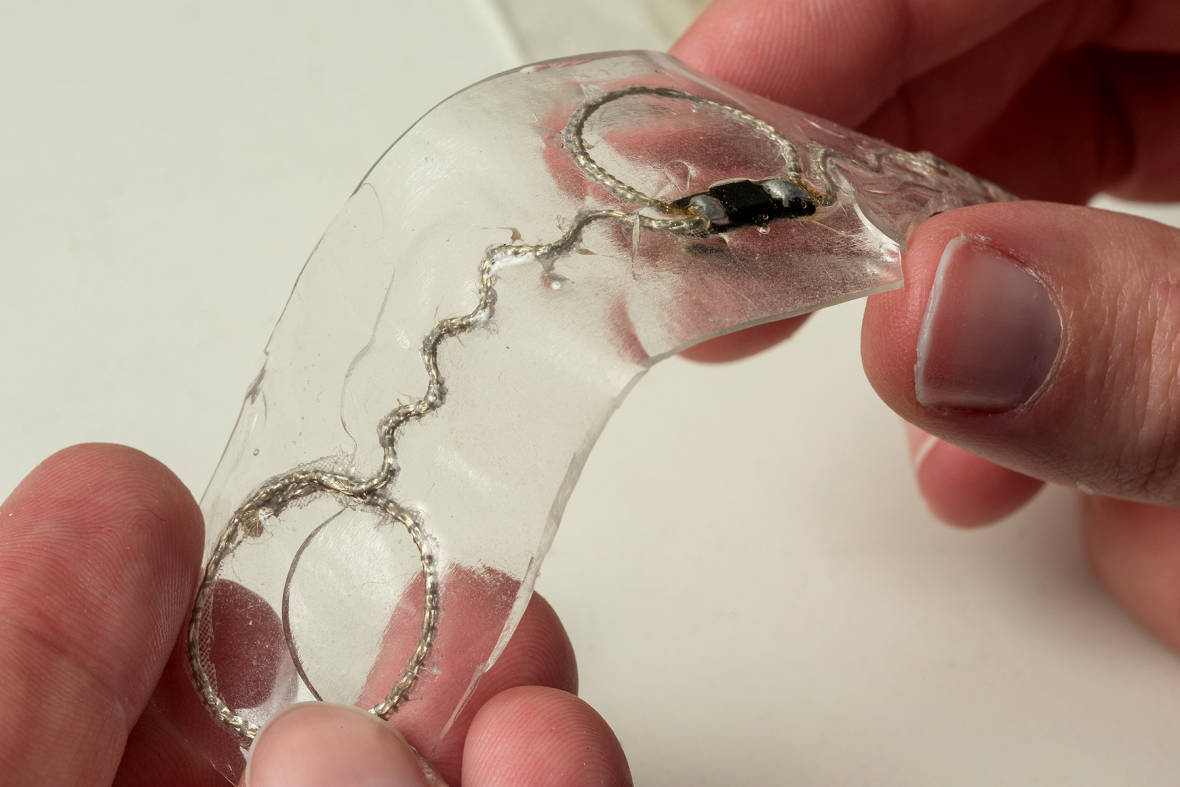
"caption": "Researchers at The Ohio State University are developing embroidered antennas and circuits with 0.1 mm precision—the perfect size to integrate electronic components such as sensors and computer memory devices into clothing. They are also exploring other uses for the technology, including this flexible circuit that contains an RFID chip. ",
"description": null,
"title": "ea_7273",
"credit": "Jo McCulty, Ohio State University",
"status": "inherit",
"isLoading": false,
"fetchFailed": false
},
"futureofyou_146068": {
"type": "attachments",
"id": "futureofyou_146068",
"meta": {
"index": "attachments_1716263798",
"site": "futureofyou",
"id": "146068",
"found": true
},
"parent": 146036,
"imgSizes": {
"twentyfourteen-full-width": {
"file": "https://ww2.kqed.org/app/uploads/sites/13/2016/04/worms-1-800x576.jpg",
"width": 800,
"mimeType": "image/jpeg",
"height": 576
},
"thumbnail": {
"file": "https://ww2.kqed.org/app/uploads/sites/13/2016/04/worms-1-400x300.jpg",
"width": 400,
"mimeType": "image/jpeg",
"height": 300
},
"post-thumbnail": {
"file": "https://ww2.kqed.org/app/uploads/sites/13/2016/04/worms-1-672x372.jpg",
"width": 672,
"mimeType": "image/jpeg",
"height": 372
},
"kqedFullSize": {
"file": "https://ww2.kqed.org/app/uploads/sites/13/2016/04/worms-1.jpg",
"width": 800,
"height": 600
},
"guest-author-96": {
"file": "https://ww2.kqed.org/app/uploads/sites/13/2016/04/worms-1-96x96.jpg",
"width": 96,
"mimeType": "image/jpeg",
"height": 96
},
"guest-author-64": {
"file": "https://ww2.kqed.org/app/uploads/sites/13/2016/04/worms-1-64x64.jpg",
"width": 64,
"mimeType": "image/jpeg",
"height": 64
},
"detail": {
"file": "https://ww2.kqed.org/app/uploads/sites/13/2016/04/worms-1-75x75.jpg",
"width": 75,
"mimeType": "image/jpeg",
"height": 75
},
"guest-author-32": {
"file": "https://ww2.kqed.org/app/uploads/sites/13/2016/04/worms-1-32x32.jpg",
"width": 32,
"mimeType": "image/jpeg",
"height": 32
},
"medium_large": {
"file": "https://ww2.kqed.org/app/uploads/sites/13/2016/04/worms-1-768x576.jpg",
"width": 768,
"mimeType": "image/jpeg",
"height": 576
},
"guest-author-128": {
"file": "https://ww2.kqed.org/app/uploads/sites/13/2016/04/worms-1-128x128.jpg",
"width": 128,
"mimeType": "image/jpeg",
"height": 128
}
},
"publishDate": 1460682044,
"modified": 1460682060,
"caption": null,
"description": null,
"title": "worms",
"credit": "Lester V. Bergman/Corbis",
"status": "inherit",
"isLoading": false,
"fetchFailed": false
},
"futureofyou_149565": {
"type": "attachments",
"id": "futureofyou_149565",
"meta": {
"index": "attachments_1716263798",
"site": "futureofyou",
"id": "149565",
"found": true
},
"parent": 142228,
"imgSizes": {
"twentyfourteen-full-width": {
"file": "https://ww2.kqed.org/app/uploads/sites/13/2016/04/iStock_000073257165_Large-1038x576.jpg",
"width": 1038,
"mimeType": "image/jpeg",
"height": 576
},
"thumbnail": {
"file": "https://ww2.kqed.org/app/uploads/sites/13/2016/04/iStock_000073257165_Large-400x267.jpg",
"width": 400,
"mimeType": "image/jpeg",
"height": 267
},
"fd-sm": {
"file": "https://ww2.kqed.org/app/uploads/sites/13/2016/04/iStock_000073257165_Large-960x640.jpg",
"width": 960,
"mimeType": "image/jpeg",
"height": 640
},
"post-thumbnail": {
"file": "https://ww2.kqed.org/app/uploads/sites/13/2016/04/iStock_000073257165_Large-672x372.jpg",
"width": 672,
"mimeType": "image/jpeg",
"height": 372
},
"kqedFullSize": {
"file": "https://ww2.kqed.org/app/uploads/sites/13/2016/04/iStock_000073257165_Large.jpg",
"width": 2716,
"height": 1810
},
"large": {
"file": "https://ww2.kqed.org/app/uploads/sites/13/2016/04/iStock_000073257165_Large-1180x786.jpg",
"width": 1180,
"mimeType": "image/jpeg",
"height": 786
},
"guest-author-96": {
"file": "https://ww2.kqed.org/app/uploads/sites/13/2016/04/iStock_000073257165_Large-96x96.jpg",
"width": 96,
"mimeType": "image/jpeg",
"height": 96
},
"medium": {
"file": "https://ww2.kqed.org/app/uploads/sites/13/2016/04/iStock_000073257165_Large-800x533.jpg",
"width": 800,
"mimeType": "image/jpeg",
"height": 533
},
"guest-author-64": {
"file": "https://ww2.kqed.org/app/uploads/sites/13/2016/04/iStock_000073257165_Large-64x64.jpg",
"width": 64,
"mimeType": "image/jpeg",
"height": 64
},
"guest-author-32": {
"file": "https://ww2.kqed.org/app/uploads/sites/13/2016/04/iStock_000073257165_Large-32x32.jpg",
"width": 32,
"mimeType": "image/jpeg",
"height": 32
},
"fd-lrg": {
"file": "https://ww2.kqed.org/app/uploads/sites/13/2016/04/iStock_000073257165_Large-1920x1280.jpg",
"width": 1920,
"mimeType": "image/jpeg",
"height": 1280
},
"fd-med": {
"file": "https://ww2.kqed.org/app/uploads/sites/13/2016/04/iStock_000073257165_Large-1180x786.jpg",
"width": 1180,
"mimeType": "image/jpeg",
"height": 786
},
"detail": {
"file": "https://ww2.kqed.org/app/uploads/sites/13/2016/04/iStock_000073257165_Large-75x75.jpg",
"width": 75,
"mimeType": "image/jpeg",
"height": 75
},
"medium_large": {
"file": "https://ww2.kqed.org/app/uploads/sites/13/2016/04/iStock_000073257165_Large-768x512.jpg",
"width": 768,
"mimeType": "image/jpeg",
"height": 512
},
"guest-author-128": {
"file": "https://ww2.kqed.org/app/uploads/sites/13/2016/04/iStock_000073257165_Large-128x128.jpg",
"width": 128,
"mimeType": "image/jpeg",
"height": 128
}
},
"publishDate": 1461190025,
"modified": 1528393842,
"caption": "Guns are the most common method used for suicide, accounting for the deaths of almost half the people who kill themselves, a Centers for Disease Control and Prevention study finds.",
"description": null,
"title": "depression suicide",
"credit": "iStock",
"status": "inherit",
"isLoading": false,
"fetchFailed": false
},
"futureofyou_132978": {
"type": "attachments",
"id": "futureofyou_132978",
"meta": {
"index": "attachments_1716263798",
"site": "futureofyou",
"id": "132978",
"found": true
},
"parent": 132976,
"imgSizes": {
"twentyfourteen-full-width": {
"file": "https://ww2.kqed.org/app/uploads/sites/13/2016/03/Mammogram-1038x576.jpg",
"width": 1038,
"mimeType": "image/jpeg",
"height": 576
},
"thumbnail": {
"file": "https://ww2.kqed.org/app/uploads/sites/13/2016/03/Mammogram-400x290.jpg",
"width": 400,
"mimeType": "image/jpeg",
"height": 290
},
"fd-sm": {
"file": "https://ww2.kqed.org/app/uploads/sites/13/2016/03/Mammogram-960x697.jpg",
"width": 960,
"mimeType": "image/jpeg",
"height": 697
},
"post-thumbnail": {
"file": "https://ww2.kqed.org/app/uploads/sites/13/2016/03/Mammogram-672x372.jpg",
"width": 672,
"mimeType": "image/jpeg",
"height": 372
},
"kqedFullSize": {
"file": "https://ww2.kqed.org/app/uploads/sites/13/2016/03/Mammogram.jpg",
"width": 1920,
"height": 1393
},
"large": {
"file": "https://ww2.kqed.org/app/uploads/sites/13/2016/03/Mammogram-1180x856.jpg",
"width": 1180,
"mimeType": "image/jpeg",
"height": 856
},
"guest-author-96": {
"file": "https://ww2.kqed.org/app/uploads/sites/13/2016/03/Mammogram-96x96.jpg",
"width": 96,
"mimeType": "image/jpeg",
"height": 96
},
"medium": {
"file": "https://ww2.kqed.org/app/uploads/sites/13/2016/03/Mammogram-800x580.jpg",
"width": 800,
"mimeType": "image/jpeg",
"height": 580
},
"guest-author-64": {
"file": "https://ww2.kqed.org/app/uploads/sites/13/2016/03/Mammogram-64x64.jpg",
"width": 64,
"mimeType": "image/jpeg",
"height": 64
},
"guest-author-32": {
"file": "https://ww2.kqed.org/app/uploads/sites/13/2016/03/Mammogram-32x32.jpg",
"width": 32,
"mimeType": "image/jpeg",
"height": 32
},
"fd-lrg": {
"file": "https://ww2.kqed.org/app/uploads/sites/13/2016/03/Mammogram-1920x1393.jpg",
"width": 1920,
"mimeType": "image/jpeg",
"height": 1393
},
"fd-med": {
"file": "https://ww2.kqed.org/app/uploads/sites/13/2016/03/Mammogram-1180x856.jpg",
"width": 1180,
"mimeType": "image/jpeg",
"height": 856
},
"detail": {
"file": "https://ww2.kqed.org/app/uploads/sites/13/2016/03/Mammogram-75x75.jpg",
"width": 75,
"mimeType": "image/jpeg",
"height": 75
},
"medium_large": {
"file": "https://ww2.kqed.org/app/uploads/sites/13/2016/03/Mammogram-768x557.jpg",
"width": 768,
"mimeType": "image/jpeg",
"height": 557
},
"guest-author-128": {
"file": "https://ww2.kqed.org/app/uploads/sites/13/2016/03/Mammogram-128x128.jpg",
"width": 128,
"mimeType": "image/jpeg",
"height": 128
}
},
"publishDate": 1458672659,
"modified": 1458672767,
"caption": "A new study identifies a gene that may help doctors diagnose breast cancer.",
"description": null,
"title": "Mammogram",
"credit": "Wikimedia Commons",
"status": "inherit",
"isLoading": false,
"fetchFailed": false
},
"futureofyou_133622": {
"type": "attachments",
"id": "futureofyou_133622",
"meta": {
"index": "attachments_1716263798",
"site": "futureofyou",
"id": "133622",
"found": true
},
"parent": 133175,
"imgSizes": {
"twentyfourteen-full-width": {
"file": "https://ww2.kqed.org/app/uploads/sites/13/2016/03/iStock_000004728259_Medium-1038x576.jpg",
"width": 1038,
"mimeType": "image/jpeg",
"height": 576
},
"thumbnail": {
"file": "https://ww2.kqed.org/app/uploads/sites/13/2016/03/iStock_000004728259_Medium-400x266.jpg",
"width": 400,
"mimeType": "image/jpeg",
"height": 266
},
"fd-sm": {
"file": "https://ww2.kqed.org/app/uploads/sites/13/2016/03/iStock_000004728259_Medium-960x639.jpg",
"width": 960,
"mimeType": "image/jpeg",
"height": 639
},
"post-thumbnail": {
"file": "https://ww2.kqed.org/app/uploads/sites/13/2016/03/iStock_000004728259_Medium-672x372.jpg",
"width": 672,
"mimeType": "image/jpeg",
"height": 372
},
"kqedFullSize": {
"file": "https://ww2.kqed.org/app/uploads/sites/13/2016/03/iStock_000004728259_Medium.jpg",
"width": 1698,
"height": 1131
},
"large": {
"file": "https://ww2.kqed.org/app/uploads/sites/13/2016/03/iStock_000004728259_Medium-1180x786.jpg",
"width": 1180,
"mimeType": "image/jpeg",
"height": 786
},
"guest-author-96": {
"file": "https://ww2.kqed.org/app/uploads/sites/13/2016/03/iStock_000004728259_Medium-96x96.jpg",
"width": 96,
"mimeType": "image/jpeg",
"height": 96
},
"medium": {
"file": "https://ww2.kqed.org/app/uploads/sites/13/2016/03/iStock_000004728259_Medium-800x533.jpg",
"width": 800,
"mimeType": "image/jpeg",
"height": 533
},
"guest-author-64": {
"file": "https://ww2.kqed.org/app/uploads/sites/13/2016/03/iStock_000004728259_Medium-64x64.jpg",
"width": 64,
"mimeType": "image/jpeg",
"height": 64
},
"guest-author-32": {
"file": "https://ww2.kqed.org/app/uploads/sites/13/2016/03/iStock_000004728259_Medium-32x32.jpg",
"width": 32,
"mimeType": "image/jpeg",
"height": 32
},
"fd-med": {
"file": "https://ww2.kqed.org/app/uploads/sites/13/2016/03/iStock_000004728259_Medium-1180x786.jpg",
"width": 1180,
"mimeType": "image/jpeg",
"height": 786
},
"detail": {
"file": "https://ww2.kqed.org/app/uploads/sites/13/2016/03/iStock_000004728259_Medium-75x75.jpg",
"width": 75,
"mimeType": "image/jpeg",
"height": 75
},
"medium_large": {
"file": "https://ww2.kqed.org/app/uploads/sites/13/2016/03/iStock_000004728259_Medium-768x512.jpg",
"width": 768,
"mimeType": "image/jpeg",
"height": 512
},
"guest-author-128": {
"file": "https://ww2.kqed.org/app/uploads/sites/13/2016/03/iStock_000004728259_Medium-128x128.jpg",
"width": 128,
"mimeType": "image/jpeg",
"height": 128
}
},
"publishDate": 1458765356,
"modified": 1458765380,
"caption": null,
"description": null,
"title": "iStock_000004728259_Medium",
"credit": "iStock",
"status": "inherit",
"isLoading": false,
"fetchFailed": false
},
"futureofyou_133082": {
"type": "attachments",
"id": "futureofyou_133082",
"meta": {
"index": "attachments_1716263798",
"site": "futureofyou",
"id": "133082",
"found": true
},
"parent": 132435,
"imgSizes": {
"thumbnail": {
"file": "https://ww2.kqed.org/app/uploads/sites/13/2016/03/OConnor-400x296.jpg",
"width": 400,
"mimeType": "image/jpeg",
"height": 296
},
"post-thumbnail": {
"file": "https://ww2.kqed.org/app/uploads/sites/13/2016/03/OConnor-606x372.jpg",
"width": 606,
"mimeType": "image/jpeg",
"height": 372
},
"kqedFullSize": {
"file": "https://ww2.kqed.org/app/uploads/sites/13/2016/03/OConnor.jpg",
"width": 606,
"height": 448
},
"guest-author-96": {
"file": "https://ww2.kqed.org/app/uploads/sites/13/2016/03/OConnor-96x96.jpg",
"width": 96,
"mimeType": "image/jpeg",
"height": 96
},
"guest-author-64": {
"file": "https://ww2.kqed.org/app/uploads/sites/13/2016/03/OConnor-64x64.jpg",
"width": 64,
"mimeType": "image/jpeg",
"height": 64
},
"detail": {
"file": "https://ww2.kqed.org/app/uploads/sites/13/2016/03/OConnor-75x75.jpg",
"width": 75,
"mimeType": "image/jpeg",
"height": 75
},
"guest-author-32": {
"file": "https://ww2.kqed.org/app/uploads/sites/13/2016/03/OConnor-32x32.jpg",
"width": 32,
"mimeType": "image/jpeg",
"height": 32
},
"guest-author-128": {
"file": "https://ww2.kqed.org/app/uploads/sites/13/2016/03/OConnor-128x128.jpg",
"width": 128,
"mimeType": "image/jpeg",
"height": 128
}
},
"publishDate": 1458686754,
"modified": 1458687311,
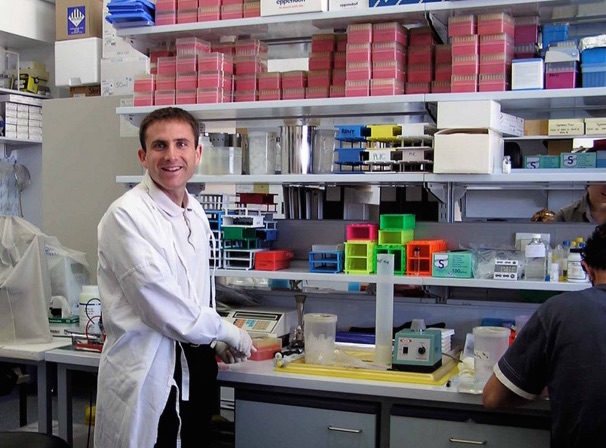
"caption": "University of Madison, Wisconsin researcher Dave O'Connor.",
"description": null,
"title": "OConnor",
"credit": "University of Wisconsin, Madison",
"status": "inherit",
"isLoading": false,
"fetchFailed": false
},
"futureofyou_130839": {
"type": "attachments",
"id": "futureofyou_130839",
"meta": {
"index": "attachments_1716263798",
"site": "futureofyou",
"id": "130839",
"found": true
},
"parent": 130812,
"imgSizes": {
"twentyfourteen-full-width": {
"file": "https://ww2.kqed.org/app/uploads/sites/13/2017/03/beauty-1038x576.jpg",
"width": 1038,
"mimeType": "image/jpeg",
"height": 576
},
"thumbnail": {
"file": "https://ww2.kqed.org/app/uploads/sites/13/2017/03/beauty-400x305.jpg",
"width": 400,
"mimeType": "image/jpeg",
"height": 305
},
"fd-sm": {
"file": "https://ww2.kqed.org/app/uploads/sites/13/2017/03/beauty-960x733.jpg",
"width": 960,
"mimeType": "image/jpeg",
"height": 733
},
"post-thumbnail": {
"file": "https://ww2.kqed.org/app/uploads/sites/13/2017/03/beauty-672x372.jpg",
"width": 672,
"mimeType": "image/jpeg",
"height": 372
},
"kqedFullSize": {
"file": "https://ww2.kqed.org/app/uploads/sites/13/2017/03/beauty-e1458339787446.jpg",
"width": 1920,
"height": 1466
},
"large": {
"file": "https://ww2.kqed.org/app/uploads/sites/13/2017/03/beauty-1180x901.jpg",
"width": 1180,
"mimeType": "image/jpeg",
"height": 901
},
"guest-author-96": {
"file": "https://ww2.kqed.org/app/uploads/sites/13/2017/03/beauty-96x96.jpg",
"width": 96,
"mimeType": "image/jpeg",
"height": 96
},
"medium": {
"file": "https://ww2.kqed.org/app/uploads/sites/13/2017/03/beauty-786x600.jpg",
"width": 786,
"mimeType": "image/jpeg",
"height": 600
},
"guest-author-64": {
"file": "https://ww2.kqed.org/app/uploads/sites/13/2017/03/beauty-64x64.jpg",
"width": 64,
"mimeType": "image/jpeg",
"height": 64
},
"guest-author-32": {
"file": "https://ww2.kqed.org/app/uploads/sites/13/2017/03/beauty-32x32.jpg",
"width": 32,
"mimeType": "image/jpeg",
"height": 32
},
"fd-lrg": {
"file": "https://ww2.kqed.org/app/uploads/sites/13/2017/03/beauty-1920x1466.jpg",
"width": 1920,
"mimeType": "image/jpeg",
"height": 1466
},
"fd-med": {
"file": "https://ww2.kqed.org/app/uploads/sites/13/2017/03/beauty-1180x901.jpg",
"width": 1180,
"mimeType": "image/jpeg",
"height": 901
},
"detail": {
"file": "https://ww2.kqed.org/app/uploads/sites/13/2017/03/beauty-75x75.jpg",
"width": 75,
"mimeType": "image/jpeg",
"height": 75
},
"medium_large": {
"file": "https://ww2.kqed.org/app/uploads/sites/13/2017/03/beauty-768x586.jpg",
"width": 768,
"mimeType": "image/jpeg",
"height": 586
},
"guest-author-128": {
"file": "https://ww2.kqed.org/app/uploads/sites/13/2017/03/beauty-128x128.jpg",
"width": 128,
"mimeType": "image/jpeg",
"height": 128
}
},
"publishDate": 1458339767,
"modified": 1458339811,
"caption": null,
"description": null,
"title": "Beauty portrait of concerned young woman checking facial skin",
"credit": "IStock",
"status": "inherit",
"isLoading": false,
"fetchFailed": false
},
"futureofyou_130058": {
"type": "attachments",
"id": "futureofyou_130058",
"meta": {
"index": "attachments_1716263798",
"site": "futureofyou",
"id": "130058",
"found": true
},
"parent": 130057,
"imgSizes": {
"twentyfourteen-full-width": {
"file": "https://ww2.kqed.org/app/uploads/sites/13/2016/03/standing-desk-1_enl-831ff339dc192750349211da31eac3aabcf788c6-1038x576.jpg",
"width": 1038,
"mimeType": "image/jpeg",
"height": 576
},
"thumbnail": {
"file": "https://ww2.kqed.org/app/uploads/sites/13/2016/03/standing-desk-1_enl-831ff339dc192750349211da31eac3aabcf788c6-400x266.jpg",
"width": 400,
"mimeType": "image/jpeg",
"height": 266
},
"fd-sm": {
"file": "https://ww2.kqed.org/app/uploads/sites/13/2016/03/standing-desk-1_enl-831ff339dc192750349211da31eac3aabcf788c6-960x639.jpg",
"width": 960,
"mimeType": "image/jpeg",
"height": 639
},
"post-thumbnail": {
"file": "https://ww2.kqed.org/app/uploads/sites/13/2016/03/standing-desk-1_enl-831ff339dc192750349211da31eac3aabcf788c6-672x372.jpg",
"width": 672,
"mimeType": "image/jpeg",
"height": 372
},
"kqedFullSize": {
"file": "https://ww2.kqed.org/app/uploads/sites/13/2016/03/standing-desk-1_enl-831ff339dc192750349211da31eac3aabcf788c6-e1458231724378.jpg",
"width": 1920,
"height": 1279
},
"large": {
"file": "https://ww2.kqed.org/app/uploads/sites/13/2016/03/standing-desk-1_enl-831ff339dc192750349211da31eac3aabcf788c6-1180x786.jpg",
"width": 1180,
"mimeType": "image/jpeg",
"height": 786
},
"guest-author-96": {
"file": "https://ww2.kqed.org/app/uploads/sites/13/2016/03/standing-desk-1_enl-831ff339dc192750349211da31eac3aabcf788c6-96x96.jpg",
"width": 96,
"mimeType": "image/jpeg",
"height": 96
},
"medium": {
"file": "https://ww2.kqed.org/app/uploads/sites/13/2016/03/standing-desk-1_enl-831ff339dc192750349211da31eac3aabcf788c6-800x533.jpg",
"width": 800,
"mimeType": "image/jpeg",
"height": 533
},
"guest-author-64": {
"file": "https://ww2.kqed.org/app/uploads/sites/13/2016/03/standing-desk-1_enl-831ff339dc192750349211da31eac3aabcf788c6-64x64.jpg",
"width": 64,
"mimeType": "image/jpeg",
"height": 64
},
"guest-author-32": {
"file": "https://ww2.kqed.org/app/uploads/sites/13/2016/03/standing-desk-1_enl-831ff339dc192750349211da31eac3aabcf788c6-32x32.jpg",
"width": 32,
"mimeType": "image/jpeg",
"height": 32
},
"fd-lrg": {
"file": "https://ww2.kqed.org/app/uploads/sites/13/2016/03/standing-desk-1_enl-831ff339dc192750349211da31eac3aabcf788c6-1920x1279.jpg",
"width": 1920,
"mimeType": "image/jpeg",
"height": 1279
},
"fd-med": {
"file": "https://ww2.kqed.org/app/uploads/sites/13/2016/03/standing-desk-1_enl-831ff339dc192750349211da31eac3aabcf788c6-1180x786.jpg",
"width": 1180,
"mimeType": "image/jpeg",
"height": 786
},
"detail": {
"file": "https://ww2.kqed.org/app/uploads/sites/13/2016/03/standing-desk-1_enl-831ff339dc192750349211da31eac3aabcf788c6-75x75.jpg",
"width": 75,
"mimeType": "image/jpeg",
"height": 75
},
"medium_large": {
"file": "https://ww2.kqed.org/app/uploads/sites/13/2016/03/standing-desk-1_enl-831ff339dc192750349211da31eac3aabcf788c6-768x511.jpg",
"width": 768,
"mimeType": "image/jpeg",
"height": 511
},
"guest-author-128": {
"file": "https://ww2.kqed.org/app/uploads/sites/13/2016/03/standing-desk-1_enl-831ff339dc192750349211da31eac3aabcf788c6-128x128.jpg",
"width": 128,
"mimeType": "image/jpeg",
"height": 128
}
},
"publishDate": 1458231298,
"modified": 1458231703,
"caption": null,
"description": "An analysis of 20 studies failed to find good evidence that standing at a work desk is better than sitting.",
"title": "An analysis of 20 studies failed to find good evidence that standing at a work desk is better than sitting.",
"credit": "Photo illustration by Meredith Rizzo/NPR",
"status": "inherit",
"isLoading": false,
"fetchFailed": false
},
"futureofyou_129586": {
"type": "attachments",
"id": "futureofyou_129586",
"meta": {
"index": "attachments_1716263798",
"site": "futureofyou",
"id": "129586",
"found": true
},
"parent": 126729,
"imgSizes": {
"twentyfourteen-full-width": {
"file": "https://ww2.kqed.org/app/uploads/sites/13/2016/03/iStock_000011313454_Large-1038x576.jpg",
"width": 1038,
"mimeType": "image/jpeg",
"height": 576
},
"thumbnail": {
"file": "https://ww2.kqed.org/app/uploads/sites/13/2016/03/iStock_000011313454_Large-400x267.jpg",
"width": 400,
"mimeType": "image/jpeg",
"height": 267
},
"fd-sm": {
"file": "https://ww2.kqed.org/app/uploads/sites/13/2016/03/iStock_000011313454_Large-960x640.jpg",
"width": 960,
"mimeType": "image/jpeg",
"height": 640
},
"post-thumbnail": {
"file": "https://ww2.kqed.org/app/uploads/sites/13/2016/03/iStock_000011313454_Large-672x372.jpg",
"width": 672,
"mimeType": "image/jpeg",
"height": 372
},
"kqedFullSize": {
"file": "https://ww2.kqed.org/app/uploads/sites/13/2016/03/iStock_000011313454_Large.jpg",
"width": 2716,
"height": 1810
},
"large": {
"file": "https://ww2.kqed.org/app/uploads/sites/13/2016/03/iStock_000011313454_Large-1180x786.jpg",
"width": 1180,
"mimeType": "image/jpeg",
"height": 786
},
"guest-author-96": {
"file": "https://ww2.kqed.org/app/uploads/sites/13/2016/03/iStock_000011313454_Large-96x96.jpg",
"width": 96,
"mimeType": "image/jpeg",
"height": 96
},
"medium": {
"file": "https://ww2.kqed.org/app/uploads/sites/13/2016/03/iStock_000011313454_Large-800x533.jpg",
"width": 800,
"mimeType": "image/jpeg",
"height": 533
},
"guest-author-64": {
"file": "https://ww2.kqed.org/app/uploads/sites/13/2016/03/iStock_000011313454_Large-64x64.jpg",
"width": 64,
"mimeType": "image/jpeg",
"height": 64
},
"guest-author-32": {
"file": "https://ww2.kqed.org/app/uploads/sites/13/2016/03/iStock_000011313454_Large-32x32.jpg",
"width": 32,
"mimeType": "image/jpeg",
"height": 32
},
"fd-lrg": {
"file": "https://ww2.kqed.org/app/uploads/sites/13/2016/03/iStock_000011313454_Large-1920x1280.jpg",
"width": 1920,
"mimeType": "image/jpeg",
"height": 1280
},
"fd-med": {
"file": "https://ww2.kqed.org/app/uploads/sites/13/2016/03/iStock_000011313454_Large-1180x786.jpg",
"width": 1180,
"mimeType": "image/jpeg",
"height": 786
},
"detail": {
"file": "https://ww2.kqed.org/app/uploads/sites/13/2016/03/iStock_000011313454_Large-75x75.jpg",
"width": 75,
"mimeType": "image/jpeg",
"height": 75
},
"medium_large": {
"file": "https://ww2.kqed.org/app/uploads/sites/13/2016/03/iStock_000011313454_Large-768x512.jpg",
"width": 768,
"mimeType": "image/jpeg",
"height": 512
},
"guest-author-128": {
"file": "https://ww2.kqed.org/app/uploads/sites/13/2016/03/iStock_000011313454_Large-128x128.jpg",
"width": 128,
"mimeType": "image/jpeg",
"height": 128
}
},
"publishDate": 1458165567,
"modified": 1458165936,
"caption": null,
"description": null,
"title": "Meditating business partners",
"credit": "iStock",
"status": "inherit",
"isLoading": false,
"fetchFailed": false
},
"futureofyou_128289": {
"type": "attachments",
"id": "futureofyou_128289",
"meta": {
"index": "attachments_1716263798",
"site": "futureofyou",
"id": "128289",
"found": true
},
"parent": 128287,
"imgSizes": {
"twentyfourteen-full-width": {
"file": "https://ww2.kqed.org/app/uploads/sites/13/2016/03/stent-1038x576.jpg",
"width": 1038,
"mimeType": "image/jpeg",
"height": 576
},
"thumbnail": {
"file": "https://ww2.kqed.org/app/uploads/sites/13/2016/03/stent-400x267.jpg",
"width": 400,
"mimeType": "image/jpeg",
"height": 267
},
"fd-sm": {
"file": "https://ww2.kqed.org/app/uploads/sites/13/2016/03/stent-960x640.jpg",
"width": 960,
"mimeType": "image/jpeg",
"height": 640
},
"post-thumbnail": {
"file": "https://ww2.kqed.org/app/uploads/sites/13/2016/03/stent-672x372.jpg",
"width": 672,
"mimeType": "image/jpeg",
"height": 372
},
"kqedFullSize": {
"file": "https://ww2.kqed.org/app/uploads/sites/13/2016/03/stent-e1457978277834.jpg",
"width": 1920,
"height": 1280
},
"large": {
"file": "https://ww2.kqed.org/app/uploads/sites/13/2016/03/stent-1180x787.jpg",
"width": 1180,
"mimeType": "image/jpeg",
"height": 787
},
"guest-author-96": {
"file": "https://ww2.kqed.org/app/uploads/sites/13/2016/03/stent-96x96.jpg",
"width": 96,
"mimeType": "image/jpeg",
"height": 96
},
"medium": {
"file": "https://ww2.kqed.org/app/uploads/sites/13/2016/03/stent-800x533.jpg",
"width": 800,
"mimeType": "image/jpeg",
"height": 533
},
"guest-author-64": {
"file": "https://ww2.kqed.org/app/uploads/sites/13/2016/03/stent-64x64.jpg",
"width": 64,
"mimeType": "image/jpeg",
"height": 64
},
"guest-author-32": {
"file": "https://ww2.kqed.org/app/uploads/sites/13/2016/03/stent-32x32.jpg",
"width": 32,
"mimeType": "image/jpeg",
"height": 32
},
"fd-lrg": {
"file": "https://ww2.kqed.org/app/uploads/sites/13/2016/03/stent-1920x1280.jpg",
"width": 1920,
"mimeType": "image/jpeg",
"height": 1280
},
"fd-med": {
"file": "https://ww2.kqed.org/app/uploads/sites/13/2016/03/stent-1180x787.jpg",
"width": 1180,
"mimeType": "image/jpeg",
"height": 787
},
"detail": {
"file": "https://ww2.kqed.org/app/uploads/sites/13/2016/03/stent-75x75.jpg",
"width": 75,
"mimeType": "image/jpeg",
"height": 75
},
"medium_large": {
"file": "https://ww2.kqed.org/app/uploads/sites/13/2016/03/stent-768x512.jpg",
"width": 768,
"mimeType": "image/jpeg",
"height": 512
},
"guest-author-128": {
"file": "https://ww2.kqed.org/app/uploads/sites/13/2016/03/stent-128x128.jpg",
"width": 128,
"mimeType": "image/jpeg",
"height": 128
}
},
"publishDate": 1457978265,
"modified": 1457978399,
"caption": "Traditional heart stent.",
"description": null,
"title": "stent",
"credit": "iStock",
"status": "inherit",
"isLoading": false,
"fetchFailed": false
}
},
"audioPlayerReducer": {
"postId": "stream_live",
"isPaused": true,
"isPlaying": false,
"pfsActive": false,
"pledgeModalIsOpen": true,
"playerDrawerIsOpen": false,
"liveAudioPlayStartedAt": 0,
"liveAudioPlayContext": ""
},
"authorsReducer": {
"byline_futureofyou_152205": {
"type": "authors",
"id": "byline_futureofyou_152205",
"meta": {
"override": true
},
"slug": "byline_futureofyou_152205",
"name": "Deborah Berry, Georgetown University\u003cbr />The Conversation",
"isLoading": false
},
"byline_futureofyou_150161": {
"type": "authors",
"id": "byline_futureofyou_150161",
"meta": {
"override": true
},
"slug": "byline_futureofyou_150161",
"name": "NPR Shots/Fresh Air",
"isLoading": false
},
"byline_futureofyou_146036": {
"type": "authors",
"id": "byline_futureofyou_146036",
"meta": {
"override": true
},
"slug": "byline_futureofyou_146036",
"name": "Madeline K. Sofia\u003cbr />NPR Shots",
"isLoading": false
},
"byline_futureofyou_130057": {
"type": "authors",
"id": "byline_futureofyou_130057",
"meta": {
"override": true
},
"slug": "byline_futureofyou_130057",
"name": "Angus Chen\u003cbr />NPR Shots",
"isLoading": false
},
"byline_futureofyou_128287": {
"type": "authors",
"id": "byline_futureofyou_128287",
"meta": {
"override": true
},
"slug": "byline_futureofyou_128287",
"name": "Matthew Perrone\u003cbr />Associated Press",
"isLoading": false
},
"jbrooks": {
"type": "authors",
"id": "80",
"meta": {
"index": "authors_1716337520",
"id": "80",
"found": true
},
"name": "Jon Brooks",
"firstName": "Jon",
"lastName": "Brooks",
"slug": "jbrooks",
"email": "jbrooks@kqed.org",
"display_author_email": true,
"staff_mastheads": [
"science"
],
"title": "Digital Editor",
"bio": "Jon Brooks is a former Digital Editor for KQED Science. He is the former editor of KQED’s daily news blog, News Fix. In 2014, he won a California Journalism Award for his coverage of ride services like Uber and Lyft and the taxi industry. A veteran blogger, he previously worked for Yahoo! in various news writing and editing roles. Jon is also a playwright whose work has been produced in San Francisco, New York, Italy, and around the U.S. He has written about film for his own blog and studied film at Boston University.",
"avatar": "https://secure.gravatar.com/avatar/98887f7ed1c876ed414d4c915e969584?s=600&d=blank&r=g",
"twitter": "jbrooksfoy",
"facebook": null,
"instagram": null,
"linkedin": null,
"sites": [
{
"site": "arts",
"roles": [
"Contributor",
"editor"
]
},
{
"site": "news",
"roles": [
"author"
]
},
{
"site": "futureofyou",
"roles": [
"administrator"
]
},
{
"site": "mindshift",
"roles": [
"editor"
]
},
{
"site": "stateofhealth",
"roles": [
"editor"
]
},
{
"site": "science",
"roles": [
"administrator"
]
},
{
"site": "quest",
"roles": [
"editor"
]
}
],
"headData": {
"title": "Jon Brooks | KQED",
"description": "Digital Editor",
"ogImgSrc": "https://secure.gravatar.com/avatar/98887f7ed1c876ed414d4c915e969584?s=600&d=blank&r=g",
"twImgSrc": "https://secure.gravatar.com/avatar/98887f7ed1c876ed414d4c915e969584?s=600&d=blank&r=g"
},
"isLoading": false,
"link": "/author/jbrooks"
},
"katsnow": {
"type": "authors",
"id": "235",
"meta": {
"index": "authors_1716337520",
"id": "235",
"found": true
},
"name": "Katrin Snow",
"firstName": "Katrin",
"lastName": "Snow",
"slug": "katsnow",
"email": "ksnow@kqed.org",
"display_author_email": true,
"staff_mastheads": [
"science"
],
"title": "Senior Editor",
"bio": "Kat started in radio in 1985 at KMUN in Astoria, Oregon, where the Columbia River meets the sea. She worked several years protecting monarch butterfly habitat in California with the Xerces Society, an invertebrate conservation organization, before a love for radio news drew her back into journalism. Kat came to KQED in 2002, and before that was a reporter and news director at KUER in Salt Lake City, covering the state legislature, the environment and health. Kat coaches reporters and others in embodied narration and public speaking. She is a certified teacher of Soul Motion®, a conscious dance practice, and can sometimes be found in the Mojave desert or the Eastern Sierra.",
"avatar": "https://secure.gravatar.com/avatar/fa6bf8a74a2692973a5484e64ebd2b52?s=600&d=blank&r=g",
"twitter": "cosmologicalkat",
"facebook": null,
"instagram": null,
"linkedin": null,
"sites": [
{
"site": "arts",
"roles": [
"contributor"
]
},
{
"site": "news",
"roles": [
"editor"
]
},
{
"site": "futureofyou",
"roles": [
"editor"
]
},
{
"site": "science",
"roles": [
"editor"
]
}
],
"headData": {
"title": "Katrin Snow | KQED",
"description": "Senior Editor",
"ogImgSrc": "https://secure.gravatar.com/avatar/fa6bf8a74a2692973a5484e64ebd2b52?s=600&d=blank&r=g",
"twImgSrc": "https://secure.gravatar.com/avatar/fa6bf8a74a2692973a5484e64ebd2b52?s=600&d=blank&r=g"
},
"isLoading": false,
"link": "/author/katsnow"
},
"dr-barry-starr": {
"type": "authors",
"id": "6177",
"meta": {
"index": "authors_1716337520",
"id": "6177",
"found": true
},
"name": "Dr. Barry Starr",
"firstName": "Dr. Barry",
"lastName": "Starr",
"slug": "dr-barry-starr",
"email": "bstarr@thetech.org",
"display_author_email": false,
"staff_mastheads": [],
"title": "KQED Contributor",
"bio": "Dr. Barry Starr (\u003ca href=\"https://twitter.com/geneticsboy\">@geneticsboy\u003c/a>) is a Geneticist-in-Residence at The Tech Museum of Innovation in San Jose, CA and runs their Stanford at The Tech program. The program is part of an ongoing collaboration between the \u003ca href=\"http://genetics.stanford.edu/\">Stanford Department of Genetics\u003c/a> and \u003ca href=\"http://www.thetech.org/\">The Tech Museum of Innovation\u003c/a>. Together these two partners created the \u003ca href=\"http://www.thetech.org/exhibits/permanent/index.php?sGalKey=gtwt&galKey=lt\">Genetics: Technology with a Twist\u003c/a> exhibition.\r\n\r\nYou can also see \u003ca href=\"https://ww2.kqed.org/science/author/dr-barry-starr/\">additional posts by Barry at KQED Science\u003c/a>, and read his \u003ca href=\"http://science.kqed.org/quest/author/dr-barry-starr/\">previous contributions\u003c/a> to \u003ca href=\"http://science.kqed.org/quest/\">QUEST\u003c/a>, a project dedicated to exploring the Science of Sustainability.",
"avatar": "https://secure.gravatar.com/avatar/4a5680e4c642ea0f0f3041af16018969?s=600&d=blank&r=g",
"twitter": "geneticsboy",
"facebook": null,
"instagram": null,
"linkedin": null,
"sites": [
{
"site": "futureofyou",
"roles": []
},
{
"site": "science",
"roles": [
"author"
]
},
{
"site": "quest",
"roles": [
"subscriber"
]
}
],
"headData": {
"title": "Dr. Barry Starr | KQED",
"description": "KQED Contributor",
"ogImgSrc": "https://secure.gravatar.com/avatar/4a5680e4c642ea0f0f3041af16018969?s=600&d=blank&r=g",
"twImgSrc": "https://secure.gravatar.com/avatar/4a5680e4c642ea0f0f3041af16018969?s=600&d=blank&r=g"
},
"isLoading": false,
"link": "/author/dr-barry-starr"
},
"lesleymcclurg": {
"type": "authors",
"id": "11229",
"meta": {
"index": "authors_1716337520",
"id": "11229",
"found": true
},
"name": "Lesley McClurg",
"firstName": "Lesley",
"lastName": "McClurg",
"slug": "lesleymcclurg",
"email": "lmcclurg@KQED.org",
"display_author_email": false,
"staff_mastheads": [
"news",
"science"
],
"title": "KQED Health Correspondent",
"bio": "Lesley McClurg is a health correspondent and fill-in host whose work is regularly rebroadcast on NPR and PBS programs. She’s earned multiple regional Emmy awards, a national and a regional Edward R. Murrow award, and was named Best Beat Reporter by the Association of Health Care Journalists. The Society of Professional Journalists has recognized her work several times, and the Society of Environmental Journalists spotlighted her coverage of California’s historic drought.\r\n\r\nBefore joining KQED in 2016, Lesley covered food and sustainability for Capital Public Radio, environmental issues for Colorado Public Radio, and reported for KUOW and KCTS 9 in Seattle. Away from the newsroom, she loves skiing with her daughter, mountain biking with her partner, and playing with Ollie, the family’s goldendoodle. On deadline, she runs almost entirely on chocolate chips.\r\n\r\n ",
"avatar": "https://secure.gravatar.com/avatar/bab49e972ea10c774fe0f5e29dba1722b158f7c0d58a360923d1389d380b2978?s=600&d=blank&r=g",
"twitter": "lesleywmcclurg",
"bluesky": null,
"facebook": null,
"instagram": null,
"linkedin": null,
"sites": [
{
"site": "arts",
"roles": [
"author"
]
},
{
"site": "news",
"roles": [
"editor"
]
},
{
"site": "futureofyou",
"roles": [
"editor"
]
},
{
"site": "stateofhealth",
"roles": [
"author"
]
},
{
"site": "science",
"roles": [
"editor"
]
},
{
"site": "quest",
"roles": [
"subscriber"
]
},
{
"site": "forum",
"roles": [
"administrator"
]
},
{
"site": "liveblog",
"roles": [
"author"
]
}
],
"headData": {
"title": "Lesley McClurg | KQED",
"description": "KQED Health Correspondent",
"ogImgSrc": "https://secure.gravatar.com/avatar/bab49e972ea10c774fe0f5e29dba1722b158f7c0d58a360923d1389d380b2978?s=600&d=blank&r=g",
"twImgSrc": "https://secure.gravatar.com/avatar/bab49e972ea10c774fe0f5e29dba1722b158f7c0d58a360923d1389d380b2978?s=600&d=blank&r=g"
},
"isLoading": false,
"link": "/author/lesleymcclurg"
}
},
"pagesReducer": {
"futureofyou_category_hopehype": {
"type": "terms",
"id": "futureofyou_1062",
"meta": {
"index": "terms_1716263798",
"site": "futureofyou",
"id": "1062",
"score": 13.896381
},
"featImg": null,
"name": "Hope/Hype",
"description": null,
"taxonomy": "category",
"headData": {
"twImgId": null,
"twTitle": null,
"ogTitle": null,
"ogImgId": null,
"twDescription": null,
"description": null,
"title": "Hope/Hype Archives | KQED Arts",
"ogDescription": null
},
"ttid": 1062,
"slug": "hopehype",
"isLoading": false,
"title": "Hope/Hype",
"pageMeta": {
"site": "futureofyou",
"WpPageTemplate": "page-topic-editorial",
"currentPage": 21
},
"blocks": [
{
"blockName": "kqed/post-list",
"attrs": {
"layout": "cardArticle2",
"query": "posts/futureofyou?category=hopehype",
"seeMore": false,
"paginated": true,
"page": 21
}
},
{
"blockName": "kqed/ad"
}
]
}
},
"pfsSessionReducer": {},
"postsReducer": {
"stream_live": {
"type": "live",
"id": "stream_live",
"audioUrl": "https://streams.kqed.org/kqedradio",
"title": "Live Stream",
"excerpt": "Live Stream information currently unavailable.",
"link": "/radio",
"featImg": "",
"label": {
"name": "KQED Live",
"link": "/"
}
},
"stream_kqedNewscast": {
"type": "posts",
"id": "stream_kqedNewscast",
"audioUrl": "https://www.kqed.org/.stream/anon/radio/RDnews/newscast.mp3?_=1",
"title": "KQED Newscast",
"featImg": "",
"label": {
"name": "88.5 FM",
"link": "/"
}
},
"futureofyou_152205": {
"type": "posts",
"id": "futureofyou_152205",
"meta": {
"index": "posts_1716263798",
"site": "futureofyou",
"id": "152205",
"score": null,
"sort": [
1461615239000
]
},
"parent": 0,
"labelTerm": {
"site": "futureofyou"
},
"blocks": [],
"publishDate": 1461615239,
"format": "standard",
"disqusTitle": "Science Tries to Address Crisis in Reproducing Results",
"title": "Science Tries to Address Crisis in Reproducing Results",
"headTitle": "KQED Future of You | KQED Science",
"content": "\u003cp>Recently a friend of mine on Facebook posted a link whose headline quoted a scientist saying, “Most cancer research is largely a fraud.” The quote is both out of context and many decades old. But its appearance still makes a strong point: the general public has a \u003ca href=\"https://www.washingtonpost.com/posteverything/wp/2015/01/30/even-in-2015-the-public-doesnt-trust-scientists/\">growing distrust\u003c/a> of science and research.\u003c/p>\n\u003caside class=\"pullquote alignright\">Many scientific findings can't be replicated.\u003c/aside>\n\u003cp>Recent reports in the \u003ca href=\"https://www.washingtonpost.com/news/speaking-of-science/wp/2015/08/27/trouble-in-science-massive-effort-to-reproduce-100-experimental-results-succeeds-only-36-times/\">Washington Post\u003c/a> and the \u003ca href=\"http://www.economist.com/news/leaders/21588069-scientific-research-has-changed-world-now-it-needs-change-itself-how-science-goes-wrong\">Economist,\u003c/a> among others, raise the concern that \u003ca href=\"https://theconversation.com/we-found-only-one-third-of-published-psychology-research-is-reliable-now-what-46596\">relatively few\u003c/a> scientists' experimental findings \u003ca href=\"https://theconversation.com/real-crisis-in-psychology-isnt-that-studies-dont-replicate-but-that-we-usually-dont-even-try-47249\">can be replicated\u003c/a>. This is worrying: replicating an experiment is a main foundation of the scientific method.\u003c/p>\n\u003cp>As scientists, we build on knowledge gained and published by others. We develop new experiments and questions based on the knowledge we gain from those published reports. If those papers are valid, our work is supported and knowledge advances.\u003c/p>\n\u003cp>On the other hand, if published research is not actually valid, if it can’t be replicated, it delivers only an incidental finding, not scientific knowledge. Any subsequent questions will either be wrong or flawed in important ways. Identifying which reports are invalid is critical to prevent wasting money and time pursuing an incorrect idea based on bad data. How can we know which findings to trust?\u003c/p>\n\u003ch2>Why Would a Repeat Fail?\u003c/h2>\n\u003cp>Repeating a result is not always a simple task. Say you flip a coin three times and get heads each time. You may conclude that coins always land on heads. As an independent test, your friend flips a coin five more times and gets four tails and one heads. The friend concludes your results were incorrect, not reproducible and that coins usually land on tails. Repeating the research can both correct inaccuracies and deepen our understanding of the real truth: the coin lands on heads and tails equally.\u003c/p>\n\u003cp>[ad fullwidth]\u003c/p>\n\u003cp>\u003cimg class=\"alignright size-thumbnail wp-image-152331\" src=\"http://ww2.kqed.org/futureofyou/wp-content/uploads/sites/13/2016/04/The-Conversation-1-400x32.png\" alt=\"The Conversation\" width=\"400\" height=\"32\">This is much harder in studies that are more complex than coin-flipping. In a recent \u003ca href=\"http://dx.doi.org/10.1126/science.aad7243\">commentary\u003c/a> in Science, lead author and Harvard psychologist Daniel Gilbert notes that the 2015 study that reported low reproducibility of psychology research \u003ca href=\"http://news.harvard.edu/gazette/story/2016/03/study-that-undercut-psych-research-got-it-wrong/\">did not correctly replicate\u003c/a> the methods or approaches of the original studies. For example, a study of race and affirmative action performed at Stanford University was “replicated” at the University of Amsterdam in the Netherlands -- a different country with different racial diversity. When the study was later repeated at Stanford, the original published results were indeed replicated.\u003c/p>\n\u003caside class=\"pullquote alignright\">Publishing data that contradicts a fellow researcher’s results risks alienating peers.\u003c/aside>\n\u003cp> Gilbert’s analysis suggests that the reproducibility “problem” may be more complex. Perhaps some studies cannot be repeated due to problems with the initial study, while others aren’t replicable because the follow-up research did not follow the methods or use the same tools as the original study. Likely both contribute to the reproducibility problem.\u003c/p>\n\u003ch2>Focusing on the Details\u003c/h2>\n\u003cp>The scientific community is addressing this challenge in several ways. For example, scholarly journals are requiring much more detailed explanations of how we did our experiments. More detail allows scholars to better evaluate and understand what parts of the experiment could \u003ca href=\"http://www.nature.com/news/journals-unite-for-reproducibility-1.16259\">influence the result\u003c/a>.\u003c/p>\n\u003cp>Also, when reviewing requests for government research grant money, the National Institutes of Health now \u003ca href=\"http://www.nature.com/news/repetitive-flaws-1.19192\">requires\u003c/a> scientists to detail both the tools they will use and the tests they used to confirm the tools are exactly what they should be.\u003c/p>\n\u003cp>One way scientists can get results that can’t be reproduced is if one or more of the tools used doesn’t work as the researchers assume or intend. Researchers have \u003ca href=\"http://www.nature.com/news/announcement-time-to-tackle-cells-mistaken-identity-1.17316\">found\u003c/a> that tools such as cell lines can become contaminated, mislabeled or mixed up. Antibodies used to identify one protein may actually identify the \u003ca href=\"http://www.nature.com/news/reproducibility-crisis-blame-it-on-the-antibodies-1.17586\">wrong protein\u003c/a> or more than one protein. Even variations in the type of food given to lab mice have shown to significantly \u003ca href=\"http://www.nature.com/news/chow-down-1.19378\">change experiment results\u003c/a>.\u003c/p>\n\u003cp>To combat this type of problem, researchers have begun sequencing DNA to ensure they are working with the cell lines they intend. Some lab supply companies are \u003ca href=\"http://www.nature.com/nature/journal/v527/n7579/full/527545a.html\">testing their antibodies in-house\u003c/a> to confirm they work as expected. Other companies are using the \u003ca href=\"https://theconversation.com/the-sharing-economy-comes-to-scientific-research-55368\">online lab-services marketplace\u003c/a> \u003ca href=\"http://www.scienceexchange.com\">Science Exchange\u003c/a> to find expert labs like mine to independently test their antibodies. (I am on Science Exchange’s Lab Advisory Board, but have no financial interest in the company.) The results of those tests can “validate” an antibody as good or bad for a particular experiment, letting future scientists know which antibodies are the best tools for their research.\u003c/p>\n\u003ch2>Finding Time to Reproduce Important Studies\u003c/h2>\n\u003cp>Those steps address future and ongoing research. But how do we know which already published experiments are reproducible and which are not? Most journals focus on publishing new and groundbreaking findings, rather than publishing a replication of a previous study. Further, research that finds a study’s results can’t be replicated – getting what are called “negative results” – can also be difficult for scientists and journals to publish. Collaboration and support from colleagues are key to academic success; publishing data that contradicts a fellow researcher’s results risks alienating peers.\u003c/p>\n\u003cp>In 2012, the biopharmaceutical company Amgen \u003ca href=\"http://www.nature.com/news/biotech-giant-publishes-failures-to-confirm-high-profile-science-1.19269\">reported\u003c/a> that it had been unable to reproduce 47 of 53 “landmark” cancer papers. For confidentiality reasons, however, the company did not release which papers it could not replicate and thus did not provide details about how it repeated the experiments. As with the psychology studies, this leaves the possibility that Amgen got different results because the experiments were not performed the same way as the original study. It opens the door to doubt about which result – the first or the repeat test – was correct.\u003c/p>\n\u003cp>\u003ca href=\"http://validation.scienceexchange.com/\">Several initiatives\u003c/a> are addressing this problem in multiple disciplines. Science Exchange; the \u003ca href=\"https://cos.io/\">Center for Open Science\u003c/a>, dedicated to “openness, integrity and reproducibility of scientific research\"; and \u003ca href=\"http://f1000research.com/\">F1000Research\u003c/a>, a team focused on \u003ca href=\"http://f1000research.com/channels/PRR\">immediate and transparent publishing\u003c/a> have all introduced initiatives along this line.\u003c/p>\n\u003cp>Science Exchange and the Center for Open Science have launched a specific effort in this direction regarding cancer research. Their effort, the \u003ca href=\"https://osf.io/e81xl/\">Reproducibility Project: Cancer Biology\u003c/a>, has received $1.3 million from the \u003ca href=\"http://www.arnoldfoundation.org/\">Arnold Foundation\u003c/a> to repeat selected experiments from a number of high-profile cancer biology papers. The project will publish comprehensive details of how scientists attempted to reproduce each study, reporting whether they confirm, contradict or change the findings of the study being repeated.\u003c/p>\n\u003cp>In addition, Science Exchange, the open-access journal \u003cem>\u003ca href=\"https://www.plos.org/\">P\u003c/a>\u003c/em>\u003cem>\u003ca href=\"https://www.plos.org/\">LoS\u003c/a>,\u003c/em> the data management site \u003ca href=\"https://figshare.com/\">figshare\u003c/a> and the reference management site \u003ca href=\"https://www.mendeley.com/\">Mendeley\u003c/a> joined forces in 2012 to identify and document high-quality reproducible research. This effort, called the \u003ca href=\"https://www.scienceexchange.com/applications/reproducibility\">Reproducibility Initiative\u003c/a>, allows scientists to apply to have key parts of their projects repeated in independent expert labs identified by Science Exchange.\u003c/p>\n\u003cp>The results of the repeat tests can be published in the special PLoS \u003ca href=\"http://journals.plos.org/plosone/browse/reproducibility\">reproducibility collection\u003c/a>. The data are made openly available through figshare, and the impact the work has on future studies and publications can be tracked in the Mendeley reproducibility \u003ca href=\"https://www.mendeley.com/groups/2473351/reproducibility-initiative/\">collection\u003c/a>. Many journals have agreed to add an \u003ca href=\"http://www.slate.com/articles/health_and_science/science/2012/08/reproducing_scientific_studies_a_good_housekeeping_seal_of_approval_.html\">“Independently Validated” badge\u003c/a> to original articles that are successfully repeated, indicating their high quality.\u003c/p>\n\u003ch2>Doing It Right Again and Again\u003c/h2>\n\u003cp>To prevent problems in the repetition of the experiments, the Reproducibility Initiative spends months reviewing the details of an experiment with the original author to ensure the project is repeated accurately. Once reviewed, Science Exchange splits the project into types of experiments and outsources each type to a lab with that expertise. By dividing and outsourcing the project, the testing labs do not know the original paper, results, or authors, eliminating chances for bias in testing.\u003c/p>\n\u003cp>Testing labs like mine create a detailed report of the experiments to be done. Every step, every reagent down to the catalog number and company is carefully documented and published in an \u003ca href=\"http://dx.doi.org/10.1371/journal.pone.0114614\">independent report\u003c/a> in \u003cem>PLoS One\u003c/em>. That way, whether the result of the repetition is positive or negative, the full details of the experiment are available for review. Upon completion of the repeat testing, the results are published in \u003cem>PLoS One\u003c/em>, whether they validate or contradict the original findings. The results of the first full replication of a study are expected to be published later this year.\u003c/p>\n\u003cp>As scientists, we are working to dispel concerns about scientific research like those raised by my Facebook friend. With improved reporting and tools for future research, the science community can counter and reduce existing problems of reproducibility, which will help us build a strong and valid foundation for future scientific studies.\u003c/p>\n\u003cp>\u003cimg src=\"https://counter.theconversation.edu.au/content/55369/count.gif\" alt=\"The Conversation\" width=\"1\" height=\"1\">\u003cem>\u003ca href=\"http://theconversation.com/profiles/deborah-berry-231763\">Deborah Berry\u003c/a>, Assistant Professor and Co-Director of the Histopathology and Tissue Shared Resource, \u003ca href=\"http://theconversation.com/institutions/georgetown-university\">Georgetown University\u003c/a>\u003c/em>\u003c/p>\n\u003cp>[ad floatright]\u003c/p>\n\u003cp>\u003cem>This article was originally published on \u003ca href=\"http://theconversation.com\">The Conversation\u003c/a>. Read the \u003ca href=\"https://theconversation.com/it-bears-repeating-how-scientists-are-addressing-the-reproducibility-problem-55369\">original article\u003c/a>.\u003c/em>\u003c/p>\n\n",
"disqusIdentifier": "152205 http://ww2.kqed.org/futureofyou/?p=152205",
"disqusUrl": "https://ww2.kqed.org/futureofyou/2016/04/25/science-tries-to-address-crisis-in-reproducing-results/",
"stats": {
"hasVideo": false,
"hasChartOrMap": false,
"hasAudio": false,
"hasPolis": false,
"wordCount": 1456,
"hasGoogleForm": false,
"hasGallery": false,
"hasHearkenModule": false,
"iframeSrcs": [],
"paragraphCount": 23
},
"modified": 1476852206,
"excerpt": "Over the past several years, reports have raised concern that relatively few scientists' experimental findings can be replicated. ",
"headData": {
"twImgId": "",
"twTitle": "",
"ogTitle": "",
"ogImgId": "",
"twDescription": "",
"description": "Over the past several years, reports have raised concern that relatively few scientists' experimental findings can be replicated. ",
"title": "Science Tries to Address Crisis in Reproducing Results | KQED",
"ogDescription": "",
"schema": {
"@context": "https://schema.org",
"@type": "Article",
"headline": "Science Tries to Address Crisis in Reproducing Results",
"datePublished": "2016-04-25T13:13:59-07:00",
"dateModified": "2016-10-18T21:43:26-07:00",
"image": "https://cdn.kqed.org/wp-content/uploads/2020/02/KQED-OG-Image@1x.png"
}
},
"guestAuthors": [],
"slug": "science-tries-to-address-crisis-in-reproducing-results",
"status": "publish",
"nprByline": "Deborah Berry, Georgetown University\u003cbr />The Conversation",
"path": "/futureofyou/152205/science-tries-to-address-crisis-in-reproducing-results",
"audioTrackLength": null,
"parsedContent": [
{
"type": "contentString",
"content": "\u003cdiv class=\"post-body\">\u003cp>\u003cp>Recently a friend of mine on Facebook posted a link whose headline quoted a scientist saying, “Most cancer research is largely a fraud.” The quote is both out of context and many decades old. But its appearance still makes a strong point: the general public has a \u003ca href=\"https://www.washingtonpost.com/posteverything/wp/2015/01/30/even-in-2015-the-public-doesnt-trust-scientists/\">growing distrust\u003c/a> of science and research.\u003c/p>\n\u003caside class=\"pullquote alignright\">Many scientific findings can't be replicated.\u003c/aside>\n\u003cp>Recent reports in the \u003ca href=\"https://www.washingtonpost.com/news/speaking-of-science/wp/2015/08/27/trouble-in-science-massive-effort-to-reproduce-100-experimental-results-succeeds-only-36-times/\">Washington Post\u003c/a> and the \u003ca href=\"http://www.economist.com/news/leaders/21588069-scientific-research-has-changed-world-now-it-needs-change-itself-how-science-goes-wrong\">Economist,\u003c/a> among others, raise the concern that \u003ca href=\"https://theconversation.com/we-found-only-one-third-of-published-psychology-research-is-reliable-now-what-46596\">relatively few\u003c/a> scientists' experimental findings \u003ca href=\"https://theconversation.com/real-crisis-in-psychology-isnt-that-studies-dont-replicate-but-that-we-usually-dont-even-try-47249\">can be replicated\u003c/a>. This is worrying: replicating an experiment is a main foundation of the scientific method.\u003c/p>\n\u003cp>As scientists, we build on knowledge gained and published by others. We develop new experiments and questions based on the knowledge we gain from those published reports. If those papers are valid, our work is supported and knowledge advances.\u003c/p>\n\u003cp>On the other hand, if published research is not actually valid, if it can’t be replicated, it delivers only an incidental finding, not scientific knowledge. Any subsequent questions will either be wrong or flawed in important ways. Identifying which reports are invalid is critical to prevent wasting money and time pursuing an incorrect idea based on bad data. How can we know which findings to trust?\u003c/p>\n\u003ch2>Why Would a Repeat Fail?\u003c/h2>\n\u003cp>Repeating a result is not always a simple task. Say you flip a coin three times and get heads each time. You may conclude that coins always land on heads. As an independent test, your friend flips a coin five more times and gets four tails and one heads. The friend concludes your results were incorrect, not reproducible and that coins usually land on tails. Repeating the research can both correct inaccuracies and deepen our understanding of the real truth: the coin lands on heads and tails equally.\u003c/p>\n\u003cp>\u003c/p>\u003c/div>",
"attributes": {
"named": {},
"numeric": []
}
},
{
"type": "component",
"content": "",
"name": "ad",
"attributes": {
"named": {
"label": "fullwidth"
},
"numeric": [
"fullwidth"
]
}
},
{
"type": "contentString",
"content": "\u003cdiv class=\"post-body\">\u003cp>\u003c/p>\n\u003cp>\u003cimg class=\"alignright size-thumbnail wp-image-152331\" src=\"http://ww2.kqed.org/futureofyou/wp-content/uploads/sites/13/2016/04/The-Conversation-1-400x32.png\" alt=\"The Conversation\" width=\"400\" height=\"32\">This is much harder in studies that are more complex than coin-flipping. In a recent \u003ca href=\"http://dx.doi.org/10.1126/science.aad7243\">commentary\u003c/a> in Science, lead author and Harvard psychologist Daniel Gilbert notes that the 2015 study that reported low reproducibility of psychology research \u003ca href=\"http://news.harvard.edu/gazette/story/2016/03/study-that-undercut-psych-research-got-it-wrong/\">did not correctly replicate\u003c/a> the methods or approaches of the original studies. For example, a study of race and affirmative action performed at Stanford University was “replicated” at the University of Amsterdam in the Netherlands -- a different country with different racial diversity. When the study was later repeated at Stanford, the original published results were indeed replicated.\u003c/p>\n\u003caside class=\"pullquote alignright\">Publishing data that contradicts a fellow researcher’s results risks alienating peers.\u003c/aside>\n\u003cp> Gilbert’s analysis suggests that the reproducibility “problem” may be more complex. Perhaps some studies cannot be repeated due to problems with the initial study, while others aren’t replicable because the follow-up research did not follow the methods or use the same tools as the original study. Likely both contribute to the reproducibility problem.\u003c/p>\n\u003ch2>Focusing on the Details\u003c/h2>\n\u003cp>The scientific community is addressing this challenge in several ways. For example, scholarly journals are requiring much more detailed explanations of how we did our experiments. More detail allows scholars to better evaluate and understand what parts of the experiment could \u003ca href=\"http://www.nature.com/news/journals-unite-for-reproducibility-1.16259\">influence the result\u003c/a>.\u003c/p>\n\u003cp>Also, when reviewing requests for government research grant money, the National Institutes of Health now \u003ca href=\"http://www.nature.com/news/repetitive-flaws-1.19192\">requires\u003c/a> scientists to detail both the tools they will use and the tests they used to confirm the tools are exactly what they should be.\u003c/p>\n\u003cp>One way scientists can get results that can’t be reproduced is if one or more of the tools used doesn’t work as the researchers assume or intend. Researchers have \u003ca href=\"http://www.nature.com/news/announcement-time-to-tackle-cells-mistaken-identity-1.17316\">found\u003c/a> that tools such as cell lines can become contaminated, mislabeled or mixed up. Antibodies used to identify one protein may actually identify the \u003ca href=\"http://www.nature.com/news/reproducibility-crisis-blame-it-on-the-antibodies-1.17586\">wrong protein\u003c/a> or more than one protein. Even variations in the type of food given to lab mice have shown to significantly \u003ca href=\"http://www.nature.com/news/chow-down-1.19378\">change experiment results\u003c/a>.\u003c/p>\n\u003cp>To combat this type of problem, researchers have begun sequencing DNA to ensure they are working with the cell lines they intend. Some lab supply companies are \u003ca href=\"http://www.nature.com/nature/journal/v527/n7579/full/527545a.html\">testing their antibodies in-house\u003c/a> to confirm they work as expected. Other companies are using the \u003ca href=\"https://theconversation.com/the-sharing-economy-comes-to-scientific-research-55368\">online lab-services marketplace\u003c/a> \u003ca href=\"http://www.scienceexchange.com\">Science Exchange\u003c/a> to find expert labs like mine to independently test their antibodies. (I am on Science Exchange’s Lab Advisory Board, but have no financial interest in the company.) The results of those tests can “validate” an antibody as good or bad for a particular experiment, letting future scientists know which antibodies are the best tools for their research.\u003c/p>\n\u003ch2>Finding Time to Reproduce Important Studies\u003c/h2>\n\u003cp>Those steps address future and ongoing research. But how do we know which already published experiments are reproducible and which are not? Most journals focus on publishing new and groundbreaking findings, rather than publishing a replication of a previous study. Further, research that finds a study’s results can’t be replicated – getting what are called “negative results” – can also be difficult for scientists and journals to publish. Collaboration and support from colleagues are key to academic success; publishing data that contradicts a fellow researcher’s results risks alienating peers.\u003c/p>\n\u003cp>In 2012, the biopharmaceutical company Amgen \u003ca href=\"http://www.nature.com/news/biotech-giant-publishes-failures-to-confirm-high-profile-science-1.19269\">reported\u003c/a> that it had been unable to reproduce 47 of 53 “landmark” cancer papers. For confidentiality reasons, however, the company did not release which papers it could not replicate and thus did not provide details about how it repeated the experiments. As with the psychology studies, this leaves the possibility that Amgen got different results because the experiments were not performed the same way as the original study. It opens the door to doubt about which result – the first or the repeat test – was correct.\u003c/p>\n\u003cp>\u003ca href=\"http://validation.scienceexchange.com/\">Several initiatives\u003c/a> are addressing this problem in multiple disciplines. Science Exchange; the \u003ca href=\"https://cos.io/\">Center for Open Science\u003c/a>, dedicated to “openness, integrity and reproducibility of scientific research\"; and \u003ca href=\"http://f1000research.com/\">F1000Research\u003c/a>, a team focused on \u003ca href=\"http://f1000research.com/channels/PRR\">immediate and transparent publishing\u003c/a> have all introduced initiatives along this line.\u003c/p>\n\u003cp>Science Exchange and the Center for Open Science have launched a specific effort in this direction regarding cancer research. Their effort, the \u003ca href=\"https://osf.io/e81xl/\">Reproducibility Project: Cancer Biology\u003c/a>, has received $1.3 million from the \u003ca href=\"http://www.arnoldfoundation.org/\">Arnold Foundation\u003c/a> to repeat selected experiments from a number of high-profile cancer biology papers. The project will publish comprehensive details of how scientists attempted to reproduce each study, reporting whether they confirm, contradict or change the findings of the study being repeated.\u003c/p>\n\u003cp>In addition, Science Exchange, the open-access journal \u003cem>\u003ca href=\"https://www.plos.org/\">P\u003c/a>\u003c/em>\u003cem>\u003ca href=\"https://www.plos.org/\">LoS\u003c/a>,\u003c/em> the data management site \u003ca href=\"https://figshare.com/\">figshare\u003c/a> and the reference management site \u003ca href=\"https://www.mendeley.com/\">Mendeley\u003c/a> joined forces in 2012 to identify and document high-quality reproducible research. This effort, called the \u003ca href=\"https://www.scienceexchange.com/applications/reproducibility\">Reproducibility Initiative\u003c/a>, allows scientists to apply to have key parts of their projects repeated in independent expert labs identified by Science Exchange.\u003c/p>\n\u003cp>The results of the repeat tests can be published in the special PLoS \u003ca href=\"http://journals.plos.org/plosone/browse/reproducibility\">reproducibility collection\u003c/a>. The data are made openly available through figshare, and the impact the work has on future studies and publications can be tracked in the Mendeley reproducibility \u003ca href=\"https://www.mendeley.com/groups/2473351/reproducibility-initiative/\">collection\u003c/a>. Many journals have agreed to add an \u003ca href=\"http://www.slate.com/articles/health_and_science/science/2012/08/reproducing_scientific_studies_a_good_housekeeping_seal_of_approval_.html\">“Independently Validated” badge\u003c/a> to original articles that are successfully repeated, indicating their high quality.\u003c/p>\n\u003ch2>Doing It Right Again and Again\u003c/h2>\n\u003cp>To prevent problems in the repetition of the experiments, the Reproducibility Initiative spends months reviewing the details of an experiment with the original author to ensure the project is repeated accurately. Once reviewed, Science Exchange splits the project into types of experiments and outsources each type to a lab with that expertise. By dividing and outsourcing the project, the testing labs do not know the original paper, results, or authors, eliminating chances for bias in testing.\u003c/p>\n\u003cp>Testing labs like mine create a detailed report of the experiments to be done. Every step, every reagent down to the catalog number and company is carefully documented and published in an \u003ca href=\"http://dx.doi.org/10.1371/journal.pone.0114614\">independent report\u003c/a> in \u003cem>PLoS One\u003c/em>. That way, whether the result of the repetition is positive or negative, the full details of the experiment are available for review. Upon completion of the repeat testing, the results are published in \u003cem>PLoS One\u003c/em>, whether they validate or contradict the original findings. The results of the first full replication of a study are expected to be published later this year.\u003c/p>\n\u003cp>As scientists, we are working to dispel concerns about scientific research like those raised by my Facebook friend. With improved reporting and tools for future research, the science community can counter and reduce existing problems of reproducibility, which will help us build a strong and valid foundation for future scientific studies.\u003c/p>\n\u003cp>\u003cimg src=\"https://counter.theconversation.edu.au/content/55369/count.gif\" alt=\"The Conversation\" width=\"1\" height=\"1\">\u003cem>\u003ca href=\"http://theconversation.com/profiles/deborah-berry-231763\">Deborah Berry\u003c/a>, Assistant Professor and Co-Director of the Histopathology and Tissue Shared Resource, \u003ca href=\"http://theconversation.com/institutions/georgetown-university\">Georgetown University\u003c/a>\u003c/em>\u003c/p>\n\u003cp>\u003c/p>\u003c/div>",
"attributes": {
"named": {},
"numeric": []
}
},
{
"type": "component",
"content": "",
"name": "ad",
"attributes": {
"named": {
"label": "floatright"
},
"numeric": [
"floatright"
]
}
},
{
"type": "contentString",
"content": "\u003cdiv class=\"post-body\">\u003cp>\u003c/p>\n\u003cp>\u003cem>This article was originally published on \u003ca href=\"http://theconversation.com\">The Conversation\u003c/a>. Read the \u003ca href=\"https://theconversation.com/it-bears-repeating-how-scientists-are-addressing-the-reproducibility-problem-55369\">original article\u003c/a>.\u003c/em>\u003c/p>\n\n\u003c/div>\u003c/p>",
"attributes": {
"named": {},
"numeric": []
}
}
],
"link": "/futureofyou/152205/science-tries-to-address-crisis-in-reproducing-results",
"authors": [
"byline_futureofyou_152205"
],
"categories": [
"futureofyou_1062"
],
"tags": [
"futureofyou_80",
"futureofyou_884"
],
"featImg": "futureofyou_152270",
"label": "futureofyou"
},
"futureofyou_150161": {
"type": "posts",
"id": "futureofyou_150161",
"meta": {
"index": "posts_1716263798",
"site": "futureofyou",
"id": "150161",
"score": null,
"sort": [
1461282884000
]
},
"parent": 0,
"labelTerm": {
"site": "futureofyou"
},
"blocks": [],
"publishDate": 1461282884,
"format": "standard",
"disqusTitle": "Experimental Treatment Leaves Autistic Man With Joys, Sorrows of Emotional Life",
"title": "Experimental Treatment Leaves Autistic Man With Joys, Sorrows of Emotional Life",
"headTitle": "KQED Future of You | KQED Science",
"content": "\u003cp>As someone with autism spectrum disorder, John Elder Robison knows what it's like to feel emotionally removed from situations. Robison tells \u003cem>Fresh Air\u003c/em>'s Terry Gross that throughout his life people have told him, \"There's this emotional language you're missing. There are stories in people's eyes. There are messages.\"\u003c/p>\n\u003cp>Robison didn't fully understand what they meant until he received transcranial magnetic stimulation, a noninvasive procedure in which areas of the brain are stimulated with electromagnetic fields to alter its circuitry.\u003c/p>\n\u003cp>Neurologist \u003ca href=\"http://tmslab.org/aboutus-faculty-pascual-leone.php\">Alvaro Pascual-Leone\u003c/a>, who treated Robison, explains TMS as a \"tool that allows us to introduce a small amount of current into specific parts of the brain without having to use surgery to do so. ... By introducing current in it, we can probe the function of certain parts of the brain [and] we can even modify how different parts of the brain work.\"\u003c/p>\n\u003cp>\u003c!-- iframe plugin v.4.3 wordpress.org/plugins/iframe/ -->\u003cbr>\n\u003ciframe src=\"http://www.npr.org/player/embed/475166430/475166438\" width=\"100%\" height=\"217\" frameborder=\"0\" scrolling=\"no\" title=\"NPR embedded audio player\" class=\"iframe-class\">\u003c/iframe>\u003c/p>\n\u003cp>Though TMS is already being used to treat certain conditions, including depression, it is still in the experimental stage for autism. Robison participated in a six-month-long study, in which he received weekly TMS treatments. He details the treatments — and the emotional awakening that resulted — in a new memoir, \u003cem>Switched On.\u003c/em>\u003c/p>\n\u003cp>[ad fullwidth]\u003c/p>\n\u003cp>Robison says that the treatments left him with a sense of empathy that he'd never experienced before. But, he adds, not all of the changes caused by TMS were welcome. Ordinary conversations would leave him feeling emotionally overwhelmed, and, in some cases, his memories of past events were tainted.\u003c/p>\n\u003cp>\"It's like I lost a protective shield,\" he says. \"All these memories that hurt me because I was like the butt of a joke or something, I now realize that I just kind of went through life and people maybe said mean things about me but I never knew, so it didn't hurt. Now, stuff like that, it really hurts a lot.\"\u003c/p>\n\u003chr>\n\u003ch3>Interview Highlights\u003c/h3>\n\u003cp>\u003cstrong>On how TMS is used for autism, stroke, depression, epilepsy, \u003ca href=\"http://www.npr.org/tags/146603525/parkinson-s-disease\">Parkinson's\u003c/a>\u003c/strong>\u003c/p>\n\u003caside class=\"pullquote alignright\">\"I was almost reduced to tears by an ordinary conversation ...\"\u003c/aside>\n\u003cp>\u003cstrong>Pascual-Leone: \u003c/strong>There are two very different goals in those applications. The first set of goals is to understand better how the brain works in those conditions, in patients that have those diseases. Part of the reason [we want] to understand it better is [so we can] develop new ways to diagnose the conditions earlier ... [and] to be able to develop new treatments.\u003c/p>\n\u003cp>In addition to those diagnostic applications, there are also therapeutic applications. It turns out that by applying transcranial magnetic stimulation to different parts of the brain repeatedly, day after day after day, we can modify the brain activity in those areas, and that can translate into a benefit for patients with different disorders.\u003c/p>\n\u003cp>Those type of therapeutic applications are now, for example, approved for treatment of patients with \u003ca href=\"http://www.ncbi.nlm.nih.gov/pubmed/9338108\">medication-refractory depression\u003c/a>, the form of depression that [doesn't] respond to treatment. In the case of autism, we are earlier in those applications and it is premature to use TMS for therapy, but it's a very powerful tool to try to understand better how the brain of people with autism is different from the brain of people that don't have autism.\u003c/p>\n\u003cp>\u003cstrong>On what these brain disorders have in common that allows them to be treated with TMS\u003c/strong>\u003c/p>\n\u003cp>\u003cstrong>Pascual\u003c/strong>\u003cstrong>-Leone:\u003c/strong> One can think of any one disorder — depression or autism or Parkinson's — as a label that is applied to people that have certain symptoms. Take, for example, Parkinson's: It's hard to get going, it's hard to move fast enough; it's hard to think thoughts. There is tremor and involuntary movements, each one of those symptoms maps onto a given circuit of the brain. The reason why that circuit of the brain is not functioning properly, in the case of Parkinson's, has to do with a deficit of a certain chemical in the brain. But the point is, that if we can identify the circuit that causes the symptoms, we can target that circuit and make it function better with brain stimulation. So, in a sense, it's not a treatment for the disorder, for the ultimate cause of the disorder, but it's an intervention that improves how the person — the patient — is able to function.\u003c/p>\n\u003cp>\u003cstrong>On treating John Robison\u003c/strong>\u003c/p>\n\u003cp>\u003cstrong>Pascual-\u003c/strong>\u003cstrong>Leone\u003c/strong>\u003cstrong>:\u003c/strong> Even a short-term intervention where we learned something about the functioning of the brain can have a profound and lasting impact on the way people live.\u003c/p>\n\u003cp>We targeted different areas in the frontal part of the brain, the frontal lobe that is right under the forehead, both on the left and the right side. We targeted those areas because we wanted to understand the role in relationship to empathy, to be able to read emotions in people's eyes. In a second series of studies we targeted the motor areas to try to understand how long the effects last, how efficient the brain is in terms of its ... capacity to change.\u003c/p>\n\u003cp>\u003cstrong>On why he was willing to try TMS treatment \u003c/strong>\u003c/p>\n\u003cp>\u003cstrong>Robison\u003c/strong>\u003cstrong>:\u003c/strong> When I learned about this study from one of Alvaro's researchers, I was just immediately captivated by the idea of TMS. I had never heard of TMS before, but I had worked with the underlying electronic technology in my career as an engineer, and I just thought, \"How cool is that? To apply the technologies I used in rock 'n roll sound systems to change the brain,\" and at the same time, the goal of the study to maybe improve emotional insight as Alvaro said, that spoke to the heart of something that I felt had disabled me all my life. So I was fascinated and captivated by it.\u003c/p>\n\u003cp>\u003cstrong>On his experience hearing music before and after the TMS treatment \u003c/strong>\u003c/p>\n\u003cp>\u003cstrong>Robison\u003c/strong>\u003cstrong>:\u003c/strong> There were two things that were really profound for me. First, when I worked as an engineer in music I used to hear every little detail of the performance. The guy would hit a note on the bass guitar and I would hear the buzzing of the snares on the bottom of the drum, or the singer would walk across the stage and I would hear the swishing as he dragged the cable behind him. To me, those were all clues that things were working or not working.\u003c/p>\n\u003cp>After I stopped working in music that kind of rich detail faded away and I sort of went from hearing music through a wonderful sound system to hearing it like through a cheap transistor radio. It was a gradual thing over 30 years.\u003c/p>\n\u003cp>When I came out of the lab, after one stimulation and I turned on the stereo in my car, just the majesty of it and the brilliance and clarity, it was so real and so alive. It made me cry all the way home. I wrote Alvaro and I told him that when I got home, and the thing is, it wasn't that they created something new, it reactivated something that was so central to my life and it had faded away. It was like magic.\u003c/p>\n\u003cp>\u003cstrong>On being able to read emotions after a targeted TMS session \u003c/strong>\u003c/p>\n\u003cp>\u003cstrong>Robison\u003c/strong>: I was always possessed of strong emotions, what I wasn't possessed of was reaction to situations with other people, and indeed after another stimulation, when I could look in your eyes and feel like I was just reading your thoughts, which was really weird and powerful for me, because that had never ever happened in my life. ...\u003c/p>\n\u003cp>Just looking at somebody and having her tell me about putting a water pump on her car, but I would look at her and I would see that she was worried and frightened and anxious and I thought, \"Excuse me, I have to go outside and gather myself for a second,\" because I was almost reduced to tears by an ordinary conversation of commerce and I think that looking back on that time I now see that having this unregulated ability to read emotion was actually, for me, perhaps more disabling than being oblivious to the emotion, because when I was oblivious I could just listen to her tell me about the water pump leak, and I didn't even notice if she was scared or anxious.\u003c/p>\n\u003cp>\u003cstrong>On how experiencing the ability to read emotions changed him\u003c/strong>\u003c/p>\n\u003cp>\u003cstrong>Robison\u003c/strong>\u003cstrong>:\u003c/strong> When I volunteered for this study I had, I guess, this fantasy in my mind. I thought, \"Well, people could say bad things about me, and I've gotten that all my life,\" and I thought, because I was oblivious to these emotional signals that there must be all these messages of beauty and sweetness and light that I was missing, and if only I could get them things would be wonderful for me.\u003c/p>\n\u003cp>When I was able to see emotion it wasn't just in my marriage, it was in the people all around me, and I saw that the world was filled with angst and fear and worry. But you know the really hardest thing was seeing people that I had thought had been my friends and realizing that they were laughing at me and I thought we were all laughing together at jokes, and I was the joke.\u003c/p>\n\u003cp>\u003cstrong>On the long-term effects of having his emotions \"switched on\" \u003c/strong>\u003c/p>\n\u003cp>\u003cstrong>Robison:\u003c/strong> I can't go to movies anymore. I can't watch TV. Ten years ago I could've sat through the \u003cem>Texas Chainsaw Massacre\u003c/em> eating popcorn and stuff and wouldn't have cared. Now it's really upsetting and really stressful to me just to watch the evening news. I can't do it. ...\u003c/p>\n\u003cp>But at the same time, I know that my ability to serve on these autism committees, I think that's the greatest thing I've ever done in my life, and I'm really proud [that] I can do that, and I think this made it possible. So there's pain that I felt from having these emotions come on, but I'm just so proud that I can do this thing that's important to young people and other people with autism and differences. ...\u003c/p>\n\u003cp>[ad floatright]\u003c/p>\n\u003cp>After all this seeing of emotion, though, one thing that I've come away with is the knowledge that I wanted all my life to be able to read these emotions, but of course reading emotions just makes me like everyone else. I think a debt that I could never repay Alvaro and those scientists is that they showed me that my geeky ability to see into machines and see into things, that's my true gift in life too, that nobody else can do that.\u003c/p>\n\u003cdiv class=\"fullattribution\">Copyright 2016 Fresh Air. To see more, visit \u003ca href=\"http://www.npr.org/programs/fresh-air/\">Fresh Air\u003c/a>.\u003cimg src=\"http://www.google-analytics.com/__utm.gif?utmac=UA-5828686-4&utmdt=Electric+Currents+And+An+%27Emotional+Awakening%27+For+One+Man+With+Autism&utme=8(APIKey)9(MDAxOTAwOTE4MDEyMTkxMDAzNjczZDljZA004)\" alt=\"\">\u003c/div>\n\n",
"disqusIdentifier": "150161 http://ww2.kqed.org/futureofyou/?p=150161",
"disqusUrl": "https://ww2.kqed.org/futureofyou/2016/04/21/experimental-treatment-leaves-autistic-man-with-joys-sorrows-of-emotional-life/",
"stats": {
"hasVideo": false,
"hasChartOrMap": false,
"hasAudio": false,
"hasPolis": false,
"wordCount": 1798,
"hasGoogleForm": false,
"hasGallery": false,
"hasHearkenModule": false,
"iframeSrcs": [],
"paragraphCount": 34
},
"modified": 1476852396,
"excerpt": "\u003cem>Switched On\u003c/em> author John Elder Robison says the emotional empathy he gained after receiving transcranial magnetic stimulation was intense. \"It's like I lost a protective shield,\" he says.",
"headData": {
"twImgId": "",
"twTitle": "",
"ogTitle": "",
"ogImgId": "",
"twDescription": "",
"description": "Switched On author John Elder Robison says the emotional empathy he gained after receiving transcranial magnetic stimulation was intense. "It's like I lost a protective shield," he says.",
"title": "Experimental Treatment Leaves Autistic Man With Joys, Sorrows of Emotional Life | KQED",
"ogDescription": "",
"schema": {
"@context": "https://schema.org",
"@type": "Article",
"headline": "Experimental Treatment Leaves Autistic Man With Joys, Sorrows of Emotional Life",
"datePublished": "2016-04-21T16:54:44-07:00",
"dateModified": "2016-10-18T21:46:36-07:00",
"image": "https://cdn.kqed.org/wp-content/uploads/2020/02/KQED-OG-Image@1x.png"
}
},
"guestAuthors": [],
"slug": "experimental-treatment-leaves-autistic-man-with-joys-sorrows-of-emotional-life",
"status": "publish",
"nprApiLink": "http://api.npr.org/query?id=475112703&apiKey=MDAxOTAwOTE4MDEyMTkxMDAzNjczZDljZA004",
"nprByline": "NPR Shots/Fresh Air",
"nprStoryDate": "Thu, 21 Apr 2016 13:50:00 -0400",
"nprLastModifiedDate": "Thu, 21 Apr 2016 17:38:44 -0400",
"nprHtmlLink": "http://www.npr.org/sections/health-shots/2016/04/21/475112703/electric-currents-and-an-emotional-awakening-for-one-man-with-autism?ft=nprml&f=475112703",
"nprAudio": "http://pd.npr.org/anon.npr-mp3/npr/fa/2016/04/20160421_fa_01.mp3?orgId=427869011&topicId=1135&d=2621&p=13&story=475112703&t=progseg&e=475134885&seg=1&ft=nprml&f=475112703",
"nprImageAgency": "Getty Images/Ikon Images",
"nprImageCredit": "Marcus Butt",
"nprAudioM3u": "http://api.npr.org/m3u/1475165887-893760.m3u?orgId=427869011&topicId=1135&d=2621&p=13&story=475112703&t=progseg&e=475134885&seg=1&ft=nprml&f=475112703",
"nprStoryId": "475112703",
"nprRetrievedStory": "1",
"nprPubDate": "Thu, 21 Apr 2016 17:38:00 -0400",
"path": "/futureofyou/150161/experimental-treatment-leaves-autistic-man-with-joys-sorrows-of-emotional-life",
"audioUrl": "http://pd.npr.org/anon.npr-mp3/npr/fa/2016/04/20160421_fa_01.mp3?orgId=427869011&topicId=1135&d=2621&p=13&story=475112703&t=progseg&e=475134885&seg=1&ft=nprml&f=475112703",
"audioTrackLength": null,
"parsedContent": [
{
"type": "contentString",
"content": "\u003cdiv class=\"post-body\">\u003cp>\u003cp>As someone with autism spectrum disorder, John Elder Robison knows what it's like to feel emotionally removed from situations. Robison tells \u003cem>Fresh Air\u003c/em>'s Terry Gross that throughout his life people have told him, \"There's this emotional language you're missing. There are stories in people's eyes. There are messages.\"\u003c/p>\n\u003cp>Robison didn't fully understand what they meant until he received transcranial magnetic stimulation, a noninvasive procedure in which areas of the brain are stimulated with electromagnetic fields to alter its circuitry.\u003c/p>\n\u003cp>Neurologist \u003ca href=\"http://tmslab.org/aboutus-faculty-pascual-leone.php\">Alvaro Pascual-Leone\u003c/a>, who treated Robison, explains TMS as a \"tool that allows us to introduce a small amount of current into specific parts of the brain without having to use surgery to do so. ... By introducing current in it, we can probe the function of certain parts of the brain [and] we can even modify how different parts of the brain work.\"\u003c/p>\n\u003cp>\u003c!-- iframe plugin v.4.3 wordpress.org/plugins/iframe/ -->\u003cbr>\n\u003ciframe src=\"http://www.npr.org/player/embed/475166430/475166438\" width=\"100%\" height=\"217\" frameborder=\"0\" scrolling=\"no\" title=\"NPR embedded audio player\" class=\"iframe-class\">\u003c/iframe>\u003c/p>\n\u003cp>Though TMS is already being used to treat certain conditions, including depression, it is still in the experimental stage for autism. Robison participated in a six-month-long study, in which he received weekly TMS treatments. He details the treatments — and the emotional awakening that resulted — in a new memoir, \u003cem>Switched On.\u003c/em>\u003c/p>\n\u003cp>\u003c/p>\u003c/div>",
"attributes": {
"named": {},
"numeric": []
}
},
{
"type": "component",
"content": "",
"name": "ad",
"attributes": {
"named": {
"label": "fullwidth"
},
"numeric": [
"fullwidth"
]
}
},
{
"type": "contentString",
"content": "\u003cdiv class=\"post-body\">\u003cp>\u003c/p>\n\u003cp>Robison says that the treatments left him with a sense of empathy that he'd never experienced before. But, he adds, not all of the changes caused by TMS were welcome. Ordinary conversations would leave him feeling emotionally overwhelmed, and, in some cases, his memories of past events were tainted.\u003c/p>\n\u003cp>\"It's like I lost a protective shield,\" he says. \"All these memories that hurt me because I was like the butt of a joke or something, I now realize that I just kind of went through life and people maybe said mean things about me but I never knew, so it didn't hurt. Now, stuff like that, it really hurts a lot.\"\u003c/p>\n\u003chr>\n\u003ch3>Interview Highlights\u003c/h3>\n\u003cp>\u003cstrong>On how TMS is used for autism, stroke, depression, epilepsy, \u003ca href=\"http://www.npr.org/tags/146603525/parkinson-s-disease\">Parkinson's\u003c/a>\u003c/strong>\u003c/p>\n\u003caside class=\"pullquote alignright\">\"I was almost reduced to tears by an ordinary conversation ...\"\u003c/aside>\n\u003cp>\u003cstrong>Pascual-Leone: \u003c/strong>There are two very different goals in those applications. The first set of goals is to understand better how the brain works in those conditions, in patients that have those diseases. Part of the reason [we want] to understand it better is [so we can] develop new ways to diagnose the conditions earlier ... [and] to be able to develop new treatments.\u003c/p>\n\u003cp>In addition to those diagnostic applications, there are also therapeutic applications. It turns out that by applying transcranial magnetic stimulation to different parts of the brain repeatedly, day after day after day, we can modify the brain activity in those areas, and that can translate into a benefit for patients with different disorders.\u003c/p>\n\u003cp>Those type of therapeutic applications are now, for example, approved for treatment of patients with \u003ca href=\"http://www.ncbi.nlm.nih.gov/pubmed/9338108\">medication-refractory depression\u003c/a>, the form of depression that [doesn't] respond to treatment. In the case of autism, we are earlier in those applications and it is premature to use TMS for therapy, but it's a very powerful tool to try to understand better how the brain of people with autism is different from the brain of people that don't have autism.\u003c/p>\n\u003cp>\u003cstrong>On what these brain disorders have in common that allows them to be treated with TMS\u003c/strong>\u003c/p>\n\u003cp>\u003cstrong>Pascual\u003c/strong>\u003cstrong>-Leone:\u003c/strong> One can think of any one disorder — depression or autism or Parkinson's — as a label that is applied to people that have certain symptoms. Take, for example, Parkinson's: It's hard to get going, it's hard to move fast enough; it's hard to think thoughts. There is tremor and involuntary movements, each one of those symptoms maps onto a given circuit of the brain. The reason why that circuit of the brain is not functioning properly, in the case of Parkinson's, has to do with a deficit of a certain chemical in the brain. But the point is, that if we can identify the circuit that causes the symptoms, we can target that circuit and make it function better with brain stimulation. So, in a sense, it's not a treatment for the disorder, for the ultimate cause of the disorder, but it's an intervention that improves how the person — the patient — is able to function.\u003c/p>\n\u003cp>\u003cstrong>On treating John Robison\u003c/strong>\u003c/p>\n\u003cp>\u003cstrong>Pascual-\u003c/strong>\u003cstrong>Leone\u003c/strong>\u003cstrong>:\u003c/strong> Even a short-term intervention where we learned something about the functioning of the brain can have a profound and lasting impact on the way people live.\u003c/p>\n\u003cp>We targeted different areas in the frontal part of the brain, the frontal lobe that is right under the forehead, both on the left and the right side. We targeted those areas because we wanted to understand the role in relationship to empathy, to be able to read emotions in people's eyes. In a second series of studies we targeted the motor areas to try to understand how long the effects last, how efficient the brain is in terms of its ... capacity to change.\u003c/p>\n\u003cp>\u003cstrong>On why he was willing to try TMS treatment \u003c/strong>\u003c/p>\n\u003cp>\u003cstrong>Robison\u003c/strong>\u003cstrong>:\u003c/strong> When I learned about this study from one of Alvaro's researchers, I was just immediately captivated by the idea of TMS. I had never heard of TMS before, but I had worked with the underlying electronic technology in my career as an engineer, and I just thought, \"How cool is that? To apply the technologies I used in rock 'n roll sound systems to change the brain,\" and at the same time, the goal of the study to maybe improve emotional insight as Alvaro said, that spoke to the heart of something that I felt had disabled me all my life. So I was fascinated and captivated by it.\u003c/p>\n\u003cp>\u003cstrong>On his experience hearing music before and after the TMS treatment \u003c/strong>\u003c/p>\n\u003cp>\u003cstrong>Robison\u003c/strong>\u003cstrong>:\u003c/strong> There were two things that were really profound for me. First, when I worked as an engineer in music I used to hear every little detail of the performance. The guy would hit a note on the bass guitar and I would hear the buzzing of the snares on the bottom of the drum, or the singer would walk across the stage and I would hear the swishing as he dragged the cable behind him. To me, those were all clues that things were working or not working.\u003c/p>\n\u003cp>After I stopped working in music that kind of rich detail faded away and I sort of went from hearing music through a wonderful sound system to hearing it like through a cheap transistor radio. It was a gradual thing over 30 years.\u003c/p>\n\u003cp>When I came out of the lab, after one stimulation and I turned on the stereo in my car, just the majesty of it and the brilliance and clarity, it was so real and so alive. It made me cry all the way home. I wrote Alvaro and I told him that when I got home, and the thing is, it wasn't that they created something new, it reactivated something that was so central to my life and it had faded away. It was like magic.\u003c/p>\n\u003cp>\u003cstrong>On being able to read emotions after a targeted TMS session \u003c/strong>\u003c/p>\n\u003cp>\u003cstrong>Robison\u003c/strong>: I was always possessed of strong emotions, what I wasn't possessed of was reaction to situations with other people, and indeed after another stimulation, when I could look in your eyes and feel like I was just reading your thoughts, which was really weird and powerful for me, because that had never ever happened in my life. ...\u003c/p>\n\u003cp>Just looking at somebody and having her tell me about putting a water pump on her car, but I would look at her and I would see that she was worried and frightened and anxious and I thought, \"Excuse me, I have to go outside and gather myself for a second,\" because I was almost reduced to tears by an ordinary conversation of commerce and I think that looking back on that time I now see that having this unregulated ability to read emotion was actually, for me, perhaps more disabling than being oblivious to the emotion, because when I was oblivious I could just listen to her tell me about the water pump leak, and I didn't even notice if she was scared or anxious.\u003c/p>\n\u003cp>\u003cstrong>On how experiencing the ability to read emotions changed him\u003c/strong>\u003c/p>\n\u003cp>\u003cstrong>Robison\u003c/strong>\u003cstrong>:\u003c/strong> When I volunteered for this study I had, I guess, this fantasy in my mind. I thought, \"Well, people could say bad things about me, and I've gotten that all my life,\" and I thought, because I was oblivious to these emotional signals that there must be all these messages of beauty and sweetness and light that I was missing, and if only I could get them things would be wonderful for me.\u003c/p>\n\u003cp>When I was able to see emotion it wasn't just in my marriage, it was in the people all around me, and I saw that the world was filled with angst and fear and worry. But you know the really hardest thing was seeing people that I had thought had been my friends and realizing that they were laughing at me and I thought we were all laughing together at jokes, and I was the joke.\u003c/p>\n\u003cp>\u003cstrong>On the long-term effects of having his emotions \"switched on\" \u003c/strong>\u003c/p>\n\u003cp>\u003cstrong>Robison:\u003c/strong> I can't go to movies anymore. I can't watch TV. Ten years ago I could've sat through the \u003cem>Texas Chainsaw Massacre\u003c/em> eating popcorn and stuff and wouldn't have cared. Now it's really upsetting and really stressful to me just to watch the evening news. I can't do it. ...\u003c/p>\n\u003cp>But at the same time, I know that my ability to serve on these autism committees, I think that's the greatest thing I've ever done in my life, and I'm really proud [that] I can do that, and I think this made it possible. So there's pain that I felt from having these emotions come on, but I'm just so proud that I can do this thing that's important to young people and other people with autism and differences. ...\u003c/p>\n\u003cp>\u003c/p>\u003c/div>",
"attributes": {
"named": {},
"numeric": []
}
},
{
"type": "component",
"content": "",
"name": "ad",
"attributes": {
"named": {
"label": "floatright"
},
"numeric": [
"floatright"
]
}
},
{
"type": "contentString",
"content": "\u003cdiv class=\"post-body\">\u003cp>\u003c/p>\n\u003cp>After all this seeing of emotion, though, one thing that I've come away with is the knowledge that I wanted all my life to be able to read these emotions, but of course reading emotions just makes me like everyone else. I think a debt that I could never repay Alvaro and those scientists is that they showed me that my geeky ability to see into machines and see into things, that's my true gift in life too, that nobody else can do that.\u003c/p>\n\u003cdiv class=\"fullattribution\">Copyright 2016 Fresh Air. To see more, visit \u003ca href=\"http://www.npr.org/programs/fresh-air/\">Fresh Air\u003c/a>.\u003cimg src=\"http://www.google-analytics.com/__utm.gif?utmac=UA-5828686-4&utmdt=Electric+Currents+And+An+%27Emotional+Awakening%27+For+One+Man+With+Autism&utme=8(APIKey)9(MDAxOTAwOTE4MDEyMTkxMDAzNjczZDljZA004)\" alt=\"\">\u003c/div>\n\n\u003c/div>\u003c/p>",
"attributes": {
"named": {},
"numeric": []
}
}
],
"link": "/futureofyou/150161/experimental-treatment-leaves-autistic-man-with-joys-sorrows-of-emotional-life",
"authors": [
"byline_futureofyou_150161"
],
"categories": [
"futureofyou_1062"
],
"tags": [
"futureofyou_555",
"futureofyou_878",
"futureofyou_879"
],
"featImg": "futureofyou_150162",
"label": "futureofyou"
},
"futureofyou_146457": {
"type": "posts",
"id": "futureofyou_146457",
"meta": {
"index": "posts_1716263798",
"site": "futureofyou",
"id": "146457",
"score": null,
"sort": [
1461011459000
]
},
"parent": 0,
"labelTerm": {
"site": "futureofyou"
},
"blocks": [],
"publishDate": 1461011459,
"format": "standard",
"disqusTitle": "Computerized Clothes a Step Closer to Reality",
"title": "Computerized Clothes a Step Closer to Reality",
"headTitle": "KQED Future of You | KQED Science",
"content": "\u003cp>When I picture a device measuring brain activity, clunky headgear with lots of external wires comes to mind.\u003c/p>\n\u003cp>But now tracking brain signals may soon be possible through a \u003cem>smart hat -- \u003c/em>with tiny antennas sewn into the fabric.\u003c/p>\n\u003cp>Researchers at Ohio State University have discovered how to embroider circuits into fabric with 0.1 mm precision. They say ultra-thin metallic thread is the perfect size to mesh electronic components like sensors and chips into textiles.\u003c/p>\n\u003cp>“In the past [the embroidered wires] had an error of 30 percent. That was not acceptable,\" says John Volakis, director of the ElectroScience Laboratory at Ohio State University. \"We now can do controllable performance with an error of just a fraction of a percent.\"\u003c/p>\n\u003cp>[contextly_sidebar id=\"zXei0ezQiaAtrk9tpC2XvSNatWtB8HFR\"] The advancement is the next step in functional textiles -- clothes that gather, store or transmit digital information.\u003c/p>\n\u003cp>[ad fullwidth]\u003c/p>\n\u003cp>\u003cstrong>Promising Medical Applications\u003c/strong>\u003c/p>\n\u003cp>Researchers think portable sensors and antennas sewn into fabrics caps could be paired with \u003ca href=\"http://www.nsf.gov/awardsearch/showAward?AWD_ID=1344928\" target=\"_blank\">technology, \u003c/a>now in development, to enable tracking of deep brain activity through wireless implants. The combination would allow for 24-hour brain monitoring in patients with neurological conditions like epilepsy or Parkinson's disease. Currently, doctors can only monitor patient's brain activity while they're in the hospital.\u003c/p>\n\u003cp>Other applications for embroidered circuits could include imaging sensors in T-shirts, which could measure the growth of a tumor or detect fluid in lungs, research scientist Asimina Kiourti says.\u003c/p>\n\u003cp>Volakis is especially excited that smart clothes could benefit senior citizens.\u003c/p>\n\u003cp>“Imagine when an elderly person falls down, you could detect the event,\" he says. \"You could monitor the vitals for elderly people in a T-shirt. Or you could sense glucose levels and heart rates. This is not an appendage, this is part of your clothes. They don’t even know they’re wearing it.”\u003c/p>\n\u003cp>\u003cstrong>Precision Embroidering = Cutting Edge Technology\u003cbr>\n\u003c/strong>\u003c/p>\n\u003cp>Functional textiles, also called e-textiles, are created in part on a typical sewing machine. The researchers substitute traditional thread with ultra-thin metal wires, which once embroidered feels just like fabric thread. Each filament is copper at the center, enameled with pure silver.\u003c/p>\n\u003cp>\"We started with a technology that is very well-known--machine embroidery--and we asked, how can we functionalize embroidered shapes?\" Volakis says. \"How do we make them transmit signals at useful frequencies, like for cell phones or health sensors?\"\u003c/p>\n\u003cp>\"Now, for the first time, we've achieved the accuracy of printed metal circuit boards, so our new goal is to take advantage of the precision to incorporate receivers and other electronic components.\"\u003c/p>\n\u003cp>\u003cstrong>Is There a Market?\u003c/strong>\u003c/p>\n\u003cp>The research team has manufactured prototypes that cost a fraction of the amount and take half the time to create compared to similar products just two years ago.\u003c/p>\n\u003cp>\"The next step is to have all these antennas and circuits integrated fashionably into clothing,\" says Kiourti. \"No one is going to buy something with a large antenna sticking out.\"\u003c/p>\n\u003cp>Kiourti says Fitbits and smartwatches are paving the way for wearables, but a $100 T-shirt will still be a tough sell, so lowering cost will be a key factor in developing products.\u003c/p>\n\u003cp>\u003c/p>\n\u003cp>The research has been published online in the journal \u003cem>\u003ca href=\"http://ieeexplore.ieee.org/xpl/articleDetails.jsp?reload=true&arnumber=7110536\" target=\"_blank\">IEEE Antennas and Wireless Propagation Letters\u003c/a>\u003c/em>.\u003c/p>\n\n",
"disqusIdentifier": "146457 http://ww2.kqed.org/futureofyou/?p=146457",
"disqusUrl": "https://ww2.kqed.org/futureofyou/2016/04/18/computerized-clothes-a-step-closer-to-reality/",
"stats": {
"hasVideo": false,
"hasChartOrMap": false,
"hasAudio": false,
"hasPolis": false,
"wordCount": 553,
"hasGoogleForm": false,
"hasGallery": false,
"hasHearkenModule": false,
"iframeSrcs": [],
"paragraphCount": 21
},
"modified": 1517014437,
"excerpt": "Researchers have discovered how to embroider circuits into fabric with 0.1 mm precision, potentially enabling a host of medical applications.",
"headData": {
"twImgId": "",
"twTitle": "",
"ogTitle": "",
"ogImgId": "",
"twDescription": "",
"description": "Researchers have discovered how to embroider circuits into fabric with 0.1 mm precision, potentially enabling a host of medical applications.",
"title": "Computerized Clothes a Step Closer to Reality | KQED",
"ogDescription": "",
"schema": {
"@context": "https://schema.org",
"@type": "Article",
"headline": "Computerized Clothes a Step Closer to Reality",
"datePublished": "2016-04-18T13:30:59-07:00",
"dateModified": "2018-01-26T16:53:57-08:00",
"image": "https://cdn.kqed.org/wp-content/uploads/2020/02/KQED-OG-Image@1x.png"
}
},
"guestAuthors": [],
"slug": "computerized-clothes-a-step-closer-to-reality",
"status": "publish",
"path": "/futureofyou/146457/computerized-clothes-a-step-closer-to-reality",
"audioTrackLength": null,
"parsedContent": [
{
"type": "contentString",
"content": "\u003cdiv class=\"post-body\">\u003cp>\u003cp>When I picture a device measuring brain activity, clunky headgear with lots of external wires comes to mind.\u003c/p>\n\u003cp>But now tracking brain signals may soon be possible through a \u003cem>smart hat -- \u003c/em>with tiny antennas sewn into the fabric.\u003c/p>\n\u003cp>Researchers at Ohio State University have discovered how to embroider circuits into fabric with 0.1 mm precision. They say ultra-thin metallic thread is the perfect size to mesh electronic components like sensors and chips into textiles.\u003c/p>\n\u003cp>“In the past [the embroidered wires] had an error of 30 percent. That was not acceptable,\" says John Volakis, director of the ElectroScience Laboratory at Ohio State University. \"We now can do controllable performance with an error of just a fraction of a percent.\"\u003c/p>\n\u003cp>\u003c/p>\u003cp>\u003c/p>\u003cp> The advancement is the next step in functional textiles -- clothes that gather, store or transmit digital information.\u003c/p>\n\u003cp>\u003c/p>\u003c/div>",
"attributes": {
"named": {},
"numeric": []
}
},
{
"type": "component",
"content": "",
"name": "ad",
"attributes": {
"named": {
"label": "fullwidth"
},
"numeric": [
"fullwidth"
]
}
},
{
"type": "contentString",
"content": "\u003cdiv class=\"post-body\">\u003cp>\u003c/p>\n\u003cp>\u003cstrong>Promising Medical Applications\u003c/strong>\u003c/p>\n\u003cp>Researchers think portable sensors and antennas sewn into fabrics caps could be paired with \u003ca href=\"http://www.nsf.gov/awardsearch/showAward?AWD_ID=1344928\" target=\"_blank\">technology, \u003c/a>now in development, to enable tracking of deep brain activity through wireless implants. The combination would allow for 24-hour brain monitoring in patients with neurological conditions like epilepsy or Parkinson's disease. Currently, doctors can only monitor patient's brain activity while they're in the hospital.\u003c/p>\n\u003cp>Other applications for embroidered circuits could include imaging sensors in T-shirts, which could measure the growth of a tumor or detect fluid in lungs, research scientist Asimina Kiourti says.\u003c/p>\n\u003cp>Volakis is especially excited that smart clothes could benefit senior citizens.\u003c/p>\n\u003cp>“Imagine when an elderly person falls down, you could detect the event,\" he says. \"You could monitor the vitals for elderly people in a T-shirt. Or you could sense glucose levels and heart rates. This is not an appendage, this is part of your clothes. They don’t even know they’re wearing it.”\u003c/p>\n\u003cp>\u003cstrong>Precision Embroidering = Cutting Edge Technology\u003cbr>\n\u003c/strong>\u003c/p>\n\u003cp>Functional textiles, also called e-textiles, are created in part on a typical sewing machine. The researchers substitute traditional thread with ultra-thin metal wires, which once embroidered feels just like fabric thread. Each filament is copper at the center, enameled with pure silver.\u003c/p>\n\u003cp>\"We started with a technology that is very well-known--machine embroidery--and we asked, how can we functionalize embroidered shapes?\" Volakis says. \"How do we make them transmit signals at useful frequencies, like for cell phones or health sensors?\"\u003c/p>\n\u003cp>\"Now, for the first time, we've achieved the accuracy of printed metal circuit boards, so our new goal is to take advantage of the precision to incorporate receivers and other electronic components.\"\u003c/p>\n\u003cp>\u003cstrong>Is There a Market?\u003c/strong>\u003c/p>\n\u003cp>The research team has manufactured prototypes that cost a fraction of the amount and take half the time to create compared to similar products just two years ago.\u003c/p>\n\u003cp>\"The next step is to have all these antennas and circuits integrated fashionably into clothing,\" says Kiourti. \"No one is going to buy something with a large antenna sticking out.\"\u003c/p>\n\u003cp>Kiourti says Fitbits and smartwatches are paving the way for wearables, but a $100 T-shirt will still be a tough sell, so lowering cost will be a key factor in developing products.\u003c/p>\n\u003cp>\u003c/p>\n\u003cp>The research has been published online in the journal \u003cem>\u003ca href=\"http://ieeexplore.ieee.org/xpl/articleDetails.jsp?reload=true&arnumber=7110536\" target=\"_blank\">IEEE Antennas and Wireless Propagation Letters\u003c/a>\u003c/em>.\u003c/p>\n\n\u003c/div>\u003c/p>",
"attributes": {
"named": {},
"numeric": []
}
}
],
"link": "/futureofyou/146457/computerized-clothes-a-step-closer-to-reality",
"authors": [
"11229"
],
"categories": [
"futureofyou_1060",
"futureofyou_1062"
],
"tags": [
"futureofyou_25"
],
"featImg": "futureofyou_146600",
"label": "futureofyou"
},
"futureofyou_146036": {
"type": "posts",
"id": "futureofyou_146036",
"meta": {
"index": "posts_1716263798",
"site": "futureofyou",
"id": "146036",
"score": null,
"sort": [
1460680830000
]
},
"parent": 0,
"labelTerm": {
"site": "futureofyou"
},
"blocks": [],
"publishDate": 1460680830,
"format": "aside",
"disqusTitle": "Parasitic Worm Eggs Can Be Our Friends",
"title": "Parasitic Worm Eggs Can Be Our Friends",
"headTitle": "KQED Future of You | KQED Science",
"content": "\u003cp>Could swallowing the eggs of a parasitic worm help treat a disease?\u003c/p>\n\u003cp>It might just work in some cases, according to the work of \u003ca href=\"http://www.med.nyu.edu/microbiology-parasitology/faculty/loke-lab-microbiology\">P'ng Loke\u003c/a> and \u003ca href=\"http://www.med.nyu.edu/biosketch/cadwek01\">Ken Cadwell\u003c/a>, two researchers at New York University who study parasites and the immune system.\u003c/p>\n\u003caside class=\"pullquote alignright\">Swallowing the eggs of a parasitic worm could help with Crohn's Disease. But don't try this at home.\u003c/aside>\n\u003cp>Several years ago, Loke got \u003ca href=\"http://www.npr.org/2010/12/02/131753267/eat-your-worms-the-upside-of-parasites\">an intriguing phone call\u003c/a> from a man with \u003ca href=\"http://womenshealth.gov/publications/our-publications/fact-sheet/inflammatory-bowel-disease.html#a\">inflammatory bowel disease\u003c/a>. It's an extremely unpleasant illness. Symptoms include chronic painful abdominal cramps, diarrhea and fatigue.\u003c/p>\n\u003cp>The man told Loke that he had become so desperate that he had undergone a risky treatment in Thailand. It involved swallowing worm eggs and letting the worms, or \u003ca href=\"http://wwwnc.cdc.gov/travel/yellowbook/2016/infectious-diseases-related-to-travel/helminths-soil-transmitted\">helminths\u003c/a>, hatch in his gut.\u003c/p>\n\u003cp>\"When I heard what he had done, I thought he was crazy,\" says Loke. But it wasn't quite as crazy as it sounded at first. There had been previous work, including \u003ca href=\"http://www.ncbi.nlm.nih.gov/pubmed/14499784\">reports\u003c/a> from the University of Iowa, that showed people got relief from doing this.\u003c/p>\n\u003cp>[ad fullwidth]\u003c/p>\n\u003cp>Mild infections with worms can go largely unnoticed. People with \u003ca href=\"http://www.cdc.gov/parasites/sth/index.html\">more serious infections\u003c/a> can have bloody stools and other symptoms.\u003c/p>\n\u003cp>After hearing about the man's trip to Thailand, Loke and Cadwell decided to investigate.\u003c/p>\n\u003cp>Initially, they wanted to see if they could cure mice. To answer this question, scientists used specialized mice that mimic the human symptoms of \u003ca href=\"http://www.ccfa.org/what-are-crohns-and-colitis/what-is-crohns-disease/?referrer=https://www.google.com/\">Crohn's disease\u003c/a>. These mice have damaged intestinal cells and lack most of the protective mucus that coats the intestine.\u003c/p>\n\u003cp>Loke and Caldwell suspected the helminths alter the bacterial population in the intestine. The intestine is a lot like a bustling metropolitan city, but populated with bacteria, not people.\u003c/p>\n\u003cp>Just like a city, some of the intestine's residents are helpful, and some harmful. The ratio of helpful to harmful bacteria plays a role in the development of many diseases, \u003ca href=\"http://cid.oxfordjournals.org/content/44/2/256.full\">including Crohn's\u003c/a>. The researchers wanted to see if feeding parasitic worm eggs to mice would decrease the number of bad bacteria that are associated with Crohn's and increase the numbers of helpful bacteria.\u003c/p>\n\u003cp>When the researchers fed the mice worm eggs, the population of good bacteria, called \u003cem>Clostridiales,\u003c/em> shot up. In contrast the amount of bad bacteria, called \u003cem>Bacteroides,\u003c/em> went down. The mice also had reduced inflammation in the gut, an increase in the helpful mucus-producing cells, as well as reduction in harmful intestinal abscesses. Loke and Cadwell published their \u003ca href=\"http://science.sciencemag.org/lookup/doi/10.1126/science.aaf3229\">findings\u003c/a> Thursday in the journal \u003cem>Science.\u003c/em>\u003c/p>\n\u003cp>Great for mice, but what about people?\u003c/p>\n\u003cp>The scientists weren't ready to start feeding worm eggs to sick people, so they tried an indirect research approach. They surveyed a small population in Malaysia, called the Orang Asli tribe. The Orang Asli experience virtually no inflammatory bowel diseases, and a high percentage of them have chronic parasitic worm infections.\u003c/p>\n\u003cp>Loke and Cadwell wanted to know: If we remove their worms, will we see an increase in harmful bacteria? The answer turned out to be yes.\u003c/p>\n\u003cp>Before the worms were removed, the tribe members had higher levels of helpful bacteria and lower levels of harmful bacteria. After taking a deworming drug, that healthy ratio was flipped. Cadwell and colleagues concluded that parasitic worms increase the population of beneficial bacteria in both humans and mice.\u003c/p>\n\u003cp>The specialized mice that the researchers use to study Crohn's have a deficiency in a protein called \u003ca href=\"http://emedicine.medscape.com/article/1790325-overview\">Nod2\u003c/a>\u003cem>. \u003c/em>Some Crohn's patients (about 25 to 30 percent) also have this deficiency.\u003c/p>\n\u003cp>\u003c/p>\n\u003cp>But Cadwell doesn't recommend eating parasites to cure inflammatory bowel disease anytime soon. \"Treating yourself with intestinal parasites is not necessarily safe,\" he says. \"Our hopes are that we can use a treatment that mimics the body's immune response to the worms that will result in the same helpful change in the population of bacteria in the intestine\" without the worms.\u003c/p>\n\u003cdiv class=\"fullattribution\">Copyright 2016 NPR. To see more, visit http://www.npr.org/.\u003cimg src=\"http://www.google-analytics.com/__utm.gif?utmac=UA-5828686-4&utmdt=When+Parasites+Could+Be+The+Treatment+Instead+Of+The+Illness&utme=8(APIKey)9(MDAxOTAwOTE4MDEyMTkxMDAzNjczZDljZA004)\" alt=\"\">\u003c/div>\n\n",
"disqusIdentifier": "146036 http://ww2.kqed.org/futureofyou/?p=146036",
"disqusUrl": "https://ww2.kqed.org/futureofyou/2016/04/14/parasitic-worm-eggs-can-be-our-friends/",
"stats": {
"hasVideo": false,
"hasChartOrMap": false,
"hasAudio": false,
"hasPolis": false,
"wordCount": 653,
"hasGoogleForm": false,
"hasGallery": false,
"hasHearkenModule": false,
"iframeSrcs": [],
"paragraphCount": 19
},
"modified": 1476853082,
"excerpt": "A man's worm treatment in Thailand led researchers to test parasites for inflammatory bowel disease. Their ultimate goal: a remedy that mimics what the worms do — without an infection.",
"headData": {
"twImgId": "",
"twTitle": "",
"ogTitle": "",
"ogImgId": "",
"twDescription": "",
"description": "A man's worm treatment in Thailand led researchers to test parasites for inflammatory bowel disease. Their ultimate goal: a remedy that mimics what the worms do — without an infection.",
"title": "Parasitic Worm Eggs Can Be Our Friends | KQED",
"ogDescription": "",
"schema": {
"@context": "https://schema.org",
"@type": "Article",
"headline": "Parasitic Worm Eggs Can Be Our Friends",
"datePublished": "2016-04-14T17:40:30-07:00",
"dateModified": "2016-10-18T21:58:02-07:00",
"image": "https://cdn.kqed.org/wp-content/uploads/2020/02/KQED-OG-Image@1x.png"
}
},
"guestAuthors": [],
"slug": "parasitic-worm-eggs-can-be-our-friends",
"status": "publish",
"nprApiLink": "http://api.npr.org/query?id=474221947&apiKey=MDAxOTAwOTE4MDEyMTkxMDAzNjczZDljZA004",
"nprByline": "Madeline K. Sofia\u003cbr />NPR Shots",
"nprStoryDate": "Thu, 14 Apr 2016 14:04:00 -0400",
"nprLastModifiedDate": "Thu, 14 Apr 2016 18:23:41 -0400",
"nprHtmlLink": "http://www.npr.org/sections/health-shots/2016/04/14/474221947/when-parasites-could-be-the-treatment-instead-of-the-illness?ft=nprml&f=474221947",
"nprStoryId": "474221947",
"nprRetrievedStory": "1",
"nprPubDate": "Thu, 14 Apr 2016 18:23:00 -0400",
"path": "/futureofyou/146036/parasitic-worm-eggs-can-be-our-friends",
"audioTrackLength": null,
"parsedContent": [
{
"type": "contentString",
"content": "\u003cdiv class=\"post-body\">\u003cp>\u003cp>Could swallowing the eggs of a parasitic worm help treat a disease?\u003c/p>\n\u003cp>It might just work in some cases, according to the work of \u003ca href=\"http://www.med.nyu.edu/microbiology-parasitology/faculty/loke-lab-microbiology\">P'ng Loke\u003c/a> and \u003ca href=\"http://www.med.nyu.edu/biosketch/cadwek01\">Ken Cadwell\u003c/a>, two researchers at New York University who study parasites and the immune system.\u003c/p>\n\u003caside class=\"pullquote alignright\">Swallowing the eggs of a parasitic worm could help with Crohn's Disease. But don't try this at home.\u003c/aside>\n\u003cp>Several years ago, Loke got \u003ca href=\"http://www.npr.org/2010/12/02/131753267/eat-your-worms-the-upside-of-parasites\">an intriguing phone call\u003c/a> from a man with \u003ca href=\"http://womenshealth.gov/publications/our-publications/fact-sheet/inflammatory-bowel-disease.html#a\">inflammatory bowel disease\u003c/a>. It's an extremely unpleasant illness. Symptoms include chronic painful abdominal cramps, diarrhea and fatigue.\u003c/p>\n\u003cp>The man told Loke that he had become so desperate that he had undergone a risky treatment in Thailand. It involved swallowing worm eggs and letting the worms, or \u003ca href=\"http://wwwnc.cdc.gov/travel/yellowbook/2016/infectious-diseases-related-to-travel/helminths-soil-transmitted\">helminths\u003c/a>, hatch in his gut.\u003c/p>\n\u003cp>\"When I heard what he had done, I thought he was crazy,\" says Loke. But it wasn't quite as crazy as it sounded at first. There had been previous work, including \u003ca href=\"http://www.ncbi.nlm.nih.gov/pubmed/14499784\">reports\u003c/a> from the University of Iowa, that showed people got relief from doing this.\u003c/p>\n\u003cp>\u003c/p>\u003c/div>",
"attributes": {
"named": {},
"numeric": []
}
},
{
"type": "component",
"content": "",
"name": "ad",
"attributes": {
"named": {
"label": "fullwidth"
},
"numeric": [
"fullwidth"
]
}
},
{
"type": "contentString",
"content": "\u003cdiv class=\"post-body\">\u003cp>\u003c/p>\n\u003cp>Mild infections with worms can go largely unnoticed. People with \u003ca href=\"http://www.cdc.gov/parasites/sth/index.html\">more serious infections\u003c/a> can have bloody stools and other symptoms.\u003c/p>\n\u003cp>After hearing about the man's trip to Thailand, Loke and Cadwell decided to investigate.\u003c/p>\n\u003cp>Initially, they wanted to see if they could cure mice. To answer this question, scientists used specialized mice that mimic the human symptoms of \u003ca href=\"http://www.ccfa.org/what-are-crohns-and-colitis/what-is-crohns-disease/?referrer=https://www.google.com/\">Crohn's disease\u003c/a>. These mice have damaged intestinal cells and lack most of the protective mucus that coats the intestine.\u003c/p>\n\u003cp>Loke and Caldwell suspected the helminths alter the bacterial population in the intestine. The intestine is a lot like a bustling metropolitan city, but populated with bacteria, not people.\u003c/p>\n\u003cp>Just like a city, some of the intestine's residents are helpful, and some harmful. The ratio of helpful to harmful bacteria plays a role in the development of many diseases, \u003ca href=\"http://cid.oxfordjournals.org/content/44/2/256.full\">including Crohn's\u003c/a>. The researchers wanted to see if feeding parasitic worm eggs to mice would decrease the number of bad bacteria that are associated with Crohn's and increase the numbers of helpful bacteria.\u003c/p>\n\u003cp>When the researchers fed the mice worm eggs, the population of good bacteria, called \u003cem>Clostridiales,\u003c/em> shot up. In contrast the amount of bad bacteria, called \u003cem>Bacteroides,\u003c/em> went down. The mice also had reduced inflammation in the gut, an increase in the helpful mucus-producing cells, as well as reduction in harmful intestinal abscesses. Loke and Cadwell published their \u003ca href=\"http://science.sciencemag.org/lookup/doi/10.1126/science.aaf3229\">findings\u003c/a> Thursday in the journal \u003cem>Science.\u003c/em>\u003c/p>\n\u003cp>Great for mice, but what about people?\u003c/p>\n\u003cp>The scientists weren't ready to start feeding worm eggs to sick people, so they tried an indirect research approach. They surveyed a small population in Malaysia, called the Orang Asli tribe. The Orang Asli experience virtually no inflammatory bowel diseases, and a high percentage of them have chronic parasitic worm infections.\u003c/p>\n\u003cp>Loke and Cadwell wanted to know: If we remove their worms, will we see an increase in harmful bacteria? The answer turned out to be yes.\u003c/p>\n\u003cp>Before the worms were removed, the tribe members had higher levels of helpful bacteria and lower levels of harmful bacteria. After taking a deworming drug, that healthy ratio was flipped. Cadwell and colleagues concluded that parasitic worms increase the population of beneficial bacteria in both humans and mice.\u003c/p>\n\u003cp>The specialized mice that the researchers use to study Crohn's have a deficiency in a protein called \u003ca href=\"http://emedicine.medscape.com/article/1790325-overview\">Nod2\u003c/a>\u003cem>. \u003c/em>Some Crohn's patients (about 25 to 30 percent) also have this deficiency.\u003c/p>\n\u003cp>\u003c/p>\n\u003cp>But Cadwell doesn't recommend eating parasites to cure inflammatory bowel disease anytime soon. \"Treating yourself with intestinal parasites is not necessarily safe,\" he says. \"Our hopes are that we can use a treatment that mimics the body's immune response to the worms that will result in the same helpful change in the population of bacteria in the intestine\" without the worms.\u003c/p>\n\u003cdiv class=\"fullattribution\">Copyright 2016 NPR. To see more, visit http://www.npr.org/.\u003cimg src=\"http://www.google-analytics.com/__utm.gif?utmac=UA-5828686-4&utmdt=When+Parasites+Could+Be+The+Treatment+Instead+Of+The+Illness&utme=8(APIKey)9(MDAxOTAwOTE4MDEyMTkxMDAzNjczZDljZA004)\" alt=\"\">\u003c/div>\n\n\u003c/div>\u003c/p>",
"attributes": {
"named": {},
"numeric": []
}
}
],
"link": "/futureofyou/146036/parasitic-worm-eggs-can-be-our-friends",
"authors": [
"byline_futureofyou_146036"
],
"categories": [
"futureofyou_1062"
],
"tags": [
"futureofyou_860"
],
"featImg": "futureofyou_146068",
"label": "futureofyou"
},
"futureofyou_142228": {
"type": "posts",
"id": "futureofyou_142228",
"meta": {
"index": "posts_1716263798",
"site": "futureofyou",
"id": "142228",
"score": null,
"sort": [
1460491148000
]
},
"parent": 0,
"labelTerm": {},
"blocks": [],
"publishDate": 1460491148,
"format": "standard",
"disqusTitle": "Your Risk for Committing Suicide Can Be Found in Your Blood, Scientists Find",
"title": "Your Risk for Committing Suicide Can Be Found in Your Blood, Scientists Find",
"headTitle": "KQED Future of You | KQED Science",
"content": "\u003cp>Every \u003ca href=\"http://www.who.int/mental_health/prevention/suicide/suicideprevent/en/\" target=\"_blank\">40 seconds\u003c/a> there is a suicide somewhere in the world.\u003c/p>\n\u003cp>\u003ca href=\"http://www.neurophenomics.info/MP%20Suicidality%20in%20women%202016.pdf\">New research \u003c/a>reveals how blood tests combined with questionnaires can accurately measure the risk of suicide in women. The results corroborate \u003ca href=\"http://www.nature.com/mp/journal/v20/n11/full/mp2015112a.html\" target=\"_blank\">previous research\u003c/a> that found the tools can predict suicide in men.\u003c/p>\n\u003cp>The study also found women and men have different reasons for taking their lives.\u003c/p>\n\u003caside class=\"pullquote alignright\">Some chemicals in the blood change when you're thinking about taking your life.\u003c/aside>\n\u003cp>Data has already shown women are three times more likely to attempt suicide than men, though men are more than three times as \u003ca href=\"http://afsp.org/about-suicide/suicide-statistics/\" target=\"_blank\">likely\u003c/a> to succeed due to their use of more violent means, usually guns. (Females more often use pills.)\u003c/p>\n\u003cp>The new findings suggest women are more likely to attempt suicide if they feel socially isolated, while men try to kill themselves when they're under too much pressure.\u003c/p>\n\u003cp>[ad fullwidth]\u003c/p>\n\u003cp>The results also demonstrate why gender is a factor when recommending therapy, the study's lead author, Alexander B. Niculescu III, says. For example, women may benefit from support groups, whereas men might improve with meditation or relaxation techniques.\u003c/p>\n\u003cp>The study, from the Indiana University School of Medicine, was published online in the journal Molecular Psychiatry.\u003c/p>\n\u003cp>\u003cstrong>Why Blood?\u003c/strong>\u003c/p>\n\u003cp>Researchers followed 51 female patients who had been diagnosed with mental health issues such as bipolar disorder, depression and schizophrenia, in order to track their risk for suicide.\u003c/p>\n\u003cp>For four years, both their mental health status and their blood were tested every three to six months. The goal was to see if combining mental self-evaluations with biological tests could accurately predict whether someone would attempt to take her own life.\u003c/p>\n\u003cp>The goal of the blood tests was to offer a more objective measure of suicide risk, one that didn't rely on patients telling the truth.\u003c/p>\n\u003cp>“The problem with people who are really serious about committing suicide is they do not share that [information] with their clinicians, or with their loved ones, or friends, for fear of being hospitalized or stopped from committing the act,” said Niculescu, a professor of psychiatry and medical neuroscience at Indiana University.\u003c/p>\n\u003caside class=\"pullquote alignright\">The new findings suggest women are more likely to attempt suicide if they feel socially isolated, while men try to kill themselves when they're under too much pressure.\u003c/aside>\n\u003cp>So researchers looked for molecular changes or chemicals in the blood, called RNA biomarkers, that appear to correlate with suicidal thoughts.\u003c/p>\n\u003cp>In other words, some chemicals in the blood change when you're thinking about ending your life.\u003c/p>\n\u003cp>\"We were able to identify markers that changed between a state where [the patients] had absolutely no suicidal ideation and a state where they had very high suicidal ideation,\" Niculescu says. “Just like you would look at high cholesterol, or inflammatory markers in cardiovascular diseases, here you would have these markers that would alert you that somebody is at high risk.\"\u003c/p>\n\u003cp>\u003cstrong>Evaluating Mental Health\u003c/strong>\u003c/p>\n\u003cp>In concert with the blood tests, researchers used two apps to evaluate the mental health of study participants.\u003c/p>\n\u003cp>The first app tracked mood and anxiety. Throughout the day, patients responded to simple prompts asking about their mood at a particular time.\u003c/p>\n\u003cp>\"[The app] is kind of like an odometer on a car,” said Niculescu. “It says, ‘Compared to the lowest your mood has ever been and the highest it’s ever been, where are you at this moment in time.’”\u003c/p>\n\u003cp>The second app measured suicidal risk by asking questions in 22 different areas, including life history, psychiatric history, addictions, recent deaths,\u003cstrong> \u003c/strong>chronic pain and current sources of stress. When a patient completed the questionnaire, a risk assessment was generated. Niculescu likens it to a FICO mortgage score that instead of measuring credit risk evaluates a tendency toward suicide.\u003c/p>\n\u003cp>\u003cb>High Accuracy \u003c/b>\u003c/p>\n\u003cp>\"We looked at how the suicide predicter app, the mood and anxiety scores and the biomarkers combined can predict suicide. And there's synergy,\" says Niculescu. \"The biomarkers by themselves are predictive. The apps by themselves are predictive. And when you combine them, you get an even better prediction.\"\u003c/p>\n\u003cp>Through this combination the researchers were able to predict suicidal risk with more than 80 percent accuracy. Niculescu says he was thrilled blood tests might offer psychiatrists a concrete tool to predict behavior.\u003c/p>\n\u003cp>“You can make psychiatry just like every other medical field where you use objective tests to support diagnoses!\" he exclaimed. “You can give people the best care in a tailored fashion based on their gender, based on their diagnoses and based on their risk factors.”\u003c/p>\n\u003cp>\u003cstrong>What's Next?\u003c/strong>\u003c/p>\n\u003cp>During the four-year study, one participant committed suicide. And, when the analyses were completed, her risk prediction score was at the 100th percentile of all participants. Researchers hope earlier predictions can prevent future tragedies.\u003c/p>\n\u003cp>The study was limited to high-risk females with psychiatric diagnoses in a VA hospital, so researchers are not certain the combined tests will work to predict suicidal risk in a more general population.\u003c/p>\n\u003cp>\"I suspect that our findings will be more generalizeable, but we do have a lot of work to do to establish levels in different populations by gender, by age, by diagnosis, by ethnicity and so on,\" says Niculescu.\u003c/p>\n\u003cp>\u003c/p>\n\u003cp>He and his team have larger studies in the works, he said.\u003c/p>\n\n",
"disqusIdentifier": "142228 http://ww2.kqed.org/futureofyou/?p=142228",
"disqusUrl": "https://ww2.kqed.org/futureofyou/2016/04/12/suicide-risk-can-be-found-in-your-blood-scientists-find/",
"stats": {
"hasVideo": false,
"hasChartOrMap": false,
"hasAudio": false,
"hasPolis": false,
"wordCount": 915,
"hasGoogleForm": false,
"hasGallery": false,
"hasHearkenModule": false,
"iframeSrcs": [],
"paragraphCount": 31
},
"modified": 1476853125,
"excerpt": "Blood tests combined with questionnaires can measure when risk for suicide is high, according to two studies.",
"headData": {
"twImgId": "",
"twTitle": "",
"ogTitle": "",
"ogImgId": "",
"twDescription": "",
"description": "Blood tests combined with questionnaires can measure when risk for suicide is high, according to two studies.",
"title": "Your Risk for Committing Suicide Can Be Found in Your Blood, Scientists Find | KQED",
"ogDescription": "",
"schema": {
"@context": "https://schema.org",
"@type": "Article",
"headline": "Your Risk for Committing Suicide Can Be Found in Your Blood, Scientists Find",
"datePublished": "2016-04-12T12:59:08-07:00",
"dateModified": "2016-10-18T21:58:45-07:00",
"image": "https://cdn.kqed.org/wp-content/uploads/2020/02/KQED-OG-Image@1x.png"
}
},
"guestAuthors": [],
"slug": "suicide-risk-can-be-found-in-your-blood-scientists-find",
"status": "publish",
"source": "Behavioral Health",
"path": "/futureofyou/142228/suicide-risk-can-be-found-in-your-blood-scientists-find",
"audioTrackLength": null,
"parsedContent": [
{
"type": "contentString",
"content": "\u003cdiv class=\"post-body\">\u003cp>\u003cp>Every \u003ca href=\"http://www.who.int/mental_health/prevention/suicide/suicideprevent/en/\" target=\"_blank\">40 seconds\u003c/a> there is a suicide somewhere in the world.\u003c/p>\n\u003cp>\u003ca href=\"http://www.neurophenomics.info/MP%20Suicidality%20in%20women%202016.pdf\">New research \u003c/a>reveals how blood tests combined with questionnaires can accurately measure the risk of suicide in women. The results corroborate \u003ca href=\"http://www.nature.com/mp/journal/v20/n11/full/mp2015112a.html\" target=\"_blank\">previous research\u003c/a> that found the tools can predict suicide in men.\u003c/p>\n\u003cp>The study also found women and men have different reasons for taking their lives.\u003c/p>\n\u003caside class=\"pullquote alignright\">Some chemicals in the blood change when you're thinking about taking your life.\u003c/aside>\n\u003cp>Data has already shown women are three times more likely to attempt suicide than men, though men are more than three times as \u003ca href=\"http://afsp.org/about-suicide/suicide-statistics/\" target=\"_blank\">likely\u003c/a> to succeed due to their use of more violent means, usually guns. (Females more often use pills.)\u003c/p>\n\u003cp>The new findings suggest women are more likely to attempt suicide if they feel socially isolated, while men try to kill themselves when they're under too much pressure.\u003c/p>\n\u003cp>\u003c/p>\u003c/div>",
"attributes": {
"named": {},
"numeric": []
}
},
{
"type": "component",
"content": "",
"name": "ad",
"attributes": {
"named": {
"label": "fullwidth"
},
"numeric": [
"fullwidth"
]
}
},
{
"type": "contentString",
"content": "\u003cdiv class=\"post-body\">\u003cp>\u003c/p>\n\u003cp>The results also demonstrate why gender is a factor when recommending therapy, the study's lead author, Alexander B. Niculescu III, says. For example, women may benefit from support groups, whereas men might improve with meditation or relaxation techniques.\u003c/p>\n\u003cp>The study, from the Indiana University School of Medicine, was published online in the journal Molecular Psychiatry.\u003c/p>\n\u003cp>\u003cstrong>Why Blood?\u003c/strong>\u003c/p>\n\u003cp>Researchers followed 51 female patients who had been diagnosed with mental health issues such as bipolar disorder, depression and schizophrenia, in order to track their risk for suicide.\u003c/p>\n\u003cp>For four years, both their mental health status and their blood were tested every three to six months. The goal was to see if combining mental self-evaluations with biological tests could accurately predict whether someone would attempt to take her own life.\u003c/p>\n\u003cp>The goal of the blood tests was to offer a more objective measure of suicide risk, one that didn't rely on patients telling the truth.\u003c/p>\n\u003cp>“The problem with people who are really serious about committing suicide is they do not share that [information] with their clinicians, or with their loved ones, or friends, for fear of being hospitalized or stopped from committing the act,” said Niculescu, a professor of psychiatry and medical neuroscience at Indiana University.\u003c/p>\n\u003caside class=\"pullquote alignright\">The new findings suggest women are more likely to attempt suicide if they feel socially isolated, while men try to kill themselves when they're under too much pressure.\u003c/aside>\n\u003cp>So researchers looked for molecular changes or chemicals in the blood, called RNA biomarkers, that appear to correlate with suicidal thoughts.\u003c/p>\n\u003cp>In other words, some chemicals in the blood change when you're thinking about ending your life.\u003c/p>\n\u003cp>\"We were able to identify markers that changed between a state where [the patients] had absolutely no suicidal ideation and a state where they had very high suicidal ideation,\" Niculescu says. “Just like you would look at high cholesterol, or inflammatory markers in cardiovascular diseases, here you would have these markers that would alert you that somebody is at high risk.\"\u003c/p>\n\u003cp>\u003cstrong>Evaluating Mental Health\u003c/strong>\u003c/p>\n\u003cp>In concert with the blood tests, researchers used two apps to evaluate the mental health of study participants.\u003c/p>\n\u003cp>The first app tracked mood and anxiety. Throughout the day, patients responded to simple prompts asking about their mood at a particular time.\u003c/p>\n\u003cp>\"[The app] is kind of like an odometer on a car,” said Niculescu. “It says, ‘Compared to the lowest your mood has ever been and the highest it’s ever been, where are you at this moment in time.’”\u003c/p>\n\u003cp>The second app measured suicidal risk by asking questions in 22 different areas, including life history, psychiatric history, addictions, recent deaths,\u003cstrong> \u003c/strong>chronic pain and current sources of stress. When a patient completed the questionnaire, a risk assessment was generated. Niculescu likens it to a FICO mortgage score that instead of measuring credit risk evaluates a tendency toward suicide.\u003c/p>\n\u003cp>\u003cb>High Accuracy \u003c/b>\u003c/p>\n\u003cp>\"We looked at how the suicide predicter app, the mood and anxiety scores and the biomarkers combined can predict suicide. And there's synergy,\" says Niculescu. \"The biomarkers by themselves are predictive. The apps by themselves are predictive. And when you combine them, you get an even better prediction.\"\u003c/p>\n\u003cp>Through this combination the researchers were able to predict suicidal risk with more than 80 percent accuracy. Niculescu says he was thrilled blood tests might offer psychiatrists a concrete tool to predict behavior.\u003c/p>\n\u003cp>“You can make psychiatry just like every other medical field where you use objective tests to support diagnoses!\" he exclaimed. “You can give people the best care in a tailored fashion based on their gender, based on their diagnoses and based on their risk factors.”\u003c/p>\n\u003cp>\u003cstrong>What's Next?\u003c/strong>\u003c/p>\n\u003cp>During the four-year study, one participant committed suicide. And, when the analyses were completed, her risk prediction score was at the 100th percentile of all participants. Researchers hope earlier predictions can prevent future tragedies.\u003c/p>\n\u003cp>The study was limited to high-risk females with psychiatric diagnoses in a VA hospital, so researchers are not certain the combined tests will work to predict suicidal risk in a more general population.\u003c/p>\n\u003cp>\"I suspect that our findings will be more generalizeable, but we do have a lot of work to do to establish levels in different populations by gender, by age, by diagnosis, by ethnicity and so on,\" says Niculescu.\u003c/p>\n\u003cp>\u003c/p>\n\u003cp>He and his team have larger studies in the works, he said.\u003c/p>\n\n\u003c/div>\u003c/p>",
"attributes": {
"named": {},
"numeric": []
}
}
],
"link": "/futureofyou/142228/suicide-risk-can-be-found-in-your-blood-scientists-find",
"authors": [
"11229"
],
"categories": [
"futureofyou_1062"
],
"tags": [
"futureofyou_80"
],
"featImg": "futureofyou_149565",
"label": "source_futureofyou_142228"
},
"futureofyou_132976": {
"type": "posts",
"id": "futureofyou_132976",
"meta": {
"index": "posts_1716263798",
"site": "futureofyou",
"id": "132976",
"score": null,
"sort": [
1458835213000
]
},
"parent": 0,
"labelTerm": {
"site": "futureofyou",
"term": 219
},
"blocks": [],
"publishDate": 1458835213,
"format": "standard",
"disqusTitle": "Discovery May Lead to Earlier Diagnosis for Breast Cancer",
"title": "Discovery May Lead to Earlier Diagnosis for Breast Cancer",
"headTitle": "Women’s Health | KQED Future of You | KQED Science",
"content": "\u003cp>Doctors and patients know the earlier someone gets a cancer diagnosis, the better the chance that treatment will work. So anything that helps catch cancer at an earlier stage could help save lives.\u003c/p>\n\u003cp>Most cancers happen because of mistakes or mutations in the DNA of key genes. When any key gene is damaged, the chances the cell will grow uncontrollably go up. And cells growing uncontrollably is the very definition of cancer.\u003c/p>\n\u003caside class=\"pullquote alignright\">Most women are not born with a mutation in this gene. Instead, over a lifetime, they develop the mutations in their breast cells that can induce tumors.\u003c/aside>\n\u003cp>In a new \u003ca href=\"http://ajp.amjpathol.org/article/S0002-9440(16)00087-0/abstract\" target=\"_blank\">study\u003c/a> out this week researchers at the \u003ca href=\"http://www.augusta.edu/mcg/\" target=\"_blank\">Medical College of Georgia at Augusta University\u003c/a> have \u003ca href=\"http://jagwire.augusta.edu/archives/31680\" target=\"_blank\">found a gene\u003c/a> that may make it easier for doctors to find certain breast and possibly ovarian cancers at an earlier stage. Results from this study in the \u003ca href=\"http://ajp.amjpathol.org/\" target=\"_blank\">American Journal of Pathology\u003c/a> may even point to new treatments.\u003c/p>\n\u003cp>The researchers looked at 249 breast cancer samples and found that in more than 70 percent of them, a gene that is normally turned off in adults has mutated and turned on. And because the mutated gene is harder to detect in some of the later stage cancers the researchers looked at, it could be even more common than this.\u003c/p>\n\u003cp>The identified gene, GT198, has been associated with breast and ovarian cancer in the past but it is in this study where the researchers determined at least one way the mutated gene can cause a tumor to grow.\u003c/p>\n\u003cp>[ad fullwidth]\u003c/p>\n\u003cp>When GT198 is mutated, it can turn on other genes that encourage tumor growth.\u003c/p>\n\u003cp>\u003cstrong>How Might This Change Diagnosis or Treatment?\u003cbr>\n\u003c/strong>\u003cbr>\nThis finding suggests that doctors who find something suspicious in a breast exam could look for signs of a mutated GT198. The doctor would remove some tissue from the breast to see if the GT198 gene is on in a set of cells called stromal cells. If it is, a red flag would go up and the doctor could do some additional testing in order to discern whether there's a young tumor, leading to early treatment that could perhaps nip the breast cancer in the bud.\u003c/p>\n\u003caside class=\"pullquote alignright\">If the results hold up, a diagnostic test to find out whether the gene has mutated should be pretty straightforward to design.\u003c/aside>\n\u003cp>In the more distant future, scientists may design new treatments based on this mutated gene. For example, they might look for how to goose a patient’s immune system to attack only the cells where the gene is turned on. If we had \u003ca href=\"http://www.cancer.org/treatment/treatmentsandsideeffects/treatmenttypes/immunotherapy/immunotherapy-toc\" target=\"_blank\">immunotherapy\u003c/a> that killed only cancer cells, there might be fewer side effects than with current treatments like radiation and chemotherapy.\u003c/p>\n\u003cp>Another avenue for treatment based on this work would be to go after the protein that the GT198 gene \u003ca href=\"https://en.wikipedia.org/wiki/Genetic_code\" target=\"_blank\">helps build\u003c/a>. As is usually the case, it is the protein and not the gene itself that is doing the dirty work and causing the cancer. So perhaps researchers could find some small molecule that stops the protein from turning on tumor-encouraging genes. Ideally, this would at least slow down tumor growth.\u003c/p>\n\u003cp>The results will need to be confirmed at least in part by analyzing additional breast cancer samples. If the results hold up, then the diagnostic test to find out whether GT198 is turned on should be pretty straightforward to design. Treatments based on these findings would not be. They may not be available for quite a while.\u003c/p>\n\u003cp>\u003cstrong>Inherited or Spontaneous\u003c/strong>\u003c/p>\n\u003cp>Cancer happens when key genes are damaged. The DNA can be damaged from things in the environment like cigarette smoke or the ultraviolet light from the sun, or a cell can simply make a mistake when copying its DNA.\u003c/p>\n\u003cfigure id=\"attachment_132980\" class=\"wp-caption aligncenter\" style=\"max-width: 620px\">\u003cimg class=\"size-full wp-image-132980\" src=\"http://ww2.kqed.org/futureofyou/wp-content/uploads/sites/13/2016/03/DNAmutUV.jpg\" alt=\"Most cancers happen when key DNA is damaged or is copied incorrectly. (Wikimedia Commons)\" width=\"620\" height=\"364\" srcset=\"https://ww2.kqed.org/app/uploads/sites/13/2016/03/DNAmutUV.jpg 620w, https://ww2.kqed.org/app/uploads/sites/13/2016/03/DNAmutUV-400x235.jpg 400w\" sizes=\"(max-width: 620px) 100vw, 620px\">\u003cfigcaption class=\"wp-caption-text\">Most cancers happen when key DNA is damaged or is copied incorrectly. (\u003ca href=\"https://upload.wikimedia.org/wikipedia/commons/thumb/f/fd/DNA_UV_mutation.svg/2000px-DNA_UV_mutation.svg.png\">Wikimedia Commons\u003c/a>)\u003c/figcaption>\u003c/figure>\n\u003cp>Some people inherit mutated genes that make it more likely they'll develop cancer. \u003ca href=\"http://ww5.komen.org/BreastCancer/BRCA1andBRCA2.html\" target=\"_blank\">BRCA1\u003c/a>, the gene made famous by Angelina Jolie, is one of these. She inherited a mutated BRCA1 gene that raised her risk of developing breast (and ovarian) cancer later in life.\u003c/p>\n\u003cp>The authors of this study estimated from previous work that 4% of breast cancers that run in the family may have the mutated GT198 gene. But in the study, more than 70 percent of the breast cancers had a mutated GT198 gene, so it's clear many women had not inherited the mutation.\u003c/p>\n\u003cp>It turns out most women are not born with a mutated GT198 gene, but develop mutations in this gene in their breast cells over their lifetime.\u003c/p>\n\u003cp>This is how the vast majority of cancers develop. Mutations happen in our DNA as we live our lives.\u003c/p>\n\u003cp>\u003c/p>\n\u003cp>Still, researchers are working on a genetic test that looks for people born with a mutated GT198 gene. Like the test for mutant BRCA1/2 genes, it would help people find out if they're at a higher risk for developing breast cancer.\u003c/p>\n\n",
"disqusIdentifier": "132976 http://ww2.kqed.org/futureofyou/?p=132976",
"disqusUrl": "https://ww2.kqed.org/futureofyou/2016/03/24/discovery-may-lead-to-earlier-diagnosis-for-breast-cancer/",
"stats": {
"hasVideo": false,
"hasChartOrMap": false,
"hasAudio": false,
"hasPolis": false,
"wordCount": 821,
"hasGoogleForm": false,
"hasGallery": false,
"hasHearkenModule": false,
"iframeSrcs": [],
"paragraphCount": 19
},
"modified": 1476933910,
"excerpt": "Researchers have discovered a new gene that was mutated in more than 70 percent of breast cancers studied. ",
"headData": {
"twImgId": "",
"twTitle": "",
"ogTitle": "",
"ogImgId": "",
"twDescription": "",
"description": "Researchers have discovered a new gene that was mutated in more than 70 percent of breast cancers studied. ",
"title": "Discovery May Lead to Earlier Diagnosis for Breast Cancer | KQED",
"ogDescription": "",
"schema": {
"@context": "https://schema.org",
"@type": "Article",
"headline": "Discovery May Lead to Earlier Diagnosis for Breast Cancer",
"datePublished": "2016-03-24T09:00:13-07:00",
"dateModified": "2016-10-19T20:25:10-07:00",
"image": "https://cdn.kqed.org/wp-content/uploads/2020/02/KQED-OG-Image@1x.png"
}
},
"guestAuthors": [],
"slug": "discovery-may-lead-to-earlier-diagnosis-for-breast-cancer",
"status": "publish",
"path": "/futureofyou/132976/discovery-may-lead-to-earlier-diagnosis-for-breast-cancer",
"audioTrackLength": null,
"parsedContent": [
{
"type": "contentString",
"content": "\u003cdiv class=\"post-body\">\u003cp>\u003cp>Doctors and patients know the earlier someone gets a cancer diagnosis, the better the chance that treatment will work. So anything that helps catch cancer at an earlier stage could help save lives.\u003c/p>\n\u003cp>Most cancers happen because of mistakes or mutations in the DNA of key genes. When any key gene is damaged, the chances the cell will grow uncontrollably go up. And cells growing uncontrollably is the very definition of cancer.\u003c/p>\n\u003caside class=\"pullquote alignright\">Most women are not born with a mutation in this gene. Instead, over a lifetime, they develop the mutations in their breast cells that can induce tumors.\u003c/aside>\n\u003cp>In a new \u003ca href=\"http://ajp.amjpathol.org/article/S0002-9440(16)00087-0/abstract\" target=\"_blank\">study\u003c/a> out this week researchers at the \u003ca href=\"http://www.augusta.edu/mcg/\" target=\"_blank\">Medical College of Georgia at Augusta University\u003c/a> have \u003ca href=\"http://jagwire.augusta.edu/archives/31680\" target=\"_blank\">found a gene\u003c/a> that may make it easier for doctors to find certain breast and possibly ovarian cancers at an earlier stage. Results from this study in the \u003ca href=\"http://ajp.amjpathol.org/\" target=\"_blank\">American Journal of Pathology\u003c/a> may even point to new treatments.\u003c/p>\n\u003cp>The researchers looked at 249 breast cancer samples and found that in more than 70 percent of them, a gene that is normally turned off in adults has mutated and turned on. And because the mutated gene is harder to detect in some of the later stage cancers the researchers looked at, it could be even more common than this.\u003c/p>\n\u003cp>The identified gene, GT198, has been associated with breast and ovarian cancer in the past but it is in this study where the researchers determined at least one way the mutated gene can cause a tumor to grow.\u003c/p>\n\u003cp>\u003c/p>\u003c/div>",
"attributes": {
"named": {},
"numeric": []
}
},
{
"type": "component",
"content": "",
"name": "ad",
"attributes": {
"named": {
"label": "fullwidth"
},
"numeric": [
"fullwidth"
]
}
},
{
"type": "contentString",
"content": "\u003cdiv class=\"post-body\">\u003cp>\u003c/p>\n\u003cp>When GT198 is mutated, it can turn on other genes that encourage tumor growth.\u003c/p>\n\u003cp>\u003cstrong>How Might This Change Diagnosis or Treatment?\u003cbr>\n\u003c/strong>\u003cbr>\nThis finding suggests that doctors who find something suspicious in a breast exam could look for signs of a mutated GT198. The doctor would remove some tissue from the breast to see if the GT198 gene is on in a set of cells called stromal cells. If it is, a red flag would go up and the doctor could do some additional testing in order to discern whether there's a young tumor, leading to early treatment that could perhaps nip the breast cancer in the bud.\u003c/p>\n\u003caside class=\"pullquote alignright\">If the results hold up, a diagnostic test to find out whether the gene has mutated should be pretty straightforward to design.\u003c/aside>\n\u003cp>In the more distant future, scientists may design new treatments based on this mutated gene. For example, they might look for how to goose a patient’s immune system to attack only the cells where the gene is turned on. If we had \u003ca href=\"http://www.cancer.org/treatment/treatmentsandsideeffects/treatmenttypes/immunotherapy/immunotherapy-toc\" target=\"_blank\">immunotherapy\u003c/a> that killed only cancer cells, there might be fewer side effects than with current treatments like radiation and chemotherapy.\u003c/p>\n\u003cp>Another avenue for treatment based on this work would be to go after the protein that the GT198 gene \u003ca href=\"https://en.wikipedia.org/wiki/Genetic_code\" target=\"_blank\">helps build\u003c/a>. As is usually the case, it is the protein and not the gene itself that is doing the dirty work and causing the cancer. So perhaps researchers could find some small molecule that stops the protein from turning on tumor-encouraging genes. Ideally, this would at least slow down tumor growth.\u003c/p>\n\u003cp>The results will need to be confirmed at least in part by analyzing additional breast cancer samples. If the results hold up, then the diagnostic test to find out whether GT198 is turned on should be pretty straightforward to design. Treatments based on these findings would not be. They may not be available for quite a while.\u003c/p>\n\u003cp>\u003cstrong>Inherited or Spontaneous\u003c/strong>\u003c/p>\n\u003cp>Cancer happens when key genes are damaged. The DNA can be damaged from things in the environment like cigarette smoke or the ultraviolet light from the sun, or a cell can simply make a mistake when copying its DNA.\u003c/p>\n\u003cfigure id=\"attachment_132980\" class=\"wp-caption aligncenter\" style=\"max-width: 620px\">\u003cimg class=\"size-full wp-image-132980\" src=\"http://ww2.kqed.org/futureofyou/wp-content/uploads/sites/13/2016/03/DNAmutUV.jpg\" alt=\"Most cancers happen when key DNA is damaged or is copied incorrectly. (Wikimedia Commons)\" width=\"620\" height=\"364\" srcset=\"https://ww2.kqed.org/app/uploads/sites/13/2016/03/DNAmutUV.jpg 620w, https://ww2.kqed.org/app/uploads/sites/13/2016/03/DNAmutUV-400x235.jpg 400w\" sizes=\"(max-width: 620px) 100vw, 620px\">\u003cfigcaption class=\"wp-caption-text\">Most cancers happen when key DNA is damaged or is copied incorrectly. (\u003ca href=\"https://upload.wikimedia.org/wikipedia/commons/thumb/f/fd/DNA_UV_mutation.svg/2000px-DNA_UV_mutation.svg.png\">Wikimedia Commons\u003c/a>)\u003c/figcaption>\u003c/figure>\n\u003cp>Some people inherit mutated genes that make it more likely they'll develop cancer. \u003ca href=\"http://ww5.komen.org/BreastCancer/BRCA1andBRCA2.html\" target=\"_blank\">BRCA1\u003c/a>, the gene made famous by Angelina Jolie, is one of these. She inherited a mutated BRCA1 gene that raised her risk of developing breast (and ovarian) cancer later in life.\u003c/p>\n\u003cp>The authors of this study estimated from previous work that 4% of breast cancers that run in the family may have the mutated GT198 gene. But in the study, more than 70 percent of the breast cancers had a mutated GT198 gene, so it's clear many women had not inherited the mutation.\u003c/p>\n\u003cp>It turns out most women are not born with a mutated GT198 gene, but develop mutations in this gene in their breast cells over their lifetime.\u003c/p>\n\u003cp>This is how the vast majority of cancers develop. Mutations happen in our DNA as we live our lives.\u003c/p>\n\u003cp>\u003c/p>\n\u003cp>Still, researchers are working on a genetic test that looks for people born with a mutated GT198 gene. Like the test for mutant BRCA1/2 genes, it would help people find out if they're at a higher risk for developing breast cancer.\u003c/p>\n\n\u003c/div>\u003c/p>",
"attributes": {
"named": {},
"numeric": []
}
}
],
"link": "/futureofyou/132976/discovery-may-lead-to-earlier-diagnosis-for-breast-cancer",
"authors": [
"6177"
],
"series": [
"futureofyou_219"
],
"categories": [
"futureofyou_1062",
"futureofyou_1064"
],
"tags": [
"futureofyou_264",
"futureofyou_830",
"futureofyou_831",
"futureofyou_80"
],
"featImg": "futureofyou_132978",
"label": "futureofyou_219"
},
"futureofyou_133175": {
"type": "posts",
"id": "futureofyou_133175",
"meta": {
"index": "posts_1716263798",
"site": "futureofyou",
"id": "133175",
"score": null,
"sort": [
1458766159000
]
},
"parent": 0,
"labelTerm": {
"site": "futureofyou",
"term": 54
},
"blocks": [],
"publishDate": 1458766159,
"format": "standard",
"disqusTitle": "New Research Sheds Light on Gambling Addiction ... At Least in Rats",
"title": "New Research Sheds Light on Gambling Addiction ... At Least in Rats",
"headTitle": "Future of You | KQED Future of You | KQED Science",
"content": "\u003cp>Some people walk into a casino and head to the nickel slots; others march straight to the roulette table with their life savings.\u003c/p>\n\u003cp>Why? What makes us more prone to take risks?\u003c/p>\n\u003cp>The answer, according to \u003ca href=\"http://www.nature.com/articles/nature17400.epdf?referrer_access_token=QwrzFIr2jKrPWYNlHtA6-tRgN0jAjWel9jnR3ZoTv0MAMAaL7Wsp_Ll2m98B2kO3GoXldSLV2BdmMcu9-RqTpAlSldZDCtsGdHel7FWnOTMa7SpwaF00k29RCTRZRksssuFfWhVyK27fTovDozEYVIWY5Y4UMG8rLaxlAFIe5VADoWtHYtMraG_2lflq1PX7Ff2rF1UHH70MegF35XLQOMqtkPE2EXMSiIZ27oYu8RFrsViLmOtv26SpWjCGPhRLF2wbHznMiBFsvp9H5i6NYg%3D%3D&tracking_referrer=www.nytimes.com\">research\u003c/a> out Wednesday from Stanford University, is the failure of specific nerve cells in the brain to send out a signal that inhibits gambling behavior.\u003c/p>\n\u003cp>The discovery was made in an experiment aimed at studying brain chemistry in rats as they made decisions about whether to get a steady, regular reward or a rare, much larger reward.\u003c/p>\n\u003cp>“Humans and rats have similar brain structures involved,” says senior author and practicing psychiatrist \u003ca href=\"http://web.stanford.edu/group/dlab/\">Karl Deisseroth\u003c/a>. “So every indication is that these findings are relevant to humans.\"\u003c/p>\n\u003cp>[ad fullwidth]\u003c/p>\n\u003cp>\u003cstrong>High-Rolling Rodents\u003cbr>\n\u003c/strong>\u003c/p>\n\u003cp>Researchers reached their conclusions after devising a task where rats poke their nose in a hole, at which point two levers pop out. When the rats pulled one lever, they received a dependable dose of sugar water. Pulling the other lever most of the time yielded a much smaller amount of sugar water, but a big rush of sugar water every once in a while.\u003c/p>\n\u003cp>Once they had learned the system, about two-thirds of the rats consistently chose the steady-paying dose. The other third preferred the occasional windfall. Like some people, a high-rolling rat doesn't seem to be fazed by a losing streak.\u003c/p>\n\u003cp>\u003cstrong>The Brain and Risk\u003c/strong>\u003c/p>\n\u003cp>Heading into the study, researchers were fairly certain that a specific region of the brain called the \u003ca href=\"http://thebrain.mcgill.ca/flash/i/i_03/i_03_cr/i_03_cr_par/i_03_cr_par.html\">nucleus accumbens\u003c/a> was implicated in gambling behavior.\u003c/p>\n\u003cp>To test this, they gave the rats a drug called pramipexole; it's prescribed for Parkinson’s disease, restless leg syndrome and other brain or nervous system disorders, and it can cause gambling problems.\u003c/p>\n\u003cp>The drug turned rats that chose the steady lever into rats looking for a big reward.\u003c/p>\n\u003cp>\"We found that a drug known to increase risk preference in people had the same effect on the rats,\" Deisseroth says.\u003c/p>\n\u003cp>Zeroing in on nucleus accumbens, scientists then discovered that a small group of nerve cells in the region lit up in the risk-averse rats, but not in those who were risk-prone.\u003c/p>\n\u003caside class=\"pullquote alignright\">'Having this knowledge, knowing which chemicals, which receptors in the brain are responsible means that we can make better predictions about which drugs would increase risk taking and won’t.'\u003ccite>Brian Knutson,\u003cbr>\nStanford University\u003c/cite>\u003c/aside>\n\u003cp>That meant a rat was really bummed out after getting the smaller dose, and was more likely to choose the steadier payout the next time. But the risk taking rodents didn't seem to care if they were disappointed most of the time as long as a big sugar rush arrived occasionally. In other words, the risk-prone rats were less sensitive to loss signals -- they care less when they lose so they're more likely to keep going for the win.\u003c/p>\n\u003cp>“It looks as though we have found a brain signal that, in most individuals, corresponds to a memory of a failed risky choice,” Deisseroth says. “It seems to represent the memory of that recent unfavorable outcome, manifested later at just the right time when it can -- and does -- modify an upcoming decision.”\u003c/p>\n\u003cp>Through a couple of different techniques, the researchers then manipulated the rats' brains and found they could influence their choices, turning risk avoiders into risk seekers.\u003c/p>\n\u003cp>\u003cb>Could the Same Be True for People?\u003cbr>\n\u003c/b>\u003c/p>\n\u003cp>The researchers say the findings could inform human therapy down the road.\u003c/p>\n\u003cp>Brian Knutson, a professor of psychology at Stanford and a study co-author, says the research offers insight into both pharmacotherapy or even environmental cues that influence gambling addicts.\u003c/p>\n\u003cp>\u003c/p>\n\u003cp>\"Having this knowledge,” says Knutson, \"knowing which chemicals, which receptors in the brain are responsible means that we can make better predictions about which drugs would increase risk-taking and which won’t.\"\u003c/p>\n\n",
"disqusIdentifier": "133175 http://ww2.kqed.org/futureofyou/?p=133175",
"disqusUrl": "https://ww2.kqed.org/futureofyou/2016/03/23/new-research-sheds-light-on-gambling-addiction-at-least-in-rats/",
"stats": {
"hasVideo": false,
"hasChartOrMap": false,
"hasAudio": false,
"hasPolis": false,
"wordCount": 661,
"hasGoogleForm": false,
"hasGallery": false,
"hasHearkenModule": false,
"iframeSrcs": [],
"paragraphCount": 23
},
"modified": 1476933973,
"excerpt": "Stanford University researchers discovered they could change a rat's behavior to make it less risk-prone. ",
"headData": {
"twImgId": "",
"twTitle": "",
"ogTitle": "",
"ogImgId": "",
"twDescription": "",
"description": "Stanford University researchers discovered they could change a rat's behavior to make it less risk-prone. ",
"title": "New Research Sheds Light on Gambling Addiction ... At Least in Rats | KQED",
"ogDescription": "",
"schema": {
"@context": "https://schema.org",
"@type": "Article",
"headline": "New Research Sheds Light on Gambling Addiction ... At Least in Rats",
"datePublished": "2016-03-23T13:49:19-07:00",
"dateModified": "2016-10-19T20:26:13-07:00",
"image": "https://cdn.kqed.org/wp-content/uploads/2020/02/KQED-OG-Image@1x.png"
}
},
"guestAuthors": [],
"slug": "new-research-sheds-light-on-gambling-addiction-at-least-in-rats",
"status": "publish",
"path": "/futureofyou/133175/new-research-sheds-light-on-gambling-addiction-at-least-in-rats",
"audioTrackLength": null,
"parsedContent": [
{
"type": "contentString",
"content": "\u003cdiv class=\"post-body\">\u003cp>\u003cp>Some people walk into a casino and head to the nickel slots; others march straight to the roulette table with their life savings.\u003c/p>\n\u003cp>Why? What makes us more prone to take risks?\u003c/p>\n\u003cp>The answer, according to \u003ca href=\"http://www.nature.com/articles/nature17400.epdf?referrer_access_token=QwrzFIr2jKrPWYNlHtA6-tRgN0jAjWel9jnR3ZoTv0MAMAaL7Wsp_Ll2m98B2kO3GoXldSLV2BdmMcu9-RqTpAlSldZDCtsGdHel7FWnOTMa7SpwaF00k29RCTRZRksssuFfWhVyK27fTovDozEYVIWY5Y4UMG8rLaxlAFIe5VADoWtHYtMraG_2lflq1PX7Ff2rF1UHH70MegF35XLQOMqtkPE2EXMSiIZ27oYu8RFrsViLmOtv26SpWjCGPhRLF2wbHznMiBFsvp9H5i6NYg%3D%3D&tracking_referrer=www.nytimes.com\">research\u003c/a> out Wednesday from Stanford University, is the failure of specific nerve cells in the brain to send out a signal that inhibits gambling behavior.\u003c/p>\n\u003cp>The discovery was made in an experiment aimed at studying brain chemistry in rats as they made decisions about whether to get a steady, regular reward or a rare, much larger reward.\u003c/p>\n\u003cp>“Humans and rats have similar brain structures involved,” says senior author and practicing psychiatrist \u003ca href=\"http://web.stanford.edu/group/dlab/\">Karl Deisseroth\u003c/a>. “So every indication is that these findings are relevant to humans.\"\u003c/p>\n\u003cp>\u003c/p>\u003c/div>",
"attributes": {
"named": {},
"numeric": []
}
},
{
"type": "component",
"content": "",
"name": "ad",
"attributes": {
"named": {
"label": "fullwidth"
},
"numeric": [
"fullwidth"
]
}
},
{
"type": "contentString",
"content": "\u003cdiv class=\"post-body\">\u003cp>\u003c/p>\n\u003cp>\u003cstrong>High-Rolling Rodents\u003cbr>\n\u003c/strong>\u003c/p>\n\u003cp>Researchers reached their conclusions after devising a task where rats poke their nose in a hole, at which point two levers pop out. When the rats pulled one lever, they received a dependable dose of sugar water. Pulling the other lever most of the time yielded a much smaller amount of sugar water, but a big rush of sugar water every once in a while.\u003c/p>\n\u003cp>Once they had learned the system, about two-thirds of the rats consistently chose the steady-paying dose. The other third preferred the occasional windfall. Like some people, a high-rolling rat doesn't seem to be fazed by a losing streak.\u003c/p>\n\u003cp>\u003cstrong>The Brain and Risk\u003c/strong>\u003c/p>\n\u003cp>Heading into the study, researchers were fairly certain that a specific region of the brain called the \u003ca href=\"http://thebrain.mcgill.ca/flash/i/i_03/i_03_cr/i_03_cr_par/i_03_cr_par.html\">nucleus accumbens\u003c/a> was implicated in gambling behavior.\u003c/p>\n\u003cp>To test this, they gave the rats a drug called pramipexole; it's prescribed for Parkinson’s disease, restless leg syndrome and other brain or nervous system disorders, and it can cause gambling problems.\u003c/p>\n\u003cp>The drug turned rats that chose the steady lever into rats looking for a big reward.\u003c/p>\n\u003cp>\"We found that a drug known to increase risk preference in people had the same effect on the rats,\" Deisseroth says.\u003c/p>\n\u003cp>Zeroing in on nucleus accumbens, scientists then discovered that a small group of nerve cells in the region lit up in the risk-averse rats, but not in those who were risk-prone.\u003c/p>\n\u003caside class=\"pullquote alignright\">'Having this knowledge, knowing which chemicals, which receptors in the brain are responsible means that we can make better predictions about which drugs would increase risk taking and won’t.'\u003ccite>Brian Knutson,\u003cbr>\nStanford University\u003c/cite>\u003c/aside>\n\u003cp>That meant a rat was really bummed out after getting the smaller dose, and was more likely to choose the steadier payout the next time. But the risk taking rodents didn't seem to care if they were disappointed most of the time as long as a big sugar rush arrived occasionally. In other words, the risk-prone rats were less sensitive to loss signals -- they care less when they lose so they're more likely to keep going for the win.\u003c/p>\n\u003cp>“It looks as though we have found a brain signal that, in most individuals, corresponds to a memory of a failed risky choice,” Deisseroth says. “It seems to represent the memory of that recent unfavorable outcome, manifested later at just the right time when it can -- and does -- modify an upcoming decision.”\u003c/p>\n\u003cp>Through a couple of different techniques, the researchers then manipulated the rats' brains and found they could influence their choices, turning risk avoiders into risk seekers.\u003c/p>\n\u003cp>\u003cb>Could the Same Be True for People?\u003cbr>\n\u003c/b>\u003c/p>\n\u003cp>The researchers say the findings could inform human therapy down the road.\u003c/p>\n\u003cp>Brian Knutson, a professor of psychology at Stanford and a study co-author, says the research offers insight into both pharmacotherapy or even environmental cues that influence gambling addicts.\u003c/p>\n\u003cp>\u003c/p>\n\u003cp>\"Having this knowledge,” says Knutson, \"knowing which chemicals, which receptors in the brain are responsible means that we can make better predictions about which drugs would increase risk-taking and which won’t.\"\u003c/p>\n\n\u003c/div>\u003c/p>",
"attributes": {
"named": {},
"numeric": []
}
}
],
"link": "/futureofyou/133175/new-research-sheds-light-on-gambling-addiction-at-least-in-rats",
"authors": [
"11229"
],
"programs": [
"futureofyou_54"
],
"categories": [
"futureofyou_1062"
],
"tags": [
"futureofyou_828",
"futureofyou_829",
"futureofyou_59"
],
"featImg": "futureofyou_133622",
"label": "futureofyou_54"
},
"futureofyou_132435": {
"type": "posts",
"id": "futureofyou_132435",
"meta": {
"index": "posts_1716263798",
"site": "futureofyou",
"id": "132435",
"score": null,
"sort": [
1458692019000
]
},
"parent": 0,
"labelTerm": {
"site": "futureofyou",
"term": 54
},
"blocks": [],
"publishDate": 1458692019,
"format": "standard",
"disqusTitle": "After Infecting Pregnant Monkey With Zika, Scientists Wait for Backlash",
"title": "After Infecting Pregnant Monkey With Zika, Scientists Wait for Backlash",
"headTitle": "Future of You | KQED Future of You | KQED Science",
"content": "\u003cp>We've all seen the \u003ca href=\"https://www.google.com/search?q=zika+microcephaly\" target=\"_blank\">media coverage\u003c/a> about the Zika virus' potentially \u003ca href=\"http://news.yahoo.com/brazil-says-confirmed-suspected-microcephaly-cases-rise-5-135759702.html\" target=\"_blank\">destructive effect\u003c/a> on newborns. The virus has sowed fear and loathing in parts of Latin America and the Caribbean, and now Puerto Rico is \u003ca href=\"http://www.nytimes.com/2016/03/20/health/zika-virus-puerto-rico.html?_r=0\" target=\"_blank\">preparing for a nasty epidemic\u003c/a> that may result in hundreds of thousands of infections. The CDC has \u003ca href=\"http://wwwnc.cdc.gov/travel/notices/alert/zika-virus-puerto-rico\" target=\"_blank\">advised pregnant women\u003c/a> to avoid traveling to the island.\u003c/p>\n\u003cp>Two researchers who are working diligently to learn more about Zika are Dave O'Connor and Tom Friedrich. They are currently studying the virus' transmission from mother to fetus, in hopes of informing the public health response.\u003c/p>\n\u003caside class=\"pullquote alignright\">\"The idea of making data from nonhuman primates available to the public is basically an invitation to disaster.\"\u003ccite>Researcher Dave O'Connor\u003c/cite>\u003c/aside>\n\u003cp>And yet, O'Connor and Friedrich have prepared themselves for the possibility, if not the probability, that some will not exactly view them as doing God’s own work.\u003c/p>\n\u003cp>Why? Because they are using rhesus monkeys in their research. Two weeks ago, they deliberately infected a pregnant mother with the virus in order to observe its effect on the fetus.\u003c/p>\n\u003cp>\u003cstrong>Posting Data in Real Time\u003c/strong>\u003c/p>\n\u003cp>[ad fullwidth]\u003c/p>\n\u003cp>O'Connor and Friedrich hope to answer important unknowns about the virus, including how long it's present after infection, where in the body besides the blood it exists, and what the likelihood is that an infected mother will pass it on to her offspring. They are also deviating from the ordinary method for disseminating research — publishing in a peer-reviewed journal — by \u003ca href=\"https://zika.labkey.com/project/OConnor/ZIKV-003/begin.view\" target=\"_blank\">posting their data\u003c/a> for both their colleagues and the public to see as soon as it comes in.\u003c/p>\n\u003cp>That could be a problem.\u003c/p>\n\u003cp>\"I am aware that sharing \u003ca href=\"https://dholk.primate.wisc.edu/_webdav/dho/public/Zika/public/%40files/ultrasounds/827577/Placenta%20disk%202%20d0.jpg\" target=\"_blank\">ultrasound imagery\u003c/a> of developing macaques can elicit stronger emotions than looking at relatively sterile charts and tables. It certainly did for me and our staff who saw the first ultrasound today,\" \u003ca href=\"https://zika.labkey.com/announcements/OConnor/ZIKV-003/thread.view?rowId=32\" target=\"_blank\">O'Connor logged\u003c/a> on the lab's website.\u003c/p>\n\u003cp>\"I want to thank those who have viewed our data so far and have chosen not to use it out of context to further arguments against using animals in research.\"\u003c/p>\n\u003cfigure id=\"attachment_133119\" class=\"wp-caption aligncenter\" style=\"max-width: 800px\">\u003ca href=\"http://ww2.kqed.org/futureofyou/wp-content/uploads/sites/13/2016/03/Monkey-ultrasound.jpg\" rel=\"attachment wp-att-133119\">\u003cimg class=\"size-medium wp-image-133119\" src=\"http://ww2.kqed.org/futureofyou/wp-content/uploads/sites/13/2016/03/Monkey-ultrasound-800x598.jpg\" alt=\"This ultrasound shows the rhesus monkey fetus before the mother was injected with Zika two weeks ago. Researchers say ultrasounds show the fetus still appears healthy.\" width=\"800\" height=\"598\" srcset=\"https://ww2.kqed.org/app/uploads/sites/13/2016/03/Monkey-ultrasound-800x598.jpg 800w, https://ww2.kqed.org/app/uploads/sites/13/2016/03/Monkey-ultrasound-400x299.jpg 400w, https://ww2.kqed.org/app/uploads/sites/13/2016/03/Monkey-ultrasound-768x574.jpg 768w, https://ww2.kqed.org/app/uploads/sites/13/2016/03/Monkey-ultrasound-960x718.jpg 960w, https://ww2.kqed.org/app/uploads/sites/13/2016/03/Monkey-ultrasound.jpg 1158w\" sizes=\"(max-width: 800px) 100vw, 800px\">\u003c/a>\u003cfigcaption class=\"wp-caption-text\">This ultrasound shows the rhesus monkey fetus before the mother was injected with Zika two weeks ago. Researchers say ultrasounds show the fetus still appears healthy. \u003ccite>(University of Wisconsin, Madison)\u003c/cite>\u003c/figcaption>\u003c/figure>\n\u003cp>Last Thursday I asked him what he meant by \"taking data out of context.\"\u003c/p>\n\u003caside class=\"pullquote alignright\">‘The sad reality is that most of the research we conduct on animals never gets into the biomedical literature … That kind of retention of data fails to redeem the suffering and the sacrifice of animals in experiments.’\u003ccite>Biomedical ethicist Jonathan Kimmelman\u003c/cite>\u003c/aside>\n\u003cp>\"The idea of making data from nonhuman primates available to the public is basically an invitation to disaster,\" he said, referring to the possibility that those who oppose animal research will use it in a propagandistic way. \"Just like if you were to take patient data out of the hospital and show images of surgeries or ultrasounds ... without the full context of how you ended up in that position. It can be visceral, it can be grotesque.\"\u003c/p>\n\u003cp>O'Connor said that both he and Friedrich have had run-ins over the years with animal welfare activists.\u003c/p>\n\u003cp>\"Madison is a very progressive city,\" he said. \"We have a lot of people here who have very strong viewpoints, including a community of people who are pretty strongly against research on nonhuman primates in most contexts.\"\u003c/p>\n\u003cp>The issue of animal welfare has been a \u003ca href=\"https://www.google.com/search?q=animal+rights+university+of+wisconsin\" target=\"_blank\">flashpoint\u003c/a> at the university because of its status as a hub for animal research, and because it operates \u003ca href=\"https://www.primate.wisc.edu/\" target=\"_blank\">one \u003c/a>of seven \u003ca href=\"http://nprcresearch.org/primate/contact.php\" target=\"_blank\">national primate research centers\u003c/a>. In 2014, the school was \u003ca href=\"http://host.madison.com/wsj/news/local/education/on_campus/on-campus-uw-madison-fined-for-violations-of-animals-in/article_e6a3b4f5-31eb-5049-a105-4a97bc17ee4a.html\" target=\"_blank\">fined $35,000\u003c/a> by the U.S. Department of Agriculture for violations of the federal Animal Research Act.\u003c/p>\n\u003cp>The two scientists' experiences researching AIDS/HIV have colored their opinions about using animals.\u003c/p>\n\u003caside class=\"pullquote alignright\">'While we support effective and humane research in the search for vaccines and treatments for Zika virus, we have serious concerns regarding the use of monkeys and other animals for this purpose.'\u003ccite>Katy Taylor, Cruelty Free International\u003c/cite>\u003c/aside>\n\u003cp>\"I like to remind people that, even though you don't hear about it as much today, there’s still about 6,000 people who get HIV every day around the world,\" O'Connor says. \"In the entire history of my lab and Tom’s lab and probably every other lab at this university ... we’re not going to use 6,000 monkeys in our entire scientific careers. So the idea that a small number of animals could have a profound effect on the health of a lot of people with HIV is something we came to terms with a long time ago.\"\u003c/p>\n\u003cp>Still, he said, injecting a pregnant monkey with the Zika virus was \"profound.\"\u003c/p>\n\u003cp>\"As parents ourselves we are sensitive to the implications of studying mothers during pregnancy,\" he says.\u003c/p>\n\u003cp>Friedrich said his first experiment as a Ph.D. student involved injecting monkeys with the simian immune deficiency virus, a retrovirus similar to HIV. \"I went back with the veterinarians to assist with the process. I wanted to take ownership of it and see what it was going to mean for those animals, and it was a hard thing to do.\"\u003c/p>\n\u003cp>\u003cstrong>Animal Welfare Group Opposed\u003c/strong>\u003c/p>\n\u003cp>Last month, Cruelty Free International, a London-based, anti-animal experimentation organization with roots going back to 1898, \u003ca href=\"https://www.crueltyfreeinternational.org/blog/pregnant-monkeys-be-infected-zika-virus-cruel-research\" target=\"_blank\">came out against\u003c/a> the experiments.\u003c/p>\n\u003caside class=\"pullquote alignright\">'While we support effective and humane research in the search for vaccines and treatments for Zika virus, we have serious concerns regarding the use of monkeys and other animals for this purpose.'\u003ccite>Katy Taylor, Cruelty Free International\u003c/cite>\u003c/aside>\n\u003cp>“While we support effective and humane research in the search for vaccines and treatments for Zika virus, we have serious concerns regarding the use of monkeys and other animals for this purpose,\" said Katy Taylor, the organization's director of science. \"The poor relevance of using monkeys to study human disease and the greater relevance of human-based approaches, means that it is scientifically and morally indefensible to deliberately infect monkeys with Zika virus and/or to test therapies and vaccines on them.”\u003c/p>\n\u003cp>Friedrich said using animals is the best way to get the most relevant data quickly, and that human trials would cause significant delay.\u003c/p>\n\u003cp>\"It will take a long time to enroll the number of people that would be required ... to conclude that it was statistically sound data that allows us to draw conclusions applicable to most infected people,\" he says.\u003c/p>\n\u003cp>He says taking the necessary samples from a monkey wouldn't be feasible or ethical in humans. \"We might sample amniotic fluid from the infected [monkey] on a frequent basis and ask whether the virus gets into the amniotic fluid, and that’s just not something you can do in pregnant humans.\"\u003c/p>\n\u003cp>Jonathan Kimmelman, an associate professor in the biomedical ethics unit of McGill University, says it's \"silly\" to dismiss research results gleaned from animals as irrelevant to humans.\u003c/p>\n\u003cp>\"There are some animal experiments that are reasonably predictive of scenarios that will play out in human beings and some [that] aren’t.\"\u003c/p>\n\u003cp>Friedrich points to trials in monkeys that found pre-exposure prophylaxis drugs (PrEP) are effective in preventing infection in people who are later exposed to HIV.\u003c/p>\n\u003cp>\"This result paved the way for clinical trials of PrEP in humans that were also extremely effective,\" he said in an email. The result: \u003ca href=\"http://cid.oxfordjournals.org/content/61/10/1604.full\" target=\"_blank\">Truvada\u003c/a>, approved by the FDA in 2012 as the first drug to prevent people from acquiring HIV.\u003c/p>\n\u003cp>\u003cstrong>No Backlash -- Yet\u003c/strong>\u003c/p>\n\u003cp>As of last week, the lab had yet to experience a significant backlash for their experiment.\u003c/p>\n\u003cp>But, O'Connor said, \"I’m under no illusion that's going to continue indefinitely.\"\u003c/p>\n\u003cp>In the meantime, at least one online criticism has emerged, on a website called \"\u003ca href=\"http://primateresearch.blogspot.com/2016/03/dave-oconnor-sad-and-heartbroken.html\" target=\"_blank\">Primate Freedom\u003c/a>,\" which attacks O'Connor for \"using and killing monkeys.\"\u003c/p>\n\u003cp>\"His career rests squarely on their corpses,\" the post says.\u003c/p>\n\u003cp>Kimmelman, the bioethicist, says the researchers' public dissemination of their data is a strong mitigating factor in justifying these experiments.\u003c/p>\n\u003cp>\"The sad reality is that most of the research we conduct on animals never gets into the biomedical literature. The results are almost completely inaccessible,\" he says. \"That kind of retention of data fails to redeem the suffering and the sacrifice of animals in experiments.\"\u003c/p>\n\u003cp>The real-time data-sharing aspect of their research has so far been a big success, says Friedrich, with other scientists using their posted data and replicating the results, or collaborating on certain tests.\u003c/p>\n\u003cp>[ad floatright]\u003c/p>\n\u003cp>\"We aren’t the only ones who have good ideas,\" he says. \"The more people who are thinking about this, especially in the context of an emergent public health crisis, the better.\"\u003c/p>\n\n",
"disqusIdentifier": "132435 http://ww2.kqed.org/futureofyou/?p=132435",
"disqusUrl": "https://ww2.kqed.org/futureofyou/2016/03/22/after-infecting-pregnant-monkey-with-zika-scientists-wait-for-backlash/",
"stats": {
"hasVideo": false,
"hasChartOrMap": false,
"hasAudio": false,
"hasPolis": false,
"wordCount": 1525,
"hasGoogleForm": false,
"hasGallery": false,
"hasHearkenModule": false,
"iframeSrcs": [],
"paragraphCount": 40
},
"modified": 1476934088,
"excerpt": "Dave O'Connor and Tom Friedrich discuss their decision to use animal experimentation in their quest to find answers about Zika virus.",
"headData": {
"twImgId": "",
"twTitle": "",
"ogTitle": "",
"ogImgId": "",
"twDescription": "",
"description": "Dave O'Connor and Tom Friedrich discuss their decision to use animal experimentation in their quest to find answers about Zika virus.",
"title": "After Infecting Pregnant Monkey With Zika, Scientists Wait for Backlash | KQED",
"ogDescription": "",
"schema": {
"@context": "https://schema.org",
"@type": "Article",
"headline": "After Infecting Pregnant Monkey With Zika, Scientists Wait for Backlash",
"datePublished": "2016-03-22T17:13:39-07:00",
"dateModified": "2016-10-19T20:28:08-07:00",
"image": "https://cdn.kqed.org/wp-content/uploads/2020/02/KQED-OG-Image@1x.png"
}
},
"guestAuthors": [],
"slug": "after-infecting-pregnant-monkey-with-zika-scientists-wait-for-backlash",
"status": "publish",
"path": "/futureofyou/132435/after-infecting-pregnant-monkey-with-zika-scientists-wait-for-backlash",
"audioTrackLength": null,
"parsedContent": [
{
"type": "contentString",
"content": "\u003cdiv class=\"post-body\">\u003cp>\u003cp>We've all seen the \u003ca href=\"https://www.google.com/search?q=zika+microcephaly\" target=\"_blank\">media coverage\u003c/a> about the Zika virus' potentially \u003ca href=\"http://news.yahoo.com/brazil-says-confirmed-suspected-microcephaly-cases-rise-5-135759702.html\" target=\"_blank\">destructive effect\u003c/a> on newborns. The virus has sowed fear and loathing in parts of Latin America and the Caribbean, and now Puerto Rico is \u003ca href=\"http://www.nytimes.com/2016/03/20/health/zika-virus-puerto-rico.html?_r=0\" target=\"_blank\">preparing for a nasty epidemic\u003c/a> that may result in hundreds of thousands of infections. The CDC has \u003ca href=\"http://wwwnc.cdc.gov/travel/notices/alert/zika-virus-puerto-rico\" target=\"_blank\">advised pregnant women\u003c/a> to avoid traveling to the island.\u003c/p>\n\u003cp>Two researchers who are working diligently to learn more about Zika are Dave O'Connor and Tom Friedrich. They are currently studying the virus' transmission from mother to fetus, in hopes of informing the public health response.\u003c/p>\n\u003caside class=\"pullquote alignright\">\"The idea of making data from nonhuman primates available to the public is basically an invitation to disaster.\"\u003ccite>Researcher Dave O'Connor\u003c/cite>\u003c/aside>\n\u003cp>And yet, O'Connor and Friedrich have prepared themselves for the possibility, if not the probability, that some will not exactly view them as doing God’s own work.\u003c/p>\n\u003cp>Why? Because they are using rhesus monkeys in their research. Two weeks ago, they deliberately infected a pregnant mother with the virus in order to observe its effect on the fetus.\u003c/p>\n\u003cp>\u003cstrong>Posting Data in Real Time\u003c/strong>\u003c/p>\n\u003cp>\u003c/p>\u003c/div>",
"attributes": {
"named": {},
"numeric": []
}
},
{
"type": "component",
"content": "",
"name": "ad",
"attributes": {
"named": {
"label": "fullwidth"
},
"numeric": [
"fullwidth"
]
}
},
{
"type": "contentString",
"content": "\u003cdiv class=\"post-body\">\u003cp>\u003c/p>\n\u003cp>O'Connor and Friedrich hope to answer important unknowns about the virus, including how long it's present after infection, where in the body besides the blood it exists, and what the likelihood is that an infected mother will pass it on to her offspring. They are also deviating from the ordinary method for disseminating research — publishing in a peer-reviewed journal — by \u003ca href=\"https://zika.labkey.com/project/OConnor/ZIKV-003/begin.view\" target=\"_blank\">posting their data\u003c/a> for both their colleagues and the public to see as soon as it comes in.\u003c/p>\n\u003cp>That could be a problem.\u003c/p>\n\u003cp>\"I am aware that sharing \u003ca href=\"https://dholk.primate.wisc.edu/_webdav/dho/public/Zika/public/%40files/ultrasounds/827577/Placenta%20disk%202%20d0.jpg\" target=\"_blank\">ultrasound imagery\u003c/a> of developing macaques can elicit stronger emotions than looking at relatively sterile charts and tables. It certainly did for me and our staff who saw the first ultrasound today,\" \u003ca href=\"https://zika.labkey.com/announcements/OConnor/ZIKV-003/thread.view?rowId=32\" target=\"_blank\">O'Connor logged\u003c/a> on the lab's website.\u003c/p>\n\u003cp>\"I want to thank those who have viewed our data so far and have chosen not to use it out of context to further arguments against using animals in research.\"\u003c/p>\n\u003cfigure id=\"attachment_133119\" class=\"wp-caption aligncenter\" style=\"max-width: 800px\">\u003ca href=\"http://ww2.kqed.org/futureofyou/wp-content/uploads/sites/13/2016/03/Monkey-ultrasound.jpg\" rel=\"attachment wp-att-133119\">\u003cimg class=\"size-medium wp-image-133119\" src=\"http://ww2.kqed.org/futureofyou/wp-content/uploads/sites/13/2016/03/Monkey-ultrasound-800x598.jpg\" alt=\"This ultrasound shows the rhesus monkey fetus before the mother was injected with Zika two weeks ago. Researchers say ultrasounds show the fetus still appears healthy.\" width=\"800\" height=\"598\" srcset=\"https://ww2.kqed.org/app/uploads/sites/13/2016/03/Monkey-ultrasound-800x598.jpg 800w, https://ww2.kqed.org/app/uploads/sites/13/2016/03/Monkey-ultrasound-400x299.jpg 400w, https://ww2.kqed.org/app/uploads/sites/13/2016/03/Monkey-ultrasound-768x574.jpg 768w, https://ww2.kqed.org/app/uploads/sites/13/2016/03/Monkey-ultrasound-960x718.jpg 960w, https://ww2.kqed.org/app/uploads/sites/13/2016/03/Monkey-ultrasound.jpg 1158w\" sizes=\"(max-width: 800px) 100vw, 800px\">\u003c/a>\u003cfigcaption class=\"wp-caption-text\">This ultrasound shows the rhesus monkey fetus before the mother was injected with Zika two weeks ago. Researchers say ultrasounds show the fetus still appears healthy. \u003ccite>(University of Wisconsin, Madison)\u003c/cite>\u003c/figcaption>\u003c/figure>\n\u003cp>Last Thursday I asked him what he meant by \"taking data out of context.\"\u003c/p>\n\u003caside class=\"pullquote alignright\">‘The sad reality is that most of the research we conduct on animals never gets into the biomedical literature … That kind of retention of data fails to redeem the suffering and the sacrifice of animals in experiments.’\u003ccite>Biomedical ethicist Jonathan Kimmelman\u003c/cite>\u003c/aside>\n\u003cp>\"The idea of making data from nonhuman primates available to the public is basically an invitation to disaster,\" he said, referring to the possibility that those who oppose animal research will use it in a propagandistic way. \"Just like if you were to take patient data out of the hospital and show images of surgeries or ultrasounds ... without the full context of how you ended up in that position. It can be visceral, it can be grotesque.\"\u003c/p>\n\u003cp>O'Connor said that both he and Friedrich have had run-ins over the years with animal welfare activists.\u003c/p>\n\u003cp>\"Madison is a very progressive city,\" he said. \"We have a lot of people here who have very strong viewpoints, including a community of people who are pretty strongly against research on nonhuman primates in most contexts.\"\u003c/p>\n\u003cp>The issue of animal welfare has been a \u003ca href=\"https://www.google.com/search?q=animal+rights+university+of+wisconsin\" target=\"_blank\">flashpoint\u003c/a> at the university because of its status as a hub for animal research, and because it operates \u003ca href=\"https://www.primate.wisc.edu/\" target=\"_blank\">one \u003c/a>of seven \u003ca href=\"http://nprcresearch.org/primate/contact.php\" target=\"_blank\">national primate research centers\u003c/a>. In 2014, the school was \u003ca href=\"http://host.madison.com/wsj/news/local/education/on_campus/on-campus-uw-madison-fined-for-violations-of-animals-in/article_e6a3b4f5-31eb-5049-a105-4a97bc17ee4a.html\" target=\"_blank\">fined $35,000\u003c/a> by the U.S. Department of Agriculture for violations of the federal Animal Research Act.\u003c/p>\n\u003cp>The two scientists' experiences researching AIDS/HIV have colored their opinions about using animals.\u003c/p>\n\u003caside class=\"pullquote alignright\">'While we support effective and humane research in the search for vaccines and treatments for Zika virus, we have serious concerns regarding the use of monkeys and other animals for this purpose.'\u003ccite>Katy Taylor, Cruelty Free International\u003c/cite>\u003c/aside>\n\u003cp>\"I like to remind people that, even though you don't hear about it as much today, there’s still about 6,000 people who get HIV every day around the world,\" O'Connor says. \"In the entire history of my lab and Tom’s lab and probably every other lab at this university ... we’re not going to use 6,000 monkeys in our entire scientific careers. So the idea that a small number of animals could have a profound effect on the health of a lot of people with HIV is something we came to terms with a long time ago.\"\u003c/p>\n\u003cp>Still, he said, injecting a pregnant monkey with the Zika virus was \"profound.\"\u003c/p>\n\u003cp>\"As parents ourselves we are sensitive to the implications of studying mothers during pregnancy,\" he says.\u003c/p>\n\u003cp>Friedrich said his first experiment as a Ph.D. student involved injecting monkeys with the simian immune deficiency virus, a retrovirus similar to HIV. \"I went back with the veterinarians to assist with the process. I wanted to take ownership of it and see what it was going to mean for those animals, and it was a hard thing to do.\"\u003c/p>\n\u003cp>\u003cstrong>Animal Welfare Group Opposed\u003c/strong>\u003c/p>\n\u003cp>Last month, Cruelty Free International, a London-based, anti-animal experimentation organization with roots going back to 1898, \u003ca href=\"https://www.crueltyfreeinternational.org/blog/pregnant-monkeys-be-infected-zika-virus-cruel-research\" target=\"_blank\">came out against\u003c/a> the experiments.\u003c/p>\n\u003caside class=\"pullquote alignright\">'While we support effective and humane research in the search for vaccines and treatments for Zika virus, we have serious concerns regarding the use of monkeys and other animals for this purpose.'\u003ccite>Katy Taylor, Cruelty Free International\u003c/cite>\u003c/aside>\n\u003cp>“While we support effective and humane research in the search for vaccines and treatments for Zika virus, we have serious concerns regarding the use of monkeys and other animals for this purpose,\" said Katy Taylor, the organization's director of science. \"The poor relevance of using monkeys to study human disease and the greater relevance of human-based approaches, means that it is scientifically and morally indefensible to deliberately infect monkeys with Zika virus and/or to test therapies and vaccines on them.”\u003c/p>\n\u003cp>Friedrich said using animals is the best way to get the most relevant data quickly, and that human trials would cause significant delay.\u003c/p>\n\u003cp>\"It will take a long time to enroll the number of people that would be required ... to conclude that it was statistically sound data that allows us to draw conclusions applicable to most infected people,\" he says.\u003c/p>\n\u003cp>He says taking the necessary samples from a monkey wouldn't be feasible or ethical in humans. \"We might sample amniotic fluid from the infected [monkey] on a frequent basis and ask whether the virus gets into the amniotic fluid, and that’s just not something you can do in pregnant humans.\"\u003c/p>\n\u003cp>Jonathan Kimmelman, an associate professor in the biomedical ethics unit of McGill University, says it's \"silly\" to dismiss research results gleaned from animals as irrelevant to humans.\u003c/p>\n\u003cp>\"There are some animal experiments that are reasonably predictive of scenarios that will play out in human beings and some [that] aren’t.\"\u003c/p>\n\u003cp>Friedrich points to trials in monkeys that found pre-exposure prophylaxis drugs (PrEP) are effective in preventing infection in people who are later exposed to HIV.\u003c/p>\n\u003cp>\"This result paved the way for clinical trials of PrEP in humans that were also extremely effective,\" he said in an email. The result: \u003ca href=\"http://cid.oxfordjournals.org/content/61/10/1604.full\" target=\"_blank\">Truvada\u003c/a>, approved by the FDA in 2012 as the first drug to prevent people from acquiring HIV.\u003c/p>\n\u003cp>\u003cstrong>No Backlash -- Yet\u003c/strong>\u003c/p>\n\u003cp>As of last week, the lab had yet to experience a significant backlash for their experiment.\u003c/p>\n\u003cp>But, O'Connor said, \"I’m under no illusion that's going to continue indefinitely.\"\u003c/p>\n\u003cp>In the meantime, at least one online criticism has emerged, on a website called \"\u003ca href=\"http://primateresearch.blogspot.com/2016/03/dave-oconnor-sad-and-heartbroken.html\" target=\"_blank\">Primate Freedom\u003c/a>,\" which attacks O'Connor for \"using and killing monkeys.\"\u003c/p>\n\u003cp>\"His career rests squarely on their corpses,\" the post says.\u003c/p>\n\u003cp>Kimmelman, the bioethicist, says the researchers' public dissemination of their data is a strong mitigating factor in justifying these experiments.\u003c/p>\n\u003cp>\"The sad reality is that most of the research we conduct on animals never gets into the biomedical literature. The results are almost completely inaccessible,\" he says. \"That kind of retention of data fails to redeem the suffering and the sacrifice of animals in experiments.\"\u003c/p>\n\u003cp>The real-time data-sharing aspect of their research has so far been a big success, says Friedrich, with other scientists using their posted data and replicating the results, or collaborating on certain tests.\u003c/p>\n\u003cp>\u003c/p>\u003c/div>",
"attributes": {
"named": {},
"numeric": []
}
},
{
"type": "component",
"content": "",
"name": "ad",
"attributes": {
"named": {
"label": "floatright"
},
"numeric": [
"floatright"
]
}
},
{
"type": "contentString",
"content": "\u003cdiv class=\"post-body\">\u003cp>\u003c/p>\n\u003cp>\"We aren’t the only ones who have good ideas,\" he says. \"The more people who are thinking about this, especially in the context of an emergent public health crisis, the better.\"\u003c/p>\n\n\u003c/div>\u003c/p>",
"attributes": {
"named": {},
"numeric": []
}
}
],
"link": "/futureofyou/132435/after-infecting-pregnant-monkey-with-zika-scientists-wait-for-backlash",
"authors": [
"80"
],
"programs": [
"futureofyou_54"
],
"categories": [
"futureofyou_1062"
],
"tags": [
"futureofyou_827",
"futureofyou_826",
"futureofyou_80",
"futureofyou_825",
"futureofyou_753"
],
"featImg": "futureofyou_133082",
"label": "futureofyou_54"
},
"futureofyou_130812": {
"type": "posts",
"id": "futureofyou_130812",
"meta": {
"index": "posts_1716263798",
"site": "futureofyou",
"id": "130812",
"score": null,
"sort": [
1458594646000
]
},
"parent": 0,
"labelTerm": {
"site": "futureofyou",
"term": 54
},
"blocks": [],
"publishDate": 1458594646,
"format": "standard",
"disqusTitle": "Plant Extracts May Slow Aging Process, Study Says",
"title": "Plant Extracts May Slow Aging Process, Study Says",
"headTitle": "Future of You | KQED Future of You | KQED Science",
"content": "\u003cp>It's embarrassing to admit (given that I'm a reporter covering science and health), but my bathroom drawers are bulging with products promising to turn back the clock by removing fine lines around my eyes or creases on my forehead.\u003c/p>\n\u003cp>Nostalgia for my teenage skin helps me ignore the evidence -- or \u003ca href=\"https://www.researchgate.net/publication/47814245_Botanical_Extracts_as_Anti-Aging_Preparations_for_the_Skin\" target=\"_blank\">lack of it\u003c/a> -- surrounding anti-aging products, containing ingredients like green tea extract or maca root.\u003c/p>\n\u003caside class=\"alignright\">Celery root, valerian root, passionflower, ginkgo biloba, black cohosh and white willow bark were all found to slow aging in yeast. But don't run out and by these yet.\u003c/aside>\n\u003cp>That's why when a \u003ca href=\"http://www.impactjournals.com/oncotarget/index.php?journal=oncotarget&page=article&op=view&path%5B%5D=7665&author-preview=5wx\">study \u003c/a>gets published in the journal \u003ca href=\"http://www.impactjournals.com/oncotarget/index.php?journal=oncotarget\">\u003ci>Oncotarget\u003c/i>\u003c/a> claiming researchers have discovered revolutionary anti-aging molecules, well, color me interested.\u003c/p>\n\u003cp>The research team, from Concordia and the Quebec-based biotech company\u003ca href=\"http://idunntechnologies.com/\"> Idunn Technologies\u003c/a>, conducted more than 10,000 trials to screen for plant extracts with anti-aging properties. What they found is that six groups of molecules in specific doses successfully slowed down aging in yeast. The plant extracts included celery root, valerian root, passionflower, ginkgo biloba, black cohosh and white willow bark.\u003c/p>\n\u003cp>Okay, great. But \u003cem>yeast?\u003c/em>\u003c/p>\n\u003cp>[ad fullwidth]\u003c/p>\n\u003cp>“Cellularly speaking, aging progresses similarly in both yeast and humans,” says \u003ca href=\"http://www.concordia.ca/artsci/biology/faculty.html.html?fpid=vladimir-titorenko\">Vladimir Titorenko\u003c/a>, the study’s senior author and a biologist at Concordia. “It’s the best cellular model to understand how the anti-aging process takes place.”\u003c/p>\n\u003cp>For the initial trials, yeast was also attractive because the researchers could get results much faster than by using a small animal, Titorenko says. For example, a mouse’s lifespan is two to three years, so testing whether the chemicals slowed aging would take at least that long to know if they were effective.\u003c/p>\n\u003cp>Titorenko says trials on worms and then mice are next. What about humans? He hesitated to predict when those might begin.\u003c/p>\n\u003cp>The most successful anti-aging molecule cited by the study was willow bark, which dates back to the \u003ca href=\"http://umm.edu/health/medical/altmed/herb/willow-bark\" target=\"_blank\">time of Hippocrates\u003c/a> in 400 B.C., when it was used for its medicinal properties. (It has a high concentration of salicin, a chemical that mimics the effects of aspirin.)\u003c/p>\n\u003cp>The study showed that willow bark extract increased the average and maximum chronological lifespan of yeast by 475 percent and 369 percent, respectively. Titorenko says that’s at least five times better than \u003ca href=\"https://www.sciencedaily.com/releases/2013/07/130725141715.htm\" target=\"_blank\">rapamycin \u003c/a>or \u003ca href=\"http://www.telegraph.co.uk/news/science/science-news/12017112/Worlds-first-anti-ageing-drug-could-see-humans-live-to-120.html\" target=\"_blank\">metformin\u003c/a>, two drugs known for extending lifespan.\u003c/p>\n\u003cp>Idunn Technologies plans to create commercial products based on the study.\u003c/p>\n\u003cp>“The goal is to a have a healthy life, and increasing the quality of life can happen by reducing the rate of disease and aging,” says Éric Simard, the company’s founder.\u003c/p>\n\u003cp>\u003cstrong>Negative Effects Possible\u003c/strong>\u003c/p>\n\u003cp>But before you race to your nearest natural foods store and stock up on willow bark (yes, I’m tempted), it's best to wait for more data.\u003c/p>\n\u003cp>“Exceeding a specific beneficial dose of willow bark can cause negative effects and even be dangerous,\" Simard says. \"The concentrations are very delicate and I would not recommend rushing out and taking the plant extracts until more research has been done.”\u003c/p>\n\u003cp>Dena Dubal, a neuroscientist at University of California San Francisco who studies aging, strongly agrees.\u003c/p>\n\u003cp>“It’s an intriguing start, but the research needs to be replicated in other labs,” says Dubal. “One thing I would caution is that these are very specific doses in very specific conditions on a very simple organism. Right now it’s an isolated finding. This is in no way ready for testing on ourselves.”\u003c/p>\n\u003cp>Dubal says human trials are likely at least a decade away. She emphasizes that plant extracts are not regulated by the FDA, and they can be unsafe.\u003c/p>\n\u003cp>\"Remember some of the most toxic compounds come from plants, like cyanide,\" she says. \"We don’t know what we are buying off the shelf. It may be that these compounds have a future in healthy aging, but we are not at the point of knowing that yet.”\u003c/p>\n\u003cp>In the meantime, Dubal offers some simple advice.\u003c/p>\n\u003cp>“When it comes to the science of longevity, we should stick with the science that has matured to the human level, like diet, brain stimulation, and socializing,” she says. “Take a walk, learn a new language, share a good meal with friends. And, then stay tuned for what’s being done in laboratories.”\u003c/p>\n\u003cp>As I was interviewing Dubal, I started feeling guilty about my bloated bathroom drawers.\u003c/p>\n\u003cp>\u003c/p>\n\u003cp>Maybe it's time for a spring cleaning.\u003c/p>\n\n",
"disqusIdentifier": "130812 http://ww2.kqed.org/futureofyou/?p=130812",
"disqusUrl": "https://ww2.kqed.org/futureofyou/2016/03/21/plant-extracts-may-slow-aging-process-study-says/",
"stats": {
"hasVideo": false,
"hasChartOrMap": false,
"hasAudio": false,
"hasPolis": false,
"wordCount": 780,
"hasGoogleForm": false,
"hasGallery": false,
"hasHearkenModule": false,
"iframeSrcs": [],
"paragraphCount": 25
},
"modified": 1476934165,
"excerpt": "Some plant extract molecules were found to successfully slow down aging in yeast, a process that progresses similarly in humans.",
"headData": {
"twImgId": "",
"twTitle": "",
"ogTitle": "",
"ogImgId": "",
"twDescription": "",
"description": "Some plant extract molecules were found to successfully slow down aging in yeast, a process that progresses similarly in humans.",
"title": "Plant Extracts May Slow Aging Process, Study Says | KQED",
"ogDescription": "",
"schema": {
"@context": "https://schema.org",
"@type": "Article",
"headline": "Plant Extracts May Slow Aging Process, Study Says",
"datePublished": "2016-03-21T14:10:46-07:00",
"dateModified": "2016-10-19T20:29:25-07:00",
"image": "https://cdn.kqed.org/wp-content/uploads/2020/02/KQED-OG-Image@1x.png"
}
},
"guestAuthors": [],
"slug": "plant-extracts-may-slow-aging-process-study-says",
"status": "publish",
"path": "/futureofyou/130812/plant-extracts-may-slow-aging-process-study-says",
"audioTrackLength": null,
"parsedContent": [
{
"type": "contentString",
"content": "\u003cdiv class=\"post-body\">\u003cp>\u003cp>It's embarrassing to admit (given that I'm a reporter covering science and health), but my bathroom drawers are bulging with products promising to turn back the clock by removing fine lines around my eyes or creases on my forehead.\u003c/p>\n\u003cp>Nostalgia for my teenage skin helps me ignore the evidence -- or \u003ca href=\"https://www.researchgate.net/publication/47814245_Botanical_Extracts_as_Anti-Aging_Preparations_for_the_Skin\" target=\"_blank\">lack of it\u003c/a> -- surrounding anti-aging products, containing ingredients like green tea extract or maca root.\u003c/p>\n\u003caside class=\"alignright\">Celery root, valerian root, passionflower, ginkgo biloba, black cohosh and white willow bark were all found to slow aging in yeast. But don't run out and by these yet.\u003c/aside>\n\u003cp>That's why when a \u003ca href=\"http://www.impactjournals.com/oncotarget/index.php?journal=oncotarget&page=article&op=view&path%5B%5D=7665&author-preview=5wx\">study \u003c/a>gets published in the journal \u003ca href=\"http://www.impactjournals.com/oncotarget/index.php?journal=oncotarget\">\u003ci>Oncotarget\u003c/i>\u003c/a> claiming researchers have discovered revolutionary anti-aging molecules, well, color me interested.\u003c/p>\n\u003cp>The research team, from Concordia and the Quebec-based biotech company\u003ca href=\"http://idunntechnologies.com/\"> Idunn Technologies\u003c/a>, conducted more than 10,000 trials to screen for plant extracts with anti-aging properties. What they found is that six groups of molecules in specific doses successfully slowed down aging in yeast. The plant extracts included celery root, valerian root, passionflower, ginkgo biloba, black cohosh and white willow bark.\u003c/p>\n\u003cp>Okay, great. But \u003cem>yeast?\u003c/em>\u003c/p>\n\u003cp>\u003c/p>\u003c/div>",
"attributes": {
"named": {},
"numeric": []
}
},
{
"type": "component",
"content": "",
"name": "ad",
"attributes": {
"named": {
"label": "fullwidth"
},
"numeric": [
"fullwidth"
]
}
},
{
"type": "contentString",
"content": "\u003cdiv class=\"post-body\">\u003cp>\u003c/p>\n\u003cp>“Cellularly speaking, aging progresses similarly in both yeast and humans,” says \u003ca href=\"http://www.concordia.ca/artsci/biology/faculty.html.html?fpid=vladimir-titorenko\">Vladimir Titorenko\u003c/a>, the study’s senior author and a biologist at Concordia. “It’s the best cellular model to understand how the anti-aging process takes place.”\u003c/p>\n\u003cp>For the initial trials, yeast was also attractive because the researchers could get results much faster than by using a small animal, Titorenko says. For example, a mouse’s lifespan is two to three years, so testing whether the chemicals slowed aging would take at least that long to know if they were effective.\u003c/p>\n\u003cp>Titorenko says trials on worms and then mice are next. What about humans? He hesitated to predict when those might begin.\u003c/p>\n\u003cp>The most successful anti-aging molecule cited by the study was willow bark, which dates back to the \u003ca href=\"http://umm.edu/health/medical/altmed/herb/willow-bark\" target=\"_blank\">time of Hippocrates\u003c/a> in 400 B.C., when it was used for its medicinal properties. (It has a high concentration of salicin, a chemical that mimics the effects of aspirin.)\u003c/p>\n\u003cp>The study showed that willow bark extract increased the average and maximum chronological lifespan of yeast by 475 percent and 369 percent, respectively. Titorenko says that’s at least five times better than \u003ca href=\"https://www.sciencedaily.com/releases/2013/07/130725141715.htm\" target=\"_blank\">rapamycin \u003c/a>or \u003ca href=\"http://www.telegraph.co.uk/news/science/science-news/12017112/Worlds-first-anti-ageing-drug-could-see-humans-live-to-120.html\" target=\"_blank\">metformin\u003c/a>, two drugs known for extending lifespan.\u003c/p>\n\u003cp>Idunn Technologies plans to create commercial products based on the study.\u003c/p>\n\u003cp>“The goal is to a have a healthy life, and increasing the quality of life can happen by reducing the rate of disease and aging,” says Éric Simard, the company’s founder.\u003c/p>\n\u003cp>\u003cstrong>Negative Effects Possible\u003c/strong>\u003c/p>\n\u003cp>But before you race to your nearest natural foods store and stock up on willow bark (yes, I’m tempted), it's best to wait for more data.\u003c/p>\n\u003cp>“Exceeding a specific beneficial dose of willow bark can cause negative effects and even be dangerous,\" Simard says. \"The concentrations are very delicate and I would not recommend rushing out and taking the plant extracts until more research has been done.”\u003c/p>\n\u003cp>Dena Dubal, a neuroscientist at University of California San Francisco who studies aging, strongly agrees.\u003c/p>\n\u003cp>“It’s an intriguing start, but the research needs to be replicated in other labs,” says Dubal. “One thing I would caution is that these are very specific doses in very specific conditions on a very simple organism. Right now it’s an isolated finding. This is in no way ready for testing on ourselves.”\u003c/p>\n\u003cp>Dubal says human trials are likely at least a decade away. She emphasizes that plant extracts are not regulated by the FDA, and they can be unsafe.\u003c/p>\n\u003cp>\"Remember some of the most toxic compounds come from plants, like cyanide,\" she says. \"We don’t know what we are buying off the shelf. It may be that these compounds have a future in healthy aging, but we are not at the point of knowing that yet.”\u003c/p>\n\u003cp>In the meantime, Dubal offers some simple advice.\u003c/p>\n\u003cp>“When it comes to the science of longevity, we should stick with the science that has matured to the human level, like diet, brain stimulation, and socializing,” she says. “Take a walk, learn a new language, share a good meal with friends. And, then stay tuned for what’s being done in laboratories.”\u003c/p>\n\u003cp>As I was interviewing Dubal, I started feeling guilty about my bloated bathroom drawers.\u003c/p>\n\u003cp>\u003c/p>\n\u003cp>Maybe it's time for a spring cleaning.\u003c/p>\n\n\u003c/div>\u003c/p>",
"attributes": {
"named": {},
"numeric": []
}
}
],
"link": "/futureofyou/130812/plant-extracts-may-slow-aging-process-study-says",
"authors": [
"11229"
],
"programs": [
"futureofyou_54"
],
"categories": [
"futureofyou_1062"
],
"tags": [
"futureofyou_80",
"futureofyou_822"
],
"featImg": "futureofyou_130839",
"label": "futureofyou_54"
},
"futureofyou_130057": {
"type": "posts",
"id": "futureofyou_130057",
"meta": {
"index": "posts_1716263798",
"site": "futureofyou",
"id": "130057",
"score": null,
"sort": [
1458231758000
]
},
"parent": 0,
"labelTerm": {
"site": "futureofyou",
"term": 54
},
"blocks": [],
"publishDate": 1458231758,
"format": "standard",
"disqusTitle": "Do Standing Desks at Work Really Improve Health?",
"title": "Do Standing Desks at Work Really Improve Health?",
"headTitle": "Future of You | KQED Future of You | KQED Science",
"content": "\u003cp>I've been itching to get a standing desk. After all, America's sitting itself into an early grave. Sitting is the new smoking. Clearly, a standing desk would stop me from sitting, and standing is just so much better for you than sitting, right?\u003c/p>\n\u003cp>Contrary to popular belief, science does not say so.\u003c/p>\n\u003cp>Too much sitting increases \u003ca href=\"http://www.npr.org/sections/health-shots/2014/01/22/264872783/failing-to-get-off-the-couch-may-contribute-to-heart-failure\">heart failure risk\u003c/a>, \u003ca href=\"http://www.npr.org/sections/health-shots/2014/02/19/279460759/sit-more-and-youre-more-likely-to-be-disabled-after-age-60\">disability risk\u003c/a> and shortens life expectancy, studies have found. But according to an analysis published Wednesday of 20 of the best studies done so far, there's little evidence that workplace interventions like the sit-stand desk or even the flashier pedaling or treadmill desks will help you burn lots more calories, or prevent or reverse the harm of sitting for hours on end.\u003c/p>\n\u003cp>\"What we actually found is that most of it is, very much, just fashionable, and not proven good for your health,\" says \u003ca href=\"http://www.ttl.fi/fi/henkilokunta/Sivut/Verbeek_Jos.aspx\">Dr. Jos Verbeek\u003c/a>, a health researcher at the Finnish Institute of Occupational Health.\u003c/p>\n\u003cp>Verbeek says that the studies he and his co-authors analyzed came to conflicting conclusions about whether sit-stand desks reduce sitting time. Even the best research available wasn't great, the researchers \u003ca href=\"http://www.cochrane.org/CD010912/OCCHEALTH_workplace-interventions-for-reducing-sitting-time-at-work\">write\u003c/a> in the \u003ca href=\"http://www.cochrane.org/CD010912/OCCHEALTH_workplace-interventions-for-reducing-sitting-time-at-work\">\u003cem>Cochrane Database of Systematic Reviews\u003c/em>\u003c/a>. The studies were either too small to be significant, the scientists say, or were poorly designed. For example, most were not randomized controlled trials, and the longest study followed participants for only six months.\u003c/p>\n\u003cp>[ad fullwidth]\u003c/p>\n\u003cp>In fact, there isn't really any evidence that standing is better than sitting, Verbeek adds. The extra calories you burn from standing over sitting for a day are barely enough to cover a couple of banana chips.\u003c/p>\n\u003cp>\"The idea you should be standing four hours a day? There's no real evidence for that,\" he says. \"I would say that there's evidence that standing can be bad for your health.\" A \u003ca href=\"http://www.ncbi.nlm.nih.gov/pmc/articles/PMC1740939/\">2005\u003c/a> study in Denmark showed prolonged standing at work led to a higher hospitalization risk for \u003ca href=\"https://www.nlm.nih.gov/medlineplus/varicoseveins.html\">enlarged veins\u003c/a>.\u003c/p>\n\u003cp>But standing doesn't have to be harmful, says \u003ca href=\"http://clas.uiowa.edu/hhp/people/lucas-carr\">Lucas Carr\u003c/a>, a behavioral medicine professor at the University of Iowa who was not involved in the meta-analysis. He thinks as long as you stand in moderation, you can still reap some benefits.\u003c/p>\n\u003cp>\"The health benefits of standing are not well known,\" Carr agrees. \"But you're going to burn more calories standing than sitting. I know it's not a tremendous amount.\" Still, he says, \"those calories every day over many years will add up.\"\u003c/p>\n\u003cp>Carr says the finding of the Cochrane review doesn't mean that standing desks and variations are useless. It just means there hasn't been enough study of the desks to say either way. \"The state of the science is definitely early,\" he says. \"There needs to be longer studies with more people to get a good sense these desks actually cause people to stand.\"\u003c/p>\n\u003cp>Carr thinks there is the the potential for sit-stand desks to prove useful in preventing healthy office workers from becoming unhealthy. Verbeek is less optimistic. Just because the standing desk or the pedaling desk is in the cubicle doesn't mean people will get out of the chair and use it.\u003c/p>\n\u003cp>\"Changing behavior is very difficult,\" Verbeek says.\u003c/p>\n\u003cp>\u003c/p>\n\u003cp>He thinks redesigning work environments might be a better way to go. \"For example, organize a printer in the corridor that's further away from your desk,\" he says. Or, and architects can have this one for free, make the one bathroom five flights of stairs up, and restrict use of elevators to people with accessibility needs.\u003c/p>\n\u003cdiv class=\"fullattribution\">Copyright 2016 NPR. To see more, visit http://www.npr.org/.\u003cimg src=\"http://www.google-analytics.com/__utm.gif?utmac=UA-5828686-4&utmdt=Stand+To+Work+If+You+Like%2C+But+Don%27t+Brag+About+The+Benefits&utme=8(APIKey)9(MDAxOTAwOTE4MDEyMTkxMDAzNjczZDljZA004)\" alt=\"\">\u003c/div>\n\n",
"disqusIdentifier": "130057 http://ww2.kqed.org/futureofyou/?p=130057",
"disqusUrl": "https://ww2.kqed.org/futureofyou/2016/03/17/do-standing-desks-at-work-really-improve-health/",
"stats": {
"hasVideo": false,
"hasChartOrMap": false,
"hasAudio": false,
"hasPolis": false,
"wordCount": 606,
"hasGoogleForm": false,
"hasGallery": false,
"hasHearkenModule": false,
"iframeSrcs": [],
"paragraphCount": 15
},
"modified": 1476934526,
"excerpt": "Standing desks have been touted as the answer to health problems caused by sitting all day. But the evidence that they improve health or are even used much is weak.",
"headData": {
"twImgId": "",
"twTitle": "",
"ogTitle": "",
"ogImgId": "",
"twDescription": "",
"description": "Standing desks have been touted as the answer to health problems caused by sitting all day. But the evidence that they improve health or are even used much is weak.",
"title": "Do Standing Desks at Work Really Improve Health? | KQED",
"ogDescription": "",
"schema": {
"@context": "https://schema.org",
"@type": "Article",
"headline": "Do Standing Desks at Work Really Improve Health?",
"datePublished": "2016-03-17T09:22:38-07:00",
"dateModified": "2016-10-19T20:35:26-07:00",
"image": "https://cdn.kqed.org/wp-content/uploads/2020/02/KQED-OG-Image@1x.png"
}
},
"guestAuthors": [],
"slug": "do-standing-desks-at-work-really-improve-health",
"status": "publish",
"nprApiLink": "http://api.npr.org/query?id=470713717&apiKey=MDAxOTAwOTE4MDEyMTkxMDAzNjczZDljZA004",
"nprByline": "Angus Chen\u003cbr />NPR Shots",
"nprStoryDate": "Thu, 17 Mar 2016 11:25:00 -0400",
"nprLastModifiedDate": "Thu, 17 Mar 2016 11:30:38 -0400",
"nprHtmlLink": "http://www.npr.org/sections/health-shots/2016/03/17/470713717/stand-to-work-if-you-like-but-dont-brag-about-its-benefits?ft=nprml&f=470713717",
"nprImageAgency": "Photo illustration by Meredith Rizzo/NPR",
"nprStoryId": "470713717",
"nprRetrievedStory": "1",
"nprPubDate": "Thu, 17 Mar 2016 11:30:00 -0400",
"path": "/futureofyou/130057/do-standing-desks-at-work-really-improve-health",
"audioTrackLength": null,
"parsedContent": [
{
"type": "contentString",
"content": "\u003cdiv class=\"post-body\">\u003cp>\u003cp>I've been itching to get a standing desk. After all, America's sitting itself into an early grave. Sitting is the new smoking. Clearly, a standing desk would stop me from sitting, and standing is just so much better for you than sitting, right?\u003c/p>\n\u003cp>Contrary to popular belief, science does not say so.\u003c/p>\n\u003cp>Too much sitting increases \u003ca href=\"http://www.npr.org/sections/health-shots/2014/01/22/264872783/failing-to-get-off-the-couch-may-contribute-to-heart-failure\">heart failure risk\u003c/a>, \u003ca href=\"http://www.npr.org/sections/health-shots/2014/02/19/279460759/sit-more-and-youre-more-likely-to-be-disabled-after-age-60\">disability risk\u003c/a> and shortens life expectancy, studies have found. But according to an analysis published Wednesday of 20 of the best studies done so far, there's little evidence that workplace interventions like the sit-stand desk or even the flashier pedaling or treadmill desks will help you burn lots more calories, or prevent or reverse the harm of sitting for hours on end.\u003c/p>\n\u003cp>\"What we actually found is that most of it is, very much, just fashionable, and not proven good for your health,\" says \u003ca href=\"http://www.ttl.fi/fi/henkilokunta/Sivut/Verbeek_Jos.aspx\">Dr. Jos Verbeek\u003c/a>, a health researcher at the Finnish Institute of Occupational Health.\u003c/p>\n\u003cp>Verbeek says that the studies he and his co-authors analyzed came to conflicting conclusions about whether sit-stand desks reduce sitting time. Even the best research available wasn't great, the researchers \u003ca href=\"http://www.cochrane.org/CD010912/OCCHEALTH_workplace-interventions-for-reducing-sitting-time-at-work\">write\u003c/a> in the \u003ca href=\"http://www.cochrane.org/CD010912/OCCHEALTH_workplace-interventions-for-reducing-sitting-time-at-work\">\u003cem>Cochrane Database of Systematic Reviews\u003c/em>\u003c/a>. The studies were either too small to be significant, the scientists say, or were poorly designed. For example, most were not randomized controlled trials, and the longest study followed participants for only six months.\u003c/p>\n\u003cp>\u003c/p>\u003c/div>",
"attributes": {
"named": {},
"numeric": []
}
},
{
"type": "component",
"content": "",
"name": "ad",
"attributes": {
"named": {
"label": "fullwidth"
},
"numeric": [
"fullwidth"
]
}
},
{
"type": "contentString",
"content": "\u003cdiv class=\"post-body\">\u003cp>\u003c/p>\n\u003cp>In fact, there isn't really any evidence that standing is better than sitting, Verbeek adds. The extra calories you burn from standing over sitting for a day are barely enough to cover a couple of banana chips.\u003c/p>\n\u003cp>\"The idea you should be standing four hours a day? There's no real evidence for that,\" he says. \"I would say that there's evidence that standing can be bad for your health.\" A \u003ca href=\"http://www.ncbi.nlm.nih.gov/pmc/articles/PMC1740939/\">2005\u003c/a> study in Denmark showed prolonged standing at work led to a higher hospitalization risk for \u003ca href=\"https://www.nlm.nih.gov/medlineplus/varicoseveins.html\">enlarged veins\u003c/a>.\u003c/p>\n\u003cp>But standing doesn't have to be harmful, says \u003ca href=\"http://clas.uiowa.edu/hhp/people/lucas-carr\">Lucas Carr\u003c/a>, a behavioral medicine professor at the University of Iowa who was not involved in the meta-analysis. He thinks as long as you stand in moderation, you can still reap some benefits.\u003c/p>\n\u003cp>\"The health benefits of standing are not well known,\" Carr agrees. \"But you're going to burn more calories standing than sitting. I know it's not a tremendous amount.\" Still, he says, \"those calories every day over many years will add up.\"\u003c/p>\n\u003cp>Carr says the finding of the Cochrane review doesn't mean that standing desks and variations are useless. It just means there hasn't been enough study of the desks to say either way. \"The state of the science is definitely early,\" he says. \"There needs to be longer studies with more people to get a good sense these desks actually cause people to stand.\"\u003c/p>\n\u003cp>Carr thinks there is the the potential for sit-stand desks to prove useful in preventing healthy office workers from becoming unhealthy. Verbeek is less optimistic. Just because the standing desk or the pedaling desk is in the cubicle doesn't mean people will get out of the chair and use it.\u003c/p>\n\u003cp>\"Changing behavior is very difficult,\" Verbeek says.\u003c/p>\n\u003cp>\u003c/p>\n\u003cp>He thinks redesigning work environments might be a better way to go. \"For example, organize a printer in the corridor that's further away from your desk,\" he says. Or, and architects can have this one for free, make the one bathroom five flights of stairs up, and restrict use of elevators to people with accessibility needs.\u003c/p>\n\u003cdiv class=\"fullattribution\">Copyright 2016 NPR. To see more, visit http://www.npr.org/.\u003cimg src=\"http://www.google-analytics.com/__utm.gif?utmac=UA-5828686-4&utmdt=Stand+To+Work+If+You+Like%2C+But+Don%27t+Brag+About+The+Benefits&utme=8(APIKey)9(MDAxOTAwOTE4MDEyMTkxMDAzNjczZDljZA004)\" alt=\"\">\u003c/div>\n\n\u003c/div>\u003c/p>",
"attributes": {
"named": {},
"numeric": []
}
}
],
"link": "/futureofyou/130057/do-standing-desks-at-work-really-improve-health",
"authors": [
"byline_futureofyou_130057"
],
"programs": [
"futureofyou_54"
],
"categories": [
"futureofyou_1062"
],
"tags": [
"futureofyou_80"
],
"featImg": "futureofyou_130058",
"label": "futureofyou_54"
},
"futureofyou_126729": {
"type": "posts",
"id": "futureofyou_126729",
"meta": {
"index": "posts_1716263798",
"site": "futureofyou",
"id": "126729",
"score": null,
"sort": [
1458166619000
]
},
"parent": 0,
"labelTerm": {
"site": "futureofyou"
},
"blocks": [],
"publishDate": 1458166619,
"format": "standard",
"disqusTitle": "Mindfulness Meditation Cuts Worker Stress—And It’s Better in Groups",
"title": "Mindfulness Meditation Cuts Worker Stress—And It’s Better in Groups",
"headTitle": "KQED Future of You | KQED Science",
"content": "\u003cp>Work-related stress has become a huge problem in the U.S., taking its toll on both companies and workers. A stressed-out employee is not the most productive worker, and certainly not the happiest, yet stressed-out seems to be the norm. A 2013 \u003ca href=\"http://globenewswire.com/news-release/2013/04/09/536945/10027728/en/Workplace-Stress-on-the-Rise-With-83-of-Americans-Frazzled-by-Something-at-Work.html\" target=\"_blank\">work stress survey\u003c/a> by Harris Interactive found a whopping 83 percent of Americans said they were stressed at work.\u003c/p>\n\u003cp>Research has shown that some employees have gotten relief from a regular meditation practice. But a \u003ca href=\"http://journals.lww.com/joem/Fulltext/2016/03000/A_Web_Based_Mindfulness_Stress_Management_Program.6.aspx#P80\" target=\"_blank\">new study\u003c/a>, from the \u003ca href=\"http://my.clevelandclinic.org/services/wellness\" target=\"_blank\">Cleveland Clinic Wellness Institute\u003c/a>, finds that workers get an even greater benefit if they have support \u003cem>in\u003c/em> the workplace for meditating.\u003c/p>\n\u003caside class=\"pullquote alignright\">'We've got the best treatment outcomes in medicine. The issue is as a society we don't value being. We are a society of doers, we don't value spending time in being.\u003ccite>Jennifer Hunter,\u003cbr>\nCleveland Clinic Wellness Institute\u003c/cite>\u003c/aside>\n\u003cp>The Cleveland Clinic study tested how workers' stress, emotional well-being and other markers changed, after participating in the clinic's 8-week mindfulness meditation program, called \u003ca href=\"http://my.clevelandclinic.org/mobile-apps/cleveland-clinic-stress-free-healer-app\" target=\"_blank\">Stress Free Now\u003c/a>.\u003c/p>\n\u003cp>Researchers conducted the study at what has to be one of the worst possible workplaces for stress: a call center where the mostly female workforce spent all day attempting to collect debts. On tests of their psycho-emotional health, these workers had scores similar to patients with depression, and their stress levels clocked in at \"very high.\"\u003c/p>\n\u003cp>At those levels, says Cleveland Clinic Director of Wellness Jennifer Hunter, life feels unpredictable, uncontrollable and overloaded, fairly constantly and without relief.\u003c/p>\n\u003cp>[ad fullwidth]\u003c/p>\n\u003cp>\"You almost always feel you cannot control the important things in your life,\" she says, \"that difficulties are piling up so high you cannot overcome them.\"\u003c/p>\n\u003cp>Researchers separated the workers into four groups: a control group, a group using only Stress Free Now online or on a CD, and two groups that also had a one-hour meditation and discussion group in the workplace, based on material provided in the program. One of these groups had a peer leader; the other had an outside expert.\u003c/p>\n\u003cp>The study found that, in the group using only the Cleveland Clinic's mindfulness program online or on a CD, workers had much lower stress and much higher vitality and emotional well-being, compared to the control group. They were also less emotionally exhausted, but only slightly.\u003c/p>\n\u003cp>But the two groups that participated in weekly meetings at work saw the most dramatic change. Their perceived stress dropped from very high to the national average. (While trying to collect debt, remember.)\u003c/p>\n\u003cp>Results of the study suggest these groups did better because their participation rates were higher; each week they meditated more than twice as often as the group that used the program only online or on a CD.\u003c/p>\n\u003cp>\u003ca href=\"http://ww2.kqed.org/futureofyou/wp-content/uploads/sites/13/2016/03/iStock_000078920461_Large.jpg\" rel=\"attachment wp-att-129591\">\u003cimg class=\"alignright wp-image-129591\" src=\"http://ww2.kqed.org/futureofyou/wp-content/uploads/sites/13/2016/03/iStock_000078920461_Large-800x533.jpg\" alt=\"iStock_000078920461_Large\" width=\"396\" height=\"263\" srcset=\"https://ww2.kqed.org/app/uploads/sites/13/2016/03/iStock_000078920461_Large-800x533.jpg 800w, https://ww2.kqed.org/app/uploads/sites/13/2016/03/iStock_000078920461_Large-400x267.jpg 400w, https://ww2.kqed.org/app/uploads/sites/13/2016/03/iStock_000078920461_Large-768x512.jpg 768w, https://ww2.kqed.org/app/uploads/sites/13/2016/03/iStock_000078920461_Large-1180x786.jpg 1180w, https://ww2.kqed.org/app/uploads/sites/13/2016/03/iStock_000078920461_Large-1920x1280.jpg 1920w, https://ww2.kqed.org/app/uploads/sites/13/2016/03/iStock_000078920461_Large-960x640.jpg 960w\" sizes=\"(max-width: 396px) 100vw, 396px\">\u003c/a>\"It's difficult for people who are highly stressed,\" says lead author \u003ca href=\"https://kesslerfoundation.org/aboutus/Allexandre%20Didier\" target=\"_blank\">Didier Allexandre\u003c/a>, a biomedical engineer with the \u003ca href=\"https://kesslerfoundation.org/\" target=\"_blank\">Kessler Foundation\u003c/a>. \"They're under a lot of commitments at home, at work; it's difficult for them to take time away. So if you're providing a way for them to practice without taking time away, such as practicing during work time, it helps.\"\u003c/p>\n\u003cp>In particular for the workers who participated in group practice, the benefits continued after the 8-week program, so that one year later, workers' perceived stress and emotional exhaustion were still lower than at the beginning of the program (though stress did rise above the national average again), and vitality and emotional well-being were higher.\u003c/p>\n\u003cp>\"What this paper taught me,\" Hunter says, \"is if an employer is willing to invest and give employees time to engage in a program that’s substantive, not only does it work, but you get sustained benefit.\"\u003c/p>\n\u003cp>This question of how to get people engaged is a big one for digital therapeutics, says \u003ca href=\"http://www.umassmed.edu/cfm/About-Us/people/Meet-Our-Research-Team/Brewer-Judson/\" target=\"_blank\">Dr. Judson Brewer\u003c/a>, director of research at the University of Massachusetts Medical School's \u003ca href=\"http://www.umassmed.edu/cfm/\" target=\"_blank\">Center for Mindfulness\u003c/a>. For 30 years, he says, mindfulness training has been offered in 8-week sessions with 2.5 hour weekly meetings and an all-day silent retreat.\u003c/p>\n\u003cp>Now there's an explosion of mindfulness apps offering to lower your stress in short sessions, even down to zero minutes of meditation.\u003c/p>\n\u003cp>\"People call it McMindfulness,\" Brewer says. \"There's a lot of hype.\"\u003c/p>\n\u003cp>Brewer says it's critical that medical research develop treatments based on what kinds of digital mindfulness programs actually have a therapeutic benefit.\u003c/p>\n\u003cp>One question for bosses who may be considering trying a mindfulness program for employees is whether it's worth it to invest in an online/CD program alone, given that workers in the Cleveland Clinic study got such lower stress levels with the support of a weekly group meeting.\u003c/p>\n\u003cp>\"If you can organize group support I would definitely encourage an employer to do this,\" Allexandre says. \"That said, they still, all of them, improved.\"\u003c/p>\n\u003cp>Certainly American workers need something to help lower stress. Hunter says the vast majority of employees she's worked with on training -- roughly 8,000 workers in a wide range of industries -- score high or very high on stress. And fully 95 percent say they don't know what to do to change that.\u003c/p>\n\u003cp>While salaries and workloads are \u003ca href=\"http://www.apa.org/news/press/releases/2013/03/employee-needs.aspx\" target=\"_blank\">at the top\u003c/a> of workers' lists of stressful conditions, the useful thing about mindfulness, Hunter says, is it can help people respond to a bad situation with less stress, even if the situation doesn't change.\u003c/p>\n\u003cp>\u003c/p>\n\u003cp>\"We've got the best treatment outcomes in medicine,\" she says. \"The issue is as a society we don't value 'being.' We are a society of doers, we don't value spending time in 'being.'\"\u003c/p>\n\n",
"disqusIdentifier": "126729 http://ww2.kqed.org/futureofyou/?p=126729",
"disqusUrl": "https://ww2.kqed.org/futureofyou/2016/03/16/mindfulness-meditation-cuts-worker-stress-better-in-groups-study-says/",
"stats": {
"hasVideo": false,
"hasChartOrMap": false,
"hasAudio": false,
"hasPolis": false,
"wordCount": 940,
"hasGoogleForm": false,
"hasGallery": false,
"hasHearkenModule": false,
"iframeSrcs": [],
"paragraphCount": 24
},
"modified": 1476934623,
"excerpt": "How worker stress, emotional well-being and other markers changed after participating in 8-week mindfulness meditation program.",
"headData": {
"twImgId": "",
"twTitle": "",
"ogTitle": "",
"ogImgId": "",
"twDescription": "",
"description": "How worker stress, emotional well-being and other markers changed after participating in 8-week mindfulness meditation program.",
"title": "Mindfulness Meditation Cuts Worker Stress—And It’s Better in Groups | KQED",
"ogDescription": "",
"schema": {
"@context": "https://schema.org",
"@type": "Article",
"headline": "Mindfulness Meditation Cuts Worker Stress—And It’s Better in Groups",
"datePublished": "2016-03-16T15:16:59-07:00",
"dateModified": "2016-10-19T20:37:03-07:00",
"image": "https://cdn.kqed.org/wp-content/uploads/2020/02/KQED-OG-Image@1x.png"
}
},
"guestAuthors": [],
"slug": "mindfulness-meditation-cuts-worker-stress-better-in-groups-study-says",
"status": "publish",
"path": "/futureofyou/126729/mindfulness-meditation-cuts-worker-stress-better-in-groups-study-says",
"audioTrackLength": null,
"parsedContent": [
{
"type": "contentString",
"content": "\u003cdiv class=\"post-body\">\u003cp>\u003cp>Work-related stress has become a huge problem in the U.S., taking its toll on both companies and workers. A stressed-out employee is not the most productive worker, and certainly not the happiest, yet stressed-out seems to be the norm. A 2013 \u003ca href=\"http://globenewswire.com/news-release/2013/04/09/536945/10027728/en/Workplace-Stress-on-the-Rise-With-83-of-Americans-Frazzled-by-Something-at-Work.html\" target=\"_blank\">work stress survey\u003c/a> by Harris Interactive found a whopping 83 percent of Americans said they were stressed at work.\u003c/p>\n\u003cp>Research has shown that some employees have gotten relief from a regular meditation practice. But a \u003ca href=\"http://journals.lww.com/joem/Fulltext/2016/03000/A_Web_Based_Mindfulness_Stress_Management_Program.6.aspx#P80\" target=\"_blank\">new study\u003c/a>, from the \u003ca href=\"http://my.clevelandclinic.org/services/wellness\" target=\"_blank\">Cleveland Clinic Wellness Institute\u003c/a>, finds that workers get an even greater benefit if they have support \u003cem>in\u003c/em> the workplace for meditating.\u003c/p>\n\u003caside class=\"pullquote alignright\">'We've got the best treatment outcomes in medicine. The issue is as a society we don't value being. We are a society of doers, we don't value spending time in being.\u003ccite>Jennifer Hunter,\u003cbr>\nCleveland Clinic Wellness Institute\u003c/cite>\u003c/aside>\n\u003cp>The Cleveland Clinic study tested how workers' stress, emotional well-being and other markers changed, after participating in the clinic's 8-week mindfulness meditation program, called \u003ca href=\"http://my.clevelandclinic.org/mobile-apps/cleveland-clinic-stress-free-healer-app\" target=\"_blank\">Stress Free Now\u003c/a>.\u003c/p>\n\u003cp>Researchers conducted the study at what has to be one of the worst possible workplaces for stress: a call center where the mostly female workforce spent all day attempting to collect debts. On tests of their psycho-emotional health, these workers had scores similar to patients with depression, and their stress levels clocked in at \"very high.\"\u003c/p>\n\u003cp>At those levels, says Cleveland Clinic Director of Wellness Jennifer Hunter, life feels unpredictable, uncontrollable and overloaded, fairly constantly and without relief.\u003c/p>\n\u003cp>\u003c/p>\u003c/div>",
"attributes": {
"named": {},
"numeric": []
}
},
{
"type": "component",
"content": "",
"name": "ad",
"attributes": {
"named": {
"label": "fullwidth"
},
"numeric": [
"fullwidth"
]
}
},
{
"type": "contentString",
"content": "\u003cdiv class=\"post-body\">\u003cp>\u003c/p>\n\u003cp>\"You almost always feel you cannot control the important things in your life,\" she says, \"that difficulties are piling up so high you cannot overcome them.\"\u003c/p>\n\u003cp>Researchers separated the workers into four groups: a control group, a group using only Stress Free Now online or on a CD, and two groups that also had a one-hour meditation and discussion group in the workplace, based on material provided in the program. One of these groups had a peer leader; the other had an outside expert.\u003c/p>\n\u003cp>The study found that, in the group using only the Cleveland Clinic's mindfulness program online or on a CD, workers had much lower stress and much higher vitality and emotional well-being, compared to the control group. They were also less emotionally exhausted, but only slightly.\u003c/p>\n\u003cp>But the two groups that participated in weekly meetings at work saw the most dramatic change. Their perceived stress dropped from very high to the national average. (While trying to collect debt, remember.)\u003c/p>\n\u003cp>Results of the study suggest these groups did better because their participation rates were higher; each week they meditated more than twice as often as the group that used the program only online or on a CD.\u003c/p>\n\u003cp>\u003ca href=\"http://ww2.kqed.org/futureofyou/wp-content/uploads/sites/13/2016/03/iStock_000078920461_Large.jpg\" rel=\"attachment wp-att-129591\">\u003cimg class=\"alignright wp-image-129591\" src=\"http://ww2.kqed.org/futureofyou/wp-content/uploads/sites/13/2016/03/iStock_000078920461_Large-800x533.jpg\" alt=\"iStock_000078920461_Large\" width=\"396\" height=\"263\" srcset=\"https://ww2.kqed.org/app/uploads/sites/13/2016/03/iStock_000078920461_Large-800x533.jpg 800w, https://ww2.kqed.org/app/uploads/sites/13/2016/03/iStock_000078920461_Large-400x267.jpg 400w, https://ww2.kqed.org/app/uploads/sites/13/2016/03/iStock_000078920461_Large-768x512.jpg 768w, https://ww2.kqed.org/app/uploads/sites/13/2016/03/iStock_000078920461_Large-1180x786.jpg 1180w, https://ww2.kqed.org/app/uploads/sites/13/2016/03/iStock_000078920461_Large-1920x1280.jpg 1920w, https://ww2.kqed.org/app/uploads/sites/13/2016/03/iStock_000078920461_Large-960x640.jpg 960w\" sizes=\"(max-width: 396px) 100vw, 396px\">\u003c/a>\"It's difficult for people who are highly stressed,\" says lead author \u003ca href=\"https://kesslerfoundation.org/aboutus/Allexandre%20Didier\" target=\"_blank\">Didier Allexandre\u003c/a>, a biomedical engineer with the \u003ca href=\"https://kesslerfoundation.org/\" target=\"_blank\">Kessler Foundation\u003c/a>. \"They're under a lot of commitments at home, at work; it's difficult for them to take time away. So if you're providing a way for them to practice without taking time away, such as practicing during work time, it helps.\"\u003c/p>\n\u003cp>In particular for the workers who participated in group practice, the benefits continued after the 8-week program, so that one year later, workers' perceived stress and emotional exhaustion were still lower than at the beginning of the program (though stress did rise above the national average again), and vitality and emotional well-being were higher.\u003c/p>\n\u003cp>\"What this paper taught me,\" Hunter says, \"is if an employer is willing to invest and give employees time to engage in a program that’s substantive, not only does it work, but you get sustained benefit.\"\u003c/p>\n\u003cp>This question of how to get people engaged is a big one for digital therapeutics, says \u003ca href=\"http://www.umassmed.edu/cfm/About-Us/people/Meet-Our-Research-Team/Brewer-Judson/\" target=\"_blank\">Dr. Judson Brewer\u003c/a>, director of research at the University of Massachusetts Medical School's \u003ca href=\"http://www.umassmed.edu/cfm/\" target=\"_blank\">Center for Mindfulness\u003c/a>. For 30 years, he says, mindfulness training has been offered in 8-week sessions with 2.5 hour weekly meetings and an all-day silent retreat.\u003c/p>\n\u003cp>Now there's an explosion of mindfulness apps offering to lower your stress in short sessions, even down to zero minutes of meditation.\u003c/p>\n\u003cp>\"People call it McMindfulness,\" Brewer says. \"There's a lot of hype.\"\u003c/p>\n\u003cp>Brewer says it's critical that medical research develop treatments based on what kinds of digital mindfulness programs actually have a therapeutic benefit.\u003c/p>\n\u003cp>One question for bosses who may be considering trying a mindfulness program for employees is whether it's worth it to invest in an online/CD program alone, given that workers in the Cleveland Clinic study got such lower stress levels with the support of a weekly group meeting.\u003c/p>\n\u003cp>\"If you can organize group support I would definitely encourage an employer to do this,\" Allexandre says. \"That said, they still, all of them, improved.\"\u003c/p>\n\u003cp>Certainly American workers need something to help lower stress. Hunter says the vast majority of employees she's worked with on training -- roughly 8,000 workers in a wide range of industries -- score high or very high on stress. And fully 95 percent say they don't know what to do to change that.\u003c/p>\n\u003cp>While salaries and workloads are \u003ca href=\"http://www.apa.org/news/press/releases/2013/03/employee-needs.aspx\" target=\"_blank\">at the top\u003c/a> of workers' lists of stressful conditions, the useful thing about mindfulness, Hunter says, is it can help people respond to a bad situation with less stress, even if the situation doesn't change.\u003c/p>\n\u003cp>\u003c/p>\n\u003cp>\"We've got the best treatment outcomes in medicine,\" she says. \"The issue is as a society we don't value 'being.' We are a society of doers, we don't value spending time in 'being.'\"\u003c/p>\n\n\u003c/div>\u003c/p>",
"attributes": {
"named": {},
"numeric": []
}
}
],
"link": "/futureofyou/126729/mindfulness-meditation-cuts-worker-stress-better-in-groups-study-says",
"authors": [
"235"
],
"categories": [
"futureofyou_1062"
],
"tags": [
"futureofyou_811",
"futureofyou_812",
"futureofyou_813"
],
"featImg": "futureofyou_129586",
"label": "futureofyou"
},
"futureofyou_128287": {
"type": "posts",
"id": "futureofyou_128287",
"meta": {
"index": "posts_1716263798",
"site": "futureofyou",
"id": "128287",
"score": null,
"sort": [
1457978409000
]
},
"parent": 0,
"labelTerm": {
"site": "futureofyou",
"term": 54
},
"blocks": [],
"publishDate": 1457978409,
"format": "standard",
"disqusTitle": "FDA Considers First-Ever Disappearing Heart Stent",
"title": "FDA Considers First-Ever Disappearing Heart Stent",
"headTitle": "Future of You | KQED Future of You | KQED Science",
"content": "\u003cp>A disappearing medical implant will get a closer look from the Food and Drug Administration this week.\u003c/p>\n\u003cp>The FDA meets on Tuesday to review Abbott Laboratories' first-of-a-kind heart stent that dissolves into the body after helping to clear fat-clogged arteries.\u003c/p>\n\u003cp>Abbott has asked the agency to approve its Absorb stent as an alternative to permanent, metal implants that have long been used to treat narrowing arteries that can lead to heart attack and death.\u003c/p>\n\u003cp>But regulators have questions about the safety and effectiveness of the experimental device. In a review posted late last week, FDA scientists noted that rates of cardiovascular complications were actually slightly higher with Absorb than with older stents tested in a company study. Additionally, complications were more likely to occur when Absorb was implanted into smaller arteries.\u003c/p>\n\u003cp>The agency will ask a panel of outside advisers to discuss the data and whether the device should be approved.\u003c/p>\n\u003cp>[ad fullwidth]\u003c/p>\n\u003cp>A positive opinion from the panel, while not binding, would bring Absorb one step closer to the U.S. market, where some 850,000 patients receive heart stents each year.\u003c/p>\n\u003cp>Stents are tiny, mesh-wire tubes that prop open arteries after they have been cleared of fatty plaque. They have grown into one of the most widely used medical implants ever, but sales have been tempered by rare, risky complications.\u003c/p>\n\u003cp>Researchers first added drug-coatings to the devices in 2003 to prevent arteries from becoming reclogged after implantation. But subsequent studies showed that stented arteries could still develop blood clots, potentially triggering heart attack and death. To address that risk, Abbott and other device makers began developing dissolving stents that would slowly melt back into the body like stitches.\u003c/p>\n\u003cp>The Absorb stent, already sold in Europe, is made of a degradable material that's designed to stay intact and release medicine for a year, then break down over the next two years.\u003c/p>\n\u003cp>In the company study submitted to FDA, patients who got Absorb fared as well as those receiving Abbott's older metal stent, Xience. However, FDA reviewers noted that the rate of complications was actually slightly higher with Absorb — 7.8 percent of patients, versus 6.1 percent of patients with Xience. While that difference was not statistically significant, the FDA will ask advisers if it has implications for Absorb's safety.\u003c/p>\n\u003cp>Additionally, FDA reviewers noted that complications appeared to increase when Absorb was placed in smaller blood vessels. That's led Abbott to propose a warning to cardiologists not to use the device in vessels under a certain size, cautioning an increased risk of heart attack and clotting.\u003c/p>\n\u003cp>The FDA will ask its experts whether that warning is adequate.\u003c/p>\n\u003cp>Abbott followed patients for a year and measured a cluster of negative outcomes, including heart attack, repeat procedures to clear the artery and heart-related deaths. All patients in the study also received anti-clotting medications to prevent blood clots, standard medical practice for those receiving stents.\u003c/p>\n\u003cp>Despite negative questions from the FDA, Wells Fargo analyst Lawrence Biegelsen says federal approval is likely. But he doesn't expect Absorb to be a major seller, \"given its shortcomings — difficult to use, numerically worse outcomes versus Xience, higher rates of stent thrombosis.\" He estimates the device will capture just 5 percent of the U.S. market for stents, according to a research note.\u003c/p>\n\u003cp>\u003c/p>\n\u003cp>North Chicago-based Abbott competes against industry rivals Boston Scientific Corp., Medtronic Inc. and St. Jude Medical Inc. Abbott Laboratories shares slipped 29 cents to $40.08 in morning trading Monday.\u003c/p>\n\n",
"disqusIdentifier": "128287 http://ww2.kqed.org/futureofyou/?p=128287",
"disqusUrl": "https://ww2.kqed.org/futureofyou/2016/03/14/fda-considers-first-ever-disappearing-heart-stent/",
"stats": {
"hasVideo": false,
"hasChartOrMap": false,
"hasAudio": false,
"hasPolis": false,
"wordCount": 592,
"hasGoogleForm": false,
"hasGallery": false,
"hasHearkenModule": false,
"iframeSrcs": [],
"paragraphCount": 17
},
"modified": 1476934686,
"excerpt": "Abbott has asked the agency to approve its Absorb stent as an alternative to permanent implants.",
"headData": {
"twImgId": "",
"twTitle": "",
"ogTitle": "",
"ogImgId": "",
"twDescription": "",
"description": "Abbott has asked the agency to approve its Absorb stent as an alternative to permanent implants.",
"title": "FDA Considers First-Ever Disappearing Heart Stent | KQED",
"ogDescription": "",
"schema": {
"@context": "https://schema.org",
"@type": "Article",
"headline": "FDA Considers First-Ever Disappearing Heart Stent",
"datePublished": "2016-03-14T11:00:09-07:00",
"dateModified": "2016-10-19T20:38:06-07:00",
"image": "https://cdn.kqed.org/wp-content/uploads/2020/02/KQED-OG-Image@1x.png"
}
},
"guestAuthors": [],
"slug": "fda-considers-first-ever-disappearing-heart-stent",
"status": "publish",
"nprByline": "Matthew Perrone\u003cbr />Associated Press",
"path": "/futureofyou/128287/fda-considers-first-ever-disappearing-heart-stent",
"audioTrackLength": null,
"parsedContent": [
{
"type": "contentString",
"content": "\u003cdiv class=\"post-body\">\u003cp>\u003cp>A disappearing medical implant will get a closer look from the Food and Drug Administration this week.\u003c/p>\n\u003cp>The FDA meets on Tuesday to review Abbott Laboratories' first-of-a-kind heart stent that dissolves into the body after helping to clear fat-clogged arteries.\u003c/p>\n\u003cp>Abbott has asked the agency to approve its Absorb stent as an alternative to permanent, metal implants that have long been used to treat narrowing arteries that can lead to heart attack and death.\u003c/p>\n\u003cp>But regulators have questions about the safety and effectiveness of the experimental device. In a review posted late last week, FDA scientists noted that rates of cardiovascular complications were actually slightly higher with Absorb than with older stents tested in a company study. Additionally, complications were more likely to occur when Absorb was implanted into smaller arteries.\u003c/p>\n\u003cp>The agency will ask a panel of outside advisers to discuss the data and whether the device should be approved.\u003c/p>\n\u003cp>\u003c/p>\u003c/div>",
"attributes": {
"named": {},
"numeric": []
}
},
{
"type": "component",
"content": "",
"name": "ad",
"attributes": {
"named": {
"label": "fullwidth"
},
"numeric": [
"fullwidth"
]
}
},
{
"type": "contentString",
"content": "\u003cdiv class=\"post-body\">\u003cp>\u003c/p>\n\u003cp>A positive opinion from the panel, while not binding, would bring Absorb one step closer to the U.S. market, where some 850,000 patients receive heart stents each year.\u003c/p>\n\u003cp>Stents are tiny, mesh-wire tubes that prop open arteries after they have been cleared of fatty plaque. They have grown into one of the most widely used medical implants ever, but sales have been tempered by rare, risky complications.\u003c/p>\n\u003cp>Researchers first added drug-coatings to the devices in 2003 to prevent arteries from becoming reclogged after implantation. But subsequent studies showed that stented arteries could still develop blood clots, potentially triggering heart attack and death. To address that risk, Abbott and other device makers began developing dissolving stents that would slowly melt back into the body like stitches.\u003c/p>\n\u003cp>The Absorb stent, already sold in Europe, is made of a degradable material that's designed to stay intact and release medicine for a year, then break down over the next two years.\u003c/p>\n\u003cp>In the company study submitted to FDA, patients who got Absorb fared as well as those receiving Abbott's older metal stent, Xience. However, FDA reviewers noted that the rate of complications was actually slightly higher with Absorb — 7.8 percent of patients, versus 6.1 percent of patients with Xience. While that difference was not statistically significant, the FDA will ask advisers if it has implications for Absorb's safety.\u003c/p>\n\u003cp>Additionally, FDA reviewers noted that complications appeared to increase when Absorb was placed in smaller blood vessels. That's led Abbott to propose a warning to cardiologists not to use the device in vessels under a certain size, cautioning an increased risk of heart attack and clotting.\u003c/p>\n\u003cp>The FDA will ask its experts whether that warning is adequate.\u003c/p>\n\u003cp>Abbott followed patients for a year and measured a cluster of negative outcomes, including heart attack, repeat procedures to clear the artery and heart-related deaths. All patients in the study also received anti-clotting medications to prevent blood clots, standard medical practice for those receiving stents.\u003c/p>\n\u003cp>Despite negative questions from the FDA, Wells Fargo analyst Lawrence Biegelsen says federal approval is likely. But he doesn't expect Absorb to be a major seller, \"given its shortcomings — difficult to use, numerically worse outcomes versus Xience, higher rates of stent thrombosis.\" He estimates the device will capture just 5 percent of the U.S. market for stents, according to a research note.\u003c/p>\n\u003cp>\u003c/p>\n\u003cp>North Chicago-based Abbott competes against industry rivals Boston Scientific Corp., Medtronic Inc. and St. Jude Medical Inc. Abbott Laboratories shares slipped 29 cents to $40.08 in morning trading Monday.\u003c/p>\n\n\u003c/div>\u003c/p>",
"attributes": {
"named": {},
"numeric": []
}
}
],
"link": "/futureofyou/128287/fda-considers-first-ever-disappearing-heart-stent",
"authors": [
"byline_futureofyou_128287"
],
"programs": [
"futureofyou_54"
],
"categories": [
"futureofyou_1062"
],
"tags": [
"futureofyou_38",
"futureofyou_80",
"futureofyou_804"
],
"featImg": "futureofyou_128289",
"label": "futureofyou_54"
}
},
"podcastsReducer": {
"isFetching": false,
"fetchFailed": false,
"hasFetched": false,
"podcasts": {}
},
"radioProgramsReducer": {
"isFetching": false,
"fetchFailed": false,
"hasFetched": false,
"radioPrograms": {}
},
"radioSearchSegmentsReducer": {},
"programsReducer": {
"all-things-considered": {
"id": "all-things-considered",
"title": "All Things Considered",
"info": "Every weekday, \u003cem>All Things Considered\u003c/em> hosts Robert Siegel, Audie Cornish, Ari Shapiro, and Kelly McEvers present the program's trademark mix of news, interviews, commentaries, reviews, and offbeat features. Michel Martin hosts on the weekends.",
"airtime": "MON-FRI 1pm-2pm, 4:30pm-6:30pm\u003cbr />SAT-SUN 5pm-6pm",
"imageSrc": "https://cdn.kqed.org/wp-content/uploads/2024/04/All-Things-Considered-Podcast-Tile-360x360-1.jpg",
"officialWebsiteLink": "https://www.npr.org/programs/all-things-considered/",
"meta": {
"site": "news",
"source": "npr"
},
"link": "/radio/program/all-things-considered"
},
"american-suburb-podcast": {
"id": "american-suburb-podcast",
"title": "American Suburb: The Podcast",
"tagline": "The flip side of gentrification, told through one town",
"info": "Gentrification is changing cities across America, forcing people from neighborhoods they have long called home. Call them the displaced. Now those priced out of the Bay Area are looking for a better life in an unlikely place. American Suburb follows this migration to one California town along the Delta, 45 miles from San Francisco. But is this once sleepy suburb ready for them?",
"imageSrc": "https://cdn.kqed.org/wp-content/uploads/2024/04/American-Suburb-Podcast-Tile-703x703-1.jpg",
"officialWebsiteLink": "/news/series/american-suburb-podcast",
"meta": {
"site": "news",
"source": "kqed",
"order": 19
},
"link": "/news/series/american-suburb-podcast/",
"subscribe": {
"npr": "https://rpb3r.app.goo.gl/RBrW",
"apple": "https://itunes.apple.com/WebObjects/MZStore.woa/wa/viewPodcast?mt=2&id=1287748328",
"tuneIn": "https://tunein.com/radio/American-Suburb-p1086805/",
"rss": "https://ww2.kqed.org/news/series/american-suburb-podcast/feed/podcast",
"google": "https://podcasts.google.com/feed/aHR0cHM6Ly9mZWVkcy5tZWdhcGhvbmUuZm0vS1FJTkMzMDExODgxNjA5"
}
},
"baycurious": {
"id": "baycurious",
"title": "Bay Curious",
"tagline": "Exploring the Bay Area, one question at a time",
"info": "KQED’s new podcast, Bay Curious, gets to the bottom of the mysteries — both profound and peculiar — that give the Bay Area its unique identity. And we’ll do it with your help! You ask the questions. You decide what Bay Curious investigates. And you join us on the journey to find the answers.",
"imageSrc": "https://cdn.kqed.org/wp-content/uploads/2024/04/Bay-Curious-Podcast-Tile-703x703-1.jpg",
"imageAlt": "KQED Bay Curious",
"officialWebsiteLink": "/news/series/baycurious",
"meta": {
"site": "news",
"source": "kqed",
"order": 3
},
"link": "/podcasts/baycurious",
"subscribe": {
"apple": "https://podcasts.apple.com/us/podcast/bay-curious/id1172473406",
"npr": "https://www.npr.org/podcasts/500557090/bay-curious",
"rss": "https://ww2.kqed.org/news/category/bay-curious-podcast/feed/podcast",
"amazon": "https://music.amazon.com/podcasts/9a90d476-aa04-455d-9a4c-0871ed6216d4/bay-curious",
"stitcher": "https://www.stitcher.com/podcast/kqed/bay-curious",
"spotify": "https://open.spotify.com/show/6O76IdmhixfijmhTZLIJ8k"
}
},
"bbc-world-service": {
"id": "bbc-world-service",
"title": "BBC World Service",
"info": "The day's top stories from BBC News compiled twice daily in the week, once at weekends.",
"airtime": "MON-FRI 9pm-10pm, TUE-FRI 1am-2am",
"imageSrc": "https://cdn.kqed.org/wp-content/uploads/2024/04/BBC-World-Service-Podcast-Tile-360x360-1.jpg",
"officialWebsiteLink": "https://www.bbc.co.uk/sounds/play/live:bbc_world_service",
"meta": {
"site": "news",
"source": "BBC World Service"
},
"link": "/radio/program/bbc-world-service",
"subscribe": {
"apple": "https://itunes.apple.com/us/podcast/global-news-podcast/id135067274?mt=2",
"tuneIn": "https://tunein.com/radio/BBC-World-Service-p455581/",
"rss": "https://podcasts.files.bbci.co.uk/p02nq0gn.rss"
}
},
"californiareport": {
"id": "californiareport",
"title": "The California Report",
"tagline": "California, day by day",
"info": "KQED’s statewide radio news program providing daily coverage of issues, trends and public policy decisions.",
"imageSrc": "https://cdn.kqed.org/wp-content/uploads/2024/04/The-California-Report-Podcast-Tile-703x703-1.jpg",
"imageAlt": "KQED The California Report",
"officialWebsiteLink": "/californiareport",
"meta": {
"site": "news",
"source": "kqed",
"order": 8
},
"link": "/californiareport",
"subscribe": {
"apple": "https://podcasts.apple.com/us/podcast/kqeds-the-california-report/id79681292",
"amazon": "https://music.amazon.com/podcasts/26099305-72af-4542-9dde-ac1807fe36d5/kqed-s-the-california-report",
"npr": "https://www.npr.org/podcasts/432285393/the-california-report",
"stitcher": "https://www.stitcher.com/podcast/kqedfm-kqeds-the-california-report-podcast-8838",
"rss": "https://ww2.kqed.org/news/tag/tcram/feed/podcast"
}
},
"californiareportmagazine": {
"id": "californiareportmagazine",
"title": "The California Report Magazine",
"tagline": "Your state, your stories",
"info": "Every week, The California Report Magazine takes you on a road trip for the ears: to visit the places and meet the people who make California unique. The in-depth storytelling podcast from the California Report.",
"airtime": "FRI 4:30pm-5pm, 6:30pm-7pm, 11pm-11:30pm",
"imageSrc": "https://cdn.kqed.org/wp-content/uploads/2024/04/The-California-Report-Magazine-Podcast-Tile-703x703-1.jpg",
"imageAlt": "KQED The California Report Magazine",
"officialWebsiteLink": "/californiareportmagazine",
"meta": {
"site": "news",
"source": "kqed",
"order": 10
},
"link": "/californiareportmagazine",
"subscribe": {
"apple": "https://podcasts.apple.com/us/podcast/the-california-report-magazine/id1314750545",
"google": "https://podcasts.google.com/feed/aHR0cHM6Ly9mZWVkcy5tZWdhcGhvbmUuZm0vS1FJTkM3NjkwNjk1OTAz",
"npr": "https://www.npr.org/podcasts/564733126/the-california-report-magazine",
"stitcher": "https://www.stitcher.com/podcast/kqed/the-california-report-magazine",
"rss": "https://ww2.kqed.org/news/tag/tcrmag/feed/podcast"
}
},
"city-arts": {
"id": "city-arts",
"title": "City Arts & Lectures",
"info": "A one-hour radio program to hear celebrated writers, artists and thinkers address contemporary ideas and values, often discussing the creative process. Please note: tapes or transcripts are not available",
"imageSrc": "https://ww2.kqed.org/radio/wp-content/uploads/sites/50/2018/05/cityartsandlecture-300x300.jpg",
"officialWebsiteLink": "https://www.cityarts.net/",
"airtime": "SUN 1pm-2pm, TUE 10pm, WED 1am",
"meta": {
"site": "news",
"source": "City Arts & Lectures"
},
"link": "https://www.cityarts.net",
"subscribe": {
"tuneIn": "https://tunein.com/radio/City-Arts-and-Lectures-p692/",
"rss": "https://www.cityarts.net/feed/"
}
},
"closealltabs": {
"id": "closealltabs",
"title": "Close All Tabs",
"tagline": "Your irreverent guide to the trends redefining our world",
"info": "Close All Tabs breaks down how digital culture shapes our world through thoughtful insights and irreverent humor.",
"imageSrc": "https://cdn.kqed.org/wp-content/uploads/2025/02/CAT_2_Tile-scaled.jpg",
"imageAlt": "KQED Close All Tabs",
"officialWebsiteLink": "/podcasts/closealltabs",
"meta": {
"site": "news",
"source": "kqed",
"order": 1
},
"link": "/podcasts/closealltabs",
"subscribe": {
"apple": "https://podcasts.apple.com/us/podcast/close-all-tabs/id214663465",
"rss": "https://feeds.megaphone.fm/KQINC6993880386",
"amazon": "https://music.amazon.com/podcasts/92d9d4ac-67a3-4eed-b10a-fb45d45b1ef2/close-all-tabs",
"spotify": "https://open.spotify.com/show/6LAJFHnGK1pYXYzv6SIol6?si=deb0cae19813417c"
}
},
"code-switch-life-kit": {
"id": "code-switch-life-kit",
"title": "Code Switch / Life Kit",
"info": "\u003cem>Code Switch\u003c/em>, which listeners will hear in the first part of the hour, has fearless and much-needed conversations about race. Hosted by journalists of color, the show tackles the subject of race head-on, exploring how it impacts every part of society — from politics and pop culture to history, sports and more.\u003cbr />\u003cbr />\u003cem>Life Kit\u003c/em>, which will be in the second part of the hour, guides you through spaces and feelings no one prepares you for — from finances to mental health, from workplace microaggressions to imposter syndrome, from relationships to parenting. The show features experts with real world experience and shares their knowledge. Because everyone needs a little help being human.\u003cbr />\u003cbr />\u003ca href=\"https://www.npr.org/podcasts/510312/codeswitch\">\u003cem>Code Switch\u003c/em> offical site and podcast\u003c/a>\u003cbr />\u003ca href=\"https://www.npr.org/lifekit\">\u003cem>Life Kit\u003c/em> offical site and podcast\u003c/a>\u003cbr />",
"airtime": "SUN 9pm-10pm",
"imageSrc": "https://cdn.kqed.org/wp-content/uploads/2024/04/Code-Switch-Life-Kit-Podcast-Tile-360x360-1.jpg",
"meta": {
"site": "radio",
"source": "npr"
},
"link": "/radio/program/code-switch-life-kit",
"subscribe": {
"apple": "https://podcasts.apple.com/podcast/1112190608?mt=2&at=11l79Y&ct=nprdirectory",
"google": "https://podcasts.google.com/feed/aHR0cHM6Ly93d3cubnByLm9yZy9yc3MvcG9kY2FzdC5waHA_aWQ9NTEwMzEy",
"spotify": "https://open.spotify.com/show/3bExJ9JQpkwNhoHvaIIuyV",
"rss": "https://feeds.npr.org/510312/podcast.xml"
}
},
"commonwealth-club": {
"id": "commonwealth-club",
"title": "Commonwealth Club of California Podcast",
"info": "The Commonwealth Club of California is the nation's oldest and largest public affairs forum. As a non-partisan forum, The Club brings to the public airwaves diverse viewpoints on important topics. The Club's weekly radio broadcast - the oldest in the U.S., dating back to 1924 - is carried across the nation on public radio stations and is now podcasting. Our website archive features audio of our recent programs, as well as selected speeches from our long and distinguished history. This podcast feed is usually updated twice a week and is always un-edited.",
"airtime": "THU 10pm, FRI 1am",
"imageSrc": "https://cdn.kqed.org/wp-content/uploads/2024/04/Commonwealth-Club-Podcast-Tile-360x360-1.jpg",
"officialWebsiteLink": "https://www.commonwealthclub.org/podcasts",
"meta": {
"site": "news",
"source": "Commonwealth Club of California"
},
"link": "/radio/program/commonwealth-club",
"subscribe": {
"apple": "https://itunes.apple.com/us/podcast/commonwealth-club-of-california-podcast/id976334034?mt=2",
"google": "https://podcasts.google.com/feed/aHR0cDovL3d3dy5jb21tb253ZWFsdGhjbHViLm9yZy9hdWRpby9wb2RjYXN0L3dlZWtseS54bWw",
"tuneIn": "https://tunein.com/radio/Commonwealth-Club-of-California-p1060/"
}
},
"forum": {
"id": "forum",
"title": "Forum",
"tagline": "The conversation starts here",
"info": "KQED’s live call-in program discussing local, state, national and international issues, as well as in-depth interviews.",
"airtime": "MON-FRI 9am-11am, 10pm-11pm",
"imageSrc": "https://cdn.kqed.org/wp-content/uploads/2024/04/Forum-Podcast-Tile-703x703-1.jpg",
"imageAlt": "KQED Forum with Mina Kim and Alexis Madrigal",
"officialWebsiteLink": "/forum",
"meta": {
"site": "news",
"source": "kqed",
"order": 9
},
"link": "/forum",
"subscribe": {
"apple": "https://podcasts.apple.com/us/podcast/kqeds-forum/id73329719",
"google": "https://podcasts.google.com/feed/aHR0cHM6Ly9mZWVkcy5tZWdhcGhvbmUuZm0vS1FJTkM5NTU3MzgxNjMz",
"npr": "https://www.npr.org/podcasts/432307980/forum",
"stitcher": "https://www.stitcher.com/podcast/kqedfm-kqeds-forum-podcast",
"rss": "https://feeds.megaphone.fm/KQINC9557381633"
}
},
"freakonomics-radio": {
"id": "freakonomics-radio",
"title": "Freakonomics Radio",
"info": "Freakonomics Radio is a one-hour award-winning podcast and public-radio project hosted by Stephen Dubner, with co-author Steve Levitt as a regular guest. It is produced in partnership with WNYC.",
"imageSrc": "https://ww2.kqed.org/news/wp-content/uploads/sites/10/2018/05/freakonomicsRadio.png",
"officialWebsiteLink": "http://freakonomics.com/",
"airtime": "SUN 1am-2am, SAT 3pm-4pm",
"meta": {
"site": "radio",
"source": "WNYC"
},
"link": "/radio/program/freakonomics-radio",
"subscribe": {
"npr": "https://rpb3r.app.goo.gl/4s8b",
"apple": "https://itunes.apple.com/us/podcast/freakonomics-radio/id354668519",
"tuneIn": "https://tunein.com/podcasts/WNYC-Podcasts/Freakonomics-Radio-p272293/",
"rss": "https://feeds.feedburner.com/freakonomicsradio"
}
},
"fresh-air": {
"id": "fresh-air",
"title": "Fresh Air",
"info": "Hosted by Terry Gross, \u003cem>Fresh Air from WHYY\u003c/em> is the Peabody Award-winning weekday magazine of contemporary arts and issues. One of public radio's most popular programs, Fresh Air features intimate conversations with today's biggest luminaries.",
"airtime": "MON-FRI 7pm-8pm",
"imageSrc": "https://cdn.kqed.org/wp-content/uploads/2024/04/Fresh-Air-Podcast-Tile-360x360-1.jpg",
"officialWebsiteLink": "https://www.npr.org/programs/fresh-air/",
"meta": {
"site": "radio",
"source": "npr"
},
"link": "/radio/program/fresh-air",
"subscribe": {
"npr": "https://rpb3r.app.goo.gl/4s8b",
"apple": "https://itunes.apple.com/WebObjects/MZStore.woa/wa/viewPodcast?s=143441&mt=2&id=214089682&at=11l79Y&ct=nprdirectory",
"tuneIn": "https://tunein.com/radio/Fresh-Air-p17/",
"rss": "https://feeds.npr.org/381444908/podcast.xml"
}
},
"here-and-now": {
"id": "here-and-now",
"title": "Here & Now",
"info": "A live production of NPR and WBUR Boston, in collaboration with stations across the country, Here & Now reflects the fluid world of news as it's happening in the middle of the day, with timely, in-depth news, interviews and conversation. Hosted by Robin Young, Jeremy Hobson and Tonya Mosley.",
"airtime": "MON-THU 11am-12pm",
"imageSrc": "https://cdn.kqed.org/wp-content/uploads/2024/04/Here-And-Now-Podcast-Tile-360x360-1.jpg",
"officialWebsiteLink": "http://www.wbur.org/hereandnow",
"meta": {
"site": "news",
"source": "npr"
},
"link": "/radio/program/here-and-now",
"subsdcribe": {
"apple": "https://itunes.apple.com/WebObjects/MZStore.woa/wa/viewPodcast?mt=2&id=426698661",
"tuneIn": "https://tunein.com/radio/Here--Now-p211/",
"rss": "https://feeds.npr.org/510051/podcast.xml"
}
},
"hidden-brain": {
"id": "hidden-brain",
"title": "Hidden Brain",
"info": "Shankar Vedantam uses science and storytelling to reveal the unconscious patterns that drive human behavior, shape our choices and direct our relationships.",
"imageSrc": "https://ww2.kqed.org/radio/wp-content/uploads/sites/50/2018/05/hiddenbrain.jpg",
"officialWebsiteLink": "https://www.npr.org/series/423302056/hidden-brain",
"airtime": "SUN 7pm-8pm",
"meta": {
"site": "news",
"source": "NPR"
},
"link": "/radio/program/hidden-brain",
"subscribe": {
"apple": "https://itunes.apple.com/us/podcast/hidden-brain/id1028908750?mt=2",
"tuneIn": "https://tunein.com/podcasts/Science-Podcasts/Hidden-Brain-p787503/",
"rss": "https://feeds.npr.org/510308/podcast.xml"
}
},
"how-i-built-this": {
"id": "how-i-built-this",
"title": "How I Built This with Guy Raz",
"info": "Guy Raz dives into the stories behind some of the world's best known companies. How I Built This weaves a narrative journey about innovators, entrepreneurs and idealists—and the movements they built.",
"imageSrc": "https://ww2.kqed.org/news/wp-content/uploads/sites/10/2018/05/howIBuiltThis.png",
"officialWebsiteLink": "https://www.npr.org/podcasts/510313/how-i-built-this",
"airtime": "SUN 7:30pm-8pm",
"meta": {
"site": "news",
"source": "npr"
},
"link": "/radio/program/how-i-built-this",
"subscribe": {
"npr": "https://rpb3r.app.goo.gl/3zxy",
"apple": "https://itunes.apple.com/us/podcast/how-i-built-this-with-guy-raz/id1150510297?mt=2",
"tuneIn": "https://tunein.com/podcasts/Arts--Culture-Podcasts/How-I-Built-This-p910896/",
"rss": "https://feeds.npr.org/510313/podcast.xml"
}
},
"hyphenacion": {
"id": "hyphenacion",
"title": "Hyphenación",
"tagline": "Where conversation and cultura meet",
"info": "What kind of no sabo word is Hyphenación? For us, it’s about living within a hyphenation. Like being a third-gen Mexican-American from the Texas border now living that Bay Area Chicano life. Like Xorje! Each week we bring together a couple of hyphenated Latinos to talk all about personal life choices: family, careers, relationships, belonging … everything is on the table. ",
"imageSrc": "https://cdn.kqed.org/wp-content/uploads/2025/03/Hyphenacion_FinalAssets_PodcastTile.png",
"imageAlt": "KQED Hyphenación",
"officialWebsiteLink": "/podcasts/hyphenacion",
"meta": {
"site": "news",
"source": "kqed",
"order": 15
},
"link": "/podcasts/hyphenacion",
"subscribe": {
"apple": "https://podcasts.apple.com/us/podcast/hyphenaci%C3%B3n/id1191591838",
"spotify": "https://open.spotify.com/show/2p3Fifq96nw9BPcmFdIq0o?si=39209f7b25774f38",
"youtube": "https://www.youtube.com/c/kqedarts",
"amazon": "https://music.amazon.com/podcasts/6c3dd23c-93fb-4aab-97ba-1725fa6315f1/hyphenaci%C3%B3n",
"rss": "https://feeds.megaphone.fm/KQINC2275451163"
}
},
"jerrybrown": {
"id": "jerrybrown",
"title": "The Political Mind of Jerry Brown",
"tagline": "Lessons from a lifetime in politics",
"info": "The Political Mind of Jerry Brown brings listeners the wisdom of the former Governor, Mayor, and presidential candidate. Scott Shafer interviewed Brown for more than 40 hours, covering the former governor's life and half-century in the political game – and Brown has some lessons he'd like to share. ",
"imageSrc": "https://cdn.kqed.org/wp-content/uploads/2024/04/The-Political-Mind-of-Jerry-Brown-Podcast-Tile-703x703-1.jpg",
"imageAlt": "KQED The Political Mind of Jerry Brown",
"officialWebsiteLink": "/podcasts/jerrybrown",
"meta": {
"site": "news",
"source": "kqed",
"order": 18
},
"link": "/podcasts/jerrybrown",
"subscribe": {
"npr": "https://www.npr.org/podcasts/790253322/the-political-mind-of-jerry-brown",
"apple": "https://itunes.apple.com/us/podcast/id1492194549",
"rss": "https://ww2.kqed.org/news/series/jerrybrown/feed/podcast/",
"tuneIn": "http://tun.in/pjGcK",
"stitcher": "https://www.stitcher.com/podcast/kqed/the-political-mind-of-jerry-brown",
"spotify": "https://open.spotify.com/show/54C1dmuyFyKMFttY6X2j6r?si=K8SgRCoISNK6ZbjpXrX5-w",
"amazon": "https://music.amazon.com/podcasts/44420f75-3b0e-4301-ab3b-16da6b09e543/the-political-mind-of-jerry-brown"
}
},
"latino-usa": {
"id": "latino-usa",
"title": "Latino USA",
"airtime": "MON 1am-2am, SUN 6pm-7pm",
"info": "Latino USA, the radio journal of news and culture, is the only national, English-language radio program produced from a Latino perspective.",
"imageSrc": "https://ww2.kqed.org/radio/wp-content/uploads/sites/50/2018/04/latinoUsa.jpg",
"officialWebsiteLink": "http://latinousa.org/",
"meta": {
"site": "news",
"source": "npr"
},
"link": "/radio/program/latino-usa",
"subscribe": {
"npr": "https://rpb3r.app.goo.gl/xtTd",
"apple": "https://itunes.apple.com/WebObjects/MZStore.woa/wa/viewPodcast?s=143441&mt=2&id=79681317&at=11l79Y&ct=nprdirectory",
"tuneIn": "https://tunein.com/radio/Latino-USA-p621/",
"rss": "https://feeds.npr.org/510016/podcast.xml"
}
},
"marketplace": {
"id": "marketplace",
"title": "Marketplace",
"info": "Our flagship program, helmed by Kai Ryssdal, examines what the day in money delivered, through stories, conversations, newsworthy numbers and more. Updated Monday through Friday at about 3:30 p.m. PT.",
"airtime": "MON-FRI 4pm-4:30pm, MON-WED 6:30pm-7pm",
"imageSrc": "https://cdn.kqed.org/wp-content/uploads/2024/04/Marketplace-Podcast-Tile-360x360-1.jpg",
"officialWebsiteLink": "https://www.marketplace.org/",
"meta": {
"site": "news",
"source": "American Public Media"
},
"link": "/radio/program/marketplace",
"subscribe": {
"apple": "https://itunes.apple.com/WebObjects/MZStore.woa/wa/viewPodcast?s=143441&mt=2&id=201853034&at=11l79Y&ct=nprdirectory",
"tuneIn": "https://tunein.com/radio/APM-Marketplace-p88/",
"rss": "https://feeds.publicradio.org/public_feeds/marketplace-pm/rss/rss"
}
},
"masters-of-scale": {
"id": "masters-of-scale",
"title": "Masters of Scale",
"info": "Masters of Scale is an original podcast in which LinkedIn co-founder and Greylock Partner Reid Hoffman sets out to describe and prove theories that explain how great entrepreneurs take their companies from zero to a gazillion in ingenious fashion.",
"airtime": "Every other Wednesday June 12 through October 16 at 8pm (repeats Thursdays at 2am)",
"imageSrc": "https://cdn.kqed.org/wp-content/uploads/2024/04/Masters-of-Scale-Podcast-Tile-360x360-1.jpg",
"officialWebsiteLink": "https://mastersofscale.com/",
"meta": {
"site": "radio",
"source": "WaitWhat"
},
"link": "/radio/program/masters-of-scale",
"subscribe": {
"apple": "http://mastersofscale.app.link/",
"rss": "https://rss.art19.com/masters-of-scale"
}
},
"mindshift": {
"id": "mindshift",
"title": "MindShift",
"tagline": "A podcast about the future of learning and how we raise our kids",
"info": "The MindShift podcast explores the innovations in education that are shaping how kids learn. Hosts Ki Sung and Katrina Schwartz introduce listeners to educators, researchers, parents and students who are developing effective ways to improve how kids learn. We cover topics like how fed-up administrators are developing surprising tactics to deal with classroom disruptions; how listening to podcasts are helping kids develop reading skills; the consequences of overparenting; and why interdisciplinary learning can engage students on all ends of the traditional achievement spectrum. This podcast is part of the MindShift education site, a division of KQED News. KQED is an NPR/PBS member station based in San Francisco. You can also visit the MindShift website for episodes and supplemental blog posts or tweet us \u003ca href=\"https://twitter.com/MindShiftKQED\">@MindShiftKQED\u003c/a> or visit us at \u003ca href=\"/mindshift\">MindShift.KQED.org\u003c/a>",
"imageSrc": "https://cdn.kqed.org/wp-content/uploads/2024/04/Mindshift-Podcast-Tile-703x703-1.jpg",
"imageAlt": "KQED MindShift: How We Will Learn",
"officialWebsiteLink": "/mindshift/",
"meta": {
"site": "news",
"source": "kqed",
"order": 12
},
"link": "/podcasts/mindshift",
"subscribe": {
"apple": "https://podcasts.apple.com/us/podcast/mindshift-podcast/id1078765985",
"google": "https://podcasts.google.com/feed/aHR0cHM6Ly9mZWVkcy5tZWdhcGhvbmUuZm0vS1FJTkM1NzY0NjAwNDI5",
"npr": "https://www.npr.org/podcasts/464615685/mind-shift-podcast",
"stitcher": "https://www.stitcher.com/podcast/kqed/stories-teachers-share",
"spotify": "https://open.spotify.com/show/0MxSpNYZKNprFLCl7eEtyx"
}
},
"morning-edition": {
"id": "morning-edition",
"title": "Morning Edition",
"info": "\u003cem>Morning Edition\u003c/em> takes listeners around the country and the world with multi-faceted stories and commentaries every weekday. Hosts Steve Inskeep, David Greene and Rachel Martin bring you the latest breaking news and features to prepare you for the day.",
"airtime": "MON-FRI 3am-9am",
"imageSrc": "https://cdn.kqed.org/wp-content/uploads/2024/04/Morning-Edition-Podcast-Tile-360x360-1.jpg",
"officialWebsiteLink": "https://www.npr.org/programs/morning-edition/",
"meta": {
"site": "news",
"source": "npr"
},
"link": "/radio/program/morning-edition"
},
"onourwatch": {
"id": "onourwatch",
"title": "On Our Watch",
"tagline": "Deeply-reported investigative journalism",
"info": "For decades, the process for how police police themselves has been inconsistent – if not opaque. In some states, like California, these proceedings were completely hidden. After a new police transparency law unsealed scores of internal affairs files, our reporters set out to examine these cases and the shadow world of police discipline. On Our Watch brings listeners into the rooms where officers are questioned and witnesses are interrogated to find out who this system is really protecting. Is it the officers, or the public they've sworn to serve?",
"imageSrc": "https://cdn.kqed.org/wp-content/uploads/2024/04/On-Our-Watch-Podcast-Tile-703x703-1.jpg",
"imageAlt": "On Our Watch from NPR and KQED",
"officialWebsiteLink": "/podcasts/onourwatch",
"meta": {
"site": "news",
"source": "kqed",
"order": 11
},
"link": "/podcasts/onourwatch",
"subscribe": {
"apple": "https://podcasts.apple.com/podcast/id1567098962",
"google": "https://podcasts.google.com/feed/aHR0cHM6Ly9mZWVkcy5ucHIub3JnLzUxMDM2MC9wb2RjYXN0LnhtbD9zYz1nb29nbGVwb2RjYXN0cw",
"npr": "https://rpb3r.app.goo.gl/onourwatch",
"spotify": "https://open.spotify.com/show/0OLWoyizopu6tY1XiuX70x",
"tuneIn": "https://tunein.com/radio/On-Our-Watch-p1436229/",
"stitcher": "https://www.stitcher.com/show/on-our-watch",
"rss": "https://feeds.npr.org/510360/podcast.xml"
}
},
"on-the-media": {
"id": "on-the-media",
"title": "On The Media",
"info": "Our weekly podcast explores how the media 'sausage' is made, casts an incisive eye on fluctuations in the marketplace of ideas, and examines threats to the freedom of information and expression in America and abroad. For one hour a week, the show tries to lift the veil from the process of \"making media,\" especially news media, because it's through that lens that we see the world and the world sees us",
"airtime": "SUN 2pm-3pm, MON 12am-1am",
"imageSrc": "https://ww2.kqed.org/radio/wp-content/uploads/sites/50/2018/04/onTheMedia.png",
"officialWebsiteLink": "https://www.wnycstudios.org/shows/otm",
"meta": {
"site": "news",
"source": "wnyc"
},
"link": "/radio/program/on-the-media",
"subscribe": {
"apple": "https://itunes.apple.com/us/podcast/on-the-media/id73330715?mt=2",
"tuneIn": "https://tunein.com/radio/On-the-Media-p69/",
"rss": "http://feeds.wnyc.org/onthemedia"
}
},
"pbs-newshour": {
"id": "pbs-newshour",
"title": "PBS NewsHour",
"info": "Analysis, background reports and updates from the PBS NewsHour putting today's news in context.",
"airtime": "MON-FRI 3pm-4pm",
"imageSrc": "https://cdn.kqed.org/wp-content/uploads/2024/04/PBS-News-Hour-Podcast-Tile-360x360-1.jpg",
"officialWebsiteLink": "https://www.pbs.org/newshour/",
"meta": {
"site": "news",
"source": "pbs"
},
"link": "/radio/program/pbs-newshour",
"subscribe": {
"apple": "https://itunes.apple.com/us/podcast/pbs-newshour-full-show/id394432287?mt=2",
"tuneIn": "https://tunein.com/radio/PBS-NewsHour---Full-Show-p425698/",
"rss": "https://www.pbs.org/newshour/feeds/rss/podcasts/show"
}
},
"perspectives": {
"id": "perspectives",
"title": "Perspectives",
"tagline": "KQED's series of daily listener commentaries since 1991",
"info": "KQED's series of daily listener commentaries since 1991.",
"imageSrc": "https://cdn.kqed.org/wp-content/uploads/2025/01/Perspectives_Tile_Final.jpg",
"imageAlt": "KQED Perspectives",
"officialWebsiteLink": "/perspectives/",
"meta": {
"site": "radio",
"source": "kqed",
"order": 14
},
"link": "/perspectives",
"subscribe": {
"apple": "https://podcasts.apple.com/us/podcast/id73801135",
"npr": "https://www.npr.org/podcasts/432309616/perspectives",
"rss": "https://ww2.kqed.org/perspectives/category/perspectives/feed/",
"google": "https://podcasts.google.com/feed/aHR0cHM6Ly93dzIua3FlZC5vcmcvcGVyc3BlY3RpdmVzL2NhdGVnb3J5L3BlcnNwZWN0aXZlcy9mZWVkLw"
}
},
"planet-money": {
"id": "planet-money",
"title": "Planet Money",
"info": "The economy explained. Imagine you could call up a friend and say, Meet me at the bar and tell me what's going on with the economy. Now imagine that's actually a fun evening.",
"airtime": "SUN 3pm-4pm",
"imageSrc": "https://ww2.kqed.org/radio/wp-content/uploads/sites/50/2018/04/planetmoney.jpg",
"officialWebsiteLink": "https://www.npr.org/sections/money/",
"meta": {
"site": "news",
"source": "npr"
},
"link": "/radio/program/planet-money",
"subscribe": {
"npr": "https://rpb3r.app.goo.gl/M4f5",
"apple": "https://itunes.apple.com/us/podcast/planet-money/id290783428?mt=2",
"tuneIn": "https://tunein.com/podcasts/Business--Economics-Podcasts/Planet-Money-p164680/",
"rss": "https://feeds.npr.org/510289/podcast.xml"
}
},
"politicalbreakdown": {
"id": "politicalbreakdown",
"title": "Political Breakdown",
"tagline": "Politics from a personal perspective",
"info": "Political Breakdown is a new series that explores the political intersection of California and the nation. Each week hosts Scott Shafer and Marisa Lagos are joined with a new special guest to unpack politics -- with personality — and offer an insider’s glimpse at how politics happens.",
"airtime": "THU 6:30pm-7pm",
"imageSrc": "https://cdn.kqed.org/wp-content/uploads/2024/04/Political-Breakdown-2024-Podcast-Tile-703x703-1.jpg",
"imageAlt": "KQED Political Breakdown",
"officialWebsiteLink": "/podcasts/politicalbreakdown",
"meta": {
"site": "radio",
"source": "kqed",
"order": 5
},
"link": "/podcasts/politicalbreakdown",
"subscribe": {
"apple": "https://podcasts.apple.com/us/podcast/political-breakdown/id1327641087",
"amazon": "https://music.amazon.com/podcasts/e0c2d153-ad36-4c8d-901d-f1da6a724824/political-breakdown",
"npr": "https://www.npr.org/podcasts/572155894/political-breakdown",
"stitcher": "https://www.stitcher.com/podcast/kqed/political-breakdown",
"spotify": "https://open.spotify.com/show/07RVyIjIdk2WDuVehvBMoN",
"rss": "https://ww2.kqed.org/news/tag/political-breakdown/feed/podcast"
}
},
"possible": {
"id": "possible",
"title": "Possible",
"info": "Possible is hosted by entrepreneur Reid Hoffman and writer Aria Finger. Together in Possible, Hoffman and Finger lead enlightening discussions about building a brighter collective future. The show features interviews with visionary guests like Trevor Noah, Sam Altman and Janette Sadik-Khan. Possible paints an optimistic portrait of the world we can create through science, policy, business, art and our shared humanity. It asks: What if everything goes right for once? How can we get there? Each episode also includes a short fiction story generated by advanced AI GPT-4, serving as a thought-provoking springboard to speculate how humanity could leverage technology for good.",
"airtime": "SUN 2pm",
"imageSrc": "https://cdn.kqed.org/wp-content/uploads/2024/04/Possible-Podcast-Tile-360x360-1.jpg",
"officialWebsiteLink": "https://www.possible.fm/",
"meta": {
"site": "news",
"source": "Possible"
},
"link": "/radio/program/possible",
"subscribe": {
"apple": "https://podcasts.apple.com/us/podcast/possible/id1677184070",
"spotify": "https://open.spotify.com/show/730YpdUSNlMyPQwNnyjp4k"
}
},
"pri-the-world": {
"id": "pri-the-world",
"title": "PRI's The World: Latest Edition",
"info": "Each weekday, host Marco Werman and his team of producers bring you the world's most interesting stories in an hour of radio that reminds us just how small our planet really is.",
"airtime": "MON-FRI 2pm-3pm",
"imageSrc": "https://cdn.kqed.org/wp-content/uploads/2024/04/The-World-Podcast-Tile-360x360-1.jpg",
"officialWebsiteLink": "https://www.pri.org/programs/the-world",
"meta": {
"site": "news",
"source": "PRI"
},
"link": "/radio/program/pri-the-world",
"subscribe": {
"apple": "https://itunes.apple.com/us/podcast/pris-the-world-latest-edition/id278196007?mt=2",
"tuneIn": "https://tunein.com/podcasts/News--Politics-Podcasts/PRIs-The-World-p24/",
"rss": "http://feeds.feedburner.com/pri/theworld"
}
},
"radiolab": {
"id": "radiolab",
"title": "Radiolab",
"info": "A two-time Peabody Award-winner, Radiolab is an investigation told through sounds and stories, and centered around one big idea. In the Radiolab world, information sounds like music and science and culture collide. Hosted by Jad Abumrad and Robert Krulwich, the show is designed for listeners who demand skepticism, but appreciate wonder. WNYC Studios is the producer of other leading podcasts including Freakonomics Radio, Death, Sex & Money, On the Media and many more.",
"airtime": "SUN 12am-1am, SAT 2pm-3pm",
"imageSrc": "https://ww2.kqed.org/radio/wp-content/uploads/sites/50/2018/04/radiolab1400.png",
"officialWebsiteLink": "https://www.wnycstudios.org/shows/radiolab/",
"meta": {
"site": "science",
"source": "WNYC"
},
"link": "/radio/program/radiolab",
"subscribe": {
"apple": "https://itunes.apple.com/us/podcast/radiolab/id152249110?mt=2",
"tuneIn": "https://tunein.com/radio/RadioLab-p68032/",
"rss": "https://feeds.wnyc.org/radiolab"
}
},
"reveal": {
"id": "reveal",
"title": "Reveal",
"info": "Created by The Center for Investigative Reporting and PRX, Reveal is public radios first one-hour weekly radio show and podcast dedicated to investigative reporting. Credible, fact based and without a partisan agenda, Reveal combines the power and artistry of driveway moment storytelling with data-rich reporting on critically important issues. The result is stories that inform and inspire, arming our listeners with information to right injustices, hold the powerful accountable and improve lives.Reveal is hosted by Al Letson and showcases the award-winning work of CIR and newsrooms large and small across the nation. In a radio and podcast market crowded with choices, Reveal focuses on important and often surprising stories that illuminate the world for our listeners.",
"airtime": "SAT 4pm-5pm",
"imageSrc": "https://ww2.kqed.org/radio/wp-content/uploads/sites/50/2018/04/reveal300px.png",
"officialWebsiteLink": "https://www.revealnews.org/episodes/",
"meta": {
"site": "news",
"source": "npr"
},
"link": "/radio/program/reveal",
"subscribe": {
"apple": "https://itunes.apple.com/us/podcast/reveal/id886009669",
"tuneIn": "https://tunein.com/radio/Reveal-p679597/",
"rss": "http://feeds.revealradio.org/revealpodcast"
}
},
"rightnowish": {
"id": "rightnowish",
"title": "Rightnowish",
"tagline": "Art is where you find it",
"info": "Rightnowish digs into life in the Bay Area right now… ish. Journalist Pendarvis Harshaw takes us to galleries painted on the sides of liquor stores in West Oakland. We'll dance in warehouses in the Bayview, make smoothies with kids in South Berkeley, and listen to classical music in a 1984 Cutlass Supreme in Richmond. Every week, Pen talks to movers and shakers about how the Bay Area shapes what they create, and how they shape the place we call home.",
"imageSrc": "https://cdn.kqed.org/wp-content/uploads/2024/04/Rightnowish-Podcast-Tile-500x500-1.jpg",
"imageAlt": "KQED Rightnowish with Pendarvis Harshaw",
"officialWebsiteLink": "/podcasts/rightnowish",
"meta": {
"site": "arts",
"source": "kqed",
"order": 16
},
"link": "/podcasts/rightnowish",
"subscribe": {
"npr": "https://www.npr.org/podcasts/721590300/rightnowish",
"rss": "https://ww2.kqed.org/arts/programs/rightnowish/feed/podcast",
"apple": "https://podcasts.apple.com/us/podcast/rightnowish/id1482187648",
"stitcher": "https://www.stitcher.com/podcast/kqed/rightnowish",
"google": "https://podcasts.google.com/feed/aHR0cHM6Ly9mZWVkcy5tZWdhcGhvbmUuZm0vS1FJTkMxMjU5MTY3NDc4",
"spotify": "https://open.spotify.com/show/7kEJuafTzTVan7B78ttz1I"
}
},
"science-friday": {
"id": "science-friday",
"title": "Science Friday",
"info": "Science Friday is a weekly science talk show, broadcast live over public radio stations nationwide. Each week, the show focuses on science topics that are in the news and tries to bring an educated, balanced discussion to bear on the scientific issues at hand. Panels of expert guests join host Ira Flatow, a veteran science journalist, to discuss science and to take questions from listeners during the call-in portion of the program.",
"airtime": "FRI 11am-1pm",
"imageSrc": "https://cdn.kqed.org/wp-content/uploads/2024/04/Science-Friday-Podcast-Tile-360x360-1.jpg",
"officialWebsiteLink": "https://www.wnycstudios.org/shows/science-friday",
"meta": {
"site": "news",
"source": "npr"
},
"link": "/radio/program/science-friday",
"subscribe": {
"apple": "https://itunes.apple.com/WebObjects/MZStore.woa/wa/viewPodcast?s=143441&mt=2&id=73329284&at=11l79Y&ct=nprdirectory",
"tuneIn": "https://tunein.com/radio/Science-Friday-p394/",
"rss": "http://feeds.wnyc.org/science-friday"
}
},
"snap-judgment": {
"id": "snap-judgment",
"title": "Snap Judgment",
"tagline": "Real stories with killer beats",
"info": "The Snap Judgment radio show and podcast mixes real stories with killer beats to produce cinematic, dramatic radio. Snap's musical brand of storytelling dares listeners to see the world through the eyes of another. This is storytelling... with a BEAT!! Snap first aired on public radio stations nationwide in July 2010. Today, Snap Judgment airs on over 450 public radio stations and is brought to the airwaves by KQED & PRX.",
"airtime": "SAT 1pm-2pm, 9pm-10pm",
"imageSrc": "https://cdn.kqed.org/wp-content/uploads/2024/05/Snap-Judgment-Podcast-Tile-703x703-1.jpg",
"imageAlt": "KQED Snap Judgment",
"officialWebsiteLink": "https://snapjudgment.org",
"meta": {
"site": "arts",
"source": "kqed",
"order": 4
},
"link": "https://snapjudgment.org",
"subscribe": {
"apple": "https://podcasts.apple.com/us/podcast/snap-judgment/id283657561",
"npr": "https://www.npr.org/podcasts/449018144/snap-judgment",
"stitcher": "https://www.pandora.com/podcast/snap-judgment/PC:241?source=stitcher-sunset",
"spotify": "https://open.spotify.com/show/3Cct7ZWmxHNAtLgBTqjC5v",
"rss": "https://snap.feed.snapjudgment.org/"
}
},
"soldout": {
"id": "soldout",
"title": "SOLD OUT: Rethinking Housing in America",
"tagline": "A new future for housing",
"info": "Sold Out: Rethinking Housing in America",
"imageSrc": "https://cdn.kqed.org/wp-content/uploads/2024/04/Sold-Out-Podcast-Tile-703x703-1.jpg",
"imageAlt": "KQED Sold Out: Rethinking Housing in America",
"officialWebsiteLink": "/podcasts/soldout",
"meta": {
"site": "news",
"source": "kqed",
"order": 13
},
"link": "/podcasts/soldout",
"subscribe": {
"npr": "https://www.npr.org/podcasts/911586047/s-o-l-d-o-u-t-a-new-future-for-housing",
"apple": "https://podcasts.apple.com/us/podcast/introducing-sold-out-rethinking-housing-in-america/id1531354937",
"rss": "https://feeds.megaphone.fm/soldout",
"spotify": "https://open.spotify.com/show/38dTBSk2ISFoPiyYNoKn1X",
"stitcher": "https://www.stitcher.com/podcast/kqed/sold-out-rethinking-housing-in-america",
"tunein": "https://tunein.com/radio/SOLD-OUT-Rethinking-Housing-in-America-p1365871/"
}
},
"spooked": {
"id": "spooked",
"title": "Spooked",
"tagline": "True-life supernatural stories",
"info": "",
"imageSrc": "https://cdn.kqed.org/wp-content/uploads/2024/10/Spooked-Podcast-Tile-703x703-1.jpg",
"imageAlt": "KQED Spooked",
"officialWebsiteLink": "https://spookedpodcast.org/",
"meta": {
"site": "news",
"source": "kqed",
"order": 7
},
"link": "https://spookedpodcast.org/",
"subscribe": {
"apple": "https://podcasts.apple.com/us/podcast/spooked/id1279361017",
"npr": "https://www.npr.org/podcasts/549547848/snap-judgment-presents-spooked",
"spotify": "https://open.spotify.com/show/76571Rfl3m7PLJQZKQIGCT",
"rss": "https://feeds.simplecast.com/TBotaapn"
}
},
"tech-nation": {
"id": "tech-nation",
"title": "Tech Nation Radio Podcast",
"info": "Tech Nation is a weekly public radio program, hosted by Dr. Moira Gunn. Founded in 1993, it has grown from a simple interview show to a multi-faceted production, featuring conversations with noted technology and science leaders, and a weekly science and technology-related commentary.",
"airtime": "FRI 10pm",
"imageSrc": "https://cdn.kqed.org/wp-content/uploads/2024/04/Tech-Nation-Radio-Podcast-Tile-360x360-1.jpg",
"officialWebsiteLink": "http://technation.podomatic.com/",
"meta": {
"site": "science",
"source": "Tech Nation Media"
},
"link": "/radio/program/tech-nation",
"subscribe": {
"rss": "https://technation.podomatic.com/rss2.xml"
}
},
"ted-radio-hour": {
"id": "ted-radio-hour",
"title": "TED Radio Hour",
"info": "The TED Radio Hour is a journey through fascinating ideas, astonishing inventions, fresh approaches to old problems, and new ways to think and create.",
"airtime": "SUN 3pm-4pm, SAT 10pm-11pm",
"imageSrc": "https://ww2.kqed.org/radio/wp-content/uploads/sites/50/2018/04/tedRadioHour.jpg",
"officialWebsiteLink": "https://www.npr.org/programs/ted-radio-hour/?showDate=2018-06-22",
"meta": {
"site": "news",
"source": "npr"
},
"link": "/radio/program/ted-radio-hour",
"subscribe": {
"npr": "https://rpb3r.app.goo.gl/8vsS",
"apple": "https://itunes.apple.com/WebObjects/MZStore.woa/wa/viewPodcast?s=143441&mt=2&id=523121474&at=11l79Y&ct=nprdirectory",
"tuneIn": "https://tunein.com/radio/TED-Radio-Hour-p418021/",
"rss": "https://feeds.npr.org/510298/podcast.xml"
}
},
"thebay": {
"id": "thebay",
"title": "The Bay",
"tagline": "Local news to keep you rooted",
"info": "Host Devin Katayama walks you through the biggest story of the day with reporters and newsmakers.",
"imageSrc": "https://cdn.kqed.org/wp-content/uploads/2024/04/The-Bay-Podcast-Tile-703x703-1.jpg",
"imageAlt": "KQED The Bay",
"officialWebsiteLink": "/podcasts/thebay",
"meta": {
"site": "radio",
"source": "kqed",
"order": 2
},
"link": "/podcasts/thebay",
"subscribe": {
"apple": "https://podcasts.apple.com/us/podcast/the-bay/id1350043452",
"amazon": "https://music.amazon.com/podcasts/d800ea4c-7a2c-42f2-b861-edaf78a5db0b/the-bay",
"npr": "https://www.npr.org/podcasts/586725995/the-bay",
"stitcher": "https://www.stitcher.com/podcast/kqed/the-bay",
"spotify": "https://open.spotify.com/show/4BIKBKIujizLHlIlBNaAqQ",
"rss": "https://feeds.megaphone.fm/KQINC8259786327"
}
},
"thelatest": {
"id": "thelatest",
"title": "The Latest",
"tagline": "Trusted local news in real time",
"info": "",
"imageSrc": "https://cdn.kqed.org/wp-content/uploads/2025/05/The-Latest-2025-Podcast-Tile-703x703-1.jpg",
"imageAlt": "KQED The Latest",
"officialWebsiteLink": "/thelatest",
"meta": {
"site": "news",
"source": "kqed",
"order": 6
},
"link": "/thelatest",
"subscribe": {
"apple": "https://podcasts.apple.com/us/podcast/the-latest-from-kqed/id1197721799",
"npr": "https://www.npr.org/podcasts/1257949365/the-latest-from-k-q-e-d",
"spotify": "https://open.spotify.com/show/5KIIXMgM9GTi5AepwOYvIZ?si=bd3053fec7244dba",
"rss": "https://feeds.megaphone.fm/KQINC9137121918"
}
},
"theleap": {
"id": "theleap",
"title": "The Leap",
"tagline": "What if you closed your eyes, and jumped?",
"info": "Stories about people making dramatic, risky changes, told by award-winning public radio reporter Judy Campbell.",
"imageSrc": "https://cdn.kqed.org/wp-content/uploads/2024/04/The-Leap-Podcast-Tile-703x703-1.jpg",
"imageAlt": "KQED The Leap",
"officialWebsiteLink": "/podcasts/theleap",
"meta": {
"site": "news",
"source": "kqed",
"order": 17
},
"link": "/podcasts/theleap",
"subscribe": {
"apple": "https://podcasts.apple.com/us/podcast/the-leap/id1046668171",
"npr": "https://www.npr.org/podcasts/447248267/the-leap",
"stitcher": "https://www.stitcher.com/podcast/kqed/the-leap",
"spotify": "https://open.spotify.com/show/3sSlVHHzU0ytLwuGs1SD1U",
"rss": "https://ww2.kqed.org/news/programs/the-leap/feed/podcast"
}
},
"the-moth-radio-hour": {
"id": "the-moth-radio-hour",
"title": "The Moth Radio Hour",
"info": "Since its launch in 1997, The Moth has presented thousands of true stories, told live and without notes, to standing-room-only crowds worldwide. Moth storytellers stand alone, under a spotlight, with only a microphone and a roomful of strangers. The storyteller and the audience embark on a high-wire act of shared experience which is both terrifying and exhilarating. Since 2008, The Moth podcast has featured many of our favorite stories told live on Moth stages around the country. For information on all of our programs and live events, visit themoth.org.",
"airtime": "SAT 8pm-9pm and SUN 11am-12pm",
"imageSrc": "https://ww2.kqed.org/radio/wp-content/uploads/sites/50/2018/04/theMoth.jpg",
"officialWebsiteLink": "https://themoth.org/",
"meta": {
"site": "arts",
"source": "prx"
},
"link": "/radio/program/the-moth-radio-hour",
"subscribe": {
"apple": "https://itunes.apple.com/us/podcast/the-moth-podcast/id275699983?mt=2",
"tuneIn": "https://tunein.com/radio/The-Moth-p273888/",
"rss": "http://feeds.themoth.org/themothpodcast"
}
},
"the-new-yorker-radio-hour": {
"id": "the-new-yorker-radio-hour",
"title": "The New Yorker Radio Hour",
"info": "The New Yorker Radio Hour is a weekly program presented by the magazine's editor, David Remnick, and produced by WNYC Studios and The New Yorker. Each episode features a diverse mix of interviews, profiles, storytelling, and an occasional burst of humor inspired by the magazine, and shaped by its writers, artists, and editors. This isn't a radio version of a magazine, but something all its own, reflecting the rich possibilities of audio storytelling and conversation. Theme music for the show was composed and performed by Merrill Garbus of tUnE-YArDs.",
"airtime": "SAT 10am-11am",
"imageSrc": "https://cdn.kqed.org/wp-content/uploads/2024/04/The-New-Yorker-Podcast-Tile-360x360-1.jpg",
"officialWebsiteLink": "https://www.wnycstudios.org/shows/tnyradiohour",
"meta": {
"site": "arts",
"source": "WNYC"
},
"link": "/radio/program/the-new-yorker-radio-hour",
"subscribe": {
"apple": "https://itunes.apple.com/us/podcast/id1050430296",
"tuneIn": "https://tunein.com/podcasts/WNYC-Podcasts/New-Yorker-Radio-Hour-p803804/",
"rss": "https://feeds.feedburner.com/newyorkerradiohour"
}
},
"the-sam-sanders-show": {
"id": "the-sam-sanders-show",
"title": "The Sam Sanders Show",
"info": "One of public radio's most dynamic voices, Sam Sanders helped launch The NPR Politics Podcast and hosted NPR's hit show It's Been A Minute. Now, the award-winning host returns with something brand new, The Sam Sanders Show. Every week, Sam Sanders and friends dig into the culture that shapes our lives: what's driving the biggest trends, how artists really think, and even the memes you can't stop scrolling past. Sam is beloved for his way of unpacking the world and bringing you up close to fresh currents and engaging conversations. The Sam Sanders Show is smart, funny and always a good time.",
"airtime": "FRI 12-1pm AND SAT 11am-12pm",
"imageSrc": "https://cdn.kqed.org/wp-content/uploads/2025/11/The-Sam-Sanders-Show-Podcast-Tile-400x400-1.jpg",
"officialWebsiteLink": "https://www.kcrw.com/shows/the-sam-sanders-show/latest",
"meta": {
"site": "arts",
"source": "KCRW"
},
"link": "https://www.kcrw.com/shows/the-sam-sanders-show/latest",
"subscribe": {
"rss": "https://feed.cdnstream1.com/zjb/feed/download/ac/28/59/ac28594c-e1d0-4231-8728-61865cdc80e8.xml"
}
},
"the-splendid-table": {
"id": "the-splendid-table",
"title": "The Splendid Table",
"info": "\u003cem>The Splendid Table\u003c/em> hosts our nation's conversations about cooking, sustainability and food culture.",
"imageSrc": "https://cdn.kqed.org/wp-content/uploads/2024/04/The-Splendid-Table-Podcast-Tile-360x360-1.jpg",
"officialWebsiteLink": "https://www.splendidtable.org/",
"airtime": "SUN 10-11 pm",
"meta": {
"site": "radio",
"source": "npr"
},
"link": "/radio/program/the-splendid-table"
},
"this-american-life": {
"id": "this-american-life",
"title": "This American Life",
"info": "This American Life is a weekly public radio show, heard by 2.2 million people on more than 500 stations. Another 2.5 million people download the weekly podcast. It is hosted by Ira Glass, produced in collaboration with Chicago Public Media, delivered to stations by PRX The Public Radio Exchange, and has won all of the major broadcasting awards.",
"airtime": "SAT 12pm-1pm, 7pm-8pm",
"imageSrc": "https://ww2.kqed.org/radio/wp-content/uploads/sites/50/2018/04/thisAmericanLife.png",
"officialWebsiteLink": "https://www.thisamericanlife.org/",
"meta": {
"site": "news",
"source": "wbez"
},
"link": "/radio/program/this-american-life",
"subscribe": {
"apple": "https://itunes.apple.com/WebObjects/MZStore.woa/wa/viewPodcast?s=143441&mt=2&id=201671138&at=11l79Y&ct=nprdirectory",
"rss": "https://www.thisamericanlife.org/podcast/rss.xml"
}
},
"tinydeskradio": {
"id": "tinydeskradio",
"title": "Tiny Desk Radio",
"info": "We're bringing the best of Tiny Desk to the airwaves, only on public radio.",
"airtime": "SUN 8pm and SAT 9pm",
"imageSrc": "https://cdn.kqed.org/wp-content/uploads/2025/04/300x300-For-Member-Station-Logo-Tiny-Desk-Radio-@2x.png",
"officialWebsiteLink": "https://www.npr.org/series/g-s1-52030/tiny-desk-radio",
"meta": {
"site": "news",
"source": "npr"
},
"link": "/radio/program/tinydeskradio",
"subscribe": {
"rss": "https://feeds.npr.org/g-s1-52030/rss.xml"
}
},
"wait-wait-dont-tell-me": {
"id": "wait-wait-dont-tell-me",
"title": "Wait Wait... Don't Tell Me!",
"info": "Peter Sagal and Bill Kurtis host the weekly NPR News quiz show alongside some of the best and brightest news and entertainment personalities.",
"airtime": "SUN 10am-11am, SAT 11am-12pm, SAT 6pm-7pm",
"imageSrc": "https://cdn.kqed.org/wp-content/uploads/2024/04/Wait-Wait-Podcast-Tile-300x300-1.jpg",
"officialWebsiteLink": "https://www.npr.org/programs/wait-wait-dont-tell-me/",
"meta": {
"site": "news",
"source": "npr"
},
"link": "/radio/program/wait-wait-dont-tell-me",
"subscribe": {
"npr": "https://rpb3r.app.goo.gl/Xogv",
"apple": "https://itunes.apple.com/WebObjects/MZStore.woa/wa/viewPodcast?s=143441&mt=2&id=121493804&at=11l79Y&ct=nprdirectory",
"tuneIn": "https://tunein.com/radio/Wait-Wait-Dont-Tell-Me-p46/",
"rss": "https://feeds.npr.org/344098539/podcast.xml"
}
},
"weekend-edition-saturday": {
"id": "weekend-edition-saturday",
"title": "Weekend Edition Saturday",
"info": "Weekend Edition Saturday wraps up the week's news and offers a mix of analysis and features on a wide range of topics, including arts, sports, entertainment, and human interest stories. The two-hour program is hosted by NPR's Peabody Award-winning Scott Simon.",
"airtime": "SAT 5am-10am",
"imageSrc": "https://cdn.kqed.org/wp-content/uploads/2024/04/Weekend-Edition-Podcast-Tile-360x360-1.jpg",
"officialWebsiteLink": "https://www.npr.org/programs/weekend-edition-saturday/",
"meta": {
"site": "news",
"source": "npr"
},
"link": "/radio/program/weekend-edition-saturday"
},
"weekend-edition-sunday": {
"id": "weekend-edition-sunday",
"title": "Weekend Edition Sunday",
"info": "Weekend Edition Sunday features interviews with newsmakers, artists, scientists, politicians, musicians, writers, theologians and historians. The program has covered news events from Nelson Mandela's 1990 release from a South African prison to the capture of Saddam Hussein.",
"airtime": "SUN 5am-10am",
"imageSrc": "https://cdn.kqed.org/wp-content/uploads/2024/04/Weekend-Edition-Podcast-Tile-360x360-1.jpg",
"officialWebsiteLink": "https://www.npr.org/programs/weekend-edition-sunday/",
"meta": {
"site": "news",
"source": "npr"
},
"link": "/radio/program/weekend-edition-sunday"
}
},
"racesReducer": {},
"racesGenElectionReducer": {},
"racesGenElection2026Reducer": {},
"racesGenElection2026PresidentialReducer": {},
"radioSchedulesReducer": {},
"listsReducer": {
"posts/futureofyou?category=hopehype": {
"isFetching": false,
"latestQuery": {
"from": 240,
"size": 12
},
"vitalsOnly": false,
"totalRequested": 12,
"isLoading": false,
"isLoadingMore": true,
"total": {
"value": 292,
"relation": "eq"
},
"items": [
"futureofyou_152205",
"futureofyou_150161",
"futureofyou_146457",
"futureofyou_146036",
"futureofyou_142228",
"futureofyou_132976",
"futureofyou_133175",
"futureofyou_132435",
"futureofyou_130812",
"futureofyou_130057",
"futureofyou_126729",
"futureofyou_128287"
],
"complete": true
}
},
"recallGuideReducer": {
"intros": {},
"policy": {},
"candidates": {}
},
"savedArticleReducer": {
"articles": [],
"status": {}
},
"newslettersReducer": {
"isFetching": false,
"fetchFailed": false,
"hasFetched": false,
"newsletters": {},
"isSubscribing": false,
"isUnsubscribing": false,
"subscribedNewsletters": {}
},
"termsReducer": {
"about": {
"name": "About",
"type": "terms",
"id": "about",
"slug": "about",
"link": "/about",
"taxonomy": "site"
},
"arts": {
"name": "Arts & Culture",
"grouping": [
"arts",
"pop",
"trulyca"
],
"description": "KQED Arts provides daily in-depth coverage of the Bay Area's music, art, film, performing arts, literature and arts news, as well as cultural commentary and criticism.",
"type": "terms",
"id": "arts",
"slug": "arts",
"link": "/arts",
"taxonomy": "site"
},
"artschool": {
"name": "Art School",
"parent": "arts",
"type": "terms",
"id": "artschool",
"slug": "artschool",
"link": "/artschool",
"taxonomy": "site"
},
"bayareabites": {
"name": "KQED food",
"grouping": [
"food",
"bayareabites",
"checkplease"
],
"parent": "food",
"type": "terms",
"id": "bayareabites",
"slug": "bayareabites",
"link": "/food",
"taxonomy": "site"
},
"bayareahiphop": {
"name": "Bay Area Hiphop",
"type": "terms",
"id": "bayareahiphop",
"slug": "bayareahiphop",
"link": "/bayareahiphop",
"taxonomy": "site"
},
"campaign21": {
"name": "Campaign 21",
"type": "terms",
"id": "campaign21",
"slug": "campaign21",
"link": "/campaign21",
"taxonomy": "site"
},
"careers": {
"name": "Careers",
"type": "terms",
"id": "careers",
"slug": "careers",
"link": "/careers",
"taxonomy": "site"
},
"checkplease": {
"name": "KQED food",
"grouping": [
"food",
"bayareabites",
"checkplease"
],
"parent": "food",
"type": "terms",
"id": "checkplease",
"slug": "checkplease",
"link": "/food",
"taxonomy": "site"
},
"education": {
"name": "Education",
"grouping": [
"education"
],
"type": "terms",
"id": "education",
"slug": "education",
"link": "/education",
"taxonomy": "site"
},
"elections": {
"name": "Elections",
"type": "terms",
"id": "elections",
"slug": "elections",
"link": "/elections",
"taxonomy": "site"
},
"events": {
"name": "Events",
"type": "terms",
"id": "events",
"slug": "events",
"link": "/events",
"taxonomy": "site"
},
"event": {
"name": "Event",
"alias": "events",
"type": "terms",
"id": "event",
"slug": "event",
"link": "/event",
"taxonomy": "site"
},
"filmschoolshorts": {
"name": "Film School Shorts",
"type": "terms",
"id": "filmschoolshorts",
"slug": "filmschoolshorts",
"link": "/filmschoolshorts",
"taxonomy": "site"
},
"food": {
"name": "KQED food",
"grouping": [
"food",
"bayareabites",
"checkplease"
],
"type": "terms",
"id": "food",
"slug": "food",
"link": "/food",
"taxonomy": "site"
},
"forum": {
"name": "Forum",
"relatedContentQuery": "posts/forum?",
"parent": "news",
"type": "terms",
"id": "forum",
"slug": "forum",
"link": "/forum",
"taxonomy": "site"
},
"futureofyou": {
"name": "Future of You",
"grouping": [
"science",
"futureofyou"
],
"parent": "science",
"type": "terms",
"id": "futureofyou",
"slug": "futureofyou",
"link": "/futureofyou",
"taxonomy": "site"
},
"jpepinheart": {
"name": "KQED food",
"relatedContentQuery": "posts/food,bayareabites,checkplease",
"parent": "food",
"type": "terms",
"id": "jpepinheart",
"slug": "jpepinheart",
"link": "/food",
"taxonomy": "site"
},
"liveblog": {
"name": "Live Blog",
"type": "terms",
"id": "liveblog",
"slug": "liveblog",
"link": "/liveblog",
"taxonomy": "site"
},
"livetv": {
"name": "Live TV",
"parent": "tv",
"type": "terms",
"id": "livetv",
"slug": "livetv",
"link": "/livetv",
"taxonomy": "site"
},
"lowdown": {
"name": "The Lowdown",
"relatedContentQuery": "posts/lowdown?",
"parent": "news",
"type": "terms",
"id": "lowdown",
"slug": "lowdown",
"link": "/lowdown",
"taxonomy": "site"
},
"mindshift": {
"name": "Mindshift",
"parent": "news",
"description": "MindShift explores the future of education by highlighting the innovative – and sometimes counterintuitive – ways educators and parents are helping all children succeed.",
"type": "terms",
"id": "mindshift",
"slug": "mindshift",
"link": "/mindshift",
"taxonomy": "site"
},
"news": {
"name": "News",
"grouping": [
"news",
"forum"
],
"type": "terms",
"id": "news",
"slug": "news",
"link": "/news",
"taxonomy": "site"
},
"newsletters": {
"name": "newsletters",
"type": "terms",
"id": "newsletters",
"slug": "newsletters",
"link": "/newsletters",
"taxonomy": "site"
},
"perspectives": {
"name": "Perspectives",
"parent": "radio",
"type": "terms",
"id": "perspectives",
"slug": "perspectives",
"link": "/perspectives",
"taxonomy": "site"
},
"podcasts": {
"name": "Podcasts",
"type": "terms",
"id": "podcasts",
"slug": "podcasts",
"link": "/podcasts",
"taxonomy": "site"
},
"pop": {
"name": "Pop",
"parent": "arts",
"type": "terms",
"id": "pop",
"slug": "pop",
"link": "/pop",
"taxonomy": "site"
},
"pressroom": {
"name": "Pressroom",
"type": "terms",
"id": "pressroom",
"slug": "pressroom",
"link": "/pressroom",
"taxonomy": "site"
},
"quest": {
"name": "Quest",
"parent": "science",
"type": "terms",
"id": "quest",
"slug": "quest",
"link": "/quest",
"taxonomy": "site"
},
"radio": {
"name": "Radio",
"grouping": [
"forum",
"perspectives"
],
"description": "Listen to KQED Public Radio – home of Forum and The California Report – on 88.5 FM in San Francisco, 89.3 FM in Sacramento, 88.3 FM in Santa Rosa and 88.1 FM in Martinez.",
"type": "terms",
"id": "radio",
"slug": "radio",
"link": "/radio",
"taxonomy": "site"
},
"root": {
"name": "KQED",
"image": "https://ww2.kqed.org/app/uploads/2020/02/KQED-OG-Image@1x.png",
"imageWidth": 1200,
"imageHeight": 630,
"headData": {
"title": "KQED | News, Radio, Podcasts, TV | Public Media for Northern California",
"description": "KQED provides public radio, television, and independent reporting on issues that matter to the Bay Area. We’re the NPR and PBS member station for Northern California."
},
"type": "terms",
"id": "root",
"slug": "root",
"link": "/root",
"taxonomy": "site"
},
"science": {
"name": "Science",
"grouping": [
"science",
"futureofyou"
],
"description": "KQED Science brings you award-winning science and environment coverage from the Bay Area and beyond.",
"type": "terms",
"id": "science",
"slug": "science",
"link": "/science",
"taxonomy": "site"
},
"stateofhealth": {
"name": "State of Health",
"parent": "science",
"type": "terms",
"id": "stateofhealth",
"slug": "stateofhealth",
"link": "/stateofhealth",
"taxonomy": "site"
},
"support": {
"name": "Support",
"type": "terms",
"id": "support",
"slug": "support",
"link": "/support",
"taxonomy": "site"
},
"thedolist": {
"name": "The Do List",
"parent": "arts",
"type": "terms",
"id": "thedolist",
"slug": "thedolist",
"link": "/thedolist",
"taxonomy": "site"
},
"trulyca": {
"name": "Truly CA",
"grouping": [
"arts",
"pop",
"trulyca"
],
"parent": "arts",
"type": "terms",
"id": "trulyca",
"slug": "trulyca",
"link": "/trulyca",
"taxonomy": "site"
},
"tv": {
"name": "TV",
"type": "terms",
"id": "tv",
"slug": "tv",
"link": "/tv",
"taxonomy": "site"
},
"voterguide": {
"name": "Voter Guide",
"parent": "elections",
"alias": "elections",
"type": "terms",
"id": "voterguide",
"slug": "voterguide",
"link": "/voterguide",
"taxonomy": "site"
},
"guiaelectoral": {
"name": "Guia Electoral",
"parent": "elections",
"alias": "elections",
"type": "terms",
"id": "guiaelectoral",
"slug": "guiaelectoral",
"link": "/guiaelectoral",
"taxonomy": "site"
},
"futureofyou_category_hopehype": {
"isLoading": true
},
"futureofyou_1062": {
"type": "terms",
"id": "futureofyou_1062",
"meta": {
"index": "terms_1716263798",
"site": "futureofyou",
"id": "1062",
"found": true
},
"relationships": {},
"featImg": null,
"name": "Hope/Hype",
"description": null,
"taxonomy": "category",
"headData": {
"twImgId": null,
"twTitle": null,
"ogTitle": null,
"ogImgId": null,
"twDescription": null,
"description": null,
"title": "Hope/Hype Archives | KQED Arts",
"ogDescription": null
},
"ttid": 1062,
"slug": "hopehype",
"isLoading": false,
"link": "/futureofyou/category/hopehype"
},
"source_futureofyou_142228": {
"type": "terms",
"id": "source_futureofyou_142228",
"meta": {
"override": true
},
"name": "Behavioral Health",
"isLoading": false
},
"futureofyou_80": {
"type": "terms",
"id": "futureofyou_80",
"meta": {
"index": "terms_1716263798",
"site": "futureofyou",
"id": "80",
"found": true
},
"relationships": {},
"featImg": null,
"name": "kqedscience",
"description": null,
"taxonomy": "tag",
"headData": {
"twImgId": null,
"twTitle": null,
"ogTitle": null,
"ogImgId": null,
"twDescription": null,
"description": null,
"title": "kqedscience Archives | KQED Arts",
"ogDescription": null
},
"ttid": 80,
"slug": "kqedscience",
"isLoading": false,
"link": "/futureofyou/tag/kqedscience"
},
"futureofyou_884": {
"type": "terms",
"id": "futureofyou_884",
"meta": {
"index": "terms_1716263798",
"site": "futureofyou",
"id": "884",
"found": true
},
"relationships": {},
"featImg": null,
"name": "reproducibility crisis",
"description": null,
"taxonomy": "tag",
"headData": {
"twImgId": null,
"twTitle": null,
"ogTitle": null,
"ogImgId": null,
"twDescription": null,
"description": null,
"title": "reproducibility crisis Archives | KQED Arts",
"ogDescription": null
},
"ttid": 884,
"slug": "reproducibility-crisis",
"isLoading": false,
"link": "/futureofyou/tag/reproducibility-crisis"
},
"futureofyou_555": {
"type": "terms",
"id": "futureofyou_555",
"meta": {
"index": "terms_1716263798",
"site": "futureofyou",
"id": "555",
"found": true
},
"relationships": {},
"featImg": null,
"name": "autism",
"description": null,
"taxonomy": "tag",
"headData": {
"twImgId": null,
"twTitle": null,
"ogTitle": null,
"ogImgId": null,
"twDescription": null,
"description": null,
"title": "autism Archives | KQED Arts",
"ogDescription": null
},
"ttid": 555,
"slug": "autism",
"isLoading": false,
"link": "/futureofyou/tag/autism"
},
"futureofyou_878": {
"type": "terms",
"id": "futureofyou_878",
"meta": {
"index": "terms_1716263798",
"site": "futureofyou",
"id": "878",
"found": true
},
"relationships": {},
"featImg": null,
"name": "John Elder Robison",
"description": null,
"taxonomy": "tag",
"headData": {
"twImgId": null,
"twTitle": null,
"ogTitle": null,
"ogImgId": null,
"twDescription": null,
"description": null,
"title": "John Elder Robison Archives | KQED Arts",
"ogDescription": null
},
"ttid": 878,
"slug": "john-elder-robison",
"isLoading": false,
"link": "/futureofyou/tag/john-elder-robison"
},
"futureofyou_879": {
"type": "terms",
"id": "futureofyou_879",
"meta": {
"index": "terms_1716263798",
"site": "futureofyou",
"id": "879",
"found": true
},
"relationships": {},
"featImg": null,
"name": "Switched On",
"description": null,
"taxonomy": "tag",
"headData": {
"twImgId": null,
"twTitle": null,
"ogTitle": null,
"ogImgId": null,
"twDescription": null,
"description": null,
"title": "Switched On Archives | KQED Arts",
"ogDescription": null
},
"ttid": 879,
"slug": "switched-on",
"isLoading": false,
"link": "/futureofyou/tag/switched-on"
},
"futureofyou_1060": {
"type": "terms",
"id": "futureofyou_1060",
"meta": {
"index": "terms_1716263798",
"site": "futureofyou",
"id": "1060",
"found": true
},
"relationships": {},
"featImg": null,
"name": "DIY Health",
"description": null,
"taxonomy": "category",
"headData": {
"twImgId": null,
"twTitle": null,
"ogTitle": null,
"ogImgId": null,
"twDescription": null,
"description": null,
"title": "DIY Health Archives | KQED Arts",
"ogDescription": null
},
"ttid": 1060,
"slug": "diy-health",
"isLoading": false,
"link": "/futureofyou/category/diy-health"
},
"futureofyou_25": {
"type": "terms",
"id": "futureofyou_25",
"meta": {
"index": "terms_1716263798",
"site": "futureofyou",
"id": "25",
"found": true
},
"relationships": {},
"featImg": null,
"name": "wearables",
"description": null,
"taxonomy": "tag",
"headData": {
"twImgId": null,
"twTitle": null,
"ogTitle": null,
"ogImgId": null,
"twDescription": null,
"description": null,
"title": "wearables Archives | KQED Arts",
"ogDescription": null
},
"ttid": 25,
"slug": "wearables",
"isLoading": false,
"link": "/futureofyou/tag/wearables"
},
"futureofyou_860": {
"type": "terms",
"id": "futureofyou_860",
"meta": {
"index": "terms_1716263798",
"site": "futureofyou",
"id": "860",
"found": true
},
"relationships": {},
"featImg": null,
"name": "worms",
"description": null,
"taxonomy": "tag",
"headData": {
"twImgId": null,
"twTitle": null,
"ogTitle": null,
"ogImgId": null,
"twDescription": null,
"description": null,
"title": "worms Archives | KQED Arts",
"ogDescription": null
},
"ttid": 860,
"slug": "worms",
"isLoading": false,
"link": "/futureofyou/tag/worms"
},
"futureofyou_219": {
"type": "terms",
"id": "futureofyou_219",
"meta": {
"index": "terms_1716263798",
"site": "futureofyou",
"id": "219",
"found": true
},
"relationships": {},
"featImg": null,
"name": "Women's Health",
"description": null,
"taxonomy": "series",
"headData": {
"twImgId": null,
"twTitle": null,
"ogTitle": null,
"ogImgId": null,
"twDescription": null,
"description": null,
"title": "Women's Health Archives | KQED Arts",
"ogDescription": null
},
"ttid": 219,
"slug": "womens-health",
"isLoading": false,
"link": "/futureofyou/series/womens-health"
},
"futureofyou_1064": {
"type": "terms",
"id": "futureofyou_1064",
"meta": {
"index": "terms_1716263798",
"site": "futureofyou",
"id": "1064",
"found": true
},
"relationships": {},
"featImg": null,
"name": "Your Genes",
"description": null,
"taxonomy": "category",
"headData": {
"twImgId": null,
"twTitle": null,
"ogTitle": null,
"ogImgId": null,
"twDescription": null,
"description": null,
"title": "Your Genes Archives | KQED Arts",
"ogDescription": null
},
"ttid": 1064,
"slug": "your-genes",
"isLoading": false,
"link": "/futureofyou/category/your-genes"
},
"futureofyou_264": {
"type": "terms",
"id": "futureofyou_264",
"meta": {
"index": "terms_1716263798",
"site": "futureofyou",
"id": "264",
"found": true
},
"relationships": {},
"featImg": null,
"name": "breast cancer",
"description": null,
"taxonomy": "tag",
"headData": {
"twImgId": null,
"twTitle": null,
"ogTitle": null,
"ogImgId": null,
"twDescription": null,
"description": null,
"title": "breast cancer Archives | KQED Arts",
"ogDescription": null
},
"ttid": 264,
"slug": "breast-cancer",
"isLoading": false,
"link": "/futureofyou/tag/breast-cancer"
},
"futureofyou_830": {
"type": "terms",
"id": "futureofyou_830",
"meta": {
"index": "terms_1716263798",
"site": "futureofyou",
"id": "830",
"found": true
},
"relationships": {},
"featImg": null,
"name": "gene",
"description": null,
"taxonomy": "tag",
"headData": {
"twImgId": null,
"twTitle": null,
"ogTitle": null,
"ogImgId": null,
"twDescription": null,
"description": null,
"title": "gene Archives | KQED Arts",
"ogDescription": null
},
"ttid": 830,
"slug": "gene",
"isLoading": false,
"link": "/futureofyou/tag/gene"
},
"futureofyou_831": {
"type": "terms",
"id": "futureofyou_831",
"meta": {
"index": "terms_1716263798",
"site": "futureofyou",
"id": "831",
"found": true
},
"relationships": {},
"featImg": null,
"name": "GT198",
"description": null,
"taxonomy": "tag",
"headData": {
"twImgId": null,
"twTitle": null,
"ogTitle": null,
"ogImgId": null,
"twDescription": null,
"description": null,
"title": "GT198 Archives | KQED Arts",
"ogDescription": null
},
"ttid": 831,
"slug": "gt198",
"isLoading": false,
"link": "/futureofyou/tag/gt198"
},
"futureofyou_54": {
"type": "terms",
"id": "futureofyou_54",
"meta": {
"index": "terms_1716263798",
"site": "futureofyou",
"id": "54",
"found": true
},
"relationships": {},
"featImg": null,
"name": "Future of You",
"description": null,
"taxonomy": "program",
"headData": {
"twImgId": null,
"twTitle": null,
"ogTitle": null,
"ogImgId": null,
"twDescription": null,
"description": null,
"title": "Future of You Archives | KQED Arts",
"ogDescription": null
},
"ttid": 54,
"slug": "future-of-you",
"isLoading": false,
"link": "/futureofyou/program/future-of-you"
},
"futureofyou_828": {
"type": "terms",
"id": "futureofyou_828",
"meta": {
"index": "terms_1716263798",
"site": "futureofyou",
"id": "828",
"found": true
},
"relationships": {},
"featImg": null,
"name": "addiction",
"description": null,
"taxonomy": "tag",
"headData": {
"twImgId": null,
"twTitle": null,
"ogTitle": null,
"ogImgId": null,
"twDescription": null,
"description": null,
"title": "addiction Archives | KQED Arts",
"ogDescription": null
},
"ttid": 828,
"slug": "addiction",
"isLoading": false,
"link": "/futureofyou/tag/addiction"
},
"futureofyou_829": {
"type": "terms",
"id": "futureofyou_829",
"meta": {
"index": "terms_1716263798",
"site": "futureofyou",
"id": "829",
"found": true
},
"relationships": {},
"featImg": null,
"name": "gambling",
"description": null,
"taxonomy": "tag",
"headData": {
"twImgId": null,
"twTitle": null,
"ogTitle": null,
"ogImgId": null,
"twDescription": null,
"description": null,
"title": "gambling Archives | KQED Arts",
"ogDescription": null
},
"ttid": 829,
"slug": "gambling",
"isLoading": false,
"link": "/futureofyou/tag/gambling"
},
"futureofyou_59": {
"type": "terms",
"id": "futureofyou_59",
"meta": {
"index": "terms_1716263798",
"site": "futureofyou",
"id": "59",
"found": true
},
"relationships": {},
"featImg": null,
"name": "neuroscience",
"description": null,
"taxonomy": "tag",
"headData": {
"twImgId": null,
"twTitle": null,
"ogTitle": null,
"ogImgId": null,
"twDescription": null,
"description": null,
"title": "neuroscience Archives | KQED Arts",
"ogDescription": null
},
"ttid": 59,
"slug": "neuroscience",
"isLoading": false,
"link": "/futureofyou/tag/neuroscience"
},
"futureofyou_827": {
"type": "terms",
"id": "futureofyou_827",
"meta": {
"index": "terms_1716263798",
"site": "futureofyou",
"id": "827",
"found": true
},
"relationships": {},
"featImg": null,
"name": "animal research",
"description": null,
"taxonomy": "tag",
"headData": {
"twImgId": null,
"twTitle": null,
"ogTitle": null,
"ogImgId": null,
"twDescription": null,
"description": null,
"title": "animal research Archives | KQED Arts",
"ogDescription": null
},
"ttid": 827,
"slug": "animal-research",
"isLoading": false,
"link": "/futureofyou/tag/animal-research"
},
"futureofyou_826": {
"type": "terms",
"id": "futureofyou_826",
"meta": {
"index": "terms_1716263798",
"site": "futureofyou",
"id": "826",
"found": true
},
"relationships": {},
"featImg": null,
"name": "animal rights",
"description": null,
"taxonomy": "tag",
"headData": {
"twImgId": null,
"twTitle": null,
"ogTitle": null,
"ogImgId": null,
"twDescription": null,
"description": null,
"title": "animal rights Archives | KQED Arts",
"ogDescription": null
},
"ttid": 826,
"slug": "animal-rights",
"isLoading": false,
"link": "/futureofyou/tag/animal-rights"
},
"futureofyou_825": {
"type": "terms",
"id": "futureofyou_825",
"meta": {
"index": "terms_1716263798",
"site": "futureofyou",
"id": "825",
"found": true
},
"relationships": {},
"featImg": null,
"name": "rhesus macaque",
"description": null,
"taxonomy": "tag",
"headData": {
"twImgId": null,
"twTitle": null,
"ogTitle": null,
"ogImgId": null,
"twDescription": null,
"description": null,
"title": "rhesus macaque Archives | KQED Arts",
"ogDescription": null
},
"ttid": 825,
"slug": "rhesus-macaque",
"isLoading": false,
"link": "/futureofyou/tag/rhesus-macaque"
},
"futureofyou_753": {
"type": "terms",
"id": "futureofyou_753",
"meta": {
"index": "terms_1716263798",
"site": "futureofyou",
"id": "753",
"found": true
},
"relationships": {},
"featImg": null,
"name": "Zika virus",
"description": null,
"taxonomy": "tag",
"headData": {
"twImgId": null,
"twTitle": null,
"ogTitle": null,
"ogImgId": null,
"twDescription": null,
"description": null,
"title": "Zika virus Archives | KQED Arts",
"ogDescription": null
},
"ttid": 753,
"slug": "zika-virus",
"isLoading": false,
"link": "/futureofyou/tag/zika-virus"
},
"futureofyou_822": {
"type": "terms",
"id": "futureofyou_822",
"meta": {
"index": "terms_1716263798",
"site": "futureofyou",
"id": "822",
"found": true
},
"relationships": {},
"featImg": null,
"name": "willow bark",
"description": null,
"taxonomy": "tag",
"headData": {
"twImgId": null,
"twTitle": null,
"ogTitle": null,
"ogImgId": null,
"twDescription": null,
"description": null,
"title": "willow bark Archives | KQED Arts",
"ogDescription": null
},
"ttid": 822,
"slug": "willow-bark",
"isLoading": false,
"link": "/futureofyou/tag/willow-bark"
},
"futureofyou_811": {
"type": "terms",
"id": "futureofyou_811",
"meta": {
"index": "terms_1716263798",
"site": "futureofyou",
"id": "811",
"found": true
},
"relationships": {},
"featImg": null,
"name": "mindfulness",
"description": null,
"taxonomy": "tag",
"headData": {
"twImgId": null,
"twTitle": null,
"ogTitle": null,
"ogImgId": null,
"twDescription": null,
"description": null,
"title": "mindfulness Archives | KQED Arts",
"ogDescription": null
},
"ttid": 811,
"slug": "mindfulness",
"isLoading": false,
"link": "/futureofyou/tag/mindfulness"
},
"futureofyou_812": {
"type": "terms",
"id": "futureofyou_812",
"meta": {
"index": "terms_1716263798",
"site": "futureofyou",
"id": "812",
"found": true
},
"relationships": {},
"featImg": null,
"name": "stress",
"description": null,
"taxonomy": "tag",
"headData": {
"twImgId": null,
"twTitle": null,
"ogTitle": null,
"ogImgId": null,
"twDescription": null,
"description": null,
"title": "stress Archives | KQED Arts",
"ogDescription": null
},
"ttid": 812,
"slug": "stress",
"isLoading": false,
"link": "/futureofyou/tag/stress"
},
"futureofyou_813": {
"type": "terms",
"id": "futureofyou_813",
"meta": {
"index": "terms_1716263798",
"site": "futureofyou",
"id": "813",
"found": true
},
"relationships": {},
"featImg": null,
"name": "workplace",
"description": null,
"taxonomy": "tag",
"headData": {
"twImgId": null,
"twTitle": null,
"ogTitle": null,
"ogImgId": null,
"twDescription": null,
"description": null,
"title": "workplace Archives | KQED Arts",
"ogDescription": null
},
"ttid": 813,
"slug": "workplace",
"isLoading": false,
"link": "/futureofyou/tag/workplace"
},
"futureofyou_38": {
"type": "terms",
"id": "futureofyou_38",
"meta": {
"index": "terms_1716263798",
"site": "futureofyou",
"id": "38",
"found": true
},
"relationships": {},
"featImg": null,
"name": "FDA",
"description": null,
"taxonomy": "tag",
"headData": {
"twImgId": null,
"twTitle": null,
"ogTitle": null,
"ogImgId": null,
"twDescription": null,
"description": null,
"title": "FDA Archives | KQED Arts",
"ogDescription": null
},
"ttid": 38,
"slug": "fda",
"isLoading": false,
"link": "/futureofyou/tag/fda"
},
"futureofyou_804": {
"type": "terms",
"id": "futureofyou_804",
"meta": {
"index": "terms_1716263798",
"site": "futureofyou",
"id": "804",
"found": true
},
"relationships": {},
"featImg": null,
"name": "stents",
"description": null,
"taxonomy": "tag",
"headData": {
"twImgId": null,
"twTitle": null,
"ogTitle": null,
"ogImgId": null,
"twDescription": null,
"description": null,
"title": "stents Archives | KQED Arts",
"ogDescription": null
},
"ttid": 804,
"slug": "stents",
"isLoading": false,
"link": "/futureofyou/tag/stents"
}
},
"userPermissionsReducer": {
"wpLoggedIn": false
},
"eventsReducer": {},
"fssReducer": {},
"tvDailyScheduleReducer": {},
"tvWeeklyScheduleReducer": {},
"tvPrimetimeScheduleReducer": {},
"tvMonthlyScheduleReducer": {},
"userAccountReducer": {
"user": {
"email": null,
"emailStatus": "EMAIL_UNVALIDATED",
"loggedStatus": "LOGGED_OUT",
"loggingChecked": false,
"articles": [],
"firstName": null,
"lastName": null,
"phoneNumber": null,
"fetchingMembership": false,
"membershipError": false,
"memberships": [
{
"id": null,
"startDate": null,
"firstName": null,
"lastName": null,
"familyNumber": null,
"memberNumber": null,
"memberSince": null,
"expirationDate": null,
"pfsEligible": false,
"isSustaining": false,
"membershipLevel": "Prospect",
"membershipStatus": "Non Member",
"lastGiftDate": null,
"renewalDate": null,
"lastDonationAmount": null
}
]
},
"authModal": {
"isOpen": false,
"view": "LANDING_VIEW"
},
"error": null
},
"youthMediaReducer": {},
"checkPleaseReducer": {
"filterData": {
"region": {
"key": "Restaurant Region",
"filters": [
"Any Region"
]
},
"cuisine": {
"key": "Restaurant Cuisine",
"filters": [
"Any Cuisine"
]
}
},
"restaurantDataById": {},
"restaurantIdsSorted": [],
"error": null
},
"userAgentReducer": {
"userAgent": "Mozilla/5.0 AppleWebKit/537.36 (KHTML, like Gecko; compatible; ClaudeBot/1.0; +claudebot@anthropic.com)",
"isBot": true
},
"requestOutcomesReducer": {
"notFound": []
}
}