window.__IS_SSR__=true
window.__INITIAL_STATE__={
"attachmentsReducer": {
"audio_0": {
"type": "attachments",
"id": "audio_0",
"imgSizes": {
"kqedFullSize": {
"file": "https://ww2.kqed.org/news/wp-content/themes/KQED-unified/img/audio_bgs/background0.jpg"
}
}
},
"audio_1": {
"type": "attachments",
"id": "audio_1",
"imgSizes": {
"kqedFullSize": {
"file": "https://ww2.kqed.org/news/wp-content/themes/KQED-unified/img/audio_bgs/background1.jpg"
}
}
},
"audio_2": {
"type": "attachments",
"id": "audio_2",
"imgSizes": {
"kqedFullSize": {
"file": "https://ww2.kqed.org/news/wp-content/themes/KQED-unified/img/audio_bgs/background2.jpg"
}
}
},
"audio_3": {
"type": "attachments",
"id": "audio_3",
"imgSizes": {
"kqedFullSize": {
"file": "https://ww2.kqed.org/news/wp-content/themes/KQED-unified/img/audio_bgs/background3.jpg"
}
}
},
"audio_4": {
"type": "attachments",
"id": "audio_4",
"imgSizes": {
"kqedFullSize": {
"file": "https://ww2.kqed.org/news/wp-content/themes/KQED-unified/img/audio_bgs/background4.jpg"
}
}
},
"placeholder": {
"type": "attachments",
"id": "placeholder",
"imgSizes": {
"thumbnail": {
"file": "https://cdn.kqed.org/wp-content/uploads/2024/12/KQED-Default-Image-816638274-2000x1333-1-160x107.jpg",
"width": 160,
"height": 107,
"mimeType": "image/jpeg"
},
"medium": {
"file": "https://cdn.kqed.org/wp-content/uploads/2024/12/KQED-Default-Image-816638274-2000x1333-1-800x533.jpg",
"width": 800,
"height": 533,
"mimeType": "image/jpeg"
},
"medium_large": {
"file": "https://cdn.kqed.org/wp-content/uploads/2024/12/KQED-Default-Image-816638274-2000x1333-1-768x512.jpg",
"width": 768,
"height": 512,
"mimeType": "image/jpeg"
},
"large": {
"file": "https://cdn.kqed.org/wp-content/uploads/2024/12/KQED-Default-Image-816638274-2000x1333-1-1020x680.jpg",
"width": 1020,
"height": 680,
"mimeType": "image/jpeg"
},
"1536x1536": {
"file": "https://cdn.kqed.org/wp-content/uploads/2024/12/KQED-Default-Image-816638274-2000x1333-1-1536x1024.jpg",
"width": 1536,
"height": 1024,
"mimeType": "image/jpeg"
},
"fd-lrg": {
"file": "https://cdn.kqed.org/wp-content/uploads/2024/12/KQED-Default-Image-816638274-2000x1333-1-1536x1024.jpg",
"width": 1536,
"height": 1024,
"mimeType": "image/jpeg"
},
"fd-med": {
"file": "https://cdn.kqed.org/wp-content/uploads/2024/12/KQED-Default-Image-816638274-2000x1333-1-1020x680.jpg",
"width": 1020,
"height": 680,
"mimeType": "image/jpeg"
},
"fd-sm": {
"file": "https://cdn.kqed.org/wp-content/uploads/2024/12/KQED-Default-Image-816638274-2000x1333-1-800x533.jpg",
"width": 800,
"height": 533,
"mimeType": "image/jpeg"
},
"post-thumbnail": {
"file": "https://cdn.kqed.org/wp-content/uploads/2024/12/KQED-Default-Image-816638274-2000x1333-1-672x372.jpg",
"width": 672,
"height": 372,
"mimeType": "image/jpeg"
},
"twentyfourteen-full-width": {
"file": "https://cdn.kqed.org/wp-content/uploads/2024/12/KQED-Default-Image-816638274-2000x1333-1-1038x576.jpg",
"width": 1038,
"height": 576,
"mimeType": "image/jpeg"
},
"xxsmall": {
"file": "https://cdn.kqed.org/wp-content/uploads/2024/12/KQED-Default-Image-816638274-2000x1333-1-160x107.jpg",
"width": 160,
"height": 107,
"mimeType": "image/jpeg"
},
"xsmall": {
"file": "https://cdn.kqed.org/wp-content/uploads/2024/12/KQED-Default-Image-816638274-2000x1333-1-672x372.jpg",
"width": 672,
"height": 372,
"mimeType": "image/jpeg"
},
"small": {
"file": "https://cdn.kqed.org/wp-content/uploads/2024/12/KQED-Default-Image-816638274-2000x1333-1-672x372.jpg",
"width": 672,
"height": 372,
"mimeType": "image/jpeg"
},
"xlarge": {
"file": "https://cdn.kqed.org/wp-content/uploads/2024/12/KQED-Default-Image-816638274-2000x1333-1-1020x680.jpg",
"width": 1020,
"height": 680,
"mimeType": "image/jpeg"
},
"full-width": {
"file": "https://cdn.kqed.org/wp-content/uploads/2024/12/KQED-Default-Image-816638274-2000x1333-1-1920x1280.jpg",
"width": 1920,
"height": 1280,
"mimeType": "image/jpeg"
},
"guest-author-32": {
"file": "https://cdn.kqed.org/wp-content/uploads/2025/01/KQED-Default-Image-816638274-1333x1333-1-160x160.jpg",
"width": 32,
"height": 32,
"mimeType": "image/jpeg"
},
"guest-author-50": {
"file": "https://cdn.kqed.org/wp-content/uploads/2025/01/KQED-Default-Image-816638274-1333x1333-1-160x160.jpg",
"width": 50,
"height": 50,
"mimeType": "image/jpeg"
},
"guest-author-64": {
"file": "https://cdn.kqed.org/wp-content/uploads/2025/01/KQED-Default-Image-816638274-1333x1333-1-160x160.jpg",
"width": 64,
"height": 64,
"mimeType": "image/jpeg"
},
"guest-author-96": {
"file": "https://cdn.kqed.org/wp-content/uploads/2025/01/KQED-Default-Image-816638274-1333x1333-1-160x160.jpg",
"width": 96,
"height": 96,
"mimeType": "image/jpeg"
},
"guest-author-128": {
"file": "https://cdn.kqed.org/wp-content/uploads/2025/01/KQED-Default-Image-816638274-1333x1333-1-160x160.jpg",
"width": 128,
"height": 128,
"mimeType": "image/jpeg"
},
"detail": {
"file": "https://cdn.kqed.org/wp-content/uploads/2025/01/KQED-Default-Image-816638274-1333x1333-1-160x160.jpg",
"width": 160,
"height": 160,
"mimeType": "image/jpeg"
},
"kqedFullSize": {
"file": "https://cdn.kqed.org/wp-content/uploads/2024/12/KQED-Default-Image-816638274-2000x1333-1.jpg",
"width": 2000,
"height": 1333
}
}
},
"futureofyou_444193": {
"type": "attachments",
"id": "futureofyou_444193",
"meta": {
"index": "attachments_1716263798",
"site": "futureofyou",
"id": "444193",
"found": true
},
"parent": 444190,
"imgSizes": {
"small": {
"file": "https://ww2.kqed.org/app/uploads/sites/13/2018/08/GettyImages-689258538-520x347.jpg",
"width": 520,
"mimeType": "image/jpeg",
"height": 347
},
"twentyfourteen-full-width": {
"file": "https://ww2.kqed.org/app/uploads/sites/13/2018/08/GettyImages-689258538-1038x576.jpg",
"width": 1038,
"mimeType": "image/jpeg",
"height": 576
},
"thumbnail": {
"file": "https://ww2.kqed.org/app/uploads/sites/13/2018/08/GettyImages-689258538-160x107.jpg",
"width": 160,
"mimeType": "image/jpeg",
"height": 107
},
"fd-sm": {
"file": "https://ww2.kqed.org/app/uploads/sites/13/2018/08/GettyImages-689258538-960x640.jpg",
"width": 960,
"mimeType": "image/jpeg",
"height": 640
},
"post-thumbnail": {
"file": "https://ww2.kqed.org/app/uploads/sites/13/2018/08/GettyImages-689258538-672x372.jpg",
"width": 672,
"mimeType": "image/jpeg",
"height": 372
},
"xsmall": {
"file": "https://ww2.kqed.org/app/uploads/sites/13/2018/08/GettyImages-689258538-375x250.jpg",
"width": 375,
"mimeType": "image/jpeg",
"height": 250
},
"kqedFullSize": {
"file": "https://ww2.kqed.org/app/uploads/sites/13/2018/08/GettyImages-689258538.jpg",
"width": 3000,
"height": 2000
},
"large": {
"file": "https://ww2.kqed.org/app/uploads/sites/13/2018/08/GettyImages-689258538-1020x680.jpg",
"width": 1020,
"mimeType": "image/jpeg",
"height": 680
},
"xlarge": {
"file": "https://ww2.kqed.org/app/uploads/sites/13/2018/08/GettyImages-689258538-1180x787.jpg",
"width": 1180,
"mimeType": "image/jpeg",
"height": 787
},
"complete_open_graph": {
"file": "https://ww2.kqed.org/app/uploads/sites/13/2018/08/GettyImages-689258538-1200x800.jpg",
"width": 1200,
"mimeType": "image/jpeg",
"height": 800
},
"guest-author-50": {
"file": "https://ww2.kqed.org/app/uploads/sites/13/2018/08/GettyImages-689258538-50x50.jpg",
"width": 50,
"mimeType": "image/jpeg",
"height": 50
},
"guest-author-96": {
"file": "https://ww2.kqed.org/app/uploads/sites/13/2018/08/GettyImages-689258538-96x96.jpg",
"width": 96,
"mimeType": "image/jpeg",
"height": 96
},
"medium": {
"file": "https://ww2.kqed.org/app/uploads/sites/13/2018/08/GettyImages-689258538-800x533.jpg",
"width": 800,
"mimeType": "image/jpeg",
"height": 533
},
"guest-author-64": {
"file": "https://ww2.kqed.org/app/uploads/sites/13/2018/08/GettyImages-689258538-64x64.jpg",
"width": 64,
"mimeType": "image/jpeg",
"height": 64
},
"guest-author-32": {
"file": "https://ww2.kqed.org/app/uploads/sites/13/2018/08/GettyImages-689258538-32x32.jpg",
"width": 32,
"mimeType": "image/jpeg",
"height": 32
},
"fd-lrg": {
"file": "https://ww2.kqed.org/app/uploads/sites/13/2018/08/GettyImages-689258538-1920x1280.jpg",
"width": 1920,
"mimeType": "image/jpeg",
"height": 1280
},
"fd-med": {
"file": "https://ww2.kqed.org/app/uploads/sites/13/2018/08/GettyImages-689258538-1180x787.jpg",
"width": 1180,
"mimeType": "image/jpeg",
"height": 787
},
"full-width": {
"file": "https://ww2.kqed.org/app/uploads/sites/13/2018/08/GettyImages-689258538-1920x1280.jpg",
"width": 1920,
"mimeType": "image/jpeg",
"height": 1280
},
"detail": {
"file": "https://ww2.kqed.org/app/uploads/sites/13/2018/08/GettyImages-689258538-150x150.jpg",
"width": 150,
"mimeType": "image/jpeg",
"height": 150
},
"medium_large": {
"file": "https://ww2.kqed.org/app/uploads/sites/13/2018/08/GettyImages-689258538-768x512.jpg",
"width": 768,
"mimeType": "image/jpeg",
"height": 512
},
"guest-author-128": {
"file": "https://ww2.kqed.org/app/uploads/sites/13/2018/08/GettyImages-689258538-128x128.jpg",
"width": 128,
"mimeType": "image/jpeg",
"height": 128
},
"xxsmall": {
"file": "https://ww2.kqed.org/app/uploads/sites/13/2018/08/GettyImages-689258538-240x160.jpg",
"width": 240,
"mimeType": "image/jpeg",
"height": 160
}
},
"publishDate": 1535735900,
"modified": 1535735929,
"caption": "Crime scene tape is stretched around the front of a home where a man was shot on May 28, 2017 in Chicago, Illinois. ",
"description": null,
"title": "Chicago Assigns Extra Police Due To Threat Of Gun Violence Memorial Day Weekend",
"credit": "Photo by Scott Olson/Getty Images",
"status": "inherit",
"isLoading": false,
"fetchFailed": false
},
"futureofyou_444175": {
"type": "attachments",
"id": "futureofyou_444175",
"meta": {
"index": "attachments_1716263798",
"site": "futureofyou",
"id": "444175",
"found": true
},
"parent": 444169,
"imgSizes": {
"small": {
"file": "https://ww2.kqed.org/app/uploads/sites/13/2018/08/cancer-survival-iv_1350-520x347.jpg",
"width": 520,
"mimeType": "image/jpeg",
"height": 347
},
"twentyfourteen-full-width": {
"file": "https://ww2.kqed.org/app/uploads/sites/13/2018/08/cancer-survival-iv_1350-1024x576.jpg",
"width": 1024,
"mimeType": "image/jpeg",
"height": 576
},
"thumbnail": {
"file": "https://ww2.kqed.org/app/uploads/sites/13/2018/08/cancer-survival-iv_1350-160x107.jpg",
"width": 160,
"mimeType": "image/jpeg",
"height": 107
},
"fd-sm": {
"file": "https://ww2.kqed.org/app/uploads/sites/13/2018/08/cancer-survival-iv_1350-960x640.jpg",
"width": 960,
"mimeType": "image/jpeg",
"height": 640
},
"post-thumbnail": {
"file": "https://ww2.kqed.org/app/uploads/sites/13/2018/08/cancer-survival-iv_1350-672x372.jpg",
"width": 672,
"mimeType": "image/jpeg",
"height": 372
},
"xsmall": {
"file": "https://ww2.kqed.org/app/uploads/sites/13/2018/08/cancer-survival-iv_1350-375x250.jpg",
"width": 375,
"mimeType": "image/jpeg",
"height": 250
},
"kqedFullSize": {
"file": "https://ww2.kqed.org/app/uploads/sites/13/2018/08/cancer-survival-iv_1350.jpg",
"width": 1024,
"height": 683
},
"large": {
"file": "https://ww2.kqed.org/app/uploads/sites/13/2018/08/cancer-survival-iv_1350-1020x680.jpg",
"width": 1020,
"mimeType": "image/jpeg",
"height": 680
},
"guest-author-50": {
"file": "https://ww2.kqed.org/app/uploads/sites/13/2018/08/cancer-survival-iv_1350-50x50.jpg",
"width": 50,
"mimeType": "image/jpeg",
"height": 50
},
"guest-author-96": {
"file": "https://ww2.kqed.org/app/uploads/sites/13/2018/08/cancer-survival-iv_1350-96x96.jpg",
"width": 96,
"mimeType": "image/jpeg",
"height": 96
},
"medium": {
"file": "https://ww2.kqed.org/app/uploads/sites/13/2018/08/cancer-survival-iv_1350-800x534.jpg",
"width": 800,
"mimeType": "image/jpeg",
"height": 534
},
"guest-author-64": {
"file": "https://ww2.kqed.org/app/uploads/sites/13/2018/08/cancer-survival-iv_1350-64x64.jpg",
"width": 64,
"mimeType": "image/jpeg",
"height": 64
},
"guest-author-32": {
"file": "https://ww2.kqed.org/app/uploads/sites/13/2018/08/cancer-survival-iv_1350-32x32.jpg",
"width": 32,
"mimeType": "image/jpeg",
"height": 32
},
"detail": {
"file": "https://ww2.kqed.org/app/uploads/sites/13/2018/08/cancer-survival-iv_1350-150x150.jpg",
"width": 150,
"mimeType": "image/jpeg",
"height": 150
},
"medium_large": {
"file": "https://ww2.kqed.org/app/uploads/sites/13/2018/08/cancer-survival-iv_1350-768x512.jpg",
"width": 768,
"mimeType": "image/jpeg",
"height": 512
},
"guest-author-128": {
"file": "https://ww2.kqed.org/app/uploads/sites/13/2018/08/cancer-survival-iv_1350-128x128.jpg",
"width": 128,
"mimeType": "image/jpeg",
"height": 128
},
"xxsmall": {
"file": "https://ww2.kqed.org/app/uploads/sites/13/2018/08/cancer-survival-iv_1350-240x160.jpg",
"width": 240,
"mimeType": "image/jpeg",
"height": 160
}
},
"publishDate": 1535657005,
"modified": 1535657018,
"caption": null,
"description": null,
"title": "Arm of patient with drip",
"credit": "iStock/Getty Images",
"status": "inherit",
"isLoading": false,
"fetchFailed": false
},
"futureofyou_444051": {
"type": "attachments",
"id": "futureofyou_444051",
"meta": {
"index": "attachments_1716263798",
"site": "futureofyou",
"id": "444051",
"found": true
},
"parent": 444047,
"imgSizes": {
"small": {
"file": "https://ww2.kqed.org/app/uploads/sites/13/2018/08/GettyImages-53251899-520x309.jpg",
"width": 520,
"mimeType": "image/jpeg",
"height": 309
},
"twentyfourteen-full-width": {
"file": "https://ww2.kqed.org/app/uploads/sites/13/2018/08/GettyImages-53251899-1038x576.jpg",
"width": 1038,
"mimeType": "image/jpeg",
"height": 576
},
"thumbnail": {
"file": "https://ww2.kqed.org/app/uploads/sites/13/2018/08/GettyImages-53251899-160x95.jpg",
"width": 160,
"mimeType": "image/jpeg",
"height": 95
},
"fd-sm": {
"file": "https://ww2.kqed.org/app/uploads/sites/13/2018/08/GettyImages-53251899-960x571.jpg",
"width": 960,
"mimeType": "image/jpeg",
"height": 571
},
"post-thumbnail": {
"file": "https://ww2.kqed.org/app/uploads/sites/13/2018/08/GettyImages-53251899-672x372.jpg",
"width": 672,
"mimeType": "image/jpeg",
"height": 372
},
"xsmall": {
"file": "https://ww2.kqed.org/app/uploads/sites/13/2018/08/GettyImages-53251899-375x223.jpg",
"width": 375,
"mimeType": "image/jpeg",
"height": 223
},
"kqedFullSize": {
"file": "https://ww2.kqed.org/app/uploads/sites/13/2018/08/GettyImages-53251899.jpg",
"width": 3000,
"height": 1783
},
"large": {
"file": "https://ww2.kqed.org/app/uploads/sites/13/2018/08/GettyImages-53251899-1020x606.jpg",
"width": 1020,
"mimeType": "image/jpeg",
"height": 606
},
"xlarge": {
"file": "https://ww2.kqed.org/app/uploads/sites/13/2018/08/GettyImages-53251899-1180x701.jpg",
"width": 1180,
"mimeType": "image/jpeg",
"height": 701
},
"complete_open_graph": {
"file": "https://ww2.kqed.org/app/uploads/sites/13/2018/08/GettyImages-53251899-1200x713.jpg",
"width": 1200,
"mimeType": "image/jpeg",
"height": 713
},
"guest-author-50": {
"file": "https://ww2.kqed.org/app/uploads/sites/13/2018/08/GettyImages-53251899-50x50.jpg",
"width": 50,
"mimeType": "image/jpeg",
"height": 50
},
"guest-author-96": {
"file": "https://ww2.kqed.org/app/uploads/sites/13/2018/08/GettyImages-53251899-96x96.jpg",
"width": 96,
"mimeType": "image/jpeg",
"height": 96
},
"medium": {
"file": "https://ww2.kqed.org/app/uploads/sites/13/2018/08/GettyImages-53251899-800x475.jpg",
"width": 800,
"mimeType": "image/jpeg",
"height": 475
},
"guest-author-64": {
"file": "https://ww2.kqed.org/app/uploads/sites/13/2018/08/GettyImages-53251899-64x64.jpg",
"width": 64,
"mimeType": "image/jpeg",
"height": 64
},
"guest-author-32": {
"file": "https://ww2.kqed.org/app/uploads/sites/13/2018/08/GettyImages-53251899-32x32.jpg",
"width": 32,
"mimeType": "image/jpeg",
"height": 32
},
"fd-lrg": {
"file": "https://ww2.kqed.org/app/uploads/sites/13/2018/08/GettyImages-53251899-1920x1141.jpg",
"width": 1920,
"mimeType": "image/jpeg",
"height": 1141
},
"fd-med": {
"file": "https://ww2.kqed.org/app/uploads/sites/13/2018/08/GettyImages-53251899-1180x701.jpg",
"width": 1180,
"mimeType": "image/jpeg",
"height": 701
},
"full-width": {
"file": "https://ww2.kqed.org/app/uploads/sites/13/2018/08/GettyImages-53251899-1920x1141.jpg",
"width": 1920,
"mimeType": "image/jpeg",
"height": 1141
},
"detail": {
"file": "https://ww2.kqed.org/app/uploads/sites/13/2018/08/GettyImages-53251899-150x150.jpg",
"width": 150,
"mimeType": "image/jpeg",
"height": 150
},
"medium_large": {
"file": "https://ww2.kqed.org/app/uploads/sites/13/2018/08/GettyImages-53251899-768x456.jpg",
"width": 768,
"mimeType": "image/jpeg",
"height": 456
},
"guest-author-128": {
"file": "https://ww2.kqed.org/app/uploads/sites/13/2018/08/GettyImages-53251899-128x128.jpg",
"width": 128,
"mimeType": "image/jpeg",
"height": 128
},
"xxsmall": {
"file": "https://ww2.kqed.org/app/uploads/sites/13/2018/08/GettyImages-53251899-240x143.jpg",
"width": 240,
"mimeType": "image/jpeg",
"height": 143
}
},
"publishDate": 1535065261,
"modified": 1535065307,
"caption": "Magic Mushrooms sit in a fridge on July 18, 2005.",
"description": null,
"title": "Freshly Picked Magic Mushrooms Reclassififed As Class A Drug In UK",
"credit": "Daniel Berehulak/Getty Images",
"status": "inherit",
"isLoading": false,
"fetchFailed": false
},
"futureofyou_444070": {
"type": "attachments",
"id": "futureofyou_444070",
"meta": {
"index": "attachments_1716263798",
"site": "futureofyou",
"id": "444070",
"found": true
},
"parent": 444068,
"imgSizes": {
"small": {
"file": "https://ww2.kqed.org/app/uploads/sites/13/2018/08/GettyImages-524975398-520x388.jpg",
"width": 520,
"mimeType": "image/jpeg",
"height": 388
},
"twentyfourteen-full-width": {
"file": "https://ww2.kqed.org/app/uploads/sites/13/2018/08/GettyImages-524975398-1038x576.jpg",
"width": 1038,
"mimeType": "image/jpeg",
"height": 576
},
"thumbnail": {
"file": "https://ww2.kqed.org/app/uploads/sites/13/2018/08/GettyImages-524975398-160x119.jpg",
"width": 160,
"mimeType": "image/jpeg",
"height": 119
},
"fd-sm": {
"file": "https://ww2.kqed.org/app/uploads/sites/13/2018/08/GettyImages-524975398-960x717.jpg",
"width": 960,
"mimeType": "image/jpeg",
"height": 717
},
"post-thumbnail": {
"file": "https://ww2.kqed.org/app/uploads/sites/13/2018/08/GettyImages-524975398-672x372.jpg",
"width": 672,
"mimeType": "image/jpeg",
"height": 372
},
"xsmall": {
"file": "https://ww2.kqed.org/app/uploads/sites/13/2018/08/GettyImages-524975398-375x280.jpg",
"width": 375,
"mimeType": "image/jpeg",
"height": 280
},
"kqedFullSize": {
"file": "https://ww2.kqed.org/app/uploads/sites/13/2018/08/GettyImages-524975398.jpg",
"width": 4392,
"height": 3280
},
"large": {
"file": "https://ww2.kqed.org/app/uploads/sites/13/2018/08/GettyImages-524975398-1020x762.jpg",
"width": 1020,
"mimeType": "image/jpeg",
"height": 762
},
"xlarge": {
"file": "https://ww2.kqed.org/app/uploads/sites/13/2018/08/GettyImages-524975398-1180x881.jpg",
"width": 1180,
"mimeType": "image/jpeg",
"height": 881
},
"complete_open_graph": {
"file": "https://ww2.kqed.org/app/uploads/sites/13/2018/08/GettyImages-524975398-1200x896.jpg",
"width": 1200,
"mimeType": "image/jpeg",
"height": 896
},
"guest-author-50": {
"file": "https://ww2.kqed.org/app/uploads/sites/13/2018/08/GettyImages-524975398-50x50.jpg",
"width": 50,
"mimeType": "image/jpeg",
"height": 50
},
"guest-author-96": {
"file": "https://ww2.kqed.org/app/uploads/sites/13/2018/08/GettyImages-524975398-96x96.jpg",
"width": 96,
"mimeType": "image/jpeg",
"height": 96
},
"medium": {
"file": "https://ww2.kqed.org/app/uploads/sites/13/2018/08/GettyImages-524975398-800x597.jpg",
"width": 800,
"mimeType": "image/jpeg",
"height": 597
},
"guest-author-64": {
"file": "https://ww2.kqed.org/app/uploads/sites/13/2018/08/GettyImages-524975398-64x64.jpg",
"width": 64,
"mimeType": "image/jpeg",
"height": 64
},
"guest-author-32": {
"file": "https://ww2.kqed.org/app/uploads/sites/13/2018/08/GettyImages-524975398-32x32.jpg",
"width": 32,
"mimeType": "image/jpeg",
"height": 32
},
"fd-lrg": {
"file": "https://ww2.kqed.org/app/uploads/sites/13/2018/08/GettyImages-524975398-1920x1434.jpg",
"width": 1920,
"mimeType": "image/jpeg",
"height": 1434
},
"fd-med": {
"file": "https://ww2.kqed.org/app/uploads/sites/13/2018/08/GettyImages-524975398-1180x881.jpg",
"width": 1180,
"mimeType": "image/jpeg",
"height": 881
},
"full-width": {
"file": "https://ww2.kqed.org/app/uploads/sites/13/2018/08/GettyImages-524975398-1920x1434.jpg",
"width": 1920,
"mimeType": "image/jpeg",
"height": 1434
},
"detail": {
"file": "https://ww2.kqed.org/app/uploads/sites/13/2018/08/GettyImages-524975398-150x150.jpg",
"width": 150,
"mimeType": "image/jpeg",
"height": 150
},
"medium_large": {
"file": "https://ww2.kqed.org/app/uploads/sites/13/2018/08/GettyImages-524975398-768x574.jpg",
"width": 768,
"mimeType": "image/jpeg",
"height": 574
},
"guest-author-128": {
"file": "https://ww2.kqed.org/app/uploads/sites/13/2018/08/GettyImages-524975398-128x128.jpg",
"width": 128,
"mimeType": "image/jpeg",
"height": 128
},
"xxsmall": {
"file": "https://ww2.kqed.org/app/uploads/sites/13/2018/08/GettyImages-524975398-240x179.jpg",
"width": 240,
"mimeType": "image/jpeg",
"height": 179
}
},
"publishDate": 1535129115,
"modified": 1535129207,
"caption": "Protesters from Doctors without Borders rally in front of Pfizers headquarters April 27, 2016 in New York.\n\nDoctors Without Borders delivered a petition signed by 370,000 people demanding a lower price for their lifesaving pneumonia vaccine. ",
"description": null,
"title": "US-HEALTH-PHARMACEUTICAL-DOCTORSWITHOUTBORDER",
"credit": "DON EMMERT/AFP/Getty Images",
"status": "inherit",
"isLoading": false,
"fetchFailed": false
},
"futureofyou_444027": {
"type": "attachments",
"id": "futureofyou_444027",
"meta": {
"index": "attachments_1716263798",
"site": "futureofyou",
"id": "444027",
"found": true
},
"parent": 444026,
"imgSizes": {
"small": {
"file": "https://ww2.kqed.org/app/uploads/sites/13/2018/08/pap-2380c232d1abaa96c73cbe7ead844b570bd2a5c1-520x390.jpg",
"width": 520,
"mimeType": "image/jpeg",
"height": 390
},
"twentyfourteen-full-width": {
"file": "https://ww2.kqed.org/app/uploads/sites/13/2018/08/pap-2380c232d1abaa96c73cbe7ead844b570bd2a5c1-1038x576.jpg",
"width": 1038,
"mimeType": "image/jpeg",
"height": 576
},
"thumbnail": {
"file": "https://ww2.kqed.org/app/uploads/sites/13/2018/08/pap-2380c232d1abaa96c73cbe7ead844b570bd2a5c1-160x120.jpg",
"width": 160,
"mimeType": "image/jpeg",
"height": 120
},
"fd-sm": {
"file": "https://ww2.kqed.org/app/uploads/sites/13/2018/08/pap-2380c232d1abaa96c73cbe7ead844b570bd2a5c1-960x720.jpg",
"width": 960,
"mimeType": "image/jpeg",
"height": 720
},
"post-thumbnail": {
"file": "https://ww2.kqed.org/app/uploads/sites/13/2018/08/pap-2380c232d1abaa96c73cbe7ead844b570bd2a5c1-672x372.jpg",
"width": 672,
"mimeType": "image/jpeg",
"height": 372
},
"xsmall": {
"file": "https://ww2.kqed.org/app/uploads/sites/13/2018/08/pap-2380c232d1abaa96c73cbe7ead844b570bd2a5c1-375x281.jpg",
"width": 375,
"mimeType": "image/jpeg",
"height": 281
},
"kqedFullSize": {
"file": "https://ww2.kqed.org/app/uploads/sites/13/2018/08/pap-2380c232d1abaa96c73cbe7ead844b570bd2a5c1.jpg",
"width": 1883,
"height": 1412
},
"large": {
"file": "https://ww2.kqed.org/app/uploads/sites/13/2018/08/pap-2380c232d1abaa96c73cbe7ead844b570bd2a5c1-1020x765.jpg",
"width": 1020,
"mimeType": "image/jpeg",
"height": 765
},
"xlarge": {
"file": "https://ww2.kqed.org/app/uploads/sites/13/2018/08/pap-2380c232d1abaa96c73cbe7ead844b570bd2a5c1-1180x885.jpg",
"width": 1180,
"mimeType": "image/jpeg",
"height": 885
},
"complete_open_graph": {
"file": "https://ww2.kqed.org/app/uploads/sites/13/2018/08/pap-2380c232d1abaa96c73cbe7ead844b570bd2a5c1-1200x900.jpg",
"width": 1200,
"mimeType": "image/jpeg",
"height": 900
},
"guest-author-50": {
"file": "https://ww2.kqed.org/app/uploads/sites/13/2018/08/pap-2380c232d1abaa96c73cbe7ead844b570bd2a5c1-50x50.jpg",
"width": 50,
"mimeType": "image/jpeg",
"height": 50
},
"guest-author-96": {
"file": "https://ww2.kqed.org/app/uploads/sites/13/2018/08/pap-2380c232d1abaa96c73cbe7ead844b570bd2a5c1-96x96.jpg",
"width": 96,
"mimeType": "image/jpeg",
"height": 96
},
"medium": {
"file": "https://ww2.kqed.org/app/uploads/sites/13/2018/08/pap-2380c232d1abaa96c73cbe7ead844b570bd2a5c1-800x600.jpg",
"width": 800,
"mimeType": "image/jpeg",
"height": 600
},
"guest-author-64": {
"file": "https://ww2.kqed.org/app/uploads/sites/13/2018/08/pap-2380c232d1abaa96c73cbe7ead844b570bd2a5c1-64x64.jpg",
"width": 64,
"mimeType": "image/jpeg",
"height": 64
},
"guest-author-32": {
"file": "https://ww2.kqed.org/app/uploads/sites/13/2018/08/pap-2380c232d1abaa96c73cbe7ead844b570bd2a5c1-32x32.jpg",
"width": 32,
"mimeType": "image/jpeg",
"height": 32
},
"fd-med": {
"file": "https://ww2.kqed.org/app/uploads/sites/13/2018/08/pap-2380c232d1abaa96c73cbe7ead844b570bd2a5c1-1180x885.jpg",
"width": 1180,
"mimeType": "image/jpeg",
"height": 885
},
"detail": {
"file": "https://ww2.kqed.org/app/uploads/sites/13/2018/08/pap-2380c232d1abaa96c73cbe7ead844b570bd2a5c1-150x150.jpg",
"width": 150,
"mimeType": "image/jpeg",
"height": 150
},
"medium_large": {
"file": "https://ww2.kqed.org/app/uploads/sites/13/2018/08/pap-2380c232d1abaa96c73cbe7ead844b570bd2a5c1-768x576.jpg",
"width": 768,
"mimeType": "image/jpeg",
"height": 576
},
"guest-author-128": {
"file": "https://ww2.kqed.org/app/uploads/sites/13/2018/08/pap-2380c232d1abaa96c73cbe7ead844b570bd2a5c1-128x128.jpg",
"width": 128,
"mimeType": "image/jpeg",
"height": 128
},
"xxsmall": {
"file": "https://ww2.kqed.org/app/uploads/sites/13/2018/08/pap-2380c232d1abaa96c73cbe7ead844b570bd2a5c1-240x180.jpg",
"width": 240,
"mimeType": "image/jpeg",
"height": 180
}
},
"publishDate": 1534966399,
"modified": 1534966659,
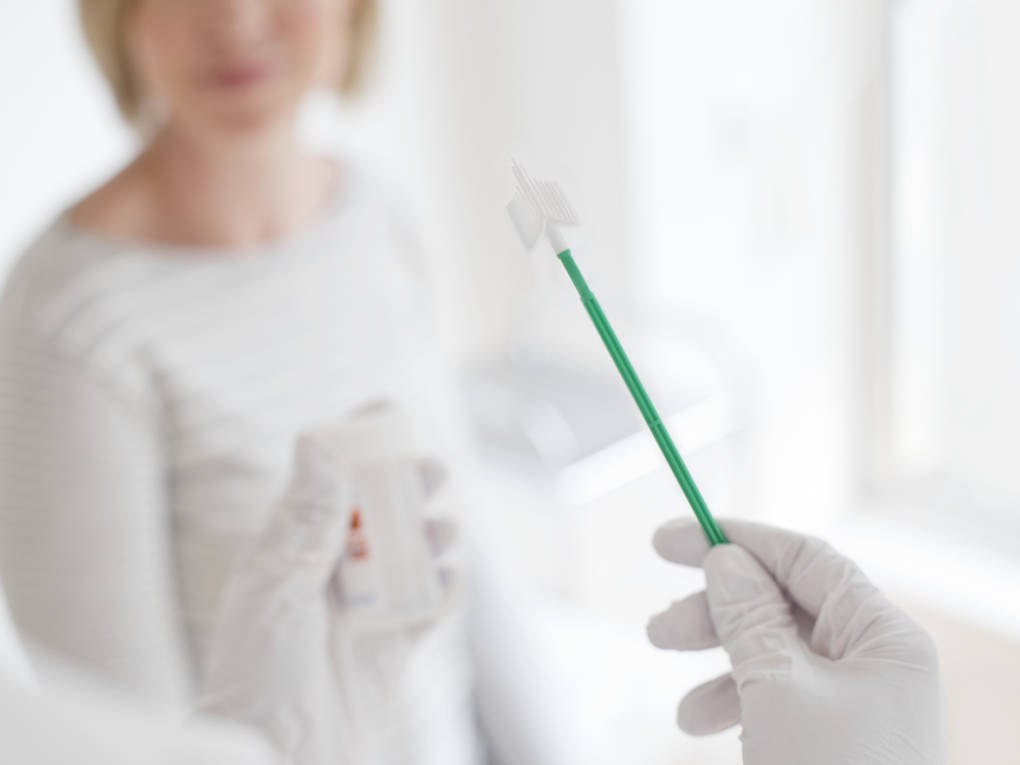
"caption": "Guidelines for cervical cancer screening have changed to allow HPV testing alone for women over 30.",
"description": "Guidelines for cervical cancer screening have changed to allow HPV testing alone for women over 30.",
"title": "Guidelines for cervical cancer screening have changed to allow HPV testing alone for women over 30.",
"credit": "Science Photo Library/Getty Images",
"status": "inherit",
"isLoading": false,
"fetchFailed": false
},
"futureofyou_443970": {
"type": "attachments",
"id": "futureofyou_443970",
"meta": {
"index": "attachments_1716263798",
"site": "futureofyou",
"id": "443970",
"found": true
},
"parent": 443966,
"imgSizes": {
"small": {
"file": "https://ww2.kqed.org/app/uploads/sites/13/2018/08/03-aaron-mcq-als_1350-520x347.jpg",
"width": 520,
"mimeType": "image/jpeg",
"height": 347
},
"twentyfourteen-full-width": {
"file": "https://ww2.kqed.org/app/uploads/sites/13/2018/08/03-aaron-mcq-als_1350-1038x576.jpg",
"width": 1038,
"mimeType": "image/jpeg",
"height": 576
},
"thumbnail": {
"file": "https://ww2.kqed.org/app/uploads/sites/13/2018/08/03-aaron-mcq-als_1350-160x107.jpg",
"width": 160,
"mimeType": "image/jpeg",
"height": 107
},
"fd-sm": {
"file": "https://ww2.kqed.org/app/uploads/sites/13/2018/08/03-aaron-mcq-als_1350-960x640.jpg",
"width": 960,
"mimeType": "image/jpeg",
"height": 640
},
"post-thumbnail": {
"file": "https://ww2.kqed.org/app/uploads/sites/13/2018/08/03-aaron-mcq-als_1350-672x372.jpg",
"width": 672,
"mimeType": "image/jpeg",
"height": 372
},
"xsmall": {
"file": "https://ww2.kqed.org/app/uploads/sites/13/2018/08/03-aaron-mcq-als_1350-375x250.jpg",
"width": 375,
"mimeType": "image/jpeg",
"height": 250
},
"kqedFullSize": {
"file": "https://ww2.kqed.org/app/uploads/sites/13/2018/08/03-aaron-mcq-als_1350.jpg",
"width": 1270,
"height": 847
},
"large": {
"file": "https://ww2.kqed.org/app/uploads/sites/13/2018/08/03-aaron-mcq-als_1350-1020x680.jpg",
"width": 1020,
"mimeType": "image/jpeg",
"height": 680
},
"xlarge": {
"file": "https://ww2.kqed.org/app/uploads/sites/13/2018/08/03-aaron-mcq-als_1350-1180x787.jpg",
"width": 1180,
"mimeType": "image/jpeg",
"height": 787
},
"complete_open_graph": {
"file": "https://ww2.kqed.org/app/uploads/sites/13/2018/08/03-aaron-mcq-als_1350-1200x800.jpg",
"width": 1200,
"mimeType": "image/jpeg",
"height": 800
},
"guest-author-50": {
"file": "https://ww2.kqed.org/app/uploads/sites/13/2018/08/03-aaron-mcq-als_1350-50x50.jpg",
"width": 50,
"mimeType": "image/jpeg",
"height": 50
},
"guest-author-96": {
"file": "https://ww2.kqed.org/app/uploads/sites/13/2018/08/03-aaron-mcq-als_1350-96x96.jpg",
"width": 96,
"mimeType": "image/jpeg",
"height": 96
},
"medium": {
"file": "https://ww2.kqed.org/app/uploads/sites/13/2018/08/03-aaron-mcq-als_1350-800x534.jpg",
"width": 800,
"mimeType": "image/jpeg",
"height": 534
},
"guest-author-64": {
"file": "https://ww2.kqed.org/app/uploads/sites/13/2018/08/03-aaron-mcq-als_1350-64x64.jpg",
"width": 64,
"mimeType": "image/jpeg",
"height": 64
},
"guest-author-32": {
"file": "https://ww2.kqed.org/app/uploads/sites/13/2018/08/03-aaron-mcq-als_1350-32x32.jpg",
"width": 32,
"mimeType": "image/jpeg",
"height": 32
},
"fd-med": {
"file": "https://ww2.kqed.org/app/uploads/sites/13/2018/08/03-aaron-mcq-als_1350-1180x787.jpg",
"width": 1180,
"mimeType": "image/jpeg",
"height": 787
},
"detail": {
"file": "https://ww2.kqed.org/app/uploads/sites/13/2018/08/03-aaron-mcq-als_1350-150x150.jpg",
"width": 150,
"mimeType": "image/jpeg",
"height": 150
},
"medium_large": {
"file": "https://ww2.kqed.org/app/uploads/sites/13/2018/08/03-aaron-mcq-als_1350-768x512.jpg",
"width": 768,
"mimeType": "image/jpeg",
"height": 512
},
"guest-author-128": {
"file": "https://ww2.kqed.org/app/uploads/sites/13/2018/08/03-aaron-mcq-als_1350-128x128.jpg",
"width": 128,
"mimeType": "image/jpeg",
"height": 128
},
"xxsmall": {
"file": "https://ww2.kqed.org/app/uploads/sites/13/2018/08/03-aaron-mcq-als_1350-240x160.jpg",
"width": 240,
"mimeType": "image/jpeg",
"height": 160
}
},
"publishDate": 1534290396,
"modified": 1534290435,
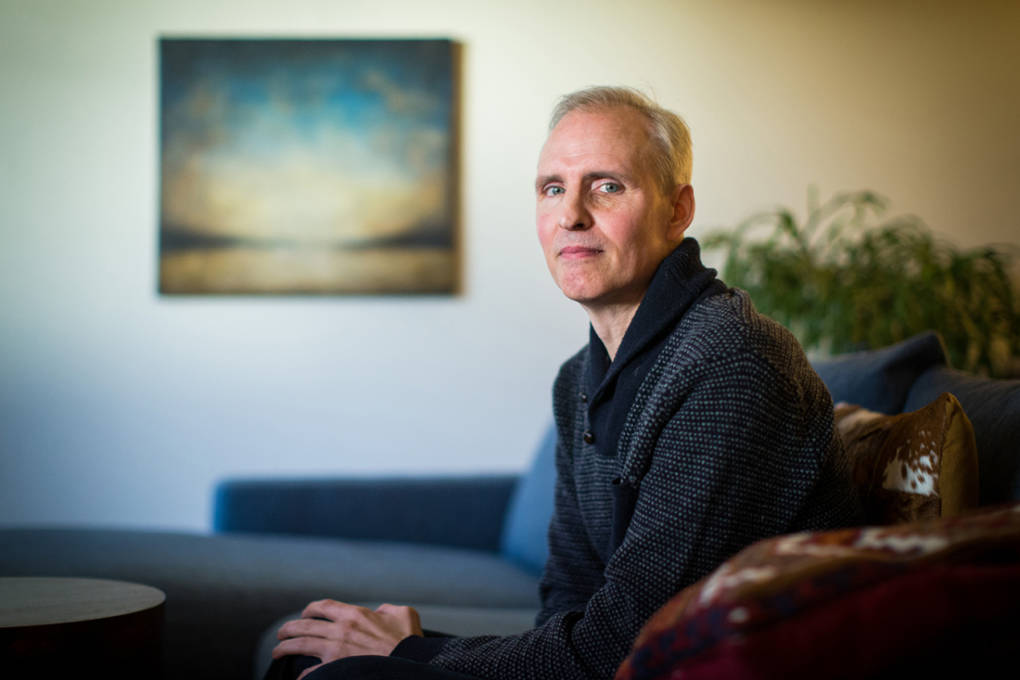
"caption": "Aaron McQ, 50, poses in his Seattle apartment on Jan. 31, 2018. McQ had been battling leukemia and a rare form of amyotrophic lateral sclerosis, or ALS, for five years. In November, doctors gave him six months or less to live and confirmed that he qualified to use Washington state’s aid-in-dying law. ",
"description": null,
"title": "03-aaron-mcq-als_1350",
"credit": "Dan DeLong/KHN",
"status": "inherit",
"isLoading": false,
"fetchFailed": false
},
"futureofyou_443964": {
"type": "attachments",
"id": "futureofyou_443964",
"meta": {
"index": "attachments_1716263798",
"site": "futureofyou",
"id": "443964",
"found": true
},
"parent": 443962,
"imgSizes": {
"small": {
"file": "https://ww2.kqed.org/app/uploads/sites/13/2018/08/GettyImages-859378100-520x347.jpg",
"width": 520,
"mimeType": "image/jpeg",
"height": 347
},
"twentyfourteen-full-width": {
"file": "https://ww2.kqed.org/app/uploads/sites/13/2018/08/GettyImages-859378100-1038x576.jpg",
"width": 1038,
"mimeType": "image/jpeg",
"height": 576
},
"thumbnail": {
"file": "https://ww2.kqed.org/app/uploads/sites/13/2018/08/GettyImages-859378100-160x107.jpg",
"width": 160,
"mimeType": "image/jpeg",
"height": 107
},
"fd-sm": {
"file": "https://ww2.kqed.org/app/uploads/sites/13/2018/08/GettyImages-859378100-960x640.jpg",
"width": 960,
"mimeType": "image/jpeg",
"height": 640
},
"post-thumbnail": {
"file": "https://ww2.kqed.org/app/uploads/sites/13/2018/08/GettyImages-859378100-672x372.jpg",
"width": 672,
"mimeType": "image/jpeg",
"height": 372
},
"xsmall": {
"file": "https://ww2.kqed.org/app/uploads/sites/13/2018/08/GettyImages-859378100-375x250.jpg",
"width": 375,
"mimeType": "image/jpeg",
"height": 250
},
"kqedFullSize": {
"file": "https://ww2.kqed.org/app/uploads/sites/13/2018/08/GettyImages-859378100.jpg",
"width": 4500,
"height": 3000
},
"large": {
"file": "https://ww2.kqed.org/app/uploads/sites/13/2018/08/GettyImages-859378100-1020x680.jpg",
"width": 1020,
"mimeType": "image/jpeg",
"height": 680
},
"xlarge": {
"file": "https://ww2.kqed.org/app/uploads/sites/13/2018/08/GettyImages-859378100-1180x787.jpg",
"width": 1180,
"mimeType": "image/jpeg",
"height": 787
},
"complete_open_graph": {
"file": "https://ww2.kqed.org/app/uploads/sites/13/2018/08/GettyImages-859378100-1200x800.jpg",
"width": 1200,
"mimeType": "image/jpeg",
"height": 800
},
"guest-author-50": {
"file": "https://ww2.kqed.org/app/uploads/sites/13/2018/08/GettyImages-859378100-50x50.jpg",
"width": 50,
"mimeType": "image/jpeg",
"height": 50
},
"guest-author-96": {
"file": "https://ww2.kqed.org/app/uploads/sites/13/2018/08/GettyImages-859378100-96x96.jpg",
"width": 96,
"mimeType": "image/jpeg",
"height": 96
},
"medium": {
"file": "https://ww2.kqed.org/app/uploads/sites/13/2018/08/GettyImages-859378100-800x533.jpg",
"width": 800,
"mimeType": "image/jpeg",
"height": 533
},
"guest-author-64": {
"file": "https://ww2.kqed.org/app/uploads/sites/13/2018/08/GettyImages-859378100-64x64.jpg",
"width": 64,
"mimeType": "image/jpeg",
"height": 64
},
"guest-author-32": {
"file": "https://ww2.kqed.org/app/uploads/sites/13/2018/08/GettyImages-859378100-32x32.jpg",
"width": 32,
"mimeType": "image/jpeg",
"height": 32
},
"fd-lrg": {
"file": "https://ww2.kqed.org/app/uploads/sites/13/2018/08/GettyImages-859378100-1920x1280.jpg",
"width": 1920,
"mimeType": "image/jpeg",
"height": 1280
},
"fd-med": {
"file": "https://ww2.kqed.org/app/uploads/sites/13/2018/08/GettyImages-859378100-1180x787.jpg",
"width": 1180,
"mimeType": "image/jpeg",
"height": 787
},
"full-width": {
"file": "https://ww2.kqed.org/app/uploads/sites/13/2018/08/GettyImages-859378100-1920x1280.jpg",
"width": 1920,
"mimeType": "image/jpeg",
"height": 1280
},
"detail": {
"file": "https://ww2.kqed.org/app/uploads/sites/13/2018/08/GettyImages-859378100-150x150.jpg",
"width": 150,
"mimeType": "image/jpeg",
"height": 150
},
"medium_large": {
"file": "https://ww2.kqed.org/app/uploads/sites/13/2018/08/GettyImages-859378100-768x512.jpg",
"width": 768,
"mimeType": "image/jpeg",
"height": 512
},
"guest-author-128": {
"file": "https://ww2.kqed.org/app/uploads/sites/13/2018/08/GettyImages-859378100-128x128.jpg",
"width": 128,
"mimeType": "image/jpeg",
"height": 128
},
"xxsmall": {
"file": "https://ww2.kqed.org/app/uploads/sites/13/2018/08/GettyImages-859378100-240x160.jpg",
"width": 240,
"mimeType": "image/jpeg",
"height": 160
}
},
"publishDate": 1534289134,
"modified": 1534289167,
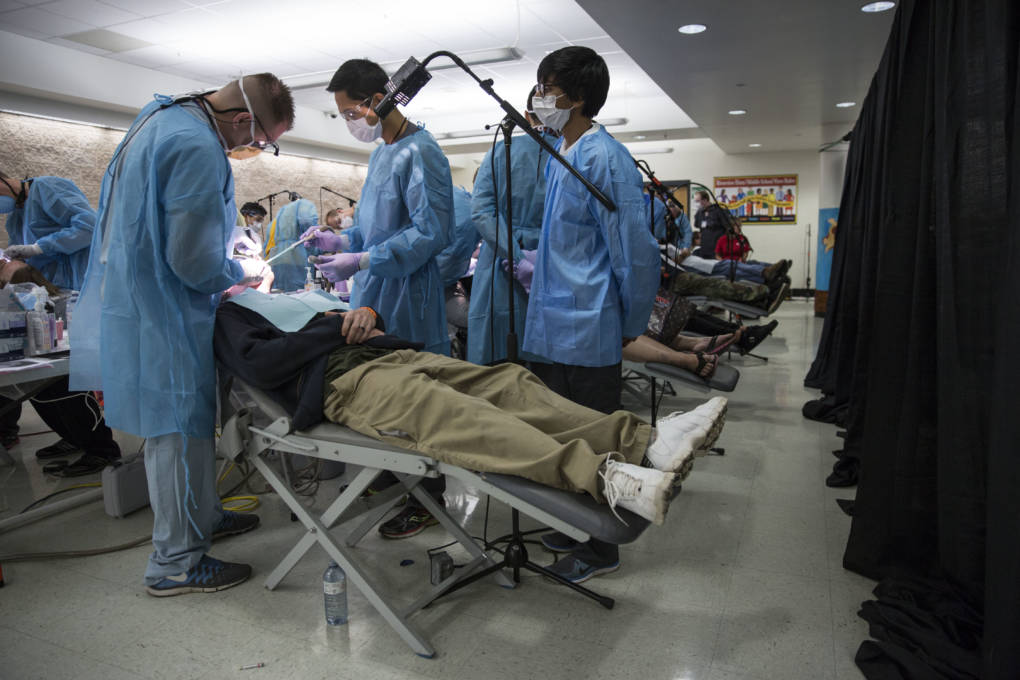
"caption": "A man receives dental attention at the Remote Area Medical (RAM) mobile clinic on October 7, 2017 at the Riverview School in Grundy, Virginia. \n",
"description": null,
"title": "US-HEALTH-REMOTE-AREA-MEDICAL",
"credit": "VICTORIA SARNO JORDAN/AFP/Getty Images",
"status": "inherit",
"isLoading": false,
"fetchFailed": false
},
"futureofyou_443979": {
"type": "attachments",
"id": "futureofyou_443979",
"meta": {
"index": "attachments_1716263798",
"site": "futureofyou",
"id": "443979",
"found": true
},
"parent": 443977,
"imgSizes": {
"small": {
"file": "https://ww2.kqed.org/app/uploads/sites/13/2018/08/GettyImages-1946364-1-520x319.jpg",
"width": 520,
"mimeType": "image/jpeg",
"height": 319
},
"twentyfourteen-full-width": {
"file": "https://ww2.kqed.org/app/uploads/sites/13/2018/08/GettyImages-1946364-1-1038x576.jpg",
"width": 1038,
"mimeType": "image/jpeg",
"height": 576
},
"thumbnail": {
"file": "https://ww2.kqed.org/app/uploads/sites/13/2018/08/GettyImages-1946364-1-160x98.jpg",
"width": 160,
"mimeType": "image/jpeg",
"height": 98
},
"fd-sm": {
"file": "https://ww2.kqed.org/app/uploads/sites/13/2018/08/GettyImages-1946364-1-960x588.jpg",
"width": 960,
"mimeType": "image/jpeg",
"height": 588
},
"post-thumbnail": {
"file": "https://ww2.kqed.org/app/uploads/sites/13/2018/08/GettyImages-1946364-1-672x372.jpg",
"width": 672,
"mimeType": "image/jpeg",
"height": 372
},
"xsmall": {
"file": "https://ww2.kqed.org/app/uploads/sites/13/2018/08/GettyImages-1946364-1-375x230.jpg",
"width": 375,
"mimeType": "image/jpeg",
"height": 230
},
"kqedFullSize": {
"file": "https://ww2.kqed.org/app/uploads/sites/13/2018/08/GettyImages-1946364-1.jpg",
"width": 3000,
"height": 1839
},
"large": {
"file": "https://ww2.kqed.org/app/uploads/sites/13/2018/08/GettyImages-1946364-1-1020x625.jpg",
"width": 1020,
"mimeType": "image/jpeg",
"height": 625
},
"xlarge": {
"file": "https://ww2.kqed.org/app/uploads/sites/13/2018/08/GettyImages-1946364-1-1180x723.jpg",
"width": 1180,
"mimeType": "image/jpeg",
"height": 723
},
"complete_open_graph": {
"file": "https://ww2.kqed.org/app/uploads/sites/13/2018/08/GettyImages-1946364-1-1200x736.jpg",
"width": 1200,
"mimeType": "image/jpeg",
"height": 736
},
"guest-author-50": {
"file": "https://ww2.kqed.org/app/uploads/sites/13/2018/08/GettyImages-1946364-1-50x50.jpg",
"width": 50,
"mimeType": "image/jpeg",
"height": 50
},
"guest-author-96": {
"file": "https://ww2.kqed.org/app/uploads/sites/13/2018/08/GettyImages-1946364-1-96x96.jpg",
"width": 96,
"mimeType": "image/jpeg",
"height": 96
},
"medium": {
"file": "https://ww2.kqed.org/app/uploads/sites/13/2018/08/GettyImages-1946364-1-800x490.jpg",
"width": 800,
"mimeType": "image/jpeg",
"height": 490
},
"guest-author-64": {
"file": "https://ww2.kqed.org/app/uploads/sites/13/2018/08/GettyImages-1946364-1-64x64.jpg",
"width": 64,
"mimeType": "image/jpeg",
"height": 64
},
"guest-author-32": {
"file": "https://ww2.kqed.org/app/uploads/sites/13/2018/08/GettyImages-1946364-1-32x32.jpg",
"width": 32,
"mimeType": "image/jpeg",
"height": 32
},
"fd-lrg": {
"file": "https://ww2.kqed.org/app/uploads/sites/13/2018/08/GettyImages-1946364-1-1920x1177.jpg",
"width": 1920,
"mimeType": "image/jpeg",
"height": 1177
},
"fd-med": {
"file": "https://ww2.kqed.org/app/uploads/sites/13/2018/08/GettyImages-1946364-1-1180x723.jpg",
"width": 1180,
"mimeType": "image/jpeg",
"height": 723
},
"full-width": {
"file": "https://ww2.kqed.org/app/uploads/sites/13/2018/08/GettyImages-1946364-1-1920x1177.jpg",
"width": 1920,
"mimeType": "image/jpeg",
"height": 1177
},
"detail": {
"file": "https://ww2.kqed.org/app/uploads/sites/13/2018/08/GettyImages-1946364-1-150x150.jpg",
"width": 150,
"mimeType": "image/jpeg",
"height": 150
},
"medium_large": {
"file": "https://ww2.kqed.org/app/uploads/sites/13/2018/08/GettyImages-1946364-1-768x471.jpg",
"width": 768,
"mimeType": "image/jpeg",
"height": 471
},
"guest-author-128": {
"file": "https://ww2.kqed.org/app/uploads/sites/13/2018/08/GettyImages-1946364-1-128x128.jpg",
"width": 128,
"mimeType": "image/jpeg",
"height": 128
},
"xxsmall": {
"file": "https://ww2.kqed.org/app/uploads/sites/13/2018/08/GettyImages-1946364-1-240x147.jpg",
"width": 240,
"mimeType": "image/jpeg",
"height": 147
}
},
"publishDate": 1534319952,
"modified": 1534319995,
"caption": "Deoxyribonucleic acid (DNA) strands from a double helix model on display at the Science Museum April 23, 2003 in London. ",
"description": null,
"title": "GettyImages-1946364 (1)",
"credit": "Paul Gilham/Getty Images",
"status": "inherit",
"isLoading": false,
"fetchFailed": false
},
"futureofyou_443956": {
"type": "attachments",
"id": "futureofyou_443956",
"meta": {
"index": "attachments_1716263798",
"site": "futureofyou",
"id": "443956",
"found": true
},
"parent": 443954,
"imgSizes": {
"small": {
"file": "https://ww2.kqed.org/app/uploads/sites/13/2018/08/GettyImages-125767586-1200x800-520x347.jpg",
"width": 520,
"mimeType": "image/jpeg",
"height": 347
},
"twentyfourteen-full-width": {
"file": "https://ww2.kqed.org/app/uploads/sites/13/2018/08/GettyImages-125767586-1200x800-1038x576.jpg",
"width": 1038,
"mimeType": "image/jpeg",
"height": 576
},
"thumbnail": {
"file": "https://ww2.kqed.org/app/uploads/sites/13/2018/08/GettyImages-125767586-1200x800-160x107.jpg",
"width": 160,
"mimeType": "image/jpeg",
"height": 107
},
"fd-sm": {
"file": "https://ww2.kqed.org/app/uploads/sites/13/2018/08/GettyImages-125767586-1200x800-960x640.jpg",
"width": 960,
"mimeType": "image/jpeg",
"height": 640
},
"post-thumbnail": {
"file": "https://ww2.kqed.org/app/uploads/sites/13/2018/08/GettyImages-125767586-1200x800-672x372.jpg",
"width": 672,
"mimeType": "image/jpeg",
"height": 372
},
"xsmall": {
"file": "https://ww2.kqed.org/app/uploads/sites/13/2018/08/GettyImages-125767586-1200x800-375x250.jpg",
"width": 375,
"mimeType": "image/jpeg",
"height": 250
},
"kqedFullSize": {
"file": "https://ww2.kqed.org/app/uploads/sites/13/2018/08/GettyImages-125767586-1200x800.jpg",
"width": 1200,
"height": 800
},
"large": {
"file": "https://ww2.kqed.org/app/uploads/sites/13/2018/08/GettyImages-125767586-1200x800-1020x680.jpg",
"width": 1020,
"mimeType": "image/jpeg",
"height": 680
},
"xlarge": {
"file": "https://ww2.kqed.org/app/uploads/sites/13/2018/08/GettyImages-125767586-1200x800-1180x787.jpg",
"width": 1180,
"mimeType": "image/jpeg",
"height": 787
},
"complete_open_graph": {
"file": "https://ww2.kqed.org/app/uploads/sites/13/2018/08/GettyImages-125767586-1200x800-1200x800.jpg",
"width": 1200,
"mimeType": "image/jpeg",
"height": 800
},
"guest-author-50": {
"file": "https://ww2.kqed.org/app/uploads/sites/13/2018/08/GettyImages-125767586-1200x800-50x50.jpg",
"width": 50,
"mimeType": "image/jpeg",
"height": 50
},
"guest-author-96": {
"file": "https://ww2.kqed.org/app/uploads/sites/13/2018/08/GettyImages-125767586-1200x800-96x96.jpg",
"width": 96,
"mimeType": "image/jpeg",
"height": 96
},
"medium": {
"file": "https://ww2.kqed.org/app/uploads/sites/13/2018/08/GettyImages-125767586-1200x800-800x533.jpg",
"width": 800,
"mimeType": "image/jpeg",
"height": 533
},
"guest-author-64": {
"file": "https://ww2.kqed.org/app/uploads/sites/13/2018/08/GettyImages-125767586-1200x800-64x64.jpg",
"width": 64,
"mimeType": "image/jpeg",
"height": 64
},
"guest-author-32": {
"file": "https://ww2.kqed.org/app/uploads/sites/13/2018/08/GettyImages-125767586-1200x800-32x32.jpg",
"width": 32,
"mimeType": "image/jpeg",
"height": 32
},
"fd-med": {
"file": "https://ww2.kqed.org/app/uploads/sites/13/2018/08/GettyImages-125767586-1200x800-1180x787.jpg",
"width": 1180,
"mimeType": "image/jpeg",
"height": 787
},
"detail": {
"file": "https://ww2.kqed.org/app/uploads/sites/13/2018/08/GettyImages-125767586-1200x800-150x150.jpg",
"width": 150,
"mimeType": "image/jpeg",
"height": 150
},
"medium_large": {
"file": "https://ww2.kqed.org/app/uploads/sites/13/2018/08/GettyImages-125767586-1200x800-768x512.jpg",
"width": 768,
"mimeType": "image/jpeg",
"height": 512
},
"guest-author-128": {
"file": "https://ww2.kqed.org/app/uploads/sites/13/2018/08/GettyImages-125767586-1200x800-128x128.jpg",
"width": 128,
"mimeType": "image/jpeg",
"height": 128
},
"xxsmall": {
"file": "https://ww2.kqed.org/app/uploads/sites/13/2018/08/GettyImages-125767586-1200x800-240x160.jpg",
"width": 240,
"mimeType": "image/jpeg",
"height": 160
}
},
"publishDate": 1534261262,
"modified": 1534261338,
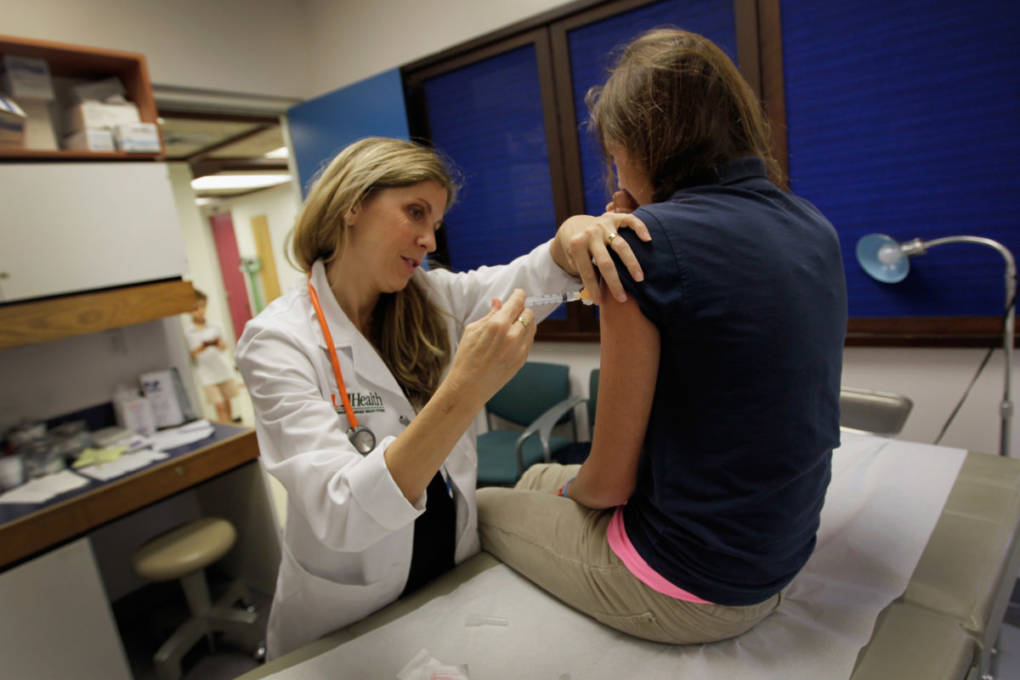
"caption": "University of Miami pediatrician Judith L. Schaechter, M.D. (L) gives an HPV vaccination to a 13-year-old girl in her office at the Miller School of Medicine on September 21, 2011 in Miami, Florida. \n",
"description": null,
"title": "HPV Vaccinations Back In Spotlight After Perry Joins Presidential Race",
"credit": "Joe Raedle/Getty Images",
"status": "inherit",
"isLoading": false,
"fetchFailed": false
},
"futureofyou_443906": {
"type": "attachments",
"id": "futureofyou_443906",
"meta": {
"index": "attachments_1716263798",
"site": "futureofyou",
"id": "443906",
"found": true
},
"parent": 443905,
"imgSizes": {
"small": {
"file": "https://ww2.kqed.org/app/uploads/sites/13/2018/08/regeva-1-68958cd4d128903fad2dd13406ad8ea6708e0d57-520x390.jpg",
"width": 520,
"mimeType": "image/jpeg",
"height": 390
},
"twentyfourteen-full-width": {
"file": "https://ww2.kqed.org/app/uploads/sites/13/2018/08/regeva-1-68958cd4d128903fad2dd13406ad8ea6708e0d57-1038x576.jpg",
"width": 1038,
"mimeType": "image/jpeg",
"height": 576
},
"thumbnail": {
"file": "https://ww2.kqed.org/app/uploads/sites/13/2018/08/regeva-1-68958cd4d128903fad2dd13406ad8ea6708e0d57-160x120.jpg",
"width": 160,
"mimeType": "image/jpeg",
"height": 120
},
"fd-sm": {
"file": "https://ww2.kqed.org/app/uploads/sites/13/2018/08/regeva-1-68958cd4d128903fad2dd13406ad8ea6708e0d57-960x720.jpg",
"width": 960,
"mimeType": "image/jpeg",
"height": 720
},
"post-thumbnail": {
"file": "https://ww2.kqed.org/app/uploads/sites/13/2018/08/regeva-1-68958cd4d128903fad2dd13406ad8ea6708e0d57-672x372.jpg",
"width": 672,
"mimeType": "image/jpeg",
"height": 372
},
"xsmall": {
"file": "https://ww2.kqed.org/app/uploads/sites/13/2018/08/regeva-1-68958cd4d128903fad2dd13406ad8ea6708e0d57-375x281.jpg",
"width": 375,
"mimeType": "image/jpeg",
"height": 281
},
"kqedFullSize": {
"file": "https://ww2.kqed.org/app/uploads/sites/13/2018/08/regeva-1-68958cd4d128903fad2dd13406ad8ea6708e0d57.jpg",
"width": 4951,
"height": 3713
},
"large": {
"file": "https://ww2.kqed.org/app/uploads/sites/13/2018/08/regeva-1-68958cd4d128903fad2dd13406ad8ea6708e0d57-1020x765.jpg",
"width": 1020,
"mimeType": "image/jpeg",
"height": 765
},
"xlarge": {
"file": "https://ww2.kqed.org/app/uploads/sites/13/2018/08/regeva-1-68958cd4d128903fad2dd13406ad8ea6708e0d57-1180x885.jpg",
"width": 1180,
"mimeType": "image/jpeg",
"height": 885
},
"complete_open_graph": {
"file": "https://ww2.kqed.org/app/uploads/sites/13/2018/08/regeva-1-68958cd4d128903fad2dd13406ad8ea6708e0d57-1200x900.jpg",
"width": 1200,
"mimeType": "image/jpeg",
"height": 900
},
"guest-author-50": {
"file": "https://ww2.kqed.org/app/uploads/sites/13/2018/08/regeva-1-68958cd4d128903fad2dd13406ad8ea6708e0d57-50x50.jpg",
"width": 50,
"mimeType": "image/jpeg",
"height": 50
},
"guest-author-96": {
"file": "https://ww2.kqed.org/app/uploads/sites/13/2018/08/regeva-1-68958cd4d128903fad2dd13406ad8ea6708e0d57-96x96.jpg",
"width": 96,
"mimeType": "image/jpeg",
"height": 96
},
"medium": {
"file": "https://ww2.kqed.org/app/uploads/sites/13/2018/08/regeva-1-68958cd4d128903fad2dd13406ad8ea6708e0d57-800x600.jpg",
"width": 800,
"mimeType": "image/jpeg",
"height": 600
},
"guest-author-64": {
"file": "https://ww2.kqed.org/app/uploads/sites/13/2018/08/regeva-1-68958cd4d128903fad2dd13406ad8ea6708e0d57-64x64.jpg",
"width": 64,
"mimeType": "image/jpeg",
"height": 64
},
"guest-author-32": {
"file": "https://ww2.kqed.org/app/uploads/sites/13/2018/08/regeva-1-68958cd4d128903fad2dd13406ad8ea6708e0d57-32x32.jpg",
"width": 32,
"mimeType": "image/jpeg",
"height": 32
},
"fd-lrg": {
"file": "https://ww2.kqed.org/app/uploads/sites/13/2018/08/regeva-1-68958cd4d128903fad2dd13406ad8ea6708e0d57-1920x1440.jpg",
"width": 1920,
"mimeType": "image/jpeg",
"height": 1440
},
"fd-med": {
"file": "https://ww2.kqed.org/app/uploads/sites/13/2018/08/regeva-1-68958cd4d128903fad2dd13406ad8ea6708e0d57-1180x885.jpg",
"width": 1180,
"mimeType": "image/jpeg",
"height": 885
},
"full-width": {
"file": "https://ww2.kqed.org/app/uploads/sites/13/2018/08/regeva-1-68958cd4d128903fad2dd13406ad8ea6708e0d57-1920x1440.jpg",
"width": 1920,
"mimeType": "image/jpeg",
"height": 1440
},
"detail": {
"file": "https://ww2.kqed.org/app/uploads/sites/13/2018/08/regeva-1-68958cd4d128903fad2dd13406ad8ea6708e0d57-150x150.jpg",
"width": 150,
"mimeType": "image/jpeg",
"height": 150
},
"medium_large": {
"file": "https://ww2.kqed.org/app/uploads/sites/13/2018/08/regeva-1-68958cd4d128903fad2dd13406ad8ea6708e0d57-768x576.jpg",
"width": 768,
"mimeType": "image/jpeg",
"height": 576
},
"guest-author-128": {
"file": "https://ww2.kqed.org/app/uploads/sites/13/2018/08/regeva-1-68958cd4d128903fad2dd13406ad8ea6708e0d57-128x128.jpg",
"width": 128,
"mimeType": "image/jpeg",
"height": 128
},
"xxsmall": {
"file": "https://ww2.kqed.org/app/uploads/sites/13/2018/08/regeva-1-68958cd4d128903fad2dd13406ad8ea6708e0d57-240x180.jpg",
"width": 240,
"mimeType": "image/jpeg",
"height": 180
}
},
"publishDate": 1534172626,
"modified": 1534172729,
"caption": "Aviv Regev, a core member of the Broad Institute, is leading the international Human Cell Atlas Consortium.",
"description": "Aviv Regev, a core member of the Broad Institute, is leading the international Human Cell Atlas Consortium.",
"title": "Aviv Regev, a core member of the Broad Institute, is leading the international Human Cell Atlas Consortium.",
"credit": " Casey Atkins/Broad Institute",
"status": "inherit",
"isLoading": false,
"fetchFailed": false
},
"futureofyou_443846": {
"type": "attachments",
"id": "futureofyou_443846",
"meta": {
"index": "attachments_1716263798",
"site": "futureofyou",
"id": "443846",
"found": true
},
"parent": 443844,
"imgSizes": {
"small": {
"file": "https://ww2.kqed.org/app/uploads/sites/13/2018/08/PHONE_APP-1024x576-520x293.jpg",
"width": 520,
"mimeType": "image/jpeg",
"height": 293
},
"twentyfourteen-full-width": {
"file": "https://ww2.kqed.org/app/uploads/sites/13/2018/08/PHONE_APP-1024x576-1024x576.jpg",
"width": 1024,
"mimeType": "image/jpeg",
"height": 576
},
"thumbnail": {
"file": "https://ww2.kqed.org/app/uploads/sites/13/2018/08/PHONE_APP-1024x576-160x90.jpg",
"width": 160,
"mimeType": "image/jpeg",
"height": 90
},
"fd-sm": {
"file": "https://ww2.kqed.org/app/uploads/sites/13/2018/08/PHONE_APP-1024x576-960x540.jpg",
"width": 960,
"mimeType": "image/jpeg",
"height": 540
},
"post-thumbnail": {
"file": "https://ww2.kqed.org/app/uploads/sites/13/2018/08/PHONE_APP-1024x576-672x372.jpg",
"width": 672,
"mimeType": "image/jpeg",
"height": 372
},
"xsmall": {
"file": "https://ww2.kqed.org/app/uploads/sites/13/2018/08/PHONE_APP-1024x576-375x211.jpg",
"width": 375,
"mimeType": "image/jpeg",
"height": 211
},
"kqedFullSize": {
"file": "https://ww2.kqed.org/app/uploads/sites/13/2018/08/PHONE_APP-1024x576.jpg",
"width": 1024,
"height": 576
},
"large": {
"file": "https://ww2.kqed.org/app/uploads/sites/13/2018/08/PHONE_APP-1024x576-1020x574.jpg",
"width": 1020,
"mimeType": "image/jpeg",
"height": 574
},
"guest-author-50": {
"file": "https://ww2.kqed.org/app/uploads/sites/13/2018/08/PHONE_APP-1024x576-50x50.jpg",
"width": 50,
"mimeType": "image/jpeg",
"height": 50
},
"guest-author-96": {
"file": "https://ww2.kqed.org/app/uploads/sites/13/2018/08/PHONE_APP-1024x576-96x96.jpg",
"width": 96,
"mimeType": "image/jpeg",
"height": 96
},
"medium": {
"file": "https://ww2.kqed.org/app/uploads/sites/13/2018/08/PHONE_APP-1024x576-800x450.jpg",
"width": 800,
"mimeType": "image/jpeg",
"height": 450
},
"guest-author-64": {
"file": "https://ww2.kqed.org/app/uploads/sites/13/2018/08/PHONE_APP-1024x576-64x64.jpg",
"width": 64,
"mimeType": "image/jpeg",
"height": 64
},
"guest-author-32": {
"file": "https://ww2.kqed.org/app/uploads/sites/13/2018/08/PHONE_APP-1024x576-32x32.jpg",
"width": 32,
"mimeType": "image/jpeg",
"height": 32
},
"detail": {
"file": "https://ww2.kqed.org/app/uploads/sites/13/2018/08/PHONE_APP-1024x576-150x150.jpg",
"width": 150,
"mimeType": "image/jpeg",
"height": 150
},
"medium_large": {
"file": "https://ww2.kqed.org/app/uploads/sites/13/2018/08/PHONE_APP-1024x576-768x432.jpg",
"width": 768,
"mimeType": "image/jpeg",
"height": 432
},
"guest-author-128": {
"file": "https://ww2.kqed.org/app/uploads/sites/13/2018/08/PHONE_APP-1024x576-128x128.jpg",
"width": 128,
"mimeType": "image/jpeg",
"height": 128
},
"xxsmall": {
"file": "https://ww2.kqed.org/app/uploads/sites/13/2018/08/PHONE_APP-1024x576-240x135.jpg",
"width": 240,
"mimeType": "image/jpeg",
"height": 135
}
},
"publishDate": 1533714124,
"modified": 1533714137,
"caption": null,
"description": null,
"title": "PHONE_APP-1024x576",
"credit": "ALEX HOGAN/STAT",
"status": "inherit",
"isLoading": false,
"fetchFailed": false
},
"futureofyou_443817": {
"type": "attachments",
"id": "futureofyou_443817",
"meta": {
"index": "attachments_1716263798",
"site": "futureofyou",
"id": "443817",
"found": true
},
"parent": 443813,
"imgSizes": {
"small": {
"file": "https://ww2.kqed.org/app/uploads/sites/13/2018/08/iStock-915714354-520x347.jpg",
"width": 520,
"mimeType": "image/jpeg",
"height": 347
},
"twentyfourteen-full-width": {
"file": "https://ww2.kqed.org/app/uploads/sites/13/2018/08/iStock-915714354-1038x576.jpg",
"width": 1038,
"mimeType": "image/jpeg",
"height": 576
},
"thumbnail": {
"file": "https://ww2.kqed.org/app/uploads/sites/13/2018/08/iStock-915714354-160x107.jpg",
"width": 160,
"mimeType": "image/jpeg",
"height": 107
},
"fd-sm": {
"file": "https://ww2.kqed.org/app/uploads/sites/13/2018/08/iStock-915714354-960x640.jpg",
"width": 960,
"mimeType": "image/jpeg",
"height": 640
},
"post-thumbnail": {
"file": "https://ww2.kqed.org/app/uploads/sites/13/2018/08/iStock-915714354-672x372.jpg",
"width": 672,
"mimeType": "image/jpeg",
"height": 372
},
"xsmall": {
"file": "https://ww2.kqed.org/app/uploads/sites/13/2018/08/iStock-915714354-375x250.jpg",
"width": 375,
"mimeType": "image/jpeg",
"height": 250
},
"kqedFullSize": {
"file": "https://ww2.kqed.org/app/uploads/sites/13/2018/08/iStock-915714354.jpg",
"width": 5761,
"height": 3840
},
"large": {
"file": "https://ww2.kqed.org/app/uploads/sites/13/2018/08/iStock-915714354-1020x680.jpg",
"width": 1020,
"mimeType": "image/jpeg",
"height": 680
},
"xlarge": {
"file": "https://ww2.kqed.org/app/uploads/sites/13/2018/08/iStock-915714354-1180x787.jpg",
"width": 1180,
"mimeType": "image/jpeg",
"height": 787
},
"complete_open_graph": {
"file": "https://ww2.kqed.org/app/uploads/sites/13/2018/08/iStock-915714354-1200x800.jpg",
"width": 1200,
"mimeType": "image/jpeg",
"height": 800
},
"guest-author-50": {
"file": "https://ww2.kqed.org/app/uploads/sites/13/2018/08/iStock-915714354-50x50.jpg",
"width": 50,
"mimeType": "image/jpeg",
"height": 50
},
"guest-author-96": {
"file": "https://ww2.kqed.org/app/uploads/sites/13/2018/08/iStock-915714354-96x96.jpg",
"width": 96,
"mimeType": "image/jpeg",
"height": 96
},
"medium": {
"file": "https://ww2.kqed.org/app/uploads/sites/13/2018/08/iStock-915714354-800x533.jpg",
"width": 800,
"mimeType": "image/jpeg",
"height": 533
},
"guest-author-64": {
"file": "https://ww2.kqed.org/app/uploads/sites/13/2018/08/iStock-915714354-64x64.jpg",
"width": 64,
"mimeType": "image/jpeg",
"height": 64
},
"guest-author-32": {
"file": "https://ww2.kqed.org/app/uploads/sites/13/2018/08/iStock-915714354-32x32.jpg",
"width": 32,
"mimeType": "image/jpeg",
"height": 32
},
"fd-lrg": {
"file": "https://ww2.kqed.org/app/uploads/sites/13/2018/08/iStock-915714354-1920x1280.jpg",
"width": 1920,
"mimeType": "image/jpeg",
"height": 1280
},
"fd-med": {
"file": "https://ww2.kqed.org/app/uploads/sites/13/2018/08/iStock-915714354-1180x787.jpg",
"width": 1180,
"mimeType": "image/jpeg",
"height": 787
},
"full-width": {
"file": "https://ww2.kqed.org/app/uploads/sites/13/2018/08/iStock-915714354-1920x1280.jpg",
"width": 1920,
"mimeType": "image/jpeg",
"height": 1280
},
"detail": {
"file": "https://ww2.kqed.org/app/uploads/sites/13/2018/08/iStock-915714354-150x150.jpg",
"width": 150,
"mimeType": "image/jpeg",
"height": 150
},
"medium_large": {
"file": "https://ww2.kqed.org/app/uploads/sites/13/2018/08/iStock-915714354-768x512.jpg",
"width": 768,
"mimeType": "image/jpeg",
"height": 512
},
"guest-author-128": {
"file": "https://ww2.kqed.org/app/uploads/sites/13/2018/08/iStock-915714354-128x128.jpg",
"width": 128,
"mimeType": "image/jpeg",
"height": 128
},
"xxsmall": {
"file": "https://ww2.kqed.org/app/uploads/sites/13/2018/08/iStock-915714354-240x160.jpg",
"width": 240,
"mimeType": "image/jpeg",
"height": 160
}
},
"publishDate": 1533600130,
"modified": 1533600156,
"caption": null,
"description": null,
"title": "Sad woman with mental disorder",
"credit": "iStock",
"status": "inherit",
"isLoading": false,
"fetchFailed": false
}
},
"audioPlayerReducer": {
"postId": "stream_live",
"isPaused": true,
"isPlaying": false,
"pfsActive": false,
"pledgeModalIsOpen": true,
"playerDrawerIsOpen": false,
"liveAudioPlayStartedAt": 0,
"liveAudioPlayContext": ""
},
"authorsReducer": {
"byline_futureofyou_444190": {
"type": "authors",
"id": "byline_futureofyou_444190",
"meta": {
"override": true
},
"slug": "byline_futureofyou_444190",
"name": "Laura Santhanam\u003cbr />PBS NewsHour",
"isLoading": false
},
"byline_futureofyou_444169": {
"type": "authors",
"id": "byline_futureofyou_444169",
"meta": {
"override": true
},
"slug": "byline_futureofyou_444169",
"name": "Anna Gorman, KHN",
"isLoading": false
},
"byline_futureofyou_444047": {
"type": "authors",
"id": "byline_futureofyou_444047",
"meta": {
"override": true
},
"slug": "byline_futureofyou_444047",
"name": "Sharon Begley\u003cbr />STAT",
"isLoading": false
},
"byline_futureofyou_444068": {
"type": "authors",
"id": "byline_futureofyou_444068",
"meta": {
"override": true
},
"slug": "byline_futureofyou_444068",
"name": "Helen Branswell\u003cbr />STAT",
"isLoading": false
},
"byline_futureofyou_444026": {
"type": "authors",
"id": "byline_futureofyou_444026",
"meta": {
"override": true
},
"slug": "byline_futureofyou_444026",
"name": "Richard Harris, NPR",
"isLoading": false
},
"byline_futureofyou_443966": {
"type": "authors",
"id": "byline_futureofyou_443966",
"meta": {
"override": true
},
"slug": "byline_futureofyou_443966",
"name": "JoNel Aleccia, KHN",
"isLoading": false
},
"byline_futureofyou_443962": {
"type": "authors",
"id": "byline_futureofyou_443962",
"meta": {
"override": true
},
"slug": "byline_futureofyou_443962",
"name": "Orly Nadell Farber\u003cbr />STAT",
"isLoading": false
},
"byline_futureofyou_443977": {
"type": "authors",
"id": "byline_futureofyou_443977",
"meta": {
"override": true
},
"slug": "byline_futureofyou_443977",
"name": "Lauran Neergaard\u003cbr />The Associated Press",
"isLoading": false
},
"byline_futureofyou_443954": {
"type": "authors",
"id": "byline_futureofyou_443954",
"meta": {
"override": true
},
"slug": "byline_futureofyou_443954",
"name": "Laura Santhanam\u003cbr />PBS NewsHour",
"isLoading": false
},
"byline_futureofyou_443905": {
"type": "authors",
"id": "byline_futureofyou_443905",
"meta": {
"override": true
},
"slug": "byline_futureofyou_443905",
"name": "Karen Weintraub, NPR",
"isLoading": false
},
"byline_futureofyou_443844": {
"type": "authors",
"id": "byline_futureofyou_443844",
"meta": {
"override": true
},
"slug": "byline_futureofyou_443844",
"name": "Orly Nadell Farber\u003cbr />STAT",
"isLoading": false
},
"byline_futureofyou_443813": {
"type": "authors",
"id": "byline_futureofyou_443813",
"meta": {
"override": true
},
"slug": "byline_futureofyou_443813",
"name": "Orly Nadell Farber\u003cbr />STAT",
"isLoading": false
}
},
"pagesReducer": {
"futureofyou_category_diy-health": {
"type": "terms",
"id": "futureofyou_1060",
"meta": {
"index": "terms_1716263798",
"site": "futureofyou",
"id": "1060",
"score": 13.896381
},
"featImg": null,
"name": "DIY Health",
"description": null,
"taxonomy": "category",
"headData": {
"twImgId": null,
"twTitle": null,
"ogTitle": null,
"ogImgId": null,
"twDescription": null,
"description": null,
"title": "DIY Health Archives | KQED Arts",
"ogDescription": null
},
"ttid": 1060,
"slug": "diy-health",
"isLoading": false,
"title": "DIY Health",
"pageMeta": {
"site": "futureofyou",
"WpPageTemplate": "page-topic-editorial",
"currentPage": 4
},
"blocks": [
{
"blockName": "kqed/post-list",
"attrs": {
"layout": "cardArticle2",
"query": "posts/futureofyou?category=diy-health",
"seeMore": false,
"paginated": true,
"page": 4
}
},
{
"blockName": "kqed/ad"
}
]
}
},
"pfsSessionReducer": {},
"postsReducer": {
"stream_live": {
"type": "live",
"id": "stream_live",
"audioUrl": "https://streams.kqed.org/kqedradio",
"title": "Live Stream",
"excerpt": "Live Stream information currently unavailable.",
"link": "/radio",
"featImg": "",
"label": {
"name": "KQED Live",
"link": "/"
}
},
"stream_kqedNewscast": {
"type": "posts",
"id": "stream_kqedNewscast",
"audioUrl": "https://www.kqed.org/.stream/anon/radio/RDnews/newscast.mp3?_=1",
"title": "KQED Newscast",
"featImg": "",
"label": {
"name": "88.5 FM",
"link": "/"
}
},
"futureofyou_444190": {
"type": "posts",
"id": "futureofyou_444190",
"meta": {
"index": "posts_1716263798",
"site": "futureofyou",
"id": "444190",
"score": null,
"sort": [
1535736024000
]
},
"parent": 0,
"labelTerm": {
"site": "futureofyou",
"term": 1093
},
"blocks": [],
"publishDate": 1535736024,
"format": "standard",
"disqusTitle": "New Gun Ranking Shows the Impact of Gun Deaths Worldwide",
"title": "New Gun Ranking Shows the Impact of Gun Deaths Worldwide",
"headTitle": "KQED Future of You | KQED Science",
"content": "\u003cp>In 2016, more than 250,000 people worldwide died as a result of firearms, and half of all of those deaths came from six nations, including the U.S.[contextly_sidebar id=\"Sq405EaoxZZES4Xjef22Cavnquq3czrJ\"]\u003c/p>\n\u003cp>The new numbers, from the University of Washington’s Institute for Health Metrics and Evaluation’s latest study of Global Burden of Diseases, Injuries and Risk Factors, offer several new ways to measure the impact of gun deaths worldwide.\u003c/p>\n\u003cp>Half of all gun-related deaths in 2016 occurred in six nations — Brazil, the United States, Mexico, Venezuela, Colombia and Guatemala. Together, the study published in the journal JAMA noted, these countries hold less than 10 percent of the world’s population.\u003c/p>\n\u003cp>\u003cimg class=\"aligncenter size-full wp-image-444187\" src=\"https://ww2.kqed.org/futureofyou/wp-content/uploads/sites/13/2018/08/gundeaths2016IHME.png\" alt=\"\" width=\"656\" height=\"369\" srcset=\"https://ww2.kqed.org/app/uploads/sites/13/2018/08/gundeaths2016IHME.png 656w, https://ww2.kqed.org/app/uploads/sites/13/2018/08/gundeaths2016IHME-160x90.png 160w, https://ww2.kqed.org/app/uploads/sites/13/2018/08/gundeaths2016IHME-240x135.png 240w, https://ww2.kqed.org/app/uploads/sites/13/2018/08/gundeaths2016IHME-375x211.png 375w, https://ww2.kqed.org/app/uploads/sites/13/2018/08/gundeaths2016IHME-520x293.png 520w\" sizes=\"(max-width: 656px) 100vw, 656px\">\u003c/p>\n\u003cp>Overall, 64 percent of deaths were determined to be homicides, while an additional 27 percent were suicides and 9 percent were accidental shootings.\u003c/p>\n\u003cp>[ad fullwidth]\u003c/p>\n\u003cp>But country to country, looking at the ways people die due to gunfire produces a deeply varied picture, said Christopher Murray, the institute’s director.\u003c/p>\n\u003cp>When it comes to the number of gun-related homicides, the U.S. ranks 30th worldwide. But suicides linked to guns occurred in the U.S. at a rate of 6.4 per 100,000 deaths — a total of 23,800 people — the second highest rate worldwide.\u003c/p>\n\u003cp>These numbers come days after a \u003ca href=\"https://www.pbs.org/newshour/politics/police-said-jacksonville-shooter-clearly-targeted-other-gamers-heres-what-we-know\" target=\"_blank\" rel=\"noopener\">gunman in Jacksonville, Florida,\u003c/a> fatally shot two people and injured 11 more before he killed himself Sunday during a video game tournament in a shopping mall.\u003c/p>\n\u003cp>While mass shootings like these capture the most media attention, they are responsible for a small sliver of overall gun deaths in the United States, gun violence experts Frederick P. Rivara, David M. Studdert and Garen J. Wintemute wrote in an editorial published in JAMA alongside the new report.[contextly_sidebar id=\"SZDflZXxowNtlSQKEIza6tXHHr8FLgte\"]\u003c/p>\n\u003cp>“In the United States and elsewhere, acts of terrorism committed with firearms and other lethal means have changed the way people live, work, travel, and play,” they wrote. “In the United States, armed guards patrol some schools, and some politicians have advocated allowing teachers to carry guns. Although mass shootings and terrorist attacks are the most visible form of gun violence, they account for only a small fraction of the public health burden of firearm-related morbidity and mortality.”\u003c/p>\n\u003cp>\u003cimg class=\"aligncenter size-full wp-image-444188\" src=\"https://ww2.kqed.org/futureofyou/wp-content/uploads/sites/13/2018/08/top-20-death-rate-revised-849x1024.png\" alt=\"\" width=\"849\" height=\"1024\" srcset=\"https://ww2.kqed.org/app/uploads/sites/13/2018/08/top-20-death-rate-revised-849x1024.png 849w, https://ww2.kqed.org/app/uploads/sites/13/2018/08/top-20-death-rate-revised-849x1024-160x193.png 160w, https://ww2.kqed.org/app/uploads/sites/13/2018/08/top-20-death-rate-revised-849x1024-800x965.png 800w, https://ww2.kqed.org/app/uploads/sites/13/2018/08/top-20-death-rate-revised-849x1024-768x926.png 768w, https://ww2.kqed.org/app/uploads/sites/13/2018/08/top-20-death-rate-revised-849x1024-240x289.png 240w, https://ww2.kqed.org/app/uploads/sites/13/2018/08/top-20-death-rate-revised-849x1024-375x452.png 375w, https://ww2.kqed.org/app/uploads/sites/13/2018/08/top-20-death-rate-revised-849x1024-520x627.png 520w\" sizes=\"(max-width: 849px) 100vw, 849px\">\u003c/p>\n\u003cp>For this latest report, researchers pulled data about 195 nations and territories, using nearly 2,900 different sources — a median of nine different datasets per nation. The study looks at data from 1990 to 2016, and was largely based on death certificate reports, Murray said.\u003c/p>\n\u003cp>In the United States, 37,200 people died as a result of overall gun use in 2016, the second highest number worldwide. But when it comes to gun deaths per capita, the U.S. ranks 20th, at a rate of 10.6 per 100,000 deaths — putting it on par with the Dominican Republic. Many places with high gun death rates had fewer deaths than the U.S. because of smaller populations. For instance, El Salvador produced the highest combined gun death rate of 39.2 per 100,000 deaths, but recorded 2,500 deaths overall. When it comes to gun-related suicides, Greenland has a higher rate than the U.S. — 22 per 100,000 deaths — but 11 deaths overall.[contextly_sidebar id=\"pS1JGptwnHklq6Q8wfMEcuPaC8OU1zOO\"]\u003c/p>\n\u003cp>Since 1990, the number of gun deaths has declined, the report said. But nearly every year since then, firearm deaths outside conflict zones outnumbered deaths that occurred as a result of war.\u003c/p>\n\u003cp>“We spend a lot of time thinking about conflict, and probably, we should be spending as much or more time thinking about how to reduce firearm-related homicide and suicide,” Murray said.\u003c/p>\n\u003cp>These latest numbers “provide the best data” on global gun deaths, said David Hemenway, who developed and directs the National Violent Death Reporting System at Harvard University. Overall, the report underscores that guns “are a major public health problem, not just in the U.S. but throughout the world.”\u003c/p>\n\u003cp>“Without good data, you just don’t have the knowledge you need to make wise decisions,” said Hemenway, who was not involved in the study. More good data like this is crucial if policymakers want to bring death numbers down, he added.\u003c/p>\n\u003cp>\u003cimg class=\"aligncenter wp-image-444189\" src=\"https://ww2.kqed.org/futureofyou/wp-content/uploads/sites/13/2018/08/top-20-total-deaths-revised-849x1024.png\" alt=\"\" width=\"481\" height=\"580\" srcset=\"https://ww2.kqed.org/app/uploads/sites/13/2018/08/top-20-total-deaths-revised-849x1024.png 849w, https://ww2.kqed.org/app/uploads/sites/13/2018/08/top-20-total-deaths-revised-849x1024-160x193.png 160w, https://ww2.kqed.org/app/uploads/sites/13/2018/08/top-20-total-deaths-revised-849x1024-800x965.png 800w, https://ww2.kqed.org/app/uploads/sites/13/2018/08/top-20-total-deaths-revised-849x1024-768x926.png 768w, https://ww2.kqed.org/app/uploads/sites/13/2018/08/top-20-total-deaths-revised-849x1024-240x289.png 240w, https://ww2.kqed.org/app/uploads/sites/13/2018/08/top-20-total-deaths-revised-849x1024-375x452.png 375w, https://ww2.kqed.org/app/uploads/sites/13/2018/08/top-20-total-deaths-revised-849x1024-520x627.png 520w\" sizes=\"(max-width: 481px) 100vw, 481px\">\u003c/p>\n\u003cp>In 1996, Congress passed the\u003ca href=\"https://www.pbs.org/newshour/nation/what-we-dont-know-about-gun-violence\" target=\"_blank\" rel=\"noopener\"> Dickey Amendment\u003c/a>, which had a chilling effect on Centers for Disease Control and Prevention-led research into gun violence. Soon, the CDC withdrew questions from federal surveys about household gun ownership. Hemenway said losing these questions robbed two decades worth of researchers of the ability to gauge how easily Americans could access guns.\u003c/p>\n\u003cp>This year, Congress approved funding to allow the CDC to collect data on violent deaths from all 50 states, a huge improvement over the fraction of states that had previously made data available, Hemenway said. This would give researchers and policymakers a clearer picture about how many Americans die nationwide as a result of guns.\u003c/p>\n\u003cp>Legally procured guns play a role in most deaths by suicide in the U.S., Murray said, which means this kind of information will be even more critical as \u003ca href=\"https://www.pbs.org/newshour/health/suicide-rate-rising-fastest-among-women-cdc-says\" target=\"_blank\" rel=\"noopener\">nation’s suicide rate\u003c/a> continues to rise.\u003c/p>\n\u003cp>\u003c/p>\n\u003cp>\u003cem>If you are having thoughts of suicide, go to SpeakingOfSuicide.com/resources or call the National Suicide Prevention Lifeline at 1-800-273-8255 (TALK).\u003c/em>\u003c/p>\n\n",
"disqusIdentifier": "444190 https://ww2.kqed.org/futureofyou/?p=444190",
"disqusUrl": "https://ww2.kqed.org/futureofyou/2018/08/31/new-gun-ranking-shows-the-impact-of-gun-deaths-worldwide/",
"stats": {
"hasVideo": false,
"hasChartOrMap": false,
"hasAudio": false,
"hasPolis": false,
"wordCount": 896,
"hasGoogleForm": false,
"hasGallery": false,
"hasHearkenModule": false,
"iframeSrcs": [],
"paragraphCount": 24
},
"modified": 1535736024,
"excerpt": "Country to country, looking at the ways people die due to gunfire produces a deeply varied picture, say researchers. ",
"headData": {
"twImgId": "",
"twTitle": "",
"ogTitle": "",
"ogImgId": "",
"twDescription": "",
"description": "Country to country, looking at the ways people die due to gunfire produces a deeply varied picture, say researchers. ",
"title": "New Gun Ranking Shows the Impact of Gun Deaths Worldwide | KQED",
"ogDescription": "",
"schema": {
"@context": "https://schema.org",
"@type": "Article",
"headline": "New Gun Ranking Shows the Impact of Gun Deaths Worldwide",
"datePublished": "2018-08-31T10:20:24-07:00",
"dateModified": "2018-08-31T10:20:24-07:00",
"image": "https://cdn.kqed.org/wp-content/uploads/2020/02/KQED-OG-Image@1x.png"
}
},
"guestAuthors": [],
"slug": "new-gun-ranking-shows-the-impact-of-gun-deaths-worldwide",
"status": "publish",
"nprByline": "Laura Santhanam\u003cbr />PBS NewsHour",
"path": "/futureofyou/444190/new-gun-ranking-shows-the-impact-of-gun-deaths-worldwide",
"audioTrackLength": null,
"parsedContent": [
{
"type": "contentString",
"content": "\u003cdiv class=\"post-body\">\u003cp>\u003cp>In 2016, more than 250,000 people worldwide died as a result of firearms, and half of all of those deaths came from six nations, including the U.S.\u003c/p>\u003cp>\u003c/p>\u003cp>\u003c/p>\n\u003cp>The new numbers, from the University of Washington’s Institute for Health Metrics and Evaluation’s latest study of Global Burden of Diseases, Injuries and Risk Factors, offer several new ways to measure the impact of gun deaths worldwide.\u003c/p>\n\u003cp>Half of all gun-related deaths in 2016 occurred in six nations — Brazil, the United States, Mexico, Venezuela, Colombia and Guatemala. Together, the study published in the journal JAMA noted, these countries hold less than 10 percent of the world’s population.\u003c/p>\n\u003cp>\u003cimg class=\"aligncenter size-full wp-image-444187\" src=\"https://ww2.kqed.org/futureofyou/wp-content/uploads/sites/13/2018/08/gundeaths2016IHME.png\" alt=\"\" width=\"656\" height=\"369\" srcset=\"https://ww2.kqed.org/app/uploads/sites/13/2018/08/gundeaths2016IHME.png 656w, https://ww2.kqed.org/app/uploads/sites/13/2018/08/gundeaths2016IHME-160x90.png 160w, https://ww2.kqed.org/app/uploads/sites/13/2018/08/gundeaths2016IHME-240x135.png 240w, https://ww2.kqed.org/app/uploads/sites/13/2018/08/gundeaths2016IHME-375x211.png 375w, https://ww2.kqed.org/app/uploads/sites/13/2018/08/gundeaths2016IHME-520x293.png 520w\" sizes=\"(max-width: 656px) 100vw, 656px\">\u003c/p>\n\u003cp>Overall, 64 percent of deaths were determined to be homicides, while an additional 27 percent were suicides and 9 percent were accidental shootings.\u003c/p>\n\u003cp>\u003c/p>\u003c/div>",
"attributes": {
"named": {},
"numeric": []
}
},
{
"type": "component",
"content": "",
"name": "ad",
"attributes": {
"named": {
"label": "fullwidth"
},
"numeric": [
"fullwidth"
]
}
},
{
"type": "contentString",
"content": "\u003cdiv class=\"post-body\">\u003cp>\u003c/p>\n\u003cp>But country to country, looking at the ways people die due to gunfire produces a deeply varied picture, said Christopher Murray, the institute’s director.\u003c/p>\n\u003cp>When it comes to the number of gun-related homicides, the U.S. ranks 30th worldwide. But suicides linked to guns occurred in the U.S. at a rate of 6.4 per 100,000 deaths — a total of 23,800 people — the second highest rate worldwide.\u003c/p>\n\u003cp>These numbers come days after a \u003ca href=\"https://www.pbs.org/newshour/politics/police-said-jacksonville-shooter-clearly-targeted-other-gamers-heres-what-we-know\" target=\"_blank\" rel=\"noopener\">gunman in Jacksonville, Florida,\u003c/a> fatally shot two people and injured 11 more before he killed himself Sunday during a video game tournament in a shopping mall.\u003c/p>\n\u003cp>While mass shootings like these capture the most media attention, they are responsible for a small sliver of overall gun deaths in the United States, gun violence experts Frederick P. Rivara, David M. Studdert and Garen J. Wintemute wrote in an editorial published in JAMA alongside the new report.\u003c/p>\u003cp>\u003c/p>\u003cp>\u003c/p>\n\u003cp>“In the United States and elsewhere, acts of terrorism committed with firearms and other lethal means have changed the way people live, work, travel, and play,” they wrote. “In the United States, armed guards patrol some schools, and some politicians have advocated allowing teachers to carry guns. Although mass shootings and terrorist attacks are the most visible form of gun violence, they account for only a small fraction of the public health burden of firearm-related morbidity and mortality.”\u003c/p>\n\u003cp>\u003cimg class=\"aligncenter size-full wp-image-444188\" src=\"https://ww2.kqed.org/futureofyou/wp-content/uploads/sites/13/2018/08/top-20-death-rate-revised-849x1024.png\" alt=\"\" width=\"849\" height=\"1024\" srcset=\"https://ww2.kqed.org/app/uploads/sites/13/2018/08/top-20-death-rate-revised-849x1024.png 849w, https://ww2.kqed.org/app/uploads/sites/13/2018/08/top-20-death-rate-revised-849x1024-160x193.png 160w, https://ww2.kqed.org/app/uploads/sites/13/2018/08/top-20-death-rate-revised-849x1024-800x965.png 800w, https://ww2.kqed.org/app/uploads/sites/13/2018/08/top-20-death-rate-revised-849x1024-768x926.png 768w, https://ww2.kqed.org/app/uploads/sites/13/2018/08/top-20-death-rate-revised-849x1024-240x289.png 240w, https://ww2.kqed.org/app/uploads/sites/13/2018/08/top-20-death-rate-revised-849x1024-375x452.png 375w, https://ww2.kqed.org/app/uploads/sites/13/2018/08/top-20-death-rate-revised-849x1024-520x627.png 520w\" sizes=\"(max-width: 849px) 100vw, 849px\">\u003c/p>\n\u003cp>For this latest report, researchers pulled data about 195 nations and territories, using nearly 2,900 different sources — a median of nine different datasets per nation. The study looks at data from 1990 to 2016, and was largely based on death certificate reports, Murray said.\u003c/p>\n\u003cp>In the United States, 37,200 people died as a result of overall gun use in 2016, the second highest number worldwide. But when it comes to gun deaths per capita, the U.S. ranks 20th, at a rate of 10.6 per 100,000 deaths — putting it on par with the Dominican Republic. Many places with high gun death rates had fewer deaths than the U.S. because of smaller populations. For instance, El Salvador produced the highest combined gun death rate of 39.2 per 100,000 deaths, but recorded 2,500 deaths overall. When it comes to gun-related suicides, Greenland has a higher rate than the U.S. — 22 per 100,000 deaths — but 11 deaths overall.\u003c/p>\u003cp>\u003c/p>\u003cp>\u003c/p>\n\u003cp>Since 1990, the number of gun deaths has declined, the report said. But nearly every year since then, firearm deaths outside conflict zones outnumbered deaths that occurred as a result of war.\u003c/p>\n\u003cp>“We spend a lot of time thinking about conflict, and probably, we should be spending as much or more time thinking about how to reduce firearm-related homicide and suicide,” Murray said.\u003c/p>\n\u003cp>These latest numbers “provide the best data” on global gun deaths, said David Hemenway, who developed and directs the National Violent Death Reporting System at Harvard University. Overall, the report underscores that guns “are a major public health problem, not just in the U.S. but throughout the world.”\u003c/p>\n\u003cp>“Without good data, you just don’t have the knowledge you need to make wise decisions,” said Hemenway, who was not involved in the study. More good data like this is crucial if policymakers want to bring death numbers down, he added.\u003c/p>\n\u003cp>\u003cimg class=\"aligncenter wp-image-444189\" src=\"https://ww2.kqed.org/futureofyou/wp-content/uploads/sites/13/2018/08/top-20-total-deaths-revised-849x1024.png\" alt=\"\" width=\"481\" height=\"580\" srcset=\"https://ww2.kqed.org/app/uploads/sites/13/2018/08/top-20-total-deaths-revised-849x1024.png 849w, https://ww2.kqed.org/app/uploads/sites/13/2018/08/top-20-total-deaths-revised-849x1024-160x193.png 160w, https://ww2.kqed.org/app/uploads/sites/13/2018/08/top-20-total-deaths-revised-849x1024-800x965.png 800w, https://ww2.kqed.org/app/uploads/sites/13/2018/08/top-20-total-deaths-revised-849x1024-768x926.png 768w, https://ww2.kqed.org/app/uploads/sites/13/2018/08/top-20-total-deaths-revised-849x1024-240x289.png 240w, https://ww2.kqed.org/app/uploads/sites/13/2018/08/top-20-total-deaths-revised-849x1024-375x452.png 375w, https://ww2.kqed.org/app/uploads/sites/13/2018/08/top-20-total-deaths-revised-849x1024-520x627.png 520w\" sizes=\"(max-width: 481px) 100vw, 481px\">\u003c/p>\n\u003cp>In 1996, Congress passed the\u003ca href=\"https://www.pbs.org/newshour/nation/what-we-dont-know-about-gun-violence\" target=\"_blank\" rel=\"noopener\"> Dickey Amendment\u003c/a>, which had a chilling effect on Centers for Disease Control and Prevention-led research into gun violence. Soon, the CDC withdrew questions from federal surveys about household gun ownership. Hemenway said losing these questions robbed two decades worth of researchers of the ability to gauge how easily Americans could access guns.\u003c/p>\n\u003cp>This year, Congress approved funding to allow the CDC to collect data on violent deaths from all 50 states, a huge improvement over the fraction of states that had previously made data available, Hemenway said. This would give researchers and policymakers a clearer picture about how many Americans die nationwide as a result of guns.\u003c/p>\n\u003cp>Legally procured guns play a role in most deaths by suicide in the U.S., Murray said, which means this kind of information will be even more critical as \u003ca href=\"https://www.pbs.org/newshour/health/suicide-rate-rising-fastest-among-women-cdc-says\" target=\"_blank\" rel=\"noopener\">nation’s suicide rate\u003c/a> continues to rise.\u003c/p>\n\u003cp>\u003c/p>\n\u003cp>\u003cem>If you are having thoughts of suicide, go to SpeakingOfSuicide.com/resources or call the National Suicide Prevention Lifeline at 1-800-273-8255 (TALK).\u003c/em>\u003c/p>\n\n\u003c/div>\u003c/p>",
"attributes": {
"named": {},
"numeric": []
}
}
],
"link": "/futureofyou/444190/new-gun-ranking-shows-the-impact-of-gun-deaths-worldwide",
"authors": [
"byline_futureofyou_444190"
],
"categories": [
"futureofyou_1060",
"futureofyou_1",
"futureofyou_73"
],
"tags": [
"futureofyou_1576",
"futureofyou_1610",
"futureofyou_61",
"futureofyou_204",
"futureofyou_1571"
],
"collections": [
"futureofyou_1093"
],
"featImg": "futureofyou_444193",
"label": "futureofyou_1093"
},
"futureofyou_444169": {
"type": "posts",
"id": "futureofyou_444169",
"meta": {
"index": "posts_1716263798",
"site": "futureofyou",
"id": "444169",
"score": null,
"sort": [
1535662822000
]
},
"parent": 0,
"labelTerm": {},
"blocks": [],
"publishDate": 1535662822,
"format": "standard",
"disqusTitle": "Why Californians Are Living Longer With Most Types of Cancer",
"title": "Why Californians Are Living Longer With Most Types of Cancer",
"headTitle": "KQED Future of You | KQED Science",
"content": "\u003cp>As he grew older, Dale Kunitomi paid closer attention to his health — and to his doctor’s advice. When he noticed rectal bleeding in 2010, he went to see his physician, who ordered a colonoscopy.[contextly_sidebar id=\"vc7B3eLIIv6aV3Hq5qcJq85a0z0PMqRC\"]\u003c/p>\n\u003cp>The diagnosis: colon cancer.\u003c/p>\n\u003cp>Kunitomi, now 74, underwent surgery, radiation and chemotherapy — and now he has been cancer-free for seven years. “The things that are said about early detection and living a healthy lifestyle are important,” said Kunitomi, a resident of Ventura County, Calif. “You are foolish if you don’t pay attention.”\u003c/p>\n\u003cp>Californians are living longer with most types of cancer, due to earlier detection and more effective treatments, according to\u003ca href=\"http://www.ucdmc.ucdavis.edu/publish/news/newsroom/13098\" target=\"_blank\" rel=\"noopener\"> new research\u003c/a> from the University of California-Davis. But racial, ethnic and socioeconomic disparities persist, the report found.\u003c/p>\n\u003cp>The study, published this month, shows that 65 percent of people diagnosed with cancer between 2006 and 2010 survived five years or more from the time their disease was discovered, up from 58 percent for those diagnosed between 1990 and 1994. The researchers drew from data on 1.4 million California adults diagnosed with 27 different kinds of cancer. They found improved survival rates for patients with all but five types of cancer.\u003c/p>\n\u003cp>[ad fullwidth]\u003c/p>\n\u003cp>Non-Latino whites had the highest five-year survival rate for all cancers combined, followed by Latinos — though Pacific Islanders and Asians, like Kunitomi, had the highest rates for 13 of the cancers studied, including breast, colon, liver and lung. African-Americans had the worst overall prognosis.\u003c/p>\n\u003cp>\u003cimg class=\"aligncenter size-large wp-image-444171\" src=\"https://ww2.kqed.org/futureofyou/wp-content/uploads/sites/13/2018/08/cancer-survival_over-time1-1020x747.png\" alt=\"\" width=\"640\" height=\"469\" srcset=\"https://ww2.kqed.org/app/uploads/sites/13/2018/08/cancer-survival_over-time1-1020x747.png 1020w, https://ww2.kqed.org/app/uploads/sites/13/2018/08/cancer-survival_over-time1-160x117.png 160w, https://ww2.kqed.org/app/uploads/sites/13/2018/08/cancer-survival_over-time1-800x586.png 800w, https://ww2.kqed.org/app/uploads/sites/13/2018/08/cancer-survival_over-time1-768x563.png 768w, https://ww2.kqed.org/app/uploads/sites/13/2018/08/cancer-survival_over-time1-960x703.png 960w, https://ww2.kqed.org/app/uploads/sites/13/2018/08/cancer-survival_over-time1-240x176.png 240w, https://ww2.kqed.org/app/uploads/sites/13/2018/08/cancer-survival_over-time1-375x275.png 375w, https://ww2.kqed.org/app/uploads/sites/13/2018/08/cancer-survival_over-time1-520x381.png 520w, https://ww2.kqed.org/app/uploads/sites/13/2018/08/cancer-survival_over-time1.png 1024w\" sizes=\"(max-width: 640px) 100vw, 640px\">\u003c/p>\n\u003cp>The California numbers echo a national trend of significant improvement in cancer survival, one also tempered by racial and ethnic disparities. A recent analysis in the journal Cancer, which relied on death rather than survival rates, found a \u003ca href=\"https://onlinelibrary.wiley.com/doi/epdf/10.3322/caac.21460\" target=\"_blank\" rel=\"noopener\">26 percent decline in cancer mortality\u003c/a> in the United States between 1991 and 2015 — translating to nearly 2.4 million cancer deaths avoided. The study showed mortality rates declined for all the major cancers, including breast, colorectal and prostate.\u003c/p>\n\u003cp>Dr. Otis Brawley, one of the authors of that report and chief medical and scientific officer of the American Cancer Society, attributed the improvement to better screening, detection and treatment — and a decline in smoking. He said cancer deaths likely would drop even further if there were more equal access to prevention, diagnosis and treatment.[contextly_sidebar id=\"fmc02MyXuNyOxUDOEz7MyAsTaZY5UAeN\"]\u003c/p>\n\u003cp>Perhaps unsurprisingly, the UC-Davis data show that poor Californians don’t live as long with cancer as those of greater means. About three-quarters of the patients at the highest socioeconomic level, with all cancers combined, survived five years or more. Just over half the patients at the lowest levels lived that long. Age was also a major factor: The younger patients were at the time of the diagnosis, the better their chance of survival.\u003c/p>\n\u003cp>Separate research from UC-Davis, published in 2015, showed the impact of health insurance status: Uninsured patients and those on Medi-Cal — California’s version of the federal Medicaid program for low-income people — had worse cancer care and outcomes than people with private insurance.\u003c/p>\n\u003cp>The research published this month showed the most critical factor in survival was finding the cancer early, which the report said underscores the importance of screening. One hundred percent of breast cancer patients survived at least five years if their disease was detected at stage 1. Only 28 percent of patients lived that long if their cancer was found when it was at stage 4, the most advanced stage. Most types of cancer show similarly stark disparities.\u003c/p>\n\u003cp>Stages, which depend in part on the size of the tumor and whether the cancer has spread, are a gauge of how serious the disease is.\u003c/p>\n\u003cp>“The earlier things are picked up, the more likely it is that treatment is successful,” said Dr. Kenneth Kizer, senior author of the study and director of the UC-Davis Institute for Population Health Improvement.\u003c/p>\n\u003cp>\u003cimg class=\"aligncenter size-large wp-image-444172\" src=\"https://ww2.kqed.org/futureofyou/wp-content/uploads/sites/13/2018/08/cancer-survival_breast-cancer1-1020x708.png\" alt=\"\" width=\"640\" height=\"444\" srcset=\"https://ww2.kqed.org/app/uploads/sites/13/2018/08/cancer-survival_breast-cancer1-1020x708.png 1020w, https://ww2.kqed.org/app/uploads/sites/13/2018/08/cancer-survival_breast-cancer1-160x111.png 160w, https://ww2.kqed.org/app/uploads/sites/13/2018/08/cancer-survival_breast-cancer1-800x555.png 800w, https://ww2.kqed.org/app/uploads/sites/13/2018/08/cancer-survival_breast-cancer1-768x533.png 768w, https://ww2.kqed.org/app/uploads/sites/13/2018/08/cancer-survival_breast-cancer1-960x667.png 960w, https://ww2.kqed.org/app/uploads/sites/13/2018/08/cancer-survival_breast-cancer1-240x167.png 240w, https://ww2.kqed.org/app/uploads/sites/13/2018/08/cancer-survival_breast-cancer1-375x260.png 375w, https://ww2.kqed.org/app/uploads/sites/13/2018/08/cancer-survival_breast-cancer1-520x361.png 520w, https://ww2.kqed.org/app/uploads/sites/13/2018/08/cancer-survival_breast-cancer1.png 1024w\" sizes=\"(max-width: 640px) 100vw, 640px\">\u003c/p>\n\u003cp>Cancer screening and treatment for African-Americans lag behind other racial and ethnic groups, said Dr. Nancy Lee, who is on the board of Black Women’s Health Imperative, a national organization that seeks to improve the health of black women. Long-standing and sometimes unrecognized bias in the health care system disadvantages black patients in a way that can compromise their medical outcomes, said Lee, who previously led the cancer division of the U.S. Centers for Disease Control and Prevention.\u003c/p>\n\u003cp>White women in California are more likely to get breast cancer, the most common cancer among women, but black women are more likely to die from it, the UC-Davis report found.[contextly_sidebar id=\"VH6Y1JhelA7uLcj4KfqvO237ZI6LRYmK\"]\u003c/p>\n\u003cp>Bobby Smith’s wife, an African-American, died 13 years ago after her breast cancer moved into her lymph nodes and eventually metastasized to her brain. Smith said he doesn’t believe doctors gave her all the information she needed to make the best decisions about her treatment. “Health care professionals treat and serve people of color differently,” said Smith, who lives in Los Angeles.\u003c/p>\n\u003cp>The UC-Davis report used data from the \u003ca href=\"http://www.ccrcal.org/\" target=\"_blank\" rel=\"noopener\">California Cancer Registry,\u003c/a> a repository of data on cancer patients dating to 1988 that contains information on patient demographics, diagnosis, initial treatment and outcomes.\u003c/p>\n\u003cp>The rates reported in the study measure “relative” survival, which represents survival in the absence of other causes of death. The study showed patients with prostate, breast, melanoma and uterine cancers had among the highest survival rates: More than 80 percent of them lived at least five years after their diagnosis.\u003c/p>\n\u003cp>Survival did not improve for patients with some cancers, including bladder, cervical and testicular. And fewer than 20 percent of patients with cancers of the lung, liver, pancreas and esophagus lived past five years.\u003c/p>\n\u003cp>For breast cancer patients, five-year survival improved from 85 percent among those diagnosed between 1990 and 1994 to 90 percent among those diagnosed between 2006 and 2010.\u003c/p>\n\u003cp>The patterns were similar for lung cancer, the second most commonly diagnosed cancer in California and the leading cause of cancer deaths nationwide. The disease tends to be diagnosed late, and patients with stage 4 cancer had just a 4 percent survival rate after five years.\u003c/p>\n\u003cp>\u003cimg class=\"aligncenter size-large wp-image-444173\" src=\"https://ww2.kqed.org/futureofyou/wp-content/uploads/sites/13/2018/08/cancer-survival_lung-cancer1-1020x708.png\" alt=\"\" width=\"640\" height=\"444\" srcset=\"https://ww2.kqed.org/app/uploads/sites/13/2018/08/cancer-survival_lung-cancer1-1020x708.png 1020w, https://ww2.kqed.org/app/uploads/sites/13/2018/08/cancer-survival_lung-cancer1-160x111.png 160w, https://ww2.kqed.org/app/uploads/sites/13/2018/08/cancer-survival_lung-cancer1-800x555.png 800w, https://ww2.kqed.org/app/uploads/sites/13/2018/08/cancer-survival_lung-cancer1-768x533.png 768w, https://ww2.kqed.org/app/uploads/sites/13/2018/08/cancer-survival_lung-cancer1-960x667.png 960w, https://ww2.kqed.org/app/uploads/sites/13/2018/08/cancer-survival_lung-cancer1-240x167.png 240w, https://ww2.kqed.org/app/uploads/sites/13/2018/08/cancer-survival_lung-cancer1-375x260.png 375w, https://ww2.kqed.org/app/uploads/sites/13/2018/08/cancer-survival_lung-cancer1-520x361.png 520w, https://ww2.kqed.org/app/uploads/sites/13/2018/08/cancer-survival_lung-cancer1.png 1024w\" sizes=\"(max-width: 640px) 100vw, 640px\">\u003c/p>\n\u003cp>Kizer of UC-Davis said new treatments offer great promise for cancer patients, but how much money they have and who their insurers are may well determine whether or not they reap the benefits.\u003c/p>\n\u003cp>Cancer is hard enough for people with means and education, said Susan Lasker Hertz, 61, a Colorado nurse who was diagnosed with stage 2 breast cancer in 2009 and then developed leukemia three years later. Hertz, who is now in remission from both cancers, said her knowledge and experience helped her navigate the health care system and get treated quickly after her diagnosis. But it wasn’t easy.\u003c/p>\n\u003cp>“I am an educated, white, highly knowledgeable health care professional,” she said, “and it is still overwhelming.”\u003c/p>\n\u003cp>[ad floatright]\u003c/p>\n\u003cp>\u003cem>KHN's coverage in California is supported in part by \u003ca href=\"http://www.blueshieldcafoundation.org/\" target=\"_blank\" rel=\"noopener\">Blue Shield of California Foundation.\u003c/a>\u003c/em>\u003c/p>\n\n",
"disqusIdentifier": "444169 https://ww2.kqed.org/futureofyou/?p=444169",
"disqusUrl": "https://ww2.kqed.org/futureofyou/2018/08/30/californians-living-longer-with-cancer-some-longer-than-others/",
"stats": {
"hasVideo": false,
"hasChartOrMap": false,
"hasAudio": false,
"hasPolis": false,
"wordCount": 1183,
"hasGoogleForm": false,
"hasGallery": false,
"hasHearkenModule": false,
"iframeSrcs": [],
"paragraphCount": 30
},
"modified": 1535738961,
"excerpt": "Earlier detection and more effective treatments have helped drive a decline in cancer mortality rates, but racial, ethnic and socioeconomic disparities persist.",
"headData": {
"twImgId": "",
"twTitle": "",
"ogTitle": "",
"ogImgId": "",
"twDescription": "",
"description": "Earlier detection and more effective treatments have helped drive a decline in cancer mortality rates, but racial, ethnic and socioeconomic disparities persist.",
"title": "Why Californians Are Living Longer With Most Types of Cancer | KQED",
"ogDescription": "",
"schema": {
"@context": "https://schema.org",
"@type": "Article",
"headline": "Why Californians Are Living Longer With Most Types of Cancer",
"datePublished": "2018-08-30T14:00:22-07:00",
"dateModified": "2018-08-31T11:09:21-07:00",
"image": "https://cdn.kqed.org/wp-content/uploads/2020/02/KQED-OG-Image@1x.png"
}
},
"guestAuthors": [],
"slug": "californians-living-longer-with-cancer-some-longer-than-others",
"status": "publish",
"nprByline": "Anna Gorman, KHN",
"source": "Health",
"path": "/futureofyou/444169/californians-living-longer-with-cancer-some-longer-than-others",
"audioTrackLength": null,
"parsedContent": [
{
"type": "contentString",
"content": "\u003cdiv class=\"post-body\">\u003cp>\u003cp>As he grew older, Dale Kunitomi paid closer attention to his health — and to his doctor’s advice. When he noticed rectal bleeding in 2010, he went to see his physician, who ordered a colonoscopy.\u003c/p>\u003cp>\u003c/p>\u003cp>\u003c/p>\n\u003cp>The diagnosis: colon cancer.\u003c/p>\n\u003cp>Kunitomi, now 74, underwent surgery, radiation and chemotherapy — and now he has been cancer-free for seven years. “The things that are said about early detection and living a healthy lifestyle are important,” said Kunitomi, a resident of Ventura County, Calif. “You are foolish if you don’t pay attention.”\u003c/p>\n\u003cp>Californians are living longer with most types of cancer, due to earlier detection and more effective treatments, according to\u003ca href=\"http://www.ucdmc.ucdavis.edu/publish/news/newsroom/13098\" target=\"_blank\" rel=\"noopener\"> new research\u003c/a> from the University of California-Davis. But racial, ethnic and socioeconomic disparities persist, the report found.\u003c/p>\n\u003cp>The study, published this month, shows that 65 percent of people diagnosed with cancer between 2006 and 2010 survived five years or more from the time their disease was discovered, up from 58 percent for those diagnosed between 1990 and 1994. The researchers drew from data on 1.4 million California adults diagnosed with 27 different kinds of cancer. They found improved survival rates for patients with all but five types of cancer.\u003c/p>\n\u003cp>\u003c/p>\u003c/div>",
"attributes": {
"named": {},
"numeric": []
}
},
{
"type": "component",
"content": "",
"name": "ad",
"attributes": {
"named": {
"label": "fullwidth"
},
"numeric": [
"fullwidth"
]
}
},
{
"type": "contentString",
"content": "\u003cdiv class=\"post-body\">\u003cp>\u003c/p>\n\u003cp>Non-Latino whites had the highest five-year survival rate for all cancers combined, followed by Latinos — though Pacific Islanders and Asians, like Kunitomi, had the highest rates for 13 of the cancers studied, including breast, colon, liver and lung. African-Americans had the worst overall prognosis.\u003c/p>\n\u003cp>\u003cimg class=\"aligncenter size-large wp-image-444171\" src=\"https://ww2.kqed.org/futureofyou/wp-content/uploads/sites/13/2018/08/cancer-survival_over-time1-1020x747.png\" alt=\"\" width=\"640\" height=\"469\" srcset=\"https://ww2.kqed.org/app/uploads/sites/13/2018/08/cancer-survival_over-time1-1020x747.png 1020w, https://ww2.kqed.org/app/uploads/sites/13/2018/08/cancer-survival_over-time1-160x117.png 160w, https://ww2.kqed.org/app/uploads/sites/13/2018/08/cancer-survival_over-time1-800x586.png 800w, https://ww2.kqed.org/app/uploads/sites/13/2018/08/cancer-survival_over-time1-768x563.png 768w, https://ww2.kqed.org/app/uploads/sites/13/2018/08/cancer-survival_over-time1-960x703.png 960w, https://ww2.kqed.org/app/uploads/sites/13/2018/08/cancer-survival_over-time1-240x176.png 240w, https://ww2.kqed.org/app/uploads/sites/13/2018/08/cancer-survival_over-time1-375x275.png 375w, https://ww2.kqed.org/app/uploads/sites/13/2018/08/cancer-survival_over-time1-520x381.png 520w, https://ww2.kqed.org/app/uploads/sites/13/2018/08/cancer-survival_over-time1.png 1024w\" sizes=\"(max-width: 640px) 100vw, 640px\">\u003c/p>\n\u003cp>The California numbers echo a national trend of significant improvement in cancer survival, one also tempered by racial and ethnic disparities. A recent analysis in the journal Cancer, which relied on death rather than survival rates, found a \u003ca href=\"https://onlinelibrary.wiley.com/doi/epdf/10.3322/caac.21460\" target=\"_blank\" rel=\"noopener\">26 percent decline in cancer mortality\u003c/a> in the United States between 1991 and 2015 — translating to nearly 2.4 million cancer deaths avoided. The study showed mortality rates declined for all the major cancers, including breast, colorectal and prostate.\u003c/p>\n\u003cp>Dr. Otis Brawley, one of the authors of that report and chief medical and scientific officer of the American Cancer Society, attributed the improvement to better screening, detection and treatment — and a decline in smoking. He said cancer deaths likely would drop even further if there were more equal access to prevention, diagnosis and treatment.\u003c/p>\u003cp>\u003c/p>\u003cp>\u003c/p>\n\u003cp>Perhaps unsurprisingly, the UC-Davis data show that poor Californians don’t live as long with cancer as those of greater means. About three-quarters of the patients at the highest socioeconomic level, with all cancers combined, survived five years or more. Just over half the patients at the lowest levels lived that long. Age was also a major factor: The younger patients were at the time of the diagnosis, the better their chance of survival.\u003c/p>\n\u003cp>Separate research from UC-Davis, published in 2015, showed the impact of health insurance status: Uninsured patients and those on Medi-Cal — California’s version of the federal Medicaid program for low-income people — had worse cancer care and outcomes than people with private insurance.\u003c/p>\n\u003cp>The research published this month showed the most critical factor in survival was finding the cancer early, which the report said underscores the importance of screening. One hundred percent of breast cancer patients survived at least five years if their disease was detected at stage 1. Only 28 percent of patients lived that long if their cancer was found when it was at stage 4, the most advanced stage. Most types of cancer show similarly stark disparities.\u003c/p>\n\u003cp>Stages, which depend in part on the size of the tumor and whether the cancer has spread, are a gauge of how serious the disease is.\u003c/p>\n\u003cp>“The earlier things are picked up, the more likely it is that treatment is successful,” said Dr. Kenneth Kizer, senior author of the study and director of the UC-Davis Institute for Population Health Improvement.\u003c/p>\n\u003cp>\u003cimg class=\"aligncenter size-large wp-image-444172\" src=\"https://ww2.kqed.org/futureofyou/wp-content/uploads/sites/13/2018/08/cancer-survival_breast-cancer1-1020x708.png\" alt=\"\" width=\"640\" height=\"444\" srcset=\"https://ww2.kqed.org/app/uploads/sites/13/2018/08/cancer-survival_breast-cancer1-1020x708.png 1020w, https://ww2.kqed.org/app/uploads/sites/13/2018/08/cancer-survival_breast-cancer1-160x111.png 160w, https://ww2.kqed.org/app/uploads/sites/13/2018/08/cancer-survival_breast-cancer1-800x555.png 800w, https://ww2.kqed.org/app/uploads/sites/13/2018/08/cancer-survival_breast-cancer1-768x533.png 768w, https://ww2.kqed.org/app/uploads/sites/13/2018/08/cancer-survival_breast-cancer1-960x667.png 960w, https://ww2.kqed.org/app/uploads/sites/13/2018/08/cancer-survival_breast-cancer1-240x167.png 240w, https://ww2.kqed.org/app/uploads/sites/13/2018/08/cancer-survival_breast-cancer1-375x260.png 375w, https://ww2.kqed.org/app/uploads/sites/13/2018/08/cancer-survival_breast-cancer1-520x361.png 520w, https://ww2.kqed.org/app/uploads/sites/13/2018/08/cancer-survival_breast-cancer1.png 1024w\" sizes=\"(max-width: 640px) 100vw, 640px\">\u003c/p>\n\u003cp>Cancer screening and treatment for African-Americans lag behind other racial and ethnic groups, said Dr. Nancy Lee, who is on the board of Black Women’s Health Imperative, a national organization that seeks to improve the health of black women. Long-standing and sometimes unrecognized bias in the health care system disadvantages black patients in a way that can compromise their medical outcomes, said Lee, who previously led the cancer division of the U.S. Centers for Disease Control and Prevention.\u003c/p>\n\u003cp>White women in California are more likely to get breast cancer, the most common cancer among women, but black women are more likely to die from it, the UC-Davis report found.\u003c/p>\u003cp>\u003c/p>\u003cp>\u003c/p>\n\u003cp>Bobby Smith’s wife, an African-American, died 13 years ago after her breast cancer moved into her lymph nodes and eventually metastasized to her brain. Smith said he doesn’t believe doctors gave her all the information she needed to make the best decisions about her treatment. “Health care professionals treat and serve people of color differently,” said Smith, who lives in Los Angeles.\u003c/p>\n\u003cp>The UC-Davis report used data from the \u003ca href=\"http://www.ccrcal.org/\" target=\"_blank\" rel=\"noopener\">California Cancer Registry,\u003c/a> a repository of data on cancer patients dating to 1988 that contains information on patient demographics, diagnosis, initial treatment and outcomes.\u003c/p>\n\u003cp>The rates reported in the study measure “relative” survival, which represents survival in the absence of other causes of death. The study showed patients with prostate, breast, melanoma and uterine cancers had among the highest survival rates: More than 80 percent of them lived at least five years after their diagnosis.\u003c/p>\n\u003cp>Survival did not improve for patients with some cancers, including bladder, cervical and testicular. And fewer than 20 percent of patients with cancers of the lung, liver, pancreas and esophagus lived past five years.\u003c/p>\n\u003cp>For breast cancer patients, five-year survival improved from 85 percent among those diagnosed between 1990 and 1994 to 90 percent among those diagnosed between 2006 and 2010.\u003c/p>\n\u003cp>The patterns were similar for lung cancer, the second most commonly diagnosed cancer in California and the leading cause of cancer deaths nationwide. The disease tends to be diagnosed late, and patients with stage 4 cancer had just a 4 percent survival rate after five years.\u003c/p>\n\u003cp>\u003cimg class=\"aligncenter size-large wp-image-444173\" src=\"https://ww2.kqed.org/futureofyou/wp-content/uploads/sites/13/2018/08/cancer-survival_lung-cancer1-1020x708.png\" alt=\"\" width=\"640\" height=\"444\" srcset=\"https://ww2.kqed.org/app/uploads/sites/13/2018/08/cancer-survival_lung-cancer1-1020x708.png 1020w, https://ww2.kqed.org/app/uploads/sites/13/2018/08/cancer-survival_lung-cancer1-160x111.png 160w, https://ww2.kqed.org/app/uploads/sites/13/2018/08/cancer-survival_lung-cancer1-800x555.png 800w, https://ww2.kqed.org/app/uploads/sites/13/2018/08/cancer-survival_lung-cancer1-768x533.png 768w, https://ww2.kqed.org/app/uploads/sites/13/2018/08/cancer-survival_lung-cancer1-960x667.png 960w, https://ww2.kqed.org/app/uploads/sites/13/2018/08/cancer-survival_lung-cancer1-240x167.png 240w, https://ww2.kqed.org/app/uploads/sites/13/2018/08/cancer-survival_lung-cancer1-375x260.png 375w, https://ww2.kqed.org/app/uploads/sites/13/2018/08/cancer-survival_lung-cancer1-520x361.png 520w, https://ww2.kqed.org/app/uploads/sites/13/2018/08/cancer-survival_lung-cancer1.png 1024w\" sizes=\"(max-width: 640px) 100vw, 640px\">\u003c/p>\n\u003cp>Kizer of UC-Davis said new treatments offer great promise for cancer patients, but how much money they have and who their insurers are may well determine whether or not they reap the benefits.\u003c/p>\n\u003cp>Cancer is hard enough for people with means and education, said Susan Lasker Hertz, 61, a Colorado nurse who was diagnosed with stage 2 breast cancer in 2009 and then developed leukemia three years later. Hertz, who is now in remission from both cancers, said her knowledge and experience helped her navigate the health care system and get treated quickly after her diagnosis. But it wasn’t easy.\u003c/p>\n\u003cp>“I am an educated, white, highly knowledgeable health care professional,” she said, “and it is still overwhelming.”\u003c/p>\n\u003cp>\u003c/p>\u003c/div>",
"attributes": {
"named": {},
"numeric": []
}
},
{
"type": "component",
"content": "",
"name": "ad",
"attributes": {
"named": {
"label": "floatright"
},
"numeric": [
"floatright"
]
}
},
{
"type": "contentString",
"content": "\u003cdiv class=\"post-body\">\u003cp>\u003c/p>\n\u003cp>\u003cem>KHN's coverage in California is supported in part by \u003ca href=\"http://www.blueshieldcafoundation.org/\" target=\"_blank\" rel=\"noopener\">Blue Shield of California Foundation.\u003c/a>\u003c/em>\u003c/p>\n\n\u003c/div>\u003c/p>",
"attributes": {
"named": {},
"numeric": []
}
}
],
"link": "/futureofyou/444169/californians-living-longer-with-cancer-some-longer-than-others",
"authors": [
"byline_futureofyou_444169"
],
"categories": [
"futureofyou_1060",
"futureofyou_1",
"futureofyou_73"
],
"tags": [
"futureofyou_264",
"futureofyou_1609",
"futureofyou_103",
"futureofyou_61",
"futureofyou_80"
],
"collections": [
"futureofyou_1093"
],
"featImg": "futureofyou_444175",
"label": "source_futureofyou_444169"
},
"futureofyou_444047": {
"type": "posts",
"id": "futureofyou_444047",
"meta": {
"index": "posts_1716263798",
"site": "futureofyou",
"id": "444047",
"score": null,
"sort": [
1535133617000
]
},
"parent": 0,
"labelTerm": {},
"blocks": [],
"publishDate": 1535133617,
"format": "standard",
"disqusTitle": "Science is Finding Some Truth in ‘Microdosing’ Claims Touted by ’Shroomers and Reddit Users",
"title": "Science is Finding Some Truth in ‘Microdosing’ Claims Touted by ’Shroomers and Reddit Users",
"headTitle": "KQED Future of You | KQED Science",
"content": "\u003cp>Dennis van der Meijden isn’t aiming to see the face of God, feel one with the cosmos, grasp the hidden reality of time and space, or embark on a \u003ca href=\"https://www.amazon.com/Psychedelic-Explorers-Guide-Therapeutic-Journeys/dp/1594774021\" target=\"_blank\" rel=\"noopener\">sacred journey\u003c/a>. What the Dutch graphic designer, producer, and rapper (under the professional name Terilekst) wants — and gets — from his twice-weekly “microdoses” of psilocybin is more modest.[contextly_sidebar id=\"2u046KLqIpjlWqt95jSvMRrGksdXK55L\"]\u003c/p>\n\u003cp>“It sharpens all the senses, as if the frequencies of all of your atoms and energy field are raised a little bit and are being slightly more conscious,” said van der Meijden, 39, who told STAT he first microdosed psilocybin — the active ingredient in “magic mushrooms” — three years ago. It makes him energetic enough to skip coffee, “as if I’m kicked in some sort of orbit for that day.” If he becomes distracted, “I’m very much aware of that, as if seeing myself from a bird’s eye view, so I can correct myself very fast.” But van der Meijden says he’s careful not to exceed about 0.4 grams, because 0.5 made him “a bit too joyful and a bit too philosophical,” which wasn’t always appropriate.\u003c/p>\n\u003cp>Microdosing involves taking roughly one-tenth the “trip” dose of a psychedelic drug, an amount too little to trigger hallucinations but enough, its proponents say, to sharpen the mind. Psilocybin microdosers (including hundreds on Reddit) report that the mushrooms can increase creativity, calm anxiety, decrease the need for caffeine, and reduce depression. There is enough evidence that trip doses might have the latter effect that, on Wednesday, London-based Compass Pathways received Food and Drug Administration \u003ca href=\"https://markets.businessinsider.com/news/stocks/compass-pathways-receives-fda-approval-for-psilocybin-therapy-clinical-trial-for-treatment-resistant-depression-1027477289\" target=\"_blank\" rel=\"noopener\">approval\u003c/a> for a Phase 2B clinical trial of psilocybin (in larger-than-microdoses) for treatment-resistant depression. But research into microdosing is minimal.\u003c/p>\n\u003cp>In the nearly 10 years since psychologist and psychedelics researcher James Fadiman introduced the notion of microdosing and devised a widely followed \u003ca href=\"https://sites.google.com/view/microdosingpsychedelics/home\" target=\"_blank\" rel=\"noopener\">protocol\u003c/a> for it, and three years after microdosing psychedelics became the latest Silicon Valley “\u003ca href=\"https://www.forbes.com/sites/robertglatter/2015/11/27/lsd-microdosing-the-new-job-enhancer-in-silicon-valley-and-beyond/#8ece3fe188a8\" target=\"_blank\" rel=\"noopener\">productivity hack\u003c/a>,” all the evidence about its effects has been anecdotal. Psilocybin is illegal almost everywhere, so it’s been nearly impossible to study scientifically. That is changing, however, as the Netherlands and other countries effectively decriminalize it and scientists in places where it remains illegal obtain government permission to study it.[contextly_sidebar id=\"uhfAqZqMFWRdicHoQZb7cSTv52omgvqK\"]\u003c/p>\n\u003cp>The scientific interest is driven, in part, by numerous reports over the years that psilocybin might have antidepressant or anti-anxiety effects that might guide the development of better psychiatric drugs. But it also reflects an itch to see whether there is any basis for the anecdotal accounts. Now, in the first \u003ca href=\"https://www.biorxiv.org/content/early/2018/08/11/384412\" target=\"_blank\" rel=\"noopener\">study\u003c/a> of its kind, scientists in the Netherlands found that psilocybin microdoses have no noticeable effect on the problem-solving, rational-thinking, and abstract-reasoning ability called fluid intelligence. But they do seem to improve two forms of thinking that underlie creativity.\u003c/p>\n\u003cp>[ad fullwidth]\u003c/p>\n\u003cp>“Performance was significantly higher” on tests of convergent and divergent thinking, said psychologist Bernhard Hommel of Leiden University in the Netherlands, who led the study. Convergent thinking is the ability to focus on abstract concepts to identify a single solution to a well-defined problem. Divergent thinking requires meandering mental forays and mental flexibility. Psychologists consider both to be ingredients of creativity.\u003c/p>\n\u003cp>Whatever the dose, psilocybin (O-phosphoryl-4-hydroxy-N, N-dimethyltryptamine) binds to receptors for the neurotransmitter serotonin. The cortex is packed with these 5-HT2A receptors, especially in areas that control reflection, imagination, and introspection, but “whether there is a minimum dose [of psilocybin that’s required to activate them] is an empirical question that we try to tackle,” Hommel said.\u003c/p>\n\u003cp>To do so, he and his colleagues zeroed in on the effects that many users report: creativity, problem-solving, and the “cognitive flexibility” deemed crucial to both. Leiden’s Luisa Prochazkova took the lead in inviting members of the Psychedelic Society of the Netherlands to participate in the study; she got 38 takers.\u003c/p>\n\u003cp>Before their microdose, the volunteers took three standard psychological tests, two related to creative problem-solving and one an assessment of fluid intelligence. The scientists ran chemical analyses of the mushroom samples to determine how much psilocybin they contained. Since a trip dose is about 3 grams of dried ’shrooms, a microdose is around 0.33 grams. Participants averaged 0.37 grams of the dried preparation, which can be taken with food or packed into gelcaps for easy swallowing.\u003c/p>\n\u003cp>About 90 minutes after the microdose, the participants took the three tests again.\u003c/p>\n\u003cp>In the Picture Concept Task, they saw three rows of three pictures, and had to choose three — one from each row — that were related. That requires converging on the correct solution, like noticing that a bathtub, a sink, and a hose all have something to do with water. The brain must focus, weigh alternatives, and reject wrong ones.\u003c/p>\n\u003cp>In the Alternate Uses Task, the microdosers had five minutes to think of ways to use a pen (tracheotomy? finger splint?) or towel. That measures divergent thinking, to move thoughts away from writing, for example, in the case of the pen.\u003c/p>\n\u003cp>The microdosers also took a “progressive matrices” test: In blocks of two-by-two or three-by-three patterns, with the bottom right one missing, they had to choose which of six possibilities belonged in the blank square — a task that requires fluid intelligence.\u003c/p>\n\u003cp>The scientists found no post-microdose difference on the fluid intelligence test. But after microdosing, performance on the picture concept test was significantly higher (an average score of 7.6) than before (6.6). That suggested an improvement in the convergent thinking element of creativity.\u003c/p>\n\u003cp>The microdosers also came up with significantly more uses for pens and towels, 16.7 vs. 14.7. That suggests a microdose of psilocybin “allowed participants to create more out-of-the-box alternative solutions for a problem,” the scientists wrote. Taken together, the three findings suggest a specific effect of psilocybin microdoses on creativity but not on fluid intelligence.\u003c/p>\n\u003cp>For van der Meijden, a microdose of psilocybin makes his musical brainstorm sessions yield “more concepts, ideas, and solutions,” he said, partly because it lets him “better understand and visualize other people’s concepts.” In his design and illustration work, it produces a “more natural flow of line drawing” and lets him “see more possibilities in how things can be or look.” In his music, it lets him “analyze all the different instruments better” and know, for instance, whether to turn up or down the reverberation effect.\u003c/p>\n\u003cp>The Dutch study, which was published on a preprint site and has not undergone peer review at a journal, has several caveats. For one thing, having seen a test before might make people better at it. More problematic, the study didn’t have a control group of people who took something other than psilocybin. That leaves open the possibility that it wasn’t the compound that improved some forms of thinking, but the expectation that it would do so. Maybe people who microdose believe in its benefits enough to make those expectations reality.\u003c/p>\n\u003cp>On the other hand, the results fit with another new \u003ca href=\"https://www.biorxiv.org/content/early/2018/07/25/376491\" target=\"_blank\" rel=\"noopener\">study\u003c/a> of psilocybin. In this one, scientists led by computational neuroscientist Joana Cabral of the University of Oxford used fMRI scans to study the brain activity of nine people who volunteered to be injected with 2 milligram (trip-inducing) doses. The chemical changed the functional connectivity of various brain regions, so that activity in one became synced with that in another. In particular, the rational, logical, well-behaved frontoparietal regions became “strongly destabilized,” the scientists reported, melding with activity in emotional and other regions to produce “unconstrained consciousness,” “mind wandering,” and a sense that everything is connected to everything else. Seeing connections that elude other people is almost the definition of creativity.\u003c/p>\n\u003cp>The findings in the microdosing study also fit with many anecdotal reports. One college student who is a member of the Portland, Ore., microdosing community said that although he doesn’t microdose psilocybin with the express purpose of boosting creativity or focus, he has found that “things seem to have quieted down, in terms of racing thoughts.” He can still be distracted, said Alex, 38, who asked not to be further identified because the drug is illegal in the U.S. But “if I want to go about doing something, then I have an easier time with it because I’m not being bogged down by my thoughts,” he added.\u003c/p>\n\u003cp>Jakobien van der Weijden takes one psilocybin microdose every three days, with bimonthly breaks, “to work more focused, more efficiently and be more creative” at his marketing job in the Netherlands, he said. “On the downside, I would often feel that the inspiration was still there at night and I would keep working on projects until late. So it was somewhat more difficult to maintain a healthy biorhythm.”\u003c/p>\n\u003cp>As legal strictures loosen, there will likely be more rigorous studies of microdosing psilocybin. “Scientific studies could legitimize the claimed benefits,” said Will Burns, CEO of Wenham, Mass.-based \u003ca href=\"http://www.ideasicle.com/\" target=\"_blank\" rel=\"noopener\">Ideasicle\u003c/a>, which develops branding and marketing ideas. He does not microdose, Burns said, but has \u003ca href=\"https://www.forbes.com/sites/willburns/2015/11/29/lsd-microdosing-deserves-more-serious-research/#6824b00d656d\" target=\"_blank\" rel=\"noopener\">called for\u003c/a> research into its purported effects, including improving productivity and creativity. “Right now, we’re swimming in a world of anecdotes and almost no one has taken this seriously,” he said. “We need scientific studies.”\u003c/p>\n\u003cp>[ad floatright]\u003c/p>\n\u003cp>\u003cem>This \u003ca href=\"https://www.statnews.com/2018/08/23/science-testing-claimed-benefits-of-psilocybin-microdosing/\" target=\"_blank\" rel=\"noopener\">story\u003c/a> was originally published by STAT, an online publication of Boston Globe Media that covers health, medicine, and scientific discovery.\u003c/em>\u003c/p>\n\n",
"disqusIdentifier": "444047 https://ww2.kqed.org/futureofyou/?p=444047",
"disqusUrl": "https://ww2.kqed.org/futureofyou/2018/08/24/microdosing-is-touted-by-shroomers-and-reddit-users-science-is-finding-some-truth-in-their-claims/",
"stats": {
"hasVideo": false,
"hasChartOrMap": false,
"hasAudio": false,
"hasPolis": false,
"wordCount": 1660,
"hasGoogleForm": false,
"hasGallery": false,
"hasHearkenModule": false,
"iframeSrcs": [],
"paragraphCount": 24
},
"modified": 1535066020,
"excerpt": "Microdosing involves taking roughly one-tenth the “trip” dose of a psychedelic drug, an amount too little to trigger hallucinations but enough, its proponents say, to sharpen the mind.",
"headData": {
"twImgId": "",
"twTitle": "",
"ogTitle": "",
"ogImgId": "",
"twDescription": "",
"description": "Microdosing involves taking roughly one-tenth the “trip” dose of a psychedelic drug, an amount too little to trigger hallucinations but enough, its proponents say, to sharpen the mind.",
"title": "Science is Finding Some Truth in ‘Microdosing’ Claims Touted by ’Shroomers and Reddit Users | KQED",
"ogDescription": "",
"schema": {
"@context": "https://schema.org",
"@type": "Article",
"headline": "Science is Finding Some Truth in ‘Microdosing’ Claims Touted by ’Shroomers and Reddit Users",
"datePublished": "2018-08-24T11:00:17-07:00",
"dateModified": "2018-08-23T16:13:40-07:00",
"image": "https://cdn.kqed.org/wp-content/uploads/2020/02/KQED-OG-Image@1x.png"
}
},
"guestAuthors": [],
"slug": "microdosing-is-touted-by-shroomers-and-reddit-users-science-is-finding-some-truth-in-their-claims",
"status": "publish",
"nprByline": "Sharon Begley\u003cbr />STAT",
"source": "Health",
"path": "/futureofyou/444047/microdosing-is-touted-by-shroomers-and-reddit-users-science-is-finding-some-truth-in-their-claims",
"audioTrackLength": null,
"parsedContent": [
{
"type": "contentString",
"content": "\u003cdiv class=\"post-body\">\u003cp>\u003cp>Dennis van der Meijden isn’t aiming to see the face of God, feel one with the cosmos, grasp the hidden reality of time and space, or embark on a \u003ca href=\"https://www.amazon.com/Psychedelic-Explorers-Guide-Therapeutic-Journeys/dp/1594774021\" target=\"_blank\" rel=\"noopener\">sacred journey\u003c/a>. What the Dutch graphic designer, producer, and rapper (under the professional name Terilekst) wants — and gets — from his twice-weekly “microdoses” of psilocybin is more modest.\u003c/p>\u003cp>\u003c/p>\u003cp>\u003c/p>\n\u003cp>“It sharpens all the senses, as if the frequencies of all of your atoms and energy field are raised a little bit and are being slightly more conscious,” said van der Meijden, 39, who told STAT he first microdosed psilocybin — the active ingredient in “magic mushrooms” — three years ago. It makes him energetic enough to skip coffee, “as if I’m kicked in some sort of orbit for that day.” If he becomes distracted, “I’m very much aware of that, as if seeing myself from a bird’s eye view, so I can correct myself very fast.” But van der Meijden says he’s careful not to exceed about 0.4 grams, because 0.5 made him “a bit too joyful and a bit too philosophical,” which wasn’t always appropriate.\u003c/p>\n\u003cp>Microdosing involves taking roughly one-tenth the “trip” dose of a psychedelic drug, an amount too little to trigger hallucinations but enough, its proponents say, to sharpen the mind. Psilocybin microdosers (including hundreds on Reddit) report that the mushrooms can increase creativity, calm anxiety, decrease the need for caffeine, and reduce depression. There is enough evidence that trip doses might have the latter effect that, on Wednesday, London-based Compass Pathways received Food and Drug Administration \u003ca href=\"https://markets.businessinsider.com/news/stocks/compass-pathways-receives-fda-approval-for-psilocybin-therapy-clinical-trial-for-treatment-resistant-depression-1027477289\" target=\"_blank\" rel=\"noopener\">approval\u003c/a> for a Phase 2B clinical trial of psilocybin (in larger-than-microdoses) for treatment-resistant depression. But research into microdosing is minimal.\u003c/p>\n\u003cp>In the nearly 10 years since psychologist and psychedelics researcher James Fadiman introduced the notion of microdosing and devised a widely followed \u003ca href=\"https://sites.google.com/view/microdosingpsychedelics/home\" target=\"_blank\" rel=\"noopener\">protocol\u003c/a> for it, and three years after microdosing psychedelics became the latest Silicon Valley “\u003ca href=\"https://www.forbes.com/sites/robertglatter/2015/11/27/lsd-microdosing-the-new-job-enhancer-in-silicon-valley-and-beyond/#8ece3fe188a8\" target=\"_blank\" rel=\"noopener\">productivity hack\u003c/a>,” all the evidence about its effects has been anecdotal. Psilocybin is illegal almost everywhere, so it’s been nearly impossible to study scientifically. That is changing, however, as the Netherlands and other countries effectively decriminalize it and scientists in places where it remains illegal obtain government permission to study it.\u003c/p>\u003cp>\u003c/p>\u003cp>\u003c/p>\n\u003cp>The scientific interest is driven, in part, by numerous reports over the years that psilocybin might have antidepressant or anti-anxiety effects that might guide the development of better psychiatric drugs. But it also reflects an itch to see whether there is any basis for the anecdotal accounts. Now, in the first \u003ca href=\"https://www.biorxiv.org/content/early/2018/08/11/384412\" target=\"_blank\" rel=\"noopener\">study\u003c/a> of its kind, scientists in the Netherlands found that psilocybin microdoses have no noticeable effect on the problem-solving, rational-thinking, and abstract-reasoning ability called fluid intelligence. But they do seem to improve two forms of thinking that underlie creativity.\u003c/p>\n\u003cp>\u003c/p>\u003c/div>",
"attributes": {
"named": {},
"numeric": []
}
},
{
"type": "component",
"content": "",
"name": "ad",
"attributes": {
"named": {
"label": "fullwidth"
},
"numeric": [
"fullwidth"
]
}
},
{
"type": "contentString",
"content": "\u003cdiv class=\"post-body\">\u003cp>\u003c/p>\n\u003cp>“Performance was significantly higher” on tests of convergent and divergent thinking, said psychologist Bernhard Hommel of Leiden University in the Netherlands, who led the study. Convergent thinking is the ability to focus on abstract concepts to identify a single solution to a well-defined problem. Divergent thinking requires meandering mental forays and mental flexibility. Psychologists consider both to be ingredients of creativity.\u003c/p>\n\u003cp>Whatever the dose, psilocybin (O-phosphoryl-4-hydroxy-N, N-dimethyltryptamine) binds to receptors for the neurotransmitter serotonin. The cortex is packed with these 5-HT2A receptors, especially in areas that control reflection, imagination, and introspection, but “whether there is a minimum dose [of psilocybin that’s required to activate them] is an empirical question that we try to tackle,” Hommel said.\u003c/p>\n\u003cp>To do so, he and his colleagues zeroed in on the effects that many users report: creativity, problem-solving, and the “cognitive flexibility” deemed crucial to both. Leiden’s Luisa Prochazkova took the lead in inviting members of the Psychedelic Society of the Netherlands to participate in the study; she got 38 takers.\u003c/p>\n\u003cp>Before their microdose, the volunteers took three standard psychological tests, two related to creative problem-solving and one an assessment of fluid intelligence. The scientists ran chemical analyses of the mushroom samples to determine how much psilocybin they contained. Since a trip dose is about 3 grams of dried ’shrooms, a microdose is around 0.33 grams. Participants averaged 0.37 grams of the dried preparation, which can be taken with food or packed into gelcaps for easy swallowing.\u003c/p>\n\u003cp>About 90 minutes after the microdose, the participants took the three tests again.\u003c/p>\n\u003cp>In the Picture Concept Task, they saw three rows of three pictures, and had to choose three — one from each row — that were related. That requires converging on the correct solution, like noticing that a bathtub, a sink, and a hose all have something to do with water. The brain must focus, weigh alternatives, and reject wrong ones.\u003c/p>\n\u003cp>In the Alternate Uses Task, the microdosers had five minutes to think of ways to use a pen (tracheotomy? finger splint?) or towel. That measures divergent thinking, to move thoughts away from writing, for example, in the case of the pen.\u003c/p>\n\u003cp>The microdosers also took a “progressive matrices” test: In blocks of two-by-two or three-by-three patterns, with the bottom right one missing, they had to choose which of six possibilities belonged in the blank square — a task that requires fluid intelligence.\u003c/p>\n\u003cp>The scientists found no post-microdose difference on the fluid intelligence test. But after microdosing, performance on the picture concept test was significantly higher (an average score of 7.6) than before (6.6). That suggested an improvement in the convergent thinking element of creativity.\u003c/p>\n\u003cp>The microdosers also came up with significantly more uses for pens and towels, 16.7 vs. 14.7. That suggests a microdose of psilocybin “allowed participants to create more out-of-the-box alternative solutions for a problem,” the scientists wrote. Taken together, the three findings suggest a specific effect of psilocybin microdoses on creativity but not on fluid intelligence.\u003c/p>\n\u003cp>For van der Meijden, a microdose of psilocybin makes his musical brainstorm sessions yield “more concepts, ideas, and solutions,” he said, partly because it lets him “better understand and visualize other people’s concepts.” In his design and illustration work, it produces a “more natural flow of line drawing” and lets him “see more possibilities in how things can be or look.” In his music, it lets him “analyze all the different instruments better” and know, for instance, whether to turn up or down the reverberation effect.\u003c/p>\n\u003cp>The Dutch study, which was published on a preprint site and has not undergone peer review at a journal, has several caveats. For one thing, having seen a test before might make people better at it. More problematic, the study didn’t have a control group of people who took something other than psilocybin. That leaves open the possibility that it wasn’t the compound that improved some forms of thinking, but the expectation that it would do so. Maybe people who microdose believe in its benefits enough to make those expectations reality.\u003c/p>\n\u003cp>On the other hand, the results fit with another new \u003ca href=\"https://www.biorxiv.org/content/early/2018/07/25/376491\" target=\"_blank\" rel=\"noopener\">study\u003c/a> of psilocybin. In this one, scientists led by computational neuroscientist Joana Cabral of the University of Oxford used fMRI scans to study the brain activity of nine people who volunteered to be injected with 2 milligram (trip-inducing) doses. The chemical changed the functional connectivity of various brain regions, so that activity in one became synced with that in another. In particular, the rational, logical, well-behaved frontoparietal regions became “strongly destabilized,” the scientists reported, melding with activity in emotional and other regions to produce “unconstrained consciousness,” “mind wandering,” and a sense that everything is connected to everything else. Seeing connections that elude other people is almost the definition of creativity.\u003c/p>\n\u003cp>The findings in the microdosing study also fit with many anecdotal reports. One college student who is a member of the Portland, Ore., microdosing community said that although he doesn’t microdose psilocybin with the express purpose of boosting creativity or focus, he has found that “things seem to have quieted down, in terms of racing thoughts.” He can still be distracted, said Alex, 38, who asked not to be further identified because the drug is illegal in the U.S. But “if I want to go about doing something, then I have an easier time with it because I’m not being bogged down by my thoughts,” he added.\u003c/p>\n\u003cp>Jakobien van der Weijden takes one psilocybin microdose every three days, with bimonthly breaks, “to work more focused, more efficiently and be more creative” at his marketing job in the Netherlands, he said. “On the downside, I would often feel that the inspiration was still there at night and I would keep working on projects until late. So it was somewhat more difficult to maintain a healthy biorhythm.”\u003c/p>\n\u003cp>As legal strictures loosen, there will likely be more rigorous studies of microdosing psilocybin. “Scientific studies could legitimize the claimed benefits,” said Will Burns, CEO of Wenham, Mass.-based \u003ca href=\"http://www.ideasicle.com/\" target=\"_blank\" rel=\"noopener\">Ideasicle\u003c/a>, which develops branding and marketing ideas. He does not microdose, Burns said, but has \u003ca href=\"https://www.forbes.com/sites/willburns/2015/11/29/lsd-microdosing-deserves-more-serious-research/#6824b00d656d\" target=\"_blank\" rel=\"noopener\">called for\u003c/a> research into its purported effects, including improving productivity and creativity. “Right now, we’re swimming in a world of anecdotes and almost no one has taken this seriously,” he said. “We need scientific studies.”\u003c/p>\n\u003cp>\u003c/p>\u003c/div>",
"attributes": {
"named": {},
"numeric": []
}
},
{
"type": "component",
"content": "",
"name": "ad",
"attributes": {
"named": {
"label": "floatright"
},
"numeric": [
"floatright"
]
}
},
{
"type": "contentString",
"content": "\u003cdiv class=\"post-body\">\u003cp>\u003c/p>\n\u003cp>\u003cem>This \u003ca href=\"https://www.statnews.com/2018/08/23/science-testing-claimed-benefits-of-psilocybin-microdosing/\" target=\"_blank\" rel=\"noopener\">story\u003c/a> was originally published by STAT, an online publication of Boston Globe Media that covers health, medicine, and scientific discovery.\u003c/em>\u003c/p>\n\n\u003c/div>\u003c/p>",
"attributes": {
"named": {},
"numeric": []
}
}
],
"link": "/futureofyou/444047/microdosing-is-touted-by-shroomers-and-reddit-users-science-is-finding-some-truth-in-their-claims",
"authors": [
"byline_futureofyou_444047"
],
"categories": [
"futureofyou_1060",
"futureofyou_1062",
"futureofyou_1",
"futureofyou_73"
],
"tags": [
"futureofyou_56",
"futureofyou_1585",
"futureofyou_952",
"futureofyou_1078",
"futureofyou_61"
],
"collections": [
"futureofyou_1093",
"futureofyou_1097"
],
"featImg": "futureofyou_444051",
"label": "source_futureofyou_444047"
},
"futureofyou_444068": {
"type": "posts",
"id": "futureofyou_444068",
"meta": {
"index": "posts_1716263798",
"site": "futureofyou",
"id": "444068",
"score": null,
"sort": [
1535129333000
]
},
"parent": 0,
"labelTerm": {},
"blocks": [],
"publishDate": 1535129333,
"format": "standard",
"disqusTitle": "America's Vaccine Wars Stoked By Russian Bots and Troll Armies",
"title": "America's Vaccine Wars Stoked By Russian Bots and Troll Armies",
"headTitle": "KQED Future of You | KQED Science",
"content": "\u003cp class=\"danger-zone\">In the lead-up to the 2016 U.S. election, Russian bots and trolls took to Twitter and other social media platforms to try to turn Americans against one another. But in addition to spreading false information and interfering in the election, a new study reports, a significant number of these malevolent actors tried to sow discord over vaccines.[contextly_sidebar id=\"U9m2Xosa038xtsfDSwPz5O7TUvqWe42O\"]\u003c/p>\n\u003cp class=\"danger-zone\">An \u003ca href=\"https://ajph.aphapublications.org/doi/10.2105/AJPH.2018.304567\" target=\"_blank\" rel=\"noopener\">analysis of Twitter accounts\u003c/a> previously identified as having been operated by Russian bots and trolls found they dove into the vaccine debate as early as January 2015, the researchers reported. They did not take one side or the other, but seemed to tweet pro-vaccine and anti-vaccine messages in roughly equal measure.\u003c/p>\n\u003cp class=\"danger-zone\">On a variety of issues, the overall aim of the Russian campaign appeared to be to erode social cohesion and generate confusion by amplifying the number of voices taking part in these debates on social media. But in the case of vaccines, that could have increased the misperception that the science on their safety and effectiveness isn’t settled — as is the case — but rather that it is still subject to debate.\u003c/p>\n\u003cp class=\"\">“We do have a very strong suspicion that these accounts were attempting to generate discord,” said David Broniatowski, assistant professor in George Washington University’s department of engineering management and systems engineering and lead author of the study.\u003c/p>\n\u003cp>In the study, published Thursday in the American Journal of Public Health, Broniatowski and his co-authors focused on Twitter, analyzing tweets from accounts that had been identified as having been operated by Russian trolls, bots, and so-called content polluters whose aim is to disseminate spam and malware. The article is titled “Weaponized Health Communications: Twitter Bots and Russian Trolls Amplify the Vaccine Debate.”[contextly_sidebar id=\"9QtW5fawtVoxY4YEBFmA2GatrjvQlfvd\"]\u003c/p>\n\u003cp>[ad fullwidth]\u003c/p>\n\u003cp>The researchers compared tweets from the accounts to a selection of tweets from other users to see if the trolls and bots commented on vaccines more frequently than average Twitter accounts. They did.\u003c/p>\n\u003cp>“We found that, yeah, indeed, this was something that does seem to be part of the lexicon of what some of these bots and trolls use,” Broniatowski told STAT.\u003c/p>\n\u003cp>Even though the division of pro- and anti-vacccine tweets was roughly equal, that still skewed the picture of views on vaccines on Twitter, he noted, pointing to \u003ca href=\"http://www.pewinternet.org/2017/02/02/vast-majority-of-americans-say-benefits-of-childhood-vaccines-outweigh-risks/\" target=\"_blank\" rel=\"noopener\">data from the Pew Trust\u003c/a> that shows the vast majority of Americans support vaccination.\u003c/p>\n\u003cp>“We’ve always been a little puzzled why social media looks like there are so many anti-vaxxers,” said Broniatowski. “So even if somebody’s posting 50-50, compared to the Pew data, there are going to be more anti-vaxxers.”\u003c/p>\n\u003cp>Dr. Amesh Adalja, an infectious diseases physician and senior scholar at the Center for Health Security at Johns Hopkins Bloomberg School of Public Health, said any skepticism about the safety of vaccines risks feeding the concerns of parents who are worried about having their children vaccinated.\u003c/p>\n\u003cp>“The more the vaccine ‘debate’… is amplified it gains an undeserved sense of legitimacy and gives vaccine-hesitant individuals a pretense to forgo vaccination for themselves and their children,” said Adalja, who was harshly critical of the use of vaccinations in efforts to turn people against each other, calling it “overtly nihilistic.”\u003c/p>\n\u003cp>A spokesman for Twitter said that malicious accounts “are likely to target virtually any high profile conversation, since that’s where the views are.”[contextly_sidebar id=\"Q4N5GXoIo4iApYaASdjmnyeqp8POWr3L\"]\u003c/p>\n\u003cp>The spokesman, Ian Plunkett, told STAT that Twitter has aggressively ramped up preventive measures to try to keep such content from general users. In May, he noted, the platform identified and challenged nearly 10 million potentially automated accounts. “We put preemptive measures in place to ensure automated content is filtered from discoverable areas of the services — like trends and search. It’s possible that may users did not see this content before it was suspended,” Plunkett said.\u003c/p>\n\u003cp>Other experts, too, were unsurprised that Russian trolls and bots would delve into vaccines discussions, given the heat the topic can generate.\u003c/p>\n\u003cp>“Vaccination links to deep values around protection, health, harm, and the social contract,” said Julie Leask, an associate professor at the University of Sydney’s Susan Wakil School of Nursing and Midwifery who researches vaccine refusal. “People become highly invested in the discussion, and highly reactive to the notion that people refuse vaccines. The expression of sentiment at the margins — very pro- and very anti-vaccine — generates emotional energy and clicks.”\u003c/p>\n\u003cp>Adam Dunn, an associate professor in the Center for Health Informatics at Australia’s Macquarie University, said responding to this type of activity by internet bots and trolls would be challenging for public health authorities and may rely on the rooting out of the malicious accounts.\u003c/p>\n\u003cp>“The responsibility of managing the health of online conversations may … fall to Twitter itself, and work like this demonstrating the potential for real harm to human health provides a strong impetus for Twitter to act more often and more quickly to identify, isolate, or remove bots and trolls,” Dunn said.\u003c/p>\n\u003cp>Many of the accounts Broniatowski’s group studied have since been shut down, he said. But freeing the Twitter platform of bots and trolls is like playing whack-a-mole, he suggested.\u003c/p>\n\u003cp>For her part, Leask wasn’t certain how Twitter would have an outsized impact on vaccination decisions.\u003c/p>\n\u003cp>\u003c/p>\n\u003cp>“When parents decide not to vaccinate, the decision isn’t usually taken lightly and a few tweets from bots are unlikely to change this trajectory,” she said. “The decision process is much more complex and centered on beliefs, experience and notions of what it means to be a ‘good parent’ held within that community. What we still need to establish is the relative role of social media independent of the influence of peer networks.”\u003c/p>\n\n",
"disqusIdentifier": "444068 https://ww2.kqed.org/futureofyou/?p=444068",
"disqusUrl": "https://ww2.kqed.org/futureofyou/2018/08/24/americas-vaccine-wars-stoked-by-russian-bots-and-troll-armies/",
"stats": {
"hasVideo": false,
"hasChartOrMap": false,
"hasAudio": false,
"hasPolis": false,
"wordCount": 1009,
"hasGoogleForm": false,
"hasGallery": false,
"hasHearkenModule": false,
"iframeSrcs": [],
"paragraphCount": 18
},
"modified": 1535129333,
"excerpt": "On a variety of issues, the overall aim of the Russian campaign appeared to be to erode social cohesion and generate confusion.",
"headData": {
"twImgId": "",
"twTitle": "",
"ogTitle": "",
"ogImgId": "",
"twDescription": "",
"description": "On a variety of issues, the overall aim of the Russian campaign appeared to be to erode social cohesion and generate confusion.",
"title": "America's Vaccine Wars Stoked By Russian Bots and Troll Armies | KQED",
"ogDescription": "",
"schema": {
"@context": "https://schema.org",
"@type": "Article",
"headline": "America's Vaccine Wars Stoked By Russian Bots and Troll Armies",
"datePublished": "2018-08-24T09:48:53-07:00",
"dateModified": "2018-08-24T09:48:53-07:00",
"image": "https://cdn.kqed.org/wp-content/uploads/2020/02/KQED-OG-Image@1x.png"
}
},
"guestAuthors": [],
"slug": "americas-vaccine-wars-stoked-by-russian-bots-and-troll-armies",
"status": "publish",
"nprByline": "Helen Branswell\u003cbr />STAT",
"source": "Health",
"path": "/futureofyou/444068/americas-vaccine-wars-stoked-by-russian-bots-and-troll-armies",
"audioTrackLength": null,
"parsedContent": [
{
"type": "contentString",
"content": "\u003cdiv class=\"post-body\">\u003cp>\u003cp class=\"danger-zone\">In the lead-up to the 2016 U.S. election, Russian bots and trolls took to Twitter and other social media platforms to try to turn Americans against one another. But in addition to spreading false information and interfering in the election, a new study reports, a significant number of these malevolent actors tried to sow discord over vaccines.\u003c/p>\u003cp>\u003c/p>\u003cp>\u003c/p>\n\u003cp class=\"danger-zone\">An \u003ca href=\"https://ajph.aphapublications.org/doi/10.2105/AJPH.2018.304567\" target=\"_blank\" rel=\"noopener\">analysis of Twitter accounts\u003c/a> previously identified as having been operated by Russian bots and trolls found they dove into the vaccine debate as early as January 2015, the researchers reported. They did not take one side or the other, but seemed to tweet pro-vaccine and anti-vaccine messages in roughly equal measure.\u003c/p>\n\u003cp class=\"danger-zone\">On a variety of issues, the overall aim of the Russian campaign appeared to be to erode social cohesion and generate confusion by amplifying the number of voices taking part in these debates on social media. But in the case of vaccines, that could have increased the misperception that the science on their safety and effectiveness isn’t settled — as is the case — but rather that it is still subject to debate.\u003c/p>\n\u003cp class=\"\">“We do have a very strong suspicion that these accounts were attempting to generate discord,” said David Broniatowski, assistant professor in George Washington University’s department of engineering management and systems engineering and lead author of the study.\u003c/p>\n\u003cp>In the study, published Thursday in the American Journal of Public Health, Broniatowski and his co-authors focused on Twitter, analyzing tweets from accounts that had been identified as having been operated by Russian trolls, bots, and so-called content polluters whose aim is to disseminate spam and malware. The article is titled “Weaponized Health Communications: Twitter Bots and Russian Trolls Amplify the Vaccine Debate.”\u003c/p>\u003cp>\u003c/p>\u003cp>\u003c/p>\n\u003cp>\u003c/p>\u003c/div>",
"attributes": {
"named": {},
"numeric": []
}
},
{
"type": "component",
"content": "",
"name": "ad",
"attributes": {
"named": {
"label": "fullwidth"
},
"numeric": [
"fullwidth"
]
}
},
{
"type": "contentString",
"content": "\u003cdiv class=\"post-body\">\u003cp>\u003c/p>\n\u003cp>The researchers compared tweets from the accounts to a selection of tweets from other users to see if the trolls and bots commented on vaccines more frequently than average Twitter accounts. They did.\u003c/p>\n\u003cp>“We found that, yeah, indeed, this was something that does seem to be part of the lexicon of what some of these bots and trolls use,” Broniatowski told STAT.\u003c/p>\n\u003cp>Even though the division of pro- and anti-vacccine tweets was roughly equal, that still skewed the picture of views on vaccines on Twitter, he noted, pointing to \u003ca href=\"http://www.pewinternet.org/2017/02/02/vast-majority-of-americans-say-benefits-of-childhood-vaccines-outweigh-risks/\" target=\"_blank\" rel=\"noopener\">data from the Pew Trust\u003c/a> that shows the vast majority of Americans support vaccination.\u003c/p>\n\u003cp>“We’ve always been a little puzzled why social media looks like there are so many anti-vaxxers,” said Broniatowski. “So even if somebody’s posting 50-50, compared to the Pew data, there are going to be more anti-vaxxers.”\u003c/p>\n\u003cp>Dr. Amesh Adalja, an infectious diseases physician and senior scholar at the Center for Health Security at Johns Hopkins Bloomberg School of Public Health, said any skepticism about the safety of vaccines risks feeding the concerns of parents who are worried about having their children vaccinated.\u003c/p>\n\u003cp>“The more the vaccine ‘debate’… is amplified it gains an undeserved sense of legitimacy and gives vaccine-hesitant individuals a pretense to forgo vaccination for themselves and their children,” said Adalja, who was harshly critical of the use of vaccinations in efforts to turn people against each other, calling it “overtly nihilistic.”\u003c/p>\n\u003cp>A spokesman for Twitter said that malicious accounts “are likely to target virtually any high profile conversation, since that’s where the views are.”\u003c/p>\u003cp>\u003c/p>\u003cp>\u003c/p>\n\u003cp>The spokesman, Ian Plunkett, told STAT that Twitter has aggressively ramped up preventive measures to try to keep such content from general users. In May, he noted, the platform identified and challenged nearly 10 million potentially automated accounts. “We put preemptive measures in place to ensure automated content is filtered from discoverable areas of the services — like trends and search. It’s possible that may users did not see this content before it was suspended,” Plunkett said.\u003c/p>\n\u003cp>Other experts, too, were unsurprised that Russian trolls and bots would delve into vaccines discussions, given the heat the topic can generate.\u003c/p>\n\u003cp>“Vaccination links to deep values around protection, health, harm, and the social contract,” said Julie Leask, an associate professor at the University of Sydney’s Susan Wakil School of Nursing and Midwifery who researches vaccine refusal. “People become highly invested in the discussion, and highly reactive to the notion that people refuse vaccines. The expression of sentiment at the margins — very pro- and very anti-vaccine — generates emotional energy and clicks.”\u003c/p>\n\u003cp>Adam Dunn, an associate professor in the Center for Health Informatics at Australia’s Macquarie University, said responding to this type of activity by internet bots and trolls would be challenging for public health authorities and may rely on the rooting out of the malicious accounts.\u003c/p>\n\u003cp>“The responsibility of managing the health of online conversations may … fall to Twitter itself, and work like this demonstrating the potential for real harm to human health provides a strong impetus for Twitter to act more often and more quickly to identify, isolate, or remove bots and trolls,” Dunn said.\u003c/p>\n\u003cp>Many of the accounts Broniatowski’s group studied have since been shut down, he said. But freeing the Twitter platform of bots and trolls is like playing whack-a-mole, he suggested.\u003c/p>\n\u003cp>For her part, Leask wasn’t certain how Twitter would have an outsized impact on vaccination decisions.\u003c/p>\n\u003cp>\u003c/p>\n\u003cp>“When parents decide not to vaccinate, the decision isn’t usually taken lightly and a few tweets from bots are unlikely to change this trajectory,” she said. “The decision process is much more complex and centered on beliefs, experience and notions of what it means to be a ‘good parent’ held within that community. What we still need to establish is the relative role of social media independent of the influence of peer networks.”\u003c/p>\n\n\u003c/div>\u003c/p>",
"attributes": {
"named": {},
"numeric": []
}
}
],
"link": "/futureofyou/444068/americas-vaccine-wars-stoked-by-russian-bots-and-troll-armies",
"authors": [
"byline_futureofyou_444068"
],
"categories": [
"futureofyou_1060",
"futureofyou_1062",
"futureofyou_1",
"futureofyou_73"
],
"tags": [
"futureofyou_1598",
"futureofyou_1593",
"futureofyou_174",
"futureofyou_1527"
],
"collections": [
"futureofyou_1093",
"futureofyou_1097"
],
"featImg": "futureofyou_444070",
"label": "source_futureofyou_444068"
},
"futureofyou_444026": {
"type": "posts",
"id": "futureofyou_444026",
"meta": {
"index": "posts_1716263798",
"site": "futureofyou",
"id": "444026",
"score": null,
"sort": [
1534968025000
]
},
"parent": 0,
"labelTerm": {},
"blocks": [],
"publishDate": 1534968025,
"format": "standard",
"disqusTitle": "For Cervical Cancer Screening, Women Over 30 Can Now Choose HPV Test Only",
"title": "For Cervical Cancer Screening, Women Over 30 Can Now Choose HPV Test Only",
"headTitle": "Women’s Health | KQED Future of You | KQED Science",
"content": "\u003cp>Federal health advisers say women can now consider three options when it's time for their cervical cancer screening tests. The influential group, the U.S. Preventive Services Task Force, has expanded its recommendations for this potentially lifesaving exam.\u003c/p>\n\u003cp>The new recommendations \u003ca href=\"http://jamanetwork.com/journals/jama/fullarticle/10.1001/jama.2018.10897\" target=\"_blank\" rel=\"noopener\">are published\u003c/a> in the latest issue of \u003cem>JAMA.\u003c/em>\u003c/p>\n\u003cp>\u003ca href=\"https://www.ncbi.nlm.nih.gov/pubmedhealth/PMHT0022605/\" target=\"_blank\" rel=\"noopener\">Pap smears\u003c/a> have saved many lives since they became available decades ago. Inspecting samples of cervical tissue for precancerous changes is effective at catching possible cancer and is still the go-to test for women ages 21 to 29, according to the USPSTF guidelines.\u003c/p>\n\u003cp>But there's another option. \"Most cervical cancer is caused by what's called the human papillomavirus, or HPV,\" says \u003ca href=\"https://profiles.stanford.edu/douglas-owens\" target=\"_blank\" rel=\"noopener\">Dr. Douglas Owens\u003c/a>, a professor of medicine at Stanford University and vice chair of the USPSTF. \"And we now have tests for HPV and that's an important step forward.\"\u003c/p>\n\u003cp>These tests are available alone or in combination with the Pap test. And the USPSTF now says \u003ca href=\"https://www.npr.org/sections/health-shots/2018/07/03/625696664/for-women-over-30-there-may-be-a-better-choice-than-the-pap-smear\" target=\"_blank\" rel=\"noopener\">the evidence\u003c/a> is strong enough that HPV tests can be used by themselves, for women over 30. That third choice expands on the task force's previous recommendation, which was for the Pap test or the combination test.\u003c/p>\n\u003cp>[ad fullwidth]\u003c/p>\n\u003cp>And while Pap tests should be repeated every three years, women can wait five years between HPV tests.\u003c/p>\n\u003cp>\"Five years is a good balance between the benefits and harms,\" Owens says. \"It's still highly effective at detecting cancer, and screening more frequently than that may increase some of the potential harms, so we think that's a good interval.\"\u003c/p>\n\u003cp>Potential harms of too frequent screening include unnecessary follow-ups such as biopsies. In a draft recommendation released last year, the task force had considered suggesting just two options, either the Pap smear or the HPV test, but its final recommendation included the hybrid test too.\u003c/p>\n\u003cp>\"The HPV test alone is not available everywhere,\" Owens explains. \"And so we want to be sure that women no matter where they're receiving care have options for cervical cancer screening.\"\u003c/p>\n\u003cp>He says the combination test is widely available, as is the Pap test, \"so all of those are good options and a woman can discuss with her physician what's available at the place where she's receiving care.\"\u003c/p>\n\u003cp>Women may not notice the difference between tests because tissue samples are all collected the same way. But \u003ca href=\"http://pressroom.cancer.org/debbiesaslow\" target=\"_blank\" rel=\"noopener\">Debbie Saslow\u003c/a>, senior director for HPV-related and women's cancers at the American Cancer Society, says if women have a choice, she would recommend the HPV test for women over 30.\u003c/p>\n\u003cp>\"I truly believe that including the HPV test, either along with the Pap or instead of the Pap, is superior than the Pap alone,\" she says. There's some evidence the HPV test is better than the Pap test at detecting a less common form of cervical cancer, adenocarcinoma, she says. \"So wouldn't you rather find the two most common cancers instead of just the one most common type?\"\u003c/p>\n\u003cp>The task force emphasizes that all three tests are highly effective. The overarching recommendation is simply that women should get screened, and to do so regularly until the age of 65. If screening has been adequate up to that point, the task force says women do not need further cervical cancer screening.\u003c/p>\n\u003cp>Health officials also recommend the HPV vaccine, which is given to girls and young women, up to age 26. (Boys and young men are encouraged to get the HPV vaccine as well.) But Owens says a vaccine alone doesn't replace cervical cancer screening.\u003c/p>\n\u003cp>\"Our recommendation applies to everyone whether you've been vaccinated or not,\" he says. \"It's very important that women do not forgo screening because they've been vaccinated.\"\u003c/p>\n\u003cp>An effective vaccine could ultimately render cervical cancer screening unnecessary, but that change will require careful study and could be years away.\u003c/p>\n\u003cp>\u003c/p>\n\u003cp>\u003cem>You can reach Richard Harris at \u003c/em>\u003ca href=\"mailto:rharris@npr.org\" target=\"_blank\" rel=\"noopener\">rharris@npr.org\u003c/a>.\u003c/p>\n\u003cdiv class=\"fullattribution\">Copyright 2018 NPR. To see more, visit http://www.npr.org/.\u003cimg src=\"https://www.google-analytics.com/__utm.gif?utmac=UA-5828686-4&utmdt=For+Cervical+Cancer+Screening%2C+Women+Over+30+Can+Now+Choose+The+HPV+Test+Only&utme=8(APIKey)9(MDAxOTAwOTE4MDEyMTkxMDAzNjczZDljZA004)\">\u003c/div>\n\n",
"disqusIdentifier": "444026 https://ww2.kqed.org/futureofyou/?p=444026",
"disqusUrl": "https://ww2.kqed.org/futureofyou/2018/08/22/for-cervical-cancer-screening-women-over-30-can-now-choose-hpv-test-only/",
"stats": {
"hasVideo": false,
"hasChartOrMap": false,
"hasAudio": false,
"hasPolis": false,
"wordCount": 665,
"hasGoogleForm": false,
"hasGallery": false,
"hasHearkenModule": false,
"iframeSrcs": [],
"paragraphCount": 19
},
"modified": 1534966663,
"excerpt": "HPV testing is now seen as equally effective as Pap tests for cervical cancer screening. An influential federal advisory group has changed guidelines for how women over 30 should get tested. ",
"headData": {
"twImgId": "",
"twTitle": "",
"ogTitle": "",
"ogImgId": "",
"twDescription": "",
"description": "HPV testing is now seen as equally effective as Pap tests for cervical cancer screening. An influential federal advisory group has changed guidelines for how women over 30 should get tested. ",
"title": "For Cervical Cancer Screening, Women Over 30 Can Now Choose HPV Test Only | KQED",
"ogDescription": "",
"schema": {
"@context": "https://schema.org",
"@type": "Article",
"headline": "For Cervical Cancer Screening, Women Over 30 Can Now Choose HPV Test Only",
"datePublished": "2018-08-22T13:00:25-07:00",
"dateModified": "2018-08-22T12:37:43-07:00",
"image": "https://cdn.kqed.org/wp-content/uploads/2020/02/KQED-OG-Image@1x.png"
}
},
"guestAuthors": [],
"slug": "for-cervical-cancer-screening-women-over-30-can-now-choose-hpv-test-only",
"status": "publish",
"nprApiLink": "http://api.npr.org/query?id=640514865&apiKey=MDAxOTAwOTE4MDEyMTkxMDAzNjczZDljZA004",
"nprStoryDate": "Tue, 21 Aug 2018 11:03:00 -0400",
"nprLastModifiedDate": "Tue, 21 Aug 2018 17:17:42 -0400",
"nprHtmlLink": "https://www.npr.org/sections/health-shots/2018/08/21/640514865/for-cervical-cancer-screening-women-over-30-can-now-choose-the-hpv-test-only?ft=nprml&f=640514865",
"nprAudio": "https://ondemand.npr.org/anon.npr-mp3/npr/atc/2018/08/20180821_atc_for_cervical_cancer_screening_women_over_30_can_now_choose_the_hpv_test_only.mp3?orgId=1&topicId=1128&d=234&p=2&story=640514865&ft=nprml&f=640514865",
"nprImageAgency": "Getty Images",
"source": "Health",
"nprAudioM3u": "http://api.npr.org/m3u/1640630633-193947.m3u?orgId=1&topicId=1128&d=234&p=2&story=640514865&ft=nprml&f=640514865",
"nprStoryId": "640514865",
"nprByline": "Richard Harris, NPR",
"audioTrackLength": 235,
"nprImageCredit": "Science Photo Library",
"nprRetrievedStory": "1",
"nprPubDate": "Tue, 21 Aug 2018 21:50:00 -0400",
"path": "/futureofyou/444026/for-cervical-cancer-screening-women-over-30-can-now-choose-hpv-test-only",
"audioUrl": "https://ondemand.npr.org/anon.npr-mp3/npr/atc/2018/08/20180821_atc_for_cervical_cancer_screening_women_over_30_can_now_choose_the_hpv_test_only.mp3?orgId=1&topicId=1128&d=234&p=2&story=640514865&ft=nprml&f=640514865",
"parsedContent": [
{
"type": "contentString",
"content": "\u003cdiv class=\"post-body\">\u003cp>\u003cp>Federal health advisers say women can now consider three options when it's time for their cervical cancer screening tests. The influential group, the U.S. Preventive Services Task Force, has expanded its recommendations for this potentially lifesaving exam.\u003c/p>\n\u003cp>The new recommendations \u003ca href=\"http://jamanetwork.com/journals/jama/fullarticle/10.1001/jama.2018.10897\" target=\"_blank\" rel=\"noopener\">are published\u003c/a> in the latest issue of \u003cem>JAMA.\u003c/em>\u003c/p>\n\u003cp>\u003ca href=\"https://www.ncbi.nlm.nih.gov/pubmedhealth/PMHT0022605/\" target=\"_blank\" rel=\"noopener\">Pap smears\u003c/a> have saved many lives since they became available decades ago. Inspecting samples of cervical tissue for precancerous changes is effective at catching possible cancer and is still the go-to test for women ages 21 to 29, according to the USPSTF guidelines.\u003c/p>\n\u003cp>But there's another option. \"Most cervical cancer is caused by what's called the human papillomavirus, or HPV,\" says \u003ca href=\"https://profiles.stanford.edu/douglas-owens\" target=\"_blank\" rel=\"noopener\">Dr. Douglas Owens\u003c/a>, a professor of medicine at Stanford University and vice chair of the USPSTF. \"And we now have tests for HPV and that's an important step forward.\"\u003c/p>\n\u003cp>These tests are available alone or in combination with the Pap test. And the USPSTF now says \u003ca href=\"https://www.npr.org/sections/health-shots/2018/07/03/625696664/for-women-over-30-there-may-be-a-better-choice-than-the-pap-smear\" target=\"_blank\" rel=\"noopener\">the evidence\u003c/a> is strong enough that HPV tests can be used by themselves, for women over 30. That third choice expands on the task force's previous recommendation, which was for the Pap test or the combination test.\u003c/p>\n\u003cp>\u003c/p>\u003c/div>",
"attributes": {
"named": {},
"numeric": []
}
},
{
"type": "component",
"content": "",
"name": "ad",
"attributes": {
"named": {
"label": "fullwidth"
},
"numeric": [
"fullwidth"
]
}
},
{
"type": "contentString",
"content": "\u003cdiv class=\"post-body\">\u003cp>\u003c/p>\n\u003cp>And while Pap tests should be repeated every three years, women can wait five years between HPV tests.\u003c/p>\n\u003cp>\"Five years is a good balance between the benefits and harms,\" Owens says. \"It's still highly effective at detecting cancer, and screening more frequently than that may increase some of the potential harms, so we think that's a good interval.\"\u003c/p>\n\u003cp>Potential harms of too frequent screening include unnecessary follow-ups such as biopsies. In a draft recommendation released last year, the task force had considered suggesting just two options, either the Pap smear or the HPV test, but its final recommendation included the hybrid test too.\u003c/p>\n\u003cp>\"The HPV test alone is not available everywhere,\" Owens explains. \"And so we want to be sure that women no matter where they're receiving care have options for cervical cancer screening.\"\u003c/p>\n\u003cp>He says the combination test is widely available, as is the Pap test, \"so all of those are good options and a woman can discuss with her physician what's available at the place where she's receiving care.\"\u003c/p>\n\u003cp>Women may not notice the difference between tests because tissue samples are all collected the same way. But \u003ca href=\"http://pressroom.cancer.org/debbiesaslow\" target=\"_blank\" rel=\"noopener\">Debbie Saslow\u003c/a>, senior director for HPV-related and women's cancers at the American Cancer Society, says if women have a choice, she would recommend the HPV test for women over 30.\u003c/p>\n\u003cp>\"I truly believe that including the HPV test, either along with the Pap or instead of the Pap, is superior than the Pap alone,\" she says. There's some evidence the HPV test is better than the Pap test at detecting a less common form of cervical cancer, adenocarcinoma, she says. \"So wouldn't you rather find the two most common cancers instead of just the one most common type?\"\u003c/p>\n\u003cp>The task force emphasizes that all three tests are highly effective. The overarching recommendation is simply that women should get screened, and to do so regularly until the age of 65. If screening has been adequate up to that point, the task force says women do not need further cervical cancer screening.\u003c/p>\n\u003cp>Health officials also recommend the HPV vaccine, which is given to girls and young women, up to age 26. (Boys and young men are encouraged to get the HPV vaccine as well.) But Owens says a vaccine alone doesn't replace cervical cancer screening.\u003c/p>\n\u003cp>\"Our recommendation applies to everyone whether you've been vaccinated or not,\" he says. \"It's very important that women do not forgo screening because they've been vaccinated.\"\u003c/p>\n\u003cp>An effective vaccine could ultimately render cervical cancer screening unnecessary, but that change will require careful study and could be years away.\u003c/p>\n\u003cp>\u003c/p>\n\u003cp>\u003cem>You can reach Richard Harris at \u003c/em>\u003ca href=\"mailto:rharris@npr.org\" target=\"_blank\" rel=\"noopener\">rharris@npr.org\u003c/a>.\u003c/p>\n\u003cdiv class=\"fullattribution\">Copyright 2018 NPR. To see more, visit http://www.npr.org/.\u003cimg src=\"https://www.google-analytics.com/__utm.gif?utmac=UA-5828686-4&utmdt=For+Cervical+Cancer+Screening%2C+Women+Over+30+Can+Now+Choose+The+HPV+Test+Only&utme=8(APIKey)9(MDAxOTAwOTE4MDEyMTkxMDAzNjczZDljZA004)\">\u003c/div>\n\n\u003c/div>\u003c/p>",
"attributes": {
"named": {},
"numeric": []
}
}
],
"link": "/futureofyou/444026/for-cervical-cancer-screening-women-over-30-can-now-choose-hpv-test-only",
"authors": [
"byline_futureofyou_444026"
],
"series": [
"futureofyou_219"
],
"categories": [
"futureofyou_1060",
"futureofyou_1",
"futureofyou_73"
],
"tags": [
"futureofyou_213",
"futureofyou_1597",
"futureofyou_218",
"futureofyou_275"
],
"collections": [
"futureofyou_1093"
],
"featImg": "futureofyou_444027",
"label": "source_futureofyou_444026"
},
"futureofyou_443966": {
"type": "posts",
"id": "futureofyou_443966",
"meta": {
"index": "posts_1716263798",
"site": "futureofyou",
"id": "443966",
"score": null,
"sort": [
1534366822000
]
},
"parent": 0,
"labelTerm": {},
"blocks": [],
"publishDate": 1534366822,
"format": "standard",
"disqusTitle": "‘No One Is Ever Really Ready’: Aid-In-Dying Patient Chooses His Last Day",
"title": "‘No One Is Ever Really Ready’: Aid-In-Dying Patient Chooses His Last Day",
"headTitle": "KQED Future of You | KQED Science",
"content": "\u003cp>In the end, it wasn’t easy for Aaron McQ to decide when to die.\u003c/p>\n\u003cp>The 50-year-old Seattle man — a former world traveler, triathlete and cyclist — learned he had leukemia five years ago, followed by an even grimmer diagnosis in 2016: a rare form of amyotrophic lateral sclerosis, or ALS.\u003c/p>\n\u003cp>An interior and urban designer who legally changed his given name, McQ had been in pain and physical decline for years. Then the disease threatened to shut down his ability to swallow and breathe.\u003c/p>\n\u003cp>“It’s like waking up every morning in quicksand,” McQ said. “It’s terrifying.”\u003c/p>\n\u003cp>Last fall, McQ decided to use Washington state’s 2009 Death With Dignity law to end his suffering. The practice, approved in seven states and the District of Columbia, allows people with a projected six months or less to live to obtain lethal drugs to end their lives.\u003c/p>\n\u003cp>[ad fullwidth]\u003c/p>\n\u003cp>Although the option was legal, actually carrying it out was difficult for McQ, who agreed to discuss his deliberations with Kaiser Health News. He said he hoped to shed light on an often secretive and misunderstood practice.\u003c/p>\n\u003cp>“How does anyone get their head around dying?” he said, sitting in a wheelchair in his Seattle apartment in late January.\u003c/p>\n\u003cfigure id=\"attachment_443968\" class=\"wp-caption aligncenter\" style=\"max-width: 640px\">\u003cimg class=\"size-large wp-image-443968\" src=\"https://ww2.kqed.org/futureofyou/wp-content/uploads/sites/13/2018/08/01-aaron-mcq-als_1350-1020x680.jpg\" alt=\"\" width=\"640\" height=\"427\" srcset=\"https://ww2.kqed.org/app/uploads/sites/13/2018/08/01-aaron-mcq-als_1350-1020x680.jpg 1020w, https://ww2.kqed.org/app/uploads/sites/13/2018/08/01-aaron-mcq-als_1350-160x107.jpg 160w, https://ww2.kqed.org/app/uploads/sites/13/2018/08/01-aaron-mcq-als_1350-800x534.jpg 800w, https://ww2.kqed.org/app/uploads/sites/13/2018/08/01-aaron-mcq-als_1350-768x512.jpg 768w, https://ww2.kqed.org/app/uploads/sites/13/2018/08/01-aaron-mcq-als_1350-1200x800.jpg 1200w, https://ww2.kqed.org/app/uploads/sites/13/2018/08/01-aaron-mcq-als_1350-1180x787.jpg 1180w, https://ww2.kqed.org/app/uploads/sites/13/2018/08/01-aaron-mcq-als_1350-960x640.jpg 960w, https://ww2.kqed.org/app/uploads/sites/13/2018/08/01-aaron-mcq-als_1350-240x160.jpg 240w, https://ww2.kqed.org/app/uploads/sites/13/2018/08/01-aaron-mcq-als_1350-375x250.jpg 375w, https://ww2.kqed.org/app/uploads/sites/13/2018/08/01-aaron-mcq-als_1350-520x347.jpg 520w, https://ww2.kqed.org/app/uploads/sites/13/2018/08/01-aaron-mcq-als_1350.jpg 1270w\" sizes=\"(max-width: 640px) 100vw, 640px\">\u003cfigcaption class=\"wp-caption-text\">Aaron McQ speaks during an interview in his Seattle apartment in January. “No one is ever really ready to die,” McQ said. “There will always be a reason not to.” \u003ccite>(Dan Delong/KHN)\u003c/cite>\u003c/figcaption>\u003c/figure>\n\u003cp>More than 3,000 people in the U.S. have chosen such deaths since Oregon’s law was enacted in 1997, according to state reports. Even as similar statutes have expanded to more venues — including, this year, \u003ca href=\"https://www.reuters.com/article/us-hawaii-dying/hawaii-lawmakers-approve-medical-aid-in-dying-for-terminally-ill-idUSKBN1H606J\" target=\"_blank\" rel=\"noopener\">Hawaii\u003c/a> — it has remained controversial.\u003c/p>\n\u003cp>California’s End of Life Option Act, which took effect in 2016, was suspended for three weeks this spring after a court challenge, leaving hundreds of dying patients \u003ca href=\"https://khn.org/news/suspension-of-californias-aid-in-dying-law-leaves-sick-patients-in-limbo/\" target=\"_blank\" rel=\"noopener\">briefly in limbo\u003c/a>.\u003c/p>\n\u003cp>Supporters say the practice gives patients control over their own fate in the face of a terminal illness. Detractors — including religious groups, disability rights advocates and \u003ca href=\"https://khn.org/news/as-doctors-drop-opposition-aid-in-dying-advocates-target-next-battleground-states/\" target=\"_blank\" rel=\"noopener\">some doctors\u003c/a> — argue that such laws could put pressure on vulnerable people and that proper palliative care can ease end-of-life suffering.\u003c/p>\n\u003cp>Thin and wan, with silver hair and piercing blue eyes, McQ still could have passed for the photographer’s model he once was. But McQ’s legs shook involuntarily beneath his dark jeans and his voice was hoarse with pain during a three-hour effort to tell his story.\u003c/p>\n\u003cp>Last November, doctors told McQ he had six months or less to live. The choice, he said, became not death over a healthy life, but a “certain outcome” now over a prolonged, painful — and “unknowable” — end.\u003c/p>\n\u003cp>“I’m not wanting to die,” he said. “I’m very much alive, yet I’m suffering. And I would rather have it not be a surprise.”\u003c/p>\n\u003cp>In late December, a friend picked up a prescription for 100 tablets of the powerful sedative secobarbital. For weeks, the bottle holding the lethal dose sat on a shelf in his kitchen.\u003c/p>\n\u003cp>“I was not relaxed or confident until I had it in my cupboard,” McQ said.\u003c/p>\n\u003cp>At the time, he intended to take the drug in late February. Or maybe mid-March. He had wanted to get past Christmas, so he didn’t ruin anyone’s holiday. Then his sister and her family came for a visit. Then there was a friend’s birthday and another friend’s wedding.\u003c/p>\n\u003cp>“No one is ever really ready to die,” McQ said. “There will always be a reason not to.”\u003c/p>\n\u003cdiv id=\"attachment_862690\" class=\"wp-caption alignnone\">\n\u003cfigure id=\"attachment_862690\" class=\"wp-caption alignnone\" style=\"max-width: 1024px\">\u003cimg class=\"wp-image-862690 size-full\" src=\"https://kaiserhealthnews.files.wordpress.com/2018/07/09-aaron-mcq-als_1350.jpg?w=1024&h=683\" alt=\"\" width=\"1024\" height=\"683\">\u003cfigcaption class=\"wp-caption-text\">In late December, a friend picked up Aaron McQ’s prescription for 100 tablets of the powerful sedative secobarbital. For weeks, the bottle holding the lethal dose sat on a shelf in his kitchen.(DAN DELONG FOR KHN)\u003c/figcaption>\u003c/figure>\n\u003c/div>\n\u003cp>Many people who opt for medical aid-in-dying are so sick that they take the drugs as soon as they can, impatiently enduring state-mandated waiting periods to obtain the prescriptions\u003c/p>\n\u003cp>Data from Oregon show that the median time from first request to death is 48 days, or about seven weeks. But it has ranged from two weeks to more than 2.7 years, records show.\u003c/p>\n\u003cp>Neurodegenerative diseases like ALS are particularly difficult, said Dr. Lonny Shavelson, a Berkeley, Calif., physician who has supervised nearly 90 aid-in-dying deaths in that state and advised more than 600 patients since 2016.\u003c/p>\n\u003cp>“It’s a very complicated decision week to week,” he said. “How do you decide? When do you decide? We don’t let them make that decision alone.”\u003c/p>\n\u003cp>Philosophically, McQ had been a supporter of aid-in-dying for years. He was the final caregiver for his grandmother, Milly, who he said begged for death to end pain at the end of her life.\u003c/p>\n\u003cp>By late spring, McQ’s own struggle was worse, said Karen Robinson, McQ’s health care proxy and friend of two decades. He was admitted to home hospice care, but continued to decline. When a nurse recommended that McQ transfer to a hospice facility to control his growing pain, he decided he’d rather die at home.\u003c/p>\n\u003cp>“There was part of him that was hoping there were some other alternative,” Robinson said.\u003c/p>\n\u003cp>McQ considered several dates — and then changed his mind, partly because of the pressure that such a choice imposed.\u003c/p>\n\u003cp>“I don’t want to talk about it because I don’t want to feel like, now you gotta,” he said.\u003c/p>\n\u003cp>Along with the pain, the risk of losing the physical ability to administer the medication himself, a legal requirement, was growing.\u003c/p>\n\u003cp>“I talked with him about losing his window of opportunity,” said Gretchen DeRoche, a volunteer with the group End of Life Washington, who said she has supervised hundreds of aid-in-dying deaths.\u003c/p>\n\u003cp>Finally, McQ chose the day: April 10. Robinson came over early in the afternoon, as she had often done, to drink coffee and talk — but not about his impending death.\u003c/p>\n\u003cp>“There was a part of him that didn’t want it to be like \u003cem>this is the day\u003c/em>,” she said.\u003c/p>\n\u003cp>DeRoche arrived exactly at 5:30 p.m., per McQ’s instructions. At 6 p.m., McQ took anti-nausea medication. Because the lethal drugs are so bitter, there is some chance patients won’t keep them down.\u003c/p>\n\u003cp>Four close friends gathered, along with Robinson. They sorted through McQ’s CDs, trying to find appropriate music.\u003c/p>\n\u003cp>“He put on Marianne Faithfull. She’s amazing, but, it was too much,” Robinson said. “Then he put on James Taylor for, like, 15 seconds. It was ‘You’ve Got a Friend.’ I vetoed that. I said, ‘Aaron, you cannot do that if you want us to hold it together.’”\u003c/p>\n\u003cp>DeRoche went into a bedroom to open the 100 capsules of 100-milligram secobarbital, one at a time, a tedious process. Then she mixed the drug with coconut water and some vodka.\u003c/p>\n\u003cp>Just then, McQ started to cry, DeRoche said. “I think he was just kind of mourning the loss of the life he had expected to live.”\u003c/p>\n\u003cp>After that, he said he was ready. McQ asked everyone but DeRoche to leave the room. She told him he could still change his mind.\u003c/p>\n\u003cp>“I said, as I do to everyone: ‘If you take this medication, you’re going to go to sleep and you are not going to wake up,’” she recalled.\u003c/p>\n\u003cp>McQ drank half the drug mixture, paused and drank water. Then he swallowed the rest.\u003c/p>\n\u003cp>His friends returned, but remained silent.\u003c/p>\n\u003cp>“They just all gathered around him, each one touching him,” DeRoche said.\u003c/p>\n\u003cp>Very quickly, just before 7:30 p.m., it was over.\u003c/p>\n\u003cp>“It was just like one fluid motion,” DeRoche said. “He drank the medication, he went to sleep and he died in six minutes. I think we were all a little surprised he was gone that fast.”\u003c/p>\n\u003cp>The friends stayed until a funeral home worker arrived.\u003c/p>\n\u003cp>“Once we got him into the vehicle, she asked, ‘What kind of music does he like?’” Robinson recalled. “It was just such a sweet, human thing for her to say. He was driving away, listening to jazz.”\u003c/p>\n\u003cp>McQ’s friends gathered June 30 in Seattle for a “happy memories celebration” of his life, Robinson said. She and a few others kayaked out into Lake Washington and left McQ’s ashes in the water, along with rose petals.\u003c/p>\n\u003cp>In the months since her friend’s death, Robinson has reflected on McQ’s decision to die. It was probably what he expected, she said, but not anything that he desired.\u003c/p>\n\u003cp>“It’s really tough to be alive and then not be alive because of your choice,” she said.\u003c/p>\n\u003cp>[ad floatright]\u003c/p>\n\u003cp>“If he had his wish, he would have died in his sleep.”\u003cem> \u003c/em>\u003c/p>\n\n",
"disqusIdentifier": "443966 https://ww2.kqed.org/futureofyou/?p=443966",
"disqusUrl": "https://ww2.kqed.org/futureofyou/2018/08/15/no-one-is-ever-really-ready-aid-in-dying-patient-chooses-his-last-day/",
"stats": {
"hasVideo": false,
"hasChartOrMap": false,
"hasAudio": false,
"hasPolis": false,
"wordCount": 1582,
"hasGoogleForm": false,
"hasGallery": false,
"hasHearkenModule": false,
"iframeSrcs": [],
"paragraphCount": 50
},
"modified": 1534290506,
"excerpt": "Supporters say the practice gives patients control over their own fate while detractors argue that such laws could put pressure on vulnerable people and that proper palliative care can ease end-of-life suffering.",
"headData": {
"twImgId": "",
"twTitle": "",
"ogTitle": "",
"ogImgId": "",
"twDescription": "",
"description": "Supporters say the practice gives patients control over their own fate while detractors argue that such laws could put pressure on vulnerable people and that proper palliative care can ease end-of-life suffering.",
"title": "‘No One Is Ever Really Ready’: Aid-In-Dying Patient Chooses His Last Day | KQED",
"ogDescription": "",
"schema": {
"@context": "https://schema.org",
"@type": "Article",
"headline": "‘No One Is Ever Really Ready’: Aid-In-Dying Patient Chooses His Last Day",
"datePublished": "2018-08-15T14:00:22-07:00",
"dateModified": "2018-08-14T16:48:26-07:00",
"image": "https://cdn.kqed.org/wp-content/uploads/2020/02/KQED-OG-Image@1x.png"
}
},
"guestAuthors": [],
"slug": "no-one-is-ever-really-ready-aid-in-dying-patient-chooses-his-last-day",
"status": "publish",
"nprByline": "JoNel Aleccia, KHN",
"source": "Health",
"path": "/futureofyou/443966/no-one-is-ever-really-ready-aid-in-dying-patient-chooses-his-last-day",
"audioTrackLength": null,
"parsedContent": [
{
"type": "contentString",
"content": "\u003cdiv class=\"post-body\">\u003cp>\u003cp>In the end, it wasn’t easy for Aaron McQ to decide when to die.\u003c/p>\n\u003cp>The 50-year-old Seattle man — a former world traveler, triathlete and cyclist — learned he had leukemia five years ago, followed by an even grimmer diagnosis in 2016: a rare form of amyotrophic lateral sclerosis, or ALS.\u003c/p>\n\u003cp>An interior and urban designer who legally changed his given name, McQ had been in pain and physical decline for years. Then the disease threatened to shut down his ability to swallow and breathe.\u003c/p>\n\u003cp>“It’s like waking up every morning in quicksand,” McQ said. “It’s terrifying.”\u003c/p>\n\u003cp>Last fall, McQ decided to use Washington state’s 2009 Death With Dignity law to end his suffering. The practice, approved in seven states and the District of Columbia, allows people with a projected six months or less to live to obtain lethal drugs to end their lives.\u003c/p>\n\u003cp>\u003c/p>\u003c/div>",
"attributes": {
"named": {},
"numeric": []
}
},
{
"type": "component",
"content": "",
"name": "ad",
"attributes": {
"named": {
"label": "fullwidth"
},
"numeric": [
"fullwidth"
]
}
},
{
"type": "contentString",
"content": "\u003cdiv class=\"post-body\">\u003cp>\u003c/p>\n\u003cp>Although the option was legal, actually carrying it out was difficult for McQ, who agreed to discuss his deliberations with Kaiser Health News. He said he hoped to shed light on an often secretive and misunderstood practice.\u003c/p>\n\u003cp>“How does anyone get their head around dying?” he said, sitting in a wheelchair in his Seattle apartment in late January.\u003c/p>\n\u003cfigure id=\"attachment_443968\" class=\"wp-caption aligncenter\" style=\"max-width: 640px\">\u003cimg class=\"size-large wp-image-443968\" src=\"https://ww2.kqed.org/futureofyou/wp-content/uploads/sites/13/2018/08/01-aaron-mcq-als_1350-1020x680.jpg\" alt=\"\" width=\"640\" height=\"427\" srcset=\"https://ww2.kqed.org/app/uploads/sites/13/2018/08/01-aaron-mcq-als_1350-1020x680.jpg 1020w, https://ww2.kqed.org/app/uploads/sites/13/2018/08/01-aaron-mcq-als_1350-160x107.jpg 160w, https://ww2.kqed.org/app/uploads/sites/13/2018/08/01-aaron-mcq-als_1350-800x534.jpg 800w, https://ww2.kqed.org/app/uploads/sites/13/2018/08/01-aaron-mcq-als_1350-768x512.jpg 768w, https://ww2.kqed.org/app/uploads/sites/13/2018/08/01-aaron-mcq-als_1350-1200x800.jpg 1200w, https://ww2.kqed.org/app/uploads/sites/13/2018/08/01-aaron-mcq-als_1350-1180x787.jpg 1180w, https://ww2.kqed.org/app/uploads/sites/13/2018/08/01-aaron-mcq-als_1350-960x640.jpg 960w, https://ww2.kqed.org/app/uploads/sites/13/2018/08/01-aaron-mcq-als_1350-240x160.jpg 240w, https://ww2.kqed.org/app/uploads/sites/13/2018/08/01-aaron-mcq-als_1350-375x250.jpg 375w, https://ww2.kqed.org/app/uploads/sites/13/2018/08/01-aaron-mcq-als_1350-520x347.jpg 520w, https://ww2.kqed.org/app/uploads/sites/13/2018/08/01-aaron-mcq-als_1350.jpg 1270w\" sizes=\"(max-width: 640px) 100vw, 640px\">\u003cfigcaption class=\"wp-caption-text\">Aaron McQ speaks during an interview in his Seattle apartment in January. “No one is ever really ready to die,” McQ said. “There will always be a reason not to.” \u003ccite>(Dan Delong/KHN)\u003c/cite>\u003c/figcaption>\u003c/figure>\n\u003cp>More than 3,000 people in the U.S. have chosen such deaths since Oregon’s law was enacted in 1997, according to state reports. Even as similar statutes have expanded to more venues — including, this year, \u003ca href=\"https://www.reuters.com/article/us-hawaii-dying/hawaii-lawmakers-approve-medical-aid-in-dying-for-terminally-ill-idUSKBN1H606J\" target=\"_blank\" rel=\"noopener\">Hawaii\u003c/a> — it has remained controversial.\u003c/p>\n\u003cp>California’s End of Life Option Act, which took effect in 2016, was suspended for three weeks this spring after a court challenge, leaving hundreds of dying patients \u003ca href=\"https://khn.org/news/suspension-of-californias-aid-in-dying-law-leaves-sick-patients-in-limbo/\" target=\"_blank\" rel=\"noopener\">briefly in limbo\u003c/a>.\u003c/p>\n\u003cp>Supporters say the practice gives patients control over their own fate in the face of a terminal illness. Detractors — including religious groups, disability rights advocates and \u003ca href=\"https://khn.org/news/as-doctors-drop-opposition-aid-in-dying-advocates-target-next-battleground-states/\" target=\"_blank\" rel=\"noopener\">some doctors\u003c/a> — argue that such laws could put pressure on vulnerable people and that proper palliative care can ease end-of-life suffering.\u003c/p>\n\u003cp>Thin and wan, with silver hair and piercing blue eyes, McQ still could have passed for the photographer’s model he once was. But McQ’s legs shook involuntarily beneath his dark jeans and his voice was hoarse with pain during a three-hour effort to tell his story.\u003c/p>\n\u003cp>Last November, doctors told McQ he had six months or less to live. The choice, he said, became not death over a healthy life, but a “certain outcome” now over a prolonged, painful — and “unknowable” — end.\u003c/p>\n\u003cp>“I’m not wanting to die,” he said. “I’m very much alive, yet I’m suffering. And I would rather have it not be a surprise.”\u003c/p>\n\u003cp>In late December, a friend picked up a prescription for 100 tablets of the powerful sedative secobarbital. For weeks, the bottle holding the lethal dose sat on a shelf in his kitchen.\u003c/p>\n\u003cp>“I was not relaxed or confident until I had it in my cupboard,” McQ said.\u003c/p>\n\u003cp>At the time, he intended to take the drug in late February. Or maybe mid-March. He had wanted to get past Christmas, so he didn’t ruin anyone’s holiday. Then his sister and her family came for a visit. Then there was a friend’s birthday and another friend’s wedding.\u003c/p>\n\u003cp>“No one is ever really ready to die,” McQ said. “There will always be a reason not to.”\u003c/p>\n\u003cdiv id=\"attachment_862690\" class=\"wp-caption alignnone\">\n\u003cfigure id=\"attachment_862690\" class=\"wp-caption alignnone\" style=\"max-width: 1024px\">\u003cimg class=\"wp-image-862690 size-full\" src=\"https://kaiserhealthnews.files.wordpress.com/2018/07/09-aaron-mcq-als_1350.jpg?w=1024&h=683\" alt=\"\" width=\"1024\" height=\"683\">\u003cfigcaption class=\"wp-caption-text\">In late December, a friend picked up Aaron McQ’s prescription for 100 tablets of the powerful sedative secobarbital. For weeks, the bottle holding the lethal dose sat on a shelf in his kitchen.(DAN DELONG FOR KHN)\u003c/figcaption>\u003c/figure>\n\u003c/div>\n\u003cp>Many people who opt for medical aid-in-dying are so sick that they take the drugs as soon as they can, impatiently enduring state-mandated waiting periods to obtain the prescriptions\u003c/p>\n\u003cp>Data from Oregon show that the median time from first request to death is 48 days, or about seven weeks. But it has ranged from two weeks to more than 2.7 years, records show.\u003c/p>\n\u003cp>Neurodegenerative diseases like ALS are particularly difficult, said Dr. Lonny Shavelson, a Berkeley, Calif., physician who has supervised nearly 90 aid-in-dying deaths in that state and advised more than 600 patients since 2016.\u003c/p>\n\u003cp>“It’s a very complicated decision week to week,” he said. “How do you decide? When do you decide? We don’t let them make that decision alone.”\u003c/p>\n\u003cp>Philosophically, McQ had been a supporter of aid-in-dying for years. He was the final caregiver for his grandmother, Milly, who he said begged for death to end pain at the end of her life.\u003c/p>\n\u003cp>By late spring, McQ’s own struggle was worse, said Karen Robinson, McQ’s health care proxy and friend of two decades. He was admitted to home hospice care, but continued to decline. When a nurse recommended that McQ transfer to a hospice facility to control his growing pain, he decided he’d rather die at home.\u003c/p>\n\u003cp>“There was part of him that was hoping there were some other alternative,” Robinson said.\u003c/p>\n\u003cp>McQ considered several dates — and then changed his mind, partly because of the pressure that such a choice imposed.\u003c/p>\n\u003cp>“I don’t want to talk about it because I don’t want to feel like, now you gotta,” he said.\u003c/p>\n\u003cp>Along with the pain, the risk of losing the physical ability to administer the medication himself, a legal requirement, was growing.\u003c/p>\n\u003cp>“I talked with him about losing his window of opportunity,” said Gretchen DeRoche, a volunteer with the group End of Life Washington, who said she has supervised hundreds of aid-in-dying deaths.\u003c/p>\n\u003cp>Finally, McQ chose the day: April 10. Robinson came over early in the afternoon, as she had often done, to drink coffee and talk — but not about his impending death.\u003c/p>\n\u003cp>“There was a part of him that didn’t want it to be like \u003cem>this is the day\u003c/em>,” she said.\u003c/p>\n\u003cp>DeRoche arrived exactly at 5:30 p.m., per McQ’s instructions. At 6 p.m., McQ took anti-nausea medication. Because the lethal drugs are so bitter, there is some chance patients won’t keep them down.\u003c/p>\n\u003cp>Four close friends gathered, along with Robinson. They sorted through McQ’s CDs, trying to find appropriate music.\u003c/p>\n\u003cp>“He put on Marianne Faithfull. She’s amazing, but, it was too much,” Robinson said. “Then he put on James Taylor for, like, 15 seconds. It was ‘You’ve Got a Friend.’ I vetoed that. I said, ‘Aaron, you cannot do that if you want us to hold it together.’”\u003c/p>\n\u003cp>DeRoche went into a bedroom to open the 100 capsules of 100-milligram secobarbital, one at a time, a tedious process. Then she mixed the drug with coconut water and some vodka.\u003c/p>\n\u003cp>Just then, McQ started to cry, DeRoche said. “I think he was just kind of mourning the loss of the life he had expected to live.”\u003c/p>\n\u003cp>After that, he said he was ready. McQ asked everyone but DeRoche to leave the room. She told him he could still change his mind.\u003c/p>\n\u003cp>“I said, as I do to everyone: ‘If you take this medication, you’re going to go to sleep and you are not going to wake up,’” she recalled.\u003c/p>\n\u003cp>McQ drank half the drug mixture, paused and drank water. Then he swallowed the rest.\u003c/p>\n\u003cp>His friends returned, but remained silent.\u003c/p>\n\u003cp>“They just all gathered around him, each one touching him,” DeRoche said.\u003c/p>\n\u003cp>Very quickly, just before 7:30 p.m., it was over.\u003c/p>\n\u003cp>“It was just like one fluid motion,” DeRoche said. “He drank the medication, he went to sleep and he died in six minutes. I think we were all a little surprised he was gone that fast.”\u003c/p>\n\u003cp>The friends stayed until a funeral home worker arrived.\u003c/p>\n\u003cp>“Once we got him into the vehicle, she asked, ‘What kind of music does he like?’” Robinson recalled. “It was just such a sweet, human thing for her to say. He was driving away, listening to jazz.”\u003c/p>\n\u003cp>McQ’s friends gathered June 30 in Seattle for a “happy memories celebration” of his life, Robinson said. She and a few others kayaked out into Lake Washington and left McQ’s ashes in the water, along with rose petals.\u003c/p>\n\u003cp>In the months since her friend’s death, Robinson has reflected on McQ’s decision to die. It was probably what he expected, she said, but not anything that he desired.\u003c/p>\n\u003cp>“It’s really tough to be alive and then not be alive because of your choice,” she said.\u003c/p>\n\u003cp>\u003c/p>\u003c/div>",
"attributes": {
"named": {},
"numeric": []
}
},
{
"type": "component",
"content": "",
"name": "ad",
"attributes": {
"named": {
"label": "floatright"
},
"numeric": [
"floatright"
]
}
},
{
"type": "contentString",
"content": "\u003cdiv class=\"post-body\">\u003cp>\u003c/p>\n\u003cp>“If he had his wish, he would have died in his sleep.”\u003cem> \u003c/em>\u003c/p>\n\n\u003c/div>\u003c/p>",
"attributes": {
"named": {},
"numeric": []
}
}
],
"link": "/futureofyou/443966/no-one-is-ever-really-ready-aid-in-dying-patient-chooses-his-last-day",
"authors": [
"byline_futureofyou_443966"
],
"categories": [
"futureofyou_1060",
"futureofyou_1",
"futureofyou_73"
],
"tags": [
"futureofyou_103",
"futureofyou_1327",
"futureofyou_141",
"futureofyou_1436",
"futureofyou_198"
],
"collections": [
"futureofyou_1093"
],
"featImg": "futureofyou_443970",
"label": "source_futureofyou_443966"
},
"futureofyou_443962": {
"type": "posts",
"id": "futureofyou_443962",
"meta": {
"index": "posts_1716263798",
"site": "futureofyou",
"id": "443962",
"score": null,
"sort": [
1534359654000
]
},
"parent": 0,
"labelTerm": {},
"blocks": [],
"publishDate": 1534359654,
"format": "standard",
"disqusTitle": "Medical Students Skip Class in Droves, Making Lectures Increasingly Obsolete",
"title": "Medical Students Skip Class in Droves, Making Lectures Increasingly Obsolete",
"headTitle": "KQED Future of You | KQED Science",
"content": "\u003cp>The future doctors of America cut class. Not to gossip in the bathroom or flirt behind the bleachers. They skip to learn — at twice the speed.\u003c/p>\n\u003cp class=\"danger-zone\">Some medical students follow along with class remotely, watching sped-up recordings of their professors at home, in their pajamas. Others rarely tune in. At one school, attendance is so bad that a Nobel laureate recently lectured to mostly empty seats.\u003c/p>\n\u003cp class=\"danger-zone\">Nationally, nearly one-quarter of second-year medical students \u003ca href=\"https://www.aamc.org/download/488336/data/y2q2017report.pdf\" target=\"_blank\" rel=\"noopener\">reported\u003c/a> last year that they “almost never” attended class during their first two, preclinical years, a 5 percent increase from 2015.\u003c/p>\n\u003cp>The AWOL students highlight increasing dissatisfaction and anxiety that there’s a mismatch between what they’re taught in class during those years and what they’re expected to know — or how they’re tested — on national licensing exams. Despite paying nearly \u003ca href=\"https://www.aamc.org/data/tuitionandstudentfees/\" target=\"_blank\" rel=\"noopener\">$60,000 a year\u003c/a> in tuition, medical students are turning to unsanctioned online resources to prepare for Step 1, the make-or-break test typically taken at the end of the preclinical years.\u003c/p>\n\u003cp>These self-guided med students are akin to a group of American tourists wandering through Tokyo without a map. Like a tour guide hired on the street, the online learning tools — including memory aids, videos, and online quizzes — can enhance the educational journey, or send the students down a dead end.\u003c/p>\n\u003cp>[ad fullwidth]\u003c/p>\n\u003cp>Lawrence Wang, a third-year M.D.-Ph.D. student at the University of California, San Diego, and the National Institutes of Health, said he relied heavily on these resources during his first two years of medical school.\u003c/p>\n\u003cp>“There were times that I didn’t go to a single class, and then I’d get to the actual exam and it would be my first time seeing the professor,” he said. “Especially, when Step was coming up, I pretty much completely focused on studying outside materials.”\u003c/p>\n\u003cp>Wang isn’t alone. According to 2017 data from the Association for American Medical Colleges, 1 in 4 preclinical students watches educational videos — like those on YouTube — on a daily basis. And according to two video developers, tens of thousands of medical students subscribe to their products — one of which costs $250 for two years, the other $370 for one year.\u003c/p>\n\u003cp>Leaders in medical education have begun to scramble. Some medical schools, like Harvard, have done away with lectures for the most part. Instead of spending hours in an auditorium, Harvard students learn the course content at home and then apply the knowledge in mandatory small group sessions.\u003c/p>\n\u003cp>Other institutions, like Johns Hopkins, are moving in the same direction, but have yet to make a full switch. Hopkins cut down on lectures and boosted sessions that require active student participation. Preclinical lecture attendance hovers around 30 to 40 percent, according to Dr. Nancy Hueppchen, associate dean for curriculum.\u003c/p>\n\u003cp>For many students, she said, licensing exam prep begins on day one of medical school: “They have this parallel curriculum going along with what we’re teaching them.”\u003c/p>\n\u003cp>Step 1, an eight-hour multiple choice test, is a big deal. Performance on the exam, though it’s taken before most students even begin training in a hospital, heavily influences which medical specialties they can eventually pursue after school and at what hospitals they can pursue them.\u003c/p>\n\u003cp>With medical schools grading pass-fail, the Step 1 score is an increasingly significant piece of information that’s used to sort through residency applications, Hueppchen said. When she took the exam, it was only used as a pass-fail test. Today, residency programs rely on the score more heavily; students and faculty suspect that it’s used as a cutoff for making admissions decisions.\u003c/p>\n\u003cp>Ryan Carlson, a third-year M.D.-Ph.D. student at the University of Washington, said that his school focused on teaching “what they thought was important for a physician to know.” But medical students have to know more than what is relevant to a practicing clinician to succeed on Step. The exam focuses on rare diseases and other minutiae, said Carlson, who now tutors for the test.\u003c/p>\n\u003cp>Hueppchen acknowledged that students at Hopkins and elsewhere “express some distrust that they’re getting everything they need — or that we’re being meticulous in pointing out what they need — to study for and excel on the Step 1 exam.”\u003c/p>\n\u003cp>\u003cstrong>Medical Tour Guides\u003c/strong>\u003c/p>\n\u003cp>That distrust has spawned a cottage industry of online study aids. Most are a far cry from your high school SAT prep course.\u003c/p>\n\u003cp>\u003ca href=\"https://www.sketchymedical.com/#!/home\" target=\"_blank\" rel=\"noopener\">SketchyMedical\u003c/a> is one of the most popular guides. The company, built in 2013 by three then-medical students at the University of California, Irvine, produces visual memory aids with elaborate illustrations to help students learn and retain the voluminous material they’re expected to know.\u003c/p>\n\u003cp>Dr. Andrew Berg and his co-founders, Drs. Saud Siddiqui and Bryan Lemieux, started sketching pictures and pairing them with stories while taking microbiology in their second year of medical school.\u003c/p>\n\u003cp>“We were just bombarded with different names of bacteria, viruses, and fungi, and we were having a tough time keeping them all straight,” he said.'\u003c/p>\n\u003cp>The sketches helped them, and now other students are using them, too.\u003c/p>\n\u003cp>Imagine it’s test day and a med student is asked which drug she would use to treat a patient’s postoperative gastrointestinal blockage. The student closes her eyes and mentally enters the world of “Acetyl-Cola,” a bustling port town that’s depicted in one of SketchyMedical’s cartoons. Outside a storefront, the student finds construction workers, motorcyclists wearing brain-shaped helmets, piles of dripping-wet fish, and a man sporting an adrenal gland-shaped beanie.\u003c/p>\n\u003cp>A colon-shaped mixing truck pouring out cement is an unfortunate, but effective, symbol for defecation, and a worker wearing a name tag reading “Beth” and drinking a cola reminds the student of the drug bethanechol, given to treat intestinal obstructions.\u003c/p>\n\u003cp>The illustrations are turned into narrated videos, which teach drug names and their mechanisms and side effects. SketchyMedical has also produced videos on microbiology and pathology.\u003c/p>\n\u003cp>\u003ca href=\"https://www.youtube.com/watch?v=8Dv3zZbDvig\" target=\"_blank\" rel=\"noopener\">Berg compares\u003c/a> the work of Sketchy to hieroglyphics in ancient Egypt. But for many, Sketchy evokes a different technique used a thousand years later in ancient Greece: method of loci, also called a memory palace or journey.\u003c/p>\n\u003cp>Memory palaces are typically imagined spaces in which a person can store information like a string of numbers or a series of words. Each piece of information is placed somewhere inside the palace. When the palace builder wants to recall an item, she can take a mental stroll through the space to retrieve it. This technique famously enabled Cicero, the Roman statesman and philosopher, to commit his speeches to memory.\u003c/p>\n\u003cp>“We accidentally stumbled upon these visual learning techniques, but now looking back we see there’s a lot of evidence supporting visual learning,” Berg said.\u003c/p>\n\u003cp>SketchyMedical is not the only extracurricular resource students rely on. An entire industry cropped up in the last few years, marketing videos and self-quizzing features to preclinical students. Dr. Jason Ryan, the creator of Boards and Beyond, is a name (and voice) familiar to medical students across the country.\u003c/p>\n\u003cp>Ryan, a faculty member at University of Connecticut School of Medicine, creates explanatory videos that track along with the content in First Aid, a Step preparatory book that Ryan said is more like “an encyclopedia of terms” than a real study aid. Ask any medical student if they use First Aid, and they’ll point you to their heavily annotated, tattered copy.\u003c/p>\n\u003cp>While both Ryan and Berg consider their products supplements to regular medical education, many students view them as necessary investments for success. Choosing which ones to use can be a challenge, however.\u003c/p>\n\u003cp>“That was the biggest learning curve of med school — it wasn’t so much how do I do well in it, it was, how do I use all these crazy resources that are being marketed to me to best meet my goal of passing Step,” Carlson said.\u003c/p>\n\u003cp>\u003cstrong>Old Players React\u003c/strong>\u003c/p>\n\u003cp>This expanding corner of the medical education industry is both a product of a new attitude among students — born from anxiety surrounding exam prep — and a disrupter of the traditional classroom education. Med schools now have to think more creatively about how they train their future doctors, Berg said.\u003c/p>\n\u003cp>In 2015, Harvard Medical School revamped its curriculum for the first two years to enable clinical exposure and boost class attendance with a flipped-classroom model: Students learn the content at home, and then apply it during in-class exercises. Dr. Richard Schwartzstein, director of education scholarship, said the program now emphasizes problem-solving and critical thinking — skills seen as essential to practicing medicine — instead of factual recall.\u003c/p>\n\u003cp>But while medical schools are de-emphasizing pure memorization, the national licensing exams have yet to reconsider, he acknowledged. Still, Schwartzstein is not a huge fan of external resources, citing their focus on memorization and pattern recognition as major weaknesses.\u003c/p>\n\u003cp>“You don’t have to actually teach pattern recognition,” he said. “We all are born with the capability of recognizing pattern.” He advises students to stick to Harvard-developed videos and their recommended readings. Like many medical schools, Harvard gives students a dedicated study period — six to eight weeks without coursework — to “prepare in whatever way they deem most appropriate to take the boards,” he said.\u003c/p>\n\u003cp>Hueppchen said that the outside resources “may have value in day-to-day studying, they may have value in studying for Step 1,” but Hopkins has not vetted them so it doesn’t recommend them to students either.\u003c/p>\n\u003cp>The National Board of Medical Examiners, which works with state medical boards to set the minimum standards for medical licensing and administers the Step exam, also doesn’t endorse these products — or their use as hard lines for residency admissions, said Dr. Michael Barone, vice president of licensure programs. The group “is aware of some secondary uses of scores,” he said, but the test’s primary purpose is to report licensure alone.\u003c/p>\n\u003cp>So long as Step still requires intensive rote memorization, companies like SketchyMedical and Boards and Beyond will likely remain in business.\u003c/p>\n\u003cp>Both Berg and Ryan agree that physicians no longer need to memorize as much as they did in the past. Ryan’s grandmother was one of the first female physicians to graduate from her medical school in the 1940s. Back then, he said, she had to remember everything. “If she had to go to a book every time she saw a patient, she’d never be able to work through the day.”\u003c/p>\n\u003cp>Today, there’s much more to know, and medicine is evolving so rapidly — with new drugs, guidelines, and practices — that physicians can’t possibly remember it all. Instead, they look information up on their cellphones, using a variety of apps on the clinic floors. But preclinical students still need to commit board-tested material to memory, a task often compared to drinking from a firehose.\u003c/p>\n\u003cp>Needing to memorize for boards and learn in parallel for their institutions is the breeding ground for anxiety that Hueppchen said “has truly detracted from the joy of learning.” It has even detracted from the joy of teaching, she added.\u003c/p>\n\u003cp>Berg said he tries to bring joy to memorization: “I think that what I hope to contribute the most is making studying more fun.”\u003c/p>\n\u003cp>[ad floatright]\u003c/p>\n\u003cp>\u003cem>This\u003ca href=\"https://www.statnews.com/2018/08/14/medical-students-skipping-class/\" target=\"_blank\" rel=\"noopener\"> story\u003c/a> was originally published by STAT, an online publication of Boston Globe Media that covers health, medicine, and scientific discovery.\u003c/em>\u003c/p>\n\n",
"disqusIdentifier": "443962 https://ww2.kqed.org/futureofyou/?p=443962",
"disqusUrl": "https://ww2.kqed.org/futureofyou/2018/08/15/medical-students-skip-class-in-droves-making-lectures-increasingly-obsolete/",
"stats": {
"hasVideo": false,
"hasChartOrMap": false,
"hasAudio": false,
"hasPolis": false,
"wordCount": 2002,
"hasGoogleForm": false,
"hasGallery": false,
"hasHearkenModule": false,
"iframeSrcs": [],
"paragraphCount": 44
},
"modified": 1534289227,
"excerpt": "The AWOL students highlight increasing dissatisfaction and anxiety that there’s a mismatch between what they’re taught in class during those years and what they’re expected to know.",
"headData": {
"twImgId": "",
"twTitle": "",
"ogTitle": "",
"ogImgId": "",
"twDescription": "",
"description": "The AWOL students highlight increasing dissatisfaction and anxiety that there’s a mismatch between what they’re taught in class during those years and what they’re expected to know.",
"title": "Medical Students Skip Class in Droves, Making Lectures Increasingly Obsolete | KQED",
"ogDescription": "",
"schema": {
"@context": "https://schema.org",
"@type": "Article",
"headline": "Medical Students Skip Class in Droves, Making Lectures Increasingly Obsolete",
"datePublished": "2018-08-15T12:00:54-07:00",
"dateModified": "2018-08-14T16:27:07-07:00",
"image": "https://cdn.kqed.org/wp-content/uploads/2020/02/KQED-OG-Image@1x.png"
}
},
"guestAuthors": [],
"slug": "medical-students-skip-class-in-droves-making-lectures-increasingly-obsolete",
"status": "publish",
"nprByline": "Orly Nadell Farber\u003cbr />STAT",
"source": "Health",
"path": "/futureofyou/443962/medical-students-skip-class-in-droves-making-lectures-increasingly-obsolete",
"audioTrackLength": null,
"parsedContent": [
{
"type": "contentString",
"content": "\u003cdiv class=\"post-body\">\u003cp>\u003cp>The future doctors of America cut class. Not to gossip in the bathroom or flirt behind the bleachers. They skip to learn — at twice the speed.\u003c/p>\n\u003cp class=\"danger-zone\">Some medical students follow along with class remotely, watching sped-up recordings of their professors at home, in their pajamas. Others rarely tune in. At one school, attendance is so bad that a Nobel laureate recently lectured to mostly empty seats.\u003c/p>\n\u003cp class=\"danger-zone\">Nationally, nearly one-quarter of second-year medical students \u003ca href=\"https://www.aamc.org/download/488336/data/y2q2017report.pdf\" target=\"_blank\" rel=\"noopener\">reported\u003c/a> last year that they “almost never” attended class during their first two, preclinical years, a 5 percent increase from 2015.\u003c/p>\n\u003cp>The AWOL students highlight increasing dissatisfaction and anxiety that there’s a mismatch between what they’re taught in class during those years and what they’re expected to know — or how they’re tested — on national licensing exams. Despite paying nearly \u003ca href=\"https://www.aamc.org/data/tuitionandstudentfees/\" target=\"_blank\" rel=\"noopener\">$60,000 a year\u003c/a> in tuition, medical students are turning to unsanctioned online resources to prepare for Step 1, the make-or-break test typically taken at the end of the preclinical years.\u003c/p>\n\u003cp>These self-guided med students are akin to a group of American tourists wandering through Tokyo without a map. Like a tour guide hired on the street, the online learning tools — including memory aids, videos, and online quizzes — can enhance the educational journey, or send the students down a dead end.\u003c/p>\n\u003cp>\u003c/p>\u003c/div>",
"attributes": {
"named": {},
"numeric": []
}
},
{
"type": "component",
"content": "",
"name": "ad",
"attributes": {
"named": {
"label": "fullwidth"
},
"numeric": [
"fullwidth"
]
}
},
{
"type": "contentString",
"content": "\u003cdiv class=\"post-body\">\u003cp>\u003c/p>\n\u003cp>Lawrence Wang, a third-year M.D.-Ph.D. student at the University of California, San Diego, and the National Institutes of Health, said he relied heavily on these resources during his first two years of medical school.\u003c/p>\n\u003cp>“There were times that I didn’t go to a single class, and then I’d get to the actual exam and it would be my first time seeing the professor,” he said. “Especially, when Step was coming up, I pretty much completely focused on studying outside materials.”\u003c/p>\n\u003cp>Wang isn’t alone. According to 2017 data from the Association for American Medical Colleges, 1 in 4 preclinical students watches educational videos — like those on YouTube — on a daily basis. And according to two video developers, tens of thousands of medical students subscribe to their products — one of which costs $250 for two years, the other $370 for one year.\u003c/p>\n\u003cp>Leaders in medical education have begun to scramble. Some medical schools, like Harvard, have done away with lectures for the most part. Instead of spending hours in an auditorium, Harvard students learn the course content at home and then apply the knowledge in mandatory small group sessions.\u003c/p>\n\u003cp>Other institutions, like Johns Hopkins, are moving in the same direction, but have yet to make a full switch. Hopkins cut down on lectures and boosted sessions that require active student participation. Preclinical lecture attendance hovers around 30 to 40 percent, according to Dr. Nancy Hueppchen, associate dean for curriculum.\u003c/p>\n\u003cp>For many students, she said, licensing exam prep begins on day one of medical school: “They have this parallel curriculum going along with what we’re teaching them.”\u003c/p>\n\u003cp>Step 1, an eight-hour multiple choice test, is a big deal. Performance on the exam, though it’s taken before most students even begin training in a hospital, heavily influences which medical specialties they can eventually pursue after school and at what hospitals they can pursue them.\u003c/p>\n\u003cp>With medical schools grading pass-fail, the Step 1 score is an increasingly significant piece of information that’s used to sort through residency applications, Hueppchen said. When she took the exam, it was only used as a pass-fail test. Today, residency programs rely on the score more heavily; students and faculty suspect that it’s used as a cutoff for making admissions decisions.\u003c/p>\n\u003cp>Ryan Carlson, a third-year M.D.-Ph.D. student at the University of Washington, said that his school focused on teaching “what they thought was important for a physician to know.” But medical students have to know more than what is relevant to a practicing clinician to succeed on Step. The exam focuses on rare diseases and other minutiae, said Carlson, who now tutors for the test.\u003c/p>\n\u003cp>Hueppchen acknowledged that students at Hopkins and elsewhere “express some distrust that they’re getting everything they need — or that we’re being meticulous in pointing out what they need — to study for and excel on the Step 1 exam.”\u003c/p>\n\u003cp>\u003cstrong>Medical Tour Guides\u003c/strong>\u003c/p>\n\u003cp>That distrust has spawned a cottage industry of online study aids. Most are a far cry from your high school SAT prep course.\u003c/p>\n\u003cp>\u003ca href=\"https://www.sketchymedical.com/#!/home\" target=\"_blank\" rel=\"noopener\">SketchyMedical\u003c/a> is one of the most popular guides. The company, built in 2013 by three then-medical students at the University of California, Irvine, produces visual memory aids with elaborate illustrations to help students learn and retain the voluminous material they’re expected to know.\u003c/p>\n\u003cp>Dr. Andrew Berg and his co-founders, Drs. Saud Siddiqui and Bryan Lemieux, started sketching pictures and pairing them with stories while taking microbiology in their second year of medical school.\u003c/p>\n\u003cp>“We were just bombarded with different names of bacteria, viruses, and fungi, and we were having a tough time keeping them all straight,” he said.'\u003c/p>\n\u003cp>The sketches helped them, and now other students are using them, too.\u003c/p>\n\u003cp>Imagine it’s test day and a med student is asked which drug she would use to treat a patient’s postoperative gastrointestinal blockage. The student closes her eyes and mentally enters the world of “Acetyl-Cola,” a bustling port town that’s depicted in one of SketchyMedical’s cartoons. Outside a storefront, the student finds construction workers, motorcyclists wearing brain-shaped helmets, piles of dripping-wet fish, and a man sporting an adrenal gland-shaped beanie.\u003c/p>\n\u003cp>A colon-shaped mixing truck pouring out cement is an unfortunate, but effective, symbol for defecation, and a worker wearing a name tag reading “Beth” and drinking a cola reminds the student of the drug bethanechol, given to treat intestinal obstructions.\u003c/p>\n\u003cp>The illustrations are turned into narrated videos, which teach drug names and their mechanisms and side effects. SketchyMedical has also produced videos on microbiology and pathology.\u003c/p>\n\u003cp>\u003ca href=\"https://www.youtube.com/watch?v=8Dv3zZbDvig\" target=\"_blank\" rel=\"noopener\">Berg compares\u003c/a> the work of Sketchy to hieroglyphics in ancient Egypt. But for many, Sketchy evokes a different technique used a thousand years later in ancient Greece: method of loci, also called a memory palace or journey.\u003c/p>\n\u003cp>Memory palaces are typically imagined spaces in which a person can store information like a string of numbers or a series of words. Each piece of information is placed somewhere inside the palace. When the palace builder wants to recall an item, she can take a mental stroll through the space to retrieve it. This technique famously enabled Cicero, the Roman statesman and philosopher, to commit his speeches to memory.\u003c/p>\n\u003cp>“We accidentally stumbled upon these visual learning techniques, but now looking back we see there’s a lot of evidence supporting visual learning,” Berg said.\u003c/p>\n\u003cp>SketchyMedical is not the only extracurricular resource students rely on. An entire industry cropped up in the last few years, marketing videos and self-quizzing features to preclinical students. Dr. Jason Ryan, the creator of Boards and Beyond, is a name (and voice) familiar to medical students across the country.\u003c/p>\n\u003cp>Ryan, a faculty member at University of Connecticut School of Medicine, creates explanatory videos that track along with the content in First Aid, a Step preparatory book that Ryan said is more like “an encyclopedia of terms” than a real study aid. Ask any medical student if they use First Aid, and they’ll point you to their heavily annotated, tattered copy.\u003c/p>\n\u003cp>While both Ryan and Berg consider their products supplements to regular medical education, many students view them as necessary investments for success. Choosing which ones to use can be a challenge, however.\u003c/p>\n\u003cp>“That was the biggest learning curve of med school — it wasn’t so much how do I do well in it, it was, how do I use all these crazy resources that are being marketed to me to best meet my goal of passing Step,” Carlson said.\u003c/p>\n\u003cp>\u003cstrong>Old Players React\u003c/strong>\u003c/p>\n\u003cp>This expanding corner of the medical education industry is both a product of a new attitude among students — born from anxiety surrounding exam prep — and a disrupter of the traditional classroom education. Med schools now have to think more creatively about how they train their future doctors, Berg said.\u003c/p>\n\u003cp>In 2015, Harvard Medical School revamped its curriculum for the first two years to enable clinical exposure and boost class attendance with a flipped-classroom model: Students learn the content at home, and then apply it during in-class exercises. Dr. Richard Schwartzstein, director of education scholarship, said the program now emphasizes problem-solving and critical thinking — skills seen as essential to practicing medicine — instead of factual recall.\u003c/p>\n\u003cp>But while medical schools are de-emphasizing pure memorization, the national licensing exams have yet to reconsider, he acknowledged. Still, Schwartzstein is not a huge fan of external resources, citing their focus on memorization and pattern recognition as major weaknesses.\u003c/p>\n\u003cp>“You don’t have to actually teach pattern recognition,” he said. “We all are born with the capability of recognizing pattern.” He advises students to stick to Harvard-developed videos and their recommended readings. Like many medical schools, Harvard gives students a dedicated study period — six to eight weeks without coursework — to “prepare in whatever way they deem most appropriate to take the boards,” he said.\u003c/p>\n\u003cp>Hueppchen said that the outside resources “may have value in day-to-day studying, they may have value in studying for Step 1,” but Hopkins has not vetted them so it doesn’t recommend them to students either.\u003c/p>\n\u003cp>The National Board of Medical Examiners, which works with state medical boards to set the minimum standards for medical licensing and administers the Step exam, also doesn’t endorse these products — or their use as hard lines for residency admissions, said Dr. Michael Barone, vice president of licensure programs. The group “is aware of some secondary uses of scores,” he said, but the test’s primary purpose is to report licensure alone.\u003c/p>\n\u003cp>So long as Step still requires intensive rote memorization, companies like SketchyMedical and Boards and Beyond will likely remain in business.\u003c/p>\n\u003cp>Both Berg and Ryan agree that physicians no longer need to memorize as much as they did in the past. Ryan’s grandmother was one of the first female physicians to graduate from her medical school in the 1940s. Back then, he said, she had to remember everything. “If she had to go to a book every time she saw a patient, she’d never be able to work through the day.”\u003c/p>\n\u003cp>Today, there’s much more to know, and medicine is evolving so rapidly — with new drugs, guidelines, and practices — that physicians can’t possibly remember it all. Instead, they look information up on their cellphones, using a variety of apps on the clinic floors. But preclinical students still need to commit board-tested material to memory, a task often compared to drinking from a firehose.\u003c/p>\n\u003cp>Needing to memorize for boards and learn in parallel for their institutions is the breeding ground for anxiety that Hueppchen said “has truly detracted from the joy of learning.” It has even detracted from the joy of teaching, she added.\u003c/p>\n\u003cp>Berg said he tries to bring joy to memorization: “I think that what I hope to contribute the most is making studying more fun.”\u003c/p>\n\u003cp>\u003c/p>\u003c/div>",
"attributes": {
"named": {},
"numeric": []
}
},
{
"type": "component",
"content": "",
"name": "ad",
"attributes": {
"named": {
"label": "floatright"
},
"numeric": [
"floatright"
]
}
},
{
"type": "contentString",
"content": "\u003cdiv class=\"post-body\">\u003cp>\u003c/p>\n\u003cp>\u003cem>This\u003ca href=\"https://www.statnews.com/2018/08/14/medical-students-skipping-class/\" target=\"_blank\" rel=\"noopener\"> story\u003c/a> was originally published by STAT, an online publication of Boston Globe Media that covers health, medicine, and scientific discovery.\u003c/em>\u003c/p>\n\n\u003c/div>\u003c/p>",
"attributes": {
"named": {},
"numeric": []
}
}
],
"link": "/futureofyou/443962/medical-students-skip-class-in-droves-making-lectures-increasingly-obsolete",
"authors": [
"byline_futureofyou_443962"
],
"categories": [
"futureofyou_1060",
"futureofyou_1",
"futureofyou_73"
],
"tags": [
"futureofyou_190",
"futureofyou_61",
"futureofyou_595"
],
"collections": [
"futureofyou_1093"
],
"featImg": "futureofyou_443964",
"label": "source_futureofyou_443962"
},
"futureofyou_443977": {
"type": "posts",
"id": "futureofyou_443977",
"meta": {
"index": "posts_1716263798",
"site": "futureofyou",
"id": "443977",
"score": null,
"sort": [
1534348813000
]
},
"parent": 0,
"labelTerm": {},
"blocks": [],
"publishDate": 1534348813,
"format": "standard",
"disqusTitle": "Multi-Gene Test May Find Risk for Heart Disease and More",
"title": "Multi-Gene Test May Find Risk for Heart Disease and More",
"headTitle": "KQED Future of You | KQED Science",
"content": "\u003cp>You know your cholesterol, your blood pressure ... your heart gene score? Researchers say a new way of analyzing genetic test data may one day help identify people at high risk of a youthful heart attack in time to help.\u003c/p>\n\u003cp>Today, gene testing mostly focuses on rare mutations in one or a few genes, like those that cause cystic fibrosis or sickle cell disease, or the BRCA gene responsible for a small fraction of breast cancer. It is less useful for some of the most common diseases, such as heart disease or diabetes, because they are influenced by vast numbers of genes-gone-wrong working together in complicated ways.\u003c/p>\n\u003cp>Monday, researchers reported a new way to measure millions of small genetic variations that add up to cause harm, letting them calculate someone’s inherited risk for the most common form of heart disease and four other serious disorders. The potential cardiac impact: They estimated that up to 25 million Americans may have triple the average person’s risk for coronary artery disease even if they haven’t yet developed warning signs like high cholesterol.\u003c/p>\n\u003cp>“What I foresee is in five years, each person will know this risk number, this ‘polygenic risk score,’ similar to the way each person knows his or her cholesterol,” said Dr. Sekar Kathiresan who led the research team from the Broad Institute, Massachusetts General Hospital and Harvard Medical School.\u003c/p>\n\u003cp>If the approach pans out and doctors adopt it, a bad score wouldn’t mean you’d get a disease, just that your genetic makeup increases the chance — one more piece of information in deciding care. For example, when the researchers tested the system using a DNA database from Britain, less than 1 percent of people with the lowest risk scores were diagnosed with coronary artery disease, compared to 11 percent of people with the highest risk score.\u003c/p>\n\u003cp>[ad fullwidth]\u003c/p>\n\u003cp>“There are things you can do to lower the risk,” Kathiresan said — the usual advice about diet, exercise, cholesterol medication and not smoking helps.\u003c/p>\n\u003cp>On the flip side, a low-risk score “doesn’t give you a free pass,” he added. An unhealthy lifestyle could overwhelm the protection of good genes.\u003c/p>\n\u003cp>The scoring system also can predict an increased risk of Type 2 diabetes, inflammatory bowel disease, breast cancer and an irregular heartbeat called atrial fibrillation, the team reported in the journal Nature Genetics — noting that next steps include learning what might likewise lower those risks.\u003c/p>\n\u003cp>It doesn’t require the most sophisticated type of genetic testing. Instead, Kathiresan can calculate risk scores for those five diseases — eventually maybe more — simply by reanalyzing the kind of raw data people receive after sending a cheek swab to companies like 23andMe.\u003c/p>\n\u003cp>A geneticist who specializes in cardiovascular disease, he hopes to open a website where people can send in such data to learn their heart risk, as part of continuing research. Kathiresan and co-author Dr. Amit Khera, a Mass General cardiologist, are co-inventors on a patent application for the system.\u003c/p>\n\u003cp>Other scientists and companies have long sought ways to measure risk from multiple, additive gene effects — the “poly” in polygenic — and Myriad Genetics has begun selling a type of polygenic test for breast cancer risk.\u003c/p>\n\u003cp>But specialists in heart disease and genetics who weren’t involved with the research called the new findings exciting because of their scope.\u003c/p>\n\u003cp>“The results should be eye-opening for cardiologists,” said Dr. Charles C. Hong, director of cardiovascular research at the University of Maryland School of Medicine. “The only disappointment is that this score applies only to those with European ancestry, so I wonder if similar scores are in the works for the large majority of the world population that is not white.”\u003c/p>\n\u003cp>Hong pointed to a friend who recently died of a massive heart attack despite being a super-fit marathon runner who’d never smoked, the kind of puzzling death that doctors have long hoped that a better understanding of genetics could help to prevent.\u003c/p>\n\u003cp>“Most of the variation in disease risk comes from an enormous number of very tiny effects” in genes, agreed Stanford University genetics professor Jonathan Pritchard. “This is the first time polygenic scores have really been shown to reach the level of precision where they can have an impact” on patient health.\u003c/p>\n\u003cp>First, the Boston-based team combed previous studies that mapped the DNA of large numbers of people, looking for links to the five diseases — not outright mutations but minor misspellings in the genetic code.\u003c/p>\n\u003cp>Each variation alone would have only a tiny effect on health. They developed a computerized system that analyzed how those effects add up, and tested it using DNA and medical records from 400,000 people stored in Britain’s UK Biobank. Scores more than three times the average person’s risk were deemed high.\u003c/p>\n\u003cp>___\u003c/p>\n\u003cp>\u003c/p>\n\u003cp>The Associated Press Health & Science Department receives \u003ca href=\"http://bit.ly/2G0n9w6\">support\u003c/a> from the Howard Hughes Medical Institute’s Department of Science Education. The AP is solely responsible for all content.\u003c/p>\n\n",
"disqusIdentifier": "443977 https://ww2.kqed.org/futureofyou/?p=443977",
"disqusUrl": "https://ww2.kqed.org/futureofyou/2018/08/15/multi-gene-test-may-find-risk-for-heart-disease-and-more/",
"stats": {
"hasVideo": false,
"hasChartOrMap": false,
"hasAudio": false,
"hasPolis": false,
"wordCount": 873,
"hasGoogleForm": false,
"hasGallery": false,
"hasHearkenModule": false,
"iframeSrcs": [],
"paragraphCount": 21
},
"modified": 1534320042,
"excerpt": "Researchers have reported a new way to measure millions of small genetic variations that add up to cause harm.",
"headData": {
"twImgId": "",
"twTitle": "",
"ogTitle": "",
"ogImgId": "",
"twDescription": "",
"description": "Researchers have reported a new way to measure millions of small genetic variations that add up to cause harm.",
"title": "Multi-Gene Test May Find Risk for Heart Disease and More | KQED",
"ogDescription": "",
"schema": {
"@context": "https://schema.org",
"@type": "Article",
"headline": "Multi-Gene Test May Find Risk for Heart Disease and More",
"datePublished": "2018-08-15T09:00:13-07:00",
"dateModified": "2018-08-15T01:00:42-07:00",
"image": "https://cdn.kqed.org/wp-content/uploads/2020/02/KQED-OG-Image@1x.png"
}
},
"guestAuthors": [],
"slug": "multi-gene-test-may-find-risk-for-heart-disease-and-more",
"status": "publish",
"nprByline": "Lauran Neergaard\u003cbr />The Associated Press",
"source": "Health",
"path": "/futureofyou/443977/multi-gene-test-may-find-risk-for-heart-disease-and-more",
"audioTrackLength": null,
"parsedContent": [
{
"type": "contentString",
"content": "\u003cdiv class=\"post-body\">\u003cp>\u003cp>You know your cholesterol, your blood pressure ... your heart gene score? Researchers say a new way of analyzing genetic test data may one day help identify people at high risk of a youthful heart attack in time to help.\u003c/p>\n\u003cp>Today, gene testing mostly focuses on rare mutations in one or a few genes, like those that cause cystic fibrosis or sickle cell disease, or the BRCA gene responsible for a small fraction of breast cancer. It is less useful for some of the most common diseases, such as heart disease or diabetes, because they are influenced by vast numbers of genes-gone-wrong working together in complicated ways.\u003c/p>\n\u003cp>Monday, researchers reported a new way to measure millions of small genetic variations that add up to cause harm, letting them calculate someone’s inherited risk for the most common form of heart disease and four other serious disorders. The potential cardiac impact: They estimated that up to 25 million Americans may have triple the average person’s risk for coronary artery disease even if they haven’t yet developed warning signs like high cholesterol.\u003c/p>\n\u003cp>“What I foresee is in five years, each person will know this risk number, this ‘polygenic risk score,’ similar to the way each person knows his or her cholesterol,” said Dr. Sekar Kathiresan who led the research team from the Broad Institute, Massachusetts General Hospital and Harvard Medical School.\u003c/p>\n\u003cp>If the approach pans out and doctors adopt it, a bad score wouldn’t mean you’d get a disease, just that your genetic makeup increases the chance — one more piece of information in deciding care. For example, when the researchers tested the system using a DNA database from Britain, less than 1 percent of people with the lowest risk scores were diagnosed with coronary artery disease, compared to 11 percent of people with the highest risk score.\u003c/p>\n\u003cp>\u003c/p>\u003c/div>",
"attributes": {
"named": {},
"numeric": []
}
},
{
"type": "component",
"content": "",
"name": "ad",
"attributes": {
"named": {
"label": "fullwidth"
},
"numeric": [
"fullwidth"
]
}
},
{
"type": "contentString",
"content": "\u003cdiv class=\"post-body\">\u003cp>\u003c/p>\n\u003cp>“There are things you can do to lower the risk,” Kathiresan said — the usual advice about diet, exercise, cholesterol medication and not smoking helps.\u003c/p>\n\u003cp>On the flip side, a low-risk score “doesn’t give you a free pass,” he added. An unhealthy lifestyle could overwhelm the protection of good genes.\u003c/p>\n\u003cp>The scoring system also can predict an increased risk of Type 2 diabetes, inflammatory bowel disease, breast cancer and an irregular heartbeat called atrial fibrillation, the team reported in the journal Nature Genetics — noting that next steps include learning what might likewise lower those risks.\u003c/p>\n\u003cp>It doesn’t require the most sophisticated type of genetic testing. Instead, Kathiresan can calculate risk scores for those five diseases — eventually maybe more — simply by reanalyzing the kind of raw data people receive after sending a cheek swab to companies like 23andMe.\u003c/p>\n\u003cp>A geneticist who specializes in cardiovascular disease, he hopes to open a website where people can send in such data to learn their heart risk, as part of continuing research. Kathiresan and co-author Dr. Amit Khera, a Mass General cardiologist, are co-inventors on a patent application for the system.\u003c/p>\n\u003cp>Other scientists and companies have long sought ways to measure risk from multiple, additive gene effects — the “poly” in polygenic — and Myriad Genetics has begun selling a type of polygenic test for breast cancer risk.\u003c/p>\n\u003cp>But specialists in heart disease and genetics who weren’t involved with the research called the new findings exciting because of their scope.\u003c/p>\n\u003cp>“The results should be eye-opening for cardiologists,” said Dr. Charles C. Hong, director of cardiovascular research at the University of Maryland School of Medicine. “The only disappointment is that this score applies only to those with European ancestry, so I wonder if similar scores are in the works for the large majority of the world population that is not white.”\u003c/p>\n\u003cp>Hong pointed to a friend who recently died of a massive heart attack despite being a super-fit marathon runner who’d never smoked, the kind of puzzling death that doctors have long hoped that a better understanding of genetics could help to prevent.\u003c/p>\n\u003cp>“Most of the variation in disease risk comes from an enormous number of very tiny effects” in genes, agreed Stanford University genetics professor Jonathan Pritchard. “This is the first time polygenic scores have really been shown to reach the level of precision where they can have an impact” on patient health.\u003c/p>\n\u003cp>First, the Boston-based team combed previous studies that mapped the DNA of large numbers of people, looking for links to the five diseases — not outright mutations but minor misspellings in the genetic code.\u003c/p>\n\u003cp>Each variation alone would have only a tiny effect on health. They developed a computerized system that analyzed how those effects add up, and tested it using DNA and medical records from 400,000 people stored in Britain’s UK Biobank. Scores more than three times the average person’s risk were deemed high.\u003c/p>\n\u003cp>___\u003c/p>\n\u003cp>\u003c/p>\n\u003cp>The Associated Press Health & Science Department receives \u003ca href=\"http://bit.ly/2G0n9w6\">support\u003c/a> from the Howard Hughes Medical Institute’s Department of Science Education. The AP is solely responsible for all content.\u003c/p>\n\n\u003c/div>\u003c/p>",
"attributes": {
"named": {},
"numeric": []
}
}
],
"link": "/futureofyou/443977/multi-gene-test-may-find-risk-for-heart-disease-and-more",
"authors": [
"byline_futureofyou_443977"
],
"categories": [
"futureofyou_1060",
"futureofyou_1064"
],
"tags": [
"futureofyou_17",
"futureofyou_324",
"futureofyou_61",
"futureofyou_279"
],
"collections": [
"futureofyou_1093",
"futureofyou_1094"
],
"featImg": "futureofyou_443979",
"label": "source_futureofyou_443977"
},
"futureofyou_443954": {
"type": "posts",
"id": "futureofyou_443954",
"meta": {
"index": "posts_1716263798",
"site": "futureofyou",
"id": "443954",
"score": null,
"sort": [
1534274755000
]
},
"parent": 0,
"labelTerm": {},
"blocks": [],
"publishDate": 1534274755,
"format": "standard",
"disqusTitle": "Promoting the HPV Vaccine Doesn’t Lead to More Teen Sex, Study Shows",
"title": "Promoting the HPV Vaccine Doesn’t Lead to More Teen Sex, Study Shows",
"headTitle": "Women’s Health | KQED Future of You | KQED Science",
"content": "\u003cp>Teens are no more sexually promiscuous in states that have passed legislation promoting the HPV vaccine than those living in states that have not, according to a newly published study.\u003c/p>\n\u003cp>\u003cspan style=\"color: #000000\">The study, released in the journal Pediatrics, compared the District of Columbia and 23 U.S. states that passed legislation to promote the vaccine for human papillomavirus (HPV) with states with no such policies. Researchers then analyzed the results of a \u003ca style=\"color: #000000\" href=\"https://www.cdc.gov/healthyyouth/data/yrbs/pdf/2017/ss6708.pdf\" target=\"_blank\" rel=\"noopener\">multi-year survey\u003c/a> conducted by the Centers for Disease Control and Prevention to determine whether teens living in states with pro-HPV vaccine policies had more sex. They didn’t, the study concluded.\u003c/span>\u003c/p>\n\u003cp>\u003cspan style=\"color: #000000\">“Concern that legislation will increase risky adolescent sexual behaviors should not be used when deciding to pass HPV legislation,” the study said.\u003c/span>\u003c/p>\n\u003cp>\u003cspan style=\"color: #000000\">In states that promoted vaccines, these policies ranged from in-school awareness programs to incentivizing insurance companies to cover the vaccine’s cost, said Erin Cook, the study’s primary author who led this research as part of her doctoral dissertation in epidemiology at the Harvard T.H. Chan School of Public Health.\u003c/span>\u003c/p>\n\u003cp>\u003cspan style=\"color: #000000\">“The big takeaway is that passage of legislation regarding HPV didn’t seem to be associated with any changes in adolescent sexual behaviors in the sample of states we were able to look at,” Cook said.\u003c/span>\u003c/p>\n\u003cp>[ad fullwidth]\u003c/p>\n\u003cp>\u003cspan style=\"color: #000000\">The study did not examine how well these policies were implemented but simply used the mere presence or absence of such legislation as an indicator of a state’s political will to act on HPV vaccine, cancer prevention and public health, she cautioned.\u003c/span>\u003c/p>\n\u003cp>\u003cspan style=\"color: #000000\">According to the CDC, some 79 million Americans have HPV; it’s the most common sexually transmitted infection in the U.S., this latest study says. Another 14 million people are infected with HPV each year, the CDC says, many of them in their teens and early 20s. Cervical cancer cases \u003ca style=\"color: #000000\" href=\"https://www.thelancet.com/journals/lancet/article/PIIS0140-6736(16)31206-5/fulltext\" target=\"_blank\" rel=\"noopener\">almost always link\u003c/a> back to the human papillomavirus, according to the Lancet.\u003c/span>\u003c/p>\n\u003cp>\u003cspan style=\"color: #000000\">The U.S. approved use of the three-dose HPV vaccine for girls in 2006 and for boys in 2011. By 2014, just a third of U.S. girls — 37 percent — and 13 percent of American boys had completed the vaccination course. By 2016, nearly half of U.S. girls were vaccinated.\u003c/span>\u003c/p>\n\u003cp>\u003cspan style=\"color: #000000\">Still, half of U.S. states have not implemented policies to promote the vaccine, which scientific research shows can effectively \u003ca style=\"color: #000000\" href=\"https://www.cdc.gov/vaccines/parents/diseases/teen/hpv.html\" target=\"_blank\" rel=\"noopener\">prevent cancers caused by HPV infection\u003c/a>, according to the CDC.\u003c/span>\u003c/p>\n\u003cp>\u003cspan style=\"color: #000000\">These findings are not new, despite persistent attitudes that the HPV vaccine could encourage sexual promiscuity. In 2015, JAMA published a Harvard Medical School study that showed \u003ca style=\"color: #000000\" href=\"https://jamanetwork.com/journals/jamainternalmedicine/fullarticle/2109856\" target=\"_blank\" rel=\"noopener\">no link between the vaccine\u003c/a>and a change in teen sexual behavior.\u003c/span>\u003c/p>\n\u003cp>\u003cspan style=\"color: #000000\">In 2007, Gary Freed, a pediatrician and professor at the University of Michigan, chaired the National Vaccine Advisory Council, and told \u003ca style=\"color: #000000\" href=\"http://www.pbs.org/now/shows/308/hpv-vaccine.html\" target=\"_blank\" rel=\"noopener\">Now on PBS\u003c/a>: “If we have the ability to prevent any cancer deaths, much less a significant number of cancer deaths that affect a segment of our population that historically have not been necessarily as well served as they could have been, then I think it’s incumbent upon society to make sure that we’re able to prevent these cancers.”\u003c/span>\u003c/p>\n\u003cp>\u003cspan style=\"color: #000000\">Freed said this latest study reinforces the idea that teens are not deciding whether to have sex based on the threat of receiving an HPV infection. This is partly because so few people have heard of HPV, and because “adolescents think in the here and now, not 40 years from now.”\u003c/span>\u003c/p>\n\u003cp>\u003cspan style=\"color: #000000\">“We as a society need to decide how much we want to prevent cervical cancer for the children of today,” Freed said. “That’s really what this is all about. We can make pap smears a thing of the past.”\u003c/span>\u003c/p>\n\u003cp>\u003cspan style=\"color: #000000\">The U.S. is not alone in its sluggish implementation of a vaccine that can prevent illness and death as a result of cervical cancer. In 2016, \u003ca style=\"color: #000000\" href=\"https://www.thelancet.com/journals/langlo/article/PIIS2214-109X(16)30099-7/fulltext?code=lancet-site\" target=\"_blank\" rel=\"noopener\">a study published in the Lancet\u003c/a> reported that out of 64 nations and 12 territories, only 47 million women finished the three-dose HPV vaccine course. Most of those women lived in high-income or upper middle income countries, the study said.\u003c/span>\u003c/p>\n\u003cp>\u003c/p>\n\u003cp>\u003cspan style=\"color: #000000\">“Access to HPV vaccination in low-income and lower-middle-income countries is almost non-existent, despite these countries carrying most of the burden of cervical cancer cases worldwide,” the report said.\u003c/span>\u003c/p>\n\n",
"disqusIdentifier": "443954 https://ww2.kqed.org/futureofyou/?p=443954",
"disqusUrl": "https://ww2.kqed.org/futureofyou/2018/08/14/promoting-the-hpv-vaccine-doesnt-lead-to-more-teen-sex-study-shows/",
"stats": {
"hasVideo": false,
"hasChartOrMap": false,
"hasAudio": false,
"hasPolis": false,
"wordCount": 751,
"hasGoogleForm": false,
"hasGallery": false,
"hasHearkenModule": false,
"iframeSrcs": [],
"paragraphCount": 17
},
"modified": 1534274742,
"excerpt": "Concern that legislation will increase risky sexual behaviors should not be used when deciding to pass HPV legislation, according to the study.",
"headData": {
"twImgId": "",
"twTitle": "",
"ogTitle": "",
"ogImgId": "",
"twDescription": "",
"description": "Concern that legislation will increase risky sexual behaviors should not be used when deciding to pass HPV legislation, according to the study.",
"title": "Promoting the HPV Vaccine Doesn’t Lead to More Teen Sex, Study Shows | KQED",
"ogDescription": "",
"schema": {
"@context": "https://schema.org",
"@type": "Article",
"headline": "Promoting the HPV Vaccine Doesn’t Lead to More Teen Sex, Study Shows",
"datePublished": "2018-08-14T12:25:55-07:00",
"dateModified": "2018-08-14T12:25:42-07:00",
"image": "https://cdn.kqed.org/wp-content/uploads/2020/02/KQED-OG-Image@1x.png"
}
},
"guestAuthors": [],
"slug": "promoting-the-hpv-vaccine-doesnt-lead-to-more-teen-sex-study-shows",
"status": "publish",
"nprByline": "Laura Santhanam\u003cbr />PBS NewsHour",
"source": "Health",
"path": "/futureofyou/443954/promoting-the-hpv-vaccine-doesnt-lead-to-more-teen-sex-study-shows",
"audioTrackLength": null,
"parsedContent": [
{
"type": "contentString",
"content": "\u003cdiv class=\"post-body\">\u003cp>\u003cp>Teens are no more sexually promiscuous in states that have passed legislation promoting the HPV vaccine than those living in states that have not, according to a newly published study.\u003c/p>\n\u003cp>\u003cspan style=\"color: #000000\">The study, released in the journal Pediatrics, compared the District of Columbia and 23 U.S. states that passed legislation to promote the vaccine for human papillomavirus (HPV) with states with no such policies. Researchers then analyzed the results of a \u003ca style=\"color: #000000\" href=\"https://www.cdc.gov/healthyyouth/data/yrbs/pdf/2017/ss6708.pdf\" target=\"_blank\" rel=\"noopener\">multi-year survey\u003c/a> conducted by the Centers for Disease Control and Prevention to determine whether teens living in states with pro-HPV vaccine policies had more sex. They didn’t, the study concluded.\u003c/span>\u003c/p>\n\u003cp>\u003cspan style=\"color: #000000\">“Concern that legislation will increase risky adolescent sexual behaviors should not be used when deciding to pass HPV legislation,” the study said.\u003c/span>\u003c/p>\n\u003cp>\u003cspan style=\"color: #000000\">In states that promoted vaccines, these policies ranged from in-school awareness programs to incentivizing insurance companies to cover the vaccine’s cost, said Erin Cook, the study’s primary author who led this research as part of her doctoral dissertation in epidemiology at the Harvard T.H. Chan School of Public Health.\u003c/span>\u003c/p>\n\u003cp>\u003cspan style=\"color: #000000\">“The big takeaway is that passage of legislation regarding HPV didn’t seem to be associated with any changes in adolescent sexual behaviors in the sample of states we were able to look at,” Cook said.\u003c/span>\u003c/p>\n\u003cp>\u003c/p>\u003c/div>",
"attributes": {
"named": {},
"numeric": []
}
},
{
"type": "component",
"content": "",
"name": "ad",
"attributes": {
"named": {
"label": "fullwidth"
},
"numeric": [
"fullwidth"
]
}
},
{
"type": "contentString",
"content": "\u003cdiv class=\"post-body\">\u003cp>\u003c/p>\n\u003cp>\u003cspan style=\"color: #000000\">The study did not examine how well these policies were implemented but simply used the mere presence or absence of such legislation as an indicator of a state’s political will to act on HPV vaccine, cancer prevention and public health, she cautioned.\u003c/span>\u003c/p>\n\u003cp>\u003cspan style=\"color: #000000\">According to the CDC, some 79 million Americans have HPV; it’s the most common sexually transmitted infection in the U.S., this latest study says. Another 14 million people are infected with HPV each year, the CDC says, many of them in their teens and early 20s. Cervical cancer cases \u003ca style=\"color: #000000\" href=\"https://www.thelancet.com/journals/lancet/article/PIIS0140-6736(16)31206-5/fulltext\" target=\"_blank\" rel=\"noopener\">almost always link\u003c/a> back to the human papillomavirus, according to the Lancet.\u003c/span>\u003c/p>\n\u003cp>\u003cspan style=\"color: #000000\">The U.S. approved use of the three-dose HPV vaccine for girls in 2006 and for boys in 2011. By 2014, just a third of U.S. girls — 37 percent — and 13 percent of American boys had completed the vaccination course. By 2016, nearly half of U.S. girls were vaccinated.\u003c/span>\u003c/p>\n\u003cp>\u003cspan style=\"color: #000000\">Still, half of U.S. states have not implemented policies to promote the vaccine, which scientific research shows can effectively \u003ca style=\"color: #000000\" href=\"https://www.cdc.gov/vaccines/parents/diseases/teen/hpv.html\" target=\"_blank\" rel=\"noopener\">prevent cancers caused by HPV infection\u003c/a>, according to the CDC.\u003c/span>\u003c/p>\n\u003cp>\u003cspan style=\"color: #000000\">These findings are not new, despite persistent attitudes that the HPV vaccine could encourage sexual promiscuity. In 2015, JAMA published a Harvard Medical School study that showed \u003ca style=\"color: #000000\" href=\"https://jamanetwork.com/journals/jamainternalmedicine/fullarticle/2109856\" target=\"_blank\" rel=\"noopener\">no link between the vaccine\u003c/a>and a change in teen sexual behavior.\u003c/span>\u003c/p>\n\u003cp>\u003cspan style=\"color: #000000\">In 2007, Gary Freed, a pediatrician and professor at the University of Michigan, chaired the National Vaccine Advisory Council, and told \u003ca style=\"color: #000000\" href=\"http://www.pbs.org/now/shows/308/hpv-vaccine.html\" target=\"_blank\" rel=\"noopener\">Now on PBS\u003c/a>: “If we have the ability to prevent any cancer deaths, much less a significant number of cancer deaths that affect a segment of our population that historically have not been necessarily as well served as they could have been, then I think it’s incumbent upon society to make sure that we’re able to prevent these cancers.”\u003c/span>\u003c/p>\n\u003cp>\u003cspan style=\"color: #000000\">Freed said this latest study reinforces the idea that teens are not deciding whether to have sex based on the threat of receiving an HPV infection. This is partly because so few people have heard of HPV, and because “adolescents think in the here and now, not 40 years from now.”\u003c/span>\u003c/p>\n\u003cp>\u003cspan style=\"color: #000000\">“We as a society need to decide how much we want to prevent cervical cancer for the children of today,” Freed said. “That’s really what this is all about. We can make pap smears a thing of the past.”\u003c/span>\u003c/p>\n\u003cp>\u003cspan style=\"color: #000000\">The U.S. is not alone in its sluggish implementation of a vaccine that can prevent illness and death as a result of cervical cancer. In 2016, \u003ca style=\"color: #000000\" href=\"https://www.thelancet.com/journals/langlo/article/PIIS2214-109X(16)30099-7/fulltext?code=lancet-site\" target=\"_blank\" rel=\"noopener\">a study published in the Lancet\u003c/a> reported that out of 64 nations and 12 territories, only 47 million women finished the three-dose HPV vaccine course. Most of those women lived in high-income or upper middle income countries, the study said.\u003c/span>\u003c/p>\n\u003cp>\u003c/p>\n\u003cp>\u003cspan style=\"color: #000000\">“Access to HPV vaccination in low-income and lower-middle-income countries is almost non-existent, despite these countries carrying most of the burden of cervical cancer cases worldwide,” the report said.\u003c/span>\u003c/p>\n\n\u003c/div>\u003c/p>",
"attributes": {
"named": {},
"numeric": []
}
}
],
"link": "/futureofyou/443954/promoting-the-hpv-vaccine-doesnt-lead-to-more-teen-sex-study-shows",
"authors": [
"byline_futureofyou_443954"
],
"series": [
"futureofyou_219"
],
"categories": [
"futureofyou_1060",
"futureofyou_1062",
"futureofyou_1",
"futureofyou_73"
],
"tags": [
"futureofyou_61",
"futureofyou_1597",
"futureofyou_1488"
],
"collections": [
"futureofyou_1093",
"futureofyou_1097"
],
"featImg": "futureofyou_443956",
"label": "source_futureofyou_443954"
},
"futureofyou_443905": {
"type": "posts",
"id": "futureofyou_443905",
"meta": {
"index": "posts_1716263798",
"site": "futureofyou",
"id": "443905",
"score": null,
"sort": [
1534183257000
]
},
"parent": 0,
"labelTerm": {},
"blocks": [],
"publishDate": 1534183257,
"format": "standard",
"disqusTitle": "Ambitious 'Human Cell Atlas' Aims To Catalog Every Type Of Cell In The Body",
"title": "Ambitious 'Human Cell Atlas' Aims To Catalog Every Type Of Cell In The Body",
"headTitle": "KQED Future of You | KQED Science",
"content": "\u003cp>\u003ca href=\"https://visitor.r20.constantcontact.com/manage/optin?v=001_E1ee4Kj9gBjf5py2sBtL-47gyrIXV_gSD2QylhrTvks5INjcehh4OTbt1TnUgDKomnPSWBQ3lm4NYbUJBMek2yviIHXnKVAOLjoUMMieTvSjNjB63IqMh9YG026R7gmdK7rGtkm55RtE4gOjB5EGZnCEwptndWGLAvuVLQh3c909XJSbGPjZKFTBuYqcp7rsrwCn4BxH6wH3dUKrBAiCQ%3D%3D\" target=\"_blank\" rel=\"noopener\">\u003cem>Sign up for the CommonHealth newsletter\u003c/em>\u003c/a>\u003cem> to receive a weekly digest of WBUR's best health, medicine and science coverage.\u003c/em>\u003c/p>\n\u003cp>If you flip open a biology textbook or do a quick \u003ca href=\"https://www.google.com/search?q=how+many+cell+types+in+the+human+body&oq=how+many+cell+types+in+the+human+body&aqs=chrome..69i57j0l5.6903j0j8&sourceid=chrome&ie=UTF-8\" target=\"_blank\" rel=\"noopener\">search\u003c/a> on Google, you'll quickly learn that there are a few hundred types of cells in the human body.\u003c/p>\n\u003cp>\"And it's true, because in broad categories, a few hundred is a good characterization,\" says \u003ca href=\"https://biology.mit.edu/profile/aviv-regev/\" target=\"_blank\" rel=\"noopener\">Aviv Regev\u003c/a>, a core member of the Broad Institute, a genetics research center in Cambridge, Mass.\u003c/p>\n\u003cp>But look a little closer, as Regev has been doing, and a far more complicated picture emerges.\u003c/p>\n\u003cp>\"No one really knows how many there will be,\" she says. Immunologists had already counted more than 300 in the immune system alone. The eye's retina, other research showed, has more than 100. How many in the whole body? Regev won't even try to predict.\u003c/p>\n\u003cp>[ad fullwidth]\u003c/p>\n\u003cp>\"People guess anything from the thousands to the tens of thousands. I'm not guessing,\" she says. \"I would rather actually get the measurements done and have a precise answer.\"\u003c/p>\n\u003cp>For the last two years Regev, a professor of biology at MIT, has been co-leading a massive international effort to get that answer. Called the \u003ca href=\"https://www.humancellatlas.org/\" target=\"_blank\" rel=\"noopener\">Human Cell Atlas Consortium\u003c/a>, the effort aims to account for and better understand every cell type and sub-type, and how they interact.\u003c/p>\n\u003cp>The Human Cell Atlas has received less attention than the $3 billion \u003ca href=\"https://www.genome.gov/10001772/all-about-the--human-genome-project-hgp/\" target=\"_blank\" rel=\"noopener\">Human Genome Project\u003c/a>, which was completed in 2003 after 15 years of work. But it's equally ambitious.\u003c/p>\n\u003cp>Regev's co-chair, \u003ca href=\"https://www.sanger.ac.uk/people/directory/teichmann-sarah\" target=\"_blank\" rel=\"noopener\">Sarah Teichmann\u003c/a>, uses Legos as a metaphor for their quest.\u003c/p>\n\u003cp>\"It's kind of like we're trying to find out what are all the different colors of Lego building blocks that we have in our bodies,\" Teichmann says. \"We're trying to find out how those building blocks — how those Lego parts — fit together in three dimensions within each tissue.\"\u003c/p>\n\u003cp>Looking at all those building blocks, Teichmann and Regev say, will offer many new insights into how the body works and what goes wrong in disease.\u003c/p>\n\u003cp>Regev and colleagues at Massachusetts General Hospital published t\u003ca href=\"https://www.nature.com/articles/s41586-018-0393-7\" target=\"_blank\" rel=\"noopener\">heir first major Human Cell Atlas\u003c/a> finding earlier this month in the journal \u003cem>Nature\u003c/em>. Working first in mice and then human tissue, they discovered that the lining of the windpipe — the tube that connects the throat and lungs — has seven cell types instead of the expected six.\u003c/p>\n\u003cp>And that new type of cell could prove crucial for understanding and eventually developing a cure for \u003ca href=\"https://www.cff.org/What-is-CF/About-Cystic-Fibrosis/\" target=\"_blank\" rel=\"noopener\">cystic fibrosis\u003c/a>.\u003c/p>\n\u003cp>Researchers had believed that the disease was caused by a faulty protein made by a common cell in the windpipe's lining. But instead, the Broad-MGH team discovered that the bad protein is made in this rare, seventh cell type, which they named a pulmonary ionocyte.\u003c/p>\n\u003cp>The difference sounds small, but it could save years of wasted research effort trying to repair the wrong cell.\u003c/p>\n\u003cp>\"It sort of changes the problem,\" says \u003ca href=\"https://hsci.harvard.edu/people/jayaraj-rajagopal-md\" target=\"_blank\" rel=\"noopener\">Dr. Jay Rajagopal\u003c/a> of MGH and the Harvard Stem Cell Institute, who helped lead the windpipe work. Another team of researchers, led by \u003ca href=\"https://klein.hms.harvard.edu/people/allon-klein\" target=\"_blank\" rel=\"noopener\">Allon Klein \u003c/a>from Harvard Medical School and \u003ca href=\"https://www.novartis.com/our-science/postdoc-program/leadership/aron-b-jaffe-phd\" target=\"_blank\" rel=\"noopener\">Aron B. Jaffe\u003c/a> from the Novartis Institutes for BioMedical Research in Cambridge, \u003ca href=\"https://www.nature.com/articles/s41586-018-0394-6\" target=\"_blank\" rel=\"noopener\">confirmed the finding\u003c/a> in a separate \u003cem>Nature \u003c/em>paper.\u003c/p>\n\u003cp>Even without knowing about this seventh cell type, scientists have been able to develop drugs that have given cystic fibrosis patients hope of living into middle age. \"The progress has been amazing,\" Rajagopal says.\u003c/p>\n\u003cp>However, while the drugs treat the disease they can't cure it. A cure, Rajagopal says, will require targeting the precise cell where the faulty protein is made.\u003c/p>\n\u003cp>\"Now that we have this new piece of the puzzle I think it will direct research that much more,\" he says.\u003c/p>\n\u003cp>In another new paper related to the atlas, British researchers reported Friday in the journal \u003ca href=\"http://science.sciencemag.org/content/361/6402/594\" target=\"_blank\" rel=\"noopener\">Science\u003c/a> that kidney cancer in children starts in different cell types than kidney cancer in adults.\u003c/p>\n\u003cp>One of the technological advances that enabled the Human Cell Atlas came in 2014, when Regev and colleagues at Harvard — Steve McCarroll and David Weitz — made improvements to a technology called single-cell RNA sequencing, which reads the RNA in each cell to see which genes are active and identifies different cell types.\u003c/p>\n\u003cp>\"All of a sudden, we moved from something that was very laborious and we could do maybe a few dozen or a few hundred, to something where we could do many, many thousands in a 15- to 20-minute experiment,\" Regev says. \"We said, 'That's at the right scale that we could actually do the human body.' \"\u003c/p>\n\u003cp>Regev and Teichmann, head of cellular genetics at the Wellcome Sanger Institute in the United Kingdom, formed the Human Cell Atlas Consortium in late 2016. The consortium includes 500 scientists from around the world; projects related to the Human Cell Atlas have received $200 million from the National Institutes of Health.\u003c/p>\n\u003cp>Regev says she got interested in the project because human cells are so fascinating. As soon as she realized she could feasibly count and analyze them, she wanted to dig in.\u003c/p>\n\u003cp>\"There is nothing more remarkable than the cell,\" she says. \"It's the basic unit of life. It cannot be reduced to anything simpler — not the DNA, not the genes. It's this phenomenal entity that knows how to take many different pieces of information, make very quick and sophisticated decisions, act on them and continue on its way.\"\u003c/p>\n\u003cp>Rajagopal says he's also excited to learn more about how cells \"talk\" with each other.\u003c/p>\n\u003cp>\"I tend to think of cell tissues really as, like, societies — where cells are the individuals and there's a lot of communication from one cell to another, and some cells are sensing the environment and then sending signals to their neighbors,\" he says. Technological advances are allowing the cell atlas researchers to eavesdrop on this \"conversation\" for the first time.\u003c/p>\n\u003cp>Making the atlas won't solve every problem in medicine, just as having the entire map of the human genome from the Human Genome Project didn't fix everything. But, Regev says, it's a good place to start.\u003c/p>\n\u003cp>\"We knew the lessons from the Human Genome Project were [that] rallying together the entire community would really let you get a full answer to a question. And that full answer will empower everyone to do better and faster and higher-resolution biology,\" she says.\u003c/p>\n\u003cp>Teichmann, who specializes in immunology, says she expects the cell atlas will take another five to 10 years to complete. But she sees possibilities for improving treatments for diseases – asthma, perhaps, or cancer.\u003c/p>\n\u003cp>\"There is huge potential — huge potential,\" she says. \"You know there are very clear things that we can learn by drilling down to the single cell level in those diseases.\"\u003c/p>\n\u003cp>[ad floatright]\u003c/p>\n\u003cp>\u003cem>This story originally ran on WBUR's \u003c/em>\u003ca href=\"http://www.wbur.org/commonhealth\" target=\"_blank\" rel=\"noopener\">Common Health\u003c/a>\u003cem>. \u003c/em>\u003ca href=\"http://www.wbur.org/inside/staff/karen-weintraub\" target=\"_blank\" rel=\"noopener\">\u003cem>Karen Weintraub\u003c/em>\u003c/a>\u003cem> is a Common Health contributing writer.\u003c/em>\u003c/p>\n\u003cdiv class=\"fullattribution\">Copyright 2018 WBUR. To see more, visit \u003ca href=\"http://www.wbur.org\" target=\"_blank\" rel=\"noopener\">WBUR\u003c/a>.\u003cimg src=\"https://www.google-analytics.com/__utm.gif?utmac=UA-5828686-4&utmdt=Ambitious+%27Human+Cell+Atlas%27+Aims+To+Catalog+Every+Type+Of+Cell+In+The+Body&utme=8(APIKey)9(MDAxOTAwOTE4MDEyMTkxMDAzNjczZDljZA004)\">\u003c/div>\n\n",
"disqusIdentifier": "443905 https://ww2.kqed.org/futureofyou/?p=443905",
"disqusUrl": "https://ww2.kqed.org/futureofyou/2018/08/13/ambitious-human-cell-atlas-aims-to-catalog-every-type-of-cell-in-the-body/",
"stats": {
"hasVideo": false,
"hasChartOrMap": false,
"hasAudio": false,
"hasPolis": false,
"wordCount": 1173,
"hasGoogleForm": false,
"hasGallery": false,
"hasHearkenModule": false,
"iframeSrcs": [],
"paragraphCount": 34
},
"modified": 1534172906,
"excerpt": "Already the project has revealed a previously unknown type of cell in the windpipe that might play a role in cystic fibrosis — and lead to a new treatment, scientists say.",
"headData": {
"twImgId": "",
"twTitle": "",
"ogTitle": "",
"ogImgId": "",
"twDescription": "",
"description": "Already the project has revealed a previously unknown type of cell in the windpipe that might play a role in cystic fibrosis — and lead to a new treatment, scientists say.",
"title": "Ambitious 'Human Cell Atlas' Aims To Catalog Every Type Of Cell In The Body | KQED",
"ogDescription": "",
"schema": {
"@context": "https://schema.org",
"@type": "Article",
"headline": "Ambitious 'Human Cell Atlas' Aims To Catalog Every Type Of Cell In The Body",
"datePublished": "2018-08-13T11:00:57-07:00",
"dateModified": "2018-08-13T08:08:26-07:00",
"image": "https://cdn.kqed.org/wp-content/uploads/2020/02/KQED-OG-Image@1x.png"
}
},
"guestAuthors": [],
"slug": "ambitious-human-cell-atlas-aims-to-catalog-every-type-of-cell-in-the-body",
"status": "publish",
"nprApiLink": "http://api.npr.org/query?id=636938467&apiKey=MDAxOTAwOTE4MDEyMTkxMDAzNjczZDljZA004",
"nprByline": "Karen Weintraub, NPR",
"nprStoryDate": "Mon, 13 Aug 2018 05:00:20 -0400",
"nprLastModifiedDate": "Mon, 13 Aug 2018 05:00:20 -0400",
"nprHtmlLink": "https://www.npr.org/sections/health-shots/2018/08/13/636938467/ambitious-human-cell-atlas-aims-to-catalog-every-type-of-cell-in-the-body?ft=nprml&f=636938467",
"nprImageAgency": "Broad Institute",
"nprImageCredit": "Casey Atkins",
"source": "Health",
"nprStoryId": "636938467",
"nprRetrievedStory": "1",
"nprPubDate": "Mon, 13 Aug 2018 05:00:00 -0400",
"path": "/futureofyou/443905/ambitious-human-cell-atlas-aims-to-catalog-every-type-of-cell-in-the-body",
"audioTrackLength": null,
"parsedContent": [
{
"type": "contentString",
"content": "\u003cdiv class=\"post-body\">\u003cp>\u003cp>\u003ca href=\"https://visitor.r20.constantcontact.com/manage/optin?v=001_E1ee4Kj9gBjf5py2sBtL-47gyrIXV_gSD2QylhrTvks5INjcehh4OTbt1TnUgDKomnPSWBQ3lm4NYbUJBMek2yviIHXnKVAOLjoUMMieTvSjNjB63IqMh9YG026R7gmdK7rGtkm55RtE4gOjB5EGZnCEwptndWGLAvuVLQh3c909XJSbGPjZKFTBuYqcp7rsrwCn4BxH6wH3dUKrBAiCQ%3D%3D\" target=\"_blank\" rel=\"noopener\">\u003cem>Sign up for the CommonHealth newsletter\u003c/em>\u003c/a>\u003cem> to receive a weekly digest of WBUR's best health, medicine and science coverage.\u003c/em>\u003c/p>\n\u003cp>If you flip open a biology textbook or do a quick \u003ca href=\"https://www.google.com/search?q=how+many+cell+types+in+the+human+body&oq=how+many+cell+types+in+the+human+body&aqs=chrome..69i57j0l5.6903j0j8&sourceid=chrome&ie=UTF-8\" target=\"_blank\" rel=\"noopener\">search\u003c/a> on Google, you'll quickly learn that there are a few hundred types of cells in the human body.\u003c/p>\n\u003cp>\"And it's true, because in broad categories, a few hundred is a good characterization,\" says \u003ca href=\"https://biology.mit.edu/profile/aviv-regev/\" target=\"_blank\" rel=\"noopener\">Aviv Regev\u003c/a>, a core member of the Broad Institute, a genetics research center in Cambridge, Mass.\u003c/p>\n\u003cp>But look a little closer, as Regev has been doing, and a far more complicated picture emerges.\u003c/p>\n\u003cp>\"No one really knows how many there will be,\" she says. Immunologists had already counted more than 300 in the immune system alone. The eye's retina, other research showed, has more than 100. How many in the whole body? Regev won't even try to predict.\u003c/p>\n\u003cp>\u003c/p>\u003c/div>",
"attributes": {
"named": {},
"numeric": []
}
},
{
"type": "component",
"content": "",
"name": "ad",
"attributes": {
"named": {
"label": "fullwidth"
},
"numeric": [
"fullwidth"
]
}
},
{
"type": "contentString",
"content": "\u003cdiv class=\"post-body\">\u003cp>\u003c/p>\n\u003cp>\"People guess anything from the thousands to the tens of thousands. I'm not guessing,\" she says. \"I would rather actually get the measurements done and have a precise answer.\"\u003c/p>\n\u003cp>For the last two years Regev, a professor of biology at MIT, has been co-leading a massive international effort to get that answer. Called the \u003ca href=\"https://www.humancellatlas.org/\" target=\"_blank\" rel=\"noopener\">Human Cell Atlas Consortium\u003c/a>, the effort aims to account for and better understand every cell type and sub-type, and how they interact.\u003c/p>\n\u003cp>The Human Cell Atlas has received less attention than the $3 billion \u003ca href=\"https://www.genome.gov/10001772/all-about-the--human-genome-project-hgp/\" target=\"_blank\" rel=\"noopener\">Human Genome Project\u003c/a>, which was completed in 2003 after 15 years of work. But it's equally ambitious.\u003c/p>\n\u003cp>Regev's co-chair, \u003ca href=\"https://www.sanger.ac.uk/people/directory/teichmann-sarah\" target=\"_blank\" rel=\"noopener\">Sarah Teichmann\u003c/a>, uses Legos as a metaphor for their quest.\u003c/p>\n\u003cp>\"It's kind of like we're trying to find out what are all the different colors of Lego building blocks that we have in our bodies,\" Teichmann says. \"We're trying to find out how those building blocks — how those Lego parts — fit together in three dimensions within each tissue.\"\u003c/p>\n\u003cp>Looking at all those building blocks, Teichmann and Regev say, will offer many new insights into how the body works and what goes wrong in disease.\u003c/p>\n\u003cp>Regev and colleagues at Massachusetts General Hospital published t\u003ca href=\"https://www.nature.com/articles/s41586-018-0393-7\" target=\"_blank\" rel=\"noopener\">heir first major Human Cell Atlas\u003c/a> finding earlier this month in the journal \u003cem>Nature\u003c/em>. Working first in mice and then human tissue, they discovered that the lining of the windpipe — the tube that connects the throat and lungs — has seven cell types instead of the expected six.\u003c/p>\n\u003cp>And that new type of cell could prove crucial for understanding and eventually developing a cure for \u003ca href=\"https://www.cff.org/What-is-CF/About-Cystic-Fibrosis/\" target=\"_blank\" rel=\"noopener\">cystic fibrosis\u003c/a>.\u003c/p>\n\u003cp>Researchers had believed that the disease was caused by a faulty protein made by a common cell in the windpipe's lining. But instead, the Broad-MGH team discovered that the bad protein is made in this rare, seventh cell type, which they named a pulmonary ionocyte.\u003c/p>\n\u003cp>The difference sounds small, but it could save years of wasted research effort trying to repair the wrong cell.\u003c/p>\n\u003cp>\"It sort of changes the problem,\" says \u003ca href=\"https://hsci.harvard.edu/people/jayaraj-rajagopal-md\" target=\"_blank\" rel=\"noopener\">Dr. Jay Rajagopal\u003c/a> of MGH and the Harvard Stem Cell Institute, who helped lead the windpipe work. Another team of researchers, led by \u003ca href=\"https://klein.hms.harvard.edu/people/allon-klein\" target=\"_blank\" rel=\"noopener\">Allon Klein \u003c/a>from Harvard Medical School and \u003ca href=\"https://www.novartis.com/our-science/postdoc-program/leadership/aron-b-jaffe-phd\" target=\"_blank\" rel=\"noopener\">Aron B. Jaffe\u003c/a> from the Novartis Institutes for BioMedical Research in Cambridge, \u003ca href=\"https://www.nature.com/articles/s41586-018-0394-6\" target=\"_blank\" rel=\"noopener\">confirmed the finding\u003c/a> in a separate \u003cem>Nature \u003c/em>paper.\u003c/p>\n\u003cp>Even without knowing about this seventh cell type, scientists have been able to develop drugs that have given cystic fibrosis patients hope of living into middle age. \"The progress has been amazing,\" Rajagopal says.\u003c/p>\n\u003cp>However, while the drugs treat the disease they can't cure it. A cure, Rajagopal says, will require targeting the precise cell where the faulty protein is made.\u003c/p>\n\u003cp>\"Now that we have this new piece of the puzzle I think it will direct research that much more,\" he says.\u003c/p>\n\u003cp>In another new paper related to the atlas, British researchers reported Friday in the journal \u003ca href=\"http://science.sciencemag.org/content/361/6402/594\" target=\"_blank\" rel=\"noopener\">Science\u003c/a> that kidney cancer in children starts in different cell types than kidney cancer in adults.\u003c/p>\n\u003cp>One of the technological advances that enabled the Human Cell Atlas came in 2014, when Regev and colleagues at Harvard — Steve McCarroll and David Weitz — made improvements to a technology called single-cell RNA sequencing, which reads the RNA in each cell to see which genes are active and identifies different cell types.\u003c/p>\n\u003cp>\"All of a sudden, we moved from something that was very laborious and we could do maybe a few dozen or a few hundred, to something where we could do many, many thousands in a 15- to 20-minute experiment,\" Regev says. \"We said, 'That's at the right scale that we could actually do the human body.' \"\u003c/p>\n\u003cp>Regev and Teichmann, head of cellular genetics at the Wellcome Sanger Institute in the United Kingdom, formed the Human Cell Atlas Consortium in late 2016. The consortium includes 500 scientists from around the world; projects related to the Human Cell Atlas have received $200 million from the National Institutes of Health.\u003c/p>\n\u003cp>Regev says she got interested in the project because human cells are so fascinating. As soon as she realized she could feasibly count and analyze them, she wanted to dig in.\u003c/p>\n\u003cp>\"There is nothing more remarkable than the cell,\" she says. \"It's the basic unit of life. It cannot be reduced to anything simpler — not the DNA, not the genes. It's this phenomenal entity that knows how to take many different pieces of information, make very quick and sophisticated decisions, act on them and continue on its way.\"\u003c/p>\n\u003cp>Rajagopal says he's also excited to learn more about how cells \"talk\" with each other.\u003c/p>\n\u003cp>\"I tend to think of cell tissues really as, like, societies — where cells are the individuals and there's a lot of communication from one cell to another, and some cells are sensing the environment and then sending signals to their neighbors,\" he says. Technological advances are allowing the cell atlas researchers to eavesdrop on this \"conversation\" for the first time.\u003c/p>\n\u003cp>Making the atlas won't solve every problem in medicine, just as having the entire map of the human genome from the Human Genome Project didn't fix everything. But, Regev says, it's a good place to start.\u003c/p>\n\u003cp>\"We knew the lessons from the Human Genome Project were [that] rallying together the entire community would really let you get a full answer to a question. And that full answer will empower everyone to do better and faster and higher-resolution biology,\" she says.\u003c/p>\n\u003cp>Teichmann, who specializes in immunology, says she expects the cell atlas will take another five to 10 years to complete. But she sees possibilities for improving treatments for diseases – asthma, perhaps, or cancer.\u003c/p>\n\u003cp>\"There is huge potential — huge potential,\" she says. \"You know there are very clear things that we can learn by drilling down to the single cell level in those diseases.\"\u003c/p>\n\u003cp>\u003c/p>\u003c/div>",
"attributes": {
"named": {},
"numeric": []
}
},
{
"type": "component",
"content": "",
"name": "ad",
"attributes": {
"named": {
"label": "floatright"
},
"numeric": [
"floatright"
]
}
},
{
"type": "contentString",
"content": "\u003cdiv class=\"post-body\">\u003cp>\u003c/p>\n\u003cp>\u003cem>This story originally ran on WBUR's \u003c/em>\u003ca href=\"http://www.wbur.org/commonhealth\" target=\"_blank\" rel=\"noopener\">Common Health\u003c/a>\u003cem>. \u003c/em>\u003ca href=\"http://www.wbur.org/inside/staff/karen-weintraub\" target=\"_blank\" rel=\"noopener\">\u003cem>Karen Weintraub\u003c/em>\u003c/a>\u003cem> is a Common Health contributing writer.\u003c/em>\u003c/p>\n\u003cdiv class=\"fullattribution\">Copyright 2018 WBUR. To see more, visit \u003ca href=\"http://www.wbur.org\" target=\"_blank\" rel=\"noopener\">WBUR\u003c/a>.\u003cimg src=\"https://www.google-analytics.com/__utm.gif?utmac=UA-5828686-4&utmdt=Ambitious+%27Human+Cell+Atlas%27+Aims+To+Catalog+Every+Type+Of+Cell+In+The+Body&utme=8(APIKey)9(MDAxOTAwOTE4MDEyMTkxMDAzNjczZDljZA004)\">\u003c/div>\n\n\u003c/div>\u003c/p>",
"attributes": {
"named": {},
"numeric": []
}
}
],
"link": "/futureofyou/443905/ambitious-human-cell-atlas-aims-to-catalog-every-type-of-cell-in-the-body",
"authors": [
"byline_futureofyou_443905"
],
"categories": [
"futureofyou_1060",
"futureofyou_1"
],
"tags": [
"futureofyou_1521",
"futureofyou_1595",
"futureofyou_1594",
"futureofyou_324",
"futureofyou_61"
],
"collections": [
"futureofyou_1094"
],
"featImg": "futureofyou_443906",
"label": "source_futureofyou_443905"
},
"futureofyou_443844": {
"type": "posts",
"id": "futureofyou_443844",
"meta": {
"index": "posts_1716263798",
"site": "futureofyou",
"id": "443844",
"score": null,
"sort": [
1533762016000
]
},
"parent": 0,
"labelTerm": {},
"blocks": [],
"publishDate": 1533762016,
"format": "standard",
"disqusTitle": "Can an App Warning to Avoid Risky Friends Prevent Opioid Relapses?",
"title": "Can an App Warning to Avoid Risky Friends Prevent Opioid Relapses?",
"headTitle": "KQED Future of You | KQED Science",
"content": "\u003cp>You’re in recovery from opioid addiction, and your walk to work takes you down the same streets where you used to buy heroin. The drug’s calling to you, still. Just then, your phone buzzes, with a message that reads like a text from an old friend:\u003c/p>\n\u003cp>“Hey, I know you’re near a risky area. You can do this.”\u003c/p>\n\u003cp>It’s from Hey,Charlie, an app — conceived at a 2016 Massachusetts Institute of Technology health hackathon — that aims to help people avoid environmental triggers that might threaten their recovery from an opioid addiction. The app, now being piloted by several treatment centers in Boston and Framingham, Mass., monitors a user’s contacts and location, and sends pop-up notifications to caution them about risky acquaintances or neighborhoods.[contextly_sidebar id=\"B6m1pmj1KurktxXVtJVATPZuSNjGkhGD\"]\u003c/p>\n\u003cp>“People and places can remind you of using drugs and stress you out,” leading people to relapse, said Emily Lindemer, co-founder of Hey,Charlie.\u003c/p>\n\u003cp>The app chimes in with a different reminder: recovery. “It helps them keep their sobriety at the front of their mind,” she said.\u003c/p>\n\u003cp>[ad fullwidth]\u003c/p>\n\u003cp>There are a sea of addiction apps, many connecting people to treatment or augmenting their outpatient therapy, by counting the number of days in recovery, for example, or recording fluctuations in mood or cravings. Some simply encourage users with inspirational quotes or hypnosis guides. Social apps are increasingly a focus, as well.\u003c/p>\n\u003cp>“Social outlets are critically important,” said Wilson Washington Jr., a senior public health adviser at the federal Substance Abuse and Mental Health Services Administration (SAMHSA). “You need family support, you need community support, you need system support.”\u003c/p>\n\u003cp>One such app, \u003ca href=\"http://www.sobertool.com/about/\" target=\"_blank\" rel=\"noopener\">SoberTool\u003c/a>, offers an anonymous forum for discussion. \u003ca href=\"https://www.sobergrid.com/\" target=\"_blank\" rel=\"noopener\">Sober Grid \u003c/a>is a social network — purported to be the largest for people with a chemical dependency — with a news feed reminiscent of Instagram.\u003c/p>\n\u003cp>But when Lindemer attended the MIT hackathon, she saw a gaping hole among the existing apps — not only could an app foster positive social connections, but it could also help people sever the negative ones.\u003c/p>\n\u003cp>Michael Kidorf, a psychiatrist and associate director of addiction treatment services at Johns Hopkins School of Medicine, told STAT that the social networks of urban drug users tend to include a mix of people who use substances and people who are drug-free.[contextly_sidebar id=\"cwsZEwnwKgEBeLVOmPCSFLGkj8YqHqD4\"]\u003c/p>\n\u003cp>“As you would expect, people who have more network members who use illicit drugs use more drugs [themselves] and engage in more risky behaviors,” he said by email.\u003c/p>\n\u003cp>Opioid users also rely heavily on their contacts to secure heroin and other drugs, Kidorf added. Studies consistently show that regular interaction with other users predicts poorer treatment outcomes.\u003c/p>\n\u003cp>The hard part, he said, is getting people to dismantle and rebuild their social network. “It is relatively easy to tell substance users to ‘change people, places, and things.’ It is much harder to provide a strategy to help them achieve this important goal.”\u003c/p>\n\u003cp>Hey,Charlie is piloting one such strategy.\u003c/p>\n\u003cp>Having watched someone close to her — the namesake for Hey,Charlie — struggle with opioid addiction, Lindemer noticed the obstacles people in recovery face. Even for those who receive \u003ca href=\"https://www.statnews.com/2018/08/06/fda-expands-medication-assisted-treatment/\">medication-assisted treatment\u003c/a>, “you go live your life and in the day-to-day 24/7 doing normal things, you still are in recovery and you still have to battle these constant environmental triggers,” she said.\u003c/p>\n\u003cp>As a then-Ph.D. student in the joint Harvard-MIT Health Sciences and Technology program, Lindemer thought an app could help mediate those urges.\u003c/p>\n\u003cp>Following the hackathon, Lindemer with her co-founder, Vincent Valant, and head developer, Benjamin Pyser, created a company that initially was funded through MIT grants. Now that she has graduated — she has a day job as a scientist at Watson Health in Cambridge, Mass. – the startup is running mostly on funding from the Robert Wood Johnson Foundation and the National Institute on Drug Abuse.\u003c/p>\n\u003cp>Hey,Charlie’s business model is their “Achilles’ heel,” Lindemer said.\u003c/p>\n\u003cp>She wants to ensure that Hey,Charlie is accessible to everybody. “Our goal is that, if we are charging for it, we are not charging the patient. We want it to fit into a treatment program,” which is why the company hopes to eventually demonstrate the app’s clinical efficacy in controlled trials.[contextly_sidebar id=\"dahwcW9QuGAKTVxO8aXeHP8Uk5bpWbni\"]\u003c/p>\n\u003cp>The app is still being refined, but the basics are in place. When sending a text to a “risky” contact, or receiving one, a message from Hey,Charlie will pop up: “Wait a minute, are you sure you want to speak to John Smith right now?” If the user decides against communicating, Hey,Charlie can send an automatic response. The app also shares a handful of affirmative messages with the user throughout the day.\u003c/p>\n\u003cp>For now, Hey,Charlie’s location services simply create a pause (you’re near a risky area). “The idea is that if you are aware of a potentially triggering situation before it arises, you are more mentally primed to handle it effectively,” said Lindemer.\u003c/p>\n\u003cp>But in the future, Lindemer hopes the app can go one step further. She envisions it not only warning people that they’re approaching a risky location, but suggesting an entirely different path as well. Lindemer wants to partner with local businesses so that Hey,Charlie can say, “Hey, there’s a coffee shop with a discount a couple of blocks away if you’re willing to switch up your route!”\u003c/p>\n\u003cp>The app relies on a combination of data actively input by users — a one-time occurrence — and data passively collected as they continue to use their cellphones. The onboarding process asks users a series of questions about their contacts, ranked by frequency of communication, and then calculates the risk each contact poses.\u003c/p>\n\u003cp>Lindemer said that she and her team don’t expect users to be completely upfront and that, especially at the beginning of recovery, relationships can be confusing as they rapidly evolve. Hey,Charlie continues to check in periodically, asking, “Is there anything you want to tell me about this person?”[contextly_sidebar id=\"m4GxEhhH8zjyZ8polANWuf0odOZy5mLJ\"]\u003c/p>\n\u003cp>While the initial version of the app focused on sheltering users from risky contacts, Lindemer and her team are now working to incorporate positive support features as well — letting supportive contacts know when their friend or family member is in a risky place.\u003c/p>\n\u003cp>“One of the things we know really well is that many people in recovery do have somebody — like a really close family member or friend — who wants to help them, and they often just don’t have the tools, and they don’t know when is the right time to reach out, so we’re trying to address that,” Lindemer said.\u003c/p>\n\u003cp>Kidorf stressed the importance of supportive, drug-free contacts. His research focuses on how treatment providers can mobilize drug-free individuals to be active participants in their loved one’s recovery.\u003c/p>\n\u003cp>Hey,Charlie is being piloted at local clinics in and around Boston. Dr. Christopher Shanahan, an internist and professor at Boston University School of Medicine, is leading the effort.\u003c/p>\n\u003cp>Shanahan, who has been studying substance use for nearly 20 years, loved the idea that Hey,Charlie could be there for his patients when he can’t. He said Lindemer pitched it to him and his colleagues during their journal club hour — when researchers typically discuss new papers published in their field.\u003c/p>\n\u003cp>“We have, what, 15 to 20 minutes with a patient in a clinic?” Shanahan said. “We give them some advice, a little bit of coaching, and send them out with some buprenorphine — and then it’s a crapshoot.”\u003c/p>\n\u003cp>The app, he said, is “a very innovative way of addressing the other 23 hours and 15 minutes of the day where doctors aren’t seeing patients.”\u003c/p>\n\u003cp>But he won’t hang his hat on it. An app can help patients cope with triggers and temptations, but it’s far from the perfect solution, he said.\u003c/p>\n\u003cp>Kidorf expressed a similar level-headed optimism, noting that apps can bring users closer to people and organizations that can support their recovery. “Overall, I think it is fair to say that these apps can be helpful for people motivated to use them.”\u003c/p>\n\u003cp>But still, he added, “We have to do better at thinking of opioid use disorder as a severe and often chronic disorder. The best apps in the world will have a hard time competing with it.”\u003c/p>\n\u003cp>[ad floatright]\u003c/p>\n\u003cp>\u003cem>This \u003ca href=\"https://www.statnews.com/2018/08/07/can-phone-app-prevent-opioid-addiction-relapses/\" target=\"_blank\" rel=\"noopener\">story\u003c/a> was originally published by STAT, an online publication of Boston Globe Media that covers health, medicine, and scientific discovery.\u003c/em>\u003c/p>\n\n",
"disqusIdentifier": "443844 https://ww2.kqed.org/futureofyou/?p=443844",
"disqusUrl": "https://ww2.kqed.org/futureofyou/2018/08/08/can-an-app-warning-to-avoid-risky-friends-prevent-opioid-relapses/",
"stats": {
"hasVideo": false,
"hasChartOrMap": false,
"hasAudio": false,
"hasPolis": false,
"wordCount": 1512,
"hasGoogleForm": false,
"hasGallery": false,
"hasHearkenModule": false,
"iframeSrcs": [],
"paragraphCount": 37
},
"modified": 1533714565,
"excerpt": "A new app aims to help people avoid environmental triggers that might threaten their recovery from an opioid addiction. But will it work?",
"headData": {
"twImgId": "",
"twTitle": "",
"ogTitle": "",
"ogImgId": "",
"twDescription": "",
"description": "A new app aims to help people avoid environmental triggers that might threaten their recovery from an opioid addiction. But will it work?",
"title": "Can an App Warning to Avoid Risky Friends Prevent Opioid Relapses? | KQED",
"ogDescription": "",
"schema": {
"@context": "https://schema.org",
"@type": "Article",
"headline": "Can an App Warning to Avoid Risky Friends Prevent Opioid Relapses?",
"datePublished": "2018-08-08T14:00:16-07:00",
"dateModified": "2018-08-08T00:49:25-07:00",
"image": "https://cdn.kqed.org/wp-content/uploads/2020/02/KQED-OG-Image@1x.png"
}
},
"guestAuthors": [],
"slug": "can-an-app-warning-to-avoid-risky-friends-prevent-opioid-relapses",
"status": "publish",
"nprByline": "Orly Nadell Farber\u003cbr />STAT",
"source": "Health",
"path": "/futureofyou/443844/can-an-app-warning-to-avoid-risky-friends-prevent-opioid-relapses",
"audioTrackLength": null,
"parsedContent": [
{
"type": "contentString",
"content": "\u003cdiv class=\"post-body\">\u003cp>\u003cp>You’re in recovery from opioid addiction, and your walk to work takes you down the same streets where you used to buy heroin. The drug’s calling to you, still. Just then, your phone buzzes, with a message that reads like a text from an old friend:\u003c/p>\n\u003cp>“Hey, I know you’re near a risky area. You can do this.”\u003c/p>\n\u003cp>It’s from Hey,Charlie, an app — conceived at a 2016 Massachusetts Institute of Technology health hackathon — that aims to help people avoid environmental triggers that might threaten their recovery from an opioid addiction. The app, now being piloted by several treatment centers in Boston and Framingham, Mass., monitors a user’s contacts and location, and sends pop-up notifications to caution them about risky acquaintances or neighborhoods.\u003c/p>\u003cp>\u003c/p>\u003cp>\u003c/p>\n\u003cp>“People and places can remind you of using drugs and stress you out,” leading people to relapse, said Emily Lindemer, co-founder of Hey,Charlie.\u003c/p>\n\u003cp>The app chimes in with a different reminder: recovery. “It helps them keep their sobriety at the front of their mind,” she said.\u003c/p>\n\u003cp>\u003c/p>\u003c/div>",
"attributes": {
"named": {},
"numeric": []
}
},
{
"type": "component",
"content": "",
"name": "ad",
"attributes": {
"named": {
"label": "fullwidth"
},
"numeric": [
"fullwidth"
]
}
},
{
"type": "contentString",
"content": "\u003cdiv class=\"post-body\">\u003cp>\u003c/p>\n\u003cp>There are a sea of addiction apps, many connecting people to treatment or augmenting their outpatient therapy, by counting the number of days in recovery, for example, or recording fluctuations in mood or cravings. Some simply encourage users with inspirational quotes or hypnosis guides. Social apps are increasingly a focus, as well.\u003c/p>\n\u003cp>“Social outlets are critically important,” said Wilson Washington Jr., a senior public health adviser at the federal Substance Abuse and Mental Health Services Administration (SAMHSA). “You need family support, you need community support, you need system support.”\u003c/p>\n\u003cp>One such app, \u003ca href=\"http://www.sobertool.com/about/\" target=\"_blank\" rel=\"noopener\">SoberTool\u003c/a>, offers an anonymous forum for discussion. \u003ca href=\"https://www.sobergrid.com/\" target=\"_blank\" rel=\"noopener\">Sober Grid \u003c/a>is a social network — purported to be the largest for people with a chemical dependency — with a news feed reminiscent of Instagram.\u003c/p>\n\u003cp>But when Lindemer attended the MIT hackathon, she saw a gaping hole among the existing apps — not only could an app foster positive social connections, but it could also help people sever the negative ones.\u003c/p>\n\u003cp>Michael Kidorf, a psychiatrist and associate director of addiction treatment services at Johns Hopkins School of Medicine, told STAT that the social networks of urban drug users tend to include a mix of people who use substances and people who are drug-free.\u003c/p>\u003cp>\u003c/p>\u003cp>\u003c/p>\n\u003cp>“As you would expect, people who have more network members who use illicit drugs use more drugs [themselves] and engage in more risky behaviors,” he said by email.\u003c/p>\n\u003cp>Opioid users also rely heavily on their contacts to secure heroin and other drugs, Kidorf added. Studies consistently show that regular interaction with other users predicts poorer treatment outcomes.\u003c/p>\n\u003cp>The hard part, he said, is getting people to dismantle and rebuild their social network. “It is relatively easy to tell substance users to ‘change people, places, and things.’ It is much harder to provide a strategy to help them achieve this important goal.”\u003c/p>\n\u003cp>Hey,Charlie is piloting one such strategy.\u003c/p>\n\u003cp>Having watched someone close to her — the namesake for Hey,Charlie — struggle with opioid addiction, Lindemer noticed the obstacles people in recovery face. Even for those who receive \u003ca href=\"https://www.statnews.com/2018/08/06/fda-expands-medication-assisted-treatment/\">medication-assisted treatment\u003c/a>, “you go live your life and in the day-to-day 24/7 doing normal things, you still are in recovery and you still have to battle these constant environmental triggers,” she said.\u003c/p>\n\u003cp>As a then-Ph.D. student in the joint Harvard-MIT Health Sciences and Technology program, Lindemer thought an app could help mediate those urges.\u003c/p>\n\u003cp>Following the hackathon, Lindemer with her co-founder, Vincent Valant, and head developer, Benjamin Pyser, created a company that initially was funded through MIT grants. Now that she has graduated — she has a day job as a scientist at Watson Health in Cambridge, Mass. – the startup is running mostly on funding from the Robert Wood Johnson Foundation and the National Institute on Drug Abuse.\u003c/p>\n\u003cp>Hey,Charlie’s business model is their “Achilles’ heel,” Lindemer said.\u003c/p>\n\u003cp>She wants to ensure that Hey,Charlie is accessible to everybody. “Our goal is that, if we are charging for it, we are not charging the patient. We want it to fit into a treatment program,” which is why the company hopes to eventually demonstrate the app’s clinical efficacy in controlled trials.\u003c/p>\u003cp>\u003c/p>\u003cp>\u003c/p>\n\u003cp>The app is still being refined, but the basics are in place. When sending a text to a “risky” contact, or receiving one, a message from Hey,Charlie will pop up: “Wait a minute, are you sure you want to speak to John Smith right now?” If the user decides against communicating, Hey,Charlie can send an automatic response. The app also shares a handful of affirmative messages with the user throughout the day.\u003c/p>\n\u003cp>For now, Hey,Charlie’s location services simply create a pause (you’re near a risky area). “The idea is that if you are aware of a potentially triggering situation before it arises, you are more mentally primed to handle it effectively,” said Lindemer.\u003c/p>\n\u003cp>But in the future, Lindemer hopes the app can go one step further. She envisions it not only warning people that they’re approaching a risky location, but suggesting an entirely different path as well. Lindemer wants to partner with local businesses so that Hey,Charlie can say, “Hey, there’s a coffee shop with a discount a couple of blocks away if you’re willing to switch up your route!”\u003c/p>\n\u003cp>The app relies on a combination of data actively input by users — a one-time occurrence — and data passively collected as they continue to use their cellphones. The onboarding process asks users a series of questions about their contacts, ranked by frequency of communication, and then calculates the risk each contact poses.\u003c/p>\n\u003cp>Lindemer said that she and her team don’t expect users to be completely upfront and that, especially at the beginning of recovery, relationships can be confusing as they rapidly evolve. Hey,Charlie continues to check in periodically, asking, “Is there anything you want to tell me about this person?”\u003c/p>\u003cp>\u003c/p>\u003cp>\u003c/p>\n\u003cp>While the initial version of the app focused on sheltering users from risky contacts, Lindemer and her team are now working to incorporate positive support features as well — letting supportive contacts know when their friend or family member is in a risky place.\u003c/p>\n\u003cp>“One of the things we know really well is that many people in recovery do have somebody — like a really close family member or friend — who wants to help them, and they often just don’t have the tools, and they don’t know when is the right time to reach out, so we’re trying to address that,” Lindemer said.\u003c/p>\n\u003cp>Kidorf stressed the importance of supportive, drug-free contacts. His research focuses on how treatment providers can mobilize drug-free individuals to be active participants in their loved one’s recovery.\u003c/p>\n\u003cp>Hey,Charlie is being piloted at local clinics in and around Boston. Dr. Christopher Shanahan, an internist and professor at Boston University School of Medicine, is leading the effort.\u003c/p>\n\u003cp>Shanahan, who has been studying substance use for nearly 20 years, loved the idea that Hey,Charlie could be there for his patients when he can’t. He said Lindemer pitched it to him and his colleagues during their journal club hour — when researchers typically discuss new papers published in their field.\u003c/p>\n\u003cp>“We have, what, 15 to 20 minutes with a patient in a clinic?” Shanahan said. “We give them some advice, a little bit of coaching, and send them out with some buprenorphine — and then it’s a crapshoot.”\u003c/p>\n\u003cp>The app, he said, is “a very innovative way of addressing the other 23 hours and 15 minutes of the day where doctors aren’t seeing patients.”\u003c/p>\n\u003cp>But he won’t hang his hat on it. An app can help patients cope with triggers and temptations, but it’s far from the perfect solution, he said.\u003c/p>\n\u003cp>Kidorf expressed a similar level-headed optimism, noting that apps can bring users closer to people and organizations that can support their recovery. “Overall, I think it is fair to say that these apps can be helpful for people motivated to use them.”\u003c/p>\n\u003cp>But still, he added, “We have to do better at thinking of opioid use disorder as a severe and often chronic disorder. The best apps in the world will have a hard time competing with it.”\u003c/p>\n\u003cp>\u003c/p>\u003c/div>",
"attributes": {
"named": {},
"numeric": []
}
},
{
"type": "component",
"content": "",
"name": "ad",
"attributes": {
"named": {
"label": "floatright"
},
"numeric": [
"floatright"
]
}
},
{
"type": "contentString",
"content": "\u003cdiv class=\"post-body\">\u003cp>\u003c/p>\n\u003cp>\u003cem>This \u003ca href=\"https://www.statnews.com/2018/08/07/can-phone-app-prevent-opioid-addiction-relapses/\" target=\"_blank\" rel=\"noopener\">story\u003c/a> was originally published by STAT, an online publication of Boston Globe Media that covers health, medicine, and scientific discovery.\u003c/em>\u003c/p>\n\n\u003c/div>\u003c/p>",
"attributes": {
"named": {},
"numeric": []
}
}
],
"link": "/futureofyou/443844/can-an-app-warning-to-avoid-risky-friends-prevent-opioid-relapses",
"authors": [
"byline_futureofyou_443844"
],
"categories": [
"futureofyou_1060",
"futureofyou_1062",
"futureofyou_1",
"futureofyou_73",
"futureofyou_1061"
],
"tags": [
"futureofyou_828",
"futureofyou_542",
"futureofyou_1593",
"futureofyou_61",
"futureofyou_938"
],
"collections": [
"futureofyou_1093"
],
"featImg": "futureofyou_443846",
"label": "source_futureofyou_443844"
},
"futureofyou_443813": {
"type": "posts",
"id": "futureofyou_443813",
"meta": {
"index": "posts_1716263798",
"site": "futureofyou",
"id": "443813",
"score": null,
"sort": [
1533668439000
]
},
"parent": 0,
"labelTerm": {},
"blocks": [],
"publishDate": 1533668439,
"format": "standard",
"disqusTitle": "Women Survive Heart Attack More Often When Doctor is Female, Study Finds",
"title": "Women Survive Heart Attack More Often When Doctor is Female, Study Finds",
"headTitle": "Women’s Health | KQED Future of You | KQED Science",
"content": "\u003cp>Much like shoes or skinny jeans, heart attacks can fit women a little differently than men. Their symptoms don’t always look the same, and for a meshwork of reasons, physicians all too often fail to diagnose heart attacks in women with enough time to intervene.\u003c/p>\n\u003cp>The consequence: Women are more likely to die from heart attacks than men are. But, according to a new study, not if they’re treated by female doctors.\u003c/p>\n\u003cp>The \u003ca href=\"http://www.pnas.org/cgi/doi/10.1073/pnas.1800097115\" target=\"_blank\" rel=\"noopener\">research\u003c/a>, published Monday in Proceedings of the National Academy of Sciences, found that female patients are two to three times more likely to survive a heart attack when the doctor overseeing their care is also a woman. But the difference diminished when male doctors worked in emergency rooms with a higher percentage of female physicians.\u003c/p>\n\u003cp>In fact, both men and women suffering heart attacks fared better when treated by female doctors or when treated by men working alongside more female clinicians, the authors reported.\u003c/p>\n\u003cp>These findings raise an unavoidable question: Are women better doctors? And, does rubbing elbows with women physicians help men become better clinicians? The answers are more convoluted than the questions.\u003c/p>\n\u003cp>[ad fullwidth]\u003c/p>\n\u003cp>Previous research has found better outcomes among hospitalized Medicare patients treated by women, but the underlying reasons remain murky at best.\u003c/p>\n\u003cp>“It’s important to not get caught up in the idea that women are better doctors,” said Dr. Klea Bertakis, a physician and researcher at the University of California, Davis, who studies gender dynamics in health care. “It’s not a men-against-women kind of thing, it’s what are the best practice styles and how can we teach them.”\u003c/p>\n\u003cp>Bertakis pointed to specific practice behaviors – female physicians tend to share more information with patients and to focus more on partnership and patient participation. Male physicians, on the other hand, tend to stick to “the facts,” emphasizing the patient history and physical exam, she said.\u003c/p>\n\u003cp>Dr. Sharonne Hayes, a cardiologist at the Mayo Women’s Heart Clinic, broke down one common explanation for the differences in outcomes for male and female heart attack patients — the symptoms.\u003c/p>\n\u003cp>During a heart attack, women are less likely to experience chest pain, and are more likely to present with nausea and vomiting. But Hayes pointed out that there are more similarities than differences: 30 percent of both men and women won’t experience chest pain, and men can have nausea, too. The symptom hypothesis doesn’t fully explain the different rates of diagnosis and survival.\u003c/p>\n\u003cp>Hayes suggested that part of the problem is that physicians and people in general are “still stuck with some confirmation bias about who gets a heart attack.”\u003c/p>\n\u003cp>The new study, conducted by three business school professors at the University of Minnesota, Washington University in St. Louis, and Harvard, started by looking at whether gender concordance between patients and the attending physicians in the emergency department influenced survival.\u003c/p>\n\u003cp>“There’s relatively deep streams of literature in economics, political science, and sociology that suggest when advocates differ from the people they advocate for, there are often penalties,” said lead author Brad Greenwood of Minnesota’s Carlson School of Management.\u003c/p>\n\u003cp>“Penalties” are business-speak that, when applied in an emergency room, refer to mortality. And “advocacy,” in this case, translates to physician care.\u003c/p>\n\u003cp>Using a census of heart attack patients admitted to Florida hospitals between 1991 and 2010, Greenwood and his colleagues found that when the gender of the patient matched the gender of the physician, both male and female patients were more likely to survive.\u003c/p>\n\u003cp>Looking more closely at the data revealed that female patients treated by male physicians were the least likely to survive a heart attack.\u003c/p>\n\u003cp>The magnitude of the difference impressed Greenwood, but he was not surprised by its existence.\u003c/p>\n\u003cp>Greenwood and his co-authors took their research one step further, studying not only the physicians’ gender, but their environment. They found that patients were more likely to survive heart attacks when treated in emergency departments with higher percentages of female physicians.\u003c/p>\n\u003cp>Greenwood and co-author Seth Carnahan, of Washington University, were both hesitant to speculate about the reasons underlying their observations. Carnahan — who compared the patient-physician relationship to an employee-customer one — acknowledged that, as business professors, he and his colleagues lack the perspective of clinicians.\u003c/p>\n\u003cp>“We have expertise in analyzing data like this and thinking about organizational problems, but we don’t have the firsthand experience and knowledge that doctors have,” he said.\u003c/p>\n\u003cp>Hayes said their statistical analysis went beyond what most doctors could even “conceptualize,” but she and Bertakis expressed some concern over the study’s methods and conclusions. The data, now eight years old, might miss the impact of recent efforts to educate physicians and the public about gender differences in cardiovascular disease.\u003c/p>\n\u003cp>Both physicians also noted that the attending doctor used in the data analysis was likely the physician that discharged the patient — or signed their death certificate — which might not be the same doctor who treated the patient in the emergency room.\u003c/p>\n\u003cp>Bertakis took issue with the the study’s recommendation that one way to improve outcomes would be to increase the number of female physicians in the emergency department.\u003c/p>\n\u003cp>“These approaches are not likely to be feasible,” she said. Instead, she would focus on continuing to improve the curriculum in medical schools and in residency programs to teach physicians about gender differences — both at the patient and physician level — in cardiovascular care.\u003c/p>\n\u003cp>Hayes would like future research to focus on understanding why male physicians who work among more female doctors have better patient survival rates. “Where’s the education coming from? Is it in the hallways and at the watercooler?” she asked. “Or are there policy changes and practice changes?”\u003c/p>\n\u003cp>The new study is a launchpad to address these questions, she said: “Understanding differences in how we need to care for men and women — particularly with heart disease, but for many other conditions — is something we should all be teaching our medical students, and learning, and incorporating in our daily practice.”\u003c/p>\n\u003cp>[ad floatright]\u003c/p>\n\u003cp>\u003cem>This\u003ca href=\"https://www.statnews.com/2018/08/06/heart-attacks-women-female-doctors/\" target=\"_blank\" rel=\"noopener\"> story\u003c/a> was originally published by STAT, an online publication of Boston Globe Media that covers health, medicine, and scientific discovery.\u003c/em>\u003c/p>\n\n",
"disqusIdentifier": "443813 https://ww2.kqed.org/futureofyou/?p=443813",
"disqusUrl": "https://ww2.kqed.org/futureofyou/2018/08/07/women-survive-heart-attack-more-often-when-doctor-is-female-study-finds/",
"stats": {
"hasVideo": false,
"hasChartOrMap": false,
"hasAudio": false,
"hasPolis": false,
"wordCount": 1083,
"hasGoogleForm": false,
"hasGallery": false,
"hasHearkenModule": false,
"iframeSrcs": [],
"paragraphCount": 29
},
"modified": 1533600421,
"excerpt": "The difference diminishes when male doctors worked in emergency rooms with a higher percentage of female physicians.",
"headData": {
"twImgId": "",
"twTitle": "",
"ogTitle": "",
"ogImgId": "",
"twDescription": "",
"description": "The difference diminishes when male doctors worked in emergency rooms with a higher percentage of female physicians.",
"title": "Women Survive Heart Attack More Often When Doctor is Female, Study Finds | KQED",
"ogDescription": "",
"schema": {
"@context": "https://schema.org",
"@type": "Article",
"headline": "Women Survive Heart Attack More Often When Doctor is Female, Study Finds",
"datePublished": "2018-08-07T12:00:39-07:00",
"dateModified": "2018-08-06T17:07:01-07:00",
"image": "https://cdn.kqed.org/wp-content/uploads/2020/02/KQED-OG-Image@1x.png"
}
},
"guestAuthors": [],
"slug": "women-survive-heart-attack-more-often-when-doctor-is-female-study-finds",
"status": "publish",
"nprByline": "Orly Nadell Farber\u003cbr />STAT",
"source": "Health",
"path": "/futureofyou/443813/women-survive-heart-attack-more-often-when-doctor-is-female-study-finds",
"audioTrackLength": null,
"parsedContent": [
{
"type": "contentString",
"content": "\u003cdiv class=\"post-body\">\u003cp>\u003cp>Much like shoes or skinny jeans, heart attacks can fit women a little differently than men. Their symptoms don’t always look the same, and for a meshwork of reasons, physicians all too often fail to diagnose heart attacks in women with enough time to intervene.\u003c/p>\n\u003cp>The consequence: Women are more likely to die from heart attacks than men are. But, according to a new study, not if they’re treated by female doctors.\u003c/p>\n\u003cp>The \u003ca href=\"http://www.pnas.org/cgi/doi/10.1073/pnas.1800097115\" target=\"_blank\" rel=\"noopener\">research\u003c/a>, published Monday in Proceedings of the National Academy of Sciences, found that female patients are two to three times more likely to survive a heart attack when the doctor overseeing their care is also a woman. But the difference diminished when male doctors worked in emergency rooms with a higher percentage of female physicians.\u003c/p>\n\u003cp>In fact, both men and women suffering heart attacks fared better when treated by female doctors or when treated by men working alongside more female clinicians, the authors reported.\u003c/p>\n\u003cp>These findings raise an unavoidable question: Are women better doctors? And, does rubbing elbows with women physicians help men become better clinicians? The answers are more convoluted than the questions.\u003c/p>\n\u003cp>\u003c/p>\u003c/div>",
"attributes": {
"named": {},
"numeric": []
}
},
{
"type": "component",
"content": "",
"name": "ad",
"attributes": {
"named": {
"label": "fullwidth"
},
"numeric": [
"fullwidth"
]
}
},
{
"type": "contentString",
"content": "\u003cdiv class=\"post-body\">\u003cp>\u003c/p>\n\u003cp>Previous research has found better outcomes among hospitalized Medicare patients treated by women, but the underlying reasons remain murky at best.\u003c/p>\n\u003cp>“It’s important to not get caught up in the idea that women are better doctors,” said Dr. Klea Bertakis, a physician and researcher at the University of California, Davis, who studies gender dynamics in health care. “It’s not a men-against-women kind of thing, it’s what are the best practice styles and how can we teach them.”\u003c/p>\n\u003cp>Bertakis pointed to specific practice behaviors – female physicians tend to share more information with patients and to focus more on partnership and patient participation. Male physicians, on the other hand, tend to stick to “the facts,” emphasizing the patient history and physical exam, she said.\u003c/p>\n\u003cp>Dr. Sharonne Hayes, a cardiologist at the Mayo Women’s Heart Clinic, broke down one common explanation for the differences in outcomes for male and female heart attack patients — the symptoms.\u003c/p>\n\u003cp>During a heart attack, women are less likely to experience chest pain, and are more likely to present with nausea and vomiting. But Hayes pointed out that there are more similarities than differences: 30 percent of both men and women won’t experience chest pain, and men can have nausea, too. The symptom hypothesis doesn’t fully explain the different rates of diagnosis and survival.\u003c/p>\n\u003cp>Hayes suggested that part of the problem is that physicians and people in general are “still stuck with some confirmation bias about who gets a heart attack.”\u003c/p>\n\u003cp>The new study, conducted by three business school professors at the University of Minnesota, Washington University in St. Louis, and Harvard, started by looking at whether gender concordance between patients and the attending physicians in the emergency department influenced survival.\u003c/p>\n\u003cp>“There’s relatively deep streams of literature in economics, political science, and sociology that suggest when advocates differ from the people they advocate for, there are often penalties,” said lead author Brad Greenwood of Minnesota’s Carlson School of Management.\u003c/p>\n\u003cp>“Penalties” are business-speak that, when applied in an emergency room, refer to mortality. And “advocacy,” in this case, translates to physician care.\u003c/p>\n\u003cp>Using a census of heart attack patients admitted to Florida hospitals between 1991 and 2010, Greenwood and his colleagues found that when the gender of the patient matched the gender of the physician, both male and female patients were more likely to survive.\u003c/p>\n\u003cp>Looking more closely at the data revealed that female patients treated by male physicians were the least likely to survive a heart attack.\u003c/p>\n\u003cp>The magnitude of the difference impressed Greenwood, but he was not surprised by its existence.\u003c/p>\n\u003cp>Greenwood and his co-authors took their research one step further, studying not only the physicians’ gender, but their environment. They found that patients were more likely to survive heart attacks when treated in emergency departments with higher percentages of female physicians.\u003c/p>\n\u003cp>Greenwood and co-author Seth Carnahan, of Washington University, were both hesitant to speculate about the reasons underlying their observations. Carnahan — who compared the patient-physician relationship to an employee-customer one — acknowledged that, as business professors, he and his colleagues lack the perspective of clinicians.\u003c/p>\n\u003cp>“We have expertise in analyzing data like this and thinking about organizational problems, but we don’t have the firsthand experience and knowledge that doctors have,” he said.\u003c/p>\n\u003cp>Hayes said their statistical analysis went beyond what most doctors could even “conceptualize,” but she and Bertakis expressed some concern over the study’s methods and conclusions. The data, now eight years old, might miss the impact of recent efforts to educate physicians and the public about gender differences in cardiovascular disease.\u003c/p>\n\u003cp>Both physicians also noted that the attending doctor used in the data analysis was likely the physician that discharged the patient — or signed their death certificate — which might not be the same doctor who treated the patient in the emergency room.\u003c/p>\n\u003cp>Bertakis took issue with the the study’s recommendation that one way to improve outcomes would be to increase the number of female physicians in the emergency department.\u003c/p>\n\u003cp>“These approaches are not likely to be feasible,” she said. Instead, she would focus on continuing to improve the curriculum in medical schools and in residency programs to teach physicians about gender differences — both at the patient and physician level — in cardiovascular care.\u003c/p>\n\u003cp>Hayes would like future research to focus on understanding why male physicians who work among more female doctors have better patient survival rates. “Where’s the education coming from? Is it in the hallways and at the watercooler?” she asked. “Or are there policy changes and practice changes?”\u003c/p>\n\u003cp>The new study is a launchpad to address these questions, she said: “Understanding differences in how we need to care for men and women — particularly with heart disease, but for many other conditions — is something we should all be teaching our medical students, and learning, and incorporating in our daily practice.”\u003c/p>\n\u003cp>\u003c/p>\u003c/div>",
"attributes": {
"named": {},
"numeric": []
}
},
{
"type": "component",
"content": "",
"name": "ad",
"attributes": {
"named": {
"label": "floatright"
},
"numeric": [
"floatright"
]
}
},
{
"type": "contentString",
"content": "\u003cdiv class=\"post-body\">\u003cp>\u003c/p>\n\u003cp>\u003cem>This\u003ca href=\"https://www.statnews.com/2018/08/06/heart-attacks-women-female-doctors/\" target=\"_blank\" rel=\"noopener\"> story\u003c/a> was originally published by STAT, an online publication of Boston Globe Media that covers health, medicine, and scientific discovery.\u003c/em>\u003c/p>\n\n\u003c/div>\u003c/p>",
"attributes": {
"named": {},
"numeric": []
}
}
],
"link": "/futureofyou/443813/women-survive-heart-attack-more-often-when-doctor-is-female-study-finds",
"authors": [
"byline_futureofyou_443813"
],
"series": [
"futureofyou_219"
],
"categories": [
"futureofyou_1060",
"futureofyou_1",
"futureofyou_73"
],
"tags": [
"futureofyou_1592",
"futureofyou_190",
"futureofyou_279",
"futureofyou_215"
],
"collections": [
"futureofyou_1093"
],
"featImg": "futureofyou_443817",
"label": "source_futureofyou_443813"
}
},
"podcastsReducer": {
"isFetching": false,
"fetchFailed": false,
"hasFetched": false,
"podcasts": {}
},
"radioProgramsReducer": {
"isFetching": false,
"fetchFailed": false,
"hasFetched": false,
"radioPrograms": {}
},
"radioSearchSegmentsReducer": {},
"programsReducer": {
"all-things-considered": {
"id": "all-things-considered",
"title": "All Things Considered",
"info": "Every weekday, \u003cem>All Things Considered\u003c/em> hosts Robert Siegel, Audie Cornish, Ari Shapiro, and Kelly McEvers present the program's trademark mix of news, interviews, commentaries, reviews, and offbeat features. Michel Martin hosts on the weekends.",
"airtime": "MON-FRI 1pm-2pm, 4:30pm-6:30pm\u003cbr />SAT-SUN 5pm-6pm",
"imageSrc": "https://cdn.kqed.org/wp-content/uploads/2024/04/All-Things-Considered-Podcast-Tile-360x360-1.jpg",
"officialWebsiteLink": "https://www.npr.org/programs/all-things-considered/",
"meta": {
"site": "news",
"source": "npr"
},
"link": "/radio/program/all-things-considered"
},
"american-suburb-podcast": {
"id": "american-suburb-podcast",
"title": "American Suburb: The Podcast",
"tagline": "The flip side of gentrification, told through one town",
"info": "Gentrification is changing cities across America, forcing people from neighborhoods they have long called home. Call them the displaced. Now those priced out of the Bay Area are looking for a better life in an unlikely place. American Suburb follows this migration to one California town along the Delta, 45 miles from San Francisco. But is this once sleepy suburb ready for them?",
"imageSrc": "https://cdn.kqed.org/wp-content/uploads/2024/04/American-Suburb-Podcast-Tile-703x703-1.jpg",
"officialWebsiteLink": "/news/series/american-suburb-podcast",
"meta": {
"site": "news",
"source": "kqed",
"order": 19
},
"link": "/news/series/american-suburb-podcast/",
"subscribe": {
"npr": "https://rpb3r.app.goo.gl/RBrW",
"apple": "https://itunes.apple.com/WebObjects/MZStore.woa/wa/viewPodcast?mt=2&id=1287748328",
"tuneIn": "https://tunein.com/radio/American-Suburb-p1086805/",
"rss": "https://ww2.kqed.org/news/series/american-suburb-podcast/feed/podcast",
"google": "https://podcasts.google.com/feed/aHR0cHM6Ly9mZWVkcy5tZWdhcGhvbmUuZm0vS1FJTkMzMDExODgxNjA5"
}
},
"baycurious": {
"id": "baycurious",
"title": "Bay Curious",
"tagline": "Exploring the Bay Area, one question at a time",
"info": "KQED’s new podcast, Bay Curious, gets to the bottom of the mysteries — both profound and peculiar — that give the Bay Area its unique identity. And we’ll do it with your help! You ask the questions. You decide what Bay Curious investigates. And you join us on the journey to find the answers.",
"imageSrc": "https://cdn.kqed.org/wp-content/uploads/2024/04/Bay-Curious-Podcast-Tile-703x703-1.jpg",
"imageAlt": "KQED Bay Curious",
"officialWebsiteLink": "/news/series/baycurious",
"meta": {
"site": "news",
"source": "kqed",
"order": 3
},
"link": "/podcasts/baycurious",
"subscribe": {
"apple": "https://podcasts.apple.com/us/podcast/bay-curious/id1172473406",
"npr": "https://www.npr.org/podcasts/500557090/bay-curious",
"rss": "https://ww2.kqed.org/news/category/bay-curious-podcast/feed/podcast",
"amazon": "https://music.amazon.com/podcasts/9a90d476-aa04-455d-9a4c-0871ed6216d4/bay-curious",
"stitcher": "https://www.stitcher.com/podcast/kqed/bay-curious",
"spotify": "https://open.spotify.com/show/6O76IdmhixfijmhTZLIJ8k"
}
},
"bbc-world-service": {
"id": "bbc-world-service",
"title": "BBC World Service",
"info": "The day's top stories from BBC News compiled twice daily in the week, once at weekends.",
"airtime": "MON-FRI 9pm-10pm, TUE-FRI 1am-2am",
"imageSrc": "https://cdn.kqed.org/wp-content/uploads/2024/04/BBC-World-Service-Podcast-Tile-360x360-1.jpg",
"officialWebsiteLink": "https://www.bbc.co.uk/sounds/play/live:bbc_world_service",
"meta": {
"site": "news",
"source": "BBC World Service"
},
"link": "/radio/program/bbc-world-service",
"subscribe": {
"apple": "https://itunes.apple.com/us/podcast/global-news-podcast/id135067274?mt=2",
"tuneIn": "https://tunein.com/radio/BBC-World-Service-p455581/",
"rss": "https://podcasts.files.bbci.co.uk/p02nq0gn.rss"
}
},
"californiareport": {
"id": "californiareport",
"title": "The California Report",
"tagline": "California, day by day",
"info": "KQED’s statewide radio news program providing daily coverage of issues, trends and public policy decisions.",
"imageSrc": "https://cdn.kqed.org/wp-content/uploads/2024/04/The-California-Report-Podcast-Tile-703x703-1.jpg",
"imageAlt": "KQED The California Report",
"officialWebsiteLink": "/californiareport",
"meta": {
"site": "news",
"source": "kqed",
"order": 8
},
"link": "/californiareport",
"subscribe": {
"apple": "https://podcasts.apple.com/us/podcast/kqeds-the-california-report/id79681292",
"amazon": "https://music.amazon.com/podcasts/26099305-72af-4542-9dde-ac1807fe36d5/kqed-s-the-california-report",
"npr": "https://www.npr.org/podcasts/432285393/the-california-report",
"stitcher": "https://www.stitcher.com/podcast/kqedfm-kqeds-the-california-report-podcast-8838",
"rss": "https://ww2.kqed.org/news/tag/tcram/feed/podcast"
}
},
"californiareportmagazine": {
"id": "californiareportmagazine",
"title": "The California Report Magazine",
"tagline": "Your state, your stories",
"info": "Every week, The California Report Magazine takes you on a road trip for the ears: to visit the places and meet the people who make California unique. The in-depth storytelling podcast from the California Report.",
"airtime": "FRI 4:30pm-5pm, 6:30pm-7pm, 11pm-11:30pm",
"imageSrc": "https://cdn.kqed.org/wp-content/uploads/2024/04/The-California-Report-Magazine-Podcast-Tile-703x703-1.jpg",
"imageAlt": "KQED The California Report Magazine",
"officialWebsiteLink": "/californiareportmagazine",
"meta": {
"site": "news",
"source": "kqed",
"order": 10
},
"link": "/californiareportmagazine",
"subscribe": {
"apple": "https://podcasts.apple.com/us/podcast/the-california-report-magazine/id1314750545",
"google": "https://podcasts.google.com/feed/aHR0cHM6Ly9mZWVkcy5tZWdhcGhvbmUuZm0vS1FJTkM3NjkwNjk1OTAz",
"npr": "https://www.npr.org/podcasts/564733126/the-california-report-magazine",
"stitcher": "https://www.stitcher.com/podcast/kqed/the-california-report-magazine",
"rss": "https://ww2.kqed.org/news/tag/tcrmag/feed/podcast"
}
},
"city-arts": {
"id": "city-arts",
"title": "City Arts & Lectures",
"info": "A one-hour radio program to hear celebrated writers, artists and thinkers address contemporary ideas and values, often discussing the creative process. Please note: tapes or transcripts are not available",
"imageSrc": "https://ww2.kqed.org/radio/wp-content/uploads/sites/50/2018/05/cityartsandlecture-300x300.jpg",
"officialWebsiteLink": "https://www.cityarts.net/",
"airtime": "SUN 1pm-2pm, TUE 10pm, WED 1am",
"meta": {
"site": "news",
"source": "City Arts & Lectures"
},
"link": "https://www.cityarts.net",
"subscribe": {
"tuneIn": "https://tunein.com/radio/City-Arts-and-Lectures-p692/",
"rss": "https://www.cityarts.net/feed/"
}
},
"closealltabs": {
"id": "closealltabs",
"title": "Close All Tabs",
"tagline": "Your irreverent guide to the trends redefining our world",
"info": "Close All Tabs breaks down how digital culture shapes our world through thoughtful insights and irreverent humor.",
"imageSrc": "https://cdn.kqed.org/wp-content/uploads/2025/02/CAT_2_Tile-scaled.jpg",
"imageAlt": "KQED Close All Tabs",
"officialWebsiteLink": "/podcasts/closealltabs",
"meta": {
"site": "news",
"source": "kqed",
"order": 1
},
"link": "/podcasts/closealltabs",
"subscribe": {
"apple": "https://podcasts.apple.com/us/podcast/close-all-tabs/id214663465",
"rss": "https://feeds.megaphone.fm/KQINC6993880386",
"amazon": "https://music.amazon.com/podcasts/92d9d4ac-67a3-4eed-b10a-fb45d45b1ef2/close-all-tabs",
"spotify": "https://open.spotify.com/show/6LAJFHnGK1pYXYzv6SIol6?si=deb0cae19813417c"
}
},
"code-switch-life-kit": {
"id": "code-switch-life-kit",
"title": "Code Switch / Life Kit",
"info": "\u003cem>Code Switch\u003c/em>, which listeners will hear in the first part of the hour, has fearless and much-needed conversations about race. Hosted by journalists of color, the show tackles the subject of race head-on, exploring how it impacts every part of society — from politics and pop culture to history, sports and more.\u003cbr />\u003cbr />\u003cem>Life Kit\u003c/em>, which will be in the second part of the hour, guides you through spaces and feelings no one prepares you for — from finances to mental health, from workplace microaggressions to imposter syndrome, from relationships to parenting. The show features experts with real world experience and shares their knowledge. Because everyone needs a little help being human.\u003cbr />\u003cbr />\u003ca href=\"https://www.npr.org/podcasts/510312/codeswitch\">\u003cem>Code Switch\u003c/em> offical site and podcast\u003c/a>\u003cbr />\u003ca href=\"https://www.npr.org/lifekit\">\u003cem>Life Kit\u003c/em> offical site and podcast\u003c/a>\u003cbr />",
"airtime": "SUN 9pm-10pm",
"imageSrc": "https://cdn.kqed.org/wp-content/uploads/2024/04/Code-Switch-Life-Kit-Podcast-Tile-360x360-1.jpg",
"meta": {
"site": "radio",
"source": "npr"
},
"link": "/radio/program/code-switch-life-kit",
"subscribe": {
"apple": "https://podcasts.apple.com/podcast/1112190608?mt=2&at=11l79Y&ct=nprdirectory",
"google": "https://podcasts.google.com/feed/aHR0cHM6Ly93d3cubnByLm9yZy9yc3MvcG9kY2FzdC5waHA_aWQ9NTEwMzEy",
"spotify": "https://open.spotify.com/show/3bExJ9JQpkwNhoHvaIIuyV",
"rss": "https://feeds.npr.org/510312/podcast.xml"
}
},
"commonwealth-club": {
"id": "commonwealth-club",
"title": "Commonwealth Club of California Podcast",
"info": "The Commonwealth Club of California is the nation's oldest and largest public affairs forum. As a non-partisan forum, The Club brings to the public airwaves diverse viewpoints on important topics. The Club's weekly radio broadcast - the oldest in the U.S., dating back to 1924 - is carried across the nation on public radio stations and is now podcasting. Our website archive features audio of our recent programs, as well as selected speeches from our long and distinguished history. This podcast feed is usually updated twice a week and is always un-edited.",
"airtime": "THU 10pm, FRI 1am",
"imageSrc": "https://cdn.kqed.org/wp-content/uploads/2024/04/Commonwealth-Club-Podcast-Tile-360x360-1.jpg",
"officialWebsiteLink": "https://www.commonwealthclub.org/podcasts",
"meta": {
"site": "news",
"source": "Commonwealth Club of California"
},
"link": "/radio/program/commonwealth-club",
"subscribe": {
"apple": "https://itunes.apple.com/us/podcast/commonwealth-club-of-california-podcast/id976334034?mt=2",
"google": "https://podcasts.google.com/feed/aHR0cDovL3d3dy5jb21tb253ZWFsdGhjbHViLm9yZy9hdWRpby9wb2RjYXN0L3dlZWtseS54bWw",
"tuneIn": "https://tunein.com/radio/Commonwealth-Club-of-California-p1060/"
}
},
"forum": {
"id": "forum",
"title": "Forum",
"tagline": "The conversation starts here",
"info": "KQED’s live call-in program discussing local, state, national and international issues, as well as in-depth interviews.",
"airtime": "MON-FRI 9am-11am, 10pm-11pm",
"imageSrc": "https://cdn.kqed.org/wp-content/uploads/2024/04/Forum-Podcast-Tile-703x703-1.jpg",
"imageAlt": "KQED Forum with Mina Kim and Alexis Madrigal",
"officialWebsiteLink": "/forum",
"meta": {
"site": "news",
"source": "kqed",
"order": 9
},
"link": "/forum",
"subscribe": {
"apple": "https://podcasts.apple.com/us/podcast/kqeds-forum/id73329719",
"google": "https://podcasts.google.com/feed/aHR0cHM6Ly9mZWVkcy5tZWdhcGhvbmUuZm0vS1FJTkM5NTU3MzgxNjMz",
"npr": "https://www.npr.org/podcasts/432307980/forum",
"stitcher": "https://www.stitcher.com/podcast/kqedfm-kqeds-forum-podcast",
"rss": "https://feeds.megaphone.fm/KQINC9557381633"
}
},
"freakonomics-radio": {
"id": "freakonomics-radio",
"title": "Freakonomics Radio",
"info": "Freakonomics Radio is a one-hour award-winning podcast and public-radio project hosted by Stephen Dubner, with co-author Steve Levitt as a regular guest. It is produced in partnership with WNYC.",
"imageSrc": "https://ww2.kqed.org/news/wp-content/uploads/sites/10/2018/05/freakonomicsRadio.png",
"officialWebsiteLink": "http://freakonomics.com/",
"airtime": "SUN 1am-2am, SAT 3pm-4pm",
"meta": {
"site": "radio",
"source": "WNYC"
},
"link": "/radio/program/freakonomics-radio",
"subscribe": {
"npr": "https://rpb3r.app.goo.gl/4s8b",
"apple": "https://itunes.apple.com/us/podcast/freakonomics-radio/id354668519",
"tuneIn": "https://tunein.com/podcasts/WNYC-Podcasts/Freakonomics-Radio-p272293/",
"rss": "https://feeds.feedburner.com/freakonomicsradio"
}
},
"fresh-air": {
"id": "fresh-air",
"title": "Fresh Air",
"info": "Hosted by Terry Gross, \u003cem>Fresh Air from WHYY\u003c/em> is the Peabody Award-winning weekday magazine of contemporary arts and issues. One of public radio's most popular programs, Fresh Air features intimate conversations with today's biggest luminaries.",
"airtime": "MON-FRI 7pm-8pm",
"imageSrc": "https://cdn.kqed.org/wp-content/uploads/2024/04/Fresh-Air-Podcast-Tile-360x360-1.jpg",
"officialWebsiteLink": "https://www.npr.org/programs/fresh-air/",
"meta": {
"site": "radio",
"source": "npr"
},
"link": "/radio/program/fresh-air",
"subscribe": {
"npr": "https://rpb3r.app.goo.gl/4s8b",
"apple": "https://itunes.apple.com/WebObjects/MZStore.woa/wa/viewPodcast?s=143441&mt=2&id=214089682&at=11l79Y&ct=nprdirectory",
"tuneIn": "https://tunein.com/radio/Fresh-Air-p17/",
"rss": "https://feeds.npr.org/381444908/podcast.xml"
}
},
"here-and-now": {
"id": "here-and-now",
"title": "Here & Now",
"info": "A live production of NPR and WBUR Boston, in collaboration with stations across the country, Here & Now reflects the fluid world of news as it's happening in the middle of the day, with timely, in-depth news, interviews and conversation. Hosted by Robin Young, Jeremy Hobson and Tonya Mosley.",
"airtime": "MON-THU 11am-12pm",
"imageSrc": "https://cdn.kqed.org/wp-content/uploads/2024/04/Here-And-Now-Podcast-Tile-360x360-1.jpg",
"officialWebsiteLink": "http://www.wbur.org/hereandnow",
"meta": {
"site": "news",
"source": "npr"
},
"link": "/radio/program/here-and-now",
"subsdcribe": {
"apple": "https://itunes.apple.com/WebObjects/MZStore.woa/wa/viewPodcast?mt=2&id=426698661",
"tuneIn": "https://tunein.com/radio/Here--Now-p211/",
"rss": "https://feeds.npr.org/510051/podcast.xml"
}
},
"hidden-brain": {
"id": "hidden-brain",
"title": "Hidden Brain",
"info": "Shankar Vedantam uses science and storytelling to reveal the unconscious patterns that drive human behavior, shape our choices and direct our relationships.",
"imageSrc": "https://ww2.kqed.org/radio/wp-content/uploads/sites/50/2018/05/hiddenbrain.jpg",
"officialWebsiteLink": "https://www.npr.org/series/423302056/hidden-brain",
"airtime": "SUN 7pm-8pm",
"meta": {
"site": "news",
"source": "NPR"
},
"link": "/radio/program/hidden-brain",
"subscribe": {
"apple": "https://itunes.apple.com/us/podcast/hidden-brain/id1028908750?mt=2",
"tuneIn": "https://tunein.com/podcasts/Science-Podcasts/Hidden-Brain-p787503/",
"rss": "https://feeds.npr.org/510308/podcast.xml"
}
},
"how-i-built-this": {
"id": "how-i-built-this",
"title": "How I Built This with Guy Raz",
"info": "Guy Raz dives into the stories behind some of the world's best known companies. How I Built This weaves a narrative journey about innovators, entrepreneurs and idealists—and the movements they built.",
"imageSrc": "https://ww2.kqed.org/news/wp-content/uploads/sites/10/2018/05/howIBuiltThis.png",
"officialWebsiteLink": "https://www.npr.org/podcasts/510313/how-i-built-this",
"airtime": "SUN 7:30pm-8pm",
"meta": {
"site": "news",
"source": "npr"
},
"link": "/radio/program/how-i-built-this",
"subscribe": {
"npr": "https://rpb3r.app.goo.gl/3zxy",
"apple": "https://itunes.apple.com/us/podcast/how-i-built-this-with-guy-raz/id1150510297?mt=2",
"tuneIn": "https://tunein.com/podcasts/Arts--Culture-Podcasts/How-I-Built-This-p910896/",
"rss": "https://feeds.npr.org/510313/podcast.xml"
}
},
"hyphenacion": {
"id": "hyphenacion",
"title": "Hyphenación",
"tagline": "Where conversation and cultura meet",
"info": "What kind of no sabo word is Hyphenación? For us, it’s about living within a hyphenation. Like being a third-gen Mexican-American from the Texas border now living that Bay Area Chicano life. Like Xorje! Each week we bring together a couple of hyphenated Latinos to talk all about personal life choices: family, careers, relationships, belonging … everything is on the table. ",
"imageSrc": "https://cdn.kqed.org/wp-content/uploads/2025/03/Hyphenacion_FinalAssets_PodcastTile.png",
"imageAlt": "KQED Hyphenación",
"officialWebsiteLink": "/podcasts/hyphenacion",
"meta": {
"site": "news",
"source": "kqed",
"order": 15
},
"link": "/podcasts/hyphenacion",
"subscribe": {
"apple": "https://podcasts.apple.com/us/podcast/hyphenaci%C3%B3n/id1191591838",
"spotify": "https://open.spotify.com/show/2p3Fifq96nw9BPcmFdIq0o?si=39209f7b25774f38",
"youtube": "https://www.youtube.com/c/kqedarts",
"amazon": "https://music.amazon.com/podcasts/6c3dd23c-93fb-4aab-97ba-1725fa6315f1/hyphenaci%C3%B3n",
"rss": "https://feeds.megaphone.fm/KQINC2275451163"
}
},
"jerrybrown": {
"id": "jerrybrown",
"title": "The Political Mind of Jerry Brown",
"tagline": "Lessons from a lifetime in politics",
"info": "The Political Mind of Jerry Brown brings listeners the wisdom of the former Governor, Mayor, and presidential candidate. Scott Shafer interviewed Brown for more than 40 hours, covering the former governor's life and half-century in the political game – and Brown has some lessons he'd like to share. ",
"imageSrc": "https://cdn.kqed.org/wp-content/uploads/2024/04/The-Political-Mind-of-Jerry-Brown-Podcast-Tile-703x703-1.jpg",
"imageAlt": "KQED The Political Mind of Jerry Brown",
"officialWebsiteLink": "/podcasts/jerrybrown",
"meta": {
"site": "news",
"source": "kqed",
"order": 18
},
"link": "/podcasts/jerrybrown",
"subscribe": {
"npr": "https://www.npr.org/podcasts/790253322/the-political-mind-of-jerry-brown",
"apple": "https://itunes.apple.com/us/podcast/id1492194549",
"rss": "https://ww2.kqed.org/news/series/jerrybrown/feed/podcast/",
"tuneIn": "http://tun.in/pjGcK",
"stitcher": "https://www.stitcher.com/podcast/kqed/the-political-mind-of-jerry-brown",
"spotify": "https://open.spotify.com/show/54C1dmuyFyKMFttY6X2j6r?si=K8SgRCoISNK6ZbjpXrX5-w",
"amazon": "https://music.amazon.com/podcasts/44420f75-3b0e-4301-ab3b-16da6b09e543/the-political-mind-of-jerry-brown"
}
},
"latino-usa": {
"id": "latino-usa",
"title": "Latino USA",
"airtime": "MON 1am-2am, SUN 6pm-7pm",
"info": "Latino USA, the radio journal of news and culture, is the only national, English-language radio program produced from a Latino perspective.",
"imageSrc": "https://ww2.kqed.org/radio/wp-content/uploads/sites/50/2018/04/latinoUsa.jpg",
"officialWebsiteLink": "http://latinousa.org/",
"meta": {
"site": "news",
"source": "npr"
},
"link": "/radio/program/latino-usa",
"subscribe": {
"npr": "https://rpb3r.app.goo.gl/xtTd",
"apple": "https://itunes.apple.com/WebObjects/MZStore.woa/wa/viewPodcast?s=143441&mt=2&id=79681317&at=11l79Y&ct=nprdirectory",
"tuneIn": "https://tunein.com/radio/Latino-USA-p621/",
"rss": "https://feeds.npr.org/510016/podcast.xml"
}
},
"marketplace": {
"id": "marketplace",
"title": "Marketplace",
"info": "Our flagship program, helmed by Kai Ryssdal, examines what the day in money delivered, through stories, conversations, newsworthy numbers and more. Updated Monday through Friday at about 3:30 p.m. PT.",
"airtime": "MON-FRI 4pm-4:30pm, MON-WED 6:30pm-7pm",
"imageSrc": "https://cdn.kqed.org/wp-content/uploads/2024/04/Marketplace-Podcast-Tile-360x360-1.jpg",
"officialWebsiteLink": "https://www.marketplace.org/",
"meta": {
"site": "news",
"source": "American Public Media"
},
"link": "/radio/program/marketplace",
"subscribe": {
"apple": "https://itunes.apple.com/WebObjects/MZStore.woa/wa/viewPodcast?s=143441&mt=2&id=201853034&at=11l79Y&ct=nprdirectory",
"tuneIn": "https://tunein.com/radio/APM-Marketplace-p88/",
"rss": "https://feeds.publicradio.org/public_feeds/marketplace-pm/rss/rss"
}
},
"masters-of-scale": {
"id": "masters-of-scale",
"title": "Masters of Scale",
"info": "Masters of Scale is an original podcast in which LinkedIn co-founder and Greylock Partner Reid Hoffman sets out to describe and prove theories that explain how great entrepreneurs take their companies from zero to a gazillion in ingenious fashion.",
"airtime": "Every other Wednesday June 12 through October 16 at 8pm (repeats Thursdays at 2am)",
"imageSrc": "https://cdn.kqed.org/wp-content/uploads/2024/04/Masters-of-Scale-Podcast-Tile-360x360-1.jpg",
"officialWebsiteLink": "https://mastersofscale.com/",
"meta": {
"site": "radio",
"source": "WaitWhat"
},
"link": "/radio/program/masters-of-scale",
"subscribe": {
"apple": "http://mastersofscale.app.link/",
"rss": "https://rss.art19.com/masters-of-scale"
}
},
"mindshift": {
"id": "mindshift",
"title": "MindShift",
"tagline": "A podcast about the future of learning and how we raise our kids",
"info": "The MindShift podcast explores the innovations in education that are shaping how kids learn. Hosts Ki Sung and Katrina Schwartz introduce listeners to educators, researchers, parents and students who are developing effective ways to improve how kids learn. We cover topics like how fed-up administrators are developing surprising tactics to deal with classroom disruptions; how listening to podcasts are helping kids develop reading skills; the consequences of overparenting; and why interdisciplinary learning can engage students on all ends of the traditional achievement spectrum. This podcast is part of the MindShift education site, a division of KQED News. KQED is an NPR/PBS member station based in San Francisco. You can also visit the MindShift website for episodes and supplemental blog posts or tweet us \u003ca href=\"https://twitter.com/MindShiftKQED\">@MindShiftKQED\u003c/a> or visit us at \u003ca href=\"/mindshift\">MindShift.KQED.org\u003c/a>",
"imageSrc": "https://cdn.kqed.org/wp-content/uploads/2024/04/Mindshift-Podcast-Tile-703x703-1.jpg",
"imageAlt": "KQED MindShift: How We Will Learn",
"officialWebsiteLink": "/mindshift/",
"meta": {
"site": "news",
"source": "kqed",
"order": 12
},
"link": "/podcasts/mindshift",
"subscribe": {
"apple": "https://podcasts.apple.com/us/podcast/mindshift-podcast/id1078765985",
"google": "https://podcasts.google.com/feed/aHR0cHM6Ly9mZWVkcy5tZWdhcGhvbmUuZm0vS1FJTkM1NzY0NjAwNDI5",
"npr": "https://www.npr.org/podcasts/464615685/mind-shift-podcast",
"stitcher": "https://www.stitcher.com/podcast/kqed/stories-teachers-share",
"spotify": "https://open.spotify.com/show/0MxSpNYZKNprFLCl7eEtyx"
}
},
"morning-edition": {
"id": "morning-edition",
"title": "Morning Edition",
"info": "\u003cem>Morning Edition\u003c/em> takes listeners around the country and the world with multi-faceted stories and commentaries every weekday. Hosts Steve Inskeep, David Greene and Rachel Martin bring you the latest breaking news and features to prepare you for the day.",
"airtime": "MON-FRI 3am-9am",
"imageSrc": "https://cdn.kqed.org/wp-content/uploads/2024/04/Morning-Edition-Podcast-Tile-360x360-1.jpg",
"officialWebsiteLink": "https://www.npr.org/programs/morning-edition/",
"meta": {
"site": "news",
"source": "npr"
},
"link": "/radio/program/morning-edition"
},
"onourwatch": {
"id": "onourwatch",
"title": "On Our Watch",
"tagline": "Deeply-reported investigative journalism",
"info": "For decades, the process for how police police themselves has been inconsistent – if not opaque. In some states, like California, these proceedings were completely hidden. After a new police transparency law unsealed scores of internal affairs files, our reporters set out to examine these cases and the shadow world of police discipline. On Our Watch brings listeners into the rooms where officers are questioned and witnesses are interrogated to find out who this system is really protecting. Is it the officers, or the public they've sworn to serve?",
"imageSrc": "https://cdn.kqed.org/wp-content/uploads/2024/04/On-Our-Watch-Podcast-Tile-703x703-1.jpg",
"imageAlt": "On Our Watch from NPR and KQED",
"officialWebsiteLink": "/podcasts/onourwatch",
"meta": {
"site": "news",
"source": "kqed",
"order": 11
},
"link": "/podcasts/onourwatch",
"subscribe": {
"apple": "https://podcasts.apple.com/podcast/id1567098962",
"google": "https://podcasts.google.com/feed/aHR0cHM6Ly9mZWVkcy5ucHIub3JnLzUxMDM2MC9wb2RjYXN0LnhtbD9zYz1nb29nbGVwb2RjYXN0cw",
"npr": "https://rpb3r.app.goo.gl/onourwatch",
"spotify": "https://open.spotify.com/show/0OLWoyizopu6tY1XiuX70x",
"tuneIn": "https://tunein.com/radio/On-Our-Watch-p1436229/",
"stitcher": "https://www.stitcher.com/show/on-our-watch",
"rss": "https://feeds.npr.org/510360/podcast.xml"
}
},
"on-the-media": {
"id": "on-the-media",
"title": "On The Media",
"info": "Our weekly podcast explores how the media 'sausage' is made, casts an incisive eye on fluctuations in the marketplace of ideas, and examines threats to the freedom of information and expression in America and abroad. For one hour a week, the show tries to lift the veil from the process of \"making media,\" especially news media, because it's through that lens that we see the world and the world sees us",
"airtime": "SUN 2pm-3pm, MON 12am-1am",
"imageSrc": "https://ww2.kqed.org/radio/wp-content/uploads/sites/50/2018/04/onTheMedia.png",
"officialWebsiteLink": "https://www.wnycstudios.org/shows/otm",
"meta": {
"site": "news",
"source": "wnyc"
},
"link": "/radio/program/on-the-media",
"subscribe": {
"apple": "https://itunes.apple.com/us/podcast/on-the-media/id73330715?mt=2",
"tuneIn": "https://tunein.com/radio/On-the-Media-p69/",
"rss": "http://feeds.wnyc.org/onthemedia"
}
},
"pbs-newshour": {
"id": "pbs-newshour",
"title": "PBS NewsHour",
"info": "Analysis, background reports and updates from the PBS NewsHour putting today's news in context.",
"airtime": "MON-FRI 3pm-4pm",
"imageSrc": "https://cdn.kqed.org/wp-content/uploads/2024/04/PBS-News-Hour-Podcast-Tile-360x360-1.jpg",
"officialWebsiteLink": "https://www.pbs.org/newshour/",
"meta": {
"site": "news",
"source": "pbs"
},
"link": "/radio/program/pbs-newshour",
"subscribe": {
"apple": "https://itunes.apple.com/us/podcast/pbs-newshour-full-show/id394432287?mt=2",
"tuneIn": "https://tunein.com/radio/PBS-NewsHour---Full-Show-p425698/",
"rss": "https://www.pbs.org/newshour/feeds/rss/podcasts/show"
}
},
"perspectives": {
"id": "perspectives",
"title": "Perspectives",
"tagline": "KQED's series of daily listener commentaries since 1991",
"info": "KQED's series of daily listener commentaries since 1991.",
"imageSrc": "https://cdn.kqed.org/wp-content/uploads/2025/01/Perspectives_Tile_Final.jpg",
"imageAlt": "KQED Perspectives",
"officialWebsiteLink": "/perspectives/",
"meta": {
"site": "radio",
"source": "kqed",
"order": 14
},
"link": "/perspectives",
"subscribe": {
"apple": "https://podcasts.apple.com/us/podcast/id73801135",
"npr": "https://www.npr.org/podcasts/432309616/perspectives",
"rss": "https://ww2.kqed.org/perspectives/category/perspectives/feed/",
"google": "https://podcasts.google.com/feed/aHR0cHM6Ly93dzIua3FlZC5vcmcvcGVyc3BlY3RpdmVzL2NhdGVnb3J5L3BlcnNwZWN0aXZlcy9mZWVkLw"
}
},
"planet-money": {
"id": "planet-money",
"title": "Planet Money",
"info": "The economy explained. Imagine you could call up a friend and say, Meet me at the bar and tell me what's going on with the economy. Now imagine that's actually a fun evening.",
"airtime": "SUN 3pm-4pm",
"imageSrc": "https://ww2.kqed.org/radio/wp-content/uploads/sites/50/2018/04/planetmoney.jpg",
"officialWebsiteLink": "https://www.npr.org/sections/money/",
"meta": {
"site": "news",
"source": "npr"
},
"link": "/radio/program/planet-money",
"subscribe": {
"npr": "https://rpb3r.app.goo.gl/M4f5",
"apple": "https://itunes.apple.com/us/podcast/planet-money/id290783428?mt=2",
"tuneIn": "https://tunein.com/podcasts/Business--Economics-Podcasts/Planet-Money-p164680/",
"rss": "https://feeds.npr.org/510289/podcast.xml"
}
},
"politicalbreakdown": {
"id": "politicalbreakdown",
"title": "Political Breakdown",
"tagline": "Politics from a personal perspective",
"info": "Political Breakdown is a new series that explores the political intersection of California and the nation. Each week hosts Scott Shafer and Marisa Lagos are joined with a new special guest to unpack politics -- with personality — and offer an insider’s glimpse at how politics happens.",
"airtime": "THU 6:30pm-7pm",
"imageSrc": "https://cdn.kqed.org/wp-content/uploads/2024/04/Political-Breakdown-2024-Podcast-Tile-703x703-1.jpg",
"imageAlt": "KQED Political Breakdown",
"officialWebsiteLink": "/podcasts/politicalbreakdown",
"meta": {
"site": "radio",
"source": "kqed",
"order": 5
},
"link": "/podcasts/politicalbreakdown",
"subscribe": {
"apple": "https://podcasts.apple.com/us/podcast/political-breakdown/id1327641087",
"amazon": "https://music.amazon.com/podcasts/e0c2d153-ad36-4c8d-901d-f1da6a724824/political-breakdown",
"npr": "https://www.npr.org/podcasts/572155894/political-breakdown",
"stitcher": "https://www.stitcher.com/podcast/kqed/political-breakdown",
"spotify": "https://open.spotify.com/show/07RVyIjIdk2WDuVehvBMoN",
"rss": "https://ww2.kqed.org/news/tag/political-breakdown/feed/podcast"
}
},
"possible": {
"id": "possible",
"title": "Possible",
"info": "Possible is hosted by entrepreneur Reid Hoffman and writer Aria Finger. Together in Possible, Hoffman and Finger lead enlightening discussions about building a brighter collective future. The show features interviews with visionary guests like Trevor Noah, Sam Altman and Janette Sadik-Khan. Possible paints an optimistic portrait of the world we can create through science, policy, business, art and our shared humanity. It asks: What if everything goes right for once? How can we get there? Each episode also includes a short fiction story generated by advanced AI GPT-4, serving as a thought-provoking springboard to speculate how humanity could leverage technology for good.",
"airtime": "SUN 2pm",
"imageSrc": "https://cdn.kqed.org/wp-content/uploads/2024/04/Possible-Podcast-Tile-360x360-1.jpg",
"officialWebsiteLink": "https://www.possible.fm/",
"meta": {
"site": "news",
"source": "Possible"
},
"link": "/radio/program/possible",
"subscribe": {
"apple": "https://podcasts.apple.com/us/podcast/possible/id1677184070",
"spotify": "https://open.spotify.com/show/730YpdUSNlMyPQwNnyjp4k"
}
},
"pri-the-world": {
"id": "pri-the-world",
"title": "PRI's The World: Latest Edition",
"info": "Each weekday, host Marco Werman and his team of producers bring you the world's most interesting stories in an hour of radio that reminds us just how small our planet really is.",
"airtime": "MON-FRI 2pm-3pm",
"imageSrc": "https://cdn.kqed.org/wp-content/uploads/2024/04/The-World-Podcast-Tile-360x360-1.jpg",
"officialWebsiteLink": "https://www.pri.org/programs/the-world",
"meta": {
"site": "news",
"source": "PRI"
},
"link": "/radio/program/pri-the-world",
"subscribe": {
"apple": "https://itunes.apple.com/us/podcast/pris-the-world-latest-edition/id278196007?mt=2",
"tuneIn": "https://tunein.com/podcasts/News--Politics-Podcasts/PRIs-The-World-p24/",
"rss": "http://feeds.feedburner.com/pri/theworld"
}
},
"radiolab": {
"id": "radiolab",
"title": "Radiolab",
"info": "A two-time Peabody Award-winner, Radiolab is an investigation told through sounds and stories, and centered around one big idea. In the Radiolab world, information sounds like music and science and culture collide. Hosted by Jad Abumrad and Robert Krulwich, the show is designed for listeners who demand skepticism, but appreciate wonder. WNYC Studios is the producer of other leading podcasts including Freakonomics Radio, Death, Sex & Money, On the Media and many more.",
"airtime": "SUN 12am-1am, SAT 2pm-3pm",
"imageSrc": "https://ww2.kqed.org/radio/wp-content/uploads/sites/50/2018/04/radiolab1400.png",
"officialWebsiteLink": "https://www.wnycstudios.org/shows/radiolab/",
"meta": {
"site": "science",
"source": "WNYC"
},
"link": "/radio/program/radiolab",
"subscribe": {
"apple": "https://itunes.apple.com/us/podcast/radiolab/id152249110?mt=2",
"tuneIn": "https://tunein.com/radio/RadioLab-p68032/",
"rss": "https://feeds.wnyc.org/radiolab"
}
},
"reveal": {
"id": "reveal",
"title": "Reveal",
"info": "Created by The Center for Investigative Reporting and PRX, Reveal is public radios first one-hour weekly radio show and podcast dedicated to investigative reporting. Credible, fact based and without a partisan agenda, Reveal combines the power and artistry of driveway moment storytelling with data-rich reporting on critically important issues. The result is stories that inform and inspire, arming our listeners with information to right injustices, hold the powerful accountable and improve lives.Reveal is hosted by Al Letson and showcases the award-winning work of CIR and newsrooms large and small across the nation. In a radio and podcast market crowded with choices, Reveal focuses on important and often surprising stories that illuminate the world for our listeners.",
"airtime": "SAT 4pm-5pm",
"imageSrc": "https://ww2.kqed.org/radio/wp-content/uploads/sites/50/2018/04/reveal300px.png",
"officialWebsiteLink": "https://www.revealnews.org/episodes/",
"meta": {
"site": "news",
"source": "npr"
},
"link": "/radio/program/reveal",
"subscribe": {
"apple": "https://itunes.apple.com/us/podcast/reveal/id886009669",
"tuneIn": "https://tunein.com/radio/Reveal-p679597/",
"rss": "http://feeds.revealradio.org/revealpodcast"
}
},
"rightnowish": {
"id": "rightnowish",
"title": "Rightnowish",
"tagline": "Art is where you find it",
"info": "Rightnowish digs into life in the Bay Area right now… ish. Journalist Pendarvis Harshaw takes us to galleries painted on the sides of liquor stores in West Oakland. We'll dance in warehouses in the Bayview, make smoothies with kids in South Berkeley, and listen to classical music in a 1984 Cutlass Supreme in Richmond. Every week, Pen talks to movers and shakers about how the Bay Area shapes what they create, and how they shape the place we call home.",
"imageSrc": "https://cdn.kqed.org/wp-content/uploads/2024/04/Rightnowish-Podcast-Tile-500x500-1.jpg",
"imageAlt": "KQED Rightnowish with Pendarvis Harshaw",
"officialWebsiteLink": "/podcasts/rightnowish",
"meta": {
"site": "arts",
"source": "kqed",
"order": 16
},
"link": "/podcasts/rightnowish",
"subscribe": {
"npr": "https://www.npr.org/podcasts/721590300/rightnowish",
"rss": "https://ww2.kqed.org/arts/programs/rightnowish/feed/podcast",
"apple": "https://podcasts.apple.com/us/podcast/rightnowish/id1482187648",
"stitcher": "https://www.stitcher.com/podcast/kqed/rightnowish",
"google": "https://podcasts.google.com/feed/aHR0cHM6Ly9mZWVkcy5tZWdhcGhvbmUuZm0vS1FJTkMxMjU5MTY3NDc4",
"spotify": "https://open.spotify.com/show/7kEJuafTzTVan7B78ttz1I"
}
},
"science-friday": {
"id": "science-friday",
"title": "Science Friday",
"info": "Science Friday is a weekly science talk show, broadcast live over public radio stations nationwide. Each week, the show focuses on science topics that are in the news and tries to bring an educated, balanced discussion to bear on the scientific issues at hand. Panels of expert guests join host Ira Flatow, a veteran science journalist, to discuss science and to take questions from listeners during the call-in portion of the program.",
"airtime": "FRI 11am-1pm",
"imageSrc": "https://cdn.kqed.org/wp-content/uploads/2024/04/Science-Friday-Podcast-Tile-360x360-1.jpg",
"officialWebsiteLink": "https://www.wnycstudios.org/shows/science-friday",
"meta": {
"site": "news",
"source": "npr"
},
"link": "/radio/program/science-friday",
"subscribe": {
"apple": "https://itunes.apple.com/WebObjects/MZStore.woa/wa/viewPodcast?s=143441&mt=2&id=73329284&at=11l79Y&ct=nprdirectory",
"tuneIn": "https://tunein.com/radio/Science-Friday-p394/",
"rss": "http://feeds.wnyc.org/science-friday"
}
},
"snap-judgment": {
"id": "snap-judgment",
"title": "Snap Judgment",
"tagline": "Real stories with killer beats",
"info": "The Snap Judgment radio show and podcast mixes real stories with killer beats to produce cinematic, dramatic radio. Snap's musical brand of storytelling dares listeners to see the world through the eyes of another. This is storytelling... with a BEAT!! Snap first aired on public radio stations nationwide in July 2010. Today, Snap Judgment airs on over 450 public radio stations and is brought to the airwaves by KQED & PRX.",
"airtime": "SAT 1pm-2pm, 9pm-10pm",
"imageSrc": "https://cdn.kqed.org/wp-content/uploads/2024/05/Snap-Judgment-Podcast-Tile-703x703-1.jpg",
"imageAlt": "KQED Snap Judgment",
"officialWebsiteLink": "https://snapjudgment.org",
"meta": {
"site": "arts",
"source": "kqed",
"order": 4
},
"link": "https://snapjudgment.org",
"subscribe": {
"apple": "https://podcasts.apple.com/us/podcast/snap-judgment/id283657561",
"npr": "https://www.npr.org/podcasts/449018144/snap-judgment",
"stitcher": "https://www.pandora.com/podcast/snap-judgment/PC:241?source=stitcher-sunset",
"spotify": "https://open.spotify.com/show/3Cct7ZWmxHNAtLgBTqjC5v",
"rss": "https://snap.feed.snapjudgment.org/"
}
},
"soldout": {
"id": "soldout",
"title": "SOLD OUT: Rethinking Housing in America",
"tagline": "A new future for housing",
"info": "Sold Out: Rethinking Housing in America",
"imageSrc": "https://cdn.kqed.org/wp-content/uploads/2024/04/Sold-Out-Podcast-Tile-703x703-1.jpg",
"imageAlt": "KQED Sold Out: Rethinking Housing in America",
"officialWebsiteLink": "/podcasts/soldout",
"meta": {
"site": "news",
"source": "kqed",
"order": 13
},
"link": "/podcasts/soldout",
"subscribe": {
"npr": "https://www.npr.org/podcasts/911586047/s-o-l-d-o-u-t-a-new-future-for-housing",
"apple": "https://podcasts.apple.com/us/podcast/introducing-sold-out-rethinking-housing-in-america/id1531354937",
"rss": "https://feeds.megaphone.fm/soldout",
"spotify": "https://open.spotify.com/show/38dTBSk2ISFoPiyYNoKn1X",
"stitcher": "https://www.stitcher.com/podcast/kqed/sold-out-rethinking-housing-in-america",
"tunein": "https://tunein.com/radio/SOLD-OUT-Rethinking-Housing-in-America-p1365871/"
}
},
"spooked": {
"id": "spooked",
"title": "Spooked",
"tagline": "True-life supernatural stories",
"info": "",
"imageSrc": "https://cdn.kqed.org/wp-content/uploads/2024/10/Spooked-Podcast-Tile-703x703-1.jpg",
"imageAlt": "KQED Spooked",
"officialWebsiteLink": "https://spookedpodcast.org/",
"meta": {
"site": "news",
"source": "kqed",
"order": 7
},
"link": "https://spookedpodcast.org/",
"subscribe": {
"apple": "https://podcasts.apple.com/us/podcast/spooked/id1279361017",
"npr": "https://www.npr.org/podcasts/549547848/snap-judgment-presents-spooked",
"spotify": "https://open.spotify.com/show/76571Rfl3m7PLJQZKQIGCT",
"rss": "https://feeds.simplecast.com/TBotaapn"
}
},
"tech-nation": {
"id": "tech-nation",
"title": "Tech Nation Radio Podcast",
"info": "Tech Nation is a weekly public radio program, hosted by Dr. Moira Gunn. Founded in 1993, it has grown from a simple interview show to a multi-faceted production, featuring conversations with noted technology and science leaders, and a weekly science and technology-related commentary.",
"airtime": "FRI 10pm",
"imageSrc": "https://cdn.kqed.org/wp-content/uploads/2024/04/Tech-Nation-Radio-Podcast-Tile-360x360-1.jpg",
"officialWebsiteLink": "http://technation.podomatic.com/",
"meta": {
"site": "science",
"source": "Tech Nation Media"
},
"link": "/radio/program/tech-nation",
"subscribe": {
"rss": "https://technation.podomatic.com/rss2.xml"
}
},
"ted-radio-hour": {
"id": "ted-radio-hour",
"title": "TED Radio Hour",
"info": "The TED Radio Hour is a journey through fascinating ideas, astonishing inventions, fresh approaches to old problems, and new ways to think and create.",
"airtime": "SUN 3pm-4pm, SAT 10pm-11pm",
"imageSrc": "https://ww2.kqed.org/radio/wp-content/uploads/sites/50/2018/04/tedRadioHour.jpg",
"officialWebsiteLink": "https://www.npr.org/programs/ted-radio-hour/?showDate=2018-06-22",
"meta": {
"site": "news",
"source": "npr"
},
"link": "/radio/program/ted-radio-hour",
"subscribe": {
"npr": "https://rpb3r.app.goo.gl/8vsS",
"apple": "https://itunes.apple.com/WebObjects/MZStore.woa/wa/viewPodcast?s=143441&mt=2&id=523121474&at=11l79Y&ct=nprdirectory",
"tuneIn": "https://tunein.com/radio/TED-Radio-Hour-p418021/",
"rss": "https://feeds.npr.org/510298/podcast.xml"
}
},
"thebay": {
"id": "thebay",
"title": "The Bay",
"tagline": "Local news to keep you rooted",
"info": "Host Devin Katayama walks you through the biggest story of the day with reporters and newsmakers.",
"imageSrc": "https://cdn.kqed.org/wp-content/uploads/2024/04/The-Bay-Podcast-Tile-703x703-1.jpg",
"imageAlt": "KQED The Bay",
"officialWebsiteLink": "/podcasts/thebay",
"meta": {
"site": "radio",
"source": "kqed",
"order": 2
},
"link": "/podcasts/thebay",
"subscribe": {
"apple": "https://podcasts.apple.com/us/podcast/the-bay/id1350043452",
"amazon": "https://music.amazon.com/podcasts/d800ea4c-7a2c-42f2-b861-edaf78a5db0b/the-bay",
"npr": "https://www.npr.org/podcasts/586725995/the-bay",
"stitcher": "https://www.stitcher.com/podcast/kqed/the-bay",
"spotify": "https://open.spotify.com/show/4BIKBKIujizLHlIlBNaAqQ",
"rss": "https://feeds.megaphone.fm/KQINC8259786327"
}
},
"thelatest": {
"id": "thelatest",
"title": "The Latest",
"tagline": "Trusted local news in real time",
"info": "",
"imageSrc": "https://cdn.kqed.org/wp-content/uploads/2025/05/The-Latest-2025-Podcast-Tile-703x703-1.jpg",
"imageAlt": "KQED The Latest",
"officialWebsiteLink": "/thelatest",
"meta": {
"site": "news",
"source": "kqed",
"order": 6
},
"link": "/thelatest",
"subscribe": {
"apple": "https://podcasts.apple.com/us/podcast/the-latest-from-kqed/id1197721799",
"npr": "https://www.npr.org/podcasts/1257949365/the-latest-from-k-q-e-d",
"spotify": "https://open.spotify.com/show/5KIIXMgM9GTi5AepwOYvIZ?si=bd3053fec7244dba",
"rss": "https://feeds.megaphone.fm/KQINC9137121918"
}
},
"theleap": {
"id": "theleap",
"title": "The Leap",
"tagline": "What if you closed your eyes, and jumped?",
"info": "Stories about people making dramatic, risky changes, told by award-winning public radio reporter Judy Campbell.",
"imageSrc": "https://cdn.kqed.org/wp-content/uploads/2024/04/The-Leap-Podcast-Tile-703x703-1.jpg",
"imageAlt": "KQED The Leap",
"officialWebsiteLink": "/podcasts/theleap",
"meta": {
"site": "news",
"source": "kqed",
"order": 17
},
"link": "/podcasts/theleap",
"subscribe": {
"apple": "https://podcasts.apple.com/us/podcast/the-leap/id1046668171",
"npr": "https://www.npr.org/podcasts/447248267/the-leap",
"stitcher": "https://www.stitcher.com/podcast/kqed/the-leap",
"spotify": "https://open.spotify.com/show/3sSlVHHzU0ytLwuGs1SD1U",
"rss": "https://ww2.kqed.org/news/programs/the-leap/feed/podcast"
}
},
"the-moth-radio-hour": {
"id": "the-moth-radio-hour",
"title": "The Moth Radio Hour",
"info": "Since its launch in 1997, The Moth has presented thousands of true stories, told live and without notes, to standing-room-only crowds worldwide. Moth storytellers stand alone, under a spotlight, with only a microphone and a roomful of strangers. The storyteller and the audience embark on a high-wire act of shared experience which is both terrifying and exhilarating. Since 2008, The Moth podcast has featured many of our favorite stories told live on Moth stages around the country. For information on all of our programs and live events, visit themoth.org.",
"airtime": "SAT 8pm-9pm and SUN 11am-12pm",
"imageSrc": "https://ww2.kqed.org/radio/wp-content/uploads/sites/50/2018/04/theMoth.jpg",
"officialWebsiteLink": "https://themoth.org/",
"meta": {
"site": "arts",
"source": "prx"
},
"link": "/radio/program/the-moth-radio-hour",
"subscribe": {
"apple": "https://itunes.apple.com/us/podcast/the-moth-podcast/id275699983?mt=2",
"tuneIn": "https://tunein.com/radio/The-Moth-p273888/",
"rss": "http://feeds.themoth.org/themothpodcast"
}
},
"the-new-yorker-radio-hour": {
"id": "the-new-yorker-radio-hour",
"title": "The New Yorker Radio Hour",
"info": "The New Yorker Radio Hour is a weekly program presented by the magazine's editor, David Remnick, and produced by WNYC Studios and The New Yorker. Each episode features a diverse mix of interviews, profiles, storytelling, and an occasional burst of humor inspired by the magazine, and shaped by its writers, artists, and editors. This isn't a radio version of a magazine, but something all its own, reflecting the rich possibilities of audio storytelling and conversation. Theme music for the show was composed and performed by Merrill Garbus of tUnE-YArDs.",
"airtime": "SAT 10am-11am",
"imageSrc": "https://cdn.kqed.org/wp-content/uploads/2024/04/The-New-Yorker-Podcast-Tile-360x360-1.jpg",
"officialWebsiteLink": "https://www.wnycstudios.org/shows/tnyradiohour",
"meta": {
"site": "arts",
"source": "WNYC"
},
"link": "/radio/program/the-new-yorker-radio-hour",
"subscribe": {
"apple": "https://itunes.apple.com/us/podcast/id1050430296",
"tuneIn": "https://tunein.com/podcasts/WNYC-Podcasts/New-Yorker-Radio-Hour-p803804/",
"rss": "https://feeds.feedburner.com/newyorkerradiohour"
}
},
"the-sam-sanders-show": {
"id": "the-sam-sanders-show",
"title": "The Sam Sanders Show",
"info": "One of public radio's most dynamic voices, Sam Sanders helped launch The NPR Politics Podcast and hosted NPR's hit show It's Been A Minute. Now, the award-winning host returns with something brand new, The Sam Sanders Show. Every week, Sam Sanders and friends dig into the culture that shapes our lives: what's driving the biggest trends, how artists really think, and even the memes you can't stop scrolling past. Sam is beloved for his way of unpacking the world and bringing you up close to fresh currents and engaging conversations. The Sam Sanders Show is smart, funny and always a good time.",
"airtime": "FRI 12-1pm AND SAT 11am-12pm",
"imageSrc": "https://cdn.kqed.org/wp-content/uploads/2025/11/The-Sam-Sanders-Show-Podcast-Tile-400x400-1.jpg",
"officialWebsiteLink": "https://www.kcrw.com/shows/the-sam-sanders-show/latest",
"meta": {
"site": "arts",
"source": "KCRW"
},
"link": "https://www.kcrw.com/shows/the-sam-sanders-show/latest",
"subscribe": {
"rss": "https://feed.cdnstream1.com/zjb/feed/download/ac/28/59/ac28594c-e1d0-4231-8728-61865cdc80e8.xml"
}
},
"the-splendid-table": {
"id": "the-splendid-table",
"title": "The Splendid Table",
"info": "\u003cem>The Splendid Table\u003c/em> hosts our nation's conversations about cooking, sustainability and food culture.",
"imageSrc": "https://cdn.kqed.org/wp-content/uploads/2024/04/The-Splendid-Table-Podcast-Tile-360x360-1.jpg",
"officialWebsiteLink": "https://www.splendidtable.org/",
"airtime": "SUN 10-11 pm",
"meta": {
"site": "radio",
"source": "npr"
},
"link": "/radio/program/the-splendid-table"
},
"this-american-life": {
"id": "this-american-life",
"title": "This American Life",
"info": "This American Life is a weekly public radio show, heard by 2.2 million people on more than 500 stations. Another 2.5 million people download the weekly podcast. It is hosted by Ira Glass, produced in collaboration with Chicago Public Media, delivered to stations by PRX The Public Radio Exchange, and has won all of the major broadcasting awards.",
"airtime": "SAT 12pm-1pm, 7pm-8pm",
"imageSrc": "https://ww2.kqed.org/radio/wp-content/uploads/sites/50/2018/04/thisAmericanLife.png",
"officialWebsiteLink": "https://www.thisamericanlife.org/",
"meta": {
"site": "news",
"source": "wbez"
},
"link": "/radio/program/this-american-life",
"subscribe": {
"apple": "https://itunes.apple.com/WebObjects/MZStore.woa/wa/viewPodcast?s=143441&mt=2&id=201671138&at=11l79Y&ct=nprdirectory",
"rss": "https://www.thisamericanlife.org/podcast/rss.xml"
}
},
"tinydeskradio": {
"id": "tinydeskradio",
"title": "Tiny Desk Radio",
"info": "We're bringing the best of Tiny Desk to the airwaves, only on public radio.",
"airtime": "SUN 8pm and SAT 9pm",
"imageSrc": "https://cdn.kqed.org/wp-content/uploads/2025/04/300x300-For-Member-Station-Logo-Tiny-Desk-Radio-@2x.png",
"officialWebsiteLink": "https://www.npr.org/series/g-s1-52030/tiny-desk-radio",
"meta": {
"site": "news",
"source": "npr"
},
"link": "/radio/program/tinydeskradio",
"subscribe": {
"rss": "https://feeds.npr.org/g-s1-52030/rss.xml"
}
},
"wait-wait-dont-tell-me": {
"id": "wait-wait-dont-tell-me",
"title": "Wait Wait... Don't Tell Me!",
"info": "Peter Sagal and Bill Kurtis host the weekly NPR News quiz show alongside some of the best and brightest news and entertainment personalities.",
"airtime": "SUN 10am-11am, SAT 11am-12pm, SAT 6pm-7pm",
"imageSrc": "https://cdn.kqed.org/wp-content/uploads/2024/04/Wait-Wait-Podcast-Tile-300x300-1.jpg",
"officialWebsiteLink": "https://www.npr.org/programs/wait-wait-dont-tell-me/",
"meta": {
"site": "news",
"source": "npr"
},
"link": "/radio/program/wait-wait-dont-tell-me",
"subscribe": {
"npr": "https://rpb3r.app.goo.gl/Xogv",
"apple": "https://itunes.apple.com/WebObjects/MZStore.woa/wa/viewPodcast?s=143441&mt=2&id=121493804&at=11l79Y&ct=nprdirectory",
"tuneIn": "https://tunein.com/radio/Wait-Wait-Dont-Tell-Me-p46/",
"rss": "https://feeds.npr.org/344098539/podcast.xml"
}
},
"weekend-edition-saturday": {
"id": "weekend-edition-saturday",
"title": "Weekend Edition Saturday",
"info": "Weekend Edition Saturday wraps up the week's news and offers a mix of analysis and features on a wide range of topics, including arts, sports, entertainment, and human interest stories. The two-hour program is hosted by NPR's Peabody Award-winning Scott Simon.",
"airtime": "SAT 5am-10am",
"imageSrc": "https://cdn.kqed.org/wp-content/uploads/2024/04/Weekend-Edition-Podcast-Tile-360x360-1.jpg",
"officialWebsiteLink": "https://www.npr.org/programs/weekend-edition-saturday/",
"meta": {
"site": "news",
"source": "npr"
},
"link": "/radio/program/weekend-edition-saturday"
},
"weekend-edition-sunday": {
"id": "weekend-edition-sunday",
"title": "Weekend Edition Sunday",
"info": "Weekend Edition Sunday features interviews with newsmakers, artists, scientists, politicians, musicians, writers, theologians and historians. The program has covered news events from Nelson Mandela's 1990 release from a South African prison to the capture of Saddam Hussein.",
"airtime": "SUN 5am-10am",
"imageSrc": "https://cdn.kqed.org/wp-content/uploads/2024/04/Weekend-Edition-Podcast-Tile-360x360-1.jpg",
"officialWebsiteLink": "https://www.npr.org/programs/weekend-edition-sunday/",
"meta": {
"site": "news",
"source": "npr"
},
"link": "/radio/program/weekend-edition-sunday"
}
},
"racesReducer": {},
"racesGenElectionReducer": {},
"racesGenElection2026Reducer": {},
"racesGenElection2026PresidentialReducer": {},
"radioSchedulesReducer": {},
"listsReducer": {
"posts/futureofyou?category=diy-health": {
"isFetching": false,
"latestQuery": {
"from": 36,
"size": 12
},
"vitalsOnly": false,
"totalRequested": 12,
"isLoading": false,
"isLoadingMore": true,
"total": {
"value": 290,
"relation": "eq"
},
"items": [
"futureofyou_444190",
"futureofyou_444169",
"futureofyou_444047",
"futureofyou_444068",
"futureofyou_444026",
"futureofyou_443966",
"futureofyou_443962",
"futureofyou_443977",
"futureofyou_443954",
"futureofyou_443905",
"futureofyou_443844",
"futureofyou_443813"
],
"complete": true
}
},
"recallGuideReducer": {
"intros": {},
"policy": {},
"candidates": {}
},
"savedArticleReducer": {
"articles": [],
"status": {}
},
"newslettersReducer": {
"isFetching": false,
"fetchFailed": false,
"hasFetched": false,
"newsletters": {},
"isSubscribing": false,
"isUnsubscribing": false,
"subscribedNewsletters": {}
},
"termsReducer": {
"about": {
"name": "About",
"type": "terms",
"id": "about",
"slug": "about",
"link": "/about",
"taxonomy": "site"
},
"arts": {
"name": "Arts & Culture",
"grouping": [
"arts",
"pop",
"trulyca"
],
"description": "KQED Arts provides daily in-depth coverage of the Bay Area's music, art, film, performing arts, literature and arts news, as well as cultural commentary and criticism.",
"type": "terms",
"id": "arts",
"slug": "arts",
"link": "/arts",
"taxonomy": "site"
},
"artschool": {
"name": "Art School",
"parent": "arts",
"type": "terms",
"id": "artschool",
"slug": "artschool",
"link": "/artschool",
"taxonomy": "site"
},
"bayareabites": {
"name": "KQED food",
"grouping": [
"food",
"bayareabites",
"checkplease"
],
"parent": "food",
"type": "terms",
"id": "bayareabites",
"slug": "bayareabites",
"link": "/food",
"taxonomy": "site"
},
"bayareahiphop": {
"name": "Bay Area Hiphop",
"type": "terms",
"id": "bayareahiphop",
"slug": "bayareahiphop",
"link": "/bayareahiphop",
"taxonomy": "site"
},
"campaign21": {
"name": "Campaign 21",
"type": "terms",
"id": "campaign21",
"slug": "campaign21",
"link": "/campaign21",
"taxonomy": "site"
},
"careers": {
"name": "Careers",
"type": "terms",
"id": "careers",
"slug": "careers",
"link": "/careers",
"taxonomy": "site"
},
"checkplease": {
"name": "KQED food",
"grouping": [
"food",
"bayareabites",
"checkplease"
],
"parent": "food",
"type": "terms",
"id": "checkplease",
"slug": "checkplease",
"link": "/food",
"taxonomy": "site"
},
"education": {
"name": "Education",
"grouping": [
"education"
],
"type": "terms",
"id": "education",
"slug": "education",
"link": "/education",
"taxonomy": "site"
},
"elections": {
"name": "Elections",
"type": "terms",
"id": "elections",
"slug": "elections",
"link": "/elections",
"taxonomy": "site"
},
"events": {
"name": "Events",
"type": "terms",
"id": "events",
"slug": "events",
"link": "/events",
"taxonomy": "site"
},
"event": {
"name": "Event",
"alias": "events",
"type": "terms",
"id": "event",
"slug": "event",
"link": "/event",
"taxonomy": "site"
},
"filmschoolshorts": {
"name": "Film School Shorts",
"type": "terms",
"id": "filmschoolshorts",
"slug": "filmschoolshorts",
"link": "/filmschoolshorts",
"taxonomy": "site"
},
"food": {
"name": "KQED food",
"grouping": [
"food",
"bayareabites",
"checkplease"
],
"type": "terms",
"id": "food",
"slug": "food",
"link": "/food",
"taxonomy": "site"
},
"forum": {
"name": "Forum",
"relatedContentQuery": "posts/forum?",
"parent": "news",
"type": "terms",
"id": "forum",
"slug": "forum",
"link": "/forum",
"taxonomy": "site"
},
"futureofyou": {
"name": "Future of You",
"grouping": [
"science",
"futureofyou"
],
"parent": "science",
"type": "terms",
"id": "futureofyou",
"slug": "futureofyou",
"link": "/futureofyou",
"taxonomy": "site"
},
"jpepinheart": {
"name": "KQED food",
"relatedContentQuery": "posts/food,bayareabites,checkplease",
"parent": "food",
"type": "terms",
"id": "jpepinheart",
"slug": "jpepinheart",
"link": "/food",
"taxonomy": "site"
},
"liveblog": {
"name": "Live Blog",
"type": "terms",
"id": "liveblog",
"slug": "liveblog",
"link": "/liveblog",
"taxonomy": "site"
},
"livetv": {
"name": "Live TV",
"parent": "tv",
"type": "terms",
"id": "livetv",
"slug": "livetv",
"link": "/livetv",
"taxonomy": "site"
},
"lowdown": {
"name": "The Lowdown",
"relatedContentQuery": "posts/lowdown?",
"parent": "news",
"type": "terms",
"id": "lowdown",
"slug": "lowdown",
"link": "/lowdown",
"taxonomy": "site"
},
"mindshift": {
"name": "Mindshift",
"parent": "news",
"description": "MindShift explores the future of education by highlighting the innovative – and sometimes counterintuitive – ways educators and parents are helping all children succeed.",
"type": "terms",
"id": "mindshift",
"slug": "mindshift",
"link": "/mindshift",
"taxonomy": "site"
},
"news": {
"name": "News",
"grouping": [
"news",
"forum"
],
"type": "terms",
"id": "news",
"slug": "news",
"link": "/news",
"taxonomy": "site"
},
"newsletters": {
"name": "newsletters",
"type": "terms",
"id": "newsletters",
"slug": "newsletters",
"link": "/newsletters",
"taxonomy": "site"
},
"perspectives": {
"name": "Perspectives",
"parent": "radio",
"type": "terms",
"id": "perspectives",
"slug": "perspectives",
"link": "/perspectives",
"taxonomy": "site"
},
"podcasts": {
"name": "Podcasts",
"type": "terms",
"id": "podcasts",
"slug": "podcasts",
"link": "/podcasts",
"taxonomy": "site"
},
"pop": {
"name": "Pop",
"parent": "arts",
"type": "terms",
"id": "pop",
"slug": "pop",
"link": "/pop",
"taxonomy": "site"
},
"pressroom": {
"name": "Pressroom",
"type": "terms",
"id": "pressroom",
"slug": "pressroom",
"link": "/pressroom",
"taxonomy": "site"
},
"quest": {
"name": "Quest",
"parent": "science",
"type": "terms",
"id": "quest",
"slug": "quest",
"link": "/quest",
"taxonomy": "site"
},
"radio": {
"name": "Radio",
"grouping": [
"forum",
"perspectives"
],
"description": "Listen to KQED Public Radio – home of Forum and The California Report – on 88.5 FM in San Francisco, 89.3 FM in Sacramento, 88.3 FM in Santa Rosa and 88.1 FM in Martinez.",
"type": "terms",
"id": "radio",
"slug": "radio",
"link": "/radio",
"taxonomy": "site"
},
"root": {
"name": "KQED",
"image": "https://ww2.kqed.org/app/uploads/2020/02/KQED-OG-Image@1x.png",
"imageWidth": 1200,
"imageHeight": 630,
"headData": {
"title": "KQED | News, Radio, Podcasts, TV | Public Media for Northern California",
"description": "KQED provides public radio, television, and independent reporting on issues that matter to the Bay Area. We’re the NPR and PBS member station for Northern California."
},
"type": "terms",
"id": "root",
"slug": "root",
"link": "/root",
"taxonomy": "site"
},
"science": {
"name": "Science",
"grouping": [
"science",
"futureofyou"
],
"description": "KQED Science brings you award-winning science and environment coverage from the Bay Area and beyond.",
"type": "terms",
"id": "science",
"slug": "science",
"link": "/science",
"taxonomy": "site"
},
"stateofhealth": {
"name": "State of Health",
"parent": "science",
"type": "terms",
"id": "stateofhealth",
"slug": "stateofhealth",
"link": "/stateofhealth",
"taxonomy": "site"
},
"support": {
"name": "Support",
"type": "terms",
"id": "support",
"slug": "support",
"link": "/support",
"taxonomy": "site"
},
"thedolist": {
"name": "The Do List",
"parent": "arts",
"type": "terms",
"id": "thedolist",
"slug": "thedolist",
"link": "/thedolist",
"taxonomy": "site"
},
"trulyca": {
"name": "Truly CA",
"grouping": [
"arts",
"pop",
"trulyca"
],
"parent": "arts",
"type": "terms",
"id": "trulyca",
"slug": "trulyca",
"link": "/trulyca",
"taxonomy": "site"
},
"tv": {
"name": "TV",
"type": "terms",
"id": "tv",
"slug": "tv",
"link": "/tv",
"taxonomy": "site"
},
"voterguide": {
"name": "Voter Guide",
"parent": "elections",
"alias": "elections",
"type": "terms",
"id": "voterguide",
"slug": "voterguide",
"link": "/voterguide",
"taxonomy": "site"
},
"guiaelectoral": {
"name": "Guia Electoral",
"parent": "elections",
"alias": "elections",
"type": "terms",
"id": "guiaelectoral",
"slug": "guiaelectoral",
"link": "/guiaelectoral",
"taxonomy": "site"
},
"futureofyou_category_diy-health": {
"isLoading": true
},
"futureofyou_1060": {
"type": "terms",
"id": "futureofyou_1060",
"meta": {
"index": "terms_1716263798",
"site": "futureofyou",
"id": "1060",
"found": true
},
"relationships": {},
"featImg": null,
"name": "DIY Health",
"description": null,
"taxonomy": "category",
"headData": {
"twImgId": null,
"twTitle": null,
"ogTitle": null,
"ogImgId": null,
"twDescription": null,
"description": null,
"title": "DIY Health Archives | KQED Arts",
"ogDescription": null
},
"ttid": 1060,
"slug": "diy-health",
"isLoading": false,
"link": "/futureofyou/category/diy-health"
},
"source_futureofyou_444169": {
"type": "terms",
"id": "source_futureofyou_444169",
"meta": {
"override": true
},
"name": "Health",
"isLoading": false
},
"source_futureofyou_444047": {
"type": "terms",
"id": "source_futureofyou_444047",
"meta": {
"override": true
},
"name": "Health",
"isLoading": false
},
"source_futureofyou_444068": {
"type": "terms",
"id": "source_futureofyou_444068",
"meta": {
"override": true
},
"name": "Health",
"isLoading": false
},
"source_futureofyou_444026": {
"type": "terms",
"id": "source_futureofyou_444026",
"meta": {
"override": true
},
"name": "Health",
"isLoading": false
},
"source_futureofyou_443966": {
"type": "terms",
"id": "source_futureofyou_443966",
"meta": {
"override": true
},
"name": "Health",
"isLoading": false
},
"source_futureofyou_443962": {
"type": "terms",
"id": "source_futureofyou_443962",
"meta": {
"override": true
},
"name": "Health",
"isLoading": false
},
"source_futureofyou_443977": {
"type": "terms",
"id": "source_futureofyou_443977",
"meta": {
"override": true
},
"name": "Health",
"isLoading": false
},
"source_futureofyou_443954": {
"type": "terms",
"id": "source_futureofyou_443954",
"meta": {
"override": true
},
"name": "Health",
"isLoading": false
},
"source_futureofyou_443905": {
"type": "terms",
"id": "source_futureofyou_443905",
"meta": {
"override": true
},
"name": "Health",
"isLoading": false
},
"source_futureofyou_443844": {
"type": "terms",
"id": "source_futureofyou_443844",
"meta": {
"override": true
},
"name": "Health",
"isLoading": false
},
"source_futureofyou_443813": {
"type": "terms",
"id": "source_futureofyou_443813",
"meta": {
"override": true
},
"name": "Health",
"isLoading": false
},
"futureofyou_1": {
"type": "terms",
"id": "futureofyou_1",
"meta": {
"index": "terms_1716263798",
"site": "futureofyou",
"id": "1",
"found": true
},
"relationships": {},
"featImg": null,
"name": "KQED Future Of You",
"description": null,
"taxonomy": "category",
"headData": {
"twImgId": null,
"twTitle": null,
"ogTitle": null,
"ogImgId": null,
"twDescription": null,
"description": null,
"title": "KQED Future Of You Archives | KQED Arts",
"ogDescription": null
},
"ttid": 1,
"slug": "future-of-you",
"isLoading": false,
"link": "/futureofyou/category/future-of-you"
},
"futureofyou_73": {
"type": "terms",
"id": "futureofyou_73",
"meta": {
"index": "terms_1716263798",
"site": "futureofyou",
"id": "73",
"found": true
},
"relationships": {},
"featImg": null,
"name": "KQED News",
"description": null,
"taxonomy": "category",
"headData": {
"twImgId": null,
"twTitle": null,
"ogTitle": null,
"ogImgId": null,
"twDescription": null,
"description": null,
"title": "KQED News Archives | KQED Arts",
"ogDescription": null
},
"ttid": 73,
"slug": "kqed-news",
"isLoading": false,
"link": "/futureofyou/category/kqed-news"
},
"futureofyou_1576": {
"type": "terms",
"id": "futureofyou_1576",
"meta": {
"index": "terms_1716263798",
"site": "futureofyou",
"id": "1576",
"found": true
},
"relationships": {},
"featImg": null,
"name": "environment",
"description": null,
"taxonomy": "tag",
"headData": {
"twImgId": null,
"twTitle": null,
"ogTitle": null,
"ogImgId": null,
"twDescription": null,
"description": null,
"title": "environment Archives | KQED Arts",
"ogDescription": null
},
"ttid": 1576,
"slug": "environment",
"isLoading": false,
"link": "/futureofyou/tag/environment"
},
"futureofyou_1610": {
"type": "terms",
"id": "futureofyou_1610",
"meta": {
"index": "terms_1716263798",
"site": "futureofyou",
"id": "1610",
"found": true
},
"relationships": {},
"featImg": null,
"name": "gun",
"description": null,
"taxonomy": "tag",
"headData": {
"twImgId": null,
"twTitle": null,
"ogTitle": null,
"ogImgId": null,
"twDescription": null,
"description": null,
"title": "gun Archives | KQED Arts",
"ogDescription": null
},
"ttid": 1610,
"slug": "gun",
"isLoading": false,
"link": "/futureofyou/tag/gun"
},
"futureofyou_61": {
"type": "terms",
"id": "futureofyou_61",
"meta": {
"index": "terms_1716263798",
"site": "futureofyou",
"id": "61",
"found": true
},
"relationships": {},
"featImg": null,
"name": "Health",
"description": null,
"taxonomy": "tag",
"headData": {
"twImgId": null,
"twTitle": null,
"ogTitle": null,
"ogImgId": null,
"twDescription": null,
"description": null,
"title": "Health Archives | KQED Arts",
"ogDescription": null
},
"ttid": 61,
"slug": "health",
"isLoading": false,
"link": "/futureofyou/tag/health"
},
"futureofyou_204": {
"type": "terms",
"id": "futureofyou_204",
"meta": {
"index": "terms_1716263798",
"site": "futureofyou",
"id": "204",
"found": true
},
"relationships": {},
"featImg": null,
"name": "mental health",
"description": null,
"taxonomy": "tag",
"headData": {
"twImgId": null,
"twTitle": null,
"ogTitle": null,
"ogImgId": null,
"twDescription": null,
"description": null,
"title": "mental health Archives | KQED Arts",
"ogDescription": null
},
"ttid": 204,
"slug": "mental-health",
"isLoading": false,
"link": "/futureofyou/tag/mental-health"
},
"futureofyou_1571": {
"type": "terms",
"id": "futureofyou_1571",
"meta": {
"index": "terms_1716263798",
"site": "futureofyou",
"id": "1571",
"found": true
},
"relationships": {},
"featImg": null,
"name": "violence",
"description": null,
"taxonomy": "tag",
"headData": {
"twImgId": null,
"twTitle": null,
"ogTitle": null,
"ogImgId": null,
"twDescription": null,
"description": null,
"title": "violence Archives | KQED Arts",
"ogDescription": null
},
"ttid": 1571,
"slug": "violence",
"isLoading": false,
"link": "/futureofyou/tag/violence"
},
"futureofyou_1093": {
"type": "terms",
"id": "futureofyou_1093",
"meta": {
"index": "terms_1716263798",
"site": "futureofyou",
"id": "1093",
"found": true
},
"relationships": {},
"featImg": null,
"name": "DIY Health",
"description": null,
"taxonomy": "collection",
"headData": {
"twImgId": null,
"twTitle": null,
"ogTitle": null,
"ogImgId": null,
"twDescription": null,
"description": null,
"title": "DIY Health Archives | KQED Arts",
"ogDescription": null
},
"ttid": 1093,
"slug": "diy-health",
"isLoading": false,
"link": "/futureofyou/collection/diy-health"
},
"futureofyou_264": {
"type": "terms",
"id": "futureofyou_264",
"meta": {
"index": "terms_1716263798",
"site": "futureofyou",
"id": "264",
"found": true
},
"relationships": {},
"featImg": null,
"name": "breast cancer",
"description": null,
"taxonomy": "tag",
"headData": {
"twImgId": null,
"twTitle": null,
"ogTitle": null,
"ogImgId": null,
"twDescription": null,
"description": null,
"title": "breast cancer Archives | KQED Arts",
"ogDescription": null
},
"ttid": 264,
"slug": "breast-cancer",
"isLoading": false,
"link": "/futureofyou/tag/breast-cancer"
},
"futureofyou_1609": {
"type": "terms",
"id": "futureofyou_1609",
"meta": {
"index": "terms_1716263798",
"site": "futureofyou",
"id": "1609",
"found": true
},
"relationships": {},
"featImg": null,
"name": "california",
"description": null,
"taxonomy": "tag",
"headData": {
"twImgId": null,
"twTitle": null,
"ogTitle": null,
"ogImgId": null,
"twDescription": null,
"description": null,
"title": "california Archives | KQED Arts",
"ogDescription": null
},
"ttid": 1609,
"slug": "california",
"isLoading": false,
"link": "/futureofyou/tag/california"
},
"futureofyou_103": {
"type": "terms",
"id": "futureofyou_103",
"meta": {
"index": "terms_1716263798",
"site": "futureofyou",
"id": "103",
"found": true
},
"relationships": {},
"featImg": null,
"name": "cancer",
"description": null,
"taxonomy": "tag",
"headData": {
"twImgId": null,
"twTitle": null,
"ogTitle": null,
"ogImgId": null,
"twDescription": null,
"description": null,
"title": "cancer Archives | KQED Arts",
"ogDescription": null
},
"ttid": 103,
"slug": "cancer",
"isLoading": false,
"link": "/futureofyou/tag/cancer"
},
"futureofyou_80": {
"type": "terms",
"id": "futureofyou_80",
"meta": {
"index": "terms_1716263798",
"site": "futureofyou",
"id": "80",
"found": true
},
"relationships": {},
"featImg": null,
"name": "kqedscience",
"description": null,
"taxonomy": "tag",
"headData": {
"twImgId": null,
"twTitle": null,
"ogTitle": null,
"ogImgId": null,
"twDescription": null,
"description": null,
"title": "kqedscience Archives | KQED Arts",
"ogDescription": null
},
"ttid": 80,
"slug": "kqedscience",
"isLoading": false,
"link": "/futureofyou/tag/kqedscience"
},
"futureofyou_1062": {
"type": "terms",
"id": "futureofyou_1062",
"meta": {
"index": "terms_1716263798",
"site": "futureofyou",
"id": "1062",
"found": true
},
"relationships": {},
"featImg": null,
"name": "Hope/Hype",
"description": null,
"taxonomy": "category",
"headData": {
"twImgId": null,
"twTitle": null,
"ogTitle": null,
"ogImgId": null,
"twDescription": null,
"description": null,
"title": "Hope/Hype Archives | KQED Arts",
"ogDescription": null
},
"ttid": 1062,
"slug": "hopehype",
"isLoading": false,
"link": "/futureofyou/category/hopehype"
},
"futureofyou_56": {
"type": "terms",
"id": "futureofyou_56",
"meta": {
"index": "terms_1716263798",
"site": "futureofyou",
"id": "56",
"found": true
},
"relationships": {},
"featImg": null,
"name": "brain",
"description": null,
"taxonomy": "tag",
"headData": {
"twImgId": null,
"twTitle": null,
"ogTitle": null,
"ogImgId": null,
"twDescription": null,
"description": null,
"title": "brain Archives | KQED Arts",
"ogDescription": null
},
"ttid": 56,
"slug": "brain",
"isLoading": false,
"link": "/futureofyou/tag/brain"
},
"futureofyou_1585": {
"type": "terms",
"id": "futureofyou_1585",
"meta": {
"index": "terms_1716263798",
"site": "futureofyou",
"id": "1585",
"found": true
},
"relationships": {},
"featImg": null,
"name": "cognitive",
"description": null,
"taxonomy": "tag",
"headData": {
"twImgId": null,
"twTitle": null,
"ogTitle": null,
"ogImgId": null,
"twDescription": null,
"description": null,
"title": "cognitive Archives | KQED Arts",
"ogDescription": null
},
"ttid": 1585,
"slug": "cognitive",
"isLoading": false,
"link": "/futureofyou/tag/cognitive"
},
"futureofyou_952": {
"type": "terms",
"id": "futureofyou_952",
"meta": {
"index": "terms_1716263798",
"site": "futureofyou",
"id": "952",
"found": true
},
"relationships": {},
"featImg": null,
"name": "drugs",
"description": null,
"taxonomy": "tag",
"headData": {
"twImgId": null,
"twTitle": null,
"ogTitle": null,
"ogImgId": null,
"twDescription": null,
"description": null,
"title": "drugs Archives | KQED Arts",
"ogDescription": null
},
"ttid": 952,
"slug": "drugs",
"isLoading": false,
"link": "/futureofyou/tag/drugs"
},
"futureofyou_1078": {
"type": "terms",
"id": "futureofyou_1078",
"meta": {
"index": "terms_1716263798",
"site": "futureofyou",
"id": "1078",
"found": true
},
"relationships": {},
"featImg": null,
"name": "experimental drugs",
"description": null,
"taxonomy": "tag",
"headData": {
"twImgId": null,
"twTitle": null,
"ogTitle": null,
"ogImgId": null,
"twDescription": null,
"description": null,
"title": "experimental drugs Archives | KQED Arts",
"ogDescription": null
},
"ttid": 1078,
"slug": "experimental-drugs",
"isLoading": false,
"link": "/futureofyou/tag/experimental-drugs"
},
"futureofyou_1097": {
"type": "terms",
"id": "futureofyou_1097",
"meta": {
"index": "terms_1716263798",
"site": "futureofyou",
"id": "1097",
"found": true
},
"relationships": {},
"featImg": null,
"name": "Hope/Hype",
"description": null,
"taxonomy": "collection",
"headData": {
"twImgId": null,
"twTitle": null,
"ogTitle": null,
"ogImgId": null,
"twDescription": null,
"description": null,
"title": "Hope/Hype Archives | KQED Arts",
"ogDescription": null
},
"ttid": 1097,
"slug": "hopehype",
"isLoading": false,
"link": "/futureofyou/collection/hopehype"
},
"futureofyou_1598": {
"type": "terms",
"id": "futureofyou_1598",
"meta": {
"index": "terms_1716263798",
"site": "futureofyou",
"id": "1598",
"found": true
},
"relationships": {},
"featImg": null,
"name": "bots",
"description": null,
"taxonomy": "tag",
"headData": {
"twImgId": null,
"twTitle": null,
"ogTitle": null,
"ogImgId": null,
"twDescription": null,
"description": null,
"title": "bots Archives | KQED Arts",
"ogDescription": null
},
"ttid": 1598,
"slug": "bots",
"isLoading": false,
"link": "/futureofyou/tag/bots"
},
"futureofyou_1593": {
"type": "terms",
"id": "futureofyou_1593",
"meta": {
"index": "terms_1716263798",
"site": "futureofyou",
"id": "1593",
"found": true
},
"relationships": {},
"featImg": null,
"name": "digital technology",
"description": null,
"taxonomy": "tag",
"headData": {
"twImgId": null,
"twTitle": null,
"ogTitle": null,
"ogImgId": null,
"twDescription": null,
"description": null,
"title": "digital technology Archives | KQED Arts",
"ogDescription": null
},
"ttid": 1593,
"slug": "digital-technology",
"isLoading": false,
"link": "/futureofyou/tag/digital-technology"
},
"futureofyou_174": {
"type": "terms",
"id": "futureofyou_174",
"meta": {
"index": "terms_1716263798",
"site": "futureofyou",
"id": "174",
"found": true
},
"relationships": {},
"featImg": null,
"name": "social media",
"description": null,
"taxonomy": "tag",
"headData": {
"twImgId": null,
"twTitle": null,
"ogTitle": null,
"ogImgId": null,
"twDescription": null,
"description": null,
"title": "social media Archives | KQED Arts",
"ogDescription": null
},
"ttid": 174,
"slug": "social-media",
"isLoading": false,
"link": "/futureofyou/tag/social-media"
},
"futureofyou_1527": {
"type": "terms",
"id": "futureofyou_1527",
"meta": {
"index": "terms_1716263798",
"site": "futureofyou",
"id": "1527",
"found": true
},
"relationships": {},
"featImg": null,
"name": "vaccines",
"description": null,
"taxonomy": "tag",
"headData": {
"twImgId": null,
"twTitle": null,
"ogTitle": null,
"ogImgId": null,
"twDescription": null,
"description": null,
"title": "vaccines Archives | KQED Arts",
"ogDescription": null
},
"ttid": 1527,
"slug": "vaccines",
"isLoading": false,
"link": "/futureofyou/tag/vaccines"
},
"futureofyou_219": {
"type": "terms",
"id": "futureofyou_219",
"meta": {
"index": "terms_1716263798",
"site": "futureofyou",
"id": "219",
"found": true
},
"relationships": {},
"featImg": null,
"name": "Women's Health",
"description": null,
"taxonomy": "series",
"headData": {
"twImgId": null,
"twTitle": null,
"ogTitle": null,
"ogImgId": null,
"twDescription": null,
"description": null,
"title": "Women's Health Archives | KQED Arts",
"ogDescription": null
},
"ttid": 219,
"slug": "womens-health",
"isLoading": false,
"link": "/futureofyou/series/womens-health"
},
"futureofyou_213": {
"type": "terms",
"id": "futureofyou_213",
"meta": {
"index": "terms_1716263798",
"site": "futureofyou",
"id": "213",
"found": true
},
"relationships": {},
"featImg": null,
"name": "cervical cancer",
"description": null,
"taxonomy": "tag",
"headData": {
"twImgId": null,
"twTitle": null,
"ogTitle": null,
"ogImgId": null,
"twDescription": null,
"description": null,
"title": "cervical cancer Archives | KQED Arts",
"ogDescription": null
},
"ttid": 213,
"slug": "cervical-cancer",
"isLoading": false,
"link": "/futureofyou/tag/cervical-cancer"
},
"futureofyou_1597": {
"type": "terms",
"id": "futureofyou_1597",
"meta": {
"index": "terms_1716263798",
"site": "futureofyou",
"id": "1597",
"found": true
},
"relationships": {},
"featImg": null,
"name": "HPV",
"description": null,
"taxonomy": "tag",
"headData": {
"twImgId": null,
"twTitle": null,
"ogTitle": null,
"ogImgId": null,
"twDescription": null,
"description": null,
"title": "HPV Archives | KQED Arts",
"ogDescription": null
},
"ttid": 1597,
"slug": "hpv",
"isLoading": false,
"link": "/futureofyou/tag/hpv"
},
"futureofyou_218": {
"type": "terms",
"id": "futureofyou_218",
"meta": {
"index": "terms_1716263798",
"site": "futureofyou",
"id": "218",
"found": true
},
"relationships": {},
"featImg": null,
"name": "test",
"description": null,
"taxonomy": "tag",
"headData": {
"twImgId": null,
"twTitle": null,
"ogTitle": null,
"ogImgId": null,
"twDescription": null,
"description": null,
"title": "test Archives | KQED Arts",
"ogDescription": null
},
"ttid": 218,
"slug": "test",
"isLoading": false,
"link": "/futureofyou/tag/test"
},
"futureofyou_275": {
"type": "terms",
"id": "futureofyou_275",
"meta": {
"index": "terms_1716263798",
"site": "futureofyou",
"id": "275",
"found": true
},
"relationships": {},
"featImg": null,
"name": "women's health",
"description": null,
"taxonomy": "tag",
"headData": {
"twImgId": null,
"twTitle": null,
"ogTitle": null,
"ogImgId": null,
"twDescription": null,
"description": null,
"title": "women's health Archives | KQED Arts",
"ogDescription": null
},
"ttid": 275,
"slug": "womens-health",
"isLoading": false,
"link": "/futureofyou/tag/womens-health"
},
"futureofyou_1327": {
"type": "terms",
"id": "futureofyou_1327",
"meta": {
"index": "terms_1716263798",
"site": "futureofyou",
"id": "1327",
"found": true
},
"relationships": {},
"featImg": null,
"name": "death",
"description": null,
"taxonomy": "tag",
"headData": {
"twImgId": null,
"twTitle": null,
"ogTitle": null,
"ogImgId": null,
"twDescription": null,
"description": null,
"title": "death Archives | KQED Arts",
"ogDescription": null
},
"ttid": 1327,
"slug": "death",
"isLoading": false,
"link": "/futureofyou/tag/death"
},
"futureofyou_141": {
"type": "terms",
"id": "futureofyou_141",
"meta": {
"index": "terms_1716263798",
"site": "futureofyou",
"id": "141",
"found": true
},
"relationships": {},
"featImg": null,
"name": "disease",
"description": null,
"taxonomy": "tag",
"headData": {
"twImgId": null,
"twTitle": null,
"ogTitle": null,
"ogImgId": null,
"twDescription": null,
"description": null,
"title": "disease Archives | KQED Arts",
"ogDescription": null
},
"ttid": 141,
"slug": "disease",
"isLoading": false,
"link": "/futureofyou/tag/disease"
},
"futureofyou_1436": {
"type": "terms",
"id": "futureofyou_1436",
"meta": {
"index": "terms_1716263798",
"site": "futureofyou",
"id": "1436",
"found": true
},
"relationships": {},
"featImg": null,
"name": "end of life",
"description": null,
"taxonomy": "tag",
"headData": {
"twImgId": null,
"twTitle": null,
"ogTitle": null,
"ogImgId": null,
"twDescription": null,
"description": null,
"title": "end of life Archives | KQED Arts",
"ogDescription": null
},
"ttid": 1436,
"slug": "end-of-life",
"isLoading": false,
"link": "/futureofyou/tag/end-of-life"
},
"futureofyou_198": {
"type": "terms",
"id": "futureofyou_198",
"meta": {
"index": "terms_1716263798",
"site": "futureofyou",
"id": "198",
"found": true
},
"relationships": {},
"featImg": null,
"name": "treatment",
"description": null,
"taxonomy": "tag",
"headData": {
"twImgId": null,
"twTitle": null,
"ogTitle": null,
"ogImgId": null,
"twDescription": null,
"description": null,
"title": "treatment Archives | KQED Arts",
"ogDescription": null
},
"ttid": 198,
"slug": "treatment",
"isLoading": false,
"link": "/futureofyou/tag/treatment"
},
"futureofyou_190": {
"type": "terms",
"id": "futureofyou_190",
"meta": {
"index": "terms_1716263798",
"site": "futureofyou",
"id": "190",
"found": true
},
"relationships": {},
"featImg": null,
"name": "doctors",
"description": null,
"taxonomy": "tag",
"headData": {
"twImgId": null,
"twTitle": null,
"ogTitle": null,
"ogImgId": null,
"twDescription": null,
"description": null,
"title": "doctors Archives | KQED Arts",
"ogDescription": null
},
"ttid": 190,
"slug": "doctors",
"isLoading": false,
"link": "/futureofyou/tag/doctors"
},
"futureofyou_595": {
"type": "terms",
"id": "futureofyou_595",
"meta": {
"index": "terms_1716263798",
"site": "futureofyou",
"id": "595",
"found": true
},
"relationships": {},
"featImg": null,
"name": "medical school",
"description": null,
"taxonomy": "tag",
"headData": {
"twImgId": null,
"twTitle": null,
"ogTitle": null,
"ogImgId": null,
"twDescription": null,
"description": null,
"title": "medical school Archives | KQED Arts",
"ogDescription": null
},
"ttid": 595,
"slug": "medical-school",
"isLoading": false,
"link": "/futureofyou/tag/medical-school"
},
"futureofyou_1064": {
"type": "terms",
"id": "futureofyou_1064",
"meta": {
"index": "terms_1716263798",
"site": "futureofyou",
"id": "1064",
"found": true
},
"relationships": {},
"featImg": null,
"name": "Your Genes",
"description": null,
"taxonomy": "category",
"headData": {
"twImgId": null,
"twTitle": null,
"ogTitle": null,
"ogImgId": null,
"twDescription": null,
"description": null,
"title": "Your Genes Archives | KQED Arts",
"ogDescription": null
},
"ttid": 1064,
"slug": "your-genes",
"isLoading": false,
"link": "/futureofyou/category/your-genes"
},
"futureofyou_17": {
"type": "terms",
"id": "futureofyou_17",
"meta": {
"index": "terms_1716263798",
"site": "futureofyou",
"id": "17",
"found": true
},
"relationships": {},
"featImg": null,
"name": "DNA",
"description": null,
"taxonomy": "tag",
"headData": {
"twImgId": null,
"twTitle": null,
"ogTitle": null,
"ogImgId": null,
"twDescription": null,
"description": null,
"title": "DNA Archives | KQED Arts",
"ogDescription": null
},
"ttid": 17,
"slug": "dna",
"isLoading": false,
"link": "/futureofyou/tag/dna"
},
"futureofyou_324": {
"type": "terms",
"id": "futureofyou_324",
"meta": {
"index": "terms_1716263798",
"site": "futureofyou",
"id": "324",
"found": true
},
"relationships": {},
"featImg": null,
"name": "genes",
"description": null,
"taxonomy": "tag",
"headData": {
"twImgId": null,
"twTitle": null,
"ogTitle": null,
"ogImgId": null,
"twDescription": null,
"description": null,
"title": "genes Archives | KQED Arts",
"ogDescription": null
},
"ttid": 324,
"slug": "genes",
"isLoading": false,
"link": "/futureofyou/tag/genes"
},
"futureofyou_279": {
"type": "terms",
"id": "futureofyou_279",
"meta": {
"index": "terms_1716263798",
"site": "futureofyou",
"id": "279",
"found": true
},
"relationships": {},
"featImg": null,
"name": "heart",
"description": null,
"taxonomy": "tag",
"headData": {
"twImgId": null,
"twTitle": null,
"ogTitle": null,
"ogImgId": null,
"twDescription": null,
"description": null,
"title": "heart Archives | KQED Arts",
"ogDescription": null
},
"ttid": 279,
"slug": "heart",
"isLoading": false,
"link": "/futureofyou/tag/heart"
},
"futureofyou_1094": {
"type": "terms",
"id": "futureofyou_1094",
"meta": {
"index": "terms_1716263798",
"site": "futureofyou",
"id": "1094",
"found": true
},
"relationships": {},
"featImg": null,
"name": "Your Genes",
"description": null,
"taxonomy": "collection",
"headData": {
"twImgId": null,
"twTitle": null,
"ogTitle": null,
"ogImgId": null,
"twDescription": null,
"description": null,
"title": "Your Genes Archives | KQED Arts",
"ogDescription": null
},
"ttid": 1094,
"slug": "your-genes",
"isLoading": false,
"link": "/futureofyou/collection/your-genes"
},
"futureofyou_1488": {
"type": "terms",
"id": "futureofyou_1488",
"meta": {
"index": "terms_1716263798",
"site": "futureofyou",
"id": "1488",
"found": true
},
"relationships": {},
"featImg": null,
"name": "vaccine",
"description": null,
"taxonomy": "tag",
"headData": {
"twImgId": null,
"twTitle": null,
"ogTitle": null,
"ogImgId": null,
"twDescription": null,
"description": null,
"title": "vaccine Archives | KQED Arts",
"ogDescription": null
},
"ttid": 1488,
"slug": "vaccine",
"isLoading": false,
"link": "/futureofyou/tag/vaccine"
},
"futureofyou_1521": {
"type": "terms",
"id": "futureofyou_1521",
"meta": {
"index": "terms_1716263798",
"site": "futureofyou",
"id": "1521",
"found": true
},
"relationships": {},
"featImg": null,
"name": "biology",
"description": null,
"taxonomy": "tag",
"headData": {
"twImgId": null,
"twTitle": null,
"ogTitle": null,
"ogImgId": null,
"twDescription": null,
"description": null,
"title": "biology Archives | KQED Arts",
"ogDescription": null
},
"ttid": 1521,
"slug": "biology",
"isLoading": false,
"link": "/futureofyou/tag/biology"
},
"futureofyou_1595": {
"type": "terms",
"id": "futureofyou_1595",
"meta": {
"index": "terms_1716263798",
"site": "futureofyou",
"id": "1595",
"found": true
},
"relationships": {},
"featImg": null,
"name": "body",
"description": null,
"taxonomy": "tag",
"headData": {
"twImgId": null,
"twTitle": null,
"ogTitle": null,
"ogImgId": null,
"twDescription": null,
"description": null,
"title": "body Archives | KQED Arts",
"ogDescription": null
},
"ttid": 1595,
"slug": "body",
"isLoading": false,
"link": "/futureofyou/tag/body"
},
"futureofyou_1594": {
"type": "terms",
"id": "futureofyou_1594",
"meta": {
"index": "terms_1716263798",
"site": "futureofyou",
"id": "1594",
"found": true
},
"relationships": {},
"featImg": null,
"name": "cells",
"description": null,
"taxonomy": "tag",
"headData": {
"twImgId": null,
"twTitle": null,
"ogTitle": null,
"ogImgId": null,
"twDescription": null,
"description": null,
"title": "cells Archives | KQED Arts",
"ogDescription": null
},
"ttid": 1594,
"slug": "cells",
"isLoading": false,
"link": "/futureofyou/tag/cells"
},
"futureofyou_1061": {
"type": "terms",
"id": "futureofyou_1061",
"meta": {
"index": "terms_1716263798",
"site": "futureofyou",
"id": "1061",
"found": true
},
"relationships": {},
"featImg": null,
"name": "Your Brain on Tech",
"description": null,
"taxonomy": "category",
"headData": {
"twImgId": null,
"twTitle": null,
"ogTitle": null,
"ogImgId": null,
"twDescription": null,
"description": null,
"title": "Your Brain on Tech Archives | KQED Arts",
"ogDescription": null
},
"ttid": 1061,
"slug": "your-brain-on-tech",
"isLoading": false,
"link": "/futureofyou/category/your-brain-on-tech"
},
"futureofyou_828": {
"type": "terms",
"id": "futureofyou_828",
"meta": {
"index": "terms_1716263798",
"site": "futureofyou",
"id": "828",
"found": true
},
"relationships": {},
"featImg": null,
"name": "addiction",
"description": null,
"taxonomy": "tag",
"headData": {
"twImgId": null,
"twTitle": null,
"ogTitle": null,
"ogImgId": null,
"twDescription": null,
"description": null,
"title": "addiction Archives | KQED Arts",
"ogDescription": null
},
"ttid": 828,
"slug": "addiction",
"isLoading": false,
"link": "/futureofyou/tag/addiction"
},
"futureofyou_542": {
"type": "terms",
"id": "futureofyou_542",
"meta": {
"index": "terms_1716263798",
"site": "futureofyou",
"id": "542",
"found": true
},
"relationships": {},
"featImg": null,
"name": "apps",
"description": null,
"taxonomy": "tag",
"headData": {
"twImgId": null,
"twTitle": null,
"ogTitle": null,
"ogImgId": null,
"twDescription": null,
"description": null,
"title": "apps Archives | KQED Arts",
"ogDescription": null
},
"ttid": 542,
"slug": "apps",
"isLoading": false,
"link": "/futureofyou/tag/apps"
},
"futureofyou_938": {
"type": "terms",
"id": "futureofyou_938",
"meta": {
"index": "terms_1716263798",
"site": "futureofyou",
"id": "938",
"found": true
},
"relationships": {},
"featImg": null,
"name": "opioids",
"description": null,
"taxonomy": "tag",
"headData": {
"twImgId": null,
"twTitle": null,
"ogTitle": null,
"ogImgId": null,
"twDescription": null,
"description": null,
"title": "opioids Archives | KQED Arts",
"ogDescription": null
},
"ttid": 938,
"slug": "opioids",
"isLoading": false,
"link": "/futureofyou/tag/opioids"
},
"futureofyou_1592": {
"type": "terms",
"id": "futureofyou_1592",
"meta": {
"index": "terms_1716263798",
"site": "futureofyou",
"id": "1592",
"found": true
},
"relationships": {},
"featImg": null,
"name": "cardiac",
"description": null,
"taxonomy": "tag",
"headData": {
"twImgId": null,
"twTitle": null,
"ogTitle": null,
"ogImgId": null,
"twDescription": null,
"description": null,
"title": "cardiac Archives | KQED Arts",
"ogDescription": null
},
"ttid": 1592,
"slug": "cardiac",
"isLoading": false,
"link": "/futureofyou/tag/cardiac"
},
"futureofyou_215": {
"type": "terms",
"id": "futureofyou_215",
"meta": {
"index": "terms_1716263798",
"site": "futureofyou",
"id": "215",
"found": true
},
"relationships": {},
"featImg": null,
"name": "women",
"description": null,
"taxonomy": "tag",
"headData": {
"twImgId": null,
"twTitle": null,
"ogTitle": null,
"ogImgId": null,
"twDescription": null,
"description": null,
"title": "women Archives | KQED Arts",
"ogDescription": null
},
"ttid": 215,
"slug": "women",
"isLoading": false,
"link": "/futureofyou/tag/women"
}
},
"userPermissionsReducer": {
"wpLoggedIn": false
},
"eventsReducer": {},
"fssReducer": {},
"tvDailyScheduleReducer": {},
"tvWeeklyScheduleReducer": {},
"tvPrimetimeScheduleReducer": {},
"tvMonthlyScheduleReducer": {},
"userAccountReducer": {
"user": {
"email": null,
"emailStatus": "EMAIL_UNVALIDATED",
"loggedStatus": "LOGGED_OUT",
"loggingChecked": false,
"articles": [],
"firstName": null,
"lastName": null,
"phoneNumber": null,
"fetchingMembership": false,
"membershipError": false,
"memberships": [
{
"id": null,
"startDate": null,
"firstName": null,
"lastName": null,
"familyNumber": null,
"memberNumber": null,
"memberSince": null,
"expirationDate": null,
"pfsEligible": false,
"isSustaining": false,
"membershipLevel": "Prospect",
"membershipStatus": "Non Member",
"lastGiftDate": null,
"renewalDate": null,
"lastDonationAmount": null
}
]
},
"authModal": {
"isOpen": false,
"view": "LANDING_VIEW"
},
"error": null
},
"youthMediaReducer": {},
"checkPleaseReducer": {
"filterData": {
"region": {
"key": "Restaurant Region",
"filters": [
"Any Region"
]
},
"cuisine": {
"key": "Restaurant Cuisine",
"filters": [
"Any Cuisine"
]
}
},
"restaurantDataById": {},
"restaurantIdsSorted": [],
"error": null
},
"userAgentReducer": {
"userAgent": "Mozilla/5.0 AppleWebKit/537.36 (KHTML, like Gecko; compatible; ClaudeBot/1.0; +claudebot@anthropic.com)",
"isBot": true
},
"requestOutcomesReducer": {
"notFound": []
}
}