window.__IS_SSR__=true
window.__INITIAL_STATE__={
"attachmentsReducer": {
"audio_0": {
"type": "attachments",
"id": "audio_0",
"imgSizes": {
"kqedFullSize": {
"file": "https://ww2.kqed.org/news/wp-content/themes/KQED-unified/img/audio_bgs/background0.jpg"
}
}
},
"audio_1": {
"type": "attachments",
"id": "audio_1",
"imgSizes": {
"kqedFullSize": {
"file": "https://ww2.kqed.org/news/wp-content/themes/KQED-unified/img/audio_bgs/background1.jpg"
}
}
},
"audio_2": {
"type": "attachments",
"id": "audio_2",
"imgSizes": {
"kqedFullSize": {
"file": "https://ww2.kqed.org/news/wp-content/themes/KQED-unified/img/audio_bgs/background2.jpg"
}
}
},
"audio_3": {
"type": "attachments",
"id": "audio_3",
"imgSizes": {
"kqedFullSize": {
"file": "https://ww2.kqed.org/news/wp-content/themes/KQED-unified/img/audio_bgs/background3.jpg"
}
}
},
"audio_4": {
"type": "attachments",
"id": "audio_4",
"imgSizes": {
"kqedFullSize": {
"file": "https://ww2.kqed.org/news/wp-content/themes/KQED-unified/img/audio_bgs/background4.jpg"
}
}
},
"placeholder": {
"type": "attachments",
"id": "placeholder",
"imgSizes": {
"thumbnail": {
"file": "https://cdn.kqed.org/wp-content/uploads/2024/12/KQED-Default-Image-816638274-2000x1333-1-160x107.jpg",
"width": 160,
"height": 107,
"mimeType": "image/jpeg"
},
"medium": {
"file": "https://cdn.kqed.org/wp-content/uploads/2024/12/KQED-Default-Image-816638274-2000x1333-1-800x533.jpg",
"width": 800,
"height": 533,
"mimeType": "image/jpeg"
},
"medium_large": {
"file": "https://cdn.kqed.org/wp-content/uploads/2024/12/KQED-Default-Image-816638274-2000x1333-1-768x512.jpg",
"width": 768,
"height": 512,
"mimeType": "image/jpeg"
},
"large": {
"file": "https://cdn.kqed.org/wp-content/uploads/2024/12/KQED-Default-Image-816638274-2000x1333-1-1020x680.jpg",
"width": 1020,
"height": 680,
"mimeType": "image/jpeg"
},
"1536x1536": {
"file": "https://cdn.kqed.org/wp-content/uploads/2024/12/KQED-Default-Image-816638274-2000x1333-1-1536x1024.jpg",
"width": 1536,
"height": 1024,
"mimeType": "image/jpeg"
},
"fd-lrg": {
"file": "https://cdn.kqed.org/wp-content/uploads/2024/12/KQED-Default-Image-816638274-2000x1333-1-1536x1024.jpg",
"width": 1536,
"height": 1024,
"mimeType": "image/jpeg"
},
"fd-med": {
"file": "https://cdn.kqed.org/wp-content/uploads/2024/12/KQED-Default-Image-816638274-2000x1333-1-1020x680.jpg",
"width": 1020,
"height": 680,
"mimeType": "image/jpeg"
},
"fd-sm": {
"file": "https://cdn.kqed.org/wp-content/uploads/2024/12/KQED-Default-Image-816638274-2000x1333-1-800x533.jpg",
"width": 800,
"height": 533,
"mimeType": "image/jpeg"
},
"post-thumbnail": {
"file": "https://cdn.kqed.org/wp-content/uploads/2024/12/KQED-Default-Image-816638274-2000x1333-1-672x372.jpg",
"width": 672,
"height": 372,
"mimeType": "image/jpeg"
},
"twentyfourteen-full-width": {
"file": "https://cdn.kqed.org/wp-content/uploads/2024/12/KQED-Default-Image-816638274-2000x1333-1-1038x576.jpg",
"width": 1038,
"height": 576,
"mimeType": "image/jpeg"
},
"xxsmall": {
"file": "https://cdn.kqed.org/wp-content/uploads/2024/12/KQED-Default-Image-816638274-2000x1333-1-160x107.jpg",
"width": 160,
"height": 107,
"mimeType": "image/jpeg"
},
"xsmall": {
"file": "https://cdn.kqed.org/wp-content/uploads/2024/12/KQED-Default-Image-816638274-2000x1333-1-672x372.jpg",
"width": 672,
"height": 372,
"mimeType": "image/jpeg"
},
"small": {
"file": "https://cdn.kqed.org/wp-content/uploads/2024/12/KQED-Default-Image-816638274-2000x1333-1-672x372.jpg",
"width": 672,
"height": 372,
"mimeType": "image/jpeg"
},
"xlarge": {
"file": "https://cdn.kqed.org/wp-content/uploads/2024/12/KQED-Default-Image-816638274-2000x1333-1-1020x680.jpg",
"width": 1020,
"height": 680,
"mimeType": "image/jpeg"
},
"full-width": {
"file": "https://cdn.kqed.org/wp-content/uploads/2024/12/KQED-Default-Image-816638274-2000x1333-1-1920x1280.jpg",
"width": 1920,
"height": 1280,
"mimeType": "image/jpeg"
},
"guest-author-32": {
"file": "https://cdn.kqed.org/wp-content/uploads/2025/01/KQED-Default-Image-816638274-1333x1333-1-160x160.jpg",
"width": 32,
"height": 32,
"mimeType": "image/jpeg"
},
"guest-author-50": {
"file": "https://cdn.kqed.org/wp-content/uploads/2025/01/KQED-Default-Image-816638274-1333x1333-1-160x160.jpg",
"width": 50,
"height": 50,
"mimeType": "image/jpeg"
},
"guest-author-64": {
"file": "https://cdn.kqed.org/wp-content/uploads/2025/01/KQED-Default-Image-816638274-1333x1333-1-160x160.jpg",
"width": 64,
"height": 64,
"mimeType": "image/jpeg"
},
"guest-author-96": {
"file": "https://cdn.kqed.org/wp-content/uploads/2025/01/KQED-Default-Image-816638274-1333x1333-1-160x160.jpg",
"width": 96,
"height": 96,
"mimeType": "image/jpeg"
},
"guest-author-128": {
"file": "https://cdn.kqed.org/wp-content/uploads/2025/01/KQED-Default-Image-816638274-1333x1333-1-160x160.jpg",
"width": 128,
"height": 128,
"mimeType": "image/jpeg"
},
"detail": {
"file": "https://cdn.kqed.org/wp-content/uploads/2025/01/KQED-Default-Image-816638274-1333x1333-1-160x160.jpg",
"width": 160,
"height": 160,
"mimeType": "image/jpeg"
},
"kqedFullSize": {
"file": "https://cdn.kqed.org/wp-content/uploads/2024/12/KQED-Default-Image-816638274-2000x1333-1.jpg",
"width": 2000,
"height": 1333
}
}
},
"futureofyou_302164": {
"type": "attachments",
"id": "futureofyou_302164",
"meta": {
"index": "attachments_1716263798",
"site": "futureofyou",
"id": "302164",
"found": true
},
"parent": 300937,
"imgSizes": {
"small": {
"file": "https://ww2.kqed.org/app/uploads/sites/13/2016/12/elizabethian-520x411.png",
"width": 520,
"mimeType": "image/png",
"height": 411
},
"twentyfourteen-full-width": {
"file": "https://ww2.kqed.org/app/uploads/sites/13/2016/12/elizabethian-1038x576.png",
"width": 1038,
"mimeType": "image/png",
"height": 576
},
"thumbnail": {
"file": "https://ww2.kqed.org/app/uploads/sites/13/2016/12/elizabethian-160x126.png",
"width": 160,
"mimeType": "image/png",
"height": 126
},
"fd-sm": {
"file": "https://ww2.kqed.org/app/uploads/sites/13/2016/12/elizabethian-960x759.png",
"width": 960,
"mimeType": "image/png",
"height": 759
},
"post-thumbnail": {
"file": "https://ww2.kqed.org/app/uploads/sites/13/2016/12/elizabethian-672x372.png",
"width": 672,
"mimeType": "image/png",
"height": 372
},
"xsmall": {
"file": "https://ww2.kqed.org/app/uploads/sites/13/2016/12/elizabethian-375x296.png",
"width": 375,
"mimeType": "image/png",
"height": 296
},
"kqedFullSize": {
"file": "https://ww2.kqed.org/app/uploads/sites/13/2016/12/elizabethian-e1481924158160.png",
"width": 800,
"height": 632
},
"large": {
"file": "https://ww2.kqed.org/app/uploads/sites/13/2016/12/elizabethian-1020x806.png",
"width": 1020,
"mimeType": "image/png",
"height": 806
},
"xlarge": {
"file": "https://ww2.kqed.org/app/uploads/sites/13/2016/12/elizabethian-1180x932.png",
"width": 1180,
"mimeType": "image/png",
"height": 932
},
"guest-author-50": {
"file": "https://ww2.kqed.org/app/uploads/sites/13/2016/12/elizabethian-50x50.png",
"width": 50,
"mimeType": "image/png",
"height": 50
},
"guest-author-96": {
"file": "https://ww2.kqed.org/app/uploads/sites/13/2016/12/elizabethian-96x96.png",
"width": 96,
"mimeType": "image/png",
"height": 96
},
"medium": {
"file": "https://ww2.kqed.org/app/uploads/sites/13/2016/12/elizabethian-800x632.png",
"width": 800,
"mimeType": "image/png",
"height": 632
},
"guest-author-64": {
"file": "https://ww2.kqed.org/app/uploads/sites/13/2016/12/elizabethian-64x64.png",
"width": 64,
"mimeType": "image/png",
"height": 64
},
"guest-author-32": {
"file": "https://ww2.kqed.org/app/uploads/sites/13/2016/12/elizabethian-32x32.png",
"width": 32,
"mimeType": "image/png",
"height": 32
},
"fd-med": {
"file": "https://ww2.kqed.org/app/uploads/sites/13/2016/12/elizabethian-1180x932.png",
"width": 1180,
"mimeType": "image/png",
"height": 932
},
"detail": {
"file": "https://ww2.kqed.org/app/uploads/sites/13/2016/12/elizabethian-150x150.png",
"width": 150,
"mimeType": "image/png",
"height": 150
},
"medium_large": {
"file": "https://ww2.kqed.org/app/uploads/sites/13/2016/12/elizabethian-768x607.png",
"width": 768,
"mimeType": "image/png",
"height": 607
},
"guest-author-128": {
"file": "https://ww2.kqed.org/app/uploads/sites/13/2016/12/elizabethian-128x128.png",
"width": 128,
"mimeType": "image/png",
"height": 128
},
"xxsmall": {
"file": "https://ww2.kqed.org/app/uploads/sites/13/2016/12/elizabethian-240x190.png",
"width": 240,
"mimeType": "image/png",
"height": 190
}
},
"publishDate": 1481923023,
"modified": 1482244679,
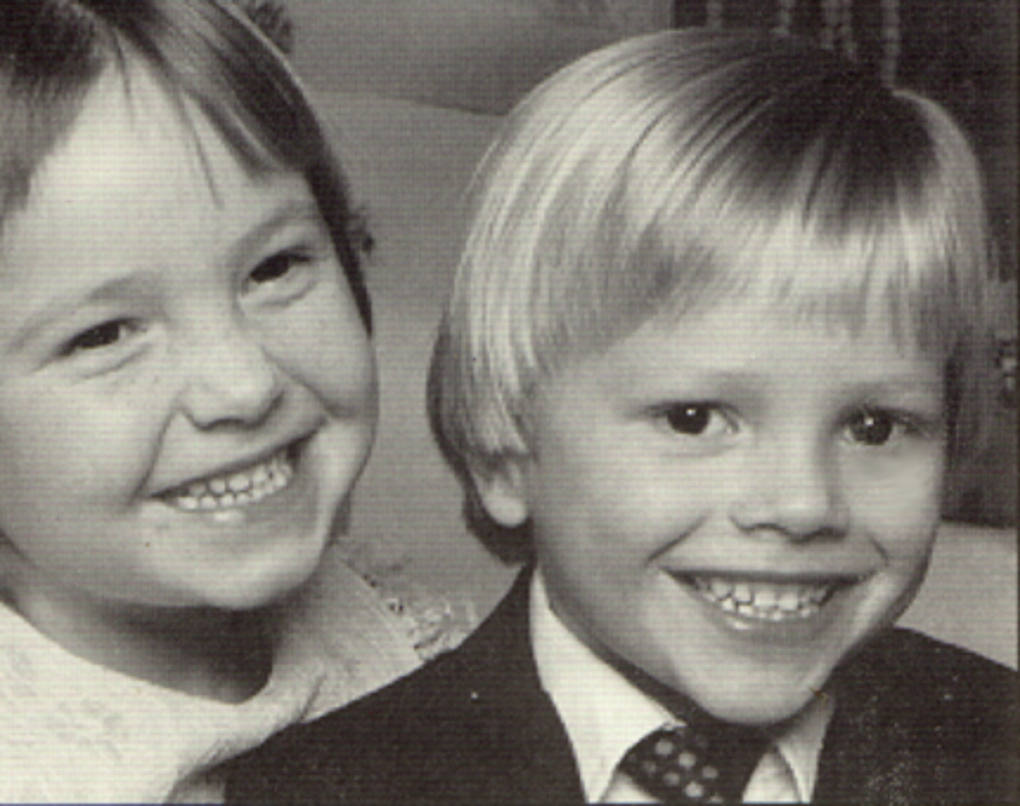
"caption": "Sister and brother Elizabeth and Ian Terry when they were diagnosed with PXE in 1994. ",
"description": null,
"title": "elizabethian",
"credit": "Sharon Terry",
"status": "inherit",
"isLoading": false,
"fetchFailed": false
},
"futureofyou_404000": {
"type": "attachments",
"id": "futureofyou_404000",
"meta": {
"index": "attachments_1716263798",
"site": "futureofyou",
"id": "404000",
"found": true
},
"parent": 391590,
"imgSizes": {
"small": {
"file": "https://ww2.kqed.org/app/uploads/sites/13/2017/06/propasthma-520x366.png",
"width": 520,
"mimeType": "image/png",
"height": 366
},
"thumbnail": {
"file": "https://ww2.kqed.org/app/uploads/sites/13/2017/06/propasthma-160x113.png",
"width": 160,
"mimeType": "image/png",
"height": 113
},
"post-thumbnail": {
"file": "https://ww2.kqed.org/app/uploads/sites/13/2017/06/propasthma-672x372.png",
"width": 672,
"mimeType": "image/png",
"height": 372
},
"xsmall": {
"file": "https://ww2.kqed.org/app/uploads/sites/13/2017/06/propasthma-375x264.png",
"width": 375,
"mimeType": "image/png",
"height": 264
},
"kqedFullSize": {
"file": "https://ww2.kqed.org/app/uploads/sites/13/2017/06/propasthma.png",
"width": 694,
"height": 488
},
"guest-author-50": {
"file": "https://ww2.kqed.org/app/uploads/sites/13/2017/06/propasthma-50x50.png",
"width": 50,
"mimeType": "image/png",
"height": 50
},
"guest-author-96": {
"file": "https://ww2.kqed.org/app/uploads/sites/13/2017/06/propasthma-96x96.png",
"width": 96,
"mimeType": "image/png",
"height": 96
},
"guest-author-64": {
"file": "https://ww2.kqed.org/app/uploads/sites/13/2017/06/propasthma-64x64.png",
"width": 64,
"mimeType": "image/png",
"height": 64
},
"detail": {
"file": "https://ww2.kqed.org/app/uploads/sites/13/2017/06/propasthma-150x150.png",
"width": 150,
"mimeType": "image/png",
"height": 150
},
"guest-author-32": {
"file": "https://ww2.kqed.org/app/uploads/sites/13/2017/06/propasthma-32x32.png",
"width": 32,
"mimeType": "image/png",
"height": 32
},
"guest-author-128": {
"file": "https://ww2.kqed.org/app/uploads/sites/13/2017/06/propasthma-128x128.png",
"width": 128,
"mimeType": "image/png",
"height": 128
},
"xxsmall": {
"file": "https://ww2.kqed.org/app/uploads/sites/13/2017/06/propasthma-240x169.png",
"width": 240,
"mimeType": "image/png",
"height": 169
}
},
"publishDate": 1496687067,
"modified": 1496687099,
"caption": "Screenshots of the Propeller app. ",
"description": null,
"title": "propasthma",
"credit": "Propeller Health",
"status": "inherit",
"isLoading": false,
"fetchFailed": false
},
"futureofyou_323235": {
"type": "attachments",
"id": "futureofyou_323235",
"meta": {
"index": "attachments_1716263798",
"site": "futureofyou",
"id": "323235",
"found": true
},
"parent": 323092,
"imgSizes": {
"small": {
"file": "https://ww2.kqed.org/app/uploads/sites/13/2017/01/Laufer-holding-Epi-Pencil.-Photo-credit-Four-Thieves-Vinegar-Collective-2016-520x347.jpg",
"width": 520,
"mimeType": "image/jpeg",
"height": 347
},
"twentyfourteen-full-width": {
"file": "https://ww2.kqed.org/app/uploads/sites/13/2017/01/Laufer-holding-Epi-Pencil.-Photo-credit-Four-Thieves-Vinegar-Collective-2016-1038x576.jpg",
"width": 1038,
"mimeType": "image/jpeg",
"height": 576
},
"thumbnail": {
"file": "https://ww2.kqed.org/app/uploads/sites/13/2017/01/Laufer-holding-Epi-Pencil.-Photo-credit-Four-Thieves-Vinegar-Collective-2016-160x107.jpg",
"width": 160,
"mimeType": "image/jpeg",
"height": 107
},
"fd-sm": {
"file": "https://ww2.kqed.org/app/uploads/sites/13/2017/01/Laufer-holding-Epi-Pencil.-Photo-credit-Four-Thieves-Vinegar-Collective-2016-960x640.jpg",
"width": 960,
"mimeType": "image/jpeg",
"height": 640
},
"post-thumbnail": {
"file": "https://ww2.kqed.org/app/uploads/sites/13/2017/01/Laufer-holding-Epi-Pencil.-Photo-credit-Four-Thieves-Vinegar-Collective-2016-672x372.jpg",
"width": 672,
"mimeType": "image/jpeg",
"height": 372
},
"xsmall": {
"file": "https://ww2.kqed.org/app/uploads/sites/13/2017/01/Laufer-holding-Epi-Pencil.-Photo-credit-Four-Thieves-Vinegar-Collective-2016-375x250.jpg",
"width": 375,
"mimeType": "image/jpeg",
"height": 250
},
"kqedFullSize": {
"file": "https://ww2.kqed.org/app/uploads/sites/13/2017/01/Laufer-holding-Epi-Pencil.-Photo-credit-Four-Thieves-Vinegar-Collective-2016.jpg",
"width": 1080,
"height": 720
},
"large": {
"file": "https://ww2.kqed.org/app/uploads/sites/13/2017/01/Laufer-holding-Epi-Pencil.-Photo-credit-Four-Thieves-Vinegar-Collective-2016-1020x680.jpg",
"width": 1020,
"mimeType": "image/jpeg",
"height": 680
},
"guest-author-50": {
"file": "https://ww2.kqed.org/app/uploads/sites/13/2017/01/Laufer-holding-Epi-Pencil.-Photo-credit-Four-Thieves-Vinegar-Collective-2016-50x50.jpg",
"width": 50,
"mimeType": "image/jpeg",
"height": 50
},
"guest-author-96": {
"file": "https://ww2.kqed.org/app/uploads/sites/13/2017/01/Laufer-holding-Epi-Pencil.-Photo-credit-Four-Thieves-Vinegar-Collective-2016-96x96.jpg",
"width": 96,
"mimeType": "image/jpeg",
"height": 96
},
"medium": {
"file": "https://ww2.kqed.org/app/uploads/sites/13/2017/01/Laufer-holding-Epi-Pencil.-Photo-credit-Four-Thieves-Vinegar-Collective-2016-800x533.jpg",
"width": 800,
"mimeType": "image/jpeg",
"height": 533
},
"guest-author-64": {
"file": "https://ww2.kqed.org/app/uploads/sites/13/2017/01/Laufer-holding-Epi-Pencil.-Photo-credit-Four-Thieves-Vinegar-Collective-2016-64x64.jpg",
"width": 64,
"mimeType": "image/jpeg",
"height": 64
},
"guest-author-32": {
"file": "https://ww2.kqed.org/app/uploads/sites/13/2017/01/Laufer-holding-Epi-Pencil.-Photo-credit-Four-Thieves-Vinegar-Collective-2016-32x32.jpg",
"width": 32,
"mimeType": "image/jpeg",
"height": 32
},
"detail": {
"file": "https://ww2.kqed.org/app/uploads/sites/13/2017/01/Laufer-holding-Epi-Pencil.-Photo-credit-Four-Thieves-Vinegar-Collective-2016-150x150.jpg",
"width": 150,
"mimeType": "image/jpeg",
"height": 150
},
"medium_large": {
"file": "https://ww2.kqed.org/app/uploads/sites/13/2017/01/Laufer-holding-Epi-Pencil.-Photo-credit-Four-Thieves-Vinegar-Collective-2016-768x512.jpg",
"width": 768,
"mimeType": "image/jpeg",
"height": 512
},
"guest-author-128": {
"file": "https://ww2.kqed.org/app/uploads/sites/13/2017/01/Laufer-holding-Epi-Pencil.-Photo-credit-Four-Thieves-Vinegar-Collective-2016-128x128.jpg",
"width": 128,
"mimeType": "image/jpeg",
"height": 128
},
"xxsmall": {
"file": "https://ww2.kqed.org/app/uploads/sites/13/2017/01/Laufer-holding-Epi-Pencil.-Photo-credit-Four-Thieves-Vinegar-Collective-2016-240x160.jpg",
"width": 240,
"mimeType": "image/jpeg",
"height": 160
}
},
"publishDate": 1484962141,
"modified": 1484962191,
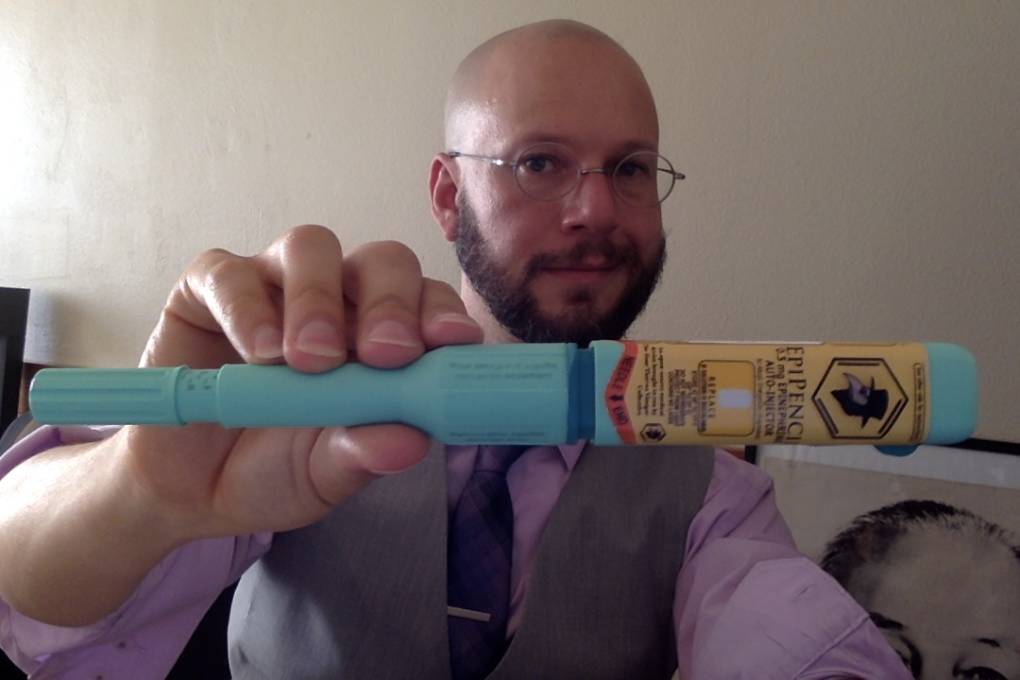
"caption": "Michael Laufer holding his Epi-Pencil.",
"description": "Michael Laufer holding his Epi-Pencil.",
"title": "Laufer holding Epi-Pencil. Photo credit Four Thieves Vinegar Collective 2016",
"credit": "Four Thieves Vinegar Collective",
"status": "inherit",
"isLoading": false,
"fetchFailed": false
},
"futureofyou_397500": {
"type": "attachments",
"id": "futureofyou_397500",
"meta": {
"index": "attachments_1716263798",
"site": "futureofyou",
"id": "397500",
"found": true
},
"parent": 395754,
"imgSizes": {
"small": {
"file": "https://ww2.kqed.org/app/uploads/sites/13/2017/05/female_reproductive_sys-588244195f9b58bdb397fd62-520x347.jpg",
"width": 520,
"mimeType": "image/jpeg",
"height": 347
},
"thumbnail": {
"file": "https://ww2.kqed.org/app/uploads/sites/13/2017/05/female_reproductive_sys-588244195f9b58bdb397fd62-160x107.jpg",
"width": 160,
"mimeType": "image/jpeg",
"height": 107
},
"post-thumbnail": {
"file": "https://ww2.kqed.org/app/uploads/sites/13/2017/05/female_reproductive_sys-588244195f9b58bdb397fd62-672x372.jpg",
"width": 672,
"mimeType": "image/jpeg",
"height": 372
},
"xsmall": {
"file": "https://ww2.kqed.org/app/uploads/sites/13/2017/05/female_reproductive_sys-588244195f9b58bdb397fd62-375x250.jpg",
"width": 375,
"mimeType": "image/jpeg",
"height": 250
},
"kqedFullSize": {
"file": "https://ww2.kqed.org/app/uploads/sites/13/2017/05/female_reproductive_sys-588244195f9b58bdb397fd62.jpg",
"width": 768,
"height": 512
},
"guest-author-50": {
"file": "https://ww2.kqed.org/app/uploads/sites/13/2017/05/female_reproductive_sys-588244195f9b58bdb397fd62-50x50.jpg",
"width": 50,
"mimeType": "image/jpeg",
"height": 50
},
"guest-author-96": {
"file": "https://ww2.kqed.org/app/uploads/sites/13/2017/05/female_reproductive_sys-588244195f9b58bdb397fd62-96x96.jpg",
"width": 96,
"mimeType": "image/jpeg",
"height": 96
},
"guest-author-64": {
"file": "https://ww2.kqed.org/app/uploads/sites/13/2017/05/female_reproductive_sys-588244195f9b58bdb397fd62-64x64.jpg",
"width": 64,
"mimeType": "image/jpeg",
"height": 64
},
"guest-author-32": {
"file": "https://ww2.kqed.org/app/uploads/sites/13/2017/05/female_reproductive_sys-588244195f9b58bdb397fd62-32x32.jpg",
"width": 32,
"mimeType": "image/jpeg",
"height": 32
},
"detail": {
"file": "https://ww2.kqed.org/app/uploads/sites/13/2017/05/female_reproductive_sys-588244195f9b58bdb397fd62-150x150.jpg",
"width": 150,
"mimeType": "image/jpeg",
"height": 150
},
"medium_large": {
"file": "https://ww2.kqed.org/app/uploads/sites/13/2017/05/female_reproductive_sys-588244195f9b58bdb397fd62-768x512.jpg",
"width": 768,
"mimeType": "image/jpeg",
"height": 512
},
"guest-author-128": {
"file": "https://ww2.kqed.org/app/uploads/sites/13/2017/05/female_reproductive_sys-588244195f9b58bdb397fd62-128x128.jpg",
"width": 128,
"mimeType": "image/jpeg",
"height": 128
},
"xxsmall": {
"file": "https://ww2.kqed.org/app/uploads/sites/13/2017/05/female_reproductive_sys-588244195f9b58bdb397fd62-240x160.jpg",
"width": 240,
"mimeType": "image/jpeg",
"height": 160
}
},
"publishDate": 1495736997,
"modified": 1495736997,
"caption": null,
"description": null,
"title": "female_reproductive_sys-588244195f9b58bdb397fd62",
"credit": null,
"status": "inherit",
"isLoading": false,
"fetchFailed": false
},
"futureofyou_388259": {
"type": "attachments",
"id": "futureofyou_388259",
"meta": {
"index": "attachments_1716263798",
"site": "futureofyou",
"id": "388259",
"found": true
},
"parent": 384757,
"imgSizes": {
"small": {
"file": "https://ww2.kqed.org/app/uploads/sites/13/2017/05/zayner16x9-520x292.png",
"width": 520,
"mimeType": "image/png",
"height": 292
},
"thumbnail": {
"file": "https://ww2.kqed.org/app/uploads/sites/13/2017/05/zayner16x9-160x90.png",
"width": 160,
"mimeType": "image/png",
"height": 90
},
"fd-sm": {
"file": "https://ww2.kqed.org/app/uploads/sites/13/2017/05/zayner16x9-960x540.png",
"width": 960,
"mimeType": "image/png",
"height": 540
},
"post-thumbnail": {
"file": "https://ww2.kqed.org/app/uploads/sites/13/2017/05/zayner16x9-672x372.png",
"width": 672,
"mimeType": "image/png",
"height": 372
},
"xsmall": {
"file": "https://ww2.kqed.org/app/uploads/sites/13/2017/05/zayner16x9-375x211.png",
"width": 375,
"mimeType": "image/png",
"height": 211
},
"kqedFullSize": {
"file": "https://ww2.kqed.org/app/uploads/sites/13/2017/05/zayner16x9.png",
"width": 1000,
"height": 562
},
"guest-author-50": {
"file": "https://ww2.kqed.org/app/uploads/sites/13/2017/05/zayner16x9-50x50.png",
"width": 50,
"mimeType": "image/png",
"height": 50
},
"guest-author-96": {
"file": "https://ww2.kqed.org/app/uploads/sites/13/2017/05/zayner16x9-96x96.png",
"width": 96,
"mimeType": "image/png",
"height": 96
},
"medium": {
"file": "https://ww2.kqed.org/app/uploads/sites/13/2017/05/zayner16x9-800x450.png",
"width": 800,
"mimeType": "image/png",
"height": 450
},
"guest-author-64": {
"file": "https://ww2.kqed.org/app/uploads/sites/13/2017/05/zayner16x9-64x64.png",
"width": 64,
"mimeType": "image/png",
"height": 64
},
"guest-author-32": {
"file": "https://ww2.kqed.org/app/uploads/sites/13/2017/05/zayner16x9-32x32.png",
"width": 32,
"mimeType": "image/png",
"height": 32
},
"detail": {
"file": "https://ww2.kqed.org/app/uploads/sites/13/2017/05/zayner16x9-150x150.png",
"width": 150,
"mimeType": "image/png",
"height": 150
},
"medium_large": {
"file": "https://ww2.kqed.org/app/uploads/sites/13/2017/05/zayner16x9-768x432.png",
"width": 768,
"mimeType": "image/png",
"height": 432
},
"guest-author-128": {
"file": "https://ww2.kqed.org/app/uploads/sites/13/2017/05/zayner16x9-128x128.png",
"width": 128,
"mimeType": "image/png",
"height": 128
},
"xxsmall": {
"file": "https://ww2.kqed.org/app/uploads/sites/13/2017/05/zayner16x9-240x135.png",
"width": 240,
"mimeType": "image/png",
"height": 135
}
},
"publishDate": 1494456666,
"modified": 1494456697,
"caption": null,
"description": null,
"title": "zayner16x9",
"credit": "The Odin",
"status": "inherit",
"isLoading": false,
"fetchFailed": false
},
"futureofyou_152361": {
"type": "attachments",
"id": "futureofyou_152361",
"meta": {
"index": "attachments_1716263798",
"site": "futureofyou",
"id": "152361",
"found": true
},
"parent": 152359,
"imgSizes": {
"twentyfourteen-full-width": {
"file": "https://ww2.kqed.org/app/uploads/sites/13/2016/04/theranoshome-1038x576.jpg",
"width": 1038,
"mimeType": "image/jpeg",
"height": 576
},
"thumbnail": {
"file": "https://ww2.kqed.org/app/uploads/sites/13/2016/04/theranoshome-400x346.jpg",
"width": 400,
"mimeType": "image/jpeg",
"height": 346
},
"fd-sm": {
"file": "https://ww2.kqed.org/app/uploads/sites/13/2016/04/theranoshome-960x829.jpg",
"width": 960,
"mimeType": "image/jpeg",
"height": 829
},
"post-thumbnail": {
"file": "https://ww2.kqed.org/app/uploads/sites/13/2016/04/theranoshome-672x372.jpg",
"width": 672,
"mimeType": "image/jpeg",
"height": 372
},
"kqedFullSize": {
"file": "https://ww2.kqed.org/app/uploads/sites/13/2016/04/theranoshome-e1461624309161.jpg",
"width": 1920,
"height": 1658
},
"large": {
"file": "https://ww2.kqed.org/app/uploads/sites/13/2016/04/theranoshome-1180x1019.jpg",
"width": 1180,
"mimeType": "image/jpeg",
"height": 1019
},
"guest-author-96": {
"file": "https://ww2.kqed.org/app/uploads/sites/13/2016/04/theranoshome-96x96.jpg",
"width": 96,
"mimeType": "image/jpeg",
"height": 96
},
"medium": {
"file": "https://ww2.kqed.org/app/uploads/sites/13/2016/04/theranoshome-695x600.jpg",
"width": 695,
"mimeType": "image/jpeg",
"height": 600
},
"guest-author-64": {
"file": "https://ww2.kqed.org/app/uploads/sites/13/2016/04/theranoshome-64x64.jpg",
"width": 64,
"mimeType": "image/jpeg",
"height": 64
},
"guest-author-32": {
"file": "https://ww2.kqed.org/app/uploads/sites/13/2016/04/theranoshome-32x32.jpg",
"width": 32,
"mimeType": "image/jpeg",
"height": 32
},
"fd-lrg": {
"file": "https://ww2.kqed.org/app/uploads/sites/13/2016/04/theranoshome-1920x1658.jpg",
"width": 1920,
"mimeType": "image/jpeg",
"height": 1658
},
"fd-med": {
"file": "https://ww2.kqed.org/app/uploads/sites/13/2016/04/theranoshome-1180x1019.jpg",
"width": 1180,
"mimeType": "image/jpeg",
"height": 1019
},
"detail": {
"file": "https://ww2.kqed.org/app/uploads/sites/13/2016/04/theranoshome-75x75.jpg",
"width": 75,
"mimeType": "image/jpeg",
"height": 75
},
"medium_large": {
"file": "https://ww2.kqed.org/app/uploads/sites/13/2016/04/theranoshome-768x663.jpg",
"width": 768,
"mimeType": "image/jpeg",
"height": 663
},
"guest-author-128": {
"file": "https://ww2.kqed.org/app/uploads/sites/13/2016/04/theranoshome-128x128.jpg",
"width": 128,
"mimeType": "image/jpeg",
"height": 128
}
},
"publishDate": 1461624188,
"modified": 1461625314,
"caption": null,
"description": null,
"title": "theranoshome",
"credit": "Photo by Steve Jurvetson/Flickr",
"status": "inherit",
"isLoading": false,
"fetchFailed": false
},
"futureofyou_359398": {
"type": "attachments",
"id": "futureofyou_359398",
"meta": {
"index": "attachments_1716263798",
"site": "futureofyou",
"id": "359398",
"found": true
},
"parent": 359397,
"imgSizes": {
"small": {
"file": "https://ww2.kqed.org/app/uploads/sites/13/2017/03/sperm-smartphone-26ea9574e070c5b5ceec15243963aae15a3023ca-520x390.jpg",
"width": 520,
"mimeType": "image/jpeg",
"height": 390
},
"twentyfourteen-full-width": {
"file": "https://ww2.kqed.org/app/uploads/sites/13/2017/03/sperm-smartphone-26ea9574e070c5b5ceec15243963aae15a3023ca-1038x576.jpg",
"width": 1038,
"mimeType": "image/jpeg",
"height": 576
},
"thumbnail": {
"file": "https://ww2.kqed.org/app/uploads/sites/13/2017/03/sperm-smartphone-26ea9574e070c5b5ceec15243963aae15a3023ca-160x120.jpg",
"width": 160,
"mimeType": "image/jpeg",
"height": 120
},
"fd-sm": {
"file": "https://ww2.kqed.org/app/uploads/sites/13/2017/03/sperm-smartphone-26ea9574e070c5b5ceec15243963aae15a3023ca-960x720.jpg",
"width": 960,
"mimeType": "image/jpeg",
"height": 720
},
"post-thumbnail": {
"file": "https://ww2.kqed.org/app/uploads/sites/13/2017/03/sperm-smartphone-26ea9574e070c5b5ceec15243963aae15a3023ca-672x372.jpg",
"width": 672,
"mimeType": "image/jpeg",
"height": 372
},
"xsmall": {
"file": "https://ww2.kqed.org/app/uploads/sites/13/2017/03/sperm-smartphone-26ea9574e070c5b5ceec15243963aae15a3023ca-375x281.jpg",
"width": 375,
"mimeType": "image/jpeg",
"height": 281
},
"kqedFullSize": {
"file": "https://ww2.kqed.org/app/uploads/sites/13/2017/03/sperm-smartphone-26ea9574e070c5b5ceec15243963aae15a3023ca.jpg",
"width": 2363,
"height": 1772
},
"large": {
"file": "https://ww2.kqed.org/app/uploads/sites/13/2017/03/sperm-smartphone-26ea9574e070c5b5ceec15243963aae15a3023ca-1020x765.jpg",
"width": 1020,
"mimeType": "image/jpeg",
"height": 765
},
"xlarge": {
"file": "https://ww2.kqed.org/app/uploads/sites/13/2017/03/sperm-smartphone-26ea9574e070c5b5ceec15243963aae15a3023ca-1180x885.jpg",
"width": 1180,
"mimeType": "image/jpeg",
"height": 885
},
"guest-author-50": {
"file": "https://ww2.kqed.org/app/uploads/sites/13/2017/03/sperm-smartphone-26ea9574e070c5b5ceec15243963aae15a3023ca-50x50.jpg",
"width": 50,
"mimeType": "image/jpeg",
"height": 50
},
"guest-author-96": {
"file": "https://ww2.kqed.org/app/uploads/sites/13/2017/03/sperm-smartphone-26ea9574e070c5b5ceec15243963aae15a3023ca-96x96.jpg",
"width": 96,
"mimeType": "image/jpeg",
"height": 96
},
"medium": {
"file": "https://ww2.kqed.org/app/uploads/sites/13/2017/03/sperm-smartphone-26ea9574e070c5b5ceec15243963aae15a3023ca-800x600.jpg",
"width": 800,
"mimeType": "image/jpeg",
"height": 600
},
"guest-author-64": {
"file": "https://ww2.kqed.org/app/uploads/sites/13/2017/03/sperm-smartphone-26ea9574e070c5b5ceec15243963aae15a3023ca-64x64.jpg",
"width": 64,
"mimeType": "image/jpeg",
"height": 64
},
"guest-author-32": {
"file": "https://ww2.kqed.org/app/uploads/sites/13/2017/03/sperm-smartphone-26ea9574e070c5b5ceec15243963aae15a3023ca-32x32.jpg",
"width": 32,
"mimeType": "image/jpeg",
"height": 32
},
"fd-lrg": {
"file": "https://ww2.kqed.org/app/uploads/sites/13/2017/03/sperm-smartphone-26ea9574e070c5b5ceec15243963aae15a3023ca-1920x1440.jpg",
"width": 1920,
"mimeType": "image/jpeg",
"height": 1440
},
"fd-med": {
"file": "https://ww2.kqed.org/app/uploads/sites/13/2017/03/sperm-smartphone-26ea9574e070c5b5ceec15243963aae15a3023ca-1180x885.jpg",
"width": 1180,
"mimeType": "image/jpeg",
"height": 885
},
"full-width": {
"file": "https://ww2.kqed.org/app/uploads/sites/13/2017/03/sperm-smartphone-26ea9574e070c5b5ceec15243963aae15a3023ca-1920x1440.jpg",
"width": 1920,
"mimeType": "image/jpeg",
"height": 1440
},
"detail": {
"file": "https://ww2.kqed.org/app/uploads/sites/13/2017/03/sperm-smartphone-26ea9574e070c5b5ceec15243963aae15a3023ca-150x150.jpg",
"width": 150,
"mimeType": "image/jpeg",
"height": 150
},
"medium_large": {
"file": "https://ww2.kqed.org/app/uploads/sites/13/2017/03/sperm-smartphone-26ea9574e070c5b5ceec15243963aae15a3023ca-768x576.jpg",
"width": 768,
"mimeType": "image/jpeg",
"height": 576
},
"guest-author-128": {
"file": "https://ww2.kqed.org/app/uploads/sites/13/2017/03/sperm-smartphone-26ea9574e070c5b5ceec15243963aae15a3023ca-128x128.jpg",
"width": 128,
"mimeType": "image/jpeg",
"height": 128
},
"xxsmall": {
"file": "https://ww2.kqed.org/app/uploads/sites/13/2017/03/sperm-smartphone-26ea9574e070c5b5ceec15243963aae15a3023ca-240x180.jpg",
"width": 240,
"mimeType": "image/jpeg",
"height": 180
}
},
"publishDate": 1490290235,
"modified": 1490916509,
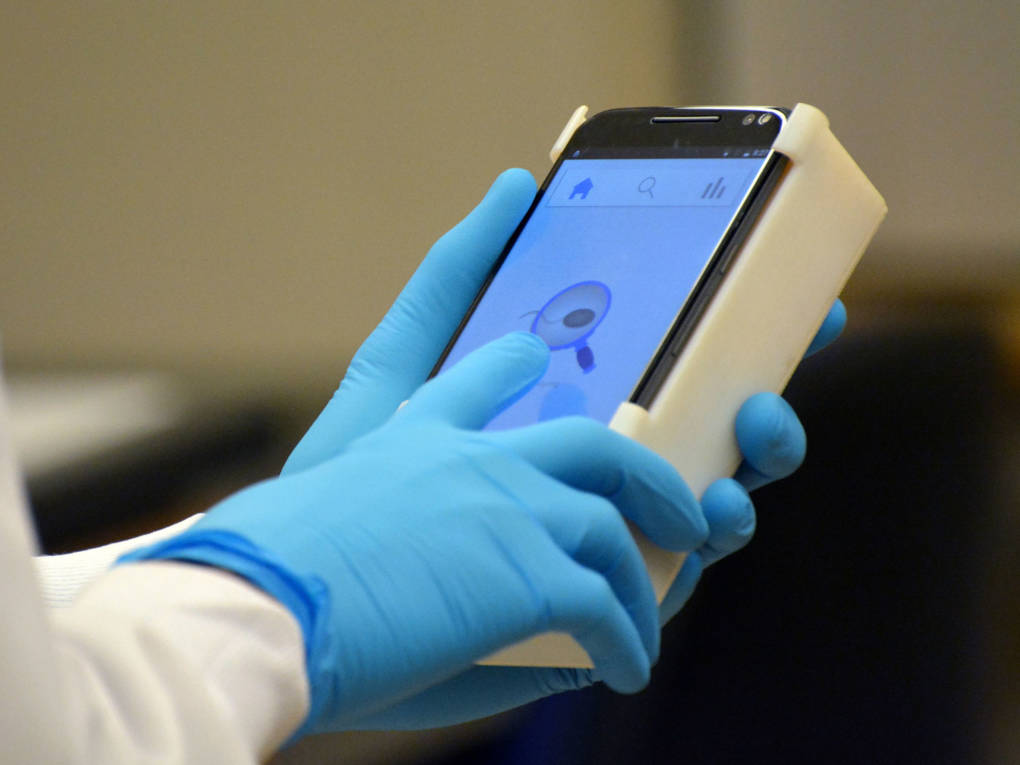
"caption": "Scientists have developed a smartphone app to measure sperm count at home.\n",
"description": "Scientists have developed a smartphone app to measure sperm count at home",
"title": "Scientists have developed a smartphone app to measure sperm count at home.",
"credit": "Hadi Shafiee/Brigham and Women's Hospital, Harvard Medical School",
"status": "inherit",
"isLoading": false,
"fetchFailed": false
},
"futureofyou_325331": {
"type": "attachments",
"id": "futureofyou_325331",
"meta": {
"index": "attachments_1716263798",
"site": "futureofyou",
"id": "325331",
"found": true
},
"parent": 322609,
"imgSizes": {
"small": {
"file": "https://ww2.kqed.org/app/uploads/sites/13/2017/01/ezekielemanuel-520x345.jpg",
"width": 520,
"mimeType": "image/jpeg",
"height": 345
},
"thumbnail": {
"file": "https://ww2.kqed.org/app/uploads/sites/13/2017/01/ezekielemanuel-160x106.jpg",
"width": 160,
"mimeType": "image/jpeg",
"height": 106
},
"post-thumbnail": {
"file": "https://ww2.kqed.org/app/uploads/sites/13/2017/01/ezekielemanuel-672x372.jpg",
"width": 672,
"mimeType": "image/jpeg",
"height": 372
},
"xsmall": {
"file": "https://ww2.kqed.org/app/uploads/sites/13/2017/01/ezekielemanuel-375x249.jpg",
"width": 375,
"mimeType": "image/jpeg",
"height": 249
},
"kqedFullSize": {
"file": "https://ww2.kqed.org/app/uploads/sites/13/2017/01/ezekielemanuel.jpg",
"width": 800,
"height": 531
},
"guest-author-50": {
"file": "https://ww2.kqed.org/app/uploads/sites/13/2017/01/ezekielemanuel-50x50.jpg",
"width": 50,
"mimeType": "image/jpeg",
"height": 50
},
"guest-author-96": {
"file": "https://ww2.kqed.org/app/uploads/sites/13/2017/01/ezekielemanuel-96x96.jpg",
"width": 96,
"mimeType": "image/jpeg",
"height": 96
},
"medium": {
"file": "https://ww2.kqed.org/app/uploads/sites/13/2017/01/ezekielemanuel-800x531.jpg",
"width": 800,
"mimeType": "image/jpeg",
"height": 531
},
"guest-author-64": {
"file": "https://ww2.kqed.org/app/uploads/sites/13/2017/01/ezekielemanuel-64x64.jpg",
"width": 64,
"mimeType": "image/jpeg",
"height": 64
},
"guest-author-32": {
"file": "https://ww2.kqed.org/app/uploads/sites/13/2017/01/ezekielemanuel-32x32.jpg",
"width": 32,
"mimeType": "image/jpeg",
"height": 32
},
"detail": {
"file": "https://ww2.kqed.org/app/uploads/sites/13/2017/01/ezekielemanuel-150x150.jpg",
"width": 150,
"mimeType": "image/jpeg",
"height": 150
},
"medium_large": {
"file": "https://ww2.kqed.org/app/uploads/sites/13/2017/01/ezekielemanuel-768x510.jpg",
"width": 768,
"mimeType": "image/jpeg",
"height": 510
},
"guest-author-128": {
"file": "https://ww2.kqed.org/app/uploads/sites/13/2017/01/ezekielemanuel-128x128.jpg",
"width": 128,
"mimeType": "image/jpeg",
"height": 128
},
"xxsmall": {
"file": "https://ww2.kqed.org/app/uploads/sites/13/2017/01/ezekielemanuel-240x159.jpg",
"width": 240,
"mimeType": "image/jpeg",
"height": 159
}
},
"publishDate": 1485290320,
"modified": 1485290451,
"caption": "Ezekiel Emanuel, in 2010. Emanuel is one of the main policy experts to help shape the Affordable Care Act.",
"description": null,
"title": "ezekielemanuel",
"credit": null,
"status": "inherit",
"isLoading": false,
"fetchFailed": false
},
"futureofyou_310908": {
"type": "attachments",
"id": "futureofyou_310908",
"meta": {
"index": "attachments_1716263798",
"site": "futureofyou",
"id": "310908",
"found": true
},
"parent": 310438,
"imgSizes": {
"small": {
"file": "https://ww2.kqed.org/app/uploads/sites/13/2016/12/shop-with-doc-520x299.jpg",
"width": 520,
"mimeType": "image/jpeg",
"height": 299
},
"twentyfourteen-full-width": {
"file": "https://ww2.kqed.org/app/uploads/sites/13/2016/12/shop-with-doc-1038x576.jpg",
"width": 1038,
"mimeType": "image/jpeg",
"height": 576
},
"thumbnail": {
"file": "https://ww2.kqed.org/app/uploads/sites/13/2016/12/shop-with-doc-160x92.jpg",
"width": 160,
"mimeType": "image/jpeg",
"height": 92
},
"fd-sm": {
"file": "https://ww2.kqed.org/app/uploads/sites/13/2016/12/shop-with-doc-960x552.jpg",
"width": 960,
"mimeType": "image/jpeg",
"height": 552
},
"post-thumbnail": {
"file": "https://ww2.kqed.org/app/uploads/sites/13/2016/12/shop-with-doc-672x372.jpg",
"width": 672,
"mimeType": "image/jpeg",
"height": 372
},
"xsmall": {
"file": "https://ww2.kqed.org/app/uploads/sites/13/2016/12/shop-with-doc-375x216.jpg",
"width": 375,
"mimeType": "image/jpeg",
"height": 216
},
"kqedFullSize": {
"file": "https://ww2.kqed.org/app/uploads/sites/13/2016/12/shop-with-doc-e1483987271943.jpg",
"width": 1920,
"height": 1104
},
"large": {
"file": "https://ww2.kqed.org/app/uploads/sites/13/2016/12/shop-with-doc-1020x587.jpg",
"width": 1020,
"mimeType": "image/jpeg",
"height": 587
},
"xlarge": {
"file": "https://ww2.kqed.org/app/uploads/sites/13/2016/12/shop-with-doc-1180x679.jpg",
"width": 1180,
"mimeType": "image/jpeg",
"height": 679
},
"guest-author-50": {
"file": "https://ww2.kqed.org/app/uploads/sites/13/2016/12/shop-with-doc-50x50.jpg",
"width": 50,
"mimeType": "image/jpeg",
"height": 50
},
"guest-author-96": {
"file": "https://ww2.kqed.org/app/uploads/sites/13/2016/12/shop-with-doc-96x96.jpg",
"width": 96,
"mimeType": "image/jpeg",
"height": 96
},
"medium": {
"file": "https://ww2.kqed.org/app/uploads/sites/13/2016/12/shop-with-doc-800x460.jpg",
"width": 800,
"mimeType": "image/jpeg",
"height": 460
},
"guest-author-64": {
"file": "https://ww2.kqed.org/app/uploads/sites/13/2016/12/shop-with-doc-64x64.jpg",
"width": 64,
"mimeType": "image/jpeg",
"height": 64
},
"guest-author-32": {
"file": "https://ww2.kqed.org/app/uploads/sites/13/2016/12/shop-with-doc-32x32.jpg",
"width": 32,
"mimeType": "image/jpeg",
"height": 32
},
"fd-lrg": {
"file": "https://ww2.kqed.org/app/uploads/sites/13/2016/12/shop-with-doc-1920x1104.jpg",
"width": 1920,
"mimeType": "image/jpeg",
"height": 1104
},
"fd-med": {
"file": "https://ww2.kqed.org/app/uploads/sites/13/2016/12/shop-with-doc-1180x679.jpg",
"width": 1180,
"mimeType": "image/jpeg",
"height": 679
},
"full-width": {
"file": "https://ww2.kqed.org/app/uploads/sites/13/2016/12/shop-with-doc-1920x1104.jpg",
"width": 1920,
"mimeType": "image/jpeg",
"height": 1104
},
"detail": {
"file": "https://ww2.kqed.org/app/uploads/sites/13/2016/12/shop-with-doc-150x150.jpg",
"width": 150,
"mimeType": "image/jpeg",
"height": 150
},
"medium_large": {
"file": "https://ww2.kqed.org/app/uploads/sites/13/2016/12/shop-with-doc-768x442.jpg",
"width": 768,
"mimeType": "image/jpeg",
"height": 442
},
"guest-author-128": {
"file": "https://ww2.kqed.org/app/uploads/sites/13/2016/12/shop-with-doc-128x128.jpg",
"width": 128,
"mimeType": "image/jpeg",
"height": 128
},
"xxsmall": {
"file": "https://ww2.kqed.org/app/uploads/sites/13/2016/12/shop-with-doc-240x138.jpg",
"width": 240,
"mimeType": "image/jpeg",
"height": 138
}
},
"publishDate": 1483127087,
"modified": 1483127206,
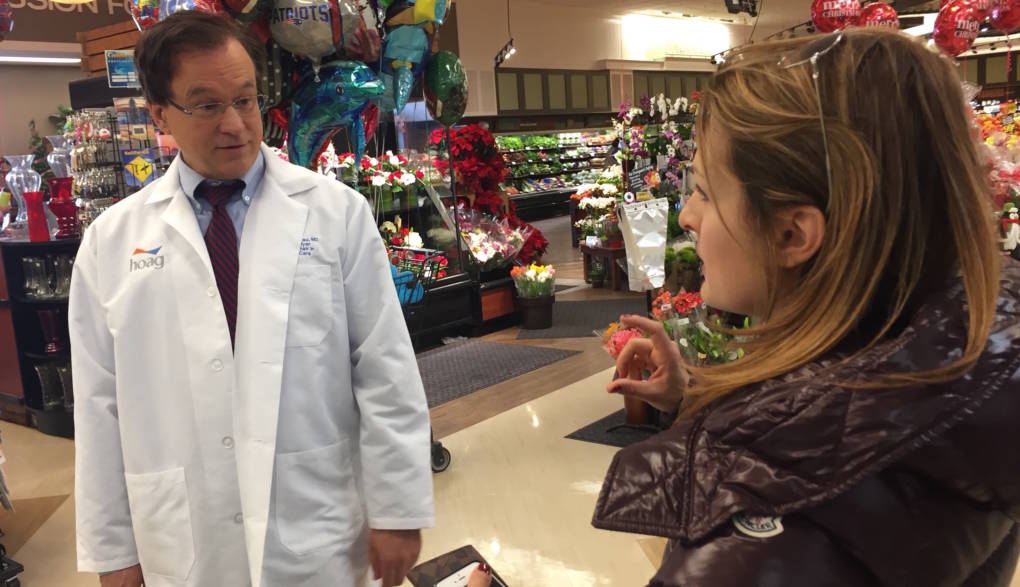
"caption": "Dr. Daniel Nadeau gives Allison Scott a few tips on getting kids to eat healthy, at Ralph's Supermarket in Huntington Beach.",
"description": "Dr. Daniel Nadeau gives Allison Scott a few tips on getting kids to eat healthy, at Ralph's Supermarket in Huntington Beach.",
"title": "shop-with-doc",
"credit": "David Gorn/KQED",
"status": "inherit",
"isLoading": false,
"fetchFailed": false
},
"futureofyou_321860": {
"type": "attachments",
"id": "futureofyou_321860",
"meta": {
"index": "attachments_1716263798",
"site": "futureofyou",
"id": "321860",
"found": true
},
"parent": 321859,
"imgSizes": {
"small": {
"file": "https://ww2.kqed.org/app/uploads/sites/13/2017/01/head-img_6356-edit_custom-1a0a767a399d7b66b5d21dc079aa8a213bd88398-520x346.jpg",
"width": 520,
"mimeType": "image/jpeg",
"height": 346
},
"twentyfourteen-full-width": {
"file": "https://ww2.kqed.org/app/uploads/sites/13/2017/01/head-img_6356-edit_custom-1a0a767a399d7b66b5d21dc079aa8a213bd88398-1038x576.jpg",
"width": 1038,
"mimeType": "image/jpeg",
"height": 576
},
"thumbnail": {
"file": "https://ww2.kqed.org/app/uploads/sites/13/2017/01/head-img_6356-edit_custom-1a0a767a399d7b66b5d21dc079aa8a213bd88398-160x107.jpg",
"width": 160,
"mimeType": "image/jpeg",
"height": 107
},
"fd-sm": {
"file": "https://ww2.kqed.org/app/uploads/sites/13/2017/01/head-img_6356-edit_custom-1a0a767a399d7b66b5d21dc079aa8a213bd88398-960x639.jpg",
"width": 960,
"mimeType": "image/jpeg",
"height": 639
},
"post-thumbnail": {
"file": "https://ww2.kqed.org/app/uploads/sites/13/2017/01/head-img_6356-edit_custom-1a0a767a399d7b66b5d21dc079aa8a213bd88398-672x372.jpg",
"width": 672,
"mimeType": "image/jpeg",
"height": 372
},
"xsmall": {
"file": "https://ww2.kqed.org/app/uploads/sites/13/2017/01/head-img_6356-edit_custom-1a0a767a399d7b66b5d21dc079aa8a213bd88398-375x250.jpg",
"width": 375,
"mimeType": "image/jpeg",
"height": 250
},
"kqedFullSize": {
"file": "https://ww2.kqed.org/app/uploads/sites/13/2017/01/head-img_6356-edit_custom-1a0a767a399d7b66b5d21dc079aa8a213bd88398-e1484766060825.jpg",
"width": 1920,
"height": 1279
},
"large": {
"file": "https://ww2.kqed.org/app/uploads/sites/13/2017/01/head-img_6356-edit_custom-1a0a767a399d7b66b5d21dc079aa8a213bd88398-1020x679.jpg",
"width": 1020,
"mimeType": "image/jpeg",
"height": 679
},
"xlarge": {
"file": "https://ww2.kqed.org/app/uploads/sites/13/2017/01/head-img_6356-edit_custom-1a0a767a399d7b66b5d21dc079aa8a213bd88398-1180x786.jpg",
"width": 1180,
"mimeType": "image/jpeg",
"height": 786
},
"guest-author-50": {
"file": "https://ww2.kqed.org/app/uploads/sites/13/2017/01/head-img_6356-edit_custom-1a0a767a399d7b66b5d21dc079aa8a213bd88398-50x50.jpg",
"width": 50,
"mimeType": "image/jpeg",
"height": 50
},
"guest-author-96": {
"file": "https://ww2.kqed.org/app/uploads/sites/13/2017/01/head-img_6356-edit_custom-1a0a767a399d7b66b5d21dc079aa8a213bd88398-96x96.jpg",
"width": 96,
"mimeType": "image/jpeg",
"height": 96
},
"medium": {
"file": "https://ww2.kqed.org/app/uploads/sites/13/2017/01/head-img_6356-edit_custom-1a0a767a399d7b66b5d21dc079aa8a213bd88398-800x533.jpg",
"width": 800,
"mimeType": "image/jpeg",
"height": 533
},
"guest-author-64": {
"file": "https://ww2.kqed.org/app/uploads/sites/13/2017/01/head-img_6356-edit_custom-1a0a767a399d7b66b5d21dc079aa8a213bd88398-64x64.jpg",
"width": 64,
"mimeType": "image/jpeg",
"height": 64
},
"guest-author-32": {
"file": "https://ww2.kqed.org/app/uploads/sites/13/2017/01/head-img_6356-edit_custom-1a0a767a399d7b66b5d21dc079aa8a213bd88398-32x32.jpg",
"width": 32,
"mimeType": "image/jpeg",
"height": 32
},
"fd-lrg": {
"file": "https://ww2.kqed.org/app/uploads/sites/13/2017/01/head-img_6356-edit_custom-1a0a767a399d7b66b5d21dc079aa8a213bd88398-1920x1279.jpg",
"width": 1920,
"mimeType": "image/jpeg",
"height": 1279
},
"fd-med": {
"file": "https://ww2.kqed.org/app/uploads/sites/13/2017/01/head-img_6356-edit_custom-1a0a767a399d7b66b5d21dc079aa8a213bd88398-1180x786.jpg",
"width": 1180,
"mimeType": "image/jpeg",
"height": 786
},
"full-width": {
"file": "https://ww2.kqed.org/app/uploads/sites/13/2017/01/head-img_6356-edit_custom-1a0a767a399d7b66b5d21dc079aa8a213bd88398-1920x1279.jpg",
"width": 1920,
"mimeType": "image/jpeg",
"height": 1279
},
"detail": {
"file": "https://ww2.kqed.org/app/uploads/sites/13/2017/01/head-img_6356-edit_custom-1a0a767a399d7b66b5d21dc079aa8a213bd88398-150x150.jpg",
"width": 150,
"mimeType": "image/jpeg",
"height": 150
},
"medium_large": {
"file": "https://ww2.kqed.org/app/uploads/sites/13/2017/01/head-img_6356-edit_custom-1a0a767a399d7b66b5d21dc079aa8a213bd88398-768x511.jpg",
"width": 768,
"mimeType": "image/jpeg",
"height": 511
},
"guest-author-128": {
"file": "https://ww2.kqed.org/app/uploads/sites/13/2017/01/head-img_6356-edit_custom-1a0a767a399d7b66b5d21dc079aa8a213bd88398-128x128.jpg",
"width": 128,
"mimeType": "image/jpeg",
"height": 128
},
"xxsmall": {
"file": "https://ww2.kqed.org/app/uploads/sites/13/2017/01/head-img_6356-edit_custom-1a0a767a399d7b66b5d21dc079aa8a213bd88398-240x160.jpg",
"width": 240,
"mimeType": "image/jpeg",
"height": 160
}
},
"publishDate": 1484753819,
"modified": 1484754296,
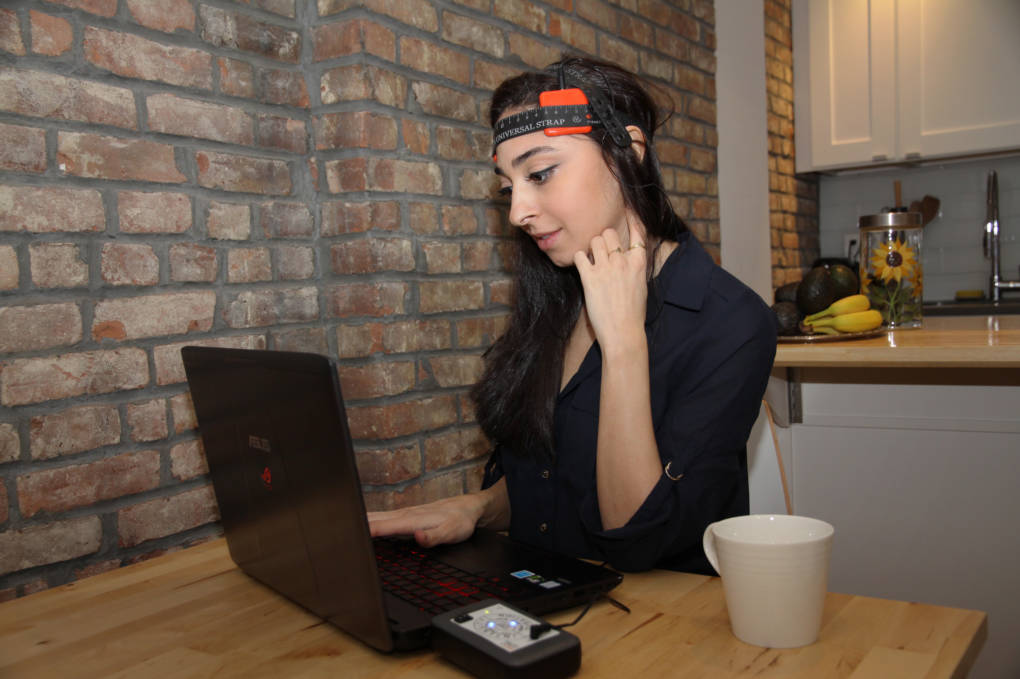
"caption": "A user wears a tDCS device sold by an online retailer, Caputron.",
"description": null,
"title": "A user wears a tDCS device sold by an online retailer, Caputron.",
"credit": "Courtesy of Robin Azzam",
"status": "inherit",
"isLoading": false,
"fetchFailed": false
},
"futureofyou_319194": {
"type": "attachments",
"id": "futureofyou_319194",
"meta": {
"index": "attachments_1716263798",
"site": "futureofyou",
"id": "319194",
"found": true
},
"parent": 319192,
"imgSizes": {
"small": {
"file": "https://ww2.kqed.org/app/uploads/sites/13/2017/01/wearable-520x346.jpg",
"width": 520,
"mimeType": "image/jpeg",
"height": 346
},
"thumbnail": {
"file": "https://ww2.kqed.org/app/uploads/sites/13/2017/01/wearable-160x107.jpg",
"width": 160,
"mimeType": "image/jpeg",
"height": 107
},
"post-thumbnail": {
"file": "https://ww2.kqed.org/app/uploads/sites/13/2017/01/wearable-620x372.jpg",
"width": 620,
"mimeType": "image/jpeg",
"height": 372
},
"xsmall": {
"file": "https://ww2.kqed.org/app/uploads/sites/13/2017/01/wearable-375x250.jpg",
"width": 375,
"mimeType": "image/jpeg",
"height": 250
},
"kqedFullSize": {
"file": "https://ww2.kqed.org/app/uploads/sites/13/2017/01/wearable.jpg",
"width": 620,
"height": 413
},
"guest-author-50": {
"file": "https://ww2.kqed.org/app/uploads/sites/13/2017/01/wearable-50x50.jpg",
"width": 50,
"mimeType": "image/jpeg",
"height": 50
},
"guest-author-96": {
"file": "https://ww2.kqed.org/app/uploads/sites/13/2017/01/wearable-96x96.jpg",
"width": 96,
"mimeType": "image/jpeg",
"height": 96
},
"guest-author-64": {
"file": "https://ww2.kqed.org/app/uploads/sites/13/2017/01/wearable-64x64.jpg",
"width": 64,
"mimeType": "image/jpeg",
"height": 64
},
"detail": {
"file": "https://ww2.kqed.org/app/uploads/sites/13/2017/01/wearable-150x150.jpg",
"width": 150,
"mimeType": "image/jpeg",
"height": 150
},
"guest-author-32": {
"file": "https://ww2.kqed.org/app/uploads/sites/13/2017/01/wearable-32x32.jpg",
"width": 32,
"mimeType": "image/jpeg",
"height": 32
},
"guest-author-128": {
"file": "https://ww2.kqed.org/app/uploads/sites/13/2017/01/wearable-128x128.jpg",
"width": 128,
"mimeType": "image/jpeg",
"height": 128
},
"xxsmall": {
"file": "https://ww2.kqed.org/app/uploads/sites/13/2017/01/wearable-240x160.jpg",
"width": 240,
"mimeType": "image/jpeg",
"height": 160
}
},
"publishDate": 1484328187,
"modified": 1484328205,
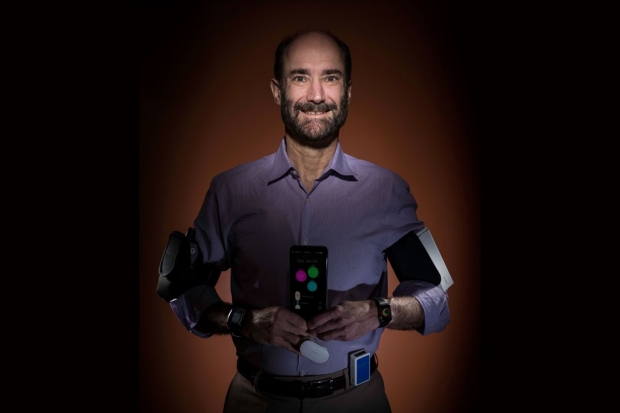
"caption": "Geneticist Michael Snyder was wearing seven biosensors collecting data about his health when he noticed changes in his heart rate and oxygen level during a flight. When he later developed a fever, he suspected he had been infected with Lyme disease. Subsequent tests confirmed his suspicion.",
"description": null,
"title": "wearable",
"credit": "Steve Fisch/Stanford",
"status": "inherit",
"isLoading": false,
"fetchFailed": false
}
},
"audioPlayerReducer": {
"postId": "stream_live",
"isPaused": true,
"isPlaying": false,
"pfsActive": false,
"pledgeModalIsOpen": true,
"playerDrawerIsOpen": false,
"liveAudioPlayStartedAt": 0,
"liveAudioPlayContext": ""
},
"authorsReducer": {
"byline_futureofyou_391590": {
"type": "authors",
"id": "byline_futureofyou_391590",
"meta": {
"override": true
},
"slug": "byline_futureofyou_391590",
"name": "Andrew Wagner\u003cbr />PBS NewsHour",
"isLoading": false
},
"byline_futureofyou_323092": {
"type": "authors",
"id": "byline_futureofyou_323092",
"meta": {
"override": true
},
"slug": "byline_futureofyou_323092",
"name": "Anne-christine d'Adesky",
"isLoading": false
},
"byline_futureofyou_395754": {
"type": "authors",
"id": "byline_futureofyou_395754",
"meta": {
"override": true
},
"slug": "byline_futureofyou_395754",
"name": "Maria Cheng\u003cbr />Associated Press",
"isLoading": false
},
"byline_futureofyou_375728": {
"type": "authors",
"id": "byline_futureofyou_375728",
"meta": {
"override": true
},
"slug": "byline_futureofyou_375728",
"name": "Meghana Keshavan\u003c/br >\u003ca href=\"https://www.statnews.com/\">STAT\u003c/a>",
"isLoading": false
},
"byline_futureofyou_359397": {
"type": "authors",
"id": "byline_futureofyou_359397",
"meta": {
"override": true
},
"slug": "byline_futureofyou_359397",
"name": "Madeline K. Sofia\u003cbr />NPR Shots",
"isLoading": false
},
"byline_futureofyou_321859": {
"type": "authors",
"id": "byline_futureofyou_321859",
"meta": {
"override": true
},
"slug": "byline_futureofyou_321859",
"name": "Riley Beggin\u003cbr />NPR All Tech Considered",
"isLoading": false
},
"byline_futureofyou_319192": {
"type": "authors",
"id": "byline_futureofyou_319192",
"meta": {
"override": true
},
"slug": "byline_futureofyou_319192",
"name": "Lauran Neergard\u003cbr />Associated Press",
"isLoading": false
},
"jbrooks": {
"type": "authors",
"id": "80",
"meta": {
"index": "authors_1716337520",
"id": "80",
"found": true
},
"name": "Jon Brooks",
"firstName": "Jon",
"lastName": "Brooks",
"slug": "jbrooks",
"email": "jbrooks@kqed.org",
"display_author_email": true,
"staff_mastheads": [
"science"
],
"title": "Digital Editor",
"bio": "Jon Brooks is a former Digital Editor for KQED Science. He is the former editor of KQED’s daily news blog, News Fix. In 2014, he won a California Journalism Award for his coverage of ride services like Uber and Lyft and the taxi industry. A veteran blogger, he previously worked for Yahoo! in various news writing and editing roles. Jon is also a playwright whose work has been produced in San Francisco, New York, Italy, and around the U.S. He has written about film for his own blog and studied film at Boston University.",
"avatar": "https://secure.gravatar.com/avatar/98887f7ed1c876ed414d4c915e969584?s=600&d=blank&r=g",
"twitter": "jbrooksfoy",
"facebook": null,
"instagram": null,
"linkedin": null,
"sites": [
{
"site": "arts",
"roles": [
"Contributor",
"editor"
]
},
{
"site": "news",
"roles": [
"author"
]
},
{
"site": "futureofyou",
"roles": [
"administrator"
]
},
{
"site": "mindshift",
"roles": [
"editor"
]
},
{
"site": "stateofhealth",
"roles": [
"editor"
]
},
{
"site": "science",
"roles": [
"administrator"
]
},
{
"site": "quest",
"roles": [
"editor"
]
}
],
"headData": {
"title": "Jon Brooks | KQED",
"description": "Digital Editor",
"ogImgSrc": "https://secure.gravatar.com/avatar/98887f7ed1c876ed414d4c915e969584?s=600&d=blank&r=g",
"twImgSrc": "https://secure.gravatar.com/avatar/98887f7ed1c876ed414d4c915e969584?s=600&d=blank&r=g"
},
"isLoading": false,
"link": "/author/jbrooks"
},
"dgorn": {
"type": "authors",
"id": "8656",
"meta": {
"index": "authors_1716337520",
"id": "8656",
"found": true
},
"name": "David Gorn",
"firstName": "David",
"lastName": "Gorn",
"slug": "dgorn",
"email": "dgorn+donotmail@sbcglobal.net",
"display_author_email": false,
"staff_mastheads": [],
"title": "KQED Contributor",
"bio": "David Gorn is the former Deputy News Director of KQED Radio. His public radio pieces have appeared on NPR, the World, Marketplace and the California Report.",
"avatar": "https://secure.gravatar.com/avatar/a6ad3e1eec1712e19b986b9395614010?s=600&d=blank&r=g",
"twitter": null,
"facebook": null,
"instagram": null,
"linkedin": null,
"sites": [
{
"site": "news",
"roles": [
"subscriber"
]
},
{
"site": "futureofyou",
"roles": [
"author"
]
},
{
"site": "science",
"roles": [
"author"
]
},
{
"site": "quest",
"roles": [
"editor"
]
}
],
"headData": {
"title": "David Gorn | KQED",
"description": "KQED Contributor",
"ogImgSrc": "https://secure.gravatar.com/avatar/a6ad3e1eec1712e19b986b9395614010?s=600&d=blank&r=g",
"twImgSrc": "https://secure.gravatar.com/avatar/a6ad3e1eec1712e19b986b9395614010?s=600&d=blank&r=g"
},
"isLoading": false,
"link": "/author/dgorn"
},
"dventon": {
"type": "authors",
"id": "11088",
"meta": {
"index": "authors_1716337520",
"id": "11088",
"found": true
},
"name": "Danielle Venton",
"firstName": "Danielle",
"lastName": "Venton",
"slug": "dventon",
"email": "dventon@kqed.org",
"display_author_email": true,
"staff_mastheads": [
"science"
],
"title": "Science reporter",
"bio": "Danielle Venton is a reporter for KQED Science. She covers wildfires, space and oceans (though she is prone to sea sickness).\r\n\r\nBefore joining KQED in 2015, Danielle was a staff reporter at KRCB in Sonoma County and a freelancer. She studied science communication at UC Santa Cruz and formerly worked at CERN in Geneva, Switzerland where she wrote about computing. She lives in Sonoma County and enjoys backpacking.",
"avatar": "https://secure.gravatar.com/avatar/37b292b5c40c8d93959c4f48d73b5286f41b7abd8588277e941905a3ed4c801c?s=600&d=blank&r=g",
"twitter": "DanielleVenton",
"bluesky": null,
"facebook": null,
"instagram": null,
"linkedin": null,
"sites": [
{
"site": "arts",
"roles": [
"contributor"
]
},
{
"site": "news",
"roles": [
"editor"
]
},
{
"site": "futureofyou",
"roles": [
"editor"
]
},
{
"site": "science",
"roles": [
"editor"
]
},
{
"site": "liveblog",
"roles": [
"contributor"
]
}
],
"headData": {
"title": "Danielle Venton | KQED",
"description": "Science reporter",
"ogImgSrc": "https://secure.gravatar.com/avatar/37b292b5c40c8d93959c4f48d73b5286f41b7abd8588277e941905a3ed4c801c?s=600&d=blank&r=g",
"twImgSrc": "https://secure.gravatar.com/avatar/37b292b5c40c8d93959c4f48d73b5286f41b7abd8588277e941905a3ed4c801c?s=600&d=blank&r=g"
},
"isLoading": false,
"link": "/author/dventon"
},
"lesleymcclurg": {
"type": "authors",
"id": "11229",
"meta": {
"index": "authors_1716337520",
"id": "11229",
"found": true
},
"name": "Lesley McClurg",
"firstName": "Lesley",
"lastName": "McClurg",
"slug": "lesleymcclurg",
"email": "lmcclurg@KQED.org",
"display_author_email": false,
"staff_mastheads": [
"news",
"science"
],
"title": "KQED Health Correspondent",
"bio": "Lesley McClurg is a health correspondent and fill-in host whose work is regularly rebroadcast on NPR and PBS programs. She’s earned multiple regional Emmy awards, a national and a regional Edward R. Murrow award, and was named Best Beat Reporter by the Association of Health Care Journalists. The Society of Professional Journalists has recognized her work several times, and the Society of Environmental Journalists spotlighted her coverage of California’s historic drought.\r\n\r\nBefore joining KQED in 2016, Lesley covered food and sustainability for Capital Public Radio, environmental issues for Colorado Public Radio, and reported for KUOW and KCTS 9 in Seattle. Away from the newsroom, she loves skiing with her daughter, mountain biking with her partner, and playing with Ollie, the family’s goldendoodle. On deadline, she runs almost entirely on chocolate chips.\r\n\r\n ",
"avatar": "https://secure.gravatar.com/avatar/bab49e972ea10c774fe0f5e29dba1722b158f7c0d58a360923d1389d380b2978?s=600&d=blank&r=g",
"twitter": "lesleywmcclurg",
"bluesky": null,
"facebook": null,
"instagram": null,
"linkedin": null,
"sites": [
{
"site": "arts",
"roles": [
"author"
]
},
{
"site": "news",
"roles": [
"editor"
]
},
{
"site": "futureofyou",
"roles": [
"editor"
]
},
{
"site": "stateofhealth",
"roles": [
"author"
]
},
{
"site": "science",
"roles": [
"editor"
]
},
{
"site": "quest",
"roles": [
"subscriber"
]
},
{
"site": "forum",
"roles": [
"administrator"
]
},
{
"site": "liveblog",
"roles": [
"author"
]
}
],
"headData": {
"title": "Lesley McClurg | KQED",
"description": "KQED Health Correspondent",
"ogImgSrc": "https://secure.gravatar.com/avatar/bab49e972ea10c774fe0f5e29dba1722b158f7c0d58a360923d1389d380b2978?s=600&d=blank&r=g",
"twImgSrc": "https://secure.gravatar.com/avatar/bab49e972ea10c774fe0f5e29dba1722b158f7c0d58a360923d1389d380b2978?s=600&d=blank&r=g"
},
"isLoading": false,
"link": "/author/lesleymcclurg"
}
},
"pagesReducer": {
"futureofyou_category_diy-health": {
"type": "terms",
"id": "futureofyou_1060",
"meta": {
"index": "terms_1716263798",
"site": "futureofyou",
"id": "1060",
"score": 13.89634
},
"featImg": null,
"name": "DIY Health",
"description": null,
"taxonomy": "category",
"headData": {
"twImgId": null,
"twTitle": null,
"ogTitle": null,
"ogImgId": null,
"twDescription": null,
"description": null,
"title": "DIY Health Archives | KQED Arts",
"ogDescription": null
},
"ttid": 1060,
"slug": "diy-health",
"isLoading": false,
"title": "DIY Health",
"pageMeta": {
"site": "futureofyou",
"WpPageTemplate": "page-topic-editorial",
"currentPage": 13
},
"blocks": [
{
"blockName": "kqed/post-list",
"attrs": {
"layout": "cardArticle2",
"query": "posts/futureofyou?category=diy-health",
"seeMore": false,
"paginated": true,
"page": 13
}
},
{
"blockName": "kqed/ad"
}
]
}
},
"pfsSessionReducer": {},
"postsReducer": {
"stream_live": {
"type": "live",
"id": "stream_live",
"audioUrl": "https://streams.kqed.org/kqedradio",
"title": "Live Stream",
"excerpt": "Live Stream information currently unavailable.",
"link": "/radio",
"featImg": "",
"label": {
"name": "KQED Live",
"link": "/"
}
},
"stream_kqedNewscast": {
"type": "posts",
"id": "stream_kqedNewscast",
"audioUrl": "https://www.kqed.org/.stream/anon/radio/RDnews/newscast.mp3?_=1",
"title": "KQED Newscast",
"featImg": "",
"label": {
"name": "88.5 FM",
"link": "/"
}
},
"futureofyou_300937": {
"type": "posts",
"id": "futureofyou_300937",
"meta": {
"index": "posts_1716263798",
"site": "futureofyou",
"id": "300937",
"score": null,
"sort": [
1497965457000
]
},
"parent": 0,
"labelTerm": {
"site": "futureofyou"
},
"blocks": [],
"publishDate": 1497965457,
"format": "audio",
"disqusTitle": "When Scientists Failed Them, Parents Unlocked Genetics of Kids’ Disease",
"title": "When Scientists Failed Them, Parents Unlocked Genetics of Kids’ Disease",
"headTitle": "KQED Future of You | KQED Science",
"content": "\u003cp>\u003ciframe src=\"https://embed.ted.com/talks/sharon_terry_science_didn_t_understand_my_kids_rare_disease_until_i_decided_to_study_it\" width=\"640\" height=\"360\" frameborder=\"0\" scrolling=\"no\" webkitallowfullscreen mozallowfullscreen allowfullscreen>\u003c/iframe>\u003c/p>\n\u003cp>\u003cem>Update June 20, 2017:\u003c/em> The video of Sharon Terry's talk at TEDMED has been released.\u003c/p>\n\u003cp>In the mid-1990s, Sharon Terry learned that her two young children had a rare genetic disease called \u003ca href=\"https://ghr.nlm.nih.gov/condition/pseudoxanthoma-elasticum\">pseudoxanthoma elasticum\u003c/a>, also known as Grönblad–Strandberg syndrome and more commonly called PXE.\u003c/p>\n\u003cp>PXE is a slow progressive disease that hardens connective tissue, causing loose, wrinkly skin in the neck, under the arms, around the groin and behind the knees.\u003c/p>\n\u003cp>“There was a moment of just complete devastation that my two beautiful, perfect, wonderful children had a disease that I didn’t understand,” Terry says.\u003c/p>\n\u003cp>[ad fullwidth]\u003c/p>\n\u003cp>\u003cstrong>Disillusioned by Experts\u003c/strong>\u003c/p>\n\u003cp>The good news was that the Boston family had time. Terry’s five- and seven-year-old might look elderly by the time they were 20, but they had several years before the disease triggered severe aging, obscured their vision or impaired their blood vessels.\u003c/p>\n\u003caside class=\"pullquote alignright\">'We're going to get you to come to us, and play by our rules. And our rule is, ‘You have to share with other scientists.’ \u003ccite>Sharon Terry\u003c/cite>\u003c/aside>\n\u003cp>The bad news was that doctors and researchers knew very little about PXE, and the little they did wasn't being shared across labs. Terry watched, furious, as one group of researchers extracted vials of blood from her children’s arms, only to have a different team of scientists poke and prod her kids for a new set of samples a few days later.\u003c/p>\n\u003cp>“We saw, over and over, intense competition,” says Terry. “We had to figure out how to get these scientists to play with each other.”\u003c/p>\n\u003cp>[audio src=\"hhttp://www.kqed.org/.stream/anon/radio/science/2016/12/WEBGeneticSupermom161219.mp3\" title=\"Listen to the radio story\" program=\"Future of You\" image=\"https://ww2.kqed.org/science/wp-content/uploads/sites/35/2017/05/SciencePlayer_BG.jpeg\"]\u003c/p>\n\u003cp>\u003cstrong>'Take the Bull By the Horns'\u003c/strong>\u003c/p>\n\u003cp>The family took an unconventional approach to orchestrating their children’s care, especially given that neither parent had a background in science. Terry has a master’s degree in religious studies. She was a college chaplain before she became a full-time mom. Her husband is a construction manager with a concentration in drafting from a trade school.\u003c/p>\n\u003cfigure id=\"attachment_302165\" class=\"wp-caption alignleft\" style=\"max-width: 433px\">\u003cimg class=\"wp-image-302165\" src=\"http://ww2.kqed.org/futureofyou/wp-content/uploads/sites/13/2016/12/2005-800x540.jpg\" alt=\"Sister and brother Elizabeth and Ian Terry in 2005.\" width=\"433\" height=\"292\" srcset=\"https://ww2.kqed.org/app/uploads/sites/13/2016/12/2005-800x540.jpg 800w, https://ww2.kqed.org/app/uploads/sites/13/2016/12/2005-160x108.jpg 160w, https://ww2.kqed.org/app/uploads/sites/13/2016/12/2005-768x518.jpg 768w, https://ww2.kqed.org/app/uploads/sites/13/2016/12/2005-240x162.jpg 240w, https://ww2.kqed.org/app/uploads/sites/13/2016/12/2005-375x253.jpg 375w, https://ww2.kqed.org/app/uploads/sites/13/2016/12/2005-520x351.jpg 520w, https://ww2.kqed.org/app/uploads/sites/13/2016/12/2005.jpg 900w\" sizes=\"(max-width: 433px) 100vw, 433px\">\u003cfigcaption class=\"wp-caption-text\">Sister and brother Elizabeth and Ian Terry in 2005. \u003ccite>(Sharon Terry)\u003c/cite>\u003c/figcaption>\u003c/figure>\n\u003cp>\"We decided that we had to take the bull by the horns and, first, learn what we could about the disease,\" Terry says. \"We quickly learned there really wasn't anything to learn about the disease.\"\u003c/p>\n\u003cp>Somehow the diligent couple convinced researchers at Harvard to lend them bench space to better understand the genetics driving PXE.\u003c/p>\n\u003cp>Every night the supermom and superdad spent six hours in a lab collecting blood and tissue samples, extracting DNA, and deciphering the code. Generous postdoctoral students tutored the couple until the wee hours of the morning. And, after a couple of years, Terry and her husband discovered the gene behind PXE.\u003c/p>\n\u003caside class=\"pullquote alignright\">'This year we actually have four different treatments that we think are going to be effective.'\u003ccite>Sharon Terry\u003c/cite>\u003c/aside>\n\u003cp>Eventually they built a diagnostic test and posted all of their data on an open online consortium, which Terry now runs, called \u003ca href=\"http://www.geneticalliance.org/advocacy\">Genetic Alliance\u003c/a>.\u003c/p>\n\u003cp>“Cats can be herded if you move their food,” says Terry. “And so we basically said the food is DNA and clinical histories. We're going to put that together, and we're going to get you to come to us, and play by our rules. And our rule is, ‘You have to share with other scientists.'\"\u003c/p>\n\u003cp>\u003cstrong>A Cure on the Horizon\u003c/strong>\u003c/p>\n\u003cp>Genetic Alliance offers a suite of tools to help other families who receive a devastating diagnosis. The advocacy organization offers advice on how to do scientific research, how to talk to kids about genetic disease and how to become an activist on Capitol Hill.\u003c/p>\n\u003cp>Terry’s children, now 27 and 29, are now closer to a cure than at any time since their diagnoses two decades ago.\u003c/p>\n\u003cp>“This year we actually have four different treatments that we think are going to be effective,” Terry says. “They've been effective in our mouse model. We're now looking at moving into human clinical trials for these treatments.”\u003c/p>\n\u003cp>\u003c/p>\n\u003cp>Terry hopes her story will inspire other families to take action when a doctor delivers crushing news. She recently shared her story on stage at the TEDMED health conference in Palm Springs.\u003c/p>\n\n",
"disqusIdentifier": "300937 http://ww2.kqed.org/futureofyou/?p=300937",
"disqusUrl": "https://ww2.kqed.org/futureofyou/2017/06/20/when-scientists-failed-them-parents-unlocked-genetics-of-kids-disease/",
"stats": {
"hasVideo": false,
"hasChartOrMap": false,
"hasAudio": true,
"hasPolis": false,
"wordCount": 759,
"hasGoogleForm": false,
"hasGallery": false,
"hasHearkenModule": false,
"iframeSrcs": [],
"paragraphCount": 23
},
"modified": 1520291651,
"excerpt": "With no background in science, these parents were able to identify the gene causing their childrens' rare disease.",
"headData": {
"twImgId": "",
"twTitle": "",
"ogTitle": "",
"ogImgId": "",
"twDescription": "",
"description": "With no background in science, these parents were able to identify the gene causing their childrens' rare disease.",
"title": "When Scientists Failed Them, Parents Unlocked Genetics of Kids’ Disease | KQED",
"ogDescription": "",
"schema": {
"@context": "https://schema.org",
"@type": "Article",
"headline": "When Scientists Failed Them, Parents Unlocked Genetics of Kids’ Disease",
"datePublished": "2017-06-20T06:30:57-07:00",
"dateModified": "2018-03-05T15:14:11-08:00",
"image": "https://cdn.kqed.org/wp-content/uploads/2020/02/KQED-OG-Image@1x.png"
}
},
"guestAuthors": [],
"slug": "when-scientists-failed-them-parents-unlocked-genetics-of-kids-disease",
"status": "publish",
"customPermalink": "2016/12/16/when-scientists-failed-them-parents-unlocked-genetics-of-kids-disease/",
"audioUrl": "http://www.kqed.org/.stream/anon/radio/science/2016/12/WEBGeneticSupermom161219.mp3",
"path": "/futureofyou/300937/when-scientists-failed-them-parents-unlocked-genetics-of-kids-disease",
"audioTrackLength": null,
"parsedContent": [
{
"type": "contentString",
"content": "\u003cdiv class=\"post-body\">\u003cp>\u003cp>\u003ciframe src=\"https://embed.ted.com/talks/sharon_terry_science_didn_t_understand_my_kids_rare_disease_until_i_decided_to_study_it\" width=\"640\" height=\"360\" frameborder=\"0\" scrolling=\"no\" webkitallowfullscreen mozallowfullscreen allowfullscreen>\u003c/iframe>\u003c/p>\n\u003cp>\u003cem>Update June 20, 2017:\u003c/em> The video of Sharon Terry's talk at TEDMED has been released.\u003c/p>\n\u003cp>In the mid-1990s, Sharon Terry learned that her two young children had a rare genetic disease called \u003ca href=\"https://ghr.nlm.nih.gov/condition/pseudoxanthoma-elasticum\">pseudoxanthoma elasticum\u003c/a>, also known as Grönblad–Strandberg syndrome and more commonly called PXE.\u003c/p>\n\u003cp>PXE is a slow progressive disease that hardens connective tissue, causing loose, wrinkly skin in the neck, under the arms, around the groin and behind the knees.\u003c/p>\n\u003cp>“There was a moment of just complete devastation that my two beautiful, perfect, wonderful children had a disease that I didn’t understand,” Terry says.\u003c/p>\n\u003cp>\u003c/p>\u003c/div>",
"attributes": {
"named": {},
"numeric": []
}
},
{
"type": "component",
"content": "",
"name": "ad",
"attributes": {
"named": {
"label": "fullwidth"
},
"numeric": [
"fullwidth"
]
}
},
{
"type": "contentString",
"content": "\u003cdiv class=\"post-body\">\u003cp>\u003c/p>\n\u003cp>\u003cstrong>Disillusioned by Experts\u003c/strong>\u003c/p>\n\u003cp>The good news was that the Boston family had time. Terry’s five- and seven-year-old might look elderly by the time they were 20, but they had several years before the disease triggered severe aging, obscured their vision or impaired their blood vessels.\u003c/p>\n\u003caside class=\"pullquote alignright\">'We're going to get you to come to us, and play by our rules. And our rule is, ‘You have to share with other scientists.’ \u003ccite>Sharon Terry\u003c/cite>\u003c/aside>\n\u003cp>The bad news was that doctors and researchers knew very little about PXE, and the little they did wasn't being shared across labs. Terry watched, furious, as one group of researchers extracted vials of blood from her children’s arms, only to have a different team of scientists poke and prod her kids for a new set of samples a few days later.\u003c/p>\n\u003cp>“We saw, over and over, intense competition,” says Terry. “We had to figure out how to get these scientists to play with each other.”\u003c/p>\n\u003cp>\u003c/p>\u003c/div>",
"attributes": {
"named": {},
"numeric": []
}
},
{
"type": "component",
"content": "",
"name": "audio",
"attributes": {
"named": {
"src": "hhttp://www.kqed.org/.stream/anon/radio/science/2016/12/WEBGeneticSupermom161219.mp3",
"title": "Listen to the radio story",
"program": "Future of You",
"image": "https://ww2.kqed.org/science/wp-content/uploads/sites/35/2017/05/SciencePlayer_BG.jpeg",
"label": ""
},
"numeric": []
}
},
{
"type": "contentString",
"content": "\u003cdiv class=\"post-body\">\u003cp>\u003c/p>\n\u003cp>\u003cstrong>'Take the Bull By the Horns'\u003c/strong>\u003c/p>\n\u003cp>The family took an unconventional approach to orchestrating their children’s care, especially given that neither parent had a background in science. Terry has a master’s degree in religious studies. She was a college chaplain before she became a full-time mom. Her husband is a construction manager with a concentration in drafting from a trade school.\u003c/p>\n\u003cfigure id=\"attachment_302165\" class=\"wp-caption alignleft\" style=\"max-width: 433px\">\u003cimg class=\"wp-image-302165\" src=\"http://ww2.kqed.org/futureofyou/wp-content/uploads/sites/13/2016/12/2005-800x540.jpg\" alt=\"Sister and brother Elizabeth and Ian Terry in 2005.\" width=\"433\" height=\"292\" srcset=\"https://ww2.kqed.org/app/uploads/sites/13/2016/12/2005-800x540.jpg 800w, https://ww2.kqed.org/app/uploads/sites/13/2016/12/2005-160x108.jpg 160w, https://ww2.kqed.org/app/uploads/sites/13/2016/12/2005-768x518.jpg 768w, https://ww2.kqed.org/app/uploads/sites/13/2016/12/2005-240x162.jpg 240w, https://ww2.kqed.org/app/uploads/sites/13/2016/12/2005-375x253.jpg 375w, https://ww2.kqed.org/app/uploads/sites/13/2016/12/2005-520x351.jpg 520w, https://ww2.kqed.org/app/uploads/sites/13/2016/12/2005.jpg 900w\" sizes=\"(max-width: 433px) 100vw, 433px\">\u003cfigcaption class=\"wp-caption-text\">Sister and brother Elizabeth and Ian Terry in 2005. \u003ccite>(Sharon Terry)\u003c/cite>\u003c/figcaption>\u003c/figure>\n\u003cp>\"We decided that we had to take the bull by the horns and, first, learn what we could about the disease,\" Terry says. \"We quickly learned there really wasn't anything to learn about the disease.\"\u003c/p>\n\u003cp>Somehow the diligent couple convinced researchers at Harvard to lend them bench space to better understand the genetics driving PXE.\u003c/p>\n\u003cp>Every night the supermom and superdad spent six hours in a lab collecting blood and tissue samples, extracting DNA, and deciphering the code. Generous postdoctoral students tutored the couple until the wee hours of the morning. And, after a couple of years, Terry and her husband discovered the gene behind PXE.\u003c/p>\n\u003caside class=\"pullquote alignright\">'This year we actually have four different treatments that we think are going to be effective.'\u003ccite>Sharon Terry\u003c/cite>\u003c/aside>\n\u003cp>Eventually they built a diagnostic test and posted all of their data on an open online consortium, which Terry now runs, called \u003ca href=\"http://www.geneticalliance.org/advocacy\">Genetic Alliance\u003c/a>.\u003c/p>\n\u003cp>“Cats can be herded if you move their food,” says Terry. “And so we basically said the food is DNA and clinical histories. We're going to put that together, and we're going to get you to come to us, and play by our rules. And our rule is, ‘You have to share with other scientists.'\"\u003c/p>\n\u003cp>\u003cstrong>A Cure on the Horizon\u003c/strong>\u003c/p>\n\u003cp>Genetic Alliance offers a suite of tools to help other families who receive a devastating diagnosis. The advocacy organization offers advice on how to do scientific research, how to talk to kids about genetic disease and how to become an activist on Capitol Hill.\u003c/p>\n\u003cp>Terry’s children, now 27 and 29, are now closer to a cure than at any time since their diagnoses two decades ago.\u003c/p>\n\u003cp>“This year we actually have four different treatments that we think are going to be effective,” Terry says. “They've been effective in our mouse model. We're now looking at moving into human clinical trials for these treatments.”\u003c/p>\n\u003cp>\u003c/p>\n\u003cp>Terry hopes her story will inspire other families to take action when a doctor delivers crushing news. She recently shared her story on stage at the TEDMED health conference in Palm Springs.\u003c/p>\n\n\u003c/div>\u003c/p>",
"attributes": {
"named": {},
"numeric": []
}
}
],
"link": "/futureofyou/300937/when-scientists-failed-them-parents-unlocked-genetics-of-kids-disease",
"authors": [
"11229"
],
"categories": [
"futureofyou_1060",
"futureofyou_1062",
"futureofyou_73",
"futureofyou_1064"
],
"tags": [
"futureofyou_141",
"futureofyou_1275",
"futureofyou_120",
"futureofyou_80",
"futureofyou_1148",
"futureofyou_656"
],
"featImg": "futureofyou_302164",
"label": "futureofyou"
},
"futureofyou_391590": {
"type": "posts",
"id": "futureofyou_391590",
"meta": {
"index": "posts_1716263798",
"site": "futureofyou",
"id": "391590",
"score": null,
"sort": [
1497369031000
]
},
"parent": 0,
"labelTerm": {},
"blocks": [],
"publishDate": 1497369031,
"format": "standard",
"disqusTitle": "Inhalers Plus Smartphones Meant Fewer Trips to ER, Hospital",
"title": "Inhalers Plus Smartphones Meant Fewer Trips to ER, Hospital",
"headTitle": "KQED Future of You | KQED Science",
"content": "\u003cp>Asthma attacks come with little warning and are often triggered by invisible particles in the air. Now, thanks to advances in Bluetooth technology, smartphones have become the newest weapon in the fight against asthma.\u003c/p>\n\u003caside class=\"pullquote alignright\">In one study, asthma-related hospitalizations dropped from 1.9 to 0 among 330 patients using the sensor. These patients also had 60 percent fewer asthma-related ER visits.\u003c/aside>\n\u003cp>Propeller Health, a Wisconsin-based company, \u003ca href=\"http://propellerhealth.com/\" target=\"_blank\" rel=\"noopener noreferrer\">wants to help\u003c/a> those with respiratory problems by supplementing medicine with technology. The firm has wired an inhaler with a Bluetooth transmitter to communicate with an asthma patient’s smartphone. This sensor activates when the inhaler is pressed, setting into motion a process that records the exact time and location of a patient’s asthma attack on a smartphone app. Doctors can view this data and see, not only how frequently the patient suffers attacks, but also tease apart the environmental factors that caused the distress.\u003c/p>\n\u003cp>“We see firsthand the value of collecting data, and so we see this as being the clear future of health care,” said Chris Hogg, the COO of Propeller Health. “[This technology] helps health care providers prioritize patients. With all the information coming off of the connected devices, [doctors] can really see who should be focused on.”\u003c/p>\n\u003cp>https://www.youtube.com/watch?v=KoQZS36CJzc\u003c/p>\n\u003cp>Smart inhalers are part of an emerging trend in medical technology known as “connected health.” Major tech firms have introduced ventures like Apple Health, a part of the iOS operating system that groups together biometric data recorded by apps and accessories. Meanwhile, medical equipment firms are installing internet connections on their devices, such as Continuous Positive Airway Pressure sleep machines, glucose meters and blood pressure monitors.\u003c/p>\n\u003cp>[ad fullwidth]\u003c/p>\n\u003cp>The Propeller sensor also sets out to manage medication schedules. On average, less than 50 percent of asthma patients take their medicine correctly, said Linda Neuhauser, a professor at University of California, Berkeley who researches asthma treatments.\u003c/p>\n\u003cp>[contextly_sidebar id=\"2J9aoXruEvErjns0VhyDOoSveLi92vLi\"]\"The inhaler tells you, and your health care provider, maybe your parent, if you’ve taken your medication today correctly,” Neuhauser continued. “We know that if you take it correctly, you can avoid an attack, going to the emergency department, or being hospitalized.”\u003c/p>\n\u003cp>A study conducted by Propeller and Dignity Health, a California hospital system, found that asthma-related hospitalizations dropped from 1.9 to 0 among 330 patients who had attached the sensor to their inhaler during an 11-month period. These participants also experienced 60 percent fewer asthma-related ER visits.\u003c/p>\n\u003cp>“There’s a community aspect to collecting data like this. When we have a lot of users in the same town, or same region, we can do a lot to help them,” Hogg said. “We start to see hot spots and trends over time.”\u003c/p>\n\u003cp>One of Propeller’s biggest tests of their system was in Louisville, Kentucky, where they gave 140 asthmatic individuals sensors for their inhaler, and they recorded 5,600 uses over two years. The study found that proximity to railroads and utilities were the two major causes of asthma attacks, but they also found that public common areas, such as schools and places of worship were also full of asthma triggers. After the test, Propeller gave the data to the city,\u003c/p>\n\u003cp>“They’re now making policy changes to improve emissions standards and clean the air, Hogg said.\u003c/p>\n\u003cp>It’s not cheap though. A standard albuterol inhaler costs $5 to $60, while the Propeller sensor has a unit cost of approximately $300. And while most connected health devices can be easily purchased online, the Propeller sensor is only available through a handful of health plans and sponsors. It is typically prescribed by a doctor.\u003c/p>\n\u003cp>Air quality monitors are another technological tool in the fight against asthma. One brand, Speck, has been used to research the causes of asthma attacks in the home.\u003c/p>\n\u003cp>\u003c/p>\n\u003cp>“The Speck monitor measures indoor air quality, and this is the first time that parents, and older children, have had an opportunity to get feedback about the air quality inside their homes,” Neuhauser said. “Otherwise you just do what you think is good, and you just hope you’re reducing the allergens and irritants that might trigger asthma.”\u003c/p>\n\n",
"disqusIdentifier": "391590 https://ww2.kqed.org/futureofyou/?p=391590",
"disqusUrl": "https://ww2.kqed.org/futureofyou/2017/06/13/inhalers-plus-smartphones-meant-fewer-trips-to-er-hospital/",
"stats": {
"hasVideo": true,
"hasChartOrMap": false,
"hasAudio": false,
"hasPolis": false,
"wordCount": 725,
"hasGoogleForm": false,
"hasGallery": false,
"hasHearkenModule": false,
"iframeSrcs": [],
"paragraphCount": 15
},
"modified": 1497370873,
"excerpt": "Thanks to advances in Bluetooth technology, smartphones have become the newest weapon in the fight against asthma.",
"headData": {
"twImgId": "",
"twTitle": "",
"ogTitle": "",
"ogImgId": "",
"twDescription": "",
"description": "Thanks to advances in Bluetooth technology, smartphones have become the newest weapon in the fight against asthma.",
"title": "Inhalers Plus Smartphones Meant Fewer Trips to ER, Hospital | KQED",
"ogDescription": "",
"schema": {
"@context": "https://schema.org",
"@type": "Article",
"headline": "Inhalers Plus Smartphones Meant Fewer Trips to ER, Hospital",
"datePublished": "2017-06-13T08:50:31-07:00",
"dateModified": "2017-06-13T09:21:13-07:00",
"image": "https://cdn.kqed.org/wp-content/uploads/2020/02/KQED-OG-Image@1x.png"
}
},
"guestAuthors": [],
"slug": "inhalers-plus-smartphones-meant-fewer-trips-to-er-hospital",
"status": "publish",
"customPermalink": "2017/06/05/asthma-bluetooth-smartphone/",
"nprByline": "Andrew Wagner\u003cbr />PBS NewsHour",
"source": "KQED Future of You",
"path": "/futureofyou/391590/inhalers-plus-smartphones-meant-fewer-trips-to-er-hospital",
"audioTrackLength": null,
"parsedContent": [
{
"type": "contentString",
"content": "\u003cdiv class=\"post-body\">\u003cp>\u003cp>Asthma attacks come with little warning and are often triggered by invisible particles in the air. Now, thanks to advances in Bluetooth technology, smartphones have become the newest weapon in the fight against asthma.\u003c/p>\n\u003caside class=\"pullquote alignright\">In one study, asthma-related hospitalizations dropped from 1.9 to 0 among 330 patients using the sensor. These patients also had 60 percent fewer asthma-related ER visits.\u003c/aside>\n\u003cp>Propeller Health, a Wisconsin-based company, \u003ca href=\"http://propellerhealth.com/\" target=\"_blank\" rel=\"noopener noreferrer\">wants to help\u003c/a> those with respiratory problems by supplementing medicine with technology. The firm has wired an inhaler with a Bluetooth transmitter to communicate with an asthma patient’s smartphone. This sensor activates when the inhaler is pressed, setting into motion a process that records the exact time and location of a patient’s asthma attack on a smartphone app. Doctors can view this data and see, not only how frequently the patient suffers attacks, but also tease apart the environmental factors that caused the distress.\u003c/p>\n\u003cp>“We see firsthand the value of collecting data, and so we see this as being the clear future of health care,” said Chris Hogg, the COO of Propeller Health. “[This technology] helps health care providers prioritize patients. With all the information coming off of the connected devices, [doctors] can really see who should be focused on.”\u003c/p>\u003c/p>\u003cp>\u003cspan class='utils-parseShortcode-shortcodes-__youtubeShortcode__embedYoutube'>\n \u003cspan class='utils-parseShortcode-shortcodes-__youtubeShortcode__embedYoutubeInside'>\n \u003ciframe\n loading='lazy'\n class='utils-parseShortcode-shortcodes-__youtubeShortcode__youtubePlayer'\n type='text/html'\n src='//www.youtube.com/embed/KoQZS36CJzc'\n title='//www.youtube.com/embed/KoQZS36CJzc'\n allowfullscreen='true'\n style='border:0;'>\u003c/iframe>\n \u003c/span>\n \u003c/span>\u003c/p>\u003cp>\u003cp>Smart inhalers are part of an emerging trend in medical technology known as “connected health.” Major tech firms have introduced ventures like Apple Health, a part of the iOS operating system that groups together biometric data recorded by apps and accessories. Meanwhile, medical equipment firms are installing internet connections on their devices, such as Continuous Positive Airway Pressure sleep machines, glucose meters and blood pressure monitors.\u003c/p>\n\u003cp>\u003c/p>\u003c/div>",
"attributes": {
"named": {},
"numeric": []
}
},
{
"type": "component",
"content": "",
"name": "ad",
"attributes": {
"named": {
"label": "fullwidth"
},
"numeric": [
"fullwidth"
]
}
},
{
"type": "contentString",
"content": "\u003cdiv class=\"post-body\">\u003cp>\u003c/p>\n\u003cp>The Propeller sensor also sets out to manage medication schedules. On average, less than 50 percent of asthma patients take their medicine correctly, said Linda Neuhauser, a professor at University of California, Berkeley who researches asthma treatments.\u003c/p>\n\u003cp>\u003c/p>\u003cp>\u003c/p>\u003cp>\"The inhaler tells you, and your health care provider, maybe your parent, if you’ve taken your medication today correctly,” Neuhauser continued. “We know that if you take it correctly, you can avoid an attack, going to the emergency department, or being hospitalized.”\u003c/p>\n\u003cp>A study conducted by Propeller and Dignity Health, a California hospital system, found that asthma-related hospitalizations dropped from 1.9 to 0 among 330 patients who had attached the sensor to their inhaler during an 11-month period. These participants also experienced 60 percent fewer asthma-related ER visits.\u003c/p>\n\u003cp>“There’s a community aspect to collecting data like this. When we have a lot of users in the same town, or same region, we can do a lot to help them,” Hogg said. “We start to see hot spots and trends over time.”\u003c/p>\n\u003cp>One of Propeller’s biggest tests of their system was in Louisville, Kentucky, where they gave 140 asthmatic individuals sensors for their inhaler, and they recorded 5,600 uses over two years. The study found that proximity to railroads and utilities were the two major causes of asthma attacks, but they also found that public common areas, such as schools and places of worship were also full of asthma triggers. After the test, Propeller gave the data to the city,\u003c/p>\n\u003cp>“They’re now making policy changes to improve emissions standards and clean the air, Hogg said.\u003c/p>\n\u003cp>It’s not cheap though. A standard albuterol inhaler costs $5 to $60, while the Propeller sensor has a unit cost of approximately $300. And while most connected health devices can be easily purchased online, the Propeller sensor is only available through a handful of health plans and sponsors. It is typically prescribed by a doctor.\u003c/p>\n\u003cp>Air quality monitors are another technological tool in the fight against asthma. One brand, Speck, has been used to research the causes of asthma attacks in the home.\u003c/p>\n\u003cp>\u003c/p>\n\u003cp>“The Speck monitor measures indoor air quality, and this is the first time that parents, and older children, have had an opportunity to get feedback about the air quality inside their homes,” Neuhauser said. “Otherwise you just do what you think is good, and you just hope you’re reducing the allergens and irritants that might trigger asthma.”\u003c/p>\n\n\u003c/div>\u003c/p>",
"attributes": {
"named": {},
"numeric": []
}
}
],
"link": "/futureofyou/391590/inhalers-plus-smartphones-meant-fewer-trips-to-er-hospital",
"authors": [
"byline_futureofyou_391590"
],
"categories": [
"futureofyou_1060",
"futureofyou_452",
"futureofyou_1062",
"futureofyou_1",
"futureofyou_73"
],
"tags": [
"futureofyou_147",
"futureofyou_1291",
"futureofyou_1275",
"futureofyou_1290"
],
"featImg": "futureofyou_404000",
"label": "source_futureofyou_391590"
},
"futureofyou_323092": {
"type": "posts",
"id": "futureofyou_323092",
"meta": {
"index": "posts_1716263798",
"site": "futureofyou",
"id": "323092",
"score": null,
"sort": [
1496675063000
]
},
"parent": 0,
"labelTerm": {
"site": "futureofyou",
"term": 1093
},
"blocks": [],
"publishDate": 1496675063,
"format": "standard",
"disqusTitle": "Was the EpiPen Hack Ethical?",
"title": "Was the EpiPen Hack Ethical?",
"headTitle": "KQED Future of You | KQED Science",
"content": "\u003cp>\u003cstrong>Update June 5, 2017 \u003c/strong>\u003c/p>\n\u003cp>From The New York Times Sunday: Charles Duhigg \u003ca href=\"https://www.nytimes.com/2017/06/04/business/angry-about-epipen-prices-executive-dont-care-much.html\" target=\"_blank\" rel=\"noopener noreferrer\">writes\u003c/a> that last year's outrage over Mylan ratcheting up the price of the EpiPen, so that patients\u003ca href=\"http://www.reuters.com/article/us-health-epipen-costs-idUSKBN16Y24O\" target=\"_blank\" rel=\"noopener noreferrer\"> out-of-pocket costs\u003c/a> increased by over 500 percent in a few years, has not resulted in the company lowering the price of the product. Duhigg writes:\u003c/p>\n\u003cblockquote>\u003cp>Mylan has been called out again and again over the years — by the company’s own employees, regulators, patients, politicians and the press — and hasn’t changed, even as revenue has skyrocketed, hitting $11 billion last year. The firm is a case study in the limits of what consumer and employee activism, as well as government oversight, can achieve.\u003c/p>\u003c/blockquote>\n\u003cp>Meanwhile last week, Iowa Republican Sen. Charles Grassley\u003ca href=\"https://www.grassley.senate.gov/news/news-releases/grassley-latest-estimate-taxpayers-overpaid-127-billion-epipen\" target=\"_blank\" rel=\"noopener noreferrer\"> announced\u003c/a> that the government has estimated Mylan may have overcharged Medicaid by as much as $1.27 billion for the EpiPen under the agency's drug rebate program.\u003c/p>\n\u003cp>\u003cstrong>Original post from Jan. 23, 2017\u003c/strong>\u003c/p>\n\u003cp>Should we be free, as individuals, to make and take our own medicine at home? Who’s responsible if we get hurt or die? Do we have to right to do what we wish with our bodies in the interests of survival, healing and self-care? For years, such questions have been at the heart of public health debates over euthanasia – the right to die – and even drug addiction.\u003c/p>\n\u003cp>[ad fullwidth]\u003c/p>\n\u003cp>They also lie at the center of the infamous Mylan EpiPen pricing scandal. Last fall, Mylan CEO Heather Bresch appeared before the House Oversight Committee to explain the company’s 548 percent price hike for a simple device that injects a lifesaving anti-allergy hormone, FDA-approved epinephrine.\u003c/p>\n\u003cp>The cost drove desperate allergy patients to seek alternatives, including \u003ca href=\"http://www.thedailybeast.com/articles/2016/09/22/please-do-not-hack-your-own-epipen.html\">the dangerous practice\u003c/a> of shooting epinephrine straight from a vial into a muscle.\u003c/p>\n\u003cp>Enter a new challenger: the pharmaceutical hacking collective \u003ca href=\"https://fourthievesvinegar.org/\">Four Thieves Vinegar.\u003c/a> The group is led by Michael Laufer, a math professor by day at Menlo College in Atherton, California, who shot to internet fame overnight last August when he uploaded a DIY instructional video that went viral, showcasing his homemade version of a copycat EpiPen he called the EpiPencil. \u003ca href=\"https://www.the-parallax.com/2016/09/19/epipencil-hack-costs-fraction-epipen-exclusive/\">His device costs around $35 to construct\u003c/a>– a fraction of Mylan’s $600 brand name dual-pack EpiPen. Anyone can make it at home for personal use, he claims.\u003c/p>\n\u003cp>Laufer isn’t a medical doctor and doesn’t pretend to be. But he’s a numbers guy, well versed in computer science, and has dipped into biology and chemistry. It took him two weeks to research and assemble the plastic components of the EpiPen, an auto injector created by a NASA researcher and marketed in 1980 for $20. Mylan later picked up the patent and has benefited from a monopoly.\u003c/p>\n\u003cfigure id=\"attachment_323237\" class=\"wp-caption aligncenter\" style=\"max-width: 800px\">\u003cimg class=\"size-medium wp-image-323237\" src=\"https://ww2.kqed.org/futureofyou/wp-content/uploads/sites/13/2017/01/Epi-Pencil-packaging-sent-by-Laufer-800x1013.jpg\" alt=\"Close-up of packaging used in the Epi-Pencil. \" width=\"800\" height=\"1013\" srcset=\"https://ww2.kqed.org/app/uploads/sites/13/2017/01/Epi-Pencil-packaging-sent-by-Laufer-800x1013.jpg 800w, https://ww2.kqed.org/app/uploads/sites/13/2017/01/Epi-Pencil-packaging-sent-by-Laufer-160x203.jpg 160w, https://ww2.kqed.org/app/uploads/sites/13/2017/01/Epi-Pencil-packaging-sent-by-Laufer-768x973.jpg 768w, https://ww2.kqed.org/app/uploads/sites/13/2017/01/Epi-Pencil-packaging-sent-by-Laufer-1020x1292.jpg 1020w, https://ww2.kqed.org/app/uploads/sites/13/2017/01/Epi-Pencil-packaging-sent-by-Laufer-1920x2432.jpg 1920w, https://ww2.kqed.org/app/uploads/sites/13/2017/01/Epi-Pencil-packaging-sent-by-Laufer-1180x1495.jpg 1180w, https://ww2.kqed.org/app/uploads/sites/13/2017/01/Epi-Pencil-packaging-sent-by-Laufer-960x1216.jpg 960w, https://ww2.kqed.org/app/uploads/sites/13/2017/01/Epi-Pencil-packaging-sent-by-Laufer-240x304.jpg 240w, https://ww2.kqed.org/app/uploads/sites/13/2017/01/Epi-Pencil-packaging-sent-by-Laufer-375x475.jpg 375w, https://ww2.kqed.org/app/uploads/sites/13/2017/01/Epi-Pencil-packaging-sent-by-Laufer-520x659.jpg 520w\" sizes=\"(max-width: 800px) 100vw, 800px\">\u003cfigcaption class=\"wp-caption-text\">Close-up of packaging used in the EpiPencil. \u003ccite>(Four Thieves Vinegar Collective)\u003c/cite>\u003c/figcaption>\u003c/figure>\n\u003cp>Four Thieves Vinegar is named after a folk remedy made from vinegar and spices to ward off bubonic plague. The collective is part of the fast-growing DIY Biology movement, a subculture in which tech meets pharma--a Maker Faire for bio-geeks. In the video, Laufer carefully demonstrates how anyone can do what he did: combine a cheap off-the-shelf needle injector made for diabetics that is easy to buy on the internet, and combine it with a syringe that can be preloaded with a $1 dose of epinephrine.\u003c/p>\n\u003cp>Under fire, Mylan soon released\u003ca href=\"http://newsroom.mylan.com/2016-12-16-Mylan-Launches-the-First-Generic-for-EpiPen-epinephrine-injection-USP-Auto-Injector-as-an-Authorized-Generic\"> a $300 generic of its EpiPen\u003c/a>, but that did little to quiet critics. Georgia Congressman Buddy Carter accused the company of failing to disclose the truth about its profiteering. “There is no transparency, that's the problem here,\" he declared.\u003c/p>\n\u003cp>Leaders also criticized the FDA for its slow-paced approval of generic rivals. Teva Pharmaceutical Industries failed to get approval \u003ca href=\"https://consumerist.com/2016/09/12/teva-will-try-again-to-get-fda-approval-on-epipen-competitor-by-2018/\">for its generic EpiPen\u003c/a> in late 2016, but expects approval by 2018. Meanwhile, CVS Pharmacy has just released a $109.99 generic \u003ca href=\"http://www.pharmacytimes.com/sap-news/cvs-offers-2pack-adrenaclick-for-fraction-of-epipen-price\">two-pack EpiPen called Adrenaclick\u003c/a>. At $55 a pen, it’s close to Laufer’s DIY price -- and provides consumers with a safe, FDA-approved product.\u003c/p>\n\u003cp>That’s exactly what Laufer hoped might happen. As he sees it, his EpiPencil hack was a classic example of The Emperor Has No Clothes: It revealed the actual cost of the plastic auto injector – and showed others how they could make such a device cheaply.\u003c/p>\n\u003cp>It’s a mixed victory, though. The media spotlight gained supporters for Laufer's collective, but also opened him up to criticism. “I get a lot more fan mail then hate mail,” he says, including from parents. But others sharply condemn his actions, and his hacking group’s broader mission: making medicine at home.\u003c/p>\n\u003cp>\u003cstrong>Home Pharma Hacks Raise Safety Questions\u003c/strong>\u003c/p>\n\u003cp>Shortly after Laufer’s hack, the FDA issued a strongly worded warning against its use: “Using unapproved prescription drugs for personal use is a potentially dangerous practice,” an FDA spokesperson \u003ca href=\"http://www.in-pharmatechnologist.com/Regulatory-Safety/US-FDA-warns-against-30-alternative-to-Mylan-s-EpiPen\">told\u003c/a> the website in-PharmaTechnologist. “Unapproved drugs may be contaminated, sub-potent, super-potent or counterfeit.”\u003c/p>\n\u003cp>Critics agree. Yvette d’Entremont, known as SciBabe, is a former chemist-cum-blogger who quickly labeled the EpiPen hack a potential major fail if misused. “It seems like such a bad idea,” she told the Daily Beast. “It’s all fun and games until your product gets contaminated and you get a giant abscess in your muscle.”\u003c/p>\n\u003caside class=\"pullquote alignright\">'I believe in empowering people, in sharing information. We need to talk about alternatives to expensive medication regimens.’\u003ccite>Michael Laufer\u003c/cite>\u003c/aside>\n\u003cp>Contamination and improper dosing can happen with approved drugs too. Epinephrine is a serious drug, used to shock the heart. Laufer defends his device as safe. “In most ways it is equivalent” to Mylan’s EpiPen, he argues, pointing out that it features a safety cap like approved EpiPens, and only carries a single dose.\u003c/p>\n\u003cp>But it’s still untested. And as the father of toxicology himself, Paracelsus, famously warned: all medicine is poison at a certain dose.\u003c/p>\n\u003cp>Oncologist Ezekiel Emanuel, a bioethicist and senior fellow at the Center for American Progress, adds to the chorus of concern, cautioning strongly against using the device.\u003c/p>\n\u003cp>“We have the FDA for a reason. We want to protect the American public from dangerous drugs, which they have no ability to evaluate independently,” he says. “So now we’re going to have some guy who’s going to make a drug and a drug delivery device, put it out there -- no testing, no evaluation of whether it’s safe or effective -- and who the hell knows how many people are going to be hurt -- or not.”\u003c/p>\n\u003cfigure id=\"attachment_323239\" class=\"wp-caption aligncenter\" style=\"max-width: 678px\">\u003cimg class=\"size-full wp-image-323239\" src=\"https://ww2.kqed.org/futureofyou/wp-content/uploads/sites/13/2017/01/RESEND-capture-of-screenshot-of-Daraprim-chemical-breakdown.jpg\" alt=\"Michael Laufer demonstrates how to lead the Epi-Pencil in a DIY video posted to YouTube.\" width=\"678\" height=\"487\" srcset=\"https://ww2.kqed.org/app/uploads/sites/13/2017/01/RESEND-capture-of-screenshot-of-Daraprim-chemical-breakdown.jpg 678w, https://ww2.kqed.org/app/uploads/sites/13/2017/01/RESEND-capture-of-screenshot-of-Daraprim-chemical-breakdown-160x115.jpg 160w, https://ww2.kqed.org/app/uploads/sites/13/2017/01/RESEND-capture-of-screenshot-of-Daraprim-chemical-breakdown-240x172.jpg 240w, https://ww2.kqed.org/app/uploads/sites/13/2017/01/RESEND-capture-of-screenshot-of-Daraprim-chemical-breakdown-375x269.jpg 375w, https://ww2.kqed.org/app/uploads/sites/13/2017/01/RESEND-capture-of-screenshot-of-Daraprim-chemical-breakdown-520x374.jpg 520w\" sizes=\"(max-width: 678px) 100vw, 678px\">\u003cfigcaption class=\"wp-caption-text\">Michael Laufer demonstrates the EpiPencil in a DIY video posted to YouTube. \u003ccite>(Anne-christine d'Adesky/KQED)\u003c/cite>\u003c/figcaption>\u003c/figure>\n\u003cp>Adds Emanuel: “In this case he may turn out to be lucky and no one’s hurt. But we don’t want that regime.”\u003c/p>\n\u003cp>He said the solution to high pharmaceutical prices was \"not this cockamamie 'let people throw drugs out there untested,'\" but to reduce the market power that drug companies rely on to set prices.\u003c/p>\n\u003cp>\"We give drug companies monopolies through the patent law, and marketing exclusivity,\" he said. \"No other country gives a monopoly and then expects good behavior on pricing.\u003c/p>\n\u003cp>\"So what we’ve done is say, 'Oh we’re giving drug companies monopoly pricing power and then we’re like shocked, shocked they're raising prices.\"\u003c/p>\n\u003cp>Margaret McLean, director of bioethics at the\u003ca href=\"https://www.scu.edu/ethics/focus-areas/bioethics/\"> Markkula Center for Applied Ethics\u003c/a> in Santa Clara, also agrees using Laufer's device could be dangerous. She herself, carries an EpiPen. It carries a higher copay than her other medicines, so she sympathizes with parents who can’t afford even generic versions. But the safety risks remain serious.\u003c/p>\n\u003cp>“There is always user error,” says McLean, citing incorrect dosing as a concern. “That is true with FDA-approved drugs too. But the error is less if I don’t have to draw up the right amount of epinephrine myself. I’m grateful for the standardization and check on the injector itself, and that the dose in there is appropriate for me.” She doesn’t want to worry about bubbles in the syringe, which are very dangerous. “There are a lot of steps here,” she says of Laufer’s DIY epinephrine device, “where sitting at home in your kitchen, never having done this before, it puts you in a higher risk category then buying it from the pharmacy.”\u003c/p>\n\u003cp>Still, she understands the urgent unmet need for affordable EpiPens. “The FDA is not able to move things through in an expeditious way, so people rightly get antsy.”\u003c/p>\n\u003cp>Perhaps surprisingly, Laufer agrees about the warnings on safety. “Chemistry is science. So, yes, it’s a concern. You have to think immediately, ‘What if it’s misused?’ But that’s a first-order reaction,” he says. “Ideologically, I believe that more access to more information is inherently better for everyone.” He supports FDA safety reviews and clinical trial tests for new drugs and devices that are marketed to consumers. But he stresses, he’s not marketing anything.\u003c/p>\n\u003caside class=\"pullquote alignright\">'We have the FDA for a reason. We want to protect the American public from dangerous drugs which they have no ability to evaluate independently.'\u003ccite>Ezekiel Emanuel, Center for American Progress\u003c/cite>\u003c/aside>\n\u003cp>Where Laufer draws a hard line – and marks his battleground -- is the domain of the private individual. “What I’m saying is, here is something you can think about... If you decide you’d like to adopt it, then that’s the whole ethic: Here is an idea, play with it, if you like -- no strings attached.”\u003c/p>\n\u003cp>\u003cstrong>More Drug Hacks On the Horizon\u003c/strong>\u003c/p>\n\u003cp>In his cramped faculty office, Laufer greets visitors with a warm smile, eager to share his mission and rebut critics who, he feels, have misperceptions about the true goals and the impact of his hacking action. Online, he looks like a steampunk rebel hero in a metal-studded leather jacket, rimless glasses shoved high on his forehead. Offline, he’s natty in a dark suit, purple tie and tie pin, and fancy abacus-shaped cuff links befitting a math geek.\u003c/p>\n\u003cp>“I believe in empowering people, in sharing information,” Laufer says, citing his hacker creed. “We need to talk about alternatives to expensive medication regimens.” He compares the need for a cheap drug delivery device like his EpiPencil to IKEA furniture: something that should be easy to make, with simple instructions for the average consumer.\u003c/p>\n\u003cp>What people do with that information is not his business, he declares. “I don’t know if anyone has built it besides me,” he says of the EpiPencil. “I don’t want to know. I believe in giving people information they can use to make important decisions about their self-care. That’s what I can offer.”[contextly_sidebar id=\"ucdOGkeG5JNKwxC6hhmw4jS3XUbH2VRU\"]\u003c/p>\n\u003cp>Anyone who copies a patented device risks running afoul of patent law. It's a form of civil disobedience with life-or-death stakes. That make it easy to justify, according to Laufer's group, whose \u003ca href=\"https://fourthievesvinegar.org/faq\">website asks\u003c/a>, \"If the choices presented to you are to die, because you cannot afford medication, or violate a copyright, which would you choose?\"\u003c/p>\n\u003cp>Four Thieves Vinegar is presently focused on “small batch” chemistry--medicines that are easy to make with at-home equipment. Laufer’s first successful hack was pyrimethamine (brand name Daraprim), a decades-old drug used to treat toxoplasmosis in AIDS, cancer and malaria patients. Turing Pharmaceuticals purchased the patent in August 2015 and, a month later, \u003ca href=\"http://www.cbsnews.com/news/generic-drug-price-increases-5000-percent-overnight/\">hiked the price for a single Daraprim pill overnight\u003c/a> by 5,000 percent, from $13.50 to $750. Turing CEO Martin Shkreli became a Big Pharma pariah. In response, Laufer made a batch of DIY Daraprim for $2 a pill. So did a group of \u003ca href=\"https://qz.com/851416/why-martin-shkreli-and-turings-daraprim-still-costs-750-in-the-us-when-australian-schoolkids-can-make-it-for-2/\">Australian high school students\u003c/a>.\u003c/p>\n\u003cp>Laufer has now set his sights on several drugs he feels urgently merit greater public access, including the\u003ca href=\"http://www.rawstory.com/2016/05/american-women-increasingly-turn-to-diy-abortion-drugs-after-gop-laws-shut-down-health-clinics/\"> abortion drugs RU-486 (Mifepristone) and Misoprostol\u003c/a>; Solvadi, a hepatitis C drug; and Glaxo’s HIV prevention pill, GSK-744. He’s keenly aware his choices remain controversial and politically charged.\u003c/p>\n\u003cp>[ad floatright]\u003c/p>\n\u003cp>Looking ahead, Laufer foresees a future of medicine more like Socrates, less like Big Pharma: “Maybe in not too long, the idea of doing chemistry on a personal and individual level and applying it to medicine will be more commonplace. I like dreaming about that.”\u003c/p>\n\n",
"disqusIdentifier": "323092 https://ww2.kqed.org/futureofyou/?p=323092",
"disqusUrl": "https://ww2.kqed.org/futureofyou/2017/06/05/was-the-epipen-hack-ethical/",
"stats": {
"hasVideo": false,
"hasChartOrMap": false,
"hasAudio": false,
"hasPolis": false,
"wordCount": 2163,
"hasGoogleForm": false,
"hasGallery": false,
"hasHearkenModule": false,
"iframeSrcs": [],
"paragraphCount": 41
},
"modified": 1496685066,
"excerpt": "Their work may skirt the law, but pharma hacking collective Four Thieves Vinegar says their DIY medicine demos serve a greater good. ",
"headData": {
"twImgId": "",
"twTitle": "",
"ogTitle": "",
"ogImgId": "",
"twDescription": "",
"description": "Their work may skirt the law, but pharma hacking collective Four Thieves Vinegar says their DIY medicine demos serve a greater good. ",
"title": "Was the EpiPen Hack Ethical? | KQED",
"ogDescription": "",
"schema": {
"@context": "https://schema.org",
"@type": "Article",
"headline": "Was the EpiPen Hack Ethical?",
"datePublished": "2017-06-05T08:04:23-07:00",
"dateModified": "2017-06-05T10:51:06-07:00",
"image": "https://cdn.kqed.org/wp-content/uploads/2020/02/KQED-OG-Image@1x.png"
}
},
"guestAuthors": [],
"slug": "was-the-epipen-hack-ethical",
"status": "publish",
"customPermalink": "2017/01/23/was-the-epipen-hack-ethical/",
"nprByline": "Anne-christine d'Adesky",
"path": "/futureofyou/323092/was-the-epipen-hack-ethical",
"audioTrackLength": null,
"parsedContent": [
{
"type": "contentString",
"content": "\u003cdiv class=\"post-body\">\u003cp>\u003cp>\u003cstrong>Update June 5, 2017 \u003c/strong>\u003c/p>\n\u003cp>From The New York Times Sunday: Charles Duhigg \u003ca href=\"https://www.nytimes.com/2017/06/04/business/angry-about-epipen-prices-executive-dont-care-much.html\" target=\"_blank\" rel=\"noopener noreferrer\">writes\u003c/a> that last year's outrage over Mylan ratcheting up the price of the EpiPen, so that patients\u003ca href=\"http://www.reuters.com/article/us-health-epipen-costs-idUSKBN16Y24O\" target=\"_blank\" rel=\"noopener noreferrer\"> out-of-pocket costs\u003c/a> increased by over 500 percent in a few years, has not resulted in the company lowering the price of the product. Duhigg writes:\u003c/p>\n\u003cblockquote>\u003cp>Mylan has been called out again and again over the years — by the company’s own employees, regulators, patients, politicians and the press — and hasn’t changed, even as revenue has skyrocketed, hitting $11 billion last year. The firm is a case study in the limits of what consumer and employee activism, as well as government oversight, can achieve.\u003c/p>\u003c/blockquote>\n\u003cp>Meanwhile last week, Iowa Republican Sen. Charles Grassley\u003ca href=\"https://www.grassley.senate.gov/news/news-releases/grassley-latest-estimate-taxpayers-overpaid-127-billion-epipen\" target=\"_blank\" rel=\"noopener noreferrer\"> announced\u003c/a> that the government has estimated Mylan may have overcharged Medicaid by as much as $1.27 billion for the EpiPen under the agency's drug rebate program.\u003c/p>\n\u003cp>\u003cstrong>Original post from Jan. 23, 2017\u003c/strong>\u003c/p>\n\u003cp>Should we be free, as individuals, to make and take our own medicine at home? Who’s responsible if we get hurt or die? Do we have to right to do what we wish with our bodies in the interests of survival, healing and self-care? For years, such questions have been at the heart of public health debates over euthanasia – the right to die – and even drug addiction.\u003c/p>\n\u003cp>\u003c/p>\u003c/div>",
"attributes": {
"named": {},
"numeric": []
}
},
{
"type": "component",
"content": "",
"name": "ad",
"attributes": {
"named": {
"label": "fullwidth"
},
"numeric": [
"fullwidth"
]
}
},
{
"type": "contentString",
"content": "\u003cdiv class=\"post-body\">\u003cp>\u003c/p>\n\u003cp>They also lie at the center of the infamous Mylan EpiPen pricing scandal. Last fall, Mylan CEO Heather Bresch appeared before the House Oversight Committee to explain the company’s 548 percent price hike for a simple device that injects a lifesaving anti-allergy hormone, FDA-approved epinephrine.\u003c/p>\n\u003cp>The cost drove desperate allergy patients to seek alternatives, including \u003ca href=\"http://www.thedailybeast.com/articles/2016/09/22/please-do-not-hack-your-own-epipen.html\">the dangerous practice\u003c/a> of shooting epinephrine straight from a vial into a muscle.\u003c/p>\n\u003cp>Enter a new challenger: the pharmaceutical hacking collective \u003ca href=\"https://fourthievesvinegar.org/\">Four Thieves Vinegar.\u003c/a> The group is led by Michael Laufer, a math professor by day at Menlo College in Atherton, California, who shot to internet fame overnight last August when he uploaded a DIY instructional video that went viral, showcasing his homemade version of a copycat EpiPen he called the EpiPencil. \u003ca href=\"https://www.the-parallax.com/2016/09/19/epipencil-hack-costs-fraction-epipen-exclusive/\">His device costs around $35 to construct\u003c/a>– a fraction of Mylan’s $600 brand name dual-pack EpiPen. Anyone can make it at home for personal use, he claims.\u003c/p>\n\u003cp>Laufer isn’t a medical doctor and doesn’t pretend to be. But he’s a numbers guy, well versed in computer science, and has dipped into biology and chemistry. It took him two weeks to research and assemble the plastic components of the EpiPen, an auto injector created by a NASA researcher and marketed in 1980 for $20. Mylan later picked up the patent and has benefited from a monopoly.\u003c/p>\n\u003cfigure id=\"attachment_323237\" class=\"wp-caption aligncenter\" style=\"max-width: 800px\">\u003cimg class=\"size-medium wp-image-323237\" src=\"https://ww2.kqed.org/futureofyou/wp-content/uploads/sites/13/2017/01/Epi-Pencil-packaging-sent-by-Laufer-800x1013.jpg\" alt=\"Close-up of packaging used in the Epi-Pencil. \" width=\"800\" height=\"1013\" srcset=\"https://ww2.kqed.org/app/uploads/sites/13/2017/01/Epi-Pencil-packaging-sent-by-Laufer-800x1013.jpg 800w, https://ww2.kqed.org/app/uploads/sites/13/2017/01/Epi-Pencil-packaging-sent-by-Laufer-160x203.jpg 160w, https://ww2.kqed.org/app/uploads/sites/13/2017/01/Epi-Pencil-packaging-sent-by-Laufer-768x973.jpg 768w, https://ww2.kqed.org/app/uploads/sites/13/2017/01/Epi-Pencil-packaging-sent-by-Laufer-1020x1292.jpg 1020w, https://ww2.kqed.org/app/uploads/sites/13/2017/01/Epi-Pencil-packaging-sent-by-Laufer-1920x2432.jpg 1920w, https://ww2.kqed.org/app/uploads/sites/13/2017/01/Epi-Pencil-packaging-sent-by-Laufer-1180x1495.jpg 1180w, https://ww2.kqed.org/app/uploads/sites/13/2017/01/Epi-Pencil-packaging-sent-by-Laufer-960x1216.jpg 960w, https://ww2.kqed.org/app/uploads/sites/13/2017/01/Epi-Pencil-packaging-sent-by-Laufer-240x304.jpg 240w, https://ww2.kqed.org/app/uploads/sites/13/2017/01/Epi-Pencil-packaging-sent-by-Laufer-375x475.jpg 375w, https://ww2.kqed.org/app/uploads/sites/13/2017/01/Epi-Pencil-packaging-sent-by-Laufer-520x659.jpg 520w\" sizes=\"(max-width: 800px) 100vw, 800px\">\u003cfigcaption class=\"wp-caption-text\">Close-up of packaging used in the EpiPencil. \u003ccite>(Four Thieves Vinegar Collective)\u003c/cite>\u003c/figcaption>\u003c/figure>\n\u003cp>Four Thieves Vinegar is named after a folk remedy made from vinegar and spices to ward off bubonic plague. The collective is part of the fast-growing DIY Biology movement, a subculture in which tech meets pharma--a Maker Faire for bio-geeks. In the video, Laufer carefully demonstrates how anyone can do what he did: combine a cheap off-the-shelf needle injector made for diabetics that is easy to buy on the internet, and combine it with a syringe that can be preloaded with a $1 dose of epinephrine.\u003c/p>\n\u003cp>Under fire, Mylan soon released\u003ca href=\"http://newsroom.mylan.com/2016-12-16-Mylan-Launches-the-First-Generic-for-EpiPen-epinephrine-injection-USP-Auto-Injector-as-an-Authorized-Generic\"> a $300 generic of its EpiPen\u003c/a>, but that did little to quiet critics. Georgia Congressman Buddy Carter accused the company of failing to disclose the truth about its profiteering. “There is no transparency, that's the problem here,\" he declared.\u003c/p>\n\u003cp>Leaders also criticized the FDA for its slow-paced approval of generic rivals. Teva Pharmaceutical Industries failed to get approval \u003ca href=\"https://consumerist.com/2016/09/12/teva-will-try-again-to-get-fda-approval-on-epipen-competitor-by-2018/\">for its generic EpiPen\u003c/a> in late 2016, but expects approval by 2018. Meanwhile, CVS Pharmacy has just released a $109.99 generic \u003ca href=\"http://www.pharmacytimes.com/sap-news/cvs-offers-2pack-adrenaclick-for-fraction-of-epipen-price\">two-pack EpiPen called Adrenaclick\u003c/a>. At $55 a pen, it’s close to Laufer’s DIY price -- and provides consumers with a safe, FDA-approved product.\u003c/p>\n\u003cp>That’s exactly what Laufer hoped might happen. As he sees it, his EpiPencil hack was a classic example of The Emperor Has No Clothes: It revealed the actual cost of the plastic auto injector – and showed others how they could make such a device cheaply.\u003c/p>\n\u003cp>It’s a mixed victory, though. The media spotlight gained supporters for Laufer's collective, but also opened him up to criticism. “I get a lot more fan mail then hate mail,” he says, including from parents. But others sharply condemn his actions, and his hacking group’s broader mission: making medicine at home.\u003c/p>\n\u003cp>\u003cstrong>Home Pharma Hacks Raise Safety Questions\u003c/strong>\u003c/p>\n\u003cp>Shortly after Laufer’s hack, the FDA issued a strongly worded warning against its use: “Using unapproved prescription drugs for personal use is a potentially dangerous practice,” an FDA spokesperson \u003ca href=\"http://www.in-pharmatechnologist.com/Regulatory-Safety/US-FDA-warns-against-30-alternative-to-Mylan-s-EpiPen\">told\u003c/a> the website in-PharmaTechnologist. “Unapproved drugs may be contaminated, sub-potent, super-potent or counterfeit.”\u003c/p>\n\u003cp>Critics agree. Yvette d’Entremont, known as SciBabe, is a former chemist-cum-blogger who quickly labeled the EpiPen hack a potential major fail if misused. “It seems like such a bad idea,” she told the Daily Beast. “It’s all fun and games until your product gets contaminated and you get a giant abscess in your muscle.”\u003c/p>\n\u003caside class=\"pullquote alignright\">'I believe in empowering people, in sharing information. We need to talk about alternatives to expensive medication regimens.’\u003ccite>Michael Laufer\u003c/cite>\u003c/aside>\n\u003cp>Contamination and improper dosing can happen with approved drugs too. Epinephrine is a serious drug, used to shock the heart. Laufer defends his device as safe. “In most ways it is equivalent” to Mylan’s EpiPen, he argues, pointing out that it features a safety cap like approved EpiPens, and only carries a single dose.\u003c/p>\n\u003cp>But it’s still untested. And as the father of toxicology himself, Paracelsus, famously warned: all medicine is poison at a certain dose.\u003c/p>\n\u003cp>Oncologist Ezekiel Emanuel, a bioethicist and senior fellow at the Center for American Progress, adds to the chorus of concern, cautioning strongly against using the device.\u003c/p>\n\u003cp>“We have the FDA for a reason. We want to protect the American public from dangerous drugs, which they have no ability to evaluate independently,” he says. “So now we’re going to have some guy who’s going to make a drug and a drug delivery device, put it out there -- no testing, no evaluation of whether it’s safe or effective -- and who the hell knows how many people are going to be hurt -- or not.”\u003c/p>\n\u003cfigure id=\"attachment_323239\" class=\"wp-caption aligncenter\" style=\"max-width: 678px\">\u003cimg class=\"size-full wp-image-323239\" src=\"https://ww2.kqed.org/futureofyou/wp-content/uploads/sites/13/2017/01/RESEND-capture-of-screenshot-of-Daraprim-chemical-breakdown.jpg\" alt=\"Michael Laufer demonstrates how to lead the Epi-Pencil in a DIY video posted to YouTube.\" width=\"678\" height=\"487\" srcset=\"https://ww2.kqed.org/app/uploads/sites/13/2017/01/RESEND-capture-of-screenshot-of-Daraprim-chemical-breakdown.jpg 678w, https://ww2.kqed.org/app/uploads/sites/13/2017/01/RESEND-capture-of-screenshot-of-Daraprim-chemical-breakdown-160x115.jpg 160w, https://ww2.kqed.org/app/uploads/sites/13/2017/01/RESEND-capture-of-screenshot-of-Daraprim-chemical-breakdown-240x172.jpg 240w, https://ww2.kqed.org/app/uploads/sites/13/2017/01/RESEND-capture-of-screenshot-of-Daraprim-chemical-breakdown-375x269.jpg 375w, https://ww2.kqed.org/app/uploads/sites/13/2017/01/RESEND-capture-of-screenshot-of-Daraprim-chemical-breakdown-520x374.jpg 520w\" sizes=\"(max-width: 678px) 100vw, 678px\">\u003cfigcaption class=\"wp-caption-text\">Michael Laufer demonstrates the EpiPencil in a DIY video posted to YouTube. \u003ccite>(Anne-christine d'Adesky/KQED)\u003c/cite>\u003c/figcaption>\u003c/figure>\n\u003cp>Adds Emanuel: “In this case he may turn out to be lucky and no one’s hurt. But we don’t want that regime.”\u003c/p>\n\u003cp>He said the solution to high pharmaceutical prices was \"not this cockamamie 'let people throw drugs out there untested,'\" but to reduce the market power that drug companies rely on to set prices.\u003c/p>\n\u003cp>\"We give drug companies monopolies through the patent law, and marketing exclusivity,\" he said. \"No other country gives a monopoly and then expects good behavior on pricing.\u003c/p>\n\u003cp>\"So what we’ve done is say, 'Oh we’re giving drug companies monopoly pricing power and then we’re like shocked, shocked they're raising prices.\"\u003c/p>\n\u003cp>Margaret McLean, director of bioethics at the\u003ca href=\"https://www.scu.edu/ethics/focus-areas/bioethics/\"> Markkula Center for Applied Ethics\u003c/a> in Santa Clara, also agrees using Laufer's device could be dangerous. She herself, carries an EpiPen. It carries a higher copay than her other medicines, so she sympathizes with parents who can’t afford even generic versions. But the safety risks remain serious.\u003c/p>\n\u003cp>“There is always user error,” says McLean, citing incorrect dosing as a concern. “That is true with FDA-approved drugs too. But the error is less if I don’t have to draw up the right amount of epinephrine myself. I’m grateful for the standardization and check on the injector itself, and that the dose in there is appropriate for me.” She doesn’t want to worry about bubbles in the syringe, which are very dangerous. “There are a lot of steps here,” she says of Laufer’s DIY epinephrine device, “where sitting at home in your kitchen, never having done this before, it puts you in a higher risk category then buying it from the pharmacy.”\u003c/p>\n\u003cp>Still, she understands the urgent unmet need for affordable EpiPens. “The FDA is not able to move things through in an expeditious way, so people rightly get antsy.”\u003c/p>\n\u003cp>Perhaps surprisingly, Laufer agrees about the warnings on safety. “Chemistry is science. So, yes, it’s a concern. You have to think immediately, ‘What if it’s misused?’ But that’s a first-order reaction,” he says. “Ideologically, I believe that more access to more information is inherently better for everyone.” He supports FDA safety reviews and clinical trial tests for new drugs and devices that are marketed to consumers. But he stresses, he’s not marketing anything.\u003c/p>\n\u003caside class=\"pullquote alignright\">'We have the FDA for a reason. We want to protect the American public from dangerous drugs which they have no ability to evaluate independently.'\u003ccite>Ezekiel Emanuel, Center for American Progress\u003c/cite>\u003c/aside>\n\u003cp>Where Laufer draws a hard line – and marks his battleground -- is the domain of the private individual. “What I’m saying is, here is something you can think about... If you decide you’d like to adopt it, then that’s the whole ethic: Here is an idea, play with it, if you like -- no strings attached.”\u003c/p>\n\u003cp>\u003cstrong>More Drug Hacks On the Horizon\u003c/strong>\u003c/p>\n\u003cp>In his cramped faculty office, Laufer greets visitors with a warm smile, eager to share his mission and rebut critics who, he feels, have misperceptions about the true goals and the impact of his hacking action. Online, he looks like a steampunk rebel hero in a metal-studded leather jacket, rimless glasses shoved high on his forehead. Offline, he’s natty in a dark suit, purple tie and tie pin, and fancy abacus-shaped cuff links befitting a math geek.\u003c/p>\n\u003cp>“I believe in empowering people, in sharing information,” Laufer says, citing his hacker creed. “We need to talk about alternatives to expensive medication regimens.” He compares the need for a cheap drug delivery device like his EpiPencil to IKEA furniture: something that should be easy to make, with simple instructions for the average consumer.\u003c/p>\n\u003cp>What people do with that information is not his business, he declares. “I don’t know if anyone has built it besides me,” he says of the EpiPencil. “I don’t want to know. I believe in giving people information they can use to make important decisions about their self-care. That’s what I can offer.”\u003c/p>\u003cp>\u003c/p>\u003cp>\u003c/p>\n\u003cp>Anyone who copies a patented device risks running afoul of patent law. It's a form of civil disobedience with life-or-death stakes. That make it easy to justify, according to Laufer's group, whose \u003ca href=\"https://fourthievesvinegar.org/faq\">website asks\u003c/a>, \"If the choices presented to you are to die, because you cannot afford medication, or violate a copyright, which would you choose?\"\u003c/p>\n\u003cp>Four Thieves Vinegar is presently focused on “small batch” chemistry--medicines that are easy to make with at-home equipment. Laufer’s first successful hack was pyrimethamine (brand name Daraprim), a decades-old drug used to treat toxoplasmosis in AIDS, cancer and malaria patients. Turing Pharmaceuticals purchased the patent in August 2015 and, a month later, \u003ca href=\"http://www.cbsnews.com/news/generic-drug-price-increases-5000-percent-overnight/\">hiked the price for a single Daraprim pill overnight\u003c/a> by 5,000 percent, from $13.50 to $750. Turing CEO Martin Shkreli became a Big Pharma pariah. In response, Laufer made a batch of DIY Daraprim for $2 a pill. So did a group of \u003ca href=\"https://qz.com/851416/why-martin-shkreli-and-turings-daraprim-still-costs-750-in-the-us-when-australian-schoolkids-can-make-it-for-2/\">Australian high school students\u003c/a>.\u003c/p>\n\u003cp>Laufer has now set his sights on several drugs he feels urgently merit greater public access, including the\u003ca href=\"http://www.rawstory.com/2016/05/american-women-increasingly-turn-to-diy-abortion-drugs-after-gop-laws-shut-down-health-clinics/\"> abortion drugs RU-486 (Mifepristone) and Misoprostol\u003c/a>; Solvadi, a hepatitis C drug; and Glaxo’s HIV prevention pill, GSK-744. He’s keenly aware his choices remain controversial and politically charged.\u003c/p>\n\u003cp>\u003c/p>\u003c/div>",
"attributes": {
"named": {},
"numeric": []
}
},
{
"type": "component",
"content": "",
"name": "ad",
"attributes": {
"named": {
"label": "floatright"
},
"numeric": [
"floatright"
]
}
},
{
"type": "contentString",
"content": "\u003cdiv class=\"post-body\">\u003cp>\u003c/p>\n\u003cp>Looking ahead, Laufer foresees a future of medicine more like Socrates, less like Big Pharma: “Maybe in not too long, the idea of doing chemistry on a personal and individual level and applying it to medicine will be more commonplace. I like dreaming about that.”\u003c/p>\n\n\u003c/div>\u003c/p>",
"attributes": {
"named": {},
"numeric": []
}
}
],
"link": "/futureofyou/323092/was-the-epipen-hack-ethical",
"authors": [
"byline_futureofyou_323092"
],
"categories": [
"futureofyou_1060",
"futureofyou_452",
"futureofyou_1",
"futureofyou_73"
],
"tags": [
"futureofyou_1167",
"futureofyou_1164",
"futureofyou_38",
"futureofyou_1275",
"futureofyou_1168"
],
"collections": [
"futureofyou_1093"
],
"featImg": "futureofyou_323235",
"label": "futureofyou_1093"
},
"futureofyou_395754": {
"type": "posts",
"id": "futureofyou_395754",
"meta": {
"index": "posts_1716263798",
"site": "futureofyou",
"id": "395754",
"score": null,
"sort": [
1495737041000
]
},
"parent": 0,
"labelTerm": {
"site": "futureofyou"
},
"blocks": [],
"publishDate": 1495737041,
"format": "aside",
"disqusTitle": "Mail-Order Home Medical Abortions Found as Safe as Those Done in Clinic",
"title": "Mail-Order Home Medical Abortions Found as Safe as Those Done in Clinic",
"headTitle": "KQED Future of You | KQED Science",
"content": "\u003cp>Medical abortions done at home with online help and pills sent in the mail appear to be just as safe as those done at a clinic, according to a new study.\u003c/p>\n\u003cp>The research tracked the outcomes of 1,000 women in Ireland and Northern Ireland, who used a website run by a group called Women on Web to get abortion pills. The Netherlands-based nonprofit provides advice and pills to women seeking an early abortion in more than 140 countries where access to abortion is restricted. Ireland and Northern Ireland have some of the world's strictest laws, often only granting approval when a woman's life is at risk.\u003c/p>\n\u003cp>To use the service, women complete an online form, which is reviewed by a doctor. They are sent two drugs in the mail — mifepristone and misoprostol — and given instructions on how to take the pills, which have been used since 1988 to induce early abortions. They are later asked to fill out an evaluation form.\u003c/p>\n\u003cp>About 95 percent of the women in the study reported successfully ending their pregnancy; nearly all were less than nine weeks pregnant at the time of the online consultation. The researchers said less than 10 percent reported symptoms of a potentially serious complication like very heavy bleeding, fever or persistent pain, comparable to the rates for women who seek medical abortions at clinics where abortion is legal. Seven women needed a blood transfusion and 26 received antibiotics. No deaths were reported.\u003c/p>\n\u003cp>Follow-up information was missing for about one-third of the 1,636 women who were sent pills over three years, so some complications may have been missed.\u003c/p>\n\u003cp>[ad fullwidth]\u003c/p>\n\u003cp>The study was published online last week in the British journal, The BMJ. Women on Web provided the data and the patient feedback for the study; two of the authors are affiliated with the group. In the past decade, the group has helped about 50,000 women have a medical abortion at home.\u003c/p>\n\u003cp>\"We now have evidence that self-sourced medical abortion that's entirely outside the formal health care system can be safe and effective,\" said Dr. Abigail Aiken, an assistant professor at the University of Texas at Austin who led the study. \"Women are very capable of managing their own abortions and they're able to determine themselves when they need to seek medical attention.\"\u003cbr>\nOther experts agreed the study shows how women might be able to safely sidestep restrictive abortion laws.\u003c/p>\n\u003cp>\"This undermines the efficacy of these laws and leaves them unenforceable,\" said Bernard Dickens, a professor emeritus of health law and policy at the University of Toronto, who co-wrote an accompanying commentary. He cited a number of legal loopholes that would make it difficult to prosecute people helping women have an abortion at home.\u003c/p>\n\u003cp>Aiken said the website does not operate in the U.S. but that a telemedicine study of the abortion pill is underway.\u003c/p>\n\u003cp>Linda Kavanath, a spokeswoman for the Abortion Rights Campaign in Ireland, said women should be reassured about the safety of doing a medical abortion on their own, adding that the threat of a 14-year jail sentence in Ireland has had a chilling effect.\u003c/p>\n\u003cp>\u003c/p>\n\u003cp>\"These services will exist until the legislation is changed to grant women access to abortion,\" she said. \"Women will always find a way to have abortions and we're just fortunate that these safe methods now exist.\"\u003c/p>\n\n",
"disqusIdentifier": "395754 https://ww2.kqed.org/futureofyou/?p=395754",
"disqusUrl": "https://ww2.kqed.org/futureofyou/2017/05/25/mail-order-home-medical-abortions-found-as-safe-as-those-done-in-clinic/",
"stats": {
"hasVideo": false,
"hasChartOrMap": false,
"hasAudio": false,
"hasPolis": false,
"wordCount": 570,
"hasGoogleForm": false,
"hasGallery": false,
"hasHearkenModule": false,
"iframeSrcs": [],
"paragraphCount": 13
},
"modified": 1495737041,
"excerpt": "About 95 percent reported successfully ending their pregnancy. The researchers said less than 10 percent reported symptoms of a potentially serious complication.",
"headData": {
"twImgId": "",
"twTitle": "",
"ogTitle": "",
"ogImgId": "",
"twDescription": "",
"description": "About 95 percent reported successfully ending their pregnancy. The researchers said less than 10 percent reported symptoms of a potentially serious complication.",
"title": "Mail-Order Home Medical Abortions Found as Safe as Those Done in Clinic | KQED",
"ogDescription": "",
"schema": {
"@context": "https://schema.org",
"@type": "Article",
"headline": "Mail-Order Home Medical Abortions Found as Safe as Those Done in Clinic",
"datePublished": "2017-05-25T11:30:41-07:00",
"dateModified": "2017-05-25T11:30:41-07:00",
"image": "https://cdn.kqed.org/wp-content/uploads/2020/02/KQED-OG-Image@1x.png"
}
},
"guestAuthors": [],
"slug": "mail-order-home-medical-abortions-found-as-safe-as-those-done-in-clinic",
"status": "publish",
"nprByline": "Maria Cheng\u003cbr />Associated Press",
"path": "/futureofyou/395754/mail-order-home-medical-abortions-found-as-safe-as-those-done-in-clinic",
"audioTrackLength": null,
"parsedContent": [
{
"type": "contentString",
"content": "\u003cdiv class=\"post-body\">\u003cp>\u003cp>Medical abortions done at home with online help and pills sent in the mail appear to be just as safe as those done at a clinic, according to a new study.\u003c/p>\n\u003cp>The research tracked the outcomes of 1,000 women in Ireland and Northern Ireland, who used a website run by a group called Women on Web to get abortion pills. The Netherlands-based nonprofit provides advice and pills to women seeking an early abortion in more than 140 countries where access to abortion is restricted. Ireland and Northern Ireland have some of the world's strictest laws, often only granting approval when a woman's life is at risk.\u003c/p>\n\u003cp>To use the service, women complete an online form, which is reviewed by a doctor. They are sent two drugs in the mail — mifepristone and misoprostol — and given instructions on how to take the pills, which have been used since 1988 to induce early abortions. They are later asked to fill out an evaluation form.\u003c/p>\n\u003cp>About 95 percent of the women in the study reported successfully ending their pregnancy; nearly all were less than nine weeks pregnant at the time of the online consultation. The researchers said less than 10 percent reported symptoms of a potentially serious complication like very heavy bleeding, fever or persistent pain, comparable to the rates for women who seek medical abortions at clinics where abortion is legal. Seven women needed a blood transfusion and 26 received antibiotics. No deaths were reported.\u003c/p>\n\u003cp>Follow-up information was missing for about one-third of the 1,636 women who were sent pills over three years, so some complications may have been missed.\u003c/p>\n\u003cp>\u003c/p>\u003c/div>",
"attributes": {
"named": {},
"numeric": []
}
},
{
"type": "component",
"content": "",
"name": "ad",
"attributes": {
"named": {
"label": "fullwidth"
},
"numeric": [
"fullwidth"
]
}
},
{
"type": "contentString",
"content": "\u003cdiv class=\"post-body\">\u003cp>\u003c/p>\n\u003cp>The study was published online last week in the British journal, The BMJ. Women on Web provided the data and the patient feedback for the study; two of the authors are affiliated with the group. In the past decade, the group has helped about 50,000 women have a medical abortion at home.\u003c/p>\n\u003cp>\"We now have evidence that self-sourced medical abortion that's entirely outside the formal health care system can be safe and effective,\" said Dr. Abigail Aiken, an assistant professor at the University of Texas at Austin who led the study. \"Women are very capable of managing their own abortions and they're able to determine themselves when they need to seek medical attention.\"\u003cbr>\nOther experts agreed the study shows how women might be able to safely sidestep restrictive abortion laws.\u003c/p>\n\u003cp>\"This undermines the efficacy of these laws and leaves them unenforceable,\" said Bernard Dickens, a professor emeritus of health law and policy at the University of Toronto, who co-wrote an accompanying commentary. He cited a number of legal loopholes that would make it difficult to prosecute people helping women have an abortion at home.\u003c/p>\n\u003cp>Aiken said the website does not operate in the U.S. but that a telemedicine study of the abortion pill is underway.\u003c/p>\n\u003cp>Linda Kavanath, a spokeswoman for the Abortion Rights Campaign in Ireland, said women should be reassured about the safety of doing a medical abortion on their own, adding that the threat of a 14-year jail sentence in Ireland has had a chilling effect.\u003c/p>\n\u003cp>\u003c/p>\n\u003cp>\"These services will exist until the legislation is changed to grant women access to abortion,\" she said. \"Women will always find a way to have abortions and we're just fortunate that these safe methods now exist.\"\u003c/p>\n\n\u003c/div>\u003c/p>",
"attributes": {
"named": {},
"numeric": []
}
}
],
"link": "/futureofyou/395754/mail-order-home-medical-abortions-found-as-safe-as-those-done-in-clinic",
"authors": [
"byline_futureofyou_395754"
],
"categories": [
"futureofyou_1060",
"futureofyou_1062",
"futureofyou_1"
],
"tags": [
"futureofyou_342",
"futureofyou_1280",
"futureofyou_1127",
"futureofyou_1126",
"futureofyou_1281"
],
"featImg": "futureofyou_397500",
"label": "futureofyou"
},
"futureofyou_384757": {
"type": "posts",
"id": "futureofyou_384757",
"meta": {
"index": "posts_1716263798",
"site": "futureofyou",
"id": "384757",
"score": null,
"sort": [
1494518412000
]
},
"guestAuthors": [],
"slug": "a-year-after-ingesting-someone-elses-feces-biohacker-feels-like-a-new-man",
"title": "After Ingesting Someone Else's Feces, Biohacker Feels Like New Man",
"publishDate": 1494518412,
"format": "aside",
"headTitle": "After Ingesting Someone Else’s Feces, Biohacker Feels Like New Man | KQED",
"labelTerm": {},
"content": "\u003cp>If you were a former NASA scientist and current biohacker afflicted with severe and irresolvable gastrointestinal woes, what would you do?\u003c/p>\n\u003cp>(a) Live with the problem as best you could\u003cbr>\n(b) Attempt to replace all the bacteria in your body by taking antibiotics then swallowing a capsule of someone else’s poop\u003c/p>\n\u003caside class=\"pullquote alignright\">An experiment no one recommends: Killing your bacteria with antibiotics, then performing a fecal transplant on yourself.\u003c/aside>\n\u003cp>The correct answer — well, it isn’t (a). Not if you’re Josiah Zayner.\u003c/p>\n\u003cp>Zayner’s experiment was the subject of a short New York Times \u003ca href=\"https://www.nytimes.com/video/opinion/100000005015342/gut-hack.html\" target=\"_blank\" rel=\"noopener noreferrer\">documentary\u003c/a> last month and it is pretty interesting, to say the least. (Disclosure: Danielle Venton was acquainted with one of the filmmakers in high school.)\u003c/p>\n\u003cp>\u003c!-- iframe plugin v.4.3 wordpress.org/plugins/iframe/ -->\u003cbr>\n\u003ciframe loading=\"lazy\" width=\"640\" height=\"361\" src=\"//static01.nyt.com/video/players/offsite/index.html?videoId=100000005015342\" frameborder=\"0\" scrolling=\"no\" class=\"iframe-class\">\u003c/iframe>\u003c/p>\n\u003cp>[ad fullwidth]\u003c/p>\n\u003cp>\u003ca href=\"#interview\">See below for our interview with Zayner\u003c/a>, a year after the experiment. Future of You first met the mid-30s, erstwhile NASA Ames bio-researcher, upon the launch of his business, providing \u003ca href=\"https://ww2.kqed.org/futureofyou/2016/02/22/gene-editing-coming-to-a-kitchen-counter-near-you/\" target=\"_blank\" rel=\"noopener noreferrer\">in-home CRISPR/Cas9 gene-editing kits\u003c/a> to the public. That was\u003ca href=\"https://www.digitaltrends.com/cool-tech/the-odin-diy-crispr-kit/\" target=\"_blank\" rel=\"noopener noreferrer\"> controversial\u003c/a> enough.\u003c/p>\n\u003cp>Then last May, Zayner, who has suffered from ulcers, irritable bowel syndrome and frequent diarrhea that have not responded well to conventional treatments, decided to take matters into his own hands — or guts — in an attempt to replace his microbiome and mitigate his bad GI problems.\u003c/p>\n\u003cp>Bacteria are “almost an extension of you that can be helpful or harmful,” Zayner says. “It’s like this moving cloud that comes with you wherever you go. We and bacteria are like one organism.”\u003c/p>\n\u003cp>Watch the video and you’ll see him replacing part of that organism by taking antibiotics to eradicate his own bacteria, then ingesting the feces of a friend (“\u003ca href=\"http://www.urbandictionary.com/define.php?term=Yolo\" target=\"_blank\" rel=\"noopener noreferrer\">Yolo\u003c/a>,” he says at the moment of truth, the biohacker equivalent of “Down the hatch.”) He also swabbed his body and mouth with a saline solution containing the donor’s bacteria.\u003c/p>\n\u003cp>\u003ca href=\"https://ww2.kqed.org/futureofyou/2015/06/15/in-future-fecal-transplants-the-tool-wont-be-stool/\" target=\"_blank\" rel=\"noopener noreferrer\">Fecal transplants\u003c/a> are now an accepted therapy for a certain type of infection. The thing is, Zayner didn’t bother to test his donor’s sample. That puts him at risk, as the documentary warns, for “\u003cspan class=\"s1\">transference of parasites and pathogens, and even blood-borne illnesses like hepatitis.”\u003c/span>\u003c/p>\n\u003cp class=\"p1\">“S\u003cspan class=\"s1\">ometimes there’s this thin line, you know, between being crazy and being knowledgeable,” Zayner admits. “And I can’t tell.”\u003c/span>\u003c/p>\n\u003cp class=\"p1\">The Verge covered the experiment at the time. Writer Arielle Duhaime-Ross thought the process was less than scientifically rigid:\u003c/p>\n\u003cblockquote>\n\u003cp class=\"p1\">I couldn’t help but notice Zayner cutting corners. After drying off, he put on a brand-new Hanes white T-shirt to prevent his old microbiome from recolonizing his body, but an old — though freshly laundered — pair of jeans. He sampled his arms, nose, and mouth, but he didn’t bother to take microbial samples from his genitalia, and didn’t plan on applying Michael’s skin bacteria to his penis or testicles. He told me that there just isn’t much scientific value in gathering that information. Over the course of his experiment, Zayner would only take a third of the poop pills that someone undergoing a standard FMT [Fecal Microbiota Transplantation\u003cem>] \u003c/em>procedure would, stretched over a longer period of time.\u003c/p>\n\u003c/blockquote>\n\u003cp class=\"p1\">Says a podcaster from The Verge: “T\u003cspan class=\"s1\">his guy is doing something that is legitimately dangerous and probably kind of stupid.”\u003c/span>\u003c/p>\n\u003cp class=\"p1\">The experiment, according to Zayner, as well as genetic sequencing from an independent lab, was at least a partial success. (But need we say it: Don’t try this at home.)\u003ca id=\"interview\">\u003c/a>\u003c/p>\n\u003cp>Now that about a year has passed, we wanted to catch up with Zayner to see how he’s feeling about his health, the procedure and his critics. The following has been edited for length and clarity.\u003c/p>\n\u003cp>\u003cstrong>In the video, that did not look too fun.\u003c/strong>\u003c/p>\n\u003cp>Yeah. The original plan wasn’t to have people document it. I was going to document it myself. But other people got involved, including a reporter and the people who made the documentary. So in the hotel room there’s like four other people that you can’t see who are badgering me with questions, taking pictures, and I’m just like ‘Oh my gosh, I just feel sick. Can’t you people leave me alone?’ ”\u003c/p>\n\u003cp>\u003cstrong>How are you feeling now?\u003c/strong>\u003c/p>\n\u003cp>I was really amazed by the results. There’s been no blood in my stool since the transplant, which just kind of blows me away; prior to the transplant it had been multiple times a week.\u003c/p>\n\u003cp>\u003cstrong>While the transfer of the gut microbes seemed to be successful , the bacteria in your skin and nasal passages were unchanged. Why do you think that is? \u003c/strong>\u003c/p>\n\u003cp>I think I was recolonized by my own bacteria when I got back home to my own apartment.\u003c/p>\n\u003cp>\u003cstrong>Have you noticed any personality or mood changes? \u003c/strong>\u003c/p>\n\u003cp>I asked people close to me to say if they saw any changes. It doesn’t seem like there’s anything aside from an addiction-level sugar craving. I’ve never encountered a craving like this. At first I didn’t fight against it. I’d go to the grocery store and find myself buying 50 candy bars.\u003c/p>\n\u003cp>\u003cstrong>Does your donor friend have a sweet-tooth? \u003c/strong>\u003c/p>\n\u003cp>I asked him if he had sugar cravings, too, and he said, “I could eat a box of Oreos in one sitting.”\u003c/p>\n\u003cp>\u003cstrong>Have any microbiome researchers reached out to you? \u003c/strong>\u003c/p>\n\u003cp>A ton, but none of them want me to mention their name or talk about them publicly — people from MIT, UCLA, Harvard, University of Chicago, UC Irvine, UC Davis, the FDA. They might be a little bit critical, but they’re mostly interested.\u003c/p>\n\u003cp>\u003cstrong>Have you heard of other people trying this? Is that a concern, or even a hope of yours?\u003c/strong>\u003c/p>\n\u003cp>It is a little bit of a concern, because what I did was pretty drastic. I wasn’t just trying to do a fecal transplant. I was trying to do a whole-body microbiome transplant.\u003cstrong> \u003c/strong>\u003c/p>\n\u003cp>\u003cstrong>You weren’t just trying to supplement, you were trying to wipe out and replace… \u003c/strong>\u003c/p>\n\u003cp>A lot of people focused just on the fecal transplant. And that was the thing that provided the greatest benefit to me and worked. But I was also trying as hard as I could to wipe out all of the bacteria on my body and in my body, which — most people thought I would either die or end up hospitalized, which is crazy. That didn’t happen.\u003c/p>\n\u003cp>\u003cstrong>But were you worried about safety?\u003c/strong>\u003c/p>\n\u003cp>Based upon my planning, I thought the chances of something bad happening\u003cstrong> \u003c/strong>were pretty small. But when you have a lot of people around…mostly the people who were documenting it were really worried about a lot of things. Their attitude rubbed off on me and I got more and more worried.\u003c/p>\n\u003cp>\u003cstrong>The donor’s samples — why didn’t you have those tested for things that could be dangerous?\u003c/strong>\u003c/p>\n\u003cp>I really thought about that. A part of it might have been foolhardy, but part of me was like the whole purpose of this experiment was to create an idea of how somebody could do something like this. A lot of people don’t have access to getting donors tested.\u003c/p>\n\u003cp>I thought the process I went through was pretty stringent. If you go to \u003ca href=\"http://www.openbiome.org/\" target=\"_blank\" rel=\"noopener noreferrer\">OpenBiome\u003c/a>, the website that takes fecal transplants from people and they freeze them to give to people, they have a questionnaire you can fill out to see if you qualify as a donor. It’s pretty extensive and it’s something I mimicked.\u003c/p>\n\u003cp>The major things that you’re probably worried about are more blood-borne diseases and illnesses. People always say you should be afraid of feces because of hemorrhagic E. coli. Honestly, I don’t think there is anybody who has hemorrhagic E. coli colonizing them and doesn’t know about it. So I wasn’t too concerned about that.\u003c/p>\n\u003cp>Maybe this sounds crazy, but there is a certain amount of trust that you want to be able to place in humanity or other people.\u003c/p>\n\u003cp>\u003cstrong>The donor was also your \u003cem>friend\u003c/em>. \u003c/strong>\u003c/p>\n\u003cp>Totally. It was kind of symbolic in that way. If I can’t trust this person, then we’re all screwed.\u003c/p>\n\u003cp>\u003cstrong>You said you want this kind of experiment to be accessible to people. Is that because you want people to be able to understand it easily, or do you see this as a prototype?\u003c/strong>\u003c/p>\n\u003cp>Kind of a prototype, but you have to understand, I don’t recommend this to people.\u003c/p>\n\u003cp>The position I’m in right now is really strange where I’ve become this “biohacker” figure. I get contacted by a ton of people all the time, and a lot of those are people with medical issues. And they have no treatment, no cure, and they’re just looking for help. They’re looking for some way they can treat themselves.\u003c/p>\n\u003cp>The U.S. unfortunately has decided to not allow doctors to prescribe feces to people for any disease other than Clostridium difficile infections that haven’t been able to be treated with antibiotics.\u003c/p>\n\u003cp>To me, that’s kind of disturbing. And the fact that people have the opportunity to seek treatment themselves, I think, is empowering. So what I really wanted to do was say, “Hey look, I tried to do something in a very scientific way. And I’m not saying it works, I’m not saying it’ll work for you or your disease or cure your ailments at all. But maybe you can also try to take your health into your own hands. Maybe if there’s no hope from the medical community, no hope for cures, you can perhaps figure out something on your own — through experimentation, through reading scientific papers — and help yourself.\u003c/p>\n\u003cp>\u003cstrong>The podcasters at \u003cem>The Verge \u003c/em>had some pretty harsh words for you. What did you think about that? \u003c/strong>\u003c/p>\n\u003cp>You know, I understand from a professional point of view what they were trying to do. But some of the stuff they said just cracked me up.\u003c/p>\n\u003cp>They said that what I was doing was stupid — which is hilarious when you’re talking about a person who is suffering from something. It’s like, “Hey, you’re suffering from some problem and I think you trying to help yourself is the stupidest thing you could do.”\u003c/p>\n\u003cp>They don’t know what it’s like when you have to go to the bathroom five times in an hour and\u003cb> \u003c/b>blood is spewing out of your butt and you’re in terrible pain.\u003c/p>\n\u003cp>People always bring up this issue about whether what I did was “scientific” or not. That critique is very dogmatic about the way that science is or should be done. What’s important about what I did was whether it works or not, right? I mean, if this actually worked, why wouldn’t people be interested? And look, I’m not trying to publish any of this, I’m not trying to have it peer-reviewed in any normal terms.\u003c/p>\n\u003cp>\u003cstrong>But you would like it if people took a look at what you did and said, ‘Maybe there’s something here.’\u003c/strong>\u003c/p>\n\u003cp>Yeah, but I think they know there is. There are clinics oversees, in the UK and other places that actually will give fecal transplants to people suffering from gastrointestinal illness. It’s something interesting that in the U.S. isn’t allowed.\u003c/p>\n\u003chr>\n\u003cp>We reached out to a handful of microbiome researchers for their thoughts on Zayner’s experiment. One, Owen White from the University of Maryland School of Medicine, responded.\u003c/p>\n\u003cp>“If I had a molecular biology background and was suffering from problems like Josiah, I would find it irresistible not to want to at least try some type of intervention on myself,” wrote White in an email.\u003c/p>\n\u003cp>“(T)here is something inherently deserving about exerting your own agency over things that you cannot ordinarily control,” White said. “That being said, I strongly agree with all the criticisms that were shown in the video.”\u003c/p>\n\u003cp>[ad floatright]\u003c/p>\n\u003cp>\u003cem>For more, see Josiah Zayner’s \u003ca href=\"http://www.ifyoudontknownowyaknow.com/2016/05/i-transplanted-someone-elses-microbiome.html\" target=\"_blank\" rel=\"noopener noreferrer\">blog post about the transplant\u003c/a>, his \u003ca href=\"https://www.reddit.com/r/IAmA/comments/4i5euw/im_dr_josiah_zayner_former_scientist_at_nasa/\" target=\"_blank\" rel=\"noopener noreferrer\">AmA (Ask me Anything) entry on Reddit\u003c/a> or Arielle Duhaime-Ross’s \u003ca href=\"https://www.theverge.com/2016/5/4/11581994/fmt-fecal-matter-transplant-josiah-zayner-microbiome-ibs-c-diff\" target=\"_blank\" rel=\"noopener noreferrer\">coverage for The Verge\u003c/a>.\u003c/em>\u003c/p>\n\n",
"blocks": [],
"excerpt": "Catching up with Josiah Zayner, the biohacker who attempted to replace his microbiome as part of an experiment to help irresolvable gastrointestinal woes. And need we say it: Don't try this at home.",
"status": "publish",
"parent": 0,
"modified": 1721108775,
"stats": {
"hasAudio": false,
"hasVideo": false,
"hasChartOrMap": false,
"iframeSrcs": [],
"hasGoogleForm": false,
"hasGallery": false,
"hasHearkenModule": false,
"hasPolis": false,
"paragraphCount": 54,
"wordCount": 2181
},
"headData": {
"title": "After Ingesting Someone Else’s Feces, Biohacker Feels Like New Man",
"description": "Catching up with Josiah Zayner, the biohacker who attempted to replace his microbiome as part of an experiment to help irresolvable gastrointestinal woes. And need we say it: Don't try this at home.",
"ogTitle": "",
"ogDescription": "",
"ogImgId": "",
"twTitle": "",
"twDescription": "",
"twImgId": "",
"schema": {
"@context": "https://schema.org",
"@type": "Article",
"headline": "After Ingesting Someone Else's Feces, Biohacker Feels Like New Man",
"datePublished": "2017-05-11T09:00:12-07:00",
"dateModified": "2024-07-15T22:46:15-07:00",
"image": "https://cdn.kqed.org/wp-content/uploads/2020/02/KQED-OG-Image@1x.png"
}
},
"source": "KQED Future of You",
"sticky": false,
"path": "/futureofyou/384757/a-year-after-ingesting-someone-elses-feces-biohacker-feels-like-a-new-man",
"audioTrackLength": null,
"parsedContent": [
{
"type": "contentString",
"content": "\u003cdiv class=\"post-body\">\u003cp>\u003cp>If you were a former NASA scientist and current biohacker afflicted with severe and irresolvable gastrointestinal woes, what would you do?\u003c/p>\n\u003cp>(a) Live with the problem as best you could\u003cbr>\n(b) Attempt to replace all the bacteria in your body by taking antibiotics then swallowing a capsule of someone else’s poop\u003c/p>\n\u003caside class=\"pullquote alignright\">An experiment no one recommends: Killing your bacteria with antibiotics, then performing a fecal transplant on yourself.\u003c/aside>\n\u003cp>The correct answer — well, it isn’t (a). Not if you’re Josiah Zayner.\u003c/p>\n\u003cp>Zayner’s experiment was the subject of a short New York Times \u003ca href=\"https://www.nytimes.com/video/opinion/100000005015342/gut-hack.html\" target=\"_blank\" rel=\"noopener noreferrer\">documentary\u003c/a> last month and it is pretty interesting, to say the least. (Disclosure: Danielle Venton was acquainted with one of the filmmakers in high school.)\u003c/p>\n\u003cp>\u003c!-- iframe plugin v.4.3 wordpress.org/plugins/iframe/ -->\u003cbr>\n\u003ciframe loading=\"lazy\" width=\"640\" height=\"361\" src=\"//static01.nyt.com/video/players/offsite/index.html?videoId=100000005015342\" frameborder=\"0\" scrolling=\"no\" class=\"iframe-class\">\u003c/iframe>\u003c/p>\n\u003cp>\u003c/p>\u003c/div>",
"attributes": {
"named": {},
"numeric": []
}
},
{
"type": "component",
"content": "",
"name": "ad",
"attributes": {
"named": {
"label": "fullwidth"
},
"numeric": [
"fullwidth"
]
}
},
{
"type": "contentString",
"content": "\u003cdiv class=\"post-body\">\u003cp>\u003c/p>\n\u003cp>\u003ca href=\"#interview\">See below for our interview with Zayner\u003c/a>, a year after the experiment. Future of You first met the mid-30s, erstwhile NASA Ames bio-researcher, upon the launch of his business, providing \u003ca href=\"https://ww2.kqed.org/futureofyou/2016/02/22/gene-editing-coming-to-a-kitchen-counter-near-you/\" target=\"_blank\" rel=\"noopener noreferrer\">in-home CRISPR/Cas9 gene-editing kits\u003c/a> to the public. That was\u003ca href=\"https://www.digitaltrends.com/cool-tech/the-odin-diy-crispr-kit/\" target=\"_blank\" rel=\"noopener noreferrer\"> controversial\u003c/a> enough.\u003c/p>\n\u003cp>Then last May, Zayner, who has suffered from ulcers, irritable bowel syndrome and frequent diarrhea that have not responded well to conventional treatments, decided to take matters into his own hands — or guts — in an attempt to replace his microbiome and mitigate his bad GI problems.\u003c/p>\n\u003cp>Bacteria are “almost an extension of you that can be helpful or harmful,” Zayner says. “It’s like this moving cloud that comes with you wherever you go. We and bacteria are like one organism.”\u003c/p>\n\u003cp>Watch the video and you’ll see him replacing part of that organism by taking antibiotics to eradicate his own bacteria, then ingesting the feces of a friend (“\u003ca href=\"http://www.urbandictionary.com/define.php?term=Yolo\" target=\"_blank\" rel=\"noopener noreferrer\">Yolo\u003c/a>,” he says at the moment of truth, the biohacker equivalent of “Down the hatch.”) He also swabbed his body and mouth with a saline solution containing the donor’s bacteria.\u003c/p>\n\u003cp>\u003ca href=\"https://ww2.kqed.org/futureofyou/2015/06/15/in-future-fecal-transplants-the-tool-wont-be-stool/\" target=\"_blank\" rel=\"noopener noreferrer\">Fecal transplants\u003c/a> are now an accepted therapy for a certain type of infection. The thing is, Zayner didn’t bother to test his donor’s sample. That puts him at risk, as the documentary warns, for “\u003cspan class=\"s1\">transference of parasites and pathogens, and even blood-borne illnesses like hepatitis.”\u003c/span>\u003c/p>\n\u003cp class=\"p1\">“S\u003cspan class=\"s1\">ometimes there’s this thin line, you know, between being crazy and being knowledgeable,” Zayner admits. “And I can’t tell.”\u003c/span>\u003c/p>\n\u003cp class=\"p1\">The Verge covered the experiment at the time. Writer Arielle Duhaime-Ross thought the process was less than scientifically rigid:\u003c/p>\n\u003cblockquote>\n\u003cp class=\"p1\">I couldn’t help but notice Zayner cutting corners. After drying off, he put on a brand-new Hanes white T-shirt to prevent his old microbiome from recolonizing his body, but an old — though freshly laundered — pair of jeans. He sampled his arms, nose, and mouth, but he didn’t bother to take microbial samples from his genitalia, and didn’t plan on applying Michael’s skin bacteria to his penis or testicles. He told me that there just isn’t much scientific value in gathering that information. Over the course of his experiment, Zayner would only take a third of the poop pills that someone undergoing a standard FMT [Fecal Microbiota Transplantation\u003cem>] \u003c/em>procedure would, stretched over a longer period of time.\u003c/p>\n\u003c/blockquote>\n\u003cp class=\"p1\">Says a podcaster from The Verge: “T\u003cspan class=\"s1\">his guy is doing something that is legitimately dangerous and probably kind of stupid.”\u003c/span>\u003c/p>\n\u003cp class=\"p1\">The experiment, according to Zayner, as well as genetic sequencing from an independent lab, was at least a partial success. (But need we say it: Don’t try this at home.)\u003ca id=\"interview\">\u003c/a>\u003c/p>\n\u003cp>Now that about a year has passed, we wanted to catch up with Zayner to see how he’s feeling about his health, the procedure and his critics. The following has been edited for length and clarity.\u003c/p>\n\u003cp>\u003cstrong>In the video, that did not look too fun.\u003c/strong>\u003c/p>\n\u003cp>Yeah. The original plan wasn’t to have people document it. I was going to document it myself. But other people got involved, including a reporter and the people who made the documentary. So in the hotel room there’s like four other people that you can’t see who are badgering me with questions, taking pictures, and I’m just like ‘Oh my gosh, I just feel sick. Can’t you people leave me alone?’ ”\u003c/p>\n\u003cp>\u003cstrong>How are you feeling now?\u003c/strong>\u003c/p>\n\u003cp>I was really amazed by the results. There’s been no blood in my stool since the transplant, which just kind of blows me away; prior to the transplant it had been multiple times a week.\u003c/p>\n\u003cp>\u003cstrong>While the transfer of the gut microbes seemed to be successful , the bacteria in your skin and nasal passages were unchanged. Why do you think that is? \u003c/strong>\u003c/p>\n\u003cp>I think I was recolonized by my own bacteria when I got back home to my own apartment.\u003c/p>\n\u003cp>\u003cstrong>Have you noticed any personality or mood changes? \u003c/strong>\u003c/p>\n\u003cp>I asked people close to me to say if they saw any changes. It doesn’t seem like there’s anything aside from an addiction-level sugar craving. I’ve never encountered a craving like this. At first I didn’t fight against it. I’d go to the grocery store and find myself buying 50 candy bars.\u003c/p>\n\u003cp>\u003cstrong>Does your donor friend have a sweet-tooth? \u003c/strong>\u003c/p>\n\u003cp>I asked him if he had sugar cravings, too, and he said, “I could eat a box of Oreos in one sitting.”\u003c/p>\n\u003cp>\u003cstrong>Have any microbiome researchers reached out to you? \u003c/strong>\u003c/p>\n\u003cp>A ton, but none of them want me to mention their name or talk about them publicly — people from MIT, UCLA, Harvard, University of Chicago, UC Irvine, UC Davis, the FDA. They might be a little bit critical, but they’re mostly interested.\u003c/p>\n\u003cp>\u003cstrong>Have you heard of other people trying this? Is that a concern, or even a hope of yours?\u003c/strong>\u003c/p>\n\u003cp>It is a little bit of a concern, because what I did was pretty drastic. I wasn’t just trying to do a fecal transplant. I was trying to do a whole-body microbiome transplant.\u003cstrong> \u003c/strong>\u003c/p>\n\u003cp>\u003cstrong>You weren’t just trying to supplement, you were trying to wipe out and replace… \u003c/strong>\u003c/p>\n\u003cp>A lot of people focused just on the fecal transplant. And that was the thing that provided the greatest benefit to me and worked. But I was also trying as hard as I could to wipe out all of the bacteria on my body and in my body, which — most people thought I would either die or end up hospitalized, which is crazy. That didn’t happen.\u003c/p>\n\u003cp>\u003cstrong>But were you worried about safety?\u003c/strong>\u003c/p>\n\u003cp>Based upon my planning, I thought the chances of something bad happening\u003cstrong> \u003c/strong>were pretty small. But when you have a lot of people around…mostly the people who were documenting it were really worried about a lot of things. Their attitude rubbed off on me and I got more and more worried.\u003c/p>\n\u003cp>\u003cstrong>The donor’s samples — why didn’t you have those tested for things that could be dangerous?\u003c/strong>\u003c/p>\n\u003cp>I really thought about that. A part of it might have been foolhardy, but part of me was like the whole purpose of this experiment was to create an idea of how somebody could do something like this. A lot of people don’t have access to getting donors tested.\u003c/p>\n\u003cp>I thought the process I went through was pretty stringent. If you go to \u003ca href=\"http://www.openbiome.org/\" target=\"_blank\" rel=\"noopener noreferrer\">OpenBiome\u003c/a>, the website that takes fecal transplants from people and they freeze them to give to people, they have a questionnaire you can fill out to see if you qualify as a donor. It’s pretty extensive and it’s something I mimicked.\u003c/p>\n\u003cp>The major things that you’re probably worried about are more blood-borne diseases and illnesses. People always say you should be afraid of feces because of hemorrhagic E. coli. Honestly, I don’t think there is anybody who has hemorrhagic E. coli colonizing them and doesn’t know about it. So I wasn’t too concerned about that.\u003c/p>\n\u003cp>Maybe this sounds crazy, but there is a certain amount of trust that you want to be able to place in humanity or other people.\u003c/p>\n\u003cp>\u003cstrong>The donor was also your \u003cem>friend\u003c/em>. \u003c/strong>\u003c/p>\n\u003cp>Totally. It was kind of symbolic in that way. If I can’t trust this person, then we’re all screwed.\u003c/p>\n\u003cp>\u003cstrong>You said you want this kind of experiment to be accessible to people. Is that because you want people to be able to understand it easily, or do you see this as a prototype?\u003c/strong>\u003c/p>\n\u003cp>Kind of a prototype, but you have to understand, I don’t recommend this to people.\u003c/p>\n\u003cp>The position I’m in right now is really strange where I’ve become this “biohacker” figure. I get contacted by a ton of people all the time, and a lot of those are people with medical issues. And they have no treatment, no cure, and they’re just looking for help. They’re looking for some way they can treat themselves.\u003c/p>\n\u003cp>The U.S. unfortunately has decided to not allow doctors to prescribe feces to people for any disease other than Clostridium difficile infections that haven’t been able to be treated with antibiotics.\u003c/p>\n\u003cp>To me, that’s kind of disturbing. And the fact that people have the opportunity to seek treatment themselves, I think, is empowering. So what I really wanted to do was say, “Hey look, I tried to do something in a very scientific way. And I’m not saying it works, I’m not saying it’ll work for you or your disease or cure your ailments at all. But maybe you can also try to take your health into your own hands. Maybe if there’s no hope from the medical community, no hope for cures, you can perhaps figure out something on your own — through experimentation, through reading scientific papers — and help yourself.\u003c/p>\n\u003cp>\u003cstrong>The podcasters at \u003cem>The Verge \u003c/em>had some pretty harsh words for you. What did you think about that? \u003c/strong>\u003c/p>\n\u003cp>You know, I understand from a professional point of view what they were trying to do. But some of the stuff they said just cracked me up.\u003c/p>\n\u003cp>They said that what I was doing was stupid — which is hilarious when you’re talking about a person who is suffering from something. It’s like, “Hey, you’re suffering from some problem and I think you trying to help yourself is the stupidest thing you could do.”\u003c/p>\n\u003cp>They don’t know what it’s like when you have to go to the bathroom five times in an hour and\u003cb> \u003c/b>blood is spewing out of your butt and you’re in terrible pain.\u003c/p>\n\u003cp>People always bring up this issue about whether what I did was “scientific” or not. That critique is very dogmatic about the way that science is or should be done. What’s important about what I did was whether it works or not, right? I mean, if this actually worked, why wouldn’t people be interested? And look, I’m not trying to publish any of this, I’m not trying to have it peer-reviewed in any normal terms.\u003c/p>\n\u003cp>\u003cstrong>But you would like it if people took a look at what you did and said, ‘Maybe there’s something here.’\u003c/strong>\u003c/p>\n\u003cp>Yeah, but I think they know there is. There are clinics oversees, in the UK and other places that actually will give fecal transplants to people suffering from gastrointestinal illness. It’s something interesting that in the U.S. isn’t allowed.\u003c/p>\n\u003chr>\n\u003cp>We reached out to a handful of microbiome researchers for their thoughts on Zayner’s experiment. One, Owen White from the University of Maryland School of Medicine, responded.\u003c/p>\n\u003cp>“If I had a molecular biology background and was suffering from problems like Josiah, I would find it irresistible not to want to at least try some type of intervention on myself,” wrote White in an email.\u003c/p>\n\u003cp>“(T)here is something inherently deserving about exerting your own agency over things that you cannot ordinarily control,” White said. “That being said, I strongly agree with all the criticisms that were shown in the video.”\u003c/p>\n\u003cp>\u003c/p>\u003c/div>",
"attributes": {
"named": {},
"numeric": []
}
},
{
"type": "component",
"content": "",
"name": "ad",
"attributes": {
"named": {
"label": "floatright"
},
"numeric": [
"floatright"
]
}
},
{
"type": "contentString",
"content": "\u003cdiv class=\"post-body\">\u003cp>\u003c/p>\n\u003cp>\u003cem>For more, see Josiah Zayner’s \u003ca href=\"http://www.ifyoudontknownowyaknow.com/2016/05/i-transplanted-someone-elses-microbiome.html\" target=\"_blank\" rel=\"noopener noreferrer\">blog post about the transplant\u003c/a>, his \u003ca href=\"https://www.reddit.com/r/IAmA/comments/4i5euw/im_dr_josiah_zayner_former_scientist_at_nasa/\" target=\"_blank\" rel=\"noopener noreferrer\">AmA (Ask me Anything) entry on Reddit\u003c/a> or Arielle Duhaime-Ross’s \u003ca href=\"https://www.theverge.com/2016/5/4/11581994/fmt-fecal-matter-transplant-josiah-zayner-microbiome-ibs-c-diff\" target=\"_blank\" rel=\"noopener noreferrer\">coverage for The Verge\u003c/a>.\u003c/em>\u003c/p>\n\n\u003c/div>\u003c/p>",
"attributes": {
"named": {},
"numeric": []
}
}
],
"link": "/futureofyou/384757/a-year-after-ingesting-someone-elses-feces-biohacker-feels-like-a-new-man",
"authors": [
"11088",
"80"
],
"categories": [
"futureofyou_1060",
"futureofyou_452",
"futureofyou_1062",
"futureofyou_1",
"futureofyou_73"
],
"tags": [
"futureofyou_439",
"futureofyou_1265",
"futureofyou_80",
"futureofyou_68"
],
"featImg": "futureofyou_388259",
"label": "source_futureofyou_384757"
},
"futureofyou_375728": {
"type": "posts",
"id": "futureofyou_375728",
"meta": {
"index": "posts_1716263798",
"site": "futureofyou",
"id": "375728",
"score": null,
"sort": [
1492567814000
]
},
"parent": 0,
"labelTerm": {},
"blocks": [],
"publishDate": 1492567814,
"format": "standard",
"disqusTitle": "Theranos Will Pay Millions to Arizonans, Settles With Feds",
"title": "Theranos Will Pay Millions to Arizonans, Settles With Feds",
"headTitle": "KQED Future of You | KQED Science",
"content": "\u003cp>Embattled diagnostics startup Theranos said it will return $4.65 million to Arizona residents for the blood testing services they received between 2013 and 2016.\u003c/p>\n\u003cp>“Everyone who paid for a test will receive a full refund, period,” Arizona Attorney General Mark Brnovich said in a statement. Some 1.5 million blood tests were performed on 175,000 customers — and more than 10 percent were ultimately voided.\u003c/p>\n\u003cp>The deal, made with the Arizona attorney general’s office, is Theranos’s second for the week: The Silicon Valley company also told the Centers for Medicare and Medicaid Services that it wouldn’t conduct any blood testing for at least two years, in exchange for pared-down penalties from federal health authorities.\u003c/p>\n\u003cp>As part of the new deal, Theranos also agreed to not operate a CLIA-certified lab in Arizona for two years, starting March 28, 2017. It will pay the attorney general’s office $200,000 in civil penalties, and $25,000 in legal fees.\u003c/p>\n\u003cp>Theranos, launched in 2003 by CEO Elizabeth Holmes, once had grand plans to revolutionize the diagnostics industry. The company claimed that its technology could run hundreds of lab tests with a single drop of blood. It partnered with Walgreens to create a network of Wellness Centers across Arizona and California, aiming to expand the direct-to-consumer diagnostics market.\u003c/p>\n\u003cp>[ad fullwidth]\u003c/p>\n\u003cp>But a series of damning media reports, beginning in late 2015, reversed the course of the once-promising diagnostics startup — and last summer, CMS found that Theranos’s practices in its California lab led to “immediate jeopardy to patient health and safety.” Federal health authorities banned Holmes from owning or operating a lab for two years, and Walgreens ended its partnership with Theranos — closing down the 40 Wellness Centers in Arizona and California.\u003c/p>\n\u003cp>It has since switched gears, and is developing a “miniLab” device that it claims will miniaturize the entire diagnostics process into a small, table-top device.\u003c/p>\n\u003cp>In January, the Arizona attorney general’s office began gearing up to launch a lawsuit against Theranos and its subsidiaries, alleging consumer fraud. It claimed that Theranos violated the Arizona Consumer Fraud Act, thanks to a “long-running scheme of deceptive acts and misrepresentations relating to the capabilities of Theranos blood testing equipment.”\u003c/p>\n\u003cp>\u003c/p>\n\u003cp>\u003cem>This \u003ca href=\"https://www.statnews.com/2017/04/18/theranos-return-every-dollar-made-tests-arizona/\" target=\"_blank\">story\u003c/a> was originally published by STAT, an online publication of Boston Globe Media that covers health, medicine, and scientific discovery.\u003c/em>\u003c/p>\n\n",
"disqusIdentifier": "375728 https://ww2.kqed.org/futureofyou/?p=375728",
"disqusUrl": "https://ww2.kqed.org/futureofyou/2017/04/18/theranos-will-pay-millions-to-arizonans-settles-with-feds/",
"stats": {
"hasVideo": false,
"hasChartOrMap": false,
"hasAudio": false,
"hasPolis": false,
"wordCount": 414,
"hasGoogleForm": false,
"hasGallery": false,
"hasHearkenModule": false,
"iframeSrcs": [],
"paragraphCount": 11
},
"modified": 1492567921,
"excerpt": "The diagnostics startup says it will return $4.65 million to Arizona residents for blood testing services. Theranos also cut a deal with the Centers for Medicare and Medicaid Services to settle the agency's case against the company.",
"headData": {
"twImgId": "",
"twTitle": "",
"ogTitle": "",
"ogImgId": "",
"twDescription": "",
"description": "The diagnostics startup says it will return $4.65 million to Arizona residents for blood testing services. Theranos also cut a deal with the Centers for Medicare and Medicaid Services to settle the agency's case against the company.",
"title": "Theranos Will Pay Millions to Arizonans, Settles With Feds | KQED",
"ogDescription": "",
"schema": {
"@context": "https://schema.org",
"@type": "Article",
"headline": "Theranos Will Pay Millions to Arizonans, Settles With Feds",
"datePublished": "2017-04-18T19:10:14-07:00",
"dateModified": "2017-04-18T19:12:01-07:00",
"image": "https://cdn.kqed.org/wp-content/uploads/2020/02/KQED-OG-Image@1x.png"
}
},
"guestAuthors": [],
"slug": "theranos-will-pay-millions-to-arizonans-settles-with-feds",
"status": "publish",
"nprByline": "Meghana Keshavan\u003c/br >\u003ca href=\"https://www.statnews.com/\">STAT\u003c/a>",
"source": "KQED Future of You",
"path": "/futureofyou/375728/theranos-will-pay-millions-to-arizonans-settles-with-feds",
"audioTrackLength": null,
"parsedContent": [
{
"type": "contentString",
"content": "\u003cdiv class=\"post-body\">\u003cp>\u003cp>Embattled diagnostics startup Theranos said it will return $4.65 million to Arizona residents for the blood testing services they received between 2013 and 2016.\u003c/p>\n\u003cp>“Everyone who paid for a test will receive a full refund, period,” Arizona Attorney General Mark Brnovich said in a statement. Some 1.5 million blood tests were performed on 175,000 customers — and more than 10 percent were ultimately voided.\u003c/p>\n\u003cp>The deal, made with the Arizona attorney general’s office, is Theranos’s second for the week: The Silicon Valley company also told the Centers for Medicare and Medicaid Services that it wouldn’t conduct any blood testing for at least two years, in exchange for pared-down penalties from federal health authorities.\u003c/p>\n\u003cp>As part of the new deal, Theranos also agreed to not operate a CLIA-certified lab in Arizona for two years, starting March 28, 2017. It will pay the attorney general’s office $200,000 in civil penalties, and $25,000 in legal fees.\u003c/p>\n\u003cp>Theranos, launched in 2003 by CEO Elizabeth Holmes, once had grand plans to revolutionize the diagnostics industry. The company claimed that its technology could run hundreds of lab tests with a single drop of blood. It partnered with Walgreens to create a network of Wellness Centers across Arizona and California, aiming to expand the direct-to-consumer diagnostics market.\u003c/p>\n\u003cp>\u003c/p>\u003c/div>",
"attributes": {
"named": {},
"numeric": []
}
},
{
"type": "component",
"content": "",
"name": "ad",
"attributes": {
"named": {
"label": "fullwidth"
},
"numeric": [
"fullwidth"
]
}
},
{
"type": "contentString",
"content": "\u003cdiv class=\"post-body\">\u003cp>\u003c/p>\n\u003cp>But a series of damning media reports, beginning in late 2015, reversed the course of the once-promising diagnostics startup — and last summer, CMS found that Theranos’s practices in its California lab led to “immediate jeopardy to patient health and safety.” Federal health authorities banned Holmes from owning or operating a lab for two years, and Walgreens ended its partnership with Theranos — closing down the 40 Wellness Centers in Arizona and California.\u003c/p>\n\u003cp>It has since switched gears, and is developing a “miniLab” device that it claims will miniaturize the entire diagnostics process into a small, table-top device.\u003c/p>\n\u003cp>In January, the Arizona attorney general’s office began gearing up to launch a lawsuit against Theranos and its subsidiaries, alleging consumer fraud. It claimed that Theranos violated the Arizona Consumer Fraud Act, thanks to a “long-running scheme of deceptive acts and misrepresentations relating to the capabilities of Theranos blood testing equipment.”\u003c/p>\n\u003cp>\u003c/p>\n\u003cp>\u003cem>This \u003ca href=\"https://www.statnews.com/2017/04/18/theranos-return-every-dollar-made-tests-arizona/\" target=\"_blank\">story\u003c/a> was originally published by STAT, an online publication of Boston Globe Media that covers health, medicine, and scientific discovery.\u003c/em>\u003c/p>\n\n\u003c/div>\u003c/p>",
"attributes": {
"named": {},
"numeric": []
}
}
],
"link": "/futureofyou/375728/theranos-will-pay-millions-to-arizonans-settles-with-feds",
"authors": [
"byline_futureofyou_375728"
],
"categories": [
"futureofyou_1060",
"futureofyou_452",
"futureofyou_1062",
"futureofyou_1",
"futureofyou_73"
],
"tags": [
"futureofyou_814",
"futureofyou_724",
"futureofyou_617"
],
"featImg": "futureofyou_152361",
"label": "source_futureofyou_375728"
},
"futureofyou_359397": {
"type": "posts",
"id": "futureofyou_359397",
"meta": {
"index": "posts_1716263798",
"site": "futureofyou",
"id": "359397",
"score": null,
"sort": [
1490970624000
]
},
"parent": 0,
"labelTerm": {
"site": "futureofyou"
},
"blocks": [],
"publishDate": 1490970624,
"format": "standard",
"disqusTitle": "It's True. A Smartphone That Can Accurately Test Sperm Count",
"title": "It's True. A Smartphone That Can Accurately Test Sperm Count",
"headTitle": "KQED Future of You | KQED Science",
"content": "\u003cp>Men may soon be able to take their own sperm count — at home. With a smartphone. Yes, there's an app for that.\u003c/p>\n\u003cp>You may be asking yourself, why?\u003c/p>\n\u003cp>Low sperm count is a marker for male infertility, a condition that is actually a \u003ca href=\"https://www.ncbi.nlm.nih.gov/pmc/articles/PMC3987469/\">neglected\u003c/a> health issue worldwide, according to the World Health Organization.\u003c/p>\n\u003caside class=\"pullquote alignright\">The smartphone system was able to identify abnormal sperm samples with 98 percent accuracy.\u003c/aside>\n\u003cp>Current methods to diagnose male infertility require laboratory equipment that can cost up to $100,000. On top of that, standard methods often require a specially trained technician.\u003c/p>\n\u003cp>A team of researchers at Harvard is trying to change that.\u003c/p>\n\u003cp>[ad fullwidth]\u003c/p>\n\u003cp>Led by \u003ca href=\"http://shafieelab.bwh.harvard.edu/people/\">Hadi Shafiee\u003c/a>, an assistant professor at Harvard Medical School who works on developing new tools for patient care, researchers have developed a rapid infertility diagnostic tool that attaches to a smartphone.\u003c/p>\n\u003cp>The phone attachment works with a smartphone app the researchers created to count the number of sperm and measure motility, which are markers for infertility.\u003c/p>\n\u003cp>The process is fairly simple. First, you load a small amount of a semen sample onto a disposable microchip. Then you put the microchip into the cell phone attachment through a slot. The attachment turns the phone's camera into a microscope.\u003c/p>\n\u003cp>After the sample is loaded, you run the app, which allows the user to see a video of the sample. Then hit record, and the app analyzes the video to identify sperm cells and track their movements.\u003c/p>\n\u003cp>At no point does semen touch the smartphone.\u003c/p>\n\u003cp>[contextly_sidebar id=\"QG3dCho1sDcXALCEtUv1BkeMxMQt0DX4\"]The Harvard team \u003ca href=\"http://www.spermcheck.com/\">isn't the first\u003c/a> to develop an at-home fertility test for men, but they are the first to be able to determine sperm concentration as well as motility.\u003c/p>\n\u003cp>The scientists compared the smartphone sperm tracker to current lab equipment by analyzing the same semen samples side by side. They analyzed over 350 semen samples of both infertile and fertile men. The smartphone system was able to identify abnormal sperm samples with 98 percent accuracy. The results of the study were \u003ca href=\"http://stm.sciencemag.org/lookup/doi/10.1126/scitranslmed.aai7863\">published \u003c/a>in the journal \u003cem>Science Translational Medicine\u003c/em> last week.\u003c/p>\n\u003cp>But could the average Joe really do this at home?\u003c/p>\n\u003cp>Shafiee's group looked at exactly that.\u003c/p>\n\u003cp>\"We wanted to see what happens when this is operated by an untrained user with no scientific background.\" he says. Turns out you don't need any special training to measure your own swimmers. Both untrained and trained users were able to operate the at-home test without any difficulty.\u003c/p>\n\u003cp>The cell phone attachment is currently designed for use with Android devices, but Shafiee is busy at work designing a version that would work with iPhones. The device costs about $5 to make in the lab. This low cost could help provide much-need infertility care in developing nations, which often lack the resources for currently available diagnostics.\u003c/p>\n\u003cp>Although the device is designed to test for male infertility, Shafiee thinks it could also help men who have recently undergone a vasectomy. After a vasectomy, men are supposed to have their sperm count tested to tell whether the procedure worked. Unfortunately, many men do not take the time to come back to a clinic and have their sample tested.\u003c/p>\n\u003cp>\"Urologists will love something like this,\" says Shafiee. \"They can hand it to the patients and ask them to perform the analysis by themselves.\" Ideally, the results would be sent through the app directly to the doctor.\u003c/p>\n\u003cp>Shafiee says the next steps are getting FDA approval, starting a company, and beginning mass production of the devices. \"I am confident that this can go to customers at below 50.00 dollars when it is ready\" says Shafiee.\u003c/p>\n\u003cp>\u003c/p>\n\u003cp>Shafiee says he hopes that in the future, fertility tests for men will be as easy and common as at-home pregnancy tests for women.\u003c/p>\n\u003cdiv class=\"fullattribution\">Copyright 2017 NPR. To see more, visit http://www.npr.org/.\u003cimg src=\"https://www.google-analytics.com/__utm.gif?utmac=UA-5828686-4&utmdt=A+Smartphone+Can+Accurately+Test+Sperm+Count&utme=8(APIKey)9(MDAxOTAwOTE4MDEyMTkxMDAzNjczZDljZA004)\">\u003c/div>\n\n",
"disqusIdentifier": "359397 https://ww2.kqed.org/futureofyou/?p=359397",
"disqusUrl": "https://ww2.kqed.org/futureofyou/2017/03/31/its-true-a-smartphone-that-can-accurately-test-sperm-count/",
"stats": {
"hasVideo": false,
"hasChartOrMap": false,
"hasAudio": false,
"hasPolis": false,
"wordCount": 649,
"hasGoogleForm": false,
"hasGallery": false,
"hasHearkenModule": false,
"iframeSrcs": [],
"paragraphCount": 22
},
"modified": 1491321069,
"excerpt": "Measuring the quality of those little swimmers usually requires a trip to the doctor. Researchers have come up with a smartphone accessory that would let men do that at home in less than five seconds.",
"headData": {
"twImgId": "",
"twTitle": "",
"ogTitle": "",
"ogImgId": "",
"twDescription": "",
"description": "Measuring the quality of those little swimmers usually requires a trip to the doctor. Researchers have come up with a smartphone accessory that would let men do that at home in less than five seconds.",
"title": "It's True. A Smartphone That Can Accurately Test Sperm Count | KQED",
"ogDescription": "",
"schema": {
"@context": "https://schema.org",
"@type": "Article",
"headline": "It's True. A Smartphone That Can Accurately Test Sperm Count",
"datePublished": "2017-03-31T07:30:24-07:00",
"dateModified": "2017-04-04T08:51:09-07:00",
"image": "https://cdn.kqed.org/wp-content/uploads/2020/02/KQED-OG-Image@1x.png"
}
},
"guestAuthors": [],
"slug": "its-true-a-smartphone-that-can-accurately-test-sperm-count",
"status": "publish",
"nprApiLink": "http://api.npr.org/query?id=520837557&apiKey=MDAxOTAwOTE4MDEyMTkxMDAzNjczZDljZA004",
"nprByline": "Madeline K. Sofia\u003cbr />NPR Shots",
"nprStoryDate": "Wed, 22 Mar 2017 14:01:00 -0400",
"nprLastModifiedDate": "Wed, 22 Mar 2017 14:03:25 -0400",
"nprHtmlLink": "http://www.npr.org/sections/health-shots/2017/03/22/520837557/a-smartphone-can-accurately-test-sperm-count?ft=nprml&f=520837557",
"nprImageAgency": "Brigham and Women's Hospital, Harvard Medical School",
"nprImageCredit": "Hadi Shafiee",
"nprStoryId": "520837557",
"nprRetrievedStory": "1",
"nprPubDate": "Wed, 22 Mar 2017 14:03:00 -0400",
"path": "/futureofyou/359397/its-true-a-smartphone-that-can-accurately-test-sperm-count",
"audioTrackLength": null,
"parsedContent": [
{
"type": "contentString",
"content": "\u003cdiv class=\"post-body\">\u003cp>\u003cp>Men may soon be able to take their own sperm count — at home. With a smartphone. Yes, there's an app for that.\u003c/p>\n\u003cp>You may be asking yourself, why?\u003c/p>\n\u003cp>Low sperm count is a marker for male infertility, a condition that is actually a \u003ca href=\"https://www.ncbi.nlm.nih.gov/pmc/articles/PMC3987469/\">neglected\u003c/a> health issue worldwide, according to the World Health Organization.\u003c/p>\n\u003caside class=\"pullquote alignright\">The smartphone system was able to identify abnormal sperm samples with 98 percent accuracy.\u003c/aside>\n\u003cp>Current methods to diagnose male infertility require laboratory equipment that can cost up to $100,000. On top of that, standard methods often require a specially trained technician.\u003c/p>\n\u003cp>A team of researchers at Harvard is trying to change that.\u003c/p>\n\u003cp>\u003c/p>\u003c/div>",
"attributes": {
"named": {},
"numeric": []
}
},
{
"type": "component",
"content": "",
"name": "ad",
"attributes": {
"named": {
"label": "fullwidth"
},
"numeric": [
"fullwidth"
]
}
},
{
"type": "contentString",
"content": "\u003cdiv class=\"post-body\">\u003cp>\u003c/p>\n\u003cp>Led by \u003ca href=\"http://shafieelab.bwh.harvard.edu/people/\">Hadi Shafiee\u003c/a>, an assistant professor at Harvard Medical School who works on developing new tools for patient care, researchers have developed a rapid infertility diagnostic tool that attaches to a smartphone.\u003c/p>\n\u003cp>The phone attachment works with a smartphone app the researchers created to count the number of sperm and measure motility, which are markers for infertility.\u003c/p>\n\u003cp>The process is fairly simple. First, you load a small amount of a semen sample onto a disposable microchip. Then you put the microchip into the cell phone attachment through a slot. The attachment turns the phone's camera into a microscope.\u003c/p>\n\u003cp>After the sample is loaded, you run the app, which allows the user to see a video of the sample. Then hit record, and the app analyzes the video to identify sperm cells and track their movements.\u003c/p>\n\u003cp>At no point does semen touch the smartphone.\u003c/p>\n\u003cp>\u003c/p>\u003cp>\u003c/p>\u003cp>The Harvard team \u003ca href=\"http://www.spermcheck.com/\">isn't the first\u003c/a> to develop an at-home fertility test for men, but they are the first to be able to determine sperm concentration as well as motility.\u003c/p>\n\u003cp>The scientists compared the smartphone sperm tracker to current lab equipment by analyzing the same semen samples side by side. They analyzed over 350 semen samples of both infertile and fertile men. The smartphone system was able to identify abnormal sperm samples with 98 percent accuracy. The results of the study were \u003ca href=\"http://stm.sciencemag.org/lookup/doi/10.1126/scitranslmed.aai7863\">published \u003c/a>in the journal \u003cem>Science Translational Medicine\u003c/em> last week.\u003c/p>\n\u003cp>But could the average Joe really do this at home?\u003c/p>\n\u003cp>Shafiee's group looked at exactly that.\u003c/p>\n\u003cp>\"We wanted to see what happens when this is operated by an untrained user with no scientific background.\" he says. Turns out you don't need any special training to measure your own swimmers. Both untrained and trained users were able to operate the at-home test without any difficulty.\u003c/p>\n\u003cp>The cell phone attachment is currently designed for use with Android devices, but Shafiee is busy at work designing a version that would work with iPhones. The device costs about $5 to make in the lab. This low cost could help provide much-need infertility care in developing nations, which often lack the resources for currently available diagnostics.\u003c/p>\n\u003cp>Although the device is designed to test for male infertility, Shafiee thinks it could also help men who have recently undergone a vasectomy. After a vasectomy, men are supposed to have their sperm count tested to tell whether the procedure worked. Unfortunately, many men do not take the time to come back to a clinic and have their sample tested.\u003c/p>\n\u003cp>\"Urologists will love something like this,\" says Shafiee. \"They can hand it to the patients and ask them to perform the analysis by themselves.\" Ideally, the results would be sent through the app directly to the doctor.\u003c/p>\n\u003cp>Shafiee says the next steps are getting FDA approval, starting a company, and beginning mass production of the devices. \"I am confident that this can go to customers at below 50.00 dollars when it is ready\" says Shafiee.\u003c/p>\n\u003cp>\u003c/p>\n\u003cp>Shafiee says he hopes that in the future, fertility tests for men will be as easy and common as at-home pregnancy tests for women.\u003c/p>\n\u003cdiv class=\"fullattribution\">Copyright 2017 NPR. To see more, visit http://www.npr.org/.\u003cimg src=\"https://www.google-analytics.com/__utm.gif?utmac=UA-5828686-4&utmdt=A+Smartphone+Can+Accurately+Test+Sperm+Count&utme=8(APIKey)9(MDAxOTAwOTE4MDEyMTkxMDAzNjczZDljZA004)\">\u003c/div>\n\n\u003c/div>\u003c/p>",
"attributes": {
"named": {},
"numeric": []
}
}
],
"link": "/futureofyou/359397/its-true-a-smartphone-that-can-accurately-test-sperm-count",
"authors": [
"byline_futureofyou_359397"
],
"categories": [
"futureofyou_1060"
],
"tags": [
"futureofyou_542",
"futureofyou_1227"
],
"featImg": "futureofyou_359398",
"label": "futureofyou"
},
"futureofyou_333938": {
"type": "posts",
"id": "futureofyou_333938",
"meta": {
"index": "posts_1716263798",
"site": "futureofyou",
"id": "333938",
"score": null,
"sort": [
1487808518000
]
},
"parent": 0,
"labelTerm": {},
"blocks": [],
"publishDate": 1487808518,
"format": "standard",
"disqusTitle": "Theranos' Arizona Lab Also Had License Revoked: WSJ",
"title": "Theranos' Arizona Lab Also Had License Revoked: WSJ",
"headTitle": "KQED Future of You | KQED Science",
"content": "\u003cp>\u003cstrong>Update Wednesday, Feb. 22\u003c/strong> Remember how during the presidential election Donald Trump managed to lurch from campaign-ending misstep to campaign-ending misstep without those missteps actually ending his campaign?\u003c/p>\n\u003cp>Well, Theranos ain't no Donald Trump.\u003c/p>\n\u003cp>You hate to beat a dead unicorn, but The Wall Street Journal keeps stomping on this one's lifeless head.\u003c/p>\n\u003cp>It would take, say, a\u003ca href=\"https://ww2.kqed.org/futureofyou/2016/07/14/the-rise-and-fall-of-theranos-a-cartoon-history/\" target=\"_blank\"> graphic cartoon history\u003c/a> to lay out every wrong turn Theranos has taken the last year-and-a-half or so. But today's bad news emanates from a Journal \u003ca href=\"https://www.wsj.com/articles/second-theranos-lab-has-blood-testing-license-revoked-1487775664\" target=\"_blank\">report\u003c/a> that the Centers for Medicare & Medicaid Services (CMS) has levied harsh penalties on Theranos' now-shuttered Arizona lab, sanctions similar to those earlier imposed by CMS on the company's California facility (also shut down).\u003c/p>\n\u003cp>The penalties in the more recent case stem from a government inspection of the Arizona lab in September. They include pulling the lab's license to operate, according to the Journal.\u003c/p>\n\u003cp>[ad fullwidth]\u003c/p>\n\u003cp>Theranos announced it was exiting the consumer blood testing business last October. But the government, which had warned the company that closing the lab would not stop the penalty process, informed Theranos of the Arizona-related sanctions in a Jan. 27 \u003ca href=\"http://online.wsj.com/public/resources/documents/theranos_az.pdf\" target=\"_blank\">letter\u003c/a>. That was obtained by the Journal in a public records request.\u003c/p>\n\u003cp>Theranos can still appeal the ruling, as it has appealed the CMS penalties related to its California lab. But whatever happens with these cases may be moot as far as the company's ultimate fate is concerned. Last week, the Journal reported Theranos had just $200 million left at the end of 2016, with no money set aside for potential liability in the many lawsuits that have been filed against it. Those suits are all related in one form or another to Theranos' inability to accurately perform the blood tests it said it could.\u003c/p>\n\u003cp>Theranos and its founder and CEO, Elizabeth Holmes, have pinned hopes for a comeback on a portable blood-testing device called the miniLab. But there's no telling when and if the machine will gain FDA approval.\u003c/p>\n\u003cp>\u003cstrong>Update Thursday, Feb. 16\u003c/strong> Citing \"people familiar with the matter,\" The Wall Street Journal is \u003ca href=\"https://www.wsj.com/articles/theranos-had-200-million-in-cash-left-at-year-end-1487277878\" target=\"_blank\">reporting\u003c/a> Theranos had $200 million left at the end of 2016, less than a quarter of what it raised from investors.\u003c/p>\n\u003cblockquote>\u003cp>The number was disclosed in a conference call with investors last month. Investors also were told the firm didn’t generate any material revenue in 2015 and 2016 and hasn’t set aside funds for any potential liability that could arise from its pending legal challenges.\u003c/p>\u003c/blockquote>\n\u003cp>Theranos, once a high-flying blood-testing startup, is being sued by a \u003cem>lot\u003c/em> of different parties--patients, investors and its former business partner Walgreens--for hundreds of millions of dollars.\u003c/p>\n\u003cp>The company's never-ending woes began with a Wall Street Journal investigation published in October 2015. The paper found, among other improprieties, that Theranos failed to report data showing its vaunted technology, supposedly capable of performing dozens of tests from a few drops of blood, may not be accurate.\u003c/p>\n\u003cp>Penalties stemming from a disastrous federal inspection report of Theranos' California lab eventually forced the company to withdraw from the consumer blood-testing business and to lay off hundreds of workers.\u003c/p>\n\u003cp>More recently Theranos and its founder and CEO, Elizabeth Holmes, had pinned hopes for a comeback on a portable blood-testing device called the miniLab. But there's no telling when and if the machine will gain the FDA's approval.\u003c/p>\n\u003cp>\u003cem>Original post\u003c/em>\u003c/p>\n\u003cp>Yesterday ...\u003c/p>\n\u003cp>https://twitter.com/JohnCarreyrou/status/829506893156642816\u003c/p>\n\u003cp>Carreyrou, who first broke the news that Theranos was better at press releases and TED Talks than implementing the cutting-edge blood tests it said it could perform, was referring to \u003ca href=\"https://www.wsj.com/articles/report-cites-deficiencies-at-theranos-lab-1486604062\" target=\"_blank\">this article\u003c/a> by his Wall Street Journal colleague John Weaver. The Journal, through a public records request, got a hold of a \u003ca href=\"http://online.wsj.com/public/resources/documents/theranos_arizona.pdf\" target=\"_blank\">federal inspection report\u003c/a> documenting a number of deficiencies at the company's now-shuttered Scottsdale, Arizona lab.\u003c/p>\n\u003cp>The Sepember 2016 inspection, by the Centers for Medicare & Medicaid Services, found a lack of quality control and incorrect use of equipment for several common tests. Furthermore, CMS found no evidence that Theranos notified doctors or patients that patients' blood glucose results from February-June 2015 may be inaccurate. Theranos also failed to ensure that doctors and patients received corrected reports of incorrect blood coagulation tests from Feb. 17, 2015 through Jan. 20, 2016.\u003c/p>\n\u003cp>Theranos told the Journal \"that notifications to patients and their doctors were part of the company’s efforts to address the problems, but it didn’t immediately respond to an inquiry about how many patients it believed were affected.\"\u003c/p>\n\u003cp>Last year, Theranos \u003ca href=\"https://ww2.kqed.org/futureofyou/2016/05/19/theranos-corrects-tens-of-thousands-of-blood-tests/\" target=\"_blank\">voided\u003c/a> tens of thousands of blood tests performed at its Newark, California lab, which has also been shut down.\u003c/p>\n\u003cp>Theranos exited the consumer blood testing business in October, saying it would focus on developing a portable blood-testing machine called the miniLab.\u003c/p>\n\u003cp>One lab expert the Journal talked to, speaking about the Arizona lab inspection, said that the government report shows \"failures in nearly every aspect of laboratory operation.”\u003c/p>\n\u003cp>The company faces an uncertain future, to say the least. It's reputation is in tatters as it faces multiple lawsuits by patients and investors, as well as government investigations.\u003c/p>\n\u003cp>\u003c/p>\n\u003cp>https://www.wsj.com/articles/report-cites-deficiencies-at-theranos-lab-1486604062\u003c/p>\n\n",
"disqusIdentifier": "333938 https://ww2.kqed.org/futureofyou/?p=333938",
"disqusUrl": "https://ww2.kqed.org/futureofyou/2017/02/22/theranos-failed-to-inform-patients-of-potentially-inaccurate-results/",
"stats": {
"hasVideo": false,
"hasChartOrMap": false,
"hasAudio": false,
"hasPolis": false,
"wordCount": 922,
"hasGoogleForm": false,
"hasGallery": false,
"hasHearkenModule": false,
"iframeSrcs": [],
"paragraphCount": 25
},
"modified": 1487884848,
"excerpt": "More woes for the troubled Silicon Valley blood-testing company.",
"headData": {
"twImgId": "",
"twTitle": "",
"ogTitle": "",
"ogImgId": "",
"twDescription": "",
"description": "More woes for the troubled Silicon Valley blood-testing company.",
"title": "Theranos' Arizona Lab Also Had License Revoked: WSJ | KQED",
"ogDescription": "",
"schema": {
"@context": "https://schema.org",
"@type": "Article",
"headline": "Theranos' Arizona Lab Also Had License Revoked: WSJ",
"datePublished": "2017-02-22T16:08:38-08:00",
"dateModified": "2017-02-23T13:20:48-08:00",
"image": "https://cdn.kqed.org/wp-content/uploads/2020/02/KQED-OG-Image@1x.png"
}
},
"guestAuthors": [],
"slug": "theranos-failed-to-inform-patients-of-potentially-inaccurate-results",
"status": "publish",
"customPermalink": "2017/02/09/theranos-failed-to-inform-patients-of-potentially-inaccurate-results/",
"source": "KQED Future of You",
"path": "/futureofyou/333938/theranos-failed-to-inform-patients-of-potentially-inaccurate-results",
"audioTrackLength": null,
"parsedContent": [
{
"type": "contentString",
"content": "\u003cdiv class=\"post-body\">\u003cp>\u003cp>\u003cstrong>Update Wednesday, Feb. 22\u003c/strong> Remember how during the presidential election Donald Trump managed to lurch from campaign-ending misstep to campaign-ending misstep without those missteps actually ending his campaign?\u003c/p>\n\u003cp>Well, Theranos ain't no Donald Trump.\u003c/p>\n\u003cp>You hate to beat a dead unicorn, but The Wall Street Journal keeps stomping on this one's lifeless head.\u003c/p>\n\u003cp>It would take, say, a\u003ca href=\"https://ww2.kqed.org/futureofyou/2016/07/14/the-rise-and-fall-of-theranos-a-cartoon-history/\" target=\"_blank\"> graphic cartoon history\u003c/a> to lay out every wrong turn Theranos has taken the last year-and-a-half or so. But today's bad news emanates from a Journal \u003ca href=\"https://www.wsj.com/articles/second-theranos-lab-has-blood-testing-license-revoked-1487775664\" target=\"_blank\">report\u003c/a> that the Centers for Medicare & Medicaid Services (CMS) has levied harsh penalties on Theranos' now-shuttered Arizona lab, sanctions similar to those earlier imposed by CMS on the company's California facility (also shut down).\u003c/p>\n\u003cp>The penalties in the more recent case stem from a government inspection of the Arizona lab in September. They include pulling the lab's license to operate, according to the Journal.\u003c/p>\n\u003cp>\u003c/p>\u003c/div>",
"attributes": {
"named": {},
"numeric": []
}
},
{
"type": "component",
"content": "",
"name": "ad",
"attributes": {
"named": {
"label": "fullwidth"
},
"numeric": [
"fullwidth"
]
}
},
{
"type": "contentString",
"content": "\u003cdiv class=\"post-body\">\u003cp>\u003c/p>\n\u003cp>Theranos announced it was exiting the consumer blood testing business last October. But the government, which had warned the company that closing the lab would not stop the penalty process, informed Theranos of the Arizona-related sanctions in a Jan. 27 \u003ca href=\"http://online.wsj.com/public/resources/documents/theranos_az.pdf\" target=\"_blank\">letter\u003c/a>. That was obtained by the Journal in a public records request.\u003c/p>\n\u003cp>Theranos can still appeal the ruling, as it has appealed the CMS penalties related to its California lab. But whatever happens with these cases may be moot as far as the company's ultimate fate is concerned. Last week, the Journal reported Theranos had just $200 million left at the end of 2016, with no money set aside for potential liability in the many lawsuits that have been filed against it. Those suits are all related in one form or another to Theranos' inability to accurately perform the blood tests it said it could.\u003c/p>\n\u003cp>Theranos and its founder and CEO, Elizabeth Holmes, have pinned hopes for a comeback on a portable blood-testing device called the miniLab. But there's no telling when and if the machine will gain FDA approval.\u003c/p>\n\u003cp>\u003cstrong>Update Thursday, Feb. 16\u003c/strong> Citing \"people familiar with the matter,\" The Wall Street Journal is \u003ca href=\"https://www.wsj.com/articles/theranos-had-200-million-in-cash-left-at-year-end-1487277878\" target=\"_blank\">reporting\u003c/a> Theranos had $200 million left at the end of 2016, less than a quarter of what it raised from investors.\u003c/p>\n\u003cblockquote>\u003cp>The number was disclosed in a conference call with investors last month. Investors also were told the firm didn’t generate any material revenue in 2015 and 2016 and hasn’t set aside funds for any potential liability that could arise from its pending legal challenges.\u003c/p>\u003c/blockquote>\n\u003cp>Theranos, once a high-flying blood-testing startup, is being sued by a \u003cem>lot\u003c/em> of different parties--patients, investors and its former business partner Walgreens--for hundreds of millions of dollars.\u003c/p>\n\u003cp>The company's never-ending woes began with a Wall Street Journal investigation published in October 2015. The paper found, among other improprieties, that Theranos failed to report data showing its vaunted technology, supposedly capable of performing dozens of tests from a few drops of blood, may not be accurate.\u003c/p>\n\u003cp>Penalties stemming from a disastrous federal inspection report of Theranos' California lab eventually forced the company to withdraw from the consumer blood-testing business and to lay off hundreds of workers.\u003c/p>\n\u003cp>More recently Theranos and its founder and CEO, Elizabeth Holmes, had pinned hopes for a comeback on a portable blood-testing device called the miniLab. But there's no telling when and if the machine will gain the FDA's approval.\u003c/p>\n\u003cp>\u003cem>Original post\u003c/em>\u003c/p>\n\u003cp>Yesterday ...\u003c/p>\u003c/p>\u003c/div>",
"attributes": {
"named": {},
"numeric": []
}
},
{
"type": "component",
"content": "",
"name": "singleTwitterStatus",
"attributes": {
"named": {
"id": "829506893156642816"
},
"numeric": []
}
},
{
"type": "contentString",
"content": "\u003cdiv class=\"post-body\">\u003cp>\n\u003cp>Carreyrou, who first broke the news that Theranos was better at press releases and TED Talks than implementing the cutting-edge blood tests it said it could perform, was referring to \u003ca href=\"https://www.wsj.com/articles/report-cites-deficiencies-at-theranos-lab-1486604062\" target=\"_blank\">this article\u003c/a> by his Wall Street Journal colleague John Weaver. The Journal, through a public records request, got a hold of a \u003ca href=\"http://online.wsj.com/public/resources/documents/theranos_arizona.pdf\" target=\"_blank\">federal inspection report\u003c/a> documenting a number of deficiencies at the company's now-shuttered Scottsdale, Arizona lab.\u003c/p>\n\u003cp>The Sepember 2016 inspection, by the Centers for Medicare & Medicaid Services, found a lack of quality control and incorrect use of equipment for several common tests. Furthermore, CMS found no evidence that Theranos notified doctors or patients that patients' blood glucose results from February-June 2015 may be inaccurate. Theranos also failed to ensure that doctors and patients received corrected reports of incorrect blood coagulation tests from Feb. 17, 2015 through Jan. 20, 2016.\u003c/p>\n\u003cp>Theranos told the Journal \"that notifications to patients and their doctors were part of the company’s efforts to address the problems, but it didn’t immediately respond to an inquiry about how many patients it believed were affected.\"\u003c/p>\n\u003cp>Last year, Theranos \u003ca href=\"https://ww2.kqed.org/futureofyou/2016/05/19/theranos-corrects-tens-of-thousands-of-blood-tests/\" target=\"_blank\">voided\u003c/a> tens of thousands of blood tests performed at its Newark, California lab, which has also been shut down.\u003c/p>\n\u003cp>Theranos exited the consumer blood testing business in October, saying it would focus on developing a portable blood-testing machine called the miniLab.\u003c/p>\n\u003cp>One lab expert the Journal talked to, speaking about the Arizona lab inspection, said that the government report shows \"failures in nearly every aspect of laboratory operation.”\u003c/p>\n\u003cp>The company faces an uncertain future, to say the least. It's reputation is in tatters as it faces multiple lawsuits by patients and investors, as well as government investigations.\u003c/p>\n\u003cp>\u003c/p>\n\u003cp>https://www.wsj.com/articles/report-cites-deficiencies-at-theranos-lab-1486604062\u003c/p>\n\n\u003c/div>\u003c/p>",
"attributes": {
"named": {},
"numeric": []
}
}
],
"link": "/futureofyou/333938/theranos-failed-to-inform-patients-of-potentially-inaccurate-results",
"authors": [
"80"
],
"categories": [
"futureofyou_1060",
"futureofyou_452",
"futureofyou_1",
"futureofyou_73"
],
"featImg": "futureofyou_152361",
"label": "source_futureofyou_333938"
},
"futureofyou_322609": {
"type": "posts",
"id": "futureofyou_322609",
"meta": {
"index": "posts_1716263798",
"site": "futureofyou",
"id": "322609",
"score": null,
"sort": [
1485371139000
]
},
"parent": 0,
"labelTerm": {},
"blocks": [],
"publishDate": 1485371139,
"format": "standard",
"disqusTitle": "Obamacare Architect Says Silicon Valley Tech Won't Steer Health Care",
"title": "Obamacare Architect Says Silicon Valley Tech Won't Steer Health Care",
"headTitle": "KQED Future of You | KQED Science",
"content": "\u003cp>Ezekiel Emanuel is one of the architects of the Affordable Care Act, aka Obamacare, aka \u003ca href=\"http://www.npr.org/sections/thetwo-way/2017/01/17/510281627/18-million-people-could-lose-insurance-in-first-year-after-partial-obamacare-rep\" target=\"_blank\" rel=\"noopener\">dead-plan-walking\u003c/a>.\u003c/p>\n\u003cp>He's also a \"techno-skeptic,\" as he called himself the other day during an \u003ca href=\"http://audio.californiareport.org/archive/R201701170850/b\" target=\"_blank\" rel=\"noopener\">interview\u003c/a> with KQED health editor Carrie Feibel. When Feibel asked him if there should be any role to play for the \"data gurus of Silicon Valley\" in whatever comes after the ACA, he literally laughed.\u003c/p>\n\u003caside class=\"pullquote alignright\">'I do think there is an important role for tech, but I think the role is probably not what many of the startup companies around here are thinking of.'\u003ccite>Ezekiel Emanuel\u003c/cite>\u003c/aside>\n\u003cp>\"I do think there is an important role for tech, but I think the role is probably not what many of the startup companies around here are thinking of,\" he said, \"around here\" meaning San Francisco and Silicon Valley. Emanuel said tech should play a support role that \"augments\" what health care providers do, providing better data about the patient and where health care funds are spent.\u003c/p>\n\u003cp>\"I am much more skeptical that the computer is going to replace a doctor,\" he said. \"That a computer is going to interface with the patient and take care of them. Not gonna happen.\" (See our posts \"\u003ca href=\"https://ww2.kqed.org/futureofyou/2016/11/07/AI-computers-diagnosis-watson/\" target=\"_blank\" rel=\"noopener\">Will Computers Ever Be as Good as Physicians at Diagnosing Patients\u003c/a>\" and \"\u003ca href=\"https://ww2.kqed.org/futureofyou/2016/02/03/virtual_care_clinic_usc/\" target=\"_blank\" rel=\"noopener\">Would You See a Holographic Doctor?\" \u003c/a>for high hopes surrounding digital docs.)\u003c/p>\n\u003cp>Emanuel said he's also not big on efforts to achieve continuous patient monitoring for health indicators like glucose level and blood pressure. He cited the \u003ca href=\"https://ww2.kqed.org/futureofyou/2016/10/10/fitbit-study/\" target=\"_blank\" rel=\"noopener\">failure of Fitbits and other wearable tech\u003c/a> to improve health outcomes in research studies.\u003c/p>\n\u003cp>[ad fullwidth]\u003c/p>\n\u003cp>\"It’s not that we don’t have information,\" he said. \"The problem is what do you do once you have the information. And there, tech is not going to be the key thing. Medicine fundamentally is about human interaction. That is really the most important challenge, and I don’t think the tech sector has locked onto that part of it.\"\u003c/p>\n\u003cp>This sort of digital contrarianism is not unheard of in the health care biz, even at events and panels where tech-oriented medicine is the focus. Last September, for instance, at the Stanford Medicine X conference, Stephen Downs, the chief technical officer at the Robert Wood Johnson Foundation, said digital health companies\u003ca href=\"https://ww2.kqed.org/futureofyou/2016/09/29/analysis-digital-health-companies-arent-solving-the-right-problems/\" target=\"_blank\" rel=\"noopener\"> weren't focused on solving the right problems\u003c/a>. From a report by KQED's Lesley McClurg:\u003c/p>\n\u003cblockquote>\u003cp>In this age of the Fitbit, Downs said, digital health companies are focused on monitoring the consequences of our \u003ca href=\"http://stateofobesity.org/physical-inactivity/\" target=\"_blank\" rel=\"noopener\">notoriously sedentary lifestyles. \u003c/a>But what is really called for from innovators is to stop treating symptoms and start remedying the roots of the problem.\u003c/p>\n\u003cp>“The system needs to be re-engineered,” said Downs. ... “We don’t need an app that counts steps, because that really just tells you that your day doesn’t naturally incorporate the time and space to walk.”\u003c/p>\u003c/blockquote>\n\u003cp>Instead of a focus on monitoring, he said, engineers and designers need to incorporate solutions --such as enabling urban farming --to core health problems like obesity and heart disease. \u003cstrong>\u003cbr>\n\u003c/strong>\u003c/p>\n\u003cp>\u003cstrong>Policy Versus Scientific Advances\u003c/strong>\u003c/p>\n\u003cp>Several times now at conferences I've witnessed one expert or another--in the midst of a coterie of big data boosters and monitoring mavens, no less--offer up a kind of indirect scolding by cautioning that the best way to improve health is not via smartphones, but smart policy.\u003c/p>\n\u003cp>That dichotomy to some degree echoes a conversation I once had with a longtime health journalist who thought even something as institutionally sanctioned and evidence-based as \u003ca href=\"https://ww2.kqed.org/futureofyou/2017/01/20/time-running-out-california-stem-cell-agency-yet-to-produce-big-results/\" target=\"_blank\" rel=\"noopener\">California's stem cell initiative\u003c/a> was a waste of money, because the funds would have been better directed toward policy prescriptions that address basic health needs.\u003c/p>\n\u003cp>I asked Emanuel to comment on this point, specifically mentioning stem cells.\u003c/p>\n\u003cp>\"Here's a thought experiment,\" he said. \"You know how many lives stem cells have saved? A tiny number compared to the 2.7 million people [in the U.S.] who die each year.\u003c/p>\n\u003cp>\"Now, how many lives have been saved by the ACA?\" he said. \"I don’t know, but it ain’t zero. I intersect with people all the time who happen to recognize me on the street and say I or a family friend got diagnosed with cancer and got therapy or got a heart transplant or something like that.\u003c/p>\n\u003cp>\"In the future, even under a rosy projection, stem cells will not save tons of people,\" he said. \"If you were to cure every single cancer in the U.S.-- no one in America ever dies again of cancer--we add three years to the average life expectancy. It’s a big improvement but it is not anything close to [gains achieved by] doing the basics.\"\u003c/p>\n\u003cp>The two most effective goals for increasing longevity, he said, would be to reduce smoking even further and to control blood pressure.\u003c/p>\n\u003cp>\"We’re not talking high tech,\" he said. \"There is nothing you can do that is going to come close to those two interventions.\"\u003c/p>\n\u003cp>Of course, medical value depends on your perspective, and Emanuel's is a public health view. Someone suffering from any number of horrendous diseases that stem cell research is targeting is not going to be thinking: \"Boy, what a waste to be chasing stem cell cures. I sure wish they'd divert that money to anti-smoking programs.\"\u003c/p>\n\u003cp>And even on the health tech front, some doctors have come around to viewing digital monitoring devices like \u003ca href=\"https://ww2.kqed.org/futureofyou/2016/03/17/mobile-ekg-on-a-watchband-is-useful-for-some-say-docs/\" target=\"_blank\" rel=\"noopener\">mobile EKGs\u003c/a> as useful.\u003c/p>\n\u003cp>\u003c/p>\n\u003cp>As for computers versus doctors, physician and author Bob Wachter, has written that radiology may be the \u003ca href=\"https://ww2.kqed.org/futureofyou/2016/10/25/technology-radiology/\" target=\"_blank\" rel=\"noopener\">canary in the coal mine\u003c/a> in terms of algorithms replacing humans.\u003c/p>\n\n",
"disqusIdentifier": "322609 https://ww2.kqed.org/futureofyou/?p=322609",
"disqusUrl": "https://ww2.kqed.org/futureofyou/2017/01/25/obamacare-architect-says-policy-not-tech-should-steer-health-care/",
"stats": {
"hasVideo": false,
"hasChartOrMap": false,
"hasAudio": false,
"hasPolis": false,
"wordCount": 993,
"hasGoogleForm": false,
"hasGallery": false,
"hasHearkenModule": false,
"iframeSrcs": [],
"paragraphCount": 24
},
"modified": 1510187555,
"excerpt": "In interviews, Ezekiel Emanuel, a former adviser on health care to President Obama, disses digital health monitoring and even stem cell research. ",
"headData": {
"twImgId": "",
"twTitle": "",
"ogTitle": "",
"ogImgId": "",
"twDescription": "",
"description": "In interviews, Ezekiel Emanuel, a former adviser on health care to President Obama, disses digital health monitoring and even stem cell research. ",
"title": "Obamacare Architect Says Silicon Valley Tech Won't Steer Health Care | KQED",
"ogDescription": "",
"schema": {
"@context": "https://schema.org",
"@type": "Article",
"headline": "Obamacare Architect Says Silicon Valley Tech Won't Steer Health Care",
"datePublished": "2017-01-25T11:05:39-08:00",
"dateModified": "2017-11-08T16:32:35-08:00",
"image": "https://cdn.kqed.org/wp-content/uploads/2020/02/KQED-OG-Image@1x.png"
}
},
"guestAuthors": [],
"slug": "obamacare-architect-says-policy-not-tech-should-steer-health-care",
"status": "publish",
"source": "KQED Future of You",
"path": "/futureofyou/322609/obamacare-architect-says-policy-not-tech-should-steer-health-care",
"audioTrackLength": null,
"parsedContent": [
{
"type": "contentString",
"content": "\u003cdiv class=\"post-body\">\u003cp>\u003cp>Ezekiel Emanuel is one of the architects of the Affordable Care Act, aka Obamacare, aka \u003ca href=\"http://www.npr.org/sections/thetwo-way/2017/01/17/510281627/18-million-people-could-lose-insurance-in-first-year-after-partial-obamacare-rep\" target=\"_blank\" rel=\"noopener\">dead-plan-walking\u003c/a>.\u003c/p>\n\u003cp>He's also a \"techno-skeptic,\" as he called himself the other day during an \u003ca href=\"http://audio.californiareport.org/archive/R201701170850/b\" target=\"_blank\" rel=\"noopener\">interview\u003c/a> with KQED health editor Carrie Feibel. When Feibel asked him if there should be any role to play for the \"data gurus of Silicon Valley\" in whatever comes after the ACA, he literally laughed.\u003c/p>\n\u003caside class=\"pullquote alignright\">'I do think there is an important role for tech, but I think the role is probably not what many of the startup companies around here are thinking of.'\u003ccite>Ezekiel Emanuel\u003c/cite>\u003c/aside>\n\u003cp>\"I do think there is an important role for tech, but I think the role is probably not what many of the startup companies around here are thinking of,\" he said, \"around here\" meaning San Francisco and Silicon Valley. Emanuel said tech should play a support role that \"augments\" what health care providers do, providing better data about the patient and where health care funds are spent.\u003c/p>\n\u003cp>\"I am much more skeptical that the computer is going to replace a doctor,\" he said. \"That a computer is going to interface with the patient and take care of them. Not gonna happen.\" (See our posts \"\u003ca href=\"https://ww2.kqed.org/futureofyou/2016/11/07/AI-computers-diagnosis-watson/\" target=\"_blank\" rel=\"noopener\">Will Computers Ever Be as Good as Physicians at Diagnosing Patients\u003c/a>\" and \"\u003ca href=\"https://ww2.kqed.org/futureofyou/2016/02/03/virtual_care_clinic_usc/\" target=\"_blank\" rel=\"noopener\">Would You See a Holographic Doctor?\" \u003c/a>for high hopes surrounding digital docs.)\u003c/p>\n\u003cp>Emanuel said he's also not big on efforts to achieve continuous patient monitoring for health indicators like glucose level and blood pressure. He cited the \u003ca href=\"https://ww2.kqed.org/futureofyou/2016/10/10/fitbit-study/\" target=\"_blank\" rel=\"noopener\">failure of Fitbits and other wearable tech\u003c/a> to improve health outcomes in research studies.\u003c/p>\n\u003cp>\u003c/p>\u003c/div>",
"attributes": {
"named": {},
"numeric": []
}
},
{
"type": "component",
"content": "",
"name": "ad",
"attributes": {
"named": {
"label": "fullwidth"
},
"numeric": [
"fullwidth"
]
}
},
{
"type": "contentString",
"content": "\u003cdiv class=\"post-body\">\u003cp>\u003c/p>\n\u003cp>\"It’s not that we don’t have information,\" he said. \"The problem is what do you do once you have the information. And there, tech is not going to be the key thing. Medicine fundamentally is about human interaction. That is really the most important challenge, and I don’t think the tech sector has locked onto that part of it.\"\u003c/p>\n\u003cp>This sort of digital contrarianism is not unheard of in the health care biz, even at events and panels where tech-oriented medicine is the focus. Last September, for instance, at the Stanford Medicine X conference, Stephen Downs, the chief technical officer at the Robert Wood Johnson Foundation, said digital health companies\u003ca href=\"https://ww2.kqed.org/futureofyou/2016/09/29/analysis-digital-health-companies-arent-solving-the-right-problems/\" target=\"_blank\" rel=\"noopener\"> weren't focused on solving the right problems\u003c/a>. From a report by KQED's Lesley McClurg:\u003c/p>\n\u003cblockquote>\u003cp>In this age of the Fitbit, Downs said, digital health companies are focused on monitoring the consequences of our \u003ca href=\"http://stateofobesity.org/physical-inactivity/\" target=\"_blank\" rel=\"noopener\">notoriously sedentary lifestyles. \u003c/a>But what is really called for from innovators is to stop treating symptoms and start remedying the roots of the problem.\u003c/p>\n\u003cp>“The system needs to be re-engineered,” said Downs. ... “We don’t need an app that counts steps, because that really just tells you that your day doesn’t naturally incorporate the time and space to walk.”\u003c/p>\u003c/blockquote>\n\u003cp>Instead of a focus on monitoring, he said, engineers and designers need to incorporate solutions --such as enabling urban farming --to core health problems like obesity and heart disease. \u003cstrong>\u003cbr>\n\u003c/strong>\u003c/p>\n\u003cp>\u003cstrong>Policy Versus Scientific Advances\u003c/strong>\u003c/p>\n\u003cp>Several times now at conferences I've witnessed one expert or another--in the midst of a coterie of big data boosters and monitoring mavens, no less--offer up a kind of indirect scolding by cautioning that the best way to improve health is not via smartphones, but smart policy.\u003c/p>\n\u003cp>That dichotomy to some degree echoes a conversation I once had with a longtime health journalist who thought even something as institutionally sanctioned and evidence-based as \u003ca href=\"https://ww2.kqed.org/futureofyou/2017/01/20/time-running-out-california-stem-cell-agency-yet-to-produce-big-results/\" target=\"_blank\" rel=\"noopener\">California's stem cell initiative\u003c/a> was a waste of money, because the funds would have been better directed toward policy prescriptions that address basic health needs.\u003c/p>\n\u003cp>I asked Emanuel to comment on this point, specifically mentioning stem cells.\u003c/p>\n\u003cp>\"Here's a thought experiment,\" he said. \"You know how many lives stem cells have saved? A tiny number compared to the 2.7 million people [in the U.S.] who die each year.\u003c/p>\n\u003cp>\"Now, how many lives have been saved by the ACA?\" he said. \"I don’t know, but it ain’t zero. I intersect with people all the time who happen to recognize me on the street and say I or a family friend got diagnosed with cancer and got therapy or got a heart transplant or something like that.\u003c/p>\n\u003cp>\"In the future, even under a rosy projection, stem cells will not save tons of people,\" he said. \"If you were to cure every single cancer in the U.S.-- no one in America ever dies again of cancer--we add three years to the average life expectancy. It’s a big improvement but it is not anything close to [gains achieved by] doing the basics.\"\u003c/p>\n\u003cp>The two most effective goals for increasing longevity, he said, would be to reduce smoking even further and to control blood pressure.\u003c/p>\n\u003cp>\"We’re not talking high tech,\" he said. \"There is nothing you can do that is going to come close to those two interventions.\"\u003c/p>\n\u003cp>Of course, medical value depends on your perspective, and Emanuel's is a public health view. Someone suffering from any number of horrendous diseases that stem cell research is targeting is not going to be thinking: \"Boy, what a waste to be chasing stem cell cures. I sure wish they'd divert that money to anti-smoking programs.\"\u003c/p>\n\u003cp>And even on the health tech front, some doctors have come around to viewing digital monitoring devices like \u003ca href=\"https://ww2.kqed.org/futureofyou/2016/03/17/mobile-ekg-on-a-watchband-is-useful-for-some-say-docs/\" target=\"_blank\" rel=\"noopener\">mobile EKGs\u003c/a> as useful.\u003c/p>\n\u003cp>\u003c/p>\n\u003cp>As for computers versus doctors, physician and author Bob Wachter, has written that radiology may be the \u003ca href=\"https://ww2.kqed.org/futureofyou/2016/10/25/technology-radiology/\" target=\"_blank\" rel=\"noopener\">canary in the coal mine\u003c/a> in terms of algorithms replacing humans.\u003c/p>\n\n\u003c/div>\u003c/p>",
"attributes": {
"named": {},
"numeric": []
}
}
],
"link": "/futureofyou/322609/obamacare-architect-says-policy-not-tech-should-steer-health-care",
"authors": [
"80"
],
"categories": [
"futureofyou_1060",
"futureofyou_452",
"futureofyou_1062",
"futureofyou_1",
"futureofyou_73"
],
"tags": [
"futureofyou_1171",
"futureofyou_1173",
"futureofyou_1172",
"futureofyou_680"
],
"featImg": "futureofyou_325331",
"label": "source_futureofyou_322609"
},
"futureofyou_310438": {
"type": "posts",
"id": "futureofyou_310438",
"meta": {
"index": "posts_1716263798",
"site": "futureofyou",
"id": "310438",
"score": null,
"sort": [
1485361839000
]
},
"parent": 0,
"labelTerm": {},
"blocks": [],
"publishDate": 1485361839,
"format": "standard",
"disqusTitle": "Food as Medicine is No Longer a Fringe Idea",
"title": "Food as Medicine is No Longer a Fringe Idea",
"headTitle": "KQED Future of You | KQED Science",
"content": "\u003cp>Several times a month, you can find a doctor in the aisles of Ralph’s market in Huntington Beach, wearing a white coat and helping people learn about food. On one recent day, this doctor was Daniel Nadeau, wandering the cereal aisle with Allison Scott, offering ideas on how to feed kids who studiously avoid anything that tastes healthy.\u003c/p>\n\u003caside class=\"pullquote alignright\">'What people eat can be medicine or poison.'\u003ccite>Dr. Brenda Rea,\u003cbr>\nLoma Linda University School of Medicine\u003c/cite>\u003c/aside>\n\u003cp>“Have you thought about trying smoothies in the morning?” he asks her. “The frozen blueberries and raspberries are a little cheaper, and berries are really good for the brain.”\u003c/p>\n\u003cp>Scott knows about smoothies, actually. She's been cooking a plant-based diet for her family for about nine months, a decision prompted by her husband being diagnosed with systemic inflammation. Scott cooks a couple of hours a day to prepare meals from whole foods. So when she saw a doctor in Ralph's, Scott says, she was delighted to find someone talking about the very thing that has been consuming her life: food as medicine.\u003c/p>\n\u003cp>Nadeau is program director of the nearby \u003ca href=\"https://www.hoag.org/specialties-services/other-programs-services/diabetes-center/\" target=\"_blank\">Mary and Dick Allen Diabetes Center\u003c/a>, part of the \u003ca href=\"http://www.stjosephhoaghealth.org/\" target=\"_blank\">St. Joseph Hoag Health\u003c/a> alliance. The Center's Shop with Your Doc program sends doctors to the grocery store to meet with any patients who sign up for the service, plus any other shoppers who happen by with questions.\u003c/p>\n\u003cp>[contextly_sidebar id=\"0Y40yWL0gmXDr7is5zaqMMREfSYlmCuR\"]“In America, over 50 percent of our food is processed food,” Nadeau says. “And only 5 percent of our food is plant-based food. I think we should try to reverse that.”\u003c/p>\n\u003cp>[ad fullwidth]\u003c/p>\n\u003cp>It can be hard work, as anyone who's tried to eat more vegetables or quit sugar knows. Part of the work is learning about nutrition and making time to cook, says Scott, who in the beginning ran all her menus past a nutritionist, and sometimes uses a service that delivers her a box of organic food and recipes to prepare it. And for her, another part is getting her two boys, 5 and 8, to make the same changes.\u003c/p>\n\u003cp>\"I always make them try a bite of every single thing I make,\" she says. \"The kids get so mad at me, still, even though they're starting to eat better.\"\u003c/p>\n\u003cp>\u003cstrong>A Small Revolution Brewing\u003c/strong>\u003c/p>\n\u003cp>Scott and Nadeau are part of a small revolution brewing across California. The food-as-medicine movement has been around for decades, but it's making new inroads as physicians and medical institutions make food a formal part of treatment, rather than relying solely on medications. By prescribing nutritional changes or launching programs such as Shop with Your Doc, they're trying to prevent, limit or even reverse disease by changing what patients eat.\u003c/p>\n\u003cp>“There’s no question people can take things a long way toward \u003ca href=\"https://www.ncbi.nlm.nih.gov/pubmed/12323113\" target=\"_blank\">reversing diabetes\u003c/a>, reversing hypertension, even \u003ca href=\"https://www.ncbi.nlm.nih.gov/pubmed/20706936\" target=\"_blank\">preventing cancer\u003c/a> by food choices,” Nadeau says.\u003c/p>\n\u003cfigure id=\"attachment_313608\" class=\"wp-caption alignright\" style=\"max-width: 800px\">\u003ca href=\"http://ww2.kqed.org/futureofyou/wp-content/uploads/sites/13/2017/01/SF-FoodPantry-63-lowres.jpg\">\u003cimg class=\"size-medium wp-image-313608\" src=\"http://ww2.kqed.org/futureofyou/wp-content/uploads/sites/13/2017/01/SF-FoodPantry-63-lowres-800x533.jpg\" alt=\"Clients in a pilot program for pregnant women with diabetes choose from an array of fresh fruits and vegetables, at the Community Wellness Program Center at Zuckerberg San Francisco General Hospital.\" width=\"800\" height=\"533\" srcset=\"https://ww2.kqed.org/app/uploads/sites/13/2017/01/SF-FoodPantry-63-lowres-800x533.jpg 800w, https://ww2.kqed.org/app/uploads/sites/13/2017/01/SF-FoodPantry-63-lowres-160x107.jpg 160w, https://ww2.kqed.org/app/uploads/sites/13/2017/01/SF-FoodPantry-63-lowres-768x512.jpg 768w, https://ww2.kqed.org/app/uploads/sites/13/2017/01/SF-FoodPantry-63-lowres-1020x680.jpg 1020w, https://ww2.kqed.org/app/uploads/sites/13/2017/01/SF-FoodPantry-63-lowres-1920x1280.jpg 1920w, https://ww2.kqed.org/app/uploads/sites/13/2017/01/SF-FoodPantry-63-lowres-1180x786.jpg 1180w, https://ww2.kqed.org/app/uploads/sites/13/2017/01/SF-FoodPantry-63-lowres-960x640.jpg 960w, https://ww2.kqed.org/app/uploads/sites/13/2017/01/SF-FoodPantry-63-lowres-240x160.jpg 240w, https://ww2.kqed.org/app/uploads/sites/13/2017/01/SF-FoodPantry-63-lowres-375x250.jpg 375w, https://ww2.kqed.org/app/uploads/sites/13/2017/01/SF-FoodPantry-63-lowres-520x347.jpg 520w, https://ww2.kqed.org/app/uploads/sites/13/2017/01/SF-FoodPantry-63-lowres.jpg 2000w\" sizes=\"(max-width: 800px) 100vw, 800px\">\u003c/a>\u003cfigcaption class=\"wp-caption-text\">A client in a pilot program for pregnant women with diabetes chooses from an array of fresh fruits and vegetables, with help from a volunteer, at the Community Wellness Program Center at Zuckerberg San Francisco General Hospital. \u003ccite>(UCSF)\u003c/cite>\u003c/figcaption>\u003c/figure>\n\u003cp>In the big picture, says Dr. Richard Afable, CEO and President of St. Joseph Hoag Health, medical institutions across the state are starting to make a philosophical switch to becoming a health organization, not just a health care organization.\u003c/p>\n\u003cp>That sentiment echoes the tenets of the Therapeutic Food Pantry program at Zuckerberg San Francisco General Hospital, which completed its pilot phase and is about to expand on an ongoing basis to five clinic sites throughout the city. The program will offer patients several bags of food prescribed for their condition, along with intensive training in how to cook it.\u003c/p>\n\u003cp>“We really want to link food and medicine, and not just give away food,\" says Dr. Rita Nguyen, the hospital's medical director of Healthy Food Initiatives. \"We want people to understand what they’re eating, how to prepare it, the role food plays in their lives.”\u003c/p>\n\u003cp>In Southern California, \u003ca href=\"https://medicine.llu.edu/\" target=\"_blank\">Loma Linda University School of Medicine \u003c/a>is offering specialized training for its resident physicians in \u003ca href=\"https://medical-center.lomalindahealth.org/health-professionals/graduate-medical-education/prospective-residents/residency-programs/education-concentrations/lifestyle-medicine\" target=\"_blank\">Lifestyle Medicine\u003c/a>—that's a formal subspecialty in using food to treat disease.\u003c/p>\n\u003cp>Research on the power of food to treat or reverse disease is beginning to accumulate, but that doesn't mean diet alone is always the solution, or that every illness can benefit substantially from dietary changes. Nonetheless, physicians say they look at the cumulative data and a clear picture emerges: that the salt, sugar, fat and processed foods in the American diet contribute to the nation’s high rates of obesity, diabetes and heart disease. According to the World Health Organization, \u003ca href=\"http://www.who.int/chp/chronic_disease_report/full_report.pdf\" target=\"_blank\">80 percent of deaths\u003c/a> from heart disease and stroke are caused by high blood pressure, tobacco use, elevated cholesterol and low consumption of fruits and vegetables.\u003c/p>\n\u003cp>“It’s a different paradigm of how to treat disease,” says Dr. Brenda Rea, who helps run the family and preventive medicine residency program at Loma Linda University School of Medicine.\u003c/p>\n\u003cp>\u003cstrong>Choosing What Foods to Prescribe\u003c/strong>\u003c/p>\n\u003cp>The lifestyle medicine subspecialty is designed to train doctors in how to prevent and treat disease, in part, by changing patients' nutritional habits. The medical center and school at Loma Linda also has a food pantry and kitchen for patients.\u003c/p>\n\u003cfigure id=\"attachment_310967\" class=\"wp-caption alignright\" style=\"max-width: 800px\">\u003ca href=\"http://ww2.kqed.org/futureofyou/wp-content/uploads/sites/13/2016/12/doc-at-Ralphs.jpg\">\u003cimg class=\"size-medium wp-image-310967\" src=\"http://ww2.kqed.org/futureofyou/wp-content/uploads/sites/13/2016/12/doc-at-Ralphs-800x600.jpg\" alt=\"St. Joseph Hoag Hospital gives out shopping bags to people who consult the doctor about food choices.\" width=\"800\" height=\"600\" srcset=\"https://ww2.kqed.org/app/uploads/sites/13/2016/12/doc-at-Ralphs-800x600.jpg 800w, https://ww2.kqed.org/app/uploads/sites/13/2016/12/doc-at-Ralphs-160x120.jpg 160w, https://ww2.kqed.org/app/uploads/sites/13/2016/12/doc-at-Ralphs-768x576.jpg 768w, https://ww2.kqed.org/app/uploads/sites/13/2016/12/doc-at-Ralphs-1020x765.jpg 1020w, https://ww2.kqed.org/app/uploads/sites/13/2016/12/doc-at-Ralphs-1920x1440.jpg 1920w, https://ww2.kqed.org/app/uploads/sites/13/2016/12/doc-at-Ralphs-1180x885.jpg 1180w, https://ww2.kqed.org/app/uploads/sites/13/2016/12/doc-at-Ralphs-960x720.jpg 960w, https://ww2.kqed.org/app/uploads/sites/13/2016/12/doc-at-Ralphs-240x180.jpg 240w, https://ww2.kqed.org/app/uploads/sites/13/2016/12/doc-at-Ralphs-375x281.jpg 375w, https://ww2.kqed.org/app/uploads/sites/13/2016/12/doc-at-Ralphs-520x390.jpg 520w\" sizes=\"(max-width: 800px) 100vw, 800px\">\u003c/a>\u003cfigcaption class=\"wp-caption-text\">St. Joseph Hoag Hospital gives out shopping bags to people who consult the doctor about food choices. \u003ccite>(David Gorn/KQED)\u003c/cite>\u003c/figcaption>\u003c/figure>\n\u003cp>Many people don’t know how to cook, Rea says; they only know how to heat things up. That means depending on packaged food with high salt and sugar content. So teaching people about which foods are nutritious and how to prepare them, she says, can actually transform a patient’s life. And beyond that, it might transform the health and lives of that patient’s family.\u003c/p>\n\u003cp>“What people eat can be medicine or poison,” Rea says. “As a physician, nutrition is one of the most powerful things you can change to \u003ca href=\"https://www.ncbi.nlm.nih.gov/pmc/articles/PMC4921549/\" target=\"_blank\">reverse\u003c/a> the effects of \u003ca href=\"https://www.ncbi.nlm.nih.gov/pubmed/12323113\" target=\"_blank\">chronic disease\u003c/a>.”\u003c/p>\n\u003cp>Studies have explored evidence that dietary changes can \u003ca href=\"https://www.ncbi.nlm.nih.gov/pubmed/20674303\" target=\"_blank\">slow inflammation\u003c/a>, for example, or make the body \u003ca href=\"https://www.ncbi.nlm.nih.gov/pubmed/21977033\" target=\"_blank\">inhospitable\u003c/a> to cancer cells.\u003c/p>\n\u003cp>In general, many lifestyle medicine physicians recommend a plant-based diet—particularly for people with diabetes or other inflammatory conditions.\u003c/p>\n\u003cp>“As what happened with tobacco, this will require a cultural shift, but that can happen,\" says Dr. Nguyen. \"In the same way physicians used to smoke, and then stopped smoking and were able to talk to patients about it, I think physicians can have a bigger voice in it.”\u003c/p>\n\u003cp>From her own experience, Allison Scott suggests that anyone making the switch to a plant-based diet have support, because \"it's a complete lifestyle change.\"\u003c/p>\n\u003cp>\"You have to stop buying what's on sale,\" she says. \"You have to go into the store knowing what you want to buy.\"\u003c/p>\n\u003cp>And if you're cooking for a family, she says, plan all your food in advance and have it already on hand.\u003c/p>\n\u003cp>[ad floatright]\u003c/p>\n\u003cp>One more tip for people who want to quit sugar: read labels. Most salad dressings, soups and breads contain sugar. Even Amy's organic tomato soup. Go figure.\u003c/p>\n\n",
"disqusIdentifier": "310438 http://ww2.kqed.org/futureofyou/?p=310438",
"disqusUrl": "https://ww2.kqed.org/futureofyou/2017/01/25/food-as-medicine-its-not-just-a-fringe-idea-anymore/",
"stats": {
"hasVideo": false,
"hasChartOrMap": false,
"hasAudio": false,
"hasPolis": false,
"wordCount": 1236,
"hasGoogleForm": false,
"hasGallery": false,
"hasHearkenModule": false,
"iframeSrcs": [],
"paragraphCount": 29
},
"modified": 1485363608,
"excerpt": "What we put in our bodies can be medicine. Literally. Food wisdom now finds its way into hospitals and even medical schools.",
"headData": {
"twImgId": "",
"twTitle": "",
"ogTitle": "",
"ogImgId": "",
"twDescription": "",
"description": "What we put in our bodies can be medicine. Literally. Food wisdom now finds its way into hospitals and even medical schools.",
"title": "Food as Medicine is No Longer a Fringe Idea | KQED",
"ogDescription": "",
"schema": {
"@context": "https://schema.org",
"@type": "Article",
"headline": "Food as Medicine is No Longer a Fringe Idea",
"datePublished": "2017-01-25T08:30:39-08:00",
"dateModified": "2017-01-25T09:00:08-08:00",
"image": "https://cdn.kqed.org/wp-content/uploads/2020/02/KQED-OG-Image@1x.png"
}
},
"guestAuthors": [],
"slug": "food-as-medicine-its-not-just-a-fringe-idea-anymore",
"status": "publish",
"customPermalink": "2017/01/09/food-as-medicine-its-not-just-a-fringe-idea-anymore/",
"source": "KQED Future of You",
"path": "/futureofyou/310438/food-as-medicine-its-not-just-a-fringe-idea-anymore",
"audioTrackLength": null,
"parsedContent": [
{
"type": "contentString",
"content": "\u003cdiv class=\"post-body\">\u003cp>\u003cp>Several times a month, you can find a doctor in the aisles of Ralph’s market in Huntington Beach, wearing a white coat and helping people learn about food. On one recent day, this doctor was Daniel Nadeau, wandering the cereal aisle with Allison Scott, offering ideas on how to feed kids who studiously avoid anything that tastes healthy.\u003c/p>\n\u003caside class=\"pullquote alignright\">'What people eat can be medicine or poison.'\u003ccite>Dr. Brenda Rea,\u003cbr>\nLoma Linda University School of Medicine\u003c/cite>\u003c/aside>\n\u003cp>“Have you thought about trying smoothies in the morning?” he asks her. “The frozen blueberries and raspberries are a little cheaper, and berries are really good for the brain.”\u003c/p>\n\u003cp>Scott knows about smoothies, actually. She's been cooking a plant-based diet for her family for about nine months, a decision prompted by her husband being diagnosed with systemic inflammation. Scott cooks a couple of hours a day to prepare meals from whole foods. So when she saw a doctor in Ralph's, Scott says, she was delighted to find someone talking about the very thing that has been consuming her life: food as medicine.\u003c/p>\n\u003cp>Nadeau is program director of the nearby \u003ca href=\"https://www.hoag.org/specialties-services/other-programs-services/diabetes-center/\" target=\"_blank\">Mary and Dick Allen Diabetes Center\u003c/a>, part of the \u003ca href=\"http://www.stjosephhoaghealth.org/\" target=\"_blank\">St. Joseph Hoag Health\u003c/a> alliance. The Center's Shop with Your Doc program sends doctors to the grocery store to meet with any patients who sign up for the service, plus any other shoppers who happen by with questions.\u003c/p>\n\u003cp>\u003c/p>\u003cp>\u003c/p>\u003cp>“In America, over 50 percent of our food is processed food,” Nadeau says. “And only 5 percent of our food is plant-based food. I think we should try to reverse that.”\u003c/p>\n\u003cp>\u003c/p>\u003c/div>",
"attributes": {
"named": {},
"numeric": []
}
},
{
"type": "component",
"content": "",
"name": "ad",
"attributes": {
"named": {
"label": "fullwidth"
},
"numeric": [
"fullwidth"
]
}
},
{
"type": "contentString",
"content": "\u003cdiv class=\"post-body\">\u003cp>\u003c/p>\n\u003cp>It can be hard work, as anyone who's tried to eat more vegetables or quit sugar knows. Part of the work is learning about nutrition and making time to cook, says Scott, who in the beginning ran all her menus past a nutritionist, and sometimes uses a service that delivers her a box of organic food and recipes to prepare it. And for her, another part is getting her two boys, 5 and 8, to make the same changes.\u003c/p>\n\u003cp>\"I always make them try a bite of every single thing I make,\" she says. \"The kids get so mad at me, still, even though they're starting to eat better.\"\u003c/p>\n\u003cp>\u003cstrong>A Small Revolution Brewing\u003c/strong>\u003c/p>\n\u003cp>Scott and Nadeau are part of a small revolution brewing across California. The food-as-medicine movement has been around for decades, but it's making new inroads as physicians and medical institutions make food a formal part of treatment, rather than relying solely on medications. By prescribing nutritional changes or launching programs such as Shop with Your Doc, they're trying to prevent, limit or even reverse disease by changing what patients eat.\u003c/p>\n\u003cp>“There’s no question people can take things a long way toward \u003ca href=\"https://www.ncbi.nlm.nih.gov/pubmed/12323113\" target=\"_blank\">reversing diabetes\u003c/a>, reversing hypertension, even \u003ca href=\"https://www.ncbi.nlm.nih.gov/pubmed/20706936\" target=\"_blank\">preventing cancer\u003c/a> by food choices,” Nadeau says.\u003c/p>\n\u003cfigure id=\"attachment_313608\" class=\"wp-caption alignright\" style=\"max-width: 800px\">\u003ca href=\"http://ww2.kqed.org/futureofyou/wp-content/uploads/sites/13/2017/01/SF-FoodPantry-63-lowres.jpg\">\u003cimg class=\"size-medium wp-image-313608\" src=\"http://ww2.kqed.org/futureofyou/wp-content/uploads/sites/13/2017/01/SF-FoodPantry-63-lowres-800x533.jpg\" alt=\"Clients in a pilot program for pregnant women with diabetes choose from an array of fresh fruits and vegetables, at the Community Wellness Program Center at Zuckerberg San Francisco General Hospital.\" width=\"800\" height=\"533\" srcset=\"https://ww2.kqed.org/app/uploads/sites/13/2017/01/SF-FoodPantry-63-lowres-800x533.jpg 800w, https://ww2.kqed.org/app/uploads/sites/13/2017/01/SF-FoodPantry-63-lowres-160x107.jpg 160w, https://ww2.kqed.org/app/uploads/sites/13/2017/01/SF-FoodPantry-63-lowres-768x512.jpg 768w, https://ww2.kqed.org/app/uploads/sites/13/2017/01/SF-FoodPantry-63-lowres-1020x680.jpg 1020w, https://ww2.kqed.org/app/uploads/sites/13/2017/01/SF-FoodPantry-63-lowres-1920x1280.jpg 1920w, https://ww2.kqed.org/app/uploads/sites/13/2017/01/SF-FoodPantry-63-lowres-1180x786.jpg 1180w, https://ww2.kqed.org/app/uploads/sites/13/2017/01/SF-FoodPantry-63-lowres-960x640.jpg 960w, https://ww2.kqed.org/app/uploads/sites/13/2017/01/SF-FoodPantry-63-lowres-240x160.jpg 240w, https://ww2.kqed.org/app/uploads/sites/13/2017/01/SF-FoodPantry-63-lowres-375x250.jpg 375w, https://ww2.kqed.org/app/uploads/sites/13/2017/01/SF-FoodPantry-63-lowres-520x347.jpg 520w, https://ww2.kqed.org/app/uploads/sites/13/2017/01/SF-FoodPantry-63-lowres.jpg 2000w\" sizes=\"(max-width: 800px) 100vw, 800px\">\u003c/a>\u003cfigcaption class=\"wp-caption-text\">A client in a pilot program for pregnant women with diabetes chooses from an array of fresh fruits and vegetables, with help from a volunteer, at the Community Wellness Program Center at Zuckerberg San Francisco General Hospital. \u003ccite>(UCSF)\u003c/cite>\u003c/figcaption>\u003c/figure>\n\u003cp>In the big picture, says Dr. Richard Afable, CEO and President of St. Joseph Hoag Health, medical institutions across the state are starting to make a philosophical switch to becoming a health organization, not just a health care organization.\u003c/p>\n\u003cp>That sentiment echoes the tenets of the Therapeutic Food Pantry program at Zuckerberg San Francisco General Hospital, which completed its pilot phase and is about to expand on an ongoing basis to five clinic sites throughout the city. The program will offer patients several bags of food prescribed for their condition, along with intensive training in how to cook it.\u003c/p>\n\u003cp>“We really want to link food and medicine, and not just give away food,\" says Dr. Rita Nguyen, the hospital's medical director of Healthy Food Initiatives. \"We want people to understand what they’re eating, how to prepare it, the role food plays in their lives.”\u003c/p>\n\u003cp>In Southern California, \u003ca href=\"https://medicine.llu.edu/\" target=\"_blank\">Loma Linda University School of Medicine \u003c/a>is offering specialized training for its resident physicians in \u003ca href=\"https://medical-center.lomalindahealth.org/health-professionals/graduate-medical-education/prospective-residents/residency-programs/education-concentrations/lifestyle-medicine\" target=\"_blank\">Lifestyle Medicine\u003c/a>—that's a formal subspecialty in using food to treat disease.\u003c/p>\n\u003cp>Research on the power of food to treat or reverse disease is beginning to accumulate, but that doesn't mean diet alone is always the solution, or that every illness can benefit substantially from dietary changes. Nonetheless, physicians say they look at the cumulative data and a clear picture emerges: that the salt, sugar, fat and processed foods in the American diet contribute to the nation’s high rates of obesity, diabetes and heart disease. According to the World Health Organization, \u003ca href=\"http://www.who.int/chp/chronic_disease_report/full_report.pdf\" target=\"_blank\">80 percent of deaths\u003c/a> from heart disease and stroke are caused by high blood pressure, tobacco use, elevated cholesterol and low consumption of fruits and vegetables.\u003c/p>\n\u003cp>“It’s a different paradigm of how to treat disease,” says Dr. Brenda Rea, who helps run the family and preventive medicine residency program at Loma Linda University School of Medicine.\u003c/p>\n\u003cp>\u003cstrong>Choosing What Foods to Prescribe\u003c/strong>\u003c/p>\n\u003cp>The lifestyle medicine subspecialty is designed to train doctors in how to prevent and treat disease, in part, by changing patients' nutritional habits. The medical center and school at Loma Linda also has a food pantry and kitchen for patients.\u003c/p>\n\u003cfigure id=\"attachment_310967\" class=\"wp-caption alignright\" style=\"max-width: 800px\">\u003ca href=\"http://ww2.kqed.org/futureofyou/wp-content/uploads/sites/13/2016/12/doc-at-Ralphs.jpg\">\u003cimg class=\"size-medium wp-image-310967\" src=\"http://ww2.kqed.org/futureofyou/wp-content/uploads/sites/13/2016/12/doc-at-Ralphs-800x600.jpg\" alt=\"St. Joseph Hoag Hospital gives out shopping bags to people who consult the doctor about food choices.\" width=\"800\" height=\"600\" srcset=\"https://ww2.kqed.org/app/uploads/sites/13/2016/12/doc-at-Ralphs-800x600.jpg 800w, https://ww2.kqed.org/app/uploads/sites/13/2016/12/doc-at-Ralphs-160x120.jpg 160w, https://ww2.kqed.org/app/uploads/sites/13/2016/12/doc-at-Ralphs-768x576.jpg 768w, https://ww2.kqed.org/app/uploads/sites/13/2016/12/doc-at-Ralphs-1020x765.jpg 1020w, https://ww2.kqed.org/app/uploads/sites/13/2016/12/doc-at-Ralphs-1920x1440.jpg 1920w, https://ww2.kqed.org/app/uploads/sites/13/2016/12/doc-at-Ralphs-1180x885.jpg 1180w, https://ww2.kqed.org/app/uploads/sites/13/2016/12/doc-at-Ralphs-960x720.jpg 960w, https://ww2.kqed.org/app/uploads/sites/13/2016/12/doc-at-Ralphs-240x180.jpg 240w, https://ww2.kqed.org/app/uploads/sites/13/2016/12/doc-at-Ralphs-375x281.jpg 375w, https://ww2.kqed.org/app/uploads/sites/13/2016/12/doc-at-Ralphs-520x390.jpg 520w\" sizes=\"(max-width: 800px) 100vw, 800px\">\u003c/a>\u003cfigcaption class=\"wp-caption-text\">St. Joseph Hoag Hospital gives out shopping bags to people who consult the doctor about food choices. \u003ccite>(David Gorn/KQED)\u003c/cite>\u003c/figcaption>\u003c/figure>\n\u003cp>Many people don’t know how to cook, Rea says; they only know how to heat things up. That means depending on packaged food with high salt and sugar content. So teaching people about which foods are nutritious and how to prepare them, she says, can actually transform a patient’s life. And beyond that, it might transform the health and lives of that patient’s family.\u003c/p>\n\u003cp>“What people eat can be medicine or poison,” Rea says. “As a physician, nutrition is one of the most powerful things you can change to \u003ca href=\"https://www.ncbi.nlm.nih.gov/pmc/articles/PMC4921549/\" target=\"_blank\">reverse\u003c/a> the effects of \u003ca href=\"https://www.ncbi.nlm.nih.gov/pubmed/12323113\" target=\"_blank\">chronic disease\u003c/a>.”\u003c/p>\n\u003cp>Studies have explored evidence that dietary changes can \u003ca href=\"https://www.ncbi.nlm.nih.gov/pubmed/20674303\" target=\"_blank\">slow inflammation\u003c/a>, for example, or make the body \u003ca href=\"https://www.ncbi.nlm.nih.gov/pubmed/21977033\" target=\"_blank\">inhospitable\u003c/a> to cancer cells.\u003c/p>\n\u003cp>In general, many lifestyle medicine physicians recommend a plant-based diet—particularly for people with diabetes or other inflammatory conditions.\u003c/p>\n\u003cp>“As what happened with tobacco, this will require a cultural shift, but that can happen,\" says Dr. Nguyen. \"In the same way physicians used to smoke, and then stopped smoking and were able to talk to patients about it, I think physicians can have a bigger voice in it.”\u003c/p>\n\u003cp>From her own experience, Allison Scott suggests that anyone making the switch to a plant-based diet have support, because \"it's a complete lifestyle change.\"\u003c/p>\n\u003cp>\"You have to stop buying what's on sale,\" she says. \"You have to go into the store knowing what you want to buy.\"\u003c/p>\n\u003cp>And if you're cooking for a family, she says, plan all your food in advance and have it already on hand.\u003c/p>\n\u003cp>\u003c/p>\u003c/div>",
"attributes": {
"named": {},
"numeric": []
}
},
{
"type": "component",
"content": "",
"name": "ad",
"attributes": {
"named": {
"label": "floatright"
},
"numeric": [
"floatright"
]
}
},
{
"type": "contentString",
"content": "\u003cdiv class=\"post-body\">\u003cp>\u003c/p>\n\u003cp>One more tip for people who want to quit sugar: read labels. Most salad dressings, soups and breads contain sugar. Even Amy's organic tomato soup. Go figure.\u003c/p>\n\n\u003c/div>\u003c/p>",
"attributes": {
"named": {},
"numeric": []
}
}
],
"link": "/futureofyou/310438/food-as-medicine-its-not-just-a-fringe-idea-anymore",
"authors": [
"8656"
],
"categories": [
"futureofyou_1060",
"futureofyou_452",
"futureofyou_1062",
"futureofyou_73"
],
"tags": [
"futureofyou_426",
"futureofyou_432"
],
"featImg": "futureofyou_310908",
"label": "source_futureofyou_310438"
},
"futureofyou_321859": {
"type": "posts",
"id": "futureofyou_321859",
"meta": {
"index": "posts_1716263798",
"site": "futureofyou",
"id": "321859",
"score": null,
"sort": [
1484754301000
]
},
"parent": 0,
"labelTerm": {},
"blocks": [],
"publishDate": 1484754301,
"format": "standard",
"disqusTitle": "Despite Warnings, There's a DIY Brain Stimulation Community",
"title": "Despite Warnings, There's a DIY Brain Stimulation Community",
"headTitle": "KQED Future of You | KQED Science",
"content": "\u003cp>Last October, Matt Herich was listening to the news while he drove door to door delivering pizzas. A story came on the radio about a technology that sends an electric current through your brain to possibly make you better at some things — moving, remembering, learning. He was fascinated.\u003c/p>\n\u003cp>The neurotechnology is called transcranial direct current stimulation, or tDCS for short. At its simplest, the method involves a device that uses little more than a 9-volt battery and some electrodes to send a low-intensity electrical current to a targeted area of the brain, \u003ca href=\"http://www.jove.com/video/2744/electrode-positioning-montage-transcranial-direct-current\">typically via a headset\u003c/a>.\u003c/p>\n\u003cp>More than a 1,000 studies have been published in peer-reviewed journals over the last decade suggesting benefits of the technique — maybe \u003ca href=\"http://www.sciencedirect.com/science/article/pii/S0014488609001290\">regulating mood\u003c/a>, possibly \u003ca href=\"http://www.sciencedirect.com/science/article/pii/S0166432809006536\">improving language skills\u003c/a> — but its effects, good \u003cem>or\u003c/em> bad, are far from clear.\u003c/p>\n\u003cp>Although researchers see possibilities for tDCS in treating diseases and boosting performance, it's still an exploratory technology, says Mark George, editor-in-chief of \u003cem>Brain Stimulation\u003c/em>, a leading journal on neuromodulation. And leading experts have \u003ca href=\"http://www.tandfonline.com/doi/pdf/10.3109/10601333.2015.980944?needAccess=true\">warned against at-home use\u003c/a> of such devices.\u003c/p>\n\u003cp>\"If we can figure out safe long-term applications, it's so inexpensive we might be able to use it to boost tons of things,\" says George, a professor at the Medical University of South Carolina. \"But I have to underline \u003cem>might \u003c/em>-- we don't know yet.\"\u003c/p>\n\u003cp>[ad fullwidth]\u003c/p>\n\u003cp>When Herich finished his shift delivering pizzas, he raced home and began googling. He found a thriving \u003ca href=\"https://www.reddit.com/r/tDCS/\">community on Reddit\u003c/a> and other online forums dedicated to discussing ways to self-administer tDCS.\u003c/p>\n\u003cp>After reading some scientific studies on neurostimulation, Herich decided to give it a try. He eventually got his hands on a rudimentary tDCS device made by a student at Northern Arizona University.\u003c/p>\n\u003cp>\"I did my research before I put the device on my head,\" Herich says. \"So it was a mix between me being confident it would be safe and me taking a leap of faith.\"\u003c/p>\n\u003cp>In his opinion, the leap of faith paid off. Herich takes online courses on machine learning, and he says that one 20-minute session of tDCS puts him in a state of intense focus that increases his productivity and helps him learn abstract math much faster than before.\u003c/p>\n\u003cp>Herich is not alone — beyond the DIY neurostimulation community, companies are cashing in on the phenomenon, offering brain stimulation kits and ready-to-wear headsets, like \u003ca href=\"http://www.wsj.com/articles/this-gadget-gives-you-a-low-voltage-pick-me-up-1437503825\">Thync\u003c/a> and \u003ca href=\"https://techcrunch.com/2016/11/16/halo-neuroscience/\">Halo\u003c/a>. While the simplest devices can be made with items found in a hardware store, the best-selling versions like \u003ca href=\"http://www.caputron.com/transcutaneous-electrical-stimulation/54-activadose-ii.html?search_query=activadose&results=3\">ActivaDose\u003c/a> or the \u003ca href=\"https://foc.us/\">Foc.us\u003c/a> can cost more than $300.\u003c/p>\n\u003cp>And sales of the devices spike at fairly regular times, says Robin Azzam, CEO of a leading tDCS retailer \u003ca href=\"http://www.caputron.com/content/11-tdcs-device-comaparison\">Caputron\u003c/a>: around college midterms and finals. Caputron also helps point customers to academic studies about tDCS. And Azzam says articles on cognitive enhancement are in particularly high demand during exam times.\u003c/p>\n\u003cp>George says he's also heard students are using tDCS to study for exams, but he doesn't recommend it: There isn't enough data to back up claims that it is effective or safe.\u003c/p>\n\u003cp>He says an updated article will be published soon detailing the experts' concerns about liberal use of tDCS by the DIY community. The main worries include the risks of mistakes in administration by amateurs and the uncertainty of long-term harmful effects of the technique.\u003c/p>\n\u003cp>Besides, George says, at-home users that attempt to study with the device may actually be doing themselves a disservice.\u003c/p>\n\u003cp>\"When we learn something, we're more likely to remember it in the same environment as when we learned it,\" he says. \"So if you study with one of these devices on and then you take your test without the device, you've violated that rule. You may be very good with it on, but unless they allow you to do that in the exam you're actually hurting yourself.\"\u003c/p>\n\u003cp>Plus, the safety of devices can vary — given that most tDCS devices aren't marketed with specific medical claims, they are not reviewed by the Food and Drug Administration.\u003c/p>\n\u003cp>\"A lot of the people that buy these think that they're safe because a company is allowed to sell them,\" says Vince Clark, director of the Psychology Clinical Neuroscience Center at the University of New Mexico. \"What they don't know is that a lot of those devices are never evaluated by the FDA. They go to market without safety studies that everybody expects must have happened. They haven't.\"\u003c/p>\n\u003cp>But like Herich, many users read the literature that supports and condemns tDCS use outside of clinical settings and choose to move forward anyway. And according to \u003ca href=\"http://jme.bmj.com/content/early/2015/08/30/medethics-2015-102704.short\">one academic review of the do-it-yourself brain stimulation community\u003c/a>, most DIYers do draw heavily on existing scientific knowledge, circulate academic journal articles and adopt the standard electrode placement used by scientists.\u003c/p>\n\u003cp>\u003c/p>\n\u003cp>\"I do understand the risks,\" Herich says. \"I know ... the nature of what it is that I'm doing, connecting a 9-volt to the forehead.\" He acknowledges that to many people it may sound crazy. \"I don't know,\" he says, \"I think I just accept that risk.\"\u003c/p>\n\u003cdiv class=\"fullattribution\">Copyright 2017 NPR. To see more, visit http://www.npr.org/.\u003cimg src=\"http://www.google-analytics.com/__utm.gif?utmac=UA-5828686-4&utmdt=Students+Zap+Their+Brains+For+a+Boost%2C+For+Better+Or+Worse&utme=8(APIKey)9(MDAxOTAwOTE4MDEyMTkxMDAzNjczZDljZA004)\">\u003c/div>\n\n",
"disqusIdentifier": "321859 http://ww2.kqed.org/futureofyou/?p=321859",
"disqusUrl": "https://ww2.kqed.org/futureofyou/2017/01/18/theres-a-diy-brain-stimulation-community-despite-warnings/",
"stats": {
"hasVideo": false,
"hasChartOrMap": false,
"hasAudio": false,
"hasPolis": false,
"wordCount": 879,
"hasGoogleForm": false,
"hasGallery": false,
"hasHearkenModule": false,
"iframeSrcs": [],
"paragraphCount": 21
},
"modified": 1484754376,
"excerpt": "Stimulating the brain with electrical currents is exploratory technology. But people are making and buying devices that do that for use at home — and interest rises around exam time.",
"headData": {
"twImgId": "",
"twTitle": "",
"ogTitle": "",
"ogImgId": "",
"twDescription": "",
"description": "Stimulating the brain with electrical currents is exploratory technology. But people are making and buying devices that do that for use at home — and interest rises around exam time.",
"title": "Despite Warnings, There's a DIY Brain Stimulation Community | KQED",
"ogDescription": "",
"schema": {
"@context": "https://schema.org",
"@type": "Article",
"headline": "Despite Warnings, There's a DIY Brain Stimulation Community",
"datePublished": "2017-01-18T07:45:01-08:00",
"dateModified": "2017-01-18T07:46:16-08:00",
"image": "https://cdn.kqed.org/wp-content/uploads/2020/02/KQED-OG-Image@1x.png"
}
},
"guestAuthors": [],
"slug": "theres-a-diy-brain-stimulation-community-despite-warnings",
"status": "publish",
"nprApiLink": "http://api.npr.org/query?id=507133313&apiKey=MDAxOTAwOTE4MDEyMTkxMDAzNjczZDljZA004",
"nprByline": "Riley Beggin\u003cbr />NPR All Tech Considered",
"nprStoryDate": "Sat, 07 Jan 2017 09:01:06 -0500",
"nprLastModifiedDate": "Sat, 07 Jan 2017 09:01:06 -0500",
"nprHtmlLink": "http://www.npr.org/sections/alltechconsidered/2017/01/07/507133313/students-zap-their-brains-for-a-boost-for-better-or-worse?ft=nprml&f=507133313",
"nprImageAgency": "Courtesy of Robin Azzam",
"source": "KQED Future of You",
"nprStoryId": "507133313",
"nprRetrievedStory": "1",
"nprPubDate": "Sat, 07 Jan 2017 09:01:00 -0500",
"path": "/futureofyou/321859/theres-a-diy-brain-stimulation-community-despite-warnings",
"audioTrackLength": null,
"parsedContent": [
{
"type": "contentString",
"content": "\u003cdiv class=\"post-body\">\u003cp>\u003cp>Last October, Matt Herich was listening to the news while he drove door to door delivering pizzas. A story came on the radio about a technology that sends an electric current through your brain to possibly make you better at some things — moving, remembering, learning. He was fascinated.\u003c/p>\n\u003cp>The neurotechnology is called transcranial direct current stimulation, or tDCS for short. At its simplest, the method involves a device that uses little more than a 9-volt battery and some electrodes to send a low-intensity electrical current to a targeted area of the brain, \u003ca href=\"http://www.jove.com/video/2744/electrode-positioning-montage-transcranial-direct-current\">typically via a headset\u003c/a>.\u003c/p>\n\u003cp>More than a 1,000 studies have been published in peer-reviewed journals over the last decade suggesting benefits of the technique — maybe \u003ca href=\"http://www.sciencedirect.com/science/article/pii/S0014488609001290\">regulating mood\u003c/a>, possibly \u003ca href=\"http://www.sciencedirect.com/science/article/pii/S0166432809006536\">improving language skills\u003c/a> — but its effects, good \u003cem>or\u003c/em> bad, are far from clear.\u003c/p>\n\u003cp>Although researchers see possibilities for tDCS in treating diseases and boosting performance, it's still an exploratory technology, says Mark George, editor-in-chief of \u003cem>Brain Stimulation\u003c/em>, a leading journal on neuromodulation. And leading experts have \u003ca href=\"http://www.tandfonline.com/doi/pdf/10.3109/10601333.2015.980944?needAccess=true\">warned against at-home use\u003c/a> of such devices.\u003c/p>\n\u003cp>\"If we can figure out safe long-term applications, it's so inexpensive we might be able to use it to boost tons of things,\" says George, a professor at the Medical University of South Carolina. \"But I have to underline \u003cem>might \u003c/em>-- we don't know yet.\"\u003c/p>\n\u003cp>\u003c/p>\u003c/div>",
"attributes": {
"named": {},
"numeric": []
}
},
{
"type": "component",
"content": "",
"name": "ad",
"attributes": {
"named": {
"label": "fullwidth"
},
"numeric": [
"fullwidth"
]
}
},
{
"type": "contentString",
"content": "\u003cdiv class=\"post-body\">\u003cp>\u003c/p>\n\u003cp>When Herich finished his shift delivering pizzas, he raced home and began googling. He found a thriving \u003ca href=\"https://www.reddit.com/r/tDCS/\">community on Reddit\u003c/a> and other online forums dedicated to discussing ways to self-administer tDCS.\u003c/p>\n\u003cp>After reading some scientific studies on neurostimulation, Herich decided to give it a try. He eventually got his hands on a rudimentary tDCS device made by a student at Northern Arizona University.\u003c/p>\n\u003cp>\"I did my research before I put the device on my head,\" Herich says. \"So it was a mix between me being confident it would be safe and me taking a leap of faith.\"\u003c/p>\n\u003cp>In his opinion, the leap of faith paid off. Herich takes online courses on machine learning, and he says that one 20-minute session of tDCS puts him in a state of intense focus that increases his productivity and helps him learn abstract math much faster than before.\u003c/p>\n\u003cp>Herich is not alone — beyond the DIY neurostimulation community, companies are cashing in on the phenomenon, offering brain stimulation kits and ready-to-wear headsets, like \u003ca href=\"http://www.wsj.com/articles/this-gadget-gives-you-a-low-voltage-pick-me-up-1437503825\">Thync\u003c/a> and \u003ca href=\"https://techcrunch.com/2016/11/16/halo-neuroscience/\">Halo\u003c/a>. While the simplest devices can be made with items found in a hardware store, the best-selling versions like \u003ca href=\"http://www.caputron.com/transcutaneous-electrical-stimulation/54-activadose-ii.html?search_query=activadose&results=3\">ActivaDose\u003c/a> or the \u003ca href=\"https://foc.us/\">Foc.us\u003c/a> can cost more than $300.\u003c/p>\n\u003cp>And sales of the devices spike at fairly regular times, says Robin Azzam, CEO of a leading tDCS retailer \u003ca href=\"http://www.caputron.com/content/11-tdcs-device-comaparison\">Caputron\u003c/a>: around college midterms and finals. Caputron also helps point customers to academic studies about tDCS. And Azzam says articles on cognitive enhancement are in particularly high demand during exam times.\u003c/p>\n\u003cp>George says he's also heard students are using tDCS to study for exams, but he doesn't recommend it: There isn't enough data to back up claims that it is effective or safe.\u003c/p>\n\u003cp>He says an updated article will be published soon detailing the experts' concerns about liberal use of tDCS by the DIY community. The main worries include the risks of mistakes in administration by amateurs and the uncertainty of long-term harmful effects of the technique.\u003c/p>\n\u003cp>Besides, George says, at-home users that attempt to study with the device may actually be doing themselves a disservice.\u003c/p>\n\u003cp>\"When we learn something, we're more likely to remember it in the same environment as when we learned it,\" he says. \"So if you study with one of these devices on and then you take your test without the device, you've violated that rule. You may be very good with it on, but unless they allow you to do that in the exam you're actually hurting yourself.\"\u003c/p>\n\u003cp>Plus, the safety of devices can vary — given that most tDCS devices aren't marketed with specific medical claims, they are not reviewed by the Food and Drug Administration.\u003c/p>\n\u003cp>\"A lot of the people that buy these think that they're safe because a company is allowed to sell them,\" says Vince Clark, director of the Psychology Clinical Neuroscience Center at the University of New Mexico. \"What they don't know is that a lot of those devices are never evaluated by the FDA. They go to market without safety studies that everybody expects must have happened. They haven't.\"\u003c/p>\n\u003cp>But like Herich, many users read the literature that supports and condemns tDCS use outside of clinical settings and choose to move forward anyway. And according to \u003ca href=\"http://jme.bmj.com/content/early/2015/08/30/medethics-2015-102704.short\">one academic review of the do-it-yourself brain stimulation community\u003c/a>, most DIYers do draw heavily on existing scientific knowledge, circulate academic journal articles and adopt the standard electrode placement used by scientists.\u003c/p>\n\u003cp>\u003c/p>\n\u003cp>\"I do understand the risks,\" Herich says. \"I know ... the nature of what it is that I'm doing, connecting a 9-volt to the forehead.\" He acknowledges that to many people it may sound crazy. \"I don't know,\" he says, \"I think I just accept that risk.\"\u003c/p>\n\u003cdiv class=\"fullattribution\">Copyright 2017 NPR. To see more, visit http://www.npr.org/.\u003cimg src=\"http://www.google-analytics.com/__utm.gif?utmac=UA-5828686-4&utmdt=Students+Zap+Their+Brains+For+a+Boost%2C+For+Better+Or+Worse&utme=8(APIKey)9(MDAxOTAwOTE4MDEyMTkxMDAzNjczZDljZA004)\">\u003c/div>\n\n\u003c/div>\u003c/p>",
"attributes": {
"named": {},
"numeric": []
}
}
],
"link": "/futureofyou/321859/theres-a-diy-brain-stimulation-community-despite-warnings",
"authors": [
"byline_futureofyou_321859"
],
"categories": [
"futureofyou_1060",
"futureofyou_452",
"futureofyou_1062",
"futureofyou_1",
"futureofyou_73"
],
"tags": [
"futureofyou_1163"
],
"featImg": "futureofyou_321860",
"label": "source_futureofyou_321859"
},
"futureofyou_319192": {
"type": "posts",
"id": "futureofyou_319192",
"meta": {
"index": "posts_1716263798",
"site": "futureofyou",
"id": "319192",
"score": null,
"sort": [
1484329014000
]
},
"parent": 0,
"labelTerm": {},
"blocks": [],
"publishDate": 1484329014,
"format": "standard",
"disqusTitle": "Wearable Sensors Help Diagnose Lyme Disease in Stanford Study",
"title": "Wearable Sensors Help Diagnose Lyme Disease in Stanford Study",
"headTitle": "KQED Future of You | KQED Science",
"content": "\u003cp>A next step for smart watches and fitness trackers? Wearable gadgets gave a Stanford University professor an early warning that he was getting sick before he ever felt any symptoms of Lyme disease.\u003c/p>\n\u003cp>Geneticist Michael Snyder never had Lyme's characteristic bulls-eye rash. But a smart watch and other sensors charted changes in Snyder's heart rate and oxygen levels during a family vacation. Eventually a fever struck that led to his diagnosis.\u003c/p>\n\u003cp>Say \"wearables,\" and step-counting fitness trackers spring to mind. It's not clear if they really make a difference in users' health. Now Snyder's team at Stanford is starting to find out, tracking the everyday lives of several dozen volunteers wearing devices that monitor more than mere activity.\u003c/p>\n\u003cp>He envisions one day having wearables that act as a sort of \"check engine\" light indicating it's time to see the doctor.\u003c/p>\n\u003cp>\"One way to look at this is, these are the equivalent of oral thermometers but you're measuring yourself all the time,\" said Snyder, senior author of a report released Thursday on the project.\u003c/p>\n\u003cp>[ad fullwidth]\u003c/p>\n\u003cp>Among the earliest hints: Changes in people's day-to-day physiology may flag when certain ailments are brewing, from colds to Lyme to Type 2 diabetes, researchers reported in the journal PLOS Biology.\u003c/p>\n\u003cp>Interest in wearable sensors is growing along with efforts to personalize medicine, as scientists learn how to tailor treatments and preventive care to people's genes, environment and lifestyle. The sensors are expected to be a part of the National Institutes of Health's huge \"precision medicine\" study, planned to begin later this year.\u003c/p>\n\u003cp>But a first step is learning what's normal for different people under different conditions.\u003c/p>\n\u003cp>The Stanford team is collecting reams of data — as many as 250,000 daily measurements — from volunteers who wear up to eight activity monitors or other sensors of varying sizes that measure heart rate, blood oxygen, skin temperature, sleep, calories expended, exercise and even exposure to radiation. That's paired with occasional laboratory tests to measure blood chemistry and some genetic information.\u003c/p>\n\u003cp>An initial finding: Blood oxygen levels decrease with rising altitudes during plane flights, in turn triggering fatigue. But toward the end of long flights, oxygen begins rising again, possibly as bodies adapt, the researchers reported.\u003c/p>\n\u003cp>It was that phenomenon that alerted Snyder, the longest-tested participant, \"that something wasn't quite right\" on one of his frequent long flights.\u003c/p>\n\u003cp>Landing in Norway for a family vacation, Snyder noticed his oxygen levels didn't return to normal like they always had before. Plus his heart rate was much higher than normal, which sometimes signals infection.\u003c/p>\n\u003cp>Sure enough, soon a low-grade fever left him dragging. He feared Lyme because two weeks before going abroad, Snyder had helped his brother build a fence in a tick-infested rural area in Massachusetts. He persuaded a Norwegian doctor to prescribe the appropriate antibiotic, and post-vacation testing back home confirmed the diagnosis.\u003c/p>\n\u003cp>Also during the study's first two years, Snyder and several other volunteers had minor cold-like illnesses that began with higher-than-normal readings for heart rate and skin temperature — and correlated with blood tests showing inflammation was on the rise before any sniffling.\u003c/p>\n\u003cp>In addition, the Stanford team detected variations in heart rate patterns that could tell the difference between study participants with what's called insulin resistance — a risk factor for Type 2 diabetes — and healthy people.\u003c/p>\n\u003cp>No, don't try to self-diagnose with your fitness tracker any time soon. The findings in Thursday's report are intriguing but the study is highly experimental, cautioned medical technology specialist Dr. Atul Butte of the University of California, San Francisco, who wasn't involved with the research.\u003c/p>\n\u003cp>\u003c/p>\n\u003cp>\"This kind of approach is going to help science more than the general public\" until there's better data about what's normal or not, Butte said. \"Remember, the baseline is always in motion. We're always getting older. We're always exposed to things. Just because there's a deviation doesn't mean it's abnormal.\"\u003c/p>\n\n",
"disqusIdentifier": "319192 http://ww2.kqed.org/futureofyou/?p=319192",
"disqusUrl": "https://ww2.kqed.org/futureofyou/2017/01/13/wearable-sensors-help-diagnose-lyme-disease-in-stanford-study/",
"stats": {
"hasVideo": false,
"hasChartOrMap": false,
"hasAudio": false,
"hasPolis": false,
"wordCount": 687,
"hasGoogleForm": false,
"hasGallery": false,
"hasHearkenModule": false,
"iframeSrcs": [],
"paragraphCount": 19
},
"modified": 1517014364,
"excerpt": "A Stanford team is collecting as many as 250,000 daily measurements from volunteers who wear up to eight activity monitors or other sensors. One set of measurements helped diagnose Lyme disease. ",
"headData": {
"twImgId": "",
"twTitle": "",
"ogTitle": "",
"ogImgId": "",
"twDescription": "",
"description": "A Stanford team is collecting as many as 250,000 daily measurements from volunteers who wear up to eight activity monitors or other sensors. One set of measurements helped diagnose Lyme disease. ",
"title": "Wearable Sensors Help Diagnose Lyme Disease in Stanford Study | KQED",
"ogDescription": "",
"schema": {
"@context": "https://schema.org",
"@type": "Article",
"headline": "Wearable Sensors Help Diagnose Lyme Disease in Stanford Study",
"datePublished": "2017-01-13T09:36:54-08:00",
"dateModified": "2018-01-26T16:52:44-08:00",
"image": "https://cdn.kqed.org/wp-content/uploads/2020/02/KQED-OG-Image@1x.png"
}
},
"guestAuthors": [],
"slug": "wearable-sensors-help-diagnose-lyme-disease-in-stanford-study",
"status": "publish",
"nprByline": "Lauran Neergard\u003cbr />Associated Press",
"source": "KQED Future of You",
"path": "/futureofyou/319192/wearable-sensors-help-diagnose-lyme-disease-in-stanford-study",
"audioTrackLength": null,
"parsedContent": [
{
"type": "contentString",
"content": "\u003cdiv class=\"post-body\">\u003cp>\u003cp>A next step for smart watches and fitness trackers? Wearable gadgets gave a Stanford University professor an early warning that he was getting sick before he ever felt any symptoms of Lyme disease.\u003c/p>\n\u003cp>Geneticist Michael Snyder never had Lyme's characteristic bulls-eye rash. But a smart watch and other sensors charted changes in Snyder's heart rate and oxygen levels during a family vacation. Eventually a fever struck that led to his diagnosis.\u003c/p>\n\u003cp>Say \"wearables,\" and step-counting fitness trackers spring to mind. It's not clear if they really make a difference in users' health. Now Snyder's team at Stanford is starting to find out, tracking the everyday lives of several dozen volunteers wearing devices that monitor more than mere activity.\u003c/p>\n\u003cp>He envisions one day having wearables that act as a sort of \"check engine\" light indicating it's time to see the doctor.\u003c/p>\n\u003cp>\"One way to look at this is, these are the equivalent of oral thermometers but you're measuring yourself all the time,\" said Snyder, senior author of a report released Thursday on the project.\u003c/p>\n\u003cp>\u003c/p>\u003c/div>",
"attributes": {
"named": {},
"numeric": []
}
},
{
"type": "component",
"content": "",
"name": "ad",
"attributes": {
"named": {
"label": "fullwidth"
},
"numeric": [
"fullwidth"
]
}
},
{
"type": "contentString",
"content": "\u003cdiv class=\"post-body\">\u003cp>\u003c/p>\n\u003cp>Among the earliest hints: Changes in people's day-to-day physiology may flag when certain ailments are brewing, from colds to Lyme to Type 2 diabetes, researchers reported in the journal PLOS Biology.\u003c/p>\n\u003cp>Interest in wearable sensors is growing along with efforts to personalize medicine, as scientists learn how to tailor treatments and preventive care to people's genes, environment and lifestyle. The sensors are expected to be a part of the National Institutes of Health's huge \"precision medicine\" study, planned to begin later this year.\u003c/p>\n\u003cp>But a first step is learning what's normal for different people under different conditions.\u003c/p>\n\u003cp>The Stanford team is collecting reams of data — as many as 250,000 daily measurements — from volunteers who wear up to eight activity monitors or other sensors of varying sizes that measure heart rate, blood oxygen, skin temperature, sleep, calories expended, exercise and even exposure to radiation. That's paired with occasional laboratory tests to measure blood chemistry and some genetic information.\u003c/p>\n\u003cp>An initial finding: Blood oxygen levels decrease with rising altitudes during plane flights, in turn triggering fatigue. But toward the end of long flights, oxygen begins rising again, possibly as bodies adapt, the researchers reported.\u003c/p>\n\u003cp>It was that phenomenon that alerted Snyder, the longest-tested participant, \"that something wasn't quite right\" on one of his frequent long flights.\u003c/p>\n\u003cp>Landing in Norway for a family vacation, Snyder noticed his oxygen levels didn't return to normal like they always had before. Plus his heart rate was much higher than normal, which sometimes signals infection.\u003c/p>\n\u003cp>Sure enough, soon a low-grade fever left him dragging. He feared Lyme because two weeks before going abroad, Snyder had helped his brother build a fence in a tick-infested rural area in Massachusetts. He persuaded a Norwegian doctor to prescribe the appropriate antibiotic, and post-vacation testing back home confirmed the diagnosis.\u003c/p>\n\u003cp>Also during the study's first two years, Snyder and several other volunteers had minor cold-like illnesses that began with higher-than-normal readings for heart rate and skin temperature — and correlated with blood tests showing inflammation was on the rise before any sniffling.\u003c/p>\n\u003cp>In addition, the Stanford team detected variations in heart rate patterns that could tell the difference between study participants with what's called insulin resistance — a risk factor for Type 2 diabetes — and healthy people.\u003c/p>\n\u003cp>No, don't try to self-diagnose with your fitness tracker any time soon. The findings in Thursday's report are intriguing but the study is highly experimental, cautioned medical technology specialist Dr. Atul Butte of the University of California, San Francisco, who wasn't involved with the research.\u003c/p>\n\u003cp>\u003c/p>\n\u003cp>\"This kind of approach is going to help science more than the general public\" until there's better data about what's normal or not, Butte said. \"Remember, the baseline is always in motion. We're always getting older. We're always exposed to things. Just because there's a deviation doesn't mean it's abnormal.\"\u003c/p>\n\n\u003c/div>\u003c/p>",
"attributes": {
"named": {},
"numeric": []
}
}
],
"link": "/futureofyou/319192/wearable-sensors-help-diagnose-lyme-disease-in-stanford-study",
"authors": [
"byline_futureofyou_319192"
],
"categories": [
"futureofyou_1060",
"futureofyou_452",
"futureofyou_73"
],
"tags": [
"futureofyou_80",
"futureofyou_759",
"futureofyou_145",
"futureofyou_25"
],
"featImg": "futureofyou_319194",
"label": "source_futureofyou_319192"
}
},
"podcastsReducer": {
"isFetching": false,
"fetchFailed": false,
"hasFetched": false,
"podcasts": {}
},
"radioProgramsReducer": {
"isFetching": false,
"fetchFailed": false,
"hasFetched": false,
"radioPrograms": {}
},
"radioSearchSegmentsReducer": {},
"programsReducer": {
"all-things-considered": {
"id": "all-things-considered",
"title": "All Things Considered",
"info": "Every weekday, \u003cem>All Things Considered\u003c/em> hosts Robert Siegel, Audie Cornish, Ari Shapiro, and Kelly McEvers present the program's trademark mix of news, interviews, commentaries, reviews, and offbeat features. Michel Martin hosts on the weekends.",
"airtime": "MON-FRI 1pm-2pm, 4:30pm-6:30pm\u003cbr />SAT-SUN 5pm-6pm",
"imageSrc": "https://cdn.kqed.org/wp-content/uploads/2024/04/All-Things-Considered-Podcast-Tile-360x360-1.jpg",
"officialWebsiteLink": "https://www.npr.org/programs/all-things-considered/",
"meta": {
"site": "news",
"source": "npr"
},
"link": "/radio/program/all-things-considered"
},
"american-suburb-podcast": {
"id": "american-suburb-podcast",
"title": "American Suburb: The Podcast",
"tagline": "The flip side of gentrification, told through one town",
"info": "Gentrification is changing cities across America, forcing people from neighborhoods they have long called home. Call them the displaced. Now those priced out of the Bay Area are looking for a better life in an unlikely place. American Suburb follows this migration to one California town along the Delta, 45 miles from San Francisco. But is this once sleepy suburb ready for them?",
"imageSrc": "https://cdn.kqed.org/wp-content/uploads/2024/04/American-Suburb-Podcast-Tile-703x703-1.jpg",
"officialWebsiteLink": "/news/series/american-suburb-podcast",
"meta": {
"site": "news",
"source": "kqed",
"order": 19
},
"link": "/news/series/american-suburb-podcast/",
"subscribe": {
"npr": "https://rpb3r.app.goo.gl/RBrW",
"apple": "https://itunes.apple.com/WebObjects/MZStore.woa/wa/viewPodcast?mt=2&id=1287748328",
"tuneIn": "https://tunein.com/radio/American-Suburb-p1086805/",
"rss": "https://ww2.kqed.org/news/series/american-suburb-podcast/feed/podcast",
"google": "https://podcasts.google.com/feed/aHR0cHM6Ly9mZWVkcy5tZWdhcGhvbmUuZm0vS1FJTkMzMDExODgxNjA5"
}
},
"baycurious": {
"id": "baycurious",
"title": "Bay Curious",
"tagline": "Exploring the Bay Area, one question at a time",
"info": "KQED’s new podcast, Bay Curious, gets to the bottom of the mysteries — both profound and peculiar — that give the Bay Area its unique identity. And we’ll do it with your help! You ask the questions. You decide what Bay Curious investigates. And you join us on the journey to find the answers.",
"imageSrc": "https://cdn.kqed.org/wp-content/uploads/2024/04/Bay-Curious-Podcast-Tile-703x703-1.jpg",
"imageAlt": "KQED Bay Curious",
"officialWebsiteLink": "/news/series/baycurious",
"meta": {
"site": "news",
"source": "kqed",
"order": 3
},
"link": "/podcasts/baycurious",
"subscribe": {
"apple": "https://podcasts.apple.com/us/podcast/bay-curious/id1172473406",
"npr": "https://www.npr.org/podcasts/500557090/bay-curious",
"rss": "https://ww2.kqed.org/news/category/bay-curious-podcast/feed/podcast",
"amazon": "https://music.amazon.com/podcasts/9a90d476-aa04-455d-9a4c-0871ed6216d4/bay-curious",
"stitcher": "https://www.stitcher.com/podcast/kqed/bay-curious",
"spotify": "https://open.spotify.com/show/6O76IdmhixfijmhTZLIJ8k"
}
},
"bbc-world-service": {
"id": "bbc-world-service",
"title": "BBC World Service",
"info": "The day's top stories from BBC News compiled twice daily in the week, once at weekends.",
"airtime": "MON-FRI 9pm-10pm, TUE-FRI 1am-2am",
"imageSrc": "https://cdn.kqed.org/wp-content/uploads/2024/04/BBC-World-Service-Podcast-Tile-360x360-1.jpg",
"officialWebsiteLink": "https://www.bbc.co.uk/sounds/play/live:bbc_world_service",
"meta": {
"site": "news",
"source": "BBC World Service"
},
"link": "/radio/program/bbc-world-service",
"subscribe": {
"apple": "https://itunes.apple.com/us/podcast/global-news-podcast/id135067274?mt=2",
"tuneIn": "https://tunein.com/radio/BBC-World-Service-p455581/",
"rss": "https://podcasts.files.bbci.co.uk/p02nq0gn.rss"
}
},
"californiareport": {
"id": "californiareport",
"title": "The California Report",
"tagline": "California, day by day",
"info": "KQED’s statewide radio news program providing daily coverage of issues, trends and public policy decisions.",
"imageSrc": "https://cdn.kqed.org/wp-content/uploads/2024/04/The-California-Report-Podcast-Tile-703x703-1.jpg",
"imageAlt": "KQED The California Report",
"officialWebsiteLink": "/californiareport",
"meta": {
"site": "news",
"source": "kqed",
"order": 8
},
"link": "/californiareport",
"subscribe": {
"apple": "https://podcasts.apple.com/us/podcast/kqeds-the-california-report/id79681292",
"amazon": "https://music.amazon.com/podcasts/26099305-72af-4542-9dde-ac1807fe36d5/kqed-s-the-california-report",
"npr": "https://www.npr.org/podcasts/432285393/the-california-report",
"stitcher": "https://www.stitcher.com/podcast/kqedfm-kqeds-the-california-report-podcast-8838",
"rss": "https://ww2.kqed.org/news/tag/tcram/feed/podcast"
}
},
"californiareportmagazine": {
"id": "californiareportmagazine",
"title": "The California Report Magazine",
"tagline": "Your state, your stories",
"info": "Every week, The California Report Magazine takes you on a road trip for the ears: to visit the places and meet the people who make California unique. The in-depth storytelling podcast from the California Report.",
"airtime": "FRI 4:30pm-5pm, 6:30pm-7pm, 11pm-11:30pm",
"imageSrc": "https://cdn.kqed.org/wp-content/uploads/2024/04/The-California-Report-Magazine-Podcast-Tile-703x703-1.jpg",
"imageAlt": "KQED The California Report Magazine",
"officialWebsiteLink": "/californiareportmagazine",
"meta": {
"site": "news",
"source": "kqed",
"order": 10
},
"link": "/californiareportmagazine",
"subscribe": {
"apple": "https://podcasts.apple.com/us/podcast/the-california-report-magazine/id1314750545",
"google": "https://podcasts.google.com/feed/aHR0cHM6Ly9mZWVkcy5tZWdhcGhvbmUuZm0vS1FJTkM3NjkwNjk1OTAz",
"npr": "https://www.npr.org/podcasts/564733126/the-california-report-magazine",
"stitcher": "https://www.stitcher.com/podcast/kqed/the-california-report-magazine",
"rss": "https://ww2.kqed.org/news/tag/tcrmag/feed/podcast"
}
},
"city-arts": {
"id": "city-arts",
"title": "City Arts & Lectures",
"info": "A one-hour radio program to hear celebrated writers, artists and thinkers address contemporary ideas and values, often discussing the creative process. Please note: tapes or transcripts are not available",
"imageSrc": "https://ww2.kqed.org/radio/wp-content/uploads/sites/50/2018/05/cityartsandlecture-300x300.jpg",
"officialWebsiteLink": "https://www.cityarts.net/",
"airtime": "SUN 1pm-2pm, TUE 10pm, WED 1am",
"meta": {
"site": "news",
"source": "City Arts & Lectures"
},
"link": "https://www.cityarts.net",
"subscribe": {
"tuneIn": "https://tunein.com/radio/City-Arts-and-Lectures-p692/",
"rss": "https://www.cityarts.net/feed/"
}
},
"closealltabs": {
"id": "closealltabs",
"title": "Close All Tabs",
"tagline": "Your irreverent guide to the trends redefining our world",
"info": "Close All Tabs breaks down how digital culture shapes our world through thoughtful insights and irreverent humor.",
"imageSrc": "https://cdn.kqed.org/wp-content/uploads/2025/02/CAT_2_Tile-scaled.jpg",
"imageAlt": "KQED Close All Tabs",
"officialWebsiteLink": "/podcasts/closealltabs",
"meta": {
"site": "news",
"source": "kqed",
"order": 1
},
"link": "/podcasts/closealltabs",
"subscribe": {
"apple": "https://podcasts.apple.com/us/podcast/close-all-tabs/id214663465",
"rss": "https://feeds.megaphone.fm/KQINC6993880386",
"amazon": "https://music.amazon.com/podcasts/92d9d4ac-67a3-4eed-b10a-fb45d45b1ef2/close-all-tabs",
"spotify": "https://open.spotify.com/show/6LAJFHnGK1pYXYzv6SIol6?si=deb0cae19813417c"
}
},
"code-switch-life-kit": {
"id": "code-switch-life-kit",
"title": "Code Switch / Life Kit",
"info": "\u003cem>Code Switch\u003c/em>, which listeners will hear in the first part of the hour, has fearless and much-needed conversations about race. Hosted by journalists of color, the show tackles the subject of race head-on, exploring how it impacts every part of society — from politics and pop culture to history, sports and more.\u003cbr />\u003cbr />\u003cem>Life Kit\u003c/em>, which will be in the second part of the hour, guides you through spaces and feelings no one prepares you for — from finances to mental health, from workplace microaggressions to imposter syndrome, from relationships to parenting. The show features experts with real world experience and shares their knowledge. Because everyone needs a little help being human.\u003cbr />\u003cbr />\u003ca href=\"https://www.npr.org/podcasts/510312/codeswitch\">\u003cem>Code Switch\u003c/em> offical site and podcast\u003c/a>\u003cbr />\u003ca href=\"https://www.npr.org/lifekit\">\u003cem>Life Kit\u003c/em> offical site and podcast\u003c/a>\u003cbr />",
"airtime": "SUN 9pm-10pm",
"imageSrc": "https://cdn.kqed.org/wp-content/uploads/2024/04/Code-Switch-Life-Kit-Podcast-Tile-360x360-1.jpg",
"meta": {
"site": "radio",
"source": "npr"
},
"link": "/radio/program/code-switch-life-kit",
"subscribe": {
"apple": "https://podcasts.apple.com/podcast/1112190608?mt=2&at=11l79Y&ct=nprdirectory",
"google": "https://podcasts.google.com/feed/aHR0cHM6Ly93d3cubnByLm9yZy9yc3MvcG9kY2FzdC5waHA_aWQ9NTEwMzEy",
"spotify": "https://open.spotify.com/show/3bExJ9JQpkwNhoHvaIIuyV",
"rss": "https://feeds.npr.org/510312/podcast.xml"
}
},
"commonwealth-club": {
"id": "commonwealth-club",
"title": "Commonwealth Club of California Podcast",
"info": "The Commonwealth Club of California is the nation's oldest and largest public affairs forum. As a non-partisan forum, The Club brings to the public airwaves diverse viewpoints on important topics. The Club's weekly radio broadcast - the oldest in the U.S., dating back to 1924 - is carried across the nation on public radio stations and is now podcasting. Our website archive features audio of our recent programs, as well as selected speeches from our long and distinguished history. This podcast feed is usually updated twice a week and is always un-edited.",
"airtime": "THU 10pm, FRI 1am",
"imageSrc": "https://cdn.kqed.org/wp-content/uploads/2024/04/Commonwealth-Club-Podcast-Tile-360x360-1.jpg",
"officialWebsiteLink": "https://www.commonwealthclub.org/podcasts",
"meta": {
"site": "news",
"source": "Commonwealth Club of California"
},
"link": "/radio/program/commonwealth-club",
"subscribe": {
"apple": "https://itunes.apple.com/us/podcast/commonwealth-club-of-california-podcast/id976334034?mt=2",
"google": "https://podcasts.google.com/feed/aHR0cDovL3d3dy5jb21tb253ZWFsdGhjbHViLm9yZy9hdWRpby9wb2RjYXN0L3dlZWtseS54bWw",
"tuneIn": "https://tunein.com/radio/Commonwealth-Club-of-California-p1060/"
}
},
"forum": {
"id": "forum",
"title": "Forum",
"tagline": "The conversation starts here",
"info": "KQED’s live call-in program discussing local, state, national and international issues, as well as in-depth interviews.",
"airtime": "MON-FRI 9am-11am, 10pm-11pm",
"imageSrc": "https://cdn.kqed.org/wp-content/uploads/2024/04/Forum-Podcast-Tile-703x703-1.jpg",
"imageAlt": "KQED Forum with Mina Kim and Alexis Madrigal",
"officialWebsiteLink": "/forum",
"meta": {
"site": "news",
"source": "kqed",
"order": 9
},
"link": "/forum",
"subscribe": {
"apple": "https://podcasts.apple.com/us/podcast/kqeds-forum/id73329719",
"google": "https://podcasts.google.com/feed/aHR0cHM6Ly9mZWVkcy5tZWdhcGhvbmUuZm0vS1FJTkM5NTU3MzgxNjMz",
"npr": "https://www.npr.org/podcasts/432307980/forum",
"stitcher": "https://www.stitcher.com/podcast/kqedfm-kqeds-forum-podcast",
"rss": "https://feeds.megaphone.fm/KQINC9557381633"
}
},
"freakonomics-radio": {
"id": "freakonomics-radio",
"title": "Freakonomics Radio",
"info": "Freakonomics Radio is a one-hour award-winning podcast and public-radio project hosted by Stephen Dubner, with co-author Steve Levitt as a regular guest. It is produced in partnership with WNYC.",
"imageSrc": "https://ww2.kqed.org/news/wp-content/uploads/sites/10/2018/05/freakonomicsRadio.png",
"officialWebsiteLink": "http://freakonomics.com/",
"airtime": "SUN 1am-2am, SAT 3pm-4pm",
"meta": {
"site": "radio",
"source": "WNYC"
},
"link": "/radio/program/freakonomics-radio",
"subscribe": {
"npr": "https://rpb3r.app.goo.gl/4s8b",
"apple": "https://itunes.apple.com/us/podcast/freakonomics-radio/id354668519",
"tuneIn": "https://tunein.com/podcasts/WNYC-Podcasts/Freakonomics-Radio-p272293/",
"rss": "https://feeds.feedburner.com/freakonomicsradio"
}
},
"fresh-air": {
"id": "fresh-air",
"title": "Fresh Air",
"info": "Hosted by Terry Gross, \u003cem>Fresh Air from WHYY\u003c/em> is the Peabody Award-winning weekday magazine of contemporary arts and issues. One of public radio's most popular programs, Fresh Air features intimate conversations with today's biggest luminaries.",
"airtime": "MON-FRI 7pm-8pm",
"imageSrc": "https://cdn.kqed.org/wp-content/uploads/2024/04/Fresh-Air-Podcast-Tile-360x360-1.jpg",
"officialWebsiteLink": "https://www.npr.org/programs/fresh-air/",
"meta": {
"site": "radio",
"source": "npr"
},
"link": "/radio/program/fresh-air",
"subscribe": {
"npr": "https://rpb3r.app.goo.gl/4s8b",
"apple": "https://itunes.apple.com/WebObjects/MZStore.woa/wa/viewPodcast?s=143441&mt=2&id=214089682&at=11l79Y&ct=nprdirectory",
"tuneIn": "https://tunein.com/radio/Fresh-Air-p17/",
"rss": "https://feeds.npr.org/381444908/podcast.xml"
}
},
"here-and-now": {
"id": "here-and-now",
"title": "Here & Now",
"info": "A live production of NPR and WBUR Boston, in collaboration with stations across the country, Here & Now reflects the fluid world of news as it's happening in the middle of the day, with timely, in-depth news, interviews and conversation. Hosted by Robin Young, Jeremy Hobson and Tonya Mosley.",
"airtime": "MON-THU 11am-12pm",
"imageSrc": "https://cdn.kqed.org/wp-content/uploads/2024/04/Here-And-Now-Podcast-Tile-360x360-1.jpg",
"officialWebsiteLink": "http://www.wbur.org/hereandnow",
"meta": {
"site": "news",
"source": "npr"
},
"link": "/radio/program/here-and-now",
"subsdcribe": {
"apple": "https://itunes.apple.com/WebObjects/MZStore.woa/wa/viewPodcast?mt=2&id=426698661",
"tuneIn": "https://tunein.com/radio/Here--Now-p211/",
"rss": "https://feeds.npr.org/510051/podcast.xml"
}
},
"hidden-brain": {
"id": "hidden-brain",
"title": "Hidden Brain",
"info": "Shankar Vedantam uses science and storytelling to reveal the unconscious patterns that drive human behavior, shape our choices and direct our relationships.",
"imageSrc": "https://ww2.kqed.org/radio/wp-content/uploads/sites/50/2018/05/hiddenbrain.jpg",
"officialWebsiteLink": "https://www.npr.org/series/423302056/hidden-brain",
"airtime": "SUN 7pm-8pm",
"meta": {
"site": "news",
"source": "NPR"
},
"link": "/radio/program/hidden-brain",
"subscribe": {
"apple": "https://itunes.apple.com/us/podcast/hidden-brain/id1028908750?mt=2",
"tuneIn": "https://tunein.com/podcasts/Science-Podcasts/Hidden-Brain-p787503/",
"rss": "https://feeds.npr.org/510308/podcast.xml"
}
},
"how-i-built-this": {
"id": "how-i-built-this",
"title": "How I Built This with Guy Raz",
"info": "Guy Raz dives into the stories behind some of the world's best known companies. How I Built This weaves a narrative journey about innovators, entrepreneurs and idealists—and the movements they built.",
"imageSrc": "https://ww2.kqed.org/news/wp-content/uploads/sites/10/2018/05/howIBuiltThis.png",
"officialWebsiteLink": "https://www.npr.org/podcasts/510313/how-i-built-this",
"airtime": "SUN 7:30pm-8pm",
"meta": {
"site": "news",
"source": "npr"
},
"link": "/radio/program/how-i-built-this",
"subscribe": {
"npr": "https://rpb3r.app.goo.gl/3zxy",
"apple": "https://itunes.apple.com/us/podcast/how-i-built-this-with-guy-raz/id1150510297?mt=2",
"tuneIn": "https://tunein.com/podcasts/Arts--Culture-Podcasts/How-I-Built-This-p910896/",
"rss": "https://feeds.npr.org/510313/podcast.xml"
}
},
"hyphenacion": {
"id": "hyphenacion",
"title": "Hyphenación",
"tagline": "Where conversation and cultura meet",
"info": "What kind of no sabo word is Hyphenación? For us, it’s about living within a hyphenation. Like being a third-gen Mexican-American from the Texas border now living that Bay Area Chicano life. Like Xorje! Each week we bring together a couple of hyphenated Latinos to talk all about personal life choices: family, careers, relationships, belonging … everything is on the table. ",
"imageSrc": "https://cdn.kqed.org/wp-content/uploads/2025/03/Hyphenacion_FinalAssets_PodcastTile.png",
"imageAlt": "KQED Hyphenación",
"officialWebsiteLink": "/podcasts/hyphenacion",
"meta": {
"site": "news",
"source": "kqed",
"order": 15
},
"link": "/podcasts/hyphenacion",
"subscribe": {
"apple": "https://podcasts.apple.com/us/podcast/hyphenaci%C3%B3n/id1191591838",
"spotify": "https://open.spotify.com/show/2p3Fifq96nw9BPcmFdIq0o?si=39209f7b25774f38",
"youtube": "https://www.youtube.com/c/kqedarts",
"amazon": "https://music.amazon.com/podcasts/6c3dd23c-93fb-4aab-97ba-1725fa6315f1/hyphenaci%C3%B3n",
"rss": "https://feeds.megaphone.fm/KQINC2275451163"
}
},
"jerrybrown": {
"id": "jerrybrown",
"title": "The Political Mind of Jerry Brown",
"tagline": "Lessons from a lifetime in politics",
"info": "The Political Mind of Jerry Brown brings listeners the wisdom of the former Governor, Mayor, and presidential candidate. Scott Shafer interviewed Brown for more than 40 hours, covering the former governor's life and half-century in the political game – and Brown has some lessons he'd like to share. ",
"imageSrc": "https://cdn.kqed.org/wp-content/uploads/2024/04/The-Political-Mind-of-Jerry-Brown-Podcast-Tile-703x703-1.jpg",
"imageAlt": "KQED The Political Mind of Jerry Brown",
"officialWebsiteLink": "/podcasts/jerrybrown",
"meta": {
"site": "news",
"source": "kqed",
"order": 18
},
"link": "/podcasts/jerrybrown",
"subscribe": {
"npr": "https://www.npr.org/podcasts/790253322/the-political-mind-of-jerry-brown",
"apple": "https://itunes.apple.com/us/podcast/id1492194549",
"rss": "https://ww2.kqed.org/news/series/jerrybrown/feed/podcast/",
"tuneIn": "http://tun.in/pjGcK",
"stitcher": "https://www.stitcher.com/podcast/kqed/the-political-mind-of-jerry-brown",
"spotify": "https://open.spotify.com/show/54C1dmuyFyKMFttY6X2j6r?si=K8SgRCoISNK6ZbjpXrX5-w",
"amazon": "https://music.amazon.com/podcasts/44420f75-3b0e-4301-ab3b-16da6b09e543/the-political-mind-of-jerry-brown"
}
},
"latino-usa": {
"id": "latino-usa",
"title": "Latino USA",
"airtime": "MON 1am-2am, SUN 6pm-7pm",
"info": "Latino USA, the radio journal of news and culture, is the only national, English-language radio program produced from a Latino perspective.",
"imageSrc": "https://ww2.kqed.org/radio/wp-content/uploads/sites/50/2018/04/latinoUsa.jpg",
"officialWebsiteLink": "http://latinousa.org/",
"meta": {
"site": "news",
"source": "npr"
},
"link": "/radio/program/latino-usa",
"subscribe": {
"npr": "https://rpb3r.app.goo.gl/xtTd",
"apple": "https://itunes.apple.com/WebObjects/MZStore.woa/wa/viewPodcast?s=143441&mt=2&id=79681317&at=11l79Y&ct=nprdirectory",
"tuneIn": "https://tunein.com/radio/Latino-USA-p621/",
"rss": "https://feeds.npr.org/510016/podcast.xml"
}
},
"marketplace": {
"id": "marketplace",
"title": "Marketplace",
"info": "Our flagship program, helmed by Kai Ryssdal, examines what the day in money delivered, through stories, conversations, newsworthy numbers and more. Updated Monday through Friday at about 3:30 p.m. PT.",
"airtime": "MON-FRI 4pm-4:30pm, MON-WED 6:30pm-7pm",
"imageSrc": "https://cdn.kqed.org/wp-content/uploads/2024/04/Marketplace-Podcast-Tile-360x360-1.jpg",
"officialWebsiteLink": "https://www.marketplace.org/",
"meta": {
"site": "news",
"source": "American Public Media"
},
"link": "/radio/program/marketplace",
"subscribe": {
"apple": "https://itunes.apple.com/WebObjects/MZStore.woa/wa/viewPodcast?s=143441&mt=2&id=201853034&at=11l79Y&ct=nprdirectory",
"tuneIn": "https://tunein.com/radio/APM-Marketplace-p88/",
"rss": "https://feeds.publicradio.org/public_feeds/marketplace-pm/rss/rss"
}
},
"masters-of-scale": {
"id": "masters-of-scale",
"title": "Masters of Scale",
"info": "Masters of Scale is an original podcast in which LinkedIn co-founder and Greylock Partner Reid Hoffman sets out to describe and prove theories that explain how great entrepreneurs take their companies from zero to a gazillion in ingenious fashion.",
"airtime": "Every other Wednesday June 12 through October 16 at 8pm (repeats Thursdays at 2am)",
"imageSrc": "https://cdn.kqed.org/wp-content/uploads/2024/04/Masters-of-Scale-Podcast-Tile-360x360-1.jpg",
"officialWebsiteLink": "https://mastersofscale.com/",
"meta": {
"site": "radio",
"source": "WaitWhat"
},
"link": "/radio/program/masters-of-scale",
"subscribe": {
"apple": "http://mastersofscale.app.link/",
"rss": "https://rss.art19.com/masters-of-scale"
}
},
"mindshift": {
"id": "mindshift",
"title": "MindShift",
"tagline": "A podcast about the future of learning and how we raise our kids",
"info": "The MindShift podcast explores the innovations in education that are shaping how kids learn. Hosts Ki Sung and Katrina Schwartz introduce listeners to educators, researchers, parents and students who are developing effective ways to improve how kids learn. We cover topics like how fed-up administrators are developing surprising tactics to deal with classroom disruptions; how listening to podcasts are helping kids develop reading skills; the consequences of overparenting; and why interdisciplinary learning can engage students on all ends of the traditional achievement spectrum. This podcast is part of the MindShift education site, a division of KQED News. KQED is an NPR/PBS member station based in San Francisco. You can also visit the MindShift website for episodes and supplemental blog posts or tweet us \u003ca href=\"https://twitter.com/MindShiftKQED\">@MindShiftKQED\u003c/a> or visit us at \u003ca href=\"/mindshift\">MindShift.KQED.org\u003c/a>",
"imageSrc": "https://cdn.kqed.org/wp-content/uploads/2024/04/Mindshift-Podcast-Tile-703x703-1.jpg",
"imageAlt": "KQED MindShift: How We Will Learn",
"officialWebsiteLink": "/mindshift/",
"meta": {
"site": "news",
"source": "kqed",
"order": 12
},
"link": "/podcasts/mindshift",
"subscribe": {
"apple": "https://podcasts.apple.com/us/podcast/mindshift-podcast/id1078765985",
"google": "https://podcasts.google.com/feed/aHR0cHM6Ly9mZWVkcy5tZWdhcGhvbmUuZm0vS1FJTkM1NzY0NjAwNDI5",
"npr": "https://www.npr.org/podcasts/464615685/mind-shift-podcast",
"stitcher": "https://www.stitcher.com/podcast/kqed/stories-teachers-share",
"spotify": "https://open.spotify.com/show/0MxSpNYZKNprFLCl7eEtyx"
}
},
"morning-edition": {
"id": "morning-edition",
"title": "Morning Edition",
"info": "\u003cem>Morning Edition\u003c/em> takes listeners around the country and the world with multi-faceted stories and commentaries every weekday. Hosts Steve Inskeep, David Greene and Rachel Martin bring you the latest breaking news and features to prepare you for the day.",
"airtime": "MON-FRI 3am-9am",
"imageSrc": "https://cdn.kqed.org/wp-content/uploads/2024/04/Morning-Edition-Podcast-Tile-360x360-1.jpg",
"officialWebsiteLink": "https://www.npr.org/programs/morning-edition/",
"meta": {
"site": "news",
"source": "npr"
},
"link": "/radio/program/morning-edition"
},
"onourwatch": {
"id": "onourwatch",
"title": "On Our Watch",
"tagline": "Deeply-reported investigative journalism",
"info": "For decades, the process for how police police themselves has been inconsistent – if not opaque. In some states, like California, these proceedings were completely hidden. After a new police transparency law unsealed scores of internal affairs files, our reporters set out to examine these cases and the shadow world of police discipline. On Our Watch brings listeners into the rooms where officers are questioned and witnesses are interrogated to find out who this system is really protecting. Is it the officers, or the public they've sworn to serve?",
"imageSrc": "https://cdn.kqed.org/wp-content/uploads/2024/04/On-Our-Watch-Podcast-Tile-703x703-1.jpg",
"imageAlt": "On Our Watch from NPR and KQED",
"officialWebsiteLink": "/podcasts/onourwatch",
"meta": {
"site": "news",
"source": "kqed",
"order": 11
},
"link": "/podcasts/onourwatch",
"subscribe": {
"apple": "https://podcasts.apple.com/podcast/id1567098962",
"google": "https://podcasts.google.com/feed/aHR0cHM6Ly9mZWVkcy5ucHIub3JnLzUxMDM2MC9wb2RjYXN0LnhtbD9zYz1nb29nbGVwb2RjYXN0cw",
"npr": "https://rpb3r.app.goo.gl/onourwatch",
"spotify": "https://open.spotify.com/show/0OLWoyizopu6tY1XiuX70x",
"tuneIn": "https://tunein.com/radio/On-Our-Watch-p1436229/",
"stitcher": "https://www.stitcher.com/show/on-our-watch",
"rss": "https://feeds.npr.org/510360/podcast.xml"
}
},
"on-the-media": {
"id": "on-the-media",
"title": "On The Media",
"info": "Our weekly podcast explores how the media 'sausage' is made, casts an incisive eye on fluctuations in the marketplace of ideas, and examines threats to the freedom of information and expression in America and abroad. For one hour a week, the show tries to lift the veil from the process of \"making media,\" especially news media, because it's through that lens that we see the world and the world sees us",
"airtime": "SUN 2pm-3pm, MON 12am-1am",
"imageSrc": "https://ww2.kqed.org/radio/wp-content/uploads/sites/50/2018/04/onTheMedia.png",
"officialWebsiteLink": "https://www.wnycstudios.org/shows/otm",
"meta": {
"site": "news",
"source": "wnyc"
},
"link": "/radio/program/on-the-media",
"subscribe": {
"apple": "https://itunes.apple.com/us/podcast/on-the-media/id73330715?mt=2",
"tuneIn": "https://tunein.com/radio/On-the-Media-p69/",
"rss": "http://feeds.wnyc.org/onthemedia"
}
},
"pbs-newshour": {
"id": "pbs-newshour",
"title": "PBS NewsHour",
"info": "Analysis, background reports and updates from the PBS NewsHour putting today's news in context.",
"airtime": "MON-FRI 3pm-4pm",
"imageSrc": "https://cdn.kqed.org/wp-content/uploads/2024/04/PBS-News-Hour-Podcast-Tile-360x360-1.jpg",
"officialWebsiteLink": "https://www.pbs.org/newshour/",
"meta": {
"site": "news",
"source": "pbs"
},
"link": "/radio/program/pbs-newshour",
"subscribe": {
"apple": "https://itunes.apple.com/us/podcast/pbs-newshour-full-show/id394432287?mt=2",
"tuneIn": "https://tunein.com/radio/PBS-NewsHour---Full-Show-p425698/",
"rss": "https://www.pbs.org/newshour/feeds/rss/podcasts/show"
}
},
"perspectives": {
"id": "perspectives",
"title": "Perspectives",
"tagline": "KQED's series of daily listener commentaries since 1991",
"info": "KQED's series of daily listener commentaries since 1991.",
"imageSrc": "https://cdn.kqed.org/wp-content/uploads/2025/01/Perspectives_Tile_Final.jpg",
"imageAlt": "KQED Perspectives",
"officialWebsiteLink": "/perspectives/",
"meta": {
"site": "radio",
"source": "kqed",
"order": 14
},
"link": "/perspectives",
"subscribe": {
"apple": "https://podcasts.apple.com/us/podcast/id73801135",
"npr": "https://www.npr.org/podcasts/432309616/perspectives",
"rss": "https://ww2.kqed.org/perspectives/category/perspectives/feed/",
"google": "https://podcasts.google.com/feed/aHR0cHM6Ly93dzIua3FlZC5vcmcvcGVyc3BlY3RpdmVzL2NhdGVnb3J5L3BlcnNwZWN0aXZlcy9mZWVkLw"
}
},
"planet-money": {
"id": "planet-money",
"title": "Planet Money",
"info": "The economy explained. Imagine you could call up a friend and say, Meet me at the bar and tell me what's going on with the economy. Now imagine that's actually a fun evening.",
"airtime": "SUN 3pm-4pm",
"imageSrc": "https://ww2.kqed.org/radio/wp-content/uploads/sites/50/2018/04/planetmoney.jpg",
"officialWebsiteLink": "https://www.npr.org/sections/money/",
"meta": {
"site": "news",
"source": "npr"
},
"link": "/radio/program/planet-money",
"subscribe": {
"npr": "https://rpb3r.app.goo.gl/M4f5",
"apple": "https://itunes.apple.com/us/podcast/planet-money/id290783428?mt=2",
"tuneIn": "https://tunein.com/podcasts/Business--Economics-Podcasts/Planet-Money-p164680/",
"rss": "https://feeds.npr.org/510289/podcast.xml"
}
},
"politicalbreakdown": {
"id": "politicalbreakdown",
"title": "Political Breakdown",
"tagline": "Politics from a personal perspective",
"info": "Political Breakdown is a new series that explores the political intersection of California and the nation. Each week hosts Scott Shafer and Marisa Lagos are joined with a new special guest to unpack politics -- with personality — and offer an insider’s glimpse at how politics happens.",
"airtime": "THU 6:30pm-7pm",
"imageSrc": "https://cdn.kqed.org/wp-content/uploads/2024/04/Political-Breakdown-2024-Podcast-Tile-703x703-1.jpg",
"imageAlt": "KQED Political Breakdown",
"officialWebsiteLink": "/podcasts/politicalbreakdown",
"meta": {
"site": "radio",
"source": "kqed",
"order": 5
},
"link": "/podcasts/politicalbreakdown",
"subscribe": {
"apple": "https://podcasts.apple.com/us/podcast/political-breakdown/id1327641087",
"amazon": "https://music.amazon.com/podcasts/e0c2d153-ad36-4c8d-901d-f1da6a724824/political-breakdown",
"npr": "https://www.npr.org/podcasts/572155894/political-breakdown",
"stitcher": "https://www.stitcher.com/podcast/kqed/political-breakdown",
"spotify": "https://open.spotify.com/show/07RVyIjIdk2WDuVehvBMoN",
"rss": "https://ww2.kqed.org/news/tag/political-breakdown/feed/podcast"
}
},
"possible": {
"id": "possible",
"title": "Possible",
"info": "Possible is hosted by entrepreneur Reid Hoffman and writer Aria Finger. Together in Possible, Hoffman and Finger lead enlightening discussions about building a brighter collective future. The show features interviews with visionary guests like Trevor Noah, Sam Altman and Janette Sadik-Khan. Possible paints an optimistic portrait of the world we can create through science, policy, business, art and our shared humanity. It asks: What if everything goes right for once? How can we get there? Each episode also includes a short fiction story generated by advanced AI GPT-4, serving as a thought-provoking springboard to speculate how humanity could leverage technology for good.",
"airtime": "SUN 2pm",
"imageSrc": "https://cdn.kqed.org/wp-content/uploads/2024/04/Possible-Podcast-Tile-360x360-1.jpg",
"officialWebsiteLink": "https://www.possible.fm/",
"meta": {
"site": "news",
"source": "Possible"
},
"link": "/radio/program/possible",
"subscribe": {
"apple": "https://podcasts.apple.com/us/podcast/possible/id1677184070",
"spotify": "https://open.spotify.com/show/730YpdUSNlMyPQwNnyjp4k"
}
},
"pri-the-world": {
"id": "pri-the-world",
"title": "PRI's The World: Latest Edition",
"info": "Each weekday, host Marco Werman and his team of producers bring you the world's most interesting stories in an hour of radio that reminds us just how small our planet really is.",
"airtime": "MON-FRI 2pm-3pm",
"imageSrc": "https://cdn.kqed.org/wp-content/uploads/2024/04/The-World-Podcast-Tile-360x360-1.jpg",
"officialWebsiteLink": "https://www.pri.org/programs/the-world",
"meta": {
"site": "news",
"source": "PRI"
},
"link": "/radio/program/pri-the-world",
"subscribe": {
"apple": "https://itunes.apple.com/us/podcast/pris-the-world-latest-edition/id278196007?mt=2",
"tuneIn": "https://tunein.com/podcasts/News--Politics-Podcasts/PRIs-The-World-p24/",
"rss": "http://feeds.feedburner.com/pri/theworld"
}
},
"radiolab": {
"id": "radiolab",
"title": "Radiolab",
"info": "A two-time Peabody Award-winner, Radiolab is an investigation told through sounds and stories, and centered around one big idea. In the Radiolab world, information sounds like music and science and culture collide. Hosted by Jad Abumrad and Robert Krulwich, the show is designed for listeners who demand skepticism, but appreciate wonder. WNYC Studios is the producer of other leading podcasts including Freakonomics Radio, Death, Sex & Money, On the Media and many more.",
"airtime": "SUN 12am-1am, SAT 2pm-3pm",
"imageSrc": "https://ww2.kqed.org/radio/wp-content/uploads/sites/50/2018/04/radiolab1400.png",
"officialWebsiteLink": "https://www.wnycstudios.org/shows/radiolab/",
"meta": {
"site": "science",
"source": "WNYC"
},
"link": "/radio/program/radiolab",
"subscribe": {
"apple": "https://itunes.apple.com/us/podcast/radiolab/id152249110?mt=2",
"tuneIn": "https://tunein.com/radio/RadioLab-p68032/",
"rss": "https://feeds.wnyc.org/radiolab"
}
},
"reveal": {
"id": "reveal",
"title": "Reveal",
"info": "Created by The Center for Investigative Reporting and PRX, Reveal is public radios first one-hour weekly radio show and podcast dedicated to investigative reporting. Credible, fact based and without a partisan agenda, Reveal combines the power and artistry of driveway moment storytelling with data-rich reporting on critically important issues. The result is stories that inform and inspire, arming our listeners with information to right injustices, hold the powerful accountable and improve lives.Reveal is hosted by Al Letson and showcases the award-winning work of CIR and newsrooms large and small across the nation. In a radio and podcast market crowded with choices, Reveal focuses on important and often surprising stories that illuminate the world for our listeners.",
"airtime": "SAT 4pm-5pm",
"imageSrc": "https://ww2.kqed.org/radio/wp-content/uploads/sites/50/2018/04/reveal300px.png",
"officialWebsiteLink": "https://www.revealnews.org/episodes/",
"meta": {
"site": "news",
"source": "npr"
},
"link": "/radio/program/reveal",
"subscribe": {
"apple": "https://itunes.apple.com/us/podcast/reveal/id886009669",
"tuneIn": "https://tunein.com/radio/Reveal-p679597/",
"rss": "http://feeds.revealradio.org/revealpodcast"
}
},
"rightnowish": {
"id": "rightnowish",
"title": "Rightnowish",
"tagline": "Art is where you find it",
"info": "Rightnowish digs into life in the Bay Area right now… ish. Journalist Pendarvis Harshaw takes us to galleries painted on the sides of liquor stores in West Oakland. We'll dance in warehouses in the Bayview, make smoothies with kids in South Berkeley, and listen to classical music in a 1984 Cutlass Supreme in Richmond. Every week, Pen talks to movers and shakers about how the Bay Area shapes what they create, and how they shape the place we call home.",
"imageSrc": "https://cdn.kqed.org/wp-content/uploads/2024/04/Rightnowish-Podcast-Tile-500x500-1.jpg",
"imageAlt": "KQED Rightnowish with Pendarvis Harshaw",
"officialWebsiteLink": "/podcasts/rightnowish",
"meta": {
"site": "arts",
"source": "kqed",
"order": 16
},
"link": "/podcasts/rightnowish",
"subscribe": {
"npr": "https://www.npr.org/podcasts/721590300/rightnowish",
"rss": "https://ww2.kqed.org/arts/programs/rightnowish/feed/podcast",
"apple": "https://podcasts.apple.com/us/podcast/rightnowish/id1482187648",
"stitcher": "https://www.stitcher.com/podcast/kqed/rightnowish",
"google": "https://podcasts.google.com/feed/aHR0cHM6Ly9mZWVkcy5tZWdhcGhvbmUuZm0vS1FJTkMxMjU5MTY3NDc4",
"spotify": "https://open.spotify.com/show/7kEJuafTzTVan7B78ttz1I"
}
},
"science-friday": {
"id": "science-friday",
"title": "Science Friday",
"info": "Science Friday is a weekly science talk show, broadcast live over public radio stations nationwide. Each week, the show focuses on science topics that are in the news and tries to bring an educated, balanced discussion to bear on the scientific issues at hand. Panels of expert guests join host Ira Flatow, a veteran science journalist, to discuss science and to take questions from listeners during the call-in portion of the program.",
"airtime": "FRI 11am-1pm",
"imageSrc": "https://cdn.kqed.org/wp-content/uploads/2024/04/Science-Friday-Podcast-Tile-360x360-1.jpg",
"officialWebsiteLink": "https://www.wnycstudios.org/shows/science-friday",
"meta": {
"site": "news",
"source": "npr"
},
"link": "/radio/program/science-friday",
"subscribe": {
"apple": "https://itunes.apple.com/WebObjects/MZStore.woa/wa/viewPodcast?s=143441&mt=2&id=73329284&at=11l79Y&ct=nprdirectory",
"tuneIn": "https://tunein.com/radio/Science-Friday-p394/",
"rss": "http://feeds.wnyc.org/science-friday"
}
},
"snap-judgment": {
"id": "snap-judgment",
"title": "Snap Judgment",
"tagline": "Real stories with killer beats",
"info": "The Snap Judgment radio show and podcast mixes real stories with killer beats to produce cinematic, dramatic radio. Snap's musical brand of storytelling dares listeners to see the world through the eyes of another. This is storytelling... with a BEAT!! Snap first aired on public radio stations nationwide in July 2010. Today, Snap Judgment airs on over 450 public radio stations and is brought to the airwaves by KQED & PRX.",
"airtime": "SAT 1pm-2pm, 9pm-10pm",
"imageSrc": "https://cdn.kqed.org/wp-content/uploads/2024/05/Snap-Judgment-Podcast-Tile-703x703-1.jpg",
"imageAlt": "KQED Snap Judgment",
"officialWebsiteLink": "https://snapjudgment.org",
"meta": {
"site": "arts",
"source": "kqed",
"order": 4
},
"link": "https://snapjudgment.org",
"subscribe": {
"apple": "https://podcasts.apple.com/us/podcast/snap-judgment/id283657561",
"npr": "https://www.npr.org/podcasts/449018144/snap-judgment",
"stitcher": "https://www.pandora.com/podcast/snap-judgment/PC:241?source=stitcher-sunset",
"spotify": "https://open.spotify.com/show/3Cct7ZWmxHNAtLgBTqjC5v",
"rss": "https://snap.feed.snapjudgment.org/"
}
},
"soldout": {
"id": "soldout",
"title": "SOLD OUT: Rethinking Housing in America",
"tagline": "A new future for housing",
"info": "Sold Out: Rethinking Housing in America",
"imageSrc": "https://cdn.kqed.org/wp-content/uploads/2024/04/Sold-Out-Podcast-Tile-703x703-1.jpg",
"imageAlt": "KQED Sold Out: Rethinking Housing in America",
"officialWebsiteLink": "/podcasts/soldout",
"meta": {
"site": "news",
"source": "kqed",
"order": 13
},
"link": "/podcasts/soldout",
"subscribe": {
"npr": "https://www.npr.org/podcasts/911586047/s-o-l-d-o-u-t-a-new-future-for-housing",
"apple": "https://podcasts.apple.com/us/podcast/introducing-sold-out-rethinking-housing-in-america/id1531354937",
"rss": "https://feeds.megaphone.fm/soldout",
"spotify": "https://open.spotify.com/show/38dTBSk2ISFoPiyYNoKn1X",
"stitcher": "https://www.stitcher.com/podcast/kqed/sold-out-rethinking-housing-in-america",
"tunein": "https://tunein.com/radio/SOLD-OUT-Rethinking-Housing-in-America-p1365871/"
}
},
"spooked": {
"id": "spooked",
"title": "Spooked",
"tagline": "True-life supernatural stories",
"info": "",
"imageSrc": "https://cdn.kqed.org/wp-content/uploads/2024/10/Spooked-Podcast-Tile-703x703-1.jpg",
"imageAlt": "KQED Spooked",
"officialWebsiteLink": "https://spookedpodcast.org/",
"meta": {
"site": "news",
"source": "kqed",
"order": 7
},
"link": "https://spookedpodcast.org/",
"subscribe": {
"apple": "https://podcasts.apple.com/us/podcast/spooked/id1279361017",
"npr": "https://www.npr.org/podcasts/549547848/snap-judgment-presents-spooked",
"spotify": "https://open.spotify.com/show/76571Rfl3m7PLJQZKQIGCT",
"rss": "https://feeds.simplecast.com/TBotaapn"
}
},
"tech-nation": {
"id": "tech-nation",
"title": "Tech Nation Radio Podcast",
"info": "Tech Nation is a weekly public radio program, hosted by Dr. Moira Gunn. Founded in 1993, it has grown from a simple interview show to a multi-faceted production, featuring conversations with noted technology and science leaders, and a weekly science and technology-related commentary.",
"airtime": "FRI 10pm",
"imageSrc": "https://cdn.kqed.org/wp-content/uploads/2024/04/Tech-Nation-Radio-Podcast-Tile-360x360-1.jpg",
"officialWebsiteLink": "http://technation.podomatic.com/",
"meta": {
"site": "science",
"source": "Tech Nation Media"
},
"link": "/radio/program/tech-nation",
"subscribe": {
"rss": "https://technation.podomatic.com/rss2.xml"
}
},
"ted-radio-hour": {
"id": "ted-radio-hour",
"title": "TED Radio Hour",
"info": "The TED Radio Hour is a journey through fascinating ideas, astonishing inventions, fresh approaches to old problems, and new ways to think and create.",
"airtime": "SUN 3pm-4pm, SAT 10pm-11pm",
"imageSrc": "https://ww2.kqed.org/radio/wp-content/uploads/sites/50/2018/04/tedRadioHour.jpg",
"officialWebsiteLink": "https://www.npr.org/programs/ted-radio-hour/?showDate=2018-06-22",
"meta": {
"site": "news",
"source": "npr"
},
"link": "/radio/program/ted-radio-hour",
"subscribe": {
"npr": "https://rpb3r.app.goo.gl/8vsS",
"apple": "https://itunes.apple.com/WebObjects/MZStore.woa/wa/viewPodcast?s=143441&mt=2&id=523121474&at=11l79Y&ct=nprdirectory",
"tuneIn": "https://tunein.com/radio/TED-Radio-Hour-p418021/",
"rss": "https://feeds.npr.org/510298/podcast.xml"
}
},
"thebay": {
"id": "thebay",
"title": "The Bay",
"tagline": "Local news to keep you rooted",
"info": "Host Devin Katayama walks you through the biggest story of the day with reporters and newsmakers.",
"imageSrc": "https://cdn.kqed.org/wp-content/uploads/2024/04/The-Bay-Podcast-Tile-703x703-1.jpg",
"imageAlt": "KQED The Bay",
"officialWebsiteLink": "/podcasts/thebay",
"meta": {
"site": "radio",
"source": "kqed",
"order": 2
},
"link": "/podcasts/thebay",
"subscribe": {
"apple": "https://podcasts.apple.com/us/podcast/the-bay/id1350043452",
"amazon": "https://music.amazon.com/podcasts/d800ea4c-7a2c-42f2-b861-edaf78a5db0b/the-bay",
"npr": "https://www.npr.org/podcasts/586725995/the-bay",
"stitcher": "https://www.stitcher.com/podcast/kqed/the-bay",
"spotify": "https://open.spotify.com/show/4BIKBKIujizLHlIlBNaAqQ",
"rss": "https://feeds.megaphone.fm/KQINC8259786327"
}
},
"thelatest": {
"id": "thelatest",
"title": "The Latest",
"tagline": "Trusted local news in real time",
"info": "",
"imageSrc": "https://cdn.kqed.org/wp-content/uploads/2025/05/The-Latest-2025-Podcast-Tile-703x703-1.jpg",
"imageAlt": "KQED The Latest",
"officialWebsiteLink": "/thelatest",
"meta": {
"site": "news",
"source": "kqed",
"order": 6
},
"link": "/thelatest",
"subscribe": {
"apple": "https://podcasts.apple.com/us/podcast/the-latest-from-kqed/id1197721799",
"npr": "https://www.npr.org/podcasts/1257949365/the-latest-from-k-q-e-d",
"spotify": "https://open.spotify.com/show/5KIIXMgM9GTi5AepwOYvIZ?si=bd3053fec7244dba",
"rss": "https://feeds.megaphone.fm/KQINC9137121918"
}
},
"theleap": {
"id": "theleap",
"title": "The Leap",
"tagline": "What if you closed your eyes, and jumped?",
"info": "Stories about people making dramatic, risky changes, told by award-winning public radio reporter Judy Campbell.",
"imageSrc": "https://cdn.kqed.org/wp-content/uploads/2024/04/The-Leap-Podcast-Tile-703x703-1.jpg",
"imageAlt": "KQED The Leap",
"officialWebsiteLink": "/podcasts/theleap",
"meta": {
"site": "news",
"source": "kqed",
"order": 17
},
"link": "/podcasts/theleap",
"subscribe": {
"apple": "https://podcasts.apple.com/us/podcast/the-leap/id1046668171",
"npr": "https://www.npr.org/podcasts/447248267/the-leap",
"stitcher": "https://www.stitcher.com/podcast/kqed/the-leap",
"spotify": "https://open.spotify.com/show/3sSlVHHzU0ytLwuGs1SD1U",
"rss": "https://ww2.kqed.org/news/programs/the-leap/feed/podcast"
}
},
"the-moth-radio-hour": {
"id": "the-moth-radio-hour",
"title": "The Moth Radio Hour",
"info": "Since its launch in 1997, The Moth has presented thousands of true stories, told live and without notes, to standing-room-only crowds worldwide. Moth storytellers stand alone, under a spotlight, with only a microphone and a roomful of strangers. The storyteller and the audience embark on a high-wire act of shared experience which is both terrifying and exhilarating. Since 2008, The Moth podcast has featured many of our favorite stories told live on Moth stages around the country. For information on all of our programs and live events, visit themoth.org.",
"airtime": "SAT 8pm-9pm and SUN 11am-12pm",
"imageSrc": "https://ww2.kqed.org/radio/wp-content/uploads/sites/50/2018/04/theMoth.jpg",
"officialWebsiteLink": "https://themoth.org/",
"meta": {
"site": "arts",
"source": "prx"
},
"link": "/radio/program/the-moth-radio-hour",
"subscribe": {
"apple": "https://itunes.apple.com/us/podcast/the-moth-podcast/id275699983?mt=2",
"tuneIn": "https://tunein.com/radio/The-Moth-p273888/",
"rss": "http://feeds.themoth.org/themothpodcast"
}
},
"the-new-yorker-radio-hour": {
"id": "the-new-yorker-radio-hour",
"title": "The New Yorker Radio Hour",
"info": "The New Yorker Radio Hour is a weekly program presented by the magazine's editor, David Remnick, and produced by WNYC Studios and The New Yorker. Each episode features a diverse mix of interviews, profiles, storytelling, and an occasional burst of humor inspired by the magazine, and shaped by its writers, artists, and editors. This isn't a radio version of a magazine, but something all its own, reflecting the rich possibilities of audio storytelling and conversation. Theme music for the show was composed and performed by Merrill Garbus of tUnE-YArDs.",
"airtime": "SAT 10am-11am",
"imageSrc": "https://cdn.kqed.org/wp-content/uploads/2024/04/The-New-Yorker-Podcast-Tile-360x360-1.jpg",
"officialWebsiteLink": "https://www.wnycstudios.org/shows/tnyradiohour",
"meta": {
"site": "arts",
"source": "WNYC"
},
"link": "/radio/program/the-new-yorker-radio-hour",
"subscribe": {
"apple": "https://itunes.apple.com/us/podcast/id1050430296",
"tuneIn": "https://tunein.com/podcasts/WNYC-Podcasts/New-Yorker-Radio-Hour-p803804/",
"rss": "https://feeds.feedburner.com/newyorkerradiohour"
}
},
"the-sam-sanders-show": {
"id": "the-sam-sanders-show",
"title": "The Sam Sanders Show",
"info": "One of public radio's most dynamic voices, Sam Sanders helped launch The NPR Politics Podcast and hosted NPR's hit show It's Been A Minute. Now, the award-winning host returns with something brand new, The Sam Sanders Show. Every week, Sam Sanders and friends dig into the culture that shapes our lives: what's driving the biggest trends, how artists really think, and even the memes you can't stop scrolling past. Sam is beloved for his way of unpacking the world and bringing you up close to fresh currents and engaging conversations. The Sam Sanders Show is smart, funny and always a good time.",
"airtime": "FRI 12-1pm AND SAT 11am-12pm",
"imageSrc": "https://cdn.kqed.org/wp-content/uploads/2025/11/The-Sam-Sanders-Show-Podcast-Tile-400x400-1.jpg",
"officialWebsiteLink": "https://www.kcrw.com/shows/the-sam-sanders-show/latest",
"meta": {
"site": "arts",
"source": "KCRW"
},
"link": "https://www.kcrw.com/shows/the-sam-sanders-show/latest",
"subscribe": {
"rss": "https://feed.cdnstream1.com/zjb/feed/download/ac/28/59/ac28594c-e1d0-4231-8728-61865cdc80e8.xml"
}
},
"the-splendid-table": {
"id": "the-splendid-table",
"title": "The Splendid Table",
"info": "\u003cem>The Splendid Table\u003c/em> hosts our nation's conversations about cooking, sustainability and food culture.",
"imageSrc": "https://cdn.kqed.org/wp-content/uploads/2024/04/The-Splendid-Table-Podcast-Tile-360x360-1.jpg",
"officialWebsiteLink": "https://www.splendidtable.org/",
"airtime": "SUN 10-11 pm",
"meta": {
"site": "radio",
"source": "npr"
},
"link": "/radio/program/the-splendid-table"
},
"this-american-life": {
"id": "this-american-life",
"title": "This American Life",
"info": "This American Life is a weekly public radio show, heard by 2.2 million people on more than 500 stations. Another 2.5 million people download the weekly podcast. It is hosted by Ira Glass, produced in collaboration with Chicago Public Media, delivered to stations by PRX The Public Radio Exchange, and has won all of the major broadcasting awards.",
"airtime": "SAT 12pm-1pm, 7pm-8pm",
"imageSrc": "https://ww2.kqed.org/radio/wp-content/uploads/sites/50/2018/04/thisAmericanLife.png",
"officialWebsiteLink": "https://www.thisamericanlife.org/",
"meta": {
"site": "news",
"source": "wbez"
},
"link": "/radio/program/this-american-life",
"subscribe": {
"apple": "https://itunes.apple.com/WebObjects/MZStore.woa/wa/viewPodcast?s=143441&mt=2&id=201671138&at=11l79Y&ct=nprdirectory",
"rss": "https://www.thisamericanlife.org/podcast/rss.xml"
}
},
"tinydeskradio": {
"id": "tinydeskradio",
"title": "Tiny Desk Radio",
"info": "We're bringing the best of Tiny Desk to the airwaves, only on public radio.",
"airtime": "SUN 8pm and SAT 9pm",
"imageSrc": "https://cdn.kqed.org/wp-content/uploads/2025/04/300x300-For-Member-Station-Logo-Tiny-Desk-Radio-@2x.png",
"officialWebsiteLink": "https://www.npr.org/series/g-s1-52030/tiny-desk-radio",
"meta": {
"site": "news",
"source": "npr"
},
"link": "/radio/program/tinydeskradio",
"subscribe": {
"rss": "https://feeds.npr.org/g-s1-52030/rss.xml"
}
},
"wait-wait-dont-tell-me": {
"id": "wait-wait-dont-tell-me",
"title": "Wait Wait... Don't Tell Me!",
"info": "Peter Sagal and Bill Kurtis host the weekly NPR News quiz show alongside some of the best and brightest news and entertainment personalities.",
"airtime": "SUN 10am-11am, SAT 11am-12pm, SAT 6pm-7pm",
"imageSrc": "https://cdn.kqed.org/wp-content/uploads/2024/04/Wait-Wait-Podcast-Tile-300x300-1.jpg",
"officialWebsiteLink": "https://www.npr.org/programs/wait-wait-dont-tell-me/",
"meta": {
"site": "news",
"source": "npr"
},
"link": "/radio/program/wait-wait-dont-tell-me",
"subscribe": {
"npr": "https://rpb3r.app.goo.gl/Xogv",
"apple": "https://itunes.apple.com/WebObjects/MZStore.woa/wa/viewPodcast?s=143441&mt=2&id=121493804&at=11l79Y&ct=nprdirectory",
"tuneIn": "https://tunein.com/radio/Wait-Wait-Dont-Tell-Me-p46/",
"rss": "https://feeds.npr.org/344098539/podcast.xml"
}
},
"weekend-edition-saturday": {
"id": "weekend-edition-saturday",
"title": "Weekend Edition Saturday",
"info": "Weekend Edition Saturday wraps up the week's news and offers a mix of analysis and features on a wide range of topics, including arts, sports, entertainment, and human interest stories. The two-hour program is hosted by NPR's Peabody Award-winning Scott Simon.",
"airtime": "SAT 5am-10am",
"imageSrc": "https://cdn.kqed.org/wp-content/uploads/2024/04/Weekend-Edition-Podcast-Tile-360x360-1.jpg",
"officialWebsiteLink": "https://www.npr.org/programs/weekend-edition-saturday/",
"meta": {
"site": "news",
"source": "npr"
},
"link": "/radio/program/weekend-edition-saturday"
},
"weekend-edition-sunday": {
"id": "weekend-edition-sunday",
"title": "Weekend Edition Sunday",
"info": "Weekend Edition Sunday features interviews with newsmakers, artists, scientists, politicians, musicians, writers, theologians and historians. The program has covered news events from Nelson Mandela's 1990 release from a South African prison to the capture of Saddam Hussein.",
"airtime": "SUN 5am-10am",
"imageSrc": "https://cdn.kqed.org/wp-content/uploads/2024/04/Weekend-Edition-Podcast-Tile-360x360-1.jpg",
"officialWebsiteLink": "https://www.npr.org/programs/weekend-edition-sunday/",
"meta": {
"site": "news",
"source": "npr"
},
"link": "/radio/program/weekend-edition-sunday"
}
},
"racesReducer": {},
"racesGenElectionReducer": {},
"racesGenElection2026Reducer": {},
"racesGenElection2026PresidentialReducer": {},
"radioSchedulesReducer": {},
"listsReducer": {
"posts/futureofyou?category=diy-health": {
"isFetching": false,
"latestQuery": {
"from": 144,
"size": 12
},
"vitalsOnly": false,
"totalRequested": 12,
"isLoading": false,
"isLoadingMore": true,
"total": {
"value": 290,
"relation": "eq"
},
"items": [
"futureofyou_300937",
"futureofyou_391590",
"futureofyou_323092",
"futureofyou_395754",
"futureofyou_384757",
"futureofyou_375728",
"futureofyou_359397",
"futureofyou_333938",
"futureofyou_322609",
"futureofyou_310438",
"futureofyou_321859",
"futureofyou_319192"
],
"complete": true
}
},
"recallGuideReducer": {
"intros": {},
"policy": {},
"candidates": {}
},
"savedArticleReducer": {
"articles": [],
"status": {}
},
"newslettersReducer": {
"isFetching": false,
"fetchFailed": false,
"hasFetched": false,
"newsletters": {},
"isSubscribing": false,
"isUnsubscribing": false,
"subscribedNewsletters": {}
},
"termsReducer": {
"about": {
"name": "About",
"type": "terms",
"id": "about",
"slug": "about",
"link": "/about",
"taxonomy": "site"
},
"arts": {
"name": "Arts & Culture",
"grouping": [
"arts",
"pop",
"trulyca"
],
"description": "KQED Arts provides daily in-depth coverage of the Bay Area's music, art, film, performing arts, literature and arts news, as well as cultural commentary and criticism.",
"type": "terms",
"id": "arts",
"slug": "arts",
"link": "/arts",
"taxonomy": "site"
},
"artschool": {
"name": "Art School",
"parent": "arts",
"type": "terms",
"id": "artschool",
"slug": "artschool",
"link": "/artschool",
"taxonomy": "site"
},
"bayareabites": {
"name": "KQED food",
"grouping": [
"food",
"bayareabites",
"checkplease"
],
"parent": "food",
"type": "terms",
"id": "bayareabites",
"slug": "bayareabites",
"link": "/food",
"taxonomy": "site"
},
"bayareahiphop": {
"name": "Bay Area Hiphop",
"type": "terms",
"id": "bayareahiphop",
"slug": "bayareahiphop",
"link": "/bayareahiphop",
"taxonomy": "site"
},
"campaign21": {
"name": "Campaign 21",
"type": "terms",
"id": "campaign21",
"slug": "campaign21",
"link": "/campaign21",
"taxonomy": "site"
},
"careers": {
"name": "Careers",
"type": "terms",
"id": "careers",
"slug": "careers",
"link": "/careers",
"taxonomy": "site"
},
"checkplease": {
"name": "KQED food",
"grouping": [
"food",
"bayareabites",
"checkplease"
],
"parent": "food",
"type": "terms",
"id": "checkplease",
"slug": "checkplease",
"link": "/food",
"taxonomy": "site"
},
"education": {
"name": "Education",
"grouping": [
"education"
],
"type": "terms",
"id": "education",
"slug": "education",
"link": "/education",
"taxonomy": "site"
},
"elections": {
"name": "Elections",
"type": "terms",
"id": "elections",
"slug": "elections",
"link": "/elections",
"taxonomy": "site"
},
"events": {
"name": "Events",
"type": "terms",
"id": "events",
"slug": "events",
"link": "/events",
"taxonomy": "site"
},
"event": {
"name": "Event",
"alias": "events",
"type": "terms",
"id": "event",
"slug": "event",
"link": "/event",
"taxonomy": "site"
},
"filmschoolshorts": {
"name": "Film School Shorts",
"type": "terms",
"id": "filmschoolshorts",
"slug": "filmschoolshorts",
"link": "/filmschoolshorts",
"taxonomy": "site"
},
"food": {
"name": "KQED food",
"grouping": [
"food",
"bayareabites",
"checkplease"
],
"type": "terms",
"id": "food",
"slug": "food",
"link": "/food",
"taxonomy": "site"
},
"forum": {
"name": "Forum",
"relatedContentQuery": "posts/forum?",
"parent": "news",
"type": "terms",
"id": "forum",
"slug": "forum",
"link": "/forum",
"taxonomy": "site"
},
"futureofyou": {
"name": "Future of You",
"grouping": [
"science",
"futureofyou"
],
"parent": "science",
"type": "terms",
"id": "futureofyou",
"slug": "futureofyou",
"link": "/futureofyou",
"taxonomy": "site"
},
"jpepinheart": {
"name": "KQED food",
"relatedContentQuery": "posts/food,bayareabites,checkplease",
"parent": "food",
"type": "terms",
"id": "jpepinheart",
"slug": "jpepinheart",
"link": "/food",
"taxonomy": "site"
},
"liveblog": {
"name": "Live Blog",
"type": "terms",
"id": "liveblog",
"slug": "liveblog",
"link": "/liveblog",
"taxonomy": "site"
},
"livetv": {
"name": "Live TV",
"parent": "tv",
"type": "terms",
"id": "livetv",
"slug": "livetv",
"link": "/livetv",
"taxonomy": "site"
},
"lowdown": {
"name": "The Lowdown",
"relatedContentQuery": "posts/lowdown?",
"parent": "news",
"type": "terms",
"id": "lowdown",
"slug": "lowdown",
"link": "/lowdown",
"taxonomy": "site"
},
"mindshift": {
"name": "Mindshift",
"parent": "news",
"description": "MindShift explores the future of education by highlighting the innovative – and sometimes counterintuitive – ways educators and parents are helping all children succeed.",
"type": "terms",
"id": "mindshift",
"slug": "mindshift",
"link": "/mindshift",
"taxonomy": "site"
},
"news": {
"name": "News",
"grouping": [
"news",
"forum"
],
"type": "terms",
"id": "news",
"slug": "news",
"link": "/news",
"taxonomy": "site"
},
"newsletters": {
"name": "newsletters",
"type": "terms",
"id": "newsletters",
"slug": "newsletters",
"link": "/newsletters",
"taxonomy": "site"
},
"perspectives": {
"name": "Perspectives",
"parent": "radio",
"type": "terms",
"id": "perspectives",
"slug": "perspectives",
"link": "/perspectives",
"taxonomy": "site"
},
"podcasts": {
"name": "Podcasts",
"type": "terms",
"id": "podcasts",
"slug": "podcasts",
"link": "/podcasts",
"taxonomy": "site"
},
"pop": {
"name": "Pop",
"parent": "arts",
"type": "terms",
"id": "pop",
"slug": "pop",
"link": "/pop",
"taxonomy": "site"
},
"pressroom": {
"name": "Pressroom",
"type": "terms",
"id": "pressroom",
"slug": "pressroom",
"link": "/pressroom",
"taxonomy": "site"
},
"quest": {
"name": "Quest",
"parent": "science",
"type": "terms",
"id": "quest",
"slug": "quest",
"link": "/quest",
"taxonomy": "site"
},
"radio": {
"name": "Radio",
"grouping": [
"forum",
"perspectives"
],
"description": "Listen to KQED Public Radio – home of Forum and The California Report – on 88.5 FM in San Francisco, 89.3 FM in Sacramento, 88.3 FM in Santa Rosa and 88.1 FM in Martinez.",
"type": "terms",
"id": "radio",
"slug": "radio",
"link": "/radio",
"taxonomy": "site"
},
"root": {
"name": "KQED",
"image": "https://ww2.kqed.org/app/uploads/2020/02/KQED-OG-Image@1x.png",
"imageWidth": 1200,
"imageHeight": 630,
"headData": {
"title": "KQED | News, Radio, Podcasts, TV | Public Media for Northern California",
"description": "KQED provides public radio, television, and independent reporting on issues that matter to the Bay Area. We’re the NPR and PBS member station for Northern California."
},
"type": "terms",
"id": "root",
"slug": "root",
"link": "/root",
"taxonomy": "site"
},
"science": {
"name": "Science",
"grouping": [
"science",
"futureofyou"
],
"description": "KQED Science brings you award-winning science and environment coverage from the Bay Area and beyond.",
"type": "terms",
"id": "science",
"slug": "science",
"link": "/science",
"taxonomy": "site"
},
"stateofhealth": {
"name": "State of Health",
"parent": "science",
"type": "terms",
"id": "stateofhealth",
"slug": "stateofhealth",
"link": "/stateofhealth",
"taxonomy": "site"
},
"support": {
"name": "Support",
"type": "terms",
"id": "support",
"slug": "support",
"link": "/support",
"taxonomy": "site"
},
"thedolist": {
"name": "The Do List",
"parent": "arts",
"type": "terms",
"id": "thedolist",
"slug": "thedolist",
"link": "/thedolist",
"taxonomy": "site"
},
"trulyca": {
"name": "Truly CA",
"grouping": [
"arts",
"pop",
"trulyca"
],
"parent": "arts",
"type": "terms",
"id": "trulyca",
"slug": "trulyca",
"link": "/trulyca",
"taxonomy": "site"
},
"tv": {
"name": "TV",
"type": "terms",
"id": "tv",
"slug": "tv",
"link": "/tv",
"taxonomy": "site"
},
"voterguide": {
"name": "Voter Guide",
"parent": "elections",
"alias": "elections",
"type": "terms",
"id": "voterguide",
"slug": "voterguide",
"link": "/voterguide",
"taxonomy": "site"
},
"guiaelectoral": {
"name": "Guia Electoral",
"parent": "elections",
"alias": "elections",
"type": "terms",
"id": "guiaelectoral",
"slug": "guiaelectoral",
"link": "/guiaelectoral",
"taxonomy": "site"
},
"futureofyou_category_diy-health": {
"isLoading": true
},
"futureofyou_1060": {
"type": "terms",
"id": "futureofyou_1060",
"meta": {
"index": "terms_1716263798",
"site": "futureofyou",
"id": "1060",
"found": true
},
"relationships": {},
"featImg": null,
"name": "DIY Health",
"description": null,
"taxonomy": "category",
"headData": {
"twImgId": null,
"twTitle": null,
"ogTitle": null,
"ogImgId": null,
"twDescription": null,
"description": null,
"title": "DIY Health Archives | KQED Arts",
"ogDescription": null
},
"ttid": 1060,
"slug": "diy-health",
"isLoading": false,
"link": "/futureofyou/category/diy-health"
},
"source_futureofyou_391590": {
"type": "terms",
"id": "source_futureofyou_391590",
"meta": {
"override": true
},
"name": "KQED Future of You",
"isLoading": false
},
"source_futureofyou_384757": {
"type": "terms",
"id": "source_futureofyou_384757",
"meta": {
"override": true
},
"name": "KQED Future of You",
"isLoading": false
},
"source_futureofyou_375728": {
"type": "terms",
"id": "source_futureofyou_375728",
"meta": {
"override": true
},
"name": "KQED Future of You",
"isLoading": false
},
"source_futureofyou_333938": {
"type": "terms",
"id": "source_futureofyou_333938",
"meta": {
"override": true
},
"name": "KQED Future of You",
"isLoading": false
},
"source_futureofyou_322609": {
"type": "terms",
"id": "source_futureofyou_322609",
"meta": {
"override": true
},
"name": "KQED Future of You",
"isLoading": false
},
"source_futureofyou_310438": {
"type": "terms",
"id": "source_futureofyou_310438",
"meta": {
"override": true
},
"name": "KQED Future of You",
"isLoading": false
},
"source_futureofyou_321859": {
"type": "terms",
"id": "source_futureofyou_321859",
"meta": {
"override": true
},
"name": "KQED Future of You",
"isLoading": false
},
"source_futureofyou_319192": {
"type": "terms",
"id": "source_futureofyou_319192",
"meta": {
"override": true
},
"name": "KQED Future of You",
"isLoading": false
},
"futureofyou_1062": {
"type": "terms",
"id": "futureofyou_1062",
"meta": {
"index": "terms_1716263798",
"site": "futureofyou",
"id": "1062",
"found": true
},
"relationships": {},
"featImg": null,
"name": "Hope/Hype",
"description": null,
"taxonomy": "category",
"headData": {
"twImgId": null,
"twTitle": null,
"ogTitle": null,
"ogImgId": null,
"twDescription": null,
"description": null,
"title": "Hope/Hype Archives | KQED Arts",
"ogDescription": null
},
"ttid": 1062,
"slug": "hopehype",
"isLoading": false,
"link": "/futureofyou/category/hopehype"
},
"futureofyou_73": {
"type": "terms",
"id": "futureofyou_73",
"meta": {
"index": "terms_1716263798",
"site": "futureofyou",
"id": "73",
"found": true
},
"relationships": {},
"featImg": null,
"name": "KQED News",
"description": null,
"taxonomy": "category",
"headData": {
"twImgId": null,
"twTitle": null,
"ogTitle": null,
"ogImgId": null,
"twDescription": null,
"description": null,
"title": "KQED News Archives | KQED Arts",
"ogDescription": null
},
"ttid": 73,
"slug": "kqed-news",
"isLoading": false,
"link": "/futureofyou/category/kqed-news"
},
"futureofyou_1064": {
"type": "terms",
"id": "futureofyou_1064",
"meta": {
"index": "terms_1716263798",
"site": "futureofyou",
"id": "1064",
"found": true
},
"relationships": {},
"featImg": null,
"name": "Your Genes",
"description": null,
"taxonomy": "category",
"headData": {
"twImgId": null,
"twTitle": null,
"ogTitle": null,
"ogImgId": null,
"twDescription": null,
"description": null,
"title": "Your Genes Archives | KQED Arts",
"ogDescription": null
},
"ttid": 1064,
"slug": "your-genes",
"isLoading": false,
"link": "/futureofyou/category/your-genes"
},
"futureofyou_141": {
"type": "terms",
"id": "futureofyou_141",
"meta": {
"index": "terms_1716263798",
"site": "futureofyou",
"id": "141",
"found": true
},
"relationships": {},
"featImg": null,
"name": "disease",
"description": null,
"taxonomy": "tag",
"headData": {
"twImgId": null,
"twTitle": null,
"ogTitle": null,
"ogImgId": null,
"twDescription": null,
"description": null,
"title": "disease Archives | KQED Arts",
"ogDescription": null
},
"ttid": 141,
"slug": "disease",
"isLoading": false,
"link": "/futureofyou/tag/disease"
},
"futureofyou_1275": {
"type": "terms",
"id": "futureofyou_1275",
"meta": {
"index": "terms_1716263798",
"site": "futureofyou",
"id": "1275",
"found": true
},
"relationships": {},
"featImg": null,
"name": "featured",
"description": null,
"taxonomy": "tag",
"headData": {
"twImgId": null,
"twTitle": null,
"ogTitle": null,
"ogImgId": null,
"twDescription": null,
"description": null,
"title": "featured Archives | KQED Arts",
"ogDescription": null
},
"ttid": 1275,
"slug": "featured",
"isLoading": false,
"link": "/futureofyou/tag/featured"
},
"futureofyou_120": {
"type": "terms",
"id": "futureofyou_120",
"meta": {
"index": "terms_1716263798",
"site": "futureofyou",
"id": "120",
"found": true
},
"relationships": {},
"featImg": null,
"name": "genetics",
"description": null,
"taxonomy": "tag",
"headData": {
"twImgId": null,
"twTitle": null,
"ogTitle": null,
"ogImgId": null,
"twDescription": null,
"description": null,
"title": "genetics Archives | KQED Arts",
"ogDescription": null
},
"ttid": 120,
"slug": "genetics",
"isLoading": false,
"link": "/futureofyou/tag/genetics"
},
"futureofyou_80": {
"type": "terms",
"id": "futureofyou_80",
"meta": {
"index": "terms_1716263798",
"site": "futureofyou",
"id": "80",
"found": true
},
"relationships": {},
"featImg": null,
"name": "kqedscience",
"description": null,
"taxonomy": "tag",
"headData": {
"twImgId": null,
"twTitle": null,
"ogTitle": null,
"ogImgId": null,
"twDescription": null,
"description": null,
"title": "kqedscience Archives | KQED Arts",
"ogDescription": null
},
"ttid": 80,
"slug": "kqedscience",
"isLoading": false,
"link": "/futureofyou/tag/kqedscience"
},
"futureofyou_1148": {
"type": "terms",
"id": "futureofyou_1148",
"meta": {
"index": "terms_1716263798",
"site": "futureofyou",
"id": "1148",
"found": true
},
"relationships": {},
"featImg": null,
"name": "PXE",
"description": null,
"taxonomy": "tag",
"headData": {
"twImgId": null,
"twTitle": null,
"ogTitle": null,
"ogImgId": null,
"twDescription": null,
"description": null,
"title": "PXE Archives | KQED Arts",
"ogDescription": null
},
"ttid": 1148,
"slug": "pxe",
"isLoading": false,
"link": "/futureofyou/tag/pxe"
},
"futureofyou_656": {
"type": "terms",
"id": "futureofyou_656",
"meta": {
"index": "terms_1716263798",
"site": "futureofyou",
"id": "656",
"found": true
},
"relationships": {},
"featImg": null,
"name": "TedMed",
"description": null,
"taxonomy": "tag",
"headData": {
"twImgId": null,
"twTitle": null,
"ogTitle": null,
"ogImgId": null,
"twDescription": null,
"description": null,
"title": "TedMed Archives | KQED Arts",
"ogDescription": null
},
"ttid": 656,
"slug": "tedmed",
"isLoading": false,
"link": "/futureofyou/tag/tedmed"
},
"futureofyou_452": {
"type": "terms",
"id": "futureofyou_452",
"meta": {
"index": "terms_1716263798",
"site": "futureofyou",
"id": "452",
"found": true
},
"relationships": {},
"featImg": null,
"name": "Health Policy",
"description": null,
"taxonomy": "category",
"headData": {
"twImgId": null,
"twTitle": null,
"ogTitle": null,
"ogImgId": null,
"twDescription": null,
"description": null,
"title": "Health Policy Archives | KQED Arts",
"ogDescription": null
},
"ttid": 452,
"slug": "health-policy",
"isLoading": false,
"link": "/futureofyou/category/health-policy"
},
"futureofyou_1": {
"type": "terms",
"id": "futureofyou_1",
"meta": {
"index": "terms_1716263798",
"site": "futureofyou",
"id": "1",
"found": true
},
"relationships": {},
"featImg": null,
"name": "KQED Future Of You",
"description": null,
"taxonomy": "category",
"headData": {
"twImgId": null,
"twTitle": null,
"ogTitle": null,
"ogImgId": null,
"twDescription": null,
"description": null,
"title": "KQED Future Of You Archives | KQED Arts",
"ogDescription": null
},
"ttid": 1,
"slug": "future-of-you",
"isLoading": false,
"link": "/futureofyou/category/future-of-you"
},
"futureofyou_147": {
"type": "terms",
"id": "futureofyou_147",
"meta": {
"index": "terms_1716263798",
"site": "futureofyou",
"id": "147",
"found": true
},
"relationships": {},
"featImg": null,
"name": "asthma",
"description": null,
"taxonomy": "tag",
"headData": {
"twImgId": null,
"twTitle": null,
"ogTitle": null,
"ogImgId": null,
"twDescription": null,
"description": null,
"title": "asthma Archives | KQED Arts",
"ogDescription": null
},
"ttid": 147,
"slug": "asthma",
"isLoading": false,
"link": "/futureofyou/tag/asthma"
},
"futureofyou_1291": {
"type": "terms",
"id": "futureofyou_1291",
"meta": {
"index": "terms_1716263798",
"site": "futureofyou",
"id": "1291",
"found": true
},
"relationships": {},
"featImg": null,
"name": "Bluetooth",
"description": null,
"taxonomy": "tag",
"headData": {
"twImgId": null,
"twTitle": null,
"ogTitle": null,
"ogImgId": null,
"twDescription": null,
"description": null,
"title": "Bluetooth Archives | KQED Arts",
"ogDescription": null
},
"ttid": 1291,
"slug": "bluetooth",
"isLoading": false,
"link": "/futureofyou/tag/bluetooth"
},
"futureofyou_1290": {
"type": "terms",
"id": "futureofyou_1290",
"meta": {
"index": "terms_1716263798",
"site": "futureofyou",
"id": "1290",
"found": true
},
"relationships": {},
"featImg": null,
"name": "Propeller Health",
"description": null,
"taxonomy": "tag",
"headData": {
"twImgId": null,
"twTitle": null,
"ogTitle": null,
"ogImgId": null,
"twDescription": null,
"description": null,
"title": "Propeller Health Archives | KQED Arts",
"ogDescription": null
},
"ttid": 1290,
"slug": "propeller-health",
"isLoading": false,
"link": "/futureofyou/tag/propeller-health"
},
"futureofyou_1167": {
"type": "terms",
"id": "futureofyou_1167",
"meta": {
"index": "terms_1716263798",
"site": "futureofyou",
"id": "1167",
"found": true
},
"relationships": {},
"featImg": null,
"name": "DIY",
"description": null,
"taxonomy": "tag",
"headData": {
"twImgId": null,
"twTitle": null,
"ogTitle": null,
"ogImgId": null,
"twDescription": null,
"description": null,
"title": "DIY Archives | KQED Arts",
"ogDescription": null
},
"ttid": 1167,
"slug": "diy",
"isLoading": false,
"link": "/futureofyou/tag/diy"
},
"futureofyou_1164": {
"type": "terms",
"id": "futureofyou_1164",
"meta": {
"index": "terms_1716263798",
"site": "futureofyou",
"id": "1164",
"found": true
},
"relationships": {},
"featImg": null,
"name": "EpiPen",
"description": null,
"taxonomy": "tag",
"headData": {
"twImgId": null,
"twTitle": null,
"ogTitle": null,
"ogImgId": null,
"twDescription": null,
"description": null,
"title": "EpiPen Archives | KQED Arts",
"ogDescription": null
},
"ttid": 1164,
"slug": "epipen",
"isLoading": false,
"link": "/futureofyou/tag/epipen"
},
"futureofyou_38": {
"type": "terms",
"id": "futureofyou_38",
"meta": {
"index": "terms_1716263798",
"site": "futureofyou",
"id": "38",
"found": true
},
"relationships": {},
"featImg": null,
"name": "FDA",
"description": null,
"taxonomy": "tag",
"headData": {
"twImgId": null,
"twTitle": null,
"ogTitle": null,
"ogImgId": null,
"twDescription": null,
"description": null,
"title": "FDA Archives | KQED Arts",
"ogDescription": null
},
"ttid": 38,
"slug": "fda",
"isLoading": false,
"link": "/futureofyou/tag/fda"
},
"futureofyou_1168": {
"type": "terms",
"id": "futureofyou_1168",
"meta": {
"index": "terms_1716263798",
"site": "futureofyou",
"id": "1168",
"found": true
},
"relationships": {},
"featImg": null,
"name": "Michael Laufer",
"description": null,
"taxonomy": "tag",
"headData": {
"twImgId": null,
"twTitle": null,
"ogTitle": null,
"ogImgId": null,
"twDescription": null,
"description": null,
"title": "Michael Laufer Archives | KQED Arts",
"ogDescription": null
},
"ttid": 1168,
"slug": "michael-laufer",
"isLoading": false,
"link": "/futureofyou/tag/michael-laufer"
},
"futureofyou_1093": {
"type": "terms",
"id": "futureofyou_1093",
"meta": {
"index": "terms_1716263798",
"site": "futureofyou",
"id": "1093",
"found": true
},
"relationships": {},
"featImg": null,
"name": "DIY Health",
"description": null,
"taxonomy": "collection",
"headData": {
"twImgId": null,
"twTitle": null,
"ogTitle": null,
"ogImgId": null,
"twDescription": null,
"description": null,
"title": "DIY Health Archives | KQED Arts",
"ogDescription": null
},
"ttid": 1093,
"slug": "diy-health",
"isLoading": false,
"link": "/futureofyou/collection/diy-health"
},
"futureofyou_342": {
"type": "terms",
"id": "futureofyou_342",
"meta": {
"index": "terms_1716263798",
"site": "futureofyou",
"id": "342",
"found": true
},
"relationships": {},
"featImg": null,
"name": "abortion",
"description": null,
"taxonomy": "tag",
"headData": {
"twImgId": null,
"twTitle": null,
"ogTitle": null,
"ogImgId": null,
"twDescription": null,
"description": null,
"title": "abortion Archives | KQED Arts",
"ogDescription": null
},
"ttid": 342,
"slug": "abortion",
"isLoading": false,
"link": "/futureofyou/tag/abortion"
},
"futureofyou_1280": {
"type": "terms",
"id": "futureofyou_1280",
"meta": {
"index": "terms_1716263798",
"site": "futureofyou",
"id": "1280",
"found": true
},
"relationships": {},
"featImg": null,
"name": "abortion pill",
"description": null,
"taxonomy": "tag",
"headData": {
"twImgId": null,
"twTitle": null,
"ogTitle": null,
"ogImgId": null,
"twDescription": null,
"description": null,
"title": "abortion pill Archives | KQED Arts",
"ogDescription": null
},
"ttid": 1280,
"slug": "abortion-pill",
"isLoading": false,
"link": "/futureofyou/tag/abortion-pill"
},
"futureofyou_1127": {
"type": "terms",
"id": "futureofyou_1127",
"meta": {
"index": "terms_1716263798",
"site": "futureofyou",
"id": "1127",
"found": true
},
"relationships": {},
"featImg": null,
"name": "medical abortions",
"description": null,
"taxonomy": "tag",
"headData": {
"twImgId": null,
"twTitle": null,
"ogTitle": null,
"ogImgId": null,
"twDescription": null,
"description": null,
"title": "medical abortions Archives | KQED Arts",
"ogDescription": null
},
"ttid": 1127,
"slug": "medical-abortions",
"isLoading": false,
"link": "/futureofyou/tag/medical-abortions"
},
"futureofyou_1126": {
"type": "terms",
"id": "futureofyou_1126",
"meta": {
"index": "terms_1716263798",
"site": "futureofyou",
"id": "1126",
"found": true
},
"relationships": {},
"featImg": null,
"name": "mifepristone",
"description": null,
"taxonomy": "tag",
"headData": {
"twImgId": null,
"twTitle": null,
"ogTitle": null,
"ogImgId": null,
"twDescription": null,
"description": null,
"title": "mifepristone Archives | KQED Arts",
"ogDescription": null
},
"ttid": 1126,
"slug": "mifepristone",
"isLoading": false,
"link": "/futureofyou/tag/mifepristone"
},
"futureofyou_1281": {
"type": "terms",
"id": "futureofyou_1281",
"meta": {
"index": "terms_1716263798",
"site": "futureofyou",
"id": "1281",
"found": true
},
"relationships": {},
"featImg": null,
"name": "misoprostol",
"description": null,
"taxonomy": "tag",
"headData": {
"twImgId": null,
"twTitle": null,
"ogTitle": null,
"ogImgId": null,
"twDescription": null,
"description": null,
"title": "misoprostol Archives | KQED Arts",
"ogDescription": null
},
"ttid": 1281,
"slug": "misoprostol",
"isLoading": false,
"link": "/futureofyou/tag/misoprostol"
},
"futureofyou_439": {
"type": "terms",
"id": "futureofyou_439",
"meta": {
"index": "terms_1716263798",
"site": "futureofyou",
"id": "439",
"found": true
},
"relationships": {},
"featImg": null,
"name": "fecal transplant",
"description": null,
"taxonomy": "tag",
"headData": {
"twImgId": null,
"twTitle": null,
"ogTitle": null,
"ogImgId": null,
"twDescription": null,
"description": null,
"title": "fecal transplant Archives | KQED Arts",
"ogDescription": null
},
"ttid": 439,
"slug": "fecal-transplant",
"isLoading": false,
"link": "/futureofyou/tag/fecal-transplant"
},
"futureofyou_1265": {
"type": "terms",
"id": "futureofyou_1265",
"meta": {
"index": "terms_1716263798",
"site": "futureofyou",
"id": "1265",
"found": true
},
"relationships": {},
"featImg": null,
"name": "Josiah Zayner",
"description": null,
"taxonomy": "tag",
"headData": {
"twImgId": null,
"twTitle": null,
"ogTitle": null,
"ogImgId": null,
"twDescription": null,
"description": null,
"title": "Josiah Zayner Archives | KQED Arts",
"ogDescription": null
},
"ttid": 1265,
"slug": "josiah-zayner",
"isLoading": false,
"link": "/futureofyou/tag/josiah-zayner"
},
"futureofyou_68": {
"type": "terms",
"id": "futureofyou_68",
"meta": {
"index": "terms_1716263798",
"site": "futureofyou",
"id": "68",
"found": true
},
"relationships": {},
"featImg": null,
"name": "microbiome",
"description": null,
"taxonomy": "tag",
"headData": {
"twImgId": null,
"twTitle": null,
"ogTitle": null,
"ogImgId": null,
"twDescription": null,
"description": null,
"title": "microbiome Archives | KQED Arts",
"ogDescription": null
},
"ttid": 68,
"slug": "microbiome",
"isLoading": false,
"link": "/futureofyou/tag/microbiome"
},
"futureofyou_814": {
"type": "terms",
"id": "futureofyou_814",
"meta": {
"index": "terms_1716263798",
"site": "futureofyou",
"id": "814",
"found": true
},
"relationships": {},
"featImg": null,
"name": "Elizabeth Holmes",
"description": null,
"taxonomy": "tag",
"headData": {
"twImgId": null,
"twTitle": null,
"ogTitle": null,
"ogImgId": null,
"twDescription": null,
"description": null,
"title": "Elizabeth Holmes Archives | KQED Arts",
"ogDescription": null
},
"ttid": 814,
"slug": "elizabeth-holmes",
"isLoading": false,
"link": "/futureofyou/tag/elizabeth-holmes"
},
"futureofyou_724": {
"type": "terms",
"id": "futureofyou_724",
"meta": {
"index": "terms_1716263798",
"site": "futureofyou",
"id": "724",
"found": true
},
"relationships": {},
"featImg": null,
"name": "STAT",
"description": null,
"taxonomy": "tag",
"headData": {
"twImgId": null,
"twTitle": null,
"ogTitle": null,
"ogImgId": null,
"twDescription": null,
"description": null,
"title": "STAT Archives | KQED Arts",
"ogDescription": null
},
"ttid": 724,
"slug": "stat",
"isLoading": false,
"link": "/futureofyou/tag/stat"
},
"futureofyou_617": {
"type": "terms",
"id": "futureofyou_617",
"meta": {
"index": "terms_1716263798",
"site": "futureofyou",
"id": "617",
"found": true
},
"relationships": {},
"featImg": null,
"name": "theranos",
"description": null,
"taxonomy": "tag",
"headData": {
"twImgId": null,
"twTitle": null,
"ogTitle": null,
"ogImgId": null,
"twDescription": null,
"description": null,
"title": "theranos Archives | KQED Arts",
"ogDescription": null
},
"ttid": 617,
"slug": "theranos",
"isLoading": false,
"link": "/futureofyou/tag/theranos"
},
"futureofyou_542": {
"type": "terms",
"id": "futureofyou_542",
"meta": {
"index": "terms_1716263798",
"site": "futureofyou",
"id": "542",
"found": true
},
"relationships": {},
"featImg": null,
"name": "apps",
"description": null,
"taxonomy": "tag",
"headData": {
"twImgId": null,
"twTitle": null,
"ogTitle": null,
"ogImgId": null,
"twDescription": null,
"description": null,
"title": "apps Archives | KQED Arts",
"ogDescription": null
},
"ttid": 542,
"slug": "apps",
"isLoading": false,
"link": "/futureofyou/tag/apps"
},
"futureofyou_1227": {
"type": "terms",
"id": "futureofyou_1227",
"meta": {
"index": "terms_1716263798",
"site": "futureofyou",
"id": "1227",
"found": true
},
"relationships": {},
"featImg": null,
"name": "sperm",
"description": null,
"taxonomy": "tag",
"headData": {
"twImgId": null,
"twTitle": null,
"ogTitle": null,
"ogImgId": null,
"twDescription": null,
"description": null,
"title": "sperm Archives | KQED Arts",
"ogDescription": null
},
"ttid": 1227,
"slug": "sperm",
"isLoading": false,
"link": "/futureofyou/tag/sperm"
},
"futureofyou_1171": {
"type": "terms",
"id": "futureofyou_1171",
"meta": {
"index": "terms_1716263798",
"site": "futureofyou",
"id": "1171",
"found": true
},
"relationships": {},
"featImg": null,
"name": "ACA",
"description": null,
"taxonomy": "tag",
"headData": {
"twImgId": null,
"twTitle": null,
"ogTitle": null,
"ogImgId": null,
"twDescription": null,
"description": null,
"title": "ACA Archives | KQED Arts",
"ogDescription": null
},
"ttid": 1171,
"slug": "aca",
"isLoading": false,
"link": "/futureofyou/tag/aca"
},
"futureofyou_1173": {
"type": "terms",
"id": "futureofyou_1173",
"meta": {
"index": "terms_1716263798",
"site": "futureofyou",
"id": "1173",
"found": true
},
"relationships": {},
"featImg": null,
"name": "Ezekiel Emanuel",
"description": null,
"taxonomy": "tag",
"headData": {
"twImgId": null,
"twTitle": null,
"ogTitle": null,
"ogImgId": null,
"twDescription": null,
"description": null,
"title": "Ezekiel Emanuel Archives | KQED Arts",
"ogDescription": null
},
"ttid": 1173,
"slug": "ezekiel-emanuel",
"isLoading": false,
"link": "/futureofyou/tag/ezekiel-emanuel"
},
"futureofyou_1172": {
"type": "terms",
"id": "futureofyou_1172",
"meta": {
"index": "terms_1716263798",
"site": "futureofyou",
"id": "1172",
"found": true
},
"relationships": {},
"featImg": null,
"name": "Obamacare",
"description": null,
"taxonomy": "tag",
"headData": {
"twImgId": null,
"twTitle": null,
"ogTitle": null,
"ogImgId": null,
"twDescription": null,
"description": null,
"title": "Obamacare Archives | KQED Arts",
"ogDescription": null
},
"ttid": 1172,
"slug": "obamacare",
"isLoading": false,
"link": "/futureofyou/tag/obamacare"
},
"futureofyou_680": {
"type": "terms",
"id": "futureofyou_680",
"meta": {
"index": "terms_1716263798",
"site": "futureofyou",
"id": "680",
"found": true
},
"relationships": {},
"featImg": null,
"name": "stem cells",
"description": null,
"taxonomy": "tag",
"headData": {
"twImgId": null,
"twTitle": null,
"ogTitle": null,
"ogImgId": null,
"twDescription": null,
"description": null,
"title": "stem cells Archives | KQED Arts",
"ogDescription": null
},
"ttid": 680,
"slug": "stem-cells",
"isLoading": false,
"link": "/futureofyou/tag/stem-cells"
},
"futureofyou_426": {
"type": "terms",
"id": "futureofyou_426",
"meta": {
"index": "terms_1716263798",
"site": "futureofyou",
"id": "426",
"found": true
},
"relationships": {},
"featImg": null,
"name": "food",
"description": null,
"taxonomy": "tag",
"headData": {
"twImgId": null,
"twTitle": null,
"ogTitle": null,
"ogImgId": null,
"twDescription": null,
"description": null,
"title": "food Archives | KQED Arts",
"ogDescription": null
},
"ttid": 426,
"slug": "food",
"isLoading": false,
"link": "/futureofyou/tag/food"
},
"futureofyou_432": {
"type": "terms",
"id": "futureofyou_432",
"meta": {
"index": "terms_1716263798",
"site": "futureofyou",
"id": "432",
"found": true
},
"relationships": {},
"featImg": null,
"name": "food science",
"description": null,
"taxonomy": "tag",
"headData": {
"twImgId": null,
"twTitle": null,
"ogTitle": null,
"ogImgId": null,
"twDescription": null,
"description": null,
"title": "food science Archives | KQED Arts",
"ogDescription": null
},
"ttid": 432,
"slug": "food-science",
"isLoading": false,
"link": "/futureofyou/tag/food-science"
},
"futureofyou_1163": {
"type": "terms",
"id": "futureofyou_1163",
"meta": {
"index": "terms_1716263798",
"site": "futureofyou",
"id": "1163",
"found": true
},
"relationships": {},
"featImg": null,
"name": "tDCS",
"description": null,
"taxonomy": "tag",
"headData": {
"twImgId": null,
"twTitle": null,
"ogTitle": null,
"ogImgId": null,
"twDescription": null,
"description": null,
"title": "tDCS Archives | KQED Arts",
"ogDescription": null
},
"ttid": 1163,
"slug": "tdcs",
"isLoading": false,
"link": "/futureofyou/tag/tdcs"
},
"futureofyou_759": {
"type": "terms",
"id": "futureofyou_759",
"meta": {
"index": "terms_1716263798",
"site": "futureofyou",
"id": "759",
"found": true
},
"relationships": {},
"featImg": null,
"name": "lyme disease",
"description": null,
"taxonomy": "tag",
"headData": {
"twImgId": null,
"twTitle": null,
"ogTitle": null,
"ogImgId": null,
"twDescription": null,
"description": null,
"title": "lyme disease Archives | KQED Arts",
"ogDescription": null
},
"ttid": 759,
"slug": "lyme-disease",
"isLoading": false,
"link": "/futureofyou/tag/lyme-disease"
},
"futureofyou_145": {
"type": "terms",
"id": "futureofyou_145",
"meta": {
"index": "terms_1716263798",
"site": "futureofyou",
"id": "145",
"found": true
},
"relationships": {},
"featImg": null,
"name": "sensors",
"description": null,
"taxonomy": "tag",
"headData": {
"twImgId": null,
"twTitle": null,
"ogTitle": null,
"ogImgId": null,
"twDescription": null,
"description": null,
"title": "sensors Archives | KQED Arts",
"ogDescription": null
},
"ttid": 145,
"slug": "sensors",
"isLoading": false,
"link": "/futureofyou/tag/sensors"
},
"futureofyou_25": {
"type": "terms",
"id": "futureofyou_25",
"meta": {
"index": "terms_1716263798",
"site": "futureofyou",
"id": "25",
"found": true
},
"relationships": {},
"featImg": null,
"name": "wearables",
"description": null,
"taxonomy": "tag",
"headData": {
"twImgId": null,
"twTitle": null,
"ogTitle": null,
"ogImgId": null,
"twDescription": null,
"description": null,
"title": "wearables Archives | KQED Arts",
"ogDescription": null
},
"ttid": 25,
"slug": "wearables",
"isLoading": false,
"link": "/futureofyou/tag/wearables"
}
},
"userPermissionsReducer": {
"wpLoggedIn": false
},
"eventsReducer": {},
"fssReducer": {},
"tvDailyScheduleReducer": {},
"tvWeeklyScheduleReducer": {},
"tvPrimetimeScheduleReducer": {},
"tvMonthlyScheduleReducer": {},
"userAccountReducer": {
"user": {
"email": null,
"emailStatus": "EMAIL_UNVALIDATED",
"loggedStatus": "LOGGED_OUT",
"loggingChecked": false,
"articles": [],
"firstName": null,
"lastName": null,
"phoneNumber": null,
"fetchingMembership": false,
"membershipError": false,
"memberships": [
{
"id": null,
"startDate": null,
"firstName": null,
"lastName": null,
"familyNumber": null,
"memberNumber": null,
"memberSince": null,
"expirationDate": null,
"pfsEligible": false,
"isSustaining": false,
"membershipLevel": "Prospect",
"membershipStatus": "Non Member",
"lastGiftDate": null,
"renewalDate": null,
"lastDonationAmount": null
}
]
},
"authModal": {
"isOpen": false,
"view": "LANDING_VIEW"
},
"error": null
},
"youthMediaReducer": {},
"checkPleaseReducer": {
"filterData": {
"region": {
"key": "Restaurant Region",
"filters": [
"Any Region"
]
},
"cuisine": {
"key": "Restaurant Cuisine",
"filters": [
"Any Cuisine"
]
}
},
"restaurantDataById": {},
"restaurantIdsSorted": [],
"error": null
},
"userAgentReducer": {
"userAgent": "Mozilla/5.0 AppleWebKit/537.36 (KHTML, like Gecko; compatible; ClaudeBot/1.0; +claudebot@anthropic.com)",
"isBot": true
},
"requestOutcomesReducer": {
"notFound": []
}
}