We Hear From California’s Insurance Commissioner Candidates
Airdate: Monday, October 19, 2026 at 10 AM
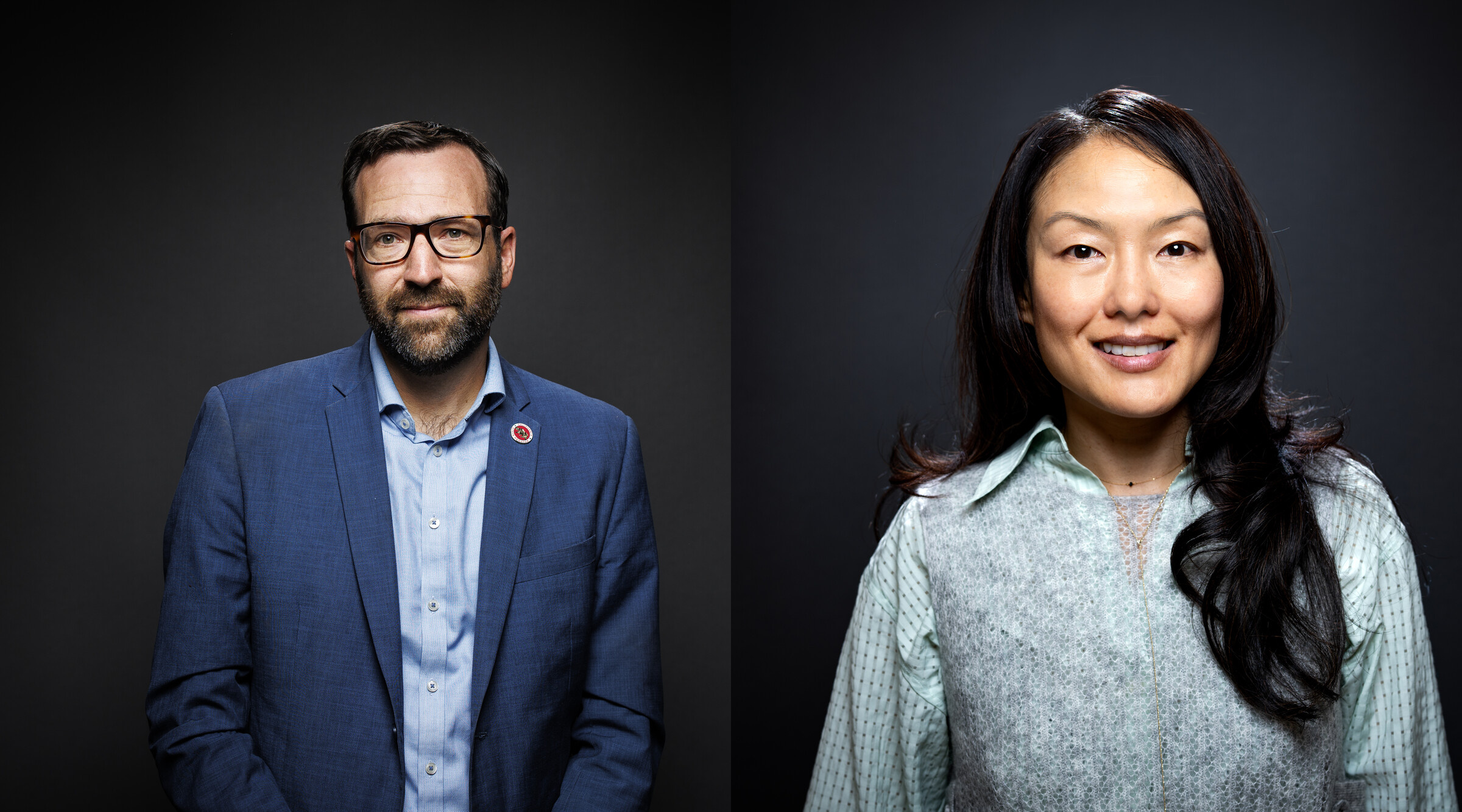
This November, Californians will elect their next insurance commissioner. The role is charged with regulating property and casualty insurance rates and with consumer advocacy. California’s insurance market — the fourth-largest in the world — is increasingly in the spotlight as disasters caused by climate change prompt private insurers to hike policy rates and decrease coverage. We’ll speak with the two candidates on the ballot, Democrats Ben Allen and Jane Kim, about their visions and priorities for the role. And we’ll hear your questions for the candidates.
Guests:
- Danielle Venton, KQED climate and science reporter
- Jane Kim, consumer advocate and attorney; former San Francisco supervisor
- Ben Allen, state senator representing Santa Monica
Episode Transcript
This is a computer-generated transcript. While our team has reviewed it, there may be errors.
Mina Kim: Welcome to Forum. I’m Mina Kim. The race for state insurance commissioner has drawn more attention than usual as insurance carriers have withdrawn from the state or restricted new business, and homeowners see their rates spike or express anger over the handling of claims after the 2025 Los Angeles-area wildfires. This year, for the first time, two Democrats are vying for the position due to the state’s top-two primary system: state Senator Ben Allen and former San Francisco supervisor Jane Kim. And we’ll hear from both of them shortly, but first, KQED science and climate reporter Danielle Venton joins us for some background. Hey, Danielle.
Danielle Venton: Hi, Mina.
Mina Kim: So, first, remind us what California’s insurance commissioner does, a position that’s currently held by Ricardo Lara.
Danielle Venton: Yeah, so the commissioner basically runs a state consumer protection agency, the Department of Insurance. It’s an elected role, has been since the late ’80s. It used to be appointed by the governor, and they’re the top regulator for property, car, and life insurance. They have a very small role in regulating health insurance.
Property insurance is really kind of the reason that this race has a lot of attention. Historically, this has been kind of a sleepy race, but it’s a really exciting one to watch this election cycle. And it’s the only competitive statewide race, really. And two…
Mina Kim: What’s the situation here in California? Characterize it for us, the key challenges the next insurance commissioner will be inheriting.
Danielle Venton: Yes. So this position has to perform sort of a tricky balancing act. That’s classically how this role has been envisioned. Their job is to protect consumers and simultaneously make sure that the industry is well regulated and make sure that California is a place where insurance companies want to sell insurance.
You know, companies like Farmers, Allstate, and State Farm. They’re not like PG&E, which is a utility and has to offer us service. So these companies can sell or not sell to us as they wish.
And we saw almost half a million Californians have their policies canceled or not renewed in the last few years, between 2021 and early 2025. We saw major carriers, including those three, either halt new business or scale back significantly. And that led to almost the entire, the complete collapse of the home insurance market in the state.
And that would have been unbelievably dire. If that had happened, you can’t buy a home, you can’t sell a home. You can’t carry a mortgage without insurance. And you can’t protect yourself against disasters without insurance. It’s a key line of defense we have against the climate-fueled disasters that we’re seeing more and more. And having insurance prevents a disaster from derailing people’s lives.
So this role is so important. It has a lot of power over determining how insurance companies operate in this state and helps influence the health of the insurance market.
Mina Kim: And in the meantime, what you’re describing is, you know, the fact that many property owners are having a hard time finding insurance or affording insurance. Premiums have gone up dramatically as well. A lot of folks have had to go into the FAIR Plan, right? Can you just remind us what that is?
Danielle Venton: Yeah, so the FAIR Plan is the state’s insurer of last resort. It is mandated by the state and overseen by the state, but it is not a state program. It is run by private insurance companies.
And we still have a lot of insurance woes in the market right now, Mina, but I would say we’ve actually sort of seen the beginnings of pulling back from the brink of the insurance crisis. These companies are offering more policies. It is easier to get coverage. I mean, it’s not cheaper.
Um, you know, just last week we saw the FAIR Plan raise its rates by 29 percent, but that said, each quarter we are seeing fewer people have to go on the FAIR Plan. So some people think we’re sort of at an inflection point where there’s some recovery. We still have a long way to go, of course.
Mina Kim: Yeah. Well, let me remind listeners, we’re talking with Danielle Venton, science and climate reporter for KQED, who’s covering the California insurance commissioner race for us.
And listeners, what experiences have you had with insurance that will or have informed your vote? You can tell us by emailing [email protected], finding us on Discord, Bluesky, Facebook, or Instagram at KQED Forum, or by calling 866-733-6786. Again, that’s 866-733-6786.
So you say we’re in a fragile recovery period right now, essentially. So, in a nutshell, what is the biggest difference in the way the two candidates, Jane Kim and Ben Allen, are approaching the situation we’re in right now?
Danielle Venton: So, they are both Democrats. They have a lot of alignment, but the key differences, I would say, are that Jane Kim is really advocating for disrupting and fundamentally remaking insurance in California. And Ben Allen is more looking at the situation that we have, what’s going right, what’s wrong, and trying to make what we have work better.
Mina Kim: And by overhauling the system, what do you mean exactly in Jane’s case?
Danielle Venton: Jane Kim has proposed a state-operated natural disaster insurance-for-all program inspired by programs in other states and, in particular, other countries. The goal is to make insurance more accessible and affordable for Californians.
Mina Kim: And what would you say is the cornerstone of what Ben Allen wants to do?
Danielle Venton: He wants to make the department more effective, more responsive, have access to better technology, better resources, and be more responsive to, you know, one of the roles of the insurance commissioner is investigating fraud, investigating complaints, responding to people when they’re having problems getting money from their insurance company that they’re owed. And so he wants to make the department just a much better customer service organization.
And they also, I want to say, both really talk a lot about the value of driving down risk by making homes safer from fires, and just have some different ideas about how to get there.
Mina Kim: So, Danielle, how did these two do in the primary?
Danielle Venton: So they were the top two. Jane Kim came in above Ben Allen, and I think that may have been because Kim captured the more progressive left vote, and Allen maybe the vote among more moderate Democrats. Independents and Republicans were kind of split. We had so many people trying out for this position.
Mina Kim: Yeah, it sounds like it was a crowded primary in June, and these two came out on top. But as you note, it also sounds like they’ve split the key endorsements. Tell us who’s endorsing whom here.
Danielle Venton: Yeah, so Kim is endorsed, notably, by Bernie Sanders, the California Federation of Labor Unions, Malia Cohen, California state comptroller, Dolores Huerta, and a lot of really progressive pro-labor movements.
Allen has the support of the California Democratic Party, California’s two U.S. senators, the Sierra Club, the Construction Trades Council of California, California Senate pro tem, you know, some more established, kind of central Democrats, also the San Francisco Chronicle editorial board.
Mina Kim: And how are both doing in terms of fundraising?
Danielle Venton: Allen is above Kim. Um, I think he has about $2.3 million, and she’s raised about $1.3 million. Um, he has more support among trade groups and business interests.
Mina Kim: So give us a snapshot of each of their bios.
Danielle Venton: Yes. So Jane Kim was known very well in San Francisco for being our former supervisor. And Ben Allen is a state senator who represented parts of Southern California and has touted his experience helping other survivors of the fires in that area deal with their insurance claims.
Mina Kim: So listener Dan asks, “I’m someone who doesn’t necessarily believe that tax dollars should be used for insurance payouts, particularly in situations where people build in flood- or fire-prone areas. Which candidate aligns with this type of thinking?”
Danielle Venton: Um, I think that if you don’t want the state to play a much, much bigger role in being directly involved in your insurance, um, Ben Allen is more aligned with that thinking. However, you are going to have the candidates on pretty soon, and they can talk more directly about the positions that they hold.
Mina Kim: So one of the first things, when our producer Caroline approached you about your coverage of this race, is you said that you actually find insurance to be really fascinating and that the position itself is an increasingly fascinating position. Talk about why.
Danielle Venton: Yeah, so I think that many people, you know, including myself, have an idea that the world of insurance or the insurance commissioner is sort of boring and sleepy. And honestly, insurance is just fascinating. This is a role, this is a topic that encompasses everything. You know, we have science, environment, math, gambling, human behavior. Insurance is an everything story.
And the insurance commissioner has a big role to play in this state. They approve or deny rate increases. They enforce the laws. They license our agents and brokers and adjusters. They have to make sure that companies are solvent and able to pay out claims. They investigate fraud. They dish out penalties. They take actions when there are emergencies to try to help an area recover.
I mean, this used to be sort of a sleepy position, but honestly, it’s fascinating and kind of so in the center of all of these big issues that we care about in the state, issues of affordability, of adapting to climate change, of creating a resilient, vibrant future.
Mina Kim: Yes, that is something that you have touched on, about how insurance has become even more crucial in the lives of Californians and touches on so much of what you cover as well, right, as a science and climate reporter.
Danielle Venton: Yeah, I really found my way into this beat by studying fires and how we can better adapt to fires and better live with them in the future.
Mina Kim: And yes, insurance is a key piece of that. Well, Danielle, thank you so much for setting us up as we prepare to talk with the two candidates for insurance commissioner.
Danielle Venton: Thank you, Mina.
Mina Kim: Danielle Venton is science and climate reporter for KQED, who’s covering the insurance commissioner race for us.
The two people who are running are Jane Kim, a former San Francisco supervisor who also describes herself as a consumer advocate and attorney, and Ben Allen, a state senator who represents parts of Los Angeles County, including the Pacific Palisades.
And listeners, we want to hear from you. What do you want to ask California’s insurance commissioner candidates? What do you need to know to cast your vote? What questions do you have about the role? And what experience have you had with insurance that informs your vote?
The email address is [email protected]. Find us on Discord, Bluesky, Facebook, or Instagram at KQED Forum. Or call us at 866-733-6786. Stay with us.
Welcome back to Forum. I’m Mina Kim. Californians will elect their next insurance commissioner this November. The role is charged with regulating property and casualty insurance rates and advocating for consumers.
And joining me now are the two insurance commissioner candidates. Jane Kim is a former San Francisco supervisor who joins us. Welcome, Jane.
Jane Kim: Thank you so much for having me. Really glad to be here.
Mina Kim: Also, Ben Allen is a state senator who represents parts of L.A. County, Santa Monica, the Palisades. Welcome to you, Senator Allen.
Ben Allen: Thank you, Mina. Thank you so much.
Mina Kim: And listeners, you can join the conversation with your questions for the candidates at 866-733-6786, on our social channels, and at our email address, [email protected].
So first, tell our listeners why you want to be insurance commissioner. And, Jane, why don’t you start us off?
Jane Kim: Sure, and thank you for the introduction this morning. I also consider this to be one of the most interesting jobs. And the reason why I am running for this position is because it is one of the most important jobs that many Californians have not heard of. It oversees a $3.3 trillion industry that has zero federal oversight.
It’s an industry that is also making record-breaking profits the last three years, and despite that, you know, we as consumers are required to have insurance to drive to work or to school, to qualify for a mortgage for our first home, to open a business or even a nonprofit of any kind.
And so we have to make insurance affordable, available, and fair. And if we don’t, we’re shutting everyday Californians out of our economy. And so this office is the only backstop between working families, everyday Californians, and this trillion-dollar industry.
And this office plays such an important role in ensuring that every Californian can participate in a meaningful way in our economy to help it grow, to build wealth, and this office should make sure, again, that insurance is affordable, available, and fair.
Mina Kim: Ben, how about you? What inspired you to run for insurance commissioner?
Ben Allen: Oh gosh, well, thank you. Thanks for having me. Appreciate you, Mina. Appreciate you, Jane.
I’m a lifelong Californian. I live in L.A. County with my wife and our two young children. I’m running for this position because I’ve seen what happens when the insurance system fails the people who depend on it.
So we had major fires, of course, sweep through my district, and my phone filled up with frightened messages from neighbors and constituents being told to evacuate. And afterwards, we worked so intensely with families who lost everything. Some had already lost their insurance; others were fighting to get their claims paid.
So these were people who had paid their premiums. They’d done everything right. And when they needed their insurance the most, too many were met with delays and disputes and uncertainty. And that was one of the experiences that really drove me to run for this incredibly important office.
In this race, I’m the only candidate who’s actually stood up directly to insurers. I’ve authored and passed laws to increase reimbursement to victims after total loss. Industry fought us. We pushed back. We delivered help for families who needed money immediately.
I co-authored and helped pass California’s one-year insurance non-renewal moratorium law following qualifying wildfires, and then, when the utilities sought to limit their responsibility for the fires they caused, I opposed shifting those costs onto insurance policyholders.
So for me, it’s important to have someone in this office who’s going to demand concrete commitments to expand coverage, scrutinize every rate increase, and enforce fair and timely claims payments. I’ll make sure those investments in safer homes and communities actually end up translating into meaningful insurance benefits.
We need a serious person in this position, someone with real experience who can deliver on day one. It’s about trying to help people get insurance they can find, afford, and count on when disaster strikes.
Mina Kim: Well, listener Audrey writes, “Jane, what experience do each of you have with insurance? I Googled the candidates and saw that Senator Allen has a history with wildfire recovery, but I’m a bit confused about Jane Kim’s experience with insurance.”
Jane, Ben was just saying that he’s the only one who stood up directly to insurers.
Jane Kim: Sure. Well, first, let me start by saying that I’m really proud to be independent of the insurance industry. And that is a stark point of contrast between me and my opponent, who has directly taken checks from insurance companies 76 times, which is many more times than some of his constituents in the Palisades have gotten checks from the insurance industry.
I’m also the only candidate that is refusing to take not just money from insurance, fossil fuel, utilities, and corporate PACs, but I have never in my entire career taken a check from an insurance carrier or insurer PAC.
What is also important is that I think that this job requires three things: negotiating, regulating, and legislating. And that is what I’ve done my entire career on the San Francisco Board of Supervisors as a legislator here for 12 years, as a civil rights attorney, and now as a statewide organizer working for California Working Families Party, advocating for working families and consumers to make sure that our economy actually works for us.
And I just want to point out what all the experience in the world has brought us to today over the last decade: increasing premiums, canceled coverage, and claims that continue to not get paid fairly or quickly.
In fact, the only solution that’s been offered by insiders, the insurance industry, and legislators in the establishment is to raise rates. And that works for a certain sector of consumers here in California who can afford the increased rates. But for the vast majority of Californians, whom I visit up and down the state, from rural counties in Northern California to working-class families in the Inland Empire and even in our cities, we simply cannot afford to just keep paying more and more.
We have to come up with a different solution. What I think is magical thinking is that we can continue to do what we’ve done for the last 10 years and expect a different result in the future.
We have to figure out ways to reduce premiums, but also to reduce risk and find additional revenue measures to do that. And this insurance industry, which has made hundreds of billions of dollars from hard-working Californians every single year, has not invested a single dime in mitigation and prevention.
And that is why I’m proposing a public nonprofit insurance program so that we can claw back some of those premiums and actually invest it back in us to make us safer.
Mina Kim: Yeah, a cornerstone of your campaign is your proposal for natural disaster insurance for all. Tell me about how that would work.
Jane Kim: So we could structure it in a number of different ways. We’ve talked a lot about how France and Spain have a publicly run, nonprofit reinsurance program that’s guaranteed to every homeowner. We’ve talked a lot about New Zealand’s nonprofit public insurance program because it’s a very simple model that we’re very interested in exploring for the state of California.
By the way, these countries have a smaller economy than the state of California and a smaller property and casualty insurance market than the state of California.
And so how it works in insurance is that a homeowner still gets their insurance on the private market. You still will go to Allstate, AAA, State Farm, and you pay your homeowner’s insurance as you normally do to these companies.
We Californians spend $18 billion total on homeowner insurance, and we estimate that about $3 billion to $6 billion of that is just to cover wildfire coverage. So the insurance companies would pay that $3 billion to $6 billion to the state of California. We would take it. We would invest in — and by the way, I should mention, the insurer’s primary business is that they’re banks and we are their capital. They take our premiums and they invest in the market. And that’s part of how they make record profits.
So we would claw back $3 billion to $6 billion. We would, on an average year, cover claims on day one without any subsidies. Now, of course, in a year like 2025, we would cover that. But no insurance company can.
So we would do what every insurance company does. We would buy reinsurance. We estimate about $2 billion to $3 billion, $150 to $215 per homeowner. We would borrow against our assets exactly like an insurance company does.
But here’s the two key big differences. One, we would operate as a nonprofit, meaning excess capital would never go to shareholders and CEOs and private jets. State Farm has four private jets paid for by premiums. We would take the excess capital. We would actually invest in community-wide fireproofing and floodproofing, things that would actually make our portfolio and assets safer so fewer claims get paid out in the future.
And two, again, this is the only program that would be investing premium dollars and their returns into mitigation, the only way to make insurance affordable and available in the long run.
Mina Kim: And you believe there would be enough money to both pay wildfire claims and put money toward mitigation efforts right away?
Jane Kim: So, in year one, we believe that we will be able to cover wildfire claims. And yes, we would be able to use portions of it to invest in mitigation. But this is something that would be staged in the long term. This is not, you know, a slam dunk, day one, we solve every single problem in the world.
But it is a solution, and frankly, this is the only revenue proposal out there to bring additional income to mitigation. We’ve seen what the state legislature has brought in. You know, a few million dollars for mitigation isn’t going to reduce our long-term risk in the long run. We simply have not invested enough dollars into mitigation.
This would add to that fund and ensure that more homeowners are, in short, safer in the long run.
Mina Kim: We have a question about your plan from Carmen in Los Angeles. Carmen, go ahead. You’re on.
Carmen: Hi. I know someone who got a non-renewal notice this year, and Jane, I read that your plan needs the legislature to pass it and then years to set it up. So what happens to the person who lost their insurance in the meantime?
Mina Kim: Carmen, thanks for the question. In terms of what your plan would require, Jane, it sounds like you would need to go to the legislature, the governor as well, for approval. And, yeah, to Carmen’s point, what happens to the people in the meantime?
Jane Kim: So, that’s a very good question, and yes, this plan, and any big idea, should go to a larger body. We live in a democracy; we don’t live in a dictatorship. And so we would want this buy-in of consumers and state legislators and the governor’s office to put forward something like this and also make sure that it works long-term.
And this is a long-term solution because I don’t want to be in this place that we are today five or 10 years from now.
But what do we do in the meantime? Of course, we have to continue to fund the dollars that we are investing in mitigation because that is the only way to make insurance affordable and available in the long term.
This office has three distinct powers. One, they get to license who gets to do business in the largest property and casualty market in the country, the fourth largest in the world, and I don’t think that’s been leveraged enough. This office should be negotiating with the 40 million Americans — one out of every eight Americans lives in the state of California — and we are 10 to 15 percent of the property and casualty insurance market in the top 10.
So I think we need to do a better job of negotiating. If you provide auto insurance in a ZIP code, you have to provide home insurance as well. I think there’s a lot of things that we can do to ensure that homeowners insurance continues to be offered while we’re building this long-term plan on the outside.
And two, we have to look at rates. For example, Obamacare requires that 85 cents of every dollar we spend on health care premiums comes back in the form of health care claims paid out. We don’t have that floor for home and auto.
And right now, Californians get 48 cents of every dollar we spend on home and other insurance back to us. So I want to propose that 65 cents of every $1 we spend on homeowners insurance and 75 cents of every $1 we spend on auto insurance comes back in the form of claims. And so that ensures, again, that the insurance industry is doing the business that they are offering.
And then finally, I want them to pay you interest every day if they deny, delay, or underpay a valid claim.
And so, yeah, there are a lot of rules that we can put in place while we’re working towards a permanent, long-term solution that works better for the state of California.
Mina Kim: Ben, this is a very different approach from yours, and I think a lot of people would agree that significant changes to the insurance market are needed. Why do you think your approach would be better?
Ben Allen: Well, first of all, I appreciate Jane supporting a lot of the things that I’ve already been working on in the legislature. The deny-delay issue, for example, was an important bill that I co-authored with Sasha Perez, who represents the Eaton fire survivors.
I mean, look, what’s happening here is that the major newspapers of our state have looked at Jane’s plan. They have said that it’s a recipe for disaster. That’s a direct quote from the San Francisco Chronicle.
The problem here is that Jane is taking a proposal that has no precedent anywhere in the world. I mean, New Zealand doesn’t do anything close to this. I think they cover — they don’t cover fire. They cover up to $167,000 per unit.
She’s put something forward that not even a credible economist has written about. In fact, the two studies that she cites on her plan both support my ideas.
So this is a totally unprecedented, unmoored, untethered idea that she’s throwing out there, I think because people know that the system needs to be fixed. I absolutely agree with that. We desperately need someone who’s serious about fixing the massive problems that we have, and my plan is very focused on trying to create a workable, healthy market again, so these companies are going to actually be competing for your business as opposed to you going hat in hand to them and having to accept things on their terms.
We’ve got to hold them much more accountable. That’s the work that I’ve been doing in the wake of the fires that ravaged my district, taking on the insurance industry, fighting intensely for a whole slew of consumer protections, giving some more enforcement powers to the insurance commissioner, and then, of course, really focusing on reducing risk and making sure that the insurance industry actually goes from paying a lot of lip service to reducing risk toward rewarding and incentivizing the reduction of risk.
But, you know, look, I mean, I’m really angry too. But the challenge here is that Jane would move wildfire risk off of insurers’ books and into a public program, putting us all on the hook for the next catastrophe.
Her own plan says that each policyholder would pay about $200 a year for reinsurance and then face assessments of $2,000, every single person in the state, $2,000 after a major wildfire, just to recover the amount that would be needed to keep the kitty large enough to cover all of the expenses.
So, you know, again, the Mercury News, for example, said that we simply can’t afford this experiment.
Mina Kim: And I want to give Jane a chance to sort of rebut some of the things, since you called them out directly. But I just am really curious about your approach, then, because I hear your critiques of what Jane is doing, and maybe it would be best answered in the context of this listener, Farrell’s question in Morgan Hill. Farrell, go ahead.
Farrell: Yeah. Hi. Hello to both candidates. Um, we built a fire-resistant home, and we paid all our bills, and then we got canceled. I didn’t even think that that was possible because we did everything right.
And now we went to the California FAIR Plan, and they want $15,000 a year, which is unsustainable. So now we’re without insurance, and we’ve been so for about a year and a half.
And I think this is a major problem in California because, you know, we have decent jobs, but everything is more expensive now. And I think that there’s a lot of people out there like us that can’t afford this.
And I think that if a huge fire moves through, you know, the Bay Area, and there’s a lot of people without insurance, this could have major implications for homelessness and a lot of other issues.
Mina Kim: Farrell, thanks. So, Ben, how would your approach help Farrell?
Ben Allen: Yeah, it’s a great question. So look, after the Palisades fire, I sat with families who’d paid their premiums for decades. They still got a non-renewal letter.
That’s why I helped to pass the one-year moratorium on non-renewals after a wildfire and the law that requires insurers to give you a specific reason and a chance to fix property issues before they drop you.
Now, as commissioner, I’m going to call insurers in. I’m going to demand specific commitments to expand coverage, and then they’ll have to explain how the new regulatory tools that they’ve been given will then turn into more policies, not just higher rates.
And then we’ve got to track results region by region, especially where non-renewals are widespread, like in the East Bay Hills and Marin, Sierra Foothills. And then when their commitments don’t produce coverage, we then have to really hold them accountable.
But at the end of the day, families who did nothing wrong shouldn’t just be getting a surprise bill because the safety net wasn’t built to hold. We’ve got to make sure that the FAIR Plan that’s out there, covering unfortunately so many people with very bare-bones coverage, actually has the reserves and the reinsurance to pay a major disaster without passing the costs onto the people who’ve already paid their premiums.
So that same lesson, I think, applies to my opponent’s plan. When a public program runs short, somebody ultimately has to pay, and it’s usually you. And I think the listener here is experiencing this directly. I mean, that’s why I think that all the papers in the state have such a deep concern about her proposal.
Mina Kim: So are you promoting sort of, like, increased oversight of the FAIR Plan?
Ben Allen: So it’s increased oversight, but we’ve got to do much more to make sure that, as I go around the state, I find that local governments are doing incredible work to reduce risk.
And I mean, I was up in Napa not too long ago, where they’ve done extraordinary work on mapping, making the communities less susceptible to fire, better understanding the way that fires approach, better understanding how to deploy and invest in assets in the county before the fire ever happens, and then also how to employ assets when a fire is coming.
We’ve got to move the insurers away from just paying a lot of lip service to this risk-reduction work and actually rewarding it and incentivizing it much more effectively, on a much more scaled basis.
I’m seeing it happening in various parts of the state, but I think the insurance commissioner has to drive that negotiation with the insurance industry very aggressively.
Mina Kim: Insurance commissioner candidates Ben Allen and Jane Kim are taking your questions, listeners, on Forum. And let me remind you to stay with us after the break. They will be here. This is Forum with Mina Kim.
Welcome back to Forum. I’m Mina Kim. We’re talking about California’s insurance commissioner race on the November ballot and meeting the candidates: Ben Allen, state senator who represents parts of Los Angeles County, including the Pacific Palisades, and Jane Kim, former San Francisco supervisor, consumer advocate, and attorney.
You, our listeners, are joining the conversation with your questions and comments at 866-733-6786, at the email address [email protected], and on Discord, Bluesky, Facebook, or Instagram at KQED Forum.
Jane, let me go to you about your plans to try to address the issues with the FAIR Plan.
Jane Kim: I want to appreciate the caller’s question because one of the reasons why I’m proposing a public nonprofit insurance program is that right now the insurance industry has all of the leverage in California. We have two choices: either let them raise rates or they’ll cancel coverage.
Now, let’s talk about how the insurance industry is making record profits. They are making record profits despite the fact that we have increased risk, because they like to keep what I call all the safe homes in their portfolios, but they jack up their rates, saying we have wildfires, and everyone accepts it because we know the risk has gone up.
In fact, 19 of California’s 20 biggest wildfires have occurred since 2000. Then they dump all the homes that they think are sick or have preexisting conditions onto the FAIR Plan, which they run. And they run it as a nonprofit.
It’s one of the most secretive FAIR Plans in the country. It has nine parts of its governing board, all insurers, not a single representative from the governor’s office, Department of Insurance, consumers, or labor. And since they run it as a nonprofit, when they make money, which is most years, they distribute the so-called excess profits to the 15 insurance companies.
Now, when they have a bankruptcy, as they did in 2025 because of the fires in the Palisades and Altadena, what do they do? They charge the bankruptcy to all the homeowners on their plans.
So when Ben is critiquing a public nonprofit insurance program for putting the liability on us, we already are paying for it. And instead, the insurance industry is making hundreds of billions of dollars in record profits every single year. It made $170 billion net last year. Their top 10 CEOs made $391 million. Again, State Farm bought four private jets with their premiums.
So what I’m proposing to do is to claw back $3 billion to $6 billion of the homeowners’ insurance we’re already spending on this billion-dollar industry.
Mina Kim: And we want to keep the response.
Jane Kim: And, um, we’re already on the hook. That’s the whole point, is that we are already on the hook when there’s a wildfire, either with increased utility bills or increased insurance bills. And again, what I think this listener—
Mina Kim: This listener, Jane, sorry, Todd, is sort of underscoring your point. Todd writes, “My insurance company raised my rates by 40 percent last year, blaming it on the Palisades fire costs, when in reality the company made billions of profits in spite of the insurance claims. Then this year they raised my insurance 10 percent. That is well above the cost of inflation. I think what we need is a commissioner who has serious interest in capping the escalating costs of homeowners insurance.”
On the other hand, Helen in Oakland writes, which I think is also something that Ben brought up that I’d love to have you respond to, Jane. Helen writes, “Does Ms. Kim think it’s okay to charge people like me over $2,000 to fund this plan after each major wildfire? Because that’s what her plan says, and that’s outrageous,” according to Helen.
Jane Kim: So we are not — what we are proposing is just to take the premiums that you are already spending, but giving to AAA, State Farm, and claw that back into a fund here with the state of California.
It would be no different from what consumers are experiencing today, except that excess profits would not go to CEOs and shareholders, and we would invest it back in fireproofing and floodproofing our community.
And listen, I understand the concerns about proposing something new and different. In fact, one of the great things about election season is that this is a time that we get to debate big ideas with the public. And I think that every option should be on the table.
Because what I do know is that the status quo, continuing to do what we’re doing today, is not the safest route. It is the most expensive one for us. We are on the hook. And so I think it’s important to examine a number of different options on the table.
And honestly, I don’t know where this idea that Ben has put out about the $2,000 per plan is coming from. That’s not on our website. We are merely proposing, again, to claw back what homeowners are currently paying in wildfire insurance into this fund.
Mina Kim: Well, we have listener Allison, who writes, “My home is located on the coast near a creek but out of the 100-year floodplain. I’m not required to have flood insurance for my mortgage. I’m opting to get flood insurance, but recent federal changes in FEMA flood designations change the way risk is measured and raise my rates through the roof. What would either candidate do to make getting flood insurance outside of the 100-year flood map more affordable?”
Ben, do you want to take that first?
Ben Allen: Yeah, it’s a great question. Because I spend a lot of time in Sacramento, there’s a lot of flood challenges up there.
So a lot of it ultimately comes down to our risk reduction. First of all, one of the reasons why I am so involved in this topic was my involvement with Prop 4. I was the lead author of Prop 4, the big bond measure that we all passed together at the last general election that’s finally putting real resources out the door to help with all these climate-related challenges, everything from better funding of our water infrastructure, our firefighting infrastructure, better treatment of the wildlands, all those kinds of things.
But there’s also significant money that’s focused on flooding, making sure that we have adequate funding for the levees.
So, at the end of the day, it’s about making sure that the levees are well protected and that, as we invest in those levees and make sure that we’re doing everything we can to reduce flood risk, which is actually a somewhat easier risk to deal with than fire, for better or for worse, we then need an insurance commissioner who knows this issue really well and is going to hold the insurance industry accountable to stepping up and actually providing the homeowners in these areas with real, affordable, available insurance to reflect the lowering risk.
I also will say that developers who want to build significant developments in high flood-risk areas have to be investing as well in the levees. They have to play a role in making sure that our floodplains are safer if they’re going to be putting more properties in those areas.
But I will say, the National Flood Insurance Program is a government program. The listener’s question, I think, shows what happens when you put forward a poorly framed government program. You know, it’s proven to be enormously inadequate, and I just want to make sure that folks are kind of looking at these sorts of examples before taking the frustration that we all have about the system and throwing everything out and adopting a plan that has literally no basis or precedent anywhere in the world.
We could end up repeating a lot of the same mistakes that we made with the earthquake authority and with the flood insurance program.
Mina Kim: Do you have any significant differences in the way that Ben would approach making flood insurance more affordable, Jane? And if not, I would also love to get your thoughts on this question from Steven in San Francisco that’s related to auto insurance.
Steven writes, “As an auto body repairer, I’ve noticed in the last 10 years, many vehicles that should be repaired are declared totaled and then sold through auction. It used to be that the car was only totaled if the repair cost was 70 percent of the value of the vehicle. Are any of our candidates willing to change this losing situation in our state’s auto industry?”
Jane Kim: So, just to go back to the first question about flood insurance, actually, quite differently from my point of view, I think this is actually the perfect story of what I believe is going to happen to wildfire.
The insurance industry — Congress created the National Flood Insurance Program because the private sector exited this type of risk. And we created the California Earthquake Authority because the private sector was also going out of the business of covering earthquakes. So we needed a public option.
And I think in the next few years, we’re seeing the insurance industry do exactly the same with wildfires. So we have to build an alternative over the next three years so that we are ready for the time that the private sector abandons California on wildfire.
And we can learn from the mistakes and deficits that the federal government made, which frankly has made some cowardly decisions on how to set up this program for homeowners.
And so the reason why this program was created, again, I have to remind listeners, is that the insurance industry exited this type of risk. And I believe that we have to do the same here, because the private market is failing us. I think that is something that we can across the board agree on.
Now, to auto insurance, which is also an incredibly key part of what this office does, because again, if you cannot drive to work or school, your ability to earn income is vastly limited. So we have to make auto insurance affordable and available.
And we are proposing to expand our low-cost nonprofit auto insurance program so that more Californians are eligible for it.
But in terms of the cost of repair, which is also something that has been going wildly out of control, I believe that this office should spend a good deal of time negotiating with auto manufacturers, with insurers, and repair shops to bring these prices under control.
But also, we need to continue to sell cars that aren’t so expensive to repair, because now our cars are no longer just automobiles. They’re computers as well. And I want to work with manufacturers to make sure that we always have a lower-cost car option available to drivers, so that they can purchase a car where you don’t have to repair the sensors and software, but you can go back to what we used to do, which was repair fender benders.
Mina Kim: Let me go to caller Brian in Emeryville, who’s asking about Prop 103 from some 30 years ago. Brian, go ahead.
Brian: Hello. Yeah, I’ve lived in California for 45 years. And I remember, I’m guessing maybe 30 years ago, Prop 103 passed, passed by the voters and passed handily.
And that was a proposition that would limit the insurance industry to only charge us our premiums based on our driving record, not our ZIP codes.
I don’t think it ever got implemented. I remember hearing for over a decade it was being fought in the courts. What do you want the two candidates here to know about Prop 103, and do you support the precepts of Prop 103? I presume it never got implemented, and I would like to hear what the two candidates have to say about it.
Mina Kim: So, Jane, you can start with your familiarity with regard to Prop 103, right, and the limitations that it posed.
Jane Kim: Actually, I think that Prop 103 granted broad authority to the insurance commissioner’s office. And I don’t think that we have fully executed or leveraged the full authority.
Mina Kim: The limitations it proposed on insurers. Yes, go ahead. It’s imposed on insurers.
Jane Kim: Yeah, this office — so Prop 103 gave this office three broad authorities. One, it gets to license who gets to do business in the largest property and casualty market in the country. Two, it gets to approve or reject rate increases or decreases and ensure that they are neither inadequate, excessive, nor discriminatory, and that piece is very important as well.
Finally, they enforce the good laws of California and enforce the contractual obligations that insurers have when you pay your premiums, for example, paying out your claims quickly and fairly.
And so, again, I think that this office has broad authority, and I think something that is underappreciated about this office is that this is a civil rights agency. They fight to make insurance fair and make sure that it is not discriminatory.
But we know that the insurance industry has discriminated for decades against our community. There’s a report that came out last year that if you are a low-income policyholder, you pay, on average, $2,000 more in actual dollars than high-income policyholders, even if you live in a low-risk area.
And so, here in the state of California, auto insurance companies are allowed to charge you 30 percent more if you were single, divorced, or widowed, even though that had no bearing on your risk as a driver.
So one thing I want to do on day one, and this requires no changes from the state legislature, is to actually fight for and enforce the good laws that California has here to protect our consumers and make sure that the industry is playing fairly and by the rules, and they’re not discriminating based on income, race, gender, or ZIP code.
This is something that we can take on from day one to protect consumers.
Mina Kim: Let me remind listeners, you are listening to Forum. I’m Mina Kim. We are getting so many calls. Our lines are full, also so many comments as well, so we’re trying to address the broad issues that our listeners are trying to raise with us here.
Quickly, Ben, I’m wondering if you would try to expand the powers of this office. I mean, we’re talking about trying to make sure that the office uses the power it actually has, but are you looking to do that? Because I know that Jane has also talked about trying to bring more authority over health insurance programs.
Ben Allen: Yeah, and let me say, a number of the things that Jane just mentioned, we’ve already fixed just over the last couple of years. Some really important civil rights measures have further restricted the ability of the insurance industry to discriminate against people.
So I’m totally on board with her on that topic. I’m passionate about it, quite frankly. I’ve done some civil rights law as a lawyer myself. And in fact, we actually have addressed several of the topics that she just raised in the legislature over the last couple of years. I was involved with those efforts.
Of course, I believe we should have some more enforcement power in this position. It’s part of why I ran SB 1209, the bill that actually now finally gives some real teeth to the Enforcement Division of the Insurance Commissioner’s Office to go after really bad behavior by the industry. So that’s going to be a really important tool that either of us will be able to use to go after bad behavior.
But, you know, at the end of the day, look, Prop 103 is a really important measure. It’s a cornerstone of consumer protection in California. It actually has been implemented. It is in place. It’s part of why a lot of our rates are lower than other places.
I absolutely support its core protections, including prior approval of rates and transparency and public accountability. So there are a lot of really good consumer protections that are both in Prop 103 and in all the subsequent legislation that we’ve done over the years to protect consumers, and that’s a trajectory we need to continue.
Mina Kim: Listener Alan writes, “My wife and I are terrified of our home insurer. We have recently put large amounts of money into renovations and want to increase our coverage, but my wife is afraid that if we even raise the subject of insurance with our insurer, they will cancel us and no one will insure us. I don’t know what anyone can do to fix that.”
I think at the end of the day, what you’re describing, Jane and Ben, are what people are looking for. They’re looking for somebody to be a really good advocate on behalf of the consumer.
But one of the questions that Ethan has, Jane, for you is how to collaborate with people that you are speaking against throughout the campaign, including insurers. How would you approach them? Are you concerned that your aggressive stance might scare some away?
Jane Kim: I think it is incredibly important that the person who is leading this office comes in ready to fight on day one, every single day, for consumers who frankly have had very little leverage in the insurance industry framework.
I said it earlier, but the insurance industry has figured out how to be the house and how to always win, whether the risk goes up or whether the risk goes down. They make money whether there are wildfires or not in the state of California.
It’s like going to the casino where you know the house is always going to win, but you don’t get any free drinks.
And that is, again, why I’m proposing a public insurance program that is nonprofit, where we create some additional leverage here in the state so that they’re not the only option out there, where we have two choices: to raise rates or they exit California or they dump into the FAIR Plan, where they charge you exorbitant rates and they make tons of money, and when there’s a bankruptcy, you just charge all the homeowners in their regular plans.
This is the exact framework that is bankrupting hard-working Californians, and I am really, you know, excited that our platform is the — instead of talking about what he wants to put forward instead.
And, you know, it reminds me of when I was in office, when we talked to bureaucrats and agency heads: don’t tell me why this isn’t going to work. Tell me how it is. So you can critique it all you want, but let’s actually talk about the ways that we can actually make it work.
And so, I think that the—
Mina Kim: We just have 30 seconds, Jane. I’m so sorry. So I’m going to end with listener Alpa’s comment.
“As I’m listening to both candidates, both sound like they want the best for Californians. One is willing to try something new. One wants to hold insurance companies accountable. Instead of being forced to pit against each other and choosing one, there should be a way both of the candidates could work together to try their ideas and benefit all Californians.”
Both candidates have certainly made their pitches in documents that you can read and find on KQED and other places.
Well, I want to thank you both, Ben Allen and Jane Kim, for talking with us, and, as always, our listeners and Caroline Smith for producing this segment for you.
This is Forum.
Announcer: Funds for the production of Forum are provided by the Generosity Family Fund and the members of KQED.