KQED Investigates Abuse and Retaliation at CA’s Largest Women’s Prison
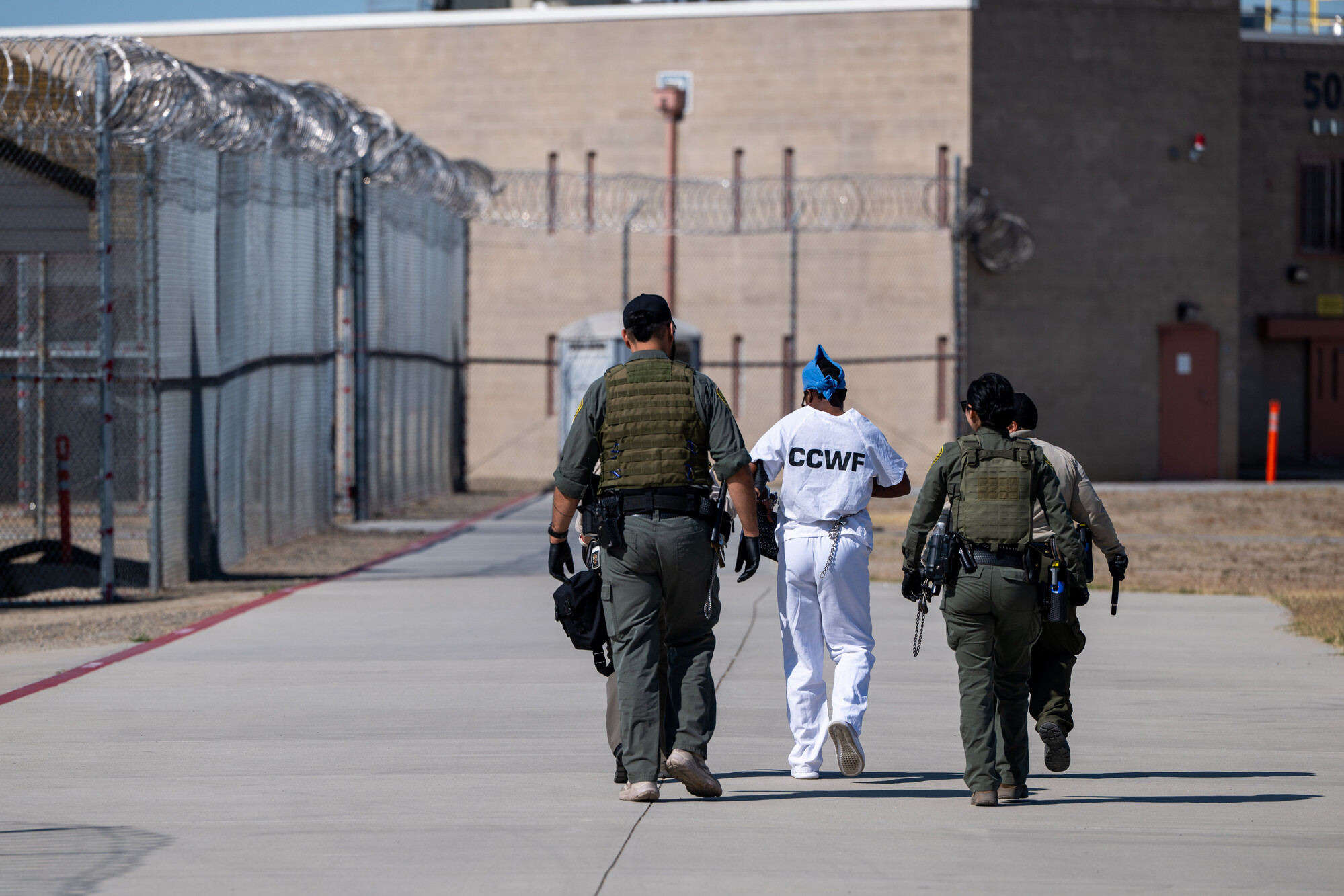
Airdate: Monday, October 5, 2026 at 9am
When Aliksandria Prout was released from the Central California Women’s Facility in Chowchilla in 2022, she set out to bring the correctional officer who abused her to justice. Her story — along with many other survivors of prison abuse — is detailed in a new series from KQED’s Snap Studios called “We Are Jane Doe.” The three-part series chronicles a two-year investigation by reporters Madi Bolaños and Anna Sussman into sexual abuse and retaliation at one of the largest women’s prisons on earth. We’ll talk with Prout about her experience as “Jane Doe Number One” in the high profile case against Gregory Rodriguez — and hear from Bolaños and Sussman about how the prison system has enabled this kind of abuse to go unchecked.
Listen to the series here: We Are Jane Doe
Guests:
- Madi Bolaños, host, producer, “We Are Jane Doe” and co-host The California Report, KQED
- Anna Sussman, editor and senior producer, “We Are Jane Doe” and senior producer and managing editor, Snap Judgment.
- Aliksandria Prout was formerly incarcerated at Central California Women’s Facility in Chowchilla, subject of “We Are Jane Doe”
Episode Transcript
This is a computer-generated transcript. While our team has reviewed it, there may be errors.
Alexis Madrigal: Welcome to Forum. I’m Alexis Madrigal. When Aliksandria Prout was released from the Central California Women’s Facility in Chowchilla in 2022, she set out to expose the correctional officer who abused her. Her story, along with many other survivors of prison abuse, is detailed in a new podcast series from KQED’s Snap Studios called We Are Jane Doe. It’s the result of a two-years-long investigation by Madi Bolaños and Anna Sussman into the prison. And this morning, we’re joined by those two reporters. Welcome.
Madi Bolaños: Thanks for having us.
Anna Sussman: Thanks, Alexis.
Alexis Madrigal: We’re also joined by Aliksandria Prout. Thank you so much for being here with us.
Aliksandria Prout: Thank you for having me. Yeah.
Alexis Madrigal: So, Ali, you know, you were sent to this facility in 2022. What was it like for you to just sort of step into that environment?
Aliksandria Prout: Well, I tried to fake it till I made it, but to be honest with you, it was overwhelming. It was like joining, walking into a Coliseum. And when you enter the yard and you see the different buildings, the first building you encounter is Death Row. And it hits you. There’s women in that building sitting on death row, and, um, you’re there for something very minor. So to have to be in the same vicinity of other women like that, it can mess with your head a little bit, and you have to not show any fear.
Alexis Madrigal: Even though you are.
Aliksandria Prout: Well, yeah, you’re a little terrified, but you know, you have to treat everyone the same, and usually when you do, it’s fine. But that is a lot to take in when you’ve never been in an environment like that and you’ve been sheltered the majority of your life, and then suddenly you’re in that kind of a place.
Alexis Madrigal: But it wasn’t really the women who turned out to be the biggest problem. I mean, just a few days into your incarceration, right, a corrections officer named Gregory Rodriguez stopped you at a checkpoint. So what happened?
Aliksandria Prout: Right. The women from all spectrums of criminal activity were very nice and respectful to me. I got along with everybody great. Yeah, it happened to be the correctional staff, and they were just very rude, condescending, and abused their power.
And it was one morning, I was on my way to a medical docket in the 805 building, which is across the yard into another yard, and he was working the 805 exchange. And I had an N95 mask on because it was during the time of COVID, and he asked me to remove my mask so he could identify me to my ID. So I said, sure, not a problem. I removed my mask, and he started making sexually, you know, objectifying comments about my eyes, about my lips, the size of my lips.
So I then became very uncomfortable. I said, “This is a complete lack of professionalism. A complete breach of your professional authority. Like, this is not appropriate for you to make these kind of comments to me as an inmate or as a woman in general.”
So I put the mask back on, asked if I could go, and he asked what housing unit I was in. I said, “I’m in quarantine. I am in 503.” So I went to the medical docket, came back, went back to my housing unit.
Well, I think it was a couple days later, I got a call saying, “Prout, you have an attorney visit,” and I actually have the docket still. It says attorney visit on the docket. So they actually fabricated and created a docket that says “attorney visit” with a time and place, BPH office.
So they handed me the dockets, and here I am thinking I have an attorney visit, and I’m incarcerated at a state prison for a restraining order violation. So I’m like, “I don’t think I’m supposed to be here. This doesn’t even — the punishment doesn’t fit the crime.” So I was thinking maybe my attorney’s here to figure out what’s really going on.
And so I go up there, and I’m walked up there by an additional officer named Alan, and I walked to the main yard gate, and guess who’s waiting for me? Rodriguez. And my heart just sank. Because between the comments he had made previously, him asking why I was housed, and then him waiting for me, I’m like, “Oh, great. This can’t get any worse. This can’t go any worse.”
So I am handed over to him, and he takes me into the BPH office, and he shows me two rooms. He shows me his office and says, “There’s no cameras in here.” And then he shows me the BPH courtroom. And for everyone that doesn’t know what the BPH courtroom is, it’s where lifers go before the board to try to get their life taken off and get a parole date.
Anna Sussman: Mm-hmm.
Aliksandria Prout: There’s also scheduled attorney visits that happen there, too. So when I went in there, I said, “Hi, I have an attorney visit. Where’s my attorney visit?” And he said, “No, there’s no attorney visit.”
Alexis Madrigal: So you kind of knew what was up at that point.
Aliksandria Prout: Yeah.
Alexis Madrigal: And it was then that he assaulted you.
Aliksandria Prout: Yes. He had come on to me. I said, “No, I don’t want to do this. I don’t want to get in trouble. I don’t want to lose my date. I just want to go home to my kids on time.” I only had like three or four months to do there. And I was terrified of catching any more time.
And he said, “You’ll go to SHU. You can get a 115 and get more time added onto your sentence.” And I was like, “Okay, what do I do?”
In my head at that moment, I just thought, do I fight this and hope that the seniority will believe me? I’m an inmate who’s been convicted of a felony. He has seniority. He’s been here for 10 years. Who are they most likely going to believe? Especially from a legal aspect, how much l — you know, how deep of a link?
Alexis Madrigal: There’s no cameras. There’s no — it’s your word versus his.
Aliksandria Prout: Right. And how much legal trouble is this going to cost them that they’re going to want to deal with? So my mind told me they’re most likely not going to believe me because they don’t want to deal with the legal impact of having to deal with him and his consequences.
So I said, “Okay, I just have to compartmentalize and do what I need to do. That doesn’t mean I consent or I’m okay with this. I’ve said no, but it’s either create more consequences for myself and create more time and go to SHU, or compartmentalize and disconnect, and just what’s going to happen is going to happen, and I can deal with this when I get out.”
So, yeah, that happened. And, you know, I remember DNA being left on the chair. So remembering that and keeping that in my memory so I could later tell the police that. And I remember saving all my ducats and hiding them throughout my entire prison stay so I could give my attorney that.
Alexis Madrigal: And you have proof of the dates and what happened.
Aliksandria Prout: And they could swipe DNA off the chair to prove it was his DNA. So while this is going on, I’m trying to build my own case internally, you know, for when I get out and can do something about it.
Alexis Madrigal: You’re listening to Aliksandria Prout, formerly incarcerated at California Women’s Facility in Chowchilla. Her story, along with other survivors and other people inside, are detailed in KQED’s Snap Studios’ new podcast called We Are Jane Doe.
Madi Bolaños, what do we know about how widespread Ali’s situation is? You know, women inside are in a very difficult situation, as we were all just hearing, unable to sort of be on equal footing with these corrections officers when they make these kind of sexual advances to them.
Madi Bolaños: Well, we learned through our investigation that this is very widespread, and that was confirmed by the DOJ, which also investigated the women’s facility and found that this was an unbroken pattern.
Alexis Madrigal: And by that, do we know, you know, like, it’s one officer and, like, five women? It’s, like, a bunch of officers and it’s dozens of women?
Madi Bolaños: We can’t say that it’s all officers, and we can’t say that it’s all women, but we can say that there are several officers that have been under investigation and that continue to be walked off the yard for sexual assault.
Alexis Madrigal: Um, go ahead, yeah.
Anna Sussman: I think it’s important to know — I mean, in the Rodriguez case, the prison found 22 women who they had evidence on that he had abused. Thirteen of those women ended up going to the criminal trial. Dozens more came forward later.
But it’s important to know that the Rodriguez case is not an outlier, right? Ali had proof, right, and that’s why he was able to be taken down the way he was. It’s very hard to collect evidence and to get proof the way that Ali was able to.
So when the question is, what do we know about how widespread this is, I think part of our answer is, it’s very difficult to know anything because it’s all behind a wall. And they do not let press in, and they do not let the public in, even though it is a public institution.
So it’s a very difficult and nearly impossible question to answer, which is part of the problem. We don’t know because we can’t see it.
Alexis Madrigal: Ali, on the inside, what did people know about this? You know, I mean, you only told one of your friends inside. But women know this happens, right?
Aliksandria Prout: Yes, they do. When I told my cellmate this was going on, she advised me not to say anything, just collect everything I could, which is exactly what I did. And, like, I drew maps of where all the camera points were.
Alexis Madrigal: Even though there’s supposed to be methods for reporting this stuff, right?
Aliksandria Prout: But there’s not, because if you file a pre-agreement, they will file a 115 against you saying you are lying against staff, so they’ll retaliate and file something back against you.
So I drew, like, diagrams. I hid my ducats. Like, I knew there was DNA on the chair, so I just handed, like, Internal Affairs a platter of, like, “Here you go, here’s everything you need.”
But my girlfriend did tell me, “Don’t say anything while you’re in here because they protect their own.”
Alexis Madrigal: We’re talking about this investigation from KQED’s Snap Studios called We Are Jane Doe. It’s into the Central California Women’s Facility in Chowchilla. We’re joined by Aliksandria Prout. She was formerly incarcerated at the place. We also have Madi Bolaños, who’s hosted The California Report, one of the reporters on it, and Anna Sussman, senior producer at Snap Judgment.
Are you listening, currently or formerly incarcerated? How do you think our institution should be held accountable when things like this happen? Give us a call, 866-733-6786, [email protected]. You can find us on social media, BlueSky, Instagram, Discord. We’re KQED Forum. I’m Alexis Madrigal. Stay tuned for more, right after the break.
Welcome back to Forum. Alexis Madrigal here. We’re talking about a new investigation from KQED’s SNAP Studios called We Are Jane Doe that chronicles sexual abuse and retaliation at the California Central Women’s Facility in Chowchilla.
We’re joined by Ali Prout, formerly incarcerated at the prison, and one of the people who came forward to hold people to account inside the prison. We’ve got Madi Bolaños and Anna Sussman from The California Report and SNAP Judgment who came together on this investigation.
Ali, there was quite a ripple effect. You get out, you’ve gathered all this evidence, and you meet with an attorney, and then suddenly more than 20 women come forward, right, also with their own allegations.
Aliksandria Prout: I got a very high-profile attorney from Stanford University. He’s great. He’s a prisoner’s rights attorney. And I started listing possible victims that could have been possible victims of this man that I knew. So I had him reach out to those women and clarify if that was true or not. And I also had him go to the prison, and people knew he was at the prison, so they felt comfortable to speak with him.
Alexis Madrigal: Um, eventually Rodriguez was found guilty on 64 counts. That was in January of 2025 and sentenced to 224 years, uh, in prison. Um, and, like, how rare is that, that this happens?
Anna Sussman: To my understanding, it’s incredibly rare this happens. Again, you have to have evidence, which is hard to collect inside a prison. You’re getting searched all the time. Your phone calls are being recorded. Your messages are being scanned. So it’s very difficult to secretly collect evidence in this place.
And of all of the women we spoke with, over 13 — except for Ali, every single one of them at one point said, “I have been assaulted and I choose not to report. I choose not to record because it’s too dangerous. I don’t feel safe.”
And they all have this kind of mantra of keep your head down, keep to yourself, do not cause trouble.
Alexis Madrigal: Well, and we’re going to talk about the retaliation that came as a result later. So there’s a reason people are afraid, right?
Anna Sussman: But an important thing that happened as a result of Rodriguez getting convicted was there was a California legislative hearing, and there was a lot of public uproar. So organizations were able to go into the prison and hold town hall meetings where they said all the women who want to talk about their experience with sexual assault can come together in a circle and speak about it.
And so the power dynamic at the prison was threatened to be shifted by Ali’s work and by what happened with Rodriguez.
Alexis Madrigal: Ali, what did it mean to you to see Rodriguez getting convicted in this way?
Aliksandria Prout: Well, I was definitely advised not to pursue criminal charges against him because of the retaliation, and for me as a woman and for other women that have been sexually assaulted and for prisoners, women prisoners that are still subjected to that, I had to make a choice. And for me, I was gonna stand up and testify.
I wasn’t going to allow somebody to intimidate me. I didn’t care who they were affiliated with. I made the decision to follow it all the way through and make my point clear that my body is not to be sexually objectified by a man. And that was your choice to do that, and now you’re gonna have consequences.
Yeah, yeah.
Alexis Madrigal: Um, Madi, I think now you sort of, in the timeline of the world, this is sort of where you entered the story, right? You are, I believe, sitting in this very studio.
Madi Bolaños: Yes, the chair you’re in.
Alexis Madrigal: Yeah, yeah, and you received, like, a phone call with a tip. What happened?
Madi Bolaños: Yeah, so I was sitting in the studio getting ready to record The California Report when I get a call from someone inside the prison. And they basically told me that something big had happened at the facility. They described it as a riot at the time. And they knew I was a journalist and that I should look into it.
And I tried asking more clarifying questions, but they really didn’t want to say more. And so that’s when my journey started. I reached out to some advocates and our editor and tried to figure out how we were going to approach the story. I reached out to CDCR, and they were very tight-lipped at the time. And so I was really relying a lot on the women that I spoke to inside who were brave enough to share their story.
Alexis Madrigal: And you didn’t have, at that point, you didn’t know what it was, right? Just that something had happened on a particular date. And so how do you go about trying to actually find that? You just, like, file public records requests, you contact the warden and say, “Hey, did something happen?”
Madi Bolaños: I wish it was that easy.
Alexis Madrigal: Yeah, yeah.
Madi Bolaños: We did file a public records request, and we asked for all the body-worn camera footage, any documentation about that incident, emails, forms that they had to write, really just, like, anything related to August 2nd, 2024.
And I also spoke to advocates who had spoken to the women inside, and they described not a riot, but something more of an attack by officers on the women.
And so there was a protest that they were holding about two or three weeks after August 2nd. And I went to that protest, and I was the only journalist who had gone to that protest. And I spoke to some of the formerly incarcerated women who described that their friends had been attacked by officers with batons, with pepper spray, with gas grenades, OC grenades, and they were afraid and traumatized.
And so I shared my number with them, and then women started reaching out to me, and I started documenting that.
Aliksandria Prout: You didn’t see the video?
Madi Bolaños: We had not seen the video at the time. The video had not gone out yet.
Aliksandria Prout: Okay.
Madi Bolaños: But you’ve seen it since, yes. We were able to get video surveillance footage of the incident.
Alexis Madrigal: Because, Ali, you heard about it from the inside, right?
Aliksandria Prout: Yes, and I’m also connected with Hector, and Hector sends me all the videos.
Alexis Madrigal: Who’s Hector?
Aliksandria Prout: He’s a formerly incarcerated — he’s the former correctional officer that is against the system now.
Alexis Madrigal: I see, I see.
Aliksandria Prout: He’s a former lieutenant. This is on YouTube. He has a YouTube channel.
Alexis Madrigal: Got it, got it. So to set this up, because we’re going to hear a little bit from some of the women who are on the inside, what happened to your right is the corrections officers go and they herded everyone into the chow hall, right? Into this sort of, like, big, what looks like kind of a high school cafeteria, you know? And then they all kind of walk in, and what starts to happen from what we’ve been able to do together?
Madi Bolaños: They wake up in the morning and they’re told that their cells are going to be searched. And so they’re escorted into this small dining hall, the chow hall, and they are left there for four hours without food, water, medication.
And then they learn that their stuff is being carted away. And this is called breaking down to six by six, six by 6 cubic feet. And that’s, like, the size of a small mini fridge. And that means that all of their personal items are put into that small container, and whatever doesn’t fit in there gets taken out, or gets thrown away, really.
And, I mean, long story short, that is not how that’s supposed to happen. It’s supposed to be a longer process, we’ve learned in our reporting. So the women were understandably upset and asking for answers and not receiving any answers.
And then after a few minutes, about a dozen officers enter the chow hall, and they have pepper spray canisters and they had OC grenades in their hands, and you see them form this skirmish line and —
Alexis Madrigal: It seems like mace, right?
Madi Bolaños: Yeah, yeah, it’s like pepper spray, yeah. And so we were able to get the surveillance video, and we saw that there was this line, and then there were some women who were standing up. A majority of these women were sitting down across the dining hall.
And at a certain point, you see an officer usher some of the women to back up, and the women begin to back up, and then suddenly the officers are spraying them all with pepper spray grenades.
Anna Sussman: I think an important thing to know about this attack is that shortly before this attack, the officers had been heard saying to some of the women on D-Yard, on Ali’s former yard where her roommate still lived, “If you don’t stop all of this reporting, if you don’t, we are going to make life difficult for you.”
And that is what was in these women’s minds when they were being herded and locked into this chow hall and then attacked.
Aliksandria Prout: Well, and there was a medical emergency. There was, yeah. One of my former cellmates, Katrina Cameron, has a pacemaker, and she couldn’t breathe and was bending over, not being able to catch her breath. And Christina was behind her trying to bring her to officers for medical treatment because she has a pacemaker.
And she’s like, “She can’t breathe. She can’t breathe. She cannot breathe because of all the pepper spray. Can you please get her medical attention?”
Well, as soon as she brought her forward to the officers, eight officers took them to the ground and just started wailing on them with batons.
Alexis Madrigal: Which you can also see in the video.
Aliksandria Prout: Yeah, really.
Alexis Madrigal: Horrible thing to watch, but it’s on KQED’s website. You can find it there. Let’s listen to some of the women from the inside describing this incident. Thank you.
Caller: It really literally felt like we was, like, in a room full of smoke, and we was just in there waiting to die. I already took my last breath in there. You feel me? I was just up in there ready to die.
Caller: I remember passing out, and I came to and I looked up and it’s an officer standing right there. And I kind of, like, just begged him, like, “Please get me out of here,” and that officer finally noticed me and picked me up, cussed me and started dragging me towards the door, and I passed out again.
Caller: People were falling out in seizures. They wouldn’t let us help our peers. A couple of people ran to my roommate to help her because she was having a seizure, and they started bombing them. So we had to fall back.
Caller: It was, it was like a concentration camp, actually, if I’m allowed to say that.
Caller: Like, it was World War II zone.
Caller: I’m not going to lie, it was the most traumatizing experience I’ve ever dealt with in my life, and I did 16 years in prison, so I clearly committed a crime and I’ve lived a lifestyle that wasn’t pleasant before, but to experience something like that was something I’ve never experienced before, and it was the most scariest thing that I’ve went through in my life.
Alexis Madrigal: There was a clip from a new investigation from KQED’s Snap Studios called We Are Jane Doe, describing a massive use-of-force incident inside the Central California Women’s Facility in Chowchilla.
I mean, the obvious question that shakes out of this is, the women had these interactions with the corrections staff in which the corrections staff was saying, like, “Yeah, you better watch out if you guys keep up with this reporting.” They’ve already had one of their own convicted and all these things.
The question is, how could you prove it was retaliation? I mean, this seems like a quite difficult task. So where do you start?
Anna Sussman: We can’t be inside their minds. There were a lot of officers involved, and we can’t know all their minds. All we can do is put together the pieces of reporting that we have.
So we have women who have overheard these comments made directly to them by officers in public spaces, saying, “If you do not stop reporting, there will be retaliation.” They said there’ll be consequences, and they laid out the consequences.
We have a lawsuit which was settled by the state in which 13 women claimed that this was retaliation. They won a handful of monies.
Alexis Madrigal: I mean, there were also multiple investigations, right? I mean, there was both an internal investigation and there was also an external DOJ investigation, right?
Madi Bolaños: Right, yes. The Department of Justice spent two years investigating women’s prisons in California, and they specifically looked into August 2nd as well.
And what they did is they interviewed several women and did their own investigation. I’m not completely sure about the document side of it, but their conclusion was that August 2nd was retaliation for sexual assault at the prison.
Alexis Madrigal: What about the prison itself? Did they make any mention of that?
Aliksandria Prout: The warden was actually removed from the prison and relocated to another prison at a lower level, and she was replaced with somebody else.
Madi Bolaños: Yeah, she was transferred and demoted, and they did investigate August 2nd. But our reporting found in the hundreds of documents and data that we looked over that they never really asked the question, “Is this retaliation for sexual assault complaints being on the rise?”
They really just focused on what the officers did that day and whether it was CDCR policy or not.
Alexis Madrigal: But they did talk with the person who more or less okayed and planned this operation, right? And that particular assistant warden had some things to say about the women and what they were trying to do with it, right?
Anna Sussman: She made it clear that it was about control.
Alexis Madrigal: And this is in official investigations and transcripts and stuff that you were able to — interviews, yeah.
Anna Sussman: That’s right. The transcripts we have from their internal affairs investigation said that she, and the audio that we have, she makes it clear that they felt that this unit was, quote, “out of control” and needed to be under control.
They asked her if she referred to the women with a pejorative word. She said she did not recall, but it was clear from what she said in the investigation that they needed to show the women who was in charge.
Aliksandria Prout: Can I comment on that?
Alexis Madrigal: Sure.
Aliksandria Prout: 513 is definitely the more rambunctious unit, but that is not how you’re gonna control 513. By taking all their possessions, throwing them away, and saying, “This is who’s boss. Now all your possessions are in a six-by-six container.”
Whoever thought of that as a form of control to show them who’s in charge — you provoked.
Alexis Madrigal: Because some of these people are, like, have been in for decades or so. These are, like, all their professions. They’re lifers.
Aliksandria Prout: Right, yeah.
Alexis Madrigal: Like 32 years, and it’s like, that’s all their possessions they’ve had over those years. So for you to come into their cell and just cart away things that are sentimental to them that they’ve accumulated over that amount of time, it’s not okay.
Alexis Madrigal: It’s not like they can just go buy another one at Target.
Aliksandria Prout: No, it’s not, and some of these are sentimental things from their families that they may not be able to replace. So for you to just come into their spaces and do that, like, that’s not even a level of mutual respect.
And if you want respect as a correctional officer, you have to still give a level of respect to the inmates or they’re not going to respect you.
Madi Bolaños: And what we learned is that that kind of search takes weeks or months to do, and usually they’re supposed to be able to pick what they get to keep and what gets thrown away. So to just have that all carted away in front of you, that’s devastating.
Alexis Madrigal: Also, it had a name, this particular operation.
Madi Bolaños: Yeah, it was called Operation Breakdown.
Aliksandria Prout: Why would you want to break these women down? And when there are — that’s the thing I don’t get. These women coming in are already broken down. They’ve lived the worst possible lives. They have nothing left to lose.
Why not, as a correctional officer, you make a difference in somebody’s life? You go out of your way to say something encouraging. You create programs that can help build their self-esteem. You encourage education or skills for these women.
They’re already coming in broken down. There’s nothing else you can do to break them down. So if you want them to mutually respect you and you want to function as a whole and listen, then you should start choosing that route instead of trying to continuously break them.
You’re not gonna break them now.
Alexis Madrigal: Um, Madi, how, you know, there were these multiple investigations. What kind of disciplinary action actually came out of this?
Madi Bolaños: So 41 officers were initially disciplined, three were fired, and the discipline ranged from temporary pay cuts to being transferred, and, like I mentioned, three officers were fired.
But these officers have the ability to appeal that decision. So over the course of our reporting, that number went down to about 30 officers, and I believe there are about five who are appealing their decisions still.
Alexis Madrigal: And the ones who were fired, it’s largely because their own body cams caught them saying or doing things.
Madi Bolaños: Yeah, yeah. They were caught saying some pretty gross things in that moment. And also, they were caught using excessive force as well. And so that, and with a couple other policy violations, amounted to them being fired.
Aliksandria Prout: Well, I’m grateful for that because my case with Rodriguez helped implement those body cams. So that makes me happy.
Alexis Madrigal: Yeah, yeah, yeah. That was Aliksandria Prout, formerly incarcerated at the prison, who exposed her abuse by a correctional officer who was then convicted and went to serve time. Now, very, very long sentence.
We’ve got two reporters here from KQED Snap Studios. They have released a new investigation called We Are Jane Doe that chronicles the sexual abuse and retaliation at the Central California Women’s Facility in Chowchilla. That’s Madi Bolaños and Anna Sussman.
We want to hear from you. What changes or reforms would you like to see in California’s prison system, particularly California’s women’s prisons? You can give us a call. The number is 866-733-6786. That’s 866-733-6786. The email is [email protected]. You can find us on BlueSky, Instagram, Discord. I’m Alexis Madrigal. Stay tuned for more right after the break.
Welcome back to Forum. Alexis Madrigal here. We are talking about a new investigation from KQED’s SNAP Studios called We Are Jane Doe, that chronicles sexual abuse and retaliation at the Central California Women’s Facility in Chowchilla.
We have Aliksandria Prout, who was Jane Doe number one in the initial case that touched all this off. We’ve got Madi Bolaños, host of The California Report here on KQED, and we’ve got Anna Sussman, senior producer at SNAP Judgment.
Michael writes in to say, “The horrific events these women endured are the most public example of how prisoners in California are routinely retaliated against when they call attention to illegal acts or procedures used by staff against them. Abuses that are predictable and common in enclosed systems like prisons or immigration centers. As terrible as what the story reveals, we should not forget that male prisoners are also subject to further abuse by way of retaliation for complaints they legitimately lodge.
“When you give so much power to one group over another and then surround them with walls designed to keep outside eyes from looking in, there will always be more stories like this.”
I mean, given that, Anna, it doesn’t seem like there shouldn’t be reform, though, you know? I mean, there is this basic setup of a prison, these abuses occur. That is true, and that’s a whole debate that’s been going on in society about how prisons should be, or what prisons should, or if prisons should. But there’s also this question of, like, there are better and worse ways of doing this if we look around the world. Not every prison system is as abusive as ours.
Anna Sussman: That’s a great point. I think as a journalist, and having reported the story, my takeaway is about transparency.
I’ve reported on prisons in Mexico, in West Africa, and I go up to the front desk and I say, “I’m a journalist and I would like a tour,” and they say, “Right this way.” And there’s no advanced warning, and there are rules.
When we tried to enter CCWF, it was many months of requests. When they finally let us in, they told us we were not allowed to speak with any of the women inside. We were not allowed to bring any recording equipment. We’re not allowed to ask any questions.
So that’s not reporting and that’s not transparency. And like our listener says, when you have a group of folks, mostly men, who are given power over another group of folks, mostly women, and you put it all behind a big wall and say nobody can come in, you’re not keeping those people safe.
When we toured, when Madi and I toured, we had women shout out to us from their cells, “Help us. We’re treated poorly in here. We’re treated like animals in here,” and we were not allowed to speak with those women.
So for me, reform number one is about transparency. It’s a public institution. Let the public in.
Alexis Madrigal: I mean, Alpa writes in to say this is such an infuriating and traumatizing situation for incarcerated women. It’s been happening despite guards being convicted or punished, so why do they still have men as guards at women’s prisons?
Madi Bolaños: I mean, that’s a great question. I think those prisons are in rural areas, and that’s one of the very few economic opportunities that they have there.
And I think just being — I’m from the Central Valley. I grew up 30 minutes from that prison. And that just, I think, there’s this idea that a prison is such a dangerous, scary, awful place, and that these people are incredibly violent, and that maybe men are the only ones that can be up to the task.
But from what we understand is that women’s prisons are not as violent as men’s prisons. They’re much less.
Alexis Madrigal: You know, Ali, from your perspective, I mean, there are women who are correctional officers as well. Were they better? Or is it kind of one system, so they all kind of are equally oppressive?
Aliksandria Prout: I think, to me, the women are better. I think women think like women. Men think like men. No offense.
Alexis Madrigal: None personally taken as the only man here.
Aliksandria Prout: So I think women can think from more of an emotional standpoint, and they have a little bit more empathy. I don’t think a woman who would have been in charge would have done that breakdown.
Alexis Madrigal: Yeah, well, and also just on a kind of, like, a sexual assault level —
Aliksandria Prout: Well, yeah, I don’t think — I mean, I think men primarily think, um…
Anna Sussman: I mean, I think it’s fair to say that if the officers were all women, there’d be a lot less sexual assault against the women. I mean, we don’t have the evidence, but I think that’s a fair statement.
Alexis Madrigal: Yeah, I think so. Um, so one of the things that I was thinking about, um, as I was listening to this, uh, this story, um, Governor Newsom talked a lot about prison reform. Uh, you know, talked about this, like, humane model of confinement, you know, California model of, of, uh, of rehabilitation, not just incarceration. Um, do you respond at all to — is that everything, anything about this whole series of incidents or, or similar things?
Aliksandria Prout: I mean, isn’t he the one bringing men from men’s prisons over to women’s prisons who are causing the sexual assaults?
Alexis Madrigal: Of that, actually —
Madi Bolaños: But we didn’t know that based on our reporting. But there are two bills that were sitting on his desk, or there were two bills that were sitting on his desk recently, AB 464 and SB 337.
And 464 would have made it easier for people who were sexually assaulted while incarcerated to sue and strengthened protections against retaliation by staff. SB 337 would have required CDCR to create more strict guidelines when it comes to body-worn cameras, as well as protocols for these non-routine searches.
He vetoed the first bill, 464, and he passed 337. And for the veto, he said that it would have created too many lawsuits for the state to address. And also, because it would be a later ability to sue, there might not be the documents anymore, and survivors’ testimony or their remembering would be less reliable — their memory, if you will.
Alexis Madrigal: Um, do you think, Ali, that there is a way to create a reporting system that would be safe, confidential, and effective for women in prison to report sexual abuse, or do you think it’s just like…
Aliksandria Prout: There’s no way. Well, as of now, I know if my girlfriends have a problem, they call me and tell me they need to have a visit, which I know that means I need to get the prisoners’ rights attorney down there.
Alexis Madrigal: Oh, man. I guess that’s kind of it. It’s like these informal networks of women doing this stuff.
Anna Sussman: There’s a lot of speaking in code, I would say, when you’re on the phone with women inside, because we don’t even want to open up a conversation that’s not safe for them to even participate in.
Even if I say, you know, “Do you want to talk about what happened on August 2nd?” Even my asking the question could put them in danger, according to them.
So a lot of what we have to do is say, “Are you open to me coming to an in-person visit?” And then waiting several months for approval for an in-person visit, because while — if there are officers around during an in-person visit, you can speak quietly and it feels a little safer than being recorded on the phone.
Aliksandria Prout: And you even have to be careful that it is a privileged attorney visit, that they’re not trying to record your visit with your attorney.
Alexis Madrigal: I mean, given all this, you know, some of our listeners, and given you’re taking away with more transparency, you know, Art in San Francisco writes, “Shouldn’t there be a way for women prisoners to report on prison conditions to the public?” Suggests, “How about a weekly public radio program from California prisons statewide at which women prisoners can report on conditions in California prisons.”
But given that there’s this much risk in talking about these things publicly, that seems quite difficult, yeah?
Madi Bolaños: I mean, they would face retaliation, based on our reporting. That’s what we found. And so they might be able to say what’s happening, but then they would have their cell searched potentially, or, you know, it’s not as direct as August 2nd, but what we understand is that retaliation takes many forms.
And so that sounds like a great idea, but there has to be guardrails to make sure that these women are protected while they’re there and not on the radio.
Anna Sussman: And of the women we spoke with, including former Rodriguez victims, they told us if they had to do it all over again, they would not have reported, because they believe they continue to face retaliation every day. Including me.
Aliksandria Prout: I face retaliation, probably in every form, but I mean, hey, there’s nothing more you can do to me, so I’m still here, still gonna talk. Yeah. I’m gonna fight the good fight.
Alexis Madrigal: Yeah, I mean, ultimately, right, this all lands on CDCR, right? I mean, this is the California Department of Corrections and Rehabilitation. It lands on them when you have been, you know, pressing them for responses, say on what the DOJ investigation found or some of these other things. Like, how have they responded to you?
Madi Bolaños: Oh, man. How have they responded? They have responded, which is nice. And they say that retaliation is not allowed and that they have created safe pathways for survivors to report sexual assault.
And what else, Anna, have they said? In terms of the DOJ report, they said that they looked forward to working with the Department of Justice to make things safer for the women inside.
Anna Sussman: We found just this delta between what happens on paper and what women tell us happens. So the prison, this particular prison, passes its audits for reporting on sexual abuse. They’re kind of observed and checked over every year to see, you know, is the reporting happening the way it’s supposed to happen according to protocol. And they pass that.
So the problem is that space in between the official audits and what we’re hearing from the women.
Aliksandria Prout: Yeah, I’m telling you right now. None of that’s true. They’re all liars in every way.
Madi Bolaños: Women’s getting retaliated against in the worst way. I spoke to advocates that said that those audits, which are called, like, PREA audits, which stands for, like, Prison Rape Elimination Act, the federal law — excuse me, sorry.
But that’s really just, like, a rubber stamp. And that’s kind of the floor and not the ceiling. And also that we should be, or CDCR should be implementing policies that prevent sexual assault, not just that allow them to report it after it’s happened.
Alexis Madrigal: And what are those things? I mean, those are eliminating the places, like just on a pure, like, how do you make this safer for women? If we can’t create a perfect system, CDCR has their own incentives and things. So what is it? I mean, like, the things that made this possible, for this abuse to happen for you, were that there was a room without cameras.
Aliksandria Prout: Well, there’s a lot of things that are possible. First of all, there were prior grievances and reports against him going back to 2014 that were never addressed. Nothing was ever done. So what happened to me could have been prevented if somebody would have done their job and looked into it.
If women had been listened to. If women have been listened to, what happened would have never happened. Yeah, so what happened to me? I spoke up and said something because I didn’t want it to continue to happen to other women that were there for life or doing 20 years.
I was there for four months, and I didn’t want it to continue to happen to me. But finding out in the case that this had been going on since 2012-14 and there were multiple reports that people just dismissed and didn’t look into, why are you retaliating against me?
Anna Sussman: You guys didn’t do your job. And in the case of 2014, with Officer Rodriguez, there was a report of sexual assault against him in 2014. The victim was a very young incarcerated woman.
And when that report came forward, she was the one who was put in solitary. And he continued to be on the yard and abuse women year after year after year after year.
Alexis Madrigal: Man. What about the current state of the facility? You know, this report has come out. This is, like, a lot of light shining on this particular part of the California correction system. You know, we heard earlier, Madi, you mentioned officers being walked off the yard, but it’s hard for us to know exactly what’s going on with that.
Madi Bolaños: Yes, it is hard to know that at the moment. All we know at the moment is that the warden was transferred and demoted and that several officers have been walked off, and we have also filed new public records access requests to get more information about that.
But I spoke to some women on the inside, and they did say that it’s kind of this open secret. Like, everyone knows that these officers have been walked off and that it is related to sexual assault complaints.
And actually, when the warden was walked off, one of the women told me that they started playing this, like, PREA video in some of those little housing areas, and that that’s not something that they have ever done in the 30 years that she’s been there.
Alexis Madrigal: I mean, in one case, at least, right, the facility out in Dublin, you know, what was that? I can’t remember what it was called.
Anna Sussman: It was called Federal Correctional Institution.
Alexis Madrigal: Yeah, I mean, they shut it down at a certain point, right?
Anna Sussman: Yes. They shut it down, and they moved those incarcerated folks to different facilities.
Alexis Madrigal: Yeah. So, I mean, I guess one of my questions, I mean, having been to San Quentin, talked with different people who’ve been, you know, inmates in different facilities, it does seem like these individual facilities do have their own cultures, though, right?
So do you think — I don’t know, would you like to see this place shut down, or does that not solve the problem?
Aliksandria Prout: Well, then these correctional officers are just going to be moved different places with these inmates, and then you’ve spread the disease elsewhere and spread the victims elsewhere, too. And then we’re gonna have overcrowding. Are they going to build a new prison? Where are all these inmates going to go?
Yeah, for CIW they shut down Folsom. I mean —
Alexis Madrigal: Is there, you know, did you all get a chance to look into whether there’s, you know, some other state, some place that has been able to prevent these sorts of problems in women’s prisons?
Aliksandria Prout: I don’t think CIW or Folsom had these kinds of issues. I don’t know why they shut Folsom down because I feel like the quality of the staff was probably a lot better up north.
Madi Bolaños: I will say CIW was a part of the DOJ’s report, and so it found that sexual assault and retaliation is just as bad there as well. I do believe CCWF kind of stole the show in that regard, takes the cake, yeah. They’re the worst.
And some of the women we spoke to also said in their first days arriving there, they were told by other women, like, “Hey, this officer thinks you’re good looking,” and, you know, it’s very common here for that to happen. “Like, do you want us to —”
Alexis Madrigal: Like, introduce you, and then, like, this person will help you. This is if you’re willing to do this. And you’re like —
Anna Sussman: Yeah, and you might get this for that. I’ll say, when we were trying to gauge the scale of this attack against other mass human rights abuses at other prisons across the country, right, like, where does this stand?
All of the other mass-documented human rights violations I found in my initial reporting were all incidents of sexual assault at women’s prisons. I was looking at women’s prisons, but when I was looking at women’s prisons, all of the human rights abuses, especially the ones on a large scale, were all incidents of large-scale sexual assault.
Alexis Madrigal: A couple people who just want to thank you for your bravery. Ali, here, one of our listeners, Rishi, writes, you know, “What a brave woman to take on her abuser and to share her heroine experience in a calm manner. Ali ought to be invited to talks at top universities and to talk to sororities and fraternities all over. How does she cope with the toll of it all and keep your inner peace?”
Aliksandria Prout: Pray, stay close to God.
Alexis Madrigal: It’s been helpful.
Aliksandria Prout: Yeah.
Alexis Madrigal: Yeah. Another listener says, “I want to thank Ali for her courage and insight and smarts and providing proof that what we all know is actually happening is happening.”
Is there anything on the ballot in November, any kind of prison reform that could help that?
Madi Bolaños: Not to my understanding.
Anna Sussman: Not to my understanding either.
Alexis Madrigal: And one last listener comment here. Jeff writes in to say, “We have evidence about male guards. Reports from national inmates surveys show that female inmates report male staff are responsible for the vast majority of sexual abuse incidents compared to a lower percentage reported for female staff.”
Anna Sussman: Thank you for that reporting, listener.
Alexis Madrigal: Yes. Listener Jeff on the case.
You know, we have been talking about this new investigation from KQED’s Snap Studios called We Are Jane Doe, the chronicle of sexual abuse and retaliation at the Central California Women’s Facility in Chowchilla. They go to Snap Judgment’s podcast feed, right, if they want to hear the full thing.
Anna Sussman: You can find We Are Jane Doe anywhere you get podcasts. It has its own feed as well.
Alexis Madrigal: Got it, it has its own feed too. Okay, so you can check out Snap Judgment, you can find it, We Are Jane Doe, its own feed.
We have been joined this morning by Anna Sussman, senior producer at Snap Judgment. Thank you so much.
Anna Sussman: Thank you for having me.
Alexis Madrigal: We’ve been joined by Madi Bolaños, host of The California Report here at KQED. Thank you.
Madi Bolaños: Thank you.
Alexis Madrigal: And of course, we have also been joined, couldn’t thank you enough, Aliksandria Prout, Ali Prout, formerly incarcerated at California Women’s Facility in Chowchilla, exposed for abuse by a correctional officer, and touched off this entire cascade of events.
Aliksandria Prout: Of course.
Alexis Madrigal: Thank you so much for joining us.
Aliksandria Prout: Thank you for having me.
Alexis Madrigal: I’m Alexis Madrigal. Thank you to our listeners and commenters. Stay tuned for another hour of Forum ahead with Mina Kim.
Announcer: Funds for the production of Forum are provided by the Jenerosity Family Fund and the members of KQED.