After Fleeing Taliban, Four Women Rebuild in the U.S
Airdate: Thursday, September 10, 2026 at 10am
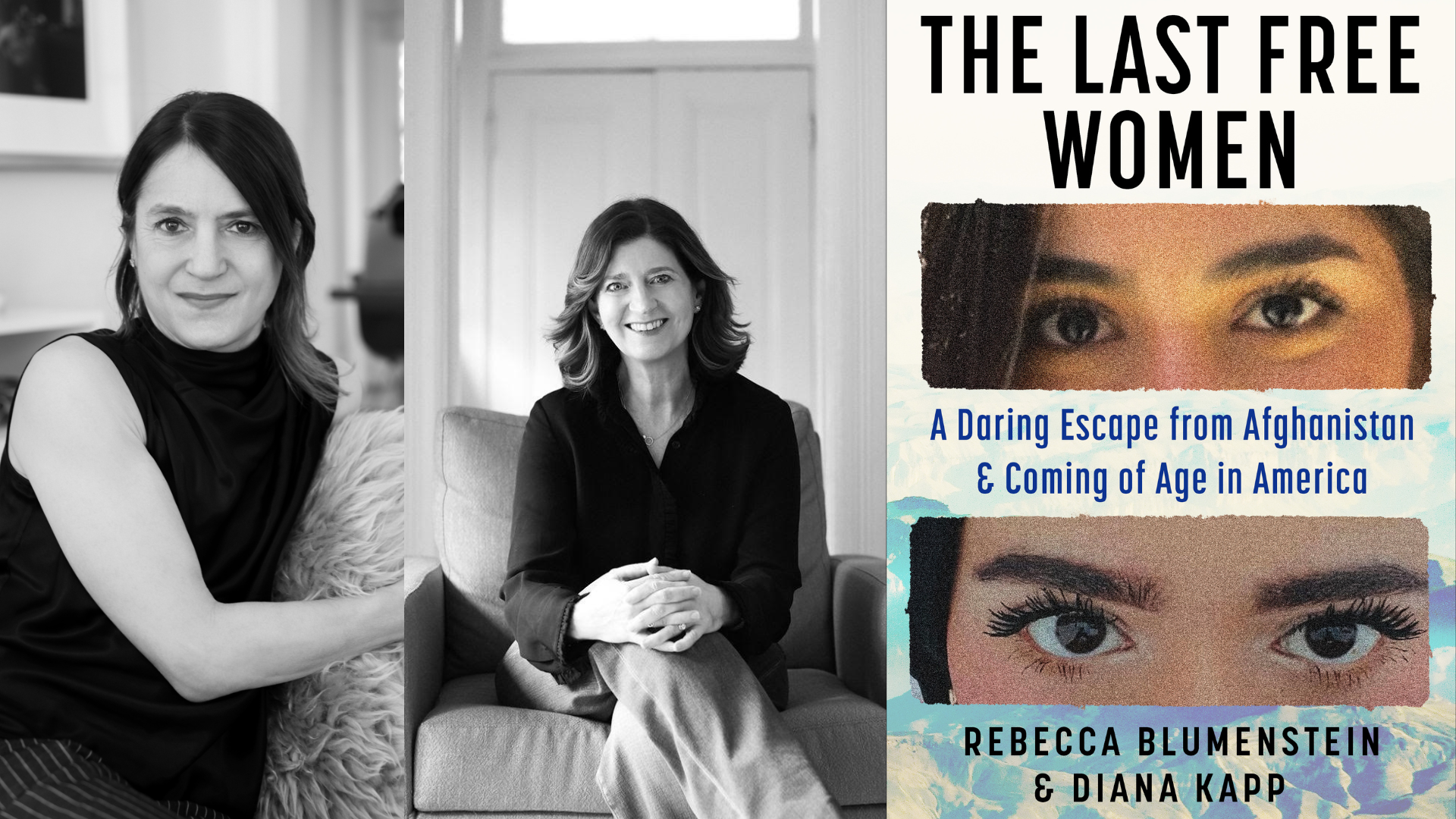
When the Taliban retook Afghanistan five years ago, the New York Times evacuated more than 120 Afghan journalists, translators and other employees and family members. In a new book,
journalists Rebecca Blumenstein and Diana Kapp follow four young women from the group who must rebuild their lives in America, navigating college, work, language and faith. We’ll talk with the authors and one of the young women profiled about what freedom means after escape — and what the U.S. owes the Afghans it left behind.
Guests:
- Diana Kapp, journalist and co-author, “The Last Free Women: A Daring Escape from Afghanistan and Coming of Age in America”
- Rebecca Blumenstein, president-editorial, NBC News; co-author “The Last Free Women: A Daring Escape from Afghanistan and Coming of Age in America”
- Mursal Rahim, fled Afghanistan in 2021
Episode Transcript
This is a computer-generated transcript. While our team has reviewed it, there may be errors.
Mina Kim: Welcome to Forum, I’m Mina Kim. The September 11 attacks triggered a 20-year war in Afghanistan that ended five years ago with a chaotic withdrawal. And as the Taliban retook Afghanistan, the New York Times launched a massive effort to evacuate 124 Afghan journalists, translators, staff, and immediate family members, including four young women who’ve become the subject of a new book by journalists Rebecca Blumenstein and Diana Kapp. This hour, we look at what it’s taken for the women to rebuild in America and how starkly different their life trajectories are from women in Afghanistan today.
The book is called The Last Free Women. And joining me first is Rebecca Blumenstein, president of editorial at NBC News and former deputy managing editor at the New York Times. Rebecca, welcome. Thank you so much.
Rebecca Blumenstein: Thank you so much for having me.
Mina Kim: Really glad to have you. Also with us, Mursal Rahim, one of the women profiled in The Last Free Women. Mursal, thank you for joining us as well.
Mursal Rahim: Thank you so much for having me.
Mina Kim: So, Rebecca, I’ll start with you. When the Taliban retook Kabul, what did that mean for New York Times journalists there? What kind of danger were they in?
Rebecca Blumenstein: The Taliban retook Kabul so much faster than anybody imagined. It was just an event that began increasingly shocking the world. And we had every reason to believe that anybody who had worked for the New York Times or other U.S. organizations or helped the U.S. military was at great risk of direct reprisal from the Taliban.
Some of our Afghan reporters had received direct threats. And we began mobilizing to do what we could to get reporters out of the country and as many people as we could. We realized that the U.S. was not going to be of much help, and the Taliban began taking province after province, getting closer and closer to Kabul.
And we began a frantic, round-the-clock effort to call governments around the world, countries, to see if we could, number one, get our people out of Kabul, and number two, find a country that would accept them.
Mina Kim: What were some of the things you had to do to engineer this international evacuation? Who did you speak to? What countries agreed?
Rebecca Blumenstein: I mean, honestly, myself and senior leaders at the Times called anyone we knew, any contact we had ever had. I used to work in China, so I focused on Singapore. I thought the whole way that Qatar, because they were hosting the Taliban, might have some contacts. I reached out to Canada, to India, our Washington bureau chief, Trudy Rubin.
We got a break early on. Our Mexico bureau chief was able to convince Mexico’s foreign minister to do an extraordinary thing and say that they would take our people in. Then we just needed to get them there.
And amid the calls, I did know that Qatar might be a link. And I finally realized that I had a contact from my China reporting days, a former journalist who had joined the Marines to fight in Afghanistan and then had worked as Trump’s deputy — President Trump’s deputy — and a CIA director in the first administration.
And I sent him a note late one night and said, “Is there any way you can help?” And I was startled and pleasantly surprised to wake up the next morning with an email back: “I think I can help. I have a contact in Qatar. Get your list ready.”
Mina Kim: Wow. Mursal, take us inside your family’s apartment on August 15, 2021. Your brother, who was a journalist, worked for the Times and calls and tells you you have 30 minutes to pack a small bag and leave. What do you remember about that moment?
Mursal Rahim: Sure. It was August 15. We were having lunch and we were sitting on the floor, usually, and we were having lunch, and we received a call from my brother that told us to pack our bag and we have only 30 minutes to leave Afghanistan. And he mentioned that you have to only take a backpack with yourself because it will be easy to carry, and we don’t know where we are going.
So we all rushed to our rooms to pack our documents and some very important stuff. And I remember I put in my bag my documents and an extra cloth and a few head scarves. And the part was we didn’t know where we were going, so we left the home and we headed out to the airport.
Mina Kim: Did you have a sense that you were leaving Afghanistan for good, or did you think it might be temporary?
Mursal Rahim: We were thinking that it is something temporary. I was thinking like that even a month after we even arrived to the U.S., that I thought it’s something temporary. Taliban might not stay there for that long. And we all thought we will stay here or we will stay somewhere else for a short time and then we will return back.
Mina Kim: Mursal, this attempt to get to the airport and to leave through the airport was your first evacuation attempt. Can you tell us what you remember about it? I know your younger brother ended up being badly beaten there.
Mursal Rahim: Yeah, unfortunately, it was a very horrific moment. It was very tough, two days that we had to spend at the airport.
First, when we got to the airport, the airport was not as bad as it’s showing in the media. But later on during the night, when we exited the terminal that we were hiding in, and we saw that it’s a huge crowd of people rushing to the planes, to the military airport, and they are trying to get out.
Then we spent the night there, and the next day when we tried again and we were trying to cross the Afghan airport to go to U.S. military airport, that was the time the Taliban attacked us. And since there were so many people and the Taliban attacked us all from the middle of nowhere, we lost each other.
And there were so many, and we lost our younger brother there. And then we were searching for him, and then we found him later. And then he told us the Taliban took him and they beat him so bad that there were signs on his back.
And then after that we decided to go home because we can’t take the risk of losing our life in the airport. And then we had to go back. And later on, after two days, when we saw his back, it was the mark that I will never forget.
Mina Kim: Rebecca, many of us remember those images of the intense chaos at the airport in Kabul, and your team was in the thick of it as well. Can you describe what was happening on the ground in that first attempt to get through the airport for you?
Rebecca Blumenstein: It was agony all around. We had them at the airport. Qatar was trying to land a plane, but it was so chaotic. They couldn’t land. The nights were so cold. The days were so hot. We ran out of food. The families ran out of water and formula. And the time was growing short.
We were, of course, appealing to the U.S. military, to politicians, to anyone to let our group to the U.S. side of the airport. But the problem was that there were so many thousands of people that they were worried that if they let them in — and this is where we needed to go to get a flight out — that the thousands would follow.
And there was an attempt at one point to try to pinpoint exactly where our group was in the crowd. And we were, by that point, partnered with the Wall Street Journal, and two girls with red dresses were put on a narrow runway just to make sure that the military knew who we are and to try to get us through.
And someone high up said, you know, “Oh, you’ve already been let in.” I mean, there was just such a mismatch of communications that it just — we just knew we had a huge problem.
Finally, on the ground, we were able to coordinate an attempt to have, like, a tank kind of roll toward our group and, in the wake of that, have them maybe try to follow in its wake. But that failed, and that’s when the group came under attack.
People grew suspicious because they saw us. You know, they saw everyone talking on phones.
The extra agony of this is, by this point, I’m in a hotel room in St. Louis with my son, driving him back to college. And we heard live on WhatsApp our group come under attack. We heard shots. We heard the screams. And Majeeb Mashal, a reporter for the Times who is Afghan, he was leading the effort at that point, and he made the decision: “We have to get out of here. Someone’s gonna die.”
He was worried about a stampede, and so everyone dispersed. I appealed to Qatar to let us take refuge in their embassy because there was no more U.S. Embassy. None of our people ultimately came; they never got the message. But we were able to reassemble at a place called the Serena Hotel two days later. And that was —
Mina Kim: Let me interrupt you right there, actually, if I could, just to do a station ID and remind listeners that you are listening to Forum. I’m Mina Kim.
So in order to make this second attempt, Rebecca, you needed to have the Times, Qatar, and Taliban commanders and the U.S. military cooperating, right?
Rebecca Blumenstein: Exactly. And it’s remarkable, honestly, that three days after the fall of Kabul, our group reassembles at the hotel. Qatar has given our people a passcode, a password, to get through various checkpoints in the city.
And they get into the hotel. Majeeb is doing a heroic job, convincing everyone to try once again. And he’s asked to go to a room where there are two Taliban commanders and the Qatari ambassador. And the Qatari ambassador, in front of Majeeb, said, “You both have a job, and it’s to get this group out.”
And so at that point, our former enemy became our best hope of getting out. And Majeeb and the Taliban commanders and another employee from the Times, they drove in a pickup truck ahead of two buses that we had somehow found with our group and tried another attempt to get into the airport.
They first tried Abbey Gate, which obviously days later became the site of a, you know, just a disastrous terrorist attack, and it was too crowded. And so they basically drove around in circles with the headlights of the buses off for hours until they could do a head fake, somehow got a tank moved.
And at one point, Majeeb and the Taliban commanders met Thomas Gibbons-Neff, a Times reporter who had been a Marine and a U.S. commander. They made sure no one had a gun, and they shook hands and assured the U.S. that this group had the permission to leave, and the Taliban agreed with the same, and we were allowed to finally get to the U.S. side of the airport and eventually on to Doha.
Mina Kim: On to Doha.
We’re talking about the fall of Kabul five years ago and the evacuations carried out by the New York Times. And listeners are invited to join the conversation. What do you remember about the fall of Afghanistan when the U.S. withdrew and the Taliban retook the country? Are you an immigrant or a refugee? What was the hardest part of the transition for you to America?
You can email Forum at kqed.org, find us on Discord, Bluesky, Facebook, or Instagram at KQED Forum, or call us at 866-733-6786.