Rozina Ali Traces Islamophobia’s Long Shadow
Airdate: Wednesday, September 2, 2026 at 10am
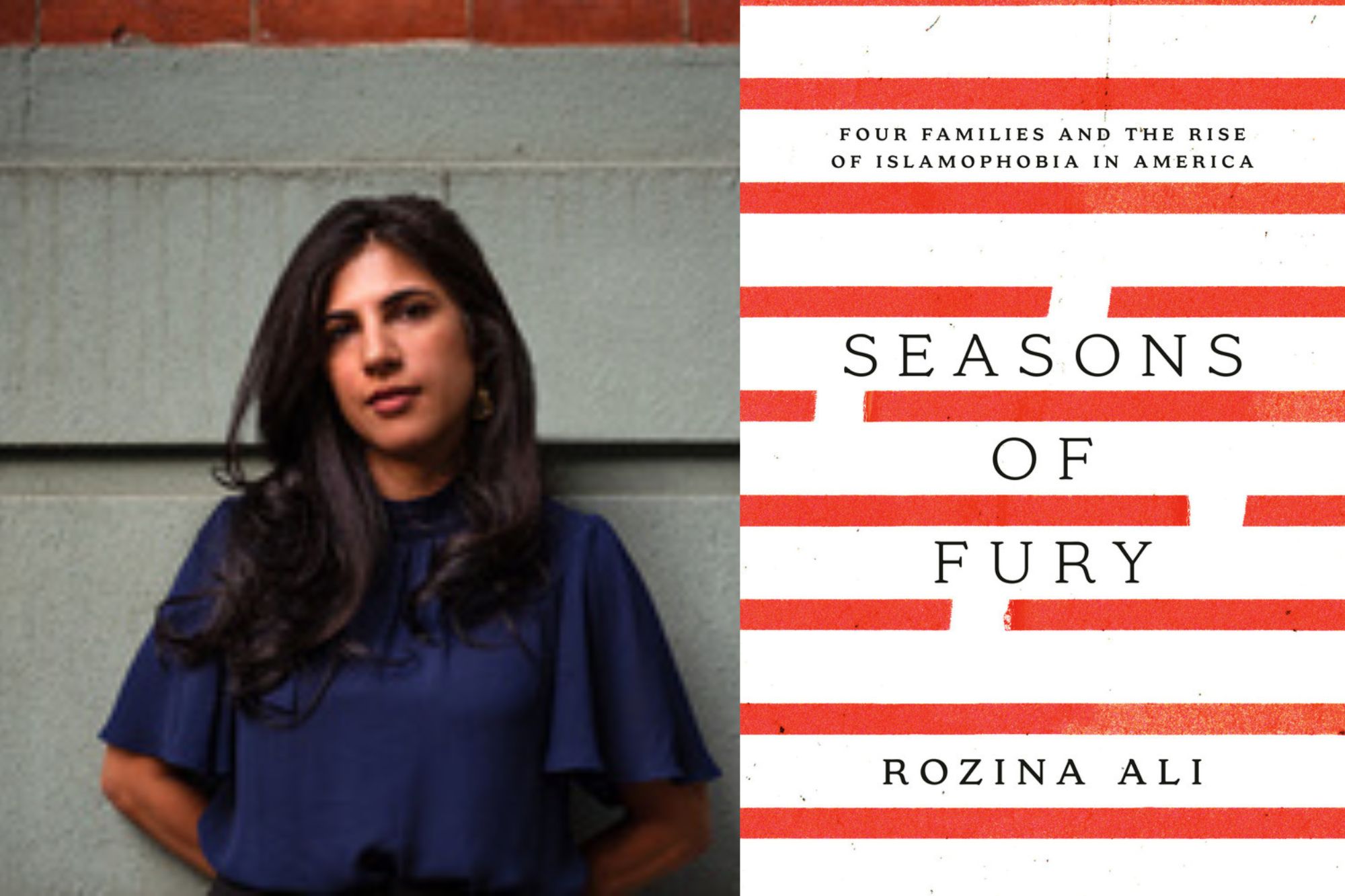
After the Sept. 11 attacks, assaults against Muslims in the U.S. surged. At the same time the U.S. government launched a sweeping War on Terror that brought arrests, deportations and surveillance into Muslim communities. Journalist Rozina Ali was a teenager at the time and remembers her father warning her, “Don’t tell anyone you’re Muslim.” In her new book, “Seasons of Fury,” Ali traces the rise and persistence of Islamophobia through the lives of four Muslim American families. We talk to her about how the War on Terror reshaped Muslim life in America and what it will take to counter Islamophobia now.
Guest:
- Rozina Ali, contributing writer, The New York Times Magazine; author, “Seasons of Fury: Four Families and the Rise of Islamophobia in America”
Episode Transcript
This is a computer-generated transcript. While our team has reviewed it, there may be errors.
Mina Kim: Welcome to Forum, I’m Mina Kim. Anti-Muslim rhetoric has been intensifying in the U.S., and basic religious practices have been treated as security threats. Texas Governor Greg Abbott in May threatened to pull funding from a city for a private Eid celebration, and late last year said the Council on American Islamic Relations was a foreign terrorist group under Texas law. Yesterday, House Speaker Mike Johnson used a religious insult to explain the U.S.’s struggle to end the war in Iran.
Announcer: The Iranians simply cannot be trusted. They’ll sit at a negotiation table and say something, they’ll walk away and do the opposite. For some of them, it’s, you know, apparently part of their religion that they can just lie to someone they disagree with.
Mina Kim: In a new book, Rozina Ali looks at the rise and persistence of Islamophobia, especially since 9/11, when she was growing up in California’s San Joaquin Valley. Her book is called Seasons of Fury. And Rozina, welcome to Forum.
Rozina Ali: Thank you so much for having me. I’m really excited to be here.
Mina Kim: No, we really appreciate you being here. You were a teenager in the San Joaquin Valley on 9/11?
Rozina Ali: Yes, that’s right.
Mina Kim: Your father sat you down. What was his warning to you, Rozina?
Rozina Ali: So I remember actually watching the news coverage of the attacks that morning before I went to school. And I still didn’t understand what had happened, but I knew that my parents were scared. I had never seen them so worried. And when I returned home, he sat me down that evening and told me, “If anyone asks, tell them that you’re Hindu, that you are not Muslim.” And I should mention that at that time, in the small town we were living in, my family was one of two or three Muslim families living in that entire town.
Mina Kim: Yeah, and you say that you had not seen that kind of fear in your family before, but you did feel that he was maybe overreacting?
Rozina Ali: Yes.
Mina Kim: So just to give a bit of context, your family at that time, you had been living in the United States for about 11 years, but you still weren’t permanent residents of the U.S., so that application was still pending. And I think because we had a precarious immigration status, and because we weren’t particularly wealthy, we were actually quite poor at that — um, my parents were — it felt to me that they were always worried. And so to me, even though they had never seemed as scared as they were that day, I just chalked it up to them being perhaps the same level of worry that I had seen them before. And I think they just — to me, I thought they didn’t understand American values or understand the American government system the way I did.
And did you have faith in that system at that time, would you say?
Rozina Ali: Oh, so much. I really, really became enamored by the Kennedys, and specifically RFK. I really became enamored with the civil rights movement. I had really wanted to work at the White House. And I truly believed that what my father was telling me was silly and paranoid because I thought, this is a country that believes in freedom, but more importantly, freedom of religion, and there is no way I would need to hide my religion in this country.
Mina Kim: And if you thought he was overreacting by saying, “Don’t tell anyone you’re a Muslim,” what did you think when your parents would often say, “The walls have ears”? What were they talking about there?
Rozina Ali: Oh, they were so worried that someone was listening, and by someone they meant the government, or even neighbors who would see us with suspicion. And I kind of laughed at that because, you know, in our household, they told us, don’t say the name George W. Bush, even though he was the president of the United States. Don’t say the name Osama bin Laden, even though every American was talking about bin Laden during that time. And I think what they were really truly worried about was that someone would misinterpret what we were saying and think that we should be under suspicion. And truthfully, I thought they were being paranoid. But when I started reporting this book, I realized that almost every Muslim family I spoke with had the same mantra, “The walls have ears.” Everyone was afraid about speaking and being surveilled.
Mina Kim: And what was that like for you to realize that this was a fear that was common among Muslim households across the country?
Rozina Ali: You know, by the time I was reporting it out, I was an adult at that time, and I had accepted and understood that there was mass surveillance. Um, but I didn’t quite appreciate just how deep that fear went, and it was basically all the fears that my parents had was basically legitimized when I started reporting and hearing these stories, and I felt truly heartbroken. I felt really sad that we were living in a country during a time when ostensibly we had moved beyond COINTELPRO and really embraced civil rights for everyone. Ostensibly, I felt out that there was a portion of the American population that felt too scared to say anything.
Mina Kim: Yeah, you’re right about how around the country some boys drop Muhammad from their names while men shave their beards or even kids spent less time playing outside, just as a way to be less visible. And your book, Seasons of Fury: Four Families and the Rise of Islamophobia in America, you trace the rise and persistence of Islamophobia through the lives of — and one of the families you profile are the Omars. And what I found particularly moving about their story was they experienced harassment, but also from a neighbor, which I think is also particularly destabilizing if it’s right in your community. But can you tell us about them, and in particular, their daughter Reham and how she experienced the rise of Islamophobia post-9/11 as well?
Rozina Ali: Yes. So the Omars are a family who moved to a home in the suburbs outside a city in the U.S. And the reason I’m not being very detailed and specific about which city is because they’re actually a pseudonymous family. And one of the reasons they had asked to remain pseudonymous is because they were still terrified of this neighbor.
So they moved into a house, their first house, which they had saved up for. And this happened to be in September 2001. They were very active in the community, and one day their neighbor visited them. And Reham, who was the daughter of the family, she was 11 at the time, and she remembers her mother walking away from that meeting with the neighbor so distraught and anxious. Because that neighbor basically came up to the mother, who was named Janet in the book, and said to her, “You’re being too visible.” And Janet is a white Midwestern woman who converted to Islam, and she wore a hijab. And this neighbor basically told her to remove the hijab and not be so visibly Muslim.
And that was the beginning of basically almost two decades of harassment that this family underwent by the hands of this neighbor. And when I heard the story, when I met Reham, I was astonished by the level of terror that they were living under. And I think, you know, it was so important for me to include their story in this book, because for so long when we think about the terror that Americans faced at the time, we think about that coming from the hands of militant groups or potential Islamic radicals, but Muslims were facing a double terror. There was that threat of militant groups attacking the U.S. There is also the threat of what neighbors or what their acquaintances might do. And it could manifest sometimes in daily harassment, as it did with the Omars, and it could sometimes manifest violently, as with unfortunate cases that I document in the book.
Mina Kim: Yeah. I want to invite listeners into the conversation. Listeners, what do you remember about anti-Muslim sentiment after 9/11? And have you experienced the rise of harassment and discrimination against Muslims? Have you ever felt you needed to hide or downplay your background or religion to feel safe or accepted here? You can tell us by emailing forum at kqed.org, finding us on Discord, BlueSky, Facebook, or Instagram at KQED Forum, or by calling 866-733-6786, 866-733-6786.
Sadly, it isn’t hard to draw parallels in history when people are singled out for their ethnicity or identity or religion amid hate or hysteria. But you write in your book, there has been little reckoning of what took place in the U.S. over the last several decades. This book is an attempt to reclaim a bit of that history. In broad terms, what do you think we have not reckoned over, and what do you think has been the reason behind the lack of reckoning, in particular with Islamophobia?
Rozina Ali: I don’t think we’ve actually reckoned with just how destructive the post-9/11 policies were on Muslim Americans. Really, what we did after 9/11 was conduct mass arrests of immigrant Muslims. We imposed a registry in which tens and thousands of Muslims had to register with the government. We ended up deporting a lot of people who had built lives for many, many years in the United States. We really destroyed families, but we also created a narrative and a sense of — not just narrative, but also policies and rhetoric — that kept isolating and othering Muslims in this country.
There was always this conditionality placed on Muslims in the U.S. over the years after 9/11, which was, if you are a good Muslim, you get to stay in this country. If you are a Muslim that is going to help us fight the war on terror, you get to stay. And, you know, I was quite astonished — I was really astonished — when basically what happened when I was interviewing senior officials and former prosecutors about this time, which was that they recognized that this was a terrible thing, that civil rights had been violated, but they thought they were necessary. And I really realized that, no, we haven’t really reckoned with what happened and how Muslims have been affected.
Mina Kim: We’re talking about how Muslims have been affected and what has really happened to all of us after 9/11. Stay with us. This is Forum. I’m Mina Kim.