The Hidden Psychology Behind Procrastination
Airdate: Tuesday, August 25, 2026 at 10 am
We’ve all done it: put off that email, project… or even something we genuinely want to do. But why do we procrastinate? Researcher Itamar Schatz says it’s not that we’re just lazy, distracted or bad at managing our time, but that often procrastinators care more rather than less about what they’re doing and fear the possibility of failure. We’ll look at new research that explores the hidden psychology behind why we delay — and tools to finally get moving.
Guest:
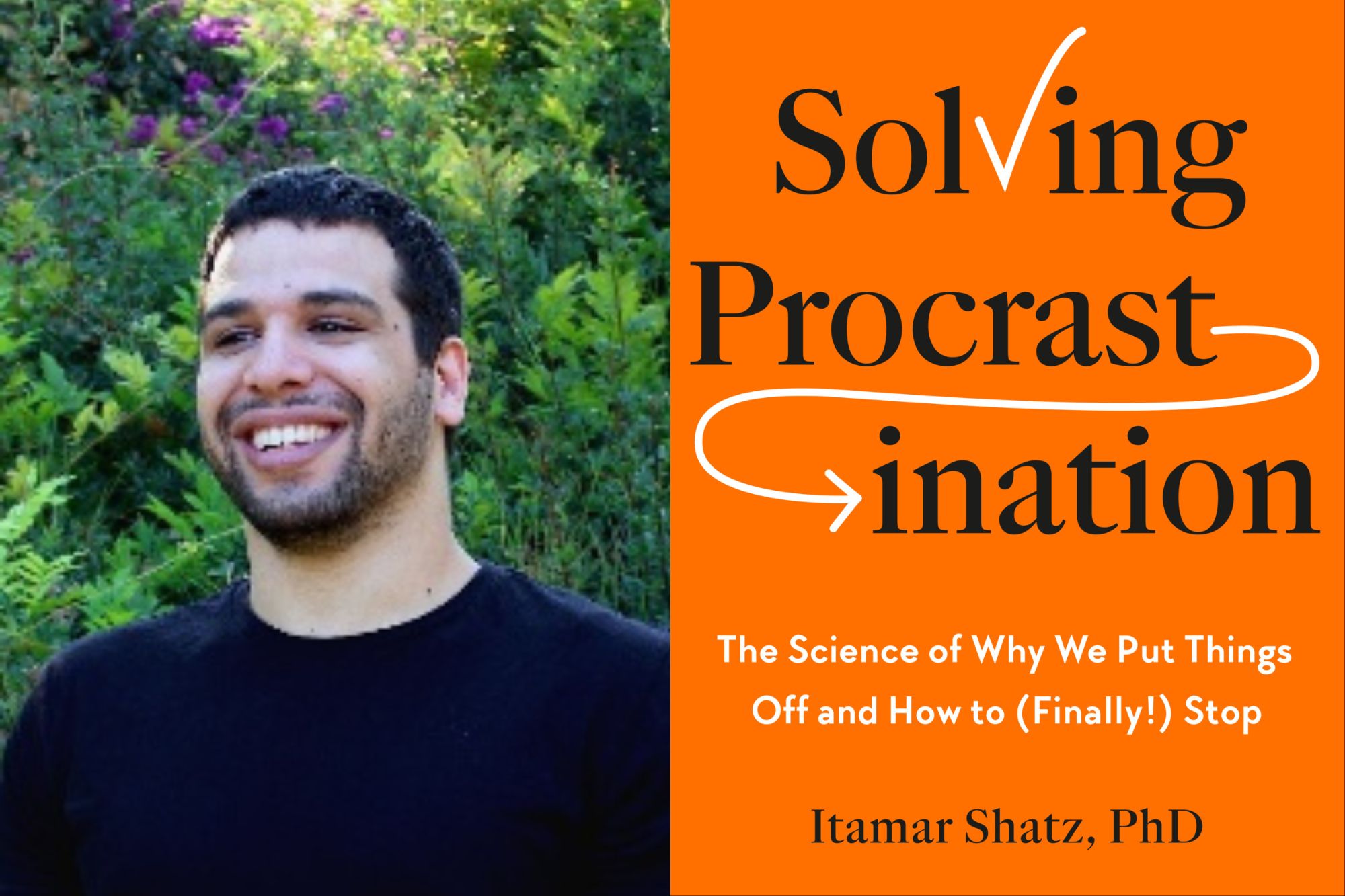
- Itamar Shatz, affiliated lecturer, Cambridge University; author, Solving Procrastination The Science of Why We Put Things Off and How to (Finally!) Stop
Episode Transcript
This is a computer-generated transcript. While our team has reviewed it, there may be errors.
Mina Kim: Welcome to Forum. I’m Mina Kim. Itamar Shatz says the reason solving procrastination is so hard is because what we’ve often been told about it is wrong — like the common misconception that it’s simply a matter of willpower. This leads us to tackle procrastination with approaches that don’t work, causing frustration, stress and guilt that can even make us defer our dreams. But Shatz says ending the cycle of procrastination is entirely possible. And this hour, we’ll hear what he’s learned from his research into this complex phenomenon.
Are you or someone you know a procrastinator, listeners? How does it affect you? You can post your comments on Discord, Bluesky, Facebook or Instagram. We’re @KQEDForum. You can email [email protected] or call 866-733-6786.
Dr. Itamar Shatz is a researcher and lecturer at Cambridge University, where he teaches quantitative and computational research. I want to ask you, actually, because as I was reading your title, I was struck by the fact that if you teach quantitative research methods at Cambridge, how did you end up wanting to study procrastination?
Itamar Shatz: Well, as all great stories begin, by procrastinating to myself. So, in school, when I was in high school, I was a huge procrastinator. And I mean the typical stay-up — you know, you have a semester-long project and then you keep saying, okay, I’ll do it tomorrow, I’ll do it next week, I’ll do it next week, and suddenly it’s the end of the semester tomorrow and the project is due and I haven’t started yet. Then I would stay up all night. I would get away with doing that, but it was never a good experience, and I think it never ended well in terms of performance either.
I could get away with good grades, but not as much as I could if I’d actually done the work well. So I was really familiar with how frustrating procrastination is and how kind of insane it is, in the sense that you know you shouldn’t be doing it, but you still find yourself doing it again and again.
And then, when I was a bit older and was doing my master’s, I started wanting to do things better. I wanted to be productive, make better decisions, communicate better. And I figured, okay, let’s go to science to figure out how to do that. And I started reading about things like cognitive biases and communication techniques and things like that.
And I figured, okay, if doing this is useful for me, it will probably also be useful for other people. And I started writing these notes up and publishing them as articles. And at a certain point I said, you know what I haven’t covered so far? Procrastination. And I decided to write an article about procrastination. And then, as I was going into it, I realized this is way too big of a problem. It’s too common, it’s too painful, it’s too frustrating. I can’t cover everything I need to say about it in a single article.
So I said, let’s do two articles. Let’s do a series. Let’s go a whole website. And from there, I just realized there’s so much that needs to be said about it and so much I could help people that it just grew and grew and eventually became the book that I’m publishing today.
Mina Kim: Yeah, it is really common. You write that one in five adults procrastinate. So when you’re talking about procrastination, what do you mean exactly?
Itamar Shatz: So, what if I was procrastinating chronically, which means they do it very often and for very long, but pretty much all of us procrastinate. And when this happens, basically we put off something that we know we should do, even though we know it would be better for us to do it, and usually despite our best intentions.
So when we tell ourselves, I’m gonna study for this test, or I’m going to write this email, I’m going to make this phone call, I’m going to start writing my book, I’m going to change my habits and start exercising. I’m going to talk to this person I’m interested in, and then we keep finding reasons to do it tomorrow instead, or to do it soon, or in five minutes, or just after this one more video. And when this happens again and again, we’re basically procrastinating.
Mina Kim: Well, one of the myths you debunk right away is that procrastinators, you know, don’t care. In fact, you say that we care so much that it becomes paralyzing. Tell us about this.
Itamar Shatz: Absolutely. So there is this misconception where people think about procrastination as sort of equivalent to laziness. And under this conceptualization of procrastination, it’s basically, okay, people procrastinate because they don’t care enough. But what actually happens usually is that people care too much. And by that I mean, maybe they want to write a book, for example, and it’s something they’re really excited about. They’re very, very enthusiastic. Inside their brain is shouting, just do it already. But the problem is they’re too afraid that it’ll go wrong, they’ll be criticized, that their writing won’t be good enough, that they won’t be good enough.
And the more you care about these things, and the more these mental obstacles like anxiety and perfectionism get in the way, the harder it is to take action when you need to.
Mina Kim: Yeah, the other thing that you bring up is the misconception that addressing procrastination is just a matter of willpower. What effect does this misconception have?
Itamar Shatz: Yeah, so there’s something I call the self-control fallacy. And that’s basically the idea that if we just try harder, we’ll be able to do what we need to when we need to. And the problem with this, it’s very tempting because it offers a sort of silver bullet where, okay, I just need to turn up the dial for willpower and then I’ll be able to do it.
And it makes sense when you think about it because, again, procrastination is irrational. There’s no reason we should do it. So when we’re sitting there and thinking about something that we’ll do later, it’s easy and very comforting to tell ourselves, okay, we’ll be able to do it because we’ll try harder and I’m not going to be irrational again.
The problem with this is that it fails. And it fails again and again. And every time we keep believing that it’s going to be different next time because there are lots of cognitive biases that kind of trick our minds into thinking that’s going to be the case.
So, for example, there is the bias blind spot, which makes us really good at noticing when other people are irrational and really bad at noticing when we’re doing it. And there’s also something called the empathy gap, when we’re sitting there and we’re in a cool emotional state, so we’re rational. We’re not facing something scary at the moment. We’re not facing any temptation at the moment. It’s very easy to think of ourselves as rational beings, but that’s very different from what happens when we’re actually facing, okay, now we need to sit down and write this thing that I’m scared of writing, or make this call that I am afraid of making, or maybe I’m sitting in front of social media and that’s actually drawing my attention, and now my brain is trying to, on the one hand, focus and, on the other hand, deal with this temptation.
And what all this means is that when we think that our willpower will be enough, that our self-control will be, we end up not preparing for the actual obstacles we’ll face. And that causes us to keep getting trapped in the procrastination cycle, where we procrastinate again and again, and we’re not actually trying to solve it the right way.
Mina Kim: And these misconceptions, you know, laziness, a lack of willpower, they sound like, you know, procrastination has essentially been treated as a character flaw, which I imagine can make us judge ourselves negatively for procrastinating, which, I’m sure, doesn’t help at all.
Itamar Shatz: Yeah, it’s not only wrong, it is also unproductive and it’s unconstructive. And the problem is that when people are told, okay, if you procrastinate, that means that you’re not trying hard enough, or that means you’re just lazy, again, it basically means that they’re not actually trying to solve the problem using solutions that address the issues they’re facing. So they’re actually not trying to solve their anxiety or their perfectionism or the distraction or whatever it is because they think, okay, I’ll just exert more willpower and that will get me to do the things that I need to.
And beyond that, it also causes a lot of pain. It causes shame, it causes guilt, it increases the frustration when people are already frustrated because they know they should be doing things and they’re not. And usually what that does is it shuts us down because then whatever it is we need to do becomes even more painful. It becomes more aversive.
So let’s say we have a task that we’ve been putting off. Like maybe, let’s say, we want to change our habits. You want to start exercising. And then somebody tells us, okay, if you haven’t started doing it yet, you’re lazy. And now in our mind, whenever we think about exercising, we have this light bulb going up that says, wait, I’m lazy. I’m a lazy person. I should be ashamed of myself.
And then even though engaging in exercising, engaging in the behavior we’re trying to do, would make us feel better, we associate even more negative emotions with it now because of all the criticism and the judgment. That makes us even less likely to actually do it.
And the most painful thing here is that this can cause a sort of vicious cycle where we want to do something, we get negative feedback whenever we think about it, whenever we want to engage with it, so we put it off, then we feel worse, we put off more, and that basically feeds on itself. It makes it harder and harder for us to do what we need to unless we find ways to break the cycle.
Mina Kim: We’re talking with Itamar Shatz, a researcher and lecturer at Cambridge University, about the psychology behind why we procrastinate. And you, our listeners, are sharing your thoughts, questions and your own experiences around this.
Eloise in Oakland writes, “I find that I procrastinate on things that are important but not urgent until I take care of things that are urgent. And then I run out of time to do the important thing.”
And Jenny writes, “Oh my God, this episode is a story of my life. I have a PhD in procrastinating. And I know that my biggest related culprit is perfectionism.”
We’ll dig into that after the break. Stay with us. I’m Mina Kim. This is Forum.