The USS Abraham Lincoln and the Toll of the Iran War
Airdate: Thursday, August 20, 2026 at 10 AM
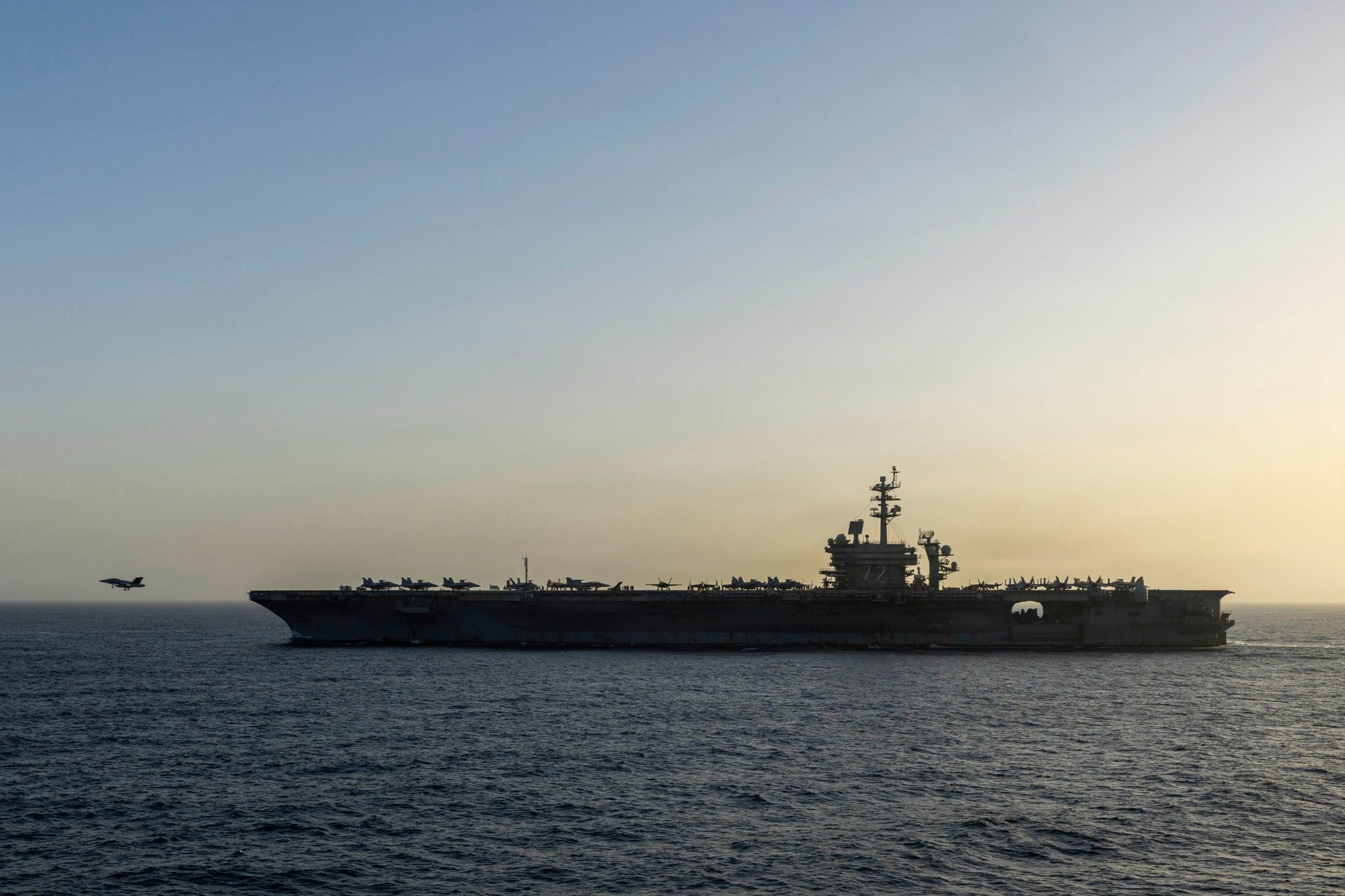
The San Diego-based naval carrier USS Abraham Lincoln has been deployed to the Middle East to support Iran war operations for nearly nine months. The ship has not stopped at port since
December 2025, setting a record for the most consecutive days at sea without a port call. Sailors aboard the Lincoln and their families are now sounding the alarm, reporting food shortages, sanitation issues and deteriorating mental health among personnel. One crew member was rescued after going overboard. We look at what the Lincoln’s historic deployment reveals about the demands of the war in Iran — and the military’s ability to protect service members.
Guests:
- John Ismay, reporter, The New York Times; former naval officer
- Kate Kuzminski, Director of Studies, Center for a New American Security
- Alison Bath, covers the Navy for Stars and Stripes
- Alex Padilla, U.S. Senator representing California
Episode Transcript
This is a computer-generated transcript. While our team has reviewed it, there may be errors.
Mina Kim: Welcome to Forum. I’m Mina Kim. Sailors and their family members say service members aboard the USS Abraham Lincoln have endured food and water shortages, disruptions in mail and communication with family, and long workdays without a port stop for a record length of time, when sailors can get off the ship for a couple of days. The Lincoln left San Diego in November of last year for a Pacific deployment that was expected to end in May, when it was redirected to the Middle East with still no announced end date.
This hour, we take a closer look at why this is happening and the toll it’s taking. And joining me first is Alison Bath, who covers the Navy for Stars and Stripes. Alison, welcome to Forum.
Alison Bath: Thank you. It’s a pleasure to be here today.
Mina Kim: So you’ve been in touch with sailors on the Lincoln, as well as their family members. What have they told you about the mental and physical toll this is taking?
Alison Bath: What they told me was that they had endured food shortages, that there had been problems on the ship with water, specifically having hot water for showers, and that they had a stretch — about a 10-day stretch — where they had not been able to do any laundry.
They had also told me about concerns about mental health. And these were reports that we were getting in July and earlier this month: concerns about mental health, concerns that some sailors may be thinking about harming themselves, those type of things. And that was very disturbing.
Mina Kim: Yeah, we’ve heard very disturbing reports about sailors attempting to jump overboard or expressing a desire to. What were some of these messages that family members were receiving or even sailors were communicating?
Alison Bath: I think about some of the ones that we received. And one of the first ones I received was from a family member who reached out to us because their sailor asked them to. And their sailor had expressed the fact that they were under physical and mental strain and that they really needed help.
And what was very heartbreaking, if you will, was the family member’s reaction when I was speaking with them. They mentioned that they were very concerned because this sailor had said that there were sailors who were thinking about self-harm, and this family member was concerned that their sailor was one of them.
Mina Kim: Yeah.
Alison Bath: I also went to a meeting earlier this month that the Navy had with spouses and a board that have sailors aboard the ship. And one of the poignant things that was shared with me by another spouse was that there was a spouse there who told officials that she had heard from her husband that very day a message that said he hoped he didn’t wake up the next day.
And that, again, was a very profound moment and very hard to hear. And I also think about the mother who wrote us and told us that it was very difficult for her to hear her son, who was a sailor, and his fellow sailors talking about jumping off the ship just for relief.
Mina Kim: Yes. What has the Navy and administration said in response to these reports, these stories of deteriorating mental health?
Alison Bath: When I reported my story at that meeting earlier this month, they told the spouses that they had mental health resources on the ship. That they had counselors, that they had doctors, that they had chaplains, and that they were working to get more there.
Since then, the Navy has come out and said that they have these resources on this ship. Also, that the ship has among the lowest rates of mental health cases among all carriers.
They did also say that there had been a sailor that had fallen overboard earlier this month, but that was not the case that I discovered when sailors told me that a few months prior to this, that a sailor had been talked out of jumping off the ship by watchstanders, and that that event was announced via the ship’s system to say that that sailor had been stopped and that sailor was getting the resources that they needed.
Mina Kim: So I also heard Admiral Brad Cooper state that the USS Abraham Lincoln currently has among the lowest number of mental health cases. So, Alison, is that a reliable reflection of what’s happening on the ship, the case numbers?
Alison Bath: I do not have the case numbers. I’ve asked the Navy for them, and I have not received a response to that yet. I don’t know that it is a reliable reflection, mainly because we need the numbers to know that.
I think that, you know, it is important to recognize that the Navy is taking actions to address mental health among sailors. And I think one of the things that can point to this is Admiral Cottle’s order about this time last year that no sailors should have to live on ships unless they wanted to.
And so the Navy has moved thousands of junior sailors that were assigned to live on ships off of those ships. So, for example, here in Naples, where I am, the command and control ship, Mount Whitney, had about 54 junior sailors that were recently moved off of that ship.
And that was really important, that they weren’t living on the ship day in and day out, and they now are in private housing. So the Navy is making efforts to address mental health and the well-being of its sailors. What those numbers mean and what Admiral Cooper was talking about, I don’t know yet.
Mina Kim: We’ve been hearing reports that sailors are saying that the hardest part of all, among the many difficulties that they’ve experienced with regard to conditions, is the open-ended nature of the deployment, Alison.
Alison Bath: Yes, absolutely. They wanted, when I spoke with them, and I have spoken with them since my story published, they wanted an end date. They want to know, you know, that date. I had a sailor explain to me that that date is everything, whether that date that you’re going to go home or it’s the date that you’re going to make a port call.
It’s the day that you hold on to. It’s the date that makes everything seem, you know, that there’s something to look forward to. And then when that date either doesn’t come, as in the case of having regular port calls, or you don’t know exactly, your deployment is open-ended, it can really play havoc with a sailor and their sense, their morale.
Mina Kim: Yeah. And what kind of toll is this taking on the families who’ve been absorbing messages from the sailors, the media reports that are saying that, you know, the president and the defense secretary have been somewhat dismissive of their concerns and, of course, the fact that they just have not seen their sailors for nine months, have no clear idea when they will?
Alison Bath: What the families told me is that they were very concerned. They were very worried. And they wanted to know that their sailors were being well taken care of, that their sailors were eating, that their sailors had mail, another important thing for sailors to have when they’re deployed or at sea, and that their mental health issues were being addressed.
That’s what I was hearing repeatedly from the families. And the families wanted them to come home, too.
Mina Kim: Alison, there was a line in one of your pieces where a family member said, “I’m just actively watching my sailor kind of break down.” I really appreciate you coming on and sharing your reporting with us. Alison, thank you so much.
Alison Bath: It’s my pleasure. Thank you.
Mina Kim: Alison Bath is a reporter who covers the Navy for Stars and Stripes. And listeners, join the conversation with your questions and reactions to all this at 866-733-6786, by posting on Discord, Bluesky, Facebook or Instagram, or by emailing [email protected].
I want to bring John Ismay into the conversation now. New York Times reporter covering the Pentagon and a naval officer. John, thank you so much for being with us.
John Ismay: Yeah, thanks for having me.
Mina Kim: So you were deployed on the USS Nimitz for 239 days between 2009 and 2010. Help us understand the environment these Navy officers are in. What’s it like on an aircraft carrier?
John Ismay: Well, life is a lot different on a carrier than it is on a smaller ship, like a destroyer, which is what I deployed on my first time in 2000.
On an aircraft carrier, you often don’t really have a sense of relative motion from the sea, whereas on a small ship like a destroyer, if the seas are rough, you will definitely feel it. There’s definitely more room on a carrier than a smaller combatant.
But this type of situation that Lincoln has been in certainly presents a profound leadership challenge all up and down the chain of command on that ship, from the commanding officer, through the wardroom of officers to the chiefs’ mess, where the chief petty officers lead enlisted sailors.
And so I don’t think any of them are super happy about the length of time that they’ve been out. And they’re doing their best to keep everyone going and keep the ship going so that it can accomplish its mission. But it is challenging.
Mina Kim: Yeah, I’ve heard you compare it to, you know, being in your office, unable to leave it, or the floor that your office is on, you know, for almost a year and not being able to take any weekends off. So is that what it’s like, just a series of small rooms?
John Ismay: Yeah, I mean, of varying sizes, but certainly where sailors sleep, it’s pretty close quarters. For a junior enlisted sailor, you might be in a single space with 70 or 80 other sailors, whereas if you’re a junior officer like I was, I was fortunate enough to have my living quarters just shared with one other person.
So you’re seeing the same people day after day after day, and the routine can feel the same, too. I think on my last deployment, we were officially banned from using the term Groundhog Day to describe it, an allusion to that Bill Murray movie where it’s the same day every day when he wakes up. But that’s honestly how it felt a lot of the time.
One thing about a carrier versus a smaller ship is that the carriers tend to deploy for slightly longer periods of time. And they often spend much longer stretches of time at sea between ports, whereas, you know, say, an Arleigh Burke-class destroyer might have to pull into port far more frequently, you know, just because of the wear and tear on the crew.
Mina Kim: We’re talking with John Ismay, New York Times reporter covering the Pentagon and naval officer, who also knows what it’s like to be deployed on an aircraft carrier like the USS Lincoln. And we’ll have more with him and with you, our listeners, after the break. Stay with us.