How CDC Cuts Have Slowed the Cyclospora Response
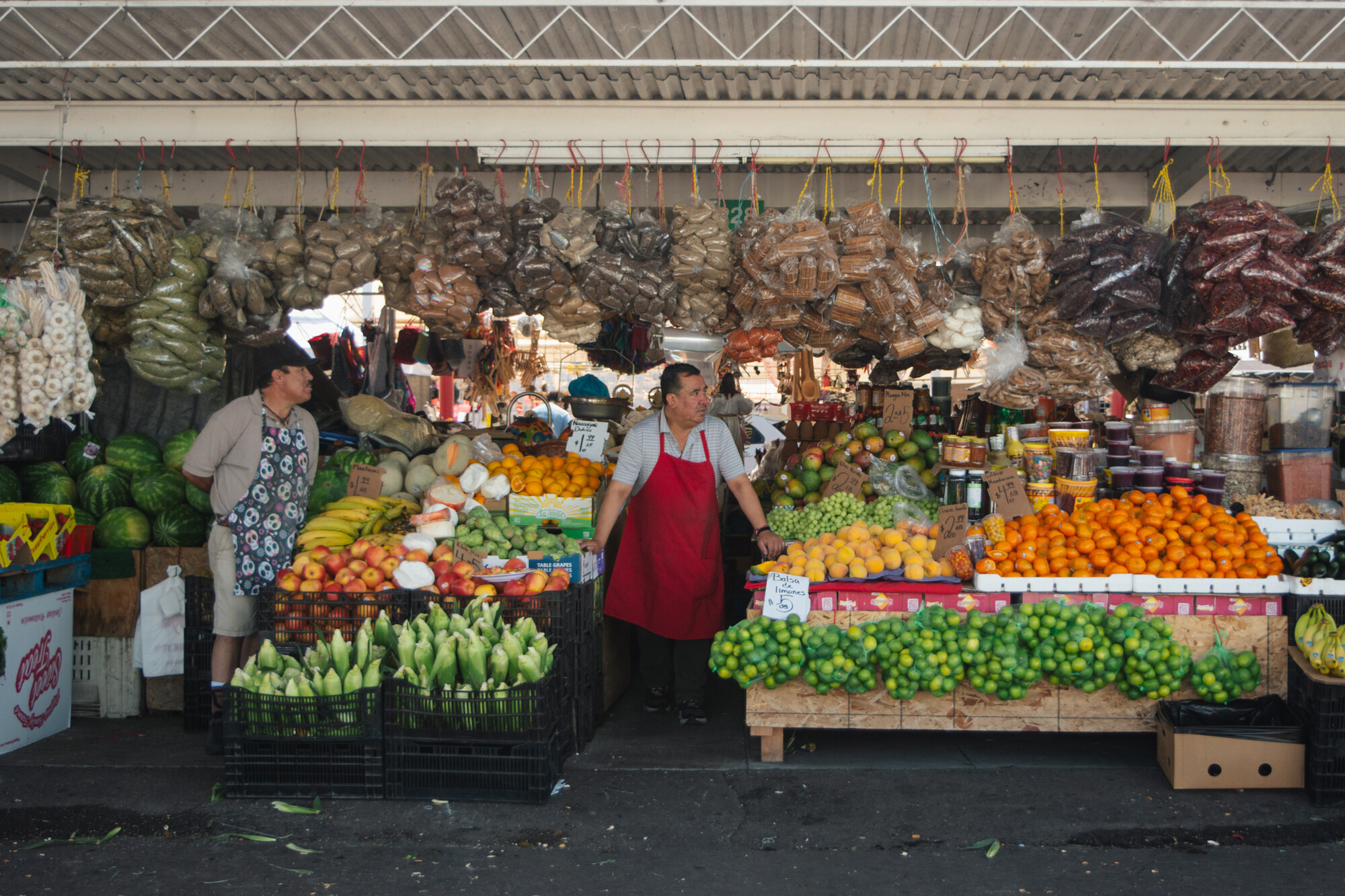
Federal health officials are eying iceberg lettuce distributed by California-based Taylor Farms as a potential source of the major cyclosporiasis outbreak in the United States. Health authorities tracking 4,173 confirmed and 7,400 likely cases of the infection, which can cause severe diarrhea, cramping and fatigue that lasts up to a month. We talk with food safety and health experts on what it will take to trace and contain the cyclospora outbreak.
Guests:
- Dr. Peter Chin-Hong M.D., infectious disease specialist
- Helena Bottemiller Evich, founder and editor-in-chief, Food Fix
- Brenda Goodman, senior writer, CNN Health
Episode Transcript
This is a computer-generated transcript. While our team has reviewed it, there may be errors.
Mina Kim: Welcome to Forum. I’m Mina Kim.
The number of cyclosporiasis cases is surging, making it the largest outbreak of its kind on record. More than 7,000 have been sickened across some 40 states, and federal health officials so far have linked the outbreak to at least one site: a lettuce farm in Mexico run by California-based Taylor Farms.
This hour, we learn more about the scope and severity of the outbreak, how best to stay healthy, and why federal cuts to health funding likely hampered the response.
Listeners, what are your questions about cyclosporiasis or about how the outbreak has unfolded? You can post your comments or questions on Discord, Bluesky, Facebook, or Instagram at KQED Forum. You can email [email protected], or you can call us at 866-733-6786.
Joining us is Dr. Peter Chin-Hong, M.D., infectious disease specialist at UCSF Medical Center and professor of medicine at UCSF. Peter, really glad to have you back on Forum.
Dr. Peter Chin-Hong: Thanks for having me on, Mina.
Mina Kim: Also with us is Helena Bottemiller Evich, founder and editor-in-chief of Food Fix, who covers food safety. Helena, glad to have you too.
Helena Bottemiller Evich: Thank you.
Mina Kim: So, Peter, let me start with you. First, what is cyclosporiasis? How do people get infected?
Dr. Peter Chin-Hong: Cyclosporiasis is a disease caused by a parasite called Cyclospora. People get infected after they eat contaminated food, typically things with a lot of crevices, like raspberries or lettuce — things you can’t wash off easily.
It goes into the small intestine and sets up shop, and people have this profuse watery diarrhea that can last for weeks, if not months, depending on who you are. The symptoms only start occurring about a week later, so it makes it difficult to link something you ate with the diarrhea that develops afterward.
Mina Kim: Yeah. And when you say “depending on who you are,” do you mean that it can be harder on the usual vulnerable groups, like kids and the elderly?
Dr. Peter Chin-Hong: Yes, particularly those who are immunocompromised. They don’t have an increased risk of getting it, but it’s harder for them to shake it off, so the symptoms may last longer.
Mina Kim: So what does treatment look like, Peter?
Dr. Peter Chin-Hong: The silver lining in all of this, Mina, is that we have treatment for cyclosporiasis, unlike norovirus, for example.
It’s an antibiotic you take for seven days. It’s a drug called trimethoprim-sulfamethoxazole, and there are alternatives for people who are allergic. If you are immunocompromised, we might give you a slightly longer course.
Mina Kim: That’s good to know, since I actually do have a sulfa allergy myself.
Peter, this is not a new disease, I understand. The state Department of Public Health says California experiences cases of cyclosporiasis every year, but you’ve called the parasite a challenging one. Why?
Dr. Peter Chin-Hong: It’s not a new disease, like you said, Mina, but it’s challenging because our regular diagnostic methods in the clinic and in the hospital don’t pick it up.
We are better at picking up bacteria that grow more readily under typical culture media. But parasites are really a tough nut to crack. It’s only in the era of molecular diagnostics that we’ve been getting better at diagnosing them.
Mina Kim: Wow.
Well, Helena, we are hearing about several thousand cases this summer across some 40 states. Can you help us understand how unusual this is?
Helena Bottemiller Evich: Yeah, it’s a great question.
I think one of the things that’s been really misunderstood about this current outbreak — which is far and away the worst we’ve seen in the U.S. — is that this is a full-blown disaster. This may be the largest foodborne illness outbreak we’ve had in the U.S. in three decades.
So this is a disaster in and of itself, but we actually have Cyclospora season now in the U.S. It’s May through August, and every summer we reliably see a surge in Cyclospora cases. Again, not as bad as what we’re seeing right now, but over the last 10 years, every summer we’ve seen an uptick in the number of cases in the U.S.
Many of those are likely coming from imported produce. Some may be coming from travel abroad. But this is increasingly becoming a serious food safety concern in the U.S.
As was just mentioned, this is a really tough bug to deal with. It’s hard in terms of diagnosing it and tracking down outbreaks. We need to be more focused on prevention, and there is a lot of research that probably needs to be funded for us to really be taking this seriously.
Mina Kim: Yeah, it’s hard to find a precise source, I know.
Can you also walk us through the confusion around it being a Taylor Farms-run farm in Mexico? Why do federal health officials still maintain that Taylor Farms is the likely culprit, while also saying they were unable to get a positive test from Taylor Farms produce?
Helena Bottemiller Evich: Yeah, there has been so much confusion.
I’ve been covering foodborne illness outbreaks for more than 15 years, and this is easily the most confusing situation I’ve seen, just in terms of consumers understanding what’s going on and the media understanding what’s going on.
The reason there’s been so much confusion in the past couple of days in particular is because the FDA announced that it had found a positive Cyclospora test from a lettuce sample that had been pulled at the border. That lettuce was coming in from Taylor Farms, and it was iceberg lettuce, but it was not part of the recall that had already been initiated across 27 states.
Taylor Farms is based in Salinas, but Taylor Farms de Mexico, a Mexican division of that company, had already recalled iceberg lettuce across 27 states. That lettuce was recalled because the FDA and CDC had a lot of really strong epidemiological evidence that converged on that operation being the source of thousands of illnesses across five states.
We’re seeing a surge of Cyclospora across many more states than that, but this particular investigation is focused on five states — Ohio, Kentucky, Indiana, Michigan, and others in the Midwest that have seen a lot of cases.
A day later, the FDA came back and said, “Actually, that was a false positive.” That gave everyone the sense that maybe it wasn’t Taylor Farms and it wasn’t the iceberg lettuce.
The FDA and CDC have maintained that their investigation findings still stand, that the iceberg lettuce from Taylor Farms de Mexico is still the likely source across those five states and thousands of illnesses. But that false positive confused a lot of people.
Cyclospora is really hard to find in produce. It’s really hard to deal with in the lab. It’s just a tricky thing to work with, and I think we’re now seeing how much confusion can come from that.
Mina Kim: But Peter, it sounds like it’s not uncommon to not have a positive test and still determine the source because of, as Helena was saying, epidemiological evidence. What is that epidemiological evidence typically?
Dr. Peter Chin-Hong: Typically, what you do, Mina, is first the clinician sees somebody with diarrhea and reports it to their local health department.
The local health department says, “Wow, we’re getting all these cases of people with the same kind of diarrhea. Something must be going on.”
Then they interview the people who became sick. They try to find commonalities: What did you eat? Where did you go? They link all of those common features together. That’s the epidemiology.
The second thing you do is see whether they’re all linked to a single supplier or restaurant. That’s the traceback, and that’s where Taylor Farms was identified.
The third thing — the nail in the coffin, or the clincher — would be microbiologic or laboratory evidence that has the food item essentially confess to the crime.
In this case, it’s not surprising that they haven’t found it because with a perishable food item and a hard-to-find parasite, you don’t always get that third piece of evidence.
Mina Kim: Well, we reached out to Taylor Farms for comment but didn’t hear back. This is what it says on its website, dated July 20:
“On July 17th, we voluntarily recalled all iceberg lettuce grown in central Mexico that was identified as the potential source of the cyclospora outbreak. This recall has been completed, with products removed from the marketplace. No Taylor Farms branded products are involved in this recall. We are no longer sourcing iceberg lettuce grown in central Mexico for the remainder of the growing season. We currently have experts on site in central Mexico investigating all potential sources of contamination, and we are committed to working closely with health officials during this ongoing investigation.”
This listener on Bluesky writes: “Apparently cyclosporiasis is transmitted only through human feces. Access to porta-potties, soap, and water has been mandatory on California farms since the early 1990s. Where in North America might farm workers still be relieving themselves in the lettuce fields?”
Well, this case is from Mexico, but there is a history of domestic outbreaks of Cyclospora, Helena.
Helena Bottemiller Evich: Yeah. Mostly the issue over time has been imported produce.
This first came on the scene in the U.S. in the 1990s. We had an outbreak tied to raspberries from Guatemala. We’ve seen different imported produce products over time be responsible for outbreaks in the U.S.
But over the past several years, we have seen a few outbreaks where the produce was domestic, both from California and from Florida.
There is a concern — and we need more research — that as the climate shifts and temperatures increase, we may start to see different bacteria and parasites thrive in places where they hadn’t previously.
I think that’s one of the longer-term concerns with something like Cyclospora. We don’t want it to become an issue that we deal with seasonally in the U.S. with both domestic and imported produce.
In terms of prevention, it really comes down to basic sanitation: bathroom access, handwashing, and clean water. This often comes down to contaminated water, so making sure the water supplies used in irrigation, washing, and other parts of the production process are clean and do not contain Cyclospora.
Mina Kim: This listener on our Discord writes: “Podcaster, farmer, and farm-to-table advocate has pointed out that the quality of bathroom facilities at farms is important, especially basics like having hand soap available.”
We’re talking with Helena Bottemiller Evich, founder and editor-in-chief of Food Fix; Dr. Peter Chin-Hong, M.D., infectious disease specialist at UCSF Medical Center, professor of medicine, and associate dean for regional campuses at the University of California, San Francisco School of Medicine; and with you, our listeners.
What are your questions about cyclosporiasis and how the outbreak has unfolded? Do you know anyone who’s had it? What do you think about the federal government’s response so far? Have you stopped eating lettuce and raw vegetables? Are you changing how you eat fresh produce as a result of this outbreak?
Tell us how. You can email [email protected], find us on Discord, Bluesky, Facebook, or Instagram at KQED Forum, or call us at 866-733-6786.
We’ll have more after the break.