window.__IS_SSR__=true
window.__INITIAL_STATE__={
"attachmentsReducer": {
"audio_0": {
"type": "attachments",
"id": "audio_0",
"imgSizes": {
"kqedFullSize": {
"file": "https://ww2.kqed.org/news/wp-content/themes/KQED-unified/img/audio_bgs/background0.jpg"
}
}
},
"audio_1": {
"type": "attachments",
"id": "audio_1",
"imgSizes": {
"kqedFullSize": {
"file": "https://ww2.kqed.org/news/wp-content/themes/KQED-unified/img/audio_bgs/background1.jpg"
}
}
},
"audio_2": {
"type": "attachments",
"id": "audio_2",
"imgSizes": {
"kqedFullSize": {
"file": "https://ww2.kqed.org/news/wp-content/themes/KQED-unified/img/audio_bgs/background2.jpg"
}
}
},
"audio_3": {
"type": "attachments",
"id": "audio_3",
"imgSizes": {
"kqedFullSize": {
"file": "https://ww2.kqed.org/news/wp-content/themes/KQED-unified/img/audio_bgs/background3.jpg"
}
}
},
"audio_4": {
"type": "attachments",
"id": "audio_4",
"imgSizes": {
"kqedFullSize": {
"file": "https://ww2.kqed.org/news/wp-content/themes/KQED-unified/img/audio_bgs/background4.jpg"
}
}
},
"placeholder": {
"type": "attachments",
"id": "placeholder",
"imgSizes": {
"thumbnail": {
"file": "https://cdn.kqed.org/wp-content/uploads/2024/12/KQED-Default-Image-816638274-2000x1333-1-160x107.jpg",
"width": 160,
"height": 107,
"mimeType": "image/jpeg"
},
"medium": {
"file": "https://cdn.kqed.org/wp-content/uploads/2024/12/KQED-Default-Image-816638274-2000x1333-1-800x533.jpg",
"width": 800,
"height": 533,
"mimeType": "image/jpeg"
},
"medium_large": {
"file": "https://cdn.kqed.org/wp-content/uploads/2024/12/KQED-Default-Image-816638274-2000x1333-1-768x512.jpg",
"width": 768,
"height": 512,
"mimeType": "image/jpeg"
},
"large": {
"file": "https://cdn.kqed.org/wp-content/uploads/2024/12/KQED-Default-Image-816638274-2000x1333-1-1020x680.jpg",
"width": 1020,
"height": 680,
"mimeType": "image/jpeg"
},
"1536x1536": {
"file": "https://cdn.kqed.org/wp-content/uploads/2024/12/KQED-Default-Image-816638274-2000x1333-1-1536x1024.jpg",
"width": 1536,
"height": 1024,
"mimeType": "image/jpeg"
},
"fd-lrg": {
"file": "https://cdn.kqed.org/wp-content/uploads/2024/12/KQED-Default-Image-816638274-2000x1333-1-1536x1024.jpg",
"width": 1536,
"height": 1024,
"mimeType": "image/jpeg"
},
"fd-med": {
"file": "https://cdn.kqed.org/wp-content/uploads/2024/12/KQED-Default-Image-816638274-2000x1333-1-1020x680.jpg",
"width": 1020,
"height": 680,
"mimeType": "image/jpeg"
},
"fd-sm": {
"file": "https://cdn.kqed.org/wp-content/uploads/2024/12/KQED-Default-Image-816638274-2000x1333-1-800x533.jpg",
"width": 800,
"height": 533,
"mimeType": "image/jpeg"
},
"post-thumbnail": {
"file": "https://cdn.kqed.org/wp-content/uploads/2024/12/KQED-Default-Image-816638274-2000x1333-1-672x372.jpg",
"width": 672,
"height": 372,
"mimeType": "image/jpeg"
},
"twentyfourteen-full-width": {
"file": "https://cdn.kqed.org/wp-content/uploads/2024/12/KQED-Default-Image-816638274-2000x1333-1-1038x576.jpg",
"width": 1038,
"height": 576,
"mimeType": "image/jpeg"
},
"xxsmall": {
"file": "https://cdn.kqed.org/wp-content/uploads/2024/12/KQED-Default-Image-816638274-2000x1333-1-160x107.jpg",
"width": 160,
"height": 107,
"mimeType": "image/jpeg"
},
"xsmall": {
"file": "https://cdn.kqed.org/wp-content/uploads/2024/12/KQED-Default-Image-816638274-2000x1333-1-672x372.jpg",
"width": 672,
"height": 372,
"mimeType": "image/jpeg"
},
"small": {
"file": "https://cdn.kqed.org/wp-content/uploads/2024/12/KQED-Default-Image-816638274-2000x1333-1-672x372.jpg",
"width": 672,
"height": 372,
"mimeType": "image/jpeg"
},
"xlarge": {
"file": "https://cdn.kqed.org/wp-content/uploads/2024/12/KQED-Default-Image-816638274-2000x1333-1-1020x680.jpg",
"width": 1020,
"height": 680,
"mimeType": "image/jpeg"
},
"full-width": {
"file": "https://cdn.kqed.org/wp-content/uploads/2024/12/KQED-Default-Image-816638274-2000x1333-1-1920x1280.jpg",
"width": 1920,
"height": 1280,
"mimeType": "image/jpeg"
},
"guest-author-32": {
"file": "https://cdn.kqed.org/wp-content/uploads/2025/01/KQED-Default-Image-816638274-1333x1333-1-160x160.jpg",
"width": 32,
"height": 32,
"mimeType": "image/jpeg"
},
"guest-author-50": {
"file": "https://cdn.kqed.org/wp-content/uploads/2025/01/KQED-Default-Image-816638274-1333x1333-1-160x160.jpg",
"width": 50,
"height": 50,
"mimeType": "image/jpeg"
},
"guest-author-64": {
"file": "https://cdn.kqed.org/wp-content/uploads/2025/01/KQED-Default-Image-816638274-1333x1333-1-160x160.jpg",
"width": 64,
"height": 64,
"mimeType": "image/jpeg"
},
"guest-author-96": {
"file": "https://cdn.kqed.org/wp-content/uploads/2025/01/KQED-Default-Image-816638274-1333x1333-1-160x160.jpg",
"width": 96,
"height": 96,
"mimeType": "image/jpeg"
},
"guest-author-128": {
"file": "https://cdn.kqed.org/wp-content/uploads/2025/01/KQED-Default-Image-816638274-1333x1333-1-160x160.jpg",
"width": 128,
"height": 128,
"mimeType": "image/jpeg"
},
"detail": {
"file": "https://cdn.kqed.org/wp-content/uploads/2025/01/KQED-Default-Image-816638274-1333x1333-1-160x160.jpg",
"width": 160,
"height": 160,
"mimeType": "image/jpeg"
},
"kqedFullSize": {
"file": "https://cdn.kqed.org/wp-content/uploads/2024/12/KQED-Default-Image-816638274-2000x1333-1.jpg",
"width": 2000,
"height": 1333
}
}
},
"bayareabites_126222": {
"type": "attachments",
"id": "bayareabites_126222",
"meta": {
"index": "attachments_1716263798",
"site": "bayareabites",
"id": "126222",
"found": true
},
"parent": 126221,
"imgSizes": {
"small": {
"file": "https://ww2.kqed.org/app/uploads/sites/24/2018/03/jabadi_haroset_syrian-3f021d68a01afd4ffc8edae7efeb53b8bf24be88-520x389.jpg",
"width": 520,
"mimeType": "image/jpeg",
"height": 389
},
"thumbnail": {
"file": "https://ww2.kqed.org/app/uploads/sites/24/2018/03/jabadi_haroset_syrian-3f021d68a01afd4ffc8edae7efeb53b8bf24be88-160x120.jpg",
"width": 160,
"mimeType": "image/jpeg",
"height": 120
},
"post-thumbnail": {
"file": "https://ww2.kqed.org/app/uploads/sites/24/2018/03/jabadi_haroset_syrian-3f021d68a01afd4ffc8edae7efeb53b8bf24be88-569x372.jpg",
"width": 569,
"mimeType": "image/jpeg",
"height": 372
},
"xsmall": {
"file": "https://ww2.kqed.org/app/uploads/sites/24/2018/03/jabadi_haroset_syrian-3f021d68a01afd4ffc8edae7efeb53b8bf24be88-375x281.jpg",
"width": 375,
"mimeType": "image/jpeg",
"height": 281
},
"kqedFullSize": {
"file": "https://ww2.kqed.org/app/uploads/sites/24/2018/03/jabadi_haroset_syrian-3f021d68a01afd4ffc8edae7efeb53b8bf24be88.jpg",
"width": 569,
"height": 426
},
"guest-author-50": {
"file": "https://ww2.kqed.org/app/uploads/sites/24/2018/03/jabadi_haroset_syrian-3f021d68a01afd4ffc8edae7efeb53b8bf24be88-50x50.jpg",
"width": 50,
"mimeType": "image/jpeg",
"height": 50
},
"guest-author-96": {
"file": "https://ww2.kqed.org/app/uploads/sites/24/2018/03/jabadi_haroset_syrian-3f021d68a01afd4ffc8edae7efeb53b8bf24be88-96x96.jpg",
"width": 96,
"mimeType": "image/jpeg",
"height": 96
},
"guest-author-64": {
"file": "https://ww2.kqed.org/app/uploads/sites/24/2018/03/jabadi_haroset_syrian-3f021d68a01afd4ffc8edae7efeb53b8bf24be88-64x64.jpg",
"width": 64,
"mimeType": "image/jpeg",
"height": 64
},
"detail": {
"file": "https://ww2.kqed.org/app/uploads/sites/24/2018/03/jabadi_haroset_syrian-3f021d68a01afd4ffc8edae7efeb53b8bf24be88-150x150.jpg",
"width": 150,
"mimeType": "image/jpeg",
"height": 150
},
"guest-author-32": {
"file": "https://ww2.kqed.org/app/uploads/sites/24/2018/03/jabadi_haroset_syrian-3f021d68a01afd4ffc8edae7efeb53b8bf24be88-32x32.jpg",
"width": 32,
"mimeType": "image/jpeg",
"height": 32
},
"guest-author-128": {
"file": "https://ww2.kqed.org/app/uploads/sites/24/2018/03/jabadi_haroset_syrian-3f021d68a01afd4ffc8edae7efeb53b8bf24be88-128x128.jpg",
"width": 128,
"mimeType": "image/jpeg",
"height": 128
},
"xxsmall": {
"file": "https://ww2.kqed.org/app/uploads/sites/24/2018/03/jabadi_haroset_syrian-3f021d68a01afd4ffc8edae7efeb53b8bf24be88-240x180.jpg",
"width": 240,
"mimeType": "image/jpeg",
"height": 180
}
},
"publishDate": 1522346996,
"modified": 1522346996,
"caption": null,
"description": "Syrian-Style Haroset, a Passover spread made with apricots and pistachios",
"title": "Syrian-Style Haroset, a Passover spread made with apricots and pistachios.",
"credit": null,
"status": "inherit",
"isLoading": false,
"fetchFailed": false
},
"bayareabites_126303": {
"type": "attachments",
"id": "bayareabites_126303",
"meta": {
"index": "attachments_1716263798",
"site": "bayareabites",
"id": "126303",
"found": true
},
"parent": 126302,
"imgSizes": {
"small": {
"file": "https://ww2.kqed.org/app/uploads/sites/24/2018/03/rabbi-zippel-passover_wide-675e49ab48a70c53d1f82687afcec1f413d92381-520x293.jpg",
"width": 520,
"mimeType": "image/jpeg",
"height": 293
},
"twentyfourteen-full-width": {
"file": "https://ww2.kqed.org/app/uploads/sites/24/2018/03/rabbi-zippel-passover_wide-675e49ab48a70c53d1f82687afcec1f413d92381-1038x576.jpg",
"width": 1038,
"mimeType": "image/jpeg",
"height": 576
},
"thumbnail": {
"file": "https://ww2.kqed.org/app/uploads/sites/24/2018/03/rabbi-zippel-passover_wide-675e49ab48a70c53d1f82687afcec1f413d92381-160x90.jpg",
"width": 160,
"mimeType": "image/jpeg",
"height": 90
},
"fd-sm": {
"file": "https://ww2.kqed.org/app/uploads/sites/24/2018/03/rabbi-zippel-passover_wide-675e49ab48a70c53d1f82687afcec1f413d92381-960x540.jpg",
"width": 960,
"mimeType": "image/jpeg",
"height": 540
},
"post-thumbnail": {
"file": "https://ww2.kqed.org/app/uploads/sites/24/2018/03/rabbi-zippel-passover_wide-675e49ab48a70c53d1f82687afcec1f413d92381-672x372.jpg",
"width": 672,
"mimeType": "image/jpeg",
"height": 372
},
"xsmall": {
"file": "https://ww2.kqed.org/app/uploads/sites/24/2018/03/rabbi-zippel-passover_wide-675e49ab48a70c53d1f82687afcec1f413d92381-375x211.jpg",
"width": 375,
"mimeType": "image/jpeg",
"height": 211
},
"kqedFullSize": {
"file": "https://ww2.kqed.org/app/uploads/sites/24/2018/03/rabbi-zippel-passover_wide-675e49ab48a70c53d1f82687afcec1f413d92381.jpg",
"width": 2000,
"height": 1125
},
"large": {
"file": "https://ww2.kqed.org/app/uploads/sites/24/2018/03/rabbi-zippel-passover_wide-675e49ab48a70c53d1f82687afcec1f413d92381-1020x574.jpg",
"width": 1020,
"mimeType": "image/jpeg",
"height": 574
},
"xlarge": {
"file": "https://ww2.kqed.org/app/uploads/sites/24/2018/03/rabbi-zippel-passover_wide-675e49ab48a70c53d1f82687afcec1f413d92381-1180x664.jpg",
"width": 1180,
"mimeType": "image/jpeg",
"height": 664
},
"guest-author-50": {
"file": "https://ww2.kqed.org/app/uploads/sites/24/2018/03/rabbi-zippel-passover_wide-675e49ab48a70c53d1f82687afcec1f413d92381-50x50.jpg",
"width": 50,
"mimeType": "image/jpeg",
"height": 50
},
"guest-author-96": {
"file": "https://ww2.kqed.org/app/uploads/sites/24/2018/03/rabbi-zippel-passover_wide-675e49ab48a70c53d1f82687afcec1f413d92381-96x96.jpg",
"width": 96,
"mimeType": "image/jpeg",
"height": 96
},
"medium": {
"file": "https://ww2.kqed.org/app/uploads/sites/24/2018/03/rabbi-zippel-passover_wide-675e49ab48a70c53d1f82687afcec1f413d92381-800x450.jpg",
"width": 800,
"mimeType": "image/jpeg",
"height": 450
},
"guest-author-64": {
"file": "https://ww2.kqed.org/app/uploads/sites/24/2018/03/rabbi-zippel-passover_wide-675e49ab48a70c53d1f82687afcec1f413d92381-64x64.jpg",
"width": 64,
"mimeType": "image/jpeg",
"height": 64
},
"guest-author-32": {
"file": "https://ww2.kqed.org/app/uploads/sites/24/2018/03/rabbi-zippel-passover_wide-675e49ab48a70c53d1f82687afcec1f413d92381-32x32.jpg",
"width": 32,
"mimeType": "image/jpeg",
"height": 32
},
"fd-lrg": {
"file": "https://ww2.kqed.org/app/uploads/sites/24/2018/03/rabbi-zippel-passover_wide-675e49ab48a70c53d1f82687afcec1f413d92381-1920x1080.jpg",
"width": 1920,
"mimeType": "image/jpeg",
"height": 1080
},
"fd-med": {
"file": "https://ww2.kqed.org/app/uploads/sites/24/2018/03/rabbi-zippel-passover_wide-675e49ab48a70c53d1f82687afcec1f413d92381-1180x664.jpg",
"width": 1180,
"mimeType": "image/jpeg",
"height": 664
},
"full-width": {
"file": "https://ww2.kqed.org/app/uploads/sites/24/2018/03/rabbi-zippel-passover_wide-675e49ab48a70c53d1f82687afcec1f413d92381-1920x1080.jpg",
"width": 1920,
"mimeType": "image/jpeg",
"height": 1080
},
"detail": {
"file": "https://ww2.kqed.org/app/uploads/sites/24/2018/03/rabbi-zippel-passover_wide-675e49ab48a70c53d1f82687afcec1f413d92381-150x150.jpg",
"width": 150,
"mimeType": "image/jpeg",
"height": 150
},
"medium_large": {
"file": "https://ww2.kqed.org/app/uploads/sites/24/2018/03/rabbi-zippel-passover_wide-675e49ab48a70c53d1f82687afcec1f413d92381-768x432.jpg",
"width": 768,
"mimeType": "image/jpeg",
"height": 432
},
"guest-author-128": {
"file": "https://ww2.kqed.org/app/uploads/sites/24/2018/03/rabbi-zippel-passover_wide-675e49ab48a70c53d1f82687afcec1f413d92381-128x128.jpg",
"width": 128,
"mimeType": "image/jpeg",
"height": 128
},
"xxsmall": {
"file": "https://ww2.kqed.org/app/uploads/sites/24/2018/03/rabbi-zippel-passover_wide-675e49ab48a70c53d1f82687afcec1f413d92381-240x135.jpg",
"width": 240,
"mimeType": "image/jpeg",
"height": 135
}
},
"publishDate": 1522429452,
"modified": 1522429768,
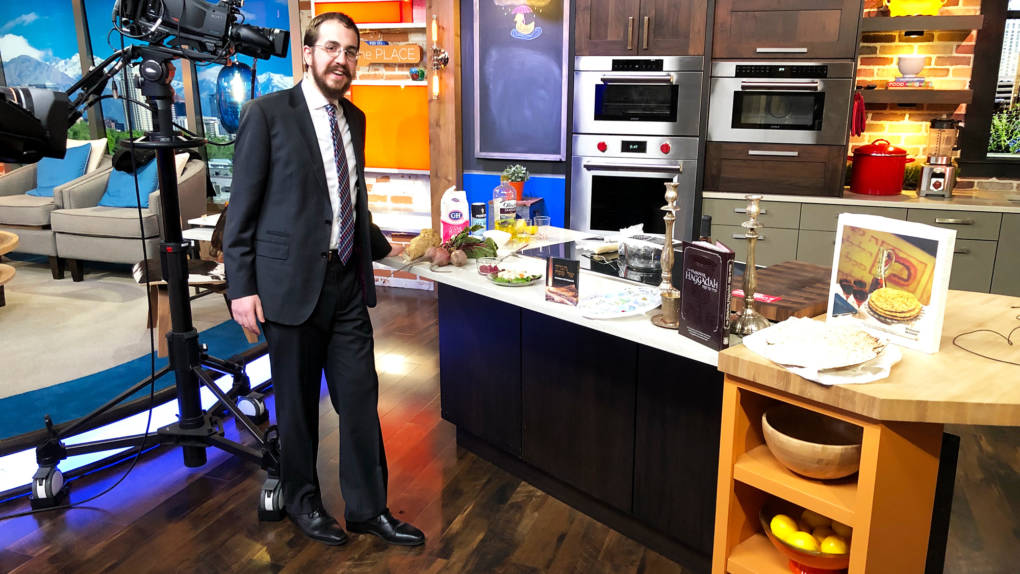
"caption": "Rabbi Avremi Zippel, the program director at Chabad Lubavitch of Utah, during an appearance on Fox 13 to talk about Passover food.",
"description": "Rabbi Avremi Zippel, the program director at Chabad Lubavitch of Utah, during an appearance on Fox 13 to talk about Passover food.",
"title": "Rabbi Avremi Zippel, the program director at Chabad Lubavitch of Utah, during an appearance on Fox 13 to talk about Passover food.",
"credit": "Avremi Zippel",
"status": "inherit",
"isLoading": false,
"fetchFailed": false
},
"bayareabites_125804": {
"type": "attachments",
"id": "bayareabites_125804",
"meta": {
"index": "attachments_1716263798",
"site": "bayareabites",
"id": "125804",
"found": true
},
"parent": 125803,
"imgSizes": {
"small": {
"file": "https://ww2.kqed.org/app/uploads/sites/24/2018/03/st-pats-day-1-19c233c2ba4e5ad37685512c737ab24c163a7a2a-520x390.jpg",
"width": 520,
"mimeType": "image/jpeg",
"height": 390
},
"twentyfourteen-full-width": {
"file": "https://ww2.kqed.org/app/uploads/sites/24/2018/03/st-pats-day-1-19c233c2ba4e5ad37685512c737ab24c163a7a2a-1038x576.jpg",
"width": 1038,
"mimeType": "image/jpeg",
"height": 576
},
"thumbnail": {
"file": "https://ww2.kqed.org/app/uploads/sites/24/2018/03/st-pats-day-1-19c233c2ba4e5ad37685512c737ab24c163a7a2a-160x120.jpg",
"width": 160,
"mimeType": "image/jpeg",
"height": 120
},
"fd-sm": {
"file": "https://ww2.kqed.org/app/uploads/sites/24/2018/03/st-pats-day-1-19c233c2ba4e5ad37685512c737ab24c163a7a2a-960x720.jpg",
"width": 960,
"mimeType": "image/jpeg",
"height": 720
},
"post-thumbnail": {
"file": "https://ww2.kqed.org/app/uploads/sites/24/2018/03/st-pats-day-1-19c233c2ba4e5ad37685512c737ab24c163a7a2a-672x372.jpg",
"width": 672,
"mimeType": "image/jpeg",
"height": 372
},
"xsmall": {
"file": "https://ww2.kqed.org/app/uploads/sites/24/2018/03/st-pats-day-1-19c233c2ba4e5ad37685512c737ab24c163a7a2a-375x281.jpg",
"width": 375,
"mimeType": "image/jpeg",
"height": 281
},
"kqedFullSize": {
"file": "https://ww2.kqed.org/app/uploads/sites/24/2018/03/st-pats-day-1-19c233c2ba4e5ad37685512c737ab24c163a7a2a.jpg",
"width": 1776,
"height": 1332
},
"large": {
"file": "https://ww2.kqed.org/app/uploads/sites/24/2018/03/st-pats-day-1-19c233c2ba4e5ad37685512c737ab24c163a7a2a-1020x765.jpg",
"width": 1020,
"mimeType": "image/jpeg",
"height": 765
},
"xlarge": {
"file": "https://ww2.kqed.org/app/uploads/sites/24/2018/03/st-pats-day-1-19c233c2ba4e5ad37685512c737ab24c163a7a2a-1180x885.jpg",
"width": 1180,
"mimeType": "image/jpeg",
"height": 885
},
"guest-author-50": {
"file": "https://ww2.kqed.org/app/uploads/sites/24/2018/03/st-pats-day-1-19c233c2ba4e5ad37685512c737ab24c163a7a2a-50x50.jpg",
"width": 50,
"mimeType": "image/jpeg",
"height": 50
},
"guest-author-96": {
"file": "https://ww2.kqed.org/app/uploads/sites/24/2018/03/st-pats-day-1-19c233c2ba4e5ad37685512c737ab24c163a7a2a-96x96.jpg",
"width": 96,
"mimeType": "image/jpeg",
"height": 96
},
"medium": {
"file": "https://ww2.kqed.org/app/uploads/sites/24/2018/03/st-pats-day-1-19c233c2ba4e5ad37685512c737ab24c163a7a2a-800x600.jpg",
"width": 800,
"mimeType": "image/jpeg",
"height": 600
},
"guest-author-64": {
"file": "https://ww2.kqed.org/app/uploads/sites/24/2018/03/st-pats-day-1-19c233c2ba4e5ad37685512c737ab24c163a7a2a-64x64.jpg",
"width": 64,
"mimeType": "image/jpeg",
"height": 64
},
"guest-author-32": {
"file": "https://ww2.kqed.org/app/uploads/sites/24/2018/03/st-pats-day-1-19c233c2ba4e5ad37685512c737ab24c163a7a2a-32x32.jpg",
"width": 32,
"mimeType": "image/jpeg",
"height": 32
},
"fd-med": {
"file": "https://ww2.kqed.org/app/uploads/sites/24/2018/03/st-pats-day-1-19c233c2ba4e5ad37685512c737ab24c163a7a2a-1180x885.jpg",
"width": 1180,
"mimeType": "image/jpeg",
"height": 885
},
"detail": {
"file": "https://ww2.kqed.org/app/uploads/sites/24/2018/03/st-pats-day-1-19c233c2ba4e5ad37685512c737ab24c163a7a2a-150x150.jpg",
"width": 150,
"mimeType": "image/jpeg",
"height": 150
},
"medium_large": {
"file": "https://ww2.kqed.org/app/uploads/sites/24/2018/03/st-pats-day-1-19c233c2ba4e5ad37685512c737ab24c163a7a2a-768x576.jpg",
"width": 768,
"mimeType": "image/jpeg",
"height": 576
},
"guest-author-128": {
"file": "https://ww2.kqed.org/app/uploads/sites/24/2018/03/st-pats-day-1-19c233c2ba4e5ad37685512c737ab24c163a7a2a-128x128.jpg",
"width": 128,
"mimeType": "image/jpeg",
"height": 128
},
"xxsmall": {
"file": "https://ww2.kqed.org/app/uploads/sites/24/2018/03/st-pats-day-1-19c233c2ba4e5ad37685512c737ab24c163a7a2a-240x180.jpg",
"width": 240,
"mimeType": "image/jpeg",
"height": 180
}
},
"publishDate": 1521216041,
"modified": 1521216119,
"caption": "A woman dances while sitting on her friend's shoulders during St. Patrick's Day festivities in Denver last year.",
"description": "A woman dances while sitting on her friend's shoulders during St. Patrick's Day festivities in Denver last year.",
"title": "A woman dances while sitting on her friend's shoulders during St. Patrick's Day festivities in Denver last year.",
"credit": "RJ Sangosti/Denver Post via Getty Images",
"status": "inherit",
"isLoading": false,
"fetchFailed": false
},
"bayareabites_116706": {
"type": "attachments",
"id": "bayareabites_116706",
"meta": {
"index": "attachments_1716263798",
"site": "bayareabites",
"id": "116706",
"found": true
},
"parent": 116705,
"imgSizes": {
"small": {
"file": "https://ww2.kqed.org/app/uploads/sites/24/2017/04/harlan_npr_passover_joannathan_custom-71f6f8e2b7ce2410eae087fb0f44de9d794a5937-520x366.jpg",
"width": 520,
"mimeType": "image/jpeg",
"height": 366
},
"twentyfourteen-full-width": {
"file": "https://ww2.kqed.org/app/uploads/sites/24/2017/04/harlan_npr_passover_joannathan_custom-71f6f8e2b7ce2410eae087fb0f44de9d794a5937-1038x576.jpg",
"width": 1038,
"mimeType": "image/jpeg",
"height": 576
},
"thumbnail": {
"file": "https://ww2.kqed.org/app/uploads/sites/24/2017/04/harlan_npr_passover_joannathan_custom-71f6f8e2b7ce2410eae087fb0f44de9d794a5937-160x113.jpg",
"width": 160,
"mimeType": "image/jpeg",
"height": 113
},
"fd-sm": {
"file": "https://ww2.kqed.org/app/uploads/sites/24/2017/04/harlan_npr_passover_joannathan_custom-71f6f8e2b7ce2410eae087fb0f44de9d794a5937-960x676.jpg",
"width": 960,
"mimeType": "image/jpeg",
"height": 676
},
"post-thumbnail": {
"file": "https://ww2.kqed.org/app/uploads/sites/24/2017/04/harlan_npr_passover_joannathan_custom-71f6f8e2b7ce2410eae087fb0f44de9d794a5937-672x372.jpg",
"width": 672,
"mimeType": "image/jpeg",
"height": 372
},
"xsmall": {
"file": "https://ww2.kqed.org/app/uploads/sites/24/2017/04/harlan_npr_passover_joannathan_custom-71f6f8e2b7ce2410eae087fb0f44de9d794a5937-375x264.jpg",
"width": 375,
"mimeType": "image/jpeg",
"height": 264
},
"kqedFullSize": {
"file": "https://ww2.kqed.org/app/uploads/sites/24/2017/04/harlan_npr_passover_joannathan_custom-71f6f8e2b7ce2410eae087fb0f44de9d794a5937.jpg",
"width": 1892,
"height": 1332
},
"large": {
"file": "https://ww2.kqed.org/app/uploads/sites/24/2017/04/harlan_npr_passover_joannathan_custom-71f6f8e2b7ce2410eae087fb0f44de9d794a5937-1020x718.jpg",
"width": 1020,
"mimeType": "image/jpeg",
"height": 718
},
"xlarge": {
"file": "https://ww2.kqed.org/app/uploads/sites/24/2017/04/harlan_npr_passover_joannathan_custom-71f6f8e2b7ce2410eae087fb0f44de9d794a5937-1180x831.jpg",
"width": 1180,
"mimeType": "image/jpeg",
"height": 831
},
"guest-author-50": {
"file": "https://ww2.kqed.org/app/uploads/sites/24/2017/04/harlan_npr_passover_joannathan_custom-71f6f8e2b7ce2410eae087fb0f44de9d794a5937-50x50.jpg",
"width": 50,
"mimeType": "image/jpeg",
"height": 50
},
"guest-author-96": {
"file": "https://ww2.kqed.org/app/uploads/sites/24/2017/04/harlan_npr_passover_joannathan_custom-71f6f8e2b7ce2410eae087fb0f44de9d794a5937-96x96.jpg",
"width": 96,
"mimeType": "image/jpeg",
"height": 96
},
"medium": {
"file": "https://ww2.kqed.org/app/uploads/sites/24/2017/04/harlan_npr_passover_joannathan_custom-71f6f8e2b7ce2410eae087fb0f44de9d794a5937-800x563.jpg",
"width": 800,
"mimeType": "image/jpeg",
"height": 563
},
"guest-author-64": {
"file": "https://ww2.kqed.org/app/uploads/sites/24/2017/04/harlan_npr_passover_joannathan_custom-71f6f8e2b7ce2410eae087fb0f44de9d794a5937-64x64.jpg",
"width": 64,
"mimeType": "image/jpeg",
"height": 64
},
"guest-author-32": {
"file": "https://ww2.kqed.org/app/uploads/sites/24/2017/04/harlan_npr_passover_joannathan_custom-71f6f8e2b7ce2410eae087fb0f44de9d794a5937-32x32.jpg",
"width": 32,
"mimeType": "image/jpeg",
"height": 32
},
"fd-med": {
"file": "https://ww2.kqed.org/app/uploads/sites/24/2017/04/harlan_npr_passover_joannathan_custom-71f6f8e2b7ce2410eae087fb0f44de9d794a5937-1180x831.jpg",
"width": 1180,
"mimeType": "image/jpeg",
"height": 831
},
"detail": {
"file": "https://ww2.kqed.org/app/uploads/sites/24/2017/04/harlan_npr_passover_joannathan_custom-71f6f8e2b7ce2410eae087fb0f44de9d794a5937-150x150.jpg",
"width": 150,
"mimeType": "image/jpeg",
"height": 150
},
"medium_large": {
"file": "https://ww2.kqed.org/app/uploads/sites/24/2017/04/harlan_npr_passover_joannathan_custom-71f6f8e2b7ce2410eae087fb0f44de9d794a5937-768x541.jpg",
"width": 768,
"mimeType": "image/jpeg",
"height": 541
},
"guest-author-128": {
"file": "https://ww2.kqed.org/app/uploads/sites/24/2017/04/harlan_npr_passover_joannathan_custom-71f6f8e2b7ce2410eae087fb0f44de9d794a5937-128x128.jpg",
"width": 128,
"mimeType": "image/jpeg",
"height": 128
},
"xxsmall": {
"file": "https://ww2.kqed.org/app/uploads/sites/24/2017/04/harlan_npr_passover_joannathan_custom-71f6f8e2b7ce2410eae087fb0f44de9d794a5937-240x169.jpg",
"width": 240,
"mimeType": "image/jpeg",
"height": 169
}
},
"publishDate": 1491937084,
"modified": 1491941213,
"caption": "Joan Nathan, the author of 11 cookbooks, has sought out local Jewish food traditions as she's traveled the world.",
"description": "Joan Nathan, the author of 11 cookbooks, has sought out local Jewish food traditions as she's traveled the world.",
"title": "Joan Nathan, the author of 11 cookbooks, has sought out local Jewish food traditions as she's traveled the world.",
"credit": "Beck Harlan/NPR",
"status": "inherit",
"isLoading": false,
"fetchFailed": false
},
"bayareabites_116673": {
"type": "attachments",
"id": "bayareabites_116673",
"meta": {
"index": "attachments_1716263798",
"site": "bayareabites",
"id": "116673",
"found": true
},
"parent": 116672,
"imgSizes": {
"small": {
"file": "https://ww2.kqed.org/app/uploads/sites/24/2017/04/matzobrei_custom-48b4701dc6fe94faf60c10cf576780978cbcfd96-520x366.jpg",
"width": 520,
"mimeType": "image/jpeg",
"height": 366
},
"twentyfourteen-full-width": {
"file": "https://ww2.kqed.org/app/uploads/sites/24/2017/04/matzobrei_custom-48b4701dc6fe94faf60c10cf576780978cbcfd96-1038x576.jpg",
"width": 1038,
"mimeType": "image/jpeg",
"height": 576
},
"thumbnail": {
"file": "https://ww2.kqed.org/app/uploads/sites/24/2017/04/matzobrei_custom-48b4701dc6fe94faf60c10cf576780978cbcfd96-160x113.jpg",
"width": 160,
"mimeType": "image/jpeg",
"height": 113
},
"fd-sm": {
"file": "https://ww2.kqed.org/app/uploads/sites/24/2017/04/matzobrei_custom-48b4701dc6fe94faf60c10cf576780978cbcfd96-960x676.jpg",
"width": 960,
"mimeType": "image/jpeg",
"height": 676
},
"post-thumbnail": {
"file": "https://ww2.kqed.org/app/uploads/sites/24/2017/04/matzobrei_custom-48b4701dc6fe94faf60c10cf576780978cbcfd96-672x372.jpg",
"width": 672,
"mimeType": "image/jpeg",
"height": 372
},
"xsmall": {
"file": "https://ww2.kqed.org/app/uploads/sites/24/2017/04/matzobrei_custom-48b4701dc6fe94faf60c10cf576780978cbcfd96-375x264.jpg",
"width": 375,
"mimeType": "image/jpeg",
"height": 264
},
"kqedFullSize": {
"file": "https://ww2.kqed.org/app/uploads/sites/24/2017/04/matzobrei_custom-48b4701dc6fe94faf60c10cf576780978cbcfd96.jpg",
"width": 2000,
"height": 1408
},
"large": {
"file": "https://ww2.kqed.org/app/uploads/sites/24/2017/04/matzobrei_custom-48b4701dc6fe94faf60c10cf576780978cbcfd96-1020x718.jpg",
"width": 1020,
"mimeType": "image/jpeg",
"height": 718
},
"xlarge": {
"file": "https://ww2.kqed.org/app/uploads/sites/24/2017/04/matzobrei_custom-48b4701dc6fe94faf60c10cf576780978cbcfd96-1180x831.jpg",
"width": 1180,
"mimeType": "image/jpeg",
"height": 831
},
"guest-author-50": {
"file": "https://ww2.kqed.org/app/uploads/sites/24/2017/04/matzobrei_custom-48b4701dc6fe94faf60c10cf576780978cbcfd96-50x50.jpg",
"width": 50,
"mimeType": "image/jpeg",
"height": 50
},
"guest-author-96": {
"file": "https://ww2.kqed.org/app/uploads/sites/24/2017/04/matzobrei_custom-48b4701dc6fe94faf60c10cf576780978cbcfd96-96x96.jpg",
"width": 96,
"mimeType": "image/jpeg",
"height": 96
},
"medium": {
"file": "https://ww2.kqed.org/app/uploads/sites/24/2017/04/matzobrei_custom-48b4701dc6fe94faf60c10cf576780978cbcfd96-800x563.jpg",
"width": 800,
"mimeType": "image/jpeg",
"height": 563
},
"guest-author-64": {
"file": "https://ww2.kqed.org/app/uploads/sites/24/2017/04/matzobrei_custom-48b4701dc6fe94faf60c10cf576780978cbcfd96-64x64.jpg",
"width": 64,
"mimeType": "image/jpeg",
"height": 64
},
"guest-author-32": {
"file": "https://ww2.kqed.org/app/uploads/sites/24/2017/04/matzobrei_custom-48b4701dc6fe94faf60c10cf576780978cbcfd96-32x32.jpg",
"width": 32,
"mimeType": "image/jpeg",
"height": 32
},
"fd-lrg": {
"file": "https://ww2.kqed.org/app/uploads/sites/24/2017/04/matzobrei_custom-48b4701dc6fe94faf60c10cf576780978cbcfd96-1920x1352.jpg",
"width": 1920,
"mimeType": "image/jpeg",
"height": 1352
},
"fd-med": {
"file": "https://ww2.kqed.org/app/uploads/sites/24/2017/04/matzobrei_custom-48b4701dc6fe94faf60c10cf576780978cbcfd96-1180x831.jpg",
"width": 1180,
"mimeType": "image/jpeg",
"height": 831
},
"full-width": {
"file": "https://ww2.kqed.org/app/uploads/sites/24/2017/04/matzobrei_custom-48b4701dc6fe94faf60c10cf576780978cbcfd96-1920x1352.jpg",
"width": 1920,
"mimeType": "image/jpeg",
"height": 1352
},
"detail": {
"file": "https://ww2.kqed.org/app/uploads/sites/24/2017/04/matzobrei_custom-48b4701dc6fe94faf60c10cf576780978cbcfd96-150x150.jpg",
"width": 150,
"mimeType": "image/jpeg",
"height": 150
},
"medium_large": {
"file": "https://ww2.kqed.org/app/uploads/sites/24/2017/04/matzobrei_custom-48b4701dc6fe94faf60c10cf576780978cbcfd96-768x541.jpg",
"width": 768,
"mimeType": "image/jpeg",
"height": 541
},
"guest-author-128": {
"file": "https://ww2.kqed.org/app/uploads/sites/24/2017/04/matzobrei_custom-48b4701dc6fe94faf60c10cf576780978cbcfd96-128x128.jpg",
"width": 128,
"mimeType": "image/jpeg",
"height": 128
},
"xxsmall": {
"file": "https://ww2.kqed.org/app/uploads/sites/24/2017/04/matzobrei_custom-48b4701dc6fe94faf60c10cf576780978cbcfd96-240x169.jpg",
"width": 240,
"mimeType": "image/jpeg",
"height": 169
}
},
"publishDate": 1491837947,
"modified": 1491838093,
"caption": "To make matzo brei, crumble leftover matzo, soak it, drain it and beat it with an egg or two. Then, fry it up, scrambled or omelet-style.",
"description": "To make matzo brei, crumble leftover matzo, soak it, drain it and beat it with an egg or two. Then, fry it up, scrambled or omelet-style.",
"title": "To make matzo brei, crumble leftover matzo, soak it, drain it and beat it with an egg or two. Then, fry it up, scrambled or omelet-style.",
"credit": " Tali Blankfeld/Flickr Editorial/Getty Images",
"status": "inherit",
"isLoading": false,
"fetchFailed": false
},
"bayareabites_116505": {
"type": "attachments",
"id": "bayareabites_116505",
"meta": {
"index": "attachments_1716263798",
"site": "bayareabites",
"id": "116505",
"found": true
},
"parent": 116504,
"imgSizes": {
"small": {
"file": "https://ww2.kqed.org/app/uploads/sites/24/2017/04/germanlayercake_schmaltzy_custom-b106fa4d1ad846539ee3886822ed4f1efda7df85-520x346.jpg",
"width": 520,
"mimeType": "image/jpeg",
"height": 346
},
"twentyfourteen-full-width": {
"file": "https://ww2.kqed.org/app/uploads/sites/24/2017/04/germanlayercake_schmaltzy_custom-b106fa4d1ad846539ee3886822ed4f1efda7df85-1038x576.jpg",
"width": 1038,
"mimeType": "image/jpeg",
"height": 576
},
"thumbnail": {
"file": "https://ww2.kqed.org/app/uploads/sites/24/2017/04/germanlayercake_schmaltzy_custom-b106fa4d1ad846539ee3886822ed4f1efda7df85-160x107.jpg",
"width": 160,
"mimeType": "image/jpeg",
"height": 107
},
"fd-sm": {
"file": "https://ww2.kqed.org/app/uploads/sites/24/2017/04/germanlayercake_schmaltzy_custom-b106fa4d1ad846539ee3886822ed4f1efda7df85-960x639.jpg",
"width": 960,
"mimeType": "image/jpeg",
"height": 639
},
"post-thumbnail": {
"file": "https://ww2.kqed.org/app/uploads/sites/24/2017/04/germanlayercake_schmaltzy_custom-b106fa4d1ad846539ee3886822ed4f1efda7df85-672x372.jpg",
"width": 672,
"mimeType": "image/jpeg",
"height": 372
},
"xsmall": {
"file": "https://ww2.kqed.org/app/uploads/sites/24/2017/04/germanlayercake_schmaltzy_custom-b106fa4d1ad846539ee3886822ed4f1efda7df85-375x250.jpg",
"width": 375,
"mimeType": "image/jpeg",
"height": 250
},
"kqedFullSize": {
"file": "https://ww2.kqed.org/app/uploads/sites/24/2017/04/germanlayercake_schmaltzy_custom-b106fa4d1ad846539ee3886822ed4f1efda7df85.jpg",
"width": 2000,
"height": 1332
},
"large": {
"file": "https://ww2.kqed.org/app/uploads/sites/24/2017/04/germanlayercake_schmaltzy_custom-b106fa4d1ad846539ee3886822ed4f1efda7df85-1020x679.jpg",
"width": 1020,
"mimeType": "image/jpeg",
"height": 679
},
"xlarge": {
"file": "https://ww2.kqed.org/app/uploads/sites/24/2017/04/germanlayercake_schmaltzy_custom-b106fa4d1ad846539ee3886822ed4f1efda7df85-1180x786.jpg",
"width": 1180,
"mimeType": "image/jpeg",
"height": 786
},
"guest-author-50": {
"file": "https://ww2.kqed.org/app/uploads/sites/24/2017/04/germanlayercake_schmaltzy_custom-b106fa4d1ad846539ee3886822ed4f1efda7df85-50x50.jpg",
"width": 50,
"mimeType": "image/jpeg",
"height": 50
},
"guest-author-96": {
"file": "https://ww2.kqed.org/app/uploads/sites/24/2017/04/germanlayercake_schmaltzy_custom-b106fa4d1ad846539ee3886822ed4f1efda7df85-96x96.jpg",
"width": 96,
"mimeType": "image/jpeg",
"height": 96
},
"medium": {
"file": "https://ww2.kqed.org/app/uploads/sites/24/2017/04/germanlayercake_schmaltzy_custom-b106fa4d1ad846539ee3886822ed4f1efda7df85-800x533.jpg",
"width": 800,
"mimeType": "image/jpeg",
"height": 533
},
"guest-author-64": {
"file": "https://ww2.kqed.org/app/uploads/sites/24/2017/04/germanlayercake_schmaltzy_custom-b106fa4d1ad846539ee3886822ed4f1efda7df85-64x64.jpg",
"width": 64,
"mimeType": "image/jpeg",
"height": 64
},
"guest-author-32": {
"file": "https://ww2.kqed.org/app/uploads/sites/24/2017/04/germanlayercake_schmaltzy_custom-b106fa4d1ad846539ee3886822ed4f1efda7df85-32x32.jpg",
"width": 32,
"mimeType": "image/jpeg",
"height": 32
},
"fd-lrg": {
"file": "https://ww2.kqed.org/app/uploads/sites/24/2017/04/germanlayercake_schmaltzy_custom-b106fa4d1ad846539ee3886822ed4f1efda7df85-1920x1279.jpg",
"width": 1920,
"mimeType": "image/jpeg",
"height": 1279
},
"fd-med": {
"file": "https://ww2.kqed.org/app/uploads/sites/24/2017/04/germanlayercake_schmaltzy_custom-b106fa4d1ad846539ee3886822ed4f1efda7df85-1180x786.jpg",
"width": 1180,
"mimeType": "image/jpeg",
"height": 786
},
"full-width": {
"file": "https://ww2.kqed.org/app/uploads/sites/24/2017/04/germanlayercake_schmaltzy_custom-b106fa4d1ad846539ee3886822ed4f1efda7df85-1920x1279.jpg",
"width": 1920,
"mimeType": "image/jpeg",
"height": 1279
},
"detail": {
"file": "https://ww2.kqed.org/app/uploads/sites/24/2017/04/germanlayercake_schmaltzy_custom-b106fa4d1ad846539ee3886822ed4f1efda7df85-150x150.jpg",
"width": 150,
"mimeType": "image/jpeg",
"height": 150
},
"medium_large": {
"file": "https://ww2.kqed.org/app/uploads/sites/24/2017/04/germanlayercake_schmaltzy_custom-b106fa4d1ad846539ee3886822ed4f1efda7df85-768x511.jpg",
"width": 768,
"mimeType": "image/jpeg",
"height": 511
},
"guest-author-128": {
"file": "https://ww2.kqed.org/app/uploads/sites/24/2017/04/germanlayercake_schmaltzy_custom-b106fa4d1ad846539ee3886822ed4f1efda7df85-128x128.jpg",
"width": 128,
"mimeType": "image/jpeg",
"height": 128
},
"xxsmall": {
"file": "https://ww2.kqed.org/app/uploads/sites/24/2017/04/germanlayercake_schmaltzy_custom-b106fa4d1ad846539ee3886822ed4f1efda7df85-240x160.jpg",
"width": 240,
"mimeType": "image/jpeg",
"height": 160
}
},
"publishDate": 1491230279,
"modified": 1491230466,
"caption": "Idan Cohen's grandmothers' famous German layer cake. Idan's mom always said that the Israeli climate did not agree with this cake, but she made it anyway.",
"description": "Idan Cohen's grandmothers' famous German layer cake. Idan's mom always said that the Israeli climate did not agree with this cake, but she made it anyway.",
"title": "Idan Cohen's grandmothers' famous German layer cake. Idan's mom always said that the Israeli climate did not agree with this cake, but she made it anyway.",
"credit": "Courtesy of Jewish Food Society",
"status": "inherit",
"isLoading": false,
"fetchFailed": false
},
"bayareabites_115842": {
"type": "attachments",
"id": "bayareabites_115842",
"meta": {
"index": "attachments_1716263798",
"site": "bayareabites",
"id": "115842",
"found": true
},
"parent": 115841,
"imgSizes": {
"small": {
"file": "https://ww2.kqed.org/app/uploads/sites/24/2017/03/mg_9231-2_custom-dcb7c98d38560716c71ec9bd16e64d26e116ab2c-520x312.jpg",
"width": 520,
"mimeType": "image/jpeg",
"height": 312
},
"twentyfourteen-full-width": {
"file": "https://ww2.kqed.org/app/uploads/sites/24/2017/03/mg_9231-2_custom-dcb7c98d38560716c71ec9bd16e64d26e116ab2c-1038x576.jpg",
"width": 1038,
"mimeType": "image/jpeg",
"height": 576
},
"thumbnail": {
"file": "https://ww2.kqed.org/app/uploads/sites/24/2017/03/mg_9231-2_custom-dcb7c98d38560716c71ec9bd16e64d26e116ab2c-160x96.jpg",
"width": 160,
"mimeType": "image/jpeg",
"height": 96
},
"fd-sm": {
"file": "https://ww2.kqed.org/app/uploads/sites/24/2017/03/mg_9231-2_custom-dcb7c98d38560716c71ec9bd16e64d26e116ab2c-960x576.jpg",
"width": 960,
"mimeType": "image/jpeg",
"height": 576
},
"post-thumbnail": {
"file": "https://ww2.kqed.org/app/uploads/sites/24/2017/03/mg_9231-2_custom-dcb7c98d38560716c71ec9bd16e64d26e116ab2c-672x372.jpg",
"width": 672,
"mimeType": "image/jpeg",
"height": 372
},
"xsmall": {
"file": "https://ww2.kqed.org/app/uploads/sites/24/2017/03/mg_9231-2_custom-dcb7c98d38560716c71ec9bd16e64d26e116ab2c-375x225.jpg",
"width": 375,
"mimeType": "image/jpeg",
"height": 225
},
"kqedFullSize": {
"file": "https://ww2.kqed.org/app/uploads/sites/24/2017/03/mg_9231-2_custom-dcb7c98d38560716c71ec9bd16e64d26e116ab2c.jpg",
"width": 2000,
"height": 1200
},
"large": {
"file": "https://ww2.kqed.org/app/uploads/sites/24/2017/03/mg_9231-2_custom-dcb7c98d38560716c71ec9bd16e64d26e116ab2c-1020x612.jpg",
"width": 1020,
"mimeType": "image/jpeg",
"height": 612
},
"xlarge": {
"file": "https://ww2.kqed.org/app/uploads/sites/24/2017/03/mg_9231-2_custom-dcb7c98d38560716c71ec9bd16e64d26e116ab2c-1180x708.jpg",
"width": 1180,
"mimeType": "image/jpeg",
"height": 708
},
"guest-author-50": {
"file": "https://ww2.kqed.org/app/uploads/sites/24/2017/03/mg_9231-2_custom-dcb7c98d38560716c71ec9bd16e64d26e116ab2c-50x50.jpg",
"width": 50,
"mimeType": "image/jpeg",
"height": 50
},
"guest-author-96": {
"file": "https://ww2.kqed.org/app/uploads/sites/24/2017/03/mg_9231-2_custom-dcb7c98d38560716c71ec9bd16e64d26e116ab2c-96x96.jpg",
"width": 96,
"mimeType": "image/jpeg",
"height": 96
},
"medium": {
"file": "https://ww2.kqed.org/app/uploads/sites/24/2017/03/mg_9231-2_custom-dcb7c98d38560716c71ec9bd16e64d26e116ab2c-800x480.jpg",
"width": 800,
"mimeType": "image/jpeg",
"height": 480
},
"guest-author-64": {
"file": "https://ww2.kqed.org/app/uploads/sites/24/2017/03/mg_9231-2_custom-dcb7c98d38560716c71ec9bd16e64d26e116ab2c-64x64.jpg",
"width": 64,
"mimeType": "image/jpeg",
"height": 64
},
"guest-author-32": {
"file": "https://ww2.kqed.org/app/uploads/sites/24/2017/03/mg_9231-2_custom-dcb7c98d38560716c71ec9bd16e64d26e116ab2c-32x32.jpg",
"width": 32,
"mimeType": "image/jpeg",
"height": 32
},
"fd-lrg": {
"file": "https://ww2.kqed.org/app/uploads/sites/24/2017/03/mg_9231-2_custom-dcb7c98d38560716c71ec9bd16e64d26e116ab2c-1920x1152.jpg",
"width": 1920,
"mimeType": "image/jpeg",
"height": 1152
},
"fd-med": {
"file": "https://ww2.kqed.org/app/uploads/sites/24/2017/03/mg_9231-2_custom-dcb7c98d38560716c71ec9bd16e64d26e116ab2c-1180x708.jpg",
"width": 1180,
"mimeType": "image/jpeg",
"height": 708
},
"full-width": {
"file": "https://ww2.kqed.org/app/uploads/sites/24/2017/03/mg_9231-2_custom-dcb7c98d38560716c71ec9bd16e64d26e116ab2c-1920x1152.jpg",
"width": 1920,
"mimeType": "image/jpeg",
"height": 1152
},
"detail": {
"file": "https://ww2.kqed.org/app/uploads/sites/24/2017/03/mg_9231-2_custom-dcb7c98d38560716c71ec9bd16e64d26e116ab2c-150x150.jpg",
"width": 150,
"mimeType": "image/jpeg",
"height": 150
},
"medium_large": {
"file": "https://ww2.kqed.org/app/uploads/sites/24/2017/03/mg_9231-2_custom-dcb7c98d38560716c71ec9bd16e64d26e116ab2c-768x461.jpg",
"width": 768,
"mimeType": "image/jpeg",
"height": 461
},
"guest-author-128": {
"file": "https://ww2.kqed.org/app/uploads/sites/24/2017/03/mg_9231-2_custom-dcb7c98d38560716c71ec9bd16e64d26e116ab2c-128x128.jpg",
"width": 128,
"mimeType": "image/jpeg",
"height": 128
},
"xxsmall": {
"file": "https://ww2.kqed.org/app/uploads/sites/24/2017/03/mg_9231-2_custom-dcb7c98d38560716c71ec9bd16e64d26e116ab2c-240x144.jpg",
"width": 240,
"mimeType": "image/jpeg",
"height": 144
}
},
"publishDate": 1489425200,
"modified": 1489425712,
"caption": "Boxes of \"Surprisingly Delicious Matzo\" made by The Matzo Project line the shelves of Glen's Garden Market in Washington, D.C.",
"description": "Boxes of \"Surprisingly Delicious Matzo\" made by The Matzo Project line the shelves of Glen's Garden Market in Washington, D.C.",
"title": "Boxes of \"Surprisingly Delicious Matzo\" made by The Matzo Project line the shelves of Glen's Garden Market in Washington, D.C.",
"credit": "Kelly Jo Smart/NPR",
"status": "inherit",
"isLoading": false,
"fetchFailed": false
},
"bayareabites_108656": {
"type": "attachments",
"id": "bayareabites_108656",
"meta": {
"index": "attachments_1716263798",
"site": "bayareabites",
"id": "108656",
"found": true
},
"parent": 108527,
"imgSizes": {
"twentyfourteen-full-width": {
"file": "https://ww2.kqed.org/app/uploads/sites/24/2016/04/brisket-finished1-1038x576.jpg",
"width": 1038,
"mimeType": "image/jpeg",
"height": 576
},
"thumbnail": {
"file": "https://ww2.kqed.org/app/uploads/sites/24/2016/04/brisket-finished1-400x267.jpg",
"width": 400,
"mimeType": "image/jpeg",
"height": 267
},
"fd-sm": {
"file": "https://ww2.kqed.org/app/uploads/sites/24/2016/04/brisket-finished1-960x640.jpg",
"width": 960,
"mimeType": "image/jpeg",
"height": 640
},
"post-thumbnail": {
"file": "https://ww2.kqed.org/app/uploads/sites/24/2016/04/brisket-finished1-672x372.jpg",
"width": 672,
"mimeType": "image/jpeg",
"height": 372
},
"kqedFullSize": {
"file": "https://ww2.kqed.org/app/uploads/sites/24/2016/04/brisket-finished1.jpg",
"width": 1920,
"height": 1280
},
"large": {
"file": "https://ww2.kqed.org/app/uploads/sites/24/2016/04/brisket-finished1-1440x960.jpg",
"width": 1440,
"mimeType": "image/jpeg",
"height": 960
},
"guest-author-96": {
"file": "https://ww2.kqed.org/app/uploads/sites/24/2016/04/brisket-finished1-96x96.jpg",
"width": 96,
"mimeType": "image/jpeg",
"height": 96
},
"medium": {
"file": "https://ww2.kqed.org/app/uploads/sites/24/2016/04/brisket-finished1-800x533.jpg",
"width": 800,
"mimeType": "image/jpeg",
"height": 533
},
"guest-author-64": {
"file": "https://ww2.kqed.org/app/uploads/sites/24/2016/04/brisket-finished1-64x64.jpg",
"width": 64,
"mimeType": "image/jpeg",
"height": 64
},
"guest-author-32": {
"file": "https://ww2.kqed.org/app/uploads/sites/24/2016/04/brisket-finished1-32x32.jpg",
"width": 32,
"mimeType": "image/jpeg",
"height": 32
},
"cat_post_thumb_sizecategory-posts-2": {
"file": "https://ww2.kqed.org/app/uploads/sites/24/2016/04/brisket-finished1-150x150.jpg",
"width": 150,
"mimeType": "image/jpeg",
"height": 150
},
"fd-lrg": {
"file": "https://ww2.kqed.org/app/uploads/sites/24/2016/04/brisket-finished1-1920x1280.jpg",
"width": 1920,
"mimeType": "image/jpeg",
"height": 1280
},
"fd-med": {
"file": "https://ww2.kqed.org/app/uploads/sites/24/2016/04/brisket-finished1-1180x787.jpg",
"width": 1180,
"mimeType": "image/jpeg",
"height": 787
},
"detail": {
"file": "https://ww2.kqed.org/app/uploads/sites/24/2016/04/brisket-finished1-75x75.jpg",
"width": 75,
"mimeType": "image/jpeg",
"height": 75
},
"medium_large": {
"file": "https://ww2.kqed.org/app/uploads/sites/24/2016/04/brisket-finished1-768x512.jpg",
"width": 768,
"mimeType": "image/jpeg",
"height": 512
},
"guest-author-128": {
"file": "https://ww2.kqed.org/app/uploads/sites/24/2016/04/brisket-finished1-128x128.jpg",
"width": 128,
"mimeType": "image/jpeg",
"height": 128
}
},
"publishDate": 1461035372,
"modified": 1461037561,
"caption": " Ma’s Passover Brisket",
"description": " Ma’s Passover Brisket",
"title": "brisket-finished1",
"credit": "Wendy Goodfriend",
"status": "inherit",
"isLoading": false,
"fetchFailed": false
},
"bayareabites_94638": {
"type": "attachments",
"id": "bayareabites_94638",
"meta": {
"index": "attachments_1716263798",
"site": "bayareabites",
"id": "94638",
"found": true
},
"parent": 94637,
"imgSizes": {
"thumbnail": {
"file": "https://ww2.kqed.org/app/uploads/sites/24/2015/04/torahscrolls-bf3b04491b73ddd100e1ccd25ea66d83d7c32769-400x300.jpg",
"width": 400,
"mimeType": "image/jpeg",
"height": 300
},
"fd-sm": {
"file": "https://ww2.kqed.org/app/uploads/sites/24/2015/04/torahscrolls-bf3b04491b73ddd100e1ccd25ea66d83d7c32769-320x240.jpg",
"width": 320,
"mimeType": "image/jpeg",
"height": 240
},
"post-thumbnail": {
"file": "https://ww2.kqed.org/app/uploads/sites/24/2015/04/torahscrolls-bf3b04491b73ddd100e1ccd25ea66d83d7c32769-569x372.jpg",
"width": 569,
"mimeType": "image/jpeg",
"height": 372
},
"kqedFullSize": {
"file": "https://ww2.kqed.org/app/uploads/sites/24/2015/04/torahscrolls-bf3b04491b73ddd100e1ccd25ea66d83d7c32769.jpg",
"width": 569,
"height": 427
},
"cat_post_thumb_sizecategory-posts-2": {
"file": "https://ww2.kqed.org/app/uploads/sites/24/2015/04/torahscrolls-bf3b04491b73ddd100e1ccd25ea66d83d7c32769-150x150.jpg",
"width": 150,
"mimeType": "image/jpeg",
"height": 150
},
"guest-author-96": {
"file": "https://ww2.kqed.org/app/uploads/sites/24/2015/04/torahscrolls-bf3b04491b73ddd100e1ccd25ea66d83d7c32769-96x96.jpg",
"width": 96,
"mimeType": "image/jpeg",
"height": 96
},
"guest-author-64": {
"file": "https://ww2.kqed.org/app/uploads/sites/24/2015/04/torahscrolls-bf3b04491b73ddd100e1ccd25ea66d83d7c32769-64x64.jpg",
"width": 64,
"mimeType": "image/jpeg",
"height": 64
},
"detail": {
"file": "https://ww2.kqed.org/app/uploads/sites/24/2015/04/torahscrolls-bf3b04491b73ddd100e1ccd25ea66d83d7c32769-75x75.jpg",
"width": 75,
"mimeType": "image/jpeg",
"height": 75
},
"guest-author-32": {
"file": "https://ww2.kqed.org/app/uploads/sites/24/2015/04/torahscrolls-bf3b04491b73ddd100e1ccd25ea66d83d7c32769-32x32.jpg",
"width": 32,
"mimeType": "image/jpeg",
"height": 32
},
"guest-author-128": {
"file": "https://ww2.kqed.org/app/uploads/sites/24/2015/04/torahscrolls-bf3b04491b73ddd100e1ccd25ea66d83d7c32769-128x128.jpg",
"width": 128,
"mimeType": "image/jpeg",
"height": 128
}
},
"publishDate": 1428113727,
"modified": 1428113944,
"caption": "Chef and culinary historian Michael Twitty writes frequently about what he calls \"koshersoul,\" his African-American and Jewish heritage.",
"description": "Chef and culinary historian Michael Twitty writes frequently about what he calls \"koshersoul,\" his African-American and Jewish heritage.",
"title": "Chef and culinary historian Michael Twitty writes frequently about what he calls \"koshersoul,\" his African-American and Jewish heritage.",
"credit": "Courtesy Michael Twitty",
"status": "inherit",
"isLoading": false,
"fetchFailed": false
},
"bayareabites_94615": {
"type": "attachments",
"id": "bayareabites_94615",
"meta": {
"index": "attachments_1716263798",
"site": "bayareabites",
"id": "94615",
"found": true
},
"parent": 94614,
"imgSizes": {
"twentyfourteen-full-width": {
"file": "https://ww2.kqed.org/app/uploads/sites/24/2015/04/matzo-3d2b64ea43cd2a7756b74a9bdb3546d95fcdb131-911x576.jpg",
"width": 911,
"mimeType": "image/jpeg",
"height": 576
},
"thumbnail": {
"file": "https://ww2.kqed.org/app/uploads/sites/24/2015/04/matzo-3d2b64ea43cd2a7756b74a9bdb3546d95fcdb131-400x300.jpg",
"width": 400,
"mimeType": "image/jpeg",
"height": 300
},
"fd-sm": {
"file": "https://ww2.kqed.org/app/uploads/sites/24/2015/04/matzo-3d2b64ea43cd2a7756b74a9bdb3546d95fcdb131-320x240.jpg",
"width": 320,
"mimeType": "image/jpeg",
"height": 240
},
"post-thumbnail": {
"file": "https://ww2.kqed.org/app/uploads/sites/24/2015/04/matzo-3d2b64ea43cd2a7756b74a9bdb3546d95fcdb131-672x372.jpg",
"width": 672,
"mimeType": "image/jpeg",
"height": 372
},
"kqedFullSize": {
"file": "https://ww2.kqed.org/app/uploads/sites/24/2015/04/matzo-3d2b64ea43cd2a7756b74a9bdb3546d95fcdb131.jpg",
"width": 911,
"height": 683
},
"guest-author-96": {
"file": "https://ww2.kqed.org/app/uploads/sites/24/2015/04/matzo-3d2b64ea43cd2a7756b74a9bdb3546d95fcdb131-96x96.jpg",
"width": 96,
"mimeType": "image/jpeg",
"height": 96
},
"medium": {
"file": "https://ww2.kqed.org/app/uploads/sites/24/2015/04/matzo-3d2b64ea43cd2a7756b74a9bdb3546d95fcdb131-800x600.jpg",
"width": 800,
"mimeType": "image/jpeg",
"height": 600
},
"guest-author-64": {
"file": "https://ww2.kqed.org/app/uploads/sites/24/2015/04/matzo-3d2b64ea43cd2a7756b74a9bdb3546d95fcdb131-64x64.jpg",
"width": 64,
"mimeType": "image/jpeg",
"height": 64
},
"guest-author-32": {
"file": "https://ww2.kqed.org/app/uploads/sites/24/2015/04/matzo-3d2b64ea43cd2a7756b74a9bdb3546d95fcdb131-32x32.jpg",
"width": 32,
"mimeType": "image/jpeg",
"height": 32
},
"cat_post_thumb_sizecategory-posts-2": {
"file": "https://ww2.kqed.org/app/uploads/sites/24/2015/04/matzo-3d2b64ea43cd2a7756b74a9bdb3546d95fcdb131-150x150.jpg",
"width": 150,
"mimeType": "image/jpeg",
"height": 150
},
"fd-med": {
"file": "https://ww2.kqed.org/app/uploads/sites/24/2015/04/matzo-3d2b64ea43cd2a7756b74a9bdb3546d95fcdb131-768x576.jpg",
"width": 768,
"mimeType": "image/jpeg",
"height": 576
},
"detail": {
"file": "https://ww2.kqed.org/app/uploads/sites/24/2015/04/matzo-3d2b64ea43cd2a7756b74a9bdb3546d95fcdb131-75x75.jpg",
"width": 75,
"mimeType": "image/jpeg",
"height": 75
},
"guest-author-128": {
"file": "https://ww2.kqed.org/app/uploads/sites/24/2015/04/matzo-3d2b64ea43cd2a7756b74a9bdb3546d95fcdb131-128x128.jpg",
"width": 128,
"mimeType": "image/jpeg",
"height": 128
}
},
"publishDate": 1428105185,
"modified": 1428105507,
"caption": "Matzo ball soup with dill. Matzo represents the unleavened bread the Jews ate while fleeing Egypt.",
"description": "Matzo ball soup with dill. Matzo represents the unleavened bread the Jews ate while fleeing Egypt",
"title": "Matzo ball soup with dill. Matzo represents the unleavened bread the Jews ate while fleeing Egypt.",
"credit": "\u003ca href=\"https://www.flickr.com/photos/lonbinder/3436816148/in/photolist-6eGzGQ-6eCsmM-bVfc5-9Bmx3o-8qbby8-7QubGe-9Aw7Gk-5tUK2-9n35TF-4NjPxN-FtPCB-7CuSPi-9BHJ9E-dJXtkF-aznLGu-7q6UcV-asdsAt-91Gp6M-91KvJN-e7ztkf-fyLuq5-aYnYU8-5yBduL-4xJ5Ts-aJsGq6-71aBMg-7ng2NZ-6ewkt\" target=\"_blank\">Jessica and Lon Binder/Flickr\u003c/a>",
"status": "inherit",
"isLoading": false,
"fetchFailed": false
},
"bayareabites_94548": {
"type": "attachments",
"id": "bayareabites_94548",
"meta": {
"index": "attachments_1716263798",
"site": "bayareabites",
"id": "94548",
"found": true
},
"parent": 94547,
"imgSizes": {
"twentyfourteen-full-width": {
"file": "https://ww2.kqed.org/app/uploads/sites/24/2015/04/ap071221015853_slide-9bdca6d0cf50ecca1919e2e7fce3db47fa9e735a-1038x576.jpg",
"width": 1038,
"mimeType": "image/jpeg",
"height": 576
},
"thumbnail": {
"file": "https://ww2.kqed.org/app/uploads/sites/24/2015/04/ap071221015853_slide-9bdca6d0cf50ecca1919e2e7fce3db47fa9e735a-400x267.jpg",
"width": 400,
"mimeType": "image/jpeg",
"height": 267
},
"fd-sm": {
"file": "https://ww2.kqed.org/app/uploads/sites/24/2015/04/ap071221015853_slide-9bdca6d0cf50ecca1919e2e7fce3db47fa9e735a-320x213.jpg",
"width": 320,
"mimeType": "image/jpeg",
"height": 213
},
"post-thumbnail": {
"file": "https://ww2.kqed.org/app/uploads/sites/24/2015/04/ap071221015853_slide-9bdca6d0cf50ecca1919e2e7fce3db47fa9e735a-672x372.jpg",
"width": 672,
"mimeType": "image/jpeg",
"height": 372
},
"kqedFullSize": {
"file": "https://ww2.kqed.org/app/uploads/sites/24/2015/04/ap071221015853_slide-9bdca6d0cf50ecca1919e2e7fce3db47fa9e735a-e1428014036209.jpg",
"width": 1920,
"height": 1280
},
"large": {
"file": "https://ww2.kqed.org/app/uploads/sites/24/2015/04/ap071221015853_slide-9bdca6d0cf50ecca1919e2e7fce3db47fa9e735a-1440x960.jpg",
"width": 1440,
"mimeType": "image/jpeg",
"height": 960
},
"guest-author-96": {
"file": "https://ww2.kqed.org/app/uploads/sites/24/2015/04/ap071221015853_slide-9bdca6d0cf50ecca1919e2e7fce3db47fa9e735a-96x96.jpg",
"width": 96,
"mimeType": "image/jpeg",
"height": 96
},
"medium": {
"file": "https://ww2.kqed.org/app/uploads/sites/24/2015/04/ap071221015853_slide-9bdca6d0cf50ecca1919e2e7fce3db47fa9e735a-800x533.jpg",
"width": 800,
"mimeType": "image/jpeg",
"height": 533
},
"guest-author-64": {
"file": "https://ww2.kqed.org/app/uploads/sites/24/2015/04/ap071221015853_slide-9bdca6d0cf50ecca1919e2e7fce3db47fa9e735a-64x64.jpg",
"width": 64,
"mimeType": "image/jpeg",
"height": 64
},
"guest-author-32": {
"file": "https://ww2.kqed.org/app/uploads/sites/24/2015/04/ap071221015853_slide-9bdca6d0cf50ecca1919e2e7fce3db47fa9e735a-32x32.jpg",
"width": 32,
"mimeType": "image/jpeg",
"height": 32
},
"cat_post_thumb_sizecategory-posts-2": {
"file": "https://ww2.kqed.org/app/uploads/sites/24/2015/04/ap071221015853_slide-9bdca6d0cf50ecca1919e2e7fce3db47fa9e735a-150x150.jpg",
"width": 150,
"mimeType": "image/jpeg",
"height": 150
},
"fd-lrg": {
"file": "https://ww2.kqed.org/app/uploads/sites/24/2015/04/ap071221015853_slide-9bdca6d0cf50ecca1919e2e7fce3db47fa9e735a-1180x787.jpg",
"width": 1180,
"mimeType": "image/jpeg",
"height": 787
},
"fd-med": {
"file": "https://ww2.kqed.org/app/uploads/sites/24/2015/04/ap071221015853_slide-9bdca6d0cf50ecca1919e2e7fce3db47fa9e735a-768x512.jpg",
"width": 768,
"mimeType": "image/jpeg",
"height": 512
},
"detail": {
"file": "https://ww2.kqed.org/app/uploads/sites/24/2015/04/ap071221015853_slide-9bdca6d0cf50ecca1919e2e7fce3db47fa9e735a-75x75.jpg",
"width": 75,
"mimeType": "image/jpeg",
"height": 75
},
"guest-author-128": {
"file": "https://ww2.kqed.org/app/uploads/sites/24/2015/04/ap071221015853_slide-9bdca6d0cf50ecca1919e2e7fce3db47fa9e735a-128x128.jpg",
"width": 128,
"mimeType": "image/jpeg",
"height": 128
}
},
"publishDate": 1428013737,
"modified": 1428014065,
"caption": "A rabbi (center) supervises the production of Passover matzos at the Streit's factory in New York's Lower East Side, circa 1960s. At right is Aron Gross, grandson-in-law of company founder Aron Streit. This Passover will be Streit's last one at the landmark location.",
"description": "A rabbi (center) supervises the production of Passover matzos at the Streit's factory in New York's Lower East Side, circa 1960s. At right is Aron Gross, grandson-in-law of company founder Aron Streit. This Passover will be Streit's last one at the landmark location",
"title": "A rabbi (center) supervises the production of Passover matzos at the Streit's factory in New York's Lower East Side, circa 1960s. At right is Aron Gross, grandson-in-law of company founder Aron Streit. This Passover will be Streit's last one at the landmark location.",
"credit": "AP",
"status": "inherit",
"isLoading": false,
"fetchFailed": false
},
"bayareabites_94351": {
"type": "attachments",
"id": "bayareabites_94351",
"meta": {
"index": "attachments_1716263798",
"site": "bayareabites",
"id": "94351",
"found": true
},
"parent": 0,
"imgSizes": {
"twentyfourteen-full-width": {
"file": "https://ww2.kqed.org/app/uploads/sites/24/2015/03/ch5-3types-final-800x576.jpg",
"width": 800,
"mimeType": "image/jpeg",
"height": 576
},
"thumbnail": {
"file": "https://ww2.kqed.org/app/uploads/sites/24/2015/03/ch5-3types-final-400x300.jpg",
"width": 400,
"mimeType": "image/jpeg",
"height": 300
},
"fd-sm": {
"file": "https://ww2.kqed.org/app/uploads/sites/24/2015/03/ch5-3types-final-320x240.jpg",
"width": 320,
"mimeType": "image/jpeg",
"height": 240
},
"post-thumbnail": {
"file": "https://ww2.kqed.org/app/uploads/sites/24/2015/03/ch5-3types-final-672x372.jpg",
"width": 672,
"mimeType": "image/jpeg",
"height": 372
},
"kqedFullSize": {
"file": "https://ww2.kqed.org/app/uploads/sites/24/2015/03/ch5-3types-final.jpg",
"width": 800,
"height": 600
},
"guest-author-96": {
"file": "https://ww2.kqed.org/app/uploads/sites/24/2015/03/ch5-3types-final-96x96.jpg",
"width": 96,
"mimeType": "image/jpeg",
"height": 96
},
"medium": {
"file": "https://ww2.kqed.org/app/uploads/sites/24/2015/03/ch5-3types-final-800x600.jpg",
"width": 800,
"mimeType": "image/jpeg",
"height": 600
},
"guest-author-64": {
"file": "https://ww2.kqed.org/app/uploads/sites/24/2015/03/ch5-3types-final-64x64.jpg",
"width": 64,
"mimeType": "image/jpeg",
"height": 64
},
"guest-author-32": {
"file": "https://ww2.kqed.org/app/uploads/sites/24/2015/03/ch5-3types-final-32x32.jpg",
"width": 32,
"mimeType": "image/jpeg",
"height": 32
},
"cat_post_thumb_sizecategory-posts-2": {
"file": "https://ww2.kqed.org/app/uploads/sites/24/2015/03/ch5-3types-final-50x50.jpg",
"width": 50,
"mimeType": "image/jpeg",
"height": 50
},
"fd-med": {
"file": "https://ww2.kqed.org/app/uploads/sites/24/2015/03/ch5-3types-final-768x576.jpg",
"width": 768,
"mimeType": "image/jpeg",
"height": 576
},
"detail": {
"file": "https://ww2.kqed.org/app/uploads/sites/24/2015/03/ch5-3types-final-75x75.jpg",
"width": 75,
"mimeType": "image/jpeg",
"height": 75
},
"guest-author-128": {
"file": "https://ww2.kqed.org/app/uploads/sites/24/2015/03/ch5-3types-final-128x128.jpg",
"width": 128,
"mimeType": "image/jpeg",
"height": 128
}
},
"publishDate": 1427735900,
"modified": 1427738267,
"caption": "From left, charoset from Iraq, Libya and Iran. Photo: Alix Wall",
"description": null,
"title": "ch5-3types-final",
"credit": null,
"status": "inherit",
"isLoading": false,
"fetchFailed": false
}
},
"audioPlayerReducer": {
"postId": "stream_live",
"isPaused": true,
"isPlaying": false,
"pfsActive": false,
"pledgeModalIsOpen": true,
"playerDrawerIsOpen": false,
"liveAudioPlayStartedAt": 0,
"liveAudioPlayContext": ""
},
"authorsReducer": {
"byline_bayareabites_126221": {
"type": "authors",
"id": "byline_bayareabites_126221",
"meta": {
"override": true
},
"slug": "byline_bayareabites_126221",
"name": "Deena Prichep, NPR Food",
"isLoading": false
},
"byline_bayareabites_126302": {
"type": "authors",
"id": "byline_bayareabites_126302",
"meta": {
"override": true
},
"slug": "byline_bayareabites_126302",
"name": "Larissa Zimberoff, NPR Food",
"isLoading": false
},
"byline_bayareabites_125803": {
"type": "authors",
"id": "byline_bayareabites_125803",
"meta": {
"override": true
},
"slug": "byline_bayareabites_125803",
"name": "Dan Pashman, NPR",
"isLoading": false
},
"byline_bayareabites_116705": {
"type": "authors",
"id": "byline_bayareabites_116705",
"meta": {
"override": true
},
"slug": "byline_bayareabites_116705",
"name": "Jonathan Baer, \u003ca href=\"https://ww2.kqed.org/bayareabites/contributors/\">NPR Food\u003c/a>",
"isLoading": false
},
"byline_bayareabites_116672": {
"type": "authors",
"id": "byline_bayareabites_116672",
"meta": {
"override": true
},
"slug": "byline_bayareabites_116672",
"name": "Deena Prichep, \u003ca href=\"https://ww2.kqed.org/bayareabites/author/nprfood/\">NPR Food\u003c/a>",
"isLoading": false
},
"byline_bayareabites_116504": {
"type": "authors",
"id": "byline_bayareabites_116504",
"meta": {
"override": true
},
"slug": "byline_bayareabites_116504",
"name": "Larissa Zimberoff, \u003ca href=\"https://ww2.kqed.org/bayareabites/author/nprfood/\">NPR Food\u003c/a>",
"isLoading": false
},
"byline_bayareabites_115841": {
"type": "authors",
"id": "byline_bayareabites_115841",
"meta": {
"override": true
},
"slug": "byline_bayareabites_115841",
"name": "Larissa Zimberoff, \u003ca href=\"https://ww2.kqed.org/bayareabites/author/nprfood/\">NPR Food\u003c/a>",
"isLoading": false
},
"byline_bayareabites_94637": {
"type": "authors",
"id": "byline_bayareabites_94637",
"meta": {
"override": true
},
"slug": "byline_bayareabites_94637",
"name": "Michael Twitty",
"isLoading": false
},
"byline_bayareabites_94614": {
"type": "authors",
"id": "byline_bayareabites_94614",
"meta": {
"override": true
},
"slug": "byline_bayareabites_94614",
"name": "NPR Staff",
"isLoading": false
},
"byline_bayareabites_94547": {
"type": "authors",
"id": "byline_bayareabites_94547",
"meta": {
"override": true
},
"slug": "byline_bayareabites_94547",
"name": "Joel Rose",
"isLoading": false
},
"wendy-goodfriend": {
"type": "authors",
"id": "5014",
"meta": {
"index": "authors_1716337520",
"id": "5014",
"found": true
},
"name": "Wendy Goodfriend",
"firstName": "Wendy",
"lastName": "Goodfriend",
"slug": "wendy-goodfriend",
"email": "wendy@wendygoodfriend.com",
"display_author_email": false,
"staff_mastheads": [],
"title": "KQED Contributor",
"bio": "I was the Senior Digital Producer for KQED Food up until July, 2018. Since 2001, I designed, produced, managed and contributed to mostly food-related websites and blogs for KQED including: KQED.org; KQED Food; Bay Area Bites; Check, Please! Bay Area; Taste This; Celebrity Chefs; seven of Jacques Pepin's TV series websites; and Joanne Weir's Cooking in the City. I initiated the majority of KQED Food's social media feeds and maintained them up until 2017. As far as content creation, photography is my passion and I also shoot video and write stories. My photos have been used in articles for KQED Food, News, Arts, and Science as well as for promotional purposes in print and online. Professional education and training includes: clinical psychology, photography, commercial cooking, web design, information architecture and UX.",
"avatar": "https://secure.gravatar.com/avatar/dfba64372339cc34cf17e446e6f18fa8?s=600&d=blank&r=g",
"twitter": null,
"facebook": "bayareabites",
"instagram": null,
"linkedin": "wendygoodfriend",
"sites": [
{
"site": "jpepinheart",
"roles": []
},
{
"site": "about",
"roles": [
"editor"
]
},
{
"site": "bayareabites",
"roles": [
"subscriber"
]
},
{
"site": "science",
"roles": [
"administrator"
]
},
{
"site": "checkplease",
"roles": [
"subscriber"
]
},
{
"site": "food",
"roles": [
"author"
]
},
{
"site": "essentialpepin",
"roles": [
"administrator"
]
}
],
"headData": {
"title": "Wendy Goodfriend | KQED",
"description": "KQED Contributor",
"ogImgSrc": "https://secure.gravatar.com/avatar/dfba64372339cc34cf17e446e6f18fa8?s=600&d=blank&r=g",
"twImgSrc": "https://secure.gravatar.com/avatar/dfba64372339cc34cf17e446e6f18fa8?s=600&d=blank&r=g"
},
"isLoading": false,
"link": "/author/wendy-goodfriend"
},
"kim-laidlaw": {
"type": "authors",
"id": "5015",
"meta": {
"index": "authors_1716337520",
"id": "5015",
"found": true
},
"name": "Kim Laidlaw",
"firstName": "Kim",
"lastName": "Laidlaw",
"slug": "kim-laidlaw",
"email": "kim_laidlaw@yahoo.com",
"display_author_email": false,
"staff_mastheads": [],
"title": null,
"bio": "Kim Laidlaw is a cookbook author, editor, food writer, producer, project manager, and baker who has been in the kitchen covered in flour since she was big enough to stir the biscuit dough. She has over 16 years of experience in book and online publishing, and a lifetime of experience in the kitchen. \r\n\r\nHer first cookbook, Home Baked Comfort, was published in 2011; her second cookbook, Baby & Toddler On the Go, was published in April 2013; and her third cookbook, Williams-Sonoma Dessert of the Day, was published in October 2013. \r\n\r\nShe was the first blogger on KQED’s Bay Area Bites blog, which launched in 2005, and previously worked as a professional baker at La Farine French Bakery in Oakland, CA. She lives in Petaluma with her husband and their child, whom she cooks for everyday. Find out more at \u003ca href=\"http://www.kimlaidlaw.com\">http://www.kimlaidlaw.com\u003c/a>.",
"avatar": "https://secure.gravatar.com/avatar/284503bc296b6f7822eb38b816292376?s=600&d=blank&r=g",
"twitter": null,
"facebook": "kimilaw",
"instagram": null,
"linkedin": "kimlaidlaw",
"sites": [
{
"site": "bayareabites",
"roles": [
"contributor"
]
},
{
"site": "food",
"roles": [
"contributor"
]
}
],
"headData": {
"title": "Kim Laidlaw | KQED",
"description": null,
"ogImgSrc": "https://secure.gravatar.com/avatar/284503bc296b6f7822eb38b816292376?s=600&d=blank&r=g",
"twImgSrc": "https://secure.gravatar.com/avatar/284503bc296b6f7822eb38b816292376?s=600&d=blank&r=g"
},
"isLoading": false,
"link": "/author/kim-laidlaw"
},
"alexandrawall": {
"type": "authors",
"id": "5567",
"meta": {
"index": "authors_1716337520",
"id": "5567",
"found": true
},
"name": "Alix Wall",
"firstName": "Alix",
"lastName": "Wall",
"slug": "alexandrawall",
"email": "alixwall@sbcglobal.net",
"display_author_email": false,
"staff_mastheads": [],
"title": null,
"bio": "Alix Wall appeared in her hometown paper in Riverside, California as “Chef of the Week” when she was 15 years old, and in high school, she founded “The Bon Appetit Club.” After working as a journalist for many years, Alix became a certified natural foods chef from Bauman College in Berkeley. While she cooks part-time healthy, organic meals for busy families, she is also a contributing editor of j. weekly, the Bay Area’s Jewish newspaper, in which she has a monthly food column. Her food writing can also be found on Berkeleyside’s NOSH and in Edible East Bay. In addition to food, she loves writing about how couples met and fell in love, which she does for The San Francisco Chronicle’s Style section and j. weekly. In 2016, she founded The Illuminoshi: The Not-So-Secret Society of Bay Area Jewish Food Professionals. She is also writer/producer for a documentary-in-progress called \u003ca href=\"https://www.lonelychildmovie.com/\">The Lonely Child\u003c/a>. Follow Alix on Twitter \u003ca href=\"https://twitter.com/WallAlix\">@WallAlix\u003c/a>.",
"avatar": "https://secure.gravatar.com/avatar/421a27f26a185be932f8d567b499b1f1?s=600&d=blank&r=g",
"twitter": null,
"facebook": null,
"instagram": null,
"linkedin": null,
"sites": [
{
"site": "bayareabites",
"roles": [
"contributor"
]
},
{
"site": "food",
"roles": [
"contributor"
]
}
],
"headData": {
"title": "Alix Wall | KQED",
"description": null,
"ogImgSrc": "https://secure.gravatar.com/avatar/421a27f26a185be932f8d567b499b1f1?s=600&d=blank&r=g",
"twImgSrc": "https://secure.gravatar.com/avatar/421a27f26a185be932f8d567b499b1f1?s=600&d=blank&r=g"
},
"isLoading": false,
"link": "/author/alexandrawall"
}
},
"pagesReducer": {
"bayareabites_tag_passover": {
"type": "terms",
"id": "bayareabites_2041",
"meta": {
"index": "terms_1716263798",
"site": "bayareabites",
"id": "2041",
"score": 10.407476
},
"featImg": null,
"name": "passover",
"description": null,
"taxonomy": "tag",
"headData": {
"twImgId": null,
"twTitle": null,
"ogTitle": null,
"ogImgId": null,
"twDescription": null,
"description": null,
"title": "passover Archives | KQED Bay Area Bites",
"ogDescription": null
},
"ttid": 1539,
"slug": "passover",
"isLoading": false,
"title": "passover",
"pageMeta": {
"site": "bayareabites",
"WpPageTemplate": "page-topic-editorial",
"currentPage": 1
},
"blocks": [
{
"blockName": "kqed/post-list",
"attrs": {
"layout": "cardArticle2",
"query": "posts/bayareabites?tag=passover",
"seeMore": false,
"paginated": true,
"page": 1
}
},
{
"blockName": "kqed/ad"
}
]
}
},
"pfsSessionReducer": {},
"postsReducer": {
"stream_live": {
"type": "live",
"id": "stream_live",
"audioUrl": "https://hls.kqed.org/hls/kqed_app/playlist.m3u8",
"title": "Live Stream",
"excerpt": "Live Stream information currently unavailable.",
"link": "/radio",
"featImg": "",
"label": {
"name": "KQED Live",
"link": "/"
}
},
"stream_kqedNewscast": {
"type": "posts",
"id": "stream_kqedNewscast",
"audioUrl": "https://www.kqed.org/.stream/anon/radio/RDnews/newscast.mp3?_=1",
"title": "KQED Newscast",
"featImg": "",
"label": {
"name": "88.5 FM",
"link": "/"
}
},
"bayareabites_126221": {
"type": "posts",
"id": "bayareabites_126221",
"meta": {
"index": "posts_1716263798",
"site": "bayareabites",
"id": "126221",
"score": null,
"sort": [
1522703921000
]
},
"parent": 0,
"labelTerm": {
"site": "bayareabites"
},
"blocks": [],
"publishDate": 1522703921,
"format": "standard",
"disqusTitle": "Move Over, Brisket. There Are Fresher Foods 'Too Good To Passover'",
"title": "Move Over, Brisket. There Are Fresher Foods 'Too Good To Passover'",
"headTitle": "Bay Area Bites | KQED Food",
"content": "\u003cp>Passover is a holiday celebrating the Jews' exodus from slavery — and also a broader embrace of the coming spring, of fresh green shoots both literal and metaphorical. But the menu? More often than not, in America, you're talking stodgy winter foods like gefilte fish and brisket, seasoned (if at all) with heavy aromatics. These aren't dishes that point to the coming spring. They're dishes that come from the root cellar.\u003cbr>\n[aside postID=\"bayareabites_94614,bayareabites_80324\"]\u003cbr>\nThat's because the majority of American Jews are Ashkenazim, with roots in chilly Eastern Europe. But cookbook writer and culinary instructor \u003ca href=\"http://www.jenniferabadi.com/\">Jennifer Abadi'\u003c/a>s family (and family recipes) came from Syria. Growing up, Seder meals involved lamb shanks and lemony soup with rice and meatballs. And after teaching cooking classes where students were hungry for these sunnier flavors, she began collecting recipes from other Sephardic and Judeo-Arabic first-generation families, preserving both the dishes and the stories behind them.\u003c/p>\n\u003cp>Abadi's new cookbook, \u003ca href=\"https://toogoodtopassover.com/\">Too Good To Passover\u003c/a>, collects Passover recipes from nearly two dozen countries, from Algeria (where broken-up matzo is steamed in a \u003cem>couscousiere\u003c/em>) to Georgia (where a sheet of softened matzo would be used instead of a not-kosher-for-Passover crepe to wrap chicken or cheese \u003cem>blinchiki). \u003c/em>The book also captures oral histories of the traditions that unfold around a Seder table — from sealing drops of wine in a bottle representing the traditional curses of one's enemies (Iraq) to circling the Seder plate over the head of each participant (Gibraltar).\u003c/p>\n\u003cp>The recipes themselves span such a geographic range that it's hard to find a particularly unifying dish or flavor palette. Not even rice. Many American Jews assume Sephardic Jews continue to eat \u003ca href=\"https://www.npr.org/sections/thesalt/2016/04/23/475266363/beans-and-rice-for-passover-a-divisive-question-gets-the-rabbis-ok\">\u003cem>kitniyot\u003c/em>\u003c/a> — the small items like rice and legumes that many Ashkenazim cut from their Passover diets. But Abadi found even this is not universal.\u003c/p>\n\u003cp>\"It was really hard to say with absolute confirmation that people who were from all the Middle East and Mediterranean ate rice, and that as soon as you went into Poland, Russia, and so on you didn't,\" Abadi explains. \"What I found was a \u003cem>tendency\u003c/em>. A tendency for the Syrians to eat rice ... Moroccans not to eat rice, while Tunisians tended to eat rice.\"\u003c/p>\n\u003cp>Abadi says it's not just, say, North Africa versus the Mediterranean versus Central Asia. \"It's a general tendency in a region, but then it came down to often even just a matter of what city and town you were from, and how old you were when you were there (because that was maybe the jurisdiction of a certain rabbi), or a certain immigrant group that might have settled there from somewhere else, and brought with them their custom of eating (or not eating).\"\u003c/p>\n\u003cp>[ad fullwidth]\u003c/p>\n\u003cp>But while there is diversity, there are some delicious flavors you won't find in the chillier climes of Eastern Europe: the saffron, the lamb, the piles of fresh herbs. Many of the recipes Abadi collected have made their way onto her own Passover table — especially the layered matzo pies, and the fritters and doughnuts you find cropping up in a surprising number of countries.\u003c/p>\n\u003cp>\"It's like \u003ca href=\"https://www.npr.org/sections/thesalt/2017/04/10/523022832/wake-up-and-smell-the-matzo-a-passover-breakfast-tradition\">matzo brei\u003c/a>,\" laughs Abadi, about the concept of frying up bits of matzo in an eggy batter. \"A Bukharian couple showed a matzo \u003cem>babka\u003c/em>. And then in the Syrian world, we have something we call \u003cem>ijeh\u003c/em>, a fritter. Usually it's meat with spices and onions, and in this case it would be broken-down matzo. And then when you get to the Greek/Turkish/Bulgarian tradition, you'll have the \u003cem>bimuelos \u003c/em>[fritters common in the Ottoman empire].\"\u003c/p>\n\u003ch2>What’s On Seder Plates Around The World\u003c/h2>\n\u003cp>The traditional Jewish centerpiece of the Passover table, the Seder plate is filled with symbols of the Jews’ slavery in and later exodus from Egypt. As cookbook author Jennifer Abadi found, countries in the Sephardic and Judeo-Arabic world fill the same symbolic spaces with different local ingredients.\u003c/p>\n\u003cdiv id=\"graphic\" class=\"graphic\">\n\u003cdiv class=\"row-wrap\">\n\u003cdiv class=\"row-header\">\n\u003ch2>Matzo\u003c/h2>\n\u003cp>\u003cem>Unleavened bread symbolizing the slaves' rush to leave Egypt\u003c/em>\u003c/p>\n\u003c/div>\n\u003cdiv class=\"row-body\">\n\u003cp class=\"country\">\u003cstrong>U.S.:\u003c/strong> thin large square or rectangular, often commercially made\u003c/p>\n\u003cp class=\"country\">\u003cstrong>Egypt:\u003c/strong> softened slightly with water, round and 2 feet in diameter\u003c/p>\n\u003cp class=\"country\">\u003cstrong>Ethiopia:\u003c/strong> dinner-plate size to 18 inches, crispy or soft\u003c/p>\n\u003cp class=\"country\">\u003cstrong>Greece:\u003c/strong> round, 7 inches\u003c/p>\n\u003cp class=\"country\">\u003cstrong>India:\u003c/strong> pizza-size flatbread, or cracker 6-12 inches, depending on region\u003c/p>\n\u003cp class=\"country\">\u003cstrong>Italy:\u003c/strong> thick and woven or an asymmetrical circle\u003c/p>\n\u003c/div>\n\u003c/div>\n\u003cdiv class=\"row-wrap\">\n\u003cdiv class=\"row-header\">\n\u003ch2>Zeroa\u003c/h2>\n\u003cp>\u003cem>Passover sacrifice\u003c/em>\u003c/p>\n\u003c/div>\n\u003cdiv class=\"row-body\">\n\u003cp class=\"country\">\u003cstrong>U.S.:\u003c/strong> lamb shank or chicken bone, no meat\u003c/p>\n\u003cp class=\"country\">\u003cstrong>Egypt:\u003c/strong> lamb shank, roasted, no meat\u003c/p>\n\u003cp class=\"country\">\u003cstrong>Ethiopia:\u003c/strong> lamb shank roasted with meat\u003c/p>\n\u003cp class=\"country\">\u003cstrong>Greece:\u003c/strong> lamb shank\u003c/p>\n\u003cp class=\"country\">\u003cstrong>India:\u003c/strong> roasted chicken wing or leg, charcoal-roasted goat leg\u003c/p>\n\u003cp class=\"country\">\u003cstrong>Italy:\u003c/strong> roasted lamb or chicken leg, no meat\u003c/p>\n\u003c/div>\n\u003c/div>\n\u003cdiv class=\"row-wrap\">\n\u003cdiv class=\"row-header\">\n\u003ch2>Beitza\u003c/h2>\n\u003cp>\u003cem>Festive sacrifice\u003c/em>\u003c/p>\n\u003c/div>\n\u003cdiv class=\"row-body\">\n\u003cp class=\"country\">\u003cstrong>U.S.:\u003c/strong> hardboiled egg\u003c/p>\n\u003cp class=\"country\">\u003cstrong>Egypt:\u003c/strong> hardboiled egg\u003c/p>\n\u003cp class=\"country\">\u003cstrong>Ethiopia:\u003c/strong> hardboiled egg\u003c/p>\n\u003cp class=\"country\">\u003cstrong>Greece:\u003c/strong> eggs dyed brown with onion skins and coffee grounds\u003c/p>\n\u003cp class=\"country\">\u003cstrong>India:\u003c/strong> roasted or hardboiled egg\u003c/p>\n\u003cp class=\"country\">\u003cstrong>Italy:\u003c/strong> hardboiled egg or egg roasted with onion skins, vinegar, and saffron\u003c/p>\n\u003c/div>\n\u003c/div>\n\u003cdiv class=\"row-wrap\">\n\u003cdiv class=\"row-header\">\n\u003ch2>Maror\u003c/h2>\n\u003cp>\u003cem>Bitter herbs symbolizing bondage\u003c/em>\u003c/p>\n\u003c/div>\n\u003cdiv class=\"row-body\">\n\u003cp class=\"country\">\u003cstrong>U.S.:\u003c/strong> horseradish\u003c/p>\n\u003cp class=\"country\">\u003cstrong>Egypt:\u003c/strong> endive, radish dipped in pepper, romaine\u003c/p>\n\u003cp class=\"country\">\u003cstrong>Ethiopia:\u003c/strong> collard greens\u003c/p>\n\u003cp class=\"country\">\u003cstrong>Greece:\u003c/strong> celery heart/bottom, romaine\u003c/p>\n\u003cp class=\"country\">\u003cstrong>India:\u003c/strong> spring onions, fresh ginger, celery stalks/leaves, romaine\u003c/p>\n\u003cp class=\"country\">\u003cstrong>Italy:\u003c/strong> chicory root, endive, escarole, romaine\u003c/p>\n\u003c/div>\n\u003c/div>\n\u003cdiv class=\"row-wrap\">\n\u003cdiv class=\"row-header\">\n\u003ch2>Charoset\u003c/h2>\n\u003cp>\u003cem>A sweet mixture symbolizing the mortar Jewish slaves used\u003c/em>\u003c/p>\n\u003c/div>\n\u003cdiv class=\"row-body\">\n\u003cp class=\"country\">\u003cstrong>U.S.:\u003c/strong> diced/chopped apples, walnuts, sweet red wine, sometimes raisins and sugar\u003c/p>\n\u003cp class=\"country\">\u003cstrong>Egypt:\u003c/strong> whole dates dipped in nuts\u003c/p>\n\u003cp class=\"country\">\u003cstrong>Ethiopia:\u003c/strong> dates, figs, fresh ginger\u003c/p>\n\u003cp class=\"country\">\u003cstrong>Greece:\u003c/strong> walnuts, raisins and wine\u003c/p>\n\u003cp class=\"country\">\u003cstrong>India:\u003c/strong> date paste/syrup\u003c/p>\n\u003cp class=\"country\">\u003cstrong>Italy:\u003c/strong> dates, bananas, oranges, cinnamon, cloves, chestnuts\u003c/p>\n\u003c/div>\n\u003c/div>\n\u003cdiv class=\"row-wrap\">\n\u003cdiv class=\"row-header\">\n\u003ch2>Karpas\u003c/h2>\n\u003cp>\u003cem>Spring greens\u003c/em>\u003c/p>\n\u003c/div>\n\u003cdiv class=\"row-body\">\n\u003cp class=\"country\">\u003cstrong>U.S.:\u003c/strong> lettuce or parsley\u003c/p>\n\u003cp class=\"country\">\u003cstrong>Egypt:\u003c/strong> parsley, celery, Swiss chard\u003c/p>\n\u003cp class=\"country\">\u003cstrong>Ethiopia:\u003c/strong> lettuce\u003c/p>\n\u003cp class=\"country\">\u003cstrong>Greece:\u003c/strong> celery leaves\u003c/p>\n\u003cp class=\"country\">\u003cstrong>India:\u003c/strong> parsley, celery, lettuce\u003c/p>\n\u003cp class=\"country\">\u003cstrong>Italy:\u003c/strong> celery stalk/leaves, radishes, potatoes\u003c/p>\n\u003c/div>\n\u003c/div>\n\u003cdiv class=\"row-wrap\">\n\u003cdiv class=\"row-header\">\n\u003ch2>Tears/sweat of enslaved Israelites\u003c/h2>\n\u003c/div>\n\u003cdiv class=\"row-body\">\n\u003cp class=\"country\">\u003cstrong>U.S.:\u003c/strong> salt water\u003c/p>\n\u003cp class=\"country\">\u003cstrong>Egypt:\u003c/strong> salt water, white wine vinegar\u003c/p>\n\u003cp class=\"country\">\u003cstrong>Ethiopia:\u003c/strong> salt water\u003c/p>\n\u003cp class=\"country\">\u003cstrong>Greece:\u003c/strong> red wine or apple cider vinegar, separate bowl of salt\u003c/p>\n\u003cp class=\"country\">\u003cstrong>India:\u003c/strong> lemon juice mixed with water or white vinegar, salt water\u003c/p>\n\u003cp class=\"country\">\u003cstrong>Italy:\u003c/strong> red or white vinegar\u003c/p>\n\u003c/div>\n\u003c/div>\n\u003c/div>\n\u003cdiv class=\"footer\">\n\u003cp>\u003cem>Source: Jennifer Abadi\u003c/em>\u003cbr>\n\u003cem>Credit: Deena Prichep, Katie Park and April Fulton/NPR\u003c/em>\u003c/p>\n\u003c/div>\n\u003chr>\n\u003cp>Reading through the book raises the question of what it actually means for something to be a Passover dish. Sure, there are items like matzo or charoset (the paste of fruit and nuts) which actually have a ceremonial role. But what about the other dishes?\u003c/p>\n\u003cp>It turns out that in the Sephardic and Judeo-Arabic world — like in the Ashkenazi world — this can be a fuzzy line. Some of these are just dishes that were common in a particular place and time.\u003c/p>\n\u003cp>\"Certain communities will often take a food that they know, and then they'll change it slightly, and make it their own. Because recipes are always evolving,\" explains Abadi. Dishes like gefilte fish and brisket, for example, which are now required dining on many Jewish holiday tables, were just nice dinners years ago in Eastern Europe. But over time, with tradition, immigration, and culinary identity, they took on a greater, more specific importance. And so it is with many of the recipes Abadi collected.\u003c/p>\n\u003cp>\"Certainly some dishes, if they're served for Passover only, they \u003cem>become\u003c/em> Jewish,\" Abadi explains. Many of the dishes of a particular region became Passover dishes when they were made with matzo — like American Jews' \u003ca href=\"http://whatjewwannaeat.com/matzah-pizza-two-ways/\">matzo pizza\u003c/a>.\u003c/p>\n\u003cp>And while a Bulgarian layered herb and cheese pie may have a more exciting flavor profile than, say, gefilte fish, it shares a similar sentimental attachment. Because these dishes are ties to a collective past. And Passover itself, a holiday celebrating a biblical exodus, takes on special importance for those people who themselves have been exiled: Many of the countries profiled in Abadi's book no longer have any sort of Jewish population.\u003c/p>\n\u003cp>\"One of the reasons Passover continues to be such a popular, and even growing, holiday, from the most traditional to the least observant, is because it resonates all the time,\" Abadi reflects. \"You have to keep telling the story, because not only do you owe it to your ancestors (however you think in terms of observance and religion and belief), but also it's important to remember so you understand what's happening in your lifetime.\"\u003c/p>\n\u003cp>And this collective remembrance doesn't just come from a book. It comes around the table — in the telling, in the ritual made by the people sitting together, and in the delicious foods they share.\u003c/p>\n\u003chr>\n\u003ch3>\u003cstrong>Syrian-Style Charoset (Apricot Spread with Pistachios, and Orange Blossom Water)\u003c/strong>\u003c/h3>\n\u003cp>Yield: Serves 8 / Makes 2 Cups\u003c/p>\n\u003cul>\n\u003cstrong>Ingredients\u003c/strong>\u003cbr>\n\u003cstrong>\u003cem>For Charoset:\u003c/em>\u003c/strong>\n\u003cli>2 cups whole Turkish dried apricots\u003c/li>\n\u003cli>½ cup orange juice\u003c/li>\n\u003cli>¾ cup hot water\u003c/li>\n\u003cli>2 tablespoons coconut sugar or unrefined whole cane sugar\u003c/li>\n\u003cli>3 tablespoons freshly squeezed lemon juice\u003c/li>\n\u003cli>2 to 3 tablespoons orange blossom water\u003c/li>\n\u003cli>¼ cup shelled, unsalted pistachios or whole blanched almonds, coarsely chopped\u003c/li>\n\u003c/ul>\n\u003cul>\n\u003cstrong>\u003cem>For Serving\u003c/em>\u003c/strong>\n\u003cli>2 tablespoons unsalted pistachios, or whole blanched almonds, finely ground\u003c/li>\n\u003c/ul>\n\u003cp>\u003cstrong>Instructions:\u003c/strong>\u003cbr>\nCombine apricots, orange juice, water, and sugar in a small saucepan and bring to a boil over medium-high heat. Reduce the heat to medium-low and simmer, covered, until apricots are very soft and mushy, 30 to 40 minutes. (Make sure to stir every 5 to 10 minutes to prevent burning.)\u003c/p>\n\u003cp>Pour hot apricot mixture into a food processor and add the lemon juice and orange blossom water. Pulse 1 to 2 minutes until a smooth paste. Scoop out into a medium sized bowl and mix in the chopped nuts by hand. Cool to room temperature.\u003c/p>\n\u003cp>Serve charoset at room temperature in a small, decorative bowl garnished with finely ground pistachios or almonds.\u003c/p>\n\u003cp>\u003cem>Recipe courtesy Jennifer Abadi,\u003c/em> Too Good To Passover\u003c/p>\n\u003cp>[ad floatright]\u003c/p>\n\u003cp>\u003cem>Copyright 2018 \u003ca href=\"http://www.npr.org/\">NPR\u003c/a>.\u003c/em> \u003c/p>\n\n",
"disqusIdentifier": "126221 https://ww2.kqed.org/bayareabites/?p=126221",
"disqusUrl": "https://ww2.kqed.org/bayareabites/2018/04/02/move-over-brisket-there-are-fresher-foods-too-good-to-passover/",
"stats": {
"hasVideo": false,
"hasChartOrMap": false,
"hasAudio": false,
"hasPolis": false,
"wordCount": 1634,
"hasGoogleForm": false,
"hasGallery": false,
"hasHearkenModule": false,
"iframeSrcs": [],
"paragraphCount": 30
},
"modified": 1554137927,
"excerpt": "If the idea of the same-old brisket is giving you the Passover blues this year, author Jennifer Abadi will inspire a lighter, brighter table with Jewish recipes from all over the world.",
"headData": {
"twImgId": "",
"twTitle": "",
"ogTitle": "",
"ogImgId": "",
"twDescription": "",
"description": "If the idea of the same-old brisket is giving you the Passover blues this year, author Jennifer Abadi will inspire a lighter, brighter table with Jewish recipes from all over the world.",
"title": "Move Over, Brisket. There Are Fresher Foods 'Too Good To Passover' | KQED",
"ogDescription": "",
"schema": {
"@context": "https://schema.org",
"@type": "Article",
"headline": "Move Over, Brisket. There Are Fresher Foods 'Too Good To Passover'",
"datePublished": "2018-04-02T14:18:41-07:00",
"dateModified": "2019-04-01T09:58:47-07:00",
"image": "https://cdn.kqed.org/wp-content/uploads/2020/02/KQED-OG-Image@1x.png"
}
},
"guestAuthors": [],
"slug": "move-over-brisket-there-are-fresher-foods-too-good-to-passover",
"status": "publish",
"nprApiLink": "http://api.npr.org/query?id=597127739&apiKey=MDAxOTAwOTE4MDEyMTkxMDAzNjczZDljZA004",
"nprByline": "Deena Prichep, NPR Food",
"nprStoryDate": "Thu, 29 Mar 2018 12:52:00 -0400",
"nprLastModifiedDate": "Thu, 29 Mar 2018 12:52:25 -0400",
"nprHtmlLink": "https://www.npr.org/sections/thesalt/2018/03/29/597127739/move-over-brisket-there-are-fresher-foods-too-good-to-passover?ft=nprml&f=597127739",
"nprImageAgency": "Jennifer Abadi",
"nprStoryId": "597127739",
"nprRetrievedStory": "1",
"nprPubDate": "Thu, 29 Mar 2018 12:52:00 -0400",
"path": "/bayareabites/126221/move-over-brisket-there-are-fresher-foods-too-good-to-passover",
"audioTrackLength": null,
"parsedContent": [
{
"type": "contentString",
"content": "\u003cdiv class=\"post-body\">\u003cp>\u003cp>Passover is a holiday celebrating the Jews' exodus from slavery — and also a broader embrace of the coming spring, of fresh green shoots both literal and metaphorical. But the menu? More often than not, in America, you're talking stodgy winter foods like gefilte fish and brisket, seasoned (if at all) with heavy aromatics. These aren't dishes that point to the coming spring. They're dishes that come from the root cellar.\u003cbr>\n\u003c/p>\u003c/div>",
"attributes": {
"named": {},
"numeric": []
}
},
{
"type": "component",
"content": "",
"name": "aside",
"attributes": {
"named": {
"postid": "bayareabites_94614,bayareabites_80324",
"label": ""
},
"numeric": []
}
},
{
"type": "contentString",
"content": "\u003cdiv class=\"post-body\">\u003cp>\u003cbr>\nThat's because the majority of American Jews are Ashkenazim, with roots in chilly Eastern Europe. But cookbook writer and culinary instructor \u003ca href=\"http://www.jenniferabadi.com/\">Jennifer Abadi'\u003c/a>s family (and family recipes) came from Syria. Growing up, Seder meals involved lamb shanks and lemony soup with rice and meatballs. And after teaching cooking classes where students were hungry for these sunnier flavors, she began collecting recipes from other Sephardic and Judeo-Arabic first-generation families, preserving both the dishes and the stories behind them.\u003c/p>\n\u003cp>Abadi's new cookbook, \u003ca href=\"https://toogoodtopassover.com/\">Too Good To Passover\u003c/a>, collects Passover recipes from nearly two dozen countries, from Algeria (where broken-up matzo is steamed in a \u003cem>couscousiere\u003c/em>) to Georgia (where a sheet of softened matzo would be used instead of a not-kosher-for-Passover crepe to wrap chicken or cheese \u003cem>blinchiki). \u003c/em>The book also captures oral histories of the traditions that unfold around a Seder table — from sealing drops of wine in a bottle representing the traditional curses of one's enemies (Iraq) to circling the Seder plate over the head of each participant (Gibraltar).\u003c/p>\n\u003cp>The recipes themselves span such a geographic range that it's hard to find a particularly unifying dish or flavor palette. Not even rice. Many American Jews assume Sephardic Jews continue to eat \u003ca href=\"https://www.npr.org/sections/thesalt/2016/04/23/475266363/beans-and-rice-for-passover-a-divisive-question-gets-the-rabbis-ok\">\u003cem>kitniyot\u003c/em>\u003c/a> — the small items like rice and legumes that many Ashkenazim cut from their Passover diets. But Abadi found even this is not universal.\u003c/p>\n\u003cp>\"It was really hard to say with absolute confirmation that people who were from all the Middle East and Mediterranean ate rice, and that as soon as you went into Poland, Russia, and so on you didn't,\" Abadi explains. \"What I found was a \u003cem>tendency\u003c/em>. A tendency for the Syrians to eat rice ... Moroccans not to eat rice, while Tunisians tended to eat rice.\"\u003c/p>\n\u003cp>Abadi says it's not just, say, North Africa versus the Mediterranean versus Central Asia. \"It's a general tendency in a region, but then it came down to often even just a matter of what city and town you were from, and how old you were when you were there (because that was maybe the jurisdiction of a certain rabbi), or a certain immigrant group that might have settled there from somewhere else, and brought with them their custom of eating (or not eating).\"\u003c/p>\n\u003cp>\u003c/p>\u003c/div>",
"attributes": {
"named": {},
"numeric": []
}
},
{
"type": "component",
"content": "",
"name": "ad",
"attributes": {
"named": {
"label": "fullwidth"
},
"numeric": [
"fullwidth"
]
}
},
{
"type": "contentString",
"content": "\u003cdiv class=\"post-body\">\u003cp>\u003c/p>\n\u003cp>But while there is diversity, there are some delicious flavors you won't find in the chillier climes of Eastern Europe: the saffron, the lamb, the piles of fresh herbs. Many of the recipes Abadi collected have made their way onto her own Passover table — especially the layered matzo pies, and the fritters and doughnuts you find cropping up in a surprising number of countries.\u003c/p>\n\u003cp>\"It's like \u003ca href=\"https://www.npr.org/sections/thesalt/2017/04/10/523022832/wake-up-and-smell-the-matzo-a-passover-breakfast-tradition\">matzo brei\u003c/a>,\" laughs Abadi, about the concept of frying up bits of matzo in an eggy batter. \"A Bukharian couple showed a matzo \u003cem>babka\u003c/em>. And then in the Syrian world, we have something we call \u003cem>ijeh\u003c/em>, a fritter. Usually it's meat with spices and onions, and in this case it would be broken-down matzo. And then when you get to the Greek/Turkish/Bulgarian tradition, you'll have the \u003cem>bimuelos \u003c/em>[fritters common in the Ottoman empire].\"\u003c/p>\n\u003ch2>What’s On Seder Plates Around The World\u003c/h2>\n\u003cp>The traditional Jewish centerpiece of the Passover table, the Seder plate is filled with symbols of the Jews’ slavery in and later exodus from Egypt. As cookbook author Jennifer Abadi found, countries in the Sephardic and Judeo-Arabic world fill the same symbolic spaces with different local ingredients.\u003c/p>\n\u003cdiv id=\"graphic\" class=\"graphic\">\n\u003cdiv class=\"row-wrap\">\n\u003cdiv class=\"row-header\">\n\u003ch2>Matzo\u003c/h2>\n\u003cp>\u003cem>Unleavened bread symbolizing the slaves' rush to leave Egypt\u003c/em>\u003c/p>\n\u003c/div>\n\u003cdiv class=\"row-body\">\n\u003cp class=\"country\">\u003cstrong>U.S.:\u003c/strong> thin large square or rectangular, often commercially made\u003c/p>\n\u003cp class=\"country\">\u003cstrong>Egypt:\u003c/strong> softened slightly with water, round and 2 feet in diameter\u003c/p>\n\u003cp class=\"country\">\u003cstrong>Ethiopia:\u003c/strong> dinner-plate size to 18 inches, crispy or soft\u003c/p>\n\u003cp class=\"country\">\u003cstrong>Greece:\u003c/strong> round, 7 inches\u003c/p>\n\u003cp class=\"country\">\u003cstrong>India:\u003c/strong> pizza-size flatbread, or cracker 6-12 inches, depending on region\u003c/p>\n\u003cp class=\"country\">\u003cstrong>Italy:\u003c/strong> thick and woven or an asymmetrical circle\u003c/p>\n\u003c/div>\n\u003c/div>\n\u003cdiv class=\"row-wrap\">\n\u003cdiv class=\"row-header\">\n\u003ch2>Zeroa\u003c/h2>\n\u003cp>\u003cem>Passover sacrifice\u003c/em>\u003c/p>\n\u003c/div>\n\u003cdiv class=\"row-body\">\n\u003cp class=\"country\">\u003cstrong>U.S.:\u003c/strong> lamb shank or chicken bone, no meat\u003c/p>\n\u003cp class=\"country\">\u003cstrong>Egypt:\u003c/strong> lamb shank, roasted, no meat\u003c/p>\n\u003cp class=\"country\">\u003cstrong>Ethiopia:\u003c/strong> lamb shank roasted with meat\u003c/p>\n\u003cp class=\"country\">\u003cstrong>Greece:\u003c/strong> lamb shank\u003c/p>\n\u003cp class=\"country\">\u003cstrong>India:\u003c/strong> roasted chicken wing or leg, charcoal-roasted goat leg\u003c/p>\n\u003cp class=\"country\">\u003cstrong>Italy:\u003c/strong> roasted lamb or chicken leg, no meat\u003c/p>\n\u003c/div>\n\u003c/div>\n\u003cdiv class=\"row-wrap\">\n\u003cdiv class=\"row-header\">\n\u003ch2>Beitza\u003c/h2>\n\u003cp>\u003cem>Festive sacrifice\u003c/em>\u003c/p>\n\u003c/div>\n\u003cdiv class=\"row-body\">\n\u003cp class=\"country\">\u003cstrong>U.S.:\u003c/strong> hardboiled egg\u003c/p>\n\u003cp class=\"country\">\u003cstrong>Egypt:\u003c/strong> hardboiled egg\u003c/p>\n\u003cp class=\"country\">\u003cstrong>Ethiopia:\u003c/strong> hardboiled egg\u003c/p>\n\u003cp class=\"country\">\u003cstrong>Greece:\u003c/strong> eggs dyed brown with onion skins and coffee grounds\u003c/p>\n\u003cp class=\"country\">\u003cstrong>India:\u003c/strong> roasted or hardboiled egg\u003c/p>\n\u003cp class=\"country\">\u003cstrong>Italy:\u003c/strong> hardboiled egg or egg roasted with onion skins, vinegar, and saffron\u003c/p>\n\u003c/div>\n\u003c/div>\n\u003cdiv class=\"row-wrap\">\n\u003cdiv class=\"row-header\">\n\u003ch2>Maror\u003c/h2>\n\u003cp>\u003cem>Bitter herbs symbolizing bondage\u003c/em>\u003c/p>\n\u003c/div>\n\u003cdiv class=\"row-body\">\n\u003cp class=\"country\">\u003cstrong>U.S.:\u003c/strong> horseradish\u003c/p>\n\u003cp class=\"country\">\u003cstrong>Egypt:\u003c/strong> endive, radish dipped in pepper, romaine\u003c/p>\n\u003cp class=\"country\">\u003cstrong>Ethiopia:\u003c/strong> collard greens\u003c/p>\n\u003cp class=\"country\">\u003cstrong>Greece:\u003c/strong> celery heart/bottom, romaine\u003c/p>\n\u003cp class=\"country\">\u003cstrong>India:\u003c/strong> spring onions, fresh ginger, celery stalks/leaves, romaine\u003c/p>\n\u003cp class=\"country\">\u003cstrong>Italy:\u003c/strong> chicory root, endive, escarole, romaine\u003c/p>\n\u003c/div>\n\u003c/div>\n\u003cdiv class=\"row-wrap\">\n\u003cdiv class=\"row-header\">\n\u003ch2>Charoset\u003c/h2>\n\u003cp>\u003cem>A sweet mixture symbolizing the mortar Jewish slaves used\u003c/em>\u003c/p>\n\u003c/div>\n\u003cdiv class=\"row-body\">\n\u003cp class=\"country\">\u003cstrong>U.S.:\u003c/strong> diced/chopped apples, walnuts, sweet red wine, sometimes raisins and sugar\u003c/p>\n\u003cp class=\"country\">\u003cstrong>Egypt:\u003c/strong> whole dates dipped in nuts\u003c/p>\n\u003cp class=\"country\">\u003cstrong>Ethiopia:\u003c/strong> dates, figs, fresh ginger\u003c/p>\n\u003cp class=\"country\">\u003cstrong>Greece:\u003c/strong> walnuts, raisins and wine\u003c/p>\n\u003cp class=\"country\">\u003cstrong>India:\u003c/strong> date paste/syrup\u003c/p>\n\u003cp class=\"country\">\u003cstrong>Italy:\u003c/strong> dates, bananas, oranges, cinnamon, cloves, chestnuts\u003c/p>\n\u003c/div>\n\u003c/div>\n\u003cdiv class=\"row-wrap\">\n\u003cdiv class=\"row-header\">\n\u003ch2>Karpas\u003c/h2>\n\u003cp>\u003cem>Spring greens\u003c/em>\u003c/p>\n\u003c/div>\n\u003cdiv class=\"row-body\">\n\u003cp class=\"country\">\u003cstrong>U.S.:\u003c/strong> lettuce or parsley\u003c/p>\n\u003cp class=\"country\">\u003cstrong>Egypt:\u003c/strong> parsley, celery, Swiss chard\u003c/p>\n\u003cp class=\"country\">\u003cstrong>Ethiopia:\u003c/strong> lettuce\u003c/p>\n\u003cp class=\"country\">\u003cstrong>Greece:\u003c/strong> celery leaves\u003c/p>\n\u003cp class=\"country\">\u003cstrong>India:\u003c/strong> parsley, celery, lettuce\u003c/p>\n\u003cp class=\"country\">\u003cstrong>Italy:\u003c/strong> celery stalk/leaves, radishes, potatoes\u003c/p>\n\u003c/div>\n\u003c/div>\n\u003cdiv class=\"row-wrap\">\n\u003cdiv class=\"row-header\">\n\u003ch2>Tears/sweat of enslaved Israelites\u003c/h2>\n\u003c/div>\n\u003cdiv class=\"row-body\">\n\u003cp class=\"country\">\u003cstrong>U.S.:\u003c/strong> salt water\u003c/p>\n\u003cp class=\"country\">\u003cstrong>Egypt:\u003c/strong> salt water, white wine vinegar\u003c/p>\n\u003cp class=\"country\">\u003cstrong>Ethiopia:\u003c/strong> salt water\u003c/p>\n\u003cp class=\"country\">\u003cstrong>Greece:\u003c/strong> red wine or apple cider vinegar, separate bowl of salt\u003c/p>\n\u003cp class=\"country\">\u003cstrong>India:\u003c/strong> lemon juice mixed with water or white vinegar, salt water\u003c/p>\n\u003cp class=\"country\">\u003cstrong>Italy:\u003c/strong> red or white vinegar\u003c/p>\n\u003c/div>\n\u003c/div>\n\u003c/div>\n\u003cdiv class=\"footer\">\n\u003cp>\u003cem>Source: Jennifer Abadi\u003c/em>\u003cbr>\n\u003cem>Credit: Deena Prichep, Katie Park and April Fulton/NPR\u003c/em>\u003c/p>\n\u003c/div>\n\u003chr>\n\u003cp>Reading through the book raises the question of what it actually means for something to be a Passover dish. Sure, there are items like matzo or charoset (the paste of fruit and nuts) which actually have a ceremonial role. But what about the other dishes?\u003c/p>\n\u003cp>It turns out that in the Sephardic and Judeo-Arabic world — like in the Ashkenazi world — this can be a fuzzy line. Some of these are just dishes that were common in a particular place and time.\u003c/p>\n\u003cp>\"Certain communities will often take a food that they know, and then they'll change it slightly, and make it their own. Because recipes are always evolving,\" explains Abadi. Dishes like gefilte fish and brisket, for example, which are now required dining on many Jewish holiday tables, were just nice dinners years ago in Eastern Europe. But over time, with tradition, immigration, and culinary identity, they took on a greater, more specific importance. And so it is with many of the recipes Abadi collected.\u003c/p>\n\u003cp>\"Certainly some dishes, if they're served for Passover only, they \u003cem>become\u003c/em> Jewish,\" Abadi explains. Many of the dishes of a particular region became Passover dishes when they were made with matzo — like American Jews' \u003ca href=\"http://whatjewwannaeat.com/matzah-pizza-two-ways/\">matzo pizza\u003c/a>.\u003c/p>\n\u003cp>And while a Bulgarian layered herb and cheese pie may have a more exciting flavor profile than, say, gefilte fish, it shares a similar sentimental attachment. Because these dishes are ties to a collective past. And Passover itself, a holiday celebrating a biblical exodus, takes on special importance for those people who themselves have been exiled: Many of the countries profiled in Abadi's book no longer have any sort of Jewish population.\u003c/p>\n\u003cp>\"One of the reasons Passover continues to be such a popular, and even growing, holiday, from the most traditional to the least observant, is because it resonates all the time,\" Abadi reflects. \"You have to keep telling the story, because not only do you owe it to your ancestors (however you think in terms of observance and religion and belief), but also it's important to remember so you understand what's happening in your lifetime.\"\u003c/p>\n\u003cp>And this collective remembrance doesn't just come from a book. It comes around the table — in the telling, in the ritual made by the people sitting together, and in the delicious foods they share.\u003c/p>\n\u003chr>\n\u003ch3>\u003cstrong>Syrian-Style Charoset (Apricot Spread with Pistachios, and Orange Blossom Water)\u003c/strong>\u003c/h3>\n\u003cp>Yield: Serves 8 / Makes 2 Cups\u003c/p>\n\u003cul>\n\u003cstrong>Ingredients\u003c/strong>\u003cbr>\n\u003cstrong>\u003cem>For Charoset:\u003c/em>\u003c/strong>\n\u003cli>2 cups whole Turkish dried apricots\u003c/li>\n\u003cli>½ cup orange juice\u003c/li>\n\u003cli>¾ cup hot water\u003c/li>\n\u003cli>2 tablespoons coconut sugar or unrefined whole cane sugar\u003c/li>\n\u003cli>3 tablespoons freshly squeezed lemon juice\u003c/li>\n\u003cli>2 to 3 tablespoons orange blossom water\u003c/li>\n\u003cli>¼ cup shelled, unsalted pistachios or whole blanched almonds, coarsely chopped\u003c/li>\n\u003c/ul>\n\u003cul>\n\u003cstrong>\u003cem>For Serving\u003c/em>\u003c/strong>\n\u003cli>2 tablespoons unsalted pistachios, or whole blanched almonds, finely ground\u003c/li>\n\u003c/ul>\n\u003cp>\u003cstrong>Instructions:\u003c/strong>\u003cbr>\nCombine apricots, orange juice, water, and sugar in a small saucepan and bring to a boil over medium-high heat. Reduce the heat to medium-low and simmer, covered, until apricots are very soft and mushy, 30 to 40 minutes. (Make sure to stir every 5 to 10 minutes to prevent burning.)\u003c/p>\n\u003cp>Pour hot apricot mixture into a food processor and add the lemon juice and orange blossom water. Pulse 1 to 2 minutes until a smooth paste. Scoop out into a medium sized bowl and mix in the chopped nuts by hand. Cool to room temperature.\u003c/p>\n\u003cp>Serve charoset at room temperature in a small, decorative bowl garnished with finely ground pistachios or almonds.\u003c/p>\n\u003cp>\u003cem>Recipe courtesy Jennifer Abadi,\u003c/em> Too Good To Passover\u003c/p>\n\u003cp>\u003c/p>\u003c/div>",
"attributes": {
"named": {},
"numeric": []
}
},
{
"type": "component",
"content": "",
"name": "ad",
"attributes": {
"named": {
"label": "floatright"
},
"numeric": [
"floatright"
]
}
},
{
"type": "contentString",
"content": "\u003cdiv class=\"post-body\">\u003cp>\u003c/p>\n\u003cp>\u003cem>Copyright 2018 \u003ca href=\"http://www.npr.org/\">NPR\u003c/a>.\u003c/em> \u003c/p>\n\n\u003c/div>\u003c/p>",
"attributes": {
"named": {},
"numeric": []
}
}
],
"link": "/bayareabites/126221/move-over-brisket-there-are-fresher-foods-too-good-to-passover",
"authors": [
"byline_bayareabites_126221"
],
"categories": [
"bayareabites_12550",
"bayareabites_1763",
"bayareabites_12"
],
"tags": [
"bayareabites_3662",
"bayareabites_2041"
],
"featImg": "bayareabites_126222",
"label": "bayareabites"
},
"bayareabites_126302": {
"type": "posts",
"id": "bayareabites_126302",
"meta": {
"index": "posts_1716263798",
"site": "bayareabites",
"id": "126302",
"score": null,
"sort": [
1522430204000
]
},
"parent": 0,
"labelTerm": {
"site": "bayareabites"
},
"blocks": [],
"publishDate": 1522430204,
"format": "video",
"disqusTitle": "For Passover, These Orthodox Jews Are Cooking On Live TV",
"title": "For Passover, These Orthodox Jews Are Cooking On Live TV",
"headTitle": "Bay Area Bites | KQED Food",
"content": "\u003cp>For Rabbi Chaim Lazaroff of Houston, Texas, the kitchen is his happy place. That's why, when he was asked to \u003ca href=\"http://www.fox26houston.com/news/323536106-video\">share a few Passover recipes \u003c/a>on FOX 26 Houston, his local news station, he jumped at the opportunity. \"If I could, I would cook all day,\" says the rabbi, who is also the co-director of Chabad of Uptown, a community center for Jewish people.\u003c/p>\n\u003cp>Every Jewish holiday has its food.\u003cstrong> \u003c/strong>At Hanukkah, it's latkes or doughnuts. For Rosh Hashanah, it's apples and honey. On Passover, it's matzo, the bitter herb or charoset — a mixture of apples, cinnamon, walnuts and wine (if you're Ashkenazi like me). Whichever holiday or recipe, chances are you'll find an Orthodox Jew whipping it up on their local TV news station thanks to \u003ca href=\"https://www.chabad.org/\">Chabad.org\u003c/a>, a website promoting Judaism that last year saw over 50 million unique visitors.\u003c/p>\n\u003cp>Rabbi Lazaroff doesn't own a television, but his on-air outreach is an important component of the Chabad-Lubavitch movement — an international Jewish organization with 3,500 religious, educational and social service institutions in 100 countries.\u003c/p>\n\u003cp>\"We are in the business to promote Judaism in a way that is accessible, fun and educational,\" says Lazaroff, who hopes his unexpected foodie efforts will equal more engaged Jews. \"If I can inspire one person to light the candles, it's worth one night of non-sleep.\"\u003c/p>\n\u003cp>The person that many point to as the flame for this philosophy is Rabbi Menachem Mendel Schneerson, referred to simply as \"the Rebbe.\" At the core of the Rebbe's teachings is that every individual is important, and that rituals — lighting the candles before Shabbat dinner, eating the matzo at Passover — have extreme importance. Outreach on holidays is done is to promote Jewish engagement in the faith.\u003cstrong> \u003c/strong>That philosophy is what drives Chabad representatives to invite strangers into their home for Shabbat dinners — and to appear on television.\u003c/p>\n\u003cp>[ad fullwidth]\u003c/p>\n\u003cp>Use of the local news reaches back to 1954, when the Rebbe launched a Passover campaign as a worldwide initiative to promote greater observance of the holiday. The creative twist here is that in 2018, Chabad must innovate. That means turning to television — even though these Orthodox Jews \u003ca href=\"https://www.chabad.org/library/article_cdo/aid/647889/jewish/Whatve-You-Got-Against-TV.htm\">are selective in what they watch\u003c/a>. Using this medium, seeing a rabbi on screen, is a pleasant surprise for everyone. \"It's a great opportunity to break the stereotypes,\" says Rabbi Lazaroff.\u003c/p>\n\u003cfigure id=\"attachment_126303\" class=\"wp-caption aligncenter\" style=\"max-width: 2000px\">\u003cimg src=\"https://ww2.kqed.org/bayareabites/wp-content/uploads/sites/24/2018/03/rabbi-zippel-passover_wide-675e49ab48a70c53d1f82687afcec1f413d92381.jpg\" alt=\"Rabbi Avremi Zippel, the program director at Chabad Lubavitch of Utah, during an appearance on Fox 13 to talk about Passover food.\" width=\"2000\" height=\"1125\" class=\"size-full wp-image-126303\" srcset=\"https://ww2.kqed.org/app/uploads/sites/24/2018/03/rabbi-zippel-passover_wide-675e49ab48a70c53d1f82687afcec1f413d92381.jpg 2000w, https://ww2.kqed.org/app/uploads/sites/24/2018/03/rabbi-zippel-passover_wide-675e49ab48a70c53d1f82687afcec1f413d92381-160x90.jpg 160w, https://ww2.kqed.org/app/uploads/sites/24/2018/03/rabbi-zippel-passover_wide-675e49ab48a70c53d1f82687afcec1f413d92381-800x450.jpg 800w, https://ww2.kqed.org/app/uploads/sites/24/2018/03/rabbi-zippel-passover_wide-675e49ab48a70c53d1f82687afcec1f413d92381-768x432.jpg 768w, https://ww2.kqed.org/app/uploads/sites/24/2018/03/rabbi-zippel-passover_wide-675e49ab48a70c53d1f82687afcec1f413d92381-1020x574.jpg 1020w, https://ww2.kqed.org/app/uploads/sites/24/2018/03/rabbi-zippel-passover_wide-675e49ab48a70c53d1f82687afcec1f413d92381-1180x664.jpg 1180w, https://ww2.kqed.org/app/uploads/sites/24/2018/03/rabbi-zippel-passover_wide-675e49ab48a70c53d1f82687afcec1f413d92381-960x540.jpg 960w, https://ww2.kqed.org/app/uploads/sites/24/2018/03/rabbi-zippel-passover_wide-675e49ab48a70c53d1f82687afcec1f413d92381-240x135.jpg 240w, https://ww2.kqed.org/app/uploads/sites/24/2018/03/rabbi-zippel-passover_wide-675e49ab48a70c53d1f82687afcec1f413d92381-375x211.jpg 375w, https://ww2.kqed.org/app/uploads/sites/24/2018/03/rabbi-zippel-passover_wide-675e49ab48a70c53d1f82687afcec1f413d92381-520x293.jpg 520w\" sizes=\"(max-width: 2000px) 100vw, 2000px\">\u003cfigcaption class=\"wp-caption-text\">Rabbi Avremi Zippel, the program director at Chabad Lubavitch of Utah, during an appearance on Fox 13 to talk about Passover food. \u003ccite>(Avremi Zippel)\u003c/cite>\u003c/figcaption>\u003c/figure>\n\u003cp>\"The aim is to educate the Jewish community, particularly those that may not enter a synagogue or attend a Seder, along with the general public,\" says Chaim Landa, the associate director of media relations at \u003ca href=\"https://www.chabad.org/\">Chabad.org\u003c/a>. Landa's job is to get exposure for the organization in all forms of media, because while every individual counts, the more, the better. \"It's always about sharing with others, and the responsibility we have for our fellow Jews,\" says Landa.\u003c/p>\n\u003cp>In the four years since Chabad launched its\u003cstrong> \u003c/strong>cooking segment initiative, Landa and the media team have placed nearly 450 spots in 43 media markets. With 1,000 Chabad-Lubavitch centers in North America, including all 50 U.S. states, their resources are many and the communities are widespread and diverse.\u003c/p>\n\u003cp>Last week, Dena Schusterman of Atlanta, Ga., \"starred\" on WSB-TV when her husband, a rabbi, got an email from the Chabad.org media team. Did she want to appear on the morning news? She had never done it before, but she wrote back: \"Sure.\" In a personal pep talk to calm her jitters, she told herself: \"Listen, I am not going to think of this as a big deal. I am not going to make myself crazy.\"\u003c/p>\n\u003cp>Unlike most segments, which are recorded in the news studio, the one-minute and-40-second spot was taped in her own kitchen. The mother of eight enlisted five of her kids to help with the charoset (they chopped apples), and then she combed her \u003cem>sheitel \u003c/em>(a wig \u003ca href=\"https://www.chabad.org/theJewishWoman/article_cdo/aid/840202/jewish/The-Lubavitcher-Rebbe-on-Hair-Covering.htm\">worn for religious modesty\u003c/a>) and smiled for the camera.\u003c/p>\n\u003cp>The \u003ca href=\"https://www.wsbtv.com/community/people-2-people/family-prepares-for-jewish-holiday_20180326162242/721993721\">spot\u003c/a> aired early last Saturday morning, but Schusterman will have to wait for the producer to email her a link to watch because, like other members of the Chabad-Lubavitch sect, her observance of the Sabbath means she won't be online or using her phone or even driving; and if she misses seeing it, that's OK, too. Coincidentally, her neighbor, a Buddhist monk, caught her debut and came by to let her know how much he enjoyed it. \"It's so cool,\" she said. \"People who normally wouldn't go to class or a Seder are flipping through TV and they're going to learn something.\"\u003c/p>\n\u003cp>In the spot, Schusterman, also the education director of Chabad Intown, taught the viewers that everything done on Passover has a reason. The symbolic meaning behind charoset was that there are purposefully no measurements in the recipe. \"Although many things come in measurements,\" she relayed to the audience, \"this essential freedom is immeasurable, infinite, and uncontainable.\"\u003c/p>\n\u003cp>For some, these cooking segments can feel like trial by fire. When Rabbi Avremi Zippel, the program director at Chabad Lubavitch of Utah, got the invitation to appear on his local station, he\u003cstrong> \u003c/strong>turned to his wife, who is a great cook, and said, \"We should do this.\" The new mother quickly said no when she learned the segment would be at 6:15 a.m. That left the rabbi in charge. \"It forced me to confront some of my anxieties,\" he says, referring to his non-existent cooking skills.\u003c/p>\n\u003cp>The Chabad media team gave the rabbi pointers: how to balance looking at the host and the camera and how to have to have all the ingredients properly laid out. \"I was a little hesitant, but I discovered the tremendous impact it had,\" he says. This year, his fourth, the rabbi made\u003cem> chrein\u003c/em>, a horseradish and beet mixture that symbolizes the bitter conditions the ancient Jews were subjected to in Egypt.\u003c/p>\n\u003cp>Landa says these TV spots aren't just about publicity for Chabad – they're also a \u003cem>mitzvah\u003c/em>, a good deed, because they directly support the Rebbe's mission. The Chabad emissaries who are delivering handmade matzo (called \u003cem>Shmurah\u003c/em> matzo) to people who don't have it or offering holiday lessons via the television are answering the Rebbe's call to reach every Jew.\u003c/p>\n\u003cp>In return, Chabad members hear anecdotal stories of how their efforts were met, and it's all the payment they need. \"They're watching TV, and there's the morning show and a Chabad member and they're speaking of the message and the holiday. All of sudden it's: Wow!,\" he says. \"We hear about those moments.\"\u003c/p>\n\u003cp>Consider \u003ca href=\"https://www.facebook.com/CourtneyZavala/\">Courtney Zavala\u003c/a>, the co-host of Houston Life, a daily program on \u003ca href=\"https://www.click2houston.com/houstonlife\">KPRC\u003c/a>. \"It didn't surprise me by any stretch to have the Jewish faith and traditions included in our show,\" says Zavala. \"It's something we should shine a light on –– how they celebrate their specific holidays.\"\u003c/p>\n\u003cp>For Zavala, the TV segment was also a learning experience. Even though she was told beforehand that Rabbi Lazaroff couldn't shake her hand, out of habit she reached out. \"He said, 'I don't mean to offend you but I only shake the hand of my wife,'\" she recalls. \"I'm sure that wasn't the first time he had to say that to anyone.\"\u003c/p>\n\u003cp>While many think of religion as a stuffy, outdated system of beliefs, these Jews are out there throwing donuts in hot oil, chopping apples and braiding challah in hopes of connecting with the camera and the viewers beyond to show us that food isn't just something to Instagram — it's a deeper connection to history.\u003c/p>\n\u003cblockquote class=\"instagram-media\" data-instgrm-permalink=\"https://www.instagram.com/p/Bg21qkPBcMN/\" data-instgrm-version=\"8\" style=\" background:#FFF; border:0; border-radius:3px; box-shadow:0 0 1px 0 rgba(0,0,0,0.5),0 1px 10px 0 rgba(0,0,0,0.15); margin: 1px; max-width:658px; padding:0; width:99.375%; width:-webkit-calc(100% - 2px); width:calc(100% - 2px);\">\n\u003cdiv style=\"padding:8px;\">\n\u003cdiv style=\" background:#F8F8F8; line-height:0; margin-top:40px; padding:28.14814814814815% 0; text-align:center; width:100%;\">\n\u003cdiv style=\" background:url(data:image/png;base64,iVBORw0KGgoAAAANSUhEUgAAACwAAAAsCAMAAAApWqozAAAABGdBTUEAALGPC/xhBQAAAAFzUkdCAK7OHOkAAAAMUExURczMzPf399fX1+bm5mzY9AMAAADiSURBVDjLvZXbEsMgCES5/P8/t9FuRVCRmU73JWlzosgSIIZURCjo/ad+EQJJB4Hv8BFt+IDpQoCx1wjOSBFhh2XssxEIYn3ulI/6MNReE07UIWJEv8UEOWDS88LY97kqyTliJKKtuYBbruAyVh5wOHiXmpi5we58Ek028czwyuQdLKPG1Bkb4NnM+VeAnfHqn1k4+GPT6uGQcvu2h2OVuIf/gWUFyy8OWEpdyZSa3aVCqpVoVvzZZ2VTnn2wU8qzVjDDetO90GSy9mVLqtgYSy231MxrY6I2gGqjrTY0L8fxCxfCBbhWrsYYAAAAAElFTkSuQmCC); display:block; height:44px; margin:0 auto -44px; position:relative; top:-22px; width:44px;\">\u003c/div>\n\u003c/div>\n\u003cp style=\" color:#c9c8cd; font-family:Arial,sans-serif; font-size:14px; line-height:17px; margin-bottom:0; margin-top:8px; overflow:hidden; padding:8px 0 7px; text-align:center; text-overflow:ellipsis; white-space:nowrap;\">\u003ca href=\"https://www.instagram.com/p/Bg21qkPBcMN/\" style=\" color:#c9c8cd; font-family:Arial,sans-serif; font-size:14px; font-style:normal; font-weight:normal; line-height:17px; text-decoration:none;\" target=\"_blank\">A post shared by Rabbi Chaim (@youngchabad)\u003c/a> on \u003ctime style=\" font-family:Arial,sans-serif; font-size:14px; line-height:17px;\" datetime=\"2018-03-28T06:28:47+00:00\">Mar 27, 2018 at 11:28pm PDT\u003c/time>\u003c/p>\n\u003c/div>\n\u003c/blockquote>\n\u003cp> \u003cscript async defer src=\"//www.instagram.com/embed.js\">\u003c/script>\u003c/p>\n\u003cp>And for Chabad, it's a constant search for new ways to engage. TV becoming a little passé? No problem. When Rabbi Zippel meets people in town, they are often taken aback by his requests to connect online. \"I ask if I can hook up with them on \u003ca href=\"https://www.instagram.com/utahrabbi/\">social media\u003c/a> and they are, 'Rabbi? You're on social media?'\"\u003c/p>\n\u003cp>You heard it here first: Instagram as spiritual tool.\u003c/p>\n\u003cp>[ad floatright]\u003c/p>\n\u003cp>\u003cem>Copyright 2018 \u003ca href=\"http://www.npr.org/\">NPR\u003c/a>.\u003c/em>\u003c/p>\n\n",
"disqusIdentifier": "126302 https://ww2.kqed.org/bayareabites/?p=126302",
"disqusUrl": "https://ww2.kqed.org/bayareabites/2018/03/30/for-passover-these-orthodox-jews-are-cooking-on-live-tv/",
"stats": {
"hasVideo": false,
"hasChartOrMap": false,
"hasAudio": false,
"hasPolis": false,
"wordCount": 1411,
"hasGoogleForm": false,
"hasGallery": false,
"hasHearkenModule": false,
"iframeSrcs": [],
"paragraphCount": 25
},
"modified": 1522430263,
"excerpt": "Chabad-Lubavitch Jews don't watch TV, but they'll often appear on on local news across the U.S. during holidays. Their goal: to share recipes, promote Jewish observance and educate the general public.",
"headData": {
"twImgId": "",
"twTitle": "",
"ogTitle": "",
"ogImgId": "",
"twDescription": "",
"description": "Chabad-Lubavitch Jews don't watch TV, but they'll often appear on on local news across the U.S. during holidays. Their goal: to share recipes, promote Jewish observance and educate the general public.",
"title": "For Passover, These Orthodox Jews Are Cooking On Live TV | KQED",
"ogDescription": "",
"schema": {
"@context": "https://schema.org",
"@type": "Article",
"headline": "For Passover, These Orthodox Jews Are Cooking On Live TV",
"datePublished": "2018-03-30T10:16:44-07:00",
"dateModified": "2018-03-30T10:17:43-07:00",
"image": "https://cdn.kqed.org/wp-content/uploads/2020/02/KQED-OG-Image@1x.png"
}
},
"guestAuthors": [],
"slug": "for-passover-these-orthodox-jews-are-cooking-on-live-tv",
"status": "publish",
"nprApiLink": "http://api.npr.org/query?id=598028543&apiKey=MDAxOTAwOTE4MDEyMTkxMDAzNjczZDljZA004",
"videoEmbed": "https://youtu.be/wA_oMagQJxk",
"nprByline": "Larissa Zimberoff, NPR Food",
"nprStoryDate": "Fri, 30 Mar 2018 07:00:00 -0400",
"nprLastModifiedDate": "Fri, 30 Mar 2018 10:52:26 -0400",
"nprHtmlLink": "https://www.npr.org/sections/thesalt/2018/03/30/598028543/for-passover-these-orthodox-jews-are-cooking-on-live-tv?ft=nprml&f=598028543",
"nprImageAgency": "Avremi Zippel",
"nprStoryId": "598028543",
"nprRetrievedStory": "1",
"nprPubDate": "Fri, 30 Mar 2018 10:52:00 -0400",
"path": "/bayareabites/126302/for-passover-these-orthodox-jews-are-cooking-on-live-tv",
"audioTrackLength": null,
"parsedContent": [
{
"type": "contentString",
"content": "\u003cdiv class=\"post-body\">\u003cp>\u003cp>For Rabbi Chaim Lazaroff of Houston, Texas, the kitchen is his happy place. That's why, when he was asked to \u003ca href=\"http://www.fox26houston.com/news/323536106-video\">share a few Passover recipes \u003c/a>on FOX 26 Houston, his local news station, he jumped at the opportunity. \"If I could, I would cook all day,\" says the rabbi, who is also the co-director of Chabad of Uptown, a community center for Jewish people.\u003c/p>\n\u003cp>Every Jewish holiday has its food.\u003cstrong> \u003c/strong>At Hanukkah, it's latkes or doughnuts. For Rosh Hashanah, it's apples and honey. On Passover, it's matzo, the bitter herb or charoset — a mixture of apples, cinnamon, walnuts and wine (if you're Ashkenazi like me). Whichever holiday or recipe, chances are you'll find an Orthodox Jew whipping it up on their local TV news station thanks to \u003ca href=\"https://www.chabad.org/\">Chabad.org\u003c/a>, a website promoting Judaism that last year saw over 50 million unique visitors.\u003c/p>\n\u003cp>Rabbi Lazaroff doesn't own a television, but his on-air outreach is an important component of the Chabad-Lubavitch movement — an international Jewish organization with 3,500 religious, educational and social service institutions in 100 countries.\u003c/p>\n\u003cp>\"We are in the business to promote Judaism in a way that is accessible, fun and educational,\" says Lazaroff, who hopes his unexpected foodie efforts will equal more engaged Jews. \"If I can inspire one person to light the candles, it's worth one night of non-sleep.\"\u003c/p>\n\u003cp>The person that many point to as the flame for this philosophy is Rabbi Menachem Mendel Schneerson, referred to simply as \"the Rebbe.\" At the core of the Rebbe's teachings is that every individual is important, and that rituals — lighting the candles before Shabbat dinner, eating the matzo at Passover — have extreme importance. Outreach on holidays is done is to promote Jewish engagement in the faith.\u003cstrong> \u003c/strong>That philosophy is what drives Chabad representatives to invite strangers into their home for Shabbat dinners — and to appear on television.\u003c/p>\n\u003cp>\u003c/p>\u003c/div>",
"attributes": {
"named": {},
"numeric": []
}
},
{
"type": "component",
"content": "",
"name": "ad",
"attributes": {
"named": {
"label": "fullwidth"
},
"numeric": [
"fullwidth"
]
}
},
{
"type": "contentString",
"content": "\u003cdiv class=\"post-body\">\u003cp>\u003c/p>\n\u003cp>Use of the local news reaches back to 1954, when the Rebbe launched a Passover campaign as a worldwide initiative to promote greater observance of the holiday. The creative twist here is that in 2018, Chabad must innovate. That means turning to television — even though these Orthodox Jews \u003ca href=\"https://www.chabad.org/library/article_cdo/aid/647889/jewish/Whatve-You-Got-Against-TV.htm\">are selective in what they watch\u003c/a>. Using this medium, seeing a rabbi on screen, is a pleasant surprise for everyone. \"It's a great opportunity to break the stereotypes,\" says Rabbi Lazaroff.\u003c/p>\n\u003cfigure id=\"attachment_126303\" class=\"wp-caption aligncenter\" style=\"max-width: 2000px\">\u003cimg src=\"https://ww2.kqed.org/bayareabites/wp-content/uploads/sites/24/2018/03/rabbi-zippel-passover_wide-675e49ab48a70c53d1f82687afcec1f413d92381.jpg\" alt=\"Rabbi Avremi Zippel, the program director at Chabad Lubavitch of Utah, during an appearance on Fox 13 to talk about Passover food.\" width=\"2000\" height=\"1125\" class=\"size-full wp-image-126303\" srcset=\"https://ww2.kqed.org/app/uploads/sites/24/2018/03/rabbi-zippel-passover_wide-675e49ab48a70c53d1f82687afcec1f413d92381.jpg 2000w, https://ww2.kqed.org/app/uploads/sites/24/2018/03/rabbi-zippel-passover_wide-675e49ab48a70c53d1f82687afcec1f413d92381-160x90.jpg 160w, https://ww2.kqed.org/app/uploads/sites/24/2018/03/rabbi-zippel-passover_wide-675e49ab48a70c53d1f82687afcec1f413d92381-800x450.jpg 800w, https://ww2.kqed.org/app/uploads/sites/24/2018/03/rabbi-zippel-passover_wide-675e49ab48a70c53d1f82687afcec1f413d92381-768x432.jpg 768w, https://ww2.kqed.org/app/uploads/sites/24/2018/03/rabbi-zippel-passover_wide-675e49ab48a70c53d1f82687afcec1f413d92381-1020x574.jpg 1020w, https://ww2.kqed.org/app/uploads/sites/24/2018/03/rabbi-zippel-passover_wide-675e49ab48a70c53d1f82687afcec1f413d92381-1180x664.jpg 1180w, https://ww2.kqed.org/app/uploads/sites/24/2018/03/rabbi-zippel-passover_wide-675e49ab48a70c53d1f82687afcec1f413d92381-960x540.jpg 960w, https://ww2.kqed.org/app/uploads/sites/24/2018/03/rabbi-zippel-passover_wide-675e49ab48a70c53d1f82687afcec1f413d92381-240x135.jpg 240w, https://ww2.kqed.org/app/uploads/sites/24/2018/03/rabbi-zippel-passover_wide-675e49ab48a70c53d1f82687afcec1f413d92381-375x211.jpg 375w, https://ww2.kqed.org/app/uploads/sites/24/2018/03/rabbi-zippel-passover_wide-675e49ab48a70c53d1f82687afcec1f413d92381-520x293.jpg 520w\" sizes=\"(max-width: 2000px) 100vw, 2000px\">\u003cfigcaption class=\"wp-caption-text\">Rabbi Avremi Zippel, the program director at Chabad Lubavitch of Utah, during an appearance on Fox 13 to talk about Passover food. \u003ccite>(Avremi Zippel)\u003c/cite>\u003c/figcaption>\u003c/figure>\n\u003cp>\"The aim is to educate the Jewish community, particularly those that may not enter a synagogue or attend a Seder, along with the general public,\" says Chaim Landa, the associate director of media relations at \u003ca href=\"https://www.chabad.org/\">Chabad.org\u003c/a>. Landa's job is to get exposure for the organization in all forms of media, because while every individual counts, the more, the better. \"It's always about sharing with others, and the responsibility we have for our fellow Jews,\" says Landa.\u003c/p>\n\u003cp>In the four years since Chabad launched its\u003cstrong> \u003c/strong>cooking segment initiative, Landa and the media team have placed nearly 450 spots in 43 media markets. With 1,000 Chabad-Lubavitch centers in North America, including all 50 U.S. states, their resources are many and the communities are widespread and diverse.\u003c/p>\n\u003cp>Last week, Dena Schusterman of Atlanta, Ga., \"starred\" on WSB-TV when her husband, a rabbi, got an email from the Chabad.org media team. Did she want to appear on the morning news? She had never done it before, but she wrote back: \"Sure.\" In a personal pep talk to calm her jitters, she told herself: \"Listen, I am not going to think of this as a big deal. I am not going to make myself crazy.\"\u003c/p>\n\u003cp>Unlike most segments, which are recorded in the news studio, the one-minute and-40-second spot was taped in her own kitchen. The mother of eight enlisted five of her kids to help with the charoset (they chopped apples), and then she combed her \u003cem>sheitel \u003c/em>(a wig \u003ca href=\"https://www.chabad.org/theJewishWoman/article_cdo/aid/840202/jewish/The-Lubavitcher-Rebbe-on-Hair-Covering.htm\">worn for religious modesty\u003c/a>) and smiled for the camera.\u003c/p>\n\u003cp>The \u003ca href=\"https://www.wsbtv.com/community/people-2-people/family-prepares-for-jewish-holiday_20180326162242/721993721\">spot\u003c/a> aired early last Saturday morning, but Schusterman will have to wait for the producer to email her a link to watch because, like other members of the Chabad-Lubavitch sect, her observance of the Sabbath means she won't be online or using her phone or even driving; and if she misses seeing it, that's OK, too. Coincidentally, her neighbor, a Buddhist monk, caught her debut and came by to let her know how much he enjoyed it. \"It's so cool,\" she said. \"People who normally wouldn't go to class or a Seder are flipping through TV and they're going to learn something.\"\u003c/p>\n\u003cp>In the spot, Schusterman, also the education director of Chabad Intown, taught the viewers that everything done on Passover has a reason. The symbolic meaning behind charoset was that there are purposefully no measurements in the recipe. \"Although many things come in measurements,\" she relayed to the audience, \"this essential freedom is immeasurable, infinite, and uncontainable.\"\u003c/p>\n\u003cp>For some, these cooking segments can feel like trial by fire. When Rabbi Avremi Zippel, the program director at Chabad Lubavitch of Utah, got the invitation to appear on his local station, he\u003cstrong> \u003c/strong>turned to his wife, who is a great cook, and said, \"We should do this.\" The new mother quickly said no when she learned the segment would be at 6:15 a.m. That left the rabbi in charge. \"It forced me to confront some of my anxieties,\" he says, referring to his non-existent cooking skills.\u003c/p>\n\u003cp>The Chabad media team gave the rabbi pointers: how to balance looking at the host and the camera and how to have to have all the ingredients properly laid out. \"I was a little hesitant, but I discovered the tremendous impact it had,\" he says. This year, his fourth, the rabbi made\u003cem> chrein\u003c/em>, a horseradish and beet mixture that symbolizes the bitter conditions the ancient Jews were subjected to in Egypt.\u003c/p>\n\u003cp>Landa says these TV spots aren't just about publicity for Chabad – they're also a \u003cem>mitzvah\u003c/em>, a good deed, because they directly support the Rebbe's mission. The Chabad emissaries who are delivering handmade matzo (called \u003cem>Shmurah\u003c/em> matzo) to people who don't have it or offering holiday lessons via the television are answering the Rebbe's call to reach every Jew.\u003c/p>\n\u003cp>In return, Chabad members hear anecdotal stories of how their efforts were met, and it's all the payment they need. \"They're watching TV, and there's the morning show and a Chabad member and they're speaking of the message and the holiday. All of sudden it's: Wow!,\" he says. \"We hear about those moments.\"\u003c/p>\n\u003cp>Consider \u003ca href=\"https://www.facebook.com/CourtneyZavala/\">Courtney Zavala\u003c/a>, the co-host of Houston Life, a daily program on \u003ca href=\"https://www.click2houston.com/houstonlife\">KPRC\u003c/a>. \"It didn't surprise me by any stretch to have the Jewish faith and traditions included in our show,\" says Zavala. \"It's something we should shine a light on –– how they celebrate their specific holidays.\"\u003c/p>\n\u003cp>For Zavala, the TV segment was also a learning experience. Even though she was told beforehand that Rabbi Lazaroff couldn't shake her hand, out of habit she reached out. \"He said, 'I don't mean to offend you but I only shake the hand of my wife,'\" she recalls. \"I'm sure that wasn't the first time he had to say that to anyone.\"\u003c/p>\n\u003cp>While many think of religion as a stuffy, outdated system of beliefs, these Jews are out there throwing donuts in hot oil, chopping apples and braiding challah in hopes of connecting with the camera and the viewers beyond to show us that food isn't just something to Instagram — it's a deeper connection to history.\u003c/p>\n\u003cblockquote class=\"instagram-media\" data-instgrm-permalink=\"https://www.instagram.com/p/Bg21qkPBcMN/\" data-instgrm-version=\"8\" style=\" background:#FFF; border:0; border-radius:3px; box-shadow:0 0 1px 0 rgba(0,0,0,0.5),0 1px 10px 0 rgba(0,0,0,0.15); margin: 1px; max-width:658px; padding:0; width:99.375%; width:-webkit-calc(100% - 2px); width:calc(100% - 2px);\">\n\u003cdiv style=\"padding:8px;\">\n\u003cdiv style=\" background:#F8F8F8; line-height:0; margin-top:40px; padding:28.14814814814815% 0; text-align:center; width:100%;\">\n\u003cdiv style=\" background:url(data:image/png;base64,iVBORw0KGgoAAAANSUhEUgAAACwAAAAsCAMAAAApWqozAAAABGdBTUEAALGPC/xhBQAAAAFzUkdCAK7OHOkAAAAMUExURczMzPf399fX1+bm5mzY9AMAAADiSURBVDjLvZXbEsMgCES5/P8/t9FuRVCRmU73JWlzosgSIIZURCjo/ad+EQJJB4Hv8BFt+IDpQoCx1wjOSBFhh2XssxEIYn3ulI/6MNReE07UIWJEv8UEOWDS88LY97kqyTliJKKtuYBbruAyVh5wOHiXmpi5we58Ek028czwyuQdLKPG1Bkb4NnM+VeAnfHqn1k4+GPT6uGQcvu2h2OVuIf/gWUFyy8OWEpdyZSa3aVCqpVoVvzZZ2VTnn2wU8qzVjDDetO90GSy9mVLqtgYSy231MxrY6I2gGqjrTY0L8fxCxfCBbhWrsYYAAAAAElFTkSuQmCC); display:block; height:44px; margin:0 auto -44px; position:relative; top:-22px; width:44px;\">\u003c/div>\n\u003c/div>\n\u003cp style=\" color:#c9c8cd; font-family:Arial,sans-serif; font-size:14px; line-height:17px; margin-bottom:0; margin-top:8px; overflow:hidden; padding:8px 0 7px; text-align:center; text-overflow:ellipsis; white-space:nowrap;\">\u003ca href=\"https://www.instagram.com/p/Bg21qkPBcMN/\" style=\" color:#c9c8cd; font-family:Arial,sans-serif; font-size:14px; font-style:normal; font-weight:normal; line-height:17px; text-decoration:none;\" target=\"_blank\">A post shared by Rabbi Chaim (@youngchabad)\u003c/a> on \u003ctime style=\" font-family:Arial,sans-serif; font-size:14px; line-height:17px;\" datetime=\"2018-03-28T06:28:47+00:00\">Mar 27, 2018 at 11:28pm PDT\u003c/time>\u003c/p>\n\u003c/div>\n\u003c/blockquote>\n\u003cp> \u003cscript async defer src=\"//www.instagram.com/embed.js\">\u003c/script>\u003c/p>\n\u003cp>And for Chabad, it's a constant search for new ways to engage. TV becoming a little passé? No problem. When Rabbi Zippel meets people in town, they are often taken aback by his requests to connect online. \"I ask if I can hook up with them on \u003ca href=\"https://www.instagram.com/utahrabbi/\">social media\u003c/a> and they are, 'Rabbi? You're on social media?'\"\u003c/p>\n\u003cp>You heard it here first: Instagram as spiritual tool.\u003c/p>\n\u003cp>\u003c/p>\u003c/div>",
"attributes": {
"named": {},
"numeric": []
}
},
{
"type": "component",
"content": "",
"name": "ad",
"attributes": {
"named": {
"label": "floatright"
},
"numeric": [
"floatright"
]
}
},
{
"type": "contentString",
"content": "\u003cdiv class=\"post-body\">\u003cp>\u003c/p>\n\u003cp>\u003cem>Copyright 2018 \u003ca href=\"http://www.npr.org/\">NPR\u003c/a>.\u003c/em>\u003c/p>\n\n\u003c/div>\u003c/p>",
"attributes": {
"named": {},
"numeric": []
}
}
],
"link": "/bayareabites/126302/for-passover-these-orthodox-jews-are-cooking-on-live-tv",
"authors": [
"byline_bayareabites_126302"
],
"categories": [
"bayareabites_1763"
],
"tags": [
"bayareabites_71",
"bayareabites_2041"
],
"featImg": "bayareabites_126303",
"label": "bayareabites"
},
"bayareabites_125803": {
"type": "posts",
"id": "bayareabites_125803",
"meta": {
"index": "posts_1716263798",
"site": "bayareabites",
"id": "125803",
"score": null,
"sort": [
1521216613000
]
},
"parent": 0,
"labelTerm": {},
"blocks": [],
"publishDate": 1521216613,
"format": "standard",
"disqusTitle": "When Other Cultures' Holidays Become An Excuse To Party",
"title": "When Other Cultures' Holidays Become An Excuse To Party",
"headTitle": "Bay Area Bites | KQED Food",
"content": "\u003cp>In one sense, St. Patrick's Day is a failure.\u003c/p>\n\u003cp>The holiday as we know it in America was \u003ca href=\"http://time.com/3744055/america-invented-st-patricks-day/\">promoted by activists to celebrate Irish culture\u003c/a>, in order to fight prejudice against Irish immigrants. Today, many of us celebrate by going out drinking and acting out the very stereotypes the day was created to combat.\u003c/p>\n\u003cp>On the other hand, 150 years ago nativists in the U.S. were burning Irish Catholic churches to the ground. Today on St. Patrick's Day, Americans of all backgrounds wear green, drink Guinness, and put on pins that say \"Kiss me I'm Irish.\" There's something beautiful about that.\u003c/p>\n\u003cp>In recent years, holidays associated with various other immigrant groups have begun to gain mainstream acceptance, most notably Cinco de Mayo, which has followed a similar path as St. Patrick's Day – started by activists to celebrate Mexican culture, embraced by people just looking for a good time.\u003c/p>\n\u003cp>Lunar New Year and Dia De Los Muertos are also well on their way.\u003c/p>\n\u003cp>[ad fullwidth]\u003c/p>\n\u003cp>When one culture's holiday becomes everyone's excuse to party, what's gained and what's lost? And how does it feel when it's your holiday?\u003c/p>\n\u003cp>To find out, I go to a Chinese New Year party with no Chinese people and a Passover Seder with no Jewish people for this week's episode of \u003ca href=\"http://www.sporkful.com/\">The Sporkful podcast\u003c/a>. Plus, comedian Jenny Yang offers advice for marketing new holidays:\u003c/p>\n\u003cp>\u003ciframe src=\"https://art19.com/shows/the-sporkful/episodes/af83a051-a51f-44af-b772-2b88fb824f83/embed?theme=dark-custom\" style=\"width: 100%; height: 200px; border: 0 none;\" scrolling=\"no\">\u003c/iframe>\u003c/p>\n\u003ch3>\u003cstrong>Gentile Passover\u003c/strong>\u003c/h3>\n\u003cp>\"We're going to read from Exodus tonight,\" explains Tiffany Wang, as she welcomes me to Gentile Passover, an annual gathering she and her sister, Charlene Wang de Chen, host.\u003c/p>\n\u003cp>\"We don't have a Haggada,\" Tiffany continues, referring to the book Jews use as a guide at Passover Seder, or ritual meal, \"but we know the Passover story because we grew up in a Christian household.\"\u003c/p>\n\u003cp>This Gentile Passover tradition began 10 years ago. Charlene was living in Beijing and read about how President Obama was hosting a Passover in the White House. She decided she'd host one, too, which is no surprise if you know how she and Tiffany were raised.\u003c/p>\n\u003cp>They're Chinese-American, but every St. Patrick's Day their mom made corned beef, potatoes and cabbage.\u003c/p>\n\u003cp>\"We love eating,\" says Charlene, \"and we just love learning more about cultures through their food traditions. That's obviously the funnest way to learn about it.\"\u003c/p>\n\u003cp>Charlene scrambled around Beijing to gather the symbolic foods needed for a Passover Seder – salt water for tears, bitter herbs for the bitterness of slavery, and of course, matzo (unleavened bread), because Jews were fleeing the Egyptians and didn't have time for our bread to rise. (That last item required a few phone calls to obtain.)\u003c/p>\n\u003cp>The first Gentile Passover was a big success.\u003c/p>\n\u003cp>\"Everyone was so down for it, on an occasion none of them traditionally celebrate, which I thought was awesome,\" Charlene recalls. \"Everyone was bringing this openness.\"\u003c/p>\n\u003cp>When I joined last year's Gentile Passover, I was the only Jewish person in the room. We were joined by Charlene's husband, Tony Chen, Tiffany's fiancé, and two friends, Tim Cotton and Anne-Laure Py. \u003c/p>\n\u003cp>They proudly showed me the two different types of matzo they had purchased, and served me a delicious cocktail made with Campari and Manischewitz, the latter being a Jewish ceremonial wine that is the best wine because it's filled with sugar.\u003c/p>\n\u003cp>The cocktail was fantastic, and the menu looked promising. Tiffany and Charlene had prepared matzo ball soup and short ribs, which made me very happy, because I've long advocated replacing the more traditional brisket with short ribs at Passover and all year round.\u003c/p>\n\u003cp>There was a beautiful Seder plate, and even though I'm not especially religious myself, I was very impressed with the research and work they had done to respect the holiday's customs.\u003c/p>\n\u003cfigure id=\"attachment_125805\" class=\"wp-caption aligncenter\" style=\"max-width: 1279px\">\u003cimg src=\"https://ww2.kqed.org/bayareabites/wp-content/uploads/sites/24/2018/03/seder-1-50b46f0d91e38bfe29d17734325c539af837ba54.jpe\" alt='A Seder plate at the \"Gentile Passover\" hosted by Tiffany Wang and her sister, Charlene Wang de Chen, last year.' width=\"1279\" height=\"959\" class=\"size-full wp-image-125805\" srcset=\"https://ww2.kqed.org/app/uploads/sites/24/2018/03/seder-1-50b46f0d91e38bfe29d17734325c539af837ba54.jpe 1279w, https://ww2.kqed.org/app/uploads/sites/24/2018/03/seder-1-50b46f0d91e38bfe29d17734325c539af837ba54-160x120.jpe 160w, https://ww2.kqed.org/app/uploads/sites/24/2018/03/seder-1-50b46f0d91e38bfe29d17734325c539af837ba54-800x600.jpe 800w, https://ww2.kqed.org/app/uploads/sites/24/2018/03/seder-1-50b46f0d91e38bfe29d17734325c539af837ba54-768x576.jpe 768w, https://ww2.kqed.org/app/uploads/sites/24/2018/03/seder-1-50b46f0d91e38bfe29d17734325c539af837ba54-1020x765.jpe 1020w, https://ww2.kqed.org/app/uploads/sites/24/2018/03/seder-1-50b46f0d91e38bfe29d17734325c539af837ba54-1180x885.jpe 1180w, https://ww2.kqed.org/app/uploads/sites/24/2018/03/seder-1-50b46f0d91e38bfe29d17734325c539af837ba54-960x720.jpe 960w, https://ww2.kqed.org/app/uploads/sites/24/2018/03/seder-1-50b46f0d91e38bfe29d17734325c539af837ba54-240x180.jpe 240w, https://ww2.kqed.org/app/uploads/sites/24/2018/03/seder-1-50b46f0d91e38bfe29d17734325c539af837ba54-375x281.jpe 375w, https://ww2.kqed.org/app/uploads/sites/24/2018/03/seder-1-50b46f0d91e38bfe29d17734325c539af837ba54-520x390.jpe 520w\" sizes=\"(max-width: 1279px) 100vw, 1279px\">\u003cfigcaption class=\"wp-caption-text\">A Seder plate at the \"Gentile Passover\" hosted by Tiffany Wang and her sister, Charlene Wang de Chen, last year. \u003ccite>(Dan Pashman/NPR)\u003c/cite>\u003c/figcaption>\u003c/figure>\n\u003cp>I did cringe a bit when they told me they had rugelach, a Jewish pastry, for dessert. Most Jews would not serve rugelach at Passover because it contains leavened bread. Charlene and Tiffany knew that, but, they said, rugelach is delicious. I couldn't argue with that.\u003c/p>\n\u003cp>We read the story of the Jews being freed from slavery in Egypt, as recounted in Exodus, and dinner was served. We skipped rituals like dipping parsley in salt water and putting bitter herbs on matzo. And that felt strange.\u003c/p>\n\u003cp>At my family's Passover Seder, we use a Haggada written by my wife, Janie, that I love very much. But the part of it I know best is page 21. Because page 21 is where it says, \"Dinner is served.\" From the time we open that book I keep thinking, \"Please get me to page 21!\"\u003c/p>\n\u003cp>In other words, I'm often eager to rush through the rituals. At Gentile Passover, I found myself missing them. It turns out those traditions mean more to me than I realized.\u003c/p>\n\u003cp>And while the experience of watching people who aren't Jewish observe their version of customs I grew up with was in some ways strange and unsettling, it was also beautiful.\u003c/p>\n\u003cp>I wondered about what my great-grandparents, who came to America from Eastern Europe, would think if they saw me celebrating Passover with two Chinese-American Christians, a Chinese-born Muslim, a Sri Lankan-American, and two white European Christians.\u003c/p>\n\u003cp>The meal itself was fantastic. The matzo balls were just the right combo of soft on the outside and firm inside, and the \u003ca href=\"https://www.marthastewart.com/968091/haroset-braised-short-ribs\">short ribs braised in charoset\u003c/a> were savory and sweet, reaffirming my belief in their superiority over brisket.\u003c/p>\n\u003cp>One key Passover tradition is that you're supposed to ask questions – big questions like \"What's the point of all this?\" After the meal I asked everyone, when we celebrate other people's holidays, what's gained and what's lost?\u003c/p>\n\u003cp>\"We're trying to understand other cultures, but in doing that and changing it, you dilute them,\" says Charlene and Tiffany's friend Tim. \"A more pure and authentic Seder would be less accessible to me, who's not Jewish. So this is more accessible to me, but it also does change it. So there's a tension there. While it's very positive that we learn all these things, I can see why some people get worried that if you do that to the final degree, it ceases to exist as its own tradition and it becomes this amorphous globalized thing that doesn't really mean anything.\"\u003c/p>\n\u003cp>\"Something I've thought about for a long time is, How Chinese are my kids going to be?\" adds Tiffany. \"And the answer is, less than me. And I'm less than my parents. I'm going to marry a Sri Lankan man. My children are going to be Chinese and Sri Lankan, and very American at the same time. So there will be a dilution of our culture. That can feel like something you can mourn. But then whatever we create from that may also be something new and exciting.\"\u003c/p>\n\u003cp>\u003cem>Dan Pashman hosts the James Beard Award-nominated food podcast \u003c/em>\u003ca href=\"http://www.sporkful.com/\">\u003cem>The Sporkful\u003c/em>\u003c/a>\u003cem>, which this week features the episode \"Other People's Holidays.\" It's available in \u003c/em>\u003ca href=\"https://itunes.apple.com/us/podcast/the-sporkful/id350709629\">\u003cem>Apple Podcasts\u003c/em>\u003c/a>\u003cem>, \u003c/em>\u003ca href=\"http://www.stitcher.com/podcast/stitcher/the-sporkful\">\u003cem>Stitcher\u003c/em>\u003c/a>\u003cem>, or wherever you listen.\u003c/em>\u003c/p>\n\u003cp>[ad floatright]\u003c/p>\n\u003cp>Copyright 2018 \u003ca href=\"http://www.npr.org/\">NPR\u003c/a>. \u003c/p>\n\n",
"disqusIdentifier": "125803 https://ww2.kqed.org/bayareabites/?p=125803",
"disqusUrl": "https://ww2.kqed.org/bayareabites/2018/03/16/when-other-cultures-holidays-become-an-excuse-to-party/",
"stats": {
"hasVideo": false,
"hasChartOrMap": true,
"hasAudio": false,
"hasPolis": false,
"wordCount": 1242,
"hasGoogleForm": false,
"hasGallery": false,
"hasHearkenModule": false,
"iframeSrcs": [
"https://art19.com/shows/the-sporkful/episodes/af83a051-a51f-44af-b772-2b88fb824f83/embed"
],
"paragraphCount": 34
},
"modified": 1521317684,
"excerpt": "From St. Patrick's Day to Cinco de Mayo, holidays from specific cultures and religions have been embraced by people looking for a reason to celebrate. What's gained and what's lost?",
"headData": {
"twImgId": "",
"twTitle": "",
"ogTitle": "",
"ogImgId": "",
"twDescription": "",
"description": "From St. Patrick's Day to Cinco de Mayo, holidays from specific cultures and religions have been embraced by people looking for a reason to celebrate. What's gained and what's lost?",
"title": "When Other Cultures' Holidays Become An Excuse To Party | KQED",
"ogDescription": "",
"schema": {
"@context": "https://schema.org",
"@type": "Article",
"headline": "When Other Cultures' Holidays Become An Excuse To Party",
"datePublished": "2018-03-16T09:10:13-07:00",
"dateModified": "2018-03-17T13:14:44-07:00",
"image": "https://cdn.kqed.org/wp-content/uploads/2020/02/KQED-OG-Image@1x.png"
}
},
"guestAuthors": [],
"slug": "when-other-cultures-holidays-become-an-excuse-to-party",
"status": "publish",
"sourceUrl": "https://www.kqed.org/bayareabites/category/holidays-and-traditions",
"nprApiLink": "http://api.npr.org/query?id=593654801&apiKey=MDAxOTAwOTE4MDEyMTkxMDAzNjczZDljZA004",
"nprByline": "Dan Pashman, NPR",
"nprStoryDate": "Fri, 16 Mar 2018 08:00:10 -0400",
"nprLastModifiedDate": "Fri, 16 Mar 2018 08:00:10 -0400",
"nprHtmlLink": "https://www.npr.org/sections/thesalt/2018/03/16/593654801/when-other-cultures-holidays-become-an-excuse-to-party?ft=nprml&f=593654801",
"nprImageAgency": "Denver Post via Getty Images",
"nprImageCredit": "RJ Sangosti",
"source": "Holidays and Traditions",
"nprStoryId": "593654801",
"nprRetrievedStory": "1",
"nprPubDate": "Fri, 16 Mar 2018 08:00:00 -0400",
"path": "/bayareabites/125803/when-other-cultures-holidays-become-an-excuse-to-party",
"audioTrackLength": null,
"parsedContent": [
{
"type": "contentString",
"content": "\u003cdiv class=\"post-body\">\u003cp>\u003cp>In one sense, St. Patrick's Day is a failure.\u003c/p>\n\u003cp>The holiday as we know it in America was \u003ca href=\"http://time.com/3744055/america-invented-st-patricks-day/\">promoted by activists to celebrate Irish culture\u003c/a>, in order to fight prejudice against Irish immigrants. Today, many of us celebrate by going out drinking and acting out the very stereotypes the day was created to combat.\u003c/p>\n\u003cp>On the other hand, 150 years ago nativists in the U.S. were burning Irish Catholic churches to the ground. Today on St. Patrick's Day, Americans of all backgrounds wear green, drink Guinness, and put on pins that say \"Kiss me I'm Irish.\" There's something beautiful about that.\u003c/p>\n\u003cp>In recent years, holidays associated with various other immigrant groups have begun to gain mainstream acceptance, most notably Cinco de Mayo, which has followed a similar path as St. Patrick's Day – started by activists to celebrate Mexican culture, embraced by people just looking for a good time.\u003c/p>\n\u003cp>Lunar New Year and Dia De Los Muertos are also well on their way.\u003c/p>\n\u003cp>\u003c/p>\u003c/div>",
"attributes": {
"named": {},
"numeric": []
}
},
{
"type": "component",
"content": "",
"name": "ad",
"attributes": {
"named": {
"label": "fullwidth"
},
"numeric": [
"fullwidth"
]
}
},
{
"type": "contentString",
"content": "\u003cdiv class=\"post-body\">\u003cp>\u003c/p>\n\u003cp>When one culture's holiday becomes everyone's excuse to party, what's gained and what's lost? And how does it feel when it's your holiday?\u003c/p>\n\u003cp>To find out, I go to a Chinese New Year party with no Chinese people and a Passover Seder with no Jewish people for this week's episode of \u003ca href=\"http://www.sporkful.com/\">The Sporkful podcast\u003c/a>. Plus, comedian Jenny Yang offers advice for marketing new holidays:\u003c/p>\n\u003cp>\u003ciframe src=\"https://art19.com/shows/the-sporkful/episodes/af83a051-a51f-44af-b772-2b88fb824f83/embed?theme=dark-custom\" style=\"width: 100%; height: 200px; border: 0 none;\" scrolling=\"no\">\u003c/iframe>\u003c/p>\n\u003ch3>\u003cstrong>Gentile Passover\u003c/strong>\u003c/h3>\n\u003cp>\"We're going to read from Exodus tonight,\" explains Tiffany Wang, as she welcomes me to Gentile Passover, an annual gathering she and her sister, Charlene Wang de Chen, host.\u003c/p>\n\u003cp>\"We don't have a Haggada,\" Tiffany continues, referring to the book Jews use as a guide at Passover Seder, or ritual meal, \"but we know the Passover story because we grew up in a Christian household.\"\u003c/p>\n\u003cp>This Gentile Passover tradition began 10 years ago. Charlene was living in Beijing and read about how President Obama was hosting a Passover in the White House. She decided she'd host one, too, which is no surprise if you know how she and Tiffany were raised.\u003c/p>\n\u003cp>They're Chinese-American, but every St. Patrick's Day their mom made corned beef, potatoes and cabbage.\u003c/p>\n\u003cp>\"We love eating,\" says Charlene, \"and we just love learning more about cultures through their food traditions. That's obviously the funnest way to learn about it.\"\u003c/p>\n\u003cp>Charlene scrambled around Beijing to gather the symbolic foods needed for a Passover Seder – salt water for tears, bitter herbs for the bitterness of slavery, and of course, matzo (unleavened bread), because Jews were fleeing the Egyptians and didn't have time for our bread to rise. (That last item required a few phone calls to obtain.)\u003c/p>\n\u003cp>The first Gentile Passover was a big success.\u003c/p>\n\u003cp>\"Everyone was so down for it, on an occasion none of them traditionally celebrate, which I thought was awesome,\" Charlene recalls. \"Everyone was bringing this openness.\"\u003c/p>\n\u003cp>When I joined last year's Gentile Passover, I was the only Jewish person in the room. We were joined by Charlene's husband, Tony Chen, Tiffany's fiancé, and two friends, Tim Cotton and Anne-Laure Py. \u003c/p>\n\u003cp>They proudly showed me the two different types of matzo they had purchased, and served me a delicious cocktail made with Campari and Manischewitz, the latter being a Jewish ceremonial wine that is the best wine because it's filled with sugar.\u003c/p>\n\u003cp>The cocktail was fantastic, and the menu looked promising. Tiffany and Charlene had prepared matzo ball soup and short ribs, which made me very happy, because I've long advocated replacing the more traditional brisket with short ribs at Passover and all year round.\u003c/p>\n\u003cp>There was a beautiful Seder plate, and even though I'm not especially religious myself, I was very impressed with the research and work they had done to respect the holiday's customs.\u003c/p>\n\u003cfigure id=\"attachment_125805\" class=\"wp-caption aligncenter\" style=\"max-width: 1279px\">\u003cimg src=\"https://ww2.kqed.org/bayareabites/wp-content/uploads/sites/24/2018/03/seder-1-50b46f0d91e38bfe29d17734325c539af837ba54.jpe\" alt='A Seder plate at the \"Gentile Passover\" hosted by Tiffany Wang and her sister, Charlene Wang de Chen, last year.' width=\"1279\" height=\"959\" class=\"size-full wp-image-125805\" srcset=\"https://ww2.kqed.org/app/uploads/sites/24/2018/03/seder-1-50b46f0d91e38bfe29d17734325c539af837ba54.jpe 1279w, https://ww2.kqed.org/app/uploads/sites/24/2018/03/seder-1-50b46f0d91e38bfe29d17734325c539af837ba54-160x120.jpe 160w, https://ww2.kqed.org/app/uploads/sites/24/2018/03/seder-1-50b46f0d91e38bfe29d17734325c539af837ba54-800x600.jpe 800w, https://ww2.kqed.org/app/uploads/sites/24/2018/03/seder-1-50b46f0d91e38bfe29d17734325c539af837ba54-768x576.jpe 768w, https://ww2.kqed.org/app/uploads/sites/24/2018/03/seder-1-50b46f0d91e38bfe29d17734325c539af837ba54-1020x765.jpe 1020w, https://ww2.kqed.org/app/uploads/sites/24/2018/03/seder-1-50b46f0d91e38bfe29d17734325c539af837ba54-1180x885.jpe 1180w, https://ww2.kqed.org/app/uploads/sites/24/2018/03/seder-1-50b46f0d91e38bfe29d17734325c539af837ba54-960x720.jpe 960w, https://ww2.kqed.org/app/uploads/sites/24/2018/03/seder-1-50b46f0d91e38bfe29d17734325c539af837ba54-240x180.jpe 240w, https://ww2.kqed.org/app/uploads/sites/24/2018/03/seder-1-50b46f0d91e38bfe29d17734325c539af837ba54-375x281.jpe 375w, https://ww2.kqed.org/app/uploads/sites/24/2018/03/seder-1-50b46f0d91e38bfe29d17734325c539af837ba54-520x390.jpe 520w\" sizes=\"(max-width: 1279px) 100vw, 1279px\">\u003cfigcaption class=\"wp-caption-text\">A Seder plate at the \"Gentile Passover\" hosted by Tiffany Wang and her sister, Charlene Wang de Chen, last year. \u003ccite>(Dan Pashman/NPR)\u003c/cite>\u003c/figcaption>\u003c/figure>\n\u003cp>I did cringe a bit when they told me they had rugelach, a Jewish pastry, for dessert. Most Jews would not serve rugelach at Passover because it contains leavened bread. Charlene and Tiffany knew that, but, they said, rugelach is delicious. I couldn't argue with that.\u003c/p>\n\u003cp>We read the story of the Jews being freed from slavery in Egypt, as recounted in Exodus, and dinner was served. We skipped rituals like dipping parsley in salt water and putting bitter herbs on matzo. And that felt strange.\u003c/p>\n\u003cp>At my family's Passover Seder, we use a Haggada written by my wife, Janie, that I love very much. But the part of it I know best is page 21. Because page 21 is where it says, \"Dinner is served.\" From the time we open that book I keep thinking, \"Please get me to page 21!\"\u003c/p>\n\u003cp>In other words, I'm often eager to rush through the rituals. At Gentile Passover, I found myself missing them. It turns out those traditions mean more to me than I realized.\u003c/p>\n\u003cp>And while the experience of watching people who aren't Jewish observe their version of customs I grew up with was in some ways strange and unsettling, it was also beautiful.\u003c/p>\n\u003cp>I wondered about what my great-grandparents, who came to America from Eastern Europe, would think if they saw me celebrating Passover with two Chinese-American Christians, a Chinese-born Muslim, a Sri Lankan-American, and two white European Christians.\u003c/p>\n\u003cp>The meal itself was fantastic. The matzo balls were just the right combo of soft on the outside and firm inside, and the \u003ca href=\"https://www.marthastewart.com/968091/haroset-braised-short-ribs\">short ribs braised in charoset\u003c/a> were savory and sweet, reaffirming my belief in their superiority over brisket.\u003c/p>\n\u003cp>One key Passover tradition is that you're supposed to ask questions – big questions like \"What's the point of all this?\" After the meal I asked everyone, when we celebrate other people's holidays, what's gained and what's lost?\u003c/p>\n\u003cp>\"We're trying to understand other cultures, but in doing that and changing it, you dilute them,\" says Charlene and Tiffany's friend Tim. \"A more pure and authentic Seder would be less accessible to me, who's not Jewish. So this is more accessible to me, but it also does change it. So there's a tension there. While it's very positive that we learn all these things, I can see why some people get worried that if you do that to the final degree, it ceases to exist as its own tradition and it becomes this amorphous globalized thing that doesn't really mean anything.\"\u003c/p>\n\u003cp>\"Something I've thought about for a long time is, How Chinese are my kids going to be?\" adds Tiffany. \"And the answer is, less than me. And I'm less than my parents. I'm going to marry a Sri Lankan man. My children are going to be Chinese and Sri Lankan, and very American at the same time. So there will be a dilution of our culture. That can feel like something you can mourn. But then whatever we create from that may also be something new and exciting.\"\u003c/p>\n\u003cp>\u003cem>Dan Pashman hosts the James Beard Award-nominated food podcast \u003c/em>\u003ca href=\"http://www.sporkful.com/\">\u003cem>The Sporkful\u003c/em>\u003c/a>\u003cem>, which this week features the episode \"Other People's Holidays.\" It's available in \u003c/em>\u003ca href=\"https://itunes.apple.com/us/podcast/the-sporkful/id350709629\">\u003cem>Apple Podcasts\u003c/em>\u003c/a>\u003cem>, \u003c/em>\u003ca href=\"http://www.stitcher.com/podcast/stitcher/the-sporkful\">\u003cem>Stitcher\u003c/em>\u003c/a>\u003cem>, or wherever you listen.\u003c/em>\u003c/p>\n\u003cp>\u003c/p>\u003c/div>",
"attributes": {
"named": {},
"numeric": []
}
},
{
"type": "component",
"content": "",
"name": "ad",
"attributes": {
"named": {
"label": "floatright"
},
"numeric": [
"floatright"
]
}
},
{
"type": "contentString",
"content": "\u003cdiv class=\"post-body\">\u003cp>\u003c/p>\n\u003cp>Copyright 2018 \u003ca href=\"http://www.npr.org/\">NPR\u003c/a>. \u003c/p>\n\n\u003c/div>\u003c/p>",
"attributes": {
"named": {},
"numeric": []
}
}
],
"link": "/bayareabites/125803/when-other-cultures-holidays-become-an-excuse-to-party",
"authors": [
"byline_bayareabites_125803"
],
"categories": [
"bayareabites_11028",
"bayareabites_10028",
"bayareabites_1763",
"bayareabites_2035"
],
"tags": [
"bayareabites_957",
"bayareabites_2041",
"bayareabites_123"
],
"featImg": "bayareabites_125804",
"label": "source_bayareabites_125803"
},
"bayareabites_116705": {
"type": "posts",
"id": "bayareabites_116705",
"meta": {
"index": "posts_1716263798",
"site": "bayareabites",
"id": "116705",
"score": null,
"sort": [
1491941743000
]
},
"parent": 0,
"labelTerm": {},
"blocks": [],
"publishDate": 1491941743,
"format": "standard",
"disqusTitle": "A World Of Flavors In A Single Dish: How Jewish Food Spread Across The Globe",
"title": "A World Of Flavors In A Single Dish: How Jewish Food Spread Across The Globe",
"headTitle": "Bay Area Bites | KQED Food",
"content": "\u003cp>With a taste of just a single dish from a Jewish family's table at Passover, Joan Nathan can tell a global story.\u003c/p>\n\u003cp>The Jewish cooking legend, who has nearly a dozen books to her name, has documented the worldwide reach of Jewish food for her latest, \u003cem>King Solomon's Table: A Culinary Exploration of Jewish Cooking from Around the World.\u003c/em>\u003c/p>\n\u003cp>\"I can track people by what their \u003cem>haroset\u003c/em> is,\" Nathan says.\u003c/p>\n\u003cp>\u003cem>Haroset\u003c/em>, a Passover staple, is a rough paste usually made of chopped fruits and nuts. It's meant to symbolize the mortar Hebrew slaves used for building before the exodus from Egypt. The basic recipe has assumed different forms depending on local traditions and ingredients, evolving as it traveled from one continent to another over the centuries.\u003c/p>\n\u003cp>Nathan's newest cookbook has five recipes for \u003cem>haroset\u003c/em>, from every part of the globe. They range from a Maine version with blueberries and cranberries to a Brazilian recipe with cashews to a Persian variety featuring pomegranate juice.\u003c/p>\n\u003cp>[ad fullwidth]\u003c/p>\n\u003cp>\"This is a perfect way to illustrate the wandering of the Jews,\" Nathan says.\u003c/p>\n\u003cp>Jewish cuisine is not as distinct as Indian or Mexican food, Nathan says, because Jews live all over the world. Wherever she travels, she seeks out the local food traditions.\u003c/p>\n\u003cp>For example, during a visit to Tbilisi, Georgia, in the 1980s, a rabbi served her a diced eggplant dish with herbs and spices from the region. A little later in Italy, she enjoyed practically the same mélange – only with a different palate of flavorings reflecting the local tastes.\u003c/p>\n\u003cp>In \u003cem>King Solomon's Table\u003c/em>, Nathan also writes about the tradition of eggs on the Seder table. \"Many Jews have the custom of starting the Passover Seder with eggs, either cooked in salt water or even cooked overnight in sand, a custom still followed today in North Africa,\" she writes.\u003c/p>\n\u003cp>The recipe she shares for hard-boiled eggs with spinach originated on the Greek island of Corfu.\u003c/p>\n\u003cp>https://youtu.be/jESNuHB4NOE\u003cbr>\nJoan Nathan makes this recipe from King Solomon's Table to be the first dish eaten during the Passover meal.\u003cbr>\n\u003cem>Maia Stern and Beck Harlan/NPR YouTube\u003c/em>\u003c/p>\n\u003cp>Nathan says she's been studying these traditions for a long time, and her book is her way of \"putting everything together – things that I've been thinking about, that I've been ruminating about for years.\"\u003c/p>\n\u003chr>\n\u003cp>\u003cstrong>Recipe: \u003cem>Halleq\u003c/em>, \u003c/strong>\u003cstrong>Persian \u003cem>Haroset \u003c/em>with Dates, Apples, Pistachio\u003c/strong>\u003cstrong>s\u003c/strong>\u003cstrong> and Pomegranate Juice \u003c/strong>\u003c/p>\n\u003cp>\u003cem>Yield: 6 cups \u003c/em>\u003c/p>\n\u003cul>\n\u003cli>1 cup (140 grams) almonds\u003c/li>\n\u003cli>1 cup (125 grams) roasted, shelled pistachios\u003c/li>\n\u003cli>1 cup (100 grams) walnuts\u003c/li>\n\u003cli>1 cup (150 grams) black raisins\u003c/li>\n\u003cli>1 cup (150 grams) golden raisins\u003c/li>\n\u003cli>1 cup (175 grams) dates, pitted\u003c/li>\n\u003cli>2 teaspoons cinnamon \u003c/li>\n\u003cli>2 teaspoons ground cardamom\u003c/li>\n\u003cli>1 teaspoon ground ginger\u003c/li>\n\u003cli>1/2 teaspoon ground nutmeg\u003c/li>\n\u003cli>1 large apple, peeled, cored, and quartered\u003c/li>\n\u003cli>1 large pear, peeled, cored, and quartered\u003c/li>\n\u003cli>2 bananas, peeled \u003c/li>\n\u003cli>2 to 3 tablespoons cider vinegar\u003c/li>\n\u003cli>1/2 to 1 cup (120 to 240ml) pomegranate juice\u003c/li>\n\u003cli>1/2 to 1 cup (120 to 240ml) sweet kosher wine\u003c/li>\n\u003c/ul>\n\u003cp>Every Passover, I make about five kinds of \u003cem>haroset \u003c/em>from different parts of the world. For me, the various blends, representing the mortar used to make bricks in slavery in ancient Egypt, reflect the regional dispersal of the Jews throughout history.\u003c/p>\n\u003cfigure id=\"attachment_116707\" class=\"wp-caption aligncenter\" style=\"max-width: 1923px\">\u003cimg src=\"https://ww2.kqed.org/bayareabites/wp-content/uploads/sites/24/2017/04/joan-nathan-2-harosets-020-2_custom-fafcfd4c31d8bab59f01d4594722a010a0e27282.jpg\" alt=\"Cookbook author Joan Nathan uses this chopper, which she found at an antique store, to make haroset, a traditional Passover dish.\" width=\"1923\" height=\"1464\" class=\"size-full wp-image-116707\" srcset=\"https://ww2.kqed.org/app/uploads/sites/24/2017/04/joan-nathan-2-harosets-020-2_custom-fafcfd4c31d8bab59f01d4594722a010a0e27282.jpg 1923w, https://ww2.kqed.org/app/uploads/sites/24/2017/04/joan-nathan-2-harosets-020-2_custom-fafcfd4c31d8bab59f01d4594722a010a0e27282-160x122.jpg 160w, https://ww2.kqed.org/app/uploads/sites/24/2017/04/joan-nathan-2-harosets-020-2_custom-fafcfd4c31d8bab59f01d4594722a010a0e27282-800x609.jpg 800w, https://ww2.kqed.org/app/uploads/sites/24/2017/04/joan-nathan-2-harosets-020-2_custom-fafcfd4c31d8bab59f01d4594722a010a0e27282-768x585.jpg 768w, https://ww2.kqed.org/app/uploads/sites/24/2017/04/joan-nathan-2-harosets-020-2_custom-fafcfd4c31d8bab59f01d4594722a010a0e27282-1020x777.jpg 1020w, https://ww2.kqed.org/app/uploads/sites/24/2017/04/joan-nathan-2-harosets-020-2_custom-fafcfd4c31d8bab59f01d4594722a010a0e27282-1180x898.jpg 1180w, https://ww2.kqed.org/app/uploads/sites/24/2017/04/joan-nathan-2-harosets-020-2_custom-fafcfd4c31d8bab59f01d4594722a010a0e27282-960x731.jpg 960w, https://ww2.kqed.org/app/uploads/sites/24/2017/04/joan-nathan-2-harosets-020-2_custom-fafcfd4c31d8bab59f01d4594722a010a0e27282-240x183.jpg 240w, https://ww2.kqed.org/app/uploads/sites/24/2017/04/joan-nathan-2-harosets-020-2_custom-fafcfd4c31d8bab59f01d4594722a010a0e27282-375x285.jpg 375w, https://ww2.kqed.org/app/uploads/sites/24/2017/04/joan-nathan-2-harosets-020-2_custom-fafcfd4c31d8bab59f01d4594722a010a0e27282-520x396.jpg 520w\" sizes=\"(max-width: 1923px) 100vw, 1923px\">\u003cfigcaption class=\"wp-caption-text\">Cookbook author Joan Nathan uses this chopper, which she found at an antique store, to make haroset, a traditional Passover dish. \u003ccite>(Jonathan Baer/NPR)\u003c/cite>\u003c/figcaption>\u003c/figure>\n\u003cp>\u003cem>Haroset, \u003c/em>a popular dipping sauce for feasts in Babylon, was brought to Jerusalem and later added to the Passover Seder after the destruction of the Second Temple. For centuries, the sauce, originally made of dates, was slowly cooked in copper pots, used to cook down the fruit into a syrupy honey, making the biblical date honey. Then it was topped with ground walnuts (see my \u003cem>Jewish Cooking in America, \u003c/em>page 387). Later, in Baghdad (about thirty miles from Babylon), it was traditional to buy the dates, press them through a special machine, letting the syrup ooze out, and then heat the dates very slowly in a copper pot until they were the thick consistency of a jam-like syrup. I have heard stories about men and women who would roam the streets of Baghdad hawking this date honey served with clotted cream on bread or matzo for breakfast.\u003c/p>\n\u003cp>As Jews settled on the Silk Road or throughout the Mediterranean, they either brought with them their recipe for \u003cem>haroset, \u003c/em>if they could find all the ingredients, or created new ones, based on ingredients where they lived.\u003c/p>\n\u003cp>Egyptian \u003cem>haroset \u003c/em>includes raisins, dates, and nuts, and Persian \u003cem>haroset, \u003c/em>called \u003cem>halleq, \u003c/em>is filled with nuts and dried fruits, pomegranate juice, bananas, and cardamom as the prominent spice, but uncooked.\u003c/p>\n\u003col>\n\u003cli>In a large food processor, combine the almonds, pistachios, walnuts, black and golden raisins, dates, cinnamon, cardamom, ginger, and nutmeg. Pulse until the nuts are coarsely chopped.\u003c/li>\n\u003cli>Add the apple, pear, and bananas, then pulse until coarsely chopped. Add 2 tablespoons of the vinegar, 1/2 cup of the pomegranate juice, and 1/2 cup of the wine. Pulse again, adding more vinegar, juice, or wine to taste or as needed to make a coarse paste. Do not purée; the mixture should retain some crunch.\u003c/li>\n\u003c/ol>\n\u003chr>\n\u003cp>\u003cstrong>Recipe:\u003cem> Huevos Haminados con Spinaci, \u003c/em>Long-Cooked Hard-Boiled Eggs with Spinach\u003c/strong>\u003c/p>\n\u003cfigure id=\"attachment_116708\" class=\"wp-caption aligncenter\" style=\"max-width: 2000px\">\u003cimg src=\"https://ww2.kqed.org/bayareabites/wp-content/uploads/sites/24/2017/04/harlan_npr_passover_joannathan_5_custom-4722243ac68f44a146c124d74be2e797db6d82b7.jpg\" alt=\"Joan Nathan's recipe for hard-boiled eggs with spinach originated in Greece.\" width=\"2000\" height=\"1332\" class=\"size-full wp-image-116708\" srcset=\"https://ww2.kqed.org/app/uploads/sites/24/2017/04/harlan_npr_passover_joannathan_5_custom-4722243ac68f44a146c124d74be2e797db6d82b7.jpg 2000w, https://ww2.kqed.org/app/uploads/sites/24/2017/04/harlan_npr_passover_joannathan_5_custom-4722243ac68f44a146c124d74be2e797db6d82b7-160x107.jpg 160w, https://ww2.kqed.org/app/uploads/sites/24/2017/04/harlan_npr_passover_joannathan_5_custom-4722243ac68f44a146c124d74be2e797db6d82b7-800x533.jpg 800w, https://ww2.kqed.org/app/uploads/sites/24/2017/04/harlan_npr_passover_joannathan_5_custom-4722243ac68f44a146c124d74be2e797db6d82b7-768x511.jpg 768w, https://ww2.kqed.org/app/uploads/sites/24/2017/04/harlan_npr_passover_joannathan_5_custom-4722243ac68f44a146c124d74be2e797db6d82b7-1020x679.jpg 1020w, https://ww2.kqed.org/app/uploads/sites/24/2017/04/harlan_npr_passover_joannathan_5_custom-4722243ac68f44a146c124d74be2e797db6d82b7-1180x786.jpg 1180w, https://ww2.kqed.org/app/uploads/sites/24/2017/04/harlan_npr_passover_joannathan_5_custom-4722243ac68f44a146c124d74be2e797db6d82b7-960x639.jpg 960w, https://ww2.kqed.org/app/uploads/sites/24/2017/04/harlan_npr_passover_joannathan_5_custom-4722243ac68f44a146c124d74be2e797db6d82b7-240x160.jpg 240w, https://ww2.kqed.org/app/uploads/sites/24/2017/04/harlan_npr_passover_joannathan_5_custom-4722243ac68f44a146c124d74be2e797db6d82b7-375x250.jpg 375w, https://ww2.kqed.org/app/uploads/sites/24/2017/04/harlan_npr_passover_joannathan_5_custom-4722243ac68f44a146c124d74be2e797db6d82b7-520x346.jpg 520w\" sizes=\"(max-width: 2000px) 100vw, 2000px\">\u003cfigcaption class=\"wp-caption-text\">Joan Nathan's recipe for hard-boiled eggs with spinach originated in Greece. \u003ccite>(Beck Harlan/NPR)\u003c/cite>\u003c/figcaption>\u003c/figure>\n\u003cp>\u003cem>Yield: 12 servings\u003c/em>\u003c/p>\n\u003cul>\n\u003cli>12 large eggs, preferably fresh from a farmers' market\u003c/li>\n\u003cli>4 tablespoons olive oil\u003c/li>\n\u003cli>1 1/2 cups (225 grams) red onion (about 1 large), peeled and chopped coarsely\u003c/li>\n\u003cli>1 tablespoon sea salt\u003c/li>\n\u003cli>1 teaspoon freshly ground black pepper\u003c/li>\n\u003cli>1 1/2 pounds (675 grams) spinach, fresh or frozen (thawed and drained if frozen)\u003c/li>\n\u003c/ul>\n\u003col>\n\u003cli>Put the eggs in a cooking pot and add water to cover by about 2 inches. Then add the olive oil, onions, salt and pepper. Bring to a boil over medium-high heat, then lower heat and simmer for 30 minutes. Cool and remove the eggs with a slotted spoon. Tap the eggs gently against the counter and peel under cold running water, keeping them as whole as possible.\u003c/li>\n\u003cli>Return the peeled eggs to the pot with the seasoned water and summer very slowly uncovered for at least 2 hours, or until the water is almost evaporated and the onions almost dissolved. The eggs will become dark and creamy as the cooking water evaporates and they absorb all the flavoring.\u003c/li>\n\u003cli>Remove the eggs carefully to a bowl, rubbing into the cooking liquid any of the cream that forms on the outside. Heat the remaining cooking liquid over medium heat, bring to a simmer, and add the spinach. Cook the spinach until most of the liquid is reduced, stirring occasionally with a wooden spook, about 30 minutes, or until the spinach is creamy and well cooked. Serve a dollop of spinach with a hard-boiled egg on top as the first part of the Seder meal or as a first course of any meat.\u003c/li>\n\u003c/ol>\n\u003cp>\u003cstrong>NOTE:\u003c/strong> To see if the eggs are really boiled, remove one egg from the water and spin it on a flat cutting board. If it twirls in one place, it is hard-boiled. If it wobbles all over the board, it is not cooked yet and the weight isn't distributed evenly. The easiest way of peeling a hot hard-boiled egg is to put it under cold water between your hands and rub it quickly until it cracks, then peel under the running water.\u003c/p>\n\u003cp>To prepare the symbolic egg for the Passover Seder plate, boil the egg in its shell, dry it, and then light a match underneath to char it.\u003c/p>\n\u003cp>\u003cem>Recipes from \u003c/em>King Solomon's Table: A Culinary Exploration of Jewish Cooking from Around the World\u003cem> by Joan Nathan. Published by Knopf.\u003c/em> \u003c/p>\n\u003cp>[ad floatright]\u003c/p>\n\u003cp> \u003cem>Copyright 2017 \u003ca href=\"http://www.npr.org/\" target=\"_blank\">NPR\u003c/a>. \u003c/em>\u003c/p>\n\n",
"disqusIdentifier": "116705 https://ww2.kqed.org/bayareabites/?p=116705",
"disqusUrl": "https://ww2.kqed.org/bayareabites/2017/04/11/a-world-of-flavors-in-a-single-dish-how-jewish-food-spread-across-the-globe/",
"stats": {
"hasVideo": false,
"hasChartOrMap": false,
"hasAudio": false,
"hasPolis": false,
"wordCount": 1315,
"hasGoogleForm": false,
"hasGallery": false,
"hasHearkenModule": false,
"iframeSrcs": [],
"paragraphCount": 25
},
"modified": 1491941743,
"excerpt": "Cooking legend Joan Nathan documents the worldwide reach of Jewish food in her new book, \u003cem>King Solomon's Table\u003c/em>. One example is \u003cem>haroset\u003c/em>, a Passover staple that's been adapted to suit many local tastes.",
"headData": {
"twImgId": "",
"twTitle": "",
"ogTitle": "",
"ogImgId": "",
"twDescription": "",
"description": "Cooking legend Joan Nathan documents the worldwide reach of Jewish food in her new book, King Solomon's Table. One example is haroset, a Passover staple that's been adapted to suit many local tastes.",
"title": "A World Of Flavors In A Single Dish: How Jewish Food Spread Across The Globe | KQED",
"ogDescription": "",
"schema": {
"@context": "https://schema.org",
"@type": "Article",
"headline": "A World Of Flavors In A Single Dish: How Jewish Food Spread Across The Globe",
"datePublished": "2017-04-11T13:15:43-07:00",
"dateModified": "2017-04-11T13:15:43-07:00",
"image": "https://cdn.kqed.org/wp-content/uploads/2020/02/KQED-OG-Image@1x.png"
}
},
"guestAuthors": [],
"slug": "a-world-of-flavors-in-a-single-dish-how-jewish-food-spread-across-the-globe",
"status": "publish",
"sourceUrl": "https://ww2.kqed.org/bayareabites/category/recipes/holiday-recipes/",
"nprApiLink": "http://api.npr.org/query?id=521803574&apiKey=MDAxOTAwOTE4MDEyMTkxMDAzNjczZDljZA004",
"nprByline": "Jonathan Baer, \u003ca href=\"https://ww2.kqed.org/bayareabites/contributors/\">NPR Food\u003c/a>",
"nprStoryDate": "Tue, 11 Apr 2017 13:44:11 -0400",
"nprLastModifiedDate": "Tue, 11 Apr 2017 13:44:11 -0400",
"nprHtmlLink": "http://www.npr.org/sections/thesalt/2017/04/11/521803574/a-world-of-flavors-in-a-single-dish-how-jewish-food-spread-across-the-globe?ft=nprml&f=521803574",
"nprImageAgency": "Beck Harlan/NPR",
"source": "Holiday Recipes",
"nprStoryId": "521803574",
"nprRetrievedStory": "1",
"nprPubDate": "Tue, 11 Apr 2017 13:44:00 -0400",
"path": "/bayareabites/116705/a-world-of-flavors-in-a-single-dish-how-jewish-food-spread-across-the-globe",
"audioTrackLength": null,
"parsedContent": [
{
"type": "contentString",
"content": "\u003cdiv class=\"post-body\">\u003cp>\u003cp>With a taste of just a single dish from a Jewish family's table at Passover, Joan Nathan can tell a global story.\u003c/p>\n\u003cp>The Jewish cooking legend, who has nearly a dozen books to her name, has documented the worldwide reach of Jewish food for her latest, \u003cem>King Solomon's Table: A Culinary Exploration of Jewish Cooking from Around the World.\u003c/em>\u003c/p>\n\u003cp>\"I can track people by what their \u003cem>haroset\u003c/em> is,\" Nathan says.\u003c/p>\n\u003cp>\u003cem>Haroset\u003c/em>, a Passover staple, is a rough paste usually made of chopped fruits and nuts. It's meant to symbolize the mortar Hebrew slaves used for building before the exodus from Egypt. The basic recipe has assumed different forms depending on local traditions and ingredients, evolving as it traveled from one continent to another over the centuries.\u003c/p>\n\u003cp>Nathan's newest cookbook has five recipes for \u003cem>haroset\u003c/em>, from every part of the globe. They range from a Maine version with blueberries and cranberries to a Brazilian recipe with cashews to a Persian variety featuring pomegranate juice.\u003c/p>\n\u003cp>\u003c/p>\u003c/div>",
"attributes": {
"named": {},
"numeric": []
}
},
{
"type": "component",
"content": "",
"name": "ad",
"attributes": {
"named": {
"label": "fullwidth"
},
"numeric": [
"fullwidth"
]
}
},
{
"type": "contentString",
"content": "\u003cdiv class=\"post-body\">\u003cp>\u003c/p>\n\u003cp>\"This is a perfect way to illustrate the wandering of the Jews,\" Nathan says.\u003c/p>\n\u003cp>Jewish cuisine is not as distinct as Indian or Mexican food, Nathan says, because Jews live all over the world. Wherever she travels, she seeks out the local food traditions.\u003c/p>\n\u003cp>For example, during a visit to Tbilisi, Georgia, in the 1980s, a rabbi served her a diced eggplant dish with herbs and spices from the region. A little later in Italy, she enjoyed practically the same mélange – only with a different palate of flavorings reflecting the local tastes.\u003c/p>\n\u003cp>In \u003cem>King Solomon's Table\u003c/em>, Nathan also writes about the tradition of eggs on the Seder table. \"Many Jews have the custom of starting the Passover Seder with eggs, either cooked in salt water or even cooked overnight in sand, a custom still followed today in North Africa,\" she writes.\u003c/p>\n\u003cp>The recipe she shares for hard-boiled eggs with spinach originated on the Greek island of Corfu.\u003c/p>\n\u003cp>https://youtu.be/jESNuHB4NOE\u003cbr>\nJoan Nathan makes this recipe from King Solomon's Table to be the first dish eaten during the Passover meal.\u003cbr>\n\u003cem>Maia Stern and Beck Harlan/NPR YouTube\u003c/em>\u003c/p>\n\u003cp>Nathan says she's been studying these traditions for a long time, and her book is her way of \"putting everything together – things that I've been thinking about, that I've been ruminating about for years.\"\u003c/p>\n\u003chr>\n\u003cp>\u003cstrong>Recipe: \u003cem>Halleq\u003c/em>, \u003c/strong>\u003cstrong>Persian \u003cem>Haroset \u003c/em>with Dates, Apples, Pistachio\u003c/strong>\u003cstrong>s\u003c/strong>\u003cstrong> and Pomegranate Juice \u003c/strong>\u003c/p>\n\u003cp>\u003cem>Yield: 6 cups \u003c/em>\u003c/p>\n\u003cul>\n\u003cli>1 cup (140 grams) almonds\u003c/li>\n\u003cli>1 cup (125 grams) roasted, shelled pistachios\u003c/li>\n\u003cli>1 cup (100 grams) walnuts\u003c/li>\n\u003cli>1 cup (150 grams) black raisins\u003c/li>\n\u003cli>1 cup (150 grams) golden raisins\u003c/li>\n\u003cli>1 cup (175 grams) dates, pitted\u003c/li>\n\u003cli>2 teaspoons cinnamon \u003c/li>\n\u003cli>2 teaspoons ground cardamom\u003c/li>\n\u003cli>1 teaspoon ground ginger\u003c/li>\n\u003cli>1/2 teaspoon ground nutmeg\u003c/li>\n\u003cli>1 large apple, peeled, cored, and quartered\u003c/li>\n\u003cli>1 large pear, peeled, cored, and quartered\u003c/li>\n\u003cli>2 bananas, peeled \u003c/li>\n\u003cli>2 to 3 tablespoons cider vinegar\u003c/li>\n\u003cli>1/2 to 1 cup (120 to 240ml) pomegranate juice\u003c/li>\n\u003cli>1/2 to 1 cup (120 to 240ml) sweet kosher wine\u003c/li>\n\u003c/ul>\n\u003cp>Every Passover, I make about five kinds of \u003cem>haroset \u003c/em>from different parts of the world. For me, the various blends, representing the mortar used to make bricks in slavery in ancient Egypt, reflect the regional dispersal of the Jews throughout history.\u003c/p>\n\u003cfigure id=\"attachment_116707\" class=\"wp-caption aligncenter\" style=\"max-width: 1923px\">\u003cimg src=\"https://ww2.kqed.org/bayareabites/wp-content/uploads/sites/24/2017/04/joan-nathan-2-harosets-020-2_custom-fafcfd4c31d8bab59f01d4594722a010a0e27282.jpg\" alt=\"Cookbook author Joan Nathan uses this chopper, which she found at an antique store, to make haroset, a traditional Passover dish.\" width=\"1923\" height=\"1464\" class=\"size-full wp-image-116707\" srcset=\"https://ww2.kqed.org/app/uploads/sites/24/2017/04/joan-nathan-2-harosets-020-2_custom-fafcfd4c31d8bab59f01d4594722a010a0e27282.jpg 1923w, https://ww2.kqed.org/app/uploads/sites/24/2017/04/joan-nathan-2-harosets-020-2_custom-fafcfd4c31d8bab59f01d4594722a010a0e27282-160x122.jpg 160w, https://ww2.kqed.org/app/uploads/sites/24/2017/04/joan-nathan-2-harosets-020-2_custom-fafcfd4c31d8bab59f01d4594722a010a0e27282-800x609.jpg 800w, https://ww2.kqed.org/app/uploads/sites/24/2017/04/joan-nathan-2-harosets-020-2_custom-fafcfd4c31d8bab59f01d4594722a010a0e27282-768x585.jpg 768w, https://ww2.kqed.org/app/uploads/sites/24/2017/04/joan-nathan-2-harosets-020-2_custom-fafcfd4c31d8bab59f01d4594722a010a0e27282-1020x777.jpg 1020w, https://ww2.kqed.org/app/uploads/sites/24/2017/04/joan-nathan-2-harosets-020-2_custom-fafcfd4c31d8bab59f01d4594722a010a0e27282-1180x898.jpg 1180w, https://ww2.kqed.org/app/uploads/sites/24/2017/04/joan-nathan-2-harosets-020-2_custom-fafcfd4c31d8bab59f01d4594722a010a0e27282-960x731.jpg 960w, https://ww2.kqed.org/app/uploads/sites/24/2017/04/joan-nathan-2-harosets-020-2_custom-fafcfd4c31d8bab59f01d4594722a010a0e27282-240x183.jpg 240w, https://ww2.kqed.org/app/uploads/sites/24/2017/04/joan-nathan-2-harosets-020-2_custom-fafcfd4c31d8bab59f01d4594722a010a0e27282-375x285.jpg 375w, https://ww2.kqed.org/app/uploads/sites/24/2017/04/joan-nathan-2-harosets-020-2_custom-fafcfd4c31d8bab59f01d4594722a010a0e27282-520x396.jpg 520w\" sizes=\"(max-width: 1923px) 100vw, 1923px\">\u003cfigcaption class=\"wp-caption-text\">Cookbook author Joan Nathan uses this chopper, which she found at an antique store, to make haroset, a traditional Passover dish. \u003ccite>(Jonathan Baer/NPR)\u003c/cite>\u003c/figcaption>\u003c/figure>\n\u003cp>\u003cem>Haroset, \u003c/em>a popular dipping sauce for feasts in Babylon, was brought to Jerusalem and later added to the Passover Seder after the destruction of the Second Temple. For centuries, the sauce, originally made of dates, was slowly cooked in copper pots, used to cook down the fruit into a syrupy honey, making the biblical date honey. Then it was topped with ground walnuts (see my \u003cem>Jewish Cooking in America, \u003c/em>page 387). Later, in Baghdad (about thirty miles from Babylon), it was traditional to buy the dates, press them through a special machine, letting the syrup ooze out, and then heat the dates very slowly in a copper pot until they were the thick consistency of a jam-like syrup. I have heard stories about men and women who would roam the streets of Baghdad hawking this date honey served with clotted cream on bread or matzo for breakfast.\u003c/p>\n\u003cp>As Jews settled on the Silk Road or throughout the Mediterranean, they either brought with them their recipe for \u003cem>haroset, \u003c/em>if they could find all the ingredients, or created new ones, based on ingredients where they lived.\u003c/p>\n\u003cp>Egyptian \u003cem>haroset \u003c/em>includes raisins, dates, and nuts, and Persian \u003cem>haroset, \u003c/em>called \u003cem>halleq, \u003c/em>is filled with nuts and dried fruits, pomegranate juice, bananas, and cardamom as the prominent spice, but uncooked.\u003c/p>\n\u003col>\n\u003cli>In a large food processor, combine the almonds, pistachios, walnuts, black and golden raisins, dates, cinnamon, cardamom, ginger, and nutmeg. Pulse until the nuts are coarsely chopped.\u003c/li>\n\u003cli>Add the apple, pear, and bananas, then pulse until coarsely chopped. Add 2 tablespoons of the vinegar, 1/2 cup of the pomegranate juice, and 1/2 cup of the wine. Pulse again, adding more vinegar, juice, or wine to taste or as needed to make a coarse paste. Do not purée; the mixture should retain some crunch.\u003c/li>\n\u003c/ol>\n\u003chr>\n\u003cp>\u003cstrong>Recipe:\u003cem> Huevos Haminados con Spinaci, \u003c/em>Long-Cooked Hard-Boiled Eggs with Spinach\u003c/strong>\u003c/p>\n\u003cfigure id=\"attachment_116708\" class=\"wp-caption aligncenter\" style=\"max-width: 2000px\">\u003cimg src=\"https://ww2.kqed.org/bayareabites/wp-content/uploads/sites/24/2017/04/harlan_npr_passover_joannathan_5_custom-4722243ac68f44a146c124d74be2e797db6d82b7.jpg\" alt=\"Joan Nathan's recipe for hard-boiled eggs with spinach originated in Greece.\" width=\"2000\" height=\"1332\" class=\"size-full wp-image-116708\" srcset=\"https://ww2.kqed.org/app/uploads/sites/24/2017/04/harlan_npr_passover_joannathan_5_custom-4722243ac68f44a146c124d74be2e797db6d82b7.jpg 2000w, https://ww2.kqed.org/app/uploads/sites/24/2017/04/harlan_npr_passover_joannathan_5_custom-4722243ac68f44a146c124d74be2e797db6d82b7-160x107.jpg 160w, https://ww2.kqed.org/app/uploads/sites/24/2017/04/harlan_npr_passover_joannathan_5_custom-4722243ac68f44a146c124d74be2e797db6d82b7-800x533.jpg 800w, https://ww2.kqed.org/app/uploads/sites/24/2017/04/harlan_npr_passover_joannathan_5_custom-4722243ac68f44a146c124d74be2e797db6d82b7-768x511.jpg 768w, https://ww2.kqed.org/app/uploads/sites/24/2017/04/harlan_npr_passover_joannathan_5_custom-4722243ac68f44a146c124d74be2e797db6d82b7-1020x679.jpg 1020w, https://ww2.kqed.org/app/uploads/sites/24/2017/04/harlan_npr_passover_joannathan_5_custom-4722243ac68f44a146c124d74be2e797db6d82b7-1180x786.jpg 1180w, https://ww2.kqed.org/app/uploads/sites/24/2017/04/harlan_npr_passover_joannathan_5_custom-4722243ac68f44a146c124d74be2e797db6d82b7-960x639.jpg 960w, https://ww2.kqed.org/app/uploads/sites/24/2017/04/harlan_npr_passover_joannathan_5_custom-4722243ac68f44a146c124d74be2e797db6d82b7-240x160.jpg 240w, https://ww2.kqed.org/app/uploads/sites/24/2017/04/harlan_npr_passover_joannathan_5_custom-4722243ac68f44a146c124d74be2e797db6d82b7-375x250.jpg 375w, https://ww2.kqed.org/app/uploads/sites/24/2017/04/harlan_npr_passover_joannathan_5_custom-4722243ac68f44a146c124d74be2e797db6d82b7-520x346.jpg 520w\" sizes=\"(max-width: 2000px) 100vw, 2000px\">\u003cfigcaption class=\"wp-caption-text\">Joan Nathan's recipe for hard-boiled eggs with spinach originated in Greece. \u003ccite>(Beck Harlan/NPR)\u003c/cite>\u003c/figcaption>\u003c/figure>\n\u003cp>\u003cem>Yield: 12 servings\u003c/em>\u003c/p>\n\u003cul>\n\u003cli>12 large eggs, preferably fresh from a farmers' market\u003c/li>\n\u003cli>4 tablespoons olive oil\u003c/li>\n\u003cli>1 1/2 cups (225 grams) red onion (about 1 large), peeled and chopped coarsely\u003c/li>\n\u003cli>1 tablespoon sea salt\u003c/li>\n\u003cli>1 teaspoon freshly ground black pepper\u003c/li>\n\u003cli>1 1/2 pounds (675 grams) spinach, fresh or frozen (thawed and drained if frozen)\u003c/li>\n\u003c/ul>\n\u003col>\n\u003cli>Put the eggs in a cooking pot and add water to cover by about 2 inches. Then add the olive oil, onions, salt and pepper. Bring to a boil over medium-high heat, then lower heat and simmer for 30 minutes. Cool and remove the eggs with a slotted spoon. Tap the eggs gently against the counter and peel under cold running water, keeping them as whole as possible.\u003c/li>\n\u003cli>Return the peeled eggs to the pot with the seasoned water and summer very slowly uncovered for at least 2 hours, or until the water is almost evaporated and the onions almost dissolved. The eggs will become dark and creamy as the cooking water evaporates and they absorb all the flavoring.\u003c/li>\n\u003cli>Remove the eggs carefully to a bowl, rubbing into the cooking liquid any of the cream that forms on the outside. Heat the remaining cooking liquid over medium heat, bring to a simmer, and add the spinach. Cook the spinach until most of the liquid is reduced, stirring occasionally with a wooden spook, about 30 minutes, or until the spinach is creamy and well cooked. Serve a dollop of spinach with a hard-boiled egg on top as the first part of the Seder meal or as a first course of any meat.\u003c/li>\n\u003c/ol>\n\u003cp>\u003cstrong>NOTE:\u003c/strong> To see if the eggs are really boiled, remove one egg from the water and spin it on a flat cutting board. If it twirls in one place, it is hard-boiled. If it wobbles all over the board, it is not cooked yet and the weight isn't distributed evenly. The easiest way of peeling a hot hard-boiled egg is to put it under cold water between your hands and rub it quickly until it cracks, then peel under the running water.\u003c/p>\n\u003cp>To prepare the symbolic egg for the Passover Seder plate, boil the egg in its shell, dry it, and then light a match underneath to char it.\u003c/p>\n\u003cp>\u003cem>Recipes from \u003c/em>King Solomon's Table: A Culinary Exploration of Jewish Cooking from Around the World\u003cem> by Joan Nathan. Published by Knopf.\u003c/em> \u003c/p>\n\u003cp>\u003c/p>\u003c/div>",
"attributes": {
"named": {},
"numeric": []
}
},
{
"type": "component",
"content": "",
"name": "ad",
"attributes": {
"named": {
"label": "floatright"
},
"numeric": [
"floatright"
]
}
},
{
"type": "contentString",
"content": "\u003cdiv class=\"post-body\">\u003cp>\u003c/p>\n\u003cp> \u003cem>Copyright 2017 \u003ca href=\"http://www.npr.org/\" target=\"_blank\">NPR\u003c/a>. \u003c/em>\u003c/p>\n\n\u003c/div>\u003c/p>",
"attributes": {
"named": {},
"numeric": []
}
}
],
"link": "/bayareabites/116705/a-world-of-flavors-in-a-single-dish-how-jewish-food-spread-across-the-globe",
"authors": [
"byline_bayareabites_116705"
],
"categories": [
"bayareabites_2254",
"bayareabites_588",
"bayareabites_11028",
"bayareabites_12550",
"bayareabites_1763",
"bayareabites_12",
"bayareabites_14362"
],
"tags": [
"bayareabites_15820",
"bayareabites_71",
"bayareabites_15818",
"bayareabites_15819",
"bayareabites_2041"
],
"featImg": "bayareabites_116706",
"label": "source_bayareabites_116705"
},
"bayareabites_116672": {
"type": "posts",
"id": "bayareabites_116672",
"meta": {
"index": "posts_1716263798",
"site": "bayareabites",
"id": "116672",
"score": null,
"sort": [
1491838288000
]
},
"parent": 0,
"labelTerm": {},
"blocks": [],
"publishDate": 1491838288,
"format": "standard",
"disqusTitle": "Wake Up And Smell The Matzo: A Passover Breakfast Tradition",
"title": "Wake Up And Smell The Matzo: A Passover Breakfast Tradition",
"headTitle": "Bay Area Bites | KQED Food",
"content": "\u003cp>During Passover, many Jews avoid leavened baked goods to commemorate the hasty exodus from Egypt – which means farewell to pancakes, waffles and biscuits.\u003c/p>\n\u003cp>So what's for breakfast during those eight long days? Matzo brei.\u003c/p>\n\u003cp>For the uninitiated, here's what passes for a recipe: Take some matzo (aka Passover flatbread) and crumble it into chunks. (If you've just had a Seder, encountering leftover matzo should not be a problem.) Soak it in water until just moistened – or fairly soggy, depending on how much crispness you'd like in the finished product – then drain and beat with an egg or two. Fry it up, either scrambled or omelet-style, and serve with a sprinkling of salt – or try sugar or syrup. (The savory and sweet camps each have their devotees.)\u003c/p>\n\u003cp>According to Yiddish scholar and culinary historian \u003ca href=\"http://inmolaraan.blogspot.com/\" target=\"_blank\">Eve Jochnowitz\u003c/a>, the term \u003cem>brei\u003c/em> comes from the word meaning to scorch or sear. And it rhymes with \"fry,\" at least in the Standard Yiddish dialect. (The Central Yiddish pronunciation rhymes with \"whaa.\") In some Eastern European regions, the dish is called \u003cem>oyfgefrishte\u003c/em>\u003cem> matsas\u003c/em>, meaning the matzo has been \"freshened up\" – the same description used for French toast.\u003c/p>\n\u003cfigure id=\"attachment_116676\" class=\"wp-caption aligncenter\" style=\"max-width: 1200px\">\u003cimg src=\"https://ww2.kqed.org/bayareabites/wp-content/uploads/sites/24/2017/04/3439554417_c92b34b2b9_o_custom-8f5147b55bc8bab7264c3756ecedb3b1b5f9615e-s1200.jpg\" alt=\"A dish of soaked and scrambled matzo might not sound terribly exciting, but it gets its staying power from family tradition and memory as much as from flavor.\" width=\"1200\" height=\"838\" class=\"size-full wp-image-116676\" srcset=\"https://ww2.kqed.org/app/uploads/sites/24/2017/04/3439554417_c92b34b2b9_o_custom-8f5147b55bc8bab7264c3756ecedb3b1b5f9615e-s1200.jpg 1200w, https://ww2.kqed.org/app/uploads/sites/24/2017/04/3439554417_c92b34b2b9_o_custom-8f5147b55bc8bab7264c3756ecedb3b1b5f9615e-s1200-160x112.jpg 160w, https://ww2.kqed.org/app/uploads/sites/24/2017/04/3439554417_c92b34b2b9_o_custom-8f5147b55bc8bab7264c3756ecedb3b1b5f9615e-s1200-800x559.jpg 800w, https://ww2.kqed.org/app/uploads/sites/24/2017/04/3439554417_c92b34b2b9_o_custom-8f5147b55bc8bab7264c3756ecedb3b1b5f9615e-s1200-768x536.jpg 768w, https://ww2.kqed.org/app/uploads/sites/24/2017/04/3439554417_c92b34b2b9_o_custom-8f5147b55bc8bab7264c3756ecedb3b1b5f9615e-s1200-1020x712.jpg 1020w, https://ww2.kqed.org/app/uploads/sites/24/2017/04/3439554417_c92b34b2b9_o_custom-8f5147b55bc8bab7264c3756ecedb3b1b5f9615e-s1200-1180x824.jpg 1180w, https://ww2.kqed.org/app/uploads/sites/24/2017/04/3439554417_c92b34b2b9_o_custom-8f5147b55bc8bab7264c3756ecedb3b1b5f9615e-s1200-960x670.jpg 960w, https://ww2.kqed.org/app/uploads/sites/24/2017/04/3439554417_c92b34b2b9_o_custom-8f5147b55bc8bab7264c3756ecedb3b1b5f9615e-s1200-240x168.jpg 240w, https://ww2.kqed.org/app/uploads/sites/24/2017/04/3439554417_c92b34b2b9_o_custom-8f5147b55bc8bab7264c3756ecedb3b1b5f9615e-s1200-375x262.jpg 375w, https://ww2.kqed.org/app/uploads/sites/24/2017/04/3439554417_c92b34b2b9_o_custom-8f5147b55bc8bab7264c3756ecedb3b1b5f9615e-s1200-520x363.jpg 520w\" sizes=\"(max-width: 1200px) 100vw, 1200px\">\u003cfigcaption class=\"wp-caption-text\">A dish of soaked and scrambled matzo might not sound terribly exciting, but it gets its staying power from family tradition and memory as much as from flavor. \u003ccite>(Jessica and Lon Binder/Flickr)\u003c/cite>\u003c/figcaption>\u003c/figure>\n\u003cp>A dish of soaked and scrambled matzo might not sound terribly exciting. In fact, it may sound terrible. But for many people, it's a treat they look forward to all year. Or, heck, even eat outside of Passover.\u003c/p>\n\u003cp>[ad fullwidth]\u003c/p>\n\u003cp>Ruth Reichl, former editor of \u003cem>Gourmet\u003c/em>, often traffics in dishes that are a bit more, well, gourmet. But in \u003cem>\u003ca href=\"http://ruthreichl.com/books/\" target=\"_blank\">My Kitchen Year\u003c/a>\u003c/em>, her memoir of reeling and recovering from the folding of the magazine, Reichl describes matzo brei as \"even more comforting than carbonara.\"\u003c/p>\n\u003cp>It's not a comparison everyone could get behind. While both dishes feature egg-coated carbs, pasta carbonara has big flavors – the umami sharpness of grated pecorino/parmesan cheese, the smoky richness of cured pork – whereas matzo brei tastes like ... well, matzo.\u003c/p>\n\u003cp>But, for devotees, this seeming liability is actually something of a bonus. \"Like most starchy comfort foods, it's a wonderful blank canvas to play with,\" notes food writer Jayne Cohen.\u003c/p>\n\u003cp>In \u003cem>\u003ca href=\"http://jewishholidaycooking.com/\" target=\"_blank\">Jewish Holiday Cooking\u003c/a>\u003c/em>, Cohen spikes matzo brei with artichoke hearts and fresh dill, or poached prunes in wine. Cohen also plays around before it hits the pan, swapping out the water used to soak the matzo for something that imparts a bit more flavor.\u003c/p>\n\u003cp>\"I've used milk or cream,\" she says. \"I've used reduced apple juice.\"\u003c/p>\n\u003cp>After hearing L.A. food critic Jonathan Gold describe chilaquiles, the dish of leftover tortilla chips fried up with eggs and salsa, as \"\u003ca href=\"http://www.tabletmag.com/jewish-life-and-religion/104646/las-jewish-top-foodie\" target=\"_blank\">Mexican matzo brei\u003c/a>,\" cookbook author Joan Nathan riffed a version in her \u003ca href=\"http://www.penguinrandomhouse.com/books/229133/king-solomons-table-by-joan-nathan-foreword-by-alice-waters/9780385351140/\" target=\"_blank\">latest cookbook\u003c/a> with matzo instead of chips (in addition to the eggs, crema and avocado).\u003c/p>\n\u003cp>In New York, the \u003ca href=\"http://www.matzahbrei.com/\" target=\"_blank\">Matzahbrei\u003c/a> food stand has taken it a step further, using matzo brei as a stand-in for bread to make a stuffed griddled sandwich, filled with such decidedly non-Ashkenazi ingredients as avocado and peach-mango salsa or beets in a minted tahini sauce.\u003c/p>\n\u003cp>\"Those who know what matzo brei is — and in New York, it's a lot of people — they're shocked,\" laughs Sagi Shahar, co-founder of the business. \"We get a lot of laughter, a lot of smiles. A lot of people say \u003cem>finally\u003c/em>.\" And during the food stand's busier seasons, he estimates it goes through 10,000 matzos a month.\u003c/p>\n\u003cp>Despite the popularity of this Passover food in all its variations, there are some who argue that it's actually not appropriate for Passover at all.\u003c/p>\n\u003cp>The whole point of matzo is that it's an unleavened bread – a flat cracker made from flour that hasn't spent even 20 minutes in contact with water before it's in and out of the oven, to avoid any chance of rising. And matzo brei and other dishes in the same category – known as \u003cem>gebrochts\u003c/em>, or broken – call for the baked matzo to be broken up and then mixed with water again.\u003c/p>\n\u003cp>While they might not be perfectly in keeping with the spirit of the holiday, Jochnowitz, the Yiddish scholar and culinary historian, says she, like many others, will keep matzo brei and similar items on her Passover table.\u003c/p>\n\u003cp>\"You might as well stay in Egypt if you can't have matzo balls,\" she says.\u003c/p>\n\u003cp>Like so many holiday dishes, matzo brei gets its staying power from family tradition and memory as much as from flavor.\u003c/p>\n\u003cp>Shahar says that some patrons of the Matzahbrei food stand look at his listings of herbed sauces and sauteed mushrooms and then go off-menu, asking if he can make plain old matzo brei, just like their beloved father or grandmother used to make.\u003c/p>\n\u003cp>\"No fillings, no toppings,\" he laughs. \"Just matzo brei.\" \u003c/p>\n\u003cp>\u003c/p>\n\u003cp>\u003cem>Copyright 2017 \u003ca href=\"http://www.npr.org/\" target=\"_blank\">NPR\u003c/a>.\u003c/em>\u003c/p>\n\n",
"disqusIdentifier": "116672 https://ww2.kqed.org/bayareabites/?p=116672",
"disqusUrl": "https://ww2.kqed.org/bayareabites/2017/04/10/wake-up-and-smell-the-matzo-a-passover-breakfast-tradition/",
"stats": {
"hasVideo": false,
"hasChartOrMap": false,
"hasAudio": false,
"hasPolis": false,
"wordCount": 853,
"hasGoogleForm": false,
"hasGallery": false,
"hasHearkenModule": false,
"iframeSrcs": [],
"paragraphCount": 23
},
"modified": 1520882549,
"excerpt": "A dish of soaked and scrambled matzo might not sound terribly exciting. But for many Jews, matzo brei is a Passover treat they look forward to all year.",
"headData": {
"twImgId": "",
"twTitle": "",
"ogTitle": "",
"ogImgId": "",
"twDescription": "",
"description": "A dish of soaked and scrambled matzo might not sound terribly exciting. But for many Jews, matzo brei is a Passover treat they look forward to all year.",
"title": "Wake Up And Smell The Matzo: A Passover Breakfast Tradition | KQED",
"ogDescription": "",
"schema": {
"@context": "https://schema.org",
"@type": "Article",
"headline": "Wake Up And Smell The Matzo: A Passover Breakfast Tradition",
"datePublished": "2017-04-10T08:31:28-07:00",
"dateModified": "2018-03-12T12:22:29-07:00",
"image": "https://cdn.kqed.org/wp-content/uploads/2020/02/KQED-OG-Image@1x.png"
}
},
"guestAuthors": [],
"slug": "wake-up-and-smell-the-matzo-a-passover-breakfast-tradition",
"status": "publish",
"sourceUrl": "https://ww2.kqed.org/bayareabites/category/holidays-and-traditions/",
"nprApiLink": "http://api.npr.org/query?id=523022832&apiKey=MDAxOTAwOTE4MDEyMTkxMDAzNjczZDljZA004",
"nprByline": "Deena Prichep, \u003ca href=\"https://ww2.kqed.org/bayareabites/author/nprfood/\">NPR Food\u003c/a>",
"nprStoryDate": "Mon, 10 Apr 2017 07:00:13 -0400",
"nprLastModifiedDate": "Mon, 10 Apr 2017 07:00:13 -0400",
"nprHtmlLink": "http://www.npr.org/sections/thesalt/2017/04/10/523022832/wake-up-and-smell-the-matzo-a-passover-breakfast-tradition?ft=nprml&f=523022832",
"nprImageAgency": "Tali Blankfeld/Flickr Editorial/Getty Images",
"source": "Holidays And Traditions",
"nprStoryId": "523022832",
"nprRetrievedStory": "1",
"nprPubDate": "Mon, 10 Apr 2017 07:00:00 -0400",
"path": "/bayareabites/116672/wake-up-and-smell-the-matzo-a-passover-breakfast-tradition",
"audioTrackLength": null,
"parsedContent": [
{
"type": "contentString",
"content": "\u003cdiv class=\"post-body\">\u003cp>\u003cp>During Passover, many Jews avoid leavened baked goods to commemorate the hasty exodus from Egypt – which means farewell to pancakes, waffles and biscuits.\u003c/p>\n\u003cp>So what's for breakfast during those eight long days? Matzo brei.\u003c/p>\n\u003cp>For the uninitiated, here's what passes for a recipe: Take some matzo (aka Passover flatbread) and crumble it into chunks. (If you've just had a Seder, encountering leftover matzo should not be a problem.) Soak it in water until just moistened – or fairly soggy, depending on how much crispness you'd like in the finished product – then drain and beat with an egg or two. Fry it up, either scrambled or omelet-style, and serve with a sprinkling of salt – or try sugar or syrup. (The savory and sweet camps each have their devotees.)\u003c/p>\n\u003cp>According to Yiddish scholar and culinary historian \u003ca href=\"http://inmolaraan.blogspot.com/\" target=\"_blank\">Eve Jochnowitz\u003c/a>, the term \u003cem>brei\u003c/em> comes from the word meaning to scorch or sear. And it rhymes with \"fry,\" at least in the Standard Yiddish dialect. (The Central Yiddish pronunciation rhymes with \"whaa.\") In some Eastern European regions, the dish is called \u003cem>oyfgefrishte\u003c/em>\u003cem> matsas\u003c/em>, meaning the matzo has been \"freshened up\" – the same description used for French toast.\u003c/p>\n\u003cfigure id=\"attachment_116676\" class=\"wp-caption aligncenter\" style=\"max-width: 1200px\">\u003cimg src=\"https://ww2.kqed.org/bayareabites/wp-content/uploads/sites/24/2017/04/3439554417_c92b34b2b9_o_custom-8f5147b55bc8bab7264c3756ecedb3b1b5f9615e-s1200.jpg\" alt=\"A dish of soaked and scrambled matzo might not sound terribly exciting, but it gets its staying power from family tradition and memory as much as from flavor.\" width=\"1200\" height=\"838\" class=\"size-full wp-image-116676\" srcset=\"https://ww2.kqed.org/app/uploads/sites/24/2017/04/3439554417_c92b34b2b9_o_custom-8f5147b55bc8bab7264c3756ecedb3b1b5f9615e-s1200.jpg 1200w, https://ww2.kqed.org/app/uploads/sites/24/2017/04/3439554417_c92b34b2b9_o_custom-8f5147b55bc8bab7264c3756ecedb3b1b5f9615e-s1200-160x112.jpg 160w, https://ww2.kqed.org/app/uploads/sites/24/2017/04/3439554417_c92b34b2b9_o_custom-8f5147b55bc8bab7264c3756ecedb3b1b5f9615e-s1200-800x559.jpg 800w, https://ww2.kqed.org/app/uploads/sites/24/2017/04/3439554417_c92b34b2b9_o_custom-8f5147b55bc8bab7264c3756ecedb3b1b5f9615e-s1200-768x536.jpg 768w, https://ww2.kqed.org/app/uploads/sites/24/2017/04/3439554417_c92b34b2b9_o_custom-8f5147b55bc8bab7264c3756ecedb3b1b5f9615e-s1200-1020x712.jpg 1020w, https://ww2.kqed.org/app/uploads/sites/24/2017/04/3439554417_c92b34b2b9_o_custom-8f5147b55bc8bab7264c3756ecedb3b1b5f9615e-s1200-1180x824.jpg 1180w, https://ww2.kqed.org/app/uploads/sites/24/2017/04/3439554417_c92b34b2b9_o_custom-8f5147b55bc8bab7264c3756ecedb3b1b5f9615e-s1200-960x670.jpg 960w, https://ww2.kqed.org/app/uploads/sites/24/2017/04/3439554417_c92b34b2b9_o_custom-8f5147b55bc8bab7264c3756ecedb3b1b5f9615e-s1200-240x168.jpg 240w, https://ww2.kqed.org/app/uploads/sites/24/2017/04/3439554417_c92b34b2b9_o_custom-8f5147b55bc8bab7264c3756ecedb3b1b5f9615e-s1200-375x262.jpg 375w, https://ww2.kqed.org/app/uploads/sites/24/2017/04/3439554417_c92b34b2b9_o_custom-8f5147b55bc8bab7264c3756ecedb3b1b5f9615e-s1200-520x363.jpg 520w\" sizes=\"(max-width: 1200px) 100vw, 1200px\">\u003cfigcaption class=\"wp-caption-text\">A dish of soaked and scrambled matzo might not sound terribly exciting, but it gets its staying power from family tradition and memory as much as from flavor. \u003ccite>(Jessica and Lon Binder/Flickr)\u003c/cite>\u003c/figcaption>\u003c/figure>\n\u003cp>A dish of soaked and scrambled matzo might not sound terribly exciting. In fact, it may sound terrible. But for many people, it's a treat they look forward to all year. Or, heck, even eat outside of Passover.\u003c/p>\n\u003cp>\u003c/p>\u003c/div>",
"attributes": {
"named": {},
"numeric": []
}
},
{
"type": "component",
"content": "",
"name": "ad",
"attributes": {
"named": {
"label": "fullwidth"
},
"numeric": [
"fullwidth"
]
}
},
{
"type": "contentString",
"content": "\u003cdiv class=\"post-body\">\u003cp>\u003c/p>\n\u003cp>Ruth Reichl, former editor of \u003cem>Gourmet\u003c/em>, often traffics in dishes that are a bit more, well, gourmet. But in \u003cem>\u003ca href=\"http://ruthreichl.com/books/\" target=\"_blank\">My Kitchen Year\u003c/a>\u003c/em>, her memoir of reeling and recovering from the folding of the magazine, Reichl describes matzo brei as \"even more comforting than carbonara.\"\u003c/p>\n\u003cp>It's not a comparison everyone could get behind. While both dishes feature egg-coated carbs, pasta carbonara has big flavors – the umami sharpness of grated pecorino/parmesan cheese, the smoky richness of cured pork – whereas matzo brei tastes like ... well, matzo.\u003c/p>\n\u003cp>But, for devotees, this seeming liability is actually something of a bonus. \"Like most starchy comfort foods, it's a wonderful blank canvas to play with,\" notes food writer Jayne Cohen.\u003c/p>\n\u003cp>In \u003cem>\u003ca href=\"http://jewishholidaycooking.com/\" target=\"_blank\">Jewish Holiday Cooking\u003c/a>\u003c/em>, Cohen spikes matzo brei with artichoke hearts and fresh dill, or poached prunes in wine. Cohen also plays around before it hits the pan, swapping out the water used to soak the matzo for something that imparts a bit more flavor.\u003c/p>\n\u003cp>\"I've used milk or cream,\" she says. \"I've used reduced apple juice.\"\u003c/p>\n\u003cp>After hearing L.A. food critic Jonathan Gold describe chilaquiles, the dish of leftover tortilla chips fried up with eggs and salsa, as \"\u003ca href=\"http://www.tabletmag.com/jewish-life-and-religion/104646/las-jewish-top-foodie\" target=\"_blank\">Mexican matzo brei\u003c/a>,\" cookbook author Joan Nathan riffed a version in her \u003ca href=\"http://www.penguinrandomhouse.com/books/229133/king-solomons-table-by-joan-nathan-foreword-by-alice-waters/9780385351140/\" target=\"_blank\">latest cookbook\u003c/a> with matzo instead of chips (in addition to the eggs, crema and avocado).\u003c/p>\n\u003cp>In New York, the \u003ca href=\"http://www.matzahbrei.com/\" target=\"_blank\">Matzahbrei\u003c/a> food stand has taken it a step further, using matzo brei as a stand-in for bread to make a stuffed griddled sandwich, filled with such decidedly non-Ashkenazi ingredients as avocado and peach-mango salsa or beets in a minted tahini sauce.\u003c/p>\n\u003cp>\"Those who know what matzo brei is — and in New York, it's a lot of people — they're shocked,\" laughs Sagi Shahar, co-founder of the business. \"We get a lot of laughter, a lot of smiles. A lot of people say \u003cem>finally\u003c/em>.\" And during the food stand's busier seasons, he estimates it goes through 10,000 matzos a month.\u003c/p>\n\u003cp>Despite the popularity of this Passover food in all its variations, there are some who argue that it's actually not appropriate for Passover at all.\u003c/p>\n\u003cp>The whole point of matzo is that it's an unleavened bread – a flat cracker made from flour that hasn't spent even 20 minutes in contact with water before it's in and out of the oven, to avoid any chance of rising. And matzo brei and other dishes in the same category – known as \u003cem>gebrochts\u003c/em>, or broken – call for the baked matzo to be broken up and then mixed with water again.\u003c/p>\n\u003cp>While they might not be perfectly in keeping with the spirit of the holiday, Jochnowitz, the Yiddish scholar and culinary historian, says she, like many others, will keep matzo brei and similar items on her Passover table.\u003c/p>\n\u003cp>\"You might as well stay in Egypt if you can't have matzo balls,\" she says.\u003c/p>\n\u003cp>Like so many holiday dishes, matzo brei gets its staying power from family tradition and memory as much as from flavor.\u003c/p>\n\u003cp>Shahar says that some patrons of the Matzahbrei food stand look at his listings of herbed sauces and sauteed mushrooms and then go off-menu, asking if he can make plain old matzo brei, just like their beloved father or grandmother used to make.\u003c/p>\n\u003cp>\"No fillings, no toppings,\" he laughs. \"Just matzo brei.\" \u003c/p>\n\u003cp>\u003c/p>\n\u003cp>\u003cem>Copyright 2017 \u003ca href=\"http://www.npr.org/\" target=\"_blank\">NPR\u003c/a>.\u003c/em>\u003c/p>\n\n\u003c/div>\u003c/p>",
"attributes": {
"named": {},
"numeric": []
}
}
],
"link": "/bayareabites/116672/wake-up-and-smell-the-matzo-a-passover-breakfast-tradition",
"authors": [
"byline_bayareabites_116672"
],
"categories": [
"bayareabites_11028",
"bayareabites_12550",
"bayareabites_1763",
"bayareabites_12"
],
"tags": [
"bayareabites_11436",
"bayareabites_15814",
"bayareabites_2041",
"bayareabites_3664"
],
"featImg": "bayareabites_116673",
"label": "source_bayareabites_116672"
},
"bayareabites_116504": {
"type": "posts",
"id": "bayareabites_116504",
"meta": {
"index": "posts_1716263798",
"site": "bayareabites",
"id": "116504",
"score": null,
"sort": [
1491231411000
]
},
"parent": 0,
"labelTerm": {
"site": "bayareabites"
},
"blocks": [],
"publishDate": 1491231411,
"format": "standard",
"disqusTitle": "The Jewish Food Society Wants To Save The Recipes Of Grandmas Everywhere",
"title": "The Jewish Food Society Wants To Save The Recipes Of Grandmas Everywhere",
"headTitle": "Bay Area Bites | KQED Food",
"content": "\u003cp>The Yiddish word schmaltz and its adverb cousin \u003cem>schmaltzy\u003c/em> refer to two very divergent concepts: rendered chicken fat –– that hard stuff on top of a cold homemade soup –– and something that is overly sentimental. When it comes to the foods we love and cherish, there can be no shortage of either.\u003c/p>\n\u003cp>Naama Shefi would agree. Recently, over a bag of schmaltz-infused popcorn, 90 people came together in lower Manhattan to celebrate the formation of the \u003ca href=\"http://www.jewishfoodsociety.org/\">Jewish Food Society\u003c/a>, a new organization Shefi created that aims to honor the global wonder of Jewish food.\u003c/p>\n\u003cfigure id=\"attachment_116507\" class=\"wp-caption alignright\" style=\"max-width: 640px\">\u003cimg src=\"https://ww2.kqed.org/bayareabites/wp-content/uploads/sites/24/2017/04/naama-2_vert-53e83edafe88723491172d95416d6f7cbf827beb-1020x1360.jpg\" alt=\"Naama Shefi recently created the Jewish Food Society, a project that aims to honor the global wonder of Jewish food.\" width=\"640\" height=\"853\" class=\"size-large wp-image-116507\" srcset=\"https://ww2.kqed.org/app/uploads/sites/24/2017/04/naama-2_vert-53e83edafe88723491172d95416d6f7cbf827beb-1020x1360.jpg 1020w, https://ww2.kqed.org/app/uploads/sites/24/2017/04/naama-2_vert-53e83edafe88723491172d95416d6f7cbf827beb-160x213.jpg 160w, https://ww2.kqed.org/app/uploads/sites/24/2017/04/naama-2_vert-53e83edafe88723491172d95416d6f7cbf827beb-800x1066.jpg 800w, https://ww2.kqed.org/app/uploads/sites/24/2017/04/naama-2_vert-53e83edafe88723491172d95416d6f7cbf827beb-768x1024.jpg 768w, https://ww2.kqed.org/app/uploads/sites/24/2017/04/naama-2_vert-53e83edafe88723491172d95416d6f7cbf827beb-1180x1573.jpg 1180w, https://ww2.kqed.org/app/uploads/sites/24/2017/04/naama-2_vert-53e83edafe88723491172d95416d6f7cbf827beb-960x1280.jpg 960w, https://ww2.kqed.org/app/uploads/sites/24/2017/04/naama-2_vert-53e83edafe88723491172d95416d6f7cbf827beb-240x320.jpg 240w, https://ww2.kqed.org/app/uploads/sites/24/2017/04/naama-2_vert-53e83edafe88723491172d95416d6f7cbf827beb-375x500.jpg 375w, https://ww2.kqed.org/app/uploads/sites/24/2017/04/naama-2_vert-53e83edafe88723491172d95416d6f7cbf827beb-520x693.jpg 520w, https://ww2.kqed.org/app/uploads/sites/24/2017/04/naama-2_vert-53e83edafe88723491172d95416d6f7cbf827beb.jpg 1460w\" sizes=\"(max-width: 640px) 100vw, 640px\">\u003cfigcaption class=\"wp-caption-text\">Naama Shefi recently created the Jewish Food Society, a project that aims to honor the global wonder of Jewish food. \u003ccite>(Courtesy of Jewish Food Society)\u003c/cite>\u003c/figcaption>\u003c/figure>\n\u003cp>Born on a kibbutz in central Israel, Shefi's early days included the highs and lows of childhood food: pizza at the communal dining hall and adventures at a local market. It also included the army, a prerequisite for all young people in her country. When she was done, Shefi moved to New York, where she earned a Master of Fine Arts in film from the New School. But for her, it's all about the food.\u003c/p>\n\u003cp>Before starting her society, Shefi organized a press trip of food writers to Israel while working for the Israeli consulate planning local New York cultural events; she worked for \u003ca href=\"https://www.eatwith.com/\">Eat With\u003c/a>, a company focused on dinners inside peoples' homes; and she hosted a 21-day Iraqi-Jewish food \u003ca href=\"http://t.sidekickopen61.com/e1t/c/5/f18dQhb0S7lC8dDMPbW2n0x6l2B9nMJW7t5XYg1qMGjvVd0HJ84WJpJxW2BW4zb56dCWjf6KSlQg02?t=https%3A%2F%2Fcityroom.blogs.nytimes.com%2F2013%2F03%2F01%2Ffor-3-weeks-eating-like-jews-of-baghdad%2F%3Fsmid%3Dtw-share&si=6476508951478272&pi=8897bf6a-03e3-4825-9810-a11169a8f703\" target=\"_blank\">pop-up\u003c/a> featuring \u003cem>\u003ca href=\"http://www.npr.org/sections/thesalt/2013/08/28/209894806/you-say-kubbeh-i-say-kibbeh-lets-eat-em-all-right-now\">kubbeh\u003c/a>\u003c/em>, a food Shefi craved but could not find easily in the city. Lines for the sold-out dinners wrapped around the block.\u003c/p>\n\u003cp>\"I've been dreaming about the Jewish Food Society for the past decade and I did all sorts of projects to promote this dream,\" says Shefi. She imagines a real home for dinners, pop-ups, Friday night \u003ca href=\"http://www.jewishvirtuallibrary.org/what-is-shabbat-jewish-sabbath\">Shabbat\u003c/a> celebrations, and a library.\u003c/p>\n\u003cp>[ad fullwidth]\u003c/p>\n\u003cp>To start, she's focusing online. Along with her program director, Ellie Backer, Shefi is building \"a robust collection of recipes from all Jewish ethnicities that will inspire people to cook and learn more about Jewish culture and history.\" The recipes will be sourced from home cooks, established chefs and authors. There will also be community gatherings to celebrate the life that rotates around food.\u003c/p>\n\u003cp>The first public event was called Schmaltzy and it featured five storytellers who shared meaningful \"behind-the-recipe\" stories from their past.\u003c/p>\n\u003cfigure id=\"attachment_116508\" class=\"wp-caption aligncenter\" style=\"max-width: 1742px\">\u003cimg src=\"https://ww2.kqed.org/bayareabites/wp-content/uploads/sites/24/2017/04/lizalpern_schmaltzy-b947562938cf482ce6cb3782700df9748365ca9d.jpg\" alt='Liz Alpern baking Rice Krispies treats as a child. Alpern was one of the storytellers at Schmaltzy. She says growing up, her Long Island family was not known for cooking. \"We made cookies that you sliced and put in the oven. That was baking.\"' width=\"1742\" height=\"1306\" class=\"size-full wp-image-116508\" srcset=\"https://ww2.kqed.org/app/uploads/sites/24/2017/04/lizalpern_schmaltzy-b947562938cf482ce6cb3782700df9748365ca9d.jpg 1742w, https://ww2.kqed.org/app/uploads/sites/24/2017/04/lizalpern_schmaltzy-b947562938cf482ce6cb3782700df9748365ca9d-160x120.jpg 160w, https://ww2.kqed.org/app/uploads/sites/24/2017/04/lizalpern_schmaltzy-b947562938cf482ce6cb3782700df9748365ca9d-800x600.jpg 800w, https://ww2.kqed.org/app/uploads/sites/24/2017/04/lizalpern_schmaltzy-b947562938cf482ce6cb3782700df9748365ca9d-768x576.jpg 768w, https://ww2.kqed.org/app/uploads/sites/24/2017/04/lizalpern_schmaltzy-b947562938cf482ce6cb3782700df9748365ca9d-1020x765.jpg 1020w, https://ww2.kqed.org/app/uploads/sites/24/2017/04/lizalpern_schmaltzy-b947562938cf482ce6cb3782700df9748365ca9d-1180x885.jpg 1180w, https://ww2.kqed.org/app/uploads/sites/24/2017/04/lizalpern_schmaltzy-b947562938cf482ce6cb3782700df9748365ca9d-960x720.jpg 960w, https://ww2.kqed.org/app/uploads/sites/24/2017/04/lizalpern_schmaltzy-b947562938cf482ce6cb3782700df9748365ca9d-240x180.jpg 240w, https://ww2.kqed.org/app/uploads/sites/24/2017/04/lizalpern_schmaltzy-b947562938cf482ce6cb3782700df9748365ca9d-375x281.jpg 375w, https://ww2.kqed.org/app/uploads/sites/24/2017/04/lizalpern_schmaltzy-b947562938cf482ce6cb3782700df9748365ca9d-520x390.jpg 520w\" sizes=\"(max-width: 1742px) 100vw, 1742px\">\u003cfigcaption class=\"wp-caption-text\">Liz Alpern baking Rice Krispies treats as a child. Alpern was one of the storytellers at Schmaltzy. She says growing up, her Long Island family was not known for cooking. \"We made cookies that you sliced and put in the oven. That was baking.\" \u003ccite>(Courtesy of Liz Alpern)\u003c/cite>\u003c/figcaption>\u003c/figure>\n\u003cp>\"We like good food and company, but even more we appreciate stories and the cultural DNA they carry,\" says Shefi.\u003c/p>\n\u003cp>Schmaltzy brought together all sorts of people: tech workers, business entrepreneurs, food lovers, Israeli friends, doctors, \u003cem>bubbes\u003c/em> and bakers. It was held at the \u003ca href=\"http://www.henrystreet.org/about/staff-leadership/\">Henry Street Settlement\u003c/a>, which provides a range of social services to residents of the Lower East Side. The crowd was a blur of conversation and moving hands. Food does that to people. The small upstairs room had a fireplace (not necessary) and a piano (necessary).\u003c/p>\n\u003cp>For emcee \u003ca href=\"https://www.jamesbeard.org/about/staff\">Mitchell Davis\u003c/a>, executive vice president of the James Beard Foundation, an organization that celebrates chefs around the country, the launch of the Jewish Food Society was a mitzvah — a good deed.\u003c/p>\n\u003cp>\"I think it's important that it begins from an Israeli perspective and has a home in the U.S. This way it will be much broader and more inclusive,\" says Davis.\u003c/p>\n\u003cp>The storytellers of the night came from afar: Israel, Morocco, Latvia and even Long Island. Liz Alpern, the co-founder of \u003ca href=\"http://www.npr.org/sections/thesalt/2016/09/13/493631807/the-gefilte-manifesto-a-loved-and-loathed-jewish-staple-gets-updated\">Gefilteria\u003c/a>, a contemporary gefilte fish company, says her Long Island family was not known for cooking. \"We made cookies that you sliced and put in the oven. That was baking,\" says Alpern. But on Fridays, the food mattered. \"That was when the house smelled of roasting chicken and potatoes,\" says Alpern.\u003c/p>\n\u003cfigure id=\"attachment_116509\" class=\"wp-caption alignright\" style=\"max-width: 640px\">\u003cimg src=\"https://ww2.kqed.org/bayareabites/wp-content/uploads/sites/24/2017/04/anna_mom_schmaltzy_custom-ba2d596c3532cda6d202b46b868dbe3ea27e073b-1020x979.jpg\" alt=\"Anna Gershenson smiles at her mom, Rhoda Gurevich, as they celebrate her 70th birthday at the Ritz Carlton in Boston.\" width=\"640\" height=\"614\" class=\"size-large wp-image-116509\" srcset=\"https://ww2.kqed.org/app/uploads/sites/24/2017/04/anna_mom_schmaltzy_custom-ba2d596c3532cda6d202b46b868dbe3ea27e073b-1020x979.jpg 1020w, https://ww2.kqed.org/app/uploads/sites/24/2017/04/anna_mom_schmaltzy_custom-ba2d596c3532cda6d202b46b868dbe3ea27e073b-160x154.jpg 160w, https://ww2.kqed.org/app/uploads/sites/24/2017/04/anna_mom_schmaltzy_custom-ba2d596c3532cda6d202b46b868dbe3ea27e073b-800x768.jpg 800w, https://ww2.kqed.org/app/uploads/sites/24/2017/04/anna_mom_schmaltzy_custom-ba2d596c3532cda6d202b46b868dbe3ea27e073b-768x737.jpg 768w, https://ww2.kqed.org/app/uploads/sites/24/2017/04/anna_mom_schmaltzy_custom-ba2d596c3532cda6d202b46b868dbe3ea27e073b-1180x1133.jpg 1180w, https://ww2.kqed.org/app/uploads/sites/24/2017/04/anna_mom_schmaltzy_custom-ba2d596c3532cda6d202b46b868dbe3ea27e073b-960x922.jpg 960w, https://ww2.kqed.org/app/uploads/sites/24/2017/04/anna_mom_schmaltzy_custom-ba2d596c3532cda6d202b46b868dbe3ea27e073b-240x230.jpg 240w, https://ww2.kqed.org/app/uploads/sites/24/2017/04/anna_mom_schmaltzy_custom-ba2d596c3532cda6d202b46b868dbe3ea27e073b-375x360.jpg 375w, https://ww2.kqed.org/app/uploads/sites/24/2017/04/anna_mom_schmaltzy_custom-ba2d596c3532cda6d202b46b868dbe3ea27e073b-520x499.jpg 520w, https://ww2.kqed.org/app/uploads/sites/24/2017/04/anna_mom_schmaltzy_custom-ba2d596c3532cda6d202b46b868dbe3ea27e073b-32x32.jpg 32w\" sizes=\"(max-width: 640px) 100vw, 640px\">\u003cfigcaption class=\"wp-caption-text\">Anna Gershenson smiles at her mom, Rhoda Gurevich, as they celebrate her 70th birthday at the Ritz Carlton in Boston. \u003ccite>(Courtesy of Anna Gershenson)\u003c/cite>\u003c/figcaption>\u003c/figure>\n\u003cp>Even though gefilte fish is an iconic dish of Passover, Alpern is not lighting a candle to the past. \"One thing that really influences my ethos about Jewish cuisine is that I'm not particularly interested in preserving anything. I'm interested in seeing it move forward,\" she says.\u003c/p>\n\u003cp>For Alpern, the Jewish Food Society has a great role to play in curating recipes that are anything but static. \"Food is always changing,\" says Alpern. \"Recipes that came from Europe radically transformed when they came to North America,\" she says.\u003c/p>\n\u003cp>Idan Cohen, the CEO of Grow, a technology startup, began his talk with sounds. \"The noise of the mixer in the kitchen, clanking pans and flour flying everywhere. I would complain about the noise, but my mom said, 'If you're going to complain, you're not going to get any cake.' \"\u003c/p>\n\u003cp>Cohen made his mom's German layer cake, which was a recipe passed down from his grandmother, a woman he never met. \"I feel like food is the underlying genome of culture. It's what brought humans together to form groups of hunter-gatherers, and it's what connects us today to where we came from,\" says Cohen.\u003c/p>\n\u003cp>Einat Admony, chef and owner of Balaboosta — a restaurant in Manhattan and also a Yiddish term meaning the perfect housewife — recalled a spicy and fragrant Yemenite sauce that her father made called \u003cem>S'rug\u003c/em>. Those beautiful kitchen smells — spicy pepper, cilantro, garlic — are what Admony and the Jewish Food Society cherish. \"I opened my first joint in the West Village and my dad's amazing recipe was on the menu. He was so proud,\" says Admony.\u003c/p>\n\u003cp>Food is the mortar that binds communities. \"There was not a single moment I was by myself. I didn't cook alone or eat alone, it was always a group activity,\" says Ron Arazi, another Schmaltzy speaker. Arazi created NY Shuk, a Middle-Eastern sauce company based in Brooklyn, with his wife, Leetal.\u003c/p>\n\u003cfigure id=\"attachment_116506\" class=\"wp-caption aligncenter\" style=\"max-width: 2000px\">\u003cimg src=\"https://ww2.kqed.org/bayareabites/wp-content/uploads/sites/24/2017/04/nyshukdinner_maria-midoes_custom-a32dcff455babaff2d66a68b0e3c4b73cfa70b92.jpg\" alt=\"Ron and Leetal Arazi kick off a NY Shuk community dinner.\" width=\"2000\" height=\"1334\" class=\"size-full wp-image-116506\" srcset=\"https://ww2.kqed.org/app/uploads/sites/24/2017/04/nyshukdinner_maria-midoes_custom-a32dcff455babaff2d66a68b0e3c4b73cfa70b92.jpg 2000w, https://ww2.kqed.org/app/uploads/sites/24/2017/04/nyshukdinner_maria-midoes_custom-a32dcff455babaff2d66a68b0e3c4b73cfa70b92-160x107.jpg 160w, https://ww2.kqed.org/app/uploads/sites/24/2017/04/nyshukdinner_maria-midoes_custom-a32dcff455babaff2d66a68b0e3c4b73cfa70b92-800x534.jpg 800w, https://ww2.kqed.org/app/uploads/sites/24/2017/04/nyshukdinner_maria-midoes_custom-a32dcff455babaff2d66a68b0e3c4b73cfa70b92-768x512.jpg 768w, https://ww2.kqed.org/app/uploads/sites/24/2017/04/nyshukdinner_maria-midoes_custom-a32dcff455babaff2d66a68b0e3c4b73cfa70b92-1020x680.jpg 1020w, https://ww2.kqed.org/app/uploads/sites/24/2017/04/nyshukdinner_maria-midoes_custom-a32dcff455babaff2d66a68b0e3c4b73cfa70b92-1180x787.jpg 1180w, https://ww2.kqed.org/app/uploads/sites/24/2017/04/nyshukdinner_maria-midoes_custom-a32dcff455babaff2d66a68b0e3c4b73cfa70b92-960x640.jpg 960w, https://ww2.kqed.org/app/uploads/sites/24/2017/04/nyshukdinner_maria-midoes_custom-a32dcff455babaff2d66a68b0e3c4b73cfa70b92-240x160.jpg 240w, https://ww2.kqed.org/app/uploads/sites/24/2017/04/nyshukdinner_maria-midoes_custom-a32dcff455babaff2d66a68b0e3c4b73cfa70b92-375x250.jpg 375w, https://ww2.kqed.org/app/uploads/sites/24/2017/04/nyshukdinner_maria-midoes_custom-a32dcff455babaff2d66a68b0e3c4b73cfa70b92-520x347.jpg 520w\" sizes=\"(max-width: 2000px) 100vw, 2000px\">\u003cfigcaption class=\"wp-caption-text\">Ron and Leetal Arazi kick off a NY Shuk community dinner. \u003ccite>(Courtesy of Maria Midoes)\u003c/cite>\u003c/figcaption>\u003c/figure>\n\u003cp>The non-sectarian Jewish Food Society is for anyone who loves food, not just Jews. Naz Riahi, founder of media company Bitten, eyed the platters of German layer cake and exclaimed, \"I'm a Muslim, and I'm here. Culturally it is so similar to Iranian culture.\"\u003c/p>\n\u003cp>Anna Gershenson, a Latvian cook and teacher, glowed as she spoke of her own mother: \"I am very drawn to a picture of me and my mom, smiling at each other. She was a gorgeous woman, full of life and a magnetic personality.\" Later, as she ladled out her mother's \u003cem>kreplach\u003c/em> soup — slightly changed from beef to chicken — one could imagine that the secret to cooking was merely to remember it.\u003c/p>\n\u003cp>\"Food is unique. It doesn't exist except for story. It is just too small and personal and consumed. All you have are the stories,\" says Davis.\u003c/p>\n\u003cp>[ad floatright]\u003c/p>\n\u003cp>\u003cem>Copyright 2017\u003ca href=\"http://www.npr.org/\" target=\"_blank\"> NPR\u003c/a>.\u003c/em> \u003c/p>\n\n",
"disqusIdentifier": "116504 https://ww2.kqed.org/bayareabites/?p=116504",
"disqusUrl": "https://ww2.kqed.org/bayareabites/2017/04/03/the-jewish-food-society-wants-to-save-the-recipes-of-grandmas-everywhere/",
"stats": {
"hasVideo": false,
"hasChartOrMap": false,
"hasAudio": false,
"hasPolis": false,
"wordCount": 1205,
"hasGoogleForm": false,
"hasGallery": false,
"hasHearkenModule": false,
"iframeSrcs": [],
"paragraphCount": 24
},
"modified": 1491231411,
"excerpt": "A new project aims to celebrate Jewish food and culture in all its diversity. It's collecting recipes from the Jewish diaspora and staging public events where stories behind the recipes are the stars.",
"headData": {
"twImgId": "",
"twTitle": "",
"ogTitle": "",
"ogImgId": "",
"twDescription": "",
"description": "A new project aims to celebrate Jewish food and culture in all its diversity. It's collecting recipes from the Jewish diaspora and staging public events where stories behind the recipes are the stars.",
"title": "The Jewish Food Society Wants To Save The Recipes Of Grandmas Everywhere | KQED",
"ogDescription": "",
"schema": {
"@context": "https://schema.org",
"@type": "Article",
"headline": "The Jewish Food Society Wants To Save The Recipes Of Grandmas Everywhere",
"datePublished": "2017-04-03T07:56:51-07:00",
"dateModified": "2017-04-03T07:56:51-07:00",
"image": "https://cdn.kqed.org/wp-content/uploads/2020/02/KQED-OG-Image@1x.png"
}
},
"guestAuthors": [],
"slug": "the-jewish-food-society-wants-to-save-the-recipes-of-grandmas-everywhere",
"status": "publish",
"nprApiLink": "http://api.npr.org/query?id=520973202&apiKey=MDAxOTAwOTE4MDEyMTkxMDAzNjczZDljZA004",
"nprByline": "Larissa Zimberoff, \u003ca href=\"https://ww2.kqed.org/bayareabites/author/nprfood/\">NPR Food\u003c/a>",
"nprStoryDate": "Mon, 03 Apr 2017 07:57:00 -0400",
"nprLastModifiedDate": "Mon, 03 Apr 2017 09:42:28 -0400",
"nprHtmlLink": "http://www.npr.org/sections/thesalt/2017/04/03/520973202/the-jewish-food-society-wants-to-save-the-recipes-of-grandmas-everywhere?ft=nprml&f=520973202",
"nprImageAgency": "Courtesy of Jewish Food Society",
"nprStoryId": "520973202",
"nprRetrievedStory": "1",
"nprPubDate": "Mon, 03 Apr 2017 09:42:00 -0400",
"path": "/bayareabites/116504/the-jewish-food-society-wants-to-save-the-recipes-of-grandmas-everywhere",
"audioTrackLength": null,
"parsedContent": [
{
"type": "contentString",
"content": "\u003cdiv class=\"post-body\">\u003cp>\u003cp>The Yiddish word schmaltz and its adverb cousin \u003cem>schmaltzy\u003c/em> refer to two very divergent concepts: rendered chicken fat –– that hard stuff on top of a cold homemade soup –– and something that is overly sentimental. When it comes to the foods we love and cherish, there can be no shortage of either.\u003c/p>\n\u003cp>Naama Shefi would agree. Recently, over a bag of schmaltz-infused popcorn, 90 people came together in lower Manhattan to celebrate the formation of the \u003ca href=\"http://www.jewishfoodsociety.org/\">Jewish Food Society\u003c/a>, a new organization Shefi created that aims to honor the global wonder of Jewish food.\u003c/p>\n\u003cfigure id=\"attachment_116507\" class=\"wp-caption alignright\" style=\"max-width: 640px\">\u003cimg src=\"https://ww2.kqed.org/bayareabites/wp-content/uploads/sites/24/2017/04/naama-2_vert-53e83edafe88723491172d95416d6f7cbf827beb-1020x1360.jpg\" alt=\"Naama Shefi recently created the Jewish Food Society, a project that aims to honor the global wonder of Jewish food.\" width=\"640\" height=\"853\" class=\"size-large wp-image-116507\" srcset=\"https://ww2.kqed.org/app/uploads/sites/24/2017/04/naama-2_vert-53e83edafe88723491172d95416d6f7cbf827beb-1020x1360.jpg 1020w, https://ww2.kqed.org/app/uploads/sites/24/2017/04/naama-2_vert-53e83edafe88723491172d95416d6f7cbf827beb-160x213.jpg 160w, https://ww2.kqed.org/app/uploads/sites/24/2017/04/naama-2_vert-53e83edafe88723491172d95416d6f7cbf827beb-800x1066.jpg 800w, https://ww2.kqed.org/app/uploads/sites/24/2017/04/naama-2_vert-53e83edafe88723491172d95416d6f7cbf827beb-768x1024.jpg 768w, https://ww2.kqed.org/app/uploads/sites/24/2017/04/naama-2_vert-53e83edafe88723491172d95416d6f7cbf827beb-1180x1573.jpg 1180w, https://ww2.kqed.org/app/uploads/sites/24/2017/04/naama-2_vert-53e83edafe88723491172d95416d6f7cbf827beb-960x1280.jpg 960w, https://ww2.kqed.org/app/uploads/sites/24/2017/04/naama-2_vert-53e83edafe88723491172d95416d6f7cbf827beb-240x320.jpg 240w, https://ww2.kqed.org/app/uploads/sites/24/2017/04/naama-2_vert-53e83edafe88723491172d95416d6f7cbf827beb-375x500.jpg 375w, https://ww2.kqed.org/app/uploads/sites/24/2017/04/naama-2_vert-53e83edafe88723491172d95416d6f7cbf827beb-520x693.jpg 520w, https://ww2.kqed.org/app/uploads/sites/24/2017/04/naama-2_vert-53e83edafe88723491172d95416d6f7cbf827beb.jpg 1460w\" sizes=\"(max-width: 640px) 100vw, 640px\">\u003cfigcaption class=\"wp-caption-text\">Naama Shefi recently created the Jewish Food Society, a project that aims to honor the global wonder of Jewish food. \u003ccite>(Courtesy of Jewish Food Society)\u003c/cite>\u003c/figcaption>\u003c/figure>\n\u003cp>Born on a kibbutz in central Israel, Shefi's early days included the highs and lows of childhood food: pizza at the communal dining hall and adventures at a local market. It also included the army, a prerequisite for all young people in her country. When she was done, Shefi moved to New York, where she earned a Master of Fine Arts in film from the New School. But for her, it's all about the food.\u003c/p>\n\u003cp>Before starting her society, Shefi organized a press trip of food writers to Israel while working for the Israeli consulate planning local New York cultural events; she worked for \u003ca href=\"https://www.eatwith.com/\">Eat With\u003c/a>, a company focused on dinners inside peoples' homes; and she hosted a 21-day Iraqi-Jewish food \u003ca href=\"http://t.sidekickopen61.com/e1t/c/5/f18dQhb0S7lC8dDMPbW2n0x6l2B9nMJW7t5XYg1qMGjvVd0HJ84WJpJxW2BW4zb56dCWjf6KSlQg02?t=https%3A%2F%2Fcityroom.blogs.nytimes.com%2F2013%2F03%2F01%2Ffor-3-weeks-eating-like-jews-of-baghdad%2F%3Fsmid%3Dtw-share&si=6476508951478272&pi=8897bf6a-03e3-4825-9810-a11169a8f703\" target=\"_blank\">pop-up\u003c/a> featuring \u003cem>\u003ca href=\"http://www.npr.org/sections/thesalt/2013/08/28/209894806/you-say-kubbeh-i-say-kibbeh-lets-eat-em-all-right-now\">kubbeh\u003c/a>\u003c/em>, a food Shefi craved but could not find easily in the city. Lines for the sold-out dinners wrapped around the block.\u003c/p>\n\u003cp>\"I've been dreaming about the Jewish Food Society for the past decade and I did all sorts of projects to promote this dream,\" says Shefi. She imagines a real home for dinners, pop-ups, Friday night \u003ca href=\"http://www.jewishvirtuallibrary.org/what-is-shabbat-jewish-sabbath\">Shabbat\u003c/a> celebrations, and a library.\u003c/p>\n\u003cp>\u003c/p>\u003c/div>",
"attributes": {
"named": {},
"numeric": []
}
},
{
"type": "component",
"content": "",
"name": "ad",
"attributes": {
"named": {
"label": "fullwidth"
},
"numeric": [
"fullwidth"
]
}
},
{
"type": "contentString",
"content": "\u003cdiv class=\"post-body\">\u003cp>\u003c/p>\n\u003cp>To start, she's focusing online. Along with her program director, Ellie Backer, Shefi is building \"a robust collection of recipes from all Jewish ethnicities that will inspire people to cook and learn more about Jewish culture and history.\" The recipes will be sourced from home cooks, established chefs and authors. There will also be community gatherings to celebrate the life that rotates around food.\u003c/p>\n\u003cp>The first public event was called Schmaltzy and it featured five storytellers who shared meaningful \"behind-the-recipe\" stories from their past.\u003c/p>\n\u003cfigure id=\"attachment_116508\" class=\"wp-caption aligncenter\" style=\"max-width: 1742px\">\u003cimg src=\"https://ww2.kqed.org/bayareabites/wp-content/uploads/sites/24/2017/04/lizalpern_schmaltzy-b947562938cf482ce6cb3782700df9748365ca9d.jpg\" alt='Liz Alpern baking Rice Krispies treats as a child. Alpern was one of the storytellers at Schmaltzy. She says growing up, her Long Island family was not known for cooking. \"We made cookies that you sliced and put in the oven. That was baking.\"' width=\"1742\" height=\"1306\" class=\"size-full wp-image-116508\" srcset=\"https://ww2.kqed.org/app/uploads/sites/24/2017/04/lizalpern_schmaltzy-b947562938cf482ce6cb3782700df9748365ca9d.jpg 1742w, https://ww2.kqed.org/app/uploads/sites/24/2017/04/lizalpern_schmaltzy-b947562938cf482ce6cb3782700df9748365ca9d-160x120.jpg 160w, https://ww2.kqed.org/app/uploads/sites/24/2017/04/lizalpern_schmaltzy-b947562938cf482ce6cb3782700df9748365ca9d-800x600.jpg 800w, https://ww2.kqed.org/app/uploads/sites/24/2017/04/lizalpern_schmaltzy-b947562938cf482ce6cb3782700df9748365ca9d-768x576.jpg 768w, https://ww2.kqed.org/app/uploads/sites/24/2017/04/lizalpern_schmaltzy-b947562938cf482ce6cb3782700df9748365ca9d-1020x765.jpg 1020w, https://ww2.kqed.org/app/uploads/sites/24/2017/04/lizalpern_schmaltzy-b947562938cf482ce6cb3782700df9748365ca9d-1180x885.jpg 1180w, https://ww2.kqed.org/app/uploads/sites/24/2017/04/lizalpern_schmaltzy-b947562938cf482ce6cb3782700df9748365ca9d-960x720.jpg 960w, https://ww2.kqed.org/app/uploads/sites/24/2017/04/lizalpern_schmaltzy-b947562938cf482ce6cb3782700df9748365ca9d-240x180.jpg 240w, https://ww2.kqed.org/app/uploads/sites/24/2017/04/lizalpern_schmaltzy-b947562938cf482ce6cb3782700df9748365ca9d-375x281.jpg 375w, https://ww2.kqed.org/app/uploads/sites/24/2017/04/lizalpern_schmaltzy-b947562938cf482ce6cb3782700df9748365ca9d-520x390.jpg 520w\" sizes=\"(max-width: 1742px) 100vw, 1742px\">\u003cfigcaption class=\"wp-caption-text\">Liz Alpern baking Rice Krispies treats as a child. Alpern was one of the storytellers at Schmaltzy. She says growing up, her Long Island family was not known for cooking. \"We made cookies that you sliced and put in the oven. That was baking.\" \u003ccite>(Courtesy of Liz Alpern)\u003c/cite>\u003c/figcaption>\u003c/figure>\n\u003cp>\"We like good food and company, but even more we appreciate stories and the cultural DNA they carry,\" says Shefi.\u003c/p>\n\u003cp>Schmaltzy brought together all sorts of people: tech workers, business entrepreneurs, food lovers, Israeli friends, doctors, \u003cem>bubbes\u003c/em> and bakers. It was held at the \u003ca href=\"http://www.henrystreet.org/about/staff-leadership/\">Henry Street Settlement\u003c/a>, which provides a range of social services to residents of the Lower East Side. The crowd was a blur of conversation and moving hands. Food does that to people. The small upstairs room had a fireplace (not necessary) and a piano (necessary).\u003c/p>\n\u003cp>For emcee \u003ca href=\"https://www.jamesbeard.org/about/staff\">Mitchell Davis\u003c/a>, executive vice president of the James Beard Foundation, an organization that celebrates chefs around the country, the launch of the Jewish Food Society was a mitzvah — a good deed.\u003c/p>\n\u003cp>\"I think it's important that it begins from an Israeli perspective and has a home in the U.S. This way it will be much broader and more inclusive,\" says Davis.\u003c/p>\n\u003cp>The storytellers of the night came from afar: Israel, Morocco, Latvia and even Long Island. Liz Alpern, the co-founder of \u003ca href=\"http://www.npr.org/sections/thesalt/2016/09/13/493631807/the-gefilte-manifesto-a-loved-and-loathed-jewish-staple-gets-updated\">Gefilteria\u003c/a>, a contemporary gefilte fish company, says her Long Island family was not known for cooking. \"We made cookies that you sliced and put in the oven. That was baking,\" says Alpern. But on Fridays, the food mattered. \"That was when the house smelled of roasting chicken and potatoes,\" says Alpern.\u003c/p>\n\u003cfigure id=\"attachment_116509\" class=\"wp-caption alignright\" style=\"max-width: 640px\">\u003cimg src=\"https://ww2.kqed.org/bayareabites/wp-content/uploads/sites/24/2017/04/anna_mom_schmaltzy_custom-ba2d596c3532cda6d202b46b868dbe3ea27e073b-1020x979.jpg\" alt=\"Anna Gershenson smiles at her mom, Rhoda Gurevich, as they celebrate her 70th birthday at the Ritz Carlton in Boston.\" width=\"640\" height=\"614\" class=\"size-large wp-image-116509\" srcset=\"https://ww2.kqed.org/app/uploads/sites/24/2017/04/anna_mom_schmaltzy_custom-ba2d596c3532cda6d202b46b868dbe3ea27e073b-1020x979.jpg 1020w, https://ww2.kqed.org/app/uploads/sites/24/2017/04/anna_mom_schmaltzy_custom-ba2d596c3532cda6d202b46b868dbe3ea27e073b-160x154.jpg 160w, https://ww2.kqed.org/app/uploads/sites/24/2017/04/anna_mom_schmaltzy_custom-ba2d596c3532cda6d202b46b868dbe3ea27e073b-800x768.jpg 800w, https://ww2.kqed.org/app/uploads/sites/24/2017/04/anna_mom_schmaltzy_custom-ba2d596c3532cda6d202b46b868dbe3ea27e073b-768x737.jpg 768w, https://ww2.kqed.org/app/uploads/sites/24/2017/04/anna_mom_schmaltzy_custom-ba2d596c3532cda6d202b46b868dbe3ea27e073b-1180x1133.jpg 1180w, https://ww2.kqed.org/app/uploads/sites/24/2017/04/anna_mom_schmaltzy_custom-ba2d596c3532cda6d202b46b868dbe3ea27e073b-960x922.jpg 960w, https://ww2.kqed.org/app/uploads/sites/24/2017/04/anna_mom_schmaltzy_custom-ba2d596c3532cda6d202b46b868dbe3ea27e073b-240x230.jpg 240w, https://ww2.kqed.org/app/uploads/sites/24/2017/04/anna_mom_schmaltzy_custom-ba2d596c3532cda6d202b46b868dbe3ea27e073b-375x360.jpg 375w, https://ww2.kqed.org/app/uploads/sites/24/2017/04/anna_mom_schmaltzy_custom-ba2d596c3532cda6d202b46b868dbe3ea27e073b-520x499.jpg 520w, https://ww2.kqed.org/app/uploads/sites/24/2017/04/anna_mom_schmaltzy_custom-ba2d596c3532cda6d202b46b868dbe3ea27e073b-32x32.jpg 32w\" sizes=\"(max-width: 640px) 100vw, 640px\">\u003cfigcaption class=\"wp-caption-text\">Anna Gershenson smiles at her mom, Rhoda Gurevich, as they celebrate her 70th birthday at the Ritz Carlton in Boston. \u003ccite>(Courtesy of Anna Gershenson)\u003c/cite>\u003c/figcaption>\u003c/figure>\n\u003cp>Even though gefilte fish is an iconic dish of Passover, Alpern is not lighting a candle to the past. \"One thing that really influences my ethos about Jewish cuisine is that I'm not particularly interested in preserving anything. I'm interested in seeing it move forward,\" she says.\u003c/p>\n\u003cp>For Alpern, the Jewish Food Society has a great role to play in curating recipes that are anything but static. \"Food is always changing,\" says Alpern. \"Recipes that came from Europe radically transformed when they came to North America,\" she says.\u003c/p>\n\u003cp>Idan Cohen, the CEO of Grow, a technology startup, began his talk with sounds. \"The noise of the mixer in the kitchen, clanking pans and flour flying everywhere. I would complain about the noise, but my mom said, 'If you're going to complain, you're not going to get any cake.' \"\u003c/p>\n\u003cp>Cohen made his mom's German layer cake, which was a recipe passed down from his grandmother, a woman he never met. \"I feel like food is the underlying genome of culture. It's what brought humans together to form groups of hunter-gatherers, and it's what connects us today to where we came from,\" says Cohen.\u003c/p>\n\u003cp>Einat Admony, chef and owner of Balaboosta — a restaurant in Manhattan and also a Yiddish term meaning the perfect housewife — recalled a spicy and fragrant Yemenite sauce that her father made called \u003cem>S'rug\u003c/em>. Those beautiful kitchen smells — spicy pepper, cilantro, garlic — are what Admony and the Jewish Food Society cherish. \"I opened my first joint in the West Village and my dad's amazing recipe was on the menu. He was so proud,\" says Admony.\u003c/p>\n\u003cp>Food is the mortar that binds communities. \"There was not a single moment I was by myself. I didn't cook alone or eat alone, it was always a group activity,\" says Ron Arazi, another Schmaltzy speaker. Arazi created NY Shuk, a Middle-Eastern sauce company based in Brooklyn, with his wife, Leetal.\u003c/p>\n\u003cfigure id=\"attachment_116506\" class=\"wp-caption aligncenter\" style=\"max-width: 2000px\">\u003cimg src=\"https://ww2.kqed.org/bayareabites/wp-content/uploads/sites/24/2017/04/nyshukdinner_maria-midoes_custom-a32dcff455babaff2d66a68b0e3c4b73cfa70b92.jpg\" alt=\"Ron and Leetal Arazi kick off a NY Shuk community dinner.\" width=\"2000\" height=\"1334\" class=\"size-full wp-image-116506\" srcset=\"https://ww2.kqed.org/app/uploads/sites/24/2017/04/nyshukdinner_maria-midoes_custom-a32dcff455babaff2d66a68b0e3c4b73cfa70b92.jpg 2000w, https://ww2.kqed.org/app/uploads/sites/24/2017/04/nyshukdinner_maria-midoes_custom-a32dcff455babaff2d66a68b0e3c4b73cfa70b92-160x107.jpg 160w, https://ww2.kqed.org/app/uploads/sites/24/2017/04/nyshukdinner_maria-midoes_custom-a32dcff455babaff2d66a68b0e3c4b73cfa70b92-800x534.jpg 800w, https://ww2.kqed.org/app/uploads/sites/24/2017/04/nyshukdinner_maria-midoes_custom-a32dcff455babaff2d66a68b0e3c4b73cfa70b92-768x512.jpg 768w, https://ww2.kqed.org/app/uploads/sites/24/2017/04/nyshukdinner_maria-midoes_custom-a32dcff455babaff2d66a68b0e3c4b73cfa70b92-1020x680.jpg 1020w, https://ww2.kqed.org/app/uploads/sites/24/2017/04/nyshukdinner_maria-midoes_custom-a32dcff455babaff2d66a68b0e3c4b73cfa70b92-1180x787.jpg 1180w, https://ww2.kqed.org/app/uploads/sites/24/2017/04/nyshukdinner_maria-midoes_custom-a32dcff455babaff2d66a68b0e3c4b73cfa70b92-960x640.jpg 960w, https://ww2.kqed.org/app/uploads/sites/24/2017/04/nyshukdinner_maria-midoes_custom-a32dcff455babaff2d66a68b0e3c4b73cfa70b92-240x160.jpg 240w, https://ww2.kqed.org/app/uploads/sites/24/2017/04/nyshukdinner_maria-midoes_custom-a32dcff455babaff2d66a68b0e3c4b73cfa70b92-375x250.jpg 375w, https://ww2.kqed.org/app/uploads/sites/24/2017/04/nyshukdinner_maria-midoes_custom-a32dcff455babaff2d66a68b0e3c4b73cfa70b92-520x347.jpg 520w\" sizes=\"(max-width: 2000px) 100vw, 2000px\">\u003cfigcaption class=\"wp-caption-text\">Ron and Leetal Arazi kick off a NY Shuk community dinner. \u003ccite>(Courtesy of Maria Midoes)\u003c/cite>\u003c/figcaption>\u003c/figure>\n\u003cp>The non-sectarian Jewish Food Society is for anyone who loves food, not just Jews. Naz Riahi, founder of media company Bitten, eyed the platters of German layer cake and exclaimed, \"I'm a Muslim, and I'm here. Culturally it is so similar to Iranian culture.\"\u003c/p>\n\u003cp>Anna Gershenson, a Latvian cook and teacher, glowed as she spoke of her own mother: \"I am very drawn to a picture of me and my mom, smiling at each other. She was a gorgeous woman, full of life and a magnetic personality.\" Later, as she ladled out her mother's \u003cem>kreplach\u003c/em> soup — slightly changed from beef to chicken — one could imagine that the secret to cooking was merely to remember it.\u003c/p>\n\u003cp>\"Food is unique. It doesn't exist except for story. It is just too small and personal and consumed. All you have are the stories,\" says Davis.\u003c/p>\n\u003cp>\u003c/p>\u003c/div>",
"attributes": {
"named": {},
"numeric": []
}
},
{
"type": "component",
"content": "",
"name": "ad",
"attributes": {
"named": {
"label": "floatright"
},
"numeric": [
"floatright"
]
}
},
{
"type": "contentString",
"content": "\u003cdiv class=\"post-body\">\u003cp>\u003c/p>\n\u003cp>\u003cem>Copyright 2017\u003ca href=\"http://www.npr.org/\" target=\"_blank\"> NPR\u003c/a>.\u003c/em> \u003c/p>\n\n\u003c/div>\u003c/p>",
"attributes": {
"named": {},
"numeric": []
}
}
],
"link": "/bayareabites/116504/the-jewish-food-society-wants-to-save-the-recipes-of-grandmas-everywhere",
"authors": [
"byline_bayareabites_116504"
],
"categories": [
"bayareabites_11028",
"bayareabites_1763"
],
"tags": [
"bayareabites_15807",
"bayareabites_71",
"bayareabites_15808",
"bayareabites_2041"
],
"featImg": "bayareabites_116505",
"label": "bayareabites"
},
"bayareabites_115841": {
"type": "posts",
"id": "bayareabites_115841",
"meta": {
"index": "posts_1716263798",
"site": "bayareabites",
"id": "115841",
"score": null,
"sort": [
1489425964000
]
},
"parent": 0,
"labelTerm": {
"site": "bayareabites"
},
"blocks": [],
"publishDate": 1489425964,
"format": "standard",
"disqusTitle": "Matzo Makeover: Can The Bread Of Affliction Become A Snack Addiction?",
"title": "Matzo Makeover: Can The Bread Of Affliction Become A Snack Addiction?",
"headTitle": "Bay Area Bites | KQED Food",
"content": "\u003cp>Finally, a piece of matzo you can Instagram.\u003c/p>\n\u003cp>No one has ever been all that excited about matzo, the bread of affliction. But two New Yorkers, Kevin Rodriguez and Ashley Albert, are looking to make matzo — the unleavened bread that Jews eat during the eight days of Passover — as ubiquitous as that other cracker that jumped the cultural hurdle: the pita chip.\u003c/p>\n\u003cp>\"Our goal is to move matzo out of the dusty, shadowy, ethnic food corner and into the cracker aisle. I think matzo chips will be that foray,\" says Albert.\u003c/p>\n\u003cfigure id=\"attachment_115843\" class=\"wp-caption aligncenter\" style=\"max-width: 1984px\">\u003cimg src=\"https://ww2.kqed.org/bayareabites/wp-content/uploads/sites/24/2017/03/thematzoproject_founders_npr_sq-cbf074aa07c0d5451696d484301ab15a674c9760.jpg\" alt=\"Kevin Rodriguez and Ashley Albert met 30 years ago at summer camp. Through the years, Albert had often thought about giving matzo a makeover.\" width=\"1984\" height=\"1984\" class=\"size-full wp-image-115843\" srcset=\"https://ww2.kqed.org/app/uploads/sites/24/2017/03/thematzoproject_founders_npr_sq-cbf074aa07c0d5451696d484301ab15a674c9760.jpg 1984w, https://ww2.kqed.org/app/uploads/sites/24/2017/03/thematzoproject_founders_npr_sq-cbf074aa07c0d5451696d484301ab15a674c9760-160x160.jpg 160w, https://ww2.kqed.org/app/uploads/sites/24/2017/03/thematzoproject_founders_npr_sq-cbf074aa07c0d5451696d484301ab15a674c9760-800x800.jpg 800w, https://ww2.kqed.org/app/uploads/sites/24/2017/03/thematzoproject_founders_npr_sq-cbf074aa07c0d5451696d484301ab15a674c9760-768x768.jpg 768w, https://ww2.kqed.org/app/uploads/sites/24/2017/03/thematzoproject_founders_npr_sq-cbf074aa07c0d5451696d484301ab15a674c9760-1020x1020.jpg 1020w, https://ww2.kqed.org/app/uploads/sites/24/2017/03/thematzoproject_founders_npr_sq-cbf074aa07c0d5451696d484301ab15a674c9760-1180x1180.jpg 1180w, https://ww2.kqed.org/app/uploads/sites/24/2017/03/thematzoproject_founders_npr_sq-cbf074aa07c0d5451696d484301ab15a674c9760-960x960.jpg 960w, https://ww2.kqed.org/app/uploads/sites/24/2017/03/thematzoproject_founders_npr_sq-cbf074aa07c0d5451696d484301ab15a674c9760-240x240.jpg 240w, https://ww2.kqed.org/app/uploads/sites/24/2017/03/thematzoproject_founders_npr_sq-cbf074aa07c0d5451696d484301ab15a674c9760-375x375.jpg 375w, https://ww2.kqed.org/app/uploads/sites/24/2017/03/thematzoproject_founders_npr_sq-cbf074aa07c0d5451696d484301ab15a674c9760-520x520.jpg 520w, https://ww2.kqed.org/app/uploads/sites/24/2017/03/thematzoproject_founders_npr_sq-cbf074aa07c0d5451696d484301ab15a674c9760-32x32.jpg 32w, https://ww2.kqed.org/app/uploads/sites/24/2017/03/thematzoproject_founders_npr_sq-cbf074aa07c0d5451696d484301ab15a674c9760-50x50.jpg 50w, https://ww2.kqed.org/app/uploads/sites/24/2017/03/thematzoproject_founders_npr_sq-cbf074aa07c0d5451696d484301ab15a674c9760-64x64.jpg 64w, https://ww2.kqed.org/app/uploads/sites/24/2017/03/thematzoproject_founders_npr_sq-cbf074aa07c0d5451696d484301ab15a674c9760-96x96.jpg 96w, https://ww2.kqed.org/app/uploads/sites/24/2017/03/thematzoproject_founders_npr_sq-cbf074aa07c0d5451696d484301ab15a674c9760-128x128.jpg 128w, https://ww2.kqed.org/app/uploads/sites/24/2017/03/thematzoproject_founders_npr_sq-cbf074aa07c0d5451696d484301ab15a674c9760-150x150.jpg 150w\" sizes=\"(max-width: 1984px) 100vw, 1984px\">\u003cfigcaption class=\"wp-caption-text\">Kevin Rodriguez and Ashley Albert met 30 years ago at summer camp. Through the years, Albert had often thought about giving matzo a makeover. \u003ccite>(Courtesy The Matzo Project)\u003c/cite>\u003c/figcaption>\u003c/figure>\n\u003cp>Both from Miami, the pair officially met 30 years ago at \u003ca href=\"http://www.bluestarcamps.com/\">Blue Star Camp\u003c/a>, a private Jewish summer camp for kids, in North Carolina. They reconnected as adults in New York City, seeing each other at birthdays. But while Albert had multiple careers — shuffleboard champion, voice-over artist, small-business owner — Rodriguez had only one, in product development, and he didn't love it. He danced around the food aisle, trying to determine what he was most excited about, running each edible by Albert. She nixed hand-pulled noodles, then gelato, proclaiming that, \"If you're going to embark on a new business, it's gotta be something the world needs.\" Instead, she pitched an idea that had been simmering in her head for 20 years: \"Kev, what about matzo?\"\u003c/p>\n\u003cp>Albert recalls passing \u003ca href=\"http://www.streitsmatzos.com/\">Streit's\u003c/a> kosher food and matzo company while walking around the Lower East Side of Manhattan with her mom. \"You would walk by and peek in and they would give you a piece [of matzo] — and what was so shocking was that it tasted stale fresh off the line,\" says Albert. With matzo in hand, young Albert went off in search of some much-needed salt.\u003c/p>\n\u003cp>[ad fullwidth]\u003c/p>\n\u003cp>\"\u003ca href=\"https://www.matzoproject.com/\">The Matzo Project\u003c/a>\" was born two years ago, about the same time that Streit's was \u003ca href=\"http://www.npr.org/sections/thesalt/2015/04/02/397097008/mourning-the-matzo-iconic-n-y-factory-to-leave-former-jewish-hub\">abandoning\u003c/a> its century-old home in exchange for the more economical expanse of New Jersey. With the launch, the pair can finally share their unleavened bread with the world, and New York City can say, once again, that matzo is being made within its five boroughs. Brooklyn, which has a robust Jewish population, has become the project's home base.\u003c/p>\n\u003cp>For its simple ingredients — flour, water, oil — matzo is surprisingly hard to get right. But first, the pair had to decide how to spell their name, because as many Jews will tell you, even basic spelling of Yiddish is a pickle.\u003c/p>\n\u003cp>\"I put a thing on my Facebook page, I have 4,500 friends: 'How do you spell matzo?' \" says Albert. \"They were like: 'matzoh, matza, dried tasteless cardboard, yucky seasonal cracker.' ... There was no consensus. So we just went with what \u003ca href=\"http://manischewitz.com/\">Manischewitz\u003c/a> and Streit's used.\"\u003c/p>\n\u003cfigure id=\"attachment_115844\" class=\"wp-caption aligncenter\" style=\"max-width: 2000px\">\u003cimg src=\"https://ww2.kqed.org/bayareabites/wp-content/uploads/sites/24/2017/03/thematzoproject_chips_npr1_custom-4ec0456c8547e966e064d1c5149b7ee66fed6141.jpg\" alt=\"The Matzo Project is making and selling both small and large bags of chips, as well as traditional boxes of matzo.\" width=\"2000\" height=\"1452\" class=\"size-full wp-image-115844\" srcset=\"https://ww2.kqed.org/app/uploads/sites/24/2017/03/thematzoproject_chips_npr1_custom-4ec0456c8547e966e064d1c5149b7ee66fed6141.jpg 2000w, https://ww2.kqed.org/app/uploads/sites/24/2017/03/thematzoproject_chips_npr1_custom-4ec0456c8547e966e064d1c5149b7ee66fed6141-160x116.jpg 160w, https://ww2.kqed.org/app/uploads/sites/24/2017/03/thematzoproject_chips_npr1_custom-4ec0456c8547e966e064d1c5149b7ee66fed6141-800x581.jpg 800w, https://ww2.kqed.org/app/uploads/sites/24/2017/03/thematzoproject_chips_npr1_custom-4ec0456c8547e966e064d1c5149b7ee66fed6141-768x558.jpg 768w, https://ww2.kqed.org/app/uploads/sites/24/2017/03/thematzoproject_chips_npr1_custom-4ec0456c8547e966e064d1c5149b7ee66fed6141-1020x741.jpg 1020w, https://ww2.kqed.org/app/uploads/sites/24/2017/03/thematzoproject_chips_npr1_custom-4ec0456c8547e966e064d1c5149b7ee66fed6141-1180x857.jpg 1180w, https://ww2.kqed.org/app/uploads/sites/24/2017/03/thematzoproject_chips_npr1_custom-4ec0456c8547e966e064d1c5149b7ee66fed6141-960x697.jpg 960w, https://ww2.kqed.org/app/uploads/sites/24/2017/03/thematzoproject_chips_npr1_custom-4ec0456c8547e966e064d1c5149b7ee66fed6141-240x174.jpg 240w, https://ww2.kqed.org/app/uploads/sites/24/2017/03/thematzoproject_chips_npr1_custom-4ec0456c8547e966e064d1c5149b7ee66fed6141-375x272.jpg 375w, https://ww2.kqed.org/app/uploads/sites/24/2017/03/thematzoproject_chips_npr1_custom-4ec0456c8547e966e064d1c5149b7ee66fed6141-520x378.jpg 520w\" sizes=\"(max-width: 2000px) 100vw, 2000px\">\u003cfigcaption class=\"wp-caption-text\">The Matzo Project is making and selling both small and large bags of chips, as well as traditional boxes of matzo. \u003ccite>(Courtesy The Matzo Project)\u003c/cite>\u003c/figcaption>\u003c/figure>\n\u003cp>When you're reinventing what many consider to be a lackluster product, there is a wide-open field of opportunity; however, it takes a steady hand to stay true to the original and still innovate. While Albert worked on packaging, Rodriguez fine-tuned the recipe. He bought a bag of flour, turned on the tap and set his pasta roller to thin. \"I tried a lot — ancient grains, which were delicious, durum to add strength — but whenever we started to get fancy ... it was really like simplicity was the underlying winner,\" says Rodriguez.\u003c/p>\n\u003cp>There were fun things to think about, like flavors. The pair jokingly considered things like wasabi chili lemon vanilla lavender (one flavor), but in the end they came back to more familiar tastes. Salted rosemary was high on the list, but when Albert mentioned \"The Matzo Project\" to Josh Russ Tupper, co-owner of \u003ca href=\"http://www.russanddaughters.com/\">Russ & Daughters, \u003c/a>a 103-year-old market for Jewish cuisine in New York City, Tupper thought differently. \"He was like, 'Oh, this is great. I can use it for my chopped liver,' \" says Albert. Then he asked if we were going to make an \"everything\" flavor. \"I was like, mmhmm. Yes, of course,\" says Albert. For this first big launch there will be salted, cinnamon sugar and everything-plus-two. Plus two?\u003c/p>\n\u003cp>For its \"everything\" matzo crackers and chips, Albert and Rodriguez added a dash of paprika and chili flake to the traditional blend of poppy, sesame, minced onion, garlic and salt.\u003c/p>\n\u003cp>With flavors sorted, spices gathered, and logo and packaging approved, Albert and Rodriguez still faced the hardest hurdle: the actual manufacturing. This winding path took the pair from a commissary kitchen to an innovation lab in Pennsylvania, a kosher bakery in Coney Island and, finally, to an undisclosed location in Brooklyn. (Co-packers are notoriously kept a trade secret.) Along the way, friends were roped in to help cut, poke holes, salt and catch matzo as it came out piping hot from the oven.\u003c/p>\n\u003cfigure id=\"attachment_115845\" class=\"wp-caption aligncenter\" style=\"max-width: 2000px\">\u003cimg src=\"https://ww2.kqed.org/bayareabites/wp-content/uploads/sites/24/2017/03/thematzoproject_baking_npr_custom-1017b4dd5ff8f9890c7407ef3f58df04a8699596.jpg\" alt='The trick to achieving perfect \"toast points\" is in using the proper oven. \"Who knew we would be so excited about toast points?\" asks Albert.' width=\"2000\" height=\"1631\" class=\"size-full wp-image-115845\" srcset=\"https://ww2.kqed.org/app/uploads/sites/24/2017/03/thematzoproject_baking_npr_custom-1017b4dd5ff8f9890c7407ef3f58df04a8699596.jpg 2000w, https://ww2.kqed.org/app/uploads/sites/24/2017/03/thematzoproject_baking_npr_custom-1017b4dd5ff8f9890c7407ef3f58df04a8699596-160x130.jpg 160w, https://ww2.kqed.org/app/uploads/sites/24/2017/03/thematzoproject_baking_npr_custom-1017b4dd5ff8f9890c7407ef3f58df04a8699596-800x652.jpg 800w, https://ww2.kqed.org/app/uploads/sites/24/2017/03/thematzoproject_baking_npr_custom-1017b4dd5ff8f9890c7407ef3f58df04a8699596-768x626.jpg 768w, https://ww2.kqed.org/app/uploads/sites/24/2017/03/thematzoproject_baking_npr_custom-1017b4dd5ff8f9890c7407ef3f58df04a8699596-1020x832.jpg 1020w, https://ww2.kqed.org/app/uploads/sites/24/2017/03/thematzoproject_baking_npr_custom-1017b4dd5ff8f9890c7407ef3f58df04a8699596-1180x962.jpg 1180w, https://ww2.kqed.org/app/uploads/sites/24/2017/03/thematzoproject_baking_npr_custom-1017b4dd5ff8f9890c7407ef3f58df04a8699596-960x783.jpg 960w, https://ww2.kqed.org/app/uploads/sites/24/2017/03/thematzoproject_baking_npr_custom-1017b4dd5ff8f9890c7407ef3f58df04a8699596-240x196.jpg 240w, https://ww2.kqed.org/app/uploads/sites/24/2017/03/thematzoproject_baking_npr_custom-1017b4dd5ff8f9890c7407ef3f58df04a8699596-375x306.jpg 375w, https://ww2.kqed.org/app/uploads/sites/24/2017/03/thematzoproject_baking_npr_custom-1017b4dd5ff8f9890c7407ef3f58df04a8699596-520x424.jpg 520w\" sizes=\"(max-width: 2000px) 100vw, 2000px\">\u003cfigcaption class=\"wp-caption-text\">The trick to achieving perfect \"toast points\" is in using the proper oven. \"Who knew we would be so excited about toast points?\" asks Albert. \u003ccite>(Courtesy The Matzo Project)\u003c/cite>\u003c/figcaption>\u003c/figure>\n\u003cp>Finding a co-packer with the right oven was another complexity, because the oven is what lends the product its indisputable matzo flavor and the brown flecks dotting the spines of the cracker. \"The thing that transformed it from cracker to matzo was the 'toast points.' That's the technical term. Who knew we would be so excited about 'toast points?' \" Albert asks.\u003c/p>\n\u003cp>But to get a toast point, you need a direct oven, and most co-packers use convection ovens. \"Modern ovens are made to be efficient and they're made to make 100,000 perfect Oreos. What we want to do is instill a quality that is ancient and inefficient,\" says Rodriguez. Getting the color right, not unlike the Goldilocks story, was crucial.\u003c/p>\n\u003cp>So, too, was the salting. In the early days, Albert would stand on a bucket and toss out the seasonings, but her small hands and short arms meant that there were often wide gaps in coverage, something we all know is a cracker-killer. Next, they used a planter bucket, but that clogged up. Rodriguez, worried that they would have to hand-salt every single sheet, scoured the Internet for solutions. His search uncovered an antiquated salter and an owner willing to loan it out for a test run. When it worked, Rodriguez hugged the machine, shed a tear and bought it for $8,000.\u003c/p>\n\u003cfigure id=\"attachment_115846\" class=\"wp-caption aligncenter\" style=\"max-width: 1996px\">\u003cimg src=\"https://ww2.kqed.org/bayareabites/wp-content/uploads/sites/24/2017/03/thematzoproject_handsalting_npr_custom-1b690595b8ca253741304806527507456d304bb2.jpg\" alt=\"Kevin Rodriguez salts the matzo by hand. He later invested $8,000 in an antiquated salting machine to help with the process.\" width=\"1996\" height=\"1311\" class=\"size-full wp-image-115846\" srcset=\"https://ww2.kqed.org/app/uploads/sites/24/2017/03/thematzoproject_handsalting_npr_custom-1b690595b8ca253741304806527507456d304bb2.jpg 1996w, https://ww2.kqed.org/app/uploads/sites/24/2017/03/thematzoproject_handsalting_npr_custom-1b690595b8ca253741304806527507456d304bb2-160x105.jpg 160w, https://ww2.kqed.org/app/uploads/sites/24/2017/03/thematzoproject_handsalting_npr_custom-1b690595b8ca253741304806527507456d304bb2-800x525.jpg 800w, https://ww2.kqed.org/app/uploads/sites/24/2017/03/thematzoproject_handsalting_npr_custom-1b690595b8ca253741304806527507456d304bb2-768x504.jpg 768w, https://ww2.kqed.org/app/uploads/sites/24/2017/03/thematzoproject_handsalting_npr_custom-1b690595b8ca253741304806527507456d304bb2-1020x670.jpg 1020w, https://ww2.kqed.org/app/uploads/sites/24/2017/03/thematzoproject_handsalting_npr_custom-1b690595b8ca253741304806527507456d304bb2-1180x775.jpg 1180w, https://ww2.kqed.org/app/uploads/sites/24/2017/03/thematzoproject_handsalting_npr_custom-1b690595b8ca253741304806527507456d304bb2-960x631.jpg 960w, https://ww2.kqed.org/app/uploads/sites/24/2017/03/thematzoproject_handsalting_npr_custom-1b690595b8ca253741304806527507456d304bb2-240x158.jpg 240w, https://ww2.kqed.org/app/uploads/sites/24/2017/03/thematzoproject_handsalting_npr_custom-1b690595b8ca253741304806527507456d304bb2-375x246.jpg 375w, https://ww2.kqed.org/app/uploads/sites/24/2017/03/thematzoproject_handsalting_npr_custom-1b690595b8ca253741304806527507456d304bb2-520x342.jpg 520w\" sizes=\"(max-width: 1996px) 100vw, 1996px\">\u003cfigcaption class=\"wp-caption-text\">Kevin Rodriguez salts the matzo by hand. He later invested $8,000 in an antiquated salting machine to help with the process. \u003ccite>(Courtesy The Matzo Project)\u003c/cite>\u003c/figcaption>\u003c/figure>\n\u003cp>With salt checked off the list, the pair had their matzo certified kosher — but not kosher for Passover, which requires that only Jewish people make the matzo, plus a few other unwieldy religious rules. For Albert and Rodriguez, while it was important to get the boxes on the shelf in time for the Jewish holiday — the first night falls on April 10th — the goal of \"The Matzo Project\" isn't to become a staple for one week out of the year, but for all 52 of them.\u003c/p>\n\u003cp>Getting matzo off the ground has been a unique challenge for the long-time friends, and along the way they've had some unexpected discoveries. \"I feel more connected to my own background,\" says Rodriguez.\u003c/p>\n\u003cp>And Albert feels like she's been welcomed into a new version of Judaism, plus a cool club of food makers. \"The food world is more earnest and personal and wholesome,\" says Albert. \"It's less about money. They started doing [food] because they had something they wanted to make. I like these people a lot.\" \u003c/p>\n\u003cp>[ad floatright]\u003c/p>\n\u003cp>\u003cem>Copyright 2017 \u003ca href=\"http://www.npr.org/\" target=\"_blank\">NPR\u003c/a>.\u003c/em>\u003c/p>\n\n",
"disqusIdentifier": "115841 https://ww2.kqed.org/bayareabites/?p=115841",
"disqusUrl": "https://ww2.kqed.org/bayareabites/2017/03/13/matzo-makeover-can-the-bread-of-affliction-become-a-snack-addiction/",
"stats": {
"hasVideo": false,
"hasChartOrMap": false,
"hasAudio": false,
"hasPolis": false,
"wordCount": 1322,
"hasGoogleForm": false,
"hasGallery": false,
"hasHearkenModule": false,
"iframeSrcs": [],
"paragraphCount": 21
},
"modified": 1489425964,
"excerpt": "A pair of longtime pals are trying to cheer up the flavorless Passover staple by creating an artisanal matzo that (hopefully) jumps right into the market aisle with all of the other cool crackers.",
"headData": {
"twImgId": "",
"twTitle": "",
"ogTitle": "",
"ogImgId": "",
"twDescription": "",
"description": "A pair of longtime pals are trying to cheer up the flavorless Passover staple by creating an artisanal matzo that (hopefully) jumps right into the market aisle with all of the other cool crackers.",
"title": "Matzo Makeover: Can The Bread Of Affliction Become A Snack Addiction? | KQED",
"ogDescription": "",
"schema": {
"@context": "https://schema.org",
"@type": "Article",
"headline": "Matzo Makeover: Can The Bread Of Affliction Become A Snack Addiction?",
"datePublished": "2017-03-13T10:26:04-07:00",
"dateModified": "2017-03-13T10:26:04-07:00",
"image": "https://cdn.kqed.org/wp-content/uploads/2020/02/KQED-OG-Image@1x.png"
}
},
"guestAuthors": [],
"slug": "matzo-makeover-can-the-bread-of-affliction-become-a-snack-addiction",
"status": "publish",
"nprApiLink": "http://api.npr.org/query?id=519212061&apiKey=MDAxOTAwOTE4MDEyMTkxMDAzNjczZDljZA004",
"nprByline": "Larissa Zimberoff, \u003ca href=\"https://ww2.kqed.org/bayareabites/author/nprfood/\">NPR Food\u003c/a>",
"nprStoryDate": "Mon, 13 Mar 2017 11:25:00 -0400",
"nprLastModifiedDate": "Mon, 13 Mar 2017 11:26:07 -0400",
"nprHtmlLink": "http://www.npr.org/sections/thesalt/2017/03/13/519212061/matzo-makeover-can-the-bread-of-affliction-become-a-snack-addiction?ft=nprml&f=519212061",
"nprImageAgency": "Kelly Jo Smart/NPR",
"nprStoryId": "519212061",
"nprRetrievedStory": "1",
"nprPubDate": "Mon, 13 Mar 2017 11:26:00 -0400",
"path": "/bayareabites/115841/matzo-makeover-can-the-bread-of-affliction-become-a-snack-addiction",
"audioTrackLength": null,
"parsedContent": [
{
"type": "contentString",
"content": "\u003cdiv class=\"post-body\">\u003cp>\u003cp>Finally, a piece of matzo you can Instagram.\u003c/p>\n\u003cp>No one has ever been all that excited about matzo, the bread of affliction. But two New Yorkers, Kevin Rodriguez and Ashley Albert, are looking to make matzo — the unleavened bread that Jews eat during the eight days of Passover — as ubiquitous as that other cracker that jumped the cultural hurdle: the pita chip.\u003c/p>\n\u003cp>\"Our goal is to move matzo out of the dusty, shadowy, ethnic food corner and into the cracker aisle. I think matzo chips will be that foray,\" says Albert.\u003c/p>\n\u003cfigure id=\"attachment_115843\" class=\"wp-caption aligncenter\" style=\"max-width: 1984px\">\u003cimg src=\"https://ww2.kqed.org/bayareabites/wp-content/uploads/sites/24/2017/03/thematzoproject_founders_npr_sq-cbf074aa07c0d5451696d484301ab15a674c9760.jpg\" alt=\"Kevin Rodriguez and Ashley Albert met 30 years ago at summer camp. Through the years, Albert had often thought about giving matzo a makeover.\" width=\"1984\" height=\"1984\" class=\"size-full wp-image-115843\" srcset=\"https://ww2.kqed.org/app/uploads/sites/24/2017/03/thematzoproject_founders_npr_sq-cbf074aa07c0d5451696d484301ab15a674c9760.jpg 1984w, https://ww2.kqed.org/app/uploads/sites/24/2017/03/thematzoproject_founders_npr_sq-cbf074aa07c0d5451696d484301ab15a674c9760-160x160.jpg 160w, https://ww2.kqed.org/app/uploads/sites/24/2017/03/thematzoproject_founders_npr_sq-cbf074aa07c0d5451696d484301ab15a674c9760-800x800.jpg 800w, https://ww2.kqed.org/app/uploads/sites/24/2017/03/thematzoproject_founders_npr_sq-cbf074aa07c0d5451696d484301ab15a674c9760-768x768.jpg 768w, https://ww2.kqed.org/app/uploads/sites/24/2017/03/thematzoproject_founders_npr_sq-cbf074aa07c0d5451696d484301ab15a674c9760-1020x1020.jpg 1020w, https://ww2.kqed.org/app/uploads/sites/24/2017/03/thematzoproject_founders_npr_sq-cbf074aa07c0d5451696d484301ab15a674c9760-1180x1180.jpg 1180w, https://ww2.kqed.org/app/uploads/sites/24/2017/03/thematzoproject_founders_npr_sq-cbf074aa07c0d5451696d484301ab15a674c9760-960x960.jpg 960w, https://ww2.kqed.org/app/uploads/sites/24/2017/03/thematzoproject_founders_npr_sq-cbf074aa07c0d5451696d484301ab15a674c9760-240x240.jpg 240w, https://ww2.kqed.org/app/uploads/sites/24/2017/03/thematzoproject_founders_npr_sq-cbf074aa07c0d5451696d484301ab15a674c9760-375x375.jpg 375w, https://ww2.kqed.org/app/uploads/sites/24/2017/03/thematzoproject_founders_npr_sq-cbf074aa07c0d5451696d484301ab15a674c9760-520x520.jpg 520w, https://ww2.kqed.org/app/uploads/sites/24/2017/03/thematzoproject_founders_npr_sq-cbf074aa07c0d5451696d484301ab15a674c9760-32x32.jpg 32w, https://ww2.kqed.org/app/uploads/sites/24/2017/03/thematzoproject_founders_npr_sq-cbf074aa07c0d5451696d484301ab15a674c9760-50x50.jpg 50w, https://ww2.kqed.org/app/uploads/sites/24/2017/03/thematzoproject_founders_npr_sq-cbf074aa07c0d5451696d484301ab15a674c9760-64x64.jpg 64w, https://ww2.kqed.org/app/uploads/sites/24/2017/03/thematzoproject_founders_npr_sq-cbf074aa07c0d5451696d484301ab15a674c9760-96x96.jpg 96w, https://ww2.kqed.org/app/uploads/sites/24/2017/03/thematzoproject_founders_npr_sq-cbf074aa07c0d5451696d484301ab15a674c9760-128x128.jpg 128w, https://ww2.kqed.org/app/uploads/sites/24/2017/03/thematzoproject_founders_npr_sq-cbf074aa07c0d5451696d484301ab15a674c9760-150x150.jpg 150w\" sizes=\"(max-width: 1984px) 100vw, 1984px\">\u003cfigcaption class=\"wp-caption-text\">Kevin Rodriguez and Ashley Albert met 30 years ago at summer camp. Through the years, Albert had often thought about giving matzo a makeover. \u003ccite>(Courtesy The Matzo Project)\u003c/cite>\u003c/figcaption>\u003c/figure>\n\u003cp>Both from Miami, the pair officially met 30 years ago at \u003ca href=\"http://www.bluestarcamps.com/\">Blue Star Camp\u003c/a>, a private Jewish summer camp for kids, in North Carolina. They reconnected as adults in New York City, seeing each other at birthdays. But while Albert had multiple careers — shuffleboard champion, voice-over artist, small-business owner — Rodriguez had only one, in product development, and he didn't love it. He danced around the food aisle, trying to determine what he was most excited about, running each edible by Albert. She nixed hand-pulled noodles, then gelato, proclaiming that, \"If you're going to embark on a new business, it's gotta be something the world needs.\" Instead, she pitched an idea that had been simmering in her head for 20 years: \"Kev, what about matzo?\"\u003c/p>\n\u003cp>Albert recalls passing \u003ca href=\"http://www.streitsmatzos.com/\">Streit's\u003c/a> kosher food and matzo company while walking around the Lower East Side of Manhattan with her mom. \"You would walk by and peek in and they would give you a piece [of matzo] — and what was so shocking was that it tasted stale fresh off the line,\" says Albert. With matzo in hand, young Albert went off in search of some much-needed salt.\u003c/p>\n\u003cp>\u003c/p>\u003c/div>",
"attributes": {
"named": {},
"numeric": []
}
},
{
"type": "component",
"content": "",
"name": "ad",
"attributes": {
"named": {
"label": "fullwidth"
},
"numeric": [
"fullwidth"
]
}
},
{
"type": "contentString",
"content": "\u003cdiv class=\"post-body\">\u003cp>\u003c/p>\n\u003cp>\"\u003ca href=\"https://www.matzoproject.com/\">The Matzo Project\u003c/a>\" was born two years ago, about the same time that Streit's was \u003ca href=\"http://www.npr.org/sections/thesalt/2015/04/02/397097008/mourning-the-matzo-iconic-n-y-factory-to-leave-former-jewish-hub\">abandoning\u003c/a> its century-old home in exchange for the more economical expanse of New Jersey. With the launch, the pair can finally share their unleavened bread with the world, and New York City can say, once again, that matzo is being made within its five boroughs. Brooklyn, which has a robust Jewish population, has become the project's home base.\u003c/p>\n\u003cp>For its simple ingredients — flour, water, oil — matzo is surprisingly hard to get right. But first, the pair had to decide how to spell their name, because as many Jews will tell you, even basic spelling of Yiddish is a pickle.\u003c/p>\n\u003cp>\"I put a thing on my Facebook page, I have 4,500 friends: 'How do you spell matzo?' \" says Albert. \"They were like: 'matzoh, matza, dried tasteless cardboard, yucky seasonal cracker.' ... There was no consensus. So we just went with what \u003ca href=\"http://manischewitz.com/\">Manischewitz\u003c/a> and Streit's used.\"\u003c/p>\n\u003cfigure id=\"attachment_115844\" class=\"wp-caption aligncenter\" style=\"max-width: 2000px\">\u003cimg src=\"https://ww2.kqed.org/bayareabites/wp-content/uploads/sites/24/2017/03/thematzoproject_chips_npr1_custom-4ec0456c8547e966e064d1c5149b7ee66fed6141.jpg\" alt=\"The Matzo Project is making and selling both small and large bags of chips, as well as traditional boxes of matzo.\" width=\"2000\" height=\"1452\" class=\"size-full wp-image-115844\" srcset=\"https://ww2.kqed.org/app/uploads/sites/24/2017/03/thematzoproject_chips_npr1_custom-4ec0456c8547e966e064d1c5149b7ee66fed6141.jpg 2000w, https://ww2.kqed.org/app/uploads/sites/24/2017/03/thematzoproject_chips_npr1_custom-4ec0456c8547e966e064d1c5149b7ee66fed6141-160x116.jpg 160w, https://ww2.kqed.org/app/uploads/sites/24/2017/03/thematzoproject_chips_npr1_custom-4ec0456c8547e966e064d1c5149b7ee66fed6141-800x581.jpg 800w, https://ww2.kqed.org/app/uploads/sites/24/2017/03/thematzoproject_chips_npr1_custom-4ec0456c8547e966e064d1c5149b7ee66fed6141-768x558.jpg 768w, https://ww2.kqed.org/app/uploads/sites/24/2017/03/thematzoproject_chips_npr1_custom-4ec0456c8547e966e064d1c5149b7ee66fed6141-1020x741.jpg 1020w, https://ww2.kqed.org/app/uploads/sites/24/2017/03/thematzoproject_chips_npr1_custom-4ec0456c8547e966e064d1c5149b7ee66fed6141-1180x857.jpg 1180w, https://ww2.kqed.org/app/uploads/sites/24/2017/03/thematzoproject_chips_npr1_custom-4ec0456c8547e966e064d1c5149b7ee66fed6141-960x697.jpg 960w, https://ww2.kqed.org/app/uploads/sites/24/2017/03/thematzoproject_chips_npr1_custom-4ec0456c8547e966e064d1c5149b7ee66fed6141-240x174.jpg 240w, https://ww2.kqed.org/app/uploads/sites/24/2017/03/thematzoproject_chips_npr1_custom-4ec0456c8547e966e064d1c5149b7ee66fed6141-375x272.jpg 375w, https://ww2.kqed.org/app/uploads/sites/24/2017/03/thematzoproject_chips_npr1_custom-4ec0456c8547e966e064d1c5149b7ee66fed6141-520x378.jpg 520w\" sizes=\"(max-width: 2000px) 100vw, 2000px\">\u003cfigcaption class=\"wp-caption-text\">The Matzo Project is making and selling both small and large bags of chips, as well as traditional boxes of matzo. \u003ccite>(Courtesy The Matzo Project)\u003c/cite>\u003c/figcaption>\u003c/figure>\n\u003cp>When you're reinventing what many consider to be a lackluster product, there is a wide-open field of opportunity; however, it takes a steady hand to stay true to the original and still innovate. While Albert worked on packaging, Rodriguez fine-tuned the recipe. He bought a bag of flour, turned on the tap and set his pasta roller to thin. \"I tried a lot — ancient grains, which were delicious, durum to add strength — but whenever we started to get fancy ... it was really like simplicity was the underlying winner,\" says Rodriguez.\u003c/p>\n\u003cp>There were fun things to think about, like flavors. The pair jokingly considered things like wasabi chili lemon vanilla lavender (one flavor), but in the end they came back to more familiar tastes. Salted rosemary was high on the list, but when Albert mentioned \"The Matzo Project\" to Josh Russ Tupper, co-owner of \u003ca href=\"http://www.russanddaughters.com/\">Russ & Daughters, \u003c/a>a 103-year-old market for Jewish cuisine in New York City, Tupper thought differently. \"He was like, 'Oh, this is great. I can use it for my chopped liver,' \" says Albert. Then he asked if we were going to make an \"everything\" flavor. \"I was like, mmhmm. Yes, of course,\" says Albert. For this first big launch there will be salted, cinnamon sugar and everything-plus-two. Plus two?\u003c/p>\n\u003cp>For its \"everything\" matzo crackers and chips, Albert and Rodriguez added a dash of paprika and chili flake to the traditional blend of poppy, sesame, minced onion, garlic and salt.\u003c/p>\n\u003cp>With flavors sorted, spices gathered, and logo and packaging approved, Albert and Rodriguez still faced the hardest hurdle: the actual manufacturing. This winding path took the pair from a commissary kitchen to an innovation lab in Pennsylvania, a kosher bakery in Coney Island and, finally, to an undisclosed location in Brooklyn. (Co-packers are notoriously kept a trade secret.) Along the way, friends were roped in to help cut, poke holes, salt and catch matzo as it came out piping hot from the oven.\u003c/p>\n\u003cfigure id=\"attachment_115845\" class=\"wp-caption aligncenter\" style=\"max-width: 2000px\">\u003cimg src=\"https://ww2.kqed.org/bayareabites/wp-content/uploads/sites/24/2017/03/thematzoproject_baking_npr_custom-1017b4dd5ff8f9890c7407ef3f58df04a8699596.jpg\" alt='The trick to achieving perfect \"toast points\" is in using the proper oven. \"Who knew we would be so excited about toast points?\" asks Albert.' width=\"2000\" height=\"1631\" class=\"size-full wp-image-115845\" srcset=\"https://ww2.kqed.org/app/uploads/sites/24/2017/03/thematzoproject_baking_npr_custom-1017b4dd5ff8f9890c7407ef3f58df04a8699596.jpg 2000w, https://ww2.kqed.org/app/uploads/sites/24/2017/03/thematzoproject_baking_npr_custom-1017b4dd5ff8f9890c7407ef3f58df04a8699596-160x130.jpg 160w, https://ww2.kqed.org/app/uploads/sites/24/2017/03/thematzoproject_baking_npr_custom-1017b4dd5ff8f9890c7407ef3f58df04a8699596-800x652.jpg 800w, https://ww2.kqed.org/app/uploads/sites/24/2017/03/thematzoproject_baking_npr_custom-1017b4dd5ff8f9890c7407ef3f58df04a8699596-768x626.jpg 768w, https://ww2.kqed.org/app/uploads/sites/24/2017/03/thematzoproject_baking_npr_custom-1017b4dd5ff8f9890c7407ef3f58df04a8699596-1020x832.jpg 1020w, https://ww2.kqed.org/app/uploads/sites/24/2017/03/thematzoproject_baking_npr_custom-1017b4dd5ff8f9890c7407ef3f58df04a8699596-1180x962.jpg 1180w, https://ww2.kqed.org/app/uploads/sites/24/2017/03/thematzoproject_baking_npr_custom-1017b4dd5ff8f9890c7407ef3f58df04a8699596-960x783.jpg 960w, https://ww2.kqed.org/app/uploads/sites/24/2017/03/thematzoproject_baking_npr_custom-1017b4dd5ff8f9890c7407ef3f58df04a8699596-240x196.jpg 240w, https://ww2.kqed.org/app/uploads/sites/24/2017/03/thematzoproject_baking_npr_custom-1017b4dd5ff8f9890c7407ef3f58df04a8699596-375x306.jpg 375w, https://ww2.kqed.org/app/uploads/sites/24/2017/03/thematzoproject_baking_npr_custom-1017b4dd5ff8f9890c7407ef3f58df04a8699596-520x424.jpg 520w\" sizes=\"(max-width: 2000px) 100vw, 2000px\">\u003cfigcaption class=\"wp-caption-text\">The trick to achieving perfect \"toast points\" is in using the proper oven. \"Who knew we would be so excited about toast points?\" asks Albert. \u003ccite>(Courtesy The Matzo Project)\u003c/cite>\u003c/figcaption>\u003c/figure>\n\u003cp>Finding a co-packer with the right oven was another complexity, because the oven is what lends the product its indisputable matzo flavor and the brown flecks dotting the spines of the cracker. \"The thing that transformed it from cracker to matzo was the 'toast points.' That's the technical term. Who knew we would be so excited about 'toast points?' \" Albert asks.\u003c/p>\n\u003cp>But to get a toast point, you need a direct oven, and most co-packers use convection ovens. \"Modern ovens are made to be efficient and they're made to make 100,000 perfect Oreos. What we want to do is instill a quality that is ancient and inefficient,\" says Rodriguez. Getting the color right, not unlike the Goldilocks story, was crucial.\u003c/p>\n\u003cp>So, too, was the salting. In the early days, Albert would stand on a bucket and toss out the seasonings, but her small hands and short arms meant that there were often wide gaps in coverage, something we all know is a cracker-killer. Next, they used a planter bucket, but that clogged up. Rodriguez, worried that they would have to hand-salt every single sheet, scoured the Internet for solutions. His search uncovered an antiquated salter and an owner willing to loan it out for a test run. When it worked, Rodriguez hugged the machine, shed a tear and bought it for $8,000.\u003c/p>\n\u003cfigure id=\"attachment_115846\" class=\"wp-caption aligncenter\" style=\"max-width: 1996px\">\u003cimg src=\"https://ww2.kqed.org/bayareabites/wp-content/uploads/sites/24/2017/03/thematzoproject_handsalting_npr_custom-1b690595b8ca253741304806527507456d304bb2.jpg\" alt=\"Kevin Rodriguez salts the matzo by hand. He later invested $8,000 in an antiquated salting machine to help with the process.\" width=\"1996\" height=\"1311\" class=\"size-full wp-image-115846\" srcset=\"https://ww2.kqed.org/app/uploads/sites/24/2017/03/thematzoproject_handsalting_npr_custom-1b690595b8ca253741304806527507456d304bb2.jpg 1996w, https://ww2.kqed.org/app/uploads/sites/24/2017/03/thematzoproject_handsalting_npr_custom-1b690595b8ca253741304806527507456d304bb2-160x105.jpg 160w, https://ww2.kqed.org/app/uploads/sites/24/2017/03/thematzoproject_handsalting_npr_custom-1b690595b8ca253741304806527507456d304bb2-800x525.jpg 800w, https://ww2.kqed.org/app/uploads/sites/24/2017/03/thematzoproject_handsalting_npr_custom-1b690595b8ca253741304806527507456d304bb2-768x504.jpg 768w, https://ww2.kqed.org/app/uploads/sites/24/2017/03/thematzoproject_handsalting_npr_custom-1b690595b8ca253741304806527507456d304bb2-1020x670.jpg 1020w, https://ww2.kqed.org/app/uploads/sites/24/2017/03/thematzoproject_handsalting_npr_custom-1b690595b8ca253741304806527507456d304bb2-1180x775.jpg 1180w, https://ww2.kqed.org/app/uploads/sites/24/2017/03/thematzoproject_handsalting_npr_custom-1b690595b8ca253741304806527507456d304bb2-960x631.jpg 960w, https://ww2.kqed.org/app/uploads/sites/24/2017/03/thematzoproject_handsalting_npr_custom-1b690595b8ca253741304806527507456d304bb2-240x158.jpg 240w, https://ww2.kqed.org/app/uploads/sites/24/2017/03/thematzoproject_handsalting_npr_custom-1b690595b8ca253741304806527507456d304bb2-375x246.jpg 375w, https://ww2.kqed.org/app/uploads/sites/24/2017/03/thematzoproject_handsalting_npr_custom-1b690595b8ca253741304806527507456d304bb2-520x342.jpg 520w\" sizes=\"(max-width: 1996px) 100vw, 1996px\">\u003cfigcaption class=\"wp-caption-text\">Kevin Rodriguez salts the matzo by hand. He later invested $8,000 in an antiquated salting machine to help with the process. \u003ccite>(Courtesy The Matzo Project)\u003c/cite>\u003c/figcaption>\u003c/figure>\n\u003cp>With salt checked off the list, the pair had their matzo certified kosher — but not kosher for Passover, which requires that only Jewish people make the matzo, plus a few other unwieldy religious rules. For Albert and Rodriguez, while it was important to get the boxes on the shelf in time for the Jewish holiday — the first night falls on April 10th — the goal of \"The Matzo Project\" isn't to become a staple for one week out of the year, but for all 52 of them.\u003c/p>\n\u003cp>Getting matzo off the ground has been a unique challenge for the long-time friends, and along the way they've had some unexpected discoveries. \"I feel more connected to my own background,\" says Rodriguez.\u003c/p>\n\u003cp>And Albert feels like she's been welcomed into a new version of Judaism, plus a cool club of food makers. \"The food world is more earnest and personal and wholesome,\" says Albert. \"It's less about money. They started doing [food] because they had something they wanted to make. I like these people a lot.\" \u003c/p>\n\u003cp>\u003c/p>\u003c/div>",
"attributes": {
"named": {},
"numeric": []
}
},
{
"type": "component",
"content": "",
"name": "ad",
"attributes": {
"named": {
"label": "floatright"
},
"numeric": [
"floatright"
]
}
},
{
"type": "contentString",
"content": "\u003cdiv class=\"post-body\">\u003cp>\u003c/p>\n\u003cp>\u003cem>Copyright 2017 \u003ca href=\"http://www.npr.org/\" target=\"_blank\">NPR\u003c/a>.\u003c/em>\u003c/p>\n\n\u003c/div>\u003c/p>",
"attributes": {
"named": {},
"numeric": []
}
}
],
"link": "/bayareabites/115841/matzo-makeover-can-the-bread-of-affliction-become-a-snack-addiction",
"authors": [
"byline_bayareabites_115841"
],
"categories": [
"bayareabites_1516",
"bayareabites_11028",
"bayareabites_4084",
"bayareabites_1763"
],
"tags": [
"bayareabites_71",
"bayareabites_11436",
"bayareabites_2041",
"bayareabites_15779"
],
"featImg": "bayareabites_115842",
"label": "bayareabites"
},
"bayareabites_108527": {
"type": "posts",
"id": "bayareabites_108527",
"meta": {
"index": "posts_1716263798",
"site": "bayareabites",
"id": "108527",
"score": null,
"sort": [
1461086694000
]
},
"parent": 0,
"labelTerm": {},
"blocks": [],
"publishDate": 1461086694,
"format": "standard",
"disqusTitle": "Celebrate Passover with (Almost) Mom’s Amazing Belgian Brisket",
"title": "Celebrate Passover with (Almost) Mom’s Amazing Belgian Brisket",
"headTitle": "Bay Area Bites | KQED Food",
"content": "\u003cp>Wendy Goodfriend’s lovely mom Suzi has been making this brisket for longer than I can remember, and I’ve known her for well over twenty years. In fact, she’s been making it for so long, and serving it at her annual Passover dinners, that it’s become legendary amongst her friends and family. I was lucky enough to get her recipe years ago, a scribbled note on a well-used (splattered) recipe card, which contains brief instructions that can be interpreted in multiple ways.\u003cbr>\n[aside postID=\"bayareabites_94614,bayareabites_94355\"]\u003cbr>\nThis is my version of Suzi’s brisket, but with more detailed directions (and maybe a few embellishments of my own). I used a first cut brisket, which is what Suzi has always used. It’s the leaner cut of brisket, but as long as you leave a nice layer of fat on top (don’t trim it all away or the brisket won’t end up meltingly tender!) it turns out great. \u003c/p>\n\u003cp>The brisket is seasoned simply with salt and plenty of freshly ground black pepper, then seared until brown on the stovetop. I throw plenty of onions in with the browned bits left in the pan to sop up all the flavor, and cook those until tender and golden before adding celery, plenty of garlic, and a bottle of beer. The secret ingredient though is the bottle of Heinz Chili Sauce that is spread over the top of the brisket. It adds a nice sweet and chili-spiced flavor to the tender, fall-apart slices of brisket.\u003c/p>\n\u003cp>After about 6 hours, I like to remove the brisket, get it all prepped and sliced, and then return it to the oven to finish cooking. That way, when it is fall-apart tender and ready to eat, you can take it directly from the oven to the table without any hassle. A great time-saver when you have a lot of guests around the table. \u003c/p>\n\u003cp>Roast the carrots separately and then use them to garnish the brisket. If you like, you could also add a couple of finely diced carrots to the onions to sweeten the sauce.\u003c/p>\n\u003cfigure id=\"attachment_108652\" class=\"wp-caption aligncenter\" style=\"max-width: 1920px\">\u003cimg src=\"http://ww2.kqed.org/bayareabites/wp-content/uploads/sites/24/2016/04/brisket-finished-above.jpg\" alt=\" Ma’s Passover Brisket\" width=\"1920\" height=\"1280\" class=\"size-full wp-image-108652\" srcset=\"https://ww2.kqed.org/app/uploads/sites/24/2016/04/brisket-finished-above.jpg 1920w, https://ww2.kqed.org/app/uploads/sites/24/2016/04/brisket-finished-above-400x267.jpg 400w, https://ww2.kqed.org/app/uploads/sites/24/2016/04/brisket-finished-above-800x533.jpg 800w, https://ww2.kqed.org/app/uploads/sites/24/2016/04/brisket-finished-above-768x512.jpg 768w, https://ww2.kqed.org/app/uploads/sites/24/2016/04/brisket-finished-above-1440x960.jpg 1440w, https://ww2.kqed.org/app/uploads/sites/24/2016/04/brisket-finished-above-1180x787.jpg 1180w, https://ww2.kqed.org/app/uploads/sites/24/2016/04/brisket-finished-above-960x640.jpg 960w\" sizes=\"(max-width: 1920px) 100vw, 1920px\">\u003cfigcaption class=\"wp-caption-text\">Ma’s Passover Brisket \u003ccite>(Wendy Goodfriend)\u003c/cite>\u003c/figcaption>\u003c/figure>\n\u003ch3>Recipe: Mom’s Passover Brisket\u003c/h3>\n\u003cp>\u003cem>Makes about 10 servings\u003c/em>\u003c/p>\n\u003cul>\n\u003cstrong>Ingredients:\u003c/strong>\n\u003cli>5–6 pound first cut (or center cut) beef brisket\u003c/li>\n\u003cli>1 1/2 tablespoons kosher salt, plus more as needed\u003c/li>\n\u003cli>1 teaspoon freshly ground black pepper\u003c/li>\n\u003cli>3 tablespoons plus 2 teaspoons olive oil\u003c/li>\n\u003cli>3 large yellow onions, peeled, quartered, and thinly sliced\u003c/li>\n\u003cli>3 stalks celery, finely diced\u003c/li>\n\u003cli>4 large cloves garlic, minced\u003c/li>\n\u003cli>1-2 (12 fl oz) bottle amber beer or Guinness Stout for extra rich flavor (\u003cem>not kosher for Passover\u003c/em>)\u003c/li>\n\u003cli>1 (12 oz) bottle Heinz Chili Sauce (\u003cem>not kosher for Passover\u003c/em>)\u003c/li>\n\u003cli>1 large bunch small carrots, trimmed, scrubbed, and halved if large\u003c/li>\n\u003cli>Handful fresh chopped parsley, for garnish (optional)\u003c/li>\n\u003c/ul>\n\u003col>\n\u003cstrong>Instructions:\u003c/strong> \n\u003cli>Preheat the oven to 325°F. Position one oven rack in the center of the oven and one in the lower third of the oven. Trim the thick layer of fat from the brisket, leaving 1/4 inch of fat. Pat the brisket dry, then season the brisket all over with the salt and pepper.\u003c/li>\n\u003cfigure id=\"attachment_108659\" class=\"wp-caption aligncenter\" style=\"max-width: 1920px\">\u003cimg src=\"http://ww2.kqed.org/bayareabites/wp-content/uploads/sites/24/2016/04/brisket-raw-seasoned.jpg\" alt=\"Pat the brisket dry, then season the brisket all over with the salt and pepper.\" width=\"1920\" height=\"1280\" class=\"size-full wp-image-108659\" srcset=\"https://ww2.kqed.org/app/uploads/sites/24/2016/04/brisket-raw-seasoned.jpg 1920w, https://ww2.kqed.org/app/uploads/sites/24/2016/04/brisket-raw-seasoned-400x267.jpg 400w, https://ww2.kqed.org/app/uploads/sites/24/2016/04/brisket-raw-seasoned-800x533.jpg 800w, https://ww2.kqed.org/app/uploads/sites/24/2016/04/brisket-raw-seasoned-768x512.jpg 768w, https://ww2.kqed.org/app/uploads/sites/24/2016/04/brisket-raw-seasoned-1440x960.jpg 1440w, https://ww2.kqed.org/app/uploads/sites/24/2016/04/brisket-raw-seasoned-1180x787.jpg 1180w, https://ww2.kqed.org/app/uploads/sites/24/2016/04/brisket-raw-seasoned-960x640.jpg 960w\" sizes=\"(max-width: 1920px) 100vw, 1920px\">\u003cfigcaption class=\"wp-caption-text\">Pat the brisket dry, then season the brisket all over with the salt and pepper. \u003ccite>(Wendy Goodfriend)\u003c/cite>\u003c/figcaption>\u003c/figure>\n\u003cli>Place a heavy roasting pan just large enough to hold the brisket on the stovetop and heat over medium-high. Add the 3 tablespoons oil, then add the brisket. Sear until well-browned on both sides, turning once, about 10 minutes total. Transfer to a platter.\u003c/li>\n\u003cfigure id=\"attachment_108661\" class=\"wp-caption aligncenter\" style=\"max-width: 1920px\">\u003cimg src=\"http://ww2.kqed.org/bayareabites/wp-content/uploads/sites/24/2016/04/brisket-seared.jpg\" alt=\"Sear until well-browned on both sides, turning once, about 10 minutes total.\" width=\"1920\" height=\"1280\" class=\"size-full wp-image-108661\" srcset=\"https://ww2.kqed.org/app/uploads/sites/24/2016/04/brisket-seared.jpg 1920w, https://ww2.kqed.org/app/uploads/sites/24/2016/04/brisket-seared-400x267.jpg 400w, https://ww2.kqed.org/app/uploads/sites/24/2016/04/brisket-seared-800x533.jpg 800w, https://ww2.kqed.org/app/uploads/sites/24/2016/04/brisket-seared-768x512.jpg 768w, https://ww2.kqed.org/app/uploads/sites/24/2016/04/brisket-seared-1440x960.jpg 1440w, https://ww2.kqed.org/app/uploads/sites/24/2016/04/brisket-seared-1180x787.jpg 1180w, https://ww2.kqed.org/app/uploads/sites/24/2016/04/brisket-seared-960x640.jpg 960w\" sizes=\"(max-width: 1920px) 100vw, 1920px\">\u003cfigcaption class=\"wp-caption-text\">Sear until well-browned on both sides, turning once, about 10 minutes total. \u003ccite>(Wendy Goodfriend)\u003c/cite>\u003c/figcaption>\u003c/figure>\n\u003cli>Add the sliced onions to the pan and stir with a wooden spoon to scrape up any browned bits stuck to the bottom. Cook until golden and softened, about 10 minutes. Stir in the celery, garlic, and beer, and turn off the heat.\u003c/li>\n\u003cfigure id=\"attachment_108663\" class=\"wp-caption aligncenter\" style=\"max-width: 1920px\">\u003cimg src=\"http://ww2.kqed.org/bayareabites/wp-content/uploads/sites/24/2016/04/brisket-veg.jpg\" alt=\"Add the sliced onions to the pan and stir with a wooden spoon to scrape up any browned bits stuck to the bottom. Cook until golden and softened, about 10 minutes. Stir in the celery.\" width=\"1920\" height=\"1280\" class=\"size-full wp-image-108663\" srcset=\"https://ww2.kqed.org/app/uploads/sites/24/2016/04/brisket-veg.jpg 1920w, https://ww2.kqed.org/app/uploads/sites/24/2016/04/brisket-veg-400x267.jpg 400w, https://ww2.kqed.org/app/uploads/sites/24/2016/04/brisket-veg-800x533.jpg 800w, https://ww2.kqed.org/app/uploads/sites/24/2016/04/brisket-veg-768x512.jpg 768w, https://ww2.kqed.org/app/uploads/sites/24/2016/04/brisket-veg-1440x960.jpg 1440w, https://ww2.kqed.org/app/uploads/sites/24/2016/04/brisket-veg-1180x787.jpg 1180w, https://ww2.kqed.org/app/uploads/sites/24/2016/04/brisket-veg-960x640.jpg 960w\" sizes=\"(max-width: 1920px) 100vw, 1920px\">\u003cfigcaption class=\"wp-caption-text\">Add the sliced onions to the pan and stir with a wooden spoon to scrape up any browned bits stuck to the bottom. Cook until golden and softened, about 10 minutes. Stir in the celery. \u003ccite>(Wendy Goodfriend)\u003c/cite>\u003c/figcaption>\u003c/figure>\n\u003cfigure id=\"attachment_108646\" class=\"wp-caption aligncenter\" style=\"max-width: 1920px\">\u003cimg src=\"http://ww2.kqed.org/bayareabites/wp-content/uploads/sites/24/2016/04/brisket-beer.jpg\" alt=\"Add beer, and turn off the heat.\" width=\"1920\" height=\"1280\" class=\"size-full wp-image-108646\" srcset=\"https://ww2.kqed.org/app/uploads/sites/24/2016/04/brisket-beer.jpg 1920w, https://ww2.kqed.org/app/uploads/sites/24/2016/04/brisket-beer-400x267.jpg 400w, https://ww2.kqed.org/app/uploads/sites/24/2016/04/brisket-beer-800x533.jpg 800w, https://ww2.kqed.org/app/uploads/sites/24/2016/04/brisket-beer-768x512.jpg 768w, https://ww2.kqed.org/app/uploads/sites/24/2016/04/brisket-beer-1440x960.jpg 1440w, https://ww2.kqed.org/app/uploads/sites/24/2016/04/brisket-beer-1180x787.jpg 1180w, https://ww2.kqed.org/app/uploads/sites/24/2016/04/brisket-beer-960x640.jpg 960w\" sizes=\"(max-width: 1920px) 100vw, 1920px\">\u003cfigcaption class=\"wp-caption-text\">Add beer, and turn off the heat. \u003ccite>(Wendy Goodfriend)\u003c/cite>\u003c/figcaption>\u003c/figure>\n\u003cli>Place the brisket, fat side up, on top of the onion mixture. Pour the chili sauce evenly over the brisket. Cover the roasting pan tightly with two layers of aluminum foil. Transfer to the middle rack of the oven and braise, basting about once an hour, until the brisket is very tender, about 6 hours. (Add another beer to the sauce/braising liquid if it gets low or dry.)\u003c/li>\n\u003cfigure id=\"attachment_108648\" class=\"wp-caption aligncenter\" style=\"max-width: 1920px\">\u003cimg src=\"http://ww2.kqed.org/bayareabites/wp-content/uploads/sites/24/2016/04/brisket-chili-sauce1.jpg\" alt=\"Place the brisket, fat side up, on top of the onion mixture. Pour the chili sauce evenly over the brisket.\" width=\"1920\" height=\"1280\" class=\"size-full wp-image-108648\" srcset=\"https://ww2.kqed.org/app/uploads/sites/24/2016/04/brisket-chili-sauce1.jpg 1920w, https://ww2.kqed.org/app/uploads/sites/24/2016/04/brisket-chili-sauce1-400x267.jpg 400w, https://ww2.kqed.org/app/uploads/sites/24/2016/04/brisket-chili-sauce1-800x533.jpg 800w, https://ww2.kqed.org/app/uploads/sites/24/2016/04/brisket-chili-sauce1-768x512.jpg 768w, https://ww2.kqed.org/app/uploads/sites/24/2016/04/brisket-chili-sauce1-1440x960.jpg 1440w, https://ww2.kqed.org/app/uploads/sites/24/2016/04/brisket-chili-sauce1-1180x787.jpg 1180w, https://ww2.kqed.org/app/uploads/sites/24/2016/04/brisket-chili-sauce1-960x640.jpg 960w\" sizes=\"(max-width: 1920px) 100vw, 1920px\">\u003cfigcaption class=\"wp-caption-text\">Place the brisket, fat side up, on top of the onion mixture. Pour the chili sauce evenly over the brisket. \u003ccite>(Wendy Goodfriend)\u003c/cite>\u003c/figcaption>\u003c/figure>\n\u003cfigure id=\"attachment_108651\" class=\"wp-caption aligncenter\" style=\"max-width: 1920px\">\u003cimg src=\"http://ww2.kqed.org/bayareabites/wp-content/uploads/sites/24/2016/04/brisket-cover-foil.jpg\" alt=\"Cover the roasting pan tightly with two layers of aluminum foil.\" width=\"1920\" height=\"1280\" class=\"size-full wp-image-108651\" srcset=\"https://ww2.kqed.org/app/uploads/sites/24/2016/04/brisket-cover-foil.jpg 1920w, https://ww2.kqed.org/app/uploads/sites/24/2016/04/brisket-cover-foil-400x267.jpg 400w, https://ww2.kqed.org/app/uploads/sites/24/2016/04/brisket-cover-foil-800x533.jpg 800w, https://ww2.kqed.org/app/uploads/sites/24/2016/04/brisket-cover-foil-768x512.jpg 768w, https://ww2.kqed.org/app/uploads/sites/24/2016/04/brisket-cover-foil-1440x960.jpg 1440w, https://ww2.kqed.org/app/uploads/sites/24/2016/04/brisket-cover-foil-1180x787.jpg 1180w, https://ww2.kqed.org/app/uploads/sites/24/2016/04/brisket-cover-foil-960x640.jpg 960w\" sizes=\"(max-width: 1920px) 100vw, 1920px\">\u003cfigcaption class=\"wp-caption-text\">Cover the roasting pan tightly with two layers of aluminum foil. \u003ccite>(Wendy Goodfriend)\u003c/cite>\u003c/figcaption>\u003c/figure>\n\u003cfigure id=\"attachment_108653\" class=\"wp-caption aligncenter\" style=\"max-width: 1920px\">\u003cimg src=\"http://ww2.kqed.org/bayareabites/wp-content/uploads/sites/24/2016/04/brisket-finished-baste.jpg\" alt=\"Transfer to the middle rack of the oven and braise, basting about once an hour.\" width=\"1920\" height=\"1280\" class=\"size-full wp-image-108653\" srcset=\"https://ww2.kqed.org/app/uploads/sites/24/2016/04/brisket-finished-baste.jpg 1920w, https://ww2.kqed.org/app/uploads/sites/24/2016/04/brisket-finished-baste-400x267.jpg 400w, https://ww2.kqed.org/app/uploads/sites/24/2016/04/brisket-finished-baste-800x533.jpg 800w, https://ww2.kqed.org/app/uploads/sites/24/2016/04/brisket-finished-baste-768x512.jpg 768w, https://ww2.kqed.org/app/uploads/sites/24/2016/04/brisket-finished-baste-1440x960.jpg 1440w, https://ww2.kqed.org/app/uploads/sites/24/2016/04/brisket-finished-baste-1180x787.jpg 1180w, https://ww2.kqed.org/app/uploads/sites/24/2016/04/brisket-finished-baste-960x640.jpg 960w\" sizes=\"(max-width: 1920px) 100vw, 1920px\">\u003cfigcaption class=\"wp-caption-text\">Transfer to the middle rack of the oven and braise, basting about once an hour. \u003ccite>(Wendy Goodfriend)\u003c/cite>\u003c/figcaption>\u003c/figure>\n\u003cli>Transfer the brisket to a cutting board and tent with foil. Pour the sauce through a sieve into a bowl and skim the grease off the top. Add about half the onions to a 9x13 inch baking dish. Scrape the chili sauce off the top of the brisket and transfer to a small bowl. Trim away as much fat as you like, then cut the brisket across the grain into thin slices. Add the brisket slices to the baking dish, spread with the chili sauce, and top with the remaining onions. Add enough of the cooking liquid to come halfway up the side of the dish. Cover tightly with the foil and return to the oven for one more hour, or until the brisket is fall-apart tender.\u003c/li>\n\u003cli>At the same time, spread the carrots on a baking sheet, drizzle with olive oil and sprinkle with salt. Place the baking sheet on the lower oven rack.\u003c/li>\n\u003cli>You can serve the brisket straight out of the baking dish, topped with the carrots or transfer to a warm serving platter and surround with the carrots.\u003c/li>\n\u003cfigure id=\"attachment_108655\" class=\"wp-caption aligncenter\" style=\"max-width: 1920px\">\u003cimg src=\"http://ww2.kqed.org/bayareabites/wp-content/uploads/sites/24/2016/04/brisket-finished.jpg\" alt=\"Transfer to a warm serving platter and surround with the carrots.\" width=\"1920\" height=\"1280\" class=\"size-full wp-image-108655\" srcset=\"https://ww2.kqed.org/app/uploads/sites/24/2016/04/brisket-finished.jpg 1920w, https://ww2.kqed.org/app/uploads/sites/24/2016/04/brisket-finished-400x267.jpg 400w, https://ww2.kqed.org/app/uploads/sites/24/2016/04/brisket-finished-800x533.jpg 800w, https://ww2.kqed.org/app/uploads/sites/24/2016/04/brisket-finished-768x512.jpg 768w, https://ww2.kqed.org/app/uploads/sites/24/2016/04/brisket-finished-1440x960.jpg 1440w, https://ww2.kqed.org/app/uploads/sites/24/2016/04/brisket-finished-1180x787.jpg 1180w, https://ww2.kqed.org/app/uploads/sites/24/2016/04/brisket-finished-960x640.jpg 960w\" sizes=\"(max-width: 1920px) 100vw, 1920px\">\u003cfigcaption class=\"wp-caption-text\">Transfer to a warm serving platter and surround with the carrots. \u003ccite>(Wendy Goodfriend)\u003c/cite>\u003c/figcaption>\u003c/figure>\n\u003c/ol>\n\u003cp>[ad fullwidth]\u003c/p>\u003cp>\u003c/p>\n",
"disqusIdentifier": "108527 http://ww2.kqed.org/bayareabites/?p=108527",
"disqusUrl": "https://ww2.kqed.org/bayareabites/2016/04/19/celebrate-passover-with-almost-moms-amazing-belgian-brisket/",
"stats": {
"hasVideo": false,
"hasChartOrMap": false,
"hasAudio": false,
"hasPolis": false,
"wordCount": 1027,
"hasGoogleForm": false,
"hasGallery": false,
"hasHearkenModule": false,
"iframeSrcs": [],
"paragraphCount": 7
},
"modified": 1554138362,
"excerpt": "Fall-apart tender braised brisket is a mainstay on many Passover tables. And it couldn’t be simpler to make!",
"headData": {
"twImgId": "",
"twTitle": "",
"ogTitle": "",
"ogImgId": "",
"twDescription": "",
"description": "Fall-apart tender braised brisket is a mainstay on many Passover tables. And it couldn’t be simpler to make!",
"title": "Celebrate Passover with (Almost) Mom’s Amazing Belgian Brisket | KQED",
"ogDescription": "",
"schema": {
"@context": "https://schema.org",
"@type": "Article",
"headline": "Celebrate Passover with (Almost) Mom’s Amazing Belgian Brisket",
"datePublished": "2016-04-19T10:24:54-07:00",
"dateModified": "2019-04-01T10:06:02-07:00",
"image": "https://cdn.kqed.org/wp-content/uploads/2020/02/KQED-OG-Image@1x.png"
}
},
"guestAuthors": [],
"slug": "celebrate-passover-with-almost-moms-amazing-belgian-brisket",
"status": "publish",
"sourceUrl": "https://ww2.kqed.org/bayareabites/category/recipes/holiday-recipes/",
"source": "Holiday Recipes",
"path": "/bayareabites/108527/celebrate-passover-with-almost-moms-amazing-belgian-brisket",
"audioTrackLength": null,
"parsedContent": [
{
"type": "contentString",
"content": "\u003cdiv class=\"post-body\">\u003cp>\u003cp>Wendy Goodfriend’s lovely mom Suzi has been making this brisket for longer than I can remember, and I’ve known her for well over twenty years. In fact, she’s been making it for so long, and serving it at her annual Passover dinners, that it’s become legendary amongst her friends and family. I was lucky enough to get her recipe years ago, a scribbled note on a well-used (splattered) recipe card, which contains brief instructions that can be interpreted in multiple ways.\u003cbr>\n\u003c/p>\u003c/div>",
"attributes": {
"named": {},
"numeric": []
}
},
{
"type": "component",
"content": "",
"name": "aside",
"attributes": {
"named": {
"postid": "bayareabites_94614,bayareabites_94355",
"label": ""
},
"numeric": []
}
},
{
"type": "contentString",
"content": "\u003cdiv class=\"post-body\">\u003cp>\u003cbr>\nThis is my version of Suzi’s brisket, but with more detailed directions (and maybe a few embellishments of my own). I used a first cut brisket, which is what Suzi has always used. It’s the leaner cut of brisket, but as long as you leave a nice layer of fat on top (don’t trim it all away or the brisket won’t end up meltingly tender!) it turns out great. \u003c/p>\n\u003cp>The brisket is seasoned simply with salt and plenty of freshly ground black pepper, then seared until brown on the stovetop. I throw plenty of onions in with the browned bits left in the pan to sop up all the flavor, and cook those until tender and golden before adding celery, plenty of garlic, and a bottle of beer. The secret ingredient though is the bottle of Heinz Chili Sauce that is spread over the top of the brisket. It adds a nice sweet and chili-spiced flavor to the tender, fall-apart slices of brisket.\u003c/p>\n\u003cp>After about 6 hours, I like to remove the brisket, get it all prepped and sliced, and then return it to the oven to finish cooking. That way, when it is fall-apart tender and ready to eat, you can take it directly from the oven to the table without any hassle. A great time-saver when you have a lot of guests around the table. \u003c/p>\n\u003cp>Roast the carrots separately and then use them to garnish the brisket. If you like, you could also add a couple of finely diced carrots to the onions to sweeten the sauce.\u003c/p>\n\u003cfigure id=\"attachment_108652\" class=\"wp-caption aligncenter\" style=\"max-width: 1920px\">\u003cimg src=\"http://ww2.kqed.org/bayareabites/wp-content/uploads/sites/24/2016/04/brisket-finished-above.jpg\" alt=\" Ma’s Passover Brisket\" width=\"1920\" height=\"1280\" class=\"size-full wp-image-108652\" srcset=\"https://ww2.kqed.org/app/uploads/sites/24/2016/04/brisket-finished-above.jpg 1920w, https://ww2.kqed.org/app/uploads/sites/24/2016/04/brisket-finished-above-400x267.jpg 400w, https://ww2.kqed.org/app/uploads/sites/24/2016/04/brisket-finished-above-800x533.jpg 800w, https://ww2.kqed.org/app/uploads/sites/24/2016/04/brisket-finished-above-768x512.jpg 768w, https://ww2.kqed.org/app/uploads/sites/24/2016/04/brisket-finished-above-1440x960.jpg 1440w, https://ww2.kqed.org/app/uploads/sites/24/2016/04/brisket-finished-above-1180x787.jpg 1180w, https://ww2.kqed.org/app/uploads/sites/24/2016/04/brisket-finished-above-960x640.jpg 960w\" sizes=\"(max-width: 1920px) 100vw, 1920px\">\u003cfigcaption class=\"wp-caption-text\">Ma’s Passover Brisket \u003ccite>(Wendy Goodfriend)\u003c/cite>\u003c/figcaption>\u003c/figure>\n\u003ch3>Recipe: Mom’s Passover Brisket\u003c/h3>\n\u003cp>\u003cem>Makes about 10 servings\u003c/em>\u003c/p>\n\u003cul>\n\u003cstrong>Ingredients:\u003c/strong>\n\u003cli>5–6 pound first cut (or center cut) beef brisket\u003c/li>\n\u003cli>1 1/2 tablespoons kosher salt, plus more as needed\u003c/li>\n\u003cli>1 teaspoon freshly ground black pepper\u003c/li>\n\u003cli>3 tablespoons plus 2 teaspoons olive oil\u003c/li>\n\u003cli>3 large yellow onions, peeled, quartered, and thinly sliced\u003c/li>\n\u003cli>3 stalks celery, finely diced\u003c/li>\n\u003cli>4 large cloves garlic, minced\u003c/li>\n\u003cli>1-2 (12 fl oz) bottle amber beer or Guinness Stout for extra rich flavor (\u003cem>not kosher for Passover\u003c/em>)\u003c/li>\n\u003cli>1 (12 oz) bottle Heinz Chili Sauce (\u003cem>not kosher for Passover\u003c/em>)\u003c/li>\n\u003cli>1 large bunch small carrots, trimmed, scrubbed, and halved if large\u003c/li>\n\u003cli>Handful fresh chopped parsley, for garnish (optional)\u003c/li>\n\u003c/ul>\n\u003col>\n\u003cstrong>Instructions:\u003c/strong> \n\u003cli>Preheat the oven to 325°F. Position one oven rack in the center of the oven and one in the lower third of the oven. Trim the thick layer of fat from the brisket, leaving 1/4 inch of fat. Pat the brisket dry, then season the brisket all over with the salt and pepper.\u003c/li>\n\u003cfigure id=\"attachment_108659\" class=\"wp-caption aligncenter\" style=\"max-width: 1920px\">\u003cimg src=\"http://ww2.kqed.org/bayareabites/wp-content/uploads/sites/24/2016/04/brisket-raw-seasoned.jpg\" alt=\"Pat the brisket dry, then season the brisket all over with the salt and pepper.\" width=\"1920\" height=\"1280\" class=\"size-full wp-image-108659\" srcset=\"https://ww2.kqed.org/app/uploads/sites/24/2016/04/brisket-raw-seasoned.jpg 1920w, https://ww2.kqed.org/app/uploads/sites/24/2016/04/brisket-raw-seasoned-400x267.jpg 400w, https://ww2.kqed.org/app/uploads/sites/24/2016/04/brisket-raw-seasoned-800x533.jpg 800w, https://ww2.kqed.org/app/uploads/sites/24/2016/04/brisket-raw-seasoned-768x512.jpg 768w, https://ww2.kqed.org/app/uploads/sites/24/2016/04/brisket-raw-seasoned-1440x960.jpg 1440w, https://ww2.kqed.org/app/uploads/sites/24/2016/04/brisket-raw-seasoned-1180x787.jpg 1180w, https://ww2.kqed.org/app/uploads/sites/24/2016/04/brisket-raw-seasoned-960x640.jpg 960w\" sizes=\"(max-width: 1920px) 100vw, 1920px\">\u003cfigcaption class=\"wp-caption-text\">Pat the brisket dry, then season the brisket all over with the salt and pepper. \u003ccite>(Wendy Goodfriend)\u003c/cite>\u003c/figcaption>\u003c/figure>\n\u003cli>Place a heavy roasting pan just large enough to hold the brisket on the stovetop and heat over medium-high. Add the 3 tablespoons oil, then add the brisket. Sear until well-browned on both sides, turning once, about 10 minutes total. Transfer to a platter.\u003c/li>\n\u003cfigure id=\"attachment_108661\" class=\"wp-caption aligncenter\" style=\"max-width: 1920px\">\u003cimg src=\"http://ww2.kqed.org/bayareabites/wp-content/uploads/sites/24/2016/04/brisket-seared.jpg\" alt=\"Sear until well-browned on both sides, turning once, about 10 minutes total.\" width=\"1920\" height=\"1280\" class=\"size-full wp-image-108661\" srcset=\"https://ww2.kqed.org/app/uploads/sites/24/2016/04/brisket-seared.jpg 1920w, https://ww2.kqed.org/app/uploads/sites/24/2016/04/brisket-seared-400x267.jpg 400w, https://ww2.kqed.org/app/uploads/sites/24/2016/04/brisket-seared-800x533.jpg 800w, https://ww2.kqed.org/app/uploads/sites/24/2016/04/brisket-seared-768x512.jpg 768w, https://ww2.kqed.org/app/uploads/sites/24/2016/04/brisket-seared-1440x960.jpg 1440w, https://ww2.kqed.org/app/uploads/sites/24/2016/04/brisket-seared-1180x787.jpg 1180w, https://ww2.kqed.org/app/uploads/sites/24/2016/04/brisket-seared-960x640.jpg 960w\" sizes=\"(max-width: 1920px) 100vw, 1920px\">\u003cfigcaption class=\"wp-caption-text\">Sear until well-browned on both sides, turning once, about 10 minutes total. \u003ccite>(Wendy Goodfriend)\u003c/cite>\u003c/figcaption>\u003c/figure>\n\u003cli>Add the sliced onions to the pan and stir with a wooden spoon to scrape up any browned bits stuck to the bottom. Cook until golden and softened, about 10 minutes. Stir in the celery, garlic, and beer, and turn off the heat.\u003c/li>\n\u003cfigure id=\"attachment_108663\" class=\"wp-caption aligncenter\" style=\"max-width: 1920px\">\u003cimg src=\"http://ww2.kqed.org/bayareabites/wp-content/uploads/sites/24/2016/04/brisket-veg.jpg\" alt=\"Add the sliced onions to the pan and stir with a wooden spoon to scrape up any browned bits stuck to the bottom. Cook until golden and softened, about 10 minutes. Stir in the celery.\" width=\"1920\" height=\"1280\" class=\"size-full wp-image-108663\" srcset=\"https://ww2.kqed.org/app/uploads/sites/24/2016/04/brisket-veg.jpg 1920w, https://ww2.kqed.org/app/uploads/sites/24/2016/04/brisket-veg-400x267.jpg 400w, https://ww2.kqed.org/app/uploads/sites/24/2016/04/brisket-veg-800x533.jpg 800w, https://ww2.kqed.org/app/uploads/sites/24/2016/04/brisket-veg-768x512.jpg 768w, https://ww2.kqed.org/app/uploads/sites/24/2016/04/brisket-veg-1440x960.jpg 1440w, https://ww2.kqed.org/app/uploads/sites/24/2016/04/brisket-veg-1180x787.jpg 1180w, https://ww2.kqed.org/app/uploads/sites/24/2016/04/brisket-veg-960x640.jpg 960w\" sizes=\"(max-width: 1920px) 100vw, 1920px\">\u003cfigcaption class=\"wp-caption-text\">Add the sliced onions to the pan and stir with a wooden spoon to scrape up any browned bits stuck to the bottom. Cook until golden and softened, about 10 minutes. Stir in the celery. \u003ccite>(Wendy Goodfriend)\u003c/cite>\u003c/figcaption>\u003c/figure>\n\u003cfigure id=\"attachment_108646\" class=\"wp-caption aligncenter\" style=\"max-width: 1920px\">\u003cimg src=\"http://ww2.kqed.org/bayareabites/wp-content/uploads/sites/24/2016/04/brisket-beer.jpg\" alt=\"Add beer, and turn off the heat.\" width=\"1920\" height=\"1280\" class=\"size-full wp-image-108646\" srcset=\"https://ww2.kqed.org/app/uploads/sites/24/2016/04/brisket-beer.jpg 1920w, https://ww2.kqed.org/app/uploads/sites/24/2016/04/brisket-beer-400x267.jpg 400w, https://ww2.kqed.org/app/uploads/sites/24/2016/04/brisket-beer-800x533.jpg 800w, https://ww2.kqed.org/app/uploads/sites/24/2016/04/brisket-beer-768x512.jpg 768w, https://ww2.kqed.org/app/uploads/sites/24/2016/04/brisket-beer-1440x960.jpg 1440w, https://ww2.kqed.org/app/uploads/sites/24/2016/04/brisket-beer-1180x787.jpg 1180w, https://ww2.kqed.org/app/uploads/sites/24/2016/04/brisket-beer-960x640.jpg 960w\" sizes=\"(max-width: 1920px) 100vw, 1920px\">\u003cfigcaption class=\"wp-caption-text\">Add beer, and turn off the heat. \u003ccite>(Wendy Goodfriend)\u003c/cite>\u003c/figcaption>\u003c/figure>\n\u003cli>Place the brisket, fat side up, on top of the onion mixture. Pour the chili sauce evenly over the brisket. Cover the roasting pan tightly with two layers of aluminum foil. Transfer to the middle rack of the oven and braise, basting about once an hour, until the brisket is very tender, about 6 hours. (Add another beer to the sauce/braising liquid if it gets low or dry.)\u003c/li>\n\u003cfigure id=\"attachment_108648\" class=\"wp-caption aligncenter\" style=\"max-width: 1920px\">\u003cimg src=\"http://ww2.kqed.org/bayareabites/wp-content/uploads/sites/24/2016/04/brisket-chili-sauce1.jpg\" alt=\"Place the brisket, fat side up, on top of the onion mixture. Pour the chili sauce evenly over the brisket.\" width=\"1920\" height=\"1280\" class=\"size-full wp-image-108648\" srcset=\"https://ww2.kqed.org/app/uploads/sites/24/2016/04/brisket-chili-sauce1.jpg 1920w, https://ww2.kqed.org/app/uploads/sites/24/2016/04/brisket-chili-sauce1-400x267.jpg 400w, https://ww2.kqed.org/app/uploads/sites/24/2016/04/brisket-chili-sauce1-800x533.jpg 800w, https://ww2.kqed.org/app/uploads/sites/24/2016/04/brisket-chili-sauce1-768x512.jpg 768w, https://ww2.kqed.org/app/uploads/sites/24/2016/04/brisket-chili-sauce1-1440x960.jpg 1440w, https://ww2.kqed.org/app/uploads/sites/24/2016/04/brisket-chili-sauce1-1180x787.jpg 1180w, https://ww2.kqed.org/app/uploads/sites/24/2016/04/brisket-chili-sauce1-960x640.jpg 960w\" sizes=\"(max-width: 1920px) 100vw, 1920px\">\u003cfigcaption class=\"wp-caption-text\">Place the brisket, fat side up, on top of the onion mixture. Pour the chili sauce evenly over the brisket. \u003ccite>(Wendy Goodfriend)\u003c/cite>\u003c/figcaption>\u003c/figure>\n\u003cfigure id=\"attachment_108651\" class=\"wp-caption aligncenter\" style=\"max-width: 1920px\">\u003cimg src=\"http://ww2.kqed.org/bayareabites/wp-content/uploads/sites/24/2016/04/brisket-cover-foil.jpg\" alt=\"Cover the roasting pan tightly with two layers of aluminum foil.\" width=\"1920\" height=\"1280\" class=\"size-full wp-image-108651\" srcset=\"https://ww2.kqed.org/app/uploads/sites/24/2016/04/brisket-cover-foil.jpg 1920w, https://ww2.kqed.org/app/uploads/sites/24/2016/04/brisket-cover-foil-400x267.jpg 400w, https://ww2.kqed.org/app/uploads/sites/24/2016/04/brisket-cover-foil-800x533.jpg 800w, https://ww2.kqed.org/app/uploads/sites/24/2016/04/brisket-cover-foil-768x512.jpg 768w, https://ww2.kqed.org/app/uploads/sites/24/2016/04/brisket-cover-foil-1440x960.jpg 1440w, https://ww2.kqed.org/app/uploads/sites/24/2016/04/brisket-cover-foil-1180x787.jpg 1180w, https://ww2.kqed.org/app/uploads/sites/24/2016/04/brisket-cover-foil-960x640.jpg 960w\" sizes=\"(max-width: 1920px) 100vw, 1920px\">\u003cfigcaption class=\"wp-caption-text\">Cover the roasting pan tightly with two layers of aluminum foil. \u003ccite>(Wendy Goodfriend)\u003c/cite>\u003c/figcaption>\u003c/figure>\n\u003cfigure id=\"attachment_108653\" class=\"wp-caption aligncenter\" style=\"max-width: 1920px\">\u003cimg src=\"http://ww2.kqed.org/bayareabites/wp-content/uploads/sites/24/2016/04/brisket-finished-baste.jpg\" alt=\"Transfer to the middle rack of the oven and braise, basting about once an hour.\" width=\"1920\" height=\"1280\" class=\"size-full wp-image-108653\" srcset=\"https://ww2.kqed.org/app/uploads/sites/24/2016/04/brisket-finished-baste.jpg 1920w, https://ww2.kqed.org/app/uploads/sites/24/2016/04/brisket-finished-baste-400x267.jpg 400w, https://ww2.kqed.org/app/uploads/sites/24/2016/04/brisket-finished-baste-800x533.jpg 800w, https://ww2.kqed.org/app/uploads/sites/24/2016/04/brisket-finished-baste-768x512.jpg 768w, https://ww2.kqed.org/app/uploads/sites/24/2016/04/brisket-finished-baste-1440x960.jpg 1440w, https://ww2.kqed.org/app/uploads/sites/24/2016/04/brisket-finished-baste-1180x787.jpg 1180w, https://ww2.kqed.org/app/uploads/sites/24/2016/04/brisket-finished-baste-960x640.jpg 960w\" sizes=\"(max-width: 1920px) 100vw, 1920px\">\u003cfigcaption class=\"wp-caption-text\">Transfer to the middle rack of the oven and braise, basting about once an hour. \u003ccite>(Wendy Goodfriend)\u003c/cite>\u003c/figcaption>\u003c/figure>\n\u003cli>Transfer the brisket to a cutting board and tent with foil. Pour the sauce through a sieve into a bowl and skim the grease off the top. Add about half the onions to a 9x13 inch baking dish. Scrape the chili sauce off the top of the brisket and transfer to a small bowl. Trim away as much fat as you like, then cut the brisket across the grain into thin slices. Add the brisket slices to the baking dish, spread with the chili sauce, and top with the remaining onions. Add enough of the cooking liquid to come halfway up the side of the dish. Cover tightly with the foil and return to the oven for one more hour, or until the brisket is fall-apart tender.\u003c/li>\n\u003cli>At the same time, spread the carrots on a baking sheet, drizzle with olive oil and sprinkle with salt. Place the baking sheet on the lower oven rack.\u003c/li>\n\u003cli>You can serve the brisket straight out of the baking dish, topped with the carrots or transfer to a warm serving platter and surround with the carrots.\u003c/li>\n\u003cfigure id=\"attachment_108655\" class=\"wp-caption aligncenter\" style=\"max-width: 1920px\">\u003cimg src=\"http://ww2.kqed.org/bayareabites/wp-content/uploads/sites/24/2016/04/brisket-finished.jpg\" alt=\"Transfer to a warm serving platter and surround with the carrots.\" width=\"1920\" height=\"1280\" class=\"size-full wp-image-108655\" srcset=\"https://ww2.kqed.org/app/uploads/sites/24/2016/04/brisket-finished.jpg 1920w, https://ww2.kqed.org/app/uploads/sites/24/2016/04/brisket-finished-400x267.jpg 400w, https://ww2.kqed.org/app/uploads/sites/24/2016/04/brisket-finished-800x533.jpg 800w, https://ww2.kqed.org/app/uploads/sites/24/2016/04/brisket-finished-768x512.jpg 768w, https://ww2.kqed.org/app/uploads/sites/24/2016/04/brisket-finished-1440x960.jpg 1440w, https://ww2.kqed.org/app/uploads/sites/24/2016/04/brisket-finished-1180x787.jpg 1180w, https://ww2.kqed.org/app/uploads/sites/24/2016/04/brisket-finished-960x640.jpg 960w\" sizes=\"(max-width: 1920px) 100vw, 1920px\">\u003cfigcaption class=\"wp-caption-text\">Transfer to a warm serving platter and surround with the carrots. \u003ccite>(Wendy Goodfriend)\u003c/cite>\u003c/figcaption>\u003c/figure>\n\u003c/ol>\n\u003cp>\u003c/p>\u003c/div>",
"attributes": {
"named": {},
"numeric": []
}
},
{
"type": "component",
"content": "",
"name": "ad",
"attributes": {
"named": {
"label": "fullwidth"
},
"numeric": [
"fullwidth"
]
}
},
{
"type": "contentString",
"content": "\u003cdiv class=\"post-body\">\u003cp>\u003c/p>\u003cp>\u003c/p>\n\u003c/div>\u003c/p>",
"attributes": {
"named": {},
"numeric": []
}
}
],
"link": "/bayareabites/108527/celebrate-passover-with-almost-moms-amazing-belgian-brisket",
"authors": [
"5015",
"5014"
],
"categories": [
"bayareabites_12550",
"bayareabites_1763",
"bayareabites_12"
],
"tags": [
"bayareabites_12300",
"bayareabites_3662",
"bayareabites_2041",
"bayareabites_3664"
],
"featImg": "bayareabites_108656",
"label": "source_bayareabites_108527"
},
"bayareabites_94637": {
"type": "posts",
"id": "bayareabites_94637",
"meta": {
"index": "posts_1716263798",
"site": "bayareabites",
"id": "94637",
"score": null,
"sort": [
1428116177000
]
},
"parent": 0,
"labelTerm": {
"site": "bayareabites"
},
"blocks": [],
"publishDate": 1428116177,
"format": "aside",
"disqusTitle": "Bitter Herbs And Collard Greens: An African-American Seder Plate For Passover",
"title": "Bitter Herbs And Collard Greens: An African-American Seder Plate For Passover",
"headTitle": "Bay Area Bites | KQED Food",
"content": "\u003cfigure id=\"attachment_94639\" class=\"wp-caption aligncenter\" style=\"max-width: 1701px\">\u003cimg class=\"size-full wp-image-94639\" src=\"http://ww2.kqed.org/bayareabites/wp-content/uploads/sites/24/2015/04/istock_000014372800medium_custom-a07309b2271a4ca8e9dc478e5c9e59009fadc7d3.jpg\" alt=\"On chef and culinary historian Michael Twitty's Seder plate, the traditional charoset, a paste of fruits and nuts, is made from sorghum molasses and pecans, symbols of his African-American heritage.\" width=\"1701\" height=\"1129\" srcset=\"https://ww2.kqed.org/app/uploads/sites/24/2015/04/istock_000014372800medium_custom-a07309b2271a4ca8e9dc478e5c9e59009fadc7d3.jpg 1701w, https://ww2.kqed.org/app/uploads/sites/24/2015/04/istock_000014372800medium_custom-a07309b2271a4ca8e9dc478e5c9e59009fadc7d3-400x265.jpg 400w, https://ww2.kqed.org/app/uploads/sites/24/2015/04/istock_000014372800medium_custom-a07309b2271a4ca8e9dc478e5c9e59009fadc7d3-800x531.jpg 800w, https://ww2.kqed.org/app/uploads/sites/24/2015/04/istock_000014372800medium_custom-a07309b2271a4ca8e9dc478e5c9e59009fadc7d3-1440x956.jpg 1440w, https://ww2.kqed.org/app/uploads/sites/24/2015/04/istock_000014372800medium_custom-a07309b2271a4ca8e9dc478e5c9e59009fadc7d3-1180x783.jpg 1180w, https://ww2.kqed.org/app/uploads/sites/24/2015/04/istock_000014372800medium_custom-a07309b2271a4ca8e9dc478e5c9e59009fadc7d3-768x510.jpg 768w, https://ww2.kqed.org/app/uploads/sites/24/2015/04/istock_000014372800medium_custom-a07309b2271a4ca8e9dc478e5c9e59009fadc7d3-320x212.jpg 320w\" sizes=\"(max-width: 1701px) 100vw, 1701px\">\u003cfigcaption class=\"wp-caption-text\">On chef and culinary historian Michael Twitty's Seder plate, the traditional charoset, a paste of fruits and nuts, is made from sorghum molasses and pecans, symbols of his African-American heritage. \u003ccite>(Brycia J. Kiewlak/iStockPhoto)\u003c/cite>\u003c/figcaption>\u003c/figure>\n\u003cp>How do you say the Four Questions of Passover in Mende, a language of Sierra Leone?\u003cbr>\n[aside postID=\"bayareabites_94614,bayareabites_116672\"]\u003cbr>\nI've been wondering this in preparation for tonight, the eve of Passover. The ritual of the Four Questions kicks off the first Seder dinner by asking, \"Why is this night different from all other nights?\" to begin the story of how Israelite slaves escaped Egypt to freedom.\u003c/p>\n\u003cp>But tonight, I'd like to ask the Four Questions in a different way. I want to say the words in Mende, one of the languages of my enslaved West and Central African forebears.\u003c/p>\n\u003cfigure id=\"attachment_94638\" class=\"wp-caption aligncenter\" style=\"max-width: 569px\">\u003cimg class=\"size-full wp-image-94638\" src=\"http://ww2.kqed.org/bayareabites/wp-content/uploads/sites/24/2015/04/torahscrolls-bf3b04491b73ddd100e1ccd25ea66d83d7c32769.jpg\" alt='Chef and culinary historian Michael Twitty writes frequently about what he calls \"koshersoul,\" his African-American and Jewish heritage.' width=\"569\" height=\"427\" srcset=\"https://ww2.kqed.org/app/uploads/sites/24/2015/04/torahscrolls-bf3b04491b73ddd100e1ccd25ea66d83d7c32769.jpg 569w, https://ww2.kqed.org/app/uploads/sites/24/2015/04/torahscrolls-bf3b04491b73ddd100e1ccd25ea66d83d7c32769-400x300.jpg 400w, https://ww2.kqed.org/app/uploads/sites/24/2015/04/torahscrolls-bf3b04491b73ddd100e1ccd25ea66d83d7c32769-320x240.jpg 320w\" sizes=\"(max-width: 569px) 100vw, 569px\">\u003cfigcaption class=\"wp-caption-text\">Chef and culinary historian Michael Twitty writes frequently about what he calls \"koshersoul,\" his African-American and Jewish heritage. \u003ccite>(Courtesy Michael Twitty)\u003c/cite>\u003c/figcaption>\u003c/figure>\n\u003cp>This year, Passover week happens to coincide with the 150th anniversary of my ancestors' liberation from American chattel slavery: the surrender of Lee's army at Appomattox on April 9, 1865. On that day, when the waters parted and the 240-year nightmare was finally over, my ancestor Elijah Mitchell, a house servant about 15 years old, was standing near the battlefield with his older brother George. As the terms of surrender were negotiated, the brothers' slave holder told them they were free.\u003c/p>\n\u003cp>It's a happy coincidence that this anniversary falls during the Jewish festival of freedom, a calendrical crossing of the streams, and I'm looking for a special way to mark the occasion.\u003c/p>\n\u003cp>I've always mixed my African-Americanness and Jewishness on the Seder plate, a ritual dish with six foods that symbolize the story of Passover. First of all, in the place of bitter herbs, a reminder of the bitterness endured by the enslaved Israelites, I place collard greens. Collards can certainly be bitter, and in slave days they kept us healthy and alive despite a diet mostly of salt pork and dried corn.\u003c/p>\n\u003cp>[ad fullwidth]\u003c/p>\n\u003cp>The roasted lamb shank bone, which symbolizes the temple sacrifice, becomes a roasted chicken leg, the sort packed into shoe box lunches by Southern black travelers heading north by train on the Great Migration, sacrificing their homes for the promise of freedom. Chickens were also among the few types of livestock that black slaves were allowed to keep for their own meals.\u003c/p>\n\u003cp>The horseradish, with its nose-opening bite, is another reminder of slavery's sting. On my Seder plate, it's replaced by a spicy red pepper. White corn hoecakes, the hardtack of slavery, replace \u003cem>matzoh\u003c/em>, and the spring vegetable is not parsley or white potato but a boiled sweet potato on a bed of fresh sweet potato leaves.\u003c/p>\n\u003cp>My version of charoset, a sweet paste of nuts and fruit that recalls the bricks from which the pyramids were built, is made from sorghum molasses and pecans, showing how my people married the gifts of Africa with the bounty of America to build a new culture of sweetness and strength.\u003c/p>\n\u003cp>A couple of the traditional Seder items work as they are. The boiled egg recalls African creation myths, and the salt water, the waves of the Middle Passage.\u003c/p>\n\u003cfigure id=\"attachment_94640\" class=\"wp-caption aligncenter\" style=\"max-width: 849px\">\u003cimg class=\"size-full wp-image-94640\" src=\"http://ww2.kqed.org/bayareabites/wp-content/uploads/sites/24/2015/04/istock_000047054934small_wide-526b56f78825e6b52998a23fe74e259c1e282497.jpg\" alt=\"Collard greens stand in for bitter herbs on Twitty's Seder plate.\" width=\"849\" height=\"477\" srcset=\"https://ww2.kqed.org/app/uploads/sites/24/2015/04/istock_000047054934small_wide-526b56f78825e6b52998a23fe74e259c1e282497.jpg 849w, https://ww2.kqed.org/app/uploads/sites/24/2015/04/istock_000047054934small_wide-526b56f78825e6b52998a23fe74e259c1e282497-400x225.jpg 400w, https://ww2.kqed.org/app/uploads/sites/24/2015/04/istock_000047054934small_wide-526b56f78825e6b52998a23fe74e259c1e282497-800x449.jpg 800w, https://ww2.kqed.org/app/uploads/sites/24/2015/04/istock_000047054934small_wide-526b56f78825e6b52998a23fe74e259c1e282497-768x431.jpg 768w, https://ww2.kqed.org/app/uploads/sites/24/2015/04/istock_000047054934small_wide-526b56f78825e6b52998a23fe74e259c1e282497-320x180.jpg 320w\" sizes=\"(max-width: 849px) 100vw, 849px\">\u003cfigcaption class=\"wp-caption-text\">Collard greens stand in for bitter herbs on Twitty's Seder plate. \u003ccite>(Brent Hofacker/iStockPhoto)\u003c/cite>\u003c/figcaption>\u003c/figure>\n\u003cp>Passover honors the story of all people who seek the simple freedom to live their potential. As Jews in India, Ethiopia, Iraq, Poland and China have done before me, I render the ancient codes in my own image and story.\u003c/p>\n\u003cp>This year, the anniversary of my own family's liberation, I wanted to invite to my table my sixth great-grandmother, brought to Charleston before the Revolutionary War from Mende areas of Sierra Leone. A couple of days ago, I came across a book called \u003cem>300 Ways to Ask the Four Questions\u003c/em>, and was delighted to find one of those 300 is a version in Mende:\u003c/p>\n\u003cp>\u003cem>Gbei kpškši ngi gba kpškši kpeema? Kpškš gbi, ma lewei mon gši lo meh; keh kpškši ngi, matsui lea mia.\u003c/em>\u003c/p>\n\u003cp>It's hard to pronounce, but I've been practicing, and I think I got it down. Tonight, with the foods of the African Diaspora before us, mixed and fused with Jewish food from around the world, I'll welcome my ancestors to the table of freedom so that we might all enter the Promised Land together, as a family.\u003c/p>\n\u003cp>\u003cem>Michael W. Twitty blogs at \u003ca href=\"http://www.afroculinaria.com\">Afroculinaria\u003c/a>, exploring African-American and African Diaspora culinary history and culture. He is working on his first book, \u003c/em>The Cooking Gene\u003cem>, for HarperCollins.\u003c/em>\u003c/p>\n\u003cp>\u003c/p>\n\u003cp>\u003cem>Copyright 2015 \u003ca href=\"http://www.npr.org/\" target=\"_blank\" rel=\"noopener\">NPR\u003c/a>.\u003c/em>\u003c/p>\n\n",
"disqusIdentifier": "94637 http://ww2.kqed.org/bayareabites/?p=94637",
"disqusUrl": "https://ww2.kqed.org/bayareabites/2015/04/03/bitter-herbs-and-collard-greens-an-african-american-seder-plate-for-passover/",
"stats": {
"hasVideo": false,
"hasChartOrMap": false,
"hasAudio": false,
"hasPolis": false,
"wordCount": 799,
"hasGoogleForm": false,
"hasGallery": false,
"hasHearkenModule": false,
"iframeSrcs": [],
"paragraphCount": 17
},
"modified": 1554326634,
"excerpt": "The roasted lamb bone becomes a chicken leg. Horseradish becomes a spicy red pepper. And the charoset is made of pecans and molasses.",
"headData": {
"twImgId": "",
"twTitle": "",
"ogTitle": "",
"ogImgId": "",
"twDescription": "",
"description": "The roasted lamb bone becomes a chicken leg. Horseradish becomes a spicy red pepper. And the charoset is made of pecans and molasses.",
"title": "Bitter Herbs And Collard Greens: An African-American Seder Plate For Passover | KQED",
"ogDescription": "",
"schema": {
"@context": "https://schema.org",
"@type": "Article",
"headline": "Bitter Herbs And Collard Greens: An African-American Seder Plate For Passover",
"datePublished": "2015-04-03T19:56:17-07:00",
"dateModified": "2019-04-03T14:23:54-07:00",
"image": "https://cdn.kqed.org/wp-content/uploads/2020/02/KQED-OG-Image@1x.png"
}
},
"guestAuthors": [],
"slug": "bitter-herbs-and-collard-greens-an-african-american-seder-plate-for-passover",
"status": "publish",
"nprApiLink": "http://api.npr.org/query?id=397255528&apiKey=MDAxOTAwOTE4MDEyMTkxMDAzNjczZDljZA004",
"nprByline": "Michael Twitty",
"nprStoryDate": "Fri, 03 Apr 2015 11:47:00 -0400",
"nprLastModifiedDate": "Fri, 03 Apr 2015 12:58:42 -0400",
"nprHtmlLink": "http://www.npr.org/blogs/codeswitch/2015/04/03/397255528/bitter-herbs-and-collard-greens-an-african-american-seder-plate-for-passover?ft=nprml&f=397255528",
"nprStoryId": "397255528",
"nprRetrievedStory": "1",
"nprPubDate": "Fri, 03 Apr 2015 12:58:00 -0400",
"path": "/bayareabites/94637/bitter-herbs-and-collard-greens-an-african-american-seder-plate-for-passover",
"audioTrackLength": null,
"parsedContent": [
{
"type": "contentString",
"content": "\u003cdiv class=\"post-body\">\u003cp>\u003cfigure id=\"attachment_94639\" class=\"wp-caption aligncenter\" style=\"max-width: 1701px\">\u003cimg class=\"size-full wp-image-94639\" src=\"http://ww2.kqed.org/bayareabites/wp-content/uploads/sites/24/2015/04/istock_000014372800medium_custom-a07309b2271a4ca8e9dc478e5c9e59009fadc7d3.jpg\" alt=\"On chef and culinary historian Michael Twitty's Seder plate, the traditional charoset, a paste of fruits and nuts, is made from sorghum molasses and pecans, symbols of his African-American heritage.\" width=\"1701\" height=\"1129\" srcset=\"https://ww2.kqed.org/app/uploads/sites/24/2015/04/istock_000014372800medium_custom-a07309b2271a4ca8e9dc478e5c9e59009fadc7d3.jpg 1701w, https://ww2.kqed.org/app/uploads/sites/24/2015/04/istock_000014372800medium_custom-a07309b2271a4ca8e9dc478e5c9e59009fadc7d3-400x265.jpg 400w, https://ww2.kqed.org/app/uploads/sites/24/2015/04/istock_000014372800medium_custom-a07309b2271a4ca8e9dc478e5c9e59009fadc7d3-800x531.jpg 800w, https://ww2.kqed.org/app/uploads/sites/24/2015/04/istock_000014372800medium_custom-a07309b2271a4ca8e9dc478e5c9e59009fadc7d3-1440x956.jpg 1440w, https://ww2.kqed.org/app/uploads/sites/24/2015/04/istock_000014372800medium_custom-a07309b2271a4ca8e9dc478e5c9e59009fadc7d3-1180x783.jpg 1180w, https://ww2.kqed.org/app/uploads/sites/24/2015/04/istock_000014372800medium_custom-a07309b2271a4ca8e9dc478e5c9e59009fadc7d3-768x510.jpg 768w, https://ww2.kqed.org/app/uploads/sites/24/2015/04/istock_000014372800medium_custom-a07309b2271a4ca8e9dc478e5c9e59009fadc7d3-320x212.jpg 320w\" sizes=\"(max-width: 1701px) 100vw, 1701px\">\u003cfigcaption class=\"wp-caption-text\">On chef and culinary historian Michael Twitty's Seder plate, the traditional charoset, a paste of fruits and nuts, is made from sorghum molasses and pecans, symbols of his African-American heritage. \u003ccite>(Brycia J. Kiewlak/iStockPhoto)\u003c/cite>\u003c/figcaption>\u003c/figure>\n\u003cp>How do you say the Four Questions of Passover in Mende, a language of Sierra Leone?\u003cbr>\n\u003c/p>\u003c/div>",
"attributes": {
"named": {},
"numeric": []
}
},
{
"type": "component",
"content": "",
"name": "aside",
"attributes": {
"named": {
"postid": "bayareabites_94614,bayareabites_116672",
"label": ""
},
"numeric": []
}
},
{
"type": "contentString",
"content": "\u003cdiv class=\"post-body\">\u003cp>\u003cbr>\nI've been wondering this in preparation for tonight, the eve of Passover. The ritual of the Four Questions kicks off the first Seder dinner by asking, \"Why is this night different from all other nights?\" to begin the story of how Israelite slaves escaped Egypt to freedom.\u003c/p>\n\u003cp>But tonight, I'd like to ask the Four Questions in a different way. I want to say the words in Mende, one of the languages of my enslaved West and Central African forebears.\u003c/p>\n\u003cfigure id=\"attachment_94638\" class=\"wp-caption aligncenter\" style=\"max-width: 569px\">\u003cimg class=\"size-full wp-image-94638\" src=\"http://ww2.kqed.org/bayareabites/wp-content/uploads/sites/24/2015/04/torahscrolls-bf3b04491b73ddd100e1ccd25ea66d83d7c32769.jpg\" alt='Chef and culinary historian Michael Twitty writes frequently about what he calls \"koshersoul,\" his African-American and Jewish heritage.' width=\"569\" height=\"427\" srcset=\"https://ww2.kqed.org/app/uploads/sites/24/2015/04/torahscrolls-bf3b04491b73ddd100e1ccd25ea66d83d7c32769.jpg 569w, https://ww2.kqed.org/app/uploads/sites/24/2015/04/torahscrolls-bf3b04491b73ddd100e1ccd25ea66d83d7c32769-400x300.jpg 400w, https://ww2.kqed.org/app/uploads/sites/24/2015/04/torahscrolls-bf3b04491b73ddd100e1ccd25ea66d83d7c32769-320x240.jpg 320w\" sizes=\"(max-width: 569px) 100vw, 569px\">\u003cfigcaption class=\"wp-caption-text\">Chef and culinary historian Michael Twitty writes frequently about what he calls \"koshersoul,\" his African-American and Jewish heritage. \u003ccite>(Courtesy Michael Twitty)\u003c/cite>\u003c/figcaption>\u003c/figure>\n\u003cp>This year, Passover week happens to coincide with the 150th anniversary of my ancestors' liberation from American chattel slavery: the surrender of Lee's army at Appomattox on April 9, 1865. On that day, when the waters parted and the 240-year nightmare was finally over, my ancestor Elijah Mitchell, a house servant about 15 years old, was standing near the battlefield with his older brother George. As the terms of surrender were negotiated, the brothers' slave holder told them they were free.\u003c/p>\n\u003cp>It's a happy coincidence that this anniversary falls during the Jewish festival of freedom, a calendrical crossing of the streams, and I'm looking for a special way to mark the occasion.\u003c/p>\n\u003cp>I've always mixed my African-Americanness and Jewishness on the Seder plate, a ritual dish with six foods that symbolize the story of Passover. First of all, in the place of bitter herbs, a reminder of the bitterness endured by the enslaved Israelites, I place collard greens. Collards can certainly be bitter, and in slave days they kept us healthy and alive despite a diet mostly of salt pork and dried corn.\u003c/p>\n\u003cp>\u003c/p>\u003c/div>",
"attributes": {
"named": {},
"numeric": []
}
},
{
"type": "component",
"content": "",
"name": "ad",
"attributes": {
"named": {
"label": "fullwidth"
},
"numeric": [
"fullwidth"
]
}
},
{
"type": "contentString",
"content": "\u003cdiv class=\"post-body\">\u003cp>\u003c/p>\n\u003cp>The roasted lamb shank bone, which symbolizes the temple sacrifice, becomes a roasted chicken leg, the sort packed into shoe box lunches by Southern black travelers heading north by train on the Great Migration, sacrificing their homes for the promise of freedom. Chickens were also among the few types of livestock that black slaves were allowed to keep for their own meals.\u003c/p>\n\u003cp>The horseradish, with its nose-opening bite, is another reminder of slavery's sting. On my Seder plate, it's replaced by a spicy red pepper. White corn hoecakes, the hardtack of slavery, replace \u003cem>matzoh\u003c/em>, and the spring vegetable is not parsley or white potato but a boiled sweet potato on a bed of fresh sweet potato leaves.\u003c/p>\n\u003cp>My version of charoset, a sweet paste of nuts and fruit that recalls the bricks from which the pyramids were built, is made from sorghum molasses and pecans, showing how my people married the gifts of Africa with the bounty of America to build a new culture of sweetness and strength.\u003c/p>\n\u003cp>A couple of the traditional Seder items work as they are. The boiled egg recalls African creation myths, and the salt water, the waves of the Middle Passage.\u003c/p>\n\u003cfigure id=\"attachment_94640\" class=\"wp-caption aligncenter\" style=\"max-width: 849px\">\u003cimg class=\"size-full wp-image-94640\" src=\"http://ww2.kqed.org/bayareabites/wp-content/uploads/sites/24/2015/04/istock_000047054934small_wide-526b56f78825e6b52998a23fe74e259c1e282497.jpg\" alt=\"Collard greens stand in for bitter herbs on Twitty's Seder plate.\" width=\"849\" height=\"477\" srcset=\"https://ww2.kqed.org/app/uploads/sites/24/2015/04/istock_000047054934small_wide-526b56f78825e6b52998a23fe74e259c1e282497.jpg 849w, https://ww2.kqed.org/app/uploads/sites/24/2015/04/istock_000047054934small_wide-526b56f78825e6b52998a23fe74e259c1e282497-400x225.jpg 400w, https://ww2.kqed.org/app/uploads/sites/24/2015/04/istock_000047054934small_wide-526b56f78825e6b52998a23fe74e259c1e282497-800x449.jpg 800w, https://ww2.kqed.org/app/uploads/sites/24/2015/04/istock_000047054934small_wide-526b56f78825e6b52998a23fe74e259c1e282497-768x431.jpg 768w, https://ww2.kqed.org/app/uploads/sites/24/2015/04/istock_000047054934small_wide-526b56f78825e6b52998a23fe74e259c1e282497-320x180.jpg 320w\" sizes=\"(max-width: 849px) 100vw, 849px\">\u003cfigcaption class=\"wp-caption-text\">Collard greens stand in for bitter herbs on Twitty's Seder plate. \u003ccite>(Brent Hofacker/iStockPhoto)\u003c/cite>\u003c/figcaption>\u003c/figure>\n\u003cp>Passover honors the story of all people who seek the simple freedom to live their potential. As Jews in India, Ethiopia, Iraq, Poland and China have done before me, I render the ancient codes in my own image and story.\u003c/p>\n\u003cp>This year, the anniversary of my own family's liberation, I wanted to invite to my table my sixth great-grandmother, brought to Charleston before the Revolutionary War from Mende areas of Sierra Leone. A couple of days ago, I came across a book called \u003cem>300 Ways to Ask the Four Questions\u003c/em>, and was delighted to find one of those 300 is a version in Mende:\u003c/p>\n\u003cp>\u003cem>Gbei kpškši ngi gba kpškši kpeema? Kpškš gbi, ma lewei mon gši lo meh; keh kpškši ngi, matsui lea mia.\u003c/em>\u003c/p>\n\u003cp>It's hard to pronounce, but I've been practicing, and I think I got it down. Tonight, with the foods of the African Diaspora before us, mixed and fused with Jewish food from around the world, I'll welcome my ancestors to the table of freedom so that we might all enter the Promised Land together, as a family.\u003c/p>\n\u003cp>\u003cem>Michael W. Twitty blogs at \u003ca href=\"http://www.afroculinaria.com\">Afroculinaria\u003c/a>, exploring African-American and African Diaspora culinary history and culture. He is working on his first book, \u003c/em>The Cooking Gene\u003cem>, for HarperCollins.\u003c/em>\u003c/p>\n\u003cp>\u003c/p>\n\u003cp>\u003cem>Copyright 2015 \u003ca href=\"http://www.npr.org/\" target=\"_blank\" rel=\"noopener\">NPR\u003c/a>.\u003c/em>\u003c/p>\n\n\u003c/div>\u003c/p>",
"attributes": {
"named": {},
"numeric": []
}
}
],
"link": "/bayareabites/94637/bitter-herbs-and-collard-greens-an-african-american-seder-plate-for-passover",
"authors": [
"byline_bayareabites_94637"
],
"categories": [
"bayareabites_1763",
"bayareabites_10916"
],
"tags": [
"bayareabites_15760",
"bayareabites_3662",
"bayareabites_2041",
"bayareabites_14738"
],
"featImg": "bayareabites_94638",
"label": "bayareabites"
},
"bayareabites_94614": {
"type": "posts",
"id": "bayareabites_94614",
"meta": {
"index": "posts_1716263798",
"site": "bayareabites",
"id": "94614",
"score": null,
"sort": [
1428106471000
]
},
"parent": 0,
"labelTerm": {
"site": "bayareabites"
},
"blocks": [],
"publishDate": 1428106471,
"format": "standard",
"disqusTitle": "Celebrating Passover: The History And Symbolism Of Matzo Balls",
"title": "Celebrating Passover: The History And Symbolism Of Matzo Balls",
"headTitle": "Bay Area Bites | KQED Food",
"content": "\u003cp>\u003cstrong>\u003ca href=\"http://pd.npr.org/anon.npr-mp3/npr/me/2015/04/20150403_me_centuries-old_recipes_help_me_realize_who_i_am_says_cookbook_author_joan_nathan.mp3\">Listen to the Story on Morning Edition\u003c/a>\u003c/strong>\u003c/p>\n\u003cp>Nothing says Passover like a good bowl of matzo ball soup. That's according to Joan Nathan, chef and grande-dame of Jewish cooking, who spoke to Steve Inskeep of NPR's \u003cem>Morning Edition\u003c/em> about the importance of the tradition.\u003cbr>\n[aside postID=\"bayareabites_94355,bayareabites_94637\"]\u003cbr>\nThe Jewish holiday of Passover celebrates the Biblical story of the Exodus, or the freeing of Hebrew slaves from Egypt.\u003c/p>\n\u003cp>\"It's really the defining story of Judaism. Everybody in some way can identify with it – Jewish or not,\" says Nathan, author of a new book, \u003cem>Quiches, Kugels, and Couscous: My Search for Jewish Cooking in France\u003c/em>. \"I like the tradition of going back to a lot of these old recipes that have been here for centuries and centuries and sort of realizing who I am and where I came from.\"\u003c/p>\n\u003cp>The Passover meal, known as a Seder, is all about remembering Jewish history. Much of the food is deeply symbolic. Matzo represents the unleavened bread the Jews ate while fleeing Egypt, for example, and horseradish is a symbol for the bitterness of slavery.\u003c/p>\n\u003cp>Before the machine-made matzo became widely consumed in the 19th century, Jewish people would visit their local bakery for Matzo bread, and make matzo balls with the leftover crumbs.\u003c/p>\n\u003cp>[ad fullwidth]\u003c/p>\n\u003cp>But the dumplings were not always called matzo balls. They were called \u003cem>knoedel\u003c/em>, Nathan says, and the Germans, Austrians and Alsatians used them in soups. When Jews moved to Poland, they referred to them as \u003cem>knoedela\u003c/em>, and in the 1930s, the U.S. Manischewitz company started packaging the product and called them \"Alsatian feathery balls.\" Nathan says it was probably U.S. comedians and vaudeville performers that finally dubbed them \"matzo balls.\"\u003c/p>\n\u003chr>\n\u003ch3>Recipe: Joan Nathan's Matzo Ball Soup\u003c/h3>\n\u003cp>2 tablespoons rendered chicken fat\u003c/p>\n\u003cp>4 large eggs\u003c/p>\n\u003cp>1/4 cup chicken broth or water\u003c/p>\n\u003cp>3 teaspoons salt\u003c/p>\n\u003cp>Freshly ground pepper to taste\u003c/p>\n\u003cp>1 teaspoon freshly grated ginger or 1/2 teaspoon powdered ginger\u003c/p>\n\u003cp>1/4 teaspoon grated nutmeg\u003c/p>\n\u003cp>1 cup matzo meal\u003c/p>\n\u003cp>Put the chicken fat, eggs, broth or water, 2 teaspoons salt, freshly ground pepper, the ginger and the nutmeg in a medium mixing bowl. Stir well with a wooden spoon, then add the matzo meal and stir just until mixed. Cover and refrigerate for at least an hour, or overnight.\u003c/p>\n\u003cp>Bring a large pot of water with the remaining teaspoon of salt to a boil. Set a small bowl of cold water next to your work space. Dip your hands in the water, then form matzo balls about the size of small walnuts. Drop the matzo balls into the boiling water, then cover and simmer for about 20 minutes, or until al dente.\u003c/p>\n\u003cp>Serve with chicken soup.\u003c/p>\n\u003cp>Yield: About 10 matzo balls\u003c/p>\n\u003cp>Note: There are two ways that one can render the fat. The first way is to take the fat off the chicken and melt it down in a frying pan with onions. The second and easiest method is to make chicken soup (using the skin), then cool and refrigerate the soup overnight, and spoon off the fat that accumulates on top.\u003c/p>\n\u003cp>\u003cem>Reproduced from\u003c/em> Quiches, Kugels, and Couscous: My Search for Jewish Cooking in Franc\u003cem>e\u003c/em> \u003cem>copyright 2015 by Joan Nathan.\u003c/em>\u003c/p>\n\u003cp>\u003c/p>\n\u003cp>\u003cem>Copyright 2015 \u003ca href=\"http://www.npr.org/\" target=\"_blank\" rel=\"noopener\">NPR\u003c/a>.\u003c/em>\u003c/p>\n\n",
"disqusIdentifier": "94614 http://ww2.kqed.org/bayareabites/?p=94614",
"disqusUrl": "https://ww2.kqed.org/bayareabites/2015/04/03/celebrating-passover-the-history-and-symbolism-of-matzo-balls/",
"stats": {
"hasVideo": false,
"hasChartOrMap": false,
"hasAudio": false,
"hasPolis": false,
"wordCount": 544,
"hasGoogleForm": false,
"hasGallery": false,
"hasHearkenModule": false,
"iframeSrcs": [],
"paragraphCount": 23
},
"modified": 1554326158,
"excerpt": "Matzo balls are at the center of any Passover seder. Cookbook author Joan Nathan, known as the \"grande dame\" of Jewish cooking, explains the history behind this culinary tradition.",
"headData": {
"twImgId": "",
"twTitle": "",
"ogTitle": "",
"ogImgId": "",
"twDescription": "",
"description": "Matzo balls are at the center of any Passover seder. Cookbook author Joan Nathan, known as the "grande dame" of Jewish cooking, explains the history behind this culinary tradition.",
"title": "Celebrating Passover: The History And Symbolism Of Matzo Balls | KQED",
"ogDescription": "",
"schema": {
"@context": "https://schema.org",
"@type": "Article",
"headline": "Celebrating Passover: The History And Symbolism Of Matzo Balls",
"datePublished": "2015-04-03T17:14:31-07:00",
"dateModified": "2019-04-03T14:15:58-07:00",
"image": "https://cdn.kqed.org/wp-content/uploads/2020/02/KQED-OG-Image@1x.png"
}
},
"guestAuthors": [],
"slug": "celebrating-passover-the-history-and-symbolism-of-matzo-balls",
"status": "publish",
"nprApiLink": "http://api.npr.org/query?id=397213116&apiKey=MDAxOTAwOTE4MDEyMTkxMDAzNjczZDljZA004",
"nprByline": "NPR Staff",
"nprStoryDate": "Fri, 03 Apr 2015 11:19:00 -0400",
"nprLastModifiedDate": "Fri, 03 Apr 2015 12:43:36 -0400",
"nprHtmlLink": "http://www.npr.org/blogs/thesalt/2015/04/03/397213116/ahead-of-passover-learning-how-to-make-matzo-balls?ft=nprml&f=397213116",
"nprAudio": "http://pd.npr.org/anon.npr-mp3/npr/me/2015/04/20150403_me_centuries-old_recipes_help_me_realize_who_i_am_says_cookbook_author_joan_nathan.mp3?orgId=1&topicId=1053&e=397213116&d=368&ft=nprml&f=397213116",
"audioTrackLength": 368,
"nprAudioM3u": "http://api.npr.org/m3u/1397213117-abdc4f.m3u?orgId=1&topicId=1053&e=397213116&d=368&ft=nprml&f=397213116",
"nprStoryId": "397213116",
"nprRetrievedStory": "1",
"nprPubDate": "Fri, 03 Apr 2015 15:21:00 -0400",
"path": "/bayareabites/94614/celebrating-passover-the-history-and-symbolism-of-matzo-balls",
"audioUrl": "http://pd.npr.org/anon.npr-mp3/npr/me/2015/04/20150403_me_centuries-old_recipes_help_me_realize_who_i_am_says_cookbook_author_joan_nathan.mp3?orgId=1&topicId=1053&e=397213116&d=368&ft=nprml&f=397213116",
"parsedContent": [
{
"type": "contentString",
"content": "\u003cdiv class=\"post-body\">\u003cp>\u003cp>\u003cstrong>\u003ca href=\"http://pd.npr.org/anon.npr-mp3/npr/me/2015/04/20150403_me_centuries-old_recipes_help_me_realize_who_i_am_says_cookbook_author_joan_nathan.mp3\">Listen to the Story on Morning Edition\u003c/a>\u003c/strong>\u003c/p>\n\u003cp>Nothing says Passover like a good bowl of matzo ball soup. That's according to Joan Nathan, chef and grande-dame of Jewish cooking, who spoke to Steve Inskeep of NPR's \u003cem>Morning Edition\u003c/em> about the importance of the tradition.\u003cbr>\n\u003c/p>\u003c/div>",
"attributes": {
"named": {},
"numeric": []
}
},
{
"type": "component",
"content": "",
"name": "aside",
"attributes": {
"named": {
"postid": "bayareabites_94355,bayareabites_94637",
"label": ""
},
"numeric": []
}
},
{
"type": "contentString",
"content": "\u003cdiv class=\"post-body\">\u003cp>\u003cbr>\nThe Jewish holiday of Passover celebrates the Biblical story of the Exodus, or the freeing of Hebrew slaves from Egypt.\u003c/p>\n\u003cp>\"It's really the defining story of Judaism. Everybody in some way can identify with it – Jewish or not,\" says Nathan, author of a new book, \u003cem>Quiches, Kugels, and Couscous: My Search for Jewish Cooking in France\u003c/em>. \"I like the tradition of going back to a lot of these old recipes that have been here for centuries and centuries and sort of realizing who I am and where I came from.\"\u003c/p>\n\u003cp>The Passover meal, known as a Seder, is all about remembering Jewish history. Much of the food is deeply symbolic. Matzo represents the unleavened bread the Jews ate while fleeing Egypt, for example, and horseradish is a symbol for the bitterness of slavery.\u003c/p>\n\u003cp>Before the machine-made matzo became widely consumed in the 19th century, Jewish people would visit their local bakery for Matzo bread, and make matzo balls with the leftover crumbs.\u003c/p>\n\u003cp>\u003c/p>\u003c/div>",
"attributes": {
"named": {},
"numeric": []
}
},
{
"type": "component",
"content": "",
"name": "ad",
"attributes": {
"named": {
"label": "fullwidth"
},
"numeric": [
"fullwidth"
]
}
},
{
"type": "contentString",
"content": "\u003cdiv class=\"post-body\">\u003cp>\u003c/p>\n\u003cp>But the dumplings were not always called matzo balls. They were called \u003cem>knoedel\u003c/em>, Nathan says, and the Germans, Austrians and Alsatians used them in soups. When Jews moved to Poland, they referred to them as \u003cem>knoedela\u003c/em>, and in the 1930s, the U.S. Manischewitz company started packaging the product and called them \"Alsatian feathery balls.\" Nathan says it was probably U.S. comedians and vaudeville performers that finally dubbed them \"matzo balls.\"\u003c/p>\n\u003chr>\n\u003ch3>Recipe: Joan Nathan's Matzo Ball Soup\u003c/h3>\n\u003cp>2 tablespoons rendered chicken fat\u003c/p>\n\u003cp>4 large eggs\u003c/p>\n\u003cp>1/4 cup chicken broth or water\u003c/p>\n\u003cp>3 teaspoons salt\u003c/p>\n\u003cp>Freshly ground pepper to taste\u003c/p>\n\u003cp>1 teaspoon freshly grated ginger or 1/2 teaspoon powdered ginger\u003c/p>\n\u003cp>1/4 teaspoon grated nutmeg\u003c/p>\n\u003cp>1 cup matzo meal\u003c/p>\n\u003cp>Put the chicken fat, eggs, broth or water, 2 teaspoons salt, freshly ground pepper, the ginger and the nutmeg in a medium mixing bowl. Stir well with a wooden spoon, then add the matzo meal and stir just until mixed. Cover and refrigerate for at least an hour, or overnight.\u003c/p>\n\u003cp>Bring a large pot of water with the remaining teaspoon of salt to a boil. Set a small bowl of cold water next to your work space. Dip your hands in the water, then form matzo balls about the size of small walnuts. Drop the matzo balls into the boiling water, then cover and simmer for about 20 minutes, or until al dente.\u003c/p>\n\u003cp>Serve with chicken soup.\u003c/p>\n\u003cp>Yield: About 10 matzo balls\u003c/p>\n\u003cp>Note: There are two ways that one can render the fat. The first way is to take the fat off the chicken and melt it down in a frying pan with onions. The second and easiest method is to make chicken soup (using the skin), then cool and refrigerate the soup overnight, and spoon off the fat that accumulates on top.\u003c/p>\n\u003cp>\u003cem>Reproduced from\u003c/em> Quiches, Kugels, and Couscous: My Search for Jewish Cooking in Franc\u003cem>e\u003c/em> \u003cem>copyright 2015 by Joan Nathan.\u003c/em>\u003c/p>\n\u003cp>\u003c/p>\n\u003cp>\u003cem>Copyright 2015 \u003ca href=\"http://www.npr.org/\" target=\"_blank\" rel=\"noopener\">NPR\u003c/a>.\u003c/em>\u003c/p>\n\n\u003c/div>\u003c/p>",
"attributes": {
"named": {},
"numeric": []
}
}
],
"link": "/bayareabites/94614/celebrating-passover-the-history-and-symbolism-of-matzo-balls",
"authors": [
"byline_bayareabites_94614"
],
"categories": [
"bayareabites_2090",
"bayareabites_12550",
"bayareabites_1763",
"bayareabites_10916"
],
"tags": [
"bayareabites_3662",
"bayareabites_11436",
"bayareabites_2041",
"bayareabites_14738",
"bayareabites_439"
],
"featImg": "bayareabites_94615",
"label": "bayareabites"
},
"bayareabites_94547": {
"type": "posts",
"id": "bayareabites_94547",
"meta": {
"index": "posts_1716263798",
"site": "bayareabites",
"id": "94547",
"score": null,
"sort": [
1428014210000
]
},
"parent": 0,
"labelTerm": {
"site": "bayareabites"
},
"blocks": [],
"publishDate": 1428014210,
"format": "standard",
"disqusTitle": "Mourning The Matzo: Iconic N.Y. Factory To Leave Former Jewish Hub",
"title": "Mourning The Matzo: Iconic N.Y. Factory To Leave Former Jewish Hub",
"headTitle": "Bay Area Bites | KQED Food",
"content": "\u003cp>This Passover holiday marks the end of an era for an iconic matzo factory in New York City.\u003c/p>\n\u003cp>\u003ca href=\"http://www.streitsmatzos.com/\">Streit's\u003c/a> has been baking matzo — the unleavened bread that Jews eat during the eight days of Passover — in the same factory on the Lower East Side for 90 years. But the company announced it will move production to a new, modern factory after the holiday.\u003c/p>\n\u003cp>That's a blow to Streit's loyal customers, who insist it tastes better than other brands.\u003c/p>\n\u003cp>\"The supermarkets don't have the stuff, you could come here,\" says Hedy Weinberger, who says she's been doing her Passover shopping at Streit's factory for more than half a century. \"And you smell the matzo,\" says Weinberger. \"You're gonna miss that.\"\u003c/p>\n\u003cp>\"It was sort of the last holdout in the neighborhood,\" says Megan Schlow, who's lived on the Lower East Side for 30 years. \"It was, I guess, sort of inevitable.\"\u003c/p>\n\u003cp>[ad fullwidth]\u003c/p>\n\u003cp>Streit's did hold out — for decades, even as other Jewish-owned businesses moved away from the neighborhood – which was the \"\u003ca href=\"http://www.loc.gov/teachers/classroommaterials/presentationsandactivities/presentations/immigration/polish6.html\">capital of Jewish America\u003c/a>,\" as the Library of Congress put it, at the turn of the 20th century. These days, the kosher butchers and grocers have been replaced by high-end restaurants, bars and apartments. But Streit's stayed put, in a factory carved out of four tenement apartment buildings.\u003c/p>\n\u003cfigure id=\"attachment_94549\" class=\"wp-caption aligncenter\" style=\"max-width: 1920px\">\u003cimg class=\"size-full wp-image-94549\" src=\"http://ww2.kqed.org/bayareabites/wp-content/uploads/sites/24/2015/04/ap612678359943_custom-fb98707172543a38ccc71247c3bf6144ba007b7e-e1428014013499.jpg\" alt=\"Edwin Caballeros loads fresh-baked matzos into a packaging machine at the Streit's factory in New York, March 4, 2015.\" width=\"1920\" height=\"1280\">\u003cfigcaption class=\"wp-caption-text\">Edwin Caballeros loads fresh-baked matzos into a packaging machine at the Streit's factory in New York, March 4, 2015. \u003ccite>(Seth Wenig/AP)\u003c/cite>\u003c/figcaption>\u003c/figure>\n\u003cp>Founder Aron Streit moved the company to Rivington Street in 1925. The matzo is still baked in ovens that date from before World-World II. The factory is now way too small by modern standards. So the company spends hundreds of thousands of dollars a year just to ship matzo to its own off-site warehouse.\u003c/p>\n\u003cp>\"We could absorb some of the cost,\" says Aron Yagoda, Streit's great-grandson, and one of several cousins who own and run the business today. \"But the real problem is we can't fix the ovens anymore. And every day we come in, it's a blessing the ovens even turn on.\"\u003c/p>\n\u003cp>Shortly after Passover, the company will shut off these ovens for good. But co-owner Aaron Gross insists the Streit family recipe will move with them.\u003c/p>\n\u003cp>\"We're the butt of a lot of jokes with matzo,\" says Gross. \"It's the bread of affliction. People say it's tough to eat for eight days. But we have many consumers that [say], forget Passover. They eat it because they choose to eat it.\"\u003c/p>\n\u003cp>Still, there are reasons to worry that something may be lost in the move.\u003c/p>\n\u003cp>\"The water we use is New York City water, which is the best water in the world,\" longtime employee Tony Zapata says in an interview from the documentary film, \u003cem>Streit's: Matzo and the American Dream\u003c/em>. \"You want Jersey water?\" asks Zapata. \"Fine — you buy matzos from Jersey. That's on you. We have quality.\"\u003c/p>\n\u003cp>He's alluding to \u003ca href=\"http://manischewitz.com/\">Manischewitz\u003c/a>, the biggest matzo company in the world, based in New Jersey. To see if anyone else could tell the difference, we enlisted taste-tasters: Sarah Lowman, a food writer and educator who writes the blog at \u003ca href=\"http://www.fourpoundsflour.com/\">Four Pounds Flour\u003c/a>, and Annie Polland, senior vice president at the \u003ca href=\"http://www.tenement.org/\">Lower East Side Tenement Museum\u003c/a>. And we gave them Matzo No. 1.\u003c/p>\n\u003cfigure id=\"attachment_94550\" class=\"wp-caption aligncenter\" style=\"max-width: 1920px\">\u003cimg class=\"size-full wp-image-94550\" src=\"http://ww2.kqed.org/bayareabites/wp-content/uploads/sites/24/2015/04/145308033_slide-0e12c3815cf2d49f4cabb215e596b5b6e7dc4f03-e1428014109780.jpg\" alt=\"A worker stacks matzo wafers at Streit's matzo factory on the Lower East Side of New York, May 2012.\" width=\"1920\" height=\"1280\">\u003cfigcaption class=\"wp-caption-text\">A worker stacks matzo wafers at Streit's matzo factory on the Lower East Side of New York, May 2012. \u003ccite>(Timothy A. Clary/AFP/Getty Images)\u003c/cite>\u003c/figcaption>\u003c/figure>\n\u003cp>\"That's a good snap,\" Lowman says. But Polland isn't impressed. \"As my grandmother would say, this is as dry as my life,\" she says of the first option.\u003c/p>\n\u003cp>Then we gave them Matzo No. 2. \"It has a little bit of a toasty flavor,\" Polland says. Lowman agrees. \"It tastes more like a cracker, No. 2,\" Lowman says, \"whereas [No.] 1 kind of just tastes more like dry flour.\"\u003c/p>\n\u003cp>Matzo No. 2 – as they both guess correctly — is Streit's.\u003c/p>\n\u003cp>Polland says the closing of the factory is a real loss for the neighborhood.\u003c/p>\n\u003cp>\"For so long, for decades, Jews have been coming back here at springtime to kind of do this Passover shopping,\" Polland says. \"And Streit's was like a central part of that pilgrimage, if you will. So I think it not being here, there's something really sad about it.\"\u003c/p>\n\u003cp>But as Lowman points out, the Lower East Side has changed many times before. And Streit's isn't going out of business. \"We aren't really losing this product, or this family, or this business,\" she says. \"It's still very much a part of New York history and Jewish history in America.\"\u003c/p>\n\u003cp>Streit's owners won't say exactly where in the New York area they are planning to move. But if they do it right, they say that next Passover, their customers won't even notice the difference.\u003c/p>\n\u003cp>\u003c/p>\n\u003cp>\u003cem>Copyright 2015 \u003ca href=\"http://www.npr.org/\" target=\"_blank\" rel=\"noopener\">NPR\u003c/a>.\u003c/em>\u003c/p>\n\n",
"disqusIdentifier": "94547 http://ww2.kqed.org/bayareabites/?p=94547",
"disqusUrl": "https://ww2.kqed.org/bayareabites/2015/04/02/mourning-the-matzo-iconic-n-y-factory-to-leave-former-jewish-hub/",
"stats": {
"hasVideo": false,
"hasChartOrMap": false,
"hasAudio": false,
"hasPolis": false,
"wordCount": 842,
"hasGoogleForm": false,
"hasGallery": false,
"hasHearkenModule": false,
"iframeSrcs": [],
"paragraphCount": 23
},
"modified": 1554325784,
"excerpt": "It's the end of an era: After nearly a century, the Streit's matzo factory is leaving Manhattan's Lower East Side. This Passover will be its last there. Streit's plans to move to a new factory.",
"headData": {
"twImgId": "",
"twTitle": "",
"ogTitle": "",
"ogImgId": "",
"twDescription": "",
"description": "It's the end of an era: After nearly a century, the Streit's matzo factory is leaving Manhattan's Lower East Side. This Passover will be its last there. Streit's plans to move to a new factory.",
"title": "Mourning The Matzo: Iconic N.Y. Factory To Leave Former Jewish Hub | KQED",
"ogDescription": "",
"schema": {
"@context": "https://schema.org",
"@type": "Article",
"headline": "Mourning The Matzo: Iconic N.Y. Factory To Leave Former Jewish Hub",
"datePublished": "2015-04-02T15:36:50-07:00",
"dateModified": "2019-04-03T14:09:44-07:00",
"image": "https://cdn.kqed.org/wp-content/uploads/2020/02/KQED-OG-Image@1x.png"
}
},
"guestAuthors": [],
"slug": "mourning-the-matzo-iconic-n-y-factory-to-leave-former-jewish-hub",
"status": "publish",
"nprApiLink": "http://api.npr.org/query?id=397097008&apiKey=MDAxOTAwOTE4MDEyMTkxMDAzNjczZDljZA004",
"nprByline": "Joel Rose",
"nprStoryDate": "Thu, 02 Apr 2015 17:47:00 -0400",
"nprLastModifiedDate": "Thu, 02 Apr 2015 17:47:28 -0400",
"nprHtmlLink": "http://www.npr.org/blogs/thesalt/2015/04/02/397097008/mourning-the-matzo-iconic-n-y-factory-to-leave-former-jewish-hub?ft=nprml&f=397097008",
"nprAudio": "http://pd.npr.org/anon.npr-mp3/npr/atc/2015/04/20150402_atc_new_yorkers_mourn_famed_matzo_factorys_pending_move.mp3?orgId=1&topicId=1091&e=397097008&d=239&ft=nprml&f=397097008",
"audioTrackLength": 239,
"nprAudioM3u": "http://api.npr.org/m3u/1397097009-19240b.m3u?orgId=1&topicId=1091&e=397097008&d=239&ft=nprml&f=397097008",
"nprStoryId": "397097008",
"nprRetrievedStory": "1",
"nprPubDate": "Thu, 02 Apr 2015 18:00:00 -0400",
"path": "/bayareabites/94547/mourning-the-matzo-iconic-n-y-factory-to-leave-former-jewish-hub",
"audioUrl": "http://pd.npr.org/anon.npr-mp3/npr/atc/2015/04/20150402_atc_new_yorkers_mourn_famed_matzo_factorys_pending_move.mp3?orgId=1&topicId=1091&e=397097008&d=239&ft=nprml&f=397097008",
"parsedContent": [
{
"type": "contentString",
"content": "\u003cdiv class=\"post-body\">\u003cp>\u003cp>This Passover holiday marks the end of an era for an iconic matzo factory in New York City.\u003c/p>\n\u003cp>\u003ca href=\"http://www.streitsmatzos.com/\">Streit's\u003c/a> has been baking matzo — the unleavened bread that Jews eat during the eight days of Passover — in the same factory on the Lower East Side for 90 years. But the company announced it will move production to a new, modern factory after the holiday.\u003c/p>\n\u003cp>That's a blow to Streit's loyal customers, who insist it tastes better than other brands.\u003c/p>\n\u003cp>\"The supermarkets don't have the stuff, you could come here,\" says Hedy Weinberger, who says she's been doing her Passover shopping at Streit's factory for more than half a century. \"And you smell the matzo,\" says Weinberger. \"You're gonna miss that.\"\u003c/p>\n\u003cp>\"It was sort of the last holdout in the neighborhood,\" says Megan Schlow, who's lived on the Lower East Side for 30 years. \"It was, I guess, sort of inevitable.\"\u003c/p>\n\u003cp>\u003c/p>\u003c/div>",
"attributes": {
"named": {},
"numeric": []
}
},
{
"type": "component",
"content": "",
"name": "ad",
"attributes": {
"named": {
"label": "fullwidth"
},
"numeric": [
"fullwidth"
]
}
},
{
"type": "contentString",
"content": "\u003cdiv class=\"post-body\">\u003cp>\u003c/p>\n\u003cp>Streit's did hold out — for decades, even as other Jewish-owned businesses moved away from the neighborhood – which was the \"\u003ca href=\"http://www.loc.gov/teachers/classroommaterials/presentationsandactivities/presentations/immigration/polish6.html\">capital of Jewish America\u003c/a>,\" as the Library of Congress put it, at the turn of the 20th century. These days, the kosher butchers and grocers have been replaced by high-end restaurants, bars and apartments. But Streit's stayed put, in a factory carved out of four tenement apartment buildings.\u003c/p>\n\u003cfigure id=\"attachment_94549\" class=\"wp-caption aligncenter\" style=\"max-width: 1920px\">\u003cimg class=\"size-full wp-image-94549\" src=\"http://ww2.kqed.org/bayareabites/wp-content/uploads/sites/24/2015/04/ap612678359943_custom-fb98707172543a38ccc71247c3bf6144ba007b7e-e1428014013499.jpg\" alt=\"Edwin Caballeros loads fresh-baked matzos into a packaging machine at the Streit's factory in New York, March 4, 2015.\" width=\"1920\" height=\"1280\">\u003cfigcaption class=\"wp-caption-text\">Edwin Caballeros loads fresh-baked matzos into a packaging machine at the Streit's factory in New York, March 4, 2015. \u003ccite>(Seth Wenig/AP)\u003c/cite>\u003c/figcaption>\u003c/figure>\n\u003cp>Founder Aron Streit moved the company to Rivington Street in 1925. The matzo is still baked in ovens that date from before World-World II. The factory is now way too small by modern standards. So the company spends hundreds of thousands of dollars a year just to ship matzo to its own off-site warehouse.\u003c/p>\n\u003cp>\"We could absorb some of the cost,\" says Aron Yagoda, Streit's great-grandson, and one of several cousins who own and run the business today. \"But the real problem is we can't fix the ovens anymore. And every day we come in, it's a blessing the ovens even turn on.\"\u003c/p>\n\u003cp>Shortly after Passover, the company will shut off these ovens for good. But co-owner Aaron Gross insists the Streit family recipe will move with them.\u003c/p>\n\u003cp>\"We're the butt of a lot of jokes with matzo,\" says Gross. \"It's the bread of affliction. People say it's tough to eat for eight days. But we have many consumers that [say], forget Passover. They eat it because they choose to eat it.\"\u003c/p>\n\u003cp>Still, there are reasons to worry that something may be lost in the move.\u003c/p>\n\u003cp>\"The water we use is New York City water, which is the best water in the world,\" longtime employee Tony Zapata says in an interview from the documentary film, \u003cem>Streit's: Matzo and the American Dream\u003c/em>. \"You want Jersey water?\" asks Zapata. \"Fine — you buy matzos from Jersey. That's on you. We have quality.\"\u003c/p>\n\u003cp>He's alluding to \u003ca href=\"http://manischewitz.com/\">Manischewitz\u003c/a>, the biggest matzo company in the world, based in New Jersey. To see if anyone else could tell the difference, we enlisted taste-tasters: Sarah Lowman, a food writer and educator who writes the blog at \u003ca href=\"http://www.fourpoundsflour.com/\">Four Pounds Flour\u003c/a>, and Annie Polland, senior vice president at the \u003ca href=\"http://www.tenement.org/\">Lower East Side Tenement Museum\u003c/a>. And we gave them Matzo No. 1.\u003c/p>\n\u003cfigure id=\"attachment_94550\" class=\"wp-caption aligncenter\" style=\"max-width: 1920px\">\u003cimg class=\"size-full wp-image-94550\" src=\"http://ww2.kqed.org/bayareabites/wp-content/uploads/sites/24/2015/04/145308033_slide-0e12c3815cf2d49f4cabb215e596b5b6e7dc4f03-e1428014109780.jpg\" alt=\"A worker stacks matzo wafers at Streit's matzo factory on the Lower East Side of New York, May 2012.\" width=\"1920\" height=\"1280\">\u003cfigcaption class=\"wp-caption-text\">A worker stacks matzo wafers at Streit's matzo factory on the Lower East Side of New York, May 2012. \u003ccite>(Timothy A. Clary/AFP/Getty Images)\u003c/cite>\u003c/figcaption>\u003c/figure>\n\u003cp>\"That's a good snap,\" Lowman says. But Polland isn't impressed. \"As my grandmother would say, this is as dry as my life,\" she says of the first option.\u003c/p>\n\u003cp>Then we gave them Matzo No. 2. \"It has a little bit of a toasty flavor,\" Polland says. Lowman agrees. \"It tastes more like a cracker, No. 2,\" Lowman says, \"whereas [No.] 1 kind of just tastes more like dry flour.\"\u003c/p>\n\u003cp>Matzo No. 2 – as they both guess correctly — is Streit's.\u003c/p>\n\u003cp>Polland says the closing of the factory is a real loss for the neighborhood.\u003c/p>\n\u003cp>\"For so long, for decades, Jews have been coming back here at springtime to kind of do this Passover shopping,\" Polland says. \"And Streit's was like a central part of that pilgrimage, if you will. So I think it not being here, there's something really sad about it.\"\u003c/p>\n\u003cp>But as Lowman points out, the Lower East Side has changed many times before. And Streit's isn't going out of business. \"We aren't really losing this product, or this family, or this business,\" she says. \"It's still very much a part of New York history and Jewish history in America.\"\u003c/p>\n\u003cp>Streit's owners won't say exactly where in the New York area they are planning to move. But if they do it right, they say that next Passover, their customers won't even notice the difference.\u003c/p>\n\u003cp>\u003c/p>\n\u003cp>\u003cem>Copyright 2015 \u003ca href=\"http://www.npr.org/\" target=\"_blank\" rel=\"noopener\">NPR\u003c/a>.\u003c/em>\u003c/p>\n\n\u003c/div>\u003c/p>",
"attributes": {
"named": {},
"numeric": []
}
}
],
"link": "/bayareabites/94547/mourning-the-matzo-iconic-n-y-factory-to-leave-former-jewish-hub",
"authors": [
"byline_bayareabites_94547"
],
"categories": [
"bayareabites_1516",
"bayareabites_2090",
"bayareabites_10028",
"bayareabites_1763"
],
"tags": [
"bayareabites_3662",
"bayareabites_11436",
"bayareabites_2041"
],
"featImg": "bayareabites_94548",
"label": "bayareabites"
},
"bayareabites_94355": {
"type": "posts",
"id": "bayareabites_94355",
"meta": {
"index": "posts_1716263798",
"site": "bayareabites",
"id": "94355",
"score": null,
"sort": [
1427513448000
]
},
"parent": 0,
"labelTerm": {
"site": "bayareabites"
},
"blocks": [],
"publishDate": 1427513448,
"format": "aside",
"disqusTitle": "Bored of Apples and Walnuts? Try Adding Date Charoset to Your Passover Table This Year",
"title": "Bored of Apples and Walnuts? Try Adding Date Charoset to Your Passover Table This Year",
"headTitle": "Bay Area Bites | KQED Food",
"content": "\u003cfigure id=\"attachment_94348\" class=\"wp-caption aligncenter\" style=\"max-width: 800px\">\u003ca href=\"http://ww2.kqed.org/bayareabites/wp-content/uploads/sites/24/2015/03/ch1-final.jpg\">\u003cimg class=\"size-medium wp-image-94348\" src=\"http://ww2.kqed.org/bayareabites/wp-content/uploads/sites/24/2015/03/ch1-final-800x600.jpg\" alt=\" Dates figure prominently in Charoset, the symbolic food that Jews eat on Passover, throughout the Arab world. In this version from Iraq, dates are used in syrup form, and mixed together with walnuts and lemon juice. Photo: Alix Wall\" width=\"800\" height=\"600\" srcset=\"https://ww2.kqed.org/app/uploads/sites/24/2015/03/ch1-final.jpg 800w, https://ww2.kqed.org/app/uploads/sites/24/2015/03/ch1-final-400x300.jpg 400w, https://ww2.kqed.org/app/uploads/sites/24/2015/03/ch1-final-768x576.jpg 768w, https://ww2.kqed.org/app/uploads/sites/24/2015/03/ch1-final-320x240.jpg 320w\" sizes=\"(max-width: 800px) 100vw, 800px\">\u003c/a>\u003cfigcaption class=\"wp-caption-text\">Dates figure prominently in Charoset, the symbolic food that Jews eat on Passover, throughout the Arab world. In this version from Iraq, dates are used in syrup form, and mixed together with walnuts and lemon juice. Photo: Alix Wall\u003c/figcaption>\u003c/figure>\n\u003cp>\u003cem>This article was updated April 1, 2019.\u003c/em>\u003c/p>\n\u003cp>When \u003ca href=\"http://www.jewfaq.org/holidaya.htm\" target=\"_blank\" rel=\"noopener\">Passover\u003c/a> begins this week, (first seder is Friday night, April 19) those participating in seders -- ritual Passover meals -- will eat symbolic foods like charoset, a fruit and nut mixture that represents the mortar Jews used as slaves in Egypt. The word charoset comes from the Hebrew word for clay, \u003cem>heres\u003c/em>.\u003cbr>\n[aside postID=\"bayareabites_116672,bayareabites_108527\"]\u003cbr>\nFor most American Jews whose ancestors are \u003ca href=\"http://en.wikipedia.org/wiki/Ashkenazi_Jews\" target=\"_blank\" rel=\"noopener\">Ashkenazi\u003c/a>, meaning they come from Eastern Europe, charoset hardly varies; the mixture is made with chopped apples, chopped walnuts, sweet Passover wine, like Manischewitz, a little honey, and perhaps cinnamon. Whether your family came from Russia, Poland or Hungary, they probably made it that way and most likely still do.\u003c/p>\n\u003cp>But for \u003ca href=\"http://en.wikipedia.org/wiki/Mizrahi_Jews\" target=\"_blank\" rel=\"noopener\">Mizrachi\u003c/a> Jews – whose families come from the Middle East, North Africa and the Caucuses – the traditional staple is entirely different, and it varies from country to country.\u003c/p>\n\u003cp>Just as apples are the main ingredient in the European version, dates are a staple in the Arab world, and so they are found in nearly every Mizrachi recipe. Jews from the East are also more likely to use fruits mentioned in the Bible, so figs and raisins are also common. While cinnamon is commonly used in Arab versions, many more spices are likely to be found with it, like cardamom, ginger and nutmeg.\u003c/p>\n\u003cfigure id=\"attachment_94351\" class=\"wp-caption aligncenter\" style=\"max-width: 800px\">\u003ca href=\"http://ww2.kqed.org/bayareabites/wp-content/uploads/sites/24/2015/03/ch5-3types-final.jpg\">\u003cimg class=\"size-medium wp-image-94351\" src=\"http://ww2.kqed.org/bayareabites/wp-content/uploads/sites/24/2015/03/ch5-3types-final-800x600.jpg\" alt=\"From left, charoset from Iraq, Libya and Iran. Photo: Alix Wall\" width=\"800\" height=\"600\" srcset=\"https://ww2.kqed.org/app/uploads/sites/24/2015/03/ch5-3types-final.jpg 800w, https://ww2.kqed.org/app/uploads/sites/24/2015/03/ch5-3types-final-400x300.jpg 400w, https://ww2.kqed.org/app/uploads/sites/24/2015/03/ch5-3types-final-768x576.jpg 768w, https://ww2.kqed.org/app/uploads/sites/24/2015/03/ch5-3types-final-320x240.jpg 320w\" sizes=\"(max-width: 800px) 100vw, 800px\">\u003c/a>\u003cfigcaption class=\"wp-caption-text\">From left, charoset from Iraq, Libya and Iran. Photo: Alix Wall\u003c/figcaption>\u003c/figure>\n\u003cp>The consistency is also different. While the apple and walnuts version doesn’t much resemble a paste, Mizrachi versions hold together much better. In some countries, like Morocco and Libya, the charoset is sometimes rolled into balls, something that can’t be done with the chunky apple version.\u003c/p>\n\u003cp>[ad fullwidth]\u003c/p>\n\u003cp>While my family is as Eastern European as they come, my aunt introduced an Egyptian charoset recipe to our Passover table many years ago. While we always have a small bowl of the Ashkenazi apple version on the table for nostalgic purposes, we usually make twice as much of the Egyptian one, knowing it’s now the new family favorite.\u003cbr>\nI’m hosting my family for Passover this year, and so rather than go back to our tried and true Egyptian version, I talked to some Bay Area residents about their family recipes. Maybe you’ll want to introduce a new tradition at your seder this year.\u003c/p>\n\u003ch3>Iraq\u003c/h3>\n\u003cp>Simcha Canoush lives in the West Portal section of San Francisco. Her family lived in Baghdad for centuries, and she comes from a long line of rabbis. Her family left Iraq in 1951 for Israel, and she came to the Bay Area in the 70s.\u003c/p>\n\u003cp>Rather than called charoset, in Iraq it’s called \u003cem>helayk\u003c/em>. To make it, dates were simmered in hot water until soft, and then the liquid was pushed through cheese cloth. Walnuts would then be pounded in a sack with a hammer into pieces, and mixed together with the dates.\u003c/p>\n\u003cp>Now, of course, it’s much simpler to make. Canoush buys date syrup either from Iraq or Israel (it can be found in Middle Eastern groceries), and she grinds her walnuts in the food processor, and then stirs the two together.\u003c/p>\n\u003cp>“Some people add cardamom too, to make it a little more interesting, but my family didn’t,” said Canoush. “I put a tiny bit of lemon juice to bring out the taste.” She adds, “you don’t want it too thick, but you don’t want the date syrup to run out from the nuts.”\u003c/p>\n\u003cp>While Canoush sometimes makes other versions of charoset as well, she said this one is always the most popular at her table. I suggest adding a bit of flaky sea salt to really bring out the flavors.\u003c/p>\n\u003ch3>Libya\u003c/h3>\n\u003cfigure id=\"attachment_94349\" class=\"wp-caption aligncenter\" style=\"max-width: 800px\">\u003ca href=\"http://ww2.kqed.org/bayareabites/wp-content/uploads/sites/24/2015/03/ch3-final.jpg\">\u003cimg class=\"size-medium wp-image-94349\" src=\"http://ww2.kqed.org/bayareabites/wp-content/uploads/sites/24/2015/03/ch3-final-800x600.jpg\" alt=\"Orange peel makes this Libyan version non-traditional, but adds some tartness. Photo: Alix Wall\" width=\"800\" height=\"600\" srcset=\"https://ww2.kqed.org/app/uploads/sites/24/2015/03/ch3-final.jpg 800w, https://ww2.kqed.org/app/uploads/sites/24/2015/03/ch3-final-400x300.jpg 400w, https://ww2.kqed.org/app/uploads/sites/24/2015/03/ch3-final-768x576.jpg 768w, https://ww2.kqed.org/app/uploads/sites/24/2015/03/ch3-final-320x240.jpg 320w\" sizes=\"(max-width: 800px) 100vw, 800px\">\u003c/a>\u003cfigcaption class=\"wp-caption-text\">Orange peel makes this Libyan version non-traditional, but adds some tartness. Photo: Alix Wall\u003c/figcaption>\u003c/figure>\n\u003cp>San Jose State English Literature professor Dalia Sirkin was born in Libya, and came to the United States via Italy. Her mother was among those that rolled the charoset into balls for serving.\u003c/p>\n\u003cp>Sirkin, who lives in Menlo Park, begins by peeling and grating an apple (this can be done in the food processor.) Then she adds the nuts; she usually uses a combination of walnuts, almonds and hazelnuts. Dates are once again the main fruit here, and she also adds a splash of grape juice and half an orange.\u003c/p>\n\u003cp>“The different liquids give it better texture and helps blend the flavors,” she said. “I really go by taste, I keep on tasting until I find the texture is what I want, and the taste has all the flavors I want.”\u003c/p>\n\u003cp>When it comes to spices, Sirkin uses cinnamon, but only the tiniest amount, since it can easily overpower everything else. She also uses cardamom, and lots of freshly grated nutmeg.\u003c/p>\n\u003ch3>Iran\u003c/h3>\n\u003cfigure id=\"attachment_94347\" class=\"wp-caption aligncenter\" style=\"max-width: 800px\">\u003ca href=\"http://ww2.kqed.org/bayareabites/wp-content/uploads/sites/24/2015/03/Asal-1920-final.jpg\">\u003cimg class=\"size-medium wp-image-94347\" src=\"http://ww2.kqed.org/bayareabites/wp-content/uploads/sites/24/2015/03/Asal-1920-final-800x1067.jpg\" alt=\"Asal: While on a farming fellowship, Asal Esanipour learned how to milk goats. Photo: courtesy of Asal Ehsanipour\" width=\"800\" height=\"1067\" srcset=\"https://ww2.kqed.org/app/uploads/sites/24/2015/03/Asal-1920-final-800x1067.jpg 800w, https://ww2.kqed.org/app/uploads/sites/24/2015/03/Asal-1920-final-400x533.jpg 400w, https://ww2.kqed.org/app/uploads/sites/24/2015/03/Asal-1920-final-1440x1920.jpg 1440w, https://ww2.kqed.org/app/uploads/sites/24/2015/03/Asal-1920-final-1180x1573.jpg 1180w, https://ww2.kqed.org/app/uploads/sites/24/2015/03/Asal-1920-final-768x1024.jpg 768w, https://ww2.kqed.org/app/uploads/sites/24/2015/03/Asal-1920-final-320x427.jpg 320w\" sizes=\"(max-width: 800px) 100vw, 800px\">\u003c/a>\u003cfigcaption class=\"wp-caption-text\">Asal: While on a farming fellowship, Asal Esanipour learned how to milk goats. Photo: courtesy of Asal Ehsanipour\u003c/figcaption>\u003c/figure>\n\u003cp>Asal Ehsanipour of San Mateo, is a recent college graduate and recently completed an organic farming fellowship. While she was born here, a typical Persian charoset recipe is always on her family’s seder table, as her parents are originally from Tehran.\u003c/p>\n\u003cp>While it has a bit in common with the Libyan recipe, above, it also deviates quite a bit.\u003c/p>\n\u003cp>The nuts used are almonds, walnuts and pistachios, of course, as they are always found in Persian cuisine. Hazelnuts and cashews are optional, Ehsanipour said, and all should be unsalted.\u003c/p>\n\u003cfigure id=\"attachment_94350\" class=\"wp-caption aligncenter\" style=\"max-width: 800px\">\u003ca href=\"http://ww2.kqed.org/bayareabites/wp-content/uploads/sites/24/2015/03/ch4-final.jpg\">\u003cimg class=\"size-medium wp-image-94350\" src=\"http://ww2.kqed.org/bayareabites/wp-content/uploads/sites/24/2015/03/ch4-final-800x600.jpg\" alt=\"Pistachios are a staple of Persian cuisine, and that goes for the charoset made by Persian Jews as well. They give the Persian version a lovely green hue. Photo: Alix Wall\" width=\"800\" height=\"600\" srcset=\"https://ww2.kqed.org/app/uploads/sites/24/2015/03/ch4-final.jpg 800w, https://ww2.kqed.org/app/uploads/sites/24/2015/03/ch4-final-400x300.jpg 400w, https://ww2.kqed.org/app/uploads/sites/24/2015/03/ch4-final-768x576.jpg 768w, https://ww2.kqed.org/app/uploads/sites/24/2015/03/ch4-final-320x240.jpg 320w\" sizes=\"(max-width: 800px) 100vw, 800px\">\u003c/a>\u003cfigcaption class=\"wp-caption-text\">Pistachios are a staple of Persian cuisine, and that goes for the charoset made by Persian Jews as well. They give the Persian version a lovely green hue. Photo: Alix Wall\u003c/figcaption>\u003c/figure>\n\u003cp>“My grandpa used to put in every kind of nut,” she said, “as he wanted the flavor as complex as possible.”\u003c/p>\n\u003cp>I peeled and shredded half an apple for this recipe, and did that first in the food processor and then removed it to grind the nuts. I then added a bit of grape juice, the dates and some raisins. I then added the shredded apple back in, and half a mashed banana.\u003c/p>\n\u003cp>A bit of sweet Passover wine is optional, as is pomegranate juice (I recommend both to add acidity). The paste is then spiced with a dash of cinnamon, ground cardamom and ground ginger.\u003c/p>\n\u003cp>“It should have a really good crunch to it,” said Ehsanipour, “which I’ve always liked about our charoset recipe.”\u003c/p>\n\u003ch3>Recipe: Iraqi helayk\u003c/h3>\n\u003cp>\u003cstrong>Ingredients:\u003c/strong>\u003c/p>\n\u003cul>\n\u003cli style=\"list-style-type: none\">\n\u003cul>\n\u003cli>2 1/2 cups walnuts\u003c/li>\n\u003cli>1/2 cup date syrup (can be found in Middle Eastern Markets)\u003c/li>\n\u003c/ul>\n\u003c/li>\n\u003c/ul>\n\u003cp>1 to 2 tbsp lemon juice, to taste\u003c/p>\n\u003cp>\u003cstrong>Instructions:\u003c/strong>\u003c/p>\n\u003col>\n\u003cli>Pulse walnuts in a food processor until ground into small pieces. Scrape them into a bowl.\u003c/li>\n\u003cli>Add the date syrup and mix until consistent. Add lemon juice to taste.\u003c/li>\n\u003c/ol>\n\u003ch3>Recipe: Libyan charoset\u003c/h3>\n\u003cp>\u003cstrong>Ingredients:\u003c/strong>\u003c/p>\n\u003cul>\n\u003cli>1 apple, peeled, cored and quartered (I recommend a tart Granny Smith, to counter the sweetness)\u003c/li>\n\u003cli>1/3 cup each walnuts, almonds and hazelnuts\u003c/li>\n\u003cli>3/4 cup dates, pitted\u003c/li>\n\u003cli>1/2 orange (peel included, seeds removed if visible)\u003c/li>\n\u003cli>1/4 cup grape juice\u003c/li>\n\u003cli>1/8 tsp cinnamon\u003c/li>\n\u003cli>1/4 tsp ground cardamom\u003c/li>\n\u003cli>1/4 tsp ground nutmeg\u003c/li>\n\u003c/ul>\n\u003cp>\u003cstrong>Instructions:\u003c/strong>\u003c/p>\n\u003col>\n\u003cli>Shred the apple using a food processor or a box grater.\u003c/li>\n\u003cli>Pulse the nuts in the food processor until ground into small pieces.\u003c/li>\n\u003cli>Add the apple, dates, orange, and grape juice. Pulse until it forms a paste (nuts should still be in small pieces; consistency shouldn’t be entirely smooth.)\u003c/li>\n\u003cli>Put into a bowl, and stir in spices.\u003c/li>\n\u003c/ol>\n\u003ch3>Recipe: Persian charoset\u003c/h3>\n\u003cp>\u003cstrong>Ingredients:\u003c/strong>\u003c/p>\n\u003cul>\n\u003cli>1/2 apple, peeled, cored and cut into quarters (I recommend a tart granny smith, to counter the sweetness)\u003c/li>\n\u003cli>1 cup mixed nuts (pistachios, walnuts, and almonds). Cashews and hazelnuts are optional.\u003c/li>\n\u003cli>1/4 cup grape juice\u003c/li>\n\u003cli>3/4 cup dates, pitted\u003c/li>\n\u003cli>1/4 cup raisins\u003c/li>\n\u003cli>1/2 banana, mashed\u003c/li>\n\u003cli>optional: dash of sweet Passover wine and pomegranate juice\u003c/li>\n\u003cli>1/8 tsp cinnamon\u003c/li>\n\u003cli>1/2 tsp ground cardamom\u003c/li>\n\u003cli>1/2 tsp ground ginger\u003c/li>\n\u003c/ul>\n\u003cp>\u003cstrong>Instructions:\u003c/strong>\u003c/p>\n\u003col>\n\u003cli>Shred apple on a box grater or in a food processor with the shredding attachment and set aside.\u003c/li>\n\u003cli>Pulse nuts in food processor until just ground.\u003c/li>\n\u003cli>Add grape juice, dates and raisins and pulse until just combined.\u003c/li>\n\u003cli>Add banana and apple, wine and pomegranate juice, if using. Pulse some more until just combined; there should still be some texture and it shouldn’t be completely smooth.\u003c/li>\n\u003cli>Put into a bowl, and stir in spices.\u003c/li>\n\u003c/ol>\n\u003cp>[ad floatright]\u003c/p>\n\u003cp>\u003cem>Note: Post updated in 2017\u003c/em>\u003c/p>\n\n",
"disqusIdentifier": "94355 http://ww2.kqed.org/bayareabites/?p=94355",
"disqusUrl": "https://ww2.kqed.org/bayareabites/2015/03/27/bored-of-apples-and-walnuts-try-adding-date-charoset-to-your-passover-table-this-year/",
"stats": {
"hasVideo": false,
"hasChartOrMap": false,
"hasAudio": false,
"hasPolis": false,
"wordCount": 1472,
"hasGoogleForm": false,
"hasGallery": false,
"hasHearkenModule": false,
"iframeSrcs": [],
"paragraphCount": 32
},
"modified": 1554324035,
"excerpt": "Most American Jews are of Eastern European descent, which means their charoset is made from apples, walnuts, sweet wine and cinnamon. The traditional Passover food varies widely from other regions and contains different ingredients. Alix Wall spoke with three Bay Area home cooks who shared their unique family recipes.\r\n",
"headData": {
"twImgId": "",
"twTitle": "",
"ogTitle": "",
"ogImgId": "",
"twDescription": "",
"description": "Most American Jews are of Eastern European descent, which means their charoset is made from apples, walnuts, sweet wine and cinnamon. The traditional Passover food varies widely from other regions and contains different ingredients. Alix Wall spoke with three Bay Area home cooks who shared their unique family recipes.\r\n",
"title": "Bored of Apples and Walnuts? Try Adding Date Charoset to Your Passover Table This Year | KQED",
"ogDescription": "",
"schema": {
"@context": "https://schema.org",
"@type": "Article",
"headline": "Bored of Apples and Walnuts? Try Adding Date Charoset to Your Passover Table This Year",
"datePublished": "2015-03-27T20:30:48-07:00",
"dateModified": "2019-04-03T13:40:35-07:00",
"image": "https://cdn.kqed.org/wp-content/uploads/2020/02/KQED-OG-Image@1x.png"
}
},
"guestAuthors": [],
"slug": "bored-of-apples-and-walnuts-try-adding-date-charoset-to-your-passover-table-this-year",
"status": "publish",
"WpOldSlug": "bored-of-apples-and-walnuts-try-adding-date-charoset-to-your-passover-table-this-year-2",
"path": "/bayareabites/94355/bored-of-apples-and-walnuts-try-adding-date-charoset-to-your-passover-table-this-year",
"audioTrackLength": null,
"parsedContent": [
{
"type": "contentString",
"content": "\u003cdiv class=\"post-body\">\u003cp>\u003cfigure id=\"attachment_94348\" class=\"wp-caption aligncenter\" style=\"max-width: 800px\">\u003ca href=\"http://ww2.kqed.org/bayareabites/wp-content/uploads/sites/24/2015/03/ch1-final.jpg\">\u003cimg class=\"size-medium wp-image-94348\" src=\"http://ww2.kqed.org/bayareabites/wp-content/uploads/sites/24/2015/03/ch1-final-800x600.jpg\" alt=\" Dates figure prominently in Charoset, the symbolic food that Jews eat on Passover, throughout the Arab world. In this version from Iraq, dates are used in syrup form, and mixed together with walnuts and lemon juice. Photo: Alix Wall\" width=\"800\" height=\"600\" srcset=\"https://ww2.kqed.org/app/uploads/sites/24/2015/03/ch1-final.jpg 800w, https://ww2.kqed.org/app/uploads/sites/24/2015/03/ch1-final-400x300.jpg 400w, https://ww2.kqed.org/app/uploads/sites/24/2015/03/ch1-final-768x576.jpg 768w, https://ww2.kqed.org/app/uploads/sites/24/2015/03/ch1-final-320x240.jpg 320w\" sizes=\"(max-width: 800px) 100vw, 800px\">\u003c/a>\u003cfigcaption class=\"wp-caption-text\">Dates figure prominently in Charoset, the symbolic food that Jews eat on Passover, throughout the Arab world. In this version from Iraq, dates are used in syrup form, and mixed together with walnuts and lemon juice. Photo: Alix Wall\u003c/figcaption>\u003c/figure>\n\u003cp>\u003cem>This article was updated April 1, 2019.\u003c/em>\u003c/p>\n\u003cp>When \u003ca href=\"http://www.jewfaq.org/holidaya.htm\" target=\"_blank\" rel=\"noopener\">Passover\u003c/a> begins this week, (first seder is Friday night, April 19) those participating in seders -- ritual Passover meals -- will eat symbolic foods like charoset, a fruit and nut mixture that represents the mortar Jews used as slaves in Egypt. The word charoset comes from the Hebrew word for clay, \u003cem>heres\u003c/em>.\u003cbr>\n\u003c/p>\u003c/div>",
"attributes": {
"named": {},
"numeric": []
}
},
{
"type": "component",
"content": "",
"name": "aside",
"attributes": {
"named": {
"postid": "bayareabites_116672,bayareabites_108527",
"label": ""
},
"numeric": []
}
},
{
"type": "contentString",
"content": "\u003cdiv class=\"post-body\">\u003cp>\u003cbr>\nFor most American Jews whose ancestors are \u003ca href=\"http://en.wikipedia.org/wiki/Ashkenazi_Jews\" target=\"_blank\" rel=\"noopener\">Ashkenazi\u003c/a>, meaning they come from Eastern Europe, charoset hardly varies; the mixture is made with chopped apples, chopped walnuts, sweet Passover wine, like Manischewitz, a little honey, and perhaps cinnamon. Whether your family came from Russia, Poland or Hungary, they probably made it that way and most likely still do.\u003c/p>\n\u003cp>But for \u003ca href=\"http://en.wikipedia.org/wiki/Mizrahi_Jews\" target=\"_blank\" rel=\"noopener\">Mizrachi\u003c/a> Jews – whose families come from the Middle East, North Africa and the Caucuses – the traditional staple is entirely different, and it varies from country to country.\u003c/p>\n\u003cp>Just as apples are the main ingredient in the European version, dates are a staple in the Arab world, and so they are found in nearly every Mizrachi recipe. Jews from the East are also more likely to use fruits mentioned in the Bible, so figs and raisins are also common. While cinnamon is commonly used in Arab versions, many more spices are likely to be found with it, like cardamom, ginger and nutmeg.\u003c/p>\n\u003cfigure id=\"attachment_94351\" class=\"wp-caption aligncenter\" style=\"max-width: 800px\">\u003ca href=\"http://ww2.kqed.org/bayareabites/wp-content/uploads/sites/24/2015/03/ch5-3types-final.jpg\">\u003cimg class=\"size-medium wp-image-94351\" src=\"http://ww2.kqed.org/bayareabites/wp-content/uploads/sites/24/2015/03/ch5-3types-final-800x600.jpg\" alt=\"From left, charoset from Iraq, Libya and Iran. Photo: Alix Wall\" width=\"800\" height=\"600\" srcset=\"https://ww2.kqed.org/app/uploads/sites/24/2015/03/ch5-3types-final.jpg 800w, https://ww2.kqed.org/app/uploads/sites/24/2015/03/ch5-3types-final-400x300.jpg 400w, https://ww2.kqed.org/app/uploads/sites/24/2015/03/ch5-3types-final-768x576.jpg 768w, https://ww2.kqed.org/app/uploads/sites/24/2015/03/ch5-3types-final-320x240.jpg 320w\" sizes=\"(max-width: 800px) 100vw, 800px\">\u003c/a>\u003cfigcaption class=\"wp-caption-text\">From left, charoset from Iraq, Libya and Iran. Photo: Alix Wall\u003c/figcaption>\u003c/figure>\n\u003cp>The consistency is also different. While the apple and walnuts version doesn’t much resemble a paste, Mizrachi versions hold together much better. In some countries, like Morocco and Libya, the charoset is sometimes rolled into balls, something that can’t be done with the chunky apple version.\u003c/p>\n\u003cp>\u003c/p>\u003c/div>",
"attributes": {
"named": {},
"numeric": []
}
},
{
"type": "component",
"content": "",
"name": "ad",
"attributes": {
"named": {
"label": "fullwidth"
},
"numeric": [
"fullwidth"
]
}
},
{
"type": "contentString",
"content": "\u003cdiv class=\"post-body\">\u003cp>\u003c/p>\n\u003cp>While my family is as Eastern European as they come, my aunt introduced an Egyptian charoset recipe to our Passover table many years ago. While we always have a small bowl of the Ashkenazi apple version on the table for nostalgic purposes, we usually make twice as much of the Egyptian one, knowing it’s now the new family favorite.\u003cbr>\nI’m hosting my family for Passover this year, and so rather than go back to our tried and true Egyptian version, I talked to some Bay Area residents about their family recipes. Maybe you’ll want to introduce a new tradition at your seder this year.\u003c/p>\n\u003ch3>Iraq\u003c/h3>\n\u003cp>Simcha Canoush lives in the West Portal section of San Francisco. Her family lived in Baghdad for centuries, and she comes from a long line of rabbis. Her family left Iraq in 1951 for Israel, and she came to the Bay Area in the 70s.\u003c/p>\n\u003cp>Rather than called charoset, in Iraq it’s called \u003cem>helayk\u003c/em>. To make it, dates were simmered in hot water until soft, and then the liquid was pushed through cheese cloth. Walnuts would then be pounded in a sack with a hammer into pieces, and mixed together with the dates.\u003c/p>\n\u003cp>Now, of course, it’s much simpler to make. Canoush buys date syrup either from Iraq or Israel (it can be found in Middle Eastern groceries), and she grinds her walnuts in the food processor, and then stirs the two together.\u003c/p>\n\u003cp>“Some people add cardamom too, to make it a little more interesting, but my family didn’t,” said Canoush. “I put a tiny bit of lemon juice to bring out the taste.” She adds, “you don’t want it too thick, but you don’t want the date syrup to run out from the nuts.”\u003c/p>\n\u003cp>While Canoush sometimes makes other versions of charoset as well, she said this one is always the most popular at her table. I suggest adding a bit of flaky sea salt to really bring out the flavors.\u003c/p>\n\u003ch3>Libya\u003c/h3>\n\u003cfigure id=\"attachment_94349\" class=\"wp-caption aligncenter\" style=\"max-width: 800px\">\u003ca href=\"http://ww2.kqed.org/bayareabites/wp-content/uploads/sites/24/2015/03/ch3-final.jpg\">\u003cimg class=\"size-medium wp-image-94349\" src=\"http://ww2.kqed.org/bayareabites/wp-content/uploads/sites/24/2015/03/ch3-final-800x600.jpg\" alt=\"Orange peel makes this Libyan version non-traditional, but adds some tartness. Photo: Alix Wall\" width=\"800\" height=\"600\" srcset=\"https://ww2.kqed.org/app/uploads/sites/24/2015/03/ch3-final.jpg 800w, https://ww2.kqed.org/app/uploads/sites/24/2015/03/ch3-final-400x300.jpg 400w, https://ww2.kqed.org/app/uploads/sites/24/2015/03/ch3-final-768x576.jpg 768w, https://ww2.kqed.org/app/uploads/sites/24/2015/03/ch3-final-320x240.jpg 320w\" sizes=\"(max-width: 800px) 100vw, 800px\">\u003c/a>\u003cfigcaption class=\"wp-caption-text\">Orange peel makes this Libyan version non-traditional, but adds some tartness. Photo: Alix Wall\u003c/figcaption>\u003c/figure>\n\u003cp>San Jose State English Literature professor Dalia Sirkin was born in Libya, and came to the United States via Italy. Her mother was among those that rolled the charoset into balls for serving.\u003c/p>\n\u003cp>Sirkin, who lives in Menlo Park, begins by peeling and grating an apple (this can be done in the food processor.) Then she adds the nuts; she usually uses a combination of walnuts, almonds and hazelnuts. Dates are once again the main fruit here, and she also adds a splash of grape juice and half an orange.\u003c/p>\n\u003cp>“The different liquids give it better texture and helps blend the flavors,” she said. “I really go by taste, I keep on tasting until I find the texture is what I want, and the taste has all the flavors I want.”\u003c/p>\n\u003cp>When it comes to spices, Sirkin uses cinnamon, but only the tiniest amount, since it can easily overpower everything else. She also uses cardamom, and lots of freshly grated nutmeg.\u003c/p>\n\u003ch3>Iran\u003c/h3>\n\u003cfigure id=\"attachment_94347\" class=\"wp-caption aligncenter\" style=\"max-width: 800px\">\u003ca href=\"http://ww2.kqed.org/bayareabites/wp-content/uploads/sites/24/2015/03/Asal-1920-final.jpg\">\u003cimg class=\"size-medium wp-image-94347\" src=\"http://ww2.kqed.org/bayareabites/wp-content/uploads/sites/24/2015/03/Asal-1920-final-800x1067.jpg\" alt=\"Asal: While on a farming fellowship, Asal Esanipour learned how to milk goats. Photo: courtesy of Asal Ehsanipour\" width=\"800\" height=\"1067\" srcset=\"https://ww2.kqed.org/app/uploads/sites/24/2015/03/Asal-1920-final-800x1067.jpg 800w, https://ww2.kqed.org/app/uploads/sites/24/2015/03/Asal-1920-final-400x533.jpg 400w, https://ww2.kqed.org/app/uploads/sites/24/2015/03/Asal-1920-final-1440x1920.jpg 1440w, https://ww2.kqed.org/app/uploads/sites/24/2015/03/Asal-1920-final-1180x1573.jpg 1180w, https://ww2.kqed.org/app/uploads/sites/24/2015/03/Asal-1920-final-768x1024.jpg 768w, https://ww2.kqed.org/app/uploads/sites/24/2015/03/Asal-1920-final-320x427.jpg 320w\" sizes=\"(max-width: 800px) 100vw, 800px\">\u003c/a>\u003cfigcaption class=\"wp-caption-text\">Asal: While on a farming fellowship, Asal Esanipour learned how to milk goats. Photo: courtesy of Asal Ehsanipour\u003c/figcaption>\u003c/figure>\n\u003cp>Asal Ehsanipour of San Mateo, is a recent college graduate and recently completed an organic farming fellowship. While she was born here, a typical Persian charoset recipe is always on her family’s seder table, as her parents are originally from Tehran.\u003c/p>\n\u003cp>While it has a bit in common with the Libyan recipe, above, it also deviates quite a bit.\u003c/p>\n\u003cp>The nuts used are almonds, walnuts and pistachios, of course, as they are always found in Persian cuisine. Hazelnuts and cashews are optional, Ehsanipour said, and all should be unsalted.\u003c/p>\n\u003cfigure id=\"attachment_94350\" class=\"wp-caption aligncenter\" style=\"max-width: 800px\">\u003ca href=\"http://ww2.kqed.org/bayareabites/wp-content/uploads/sites/24/2015/03/ch4-final.jpg\">\u003cimg class=\"size-medium wp-image-94350\" src=\"http://ww2.kqed.org/bayareabites/wp-content/uploads/sites/24/2015/03/ch4-final-800x600.jpg\" alt=\"Pistachios are a staple of Persian cuisine, and that goes for the charoset made by Persian Jews as well. They give the Persian version a lovely green hue. Photo: Alix Wall\" width=\"800\" height=\"600\" srcset=\"https://ww2.kqed.org/app/uploads/sites/24/2015/03/ch4-final.jpg 800w, https://ww2.kqed.org/app/uploads/sites/24/2015/03/ch4-final-400x300.jpg 400w, https://ww2.kqed.org/app/uploads/sites/24/2015/03/ch4-final-768x576.jpg 768w, https://ww2.kqed.org/app/uploads/sites/24/2015/03/ch4-final-320x240.jpg 320w\" sizes=\"(max-width: 800px) 100vw, 800px\">\u003c/a>\u003cfigcaption class=\"wp-caption-text\">Pistachios are a staple of Persian cuisine, and that goes for the charoset made by Persian Jews as well. They give the Persian version a lovely green hue. Photo: Alix Wall\u003c/figcaption>\u003c/figure>\n\u003cp>“My grandpa used to put in every kind of nut,” she said, “as he wanted the flavor as complex as possible.”\u003c/p>\n\u003cp>I peeled and shredded half an apple for this recipe, and did that first in the food processor and then removed it to grind the nuts. I then added a bit of grape juice, the dates and some raisins. I then added the shredded apple back in, and half a mashed banana.\u003c/p>\n\u003cp>A bit of sweet Passover wine is optional, as is pomegranate juice (I recommend both to add acidity). The paste is then spiced with a dash of cinnamon, ground cardamom and ground ginger.\u003c/p>\n\u003cp>“It should have a really good crunch to it,” said Ehsanipour, “which I’ve always liked about our charoset recipe.”\u003c/p>\n\u003ch3>Recipe: Iraqi helayk\u003c/h3>\n\u003cp>\u003cstrong>Ingredients:\u003c/strong>\u003c/p>\n\u003cul>\n\u003cli style=\"list-style-type: none\">\n\u003cul>\n\u003cli>2 1/2 cups walnuts\u003c/li>\n\u003cli>1/2 cup date syrup (can be found in Middle Eastern Markets)\u003c/li>\n\u003c/ul>\n\u003c/li>\n\u003c/ul>\n\u003cp>1 to 2 tbsp lemon juice, to taste\u003c/p>\n\u003cp>\u003cstrong>Instructions:\u003c/strong>\u003c/p>\n\u003col>\n\u003cli>Pulse walnuts in a food processor until ground into small pieces. Scrape them into a bowl.\u003c/li>\n\u003cli>Add the date syrup and mix until consistent. Add lemon juice to taste.\u003c/li>\n\u003c/ol>\n\u003ch3>Recipe: Libyan charoset\u003c/h3>\n\u003cp>\u003cstrong>Ingredients:\u003c/strong>\u003c/p>\n\u003cul>\n\u003cli>1 apple, peeled, cored and quartered (I recommend a tart Granny Smith, to counter the sweetness)\u003c/li>\n\u003cli>1/3 cup each walnuts, almonds and hazelnuts\u003c/li>\n\u003cli>3/4 cup dates, pitted\u003c/li>\n\u003cli>1/2 orange (peel included, seeds removed if visible)\u003c/li>\n\u003cli>1/4 cup grape juice\u003c/li>\n\u003cli>1/8 tsp cinnamon\u003c/li>\n\u003cli>1/4 tsp ground cardamom\u003c/li>\n\u003cli>1/4 tsp ground nutmeg\u003c/li>\n\u003c/ul>\n\u003cp>\u003cstrong>Instructions:\u003c/strong>\u003c/p>\n\u003col>\n\u003cli>Shred the apple using a food processor or a box grater.\u003c/li>\n\u003cli>Pulse the nuts in the food processor until ground into small pieces.\u003c/li>\n\u003cli>Add the apple, dates, orange, and grape juice. Pulse until it forms a paste (nuts should still be in small pieces; consistency shouldn’t be entirely smooth.)\u003c/li>\n\u003cli>Put into a bowl, and stir in spices.\u003c/li>\n\u003c/ol>\n\u003ch3>Recipe: Persian charoset\u003c/h3>\n\u003cp>\u003cstrong>Ingredients:\u003c/strong>\u003c/p>\n\u003cul>\n\u003cli>1/2 apple, peeled, cored and cut into quarters (I recommend a tart granny smith, to counter the sweetness)\u003c/li>\n\u003cli>1 cup mixed nuts (pistachios, walnuts, and almonds). Cashews and hazelnuts are optional.\u003c/li>\n\u003cli>1/4 cup grape juice\u003c/li>\n\u003cli>3/4 cup dates, pitted\u003c/li>\n\u003cli>1/4 cup raisins\u003c/li>\n\u003cli>1/2 banana, mashed\u003c/li>\n\u003cli>optional: dash of sweet Passover wine and pomegranate juice\u003c/li>\n\u003cli>1/8 tsp cinnamon\u003c/li>\n\u003cli>1/2 tsp ground cardamom\u003c/li>\n\u003cli>1/2 tsp ground ginger\u003c/li>\n\u003c/ul>\n\u003cp>\u003cstrong>Instructions:\u003c/strong>\u003c/p>\n\u003col>\n\u003cli>Shred apple on a box grater or in a food processor with the shredding attachment and set aside.\u003c/li>\n\u003cli>Pulse nuts in food processor until just ground.\u003c/li>\n\u003cli>Add grape juice, dates and raisins and pulse until just combined.\u003c/li>\n\u003cli>Add banana and apple, wine and pomegranate juice, if using. Pulse some more until just combined; there should still be some texture and it shouldn’t be completely smooth.\u003c/li>\n\u003cli>Put into a bowl, and stir in spices.\u003c/li>\n\u003c/ol>\n\u003cp>\u003c/p>\u003c/div>",
"attributes": {
"named": {},
"numeric": []
}
},
{
"type": "component",
"content": "",
"name": "ad",
"attributes": {
"named": {
"label": "floatright"
},
"numeric": [
"floatright"
]
}
},
{
"type": "contentString",
"content": "\u003cdiv class=\"post-body\">\u003cp>\u003c/p>\n\u003cp>\u003cem>Note: Post updated in 2017\u003c/em>\u003c/p>\n\n\u003c/div>\u003c/p>",
"attributes": {
"named": {},
"numeric": []
}
}
],
"link": "/bayareabites/94355/bored-of-apples-and-walnuts-try-adding-date-charoset-to-your-passover-table-this-year",
"authors": [
"5567"
],
"categories": [
"bayareabites_12550",
"bayareabites_1763",
"bayareabites_12"
],
"tags": [
"bayareabites_14231",
"bayareabites_3662",
"bayareabites_2041",
"bayareabites_14738"
],
"featImg": "bayareabites_94351",
"label": "bayareabites"
}
},
"podcastsReducer": {
"isFetching": false,
"fetchFailed": false,
"hasFetched": false,
"podcasts": {}
},
"radioProgramsReducer": {
"isFetching": false,
"fetchFailed": false,
"hasFetched": false,
"radioPrograms": {}
},
"radioSearchSegmentsReducer": {},
"programsReducer": {
"all-things-considered": {
"id": "all-things-considered",
"title": "All Things Considered",
"info": "Every weekday, \u003cem>All Things Considered\u003c/em> hosts Robert Siegel, Audie Cornish, Ari Shapiro, and Kelly McEvers present the program's trademark mix of news, interviews, commentaries, reviews, and offbeat features. Michel Martin hosts on the weekends.",
"airtime": "MON-FRI 1pm-2pm, 4:30pm-6:30pm\u003cbr />SAT-SUN 5pm-6pm",
"imageSrc": "https://cdn.kqed.org/wp-content/uploads/2024/04/All-Things-Considered-Podcast-Tile-360x360-1.jpg",
"officialWebsiteLink": "https://www.npr.org/programs/all-things-considered/",
"meta": {
"site": "news",
"source": "npr"
},
"link": "/radio/program/all-things-considered"
},
"american-suburb-podcast": {
"id": "american-suburb-podcast",
"title": "American Suburb: The Podcast",
"tagline": "The flip side of gentrification, told through one town",
"info": "Gentrification is changing cities across America, forcing people from neighborhoods they have long called home. Call them the displaced. Now those priced out of the Bay Area are looking for a better life in an unlikely place. American Suburb follows this migration to one California town along the Delta, 45 miles from San Francisco. But is this once sleepy suburb ready for them?",
"imageSrc": "https://cdn.kqed.org/wp-content/uploads/2024/04/American-Suburb-Podcast-Tile-703x703-1.jpg",
"officialWebsiteLink": "/news/series/american-suburb-podcast",
"meta": {
"site": "news",
"source": "kqed",
"order": 19
},
"link": "/news/series/american-suburb-podcast/",
"subscribe": {
"npr": "https://rpb3r.app.goo.gl/RBrW",
"apple": "https://itunes.apple.com/WebObjects/MZStore.woa/wa/viewPodcast?mt=2&id=1287748328",
"tuneIn": "https://tunein.com/radio/American-Suburb-p1086805/",
"rss": "https://ww2.kqed.org/news/series/american-suburb-podcast/feed/podcast",
"google": "https://podcasts.google.com/feed/aHR0cHM6Ly9mZWVkcy5tZWdhcGhvbmUuZm0vS1FJTkMzMDExODgxNjA5"
}
},
"baycurious": {
"id": "baycurious",
"title": "Bay Curious",
"tagline": "Exploring the Bay Area, one question at a time",
"info": "KQED’s new podcast, Bay Curious, gets to the bottom of the mysteries — both profound and peculiar — that give the Bay Area its unique identity. And we’ll do it with your help! You ask the questions. You decide what Bay Curious investigates. And you join us on the journey to find the answers.",
"imageSrc": "https://cdn.kqed.org/wp-content/uploads/2024/04/Bay-Curious-Podcast-Tile-703x703-1.jpg",
"imageAlt": "KQED Bay Curious",
"officialWebsiteLink": "/news/series/baycurious",
"meta": {
"site": "news",
"source": "kqed",
"order": 3
},
"link": "/podcasts/baycurious",
"subscribe": {
"apple": "https://podcasts.apple.com/us/podcast/bay-curious/id1172473406",
"npr": "https://www.npr.org/podcasts/500557090/bay-curious",
"rss": "https://ww2.kqed.org/news/category/bay-curious-podcast/feed/podcast",
"amazon": "https://music.amazon.com/podcasts/9a90d476-aa04-455d-9a4c-0871ed6216d4/bay-curious",
"stitcher": "https://www.stitcher.com/podcast/kqed/bay-curious",
"spotify": "https://open.spotify.com/show/6O76IdmhixfijmhTZLIJ8k"
}
},
"bbc-world-service": {
"id": "bbc-world-service",
"title": "BBC World Service",
"info": "The day's top stories from BBC News compiled twice daily in the week, once at weekends.",
"airtime": "MON-FRI 9pm-10pm, TUE-FRI 1am-2am",
"imageSrc": "https://cdn.kqed.org/wp-content/uploads/2024/04/BBC-World-Service-Podcast-Tile-360x360-1.jpg",
"officialWebsiteLink": "https://www.bbc.co.uk/sounds/play/live:bbc_world_service",
"meta": {
"site": "news",
"source": "BBC World Service"
},
"link": "/radio/program/bbc-world-service",
"subscribe": {
"apple": "https://itunes.apple.com/us/podcast/global-news-podcast/id135067274?mt=2",
"tuneIn": "https://tunein.com/radio/BBC-World-Service-p455581/",
"rss": "https://podcasts.files.bbci.co.uk/p02nq0gn.rss"
}
},
"californiareport": {
"id": "californiareport",
"title": "The California Report",
"tagline": "California, day by day",
"info": "KQED’s statewide radio news program providing daily coverage of issues, trends and public policy decisions.",
"imageSrc": "https://cdn.kqed.org/wp-content/uploads/2024/04/The-California-Report-Podcast-Tile-703x703-1.jpg",
"imageAlt": "KQED The California Report",
"officialWebsiteLink": "/californiareport",
"meta": {
"site": "news",
"source": "kqed",
"order": 8
},
"link": "/californiareport",
"subscribe": {
"apple": "https://podcasts.apple.com/us/podcast/kqeds-the-california-report/id79681292",
"amazon": "https://music.amazon.com/podcasts/26099305-72af-4542-9dde-ac1807fe36d5/kqed-s-the-california-report",
"npr": "https://www.npr.org/podcasts/432285393/the-california-report",
"stitcher": "https://www.stitcher.com/podcast/kqedfm-kqeds-the-california-report-podcast-8838",
"rss": "https://ww2.kqed.org/news/tag/tcram/feed/podcast"
}
},
"californiareportmagazine": {
"id": "californiareportmagazine",
"title": "The California Report Magazine",
"tagline": "Your state, your stories",
"info": "Every week, The California Report Magazine takes you on a road trip for the ears: to visit the places and meet the people who make California unique. The in-depth storytelling podcast from the California Report.",
"airtime": "FRI 4:30pm-5pm, 6:30pm-7pm, 11pm-11:30pm",
"imageSrc": "https://cdn.kqed.org/wp-content/uploads/2024/04/The-California-Report-Magazine-Podcast-Tile-703x703-1.jpg",
"imageAlt": "KQED The California Report Magazine",
"officialWebsiteLink": "/californiareportmagazine",
"meta": {
"site": "news",
"source": "kqed",
"order": 10
},
"link": "/californiareportmagazine",
"subscribe": {
"apple": "https://podcasts.apple.com/us/podcast/the-california-report-magazine/id1314750545",
"google": "https://podcasts.google.com/feed/aHR0cHM6Ly9mZWVkcy5tZWdhcGhvbmUuZm0vS1FJTkM3NjkwNjk1OTAz",
"npr": "https://www.npr.org/podcasts/564733126/the-california-report-magazine",
"stitcher": "https://www.stitcher.com/podcast/kqed/the-california-report-magazine",
"rss": "https://ww2.kqed.org/news/tag/tcrmag/feed/podcast"
}
},
"city-arts": {
"id": "city-arts",
"title": "City Arts & Lectures",
"info": "A one-hour radio program to hear celebrated writers, artists and thinkers address contemporary ideas and values, often discussing the creative process. Please note: tapes or transcripts are not available",
"imageSrc": "https://ww2.kqed.org/radio/wp-content/uploads/sites/50/2018/05/cityartsandlecture-300x300.jpg",
"officialWebsiteLink": "https://www.cityarts.net/",
"airtime": "SUN 1pm-2pm, TUE 10pm, WED 1am",
"meta": {
"site": "news",
"source": "City Arts & Lectures"
},
"link": "https://www.cityarts.net",
"subscribe": {
"tuneIn": "https://tunein.com/radio/City-Arts-and-Lectures-p692/",
"rss": "https://www.cityarts.net/feed/"
}
},
"closealltabs": {
"id": "closealltabs",
"title": "Close All Tabs",
"tagline": "Your irreverent guide to the trends redefining our world",
"info": "Close All Tabs breaks down how digital culture shapes our world through thoughtful insights and irreverent humor.",
"imageSrc": "https://cdn.kqed.org/wp-content/uploads/2025/02/CAT_2_Tile-scaled.jpg",
"imageAlt": "KQED Close All Tabs",
"officialWebsiteLink": "/podcasts/closealltabs",
"meta": {
"site": "news",
"source": "kqed",
"order": 1
},
"link": "/podcasts/closealltabs",
"subscribe": {
"apple": "https://podcasts.apple.com/us/podcast/close-all-tabs/id214663465",
"rss": "https://feeds.megaphone.fm/KQINC6993880386",
"amazon": "https://music.amazon.com/podcasts/92d9d4ac-67a3-4eed-b10a-fb45d45b1ef2/close-all-tabs",
"spotify": "https://open.spotify.com/show/6LAJFHnGK1pYXYzv6SIol6?si=deb0cae19813417c"
}
},
"code-switch-life-kit": {
"id": "code-switch-life-kit",
"title": "Code Switch / Life Kit",
"info": "\u003cem>Code Switch\u003c/em>, which listeners will hear in the first part of the hour, has fearless and much-needed conversations about race. Hosted by journalists of color, the show tackles the subject of race head-on, exploring how it impacts every part of society — from politics and pop culture to history, sports and more.\u003cbr />\u003cbr />\u003cem>Life Kit\u003c/em>, which will be in the second part of the hour, guides you through spaces and feelings no one prepares you for — from finances to mental health, from workplace microaggressions to imposter syndrome, from relationships to parenting. The show features experts with real world experience and shares their knowledge. Because everyone needs a little help being human.\u003cbr />\u003cbr />\u003ca href=\"https://www.npr.org/podcasts/510312/codeswitch\">\u003cem>Code Switch\u003c/em> offical site and podcast\u003c/a>\u003cbr />\u003ca href=\"https://www.npr.org/lifekit\">\u003cem>Life Kit\u003c/em> offical site and podcast\u003c/a>\u003cbr />",
"airtime": "SUN 9pm-10pm",
"imageSrc": "https://cdn.kqed.org/wp-content/uploads/2024/04/Code-Switch-Life-Kit-Podcast-Tile-360x360-1.jpg",
"meta": {
"site": "radio",
"source": "npr"
},
"link": "/radio/program/code-switch-life-kit",
"subscribe": {
"apple": "https://podcasts.apple.com/podcast/1112190608?mt=2&at=11l79Y&ct=nprdirectory",
"google": "https://podcasts.google.com/feed/aHR0cHM6Ly93d3cubnByLm9yZy9yc3MvcG9kY2FzdC5waHA_aWQ9NTEwMzEy",
"spotify": "https://open.spotify.com/show/3bExJ9JQpkwNhoHvaIIuyV",
"rss": "https://feeds.npr.org/510312/podcast.xml"
}
},
"commonwealth-club": {
"id": "commonwealth-club",
"title": "Commonwealth Club of California Podcast",
"info": "The Commonwealth Club of California is the nation's oldest and largest public affairs forum. As a non-partisan forum, The Club brings to the public airwaves diverse viewpoints on important topics. The Club's weekly radio broadcast - the oldest in the U.S., dating back to 1924 - is carried across the nation on public radio stations and is now podcasting. Our website archive features audio of our recent programs, as well as selected speeches from our long and distinguished history. This podcast feed is usually updated twice a week and is always un-edited.",
"airtime": "THU 10pm, FRI 1am",
"imageSrc": "https://cdn.kqed.org/wp-content/uploads/2024/04/Commonwealth-Club-Podcast-Tile-360x360-1.jpg",
"officialWebsiteLink": "https://www.commonwealthclub.org/podcasts",
"meta": {
"site": "news",
"source": "Commonwealth Club of California"
},
"link": "/radio/program/commonwealth-club",
"subscribe": {
"apple": "https://itunes.apple.com/us/podcast/commonwealth-club-of-california-podcast/id976334034?mt=2",
"google": "https://podcasts.google.com/feed/aHR0cDovL3d3dy5jb21tb253ZWFsdGhjbHViLm9yZy9hdWRpby9wb2RjYXN0L3dlZWtseS54bWw",
"tuneIn": "https://tunein.com/radio/Commonwealth-Club-of-California-p1060/"
}
},
"forum": {
"id": "forum",
"title": "Forum",
"tagline": "The conversation starts here",
"info": "KQED’s live call-in program discussing local, state, national and international issues, as well as in-depth interviews.",
"airtime": "MON-FRI 9am-11am, 10pm-11pm",
"imageSrc": "https://cdn.kqed.org/wp-content/uploads/2024/04/Forum-Podcast-Tile-703x703-1.jpg",
"imageAlt": "KQED Forum with Mina Kim and Alexis Madrigal",
"officialWebsiteLink": "/forum",
"meta": {
"site": "news",
"source": "kqed",
"order": 9
},
"link": "/forum",
"subscribe": {
"apple": "https://podcasts.apple.com/us/podcast/kqeds-forum/id73329719",
"google": "https://podcasts.google.com/feed/aHR0cHM6Ly9mZWVkcy5tZWdhcGhvbmUuZm0vS1FJTkM5NTU3MzgxNjMz",
"npr": "https://www.npr.org/podcasts/432307980/forum",
"stitcher": "https://www.stitcher.com/podcast/kqedfm-kqeds-forum-podcast",
"rss": "https://feeds.megaphone.fm/KQINC9557381633"
}
},
"freakonomics-radio": {
"id": "freakonomics-radio",
"title": "Freakonomics Radio",
"info": "Freakonomics Radio is a one-hour award-winning podcast and public-radio project hosted by Stephen Dubner, with co-author Steve Levitt as a regular guest. It is produced in partnership with WNYC.",
"imageSrc": "https://ww2.kqed.org/news/wp-content/uploads/sites/10/2018/05/freakonomicsRadio.png",
"officialWebsiteLink": "http://freakonomics.com/",
"airtime": "SUN 1am-2am, SAT 3pm-4pm",
"meta": {
"site": "radio",
"source": "WNYC"
},
"link": "/radio/program/freakonomics-radio",
"subscribe": {
"npr": "https://rpb3r.app.goo.gl/4s8b",
"apple": "https://itunes.apple.com/us/podcast/freakonomics-radio/id354668519",
"tuneIn": "https://tunein.com/podcasts/WNYC-Podcasts/Freakonomics-Radio-p272293/",
"rss": "https://feeds.feedburner.com/freakonomicsradio"
}
},
"fresh-air": {
"id": "fresh-air",
"title": "Fresh Air",
"info": "Hosted by Terry Gross, \u003cem>Fresh Air from WHYY\u003c/em> is the Peabody Award-winning weekday magazine of contemporary arts and issues. One of public radio's most popular programs, Fresh Air features intimate conversations with today's biggest luminaries.",
"airtime": "MON-FRI 7pm-8pm",
"imageSrc": "https://cdn.kqed.org/wp-content/uploads/2024/04/Fresh-Air-Podcast-Tile-360x360-1.jpg",
"officialWebsiteLink": "https://www.npr.org/programs/fresh-air/",
"meta": {
"site": "radio",
"source": "npr"
},
"link": "/radio/program/fresh-air",
"subscribe": {
"npr": "https://rpb3r.app.goo.gl/4s8b",
"apple": "https://itunes.apple.com/WebObjects/MZStore.woa/wa/viewPodcast?s=143441&mt=2&id=214089682&at=11l79Y&ct=nprdirectory",
"tuneIn": "https://tunein.com/radio/Fresh-Air-p17/",
"rss": "https://feeds.npr.org/381444908/podcast.xml"
}
},
"here-and-now": {
"id": "here-and-now",
"title": "Here & Now",
"info": "A live production of NPR and WBUR Boston, in collaboration with stations across the country, Here & Now reflects the fluid world of news as it's happening in the middle of the day, with timely, in-depth news, interviews and conversation. Hosted by Robin Young, Jeremy Hobson and Tonya Mosley.",
"airtime": "MON-THU 11am-12pm",
"imageSrc": "https://cdn.kqed.org/wp-content/uploads/2024/04/Here-And-Now-Podcast-Tile-360x360-1.jpg",
"officialWebsiteLink": "http://www.wbur.org/hereandnow",
"meta": {
"site": "news",
"source": "npr"
},
"link": "/radio/program/here-and-now",
"subsdcribe": {
"apple": "https://itunes.apple.com/WebObjects/MZStore.woa/wa/viewPodcast?mt=2&id=426698661",
"tuneIn": "https://tunein.com/radio/Here--Now-p211/",
"rss": "https://feeds.npr.org/510051/podcast.xml"
}
},
"hidden-brain": {
"id": "hidden-brain",
"title": "Hidden Brain",
"info": "Shankar Vedantam uses science and storytelling to reveal the unconscious patterns that drive human behavior, shape our choices and direct our relationships.",
"imageSrc": "https://ww2.kqed.org/radio/wp-content/uploads/sites/50/2018/05/hiddenbrain.jpg",
"officialWebsiteLink": "https://www.npr.org/series/423302056/hidden-brain",
"airtime": "SUN 7pm-8pm",
"meta": {
"site": "news",
"source": "NPR"
},
"link": "/radio/program/hidden-brain",
"subscribe": {
"apple": "https://itunes.apple.com/us/podcast/hidden-brain/id1028908750?mt=2",
"tuneIn": "https://tunein.com/podcasts/Science-Podcasts/Hidden-Brain-p787503/",
"rss": "https://feeds.npr.org/510308/podcast.xml"
}
},
"how-i-built-this": {
"id": "how-i-built-this",
"title": "How I Built This with Guy Raz",
"info": "Guy Raz dives into the stories behind some of the world's best known companies. How I Built This weaves a narrative journey about innovators, entrepreneurs and idealists—and the movements they built.",
"imageSrc": "https://ww2.kqed.org/news/wp-content/uploads/sites/10/2018/05/howIBuiltThis.png",
"officialWebsiteLink": "https://www.npr.org/podcasts/510313/how-i-built-this",
"airtime": "SUN 7:30pm-8pm",
"meta": {
"site": "news",
"source": "npr"
},
"link": "/radio/program/how-i-built-this",
"subscribe": {
"npr": "https://rpb3r.app.goo.gl/3zxy",
"apple": "https://itunes.apple.com/us/podcast/how-i-built-this-with-guy-raz/id1150510297?mt=2",
"tuneIn": "https://tunein.com/podcasts/Arts--Culture-Podcasts/How-I-Built-This-p910896/",
"rss": "https://feeds.npr.org/510313/podcast.xml"
}
},
"hyphenacion": {
"id": "hyphenacion",
"title": "Hyphenación",
"tagline": "Where conversation and cultura meet",
"info": "What kind of no sabo word is Hyphenación? For us, it’s about living within a hyphenation. Like being a third-gen Mexican-American from the Texas border now living that Bay Area Chicano life. Like Xorje! Each week we bring together a couple of hyphenated Latinos to talk all about personal life choices: family, careers, relationships, belonging … everything is on the table. ",
"imageSrc": "https://cdn.kqed.org/wp-content/uploads/2025/03/Hyphenacion_FinalAssets_PodcastTile.png",
"imageAlt": "KQED Hyphenación",
"officialWebsiteLink": "/podcasts/hyphenacion",
"meta": {
"site": "news",
"source": "kqed",
"order": 15
},
"link": "/podcasts/hyphenacion",
"subscribe": {
"apple": "https://podcasts.apple.com/us/podcast/hyphenaci%C3%B3n/id1191591838",
"spotify": "https://open.spotify.com/show/2p3Fifq96nw9BPcmFdIq0o?si=39209f7b25774f38",
"youtube": "https://www.youtube.com/c/kqedarts",
"amazon": "https://music.amazon.com/podcasts/6c3dd23c-93fb-4aab-97ba-1725fa6315f1/hyphenaci%C3%B3n",
"rss": "https://feeds.megaphone.fm/KQINC2275451163"
}
},
"jerrybrown": {
"id": "jerrybrown",
"title": "The Political Mind of Jerry Brown",
"tagline": "Lessons from a lifetime in politics",
"info": "The Political Mind of Jerry Brown brings listeners the wisdom of the former Governor, Mayor, and presidential candidate. Scott Shafer interviewed Brown for more than 40 hours, covering the former governor's life and half-century in the political game – and Brown has some lessons he'd like to share. ",
"imageSrc": "https://cdn.kqed.org/wp-content/uploads/2024/04/The-Political-Mind-of-Jerry-Brown-Podcast-Tile-703x703-1.jpg",
"imageAlt": "KQED The Political Mind of Jerry Brown",
"officialWebsiteLink": "/podcasts/jerrybrown",
"meta": {
"site": "news",
"source": "kqed",
"order": 18
},
"link": "/podcasts/jerrybrown",
"subscribe": {
"npr": "https://www.npr.org/podcasts/790253322/the-political-mind-of-jerry-brown",
"apple": "https://itunes.apple.com/us/podcast/id1492194549",
"rss": "https://ww2.kqed.org/news/series/jerrybrown/feed/podcast/",
"tuneIn": "http://tun.in/pjGcK",
"stitcher": "https://www.stitcher.com/podcast/kqed/the-political-mind-of-jerry-brown",
"spotify": "https://open.spotify.com/show/54C1dmuyFyKMFttY6X2j6r?si=K8SgRCoISNK6ZbjpXrX5-w",
"amazon": "https://music.amazon.com/podcasts/44420f75-3b0e-4301-ab3b-16da6b09e543/the-political-mind-of-jerry-brown"
}
},
"latino-usa": {
"id": "latino-usa",
"title": "Latino USA",
"airtime": "MON 1am-2am, SUN 6pm-7pm",
"info": "Latino USA, the radio journal of news and culture, is the only national, English-language radio program produced from a Latino perspective.",
"imageSrc": "https://ww2.kqed.org/radio/wp-content/uploads/sites/50/2018/04/latinoUsa.jpg",
"officialWebsiteLink": "http://latinousa.org/",
"meta": {
"site": "news",
"source": "npr"
},
"link": "/radio/program/latino-usa",
"subscribe": {
"npr": "https://rpb3r.app.goo.gl/xtTd",
"apple": "https://itunes.apple.com/WebObjects/MZStore.woa/wa/viewPodcast?s=143441&mt=2&id=79681317&at=11l79Y&ct=nprdirectory",
"tuneIn": "https://tunein.com/radio/Latino-USA-p621/",
"rss": "https://feeds.npr.org/510016/podcast.xml"
}
},
"marketplace": {
"id": "marketplace",
"title": "Marketplace",
"info": "Our flagship program, helmed by Kai Ryssdal, examines what the day in money delivered, through stories, conversations, newsworthy numbers and more. Updated Monday through Friday at about 3:30 p.m. PT.",
"airtime": "MON-FRI 4pm-4:30pm, MON-WED 6:30pm-7pm",
"imageSrc": "https://cdn.kqed.org/wp-content/uploads/2024/04/Marketplace-Podcast-Tile-360x360-1.jpg",
"officialWebsiteLink": "https://www.marketplace.org/",
"meta": {
"site": "news",
"source": "American Public Media"
},
"link": "/radio/program/marketplace",
"subscribe": {
"apple": "https://itunes.apple.com/WebObjects/MZStore.woa/wa/viewPodcast?s=143441&mt=2&id=201853034&at=11l79Y&ct=nprdirectory",
"tuneIn": "https://tunein.com/radio/APM-Marketplace-p88/",
"rss": "https://feeds.publicradio.org/public_feeds/marketplace-pm/rss/rss"
}
},
"masters-of-scale": {
"id": "masters-of-scale",
"title": "Masters of Scale",
"info": "Masters of Scale is an original podcast in which LinkedIn co-founder and Greylock Partner Reid Hoffman sets out to describe and prove theories that explain how great entrepreneurs take their companies from zero to a gazillion in ingenious fashion.",
"airtime": "Every other Wednesday June 12 through October 16 at 8pm (repeats Thursdays at 2am)",
"imageSrc": "https://cdn.kqed.org/wp-content/uploads/2024/04/Masters-of-Scale-Podcast-Tile-360x360-1.jpg",
"officialWebsiteLink": "https://mastersofscale.com/",
"meta": {
"site": "radio",
"source": "WaitWhat"
},
"link": "/radio/program/masters-of-scale",
"subscribe": {
"apple": "http://mastersofscale.app.link/",
"rss": "https://rss.art19.com/masters-of-scale"
}
},
"mindshift": {
"id": "mindshift",
"title": "MindShift",
"tagline": "A podcast about the future of learning and how we raise our kids",
"info": "The MindShift podcast explores the innovations in education that are shaping how kids learn. Hosts Ki Sung and Katrina Schwartz introduce listeners to educators, researchers, parents and students who are developing effective ways to improve how kids learn. We cover topics like how fed-up administrators are developing surprising tactics to deal with classroom disruptions; how listening to podcasts are helping kids develop reading skills; the consequences of overparenting; and why interdisciplinary learning can engage students on all ends of the traditional achievement spectrum. This podcast is part of the MindShift education site, a division of KQED News. KQED is an NPR/PBS member station based in San Francisco. You can also visit the MindShift website for episodes and supplemental blog posts or tweet us \u003ca href=\"https://twitter.com/MindShiftKQED\">@MindShiftKQED\u003c/a> or visit us at \u003ca href=\"/mindshift\">MindShift.KQED.org\u003c/a>",
"imageSrc": "https://cdn.kqed.org/wp-content/uploads/2024/04/Mindshift-Podcast-Tile-703x703-1.jpg",
"imageAlt": "KQED MindShift: How We Will Learn",
"officialWebsiteLink": "/mindshift/",
"meta": {
"site": "news",
"source": "kqed",
"order": 12
},
"link": "/podcasts/mindshift",
"subscribe": {
"apple": "https://podcasts.apple.com/us/podcast/mindshift-podcast/id1078765985",
"google": "https://podcasts.google.com/feed/aHR0cHM6Ly9mZWVkcy5tZWdhcGhvbmUuZm0vS1FJTkM1NzY0NjAwNDI5",
"npr": "https://www.npr.org/podcasts/464615685/mind-shift-podcast",
"stitcher": "https://www.stitcher.com/podcast/kqed/stories-teachers-share",
"spotify": "https://open.spotify.com/show/0MxSpNYZKNprFLCl7eEtyx"
}
},
"morning-edition": {
"id": "morning-edition",
"title": "Morning Edition",
"info": "\u003cem>Morning Edition\u003c/em> takes listeners around the country and the world with multi-faceted stories and commentaries every weekday. Hosts Steve Inskeep, David Greene and Rachel Martin bring you the latest breaking news and features to prepare you for the day.",
"airtime": "MON-FRI 3am-9am",
"imageSrc": "https://cdn.kqed.org/wp-content/uploads/2024/04/Morning-Edition-Podcast-Tile-360x360-1.jpg",
"officialWebsiteLink": "https://www.npr.org/programs/morning-edition/",
"meta": {
"site": "news",
"source": "npr"
},
"link": "/radio/program/morning-edition"
},
"onourwatch": {
"id": "onourwatch",
"title": "On Our Watch",
"tagline": "Deeply-reported investigative journalism",
"info": "For decades, the process for how police police themselves has been inconsistent – if not opaque. In some states, like California, these proceedings were completely hidden. After a new police transparency law unsealed scores of internal affairs files, our reporters set out to examine these cases and the shadow world of police discipline. On Our Watch brings listeners into the rooms where officers are questioned and witnesses are interrogated to find out who this system is really protecting. Is it the officers, or the public they've sworn to serve?",
"imageSrc": "https://cdn.kqed.org/wp-content/uploads/2024/04/On-Our-Watch-Podcast-Tile-703x703-1.jpg",
"imageAlt": "On Our Watch from NPR and KQED",
"officialWebsiteLink": "/podcasts/onourwatch",
"meta": {
"site": "news",
"source": "kqed",
"order": 11
},
"link": "/podcasts/onourwatch",
"subscribe": {
"apple": "https://podcasts.apple.com/podcast/id1567098962",
"google": "https://podcasts.google.com/feed/aHR0cHM6Ly9mZWVkcy5ucHIub3JnLzUxMDM2MC9wb2RjYXN0LnhtbD9zYz1nb29nbGVwb2RjYXN0cw",
"npr": "https://rpb3r.app.goo.gl/onourwatch",
"spotify": "https://open.spotify.com/show/0OLWoyizopu6tY1XiuX70x",
"tuneIn": "https://tunein.com/radio/On-Our-Watch-p1436229/",
"stitcher": "https://www.stitcher.com/show/on-our-watch",
"rss": "https://feeds.npr.org/510360/podcast.xml"
}
},
"on-the-media": {
"id": "on-the-media",
"title": "On The Media",
"info": "Our weekly podcast explores how the media 'sausage' is made, casts an incisive eye on fluctuations in the marketplace of ideas, and examines threats to the freedom of information and expression in America and abroad. For one hour a week, the show tries to lift the veil from the process of \"making media,\" especially news media, because it's through that lens that we see the world and the world sees us",
"airtime": "SUN 2pm-3pm, MON 12am-1am",
"imageSrc": "https://ww2.kqed.org/radio/wp-content/uploads/sites/50/2018/04/onTheMedia.png",
"officialWebsiteLink": "https://www.wnycstudios.org/shows/otm",
"meta": {
"site": "news",
"source": "wnyc"
},
"link": "/radio/program/on-the-media",
"subscribe": {
"apple": "https://itunes.apple.com/us/podcast/on-the-media/id73330715?mt=2",
"tuneIn": "https://tunein.com/radio/On-the-Media-p69/",
"rss": "http://feeds.wnyc.org/onthemedia"
}
},
"pbs-newshour": {
"id": "pbs-newshour",
"title": "PBS NewsHour",
"info": "Analysis, background reports and updates from the PBS NewsHour putting today's news in context.",
"airtime": "MON-FRI 3pm-4pm",
"imageSrc": "https://cdn.kqed.org/wp-content/uploads/2024/04/PBS-News-Hour-Podcast-Tile-360x360-1.jpg",
"officialWebsiteLink": "https://www.pbs.org/newshour/",
"meta": {
"site": "news",
"source": "pbs"
},
"link": "/radio/program/pbs-newshour",
"subscribe": {
"apple": "https://itunes.apple.com/us/podcast/pbs-newshour-full-show/id394432287?mt=2",
"tuneIn": "https://tunein.com/radio/PBS-NewsHour---Full-Show-p425698/",
"rss": "https://www.pbs.org/newshour/feeds/rss/podcasts/show"
}
},
"perspectives": {
"id": "perspectives",
"title": "Perspectives",
"tagline": "KQED's series of daily listener commentaries since 1991",
"info": "KQED's series of daily listener commentaries since 1991.",
"imageSrc": "https://cdn.kqed.org/wp-content/uploads/2025/01/Perspectives_Tile_Final.jpg",
"imageAlt": "KQED Perspectives",
"officialWebsiteLink": "/perspectives/",
"meta": {
"site": "radio",
"source": "kqed",
"order": 14
},
"link": "/perspectives",
"subscribe": {
"apple": "https://podcasts.apple.com/us/podcast/id73801135",
"npr": "https://www.npr.org/podcasts/432309616/perspectives",
"rss": "https://ww2.kqed.org/perspectives/category/perspectives/feed/",
"google": "https://podcasts.google.com/feed/aHR0cHM6Ly93dzIua3FlZC5vcmcvcGVyc3BlY3RpdmVzL2NhdGVnb3J5L3BlcnNwZWN0aXZlcy9mZWVkLw"
}
},
"planet-money": {
"id": "planet-money",
"title": "Planet Money",
"info": "The economy explained. Imagine you could call up a friend and say, Meet me at the bar and tell me what's going on with the economy. Now imagine that's actually a fun evening.",
"airtime": "SUN 3pm-4pm",
"imageSrc": "https://ww2.kqed.org/radio/wp-content/uploads/sites/50/2018/04/planetmoney.jpg",
"officialWebsiteLink": "https://www.npr.org/sections/money/",
"meta": {
"site": "news",
"source": "npr"
},
"link": "/radio/program/planet-money",
"subscribe": {
"npr": "https://rpb3r.app.goo.gl/M4f5",
"apple": "https://itunes.apple.com/us/podcast/planet-money/id290783428?mt=2",
"tuneIn": "https://tunein.com/podcasts/Business--Economics-Podcasts/Planet-Money-p164680/",
"rss": "https://feeds.npr.org/510289/podcast.xml"
}
},
"politicalbreakdown": {
"id": "politicalbreakdown",
"title": "Political Breakdown",
"tagline": "Politics from a personal perspective",
"info": "Political Breakdown is a new series that explores the political intersection of California and the nation. Each week hosts Scott Shafer and Marisa Lagos are joined with a new special guest to unpack politics -- with personality — and offer an insider’s glimpse at how politics happens.",
"airtime": "THU 6:30pm-7pm",
"imageSrc": "https://cdn.kqed.org/wp-content/uploads/2024/04/Political-Breakdown-2024-Podcast-Tile-703x703-1.jpg",
"imageAlt": "KQED Political Breakdown",
"officialWebsiteLink": "/podcasts/politicalbreakdown",
"meta": {
"site": "radio",
"source": "kqed",
"order": 5
},
"link": "/podcasts/politicalbreakdown",
"subscribe": {
"apple": "https://podcasts.apple.com/us/podcast/political-breakdown/id1327641087",
"amazon": "https://music.amazon.com/podcasts/e0c2d153-ad36-4c8d-901d-f1da6a724824/political-breakdown",
"npr": "https://www.npr.org/podcasts/572155894/political-breakdown",
"stitcher": "https://www.stitcher.com/podcast/kqed/political-breakdown",
"spotify": "https://open.spotify.com/show/07RVyIjIdk2WDuVehvBMoN",
"rss": "https://ww2.kqed.org/news/tag/political-breakdown/feed/podcast"
}
},
"possible": {
"id": "possible",
"title": "Possible",
"info": "Possible is hosted by entrepreneur Reid Hoffman and writer Aria Finger. Together in Possible, Hoffman and Finger lead enlightening discussions about building a brighter collective future. The show features interviews with visionary guests like Trevor Noah, Sam Altman and Janette Sadik-Khan. Possible paints an optimistic portrait of the world we can create through science, policy, business, art and our shared humanity. It asks: What if everything goes right for once? How can we get there? Each episode also includes a short fiction story generated by advanced AI GPT-4, serving as a thought-provoking springboard to speculate how humanity could leverage technology for good.",
"airtime": "SUN 2pm",
"imageSrc": "https://cdn.kqed.org/wp-content/uploads/2024/04/Possible-Podcast-Tile-360x360-1.jpg",
"officialWebsiteLink": "https://www.possible.fm/",
"meta": {
"site": "news",
"source": "Possible"
},
"link": "/radio/program/possible",
"subscribe": {
"apple": "https://podcasts.apple.com/us/podcast/possible/id1677184070",
"spotify": "https://open.spotify.com/show/730YpdUSNlMyPQwNnyjp4k"
}
},
"pri-the-world": {
"id": "pri-the-world",
"title": "PRI's The World: Latest Edition",
"info": "Each weekday, host Marco Werman and his team of producers bring you the world's most interesting stories in an hour of radio that reminds us just how small our planet really is.",
"airtime": "MON-FRI 2pm-3pm",
"imageSrc": "https://cdn.kqed.org/wp-content/uploads/2024/04/The-World-Podcast-Tile-360x360-1.jpg",
"officialWebsiteLink": "https://www.pri.org/programs/the-world",
"meta": {
"site": "news",
"source": "PRI"
},
"link": "/radio/program/pri-the-world",
"subscribe": {
"apple": "https://itunes.apple.com/us/podcast/pris-the-world-latest-edition/id278196007?mt=2",
"tuneIn": "https://tunein.com/podcasts/News--Politics-Podcasts/PRIs-The-World-p24/",
"rss": "http://feeds.feedburner.com/pri/theworld"
}
},
"radiolab": {
"id": "radiolab",
"title": "Radiolab",
"info": "A two-time Peabody Award-winner, Radiolab is an investigation told through sounds and stories, and centered around one big idea. In the Radiolab world, information sounds like music and science and culture collide. Hosted by Jad Abumrad and Robert Krulwich, the show is designed for listeners who demand skepticism, but appreciate wonder. WNYC Studios is the producer of other leading podcasts including Freakonomics Radio, Death, Sex & Money, On the Media and many more.",
"airtime": "SUN 12am-1am, SAT 2pm-3pm",
"imageSrc": "https://ww2.kqed.org/radio/wp-content/uploads/sites/50/2018/04/radiolab1400.png",
"officialWebsiteLink": "https://www.wnycstudios.org/shows/radiolab/",
"meta": {
"site": "science",
"source": "WNYC"
},
"link": "/radio/program/radiolab",
"subscribe": {
"apple": "https://itunes.apple.com/us/podcast/radiolab/id152249110?mt=2",
"tuneIn": "https://tunein.com/radio/RadioLab-p68032/",
"rss": "https://feeds.wnyc.org/radiolab"
}
},
"reveal": {
"id": "reveal",
"title": "Reveal",
"info": "Created by The Center for Investigative Reporting and PRX, Reveal is public radios first one-hour weekly radio show and podcast dedicated to investigative reporting. Credible, fact based and without a partisan agenda, Reveal combines the power and artistry of driveway moment storytelling with data-rich reporting on critically important issues. The result is stories that inform and inspire, arming our listeners with information to right injustices, hold the powerful accountable and improve lives.Reveal is hosted by Al Letson and showcases the award-winning work of CIR and newsrooms large and small across the nation. In a radio and podcast market crowded with choices, Reveal focuses on important and often surprising stories that illuminate the world for our listeners.",
"airtime": "SAT 4pm-5pm",
"imageSrc": "https://ww2.kqed.org/radio/wp-content/uploads/sites/50/2018/04/reveal300px.png",
"officialWebsiteLink": "https://www.revealnews.org/episodes/",
"meta": {
"site": "news",
"source": "npr"
},
"link": "/radio/program/reveal",
"subscribe": {
"apple": "https://itunes.apple.com/us/podcast/reveal/id886009669",
"tuneIn": "https://tunein.com/radio/Reveal-p679597/",
"rss": "http://feeds.revealradio.org/revealpodcast"
}
},
"rightnowish": {
"id": "rightnowish",
"title": "Rightnowish",
"tagline": "Art is where you find it",
"info": "Rightnowish digs into life in the Bay Area right now… ish. Journalist Pendarvis Harshaw takes us to galleries painted on the sides of liquor stores in West Oakland. We'll dance in warehouses in the Bayview, make smoothies with kids in South Berkeley, and listen to classical music in a 1984 Cutlass Supreme in Richmond. Every week, Pen talks to movers and shakers about how the Bay Area shapes what they create, and how they shape the place we call home.",
"imageSrc": "https://cdn.kqed.org/wp-content/uploads/2024/04/Rightnowish-Podcast-Tile-500x500-1.jpg",
"imageAlt": "KQED Rightnowish with Pendarvis Harshaw",
"officialWebsiteLink": "/podcasts/rightnowish",
"meta": {
"site": "arts",
"source": "kqed",
"order": 16
},
"link": "/podcasts/rightnowish",
"subscribe": {
"npr": "https://www.npr.org/podcasts/721590300/rightnowish",
"rss": "https://ww2.kqed.org/arts/programs/rightnowish/feed/podcast",
"apple": "https://podcasts.apple.com/us/podcast/rightnowish/id1482187648",
"stitcher": "https://www.stitcher.com/podcast/kqed/rightnowish",
"google": "https://podcasts.google.com/feed/aHR0cHM6Ly9mZWVkcy5tZWdhcGhvbmUuZm0vS1FJTkMxMjU5MTY3NDc4",
"spotify": "https://open.spotify.com/show/7kEJuafTzTVan7B78ttz1I"
}
},
"science-friday": {
"id": "science-friday",
"title": "Science Friday",
"info": "Science Friday is a weekly science talk show, broadcast live over public radio stations nationwide. Each week, the show focuses on science topics that are in the news and tries to bring an educated, balanced discussion to bear on the scientific issues at hand. Panels of expert guests join host Ira Flatow, a veteran science journalist, to discuss science and to take questions from listeners during the call-in portion of the program.",
"airtime": "FRI 11am-1pm",
"imageSrc": "https://cdn.kqed.org/wp-content/uploads/2024/04/Science-Friday-Podcast-Tile-360x360-1.jpg",
"officialWebsiteLink": "https://www.wnycstudios.org/shows/science-friday",
"meta": {
"site": "news",
"source": "npr"
},
"link": "/radio/program/science-friday",
"subscribe": {
"apple": "https://itunes.apple.com/WebObjects/MZStore.woa/wa/viewPodcast?s=143441&mt=2&id=73329284&at=11l79Y&ct=nprdirectory",
"tuneIn": "https://tunein.com/radio/Science-Friday-p394/",
"rss": "http://feeds.wnyc.org/science-friday"
}
},
"snap-judgment": {
"id": "snap-judgment",
"title": "Snap Judgment",
"tagline": "Real stories with killer beats",
"info": "The Snap Judgment radio show and podcast mixes real stories with killer beats to produce cinematic, dramatic radio. Snap's musical brand of storytelling dares listeners to see the world through the eyes of another. This is storytelling... with a BEAT!! Snap first aired on public radio stations nationwide in July 2010. Today, Snap Judgment airs on over 450 public radio stations and is brought to the airwaves by KQED & PRX.",
"airtime": "SAT 1pm-2pm, 9pm-10pm",
"imageSrc": "https://cdn.kqed.org/wp-content/uploads/2024/05/Snap-Judgment-Podcast-Tile-703x703-1.jpg",
"imageAlt": "KQED Snap Judgment",
"officialWebsiteLink": "https://snapjudgment.org",
"meta": {
"site": "arts",
"source": "kqed",
"order": 4
},
"link": "https://snapjudgment.org",
"subscribe": {
"apple": "https://podcasts.apple.com/us/podcast/snap-judgment/id283657561",
"npr": "https://www.npr.org/podcasts/449018144/snap-judgment",
"stitcher": "https://www.pandora.com/podcast/snap-judgment/PC:241?source=stitcher-sunset",
"spotify": "https://open.spotify.com/show/3Cct7ZWmxHNAtLgBTqjC5v",
"rss": "https://snap.feed.snapjudgment.org/"
}
},
"soldout": {
"id": "soldout",
"title": "SOLD OUT: Rethinking Housing in America",
"tagline": "A new future for housing",
"info": "Sold Out: Rethinking Housing in America",
"imageSrc": "https://cdn.kqed.org/wp-content/uploads/2024/04/Sold-Out-Podcast-Tile-703x703-1.jpg",
"imageAlt": "KQED Sold Out: Rethinking Housing in America",
"officialWebsiteLink": "/podcasts/soldout",
"meta": {
"site": "news",
"source": "kqed",
"order": 13
},
"link": "/podcasts/soldout",
"subscribe": {
"npr": "https://www.npr.org/podcasts/911586047/s-o-l-d-o-u-t-a-new-future-for-housing",
"apple": "https://podcasts.apple.com/us/podcast/introducing-sold-out-rethinking-housing-in-america/id1531354937",
"rss": "https://feeds.megaphone.fm/soldout",
"spotify": "https://open.spotify.com/show/38dTBSk2ISFoPiyYNoKn1X",
"stitcher": "https://www.stitcher.com/podcast/kqed/sold-out-rethinking-housing-in-america",
"tunein": "https://tunein.com/radio/SOLD-OUT-Rethinking-Housing-in-America-p1365871/"
}
},
"spooked": {
"id": "spooked",
"title": "Spooked",
"tagline": "True-life supernatural stories",
"info": "",
"imageSrc": "https://cdn.kqed.org/wp-content/uploads/2024/10/Spooked-Podcast-Tile-703x703-1.jpg",
"imageAlt": "KQED Spooked",
"officialWebsiteLink": "https://spookedpodcast.org/",
"meta": {
"site": "news",
"source": "kqed",
"order": 7
},
"link": "https://spookedpodcast.org/",
"subscribe": {
"apple": "https://podcasts.apple.com/us/podcast/spooked/id1279361017",
"npr": "https://www.npr.org/podcasts/549547848/snap-judgment-presents-spooked",
"spotify": "https://open.spotify.com/show/76571Rfl3m7PLJQZKQIGCT",
"rss": "https://feeds.simplecast.com/TBotaapn"
}
},
"tech-nation": {
"id": "tech-nation",
"title": "Tech Nation Radio Podcast",
"info": "Tech Nation is a weekly public radio program, hosted by Dr. Moira Gunn. Founded in 1993, it has grown from a simple interview show to a multi-faceted production, featuring conversations with noted technology and science leaders, and a weekly science and technology-related commentary.",
"airtime": "FRI 10pm",
"imageSrc": "https://cdn.kqed.org/wp-content/uploads/2024/04/Tech-Nation-Radio-Podcast-Tile-360x360-1.jpg",
"officialWebsiteLink": "http://technation.podomatic.com/",
"meta": {
"site": "science",
"source": "Tech Nation Media"
},
"link": "/radio/program/tech-nation",
"subscribe": {
"rss": "https://technation.podomatic.com/rss2.xml"
}
},
"ted-radio-hour": {
"id": "ted-radio-hour",
"title": "TED Radio Hour",
"info": "The TED Radio Hour is a journey through fascinating ideas, astonishing inventions, fresh approaches to old problems, and new ways to think and create.",
"airtime": "SUN 3pm-4pm, SAT 10pm-11pm",
"imageSrc": "https://ww2.kqed.org/radio/wp-content/uploads/sites/50/2018/04/tedRadioHour.jpg",
"officialWebsiteLink": "https://www.npr.org/programs/ted-radio-hour/?showDate=2018-06-22",
"meta": {
"site": "news",
"source": "npr"
},
"link": "/radio/program/ted-radio-hour",
"subscribe": {
"npr": "https://rpb3r.app.goo.gl/8vsS",
"apple": "https://itunes.apple.com/WebObjects/MZStore.woa/wa/viewPodcast?s=143441&mt=2&id=523121474&at=11l79Y&ct=nprdirectory",
"tuneIn": "https://tunein.com/radio/TED-Radio-Hour-p418021/",
"rss": "https://feeds.npr.org/510298/podcast.xml"
}
},
"thebay": {
"id": "thebay",
"title": "The Bay",
"tagline": "Local news to keep you rooted",
"info": "Host Devin Katayama walks you through the biggest story of the day with reporters and newsmakers.",
"imageSrc": "https://cdn.kqed.org/wp-content/uploads/2024/04/The-Bay-Podcast-Tile-703x703-1.jpg",
"imageAlt": "KQED The Bay",
"officialWebsiteLink": "/podcasts/thebay",
"meta": {
"site": "radio",
"source": "kqed",
"order": 2
},
"link": "/podcasts/thebay",
"subscribe": {
"apple": "https://podcasts.apple.com/us/podcast/the-bay/id1350043452",
"amazon": "https://music.amazon.com/podcasts/d800ea4c-7a2c-42f2-b861-edaf78a5db0b/the-bay",
"npr": "https://www.npr.org/podcasts/586725995/the-bay",
"stitcher": "https://www.stitcher.com/podcast/kqed/the-bay",
"spotify": "https://open.spotify.com/show/4BIKBKIujizLHlIlBNaAqQ",
"rss": "https://feeds.megaphone.fm/KQINC8259786327"
}
},
"thelatest": {
"id": "thelatest",
"title": "The Latest",
"tagline": "Trusted local news in real time",
"info": "",
"imageSrc": "https://cdn.kqed.org/wp-content/uploads/2025/05/The-Latest-2025-Podcast-Tile-703x703-1.jpg",
"imageAlt": "KQED The Latest",
"officialWebsiteLink": "/thelatest",
"meta": {
"site": "news",
"source": "kqed",
"order": 6
},
"link": "/thelatest",
"subscribe": {
"apple": "https://podcasts.apple.com/us/podcast/the-latest-from-kqed/id1197721799",
"npr": "https://www.npr.org/podcasts/1257949365/the-latest-from-k-q-e-d",
"spotify": "https://open.spotify.com/show/5KIIXMgM9GTi5AepwOYvIZ?si=bd3053fec7244dba",
"rss": "https://feeds.megaphone.fm/KQINC9137121918"
}
},
"theleap": {
"id": "theleap",
"title": "The Leap",
"tagline": "What if you closed your eyes, and jumped?",
"info": "Stories about people making dramatic, risky changes, told by award-winning public radio reporter Judy Campbell.",
"imageSrc": "https://cdn.kqed.org/wp-content/uploads/2024/04/The-Leap-Podcast-Tile-703x703-1.jpg",
"imageAlt": "KQED The Leap",
"officialWebsiteLink": "/podcasts/theleap",
"meta": {
"site": "news",
"source": "kqed",
"order": 17
},
"link": "/podcasts/theleap",
"subscribe": {
"apple": "https://podcasts.apple.com/us/podcast/the-leap/id1046668171",
"npr": "https://www.npr.org/podcasts/447248267/the-leap",
"stitcher": "https://www.stitcher.com/podcast/kqed/the-leap",
"spotify": "https://open.spotify.com/show/3sSlVHHzU0ytLwuGs1SD1U",
"rss": "https://ww2.kqed.org/news/programs/the-leap/feed/podcast"
}
},
"the-moth-radio-hour": {
"id": "the-moth-radio-hour",
"title": "The Moth Radio Hour",
"info": "Since its launch in 1997, The Moth has presented thousands of true stories, told live and without notes, to standing-room-only crowds worldwide. Moth storytellers stand alone, under a spotlight, with only a microphone and a roomful of strangers. The storyteller and the audience embark on a high-wire act of shared experience which is both terrifying and exhilarating. Since 2008, The Moth podcast has featured many of our favorite stories told live on Moth stages around the country. For information on all of our programs and live events, visit themoth.org.",
"airtime": "SAT 8pm-9pm and SUN 11am-12pm",
"imageSrc": "https://ww2.kqed.org/radio/wp-content/uploads/sites/50/2018/04/theMoth.jpg",
"officialWebsiteLink": "https://themoth.org/",
"meta": {
"site": "arts",
"source": "prx"
},
"link": "/radio/program/the-moth-radio-hour",
"subscribe": {
"apple": "https://itunes.apple.com/us/podcast/the-moth-podcast/id275699983?mt=2",
"tuneIn": "https://tunein.com/radio/The-Moth-p273888/",
"rss": "http://feeds.themoth.org/themothpodcast"
}
},
"the-new-yorker-radio-hour": {
"id": "the-new-yorker-radio-hour",
"title": "The New Yorker Radio Hour",
"info": "The New Yorker Radio Hour is a weekly program presented by the magazine's editor, David Remnick, and produced by WNYC Studios and The New Yorker. Each episode features a diverse mix of interviews, profiles, storytelling, and an occasional burst of humor inspired by the magazine, and shaped by its writers, artists, and editors. This isn't a radio version of a magazine, but something all its own, reflecting the rich possibilities of audio storytelling and conversation. Theme music for the show was composed and performed by Merrill Garbus of tUnE-YArDs.",
"airtime": "SAT 10am-11am",
"imageSrc": "https://cdn.kqed.org/wp-content/uploads/2024/04/The-New-Yorker-Podcast-Tile-360x360-1.jpg",
"officialWebsiteLink": "https://www.wnycstudios.org/shows/tnyradiohour",
"meta": {
"site": "arts",
"source": "WNYC"
},
"link": "/radio/program/the-new-yorker-radio-hour",
"subscribe": {
"apple": "https://itunes.apple.com/us/podcast/id1050430296",
"tuneIn": "https://tunein.com/podcasts/WNYC-Podcasts/New-Yorker-Radio-Hour-p803804/",
"rss": "https://feeds.feedburner.com/newyorkerradiohour"
}
},
"the-sam-sanders-show": {
"id": "the-sam-sanders-show",
"title": "The Sam Sanders Show",
"info": "One of public radio's most dynamic voices, Sam Sanders helped launch The NPR Politics Podcast and hosted NPR's hit show It's Been A Minute. Now, the award-winning host returns with something brand new, The Sam Sanders Show. Every week, Sam Sanders and friends dig into the culture that shapes our lives: what's driving the biggest trends, how artists really think, and even the memes you can't stop scrolling past. Sam is beloved for his way of unpacking the world and bringing you up close to fresh currents and engaging conversations. The Sam Sanders Show is smart, funny and always a good time.",
"airtime": "FRI 12-1pm AND SAT 11am-12pm",
"imageSrc": "https://cdn.kqed.org/wp-content/uploads/2025/11/The-Sam-Sanders-Show-Podcast-Tile-400x400-1.jpg",
"officialWebsiteLink": "https://www.kcrw.com/shows/the-sam-sanders-show/latest",
"meta": {
"site": "arts",
"source": "KCRW"
},
"link": "https://www.kcrw.com/shows/the-sam-sanders-show/latest",
"subscribe": {
"rss": "https://feed.cdnstream1.com/zjb/feed/download/ac/28/59/ac28594c-e1d0-4231-8728-61865cdc80e8.xml"
}
},
"the-splendid-table": {
"id": "the-splendid-table",
"title": "The Splendid Table",
"info": "\u003cem>The Splendid Table\u003c/em> hosts our nation's conversations about cooking, sustainability and food culture.",
"imageSrc": "https://cdn.kqed.org/wp-content/uploads/2024/04/The-Splendid-Table-Podcast-Tile-360x360-1.jpg",
"officialWebsiteLink": "https://www.splendidtable.org/",
"airtime": "SUN 10-11 pm",
"meta": {
"site": "radio",
"source": "npr"
},
"link": "/radio/program/the-splendid-table"
},
"this-american-life": {
"id": "this-american-life",
"title": "This American Life",
"info": "This American Life is a weekly public radio show, heard by 2.2 million people on more than 500 stations. Another 2.5 million people download the weekly podcast. It is hosted by Ira Glass, produced in collaboration with Chicago Public Media, delivered to stations by PRX The Public Radio Exchange, and has won all of the major broadcasting awards.",
"airtime": "SAT 12pm-1pm, 7pm-8pm",
"imageSrc": "https://ww2.kqed.org/radio/wp-content/uploads/sites/50/2018/04/thisAmericanLife.png",
"officialWebsiteLink": "https://www.thisamericanlife.org/",
"meta": {
"site": "news",
"source": "wbez"
},
"link": "/radio/program/this-american-life",
"subscribe": {
"apple": "https://itunes.apple.com/WebObjects/MZStore.woa/wa/viewPodcast?s=143441&mt=2&id=201671138&at=11l79Y&ct=nprdirectory",
"rss": "https://www.thisamericanlife.org/podcast/rss.xml"
}
},
"tinydeskradio": {
"id": "tinydeskradio",
"title": "Tiny Desk Radio",
"info": "We're bringing the best of Tiny Desk to the airwaves, only on public radio.",
"airtime": "SUN 8pm and SAT 9pm",
"imageSrc": "https://cdn.kqed.org/wp-content/uploads/2025/04/300x300-For-Member-Station-Logo-Tiny-Desk-Radio-@2x.png",
"officialWebsiteLink": "https://www.npr.org/series/g-s1-52030/tiny-desk-radio",
"meta": {
"site": "news",
"source": "npr"
},
"link": "/radio/program/tinydeskradio",
"subscribe": {
"rss": "https://feeds.npr.org/g-s1-52030/rss.xml"
}
},
"wait-wait-dont-tell-me": {
"id": "wait-wait-dont-tell-me",
"title": "Wait Wait... Don't Tell Me!",
"info": "Peter Sagal and Bill Kurtis host the weekly NPR News quiz show alongside some of the best and brightest news and entertainment personalities.",
"airtime": "SUN 10am-11am, SAT 11am-12pm, SAT 6pm-7pm",
"imageSrc": "https://cdn.kqed.org/wp-content/uploads/2024/04/Wait-Wait-Podcast-Tile-300x300-1.jpg",
"officialWebsiteLink": "https://www.npr.org/programs/wait-wait-dont-tell-me/",
"meta": {
"site": "news",
"source": "npr"
},
"link": "/radio/program/wait-wait-dont-tell-me",
"subscribe": {
"npr": "https://rpb3r.app.goo.gl/Xogv",
"apple": "https://itunes.apple.com/WebObjects/MZStore.woa/wa/viewPodcast?s=143441&mt=2&id=121493804&at=11l79Y&ct=nprdirectory",
"tuneIn": "https://tunein.com/radio/Wait-Wait-Dont-Tell-Me-p46/",
"rss": "https://feeds.npr.org/344098539/podcast.xml"
}
},
"weekend-edition-saturday": {
"id": "weekend-edition-saturday",
"title": "Weekend Edition Saturday",
"info": "Weekend Edition Saturday wraps up the week's news and offers a mix of analysis and features on a wide range of topics, including arts, sports, entertainment, and human interest stories. The two-hour program is hosted by NPR's Peabody Award-winning Scott Simon.",
"airtime": "SAT 5am-10am",
"imageSrc": "https://cdn.kqed.org/wp-content/uploads/2024/04/Weekend-Edition-Podcast-Tile-360x360-1.jpg",
"officialWebsiteLink": "https://www.npr.org/programs/weekend-edition-saturday/",
"meta": {
"site": "news",
"source": "npr"
},
"link": "/radio/program/weekend-edition-saturday"
},
"weekend-edition-sunday": {
"id": "weekend-edition-sunday",
"title": "Weekend Edition Sunday",
"info": "Weekend Edition Sunday features interviews with newsmakers, artists, scientists, politicians, musicians, writers, theologians and historians. The program has covered news events from Nelson Mandela's 1990 release from a South African prison to the capture of Saddam Hussein.",
"airtime": "SUN 5am-10am",
"imageSrc": "https://cdn.kqed.org/wp-content/uploads/2024/04/Weekend-Edition-Podcast-Tile-360x360-1.jpg",
"officialWebsiteLink": "https://www.npr.org/programs/weekend-edition-sunday/",
"meta": {
"site": "news",
"source": "npr"
},
"link": "/radio/program/weekend-edition-sunday"
}
},
"racesReducer": {},
"racesGenElectionReducer": {},
"racesGenElection2026Reducer": {},
"racesGeneralEl2026Reducer": {},
"radioSchedulesReducer": {},
"listsReducer": {
"posts/bayareabites?tag=passover": {
"isFetching": false,
"latestQuery": {
"from": 0,
"size": 12
},
"vitalsOnly": false,
"totalRequested": 12,
"isLoading": false,
"isLoadingMore": true,
"total": {
"value": 20,
"relation": "eq"
},
"items": [
"bayareabites_126221",
"bayareabites_126302",
"bayareabites_125803",
"bayareabites_116705",
"bayareabites_116672",
"bayareabites_116504",
"bayareabites_115841",
"bayareabites_108527",
"bayareabites_94637",
"bayareabites_94614",
"bayareabites_94547",
"bayareabites_94355"
],
"complete": true
}
},
"recallGuideReducer": {
"intros": {},
"policy": {},
"candidates": {}
},
"savedArticleReducer": {
"articles": [],
"status": {}
},
"newslettersReducer": {
"isFetching": false,
"fetchFailed": false,
"hasFetched": false,
"newsletters": {},
"isSubscribing": false,
"isUnsubscribing": false,
"subscribedNewsletters": {}
},
"termsReducer": {
"about": {
"name": "About",
"type": "terms",
"id": "about",
"slug": "about",
"link": "/about",
"taxonomy": "site"
},
"arts": {
"name": "Arts & Culture",
"grouping": [
"arts",
"pop",
"trulyca"
],
"description": "KQED Arts provides daily in-depth coverage of the Bay Area's music, art, film, performing arts, literature and arts news, as well as cultural commentary and criticism.",
"type": "terms",
"id": "arts",
"slug": "arts",
"link": "/arts",
"taxonomy": "site"
},
"artschool": {
"name": "Art School",
"parent": "arts",
"type": "terms",
"id": "artschool",
"slug": "artschool",
"link": "/artschool",
"taxonomy": "site"
},
"bayareabites": {
"name": "KQED food",
"grouping": [
"food",
"bayareabites",
"checkplease"
],
"parent": "food",
"type": "terms",
"id": "bayareabites",
"slug": "bayareabites",
"link": "/food",
"taxonomy": "site"
},
"bayareahiphop": {
"name": "Bay Area Hiphop",
"type": "terms",
"id": "bayareahiphop",
"slug": "bayareahiphop",
"link": "/bayareahiphop",
"taxonomy": "site"
},
"campaign21": {
"name": "Campaign 21",
"type": "terms",
"id": "campaign21",
"slug": "campaign21",
"link": "/campaign21",
"taxonomy": "site"
},
"careers": {
"name": "Careers",
"type": "terms",
"id": "careers",
"slug": "careers",
"link": "/careers",
"taxonomy": "site"
},
"checkplease": {
"name": "KQED food",
"grouping": [
"food",
"bayareabites",
"checkplease"
],
"parent": "food",
"type": "terms",
"id": "checkplease",
"slug": "checkplease",
"link": "/food",
"taxonomy": "site"
},
"education": {
"name": "Education",
"grouping": [
"education"
],
"type": "terms",
"id": "education",
"slug": "education",
"link": "/education",
"taxonomy": "site"
},
"elections": {
"name": "Elections",
"type": "terms",
"id": "elections",
"slug": "elections",
"link": "/elections",
"taxonomy": "site"
},
"events": {
"name": "Events",
"type": "terms",
"id": "events",
"slug": "events",
"link": "/events",
"taxonomy": "site"
},
"event": {
"name": "Event",
"alias": "events",
"type": "terms",
"id": "event",
"slug": "event",
"link": "/event",
"taxonomy": "site"
},
"filmschoolshorts": {
"name": "Film School Shorts",
"type": "terms",
"id": "filmschoolshorts",
"slug": "filmschoolshorts",
"link": "/filmschoolshorts",
"taxonomy": "site"
},
"food": {
"name": "KQED food",
"grouping": [
"food",
"bayareabites",
"checkplease"
],
"type": "terms",
"id": "food",
"slug": "food",
"link": "/food",
"taxonomy": "site"
},
"forum": {
"name": "Forum",
"relatedContentQuery": "posts/forum?",
"parent": "news",
"type": "terms",
"id": "forum",
"slug": "forum",
"link": "/forum",
"taxonomy": "site"
},
"futureofyou": {
"name": "Future of You",
"grouping": [
"science",
"futureofyou"
],
"parent": "science",
"type": "terms",
"id": "futureofyou",
"slug": "futureofyou",
"link": "/futureofyou",
"taxonomy": "site"
},
"jpepinheart": {
"name": "KQED food",
"relatedContentQuery": "posts/food,bayareabites,checkplease",
"parent": "food",
"type": "terms",
"id": "jpepinheart",
"slug": "jpepinheart",
"link": "/food",
"taxonomy": "site"
},
"liveblog": {
"name": "Live Blog",
"type": "terms",
"id": "liveblog",
"slug": "liveblog",
"link": "/liveblog",
"taxonomy": "site"
},
"livetv": {
"name": "Live TV",
"parent": "tv",
"type": "terms",
"id": "livetv",
"slug": "livetv",
"link": "/livetv",
"taxonomy": "site"
},
"lowdown": {
"name": "The Lowdown",
"relatedContentQuery": "posts/lowdown?",
"parent": "news",
"type": "terms",
"id": "lowdown",
"slug": "lowdown",
"link": "/lowdown",
"taxonomy": "site"
},
"mindshift": {
"name": "Mindshift",
"parent": "news",
"description": "MindShift explores the future of education by highlighting the innovative – and sometimes counterintuitive – ways educators and parents are helping all children succeed.",
"type": "terms",
"id": "mindshift",
"slug": "mindshift",
"link": "/mindshift",
"taxonomy": "site"
},
"news": {
"name": "News",
"grouping": [
"news",
"forum"
],
"type": "terms",
"id": "news",
"slug": "news",
"link": "/news",
"taxonomy": "site"
},
"newsletters": {
"name": "newsletters",
"type": "terms",
"id": "newsletters",
"slug": "newsletters",
"link": "/newsletters",
"taxonomy": "site"
},
"perspectives": {
"name": "Perspectives",
"parent": "radio",
"type": "terms",
"id": "perspectives",
"slug": "perspectives",
"link": "/perspectives",
"taxonomy": "site"
},
"podcasts": {
"name": "Podcasts",
"type": "terms",
"id": "podcasts",
"slug": "podcasts",
"link": "/podcasts",
"taxonomy": "site"
},
"pop": {
"name": "Pop",
"parent": "arts",
"type": "terms",
"id": "pop",
"slug": "pop",
"link": "/pop",
"taxonomy": "site"
},
"pressroom": {
"name": "Pressroom",
"type": "terms",
"id": "pressroom",
"slug": "pressroom",
"link": "/pressroom",
"taxonomy": "site"
},
"quest": {
"name": "Quest",
"parent": "science",
"type": "terms",
"id": "quest",
"slug": "quest",
"link": "/quest",
"taxonomy": "site"
},
"radio": {
"name": "Radio",
"grouping": [
"forum",
"perspectives"
],
"description": "Listen to KQED Public Radio – home of Forum and The California Report – on 88.5 FM in San Francisco, 89.3 FM in Sacramento, 88.3 FM in Santa Rosa and 88.1 FM in Martinez.",
"type": "terms",
"id": "radio",
"slug": "radio",
"link": "/radio",
"taxonomy": "site"
},
"root": {
"name": "KQED",
"image": "https://ww2.kqed.org/app/uploads/2020/02/KQED-OG-Image@1x.png",
"imageWidth": 1200,
"imageHeight": 630,
"headData": {
"title": "KQED | News, Radio, Podcasts, TV | Public Media for Northern California",
"description": "KQED provides public radio, television, and independent reporting on issues that matter to the Bay Area. We’re the NPR and PBS member station for Northern California."
},
"type": "terms",
"id": "root",
"slug": "root",
"link": "/root",
"taxonomy": "site"
},
"science": {
"name": "Science",
"grouping": [
"science",
"futureofyou"
],
"description": "KQED Science brings you award-winning science and environment coverage from the Bay Area and beyond.",
"type": "terms",
"id": "science",
"slug": "science",
"link": "/science",
"taxonomy": "site"
},
"stateofhealth": {
"name": "State of Health",
"parent": "science",
"type": "terms",
"id": "stateofhealth",
"slug": "stateofhealth",
"link": "/stateofhealth",
"taxonomy": "site"
},
"support": {
"name": "Support",
"type": "terms",
"id": "support",
"slug": "support",
"link": "/support",
"taxonomy": "site"
},
"thedolist": {
"name": "The Do List",
"parent": "arts",
"type": "terms",
"id": "thedolist",
"slug": "thedolist",
"link": "/thedolist",
"taxonomy": "site"
},
"trulyca": {
"name": "Truly CA",
"grouping": [
"arts",
"pop",
"trulyca"
],
"parent": "arts",
"type": "terms",
"id": "trulyca",
"slug": "trulyca",
"link": "/trulyca",
"taxonomy": "site"
},
"tv": {
"name": "TV",
"type": "terms",
"id": "tv",
"slug": "tv",
"link": "/tv",
"taxonomy": "site"
},
"voterguide": {
"name": "Voter Guide",
"parent": "elections",
"alias": "elections",
"type": "terms",
"id": "voterguide",
"slug": "voterguide",
"link": "/voterguide",
"taxonomy": "site"
},
"guiaelectoral": {
"name": "Guia Electoral",
"parent": "elections",
"alias": "elections",
"type": "terms",
"id": "guiaelectoral",
"slug": "guiaelectoral",
"link": "/guiaelectoral",
"taxonomy": "site"
},
"bayareabites_tag_passover": {
"isLoading": true
},
"bayareabites_2041": {
"type": "terms",
"id": "bayareabites_2041",
"meta": {
"index": "terms_1716263798",
"site": "bayareabites",
"id": "2041",
"found": true
},
"relationships": {},
"featImg": null,
"name": "passover",
"description": null,
"taxonomy": "tag",
"headData": {
"twImgId": null,
"twTitle": null,
"ogTitle": null,
"ogImgId": null,
"twDescription": null,
"description": null,
"title": "passover Archives | KQED Bay Area Bites",
"ogDescription": null
},
"ttid": 1539,
"slug": "passover",
"isLoading": false,
"link": "/bayareabites/tag/passover"
},
"source_bayareabites_125803": {
"type": "terms",
"id": "source_bayareabites_125803",
"meta": {
"override": true
},
"name": "Holidays and Traditions",
"link": "https://www.kqed.org/bayareabites/category/holidays-and-traditions",
"isLoading": false
},
"source_bayareabites_116705": {
"type": "terms",
"id": "source_bayareabites_116705",
"meta": {
"override": true
},
"name": "Holiday Recipes",
"link": "https://ww2.kqed.org/bayareabites/category/recipes/holiday-recipes/",
"isLoading": false
},
"source_bayareabites_116672": {
"type": "terms",
"id": "source_bayareabites_116672",
"meta": {
"override": true
},
"name": "Holidays And Traditions",
"link": "https://ww2.kqed.org/bayareabites/category/holidays-and-traditions/",
"isLoading": false
},
"source_bayareabites_108527": {
"type": "terms",
"id": "source_bayareabites_108527",
"meta": {
"override": true
},
"name": "Holiday Recipes",
"link": "https://ww2.kqed.org/bayareabites/category/recipes/holiday-recipes/",
"isLoading": false
},
"bayareabites_12550": {
"type": "terms",
"id": "bayareabites_12550",
"meta": {
"index": "terms_1716263798",
"site": "bayareabites",
"id": "12550",
"found": true
},
"relationships": {},
"featImg": null,
"name": "holiday recipes",
"description": null,
"taxonomy": "category",
"headData": {
"twImgId": null,
"twTitle": null,
"ogTitle": null,
"ogImgId": null,
"twDescription": null,
"description": null,
"title": "holiday recipes Archives | KQED Bay Area Bites",
"ogDescription": null
},
"ttid": 7013,
"slug": "holiday-recipes",
"isLoading": false,
"link": "/bayareabites/category/holiday-recipes"
},
"bayareabites_1763": {
"type": "terms",
"id": "bayareabites_1763",
"meta": {
"index": "terms_1716263798",
"site": "bayareabites",
"id": "1763",
"found": true
},
"relationships": {},
"featImg": null,
"name": "holidays and traditions",
"description": null,
"taxonomy": "category",
"headData": {
"twImgId": null,
"twTitle": null,
"ogTitle": null,
"ogImgId": null,
"twDescription": null,
"description": null,
"title": "holidays and traditions Archives | KQED Bay Area Bites",
"ogDescription": null
},
"ttid": 1254,
"slug": "holidays-and-traditions",
"isLoading": false,
"link": "/bayareabites/category/holidays-and-traditions"
},
"bayareabites_12": {
"type": "terms",
"id": "bayareabites_12",
"meta": {
"index": "terms_1716263798",
"site": "bayareabites",
"id": "12",
"found": true
},
"relationships": {},
"featImg": null,
"name": "recipes",
"description": null,
"taxonomy": "category",
"headData": {
"twImgId": null,
"twTitle": null,
"ogTitle": null,
"ogImgId": null,
"twDescription": null,
"description": null,
"title": "recipes Archives | KQED Bay Area Bites",
"ogDescription": null
},
"ttid": 10,
"slug": "recipes",
"isLoading": false,
"link": "/bayareabites/category/recipes"
},
"bayareabites_3662": {
"type": "terms",
"id": "bayareabites_3662",
"meta": {
"index": "terms_1716263798",
"site": "bayareabites",
"id": "3662",
"found": true
},
"relationships": {},
"featImg": null,
"name": "Jewish food",
"description": null,
"taxonomy": "tag",
"headData": {
"twImgId": null,
"twTitle": null,
"ogTitle": null,
"ogImgId": null,
"twDescription": null,
"description": null,
"title": "Jewish food Archives | KQED Bay Area Bites",
"ogDescription": null
},
"ttid": 2419,
"slug": "jewish-food",
"isLoading": false,
"link": "/bayareabites/tag/jewish-food"
},
"bayareabites_71": {
"type": "terms",
"id": "bayareabites_71",
"meta": {
"index": "terms_1716263798",
"site": "bayareabites",
"id": "71",
"found": true
},
"relationships": {},
"featImg": null,
"name": "Jewish",
"description": null,
"taxonomy": "tag",
"headData": {
"twImgId": null,
"twTitle": null,
"ogTitle": null,
"ogImgId": null,
"twDescription": null,
"description": null,
"title": "Jewish Archives | KQED Bay Area Bites",
"ogDescription": null
},
"ttid": 35,
"slug": "jewish",
"isLoading": false,
"link": "/bayareabites/tag/jewish"
},
"bayareabites_11028": {
"type": "terms",
"id": "bayareabites_11028",
"meta": {
"index": "terms_1716263798",
"site": "bayareabites",
"id": "11028",
"found": true
},
"relationships": {},
"featImg": null,
"name": "food art",
"description": null,
"taxonomy": "category",
"headData": {
"twImgId": null,
"twTitle": null,
"ogTitle": null,
"ogImgId": null,
"twDescription": null,
"description": null,
"title": "food art Archives | KQED Bay Area Bites",
"ogDescription": null
},
"ttid": 7736,
"slug": "food-art",
"isLoading": false,
"link": "/bayareabites/category/food-art"
},
"bayareabites_10028": {
"type": "terms",
"id": "bayareabites_10028",
"meta": {
"index": "terms_1716263798",
"site": "bayareabites",
"id": "10028",
"found": true
},
"relationships": {},
"featImg": null,
"name": "food news",
"description": null,
"taxonomy": "category",
"headData": {
"twImgId": null,
"twTitle": null,
"ogTitle": null,
"ogImgId": null,
"twDescription": null,
"description": null,
"title": "food news Archives | KQED Bay Area Bites",
"ogDescription": null
},
"ttid": 8301,
"slug": "food-news",
"isLoading": false,
"link": "/bayareabites/category/food-news"
},
"bayareabites_2035": {
"type": "terms",
"id": "bayareabites_2035",
"meta": {
"index": "terms_1716263798",
"site": "bayareabites",
"id": "2035",
"found": true
},
"relationships": {},
"featImg": null,
"name": "politics, activism, food safety",
"description": null,
"taxonomy": "category",
"headData": {
"twImgId": null,
"twTitle": null,
"ogTitle": null,
"ogImgId": null,
"twDescription": null,
"description": null,
"title": "politics, activism, food safety Archives | KQED Bay Area Bites",
"ogDescription": null
},
"ttid": 943,
"slug": "politics-activism-food-safety",
"isLoading": false,
"link": "/bayareabites/category/politics-activism-food-safety"
},
"bayareabites_957": {
"type": "terms",
"id": "bayareabites_957",
"meta": {
"index": "terms_1716263798",
"site": "bayareabites",
"id": "957",
"found": true
},
"relationships": {},
"featImg": null,
"name": "cinco de mayo",
"description": null,
"taxonomy": "tag",
"headData": {
"twImgId": null,
"twTitle": null,
"ogTitle": null,
"ogImgId": null,
"twDescription": null,
"description": null,
"title": "cinco de mayo Archives | KQED Bay Area Bites",
"ogDescription": null
},
"ttid": 869,
"slug": "cinco-de-mayo",
"isLoading": false,
"link": "/bayareabites/tag/cinco-de-mayo"
},
"bayareabites_123": {
"type": "terms",
"id": "bayareabites_123",
"meta": {
"index": "terms_1716263798",
"site": "bayareabites",
"id": "123",
"found": true
},
"relationships": {},
"featImg": null,
"name": "st. patrick's day",
"description": null,
"taxonomy": "tag",
"headData": {
"twImgId": null,
"twTitle": null,
"ogTitle": null,
"ogImgId": null,
"twDescription": null,
"description": null,
"title": "st. patrick's day Archives | KQED Bay Area Bites",
"ogDescription": null
},
"ttid": 87,
"slug": "st-patricks-day",
"isLoading": false,
"link": "/bayareabites/tag/st-patricks-day"
},
"bayareabites_2254": {
"type": "terms",
"id": "bayareabites_2254",
"meta": {
"index": "terms_1716263798",
"site": "bayareabites",
"id": "2254",
"found": true
},
"relationships": {},
"featImg": null,
"name": "books, magazines, newspapers",
"description": null,
"taxonomy": "category",
"headData": {
"twImgId": null,
"twTitle": null,
"ogTitle": null,
"ogImgId": null,
"twDescription": null,
"description": null,
"title": "books, magazines, newspapers Archives | KQED Bay Area Bites",
"ogDescription": null
},
"ttid": 11,
"slug": "books-and-magazines",
"isLoading": false,
"link": "/bayareabites/category/books-and-magazines"
},
"bayareabites_588": {
"type": "terms",
"id": "bayareabites_588",
"meta": {
"index": "terms_1716263798",
"site": "bayareabites",
"id": "588",
"found": true
},
"relationships": {},
"featImg": null,
"name": "cookbooks",
"description": null,
"taxonomy": "category",
"headData": {
"twImgId": null,
"twTitle": null,
"ogTitle": null,
"ogImgId": null,
"twDescription": null,
"description": null,
"title": "cookbooks Archives | KQED Bay Area Bites",
"ogDescription": null
},
"ttid": 76,
"slug": "cookbooks",
"isLoading": false,
"link": "/bayareabites/category/cookbooks"
},
"bayareabites_14362": {
"type": "terms",
"id": "bayareabites_14362",
"meta": {
"index": "terms_1716263798",
"site": "bayareabites",
"id": "14362",
"found": true
},
"relationships": {},
"featImg": null,
"name": "seasonal recipes",
"description": null,
"taxonomy": "category",
"headData": {
"twImgId": null,
"twTitle": null,
"ogTitle": null,
"ogImgId": null,
"twDescription": null,
"description": null,
"title": "seasonal recipes Archives | KQED Bay Area Bites",
"ogDescription": null
},
"ttid": 98738,
"slug": "seasonal-recipes",
"isLoading": false,
"link": "/bayareabites/category/seasonal-recipes"
},
"bayareabites_15820": {
"type": "terms",
"id": "bayareabites_15820",
"meta": {
"index": "terms_1716263798",
"site": "bayareabites",
"id": "15820",
"found": true
},
"relationships": {},
"featImg": null,
"name": "Haroset",
"description": null,
"taxonomy": "tag",
"headData": {
"twImgId": null,
"twTitle": null,
"ogTitle": null,
"ogImgId": null,
"twDescription": null,
"description": null,
"title": "Haroset Archives | KQED Bay Area Bites",
"ogDescription": null
},
"ttid": 100150,
"slug": "haroset",
"isLoading": false,
"link": "/bayareabites/tag/haroset"
},
"bayareabites_15818": {
"type": "terms",
"id": "bayareabites_15818",
"meta": {
"index": "terms_1716263798",
"site": "bayareabites",
"id": "15818",
"found": true
},
"relationships": {},
"featImg": null,
"name": "Joan Nathan",
"description": null,
"taxonomy": "tag",
"headData": {
"twImgId": null,
"twTitle": null,
"ogTitle": null,
"ogImgId": null,
"twDescription": null,
"description": null,
"title": "Joan Nathan Archives | KQED Bay Area Bites",
"ogDescription": null
},
"ttid": 100148,
"slug": "joan-nathan",
"isLoading": false,
"link": "/bayareabites/tag/joan-nathan"
},
"bayareabites_15819": {
"type": "terms",
"id": "bayareabites_15819",
"meta": {
"index": "terms_1716263798",
"site": "bayareabites",
"id": "15819",
"found": true
},
"relationships": {},
"featImg": null,
"name": "King Solomon's Table",
"description": null,
"taxonomy": "tag",
"headData": {
"twImgId": null,
"twTitle": null,
"ogTitle": null,
"ogImgId": null,
"twDescription": null,
"description": null,
"title": "King Solomon's Table Archives | KQED Bay Area Bites",
"ogDescription": null
},
"ttid": 100149,
"slug": "king-solomons-table",
"isLoading": false,
"link": "/bayareabites/tag/king-solomons-table"
},
"bayareabites_11436": {
"type": "terms",
"id": "bayareabites_11436",
"meta": {
"index": "terms_1716263798",
"site": "bayareabites",
"id": "11436",
"found": true
},
"relationships": {},
"featImg": null,
"name": "matzo",
"description": null,
"taxonomy": "tag",
"headData": {
"twImgId": null,
"twTitle": null,
"ogTitle": null,
"ogImgId": null,
"twDescription": null,
"description": null,
"title": "matzo Archives | KQED Bay Area Bites",
"ogDescription": null
},
"ttid": 5896,
"slug": "matzo",
"isLoading": false,
"link": "/bayareabites/tag/matzo"
},
"bayareabites_15814": {
"type": "terms",
"id": "bayareabites_15814",
"meta": {
"index": "terms_1716263798",
"site": "bayareabites",
"id": "15814",
"found": true
},
"relationships": {},
"featImg": null,
"name": "matzo brei",
"description": null,
"taxonomy": "tag",
"headData": {
"twImgId": null,
"twTitle": null,
"ogTitle": null,
"ogImgId": null,
"twDescription": null,
"description": null,
"title": "matzo brei Archives | KQED Bay Area Bites",
"ogDescription": null
},
"ttid": 100144,
"slug": "matzo-brei",
"isLoading": false,
"link": "/bayareabites/tag/matzo-brei"
},
"bayareabites_3664": {
"type": "terms",
"id": "bayareabites_3664",
"meta": {
"index": "terms_1716263798",
"site": "bayareabites",
"id": "3664",
"found": true
},
"relationships": {},
"featImg": null,
"name": "passover recipes",
"description": null,
"taxonomy": "tag",
"headData": {
"twImgId": null,
"twTitle": null,
"ogTitle": null,
"ogImgId": null,
"twDescription": null,
"description": null,
"title": "passover recipes Archives | KQED Bay Area Bites",
"ogDescription": null
},
"ttid": 2421,
"slug": "passover-recipes",
"isLoading": false,
"link": "/bayareabites/tag/passover-recipes"
},
"bayareabites_15807": {
"type": "terms",
"id": "bayareabites_15807",
"meta": {
"index": "terms_1716263798",
"site": "bayareabites",
"id": "15807",
"found": true
},
"relationships": {},
"featImg": null,
"name": "cedar",
"description": null,
"taxonomy": "tag",
"headData": {
"twImgId": null,
"twTitle": null,
"ogTitle": null,
"ogImgId": null,
"twDescription": null,
"description": null,
"title": "cedar Archives | KQED Bay Area Bites",
"ogDescription": null
},
"ttid": 100137,
"slug": "cedar",
"isLoading": false,
"link": "/bayareabites/tag/cedar"
},
"bayareabites_15808": {
"type": "terms",
"id": "bayareabites_15808",
"meta": {
"index": "terms_1716263798",
"site": "bayareabites",
"id": "15808",
"found": true
},
"relationships": {},
"featImg": null,
"name": "Jewish Food Society",
"description": null,
"taxonomy": "tag",
"headData": {
"twImgId": null,
"twTitle": null,
"ogTitle": null,
"ogImgId": null,
"twDescription": null,
"description": null,
"title": "Jewish Food Society Archives | KQED Bay Area Bites",
"ogDescription": null
},
"ttid": 100138,
"slug": "jewish-food-society",
"isLoading": false,
"link": "/bayareabites/tag/jewish-food-society"
},
"bayareabites_1516": {
"type": "terms",
"id": "bayareabites_1516",
"meta": {
"index": "terms_1716263798",
"site": "bayareabites",
"id": "1516",
"found": true
},
"relationships": {},
"featImg": null,
"name": "baking and bakeries",
"description": null,
"taxonomy": "category",
"headData": {
"twImgId": null,
"twTitle": null,
"ogTitle": null,
"ogImgId": null,
"twDescription": null,
"description": null,
"title": "baking and bakeries Archives | KQED Bay Area Bites",
"ogDescription": null
},
"ttid": 1253,
"slug": "baking-and-bakeries",
"isLoading": false,
"link": "/bayareabites/category/baking-and-bakeries"
},
"bayareabites_4084": {
"type": "terms",
"id": "bayareabites_4084",
"meta": {
"index": "terms_1716263798",
"site": "bayareabites",
"id": "4084",
"found": true
},
"relationships": {},
"featImg": null,
"name": "food trends and technology",
"description": null,
"taxonomy": "category",
"headData": {
"twImgId": null,
"twTitle": null,
"ogTitle": null,
"ogImgId": null,
"twDescription": null,
"description": null,
"title": "food trends and technology Archives | KQED Bay Area Bites",
"ogDescription": null
},
"ttid": 2573,
"slug": "food-and-technology",
"isLoading": false,
"link": "/bayareabites/category/food-and-technology"
},
"bayareabites_15779": {
"type": "terms",
"id": "bayareabites_15779",
"meta": {
"index": "terms_1716263798",
"site": "bayareabites",
"id": "15779",
"found": true
},
"relationships": {},
"featImg": null,
"name": "The Matzo Project",
"description": null,
"taxonomy": "tag",
"headData": {
"twImgId": null,
"twTitle": null,
"ogTitle": null,
"ogImgId": null,
"twDescription": null,
"description": null,
"title": "The Matzo Project Archives | KQED Bay Area Bites",
"ogDescription": null
},
"ttid": 100109,
"slug": "the-matzo-project",
"isLoading": false,
"link": "/bayareabites/tag/the-matzo-project"
},
"bayareabites_12300": {
"type": "terms",
"id": "bayareabites_12300",
"meta": {
"index": "terms_1716263798",
"site": "bayareabites",
"id": "12300",
"found": true
},
"relationships": {},
"featImg": null,
"name": "brisket",
"description": null,
"taxonomy": "tag",
"headData": {
"twImgId": null,
"twTitle": null,
"ogTitle": null,
"ogImgId": null,
"twDescription": null,
"description": null,
"title": "brisket Archives | KQED Bay Area Bites",
"ogDescription": null
},
"ttid": 6762,
"slug": "brisket",
"isLoading": false,
"link": "/bayareabites/tag/brisket"
},
"bayareabites_10916": {
"type": "terms",
"id": "bayareabites_10916",
"meta": {
"index": "terms_1716263798",
"site": "bayareabites",
"id": "10916",
"found": true
},
"relationships": {},
"featImg": null,
"name": "NPR food",
"description": null,
"taxonomy": "category",
"headData": {
"twImgId": null,
"twTitle": null,
"ogTitle": null,
"ogImgId": null,
"twDescription": null,
"description": null,
"title": "NPR food Archives | KQED Bay Area Bites",
"ogDescription": null
},
"ttid": 5375,
"slug": "npr-food",
"isLoading": false,
"link": "/bayareabites/category/npr-food"
},
"bayareabites_15760": {
"type": "terms",
"id": "bayareabites_15760",
"meta": {
"index": "terms_1716263798",
"site": "bayareabites",
"id": "15760",
"found": true
},
"relationships": {},
"featImg": null,
"name": "African-American food",
"description": null,
"taxonomy": "tag",
"headData": {
"twImgId": null,
"twTitle": null,
"ogTitle": null,
"ogImgId": null,
"twDescription": null,
"description": null,
"title": "African-American food Archives | KQED Bay Area Bites",
"ogDescription": null
},
"ttid": 100090,
"slug": "african-american-food",
"isLoading": false,
"link": "/bayareabites/tag/african-american-food"
},
"bayareabites_14738": {
"type": "terms",
"id": "bayareabites_14738",
"meta": {
"index": "terms_1716263798",
"site": "bayareabites",
"id": "14738",
"found": true
},
"relationships": {},
"featImg": null,
"name": "recipes",
"description": null,
"taxonomy": "tag",
"headData": {
"twImgId": null,
"twTitle": null,
"ogTitle": null,
"ogImgId": null,
"twDescription": null,
"description": null,
"title": "recipes Archives | KQED Bay Area Bites",
"ogDescription": null
},
"ttid": 831,
"slug": "recipes",
"isLoading": false,
"link": "/bayareabites/tag/recipes"
},
"bayareabites_2090": {
"type": "terms",
"id": "bayareabites_2090",
"meta": {
"index": "terms_1716263798",
"site": "bayareabites",
"id": "2090",
"found": true
},
"relationships": {},
"featImg": null,
"name": "food history and celebrities",
"description": null,
"taxonomy": "category",
"headData": {
"twImgId": null,
"twTitle": null,
"ogTitle": null,
"ogImgId": null,
"twDescription": null,
"description": null,
"title": "food history and celebrities Archives | KQED Bay Area Bites",
"ogDescription": null
},
"ttid": 1561,
"slug": "food-history-and-celebrities",
"isLoading": false,
"link": "/bayareabites/category/food-history-and-celebrities"
},
"bayareabites_439": {
"type": "terms",
"id": "bayareabites_439",
"meta": {
"index": "terms_1716263798",
"site": "bayareabites",
"id": "439",
"found": true
},
"relationships": {},
"featImg": null,
"name": "soup",
"description": null,
"taxonomy": "tag",
"headData": {
"twImgId": null,
"twTitle": null,
"ogTitle": null,
"ogImgId": null,
"twDescription": null,
"description": null,
"title": "soup Archives | KQED Bay Area Bites",
"ogDescription": null
},
"ttid": 404,
"slug": "soup",
"isLoading": false,
"link": "/bayareabites/tag/soup"
},
"bayareabites_14231": {
"type": "terms",
"id": "bayareabites_14231",
"meta": {
"index": "terms_1716263798",
"site": "bayareabites",
"id": "14231",
"found": true
},
"relationships": {},
"featImg": null,
"name": "charoset",
"description": null,
"taxonomy": "tag",
"headData": {
"twImgId": null,
"twTitle": null,
"ogTitle": null,
"ogImgId": null,
"twDescription": null,
"description": null,
"title": "charoset Archives | KQED Bay Area Bites",
"ogDescription": null
},
"ttid": 8707,
"slug": "charoset",
"isLoading": false,
"link": "/bayareabites/tag/charoset"
}
},
"userPermissionsReducer": {
"wpLoggedIn": false
},
"eventsReducer": {},
"fssReducer": {},
"tvDailyScheduleReducer": {},
"tvWeeklyScheduleReducer": {},
"tvPrimetimeScheduleReducer": {},
"tvMonthlyScheduleReducer": {},
"userAccountReducer": {
"user": {
"email": null,
"emailStatus": "EMAIL_UNVALIDATED",
"loggedStatus": "LOGGED_OUT",
"loggingChecked": false,
"articles": [],
"firstName": null,
"lastName": null,
"phoneNumber": null,
"fetchingMembership": false,
"membershipError": false,
"memberships": [
{
"id": null,
"startDate": null,
"firstName": null,
"lastName": null,
"familyNumber": null,
"memberNumber": null,
"memberSince": null,
"expirationDate": null,
"pfsEligible": false,
"isSustaining": false,
"membershipLevel": "Prospect",
"membershipStatus": "Non Member",
"lastGiftDate": null,
"renewalDate": null,
"lastDonationAmount": null
}
]
},
"authModal": {
"isOpen": false,
"view": "LANDING_VIEW"
},
"error": null
},
"youthMediaReducer": {},
"checkPleaseReducer": {
"filterData": {
"region": {
"key": "Restaurant Region",
"filters": [
"Any Region"
]
},
"cuisine": {
"key": "Restaurant Cuisine",
"filters": [
"Any Cuisine"
]
}
},
"restaurantDataById": {},
"restaurantIdsSorted": [],
"error": null
},
"userAgentReducer": {
"userAgent": "Mozilla/5.0 AppleWebKit/537.36 (KHTML, like Gecko; compatible; ClaudeBot/1.0; +claudebot@anthropic.com)",
"isBot": true
},
"requestOutcomesReducer": {
"notFound": []
},
"navPromosReducer": {
"isFetching": false,
"fetchFailed": false,
"hasFetched": true,
"promos": {
"news": {},
"podcasts-radio": {},
"video-tv": {},
"events": {},
"support": {}
}
}
}