window.__IS_SSR__=true
window.__INITIAL_STATE__={
"attachmentsReducer": {
"audio_0": {
"type": "attachments",
"id": "audio_0",
"imgSizes": {
"kqedFullSize": {
"file": "https://ww2.kqed.org/news/wp-content/themes/KQED-unified/img/audio_bgs/background0.jpg"
}
}
},
"audio_1": {
"type": "attachments",
"id": "audio_1",
"imgSizes": {
"kqedFullSize": {
"file": "https://ww2.kqed.org/news/wp-content/themes/KQED-unified/img/audio_bgs/background1.jpg"
}
}
},
"audio_2": {
"type": "attachments",
"id": "audio_2",
"imgSizes": {
"kqedFullSize": {
"file": "https://ww2.kqed.org/news/wp-content/themes/KQED-unified/img/audio_bgs/background2.jpg"
}
}
},
"audio_3": {
"type": "attachments",
"id": "audio_3",
"imgSizes": {
"kqedFullSize": {
"file": "https://ww2.kqed.org/news/wp-content/themes/KQED-unified/img/audio_bgs/background3.jpg"
}
}
},
"audio_4": {
"type": "attachments",
"id": "audio_4",
"imgSizes": {
"kqedFullSize": {
"file": "https://ww2.kqed.org/news/wp-content/themes/KQED-unified/img/audio_bgs/background4.jpg"
}
}
},
"placeholder": {
"type": "attachments",
"id": "placeholder",
"imgSizes": {
"thumbnail": {
"file": "https://cdn.kqed.org/wp-content/uploads/2024/12/KQED-Default-Image-816638274-2000x1333-1-160x107.jpg",
"width": 160,
"height": 107,
"mimeType": "image/jpeg"
},
"medium": {
"file": "https://cdn.kqed.org/wp-content/uploads/2024/12/KQED-Default-Image-816638274-2000x1333-1-800x533.jpg",
"width": 800,
"height": 533,
"mimeType": "image/jpeg"
},
"medium_large": {
"file": "https://cdn.kqed.org/wp-content/uploads/2024/12/KQED-Default-Image-816638274-2000x1333-1-768x512.jpg",
"width": 768,
"height": 512,
"mimeType": "image/jpeg"
},
"large": {
"file": "https://cdn.kqed.org/wp-content/uploads/2024/12/KQED-Default-Image-816638274-2000x1333-1-1020x680.jpg",
"width": 1020,
"height": 680,
"mimeType": "image/jpeg"
},
"1536x1536": {
"file": "https://cdn.kqed.org/wp-content/uploads/2024/12/KQED-Default-Image-816638274-2000x1333-1-1536x1024.jpg",
"width": 1536,
"height": 1024,
"mimeType": "image/jpeg"
},
"fd-lrg": {
"file": "https://cdn.kqed.org/wp-content/uploads/2024/12/KQED-Default-Image-816638274-2000x1333-1-1536x1024.jpg",
"width": 1536,
"height": 1024,
"mimeType": "image/jpeg"
},
"fd-med": {
"file": "https://cdn.kqed.org/wp-content/uploads/2024/12/KQED-Default-Image-816638274-2000x1333-1-1020x680.jpg",
"width": 1020,
"height": 680,
"mimeType": "image/jpeg"
},
"fd-sm": {
"file": "https://cdn.kqed.org/wp-content/uploads/2024/12/KQED-Default-Image-816638274-2000x1333-1-800x533.jpg",
"width": 800,
"height": 533,
"mimeType": "image/jpeg"
},
"post-thumbnail": {
"file": "https://cdn.kqed.org/wp-content/uploads/2024/12/KQED-Default-Image-816638274-2000x1333-1-672x372.jpg",
"width": 672,
"height": 372,
"mimeType": "image/jpeg"
},
"twentyfourteen-full-width": {
"file": "https://cdn.kqed.org/wp-content/uploads/2024/12/KQED-Default-Image-816638274-2000x1333-1-1038x576.jpg",
"width": 1038,
"height": 576,
"mimeType": "image/jpeg"
},
"xxsmall": {
"file": "https://cdn.kqed.org/wp-content/uploads/2024/12/KQED-Default-Image-816638274-2000x1333-1-160x107.jpg",
"width": 160,
"height": 107,
"mimeType": "image/jpeg"
},
"xsmall": {
"file": "https://cdn.kqed.org/wp-content/uploads/2024/12/KQED-Default-Image-816638274-2000x1333-1-672x372.jpg",
"width": 672,
"height": 372,
"mimeType": "image/jpeg"
},
"small": {
"file": "https://cdn.kqed.org/wp-content/uploads/2024/12/KQED-Default-Image-816638274-2000x1333-1-672x372.jpg",
"width": 672,
"height": 372,
"mimeType": "image/jpeg"
},
"xlarge": {
"file": "https://cdn.kqed.org/wp-content/uploads/2024/12/KQED-Default-Image-816638274-2000x1333-1-1020x680.jpg",
"width": 1020,
"height": 680,
"mimeType": "image/jpeg"
},
"full-width": {
"file": "https://cdn.kqed.org/wp-content/uploads/2024/12/KQED-Default-Image-816638274-2000x1333-1-1920x1280.jpg",
"width": 1920,
"height": 1280,
"mimeType": "image/jpeg"
},
"guest-author-32": {
"file": "https://cdn.kqed.org/wp-content/uploads/2025/01/KQED-Default-Image-816638274-1333x1333-1-160x160.jpg",
"width": 32,
"height": 32,
"mimeType": "image/jpeg"
},
"guest-author-50": {
"file": "https://cdn.kqed.org/wp-content/uploads/2025/01/KQED-Default-Image-816638274-1333x1333-1-160x160.jpg",
"width": 50,
"height": 50,
"mimeType": "image/jpeg"
},
"guest-author-64": {
"file": "https://cdn.kqed.org/wp-content/uploads/2025/01/KQED-Default-Image-816638274-1333x1333-1-160x160.jpg",
"width": 64,
"height": 64,
"mimeType": "image/jpeg"
},
"guest-author-96": {
"file": "https://cdn.kqed.org/wp-content/uploads/2025/01/KQED-Default-Image-816638274-1333x1333-1-160x160.jpg",
"width": 96,
"height": 96,
"mimeType": "image/jpeg"
},
"guest-author-128": {
"file": "https://cdn.kqed.org/wp-content/uploads/2025/01/KQED-Default-Image-816638274-1333x1333-1-160x160.jpg",
"width": 128,
"height": 128,
"mimeType": "image/jpeg"
},
"detail": {
"file": "https://cdn.kqed.org/wp-content/uploads/2025/01/KQED-Default-Image-816638274-1333x1333-1-160x160.jpg",
"width": 160,
"height": 160,
"mimeType": "image/jpeg"
},
"kqedFullSize": {
"file": "https://cdn.kqed.org/wp-content/uploads/2024/12/KQED-Default-Image-816638274-2000x1333-1.jpg",
"width": 2000,
"height": 1333
}
}
},
"bayareabites_105499": {
"type": "attachments",
"id": "bayareabites_105499",
"meta": {
"index": "attachments_1716263798",
"site": "bayareabites",
"id": "105499",
"found": true
},
"parent": 105497,
"imgSizes": {
"thumbnail": {
"file": "https://ww2.kqed.org/app/uploads/sites/24/2015/12/yearendfoodtrends-400x175.jpg",
"width": 400,
"mimeType": "image/jpeg",
"height": 175
},
"kqedFullSize": {
"file": "https://ww2.kqed.org/app/uploads/sites/24/2015/12/yearendfoodtrends.jpg",
"width": 600,
"height": 263
},
"cat_post_thumb_sizecategory-posts-2": {
"file": "https://ww2.kqed.org/app/uploads/sites/24/2015/12/yearendfoodtrends-150x150.jpg",
"width": 150,
"mimeType": "image/jpeg",
"height": 150
},
"guest-author-96": {
"file": "https://ww2.kqed.org/app/uploads/sites/24/2015/12/yearendfoodtrends-96x96.jpg",
"width": 96,
"mimeType": "image/jpeg",
"height": 96
},
"guest-author-64": {
"file": "https://ww2.kqed.org/app/uploads/sites/24/2015/12/yearendfoodtrends-64x64.jpg",
"width": 64,
"mimeType": "image/jpeg",
"height": 64
},
"detail": {
"file": "https://ww2.kqed.org/app/uploads/sites/24/2015/12/yearendfoodtrends-75x75.jpg",
"width": 75,
"mimeType": "image/jpeg",
"height": 75
},
"guest-author-32": {
"file": "https://ww2.kqed.org/app/uploads/sites/24/2015/12/yearendfoodtrends-32x32.jpg",
"width": 32,
"mimeType": "image/jpeg",
"height": 32
},
"guest-author-128": {
"file": "https://ww2.kqed.org/app/uploads/sites/24/2015/12/yearendfoodtrends-128x128.jpg",
"width": 128,
"mimeType": "image/jpeg",
"height": 128
}
},
"publishDate": 1451410917,
"modified": 1451410946,
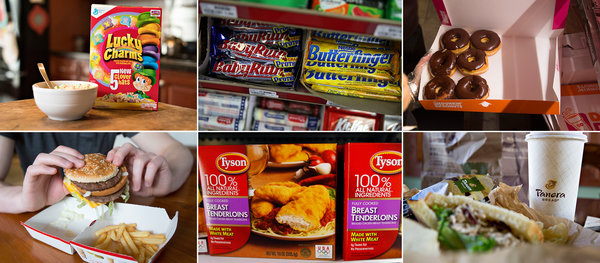
"caption": "Clockwise from top left: General Mills, Nestle, Dunkin Donuts, Panera, Tyson Chicken and McDonald's, among other big food companies, made commitments in 2015 to change the way they prepare and procure their food products. ",
"description": "Clockwise from top left: General Mills, Nestle, Dunkin Donuts, Panera, Tyson Chicken and McDonald's, among other big food companies, made commitments in 2015 to change the way they prepare and procure their food products. ",
"title": "yearendfoodtrends",
"credit": "Daniel Acker/Bloomberg/Getty; Justin Sullivan/Getty; Susana Gonzalez/Bloomberg/Getty; Daniel Acker/Bloomberg/Getty; Paul Sakuma/AP; Ulrich Baumgarten/Getty ",
"status": "inherit",
"isLoading": false,
"fetchFailed": false
},
"bayareabites_104681": {
"type": "attachments",
"id": "bayareabites_104681",
"meta": {
"index": "attachments_1716263798",
"site": "bayareabites",
"id": "104681",
"found": true
},
"parent": 104680,
"imgSizes": {
"twentyfourteen-full-width": {
"file": "https://ww2.kqed.org/app/uploads/sites/24/2015/12/cattle_enl-9f04484de362e9616eb17a83a70e41a079330389-1038x576.jpg",
"width": 1038,
"mimeType": "image/jpeg",
"height": 576
},
"thumbnail": {
"file": "https://ww2.kqed.org/app/uploads/sites/24/2015/12/cattle_enl-9f04484de362e9616eb17a83a70e41a079330389-400x271.jpg",
"width": 400,
"mimeType": "image/jpeg",
"height": 271
},
"fd-sm": {
"file": "https://ww2.kqed.org/app/uploads/sites/24/2015/12/cattle_enl-9f04484de362e9616eb17a83a70e41a079330389-960x651.jpg",
"width": 960,
"mimeType": "image/jpeg",
"height": 651
},
"post-thumbnail": {
"file": "https://ww2.kqed.org/app/uploads/sites/24/2015/12/cattle_enl-9f04484de362e9616eb17a83a70e41a079330389-672x372.jpg",
"width": 672,
"mimeType": "image/jpeg",
"height": 372
},
"kqedFullSize": {
"file": "https://ww2.kqed.org/app/uploads/sites/24/2015/12/cattle_enl-9f04484de362e9616eb17a83a70e41a079330389.jpg",
"width": 2100,
"height": 1423
},
"large": {
"file": "https://ww2.kqed.org/app/uploads/sites/24/2015/12/cattle_enl-9f04484de362e9616eb17a83a70e41a079330389-1440x976.jpg",
"width": 1440,
"mimeType": "image/jpeg",
"height": 976
},
"guest-author-96": {
"file": "https://ww2.kqed.org/app/uploads/sites/24/2015/12/cattle_enl-9f04484de362e9616eb17a83a70e41a079330389-96x96.jpg",
"width": 96,
"mimeType": "image/jpeg",
"height": 96
},
"medium": {
"file": "https://ww2.kqed.org/app/uploads/sites/24/2015/12/cattle_enl-9f04484de362e9616eb17a83a70e41a079330389-800x542.jpg",
"width": 800,
"mimeType": "image/jpeg",
"height": 542
},
"guest-author-64": {
"file": "https://ww2.kqed.org/app/uploads/sites/24/2015/12/cattle_enl-9f04484de362e9616eb17a83a70e41a079330389-64x64.jpg",
"width": 64,
"mimeType": "image/jpeg",
"height": 64
},
"guest-author-32": {
"file": "https://ww2.kqed.org/app/uploads/sites/24/2015/12/cattle_enl-9f04484de362e9616eb17a83a70e41a079330389-32x32.jpg",
"width": 32,
"mimeType": "image/jpeg",
"height": 32
},
"cat_post_thumb_sizecategory-posts-2": {
"file": "https://ww2.kqed.org/app/uploads/sites/24/2015/12/cattle_enl-9f04484de362e9616eb17a83a70e41a079330389-150x150.jpg",
"width": 150,
"mimeType": "image/jpeg",
"height": 150
},
"fd-lrg": {
"file": "https://ww2.kqed.org/app/uploads/sites/24/2015/12/cattle_enl-9f04484de362e9616eb17a83a70e41a079330389-1920x1301.jpg",
"width": 1920,
"mimeType": "image/jpeg",
"height": 1301
},
"fd-med": {
"file": "https://ww2.kqed.org/app/uploads/sites/24/2015/12/cattle_enl-9f04484de362e9616eb17a83a70e41a079330389-1180x800.jpg",
"width": 1180,
"mimeType": "image/jpeg",
"height": 800
},
"detail": {
"file": "https://ww2.kqed.org/app/uploads/sites/24/2015/12/cattle_enl-9f04484de362e9616eb17a83a70e41a079330389-75x75.jpg",
"width": 75,
"mimeType": "image/jpeg",
"height": 75
},
"medium_large": {
"file": "https://ww2.kqed.org/app/uploads/sites/24/2015/12/cattle_enl-9f04484de362e9616eb17a83a70e41a079330389-768x520.jpg",
"width": 768,
"mimeType": "image/jpeg",
"height": 520
},
"guest-author-128": {
"file": "https://ww2.kqed.org/app/uploads/sites/24/2015/12/cattle_enl-9f04484de362e9616eb17a83a70e41a079330389-128x128.jpg",
"width": 128,
"mimeType": "image/jpeg",
"height": 128
}
},
"publishDate": 1449871344,
"modified": 1449871344,
"caption": null,
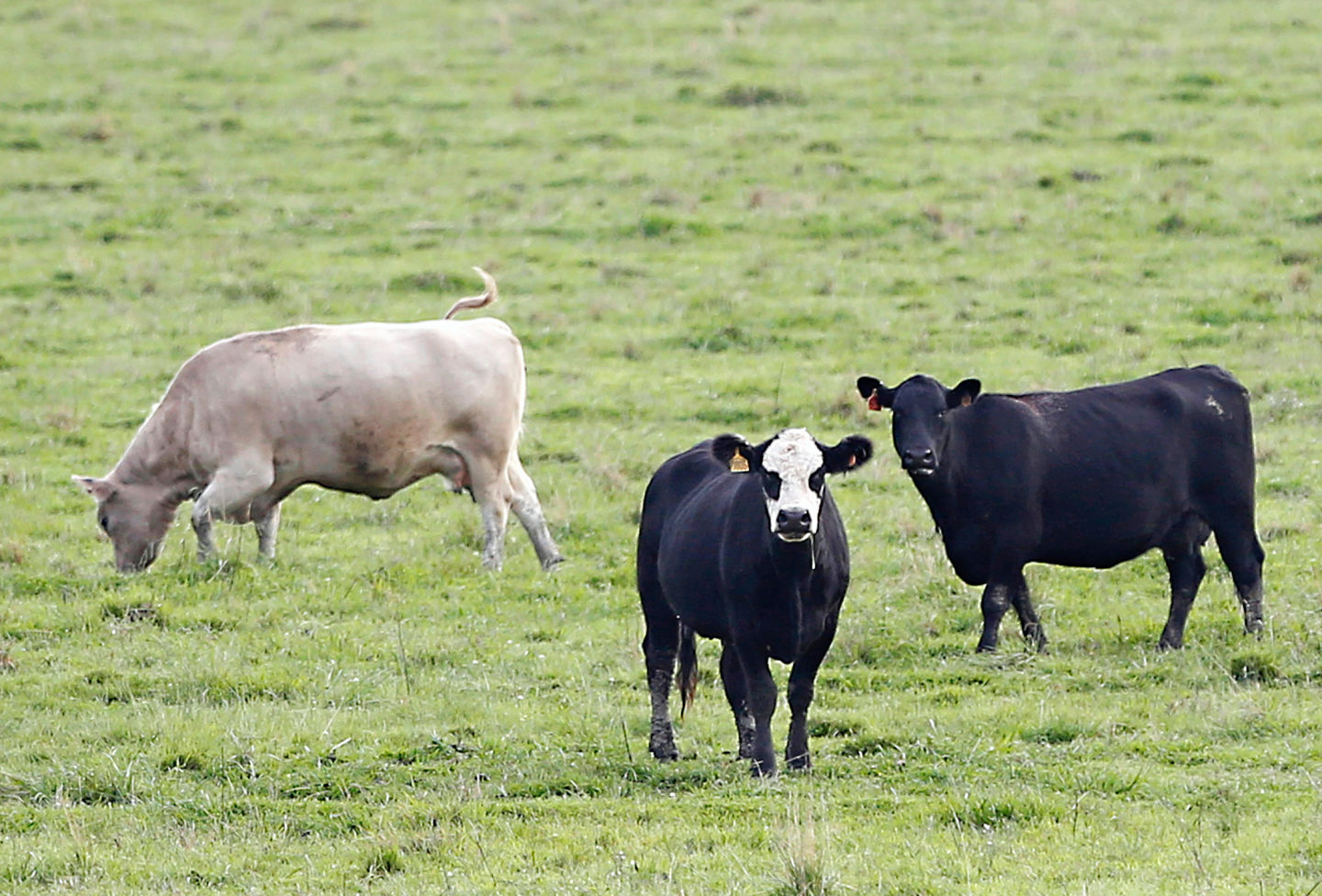
"description": "Cattle graze in a field near Sacramento, Calif. California Gov. Jerry Brown, along with many health advocacy groups, has called the overuse of antibiotics \"an urgent public health problem.\"",
"title": "Cattle graze in a field near Sacramento, Calif. California Gov. Jerry Brown, along with many health advocacy groups, has called the overuse of antibiotics \"an urgent public health problem.\"",
"credit": null,
"status": "inherit",
"isLoading": false,
"fetchFailed": false
},
"bayareabites_104311": {
"type": "attachments",
"id": "bayareabites_104311",
"meta": {
"index": "attachments_1716263798",
"site": "bayareabites",
"id": "104311",
"found": true
},
"parent": 0,
"imgSizes": {
"twentyfourteen-full-width": {
"file": "https://ww2.kqed.org/app/uploads/sites/24/2015/12/Participant-receiving-Food-Bank-resources-at-PHC-Event-2-1038x576.jpg",
"width": 1038,
"mimeType": "image/jpeg",
"height": 576
},
"thumbnail": {
"file": "https://ww2.kqed.org/app/uploads/sites/24/2015/12/Participant-receiving-Food-Bank-resources-at-PHC-Event-2-400x267.jpg",
"width": 400,
"mimeType": "image/jpeg",
"height": 267
},
"fd-sm": {
"file": "https://ww2.kqed.org/app/uploads/sites/24/2015/12/Participant-receiving-Food-Bank-resources-at-PHC-Event-2-960x640.jpg",
"width": 960,
"mimeType": "image/jpeg",
"height": 640
},
"post-thumbnail": {
"file": "https://ww2.kqed.org/app/uploads/sites/24/2015/12/Participant-receiving-Food-Bank-resources-at-PHC-Event-2-672x372.jpg",
"width": 672,
"mimeType": "image/jpeg",
"height": 372
},
"kqedFullSize": {
"file": "https://ww2.kqed.org/app/uploads/sites/24/2015/12/Participant-receiving-Food-Bank-resources-at-PHC-Event-2.jpg",
"width": 1920,
"height": 1280
},
"large": {
"file": "https://ww2.kqed.org/app/uploads/sites/24/2015/12/Participant-receiving-Food-Bank-resources-at-PHC-Event-2-1440x960.jpg",
"width": 1440,
"mimeType": "image/jpeg",
"height": 960
},
"guest-author-96": {
"file": "https://ww2.kqed.org/app/uploads/sites/24/2015/12/Participant-receiving-Food-Bank-resources-at-PHC-Event-2-96x96.jpg",
"width": 96,
"mimeType": "image/jpeg",
"height": 96
},
"medium": {
"file": "https://ww2.kqed.org/app/uploads/sites/24/2015/12/Participant-receiving-Food-Bank-resources-at-PHC-Event-2-800x533.jpg",
"width": 800,
"mimeType": "image/jpeg",
"height": 533
},
"guest-author-64": {
"file": "https://ww2.kqed.org/app/uploads/sites/24/2015/12/Participant-receiving-Food-Bank-resources-at-PHC-Event-2-64x64.jpg",
"width": 64,
"mimeType": "image/jpeg",
"height": 64
},
"guest-author-32": {
"file": "https://ww2.kqed.org/app/uploads/sites/24/2015/12/Participant-receiving-Food-Bank-resources-at-PHC-Event-2-32x32.jpg",
"width": 32,
"mimeType": "image/jpeg",
"height": 32
},
"cat_post_thumb_sizecategory-posts-2": {
"file": "https://ww2.kqed.org/app/uploads/sites/24/2015/12/Participant-receiving-Food-Bank-resources-at-PHC-Event-2-150x150.jpg",
"width": 150,
"mimeType": "image/jpeg",
"height": 150
},
"fd-lrg": {
"file": "https://ww2.kqed.org/app/uploads/sites/24/2015/12/Participant-receiving-Food-Bank-resources-at-PHC-Event-2-1920x1280.jpg",
"width": 1920,
"mimeType": "image/jpeg",
"height": 1280
},
"fd-med": {
"file": "https://ww2.kqed.org/app/uploads/sites/24/2015/12/Participant-receiving-Food-Bank-resources-at-PHC-Event-2-1180x787.jpg",
"width": 1180,
"mimeType": "image/jpeg",
"height": 787
},
"detail": {
"file": "https://ww2.kqed.org/app/uploads/sites/24/2015/12/Participant-receiving-Food-Bank-resources-at-PHC-Event-2-75x75.jpg",
"width": 75,
"mimeType": "image/jpeg",
"height": 75
},
"guest-author-128": {
"file": "https://ww2.kqed.org/app/uploads/sites/24/2015/12/Participant-receiving-Food-Bank-resources-at-PHC-Event-2-128x128.jpg",
"width": 128,
"mimeType": "image/jpeg",
"height": 128
}
},
"publishDate": 1449186578,
"modified": 1449186643,
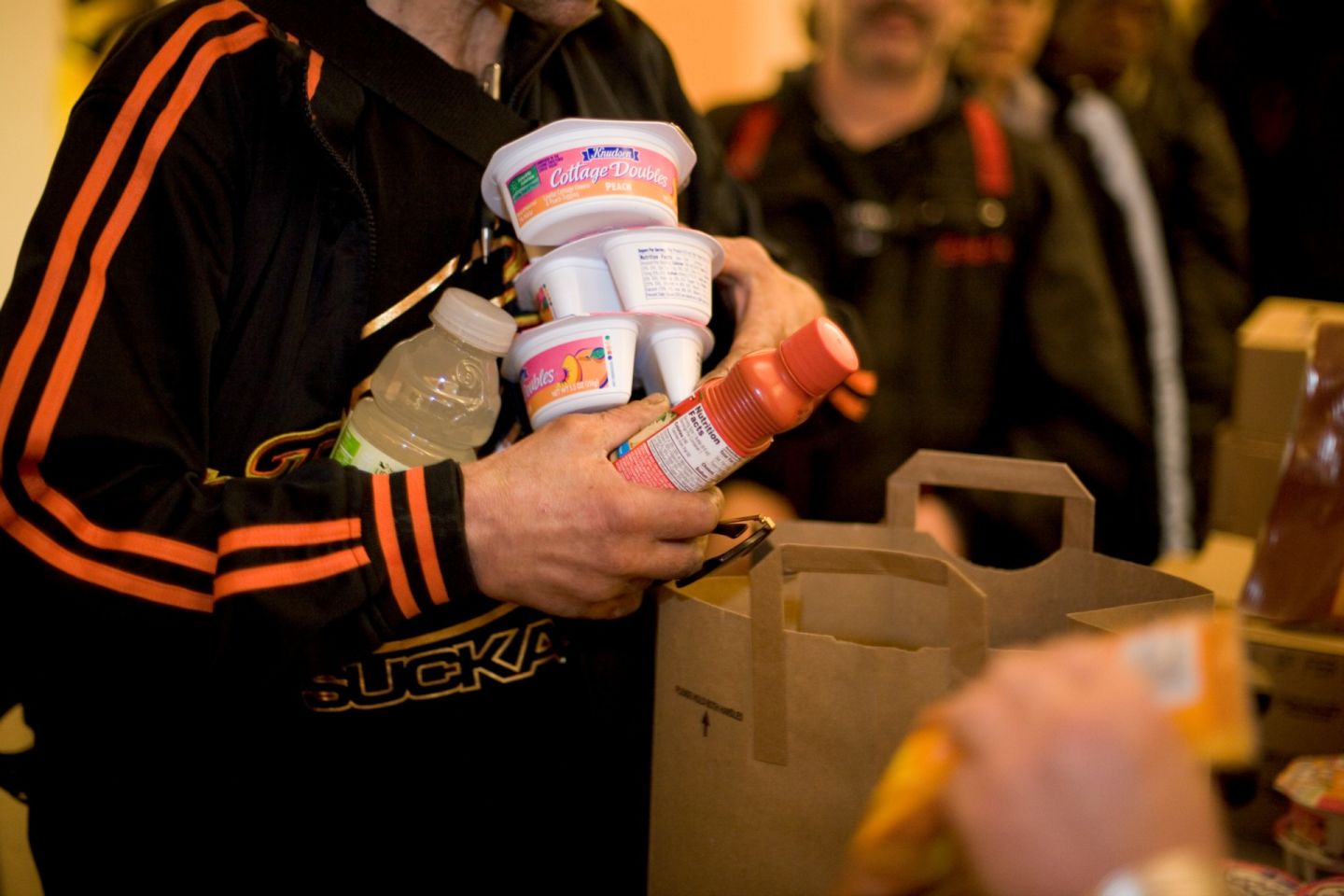
"caption": "A participant receiving Food Bank resources at a PHC Event.",
"description": "A participant receiving Food Bank resources at a PHC Event.",
"title": "A participant receiving Food Bank resources at a PHC Event.",
"credit": "Jamey Thomas",
"status": "inherit",
"isLoading": false,
"fetchFailed": false
},
"bayareabites_104053": {
"type": "attachments",
"id": "bayareabites_104053",
"meta": {
"index": "attachments_1716263798",
"site": "bayareabites",
"id": "104053",
"found": true
},
"parent": 104051,
"imgSizes": {
"thumbnail": {
"file": "https://ww2.kqed.org/app/uploads/sites/24/2015/11/shutterstock-salmon-400x266.jpg",
"width": 400,
"mimeType": "image/jpeg",
"height": 266
},
"post-thumbnail": {
"file": "https://ww2.kqed.org/app/uploads/sites/24/2015/11/shutterstock-salmon-672x372.jpg",
"width": 672,
"mimeType": "image/jpeg",
"height": 372
},
"kqedFullSize": {
"file": "https://ww2.kqed.org/app/uploads/sites/24/2015/11/shutterstock-salmon.jpg",
"width": 680,
"height": 452
},
"cat_post_thumb_sizecategory-posts-2": {
"file": "https://ww2.kqed.org/app/uploads/sites/24/2015/11/shutterstock-salmon-150x150.jpg",
"width": 150,
"mimeType": "image/jpeg",
"height": 150
},
"guest-author-96": {
"file": "https://ww2.kqed.org/app/uploads/sites/24/2015/11/shutterstock-salmon-96x96.jpg",
"width": 96,
"mimeType": "image/jpeg",
"height": 96
},
"guest-author-64": {
"file": "https://ww2.kqed.org/app/uploads/sites/24/2015/11/shutterstock-salmon-64x64.jpg",
"width": 64,
"mimeType": "image/jpeg",
"height": 64
},
"detail": {
"file": "https://ww2.kqed.org/app/uploads/sites/24/2015/11/shutterstock-salmon-75x75.jpg",
"width": 75,
"mimeType": "image/jpeg",
"height": 75
},
"guest-author-32": {
"file": "https://ww2.kqed.org/app/uploads/sites/24/2015/11/shutterstock-salmon-32x32.jpg",
"width": 32,
"mimeType": "image/jpeg",
"height": 32
},
"guest-author-128": {
"file": "https://ww2.kqed.org/app/uploads/sites/24/2015/11/shutterstock-salmon-128x128.jpg",
"width": 128,
"mimeType": "image/jpeg",
"height": 128
}
},
"publishDate": 1448477121,
"modified": 1448477145,
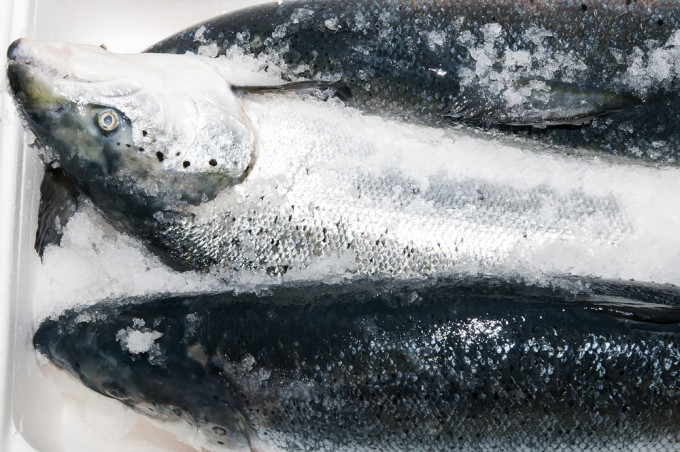
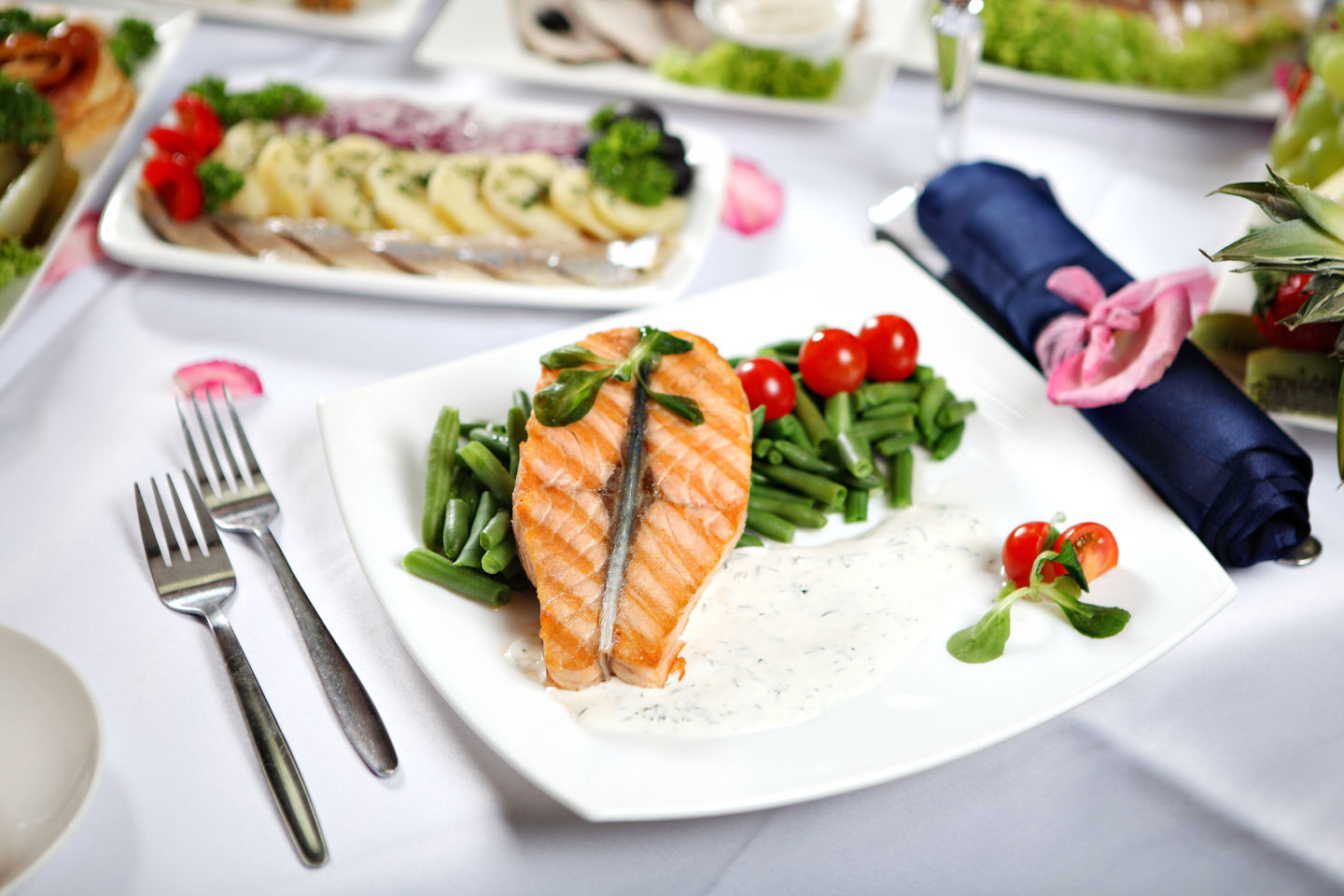
"caption": "Salmon",
"description": "Salmon",
"title": "Salmon",
"credit": "Shutterstock",
"status": "inherit",
"isLoading": false,
"fetchFailed": false
},
"bayareabites_103950": {
"type": "attachments",
"id": "bayareabites_103950",
"meta": {
"index": "attachments_1716263798",
"site": "bayareabites",
"id": "103950",
"found": true
},
"parent": 103949,
"imgSizes": {
"twentyfourteen-full-width": {
"file": "https://ww2.kqed.org/app/uploads/sites/24/2015/11/turkeylabel1small_enl-a25017d6d96cd1be0cb4cb26391a66b3e5c31c7c-1038x576.jpg",
"width": 1038,
"mimeType": "image/jpeg",
"height": 576
},
"thumbnail": {
"file": "https://ww2.kqed.org/app/uploads/sites/24/2015/11/turkeylabel1small_enl-a25017d6d96cd1be0cb4cb26391a66b3e5c31c7c-400x407.jpg",
"width": 400,
"mimeType": "image/jpeg",
"height": 407
},
"fd-sm": {
"file": "https://ww2.kqed.org/app/uploads/sites/24/2015/11/turkeylabel1small_enl-a25017d6d96cd1be0cb4cb26391a66b3e5c31c7c-960x976.jpg",
"width": 960,
"mimeType": "image/jpeg",
"height": 976
},
"post-thumbnail": {
"file": "https://ww2.kqed.org/app/uploads/sites/24/2015/11/turkeylabel1small_enl-a25017d6d96cd1be0cb4cb26391a66b3e5c31c7c-672x372.jpg",
"width": 672,
"mimeType": "image/jpeg",
"height": 372
},
"kqedFullSize": {
"file": "https://ww2.kqed.org/app/uploads/sites/24/2015/11/turkeylabel1small_enl-a25017d6d96cd1be0cb4cb26391a66b3e5c31c7c.jpg",
"width": 1967,
"height": 2000
},
"large": {
"file": "https://ww2.kqed.org/app/uploads/sites/24/2015/11/turkeylabel1small_enl-a25017d6d96cd1be0cb4cb26391a66b3e5c31c7c-1440x1464.jpg",
"width": 1440,
"mimeType": "image/jpeg",
"height": 1464
},
"guest-author-96": {
"file": "https://ww2.kqed.org/app/uploads/sites/24/2015/11/turkeylabel1small_enl-a25017d6d96cd1be0cb4cb26391a66b3e5c31c7c-96x96.jpg",
"width": 96,
"mimeType": "image/jpeg",
"height": 96
},
"medium": {
"file": "https://ww2.kqed.org/app/uploads/sites/24/2015/11/turkeylabel1small_enl-a25017d6d96cd1be0cb4cb26391a66b3e5c31c7c-800x813.jpg",
"width": 800,
"mimeType": "image/jpeg",
"height": 813
},
"guest-author-64": {
"file": "https://ww2.kqed.org/app/uploads/sites/24/2015/11/turkeylabel1small_enl-a25017d6d96cd1be0cb4cb26391a66b3e5c31c7c-64x64.jpg",
"width": 64,
"mimeType": "image/jpeg",
"height": 64
},
"guest-author-32": {
"file": "https://ww2.kqed.org/app/uploads/sites/24/2015/11/turkeylabel1small_enl-a25017d6d96cd1be0cb4cb26391a66b3e5c31c7c-32x32.jpg",
"width": 32,
"mimeType": "image/jpeg",
"height": 32
},
"cat_post_thumb_sizecategory-posts-2": {
"file": "https://ww2.kqed.org/app/uploads/sites/24/2015/11/turkeylabel1small_enl-a25017d6d96cd1be0cb4cb26391a66b3e5c31c7c-150x150.jpg",
"width": 150,
"mimeType": "image/jpeg",
"height": 150
},
"fd-lrg": {
"file": "https://ww2.kqed.org/app/uploads/sites/24/2015/11/turkeylabel1small_enl-a25017d6d96cd1be0cb4cb26391a66b3e5c31c7c-1920x1952.jpg",
"width": 1920,
"mimeType": "image/jpeg",
"height": 1952
},
"fd-med": {
"file": "https://ww2.kqed.org/app/uploads/sites/24/2015/11/turkeylabel1small_enl-a25017d6d96cd1be0cb4cb26391a66b3e5c31c7c-1180x1200.jpg",
"width": 1180,
"mimeType": "image/jpeg",
"height": 1200
},
"detail": {
"file": "https://ww2.kqed.org/app/uploads/sites/24/2015/11/turkeylabel1small_enl-a25017d6d96cd1be0cb4cb26391a66b3e5c31c7c-75x75.jpg",
"width": 75,
"mimeType": "image/jpeg",
"height": 75
},
"guest-author-128": {
"file": "https://ww2.kqed.org/app/uploads/sites/24/2015/11/turkeylabel1small_enl-a25017d6d96cd1be0cb4cb26391a66b3e5c31c7c-128x128.jpg",
"width": 128,
"mimeType": "image/jpeg",
"height": 128
}
},
"publishDate": 1448158246,
"modified": 1448160949,
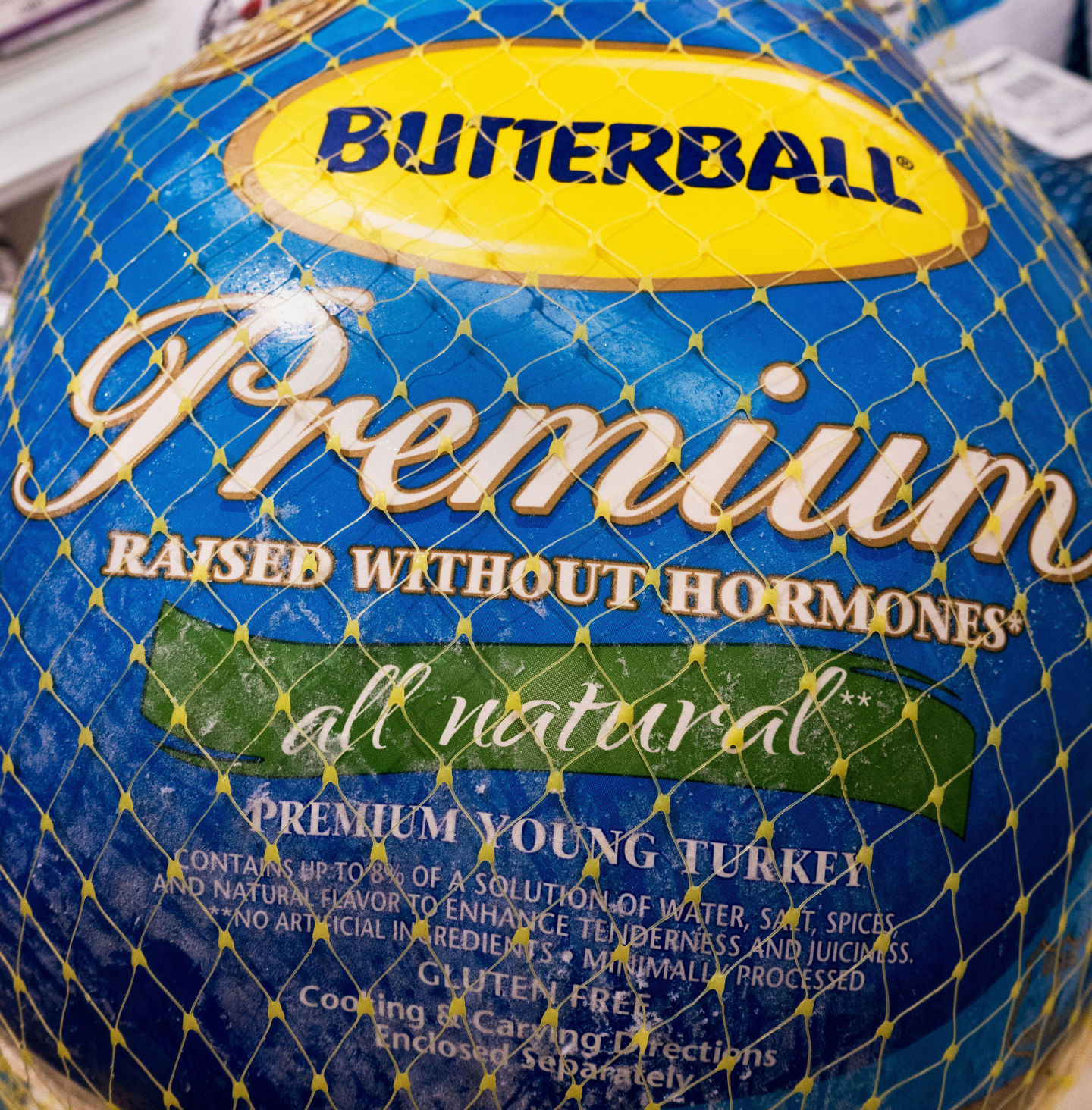
"caption": "A Butterball turkey for sale in November 2014, in Centreville, Va. Terms like \"premium\" and \"raised without hormones\" tell you little about the quality of the turkey or how it was raised.",
"description": "A Butterball turkey for sale in November 2014, in Centreville, Va. Terms like \"premium\" and \"raised without hormones\" tell you little about the quality of the turkey or how it was raised",
"title": "A Butterball turkey for sale in November 2014, in Centreville, Va. Terms like \"premium\" and \"raised without hormones\" tell you little about the quality of the turkey or how it was raised.",
"credit": "Paul J. Richards/AFP/Getty Images ",
"status": "inherit",
"isLoading": false,
"fetchFailed": false
},
"bayareabites_103849": {
"type": "attachments",
"id": "bayareabites_103849",
"meta": {
"index": "attachments_1716263798",
"site": "bayareabites",
"id": "103849",
"found": true
},
"parent": 103847,
"imgSizes": {
"twentyfourteen-full-width": {
"file": "https://ww2.kqed.org/app/uploads/sites/24/2015/11/BuyingPoultry-Homepage-screenshot-e1447873721678-1038x576.png",
"width": 1038,
"mimeType": "image/png",
"height": 576
},
"thumbnail": {
"file": "https://ww2.kqed.org/app/uploads/sites/24/2015/11/BuyingPoultry-Homepage-screenshot-e1447873721678-400x225.png",
"width": 400,
"mimeType": "image/png",
"height": 225
},
"fd-sm": {
"file": "https://ww2.kqed.org/app/uploads/sites/24/2015/11/BuyingPoultry-Homepage-screenshot-e1447873721678-960x540.png",
"width": 960,
"mimeType": "image/png",
"height": 540
},
"post-thumbnail": {
"file": "https://ww2.kqed.org/app/uploads/sites/24/2015/11/BuyingPoultry-Homepage-screenshot-e1447873721678-672x372.png",
"width": 672,
"mimeType": "image/png",
"height": 372
},
"kqedFullSize": {
"file": "https://ww2.kqed.org/app/uploads/sites/24/2015/11/BuyingPoultry-Homepage-screenshot-e1447873721678.png",
"width": 1920,
"height": 1080
},
"large": {
"file": "https://ww2.kqed.org/app/uploads/sites/24/2015/11/BuyingPoultry-Homepage-screenshot-e1447873721678-1440x810.png",
"width": 1440,
"mimeType": "image/png",
"height": 810
},
"guest-author-96": {
"file": "https://ww2.kqed.org/app/uploads/sites/24/2015/11/BuyingPoultry-Homepage-screenshot-e1447873721678-96x96.png",
"width": 96,
"mimeType": "image/png",
"height": 96
},
"medium": {
"file": "https://ww2.kqed.org/app/uploads/sites/24/2015/11/BuyingPoultry-Homepage-screenshot-e1447873721678-800x450.png",
"width": 800,
"mimeType": "image/png",
"height": 450
},
"guest-author-64": {
"file": "https://ww2.kqed.org/app/uploads/sites/24/2015/11/BuyingPoultry-Homepage-screenshot-e1447873721678-64x64.png",
"width": 64,
"mimeType": "image/png",
"height": 64
},
"guest-author-32": {
"file": "https://ww2.kqed.org/app/uploads/sites/24/2015/11/BuyingPoultry-Homepage-screenshot-e1447873721678-32x32.png",
"width": 32,
"mimeType": "image/png",
"height": 32
},
"cat_post_thumb_sizecategory-posts-2": {
"file": "https://ww2.kqed.org/app/uploads/sites/24/2015/11/BuyingPoultry-Homepage-screenshot-e1447873721678-150x150.png",
"width": 150,
"mimeType": "image/png",
"height": 150
},
"fd-lrg": {
"file": "https://ww2.kqed.org/app/uploads/sites/24/2015/11/BuyingPoultry-Homepage-screenshot-e1447873721678-1920x1080.png",
"width": 1920,
"mimeType": "image/png",
"height": 1080
},
"fd-med": {
"file": "https://ww2.kqed.org/app/uploads/sites/24/2015/11/BuyingPoultry-Homepage-screenshot-e1447873721678-1180x664.png",
"width": 1180,
"mimeType": "image/png",
"height": 664
},
"detail": {
"file": "https://ww2.kqed.org/app/uploads/sites/24/2015/11/BuyingPoultry-Homepage-screenshot-e1447873721678-75x75.png",
"width": 75,
"mimeType": "image/png",
"height": 75
},
"guest-author-128": {
"file": "https://ww2.kqed.org/app/uploads/sites/24/2015/11/BuyingPoultry-Homepage-screenshot-e1447873721678-128x128.png",
"width": 128,
"mimeType": "image/png",
"height": 128
}
},
"publishDate": 1447868235,
"modified": 1447877950,
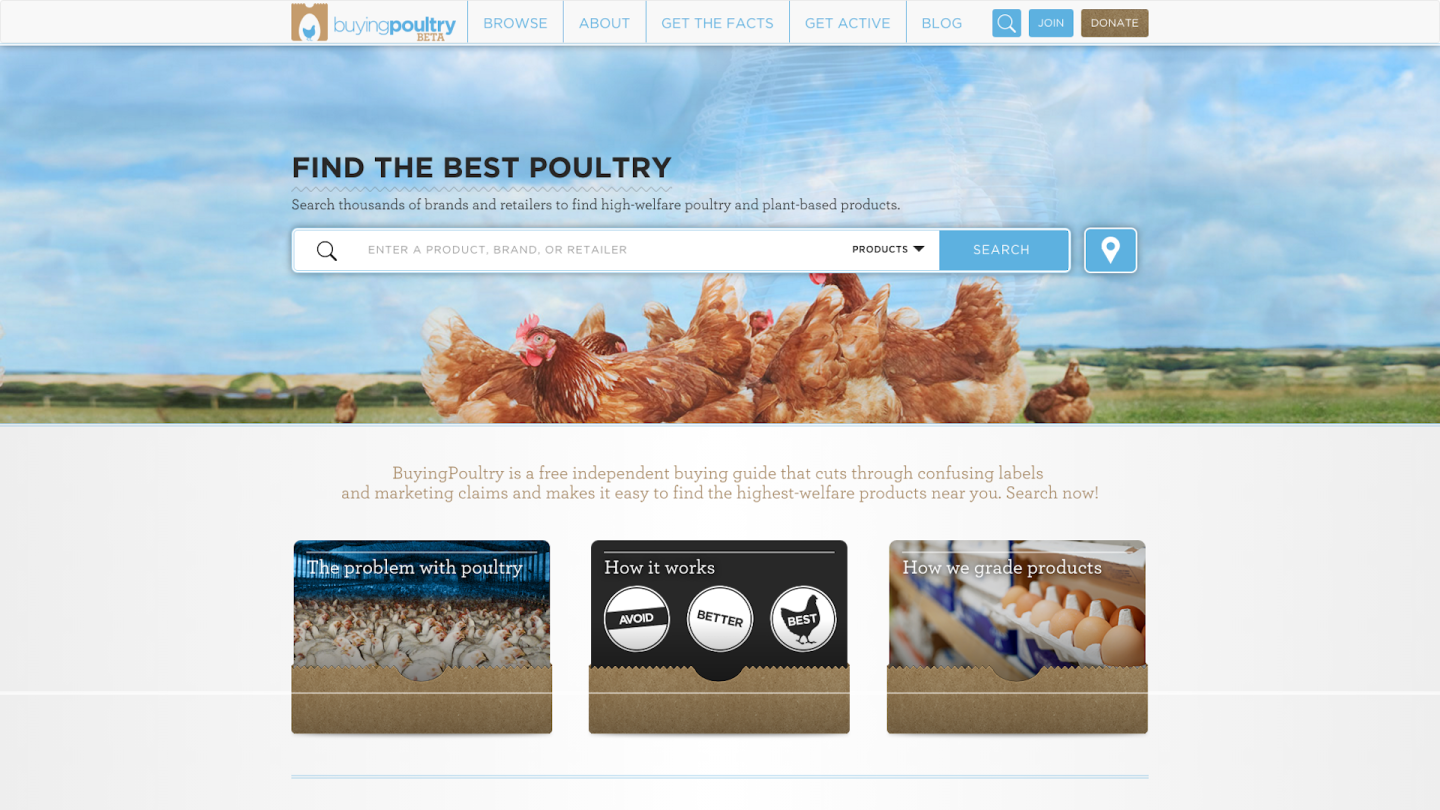
"caption": "BuyingPoultry.com is a new website from Farm Forward, a national nonprofit that promotes conscientious food choices and educates about animal cruelty on traditional factory farms.",
"description": "BuyingPoultry.com is a new website from Farm Forward, a national nonprofit that promotes conscientious food choices and educates about animal cruelty on traditional factory farms.",
"title": "BuyingPoultry.com is a new website from Farm Forward, a national nonprofit that promotes conscientious food choices and educates about animal cruelty on traditional factory farms.",
"credit": "Farm Forward",
"status": "inherit",
"isLoading": false,
"fetchFailed": false
},
"bayareabites_103738": {
"type": "attachments",
"id": "bayareabites_103738",
"meta": {
"index": "attachments_1716263798",
"site": "bayareabites",
"id": "103738",
"found": true
},
"parent": 0,
"imgSizes": {
"twentyfourteen-full-width": {
"file": "https://ww2.kqed.org/app/uploads/sites/24/2015/11/edited11-1038x576.jpg",
"width": 1038,
"mimeType": "image/jpeg",
"height": 576
},
"thumbnail": {
"file": "https://ww2.kqed.org/app/uploads/sites/24/2015/11/edited11-400x267.jpg",
"width": 400,
"mimeType": "image/jpeg",
"height": 267
},
"fd-sm": {
"file": "https://ww2.kqed.org/app/uploads/sites/24/2015/11/edited11-960x641.jpg",
"width": 960,
"mimeType": "image/jpeg",
"height": 641
},
"post-thumbnail": {
"file": "https://ww2.kqed.org/app/uploads/sites/24/2015/11/edited11-672x372.jpg",
"width": 672,
"mimeType": "image/jpeg",
"height": 372
},
"kqedFullSize": {
"file": "https://ww2.kqed.org/app/uploads/sites/24/2015/11/edited11.jpg",
"width": 1920,
"height": 1281
},
"large": {
"file": "https://ww2.kqed.org/app/uploads/sites/24/2015/11/edited11-1440x961.jpg",
"width": 1440,
"mimeType": "image/jpeg",
"height": 961
},
"guest-author-96": {
"file": "https://ww2.kqed.org/app/uploads/sites/24/2015/11/edited11-96x96.jpg",
"width": 96,
"mimeType": "image/jpeg",
"height": 96
},
"medium": {
"file": "https://ww2.kqed.org/app/uploads/sites/24/2015/11/edited11-800x534.jpg",
"width": 800,
"mimeType": "image/jpeg",
"height": 534
},
"guest-author-64": {
"file": "https://ww2.kqed.org/app/uploads/sites/24/2015/11/edited11-64x64.jpg",
"width": 64,
"mimeType": "image/jpeg",
"height": 64
},
"guest-author-32": {
"file": "https://ww2.kqed.org/app/uploads/sites/24/2015/11/edited11-32x32.jpg",
"width": 32,
"mimeType": "image/jpeg",
"height": 32
},
"cat_post_thumb_sizecategory-posts-2": {
"file": "https://ww2.kqed.org/app/uploads/sites/24/2015/11/edited11-150x150.jpg",
"width": 150,
"mimeType": "image/jpeg",
"height": 150
},
"fd-lrg": {
"file": "https://ww2.kqed.org/app/uploads/sites/24/2015/11/edited11-1920x1281.jpg",
"width": 1920,
"mimeType": "image/jpeg",
"height": 1281
},
"fd-med": {
"file": "https://ww2.kqed.org/app/uploads/sites/24/2015/11/edited11-1180x787.jpg",
"width": 1180,
"mimeType": "image/jpeg",
"height": 787
},
"detail": {
"file": "https://ww2.kqed.org/app/uploads/sites/24/2015/11/edited11-75x75.jpg",
"width": 75,
"mimeType": "image/jpeg",
"height": 75
},
"guest-author-128": {
"file": "https://ww2.kqed.org/app/uploads/sites/24/2015/11/edited11-128x128.jpg",
"width": 128,
"mimeType": "image/jpeg",
"height": 128
}
},
"publishDate": 1447286590,
"modified": 1447298743,
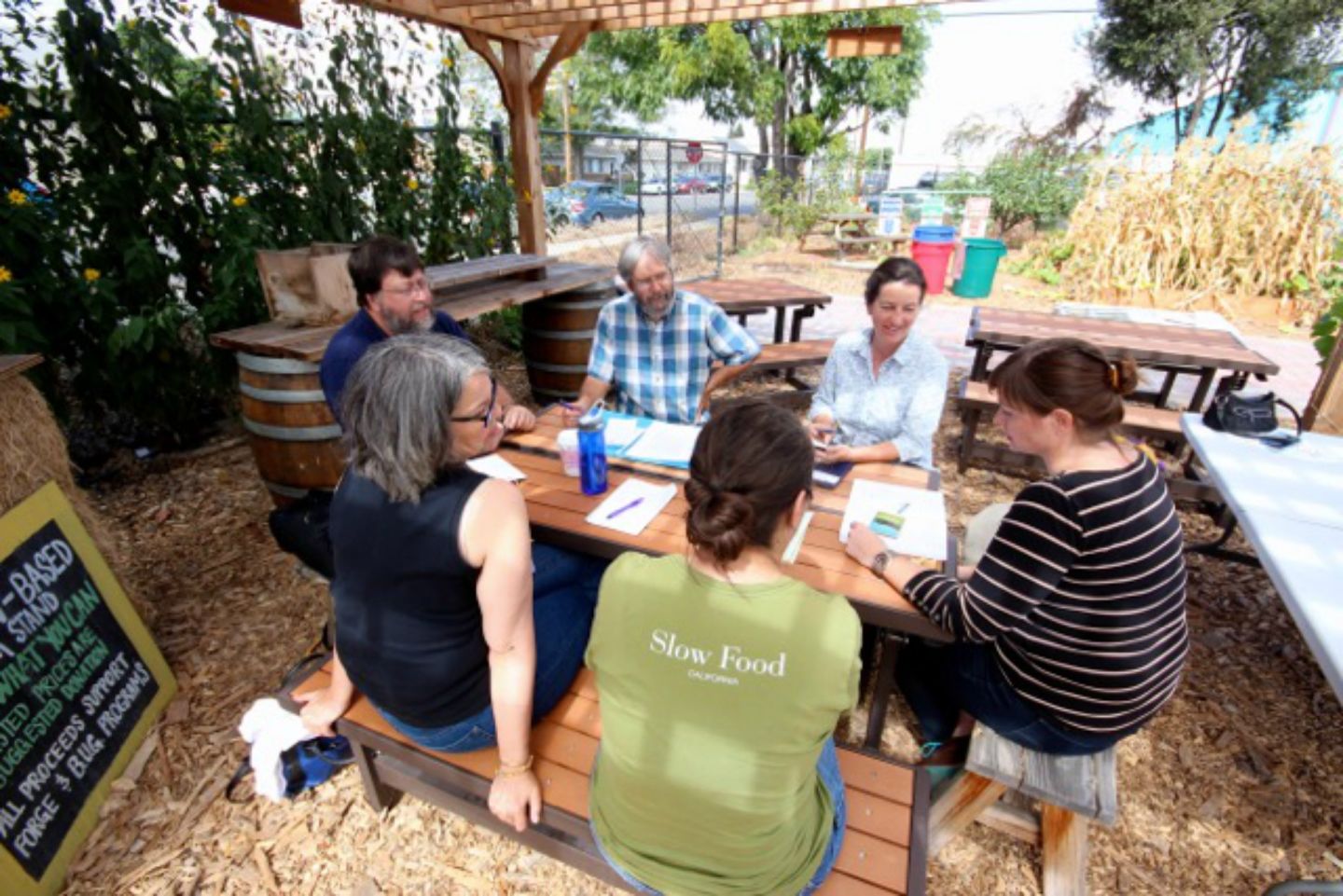
"caption": "Members from the California Food Policy Council Central Valley/Mountain region chatting at the CAFPC statewide meeting in 2014.",
"description": "Members from the California Food Policy Council Central Valley/Mountain region chatting at the CAFPC statewide meeting in 2014.",
"title": "Members from the California Food Policy Council Central Valley/Mountain region chatting at the CAFPC statewide meeting in 2014.",
"credit": "Doris Meier",
"status": "inherit",
"isLoading": false,
"fetchFailed": false
},
"bayareabites_103014": {
"type": "attachments",
"id": "bayareabites_103014",
"meta": {
"index": "attachments_1716263798",
"site": "bayareabites",
"id": "103014",
"found": true
},
"parent": 102968,
"imgSizes": {
"twentyfourteen-full-width": {
"file": "https://ww2.kqed.org/app/uploads/sites/24/2015/11/cheyenne-1038x576.jpg",
"width": 1038,
"mimeType": "image/jpeg",
"height": 576
},
"thumbnail": {
"file": "https://ww2.kqed.org/app/uploads/sites/24/2015/11/cheyenne-400x267.jpg",
"width": 400,
"mimeType": "image/jpeg",
"height": 267
},
"fd-sm": {
"file": "https://ww2.kqed.org/app/uploads/sites/24/2015/11/cheyenne-960x640.jpg",
"width": 960,
"mimeType": "image/jpeg",
"height": 640
},
"post-thumbnail": {
"file": "https://ww2.kqed.org/app/uploads/sites/24/2015/11/cheyenne-672x372.jpg",
"width": 672,
"mimeType": "image/jpeg",
"height": 372
},
"kqedFullSize": {
"file": "https://ww2.kqed.org/app/uploads/sites/24/2015/11/cheyenne.jpg",
"width": 2048,
"height": 1365
},
"large": {
"file": "https://ww2.kqed.org/app/uploads/sites/24/2015/11/cheyenne-1440x960.jpg",
"width": 1440,
"mimeType": "image/jpeg",
"height": 960
},
"guest-author-96": {
"file": "https://ww2.kqed.org/app/uploads/sites/24/2015/11/cheyenne-96x96.jpg",
"width": 96,
"mimeType": "image/jpeg",
"height": 96
},
"medium": {
"file": "https://ww2.kqed.org/app/uploads/sites/24/2015/11/cheyenne-800x533.jpg",
"width": 800,
"mimeType": "image/jpeg",
"height": 533
},
"guest-author-64": {
"file": "https://ww2.kqed.org/app/uploads/sites/24/2015/11/cheyenne-64x64.jpg",
"width": 64,
"mimeType": "image/jpeg",
"height": 64
},
"guest-author-32": {
"file": "https://ww2.kqed.org/app/uploads/sites/24/2015/11/cheyenne-32x32.jpg",
"width": 32,
"mimeType": "image/jpeg",
"height": 32
},
"cat_post_thumb_sizecategory-posts-2": {
"file": "https://ww2.kqed.org/app/uploads/sites/24/2015/11/cheyenne-150x150.jpg",
"width": 150,
"mimeType": "image/jpeg",
"height": 150
},
"fd-lrg": {
"file": "https://ww2.kqed.org/app/uploads/sites/24/2015/11/cheyenne-1920x1280.jpg",
"width": 1920,
"mimeType": "image/jpeg",
"height": 1280
},
"fd-med": {
"file": "https://ww2.kqed.org/app/uploads/sites/24/2015/11/cheyenne-1180x786.jpg",
"width": 1180,
"mimeType": "image/jpeg",
"height": 786
},
"detail": {
"file": "https://ww2.kqed.org/app/uploads/sites/24/2015/11/cheyenne-75x75.jpg",
"width": 75,
"mimeType": "image/jpeg",
"height": 75
},
"guest-author-128": {
"file": "https://ww2.kqed.org/app/uploads/sites/24/2015/11/cheyenne-128x128.jpg",
"width": 128,
"mimeType": "image/jpeg",
"height": 128
}
},
"publishDate": 1446776247,
"modified": 1446776263,
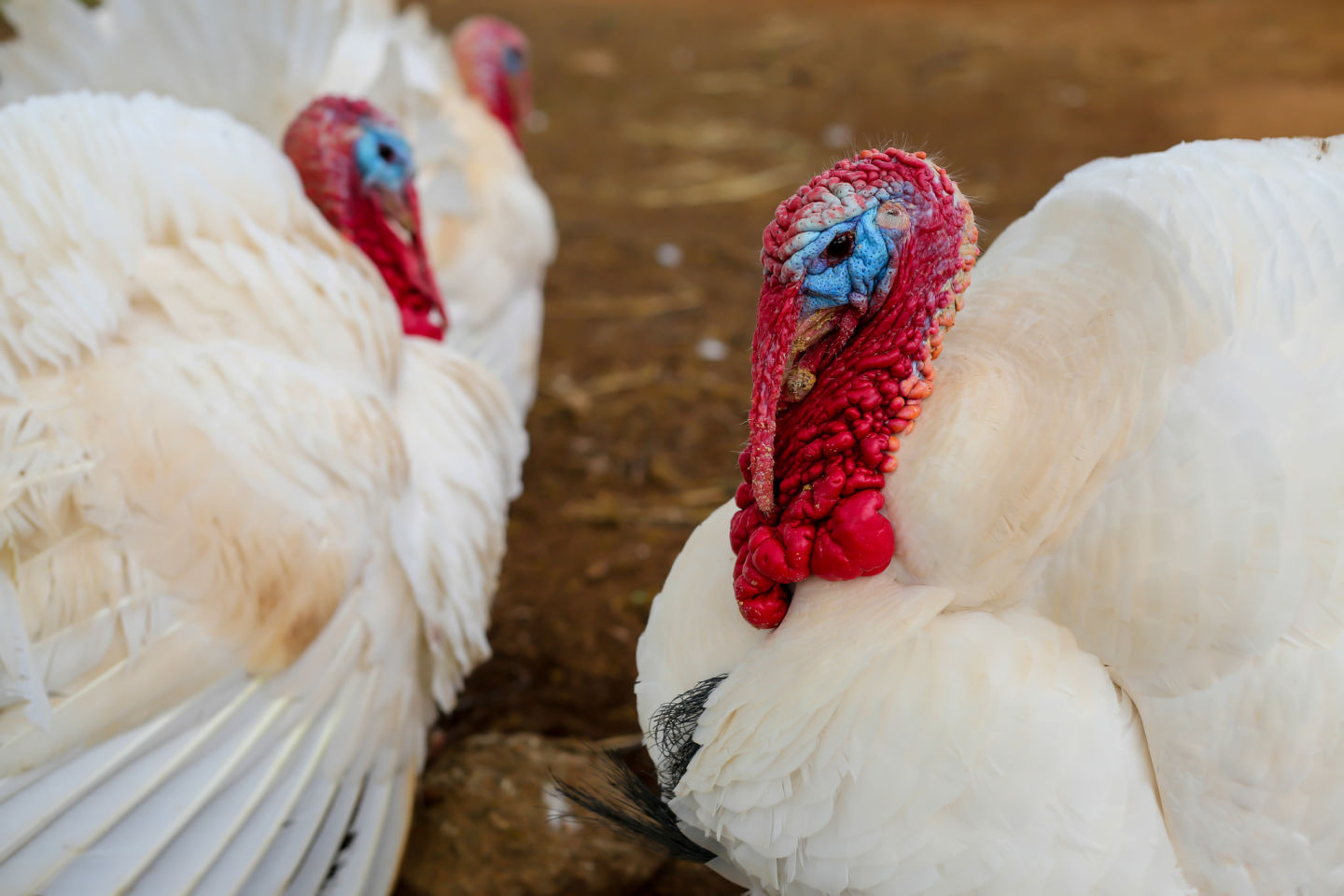
"caption": "Cheyenne was one of the turkeys left in a box in Animal Place's driveway.",
"description": "Cheyenne was one of the turkeys left in a box in Animal Place's driveway.",
"title": "Cheyenne was one of the turkeys left in a box in Animal Place's driveway.",
"credit": "Courtesy of Animal Place",
"status": "inherit",
"isLoading": false,
"fetchFailed": false
},
"bayareabites_103319": {
"type": "attachments",
"id": "bayareabites_103319",
"meta": {
"index": "attachments_1716263798",
"site": "bayareabites",
"id": "103319",
"found": true
},
"parent": 103318,
"imgSizes": {
"twentyfourteen-full-width": {
"file": "https://ww2.kqed.org/app/uploads/sites/24/2015/11/gettyimages-482696700_custom-3b2d86bc315805c0070f8c4b608510712b8875be-1038x576.jpg",
"width": 1038,
"mimeType": "image/jpeg",
"height": 576
},
"thumbnail": {
"file": "https://ww2.kqed.org/app/uploads/sites/24/2015/11/gettyimages-482696700_custom-3b2d86bc315805c0070f8c4b608510712b8875be-400x266.jpg",
"width": 400,
"mimeType": "image/jpeg",
"height": 266
},
"fd-sm": {
"file": "https://ww2.kqed.org/app/uploads/sites/24/2015/11/gettyimages-482696700_custom-3b2d86bc315805c0070f8c4b608510712b8875be-960x639.jpg",
"width": 960,
"mimeType": "image/jpeg",
"height": 639
},
"post-thumbnail": {
"file": "https://ww2.kqed.org/app/uploads/sites/24/2015/11/gettyimages-482696700_custom-3b2d86bc315805c0070f8c4b608510712b8875be-672x372.jpg",
"width": 672,
"mimeType": "image/jpeg",
"height": 372
},
"kqedFullSize": {
"file": "https://ww2.kqed.org/app/uploads/sites/24/2015/11/gettyimages-482696700_custom-3b2d86bc315805c0070f8c4b608510712b8875be.jpg",
"width": 3000,
"height": 1998
},
"large": {
"file": "https://ww2.kqed.org/app/uploads/sites/24/2015/11/gettyimages-482696700_custom-3b2d86bc315805c0070f8c4b608510712b8875be-1440x959.jpg",
"width": 1440,
"mimeType": "image/jpeg",
"height": 959
},
"guest-author-96": {
"file": "https://ww2.kqed.org/app/uploads/sites/24/2015/11/gettyimages-482696700_custom-3b2d86bc315805c0070f8c4b608510712b8875be-96x96.jpg",
"width": 96,
"mimeType": "image/jpeg",
"height": 96
},
"medium": {
"file": "https://ww2.kqed.org/app/uploads/sites/24/2015/11/gettyimages-482696700_custom-3b2d86bc315805c0070f8c4b608510712b8875be-800x533.jpg",
"width": 800,
"mimeType": "image/jpeg",
"height": 533
},
"guest-author-64": {
"file": "https://ww2.kqed.org/app/uploads/sites/24/2015/11/gettyimages-482696700_custom-3b2d86bc315805c0070f8c4b608510712b8875be-64x64.jpg",
"width": 64,
"mimeType": "image/jpeg",
"height": 64
},
"guest-author-32": {
"file": "https://ww2.kqed.org/app/uploads/sites/24/2015/11/gettyimages-482696700_custom-3b2d86bc315805c0070f8c4b608510712b8875be-32x32.jpg",
"width": 32,
"mimeType": "image/jpeg",
"height": 32
},
"cat_post_thumb_sizecategory-posts-2": {
"file": "https://ww2.kqed.org/app/uploads/sites/24/2015/11/gettyimages-482696700_custom-3b2d86bc315805c0070f8c4b608510712b8875be-150x150.jpg",
"width": 150,
"mimeType": "image/jpeg",
"height": 150
},
"fd-lrg": {
"file": "https://ww2.kqed.org/app/uploads/sites/24/2015/11/gettyimages-482696700_custom-3b2d86bc315805c0070f8c4b608510712b8875be-1920x1279.jpg",
"width": 1920,
"mimeType": "image/jpeg",
"height": 1279
},
"fd-med": {
"file": "https://ww2.kqed.org/app/uploads/sites/24/2015/11/gettyimages-482696700_custom-3b2d86bc315805c0070f8c4b608510712b8875be-1180x786.jpg",
"width": 1180,
"mimeType": "image/jpeg",
"height": 786
},
"detail": {
"file": "https://ww2.kqed.org/app/uploads/sites/24/2015/11/gettyimages-482696700_custom-3b2d86bc315805c0070f8c4b608510712b8875be-75x75.jpg",
"width": 75,
"mimeType": "image/jpeg",
"height": 75
},
"guest-author-128": {
"file": "https://ww2.kqed.org/app/uploads/sites/24/2015/11/gettyimages-482696700_custom-3b2d86bc315805c0070f8c4b608510712b8875be-128x128.jpg",
"width": 128,
"mimeType": "image/jpeg",
"height": 128
}
},
"publishDate": 1447061301,
"modified": 1447061341,
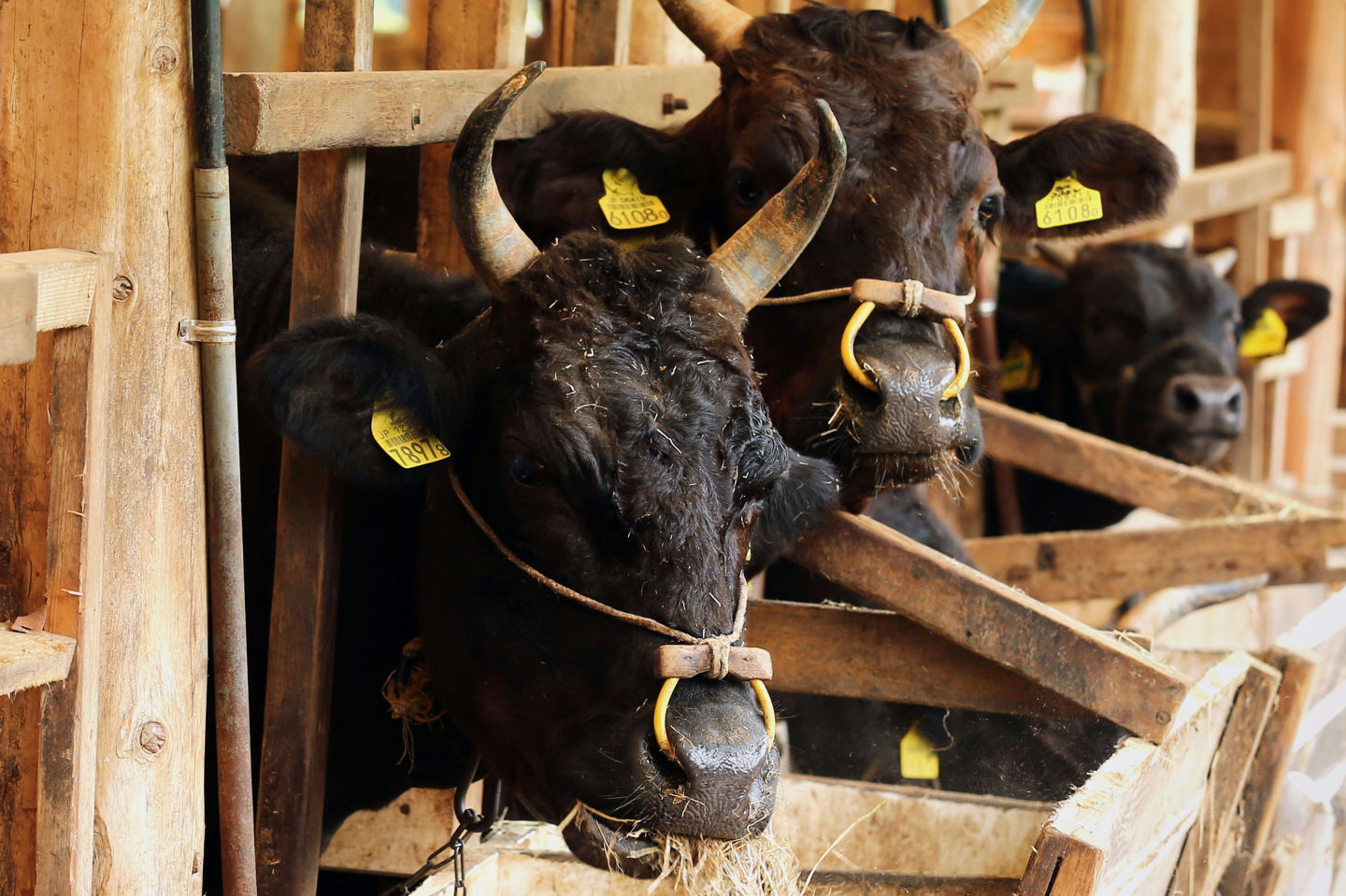
"caption": "Tajima Wagyu beef cows at a cattle farm in Yabu City, Hyogo Prefecture, Japan. Japan won a provision in the new Pacific Rim trade deal that would push tariffs back up if its beef imports surge.",
"description": "Tajima Wagyu beef cows at a cattle farm in Yabu City, Hyogo Prefecture, Japan. Japan won a provision in the new Pacific Rim trade deal that would push tariffs back up if its beef imports surge",
"title": "Tajima Wagyu beef cows at a cattle farm in Yabu City, Hyogo Prefecture, Japan. Japan won a provision in the new Pacific Rim trade deal that would push tariffs back up if its beef imports surge.",
"credit": "Buddhika Weerasinghe/Bloomberg/Getty Images ",
"status": "inherit",
"isLoading": false,
"fetchFailed": false
},
"bayareabites_102997": {
"type": "attachments",
"id": "bayareabites_102997",
"meta": {
"index": "attachments_1716263798",
"site": "bayareabites",
"id": "102997",
"found": true
},
"parent": 102996,
"imgSizes": {
"twentyfourteen-full-width": {
"file": "https://ww2.kqed.org/app/uploads/sites/24/2015/11/gettyimages-2667800-0419d9d916a3f0bcfb40103d684acb437c368c36-1038x576.jpg",
"width": 1038,
"mimeType": "image/jpeg",
"height": 576
},
"thumbnail": {
"file": "https://ww2.kqed.org/app/uploads/sites/24/2015/11/gettyimages-2667800-0419d9d916a3f0bcfb40103d684acb437c368c36-400x300.jpg",
"width": 400,
"mimeType": "image/jpeg",
"height": 300
},
"fd-sm": {
"file": "https://ww2.kqed.org/app/uploads/sites/24/2015/11/gettyimages-2667800-0419d9d916a3f0bcfb40103d684acb437c368c36-960x720.jpg",
"width": 960,
"mimeType": "image/jpeg",
"height": 720
},
"post-thumbnail": {
"file": "https://ww2.kqed.org/app/uploads/sites/24/2015/11/gettyimages-2667800-0419d9d916a3f0bcfb40103d684acb437c368c36-672x372.jpg",
"width": 672,
"mimeType": "image/jpeg",
"height": 372
},
"kqedFullSize": {
"file": "https://ww2.kqed.org/app/uploads/sites/24/2015/11/gettyimages-2667800-0419d9d916a3f0bcfb40103d684acb437c368c36.jpg",
"width": 3393,
"height": 2544
},
"large": {
"file": "https://ww2.kqed.org/app/uploads/sites/24/2015/11/gettyimages-2667800-0419d9d916a3f0bcfb40103d684acb437c368c36-1440x1080.jpg",
"width": 1440,
"mimeType": "image/jpeg",
"height": 1080
},
"guest-author-96": {
"file": "https://ww2.kqed.org/app/uploads/sites/24/2015/11/gettyimages-2667800-0419d9d916a3f0bcfb40103d684acb437c368c36-96x96.jpg",
"width": 96,
"mimeType": "image/jpeg",
"height": 96
},
"medium": {
"file": "https://ww2.kqed.org/app/uploads/sites/24/2015/11/gettyimages-2667800-0419d9d916a3f0bcfb40103d684acb437c368c36-800x600.jpg",
"width": 800,
"mimeType": "image/jpeg",
"height": 600
},
"guest-author-64": {
"file": "https://ww2.kqed.org/app/uploads/sites/24/2015/11/gettyimages-2667800-0419d9d916a3f0bcfb40103d684acb437c368c36-64x64.jpg",
"width": 64,
"mimeType": "image/jpeg",
"height": 64
},
"guest-author-32": {
"file": "https://ww2.kqed.org/app/uploads/sites/24/2015/11/gettyimages-2667800-0419d9d916a3f0bcfb40103d684acb437c368c36-32x32.jpg",
"width": 32,
"mimeType": "image/jpeg",
"height": 32
},
"cat_post_thumb_sizecategory-posts-2": {
"file": "https://ww2.kqed.org/app/uploads/sites/24/2015/11/gettyimages-2667800-0419d9d916a3f0bcfb40103d684acb437c368c36-150x150.jpg",
"width": 150,
"mimeType": "image/jpeg",
"height": 150
},
"fd-lrg": {
"file": "https://ww2.kqed.org/app/uploads/sites/24/2015/11/gettyimages-2667800-0419d9d916a3f0bcfb40103d684acb437c368c36-1920x1440.jpg",
"width": 1920,
"mimeType": "image/jpeg",
"height": 1440
},
"fd-med": {
"file": "https://ww2.kqed.org/app/uploads/sites/24/2015/11/gettyimages-2667800-0419d9d916a3f0bcfb40103d684acb437c368c36-1180x885.jpg",
"width": 1180,
"mimeType": "image/jpeg",
"height": 885
},
"detail": {
"file": "https://ww2.kqed.org/app/uploads/sites/24/2015/11/gettyimages-2667800-0419d9d916a3f0bcfb40103d684acb437c368c36-75x75.jpg",
"width": 75,
"mimeType": "image/jpeg",
"height": 75
},
"guest-author-128": {
"file": "https://ww2.kqed.org/app/uploads/sites/24/2015/11/gettyimages-2667800-0419d9d916a3f0bcfb40103d684acb437c368c36-128x128.jpg",
"width": 128,
"mimeType": "image/jpeg",
"height": 128
}
},
"publishDate": 1446773659,
"modified": 1446781299,
"caption": "Members of the women's suffrage movement prepare to march on New York's Wall Street in 1913, armed with leaflets and slogans demanding the vote for women.",
"description": "Members of the women's suffrage movement prepare to march on New York's Wall Street in 1913, armed with leaflets and slogans demanding the vote for women.",
"title": "Members of the women's suffrage movement prepare to march on New York's Wall Street in 1913, armed with leaflets and slogans demanding the vote for women.",
"credit": "Paul Thompson/Getty Images",
"status": "inherit",
"isLoading": false,
"fetchFailed": false
},
"bayareabites_102728": {
"type": "attachments",
"id": "bayareabites_102728",
"meta": {
"index": "attachments_1716263798",
"site": "bayareabites",
"id": "102728",
"found": true
},
"parent": 102727,
"imgSizes": {
"twentyfourteen-full-width": {
"file": "https://ww2.kqed.org/app/uploads/sites/24/2015/10/294913729_01cbdf0ba0_o_wide-1b8a5af1c4aed0a9244fdf0a18362cfeeda79b3b-1038x576.jpg",
"width": 1038,
"mimeType": "image/jpeg",
"height": 576
},
"thumbnail": {
"file": "https://ww2.kqed.org/app/uploads/sites/24/2015/10/294913729_01cbdf0ba0_o_wide-1b8a5af1c4aed0a9244fdf0a18362cfeeda79b3b-400x225.jpg",
"width": 400,
"mimeType": "image/jpeg",
"height": 225
},
"fd-sm": {
"file": "https://ww2.kqed.org/app/uploads/sites/24/2015/10/294913729_01cbdf0ba0_o_wide-1b8a5af1c4aed0a9244fdf0a18362cfeeda79b3b-960x540.jpg",
"width": 960,
"mimeType": "image/jpeg",
"height": 540
},
"post-thumbnail": {
"file": "https://ww2.kqed.org/app/uploads/sites/24/2015/10/294913729_01cbdf0ba0_o_wide-1b8a5af1c4aed0a9244fdf0a18362cfeeda79b3b-672x372.jpg",
"width": 672,
"mimeType": "image/jpeg",
"height": 372
},
"kqedFullSize": {
"file": "https://ww2.kqed.org/app/uploads/sites/24/2015/10/294913729_01cbdf0ba0_o_wide-1b8a5af1c4aed0a9244fdf0a18362cfeeda79b3b.jpg",
"width": 2592,
"height": 1458
},
"large": {
"file": "https://ww2.kqed.org/app/uploads/sites/24/2015/10/294913729_01cbdf0ba0_o_wide-1b8a5af1c4aed0a9244fdf0a18362cfeeda79b3b-1440x810.jpg",
"width": 1440,
"mimeType": "image/jpeg",
"height": 810
},
"guest-author-96": {
"file": "https://ww2.kqed.org/app/uploads/sites/24/2015/10/294913729_01cbdf0ba0_o_wide-1b8a5af1c4aed0a9244fdf0a18362cfeeda79b3b-96x96.jpg",
"width": 96,
"mimeType": "image/jpeg",
"height": 96
},
"medium": {
"file": "https://ww2.kqed.org/app/uploads/sites/24/2015/10/294913729_01cbdf0ba0_o_wide-1b8a5af1c4aed0a9244fdf0a18362cfeeda79b3b-800x450.jpg",
"width": 800,
"mimeType": "image/jpeg",
"height": 450
},
"guest-author-64": {
"file": "https://ww2.kqed.org/app/uploads/sites/24/2015/10/294913729_01cbdf0ba0_o_wide-1b8a5af1c4aed0a9244fdf0a18362cfeeda79b3b-64x64.jpg",
"width": 64,
"mimeType": "image/jpeg",
"height": 64
},
"guest-author-32": {
"file": "https://ww2.kqed.org/app/uploads/sites/24/2015/10/294913729_01cbdf0ba0_o_wide-1b8a5af1c4aed0a9244fdf0a18362cfeeda79b3b-32x32.jpg",
"width": 32,
"mimeType": "image/jpeg",
"height": 32
},
"cat_post_thumb_sizecategory-posts-2": {
"file": "https://ww2.kqed.org/app/uploads/sites/24/2015/10/294913729_01cbdf0ba0_o_wide-1b8a5af1c4aed0a9244fdf0a18362cfeeda79b3b-150x150.jpg",
"width": 150,
"mimeType": "image/jpeg",
"height": 150
},
"fd-lrg": {
"file": "https://ww2.kqed.org/app/uploads/sites/24/2015/10/294913729_01cbdf0ba0_o_wide-1b8a5af1c4aed0a9244fdf0a18362cfeeda79b3b-1920x1080.jpg",
"width": 1920,
"mimeType": "image/jpeg",
"height": 1080
},
"fd-med": {
"file": "https://ww2.kqed.org/app/uploads/sites/24/2015/10/294913729_01cbdf0ba0_o_wide-1b8a5af1c4aed0a9244fdf0a18362cfeeda79b3b-1180x664.jpg",
"width": 1180,
"mimeType": "image/jpeg",
"height": 664
},
"detail": {
"file": "https://ww2.kqed.org/app/uploads/sites/24/2015/10/294913729_01cbdf0ba0_o_wide-1b8a5af1c4aed0a9244fdf0a18362cfeeda79b3b-75x75.jpg",
"width": 75,
"mimeType": "image/jpeg",
"height": 75
},
"guest-author-128": {
"file": "https://ww2.kqed.org/app/uploads/sites/24/2015/10/294913729_01cbdf0ba0_o_wide-1b8a5af1c4aed0a9244fdf0a18362cfeeda79b3b-128x128.jpg",
"width": 128,
"mimeType": "image/jpeg",
"height": 128
}
},
"publishDate": 1446247480,
"modified": 1446252742,
"caption": "You probably wouldn't want to eat these Jack O'Lanterns since they've been carved and sitting out. But this variety of pumpkin is perfectly edible and nutritious.",
"description": "You probably wouldn't want to eat these Jack O'Lanterns since they've been carved and sitting out. But this variety of pumpkin is perfectly edible and nutritious.",
"title": "You probably wouldn't want to eat these Jack O'Lanterns since they've been carved and sitting out. But this variety of pumpkin is perfectly edible and nutritious.",
"credit": "\u003ca href=\"https://www.flickr.com/photos/wildcat_dunny/294913729\" target=\"_blank\">Wildcat Dunny/Flickr\u003c/a>",
"status": "inherit",
"isLoading": false,
"fetchFailed": false
},
"bayareabites_102672": {
"type": "attachments",
"id": "bayareabites_102672",
"meta": {
"index": "attachments_1716263798",
"site": "bayareabites",
"id": "102672",
"found": true
},
"parent": 102671,
"imgSizes": {
"twentyfourteen-full-width": {
"file": "https://ww2.kqed.org/app/uploads/sites/24/2015/10/istock_000048514658_full_slide-1388bd0f3924894bb2e10c312bced111dea97050-1038x576.jpg",
"width": 1038,
"mimeType": "image/jpeg",
"height": 576
},
"thumbnail": {
"file": "https://ww2.kqed.org/app/uploads/sites/24/2015/10/istock_000048514658_full_slide-1388bd0f3924894bb2e10c312bced111dea97050-400x267.jpg",
"width": 400,
"mimeType": "image/jpeg",
"height": 267
},
"fd-sm": {
"file": "https://ww2.kqed.org/app/uploads/sites/24/2015/10/istock_000048514658_full_slide-1388bd0f3924894bb2e10c312bced111dea97050-960x640.jpg",
"width": 960,
"mimeType": "image/jpeg",
"height": 640
},
"post-thumbnail": {
"file": "https://ww2.kqed.org/app/uploads/sites/24/2015/10/istock_000048514658_full_slide-1388bd0f3924894bb2e10c312bced111dea97050-672x372.jpg",
"width": 672,
"mimeType": "image/jpeg",
"height": 372
},
"kqedFullSize": {
"file": "https://ww2.kqed.org/app/uploads/sites/24/2015/10/istock_000048514658_full_slide-1388bd0f3924894bb2e10c312bced111dea97050.jpg",
"width": 2731,
"height": 1820
},
"large": {
"file": "https://ww2.kqed.org/app/uploads/sites/24/2015/10/istock_000048514658_full_slide-1388bd0f3924894bb2e10c312bced111dea97050-1440x960.jpg",
"width": 1440,
"mimeType": "image/jpeg",
"height": 960
},
"guest-author-96": {
"file": "https://ww2.kqed.org/app/uploads/sites/24/2015/10/istock_000048514658_full_slide-1388bd0f3924894bb2e10c312bced111dea97050-96x96.jpg",
"width": 96,
"mimeType": "image/jpeg",
"height": 96
},
"medium": {
"file": "https://ww2.kqed.org/app/uploads/sites/24/2015/10/istock_000048514658_full_slide-1388bd0f3924894bb2e10c312bced111dea97050-800x533.jpg",
"width": 800,
"mimeType": "image/jpeg",
"height": 533
},
"guest-author-64": {
"file": "https://ww2.kqed.org/app/uploads/sites/24/2015/10/istock_000048514658_full_slide-1388bd0f3924894bb2e10c312bced111dea97050-64x64.jpg",
"width": 64,
"mimeType": "image/jpeg",
"height": 64
},
"guest-author-32": {
"file": "https://ww2.kqed.org/app/uploads/sites/24/2015/10/istock_000048514658_full_slide-1388bd0f3924894bb2e10c312bced111dea97050-32x32.jpg",
"width": 32,
"mimeType": "image/jpeg",
"height": 32
},
"cat_post_thumb_sizecategory-posts-2": {
"file": "https://ww2.kqed.org/app/uploads/sites/24/2015/10/istock_000048514658_full_slide-1388bd0f3924894bb2e10c312bced111dea97050-150x150.jpg",
"width": 150,
"mimeType": "image/jpeg",
"height": 150
},
"fd-lrg": {
"file": "https://ww2.kqed.org/app/uploads/sites/24/2015/10/istock_000048514658_full_slide-1388bd0f3924894bb2e10c312bced111dea97050-1920x1280.jpg",
"width": 1920,
"mimeType": "image/jpeg",
"height": 1280
},
"fd-med": {
"file": "https://ww2.kqed.org/app/uploads/sites/24/2015/10/istock_000048514658_full_slide-1388bd0f3924894bb2e10c312bced111dea97050-1180x786.jpg",
"width": 1180,
"mimeType": "image/jpeg",
"height": 786
},
"detail": {
"file": "https://ww2.kqed.org/app/uploads/sites/24/2015/10/istock_000048514658_full_slide-1388bd0f3924894bb2e10c312bced111dea97050-75x75.jpg",
"width": 75,
"mimeType": "image/jpeg",
"height": 75
},
"guest-author-128": {
"file": "https://ww2.kqed.org/app/uploads/sites/24/2015/10/istock_000048514658_full_slide-1388bd0f3924894bb2e10c312bced111dea97050-128x128.jpg",
"width": 128,
"mimeType": "image/jpeg",
"height": 128
}
},
"publishDate": 1446076626,
"modified": 1446076803,
"caption": "When salmon was out of season, diners in restaurants were likely to get a species other than what they ordered 67 percent of the time, a new survey finds.",
"description": "When salmon was out of season, diners in restaurants were likely to get a species other than what they ordered 67 percent of the time, a new survey finds.",
"title": "When salmon was out of season, diners in restaurants were likely to get a species other than what they ordered 67 percent of the time, a new survey finds.",
"credit": "iStockphoto",
"status": "inherit",
"isLoading": false,
"fetchFailed": false
}
},
"audioPlayerReducer": {
"postId": "stream_live",
"isPaused": true,
"isPlaying": false,
"pfsActive": false,
"pledgeModalIsOpen": true,
"playerDrawerIsOpen": false,
"liveAudioPlayStartedAt": 0,
"liveAudioPlayContext": ""
},
"authorsReducer": {
"byline_bayareabites_105497": {
"type": "authors",
"id": "byline_bayareabites_105497",
"meta": {
"override": true
},
"slug": "byline_bayareabites_105497",
"name": "Eliza Barclay and Allison Aubrey, NPR Food",
"isLoading": false
},
"byline_bayareabites_104680": {
"type": "authors",
"id": "byline_bayareabites_104680",
"meta": {
"override": true
},
"slug": "byline_bayareabites_104680",
"name": "Dan Charles, NPR Food",
"isLoading": false
},
"byline_bayareabites_103949": {
"type": "authors",
"id": "byline_bayareabites_103949",
"meta": {
"override": true
},
"slug": "byline_bayareabites_103949",
"name": "Anders Kelto, \u003ca href=\"https://ww2.kqed.org/bayareabites/author/nprfood/\">NPR Food\u003c/a>",
"isLoading": false
},
"byline_bayareabites_103318": {
"type": "authors",
"id": "byline_bayareabites_103318",
"meta": {
"override": true
},
"slug": "byline_bayareabites_103318",
"name": "Tracie McMillan, \u003ca href=\"https://ww2.kqed.org/bayareabites/author/nprfood/\">NPR Food\u003c/a>",
"isLoading": false
},
"byline_bayareabites_102996": {
"type": "authors",
"id": "byline_bayareabites_102996",
"meta": {
"override": true
},
"slug": "byline_bayareabites_102996",
"name": "Nina Martyris, \u003ca href=\"https://ww2.kqed.org/bayareabites/author/nprfood/\">NPR Food\u003c/a>",
"isLoading": false
},
"byline_bayareabites_102727": {
"type": "authors",
"id": "byline_bayareabites_102727",
"meta": {
"override": true
},
"slug": "byline_bayareabites_102727",
"name": "Alastair Bland, \u003ca href=\"https://ww2.kqed.org/bayareabites/author/nprfood/\">NPR Food\u003c/a>",
"isLoading": false
},
"byline_bayareabites_102671": {
"type": "authors",
"id": "byline_bayareabites_102671",
"meta": {
"override": true
},
"slug": "byline_bayareabites_102671",
"name": "Clare Leschin-Hoar, \u003ca href=\"https://ww2.kqed.org/bayareabites/category/npr-food/\">NPR Food\u003c/a>",
"isLoading": false
},
"shelbypope": {
"type": "authors",
"id": "5566",
"meta": {
"index": "authors_1716337520",
"id": "5566",
"found": true
},
"name": "Shelby Pope",
"firstName": "Shelby",
"lastName": "Pope",
"slug": "shelbypope",
"email": "shelbylpope@gmail.com",
"display_author_email": false,
"staff_mastheads": [],
"title": "KQED Contributor",
"bio": "Shelby Pope is a freelance writer living and eating her way through the East Bay. She’s written about food, art and science for publications including the Smithsonian, Lucky Peach, and the Washington Post's pet blog. When she’s not taste testing sourdough bread to find the Bay Area’s best loaf, you can find her on Twitter \u003ca href=\"https://twitter.com/shelbylpope\">@shelbylpope\u003c/a> or at \u003ca href=\"https://shelbypope.com/\">shelbypope.com\u003c/a>",
"avatar": "https://secure.gravatar.com/avatar/df74e904399e45720e48e36c6e1ae7a90c32216eb2c9c82f3b2e1a9641b507d3?s=600&d=blank&r=g",
"twitter": "shelbylpope",
"bluesky": null,
"facebook": null,
"instagram": null,
"linkedin": null,
"sites": [
{
"site": "arts",
"roles": [
"subscriber"
]
},
{
"site": "food",
"roles": [
"subscriber"
]
}
],
"headData": {
"title": "Shelby Pope | KQED",
"description": "KQED Contributor",
"ogImgSrc": "https://secure.gravatar.com/avatar/df74e904399e45720e48e36c6e1ae7a90c32216eb2c9c82f3b2e1a9641b507d3?s=600&d=blank&r=g",
"twImgSrc": "https://secure.gravatar.com/avatar/df74e904399e45720e48e36c6e1ae7a90c32216eb2c9c82f3b2e1a9641b507d3?s=600&d=blank&r=g"
},
"isLoading": false,
"link": "/author/shelbypope"
},
"alexandrawall": {
"type": "authors",
"id": "5567",
"meta": {
"index": "authors_1716337520",
"id": "5567",
"found": true
},
"name": "Alix Wall",
"firstName": "Alix",
"lastName": "Wall",
"slug": "alexandrawall",
"email": "alixwall@sbcglobal.net",
"display_author_email": false,
"staff_mastheads": [],
"title": null,
"bio": "Alix Wall appeared in her hometown paper in Riverside, California as “Chef of the Week” when she was 15 years old, and in high school, she founded “The Bon Appetit Club.” After working as a journalist for many years, Alix became a certified natural foods chef from Bauman College in Berkeley. While she cooks part-time healthy, organic meals for busy families, she is also a contributing editor of j. weekly, the Bay Area’s Jewish newspaper, in which she has a monthly food column. Her food writing can also be found on Berkeleyside’s NOSH and in Edible East Bay. In addition to food, she loves writing about how couples met and fell in love, which she does for The San Francisco Chronicle’s Style section and j. weekly. In 2016, she founded The Illuminoshi: The Not-So-Secret Society of Bay Area Jewish Food Professionals. She is also writer/producer for a documentary-in-progress called \u003ca href=\"https://www.lonelychildmovie.com/\">The Lonely Child\u003c/a>. Follow Alix on Twitter \u003ca href=\"https://twitter.com/WallAlix\">@WallAlix\u003c/a>.",
"avatar": "https://secure.gravatar.com/avatar/421a27f26a185be932f8d567b499b1f1?s=600&d=blank&r=g",
"twitter": null,
"facebook": null,
"instagram": null,
"linkedin": null,
"sites": [
{
"site": "bayareabites",
"roles": [
"contributor"
]
},
{
"site": "food",
"roles": [
"contributor"
]
}
],
"headData": {
"title": "Alix Wall | KQED",
"description": null,
"ogImgSrc": "https://secure.gravatar.com/avatar/421a27f26a185be932f8d567b499b1f1?s=600&d=blank&r=g",
"twImgSrc": "https://secure.gravatar.com/avatar/421a27f26a185be932f8d567b499b1f1?s=600&d=blank&r=g"
},
"isLoading": false,
"link": "/author/alexandrawall"
},
"civileat": {
"type": "authors",
"id": "5583",
"meta": {
"index": "authors_1716337520",
"id": "5583",
"found": true
},
"name": "Civil Eats",
"firstName": "Civil",
"lastName": "Eats",
"slug": "civileat",
"email": "twilight@civileats.com",
"display_author_email": false,
"staff_mastheads": [],
"title": null,
"bio": "\u003ca href=\"http://civileats.com/\">Civil Eats\u003c/a> is a daily news source for critical thought about the American food system. We publish stories that shift the conversation around sustainable agriculture in an effort to build economically and socially just communities. Follow Civil Eats on Twitter \u003ca href=\"https://twitter.com/CivilEats\">@civileats\u003c/a> and on \u003ca href=\"https://www.facebook.com/pages/Civil-Eats/56766540637\">Facebook\u003c/a>.",
"avatar": "https://secure.gravatar.com/avatar/8f6f50bfb6403afe7cbc194b66cc1d4d?s=600&d=blank&r=g",
"twitter": "CivilEats",
"facebook": "/pages/Civil-Eats/56766540637?ref=hl",
"instagram": null,
"linkedin": null,
"sites": [
{
"site": "bayareabites",
"roles": [
"contributor"
]
},
{
"site": "food",
"roles": [
"contributor"
]
}
],
"headData": {
"title": "Civil Eats | KQED",
"description": null,
"ogImgSrc": "https://secure.gravatar.com/avatar/8f6f50bfb6403afe7cbc194b66cc1d4d?s=600&d=blank&r=g",
"twImgSrc": "https://secure.gravatar.com/avatar/8f6f50bfb6403afe7cbc194b66cc1d4d?s=600&d=blank&r=g"
},
"isLoading": false,
"link": "/author/civileat"
}
},
"pagesReducer": {
"bayareabites_category_politics-activism-food-safety": {
"type": "terms",
"id": "bayareabites_2035",
"meta": {
"index": "terms_1716263798",
"site": "bayareabites",
"id": "2035",
"score": 13.896381
},
"featImg": null,
"name": "politics, activism, food safety",
"description": null,
"taxonomy": "category",
"headData": {
"twImgId": null,
"twTitle": null,
"ogTitle": null,
"ogImgId": null,
"twDescription": null,
"description": null,
"title": "politics, activism, food safety Archives | KQED Bay Area Bites",
"ogDescription": null
},
"ttid": 943,
"slug": "politics-activism-food-safety",
"isLoading": false,
"title": "politics, activism, food safety",
"pageMeta": {
"site": "bayareabites",
"WpPageTemplate": "page-topic-editorial",
"currentPage": 25
},
"blocks": [
{
"blockName": "kqed/post-list",
"attrs": {
"layout": "cardArticle2",
"query": "posts/bayareabites?category=politics-activism-food-safety",
"seeMore": false,
"paginated": true,
"page": 25
}
},
{
"blockName": "kqed/ad"
}
]
}
},
"pfsSessionReducer": {},
"postsReducer": {
"stream_live": {
"type": "live",
"id": "stream_live",
"audioUrl": "https://streams.kqed.org/kqedradio",
"title": "Live Stream",
"excerpt": "Live Stream information currently unavailable.",
"link": "/radio",
"featImg": "",
"label": {
"name": "KQED Live",
"link": "/"
}
},
"stream_kqedNewscast": {
"type": "posts",
"id": "stream_kqedNewscast",
"audioUrl": "https://www.kqed.org/.stream/anon/radio/RDnews/newscast.mp3?_=1",
"title": "KQED Newscast",
"featImg": "",
"label": {
"name": "88.5 FM",
"link": "/"
}
},
"bayareabites_105497": {
"type": "posts",
"id": "bayareabites_105497",
"meta": {
"index": "posts_1716263798",
"site": "bayareabites",
"id": "105497",
"score": null,
"sort": [
1451411532000
]
},
"parent": 0,
"labelTerm": {},
"blocks": [],
"publishDate": 1451411532,
"format": "standard",
"disqusTitle": "The Year In Food: Artificial Out, Innovation In (And 2 More Trends)",
"title": "The Year In Food: Artificial Out, Innovation In (And 2 More Trends)",
"headTitle": "Bay Area Bites | KQED Food",
"content": "\u003cp>\u003cstrong>Listen to the Story on Morning Edition:\u003c/strong>\u003cbr>\nhttp://pd.npr.org/anon.npr-mp3/npr/me/2015/12/20151229_me_the_year_in_food_artificial_out_innovation_in_and_2_more_trends.mp3\u003c/p>\n\u003cp>Cage-free, antibiotic-free, artificial-free. Sound familiar?\u003c/p>\n\u003cp>Many of the world's biggest food companies announced major changes this year — in what they purchase and how they manufacture their food.\u003c/p>\n\u003cp>Many of the big moves we saw came from companies striving to bring more transparency to their supply chain. McDonald's \u003ca href=\"http://www.npr.org/sections/thesalt/2015/03/04/390701295/mcdonalds-says-it-wont-be-serving-chicken-raised-on-antibiotics\">pledged \u003c/a>to source chickens raised without antibiotics. Dunkin' Donuts and \u003ca href=\"https://customerservice.costco.com/system/templates/selfservice/costco_en_us/?sf9909006=1#!portal/200500000001002/article/200500000043548/Hillandale-Farms-Humane-Society-Egg-Response\">Costco\u003c/a> are switching to cage-free eggs.\u003c/p>\n\u003cp>Some companies signaled to customers that they were \"cleaning up\" and simplifying their ingredient lists. Panera \u003ca href=\"http://www.npr.org/sections/thesalt/2015/05/06/404626500/panera-is-the-latest-to-drop-artificial-ingredients-from-its-food\">ditched\u003c/a> dozens of additives. Even Lucky Charms and Butterfingers are \u003ca href=\"http://www.npr.org/sections/thesalt/2015/06/22/416486286/sans-artificial-general-mills-scrambles-to-reformulate-lucky-charms\">getting minor makeovers:\u003c/a> General Mills and Nestle said they're removing artificial colors and flavors from their products.\u003c/p>\n\u003cp>[ad fullwidth]\u003c/p>\n\u003cp>\"Big Food is definitely feeling the pressure,\" \u003ca href=\"http://www.ciachef.edu/scott-allmendinger-cia-consulting-release/\">Scott Allmendinger\u003c/a>, who consults with food companies for the Culinary Institute of America,\u003ca href=\"http://www.npr.org/2015/11/10/455510032/simplifying-soup-campbells-tinkers-with-chicken-noodle-recipe\"> told us\u003c/a>. Packaged-food companies \u003ca href=\"http://fortune.com/2015/05/21/the-war-on-big-food/\">lost $4 billion\u003c/a> in market share last year, according to a \u003cem>Fortune\u003c/em> analysis.\u003c/p>\n\u003cp>A 2015 Nielsen \u003ca href=\"http://www.nielsen.com/content/dam/nielsenglobal/eu/nielseninsights/pdfs/Nielsen%20Global%20Health%20and%20Wellness%20Report%20-%20January%202015.pdf\">survey\u003c/a> found an increasing number of consumers say they're willing to pay a premium for \"all natural,\" \"clean\" and minimally processed foods. (As we've reported, it's hard to know what any of these terms actually mean. The federal government \u003ca href=\"http://www.npr.org/sections/thesalt/2015/11/11/455506222/whats-natural-food-the-government-isnt-sure-and-wants-your-input\">is soliciting input\u003c/a> for how to define \"natural.\")\u003c/p>\n\u003cp>And, it seems, these foods marketed as cleaner and more natural are blending into mainstream grocery stores. One example: the success of Kroger's Simple Truth line of products, which focus on \"simpler\" and organic ingredients.\u003c/p>\n\u003cp>\"Consumers are slowly migrating away\" from the center aisle of the grocery store that's filled with processed baked goods and canned foods, says \u003ca href=\"https://www.edwardjones.com/about/media/strategists-analysts-companies/analysts/jack-russo.html\">Jack Russo\u003c/a>, an analyst with Edward Jones, a financial advisory firm.\u003c/p>\n\u003cp>At the same time, the sales of foods marketed as \"local\" have \u003ca href=\"http://www.npr.org/sections/thesalt/2015/06/30/418835394/communities-get-a-lift-as-local-food-sales-surge-to-11-billion-a-year\">surged to $11 billion\u003c/a> a year. The organic and natural sector, including GMO-free and gluten-free, is growing at about 8 to 10 percent a year, says Russo.\u003c/p>\n\u003cp>Russo sees this trend continuing, with growth continuing in the 6 to 8 percent range for the next few years, he says.\u003c/p>\n\u003cp>\u003cstrong>Food Waste\u003c/strong>\u003c/p>\n\u003cp>Another issue that gained traction this year: the 133 billion pounds of food wasted in the U.S. annually.\u003c/p>\n\u003cp>To put a visual to this estimate, imagine filling a huge skyscraper such as the Willis Tower (formerly known as the Sears Tower) 44 times.\u003c/p>\n\u003cp>That's the image that Agriculture Secretary Tom Vilsack used when he announced in October a \u003ca href=\"http://www.npr.org/sections/thesalt/2015/09/16/440825159/its-time-to-get-serious-about-reducing-food-waste-feds-say\">new national goal\u003c/a> to reduce food waste by 50 percent by the year 2030.\u003c/p>\n\u003cp>Everyone who eats could play a role in reducing waste. And we have plenty of moral imperatives to do it. As Pope Francis \u003ca href=\"https://www.washingtonpost.com/national/on-faith/pope-francis-wasting-food-is-like-stealing-from-the-poor/2013/06/05/d4dc167c-ce13-11e2-8573-3baeea6a2647_story.html\">once said,\u003c/a> some food waste is akin to \"stealing from the table of those who are poor and hungry.\" The Environmental Protection Agency has estimated that the typical American family tosses out about $1,600 a year in groceries.\u003c/p>\n\u003cp>There's plenty wasted on farms, too, some of which is entirely unavoidable. But as we documented in \u003ca href=\"http://www.npr.org/sections/thesalt/2015/06/17/414986650/to-tackle-food-waste-big-grocery-chain-will-sell-produce-rejects\">this story\u003c/a>, a lot of food isn't harvested simply because it's not quite up to our cosmetic standards. Often, \u003ca href=\"http://www.npr.org/sections/thesalt/2015/06/16/414667913/landfill-of-lettuce-what-happens-to-salad-past-its-prime\">bags of salad\u003c/a> and plenty of other edible food items end up in landfills because they won't stay fresh long enough to be shipped across the country. A number of NGOs and startups are trying to figure out how to get more of it into the hands of the hungry and the people happy to pay less for imperfect produce.\u003c/p>\n\u003cp>The environmental footprint of food waste is significant. As we've \u003ca href=\"http://www.npr.org/sections/thesalt/2013/09/11/221153037/wasted-food-around-the-world-takes-heavy-toll-on-environment\">reported\u003c/a>, all that food we toss out is creating billions of tons of greenhouse gases, and costing us precious \u003ca href=\"http://www.npr.org/blogs/thesalt/2013/06/06/189192870/when-you-waste-food-youre-wasting-tons-of-water-too\">water\u003c/a> and land.\u003c/p>\n\u003cp>\u003cstrong>Foodborne Illness\u003c/strong>\u003c/p>\n\u003cp>This year also brought some high-profile outbreaks of foodborne illness. If you're a Chipotle stockholder, you're probably well aware of the fallout.\u003c/p>\n\u003cp>As we've reported, Chipotle Mexican Grill is linked to two separate outbreaks of \u003cem>E. coli\u003c/em> infections. The first outbreak sickened 53 people in nine states and prompted the temporary closure of many Chipotle locations in Washington and Oregon.\u003c/p>\n\u003cp>Then, in early December an \u003ca href=\"http://www.npr.org/sections/thesalt/2015/12/09/459056550/chipotle-faces-another-foodborne-illness-outbreak-this-time-in-boston\">outbreak of norovirus\u003c/a> sickened at least 120 people in Boston, mostly students at Boston College. Most of the sick students reported eating at a nearby Chipotle.\u003c/p>\n\u003cp>As our colleague Dan Charles reported, city health inspectors \u003ca href=\"http://www.cityofboston.gov/isd/health/mfc/viewinsp.asp?inspno=278271\">cited \u003c/a>Chipotle for allowing a sick employee to work his shift. In the violation report, the inspectors specified that the restaurant should follow its employee illness policy.\u003c/p>\n\u003cp>Though the Chipotle outbreak got a lot of attention, there are thousands of outbreaks of norovirus each year.\u003c/p>\n\u003cp>The CDC says norovirus is the \u003ca href=\"http://www.cdc.gov/media/releases/2014/p0603-norovirus.html\">leading cause\u003c/a> of foodborne disease in the U.S. It's estimated that about 20 million people a year get sick with it.\u003c/p>\n\u003cp>The vast majority of outbreaks are caused by infected workers. So, hopefully, the lesson learned in 2015 is this: Restaurants need to keep sick workers off the job.\u003c/p>\n\u003cp>The CDC estimates that 1 in 5 food service workers has gone to work while sick with vomiting or diarrhea. \"It is vital that food service workers stay home if they are sick,\" says the CDC's \u003ca href=\"http://www.cdc.gov/media/pdf/spokesperson/sme-bio/hall.pdf\">Aron Hall\u003c/a>. He says businesses should consider measures such as paid sick days.\u003c/p>\n\u003cp>\u003cstrong>Innovation And Investment In Food And Agriculture\u003c/strong>\u003c/p>\n\u003cp>While Big Food is hustling to keep up with changing consumer tastes and values, hundreds of new and nimble companies are entering the marketplace to compete with them. A \u003ca href=\"http://agfundernews.com/wp-content/uploads/2015/10/Rabobank-Building-Smarter-Food-Systems-report.pdf\">report\u003c/a> by the Dutch banking group Rabobank found that investment in food and agriculture is set to surpass $4 billion by the end of the year.\u003c/p>\n\u003cp>Rabobank thinks we're headed toward a \"smarter food system.\" And plenty of companies and investors want to help us get there. How? Mainly, with technology and (big) data tools for both consumers and farmers.\u003c/p>\n\u003cp>Venture capitalists are excited about food and agriculture, too, and are pouring money into startups. \u003cem>Entrepreneur \u003c/em>\u003ca href=\"http://www.entrepreneur.com/article/251515\">reported\u003c/a> earlier this year that \"startups all along the food chain — from farmers and tech companies to home cooks — are reaping huge rewards [from venture firms]: $2.06 billion invested in the first half of 2015 ... nearly as much as the $2.36 billion total for 2014.\" \u003c/p>\n\u003cp>[ad floatright]\u003c/p>\n\u003cp>\u003cem>Copyright 2015 \u003ca href=\"http://www.npr.org/\" target=\"_blank\">NPR\u003c/a>.\u003c/em> \u003c/p>\n\n",
"disqusIdentifier": "105497 http://ww2.kqed.org/bayareabites/?p=105497",
"disqusUrl": "https://ww2.kqed.org/bayareabites/2015/12/29/the-year-in-food-artificial-out-innovation-in-and-2-more-trends/",
"stats": {
"hasVideo": false,
"hasChartOrMap": false,
"hasAudio": false,
"hasPolis": false,
"wordCount": 1057,
"hasGoogleForm": false,
"hasGallery": false,
"hasHearkenModule": false,
"iframeSrcs": [],
"paragraphCount": 34
},
"modified": 1546993045,
"excerpt": "From big food companies simplifying ingredients, to the U.S. government's new goal to reduce food waste, to a public image crisis for Chipotle, 2015 has been a big year for food.",
"headData": {
"twImgId": "",
"twTitle": "",
"ogTitle": "",
"ogImgId": "",
"twDescription": "",
"description": "From big food companies simplifying ingredients, to the U.S. government's new goal to reduce food waste, to a public image crisis for Chipotle, 2015 has been a big year for food.",
"title": "The Year In Food: Artificial Out, Innovation In (And 2 More Trends) | KQED",
"ogDescription": "",
"schema": {
"@context": "https://schema.org",
"@type": "Article",
"headline": "The Year In Food: Artificial Out, Innovation In (And 2 More Trends)",
"datePublished": "2015-12-29T09:52:12-08:00",
"dateModified": "2019-01-08T16:17:25-08:00",
"image": "https://cdn.kqed.org/wp-content/uploads/2020/02/KQED-OG-Image@1x.png"
}
},
"guestAuthors": [],
"slug": "the-year-in-food-artificial-out-innovation-in-and-2-more-trends",
"status": "publish",
"nprApiLink": "http://api.npr.org/query?id=460589462&apiKey=MDAxOTAwOTE4MDEyMTkxMDAzNjczZDljZA004",
"nprStoryDate": "Tue, 29 Dec 2015 04:54:00 -0500",
"nprLastModifiedDate": "Tue, 29 Dec 2015 12:39:00 -0500",
"nprHtmlLink": "http://www.npr.org/sections/thesalt/2015/12/29/460589462/the-year-in-food-artificial-out-innovation-in-and-2-more-trends?ft=nprml&f=460589462",
"nprAudio": "http://pd.npr.org/anon.npr-mp3/npr/me/2015/12/20151229_me_the_year_in_food_artificial_out_innovation_in_and_2_more_trends.mp3?orgId=1&topicId=1053&d=226&p=3&story=460589462&t=progseg&e=461350803&seg=18&ft=nprml&f=460589462",
"source": "Food Trends and Technology",
"nprAudioM3u": "http://api.npr.org/m3u/1461352978-a799ae.m3u?orgId=1&topicId=1053&d=226&p=3&story=460589462&t=progseg&e=461350803&seg=18&ft=nprml&f=460589462",
"nprStoryId": "460589462",
"sourceUrl": "https://ww2.kqed.org/bayareabites/category/food-and-technology/",
"nprByline": "Eliza Barclay and Allison Aubrey, NPR Food",
"audioTrackLength": 227,
"nprRetrievedStory": "1",
"nprPubDate": "Tue, 29 Dec 2015 12:39:00 -0500",
"path": "/bayareabites/105497/the-year-in-food-artificial-out-innovation-in-and-2-more-trends",
"audioUrl": "http://pd.npr.org/anon.npr-mp3/npr/me/2015/12/20151229_me_the_year_in_food_artificial_out_innovation_in_and_2_more_trends.mp3",
"audioDuration": null,
"parsedContent": [
{
"type": "contentString",
"content": "\u003cdiv class=\"post-body\">\u003cp>\u003cp>\u003cstrong>Listen to the Story on Morning Edition:\u003c/strong>\u003cbr>\nhttp://pd.npr.org/anon.npr-mp3/npr/me/2015/12/20151229_me_the_year_in_food_artificial_out_innovation_in_and_2_more_trends.mp3\u003c/p>\n\u003cp>Cage-free, antibiotic-free, artificial-free. Sound familiar?\u003c/p>\n\u003cp>Many of the world's biggest food companies announced major changes this year — in what they purchase and how they manufacture their food.\u003c/p>\n\u003cp>Many of the big moves we saw came from companies striving to bring more transparency to their supply chain. McDonald's \u003ca href=\"http://www.npr.org/sections/thesalt/2015/03/04/390701295/mcdonalds-says-it-wont-be-serving-chicken-raised-on-antibiotics\">pledged \u003c/a>to source chickens raised without antibiotics. Dunkin' Donuts and \u003ca href=\"https://customerservice.costco.com/system/templates/selfservice/costco_en_us/?sf9909006=1#!portal/200500000001002/article/200500000043548/Hillandale-Farms-Humane-Society-Egg-Response\">Costco\u003c/a> are switching to cage-free eggs.\u003c/p>\n\u003cp>Some companies signaled to customers that they were \"cleaning up\" and simplifying their ingredient lists. Panera \u003ca href=\"http://www.npr.org/sections/thesalt/2015/05/06/404626500/panera-is-the-latest-to-drop-artificial-ingredients-from-its-food\">ditched\u003c/a> dozens of additives. Even Lucky Charms and Butterfingers are \u003ca href=\"http://www.npr.org/sections/thesalt/2015/06/22/416486286/sans-artificial-general-mills-scrambles-to-reformulate-lucky-charms\">getting minor makeovers:\u003c/a> General Mills and Nestle said they're removing artificial colors and flavors from their products.\u003c/p>\n\u003cp>\u003c/p>\u003c/div>",
"attributes": {
"named": {},
"numeric": []
}
},
{
"type": "component",
"content": "",
"name": "ad",
"attributes": {
"named": {
"label": "fullwidth"
},
"numeric": [
"fullwidth"
]
}
},
{
"type": "contentString",
"content": "\u003cdiv class=\"post-body\">\u003cp>\u003c/p>\n\u003cp>\"Big Food is definitely feeling the pressure,\" \u003ca href=\"http://www.ciachef.edu/scott-allmendinger-cia-consulting-release/\">Scott Allmendinger\u003c/a>, who consults with food companies for the Culinary Institute of America,\u003ca href=\"http://www.npr.org/2015/11/10/455510032/simplifying-soup-campbells-tinkers-with-chicken-noodle-recipe\"> told us\u003c/a>. Packaged-food companies \u003ca href=\"http://fortune.com/2015/05/21/the-war-on-big-food/\">lost $4 billion\u003c/a> in market share last year, according to a \u003cem>Fortune\u003c/em> analysis.\u003c/p>\n\u003cp>A 2015 Nielsen \u003ca href=\"http://www.nielsen.com/content/dam/nielsenglobal/eu/nielseninsights/pdfs/Nielsen%20Global%20Health%20and%20Wellness%20Report%20-%20January%202015.pdf\">survey\u003c/a> found an increasing number of consumers say they're willing to pay a premium for \"all natural,\" \"clean\" and minimally processed foods. (As we've reported, it's hard to know what any of these terms actually mean. The federal government \u003ca href=\"http://www.npr.org/sections/thesalt/2015/11/11/455506222/whats-natural-food-the-government-isnt-sure-and-wants-your-input\">is soliciting input\u003c/a> for how to define \"natural.\")\u003c/p>\n\u003cp>And, it seems, these foods marketed as cleaner and more natural are blending into mainstream grocery stores. One example: the success of Kroger's Simple Truth line of products, which focus on \"simpler\" and organic ingredients.\u003c/p>\n\u003cp>\"Consumers are slowly migrating away\" from the center aisle of the grocery store that's filled with processed baked goods and canned foods, says \u003ca href=\"https://www.edwardjones.com/about/media/strategists-analysts-companies/analysts/jack-russo.html\">Jack Russo\u003c/a>, an analyst with Edward Jones, a financial advisory firm.\u003c/p>\n\u003cp>At the same time, the sales of foods marketed as \"local\" have \u003ca href=\"http://www.npr.org/sections/thesalt/2015/06/30/418835394/communities-get-a-lift-as-local-food-sales-surge-to-11-billion-a-year\">surged to $11 billion\u003c/a> a year. The organic and natural sector, including GMO-free and gluten-free, is growing at about 8 to 10 percent a year, says Russo.\u003c/p>\n\u003cp>Russo sees this trend continuing, with growth continuing in the 6 to 8 percent range for the next few years, he says.\u003c/p>\n\u003cp>\u003cstrong>Food Waste\u003c/strong>\u003c/p>\n\u003cp>Another issue that gained traction this year: the 133 billion pounds of food wasted in the U.S. annually.\u003c/p>\n\u003cp>To put a visual to this estimate, imagine filling a huge skyscraper such as the Willis Tower (formerly known as the Sears Tower) 44 times.\u003c/p>\n\u003cp>That's the image that Agriculture Secretary Tom Vilsack used when he announced in October a \u003ca href=\"http://www.npr.org/sections/thesalt/2015/09/16/440825159/its-time-to-get-serious-about-reducing-food-waste-feds-say\">new national goal\u003c/a> to reduce food waste by 50 percent by the year 2030.\u003c/p>\n\u003cp>Everyone who eats could play a role in reducing waste. And we have plenty of moral imperatives to do it. As Pope Francis \u003ca href=\"https://www.washingtonpost.com/national/on-faith/pope-francis-wasting-food-is-like-stealing-from-the-poor/2013/06/05/d4dc167c-ce13-11e2-8573-3baeea6a2647_story.html\">once said,\u003c/a> some food waste is akin to \"stealing from the table of those who are poor and hungry.\" The Environmental Protection Agency has estimated that the typical American family tosses out about $1,600 a year in groceries.\u003c/p>\n\u003cp>There's plenty wasted on farms, too, some of which is entirely unavoidable. But as we documented in \u003ca href=\"http://www.npr.org/sections/thesalt/2015/06/17/414986650/to-tackle-food-waste-big-grocery-chain-will-sell-produce-rejects\">this story\u003c/a>, a lot of food isn't harvested simply because it's not quite up to our cosmetic standards. Often, \u003ca href=\"http://www.npr.org/sections/thesalt/2015/06/16/414667913/landfill-of-lettuce-what-happens-to-salad-past-its-prime\">bags of salad\u003c/a> and plenty of other edible food items end up in landfills because they won't stay fresh long enough to be shipped across the country. A number of NGOs and startups are trying to figure out how to get more of it into the hands of the hungry and the people happy to pay less for imperfect produce.\u003c/p>\n\u003cp>The environmental footprint of food waste is significant. As we've \u003ca href=\"http://www.npr.org/sections/thesalt/2013/09/11/221153037/wasted-food-around-the-world-takes-heavy-toll-on-environment\">reported\u003c/a>, all that food we toss out is creating billions of tons of greenhouse gases, and costing us precious \u003ca href=\"http://www.npr.org/blogs/thesalt/2013/06/06/189192870/when-you-waste-food-youre-wasting-tons-of-water-too\">water\u003c/a> and land.\u003c/p>\n\u003cp>\u003cstrong>Foodborne Illness\u003c/strong>\u003c/p>\n\u003cp>This year also brought some high-profile outbreaks of foodborne illness. If you're a Chipotle stockholder, you're probably well aware of the fallout.\u003c/p>\n\u003cp>As we've reported, Chipotle Mexican Grill is linked to two separate outbreaks of \u003cem>E. coli\u003c/em> infections. The first outbreak sickened 53 people in nine states and prompted the temporary closure of many Chipotle locations in Washington and Oregon.\u003c/p>\n\u003cp>Then, in early December an \u003ca href=\"http://www.npr.org/sections/thesalt/2015/12/09/459056550/chipotle-faces-another-foodborne-illness-outbreak-this-time-in-boston\">outbreak of norovirus\u003c/a> sickened at least 120 people in Boston, mostly students at Boston College. Most of the sick students reported eating at a nearby Chipotle.\u003c/p>\n\u003cp>As our colleague Dan Charles reported, city health inspectors \u003ca href=\"http://www.cityofboston.gov/isd/health/mfc/viewinsp.asp?inspno=278271\">cited \u003c/a>Chipotle for allowing a sick employee to work his shift. In the violation report, the inspectors specified that the restaurant should follow its employee illness policy.\u003c/p>\n\u003cp>Though the Chipotle outbreak got a lot of attention, there are thousands of outbreaks of norovirus each year.\u003c/p>\n\u003cp>The CDC says norovirus is the \u003ca href=\"http://www.cdc.gov/media/releases/2014/p0603-norovirus.html\">leading cause\u003c/a> of foodborne disease in the U.S. It's estimated that about 20 million people a year get sick with it.\u003c/p>\n\u003cp>The vast majority of outbreaks are caused by infected workers. So, hopefully, the lesson learned in 2015 is this: Restaurants need to keep sick workers off the job.\u003c/p>\n\u003cp>The CDC estimates that 1 in 5 food service workers has gone to work while sick with vomiting or diarrhea. \"It is vital that food service workers stay home if they are sick,\" says the CDC's \u003ca href=\"http://www.cdc.gov/media/pdf/spokesperson/sme-bio/hall.pdf\">Aron Hall\u003c/a>. He says businesses should consider measures such as paid sick days.\u003c/p>\n\u003cp>\u003cstrong>Innovation And Investment In Food And Agriculture\u003c/strong>\u003c/p>\n\u003cp>While Big Food is hustling to keep up with changing consumer tastes and values, hundreds of new and nimble companies are entering the marketplace to compete with them. A \u003ca href=\"http://agfundernews.com/wp-content/uploads/2015/10/Rabobank-Building-Smarter-Food-Systems-report.pdf\">report\u003c/a> by the Dutch banking group Rabobank found that investment in food and agriculture is set to surpass $4 billion by the end of the year.\u003c/p>\n\u003cp>Rabobank thinks we're headed toward a \"smarter food system.\" And plenty of companies and investors want to help us get there. How? Mainly, with technology and (big) data tools for both consumers and farmers.\u003c/p>\n\u003cp>Venture capitalists are excited about food and agriculture, too, and are pouring money into startups. \u003cem>Entrepreneur \u003c/em>\u003ca href=\"http://www.entrepreneur.com/article/251515\">reported\u003c/a> earlier this year that \"startups all along the food chain — from farmers and tech companies to home cooks — are reaping huge rewards [from venture firms]: $2.06 billion invested in the first half of 2015 ... nearly as much as the $2.36 billion total for 2014.\" \u003c/p>\n\u003cp>\u003c/p>\u003c/div>",
"attributes": {
"named": {},
"numeric": []
}
},
{
"type": "component",
"content": "",
"name": "ad",
"attributes": {
"named": {
"label": "floatright"
},
"numeric": [
"floatright"
]
}
},
{
"type": "contentString",
"content": "\u003cdiv class=\"post-body\">\u003cp>\u003c/p>\n\u003cp>\u003cem>Copyright 2015 \u003ca href=\"http://www.npr.org/\" target=\"_blank\">NPR\u003c/a>.\u003c/em> \u003c/p>\n\n\u003c/div>\u003c/p>",
"attributes": {
"named": {},
"numeric": []
}
}
],
"link": "/bayareabites/105497/the-year-in-food-artificial-out-innovation-in-and-2-more-trends",
"authors": [
"byline_bayareabites_105497"
],
"categories": [
"bayareabites_4084",
"bayareabites_10916",
"bayareabites_2035",
"bayareabites_60"
],
"tags": [
"bayareabites_16263",
"bayareabites_14775",
"bayareabites_3707",
"bayareabites_16272"
],
"featImg": "bayareabites_105499",
"label": "source_bayareabites_105497"
},
"bayareabites_104680": {
"type": "posts",
"id": "bayareabites_104680",
"meta": {
"index": "posts_1716263798",
"site": "bayareabites",
"id": "104680",
"score": null,
"sort": [
1449934242000
]
},
"parent": 0,
"labelTerm": {},
"blocks": [],
"publishDate": 1449934242,
"format": "standard",
"disqusTitle": "Antibiotic Use On Farms Is Up, Despite Promises To Kick The Drugs",
"title": "Antibiotic Use On Farms Is Up, Despite Promises To Kick The Drugs",
"headTitle": "Bay Area Bites | KQED Food",
"content": "\u003cp>If you go by their declarations and promises, meat producers are drastically cutting back on the use of antibiotics to treat their poultry, pigs and cattle. Over the past year, one big food company after another has announced plans to stop using these drugs.\u003c/p>\n\u003cp>But if you go by the government's data on drugs sold to livestock producers, it's a different story.\u003c/p>\n\u003cp>According to the Food and Drug Administration, which compiles \u003ca href=\"http://www.fda.gov/downloads/ForIndustry/UserFees/AnimalDrugUserFeeActADUFA/UCM476258.pdf\">these numbers\u003c/a>, sales of antibiotics for use on the farm increased in 2014, just as they had for most years before that.\u003c/p>\n\u003cp>And most alarming to public health advocates, sales of antibiotics important in human medicine went up three percent from 2013 to 2014, the FDA found. That's just slightly less than the five-year trend.\u003c/p>\n\u003cp>In addition to treating sick animals, meat producers use antibiotics to prevent disease and also to get animals to grow faster. The FDA has taken steps to stop the use of these drugs for growth promotion purposes by the end of 2017.\u003c/p>\n\u003cp>[ad fullwidth]\u003c/p>\n\u003cp>The FDA, and a lot of scientists and health advocates, are concerned that the livestock industry's excessive use of antibiotics will raise the risk that bacteria will become resistant to these drugs, and bacteria carrying those resistance genes could then infect people.\u003c/p>\n\u003cp>Growing pressure from consumers around this issue has prompted several Big Food companies to pledge to reduce their reliance on antibiotics or announce reductions they've already made. Among them are the giant agribusinesses \u003ca href=\"http://www.npr.org/sections/thesalt/2015/04/28/402736017/tyson-foods-to-stop-giving-chickens-human-used-antibiotics\">Tyson Foods\u003c/a>, \u003ca href=\"http://www.npr.org/sections/thesalt/2014/09/03/345315380/perdue-says-its-hatching-chicks-are-off-antibiotics\">Perdue Farms\u003c/a> and Foster Farms and restaurant chains like McDonalds, Chick-fil-A and \u003ca href=\"http://www.npr.org/sections/thesalt/2015/10/20/450314991/subway-joins-the-fast-food-antibiotic-free-meat-club\">Subway\u003c/a>. Many of those companies made commitments in 2015, so reductions in antibiotic use by their suppliers may not be reflected in the latest FDA data from 2014.\u003c/p>\n\u003cp>As in previous years, a class of older antibiotics called tetracyclines dominated the statistics on antibiotic use. Tetracyclines accounted for 70 percent of all \"medically important\" antibiotics used in animal agriculture. Tetracyclines are no longer considered first-line drugs in human medicine. But sales of other classes of antibiotics, including widely used human drugs such as cephalosporins and macrolides, also increased.\u003c/p>\n\u003cp>Public health groups that have demanded the industry to curb antibiotic use say the latest data confirms that more regulation is still needed.\u003c/p>\n\u003cp>\"There is no indication that FDA's change in policy has yet resulted in any meaningful reductions on antibiotic sales and usage in food animal production,\" Susan Vaughn Grooters, a policy analyst for \u003ca href=\"http://www.keepantibioticsworking.com/\" target=\"_blank\">Keep Antibiotics Working\u003c/a>, a coalition of advocacy groups, said in a \u003ca href=\"http://static1.squarespace.com/static/5519650ce4b01b71131cb5f9/t/566a54cdc21b86abf16e79e0/1449809101600/KAW+ADUFA+Statement_12.10.15.pdf\">statement\u003c/a>. \"As the coalition has been saying for years, FDA must set clear targets for the reduction in antibiotic use. Otherwise, industry will continue to conduct business as usual, while the crisis of resistance continues to loom large and consumers pay the price.\" \u003c/p>\n\u003cp>\u003c/p>\n\u003cp>\u003cem>\u003cbr>\nCopyright 2015 \u003ca href=\"http://www.npr.org/\" target=\"_blank\">NPR\u003c/a>.\u003c/em>\u003c/p>\n\n",
"disqusIdentifier": "104680 http://ww2.kqed.org/bayareabites/?p=104680",
"disqusUrl": "https://ww2.kqed.org/bayareabites/2015/12/12/antibiotic-use-on-farms-is-up-despite-promises-to-kick-the-drugs/",
"stats": {
"hasVideo": false,
"hasChartOrMap": false,
"hasAudio": false,
"hasPolis": false,
"wordCount": 469,
"hasGoogleForm": false,
"hasGallery": false,
"hasHearkenModule": false,
"iframeSrcs": [],
"paragraphCount": 13
},
"modified": 1449934242,
"excerpt": "Producers of poultry, cattle and pigs continue to use more antibiotics, according to the latest government data. That's despite more pledges from food companies to sell meat raised without the drugs.",
"headData": {
"twImgId": "",
"twTitle": "",
"ogTitle": "",
"ogImgId": "",
"twDescription": "",
"description": "Producers of poultry, cattle and pigs continue to use more antibiotics, according to the latest government data. That's despite more pledges from food companies to sell meat raised without the drugs.",
"title": "Antibiotic Use On Farms Is Up, Despite Promises To Kick The Drugs | KQED",
"ogDescription": "",
"schema": {
"@context": "https://schema.org",
"@type": "Article",
"headline": "Antibiotic Use On Farms Is Up, Despite Promises To Kick The Drugs",
"datePublished": "2015-12-12T07:30:42-08:00",
"dateModified": "2015-12-12T07:30:42-08:00",
"image": "https://cdn.kqed.org/wp-content/uploads/2020/02/KQED-OG-Image@1x.png"
}
},
"guestAuthors": [],
"slug": "antibiotic-use-on-farms-is-up-despite-promises-to-kick-the-drugs",
"status": "publish",
"sourceUrl": "https://ww2.kqed.org/bayareabites/category/politics-activism-food-safety/",
"nprApiLink": "http://api.npr.org/query?id=459274335&apiKey=MDAxOTAwOTE4MDEyMTkxMDAzNjczZDljZA004",
"nprByline": "Dan Charles, NPR Food",
"nprStoryDate": "Fri, 11 Dec 2015 11:31:00 -0500",
"nprLastModifiedDate": "Fri, 11 Dec 2015 11:32:04 -0500",
"nprHtmlLink": "http://www.npr.org/sections/thesalt/2015/12/11/459274335/antibiotic-use-on-farms-is-up-despite-promises-to-kick-the-drugs?ft=nprml&f=459274335",
"nprImageAgency": "Rich Pedroncelli/AP",
"source": "Food Safety",
"nprStoryId": "459274335",
"nprRetrievedStory": "1",
"nprPubDate": "Fri, 11 Dec 2015 11:32:00 -0500",
"path": "/bayareabites/104680/antibiotic-use-on-farms-is-up-despite-promises-to-kick-the-drugs",
"audioTrackLength": null,
"parsedContent": [
{
"type": "contentString",
"content": "\u003cdiv class=\"post-body\">\u003cp>\u003cp>If you go by their declarations and promises, meat producers are drastically cutting back on the use of antibiotics to treat their poultry, pigs and cattle. Over the past year, one big food company after another has announced plans to stop using these drugs.\u003c/p>\n\u003cp>But if you go by the government's data on drugs sold to livestock producers, it's a different story.\u003c/p>\n\u003cp>According to the Food and Drug Administration, which compiles \u003ca href=\"http://www.fda.gov/downloads/ForIndustry/UserFees/AnimalDrugUserFeeActADUFA/UCM476258.pdf\">these numbers\u003c/a>, sales of antibiotics for use on the farm increased in 2014, just as they had for most years before that.\u003c/p>\n\u003cp>And most alarming to public health advocates, sales of antibiotics important in human medicine went up three percent from 2013 to 2014, the FDA found. That's just slightly less than the five-year trend.\u003c/p>\n\u003cp>In addition to treating sick animals, meat producers use antibiotics to prevent disease and also to get animals to grow faster. The FDA has taken steps to stop the use of these drugs for growth promotion purposes by the end of 2017.\u003c/p>\n\u003cp>\u003c/p>\u003c/div>",
"attributes": {
"named": {},
"numeric": []
}
},
{
"type": "component",
"content": "",
"name": "ad",
"attributes": {
"named": {
"label": "fullwidth"
},
"numeric": [
"fullwidth"
]
}
},
{
"type": "contentString",
"content": "\u003cdiv class=\"post-body\">\u003cp>\u003c/p>\n\u003cp>The FDA, and a lot of scientists and health advocates, are concerned that the livestock industry's excessive use of antibiotics will raise the risk that bacteria will become resistant to these drugs, and bacteria carrying those resistance genes could then infect people.\u003c/p>\n\u003cp>Growing pressure from consumers around this issue has prompted several Big Food companies to pledge to reduce their reliance on antibiotics or announce reductions they've already made. Among them are the giant agribusinesses \u003ca href=\"http://www.npr.org/sections/thesalt/2015/04/28/402736017/tyson-foods-to-stop-giving-chickens-human-used-antibiotics\">Tyson Foods\u003c/a>, \u003ca href=\"http://www.npr.org/sections/thesalt/2014/09/03/345315380/perdue-says-its-hatching-chicks-are-off-antibiotics\">Perdue Farms\u003c/a> and Foster Farms and restaurant chains like McDonalds, Chick-fil-A and \u003ca href=\"http://www.npr.org/sections/thesalt/2015/10/20/450314991/subway-joins-the-fast-food-antibiotic-free-meat-club\">Subway\u003c/a>. Many of those companies made commitments in 2015, so reductions in antibiotic use by their suppliers may not be reflected in the latest FDA data from 2014.\u003c/p>\n\u003cp>As in previous years, a class of older antibiotics called tetracyclines dominated the statistics on antibiotic use. Tetracyclines accounted for 70 percent of all \"medically important\" antibiotics used in animal agriculture. Tetracyclines are no longer considered first-line drugs in human medicine. But sales of other classes of antibiotics, including widely used human drugs such as cephalosporins and macrolides, also increased.\u003c/p>\n\u003cp>Public health groups that have demanded the industry to curb antibiotic use say the latest data confirms that more regulation is still needed.\u003c/p>\n\u003cp>\"There is no indication that FDA's change in policy has yet resulted in any meaningful reductions on antibiotic sales and usage in food animal production,\" Susan Vaughn Grooters, a policy analyst for \u003ca href=\"http://www.keepantibioticsworking.com/\" target=\"_blank\">Keep Antibiotics Working\u003c/a>, a coalition of advocacy groups, said in a \u003ca href=\"http://static1.squarespace.com/static/5519650ce4b01b71131cb5f9/t/566a54cdc21b86abf16e79e0/1449809101600/KAW+ADUFA+Statement_12.10.15.pdf\">statement\u003c/a>. \"As the coalition has been saying for years, FDA must set clear targets for the reduction in antibiotic use. Otherwise, industry will continue to conduct business as usual, while the crisis of resistance continues to loom large and consumers pay the price.\" \u003c/p>\n\u003cp>\u003c/p>\n\u003cp>\u003cem>\u003cbr>\nCopyright 2015 \u003ca href=\"http://www.npr.org/\" target=\"_blank\">NPR\u003c/a>.\u003c/em>\u003c/p>\n\n\u003c/div>\u003c/p>",
"attributes": {
"named": {},
"numeric": []
}
}
],
"link": "/bayareabites/104680/antibiotic-use-on-farms-is-up-despite-promises-to-kick-the-drugs",
"authors": [
"byline_bayareabites_104680"
],
"categories": [
"bayareabites_1874",
"bayareabites_10028",
"bayareabites_1245",
"bayareabites_2035"
],
"tags": [
"bayareabites_12288",
"bayareabites_11521",
"bayareabites_1057",
"bayareabites_2608"
],
"featImg": "bayareabites_104681",
"label": "source_bayareabites_104680"
},
"bayareabites_104312": {
"type": "posts",
"id": "bayareabites_104312",
"meta": {
"index": "posts_1716263798",
"site": "bayareabites",
"id": "104312",
"score": null,
"sort": [
1449502537000
]
},
"parent": 0,
"labelTerm": {},
"blocks": [],
"publishDate": 1449502537,
"format": "standard",
"disqusTitle": "Project Homeless Connect Provides Diverse Resources for Homeless San Franciscans",
"title": "Project Homeless Connect Provides Diverse Resources for Homeless San Franciscans",
"headTitle": "Bay Area Bites | KQED Food",
"content": "\u003cp>Not only do the \u003ca href=\"http://sfgov.org/lhcb/sites/sfgov.org.lhcb/files/2015%20San%20Francisco%20Homeless%20Count%20%20Report_0.pdf\" target=\"_blank\">almost 7,000 \u003c/a>homeless residents of San Francisco have to grapple with the obvious challenges of homelessness, there’s another hidden set of challenges that come with their situation: simply accessing the services designed to help them.\u003c/p>\n\u003cp>Say you’re homeless and trying to get information about your veteran benefits. Once you’ve found the money to ride across the city on Muni, you might wait in line for two hours for an appointment. Then, when you finally reach the front of the line, you realize that you’ve you left your ID at the shelter where you’re staying. Or maybe you reach into your pack to pull out your ID, but realize that everything else you carry in your pack damaged it. Or maybe you left it at another shelter. Now you’ve wasted two hours, and have to trek back across the city. You know what church offers a free meal, but it’s later than you anticipated and they’ve stopped serving: your failed errand has cost you dinner.\u003c/p>\n\u003cp>That’s just a sample scenario of what homeless residents face everyday while trying to access the services geared to help the: a maze of small indignities and painfully banal problems that might seem simple to housed residents (Muni fare, internet access to look up a service’s hours, a safe place to store valuables) but are magnified to insurmountable obstacles to those experiencing homelessness. San Francisco’s \u003ca href=\"http://www.projecthomelessconnect.org/\" target=\"_blank\">Project Homeless Connect\u003c/a> aims to change that. The organization holds all-in-one help days several times a year offering over 150 services to assist homeless residents with everything from pet care to getting a California ID card.\u003c/p>\n\u003cp>“Project Homeless Connect is not about duplicating what already exists in the community, but bringing together what exists and making it easier to access for people experiencing homelessness,” said Emily Cohen, the group’s Deputy Director. “The idea of putting together over 100 different non-profit and city agencies together in a single day is so somebody doesn’t have to go all over town for months trying to get the things that they need, but can talk to the people they need all at once, in a single day.”\u003c/p>\n\u003cfigure id=\"attachment_104308\" class=\"wp-caption aligncenter\" style=\"max-width: 1920px\">\u003cimg class=\"size-full wp-image-104308\" src=\"http://ww2.kqed.org/bayareabites/wp-content/uploads/sites/24/2015/12/150923_JameyThomas_PHC_060-2.jpg\" alt=\"A sprawling PHC event\" width=\"1920\" height=\"1280\" srcset=\"https://ww2.kqed.org/app/uploads/sites/24/2015/12/150923_JameyThomas_PHC_060-2.jpg 1920w, https://ww2.kqed.org/app/uploads/sites/24/2015/12/150923_JameyThomas_PHC_060-2-400x267.jpg 400w, https://ww2.kqed.org/app/uploads/sites/24/2015/12/150923_JameyThomas_PHC_060-2-800x533.jpg 800w, https://ww2.kqed.org/app/uploads/sites/24/2015/12/150923_JameyThomas_PHC_060-2-1440x960.jpg 1440w, https://ww2.kqed.org/app/uploads/sites/24/2015/12/150923_JameyThomas_PHC_060-2-1180x787.jpg 1180w, https://ww2.kqed.org/app/uploads/sites/24/2015/12/150923_JameyThomas_PHC_060-2-960x640.jpg 960w\" sizes=\"(max-width: 1920px) 100vw, 1920px\">\u003cfigcaption class=\"wp-caption-text\">A sprawling PHC event \u003ccite>(Jamey Thomas)\u003c/cite>\u003c/figcaption>\u003c/figure>\n\u003cp>Project Homeless Connect got its start in 2004 when then-mayor Gavin Newsom launched the program in conjunction with the San Francisco Department of Public Health. Since then, they’ve held about five well attended events a year: they’ve \u003ca href=\"http://www.projecthomelessconnect.org/about/results/\" target=\"_blank\">now served\u003c/a> over 75,000 homeless and low income San Franciscans. In 2012, they spun off the events into a daily program, called \u003ca href=\"http://www.projecthomelessconnect.org/get-help/every-day-connect/\" target=\"_blank\">Every Day Connect\u003c/a>, that offers the same kind of needs-based matchmaking on an everyday basis. The large events have been lauded for their success by the federal government's \u003ca href=\"http://usich.gov/\" target=\"_blank\">Interagency Council on Homelessness\u003c/a>, who deemed it a best practice model. The concept has also been replicated in over 200 cities across the country and in Canada and Australia.\u003c/p>\n\u003cp>[ad fullwidth]\u003c/p>\n\u003cp>“We really pride ourselves on hospitality, and treating every person who comes through our doors with the utmost dignity and respect: greeting them warmly, offering them a cup of coffee while they wait, and making people feel welcomed,” Cohen said. “We really believe that services in a dignified and compassionate setting are the most successful.”\u003c/p>\n\u003cp>The \u003ca href=\"http://www.projecthomelessconnect.org/calendar/\" target=\"_blank\">next PHC event\u003c/a> happens December 16. Before every event, a small army of volunteers is marshaled, a corporate sponsor secured. Volunteers spend the weeks leading up to the event handing out flyers to promote it, but Cohen said the biggest driver of traffic is word of mouth: “‘When people come to Project Homeless Connect and get what they need, and they’re treated with dignity and respect, they share that message with their friends and their peers, [and] it snowballs.”\u003c/p>\n\u003cp>A typical PHC event aims to cover every resource a homeless or low income person could need, including hair cuts, dental procedures, STD tests, and legal counseling. At their last event in September, they handed out 475 pairs of reading glasses, exchanged 175 needles and repaired 23 walkers or wheelchairs.\u003c/p>\n\u003cp>Food is also a focus. All attendees have the option to bring home a bag of groceries, provided by the \u003ca href=\"http://www.sfmfoodbank.org/\" target=\"_blank\">SF Marin Food Bank\u003c/a> and carefully tailored to their situation: are they living on the streets, with no access to refrigeration? Are they living in a shelter with limited kitchen access? Are they living in a cramped SRO with no cooking supplies? Attendees, and volunteers, also get a lunch served in a pop-up cafe, typically with relaxing live music playing in the background.\u003c/p>\n\u003cfigure id=\"attachment_104310\" class=\"wp-caption aligncenter\" style=\"max-width: 1920px\">\u003cimg class=\"size-full wp-image-104310\" src=\"http://ww2.kqed.org/bayareabites/wp-content/uploads/sites/24/2015/12/Food-Resource-2.jpg\" alt=\"Bags of food for participants from the Food Bank.\" width=\"1920\" height=\"1280\" srcset=\"https://ww2.kqed.org/app/uploads/sites/24/2015/12/Food-Resource-2.jpg 1920w, https://ww2.kqed.org/app/uploads/sites/24/2015/12/Food-Resource-2-400x267.jpg 400w, https://ww2.kqed.org/app/uploads/sites/24/2015/12/Food-Resource-2-800x533.jpg 800w, https://ww2.kqed.org/app/uploads/sites/24/2015/12/Food-Resource-2-1440x960.jpg 1440w, https://ww2.kqed.org/app/uploads/sites/24/2015/12/Food-Resource-2-1180x787.jpg 1180w, https://ww2.kqed.org/app/uploads/sites/24/2015/12/Food-Resource-2-960x640.jpg 960w\" sizes=\"(max-width: 1920px) 100vw, 1920px\">\u003cfigcaption class=\"wp-caption-text\">Bags of food for participants from the Food Bank. \u003ccite>(Jamey Thomas)\u003c/cite>\u003c/figcaption>\u003c/figure>\n\u003cp>For those who want to donate food, Goldie Pyka, the public relations manager for the Food Bank, recommends looking at their list of \u003ca href=\"http://www.sfmfoodbank.org/sites/default/files/documents/FoodFundDrives/2015_food_and_fund_drive_most-needed-foodsposter_final.pdf\" target=\"_blank\">most needed items\u003c/a>. But there are special considerations to keep in mind when donating to a largely homeless population: “Many of the people who come to PHC also have dental concerns, so soft foods are preferable. Think apple sauce, instant-oatmeal, canned fruits and veggies, beans, etc,” Pyka wrote in an email. “It may sound obvious, but people who are homeless generally have very few personal possessions, so ready-to-eat items are best. But this also means that other items, like ultra-sturdy bags and can openers, are critically important.”\u003c/p>\n\u003cp>There are also certain items to avoid: “A small but important note is to avoid foods that contain poppy seeds as these can, in some cases, result in a false-positive drug test,” she wrote.\u003c/p>\n\u003cp>And while some of PHC’s event offerings don’t deal with immediate concerns like food and shelter, Cohen says amenities like photo portraits and massage are still vital services in other ways.\u003c/p>\n\u003cp>“There are so many sort of peripheral benefits to the services we provide. Take massage. People experiencing homelessness have very high levels of stress in their lives, and to be able to help alleviate some of that burden is tremendous,” Cohen said.\u003c/p>\n\u003cp>“People sleeping on hard ground outside? Their backs hurt. They’re carrying around their belongings on their feet a lot, so being able to provide massage is a really nice gift,” she continued. “It’s not what you think of when you think of when you think of ending homelessness. But it restores dignity, it restores well being, and it’s a really important part of what we do.”\u003c/p>\n\u003cp>Like many nonprofits, PHC cobbles together their funding from a variety of sources: city funds, corporate sponsorship, grants and individual donations. And like every nonprofit, they’re in constant need of more of that funding. The group is hoping to expand their events, possibly by making them smaller and more frequent, or devising a mobile event to reach more people.\u003c/p>\n\u003cp>Yet for all the challenges that come with running such ambitious and large scale events, Cohen says there’s one thing they don’t have to worry about: the support of their community. The group has an active group of hundreds of volunteers who eagerly return to each event. And the group is also a shrewd user of social media. Using the hashtag \u003ca href=\"https://twitter.com/hashtag/PHCHelps?src=hash\" target=\"_blank\">#PHChelps\u003c/a>, they post items needed by their clients--say, a new pair of work boots for someone who got a construction job. Followers repost the message, ideally finding someone who has a spare pair of boots or who’s willing to buy a pair for them off of Amazon. Not every request gets fulfilled, but Cohen said she’s been impressed with the response.\u003c/p>\n\u003cfigure id=\"attachment_104309\" class=\"wp-caption aligncenter\" style=\"max-width: 1920px\">\u003cimg class=\"size-full wp-image-104309\" src=\"http://ww2.kqed.org/bayareabites/wp-content/uploads/sites/24/2015/12/Food-Resource-at-the-Ready-2.jpg\" alt=\"Volunteers prepare bags of food for a PHC event.\" width=\"1920\" height=\"1280\" srcset=\"https://ww2.kqed.org/app/uploads/sites/24/2015/12/Food-Resource-at-the-Ready-2.jpg 1920w, https://ww2.kqed.org/app/uploads/sites/24/2015/12/Food-Resource-at-the-Ready-2-400x267.jpg 400w, https://ww2.kqed.org/app/uploads/sites/24/2015/12/Food-Resource-at-the-Ready-2-800x533.jpg 800w, https://ww2.kqed.org/app/uploads/sites/24/2015/12/Food-Resource-at-the-Ready-2-1440x960.jpg 1440w, https://ww2.kqed.org/app/uploads/sites/24/2015/12/Food-Resource-at-the-Ready-2-1180x787.jpg 1180w, https://ww2.kqed.org/app/uploads/sites/24/2015/12/Food-Resource-at-the-Ready-2-960x640.jpg 960w\" sizes=\"(max-width: 1920px) 100vw, 1920px\">\u003cfigcaption class=\"wp-caption-text\">Volunteers prepare bags of food for a PHC event. \u003ccite>(Jamey Thomas)\u003c/cite>\u003c/figcaption>\u003c/figure>\n\u003cp>[ad floatright]\u003c/p>\n\u003cp>“Homelessness is a community problem and it’s going to require a community response. PHC provides that apparatus for folks in San Francisco and in the Bay Area to get involved, and be an active participant in the solution,” she said. “We get calls everyday from people saying,‘I want to help. I don’t know what to do, but there are so many homeless people in San Francisco, and I want to do something.’ We offer them the ability to get really involved.”\u003c/p>\n\n",
"disqusIdentifier": "104312 http://ww2.kqed.org/bayareabites/?p=104312",
"disqusUrl": "https://ww2.kqed.org/bayareabites/2015/12/07/shelter-is-just-the-beginning-project-homeless-connect-hosts-multi-service-events-to-help-homeless-san-franciscans/",
"stats": {
"hasVideo": false,
"hasChartOrMap": false,
"hasAudio": false,
"hasPolis": false,
"wordCount": 1418,
"hasGoogleForm": false,
"hasGallery": false,
"hasHearkenModule": false,
"iframeSrcs": [],
"paragraphCount": 19
},
"modified": 1481592491,
"excerpt": "PHC hosts all-in-one help days several times a year that provides over 150 services to homeless and low income residents. Their next event is December 16.\r\n",
"headData": {
"twImgId": "",
"twTitle": "",
"ogTitle": "",
"ogImgId": "",
"twDescription": "",
"description": "PHC hosts all-in-one help days several times a year that provides over 150 services to homeless and low income residents. Their next event is December 16.\r\n",
"title": "Project Homeless Connect Provides Diverse Resources for Homeless San Franciscans | KQED",
"ogDescription": "",
"schema": {
"@context": "https://schema.org",
"@type": "Article",
"headline": "Project Homeless Connect Provides Diverse Resources for Homeless San Franciscans",
"datePublished": "2015-12-07T07:35:37-08:00",
"dateModified": "2016-12-12T17:28:11-08:00",
"image": "https://cdn.kqed.org/wp-content/uploads/2020/02/KQED-OG-Image@1x.png"
}
},
"guestAuthors": [],
"slug": "shelter-is-just-the-beginning-project-homeless-connect-hosts-multi-service-events-to-help-homeless-san-franciscans",
"status": "publish",
"sourceUrl": "https://ww2.kqed.org/bayareabites/category/food-banks-hunger-volunteer/",
"source": "Food Banks, Hunger, Volunteer",
"path": "/bayareabites/104312/shelter-is-just-the-beginning-project-homeless-connect-hosts-multi-service-events-to-help-homeless-san-franciscans",
"audioTrackLength": null,
"parsedContent": [
{
"type": "contentString",
"content": "\u003cdiv class=\"post-body\">\u003cp>\u003cp>Not only do the \u003ca href=\"http://sfgov.org/lhcb/sites/sfgov.org.lhcb/files/2015%20San%20Francisco%20Homeless%20Count%20%20Report_0.pdf\" target=\"_blank\">almost 7,000 \u003c/a>homeless residents of San Francisco have to grapple with the obvious challenges of homelessness, there’s another hidden set of challenges that come with their situation: simply accessing the services designed to help them.\u003c/p>\n\u003cp>Say you’re homeless and trying to get information about your veteran benefits. Once you’ve found the money to ride across the city on Muni, you might wait in line for two hours for an appointment. Then, when you finally reach the front of the line, you realize that you’ve you left your ID at the shelter where you’re staying. Or maybe you reach into your pack to pull out your ID, but realize that everything else you carry in your pack damaged it. Or maybe you left it at another shelter. Now you’ve wasted two hours, and have to trek back across the city. You know what church offers a free meal, but it’s later than you anticipated and they’ve stopped serving: your failed errand has cost you dinner.\u003c/p>\n\u003cp>That’s just a sample scenario of what homeless residents face everyday while trying to access the services geared to help the: a maze of small indignities and painfully banal problems that might seem simple to housed residents (Muni fare, internet access to look up a service’s hours, a safe place to store valuables) but are magnified to insurmountable obstacles to those experiencing homelessness. San Francisco’s \u003ca href=\"http://www.projecthomelessconnect.org/\" target=\"_blank\">Project Homeless Connect\u003c/a> aims to change that. The organization holds all-in-one help days several times a year offering over 150 services to assist homeless residents with everything from pet care to getting a California ID card.\u003c/p>\n\u003cp>“Project Homeless Connect is not about duplicating what already exists in the community, but bringing together what exists and making it easier to access for people experiencing homelessness,” said Emily Cohen, the group’s Deputy Director. “The idea of putting together over 100 different non-profit and city agencies together in a single day is so somebody doesn’t have to go all over town for months trying to get the things that they need, but can talk to the people they need all at once, in a single day.”\u003c/p>\n\u003cfigure id=\"attachment_104308\" class=\"wp-caption aligncenter\" style=\"max-width: 1920px\">\u003cimg class=\"size-full wp-image-104308\" src=\"http://ww2.kqed.org/bayareabites/wp-content/uploads/sites/24/2015/12/150923_JameyThomas_PHC_060-2.jpg\" alt=\"A sprawling PHC event\" width=\"1920\" height=\"1280\" srcset=\"https://ww2.kqed.org/app/uploads/sites/24/2015/12/150923_JameyThomas_PHC_060-2.jpg 1920w, https://ww2.kqed.org/app/uploads/sites/24/2015/12/150923_JameyThomas_PHC_060-2-400x267.jpg 400w, https://ww2.kqed.org/app/uploads/sites/24/2015/12/150923_JameyThomas_PHC_060-2-800x533.jpg 800w, https://ww2.kqed.org/app/uploads/sites/24/2015/12/150923_JameyThomas_PHC_060-2-1440x960.jpg 1440w, https://ww2.kqed.org/app/uploads/sites/24/2015/12/150923_JameyThomas_PHC_060-2-1180x787.jpg 1180w, https://ww2.kqed.org/app/uploads/sites/24/2015/12/150923_JameyThomas_PHC_060-2-960x640.jpg 960w\" sizes=\"(max-width: 1920px) 100vw, 1920px\">\u003cfigcaption class=\"wp-caption-text\">A sprawling PHC event \u003ccite>(Jamey Thomas)\u003c/cite>\u003c/figcaption>\u003c/figure>\n\u003cp>Project Homeless Connect got its start in 2004 when then-mayor Gavin Newsom launched the program in conjunction with the San Francisco Department of Public Health. Since then, they’ve held about five well attended events a year: they’ve \u003ca href=\"http://www.projecthomelessconnect.org/about/results/\" target=\"_blank\">now served\u003c/a> over 75,000 homeless and low income San Franciscans. In 2012, they spun off the events into a daily program, called \u003ca href=\"http://www.projecthomelessconnect.org/get-help/every-day-connect/\" target=\"_blank\">Every Day Connect\u003c/a>, that offers the same kind of needs-based matchmaking on an everyday basis. The large events have been lauded for their success by the federal government's \u003ca href=\"http://usich.gov/\" target=\"_blank\">Interagency Council on Homelessness\u003c/a>, who deemed it a best practice model. The concept has also been replicated in over 200 cities across the country and in Canada and Australia.\u003c/p>\n\u003cp>\u003c/p>\u003c/div>",
"attributes": {
"named": {},
"numeric": []
}
},
{
"type": "component",
"content": "",
"name": "ad",
"attributes": {
"named": {
"label": "fullwidth"
},
"numeric": [
"fullwidth"
]
}
},
{
"type": "contentString",
"content": "\u003cdiv class=\"post-body\">\u003cp>\u003c/p>\n\u003cp>“We really pride ourselves on hospitality, and treating every person who comes through our doors with the utmost dignity and respect: greeting them warmly, offering them a cup of coffee while they wait, and making people feel welcomed,” Cohen said. “We really believe that services in a dignified and compassionate setting are the most successful.”\u003c/p>\n\u003cp>The \u003ca href=\"http://www.projecthomelessconnect.org/calendar/\" target=\"_blank\">next PHC event\u003c/a> happens December 16. Before every event, a small army of volunteers is marshaled, a corporate sponsor secured. Volunteers spend the weeks leading up to the event handing out flyers to promote it, but Cohen said the biggest driver of traffic is word of mouth: “‘When people come to Project Homeless Connect and get what they need, and they’re treated with dignity and respect, they share that message with their friends and their peers, [and] it snowballs.”\u003c/p>\n\u003cp>A typical PHC event aims to cover every resource a homeless or low income person could need, including hair cuts, dental procedures, STD tests, and legal counseling. At their last event in September, they handed out 475 pairs of reading glasses, exchanged 175 needles and repaired 23 walkers or wheelchairs.\u003c/p>\n\u003cp>Food is also a focus. All attendees have the option to bring home a bag of groceries, provided by the \u003ca href=\"http://www.sfmfoodbank.org/\" target=\"_blank\">SF Marin Food Bank\u003c/a> and carefully tailored to their situation: are they living on the streets, with no access to refrigeration? Are they living in a shelter with limited kitchen access? Are they living in a cramped SRO with no cooking supplies? Attendees, and volunteers, also get a lunch served in a pop-up cafe, typically with relaxing live music playing in the background.\u003c/p>\n\u003cfigure id=\"attachment_104310\" class=\"wp-caption aligncenter\" style=\"max-width: 1920px\">\u003cimg class=\"size-full wp-image-104310\" src=\"http://ww2.kqed.org/bayareabites/wp-content/uploads/sites/24/2015/12/Food-Resource-2.jpg\" alt=\"Bags of food for participants from the Food Bank.\" width=\"1920\" height=\"1280\" srcset=\"https://ww2.kqed.org/app/uploads/sites/24/2015/12/Food-Resource-2.jpg 1920w, https://ww2.kqed.org/app/uploads/sites/24/2015/12/Food-Resource-2-400x267.jpg 400w, https://ww2.kqed.org/app/uploads/sites/24/2015/12/Food-Resource-2-800x533.jpg 800w, https://ww2.kqed.org/app/uploads/sites/24/2015/12/Food-Resource-2-1440x960.jpg 1440w, https://ww2.kqed.org/app/uploads/sites/24/2015/12/Food-Resource-2-1180x787.jpg 1180w, https://ww2.kqed.org/app/uploads/sites/24/2015/12/Food-Resource-2-960x640.jpg 960w\" sizes=\"(max-width: 1920px) 100vw, 1920px\">\u003cfigcaption class=\"wp-caption-text\">Bags of food for participants from the Food Bank. \u003ccite>(Jamey Thomas)\u003c/cite>\u003c/figcaption>\u003c/figure>\n\u003cp>For those who want to donate food, Goldie Pyka, the public relations manager for the Food Bank, recommends looking at their list of \u003ca href=\"http://www.sfmfoodbank.org/sites/default/files/documents/FoodFundDrives/2015_food_and_fund_drive_most-needed-foodsposter_final.pdf\" target=\"_blank\">most needed items\u003c/a>. But there are special considerations to keep in mind when donating to a largely homeless population: “Many of the people who come to PHC also have dental concerns, so soft foods are preferable. Think apple sauce, instant-oatmeal, canned fruits and veggies, beans, etc,” Pyka wrote in an email. “It may sound obvious, but people who are homeless generally have very few personal possessions, so ready-to-eat items are best. But this also means that other items, like ultra-sturdy bags and can openers, are critically important.”\u003c/p>\n\u003cp>There are also certain items to avoid: “A small but important note is to avoid foods that contain poppy seeds as these can, in some cases, result in a false-positive drug test,” she wrote.\u003c/p>\n\u003cp>And while some of PHC’s event offerings don’t deal with immediate concerns like food and shelter, Cohen says amenities like photo portraits and massage are still vital services in other ways.\u003c/p>\n\u003cp>“There are so many sort of peripheral benefits to the services we provide. Take massage. People experiencing homelessness have very high levels of stress in their lives, and to be able to help alleviate some of that burden is tremendous,” Cohen said.\u003c/p>\n\u003cp>“People sleeping on hard ground outside? Their backs hurt. They’re carrying around their belongings on their feet a lot, so being able to provide massage is a really nice gift,” she continued. “It’s not what you think of when you think of when you think of ending homelessness. But it restores dignity, it restores well being, and it’s a really important part of what we do.”\u003c/p>\n\u003cp>Like many nonprofits, PHC cobbles together their funding from a variety of sources: city funds, corporate sponsorship, grants and individual donations. And like every nonprofit, they’re in constant need of more of that funding. The group is hoping to expand their events, possibly by making them smaller and more frequent, or devising a mobile event to reach more people.\u003c/p>\n\u003cp>Yet for all the challenges that come with running such ambitious and large scale events, Cohen says there’s one thing they don’t have to worry about: the support of their community. The group has an active group of hundreds of volunteers who eagerly return to each event. And the group is also a shrewd user of social media. Using the hashtag \u003ca href=\"https://twitter.com/hashtag/PHCHelps?src=hash\" target=\"_blank\">#PHChelps\u003c/a>, they post items needed by their clients--say, a new pair of work boots for someone who got a construction job. Followers repost the message, ideally finding someone who has a spare pair of boots or who’s willing to buy a pair for them off of Amazon. Not every request gets fulfilled, but Cohen said she’s been impressed with the response.\u003c/p>\n\u003cfigure id=\"attachment_104309\" class=\"wp-caption aligncenter\" style=\"max-width: 1920px\">\u003cimg class=\"size-full wp-image-104309\" src=\"http://ww2.kqed.org/bayareabites/wp-content/uploads/sites/24/2015/12/Food-Resource-at-the-Ready-2.jpg\" alt=\"Volunteers prepare bags of food for a PHC event.\" width=\"1920\" height=\"1280\" srcset=\"https://ww2.kqed.org/app/uploads/sites/24/2015/12/Food-Resource-at-the-Ready-2.jpg 1920w, https://ww2.kqed.org/app/uploads/sites/24/2015/12/Food-Resource-at-the-Ready-2-400x267.jpg 400w, https://ww2.kqed.org/app/uploads/sites/24/2015/12/Food-Resource-at-the-Ready-2-800x533.jpg 800w, https://ww2.kqed.org/app/uploads/sites/24/2015/12/Food-Resource-at-the-Ready-2-1440x960.jpg 1440w, https://ww2.kqed.org/app/uploads/sites/24/2015/12/Food-Resource-at-the-Ready-2-1180x787.jpg 1180w, https://ww2.kqed.org/app/uploads/sites/24/2015/12/Food-Resource-at-the-Ready-2-960x640.jpg 960w\" sizes=\"(max-width: 1920px) 100vw, 1920px\">\u003cfigcaption class=\"wp-caption-text\">Volunteers prepare bags of food for a PHC event. \u003ccite>(Jamey Thomas)\u003c/cite>\u003c/figcaption>\u003c/figure>\n\u003cp>\u003c/p>\u003c/div>",
"attributes": {
"named": {},
"numeric": []
}
},
{
"type": "component",
"content": "",
"name": "ad",
"attributes": {
"named": {
"label": "floatright"
},
"numeric": [
"floatright"
]
}
},
{
"type": "contentString",
"content": "\u003cdiv class=\"post-body\">\u003cp>\u003c/p>\n\u003cp>“Homelessness is a community problem and it’s going to require a community response. PHC provides that apparatus for folks in San Francisco and in the Bay Area to get involved, and be an active participant in the solution,” she said. “We get calls everyday from people saying,‘I want to help. I don’t know what to do, but there are so many homeless people in San Francisco, and I want to do something.’ We offer them the ability to get really involved.”\u003c/p>\n\n\u003c/div>\u003c/p>",
"attributes": {
"named": {},
"numeric": []
}
}
],
"link": "/bayareabites/104312/shelter-is-just-the-beginning-project-homeless-connect-hosts-multi-service-events-to-help-homeless-san-franciscans",
"authors": [
"5566"
],
"categories": [
"bayareabites_109",
"bayareabites_1962",
"bayareabites_50",
"bayareabites_3032",
"bayareabites_2035",
"bayareabites_90"
],
"tags": [
"bayareabites_3038",
"bayareabites_15125",
"bayareabites_12738"
],
"featImg": "bayareabites_104311",
"label": "source_bayareabites_104312"
},
"bayareabites_104051": {
"type": "posts",
"id": "bayareabites_104051",
"meta": {
"index": "posts_1716263798",
"site": "bayareabites",
"id": "104051",
"score": null,
"sort": [
1448812426000
]
},
"parent": 0,
"labelTerm": {
"site": "bayareabites"
},
"blocks": [],
"publishDate": 1448812426,
"format": "standard",
"disqusTitle": "GMO Salmon is Coming to a Store Near You. Will You Know When it Arrives?",
"title": "GMO Salmon is Coming to a Store Near You. Will You Know When it Arrives?",
"headTitle": "Bay Area Bites | KQED Food",
"content": "\u003cp>Late last week, the U.S. Food and Drug Administration (FDA) approved AquAdvantage salmon—the first edible genetically engineered animal to earn such an approval. The salmon, produced by \u003ca href=\"http://www.prnewswire.com/news-releases/fda-approves-aquadvantage-salmon-300181839.html\">AquaBounty Technologies\u003c/a>, are genetically engineered (GE) with DNA that causes them to grow to market size much faster than other salmon. And while many advocates have shown concern over the fish in recent years, the FDA has declared it safe to eat.\u003c/p>\n\u003cp>The AquAdvantage salmon will only be raised in contained, inland facilities in Panama, from eggs produced in Canada. Once harvested, they will be imported for sale in the U.S. But exactly when they could show up on store shelves remains uncertain. “It is too early to discuss commercialization plans, but there are several paths to market that are being considered,” \u003ca href=\"https://aquabounty.com\">AquaBounty\u003c/a> spokesperson Dave Conley told Civil Eats.\u003cspan id=\"more-23470\">\u003c/span>\u003c/p>\n\u003cp>When the GE salmon does reach consumer audiences, will consumers be able to identify it? Probably not.\u003c/p>\n\u003cp>According to the “\u003ca href=\"http://www.fda.gov/Food/GuidanceRegulation/GuidanceDocumentsRegulatoryInformation/ucm469802.htm#C\">voluntary guidelines for GMO labeling\u003c/a>” the FDA proposed when they approved the salmon last week, that decision will be left entirely up to the companies selling the fish. In their guidelines the FDA is suggesting—not requiring—that manufacturers “should consider” keeping records documenting whether or not their product is genetically engineered. The agency has also proposed that if companies \u003cem>do\u003c/em> opt to label the salmon, the labels they use must meet existing \u003ca href=\"http://www.fda.gov/Food/GuidanceRegulation/GuidanceDocumentsRegulatoryInformation/ucm469802.htm#C\">FDA rules\u003c/a> that manufacturers’ claims are “truthful and not misleading.”\u003c/p>\n\u003cp>But \u003ca href=\"https://www.foodandwaterwatch.org/abo\">Food & Water Watch\u003c/a> assistant director Patty Lovera says the odds that companies will disclose this information are incredibly low. In fact, she has yet to seen a food company do so. “The practical effect of voluntary labeling is no labeling,” she told Civil Eats.\u003c/p>\n\u003cp>[ad fullwidth]\u003c/p>\n\u003cp>\u003cstrong>A Guessing Game for Consumers\u003c/strong>\u003c/p>\n\u003cp>When it comes to fresh or frozen fish, eagle-eyed shoppers will, however, have a few clues with which to work. Because the AquAdvantage salmon will be raised in Panama, it will have to carry the \u003ca href=\"http://www.ams.usda.gov/rules-regulations/cool\">country-of-origin\u003c/a> (COOL) label required by the U.S. Department of Agriculture (USDA). These rules also require imported fish sold by retailers to be labeled as “farm-raised” or “wild caught.” So if shoppers see “farm-raised” and “Product of Panama” all on one package, the salmon \u003cem>could well be\u003c/em> genetically engineered by AquaBounty.\u003c/p>\n\u003cp>Right now, \u003ca href=\"http://www.centerforfoodsafety.org\">Center for Food Safety\u003c/a> policy analyst Jaydee Hanson says, “no other salmon is being raised commercially in Panama.” But there’s no guarantee that will remain the case.\u003c/p>\n\u003cp>Fish that has been processed—cooked or combined with other ingredients in a product like a frozen entrée with sauce or a salmon burger—has another set of labeling rules entirely. Salmon in these forms are exempt from \u003ca href=\"http://www.ams.usda.gov/rules-regulations/cool\">COOL requirements\u003c/a>. So are restaurants and what the USDA calls “food service establishments,” like cafeterias. The agency explains that while restaurant suppliers must make country-of-origin information and farmed or wild caught information “available” to their buyers, the restaurants themselves are not required to share this information with their customers.\u003c/p>\n\u003cp>Either way, if the FDA’s proposed voluntary labeling guidelines are approved, Just Label It executive director Scott Faber says, “consumers will have no way of knowing whether the salmon they are buying comes from nature or from a lab.”\u003c/p>\n\u003cp>\u003ca href=\"http://www.prnewswire.com/news-releases/fda-approves-aquadvantage-salmon-300181839.html\">AquaBounty maintains\u003c/a>, however, that their GE salmon will be “traceable.”\u003c/p>\n\u003cp>\u003cstrong>The Lawsuits\u003c/strong>\u003c/p>\n\u003cp>The FDA has rejected petitions from Food &Water Watch asking that GE salmon be considered under food additive regulations rather than animal drug laws that it has used for this approval. The FDA has also rejected a Center for Food Safety (CFS) petition asking that labeling be mandatory for all food containing GE ingredients. CFS says it will bring a \u003ca href=\"http://www.centerforfoodsafety.org/press-releases/4131/fda-approves-first-genetically-engineered-animal-for-human-consumption-over-the-objections-of-millions\">new lawsuit\u003c/a> against the FDA for its approval of AquaBounty’s GE salmon. Other groups, including Food & Water Watch, are also considering legal action.\u003c/p>\n\u003cp>“We recognize that some consumers are interested in knowing whether food ingredients are derived from GE sources,” said Susan Mayne, director of the FDA’s Center for Food Safety and Applied Nutrition, in a statement. But so far, FDA is leaving this up to manufacturers and setting \u003ca href=\"http://www.fda.gov/Food/GuidanceRegulation/GuidanceDocumentsRegulatoryInformation/ucm469802.htm#C\">strict rules for companies claiming to be GMO-free\u003c/a>.\u003c/p>\n\u003cp>\u003cstrong>Is GE Salmon an “Animal Drug”?\u003c/strong>\u003c/p>\n\u003cp>On a technical note, AquaBounty’s salmon was approved through legal maneuvering under the federal Food, Drug, and Cosmetic Act that has allowed the GE salmon to be approved as an “animal drug.” And it turns out, this could further obscure what the public knows about GE fish—or other GE food animals that may eventually be approved.\u003c/p>\n\u003cp>“Lawyers at FDA figured out they could use the definition of a drug in the Food, Drug, and Cosmetic Act, [which says] a drug involves any substance that is intended to change the structure or function of an organism,” Dartmouth College professor of environmental studies and Union of Concerned Scientists board chair Anne Kapuscinski explained to Civil Eats. “They said, ‘we could stretch that to cover the transgene inserted into an animal whose intent is to change the function of the organism.’”\u003c/p>\n\u003cp>Why does this matter to general public? Because the Food, Drug, and Cosmetic Act “requires the FDA to keep the entire drug application process secret unless the applicant wants to make it public,” Kapuscinski explained. In the case of the AquaBounty GE salmon, the process was made public, but “that doesn’t mean others will be,” she said.\u003c/p>\n\u003cp>“The concern is about future applications. If they’re secret, how are we to know if the FDA is going to maintain adequate scientific rigor for assessing environmental risks,” Kapuscinski said.\u003c/p>\n\u003cp>There may indeed be other GE animals in the pipeline. For example, research is also apparently underway for a \u003ca href=\"http://www.ars.usda.gov/research/projects/projects.htm?accn_no=425211\">genetically engineered pig\u003c/a>. In that case, scientists hope to reduce the animal’s odor and alter its taste.\u003c/p>\n\u003cp>Kapuscinski and colleagues have submitted extensive comments to the FDA pointing out environmental concerns, including potential gaps in information about how the GE salmon will be kept contained in Panama. \u003ca href=\"http://www.fda.gov/AnimalVeterinary/DevelopmentApprovalProcess/GeneticEngineering/GeneticallyEngineeredAnimals/ucm473238.htm\">According to the FDA\u003c/a>, both Canadian and Panamanian facilities have \u003ca href=\"http://www.fda.gov/AnimalVeterinary/DevelopmentApprovalProcess/GeneticEngineering/GeneticallyEngineeredAnimals/ucm473238.htm\">numerous measures\u003c/a> to prevent eggs or fish from escaping. In addition, the fish “produced for food in Panama will be an all-female, reproductively sterile population.”\u003c/p>\n\u003cp>In addition, Hanson points to inadequacies in the food safety review process. These include concerns about the \u003ca href=\"http://www.centerforfoodsafety.org/files/cfs-appendix-2-aquaadvantage-risk-assessment_56192.pdf\">small number of samples\u003c/a> put through safety tests, including those for potential allergens.\u003c/p>\n\u003cp>Of course, retailers’ willingness is another important piece of the puzzle. Several including \u003ca href=\"http://www.seattletimes.com/business/retail/costco-says-it-wont-sell-genetically-modified-salmon/\">Costco\u003c/a>, \u003ca href=\"http://csrsite.safeway.com/home/report-overview/position-statements/\">Safeway\u003c/a>, and Kroger have said they have no plans to sell the AquAdvantage salmon. \u003ca href=\"http://www.rodalesorganiclife.com/food/stores-wont-sell-genetically-engineered-salmon\">Other supermarket chains and retailers\u003c/a>, including Target, Whole Foods, Trader Joe’s, and Aldi have made similar announcements. Last week, Walmart—a likely candidate—said it was too busy with “Black Friday” planning to comment.\u003c/p>\n\u003cp>Advocates are also concerned about the precedent this approval sets. Although the U.S. is the first nation to approve the salmon, Food and Water Watch’s Lovera says, “We’re very concerned about foreign markets. A lot of people take the FDA as a green-light.”\u003c/p>\n\u003cp>\u003cem>The FDA’s proposed voluntary guidelines on labeling for both GE salmon and other GE foods is open for public comment for 60 days beginning November 23rd.\u003c/em>\u003c/p>\n\u003cp>[ad floatright]\u003c/p>\n\u003cp>\u003cstrong>About the Writer\u003c/strong>\u003cbr>\nElizabeth Grossman is a Portland, Oregon-based journalist specializing in environmental and science issues. She is the author of Chasing Molecules, High Tech Trash, Watershed and other books. Her work has appeared in a variety of publications, including \u003cem>Scientific American\u003c/em>, \u003cem>Environmental Health Perspectives\u003c/em>, Yale e360, \u003cem>Ensia\u003c/em>, \u003cem>High Country News\u003c/em>, The Pump Handle, Chemical Watch, \u003cem>Washington Post\u003c/em>, TheAtlantic.com, Salon, \u003cem>The Nation\u003c/em>, and \u003cem>Mother Jones\u003c/em>.\u003c/p>\n\n",
"disqusIdentifier": "104051 http://ww2.kqed.org/bayareabites/?p=104051",
"disqusUrl": "https://ww2.kqed.org/bayareabites/2015/11/29/gmo-salmon-is-coming-to-a-store-near-you-will-you-know-when-it-arrives/",
"stats": {
"hasVideo": false,
"hasChartOrMap": false,
"hasAudio": false,
"hasPolis": false,
"wordCount": 1349,
"hasGoogleForm": false,
"hasGallery": false,
"hasHearkenModule": false,
"iframeSrcs": [],
"paragraphCount": 28
},
"modified": 1448812501,
"excerpt": "If you’re choosing salmon, here’s what labels will—and won’t—tell you about the first edible genetically engineered animal approved for sale.",
"headData": {
"twImgId": "",
"twTitle": "",
"ogTitle": "",
"ogImgId": "",
"twDescription": "",
"description": "If you’re choosing salmon, here’s what labels will—and won’t—tell you about the first edible genetically engineered animal approved for sale.",
"title": "GMO Salmon is Coming to a Store Near You. Will You Know When it Arrives? | KQED",
"ogDescription": "",
"schema": {
"@context": "https://schema.org",
"@type": "Article",
"headline": "GMO Salmon is Coming to a Store Near You. Will You Know When it Arrives?",
"datePublished": "2015-11-29T07:53:46-08:00",
"dateModified": "2015-11-29T07:55:01-08:00",
"image": "https://cdn.kqed.org/wp-content/uploads/2020/02/KQED-OG-Image@1x.png"
}
},
"guestAuthors": [],
"slug": "gmo-salmon-is-coming-to-a-store-near-you-will-you-know-when-it-arrives",
"status": "publish",
"path": "/bayareabites/104051/gmo-salmon-is-coming-to-a-store-near-you-will-you-know-when-it-arrives",
"audioTrackLength": null,
"parsedContent": [
{
"type": "contentString",
"content": "\u003cdiv class=\"post-body\">\u003cp>\u003cp>Late last week, the U.S. Food and Drug Administration (FDA) approved AquAdvantage salmon—the first edible genetically engineered animal to earn such an approval. The salmon, produced by \u003ca href=\"http://www.prnewswire.com/news-releases/fda-approves-aquadvantage-salmon-300181839.html\">AquaBounty Technologies\u003c/a>, are genetically engineered (GE) with DNA that causes them to grow to market size much faster than other salmon. And while many advocates have shown concern over the fish in recent years, the FDA has declared it safe to eat.\u003c/p>\n\u003cp>The AquAdvantage salmon will only be raised in contained, inland facilities in Panama, from eggs produced in Canada. Once harvested, they will be imported for sale in the U.S. But exactly when they could show up on store shelves remains uncertain. “It is too early to discuss commercialization plans, but there are several paths to market that are being considered,” \u003ca href=\"https://aquabounty.com\">AquaBounty\u003c/a> spokesperson Dave Conley told Civil Eats.\u003cspan id=\"more-23470\">\u003c/span>\u003c/p>\n\u003cp>When the GE salmon does reach consumer audiences, will consumers be able to identify it? Probably not.\u003c/p>\n\u003cp>According to the “\u003ca href=\"http://www.fda.gov/Food/GuidanceRegulation/GuidanceDocumentsRegulatoryInformation/ucm469802.htm#C\">voluntary guidelines for GMO labeling\u003c/a>” the FDA proposed when they approved the salmon last week, that decision will be left entirely up to the companies selling the fish. In their guidelines the FDA is suggesting—not requiring—that manufacturers “should consider” keeping records documenting whether or not their product is genetically engineered. The agency has also proposed that if companies \u003cem>do\u003c/em> opt to label the salmon, the labels they use must meet existing \u003ca href=\"http://www.fda.gov/Food/GuidanceRegulation/GuidanceDocumentsRegulatoryInformation/ucm469802.htm#C\">FDA rules\u003c/a> that manufacturers’ claims are “truthful and not misleading.”\u003c/p>\n\u003cp>But \u003ca href=\"https://www.foodandwaterwatch.org/abo\">Food & Water Watch\u003c/a> assistant director Patty Lovera says the odds that companies will disclose this information are incredibly low. In fact, she has yet to seen a food company do so. “The practical effect of voluntary labeling is no labeling,” she told Civil Eats.\u003c/p>\n\u003cp>\u003c/p>\u003c/div>",
"attributes": {
"named": {},
"numeric": []
}
},
{
"type": "component",
"content": "",
"name": "ad",
"attributes": {
"named": {
"label": "fullwidth"
},
"numeric": [
"fullwidth"
]
}
},
{
"type": "contentString",
"content": "\u003cdiv class=\"post-body\">\u003cp>\u003c/p>\n\u003cp>\u003cstrong>A Guessing Game for Consumers\u003c/strong>\u003c/p>\n\u003cp>When it comes to fresh or frozen fish, eagle-eyed shoppers will, however, have a few clues with which to work. Because the AquAdvantage salmon will be raised in Panama, it will have to carry the \u003ca href=\"http://www.ams.usda.gov/rules-regulations/cool\">country-of-origin\u003c/a> (COOL) label required by the U.S. Department of Agriculture (USDA). These rules also require imported fish sold by retailers to be labeled as “farm-raised” or “wild caught.” So if shoppers see “farm-raised” and “Product of Panama” all on one package, the salmon \u003cem>could well be\u003c/em> genetically engineered by AquaBounty.\u003c/p>\n\u003cp>Right now, \u003ca href=\"http://www.centerforfoodsafety.org\">Center for Food Safety\u003c/a> policy analyst Jaydee Hanson says, “no other salmon is being raised commercially in Panama.” But there’s no guarantee that will remain the case.\u003c/p>\n\u003cp>Fish that has been processed—cooked or combined with other ingredients in a product like a frozen entrée with sauce or a salmon burger—has another set of labeling rules entirely. Salmon in these forms are exempt from \u003ca href=\"http://www.ams.usda.gov/rules-regulations/cool\">COOL requirements\u003c/a>. So are restaurants and what the USDA calls “food service establishments,” like cafeterias. The agency explains that while restaurant suppliers must make country-of-origin information and farmed or wild caught information “available” to their buyers, the restaurants themselves are not required to share this information with their customers.\u003c/p>\n\u003cp>Either way, if the FDA’s proposed voluntary labeling guidelines are approved, Just Label It executive director Scott Faber says, “consumers will have no way of knowing whether the salmon they are buying comes from nature or from a lab.”\u003c/p>\n\u003cp>\u003ca href=\"http://www.prnewswire.com/news-releases/fda-approves-aquadvantage-salmon-300181839.html\">AquaBounty maintains\u003c/a>, however, that their GE salmon will be “traceable.”\u003c/p>\n\u003cp>\u003cstrong>The Lawsuits\u003c/strong>\u003c/p>\n\u003cp>The FDA has rejected petitions from Food &Water Watch asking that GE salmon be considered under food additive regulations rather than animal drug laws that it has used for this approval. The FDA has also rejected a Center for Food Safety (CFS) petition asking that labeling be mandatory for all food containing GE ingredients. CFS says it will bring a \u003ca href=\"http://www.centerforfoodsafety.org/press-releases/4131/fda-approves-first-genetically-engineered-animal-for-human-consumption-over-the-objections-of-millions\">new lawsuit\u003c/a> against the FDA for its approval of AquaBounty’s GE salmon. Other groups, including Food & Water Watch, are also considering legal action.\u003c/p>\n\u003cp>“We recognize that some consumers are interested in knowing whether food ingredients are derived from GE sources,” said Susan Mayne, director of the FDA’s Center for Food Safety and Applied Nutrition, in a statement. But so far, FDA is leaving this up to manufacturers and setting \u003ca href=\"http://www.fda.gov/Food/GuidanceRegulation/GuidanceDocumentsRegulatoryInformation/ucm469802.htm#C\">strict rules for companies claiming to be GMO-free\u003c/a>.\u003c/p>\n\u003cp>\u003cstrong>Is GE Salmon an “Animal Drug”?\u003c/strong>\u003c/p>\n\u003cp>On a technical note, AquaBounty’s salmon was approved through legal maneuvering under the federal Food, Drug, and Cosmetic Act that has allowed the GE salmon to be approved as an “animal drug.” And it turns out, this could further obscure what the public knows about GE fish—or other GE food animals that may eventually be approved.\u003c/p>\n\u003cp>“Lawyers at FDA figured out they could use the definition of a drug in the Food, Drug, and Cosmetic Act, [which says] a drug involves any substance that is intended to change the structure or function of an organism,” Dartmouth College professor of environmental studies and Union of Concerned Scientists board chair Anne Kapuscinski explained to Civil Eats. “They said, ‘we could stretch that to cover the transgene inserted into an animal whose intent is to change the function of the organism.’”\u003c/p>\n\u003cp>Why does this matter to general public? Because the Food, Drug, and Cosmetic Act “requires the FDA to keep the entire drug application process secret unless the applicant wants to make it public,” Kapuscinski explained. In the case of the AquaBounty GE salmon, the process was made public, but “that doesn’t mean others will be,” she said.\u003c/p>\n\u003cp>“The concern is about future applications. If they’re secret, how are we to know if the FDA is going to maintain adequate scientific rigor for assessing environmental risks,” Kapuscinski said.\u003c/p>\n\u003cp>There may indeed be other GE animals in the pipeline. For example, research is also apparently underway for a \u003ca href=\"http://www.ars.usda.gov/research/projects/projects.htm?accn_no=425211\">genetically engineered pig\u003c/a>. In that case, scientists hope to reduce the animal’s odor and alter its taste.\u003c/p>\n\u003cp>Kapuscinski and colleagues have submitted extensive comments to the FDA pointing out environmental concerns, including potential gaps in information about how the GE salmon will be kept contained in Panama. \u003ca href=\"http://www.fda.gov/AnimalVeterinary/DevelopmentApprovalProcess/GeneticEngineering/GeneticallyEngineeredAnimals/ucm473238.htm\">According to the FDA\u003c/a>, both Canadian and Panamanian facilities have \u003ca href=\"http://www.fda.gov/AnimalVeterinary/DevelopmentApprovalProcess/GeneticEngineering/GeneticallyEngineeredAnimals/ucm473238.htm\">numerous measures\u003c/a> to prevent eggs or fish from escaping. In addition, the fish “produced for food in Panama will be an all-female, reproductively sterile population.”\u003c/p>\n\u003cp>In addition, Hanson points to inadequacies in the food safety review process. These include concerns about the \u003ca href=\"http://www.centerforfoodsafety.org/files/cfs-appendix-2-aquaadvantage-risk-assessment_56192.pdf\">small number of samples\u003c/a> put through safety tests, including those for potential allergens.\u003c/p>\n\u003cp>Of course, retailers’ willingness is another important piece of the puzzle. Several including \u003ca href=\"http://www.seattletimes.com/business/retail/costco-says-it-wont-sell-genetically-modified-salmon/\">Costco\u003c/a>, \u003ca href=\"http://csrsite.safeway.com/home/report-overview/position-statements/\">Safeway\u003c/a>, and Kroger have said they have no plans to sell the AquAdvantage salmon. \u003ca href=\"http://www.rodalesorganiclife.com/food/stores-wont-sell-genetically-engineered-salmon\">Other supermarket chains and retailers\u003c/a>, including Target, Whole Foods, Trader Joe’s, and Aldi have made similar announcements. Last week, Walmart—a likely candidate—said it was too busy with “Black Friday” planning to comment.\u003c/p>\n\u003cp>Advocates are also concerned about the precedent this approval sets. Although the U.S. is the first nation to approve the salmon, Food and Water Watch’s Lovera says, “We’re very concerned about foreign markets. A lot of people take the FDA as a green-light.”\u003c/p>\n\u003cp>\u003cem>The FDA’s proposed voluntary guidelines on labeling for both GE salmon and other GE foods is open for public comment for 60 days beginning November 23rd.\u003c/em>\u003c/p>\n\u003cp>\u003c/p>\u003c/div>",
"attributes": {
"named": {},
"numeric": []
}
},
{
"type": "component",
"content": "",
"name": "ad",
"attributes": {
"named": {
"label": "floatright"
},
"numeric": [
"floatright"
]
}
},
{
"type": "contentString",
"content": "\u003cdiv class=\"post-body\">\u003cp>\u003c/p>\n\u003cp>\u003cstrong>About the Writer\u003c/strong>\u003cbr>\nElizabeth Grossman is a Portland, Oregon-based journalist specializing in environmental and science issues. She is the author of Chasing Molecules, High Tech Trash, Watershed and other books. Her work has appeared in a variety of publications, including \u003cem>Scientific American\u003c/em>, \u003cem>Environmental Health Perspectives\u003c/em>, Yale e360, \u003cem>Ensia\u003c/em>, \u003cem>High Country News\u003c/em>, The Pump Handle, Chemical Watch, \u003cem>Washington Post\u003c/em>, TheAtlantic.com, Salon, \u003cem>The Nation\u003c/em>, and \u003cem>Mother Jones\u003c/em>.\u003c/p>\n\n\u003c/div>\u003c/p>",
"attributes": {
"named": {},
"numeric": []
}
}
],
"link": "/bayareabites/104051/gmo-salmon-is-coming-to-a-store-near-you-will-you-know-when-it-arrives",
"authors": [
"5583"
],
"categories": [
"bayareabites_13718",
"bayareabites_10028",
"bayareabites_4084",
"bayareabites_2035",
"bayareabites_358",
"bayareabites_60"
],
"tags": [
"bayareabites_2608",
"bayareabites_15109",
"bayareabites_11354",
"bayareabites_10771",
"bayareabites_10787",
"bayareabites_80"
],
"featImg": "bayareabites_104053",
"label": "bayareabites"
},
"bayareabites_103949": {
"type": "posts",
"id": "bayareabites_103949",
"meta": {
"index": "posts_1716263798",
"site": "bayareabites",
"id": "103949",
"score": null,
"sort": [
1448161973000
]
},
"parent": 0,
"labelTerm": {},
"blocks": [],
"publishDate": 1448161973,
"format": "aside",
"disqusTitle": "Premium, Young And Natural: The Turkey Labels We Cluck-Cluck Over",
"title": "Premium, Young And Natural: The Turkey Labels We Cluck-Cluck Over",
"headTitle": "Bay Area Bites | KQED Food",
"content": "\u003cfigure id=\"attachment_103951\" class=\"wp-caption aligncenter\" style=\"max-width: 2000px\">\u003cimg src=\"http://ww2.kqed.org/bayareabites/wp-content/uploads/sites/24/2015/11/freerangeturkeys_enl-29a1348c257ac2d6fcb709339028d89cc25928f6.jpg\" alt='\"Free-range\" turkeys at Maple Lawn Farms in Fulton, Md., in November 2014. In some cases, turkeys labeled \"free-range\" roam freely on a farm. But in the vast majority spend most of their time in crowded houses, consumer advocates say.' width=\"2000\" height=\"1320\" class=\"size-full wp-image-103951\" srcset=\"https://ww2.kqed.org/app/uploads/sites/24/2015/11/freerangeturkeys_enl-29a1348c257ac2d6fcb709339028d89cc25928f6.jpg 2000w, https://ww2.kqed.org/app/uploads/sites/24/2015/11/freerangeturkeys_enl-29a1348c257ac2d6fcb709339028d89cc25928f6-400x264.jpg 400w, https://ww2.kqed.org/app/uploads/sites/24/2015/11/freerangeturkeys_enl-29a1348c257ac2d6fcb709339028d89cc25928f6-800x528.jpg 800w, https://ww2.kqed.org/app/uploads/sites/24/2015/11/freerangeturkeys_enl-29a1348c257ac2d6fcb709339028d89cc25928f6-1440x950.jpg 1440w, https://ww2.kqed.org/app/uploads/sites/24/2015/11/freerangeturkeys_enl-29a1348c257ac2d6fcb709339028d89cc25928f6-1180x779.jpg 1180w, https://ww2.kqed.org/app/uploads/sites/24/2015/11/freerangeturkeys_enl-29a1348c257ac2d6fcb709339028d89cc25928f6-960x634.jpg 960w\" sizes=\"(max-width: 2000px) 100vw, 2000px\">\u003cfigcaption class=\"wp-caption-text\">\"Free-range\" turkeys at Maple Lawn Farms in Fulton, Md., in November 2014. In some cases, turkeys labeled \"free-range\" roam freely on a farm. But in the vast majority spend most of their time in crowded houses, consumer advocates say. \u003ccite>( Jim Watson/AFP/Getty Images )\u003c/cite>\u003c/figcaption>\u003c/figure>\n\u003cp>You're at the grocery store, shopping for Thanksgiving dinner. You've grabbed sweet potatoes, Brussels sprouts and cans of pumpkin. If you're from the Midwest like I am, you're also gearing up for green bean casserole.\u003c/p>\n\u003cp>But when you approach a refrigerated section of the store piled high with turkeys, you're suddenly inundated with labels: natural, fresh, no hormones, young, premium and so on. Pretty soon, your head is spinning, so you grab the nearest one. As you head to the checkout line, you wonder if you've just made an ethical choice or been duped. \u003c/p>\n\u003cp>This scenario has become part of the Thanksgiving experience for many shoppers. If you're like me, you may have told yourself that, someday, you'll learn what all those labels actually mean. Well, today is that day. Because this is your guide to the utterly confusing world of turkey labels — a glossary for the wannabe informed Thanksgiving shopper. \u003c/p>\n\u003cp>\u003cstrong>Fresh\u003c/strong>\u003c/p>\n\u003cp>\u003cem> What you might think it means:\u003c/em> The turkey was slaughtered this morning (or maybe yesterday) and was rushed to my local grocery store, where consumers like me will taste the difference! \u003c/p>\n\u003cfigure id=\"attachment_103950\" class=\"wp-caption alignright\" style=\"max-width: 400px\">\u003cimg src=\"http://ww2.kqed.org/bayareabites/wp-content/uploads/sites/24/2015/11/turkeylabel1small_enl-a25017d6d96cd1be0cb4cb26391a66b3e5c31c7c-400x407.jpg\" alt='A Butterball turkey for sale in November 2014, in Centreville, Va. Terms like \"premium\" and \"raised without hormones\" tell you little about the quality of the turkey or how it was raised.' width=\"400\" height=\"407\" class=\"size-thumbnail wp-image-103950\" srcset=\"https://ww2.kqed.org/app/uploads/sites/24/2015/11/turkeylabel1small_enl-a25017d6d96cd1be0cb4cb26391a66b3e5c31c7c-400x407.jpg 400w, https://ww2.kqed.org/app/uploads/sites/24/2015/11/turkeylabel1small_enl-a25017d6d96cd1be0cb4cb26391a66b3e5c31c7c-800x813.jpg 800w, https://ww2.kqed.org/app/uploads/sites/24/2015/11/turkeylabel1small_enl-a25017d6d96cd1be0cb4cb26391a66b3e5c31c7c-1440x1464.jpg 1440w, https://ww2.kqed.org/app/uploads/sites/24/2015/11/turkeylabel1small_enl-a25017d6d96cd1be0cb4cb26391a66b3e5c31c7c-1180x1200.jpg 1180w, https://ww2.kqed.org/app/uploads/sites/24/2015/11/turkeylabel1small_enl-a25017d6d96cd1be0cb4cb26391a66b3e5c31c7c-960x976.jpg 960w, https://ww2.kqed.org/app/uploads/sites/24/2015/11/turkeylabel1small_enl-a25017d6d96cd1be0cb4cb26391a66b3e5c31c7c-32x32.jpg 32w, https://ww2.kqed.org/app/uploads/sites/24/2015/11/turkeylabel1small_enl-a25017d6d96cd1be0cb4cb26391a66b3e5c31c7c-64x64.jpg 64w, https://ww2.kqed.org/app/uploads/sites/24/2015/11/turkeylabel1small_enl-a25017d6d96cd1be0cb4cb26391a66b3e5c31c7c-75x75.jpg 75w\" sizes=\"(max-width: 400px) 100vw, 400px\">\u003cfigcaption class=\"wp-caption-text\">A Butterball turkey for sale in November 2014, in Centreville, Va. Terms like \"premium\" and \"raised without hormones\" tell you little about the quality of the turkey or how it was raised. \u003ccite>(Paul J. Richards/AFP/Getty Images )\u003c/cite>\u003c/figcaption>\u003c/figure>\n\u003cp>\u003cem>What it actually means: \u003c/em>\"Fresh\" has nothing to do with the time between slaughter and sale. Instead, it means that the turkey has not been cooled to below 26 degrees Fahrenheit. In other words, it was never frozen. Above 26 degrees Fahrenheit, the meat can remain pliant — you can press it in with your thumb.\u003c/p>\n\u003cp>[ad fullwidth]\u003c/p>\n\u003cp>\u003cstrong>Young\u003c/strong>\u003c/p>\n\u003cp>\u003cem>What you might think it means\u003c/em>: This bird was killed at a younger age than most turkeys and is therefore more tender and delicious. Maybe it also suffered less. \u003c/p>\n\u003cp>\u003cem>What it actually means\u003c/em>: The bird was likely killed at the same age as most other turkeys. According to \u003ca href=\"http://www.goodfoodjobs.com/blog/daisy-freund-senior-manager-farm-animal-welfare-american-society-for-the-prevention-of-cruelty-to-animals/\">Daisy Freund\u003c/a>, an animal welfare certification expert at the American Society for the Prevention of Cruelty to Animals, most commercial turkeys are slaughtered at 16 to 18 weeks, compared to the roughly 10 years turkeys live in the wild. The U.S. Department of Agriculture does not define \"young\" for turkeys, but it \u003ca href=\"http://www.fsis.usda.gov/OPPDE/larc/Policies/Labeling_Policy_Book_082005.pdf\">requires\u003c/a> that turkeys that lived more than a year be labeled as \"yearling\" or \"mature.\"\u003c/p>\n\u003cp>\u003cstrong>Natural\u003c/strong>\u003c/p>\n\u003cp>\u003cem>What you might think it means:\u003c/em> The turkeys have been raised in a \"natural\" environment, wandering around in the woods or on a farm, scavenging food and gobble-gobbling their cares away. \u003c/p>\n\u003cp>\u003cem>What it actually means:\u003c/em> According to the \u003ca href=\"http://www.fsis.usda.gov/wps/wcm/connect/2a9bcae8-ae1e-4248-9ce7-4e752f2f91fc/Turkey_Raised_by_the_Rules.pdf?MOD=AJPERES\">U.S. Department of Agriculture\u003c/a>, it means no artificial ingredients have been added to the turkey meat, and the meat is only minimally processed. But \u003ca href=\"http://consumersunion.org/experts/urvashi-rangan/\">Urvashi Rangan\u003c/a>, director of consumer safety and sustainability for Consumer Reports, says the term isn't helpful at all. \"It has nothing to do with whether the turkeys got antibiotics every day, were living in filthy conditions or were confined indoors,\" she says. Her organization is campaigning against the use of the term, which they feel misleads consumers. The Food and Drug Administration also has admitted it's a challenge to define the term and \u003ca href=\"http://www.npr.org/sections/thesalt/2015/11/11/455506222/whats-natural-food-the-government-isnt-sure-and-wants-your-input\">just asked\u003c/a> the public for help. \u003c/p>\n\u003cp>On that note, let's pause for a minute to answer a basic question — how exactly are most turkeys in the U.S. raised? \u003c/p>\n\u003cp>\"The vast majority of turkeys are living in crowded houses — football field-sized sheds that are entirely enclosed — by the tens of thousands,\" says the ASPCA's Freund. She says the 30-pound birds typically have their beaks cut to prevent them from injuring or killing one another, and are allotted an average of two square feet of space. \"It's like living your entire life in Times Square on New Year's Eve,\" she says.\u003c/p>\n\u003cp>Meanwhile, Freund says, manure often piles up beneath the birds, and ammonia hangs thick in the air. Many turkeys are routinely given \u003ca href=\"http://www.npr.org/sections/thesalt/2013/11/26/247377377/did-your-thanksgiving-turkey-take-any-antibiotics\">antibiotics\u003c/a> to prevent them from getting sick. Plus, modern turkeys have been selectively bred to mature quickly and have extremely large breasts (for more white meat). Many have trouble standing and are incapable of having sex — their large chests get in the way, Freund says.\u003c/p>\n\u003cp>To be clear, turkey producers must still meet basic safety standards and the meat should be safe. But terms like \"natural\" may be misleading consumers about how the birds are actually raised.\u003c/p>\n\u003cp>Let's look at a few more dubious labels. \u003c/p>\n\u003cp>\u003cstrong>Free-Range\u003c/strong>\u003c/p>\n\u003cp>\u003cem>What you might think it means:\u003c/em> These turkeys roam freely on a farm, pecking at the lush grass and getting more exercise than I do. \u003c/p>\n\u003cp>\u003cem>What it actually means:\u003c/em> In some cases (on some small farms), it does mean what you're picturing. But Rangan says in the vast majority of cases, \"free-range\" turkeys are raised in the standard, crowded houses. The only difference, she says, is that these birds must have \"access to the outdoors.\"\u003c/p>\n\u003cp>But the word \"access\" is broadly used. \"If the animal never even went outdoors, but you sort of opened and closed the door every day, that would suffice to label the bird as 'free-range,' \" she says.\u003c/p>\n\u003cp>\u003cstrong>Cage-Free\u003c/strong>\u003c/p>\n\u003cp>\u003cem>What you might think it means:\u003c/em> This turkey had a better life than most, because at least it wasn't stuffed into a tiny cage. \u003c/p>\n\u003cp>\u003cem>What it actually means:\u003c/em> This turkey's life was probably the same as most, because turkeys are not raised in cages. The conventional practice — which accounts for well over 95 percent of all commercial turkeys, according to ASPCA — is to raise them in open houses. So, calling a turkey cage-free is sort of like calling a cantaloupe cage-free. \u003c/p>\n\u003cp>\u003cstrong>Premium\u003c/strong>\u003c/p>\n\u003cp>\u003cem>What you might think it means:\u003c/em> This turkey is a higher grade of meat, and is more delicious and healthy. \u003c/p>\n\u003cp>\u003cem>What it actually means:\u003c/em> Basically, nothing. The USDA grades beef cuts with words like \"prime,\" \"choice\" and \"select,\" but premium is not one of their designations and these graded terms are not used for poultry anyway. A company can label any kind of turkey as \"premium.\"\u003c/p>\n\u003cp>\u003cstrong>No Hormones Added\u003c/strong>\u003c/p>\n\u003cp>\u003cem>What you might think it means:\u003c/em> This bird is healthier than most because it wasn't pumped full of the hormones that turn some turkeys into the Incredible Hulk. \u003c/p>\n\u003cp>\u003cem>What it actually means:\u003c/em> Once again, this term is misleading. By USDA law, turkeys (and other poultry) are not allowed to be given growth hormones.\u003c/p>\n\u003cp>\u003cstrong>Humane/Non-Certified Humane\u003c/strong> \u003c/p>\n\u003cp>\u003cem>What you might think it means:\u003c/em> Finally, a bird that has been raised according to an ethical set of principles. It was probably treated fairly and lived a decent life. Maybe it even got to kiss its loved ones goodbye. \u003c/p>\n\u003cp>\u003cem>What it actually means: \u003c/em>If there is no certifying agency, which there isn't for this term, the label is probably meaningless, says Rangan from Consumer Reports. That's because the USDA allows companies to come up with their own definition of \"humane\" and it gives its seal of approval if the company meets its own standards. In these cases, \"it probably just means they met the conventional baseline,\" says Rangan.\u003c/p>\n\u003cp>That's most of the virtually meaningless terms. Let's move on to some labels that have at least some significance.\u003c/p>\n\u003cp>\u003cstrong>Kosher\u003c/strong>\u003c/p>\n\u003cp>\u003cem>What you might think it means: \u003c/em>The turkey was raised according to a stricter set of hygiene standards. It was probably kept cleaner and healthier. \u003c/p>\n\u003cp>\u003cem>What it actually means: \u003c/em>The turkey was probably raised in the same crowded house conditions as most turkeys. The only difference is that it was slaughtered according to a set of \u003ca href=\"http://www.growandbehold.com/index.php?page=Kosher\">kosher principles\u003c/a>.\u003c/p>\n\u003cp>\u003cstrong>Vegetarian-Fed/Grain-Fed\u003c/strong>\u003cstrong> \u003c/strong>\u003c/p>\n\u003cp>\u003cem>What you might think it means:\u003c/em> This turkey enjoyed a lush supply of greens and grains, replicating its natural diet. \u003c/p>\n\u003cp>\u003cem>What it actually means:\u003c/em> The bird probably ate what most turkeys eat: corn. But these birds have not had their diets supplemented with animal byproducts, which does happen in some settings. The irony, though, is that turkeys are not natural vegetarians. In the wild, they eat a variety of bugs and worms, along with grass and other plants. \u003c/p>\n\u003cp>\u003cstrong>Raised Without Antibiotics/No Antibiotics Administered\u003c/strong>\u003c/p>\n\u003cp>\u003cem>What you might think it means:\u003c/em> These birds were never given any antibiotics of any kind.\u003c/p>\n\u003cp>\u003cem>What it actually means:\u003c/em> These birds were given drugs only if they were sick, but not for growth promotion, feed efficiency or to prevent disease.\u003cstrong> \u003c/strong>That means their producers are contributing less to the risk of antibiotic resistance and to \"superbugs\"— a serious health concern. However, Rangan suggests that consumers look for the USDA label with this term, to verify that the companies have been inspected. And she points out that the label does not mean the birds were raised in more sanitary conditions — only that they were not given routine antibiotics.\u003c/p>\n\u003cp>\u003cstrong>Organic\u003c/strong>\u003c/p>\n\u003cp>\u003cem>What you might think it means: \u003c/em>These turkeys were raised on a steady diet of organic vegetables, green smoothies and Bikram yoga.\u003c/p>\n\u003cp>\u003cem>What it actually means:\u003c/em> To meet the requirements for the \u003ca href=\"http://www.ams.usda.gov/about-ams/programs-offices/national-organic-program\">USDA's Certified Organic program\u003c/a>, animals must have some access to the outdoors (though there's debate about whether or not most organic turkeys actually go outdoors), be fed only organic feed (non-GMO and grown without chemical pesticides) and must not be given antibiotic drugs on a routine basis. Rangan says organic conditions are \"significantly different\" from conventional conditions. And yet, she says, organic lags behind the conditions enjoyed by humanely raised birds.\u003c/p>\n\u003cp>Which brings us to the final section.\u003c/p>\n\u003cp> There are three main organizations that have publicly available standards for \"humane\" treatment. Birds bearing these labels typically are granted real access to the outdoors, eat a diverse diet and have the opportunity to behave as they would in the wild. You can read more about the specific criteria by clicking on each name.\u003c/p>\n\u003cp>\u003ca href=\"http://animalwelfareapproved.org/\">\u003cstrong>Animal Welfare Approved\u003c/strong>\u003c/a>\u003c/p>\n\u003cp>Turkeys with this label come from farms that have been audited at least once a year, and have met criteria for animal welfare, environmental protection and community well-being. According to its website, \"Provisions are made to ensure [the animals'] social interaction, comfort, and physical and psychological well-being.\" \u003c/p>\n\u003cp>\u003ca href=\"http://certifiedhumane.org/\">\u003cstrong>Certified Humane\u003c/strong>\u003c/a>\u003c/p>\n\u003cp>This is also a label with clearly defined parameters for animal and environmental care. Its website says, \"The goal of the program is to improve the lives of farm animals by driving consumer demand for kinder and more responsible farm animal practices.\" \u003c/p>\n\u003cp>\u003ca href=\"http://www.globalanimalpartnership.org/\">\u003cstrong>Global Animal Partnership, or GAP\u003c/strong>\u003c/a>\u003c/p>\n\u003cp>This is a rating system with six different levels, ranging from less crowding (level one) to animals without clipped beaks spending their entire life on the same farm, with enhanced access to the outdoors (level five-plus).\u003c/p>\n\u003cp>To summarize, here's a cheat sheet: \u003c/p>\n\u003cp>\u003cstrong>Labels that mean very little:\u003c/strong> Fresh, Young, Natural, Premium, Cage-Free, Free-Range, No Hormones Added, Humane (not certified or USDA certified) \u003c/p>\n\u003cp>\u003cstrong>Labels that mean something specific:\u003c/strong> Kosher, Raised Without Antibiotics/No Antibiotics Administered, Vegetarian-Fed/Grain-Fed, Organic \u003c/p>\n\u003cp>\u003cstrong>Labels that mean the birds were raised humanely\u003c/strong>: Animal Welfare Approved, Certified Humane, GAP\u003c/p>\n\u003cp>Want more info? Check out Farm Forward's \u003ca href=\"http://buyingpoultry.com/\">poultry buying guide\u003c/a> released Nov. 18.\u003c/p>\n\u003cp>\u003cem>Enjoy this story? Check out our \u003ca href=\"http://www.npr.org/sections/thesalt/2014/12/23/370377902/farm-fresh-natural-eggs-not-always-what-they-re-cracked-up-to-be\">guide to egg labels\u003c/a>.\u003c/em> \u003c/p>\n\u003cp>[ad floatright]\u003c/p>\n\u003cp> \u003cem>Copyright 2015 \u003ca href=\"http://www.npr.org/\" target=\"_blank\">NPR\u003c/a>.\u003c/em>\u003c/p>\n\n",
"disqusIdentifier": "103949 http://ww2.kqed.org/bayareabites/?p=103949",
"disqusUrl": "https://ww2.kqed.org/bayareabites/2015/11/21/premium-young-and-natural-the-turkey-labels-we-cluck-cluck-over/",
"stats": {
"hasVideo": false,
"hasChartOrMap": false,
"hasAudio": false,
"hasPolis": false,
"wordCount": 1980,
"hasGoogleForm": false,
"hasGallery": false,
"hasHearkenModule": false,
"iframeSrcs": [],
"paragraphCount": 63
},
"modified": 1448161973,
"excerpt": "Turkeys these days are often plastered with an array of terms that can confuse and even mislead consumers. Here's a glossary of jargon for the wannabe informed Thanksgiving turkey buyer.",
"headData": {
"twImgId": "",
"twTitle": "",
"ogTitle": "",
"ogImgId": "",
"twDescription": "",
"description": "Turkeys these days are often plastered with an array of terms that can confuse and even mislead consumers. Here's a glossary of jargon for the wannabe informed Thanksgiving turkey buyer.",
"title": "Premium, Young And Natural: The Turkey Labels We Cluck-Cluck Over | KQED",
"ogDescription": "",
"schema": {
"@context": "https://schema.org",
"@type": "Article",
"headline": "Premium, Young And Natural: The Turkey Labels We Cluck-Cluck Over",
"datePublished": "2015-11-21T19:12:53-08:00",
"dateModified": "2015-11-21T19:12:53-08:00",
"image": "https://cdn.kqed.org/wp-content/uploads/2020/02/KQED-OG-Image@1x.png"
}
},
"guestAuthors": [],
"slug": "premium-young-and-natural-the-turkey-labels-we-cluck-cluck-over",
"status": "publish",
"sourceUrl": "https://ww2.kqed.org/bayareabites/category/politics-activism-food-safety/",
"nprApiLink": "http://api.npr.org/query?id=456414257&apiKey=MDAxOTAwOTE4MDEyMTkxMDAzNjczZDljZA004",
"nprByline": "Anders Kelto, \u003ca href=\"https://ww2.kqed.org/bayareabites/author/nprfood/\">NPR Food\u003c/a>",
"nprStoryDate": "Wed, 18 Nov 2015 13:30:00 -0500",
"nprLastModifiedDate": "Thu, 19 Nov 2015 15:04:31 -0500",
"nprHtmlLink": "http://www.npr.org/sections/thesalt/2015/11/18/456414257/premium-young-and-natural-the-turkey-labels-we-cluck-cluck-over?ft=nprml&f=456414257",
"source": "politics, activism, food safety",
"nprStoryId": "456414257",
"nprRetrievedStory": "1",
"nprPubDate": "Thu, 19 Nov 2015 15:04:00 -0500",
"path": "/bayareabites/103949/premium-young-and-natural-the-turkey-labels-we-cluck-cluck-over",
"audioTrackLength": null,
"parsedContent": [
{
"type": "contentString",
"content": "\u003cdiv class=\"post-body\">\u003cp>\u003cfigure id=\"attachment_103951\" class=\"wp-caption aligncenter\" style=\"max-width: 2000px\">\u003cimg src=\"http://ww2.kqed.org/bayareabites/wp-content/uploads/sites/24/2015/11/freerangeturkeys_enl-29a1348c257ac2d6fcb709339028d89cc25928f6.jpg\" alt='\"Free-range\" turkeys at Maple Lawn Farms in Fulton, Md., in November 2014. In some cases, turkeys labeled \"free-range\" roam freely on a farm. But in the vast majority spend most of their time in crowded houses, consumer advocates say.' width=\"2000\" height=\"1320\" class=\"size-full wp-image-103951\" srcset=\"https://ww2.kqed.org/app/uploads/sites/24/2015/11/freerangeturkeys_enl-29a1348c257ac2d6fcb709339028d89cc25928f6.jpg 2000w, https://ww2.kqed.org/app/uploads/sites/24/2015/11/freerangeturkeys_enl-29a1348c257ac2d6fcb709339028d89cc25928f6-400x264.jpg 400w, https://ww2.kqed.org/app/uploads/sites/24/2015/11/freerangeturkeys_enl-29a1348c257ac2d6fcb709339028d89cc25928f6-800x528.jpg 800w, https://ww2.kqed.org/app/uploads/sites/24/2015/11/freerangeturkeys_enl-29a1348c257ac2d6fcb709339028d89cc25928f6-1440x950.jpg 1440w, https://ww2.kqed.org/app/uploads/sites/24/2015/11/freerangeturkeys_enl-29a1348c257ac2d6fcb709339028d89cc25928f6-1180x779.jpg 1180w, https://ww2.kqed.org/app/uploads/sites/24/2015/11/freerangeturkeys_enl-29a1348c257ac2d6fcb709339028d89cc25928f6-960x634.jpg 960w\" sizes=\"(max-width: 2000px) 100vw, 2000px\">\u003cfigcaption class=\"wp-caption-text\">\"Free-range\" turkeys at Maple Lawn Farms in Fulton, Md., in November 2014. In some cases, turkeys labeled \"free-range\" roam freely on a farm. But in the vast majority spend most of their time in crowded houses, consumer advocates say. \u003ccite>( Jim Watson/AFP/Getty Images )\u003c/cite>\u003c/figcaption>\u003c/figure>\n\u003cp>You're at the grocery store, shopping for Thanksgiving dinner. You've grabbed sweet potatoes, Brussels sprouts and cans of pumpkin. If you're from the Midwest like I am, you're also gearing up for green bean casserole.\u003c/p>\n\u003cp>But when you approach a refrigerated section of the store piled high with turkeys, you're suddenly inundated with labels: natural, fresh, no hormones, young, premium and so on. Pretty soon, your head is spinning, so you grab the nearest one. As you head to the checkout line, you wonder if you've just made an ethical choice or been duped. \u003c/p>\n\u003cp>This scenario has become part of the Thanksgiving experience for many shoppers. If you're like me, you may have told yourself that, someday, you'll learn what all those labels actually mean. Well, today is that day. Because this is your guide to the utterly confusing world of turkey labels — a glossary for the wannabe informed Thanksgiving shopper. \u003c/p>\n\u003cp>\u003cstrong>Fresh\u003c/strong>\u003c/p>\n\u003cp>\u003cem> What you might think it means:\u003c/em> The turkey was slaughtered this morning (or maybe yesterday) and was rushed to my local grocery store, where consumers like me will taste the difference! \u003c/p>\n\u003cfigure id=\"attachment_103950\" class=\"wp-caption alignright\" style=\"max-width: 400px\">\u003cimg src=\"http://ww2.kqed.org/bayareabites/wp-content/uploads/sites/24/2015/11/turkeylabel1small_enl-a25017d6d96cd1be0cb4cb26391a66b3e5c31c7c-400x407.jpg\" alt='A Butterball turkey for sale in November 2014, in Centreville, Va. Terms like \"premium\" and \"raised without hormones\" tell you little about the quality of the turkey or how it was raised.' width=\"400\" height=\"407\" class=\"size-thumbnail wp-image-103950\" srcset=\"https://ww2.kqed.org/app/uploads/sites/24/2015/11/turkeylabel1small_enl-a25017d6d96cd1be0cb4cb26391a66b3e5c31c7c-400x407.jpg 400w, https://ww2.kqed.org/app/uploads/sites/24/2015/11/turkeylabel1small_enl-a25017d6d96cd1be0cb4cb26391a66b3e5c31c7c-800x813.jpg 800w, https://ww2.kqed.org/app/uploads/sites/24/2015/11/turkeylabel1small_enl-a25017d6d96cd1be0cb4cb26391a66b3e5c31c7c-1440x1464.jpg 1440w, https://ww2.kqed.org/app/uploads/sites/24/2015/11/turkeylabel1small_enl-a25017d6d96cd1be0cb4cb26391a66b3e5c31c7c-1180x1200.jpg 1180w, https://ww2.kqed.org/app/uploads/sites/24/2015/11/turkeylabel1small_enl-a25017d6d96cd1be0cb4cb26391a66b3e5c31c7c-960x976.jpg 960w, https://ww2.kqed.org/app/uploads/sites/24/2015/11/turkeylabel1small_enl-a25017d6d96cd1be0cb4cb26391a66b3e5c31c7c-32x32.jpg 32w, https://ww2.kqed.org/app/uploads/sites/24/2015/11/turkeylabel1small_enl-a25017d6d96cd1be0cb4cb26391a66b3e5c31c7c-64x64.jpg 64w, https://ww2.kqed.org/app/uploads/sites/24/2015/11/turkeylabel1small_enl-a25017d6d96cd1be0cb4cb26391a66b3e5c31c7c-75x75.jpg 75w\" sizes=\"(max-width: 400px) 100vw, 400px\">\u003cfigcaption class=\"wp-caption-text\">A Butterball turkey for sale in November 2014, in Centreville, Va. Terms like \"premium\" and \"raised without hormones\" tell you little about the quality of the turkey or how it was raised. \u003ccite>(Paul J. Richards/AFP/Getty Images )\u003c/cite>\u003c/figcaption>\u003c/figure>\n\u003cp>\u003cem>What it actually means: \u003c/em>\"Fresh\" has nothing to do with the time between slaughter and sale. Instead, it means that the turkey has not been cooled to below 26 degrees Fahrenheit. In other words, it was never frozen. Above 26 degrees Fahrenheit, the meat can remain pliant — you can press it in with your thumb.\u003c/p>\n\u003cp>\u003c/p>\u003c/div>",
"attributes": {
"named": {},
"numeric": []
}
},
{
"type": "component",
"content": "",
"name": "ad",
"attributes": {
"named": {
"label": "fullwidth"
},
"numeric": [
"fullwidth"
]
}
},
{
"type": "contentString",
"content": "\u003cdiv class=\"post-body\">\u003cp>\u003c/p>\n\u003cp>\u003cstrong>Young\u003c/strong>\u003c/p>\n\u003cp>\u003cem>What you might think it means\u003c/em>: This bird was killed at a younger age than most turkeys and is therefore more tender and delicious. Maybe it also suffered less. \u003c/p>\n\u003cp>\u003cem>What it actually means\u003c/em>: The bird was likely killed at the same age as most other turkeys. According to \u003ca href=\"http://www.goodfoodjobs.com/blog/daisy-freund-senior-manager-farm-animal-welfare-american-society-for-the-prevention-of-cruelty-to-animals/\">Daisy Freund\u003c/a>, an animal welfare certification expert at the American Society for the Prevention of Cruelty to Animals, most commercial turkeys are slaughtered at 16 to 18 weeks, compared to the roughly 10 years turkeys live in the wild. The U.S. Department of Agriculture does not define \"young\" for turkeys, but it \u003ca href=\"http://www.fsis.usda.gov/OPPDE/larc/Policies/Labeling_Policy_Book_082005.pdf\">requires\u003c/a> that turkeys that lived more than a year be labeled as \"yearling\" or \"mature.\"\u003c/p>\n\u003cp>\u003cstrong>Natural\u003c/strong>\u003c/p>\n\u003cp>\u003cem>What you might think it means:\u003c/em> The turkeys have been raised in a \"natural\" environment, wandering around in the woods or on a farm, scavenging food and gobble-gobbling their cares away. \u003c/p>\n\u003cp>\u003cem>What it actually means:\u003c/em> According to the \u003ca href=\"http://www.fsis.usda.gov/wps/wcm/connect/2a9bcae8-ae1e-4248-9ce7-4e752f2f91fc/Turkey_Raised_by_the_Rules.pdf?MOD=AJPERES\">U.S. Department of Agriculture\u003c/a>, it means no artificial ingredients have been added to the turkey meat, and the meat is only minimally processed. But \u003ca href=\"http://consumersunion.org/experts/urvashi-rangan/\">Urvashi Rangan\u003c/a>, director of consumer safety and sustainability for Consumer Reports, says the term isn't helpful at all. \"It has nothing to do with whether the turkeys got antibiotics every day, were living in filthy conditions or were confined indoors,\" she says. Her organization is campaigning against the use of the term, which they feel misleads consumers. The Food and Drug Administration also has admitted it's a challenge to define the term and \u003ca href=\"http://www.npr.org/sections/thesalt/2015/11/11/455506222/whats-natural-food-the-government-isnt-sure-and-wants-your-input\">just asked\u003c/a> the public for help. \u003c/p>\n\u003cp>On that note, let's pause for a minute to answer a basic question — how exactly are most turkeys in the U.S. raised? \u003c/p>\n\u003cp>\"The vast majority of turkeys are living in crowded houses — football field-sized sheds that are entirely enclosed — by the tens of thousands,\" says the ASPCA's Freund. She says the 30-pound birds typically have their beaks cut to prevent them from injuring or killing one another, and are allotted an average of two square feet of space. \"It's like living your entire life in Times Square on New Year's Eve,\" she says.\u003c/p>\n\u003cp>Meanwhile, Freund says, manure often piles up beneath the birds, and ammonia hangs thick in the air. Many turkeys are routinely given \u003ca href=\"http://www.npr.org/sections/thesalt/2013/11/26/247377377/did-your-thanksgiving-turkey-take-any-antibiotics\">antibiotics\u003c/a> to prevent them from getting sick. Plus, modern turkeys have been selectively bred to mature quickly and have extremely large breasts (for more white meat). Many have trouble standing and are incapable of having sex — their large chests get in the way, Freund says.\u003c/p>\n\u003cp>To be clear, turkey producers must still meet basic safety standards and the meat should be safe. But terms like \"natural\" may be misleading consumers about how the birds are actually raised.\u003c/p>\n\u003cp>Let's look at a few more dubious labels. \u003c/p>\n\u003cp>\u003cstrong>Free-Range\u003c/strong>\u003c/p>\n\u003cp>\u003cem>What you might think it means:\u003c/em> These turkeys roam freely on a farm, pecking at the lush grass and getting more exercise than I do. \u003c/p>\n\u003cp>\u003cem>What it actually means:\u003c/em> In some cases (on some small farms), it does mean what you're picturing. But Rangan says in the vast majority of cases, \"free-range\" turkeys are raised in the standard, crowded houses. The only difference, she says, is that these birds must have \"access to the outdoors.\"\u003c/p>\n\u003cp>But the word \"access\" is broadly used. \"If the animal never even went outdoors, but you sort of opened and closed the door every day, that would suffice to label the bird as 'free-range,' \" she says.\u003c/p>\n\u003cp>\u003cstrong>Cage-Free\u003c/strong>\u003c/p>\n\u003cp>\u003cem>What you might think it means:\u003c/em> This turkey had a better life than most, because at least it wasn't stuffed into a tiny cage. \u003c/p>\n\u003cp>\u003cem>What it actually means:\u003c/em> This turkey's life was probably the same as most, because turkeys are not raised in cages. The conventional practice — which accounts for well over 95 percent of all commercial turkeys, according to ASPCA — is to raise them in open houses. So, calling a turkey cage-free is sort of like calling a cantaloupe cage-free. \u003c/p>\n\u003cp>\u003cstrong>Premium\u003c/strong>\u003c/p>\n\u003cp>\u003cem>What you might think it means:\u003c/em> This turkey is a higher grade of meat, and is more delicious and healthy. \u003c/p>\n\u003cp>\u003cem>What it actually means:\u003c/em> Basically, nothing. The USDA grades beef cuts with words like \"prime,\" \"choice\" and \"select,\" but premium is not one of their designations and these graded terms are not used for poultry anyway. A company can label any kind of turkey as \"premium.\"\u003c/p>\n\u003cp>\u003cstrong>No Hormones Added\u003c/strong>\u003c/p>\n\u003cp>\u003cem>What you might think it means:\u003c/em> This bird is healthier than most because it wasn't pumped full of the hormones that turn some turkeys into the Incredible Hulk. \u003c/p>\n\u003cp>\u003cem>What it actually means:\u003c/em> Once again, this term is misleading. By USDA law, turkeys (and other poultry) are not allowed to be given growth hormones.\u003c/p>\n\u003cp>\u003cstrong>Humane/Non-Certified Humane\u003c/strong> \u003c/p>\n\u003cp>\u003cem>What you might think it means:\u003c/em> Finally, a bird that has been raised according to an ethical set of principles. It was probably treated fairly and lived a decent life. Maybe it even got to kiss its loved ones goodbye. \u003c/p>\n\u003cp>\u003cem>What it actually means: \u003c/em>If there is no certifying agency, which there isn't for this term, the label is probably meaningless, says Rangan from Consumer Reports. That's because the USDA allows companies to come up with their own definition of \"humane\" and it gives its seal of approval if the company meets its own standards. In these cases, \"it probably just means they met the conventional baseline,\" says Rangan.\u003c/p>\n\u003cp>That's most of the virtually meaningless terms. Let's move on to some labels that have at least some significance.\u003c/p>\n\u003cp>\u003cstrong>Kosher\u003c/strong>\u003c/p>\n\u003cp>\u003cem>What you might think it means: \u003c/em>The turkey was raised according to a stricter set of hygiene standards. It was probably kept cleaner and healthier. \u003c/p>\n\u003cp>\u003cem>What it actually means: \u003c/em>The turkey was probably raised in the same crowded house conditions as most turkeys. The only difference is that it was slaughtered according to a set of \u003ca href=\"http://www.growandbehold.com/index.php?page=Kosher\">kosher principles\u003c/a>.\u003c/p>\n\u003cp>\u003cstrong>Vegetarian-Fed/Grain-Fed\u003c/strong>\u003cstrong> \u003c/strong>\u003c/p>\n\u003cp>\u003cem>What you might think it means:\u003c/em> This turkey enjoyed a lush supply of greens and grains, replicating its natural diet. \u003c/p>\n\u003cp>\u003cem>What it actually means:\u003c/em> The bird probably ate what most turkeys eat: corn. But these birds have not had their diets supplemented with animal byproducts, which does happen in some settings. The irony, though, is that turkeys are not natural vegetarians. In the wild, they eat a variety of bugs and worms, along with grass and other plants. \u003c/p>\n\u003cp>\u003cstrong>Raised Without Antibiotics/No Antibiotics Administered\u003c/strong>\u003c/p>\n\u003cp>\u003cem>What you might think it means:\u003c/em> These birds were never given any antibiotics of any kind.\u003c/p>\n\u003cp>\u003cem>What it actually means:\u003c/em> These birds were given drugs only if they were sick, but not for growth promotion, feed efficiency or to prevent disease.\u003cstrong> \u003c/strong>That means their producers are contributing less to the risk of antibiotic resistance and to \"superbugs\"— a serious health concern. However, Rangan suggests that consumers look for the USDA label with this term, to verify that the companies have been inspected. And she points out that the label does not mean the birds were raised in more sanitary conditions — only that they were not given routine antibiotics.\u003c/p>\n\u003cp>\u003cstrong>Organic\u003c/strong>\u003c/p>\n\u003cp>\u003cem>What you might think it means: \u003c/em>These turkeys were raised on a steady diet of organic vegetables, green smoothies and Bikram yoga.\u003c/p>\n\u003cp>\u003cem>What it actually means:\u003c/em> To meet the requirements for the \u003ca href=\"http://www.ams.usda.gov/about-ams/programs-offices/national-organic-program\">USDA's Certified Organic program\u003c/a>, animals must have some access to the outdoors (though there's debate about whether or not most organic turkeys actually go outdoors), be fed only organic feed (non-GMO and grown without chemical pesticides) and must not be given antibiotic drugs on a routine basis. Rangan says organic conditions are \"significantly different\" from conventional conditions. And yet, she says, organic lags behind the conditions enjoyed by humanely raised birds.\u003c/p>\n\u003cp>Which brings us to the final section.\u003c/p>\n\u003cp> There are three main organizations that have publicly available standards for \"humane\" treatment. Birds bearing these labels typically are granted real access to the outdoors, eat a diverse diet and have the opportunity to behave as they would in the wild. You can read more about the specific criteria by clicking on each name.\u003c/p>\n\u003cp>\u003ca href=\"http://animalwelfareapproved.org/\">\u003cstrong>Animal Welfare Approved\u003c/strong>\u003c/a>\u003c/p>\n\u003cp>Turkeys with this label come from farms that have been audited at least once a year, and have met criteria for animal welfare, environmental protection and community well-being. According to its website, \"Provisions are made to ensure [the animals'] social interaction, comfort, and physical and psychological well-being.\" \u003c/p>\n\u003cp>\u003ca href=\"http://certifiedhumane.org/\">\u003cstrong>Certified Humane\u003c/strong>\u003c/a>\u003c/p>\n\u003cp>This is also a label with clearly defined parameters for animal and environmental care. Its website says, \"The goal of the program is to improve the lives of farm animals by driving consumer demand for kinder and more responsible farm animal practices.\" \u003c/p>\n\u003cp>\u003ca href=\"http://www.globalanimalpartnership.org/\">\u003cstrong>Global Animal Partnership, or GAP\u003c/strong>\u003c/a>\u003c/p>\n\u003cp>This is a rating system with six different levels, ranging from less crowding (level one) to animals without clipped beaks spending their entire life on the same farm, with enhanced access to the outdoors (level five-plus).\u003c/p>\n\u003cp>To summarize, here's a cheat sheet: \u003c/p>\n\u003cp>\u003cstrong>Labels that mean very little:\u003c/strong> Fresh, Young, Natural, Premium, Cage-Free, Free-Range, No Hormones Added, Humane (not certified or USDA certified) \u003c/p>\n\u003cp>\u003cstrong>Labels that mean something specific:\u003c/strong> Kosher, Raised Without Antibiotics/No Antibiotics Administered, Vegetarian-Fed/Grain-Fed, Organic \u003c/p>\n\u003cp>\u003cstrong>Labels that mean the birds were raised humanely\u003c/strong>: Animal Welfare Approved, Certified Humane, GAP\u003c/p>\n\u003cp>Want more info? Check out Farm Forward's \u003ca href=\"http://buyingpoultry.com/\">poultry buying guide\u003c/a> released Nov. 18.\u003c/p>\n\u003cp>\u003cem>Enjoy this story? Check out our \u003ca href=\"http://www.npr.org/sections/thesalt/2014/12/23/370377902/farm-fresh-natural-eggs-not-always-what-they-re-cracked-up-to-be\">guide to egg labels\u003c/a>.\u003c/em> \u003c/p>\n\u003cp>\u003c/p>\u003c/div>",
"attributes": {
"named": {},
"numeric": []
}
},
{
"type": "component",
"content": "",
"name": "ad",
"attributes": {
"named": {
"label": "floatright"
},
"numeric": [
"floatright"
]
}
},
{
"type": "contentString",
"content": "\u003cdiv class=\"post-body\">\u003cp>\u003c/p>\n\u003cp> \u003cem>Copyright 2015 \u003ca href=\"http://www.npr.org/\" target=\"_blank\">NPR\u003c/a>.\u003c/em>\u003c/p>\n\n\u003c/div>\u003c/p>",
"attributes": {
"named": {},
"numeric": []
}
}
],
"link": "/bayareabites/103949/premium-young-and-natural-the-turkey-labels-we-cluck-cluck-over",
"authors": [
"byline_bayareabites_103949"
],
"categories": [
"bayareabites_1763",
"bayareabites_10916",
"bayareabites_2035"
],
"tags": [
"bayareabites_12697",
"bayareabites_14731",
"bayareabites_530",
"bayareabites_543"
],
"featImg": "bayareabites_103950",
"label": "source_bayareabites_103949"
},
"bayareabites_103847": {
"type": "posts",
"id": "bayareabites_103847",
"meta": {
"index": "posts_1716263798",
"site": "bayareabites",
"id": "103847",
"score": null,
"sort": [
1447877966000
]
},
"parent": 0,
"labelTerm": {},
"blocks": [],
"publishDate": 1447877966,
"format": "standard",
"disqusTitle": "Farm Forward's New Website Helps Consumers Buy Better Poultry",
"title": "Farm Forward's New Website Helps Consumers Buy Better Poultry",
"headTitle": "Bay Area Bites | KQED Food",
"content": "\u003cp>The nonprofit animal advocacy group \u003ca href=\"http://farmforward.com\" target=\"_blank\">Farm Forward\u003c/a> hopes \u003ca href=\"http://buyingpoultry.com\" target=\"_blank\">its new website, BuyingPoultry.com,\u003c/a> will do for poultry what the Monterey Bay Aquarium’s \u003ca href=\"http://www.seafoodwatch.org\" target=\"_blank\">Seafood Watch\u003c/a> wallet cards and app did for fish. \u003c/p>\n\u003cp>But farm-raised poultry, unlike fish, isn’t in any danger of becoming extinct in this country. According to Portland, Oregon-based Farm Forward, some eight billion chickens and turkeys are raised for food in the United States annually, and 99 percent of those come from factory farms.\u003c/p>\n\u003cp>While consumers are more interested in where their food comes from than ever before, trying to find out details, especially when it comes to meat, can be incredibly difficult. \u003c/p>\n\u003cp>“If you want to find out how this animal was raised, it’s usually virtually impossible. There’s a tremendous amount of work to bring some level of transparency to all of these products on the market,” said Andrew deCoriolis, director of strategic programs and engagement at Farm Forward.\u003c/p>\n\u003cfigure id=\"attachment_103850\" class=\"wp-caption aligncenter\" style=\"max-width: 1920px\">\u003cimg src=\"http://ww2.kqed.org/bayareabites/wp-content/uploads/sites/24/2015/11/Cornish-hybrid-chicken.jpg\" alt=\"This factory-farmed chicken is how the majority of American chickens are raised.\" width=\"1920\" height=\"1299\" class=\"size-full wp-image-103850\" srcset=\"https://ww2.kqed.org/app/uploads/sites/24/2015/11/Cornish-hybrid-chicken.jpg 1920w, https://ww2.kqed.org/app/uploads/sites/24/2015/11/Cornish-hybrid-chicken-400x271.jpg 400w, https://ww2.kqed.org/app/uploads/sites/24/2015/11/Cornish-hybrid-chicken-800x541.jpg 800w, https://ww2.kqed.org/app/uploads/sites/24/2015/11/Cornish-hybrid-chicken-1440x974.jpg 1440w, https://ww2.kqed.org/app/uploads/sites/24/2015/11/Cornish-hybrid-chicken-1180x798.jpg 1180w, https://ww2.kqed.org/app/uploads/sites/24/2015/11/Cornish-hybrid-chicken-960x650.jpg 960w\" sizes=\"(max-width: 1920px) 100vw, 1920px\">\u003cfigcaption class=\"wp-caption-text\">This factory-farmed chicken is how the majority of American chickens are raised. \u003ccite>(Farm Forward)\u003c/cite>\u003c/figcaption>\u003c/figure>\n\u003cp>Just in time for the Thanksgiving holidays, \u003ca href=\"http://buyingpoultry.com/\" target=\"_blank\">BuyingPoultry.com\u003c/a> launched today for consumers.\u003c/p>\n\u003cp>[ad fullwidth]\u003c/p>\n\u003cp>This project has been three years in the making, deCoriolis said, to meet the growing demand for this kind of information.\u003c/p>\n\u003cblockquote>\u003cp>“Consumers needed a buying guide that was rooted in science, with farmers and experts helping them buy products aligned with their values,” said deCoriolis. “With BuyingPoultry, we hope to help people make the best food choices for them, and connect great farmers to thoughtful consumers.”\u003c/p>\u003c/blockquote>\n\u003cp>Given that there’s a heightened awareness about how animals are treated in factory farms, “most consumers know that chickens and turkeys are some of the most abused farm animals in America,” he said. “They want to buy products that come from places that have higher standards when it comes to animal welfare.”\u003c/p>\n\u003cp>Unfortunately, the food industry is rife with labels that consumers may think mean one thing, when they actually mean something different, said deCoriolis.\u003c/p>\n\u003cp>For example, many think the “all-natural” label means that “the animals go outside and the chickens and turkeys feel the sunshine and run on pasture,” said deCoriolis, which couldn’t be further from reality.\u003c/p>\n\u003cp>“It just means that there’s no synthetic or unnatural ingredients in the meat products. In short, it couldn’t be more different what the label means and what consumers want it to mean,” he said.\u003c/p>\n\u003cp>Providing clarity for those labels is one mission of the BuyingPoultry site, as it includes a \u003ca href=\"http://buyingpoultry.com/blog/glossary\" target=\"_blank\">glossary\u003c/a> for all of those terms that are likely to be misunderstood by consumers. Moreover, it’s also meant to be consulted when shoppers are at their local market, unsure of which brand of eggs to buy.\u003c/p>\n\u003cp>While some Bay Area residents already get their meat and eggs from farmers markets and specialty grocers that supply meat from small, local farms, more do not. And despite its reputation as being ahead of the latest food trends, San Francisco ranks fifth on a list of American cities where it’s easiest to find higher-welfare ranked animal products, behind New York City, Washington D.C., Atlanta and Seattle.\u003c/p>\n\u003cp>“We compiled a database of just about every poultry product sold in the U.S. and we graded them on an A to F scale,” said deCoriolis, adding that the smallest farms that sell at farmers markets are not likely to be included.\u003c/p>\n\u003cfigure id=\"attachment_103851\" class=\"wp-caption alignnone\" style=\"max-width: 800px\">\u003ca href=\"http://ww2.kqed.org/bayareabites/wp-content/uploads/sites/24/2015/11/Andrew-deCoriolis.jpg\">\u003cimg class=\"wp-image-103851 size-medium\" src=\"http://ww2.kqed.org/bayareabites/wp-content/uploads/sites/24/2015/11/Andrew-deCoriolis-800x800.jpg\" alt=\"Andrew deCoriolis\" width=\"800\" height=\"800\" srcset=\"https://ww2.kqed.org/app/uploads/sites/24/2015/11/Andrew-deCoriolis.jpg 800w, https://ww2.kqed.org/app/uploads/sites/24/2015/11/Andrew-deCoriolis-400x400.jpg 400w, https://ww2.kqed.org/app/uploads/sites/24/2015/11/Andrew-deCoriolis-32x32.jpg 32w, https://ww2.kqed.org/app/uploads/sites/24/2015/11/Andrew-deCoriolis-64x64.jpg 64w, https://ww2.kqed.org/app/uploads/sites/24/2015/11/Andrew-deCoriolis-96x96.jpg 96w, https://ww2.kqed.org/app/uploads/sites/24/2015/11/Andrew-deCoriolis-128x128.jpg 128w, https://ww2.kqed.org/app/uploads/sites/24/2015/11/Andrew-deCoriolis-150x150.jpg 150w, https://ww2.kqed.org/app/uploads/sites/24/2015/11/Andrew-deCoriolis-75x75.jpg 75w\" sizes=\"(max-width: 800px) 100vw, 800px\">\u003c/a>\u003cfigcaption class=\"wp-caption-text\">Andrew deCoriolis of Farm Forward\u003c/figcaption>\u003c/figure>\n\u003cp>“We worked with a group of animal welfare experts and farmers to create this system that describes the best conditions and the worst.”\u003c/p>\n\u003cp>Noting that these experts are some of the most well-respected in the industry, deCoriolis said that consulting the site before you buy “is like having a group of experts going shopping with you.”\u003c/p>\n\u003cp>To try out the site, I typed in “\u003ca href=\"http://www.maryschickens.com/organicchicken.htm\">Mary’s Chicken\u003c/a>” which is carried at my local market, to see how it ranked, and found that even when I buy organic, which I do, it’s only ranked a C. The chickens have been altered genetically to achieve increased growth rates, and they have some access to outdoors -- but it’s not as much as it could be.\u003c/p>\n\u003cp>Even the larger grocery chains are carrying products that may get a “better” ranking, due to customer demand, said deCoriolis.\u003c/p>\n\u003cp>\u003c/p>\n\u003cp>“Obviously if everyone could go to these farms and take a look and ask questions, that would be great,” he said. “But it’s not practical or possible.”\u003c/p>\n\n",
"disqusIdentifier": "103847 http://ww2.kqed.org/bayareabites/?p=103847",
"disqusUrl": "https://ww2.kqed.org/bayareabites/2015/11/18/buying-better-poultry-new-website-helps-consumers-make-informed-choices/",
"stats": {
"hasVideo": false,
"hasChartOrMap": false,
"hasAudio": false,
"hasPolis": false,
"wordCount": 789,
"hasGoogleForm": false,
"hasGallery": false,
"hasHearkenModule": false,
"iframeSrcs": [],
"paragraphCount": 21
},
"modified": 1448161839,
"excerpt": "An organization called Farm Forward hopes its new website will do for poultry what the Monterey Bay Aquarium’s Seafood Watch wallet cards and app did for fish.",
"headData": {
"twImgId": "",
"twTitle": "",
"ogTitle": "",
"ogImgId": "",
"twDescription": "",
"description": "An organization called Farm Forward hopes its new website will do for poultry what the Monterey Bay Aquarium’s Seafood Watch wallet cards and app did for fish.",
"title": "Farm Forward's New Website Helps Consumers Buy Better Poultry | KQED",
"ogDescription": "",
"schema": {
"@context": "https://schema.org",
"@type": "Article",
"headline": "Farm Forward's New Website Helps Consumers Buy Better Poultry",
"datePublished": "2015-11-18T12:19:26-08:00",
"dateModified": "2015-11-21T19:10:39-08:00",
"image": "https://cdn.kqed.org/wp-content/uploads/2020/02/KQED-OG-Image@1x.png"
}
},
"guestAuthors": [],
"slug": "buying-better-poultry-new-website-helps-consumers-make-informed-choices",
"status": "publish",
"sourceUrl": "http://ww2.kqed.org/bayareabites/category/politics-activism-food-safety/",
"source": "Politics, Activism & Food Safety",
"path": "/bayareabites/103847/buying-better-poultry-new-website-helps-consumers-make-informed-choices",
"audioTrackLength": null,
"parsedContent": [
{
"type": "contentString",
"content": "\u003cdiv class=\"post-body\">\u003cp>\u003cp>The nonprofit animal advocacy group \u003ca href=\"http://farmforward.com\" target=\"_blank\">Farm Forward\u003c/a> hopes \u003ca href=\"http://buyingpoultry.com\" target=\"_blank\">its new website, BuyingPoultry.com,\u003c/a> will do for poultry what the Monterey Bay Aquarium’s \u003ca href=\"http://www.seafoodwatch.org\" target=\"_blank\">Seafood Watch\u003c/a> wallet cards and app did for fish. \u003c/p>\n\u003cp>But farm-raised poultry, unlike fish, isn’t in any danger of becoming extinct in this country. According to Portland, Oregon-based Farm Forward, some eight billion chickens and turkeys are raised for food in the United States annually, and 99 percent of those come from factory farms.\u003c/p>\n\u003cp>While consumers are more interested in where their food comes from than ever before, trying to find out details, especially when it comes to meat, can be incredibly difficult. \u003c/p>\n\u003cp>“If you want to find out how this animal was raised, it’s usually virtually impossible. There’s a tremendous amount of work to bring some level of transparency to all of these products on the market,” said Andrew deCoriolis, director of strategic programs and engagement at Farm Forward.\u003c/p>\n\u003cfigure id=\"attachment_103850\" class=\"wp-caption aligncenter\" style=\"max-width: 1920px\">\u003cimg src=\"http://ww2.kqed.org/bayareabites/wp-content/uploads/sites/24/2015/11/Cornish-hybrid-chicken.jpg\" alt=\"This factory-farmed chicken is how the majority of American chickens are raised.\" width=\"1920\" height=\"1299\" class=\"size-full wp-image-103850\" srcset=\"https://ww2.kqed.org/app/uploads/sites/24/2015/11/Cornish-hybrid-chicken.jpg 1920w, https://ww2.kqed.org/app/uploads/sites/24/2015/11/Cornish-hybrid-chicken-400x271.jpg 400w, https://ww2.kqed.org/app/uploads/sites/24/2015/11/Cornish-hybrid-chicken-800x541.jpg 800w, https://ww2.kqed.org/app/uploads/sites/24/2015/11/Cornish-hybrid-chicken-1440x974.jpg 1440w, https://ww2.kqed.org/app/uploads/sites/24/2015/11/Cornish-hybrid-chicken-1180x798.jpg 1180w, https://ww2.kqed.org/app/uploads/sites/24/2015/11/Cornish-hybrid-chicken-960x650.jpg 960w\" sizes=\"(max-width: 1920px) 100vw, 1920px\">\u003cfigcaption class=\"wp-caption-text\">This factory-farmed chicken is how the majority of American chickens are raised. \u003ccite>(Farm Forward)\u003c/cite>\u003c/figcaption>\u003c/figure>\n\u003cp>Just in time for the Thanksgiving holidays, \u003ca href=\"http://buyingpoultry.com/\" target=\"_blank\">BuyingPoultry.com\u003c/a> launched today for consumers.\u003c/p>\n\u003cp>\u003c/p>\u003c/div>",
"attributes": {
"named": {},
"numeric": []
}
},
{
"type": "component",
"content": "",
"name": "ad",
"attributes": {
"named": {
"label": "fullwidth"
},
"numeric": [
"fullwidth"
]
}
},
{
"type": "contentString",
"content": "\u003cdiv class=\"post-body\">\u003cp>\u003c/p>\n\u003cp>This project has been three years in the making, deCoriolis said, to meet the growing demand for this kind of information.\u003c/p>\n\u003cblockquote>\u003cp>“Consumers needed a buying guide that was rooted in science, with farmers and experts helping them buy products aligned with their values,” said deCoriolis. “With BuyingPoultry, we hope to help people make the best food choices for them, and connect great farmers to thoughtful consumers.”\u003c/p>\u003c/blockquote>\n\u003cp>Given that there’s a heightened awareness about how animals are treated in factory farms, “most consumers know that chickens and turkeys are some of the most abused farm animals in America,” he said. “They want to buy products that come from places that have higher standards when it comes to animal welfare.”\u003c/p>\n\u003cp>Unfortunately, the food industry is rife with labels that consumers may think mean one thing, when they actually mean something different, said deCoriolis.\u003c/p>\n\u003cp>For example, many think the “all-natural” label means that “the animals go outside and the chickens and turkeys feel the sunshine and run on pasture,” said deCoriolis, which couldn’t be further from reality.\u003c/p>\n\u003cp>“It just means that there’s no synthetic or unnatural ingredients in the meat products. In short, it couldn’t be more different what the label means and what consumers want it to mean,” he said.\u003c/p>\n\u003cp>Providing clarity for those labels is one mission of the BuyingPoultry site, as it includes a \u003ca href=\"http://buyingpoultry.com/blog/glossary\" target=\"_blank\">glossary\u003c/a> for all of those terms that are likely to be misunderstood by consumers. Moreover, it’s also meant to be consulted when shoppers are at their local market, unsure of which brand of eggs to buy.\u003c/p>\n\u003cp>While some Bay Area residents already get their meat and eggs from farmers markets and specialty grocers that supply meat from small, local farms, more do not. And despite its reputation as being ahead of the latest food trends, San Francisco ranks fifth on a list of American cities where it’s easiest to find higher-welfare ranked animal products, behind New York City, Washington D.C., Atlanta and Seattle.\u003c/p>\n\u003cp>“We compiled a database of just about every poultry product sold in the U.S. and we graded them on an A to F scale,” said deCoriolis, adding that the smallest farms that sell at farmers markets are not likely to be included.\u003c/p>\n\u003cfigure id=\"attachment_103851\" class=\"wp-caption alignnone\" style=\"max-width: 800px\">\u003ca href=\"http://ww2.kqed.org/bayareabites/wp-content/uploads/sites/24/2015/11/Andrew-deCoriolis.jpg\">\u003cimg class=\"wp-image-103851 size-medium\" src=\"http://ww2.kqed.org/bayareabites/wp-content/uploads/sites/24/2015/11/Andrew-deCoriolis-800x800.jpg\" alt=\"Andrew deCoriolis\" width=\"800\" height=\"800\" srcset=\"https://ww2.kqed.org/app/uploads/sites/24/2015/11/Andrew-deCoriolis.jpg 800w, https://ww2.kqed.org/app/uploads/sites/24/2015/11/Andrew-deCoriolis-400x400.jpg 400w, https://ww2.kqed.org/app/uploads/sites/24/2015/11/Andrew-deCoriolis-32x32.jpg 32w, https://ww2.kqed.org/app/uploads/sites/24/2015/11/Andrew-deCoriolis-64x64.jpg 64w, https://ww2.kqed.org/app/uploads/sites/24/2015/11/Andrew-deCoriolis-96x96.jpg 96w, https://ww2.kqed.org/app/uploads/sites/24/2015/11/Andrew-deCoriolis-128x128.jpg 128w, https://ww2.kqed.org/app/uploads/sites/24/2015/11/Andrew-deCoriolis-150x150.jpg 150w, https://ww2.kqed.org/app/uploads/sites/24/2015/11/Andrew-deCoriolis-75x75.jpg 75w\" sizes=\"(max-width: 800px) 100vw, 800px\">\u003c/a>\u003cfigcaption class=\"wp-caption-text\">Andrew deCoriolis of Farm Forward\u003c/figcaption>\u003c/figure>\n\u003cp>“We worked with a group of animal welfare experts and farmers to create this system that describes the best conditions and the worst.”\u003c/p>\n\u003cp>Noting that these experts are some of the most well-respected in the industry, deCoriolis said that consulting the site before you buy “is like having a group of experts going shopping with you.”\u003c/p>\n\u003cp>To try out the site, I typed in “\u003ca href=\"http://www.maryschickens.com/organicchicken.htm\">Mary’s Chicken\u003c/a>” which is carried at my local market, to see how it ranked, and found that even when I buy organic, which I do, it’s only ranked a C. The chickens have been altered genetically to achieve increased growth rates, and they have some access to outdoors -- but it’s not as much as it could be.\u003c/p>\n\u003cp>Even the larger grocery chains are carrying products that may get a “better” ranking, due to customer demand, said deCoriolis.\u003c/p>\n\u003cp>\u003c/p>\n\u003cp>“Obviously if everyone could go to these farms and take a look and ask questions, that would be great,” he said. “But it’s not practical or possible.”\u003c/p>\n\n\u003c/div>\u003c/p>",
"attributes": {
"named": {},
"numeric": []
}
}
],
"link": "/bayareabites/103847/buying-better-poultry-new-website-helps-consumers-make-informed-choices",
"authors": [
"5567"
],
"categories": [
"bayareabites_109",
"bayareabites_4084",
"bayareabites_2035",
"bayareabites_60"
],
"tags": [
"bayareabites_15103",
"bayareabites_621",
"bayareabites_15102",
"bayareabites_14490",
"bayareabites_9494",
"bayareabites_543"
],
"featImg": "bayareabites_103849",
"label": "source_bayareabites_103847"
},
"bayareabites_103739": {
"type": "posts",
"id": "bayareabites_103739",
"meta": {
"index": "posts_1716263798",
"site": "bayareabites",
"id": "103739",
"score": null,
"sort": [
1447426802000
]
},
"parent": 0,
"labelTerm": {},
"blocks": [],
"publishDate": 1447426802,
"format": "standard",
"disqusTitle": "How Oakland's Roots of Change is Transforming Food Policy in California",
"title": "How Oakland's Roots of Change is Transforming Food Policy in California",
"headTitle": "Bay Area Bites | KQED Food",
"content": "\u003cp>What's the difference between free range and organic chickens? Should I eat \u003ca href=\"http://www.theguardian.com/commentisfree/2013/jan/16/vegans-stomach-unpalatable-truth-quinoa\" target=\"_blank\">quinoa\u003c/a>? And tell me again why organic spinach is twice the cost of conventional? Given the complexity of contemporary food systems and their related issues, it's not surprising that some consumers latch onto simplistic answers to these confusing series of questions: GMOs = always bad! Small, organic farms = going to save the world! Big ag = the enemy!\u003c/p>\n\u003cp>The Oakland-based organization \u003ca href=\"http://www.rootsofchange.org/\" target=\"_blank\">Roots of Change\u003c/a> avoids this kind of easy thinking through their groundbreaking policy work, educational initiatives, and their engaging social media presence. They post a steady stream of topical articles on their \u003ca href=\"http://facebook.com/rootsofchange\" target=\"_blank\">Facebook page\u003c/a> -- with added commentary -- which attracts varied opinions from their fans. These well-intentioned commenters occasionally reduce complicated issues into black-and-white, \"good guys vs. bad guys\" arguments.\u003c/p>\n\u003cp>Roots of Change genuinely wants to change this dynamic. Their social media manager diplomatically steps into these online debates by gently pointing out hidden facets of the convoluted processes that shape our food systems -- thus encouraging a more balanced discussion.\u003c/p>\n\u003cp>In response to an \u003ca href=\"https://www.facebook.com/rootsofchange/photos/a.102897345876.103231.87964505876/10153073645310877/?type=3&theater\" target=\"_blank\">individual who advocated that Foster Farms be shut down\u003c/a> due to concerns over one of its poultry processing plant's water usage, the manager wrote,“It is a bit more complex.\" Then he/she went on to explain that Foster contracts with several local farms.\u003c/p>\n\u003cp>\"If you put [them] out of business, you could hurt just those farmers you'd like to see flourish. A better way would be to grow the market for local, organic and sustainably raised birds and attract producers to that marketplace. But no matter what, it takes water to process chickens, lots of water.”\u003c/p>\n\u003cp>[ad fullwidth]\u003c/p>\n\u003cp>This willingness to think broadly and to deeply engage with the community has made Roots Of Change a formidable organization. (They’ve also attracted a broad audience on Facebook with over 60,000 followers.) The group describes themselves as a “think and do tank,” and their goal is to change current food systems through policy work.\u003c/p>\n\u003cp>Since their inception in 2002, they've laid the foundation for lasting change through many projects, such as helping San Francisco and Los Angeles create viable, effective food policies. They were \u003ca href=\"http://www.rootsofchange.org/policy-watch/roc-sponsored-leg/\" target=\"_blank\">instrumental in shaping Market Match\u003c/a>, the statewide incentive program that matches nutritional benefits like WIC and CalFresh at farmers markets. And they helped influence \u003ca href=\"https://www.cdfa.ca.gov/agvision/\" target=\"_blank\">Ag Vision\u003c/a>, the state’s plan for a healthy agricultural future.\u003c/p>\n\u003cfigure id=\"attachment_103737\" class=\"wp-caption aligncenter\" style=\"max-width: 1920px\">\u003cimg class=\"wp-image-103737 size-full\" src=\"http://ww2.kqed.org/bayareabites/wp-content/uploads/sites/24/2015/11/edited21.jpg\" alt=\"Celebrating the passage of nutrition incentive matching legislation AB 1321 at Heart of the City Farmers Market in September. From left: Christina Oatfield, Eli Zigas, Peter Ruddock, Michael Dimock, Assemblymember Phil Ting, Kate Creps, Martin Bourque, Xavier Morales, Allen Moy.\" width=\"1920\" height=\"1279\" srcset=\"https://ww2.kqed.org/app/uploads/sites/24/2015/11/edited21.jpg 1920w, https://ww2.kqed.org/app/uploads/sites/24/2015/11/edited21-400x266.jpg 400w, https://ww2.kqed.org/app/uploads/sites/24/2015/11/edited21-800x533.jpg 800w, https://ww2.kqed.org/app/uploads/sites/24/2015/11/edited21-1440x959.jpg 1440w, https://ww2.kqed.org/app/uploads/sites/24/2015/11/edited21-1180x786.jpg 1180w, https://ww2.kqed.org/app/uploads/sites/24/2015/11/edited21-960x640.jpg 960w\" sizes=\"(max-width: 1920px) 100vw, 1920px\">\u003cfigcaption class=\"wp-caption-text\">Celebrating the passage of nutrition incentive matching legislation AB 1321 at Heart of the City Farmers Market in September. From left: Christina Oatfield, Eli Zigas, Peter Ruddock, Michael Dimock, Assemblymember Phil Ting, Kate Creps, Martin Bourque, Xavier Morales, Allen Moy. \u003ccite>(Doris Meier)\u003c/cite>\u003c/figcaption>\u003c/figure>\n\u003cp>“Our goal is to catalyze the food movement, [and] provide road maps to victories for transforming the food system,” said Michael Dimock, president of Roots of Change.\u003c/p>\n\u003cp>In the past few years, the group’s main initiative has been the \u003ca href=\"http://www.rootsofchange.org/projects/california-food-policy-council/\" target=\"_blank\">California Food Policy Council\u003c/a>. This group of 29 regional food policy councils works together to share ideas, resources, and lobbies on behalf of food and ag-related issues in Sacramento.\u003c/p>\n\u003cp>The council’s broad goals means that their work can't be narrowly classified. They encompass all aspects of the food system, from the environmental impacts of raising meat to fast food workers’ fight for fair wages.\u003c/p>\n\u003cp>“We have a long history of working with all elements, what we call grass tops to grassroots,” Dimock said.\u003c/p>\n\u003cp>It took a spirited debate in the early days of the council to agree on their six main focus areas: healthy food access; ecological farming systems; small farm viability; farm labor; school food environments; and reasonable food system infrastructure. Council members include advocates from a range of fields, including public health, social justice, local economies, environmentalism and labor.\u003c/p>\n\u003cp>One of Roots Of Change's biggest goals, Dimock said, was to “bring more democracy [and] more people to the food system, because there were too few interest groups controlling the evolution of the food system. That approach has proved to be politically powerful. If you can bring a broad cross section of people into a policy debate, it’s clear that, ‘Wow, people from all walks of life support this. We can get bills passed.’”\u003c/p>\n\u003cfigure id=\"attachment_103736\" class=\"wp-caption aligncenter\" style=\"max-width: 1920px\">\u003cimg class=\"wp-image-103736 size-full\" src=\"http://ww2.kqed.org/bayareabites/wp-content/uploads/sites/24/2015/11/edited31.jpg\" alt=\"The group discusses their 2013 Legislative Report on Food & Farming at the capitol building in Sacramento in early 2014. From left: Michael Dimock, Y. Armando Nieto, Assemblymember Roger Dickinson, D’Artagnan Scorza, Matthew Marsom, Brenda Ruiz.\" width=\"1920\" height=\"1281\" srcset=\"https://ww2.kqed.org/app/uploads/sites/24/2015/11/edited31.jpg 1920w, https://ww2.kqed.org/app/uploads/sites/24/2015/11/edited31-400x267.jpg 400w, https://ww2.kqed.org/app/uploads/sites/24/2015/11/edited31-800x534.jpg 800w, https://ww2.kqed.org/app/uploads/sites/24/2015/11/edited31-1440x961.jpg 1440w, https://ww2.kqed.org/app/uploads/sites/24/2015/11/edited31-1180x787.jpg 1180w, https://ww2.kqed.org/app/uploads/sites/24/2015/11/edited31-960x641.jpg 960w\" sizes=\"(max-width: 1920px) 100vw, 1920px\">\u003cfigcaption class=\"wp-caption-text\">The group discusses their 2013 Legislative Report on Food & Farming at the Capitol Building in Sacramento in early 2014. From left: Michael Dimock, Y. Armando Nieto, Assemblymember Roger Dickinson, D’Artagnan Scorza, Matthew Marsom, Brenda Ruiz. \u003ccite>(Doris Meier)\u003c/cite>\u003c/figcaption>\u003c/figure>\n\u003cp>When people learn about their work, Dimock says they often assume that mainstream agricultural groups are the enemy, but it’s not true. Agricultural groups, representing farmers weakened by the drought and in search of solutions, have supported Roots of Change on important legislation like climate change bills.\u003c/p>\n\u003cp>“We try to include farmers in all of the conversations we have around the development of bills so that we can take into account their needs. Our long-term vision is that agriculture remain vibrant and central to the California culture and economy. Part of what makes us California is our incredible diversity, and the innovation and farming systems here,” he said, noting California’s storied history that spans the early days of organic farming to landmark events in the food justice movement. “Ag has to remain at the center of our culture.”\u003c/p>\n\u003cp>Roots of Change’s success hasn’t been without its challenges. In 2008 and 2009, \u003ca href=\"http://www.rootsofchange.org/projects/working-diversity-fierce-allies-project/\" target=\"_blank\">the group recognized \u003c/a>that they were struggling with issues of racism and classism and sought outside help. (They're not alone in \u003ca href=\"http://munchies.vice.com/articles/the-new-food-movement-has-a-problem-with-race\" target=\"_blank\">facing this type of criticism regarding diversity\u003c/a>, however.) Following that, the group embarked on a two-year process with Oakland’s \u003ca href=\"http://www.peoplesgrocery.org/roots_of_change\" target=\"_blank\">People’s Grocery\u003c/a> to improve their \"cultural competency\" and unite on common goals.\u003c/p>\n\u003cp>Currently, Dimock said, their biggest problems revolve around funding -- like many non-profits. Historically, the group’s funding has been foundation-based, but as Roots of Change increases their lobbying efforts, many foundations can’t allocate funds for such explicitly political goals.\u003c/p>\n\u003cp>But Dimock is optimistic about the future of the organization. One of their most recent successes was the signing of bill \u003ca href=\"http://asmdc.org/members/a80/news-room/press-releases/governor-brown-signs-gonzalez-bill-protecting-grocery-workers-jobs\" target=\"_blank\">AB 359\u003c/a> into law by Governor Brown this summer. The new law helps protect grocery store workers from being fired when a store changes owners and is the first statewide law of its kind.\u003c/p>\n\u003cp>In the next few weeks, Roots of Change will release their yearly legislative report, which outlines the group’s goals for reworking the state's food system, the policies they support, and reveals how politicians across the state voted. The report also serves as a reminder to politicians that their constituents care about food issues -- while praising those who acknowledge them and calling out those who don’t.\u003c/p>\n\u003cp>[ad floatright]\u003c/p>\n\u003cp>And in the coming years, they're planning to expand the California Food Policy Council across the country, creating a collaborative national group that enacts long-term policy change around food systems.\u003c/p>\n\n",
"disqusIdentifier": "103739 http://ww2.kqed.org/bayareabites/?p=103739",
"disqusUrl": "https://ww2.kqed.org/bayareabites/2015/11/13/how-oaklands-roots-of-change-transforms-food-policy-in-california/",
"stats": {
"hasVideo": false,
"hasChartOrMap": false,
"hasAudio": false,
"hasPolis": false,
"wordCount": 1235,
"hasGoogleForm": false,
"hasGallery": false,
"hasHearkenModule": false,
"iframeSrcs": [],
"paragraphCount": 22
},
"modified": 1448008698,
"excerpt": "This Oakland organization takes an all-inclusive approach to changing food systems statewide. ",
"headData": {
"twImgId": "",
"twTitle": "",
"ogTitle": "",
"ogImgId": "",
"twDescription": "",
"description": "This Oakland organization takes an all-inclusive approach to changing food systems statewide. ",
"title": "How Oakland's Roots of Change is Transforming Food Policy in California | KQED",
"ogDescription": "",
"schema": {
"@context": "https://schema.org",
"@type": "Article",
"headline": "How Oakland's Roots of Change is Transforming Food Policy in California",
"datePublished": "2015-11-13T07:00:02-08:00",
"dateModified": "2015-11-20T00:38:18-08:00",
"image": "https://cdn.kqed.org/wp-content/uploads/2020/02/KQED-OG-Image@1x.png"
}
},
"guestAuthors": [],
"slug": "how-oaklands-roots-of-change-transforms-food-policy-in-california",
"status": "publish",
"sourceUrl": "http://ww2.kqed.org/bayareabites/category/politics-activism-food-safety/",
"source": "Politics, Activism & Food Safety",
"path": "/bayareabites/103739/how-oaklands-roots-of-change-transforms-food-policy-in-california",
"audioTrackLength": null,
"parsedContent": [
{
"type": "contentString",
"content": "\u003cdiv class=\"post-body\">\u003cp>\u003cp>What's the difference between free range and organic chickens? Should I eat \u003ca href=\"http://www.theguardian.com/commentisfree/2013/jan/16/vegans-stomach-unpalatable-truth-quinoa\" target=\"_blank\">quinoa\u003c/a>? And tell me again why organic spinach is twice the cost of conventional? Given the complexity of contemporary food systems and their related issues, it's not surprising that some consumers latch onto simplistic answers to these confusing series of questions: GMOs = always bad! Small, organic farms = going to save the world! Big ag = the enemy!\u003c/p>\n\u003cp>The Oakland-based organization \u003ca href=\"http://www.rootsofchange.org/\" target=\"_blank\">Roots of Change\u003c/a> avoids this kind of easy thinking through their groundbreaking policy work, educational initiatives, and their engaging social media presence. They post a steady stream of topical articles on their \u003ca href=\"http://facebook.com/rootsofchange\" target=\"_blank\">Facebook page\u003c/a> -- with added commentary -- which attracts varied opinions from their fans. These well-intentioned commenters occasionally reduce complicated issues into black-and-white, \"good guys vs. bad guys\" arguments.\u003c/p>\n\u003cp>Roots of Change genuinely wants to change this dynamic. Their social media manager diplomatically steps into these online debates by gently pointing out hidden facets of the convoluted processes that shape our food systems -- thus encouraging a more balanced discussion.\u003c/p>\n\u003cp>In response to an \u003ca href=\"https://www.facebook.com/rootsofchange/photos/a.102897345876.103231.87964505876/10153073645310877/?type=3&theater\" target=\"_blank\">individual who advocated that Foster Farms be shut down\u003c/a> due to concerns over one of its poultry processing plant's water usage, the manager wrote,“It is a bit more complex.\" Then he/she went on to explain that Foster contracts with several local farms.\u003c/p>\n\u003cp>\"If you put [them] out of business, you could hurt just those farmers you'd like to see flourish. A better way would be to grow the market for local, organic and sustainably raised birds and attract producers to that marketplace. But no matter what, it takes water to process chickens, lots of water.”\u003c/p>\n\u003cp>\u003c/p>\u003c/div>",
"attributes": {
"named": {},
"numeric": []
}
},
{
"type": "component",
"content": "",
"name": "ad",
"attributes": {
"named": {
"label": "fullwidth"
},
"numeric": [
"fullwidth"
]
}
},
{
"type": "contentString",
"content": "\u003cdiv class=\"post-body\">\u003cp>\u003c/p>\n\u003cp>This willingness to think broadly and to deeply engage with the community has made Roots Of Change a formidable organization. (They’ve also attracted a broad audience on Facebook with over 60,000 followers.) The group describes themselves as a “think and do tank,” and their goal is to change current food systems through policy work.\u003c/p>\n\u003cp>Since their inception in 2002, they've laid the foundation for lasting change through many projects, such as helping San Francisco and Los Angeles create viable, effective food policies. They were \u003ca href=\"http://www.rootsofchange.org/policy-watch/roc-sponsored-leg/\" target=\"_blank\">instrumental in shaping Market Match\u003c/a>, the statewide incentive program that matches nutritional benefits like WIC and CalFresh at farmers markets. And they helped influence \u003ca href=\"https://www.cdfa.ca.gov/agvision/\" target=\"_blank\">Ag Vision\u003c/a>, the state’s plan for a healthy agricultural future.\u003c/p>\n\u003cfigure id=\"attachment_103737\" class=\"wp-caption aligncenter\" style=\"max-width: 1920px\">\u003cimg class=\"wp-image-103737 size-full\" src=\"http://ww2.kqed.org/bayareabites/wp-content/uploads/sites/24/2015/11/edited21.jpg\" alt=\"Celebrating the passage of nutrition incentive matching legislation AB 1321 at Heart of the City Farmers Market in September. From left: Christina Oatfield, Eli Zigas, Peter Ruddock, Michael Dimock, Assemblymember Phil Ting, Kate Creps, Martin Bourque, Xavier Morales, Allen Moy.\" width=\"1920\" height=\"1279\" srcset=\"https://ww2.kqed.org/app/uploads/sites/24/2015/11/edited21.jpg 1920w, https://ww2.kqed.org/app/uploads/sites/24/2015/11/edited21-400x266.jpg 400w, https://ww2.kqed.org/app/uploads/sites/24/2015/11/edited21-800x533.jpg 800w, https://ww2.kqed.org/app/uploads/sites/24/2015/11/edited21-1440x959.jpg 1440w, https://ww2.kqed.org/app/uploads/sites/24/2015/11/edited21-1180x786.jpg 1180w, https://ww2.kqed.org/app/uploads/sites/24/2015/11/edited21-960x640.jpg 960w\" sizes=\"(max-width: 1920px) 100vw, 1920px\">\u003cfigcaption class=\"wp-caption-text\">Celebrating the passage of nutrition incentive matching legislation AB 1321 at Heart of the City Farmers Market in September. From left: Christina Oatfield, Eli Zigas, Peter Ruddock, Michael Dimock, Assemblymember Phil Ting, Kate Creps, Martin Bourque, Xavier Morales, Allen Moy. \u003ccite>(Doris Meier)\u003c/cite>\u003c/figcaption>\u003c/figure>\n\u003cp>“Our goal is to catalyze the food movement, [and] provide road maps to victories for transforming the food system,” said Michael Dimock, president of Roots of Change.\u003c/p>\n\u003cp>In the past few years, the group’s main initiative has been the \u003ca href=\"http://www.rootsofchange.org/projects/california-food-policy-council/\" target=\"_blank\">California Food Policy Council\u003c/a>. This group of 29 regional food policy councils works together to share ideas, resources, and lobbies on behalf of food and ag-related issues in Sacramento.\u003c/p>\n\u003cp>The council’s broad goals means that their work can't be narrowly classified. They encompass all aspects of the food system, from the environmental impacts of raising meat to fast food workers’ fight for fair wages.\u003c/p>\n\u003cp>“We have a long history of working with all elements, what we call grass tops to grassroots,” Dimock said.\u003c/p>\n\u003cp>It took a spirited debate in the early days of the council to agree on their six main focus areas: healthy food access; ecological farming systems; small farm viability; farm labor; school food environments; and reasonable food system infrastructure. Council members include advocates from a range of fields, including public health, social justice, local economies, environmentalism and labor.\u003c/p>\n\u003cp>One of Roots Of Change's biggest goals, Dimock said, was to “bring more democracy [and] more people to the food system, because there were too few interest groups controlling the evolution of the food system. That approach has proved to be politically powerful. If you can bring a broad cross section of people into a policy debate, it’s clear that, ‘Wow, people from all walks of life support this. We can get bills passed.’”\u003c/p>\n\u003cfigure id=\"attachment_103736\" class=\"wp-caption aligncenter\" style=\"max-width: 1920px\">\u003cimg class=\"wp-image-103736 size-full\" src=\"http://ww2.kqed.org/bayareabites/wp-content/uploads/sites/24/2015/11/edited31.jpg\" alt=\"The group discusses their 2013 Legislative Report on Food & Farming at the capitol building in Sacramento in early 2014. From left: Michael Dimock, Y. Armando Nieto, Assemblymember Roger Dickinson, D’Artagnan Scorza, Matthew Marsom, Brenda Ruiz.\" width=\"1920\" height=\"1281\" srcset=\"https://ww2.kqed.org/app/uploads/sites/24/2015/11/edited31.jpg 1920w, https://ww2.kqed.org/app/uploads/sites/24/2015/11/edited31-400x267.jpg 400w, https://ww2.kqed.org/app/uploads/sites/24/2015/11/edited31-800x534.jpg 800w, https://ww2.kqed.org/app/uploads/sites/24/2015/11/edited31-1440x961.jpg 1440w, https://ww2.kqed.org/app/uploads/sites/24/2015/11/edited31-1180x787.jpg 1180w, https://ww2.kqed.org/app/uploads/sites/24/2015/11/edited31-960x641.jpg 960w\" sizes=\"(max-width: 1920px) 100vw, 1920px\">\u003cfigcaption class=\"wp-caption-text\">The group discusses their 2013 Legislative Report on Food & Farming at the Capitol Building in Sacramento in early 2014. From left: Michael Dimock, Y. Armando Nieto, Assemblymember Roger Dickinson, D’Artagnan Scorza, Matthew Marsom, Brenda Ruiz. \u003ccite>(Doris Meier)\u003c/cite>\u003c/figcaption>\u003c/figure>\n\u003cp>When people learn about their work, Dimock says they often assume that mainstream agricultural groups are the enemy, but it’s not true. Agricultural groups, representing farmers weakened by the drought and in search of solutions, have supported Roots of Change on important legislation like climate change bills.\u003c/p>\n\u003cp>“We try to include farmers in all of the conversations we have around the development of bills so that we can take into account their needs. Our long-term vision is that agriculture remain vibrant and central to the California culture and economy. Part of what makes us California is our incredible diversity, and the innovation and farming systems here,” he said, noting California’s storied history that spans the early days of organic farming to landmark events in the food justice movement. “Ag has to remain at the center of our culture.”\u003c/p>\n\u003cp>Roots of Change’s success hasn’t been without its challenges. In 2008 and 2009, \u003ca href=\"http://www.rootsofchange.org/projects/working-diversity-fierce-allies-project/\" target=\"_blank\">the group recognized \u003c/a>that they were struggling with issues of racism and classism and sought outside help. (They're not alone in \u003ca href=\"http://munchies.vice.com/articles/the-new-food-movement-has-a-problem-with-race\" target=\"_blank\">facing this type of criticism regarding diversity\u003c/a>, however.) Following that, the group embarked on a two-year process with Oakland’s \u003ca href=\"http://www.peoplesgrocery.org/roots_of_change\" target=\"_blank\">People’s Grocery\u003c/a> to improve their \"cultural competency\" and unite on common goals.\u003c/p>\n\u003cp>Currently, Dimock said, their biggest problems revolve around funding -- like many non-profits. Historically, the group’s funding has been foundation-based, but as Roots of Change increases their lobbying efforts, many foundations can’t allocate funds for such explicitly political goals.\u003c/p>\n\u003cp>But Dimock is optimistic about the future of the organization. One of their most recent successes was the signing of bill \u003ca href=\"http://asmdc.org/members/a80/news-room/press-releases/governor-brown-signs-gonzalez-bill-protecting-grocery-workers-jobs\" target=\"_blank\">AB 359\u003c/a> into law by Governor Brown this summer. The new law helps protect grocery store workers from being fired when a store changes owners and is the first statewide law of its kind.\u003c/p>\n\u003cp>In the next few weeks, Roots of Change will release their yearly legislative report, which outlines the group’s goals for reworking the state's food system, the policies they support, and reveals how politicians across the state voted. The report also serves as a reminder to politicians that their constituents care about food issues -- while praising those who acknowledge them and calling out those who don’t.\u003c/p>\n\u003cp>\u003c/p>\u003c/div>",
"attributes": {
"named": {},
"numeric": []
}
},
{
"type": "component",
"content": "",
"name": "ad",
"attributes": {
"named": {
"label": "floatright"
},
"numeric": [
"floatright"
]
}
},
{
"type": "contentString",
"content": "\u003cdiv class=\"post-body\">\u003cp>\u003c/p>\n\u003cp>And in the coming years, they're planning to expand the California Food Policy Council across the country, creating a collaborative national group that enacts long-term policy change around food systems.\u003c/p>\n\n\u003c/div>\u003c/p>",
"attributes": {
"named": {},
"numeric": []
}
}
],
"link": "/bayareabites/103739/how-oaklands-roots-of-change-transforms-food-policy-in-california",
"authors": [
"5566"
],
"categories": [
"bayareabites_109",
"bayareabites_1962",
"bayareabites_95",
"bayareabites_10028",
"bayareabites_2554",
"bayareabites_366",
"bayareabites_2035",
"bayareabites_60"
],
"tags": [
"bayareabites_129",
"bayareabites_11497",
"bayareabites_669",
"bayareabites_15090",
"bayareabites_15089"
],
"featImg": "bayareabites_103738",
"label": "source_bayareabites_103739"
},
"bayareabites_102968": {
"type": "posts",
"id": "bayareabites_102968",
"meta": {
"index": "posts_1716263798",
"site": "bayareabites",
"id": "102968",
"score": null,
"sort": [
1447254054000
]
},
"parent": 0,
"labelTerm": {
"site": "bayareabites"
},
"blocks": [],
"publishDate": 1447254054,
"format": "image",
"disqusTitle": "Animal Place Offers a Compassionate Thanksgiving Alternative for Turkeys",
"title": "Animal Place Offers a Compassionate Thanksgiving Alternative for Turkeys",
"headTitle": "Bay Area Bites | KQED Food",
"content": "\u003cp>Thanksgiving can be a difficult holiday if you’re a vegan. Just ask Patricia Seals. The Martinez resident stopped eating all animal products in 2008 and was looking for a different way to celebrate.\u003c/p>\n\u003cp>For the past six years, she has joined vegans and their friends at the annual Thank the Turkeys event at Grass Valley’s \u003ca href=\"http://animalplace.org/\" target=\"_blank\">Animal Place\u003c/a>, a sanctuary for rescued farm animals.\u003c/p>\n\u003cp>This year's Thank the Turkeys is taking place Saturday, November 21 from 11 a.m. to 5 p.m. Tickets cost $65 for adults and $45 for children, and includes a multi-course vegan meal catered by \u003ca href=\"http://www.sanctuarybistro.com\" target=\"_blank\">Sanctuary Bistro\u003c/a> in Berkeley. \u003ca href=\"http://events.r20.constantcontact.com/register/event?oeidk=a07eblt2ujde32ed510&llr=yx8spybab\" target=\"_blank\">Pre-registration is required\u003c/a>.\u003c/p>\n\u003cfigure id=\"attachment_103015\" class=\"wp-caption aligncenter\" style=\"max-width: 800px\">\u003cimg class=\"size-medium wp-image-103015\" src=\"http://ww2.kqed.org/bayareabites/wp-content/uploads/sites/24/2015/11/santuarybistrofamily-800x533.jpg\" alt=\"The owners of Berkeley's Sanctuary Bistro, Barry Horton and Jennifer Jones Horton, are supporters of Animal Place.\" width=\"800\" height=\"533\" srcset=\"https://ww2.kqed.org/app/uploads/sites/24/2015/11/santuarybistrofamily-800x533.jpg 800w, https://ww2.kqed.org/app/uploads/sites/24/2015/11/santuarybistrofamily-400x267.jpg 400w, https://ww2.kqed.org/app/uploads/sites/24/2015/11/santuarybistrofamily-1440x960.jpg 1440w, https://ww2.kqed.org/app/uploads/sites/24/2015/11/santuarybistrofamily-1180x786.jpg 1180w, https://ww2.kqed.org/app/uploads/sites/24/2015/11/santuarybistrofamily-960x640.jpg 960w\" sizes=\"(max-width: 800px) 100vw, 800px\">\u003cfigcaption class=\"wp-caption-text\">The owners of Berkeley's Sanctuary Bistro, Barry Horton and Jennifer Jones Horton, are supporters of Animal Place. \u003ccite>(Courtesy of Animal Place)\u003c/cite>\u003c/figcaption>\u003c/figure>\n\u003cp>“It’s a good way for people who love animals to celebrate the holiday, and have good food and good company in a completely cruelty-free and compassionate way,” said Seals.\u003c/p>\n\u003cp>Besides the vegan meal, the hallmark of the event is an opportunity to interact with chickens and turkeys -- as well as other animals -- that have been rescued from farms. One of those turkeys is Jude. In 2012, when his peers were being rounded up to be taken to the slaughterhouse before Thanksgiving, Jude, who had spent his life on a free-range farm in Petaluma, managed to hide in a corner of the barn.\u003c/p>\n\u003cfigure id=\"attachment_103013\" class=\"wp-caption alignright\" style=\"max-width: 400px\">\u003cimg class=\"size-thumbnail wp-image-103013\" src=\"http://ww2.kqed.org/bayareabites/wp-content/uploads/sites/24/2015/11/jude-e1446776431366-400x469.jpg\" alt=\"Jude was rescued when he avoided the Thanksgiving slaughter.\" width=\"400\" height=\"469\" srcset=\"https://ww2.kqed.org/app/uploads/sites/24/2015/11/jude-e1446776431366-400x469.jpg 400w, https://ww2.kqed.org/app/uploads/sites/24/2015/11/jude-e1446776431366-800x939.jpg 800w, https://ww2.kqed.org/app/uploads/sites/24/2015/11/jude-e1446776431366-1180x1385.jpg 1180w, https://ww2.kqed.org/app/uploads/sites/24/2015/11/jude-e1446776431366-960x1127.jpg 960w, https://ww2.kqed.org/app/uploads/sites/24/2015/11/jude-e1446776431366.jpg 1365w\" sizes=\"(max-width: 400px) 100vw, 400px\">\u003cfigcaption class=\"wp-caption-text\">Jude was rescued when he avoided the Thanksgiving slaughter. \u003ccite>(Courtesy of Animal Place)\u003c/cite>\u003c/figcaption>\u003c/figure>\n\u003cp>A neighbor called Animal Place to tell them about Jude, and Animal Place \u003ca href=\"https://www.youtube.com/watch?v=5-FiwWF_6nY&feature=youtu.be\" target=\"_blank\">rescue workers came and got him\u003c/a>.\u003c/p>\n\u003cp>[ad fullwidth]\u003c/p>\n\u003cp>“We started Thank the Turkeys six years ago as a way to introduce the public as well as our supporters to the amazing turkeys and other animals who live in our sanctuary,” said Marji Beach, Animal Place’s education director.\u003c/p>\n\u003cp>“We kill 45 million turkeys for Thanksgiving every year,” said Beach. “Our event is for people to see you can have a delicious plant-based Thanksgiving dinner and cut out the cruelty, by not having a large bird as the centerpiece, and have them as our friends.”\u003c/p>\n\u003cp>Of the 14 turkeys at Animal Place, “most of them have been rescued directly from farms or were cruelty cases,” said Beach. “And a few came to us a few weeks before Thanksgiving one year, someone had rescued them from a farm, and left them in a box in our driveway.”\u003c/p>\n\u003cfigure id=\"attachment_103014\" class=\"wp-caption aligncenter\" style=\"max-width: 800px\">\u003cimg class=\"size-medium wp-image-103014\" src=\"http://ww2.kqed.org/bayareabites/wp-content/uploads/sites/24/2015/11/cheyenne-800x533.jpg\" alt=\"Cheyenne was one of the turkeys left in a box in Animal Place's driveway.\" width=\"800\" height=\"533\" srcset=\"https://ww2.kqed.org/app/uploads/sites/24/2015/11/cheyenne-800x533.jpg 800w, https://ww2.kqed.org/app/uploads/sites/24/2015/11/cheyenne-400x267.jpg 400w, https://ww2.kqed.org/app/uploads/sites/24/2015/11/cheyenne-1440x960.jpg 1440w, https://ww2.kqed.org/app/uploads/sites/24/2015/11/cheyenne-1180x786.jpg 1180w, https://ww2.kqed.org/app/uploads/sites/24/2015/11/cheyenne-960x640.jpg 960w\" sizes=\"(max-width: 800px) 100vw, 800px\">\u003cfigcaption class=\"wp-caption-text\">Cheyenne was one of the turkeys left in a box in Animal Place's driveway. \u003ccite>(Courtesy of Animal Place)\u003c/cite>\u003c/figcaption>\u003c/figure>\n\u003cp>Animal Place serves as a sanctuary for farm animals that would most often be killed, either for meat or because they are no longer useful to the farmer. The turkeys that reside there are not a large part of the population, but “they have a lot of special needs,” said Beach. “It can be tough to take care of them, but we take as many as we physically and financially can care for.”\u003c/p>\n\u003cp>Because the turkeys are bred specifically for human consumption, they have very large breast muscles, which causes them multiple health problems, said Beach.\u003c/p>\n\u003cp>“They can have arthritis, joint problems, heart attacks, or they can’t fly or perch,” she said. “They often can’t do most behaviors they want to do because they’ve been bred to be really big.”\u003c/p>\n\u003cp>At the upcoming event, visitors will be able to interact with all the animals at the sanctuary, and feed sweet potato pie to the chickens and turkeys.\u003c/p>\n\u003cp>“Everyone loves that,” said Beach.\u003c/p>\n\u003cp>Photographers will be on hand to capture guests feeding pie to the animals. Jeffrey Masson, a best-selling author who specializes in the emotional life of animals, is the featured guest speaker.\u003c/p>\n\u003cp>The menu will feature such dishes as cremini mushroom caps filled with walnut and mushroom pate, and portabello and spinach bread pudding in a soy custard.\u003c/p>\n\u003cp>While Beach sees new faces every year, there are quite a few, like Seals, to whom this has become their Thanksgiving tradition.\u003c/p>\n\u003cfigure id=\"attachment_103109\" class=\"wp-caption aligncenter\" style=\"max-width: 1920px\">\u003cimg src=\"http://ww2.kqed.org/bayareabites/wp-content/uploads/sites/24/2015/11/Patricia1920.jpg\" alt=\"Patricia Seals at another Animal Place event. \" width=\"1920\" height=\"1440\" class=\"size-full wp-image-103109\" srcset=\"https://ww2.kqed.org/app/uploads/sites/24/2015/11/Patricia1920.jpg 1920w, https://ww2.kqed.org/app/uploads/sites/24/2015/11/Patricia1920-400x300.jpg 400w, https://ww2.kqed.org/app/uploads/sites/24/2015/11/Patricia1920-800x600.jpg 800w, https://ww2.kqed.org/app/uploads/sites/24/2015/11/Patricia1920-1440x1080.jpg 1440w, https://ww2.kqed.org/app/uploads/sites/24/2015/11/Patricia1920-1180x885.jpg 1180w, https://ww2.kqed.org/app/uploads/sites/24/2015/11/Patricia1920-960x720.jpg 960w\" sizes=\"(max-width: 1920px) 100vw, 1920px\">\u003cfigcaption class=\"wp-caption-text\">Patricia Seals at another Animal Place event. \u003ccite>(Courtesy of Patricia Seals)\u003c/cite>\u003c/figcaption>\u003c/figure>\n\u003cp>Seals said the event has saved her sanity in some ways, as she’s grateful to have the opportunity to mark the holiday by showing appreciation for the turkeys when “everyone else is throwing turkeys into their shopping carts.”\u003c/p>\n\u003cp>Given that Martinez is not exactly a vegan hotspot, she added, she appreciates the sense of community she feels at Animal Place.\u003c/p>\n\u003cp>“I always go alone, but I’m never alone,” she said. “The people there are happy to sit and talk with you and you’re among friends there.”\u003c/p>\n\u003cp>Both Seals and Beach said that non-vegans are welcome too, as some attendees bring their non-vegan family members.\u003c/p>\n\u003cp>\u003c/p>\n\u003cp>“A lot who come to the event are vegan or veg-curious who maybe don’t have a supportive family or network of friends to have a vegan dinner, so this is their chance,” said Beach. “But most of all, this is a fun day to come together with people who appreciate turkeys for who they are and not as something to eat.”\u003c/p>\n\n",
"disqusIdentifier": "102968 http://ww2.kqed.org/bayareabites/?p=102968",
"disqusUrl": "https://ww2.kqed.org/bayareabites/2015/11/11/animal-place-offers-a-compassionate-thanksgiving-alternative-for-turkeys/",
"stats": {
"hasVideo": false,
"hasChartOrMap": false,
"hasAudio": false,
"hasPolis": false,
"wordCount": 900,
"hasGoogleForm": false,
"hasGallery": false,
"hasHearkenModule": false,
"iframeSrcs": [],
"paragraphCount": 24
},
"modified": 1447201680,
"excerpt": "Looking for a cruelty-free, vegan-friendly way to celebrate Thanksgiving? Animal Place's Thank the Turkeys event might be just the ticket.",
"headData": {
"twImgId": "",
"twTitle": "",
"ogTitle": "",
"ogImgId": "",
"twDescription": "",
"description": "Looking for a cruelty-free, vegan-friendly way to celebrate Thanksgiving? Animal Place's Thank the Turkeys event might be just the ticket.",
"title": "Animal Place Offers a Compassionate Thanksgiving Alternative for Turkeys | KQED",
"ogDescription": "",
"schema": {
"@context": "https://schema.org",
"@type": "Article",
"headline": "Animal Place Offers a Compassionate Thanksgiving Alternative for Turkeys",
"datePublished": "2015-11-11T07:00:54-08:00",
"dateModified": "2015-11-10T16:28:00-08:00",
"image": "https://cdn.kqed.org/wp-content/uploads/2020/02/KQED-OG-Image@1x.png"
}
},
"guestAuthors": [],
"slug": "animal-place-offers-a-compassionate-thanksgiving-alternative-for-turkeys",
"status": "publish",
"path": "/bayareabites/102968/animal-place-offers-a-compassionate-thanksgiving-alternative-for-turkeys",
"audioTrackLength": null,
"parsedContent": [
{
"type": "contentString",
"content": "\u003cdiv class=\"post-body\">\u003cp>\u003cp>Thanksgiving can be a difficult holiday if you’re a vegan. Just ask Patricia Seals. The Martinez resident stopped eating all animal products in 2008 and was looking for a different way to celebrate.\u003c/p>\n\u003cp>For the past six years, she has joined vegans and their friends at the annual Thank the Turkeys event at Grass Valley’s \u003ca href=\"http://animalplace.org/\" target=\"_blank\">Animal Place\u003c/a>, a sanctuary for rescued farm animals.\u003c/p>\n\u003cp>This year's Thank the Turkeys is taking place Saturday, November 21 from 11 a.m. to 5 p.m. Tickets cost $65 for adults and $45 for children, and includes a multi-course vegan meal catered by \u003ca href=\"http://www.sanctuarybistro.com\" target=\"_blank\">Sanctuary Bistro\u003c/a> in Berkeley. \u003ca href=\"http://events.r20.constantcontact.com/register/event?oeidk=a07eblt2ujde32ed510&llr=yx8spybab\" target=\"_blank\">Pre-registration is required\u003c/a>.\u003c/p>\n\u003cfigure id=\"attachment_103015\" class=\"wp-caption aligncenter\" style=\"max-width: 800px\">\u003cimg class=\"size-medium wp-image-103015\" src=\"http://ww2.kqed.org/bayareabites/wp-content/uploads/sites/24/2015/11/santuarybistrofamily-800x533.jpg\" alt=\"The owners of Berkeley's Sanctuary Bistro, Barry Horton and Jennifer Jones Horton, are supporters of Animal Place.\" width=\"800\" height=\"533\" srcset=\"https://ww2.kqed.org/app/uploads/sites/24/2015/11/santuarybistrofamily-800x533.jpg 800w, https://ww2.kqed.org/app/uploads/sites/24/2015/11/santuarybistrofamily-400x267.jpg 400w, https://ww2.kqed.org/app/uploads/sites/24/2015/11/santuarybistrofamily-1440x960.jpg 1440w, https://ww2.kqed.org/app/uploads/sites/24/2015/11/santuarybistrofamily-1180x786.jpg 1180w, https://ww2.kqed.org/app/uploads/sites/24/2015/11/santuarybistrofamily-960x640.jpg 960w\" sizes=\"(max-width: 800px) 100vw, 800px\">\u003cfigcaption class=\"wp-caption-text\">The owners of Berkeley's Sanctuary Bistro, Barry Horton and Jennifer Jones Horton, are supporters of Animal Place. \u003ccite>(Courtesy of Animal Place)\u003c/cite>\u003c/figcaption>\u003c/figure>\n\u003cp>“It’s a good way for people who love animals to celebrate the holiday, and have good food and good company in a completely cruelty-free and compassionate way,” said Seals.\u003c/p>\n\u003cp>Besides the vegan meal, the hallmark of the event is an opportunity to interact with chickens and turkeys -- as well as other animals -- that have been rescued from farms. One of those turkeys is Jude. In 2012, when his peers were being rounded up to be taken to the slaughterhouse before Thanksgiving, Jude, who had spent his life on a free-range farm in Petaluma, managed to hide in a corner of the barn.\u003c/p>\n\u003cfigure id=\"attachment_103013\" class=\"wp-caption alignright\" style=\"max-width: 400px\">\u003cimg class=\"size-thumbnail wp-image-103013\" src=\"http://ww2.kqed.org/bayareabites/wp-content/uploads/sites/24/2015/11/jude-e1446776431366-400x469.jpg\" alt=\"Jude was rescued when he avoided the Thanksgiving slaughter.\" width=\"400\" height=\"469\" srcset=\"https://ww2.kqed.org/app/uploads/sites/24/2015/11/jude-e1446776431366-400x469.jpg 400w, https://ww2.kqed.org/app/uploads/sites/24/2015/11/jude-e1446776431366-800x939.jpg 800w, https://ww2.kqed.org/app/uploads/sites/24/2015/11/jude-e1446776431366-1180x1385.jpg 1180w, https://ww2.kqed.org/app/uploads/sites/24/2015/11/jude-e1446776431366-960x1127.jpg 960w, https://ww2.kqed.org/app/uploads/sites/24/2015/11/jude-e1446776431366.jpg 1365w\" sizes=\"(max-width: 400px) 100vw, 400px\">\u003cfigcaption class=\"wp-caption-text\">Jude was rescued when he avoided the Thanksgiving slaughter. \u003ccite>(Courtesy of Animal Place)\u003c/cite>\u003c/figcaption>\u003c/figure>\n\u003cp>A neighbor called Animal Place to tell them about Jude, and Animal Place \u003ca href=\"https://www.youtube.com/watch?v=5-FiwWF_6nY&feature=youtu.be\" target=\"_blank\">rescue workers came and got him\u003c/a>.\u003c/p>\n\u003cp>\u003c/p>\u003c/div>",
"attributes": {
"named": {},
"numeric": []
}
},
{
"type": "component",
"content": "",
"name": "ad",
"attributes": {
"named": {
"label": "fullwidth"
},
"numeric": [
"fullwidth"
]
}
},
{
"type": "contentString",
"content": "\u003cdiv class=\"post-body\">\u003cp>\u003c/p>\n\u003cp>“We started Thank the Turkeys six years ago as a way to introduce the public as well as our supporters to the amazing turkeys and other animals who live in our sanctuary,” said Marji Beach, Animal Place’s education director.\u003c/p>\n\u003cp>“We kill 45 million turkeys for Thanksgiving every year,” said Beach. “Our event is for people to see you can have a delicious plant-based Thanksgiving dinner and cut out the cruelty, by not having a large bird as the centerpiece, and have them as our friends.”\u003c/p>\n\u003cp>Of the 14 turkeys at Animal Place, “most of them have been rescued directly from farms or were cruelty cases,” said Beach. “And a few came to us a few weeks before Thanksgiving one year, someone had rescued them from a farm, and left them in a box in our driveway.”\u003c/p>\n\u003cfigure id=\"attachment_103014\" class=\"wp-caption aligncenter\" style=\"max-width: 800px\">\u003cimg class=\"size-medium wp-image-103014\" src=\"http://ww2.kqed.org/bayareabites/wp-content/uploads/sites/24/2015/11/cheyenne-800x533.jpg\" alt=\"Cheyenne was one of the turkeys left in a box in Animal Place's driveway.\" width=\"800\" height=\"533\" srcset=\"https://ww2.kqed.org/app/uploads/sites/24/2015/11/cheyenne-800x533.jpg 800w, https://ww2.kqed.org/app/uploads/sites/24/2015/11/cheyenne-400x267.jpg 400w, https://ww2.kqed.org/app/uploads/sites/24/2015/11/cheyenne-1440x960.jpg 1440w, https://ww2.kqed.org/app/uploads/sites/24/2015/11/cheyenne-1180x786.jpg 1180w, https://ww2.kqed.org/app/uploads/sites/24/2015/11/cheyenne-960x640.jpg 960w\" sizes=\"(max-width: 800px) 100vw, 800px\">\u003cfigcaption class=\"wp-caption-text\">Cheyenne was one of the turkeys left in a box in Animal Place's driveway. \u003ccite>(Courtesy of Animal Place)\u003c/cite>\u003c/figcaption>\u003c/figure>\n\u003cp>Animal Place serves as a sanctuary for farm animals that would most often be killed, either for meat or because they are no longer useful to the farmer. The turkeys that reside there are not a large part of the population, but “they have a lot of special needs,” said Beach. “It can be tough to take care of them, but we take as many as we physically and financially can care for.”\u003c/p>\n\u003cp>Because the turkeys are bred specifically for human consumption, they have very large breast muscles, which causes them multiple health problems, said Beach.\u003c/p>\n\u003cp>“They can have arthritis, joint problems, heart attacks, or they can’t fly or perch,” she said. “They often can’t do most behaviors they want to do because they’ve been bred to be really big.”\u003c/p>\n\u003cp>At the upcoming event, visitors will be able to interact with all the animals at the sanctuary, and feed sweet potato pie to the chickens and turkeys.\u003c/p>\n\u003cp>“Everyone loves that,” said Beach.\u003c/p>\n\u003cp>Photographers will be on hand to capture guests feeding pie to the animals. Jeffrey Masson, a best-selling author who specializes in the emotional life of animals, is the featured guest speaker.\u003c/p>\n\u003cp>The menu will feature such dishes as cremini mushroom caps filled with walnut and mushroom pate, and portabello and spinach bread pudding in a soy custard.\u003c/p>\n\u003cp>While Beach sees new faces every year, there are quite a few, like Seals, to whom this has become their Thanksgiving tradition.\u003c/p>\n\u003cfigure id=\"attachment_103109\" class=\"wp-caption aligncenter\" style=\"max-width: 1920px\">\u003cimg src=\"http://ww2.kqed.org/bayareabites/wp-content/uploads/sites/24/2015/11/Patricia1920.jpg\" alt=\"Patricia Seals at another Animal Place event. \" width=\"1920\" height=\"1440\" class=\"size-full wp-image-103109\" srcset=\"https://ww2.kqed.org/app/uploads/sites/24/2015/11/Patricia1920.jpg 1920w, https://ww2.kqed.org/app/uploads/sites/24/2015/11/Patricia1920-400x300.jpg 400w, https://ww2.kqed.org/app/uploads/sites/24/2015/11/Patricia1920-800x600.jpg 800w, https://ww2.kqed.org/app/uploads/sites/24/2015/11/Patricia1920-1440x1080.jpg 1440w, https://ww2.kqed.org/app/uploads/sites/24/2015/11/Patricia1920-1180x885.jpg 1180w, https://ww2.kqed.org/app/uploads/sites/24/2015/11/Patricia1920-960x720.jpg 960w\" sizes=\"(max-width: 1920px) 100vw, 1920px\">\u003cfigcaption class=\"wp-caption-text\">Patricia Seals at another Animal Place event. \u003ccite>(Courtesy of Patricia Seals)\u003c/cite>\u003c/figcaption>\u003c/figure>\n\u003cp>Seals said the event has saved her sanity in some ways, as she’s grateful to have the opportunity to mark the holiday by showing appreciation for the turkeys when “everyone else is throwing turkeys into their shopping carts.”\u003c/p>\n\u003cp>Given that Martinez is not exactly a vegan hotspot, she added, she appreciates the sense of community she feels at Animal Place.\u003c/p>\n\u003cp>“I always go alone, but I’m never alone,” she said. “The people there are happy to sit and talk with you and you’re among friends there.”\u003c/p>\n\u003cp>Both Seals and Beach said that non-vegans are welcome too, as some attendees bring their non-vegan family members.\u003c/p>\n\u003cp>\u003c/p>\n\u003cp>“A lot who come to the event are vegan or veg-curious who maybe don’t have a supportive family or network of friends to have a vegan dinner, so this is their chance,” said Beach. “But most of all, this is a fun day to come together with people who appreciate turkeys for who they are and not as something to eat.”\u003c/p>\n\n\u003c/div>\u003c/p>",
"attributes": {
"named": {},
"numeric": []
}
}
],
"link": "/bayareabites/102968/animal-place-offers-a-compassionate-thanksgiving-alternative-for-turkeys",
"authors": [
"5567"
],
"categories": [
"bayareabites_109",
"bayareabites_50",
"bayareabites_1763",
"bayareabites_2035",
"bayareabites_60",
"bayareabites_1873"
],
"tags": [
"bayareabites_8964",
"bayareabites_13929",
"bayareabites_15042",
"bayareabites_530",
"bayareabites_1871"
],
"featImg": "bayareabites_103014",
"label": "bayareabites"
},
"bayareabites_103318": {
"type": "posts",
"id": "bayareabites_103318",
"meta": {
"index": "posts_1716263798",
"site": "bayareabites",
"id": "103318",
"score": null,
"sort": [
1447061717000
]
},
"parent": 0,
"labelTerm": {},
"blocks": [],
"publishDate": 1447061717,
"format": "standard",
"disqusTitle": "How Obama's Trade Deal Might Stir Up Your Dinner",
"title": "How Obama's Trade Deal Might Stir Up Your Dinner",
"headTitle": "Bay Area Bites | KQED Food",
"content": "\u003cp>When President Obama announced the details of the Trans-Pacific Partnership on Thursday — and released them on \u003ca href=\"https://medium.com/the-trans-pacific-partnership\">Medium.com\u003c/a> — there was a lot of talk about labor, the environment and manufacturing. But trade deals have a way of changing the way we eat, too.\u003c/p>\n\u003cp>Consider NAFTA, which \u003ca href=\"http://www.npr.org/sections/thesalt/2015/02/13/385754265/how-nafta-changed-american-and-mexican-food-forever\">boosted\u003c/a> the availability of cheap avocados and winter tomatoes for Americans, while expanding Wal-Mart and processed food in Mexico. So now that we know the details of this new Pacific Rim trade deal, what might it mean for dinner — both in the U.S. and the 11 other nations party to the treaty? Herewith, a cheat sheet on the 2,000-plus-page deal:\u003c/p>\n\u003ch3>Food Safety\u003c/h3>\n\u003cp>Supporters of the TPP highlight the fact that the chapter on food safety and inspections will bring other countries up to U.S. standards, and set rapid deadlines for resolving disputes over rejected shipments. Critics say the agreement gives \u003ca href=\"http://www.foodandwaterwatch.org/news/tpp-details-released-and-it%25E2%2580%2599s-worse-we-thought\">countries new power to challenge food safety laws\u003c/a>, which could be framed as \"barriers to trade.\"\u003c/p>\n\u003cp>\"It's hard right now for inspectors to make sure everything is safe,\" said Karen Hansen-Kuhn, director of trade, technology and global governance for the Institute for Agriculture and Trade Policy. Currently, about \u003ca href=\"http://www.nbcnews.com/id/44701433/ns/health-food_safety/t/flood-food-imported-us-only-percent-inspected/\">2 percent of food imported to the U.S\u003c/a>. is inspected. With more imports coming in, pressure to resolve disputes quickly, and no mandate for more regulatory staff, says Hansen-Kuhn, it's unlikely that inspections will improve.\u003c/p>\n\u003ch3>\u003cstrong>GMOS\u003c/strong>\u003c/h3>\n\u003cp>Since \u003ca href=\"http://www.businessinsider.com/afp-us-says-new-eu-plan-for-gmo-imports-is-no-solution-2015-4\">rules on genetically modified foods differ from country to country\u003c/a>, the agreement's market access chapter includes a section on \"products of biotechnology\" — think engineered corn and soy — and sets up a protocol for importing countries to decide on product safety. It also establishes a working group for the topic, suggesting that there's plenty more to be worked out.\u003c/p>\n\u003ch3>Dairy, Meat And Booze\u003c/h3>\n\u003cp>The TPP does away with more than 18,000 tariffs in the countries party to the deal. American producers will gain access to new markets — and foreign producers will get access to ours. That includes a lot of food, much of which could become cheaper here, as low-cost imports intensify competition on price.\u003c/p>\n\u003cp>[ad fullwidth]\u003c/p>\n\u003cp>\u003cstrong>Dairy:\u003c/strong> After significant battle during negotiations, Canada and New Zealand agreed to modest tariff reductions on dairy, opening their markets to American milk and cheese. In return, Americans may see more New Zealand milk — \u003ca href=\"http://www.thecollectivedairy.com/nz/our-products/suckie-spouch-apple-bircher/\">apple bircher \"yogurt suckies\"\u003c/a>, anyone? — on shelves.\u003c/p>\n\u003cp>\u003cstrong>Pork:\u003c/strong> The American pork industry has become a net exporter in the last 20 years, says Nick Giordano, vice president for global government affairs at the National Pork Producers Council. The TPP will pave the way for exports to continue to grow. But America also imports a significant amount of pork. Tariff reductions on imports here could make all that foreign pork cheaper, and push prices down in the U.S. — but also potentially threaten the livelihood of hog farmers.\u003c/p>\n\u003cp>\u003cstrong>Beef:\u003c/strong> The agreement doesn't do much for American beef producers, says the \u003ca href=\"http://www.nfu.org/nfu-says-tpp-will-fail-family-farmers-and-ranchers/3620\">National Farmer's Union\u003c/a>, because Japan won a \u003ca href=\"http://www.bloomberg.com/news/articles/2015-10-06/tpp-to-cut-food-costs-for-japan-on-lower-tariffs-more-imports\">provision\u003c/a> that would push tariffs back up if imports surged. \u003ca href=\"http://www.r-calfusa.com/r-calf-usa-says-tpp-will-worsen-cattle-and-sheep-price-volatility/\">Smaller beef producers in the U.S. say\u003c/a> that increased competition from imports will put more farmers out of business.\u003c/p>\n\u003cp>\u003cstrong>Booze:\u003c/strong> California's \u003ca href=\"http://www.wineinstitute.org/resources/pressroom/10062015\">Wine Institute has been supportive of the TPP\u003c/a>, as have \u003ca href=\"http://www.just-drinks.com/analysis/what-does-the-trans-pacific-partnership-mean-for-the-drinks-industry-focus_id118361.aspx\">most American drink industry group\u003c/a>s — think Kentucky bourbon — because the deal opens the massive Pacific market to their products. It also should mean lower prices here for Pacific Rim wines and spirits, like New Zealand's sauvignon blancs and Japanese \u003ca href=\"http://www.forbes.com/sites/larryolmsted/2013/08/06/the-best-spirit-youve-probably-never-tasted-japans-shochu/\">shochu\u003c/a> — though the Office of the U.S. Trade Representative notes that American wine tariffs are already pretty low.\u003c/p>\n\u003ch3>\u003cstrong>Labeling Issues\u003c/strong>\u003c/h3>\n\u003cp>\u003cstrong>Junk food:\u003c/strong> Prepackaged food companies can be required to list all ingredients in their foods and additives, but regulators are required to provide importer companies the same confidentiality afforded domestic ones — i.e. no requesting, say, the formula for Coca-Cola to verify nutrition information and then sharing it with a local producer. So those food labels should still tell you whether or not you can \u003ca href=\"http://www.npr.org/templates/story/story.php?storyId=89876927\">pronounce what you're eating\u003c/a>.\u003c/p>\n\u003cp>\u003cstrong>Organic Products:\u003c/strong> Countries can enforce organic standards and are encouraged to come up with a way to unify them across borders. But there's no provision about whether stricter or looser standards should prevail. According to the agreement's draft text, if a country \"maintains requirements relating to the production, processing, or labeling of products as organic, it shall enforce such requirements.\" the U.S.T.R. was unable to provide specifics by press time.\u003c/p>\n\u003cp>\u003cstrong>Challenging other nations' laws:\u003c/strong> The Investor State Dispute Settlement provision — which Elizabeth Warren called \"the TPP clause everyone should oppose\" — gives member states the power to challenge other states' laws that impact trade and sales. This provision gives member states the power to challenge other states' laws that impact trade and sales. The clause is similar to the provision in NAFTA that overturned a Mexican tax on high-fructose corn syrup in favor of American companies' right to sell it, though the TPP does contain explicit language giving countries the right to \"regulate in the public interest.\" No word yet from USTR\u003cstrong> \u003c/strong>on whether labeling provisions for genetic modification and country of origin would reach that standard, or who defines \"public interest.\"\u003c/p>\n\u003chr>\n\u003cp>\u003cem>Tracie McMillan is the author of \u003c/em>\u003ca href=\"http://www.americanwayofeating.com/\">The American Way of Eating,\u003c/a>\u003cem> a \u003c/em>New York Times \u003cem>best-seller, and a senior fellow at the Schuster Institute for Investigative Journalism at Brandeis University. You can follow her on Twitter @tmmcmillan.\u003c/em> \u003c/p>\n\u003cp>\u003c/p>\n\u003cp>\u003cem>Copyright 2015 \u003ca href=\"http://www.npr.org/\" target=\"_blank\">NPR\u003c/a>.\u003c/em> \u003c/p>\n\n",
"disqusIdentifier": "103318 http://ww2.kqed.org/bayareabites/?p=103318",
"disqusUrl": "https://ww2.kqed.org/bayareabites/2015/11/09/how-obamas-trade-deal-might-stir-up-your-dinner/",
"stats": {
"hasVideo": false,
"hasChartOrMap": false,
"hasAudio": false,
"hasPolis": false,
"wordCount": 933,
"hasGoogleForm": false,
"hasGallery": false,
"hasHearkenModule": false,
"iframeSrcs": [],
"paragraphCount": 17
},
"modified": 1447061717,
"excerpt": "Trade deals don't just affect labor and manufacturing. They also have a way of changing the way we eat. From food safety to booze imports, we offer a cheat sheet on the new Pacific Rim trade deal.",
"headData": {
"twImgId": "",
"twTitle": "",
"ogTitle": "",
"ogImgId": "",
"twDescription": "",
"description": "Trade deals don't just affect labor and manufacturing. They also have a way of changing the way we eat. From food safety to booze imports, we offer a cheat sheet on the new Pacific Rim trade deal.",
"title": "How Obama's Trade Deal Might Stir Up Your Dinner | KQED",
"ogDescription": "",
"schema": {
"@context": "https://schema.org",
"@type": "Article",
"headline": "How Obama's Trade Deal Might Stir Up Your Dinner",
"datePublished": "2015-11-09T01:35:17-08:00",
"dateModified": "2015-11-09T01:35:17-08:00",
"image": "https://cdn.kqed.org/wp-content/uploads/2020/02/KQED-OG-Image@1x.png"
}
},
"guestAuthors": [],
"slug": "how-obamas-trade-deal-might-stir-up-your-dinner",
"status": "publish",
"sourceUrl": "https://ww2.kqed.org/bayareabites/category/politics-activism-food-safety/",
"nprApiLink": "http://api.npr.org/query?id=455054676&apiKey=MDAxOTAwOTE4MDEyMTkxMDAzNjczZDljZA004",
"nprByline": "Tracie McMillan, \u003ca href=\"https://ww2.kqed.org/bayareabites/author/nprfood/\">NPR Food\u003c/a>",
"nprStoryDate": "Sun, 08 Nov 2015 10:28:00 -0500",
"nprLastModifiedDate": "Sun, 08 Nov 2015 20:00:43 -0500",
"nprHtmlLink": "http://www.npr.org/sections/thesalt/2015/11/08/455054676/how-obama-s-trrade-deal-might-change-your-dinner?ft=nprml&f=455054676",
"source": "Politics, Activism & Food Safety",
"nprStoryId": "455054676",
"nprRetrievedStory": "1",
"nprPubDate": "Sun, 08 Nov 2015 20:00:00 -0500",
"path": "/bayareabites/103318/how-obamas-trade-deal-might-stir-up-your-dinner",
"audioTrackLength": null,
"parsedContent": [
{
"type": "contentString",
"content": "\u003cdiv class=\"post-body\">\u003cp>\u003cp>When President Obama announced the details of the Trans-Pacific Partnership on Thursday — and released them on \u003ca href=\"https://medium.com/the-trans-pacific-partnership\">Medium.com\u003c/a> — there was a lot of talk about labor, the environment and manufacturing. But trade deals have a way of changing the way we eat, too.\u003c/p>\n\u003cp>Consider NAFTA, which \u003ca href=\"http://www.npr.org/sections/thesalt/2015/02/13/385754265/how-nafta-changed-american-and-mexican-food-forever\">boosted\u003c/a> the availability of cheap avocados and winter tomatoes for Americans, while expanding Wal-Mart and processed food in Mexico. So now that we know the details of this new Pacific Rim trade deal, what might it mean for dinner — both in the U.S. and the 11 other nations party to the treaty? Herewith, a cheat sheet on the 2,000-plus-page deal:\u003c/p>\n\u003ch3>Food Safety\u003c/h3>\n\u003cp>Supporters of the TPP highlight the fact that the chapter on food safety and inspections will bring other countries up to U.S. standards, and set rapid deadlines for resolving disputes over rejected shipments. Critics say the agreement gives \u003ca href=\"http://www.foodandwaterwatch.org/news/tpp-details-released-and-it%25E2%2580%2599s-worse-we-thought\">countries new power to challenge food safety laws\u003c/a>, which could be framed as \"barriers to trade.\"\u003c/p>\n\u003cp>\"It's hard right now for inspectors to make sure everything is safe,\" said Karen Hansen-Kuhn, director of trade, technology and global governance for the Institute for Agriculture and Trade Policy. Currently, about \u003ca href=\"http://www.nbcnews.com/id/44701433/ns/health-food_safety/t/flood-food-imported-us-only-percent-inspected/\">2 percent of food imported to the U.S\u003c/a>. is inspected. With more imports coming in, pressure to resolve disputes quickly, and no mandate for more regulatory staff, says Hansen-Kuhn, it's unlikely that inspections will improve.\u003c/p>\n\u003ch3>\u003cstrong>GMOS\u003c/strong>\u003c/h3>\n\u003cp>Since \u003ca href=\"http://www.businessinsider.com/afp-us-says-new-eu-plan-for-gmo-imports-is-no-solution-2015-4\">rules on genetically modified foods differ from country to country\u003c/a>, the agreement's market access chapter includes a section on \"products of biotechnology\" — think engineered corn and soy — and sets up a protocol for importing countries to decide on product safety. It also establishes a working group for the topic, suggesting that there's plenty more to be worked out.\u003c/p>\n\u003ch3>Dairy, Meat And Booze\u003c/h3>\n\u003cp>The TPP does away with more than 18,000 tariffs in the countries party to the deal. American producers will gain access to new markets — and foreign producers will get access to ours. That includes a lot of food, much of which could become cheaper here, as low-cost imports intensify competition on price.\u003c/p>\n\u003cp>\u003c/p>\u003c/div>",
"attributes": {
"named": {},
"numeric": []
}
},
{
"type": "component",
"content": "",
"name": "ad",
"attributes": {
"named": {
"label": "fullwidth"
},
"numeric": [
"fullwidth"
]
}
},
{
"type": "contentString",
"content": "\u003cdiv class=\"post-body\">\u003cp>\u003c/p>\n\u003cp>\u003cstrong>Dairy:\u003c/strong> After significant battle during negotiations, Canada and New Zealand agreed to modest tariff reductions on dairy, opening their markets to American milk and cheese. In return, Americans may see more New Zealand milk — \u003ca href=\"http://www.thecollectivedairy.com/nz/our-products/suckie-spouch-apple-bircher/\">apple bircher \"yogurt suckies\"\u003c/a>, anyone? — on shelves.\u003c/p>\n\u003cp>\u003cstrong>Pork:\u003c/strong> The American pork industry has become a net exporter in the last 20 years, says Nick Giordano, vice president for global government affairs at the National Pork Producers Council. The TPP will pave the way for exports to continue to grow. But America also imports a significant amount of pork. Tariff reductions on imports here could make all that foreign pork cheaper, and push prices down in the U.S. — but also potentially threaten the livelihood of hog farmers.\u003c/p>\n\u003cp>\u003cstrong>Beef:\u003c/strong> The agreement doesn't do much for American beef producers, says the \u003ca href=\"http://www.nfu.org/nfu-says-tpp-will-fail-family-farmers-and-ranchers/3620\">National Farmer's Union\u003c/a>, because Japan won a \u003ca href=\"http://www.bloomberg.com/news/articles/2015-10-06/tpp-to-cut-food-costs-for-japan-on-lower-tariffs-more-imports\">provision\u003c/a> that would push tariffs back up if imports surged. \u003ca href=\"http://www.r-calfusa.com/r-calf-usa-says-tpp-will-worsen-cattle-and-sheep-price-volatility/\">Smaller beef producers in the U.S. say\u003c/a> that increased competition from imports will put more farmers out of business.\u003c/p>\n\u003cp>\u003cstrong>Booze:\u003c/strong> California's \u003ca href=\"http://www.wineinstitute.org/resources/pressroom/10062015\">Wine Institute has been supportive of the TPP\u003c/a>, as have \u003ca href=\"http://www.just-drinks.com/analysis/what-does-the-trans-pacific-partnership-mean-for-the-drinks-industry-focus_id118361.aspx\">most American drink industry group\u003c/a>s — think Kentucky bourbon — because the deal opens the massive Pacific market to their products. It also should mean lower prices here for Pacific Rim wines and spirits, like New Zealand's sauvignon blancs and Japanese \u003ca href=\"http://www.forbes.com/sites/larryolmsted/2013/08/06/the-best-spirit-youve-probably-never-tasted-japans-shochu/\">shochu\u003c/a> — though the Office of the U.S. Trade Representative notes that American wine tariffs are already pretty low.\u003c/p>\n\u003ch3>\u003cstrong>Labeling Issues\u003c/strong>\u003c/h3>\n\u003cp>\u003cstrong>Junk food:\u003c/strong> Prepackaged food companies can be required to list all ingredients in their foods and additives, but regulators are required to provide importer companies the same confidentiality afforded domestic ones — i.e. no requesting, say, the formula for Coca-Cola to verify nutrition information and then sharing it with a local producer. So those food labels should still tell you whether or not you can \u003ca href=\"http://www.npr.org/templates/story/story.php?storyId=89876927\">pronounce what you're eating\u003c/a>.\u003c/p>\n\u003cp>\u003cstrong>Organic Products:\u003c/strong> Countries can enforce organic standards and are encouraged to come up with a way to unify them across borders. But there's no provision about whether stricter or looser standards should prevail. According to the agreement's draft text, if a country \"maintains requirements relating to the production, processing, or labeling of products as organic, it shall enforce such requirements.\" the U.S.T.R. was unable to provide specifics by press time.\u003c/p>\n\u003cp>\u003cstrong>Challenging other nations' laws:\u003c/strong> The Investor State Dispute Settlement provision — which Elizabeth Warren called \"the TPP clause everyone should oppose\" — gives member states the power to challenge other states' laws that impact trade and sales. This provision gives member states the power to challenge other states' laws that impact trade and sales. The clause is similar to the provision in NAFTA that overturned a Mexican tax on high-fructose corn syrup in favor of American companies' right to sell it, though the TPP does contain explicit language giving countries the right to \"regulate in the public interest.\" No word yet from USTR\u003cstrong> \u003c/strong>on whether labeling provisions for genetic modification and country of origin would reach that standard, or who defines \"public interest.\"\u003c/p>\n\u003chr>\n\u003cp>\u003cem>Tracie McMillan is the author of \u003c/em>\u003ca href=\"http://www.americanwayofeating.com/\">The American Way of Eating,\u003c/a>\u003cem> a \u003c/em>New York Times \u003cem>best-seller, and a senior fellow at the Schuster Institute for Investigative Journalism at Brandeis University. You can follow her on Twitter @tmmcmillan.\u003c/em> \u003c/p>\n\u003cp>\u003c/p>\n\u003cp>\u003cem>Copyright 2015 \u003ca href=\"http://www.npr.org/\" target=\"_blank\">NPR\u003c/a>.\u003c/em> \u003c/p>\n\n\u003c/div>\u003c/p>",
"attributes": {
"named": {},
"numeric": []
}
}
],
"link": "/bayareabites/103318/how-obamas-trade-deal-might-stir-up-your-dinner",
"authors": [
"byline_bayareabites_103318"
],
"categories": [
"bayareabites_10028",
"bayareabites_10916",
"bayareabites_2035",
"bayareabites_358",
"bayareabites_60"
],
"tags": [
"bayareabites_11855",
"bayareabites_14454"
],
"featImg": "bayareabites_103319",
"label": "source_bayareabites_103318"
},
"bayareabites_102996": {
"type": "posts",
"id": "bayareabites_102996",
"meta": {
"index": "posts_1716263798",
"site": "bayareabites",
"id": "102996",
"score": null,
"sort": [
1446836431000
]
},
"parent": 0,
"labelTerm": {
"site": "bayareabites"
},
"blocks": [],
"publishDate": 1446836431,
"format": "standard",
"disqusTitle": "How Suffragists Used Cookbooks As A Recipe For Subversion",
"title": "How Suffragists Used Cookbooks As A Recipe For Subversion",
"headTitle": "Bay Area Bites | KQED Food",
"content": "\u003cp>In the new Meryl Streep period movie \u003cem>Suffragette\u003c/em>, Englishwomen march on the streets, smash shop windows and stage sit-ins to demand the vote. Less well-known is that across the pond, a less cinematic resistance was being staged via that most humble vehicle: the cookbook.\u003c/p>\n\u003cp>Between 1886, when the first American suffragist cookbook was published, and 1920, when the 19th Amendment to the U.S. Constitution granted women the right to vote, there were at least a half-dozen cookbooks published by suffragette associations in the country.\u003c/p>\n\u003cp>These books were the descendants of the post-Civil War charity cookbooks, published to raise funds for war victims and church-related issues.\u003c/p>\n\u003cp>The suffrage cookbooks came garnished with propaganda for the Great Cause: the fight for getting women the right to vote. Recipes ranged from basic guidelines on brewing tea and boiling rice, to epicurean ones for Almond Parfait and the ever-popular \u003ca href=\"http://www.saveur.com/article/Recipes/Lady-Baltimore-Cake-\">Lady Baltimore Cake\u003c/a>, a layered Southern confection draped in boiled meringue frosting. Occasionally, there was a startling entry, such as that for Emergency Salad: one-tenth of an onion and nine-tenths of an apple with any salad dressing. But the bulk comprised a soothing flow of soups, gravies, breads, roasts, pies, omelets, salads, pickles and puddings.\u003c/p>\n\u003cp>Today, some might ask: What were feminists doing printing cookbooks? Wasn't their whole movement aimed at empowering women beyond home and hearth?\u003c/p>\n\u003cp>[ad fullwidth]\u003c/p>\n\u003cp>\"Women used what they knew, what they could to champion their causes,\" eminent culinary archivist Jan Longone explained during a 2008\u003ca href=\"http://lecb.physics.lsa.umich.edu/wl/carma/2008/20080921-clements/20080921-umwlcd0011-150544/flash.html\"> lecture \u003c/a>at the University of Michigan, where she is adjunct curator of the \u003ca href=\"http://clements.umich.edu/longone-archive.php\">Janice Bluestein Longone Culinary Archive\u003c/a>. \"If that meant baking a cake or cooking a dinner or writing a cookbook, they did that. I need not remind the audience that for most of the 19th century, a woman had no control over her own money, her own children, her own destiny.\"\u003c/p>\n\u003cfigure id=\"attachment_103023\" class=\"wp-caption alignright\" style=\"max-width: 426px\">\u003cimg src=\"http://ww2.kqed.org/bayareabites/wp-content/uploads/sites/24/2015/11/book43_cover_custom-b9ce0dc3eac54f9c7c18ffe409a2667cfc654be4-s600-c85.jpg\" alt='Cover of The Woman Suffrage Cook Book, published in 1886. Hattie Burr, the editor, noted proudly that \"among the contributors are many who are eminent in their professions as teachers, lecturers, physicians, ministers, and authors — whose names are household words in the land.\"' width=\"426\" height=\"652\" class=\"size-full wp-image-103023\" srcset=\"https://ww2.kqed.org/app/uploads/sites/24/2015/11/book43_cover_custom-b9ce0dc3eac54f9c7c18ffe409a2667cfc654be4-s600-c85.jpg 426w, https://ww2.kqed.org/app/uploads/sites/24/2015/11/book43_cover_custom-b9ce0dc3eac54f9c7c18ffe409a2667cfc654be4-s600-c85-400x612.jpg 400w\" sizes=\"(max-width: 426px) 100vw, 426px\">\u003cfigcaption class=\"wp-caption-text\">Cover of \u003ca href=\"http://digital.lib.msu.edu/projects/cookbooks/html/books/book_43.cfm\" target=\"_blank\">The Woman Suffrage Cook Book\u003c/a>, published in 1886. Hattie Burr, the editor, noted proudly that \"among the contributors are many who are eminent in their professions as teachers, lecturers, physicians, ministers, and authors — whose names are household words in the land.\" \u003ccite>(Special Collections/Michigan State University Libraries)\u003c/cite>\u003c/figcaption>\u003c/figure>\n\u003cp>But, as Longone points out, these cookbooks were also a strategic rebuttal to the snide jokes and hurtful innuendo directed against suffragists, who were painted as neglectful mothers and kitchen-hating harridans, busy politicking while their children starved. The assertion these books sought to buttress was that \"good cooking and sure voting went hand in hand,\" to quote the 1909 \u003cem>Washington Women's Cook Book\u003c/em>, which opened with the couplet:\u003c/p>\n\u003cblockquote>\n\u003cp>Give us the vote and we will cook\u003cbr> The Better for a wide outlook\u003c/p>\n\u003c/blockquote>\n\u003cp>On Dec. 13, 1886, America's first suffragist cookbook, \u003cem>The Woman's Suffrage Cook Book\u003c/em>, was launched on a drizzly but sold-out evening at a fundraiser at the Boston music hall. The hall was decorated with a white banner bearing the Massachusetts Woman Suffrage Association motto, \"Male and female created He them, and gave them dominion.\"\u003c/p>\n\u003cp>Members included the novelist Louisa May Alcott, who would become the first woman registered to vote in Concord. Though she hadn't contributed a recipe, Alcott had just published \u003cem>Jo's Boys\u003c/em>, the final book of her \u003cem>Little Women\u003c/em> series, into which she had slipped in a droll description of a statue of Minerva, the goddess of wisdom, sporting a \"Women's Rights\" slogan on her shield and a helmet ornamented with \"a tiny pestle and mortar\" — a divine nod to the compatibility between cooking and voting.\u003c/p>\n\u003cp>Recipes were contributed by regular housewives who carried a \"Mrs.\" before their name, as well as a parade of prominent suffragists who didn't.\u003c/p>\n\u003cp>Irish Stew, for instance, came courtesy of Cora Scott Pond, a militant prohibitionist (she declined fermented communion wine) and real-estate investor who had refused to wear a corset starting at the age of 16.\u003c/p>\n\u003cp>Chicago obstetrician and gynecologist Alice Bunker Stockham, the fifth woman to become a licensed doctor in the U.S., sent in an elaborate recipe for Coraline Cake, which called for the cake to be split and infused with strawberry or raspberry juice, then filled with boiled custard to make a sort of \"French pie.\"\u003c/p>\n\u003cp>Dr. Stockham was anti-alcohol and anti-corset but — extraordinarily for her time – pro-masturbation. She publicly endorsed it as healthy for both men and women. Her unorthodox stand positioned her as the antithesis to Sylvester Graham, the Presbyterian reformer who believed \u003ca href=\"http://www.theatlantic.com/health/archive/2014/01/looking-to-quell-sexual-urges-consider-the-graham-cracker/282769/\">rich food inflamed sexual appetite\u003c/a>, and who invented the Graham cracker (made with unrefined flour) to help Americans tame their sexual desires. By the Rev. Graham's standards, the Coraline Cake was positively orgiastic.\u003cstrong>\u003c/strong>\u003c/p>\n\u003cp>Julia A. Kellogg, star student of novelist Henry James' father, contributed a veal sausage recipe. Though Henry James Sr. was in favor of universal suffrage, he forecast that \"women wouldn't avail themselves of it when it was granted.\" When Kellogg disagreed, they quarreled, according to Alfred Habegger's \u003cem>Henry James\u003c/em> \u003cem>and the 'Woman Business.'\u003c/em>\u003c/p>\n\u003cfigure id=\"attachment_103025\" class=\"wp-caption alignright\" style=\"max-width: 400px\">\u003cimg src=\"http://ww2.kqed.org/bayareabites/wp-content/uploads/sites/24/2015/11/alice_stockham_custom-2589fd7eff1c32458ac3c1bdfca9d65a5699672f-s600-c85-400x601.jpg\" alt=\"Among those contributing to the first suffragist cookbook, published in 1886, was Alice Bunker Stockham, a Chicago obstetrician and gynecologist who sent in an elaborate recipe for Coraline Cake. Stockham was anti-alcohol and anti-corset but — extraordinarily for her time — pro-masturbation.\" width=\"400\" height=\"601\" class=\"size-thumbnail wp-image-103025\" srcset=\"https://ww2.kqed.org/app/uploads/sites/24/2015/11/alice_stockham_custom-2589fd7eff1c32458ac3c1bdfca9d65a5699672f-s600-c85-400x601.jpg 400w, https://ww2.kqed.org/app/uploads/sites/24/2015/11/alice_stockham_custom-2589fd7eff1c32458ac3c1bdfca9d65a5699672f-s600-c85.jpg 600w\" sizes=\"(max-width: 400px) 100vw, 400px\">\u003cfigcaption class=\"wp-caption-text\">Among those contributing to the first suffragist cookbook, published in 1886, was Alice Bunker Stockham, a Chicago obstetrician and gynecologist who sent in an elaborate recipe for Coraline Cake. Stockham was anti-alcohol and anti-corset but — extraordinarily for her time — pro-masturbation. \u003ccite>(Wikimedia Commons)\u003c/cite>\u003c/figcaption>\u003c/figure>\n\u003cp>Anna Ella Carroll,\u003cstrong> \u003c/strong>a political writer\u003cstrong> \u003c/strong>from Maryland\u003cstrong> \u003c/strong>who freed her slaves when Abraham Lincoln was elected president, and who advised him during the Civil War, sent in gruesomely explicit advice for Terrapin Soup. (\u003ca href=\"http://www.saveur.com/history-of-turtle-soup-hunting\" target=\"_blank\">Turtle soup \u003c/a>was once an American delicacy.)\u003c/p>\n\u003cp>\"Decidedly, the terrapin has to be killed before cooking, and the killing is no easy matter,\" she wrote. \"The head must be cut off, and, as the sight is peculiarly acute, the cook must exercise great ingenuity in concealing the weapon.\" The decapitated terrapin was then to be \"boiled until the feet can be easily pulled off.\"\u003c/p>\n\u003cp>Sold at fairs, bazaars and women's exchanges, these cookbooks not only raised funds for the suffrage movement, says Longone, but also\u003cstrong> \u003c/strong>helped women network, and gain new skills in the fields of publishing, advertising and sales.\u003c/p>\n\u003cp>In 1891, the Equal Suffrage Association of Rockford, Ill., published \u003cem>The Holiday Gift Cook Book\u003c/em>. At the time, the state's constitutional law stated: \"Idiots, lunatics, paupers, felons and women shall not be entitled to vote.\"\u003c/p>\n\u003cfigure id=\"attachment_103000\" class=\"wp-caption alignnone\" style=\"max-width: 3391px\">\u003cimg src=\"http://ww2.kqed.org/bayareabites/wp-content/uploads/sites/24/2015/11/gettyimages-3087723-6ab5c755bc28e45d96b6bda2d442a4a53d4be0db.jpg\" alt=\"Martha Gruening, a suffragist leader, distributes literature on the movement to passersby in New York City, circa 1912. She later earned a law degree from New York University and was active in the civil rights movement.\" width=\"3391\" height=\"2546\" class=\"size-full wp-image-103000\" srcset=\"https://ww2.kqed.org/app/uploads/sites/24/2015/11/gettyimages-3087723-6ab5c755bc28e45d96b6bda2d442a4a53d4be0db.jpg 3391w, https://ww2.kqed.org/app/uploads/sites/24/2015/11/gettyimages-3087723-6ab5c755bc28e45d96b6bda2d442a4a53d4be0db-400x300.jpg 400w, https://ww2.kqed.org/app/uploads/sites/24/2015/11/gettyimages-3087723-6ab5c755bc28e45d96b6bda2d442a4a53d4be0db-800x601.jpg 800w, https://ww2.kqed.org/app/uploads/sites/24/2015/11/gettyimages-3087723-6ab5c755bc28e45d96b6bda2d442a4a53d4be0db-1440x1081.jpg 1440w, https://ww2.kqed.org/app/uploads/sites/24/2015/11/gettyimages-3087723-6ab5c755bc28e45d96b6bda2d442a4a53d4be0db-1180x886.jpg 1180w, https://ww2.kqed.org/app/uploads/sites/24/2015/11/gettyimages-3087723-6ab5c755bc28e45d96b6bda2d442a4a53d4be0db-960x721.jpg 960w\" sizes=\"(max-width: 3391px) 100vw, 3391px\">\u003cfigcaption class=\"wp-caption-text\">Martha Gruening, a suffragist leader, distributes literature on the movement to passersby in New York City, circa 1912. She later earned a law degree from New York University and was active in the civil rights movement. \u003ccite>(Paul Thompson/Getty Images)\u003c/cite>\u003c/figcaption>\u003c/figure>\n\u003cp>Recipes were interspersed with pro-suffrage quotes by famous people such as British politician William Gladstone and abolitionist author Harriet Beecher Stowe. \"Of these, the most poignant plea is that of Clara Barton, founder of the American Red Cross,\" says Longone.\u003c/p>\n\u003cp>Barton, a legendary Civil War nurse known as the \"Angel of the Battlefield,\" wrote, \"When you were sick and wounded I toiled for you on the battlefield. Because of my work for you, I ask your aid. I ask the ballot for myself and my sex. As I stood by you, I pray you stand by me and mine.\"\u003c/p>\n\u003cp>Perhaps the most fascinating of these cookbooks came from Pittsburgh in 1915. \u003cem>The Suffrage Cook Book \u003c/em>was a sumptuous cake layered with recipes, celebrity endorsements, photographs and saucy jokes.\u003c/p>\n\u003cp>The blue cover featured a silhouette of Uncle Sam piloting the ship of state with a wheel that has only 12.5 spokes. \"The 12 spokes were for those states where women could vote before the 19th Amendment — all Western states,\" explained Longone. \"The half-spoke was for Illinois, which, at the time, allowed women to vote only in school board elections.\"\u003c/p>\n\u003cfigure id=\"attachment_103001\" class=\"wp-caption alignright\" style=\"max-width: 400px\">\u003cimg src=\"http://ww2.kqed.org/bayareabites/wp-content/uploads/sites/24/2015/11/10311203585_bd98a36878_o_enl-870e544e75e397d8c75fcc2ee955c2d873c88a80-400x368.jpg\" alt=\"Recipes from the Woman Suffrage Cook Book, including one for "Graham Bread" attributed to Harriet Beecher Stowe, the author of Uncle Tom's Cabin. Beecher Stowe's sister Isabella Beecher Hooker was a founder of the National Woman Suffrage Association.\" width=\"400\" height=\"368\" class=\"size-thumbnail wp-image-103001\" srcset=\"https://ww2.kqed.org/app/uploads/sites/24/2015/11/10311203585_bd98a36878_o_enl-870e544e75e397d8c75fcc2ee955c2d873c88a80-400x368.jpg 400w, https://ww2.kqed.org/app/uploads/sites/24/2015/11/10311203585_bd98a36878_o_enl-870e544e75e397d8c75fcc2ee955c2d873c88a80-800x736.jpg 800w, https://ww2.kqed.org/app/uploads/sites/24/2015/11/10311203585_bd98a36878_o_enl-870e544e75e397d8c75fcc2ee955c2d873c88a80-1440x1326.jpg 1440w, https://ww2.kqed.org/app/uploads/sites/24/2015/11/10311203585_bd98a36878_o_enl-870e544e75e397d8c75fcc2ee955c2d873c88a80-1180x1086.jpg 1180w, https://ww2.kqed.org/app/uploads/sites/24/2015/11/10311203585_bd98a36878_o_enl-870e544e75e397d8c75fcc2ee955c2d873c88a80-960x884.jpg 960w\" sizes=\"(max-width: 400px) 100vw, 400px\">\u003cfigcaption class=\"wp-caption-text\">Recipes from the Woman Suffrage Cook Book, including one for \"Graham Bread\" attributed to Harriet Beecher Stowe, the author of Uncle Tom's Cabin. Beecher Stowe's sister Isabella Beecher Hooker was a founder of the National Woman Suffrage Association. \u003ccite>(Schlesinger Library/Flickr)\u003c/cite>\u003c/figcaption>\u003c/figure>\n\u003cp>Its pages were sprinkled with recipes carrying playful titles like \"Hymen Cake,\" \"Mother's Election Cake,\" \"Suffrage Salad Dressing,\" \"Suffrage Angel Cake\" and \"Parliament Gingerbread (With apologies to the English Suffragists).\" There were satirical recipes, too, such as \"Pie for a Suffragist's Doubting Husband,\" whose ingredients made for a doleful litany:\u003c/p>\n\u003cblockquote>\n\u003cp>1 qt. milk human kindness\u003cbr> 8 reasons:\u003cbr> War\u003cbr> White Slavery\u003cbr> Child Labor\u003cbr> 8,000,000 Working Women\u003cbr> Bad Roads\u003cbr> Poisonous Water\u003cbr> Impure Food\u003c/p>\n\u003cp>Mix the crust with tact and velvet gloves, using no sarcasm, especially with the upper crust. Upper crusts must be handled with extreme care, for they quickly sour if manipulated roughly.\u003c/p>\n\u003c/blockquote>\n\u003cp>Another recipe, for \"Anti's Favorite Hash\" — \"anti\" being shorthand for those against the Great Cause — called for a generous handful of injustice, a pound of truth thoroughly mangled, a little vitriol for tang, and a string of nonsense to be stirred with a sharp knife.\u003c/p>\n\u003cp>The contributors were all women, apart from a few celebrity male feminists like writer Jack London, who sent in two recipes: roast duck (\"the plucked bird should be stuffed with a tight handful of plain raw celery\"), and a version of stuffed celery, which called for Roquefort cheese, softened with butter and sherry, to be \"squeezed into the troughs\" of the celery sticks.\u003c/p>\n\u003cp>Exhibiting political savvy, \u003cem>The Suffrage Cook Book's \u003c/em>editor, Mrs. L.O. Kleber, had invited endorsements from governors of eight states that had passed female suffrage laws (Wyoming, Arizona, California, Kansas, Idaho, Illinois, Washington and Oregon). These eminences were fulsome in their praise of women as intelligent, diligent and patriotic voters — but only up to a point.\u003c/p>\n\u003cp>As Idaho Gov. Moses Alexander wrote: \"The impression that Woman Suffrage inspires an ambition in women to seek and hold public office is altogether wrong. The contrary is true.\"\u003c/p>\n\u003cp>Hillary Clinton, Nancy Pelosi, Jan Brewer, Nikki Haley and a host of other women would surely chuckle at that. \u003c/p>\n\u003cp>[ad floatright]\u003c/p>\n\u003cp>\u003cem>Copyright 2015 \u003ca href=\"http://www.npr.org/\">NPR\u003c/a>.\u003c/em>\u003c/p>\n\n",
"disqusIdentifier": "102996 http://ww2.kqed.org/bayareabites/?p=102996",
"disqusUrl": "https://ww2.kqed.org/bayareabites/2015/11/06/how-suffragists-used-cookbooks-as-a-recipe-for-subversion/",
"stats": {
"hasVideo": false,
"hasChartOrMap": false,
"hasAudio": false,
"hasPolis": false,
"wordCount": 1664,
"hasGoogleForm": false,
"hasGallery": false,
"hasHearkenModule": false,
"iframeSrcs": [],
"paragraphCount": 34
},
"modified": 1446837852,
"excerpt": "Women seeking the right to vote published the cookbooks both to raise funds for their cause — and as a strategic rebuttal to those who painted them as neglectful mothers and kitchen-hating harridans.",
"headData": {
"twImgId": "",
"twTitle": "",
"ogTitle": "",
"ogImgId": "",
"twDescription": "",
"description": "Women seeking the right to vote published the cookbooks both to raise funds for their cause — and as a strategic rebuttal to those who painted them as neglectful mothers and kitchen-hating harridans.",
"title": "How Suffragists Used Cookbooks As A Recipe For Subversion | KQED",
"ogDescription": "",
"schema": {
"@context": "https://schema.org",
"@type": "Article",
"headline": "How Suffragists Used Cookbooks As A Recipe For Subversion",
"datePublished": "2015-11-06T11:00:31-08:00",
"dateModified": "2015-11-06T11:24:12-08:00",
"image": "https://cdn.kqed.org/wp-content/uploads/2020/02/KQED-OG-Image@1x.png"
}
},
"guestAuthors": [],
"slug": "how-suffragists-used-cookbooks-as-a-recipe-for-subversion",
"status": "publish",
"nprApiLink": "http://api.npr.org/query?id=454246666&apiKey=MDAxOTAwOTE4MDEyMTkxMDAzNjczZDljZA004",
"nprByline": "Nina Martyris, \u003ca href=\"https://ww2.kqed.org/bayareabites/author/nprfood/\">NPR Food\u003c/a>",
"nprStoryDate": "Thu, 05 Nov 2015 11:25:00 -0500",
"nprLastModifiedDate": "Thu, 05 Nov 2015 14:40:50 -0500",
"nprHtmlLink": "http://www.npr.org/sections/thesalt/2015/11/05/454246666/how-suffragists-used-cookbooks-as-a-recipe-for-subversion?ft=nprml&f=454246666",
"nprStoryId": "454246666",
"nprRetrievedStory": "1",
"nprPubDate": "Thu, 05 Nov 2015 14:40:00 -0500",
"path": "/bayareabites/102996/how-suffragists-used-cookbooks-as-a-recipe-for-subversion",
"audioTrackLength": null,
"parsedContent": [
{
"type": "contentString",
"content": "\u003cdiv class=\"post-body\">\u003cp>\u003cp>In the new Meryl Streep period movie \u003cem>Suffragette\u003c/em>, Englishwomen march on the streets, smash shop windows and stage sit-ins to demand the vote. Less well-known is that across the pond, a less cinematic resistance was being staged via that most humble vehicle: the cookbook.\u003c/p>\n\u003cp>Between 1886, when the first American suffragist cookbook was published, and 1920, when the 19th Amendment to the U.S. Constitution granted women the right to vote, there were at least a half-dozen cookbooks published by suffragette associations in the country.\u003c/p>\n\u003cp>These books were the descendants of the post-Civil War charity cookbooks, published to raise funds for war victims and church-related issues.\u003c/p>\n\u003cp>The suffrage cookbooks came garnished with propaganda for the Great Cause: the fight for getting women the right to vote. Recipes ranged from basic guidelines on brewing tea and boiling rice, to epicurean ones for Almond Parfait and the ever-popular \u003ca href=\"http://www.saveur.com/article/Recipes/Lady-Baltimore-Cake-\">Lady Baltimore Cake\u003c/a>, a layered Southern confection draped in boiled meringue frosting. Occasionally, there was a startling entry, such as that for Emergency Salad: one-tenth of an onion and nine-tenths of an apple with any salad dressing. But the bulk comprised a soothing flow of soups, gravies, breads, roasts, pies, omelets, salads, pickles and puddings.\u003c/p>\n\u003cp>Today, some might ask: What were feminists doing printing cookbooks? Wasn't their whole movement aimed at empowering women beyond home and hearth?\u003c/p>\n\u003cp>\u003c/p>\u003c/div>",
"attributes": {
"named": {},
"numeric": []
}
},
{
"type": "component",
"content": "",
"name": "ad",
"attributes": {
"named": {
"label": "fullwidth"
},
"numeric": [
"fullwidth"
]
}
},
{
"type": "contentString",
"content": "\u003cdiv class=\"post-body\">\u003cp>\u003c/p>\n\u003cp>\"Women used what they knew, what they could to champion their causes,\" eminent culinary archivist Jan Longone explained during a 2008\u003ca href=\"http://lecb.physics.lsa.umich.edu/wl/carma/2008/20080921-clements/20080921-umwlcd0011-150544/flash.html\"> lecture \u003c/a>at the University of Michigan, where she is adjunct curator of the \u003ca href=\"http://clements.umich.edu/longone-archive.php\">Janice Bluestein Longone Culinary Archive\u003c/a>. \"If that meant baking a cake or cooking a dinner or writing a cookbook, they did that. I need not remind the audience that for most of the 19th century, a woman had no control over her own money, her own children, her own destiny.\"\u003c/p>\n\u003cfigure id=\"attachment_103023\" class=\"wp-caption alignright\" style=\"max-width: 426px\">\u003cimg src=\"http://ww2.kqed.org/bayareabites/wp-content/uploads/sites/24/2015/11/book43_cover_custom-b9ce0dc3eac54f9c7c18ffe409a2667cfc654be4-s600-c85.jpg\" alt='Cover of The Woman Suffrage Cook Book, published in 1886. Hattie Burr, the editor, noted proudly that \"among the contributors are many who are eminent in their professions as teachers, lecturers, physicians, ministers, and authors — whose names are household words in the land.\"' width=\"426\" height=\"652\" class=\"size-full wp-image-103023\" srcset=\"https://ww2.kqed.org/app/uploads/sites/24/2015/11/book43_cover_custom-b9ce0dc3eac54f9c7c18ffe409a2667cfc654be4-s600-c85.jpg 426w, https://ww2.kqed.org/app/uploads/sites/24/2015/11/book43_cover_custom-b9ce0dc3eac54f9c7c18ffe409a2667cfc654be4-s600-c85-400x612.jpg 400w\" sizes=\"(max-width: 426px) 100vw, 426px\">\u003cfigcaption class=\"wp-caption-text\">Cover of \u003ca href=\"http://digital.lib.msu.edu/projects/cookbooks/html/books/book_43.cfm\" target=\"_blank\">The Woman Suffrage Cook Book\u003c/a>, published in 1886. Hattie Burr, the editor, noted proudly that \"among the contributors are many who are eminent in their professions as teachers, lecturers, physicians, ministers, and authors — whose names are household words in the land.\" \u003ccite>(Special Collections/Michigan State University Libraries)\u003c/cite>\u003c/figcaption>\u003c/figure>\n\u003cp>But, as Longone points out, these cookbooks were also a strategic rebuttal to the snide jokes and hurtful innuendo directed against suffragists, who were painted as neglectful mothers and kitchen-hating harridans, busy politicking while their children starved. The assertion these books sought to buttress was that \"good cooking and sure voting went hand in hand,\" to quote the 1909 \u003cem>Washington Women's Cook Book\u003c/em>, which opened with the couplet:\u003c/p>\n\u003cblockquote>\n\u003cp>Give us the vote and we will cook\u003cbr> The Better for a wide outlook\u003c/p>\n\u003c/blockquote>\n\u003cp>On Dec. 13, 1886, America's first suffragist cookbook, \u003cem>The Woman's Suffrage Cook Book\u003c/em>, was launched on a drizzly but sold-out evening at a fundraiser at the Boston music hall. The hall was decorated with a white banner bearing the Massachusetts Woman Suffrage Association motto, \"Male and female created He them, and gave them dominion.\"\u003c/p>\n\u003cp>Members included the novelist Louisa May Alcott, who would become the first woman registered to vote in Concord. Though she hadn't contributed a recipe, Alcott had just published \u003cem>Jo's Boys\u003c/em>, the final book of her \u003cem>Little Women\u003c/em> series, into which she had slipped in a droll description of a statue of Minerva, the goddess of wisdom, sporting a \"Women's Rights\" slogan on her shield and a helmet ornamented with \"a tiny pestle and mortar\" — a divine nod to the compatibility between cooking and voting.\u003c/p>\n\u003cp>Recipes were contributed by regular housewives who carried a \"Mrs.\" before their name, as well as a parade of prominent suffragists who didn't.\u003c/p>\n\u003cp>Irish Stew, for instance, came courtesy of Cora Scott Pond, a militant prohibitionist (she declined fermented communion wine) and real-estate investor who had refused to wear a corset starting at the age of 16.\u003c/p>\n\u003cp>Chicago obstetrician and gynecologist Alice Bunker Stockham, the fifth woman to become a licensed doctor in the U.S., sent in an elaborate recipe for Coraline Cake, which called for the cake to be split and infused with strawberry or raspberry juice, then filled with boiled custard to make a sort of \"French pie.\"\u003c/p>\n\u003cp>Dr. Stockham was anti-alcohol and anti-corset but — extraordinarily for her time – pro-masturbation. She publicly endorsed it as healthy for both men and women. Her unorthodox stand positioned her as the antithesis to Sylvester Graham, the Presbyterian reformer who believed \u003ca href=\"http://www.theatlantic.com/health/archive/2014/01/looking-to-quell-sexual-urges-consider-the-graham-cracker/282769/\">rich food inflamed sexual appetite\u003c/a>, and who invented the Graham cracker (made with unrefined flour) to help Americans tame their sexual desires. By the Rev. Graham's standards, the Coraline Cake was positively orgiastic.\u003cstrong>\u003c/strong>\u003c/p>\n\u003cp>Julia A. Kellogg, star student of novelist Henry James' father, contributed a veal sausage recipe. Though Henry James Sr. was in favor of universal suffrage, he forecast that \"women wouldn't avail themselves of it when it was granted.\" When Kellogg disagreed, they quarreled, according to Alfred Habegger's \u003cem>Henry James\u003c/em> \u003cem>and the 'Woman Business.'\u003c/em>\u003c/p>\n\u003cfigure id=\"attachment_103025\" class=\"wp-caption alignright\" style=\"max-width: 400px\">\u003cimg src=\"http://ww2.kqed.org/bayareabites/wp-content/uploads/sites/24/2015/11/alice_stockham_custom-2589fd7eff1c32458ac3c1bdfca9d65a5699672f-s600-c85-400x601.jpg\" alt=\"Among those contributing to the first suffragist cookbook, published in 1886, was Alice Bunker Stockham, a Chicago obstetrician and gynecologist who sent in an elaborate recipe for Coraline Cake. Stockham was anti-alcohol and anti-corset but — extraordinarily for her time — pro-masturbation.\" width=\"400\" height=\"601\" class=\"size-thumbnail wp-image-103025\" srcset=\"https://ww2.kqed.org/app/uploads/sites/24/2015/11/alice_stockham_custom-2589fd7eff1c32458ac3c1bdfca9d65a5699672f-s600-c85-400x601.jpg 400w, https://ww2.kqed.org/app/uploads/sites/24/2015/11/alice_stockham_custom-2589fd7eff1c32458ac3c1bdfca9d65a5699672f-s600-c85.jpg 600w\" sizes=\"(max-width: 400px) 100vw, 400px\">\u003cfigcaption class=\"wp-caption-text\">Among those contributing to the first suffragist cookbook, published in 1886, was Alice Bunker Stockham, a Chicago obstetrician and gynecologist who sent in an elaborate recipe for Coraline Cake. Stockham was anti-alcohol and anti-corset but — extraordinarily for her time — pro-masturbation. \u003ccite>(Wikimedia Commons)\u003c/cite>\u003c/figcaption>\u003c/figure>\n\u003cp>Anna Ella Carroll,\u003cstrong> \u003c/strong>a political writer\u003cstrong> \u003c/strong>from Maryland\u003cstrong> \u003c/strong>who freed her slaves when Abraham Lincoln was elected president, and who advised him during the Civil War, sent in gruesomely explicit advice for Terrapin Soup. (\u003ca href=\"http://www.saveur.com/history-of-turtle-soup-hunting\" target=\"_blank\">Turtle soup \u003c/a>was once an American delicacy.)\u003c/p>\n\u003cp>\"Decidedly, the terrapin has to be killed before cooking, and the killing is no easy matter,\" she wrote. \"The head must be cut off, and, as the sight is peculiarly acute, the cook must exercise great ingenuity in concealing the weapon.\" The decapitated terrapin was then to be \"boiled until the feet can be easily pulled off.\"\u003c/p>\n\u003cp>Sold at fairs, bazaars and women's exchanges, these cookbooks not only raised funds for the suffrage movement, says Longone, but also\u003cstrong> \u003c/strong>helped women network, and gain new skills in the fields of publishing, advertising and sales.\u003c/p>\n\u003cp>In 1891, the Equal Suffrage Association of Rockford, Ill., published \u003cem>The Holiday Gift Cook Book\u003c/em>. At the time, the state's constitutional law stated: \"Idiots, lunatics, paupers, felons and women shall not be entitled to vote.\"\u003c/p>\n\u003cfigure id=\"attachment_103000\" class=\"wp-caption alignnone\" style=\"max-width: 3391px\">\u003cimg src=\"http://ww2.kqed.org/bayareabites/wp-content/uploads/sites/24/2015/11/gettyimages-3087723-6ab5c755bc28e45d96b6bda2d442a4a53d4be0db.jpg\" alt=\"Martha Gruening, a suffragist leader, distributes literature on the movement to passersby in New York City, circa 1912. She later earned a law degree from New York University and was active in the civil rights movement.\" width=\"3391\" height=\"2546\" class=\"size-full wp-image-103000\" srcset=\"https://ww2.kqed.org/app/uploads/sites/24/2015/11/gettyimages-3087723-6ab5c755bc28e45d96b6bda2d442a4a53d4be0db.jpg 3391w, https://ww2.kqed.org/app/uploads/sites/24/2015/11/gettyimages-3087723-6ab5c755bc28e45d96b6bda2d442a4a53d4be0db-400x300.jpg 400w, https://ww2.kqed.org/app/uploads/sites/24/2015/11/gettyimages-3087723-6ab5c755bc28e45d96b6bda2d442a4a53d4be0db-800x601.jpg 800w, https://ww2.kqed.org/app/uploads/sites/24/2015/11/gettyimages-3087723-6ab5c755bc28e45d96b6bda2d442a4a53d4be0db-1440x1081.jpg 1440w, https://ww2.kqed.org/app/uploads/sites/24/2015/11/gettyimages-3087723-6ab5c755bc28e45d96b6bda2d442a4a53d4be0db-1180x886.jpg 1180w, https://ww2.kqed.org/app/uploads/sites/24/2015/11/gettyimages-3087723-6ab5c755bc28e45d96b6bda2d442a4a53d4be0db-960x721.jpg 960w\" sizes=\"(max-width: 3391px) 100vw, 3391px\">\u003cfigcaption class=\"wp-caption-text\">Martha Gruening, a suffragist leader, distributes literature on the movement to passersby in New York City, circa 1912. She later earned a law degree from New York University and was active in the civil rights movement. \u003ccite>(Paul Thompson/Getty Images)\u003c/cite>\u003c/figcaption>\u003c/figure>\n\u003cp>Recipes were interspersed with pro-suffrage quotes by famous people such as British politician William Gladstone and abolitionist author Harriet Beecher Stowe. \"Of these, the most poignant plea is that of Clara Barton, founder of the American Red Cross,\" says Longone.\u003c/p>\n\u003cp>Barton, a legendary Civil War nurse known as the \"Angel of the Battlefield,\" wrote, \"When you were sick and wounded I toiled for you on the battlefield. Because of my work for you, I ask your aid. I ask the ballot for myself and my sex. As I stood by you, I pray you stand by me and mine.\"\u003c/p>\n\u003cp>Perhaps the most fascinating of these cookbooks came from Pittsburgh in 1915. \u003cem>The Suffrage Cook Book \u003c/em>was a sumptuous cake layered with recipes, celebrity endorsements, photographs and saucy jokes.\u003c/p>\n\u003cp>The blue cover featured a silhouette of Uncle Sam piloting the ship of state with a wheel that has only 12.5 spokes. \"The 12 spokes were for those states where women could vote before the 19th Amendment — all Western states,\" explained Longone. \"The half-spoke was for Illinois, which, at the time, allowed women to vote only in school board elections.\"\u003c/p>\n\u003cfigure id=\"attachment_103001\" class=\"wp-caption alignright\" style=\"max-width: 400px\">\u003cimg src=\"http://ww2.kqed.org/bayareabites/wp-content/uploads/sites/24/2015/11/10311203585_bd98a36878_o_enl-870e544e75e397d8c75fcc2ee955c2d873c88a80-400x368.jpg\" alt=\"Recipes from the Woman Suffrage Cook Book, including one for "Graham Bread" attributed to Harriet Beecher Stowe, the author of Uncle Tom's Cabin. Beecher Stowe's sister Isabella Beecher Hooker was a founder of the National Woman Suffrage Association.\" width=\"400\" height=\"368\" class=\"size-thumbnail wp-image-103001\" srcset=\"https://ww2.kqed.org/app/uploads/sites/24/2015/11/10311203585_bd98a36878_o_enl-870e544e75e397d8c75fcc2ee955c2d873c88a80-400x368.jpg 400w, https://ww2.kqed.org/app/uploads/sites/24/2015/11/10311203585_bd98a36878_o_enl-870e544e75e397d8c75fcc2ee955c2d873c88a80-800x736.jpg 800w, https://ww2.kqed.org/app/uploads/sites/24/2015/11/10311203585_bd98a36878_o_enl-870e544e75e397d8c75fcc2ee955c2d873c88a80-1440x1326.jpg 1440w, https://ww2.kqed.org/app/uploads/sites/24/2015/11/10311203585_bd98a36878_o_enl-870e544e75e397d8c75fcc2ee955c2d873c88a80-1180x1086.jpg 1180w, https://ww2.kqed.org/app/uploads/sites/24/2015/11/10311203585_bd98a36878_o_enl-870e544e75e397d8c75fcc2ee955c2d873c88a80-960x884.jpg 960w\" sizes=\"(max-width: 400px) 100vw, 400px\">\u003cfigcaption class=\"wp-caption-text\">Recipes from the Woman Suffrage Cook Book, including one for \"Graham Bread\" attributed to Harriet Beecher Stowe, the author of Uncle Tom's Cabin. Beecher Stowe's sister Isabella Beecher Hooker was a founder of the National Woman Suffrage Association. \u003ccite>(Schlesinger Library/Flickr)\u003c/cite>\u003c/figcaption>\u003c/figure>\n\u003cp>Its pages were sprinkled with recipes carrying playful titles like \"Hymen Cake,\" \"Mother's Election Cake,\" \"Suffrage Salad Dressing,\" \"Suffrage Angel Cake\" and \"Parliament Gingerbread (With apologies to the English Suffragists).\" There were satirical recipes, too, such as \"Pie for a Suffragist's Doubting Husband,\" whose ingredients made for a doleful litany:\u003c/p>\n\u003cblockquote>\n\u003cp>1 qt. milk human kindness\u003cbr> 8 reasons:\u003cbr> War\u003cbr> White Slavery\u003cbr> Child Labor\u003cbr> 8,000,000 Working Women\u003cbr> Bad Roads\u003cbr> Poisonous Water\u003cbr> Impure Food\u003c/p>\n\u003cp>Mix the crust with tact and velvet gloves, using no sarcasm, especially with the upper crust. Upper crusts must be handled with extreme care, for they quickly sour if manipulated roughly.\u003c/p>\n\u003c/blockquote>\n\u003cp>Another recipe, for \"Anti's Favorite Hash\" — \"anti\" being shorthand for those against the Great Cause — called for a generous handful of injustice, a pound of truth thoroughly mangled, a little vitriol for tang, and a string of nonsense to be stirred with a sharp knife.\u003c/p>\n\u003cp>The contributors were all women, apart from a few celebrity male feminists like writer Jack London, who sent in two recipes: roast duck (\"the plucked bird should be stuffed with a tight handful of plain raw celery\"), and a version of stuffed celery, which called for Roquefort cheese, softened with butter and sherry, to be \"squeezed into the troughs\" of the celery sticks.\u003c/p>\n\u003cp>Exhibiting political savvy, \u003cem>The Suffrage Cook Book's \u003c/em>editor, Mrs. L.O. Kleber, had invited endorsements from governors of eight states that had passed female suffrage laws (Wyoming, Arizona, California, Kansas, Idaho, Illinois, Washington and Oregon). These eminences were fulsome in their praise of women as intelligent, diligent and patriotic voters — but only up to a point.\u003c/p>\n\u003cp>As Idaho Gov. Moses Alexander wrote: \"The impression that Woman Suffrage inspires an ambition in women to seek and hold public office is altogether wrong. The contrary is true.\"\u003c/p>\n\u003cp>Hillary Clinton, Nancy Pelosi, Jan Brewer, Nikki Haley and a host of other women would surely chuckle at that. \u003c/p>\n\u003cp>\u003c/p>\u003c/div>",
"attributes": {
"named": {},
"numeric": []
}
},
{
"type": "component",
"content": "",
"name": "ad",
"attributes": {
"named": {
"label": "floatright"
},
"numeric": [
"floatright"
]
}
},
{
"type": "contentString",
"content": "\u003cdiv class=\"post-body\">\u003cp>\u003c/p>\n\u003cp>\u003cem>Copyright 2015 \u003ca href=\"http://www.npr.org/\">NPR\u003c/a>.\u003c/em>\u003c/p>\n\n\u003c/div>\u003c/p>",
"attributes": {
"named": {},
"numeric": []
}
}
],
"link": "/bayareabites/102996/how-suffragists-used-cookbooks-as-a-recipe-for-subversion",
"authors": [
"byline_bayareabites_102996"
],
"categories": [
"bayareabites_2254",
"bayareabites_588",
"bayareabites_2090",
"bayareabites_10916",
"bayareabites_2035"
],
"tags": [
"bayareabites_112",
"bayareabites_15045",
"bayareabites_15046",
"bayareabites_1608",
"bayareabites_128",
"bayareabites_14738",
"bayareabites_15047",
"bayareabites_15043",
"bayareabites_15044",
"bayareabites_15049",
"bayareabites_15048"
],
"featImg": "bayareabites_102997",
"label": "bayareabites"
},
"bayareabites_102727": {
"type": "posts",
"id": "bayareabites_102727",
"meta": {
"index": "posts_1716263798",
"site": "bayareabites",
"id": "102727",
"score": null,
"sort": [
1446253034000
]
},
"parent": 0,
"labelTerm": {
"site": "bayareabites"
},
"blocks": [],
"publishDate": 1446253034,
"format": "standard",
"disqusTitle": "Do We Waste A Lot Of Pumpkins We Could Be Eating?",
"title": "Do We Waste A Lot Of Pumpkins We Could Be Eating?",
"headTitle": "Bay Area Bites | KQED Food",
"content": "\u003cp>Pumpkins of \u003ca href=\"http://www.nutritionletter.tufts.edu/issues/8_10/current-articles/Healthy-Ideas-for-Pumpkin-Eaters_911-1.html\">almost any variety\u003c/a> have flesh high in fiber and beta carotene. Their seeds, delicious when toasted or baked, can be rich in vitamin B-12, potassium and protein.\u003c/p>\n\u003cp>But we didn't eat the vast majority of the 1.91 billion pounds of pumpkins grown in the U.S. in 2014, according to the U.S. Department of Agriculture. Instead we, of course, carved faces into them, set them aglow and perhaps left them to sit outside for days. And then we tossed them.\u003c/p>\n\u003cp>Earlier this week, the U.S. Energy Department \u003ca href=\"http://energy.gov/articles/turn-your-halloween-pumpkins-power\">warned\u003c/a> that when Halloween pumpkins end up in the landfill, they generate greenhouse gas emissions. The agency is hoping to turn them into energy and fuel one day soon.\u003c/p>\n\u003cp>That got us wondering: Could we be eating more pumpkins, too? About \u003ca href=\"http://quickstats.nass.usda.gov/results/F9E4691D-7876-34A4-A79D-9655DBD4CDC6\">a fifth\u003c/a> of the pumpkins we grow are processed for food products liked canned pumpkin. But given all the \u003ca href=\"http://www.npr.org/tags/141123294/food-waste\">attention\u003c/a> on food waste these days, it seems a shame that so many of the rest of these fresh, nutritious \u003ca href=\"http://www.thepumpkinfarm.com/faq.html\">fruits\u003c/a> never make it onto the table.\u003c/p>\n\u003cfigure id=\"attachment_102729\" class=\"wp-caption aligncenter\" style=\"max-width: 1920px\">\u003cimg src=\"http://ww2.kqed.org/bayareabites/wp-content/uploads/sites/24/2015/10/img_1831_wide-494c8eacfc73710dbeacd4d827606f7a634a5e9b-e1446252789921.jpg\" alt=\"Prepping a Howden pumpkin – the most common variety for decorative uses — for soup.\" width=\"1920\" height=\"1079\" class=\"size-full wp-image-102729\">\u003cfigcaption class=\"wp-caption-text\">Prepping a Howden pumpkin – the most common variety for decorative uses — for soup. \u003ccite>(Alastair Bland for NPR)\u003c/cite>\u003c/figcaption>\u003c/figure>\n\u003cp>The Howden pumpkin – the most common variety for decorative uses – has been bred for size, shape, color and having a handle-like stem for easy carrying, according to \u003ca href=\"http://extension.missouri.edu/stegenevieve/directory.aspx\">Katie Kammler\u003c/a>, horticulture specialist with the University of Missouri Extension. \"If it was my choice, [carving pumpkins] are not what I'd want to eat,\" Kammler says. Instead, she'd prefer one of the smaller, denser, sweeter varieties – like the jack-be-little, Jarrahdale, sugar pie, Hubbard or kabocha, which have been selected over time for flavor and texture.\u003c/p>\n\u003cp>[ad fullwidth]\u003c/p>\n\u003cp>New York Chef Dan Barber, who has lately \u003ca href=\"http://www.npr.org/sections/thesalt/2015/09/23/441460163/don-t-toss-that-sour-milk-10-tips-cut-food-waste-in-your-kitchen\">been trying to raise awareness\u003c/a> around food waste, agrees Halloween pumpkins aren't so delicious (but are perfectly edible).\u003c/p>\n\u003cp>\"You could forgo the carving, and repurpose your intact pumpkin for some slightly sub-par puree,\" he tells The Salt by email. \"If you go that route, I'd recommend using the puree for baking; sugar and spices will go a long way in improving the taste.\"\u003c/p>\n\u003cp>Or how about coconut milk? That's what we added to pumpkin soup – with very good results.\u003c/p>\n\u003cfigure id=\"attachment_102730\" class=\"wp-caption aligncenter\" style=\"max-width: 1920px\">\u003cimg src=\"http://ww2.kqed.org/bayareabites/wp-content/uploads/sites/24/2015/10/img_1843_wide-90b356ef93fb488f22695008476c910c511baf59-e1446252834608.jpg\" alt=\"Adding coconut milk to curried pumpkin soup will give you very good results.\" width=\"1920\" height=\"1079\" class=\"size-full wp-image-102730\">\u003cfigcaption class=\"wp-caption-text\">Adding coconut milk to curried pumpkin soup will give you very good results. \u003ccite>(Alastair Bland for NPR)\u003c/cite>\u003c/figcaption>\u003c/figure>\n\u003cp>We purchased a 12-pound Howden pumpkin and turned to \u003ca href=\"http://www.epicurious.com/recipes/food/views/curried-pumpkin-soup-232968\">this Epicurious recipe\u003c/a> for curried pumpkin soup for inspiration.\u003c/p>\n\u003cp>We scooped about five cups of flesh out of the skin and coarsely chopped it. We then simmered it with coconut oil, onions, ginger and garlic. Adding spices, coconut milk and fish broth, we let it bubble away for 40 minutes before pureeing in a blender. The resulting soup was spicy and rich, and seemed to be a great way to use a carving pumpkin, which is naturally a bit more watery than a Hubbard or kabocha.\u003c/p>\n\u003cp>Now, granted, eating your Halloween pumpkin this way means not carving it.\u003c/p>\n\u003cp>So what if you already carved it? By the time Nov. 1 rolls around, it admittedly could be pretty nasty.\u003c/p>\n\u003cp>When we asked the Food and Drug Administration whether they recommended eating Halloween pumpkins, spokeswoman Lauren Sucher demurred. \"They may have been left outside for days and exposed to dirt and insects, and possibly wax and smoke,\" she says. \"The FDA recommends that consumers who want to use their pumpkins for food set aside those parts, such as pumpkin seeds, and roast them soon after carving.\"\u003c/p>\n\u003cp>Another government agency – the one most concerned with food waste – agrees that there isn't much of a movement to eat Halloween pumpkins. Jean Buzby, an economist with USDA's Economic Research Center, says she isn't way of any significant efforts to curb pumpkin waste or make better nutritional use of them. \u003cstrong>\u003c/strong>\u003c/p>\n\u003cp>But this doesn't mean there aren't better things to do with unwanted or rotting pumpkins than putting them in landfills. Kammler says they make great livestock feed.\u003c/p>\n\u003cp>Another suggestion from Chef Dan Barber? \"Donate your pumpkin to compost at your local farmer's market—so if it doesn't feed us, at least it's feeding critters below ground.\"\u003c/p>\n\u003cp>Or next time, just buy the flavorful varieties instead and enjoy them in the prime of the season.\u003c/p>\n\u003chr>\n\u003cp>\u003cem>Alastair Bland is a freelance writer based in San Francisco who covers food, agriculture and the environment.\u003c/em> \u003c/p>\n\u003cp>\u003c/p>\n\u003cp>\u003cem>Copyright 2015 \u003ca href=\"http://www.npr.org/\" target=\"_blank\">NPR\u003c/a>.\u003c/em> \u003c/p>\n\n",
"disqusIdentifier": "102727 http://ww2.kqed.org/bayareabites/?p=102727",
"disqusUrl": "https://ww2.kqed.org/bayareabites/2015/10/30/do-we-waste-a-lot-of-pumpkins-we-could-be-eating/",
"stats": {
"hasVideo": false,
"hasChartOrMap": false,
"hasAudio": false,
"hasPolis": false,
"wordCount": 750,
"hasGoogleForm": false,
"hasGallery": false,
"hasHearkenModule": false,
"iframeSrcs": [],
"paragraphCount": 21
},
"modified": 1446253034,
"excerpt": "Halloween pumpkins are nutritious and perfectly edible — if they haven't been carved and left outside for days. And yet we throw almost all of them away. Here's what happened when we cooked with one.",
"headData": {
"twImgId": "",
"twTitle": "",
"ogTitle": "",
"ogImgId": "",
"twDescription": "",
"description": "Halloween pumpkins are nutritious and perfectly edible — if they haven't been carved and left outside for days. And yet we throw almost all of them away. Here's what happened when we cooked with one.",
"title": "Do We Waste A Lot Of Pumpkins We Could Be Eating? | KQED",
"ogDescription": "",
"schema": {
"@context": "https://schema.org",
"@type": "Article",
"headline": "Do We Waste A Lot Of Pumpkins We Could Be Eating?",
"datePublished": "2015-10-30T17:57:14-07:00",
"dateModified": "2015-10-30T17:57:14-07:00",
"image": "https://cdn.kqed.org/wp-content/uploads/2020/02/KQED-OG-Image@1x.png"
}
},
"guestAuthors": [],
"slug": "do-we-waste-a-lot-of-pumpkins-we-could-be-eating",
"status": "publish",
"nprApiLink": "http://api.npr.org/query?id=452856477&apiKey=MDAxOTAwOTE4MDEyMTkxMDAzNjczZDljZA004",
"nprByline": "Alastair Bland, \u003ca href=\"https://ww2.kqed.org/bayareabites/author/nprfood/\">NPR Food\u003c/a>",
"nprStoryDate": "Fri, 30 Oct 2015 17:05:00 -0400",
"nprLastModifiedDate": "Fri, 30 Oct 2015 17:09:15 -0400",
"nprHtmlLink": "http://www.npr.org/sections/thesalt/2015/10/30/452856477/are-we-wasting-millions-of-jack-o-lanterns-that-we-could-be-eating?ft=nprml&f=452856477",
"nprStoryId": "452856477",
"nprRetrievedStory": "1",
"nprPubDate": "Fri, 30 Oct 2015 17:09:00 -0400",
"path": "/bayareabites/102727/do-we-waste-a-lot-of-pumpkins-we-could-be-eating",
"audioTrackLength": null,
"parsedContent": [
{
"type": "contentString",
"content": "\u003cdiv class=\"post-body\">\u003cp>\u003cp>Pumpkins of \u003ca href=\"http://www.nutritionletter.tufts.edu/issues/8_10/current-articles/Healthy-Ideas-for-Pumpkin-Eaters_911-1.html\">almost any variety\u003c/a> have flesh high in fiber and beta carotene. Their seeds, delicious when toasted or baked, can be rich in vitamin B-12, potassium and protein.\u003c/p>\n\u003cp>But we didn't eat the vast majority of the 1.91 billion pounds of pumpkins grown in the U.S. in 2014, according to the U.S. Department of Agriculture. Instead we, of course, carved faces into them, set them aglow and perhaps left them to sit outside for days. And then we tossed them.\u003c/p>\n\u003cp>Earlier this week, the U.S. Energy Department \u003ca href=\"http://energy.gov/articles/turn-your-halloween-pumpkins-power\">warned\u003c/a> that when Halloween pumpkins end up in the landfill, they generate greenhouse gas emissions. The agency is hoping to turn them into energy and fuel one day soon.\u003c/p>\n\u003cp>That got us wondering: Could we be eating more pumpkins, too? About \u003ca href=\"http://quickstats.nass.usda.gov/results/F9E4691D-7876-34A4-A79D-9655DBD4CDC6\">a fifth\u003c/a> of the pumpkins we grow are processed for food products liked canned pumpkin. But given all the \u003ca href=\"http://www.npr.org/tags/141123294/food-waste\">attention\u003c/a> on food waste these days, it seems a shame that so many of the rest of these fresh, nutritious \u003ca href=\"http://www.thepumpkinfarm.com/faq.html\">fruits\u003c/a> never make it onto the table.\u003c/p>\n\u003cfigure id=\"attachment_102729\" class=\"wp-caption aligncenter\" style=\"max-width: 1920px\">\u003cimg src=\"http://ww2.kqed.org/bayareabites/wp-content/uploads/sites/24/2015/10/img_1831_wide-494c8eacfc73710dbeacd4d827606f7a634a5e9b-e1446252789921.jpg\" alt=\"Prepping a Howden pumpkin – the most common variety for decorative uses — for soup.\" width=\"1920\" height=\"1079\" class=\"size-full wp-image-102729\">\u003cfigcaption class=\"wp-caption-text\">Prepping a Howden pumpkin – the most common variety for decorative uses — for soup. \u003ccite>(Alastair Bland for NPR)\u003c/cite>\u003c/figcaption>\u003c/figure>\n\u003cp>The Howden pumpkin – the most common variety for decorative uses – has been bred for size, shape, color and having a handle-like stem for easy carrying, according to \u003ca href=\"http://extension.missouri.edu/stegenevieve/directory.aspx\">Katie Kammler\u003c/a>, horticulture specialist with the University of Missouri Extension. \"If it was my choice, [carving pumpkins] are not what I'd want to eat,\" Kammler says. Instead, she'd prefer one of the smaller, denser, sweeter varieties – like the jack-be-little, Jarrahdale, sugar pie, Hubbard or kabocha, which have been selected over time for flavor and texture.\u003c/p>\n\u003cp>\u003c/p>\u003c/div>",
"attributes": {
"named": {},
"numeric": []
}
},
{
"type": "component",
"content": "",
"name": "ad",
"attributes": {
"named": {
"label": "fullwidth"
},
"numeric": [
"fullwidth"
]
}
},
{
"type": "contentString",
"content": "\u003cdiv class=\"post-body\">\u003cp>\u003c/p>\n\u003cp>New York Chef Dan Barber, who has lately \u003ca href=\"http://www.npr.org/sections/thesalt/2015/09/23/441460163/don-t-toss-that-sour-milk-10-tips-cut-food-waste-in-your-kitchen\">been trying to raise awareness\u003c/a> around food waste, agrees Halloween pumpkins aren't so delicious (but are perfectly edible).\u003c/p>\n\u003cp>\"You could forgo the carving, and repurpose your intact pumpkin for some slightly sub-par puree,\" he tells The Salt by email. \"If you go that route, I'd recommend using the puree for baking; sugar and spices will go a long way in improving the taste.\"\u003c/p>\n\u003cp>Or how about coconut milk? That's what we added to pumpkin soup – with very good results.\u003c/p>\n\u003cfigure id=\"attachment_102730\" class=\"wp-caption aligncenter\" style=\"max-width: 1920px\">\u003cimg src=\"http://ww2.kqed.org/bayareabites/wp-content/uploads/sites/24/2015/10/img_1843_wide-90b356ef93fb488f22695008476c910c511baf59-e1446252834608.jpg\" alt=\"Adding coconut milk to curried pumpkin soup will give you very good results.\" width=\"1920\" height=\"1079\" class=\"size-full wp-image-102730\">\u003cfigcaption class=\"wp-caption-text\">Adding coconut milk to curried pumpkin soup will give you very good results. \u003ccite>(Alastair Bland for NPR)\u003c/cite>\u003c/figcaption>\u003c/figure>\n\u003cp>We purchased a 12-pound Howden pumpkin and turned to \u003ca href=\"http://www.epicurious.com/recipes/food/views/curried-pumpkin-soup-232968\">this Epicurious recipe\u003c/a> for curried pumpkin soup for inspiration.\u003c/p>\n\u003cp>We scooped about five cups of flesh out of the skin and coarsely chopped it. We then simmered it with coconut oil, onions, ginger and garlic. Adding spices, coconut milk and fish broth, we let it bubble away for 40 minutes before pureeing in a blender. The resulting soup was spicy and rich, and seemed to be a great way to use a carving pumpkin, which is naturally a bit more watery than a Hubbard or kabocha.\u003c/p>\n\u003cp>Now, granted, eating your Halloween pumpkin this way means not carving it.\u003c/p>\n\u003cp>So what if you already carved it? By the time Nov. 1 rolls around, it admittedly could be pretty nasty.\u003c/p>\n\u003cp>When we asked the Food and Drug Administration whether they recommended eating Halloween pumpkins, spokeswoman Lauren Sucher demurred. \"They may have been left outside for days and exposed to dirt and insects, and possibly wax and smoke,\" she says. \"The FDA recommends that consumers who want to use their pumpkins for food set aside those parts, such as pumpkin seeds, and roast them soon after carving.\"\u003c/p>\n\u003cp>Another government agency – the one most concerned with food waste – agrees that there isn't much of a movement to eat Halloween pumpkins. Jean Buzby, an economist with USDA's Economic Research Center, says she isn't way of any significant efforts to curb pumpkin waste or make better nutritional use of them. \u003cstrong>\u003c/strong>\u003c/p>\n\u003cp>But this doesn't mean there aren't better things to do with unwanted or rotting pumpkins than putting them in landfills. Kammler says they make great livestock feed.\u003c/p>\n\u003cp>Another suggestion from Chef Dan Barber? \"Donate your pumpkin to compost at your local farmer's market—so if it doesn't feed us, at least it's feeding critters below ground.\"\u003c/p>\n\u003cp>Or next time, just buy the flavorful varieties instead and enjoy them in the prime of the season.\u003c/p>\n\u003chr>\n\u003cp>\u003cem>Alastair Bland is a freelance writer based in San Francisco who covers food, agriculture and the environment.\u003c/em> \u003c/p>\n\u003cp>\u003c/p>\n\u003cp>\u003cem>Copyright 2015 \u003ca href=\"http://www.npr.org/\" target=\"_blank\">NPR\u003c/a>.\u003c/em> \u003c/p>\n\n\u003c/div>\u003c/p>",
"attributes": {
"named": {},
"numeric": []
}
}
],
"link": "/bayareabites/102727/do-we-waste-a-lot-of-pumpkins-we-could-be-eating",
"authors": [
"byline_bayareabites_102727"
],
"categories": [
"bayareabites_1763",
"bayareabites_10916",
"bayareabites_2035",
"bayareabites_60"
],
"tags": [
"bayareabites_41",
"bayareabites_2896"
],
"featImg": "bayareabites_102728",
"label": "bayareabites"
},
"bayareabites_102671": {
"type": "posts",
"id": "bayareabites_102671",
"meta": {
"index": "posts_1716263798",
"site": "bayareabites",
"id": "102671",
"score": null,
"sort": [
1446077136000
]
},
"parent": 0,
"labelTerm": {},
"blocks": [],
"publishDate": 1446077136,
"format": "standard",
"disqusTitle": "That Salmon On The Menu Might Be A Fraud — Especially In Winter",
"title": "That Salmon On The Menu Might Be A Fraud — Especially In Winter",
"headTitle": "Bay Area Bites | KQED Food",
"content": "\u003cp>Would you be able to tell if the wild Alaskan sockeye salmon you ordered for dinner was swapped out for a less expensive piece of farm-raised salmon?\u003c/p>\n\u003cp>For the observant, the color difference between the two would likely be the first giveaway. (Sockeye has a deeper red-orange hue.) Or maybe you'd notice the disparity in the thickness of fillet. (Sockeye is flatter and less steaky in appearance.)\u003c/p>\n\u003cp>But what if you ordered the most coveted of salmon species — king salmon? (It's also known as chinook.) Much like farmed Atlantic salmon, it's light in color, thick in texture and similarly marbled with fat. It's also significantly more expensive. And according to\u003ca href=\"http://oceana.org/salmonfraud\"> a new report\u003c/a> released Wednesday by conservation group Oceana, it's a fish about which you're more likely to get duped — especially if you order it from a restaurant during the winter.\u003c/p>\n\u003cp>In its latest attempt to uncover seafood fraud, Oceana collected and tested 82 salmon samples from restaurants and grocery stores in Virginia; Washington, D.C.; Chicago, and New York between December 2013 and March 2014. Results showed that 43 percent of salmon samples tested were mislabeled, and that far more of that mislabeling is occurring in restaurants than in large supermarkets.\u003c/p>\n\u003cp>The instances of salmon fraud were significantly higher than during an\u003ca href=\"http://www.npr.org/sections/thesalt/2013/02/21/172589997/one-in-three-fish-sold-at-restaurants-and-grocery-stores-is-mislabeled\"> earlier 2013 nationwide study\u003c/a> by the same group. That study included far more — 384 samples, which showed salmon fraud at only 7 percent. But the jump isn't being attributed to a sudden increase in label swapping, rampant menu high jinks or differences in sample size. This survey was designed to measure fraud during the winter months, when salmon was not in season and the marketplace would be shorter on supply, says Kimberly Warner, a senior scientist at Oceana who authored the new report.\u003c/p>\n\u003cp>[ad fullwidth]\u003c/p>\n\u003cp>\"In D.C. in summer, I don't think we had any salmon mislabeling. Same for Chicago,\" Warner tells The Salt.\u003c/p>\n\u003cp>To select samples for the newest study, Oceana searched online menus for restaurants touting \"wild salmon\" and sought out salmon labeled \"wild\" in grocery stores.\u003c/p>\n\u003cp>What the group found was that when wild salmon was out of season, the testing netted significantly different results. Diners were likely to get duped 67 percent of the time when ordering salmon in restaurants, compared with 20 percent of the time when buying in large grocery stores — which have to comply with country of origin labeling regulations. And when diners were deceived, it was more likely to be an incident of farmed salmon being passed off as more expensive wild (69 percent of the time).\u003c/p>\n\u003cp>Erica Cline, an associate professor at the University of Washington, Tacoma, conducted a\u003ca href=\"http://www.sciencedirect.com/science/article/pii/S0963996911006247\"> similar study published in 2012\u003c/a>. Initially, she also found higher rates of farmed salmon being swapped for wild during winter months. But her ongoing testing in the years since has found that fraud tends to fluctuate regardless of season. Like Oceana's report, \"we still see substantially higher rates of substitution in restaurants than in [grocery] stores,\" Cline says.\u003c/p>\n\u003cp>Oceana says this kind of fraud is a real economic problem: Salmon-loving consumers aren't always getting what they're paying for, and responsible American salmon fishermen, forced to compete with fraudulent products, are \"receiving less cash than they should be for their hard-won catch,\" according to the report.\u003c/p>\n\u003cp>Warner says it's also an environmental problem for those consumers who go the extra mile to consult seafood sustainability ratings like the Monterey Bay Aquarium's Seafood Watch, which ranks seafood as \"best choice,\" \"good alternative\" or \"avoid.\"\u003c/p>\n\u003cfigure id=\"attachment_102673\" class=\"wp-caption aligncenter\" style=\"max-width: 1217px\">\u003cimg src=\"http://ww2.kqed.org/bayareabites/wp-content/uploads/sites/24/2015/10/1280px-pike_place_market_-_silver_salmon_at_pure_food_fish_01_custom-583b33496a4c7e216bc8e892f3dd825469cc437e.jpg\" alt=\"Salmon for sale at a market.\" width=\"1217\" height=\"803\" class=\"size-full wp-image-102673\" srcset=\"https://ww2.kqed.org/app/uploads/sites/24/2015/10/1280px-pike_place_market_-_silver_salmon_at_pure_food_fish_01_custom-583b33496a4c7e216bc8e892f3dd825469cc437e.jpg 1217w, https://ww2.kqed.org/app/uploads/sites/24/2015/10/1280px-pike_place_market_-_silver_salmon_at_pure_food_fish_01_custom-583b33496a4c7e216bc8e892f3dd825469cc437e-400x264.jpg 400w, https://ww2.kqed.org/app/uploads/sites/24/2015/10/1280px-pike_place_market_-_silver_salmon_at_pure_food_fish_01_custom-583b33496a4c7e216bc8e892f3dd825469cc437e-800x528.jpg 800w, https://ww2.kqed.org/app/uploads/sites/24/2015/10/1280px-pike_place_market_-_silver_salmon_at_pure_food_fish_01_custom-583b33496a4c7e216bc8e892f3dd825469cc437e-1180x779.jpg 1180w, https://ww2.kqed.org/app/uploads/sites/24/2015/10/1280px-pike_place_market_-_silver_salmon_at_pure_food_fish_01_custom-583b33496a4c7e216bc8e892f3dd825469cc437e-960x633.jpg 960w\" sizes=\"(max-width: 1217px) 100vw, 1217px\">\u003cfigcaption class=\"wp-caption-text\">Salmon for sale at a market. \u003ccite>(Joe Mable/Wikimedia)\u003c/cite>\u003c/figcaption>\u003c/figure>\n\u003cp>\"If someone is trying to purchase something rated as a 'best choice,' like a wild Alaskan salmon, and is getting in its place something from a foreign country that has problems with sea lice or antibiotic use — if farmed — or was caught illegally, it could have serious ecological consequences,\" says Warner.\u003c/p>\n\u003cp>\"Serious ecological consequences\" is strong language. If the marketplace swap is simply farmed salmon for wild, rather than a species threatened by overfishing, the damage to the environment may be less than the damage to a deceived diner's wallet. After all, the farmed-salmon industry has come a long way from its days as a poster child for bad aquaculture practices.\u003c/p>\n\u003cp>\"There are a lot of misconceptions about aquaculture, and farmed salmon,\" NOAA Fisheries spokeswoman Jennie Lyons tells The Salt.\u003c/p>\n\u003cp>Salmon is the most popular fish in America. We consume impressive amounts of it — nearly 870 million pounds of a year. The majority of that, nearly two-thirds, comes from farmed salmon, grown outside the U.S, despite the fact that American fishermen catch enough salmon to satisfy 80 percent of our domestic demand.\u003c/p>\n\u003cp>But global seafood supply chains are complex. Fish don't often travel in a straight line from fishermen to chef to plate. Approximately 70 percent of U.S. wild-caught salmon is exported, much of it to Asia for processing into tidy fillets. And at each step in that journey, information about the fish — where it was caught, how it was caught and the exact species — can get left behind. That's true even when the same salmon sent to China for processing is refrozen and shipped back to to the U.S. — a head-scratching fish swap noted by author\u003ca href=\"http://www.npr.org/sections/thesalt/2014/07/01/327248504/the-great-fish-swap-how-america-is-downgrading-its-seafood-supply\"> Paul Greenberg\u003c/a> in his book \u003cem>American Catch.\u003c/em>\u003c/p>\n\u003cp>Precisely how much of that salmon comes back to quell American appetites is unclear.\u003c/p>\n\u003cp>\"No one has yet given me a satisfying answer for how much of that is re-imported,\" says Greenberg.\u003c/p>\n\u003cp>Warner says that's because no one is tracking it. This system creates conditions ripe for fraud and mislabeling. There are no traceability requirements in place that will follow a fish from the point where it was caught to its final place on your dinner plate.\u003c/p>\n\u003cp>\"We have no tracking of our fish through the supply chain. That's how something like illegally caught Russian salmon can enter into our supply chain,\" she says — and be mislabeled as \"Pacific salmon\" or \"wild salmon.\"\u003c/p>\n\u003cp>And it is why Oceana is calling on the\u003ca href=\"http://www.noaanews.noaa.gov/stories2015/20150315-presidential-task-force-releases-action-plan-to-combat-illegal-unreported-and-unregulated-fishingaand-seafood-fraud.html\"> President's Task Force on Combating Illegal, Unreported and Unregulated Fishing and Seafood Fraud\u003c/a> to include salmon as a species at high risk for fraud and to expand documentation requirements to all seafood entering the U.S. supply chain.\u003c/p>\n\u003cp>Steven Wilson, deputy director of the Office of International Affairs and\u003ca href=\"http://www.seafood.nmfs.noaa.gov/\"> Seafood Inspection\u003c/a> at NOAA Fisheries, is a member of the task force. He says issues of seafood fraud are on the government's radar but that NOAA's own testing has not shown an uptick in salmon species substitutions.\u003c/p>\n\u003cp>\"We're seeing an increase of seafood fraud as you move further down the supply chain, but we're not seeing an increase in the overall percentage being mislabeled,\" says Wilson. The further down the supply chain a fish goes, the likelier it is to be mislabeled he says — but he stresses that not all menu mislabeling is intentional.\u003c/p>\n\u003cp>\"Someone can make a simple mistake,\" Wilson says. \"They serve salmon on the menu, run out, buy more and wouldn't necessarily even think about it. It's very telling that salmon fraud identified in grocery stores was far less. Restaurants are the most susceptible.\"\u003c/p>\n\u003cp>His advice on avoiding salmon fraud echoes Oceana's: Ask questions — and lots of them. Look at the price you're paying for the salmon: If it's too good to be true, be cautious. Warner would add: Seek out wild salmon in-season, and look for fish that are traceable back to the boat.\u003c/p>\n\u003cp>Wilson says it's important to keep the problem in perspective.\u003c/p>\n\u003cp>\"Is the consumer being defrauded? If the consumer definitely wants wild caught, they're not getting what they're paying for,\" he says. \"But what if they're paying less? If they're paying for Atlantic salmon, they're getting what they're paying for. What if they're paying for ambiance, a night out with good friends? [Then] they're getting what they're paying for. It's fuzzy. I'm not condoning it, but how far do we go, and what's the punishment?\" \u003c/p>\n\u003cp>[ad floatright]\u003c/p>\n\u003cp>\u003cem>Copyright 2015 \u003ca href=\"http://www.npr.org/\" target=\"_blank\">NPR\u003c/a>.\u003c/em> \u003c/p>\n\n",
"disqusIdentifier": "102671 http://ww2.kqed.org/bayareabites/?p=102671",
"disqusUrl": "https://ww2.kqed.org/bayareabites/2015/10/28/that-salmon-on-the-menu-might-be-a-fraud-especially-in-winter/",
"stats": {
"hasVideo": false,
"hasChartOrMap": false,
"hasAudio": false,
"hasPolis": false,
"wordCount": 1392,
"hasGoogleForm": false,
"hasGallery": false,
"hasHearkenModule": false,
"iframeSrcs": [],
"paragraphCount": 30
},
"modified": 1446077136,
"excerpt": "Diners were likely to get duped 67 percent of the time when ordering salmon in restaurants out of season, a survey says. Much of the deception involved farmed salmon passed off as more expensive wild.",
"headData": {
"twImgId": "",
"twTitle": "",
"ogTitle": "",
"ogImgId": "",
"twDescription": "",
"description": "Diners were likely to get duped 67 percent of the time when ordering salmon in restaurants out of season, a survey says. Much of the deception involved farmed salmon passed off as more expensive wild.",
"title": "That Salmon On The Menu Might Be A Fraud — Especially In Winter | KQED",
"ogDescription": "",
"schema": {
"@context": "https://schema.org",
"@type": "Article",
"headline": "That Salmon On The Menu Might Be A Fraud — Especially In Winter",
"datePublished": "2015-10-28T17:05:36-07:00",
"dateModified": "2015-10-28T17:05:36-07:00",
"image": "https://cdn.kqed.org/wp-content/uploads/2020/02/KQED-OG-Image@1x.png"
}
},
"guestAuthors": [],
"slug": "that-salmon-on-the-menu-might-be-a-fraud-especially-in-winter",
"status": "publish",
"sourceUrl": "https://ww2.kqed.org/bayareabites/tag/seafood-fraud/",
"nprApiLink": "http://api.npr.org/query?id=452539969&apiKey=MDAxOTAwOTE4MDEyMTkxMDAzNjczZDljZA004",
"nprByline": "Clare Leschin-Hoar, \u003ca href=\"https://ww2.kqed.org/bayareabites/category/npr-food/\">NPR Food\u003c/a>",
"nprStoryDate": "Wed, 28 Oct 2015 11:42:00 -0400",
"nprLastModifiedDate": "Wed, 28 Oct 2015 18:04:14 -0400",
"nprHtmlLink": "http://www.npr.org/sections/thesalt/2015/10/28/452539969/that-salmon-on-the-menu-might-be-fraudulent-especially-in-winter?ft=nprml&f=452539969",
"source": "Seafood Fraud",
"nprStoryId": "452539969",
"nprRetrievedStory": "1",
"nprPubDate": "Wed, 28 Oct 2015 18:04:00 -0400",
"path": "/bayareabites/102671/that-salmon-on-the-menu-might-be-a-fraud-especially-in-winter",
"audioTrackLength": null,
"parsedContent": [
{
"type": "contentString",
"content": "\u003cdiv class=\"post-body\">\u003cp>\u003cp>Would you be able to tell if the wild Alaskan sockeye salmon you ordered for dinner was swapped out for a less expensive piece of farm-raised salmon?\u003c/p>\n\u003cp>For the observant, the color difference between the two would likely be the first giveaway. (Sockeye has a deeper red-orange hue.) Or maybe you'd notice the disparity in the thickness of fillet. (Sockeye is flatter and less steaky in appearance.)\u003c/p>\n\u003cp>But what if you ordered the most coveted of salmon species — king salmon? (It's also known as chinook.) Much like farmed Atlantic salmon, it's light in color, thick in texture and similarly marbled with fat. It's also significantly more expensive. And according to\u003ca href=\"http://oceana.org/salmonfraud\"> a new report\u003c/a> released Wednesday by conservation group Oceana, it's a fish about which you're more likely to get duped — especially if you order it from a restaurant during the winter.\u003c/p>\n\u003cp>In its latest attempt to uncover seafood fraud, Oceana collected and tested 82 salmon samples from restaurants and grocery stores in Virginia; Washington, D.C.; Chicago, and New York between December 2013 and March 2014. Results showed that 43 percent of salmon samples tested were mislabeled, and that far more of that mislabeling is occurring in restaurants than in large supermarkets.\u003c/p>\n\u003cp>The instances of salmon fraud were significantly higher than during an\u003ca href=\"http://www.npr.org/sections/thesalt/2013/02/21/172589997/one-in-three-fish-sold-at-restaurants-and-grocery-stores-is-mislabeled\"> earlier 2013 nationwide study\u003c/a> by the same group. That study included far more — 384 samples, which showed salmon fraud at only 7 percent. But the jump isn't being attributed to a sudden increase in label swapping, rampant menu high jinks or differences in sample size. This survey was designed to measure fraud during the winter months, when salmon was not in season and the marketplace would be shorter on supply, says Kimberly Warner, a senior scientist at Oceana who authored the new report.\u003c/p>\n\u003cp>\u003c/p>\u003c/div>",
"attributes": {
"named": {},
"numeric": []
}
},
{
"type": "component",
"content": "",
"name": "ad",
"attributes": {
"named": {
"label": "fullwidth"
},
"numeric": [
"fullwidth"
]
}
},
{
"type": "contentString",
"content": "\u003cdiv class=\"post-body\">\u003cp>\u003c/p>\n\u003cp>\"In D.C. in summer, I don't think we had any salmon mislabeling. Same for Chicago,\" Warner tells The Salt.\u003c/p>\n\u003cp>To select samples for the newest study, Oceana searched online menus for restaurants touting \"wild salmon\" and sought out salmon labeled \"wild\" in grocery stores.\u003c/p>\n\u003cp>What the group found was that when wild salmon was out of season, the testing netted significantly different results. Diners were likely to get duped 67 percent of the time when ordering salmon in restaurants, compared with 20 percent of the time when buying in large grocery stores — which have to comply with country of origin labeling regulations. And when diners were deceived, it was more likely to be an incident of farmed salmon being passed off as more expensive wild (69 percent of the time).\u003c/p>\n\u003cp>Erica Cline, an associate professor at the University of Washington, Tacoma, conducted a\u003ca href=\"http://www.sciencedirect.com/science/article/pii/S0963996911006247\"> similar study published in 2012\u003c/a>. Initially, she also found higher rates of farmed salmon being swapped for wild during winter months. But her ongoing testing in the years since has found that fraud tends to fluctuate regardless of season. Like Oceana's report, \"we still see substantially higher rates of substitution in restaurants than in [grocery] stores,\" Cline says.\u003c/p>\n\u003cp>Oceana says this kind of fraud is a real economic problem: Salmon-loving consumers aren't always getting what they're paying for, and responsible American salmon fishermen, forced to compete with fraudulent products, are \"receiving less cash than they should be for their hard-won catch,\" according to the report.\u003c/p>\n\u003cp>Warner says it's also an environmental problem for those consumers who go the extra mile to consult seafood sustainability ratings like the Monterey Bay Aquarium's Seafood Watch, which ranks seafood as \"best choice,\" \"good alternative\" or \"avoid.\"\u003c/p>\n\u003cfigure id=\"attachment_102673\" class=\"wp-caption aligncenter\" style=\"max-width: 1217px\">\u003cimg src=\"http://ww2.kqed.org/bayareabites/wp-content/uploads/sites/24/2015/10/1280px-pike_place_market_-_silver_salmon_at_pure_food_fish_01_custom-583b33496a4c7e216bc8e892f3dd825469cc437e.jpg\" alt=\"Salmon for sale at a market.\" width=\"1217\" height=\"803\" class=\"size-full wp-image-102673\" srcset=\"https://ww2.kqed.org/app/uploads/sites/24/2015/10/1280px-pike_place_market_-_silver_salmon_at_pure_food_fish_01_custom-583b33496a4c7e216bc8e892f3dd825469cc437e.jpg 1217w, https://ww2.kqed.org/app/uploads/sites/24/2015/10/1280px-pike_place_market_-_silver_salmon_at_pure_food_fish_01_custom-583b33496a4c7e216bc8e892f3dd825469cc437e-400x264.jpg 400w, https://ww2.kqed.org/app/uploads/sites/24/2015/10/1280px-pike_place_market_-_silver_salmon_at_pure_food_fish_01_custom-583b33496a4c7e216bc8e892f3dd825469cc437e-800x528.jpg 800w, https://ww2.kqed.org/app/uploads/sites/24/2015/10/1280px-pike_place_market_-_silver_salmon_at_pure_food_fish_01_custom-583b33496a4c7e216bc8e892f3dd825469cc437e-1180x779.jpg 1180w, https://ww2.kqed.org/app/uploads/sites/24/2015/10/1280px-pike_place_market_-_silver_salmon_at_pure_food_fish_01_custom-583b33496a4c7e216bc8e892f3dd825469cc437e-960x633.jpg 960w\" sizes=\"(max-width: 1217px) 100vw, 1217px\">\u003cfigcaption class=\"wp-caption-text\">Salmon for sale at a market. \u003ccite>(Joe Mable/Wikimedia)\u003c/cite>\u003c/figcaption>\u003c/figure>\n\u003cp>\"If someone is trying to purchase something rated as a 'best choice,' like a wild Alaskan salmon, and is getting in its place something from a foreign country that has problems with sea lice or antibiotic use — if farmed — or was caught illegally, it could have serious ecological consequences,\" says Warner.\u003c/p>\n\u003cp>\"Serious ecological consequences\" is strong language. If the marketplace swap is simply farmed salmon for wild, rather than a species threatened by overfishing, the damage to the environment may be less than the damage to a deceived diner's wallet. After all, the farmed-salmon industry has come a long way from its days as a poster child for bad aquaculture practices.\u003c/p>\n\u003cp>\"There are a lot of misconceptions about aquaculture, and farmed salmon,\" NOAA Fisheries spokeswoman Jennie Lyons tells The Salt.\u003c/p>\n\u003cp>Salmon is the most popular fish in America. We consume impressive amounts of it — nearly 870 million pounds of a year. The majority of that, nearly two-thirds, comes from farmed salmon, grown outside the U.S, despite the fact that American fishermen catch enough salmon to satisfy 80 percent of our domestic demand.\u003c/p>\n\u003cp>But global seafood supply chains are complex. Fish don't often travel in a straight line from fishermen to chef to plate. Approximately 70 percent of U.S. wild-caught salmon is exported, much of it to Asia for processing into tidy fillets. And at each step in that journey, information about the fish — where it was caught, how it was caught and the exact species — can get left behind. That's true even when the same salmon sent to China for processing is refrozen and shipped back to to the U.S. — a head-scratching fish swap noted by author\u003ca href=\"http://www.npr.org/sections/thesalt/2014/07/01/327248504/the-great-fish-swap-how-america-is-downgrading-its-seafood-supply\"> Paul Greenberg\u003c/a> in his book \u003cem>American Catch.\u003c/em>\u003c/p>\n\u003cp>Precisely how much of that salmon comes back to quell American appetites is unclear.\u003c/p>\n\u003cp>\"No one has yet given me a satisfying answer for how much of that is re-imported,\" says Greenberg.\u003c/p>\n\u003cp>Warner says that's because no one is tracking it. This system creates conditions ripe for fraud and mislabeling. There are no traceability requirements in place that will follow a fish from the point where it was caught to its final place on your dinner plate.\u003c/p>\n\u003cp>\"We have no tracking of our fish through the supply chain. That's how something like illegally caught Russian salmon can enter into our supply chain,\" she says — and be mislabeled as \"Pacific salmon\" or \"wild salmon.\"\u003c/p>\n\u003cp>And it is why Oceana is calling on the\u003ca href=\"http://www.noaanews.noaa.gov/stories2015/20150315-presidential-task-force-releases-action-plan-to-combat-illegal-unreported-and-unregulated-fishingaand-seafood-fraud.html\"> President's Task Force on Combating Illegal, Unreported and Unregulated Fishing and Seafood Fraud\u003c/a> to include salmon as a species at high risk for fraud and to expand documentation requirements to all seafood entering the U.S. supply chain.\u003c/p>\n\u003cp>Steven Wilson, deputy director of the Office of International Affairs and\u003ca href=\"http://www.seafood.nmfs.noaa.gov/\"> Seafood Inspection\u003c/a> at NOAA Fisheries, is a member of the task force. He says issues of seafood fraud are on the government's radar but that NOAA's own testing has not shown an uptick in salmon species substitutions.\u003c/p>\n\u003cp>\"We're seeing an increase of seafood fraud as you move further down the supply chain, but we're not seeing an increase in the overall percentage being mislabeled,\" says Wilson. The further down the supply chain a fish goes, the likelier it is to be mislabeled he says — but he stresses that not all menu mislabeling is intentional.\u003c/p>\n\u003cp>\"Someone can make a simple mistake,\" Wilson says. \"They serve salmon on the menu, run out, buy more and wouldn't necessarily even think about it. It's very telling that salmon fraud identified in grocery stores was far less. Restaurants are the most susceptible.\"\u003c/p>\n\u003cp>His advice on avoiding salmon fraud echoes Oceana's: Ask questions — and lots of them. Look at the price you're paying for the salmon: If it's too good to be true, be cautious. Warner would add: Seek out wild salmon in-season, and look for fish that are traceable back to the boat.\u003c/p>\n\u003cp>Wilson says it's important to keep the problem in perspective.\u003c/p>\n\u003cp>\"Is the consumer being defrauded? If the consumer definitely wants wild caught, they're not getting what they're paying for,\" he says. \"But what if they're paying less? If they're paying for Atlantic salmon, they're getting what they're paying for. What if they're paying for ambiance, a night out with good friends? [Then] they're getting what they're paying for. It's fuzzy. I'm not condoning it, but how far do we go, and what's the punishment?\" \u003c/p>\n\u003cp>\u003c/p>\u003c/div>",
"attributes": {
"named": {},
"numeric": []
}
},
{
"type": "component",
"content": "",
"name": "ad",
"attributes": {
"named": {
"label": "floatright"
},
"numeric": [
"floatright"
]
}
},
{
"type": "contentString",
"content": "\u003cdiv class=\"post-body\">\u003cp>\u003c/p>\n\u003cp>\u003cem>Copyright 2015 \u003ca href=\"http://www.npr.org/\" target=\"_blank\">NPR\u003c/a>.\u003c/em> \u003c/p>\n\n\u003c/div>\u003c/p>",
"attributes": {
"named": {},
"numeric": []
}
}
],
"link": "/bayareabites/102671/that-salmon-on-the-menu-might-be-a-fraud-especially-in-winter",
"authors": [
"byline_bayareabites_102671"
],
"categories": [
"bayareabites_10916",
"bayareabites_2035"
],
"tags": [
"bayareabites_15014",
"bayareabites_10012",
"bayareabites_11245",
"bayareabites_15015",
"bayareabites_80",
"bayareabites_11892"
],
"featImg": "bayareabites_102672",
"label": "source_bayareabites_102671"
}
},
"podcastsReducer": {
"isFetching": false,
"fetchFailed": false,
"hasFetched": false,
"podcasts": {}
},
"radioProgramsReducer": {
"isFetching": false,
"fetchFailed": false,
"hasFetched": false,
"radioPrograms": {}
},
"radioSearchSegmentsReducer": {},
"programsReducer": {
"all-things-considered": {
"id": "all-things-considered",
"title": "All Things Considered",
"info": "Every weekday, \u003cem>All Things Considered\u003c/em> hosts Robert Siegel, Audie Cornish, Ari Shapiro, and Kelly McEvers present the program's trademark mix of news, interviews, commentaries, reviews, and offbeat features. Michel Martin hosts on the weekends.",
"airtime": "MON-FRI 1pm-2pm, 4:30pm-6:30pm\u003cbr />SAT-SUN 5pm-6pm",
"imageSrc": "https://cdn.kqed.org/wp-content/uploads/2024/04/All-Things-Considered-Podcast-Tile-360x360-1.jpg",
"officialWebsiteLink": "https://www.npr.org/programs/all-things-considered/",
"meta": {
"site": "news",
"source": "npr"
},
"link": "/radio/program/all-things-considered"
},
"american-suburb-podcast": {
"id": "american-suburb-podcast",
"title": "American Suburb: The Podcast",
"tagline": "The flip side of gentrification, told through one town",
"info": "Gentrification is changing cities across America, forcing people from neighborhoods they have long called home. Call them the displaced. Now those priced out of the Bay Area are looking for a better life in an unlikely place. American Suburb follows this migration to one California town along the Delta, 45 miles from San Francisco. But is this once sleepy suburb ready for them?",
"imageSrc": "https://cdn.kqed.org/wp-content/uploads/2024/04/American-Suburb-Podcast-Tile-703x703-1.jpg",
"officialWebsiteLink": "/news/series/american-suburb-podcast",
"meta": {
"site": "news",
"source": "kqed",
"order": 19
},
"link": "/news/series/american-suburb-podcast/",
"subscribe": {
"npr": "https://rpb3r.app.goo.gl/RBrW",
"apple": "https://itunes.apple.com/WebObjects/MZStore.woa/wa/viewPodcast?mt=2&id=1287748328",
"tuneIn": "https://tunein.com/radio/American-Suburb-p1086805/",
"rss": "https://ww2.kqed.org/news/series/american-suburb-podcast/feed/podcast",
"google": "https://podcasts.google.com/feed/aHR0cHM6Ly9mZWVkcy5tZWdhcGhvbmUuZm0vS1FJTkMzMDExODgxNjA5"
}
},
"baycurious": {
"id": "baycurious",
"title": "Bay Curious",
"tagline": "Exploring the Bay Area, one question at a time",
"info": "KQED’s new podcast, Bay Curious, gets to the bottom of the mysteries — both profound and peculiar — that give the Bay Area its unique identity. And we’ll do it with your help! You ask the questions. You decide what Bay Curious investigates. And you join us on the journey to find the answers.",
"imageSrc": "https://cdn.kqed.org/wp-content/uploads/2024/04/Bay-Curious-Podcast-Tile-703x703-1.jpg",
"imageAlt": "KQED Bay Curious",
"officialWebsiteLink": "/news/series/baycurious",
"meta": {
"site": "news",
"source": "kqed",
"order": 3
},
"link": "/podcasts/baycurious",
"subscribe": {
"apple": "https://podcasts.apple.com/us/podcast/bay-curious/id1172473406",
"npr": "https://www.npr.org/podcasts/500557090/bay-curious",
"rss": "https://ww2.kqed.org/news/category/bay-curious-podcast/feed/podcast",
"amazon": "https://music.amazon.com/podcasts/9a90d476-aa04-455d-9a4c-0871ed6216d4/bay-curious",
"stitcher": "https://www.stitcher.com/podcast/kqed/bay-curious",
"spotify": "https://open.spotify.com/show/6O76IdmhixfijmhTZLIJ8k"
}
},
"bbc-world-service": {
"id": "bbc-world-service",
"title": "BBC World Service",
"info": "The day's top stories from BBC News compiled twice daily in the week, once at weekends.",
"airtime": "MON-FRI 9pm-10pm, TUE-FRI 1am-2am",
"imageSrc": "https://cdn.kqed.org/wp-content/uploads/2024/04/BBC-World-Service-Podcast-Tile-360x360-1.jpg",
"officialWebsiteLink": "https://www.bbc.co.uk/sounds/play/live:bbc_world_service",
"meta": {
"site": "news",
"source": "BBC World Service"
},
"link": "/radio/program/bbc-world-service",
"subscribe": {
"apple": "https://itunes.apple.com/us/podcast/global-news-podcast/id135067274?mt=2",
"tuneIn": "https://tunein.com/radio/BBC-World-Service-p455581/",
"rss": "https://podcasts.files.bbci.co.uk/p02nq0gn.rss"
}
},
"californiareport": {
"id": "californiareport",
"title": "The California Report",
"tagline": "California, day by day",
"info": "KQED’s statewide radio news program providing daily coverage of issues, trends and public policy decisions.",
"imageSrc": "https://cdn.kqed.org/wp-content/uploads/2024/04/The-California-Report-Podcast-Tile-703x703-1.jpg",
"imageAlt": "KQED The California Report",
"officialWebsiteLink": "/californiareport",
"meta": {
"site": "news",
"source": "kqed",
"order": 8
},
"link": "/californiareport",
"subscribe": {
"apple": "https://podcasts.apple.com/us/podcast/kqeds-the-california-report/id79681292",
"amazon": "https://music.amazon.com/podcasts/26099305-72af-4542-9dde-ac1807fe36d5/kqed-s-the-california-report",
"npr": "https://www.npr.org/podcasts/432285393/the-california-report",
"stitcher": "https://www.stitcher.com/podcast/kqedfm-kqeds-the-california-report-podcast-8838",
"rss": "https://ww2.kqed.org/news/tag/tcram/feed/podcast"
}
},
"californiareportmagazine": {
"id": "californiareportmagazine",
"title": "The California Report Magazine",
"tagline": "Your state, your stories",
"info": "Every week, The California Report Magazine takes you on a road trip for the ears: to visit the places and meet the people who make California unique. The in-depth storytelling podcast from the California Report.",
"airtime": "FRI 4:30pm-5pm, 6:30pm-7pm, 11pm-11:30pm",
"imageSrc": "https://cdn.kqed.org/wp-content/uploads/2024/04/The-California-Report-Magazine-Podcast-Tile-703x703-1.jpg",
"imageAlt": "KQED The California Report Magazine",
"officialWebsiteLink": "/californiareportmagazine",
"meta": {
"site": "news",
"source": "kqed",
"order": 10
},
"link": "/californiareportmagazine",
"subscribe": {
"apple": "https://podcasts.apple.com/us/podcast/the-california-report-magazine/id1314750545",
"google": "https://podcasts.google.com/feed/aHR0cHM6Ly9mZWVkcy5tZWdhcGhvbmUuZm0vS1FJTkM3NjkwNjk1OTAz",
"npr": "https://www.npr.org/podcasts/564733126/the-california-report-magazine",
"stitcher": "https://www.stitcher.com/podcast/kqed/the-california-report-magazine",
"rss": "https://ww2.kqed.org/news/tag/tcrmag/feed/podcast"
}
},
"city-arts": {
"id": "city-arts",
"title": "City Arts & Lectures",
"info": "A one-hour radio program to hear celebrated writers, artists and thinkers address contemporary ideas and values, often discussing the creative process. Please note: tapes or transcripts are not available",
"imageSrc": "https://ww2.kqed.org/radio/wp-content/uploads/sites/50/2018/05/cityartsandlecture-300x300.jpg",
"officialWebsiteLink": "https://www.cityarts.net/",
"airtime": "SUN 1pm-2pm, TUE 10pm, WED 1am",
"meta": {
"site": "news",
"source": "City Arts & Lectures"
},
"link": "https://www.cityarts.net",
"subscribe": {
"tuneIn": "https://tunein.com/radio/City-Arts-and-Lectures-p692/",
"rss": "https://www.cityarts.net/feed/"
}
},
"closealltabs": {
"id": "closealltabs",
"title": "Close All Tabs",
"tagline": "Your irreverent guide to the trends redefining our world",
"info": "Close All Tabs breaks down how digital culture shapes our world through thoughtful insights and irreverent humor.",
"imageSrc": "https://cdn.kqed.org/wp-content/uploads/2025/02/CAT_2_Tile-scaled.jpg",
"imageAlt": "KQED Close All Tabs",
"officialWebsiteLink": "/podcasts/closealltabs",
"meta": {
"site": "news",
"source": "kqed",
"order": 1
},
"link": "/podcasts/closealltabs",
"subscribe": {
"apple": "https://podcasts.apple.com/us/podcast/close-all-tabs/id214663465",
"rss": "https://feeds.megaphone.fm/KQINC6993880386",
"amazon": "https://music.amazon.com/podcasts/92d9d4ac-67a3-4eed-b10a-fb45d45b1ef2/close-all-tabs",
"spotify": "https://open.spotify.com/show/6LAJFHnGK1pYXYzv6SIol6?si=deb0cae19813417c"
}
},
"code-switch-life-kit": {
"id": "code-switch-life-kit",
"title": "Code Switch / Life Kit",
"info": "\u003cem>Code Switch\u003c/em>, which listeners will hear in the first part of the hour, has fearless and much-needed conversations about race. Hosted by journalists of color, the show tackles the subject of race head-on, exploring how it impacts every part of society — from politics and pop culture to history, sports and more.\u003cbr />\u003cbr />\u003cem>Life Kit\u003c/em>, which will be in the second part of the hour, guides you through spaces and feelings no one prepares you for — from finances to mental health, from workplace microaggressions to imposter syndrome, from relationships to parenting. The show features experts with real world experience and shares their knowledge. Because everyone needs a little help being human.\u003cbr />\u003cbr />\u003ca href=\"https://www.npr.org/podcasts/510312/codeswitch\">\u003cem>Code Switch\u003c/em> offical site and podcast\u003c/a>\u003cbr />\u003ca href=\"https://www.npr.org/lifekit\">\u003cem>Life Kit\u003c/em> offical site and podcast\u003c/a>\u003cbr />",
"airtime": "SUN 9pm-10pm",
"imageSrc": "https://cdn.kqed.org/wp-content/uploads/2024/04/Code-Switch-Life-Kit-Podcast-Tile-360x360-1.jpg",
"meta": {
"site": "radio",
"source": "npr"
},
"link": "/radio/program/code-switch-life-kit",
"subscribe": {
"apple": "https://podcasts.apple.com/podcast/1112190608?mt=2&at=11l79Y&ct=nprdirectory",
"google": "https://podcasts.google.com/feed/aHR0cHM6Ly93d3cubnByLm9yZy9yc3MvcG9kY2FzdC5waHA_aWQ9NTEwMzEy",
"spotify": "https://open.spotify.com/show/3bExJ9JQpkwNhoHvaIIuyV",
"rss": "https://feeds.npr.org/510312/podcast.xml"
}
},
"commonwealth-club": {
"id": "commonwealth-club",
"title": "Commonwealth Club of California Podcast",
"info": "The Commonwealth Club of California is the nation's oldest and largest public affairs forum. As a non-partisan forum, The Club brings to the public airwaves diverse viewpoints on important topics. The Club's weekly radio broadcast - the oldest in the U.S., dating back to 1924 - is carried across the nation on public radio stations and is now podcasting. Our website archive features audio of our recent programs, as well as selected speeches from our long and distinguished history. This podcast feed is usually updated twice a week and is always un-edited.",
"airtime": "THU 10pm, FRI 1am",
"imageSrc": "https://cdn.kqed.org/wp-content/uploads/2024/04/Commonwealth-Club-Podcast-Tile-360x360-1.jpg",
"officialWebsiteLink": "https://www.commonwealthclub.org/podcasts",
"meta": {
"site": "news",
"source": "Commonwealth Club of California"
},
"link": "/radio/program/commonwealth-club",
"subscribe": {
"apple": "https://itunes.apple.com/us/podcast/commonwealth-club-of-california-podcast/id976334034?mt=2",
"google": "https://podcasts.google.com/feed/aHR0cDovL3d3dy5jb21tb253ZWFsdGhjbHViLm9yZy9hdWRpby9wb2RjYXN0L3dlZWtseS54bWw",
"tuneIn": "https://tunein.com/radio/Commonwealth-Club-of-California-p1060/"
}
},
"forum": {
"id": "forum",
"title": "Forum",
"tagline": "The conversation starts here",
"info": "KQED’s live call-in program discussing local, state, national and international issues, as well as in-depth interviews.",
"airtime": "MON-FRI 9am-11am, 10pm-11pm",
"imageSrc": "https://cdn.kqed.org/wp-content/uploads/2024/04/Forum-Podcast-Tile-703x703-1.jpg",
"imageAlt": "KQED Forum with Mina Kim and Alexis Madrigal",
"officialWebsiteLink": "/forum",
"meta": {
"site": "news",
"source": "kqed",
"order": 9
},
"link": "/forum",
"subscribe": {
"apple": "https://podcasts.apple.com/us/podcast/kqeds-forum/id73329719",
"google": "https://podcasts.google.com/feed/aHR0cHM6Ly9mZWVkcy5tZWdhcGhvbmUuZm0vS1FJTkM5NTU3MzgxNjMz",
"npr": "https://www.npr.org/podcasts/432307980/forum",
"stitcher": "https://www.stitcher.com/podcast/kqedfm-kqeds-forum-podcast",
"rss": "https://feeds.megaphone.fm/KQINC9557381633"
}
},
"freakonomics-radio": {
"id": "freakonomics-radio",
"title": "Freakonomics Radio",
"info": "Freakonomics Radio is a one-hour award-winning podcast and public-radio project hosted by Stephen Dubner, with co-author Steve Levitt as a regular guest. It is produced in partnership with WNYC.",
"imageSrc": "https://ww2.kqed.org/news/wp-content/uploads/sites/10/2018/05/freakonomicsRadio.png",
"officialWebsiteLink": "http://freakonomics.com/",
"airtime": "SUN 1am-2am, SAT 3pm-4pm",
"meta": {
"site": "radio",
"source": "WNYC"
},
"link": "/radio/program/freakonomics-radio",
"subscribe": {
"npr": "https://rpb3r.app.goo.gl/4s8b",
"apple": "https://itunes.apple.com/us/podcast/freakonomics-radio/id354668519",
"tuneIn": "https://tunein.com/podcasts/WNYC-Podcasts/Freakonomics-Radio-p272293/",
"rss": "https://feeds.feedburner.com/freakonomicsradio"
}
},
"fresh-air": {
"id": "fresh-air",
"title": "Fresh Air",
"info": "Hosted by Terry Gross, \u003cem>Fresh Air from WHYY\u003c/em> is the Peabody Award-winning weekday magazine of contemporary arts and issues. One of public radio's most popular programs, Fresh Air features intimate conversations with today's biggest luminaries.",
"airtime": "MON-FRI 7pm-8pm",
"imageSrc": "https://cdn.kqed.org/wp-content/uploads/2024/04/Fresh-Air-Podcast-Tile-360x360-1.jpg",
"officialWebsiteLink": "https://www.npr.org/programs/fresh-air/",
"meta": {
"site": "radio",
"source": "npr"
},
"link": "/radio/program/fresh-air",
"subscribe": {
"npr": "https://rpb3r.app.goo.gl/4s8b",
"apple": "https://itunes.apple.com/WebObjects/MZStore.woa/wa/viewPodcast?s=143441&mt=2&id=214089682&at=11l79Y&ct=nprdirectory",
"tuneIn": "https://tunein.com/radio/Fresh-Air-p17/",
"rss": "https://feeds.npr.org/381444908/podcast.xml"
}
},
"here-and-now": {
"id": "here-and-now",
"title": "Here & Now",
"info": "A live production of NPR and WBUR Boston, in collaboration with stations across the country, Here & Now reflects the fluid world of news as it's happening in the middle of the day, with timely, in-depth news, interviews and conversation. Hosted by Robin Young, Jeremy Hobson and Tonya Mosley.",
"airtime": "MON-THU 11am-12pm",
"imageSrc": "https://cdn.kqed.org/wp-content/uploads/2024/04/Here-And-Now-Podcast-Tile-360x360-1.jpg",
"officialWebsiteLink": "http://www.wbur.org/hereandnow",
"meta": {
"site": "news",
"source": "npr"
},
"link": "/radio/program/here-and-now",
"subsdcribe": {
"apple": "https://itunes.apple.com/WebObjects/MZStore.woa/wa/viewPodcast?mt=2&id=426698661",
"tuneIn": "https://tunein.com/radio/Here--Now-p211/",
"rss": "https://feeds.npr.org/510051/podcast.xml"
}
},
"hidden-brain": {
"id": "hidden-brain",
"title": "Hidden Brain",
"info": "Shankar Vedantam uses science and storytelling to reveal the unconscious patterns that drive human behavior, shape our choices and direct our relationships.",
"imageSrc": "https://ww2.kqed.org/radio/wp-content/uploads/sites/50/2018/05/hiddenbrain.jpg",
"officialWebsiteLink": "https://www.npr.org/series/423302056/hidden-brain",
"airtime": "SUN 7pm-8pm",
"meta": {
"site": "news",
"source": "NPR"
},
"link": "/radio/program/hidden-brain",
"subscribe": {
"apple": "https://itunes.apple.com/us/podcast/hidden-brain/id1028908750?mt=2",
"tuneIn": "https://tunein.com/podcasts/Science-Podcasts/Hidden-Brain-p787503/",
"rss": "https://feeds.npr.org/510308/podcast.xml"
}
},
"how-i-built-this": {
"id": "how-i-built-this",
"title": "How I Built This with Guy Raz",
"info": "Guy Raz dives into the stories behind some of the world's best known companies. How I Built This weaves a narrative journey about innovators, entrepreneurs and idealists—and the movements they built.",
"imageSrc": "https://ww2.kqed.org/news/wp-content/uploads/sites/10/2018/05/howIBuiltThis.png",
"officialWebsiteLink": "https://www.npr.org/podcasts/510313/how-i-built-this",
"airtime": "SUN 7:30pm-8pm",
"meta": {
"site": "news",
"source": "npr"
},
"link": "/radio/program/how-i-built-this",
"subscribe": {
"npr": "https://rpb3r.app.goo.gl/3zxy",
"apple": "https://itunes.apple.com/us/podcast/how-i-built-this-with-guy-raz/id1150510297?mt=2",
"tuneIn": "https://tunein.com/podcasts/Arts--Culture-Podcasts/How-I-Built-This-p910896/",
"rss": "https://feeds.npr.org/510313/podcast.xml"
}
},
"hyphenacion": {
"id": "hyphenacion",
"title": "Hyphenación",
"tagline": "Where conversation and cultura meet",
"info": "What kind of no sabo word is Hyphenación? For us, it’s about living within a hyphenation. Like being a third-gen Mexican-American from the Texas border now living that Bay Area Chicano life. Like Xorje! Each week we bring together a couple of hyphenated Latinos to talk all about personal life choices: family, careers, relationships, belonging … everything is on the table. ",
"imageSrc": "https://cdn.kqed.org/wp-content/uploads/2025/03/Hyphenacion_FinalAssets_PodcastTile.png",
"imageAlt": "KQED Hyphenación",
"officialWebsiteLink": "/podcasts/hyphenacion",
"meta": {
"site": "news",
"source": "kqed",
"order": 15
},
"link": "/podcasts/hyphenacion",
"subscribe": {
"apple": "https://podcasts.apple.com/us/podcast/hyphenaci%C3%B3n/id1191591838",
"spotify": "https://open.spotify.com/show/2p3Fifq96nw9BPcmFdIq0o?si=39209f7b25774f38",
"youtube": "https://www.youtube.com/c/kqedarts",
"amazon": "https://music.amazon.com/podcasts/6c3dd23c-93fb-4aab-97ba-1725fa6315f1/hyphenaci%C3%B3n",
"rss": "https://feeds.megaphone.fm/KQINC2275451163"
}
},
"jerrybrown": {
"id": "jerrybrown",
"title": "The Political Mind of Jerry Brown",
"tagline": "Lessons from a lifetime in politics",
"info": "The Political Mind of Jerry Brown brings listeners the wisdom of the former Governor, Mayor, and presidential candidate. Scott Shafer interviewed Brown for more than 40 hours, covering the former governor's life and half-century in the political game – and Brown has some lessons he'd like to share. ",
"imageSrc": "https://cdn.kqed.org/wp-content/uploads/2024/04/The-Political-Mind-of-Jerry-Brown-Podcast-Tile-703x703-1.jpg",
"imageAlt": "KQED The Political Mind of Jerry Brown",
"officialWebsiteLink": "/podcasts/jerrybrown",
"meta": {
"site": "news",
"source": "kqed",
"order": 18
},
"link": "/podcasts/jerrybrown",
"subscribe": {
"npr": "https://www.npr.org/podcasts/790253322/the-political-mind-of-jerry-brown",
"apple": "https://itunes.apple.com/us/podcast/id1492194549",
"rss": "https://ww2.kqed.org/news/series/jerrybrown/feed/podcast/",
"tuneIn": "http://tun.in/pjGcK",
"stitcher": "https://www.stitcher.com/podcast/kqed/the-political-mind-of-jerry-brown",
"spotify": "https://open.spotify.com/show/54C1dmuyFyKMFttY6X2j6r?si=K8SgRCoISNK6ZbjpXrX5-w",
"amazon": "https://music.amazon.com/podcasts/44420f75-3b0e-4301-ab3b-16da6b09e543/the-political-mind-of-jerry-brown"
}
},
"latino-usa": {
"id": "latino-usa",
"title": "Latino USA",
"airtime": "MON 1am-2am, SUN 6pm-7pm",
"info": "Latino USA, the radio journal of news and culture, is the only national, English-language radio program produced from a Latino perspective.",
"imageSrc": "https://ww2.kqed.org/radio/wp-content/uploads/sites/50/2018/04/latinoUsa.jpg",
"officialWebsiteLink": "http://latinousa.org/",
"meta": {
"site": "news",
"source": "npr"
},
"link": "/radio/program/latino-usa",
"subscribe": {
"npr": "https://rpb3r.app.goo.gl/xtTd",
"apple": "https://itunes.apple.com/WebObjects/MZStore.woa/wa/viewPodcast?s=143441&mt=2&id=79681317&at=11l79Y&ct=nprdirectory",
"tuneIn": "https://tunein.com/radio/Latino-USA-p621/",
"rss": "https://feeds.npr.org/510016/podcast.xml"
}
},
"marketplace": {
"id": "marketplace",
"title": "Marketplace",
"info": "Our flagship program, helmed by Kai Ryssdal, examines what the day in money delivered, through stories, conversations, newsworthy numbers and more. Updated Monday through Friday at about 3:30 p.m. PT.",
"airtime": "MON-FRI 4pm-4:30pm, MON-WED 6:30pm-7pm",
"imageSrc": "https://cdn.kqed.org/wp-content/uploads/2024/04/Marketplace-Podcast-Tile-360x360-1.jpg",
"officialWebsiteLink": "https://www.marketplace.org/",
"meta": {
"site": "news",
"source": "American Public Media"
},
"link": "/radio/program/marketplace",
"subscribe": {
"apple": "https://itunes.apple.com/WebObjects/MZStore.woa/wa/viewPodcast?s=143441&mt=2&id=201853034&at=11l79Y&ct=nprdirectory",
"tuneIn": "https://tunein.com/radio/APM-Marketplace-p88/",
"rss": "https://feeds.publicradio.org/public_feeds/marketplace-pm/rss/rss"
}
},
"masters-of-scale": {
"id": "masters-of-scale",
"title": "Masters of Scale",
"info": "Masters of Scale is an original podcast in which LinkedIn co-founder and Greylock Partner Reid Hoffman sets out to describe and prove theories that explain how great entrepreneurs take their companies from zero to a gazillion in ingenious fashion.",
"airtime": "Every other Wednesday June 12 through October 16 at 8pm (repeats Thursdays at 2am)",
"imageSrc": "https://cdn.kqed.org/wp-content/uploads/2024/04/Masters-of-Scale-Podcast-Tile-360x360-1.jpg",
"officialWebsiteLink": "https://mastersofscale.com/",
"meta": {
"site": "radio",
"source": "WaitWhat"
},
"link": "/radio/program/masters-of-scale",
"subscribe": {
"apple": "http://mastersofscale.app.link/",
"rss": "https://rss.art19.com/masters-of-scale"
}
},
"mindshift": {
"id": "mindshift",
"title": "MindShift",
"tagline": "A podcast about the future of learning and how we raise our kids",
"info": "The MindShift podcast explores the innovations in education that are shaping how kids learn. Hosts Ki Sung and Katrina Schwartz introduce listeners to educators, researchers, parents and students who are developing effective ways to improve how kids learn. We cover topics like how fed-up administrators are developing surprising tactics to deal with classroom disruptions; how listening to podcasts are helping kids develop reading skills; the consequences of overparenting; and why interdisciplinary learning can engage students on all ends of the traditional achievement spectrum. This podcast is part of the MindShift education site, a division of KQED News. KQED is an NPR/PBS member station based in San Francisco. You can also visit the MindShift website for episodes and supplemental blog posts or tweet us \u003ca href=\"https://twitter.com/MindShiftKQED\">@MindShiftKQED\u003c/a> or visit us at \u003ca href=\"/mindshift\">MindShift.KQED.org\u003c/a>",
"imageSrc": "https://cdn.kqed.org/wp-content/uploads/2024/04/Mindshift-Podcast-Tile-703x703-1.jpg",
"imageAlt": "KQED MindShift: How We Will Learn",
"officialWebsiteLink": "/mindshift/",
"meta": {
"site": "news",
"source": "kqed",
"order": 12
},
"link": "/podcasts/mindshift",
"subscribe": {
"apple": "https://podcasts.apple.com/us/podcast/mindshift-podcast/id1078765985",
"google": "https://podcasts.google.com/feed/aHR0cHM6Ly9mZWVkcy5tZWdhcGhvbmUuZm0vS1FJTkM1NzY0NjAwNDI5",
"npr": "https://www.npr.org/podcasts/464615685/mind-shift-podcast",
"stitcher": "https://www.stitcher.com/podcast/kqed/stories-teachers-share",
"spotify": "https://open.spotify.com/show/0MxSpNYZKNprFLCl7eEtyx"
}
},
"morning-edition": {
"id": "morning-edition",
"title": "Morning Edition",
"info": "\u003cem>Morning Edition\u003c/em> takes listeners around the country and the world with multi-faceted stories and commentaries every weekday. Hosts Steve Inskeep, David Greene and Rachel Martin bring you the latest breaking news and features to prepare you for the day.",
"airtime": "MON-FRI 3am-9am",
"imageSrc": "https://cdn.kqed.org/wp-content/uploads/2024/04/Morning-Edition-Podcast-Tile-360x360-1.jpg",
"officialWebsiteLink": "https://www.npr.org/programs/morning-edition/",
"meta": {
"site": "news",
"source": "npr"
},
"link": "/radio/program/morning-edition"
},
"onourwatch": {
"id": "onourwatch",
"title": "On Our Watch",
"tagline": "Deeply-reported investigative journalism",
"info": "For decades, the process for how police police themselves has been inconsistent – if not opaque. In some states, like California, these proceedings were completely hidden. After a new police transparency law unsealed scores of internal affairs files, our reporters set out to examine these cases and the shadow world of police discipline. On Our Watch brings listeners into the rooms where officers are questioned and witnesses are interrogated to find out who this system is really protecting. Is it the officers, or the public they've sworn to serve?",
"imageSrc": "https://cdn.kqed.org/wp-content/uploads/2024/04/On-Our-Watch-Podcast-Tile-703x703-1.jpg",
"imageAlt": "On Our Watch from NPR and KQED",
"officialWebsiteLink": "/podcasts/onourwatch",
"meta": {
"site": "news",
"source": "kqed",
"order": 11
},
"link": "/podcasts/onourwatch",
"subscribe": {
"apple": "https://podcasts.apple.com/podcast/id1567098962",
"google": "https://podcasts.google.com/feed/aHR0cHM6Ly9mZWVkcy5ucHIub3JnLzUxMDM2MC9wb2RjYXN0LnhtbD9zYz1nb29nbGVwb2RjYXN0cw",
"npr": "https://rpb3r.app.goo.gl/onourwatch",
"spotify": "https://open.spotify.com/show/0OLWoyizopu6tY1XiuX70x",
"tuneIn": "https://tunein.com/radio/On-Our-Watch-p1436229/",
"stitcher": "https://www.stitcher.com/show/on-our-watch",
"rss": "https://feeds.npr.org/510360/podcast.xml"
}
},
"on-the-media": {
"id": "on-the-media",
"title": "On The Media",
"info": "Our weekly podcast explores how the media 'sausage' is made, casts an incisive eye on fluctuations in the marketplace of ideas, and examines threats to the freedom of information and expression in America and abroad. For one hour a week, the show tries to lift the veil from the process of \"making media,\" especially news media, because it's through that lens that we see the world and the world sees us",
"airtime": "SUN 2pm-3pm, MON 12am-1am",
"imageSrc": "https://ww2.kqed.org/radio/wp-content/uploads/sites/50/2018/04/onTheMedia.png",
"officialWebsiteLink": "https://www.wnycstudios.org/shows/otm",
"meta": {
"site": "news",
"source": "wnyc"
},
"link": "/radio/program/on-the-media",
"subscribe": {
"apple": "https://itunes.apple.com/us/podcast/on-the-media/id73330715?mt=2",
"tuneIn": "https://tunein.com/radio/On-the-Media-p69/",
"rss": "http://feeds.wnyc.org/onthemedia"
}
},
"pbs-newshour": {
"id": "pbs-newshour",
"title": "PBS NewsHour",
"info": "Analysis, background reports and updates from the PBS NewsHour putting today's news in context.",
"airtime": "MON-FRI 3pm-4pm",
"imageSrc": "https://cdn.kqed.org/wp-content/uploads/2024/04/PBS-News-Hour-Podcast-Tile-360x360-1.jpg",
"officialWebsiteLink": "https://www.pbs.org/newshour/",
"meta": {
"site": "news",
"source": "pbs"
},
"link": "/radio/program/pbs-newshour",
"subscribe": {
"apple": "https://itunes.apple.com/us/podcast/pbs-newshour-full-show/id394432287?mt=2",
"tuneIn": "https://tunein.com/radio/PBS-NewsHour---Full-Show-p425698/",
"rss": "https://www.pbs.org/newshour/feeds/rss/podcasts/show"
}
},
"perspectives": {
"id": "perspectives",
"title": "Perspectives",
"tagline": "KQED's series of daily listener commentaries since 1991",
"info": "KQED's series of daily listener commentaries since 1991.",
"imageSrc": "https://cdn.kqed.org/wp-content/uploads/2025/01/Perspectives_Tile_Final.jpg",
"imageAlt": "KQED Perspectives",
"officialWebsiteLink": "/perspectives/",
"meta": {
"site": "radio",
"source": "kqed",
"order": 14
},
"link": "/perspectives",
"subscribe": {
"apple": "https://podcasts.apple.com/us/podcast/id73801135",
"npr": "https://www.npr.org/podcasts/432309616/perspectives",
"rss": "https://ww2.kqed.org/perspectives/category/perspectives/feed/",
"google": "https://podcasts.google.com/feed/aHR0cHM6Ly93dzIua3FlZC5vcmcvcGVyc3BlY3RpdmVzL2NhdGVnb3J5L3BlcnNwZWN0aXZlcy9mZWVkLw"
}
},
"planet-money": {
"id": "planet-money",
"title": "Planet Money",
"info": "The economy explained. Imagine you could call up a friend and say, Meet me at the bar and tell me what's going on with the economy. Now imagine that's actually a fun evening.",
"airtime": "SUN 3pm-4pm",
"imageSrc": "https://ww2.kqed.org/radio/wp-content/uploads/sites/50/2018/04/planetmoney.jpg",
"officialWebsiteLink": "https://www.npr.org/sections/money/",
"meta": {
"site": "news",
"source": "npr"
},
"link": "/radio/program/planet-money",
"subscribe": {
"npr": "https://rpb3r.app.goo.gl/M4f5",
"apple": "https://itunes.apple.com/us/podcast/planet-money/id290783428?mt=2",
"tuneIn": "https://tunein.com/podcasts/Business--Economics-Podcasts/Planet-Money-p164680/",
"rss": "https://feeds.npr.org/510289/podcast.xml"
}
},
"politicalbreakdown": {
"id": "politicalbreakdown",
"title": "Political Breakdown",
"tagline": "Politics from a personal perspective",
"info": "Political Breakdown is a new series that explores the political intersection of California and the nation. Each week hosts Scott Shafer and Marisa Lagos are joined with a new special guest to unpack politics -- with personality — and offer an insider’s glimpse at how politics happens.",
"airtime": "THU 6:30pm-7pm",
"imageSrc": "https://cdn.kqed.org/wp-content/uploads/2024/04/Political-Breakdown-2024-Podcast-Tile-703x703-1.jpg",
"imageAlt": "KQED Political Breakdown",
"officialWebsiteLink": "/podcasts/politicalbreakdown",
"meta": {
"site": "radio",
"source": "kqed",
"order": 5
},
"link": "/podcasts/politicalbreakdown",
"subscribe": {
"apple": "https://podcasts.apple.com/us/podcast/political-breakdown/id1327641087",
"amazon": "https://music.amazon.com/podcasts/e0c2d153-ad36-4c8d-901d-f1da6a724824/political-breakdown",
"npr": "https://www.npr.org/podcasts/572155894/political-breakdown",
"stitcher": "https://www.stitcher.com/podcast/kqed/political-breakdown",
"spotify": "https://open.spotify.com/show/07RVyIjIdk2WDuVehvBMoN",
"rss": "https://ww2.kqed.org/news/tag/political-breakdown/feed/podcast"
}
},
"possible": {
"id": "possible",
"title": "Possible",
"info": "Possible is hosted by entrepreneur Reid Hoffman and writer Aria Finger. Together in Possible, Hoffman and Finger lead enlightening discussions about building a brighter collective future. The show features interviews with visionary guests like Trevor Noah, Sam Altman and Janette Sadik-Khan. Possible paints an optimistic portrait of the world we can create through science, policy, business, art and our shared humanity. It asks: What if everything goes right for once? How can we get there? Each episode also includes a short fiction story generated by advanced AI GPT-4, serving as a thought-provoking springboard to speculate how humanity could leverage technology for good.",
"airtime": "SUN 2pm",
"imageSrc": "https://cdn.kqed.org/wp-content/uploads/2024/04/Possible-Podcast-Tile-360x360-1.jpg",
"officialWebsiteLink": "https://www.possible.fm/",
"meta": {
"site": "news",
"source": "Possible"
},
"link": "/radio/program/possible",
"subscribe": {
"apple": "https://podcasts.apple.com/us/podcast/possible/id1677184070",
"spotify": "https://open.spotify.com/show/730YpdUSNlMyPQwNnyjp4k"
}
},
"pri-the-world": {
"id": "pri-the-world",
"title": "PRI's The World: Latest Edition",
"info": "Each weekday, host Marco Werman and his team of producers bring you the world's most interesting stories in an hour of radio that reminds us just how small our planet really is.",
"airtime": "MON-FRI 2pm-3pm",
"imageSrc": "https://cdn.kqed.org/wp-content/uploads/2024/04/The-World-Podcast-Tile-360x360-1.jpg",
"officialWebsiteLink": "https://www.pri.org/programs/the-world",
"meta": {
"site": "news",
"source": "PRI"
},
"link": "/radio/program/pri-the-world",
"subscribe": {
"apple": "https://itunes.apple.com/us/podcast/pris-the-world-latest-edition/id278196007?mt=2",
"tuneIn": "https://tunein.com/podcasts/News--Politics-Podcasts/PRIs-The-World-p24/",
"rss": "http://feeds.feedburner.com/pri/theworld"
}
},
"radiolab": {
"id": "radiolab",
"title": "Radiolab",
"info": "A two-time Peabody Award-winner, Radiolab is an investigation told through sounds and stories, and centered around one big idea. In the Radiolab world, information sounds like music and science and culture collide. Hosted by Jad Abumrad and Robert Krulwich, the show is designed for listeners who demand skepticism, but appreciate wonder. WNYC Studios is the producer of other leading podcasts including Freakonomics Radio, Death, Sex & Money, On the Media and many more.",
"airtime": "SUN 12am-1am, SAT 2pm-3pm",
"imageSrc": "https://ww2.kqed.org/radio/wp-content/uploads/sites/50/2018/04/radiolab1400.png",
"officialWebsiteLink": "https://www.wnycstudios.org/shows/radiolab/",
"meta": {
"site": "science",
"source": "WNYC"
},
"link": "/radio/program/radiolab",
"subscribe": {
"apple": "https://itunes.apple.com/us/podcast/radiolab/id152249110?mt=2",
"tuneIn": "https://tunein.com/radio/RadioLab-p68032/",
"rss": "https://feeds.wnyc.org/radiolab"
}
},
"reveal": {
"id": "reveal",
"title": "Reveal",
"info": "Created by The Center for Investigative Reporting and PRX, Reveal is public radios first one-hour weekly radio show and podcast dedicated to investigative reporting. Credible, fact based and without a partisan agenda, Reveal combines the power and artistry of driveway moment storytelling with data-rich reporting on critically important issues. The result is stories that inform and inspire, arming our listeners with information to right injustices, hold the powerful accountable and improve lives.Reveal is hosted by Al Letson and showcases the award-winning work of CIR and newsrooms large and small across the nation. In a radio and podcast market crowded with choices, Reveal focuses on important and often surprising stories that illuminate the world for our listeners.",
"airtime": "SAT 4pm-5pm",
"imageSrc": "https://ww2.kqed.org/radio/wp-content/uploads/sites/50/2018/04/reveal300px.png",
"officialWebsiteLink": "https://www.revealnews.org/episodes/",
"meta": {
"site": "news",
"source": "npr"
},
"link": "/radio/program/reveal",
"subscribe": {
"apple": "https://itunes.apple.com/us/podcast/reveal/id886009669",
"tuneIn": "https://tunein.com/radio/Reveal-p679597/",
"rss": "http://feeds.revealradio.org/revealpodcast"
}
},
"rightnowish": {
"id": "rightnowish",
"title": "Rightnowish",
"tagline": "Art is where you find it",
"info": "Rightnowish digs into life in the Bay Area right now… ish. Journalist Pendarvis Harshaw takes us to galleries painted on the sides of liquor stores in West Oakland. We'll dance in warehouses in the Bayview, make smoothies with kids in South Berkeley, and listen to classical music in a 1984 Cutlass Supreme in Richmond. Every week, Pen talks to movers and shakers about how the Bay Area shapes what they create, and how they shape the place we call home.",
"imageSrc": "https://cdn.kqed.org/wp-content/uploads/2024/04/Rightnowish-Podcast-Tile-500x500-1.jpg",
"imageAlt": "KQED Rightnowish with Pendarvis Harshaw",
"officialWebsiteLink": "/podcasts/rightnowish",
"meta": {
"site": "arts",
"source": "kqed",
"order": 16
},
"link": "/podcasts/rightnowish",
"subscribe": {
"npr": "https://www.npr.org/podcasts/721590300/rightnowish",
"rss": "https://ww2.kqed.org/arts/programs/rightnowish/feed/podcast",
"apple": "https://podcasts.apple.com/us/podcast/rightnowish/id1482187648",
"stitcher": "https://www.stitcher.com/podcast/kqed/rightnowish",
"google": "https://podcasts.google.com/feed/aHR0cHM6Ly9mZWVkcy5tZWdhcGhvbmUuZm0vS1FJTkMxMjU5MTY3NDc4",
"spotify": "https://open.spotify.com/show/7kEJuafTzTVan7B78ttz1I"
}
},
"science-friday": {
"id": "science-friday",
"title": "Science Friday",
"info": "Science Friday is a weekly science talk show, broadcast live over public radio stations nationwide. Each week, the show focuses on science topics that are in the news and tries to bring an educated, balanced discussion to bear on the scientific issues at hand. Panels of expert guests join host Ira Flatow, a veteran science journalist, to discuss science and to take questions from listeners during the call-in portion of the program.",
"airtime": "FRI 11am-1pm",
"imageSrc": "https://cdn.kqed.org/wp-content/uploads/2024/04/Science-Friday-Podcast-Tile-360x360-1.jpg",
"officialWebsiteLink": "https://www.wnycstudios.org/shows/science-friday",
"meta": {
"site": "news",
"source": "npr"
},
"link": "/radio/program/science-friday",
"subscribe": {
"apple": "https://itunes.apple.com/WebObjects/MZStore.woa/wa/viewPodcast?s=143441&mt=2&id=73329284&at=11l79Y&ct=nprdirectory",
"tuneIn": "https://tunein.com/radio/Science-Friday-p394/",
"rss": "http://feeds.wnyc.org/science-friday"
}
},
"snap-judgment": {
"id": "snap-judgment",
"title": "Snap Judgment",
"tagline": "Real stories with killer beats",
"info": "The Snap Judgment radio show and podcast mixes real stories with killer beats to produce cinematic, dramatic radio. Snap's musical brand of storytelling dares listeners to see the world through the eyes of another. This is storytelling... with a BEAT!! Snap first aired on public radio stations nationwide in July 2010. Today, Snap Judgment airs on over 450 public radio stations and is brought to the airwaves by KQED & PRX.",
"airtime": "SAT 1pm-2pm, 9pm-10pm",
"imageSrc": "https://cdn.kqed.org/wp-content/uploads/2024/05/Snap-Judgment-Podcast-Tile-703x703-1.jpg",
"imageAlt": "KQED Snap Judgment",
"officialWebsiteLink": "https://snapjudgment.org",
"meta": {
"site": "arts",
"source": "kqed",
"order": 4
},
"link": "https://snapjudgment.org",
"subscribe": {
"apple": "https://podcasts.apple.com/us/podcast/snap-judgment/id283657561",
"npr": "https://www.npr.org/podcasts/449018144/snap-judgment",
"stitcher": "https://www.pandora.com/podcast/snap-judgment/PC:241?source=stitcher-sunset",
"spotify": "https://open.spotify.com/show/3Cct7ZWmxHNAtLgBTqjC5v",
"rss": "https://snap.feed.snapjudgment.org/"
}
},
"soldout": {
"id": "soldout",
"title": "SOLD OUT: Rethinking Housing in America",
"tagline": "A new future for housing",
"info": "Sold Out: Rethinking Housing in America",
"imageSrc": "https://cdn.kqed.org/wp-content/uploads/2024/04/Sold-Out-Podcast-Tile-703x703-1.jpg",
"imageAlt": "KQED Sold Out: Rethinking Housing in America",
"officialWebsiteLink": "/podcasts/soldout",
"meta": {
"site": "news",
"source": "kqed",
"order": 13
},
"link": "/podcasts/soldout",
"subscribe": {
"npr": "https://www.npr.org/podcasts/911586047/s-o-l-d-o-u-t-a-new-future-for-housing",
"apple": "https://podcasts.apple.com/us/podcast/introducing-sold-out-rethinking-housing-in-america/id1531354937",
"rss": "https://feeds.megaphone.fm/soldout",
"spotify": "https://open.spotify.com/show/38dTBSk2ISFoPiyYNoKn1X",
"stitcher": "https://www.stitcher.com/podcast/kqed/sold-out-rethinking-housing-in-america",
"tunein": "https://tunein.com/radio/SOLD-OUT-Rethinking-Housing-in-America-p1365871/"
}
},
"spooked": {
"id": "spooked",
"title": "Spooked",
"tagline": "True-life supernatural stories",
"info": "",
"imageSrc": "https://cdn.kqed.org/wp-content/uploads/2024/10/Spooked-Podcast-Tile-703x703-1.jpg",
"imageAlt": "KQED Spooked",
"officialWebsiteLink": "https://spookedpodcast.org/",
"meta": {
"site": "news",
"source": "kqed",
"order": 7
},
"link": "https://spookedpodcast.org/",
"subscribe": {
"apple": "https://podcasts.apple.com/us/podcast/spooked/id1279361017",
"npr": "https://www.npr.org/podcasts/549547848/snap-judgment-presents-spooked",
"spotify": "https://open.spotify.com/show/76571Rfl3m7PLJQZKQIGCT",
"rss": "https://feeds.simplecast.com/TBotaapn"
}
},
"tech-nation": {
"id": "tech-nation",
"title": "Tech Nation Radio Podcast",
"info": "Tech Nation is a weekly public radio program, hosted by Dr. Moira Gunn. Founded in 1993, it has grown from a simple interview show to a multi-faceted production, featuring conversations with noted technology and science leaders, and a weekly science and technology-related commentary.",
"airtime": "FRI 10pm",
"imageSrc": "https://cdn.kqed.org/wp-content/uploads/2024/04/Tech-Nation-Radio-Podcast-Tile-360x360-1.jpg",
"officialWebsiteLink": "http://technation.podomatic.com/",
"meta": {
"site": "science",
"source": "Tech Nation Media"
},
"link": "/radio/program/tech-nation",
"subscribe": {
"rss": "https://technation.podomatic.com/rss2.xml"
}
},
"ted-radio-hour": {
"id": "ted-radio-hour",
"title": "TED Radio Hour",
"info": "The TED Radio Hour is a journey through fascinating ideas, astonishing inventions, fresh approaches to old problems, and new ways to think and create.",
"airtime": "SUN 3pm-4pm, SAT 10pm-11pm",
"imageSrc": "https://ww2.kqed.org/radio/wp-content/uploads/sites/50/2018/04/tedRadioHour.jpg",
"officialWebsiteLink": "https://www.npr.org/programs/ted-radio-hour/?showDate=2018-06-22",
"meta": {
"site": "news",
"source": "npr"
},
"link": "/radio/program/ted-radio-hour",
"subscribe": {
"npr": "https://rpb3r.app.goo.gl/8vsS",
"apple": "https://itunes.apple.com/WebObjects/MZStore.woa/wa/viewPodcast?s=143441&mt=2&id=523121474&at=11l79Y&ct=nprdirectory",
"tuneIn": "https://tunein.com/radio/TED-Radio-Hour-p418021/",
"rss": "https://feeds.npr.org/510298/podcast.xml"
}
},
"thebay": {
"id": "thebay",
"title": "The Bay",
"tagline": "Local news to keep you rooted",
"info": "Host Devin Katayama walks you through the biggest story of the day with reporters and newsmakers.",
"imageSrc": "https://cdn.kqed.org/wp-content/uploads/2024/04/The-Bay-Podcast-Tile-703x703-1.jpg",
"imageAlt": "KQED The Bay",
"officialWebsiteLink": "/podcasts/thebay",
"meta": {
"site": "radio",
"source": "kqed",
"order": 2
},
"link": "/podcasts/thebay",
"subscribe": {
"apple": "https://podcasts.apple.com/us/podcast/the-bay/id1350043452",
"amazon": "https://music.amazon.com/podcasts/d800ea4c-7a2c-42f2-b861-edaf78a5db0b/the-bay",
"npr": "https://www.npr.org/podcasts/586725995/the-bay",
"stitcher": "https://www.stitcher.com/podcast/kqed/the-bay",
"spotify": "https://open.spotify.com/show/4BIKBKIujizLHlIlBNaAqQ",
"rss": "https://feeds.megaphone.fm/KQINC8259786327"
}
},
"thelatest": {
"id": "thelatest",
"title": "The Latest",
"tagline": "Trusted local news in real time",
"info": "",
"imageSrc": "https://cdn.kqed.org/wp-content/uploads/2025/05/The-Latest-2025-Podcast-Tile-703x703-1.jpg",
"imageAlt": "KQED The Latest",
"officialWebsiteLink": "/thelatest",
"meta": {
"site": "news",
"source": "kqed",
"order": 6
},
"link": "/thelatest",
"subscribe": {
"apple": "https://podcasts.apple.com/us/podcast/the-latest-from-kqed/id1197721799",
"npr": "https://www.npr.org/podcasts/1257949365/the-latest-from-k-q-e-d",
"spotify": "https://open.spotify.com/show/5KIIXMgM9GTi5AepwOYvIZ?si=bd3053fec7244dba",
"rss": "https://feeds.megaphone.fm/KQINC9137121918"
}
},
"theleap": {
"id": "theleap",
"title": "The Leap",
"tagline": "What if you closed your eyes, and jumped?",
"info": "Stories about people making dramatic, risky changes, told by award-winning public radio reporter Judy Campbell.",
"imageSrc": "https://cdn.kqed.org/wp-content/uploads/2024/04/The-Leap-Podcast-Tile-703x703-1.jpg",
"imageAlt": "KQED The Leap",
"officialWebsiteLink": "/podcasts/theleap",
"meta": {
"site": "news",
"source": "kqed",
"order": 17
},
"link": "/podcasts/theleap",
"subscribe": {
"apple": "https://podcasts.apple.com/us/podcast/the-leap/id1046668171",
"npr": "https://www.npr.org/podcasts/447248267/the-leap",
"stitcher": "https://www.stitcher.com/podcast/kqed/the-leap",
"spotify": "https://open.spotify.com/show/3sSlVHHzU0ytLwuGs1SD1U",
"rss": "https://ww2.kqed.org/news/programs/the-leap/feed/podcast"
}
},
"the-moth-radio-hour": {
"id": "the-moth-radio-hour",
"title": "The Moth Radio Hour",
"info": "Since its launch in 1997, The Moth has presented thousands of true stories, told live and without notes, to standing-room-only crowds worldwide. Moth storytellers stand alone, under a spotlight, with only a microphone and a roomful of strangers. The storyteller and the audience embark on a high-wire act of shared experience which is both terrifying and exhilarating. Since 2008, The Moth podcast has featured many of our favorite stories told live on Moth stages around the country. For information on all of our programs and live events, visit themoth.org.",
"airtime": "SAT 8pm-9pm and SUN 11am-12pm",
"imageSrc": "https://ww2.kqed.org/radio/wp-content/uploads/sites/50/2018/04/theMoth.jpg",
"officialWebsiteLink": "https://themoth.org/",
"meta": {
"site": "arts",
"source": "prx"
},
"link": "/radio/program/the-moth-radio-hour",
"subscribe": {
"apple": "https://itunes.apple.com/us/podcast/the-moth-podcast/id275699983?mt=2",
"tuneIn": "https://tunein.com/radio/The-Moth-p273888/",
"rss": "http://feeds.themoth.org/themothpodcast"
}
},
"the-new-yorker-radio-hour": {
"id": "the-new-yorker-radio-hour",
"title": "The New Yorker Radio Hour",
"info": "The New Yorker Radio Hour is a weekly program presented by the magazine's editor, David Remnick, and produced by WNYC Studios and The New Yorker. Each episode features a diverse mix of interviews, profiles, storytelling, and an occasional burst of humor inspired by the magazine, and shaped by its writers, artists, and editors. This isn't a radio version of a magazine, but something all its own, reflecting the rich possibilities of audio storytelling and conversation. Theme music for the show was composed and performed by Merrill Garbus of tUnE-YArDs.",
"airtime": "SAT 10am-11am",
"imageSrc": "https://cdn.kqed.org/wp-content/uploads/2024/04/The-New-Yorker-Podcast-Tile-360x360-1.jpg",
"officialWebsiteLink": "https://www.wnycstudios.org/shows/tnyradiohour",
"meta": {
"site": "arts",
"source": "WNYC"
},
"link": "/radio/program/the-new-yorker-radio-hour",
"subscribe": {
"apple": "https://itunes.apple.com/us/podcast/id1050430296",
"tuneIn": "https://tunein.com/podcasts/WNYC-Podcasts/New-Yorker-Radio-Hour-p803804/",
"rss": "https://feeds.feedburner.com/newyorkerradiohour"
}
},
"the-sam-sanders-show": {
"id": "the-sam-sanders-show",
"title": "The Sam Sanders Show",
"info": "One of public radio's most dynamic voices, Sam Sanders helped launch The NPR Politics Podcast and hosted NPR's hit show It's Been A Minute. Now, the award-winning host returns with something brand new, The Sam Sanders Show. Every week, Sam Sanders and friends dig into the culture that shapes our lives: what's driving the biggest trends, how artists really think, and even the memes you can't stop scrolling past. Sam is beloved for his way of unpacking the world and bringing you up close to fresh currents and engaging conversations. The Sam Sanders Show is smart, funny and always a good time.",
"airtime": "FRI 12-1pm AND SAT 11am-12pm",
"imageSrc": "https://cdn.kqed.org/wp-content/uploads/2025/11/The-Sam-Sanders-Show-Podcast-Tile-400x400-1.jpg",
"officialWebsiteLink": "https://www.kcrw.com/shows/the-sam-sanders-show/latest",
"meta": {
"site": "arts",
"source": "KCRW"
},
"link": "https://www.kcrw.com/shows/the-sam-sanders-show/latest",
"subscribe": {
"rss": "https://feed.cdnstream1.com/zjb/feed/download/ac/28/59/ac28594c-e1d0-4231-8728-61865cdc80e8.xml"
}
},
"the-splendid-table": {
"id": "the-splendid-table",
"title": "The Splendid Table",
"info": "\u003cem>The Splendid Table\u003c/em> hosts our nation's conversations about cooking, sustainability and food culture.",
"imageSrc": "https://cdn.kqed.org/wp-content/uploads/2024/04/The-Splendid-Table-Podcast-Tile-360x360-1.jpg",
"officialWebsiteLink": "https://www.splendidtable.org/",
"airtime": "SUN 10-11 pm",
"meta": {
"site": "radio",
"source": "npr"
},
"link": "/radio/program/the-splendid-table"
},
"this-american-life": {
"id": "this-american-life",
"title": "This American Life",
"info": "This American Life is a weekly public radio show, heard by 2.2 million people on more than 500 stations. Another 2.5 million people download the weekly podcast. It is hosted by Ira Glass, produced in collaboration with Chicago Public Media, delivered to stations by PRX The Public Radio Exchange, and has won all of the major broadcasting awards.",
"airtime": "SAT 12pm-1pm, 7pm-8pm",
"imageSrc": "https://ww2.kqed.org/radio/wp-content/uploads/sites/50/2018/04/thisAmericanLife.png",
"officialWebsiteLink": "https://www.thisamericanlife.org/",
"meta": {
"site": "news",
"source": "wbez"
},
"link": "/radio/program/this-american-life",
"subscribe": {
"apple": "https://itunes.apple.com/WebObjects/MZStore.woa/wa/viewPodcast?s=143441&mt=2&id=201671138&at=11l79Y&ct=nprdirectory",
"rss": "https://www.thisamericanlife.org/podcast/rss.xml"
}
},
"tinydeskradio": {
"id": "tinydeskradio",
"title": "Tiny Desk Radio",
"info": "We're bringing the best of Tiny Desk to the airwaves, only on public radio.",
"airtime": "SUN 8pm and SAT 9pm",
"imageSrc": "https://cdn.kqed.org/wp-content/uploads/2025/04/300x300-For-Member-Station-Logo-Tiny-Desk-Radio-@2x.png",
"officialWebsiteLink": "https://www.npr.org/series/g-s1-52030/tiny-desk-radio",
"meta": {
"site": "news",
"source": "npr"
},
"link": "/radio/program/tinydeskradio",
"subscribe": {
"rss": "https://feeds.npr.org/g-s1-52030/rss.xml"
}
},
"wait-wait-dont-tell-me": {
"id": "wait-wait-dont-tell-me",
"title": "Wait Wait... Don't Tell Me!",
"info": "Peter Sagal and Bill Kurtis host the weekly NPR News quiz show alongside some of the best and brightest news and entertainment personalities.",
"airtime": "SUN 10am-11am, SAT 11am-12pm, SAT 6pm-7pm",
"imageSrc": "https://cdn.kqed.org/wp-content/uploads/2024/04/Wait-Wait-Podcast-Tile-300x300-1.jpg",
"officialWebsiteLink": "https://www.npr.org/programs/wait-wait-dont-tell-me/",
"meta": {
"site": "news",
"source": "npr"
},
"link": "/radio/program/wait-wait-dont-tell-me",
"subscribe": {
"npr": "https://rpb3r.app.goo.gl/Xogv",
"apple": "https://itunes.apple.com/WebObjects/MZStore.woa/wa/viewPodcast?s=143441&mt=2&id=121493804&at=11l79Y&ct=nprdirectory",
"tuneIn": "https://tunein.com/radio/Wait-Wait-Dont-Tell-Me-p46/",
"rss": "https://feeds.npr.org/344098539/podcast.xml"
}
},
"weekend-edition-saturday": {
"id": "weekend-edition-saturday",
"title": "Weekend Edition Saturday",
"info": "Weekend Edition Saturday wraps up the week's news and offers a mix of analysis and features on a wide range of topics, including arts, sports, entertainment, and human interest stories. The two-hour program is hosted by NPR's Peabody Award-winning Scott Simon.",
"airtime": "SAT 5am-10am",
"imageSrc": "https://cdn.kqed.org/wp-content/uploads/2024/04/Weekend-Edition-Podcast-Tile-360x360-1.jpg",
"officialWebsiteLink": "https://www.npr.org/programs/weekend-edition-saturday/",
"meta": {
"site": "news",
"source": "npr"
},
"link": "/radio/program/weekend-edition-saturday"
},
"weekend-edition-sunday": {
"id": "weekend-edition-sunday",
"title": "Weekend Edition Sunday",
"info": "Weekend Edition Sunday features interviews with newsmakers, artists, scientists, politicians, musicians, writers, theologians and historians. The program has covered news events from Nelson Mandela's 1990 release from a South African prison to the capture of Saddam Hussein.",
"airtime": "SUN 5am-10am",
"imageSrc": "https://cdn.kqed.org/wp-content/uploads/2024/04/Weekend-Edition-Podcast-Tile-360x360-1.jpg",
"officialWebsiteLink": "https://www.npr.org/programs/weekend-edition-sunday/",
"meta": {
"site": "news",
"source": "npr"
},
"link": "/radio/program/weekend-edition-sunday"
}
},
"racesReducer": {},
"racesGenElectionReducer": {},
"racesGenElection2026Reducer": {},
"racesGenElection2026PresidentialReducer": {},
"radioSchedulesReducer": {},
"listsReducer": {
"posts/bayareabites?category=politics-activism-food-safety": {
"isFetching": false,
"latestQuery": {
"from": 288,
"size": 12
},
"vitalsOnly": false,
"totalRequested": 12,
"isLoading": false,
"isLoadingMore": true,
"total": {
"value": 832,
"relation": "eq"
},
"items": [
"bayareabites_105497",
"bayareabites_104680",
"bayareabites_104312",
"bayareabites_104051",
"bayareabites_103949",
"bayareabites_103847",
"bayareabites_103739",
"bayareabites_102968",
"bayareabites_103318",
"bayareabites_102996",
"bayareabites_102727",
"bayareabites_102671"
],
"complete": true
}
},
"recallGuideReducer": {
"intros": {},
"policy": {},
"candidates": {}
},
"savedArticleReducer": {
"articles": [],
"status": {}
},
"newslettersReducer": {
"isFetching": false,
"fetchFailed": false,
"hasFetched": false,
"newsletters": {},
"isSubscribing": false,
"isUnsubscribing": false,
"subscribedNewsletters": {}
},
"termsReducer": {
"about": {
"name": "About",
"type": "terms",
"id": "about",
"slug": "about",
"link": "/about",
"taxonomy": "site"
},
"arts": {
"name": "Arts & Culture",
"grouping": [
"arts",
"pop",
"trulyca"
],
"description": "KQED Arts provides daily in-depth coverage of the Bay Area's music, art, film, performing arts, literature and arts news, as well as cultural commentary and criticism.",
"type": "terms",
"id": "arts",
"slug": "arts",
"link": "/arts",
"taxonomy": "site"
},
"artschool": {
"name": "Art School",
"parent": "arts",
"type": "terms",
"id": "artschool",
"slug": "artschool",
"link": "/artschool",
"taxonomy": "site"
},
"bayareabites": {
"name": "KQED food",
"grouping": [
"food",
"bayareabites",
"checkplease"
],
"parent": "food",
"type": "terms",
"id": "bayareabites",
"slug": "bayareabites",
"link": "/food",
"taxonomy": "site"
},
"bayareahiphop": {
"name": "Bay Area Hiphop",
"type": "terms",
"id": "bayareahiphop",
"slug": "bayareahiphop",
"link": "/bayareahiphop",
"taxonomy": "site"
},
"campaign21": {
"name": "Campaign 21",
"type": "terms",
"id": "campaign21",
"slug": "campaign21",
"link": "/campaign21",
"taxonomy": "site"
},
"careers": {
"name": "Careers",
"type": "terms",
"id": "careers",
"slug": "careers",
"link": "/careers",
"taxonomy": "site"
},
"checkplease": {
"name": "KQED food",
"grouping": [
"food",
"bayareabites",
"checkplease"
],
"parent": "food",
"type": "terms",
"id": "checkplease",
"slug": "checkplease",
"link": "/food",
"taxonomy": "site"
},
"education": {
"name": "Education",
"grouping": [
"education"
],
"type": "terms",
"id": "education",
"slug": "education",
"link": "/education",
"taxonomy": "site"
},
"elections": {
"name": "Elections",
"type": "terms",
"id": "elections",
"slug": "elections",
"link": "/elections",
"taxonomy": "site"
},
"events": {
"name": "Events",
"type": "terms",
"id": "events",
"slug": "events",
"link": "/events",
"taxonomy": "site"
},
"event": {
"name": "Event",
"alias": "events",
"type": "terms",
"id": "event",
"slug": "event",
"link": "/event",
"taxonomy": "site"
},
"filmschoolshorts": {
"name": "Film School Shorts",
"type": "terms",
"id": "filmschoolshorts",
"slug": "filmschoolshorts",
"link": "/filmschoolshorts",
"taxonomy": "site"
},
"food": {
"name": "KQED food",
"grouping": [
"food",
"bayareabites",
"checkplease"
],
"type": "terms",
"id": "food",
"slug": "food",
"link": "/food",
"taxonomy": "site"
},
"forum": {
"name": "Forum",
"relatedContentQuery": "posts/forum?",
"parent": "news",
"type": "terms",
"id": "forum",
"slug": "forum",
"link": "/forum",
"taxonomy": "site"
},
"futureofyou": {
"name": "Future of You",
"grouping": [
"science",
"futureofyou"
],
"parent": "science",
"type": "terms",
"id": "futureofyou",
"slug": "futureofyou",
"link": "/futureofyou",
"taxonomy": "site"
},
"jpepinheart": {
"name": "KQED food",
"relatedContentQuery": "posts/food,bayareabites,checkplease",
"parent": "food",
"type": "terms",
"id": "jpepinheart",
"slug": "jpepinheart",
"link": "/food",
"taxonomy": "site"
},
"liveblog": {
"name": "Live Blog",
"type": "terms",
"id": "liveblog",
"slug": "liveblog",
"link": "/liveblog",
"taxonomy": "site"
},
"livetv": {
"name": "Live TV",
"parent": "tv",
"type": "terms",
"id": "livetv",
"slug": "livetv",
"link": "/livetv",
"taxonomy": "site"
},
"lowdown": {
"name": "The Lowdown",
"relatedContentQuery": "posts/lowdown?",
"parent": "news",
"type": "terms",
"id": "lowdown",
"slug": "lowdown",
"link": "/lowdown",
"taxonomy": "site"
},
"mindshift": {
"name": "Mindshift",
"parent": "news",
"description": "MindShift explores the future of education by highlighting the innovative – and sometimes counterintuitive – ways educators and parents are helping all children succeed.",
"type": "terms",
"id": "mindshift",
"slug": "mindshift",
"link": "/mindshift",
"taxonomy": "site"
},
"news": {
"name": "News",
"grouping": [
"news",
"forum"
],
"type": "terms",
"id": "news",
"slug": "news",
"link": "/news",
"taxonomy": "site"
},
"newsletters": {
"name": "newsletters",
"type": "terms",
"id": "newsletters",
"slug": "newsletters",
"link": "/newsletters",
"taxonomy": "site"
},
"perspectives": {
"name": "Perspectives",
"parent": "radio",
"type": "terms",
"id": "perspectives",
"slug": "perspectives",
"link": "/perspectives",
"taxonomy": "site"
},
"podcasts": {
"name": "Podcasts",
"type": "terms",
"id": "podcasts",
"slug": "podcasts",
"link": "/podcasts",
"taxonomy": "site"
},
"pop": {
"name": "Pop",
"parent": "arts",
"type": "terms",
"id": "pop",
"slug": "pop",
"link": "/pop",
"taxonomy": "site"
},
"pressroom": {
"name": "Pressroom",
"type": "terms",
"id": "pressroom",
"slug": "pressroom",
"link": "/pressroom",
"taxonomy": "site"
},
"quest": {
"name": "Quest",
"parent": "science",
"type": "terms",
"id": "quest",
"slug": "quest",
"link": "/quest",
"taxonomy": "site"
},
"radio": {
"name": "Radio",
"grouping": [
"forum",
"perspectives"
],
"description": "Listen to KQED Public Radio – home of Forum and The California Report – on 88.5 FM in San Francisco, 89.3 FM in Sacramento, 88.3 FM in Santa Rosa and 88.1 FM in Martinez.",
"type": "terms",
"id": "radio",
"slug": "radio",
"link": "/radio",
"taxonomy": "site"
},
"root": {
"name": "KQED",
"image": "https://ww2.kqed.org/app/uploads/2020/02/KQED-OG-Image@1x.png",
"imageWidth": 1200,
"imageHeight": 630,
"headData": {
"title": "KQED | News, Radio, Podcasts, TV | Public Media for Northern California",
"description": "KQED provides public radio, television, and independent reporting on issues that matter to the Bay Area. We’re the NPR and PBS member station for Northern California."
},
"type": "terms",
"id": "root",
"slug": "root",
"link": "/root",
"taxonomy": "site"
},
"science": {
"name": "Science",
"grouping": [
"science",
"futureofyou"
],
"description": "KQED Science brings you award-winning science and environment coverage from the Bay Area and beyond.",
"type": "terms",
"id": "science",
"slug": "science",
"link": "/science",
"taxonomy": "site"
},
"stateofhealth": {
"name": "State of Health",
"parent": "science",
"type": "terms",
"id": "stateofhealth",
"slug": "stateofhealth",
"link": "/stateofhealth",
"taxonomy": "site"
},
"support": {
"name": "Support",
"type": "terms",
"id": "support",
"slug": "support",
"link": "/support",
"taxonomy": "site"
},
"thedolist": {
"name": "The Do List",
"parent": "arts",
"type": "terms",
"id": "thedolist",
"slug": "thedolist",
"link": "/thedolist",
"taxonomy": "site"
},
"trulyca": {
"name": "Truly CA",
"grouping": [
"arts",
"pop",
"trulyca"
],
"parent": "arts",
"type": "terms",
"id": "trulyca",
"slug": "trulyca",
"link": "/trulyca",
"taxonomy": "site"
},
"tv": {
"name": "TV",
"type": "terms",
"id": "tv",
"slug": "tv",
"link": "/tv",
"taxonomy": "site"
},
"voterguide": {
"name": "Voter Guide",
"parent": "elections",
"alias": "elections",
"type": "terms",
"id": "voterguide",
"slug": "voterguide",
"link": "/voterguide",
"taxonomy": "site"
},
"guiaelectoral": {
"name": "Guia Electoral",
"parent": "elections",
"alias": "elections",
"type": "terms",
"id": "guiaelectoral",
"slug": "guiaelectoral",
"link": "/guiaelectoral",
"taxonomy": "site"
},
"bayareabites_category_politics-activism-food-safety": {
"isLoading": true
},
"bayareabites_2035": {
"type": "terms",
"id": "bayareabites_2035",
"meta": {
"index": "terms_1716263798",
"site": "bayareabites",
"id": "2035",
"found": true
},
"relationships": {},
"featImg": null,
"name": "politics, activism, food safety",
"description": null,
"taxonomy": "category",
"headData": {
"twImgId": null,
"twTitle": null,
"ogTitle": null,
"ogImgId": null,
"twDescription": null,
"description": null,
"title": "politics, activism, food safety Archives | KQED Bay Area Bites",
"ogDescription": null
},
"ttid": 943,
"slug": "politics-activism-food-safety",
"isLoading": false,
"link": "/bayareabites/category/politics-activism-food-safety"
},
"source_bayareabites_105497": {
"type": "terms",
"id": "source_bayareabites_105497",
"meta": {
"override": true
},
"name": "Food Trends and Technology",
"link": "https://ww2.kqed.org/bayareabites/category/food-and-technology/",
"isLoading": false
},
"source_bayareabites_104680": {
"type": "terms",
"id": "source_bayareabites_104680",
"meta": {
"override": true
},
"name": "Food Safety",
"link": "https://ww2.kqed.org/bayareabites/category/politics-activism-food-safety/",
"isLoading": false
},
"source_bayareabites_104312": {
"type": "terms",
"id": "source_bayareabites_104312",
"meta": {
"override": true
},
"name": "Food Banks, Hunger, Volunteer",
"link": "https://ww2.kqed.org/bayareabites/category/food-banks-hunger-volunteer/",
"isLoading": false
},
"source_bayareabites_103949": {
"type": "terms",
"id": "source_bayareabites_103949",
"meta": {
"override": true
},
"name": "politics, activism, food safety",
"link": "https://ww2.kqed.org/bayareabites/category/politics-activism-food-safety/",
"isLoading": false
},
"source_bayareabites_103847": {
"type": "terms",
"id": "source_bayareabites_103847",
"meta": {
"override": true
},
"name": "Politics, Activism & Food Safety",
"link": "http://ww2.kqed.org/bayareabites/category/politics-activism-food-safety/",
"isLoading": false
},
"source_bayareabites_103739": {
"type": "terms",
"id": "source_bayareabites_103739",
"meta": {
"override": true
},
"name": "Politics, Activism & Food Safety",
"link": "http://ww2.kqed.org/bayareabites/category/politics-activism-food-safety/",
"isLoading": false
},
"source_bayareabites_103318": {
"type": "terms",
"id": "source_bayareabites_103318",
"meta": {
"override": true
},
"name": "Politics, Activism & Food Safety",
"link": "https://ww2.kqed.org/bayareabites/category/politics-activism-food-safety/",
"isLoading": false
},
"source_bayareabites_102671": {
"type": "terms",
"id": "source_bayareabites_102671",
"meta": {
"override": true
},
"name": "Seafood Fraud",
"link": "https://ww2.kqed.org/bayareabites/tag/seafood-fraud/",
"isLoading": false
},
"bayareabites_4084": {
"type": "terms",
"id": "bayareabites_4084",
"meta": {
"index": "terms_1716263798",
"site": "bayareabites",
"id": "4084",
"found": true
},
"relationships": {},
"featImg": null,
"name": "food trends and technology",
"description": null,
"taxonomy": "category",
"headData": {
"twImgId": null,
"twTitle": null,
"ogTitle": null,
"ogImgId": null,
"twDescription": null,
"description": null,
"title": "food trends and technology Archives | KQED Bay Area Bites",
"ogDescription": null
},
"ttid": 2573,
"slug": "food-and-technology",
"isLoading": false,
"link": "/bayareabites/category/food-and-technology"
},
"bayareabites_10916": {
"type": "terms",
"id": "bayareabites_10916",
"meta": {
"index": "terms_1716263798",
"site": "bayareabites",
"id": "10916",
"found": true
},
"relationships": {},
"featImg": null,
"name": "NPR food",
"description": null,
"taxonomy": "category",
"headData": {
"twImgId": null,
"twTitle": null,
"ogTitle": null,
"ogImgId": null,
"twDescription": null,
"description": null,
"title": "NPR food Archives | KQED Bay Area Bites",
"ogDescription": null
},
"ttid": 5375,
"slug": "npr-food",
"isLoading": false,
"link": "/bayareabites/category/npr-food"
},
"bayareabites_60": {
"type": "terms",
"id": "bayareabites_60",
"meta": {
"index": "terms_1716263798",
"site": "bayareabites",
"id": "60",
"found": true
},
"relationships": {},
"featImg": null,
"name": "sustainability, environment, climate change",
"description": null,
"taxonomy": "category",
"headData": {
"twImgId": null,
"twTitle": null,
"ogTitle": null,
"ogImgId": null,
"twDescription": null,
"description": null,
"title": "sustainability, environment, climate change Archives | KQED Bay Area Bites",
"ogDescription": null
},
"ttid": 23,
"slug": "sustainability",
"isLoading": false,
"link": "/bayareabites/category/sustainability"
},
"bayareabites_16263": {
"type": "terms",
"id": "bayareabites_16263",
"meta": {
"index": "terms_1716263798",
"site": "bayareabites",
"id": "16263",
"found": true
},
"relationships": {},
"featImg": null,
"name": "culture",
"description": null,
"taxonomy": "tag",
"headData": {
"twImgId": null,
"twTitle": null,
"ogTitle": null,
"ogImgId": null,
"twDescription": null,
"description": null,
"title": "culture Archives | KQED Bay Area Bites",
"ogDescription": null
},
"ttid": 100593,
"slug": "culture",
"isLoading": false,
"link": "/bayareabites/tag/culture"
},
"bayareabites_14775": {
"type": "terms",
"id": "bayareabites_14775",
"meta": {
"index": "terms_1716263798",
"site": "bayareabites",
"id": "14775",
"found": true
},
"relationships": {},
"featImg": null,
"name": "food news",
"description": null,
"taxonomy": "tag",
"headData": {
"twImgId": null,
"twTitle": null,
"ogTitle": null,
"ogImgId": null,
"twDescription": null,
"description": null,
"title": "food news Archives | KQED Bay Area Bites",
"ogDescription": null
},
"ttid": 4482,
"slug": "food-news",
"isLoading": false,
"link": "/bayareabites/tag/food-news"
},
"bayareabites_3707": {
"type": "terms",
"id": "bayareabites_3707",
"meta": {
"index": "terms_1716263798",
"site": "bayareabites",
"id": "3707",
"found": true
},
"relationships": {},
"featImg": null,
"name": "food waste",
"description": null,
"taxonomy": "tag",
"headData": {
"twImgId": null,
"twTitle": null,
"ogTitle": null,
"ogImgId": null,
"twDescription": null,
"description": null,
"title": "food waste Archives | KQED Bay Area Bites",
"ogDescription": null
},
"ttid": 2448,
"slug": "food-waste",
"isLoading": false,
"link": "/bayareabites/tag/food-waste"
},
"bayareabites_16272": {
"type": "terms",
"id": "bayareabites_16272",
"meta": {
"index": "terms_1716263798",
"site": "bayareabites",
"id": "16272",
"found": true
},
"relationships": {},
"featImg": null,
"name": "npr food",
"description": null,
"taxonomy": "tag",
"headData": {
"twImgId": null,
"twTitle": null,
"ogTitle": null,
"ogImgId": null,
"twDescription": null,
"description": null,
"title": "npr food Archives | KQED Bay Area Bites",
"ogDescription": null
},
"ttid": 100602,
"slug": "npr-food",
"isLoading": false,
"link": "/bayareabites/tag/npr-food"
},
"bayareabites_1874": {
"type": "terms",
"id": "bayareabites_1874",
"meta": {
"index": "terms_1716263798",
"site": "bayareabites",
"id": "1874",
"found": true
},
"relationships": {},
"featImg": null,
"name": "farmers and farms",
"description": null,
"taxonomy": "category",
"headData": {
"twImgId": null,
"twTitle": null,
"ogTitle": null,
"ogImgId": null,
"twDescription": null,
"description": null,
"title": "farmers and farms Archives | KQED Bay Area Bites",
"ogDescription": null
},
"ttid": 1452,
"slug": "farmers-farmers-markets",
"isLoading": false,
"link": "/bayareabites/category/farmers-farmers-markets"
},
"bayareabites_10028": {
"type": "terms",
"id": "bayareabites_10028",
"meta": {
"index": "terms_1716263798",
"site": "bayareabites",
"id": "10028",
"found": true
},
"relationships": {},
"featImg": null,
"name": "food news",
"description": null,
"taxonomy": "category",
"headData": {
"twImgId": null,
"twTitle": null,
"ogTitle": null,
"ogImgId": null,
"twDescription": null,
"description": null,
"title": "food news Archives | KQED Bay Area Bites",
"ogDescription": null
},
"ttid": 8301,
"slug": "food-news",
"isLoading": false,
"link": "/bayareabites/category/food-news"
},
"bayareabites_1245": {
"type": "terms",
"id": "bayareabites_1245",
"meta": {
"index": "terms_1716263798",
"site": "bayareabites",
"id": "1245",
"found": true
},
"relationships": {},
"featImg": null,
"name": "health and nutrition",
"description": null,
"taxonomy": "category",
"headData": {
"twImgId": null,
"twTitle": null,
"ogTitle": null,
"ogImgId": null,
"twDescription": null,
"description": null,
"title": "health and nutrition Archives | KQED Bay Area Bites",
"ogDescription": null
},
"ttid": 1078,
"slug": "health-and-nutrition",
"isLoading": false,
"link": "/bayareabites/category/health-and-nutrition"
},
"bayareabites_12288": {
"type": "terms",
"id": "bayareabites_12288",
"meta": {
"index": "terms_1716263798",
"site": "bayareabites",
"id": "12288",
"found": true
},
"relationships": {},
"featImg": null,
"name": "animals",
"description": null,
"taxonomy": "tag",
"headData": {
"twImgId": null,
"twTitle": null,
"ogTitle": null,
"ogImgId": null,
"twDescription": null,
"description": null,
"title": "animals Archives | KQED Bay Area Bites",
"ogDescription": null
},
"ttid": 6750,
"slug": "animals",
"isLoading": false,
"link": "/bayareabites/tag/animals"
},
"bayareabites_11521": {
"type": "terms",
"id": "bayareabites_11521",
"meta": {
"index": "terms_1716263798",
"site": "bayareabites",
"id": "11521",
"found": true
},
"relationships": {},
"featImg": null,
"name": "antibiotics",
"description": null,
"taxonomy": "tag",
"headData": {
"twImgId": null,
"twTitle": null,
"ogTitle": null,
"ogImgId": null,
"twDescription": null,
"description": null,
"title": "antibiotics Archives | KQED Bay Area Bites",
"ogDescription": null
},
"ttid": 5982,
"slug": "antibiotics",
"isLoading": false,
"link": "/bayareabites/tag/antibiotics"
},
"bayareabites_1057": {
"type": "terms",
"id": "bayareabites_1057",
"meta": {
"index": "terms_1716263798",
"site": "bayareabites",
"id": "1057",
"found": true
},
"relationships": {},
"featImg": null,
"name": "farms",
"description": null,
"taxonomy": "tag",
"headData": {
"twImgId": null,
"twTitle": null,
"ogTitle": null,
"ogImgId": null,
"twDescription": null,
"description": null,
"title": "farms Archives | KQED Bay Area Bites",
"ogDescription": null
},
"ttid": 958,
"slug": "farms",
"isLoading": false,
"link": "/bayareabites/tag/farms"
},
"bayareabites_2608": {
"type": "terms",
"id": "bayareabites_2608",
"meta": {
"index": "terms_1716263798",
"site": "bayareabites",
"id": "2608",
"found": true
},
"relationships": {},
"featImg": null,
"name": "FDA",
"description": null,
"taxonomy": "tag",
"headData": {
"twImgId": null,
"twTitle": null,
"ogTitle": null,
"ogImgId": null,
"twDescription": null,
"description": null,
"title": "FDA Archives | KQED Bay Area Bites",
"ogDescription": null
},
"ttid": 1862,
"slug": "fda",
"isLoading": false,
"link": "/bayareabites/tag/fda"
},
"bayareabites_109": {
"type": "terms",
"id": "bayareabites_109",
"meta": {
"index": "terms_1716263798",
"site": "bayareabites",
"id": "109",
"found": true
},
"relationships": {},
"featImg": null,
"name": "bay area",
"description": null,
"taxonomy": "category",
"headData": {
"twImgId": null,
"twTitle": null,
"ogTitle": null,
"ogImgId": null,
"twDescription": null,
"description": null,
"title": "bay area Archives | KQED Bay Area Bites",
"ogDescription": null
},
"ttid": 73,
"slug": "bay-area",
"isLoading": false,
"link": "/bayareabites/category/bay-area"
},
"bayareabites_1962": {
"type": "terms",
"id": "bayareabites_1962",
"meta": {
"index": "terms_1716263798",
"site": "bayareabites",
"id": "1962",
"found": true
},
"relationships": {},
"featImg": null,
"name": "economy and food costs",
"description": null,
"taxonomy": "category",
"headData": {
"twImgId": null,
"twTitle": null,
"ogTitle": null,
"ogImgId": null,
"twDescription": null,
"description": null,
"title": "economy and food costs Archives | KQED Bay Area Bites",
"ogDescription": null
},
"ttid": 1488,
"slug": "economy-and-food-costs",
"isLoading": false,
"link": "/bayareabites/category/economy-and-food-costs"
},
"bayareabites_50": {
"type": "terms",
"id": "bayareabites_50",
"meta": {
"index": "terms_1716263798",
"site": "bayareabites",
"id": "50",
"found": true
},
"relationships": {},
"featImg": null,
"name": "events",
"description": null,
"taxonomy": "category",
"headData": {
"twImgId": null,
"twTitle": null,
"ogTitle": null,
"ogImgId": null,
"twDescription": null,
"description": null,
"title": "events Archives | KQED Bay Area Bites",
"ogDescription": null
},
"ttid": 750,
"slug": "events",
"isLoading": false,
"link": "/bayareabites/category/events"
},
"bayareabites_3032": {
"type": "terms",
"id": "bayareabites_3032",
"meta": {
"index": "terms_1716263798",
"site": "bayareabites",
"id": "3032",
"found": true
},
"relationships": {},
"featImg": null,
"name": "food banks, hunger, volunteer",
"description": null,
"taxonomy": "category",
"headData": {
"twImgId": null,
"twTitle": null,
"ogTitle": null,
"ogImgId": null,
"twDescription": null,
"description": null,
"title": "food banks, hunger, volunteer Archives | KQED Bay Area Bites",
"ogDescription": null
},
"ttid": 2109,
"slug": "food-banks-hunger-volunteer",
"isLoading": false,
"link": "/bayareabites/category/food-banks-hunger-volunteer"
},
"bayareabites_90": {
"type": "terms",
"id": "bayareabites_90",
"meta": {
"index": "terms_1716263798",
"site": "bayareabites",
"id": "90",
"found": true
},
"relationships": {},
"featImg": null,
"name": "san francisco",
"description": null,
"taxonomy": "category",
"headData": {
"twImgId": null,
"twTitle": null,
"ogTitle": null,
"ogImgId": null,
"twDescription": null,
"description": null,
"title": "san francisco Archives | KQED Bay Area Bites",
"ogDescription": null
},
"ttid": 54,
"slug": "san-francisco",
"isLoading": false,
"link": "/bayareabites/category/san-francisco"
},
"bayareabites_3038": {
"type": "terms",
"id": "bayareabites_3038",
"meta": {
"index": "terms_1716263798",
"site": "bayareabites",
"id": "3038",
"found": true
},
"relationships": {},
"featImg": null,
"name": "homeless",
"description": null,
"taxonomy": "tag",
"headData": {
"twImgId": null,
"twTitle": null,
"ogTitle": null,
"ogImgId": null,
"twDescription": null,
"description": null,
"title": "homeless Archives | KQED Bay Area Bites",
"ogDescription": null
},
"ttid": 2113,
"slug": "homeless",
"isLoading": false,
"link": "/bayareabites/tag/homeless"
},
"bayareabites_15125": {
"type": "terms",
"id": "bayareabites_15125",
"meta": {
"index": "terms_1716263798",
"site": "bayareabites",
"id": "15125",
"found": true
},
"relationships": {},
"featImg": null,
"name": "project homeless connect",
"description": null,
"taxonomy": "tag",
"headData": {
"twImgId": null,
"twTitle": null,
"ogTitle": null,
"ogImgId": null,
"twDescription": null,
"description": null,
"title": "project homeless connect Archives | KQED Bay Area Bites",
"ogDescription": null
},
"ttid": 99455,
"slug": "project-homeless-connect",
"isLoading": false,
"link": "/bayareabites/tag/project-homeless-connect"
},
"bayareabites_12738": {
"type": "terms",
"id": "bayareabites_12738",
"meta": {
"index": "terms_1716263798",
"site": "bayareabites",
"id": "12738",
"found": true
},
"relationships": {},
"featImg": null,
"name": "san francisco and marin food banks",
"description": null,
"taxonomy": "tag",
"headData": {
"twImgId": null,
"twTitle": null,
"ogTitle": null,
"ogImgId": null,
"twDescription": null,
"description": null,
"title": "san francisco and marin food banks Archives | KQED Bay Area Bites",
"ogDescription": null
},
"ttid": 7201,
"slug": "san-francisco-and-marin-food-banks",
"isLoading": false,
"link": "/bayareabites/tag/san-francisco-and-marin-food-banks"
},
"bayareabites_13718": {
"type": "terms",
"id": "bayareabites_13718",
"meta": {
"index": "terms_1716263798",
"site": "bayareabites",
"id": "13718",
"found": true
},
"relationships": {},
"featImg": null,
"name": "Civil Eats",
"description": null,
"taxonomy": "category",
"headData": {
"twImgId": null,
"twTitle": null,
"ogTitle": null,
"ogImgId": null,
"twDescription": null,
"description": null,
"title": "Civil Eats Archives | KQED Bay Area Bites",
"ogDescription": null
},
"ttid": 8190,
"slug": "civil-eats",
"isLoading": false,
"link": "/bayareabites/category/civil-eats"
},
"bayareabites_358": {
"type": "terms",
"id": "bayareabites_358",
"meta": {
"index": "terms_1716263798",
"site": "bayareabites",
"id": "358",
"found": true
},
"relationships": {},
"featImg": null,
"name": "science",
"description": null,
"taxonomy": "category",
"headData": {
"twImgId": null,
"twTitle": null,
"ogTitle": null,
"ogImgId": null,
"twDescription": null,
"description": null,
"title": "science Archives | KQED Bay Area Bites",
"ogDescription": null
},
"ttid": 7943,
"slug": "science",
"isLoading": false,
"link": "/bayareabites/category/science"
},
"bayareabites_15109": {
"type": "terms",
"id": "bayareabites_15109",
"meta": {
"index": "terms_1716263798",
"site": "bayareabites",
"id": "15109",
"found": true
},
"relationships": {},
"featImg": null,
"name": "GE salmon",
"description": null,
"taxonomy": "tag",
"headData": {
"twImgId": null,
"twTitle": null,
"ogTitle": null,
"ogImgId": null,
"twDescription": null,
"description": null,
"title": "GE salmon Archives | KQED Bay Area Bites",
"ogDescription": null
},
"ttid": 99439,
"slug": "ge-salmon",
"isLoading": false,
"link": "/bayareabites/tag/ge-salmon"
},
"bayareabites_11354": {
"type": "terms",
"id": "bayareabites_11354",
"meta": {
"index": "terms_1716263798",
"site": "bayareabites",
"id": "11354",
"found": true
},
"relationships": {},
"featImg": null,
"name": "genetically engineered",
"description": null,
"taxonomy": "tag",
"headData": {
"twImgId": null,
"twTitle": null,
"ogTitle": null,
"ogImgId": null,
"twDescription": null,
"description": null,
"title": "genetically engineered Archives | KQED Bay Area Bites",
"ogDescription": null
},
"ttid": 5813,
"slug": "genetically-engineered",
"isLoading": false,
"link": "/bayareabites/tag/genetically-engineered"
},
"bayareabites_10771": {
"type": "terms",
"id": "bayareabites_10771",
"meta": {
"index": "terms_1716263798",
"site": "bayareabites",
"id": "10771",
"found": true
},
"relationships": {},
"featImg": null,
"name": "GMO",
"description": null,
"taxonomy": "tag",
"headData": {
"twImgId": null,
"twTitle": null,
"ogTitle": null,
"ogImgId": null,
"twDescription": null,
"description": null,
"title": "GMO Archives | KQED Bay Area Bites",
"ogDescription": null
},
"ttid": 5225,
"slug": "gmo",
"isLoading": false,
"link": "/bayareabites/tag/gmo"
},
"bayareabites_10787": {
"type": "terms",
"id": "bayareabites_10787",
"meta": {
"index": "terms_1716263798",
"site": "bayareabites",
"id": "10787",
"found": true
},
"relationships": {},
"featImg": null,
"name": "GMOs",
"description": null,
"taxonomy": "tag",
"headData": {
"twImgId": null,
"twTitle": null,
"ogTitle": null,
"ogImgId": null,
"twDescription": null,
"description": null,
"title": "GMOs Archives | KQED Bay Area Bites",
"ogDescription": null
},
"ttid": 5241,
"slug": "gmos",
"isLoading": false,
"link": "/bayareabites/tag/gmos"
},
"bayareabites_80": {
"type": "terms",
"id": "bayareabites_80",
"meta": {
"index": "terms_1716263798",
"site": "bayareabites",
"id": "80",
"found": true
},
"relationships": {},
"featImg": null,
"name": "salmon",
"description": null,
"taxonomy": "tag",
"headData": {
"twImgId": null,
"twTitle": null,
"ogTitle": null,
"ogImgId": null,
"twDescription": null,
"description": null,
"title": "salmon Archives | KQED Bay Area Bites",
"ogDescription": null
},
"ttid": 44,
"slug": "salmon",
"isLoading": false,
"link": "/bayareabites/tag/salmon"
},
"bayareabites_1763": {
"type": "terms",
"id": "bayareabites_1763",
"meta": {
"index": "terms_1716263798",
"site": "bayareabites",
"id": "1763",
"found": true
},
"relationships": {},
"featImg": null,
"name": "holidays and traditions",
"description": null,
"taxonomy": "category",
"headData": {
"twImgId": null,
"twTitle": null,
"ogTitle": null,
"ogImgId": null,
"twDescription": null,
"description": null,
"title": "holidays and traditions Archives | KQED Bay Area Bites",
"ogDescription": null
},
"ttid": 1254,
"slug": "holidays-and-traditions",
"isLoading": false,
"link": "/bayareabites/category/holidays-and-traditions"
},
"bayareabites_12697": {
"type": "terms",
"id": "bayareabites_12697",
"meta": {
"index": "terms_1716263798",
"site": "bayareabites",
"id": "12697",
"found": true
},
"relationships": {},
"featImg": null,
"name": "food labels",
"description": null,
"taxonomy": "tag",
"headData": {
"twImgId": null,
"twTitle": null,
"ogTitle": null,
"ogImgId": null,
"twDescription": null,
"description": null,
"title": "food labels Archives | KQED Bay Area Bites",
"ogDescription": null
},
"ttid": 7160,
"slug": "food-labels",
"isLoading": false,
"link": "/bayareabites/tag/food-labels"
},
"bayareabites_14731": {
"type": "terms",
"id": "bayareabites_14731",
"meta": {
"index": "terms_1716263798",
"site": "bayareabites",
"id": "14731",
"found": true
},
"relationships": {},
"featImg": null,
"name": "meat labeling",
"description": null,
"taxonomy": "tag",
"headData": {
"twImgId": null,
"twTitle": null,
"ogTitle": null,
"ogImgId": null,
"twDescription": null,
"description": null,
"title": "meat labeling Archives | KQED Bay Area Bites",
"ogDescription": null
},
"ttid": 99107,
"slug": "meat-labeling",
"isLoading": false,
"link": "/bayareabites/tag/meat-labeling"
},
"bayareabites_530": {
"type": "terms",
"id": "bayareabites_530",
"meta": {
"index": "terms_1716263798",
"site": "bayareabites",
"id": "530",
"found": true
},
"relationships": {},
"featImg": null,
"name": "thanksgiving",
"description": null,
"taxonomy": "tag",
"headData": {
"twImgId": null,
"twTitle": null,
"ogTitle": null,
"ogImgId": null,
"twDescription": null,
"description": null,
"title": "thanksgiving Archives | KQED Bay Area Bites",
"ogDescription": null
},
"ttid": 495,
"slug": "thanksgiving",
"isLoading": false,
"link": "/bayareabites/tag/thanksgiving"
},
"bayareabites_543": {
"type": "terms",
"id": "bayareabites_543",
"meta": {
"index": "terms_1716263798",
"site": "bayareabites",
"id": "543",
"found": true
},
"relationships": {},
"featImg": null,
"name": "turkey",
"description": null,
"taxonomy": "tag",
"headData": {
"twImgId": null,
"twTitle": null,
"ogTitle": null,
"ogImgId": null,
"twDescription": null,
"description": null,
"title": "turkey Archives | KQED Bay Area Bites",
"ogDescription": null
},
"ttid": 508,
"slug": "turkey",
"isLoading": false,
"link": "/bayareabites/tag/turkey"
},
"bayareabites_15103": {
"type": "terms",
"id": "bayareabites_15103",
"meta": {
"index": "terms_1716263798",
"site": "bayareabites",
"id": "15103",
"found": true
},
"relationships": {},
"featImg": null,
"name": "Andrew deCoriolis",
"description": null,
"taxonomy": "tag",
"headData": {
"twImgId": null,
"twTitle": null,
"ogTitle": null,
"ogImgId": null,
"twDescription": null,
"description": null,
"title": "Andrew deCoriolis Archives | KQED Bay Area Bites",
"ogDescription": null
},
"ttid": 99433,
"slug": "andrew-decoriolis",
"isLoading": false,
"link": "/bayareabites/tag/andrew-decoriolis"
},
"bayareabites_621": {
"type": "terms",
"id": "bayareabites_621",
"meta": {
"index": "terms_1716263798",
"site": "bayareabites",
"id": "621",
"found": true
},
"relationships": {},
"featImg": null,
"name": "chicken",
"description": null,
"taxonomy": "tag",
"headData": {
"twImgId": null,
"twTitle": null,
"ogTitle": null,
"ogImgId": null,
"twDescription": null,
"description": null,
"title": "chicken Archives | KQED Bay Area Bites",
"ogDescription": null
},
"ttid": 586,
"slug": "chicken",
"isLoading": false,
"link": "/bayareabites/tag/chicken"
},
"bayareabites_15102": {
"type": "terms",
"id": "bayareabites_15102",
"meta": {
"index": "terms_1716263798",
"site": "bayareabites",
"id": "15102",
"found": true
},
"relationships": {},
"featImg": null,
"name": "Farm Forward",
"description": null,
"taxonomy": "tag",
"headData": {
"twImgId": null,
"twTitle": null,
"ogTitle": null,
"ogImgId": null,
"twDescription": null,
"description": null,
"title": "Farm Forward Archives | KQED Bay Area Bites",
"ogDescription": null
},
"ttid": 99432,
"slug": "farm-forward",
"isLoading": false,
"link": "/bayareabites/tag/farm-forward"
},
"bayareabites_14490": {
"type": "terms",
"id": "bayareabites_14490",
"meta": {
"index": "terms_1716263798",
"site": "bayareabites",
"id": "14490",
"found": true
},
"relationships": {},
"featImg": null,
"name": "poultry farming",
"description": null,
"taxonomy": "tag",
"headData": {
"twImgId": null,
"twTitle": null,
"ogTitle": null,
"ogImgId": null,
"twDescription": null,
"description": null,
"title": "poultry farming Archives | KQED Bay Area Bites",
"ogDescription": null
},
"ttid": 98866,
"slug": "poultry-farming",
"isLoading": false,
"link": "/bayareabites/tag/poultry-farming"
},
"bayareabites_9494": {
"type": "terms",
"id": "bayareabites_9494",
"meta": {
"index": "terms_1716263798",
"site": "bayareabites",
"id": "9494",
"found": true
},
"relationships": {},
"featImg": null,
"name": "seafood watch",
"description": null,
"taxonomy": "tag",
"headData": {
"twImgId": null,
"twTitle": null,
"ogTitle": null,
"ogImgId": null,
"twDescription": null,
"description": null,
"title": "seafood watch Archives | KQED Bay Area Bites",
"ogDescription": null
},
"ttid": 3948,
"slug": "seafood-watch",
"isLoading": false,
"link": "/bayareabites/tag/seafood-watch"
},
"bayareabites_95": {
"type": "terms",
"id": "bayareabites_95",
"meta": {
"index": "terms_1716263798",
"site": "bayareabites",
"id": "95",
"found": true
},
"relationships": {},
"featImg": null,
"name": "farmers markets",
"description": null,
"taxonomy": "category",
"headData": {
"twImgId": null,
"twTitle": null,
"ogTitle": null,
"ogImgId": null,
"twDescription": null,
"description": null,
"title": "farmers markets Archives | KQED Bay Area Bites",
"ogDescription": null
},
"ttid": 59,
"slug": "farmers-markets",
"isLoading": false,
"link": "/bayareabites/category/farmers-markets"
},
"bayareabites_2554": {
"type": "terms",
"id": "bayareabites_2554",
"meta": {
"index": "terms_1716263798",
"site": "bayareabites",
"id": "2554",
"found": true
},
"relationships": {},
"featImg": null,
"name": "gardening and urban farming",
"description": null,
"taxonomy": "category",
"headData": {
"twImgId": null,
"twTitle": null,
"ogTitle": null,
"ogImgId": null,
"twDescription": null,
"description": null,
"title": "gardening and urban farming Archives | KQED Bay Area Bites",
"ogDescription": null
},
"ttid": 1016,
"slug": "gardening-and-urban-farming",
"isLoading": false,
"link": "/bayareabites/category/gardening-and-urban-farming"
},
"bayareabites_366": {
"type": "terms",
"id": "bayareabites_366",
"meta": {
"index": "terms_1716263798",
"site": "bayareabites",
"id": "366",
"found": true
},
"relationships": {},
"featImg": null,
"name": "oakland",
"description": null,
"taxonomy": "category",
"headData": {
"twImgId": null,
"twTitle": null,
"ogTitle": null,
"ogImgId": null,
"twDescription": null,
"description": null,
"title": "oakland Archives | KQED Bay Area Bites",
"ogDescription": null
},
"ttid": 7635,
"slug": "oakland",
"isLoading": false,
"link": "/bayareabites/category/oakland"
},
"bayareabites_129": {
"type": "terms",
"id": "bayareabites_129",
"meta": {
"index": "terms_1716263798",
"site": "bayareabites",
"id": "129",
"found": true
},
"relationships": {},
"featImg": null,
"name": "agriculture",
"description": null,
"taxonomy": "tag",
"headData": {
"twImgId": null,
"twTitle": null,
"ogTitle": null,
"ogImgId": null,
"twDescription": null,
"description": null,
"title": "agriculture Archives | KQED Bay Area Bites",
"ogDescription": null
},
"ttid": 93,
"slug": "agriculture",
"isLoading": false,
"link": "/bayareabites/tag/agriculture"
},
"bayareabites_11497": {
"type": "terms",
"id": "bayareabites_11497",
"meta": {
"index": "terms_1716263798",
"site": "bayareabites",
"id": "11497",
"found": true
},
"relationships": {},
"featImg": null,
"name": "food policy",
"description": null,
"taxonomy": "tag",
"headData": {
"twImgId": null,
"twTitle": null,
"ogTitle": null,
"ogImgId": null,
"twDescription": null,
"description": null,
"title": "food policy Archives | KQED Bay Area Bites",
"ogDescription": null
},
"ttid": 5958,
"slug": "food-policy",
"isLoading": false,
"link": "/bayareabites/tag/food-policy"
},
"bayareabites_669": {
"type": "terms",
"id": "bayareabites_669",
"meta": {
"index": "terms_1716263798",
"site": "bayareabites",
"id": "669",
"found": true
},
"relationships": {},
"featImg": null,
"name": "food politics",
"description": null,
"taxonomy": "tag",
"headData": {
"twImgId": null,
"twTitle": null,
"ogTitle": null,
"ogImgId": null,
"twDescription": null,
"description": null,
"title": "food politics Archives | KQED Bay Area Bites",
"ogDescription": null
},
"ttid": 2061,
"slug": "food-politics",
"isLoading": false,
"link": "/bayareabites/tag/food-politics"
},
"bayareabites_15090": {
"type": "terms",
"id": "bayareabites_15090",
"meta": {
"index": "terms_1716263798",
"site": "bayareabites",
"id": "15090",
"found": true
},
"relationships": {},
"featImg": null,
"name": "Michael Dimock",
"description": null,
"taxonomy": "tag",
"headData": {
"twImgId": null,
"twTitle": null,
"ogTitle": null,
"ogImgId": null,
"twDescription": null,
"description": null,
"title": "Michael Dimock Archives | KQED Bay Area Bites",
"ogDescription": null
},
"ttid": 99420,
"slug": "michael-dimock",
"isLoading": false,
"link": "/bayareabites/tag/michael-dimock"
},
"bayareabites_15089": {
"type": "terms",
"id": "bayareabites_15089",
"meta": {
"index": "terms_1716263798",
"site": "bayareabites",
"id": "15089",
"found": true
},
"relationships": {},
"featImg": null,
"name": "Roots of Change",
"description": null,
"taxonomy": "tag",
"headData": {
"twImgId": null,
"twTitle": null,
"ogTitle": null,
"ogImgId": null,
"twDescription": null,
"description": null,
"title": "Roots of Change Archives | KQED Bay Area Bites",
"ogDescription": null
},
"ttid": 99419,
"slug": "roots-of-change",
"isLoading": false,
"link": "/bayareabites/tag/roots-of-change"
},
"bayareabites_1873": {
"type": "terms",
"id": "bayareabites_1873",
"meta": {
"index": "terms_1716263798",
"site": "bayareabites",
"id": "1873",
"found": true
},
"relationships": {},
"featImg": null,
"name": "vegetarian and vegan",
"description": null,
"taxonomy": "category",
"headData": {
"twImgId": null,
"twTitle": null,
"ogTitle": null,
"ogImgId": null,
"twDescription": null,
"description": null,
"title": "vegetarian and vegan Archives | KQED Bay Area Bites",
"ogDescription": null
},
"ttid": 1451,
"slug": "vegetarian-and-vegan",
"isLoading": false,
"link": "/bayareabites/category/vegetarian-and-vegan"
},
"bayareabites_8964": {
"type": "terms",
"id": "bayareabites_8964",
"meta": {
"index": "terms_1716263798",
"site": "bayareabites",
"id": "8964",
"found": true
},
"relationships": {},
"featImg": null,
"name": "Animal Place",
"description": null,
"taxonomy": "tag",
"headData": {
"twImgId": null,
"twTitle": null,
"ogTitle": null,
"ogImgId": null,
"twDescription": null,
"description": null,
"title": "Animal Place Archives | KQED Bay Area Bites",
"ogDescription": null
},
"ttid": 3417,
"slug": "animal-place",
"isLoading": false,
"link": "/bayareabites/tag/animal-place"
},
"bayareabites_13929": {
"type": "terms",
"id": "bayareabites_13929",
"meta": {
"index": "terms_1716263798",
"site": "bayareabites",
"id": "13929",
"found": true
},
"relationships": {},
"featImg": null,
"name": "sanctuary bistro",
"description": null,
"taxonomy": "tag",
"headData": {
"twImgId": null,
"twTitle": null,
"ogTitle": null,
"ogImgId": null,
"twDescription": null,
"description": null,
"title": "sanctuary bistro Archives | KQED Bay Area Bites",
"ogDescription": null
},
"ttid": 8403,
"slug": "sanctuary-bistro",
"isLoading": false,
"link": "/bayareabites/tag/sanctuary-bistro"
},
"bayareabites_15042": {
"type": "terms",
"id": "bayareabites_15042",
"meta": {
"index": "terms_1716263798",
"site": "bayareabites",
"id": "15042",
"found": true
},
"relationships": {},
"featImg": null,
"name": "Thank the Turkeys",
"description": null,
"taxonomy": "tag",
"headData": {
"twImgId": null,
"twTitle": null,
"ogTitle": null,
"ogImgId": null,
"twDescription": null,
"description": null,
"title": "Thank the Turkeys Archives | KQED Bay Area Bites",
"ogDescription": null
},
"ttid": 99372,
"slug": "thank-the-turkeys",
"isLoading": false,
"link": "/bayareabites/tag/thank-the-turkeys"
},
"bayareabites_1871": {
"type": "terms",
"id": "bayareabites_1871",
"meta": {
"index": "terms_1716263798",
"site": "bayareabites",
"id": "1871",
"found": true
},
"relationships": {},
"featImg": null,
"name": "vegan",
"description": null,
"taxonomy": "tag",
"headData": {
"twImgId": null,
"twTitle": null,
"ogTitle": null,
"ogImgId": null,
"twDescription": null,
"description": null,
"title": "vegan Archives | KQED Bay Area Bites",
"ogDescription": null
},
"ttid": 1450,
"slug": "vegan",
"isLoading": false,
"link": "/bayareabites/tag/vegan"
},
"bayareabites_11855": {
"type": "terms",
"id": "bayareabites_11855",
"meta": {
"index": "terms_1716263798",
"site": "bayareabites",
"id": "11855",
"found": true
},
"relationships": {},
"featImg": null,
"name": "president obama",
"description": null,
"taxonomy": "tag",
"headData": {
"twImgId": null,
"twTitle": null,
"ogTitle": null,
"ogImgId": null,
"twDescription": null,
"description": null,
"title": "president obama Archives | KQED Bay Area Bites",
"ogDescription": null
},
"ttid": 6317,
"slug": "president-obama",
"isLoading": false,
"link": "/bayareabites/tag/president-obama"
},
"bayareabites_14454": {
"type": "terms",
"id": "bayareabites_14454",
"meta": {
"index": "terms_1716263798",
"site": "bayareabites",
"id": "14454",
"found": true
},
"relationships": {},
"featImg": null,
"name": "Trans-Pacific Partnership",
"description": null,
"taxonomy": "tag",
"headData": {
"twImgId": null,
"twTitle": null,
"ogTitle": null,
"ogImgId": null,
"twDescription": null,
"description": null,
"title": "Trans-Pacific Partnership Archives | KQED Bay Area Bites",
"ogDescription": null
},
"ttid": 98830,
"slug": "trans-pacific-partnership",
"isLoading": false,
"link": "/bayareabites/tag/trans-pacific-partnership"
},
"bayareabites_2254": {
"type": "terms",
"id": "bayareabites_2254",
"meta": {
"index": "terms_1716263798",
"site": "bayareabites",
"id": "2254",
"found": true
},
"relationships": {},
"featImg": null,
"name": "books, magazines, newspapers",
"description": null,
"taxonomy": "category",
"headData": {
"twImgId": null,
"twTitle": null,
"ogTitle": null,
"ogImgId": null,
"twDescription": null,
"description": null,
"title": "books, magazines, newspapers Archives | KQED Bay Area Bites",
"ogDescription": null
},
"ttid": 11,
"slug": "books-and-magazines",
"isLoading": false,
"link": "/bayareabites/category/books-and-magazines"
},
"bayareabites_588": {
"type": "terms",
"id": "bayareabites_588",
"meta": {
"index": "terms_1716263798",
"site": "bayareabites",
"id": "588",
"found": true
},
"relationships": {},
"featImg": null,
"name": "cookbooks",
"description": null,
"taxonomy": "category",
"headData": {
"twImgId": null,
"twTitle": null,
"ogTitle": null,
"ogImgId": null,
"twDescription": null,
"description": null,
"title": "cookbooks Archives | KQED Bay Area Bites",
"ogDescription": null
},
"ttid": 76,
"slug": "cookbooks",
"isLoading": false,
"link": "/bayareabites/category/cookbooks"
},
"bayareabites_2090": {
"type": "terms",
"id": "bayareabites_2090",
"meta": {
"index": "terms_1716263798",
"site": "bayareabites",
"id": "2090",
"found": true
},
"relationships": {},
"featImg": null,
"name": "food history and celebrities",
"description": null,
"taxonomy": "category",
"headData": {
"twImgId": null,
"twTitle": null,
"ogTitle": null,
"ogImgId": null,
"twDescription": null,
"description": null,
"title": "food history and celebrities Archives | KQED Bay Area Bites",
"ogDescription": null
},
"ttid": 1561,
"slug": "food-history-and-celebrities",
"isLoading": false,
"link": "/bayareabites/category/food-history-and-celebrities"
},
"bayareabites_112": {
"type": "terms",
"id": "bayareabites_112",
"meta": {
"index": "terms_1716263798",
"site": "bayareabites",
"id": "112",
"found": true
},
"relationships": {},
"featImg": null,
"name": "cookbook",
"description": null,
"taxonomy": "tag",
"headData": {
"twImgId": null,
"twTitle": null,
"ogTitle": null,
"ogImgId": null,
"twDescription": null,
"description": null,
"title": "cookbook Archives | KQED Bay Area Bites",
"ogDescription": null
},
"ttid": 786,
"slug": "cookbook",
"isLoading": false,
"link": "/bayareabites/tag/cookbook"
},
"bayareabites_15045": {
"type": "terms",
"id": "bayareabites_15045",
"meta": {
"index": "terms_1716263798",
"site": "bayareabites",
"id": "15045",
"found": true
},
"relationships": {},
"featImg": null,
"name": "feminism",
"description": null,
"taxonomy": "tag",
"headData": {
"twImgId": null,
"twTitle": null,
"ogTitle": null,
"ogImgId": null,
"twDescription": null,
"description": null,
"title": "feminism Archives | KQED Bay Area Bites",
"ogDescription": null
},
"ttid": 99375,
"slug": "feminism",
"isLoading": false,
"link": "/bayareabites/tag/feminism"
},
"bayareabites_15046": {
"type": "terms",
"id": "bayareabites_15046",
"meta": {
"index": "terms_1716263798",
"site": "bayareabites",
"id": "15046",
"found": true
},
"relationships": {},
"featImg": null,
"name": "feminists",
"description": null,
"taxonomy": "tag",
"headData": {
"twImgId": null,
"twTitle": null,
"ogTitle": null,
"ogImgId": null,
"twDescription": null,
"description": null,
"title": "feminists Archives | KQED Bay Area Bites",
"ogDescription": null
},
"ttid": 99376,
"slug": "feminists",
"isLoading": false,
"link": "/bayareabites/tag/feminists"
},
"bayareabites_1608": {
"type": "terms",
"id": "bayareabites_1608",
"meta": {
"index": "terms_1716263798",
"site": "bayareabites",
"id": "1608",
"found": true
},
"relationships": {},
"featImg": null,
"name": "food history",
"description": null,
"taxonomy": "tag",
"headData": {
"twImgId": null,
"twTitle": null,
"ogTitle": null,
"ogImgId": null,
"twDescription": null,
"description": null,
"title": "food history Archives | KQED Bay Area Bites",
"ogDescription": null
},
"ttid": 1310,
"slug": "food-history",
"isLoading": false,
"link": "/bayareabites/tag/food-history"
},
"bayareabites_128": {
"type": "terms",
"id": "bayareabites_128",
"meta": {
"index": "terms_1716263798",
"site": "bayareabites",
"id": "128",
"found": true
},
"relationships": {},
"featImg": null,
"name": "history",
"description": null,
"taxonomy": "tag",
"headData": {
"twImgId": null,
"twTitle": null,
"ogTitle": null,
"ogImgId": null,
"twDescription": null,
"description": null,
"title": "history Archives | KQED Bay Area Bites",
"ogDescription": null
},
"ttid": 92,
"slug": "history",
"isLoading": false,
"link": "/bayareabites/tag/history"
},
"bayareabites_14738": {
"type": "terms",
"id": "bayareabites_14738",
"meta": {
"index": "terms_1716263798",
"site": "bayareabites",
"id": "14738",
"found": true
},
"relationships": {},
"featImg": null,
"name": "recipes",
"description": null,
"taxonomy": "tag",
"headData": {
"twImgId": null,
"twTitle": null,
"ogTitle": null,
"ogImgId": null,
"twDescription": null,
"description": null,
"title": "recipes Archives | KQED Bay Area Bites",
"ogDescription": null
},
"ttid": 831,
"slug": "recipes",
"isLoading": false,
"link": "/bayareabites/tag/recipes"
},
"bayareabites_15047": {
"type": "terms",
"id": "bayareabites_15047",
"meta": {
"index": "terms_1716263798",
"site": "bayareabites",
"id": "15047",
"found": true
},
"relationships": {},
"featImg": null,
"name": "suffrage",
"description": null,
"taxonomy": "tag",
"headData": {
"twImgId": null,
"twTitle": null,
"ogTitle": null,
"ogImgId": null,
"twDescription": null,
"description": null,
"title": "suffrage Archives | KQED Bay Area Bites",
"ogDescription": null
},
"ttid": 99377,
"slug": "suffrage",
"isLoading": false,
"link": "/bayareabites/tag/suffrage"
},
"bayareabites_15043": {
"type": "terms",
"id": "bayareabites_15043",
"meta": {
"index": "terms_1716263798",
"site": "bayareabites",
"id": "15043",
"found": true
},
"relationships": {},
"featImg": null,
"name": "suffragettes",
"description": null,
"taxonomy": "tag",
"headData": {
"twImgId": null,
"twTitle": null,
"ogTitle": null,
"ogImgId": null,
"twDescription": null,
"description": null,
"title": "suffragettes Archives | KQED Bay Area Bites",
"ogDescription": null
},
"ttid": 99373,
"slug": "suffragettes",
"isLoading": false,
"link": "/bayareabites/tag/suffragettes"
},
"bayareabites_15044": {
"type": "terms",
"id": "bayareabites_15044",
"meta": {
"index": "terms_1716263798",
"site": "bayareabites",
"id": "15044",
"found": true
},
"relationships": {},
"featImg": null,
"name": "Suffragists",
"description": null,
"taxonomy": "tag",
"headData": {
"twImgId": null,
"twTitle": null,
"ogTitle": null,
"ogImgId": null,
"twDescription": null,
"description": null,
"title": "Suffragists Archives | KQED Bay Area Bites",
"ogDescription": null
},
"ttid": 99374,
"slug": "suffragists",
"isLoading": false,
"link": "/bayareabites/tag/suffragists"
},
"bayareabites_15049": {
"type": "terms",
"id": "bayareabites_15049",
"meta": {
"index": "terms_1716263798",
"site": "bayareabites",
"id": "15049",
"found": true
},
"relationships": {},
"featImg": null,
"name": "women",
"description": null,
"taxonomy": "tag",
"headData": {
"twImgId": null,
"twTitle": null,
"ogTitle": null,
"ogImgId": null,
"twDescription": null,
"description": null,
"title": "women Archives | KQED Bay Area Bites",
"ogDescription": null
},
"ttid": 99379,
"slug": "women",
"isLoading": false,
"link": "/bayareabites/tag/women"
},
"bayareabites_15048": {
"type": "terms",
"id": "bayareabites_15048",
"meta": {
"index": "terms_1716263798",
"site": "bayareabites",
"id": "15048",
"found": true
},
"relationships": {},
"featImg": null,
"name": "women's rights",
"description": null,
"taxonomy": "tag",
"headData": {
"twImgId": null,
"twTitle": null,
"ogTitle": null,
"ogImgId": null,
"twDescription": null,
"description": null,
"title": "women's rights Archives | KQED Bay Area Bites",
"ogDescription": null
},
"ttid": 99378,
"slug": "womens-rights",
"isLoading": false,
"link": "/bayareabites/tag/womens-rights"
},
"bayareabites_41": {
"type": "terms",
"id": "bayareabites_41",
"meta": {
"index": "terms_1716263798",
"site": "bayareabites",
"id": "41",
"found": true
},
"relationships": {},
"featImg": null,
"name": "halloween",
"description": null,
"taxonomy": "tag",
"headData": {
"twImgId": null,
"twTitle": null,
"ogTitle": null,
"ogImgId": null,
"twDescription": null,
"description": null,
"title": "halloween Archives | KQED Bay Area Bites",
"ogDescription": null
},
"ttid": 3,
"slug": "halloween",
"isLoading": false,
"link": "/bayareabites/tag/halloween"
},
"bayareabites_2896": {
"type": "terms",
"id": "bayareabites_2896",
"meta": {
"index": "terms_1716263798",
"site": "bayareabites",
"id": "2896",
"found": true
},
"relationships": {},
"featImg": null,
"name": "pumpkins",
"description": null,
"taxonomy": "tag",
"headData": {
"twImgId": null,
"twTitle": null,
"ogTitle": null,
"ogImgId": null,
"twDescription": null,
"description": null,
"title": "pumpkins Archives | KQED Bay Area Bites",
"ogDescription": null
},
"ttid": 2026,
"slug": "pumpkins",
"isLoading": false,
"link": "/bayareabites/tag/pumpkins"
},
"bayareabites_15014": {
"type": "terms",
"id": "bayareabites_15014",
"meta": {
"index": "terms_1716263798",
"site": "bayareabites",
"id": "15014",
"found": true
},
"relationships": {},
"featImg": null,
"name": "fish fraud",
"description": null,
"taxonomy": "tag",
"headData": {
"twImgId": null,
"twTitle": null,
"ogTitle": null,
"ogImgId": null,
"twDescription": null,
"description": null,
"title": "fish fraud Archives | KQED Bay Area Bites",
"ogDescription": null
},
"ttid": 99344,
"slug": "fish-fraud",
"isLoading": false,
"link": "/bayareabites/tag/fish-fraud"
},
"bayareabites_10012": {
"type": "terms",
"id": "bayareabites_10012",
"meta": {
"index": "terms_1716263798",
"site": "bayareabites",
"id": "10012",
"found": true
},
"relationships": {},
"featImg": null,
"name": "food fraud",
"description": null,
"taxonomy": "tag",
"headData": {
"twImgId": null,
"twTitle": null,
"ogTitle": null,
"ogImgId": null,
"twDescription": null,
"description": null,
"title": "food fraud Archives | KQED Bay Area Bites",
"ogDescription": null
},
"ttid": 4466,
"slug": "food-fraud",
"isLoading": false,
"link": "/bayareabites/tag/food-fraud"
},
"bayareabites_11245": {
"type": "terms",
"id": "bayareabites_11245",
"meta": {
"index": "terms_1716263798",
"site": "bayareabites",
"id": "11245",
"found": true
},
"relationships": {},
"featImg": null,
"name": "Oceana",
"description": null,
"taxonomy": "tag",
"headData": {
"twImgId": null,
"twTitle": null,
"ogTitle": null,
"ogImgId": null,
"twDescription": null,
"description": null,
"title": "Oceana Archives | KQED Bay Area Bites",
"ogDescription": null
},
"ttid": 5704,
"slug": "oceana",
"isLoading": false,
"link": "/bayareabites/tag/oceana"
},
"bayareabites_15015": {
"type": "terms",
"id": "bayareabites_15015",
"meta": {
"index": "terms_1716263798",
"site": "bayareabites",
"id": "15015",
"found": true
},
"relationships": {},
"featImg": null,
"name": "report",
"description": null,
"taxonomy": "tag",
"headData": {
"twImgId": null,
"twTitle": null,
"ogTitle": null,
"ogImgId": null,
"twDescription": null,
"description": null,
"title": "report Archives | KQED Bay Area Bites",
"ogDescription": null
},
"ttid": 99345,
"slug": "report",
"isLoading": false,
"link": "/bayareabites/tag/report"
},
"bayareabites_11892": {
"type": "terms",
"id": "bayareabites_11892",
"meta": {
"index": "terms_1716263798",
"site": "bayareabites",
"id": "11892",
"found": true
},
"relationships": {},
"featImg": null,
"name": "seafood fraud",
"description": null,
"taxonomy": "tag",
"headData": {
"twImgId": null,
"twTitle": null,
"ogTitle": null,
"ogImgId": null,
"twDescription": null,
"description": null,
"title": "seafood fraud Archives | KQED Bay Area Bites",
"ogDescription": null
},
"ttid": 6354,
"slug": "seafood-fraud",
"isLoading": false,
"link": "/bayareabites/tag/seafood-fraud"
}
},
"userPermissionsReducer": {
"wpLoggedIn": false
},
"eventsReducer": {},
"fssReducer": {},
"tvDailyScheduleReducer": {},
"tvWeeklyScheduleReducer": {},
"tvPrimetimeScheduleReducer": {},
"tvMonthlyScheduleReducer": {},
"userAccountReducer": {
"user": {
"email": null,
"emailStatus": "EMAIL_UNVALIDATED",
"loggedStatus": "LOGGED_OUT",
"loggingChecked": false,
"articles": [],
"firstName": null,
"lastName": null,
"phoneNumber": null,
"fetchingMembership": false,
"membershipError": false,
"memberships": [
{
"id": null,
"startDate": null,
"firstName": null,
"lastName": null,
"familyNumber": null,
"memberNumber": null,
"memberSince": null,
"expirationDate": null,
"pfsEligible": false,
"isSustaining": false,
"membershipLevel": "Prospect",
"membershipStatus": "Non Member",
"lastGiftDate": null,
"renewalDate": null,
"lastDonationAmount": null
}
]
},
"authModal": {
"isOpen": false,
"view": "LANDING_VIEW"
},
"error": null
},
"youthMediaReducer": {},
"checkPleaseReducer": {
"filterData": {
"region": {
"key": "Restaurant Region",
"filters": [
"Any Region"
]
},
"cuisine": {
"key": "Restaurant Cuisine",
"filters": [
"Any Cuisine"
]
}
},
"restaurantDataById": {},
"restaurantIdsSorted": [],
"error": null
},
"userAgentReducer": {
"userAgent": "Mozilla/5.0 AppleWebKit/537.36 (KHTML, like Gecko; compatible; ClaudeBot/1.0; +claudebot@anthropic.com)",
"isBot": true
},
"requestOutcomesReducer": {
"notFound": []
}
}