window.__IS_SSR__=true
window.__INITIAL_STATE__={
"attachmentsReducer": {
"audio_0": {
"type": "attachments",
"id": "audio_0",
"imgSizes": {
"kqedFullSize": {
"file": "https://ww2.kqed.org/news/wp-content/themes/KQED-unified/img/audio_bgs/background0.jpg"
}
}
},
"audio_1": {
"type": "attachments",
"id": "audio_1",
"imgSizes": {
"kqedFullSize": {
"file": "https://ww2.kqed.org/news/wp-content/themes/KQED-unified/img/audio_bgs/background1.jpg"
}
}
},
"audio_2": {
"type": "attachments",
"id": "audio_2",
"imgSizes": {
"kqedFullSize": {
"file": "https://ww2.kqed.org/news/wp-content/themes/KQED-unified/img/audio_bgs/background2.jpg"
}
}
},
"audio_3": {
"type": "attachments",
"id": "audio_3",
"imgSizes": {
"kqedFullSize": {
"file": "https://ww2.kqed.org/news/wp-content/themes/KQED-unified/img/audio_bgs/background3.jpg"
}
}
},
"audio_4": {
"type": "attachments",
"id": "audio_4",
"imgSizes": {
"kqedFullSize": {
"file": "https://ww2.kqed.org/news/wp-content/themes/KQED-unified/img/audio_bgs/background4.jpg"
}
}
},
"placeholder": {
"type": "attachments",
"id": "placeholder",
"imgSizes": {
"thumbnail": {
"file": "https://cdn.kqed.org/wp-content/uploads/2024/12/KQED-Default-Image-816638274-2000x1333-1-160x107.jpg",
"width": 160,
"height": 107,
"mimeType": "image/jpeg"
},
"medium": {
"file": "https://cdn.kqed.org/wp-content/uploads/2024/12/KQED-Default-Image-816638274-2000x1333-1-800x533.jpg",
"width": 800,
"height": 533,
"mimeType": "image/jpeg"
},
"medium_large": {
"file": "https://cdn.kqed.org/wp-content/uploads/2024/12/KQED-Default-Image-816638274-2000x1333-1-768x512.jpg",
"width": 768,
"height": 512,
"mimeType": "image/jpeg"
},
"large": {
"file": "https://cdn.kqed.org/wp-content/uploads/2024/12/KQED-Default-Image-816638274-2000x1333-1-1020x680.jpg",
"width": 1020,
"height": 680,
"mimeType": "image/jpeg"
},
"1536x1536": {
"file": "https://cdn.kqed.org/wp-content/uploads/2024/12/KQED-Default-Image-816638274-2000x1333-1-1536x1024.jpg",
"width": 1536,
"height": 1024,
"mimeType": "image/jpeg"
},
"fd-lrg": {
"file": "https://cdn.kqed.org/wp-content/uploads/2024/12/KQED-Default-Image-816638274-2000x1333-1-1536x1024.jpg",
"width": 1536,
"height": 1024,
"mimeType": "image/jpeg"
},
"fd-med": {
"file": "https://cdn.kqed.org/wp-content/uploads/2024/12/KQED-Default-Image-816638274-2000x1333-1-1020x680.jpg",
"width": 1020,
"height": 680,
"mimeType": "image/jpeg"
},
"fd-sm": {
"file": "https://cdn.kqed.org/wp-content/uploads/2024/12/KQED-Default-Image-816638274-2000x1333-1-800x533.jpg",
"width": 800,
"height": 533,
"mimeType": "image/jpeg"
},
"post-thumbnail": {
"file": "https://cdn.kqed.org/wp-content/uploads/2024/12/KQED-Default-Image-816638274-2000x1333-1-672x372.jpg",
"width": 672,
"height": 372,
"mimeType": "image/jpeg"
},
"twentyfourteen-full-width": {
"file": "https://cdn.kqed.org/wp-content/uploads/2024/12/KQED-Default-Image-816638274-2000x1333-1-1038x576.jpg",
"width": 1038,
"height": 576,
"mimeType": "image/jpeg"
},
"xxsmall": {
"file": "https://cdn.kqed.org/wp-content/uploads/2024/12/KQED-Default-Image-816638274-2000x1333-1-160x107.jpg",
"width": 160,
"height": 107,
"mimeType": "image/jpeg"
},
"xsmall": {
"file": "https://cdn.kqed.org/wp-content/uploads/2024/12/KQED-Default-Image-816638274-2000x1333-1-672x372.jpg",
"width": 672,
"height": 372,
"mimeType": "image/jpeg"
},
"small": {
"file": "https://cdn.kqed.org/wp-content/uploads/2024/12/KQED-Default-Image-816638274-2000x1333-1-672x372.jpg",
"width": 672,
"height": 372,
"mimeType": "image/jpeg"
},
"xlarge": {
"file": "https://cdn.kqed.org/wp-content/uploads/2024/12/KQED-Default-Image-816638274-2000x1333-1-1020x680.jpg",
"width": 1020,
"height": 680,
"mimeType": "image/jpeg"
},
"full-width": {
"file": "https://cdn.kqed.org/wp-content/uploads/2024/12/KQED-Default-Image-816638274-2000x1333-1-1920x1280.jpg",
"width": 1920,
"height": 1280,
"mimeType": "image/jpeg"
},
"guest-author-32": {
"file": "https://cdn.kqed.org/wp-content/uploads/2025/01/KQED-Default-Image-816638274-1333x1333-1-160x160.jpg",
"width": 32,
"height": 32,
"mimeType": "image/jpeg"
},
"guest-author-50": {
"file": "https://cdn.kqed.org/wp-content/uploads/2025/01/KQED-Default-Image-816638274-1333x1333-1-160x160.jpg",
"width": 50,
"height": 50,
"mimeType": "image/jpeg"
},
"guest-author-64": {
"file": "https://cdn.kqed.org/wp-content/uploads/2025/01/KQED-Default-Image-816638274-1333x1333-1-160x160.jpg",
"width": 64,
"height": 64,
"mimeType": "image/jpeg"
},
"guest-author-96": {
"file": "https://cdn.kqed.org/wp-content/uploads/2025/01/KQED-Default-Image-816638274-1333x1333-1-160x160.jpg",
"width": 96,
"height": 96,
"mimeType": "image/jpeg"
},
"guest-author-128": {
"file": "https://cdn.kqed.org/wp-content/uploads/2025/01/KQED-Default-Image-816638274-1333x1333-1-160x160.jpg",
"width": 128,
"height": 128,
"mimeType": "image/jpeg"
},
"detail": {
"file": "https://cdn.kqed.org/wp-content/uploads/2025/01/KQED-Default-Image-816638274-1333x1333-1-160x160.jpg",
"width": 160,
"height": 160,
"mimeType": "image/jpeg"
},
"kqedFullSize": {
"file": "https://cdn.kqed.org/wp-content/uploads/2024/12/KQED-Default-Image-816638274-2000x1333-1.jpg",
"width": 2000,
"height": 1333
}
}
},
"bayareabites_59632": {
"type": "attachments",
"id": "bayareabites_59632",
"meta": {
"index": "attachments_1716263798",
"site": "bayareabites",
"id": "59632",
"found": true
},
"parent": 59631,
"imgSizes": {
"kqedFullSize": {
"file": "https://ww2.kqed.org/app/uploads/sites/24/2013/04/boost1_vert-593421b8ae6f1a4dd23aa51b30ee7484e0bc4159.jpg",
"width": 200,
"height": 265
}
},
"publishDate": 1365357476,
"modified": 1365357476,
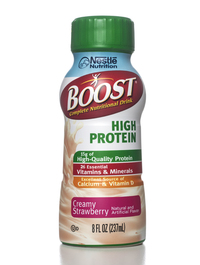
"caption": "Nestle makes a range of products under the Boost brand marketed as liquid nutritional supplements or meal replacements. But nutritionists say they can't compete with all the benefits of eating real food. Photo: iStockphoto.com",
"description": "Nestle makes a range of products under the Boost brand marketed as liquid nutritional supplements or meal replacements. But nutritionists say they can't compete with all the benefits of eating real food.",
"title": "Nestle makes a range of products under the Boost brand marketed as liquid nutritional supplements or meal replacements. But nutritionists say they can't compete with all the benefits of eating real food.",
"credit": null,
"status": "inherit",
"isLoading": false,
"fetchFailed": false
},
"bayareabites_59663": {
"type": "attachments",
"id": "bayareabites_59663",
"meta": {
"index": "attachments_1716263798",
"site": "bayareabites",
"id": "59663",
"found": true
},
"parent": 59662,
"imgSizes": {
"kqedFullSize": {
"file": "https://ww2.kqed.org/app/uploads/sites/24/2013/04/beerarsenic_wide-3d839c62c531aecaceae10870bcee77f9feea8d1.jpg",
"width": 200,
"height": 112
}
},
"publishDate": 1365519973,
"modified": 1365519973,
"caption": null,
"description": "The process that turns this beer crystal clear also may impart trace amounts of arsenic.",
"title": "The process that turns this beer crystal clear also may impart trace amounts of arsenic.",
"credit": null,
"status": "inherit",
"isLoading": false,
"fetchFailed": false
},
"bayareabites_59653": {
"type": "attachments",
"id": "bayareabites_59653",
"meta": {
"index": "attachments_1716263798",
"site": "bayareabites",
"id": "59653",
"found": true
},
"parent": 59652,
"imgSizes": {
"kqedFullSize": {
"file": "https://ww2.kqed.org/app/uploads/sites/24/2013/04/fruitchocolatecc-970d55f14f5dc0049fc35ef8bb61b5b5bcbf3c87.jpg",
"width": 200,
"height": 149
}
},
"publishDate": 1365459179,
"modified": 1365459179,
"caption": null,
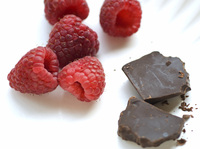
"description": "You could cut up to half the fat from chocolate without sacrificing taste by infusing it with fruit juice, scientists say.",
"title": "You could cut up to half the fat from chocolate without sacrificing taste by infusing it with fruit juice, scientists say.",
"credit": null,
"status": "inherit",
"isLoading": false,
"fetchFailed": false
},
"bayareabites_59622": {
"type": "attachments",
"id": "bayareabites_59622",
"meta": {
"index": "attachments_1716263798",
"site": "bayareabites",
"id": "59622",
"found": true
},
"parent": 59621,
"imgSizes": {
"kqedFullSize": {
"file": "https://ww2.kqed.org/app/uploads/sites/24/2013/04/kimchi_wide-79f3946ffc8866c2747ad436b2c432d2f1b90b0e.jpg",
"width": 200,
"height": 112
}
},
"publishDate": 1365356451,
"modified": 1365356451,
"caption": null,
"description": "Kimchi is a traditional pungent fermented Korean dish made of vegetables with a variety of seasonings.",
"title": "Kimchi is a traditional pungent fermented Korean dish made of vegetables with a variety of seasonings.",
"credit": null,
"status": "inherit",
"isLoading": false,
"fetchFailed": false
},
"bayareabites_59529": {
"type": "attachments",
"id": "bayareabites_59529",
"meta": {
"index": "attachments_1716263798",
"site": "bayareabites",
"id": "59529",
"found": true
},
"parent": 59528,
"imgSizes": {
"kqedFullSize": {
"file": "https://ww2.kqed.org/app/uploads/sites/24/2013/04/fastfoodforwardap-8833c3355762d352aa2cd3fe47ed094774470548.jpg",
"width": 200,
"height": 149
}
},
"publishDate": 1365183682,
"modified": 1365183682,
"caption": null,
"description": "Demonstrators from the Fast Food Forward rally protest Thursday outside a Wendy's restaurant in New York City.",
"title": "Demonstrators from the Fast Food Forward rally protest Thursday outside a Wendy's restaurant in New York City.",
"credit": null,
"status": "inherit",
"isLoading": false,
"fetchFailed": false
},
"bayareabites_59522": {
"type": "attachments",
"id": "bayareabites_59522",
"meta": {
"index": "attachments_1716263798",
"site": "bayareabites",
"id": "59522",
"found": true
},
"parent": 59521,
"imgSizes": {
"kqedFullSize": {
"file": "https://ww2.kqed.org/app/uploads/sites/24/2013/04/froozenfood001-cfd82eb244acb95a087c1d55b6a5ce67ad7425d5.jpg",
"width": 200,
"height": 150
}
},
"publishDate": 1365181894,
"modified": 1365181894,
"caption": null,
"description": "The NPR Science Desk freezer: now we know we can't presume it's germ-free.",
"title": "The NPR Science Desk freezer: now we know we can't presume it's germ-free.",
"credit": null,
"status": "inherit",
"isLoading": false,
"fetchFailed": false
},
"bayareabites_59486": {
"type": "attachments",
"id": "bayareabites_59486",
"meta": {
"index": "attachments_1716263798",
"site": "bayareabites",
"id": "59486",
"found": true
},
"parent": 59485,
"imgSizes": {
"kqedFullSize": {
"file": "https://ww2.kqed.org/app/uploads/sites/24/2013/04/usfoodaid-d47a153955b2f6bd9302754a3b3d88407e9aa3d4.jpg",
"width": 200,
"height": 149
}
},
"publishDate": 1365103160,
"modified": 1365103160,
"caption": null,
"description": "Pakistani aid workers offload USAID food supplies from an Army helicopter in Kallam Valley during catastrophic flooding in 2010.",
"title": "Pakistani aid workers offload USAID food supplies from an Army helicopter in Kallam Valley during catastrophic flooding in 2010.",
"credit": null,
"status": "inherit",
"isLoading": false,
"fetchFailed": false
},
"bayareabites_59475": {
"type": "attachments",
"id": "bayareabites_59475",
"meta": {
"index": "attachments_1716263798",
"site": "bayareabites",
"id": "59475",
"found": true
},
"parent": 59474,
"imgSizes": {
"kqedFullSize": {
"file": "https://ww2.kqed.org/app/uploads/sites/24/2013/04/arcimboldodetail_slide-b73bbb4dd07a60ccf60e807c68890a4e32b17ca8.jpg",
"width": 200,
"height": 133
}
},
"publishDate": 1365101216,
"modified": 1365101216,
"caption": null,
"description": "Detail of \u003cem>The Autumn,\u003c/em> a painting of a man made of food by 16th century Italian painter Giuseppe Arcimboldo.",
"title": "Detail of The Autumn, a painting of a man made of food by 16th century Italian painter Giuseppe Arcimboldo.",
"credit": null,
"status": "inherit",
"isLoading": false,
"fetchFailed": false
},
"bayareabites_59465": {
"type": "attachments",
"id": "bayareabites_59465",
"meta": {
"index": "attachments_1716263798",
"site": "bayareabites",
"id": "59465",
"found": true
},
"parent": 59464,
"imgSizes": {
"kqedFullSize": {
"file": "https://ww2.kqed.org/app/uploads/sites/24/2013/04/picture-1_wide-97623ff22077f6b95572fe0ce3ea7f65fe1be315.png",
"width": 200,
"height": 112
}
},
"publishDate": 1365099572,
"modified": 1365099572,
"caption": null,
"description": null,
"title": "NPR's new community cooking series, Cook Your Cupboard",
"credit": null,
"status": "inherit",
"isLoading": false,
"fetchFailed": false
},
"bayareabites_59143": {
"type": "attachments",
"id": "bayareabites_59143",
"meta": {
"index": "attachments_1716263798",
"site": "bayareabites",
"id": "59143",
"found": true
},
"parent": 59142,
"imgSizes": {
"kqedFullSize": {
"file": "https://ww2.kqed.org/app/uploads/sites/24/2013/03/bouchon_eggs_wide-de1da271285fa7f13c286ad3ef630061819fa29c.jpg",
"width": 200,
"height": 112
}
},
"publishDate": 1364571928,
"modified": 1364571928,
"caption": null,
"description": "Marshmallow eggs made with homemade flavored sugar are a colorful treat at Thomas Keller's Bouchon Bakery in Beverly Hills, Calif. To make them, pipe homemade marshmallow into hollow plastic eggs (see \u003ca href=\"",
"title": "Marshmallow eggs made with homemade flavored sugar are a colorful treat at Thomas Keller's Bouchon Bakery in Beverly Hills, Calif. To make them, pipe homemade marshmallow into hollow plastic eggs (see recipe, below).",
"credit": null,
"status": "inherit",
"isLoading": false,
"fetchFailed": false
}
},
"audioPlayerReducer": {
"postId": "stream_live",
"isPaused": true,
"isPlaying": false,
"pfsActive": false,
"pledgeModalIsOpen": true,
"playerDrawerIsOpen": false,
"liveAudioPlayStartedAt": 0,
"liveAudioPlayContext": ""
},
"authorsReducer": {
"byline_bayareabites_59631": {
"type": "authors",
"id": "byline_bayareabites_59631",
"meta": {
"override": true
},
"slug": "byline_bayareabites_59631",
"name": "Eliza Barclay",
"isLoading": false
},
"byline_bayareabites_59662": {
"type": "authors",
"id": "byline_bayareabites_59662",
"meta": {
"override": true
},
"slug": "byline_bayareabites_59662",
"name": "Nancy Shute",
"isLoading": false
},
"byline_bayareabites_59652": {
"type": "authors",
"id": "byline_bayareabites_59652",
"meta": {
"override": true
},
"slug": "byline_bayareabites_59652",
"name": "Audrey Carlsen",
"isLoading": false
},
"byline_bayareabites_59621": {
"type": "authors",
"id": "byline_bayareabites_59621",
"meta": {
"override": true
},
"slug": "byline_bayareabites_59621",
"name": "Bonny Wolf",
"isLoading": false
},
"byline_bayareabites_59528": {
"type": "authors",
"id": "byline_bayareabites_59528",
"meta": {
"override": true
},
"slug": "byline_bayareabites_59528",
"name": "Joel Rose",
"isLoading": false
},
"byline_bayareabites_59521": {
"type": "authors",
"id": "byline_bayareabites_59521",
"meta": {
"override": true
},
"slug": "byline_bayareabites_59521",
"name": "Nancy Shute",
"isLoading": false
},
"byline_bayareabites_59485": {
"type": "authors",
"id": "byline_bayareabites_59485",
"meta": {
"override": true
},
"slug": "byline_bayareabites_59485",
"name": "Dan Charles",
"isLoading": false
},
"byline_bayareabites_59474": {
"type": "authors",
"id": "byline_bayareabites_59474",
"meta": {
"override": true
},
"slug": "byline_bayareabites_59474",
"name": "Maria Godoy",
"isLoading": false
},
"byline_bayareabites_59464": {
"type": "authors",
"id": "byline_bayareabites_59464",
"meta": {
"override": true
},
"slug": "byline_bayareabites_59464",
"name": "Selena Simmons-Duffin",
"isLoading": false
},
"byline_bayareabites_59339": {
"type": "authors",
"id": "byline_bayareabites_59339",
"meta": {
"override": true
},
"slug": "byline_bayareabites_59339",
"name": "Alastair Bland",
"isLoading": false
},
"byline_bayareabites_59301": {
"type": "authors",
"id": "byline_bayareabites_59301",
"meta": {
"override": true
},
"slug": "byline_bayareabites_59301",
"name": "Audrey Carlsen",
"isLoading": false
},
"byline_bayareabites_59142": {
"type": "authors",
"id": "byline_bayareabites_59142",
"meta": {
"override": true
},
"slug": "byline_bayareabites_59142",
"name": "Camila Domonoske",
"isLoading": false
}
},
"pagesReducer": {
"bayareabites_category_npr-food": {
"type": "terms",
"id": "bayareabites_10916",
"meta": {
"index": "terms_1716263798",
"site": "bayareabites",
"id": "10916",
"score": 13.894455
},
"featImg": null,
"name": "NPR food",
"description": null,
"taxonomy": "category",
"headData": {
"twImgId": null,
"twTitle": null,
"ogTitle": null,
"ogImgId": null,
"twDescription": null,
"description": null,
"title": "NPR food Archives | KQED Bay Area Bites",
"ogDescription": null
},
"ttid": 5375,
"slug": "npr-food",
"isLoading": false,
"title": "NPR food",
"pageMeta": {
"site": "bayareabites",
"WpPageTemplate": "page-topic-editorial",
"currentPage": 85
},
"blocks": [
{
"blockName": "kqed/post-list",
"attrs": {
"layout": "cardArticle2",
"query": "posts/bayareabites?category=npr-food",
"seeMore": false,
"paginated": true,
"page": 85
}
},
{
"blockName": "kqed/ad"
}
]
}
},
"pfsSessionReducer": {},
"postsReducer": {
"stream_live": {
"type": "live",
"id": "stream_live",
"audioUrl": "https://hls.kqed.org/hls/kqed_app/playlist.m3u8",
"title": "Live Stream",
"excerpt": "Live Stream information currently unavailable.",
"link": "/radio",
"featImg": "",
"label": {
"name": "KQED Live",
"link": "/"
}
},
"stream_kqedNewscast": {
"type": "posts",
"id": "stream_kqedNewscast",
"audioUrl": "https://www.kqed.org/.stream/anon/radio/RDnews/newscast.mp3?_=1",
"title": "KQED Newscast",
"featImg": "",
"label": {
"name": "88.5 FM",
"link": "/"
}
},
"bayareabites_59631": {
"type": "posts",
"id": "bayareabites_59631",
"meta": {
"index": "posts_1716263798",
"site": "bayareabites",
"id": "59631",
"score": null,
"sort": [
1365543198000
]
},
"parent": 0,
"labelTerm": {
"site": "bayareabites"
},
"blocks": [],
"publishDate": 1365543198,
"format": "aside",
"disqusTitle": "Apparently, Some People Can't Be Bothered With Food",
"title": "Apparently, Some People Can't Be Bothered With Food",
"headTitle": "Bay Area Bites | KQED Food",
"content": "\u003cp>Post by Eliza Barclay, \u003ca href=\"http://www.npr.org/blogs/thesalt/2013/04/03/176175513/bored-with-food-an-all-liquid-diet-is-not-such-a-hot-idea\">The Salt at NPR Food\u003c/a> (4/7/13)\u003c/p>\n\u003cfigure id=\"attachment_59633\" class=\"wp-caption alignleft\" style=\"max-width: 200px\">\u003ca href=\"http://ww2.kqed.org/bayareabites/wp-content/uploads/sites/24/2013/04/dietdrink-ae4525c5f81837c6cdf008cdaa61787290a9e055.jpg\">\u003cimg src=\"http://ww2.kqed.org/bayareabites/wp-content/uploads/sites/24/2013/04/dietdrink-ae4525c5f81837c6cdf008cdaa61787290a9e055.jpg\" alt=\"There are people who don't like food? Yes. But liquid meal replacements may not be their best bet. Photo: iStockphoto.com\" width=\"200\" height=\"150\" class=\"size-full wp-image-59633\">\u003c/a>\u003cfigcaption class=\"wp-caption-text\">There are people who don't like food? Yes. But liquid meal replacements may not be their best bet.\u003cbr>Photo: iStockphoto.com\u003c/figcaption>\u003c/figure>\n\u003cp>We're accustomed to offbeat food ideas here at The Salt. But even we had to pause over recent headlines about a guy who bragged about finding a way around eating.\u003c/p>\n\u003cp>Rob Rhinehart's \u003ca href=\"http://robrhinehart.com/\">blog\u003c/a> details his two-month experiment consuming mostly Soylent, a concoction he invented to provide all the nutrition and none of the hassle of food. It first attracted the attention of \u003ca href=\"http://www.vice.com/read/rob-rhinehart-no-longer-requires-food\">Vice\u003c/a>, and then \u003cem>The Washington Post,\u003c/em> which \u003ca href=\"http://www.washingtonpost.com/blogs/wonkblog/wp/2013/03/14/rob-rhinehart-has-a-crazy-plan-to-let-you-go-without-food-forever-it-just-might-work/\">said\u003c/a> that his plan just might work. Rhinehart, a 24-year-old electrical engineer in San Francisco, soon found himself inundated with queries from people interested in testing Soylent. He'd apparently hit on something that resonated with others.\u003c/p>\n\u003cp>But wait a minute, we wondered: What exactly is so bothersome about eating food?\u003c/p>\n\u003cp>\"I resented the time, money and effort [that] the purchase, preparation, consumption, and clean-up of food was consuming,\" Rhinehart writes on the blog. His liquid solution has left him feeling sated, leaner and more focused, he writes. And in an email to The Salt, he added: \"Personally, I've found separating the social and cultural enjoyment of food from food as 'fuel' has vastly improved my quality of life.\"\u003c/p>\n\u003cp>[ad fullwidth]\u003c/p>\n\u003cp>Strange as it may seem to those of us who adore food, there is a veritable subculture of otherwise healthy people who find eating to be a nuisance. When I did an informal poll of my colleagues and friends, a few said they could relate to Rhinehart and his interest in an alternative to food. (For the record, they were all young men.)\u003c/p>\n\u003cp>Of course, there are also people who have difficulty with food for much more serious reasons — food allergies or other illnesses (think the late \u003ca href=\"http://www.nytimes.com/2010/09/01/dining/01ebert.html?pagewanted=all?src=tp\">Roger Ebert\u003c/a>), as well as people with eating disorders or dreams of weight loss.\u003c/p>\n\u003cp>\u003ca href=\"http://www2.sph.unc.edu/index.php?option=com_profiles&profileAction=ProfDetail&pid=714055314\">Amanda Holliday\u003c/a>, an assistant professor of nutrition at the University of North Carolina, Chapel Hill, says she has come across a lot of people who've given up on food. \"Some feel overwhelmed by all the choices,\" she tells The Salt. \"Others feel defeated by having to choose something healthy.\" Holliday also has patients with dementia, for whom chewing and swallowing is problematic.\u003c/p>\n\u003cp>But is it really possible to come up with a meal replacement product that's equivalent to a diverse diet of real food?\u003c/p>\n\u003cfigure id=\"attachment_59673\" class=\"wp-caption alignleft\" style=\"max-width: 300px\">\u003ca href=\"http://ww2.kqed.org/bayareabites/wp-content/uploads/sites/24/2013/04/boost.jpg\">\u003cimg src=\"http://ww2.kqed.org/bayareabites/wp-content/uploads/sites/24/2013/04/boost.jpg\" alt=\"Nestle makes a range of products under the Boost brand marketed as liquid nutritional supplements or meal replacements. But nutritionists say they can't compete with all the benefits of eating real food. Photo: iStockphoto.com\" width=\"300\" class=\"size-full wp-image-59673\">\u003c/a>\u003cfigcaption class=\"wp-caption-text\">Nestle makes a range of products under the Boost brand marketed as liquid nutritional supplements or meal replacements. But nutritionists say they can't compete with all the benefits of eating real food. Photo: iStockphoto.com\u003c/figcaption>\u003c/figure>\n\u003cp>Big food companies have tried with liquid meal-replacement products like Ensure, made by Abbott, or Boost, made by Nestle. Holliday and other nutritionists recommend these products to sick people who really can't eat — but they have reservations about them for the rest of us.\u003c/p>\n\u003cp>Even though such meal replacements may be packed with micronutrients, they're missing the other beneficial components of real food that haven't yet been isolated, Holliday says. And these products may include processed ingredients like high fructose corn syrup.\u003c/p>\n\u003cp>\"In the hospital nutrition world, we're still looking for products based on real food,\" she says. \"We could make them ourselves, but there's labor involved.\"\u003c/p>\n\u003cp>Rhinehart hasn't released his Soylent recipe, but he tweeted that it has \"ingredients produced by the food processing industry by the megaton.\"\u003c/p>\n\u003cp>But the \"food averse\" should think twice before turning to Rhinehart, or any other rogue inventor, for a silver bullet meal replacement, warns \u003ca href=\"http://www.cumc.columbia.edu/ihn/faculty_/akabas\">Sharon Akabas\u003c/a> with the Institute of Human Nutrition at Columbia University.\u003c/p>\n\u003cp>Akabas takes issue with Rhinehart's scorn for nutrition science. She calls it \"hubris\" for Rhinehart to assume that he can calculate exactly what his body needs, based on loose proportions of micronutrient recommendations gleaned from biochemistry textbooks.\u003c/p>\n\u003cp>In fact, says Akabas, nutrition science has learned a lot about what the body needs by studying the effects of certain foods and diets over decades.\u003c/p>\n\u003cp>\"For someone to do something for two months and say they feel better is pretty meaningless,\" she says.\u003c/p>\n\u003cp>She is, however, sympathetic to the anxiety that many people feel about food: \"People are exasperated with the complexity of advice they're getting and the mixed messages from the industry,\" she says. \"There are ways of simplifying food to the point that wouldn't take much effort or cost much. But there is no equivalent of manna — a single food with everything we need.\" \u003c/p>\n\u003cp>\u003c/p>\n\u003cp> \u003cem>Copyright 2013 \u003ca href=\"http://www.npr.org/\">NPR\u003c/a>.\u003c/em> \u003c/p>\n\n",
"disqusIdentifier": "59631 http://blogs.kqed.org/bayareabites/?p=59631",
"disqusUrl": "https://ww2.kqed.org/bayareabites/2013/04/09/apparently-some-people-cant-be-bothered-with-food/",
"stats": {
"hasVideo": false,
"hasChartOrMap": false,
"hasAudio": false,
"hasPolis": false,
"wordCount": 777,
"hasGoogleForm": false,
"hasGallery": false,
"hasHearkenModule": false,
"iframeSrcs": [],
"paragraphCount": 21
},
"modified": 1365543198,
"excerpt": "Believe it or not, there's a veritable subculture of otherwise healthy people who simply don't like eating real food. But liquid meal replacements may not be their best bet if they want an alternative.",
"headData": {
"twImgId": "",
"twTitle": "",
"ogTitle": "",
"ogImgId": "",
"twDescription": "",
"description": "Believe it or not, there's a veritable subculture of otherwise healthy people who simply don't like eating real food. But liquid meal replacements may not be their best bet if they want an alternative.",
"title": "Apparently, Some People Can't Be Bothered With Food | KQED",
"ogDescription": "",
"schema": {
"@context": "https://schema.org",
"@type": "Article",
"headline": "Apparently, Some People Can't Be Bothered With Food",
"datePublished": "2013-04-09T14:33:18-07:00",
"dateModified": "2013-04-09T14:33:18-07:00",
"image": "https://cdn.kqed.org/wp-content/uploads/2020/02/KQED-OG-Image@1x.png"
}
},
"guestAuthors": [],
"slug": "apparently-some-people-cant-be-bothered-with-food",
"status": "publish",
"nprApiLink": "http://api.npr.org/query?id=176175513&apiKey=MDAxOTAwOTE4MDEyMTkxMDAzNjczZDljZA004",
"nprByline": "Eliza Barclay",
"nprStoryDate": "Sun, 07 Apr 2013 12:40:00 -0400",
"nprLastModifiedDate": "Sun, 07 Apr 2013 12:50:13 -0400",
"nprHtmlLink": "http://www.npr.org/blogs/thesalt/2013/04/03/176175513/bored-with-food-an-all-liquid-diet-is-not-such-a-hot-idea?ft=3&f=176175513",
"nprStoryId": "176175513",
"nprRetrievedStory": "1",
"nprPubDate": "Sun, 07 Apr 2013 12:50:00 -0400",
"path": "/bayareabites/59631/apparently-some-people-cant-be-bothered-with-food",
"audioTrackLength": null,
"parsedContent": [
{
"type": "contentString",
"content": "\u003cdiv class=\"post-body\">\u003cp>\u003cp>Post by Eliza Barclay, \u003ca href=\"http://www.npr.org/blogs/thesalt/2013/04/03/176175513/bored-with-food-an-all-liquid-diet-is-not-such-a-hot-idea\">The Salt at NPR Food\u003c/a> (4/7/13)\u003c/p>\n\u003cfigure id=\"attachment_59633\" class=\"wp-caption alignleft\" style=\"max-width: 200px\">\u003ca href=\"http://ww2.kqed.org/bayareabites/wp-content/uploads/sites/24/2013/04/dietdrink-ae4525c5f81837c6cdf008cdaa61787290a9e055.jpg\">\u003cimg src=\"http://ww2.kqed.org/bayareabites/wp-content/uploads/sites/24/2013/04/dietdrink-ae4525c5f81837c6cdf008cdaa61787290a9e055.jpg\" alt=\"There are people who don't like food? Yes. But liquid meal replacements may not be their best bet. Photo: iStockphoto.com\" width=\"200\" height=\"150\" class=\"size-full wp-image-59633\">\u003c/a>\u003cfigcaption class=\"wp-caption-text\">There are people who don't like food? Yes. But liquid meal replacements may not be their best bet.\u003cbr>Photo: iStockphoto.com\u003c/figcaption>\u003c/figure>\n\u003cp>We're accustomed to offbeat food ideas here at The Salt. But even we had to pause over recent headlines about a guy who bragged about finding a way around eating.\u003c/p>\n\u003cp>Rob Rhinehart's \u003ca href=\"http://robrhinehart.com/\">blog\u003c/a> details his two-month experiment consuming mostly Soylent, a concoction he invented to provide all the nutrition and none of the hassle of food. It first attracted the attention of \u003ca href=\"http://www.vice.com/read/rob-rhinehart-no-longer-requires-food\">Vice\u003c/a>, and then \u003cem>The Washington Post,\u003c/em> which \u003ca href=\"http://www.washingtonpost.com/blogs/wonkblog/wp/2013/03/14/rob-rhinehart-has-a-crazy-plan-to-let-you-go-without-food-forever-it-just-might-work/\">said\u003c/a> that his plan just might work. Rhinehart, a 24-year-old electrical engineer in San Francisco, soon found himself inundated with queries from people interested in testing Soylent. He'd apparently hit on something that resonated with others.\u003c/p>\n\u003cp>But wait a minute, we wondered: What exactly is so bothersome about eating food?\u003c/p>\n\u003cp>\"I resented the time, money and effort [that] the purchase, preparation, consumption, and clean-up of food was consuming,\" Rhinehart writes on the blog. His liquid solution has left him feeling sated, leaner and more focused, he writes. And in an email to The Salt, he added: \"Personally, I've found separating the social and cultural enjoyment of food from food as 'fuel' has vastly improved my quality of life.\"\u003c/p>\n\u003cp>\u003c/p>\u003c/div>",
"attributes": {
"named": {},
"numeric": []
}
},
{
"type": "component",
"content": "",
"name": "ad",
"attributes": {
"named": {
"label": "fullwidth"
},
"numeric": [
"fullwidth"
]
}
},
{
"type": "contentString",
"content": "\u003cdiv class=\"post-body\">\u003cp>\u003c/p>\n\u003cp>Strange as it may seem to those of us who adore food, there is a veritable subculture of otherwise healthy people who find eating to be a nuisance. When I did an informal poll of my colleagues and friends, a few said they could relate to Rhinehart and his interest in an alternative to food. (For the record, they were all young men.)\u003c/p>\n\u003cp>Of course, there are also people who have difficulty with food for much more serious reasons — food allergies or other illnesses (think the late \u003ca href=\"http://www.nytimes.com/2010/09/01/dining/01ebert.html?pagewanted=all?src=tp\">Roger Ebert\u003c/a>), as well as people with eating disorders or dreams of weight loss.\u003c/p>\n\u003cp>\u003ca href=\"http://www2.sph.unc.edu/index.php?option=com_profiles&profileAction=ProfDetail&pid=714055314\">Amanda Holliday\u003c/a>, an assistant professor of nutrition at the University of North Carolina, Chapel Hill, says she has come across a lot of people who've given up on food. \"Some feel overwhelmed by all the choices,\" she tells The Salt. \"Others feel defeated by having to choose something healthy.\" Holliday also has patients with dementia, for whom chewing and swallowing is problematic.\u003c/p>\n\u003cp>But is it really possible to come up with a meal replacement product that's equivalent to a diverse diet of real food?\u003c/p>\n\u003cfigure id=\"attachment_59673\" class=\"wp-caption alignleft\" style=\"max-width: 300px\">\u003ca href=\"http://ww2.kqed.org/bayareabites/wp-content/uploads/sites/24/2013/04/boost.jpg\">\u003cimg src=\"http://ww2.kqed.org/bayareabites/wp-content/uploads/sites/24/2013/04/boost.jpg\" alt=\"Nestle makes a range of products under the Boost brand marketed as liquid nutritional supplements or meal replacements. But nutritionists say they can't compete with all the benefits of eating real food. Photo: iStockphoto.com\" width=\"300\" class=\"size-full wp-image-59673\">\u003c/a>\u003cfigcaption class=\"wp-caption-text\">Nestle makes a range of products under the Boost brand marketed as liquid nutritional supplements or meal replacements. But nutritionists say they can't compete with all the benefits of eating real food. Photo: iStockphoto.com\u003c/figcaption>\u003c/figure>\n\u003cp>Big food companies have tried with liquid meal-replacement products like Ensure, made by Abbott, or Boost, made by Nestle. Holliday and other nutritionists recommend these products to sick people who really can't eat — but they have reservations about them for the rest of us.\u003c/p>\n\u003cp>Even though such meal replacements may be packed with micronutrients, they're missing the other beneficial components of real food that haven't yet been isolated, Holliday says. And these products may include processed ingredients like high fructose corn syrup.\u003c/p>\n\u003cp>\"In the hospital nutrition world, we're still looking for products based on real food,\" she says. \"We could make them ourselves, but there's labor involved.\"\u003c/p>\n\u003cp>Rhinehart hasn't released his Soylent recipe, but he tweeted that it has \"ingredients produced by the food processing industry by the megaton.\"\u003c/p>\n\u003cp>But the \"food averse\" should think twice before turning to Rhinehart, or any other rogue inventor, for a silver bullet meal replacement, warns \u003ca href=\"http://www.cumc.columbia.edu/ihn/faculty_/akabas\">Sharon Akabas\u003c/a> with the Institute of Human Nutrition at Columbia University.\u003c/p>\n\u003cp>Akabas takes issue with Rhinehart's scorn for nutrition science. She calls it \"hubris\" for Rhinehart to assume that he can calculate exactly what his body needs, based on loose proportions of micronutrient recommendations gleaned from biochemistry textbooks.\u003c/p>\n\u003cp>In fact, says Akabas, nutrition science has learned a lot about what the body needs by studying the effects of certain foods and diets over decades.\u003c/p>\n\u003cp>\"For someone to do something for two months and say they feel better is pretty meaningless,\" she says.\u003c/p>\n\u003cp>She is, however, sympathetic to the anxiety that many people feel about food: \"People are exasperated with the complexity of advice they're getting and the mixed messages from the industry,\" she says. \"There are ways of simplifying food to the point that wouldn't take much effort or cost much. But there is no equivalent of manna — a single food with everything we need.\" \u003c/p>\n\u003cp>\u003c/p>\n\u003cp> \u003cem>Copyright 2013 \u003ca href=\"http://www.npr.org/\">NPR\u003c/a>.\u003c/em> \u003c/p>\n\n\u003c/div>\u003c/p>",
"attributes": {
"named": {},
"numeric": []
}
}
],
"link": "/bayareabites/59631/apparently-some-people-cant-be-bothered-with-food",
"authors": [
"byline_bayareabites_59631"
],
"categories": [
"bayareabites_4084",
"bayareabites_1245",
"bayareabites_10916"
],
"tags": [
"bayareabites_11515",
"bayareabites_11516",
"bayareabites_11514",
"bayareabites_10921"
],
"featImg": "bayareabites_59632",
"label": "bayareabites"
},
"bayareabites_59662": {
"type": "posts",
"id": "bayareabites_59662",
"meta": {
"index": "posts_1716263798",
"site": "bayareabites",
"id": "59662",
"score": null,
"sort": [
1365520387000
]
},
"parent": 0,
"labelTerm": {
"site": "bayareabites"
},
"blocks": [],
"publishDate": 1365520387,
"format": "aside",
"disqusTitle": "Arsenic In Beer May Come From Widely Used Filtering Process",
"title": "Arsenic In Beer May Come From Widely Used Filtering Process",
"headTitle": "Bay Area Bites | KQED Food",
"content": "\u003cfigure id=\"attachment_59666\" class=\"wp-caption aligncenter\" style=\"max-width: 889px\">\u003ca href=\"http://ww2.kqed.org/bayareabites/wp-content/uploads/sites/24/2013/04/beerarsenic.jpg\">\u003cimg src=\"http://ww2.kqed.org/bayareabites/wp-content/uploads/sites/24/2013/04/beerarsenic.jpg\" alt=\"The process that turns this beer crystal clear also may impart trace amounts of arsenic. Photo: istockphoto.com\" width=\"889\" height=\"500\" class=\"size-full wp-image-59666\">\u003c/a>\u003cfigcaption class=\"wp-caption-text\">The process that turns this beer crystal clear also may impart trace amounts of arsenic. Photo: istockphoto.com\u003c/figcaption>\u003c/figure>\n\u003cp>Post by Nancy Shute, \u003ca href=\"http://www.npr.org/blogs/thesalt/2013/04/08/176587506/arsenic-in-beer-may-come-from-widely-used-filtering-process\">The Salt at NPR Food\u003c/a> (4/9/13)\u003c/p>\n\u003cp>Beer lovers might be alarmed to hear that beer can pick up small amounts of arsenic as it's filtered to be sparkly clear.\u003c/p>\n\u003cp>But researchers in Germany reported Sunday that they've found arsenic in hundreds of samples of beer, some at levels more than twice that allowed in drinking water.\u003c/p>\n\u003cp>When we checked in with experts about arsenic and the filtering process, which is also widely used in the wine industry, they weren't too surprised. That's because the filtering agent in question, diatomaceous earth, is a mined natural product that contains iron and other metals.\u003c/p>\n\u003cp>\"We already knew that,\" says \u003ca href=\"http://wineserver.ucdavis.edu/people/faculty.php?id=4\">Roger Boulton\u003c/a>, a professor in enology at the University of California, Davis. \"The levels shouldn't be alarming, because it's the kind of thing you see in dust or air.\"\u003c/p>\n\u003cp>[ad fullwidth]\u003c/p>\n\u003cp>One reason that chemists are now discovering arsenic in beer is that testing methods are much more precise than in decades past, Boulton says, detecting low levels of naturally occurring elements that have always been in food products.\u003c/p>\n\u003cp>Still, the prospect of arsenic in a frosty lager or a rich chardonnay does beg for further exploration.\u003c/p>\n\u003cp>It turns out that any beer or wine that's clear has been filtered to strain out plant matter, yeast and anything else that would leave a drink looking unappealingly cloudy.\u003c/p>\n\u003cp>\"It's really there for aesthetics,\" says \u003ca href=\"http://oregonstate.edu/dept/foodsci/faculty/ths.htm\">Tom Shellhammer\u003c/a>, a professor of fermentation science at Oregon State University. \"People in general will make positive quality associations with clearer beverages.\"\u003c/p>\n\u003cp>There are exceptions, he says, like a cloudy Hefeweizen beer. But the notion of a cloudy pinot grigio does lack appeal. \"For many beer and wine producers,\" he says, \"clarity is a clear performance indicator.\"\u003c/p>\n\u003cp>For centuries, the filter of choice for wine and beer has been diatomaceous earth. It's a beige powder made up of the skeletons of diatoms, tiny algae that lived in oceans many moons ago. Because the diatom fossils have lots of minute holes, they do a great job of filtering liquids — from swimming pool water to pricey champagne.\u003c/p>\n\u003cp>Arsenic in beer hit the news this week when Mehmet Coelhan, a researcher at the \u003ca href=\"http://www.blq-weihenstephan.de/ueber-uns/team/beratung.html\">Weihenstephan\u003c/a> research center at the Technical University of Munich, reported at a meeting of the American Chemical Society that many of the nearly 360 beers tested in Germany had trace amounts of arsenic.\u003c/p>\n\u003cp>A few were found to have more than 25 parts per billion of arsenic. That's twice the 10 parts per billion \u003ca href=\"http://water.epa.gov/lawsregs/rulesregs/sdwa/arsenic/index.cfm\">standard \u003c/a>for drinking water in the United States.\u003c/p>\n\u003cp>Germany is proud of its \u003cem>Reinheitsgebot\u003c/em>, a 16th-century purity law that demands that beer can be made of only water, hops and malt. Coelhan and his fellow chemists do a lot of work analyzing water and other ingredients for the German beer industry, so they know arsenic wasn't in the water or malt.\u003c/p>\n\u003cp>But they did find it in the diatomaceous earth. \"We analyzed \u003cem>kieselguhr\u003c/em>,\" Coelhan told a news conference at the ACS meeting in New Orleans on April 7, using the German word for diatomaceous earth. \"We found high concentrations of extractable arsenic.\"\u003c/p>\n\u003cp>But people don't drink as much beer as they do water (or they shouldn't), and there's no U.S. or European standard for arsenic in foods. That has become an issue with \u003ca href=\"http://www.npr.org/blogs/thesalt/2012/02/23/147294466/in-rice-how-much-arsenic-is-too-much\">arsenic in rice\u003c/a>, which has been found in some products in the United States, including toddler formula and energy bars. So there's no way of knowing if there's enough arsenic in beer to pose a health risk.\u003c/p>\n\u003cp>The German researchers' findings square with a much smaller 2008 \u003ca href=\"http://onlinelibrary.wiley.com/doi/10.1002/j.2050-0416.2008.tb00770.x/abstract\">study of Italian beers\u003c/a>, which found similar levels in some brews, as well as cadmium and lead, which are also poisonous. A few other studies have found arsenic in \u003ca href=\"http://www.ncbi.nlm.nih.gov/pubmed/22026389\">wine\u003c/a>.\u003c/p>\n\u003cp>The wine industry has been moving away from using diatomaceous earth for decades, says \u003ca href=\"http://www.fresnostate.edu/jcast/ve/faculty-staff/j-giannini.html\">John Giannini\u003c/a>, a lecturer and vintner for the University of California, Fresno — not because it contains arsenic, but because it contains silica, so breathing it \"can do damage to your lungs,\" he says. He has switched largely to cellulose-fiber filters to reduce the risk to students.\u003c/p>\n\u003cp>The downside, Giannini says, is that the cellulose can give the wine a bit of a papery taste. \"What I'm doing is blending the two, to minimize the paper taste and minimize the use of DE.\"\u003c/p>\n\u003cp>Other options for filtering wine and beer include polyethylene filters, centrifuges and cross-flow filtration, which doesn't use a filter medium at all.\u003c/p>\n\u003cp>Washing diatomaceous earth before use reduced the amount of arsenic it released, Coelhan says, but that method hasn't been tested commercially.\u003c/p>\n\u003cp>Indeed, scientists have some work to do to find out if diatomaceous earth really is causing problems with arsenic in beer and wine.\u003c/p>\n\u003cp>\"The proper study would be to compare unfiltered beer to filtered beer, beer filtered using diatomaceous earth, beer filtered using perlite, beer filtered using cross-flow filtration,\" says \u003ca href=\"http://faculty.bftv.ucdavis.edu/fst/Bamforth/whoAmI.html\">Charlie Bamforth\u003c/a>, a professor of brewing science at the University of California, Davis. He's skeptical that diatomaceous earth could be causing troubling levels of contamination.\u003c/p>\n\u003cp>Abandoning diatomaceous earth altogether won't guarantee there's no arsenic or other heavy metals in beverages, \u003cstrong>\u003c/strong>UC Davis wine expert and chemical engineer Boulton told The Salt. \"The sense that if you didn't use diatomaceous earth, there would be no heavy metals in beer at all is a little out of touch with nature.\"\u003c/p>\n\u003cp>\u003c/p>\n\u003cp>\u003cem>Copyright 2013 \u003ca href=\"http://www.npr.org/\">NPR\u003c/a>.\u003c/em> \u003c/p>\n\n",
"disqusIdentifier": "59662 http://blogs.kqed.org/bayareabites/?p=59662",
"disqusUrl": "https://ww2.kqed.org/bayareabites/2013/04/09/arsenic-in-beer-may-come-from-widely-used-filtering-process/",
"stats": {
"hasVideo": false,
"hasChartOrMap": false,
"hasAudio": false,
"hasPolis": false,
"wordCount": 947,
"hasGoogleForm": false,
"hasGallery": false,
"hasHearkenModule": false,
"iframeSrcs": [],
"paragraphCount": 27
},
"modified": 1365520387,
"excerpt": "Arsenic in beer doesn't sound like a good idea, even if it's due to a centuries-old filtering process. A new study says filtering beer with diatomaceous earth could boost levels of arsenic. But it's not clear whether this poses a health risk.",
"headData": {
"twImgId": "",
"twTitle": "",
"ogTitle": "",
"ogImgId": "",
"twDescription": "",
"description": "Arsenic in beer doesn't sound like a good idea, even if it's due to a centuries-old filtering process. A new study says filtering beer with diatomaceous earth could boost levels of arsenic. But it's not clear whether this poses a health risk.",
"title": "Arsenic In Beer May Come From Widely Used Filtering Process | KQED",
"ogDescription": "",
"schema": {
"@context": "https://schema.org",
"@type": "Article",
"headline": "Arsenic In Beer May Come From Widely Used Filtering Process",
"datePublished": "2013-04-09T08:13:07-07:00",
"dateModified": "2013-04-09T08:13:07-07:00",
"image": "https://cdn.kqed.org/wp-content/uploads/2020/02/KQED-OG-Image@1x.png"
}
},
"guestAuthors": [],
"slug": "arsenic-in-beer-may-come-from-widely-used-filtering-process",
"status": "publish",
"nprApiLink": "http://api.npr.org/query?id=176587506&apiKey=MDAxOTAwOTE4MDEyMTkxMDAzNjczZDljZA004",
"nprByline": "Nancy Shute",
"nprStoryDate": "Tue, 09 Apr 2013 10:22:00 -0400",
"nprLastModifiedDate": "Tue, 09 Apr 2013 10:43:33 -0400",
"nprHtmlLink": "http://www.npr.org/blogs/thesalt/2013/04/08/176587506/arsenic-in-beer-may-come-from-widely-used-filtering-process?ft=3&f=176587506",
"nprStoryId": "176587506",
"nprRetrievedStory": "1",
"nprPubDate": "Tue, 09 Apr 2013 10:43:00 -0400",
"path": "/bayareabites/59662/arsenic-in-beer-may-come-from-widely-used-filtering-process",
"audioTrackLength": null,
"parsedContent": [
{
"type": "contentString",
"content": "\u003cdiv class=\"post-body\">\u003cp>\u003cfigure id=\"attachment_59666\" class=\"wp-caption aligncenter\" style=\"max-width: 889px\">\u003ca href=\"http://ww2.kqed.org/bayareabites/wp-content/uploads/sites/24/2013/04/beerarsenic.jpg\">\u003cimg src=\"http://ww2.kqed.org/bayareabites/wp-content/uploads/sites/24/2013/04/beerarsenic.jpg\" alt=\"The process that turns this beer crystal clear also may impart trace amounts of arsenic. Photo: istockphoto.com\" width=\"889\" height=\"500\" class=\"size-full wp-image-59666\">\u003c/a>\u003cfigcaption class=\"wp-caption-text\">The process that turns this beer crystal clear also may impart trace amounts of arsenic. Photo: istockphoto.com\u003c/figcaption>\u003c/figure>\n\u003cp>Post by Nancy Shute, \u003ca href=\"http://www.npr.org/blogs/thesalt/2013/04/08/176587506/arsenic-in-beer-may-come-from-widely-used-filtering-process\">The Salt at NPR Food\u003c/a> (4/9/13)\u003c/p>\n\u003cp>Beer lovers might be alarmed to hear that beer can pick up small amounts of arsenic as it's filtered to be sparkly clear.\u003c/p>\n\u003cp>But researchers in Germany reported Sunday that they've found arsenic in hundreds of samples of beer, some at levels more than twice that allowed in drinking water.\u003c/p>\n\u003cp>When we checked in with experts about arsenic and the filtering process, which is also widely used in the wine industry, they weren't too surprised. That's because the filtering agent in question, diatomaceous earth, is a mined natural product that contains iron and other metals.\u003c/p>\n\u003cp>\"We already knew that,\" says \u003ca href=\"http://wineserver.ucdavis.edu/people/faculty.php?id=4\">Roger Boulton\u003c/a>, a professor in enology at the University of California, Davis. \"The levels shouldn't be alarming, because it's the kind of thing you see in dust or air.\"\u003c/p>\n\u003cp>\u003c/p>\u003c/div>",
"attributes": {
"named": {},
"numeric": []
}
},
{
"type": "component",
"content": "",
"name": "ad",
"attributes": {
"named": {
"label": "fullwidth"
},
"numeric": [
"fullwidth"
]
}
},
{
"type": "contentString",
"content": "\u003cdiv class=\"post-body\">\u003cp>\u003c/p>\n\u003cp>One reason that chemists are now discovering arsenic in beer is that testing methods are much more precise than in decades past, Boulton says, detecting low levels of naturally occurring elements that have always been in food products.\u003c/p>\n\u003cp>Still, the prospect of arsenic in a frosty lager or a rich chardonnay does beg for further exploration.\u003c/p>\n\u003cp>It turns out that any beer or wine that's clear has been filtered to strain out plant matter, yeast and anything else that would leave a drink looking unappealingly cloudy.\u003c/p>\n\u003cp>\"It's really there for aesthetics,\" says \u003ca href=\"http://oregonstate.edu/dept/foodsci/faculty/ths.htm\">Tom Shellhammer\u003c/a>, a professor of fermentation science at Oregon State University. \"People in general will make positive quality associations with clearer beverages.\"\u003c/p>\n\u003cp>There are exceptions, he says, like a cloudy Hefeweizen beer. But the notion of a cloudy pinot grigio does lack appeal. \"For many beer and wine producers,\" he says, \"clarity is a clear performance indicator.\"\u003c/p>\n\u003cp>For centuries, the filter of choice for wine and beer has been diatomaceous earth. It's a beige powder made up of the skeletons of diatoms, tiny algae that lived in oceans many moons ago. Because the diatom fossils have lots of minute holes, they do a great job of filtering liquids — from swimming pool water to pricey champagne.\u003c/p>\n\u003cp>Arsenic in beer hit the news this week when Mehmet Coelhan, a researcher at the \u003ca href=\"http://www.blq-weihenstephan.de/ueber-uns/team/beratung.html\">Weihenstephan\u003c/a> research center at the Technical University of Munich, reported at a meeting of the American Chemical Society that many of the nearly 360 beers tested in Germany had trace amounts of arsenic.\u003c/p>\n\u003cp>A few were found to have more than 25 parts per billion of arsenic. That's twice the 10 parts per billion \u003ca href=\"http://water.epa.gov/lawsregs/rulesregs/sdwa/arsenic/index.cfm\">standard \u003c/a>for drinking water in the United States.\u003c/p>\n\u003cp>Germany is proud of its \u003cem>Reinheitsgebot\u003c/em>, a 16th-century purity law that demands that beer can be made of only water, hops and malt. Coelhan and his fellow chemists do a lot of work analyzing water and other ingredients for the German beer industry, so they know arsenic wasn't in the water or malt.\u003c/p>\n\u003cp>But they did find it in the diatomaceous earth. \"We analyzed \u003cem>kieselguhr\u003c/em>,\" Coelhan told a news conference at the ACS meeting in New Orleans on April 7, using the German word for diatomaceous earth. \"We found high concentrations of extractable arsenic.\"\u003c/p>\n\u003cp>But people don't drink as much beer as they do water (or they shouldn't), and there's no U.S. or European standard for arsenic in foods. That has become an issue with \u003ca href=\"http://www.npr.org/blogs/thesalt/2012/02/23/147294466/in-rice-how-much-arsenic-is-too-much\">arsenic in rice\u003c/a>, which has been found in some products in the United States, including toddler formula and energy bars. So there's no way of knowing if there's enough arsenic in beer to pose a health risk.\u003c/p>\n\u003cp>The German researchers' findings square with a much smaller 2008 \u003ca href=\"http://onlinelibrary.wiley.com/doi/10.1002/j.2050-0416.2008.tb00770.x/abstract\">study of Italian beers\u003c/a>, which found similar levels in some brews, as well as cadmium and lead, which are also poisonous. A few other studies have found arsenic in \u003ca href=\"http://www.ncbi.nlm.nih.gov/pubmed/22026389\">wine\u003c/a>.\u003c/p>\n\u003cp>The wine industry has been moving away from using diatomaceous earth for decades, says \u003ca href=\"http://www.fresnostate.edu/jcast/ve/faculty-staff/j-giannini.html\">John Giannini\u003c/a>, a lecturer and vintner for the University of California, Fresno — not because it contains arsenic, but because it contains silica, so breathing it \"can do damage to your lungs,\" he says. He has switched largely to cellulose-fiber filters to reduce the risk to students.\u003c/p>\n\u003cp>The downside, Giannini says, is that the cellulose can give the wine a bit of a papery taste. \"What I'm doing is blending the two, to minimize the paper taste and minimize the use of DE.\"\u003c/p>\n\u003cp>Other options for filtering wine and beer include polyethylene filters, centrifuges and cross-flow filtration, which doesn't use a filter medium at all.\u003c/p>\n\u003cp>Washing diatomaceous earth before use reduced the amount of arsenic it released, Coelhan says, but that method hasn't been tested commercially.\u003c/p>\n\u003cp>Indeed, scientists have some work to do to find out if diatomaceous earth really is causing problems with arsenic in beer and wine.\u003c/p>\n\u003cp>\"The proper study would be to compare unfiltered beer to filtered beer, beer filtered using diatomaceous earth, beer filtered using perlite, beer filtered using cross-flow filtration,\" says \u003ca href=\"http://faculty.bftv.ucdavis.edu/fst/Bamforth/whoAmI.html\">Charlie Bamforth\u003c/a>, a professor of brewing science at the University of California, Davis. He's skeptical that diatomaceous earth could be causing troubling levels of contamination.\u003c/p>\n\u003cp>Abandoning diatomaceous earth altogether won't guarantee there's no arsenic or other heavy metals in beverages, \u003cstrong>\u003c/strong>UC Davis wine expert and chemical engineer Boulton told The Salt. \"The sense that if you didn't use diatomaceous earth, there would be no heavy metals in beer at all is a little out of touch with nature.\"\u003c/p>\n\u003cp>\u003c/p>\n\u003cp>\u003cem>Copyright 2013 \u003ca href=\"http://www.npr.org/\">NPR\u003c/a>.\u003c/em> \u003c/p>\n\n\u003c/div>\u003c/p>",
"attributes": {
"named": {},
"numeric": []
}
}
],
"link": "/bayareabites/59662/arsenic-in-beer-may-come-from-widely-used-filtering-process",
"authors": [
"byline_bayareabites_59662"
],
"categories": [
"bayareabites_301",
"bayareabites_1245",
"bayareabites_10916",
"bayareabites_2035"
],
"tags": [
"bayareabites_11520",
"bayareabites_14753",
"bayareabites_10921"
],
"featImg": "bayareabites_59663",
"label": "bayareabites"
},
"bayareabites_59652": {
"type": "posts",
"id": "bayareabites_59652",
"meta": {
"index": "posts_1716263798",
"site": "bayareabites",
"id": "59652",
"score": null,
"sort": [
1365459646000
]
},
"parent": 0,
"labelTerm": {
"site": "bayareabites"
},
"blocks": [],
"publishDate": 1365459646,
"format": "aside",
"disqusTitle": "Reduced Guilt? Chocolate Gets A Healthy, Fruity Makeover",
"title": "Reduced Guilt? Chocolate Gets A Healthy, Fruity Makeover",
"headTitle": "Bay Area Bites | KQED Food",
"content": "\u003cfigure id=\"attachment_59657\" class=\"wp-caption aligncenter\" style=\"max-width: 1024px\">\u003ca href=\"http://ww2.kqed.org/bayareabites/wp-content/uploads/sites/24/2013/04/fruitchocolate.jpg\">\u003cimg src=\"http://ww2.kqed.org/bayareabites/wp-content/uploads/sites/24/2013/04/fruitchocolate-1024x767.jpg\" alt=\"You could cut up to half the fat from chocolate without sacrificing taste by infusing it with fruit juice, scientists say. Photo: iStockphoto\" width=\"1024\" height=\"767\" class=\"size-large wp-image-59657\">\u003c/a>\u003cfigcaption class=\"wp-caption-text\">You could cut up to half the fat from chocolate without sacrificing taste by infusing it with fruit juice, scientists say.\u003cbr>Photo: iStockphoto\u003c/figcaption>\u003c/figure>\n\u003cp>Post by Audrey Carlsen, \u003ca href=\"http://www.npr.org/blogs/thesalt/2013/04/08/176573384/reduced-guilt-chocolate-gets-a-healthy-fruity-makeover\">The Salt at NPR Food\u003c/a> (4/8/13)\u003c/p>\n\u003cp>Chocoholics, rejoice!\u003c/p>\n\u003cp>British scientists have developed a new fruit-juice-infused chocolate that they say has up to 50 percent less fat than the regular stuff. And it's tasty, too.\u003c/p>\n\u003cp>The scientists, led by University of Warwick's \u003ca href=\"http://bonlab.chem.warwick.ac.uk/?q=people\">Stefan Bon\u003c/a>, created the hybrid chocolate using a blender to generate microscopic droplets of fruit juice fine enough to blend into molten chocolate.\u003c/p>\n\u003cp>Bon and \u003ca href=\"http://bonlab.chem.warwick.ac.uk/\">his team\u003c/a> presented their research on Sunday at the annual meeting of the American Chemical Society in New Orleans.\u003c/p>\n\u003cp>[ad fullwidth]\u003c/p>\n\u003cp>According to Bon, these \"micro-bubbles\" of juice preserve that oh-so-satisfying velvety texture of chocolate, while also replacing much of the fat content. \"This approach maintains the things that make chocolate 'chocolatey,' but with fruit juice instead of fat,\" he explains.\u003c/p>\n\u003cp>Sneaking fruit juice into chocolate may not change the \"mouth feel\" of the much-beloved treat, but Bon admits that it does subtly affect the taste.\u003c/p>\n\u003cp>\"Obviously, the blend of fruit juice and chocolate gives it a twist,\" he writes in an email to The Salt. However, since the juice is spread out in the chocolate, Bon says that the taste isn't overwhelming and instead gives the chocolate \"a hint of juice flavor.\"\u003c/p>\n\u003cp>So far, Bon's team has made chocolate infused with apple, orange and cranberry juice. And if you don't like fruit in your chocolate, don't worry. The scientists say that it's also possible to use other fluids to lower chocolate's fat content — diet soda, vitamin C water, even alcohol (though that raises a whole new set of issues.)\u003c/p>\n\u003cp>For the boozy chocolate, the scientists had to develop a completely different infusion method. Instead of using a blender, they thickened up the chocolate using particles of \u003ca href=\"http://www.agargel.com.br/agar-tec-en.html\">agar gel\u003c/a>, often used as a stabilizing agent in food.\u003c/p>\n\u003cp>\"Using this alternative technique, we can not only introduce fruit juice and water, but also alcoholic beverages,\" writes Bon.\u003c/p>\n\u003cp>Although chocolate contains antioxidants, the potential health benefits of indulging in this treat can be negated by its high fat content if you overindulge. According to Bon, a two-ounce serving of dark chocolate can contain around 20 percent of your total daily \u003ca href=\"http://www.healthcalculators.org/calculators/fat.asp\">recommended fat intake\u003c/a>.\u003c/p>\n\u003cp>\"We have established the chemistry that's a starting point for healthier chocolate,\" says Bon.\u003c/p>\n\u003cp>But don't run out to the candy store quite yet. Bon says that it's now up to the food industry to \"take the next steps and use the technology to make tasty, lower-fat chocolate bars.\"\u003c/p>\n\u003cp>And while some \u003ca href=\"http://www.washingtonpost.com/wp-dyn/content/article/2007/04/26/AR2007042602824.html\">chocolate purists\u003c/a> may disagree, I, for one, see no problem sinking my teeth into a delicious bar of reduced-guilt chocolatey goodness. \u003c/p>\n\u003cp>\u003c/p>\n\u003cp>\u003cem>Copyright 2013 \u003ca href=\"http://www.npr.org/\">NPR\u003c/a>.\u003c/em> \u003c/p>\n\n",
"disqusIdentifier": "59652 http://blogs.kqed.org/bayareabites/?p=59652",
"disqusUrl": "https://ww2.kqed.org/bayareabites/2013/04/08/reduced-guilt-chocolate-gets-a-healthy-fruity-makeover/",
"stats": {
"hasVideo": false,
"hasChartOrMap": false,
"hasAudio": false,
"hasPolis": false,
"wordCount": 483,
"hasGoogleForm": false,
"hasGallery": false,
"hasHearkenModule": false,
"iframeSrcs": [],
"paragraphCount": 18
},
"modified": 1365459646,
"excerpt": "Scientists have developed a type of chocolate infused with micro-bubbles of fruit juice that they say can replace up to half of the fat found in normal chocolate. This hybrid treat, they say, provides a tasty, more healthful alternative to regular chocolate.",
"headData": {
"twImgId": "",
"twTitle": "",
"ogTitle": "",
"ogImgId": "",
"twDescription": "",
"description": "Scientists have developed a type of chocolate infused with micro-bubbles of fruit juice that they say can replace up to half of the fat found in normal chocolate. This hybrid treat, they say, provides a tasty, more healthful alternative to regular chocolate.",
"title": "Reduced Guilt? Chocolate Gets A Healthy, Fruity Makeover | KQED",
"ogDescription": "",
"schema": {
"@context": "https://schema.org",
"@type": "Article",
"headline": "Reduced Guilt? Chocolate Gets A Healthy, Fruity Makeover",
"datePublished": "2013-04-08T15:20:46-07:00",
"dateModified": "2013-04-08T15:20:46-07:00",
"image": "https://cdn.kqed.org/wp-content/uploads/2020/02/KQED-OG-Image@1x.png"
}
},
"guestAuthors": [],
"slug": "reduced-guilt-chocolate-gets-a-healthy-fruity-makeover",
"status": "publish",
"nprApiLink": "http://api.npr.org/query?id=176573384&apiKey=MDAxOTAwOTE4MDEyMTkxMDAzNjczZDljZA004",
"nprByline": "Audrey Carlsen",
"nprStoryDate": "Mon, 08 Apr 2013 17:54:00 -0400",
"nprLastModifiedDate": "Mon, 08 Apr 2013 17:54:19 -0400",
"nprHtmlLink": "http://www.npr.org/blogs/thesalt/2013/04/08/176573384/reduced-guilt-chocolate-gets-a-healthy-fruity-makeover?ft=3&f=176573384",
"nprStoryId": "176573384",
"nprRetrievedStory": "1",
"nprPubDate": "Mon, 08 Apr 2013 17:54:00 -0400",
"path": "/bayareabites/59652/reduced-guilt-chocolate-gets-a-healthy-fruity-makeover",
"audioTrackLength": null,
"parsedContent": [
{
"type": "contentString",
"content": "\u003cdiv class=\"post-body\">\u003cp>\u003cfigure id=\"attachment_59657\" class=\"wp-caption aligncenter\" style=\"max-width: 1024px\">\u003ca href=\"http://ww2.kqed.org/bayareabites/wp-content/uploads/sites/24/2013/04/fruitchocolate.jpg\">\u003cimg src=\"http://ww2.kqed.org/bayareabites/wp-content/uploads/sites/24/2013/04/fruitchocolate-1024x767.jpg\" alt=\"You could cut up to half the fat from chocolate without sacrificing taste by infusing it with fruit juice, scientists say. Photo: iStockphoto\" width=\"1024\" height=\"767\" class=\"size-large wp-image-59657\">\u003c/a>\u003cfigcaption class=\"wp-caption-text\">You could cut up to half the fat from chocolate without sacrificing taste by infusing it with fruit juice, scientists say.\u003cbr>Photo: iStockphoto\u003c/figcaption>\u003c/figure>\n\u003cp>Post by Audrey Carlsen, \u003ca href=\"http://www.npr.org/blogs/thesalt/2013/04/08/176573384/reduced-guilt-chocolate-gets-a-healthy-fruity-makeover\">The Salt at NPR Food\u003c/a> (4/8/13)\u003c/p>\n\u003cp>Chocoholics, rejoice!\u003c/p>\n\u003cp>British scientists have developed a new fruit-juice-infused chocolate that they say has up to 50 percent less fat than the regular stuff. And it's tasty, too.\u003c/p>\n\u003cp>The scientists, led by University of Warwick's \u003ca href=\"http://bonlab.chem.warwick.ac.uk/?q=people\">Stefan Bon\u003c/a>, created the hybrid chocolate using a blender to generate microscopic droplets of fruit juice fine enough to blend into molten chocolate.\u003c/p>\n\u003cp>Bon and \u003ca href=\"http://bonlab.chem.warwick.ac.uk/\">his team\u003c/a> presented their research on Sunday at the annual meeting of the American Chemical Society in New Orleans.\u003c/p>\n\u003cp>\u003c/p>\u003c/div>",
"attributes": {
"named": {},
"numeric": []
}
},
{
"type": "component",
"content": "",
"name": "ad",
"attributes": {
"named": {
"label": "fullwidth"
},
"numeric": [
"fullwidth"
]
}
},
{
"type": "contentString",
"content": "\u003cdiv class=\"post-body\">\u003cp>\u003c/p>\n\u003cp>According to Bon, these \"micro-bubbles\" of juice preserve that oh-so-satisfying velvety texture of chocolate, while also replacing much of the fat content. \"This approach maintains the things that make chocolate 'chocolatey,' but with fruit juice instead of fat,\" he explains.\u003c/p>\n\u003cp>Sneaking fruit juice into chocolate may not change the \"mouth feel\" of the much-beloved treat, but Bon admits that it does subtly affect the taste.\u003c/p>\n\u003cp>\"Obviously, the blend of fruit juice and chocolate gives it a twist,\" he writes in an email to The Salt. However, since the juice is spread out in the chocolate, Bon says that the taste isn't overwhelming and instead gives the chocolate \"a hint of juice flavor.\"\u003c/p>\n\u003cp>So far, Bon's team has made chocolate infused with apple, orange and cranberry juice. And if you don't like fruit in your chocolate, don't worry. The scientists say that it's also possible to use other fluids to lower chocolate's fat content — diet soda, vitamin C water, even alcohol (though that raises a whole new set of issues.)\u003c/p>\n\u003cp>For the boozy chocolate, the scientists had to develop a completely different infusion method. Instead of using a blender, they thickened up the chocolate using particles of \u003ca href=\"http://www.agargel.com.br/agar-tec-en.html\">agar gel\u003c/a>, often used as a stabilizing agent in food.\u003c/p>\n\u003cp>\"Using this alternative technique, we can not only introduce fruit juice and water, but also alcoholic beverages,\" writes Bon.\u003c/p>\n\u003cp>Although chocolate contains antioxidants, the potential health benefits of indulging in this treat can be negated by its high fat content if you overindulge. According to Bon, a two-ounce serving of dark chocolate can contain around 20 percent of your total daily \u003ca href=\"http://www.healthcalculators.org/calculators/fat.asp\">recommended fat intake\u003c/a>.\u003c/p>\n\u003cp>\"We have established the chemistry that's a starting point for healthier chocolate,\" says Bon.\u003c/p>\n\u003cp>But don't run out to the candy store quite yet. Bon says that it's now up to the food industry to \"take the next steps and use the technology to make tasty, lower-fat chocolate bars.\"\u003c/p>\n\u003cp>And while some \u003ca href=\"http://www.washingtonpost.com/wp-dyn/content/article/2007/04/26/AR2007042602824.html\">chocolate purists\u003c/a> may disagree, I, for one, see no problem sinking my teeth into a delicious bar of reduced-guilt chocolatey goodness. \u003c/p>\n\u003cp>\u003c/p>\n\u003cp>\u003cem>Copyright 2013 \u003ca href=\"http://www.npr.org/\">NPR\u003c/a>.\u003c/em> \u003c/p>\n\n\u003c/div>\u003c/p>",
"attributes": {
"named": {},
"numeric": []
}
}
],
"link": "/bayareabites/59652/reduced-guilt-chocolate-gets-a-healthy-fruity-makeover",
"authors": [
"byline_bayareabites_59652"
],
"categories": [
"bayareabites_1653",
"bayareabites_4084",
"bayareabites_1245",
"bayareabites_10916"
],
"tags": [
"bayareabites_11519",
"bayareabites_147",
"bayareabites_11518",
"bayareabites_11517"
],
"featImg": "bayareabites_59653",
"label": "bayareabites"
},
"bayareabites_59621": {
"type": "posts",
"id": "bayareabites_59621",
"meta": {
"index": "posts_1716263798",
"site": "bayareabites",
"id": "59621",
"score": null,
"sort": [
1365357154000
]
},
"parent": 0,
"labelTerm": {
"site": "bayareabites"
},
"blocks": [],
"publishDate": 1365357154,
"format": "aside",
"disqusTitle": "Why You Shouldn't Wrinkle Your Nose At Fermentation",
"title": "Why You Shouldn't Wrinkle Your Nose At Fermentation",
"headTitle": "Bay Area Bites | KQED Food",
"content": "\u003cfigure id=\"attachment_59626\" class=\"wp-caption aligncenter\" style=\"max-width: 1024px\">\u003ca href=\"http://ww2.kqed.org/bayareabites/wp-content/uploads/sites/24/2013/04/kimchi.jpg\">\u003cimg src=\"http://ww2.kqed.org/bayareabites/wp-content/uploads/sites/24/2013/04/kimchi-1024x576.jpg\" alt=\"Kimchi is a traditional pungent fermented Korean dish made of vegetables with a variety of seasonings. Photo: Chung Sung-Jun/Getty Images\" width=\"1024\" height=\"576\" class=\"size-large wp-image-59626\">\u003c/a>\u003cfigcaption class=\"wp-caption-text\">Kimchi is a traditional pungent fermented Korean dish made of vegetables with a variety of seasonings.\u003cbr>Photo: Chung Sung-Jun/Getty Images\u003c/figcaption>\u003c/figure>\n\u003cp>\u003cstrong>Listen to the Story\u003c/strong> on \u003ca href=\"http://www.npr.org/2013/04/07/176463491/why-you-shouldnt-wrinkle-your-nose-at-fermentation\">Weekend Edition Sunday\u003c/a>\u003cbr>\n [audio src=\"http://pd.npr.org/anon.npr-mp3/npr/wesun/2013/04/20130407_wesun_07.mp3\"] \u003c/p>\n\u003cp>Post by \u003ca href=\"http://www.npr.org/people/4486742/bonny-wolf\">Bonny Wolf\u003c/a>, \u003ca href=\"http://www.npr.org/2013/04/07/176463491/why-you-shouldnt-wrinkle-your-nose-at-fermentation\">The Salt at NPR Food\u003c/a> (4/7/13)\u003c/p>\n\u003cp>It's delicious, it's nutritious and it's basically rotten. Fermentation is a hot culinary trend, and, as \u003cem>Weekend Edition\u003c/em> food commentator Bonny Wolf explains, the preservation process gives food a flavor unique to time and place.\u003c/p>\n\u003cp>People you know may intentionally be growing bacteria in their homes — on food, outside the refrigerator. And they are doing it to make food safe, and nutritious.\u003c/p>\n\u003cp>They are doing what cooks have always done: fermenting food.\u003c/p>\n\u003cp>[ad fullwidth]\u003c/p>\n\u003cp>For decades, we have fought against bacteria in our food. And now we're being told to make love — not war — on germs.\u003c/p>\n\u003cp>Before you wrinkle your nose, consider this: If you have ever eaten bread, cheese, chocolate or yogurt, or drunk beer, wine or coffee, you have had fermented food.\u003c/p>\n\u003cp>There \u003cem>are\u003c/em> bad bacteria. But many are beneficial.\u003c/p>\n\u003cp>OK, non-scientists, stick with me. Fermentation is the process in which bacteria and yeasts feed on the sugars in food. That creates lactic acid, a preservative. It is what Bill Schindler, a fermenter and anthropology professor at Washington College, calls \"controlled rotting.\" The results are the probiotic foods you hear about: miso, tempeh, the fermented tea called kombucha.\u003c/p>\n\u003cp>The nutrients are intact, the foods are easier to digest, and new flavors have been created.\u003c/p>\n\u003cp>Katy Chang, an award-winning kimchi maker, says fermentation is magic. You make nutrients and flavors that didn't exist before, using what's in the air around you.\u003c/p>\n\u003cp>This taste of time and place gives your food what some fermenters call \"microbial terroir.\" Yeah, like in wine.\u003c/p>\n\u003cp>Chefs, artisan food producers and just plain folk have been touched by fermentation magic. New York superchef David Chang is working with a Harvard microbiologist to \u003ca href=\"http://www.sciencedirect.com/science/article/pii/S1878450X11000047\">try new things\u003c/a> at his Momofuku fermentation lab, like pistachio miso cashew tamari.\u003c/p>\n\u003cp>Sandor Katz is considered the guru of fermenting food. He calls himself a \"fermentation revivalist,\" trying to bring back an ancient tradition.\u003c/p>\n\u003cp>In his introduction to Katz's book, \u003cem>The Art of Fermentation\u003c/em>, food writer Michael Pollan says we've been living in an age of Purell. He calls fermentation \"an eloquent protest against the homogenization of flavors and food now rolling like a great, undifferentiated lawn across the globe.\"\u003c/p>\n\u003cp>Katz says he wants to demystify fermentation so people won't be afraid. Then, maybe, we can all feel the magic.\u003c/p>\n\u003cp>\u003cem>Bonny Wolf is managing editor of \u003ca href=\"http://www.americanfoodroots.com/\">American Food Roots\u003c/a>.\u003c/em>\u003c/p>\n\u003cp>\u003c/p>\n\u003cp> \u003cem>Copyright 2013 \u003ca href=\"http://www.npr.org/\">NPR\u003c/a>.\u003c/em> \u003c/p>\n\n",
"disqusIdentifier": "59621 http://blogs.kqed.org/bayareabites/?p=59621",
"disqusUrl": "https://ww2.kqed.org/bayareabites/2013/04/07/why-you-shouldnt-wrinkle-your-nose-at-fermentation/",
"stats": {
"hasVideo": false,
"hasChartOrMap": false,
"hasAudio": true,
"hasPolis": false,
"wordCount": 461,
"hasGoogleForm": false,
"hasGallery": false,
"hasHearkenModule": false,
"iframeSrcs": [],
"paragraphCount": 20
},
"modified": 1365357154,
"excerpt": "It's delicious, it's nutritious and it's basically rotten. Fermentation is the hot culinary trend, and as \u003cem>Weekend Edition\u003c/em> food commentator Bonny Wolf explains, the preservation process gives food a flavor unique to time and place.",
"headData": {
"twImgId": "",
"twTitle": "",
"ogTitle": "",
"ogImgId": "",
"twDescription": "",
"description": "It's delicious, it's nutritious and it's basically rotten. Fermentation is the hot culinary trend, and as Weekend Edition food commentator Bonny Wolf explains, the preservation process gives food a flavor unique to time and place.",
"title": "Why You Shouldn't Wrinkle Your Nose At Fermentation | KQED",
"ogDescription": "",
"schema": {
"@context": "https://schema.org",
"@type": "Article",
"headline": "Why You Shouldn't Wrinkle Your Nose At Fermentation",
"datePublished": "2013-04-07T10:52:34-07:00",
"dateModified": "2013-04-07T10:52:34-07:00",
"image": "https://cdn.kqed.org/wp-content/uploads/2020/02/KQED-OG-Image@1x.png"
}
},
"guestAuthors": [],
"slug": "why-you-shouldnt-wrinkle-your-nose-at-fermentation",
"status": "publish",
"nprApiLink": "http://api.npr.org/query?id=176463491&apiKey=MDAxOTAwOTE4MDEyMTkxMDAzNjczZDljZA004",
"nprByline": "Bonny Wolf",
"nprStoryDate": "Sun, 07 Apr 2013 08:00:00 -0400",
"nprLastModifiedDate": "Sun, 07 Apr 2013 13:08:08 -0400",
"nprHtmlLink": "http://www.npr.org/2013/04/07/176463491/why-you-shouldnt-wrinkle-your-nose-at-fermentation?ft=3&f=176463491",
"nprAudio": "http://pd.npr.org/anon.npr-mp3/npr/wesun/2013/04/20130407_wesun_07.mp3?orgId=1&topicId=1060&ft=3&f=176463491",
"nprAudioM3u": "http://api.npr.org/m3u/1176482773-7e9833.m3u?orgId=1&topicId=1060&ft=3&f=176463491",
"nprStoryId": "176463491",
"nprRetrievedStory": "1",
"nprPubDate": "Sun, 07 Apr 2013 13:08:00 -0400",
"path": "/bayareabites/59621/why-you-shouldnt-wrinkle-your-nose-at-fermentation",
"audioUrl": "http://pd.npr.org/anon.npr-mp3/npr/wesun/2013/04/20130407_wesun_07.mp3?orgId=1&topicId=1060&ft=3&f=176463491",
"audioDuration": null,
"audioTrackLength": null,
"parsedContent": [
{
"type": "contentString",
"content": "\u003cdiv class=\"post-body\">\u003cp>\u003cfigure id=\"attachment_59626\" class=\"wp-caption aligncenter\" style=\"max-width: 1024px\">\u003ca href=\"http://ww2.kqed.org/bayareabites/wp-content/uploads/sites/24/2013/04/kimchi.jpg\">\u003cimg src=\"http://ww2.kqed.org/bayareabites/wp-content/uploads/sites/24/2013/04/kimchi-1024x576.jpg\" alt=\"Kimchi is a traditional pungent fermented Korean dish made of vegetables with a variety of seasonings. Photo: Chung Sung-Jun/Getty Images\" width=\"1024\" height=\"576\" class=\"size-large wp-image-59626\">\u003c/a>\u003cfigcaption class=\"wp-caption-text\">Kimchi is a traditional pungent fermented Korean dish made of vegetables with a variety of seasonings.\u003cbr>Photo: Chung Sung-Jun/Getty Images\u003c/figcaption>\u003c/figure>\n\u003cp>\u003cstrong>Listen to the Story\u003c/strong> on \u003ca href=\"http://www.npr.org/2013/04/07/176463491/why-you-shouldnt-wrinkle-your-nose-at-fermentation\">Weekend Edition Sunday\u003c/a>\u003cbr>\n \u003c/p>\u003c/div>",
"attributes": {
"named": {},
"numeric": []
}
},
{
"type": "component",
"content": "",
"name": "audio",
"attributes": {
"named": {
"src": "http://pd.npr.org/anon.npr-mp3/npr/wesun/2013/04/20130407_wesun_07.mp3",
"label": ""
},
"numeric": []
}
},
{
"type": "contentString",
"content": "\u003cdiv class=\"post-body\">\u003cp> \u003c/p>\n\u003cp>Post by \u003ca href=\"http://www.npr.org/people/4486742/bonny-wolf\">Bonny Wolf\u003c/a>, \u003ca href=\"http://www.npr.org/2013/04/07/176463491/why-you-shouldnt-wrinkle-your-nose-at-fermentation\">The Salt at NPR Food\u003c/a> (4/7/13)\u003c/p>\n\u003cp>It's delicious, it's nutritious and it's basically rotten. Fermentation is a hot culinary trend, and, as \u003cem>Weekend Edition\u003c/em> food commentator Bonny Wolf explains, the preservation process gives food a flavor unique to time and place.\u003c/p>\n\u003cp>People you know may intentionally be growing bacteria in their homes — on food, outside the refrigerator. And they are doing it to make food safe, and nutritious.\u003c/p>\n\u003cp>They are doing what cooks have always done: fermenting food.\u003c/p>\n\u003cp>\u003c/p>\u003c/div>",
"attributes": {
"named": {},
"numeric": []
}
},
{
"type": "component",
"content": "",
"name": "ad",
"attributes": {
"named": {
"label": "fullwidth"
},
"numeric": [
"fullwidth"
]
}
},
{
"type": "contentString",
"content": "\u003cdiv class=\"post-body\">\u003cp>\u003c/p>\n\u003cp>For decades, we have fought against bacteria in our food. And now we're being told to make love — not war — on germs.\u003c/p>\n\u003cp>Before you wrinkle your nose, consider this: If you have ever eaten bread, cheese, chocolate or yogurt, or drunk beer, wine or coffee, you have had fermented food.\u003c/p>\n\u003cp>There \u003cem>are\u003c/em> bad bacteria. But many are beneficial.\u003c/p>\n\u003cp>OK, non-scientists, stick with me. Fermentation is the process in which bacteria and yeasts feed on the sugars in food. That creates lactic acid, a preservative. It is what Bill Schindler, a fermenter and anthropology professor at Washington College, calls \"controlled rotting.\" The results are the probiotic foods you hear about: miso, tempeh, the fermented tea called kombucha.\u003c/p>\n\u003cp>The nutrients are intact, the foods are easier to digest, and new flavors have been created.\u003c/p>\n\u003cp>Katy Chang, an award-winning kimchi maker, says fermentation is magic. You make nutrients and flavors that didn't exist before, using what's in the air around you.\u003c/p>\n\u003cp>This taste of time and place gives your food what some fermenters call \"microbial terroir.\" Yeah, like in wine.\u003c/p>\n\u003cp>Chefs, artisan food producers and just plain folk have been touched by fermentation magic. New York superchef David Chang is working with a Harvard microbiologist to \u003ca href=\"http://www.sciencedirect.com/science/article/pii/S1878450X11000047\">try new things\u003c/a> at his Momofuku fermentation lab, like pistachio miso cashew tamari.\u003c/p>\n\u003cp>Sandor Katz is considered the guru of fermenting food. He calls himself a \"fermentation revivalist,\" trying to bring back an ancient tradition.\u003c/p>\n\u003cp>In his introduction to Katz's book, \u003cem>The Art of Fermentation\u003c/em>, food writer Michael Pollan says we've been living in an age of Purell. He calls fermentation \"an eloquent protest against the homogenization of flavors and food now rolling like a great, undifferentiated lawn across the globe.\"\u003c/p>\n\u003cp>Katz says he wants to demystify fermentation so people won't be afraid. Then, maybe, we can all feel the magic.\u003c/p>\n\u003cp>\u003cem>Bonny Wolf is managing editor of \u003ca href=\"http://www.americanfoodroots.com/\">American Food Roots\u003c/a>.\u003c/em>\u003c/p>\n\u003cp>\u003c/p>\n\u003cp> \u003cem>Copyright 2013 \u003ca href=\"http://www.npr.org/\">NPR\u003c/a>.\u003c/em> \u003c/p>\n\n\u003c/div>\u003c/p>",
"attributes": {
"named": {},
"numeric": []
}
}
],
"link": "/bayareabites/59621/why-you-shouldnt-wrinkle-your-nose-at-fermentation",
"authors": [
"byline_bayareabites_59621"
],
"categories": [
"bayareabites_2695",
"bayareabites_2638",
"bayareabites_4084",
"bayareabites_1245",
"bayareabites_10916",
"bayareabites_34"
],
"tags": [
"bayareabites_11511",
"bayareabites_11510",
"bayareabites_1499",
"bayareabites_1585",
"bayareabites_11512",
"bayareabites_184",
"bayareabites_11513",
"bayareabites_10921"
],
"featImg": "bayareabites_59622",
"label": "bayareabites"
},
"bayareabites_59528": {
"type": "posts",
"id": "bayareabites_59528",
"meta": {
"index": "posts_1716263798",
"site": "bayareabites",
"id": "59528",
"score": null,
"sort": [
1365184287000
]
},
"parent": 0,
"labelTerm": {
"site": "bayareabites"
},
"blocks": [],
"publishDate": 1365184287,
"format": "aside",
"disqusTitle": "NYC's Fast-Food Workers Strike, Demand 'Living Wages'",
"title": "NYC's Fast-Food Workers Strike, Demand 'Living Wages'",
"headTitle": "Bay Area Bites | KQED Food",
"content": "\u003cfigure id=\"attachment_59535\" class=\"wp-caption aligncenter\" style=\"max-width: 624px\">\u003ca href=\"http://ww2.kqed.org/bayareabites/wp-content/uploads/sites/24/2013/04/fastfoodforward.jpg\">\u003cimg src=\"http://ww2.kqed.org/bayareabites/wp-content/uploads/sites/24/2013/04/fastfoodforward.jpg\" alt=\"Demonstrators from the Fast Food Forward rally protest Thursday outside a Wendy's restaurant in New York City. Photo: Mary Altaffer/AP\" width=\"624\" height=\"467\" class=\"size-full wp-image-59535\">\u003c/a>\u003cfigcaption class=\"wp-caption-text\">Demonstrators from the Fast Food Forward rally protest Thursday outside a Wendy's restaurant in New York City.\u003cbr> Photo: Mary Altaffer/AP\u003c/figcaption>\u003c/figure>\n\u003cp>\u003cstrong>Listen to the Story\u003c/strong> on \u003ca href=\"http://www.npr.org/blogs/thesalt/2013/04/04/176260454/nycs-fast-food-workers-strike-demand-living-wages\">All Things Considered\u003c/a>\u003cbr>\n [audio src=\"http://pd.npr.org/anon.npr-mp3/npr/atc/2013/04/20130404_atc_16.mp3\"] \u003c/p>\n\u003cp>Post by \u003ca href=\"http://www.npr.org/people/159989569/joel-rose\">Joel Rose\u003c/a>, \u003ca href=\"http://www.npr.org/blogs/thesalt/2013/04/04/176260454/nycs-fast-food-workers-strike-demand-living-wages\">The Salt at NPR Food\u003c/a> (4/4/13)\u003c/p>\n\u003cp>Fast-food restaurants were a little bit slower Thursday in New York City. Hundreds of workers staged a one-day strike in what organizers are calling the biggest job action ever in that industry. It's a growing segment of the economy, but workers complain that fast-food jobs don't pay enough to survive in New York City.\u003c/p>\n\u003cp>The current \u003ca href=\"http://www.labor.state.ny.us/workerprotection/laborstandards/workprot/minwage.shtm\">minimum wage\u003c/a> in New York is $7.25. That's what many fast-food workers in the city earn, including Joseph Barrera, who works at a KFC restaurant in Brooklyn. He thinks fast-food companies can afford to treat their employees better.\u003c/p>\n\u003cp>\"We help them earn those billions of dollars that give them the lifestyle that the CEOs get. They earn million-dollar paychecks, so why can't they give us something that we can live on?\" says Barrera.\u003c/p>\n\u003cp>[ad fullwidth]\u003c/p>\n\u003cp>This is the \u003ca href=\"http://www.npr.org/2012/11/30/166217423/n-y-fast-food-workers-strike-for-better-wages\">second time\u003c/a> workers at fast-food restaurants around the city have walked off the job in the past six months.\u003c/p>\n\u003cp>Jonathan Westin is a campaign manager for \u003ca href=\"http://www.fastfoodforward.org/en/\">Fast Food Forward\u003c/a>, the group that organized both strikes. It's calling for fast food restaurants to pay a so-called living wage of $15 an hour.\u003c/p>\n\u003cp>\"It's not teenagers working after-school jobs,\" says Westin. \"It's adults with families that are trying to take care of their kids and can't put food on the table. They can work here for 10, 15 years and still be making the same wages as when they started.\"\u003c/p>\n\u003cp>Shenise Hendricks and Lourdy Eferance have both worked at a Wendy's restaurant in Brooklyn for four years. Hendricks is paid $8 an hour and Eferance is paid $7.50 an hour. They say that it's a struggle to live in New York on this salary.\u003c/p>\n\u003cp>And Wendy's isn't an easy place to work, says Hendricks. For example, if she tries to call in sick to work, she gets written up.\u003c/p>\n\u003cp>Wendy's declined to comment for this story. In fact, none of the fast-food companies we called wanted to be interviewed.\u003c/p>\n\u003cp>In a statement, a spokesman for Burger King says the company has provided \"an entry point into the work-force for millions of Americans,\" including many who went on to be franchise owners.\u003c/p>\n\u003cp>The \u003ca href=\"http://www.restaurant.org/\">National Restaurant Association\u003c/a> says the industry provides more than 13 million jobs — jobs that could be jeopardized if the minimum wage goes up. In a statement, the association says the industry is \"one of the best paths to achieving the American Dream.\"\u003c/p>\n\u003cp>But that dream remains out of reach for people like Gregory Renoso, who makes minimum wage as a deliveryman for Domino's Pizza. \"People like me, we don't have education to get a better job,\" says Renoso. \"We have to do the fast-food industry. But the fast-food industry [doesn't] pay.\"\u003c/p>\n\u003cp>According to strike organizer Westin, the fast-food industry is one of the few sectors of the economy that are growing quickly. Tens of thousands of fast-food workers are employed in New York alone.\u003c/p>\n\u003cp>\"Folks can't just move on to other jobs,\" says Westin. \"If they could, they probably would have, because the conditions are so bad. The problem is, these are the jobs that are out there. There's really nowhere to go.\" And while corporations are recovering, the working class is not, he adds.\u003c/p>\n\u003cp>\u003c/p>\n\u003cp>New York's minimum wage is already set to rise to $9 an hour over the next three years. But according to Westin, that change will be too little, too late for many of those who are striking today.\u003cbr>\n\u003cem>\u003cbr>\nCopyright 2013 \u003ca href=\"http://www.npr.org/\">NPR\u003c/a>.\u003c/em> \u003c/p>\n\n",
"disqusIdentifier": "59528 http://blogs.kqed.org/bayareabites/?p=59528",
"disqusUrl": "https://ww2.kqed.org/bayareabites/2013/04/05/nycs-fast-food-workers-strike-demand-living-wages/",
"stats": {
"hasVideo": false,
"hasChartOrMap": false,
"hasAudio": true,
"hasPolis": false,
"wordCount": 664,
"hasGoogleForm": false,
"hasGallery": false,
"hasHearkenModule": false,
"iframeSrcs": [],
"paragraphCount": 19
},
"modified": 1365184287,
"excerpt": "Fast-food workers in New York City are on strike for the second time in six months, demanding higher wages that they can live on. Workers complain that $7.25 an hour, New York's current minimum wage, is not enough to live in the city.",
"headData": {
"twImgId": "",
"twTitle": "",
"ogTitle": "",
"ogImgId": "",
"twDescription": "",
"description": "Fast-food workers in New York City are on strike for the second time in six months, demanding higher wages that they can live on. Workers complain that $7.25 an hour, New York's current minimum wage, is not enough to live in the city.",
"title": "NYC's Fast-Food Workers Strike, Demand 'Living Wages' | KQED",
"ogDescription": "",
"schema": {
"@context": "https://schema.org",
"@type": "Article",
"headline": "NYC's Fast-Food Workers Strike, Demand 'Living Wages'",
"datePublished": "2013-04-05T10:51:27-07:00",
"dateModified": "2013-04-05T10:51:27-07:00",
"image": "https://cdn.kqed.org/wp-content/uploads/2020/02/KQED-OG-Image@1x.png"
}
},
"guestAuthors": [],
"slug": "nycs-fast-food-workers-strike-demand-living-wages",
"status": "publish",
"nprApiLink": "http://api.npr.org/query?id=176260454&apiKey=MDAxOTAwOTE4MDEyMTkxMDAzNjczZDljZA004",
"nprByline": "Joel Rose",
"nprStoryDate": "Thu, 04 Apr 2013 15:00:00 -0400",
"nprLastModifiedDate": "Thu, 04 Apr 2013 23:08:08 -0400",
"nprHtmlLink": "http://www.npr.org/blogs/thesalt/2013/04/04/176260454/nycs-fast-food-workers-strike-demand-living-wages?ft=3&f=176260454",
"nprAudio": "http://pd.npr.org/anon.npr-mp3/npr/atc/2013/04/20130404_atc_16.mp3?orgId=1&topicId=1053&ft=3&f=176260454",
"nprAudioM3u": "http://api.npr.org/m3u/1176277036-e6a759.m3u?orgId=1&topicId=1053&ft=3&f=176260454",
"nprStoryId": "176260454",
"nprRetrievedStory": "1",
"nprPubDate": "Thu, 04 Apr 2013 20:20:00 -0400",
"path": "/bayareabites/59528/nycs-fast-food-workers-strike-demand-living-wages",
"audioUrl": "http://pd.npr.org/anon.npr-mp3/npr/atc/2013/04/20130404_atc_16.mp3?orgId=1&topicId=1053&ft=3&f=176260454",
"audioDuration": null,
"audioTrackLength": null,
"parsedContent": [
{
"type": "contentString",
"content": "\u003cdiv class=\"post-body\">\u003cp>\u003cfigure id=\"attachment_59535\" class=\"wp-caption aligncenter\" style=\"max-width: 624px\">\u003ca href=\"http://ww2.kqed.org/bayareabites/wp-content/uploads/sites/24/2013/04/fastfoodforward.jpg\">\u003cimg src=\"http://ww2.kqed.org/bayareabites/wp-content/uploads/sites/24/2013/04/fastfoodforward.jpg\" alt=\"Demonstrators from the Fast Food Forward rally protest Thursday outside a Wendy's restaurant in New York City. Photo: Mary Altaffer/AP\" width=\"624\" height=\"467\" class=\"size-full wp-image-59535\">\u003c/a>\u003cfigcaption class=\"wp-caption-text\">Demonstrators from the Fast Food Forward rally protest Thursday outside a Wendy's restaurant in New York City.\u003cbr> Photo: Mary Altaffer/AP\u003c/figcaption>\u003c/figure>\n\u003cp>\u003cstrong>Listen to the Story\u003c/strong> on \u003ca href=\"http://www.npr.org/blogs/thesalt/2013/04/04/176260454/nycs-fast-food-workers-strike-demand-living-wages\">All Things Considered\u003c/a>\u003cbr>\n \u003c/p>\u003c/div>",
"attributes": {
"named": {},
"numeric": []
}
},
{
"type": "component",
"content": "",
"name": "audio",
"attributes": {
"named": {
"src": "http://pd.npr.org/anon.npr-mp3/npr/atc/2013/04/20130404_atc_16.mp3",
"label": ""
},
"numeric": []
}
},
{
"type": "contentString",
"content": "\u003cdiv class=\"post-body\">\u003cp> \u003c/p>\n\u003cp>Post by \u003ca href=\"http://www.npr.org/people/159989569/joel-rose\">Joel Rose\u003c/a>, \u003ca href=\"http://www.npr.org/blogs/thesalt/2013/04/04/176260454/nycs-fast-food-workers-strike-demand-living-wages\">The Salt at NPR Food\u003c/a> (4/4/13)\u003c/p>\n\u003cp>Fast-food restaurants were a little bit slower Thursday in New York City. Hundreds of workers staged a one-day strike in what organizers are calling the biggest job action ever in that industry. It's a growing segment of the economy, but workers complain that fast-food jobs don't pay enough to survive in New York City.\u003c/p>\n\u003cp>The current \u003ca href=\"http://www.labor.state.ny.us/workerprotection/laborstandards/workprot/minwage.shtm\">minimum wage\u003c/a> in New York is $7.25. That's what many fast-food workers in the city earn, including Joseph Barrera, who works at a KFC restaurant in Brooklyn. He thinks fast-food companies can afford to treat their employees better.\u003c/p>\n\u003cp>\"We help them earn those billions of dollars that give them the lifestyle that the CEOs get. They earn million-dollar paychecks, so why can't they give us something that we can live on?\" says Barrera.\u003c/p>\n\u003cp>\u003c/p>\u003c/div>",
"attributes": {
"named": {},
"numeric": []
}
},
{
"type": "component",
"content": "",
"name": "ad",
"attributes": {
"named": {
"label": "fullwidth"
},
"numeric": [
"fullwidth"
]
}
},
{
"type": "contentString",
"content": "\u003cdiv class=\"post-body\">\u003cp>\u003c/p>\n\u003cp>This is the \u003ca href=\"http://www.npr.org/2012/11/30/166217423/n-y-fast-food-workers-strike-for-better-wages\">second time\u003c/a> workers at fast-food restaurants around the city have walked off the job in the past six months.\u003c/p>\n\u003cp>Jonathan Westin is a campaign manager for \u003ca href=\"http://www.fastfoodforward.org/en/\">Fast Food Forward\u003c/a>, the group that organized both strikes. It's calling for fast food restaurants to pay a so-called living wage of $15 an hour.\u003c/p>\n\u003cp>\"It's not teenagers working after-school jobs,\" says Westin. \"It's adults with families that are trying to take care of their kids and can't put food on the table. They can work here for 10, 15 years and still be making the same wages as when they started.\"\u003c/p>\n\u003cp>Shenise Hendricks and Lourdy Eferance have both worked at a Wendy's restaurant in Brooklyn for four years. Hendricks is paid $8 an hour and Eferance is paid $7.50 an hour. They say that it's a struggle to live in New York on this salary.\u003c/p>\n\u003cp>And Wendy's isn't an easy place to work, says Hendricks. For example, if she tries to call in sick to work, she gets written up.\u003c/p>\n\u003cp>Wendy's declined to comment for this story. In fact, none of the fast-food companies we called wanted to be interviewed.\u003c/p>\n\u003cp>In a statement, a spokesman for Burger King says the company has provided \"an entry point into the work-force for millions of Americans,\" including many who went on to be franchise owners.\u003c/p>\n\u003cp>The \u003ca href=\"http://www.restaurant.org/\">National Restaurant Association\u003c/a> says the industry provides more than 13 million jobs — jobs that could be jeopardized if the minimum wage goes up. In a statement, the association says the industry is \"one of the best paths to achieving the American Dream.\"\u003c/p>\n\u003cp>But that dream remains out of reach for people like Gregory Renoso, who makes minimum wage as a deliveryman for Domino's Pizza. \"People like me, we don't have education to get a better job,\" says Renoso. \"We have to do the fast-food industry. But the fast-food industry [doesn't] pay.\"\u003c/p>\n\u003cp>According to strike organizer Westin, the fast-food industry is one of the few sectors of the economy that are growing quickly. Tens of thousands of fast-food workers are employed in New York alone.\u003c/p>\n\u003cp>\"Folks can't just move on to other jobs,\" says Westin. \"If they could, they probably would have, because the conditions are so bad. The problem is, these are the jobs that are out there. There's really nowhere to go.\" And while corporations are recovering, the working class is not, he adds.\u003c/p>\n\u003cp>\u003c/p>\n\u003cp>New York's minimum wage is already set to rise to $9 an hour over the next three years. But according to Westin, that change will be too little, too late for many of those who are striking today.\u003cbr>\n\u003cem>\u003cbr>\nCopyright 2013 \u003ca href=\"http://www.npr.org/\">NPR\u003c/a>.\u003c/em> \u003c/p>\n\n\u003c/div>\u003c/p>",
"attributes": {
"named": {},
"numeric": []
}
}
],
"link": "/bayareabites/59528/nycs-fast-food-workers-strike-demand-living-wages",
"authors": [
"byline_bayareabites_59528"
],
"categories": [
"bayareabites_10916",
"bayareabites_2035",
"bayareabites_34",
"bayareabites_1807",
"bayareabites_181"
],
"tags": [
"bayareabites_1435",
"bayareabites_11504",
"bayareabites_11502",
"bayareabites_11505",
"bayareabites_11506",
"bayareabites_72",
"bayareabites_11501",
"bayareabites_11503"
],
"featImg": "bayareabites_59529",
"label": "bayareabites"
},
"bayareabites_59521": {
"type": "posts",
"id": "bayareabites_59521",
"meta": {
"index": "posts_1716263798",
"site": "bayareabites",
"id": "59521",
"score": null,
"sort": [
1365182171000
]
},
"parent": 0,
"labelTerm": {
"site": "bayareabites"
},
"blocks": [],
"publishDate": 1365182171,
"format": "aside",
"disqusTitle": "Freezing Food Doesn't Kill E. Coli And Other Germs",
"title": "Freezing Food Doesn't Kill E. Coli And Other Germs",
"headTitle": "Bay Area Bites | KQED Food",
"content": "\u003cfigure id=\"attachment_59524\" class=\"wp-caption aligncenter\" style=\"max-width: 624px\">\u003ca href=\"http://ww2.kqed.org/bayareabites/wp-content/uploads/sites/24/2013/04/froozenfood.jpg\">\u003cimg src=\"http://ww2.kqed.org/bayareabites/wp-content/uploads/sites/24/2013/04/froozenfood.jpg\" alt=\"The NPR Science Desk freezer: now we know we can't presume it's germ-free. Photo: Daniel M.N. Turner/NPR\" width=\"624\" height=\"468\" class=\"size-full wp-image-59524\">\u003c/a>\u003cfigcaption class=\"wp-caption-text\">The NPR Science Desk freezer: now we know we can't presume it's germ-free. Photo: Daniel M.N. Turner/NPR\u003c/figcaption>\u003c/figure>\n\u003cp>Post by Nancy Shute, \u003ca href=\"http://www.npr.org/blogs/thesalt/2013/04/04/176242166/freezing-food-doesnt-kill-e-coli-and-other-germs\">The Salt at NPR Food\u003c/a> (4/5/13)\u003c/p>\n\u003cp>Think that freezing food kills \u003cem>E. coli\u003c/em> and other nasty microbes? Think again.\u003c/p>\n\u003cp>That's the lesson from the new \u003cem>E. coli\u003c/em> \u003ca href=\"http://www.cdc.gov/ecoli/2013/O121-03-13/index.html\">outbreak \u003c/a>caused by frozen chicken quesadillas and other snacks that has sickened 24 people in 15 states.\u003c/p>\n\u003cp>Freezing does slow down the microbes that cause food to spoil, but it's pretty much useless for killing dangerous bugs.\u003c/p>\n\u003cp>\"It actually does a pretty good job of preserving many of the pathogens and microbes that will cause problems later if thawed out,\" says \u003ca href=\"http://postharvest.ucdavis.edu/about/specialists/?uid=35&ds=183\">Trevor Suslow\u003c/a>, an extension research specialist at the University of California, Davis, who studies food safety.\u003c/p>\n\u003cp>[ad fullwidth]\u003c/p>\n\u003cp>The strain of \u003cem>E. coli\u003c/em> — shiga toxin-producing 0121 — involved in the current outbreak hasn't been seen in frozen food before, but other pathogens have caused illness through frozen foods like pot pies, says \u003ca href=\"http://foodscience.cornell.edu/research/labs/wiedmann/m-wiedmann-bio.cfm\">Martin Wiedmann\u003c/a>, a professor of food science at Cornell University. He is working with \u003ca href=\"http://farmrich.com/\">Rich Products Corporation\u003c/a> of Buffalo, N.Y., producer of the foods involved in the outbreak, to figure out the source of the contamination.\u003c/p>\n\u003cp>A \u003ca href=\"http://www.fda.gov/Safety/Recalls/ucm346633.htm\">product recall\u003c/a> first issued last week was expanded Thursday to include all food produced at the company's Waycross, Ga., plant. Its frozen snacks, cheesesteak sandwiches, and the like are sold nationwide.\u003c/p>\n\u003cp>Weidmann also wasn't surprised to hear that frozen food could harbor \u003cem>E. coli\u003c/em>. \"We store a lot of microbes in the lab,\" he says. \"The easiest way is at minus 80 degrees.\"\u003c/p>\n\u003cp>But while freezing doesn't defeat pathogens, heat will.\u003c/p>\n\u003cp>Bacteria die if they're heated to 165F. Cooking instructions on frozen food packages are designed to deliver a temperature of 165F to the coldest part of the product, according to the Grocery Manufacturers Association.\u003c/p>\n\u003cp>The foods involved in this outbreak are all meant to be cooked, not just warmed up, before they're eaten. Snacky foods like mini pizza slices and cheese steaks implicated in the outbreak are often heated in microwaves, and microwave ovens are notorious for heating food unevenly. Thus the sometimes-intricate package instructions involving turning, stirring, and waiting.\u003c/p>\n\u003cp>The median age of the people who have fallen ill is 17. It's easy to imagine a scenario where a hungry teenager briefly nukes the pizza dippers and dives in. That's not to say that's what happened in this outbreak. \"I don't mean by any stretch to imply that the consumer is at fault here,\" Wiedmann says.\u003c/p>\n\u003cp>But safe equals piping hot when it comes to frozen foods. Wiedmann says the most foolproof way to do that is to give up the convenience of the microwave and put foods that require cooking in the oven for a good hot bake.\u003c/p>\n\u003cp>\"With a frozen ready-to-cook food, I would always go with the stove, not the microwave,\" he says. \u003c/p>\n\u003cp>\u003c/p>\n\u003cp>\u003cem>Copyright 2013 \u003ca href=\"http://www.npr.org/\">NPR\u003c/a>.\u003c/em> \u003c/p>\n\n",
"disqusIdentifier": "59521 http://blogs.kqed.org/bayareabites/?p=59521",
"disqusUrl": "https://ww2.kqed.org/bayareabites/2013/04/05/freezing-food-doesnt-kill-e-coli-and-other-germs/",
"stats": {
"hasVideo": false,
"hasChartOrMap": false,
"hasAudio": false,
"hasPolis": false,
"wordCount": 504,
"hasGoogleForm": false,
"hasGallery": false,
"hasHearkenModule": false,
"iframeSrcs": [],
"paragraphCount": 17
},
"modified": 1365182171,
"excerpt": "An outbreak of \u003cem>E. coli\u003c/em> in frozen pizza, cheesesteaks, and other foods makes it clear: Just because the freezer's frosty doesn't mean it can kill microbes that cause food-borne illness.",
"headData": {
"twImgId": "",
"twTitle": "",
"ogTitle": "",
"ogImgId": "",
"twDescription": "",
"description": "An outbreak of E. coli in frozen pizza, cheesesteaks, and other foods makes it clear: Just because the freezer's frosty doesn't mean it can kill microbes that cause food-borne illness.",
"title": "Freezing Food Doesn't Kill E. Coli And Other Germs | KQED",
"ogDescription": "",
"schema": {
"@context": "https://schema.org",
"@type": "Article",
"headline": "Freezing Food Doesn't Kill E. Coli And Other Germs",
"datePublished": "2013-04-05T10:16:11-07:00",
"dateModified": "2013-04-05T10:16:11-07:00",
"image": "https://cdn.kqed.org/wp-content/uploads/2020/02/KQED-OG-Image@1x.png"
}
},
"guestAuthors": [],
"slug": "freezing-food-doesnt-kill-e-coli-and-other-germs",
"status": "publish",
"nprApiLink": "http://api.npr.org/query?id=176242166&apiKey=MDAxOTAwOTE4MDEyMTkxMDAzNjczZDljZA004",
"nprByline": "Nancy Shute",
"nprStoryDate": "Fri, 05 Apr 2013 11:01:00 -0400",
"nprLastModifiedDate": "Fri, 05 Apr 2013 11:04:30 -0400",
"nprHtmlLink": "http://www.npr.org/blogs/thesalt/2013/04/04/176242166/freezing-food-doesnt-kill-e-coli-and-other-germs?ft=3&f=176242166",
"nprStoryId": "176242166",
"nprRetrievedStory": "1",
"nprPubDate": "Fri, 05 Apr 2013 11:04:00 -0400",
"path": "/bayareabites/59521/freezing-food-doesnt-kill-e-coli-and-other-germs",
"audioTrackLength": null,
"parsedContent": [
{
"type": "contentString",
"content": "\u003cdiv class=\"post-body\">\u003cp>\u003cfigure id=\"attachment_59524\" class=\"wp-caption aligncenter\" style=\"max-width: 624px\">\u003ca href=\"http://ww2.kqed.org/bayareabites/wp-content/uploads/sites/24/2013/04/froozenfood.jpg\">\u003cimg src=\"http://ww2.kqed.org/bayareabites/wp-content/uploads/sites/24/2013/04/froozenfood.jpg\" alt=\"The NPR Science Desk freezer: now we know we can't presume it's germ-free. Photo: Daniel M.N. Turner/NPR\" width=\"624\" height=\"468\" class=\"size-full wp-image-59524\">\u003c/a>\u003cfigcaption class=\"wp-caption-text\">The NPR Science Desk freezer: now we know we can't presume it's germ-free. Photo: Daniel M.N. Turner/NPR\u003c/figcaption>\u003c/figure>\n\u003cp>Post by Nancy Shute, \u003ca href=\"http://www.npr.org/blogs/thesalt/2013/04/04/176242166/freezing-food-doesnt-kill-e-coli-and-other-germs\">The Salt at NPR Food\u003c/a> (4/5/13)\u003c/p>\n\u003cp>Think that freezing food kills \u003cem>E. coli\u003c/em> and other nasty microbes? Think again.\u003c/p>\n\u003cp>That's the lesson from the new \u003cem>E. coli\u003c/em> \u003ca href=\"http://www.cdc.gov/ecoli/2013/O121-03-13/index.html\">outbreak \u003c/a>caused by frozen chicken quesadillas and other snacks that has sickened 24 people in 15 states.\u003c/p>\n\u003cp>Freezing does slow down the microbes that cause food to spoil, but it's pretty much useless for killing dangerous bugs.\u003c/p>\n\u003cp>\"It actually does a pretty good job of preserving many of the pathogens and microbes that will cause problems later if thawed out,\" says \u003ca href=\"http://postharvest.ucdavis.edu/about/specialists/?uid=35&ds=183\">Trevor Suslow\u003c/a>, an extension research specialist at the University of California, Davis, who studies food safety.\u003c/p>\n\u003cp>\u003c/p>\u003c/div>",
"attributes": {
"named": {},
"numeric": []
}
},
{
"type": "component",
"content": "",
"name": "ad",
"attributes": {
"named": {
"label": "fullwidth"
},
"numeric": [
"fullwidth"
]
}
},
{
"type": "contentString",
"content": "\u003cdiv class=\"post-body\">\u003cp>\u003c/p>\n\u003cp>The strain of \u003cem>E. coli\u003c/em> — shiga toxin-producing 0121 — involved in the current outbreak hasn't been seen in frozen food before, but other pathogens have caused illness through frozen foods like pot pies, says \u003ca href=\"http://foodscience.cornell.edu/research/labs/wiedmann/m-wiedmann-bio.cfm\">Martin Wiedmann\u003c/a>, a professor of food science at Cornell University. He is working with \u003ca href=\"http://farmrich.com/\">Rich Products Corporation\u003c/a> of Buffalo, N.Y., producer of the foods involved in the outbreak, to figure out the source of the contamination.\u003c/p>\n\u003cp>A \u003ca href=\"http://www.fda.gov/Safety/Recalls/ucm346633.htm\">product recall\u003c/a> first issued last week was expanded Thursday to include all food produced at the company's Waycross, Ga., plant. Its frozen snacks, cheesesteak sandwiches, and the like are sold nationwide.\u003c/p>\n\u003cp>Weidmann also wasn't surprised to hear that frozen food could harbor \u003cem>E. coli\u003c/em>. \"We store a lot of microbes in the lab,\" he says. \"The easiest way is at minus 80 degrees.\"\u003c/p>\n\u003cp>But while freezing doesn't defeat pathogens, heat will.\u003c/p>\n\u003cp>Bacteria die if they're heated to 165F. Cooking instructions on frozen food packages are designed to deliver a temperature of 165F to the coldest part of the product, according to the Grocery Manufacturers Association.\u003c/p>\n\u003cp>The foods involved in this outbreak are all meant to be cooked, not just warmed up, before they're eaten. Snacky foods like mini pizza slices and cheese steaks implicated in the outbreak are often heated in microwaves, and microwave ovens are notorious for heating food unevenly. Thus the sometimes-intricate package instructions involving turning, stirring, and waiting.\u003c/p>\n\u003cp>The median age of the people who have fallen ill is 17. It's easy to imagine a scenario where a hungry teenager briefly nukes the pizza dippers and dives in. That's not to say that's what happened in this outbreak. \"I don't mean by any stretch to imply that the consumer is at fault here,\" Wiedmann says.\u003c/p>\n\u003cp>But safe equals piping hot when it comes to frozen foods. Wiedmann says the most foolproof way to do that is to give up the convenience of the microwave and put foods that require cooking in the oven for a good hot bake.\u003c/p>\n\u003cp>\"With a frozen ready-to-cook food, I would always go with the stove, not the microwave,\" he says. \u003c/p>\n\u003cp>\u003c/p>\n\u003cp>\u003cem>Copyright 2013 \u003ca href=\"http://www.npr.org/\">NPR\u003c/a>.\u003c/em> \u003c/p>\n\n\u003c/div>\u003c/p>",
"attributes": {
"named": {},
"numeric": []
}
}
],
"link": "/bayareabites/59521/freezing-food-doesnt-kill-e-coli-and-other-germs",
"authors": [
"byline_bayareabites_59521"
],
"categories": [
"bayareabites_1245",
"bayareabites_10916",
"bayareabites_2035"
],
"tags": [
"bayareabites_4289",
"bayareabites_11499",
"bayareabites_11500",
"bayareabites_10921"
],
"featImg": "bayareabites_59522",
"label": "bayareabites"
},
"bayareabites_59485": {
"type": "posts",
"id": "bayareabites_59485",
"meta": {
"index": "posts_1716263798",
"site": "bayareabites",
"id": "59485",
"score": null,
"sort": [
1365103687000
]
},
"parent": 0,
"labelTerm": {
"site": "bayareabites"
},
"blocks": [],
"publishDate": 1365103687,
"format": "aside",
"disqusTitle": "A Political War Brews Over 'Food For Peace' Aid Program",
"title": "A Political War Brews Over 'Food For Peace' Aid Program",
"headTitle": "Bay Area Bites | KQED Food",
"content": "\u003cfigure id=\"attachment_59490\" class=\"wp-caption aligncenter\" style=\"max-width: 667px\">\u003ca href=\"http://ww2.kqed.org/bayareabites/wp-content/uploads/sites/24/2013/04/usfoodaid.jpg\">\u003cimg src=\"http://ww2.kqed.org/bayareabites/wp-content/uploads/sites/24/2013/04/usfoodaid.jpg\" alt=\"Pakistani aid workers offload USAID food supplies from an Army helicopter in Kallam Valley during catastrophic flooding in 2010. Photo: Behrouz Mehri/AFP/Getty Images\" width=\"667\" height=\"500\" class=\"size-full wp-image-59490\">\u003c/a>\u003cfigcaption class=\"wp-caption-text\">Pakistani aid workers offload USAID food supplies from an Army helicopter in Kallam Valley during catastrophic flooding in 2010. Photo: Behrouz Mehri/AFP/Getty Images\u003c/figcaption>\u003c/figure>\n\u003cp>\u003cstrong>Listen to the Story\u003c/strong> on \u003ca href=\"http://www.npr.org/blogs/thesalt/2013/04/04/176154775/a-political-war-brews-over-food-for-peace-aid-program\">Morning Edition\u003c/a>\u003cbr>\n [audio src=\"http://pd.npr.org/anon.npr-mp3/npr/me/2013/04/20130404_me_06.mp3\"] \u003c/p>\n\u003cp>Post by \u003ca href=\"http://www.npr.org/people/143160021/daniel-charles\">Dan Charles\u003c/a>, \u003ca href=\"http://www.npr.org/blogs/thesalt/2013/04/04/176154775/a-political-war-brews-over-food-for-peace-aid-program\">The Salt at NPR Food\u003c/a> (4/4/13)\u003c/p>\n\u003cp>Washington is awash in rumors this week that the White House is planning \u003ca href=\"http://www.politico.com/story/2013/04/food-aid-for-the-21st-century-89545.html\">major changes\u003c/a> in the way the U.S. donates food to fight hunger in some of the world's poorest countries.\u003c/p>\n\u003cp>It has set off an emotional debate. Both sides say they are trying to save lives.\u003c/p>\n\u003cp>America's policies on food aid are singularly generous — and also unusually selfish. On the generous side, the U.S. spends roughly $1.5 billion every year to send food abroad, far more than any other country.\u003c/p>\n\u003cp>[ad fullwidth]\u003c/p>\n\u003cp>On the other hand, the rules for this program, known as \u003ca href=\"http://foodaid.org/food-aid-programs/food-for-peace/\">Food for Peace\u003c/a>, ensure that much of the money stays in American hands. Most of the food, which commonly includes wheat, corn and soy meal, and vegetable oil, has to be bought from U.S. farmers, processed here and delivered to its destination by U.S. shippers.\u003c/p>\n\u003cp>That eats up money and time. \u003ca href=\"http://bush.tamu.edu/faculty/anatsios/\">Andrew Natsios\u003c/a>, who ran the U.S. Agency for International Development under President George W. Bush, says the results can be tragic. \"I've run these operations, and I know that food aid often gets there after everyone's dead,\" he says.\u003c/p>\n\u003cp>Sometimes food is available for sale much closer to the disaster, Natsios says. If U.S. food aid money could be used to buy that food, instead of shipping it from the U.S., it could save lives.\u003c/p>\n\u003cp>A decade ago, Natsios started a \u003ca href=\"http://m.npr.org/story/7761652\">campaign\u003c/a> to reform Food for Peace. He pushed for a change that would allow up to a quarter of the program's budget to be distributed as cash that humanitarian groups could use to buy food wherever they needed it.\u003c/p>\n\u003cp>Among many of the groups that carry out food aid, Natsios' proposal did not go over well. When Natsios first announced it, at a meeting in Kansas City, he \"was almost physically assaulted,\" he recalls.\u003c/p>\n\u003cp>It took a beating in Congress, too. It never got through the agriculture committees of Congress, which control the food aid budget.\u003c/p>\n\u003cp>In 2008, though, Natsios and the Bush administration were able to set up a couple of pilot programs that allow foreign purchases of food. Those programs now account for about a quarter of U.S. food aid, and according to independent \u003ca href=\"http://www.npr.org/blogs/thesalt/2012/03/07/148127942/when-food-aid-goes-local-some-say-it-works-better\">reviews\u003c/a>, they're working pretty well.\u003c/p>\n\u003cp>According to the Washington rumor mill, the Obama administration now wants to go even further.\u003c/p>\n\u003cp>\u003ca href=\"http://www.oxfamamerica.org/whoweare/oxfam-experts/gawain-kripke\">Gawain Kripke\u003c/a>, policy director for \u003ca href=\"http://www.oxfamamerica.org/\">Oxfam America\u003c/a>, an anti-poverty activist group, says it's an open secret that the White House is thinking of eliminating the current food aid program, which is funded through the U.S. Department of Agriculture.\u003c/p>\n\u003cp>A new food aid program within the U.S. Agency for International Development would take its place. This program would distribute cash that humanitarian groups could use to buy food where it is most needed.\u003c/p>\n\u003cp>The Obama effort to reform food aid \"looks like it will be more ambitious than what President Bush ever proposed, and more meaningful,\" Kripke says.\u003c/p>\n\u003cp>According to Kripke, this could be a really good thing. \"We think the U.S. food aid program is quite broken and needs to be improved,\" he says. \"It's wasteful for taxpayers and doesn't help nearly as many poor people as it could.\"\u003c/p>\n\u003cp>But there's already a wave of protest against it.\u003c/p>\n\u003cp>Leading the charge are some other humanitarian groups, such as \u003ca href=\"http://www.ird.org/\">International Relief and Development\u003c/a> (IRD).\u003c/p>\n\u003cp>\"We can't figure out what's going on,\" says \u003ca href=\"http://www.ird.org/about-us/leadership/executive-management/#bio1903\">Jeffrey Grieco\u003c/a>, IRD's chief of public and government affairs.\u003c/p>\n\u003cp>There are a couple of reasons why these groups are upset. Some are worried that tampering with traditional food aid will lead to less funding because the agricultural lobby won't support the program anymore.\u003c/p>\n\u003cp>But there's another reason that's less well-known. Some humanitarian groups — including IRD — rely on traditional food aid to help fund their work in Third World countries.\u003c/p>\n\u003cp>Here's how.\u003c/p>\n\u003cp>Not all food aid goes to places suffering from famine. There's also nonemergency food aid. When that food arrives, in a wide variety of countries, it's turned over to nonprofit groups like IRD.\u003c/p>\n\u003cp>The way the system works, these groups sell that food on the local market and use the proceeds to pay for projects that help farmers or improve people's nutrition.\u003c/p>\n\u003cp>IRD's Grieco says this arrangement does a lot of good: \"The reason why these programs are important to us is because these programs are working, and we're able to save lives.\"\u003c/p>\n\u003cp>Critics, including Oxfam America, call it a horribly inefficient way to pay for local development projects. According to some calculations, at least a third of the money is wasted.\u003c/p>\n\u003cp>But Grieco says this system has been reliable. By law, all food aid funding has to be used to fight hunger. Any new cash program, he says, might end up paying for lots of other things, depending on shifting political fashions in Washington. \"If we remove the conditionalities about how the money should be spent, that money may never be available for those crises, at a key time when we need it,\" he says.\u003c/p>\n\u003cp>Some of these fears are still, at the moment, fears of the unknown. The Obama administration is expected to release the actual details of its food aid proposal next week.\u003c/p>\n\u003cp>\u003c/p>\n\u003cp>\u003cem>Copyright 2013 \u003ca href=\"http://www.npr.org/\">NPR\u003c/a>.\u003c/em> \u003c/p>\n\n",
"disqusIdentifier": "59485 http://blogs.kqed.org/bayareabites/?p=59485",
"disqusUrl": "https://ww2.kqed.org/bayareabites/2013/04/04/a-political-war-brews-over-food-for-peace-aid-program/",
"stats": {
"hasVideo": false,
"hasChartOrMap": false,
"hasAudio": true,
"hasPolis": false,
"wordCount": 952,
"hasGoogleForm": false,
"hasGallery": false,
"hasHearkenModule": false,
"iframeSrcs": [],
"paragraphCount": 32
},
"modified": 1365103687,
"excerpt": "Rumors abound of a major shakeup in the works for U.S. food aid programs. The U.S. would give aid groups money to buy food wherever they could get it cheapest and quickest, rather than shipping abroad commodities bought in the U.S. Already, groups that profit from the current system are mounting a fight.",
"headData": {
"twImgId": "",
"twTitle": "",
"ogTitle": "",
"ogImgId": "",
"twDescription": "",
"description": "Rumors abound of a major shakeup in the works for U.S. food aid programs. The U.S. would give aid groups money to buy food wherever they could get it cheapest and quickest, rather than shipping abroad commodities bought in the U.S. Already, groups that profit from the current system are mounting a fight.",
"title": "A Political War Brews Over 'Food For Peace' Aid Program | KQED",
"ogDescription": "",
"schema": {
"@context": "https://schema.org",
"@type": "Article",
"headline": "A Political War Brews Over 'Food For Peace' Aid Program",
"datePublished": "2013-04-04T12:28:07-07:00",
"dateModified": "2013-04-04T12:28:07-07:00",
"image": "https://cdn.kqed.org/wp-content/uploads/2020/02/KQED-OG-Image@1x.png"
}
},
"guestAuthors": [],
"slug": "a-political-war-brews-over-food-for-peace-aid-program",
"status": "publish",
"nprApiLink": "http://api.npr.org/query?id=176154775&apiKey=MDAxOTAwOTE4MDEyMTkxMDAzNjczZDljZA004",
"nprByline": "Dan Charles",
"nprStoryDate": "Thu, 04 Apr 2013 04:00:00 -0400",
"nprLastModifiedDate": "Thu, 04 Apr 2013 10:25:59 -0400",
"nprHtmlLink": "http://www.npr.org/blogs/thesalt/2013/04/04/176154775/a-political-war-brews-over-food-for-peace-aid-program?ft=3&f=176154775",
"nprAudio": "http://pd.npr.org/anon.npr-mp3/npr/me/2013/04/20130404_me_06.mp3?orgId=1&topicId=1053&ft=3&f=176154775",
"nprAudioM3u": "http://api.npr.org/m3u/1176207487-75dfe5.m3u?orgId=1&topicId=1053&ft=3&f=176154775",
"nprStoryId": "176154775",
"nprRetrievedStory": "1",
"nprPubDate": "Thu, 04 Apr 2013 10:26:00 -0400",
"path": "/bayareabites/59485/a-political-war-brews-over-food-for-peace-aid-program",
"audioUrl": "http://pd.npr.org/anon.npr-mp3/npr/me/2013/04/20130404_me_06.mp3?orgId=1&topicId=1053&ft=3&f=176154775",
"audioDuration": null,
"audioTrackLength": null,
"parsedContent": [
{
"type": "contentString",
"content": "\u003cdiv class=\"post-body\">\u003cp>\u003cfigure id=\"attachment_59490\" class=\"wp-caption aligncenter\" style=\"max-width: 667px\">\u003ca href=\"http://ww2.kqed.org/bayareabites/wp-content/uploads/sites/24/2013/04/usfoodaid.jpg\">\u003cimg src=\"http://ww2.kqed.org/bayareabites/wp-content/uploads/sites/24/2013/04/usfoodaid.jpg\" alt=\"Pakistani aid workers offload USAID food supplies from an Army helicopter in Kallam Valley during catastrophic flooding in 2010. Photo: Behrouz Mehri/AFP/Getty Images\" width=\"667\" height=\"500\" class=\"size-full wp-image-59490\">\u003c/a>\u003cfigcaption class=\"wp-caption-text\">Pakistani aid workers offload USAID food supplies from an Army helicopter in Kallam Valley during catastrophic flooding in 2010. Photo: Behrouz Mehri/AFP/Getty Images\u003c/figcaption>\u003c/figure>\n\u003cp>\u003cstrong>Listen to the Story\u003c/strong> on \u003ca href=\"http://www.npr.org/blogs/thesalt/2013/04/04/176154775/a-political-war-brews-over-food-for-peace-aid-program\">Morning Edition\u003c/a>\u003cbr>\n \u003c/p>\u003c/div>",
"attributes": {
"named": {},
"numeric": []
}
},
{
"type": "component",
"content": "",
"name": "audio",
"attributes": {
"named": {
"src": "http://pd.npr.org/anon.npr-mp3/npr/me/2013/04/20130404_me_06.mp3",
"label": ""
},
"numeric": []
}
},
{
"type": "contentString",
"content": "\u003cdiv class=\"post-body\">\u003cp> \u003c/p>\n\u003cp>Post by \u003ca href=\"http://www.npr.org/people/143160021/daniel-charles\">Dan Charles\u003c/a>, \u003ca href=\"http://www.npr.org/blogs/thesalt/2013/04/04/176154775/a-political-war-brews-over-food-for-peace-aid-program\">The Salt at NPR Food\u003c/a> (4/4/13)\u003c/p>\n\u003cp>Washington is awash in rumors this week that the White House is planning \u003ca href=\"http://www.politico.com/story/2013/04/food-aid-for-the-21st-century-89545.html\">major changes\u003c/a> in the way the U.S. donates food to fight hunger in some of the world's poorest countries.\u003c/p>\n\u003cp>It has set off an emotional debate. Both sides say they are trying to save lives.\u003c/p>\n\u003cp>America's policies on food aid are singularly generous — and also unusually selfish. On the generous side, the U.S. spends roughly $1.5 billion every year to send food abroad, far more than any other country.\u003c/p>\n\u003cp>\u003c/p>\u003c/div>",
"attributes": {
"named": {},
"numeric": []
}
},
{
"type": "component",
"content": "",
"name": "ad",
"attributes": {
"named": {
"label": "fullwidth"
},
"numeric": [
"fullwidth"
]
}
},
{
"type": "contentString",
"content": "\u003cdiv class=\"post-body\">\u003cp>\u003c/p>\n\u003cp>On the other hand, the rules for this program, known as \u003ca href=\"http://foodaid.org/food-aid-programs/food-for-peace/\">Food for Peace\u003c/a>, ensure that much of the money stays in American hands. Most of the food, which commonly includes wheat, corn and soy meal, and vegetable oil, has to be bought from U.S. farmers, processed here and delivered to its destination by U.S. shippers.\u003c/p>\n\u003cp>That eats up money and time. \u003ca href=\"http://bush.tamu.edu/faculty/anatsios/\">Andrew Natsios\u003c/a>, who ran the U.S. Agency for International Development under President George W. Bush, says the results can be tragic. \"I've run these operations, and I know that food aid often gets there after everyone's dead,\" he says.\u003c/p>\n\u003cp>Sometimes food is available for sale much closer to the disaster, Natsios says. If U.S. food aid money could be used to buy that food, instead of shipping it from the U.S., it could save lives.\u003c/p>\n\u003cp>A decade ago, Natsios started a \u003ca href=\"http://m.npr.org/story/7761652\">campaign\u003c/a> to reform Food for Peace. He pushed for a change that would allow up to a quarter of the program's budget to be distributed as cash that humanitarian groups could use to buy food wherever they needed it.\u003c/p>\n\u003cp>Among many of the groups that carry out food aid, Natsios' proposal did not go over well. When Natsios first announced it, at a meeting in Kansas City, he \"was almost physically assaulted,\" he recalls.\u003c/p>\n\u003cp>It took a beating in Congress, too. It never got through the agriculture committees of Congress, which control the food aid budget.\u003c/p>\n\u003cp>In 2008, though, Natsios and the Bush administration were able to set up a couple of pilot programs that allow foreign purchases of food. Those programs now account for about a quarter of U.S. food aid, and according to independent \u003ca href=\"http://www.npr.org/blogs/thesalt/2012/03/07/148127942/when-food-aid-goes-local-some-say-it-works-better\">reviews\u003c/a>, they're working pretty well.\u003c/p>\n\u003cp>According to the Washington rumor mill, the Obama administration now wants to go even further.\u003c/p>\n\u003cp>\u003ca href=\"http://www.oxfamamerica.org/whoweare/oxfam-experts/gawain-kripke\">Gawain Kripke\u003c/a>, policy director for \u003ca href=\"http://www.oxfamamerica.org/\">Oxfam America\u003c/a>, an anti-poverty activist group, says it's an open secret that the White House is thinking of eliminating the current food aid program, which is funded through the U.S. Department of Agriculture.\u003c/p>\n\u003cp>A new food aid program within the U.S. Agency for International Development would take its place. This program would distribute cash that humanitarian groups could use to buy food where it is most needed.\u003c/p>\n\u003cp>The Obama effort to reform food aid \"looks like it will be more ambitious than what President Bush ever proposed, and more meaningful,\" Kripke says.\u003c/p>\n\u003cp>According to Kripke, this could be a really good thing. \"We think the U.S. food aid program is quite broken and needs to be improved,\" he says. \"It's wasteful for taxpayers and doesn't help nearly as many poor people as it could.\"\u003c/p>\n\u003cp>But there's already a wave of protest against it.\u003c/p>\n\u003cp>Leading the charge are some other humanitarian groups, such as \u003ca href=\"http://www.ird.org/\">International Relief and Development\u003c/a> (IRD).\u003c/p>\n\u003cp>\"We can't figure out what's going on,\" says \u003ca href=\"http://www.ird.org/about-us/leadership/executive-management/#bio1903\">Jeffrey Grieco\u003c/a>, IRD's chief of public and government affairs.\u003c/p>\n\u003cp>There are a couple of reasons why these groups are upset. Some are worried that tampering with traditional food aid will lead to less funding because the agricultural lobby won't support the program anymore.\u003c/p>\n\u003cp>But there's another reason that's less well-known. Some humanitarian groups — including IRD — rely on traditional food aid to help fund their work in Third World countries.\u003c/p>\n\u003cp>Here's how.\u003c/p>\n\u003cp>Not all food aid goes to places suffering from famine. There's also nonemergency food aid. When that food arrives, in a wide variety of countries, it's turned over to nonprofit groups like IRD.\u003c/p>\n\u003cp>The way the system works, these groups sell that food on the local market and use the proceeds to pay for projects that help farmers or improve people's nutrition.\u003c/p>\n\u003cp>IRD's Grieco says this arrangement does a lot of good: \"The reason why these programs are important to us is because these programs are working, and we're able to save lives.\"\u003c/p>\n\u003cp>Critics, including Oxfam America, call it a horribly inefficient way to pay for local development projects. According to some calculations, at least a third of the money is wasted.\u003c/p>\n\u003cp>But Grieco says this system has been reliable. By law, all food aid funding has to be used to fight hunger. Any new cash program, he says, might end up paying for lots of other things, depending on shifting political fashions in Washington. \"If we remove the conditionalities about how the money should be spent, that money may never be available for those crises, at a key time when we need it,\" he says.\u003c/p>\n\u003cp>Some of these fears are still, at the moment, fears of the unknown. The Obama administration is expected to release the actual details of its food aid proposal next week.\u003c/p>\n\u003cp>\u003c/p>\n\u003cp>\u003cem>Copyright 2013 \u003ca href=\"http://www.npr.org/\">NPR\u003c/a>.\u003c/em> \u003c/p>\n\n\u003c/div>\u003c/p>",
"attributes": {
"named": {},
"numeric": []
}
}
],
"link": "/bayareabites/59485/a-political-war-brews-over-food-for-peace-aid-program",
"authors": [
"byline_bayareabites_59485"
],
"categories": [
"bayareabites_3032",
"bayareabites_10916",
"bayareabites_2035",
"bayareabites_34"
],
"tags": [
"bayareabites_11270",
"bayareabites_11494",
"bayareabites_11497",
"bayareabites_11495",
"bayareabites_11496",
"bayareabites_10921",
"bayareabites_1748"
],
"featImg": "bayareabites_59486",
"label": "bayareabites"
},
"bayareabites_59474": {
"type": "posts",
"id": "bayareabites_59474",
"meta": {
"index": "posts_1716263798",
"site": "bayareabites",
"id": "59474",
"score": null,
"sort": [
1365101596000
]
},
"parent": 0,
"labelTerm": {
"site": "bayareabites"
},
"blocks": [],
"publishDate": 1365101596,
"format": "aside",
"disqusTitle": "What Do We Lose, And Gain, When Reducing A Life To A Recipe?",
"title": "What Do We Lose, And Gain, When Reducing A Life To A Recipe?",
"headTitle": "Bay Area Bites | KQED Food",
"content": "\u003cfigure id=\"attachment_59479\" class=\"wp-caption aligncenter\" style=\"max-width: 750px\">\u003ca href=\"http://ww2.kqed.org/bayareabites/wp-content/uploads/sites/24/2013/04/theautumn.jpg\">\u003cimg src=\"http://ww2.kqed.org/bayareabites/wp-content/uploads/sites/24/2013/04/theautumn.jpg\" alt=\"Detail of <em>The Autumn,</em> a painting of a man made of food by 16th century Italian painter Giuseppe Arcimboldo. Photo: Vittorio Zunino Celotto/Getty Images\" width=\"750\" height=\"500\" class=\"size-full wp-image-59479\">\u003c/a>\u003cfigcaption class=\"wp-caption-text\">Detail of \u003cem>The Autumn,\u003c/em> a painting of a man made of food by 16th century Italian painter Giuseppe Arcimboldo. Photo: Vittorio Zunino Celotto/Getty Images\u003c/figcaption>\u003c/figure>\n\u003cp>Post by Maria Godoy, \u003ca href=\"http://www.npr.org/blogs/thesalt/2013/04/02/176064249/what-do-we-lose-and-gain-when-reducing-a-life-to-a-recipe\">The Salt at NPR Food\u003c/a> (4/3/13)\u003c/p>\n\u003cp>What is the essence of a life? Is it our career accomplishments? Our devotion to friends and family? Our secret little talents and foibles? Is it, perhaps, our killer recipe for beef stroganoff?\u003c/p>\n\u003cp>That question underlies a controversy burning up the Twitterverse in recent days over an \u003ca href=\"http://www.nytimes.com/2013/03/31/science/space/yvonne-brill-rocket-scientist-dies-at-88.html?pagewanted=all&_r=0\">obituary\u003c/a> of Yvonne Brill published by \u003cem>The New York Times\u003c/em>. Brill was a pioneering American rocket scientist in the 1940s — at a time when \"\u003ca href=\"http://www.npr.org/blogs/13.7/2013/03/31/175862363/should-all-women-heed-authors-advice-to-lean-in\">leaning in\u003c/a>\" meant bending over the stove to prepare dinner for hubby. And yet, in its original form (it was later \u003ca href=\"http://newsdiffs.org/diff/192021/192137/www.nytimes.com/2013/03/31/science/space/yvonne-brill-rocket-scientist-dies-at-88.html\">edited\u003c/a>), the \u003cem>Times\u003c/em>' obituary led off with a quite different description of Brill. It began:\u003c/p>\n\u003cblockquote>\n\u003cp>\"She made a mean beef stroganoff, followed her husband from job to job and took eight years off from work to raise three children. 'The world's best mom,' her son Matthew said.\"\u003c/p>\n\u003c/blockquote>\n\u003cp>It's easy to see why the choice to lead off with evocations of domesticity set off accusations of \u003ca href=\"http://www.newyorker.com/online/blogs/closeread/2013/04/yvonne-brill-times-obituary-beef-stroganoff.html\">sexism\u003c/a> around the Interwebz, prompting the \u003cem>Times\u003c/em>' public editor to \u003ca href=\"http://publiceditor.blogs.nytimes.com/2013/04/01/gender-questions-arise-in-obituary-of-rocket-scientist-and-her-beef-stroganoff/#more-3632\">weigh in\u003c/a>. As Mary Elizabeth Williams succintly \u003ca href=\"http://www.salon.com/2013/04/01/ground_breaking_female_rocket_scientist_sure_could_cook/\">summarized\u003c/a> the outrage in Salon, \"If one day Stephen Hawking's obit kicks off with what a great husband he was or Leonard Susskind's leads with his amazing brownies, then sure, we'll all have a good chortle.\"\u003c/p>\n\u003cp>And yet, we here at The Salt approach every aspect of life through the lens of food — from how it affects our health to its importance now, and long ago, in culture and our environment. And so we can sort of understand what Douglas Martin, the \u003cem>Times \u003c/em>reporter who penned Brill's obituary, might have been attempting to accomplish — clumsily and ultimately, unsuccessfully — by beginning his tale of an extraordinary life with a reference to a very ordinary dish.\u003c/p>\n\u003cp>[ad fullwidth]\u003c/p>\n\u003cp>Kay Powell, the \u003cem>Atlanta\u003c/em>\u003cem> Journal-Constitution\u003c/em>'s retired obit writer, \u003ca href=\"http://stevebuttry.wordpress.com/2010/07/19/kay-powell-knows-the-power-of-details-in-obituaries/\">renowned\u003c/a> for her ability to find the compelling details of lives lived outside the limelight, said to me, \"I know what they were trying to do ... but as a woman and as a professional obit writer and reporter, I can say [the \u003cem>Times\u003c/em>' obituary of Brill] did not work for me.\"\u003c/p>\n\u003cp>But perhaps it could have, with a little more thought. Not as the lead, but as part of a fuller exploration of who Brill was. As Amy Davidson \u003ca href=\"http://www.newyorker.com/online/blogs/closeread/2013/04/yvonne-brill-times-obituary-beef-stroganoff.html#ixzz2PS1a5iqf\">noted\u003c/a> in her\u003cem> New Yorker \u003c/em>blog, beef stroganoff can be one of the easiest dishes to make — one step up above Hamburger Helper. \"It can be the ultimate working mother's preparation,\" Davidson writes. That Brill's children remembered her for the dish says something about the demands juggled by this brilliant scientist, whose \u003ca href=\"http://motherboard.vice.com/blog/yvonne-brill-shrank-the-world-was-also-great-cook\">inventions\u003c/a> are still used in the satellites that power modern communications.\u003c/p>\n\u003cp>Because food is undeniably a powerful marker of identity — a reminder of where we came from, a key factor in where we're going in terms of personal and planetary health. What we choose to eat — vegetarian? Kosher? Locally sourced? — can be as much or more of a statement of who we are as what we do for a living.\u003c/p>\n\u003cp>Just this weekend, I discovered something about my own history and identity tucked inside the pages of a cookbook. I was raised in a Guatemalan-Colombian-American family, where a dash of lime was always considered the perfect condiment for everything: soups, salads, tuna fish. Even today, I'll sneak in the occasional bag of lime-topped Fritos. It never fails to conjure up memories of my late father, for whom the snack was as necessary as the TV remote when watching his beloved baseball games.\u003c/p>\n\u003cp>Perusing my copy of Maricel Presilla's excellent \u003ca href=\"http://www.npr.org/blogs/thesalt/2013/01/14/167615034/cross-culture-cilantro-sauce-and-other-secrets-of-gran-cocina-latina\">Gran Cocina Latina\u003c/a>, I discovered the historical context of this family habit: Apparently, marinating foods in citrus was a hallmark of medieval Spanish cooking, a technique the conquistadors imparted to the Americas.\u003c/p>\n\u003cp>Again, I thought of my Papi. So much back story contained in a simple squeeze of lime.\u003c/p>\n\u003cp>Several years ago, when I was part of an NPR team that won a DuPont Award, my husband joked, \"Now we know what your obituary will say.\" And yet, if it were also to mention, \"She squeezed the juice of lime on everything,\" I would not object.\u003c/p>\n\u003cp>Just don't make it the lead.\u003c/p>\n\u003cp>Tell us: What would your \"food\" obit say?\u003c/p>\n\u003cp>\u003c/p>\n\u003cp>\u003cem>Note: This post was updated to include a reference to Amy Davidson's New Yorker post, and a link to a \u003ca href=\"http://motherboard.vice.com/blog/yvonne-brill-shrank-the-world-was-also-great-cook\">Motherboard story\u003c/a> explaining how Brill's inventions worked. Both are worth a read.\u003c/em>\u003cbr>\n\u003cem>\u003cbr>\nCopyright 2013 \u003ca href=\"http://www.npr.org/\">NPR\u003c/a>.\u003c/em> \u003c/p>\n\n",
"disqusIdentifier": "59474 http://blogs.kqed.org/bayareabites/?p=59474",
"disqusUrl": "https://ww2.kqed.org/bayareabites/2013/04/04/what-do-we-lose-and-gain-when-reducing-a-life-to-a-recipe/",
"stats": {
"hasVideo": false,
"hasChartOrMap": false,
"hasAudio": false,
"hasPolis": false,
"wordCount": 797,
"hasGoogleForm": false,
"hasGallery": false,
"hasHearkenModule": false,
"iframeSrcs": [],
"paragraphCount": 18
},
"modified": 1365101596,
"excerpt": "It's easy to see why a rocket scientist's obituary that led with a mention of her culinary prowess set off accusations of sexism. But food is undeniably a powerful marker of identity, as much or more of a statement of who we are as what we do for a living.",
"headData": {
"twImgId": "",
"twTitle": "",
"ogTitle": "",
"ogImgId": "",
"twDescription": "",
"description": "It's easy to see why a rocket scientist's obituary that led with a mention of her culinary prowess set off accusations of sexism. But food is undeniably a powerful marker of identity, as much or more of a statement of who we are as what we do for a living.",
"title": "What Do We Lose, And Gain, When Reducing A Life To A Recipe? | KQED",
"ogDescription": "",
"schema": {
"@context": "https://schema.org",
"@type": "Article",
"headline": "What Do We Lose, And Gain, When Reducing A Life To A Recipe?",
"datePublished": "2013-04-04T11:53:16-07:00",
"dateModified": "2013-04-04T11:53:16-07:00",
"image": "https://cdn.kqed.org/wp-content/uploads/2020/02/KQED-OG-Image@1x.png"
}
},
"guestAuthors": [],
"slug": "what-do-we-lose-and-gain-when-reducing-a-life-to-a-recipe",
"status": "publish",
"nprApiLink": "http://api.npr.org/query?id=176064249&apiKey=MDAxOTAwOTE4MDEyMTkxMDAzNjczZDljZA004",
"nprByline": "Maria Godoy",
"nprStoryDate": "Wed, 03 Apr 2013 17:41:00 -0400",
"nprLastModifiedDate": "Thu, 04 Apr 2013 11:55:04 -0400",
"nprHtmlLink": "http://www.npr.org/blogs/thesalt/2013/04/02/176064249/what-do-we-lose-and-gain-when-reducing-a-life-to-a-recipe?ft=3&f=176064249",
"nprStoryId": "176064249",
"nprRetrievedStory": "1",
"nprPubDate": "Thu, 04 Apr 2013 11:55:00 -0400",
"path": "/bayareabites/59474/what-do-we-lose-and-gain-when-reducing-a-life-to-a-recipe",
"audioTrackLength": null,
"parsedContent": [
{
"type": "contentString",
"content": "\u003cdiv class=\"post-body\">\u003cp>\u003cfigure id=\"attachment_59479\" class=\"wp-caption aligncenter\" style=\"max-width: 750px\">\u003ca href=\"http://ww2.kqed.org/bayareabites/wp-content/uploads/sites/24/2013/04/theautumn.jpg\">\u003cimg src=\"http://ww2.kqed.org/bayareabites/wp-content/uploads/sites/24/2013/04/theautumn.jpg\" alt=\"Detail of <em>The Autumn,</em> a painting of a man made of food by 16th century Italian painter Giuseppe Arcimboldo. Photo: Vittorio Zunino Celotto/Getty Images\" width=\"750\" height=\"500\" class=\"size-full wp-image-59479\">\u003c/a>\u003cfigcaption class=\"wp-caption-text\">Detail of \u003cem>The Autumn,\u003c/em> a painting of a man made of food by 16th century Italian painter Giuseppe Arcimboldo. Photo: Vittorio Zunino Celotto/Getty Images\u003c/figcaption>\u003c/figure>\n\u003cp>Post by Maria Godoy, \u003ca href=\"http://www.npr.org/blogs/thesalt/2013/04/02/176064249/what-do-we-lose-and-gain-when-reducing-a-life-to-a-recipe\">The Salt at NPR Food\u003c/a> (4/3/13)\u003c/p>\n\u003cp>What is the essence of a life? Is it our career accomplishments? Our devotion to friends and family? Our secret little talents and foibles? Is it, perhaps, our killer recipe for beef stroganoff?\u003c/p>\n\u003cp>That question underlies a controversy burning up the Twitterverse in recent days over an \u003ca href=\"http://www.nytimes.com/2013/03/31/science/space/yvonne-brill-rocket-scientist-dies-at-88.html?pagewanted=all&_r=0\">obituary\u003c/a> of Yvonne Brill published by \u003cem>The New York Times\u003c/em>. Brill was a pioneering American rocket scientist in the 1940s — at a time when \"\u003ca href=\"http://www.npr.org/blogs/13.7/2013/03/31/175862363/should-all-women-heed-authors-advice-to-lean-in\">leaning in\u003c/a>\" meant bending over the stove to prepare dinner for hubby. And yet, in its original form (it was later \u003ca href=\"http://newsdiffs.org/diff/192021/192137/www.nytimes.com/2013/03/31/science/space/yvonne-brill-rocket-scientist-dies-at-88.html\">edited\u003c/a>), the \u003cem>Times\u003c/em>' obituary led off with a quite different description of Brill. It began:\u003c/p>\n\u003cblockquote>\n\u003cp>\"She made a mean beef stroganoff, followed her husband from job to job and took eight years off from work to raise three children. 'The world's best mom,' her son Matthew said.\"\u003c/p>\n\u003c/blockquote>\n\u003cp>It's easy to see why the choice to lead off with evocations of domesticity set off accusations of \u003ca href=\"http://www.newyorker.com/online/blogs/closeread/2013/04/yvonne-brill-times-obituary-beef-stroganoff.html\">sexism\u003c/a> around the Interwebz, prompting the \u003cem>Times\u003c/em>' public editor to \u003ca href=\"http://publiceditor.blogs.nytimes.com/2013/04/01/gender-questions-arise-in-obituary-of-rocket-scientist-and-her-beef-stroganoff/#more-3632\">weigh in\u003c/a>. As Mary Elizabeth Williams succintly \u003ca href=\"http://www.salon.com/2013/04/01/ground_breaking_female_rocket_scientist_sure_could_cook/\">summarized\u003c/a> the outrage in Salon, \"If one day Stephen Hawking's obit kicks off with what a great husband he was or Leonard Susskind's leads with his amazing brownies, then sure, we'll all have a good chortle.\"\u003c/p>\n\u003cp>And yet, we here at The Salt approach every aspect of life through the lens of food — from how it affects our health to its importance now, and long ago, in culture and our environment. And so we can sort of understand what Douglas Martin, the \u003cem>Times \u003c/em>reporter who penned Brill's obituary, might have been attempting to accomplish — clumsily and ultimately, unsuccessfully — by beginning his tale of an extraordinary life with a reference to a very ordinary dish.\u003c/p>\n\u003cp>\u003c/p>\u003c/div>",
"attributes": {
"named": {},
"numeric": []
}
},
{
"type": "component",
"content": "",
"name": "ad",
"attributes": {
"named": {
"label": "fullwidth"
},
"numeric": [
"fullwidth"
]
}
},
{
"type": "contentString",
"content": "\u003cdiv class=\"post-body\">\u003cp>\u003c/p>\n\u003cp>Kay Powell, the \u003cem>Atlanta\u003c/em>\u003cem> Journal-Constitution\u003c/em>'s retired obit writer, \u003ca href=\"http://stevebuttry.wordpress.com/2010/07/19/kay-powell-knows-the-power-of-details-in-obituaries/\">renowned\u003c/a> for her ability to find the compelling details of lives lived outside the limelight, said to me, \"I know what they were trying to do ... but as a woman and as a professional obit writer and reporter, I can say [the \u003cem>Times\u003c/em>' obituary of Brill] did not work for me.\"\u003c/p>\n\u003cp>But perhaps it could have, with a little more thought. Not as the lead, but as part of a fuller exploration of who Brill was. As Amy Davidson \u003ca href=\"http://www.newyorker.com/online/blogs/closeread/2013/04/yvonne-brill-times-obituary-beef-stroganoff.html#ixzz2PS1a5iqf\">noted\u003c/a> in her\u003cem> New Yorker \u003c/em>blog, beef stroganoff can be one of the easiest dishes to make — one step up above Hamburger Helper. \"It can be the ultimate working mother's preparation,\" Davidson writes. That Brill's children remembered her for the dish says something about the demands juggled by this brilliant scientist, whose \u003ca href=\"http://motherboard.vice.com/blog/yvonne-brill-shrank-the-world-was-also-great-cook\">inventions\u003c/a> are still used in the satellites that power modern communications.\u003c/p>\n\u003cp>Because food is undeniably a powerful marker of identity — a reminder of where we came from, a key factor in where we're going in terms of personal and planetary health. What we choose to eat — vegetarian? Kosher? Locally sourced? — can be as much or more of a statement of who we are as what we do for a living.\u003c/p>\n\u003cp>Just this weekend, I discovered something about my own history and identity tucked inside the pages of a cookbook. I was raised in a Guatemalan-Colombian-American family, where a dash of lime was always considered the perfect condiment for everything: soups, salads, tuna fish. Even today, I'll sneak in the occasional bag of lime-topped Fritos. It never fails to conjure up memories of my late father, for whom the snack was as necessary as the TV remote when watching his beloved baseball games.\u003c/p>\n\u003cp>Perusing my copy of Maricel Presilla's excellent \u003ca href=\"http://www.npr.org/blogs/thesalt/2013/01/14/167615034/cross-culture-cilantro-sauce-and-other-secrets-of-gran-cocina-latina\">Gran Cocina Latina\u003c/a>, I discovered the historical context of this family habit: Apparently, marinating foods in citrus was a hallmark of medieval Spanish cooking, a technique the conquistadors imparted to the Americas.\u003c/p>\n\u003cp>Again, I thought of my Papi. So much back story contained in a simple squeeze of lime.\u003c/p>\n\u003cp>Several years ago, when I was part of an NPR team that won a DuPont Award, my husband joked, \"Now we know what your obituary will say.\" And yet, if it were also to mention, \"She squeezed the juice of lime on everything,\" I would not object.\u003c/p>\n\u003cp>Just don't make it the lead.\u003c/p>\n\u003cp>Tell us: What would your \"food\" obit say?\u003c/p>\n\u003cp>\u003c/p>\n\u003cp>\u003cem>Note: This post was updated to include a reference to Amy Davidson's New Yorker post, and a link to a \u003ca href=\"http://motherboard.vice.com/blog/yvonne-brill-shrank-the-world-was-also-great-cook\">Motherboard story\u003c/a> explaining how Brill's inventions worked. Both are worth a read.\u003c/em>\u003cbr>\n\u003cem>\u003cbr>\nCopyright 2013 \u003ca href=\"http://www.npr.org/\">NPR\u003c/a>.\u003c/em> \u003c/p>\n\n\u003c/div>\u003c/p>",
"attributes": {
"named": {},
"numeric": []
}
}
],
"link": "/bayareabites/59474/what-do-we-lose-and-gain-when-reducing-a-life-to-a-recipe",
"authors": [
"byline_bayareabites_59474"
],
"categories": [
"bayareabites_2090",
"bayareabites_10916",
"bayareabites_2035"
],
"tags": [
"bayareabites_2948",
"bayareabites_3226",
"bayareabites_11493",
"bayareabites_10921"
],
"featImg": "bayareabites_59475",
"label": "bayareabites"
},
"bayareabites_59464": {
"type": "posts",
"id": "bayareabites_59464",
"meta": {
"index": "posts_1716263798",
"site": "bayareabites",
"id": "59464",
"score": null,
"sort": [
1365100836000
]
},
"parent": 0,
"labelTerm": {
"site": "bayareabites"
},
"blocks": [],
"publishDate": 1365100836,
"format": "aside",
"disqusTitle": "Confused In The Kitchen? Share A Photo, Get Some Help",
"title": "Confused In The Kitchen? Share A Photo, Get Some Help",
"headTitle": "Bay Area Bites | KQED Food",
"content": "\u003cp>\u003ca href=\"http://cookyourcupboard.tumblr.com/\">\u003cimg src=\"http://ww2.kqed.org/bayareabites/wp-content/uploads/sites/24/2013/04/cookyourcupboard.png\" alt=\"Cook Your Cupboard\" width=\"624\" height=\"350\" class=\"aligncenter size-full wp-image-59469\">\u003c/a>\u003c/p>\n\u003cp>\u003cstrong>Listen to the Story\u003c/strong> on \u003ca href=\"http://www.npr.org/2013/04/04/176161881/confused-in-the-kitchen-share-a-photo-get-some-help\">Morning Edition\u003c/a>\u003cbr>\n [audio src=\"http://pd.npr.org/anon.npr-mp3/npr/me/2013/04/20130404_me_04.mp3\"] \u003c/p>\n\u003cp>Post by Selena Simmons-Duffin, \u003ca href=\"http://www.npr.org/2013/04/04/176161881/confused-in-the-kitchen-share-a-photo-get-some-help\">NPR Food\u003c/a> (4/4/13)\u003c/p>\n\u003cp>We've all got those strange food items in the kitchen that either bewilder or bore us: A strange can of beans bought in a pre-storm panic. Something in another language, gifted as a souvenir. Bulk items purchased for an ambitious recipe, used exactly once.\u003c/p>\n\u003cp>And usually, those things just sit there ... forever. But what if you could ask a bunch of people, \"Hey, what do I do with this?\"\u003c/p>\n\u003cp>[ad fullwidth]\u003c/p>\n\u003cp>NPR's \u003cem>Morning Edition\u003c/em> just launched a project called \u003ca href=\"http://npr.org/cupboard\">Cook Your Cupboard\u003c/a> to help with that. It's simple: Post a photo of what has you stumped. Then get (and give!) advice in the comments.\u003c/p>\n\u003cp>Every few weeks we'll ask for something different (like freezer items, spices, surplus produce). But the first round is general: Just pick any three questionable things in your kitchen.\u003c/p>\n\u003cp>Need inspiration?\u003cem> Morning Edition\u003c/em>'s David Greene found \u003ca href=\"http://cookyourcupboard.tumblr.com/post/46936588507/i-found-some-red-and-white-popcorn-seeds-apricot\" target=\"_blank\">these weird things\u003c/a>: Red and white popcorn kernels, apricot oil from Vienna and never-opened blackberry jam. And the suggestions are already rolling in.\u003c/p>\n\u003cp>We hope you can help each other out of your kitchen conundrums. And as a bonus, every few weeks we'll also bring one participant on-air — to get expert advice from a chef. First up is \u003ca href=\"http://www.npr.org/books/authors/137914826/nigella-lawson\">Nigella Lawson\u003c/a>. We think she can make anything (even \u003ca href=\"http://cookyourcupboard.tumblr.com/post/47025894745/my-roommate-went-traipsing-around-the-world-and\">watermelon preserves\u003c/a>) sound delicious. \u003c/p>\n\u003cul>\n\u003cstrong>Related Links:\u003c/strong> \n\u003cli>\u003ca href=\"http://www.npr.org/blogs/pictureshow/2013/04/03/176035027/npr-s-handy-guide-to-not-taking-terrible-food-photographs\">NPR's Handy Guide To Not Taking Terrible Food Photographs\u003c/a> (NPR's The Picture Show)\u003c/li>\n\u003cli>\u003ca href=\"http://cookyourcupboard.tumblr.com/\">Cook Your Cupboard: Share a Photo, Get Some Feedback\u003c/a> (cookyourcupboard.tumblr.com)\u003c/li>\n\u003c/ul>\n\u003cp>\u003c/p>\n\u003cp>\u003cem>Copyright 2013 \u003ca href=\"http://www.npr.org/\">NPR\u003c/a>.\u003c/em> \u003c/p>\n\n",
"disqusIdentifier": "59464 http://blogs.kqed.org/bayareabites/?p=59464",
"disqusUrl": "https://ww2.kqed.org/bayareabites/2013/04/04/confused-in-the-kitchen-share-a-photo-get-some-help/",
"stats": {
"hasVideo": false,
"hasChartOrMap": false,
"hasAudio": true,
"hasPolis": false,
"wordCount": 285,
"hasGoogleForm": false,
"hasGallery": false,
"hasHearkenModule": false,
"iframeSrcs": [],
"paragraphCount": 12
},
"modified": 1365103063,
"excerpt": "In NPR's new community cooking series, share your strange and surplus foods with each other — and more importantly: Get and give advice!",
"headData": {
"twImgId": "",
"twTitle": "",
"ogTitle": "",
"ogImgId": "",
"twDescription": "",
"description": "In NPR's new community cooking series, share your strange and surplus foods with each other — and more importantly: Get and give advice!",
"title": "Confused In The Kitchen? Share A Photo, Get Some Help | KQED",
"ogDescription": "",
"schema": {
"@context": "https://schema.org",
"@type": "Article",
"headline": "Confused In The Kitchen? Share A Photo, Get Some Help",
"datePublished": "2013-04-04T11:40:36-07:00",
"dateModified": "2013-04-04T12:17:43-07:00",
"image": "https://cdn.kqed.org/wp-content/uploads/2020/02/KQED-OG-Image@1x.png"
}
},
"guestAuthors": [],
"slug": "confused-in-the-kitchen-share-a-photo-get-some-help",
"status": "publish",
"nprApiLink": "http://api.npr.org/query?id=176161881&apiKey=MDAxOTAwOTE4MDEyMTkxMDAzNjczZDljZA004",
"nprByline": "Selena Simmons-Duffin",
"nprStoryDate": "Thu, 04 Apr 2013 04:00:00 -0400",
"nprLastModifiedDate": "Thu, 04 Apr 2013 11:02:27 -0400",
"nprHtmlLink": "http://www.npr.org/2013/04/04/176161881/confused-in-the-kitchen-share-a-photo-get-some-help?ft=3&f=176161881",
"nprAudio": "http://pd.npr.org/anon.npr-mp3/npr/me/2013/04/20130404_me_04.mp3?orgId=1&topicId=1053&ft=3&f=176161881",
"nprAudioM3u": "http://api.npr.org/m3u/1176207483-1d75ed.m3u?orgId=1&topicId=1053&ft=3&f=176161881",
"nprStoryId": "176161881",
"nprRetrievedStory": "1",
"nprPubDate": "Thu, 04 Apr 2013 11:02:00 -0400",
"path": "/bayareabites/59464/confused-in-the-kitchen-share-a-photo-get-some-help",
"audioUrl": "http://pd.npr.org/anon.npr-mp3/npr/me/2013/04/20130404_me_04.mp3?orgId=1&topicId=1053&ft=3&f=176161881",
"audioDuration": null,
"audioTrackLength": null,
"parsedContent": [
{
"type": "contentString",
"content": "\u003cdiv class=\"post-body\">\u003cp>\u003cp>\u003ca href=\"http://cookyourcupboard.tumblr.com/\">\u003cimg src=\"http://ww2.kqed.org/bayareabites/wp-content/uploads/sites/24/2013/04/cookyourcupboard.png\" alt=\"Cook Your Cupboard\" width=\"624\" height=\"350\" class=\"aligncenter size-full wp-image-59469\">\u003c/a>\u003c/p>\n\u003cp>\u003cstrong>Listen to the Story\u003c/strong> on \u003ca href=\"http://www.npr.org/2013/04/04/176161881/confused-in-the-kitchen-share-a-photo-get-some-help\">Morning Edition\u003c/a>\u003cbr>\n \u003c/p>\u003c/div>",
"attributes": {
"named": {},
"numeric": []
}
},
{
"type": "component",
"content": "",
"name": "audio",
"attributes": {
"named": {
"src": "http://pd.npr.org/anon.npr-mp3/npr/me/2013/04/20130404_me_04.mp3",
"label": ""
},
"numeric": []
}
},
{
"type": "contentString",
"content": "\u003cdiv class=\"post-body\">\u003cp> \u003c/p>\n\u003cp>Post by Selena Simmons-Duffin, \u003ca href=\"http://www.npr.org/2013/04/04/176161881/confused-in-the-kitchen-share-a-photo-get-some-help\">NPR Food\u003c/a> (4/4/13)\u003c/p>\n\u003cp>We've all got those strange food items in the kitchen that either bewilder or bore us: A strange can of beans bought in a pre-storm panic. Something in another language, gifted as a souvenir. Bulk items purchased for an ambitious recipe, used exactly once.\u003c/p>\n\u003cp>And usually, those things just sit there ... forever. But what if you could ask a bunch of people, \"Hey, what do I do with this?\"\u003c/p>\n\u003cp>\u003c/p>\u003c/div>",
"attributes": {
"named": {},
"numeric": []
}
},
{
"type": "component",
"content": "",
"name": "ad",
"attributes": {
"named": {
"label": "fullwidth"
},
"numeric": [
"fullwidth"
]
}
},
{
"type": "contentString",
"content": "\u003cdiv class=\"post-body\">\u003cp>\u003c/p>\n\u003cp>NPR's \u003cem>Morning Edition\u003c/em> just launched a project called \u003ca href=\"http://npr.org/cupboard\">Cook Your Cupboard\u003c/a> to help with that. It's simple: Post a photo of what has you stumped. Then get (and give!) advice in the comments.\u003c/p>\n\u003cp>Every few weeks we'll ask for something different (like freezer items, spices, surplus produce). But the first round is general: Just pick any three questionable things in your kitchen.\u003c/p>\n\u003cp>Need inspiration?\u003cem> Morning Edition\u003c/em>'s David Greene found \u003ca href=\"http://cookyourcupboard.tumblr.com/post/46936588507/i-found-some-red-and-white-popcorn-seeds-apricot\" target=\"_blank\">these weird things\u003c/a>: Red and white popcorn kernels, apricot oil from Vienna and never-opened blackberry jam. And the suggestions are already rolling in.\u003c/p>\n\u003cp>We hope you can help each other out of your kitchen conundrums. And as a bonus, every few weeks we'll also bring one participant on-air — to get expert advice from a chef. First up is \u003ca href=\"http://www.npr.org/books/authors/137914826/nigella-lawson\">Nigella Lawson\u003c/a>. We think she can make anything (even \u003ca href=\"http://cookyourcupboard.tumblr.com/post/47025894745/my-roommate-went-traipsing-around-the-world-and\">watermelon preserves\u003c/a>) sound delicious. \u003c/p>\n\u003cul>\n\u003cstrong>Related Links:\u003c/strong> \n\u003cli>\u003ca href=\"http://www.npr.org/blogs/pictureshow/2013/04/03/176035027/npr-s-handy-guide-to-not-taking-terrible-food-photographs\">NPR's Handy Guide To Not Taking Terrible Food Photographs\u003c/a> (NPR's The Picture Show)\u003c/li>\n\u003cli>\u003ca href=\"http://cookyourcupboard.tumblr.com/\">Cook Your Cupboard: Share a Photo, Get Some Feedback\u003c/a> (cookyourcupboard.tumblr.com)\u003c/li>\n\u003c/ul>\n\u003cp>\u003c/p>\n\u003cp>\u003cem>Copyright 2013 \u003ca href=\"http://www.npr.org/\">NPR\u003c/a>.\u003c/em> \u003c/p>\n\n\u003c/div>\u003c/p>",
"attributes": {
"named": {},
"numeric": []
}
}
],
"link": "/bayareabites/59464/confused-in-the-kitchen-share-a-photo-get-some-help",
"authors": [
"byline_bayareabites_59464"
],
"categories": [
"bayareabites_2695",
"bayareabites_1321",
"bayareabites_10916",
"bayareabites_1927",
"bayareabites_34",
"bayareabites_1593"
],
"tags": [
"bayareabites_11492",
"bayareabites_10957",
"bayareabites_9307"
],
"featImg": "bayareabites_59465",
"label": "bayareabites"
},
"bayareabites_59339": {
"type": "posts",
"id": "bayareabites_59339",
"meta": {
"index": "posts_1716263798",
"site": "bayareabites",
"id": "59339",
"score": null,
"sort": [
1364927956000
]
},
"parent": 0,
"labelTerm": {
"site": "bayareabites"
},
"blocks": [],
"publishDate": 1364927956,
"format": "aside",
"disqusTitle": "From Pets To Plates: Why More People Are Eating Guinea Pigs",
"title": "From Pets To Plates: Why More People Are Eating Guinea Pigs",
"headTitle": "Bay Area Bites | KQED Food",
"content": "\u003cfigure id=\"attachment_59348\" class=\"wp-caption aligncenter\" style=\"max-width: 1024px\">\u003ca href=\"http://ww2.kqed.org/bayareabites/wp-content/uploads/sites/24/2013/04/guineapig.jpg\">\u003cimg src=\"http://ww2.kqed.org/bayareabites/wp-content/uploads/sites/24/2013/04/guineapig-1024x681.jpg\" alt=\"Guinea pigs at a farm for the animals in Puno, Peru, where they're considered a delicacy. Photo: Phil Whitehouse/via Flickr\" width=\"1024\" height=\"681\" class=\"size-large wp-image-59348\">\u003c/a>\u003cfigcaption class=\"wp-caption-text\">Guinea pigs at a farm for the animals in Puno, Peru, where they're considered a delicacy. Photo: Phil Whitehouse/via Flickr\u003c/figcaption>\u003c/figure>\n\u003cp>Post by Alastair Bland, \u003ca href=\"http://www.npr.org/blogs/thesalt/2013/03/12/174105739/from-pets-to-plates-why-more-people-are-eating-guinea-pigs\">The Salt at NPR Food\u003c/a> (4/2/13)\u003c/p>\n\u003cp>You may best know the guinea pig as a nervous little pet that lives in a cage and eats alfalfa pellets.\u003c/p>\n\u003cp>Now, the rodents are increasingly showing up on plates in the United States.\u003c/p>\n\u003cp>South American restaurants on both coasts seem to be pushing the trend, answering to demand mostly from Andean expats for what is considered a fine and valuable food in Ecuador, Peru and Colombia. Middle-class foodies with a taste for exotic delicacies are also ordering, photographing and blogging about guinea pig. The animals — called \u003cem>cuyes\u003c/em> in Spanish — are usually cooked whole, often grilled, sometimes deep fried. Many diners eat every last morsel, literally from head to toe.\u003c/p>\n\u003cfigure id=\"attachment_59349\" class=\"wp-caption alignleft\" style=\"max-width: 290px\">\u003ca href=\"http://ww2.kqed.org/bayareabites/wp-content/uploads/sites/24/2013/04/guineapigongrill.jpg\">\u003cimg src=\"http://ww2.kqed.org/bayareabites/wp-content/uploads/sites/24/2013/04/guineapigongrill-290x162.jpg\" alt=\"Guinea pigs on the grill Photo: Courtesy of Curtiss Calleo\" width=\"290\" height=\"162\" class=\"size-medium wp-image-59349\">\u003c/a>\u003cfigcaption class=\"wp-caption-text\">Guinea pigs on the grill Photo: Courtesy of Curtiss Calleo\u003c/figcaption>\u003c/figure>\n\u003cp>But there may be more to gain from eating guinea pig than bizarre foods bragging rights. According to activists, eating guinea pig is good for the environment.\u003c/p>\n\u003cp>[ad fullwidth]\u003c/p>\n\u003cp>\u003ca href=\"ttp://blog.nature.org/science/author/mmiller/\">Matt Miller\u003c/a>, an Idaho-based science writer with The Nature Conservancy, says rodents and other small livestock represent a low-impact meat alternative to carbon-costly beef. Miller, who is writing a book about the ecological benefits of eating unconventional meats, visited Colombia several years ago. At the time, he says, conservation groups were expressing concern about local ranchers clearing forest to provide pasture for their cattle — activity that was causing erosion and water pollution.\u003c/p>\n\u003cp>\"They were encouraging people to switch from cattle to guinea pigs,\" Miller says. \"Guinea pigs don't require the land that cattle do. They can be kept in backyards, or in your home. They're docile and easy to raise.\"\u003c/p>\n\u003cp>The Little Rock-based humanitarian organization Heifer International, which assists communities in enhancing their economies and streamlining local food production, is also promoting guinea pig husbandry in Peru, Ecuador and Guatemala. \u003ca href=\"http://www.heifer.org/blog/author/jason-woods\">Jason Woods\u003c/a>, the nonprofit's Americas regional program assistant, says guinea pigs — which he says usually weigh no more than 2 pounds — are twice as efficient as cows at turning food, like hay and compost scraps, into meat: To render a pound of meat, a cow, he explains, may require 8 pounds of feed. A guinea pig only needs 4.\u003c/p>\n\u003cp>To help start a home guinea pig farm, Heifer International typically supplies a family with one male and seven females. In just months, such a collection may have doubled in size. Woods says a guinea pig herd consisting of two males and 20 females can sustain itself while providing meat for a family of six.\u003c/p>\n\u003cp>In the United States, most guinea pigs intended for human consumption come from Peru as whole, frozen, hairless rodents in plastic bags.\u003c/p>\n\u003cp>The Salt contacted several federal regulatory agencies, including USDA and Fish and Wildlife, but none seemed to track guinea pig imports. However, we spoke with the owners of two Peruvian food importers who said \u003cem>cuy\u003c/em> consumption in the United States is certainly rising. Neither would speak on record, but each said they are now importing more guinea pigs than ever before.\u003c/p>\n\u003cp>At one company, in Connecticut, imports have nearly doubled since 2008 — from 600 guinea pigs per year then to more than 1,000 today.\u003c/p>\n\u003cp>\u003ca href=\"%20http:/www.yelp.com/biz/urubamba-jackson-heights\">Urubamba\u003c/a>, a Peruvian restaurant in Queens, wasn't serving guinea pig at all eight years ago. Since then, demand has climbed every year, according to Carlos Atorga, who opened Urubamba in 1976.\u003c/p>\n\u003cp>Now, Urubamba customers can expect \u003cem>cuy\u003c/em> on the menu about one weekend each month. The animals go for $17 a plate, each \u003cem>cuy\u003c/em> splayed down the middle like a lobster and served with a front leg and a back, an eye, an ear and a nostril.\u003c/p>\n\u003cp>In San Francisco, \u003ca href=\"http://sfchefsfoodwine.com/personalities/diego-oka/\">Diego Oka\u003c/a>, a native of Peru and the executive chef of La Mar Cebicheria, serves imported Peruvian \u003cem>cuy\u003c/em> every summer around Peru's July 28 Independence Day. Oka marinates and deep-fries his guinea pigs for a dish called \u003cem>cuy chactado\u003c/em>. He says the nose, ears and fingery little hands are the best bites of all — but Oka removes the animals' extremities to avoid offending sensitive diners.\u003c/p>\n\u003cp>In Los Angeles, Helen Springut, co-founder of the adventurous eaters club \u003ca href=\"http://www.gastronauts.net/new_site/\">Gastronauts\u003c/a>, says guinea pig is a food worth pursuing only as a cultural experience. She says the meat can be tough and stringy.\u003c/p>\n\u003cp>I ate a quarter of a grilled guinea pig recently during a cycling trip in Ecuador. The sinewy meat was dry and sparse, and I went away hungry. But others describe what sounds like a different creature.\u003c/p>\n\u003cp>Miller at The Nature Conservancy says guinea pig is \"delicious, very tender and hard to compare to anything else\" — not even chicken. Chef Astorga at Urubamba says \u003cem>cuy\u003c/em> — which he describes as \"about the size of a squirrel\" — has \"tender flesh and very tender skin.\" La Mar Cebicheria's Chef Oka says \u003cem>cuy\u003c/em> is \"very oily, like pork combined with rabbit.\"\u003c/p>\n\u003cp>While guinea pig may be attaining star status as a hold-your-nose-and-roll-the-camera bizarre food, whether an animal so favored as a pet in the United States will become a mainstream piece of protein is, perhaps, doubtful.\u003c/p>\n\u003cp>\u003c/p>\n\u003cp>\"There's a clear cultural prejudice against eating guinea pigs, and rodents in general, in the United States,\" Miller says. \"But finding ways to reduce our carbon footprint is a good idea, and so is eating small livestock, like guinea pigs.\"\u003cbr>\n\u003cem>\u003cbr>\nCopyright 2013 \u003ca href=\"http://www.npr.org/\">NPR\u003c/a>.\u003c/em> \u003c/p>\n\n",
"disqusIdentifier": "59339 http://blogs.kqed.org/bayareabites/?p=59339",
"disqusUrl": "https://ww2.kqed.org/bayareabites/2013/04/02/from-pets-to-plates-why-more-people-are-eating-guinea-pigs/",
"stats": {
"hasVideo": false,
"hasChartOrMap": false,
"hasAudio": false,
"hasPolis": false,
"wordCount": 928,
"hasGoogleForm": false,
"hasGallery": false,
"hasHearkenModule": false,
"iframeSrcs": [],
"paragraphCount": 22
},
"modified": 1364928917,
"excerpt": "Guinea pigs are popular pets in the U.S., but in parts of South America, they're a delicacy. Some environmental and humanitarian groups are making a real push to encourage guinea pig farming as an eco-friendly alternative to beef. And the animals are also showing up in more U.S. restaurants.",
"headData": {
"twImgId": "",
"twTitle": "",
"ogTitle": "",
"ogImgId": "",
"twDescription": "",
"description": "Guinea pigs are popular pets in the U.S., but in parts of South America, they're a delicacy. Some environmental and humanitarian groups are making a real push to encourage guinea pig farming as an eco-friendly alternative to beef. And the animals are also showing up in more U.S. restaurants.",
"title": "From Pets To Plates: Why More People Are Eating Guinea Pigs | KQED",
"ogDescription": "",
"schema": {
"@context": "https://schema.org",
"@type": "Article",
"headline": "From Pets To Plates: Why More People Are Eating Guinea Pigs",
"datePublished": "2013-04-02T11:39:16-07:00",
"dateModified": "2013-04-02T11:55:17-07:00",
"image": "https://cdn.kqed.org/wp-content/uploads/2020/02/KQED-OG-Image@1x.png"
}
},
"guestAuthors": [],
"slug": "from-pets-to-plates-why-more-people-are-eating-guinea-pigs",
"status": "publish",
"nprApiLink": "http://api.npr.org/query?id=174105739&apiKey=MDAxOTAwOTE4MDEyMTkxMDAzNjczZDljZA004",
"nprByline": "Alastair Bland",
"nprStoryDate": "Tue, 02 Apr 2013 11:54:00 -0400",
"nprLastModifiedDate": "Tue, 02 Apr 2013 13:32:47 -0400",
"nprHtmlLink": "http://www.npr.org/blogs/thesalt/2013/03/12/174105739/from-pets-to-plates-why-more-people-are-eating-guinea-pigs?ft=3&f=174105739",
"nprStoryId": "174105739",
"nprRetrievedStory": "1",
"nprPubDate": "Tue, 02 Apr 2013 13:32:00 -0400",
"path": "/bayareabites/59339/from-pets-to-plates-why-more-people-are-eating-guinea-pigs",
"audioTrackLength": null,
"parsedContent": [
{
"type": "contentString",
"content": "\u003cdiv class=\"post-body\">\u003cp>\u003cfigure id=\"attachment_59348\" class=\"wp-caption aligncenter\" style=\"max-width: 1024px\">\u003ca href=\"http://ww2.kqed.org/bayareabites/wp-content/uploads/sites/24/2013/04/guineapig.jpg\">\u003cimg src=\"http://ww2.kqed.org/bayareabites/wp-content/uploads/sites/24/2013/04/guineapig-1024x681.jpg\" alt=\"Guinea pigs at a farm for the animals in Puno, Peru, where they're considered a delicacy. Photo: Phil Whitehouse/via Flickr\" width=\"1024\" height=\"681\" class=\"size-large wp-image-59348\">\u003c/a>\u003cfigcaption class=\"wp-caption-text\">Guinea pigs at a farm for the animals in Puno, Peru, where they're considered a delicacy. Photo: Phil Whitehouse/via Flickr\u003c/figcaption>\u003c/figure>\n\u003cp>Post by Alastair Bland, \u003ca href=\"http://www.npr.org/blogs/thesalt/2013/03/12/174105739/from-pets-to-plates-why-more-people-are-eating-guinea-pigs\">The Salt at NPR Food\u003c/a> (4/2/13)\u003c/p>\n\u003cp>You may best know the guinea pig as a nervous little pet that lives in a cage and eats alfalfa pellets.\u003c/p>\n\u003cp>Now, the rodents are increasingly showing up on plates in the United States.\u003c/p>\n\u003cp>South American restaurants on both coasts seem to be pushing the trend, answering to demand mostly from Andean expats for what is considered a fine and valuable food in Ecuador, Peru and Colombia. Middle-class foodies with a taste for exotic delicacies are also ordering, photographing and blogging about guinea pig. The animals — called \u003cem>cuyes\u003c/em> in Spanish — are usually cooked whole, often grilled, sometimes deep fried. Many diners eat every last morsel, literally from head to toe.\u003c/p>\n\u003cfigure id=\"attachment_59349\" class=\"wp-caption alignleft\" style=\"max-width: 290px\">\u003ca href=\"http://ww2.kqed.org/bayareabites/wp-content/uploads/sites/24/2013/04/guineapigongrill.jpg\">\u003cimg src=\"http://ww2.kqed.org/bayareabites/wp-content/uploads/sites/24/2013/04/guineapigongrill-290x162.jpg\" alt=\"Guinea pigs on the grill Photo: Courtesy of Curtiss Calleo\" width=\"290\" height=\"162\" class=\"size-medium wp-image-59349\">\u003c/a>\u003cfigcaption class=\"wp-caption-text\">Guinea pigs on the grill Photo: Courtesy of Curtiss Calleo\u003c/figcaption>\u003c/figure>\n\u003cp>But there may be more to gain from eating guinea pig than bizarre foods bragging rights. According to activists, eating guinea pig is good for the environment.\u003c/p>\n\u003cp>\u003c/p>\u003c/div>",
"attributes": {
"named": {},
"numeric": []
}
},
{
"type": "component",
"content": "",
"name": "ad",
"attributes": {
"named": {
"label": "fullwidth"
},
"numeric": [
"fullwidth"
]
}
},
{
"type": "contentString",
"content": "\u003cdiv class=\"post-body\">\u003cp>\u003c/p>\n\u003cp>\u003ca href=\"ttp://blog.nature.org/science/author/mmiller/\">Matt Miller\u003c/a>, an Idaho-based science writer with The Nature Conservancy, says rodents and other small livestock represent a low-impact meat alternative to carbon-costly beef. Miller, who is writing a book about the ecological benefits of eating unconventional meats, visited Colombia several years ago. At the time, he says, conservation groups were expressing concern about local ranchers clearing forest to provide pasture for their cattle — activity that was causing erosion and water pollution.\u003c/p>\n\u003cp>\"They were encouraging people to switch from cattle to guinea pigs,\" Miller says. \"Guinea pigs don't require the land that cattle do. They can be kept in backyards, or in your home. They're docile and easy to raise.\"\u003c/p>\n\u003cp>The Little Rock-based humanitarian organization Heifer International, which assists communities in enhancing their economies and streamlining local food production, is also promoting guinea pig husbandry in Peru, Ecuador and Guatemala. \u003ca href=\"http://www.heifer.org/blog/author/jason-woods\">Jason Woods\u003c/a>, the nonprofit's Americas regional program assistant, says guinea pigs — which he says usually weigh no more than 2 pounds — are twice as efficient as cows at turning food, like hay and compost scraps, into meat: To render a pound of meat, a cow, he explains, may require 8 pounds of feed. A guinea pig only needs 4.\u003c/p>\n\u003cp>To help start a home guinea pig farm, Heifer International typically supplies a family with one male and seven females. In just months, such a collection may have doubled in size. Woods says a guinea pig herd consisting of two males and 20 females can sustain itself while providing meat for a family of six.\u003c/p>\n\u003cp>In the United States, most guinea pigs intended for human consumption come from Peru as whole, frozen, hairless rodents in plastic bags.\u003c/p>\n\u003cp>The Salt contacted several federal regulatory agencies, including USDA and Fish and Wildlife, but none seemed to track guinea pig imports. However, we spoke with the owners of two Peruvian food importers who said \u003cem>cuy\u003c/em> consumption in the United States is certainly rising. Neither would speak on record, but each said they are now importing more guinea pigs than ever before.\u003c/p>\n\u003cp>At one company, in Connecticut, imports have nearly doubled since 2008 — from 600 guinea pigs per year then to more than 1,000 today.\u003c/p>\n\u003cp>\u003ca href=\"%20http:/www.yelp.com/biz/urubamba-jackson-heights\">Urubamba\u003c/a>, a Peruvian restaurant in Queens, wasn't serving guinea pig at all eight years ago. Since then, demand has climbed every year, according to Carlos Atorga, who opened Urubamba in 1976.\u003c/p>\n\u003cp>Now, Urubamba customers can expect \u003cem>cuy\u003c/em> on the menu about one weekend each month. The animals go for $17 a plate, each \u003cem>cuy\u003c/em> splayed down the middle like a lobster and served with a front leg and a back, an eye, an ear and a nostril.\u003c/p>\n\u003cp>In San Francisco, \u003ca href=\"http://sfchefsfoodwine.com/personalities/diego-oka/\">Diego Oka\u003c/a>, a native of Peru and the executive chef of La Mar Cebicheria, serves imported Peruvian \u003cem>cuy\u003c/em> every summer around Peru's July 28 Independence Day. Oka marinates and deep-fries his guinea pigs for a dish called \u003cem>cuy chactado\u003c/em>. He says the nose, ears and fingery little hands are the best bites of all — but Oka removes the animals' extremities to avoid offending sensitive diners.\u003c/p>\n\u003cp>In Los Angeles, Helen Springut, co-founder of the adventurous eaters club \u003ca href=\"http://www.gastronauts.net/new_site/\">Gastronauts\u003c/a>, says guinea pig is a food worth pursuing only as a cultural experience. She says the meat can be tough and stringy.\u003c/p>\n\u003cp>I ate a quarter of a grilled guinea pig recently during a cycling trip in Ecuador. The sinewy meat was dry and sparse, and I went away hungry. But others describe what sounds like a different creature.\u003c/p>\n\u003cp>Miller at The Nature Conservancy says guinea pig is \"delicious, very tender and hard to compare to anything else\" — not even chicken. Chef Astorga at Urubamba says \u003cem>cuy\u003c/em> — which he describes as \"about the size of a squirrel\" — has \"tender flesh and very tender skin.\" La Mar Cebicheria's Chef Oka says \u003cem>cuy\u003c/em> is \"very oily, like pork combined with rabbit.\"\u003c/p>\n\u003cp>While guinea pig may be attaining star status as a hold-your-nose-and-roll-the-camera bizarre food, whether an animal so favored as a pet in the United States will become a mainstream piece of protein is, perhaps, doubtful.\u003c/p>\n\u003cp>\u003c/p>\n\u003cp>\"There's a clear cultural prejudice against eating guinea pigs, and rodents in general, in the United States,\" Miller says. \"But finding ways to reduce our carbon footprint is a good idea, and so is eating small livestock, like guinea pigs.\"\u003cbr>\n\u003cem>\u003cbr>\nCopyright 2013 \u003ca href=\"http://www.npr.org/\">NPR\u003c/a>.\u003c/em> \u003c/p>\n\n\u003c/div>\u003c/p>",
"attributes": {
"named": {},
"numeric": []
}
}
],
"link": "/bayareabites/59339/from-pets-to-plates-why-more-people-are-eating-guinea-pigs",
"authors": [
"byline_bayareabites_59339"
],
"categories": [
"bayareabites_4084",
"bayareabites_10916",
"bayareabites_60"
],
"tags": [
"bayareabites_11479",
"bayareabites_11478",
"bayareabites_11481",
"bayareabites_11480",
"bayareabites_10921"
],
"label": "bayareabites"
},
"bayareabites_59301": {
"type": "posts",
"id": "bayareabites_59301",
"meta": {
"index": "posts_1716263798",
"site": "bayareabites",
"id": "59301",
"score": null,
"sort": [
1364857569000
]
},
"parent": 0,
"labelTerm": {
"site": "bayareabites"
},
"blocks": [],
"publishDate": 1364857569,
"format": "aside",
"disqusTitle": "Eat Fish And Prosper?",
"title": "Eat Fish And Prosper?",
"headTitle": "Bay Area Bites | KQED Food",
"content": "\u003cfigure id=\"attachment_59305\" class=\"wp-caption aligncenter\" style=\"max-width: 1024px\">\u003ca href=\"http://ww2.kqed.org/bayareabites/wp-content/uploads/sites/24/2013/04/sablefish.jpg\">\u003cimg src=\"http://ww2.kqed.org/bayareabites/wp-content/uploads/sites/24/2013/04/sablefish-1024x768.jpg\" alt=\"Sablefish, anyone? This fish is rich in omega-3s, which have been tied to lots of health benefits. Photo: Artizone/Flickr\" width=\"1024\" height=\"768\" class=\"size-large wp-image-59305\">\u003c/a>\u003cfigcaption class=\"wp-caption-text\">Sablefish, anyone? This fish is rich in omega-3s, which have been tied to lots of health benefits. Photo: Artizone/Flickr\u003c/figcaption>\u003c/figure>\n\u003cp>Post by Audrey Carlsen, \u003ca href=\"http://www.npr.org/blogs/thesalt/2013/04/01/175721083/eat-fish-and-prosper\">The Salt at NPR Food\u003c/a> (4/1/13)\u003c/p>\n\u003cp>We've all heard that eating fish is good for us. Regularly eating fish has been linked to a host of health benefits – for our \u003ca href=\"http://www.heart.org/HEARTORG/GettingHealthy/NutritionCenter/Fish-101_UCM_305986_Article.jsp\">hearts\u003c/a>, our \u003ca href=\"http://www.npr.org/blogs/health/2011/03/16/134561890/heres-fish-oil-in-your-eye\">eyes\u003c/a>, and our \u003ca href=\"http://www.npr.org/blogs/thesalt/2011/12/28/144387007/is-there-really-such-a-thing-as-brain-food\">brains\u003c/a>.\u003c/p>\n\u003cp>Now here's some more good news: A study published Monday in the \u003cem>Annals of Internal Medicine\u003c/em> suggests that eating oily fish once or twice a week could maybe – just maybe — add a few years to your life.\u003c/p>\n\u003cp>Oily fish like salmon, trout and herring are, of course, a good source of omega-3 fatty acids, which are essential to numerous bodily functions. Researchers at Harvard School of Public Health and the University of Washington wanted to know how eating fish high in omega-3s affected health. So over the course of 16 years, they monitored a group of almost 2,700 healthy adults aged 65 years or older.\u003c/p>\n\u003cp>But unlike most studies that have looked at the question, the researchers didn't want to rely on study subjects to accurately recall what they ate, so they measured blood levels of omega-3s instead. And since they were interested in dietary intake only, they excluded participants who took fish oil supplements.\u003c/p>\n\u003cp>[ad fullwidth]\u003c/p>\n\u003cp>After controlling for factors like age, sex and lifestyle, the researchers found that, on average, adults with the highest blood levels of omega-3 fatty acids lived 2.2 years longer. In particular, these adults had a 35 percent lower risk of dying from cardiovascular disease – which is in line with other studies that have tied omega-3s to cardiovascular benefits.\u003c/p>\n\u003cp>Higher levels of fatty acids were most strongly associated with decreased risk of coronary heart disease and stroke.\u003c/p>\n\u003cp>\"Omega-3 fatty acids are very unique in that, at very small levels in the diet, they have pretty powerful effects on a range of body functions,\" says Dr. \u003ca href=\"http://www.hsph.harvard.edu/dariush-mozaffarian/\">Dariush Mozaffarian\u003c/a>, lead author of the study.\u003c/p>\n\u003cp>According to Mozaffarian, the main reason why omega-3s are important is because of their role in building cell membranes. \"Our cell membranes are 95 percent fat,\" he explains. \"If we didn't have fatty acids, we wouldn't have cells.\"\u003c/p>\n\u003cp>Omega-3s can stabilize the function of heart cells, says Mozaffarian. They can also alter the way that cells interact with each other and even affect gene function.\u003c/p>\n\u003cp>Because the study was not a randomized trial, the findings don't actually prove that higher levels of omega-3s are responsible for the observed health benefits. \"There still could be ... some mysterious factor that is unknown,\" Mozaffarian acknowledges.\u003c/p>\n\u003cp>Nevertheless, Mozaffarian recommends that people, especially those over 65, make an effort to include fish in their diets. \"You get the most bang for your buck\" by eating one to two servings of fatty fish per week, he says.\u003c/p>\n\u003cp>However, consuming more than two servings of fish per week doesn't appear to increase blood levels of omega-3s much further. This means that, as long as you eat fish regularly, it's probably unnecessary to take additional fish oil supplements, says Mozaffarian. \u003c/p>\n\u003cp>\u003c/p>\n\u003cp>\u003cem>Copyright 2013 \u003ca href=\"http://www.npr.org/\">NPR\u003c/a>.\u003c/em> \u003c/p>\n\n",
"disqusIdentifier": "59301 http://blogs.kqed.org/bayareabites/?p=59301",
"disqusUrl": "https://ww2.kqed.org/bayareabites/2013/04/01/eat-fish-and-prosper/",
"stats": {
"hasVideo": false,
"hasChartOrMap": false,
"hasAudio": false,
"hasPolis": false,
"wordCount": 540,
"hasGoogleForm": false,
"hasGallery": false,
"hasHearkenModule": false,
"iframeSrcs": [],
"paragraphCount": 16
},
"modified": 1364857569,
"excerpt": "In a 16-year study, adults age 65 and older who ate fish regularly were observed to live longer and were less likely to die of cardiovascular disease. It's the latest finding to bolster doctors' recommendations that people should eat one to two servings of fatty fish per week.",
"headData": {
"twImgId": "",
"twTitle": "",
"ogTitle": "",
"ogImgId": "",
"twDescription": "",
"description": "In a 16-year study, adults age 65 and older who ate fish regularly were observed to live longer and were less likely to die of cardiovascular disease. It's the latest finding to bolster doctors' recommendations that people should eat one to two servings of fatty fish per week.",
"title": "Eat Fish And Prosper? | KQED",
"ogDescription": "",
"schema": {
"@context": "https://schema.org",
"@type": "Article",
"headline": "Eat Fish And Prosper?",
"datePublished": "2013-04-01T16:06:09-07:00",
"dateModified": "2013-04-01T16:06:09-07:00",
"image": "https://cdn.kqed.org/wp-content/uploads/2020/02/KQED-OG-Image@1x.png"
}
},
"guestAuthors": [],
"slug": "eat-fish-and-prosper",
"status": "publish",
"nprApiLink": "http://api.npr.org/query?id=175721083&apiKey=MDAxOTAwOTE4MDEyMTkxMDAzNjczZDljZA004",
"nprByline": "Audrey Carlsen",
"nprStoryDate": "Mon, 01 Apr 2013 17:28:00 -0400",
"nprLastModifiedDate": "Mon, 01 Apr 2013 17:28:36 -0400",
"nprHtmlLink": "http://www.npr.org/blogs/thesalt/2013/04/01/175721083/eat-fish-and-prosper?ft=3&f=175721083",
"nprStoryId": "175721083",
"nprRetrievedStory": "1",
"nprPubDate": "Mon, 01 Apr 2013 17:28:00 -0400",
"path": "/bayareabites/59301/eat-fish-and-prosper",
"audioTrackLength": null,
"parsedContent": [
{
"type": "contentString",
"content": "\u003cdiv class=\"post-body\">\u003cp>\u003cfigure id=\"attachment_59305\" class=\"wp-caption aligncenter\" style=\"max-width: 1024px\">\u003ca href=\"http://ww2.kqed.org/bayareabites/wp-content/uploads/sites/24/2013/04/sablefish.jpg\">\u003cimg src=\"http://ww2.kqed.org/bayareabites/wp-content/uploads/sites/24/2013/04/sablefish-1024x768.jpg\" alt=\"Sablefish, anyone? This fish is rich in omega-3s, which have been tied to lots of health benefits. Photo: Artizone/Flickr\" width=\"1024\" height=\"768\" class=\"size-large wp-image-59305\">\u003c/a>\u003cfigcaption class=\"wp-caption-text\">Sablefish, anyone? This fish is rich in omega-3s, which have been tied to lots of health benefits. Photo: Artizone/Flickr\u003c/figcaption>\u003c/figure>\n\u003cp>Post by Audrey Carlsen, \u003ca href=\"http://www.npr.org/blogs/thesalt/2013/04/01/175721083/eat-fish-and-prosper\">The Salt at NPR Food\u003c/a> (4/1/13)\u003c/p>\n\u003cp>We've all heard that eating fish is good for us. Regularly eating fish has been linked to a host of health benefits – for our \u003ca href=\"http://www.heart.org/HEARTORG/GettingHealthy/NutritionCenter/Fish-101_UCM_305986_Article.jsp\">hearts\u003c/a>, our \u003ca href=\"http://www.npr.org/blogs/health/2011/03/16/134561890/heres-fish-oil-in-your-eye\">eyes\u003c/a>, and our \u003ca href=\"http://www.npr.org/blogs/thesalt/2011/12/28/144387007/is-there-really-such-a-thing-as-brain-food\">brains\u003c/a>.\u003c/p>\n\u003cp>Now here's some more good news: A study published Monday in the \u003cem>Annals of Internal Medicine\u003c/em> suggests that eating oily fish once or twice a week could maybe – just maybe — add a few years to your life.\u003c/p>\n\u003cp>Oily fish like salmon, trout and herring are, of course, a good source of omega-3 fatty acids, which are essential to numerous bodily functions. Researchers at Harvard School of Public Health and the University of Washington wanted to know how eating fish high in omega-3s affected health. So over the course of 16 years, they monitored a group of almost 2,700 healthy adults aged 65 years or older.\u003c/p>\n\u003cp>But unlike most studies that have looked at the question, the researchers didn't want to rely on study subjects to accurately recall what they ate, so they measured blood levels of omega-3s instead. And since they were interested in dietary intake only, they excluded participants who took fish oil supplements.\u003c/p>\n\u003cp>\u003c/p>\u003c/div>",
"attributes": {
"named": {},
"numeric": []
}
},
{
"type": "component",
"content": "",
"name": "ad",
"attributes": {
"named": {
"label": "fullwidth"
},
"numeric": [
"fullwidth"
]
}
},
{
"type": "contentString",
"content": "\u003cdiv class=\"post-body\">\u003cp>\u003c/p>\n\u003cp>After controlling for factors like age, sex and lifestyle, the researchers found that, on average, adults with the highest blood levels of omega-3 fatty acids lived 2.2 years longer. In particular, these adults had a 35 percent lower risk of dying from cardiovascular disease – which is in line with other studies that have tied omega-3s to cardiovascular benefits.\u003c/p>\n\u003cp>Higher levels of fatty acids were most strongly associated with decreased risk of coronary heart disease and stroke.\u003c/p>\n\u003cp>\"Omega-3 fatty acids are very unique in that, at very small levels in the diet, they have pretty powerful effects on a range of body functions,\" says Dr. \u003ca href=\"http://www.hsph.harvard.edu/dariush-mozaffarian/\">Dariush Mozaffarian\u003c/a>, lead author of the study.\u003c/p>\n\u003cp>According to Mozaffarian, the main reason why omega-3s are important is because of their role in building cell membranes. \"Our cell membranes are 95 percent fat,\" he explains. \"If we didn't have fatty acids, we wouldn't have cells.\"\u003c/p>\n\u003cp>Omega-3s can stabilize the function of heart cells, says Mozaffarian. They can also alter the way that cells interact with each other and even affect gene function.\u003c/p>\n\u003cp>Because the study was not a randomized trial, the findings don't actually prove that higher levels of omega-3s are responsible for the observed health benefits. \"There still could be ... some mysterious factor that is unknown,\" Mozaffarian acknowledges.\u003c/p>\n\u003cp>Nevertheless, Mozaffarian recommends that people, especially those over 65, make an effort to include fish in their diets. \"You get the most bang for your buck\" by eating one to two servings of fatty fish per week, he says.\u003c/p>\n\u003cp>However, consuming more than two servings of fish per week doesn't appear to increase blood levels of omega-3s much further. This means that, as long as you eat fish regularly, it's probably unnecessary to take additional fish oil supplements, says Mozaffarian. \u003c/p>\n\u003cp>\u003c/p>\n\u003cp>\u003cem>Copyright 2013 \u003ca href=\"http://www.npr.org/\">NPR\u003c/a>.\u003c/em> \u003c/p>\n\n\u003c/div>\u003c/p>",
"attributes": {
"named": {},
"numeric": []
}
}
],
"link": "/bayareabites/59301/eat-fish-and-prosper",
"authors": [
"byline_bayareabites_59301"
],
"categories": [
"bayareabites_1245",
"bayareabites_10916"
],
"tags": [
"bayareabites_11476",
"bayareabites_376",
"bayareabites_11477",
"bayareabites_529",
"bayareabites_11103",
"bayareabites_80",
"bayareabites_11475"
],
"label": "bayareabites"
},
"bayareabites_59142": {
"type": "posts",
"id": "bayareabites_59142",
"meta": {
"index": "posts_1716263798",
"site": "bayareabites",
"id": "59142",
"score": null,
"sort": [
1364576554000
]
},
"parent": 0,
"labelTerm": {
"site": "bayareabites"
},
"blocks": [],
"publishDate": 1364576554,
"format": "aside",
"disqusTitle": "Homemade Peeps, And More Easter Treats, A La Thomas Keller",
"title": "Homemade Peeps, And More Easter Treats, A La Thomas Keller",
"headTitle": "Bay Area Bites | KQED Food",
"content": "\u003cfigure id=\"attachment_59160\" class=\"wp-caption aligncenter\" style=\"max-width: 624px\">\u003ca href=\"http://ww2.kqed.org/bayareabites/wp-content/uploads/sites/24/2013/03/bouchon_eggs.jpg\">\u003cimg src=\"http://ww2.kqed.org/bayareabites/wp-content/uploads/sites/24/2013/03/bouchon_eggs.jpg\" alt=\"Marshmallow eggs made with homemade flavored sugar are a colorful treat at Thomas Keller's Bouchon Bakery in Beverly Hills, Calif. To make them, pipe homemade marshmallow into hollow plastic eggs. Photo: Doriane Raiman for NPR\" width=\"624\" height=\"351\" class=\"size-full wp-image-59160\">\u003c/a>\u003cfigcaption class=\"wp-caption-text\">Marshmallow eggs made with homemade flavored sugar are a colorful treat at Thomas Keller's Bouchon Bakery in Beverly Hills, Calif. To make them, pipe homemade marshmallow into hollow plastic eggs. Photo: Doriane Raiman for NPR\u003c/figcaption>\u003c/figure>\n\u003cp>\u003cstrong>Listen to the Story\u003c/strong> on \u003ca href=\"http://www.npr.org/blogs/thesalt/2013/03/29/175599684/homemade-peeps-and-more-easter-treats-a-la-thomas-keller\">Morning Edition\u003c/a>\u003cbr>\n [audio src=\"http://pd.npr.org/anon.npr-mp3/npr/me/2013/03/20130329_me_18.mp3\"] \u003c/p>\n\u003cp>Post by Camila Domonoske, \u003ca href=\"http://www.npr.org/blogs/thesalt/2013/03/29/175599684/homemade-peeps-and-more-easter-treats-a-la-thomas-keller\">The Salt at NPR Food\u003c/a> (3/29/13)\u003c/p>\n\u003cp>\u003ca href=\"http://www.npr.org/books/titles/175620951/bouchon-bakery\">\u003cimg src=\"http://ww2.kqed.org/bayareabites/wp-content/uploads/sites/24/2013/03/bouchon-bakery-290x290.jpg\" alt=\"Bouchon Bakery by Thomas Keller and Sebastien Rouxel\" width=\"290\" height=\"290\" class=\"alignleft size-medium wp-image-59162\">\u003c/a>After 40 long days of Lenten abstention, Easter is a time for indulgence. And for those of us who don't observe Lent — well, who can resist all those chocolate bunnies? It's a time for sweets, with or without an excuse.\u003c/p>\n\u003cp>But if you're looking for Easter indulgences that are a little more refined than Peeps and jelly beans,\u003cstrong>\u003c/strong> take a cue from renowned chef Thomas Keller, whose \u003ca href=\"http://bouchonbistro.com/\">Bouchon\u003c/a> restaurants are as famous for their baked goods as they are for their bistro fare.\u003c/p>\n\u003cp>Earlier this week, NPR's Renee Montagne visited the kitchen of the Bouchon restaurant and bakery in Beverly Hills, Calif., for a taste of some of Keller's takes on classic Easter sweets.\u003c/p>\n\u003cp>[ad fullwidth]\u003c/p>\n\u003cp>Most of us can't sneak a taste of Keller's hot cross bun frosting, like Montagne did, but thanks to the cookbook \u003cem>Bouchon Bakery\u003c/em>, which Keller co-authored, we can re-create some of those treats at home. Be warned, though: Keller's standards are exacting, and reproducing some of his items requires extra prep work — and maybe some shopping for new kitchen tools.\u003c/p>\n\u003cp>For precision baking, Keller says a scale is crucial; flour can easily shift in density, so measuring in cups is dangerously inaccurate, he argues.\u003c/p>\n\u003cp>\"Throw away your measuring cups,\" Keller tells Montagne. \"Buy yourself a gram scale instead.\"\u003c/p>\n\u003cp>Other items you might need that may not be kitchen staples, like acetate sheets and powdered food coloring, make cooking easier and cleanup far less stressful.\u003c/p>\n\u003cp>Keller led NPR through the process of making three Easter treats from his kitchen. Recipes for all three can be found farther down.\u003c/p>\n\u003cfigure id=\"attachment_59159\" class=\"wp-caption alignleft\" style=\"max-width: 290px\">\u003ca href=\"http://ww2.kqed.org/bayareabites/wp-content/uploads/sites/24/2013/03/bouchonhot-cross-buns.jpg\">\u003cimg src=\"http://ww2.kqed.org/bayareabites/wp-content/uploads/sites/24/2013/03/bouchonhot-cross-buns-290x217.jpg\" alt='The Bouchon Bakery cookbook demonstrates how to apply the frosting \"cross\" on a pan of hot cross buns. Photo: Deborah Jones/Artisan Books' width=\"290\" height=\"217\" class=\"size-medium wp-image-59159\">\u003c/a>\u003cfigcaption class=\"wp-caption-text\">The Bouchon Bakery cookbook demonstrates how to apply the frosting \"cross\" on a pan of hot cross buns.\u003cbr> Photo: Deborah Jones/Artisan Books\u003c/figcaption>\u003c/figure>\n\u003cp>\u003cstrong>Hot Cross Buns\u003c/strong>\u003c/p>\n\u003cp>\u003ca href=\"#buns\">Hot cross buns\u003c/a> date back hundreds of years and have traditionally been made on Good Friday. These dough rolls marked with a cross had a religious component, certainly, but they're also symbolic of another kind of devotion, Keller explains. \"Eating the hot cross bun with your friend meant that you'd be friends for life, so it really signified that kind of friendship in a positive way,\" he says. \"And then there's another myth: If you kept a bun for an entire year, it would not go moldy, and if you became sick and you ate it, it would cure whatever sickness you have.\"\u003c/p>\n\u003cp>Bouchon's version is a rich brioche roll studded with dried currants and cranberries. Pastry chefs top the brioche with a cross of white confectioners' sugar frosting, spiced with cinnamon and cardamom. Myths aside, don't let them sit for a year: They're best eaten the same day they're baked.\u003c/p>\n\u003cp>\u003cstrong>Marshmallow Eggs\u003c/strong>\u003c/p>\n\u003cp>Keller has fond memories of that springtime staple, Peeps: \"They're very cute,\" he says, \"and, you know, they remind us of when we were kids. I mean, we ate those all the time.\"\u003c/p>\n\u003cp>Bouchon's egg-shaped, homemade \u003ca href=\"#eggs\">marshmallows\u003c/a> turn that childhood memory into a grown-up treat. The marshmallow imparts a richness that can come as a surprise — Montagne describes it as \"almost like thick cream.\"\u003c/p>\n\u003cfigure id=\"attachment_59163\" class=\"wp-caption alignleft\" style=\"max-width: 290px\">\u003ca href=\"http://ww2.kqed.org/bayareabites/wp-content/uploads/sites/24/2013/03/bouchon-carrotmuffins.jpg\">\u003cimg src=\"http://ww2.kqed.org/bayareabites/wp-content/uploads/sites/24/2013/03/bouchon-carrotmuffins-290x216.jpg\" alt=\"Thomas Keller's Bouchon Bakery makes a variety of carrot-themed desserts — carrot cake, carrot muffins and carrot cupcakes — to celebrate Eas Photo: Doriane Raiman for NPR\" width=\"290\" height=\"216\" class=\"size-medium wp-image-59163\">\u003c/a>\u003cfigcaption class=\"wp-caption-text\">Thomas Keller's Bouchon Bakery makes a variety of carrot-themed desserts — carrot cake, carrot muffins and carrot cupcakes — to celebrate Eas Photo: Doriane Raiman for NPR\u003c/figcaption>\u003c/figure>\n\u003cp>\u003cstrong>Carrot Muffins\u003c/strong>\u003c/p>\n\u003cp>The last recipe is a little less obviously Easter-related, but Keller says \u003ca href=\"#muffins\">carrot muffins\u003c/a> are a holiday staple. \"Bunnies eat carrots. We've got to have carrots involved in Easter, because that's Bugs Bunny's favorite vegetable,\" he jokes. And there's a benefit to having carrot muffins on your table of holiday indulgences: \"Everybody loves it, because in many ways you think it's really, really healthy for you,\" Keller says. \"It's a way of being sinful, but also being responsible to some health concerns.\"\u003c/p>\n\u003cp>If you're making carrot muffins at home, the key is to start with the right kind of carrots: the small, skinny ones that come in bunches, rather than the larger \"horse carrots\" you might use for soup. \"We want to have the sweetest possible carrot that we can get,\" Keller says, which means carrots less than an inch in diameter.\u003c/p>\n\u003cp>Look below for Keller's recipes for hot cross buns, marshmallow eggs and carrot muffins. Be sure to set aside ample time for these treats — they are all multiday projects, with some sort of overnight component. After all, you don't cook your way to three Michelin stars by taking shortcuts.\u003c/p>\n\u003chr>\n\u003ch3>\u003cstrong>\u003ca name=\"buns\">\u003c/a>Recipe: Hot Cross Buns \u003c/strong>\u003c/h3>\n\u003cp>\u003cem>Makes 12 buns\u003c/em>\u003c/p>\n\u003cp>\u003cstrong>For The Buns\u003c/strong>\u003c/p>\n\u003cp>3/4 cup (122 grams) dried currants\u003cbr>1/2 cup (61 grams) dried cranberries\u003cbr>1/2 teaspoon (3 grams) vanilla paste\u003cbr>Brioche Dough For Hot Cross Buns (recipe follows)\u003cbr>Egg Wash (recipe follows)\u003c/p>\n\u003cp>\u003cstrong>For The Icing\u003c/strong>\u003c/p>\n\u003cp>2 1/4 cups (258 grams) powdered sugar\u003cbr>3/8 teaspoon (1 grams) ground cinnamon\u003cbr>3/8 teaspoon (1 grams) ground cardamom\u003cbr>2 1/2 tablespoons (40 grams) whole milk\u003c/p>\n\u003cp>\u003cem>This recipe was developed by Bouchon Bakery's head baker, Matthew McDonald. The buns are loaded with currants and cranberries and piped with an icing spiced with cinnamon and cardamom. It's the beguiling addition of cardamom to just the right amount of cinnamon in the icing, and the way the spices play off the fruit, that gives these buns their zing. Hot cross buns are an English tradition on Good Friday, but they're so good we hope you'll make them all year round. \u003c/em>\u003c/p>\n\u003cp>\u003cem>You'll need a quarter sheet pan and a disposable pastry bag. Buns baked in a convection oven will have a slightly higher rise and a more even color.\u003c/em>\u003c/p>\n\u003cp>\u003cstrong>For The Buns \u003c/strong>\u003c/p>\n\u003cp>Combine the currants and cranberries in a medium bowl and pour 2 cups boiling water over them. Let sit for 5 minutes to plump the fruit, then drain and pat dry with paper towels. Dry the bowl, return the fruit to it, and toss with the vanilla paste. Set aside.\u003c/p>\n\u003cp>Spray a large bowl with nonstick spray. Run a bowl scraper around the sides and down to the bottom of the bowl of brioche dough to release the dough and turn it out onto a lightly floured work surface, adding flour only as needed to keep it from sticking.\u003c/p>\n\u003cfigure id=\"attachment_59166\" class=\"wp-caption alignleft\" style=\"max-width: 290px\">\u003ca href=\"http://ww2.kqed.org/bayareabites/wp-content/uploads/sites/24/2013/03/bouchonhotcrossbuns2.jpg\">\u003cimg src=\"http://ww2.kqed.org/bayareabites/wp-content/uploads/sites/24/2013/03/bouchonhotcrossbuns2-290x217.jpg\" alt=\"Chef Thomas Keller demonstrates how to apply homemade icing to his hot cross buns. Photo: Doriane Raiman for NPR\" width=\"290\" height=\"217\" class=\"size-medium wp-image-59166\">\u003c/a>\u003cfigcaption class=\"wp-caption-text\">Chef Thomas Keller demonstrates how to apply homemade icing to his hot cross buns. Photo: Doriane Raiman for NPR\u003c/figcaption>\u003c/figure>\n\u003cp>With your hands, gently pat the dough into a rectangular shape. Pour the currant-cranberry mixture onto the dough and knead it into the dough (which will be sticky) to distribute it evenly. Pat the dough into a rectangle again.\u003c/p>\n\u003cp>Stretch the left side of the dough out and fold it over two-thirds of the dough, then stretch and fold it from the right side to the opposite side, as if you were folding a letter. Repeat the process, working from the bottom and then the top. Turn the dough over, lift it up with a bench scraper, and place it seam side down in the prepared bowl. Cover the bowl with plastic wrap or a clean dish towel and let the dough sit at room temperature for 45 minutes.\u003c/p>\n\u003cp>Repeat the stretching and folding process, then return the dough to the bowl, seam side down, cover, and let sit for another 45 minutes.\u003c/p>\n\u003cp>Spray the quarter sheet pan with nonstick spray. Line the bottom with parchment paper and spray the paper.\u003c/p>\n\u003cp>Use the bowl scraper to release the dough and turn it out onto a lightly floured work surface. Using a bench scraper, divide the dough into 12 equal portions (78 grams each). Cup your fingers around a portion of dough and, using the palm of your hand, roll it against the work surface to form a ball. Continue to roll until the dough is completely smooth. Repeat with the remaining dough. (When you become proficient at rolling with one hand, you can use both hands and roll 2 portions at a time.) Set the balls on the prepared pan in 3 rows of 4. Brush the tops with egg wash.\u003c/p>\n\u003cp>Cover the pan with a plastic tub or a cardboard box and let proof for 1 to 1 1/2 hours, until the balls have risen and are touching.\u003c/p>\n\u003cp>Preheat the oven to 325 F (convection) or 350 F (standard).\u003c/p>\n\u003cp>Brush the tops of the buns with egg wash again. Bake for 17 to 22 minutes in a convection oven, 25 to 30 minutes in a standard oven, until the tops are a rich golden brown and, when tested with a toothpick, the centers are baked through. Set the pan on a cooling rack and let cool completely. (If freezing, do not ice the buns at this point.)\u003c/p>\n\u003cp>\u003cstrong>For The Icing\u003c/strong>\u003c/p>\n\u003cp>Sift the sugar, cinnamon and cardamom into the bowl of a stand mixer. Fit the mixer with the paddle attachment and mix on the lowest setting for about 15 seconds to distribute the spices evenly. With the mixer running, slowly add the milk. Scrape down the sides and bottom of the bowl, increase the speed to low, and mix for 30 seconds to 1 minute, until smooth.\u003c/p>\n\u003cp>Transfer the icing to the pastry bag. Cut off 1/4 inch of the tip. Starting at the left side of the top corner bun, pipe a continuous strip of icing across the center of the first row of 3 buns. Repeat with the remaining 3 rows. Then repeat in the opposite direction, across the 3 rows of 4 buns, working in the opposite direction, to create a cross of frosting on each bun. Serve the whole pan, or cut into individual buns.\u003c/p>\n\u003cp>The buns are best the day they are baked, but they can be stored, before icing, wrapped tightly in a few layers of plastic wrap or in a single layer in a covered container at room temperature for up to 3 days or frozen for up to 1 week (see note on defrosting frozen baked brioche pastries).\u003c/p>\n\u003cp>* Note on freezing unbaked brioche pastries: Unbaked brioche pastries can be frozen after they are formed, but before they are proofed, wrapped in a few layers of plastic wrap, for up to 1 week. When ready to use, remove from the freezer and proof the dough as directed, keeping in mind that the proofing may take up to 5 hours.\u003c/p>\n\u003cp>* Note on defrosting frozen baked brioche pastries: Defrost, still in the plastic wrap or in the container, in the refrigerator. Leaving the pastries wrapped or in the container means any condensation will form on the outside, not on the pastries. Place on a sheet pan and refresh in a 325°F oven (standard) for about 5 minutes.\u003c/p>\n\u003cp>\u003cstrong>Recipe: Brioche Dough For Hot Cross Buns\u003c/strong>\u003c/p>\n\u003cp>2 1/2 cups plus 2 1/2 tablespoons (372 grams) all-purpose flour\u003cbr>2 3/8 teaspoons (8 grams) instant yeast\u003cbr>3 tablespoons plus 2 teaspoons (44 grams) granulated sugar\u003cbr>1 1/2 teaspoons (9 grams) fine sea salt\u003cbr>1/2 cup plus 3 1/2 tablespoons (186 grams) eggs\u003cbr>1/4 cup (63 grams) whole milk\u003cbr>5.8 ounces (167 grams) unsalted butter cut into 1/2 -inch cubes\u003c/p>\n\u003cp>\u003cem>Brioche is a bread that's enriched with butter and eggs. There are different ways of making it, with different proportions of butter. Everything should be at room temperature so the dough comes together beautifully. The dough then gets folded and is fermented in the refrigerator overnight.\u003c/em>\u003c/p>\n\u003cp>To mix the dough, place the flour and yeast in the bowl of a stand mixer fitted with the dough hook and mix for about 15 seconds to distribute the yeast evenly. Add all of the remaining dough ingredients, except the butter, and mix on low speed for 4 minutes. Continue to mix on low speed for 30 minutes. (At this point there will be some dough sticking to the sides of the bowl.) Add the butter a few pieces at a time, incorporating each addition before adding the next. Stop and scrape down the sides and bottom of the bowl and push the dough off the hook. Continue to mix for 10 minutes.\u003c/p>\n\u003cp>\u003cstrong>Recipe: Egg Wash\u003c/strong>\u003cstrong>\u003c/strong>\u003c/p>\n\u003cp>Break 1 or more eggs, as needed, into a small bowl and whip with a fork or small whisk to combine the white(s) and yolk(s) well. Strain through a fine-mesh strainer before using.\u003c/p>\n\u003cp>* Note: We use egg washes often. If you want a nice shine on a dough, give the dough two brushings of it: The first brushing acts as a sealer, and the second is more like a glaze. At the bakery, because we egg-wash great volumes of products, we put the egg wash, strained, into a spray gun, paint gun or airbrush. This not only gives us a uniform coating, it's also very gentle on the dough, which is important if it's a proofed and delicate croissant, for example. If you're only egg-washing a small quantity, use a pastry brush.\u003c/p>\n\u003cp>\u003cem>Excerpted from \u003c/em>Bouchon Bakery\u003cem> by Thomas Keller and Sebastien Rouxel (Artisan Books). Copyright 2012.\u003c/em>\u003c/p>\n\u003chr>\n\u003ch3>\u003cstrong>\u003ca name=\"eggs\">\u003c/a>Recipe: Marshmallow Eggs\u003c/strong>\u003c/h3>\n\u003cfigure id=\"attachment_59161\" class=\"wp-caption alignleft\" style=\"max-width: 193px\">\u003ca href=\"http://ww2.kqed.org/bayareabites/wp-content/uploads/sites/24/2013/03/bouchon_keller.jpg\">\u003cimg src=\"http://ww2.kqed.org/bayareabites/wp-content/uploads/sites/24/2013/03/bouchon_keller-193x290.jpg\" alt=\"Thomas Keller demonstrates how to prepare and open his recipe for his marshmallow eggs at his Bouchon Bakery in Beverly Hills. Photo: Doriane Raiman for NPR\" width=\"193\" height=\"290\" class=\"size-medium wp-image-59161\">\u003c/a>\u003cfigcaption class=\"wp-caption-text\">Thomas Keller demonstrates how to prepare and open his recipe for his marshmallow eggs at his Bouchon Bakery in Beverly Hills. Photo: Doriane Raiman for NPR\u003c/figcaption>\u003c/figure>\n\u003cp>\u003cem>Makes 12 eggs\u003c/em>\u003c/p>\n\u003cp>Marshmallows, just mixed and still warm (recipes follow)\u003cbr>1/4 cup plus 1 tablespoon (90 grams) white or colored decorating sugar, store-bought or homemade (recipes follow)\u003c/p>\n\u003cp>\u003cem>At Easter, the team loves to make marshmallow eggs. When you serve them in all kinds of colors, they're a joy to behold, especially for kids. We make different flavors and colors, coat them in various decorative sugars, and place them in egg cartons. For vanilla eggs, we use plain sugar, but for the raspberry we use our raspberry sugar and for the lemon, our lemon sugar. When people first open the carton, they think it's filled with dyed Easter eggs, not marshmallows. Be sure to buy sturdy plastic eggs to use as molds; the cheaper ones are really flimsy. Note that the marshmallows and decorating sugar should rest overnight before coating the eggs.\u003c/em>\u003c/p>\n\u003cp>\u003cem>You'll need twelve two-piece plastic eggs, a clean egg carton, and a pastry bag with a \u003c/em>\u003cem>1/2-inch plain tip.\u003c/em>\u003c/p>\n\u003cp>If the plastic eggs are new, open them, wash them and dry thoroughly. Spray the inside of both halves of each egg with nonstick spray and set them in the egg carton.\u003c/p>\n\u003cp>Fill the pastry bag with the warm marshmallow mixture. Holding the tip close to the bottom of an egg half, slowly pull up as you fill the half completely; try not to leave any air pockets. Fill the other half and fit the top and bottom together — there will be some resistance, but they must be secure to form a perfectly shaped egg. Wipe off the excess marshmallow that oozes from the egg with a damp paper towel. Repeat with the remaining eggs. Stand the filled eggs in the egg carton and let them sit at room temperature overnight.\u003c/p>\n\u003cp>Put the decorating sugar in a small bowl. Remove the eggs from the molds. Toss the eggs in the sugar and then stand them in the egg carton.\u003c/p>\n\u003cp>If they will be served within a few hours, let the eggs sit at room temperature. For longer storage, place the egg carton in a large covered container for up to 2 weeks.\u003c/p>\n\u003cp>\u003cstrong>For Vanilla Marshmallows\u003c/strong>\u003c/p>\n\u003cp>\u003cem>Makes about 4 dozen 1-inch marshmallows (250 grams/8.8 ounces)\u003c/em>\u003c/p>\n\u003cp>1/2 cup (5 grams) powdered sugar\u003cbr>1/2 cup (6.4 grams) cornstarch\u003cbr>4 sheets (9.6 grams) silver leaf gelatin\u003cbr>1/4 cup plus 2 tablespoons (87 grams) egg whites\u003cbr>1/4 vanilla bean, split lengthwise\u003cbr>1 cup plus 2 tablespoons (225 grams) granulated sugar\u003cbr>1/2 cup (112 grams) water\u003cbr>2 1/2 tablespoons (50 grams) light corn syrup\u003c/p>\n\u003cp>\u003cem>Marshmallows may seem mysterious and complex, but they're really easy — nothing more than meringue set with gelatin. If you can make a meringue, you can make your own marshmallows. They're playful and fun, and they can be made in different flavors. We make lemon, raspberry and vanilla marshmallows, but you could add jams or pistachio paste for different flavors (add 15 to 20 percent of the weight of the egg whites and sugar).\u003c/em>\u003c/p>\n\u003cp>\u003cem>You'll need an 8-inch-square baking pan, an 8-inch-square piece of acetate, and a Thermapen or other candy thermometer.\u003c/em>\u003c/p>\n\u003cp>Mix the powdered sugar and cornstarch together. Line the baking pan with plastic wrap and sprinkle the plastic wrap generously with the powdered sugar mixture; set the remainder aside.\u003c/p>\n\u003cp>Place the gelatin in a bowl of ice water to soften.\u003c/p>\n\u003cp>Spray one side of the piece of acetate with nonstick spray; set aside.\u003c/p>\n\u003cp>Remove the gelatin from the water and squeeze out excess water. Place the gelatin in a small metal bowl set over a small pot of simmering water and melt it (do not let it simmer), then reduce the heat and keep it warm.\u003c/p>\n\u003cp>Meanwhile, place the egg whites in the bowl of a stand mixer fitted with the whisk attachment. Scrape the seeds from the vanilla bean and add the seeds to the egg whites.\u003c/p>\n\u003cp>Combine the granulated sugar, water and corn syrup in a large saucepan and bring to a simmer over medium-high heat, stirring to dissolve the sugar, then simmer for about 5 minutes, until the syrup reaches 250 F/121.1 C.\u003c/p>\n\u003cp>Letting the syrup continue to cook, turn the mixer to medium speed. The goal is to have the whites at medium peaks when the syrup reaches 281 to 284 F/138 to 140 C. Should the whites reach stiff peaks before the syrup reaches the proper temperature, reduce the mixer speed to the lowest setting.\u003c/p>\n\u003cfigure id=\"attachment_59165\" class=\"wp-caption aligncenter\" style=\"max-width: 624px\">\u003ca href=\"http://ww2.kqed.org/bayareabites/wp-content/uploads/sites/24/2013/03/bouchoneggs.jpg\">\u003cimg src=\"http://ww2.kqed.org/bayareabites/wp-content/uploads/sites/24/2013/03/bouchoneggs.jpg\" alt=\"After the marshmallow has set, open the plastic shell and dip the egg in flavored and colored sugar, as Thomas Keller demonstrates here. Photo: Doriane Raiman for NPR\" width=\"624\" height=\"350\" class=\"size-full wp-image-59165\">\u003c/a>\u003cfigcaption class=\"wp-caption-text\">After the marshmallow has set, open the plastic shell and dip the egg in flavored and colored sugar, as Thomas Keller demonstrates here. Photo: Doriane Raiman for NPR\u003c/figcaption>\u003c/figure>\n\u003cp>When the syrup reaches 281 to 284 F/138 to 140 C, remove it from the heat. Turn the mixer to medium speed and slowly add the syrup to the egg whites, pouring it between the side of the bowl and the whisk. Pour in the gelatin, increase the speed to medium-high, and mix for about 5 minutes, until the mixture is thickened, glossy and warm but not hot.\u003c/p>\n\u003cp>Spray a spatula with nonstick spray. Spread the marshmallow evenly in the prepared pan. Top with the acetate, sprayed side down, and gently press it against the marshmallow to make the top perfectly smooth.\u003c/p>\n\u003cp>Set a piece of parchment paper larger than the marshmallow on a large cutting board.\u003c/p>\n\u003cp>Remove the sheet of acetate. Coat the top of the marshmallow with some of the reserved powdered sugar mixture. Flip the marshmallow onto the parchment paper, remove the plastic wrap, and sprinkle with more of the powdered sugar mixture as necessary.\u003c/p>\n\u003cp>It can be difficult to cut marshmallows evenly. Spray a large chef's knife with nonstick spray and trim the sides of the marshmallow square, then cut into 1-inch cubes (or other shapes), using a ruler as a guide. Clean and respray the knife before each cut. If the marshmallows are sticky when you separate them, dust them lightly with additional powdered sugar mixture.\u003c/p>\n\u003cp>The marshmallows can be stored in a covered container at room temperature for up to 3 days.\u003c/p>\n\u003cp>\u003cstrong>For Raspberry Marshmallows\u003c/strong>\u003c/p>\n\u003cp>Omit the vanilla bean. If desired, add 2 drops red food coloring, preferably Chefmaster Red Red, to the warm marshmallow mixture and mix just to combine. Remove the bowl from the mixer stand and gently whisk in 12 grams/2 tablespoons raspberry powder. Spread the marshmallow in the pan and proceed as directed.\u003c/p>\n\u003cp>\u003cstrong>For Lemon Marshmallows\u003c/strong>\u003c/p>\n\u003cp>Omit the vanilla bean. If desired, add 6 drops yellow food coloring, preferably Chefmaster Lemon Yellow, to the warm marshmallow mixture and mix just to combine. Add the grated zest of 2 lemons (12 grams/2 tablespoons) and mix to combine, then spread the marshmallow in the pan and proceed as directed.\u003c/p>\n\u003cp>\u003cstrong>Recipe: Colored Decorating Sugar\u003c/strong>\u003c/p>\n\u003cp>\u003cstrong>For Raspberry Sugar\u003cem>\u003cbr>\u003c/em>\u003c/strong>\u003c/p>\n\u003cp>1/4 cup plus 1 1/2 tablespoons (100 grams) large-crystal sparkling sugar\u003cbr>6 drops diluted citric acid (see Note)\u003cbr>1/2 teaspoons (1 gram) dehydrated raspberry powder, or as needed\u003cbr>Powdered oil-soluble red food coloring\u003c/p>\n\u003cp>\u003cstrong>For Lemon Sugar\u003c/strong>\u003c/p>\n\u003cp>1/4 cup plus 1 1/2 tablespoons (100 grams) large-crystal sparkling sugar\u003cbr>6 drops diluted citric acid (see Note)\u003cbr>3/4 teaspoons (1.5 grams) grated zest of 1/2 lemon (use a rasp grater)\u003cbr>Powdered oil-soluble yellow food coloring\u003c/p>\n\u003cp>\u003cem>Don't be tempted to use liquid food coloring; it won't work here. If you'd like, wear a pair of plastic gloves to avoid staining your hands.\u003c/em>\u003c/p>\n\u003cp>Place the sugar in a small bowl. Stir in the citric acid, raspberry powder or lemon zest, and just the amount of food coloring that fits on the tip of a small paring knife (less than a pinch), then use your hands to work the mixture together. If you'd like, add a little additional powder and/or food coloring. Spread the sugar on a baking sheet and let it dry overnight at room temperature.\u003c/p>\n\u003cp>* Note: To make diluted citric acid, combine 3/8 teaspoon (2 grams) citric acid and 3/4 teaspoon (2 grams) water in a small cup and stir to dissolve the citric acid.\u003cstrong> \u003c/strong>\u003c/p>\n\u003cp>\u003cem>Excerpted from \u003c/em>Bouchon Bakery\u003cem> by Thomas Keller and Sebastien Rouxel (Artisan Books). Copyright 2012.\u003c/em>\u003c/p>\n\u003chr>\n\u003ch3>\u003cstrong>\u003ca name=\"muffins\">\u003c/a>Recipe: Carrot Muffins\u003c/strong>\u003c/h3>\n\u003cfigure id=\"attachment_59164\" class=\"wp-caption alignleft\" style=\"max-width: 290px\">\u003ca href=\"http://ww2.kqed.org/bayareabites/wp-content/uploads/sites/24/2013/03/bouchoncarrot-muffins.jpg\">\u003cimg src=\"http://ww2.kqed.org/bayareabites/wp-content/uploads/sites/24/2013/03/bouchoncarrot-muffins-290x290.jpg\" alt=\"The Bouchon Bakery cookbook highlights the streusel topping on Keller's carrot muffin Photo: Deborah Jones/Artisan Books\" width=\"290\" height=\"290\" class=\"size-medium wp-image-59164\">\u003c/a>\u003cfigcaption class=\"wp-caption-text\">The Bouchon Bakery cookbook highlights the streusel topping on Keller's carrot muffin Photo: Deborah Jones/Artisan Books\u003c/figcaption>\u003c/figure>\n\u003cp>\u003cem>Makes 6 muffins\u003c/em>\u003c/p>\n\u003cp>\u003cstrong>For The Batter\u003c/strong>\u003c/p>\n\u003cp>1 1/4 cups plus 2 teaspoons (180 grams) all-purpose flour\u003cbr>1/2 plus 1/8 teaspoon (3.11 grams) baking soda\u003cbr>1/4 teaspoon (1 grams) baking powder\u003cbr>3/4 plus 1/8 teaspoon (2.3 grams) ground cinnamon\u003cbr>1/2 plus 1/8 teaspoon (2 grams) kosher salt\u003cbr>1 cup plus 2 teaspoons (207 grams) granulated sugar\u003cbr>1/2 cup plus 2 tablespoons (142 grams) canola oil\u003cbr>1/4 vanilla bean, split lengthwise\u003cbr>1/3 cup (80 grams) eggs\u003cbr>1 3/4 cups (212 grams) shredded carrots\u003cbr>Generous 1 1/4 cups (180 grams) Oat Streusel Topping (recipe follows)\u003cbr clear=\"all\">\u003c/p>\n\u003cp>\u003cem>You'll need a 6-cup jumbo muffin pan and muffin papers.\u003c/em>\u003c/p>\n\u003cp>\u003cem>This is a good basic carrot muffin, and we sprinkle it with a great oat streusel for even more flavor and texture.\u003c/em>\u003c/p>\n\u003cp>\u003cem>Carrots — and other vegetables, such as zucchini — add moisture to muffin and cake batters. Carrots are so plentiful that we often take them for granted, but all carrots are not alike. I hope you'll pay a little extra for bunch carrots, carrots still with their tops, rather than the ones in plastic bags. The quality makes a big difference when they're a major part of the recipe.\u003c/em>\u003c/p>\n\u003cp>\u003cem>This recipe uses vegetable oil, not butter, and if you omit the streusel, it is dairy free.\u003c/em>\u003c/p>\n\u003cp>Place the flour in a medium bowl. Sift in the baking soda, baking powder and cinnamon. Add the salt and whisk together.\u003c/p>\n\u003cp>Combine the sugar and oil in the bowl of a stand mixer fitted with the whisk attachment and mix on low speed for about 1 minute. Scrape the seeds from the vanilla bean, add them to the sugar mixture, and mix for 30 seconds to distribute the seeds evenly. Scrape down the sides and bottom of the bowl, add the eggs, and mix on low speed for about 1 minute, until just incorporated. Add the dry ingredients in 2 additions, mixing on low speed for 15 seconds after each, or until just combined.\u003c/p>\n\u003cp>Remove the bowl from the mixer stand and scrape the bottom of the bowl to incorporate any dry ingredients that may have settled there. Stir in the carrots. Transfer the batter to a covered container and refrigerate overnight, or for up to 36 hours.\u003c/p>\n\u003cp>To bake the muffins: Preheat the oven to 425 F (standard). Line the muffin pan with the muffin papers and spray the papers with nonstick spray.\u003c/p>\n\u003cp>Spoon the batter evenly into the papers, stopping 3/8 inch from the top (135 grams each). Sprinkle 30 grams/3 tablespoons of the streusel on top of each muffin and press gently into the batter. Place the pan in the oven, lower the oven temperature to 325 F, and bake for 40 to 43 minutes, or until the muffins are golden brown and a skewer inserted in the center comes out clean. Set the pan on a cooling rack and cool completely.\u003c/p>\n\u003cp>The muffins are best the day they are baked, but they can be wrapped individually in a few layers of plastic wrap or stored in a single layer in a covered container at room temperature for up to 3 days or frozen for up to 1 week.\u003c/p>\n\u003cp>\u003cstrong>For The Oat Streusel Topping\u003c/strong>\u003c/p>\n\u003cp>\u003cem>Makes 4 cups (544 grams)\u003c/em>\u003c/p>\n\u003cp>1 cup (142 grams) all-purpose flour\u003cbr>1 1/4 cups plus 1 tablespoon (107 grams) old-fashioned oats\u003cbr>1/4 cup plus 3 1/2 tablespoons (106 grams) toasted wheat germ\u003cbr>1/2 cup plus 2 1/2 teaspoons (lightly packed) (50 grams) light brown sugar\u003cbr>2 tablespoons plus 1 1/4 teaspoons (29 grams) granulated sugar\u003cbr>1/2 teaspoon (1.2 grams) ground cinnamon\u003cbr>1/2 teaspoon (0.5 gram) freshly grated nutmeg\u003cbr>1/8 teaspoon (0.4 gram) kosher salt\u003cbr>1/4 vanilla bean, split lengthwise\u003cbr>4 ounces (113 grams) cold unsalted butter, cut into 1/4 -inch pieces\u003c/p>\n\u003cp>Combine all of the ingredients except the vanilla bean and butter in the bowl of a stand mixer fitted with the paddle attachment, and mix on low speed to combine. Scrape the seeds from the vanilla bean, add them to the dry mixture, and mix until evenly distributed. Toss in the butter and mix for about 1 minute, or until the butter is incorporated, with no large chunks remaining.\u003c/p>\n\u003cp>Transfer to a covered container or a resealable plastic bag. Refrigerate for at least 2 hours, or up to 2 days, or freeze for up to 1 month. Use the streusel while it is cold.\u003c/p>\n\u003cp>* Note on mixing muffin batter: When mixing a muffin batter, it is important not to overwhip the eggs, as that could cause the muffins to expand too much during baking and then deflate. The mixture may look broken after you whip in the eggs, but that is fine.\u003c/p>\n\u003cp>* Note on defrosting frozen baked muffins: Defrost the muffins still in the container so any condensation will form on the outside of the container, and not on the muffins. Place on a sheet pan and refresh in a 325 F oven (standard) for about 5 minutes, if desired.\u003c/p>\n\u003cp>\u003cem>Excerpted from \u003c/em>Bouchon Bakery\u003cem> by Thomas Keller and Sebastien Rouxel (Artisan Books). Copyright 2012.\u003c/em> \u003c/p>\n\u003cp>[ad floatright]\u003c/p>\n\u003cp>\u003cem>Copyright 2013 \u003ca href=\"http://www.npr.org/\">NPR\u003c/a>.\u003c/em> \u003c/p>\n\n",
"disqusIdentifier": "59142 http://blogs.kqed.org/bayareabites/?p=59142",
"disqusUrl": "https://ww2.kqed.org/bayareabites/2013/03/29/homemade-peeps-and-more-easter-treats-a-la-thomas-keller/",
"stats": {
"hasVideo": false,
"hasChartOrMap": false,
"hasAudio": true,
"hasPolis": false,
"wordCount": 4527,
"hasGoogleForm": false,
"hasGallery": false,
"hasHearkenModule": false,
"iframeSrcs": [],
"paragraphCount": 115
},
"modified": 1364583115,
"excerpt": "The renowned chef may be famous for his Michelin-star-winning restaurants, but he also runs a string of gourmet bakeries. He shares some favorite confections for Easter, with recipes for hot cross buns, marshmallow eggs and carrot muffins.",
"headData": {
"twImgId": "",
"twTitle": "",
"ogTitle": "",
"ogImgId": "",
"twDescription": "",
"description": "The renowned chef may be famous for his Michelin-star-winning restaurants, but he also runs a string of gourmet bakeries. He shares some favorite confections for Easter, with recipes for hot cross buns, marshmallow eggs and carrot muffins.",
"title": "Homemade Peeps, And More Easter Treats, A La Thomas Keller | KQED",
"ogDescription": "",
"schema": {
"@context": "https://schema.org",
"@type": "Article",
"headline": "Homemade Peeps, And More Easter Treats, A La Thomas Keller",
"datePublished": "2013-03-29T10:02:34-07:00",
"dateModified": "2013-03-29T11:51:55-07:00",
"image": "https://cdn.kqed.org/wp-content/uploads/2020/02/KQED-OG-Image@1x.png"
}
},
"guestAuthors": [],
"slug": "homemade-peeps-and-more-easter-treats-a-la-thomas-keller",
"status": "publish",
"nprApiLink": "http://api.npr.org/query?id=175599684&apiKey=MDAxOTAwOTE4MDEyMTkxMDAzNjczZDljZA004",
"nprByline": "Camila Domonoske",
"nprStoryDate": "Fri, 29 Mar 2013 04:00:00 -0400",
"nprLastModifiedDate": "Fri, 29 Mar 2013 11:14:08 -0400",
"nprHtmlLink": "http://www.npr.org/blogs/thesalt/2013/03/29/175599684/homemade-peeps-and-more-easter-treats-a-la-thomas-keller?ft=3&f=175599684",
"nprAudio": "http://pd.npr.org/anon.npr-mp3/npr/me/2013/03/20130329_me_18.mp3?orgId=1&topicId=1139&ft=3&f=175599684",
"nprAudioM3u": "http://api.npr.org/m3u/1175663029-db4b34.m3u?orgId=1&topicId=1139&ft=3&f=175599684",
"nprStoryId": "175599684",
"nprRetrievedStory": "1",
"nprPubDate": "Fri, 29 Mar 2013 11:14:00 -0400",
"path": "/bayareabites/59142/homemade-peeps-and-more-easter-treats-a-la-thomas-keller",
"audioUrl": "http://pd.npr.org/anon.npr-mp3/npr/me/2013/03/20130329_me_18.mp3?orgId=1&topicId=1139&ft=3&f=175599684",
"audioDuration": null,
"audioTrackLength": null,
"parsedContent": [
{
"type": "contentString",
"content": "\u003cdiv class=\"post-body\">\u003cp>\u003cfigure id=\"attachment_59160\" class=\"wp-caption aligncenter\" style=\"max-width: 624px\">\u003ca href=\"http://ww2.kqed.org/bayareabites/wp-content/uploads/sites/24/2013/03/bouchon_eggs.jpg\">\u003cimg src=\"http://ww2.kqed.org/bayareabites/wp-content/uploads/sites/24/2013/03/bouchon_eggs.jpg\" alt=\"Marshmallow eggs made with homemade flavored sugar are a colorful treat at Thomas Keller's Bouchon Bakery in Beverly Hills, Calif. To make them, pipe homemade marshmallow into hollow plastic eggs. Photo: Doriane Raiman for NPR\" width=\"624\" height=\"351\" class=\"size-full wp-image-59160\">\u003c/a>\u003cfigcaption class=\"wp-caption-text\">Marshmallow eggs made with homemade flavored sugar are a colorful treat at Thomas Keller's Bouchon Bakery in Beverly Hills, Calif. To make them, pipe homemade marshmallow into hollow plastic eggs. Photo: Doriane Raiman for NPR\u003c/figcaption>\u003c/figure>\n\u003cp>\u003cstrong>Listen to the Story\u003c/strong> on \u003ca href=\"http://www.npr.org/blogs/thesalt/2013/03/29/175599684/homemade-peeps-and-more-easter-treats-a-la-thomas-keller\">Morning Edition\u003c/a>\u003cbr>\n \u003c/p>\u003c/div>",
"attributes": {
"named": {},
"numeric": []
}
},
{
"type": "component",
"content": "",
"name": "audio",
"attributes": {
"named": {
"src": "http://pd.npr.org/anon.npr-mp3/npr/me/2013/03/20130329_me_18.mp3",
"label": ""
},
"numeric": []
}
},
{
"type": "contentString",
"content": "\u003cdiv class=\"post-body\">\u003cp> \u003c/p>\n\u003cp>Post by Camila Domonoske, \u003ca href=\"http://www.npr.org/blogs/thesalt/2013/03/29/175599684/homemade-peeps-and-more-easter-treats-a-la-thomas-keller\">The Salt at NPR Food\u003c/a> (3/29/13)\u003c/p>\n\u003cp>\u003ca href=\"http://www.npr.org/books/titles/175620951/bouchon-bakery\">\u003cimg src=\"http://ww2.kqed.org/bayareabites/wp-content/uploads/sites/24/2013/03/bouchon-bakery-290x290.jpg\" alt=\"Bouchon Bakery by Thomas Keller and Sebastien Rouxel\" width=\"290\" height=\"290\" class=\"alignleft size-medium wp-image-59162\">\u003c/a>After 40 long days of Lenten abstention, Easter is a time for indulgence. And for those of us who don't observe Lent — well, who can resist all those chocolate bunnies? It's a time for sweets, with or without an excuse.\u003c/p>\n\u003cp>But if you're looking for Easter indulgences that are a little more refined than Peeps and jelly beans,\u003cstrong>\u003c/strong> take a cue from renowned chef Thomas Keller, whose \u003ca href=\"http://bouchonbistro.com/\">Bouchon\u003c/a> restaurants are as famous for their baked goods as they are for their bistro fare.\u003c/p>\n\u003cp>Earlier this week, NPR's Renee Montagne visited the kitchen of the Bouchon restaurant and bakery in Beverly Hills, Calif., for a taste of some of Keller's takes on classic Easter sweets.\u003c/p>\n\u003cp>\u003c/p>\u003c/div>",
"attributes": {
"named": {},
"numeric": []
}
},
{
"type": "component",
"content": "",
"name": "ad",
"attributes": {
"named": {
"label": "fullwidth"
},
"numeric": [
"fullwidth"
]
}
},
{
"type": "contentString",
"content": "\u003cdiv class=\"post-body\">\u003cp>\u003c/p>\n\u003cp>Most of us can't sneak a taste of Keller's hot cross bun frosting, like Montagne did, but thanks to the cookbook \u003cem>Bouchon Bakery\u003c/em>, which Keller co-authored, we can re-create some of those treats at home. Be warned, though: Keller's standards are exacting, and reproducing some of his items requires extra prep work — and maybe some shopping for new kitchen tools.\u003c/p>\n\u003cp>For precision baking, Keller says a scale is crucial; flour can easily shift in density, so measuring in cups is dangerously inaccurate, he argues.\u003c/p>\n\u003cp>\"Throw away your measuring cups,\" Keller tells Montagne. \"Buy yourself a gram scale instead.\"\u003c/p>\n\u003cp>Other items you might need that may not be kitchen staples, like acetate sheets and powdered food coloring, make cooking easier and cleanup far less stressful.\u003c/p>\n\u003cp>Keller led NPR through the process of making three Easter treats from his kitchen. Recipes for all three can be found farther down.\u003c/p>\n\u003cfigure id=\"attachment_59159\" class=\"wp-caption alignleft\" style=\"max-width: 290px\">\u003ca href=\"http://ww2.kqed.org/bayareabites/wp-content/uploads/sites/24/2013/03/bouchonhot-cross-buns.jpg\">\u003cimg src=\"http://ww2.kqed.org/bayareabites/wp-content/uploads/sites/24/2013/03/bouchonhot-cross-buns-290x217.jpg\" alt='The Bouchon Bakery cookbook demonstrates how to apply the frosting \"cross\" on a pan of hot cross buns. Photo: Deborah Jones/Artisan Books' width=\"290\" height=\"217\" class=\"size-medium wp-image-59159\">\u003c/a>\u003cfigcaption class=\"wp-caption-text\">The Bouchon Bakery cookbook demonstrates how to apply the frosting \"cross\" on a pan of hot cross buns.\u003cbr> Photo: Deborah Jones/Artisan Books\u003c/figcaption>\u003c/figure>\n\u003cp>\u003cstrong>Hot Cross Buns\u003c/strong>\u003c/p>\n\u003cp>\u003ca href=\"#buns\">Hot cross buns\u003c/a> date back hundreds of years and have traditionally been made on Good Friday. These dough rolls marked with a cross had a religious component, certainly, but they're also symbolic of another kind of devotion, Keller explains. \"Eating the hot cross bun with your friend meant that you'd be friends for life, so it really signified that kind of friendship in a positive way,\" he says. \"And then there's another myth: If you kept a bun for an entire year, it would not go moldy, and if you became sick and you ate it, it would cure whatever sickness you have.\"\u003c/p>\n\u003cp>Bouchon's version is a rich brioche roll studded with dried currants and cranberries. Pastry chefs top the brioche with a cross of white confectioners' sugar frosting, spiced with cinnamon and cardamom. Myths aside, don't let them sit for a year: They're best eaten the same day they're baked.\u003c/p>\n\u003cp>\u003cstrong>Marshmallow Eggs\u003c/strong>\u003c/p>\n\u003cp>Keller has fond memories of that springtime staple, Peeps: \"They're very cute,\" he says, \"and, you know, they remind us of when we were kids. I mean, we ate those all the time.\"\u003c/p>\n\u003cp>Bouchon's egg-shaped, homemade \u003ca href=\"#eggs\">marshmallows\u003c/a> turn that childhood memory into a grown-up treat. The marshmallow imparts a richness that can come as a surprise — Montagne describes it as \"almost like thick cream.\"\u003c/p>\n\u003cfigure id=\"attachment_59163\" class=\"wp-caption alignleft\" style=\"max-width: 290px\">\u003ca href=\"http://ww2.kqed.org/bayareabites/wp-content/uploads/sites/24/2013/03/bouchon-carrotmuffins.jpg\">\u003cimg src=\"http://ww2.kqed.org/bayareabites/wp-content/uploads/sites/24/2013/03/bouchon-carrotmuffins-290x216.jpg\" alt=\"Thomas Keller's Bouchon Bakery makes a variety of carrot-themed desserts — carrot cake, carrot muffins and carrot cupcakes — to celebrate Eas Photo: Doriane Raiman for NPR\" width=\"290\" height=\"216\" class=\"size-medium wp-image-59163\">\u003c/a>\u003cfigcaption class=\"wp-caption-text\">Thomas Keller's Bouchon Bakery makes a variety of carrot-themed desserts — carrot cake, carrot muffins and carrot cupcakes — to celebrate Eas Photo: Doriane Raiman for NPR\u003c/figcaption>\u003c/figure>\n\u003cp>\u003cstrong>Carrot Muffins\u003c/strong>\u003c/p>\n\u003cp>The last recipe is a little less obviously Easter-related, but Keller says \u003ca href=\"#muffins\">carrot muffins\u003c/a> are a holiday staple. \"Bunnies eat carrots. We've got to have carrots involved in Easter, because that's Bugs Bunny's favorite vegetable,\" he jokes. And there's a benefit to having carrot muffins on your table of holiday indulgences: \"Everybody loves it, because in many ways you think it's really, really healthy for you,\" Keller says. \"It's a way of being sinful, but also being responsible to some health concerns.\"\u003c/p>\n\u003cp>If you're making carrot muffins at home, the key is to start with the right kind of carrots: the small, skinny ones that come in bunches, rather than the larger \"horse carrots\" you might use for soup. \"We want to have the sweetest possible carrot that we can get,\" Keller says, which means carrots less than an inch in diameter.\u003c/p>\n\u003cp>Look below for Keller's recipes for hot cross buns, marshmallow eggs and carrot muffins. Be sure to set aside ample time for these treats — they are all multiday projects, with some sort of overnight component. After all, you don't cook your way to three Michelin stars by taking shortcuts.\u003c/p>\n\u003chr>\n\u003ch3>\u003cstrong>\u003ca name=\"buns\">\u003c/a>Recipe: Hot Cross Buns \u003c/strong>\u003c/h3>\n\u003cp>\u003cem>Makes 12 buns\u003c/em>\u003c/p>\n\u003cp>\u003cstrong>For The Buns\u003c/strong>\u003c/p>\n\u003cp>3/4 cup (122 grams) dried currants\u003cbr>1/2 cup (61 grams) dried cranberries\u003cbr>1/2 teaspoon (3 grams) vanilla paste\u003cbr>Brioche Dough For Hot Cross Buns (recipe follows)\u003cbr>Egg Wash (recipe follows)\u003c/p>\n\u003cp>\u003cstrong>For The Icing\u003c/strong>\u003c/p>\n\u003cp>2 1/4 cups (258 grams) powdered sugar\u003cbr>3/8 teaspoon (1 grams) ground cinnamon\u003cbr>3/8 teaspoon (1 grams) ground cardamom\u003cbr>2 1/2 tablespoons (40 grams) whole milk\u003c/p>\n\u003cp>\u003cem>This recipe was developed by Bouchon Bakery's head baker, Matthew McDonald. The buns are loaded with currants and cranberries and piped with an icing spiced with cinnamon and cardamom. It's the beguiling addition of cardamom to just the right amount of cinnamon in the icing, and the way the spices play off the fruit, that gives these buns their zing. Hot cross buns are an English tradition on Good Friday, but they're so good we hope you'll make them all year round. \u003c/em>\u003c/p>\n\u003cp>\u003cem>You'll need a quarter sheet pan and a disposable pastry bag. Buns baked in a convection oven will have a slightly higher rise and a more even color.\u003c/em>\u003c/p>\n\u003cp>\u003cstrong>For The Buns \u003c/strong>\u003c/p>\n\u003cp>Combine the currants and cranberries in a medium bowl and pour 2 cups boiling water over them. Let sit for 5 minutes to plump the fruit, then drain and pat dry with paper towels. Dry the bowl, return the fruit to it, and toss with the vanilla paste. Set aside.\u003c/p>\n\u003cp>Spray a large bowl with nonstick spray. Run a bowl scraper around the sides and down to the bottom of the bowl of brioche dough to release the dough and turn it out onto a lightly floured work surface, adding flour only as needed to keep it from sticking.\u003c/p>\n\u003cfigure id=\"attachment_59166\" class=\"wp-caption alignleft\" style=\"max-width: 290px\">\u003ca href=\"http://ww2.kqed.org/bayareabites/wp-content/uploads/sites/24/2013/03/bouchonhotcrossbuns2.jpg\">\u003cimg src=\"http://ww2.kqed.org/bayareabites/wp-content/uploads/sites/24/2013/03/bouchonhotcrossbuns2-290x217.jpg\" alt=\"Chef Thomas Keller demonstrates how to apply homemade icing to his hot cross buns. Photo: Doriane Raiman for NPR\" width=\"290\" height=\"217\" class=\"size-medium wp-image-59166\">\u003c/a>\u003cfigcaption class=\"wp-caption-text\">Chef Thomas Keller demonstrates how to apply homemade icing to his hot cross buns. Photo: Doriane Raiman for NPR\u003c/figcaption>\u003c/figure>\n\u003cp>With your hands, gently pat the dough into a rectangular shape. Pour the currant-cranberry mixture onto the dough and knead it into the dough (which will be sticky) to distribute it evenly. Pat the dough into a rectangle again.\u003c/p>\n\u003cp>Stretch the left side of the dough out and fold it over two-thirds of the dough, then stretch and fold it from the right side to the opposite side, as if you were folding a letter. Repeat the process, working from the bottom and then the top. Turn the dough over, lift it up with a bench scraper, and place it seam side down in the prepared bowl. Cover the bowl with plastic wrap or a clean dish towel and let the dough sit at room temperature for 45 minutes.\u003c/p>\n\u003cp>Repeat the stretching and folding process, then return the dough to the bowl, seam side down, cover, and let sit for another 45 minutes.\u003c/p>\n\u003cp>Spray the quarter sheet pan with nonstick spray. Line the bottom with parchment paper and spray the paper.\u003c/p>\n\u003cp>Use the bowl scraper to release the dough and turn it out onto a lightly floured work surface. Using a bench scraper, divide the dough into 12 equal portions (78 grams each). Cup your fingers around a portion of dough and, using the palm of your hand, roll it against the work surface to form a ball. Continue to roll until the dough is completely smooth. Repeat with the remaining dough. (When you become proficient at rolling with one hand, you can use both hands and roll 2 portions at a time.) Set the balls on the prepared pan in 3 rows of 4. Brush the tops with egg wash.\u003c/p>\n\u003cp>Cover the pan with a plastic tub or a cardboard box and let proof for 1 to 1 1/2 hours, until the balls have risen and are touching.\u003c/p>\n\u003cp>Preheat the oven to 325 F (convection) or 350 F (standard).\u003c/p>\n\u003cp>Brush the tops of the buns with egg wash again. Bake for 17 to 22 minutes in a convection oven, 25 to 30 minutes in a standard oven, until the tops are a rich golden brown and, when tested with a toothpick, the centers are baked through. Set the pan on a cooling rack and let cool completely. (If freezing, do not ice the buns at this point.)\u003c/p>\n\u003cp>\u003cstrong>For The Icing\u003c/strong>\u003c/p>\n\u003cp>Sift the sugar, cinnamon and cardamom into the bowl of a stand mixer. Fit the mixer with the paddle attachment and mix on the lowest setting for about 15 seconds to distribute the spices evenly. With the mixer running, slowly add the milk. Scrape down the sides and bottom of the bowl, increase the speed to low, and mix for 30 seconds to 1 minute, until smooth.\u003c/p>\n\u003cp>Transfer the icing to the pastry bag. Cut off 1/4 inch of the tip. Starting at the left side of the top corner bun, pipe a continuous strip of icing across the center of the first row of 3 buns. Repeat with the remaining 3 rows. Then repeat in the opposite direction, across the 3 rows of 4 buns, working in the opposite direction, to create a cross of frosting on each bun. Serve the whole pan, or cut into individual buns.\u003c/p>\n\u003cp>The buns are best the day they are baked, but they can be stored, before icing, wrapped tightly in a few layers of plastic wrap or in a single layer in a covered container at room temperature for up to 3 days or frozen for up to 1 week (see note on defrosting frozen baked brioche pastries).\u003c/p>\n\u003cp>* Note on freezing unbaked brioche pastries: Unbaked brioche pastries can be frozen after they are formed, but before they are proofed, wrapped in a few layers of plastic wrap, for up to 1 week. When ready to use, remove from the freezer and proof the dough as directed, keeping in mind that the proofing may take up to 5 hours.\u003c/p>\n\u003cp>* Note on defrosting frozen baked brioche pastries: Defrost, still in the plastic wrap or in the container, in the refrigerator. Leaving the pastries wrapped or in the container means any condensation will form on the outside, not on the pastries. Place on a sheet pan and refresh in a 325°F oven (standard) for about 5 minutes.\u003c/p>\n\u003cp>\u003cstrong>Recipe: Brioche Dough For Hot Cross Buns\u003c/strong>\u003c/p>\n\u003cp>2 1/2 cups plus 2 1/2 tablespoons (372 grams) all-purpose flour\u003cbr>2 3/8 teaspoons (8 grams) instant yeast\u003cbr>3 tablespoons plus 2 teaspoons (44 grams) granulated sugar\u003cbr>1 1/2 teaspoons (9 grams) fine sea salt\u003cbr>1/2 cup plus 3 1/2 tablespoons (186 grams) eggs\u003cbr>1/4 cup (63 grams) whole milk\u003cbr>5.8 ounces (167 grams) unsalted butter cut into 1/2 -inch cubes\u003c/p>\n\u003cp>\u003cem>Brioche is a bread that's enriched with butter and eggs. There are different ways of making it, with different proportions of butter. Everything should be at room temperature so the dough comes together beautifully. The dough then gets folded and is fermented in the refrigerator overnight.\u003c/em>\u003c/p>\n\u003cp>To mix the dough, place the flour and yeast in the bowl of a stand mixer fitted with the dough hook and mix for about 15 seconds to distribute the yeast evenly. Add all of the remaining dough ingredients, except the butter, and mix on low speed for 4 minutes. Continue to mix on low speed for 30 minutes. (At this point there will be some dough sticking to the sides of the bowl.) Add the butter a few pieces at a time, incorporating each addition before adding the next. Stop and scrape down the sides and bottom of the bowl and push the dough off the hook. Continue to mix for 10 minutes.\u003c/p>\n\u003cp>\u003cstrong>Recipe: Egg Wash\u003c/strong>\u003cstrong>\u003c/strong>\u003c/p>\n\u003cp>Break 1 or more eggs, as needed, into a small bowl and whip with a fork or small whisk to combine the white(s) and yolk(s) well. Strain through a fine-mesh strainer before using.\u003c/p>\n\u003cp>* Note: We use egg washes often. If you want a nice shine on a dough, give the dough two brushings of it: The first brushing acts as a sealer, and the second is more like a glaze. At the bakery, because we egg-wash great volumes of products, we put the egg wash, strained, into a spray gun, paint gun or airbrush. This not only gives us a uniform coating, it's also very gentle on the dough, which is important if it's a proofed and delicate croissant, for example. If you're only egg-washing a small quantity, use a pastry brush.\u003c/p>\n\u003cp>\u003cem>Excerpted from \u003c/em>Bouchon Bakery\u003cem> by Thomas Keller and Sebastien Rouxel (Artisan Books). Copyright 2012.\u003c/em>\u003c/p>\n\u003chr>\n\u003ch3>\u003cstrong>\u003ca name=\"eggs\">\u003c/a>Recipe: Marshmallow Eggs\u003c/strong>\u003c/h3>\n\u003cfigure id=\"attachment_59161\" class=\"wp-caption alignleft\" style=\"max-width: 193px\">\u003ca href=\"http://ww2.kqed.org/bayareabites/wp-content/uploads/sites/24/2013/03/bouchon_keller.jpg\">\u003cimg src=\"http://ww2.kqed.org/bayareabites/wp-content/uploads/sites/24/2013/03/bouchon_keller-193x290.jpg\" alt=\"Thomas Keller demonstrates how to prepare and open his recipe for his marshmallow eggs at his Bouchon Bakery in Beverly Hills. Photo: Doriane Raiman for NPR\" width=\"193\" height=\"290\" class=\"size-medium wp-image-59161\">\u003c/a>\u003cfigcaption class=\"wp-caption-text\">Thomas Keller demonstrates how to prepare and open his recipe for his marshmallow eggs at his Bouchon Bakery in Beverly Hills. Photo: Doriane Raiman for NPR\u003c/figcaption>\u003c/figure>\n\u003cp>\u003cem>Makes 12 eggs\u003c/em>\u003c/p>\n\u003cp>Marshmallows, just mixed and still warm (recipes follow)\u003cbr>1/4 cup plus 1 tablespoon (90 grams) white or colored decorating sugar, store-bought or homemade (recipes follow)\u003c/p>\n\u003cp>\u003cem>At Easter, the team loves to make marshmallow eggs. When you serve them in all kinds of colors, they're a joy to behold, especially for kids. We make different flavors and colors, coat them in various decorative sugars, and place them in egg cartons. For vanilla eggs, we use plain sugar, but for the raspberry we use our raspberry sugar and for the lemon, our lemon sugar. When people first open the carton, they think it's filled with dyed Easter eggs, not marshmallows. Be sure to buy sturdy plastic eggs to use as molds; the cheaper ones are really flimsy. Note that the marshmallows and decorating sugar should rest overnight before coating the eggs.\u003c/em>\u003c/p>\n\u003cp>\u003cem>You'll need twelve two-piece plastic eggs, a clean egg carton, and a pastry bag with a \u003c/em>\u003cem>1/2-inch plain tip.\u003c/em>\u003c/p>\n\u003cp>If the plastic eggs are new, open them, wash them and dry thoroughly. Spray the inside of both halves of each egg with nonstick spray and set them in the egg carton.\u003c/p>\n\u003cp>Fill the pastry bag with the warm marshmallow mixture. Holding the tip close to the bottom of an egg half, slowly pull up as you fill the half completely; try not to leave any air pockets. Fill the other half and fit the top and bottom together — there will be some resistance, but they must be secure to form a perfectly shaped egg. Wipe off the excess marshmallow that oozes from the egg with a damp paper towel. Repeat with the remaining eggs. Stand the filled eggs in the egg carton and let them sit at room temperature overnight.\u003c/p>\n\u003cp>Put the decorating sugar in a small bowl. Remove the eggs from the molds. Toss the eggs in the sugar and then stand them in the egg carton.\u003c/p>\n\u003cp>If they will be served within a few hours, let the eggs sit at room temperature. For longer storage, place the egg carton in a large covered container for up to 2 weeks.\u003c/p>\n\u003cp>\u003cstrong>For Vanilla Marshmallows\u003c/strong>\u003c/p>\n\u003cp>\u003cem>Makes about 4 dozen 1-inch marshmallows (250 grams/8.8 ounces)\u003c/em>\u003c/p>\n\u003cp>1/2 cup (5 grams) powdered sugar\u003cbr>1/2 cup (6.4 grams) cornstarch\u003cbr>4 sheets (9.6 grams) silver leaf gelatin\u003cbr>1/4 cup plus 2 tablespoons (87 grams) egg whites\u003cbr>1/4 vanilla bean, split lengthwise\u003cbr>1 cup plus 2 tablespoons (225 grams) granulated sugar\u003cbr>1/2 cup (112 grams) water\u003cbr>2 1/2 tablespoons (50 grams) light corn syrup\u003c/p>\n\u003cp>\u003cem>Marshmallows may seem mysterious and complex, but they're really easy — nothing more than meringue set with gelatin. If you can make a meringue, you can make your own marshmallows. They're playful and fun, and they can be made in different flavors. We make lemon, raspberry and vanilla marshmallows, but you could add jams or pistachio paste for different flavors (add 15 to 20 percent of the weight of the egg whites and sugar).\u003c/em>\u003c/p>\n\u003cp>\u003cem>You'll need an 8-inch-square baking pan, an 8-inch-square piece of acetate, and a Thermapen or other candy thermometer.\u003c/em>\u003c/p>\n\u003cp>Mix the powdered sugar and cornstarch together. Line the baking pan with plastic wrap and sprinkle the plastic wrap generously with the powdered sugar mixture; set the remainder aside.\u003c/p>\n\u003cp>Place the gelatin in a bowl of ice water to soften.\u003c/p>\n\u003cp>Spray one side of the piece of acetate with nonstick spray; set aside.\u003c/p>\n\u003cp>Remove the gelatin from the water and squeeze out excess water. Place the gelatin in a small metal bowl set over a small pot of simmering water and melt it (do not let it simmer), then reduce the heat and keep it warm.\u003c/p>\n\u003cp>Meanwhile, place the egg whites in the bowl of a stand mixer fitted with the whisk attachment. Scrape the seeds from the vanilla bean and add the seeds to the egg whites.\u003c/p>\n\u003cp>Combine the granulated sugar, water and corn syrup in a large saucepan and bring to a simmer over medium-high heat, stirring to dissolve the sugar, then simmer for about 5 minutes, until the syrup reaches 250 F/121.1 C.\u003c/p>\n\u003cp>Letting the syrup continue to cook, turn the mixer to medium speed. The goal is to have the whites at medium peaks when the syrup reaches 281 to 284 F/138 to 140 C. Should the whites reach stiff peaks before the syrup reaches the proper temperature, reduce the mixer speed to the lowest setting.\u003c/p>\n\u003cfigure id=\"attachment_59165\" class=\"wp-caption aligncenter\" style=\"max-width: 624px\">\u003ca href=\"http://ww2.kqed.org/bayareabites/wp-content/uploads/sites/24/2013/03/bouchoneggs.jpg\">\u003cimg src=\"http://ww2.kqed.org/bayareabites/wp-content/uploads/sites/24/2013/03/bouchoneggs.jpg\" alt=\"After the marshmallow has set, open the plastic shell and dip the egg in flavored and colored sugar, as Thomas Keller demonstrates here. Photo: Doriane Raiman for NPR\" width=\"624\" height=\"350\" class=\"size-full wp-image-59165\">\u003c/a>\u003cfigcaption class=\"wp-caption-text\">After the marshmallow has set, open the plastic shell and dip the egg in flavored and colored sugar, as Thomas Keller demonstrates here. Photo: Doriane Raiman for NPR\u003c/figcaption>\u003c/figure>\n\u003cp>When the syrup reaches 281 to 284 F/138 to 140 C, remove it from the heat. Turn the mixer to medium speed and slowly add the syrup to the egg whites, pouring it between the side of the bowl and the whisk. Pour in the gelatin, increase the speed to medium-high, and mix for about 5 minutes, until the mixture is thickened, glossy and warm but not hot.\u003c/p>\n\u003cp>Spray a spatula with nonstick spray. Spread the marshmallow evenly in the prepared pan. Top with the acetate, sprayed side down, and gently press it against the marshmallow to make the top perfectly smooth.\u003c/p>\n\u003cp>Set a piece of parchment paper larger than the marshmallow on a large cutting board.\u003c/p>\n\u003cp>Remove the sheet of acetate. Coat the top of the marshmallow with some of the reserved powdered sugar mixture. Flip the marshmallow onto the parchment paper, remove the plastic wrap, and sprinkle with more of the powdered sugar mixture as necessary.\u003c/p>\n\u003cp>It can be difficult to cut marshmallows evenly. Spray a large chef's knife with nonstick spray and trim the sides of the marshmallow square, then cut into 1-inch cubes (or other shapes), using a ruler as a guide. Clean and respray the knife before each cut. If the marshmallows are sticky when you separate them, dust them lightly with additional powdered sugar mixture.\u003c/p>\n\u003cp>The marshmallows can be stored in a covered container at room temperature for up to 3 days.\u003c/p>\n\u003cp>\u003cstrong>For Raspberry Marshmallows\u003c/strong>\u003c/p>\n\u003cp>Omit the vanilla bean. If desired, add 2 drops red food coloring, preferably Chefmaster Red Red, to the warm marshmallow mixture and mix just to combine. Remove the bowl from the mixer stand and gently whisk in 12 grams/2 tablespoons raspberry powder. Spread the marshmallow in the pan and proceed as directed.\u003c/p>\n\u003cp>\u003cstrong>For Lemon Marshmallows\u003c/strong>\u003c/p>\n\u003cp>Omit the vanilla bean. If desired, add 6 drops yellow food coloring, preferably Chefmaster Lemon Yellow, to the warm marshmallow mixture and mix just to combine. Add the grated zest of 2 lemons (12 grams/2 tablespoons) and mix to combine, then spread the marshmallow in the pan and proceed as directed.\u003c/p>\n\u003cp>\u003cstrong>Recipe: Colored Decorating Sugar\u003c/strong>\u003c/p>\n\u003cp>\u003cstrong>For Raspberry Sugar\u003cem>\u003cbr>\u003c/em>\u003c/strong>\u003c/p>\n\u003cp>1/4 cup plus 1 1/2 tablespoons (100 grams) large-crystal sparkling sugar\u003cbr>6 drops diluted citric acid (see Note)\u003cbr>1/2 teaspoons (1 gram) dehydrated raspberry powder, or as needed\u003cbr>Powdered oil-soluble red food coloring\u003c/p>\n\u003cp>\u003cstrong>For Lemon Sugar\u003c/strong>\u003c/p>\n\u003cp>1/4 cup plus 1 1/2 tablespoons (100 grams) large-crystal sparkling sugar\u003cbr>6 drops diluted citric acid (see Note)\u003cbr>3/4 teaspoons (1.5 grams) grated zest of 1/2 lemon (use a rasp grater)\u003cbr>Powdered oil-soluble yellow food coloring\u003c/p>\n\u003cp>\u003cem>Don't be tempted to use liquid food coloring; it won't work here. If you'd like, wear a pair of plastic gloves to avoid staining your hands.\u003c/em>\u003c/p>\n\u003cp>Place the sugar in a small bowl. Stir in the citric acid, raspberry powder or lemon zest, and just the amount of food coloring that fits on the tip of a small paring knife (less than a pinch), then use your hands to work the mixture together. If you'd like, add a little additional powder and/or food coloring. Spread the sugar on a baking sheet and let it dry overnight at room temperature.\u003c/p>\n\u003cp>* Note: To make diluted citric acid, combine 3/8 teaspoon (2 grams) citric acid and 3/4 teaspoon (2 grams) water in a small cup and stir to dissolve the citric acid.\u003cstrong> \u003c/strong>\u003c/p>\n\u003cp>\u003cem>Excerpted from \u003c/em>Bouchon Bakery\u003cem> by Thomas Keller and Sebastien Rouxel (Artisan Books). Copyright 2012.\u003c/em>\u003c/p>\n\u003chr>\n\u003ch3>\u003cstrong>\u003ca name=\"muffins\">\u003c/a>Recipe: Carrot Muffins\u003c/strong>\u003c/h3>\n\u003cfigure id=\"attachment_59164\" class=\"wp-caption alignleft\" style=\"max-width: 290px\">\u003ca href=\"http://ww2.kqed.org/bayareabites/wp-content/uploads/sites/24/2013/03/bouchoncarrot-muffins.jpg\">\u003cimg src=\"http://ww2.kqed.org/bayareabites/wp-content/uploads/sites/24/2013/03/bouchoncarrot-muffins-290x290.jpg\" alt=\"The Bouchon Bakery cookbook highlights the streusel topping on Keller's carrot muffin Photo: Deborah Jones/Artisan Books\" width=\"290\" height=\"290\" class=\"size-medium wp-image-59164\">\u003c/a>\u003cfigcaption class=\"wp-caption-text\">The Bouchon Bakery cookbook highlights the streusel topping on Keller's carrot muffin Photo: Deborah Jones/Artisan Books\u003c/figcaption>\u003c/figure>\n\u003cp>\u003cem>Makes 6 muffins\u003c/em>\u003c/p>\n\u003cp>\u003cstrong>For The Batter\u003c/strong>\u003c/p>\n\u003cp>1 1/4 cups plus 2 teaspoons (180 grams) all-purpose flour\u003cbr>1/2 plus 1/8 teaspoon (3.11 grams) baking soda\u003cbr>1/4 teaspoon (1 grams) baking powder\u003cbr>3/4 plus 1/8 teaspoon (2.3 grams) ground cinnamon\u003cbr>1/2 plus 1/8 teaspoon (2 grams) kosher salt\u003cbr>1 cup plus 2 teaspoons (207 grams) granulated sugar\u003cbr>1/2 cup plus 2 tablespoons (142 grams) canola oil\u003cbr>1/4 vanilla bean, split lengthwise\u003cbr>1/3 cup (80 grams) eggs\u003cbr>1 3/4 cups (212 grams) shredded carrots\u003cbr>Generous 1 1/4 cups (180 grams) Oat Streusel Topping (recipe follows)\u003cbr clear=\"all\">\u003c/p>\n\u003cp>\u003cem>You'll need a 6-cup jumbo muffin pan and muffin papers.\u003c/em>\u003c/p>\n\u003cp>\u003cem>This is a good basic carrot muffin, and we sprinkle it with a great oat streusel for even more flavor and texture.\u003c/em>\u003c/p>\n\u003cp>\u003cem>Carrots — and other vegetables, such as zucchini — add moisture to muffin and cake batters. Carrots are so plentiful that we often take them for granted, but all carrots are not alike. I hope you'll pay a little extra for bunch carrots, carrots still with their tops, rather than the ones in plastic bags. The quality makes a big difference when they're a major part of the recipe.\u003c/em>\u003c/p>\n\u003cp>\u003cem>This recipe uses vegetable oil, not butter, and if you omit the streusel, it is dairy free.\u003c/em>\u003c/p>\n\u003cp>Place the flour in a medium bowl. Sift in the baking soda, baking powder and cinnamon. Add the salt and whisk together.\u003c/p>\n\u003cp>Combine the sugar and oil in the bowl of a stand mixer fitted with the whisk attachment and mix on low speed for about 1 minute. Scrape the seeds from the vanilla bean, add them to the sugar mixture, and mix for 30 seconds to distribute the seeds evenly. Scrape down the sides and bottom of the bowl, add the eggs, and mix on low speed for about 1 minute, until just incorporated. Add the dry ingredients in 2 additions, mixing on low speed for 15 seconds after each, or until just combined.\u003c/p>\n\u003cp>Remove the bowl from the mixer stand and scrape the bottom of the bowl to incorporate any dry ingredients that may have settled there. Stir in the carrots. Transfer the batter to a covered container and refrigerate overnight, or for up to 36 hours.\u003c/p>\n\u003cp>To bake the muffins: Preheat the oven to 425 F (standard). Line the muffin pan with the muffin papers and spray the papers with nonstick spray.\u003c/p>\n\u003cp>Spoon the batter evenly into the papers, stopping 3/8 inch from the top (135 grams each). Sprinkle 30 grams/3 tablespoons of the streusel on top of each muffin and press gently into the batter. Place the pan in the oven, lower the oven temperature to 325 F, and bake for 40 to 43 minutes, or until the muffins are golden brown and a skewer inserted in the center comes out clean. Set the pan on a cooling rack and cool completely.\u003c/p>\n\u003cp>The muffins are best the day they are baked, but they can be wrapped individually in a few layers of plastic wrap or stored in a single layer in a covered container at room temperature for up to 3 days or frozen for up to 1 week.\u003c/p>\n\u003cp>\u003cstrong>For The Oat Streusel Topping\u003c/strong>\u003c/p>\n\u003cp>\u003cem>Makes 4 cups (544 grams)\u003c/em>\u003c/p>\n\u003cp>1 cup (142 grams) all-purpose flour\u003cbr>1 1/4 cups plus 1 tablespoon (107 grams) old-fashioned oats\u003cbr>1/4 cup plus 3 1/2 tablespoons (106 grams) toasted wheat germ\u003cbr>1/2 cup plus 2 1/2 teaspoons (lightly packed) (50 grams) light brown sugar\u003cbr>2 tablespoons plus 1 1/4 teaspoons (29 grams) granulated sugar\u003cbr>1/2 teaspoon (1.2 grams) ground cinnamon\u003cbr>1/2 teaspoon (0.5 gram) freshly grated nutmeg\u003cbr>1/8 teaspoon (0.4 gram) kosher salt\u003cbr>1/4 vanilla bean, split lengthwise\u003cbr>4 ounces (113 grams) cold unsalted butter, cut into 1/4 -inch pieces\u003c/p>\n\u003cp>Combine all of the ingredients except the vanilla bean and butter in the bowl of a stand mixer fitted with the paddle attachment, and mix on low speed to combine. Scrape the seeds from the vanilla bean, add them to the dry mixture, and mix until evenly distributed. Toss in the butter and mix for about 1 minute, or until the butter is incorporated, with no large chunks remaining.\u003c/p>\n\u003cp>Transfer to a covered container or a resealable plastic bag. Refrigerate for at least 2 hours, or up to 2 days, or freeze for up to 1 month. Use the streusel while it is cold.\u003c/p>\n\u003cp>* Note on mixing muffin batter: When mixing a muffin batter, it is important not to overwhip the eggs, as that could cause the muffins to expand too much during baking and then deflate. The mixture may look broken after you whip in the eggs, but that is fine.\u003c/p>\n\u003cp>* Note on defrosting frozen baked muffins: Defrost the muffins still in the container so any condensation will form on the outside of the container, and not on the muffins. Place on a sheet pan and refresh in a 325 F oven (standard) for about 5 minutes, if desired.\u003c/p>\n\u003cp>\u003cem>Excerpted from \u003c/em>Bouchon Bakery\u003cem> by Thomas Keller and Sebastien Rouxel (Artisan Books). Copyright 2012.\u003c/em> \u003c/p>\n\u003cp>\u003c/p>\u003c/div>",
"attributes": {
"named": {},
"numeric": []
}
},
{
"type": "component",
"content": "",
"name": "ad",
"attributes": {
"named": {
"label": "floatright"
},
"numeric": [
"floatright"
]
}
},
{
"type": "contentString",
"content": "\u003cdiv class=\"post-body\">\u003cp>\u003c/p>\n\u003cp>\u003cem>Copyright 2013 \u003ca href=\"http://www.npr.org/\">NPR\u003c/a>.\u003c/em> \u003c/p>\n\n\u003c/div>\u003c/p>",
"attributes": {
"named": {},
"numeric": []
}
}
],
"link": "/bayareabites/59142/homemade-peeps-and-more-easter-treats-a-la-thomas-keller",
"authors": [
"byline_bayareabites_59142"
],
"categories": [
"bayareabites_1653",
"bayareabites_2638",
"bayareabites_2090",
"bayareabites_1763",
"bayareabites_10916",
"bayareabites_34",
"bayareabites_12"
],
"tags": [
"bayareabites_2044",
"bayareabites_11472",
"bayareabites_2043",
"bayareabites_286",
"bayareabites_10921",
"bayareabites_3787"
],
"featImg": "bayareabites_59143",
"label": "bayareabites"
}
},
"podcastsReducer": {
"isFetching": false,
"fetchFailed": false,
"hasFetched": false,
"podcasts": {}
},
"radioProgramsReducer": {
"isFetching": false,
"fetchFailed": false,
"hasFetched": false,
"radioPrograms": {}
},
"radioSearchSegmentsReducer": {},
"programsReducer": {
"all-things-considered": {
"id": "all-things-considered",
"title": "All Things Considered",
"info": "Every weekday, \u003cem>All Things Considered\u003c/em> hosts Robert Siegel, Audie Cornish, Ari Shapiro, and Kelly McEvers present the program's trademark mix of news, interviews, commentaries, reviews, and offbeat features. Michel Martin hosts on the weekends.",
"airtime": "MON-FRI 1pm-2pm, 4:30pm-6:30pm\u003cbr />SAT-SUN 5pm-6pm",
"imageSrc": "https://cdn.kqed.org/wp-content/uploads/2024/04/All-Things-Considered-Podcast-Tile-360x360-1.jpg",
"officialWebsiteLink": "https://www.npr.org/programs/all-things-considered/",
"meta": {
"site": "news",
"source": "npr"
},
"link": "/radio/program/all-things-considered"
},
"american-suburb-podcast": {
"id": "american-suburb-podcast",
"title": "American Suburb: The Podcast",
"tagline": "The flip side of gentrification, told through one town",
"info": "Gentrification is changing cities across America, forcing people from neighborhoods they have long called home. Call them the displaced. Now those priced out of the Bay Area are looking for a better life in an unlikely place. American Suburb follows this migration to one California town along the Delta, 45 miles from San Francisco. But is this once sleepy suburb ready for them?",
"imageSrc": "https://cdn.kqed.org/wp-content/uploads/2024/04/American-Suburb-Podcast-Tile-703x703-1.jpg",
"officialWebsiteLink": "/news/series/american-suburb-podcast",
"meta": {
"site": "news",
"source": "kqed",
"order": 19
},
"link": "/news/series/american-suburb-podcast/",
"subscribe": {
"npr": "https://rpb3r.app.goo.gl/RBrW",
"apple": "https://itunes.apple.com/WebObjects/MZStore.woa/wa/viewPodcast?mt=2&id=1287748328",
"tuneIn": "https://tunein.com/radio/American-Suburb-p1086805/",
"rss": "https://ww2.kqed.org/news/series/american-suburb-podcast/feed/podcast",
"google": "https://podcasts.google.com/feed/aHR0cHM6Ly9mZWVkcy5tZWdhcGhvbmUuZm0vS1FJTkMzMDExODgxNjA5"
}
},
"baycurious": {
"id": "baycurious",
"title": "Bay Curious",
"tagline": "Exploring the Bay Area, one question at a time",
"info": "KQED’s new podcast, Bay Curious, gets to the bottom of the mysteries — both profound and peculiar — that give the Bay Area its unique identity. And we’ll do it with your help! You ask the questions. You decide what Bay Curious investigates. And you join us on the journey to find the answers.",
"imageSrc": "https://cdn.kqed.org/wp-content/uploads/2024/04/Bay-Curious-Podcast-Tile-703x703-1.jpg",
"imageAlt": "KQED Bay Curious",
"officialWebsiteLink": "/news/series/baycurious",
"meta": {
"site": "news",
"source": "kqed",
"order": 3
},
"link": "/podcasts/baycurious",
"subscribe": {
"apple": "https://podcasts.apple.com/us/podcast/bay-curious/id1172473406",
"npr": "https://www.npr.org/podcasts/500557090/bay-curious",
"rss": "https://ww2.kqed.org/news/category/bay-curious-podcast/feed/podcast",
"amazon": "https://music.amazon.com/podcasts/9a90d476-aa04-455d-9a4c-0871ed6216d4/bay-curious",
"stitcher": "https://www.stitcher.com/podcast/kqed/bay-curious",
"spotify": "https://open.spotify.com/show/6O76IdmhixfijmhTZLIJ8k"
}
},
"bbc-world-service": {
"id": "bbc-world-service",
"title": "BBC World Service",
"info": "The day's top stories from BBC News compiled twice daily in the week, once at weekends.",
"airtime": "MON-FRI 9pm-10pm, TUE-FRI 1am-2am",
"imageSrc": "https://cdn.kqed.org/wp-content/uploads/2024/04/BBC-World-Service-Podcast-Tile-360x360-1.jpg",
"officialWebsiteLink": "https://www.bbc.co.uk/sounds/play/live:bbc_world_service",
"meta": {
"site": "news",
"source": "BBC World Service"
},
"link": "/radio/program/bbc-world-service",
"subscribe": {
"apple": "https://itunes.apple.com/us/podcast/global-news-podcast/id135067274?mt=2",
"tuneIn": "https://tunein.com/radio/BBC-World-Service-p455581/",
"rss": "https://podcasts.files.bbci.co.uk/p02nq0gn.rss"
}
},
"californiareport": {
"id": "californiareport",
"title": "The California Report",
"tagline": "California, day by day",
"info": "KQED’s statewide radio news program providing daily coverage of issues, trends and public policy decisions.",
"imageSrc": "https://cdn.kqed.org/wp-content/uploads/2024/04/The-California-Report-Podcast-Tile-703x703-1.jpg",
"imageAlt": "KQED The California Report",
"officialWebsiteLink": "/californiareport",
"meta": {
"site": "news",
"source": "kqed",
"order": 8
},
"link": "/californiareport",
"subscribe": {
"apple": "https://podcasts.apple.com/us/podcast/kqeds-the-california-report/id79681292",
"amazon": "https://music.amazon.com/podcasts/26099305-72af-4542-9dde-ac1807fe36d5/kqed-s-the-california-report",
"npr": "https://www.npr.org/podcasts/432285393/the-california-report",
"stitcher": "https://www.stitcher.com/podcast/kqedfm-kqeds-the-california-report-podcast-8838",
"rss": "https://ww2.kqed.org/news/tag/tcram/feed/podcast"
}
},
"californiareportmagazine": {
"id": "californiareportmagazine",
"title": "The California Report Magazine",
"tagline": "Your state, your stories",
"info": "Every week, The California Report Magazine takes you on a road trip for the ears: to visit the places and meet the people who make California unique. The in-depth storytelling podcast from the California Report.",
"airtime": "FRI 4:30pm-5pm, 6:30pm-7pm, 11pm-11:30pm",
"imageSrc": "https://cdn.kqed.org/wp-content/uploads/2024/04/The-California-Report-Magazine-Podcast-Tile-703x703-1.jpg",
"imageAlt": "KQED The California Report Magazine",
"officialWebsiteLink": "/californiareportmagazine",
"meta": {
"site": "news",
"source": "kqed",
"order": 10
},
"link": "/californiareportmagazine",
"subscribe": {
"apple": "https://podcasts.apple.com/us/podcast/the-california-report-magazine/id1314750545",
"google": "https://podcasts.google.com/feed/aHR0cHM6Ly9mZWVkcy5tZWdhcGhvbmUuZm0vS1FJTkM3NjkwNjk1OTAz",
"npr": "https://www.npr.org/podcasts/564733126/the-california-report-magazine",
"stitcher": "https://www.stitcher.com/podcast/kqed/the-california-report-magazine",
"rss": "https://ww2.kqed.org/news/tag/tcrmag/feed/podcast"
}
},
"city-arts": {
"id": "city-arts",
"title": "City Arts & Lectures",
"info": "A one-hour radio program to hear celebrated writers, artists and thinkers address contemporary ideas and values, often discussing the creative process. Please note: tapes or transcripts are not available",
"imageSrc": "https://ww2.kqed.org/radio/wp-content/uploads/sites/50/2018/05/cityartsandlecture-300x300.jpg",
"officialWebsiteLink": "https://www.cityarts.net/",
"airtime": "SUN 1pm-2pm, TUE 10pm, WED 1am",
"meta": {
"site": "news",
"source": "City Arts & Lectures"
},
"link": "https://www.cityarts.net",
"subscribe": {
"tuneIn": "https://tunein.com/radio/City-Arts-and-Lectures-p692/",
"rss": "https://www.cityarts.net/feed/"
}
},
"closealltabs": {
"id": "closealltabs",
"title": "Close All Tabs",
"tagline": "Your irreverent guide to the trends redefining our world",
"info": "Close All Tabs breaks down how digital culture shapes our world through thoughtful insights and irreverent humor.",
"imageSrc": "https://cdn.kqed.org/wp-content/uploads/2025/02/CAT_2_Tile-scaled.jpg",
"imageAlt": "KQED Close All Tabs",
"officialWebsiteLink": "/podcasts/closealltabs",
"meta": {
"site": "news",
"source": "kqed",
"order": 1
},
"link": "/podcasts/closealltabs",
"subscribe": {
"apple": "https://podcasts.apple.com/us/podcast/close-all-tabs/id214663465",
"rss": "https://feeds.megaphone.fm/KQINC6993880386",
"amazon": "https://music.amazon.com/podcasts/92d9d4ac-67a3-4eed-b10a-fb45d45b1ef2/close-all-tabs",
"spotify": "https://open.spotify.com/show/6LAJFHnGK1pYXYzv6SIol6?si=deb0cae19813417c"
}
},
"code-switch-life-kit": {
"id": "code-switch-life-kit",
"title": "Code Switch / Life Kit",
"info": "\u003cem>Code Switch\u003c/em>, which listeners will hear in the first part of the hour, has fearless and much-needed conversations about race. Hosted by journalists of color, the show tackles the subject of race head-on, exploring how it impacts every part of society — from politics and pop culture to history, sports and more.\u003cbr />\u003cbr />\u003cem>Life Kit\u003c/em>, which will be in the second part of the hour, guides you through spaces and feelings no one prepares you for — from finances to mental health, from workplace microaggressions to imposter syndrome, from relationships to parenting. The show features experts with real world experience and shares their knowledge. Because everyone needs a little help being human.\u003cbr />\u003cbr />\u003ca href=\"https://www.npr.org/podcasts/510312/codeswitch\">\u003cem>Code Switch\u003c/em> offical site and podcast\u003c/a>\u003cbr />\u003ca href=\"https://www.npr.org/lifekit\">\u003cem>Life Kit\u003c/em> offical site and podcast\u003c/a>\u003cbr />",
"airtime": "SUN 9pm-10pm",
"imageSrc": "https://cdn.kqed.org/wp-content/uploads/2024/04/Code-Switch-Life-Kit-Podcast-Tile-360x360-1.jpg",
"meta": {
"site": "radio",
"source": "npr"
},
"link": "/radio/program/code-switch-life-kit",
"subscribe": {
"apple": "https://podcasts.apple.com/podcast/1112190608?mt=2&at=11l79Y&ct=nprdirectory",
"google": "https://podcasts.google.com/feed/aHR0cHM6Ly93d3cubnByLm9yZy9yc3MvcG9kY2FzdC5waHA_aWQ9NTEwMzEy",
"spotify": "https://open.spotify.com/show/3bExJ9JQpkwNhoHvaIIuyV",
"rss": "https://feeds.npr.org/510312/podcast.xml"
}
},
"commonwealth-club": {
"id": "commonwealth-club",
"title": "Commonwealth Club of California Podcast",
"info": "The Commonwealth Club of California is the nation's oldest and largest public affairs forum. As a non-partisan forum, The Club brings to the public airwaves diverse viewpoints on important topics. The Club's weekly radio broadcast - the oldest in the U.S., dating back to 1924 - is carried across the nation on public radio stations and is now podcasting. Our website archive features audio of our recent programs, as well as selected speeches from our long and distinguished history. This podcast feed is usually updated twice a week and is always un-edited.",
"airtime": "THU 10pm, FRI 1am",
"imageSrc": "https://cdn.kqed.org/wp-content/uploads/2024/04/Commonwealth-Club-Podcast-Tile-360x360-1.jpg",
"officialWebsiteLink": "https://www.commonwealthclub.org/podcasts",
"meta": {
"site": "news",
"source": "Commonwealth Club of California"
},
"link": "/radio/program/commonwealth-club",
"subscribe": {
"apple": "https://itunes.apple.com/us/podcast/commonwealth-club-of-california-podcast/id976334034?mt=2",
"google": "https://podcasts.google.com/feed/aHR0cDovL3d3dy5jb21tb253ZWFsdGhjbHViLm9yZy9hdWRpby9wb2RjYXN0L3dlZWtseS54bWw",
"tuneIn": "https://tunein.com/radio/Commonwealth-Club-of-California-p1060/"
}
},
"forum": {
"id": "forum",
"title": "Forum",
"tagline": "The conversation starts here",
"info": "KQED’s live call-in program discussing local, state, national and international issues, as well as in-depth interviews.",
"airtime": "MON-FRI 9am-11am, 10pm-11pm",
"imageSrc": "https://cdn.kqed.org/wp-content/uploads/2024/04/Forum-Podcast-Tile-703x703-1.jpg",
"imageAlt": "KQED Forum with Mina Kim and Alexis Madrigal",
"officialWebsiteLink": "/forum",
"meta": {
"site": "news",
"source": "kqed",
"order": 9
},
"link": "/forum",
"subscribe": {
"apple": "https://podcasts.apple.com/us/podcast/kqeds-forum/id73329719",
"google": "https://podcasts.google.com/feed/aHR0cHM6Ly9mZWVkcy5tZWdhcGhvbmUuZm0vS1FJTkM5NTU3MzgxNjMz",
"npr": "https://www.npr.org/podcasts/432307980/forum",
"stitcher": "https://www.stitcher.com/podcast/kqedfm-kqeds-forum-podcast",
"rss": "https://feeds.megaphone.fm/KQINC9557381633"
}
},
"freakonomics-radio": {
"id": "freakonomics-radio",
"title": "Freakonomics Radio",
"info": "Freakonomics Radio is a one-hour award-winning podcast and public-radio project hosted by Stephen Dubner, with co-author Steve Levitt as a regular guest. It is produced in partnership with WNYC.",
"imageSrc": "https://ww2.kqed.org/news/wp-content/uploads/sites/10/2018/05/freakonomicsRadio.png",
"officialWebsiteLink": "http://freakonomics.com/",
"airtime": "SUN 1am-2am, SAT 3pm-4pm",
"meta": {
"site": "radio",
"source": "WNYC"
},
"link": "/radio/program/freakonomics-radio",
"subscribe": {
"npr": "https://rpb3r.app.goo.gl/4s8b",
"apple": "https://itunes.apple.com/us/podcast/freakonomics-radio/id354668519",
"tuneIn": "https://tunein.com/podcasts/WNYC-Podcasts/Freakonomics-Radio-p272293/",
"rss": "https://feeds.feedburner.com/freakonomicsradio"
}
},
"fresh-air": {
"id": "fresh-air",
"title": "Fresh Air",
"info": "Hosted by Terry Gross, \u003cem>Fresh Air from WHYY\u003c/em> is the Peabody Award-winning weekday magazine of contemporary arts and issues. One of public radio's most popular programs, Fresh Air features intimate conversations with today's biggest luminaries.",
"airtime": "MON-FRI 7pm-8pm",
"imageSrc": "https://cdn.kqed.org/wp-content/uploads/2024/04/Fresh-Air-Podcast-Tile-360x360-1.jpg",
"officialWebsiteLink": "https://www.npr.org/programs/fresh-air/",
"meta": {
"site": "radio",
"source": "npr"
},
"link": "/radio/program/fresh-air",
"subscribe": {
"npr": "https://rpb3r.app.goo.gl/4s8b",
"apple": "https://itunes.apple.com/WebObjects/MZStore.woa/wa/viewPodcast?s=143441&mt=2&id=214089682&at=11l79Y&ct=nprdirectory",
"tuneIn": "https://tunein.com/radio/Fresh-Air-p17/",
"rss": "https://feeds.npr.org/381444908/podcast.xml"
}
},
"here-and-now": {
"id": "here-and-now",
"title": "Here & Now",
"info": "A live production of NPR and WBUR Boston, in collaboration with stations across the country, Here & Now reflects the fluid world of news as it's happening in the middle of the day, with timely, in-depth news, interviews and conversation. Hosted by Robin Young, Jeremy Hobson and Tonya Mosley.",
"airtime": "MON-THU 11am-12pm",
"imageSrc": "https://cdn.kqed.org/wp-content/uploads/2024/04/Here-And-Now-Podcast-Tile-360x360-1.jpg",
"officialWebsiteLink": "http://www.wbur.org/hereandnow",
"meta": {
"site": "news",
"source": "npr"
},
"link": "/radio/program/here-and-now",
"subsdcribe": {
"apple": "https://itunes.apple.com/WebObjects/MZStore.woa/wa/viewPodcast?mt=2&id=426698661",
"tuneIn": "https://tunein.com/radio/Here--Now-p211/",
"rss": "https://feeds.npr.org/510051/podcast.xml"
}
},
"hidden-brain": {
"id": "hidden-brain",
"title": "Hidden Brain",
"info": "Shankar Vedantam uses science and storytelling to reveal the unconscious patterns that drive human behavior, shape our choices and direct our relationships.",
"imageSrc": "https://ww2.kqed.org/radio/wp-content/uploads/sites/50/2018/05/hiddenbrain.jpg",
"officialWebsiteLink": "https://www.npr.org/series/423302056/hidden-brain",
"airtime": "SUN 7pm-8pm",
"meta": {
"site": "news",
"source": "NPR"
},
"link": "/radio/program/hidden-brain",
"subscribe": {
"apple": "https://itunes.apple.com/us/podcast/hidden-brain/id1028908750?mt=2",
"tuneIn": "https://tunein.com/podcasts/Science-Podcasts/Hidden-Brain-p787503/",
"rss": "https://feeds.npr.org/510308/podcast.xml"
}
},
"how-i-built-this": {
"id": "how-i-built-this",
"title": "How I Built This with Guy Raz",
"info": "Guy Raz dives into the stories behind some of the world's best known companies. How I Built This weaves a narrative journey about innovators, entrepreneurs and idealists—and the movements they built.",
"imageSrc": "https://ww2.kqed.org/news/wp-content/uploads/sites/10/2018/05/howIBuiltThis.png",
"officialWebsiteLink": "https://www.npr.org/podcasts/510313/how-i-built-this",
"airtime": "SUN 7:30pm-8pm",
"meta": {
"site": "news",
"source": "npr"
},
"link": "/radio/program/how-i-built-this",
"subscribe": {
"npr": "https://rpb3r.app.goo.gl/3zxy",
"apple": "https://itunes.apple.com/us/podcast/how-i-built-this-with-guy-raz/id1150510297?mt=2",
"tuneIn": "https://tunein.com/podcasts/Arts--Culture-Podcasts/How-I-Built-This-p910896/",
"rss": "https://feeds.npr.org/510313/podcast.xml"
}
},
"hyphenacion": {
"id": "hyphenacion",
"title": "Hyphenación",
"tagline": "Where conversation and cultura meet",
"info": "What kind of no sabo word is Hyphenación? For us, it’s about living within a hyphenation. Like being a third-gen Mexican-American from the Texas border now living that Bay Area Chicano life. Like Xorje! Each week we bring together a couple of hyphenated Latinos to talk all about personal life choices: family, careers, relationships, belonging … everything is on the table. ",
"imageSrc": "https://cdn.kqed.org/wp-content/uploads/2025/03/Hyphenacion_FinalAssets_PodcastTile.png",
"imageAlt": "KQED Hyphenación",
"officialWebsiteLink": "/podcasts/hyphenacion",
"meta": {
"site": "news",
"source": "kqed",
"order": 15
},
"link": "/podcasts/hyphenacion",
"subscribe": {
"apple": "https://podcasts.apple.com/us/podcast/hyphenaci%C3%B3n/id1191591838",
"spotify": "https://open.spotify.com/show/2p3Fifq96nw9BPcmFdIq0o?si=39209f7b25774f38",
"youtube": "https://www.youtube.com/c/kqedarts",
"amazon": "https://music.amazon.com/podcasts/6c3dd23c-93fb-4aab-97ba-1725fa6315f1/hyphenaci%C3%B3n",
"rss": "https://feeds.megaphone.fm/KQINC2275451163"
}
},
"jerrybrown": {
"id": "jerrybrown",
"title": "The Political Mind of Jerry Brown",
"tagline": "Lessons from a lifetime in politics",
"info": "The Political Mind of Jerry Brown brings listeners the wisdom of the former Governor, Mayor, and presidential candidate. Scott Shafer interviewed Brown for more than 40 hours, covering the former governor's life and half-century in the political game – and Brown has some lessons he'd like to share. ",
"imageSrc": "https://cdn.kqed.org/wp-content/uploads/2024/04/The-Political-Mind-of-Jerry-Brown-Podcast-Tile-703x703-1.jpg",
"imageAlt": "KQED The Political Mind of Jerry Brown",
"officialWebsiteLink": "/podcasts/jerrybrown",
"meta": {
"site": "news",
"source": "kqed",
"order": 18
},
"link": "/podcasts/jerrybrown",
"subscribe": {
"npr": "https://www.npr.org/podcasts/790253322/the-political-mind-of-jerry-brown",
"apple": "https://itunes.apple.com/us/podcast/id1492194549",
"rss": "https://ww2.kqed.org/news/series/jerrybrown/feed/podcast/",
"tuneIn": "http://tun.in/pjGcK",
"stitcher": "https://www.stitcher.com/podcast/kqed/the-political-mind-of-jerry-brown",
"spotify": "https://open.spotify.com/show/54C1dmuyFyKMFttY6X2j6r?si=K8SgRCoISNK6ZbjpXrX5-w",
"amazon": "https://music.amazon.com/podcasts/44420f75-3b0e-4301-ab3b-16da6b09e543/the-political-mind-of-jerry-brown"
}
},
"latino-usa": {
"id": "latino-usa",
"title": "Latino USA",
"airtime": "MON 1am-2am, SUN 6pm-7pm",
"info": "Latino USA, the radio journal of news and culture, is the only national, English-language radio program produced from a Latino perspective.",
"imageSrc": "https://ww2.kqed.org/radio/wp-content/uploads/sites/50/2018/04/latinoUsa.jpg",
"officialWebsiteLink": "http://latinousa.org/",
"meta": {
"site": "news",
"source": "npr"
},
"link": "/radio/program/latino-usa",
"subscribe": {
"npr": "https://rpb3r.app.goo.gl/xtTd",
"apple": "https://itunes.apple.com/WebObjects/MZStore.woa/wa/viewPodcast?s=143441&mt=2&id=79681317&at=11l79Y&ct=nprdirectory",
"tuneIn": "https://tunein.com/radio/Latino-USA-p621/",
"rss": "https://feeds.npr.org/510016/podcast.xml"
}
},
"marketplace": {
"id": "marketplace",
"title": "Marketplace",
"info": "Our flagship program, helmed by Kai Ryssdal, examines what the day in money delivered, through stories, conversations, newsworthy numbers and more. Updated Monday through Friday at about 3:30 p.m. PT.",
"airtime": "MON-FRI 4pm-4:30pm, MON-WED 6:30pm-7pm",
"imageSrc": "https://cdn.kqed.org/wp-content/uploads/2024/04/Marketplace-Podcast-Tile-360x360-1.jpg",
"officialWebsiteLink": "https://www.marketplace.org/",
"meta": {
"site": "news",
"source": "American Public Media"
},
"link": "/radio/program/marketplace",
"subscribe": {
"apple": "https://itunes.apple.com/WebObjects/MZStore.woa/wa/viewPodcast?s=143441&mt=2&id=201853034&at=11l79Y&ct=nprdirectory",
"tuneIn": "https://tunein.com/radio/APM-Marketplace-p88/",
"rss": "https://feeds.publicradio.org/public_feeds/marketplace-pm/rss/rss"
}
},
"masters-of-scale": {
"id": "masters-of-scale",
"title": "Masters of Scale",
"info": "Masters of Scale is an original podcast in which LinkedIn co-founder and Greylock Partner Reid Hoffman sets out to describe and prove theories that explain how great entrepreneurs take their companies from zero to a gazillion in ingenious fashion.",
"airtime": "Every other Wednesday June 12 through October 16 at 8pm (repeats Thursdays at 2am)",
"imageSrc": "https://cdn.kqed.org/wp-content/uploads/2024/04/Masters-of-Scale-Podcast-Tile-360x360-1.jpg",
"officialWebsiteLink": "https://mastersofscale.com/",
"meta": {
"site": "radio",
"source": "WaitWhat"
},
"link": "/radio/program/masters-of-scale",
"subscribe": {
"apple": "http://mastersofscale.app.link/",
"rss": "https://rss.art19.com/masters-of-scale"
}
},
"mindshift": {
"id": "mindshift",
"title": "MindShift",
"tagline": "A podcast about the future of learning and how we raise our kids",
"info": "The MindShift podcast explores the innovations in education that are shaping how kids learn. Hosts Ki Sung and Katrina Schwartz introduce listeners to educators, researchers, parents and students who are developing effective ways to improve how kids learn. We cover topics like how fed-up administrators are developing surprising tactics to deal with classroom disruptions; how listening to podcasts are helping kids develop reading skills; the consequences of overparenting; and why interdisciplinary learning can engage students on all ends of the traditional achievement spectrum. This podcast is part of the MindShift education site, a division of KQED News. KQED is an NPR/PBS member station based in San Francisco. You can also visit the MindShift website for episodes and supplemental blog posts or tweet us \u003ca href=\"https://twitter.com/MindShiftKQED\">@MindShiftKQED\u003c/a> or visit us at \u003ca href=\"/mindshift\">MindShift.KQED.org\u003c/a>",
"imageSrc": "https://cdn.kqed.org/wp-content/uploads/2024/04/Mindshift-Podcast-Tile-703x703-1.jpg",
"imageAlt": "KQED MindShift: How We Will Learn",
"officialWebsiteLink": "/mindshift/",
"meta": {
"site": "news",
"source": "kqed",
"order": 12
},
"link": "/podcasts/mindshift",
"subscribe": {
"apple": "https://podcasts.apple.com/us/podcast/mindshift-podcast/id1078765985",
"google": "https://podcasts.google.com/feed/aHR0cHM6Ly9mZWVkcy5tZWdhcGhvbmUuZm0vS1FJTkM1NzY0NjAwNDI5",
"npr": "https://www.npr.org/podcasts/464615685/mind-shift-podcast",
"stitcher": "https://www.stitcher.com/podcast/kqed/stories-teachers-share",
"spotify": "https://open.spotify.com/show/0MxSpNYZKNprFLCl7eEtyx"
}
},
"morning-edition": {
"id": "morning-edition",
"title": "Morning Edition",
"info": "\u003cem>Morning Edition\u003c/em> takes listeners around the country and the world with multi-faceted stories and commentaries every weekday. Hosts Steve Inskeep, David Greene and Rachel Martin bring you the latest breaking news and features to prepare you for the day.",
"airtime": "MON-FRI 3am-9am",
"imageSrc": "https://cdn.kqed.org/wp-content/uploads/2024/04/Morning-Edition-Podcast-Tile-360x360-1.jpg",
"officialWebsiteLink": "https://www.npr.org/programs/morning-edition/",
"meta": {
"site": "news",
"source": "npr"
},
"link": "/radio/program/morning-edition"
},
"onourwatch": {
"id": "onourwatch",
"title": "On Our Watch",
"tagline": "Deeply-reported investigative journalism",
"info": "For decades, the process for how police police themselves has been inconsistent – if not opaque. In some states, like California, these proceedings were completely hidden. After a new police transparency law unsealed scores of internal affairs files, our reporters set out to examine these cases and the shadow world of police discipline. On Our Watch brings listeners into the rooms where officers are questioned and witnesses are interrogated to find out who this system is really protecting. Is it the officers, or the public they've sworn to serve?",
"imageSrc": "https://cdn.kqed.org/wp-content/uploads/2024/04/On-Our-Watch-Podcast-Tile-703x703-1.jpg",
"imageAlt": "On Our Watch from NPR and KQED",
"officialWebsiteLink": "/podcasts/onourwatch",
"meta": {
"site": "news",
"source": "kqed",
"order": 11
},
"link": "/podcasts/onourwatch",
"subscribe": {
"apple": "https://podcasts.apple.com/podcast/id1567098962",
"google": "https://podcasts.google.com/feed/aHR0cHM6Ly9mZWVkcy5ucHIub3JnLzUxMDM2MC9wb2RjYXN0LnhtbD9zYz1nb29nbGVwb2RjYXN0cw",
"npr": "https://rpb3r.app.goo.gl/onourwatch",
"spotify": "https://open.spotify.com/show/0OLWoyizopu6tY1XiuX70x",
"tuneIn": "https://tunein.com/radio/On-Our-Watch-p1436229/",
"stitcher": "https://www.stitcher.com/show/on-our-watch",
"rss": "https://feeds.npr.org/510360/podcast.xml"
}
},
"on-the-media": {
"id": "on-the-media",
"title": "On The Media",
"info": "Our weekly podcast explores how the media 'sausage' is made, casts an incisive eye on fluctuations in the marketplace of ideas, and examines threats to the freedom of information and expression in America and abroad. For one hour a week, the show tries to lift the veil from the process of \"making media,\" especially news media, because it's through that lens that we see the world and the world sees us",
"airtime": "SUN 2pm-3pm, MON 12am-1am",
"imageSrc": "https://ww2.kqed.org/radio/wp-content/uploads/sites/50/2018/04/onTheMedia.png",
"officialWebsiteLink": "https://www.wnycstudios.org/shows/otm",
"meta": {
"site": "news",
"source": "wnyc"
},
"link": "/radio/program/on-the-media",
"subscribe": {
"apple": "https://itunes.apple.com/us/podcast/on-the-media/id73330715?mt=2",
"tuneIn": "https://tunein.com/radio/On-the-Media-p69/",
"rss": "http://feeds.wnyc.org/onthemedia"
}
},
"pbs-newshour": {
"id": "pbs-newshour",
"title": "PBS NewsHour",
"info": "Analysis, background reports and updates from the PBS NewsHour putting today's news in context.",
"airtime": "MON-FRI 3pm-4pm",
"imageSrc": "https://cdn.kqed.org/wp-content/uploads/2024/04/PBS-News-Hour-Podcast-Tile-360x360-1.jpg",
"officialWebsiteLink": "https://www.pbs.org/newshour/",
"meta": {
"site": "news",
"source": "pbs"
},
"link": "/radio/program/pbs-newshour",
"subscribe": {
"apple": "https://itunes.apple.com/us/podcast/pbs-newshour-full-show/id394432287?mt=2",
"tuneIn": "https://tunein.com/radio/PBS-NewsHour---Full-Show-p425698/",
"rss": "https://www.pbs.org/newshour/feeds/rss/podcasts/show"
}
},
"perspectives": {
"id": "perspectives",
"title": "Perspectives",
"tagline": "KQED's series of daily listener commentaries since 1991",
"info": "KQED's series of daily listener commentaries since 1991.",
"imageSrc": "https://cdn.kqed.org/wp-content/uploads/2025/01/Perspectives_Tile_Final.jpg",
"imageAlt": "KQED Perspectives",
"officialWebsiteLink": "/perspectives/",
"meta": {
"site": "radio",
"source": "kqed",
"order": 14
},
"link": "/perspectives",
"subscribe": {
"apple": "https://podcasts.apple.com/us/podcast/id73801135",
"npr": "https://www.npr.org/podcasts/432309616/perspectives",
"rss": "https://ww2.kqed.org/perspectives/category/perspectives/feed/",
"google": "https://podcasts.google.com/feed/aHR0cHM6Ly93dzIua3FlZC5vcmcvcGVyc3BlY3RpdmVzL2NhdGVnb3J5L3BlcnNwZWN0aXZlcy9mZWVkLw"
}
},
"planet-money": {
"id": "planet-money",
"title": "Planet Money",
"info": "The economy explained. Imagine you could call up a friend and say, Meet me at the bar and tell me what's going on with the economy. Now imagine that's actually a fun evening.",
"airtime": "SUN 3pm-4pm",
"imageSrc": "https://ww2.kqed.org/radio/wp-content/uploads/sites/50/2018/04/planetmoney.jpg",
"officialWebsiteLink": "https://www.npr.org/sections/money/",
"meta": {
"site": "news",
"source": "npr"
},
"link": "/radio/program/planet-money",
"subscribe": {
"npr": "https://rpb3r.app.goo.gl/M4f5",
"apple": "https://itunes.apple.com/us/podcast/planet-money/id290783428?mt=2",
"tuneIn": "https://tunein.com/podcasts/Business--Economics-Podcasts/Planet-Money-p164680/",
"rss": "https://feeds.npr.org/510289/podcast.xml"
}
},
"politicalbreakdown": {
"id": "politicalbreakdown",
"title": "Political Breakdown",
"tagline": "Politics from a personal perspective",
"info": "Political Breakdown is a new series that explores the political intersection of California and the nation. Each week hosts Scott Shafer and Marisa Lagos are joined with a new special guest to unpack politics -- with personality — and offer an insider’s glimpse at how politics happens.",
"airtime": "THU 6:30pm-7pm",
"imageSrc": "https://cdn.kqed.org/wp-content/uploads/2024/04/Political-Breakdown-2024-Podcast-Tile-703x703-1.jpg",
"imageAlt": "KQED Political Breakdown",
"officialWebsiteLink": "/podcasts/politicalbreakdown",
"meta": {
"site": "radio",
"source": "kqed",
"order": 5
},
"link": "/podcasts/politicalbreakdown",
"subscribe": {
"apple": "https://podcasts.apple.com/us/podcast/political-breakdown/id1327641087",
"amazon": "https://music.amazon.com/podcasts/e0c2d153-ad36-4c8d-901d-f1da6a724824/political-breakdown",
"npr": "https://www.npr.org/podcasts/572155894/political-breakdown",
"stitcher": "https://www.stitcher.com/podcast/kqed/political-breakdown",
"spotify": "https://open.spotify.com/show/07RVyIjIdk2WDuVehvBMoN",
"rss": "https://ww2.kqed.org/news/tag/political-breakdown/feed/podcast"
}
},
"possible": {
"id": "possible",
"title": "Possible",
"info": "Possible is hosted by entrepreneur Reid Hoffman and writer Aria Finger. Together in Possible, Hoffman and Finger lead enlightening discussions about building a brighter collective future. The show features interviews with visionary guests like Trevor Noah, Sam Altman and Janette Sadik-Khan. Possible paints an optimistic portrait of the world we can create through science, policy, business, art and our shared humanity. It asks: What if everything goes right for once? How can we get there? Each episode also includes a short fiction story generated by advanced AI GPT-4, serving as a thought-provoking springboard to speculate how humanity could leverage technology for good.",
"airtime": "SUN 2pm",
"imageSrc": "https://cdn.kqed.org/wp-content/uploads/2024/04/Possible-Podcast-Tile-360x360-1.jpg",
"officialWebsiteLink": "https://www.possible.fm/",
"meta": {
"site": "news",
"source": "Possible"
},
"link": "/radio/program/possible",
"subscribe": {
"apple": "https://podcasts.apple.com/us/podcast/possible/id1677184070",
"spotify": "https://open.spotify.com/show/730YpdUSNlMyPQwNnyjp4k"
}
},
"pri-the-world": {
"id": "pri-the-world",
"title": "PRI's The World: Latest Edition",
"info": "Each weekday, host Marco Werman and his team of producers bring you the world's most interesting stories in an hour of radio that reminds us just how small our planet really is.",
"airtime": "MON-FRI 2pm-3pm",
"imageSrc": "https://cdn.kqed.org/wp-content/uploads/2024/04/The-World-Podcast-Tile-360x360-1.jpg",
"officialWebsiteLink": "https://www.pri.org/programs/the-world",
"meta": {
"site": "news",
"source": "PRI"
},
"link": "/radio/program/pri-the-world",
"subscribe": {
"apple": "https://itunes.apple.com/us/podcast/pris-the-world-latest-edition/id278196007?mt=2",
"tuneIn": "https://tunein.com/podcasts/News--Politics-Podcasts/PRIs-The-World-p24/",
"rss": "http://feeds.feedburner.com/pri/theworld"
}
},
"radiolab": {
"id": "radiolab",
"title": "Radiolab",
"info": "A two-time Peabody Award-winner, Radiolab is an investigation told through sounds and stories, and centered around one big idea. In the Radiolab world, information sounds like music and science and culture collide. Hosted by Jad Abumrad and Robert Krulwich, the show is designed for listeners who demand skepticism, but appreciate wonder. WNYC Studios is the producer of other leading podcasts including Freakonomics Radio, Death, Sex & Money, On the Media and many more.",
"airtime": "SUN 12am-1am, SAT 2pm-3pm",
"imageSrc": "https://ww2.kqed.org/radio/wp-content/uploads/sites/50/2018/04/radiolab1400.png",
"officialWebsiteLink": "https://www.wnycstudios.org/shows/radiolab/",
"meta": {
"site": "science",
"source": "WNYC"
},
"link": "/radio/program/radiolab",
"subscribe": {
"apple": "https://itunes.apple.com/us/podcast/radiolab/id152249110?mt=2",
"tuneIn": "https://tunein.com/radio/RadioLab-p68032/",
"rss": "https://feeds.wnyc.org/radiolab"
}
},
"reveal": {
"id": "reveal",
"title": "Reveal",
"info": "Created by The Center for Investigative Reporting and PRX, Reveal is public radios first one-hour weekly radio show and podcast dedicated to investigative reporting. Credible, fact based and without a partisan agenda, Reveal combines the power and artistry of driveway moment storytelling with data-rich reporting on critically important issues. The result is stories that inform and inspire, arming our listeners with information to right injustices, hold the powerful accountable and improve lives.Reveal is hosted by Al Letson and showcases the award-winning work of CIR and newsrooms large and small across the nation. In a radio and podcast market crowded with choices, Reveal focuses on important and often surprising stories that illuminate the world for our listeners.",
"airtime": "SAT 4pm-5pm",
"imageSrc": "https://ww2.kqed.org/radio/wp-content/uploads/sites/50/2018/04/reveal300px.png",
"officialWebsiteLink": "https://www.revealnews.org/episodes/",
"meta": {
"site": "news",
"source": "npr"
},
"link": "/radio/program/reveal",
"subscribe": {
"apple": "https://itunes.apple.com/us/podcast/reveal/id886009669",
"tuneIn": "https://tunein.com/radio/Reveal-p679597/",
"rss": "http://feeds.revealradio.org/revealpodcast"
}
},
"rightnowish": {
"id": "rightnowish",
"title": "Rightnowish",
"tagline": "Art is where you find it",
"info": "Rightnowish digs into life in the Bay Area right now… ish. Journalist Pendarvis Harshaw takes us to galleries painted on the sides of liquor stores in West Oakland. We'll dance in warehouses in the Bayview, make smoothies with kids in South Berkeley, and listen to classical music in a 1984 Cutlass Supreme in Richmond. Every week, Pen talks to movers and shakers about how the Bay Area shapes what they create, and how they shape the place we call home.",
"imageSrc": "https://cdn.kqed.org/wp-content/uploads/2024/04/Rightnowish-Podcast-Tile-500x500-1.jpg",
"imageAlt": "KQED Rightnowish with Pendarvis Harshaw",
"officialWebsiteLink": "/podcasts/rightnowish",
"meta": {
"site": "arts",
"source": "kqed",
"order": 16
},
"link": "/podcasts/rightnowish",
"subscribe": {
"npr": "https://www.npr.org/podcasts/721590300/rightnowish",
"rss": "https://ww2.kqed.org/arts/programs/rightnowish/feed/podcast",
"apple": "https://podcasts.apple.com/us/podcast/rightnowish/id1482187648",
"stitcher": "https://www.stitcher.com/podcast/kqed/rightnowish",
"google": "https://podcasts.google.com/feed/aHR0cHM6Ly9mZWVkcy5tZWdhcGhvbmUuZm0vS1FJTkMxMjU5MTY3NDc4",
"spotify": "https://open.spotify.com/show/7kEJuafTzTVan7B78ttz1I"
}
},
"science-friday": {
"id": "science-friday",
"title": "Science Friday",
"info": "Science Friday is a weekly science talk show, broadcast live over public radio stations nationwide. Each week, the show focuses on science topics that are in the news and tries to bring an educated, balanced discussion to bear on the scientific issues at hand. Panels of expert guests join host Ira Flatow, a veteran science journalist, to discuss science and to take questions from listeners during the call-in portion of the program.",
"airtime": "FRI 11am-1pm",
"imageSrc": "https://cdn.kqed.org/wp-content/uploads/2024/04/Science-Friday-Podcast-Tile-360x360-1.jpg",
"officialWebsiteLink": "https://www.wnycstudios.org/shows/science-friday",
"meta": {
"site": "news",
"source": "npr"
},
"link": "/radio/program/science-friday",
"subscribe": {
"apple": "https://itunes.apple.com/WebObjects/MZStore.woa/wa/viewPodcast?s=143441&mt=2&id=73329284&at=11l79Y&ct=nprdirectory",
"tuneIn": "https://tunein.com/radio/Science-Friday-p394/",
"rss": "http://feeds.wnyc.org/science-friday"
}
},
"snap-judgment": {
"id": "snap-judgment",
"title": "Snap Judgment",
"tagline": "Real stories with killer beats",
"info": "The Snap Judgment radio show and podcast mixes real stories with killer beats to produce cinematic, dramatic radio. Snap's musical brand of storytelling dares listeners to see the world through the eyes of another. This is storytelling... with a BEAT!! Snap first aired on public radio stations nationwide in July 2010. Today, Snap Judgment airs on over 450 public radio stations and is brought to the airwaves by KQED & PRX.",
"airtime": "SAT 1pm-2pm, 9pm-10pm",
"imageSrc": "https://cdn.kqed.org/wp-content/uploads/2024/05/Snap-Judgment-Podcast-Tile-703x703-1.jpg",
"imageAlt": "KQED Snap Judgment",
"officialWebsiteLink": "https://snapjudgment.org",
"meta": {
"site": "arts",
"source": "kqed",
"order": 4
},
"link": "https://snapjudgment.org",
"subscribe": {
"apple": "https://podcasts.apple.com/us/podcast/snap-judgment/id283657561",
"npr": "https://www.npr.org/podcasts/449018144/snap-judgment",
"stitcher": "https://www.pandora.com/podcast/snap-judgment/PC:241?source=stitcher-sunset",
"spotify": "https://open.spotify.com/show/3Cct7ZWmxHNAtLgBTqjC5v",
"rss": "https://snap.feed.snapjudgment.org/"
}
},
"soldout": {
"id": "soldout",
"title": "SOLD OUT: Rethinking Housing in America",
"tagline": "A new future for housing",
"info": "Sold Out: Rethinking Housing in America",
"imageSrc": "https://cdn.kqed.org/wp-content/uploads/2024/04/Sold-Out-Podcast-Tile-703x703-1.jpg",
"imageAlt": "KQED Sold Out: Rethinking Housing in America",
"officialWebsiteLink": "/podcasts/soldout",
"meta": {
"site": "news",
"source": "kqed",
"order": 13
},
"link": "/podcasts/soldout",
"subscribe": {
"npr": "https://www.npr.org/podcasts/911586047/s-o-l-d-o-u-t-a-new-future-for-housing",
"apple": "https://podcasts.apple.com/us/podcast/introducing-sold-out-rethinking-housing-in-america/id1531354937",
"rss": "https://feeds.megaphone.fm/soldout",
"spotify": "https://open.spotify.com/show/38dTBSk2ISFoPiyYNoKn1X",
"stitcher": "https://www.stitcher.com/podcast/kqed/sold-out-rethinking-housing-in-america",
"tunein": "https://tunein.com/radio/SOLD-OUT-Rethinking-Housing-in-America-p1365871/"
}
},
"spooked": {
"id": "spooked",
"title": "Spooked",
"tagline": "True-life supernatural stories",
"info": "",
"imageSrc": "https://cdn.kqed.org/wp-content/uploads/2024/10/Spooked-Podcast-Tile-703x703-1.jpg",
"imageAlt": "KQED Spooked",
"officialWebsiteLink": "https://spookedpodcast.org/",
"meta": {
"site": "news",
"source": "kqed",
"order": 7
},
"link": "https://spookedpodcast.org/",
"subscribe": {
"apple": "https://podcasts.apple.com/us/podcast/spooked/id1279361017",
"npr": "https://www.npr.org/podcasts/549547848/snap-judgment-presents-spooked",
"spotify": "https://open.spotify.com/show/76571Rfl3m7PLJQZKQIGCT",
"rss": "https://feeds.simplecast.com/TBotaapn"
}
},
"tech-nation": {
"id": "tech-nation",
"title": "Tech Nation Radio Podcast",
"info": "Tech Nation is a weekly public radio program, hosted by Dr. Moira Gunn. Founded in 1993, it has grown from a simple interview show to a multi-faceted production, featuring conversations with noted technology and science leaders, and a weekly science and technology-related commentary.",
"airtime": "FRI 10pm",
"imageSrc": "https://cdn.kqed.org/wp-content/uploads/2024/04/Tech-Nation-Radio-Podcast-Tile-360x360-1.jpg",
"officialWebsiteLink": "http://technation.podomatic.com/",
"meta": {
"site": "science",
"source": "Tech Nation Media"
},
"link": "/radio/program/tech-nation",
"subscribe": {
"rss": "https://technation.podomatic.com/rss2.xml"
}
},
"ted-radio-hour": {
"id": "ted-radio-hour",
"title": "TED Radio Hour",
"info": "The TED Radio Hour is a journey through fascinating ideas, astonishing inventions, fresh approaches to old problems, and new ways to think and create.",
"airtime": "SUN 3pm-4pm, SAT 10pm-11pm",
"imageSrc": "https://ww2.kqed.org/radio/wp-content/uploads/sites/50/2018/04/tedRadioHour.jpg",
"officialWebsiteLink": "https://www.npr.org/programs/ted-radio-hour/?showDate=2018-06-22",
"meta": {
"site": "news",
"source": "npr"
},
"link": "/radio/program/ted-radio-hour",
"subscribe": {
"npr": "https://rpb3r.app.goo.gl/8vsS",
"apple": "https://itunes.apple.com/WebObjects/MZStore.woa/wa/viewPodcast?s=143441&mt=2&id=523121474&at=11l79Y&ct=nprdirectory",
"tuneIn": "https://tunein.com/radio/TED-Radio-Hour-p418021/",
"rss": "https://feeds.npr.org/510298/podcast.xml"
}
},
"thebay": {
"id": "thebay",
"title": "The Bay",
"tagline": "Local news to keep you rooted",
"info": "Host Devin Katayama walks you through the biggest story of the day with reporters and newsmakers.",
"imageSrc": "https://cdn.kqed.org/wp-content/uploads/2024/04/The-Bay-Podcast-Tile-703x703-1.jpg",
"imageAlt": "KQED The Bay",
"officialWebsiteLink": "/podcasts/thebay",
"meta": {
"site": "radio",
"source": "kqed",
"order": 2
},
"link": "/podcasts/thebay",
"subscribe": {
"apple": "https://podcasts.apple.com/us/podcast/the-bay/id1350043452",
"amazon": "https://music.amazon.com/podcasts/d800ea4c-7a2c-42f2-b861-edaf78a5db0b/the-bay",
"npr": "https://www.npr.org/podcasts/586725995/the-bay",
"stitcher": "https://www.stitcher.com/podcast/kqed/the-bay",
"spotify": "https://open.spotify.com/show/4BIKBKIujizLHlIlBNaAqQ",
"rss": "https://feeds.megaphone.fm/KQINC8259786327"
}
},
"thelatest": {
"id": "thelatest",
"title": "The Latest",
"tagline": "Trusted local news in real time",
"info": "",
"imageSrc": "https://cdn.kqed.org/wp-content/uploads/2025/05/The-Latest-2025-Podcast-Tile-703x703-1.jpg",
"imageAlt": "KQED The Latest",
"officialWebsiteLink": "/thelatest",
"meta": {
"site": "news",
"source": "kqed",
"order": 6
},
"link": "/thelatest",
"subscribe": {
"apple": "https://podcasts.apple.com/us/podcast/the-latest-from-kqed/id1197721799",
"npr": "https://www.npr.org/podcasts/1257949365/the-latest-from-k-q-e-d",
"spotify": "https://open.spotify.com/show/5KIIXMgM9GTi5AepwOYvIZ?si=bd3053fec7244dba",
"rss": "https://feeds.megaphone.fm/KQINC9137121918"
}
},
"theleap": {
"id": "theleap",
"title": "The Leap",
"tagline": "What if you closed your eyes, and jumped?",
"info": "Stories about people making dramatic, risky changes, told by award-winning public radio reporter Judy Campbell.",
"imageSrc": "https://cdn.kqed.org/wp-content/uploads/2024/04/The-Leap-Podcast-Tile-703x703-1.jpg",
"imageAlt": "KQED The Leap",
"officialWebsiteLink": "/podcasts/theleap",
"meta": {
"site": "news",
"source": "kqed",
"order": 17
},
"link": "/podcasts/theleap",
"subscribe": {
"apple": "https://podcasts.apple.com/us/podcast/the-leap/id1046668171",
"npr": "https://www.npr.org/podcasts/447248267/the-leap",
"stitcher": "https://www.stitcher.com/podcast/kqed/the-leap",
"spotify": "https://open.spotify.com/show/3sSlVHHzU0ytLwuGs1SD1U",
"rss": "https://ww2.kqed.org/news/programs/the-leap/feed/podcast"
}
},
"the-moth-radio-hour": {
"id": "the-moth-radio-hour",
"title": "The Moth Radio Hour",
"info": "Since its launch in 1997, The Moth has presented thousands of true stories, told live and without notes, to standing-room-only crowds worldwide. Moth storytellers stand alone, under a spotlight, with only a microphone and a roomful of strangers. The storyteller and the audience embark on a high-wire act of shared experience which is both terrifying and exhilarating. Since 2008, The Moth podcast has featured many of our favorite stories told live on Moth stages around the country. For information on all of our programs and live events, visit themoth.org.",
"airtime": "SAT 8pm-9pm and SUN 11am-12pm",
"imageSrc": "https://ww2.kqed.org/radio/wp-content/uploads/sites/50/2018/04/theMoth.jpg",
"officialWebsiteLink": "https://themoth.org/",
"meta": {
"site": "arts",
"source": "prx"
},
"link": "/radio/program/the-moth-radio-hour",
"subscribe": {
"apple": "https://itunes.apple.com/us/podcast/the-moth-podcast/id275699983?mt=2",
"tuneIn": "https://tunein.com/radio/The-Moth-p273888/",
"rss": "http://feeds.themoth.org/themothpodcast"
}
},
"the-new-yorker-radio-hour": {
"id": "the-new-yorker-radio-hour",
"title": "The New Yorker Radio Hour",
"info": "The New Yorker Radio Hour is a weekly program presented by the magazine's editor, David Remnick, and produced by WNYC Studios and The New Yorker. Each episode features a diverse mix of interviews, profiles, storytelling, and an occasional burst of humor inspired by the magazine, and shaped by its writers, artists, and editors. This isn't a radio version of a magazine, but something all its own, reflecting the rich possibilities of audio storytelling and conversation. Theme music for the show was composed and performed by Merrill Garbus of tUnE-YArDs.",
"airtime": "SAT 10am-11am",
"imageSrc": "https://cdn.kqed.org/wp-content/uploads/2024/04/The-New-Yorker-Podcast-Tile-360x360-1.jpg",
"officialWebsiteLink": "https://www.wnycstudios.org/shows/tnyradiohour",
"meta": {
"site": "arts",
"source": "WNYC"
},
"link": "/radio/program/the-new-yorker-radio-hour",
"subscribe": {
"apple": "https://itunes.apple.com/us/podcast/id1050430296",
"tuneIn": "https://tunein.com/podcasts/WNYC-Podcasts/New-Yorker-Radio-Hour-p803804/",
"rss": "https://feeds.feedburner.com/newyorkerradiohour"
}
},
"the-sam-sanders-show": {
"id": "the-sam-sanders-show",
"title": "The Sam Sanders Show",
"info": "One of public radio's most dynamic voices, Sam Sanders helped launch The NPR Politics Podcast and hosted NPR's hit show It's Been A Minute. Now, the award-winning host returns with something brand new, The Sam Sanders Show. Every week, Sam Sanders and friends dig into the culture that shapes our lives: what's driving the biggest trends, how artists really think, and even the memes you can't stop scrolling past. Sam is beloved for his way of unpacking the world and bringing you up close to fresh currents and engaging conversations. The Sam Sanders Show is smart, funny and always a good time.",
"airtime": "FRI 12-1pm AND SAT 11am-12pm",
"imageSrc": "https://cdn.kqed.org/wp-content/uploads/2025/11/The-Sam-Sanders-Show-Podcast-Tile-400x400-1.jpg",
"officialWebsiteLink": "https://www.kcrw.com/shows/the-sam-sanders-show/latest",
"meta": {
"site": "arts",
"source": "KCRW"
},
"link": "https://www.kcrw.com/shows/the-sam-sanders-show/latest",
"subscribe": {
"rss": "https://feed.cdnstream1.com/zjb/feed/download/ac/28/59/ac28594c-e1d0-4231-8728-61865cdc80e8.xml"
}
},
"the-splendid-table": {
"id": "the-splendid-table",
"title": "The Splendid Table",
"info": "\u003cem>The Splendid Table\u003c/em> hosts our nation's conversations about cooking, sustainability and food culture.",
"imageSrc": "https://cdn.kqed.org/wp-content/uploads/2024/04/The-Splendid-Table-Podcast-Tile-360x360-1.jpg",
"officialWebsiteLink": "https://www.splendidtable.org/",
"airtime": "SUN 10-11 pm",
"meta": {
"site": "radio",
"source": "npr"
},
"link": "/radio/program/the-splendid-table"
},
"this-american-life": {
"id": "this-american-life",
"title": "This American Life",
"info": "This American Life is a weekly public radio show, heard by 2.2 million people on more than 500 stations. Another 2.5 million people download the weekly podcast. It is hosted by Ira Glass, produced in collaboration with Chicago Public Media, delivered to stations by PRX The Public Radio Exchange, and has won all of the major broadcasting awards.",
"airtime": "SAT 12pm-1pm, 7pm-8pm",
"imageSrc": "https://ww2.kqed.org/radio/wp-content/uploads/sites/50/2018/04/thisAmericanLife.png",
"officialWebsiteLink": "https://www.thisamericanlife.org/",
"meta": {
"site": "news",
"source": "wbez"
},
"link": "/radio/program/this-american-life",
"subscribe": {
"apple": "https://itunes.apple.com/WebObjects/MZStore.woa/wa/viewPodcast?s=143441&mt=2&id=201671138&at=11l79Y&ct=nprdirectory",
"rss": "https://www.thisamericanlife.org/podcast/rss.xml"
}
},
"tinydeskradio": {
"id": "tinydeskradio",
"title": "Tiny Desk Radio",
"info": "We're bringing the best of Tiny Desk to the airwaves, only on public radio.",
"airtime": "SUN 8pm and SAT 9pm",
"imageSrc": "https://cdn.kqed.org/wp-content/uploads/2025/04/300x300-For-Member-Station-Logo-Tiny-Desk-Radio-@2x.png",
"officialWebsiteLink": "https://www.npr.org/series/g-s1-52030/tiny-desk-radio",
"meta": {
"site": "news",
"source": "npr"
},
"link": "/radio/program/tinydeskradio",
"subscribe": {
"rss": "https://feeds.npr.org/g-s1-52030/rss.xml"
}
},
"wait-wait-dont-tell-me": {
"id": "wait-wait-dont-tell-me",
"title": "Wait Wait... Don't Tell Me!",
"info": "Peter Sagal and Bill Kurtis host the weekly NPR News quiz show alongside some of the best and brightest news and entertainment personalities.",
"airtime": "SUN 10am-11am, SAT 11am-12pm, SAT 6pm-7pm",
"imageSrc": "https://cdn.kqed.org/wp-content/uploads/2024/04/Wait-Wait-Podcast-Tile-300x300-1.jpg",
"officialWebsiteLink": "https://www.npr.org/programs/wait-wait-dont-tell-me/",
"meta": {
"site": "news",
"source": "npr"
},
"link": "/radio/program/wait-wait-dont-tell-me",
"subscribe": {
"npr": "https://rpb3r.app.goo.gl/Xogv",
"apple": "https://itunes.apple.com/WebObjects/MZStore.woa/wa/viewPodcast?s=143441&mt=2&id=121493804&at=11l79Y&ct=nprdirectory",
"tuneIn": "https://tunein.com/radio/Wait-Wait-Dont-Tell-Me-p46/",
"rss": "https://feeds.npr.org/344098539/podcast.xml"
}
},
"weekend-edition-saturday": {
"id": "weekend-edition-saturday",
"title": "Weekend Edition Saturday",
"info": "Weekend Edition Saturday wraps up the week's news and offers a mix of analysis and features on a wide range of topics, including arts, sports, entertainment, and human interest stories. The two-hour program is hosted by NPR's Peabody Award-winning Scott Simon.",
"airtime": "SAT 5am-10am",
"imageSrc": "https://cdn.kqed.org/wp-content/uploads/2024/04/Weekend-Edition-Podcast-Tile-360x360-1.jpg",
"officialWebsiteLink": "https://www.npr.org/programs/weekend-edition-saturday/",
"meta": {
"site": "news",
"source": "npr"
},
"link": "/radio/program/weekend-edition-saturday"
},
"weekend-edition-sunday": {
"id": "weekend-edition-sunday",
"title": "Weekend Edition Sunday",
"info": "Weekend Edition Sunday features interviews with newsmakers, artists, scientists, politicians, musicians, writers, theologians and historians. The program has covered news events from Nelson Mandela's 1990 release from a South African prison to the capture of Saddam Hussein.",
"airtime": "SUN 5am-10am",
"imageSrc": "https://cdn.kqed.org/wp-content/uploads/2024/04/Weekend-Edition-Podcast-Tile-360x360-1.jpg",
"officialWebsiteLink": "https://www.npr.org/programs/weekend-edition-sunday/",
"meta": {
"site": "news",
"source": "npr"
},
"link": "/radio/program/weekend-edition-sunday"
}
},
"racesReducer": {},
"racesGenElectionReducer": {},
"racesGenElection2026Reducer": {},
"racesGenElection2026PresidentialReducer": {},
"radioSchedulesReducer": {},
"listsReducer": {
"posts/bayareabites?category=npr-food": {
"isFetching": false,
"latestQuery": {
"from": 1008,
"size": 12
},
"vitalsOnly": false,
"totalRequested": 12,
"isLoading": false,
"isLoadingMore": true,
"total": {
"value": 1108,
"relation": "eq"
},
"items": [
"bayareabites_59631",
"bayareabites_59662",
"bayareabites_59652",
"bayareabites_59621",
"bayareabites_59528",
"bayareabites_59521",
"bayareabites_59485",
"bayareabites_59474",
"bayareabites_59464",
"bayareabites_59339",
"bayareabites_59301",
"bayareabites_59142"
],
"complete": true
}
},
"recallGuideReducer": {
"intros": {},
"policy": {},
"candidates": {}
},
"savedArticleReducer": {
"articles": [],
"status": {}
},
"newslettersReducer": {
"isFetching": false,
"fetchFailed": false,
"hasFetched": false,
"newsletters": {},
"isSubscribing": false,
"isUnsubscribing": false,
"subscribedNewsletters": {}
},
"termsReducer": {
"about": {
"name": "About",
"type": "terms",
"id": "about",
"slug": "about",
"link": "/about",
"taxonomy": "site"
},
"arts": {
"name": "Arts & Culture",
"grouping": [
"arts",
"pop",
"trulyca"
],
"description": "KQED Arts provides daily in-depth coverage of the Bay Area's music, art, film, performing arts, literature and arts news, as well as cultural commentary and criticism.",
"type": "terms",
"id": "arts",
"slug": "arts",
"link": "/arts",
"taxonomy": "site"
},
"artschool": {
"name": "Art School",
"parent": "arts",
"type": "terms",
"id": "artschool",
"slug": "artschool",
"link": "/artschool",
"taxonomy": "site"
},
"bayareabites": {
"name": "KQED food",
"grouping": [
"food",
"bayareabites",
"checkplease"
],
"parent": "food",
"type": "terms",
"id": "bayareabites",
"slug": "bayareabites",
"link": "/food",
"taxonomy": "site"
},
"bayareahiphop": {
"name": "Bay Area Hiphop",
"type": "terms",
"id": "bayareahiphop",
"slug": "bayareahiphop",
"link": "/bayareahiphop",
"taxonomy": "site"
},
"campaign21": {
"name": "Campaign 21",
"type": "terms",
"id": "campaign21",
"slug": "campaign21",
"link": "/campaign21",
"taxonomy": "site"
},
"careers": {
"name": "Careers",
"type": "terms",
"id": "careers",
"slug": "careers",
"link": "/careers",
"taxonomy": "site"
},
"checkplease": {
"name": "KQED food",
"grouping": [
"food",
"bayareabites",
"checkplease"
],
"parent": "food",
"type": "terms",
"id": "checkplease",
"slug": "checkplease",
"link": "/food",
"taxonomy": "site"
},
"education": {
"name": "Education",
"grouping": [
"education"
],
"type": "terms",
"id": "education",
"slug": "education",
"link": "/education",
"taxonomy": "site"
},
"elections": {
"name": "Elections",
"type": "terms",
"id": "elections",
"slug": "elections",
"link": "/elections",
"taxonomy": "site"
},
"events": {
"name": "Events",
"type": "terms",
"id": "events",
"slug": "events",
"link": "/events",
"taxonomy": "site"
},
"event": {
"name": "Event",
"alias": "events",
"type": "terms",
"id": "event",
"slug": "event",
"link": "/event",
"taxonomy": "site"
},
"filmschoolshorts": {
"name": "Film School Shorts",
"type": "terms",
"id": "filmschoolshorts",
"slug": "filmschoolshorts",
"link": "/filmschoolshorts",
"taxonomy": "site"
},
"food": {
"name": "KQED food",
"grouping": [
"food",
"bayareabites",
"checkplease"
],
"type": "terms",
"id": "food",
"slug": "food",
"link": "/food",
"taxonomy": "site"
},
"forum": {
"name": "Forum",
"relatedContentQuery": "posts/forum?",
"parent": "news",
"type": "terms",
"id": "forum",
"slug": "forum",
"link": "/forum",
"taxonomy": "site"
},
"futureofyou": {
"name": "Future of You",
"grouping": [
"science",
"futureofyou"
],
"parent": "science",
"type": "terms",
"id": "futureofyou",
"slug": "futureofyou",
"link": "/futureofyou",
"taxonomy": "site"
},
"jpepinheart": {
"name": "KQED food",
"relatedContentQuery": "posts/food,bayareabites,checkplease",
"parent": "food",
"type": "terms",
"id": "jpepinheart",
"slug": "jpepinheart",
"link": "/food",
"taxonomy": "site"
},
"liveblog": {
"name": "Live Blog",
"type": "terms",
"id": "liveblog",
"slug": "liveblog",
"link": "/liveblog",
"taxonomy": "site"
},
"livetv": {
"name": "Live TV",
"parent": "tv",
"type": "terms",
"id": "livetv",
"slug": "livetv",
"link": "/livetv",
"taxonomy": "site"
},
"lowdown": {
"name": "The Lowdown",
"relatedContentQuery": "posts/lowdown?",
"parent": "news",
"type": "terms",
"id": "lowdown",
"slug": "lowdown",
"link": "/lowdown",
"taxonomy": "site"
},
"mindshift": {
"name": "Mindshift",
"parent": "news",
"description": "MindShift explores the future of education by highlighting the innovative – and sometimes counterintuitive – ways educators and parents are helping all children succeed.",
"type": "terms",
"id": "mindshift",
"slug": "mindshift",
"link": "/mindshift",
"taxonomy": "site"
},
"news": {
"name": "News",
"grouping": [
"news",
"forum"
],
"type": "terms",
"id": "news",
"slug": "news",
"link": "/news",
"taxonomy": "site"
},
"newsletters": {
"name": "newsletters",
"type": "terms",
"id": "newsletters",
"slug": "newsletters",
"link": "/newsletters",
"taxonomy": "site"
},
"perspectives": {
"name": "Perspectives",
"parent": "radio",
"type": "terms",
"id": "perspectives",
"slug": "perspectives",
"link": "/perspectives",
"taxonomy": "site"
},
"podcasts": {
"name": "Podcasts",
"type": "terms",
"id": "podcasts",
"slug": "podcasts",
"link": "/podcasts",
"taxonomy": "site"
},
"pop": {
"name": "Pop",
"parent": "arts",
"type": "terms",
"id": "pop",
"slug": "pop",
"link": "/pop",
"taxonomy": "site"
},
"pressroom": {
"name": "Pressroom",
"type": "terms",
"id": "pressroom",
"slug": "pressroom",
"link": "/pressroom",
"taxonomy": "site"
},
"quest": {
"name": "Quest",
"parent": "science",
"type": "terms",
"id": "quest",
"slug": "quest",
"link": "/quest",
"taxonomy": "site"
},
"radio": {
"name": "Radio",
"grouping": [
"forum",
"perspectives"
],
"description": "Listen to KQED Public Radio – home of Forum and The California Report – on 88.5 FM in San Francisco, 89.3 FM in Sacramento, 88.3 FM in Santa Rosa and 88.1 FM in Martinez.",
"type": "terms",
"id": "radio",
"slug": "radio",
"link": "/radio",
"taxonomy": "site"
},
"root": {
"name": "KQED",
"image": "https://ww2.kqed.org/app/uploads/2020/02/KQED-OG-Image@1x.png",
"imageWidth": 1200,
"imageHeight": 630,
"headData": {
"title": "KQED | News, Radio, Podcasts, TV | Public Media for Northern California",
"description": "KQED provides public radio, television, and independent reporting on issues that matter to the Bay Area. We’re the NPR and PBS member station for Northern California."
},
"type": "terms",
"id": "root",
"slug": "root",
"link": "/root",
"taxonomy": "site"
},
"science": {
"name": "Science",
"grouping": [
"science",
"futureofyou"
],
"description": "KQED Science brings you award-winning science and environment coverage from the Bay Area and beyond.",
"type": "terms",
"id": "science",
"slug": "science",
"link": "/science",
"taxonomy": "site"
},
"stateofhealth": {
"name": "State of Health",
"parent": "science",
"type": "terms",
"id": "stateofhealth",
"slug": "stateofhealth",
"link": "/stateofhealth",
"taxonomy": "site"
},
"support": {
"name": "Support",
"type": "terms",
"id": "support",
"slug": "support",
"link": "/support",
"taxonomy": "site"
},
"thedolist": {
"name": "The Do List",
"parent": "arts",
"type": "terms",
"id": "thedolist",
"slug": "thedolist",
"link": "/thedolist",
"taxonomy": "site"
},
"trulyca": {
"name": "Truly CA",
"grouping": [
"arts",
"pop",
"trulyca"
],
"parent": "arts",
"type": "terms",
"id": "trulyca",
"slug": "trulyca",
"link": "/trulyca",
"taxonomy": "site"
},
"tv": {
"name": "TV",
"type": "terms",
"id": "tv",
"slug": "tv",
"link": "/tv",
"taxonomy": "site"
},
"voterguide": {
"name": "Voter Guide",
"parent": "elections",
"alias": "elections",
"type": "terms",
"id": "voterguide",
"slug": "voterguide",
"link": "/voterguide",
"taxonomy": "site"
},
"guiaelectoral": {
"name": "Guia Electoral",
"parent": "elections",
"alias": "elections",
"type": "terms",
"id": "guiaelectoral",
"slug": "guiaelectoral",
"link": "/guiaelectoral",
"taxonomy": "site"
},
"bayareabites_category_npr-food": {
"isLoading": true
},
"bayareabites_10916": {
"type": "terms",
"id": "bayareabites_10916",
"meta": {
"index": "terms_1716263798",
"site": "bayareabites",
"id": "10916",
"found": true
},
"relationships": {},
"featImg": null,
"name": "NPR food",
"description": null,
"taxonomy": "category",
"headData": {
"twImgId": null,
"twTitle": null,
"ogTitle": null,
"ogImgId": null,
"twDescription": null,
"description": null,
"title": "NPR food Archives | KQED Bay Area Bites",
"ogDescription": null
},
"ttid": 5375,
"slug": "npr-food",
"isLoading": false,
"link": "/bayareabites/category/npr-food"
},
"bayareabites_4084": {
"type": "terms",
"id": "bayareabites_4084",
"meta": {
"index": "terms_1716263798",
"site": "bayareabites",
"id": "4084",
"found": true
},
"relationships": {},
"featImg": null,
"name": "food trends and technology",
"description": null,
"taxonomy": "category",
"headData": {
"twImgId": null,
"twTitle": null,
"ogTitle": null,
"ogImgId": null,
"twDescription": null,
"description": null,
"title": "food trends and technology Archives | KQED Bay Area Bites",
"ogDescription": null
},
"ttid": 2573,
"slug": "food-and-technology",
"isLoading": false,
"link": "/bayareabites/category/food-and-technology"
},
"bayareabites_1245": {
"type": "terms",
"id": "bayareabites_1245",
"meta": {
"index": "terms_1716263798",
"site": "bayareabites",
"id": "1245",
"found": true
},
"relationships": {},
"featImg": null,
"name": "health and nutrition",
"description": null,
"taxonomy": "category",
"headData": {
"twImgId": null,
"twTitle": null,
"ogTitle": null,
"ogImgId": null,
"twDescription": null,
"description": null,
"title": "health and nutrition Archives | KQED Bay Area Bites",
"ogDescription": null
},
"ttid": 1078,
"slug": "health-and-nutrition",
"isLoading": false,
"link": "/bayareabites/category/health-and-nutrition"
},
"bayareabites_11515": {
"type": "terms",
"id": "bayareabites_11515",
"meta": {
"index": "terms_1716263798",
"site": "bayareabites",
"id": "11515",
"found": true
},
"relationships": {},
"featImg": null,
"name": "liquid diet",
"description": null,
"taxonomy": "tag",
"headData": {
"twImgId": null,
"twTitle": null,
"ogTitle": null,
"ogImgId": null,
"twDescription": null,
"description": null,
"title": "liquid diet Archives | KQED Bay Area Bites",
"ogDescription": null
},
"ttid": 5976,
"slug": "liquid-diet",
"isLoading": false,
"link": "/bayareabites/tag/liquid-diet"
},
"bayareabites_11516": {
"type": "terms",
"id": "bayareabites_11516",
"meta": {
"index": "terms_1716263798",
"site": "bayareabites",
"id": "11516",
"found": true
},
"relationships": {},
"featImg": null,
"name": "roger ebert",
"description": null,
"taxonomy": "tag",
"headData": {
"twImgId": null,
"twTitle": null,
"ogTitle": null,
"ogImgId": null,
"twDescription": null,
"description": null,
"title": "roger ebert Archives | KQED Bay Area Bites",
"ogDescription": null
},
"ttid": 5977,
"slug": "roger-ebert",
"isLoading": false,
"link": "/bayareabites/tag/roger-ebert"
},
"bayareabites_11514": {
"type": "terms",
"id": "bayareabites_11514",
"meta": {
"index": "terms_1716263798",
"site": "bayareabites",
"id": "11514",
"found": true
},
"relationships": {},
"featImg": null,
"name": "soylent",
"description": null,
"taxonomy": "tag",
"headData": {
"twImgId": null,
"twTitle": null,
"ogTitle": null,
"ogImgId": null,
"twDescription": null,
"description": null,
"title": "soylent Archives | KQED Bay Area Bites",
"ogDescription": null
},
"ttid": 5975,
"slug": "soylent",
"isLoading": false,
"link": "/bayareabites/tag/soylent"
},
"bayareabites_10921": {
"type": "terms",
"id": "bayareabites_10921",
"meta": {
"index": "terms_1716263798",
"site": "bayareabites",
"id": "10921",
"found": true
},
"relationships": {},
"featImg": null,
"name": "the salt",
"description": null,
"taxonomy": "tag",
"headData": {
"twImgId": null,
"twTitle": null,
"ogTitle": null,
"ogImgId": null,
"twDescription": null,
"description": null,
"title": "the salt Archives | KQED Bay Area Bites",
"ogDescription": null
},
"ttid": 5380,
"slug": "the-salt",
"isLoading": false,
"link": "/bayareabites/tag/the-salt"
},
"bayareabites_301": {
"type": "terms",
"id": "bayareabites_301",
"meta": {
"index": "terms_1716263798",
"site": "bayareabites",
"id": "301",
"found": true
},
"relationships": {},
"featImg": null,
"name": "beer",
"description": "Beer",
"taxonomy": "category",
"headData": {
"twImgId": null,
"twTitle": null,
"ogTitle": null,
"ogImgId": null,
"twDescription": null,
"description": "beer",
"title": "beer Archives | KQED Bay Area Bites",
"ogDescription": null
},
"ttid": 1071,
"slug": "beer",
"isLoading": false,
"link": "/bayareabites/category/beer"
},
"bayareabites_2035": {
"type": "terms",
"id": "bayareabites_2035",
"meta": {
"index": "terms_1716263798",
"site": "bayareabites",
"id": "2035",
"found": true
},
"relationships": {},
"featImg": null,
"name": "politics, activism, food safety",
"description": null,
"taxonomy": "category",
"headData": {
"twImgId": null,
"twTitle": null,
"ogTitle": null,
"ogImgId": null,
"twDescription": null,
"description": null,
"title": "politics, activism, food safety Archives | KQED Bay Area Bites",
"ogDescription": null
},
"ttid": 943,
"slug": "politics-activism-food-safety",
"isLoading": false,
"link": "/bayareabites/category/politics-activism-food-safety"
},
"bayareabites_11520": {
"type": "terms",
"id": "bayareabites_11520",
"meta": {
"index": "terms_1716263798",
"site": "bayareabites",
"id": "11520",
"found": true
},
"relationships": {},
"featImg": null,
"name": "arsenic",
"description": null,
"taxonomy": "tag",
"headData": {
"twImgId": null,
"twTitle": null,
"ogTitle": null,
"ogImgId": null,
"twDescription": null,
"description": null,
"title": "arsenic Archives | KQED Bay Area Bites",
"ogDescription": null
},
"ttid": 5981,
"slug": "arsenic",
"isLoading": false,
"link": "/bayareabites/tag/arsenic"
},
"bayareabites_14753": {
"type": "terms",
"id": "bayareabites_14753",
"meta": {
"index": "terms_1716263798",
"site": "bayareabites",
"id": "14753",
"found": true
},
"relationships": {},
"featImg": null,
"name": "beer",
"description": null,
"taxonomy": "tag",
"headData": {
"twImgId": null,
"twTitle": null,
"ogTitle": null,
"ogImgId": null,
"twDescription": null,
"description": null,
"title": "beer Archives | KQED Bay Area Bites",
"ogDescription": null
},
"ttid": 266,
"slug": "beer",
"isLoading": false,
"link": "/bayareabites/tag/beer"
},
"bayareabites_1653": {
"type": "terms",
"id": "bayareabites_1653",
"meta": {
"index": "terms_1716263798",
"site": "bayareabites",
"id": "1653",
"found": true
},
"relationships": {},
"featImg": null,
"name": "dessert and chocolate",
"description": null,
"taxonomy": "category",
"headData": {
"twImgId": null,
"twTitle": null,
"ogTitle": null,
"ogImgId": null,
"twDescription": null,
"description": null,
"title": "dessert and chocolate Archives | KQED Bay Area Bites",
"ogDescription": null
},
"ttid": 12,
"slug": "dessert-and-chocolate",
"isLoading": false,
"link": "/bayareabites/category/dessert-and-chocolate"
},
"bayareabites_11519": {
"type": "terms",
"id": "bayareabites_11519",
"meta": {
"index": "terms_1716263798",
"site": "bayareabites",
"id": "11519",
"found": true
},
"relationships": {},
"featImg": null,
"name": "agar gel",
"description": null,
"taxonomy": "tag",
"headData": {
"twImgId": null,
"twTitle": null,
"ogTitle": null,
"ogImgId": null,
"twDescription": null,
"description": null,
"title": "agar gel Archives | KQED Bay Area Bites",
"ogDescription": null
},
"ttid": 5980,
"slug": "agar-gel",
"isLoading": false,
"link": "/bayareabites/tag/agar-gel"
},
"bayareabites_147": {
"type": "terms",
"id": "bayareabites_147",
"meta": {
"index": "terms_1716263798",
"site": "bayareabites",
"id": "147",
"found": true
},
"relationships": {},
"featImg": null,
"name": "chocolate",
"description": null,
"taxonomy": "tag",
"headData": {
"twImgId": null,
"twTitle": null,
"ogTitle": null,
"ogImgId": null,
"twDescription": null,
"description": null,
"title": "chocolate Archives | KQED Bay Area Bites",
"ogDescription": null
},
"ttid": 112,
"slug": "chocolate",
"isLoading": false,
"link": "/bayareabites/tag/chocolate"
},
"bayareabites_11518": {
"type": "terms",
"id": "bayareabites_11518",
"meta": {
"index": "terms_1716263798",
"site": "bayareabites",
"id": "11518",
"found": true
},
"relationships": {},
"featImg": null,
"name": "fat",
"description": null,
"taxonomy": "tag",
"headData": {
"twImgId": null,
"twTitle": null,
"ogTitle": null,
"ogImgId": null,
"twDescription": null,
"description": null,
"title": "fat Archives | KQED Bay Area Bites",
"ogDescription": null
},
"ttid": 5979,
"slug": "fat",
"isLoading": false,
"link": "/bayareabites/tag/fat"
},
"bayareabites_11517": {
"type": "terms",
"id": "bayareabites_11517",
"meta": {
"index": "terms_1716263798",
"site": "bayareabites",
"id": "11517",
"found": true
},
"relationships": {},
"featImg": null,
"name": "fruit-juice-infused chocolate",
"description": null,
"taxonomy": "tag",
"headData": {
"twImgId": null,
"twTitle": null,
"ogTitle": null,
"ogImgId": null,
"twDescription": null,
"description": null,
"title": "fruit-juice-infused chocolate Archives | KQED Bay Area Bites",
"ogDescription": null
},
"ttid": 5978,
"slug": "fruit-juice-infused-chocolate",
"isLoading": false,
"link": "/bayareabites/tag/fruit-juice-infused-chocolate"
},
"bayareabites_2695": {
"type": "terms",
"id": "bayareabites_2695",
"meta": {
"index": "terms_1716263798",
"site": "bayareabites",
"id": "2695",
"found": true
},
"relationships": {},
"featImg": null,
"name": "cooking techniques and tips",
"description": null,
"taxonomy": "category",
"headData": {
"twImgId": null,
"twTitle": null,
"ogTitle": null,
"ogImgId": null,
"twDescription": null,
"description": null,
"title": "cooking techniques and tips Archives | KQED Bay Area Bites",
"ogDescription": null
},
"ttid": 1905,
"slug": "cooking-techniques-and-tips",
"isLoading": false,
"link": "/bayareabites/category/cooking-techniques-and-tips"
},
"bayareabites_2638": {
"type": "terms",
"id": "bayareabites_2638",
"meta": {
"index": "terms_1716263798",
"site": "bayareabites",
"id": "2638",
"found": true
},
"relationships": {},
"featImg": null,
"name": "DIY, foraging, urban homesteading",
"description": null,
"taxonomy": "category",
"headData": {
"twImgId": null,
"twTitle": null,
"ogTitle": null,
"ogImgId": null,
"twDescription": null,
"description": null,
"title": "DIY, foraging, urban homesteading Archives | KQED Bay Area Bites",
"ogDescription": null
},
"ttid": 1880,
"slug": "diy-and-urban-homesteading",
"isLoading": false,
"link": "/bayareabites/category/diy-and-urban-homesteading"
},
"bayareabites_34": {
"type": "terms",
"id": "bayareabites_34",
"meta": {
"index": "terms_1716263798",
"site": "bayareabites",
"id": "34",
"found": true
},
"relationships": {},
"featImg": null,
"name": "radio",
"description": null,
"taxonomy": "category",
"headData": {
"twImgId": null,
"twTitle": null,
"ogTitle": null,
"ogImgId": null,
"twDescription": null,
"description": null,
"title": "radio Archives | KQED Bay Area Bites",
"ogDescription": null
},
"ttid": 1158,
"slug": "radio",
"isLoading": false,
"link": "/bayareabites/category/radio"
},
"bayareabites_11511": {
"type": "terms",
"id": "bayareabites_11511",
"meta": {
"index": "terms_1716263798",
"site": "bayareabites",
"id": "11511",
"found": true
},
"relationships": {},
"featImg": null,
"name": "bonny wolf",
"description": null,
"taxonomy": "tag",
"headData": {
"twImgId": null,
"twTitle": null,
"ogTitle": null,
"ogImgId": null,
"twDescription": null,
"description": null,
"title": "bonny wolf Archives | KQED Bay Area Bites",
"ogDescription": null
},
"ttid": 5972,
"slug": "bonny-wolf",
"isLoading": false,
"link": "/bayareabites/tag/bonny-wolf"
},
"bayareabites_11510": {
"type": "terms",
"id": "bayareabites_11510",
"meta": {
"index": "terms_1716263798",
"site": "bayareabites",
"id": "11510",
"found": true
},
"relationships": {},
"featImg": null,
"name": "fermentation",
"description": null,
"taxonomy": "tag",
"headData": {
"twImgId": null,
"twTitle": null,
"ogTitle": null,
"ogImgId": null,
"twDescription": null,
"description": null,
"title": "fermentation Archives | KQED Bay Area Bites",
"ogDescription": null
},
"ttid": 5971,
"slug": "fermentation",
"isLoading": false,
"link": "/bayareabites/tag/fermentation"
},
"bayareabites_1499": {
"type": "terms",
"id": "bayareabites_1499",
"meta": {
"index": "terms_1716263798",
"site": "bayareabites",
"id": "1499",
"found": true
},
"relationships": {},
"featImg": null,
"name": "kimchi",
"description": null,
"taxonomy": "tag",
"headData": {
"twImgId": null,
"twTitle": null,
"ogTitle": null,
"ogImgId": null,
"twDescription": null,
"description": null,
"title": "kimchi Archives | KQED Bay Area Bites",
"ogDescription": null
},
"ttid": 1245,
"slug": "kimchi",
"isLoading": false,
"link": "/bayareabites/tag/kimchi"
},
"bayareabites_1585": {
"type": "terms",
"id": "bayareabites_1585",
"meta": {
"index": "terms_1716263798",
"site": "bayareabites",
"id": "1585",
"found": true
},
"relationships": {},
"featImg": null,
"name": "kombucha",
"description": null,
"taxonomy": "tag",
"headData": {
"twImgId": null,
"twTitle": null,
"ogTitle": null,
"ogImgId": null,
"twDescription": null,
"description": null,
"title": "kombucha Archives | KQED Bay Area Bites",
"ogDescription": null
},
"ttid": 1287,
"slug": "kombucha",
"isLoading": false,
"link": "/bayareabites/tag/kombucha"
},
"bayareabites_11512": {
"type": "terms",
"id": "bayareabites_11512",
"meta": {
"index": "terms_1716263798",
"site": "bayareabites",
"id": "11512",
"found": true
},
"relationships": {},
"featImg": null,
"name": "miso",
"description": null,
"taxonomy": "tag",
"headData": {
"twImgId": null,
"twTitle": null,
"ogTitle": null,
"ogImgId": null,
"twDescription": null,
"description": null,
"title": "miso Archives | KQED Bay Area Bites",
"ogDescription": null
},
"ttid": 5973,
"slug": "miso",
"isLoading": false,
"link": "/bayareabites/tag/miso"
},
"bayareabites_184": {
"type": "terms",
"id": "bayareabites_184",
"meta": {
"index": "terms_1716263798",
"site": "bayareabites",
"id": "184",
"found": true
},
"relationships": {},
"featImg": null,
"name": "probiotics",
"description": null,
"taxonomy": "tag",
"headData": {
"twImgId": null,
"twTitle": null,
"ogTitle": null,
"ogImgId": null,
"twDescription": null,
"description": null,
"title": "probiotics Archives | KQED Bay Area Bites",
"ogDescription": null
},
"ttid": 149,
"slug": "probiotics",
"isLoading": false,
"link": "/bayareabites/tag/probiotics"
},
"bayareabites_11513": {
"type": "terms",
"id": "bayareabites_11513",
"meta": {
"index": "terms_1716263798",
"site": "bayareabites",
"id": "11513",
"found": true
},
"relationships": {},
"featImg": null,
"name": "tempeh",
"description": null,
"taxonomy": "tag",
"headData": {
"twImgId": null,
"twTitle": null,
"ogTitle": null,
"ogImgId": null,
"twDescription": null,
"description": null,
"title": "tempeh Archives | KQED Bay Area Bites",
"ogDescription": null
},
"ttid": 5974,
"slug": "tempeh",
"isLoading": false,
"link": "/bayareabites/tag/tempeh"
},
"bayareabites_1807": {
"type": "terms",
"id": "bayareabites_1807",
"meta": {
"index": "terms_1716263798",
"site": "bayareabites",
"id": "1807",
"found": true
},
"relationships": {},
"featImg": null,
"name": "restaurants, bars, cafes, pop-ups",
"description": null,
"taxonomy": "category",
"headData": {
"twImgId": null,
"twTitle": null,
"ogTitle": null,
"ogImgId": null,
"twDescription": null,
"description": null,
"title": "restaurants, bars, cafes, pop-ups Archives | KQED Bay Area Bites",
"ogDescription": null
},
"ttid": 56,
"slug": "restaurants-and-bars",
"isLoading": false,
"link": "/bayareabites/category/restaurants-and-bars"
},
"bayareabites_181": {
"type": "terms",
"id": "bayareabites_181",
"meta": {
"index": "terms_1716263798",
"site": "bayareabites",
"id": "181",
"found": true
},
"relationships": {},
"featImg": null,
"name": "street food and fast food",
"description": null,
"taxonomy": "category",
"headData": {
"twImgId": null,
"twTitle": null,
"ogTitle": null,
"ogImgId": null,
"twDescription": null,
"description": null,
"title": "street food and fast food Archives | KQED Bay Area Bites",
"ogDescription": null
},
"ttid": 1872,
"slug": "street-food",
"isLoading": false,
"link": "/bayareabites/category/street-food"
},
"bayareabites_1435": {
"type": "terms",
"id": "bayareabites_1435",
"meta": {
"index": "terms_1716263798",
"site": "bayareabites",
"id": "1435",
"found": true
},
"relationships": {},
"featImg": null,
"name": "fast food",
"description": null,
"taxonomy": "tag",
"headData": {
"twImgId": null,
"twTitle": null,
"ogTitle": null,
"ogImgId": null,
"twDescription": null,
"description": null,
"title": "fast food Archives | KQED Bay Area Bites",
"ogDescription": null
},
"ttid": 1223,
"slug": "fast-food",
"isLoading": false,
"link": "/bayareabites/tag/fast-food"
},
"bayareabites_11504": {
"type": "terms",
"id": "bayareabites_11504",
"meta": {
"index": "terms_1716263798",
"site": "bayareabites",
"id": "11504",
"found": true
},
"relationships": {},
"featImg": null,
"name": "Fast Food Forward",
"description": null,
"taxonomy": "tag",
"headData": {
"twImgId": null,
"twTitle": null,
"ogTitle": null,
"ogImgId": null,
"twDescription": null,
"description": null,
"title": "Fast Food Forward Archives | KQED Bay Area Bites",
"ogDescription": null
},
"ttid": 5965,
"slug": "fast-food-forward",
"isLoading": false,
"link": "/bayareabites/tag/fast-food-forward"
},
"bayareabites_11502": {
"type": "terms",
"id": "bayareabites_11502",
"meta": {
"index": "terms_1716263798",
"site": "bayareabites",
"id": "11502",
"found": true
},
"relationships": {},
"featImg": null,
"name": "living wage",
"description": null,
"taxonomy": "tag",
"headData": {
"twImgId": null,
"twTitle": null,
"ogTitle": null,
"ogImgId": null,
"twDescription": null,
"description": null,
"title": "living wage Archives | KQED Bay Area Bites",
"ogDescription": null
},
"ttid": 5963,
"slug": "living-wage",
"isLoading": false,
"link": "/bayareabites/tag/living-wage"
},
"bayareabites_11505": {
"type": "terms",
"id": "bayareabites_11505",
"meta": {
"index": "terms_1716263798",
"site": "bayareabites",
"id": "11505",
"found": true
},
"relationships": {},
"featImg": null,
"name": "minimum wage",
"description": null,
"taxonomy": "tag",
"headData": {
"twImgId": null,
"twTitle": null,
"ogTitle": null,
"ogImgId": null,
"twDescription": null,
"description": null,
"title": "minimum wage Archives | KQED Bay Area Bites",
"ogDescription": null
},
"ttid": 5966,
"slug": "minimum-wage",
"isLoading": false,
"link": "/bayareabites/tag/minimum-wage"
},
"bayareabites_11506": {
"type": "terms",
"id": "bayareabites_11506",
"meta": {
"index": "terms_1716263798",
"site": "bayareabites",
"id": "11506",
"found": true
},
"relationships": {},
"featImg": null,
"name": "national restaurant association",
"description": null,
"taxonomy": "tag",
"headData": {
"twImgId": null,
"twTitle": null,
"ogTitle": null,
"ogImgId": null,
"twDescription": null,
"description": null,
"title": "national restaurant association Archives | KQED Bay Area Bites",
"ogDescription": null
},
"ttid": 5967,
"slug": "national-restaurant-association",
"isLoading": false,
"link": "/bayareabites/tag/national-restaurant-association"
},
"bayareabites_72": {
"type": "terms",
"id": "bayareabites_72",
"meta": {
"index": "terms_1716263798",
"site": "bayareabites",
"id": "72",
"found": true
},
"relationships": {},
"featImg": null,
"name": "New York City",
"description": null,
"taxonomy": "tag",
"headData": {
"twImgId": null,
"twTitle": null,
"ogTitle": null,
"ogImgId": null,
"twDescription": null,
"description": null,
"title": "New York City Archives | KQED Bay Area Bites",
"ogDescription": null
},
"ttid": 36,
"slug": "new-york-city",
"isLoading": false,
"link": "/bayareabites/tag/new-york-city"
},
"bayareabites_11501": {
"type": "terms",
"id": "bayareabites_11501",
"meta": {
"index": "terms_1716263798",
"site": "bayareabites",
"id": "11501",
"found": true
},
"relationships": {},
"featImg": null,
"name": "strike",
"description": null,
"taxonomy": "tag",
"headData": {
"twImgId": null,
"twTitle": null,
"ogTitle": null,
"ogImgId": null,
"twDescription": null,
"description": null,
"title": "strike Archives | KQED Bay Area Bites",
"ogDescription": null
},
"ttid": 5962,
"slug": "strike",
"isLoading": false,
"link": "/bayareabites/tag/strike"
},
"bayareabites_11503": {
"type": "terms",
"id": "bayareabites_11503",
"meta": {
"index": "terms_1716263798",
"site": "bayareabites",
"id": "11503",
"found": true
},
"relationships": {},
"featImg": null,
"name": "Wendy's",
"description": null,
"taxonomy": "tag",
"headData": {
"twImgId": null,
"twTitle": null,
"ogTitle": null,
"ogImgId": null,
"twDescription": null,
"description": null,
"title": "Wendy's Archives | KQED Bay Area Bites",
"ogDescription": null
},
"ttid": 5964,
"slug": "wendys",
"isLoading": false,
"link": "/bayareabites/tag/wendys"
},
"bayareabites_4289": {
"type": "terms",
"id": "bayareabites_4289",
"meta": {
"index": "terms_1716263798",
"site": "bayareabites",
"id": "4289",
"found": true
},
"relationships": {},
"featImg": null,
"name": "e. coli",
"description": null,
"taxonomy": "tag",
"headData": {
"twImgId": null,
"twTitle": null,
"ogTitle": null,
"ogImgId": null,
"twDescription": null,
"description": null,
"title": "e. coli Archives | KQED Bay Area Bites",
"ogDescription": null
},
"ttid": 2669,
"slug": "e-coli",
"isLoading": false,
"link": "/bayareabites/tag/e-coli"
},
"bayareabites_11499": {
"type": "terms",
"id": "bayareabites_11499",
"meta": {
"index": "terms_1716263798",
"site": "bayareabites",
"id": "11499",
"found": true
},
"relationships": {},
"featImg": null,
"name": "frozen food",
"description": null,
"taxonomy": "tag",
"headData": {
"twImgId": null,
"twTitle": null,
"ogTitle": null,
"ogImgId": null,
"twDescription": null,
"description": null,
"title": "frozen food Archives | KQED Bay Area Bites",
"ogDescription": null
},
"ttid": 5960,
"slug": "frozen-food",
"isLoading": false,
"link": "/bayareabites/tag/frozen-food"
},
"bayareabites_11500": {
"type": "terms",
"id": "bayareabites_11500",
"meta": {
"index": "terms_1716263798",
"site": "bayareabites",
"id": "11500",
"found": true
},
"relationships": {},
"featImg": null,
"name": "germs",
"description": null,
"taxonomy": "tag",
"headData": {
"twImgId": null,
"twTitle": null,
"ogTitle": null,
"ogImgId": null,
"twDescription": null,
"description": null,
"title": "germs Archives | KQED Bay Area Bites",
"ogDescription": null
},
"ttid": 5961,
"slug": "germs",
"isLoading": false,
"link": "/bayareabites/tag/germs"
},
"bayareabites_3032": {
"type": "terms",
"id": "bayareabites_3032",
"meta": {
"index": "terms_1716263798",
"site": "bayareabites",
"id": "3032",
"found": true
},
"relationships": {},
"featImg": null,
"name": "food banks, hunger, volunteer",
"description": null,
"taxonomy": "category",
"headData": {
"twImgId": null,
"twTitle": null,
"ogTitle": null,
"ogImgId": null,
"twDescription": null,
"description": null,
"title": "food banks, hunger, volunteer Archives | KQED Bay Area Bites",
"ogDescription": null
},
"ttid": 2109,
"slug": "food-banks-hunger-volunteer",
"isLoading": false,
"link": "/bayareabites/category/food-banks-hunger-volunteer"
},
"bayareabites_11270": {
"type": "terms",
"id": "bayareabites_11270",
"meta": {
"index": "terms_1716263798",
"site": "bayareabites",
"id": "11270",
"found": true
},
"relationships": {},
"featImg": null,
"name": "dan charles",
"description": null,
"taxonomy": "tag",
"headData": {
"twImgId": null,
"twTitle": null,
"ogTitle": null,
"ogImgId": null,
"twDescription": null,
"description": null,
"title": "dan charles Archives | KQED Bay Area Bites",
"ogDescription": null
},
"ttid": 5729,
"slug": "dan-charles",
"isLoading": false,
"link": "/bayareabites/tag/dan-charles"
},
"bayareabites_11494": {
"type": "terms",
"id": "bayareabites_11494",
"meta": {
"index": "terms_1716263798",
"site": "bayareabites",
"id": "11494",
"found": true
},
"relationships": {},
"featImg": null,
"name": "food for peace",
"description": null,
"taxonomy": "tag",
"headData": {
"twImgId": null,
"twTitle": null,
"ogTitle": null,
"ogImgId": null,
"twDescription": null,
"description": null,
"title": "food for peace Archives | KQED Bay Area Bites",
"ogDescription": null
},
"ttid": 5955,
"slug": "food-for-peace",
"isLoading": false,
"link": "/bayareabites/tag/food-for-peace"
},
"bayareabites_11497": {
"type": "terms",
"id": "bayareabites_11497",
"meta": {
"index": "terms_1716263798",
"site": "bayareabites",
"id": "11497",
"found": true
},
"relationships": {},
"featImg": null,
"name": "food policy",
"description": null,
"taxonomy": "tag",
"headData": {
"twImgId": null,
"twTitle": null,
"ogTitle": null,
"ogImgId": null,
"twDescription": null,
"description": null,
"title": "food policy Archives | KQED Bay Area Bites",
"ogDescription": null
},
"ttid": 5958,
"slug": "food-policy",
"isLoading": false,
"link": "/bayareabites/tag/food-policy"
},
"bayareabites_11495": {
"type": "terms",
"id": "bayareabites_11495",
"meta": {
"index": "terms_1716263798",
"site": "bayareabites",
"id": "11495",
"found": true
},
"relationships": {},
"featImg": null,
"name": "International Relief and Development",
"description": null,
"taxonomy": "tag",
"headData": {
"twImgId": null,
"twTitle": null,
"ogTitle": null,
"ogImgId": null,
"twDescription": null,
"description": null,
"title": "International Relief and Development Archives | KQED Bay Area Bites",
"ogDescription": null
},
"ttid": 5956,
"slug": "international-relief-and-development",
"isLoading": false,
"link": "/bayareabites/tag/international-relief-and-development"
},
"bayareabites_11496": {
"type": "terms",
"id": "bayareabites_11496",
"meta": {
"index": "terms_1716263798",
"site": "bayareabites",
"id": "11496",
"found": true
},
"relationships": {},
"featImg": null,
"name": "IRD",
"description": null,
"taxonomy": "tag",
"headData": {
"twImgId": null,
"twTitle": null,
"ogTitle": null,
"ogImgId": null,
"twDescription": null,
"description": null,
"title": "IRD Archives | KQED Bay Area Bites",
"ogDescription": null
},
"ttid": 5957,
"slug": "ird",
"isLoading": false,
"link": "/bayareabites/tag/ird"
},
"bayareabites_1748": {
"type": "terms",
"id": "bayareabites_1748",
"meta": {
"index": "terms_1716263798",
"site": "bayareabites",
"id": "1748",
"found": true
},
"relationships": {},
"featImg": null,
"name": "white house",
"description": null,
"taxonomy": "tag",
"headData": {
"twImgId": null,
"twTitle": null,
"ogTitle": null,
"ogImgId": null,
"twDescription": null,
"description": null,
"title": "white house Archives | KQED Bay Area Bites",
"ogDescription": null
},
"ttid": 1379,
"slug": "white-house",
"isLoading": false,
"link": "/bayareabites/tag/white-house"
},
"bayareabites_2090": {
"type": "terms",
"id": "bayareabites_2090",
"meta": {
"index": "terms_1716263798",
"site": "bayareabites",
"id": "2090",
"found": true
},
"relationships": {},
"featImg": null,
"name": "food history and celebrities",
"description": null,
"taxonomy": "category",
"headData": {
"twImgId": null,
"twTitle": null,
"ogTitle": null,
"ogImgId": null,
"twDescription": null,
"description": null,
"title": "food history and celebrities Archives | KQED Bay Area Bites",
"ogDescription": null
},
"ttid": 1561,
"slug": "food-history-and-celebrities",
"isLoading": false,
"link": "/bayareabites/category/food-history-and-celebrities"
},
"bayareabites_2948": {
"type": "terms",
"id": "bayareabites_2948",
"meta": {
"index": "terms_1716263798",
"site": "bayareabites",
"id": "2948",
"found": true
},
"relationships": {},
"featImg": null,
"name": "ethics",
"description": null,
"taxonomy": "tag",
"headData": {
"twImgId": null,
"twTitle": null,
"ogTitle": null,
"ogImgId": null,
"twDescription": null,
"description": null,
"title": "ethics Archives | KQED Bay Area Bites",
"ogDescription": null
},
"ttid": 2055,
"slug": "ethics",
"isLoading": false,
"link": "/bayareabites/tag/ethics"
},
"bayareabites_3226": {
"type": "terms",
"id": "bayareabites_3226",
"meta": {
"index": "terms_1716263798",
"site": "bayareabites",
"id": "3226",
"found": true
},
"relationships": {},
"featImg": null,
"name": "New York Times",
"description": null,
"taxonomy": "tag",
"headData": {
"twImgId": null,
"twTitle": null,
"ogTitle": null,
"ogImgId": null,
"twDescription": null,
"description": null,
"title": "New York Times Archives | KQED Bay Area Bites",
"ogDescription": null
},
"ttid": 2213,
"slug": "new-york-times",
"isLoading": false,
"link": "/bayareabites/tag/new-york-times"
},
"bayareabites_11493": {
"type": "terms",
"id": "bayareabites_11493",
"meta": {
"index": "terms_1716263798",
"site": "bayareabites",
"id": "11493",
"found": true
},
"relationships": {},
"featImg": null,
"name": "obituary",
"description": null,
"taxonomy": "tag",
"headData": {
"twImgId": null,
"twTitle": null,
"ogTitle": null,
"ogImgId": null,
"twDescription": null,
"description": null,
"title": "obituary Archives | KQED Bay Area Bites",
"ogDescription": null
},
"ttid": 5954,
"slug": "obituary",
"isLoading": false,
"link": "/bayareabites/tag/obituary"
},
"bayareabites_1321": {
"type": "terms",
"id": "bayareabites_1321",
"meta": {
"index": "terms_1716263798",
"site": "bayareabites",
"id": "1321",
"found": true
},
"relationships": {},
"featImg": null,
"name": "cookware and accessories",
"description": null,
"taxonomy": "category",
"headData": {
"twImgId": null,
"twTitle": null,
"ogTitle": null,
"ogImgId": null,
"twDescription": null,
"description": null,
"title": "cookware and accessories Archives | KQED Bay Area Bites",
"ogDescription": null
},
"ttid": 1155,
"slug": "cookware-and-accessories",
"isLoading": false,
"link": "/bayareabites/category/cookware-and-accessories"
},
"bayareabites_1927": {
"type": "terms",
"id": "bayareabites_1927",
"meta": {
"index": "terms_1716263798",
"site": "bayareabites",
"id": "1927",
"found": true
},
"relationships": {},
"featImg": null,
"name": "online marketplaces and food sites",
"description": null,
"taxonomy": "category",
"headData": {
"twImgId": null,
"twTitle": null,
"ogTitle": null,
"ogImgId": null,
"twDescription": null,
"description": null,
"title": "online marketplaces and food sites Archives | KQED Bay Area Bites",
"ogDescription": null
},
"ttid": 1472,
"slug": "online-marketplaces-and-food-sites",
"isLoading": false,
"link": "/bayareabites/category/online-marketplaces-and-food-sites"
},
"bayareabites_1593": {
"type": "terms",
"id": "bayareabites_1593",
"meta": {
"index": "terms_1716263798",
"site": "bayareabites",
"id": "1593",
"found": true
},
"relationships": {},
"featImg": null,
"name": "tv, film, video, photography",
"description": null,
"taxonomy": "category",
"headData": {
"twImgId": null,
"twTitle": null,
"ogTitle": null,
"ogImgId": null,
"twDescription": null,
"description": null,
"title": "tv, film, video, photography Archives | KQED Bay Area Bites",
"ogDescription": null
},
"ttid": 9,
"slug": "tv-film-video",
"isLoading": false,
"link": "/bayareabites/category/tv-film-video"
},
"bayareabites_11492": {
"type": "terms",
"id": "bayareabites_11492",
"meta": {
"index": "terms_1716263798",
"site": "bayareabites",
"id": "11492",
"found": true
},
"relationships": {},
"featImg": null,
"name": "Cook Your Cupboard",
"description": null,
"taxonomy": "tag",
"headData": {
"twImgId": null,
"twTitle": null,
"ogTitle": null,
"ogImgId": null,
"twDescription": null,
"description": null,
"title": "Cook Your Cupboard Archives | KQED Bay Area Bites",
"ogDescription": null
},
"ttid": 5953,
"slug": "cook-your-cupboard",
"isLoading": false,
"link": "/bayareabites/tag/cook-your-cupboard"
},
"bayareabites_10957": {
"type": "terms",
"id": "bayareabites_10957",
"meta": {
"index": "terms_1716263798",
"site": "bayareabites",
"id": "10957",
"found": true
},
"relationships": {},
"featImg": null,
"name": "morning edition",
"description": null,
"taxonomy": "tag",
"headData": {
"twImgId": null,
"twTitle": null,
"ogTitle": null,
"ogImgId": null,
"twDescription": null,
"description": null,
"title": "morning edition Archives | KQED Bay Area Bites",
"ogDescription": null
},
"ttid": 5416,
"slug": "morning-edition",
"isLoading": false,
"link": "/bayareabites/tag/morning-edition"
},
"bayareabites_9307": {
"type": "terms",
"id": "bayareabites_9307",
"meta": {
"index": "terms_1716263798",
"site": "bayareabites",
"id": "9307",
"found": true
},
"relationships": {},
"featImg": null,
"name": "Nigella Lawson",
"description": null,
"taxonomy": "tag",
"headData": {
"twImgId": null,
"twTitle": null,
"ogTitle": null,
"ogImgId": null,
"twDescription": null,
"description": null,
"title": "Nigella Lawson Archives | KQED Bay Area Bites",
"ogDescription": null
},
"ttid": 3761,
"slug": "nigella-lawson",
"isLoading": false,
"link": "/bayareabites/tag/nigella-lawson"
},
"bayareabites_60": {
"type": "terms",
"id": "bayareabites_60",
"meta": {
"index": "terms_1716263798",
"site": "bayareabites",
"id": "60",
"found": true
},
"relationships": {},
"featImg": null,
"name": "sustainability, environment, climate change",
"description": null,
"taxonomy": "category",
"headData": {
"twImgId": null,
"twTitle": null,
"ogTitle": null,
"ogImgId": null,
"twDescription": null,
"description": null,
"title": "sustainability, environment, climate change Archives | KQED Bay Area Bites",
"ogDescription": null
},
"ttid": 23,
"slug": "sustainability",
"isLoading": false,
"link": "/bayareabites/category/sustainability"
},
"bayareabites_11479": {
"type": "terms",
"id": "bayareabites_11479",
"meta": {
"index": "terms_1716263798",
"site": "bayareabites",
"id": "11479",
"found": true
},
"relationships": {},
"featImg": null,
"name": "cuy",
"description": null,
"taxonomy": "tag",
"headData": {
"twImgId": null,
"twTitle": null,
"ogTitle": null,
"ogImgId": null,
"twDescription": null,
"description": null,
"title": "cuy Archives | KQED Bay Area Bites",
"ogDescription": null
},
"ttid": 5940,
"slug": "cuy",
"isLoading": false,
"link": "/bayareabites/tag/cuy"
},
"bayareabites_11478": {
"type": "terms",
"id": "bayareabites_11478",
"meta": {
"index": "terms_1716263798",
"site": "bayareabites",
"id": "11478",
"found": true
},
"relationships": {},
"featImg": null,
"name": "guinea pigs",
"description": null,
"taxonomy": "tag",
"headData": {
"twImgId": null,
"twTitle": null,
"ogTitle": null,
"ogImgId": null,
"twDescription": null,
"description": null,
"title": "guinea pigs Archives | KQED Bay Area Bites",
"ogDescription": null
},
"ttid": 5939,
"slug": "guinea-pigs",
"isLoading": false,
"link": "/bayareabites/tag/guinea-pigs"
},
"bayareabites_11481": {
"type": "terms",
"id": "bayareabites_11481",
"meta": {
"index": "terms_1716263798",
"site": "bayareabites",
"id": "11481",
"found": true
},
"relationships": {},
"featImg": null,
"name": "rodents",
"description": null,
"taxonomy": "tag",
"headData": {
"twImgId": null,
"twTitle": null,
"ogTitle": null,
"ogImgId": null,
"twDescription": null,
"description": null,
"title": "rodents Archives | KQED Bay Area Bites",
"ogDescription": null
},
"ttid": 5942,
"slug": "rodents",
"isLoading": false,
"link": "/bayareabites/tag/rodents"
},
"bayareabites_11480": {
"type": "terms",
"id": "bayareabites_11480",
"meta": {
"index": "terms_1716263798",
"site": "bayareabites",
"id": "11480",
"found": true
},
"relationships": {},
"featImg": null,
"name": "south america",
"description": null,
"taxonomy": "tag",
"headData": {
"twImgId": null,
"twTitle": null,
"ogTitle": null,
"ogImgId": null,
"twDescription": null,
"description": null,
"title": "south america Archives | KQED Bay Area Bites",
"ogDescription": null
},
"ttid": 5941,
"slug": "south-america",
"isLoading": false,
"link": "/bayareabites/tag/south-america"
},
"bayareabites_11476": {
"type": "terms",
"id": "bayareabites_11476",
"meta": {
"index": "terms_1716263798",
"site": "bayareabites",
"id": "11476",
"found": true
},
"relationships": {},
"featImg": null,
"name": "cardiovascular disease",
"description": null,
"taxonomy": "tag",
"headData": {
"twImgId": null,
"twTitle": null,
"ogTitle": null,
"ogImgId": null,
"twDescription": null,
"description": null,
"title": "cardiovascular disease Archives | KQED Bay Area Bites",
"ogDescription": null
},
"ttid": 5937,
"slug": "cardiovascular-disease",
"isLoading": false,
"link": "/bayareabites/tag/cardiovascular-disease"
},
"bayareabites_376": {
"type": "terms",
"id": "bayareabites_376",
"meta": {
"index": "terms_1716263798",
"site": "bayareabites",
"id": "376",
"found": true
},
"relationships": {},
"featImg": null,
"name": "fish",
"description": null,
"taxonomy": "tag",
"headData": {
"twImgId": null,
"twTitle": null,
"ogTitle": null,
"ogImgId": null,
"twDescription": null,
"description": null,
"title": "fish Archives | KQED Bay Area Bites",
"ogDescription": null
},
"ttid": 341,
"slug": "fish",
"isLoading": false,
"link": "/bayareabites/tag/fish"
},
"bayareabites_11477": {
"type": "terms",
"id": "bayareabites_11477",
"meta": {
"index": "terms_1716263798",
"site": "bayareabites",
"id": "11477",
"found": true
},
"relationships": {},
"featImg": null,
"name": "heart health",
"description": null,
"taxonomy": "tag",
"headData": {
"twImgId": null,
"twTitle": null,
"ogTitle": null,
"ogImgId": null,
"twDescription": null,
"description": null,
"title": "heart health Archives | KQED Bay Area Bites",
"ogDescription": null
},
"ttid": 5938,
"slug": "heart-health",
"isLoading": false,
"link": "/bayareabites/tag/heart-health"
},
"bayareabites_529": {
"type": "terms",
"id": "bayareabites_529",
"meta": {
"index": "terms_1716263798",
"site": "bayareabites",
"id": "529",
"found": true
},
"relationships": {},
"featImg": null,
"name": "herring",
"description": null,
"taxonomy": "tag",
"headData": {
"twImgId": null,
"twTitle": null,
"ogTitle": null,
"ogImgId": null,
"twDescription": null,
"description": null,
"title": "herring Archives | KQED Bay Area Bites",
"ogDescription": null
},
"ttid": 494,
"slug": "herring",
"isLoading": false,
"link": "/bayareabites/tag/herring"
},
"bayareabites_11103": {
"type": "terms",
"id": "bayareabites_11103",
"meta": {
"index": "terms_1716263798",
"site": "bayareabites",
"id": "11103",
"found": true
},
"relationships": {},
"featImg": null,
"name": "omega-3s",
"description": null,
"taxonomy": "tag",
"headData": {
"twImgId": null,
"twTitle": null,
"ogTitle": null,
"ogImgId": null,
"twDescription": null,
"description": null,
"title": "omega-3s Archives | KQED Bay Area Bites",
"ogDescription": null
},
"ttid": 5562,
"slug": "omega-3s",
"isLoading": false,
"link": "/bayareabites/tag/omega-3s"
},
"bayareabites_80": {
"type": "terms",
"id": "bayareabites_80",
"meta": {
"index": "terms_1716263798",
"site": "bayareabites",
"id": "80",
"found": true
},
"relationships": {},
"featImg": null,
"name": "salmon",
"description": null,
"taxonomy": "tag",
"headData": {
"twImgId": null,
"twTitle": null,
"ogTitle": null,
"ogImgId": null,
"twDescription": null,
"description": null,
"title": "salmon Archives | KQED Bay Area Bites",
"ogDescription": null
},
"ttid": 44,
"slug": "salmon",
"isLoading": false,
"link": "/bayareabites/tag/salmon"
},
"bayareabites_11475": {
"type": "terms",
"id": "bayareabites_11475",
"meta": {
"index": "terms_1716263798",
"site": "bayareabites",
"id": "11475",
"found": true
},
"relationships": {},
"featImg": null,
"name": "trout",
"description": null,
"taxonomy": "tag",
"headData": {
"twImgId": null,
"twTitle": null,
"ogTitle": null,
"ogImgId": null,
"twDescription": null,
"description": null,
"title": "trout Archives | KQED Bay Area Bites",
"ogDescription": null
},
"ttid": 5936,
"slug": "trout",
"isLoading": false,
"link": "/bayareabites/tag/trout"
},
"bayareabites_1763": {
"type": "terms",
"id": "bayareabites_1763",
"meta": {
"index": "terms_1716263798",
"site": "bayareabites",
"id": "1763",
"found": true
},
"relationships": {},
"featImg": null,
"name": "holidays and traditions",
"description": null,
"taxonomy": "category",
"headData": {
"twImgId": null,
"twTitle": null,
"ogTitle": null,
"ogImgId": null,
"twDescription": null,
"description": null,
"title": "holidays and traditions Archives | KQED Bay Area Bites",
"ogDescription": null
},
"ttid": 1254,
"slug": "holidays-and-traditions",
"isLoading": false,
"link": "/bayareabites/category/holidays-and-traditions"
},
"bayareabites_12": {
"type": "terms",
"id": "bayareabites_12",
"meta": {
"index": "terms_1716263798",
"site": "bayareabites",
"id": "12",
"found": true
},
"relationships": {},
"featImg": null,
"name": "recipes",
"description": null,
"taxonomy": "category",
"headData": {
"twImgId": null,
"twTitle": null,
"ogTitle": null,
"ogImgId": null,
"twDescription": null,
"description": null,
"title": "recipes Archives | KQED Bay Area Bites",
"ogDescription": null
},
"ttid": 10,
"slug": "recipes",
"isLoading": false,
"link": "/bayareabites/category/recipes"
},
"bayareabites_2044": {
"type": "terms",
"id": "bayareabites_2044",
"meta": {
"index": "terms_1716263798",
"site": "bayareabites",
"id": "2044",
"found": true
},
"relationships": {},
"featImg": null,
"name": "easter",
"description": null,
"taxonomy": "tag",
"headData": {
"twImgId": null,
"twTitle": null,
"ogTitle": null,
"ogImgId": null,
"twDescription": null,
"description": null,
"title": "easter Archives | KQED Bay Area Bites",
"ogDescription": null
},
"ttid": 1542,
"slug": "easter",
"isLoading": false,
"link": "/bayareabites/tag/easter"
},
"bayareabites_11472": {
"type": "terms",
"id": "bayareabites_11472",
"meta": {
"index": "terms_1716263798",
"site": "bayareabites",
"id": "11472",
"found": true
},
"relationships": {},
"featImg": null,
"name": "homemade peeps",
"description": null,
"taxonomy": "tag",
"headData": {
"twImgId": null,
"twTitle": null,
"ogTitle": null,
"ogImgId": null,
"twDescription": null,
"description": null,
"title": "homemade peeps Archives | KQED Bay Area Bites",
"ogDescription": null
},
"ttid": 5933,
"slug": "homemade-peeps",
"isLoading": false,
"link": "/bayareabites/tag/homemade-peeps"
},
"bayareabites_2043": {
"type": "terms",
"id": "bayareabites_2043",
"meta": {
"index": "terms_1716263798",
"site": "bayareabites",
"id": "2043",
"found": true
},
"relationships": {},
"featImg": null,
"name": "peeps",
"description": null,
"taxonomy": "tag",
"headData": {
"twImgId": null,
"twTitle": null,
"ogTitle": null,
"ogImgId": null,
"twDescription": null,
"description": null,
"title": "peeps Archives | KQED Bay Area Bites",
"ogDescription": null
},
"ttid": 1541,
"slug": "peeps",
"isLoading": false,
"link": "/bayareabites/tag/peeps"
},
"bayareabites_286": {
"type": "terms",
"id": "bayareabites_286",
"meta": {
"index": "terms_1716263798",
"site": "bayareabites",
"id": "286",
"found": true
},
"relationships": {},
"featImg": null,
"name": "the french laundry",
"description": null,
"taxonomy": "tag",
"headData": {
"twImgId": null,
"twTitle": null,
"ogTitle": null,
"ogImgId": null,
"twDescription": null,
"description": null,
"title": "the french laundry Archives | KQED Bay Area Bites",
"ogDescription": null
},
"ttid": 251,
"slug": "the-french-laundry",
"isLoading": false,
"link": "/bayareabites/tag/the-french-laundry"
},
"bayareabites_3787": {
"type": "terms",
"id": "bayareabites_3787",
"meta": {
"index": "terms_1716263798",
"site": "bayareabites",
"id": "3787",
"found": true
},
"relationships": {},
"featImg": null,
"name": "thomas keller",
"description": null,
"taxonomy": "tag",
"headData": {
"twImgId": null,
"twTitle": null,
"ogTitle": null,
"ogImgId": null,
"twDescription": null,
"description": null,
"title": "thomas keller Archives | KQED Bay Area Bites",
"ogDescription": null
},
"ttid": 2467,
"slug": "thomas-keller",
"isLoading": false,
"link": "/bayareabites/tag/thomas-keller"
}
},
"userPermissionsReducer": {
"wpLoggedIn": false
},
"eventsReducer": {},
"fssReducer": {},
"tvDailyScheduleReducer": {},
"tvWeeklyScheduleReducer": {},
"tvPrimetimeScheduleReducer": {},
"tvMonthlyScheduleReducer": {},
"userAccountReducer": {
"user": {
"email": null,
"emailStatus": "EMAIL_UNVALIDATED",
"loggedStatus": "LOGGED_OUT",
"loggingChecked": false,
"articles": [],
"firstName": null,
"lastName": null,
"phoneNumber": null,
"fetchingMembership": false,
"membershipError": false,
"memberships": [
{
"id": null,
"startDate": null,
"firstName": null,
"lastName": null,
"familyNumber": null,
"memberNumber": null,
"memberSince": null,
"expirationDate": null,
"pfsEligible": false,
"isSustaining": false,
"membershipLevel": "Prospect",
"membershipStatus": "Non Member",
"lastGiftDate": null,
"renewalDate": null,
"lastDonationAmount": null
}
]
},
"authModal": {
"isOpen": false,
"view": "LANDING_VIEW"
},
"error": null
},
"youthMediaReducer": {},
"checkPleaseReducer": {
"filterData": {
"region": {
"key": "Restaurant Region",
"filters": [
"Any Region"
]
},
"cuisine": {
"key": "Restaurant Cuisine",
"filters": [
"Any Cuisine"
]
}
},
"restaurantDataById": {},
"restaurantIdsSorted": [],
"error": null
},
"userAgentReducer": {
"userAgent": "Mozilla/5.0 AppleWebKit/537.36 (KHTML, like Gecko; compatible; ClaudeBot/1.0; +claudebot@anthropic.com)",
"isBot": true
},
"requestOutcomesReducer": {
"notFound": []
},
"navPromosReducer": {
"isFetching": false,
"fetchFailed": false,
"hasFetched": true,
"promos": {
"news": {
"name": "2026 Voter Guide",
"link": "/voterguide",
"imageURL": "https://cdn.kqed.org/wp-content/uploads/2026/10/Nav-News-Nov2026ElectionCoverage@2x-7bd4aad4.png",
"description": "Get informed in minutes with our Voter Guide for California’s November 3 election."
},
"podcasts-radio": {},
"video-tv": {},
"events": {},
"support": {}
}
}
}